



Let me address the elephant in the room right up front. Honda does not intend their XL750 Transalp to be their take on a Yamaha Tenere 700. Supremely reliable and capable when the tar ends, the Yamaha is built for off-road hard chargers, at a cost to its all-around ability. Honda’s Transalp is way more subtle than that and aimed at a much wider audience of riders. We are a strange bunch in South Africa. We all like to believe that we can wrangle 160-horsepower adventure bikes in the dirt and end up buying these bikes as an extension of our own egos rather than the best tool for the job, all things considered. We pay a massive premium in price, insurance cost and running cost. We do not always consider these things upfront when the allure of the bike makes these issues seem irrelevant. They come back to haunt us later when reality raises its often-ugly head.
Enter the Transalp. First and foremost is the engine. Its 755 cc unit pumps out a potent 90.5 hp and 75 Nm of torque. I owned one of the first CRF1000 Africa Twins and can tell you categorically that, as regards engine performance, the ‘Trannie’ would blow it into the weeds. This is a stunning engine. Despite long gearing that allows relaxed, really high-speed cruising, the top gear torque allows easy overtaking at highway speeds. Redlined at 10,000 rpm, the Transalp cruises at 160 km/h at a relaxed 6,000 rpm. This has the additional benefit of effortlessly carrying a passenger and luggage without breaking a sweat. The passenger accommodation is also decent. With almost 25% more power than a T7, the Trannie is a real-world game changer for those who demand all-around ability from their Adventure bikes. Its road manners are impeccable. Whether in traffic, commuting, touring or carving a mountain road, the Transalp satisfies.

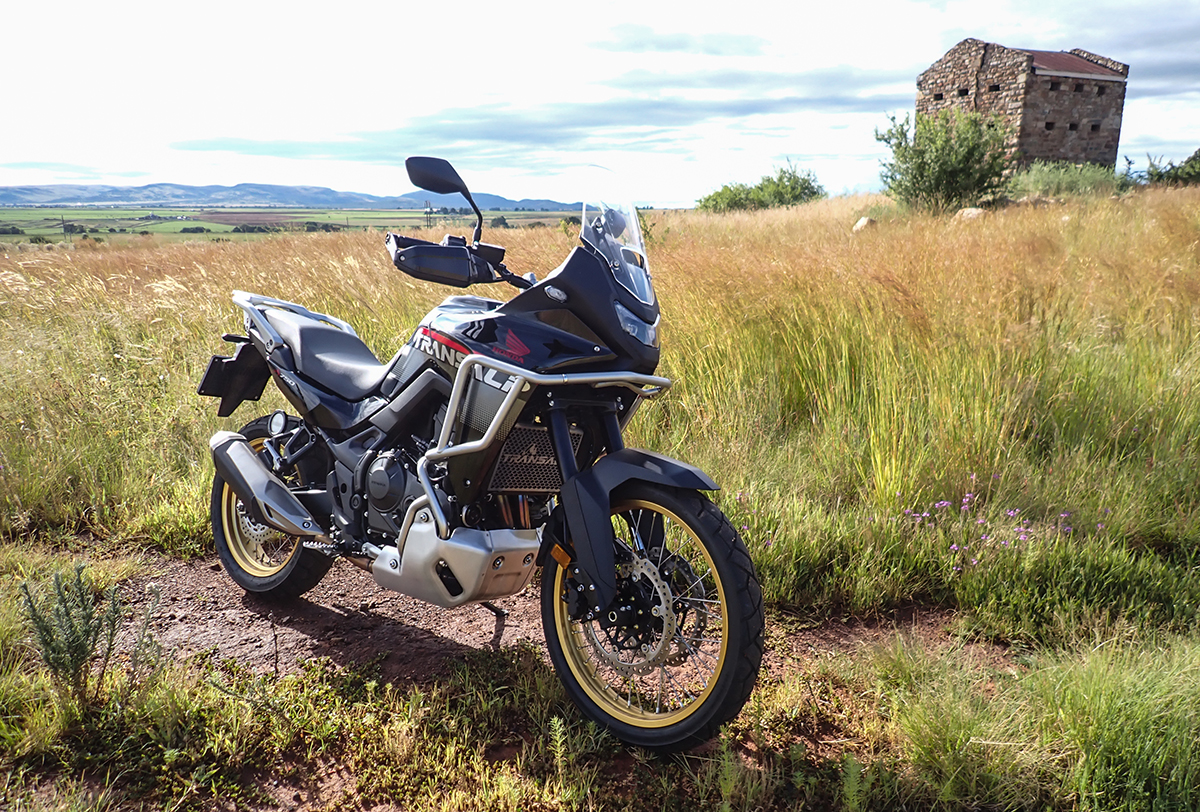
The off-road ability has been massively improved by upgraded suspension. When the going got hard and fast, the 2025 Transalp got a bit ragged on the limit. The 2026 model has no such issues. Almost a trifle firm on rough tar, it comes together beautifully off-road. I took a ride to Henley-on-Klip near the Vaal and wanted to take a closer look at the old Boer War blockhouse that stands on a hillock adjacent to the freeway. The dirt road to the blockhouse was nice and loamy from recent rain, but was littered with rock lurkers that mar the surface like a teenager’s acne. The Transalp’s revised suspension shrugged off these bumps with disdain and maintained perfect control. It is playful and competent off-road, a marked improvement on the previous model. I mentioned in my ‘Sidetracked with Honda in the Cedarberg’ story how a Cape Town boytjie essentially smoked all-comers over varied terrain on a stock standard Transalp. On a 2026 Trannie he would be on his second beer before the rest of us arrived!
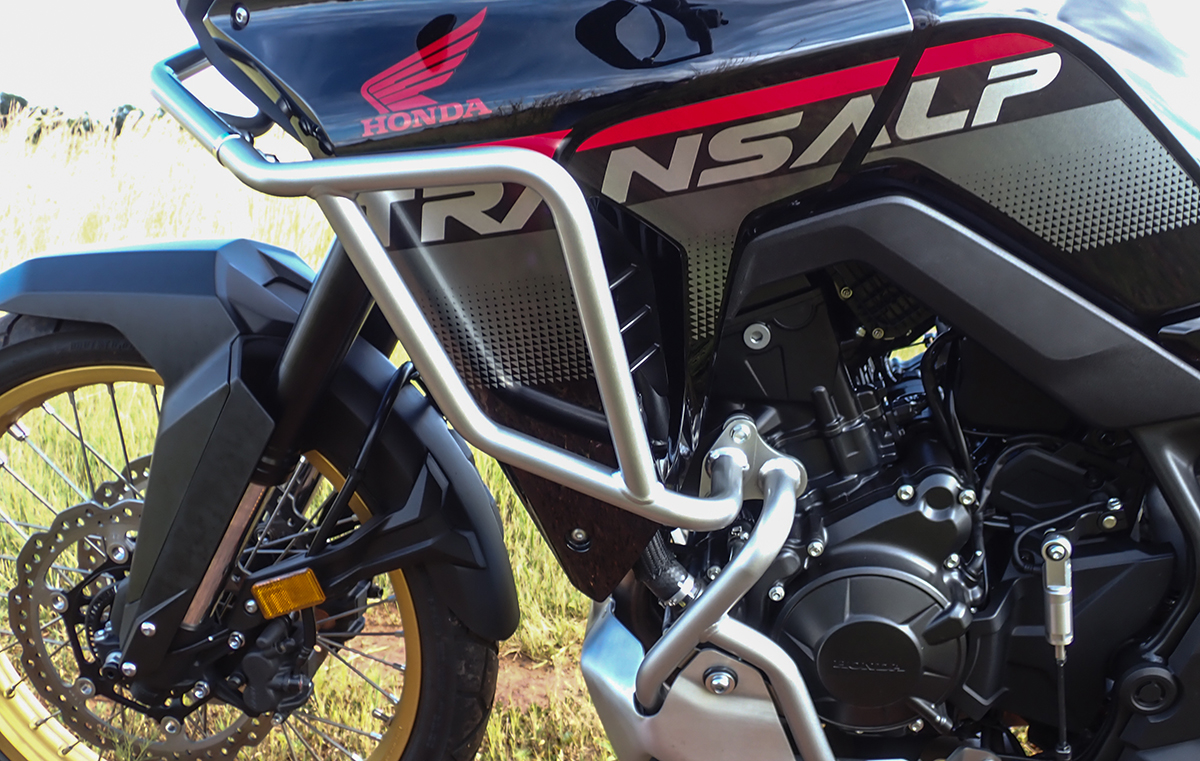
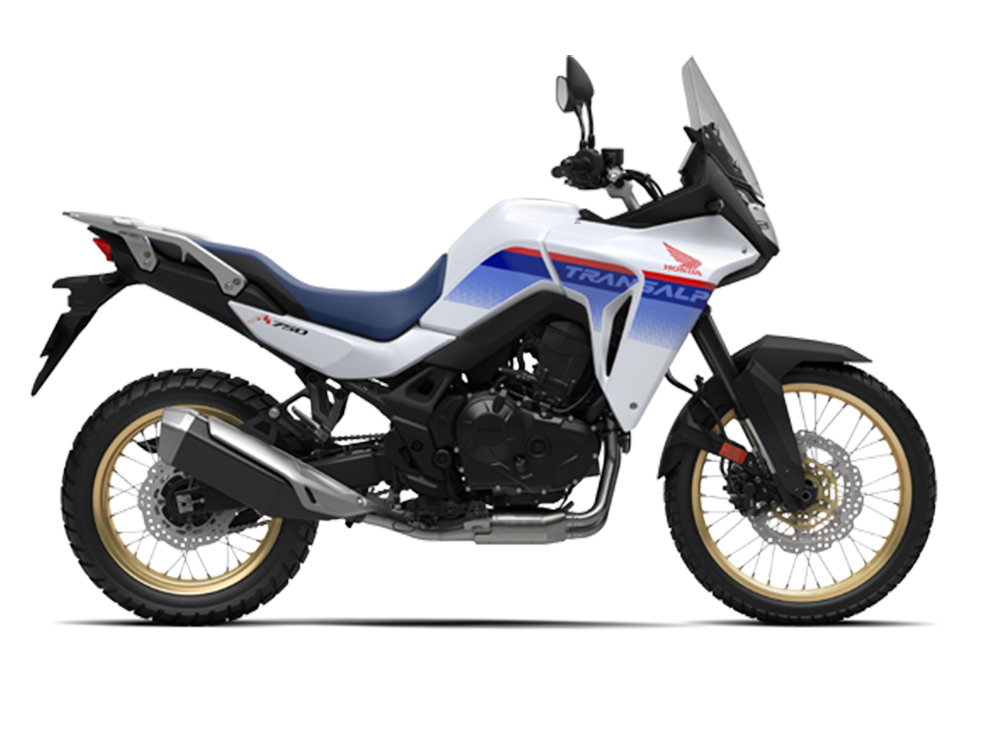
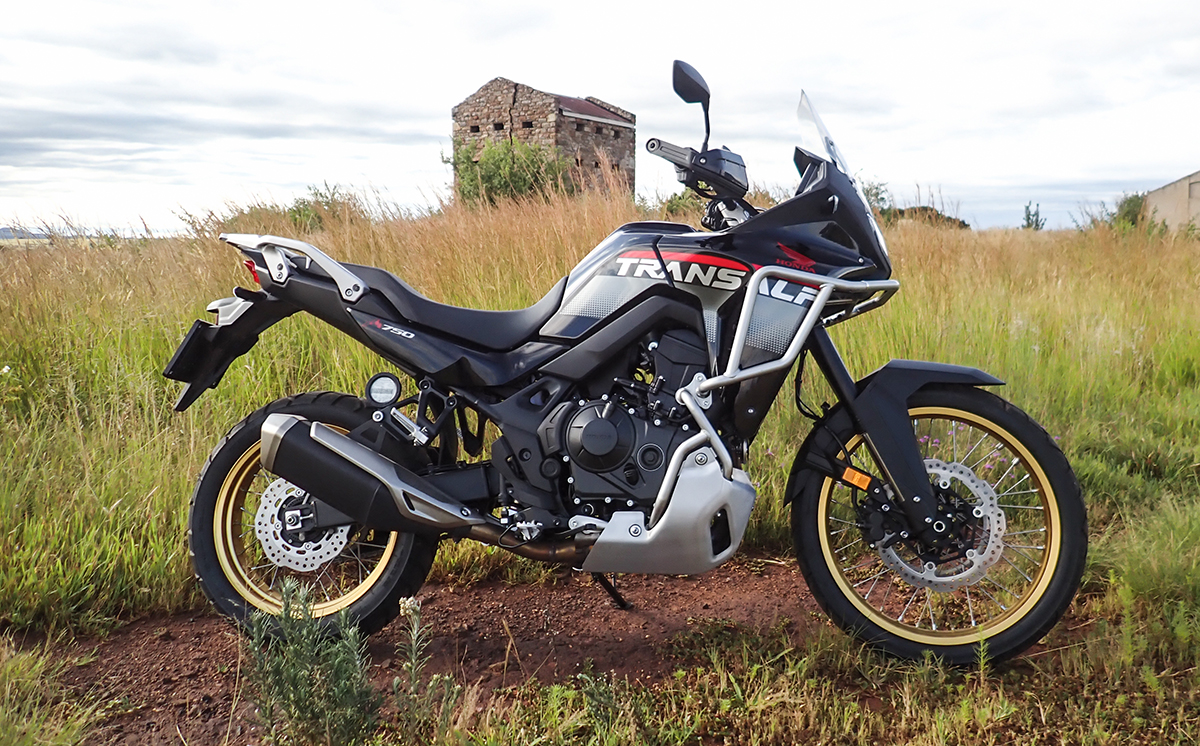
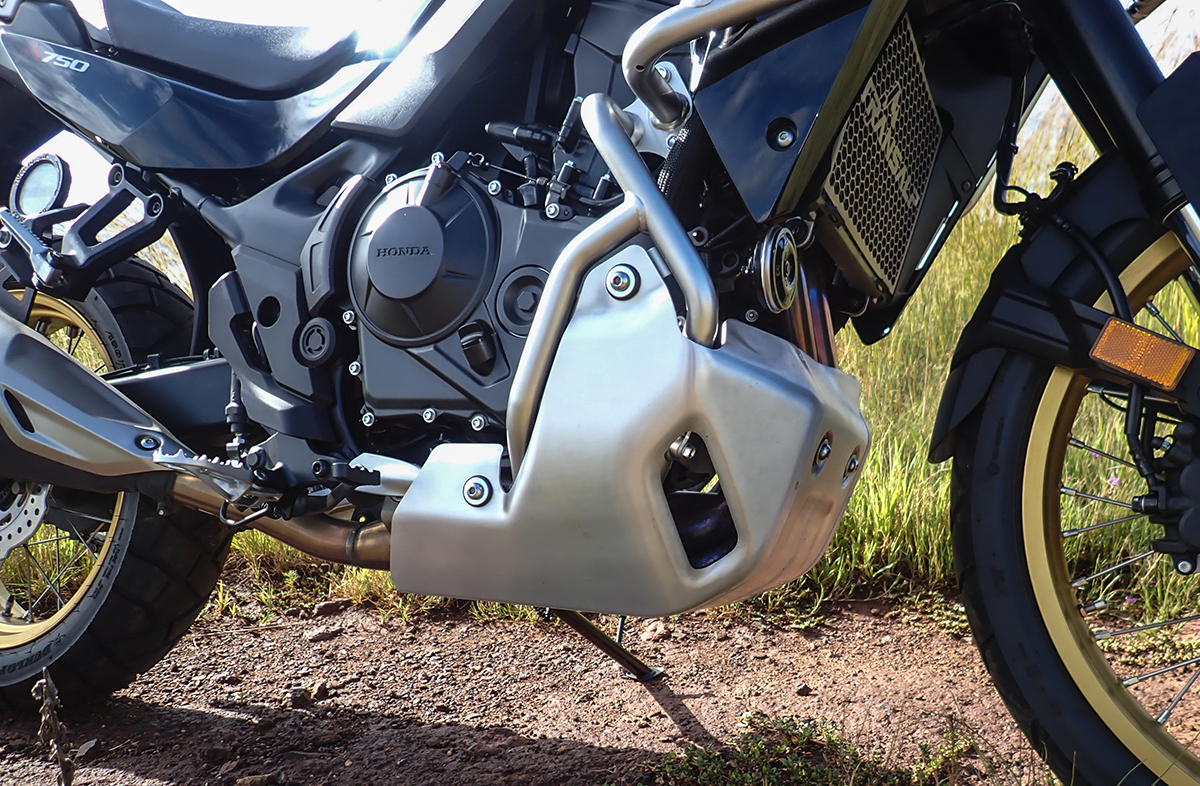
With 200 mm of well-damped travel up front and 190 mm at the rear, allied to 210 mm of ground clearance, you can get properly down and dirty on the Trannie. It would be advisable to fit Honda’s excellent factory bashplate for extra peace of mind. My test Transalp had such a bashplate as well as crashbars, quickshifter, radiator guard, off-road pegs and hand protectors fitted. I would like a mainstand on my personal Trannie for ease of rear wheel maintenance. The looks of the bike have been sharpened with stunning graphics, colours and LED lighting. It is a seriously good-looking piece of kit, especially pimped out as mine was.
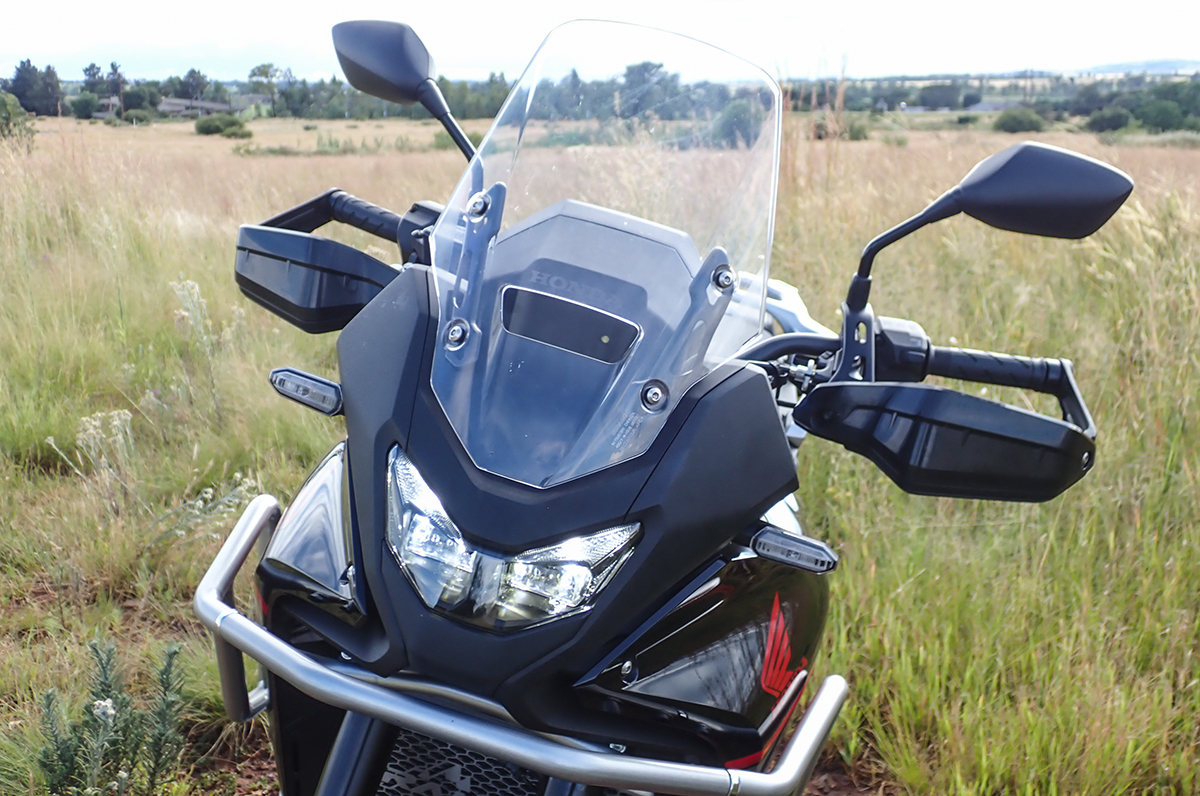
The 16.9-litre tank is nicely proportioned, not splaying your legs when standing, but allowing proper grip between your knees. The footpegs felt a tad too far forward when seated on the bike, but standing, when charging off-road, they allowed me to get into a proper attack position over the bike, making rear wheel steering with the magnificent motor a doddle. The brakes, double 310 mm discs up front and a single 256 mm rear, don’t need comment because they are unobtrusive, just quietly getting on with the job with great feel and no fuss or bother.
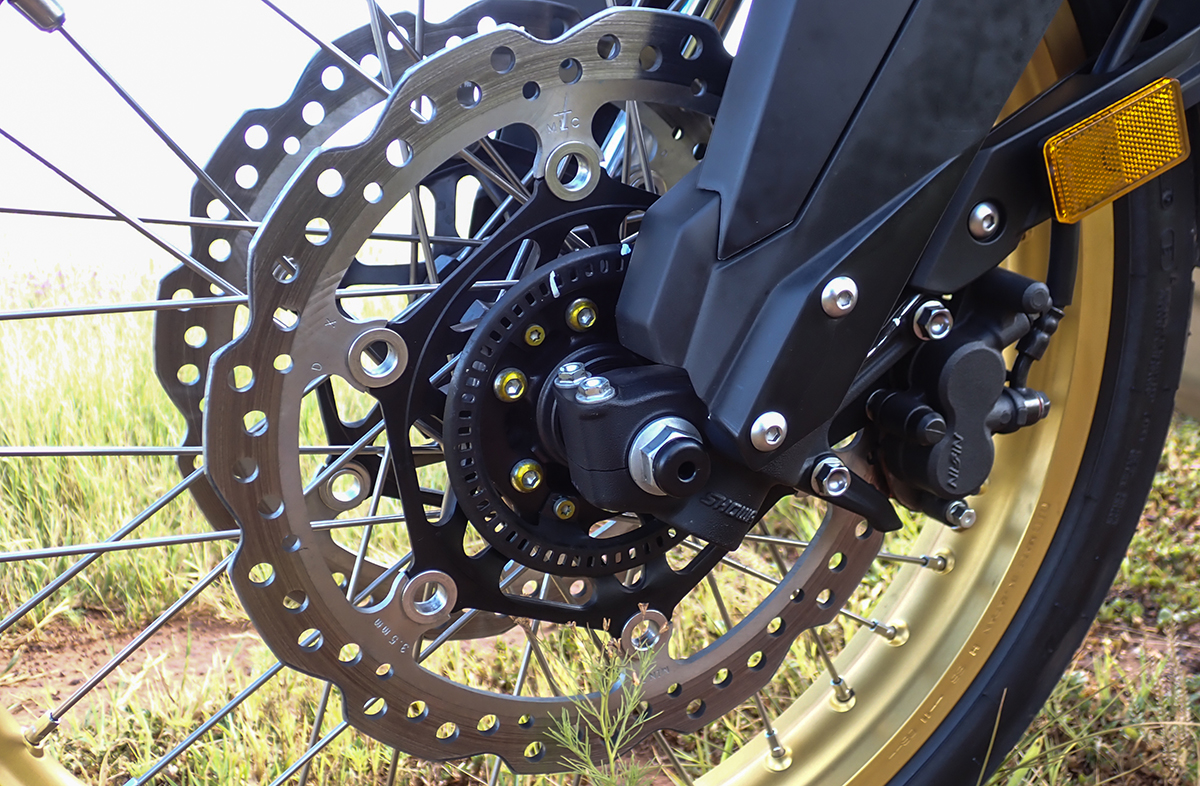
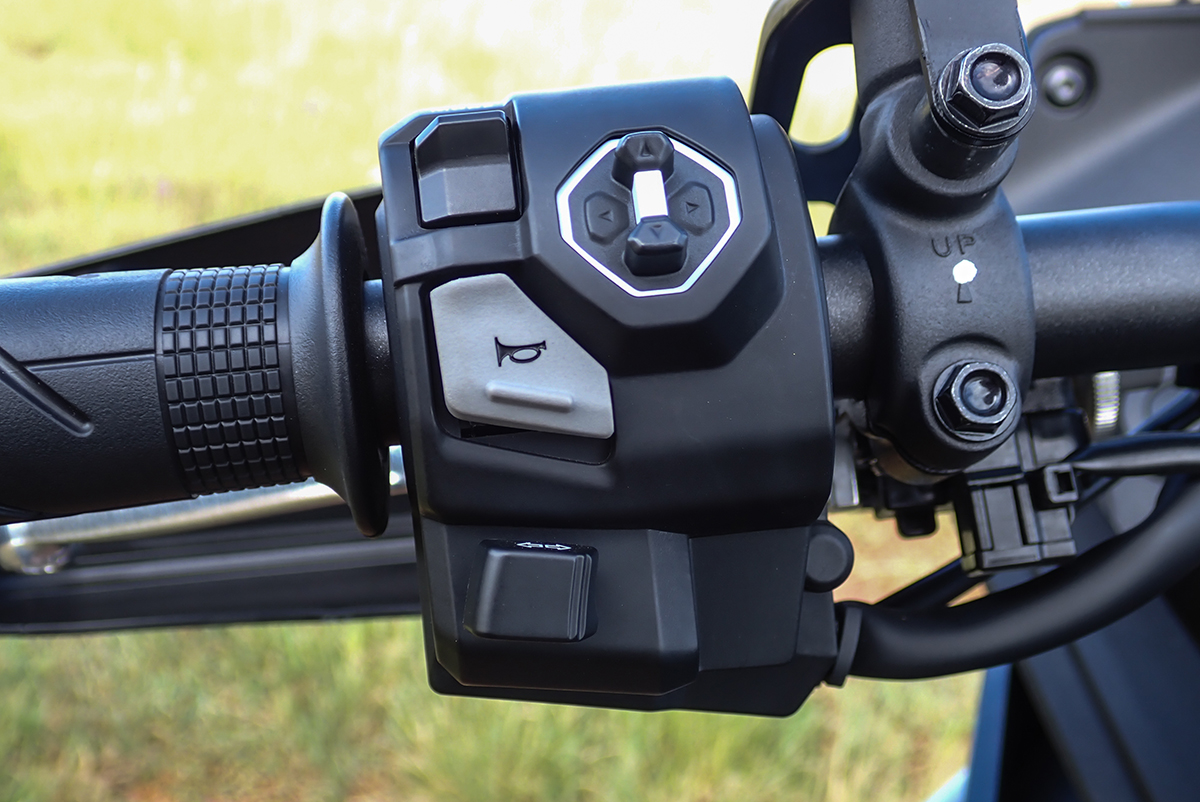
The 21” front wheel, shod with a 90/90×21 tyre, rolls easily across imperfections, and the 150/70×18” rear allows wide tyre choices, depending on how and where you intend to spend most of your time on your Transalp. Honda has thrown the electronic book at the Trannie, albeit with one notable page missing. There are 6 rider modes which offer varying degrees of more or less aggressive combinations of engine power, engine braking, traction control (with built-in wheelie control), and ABS combinations. Two of the modes are ‘user’ modes, where the bike can be set up to your own parameters. By my own experience, very few riders tamper much with these modes and tend to find one which they deem most suitable and then stick to that. I believe it’s more of a marketing exercise than real world usable, but it is what it is and symptomatic of the world we live in, where we answer questions that no one has asked. I would have dispensed with a whole lot of that and fitted the ‘missing page’, cruise-control, which would be a game-changer for a middleweight Adv bike.
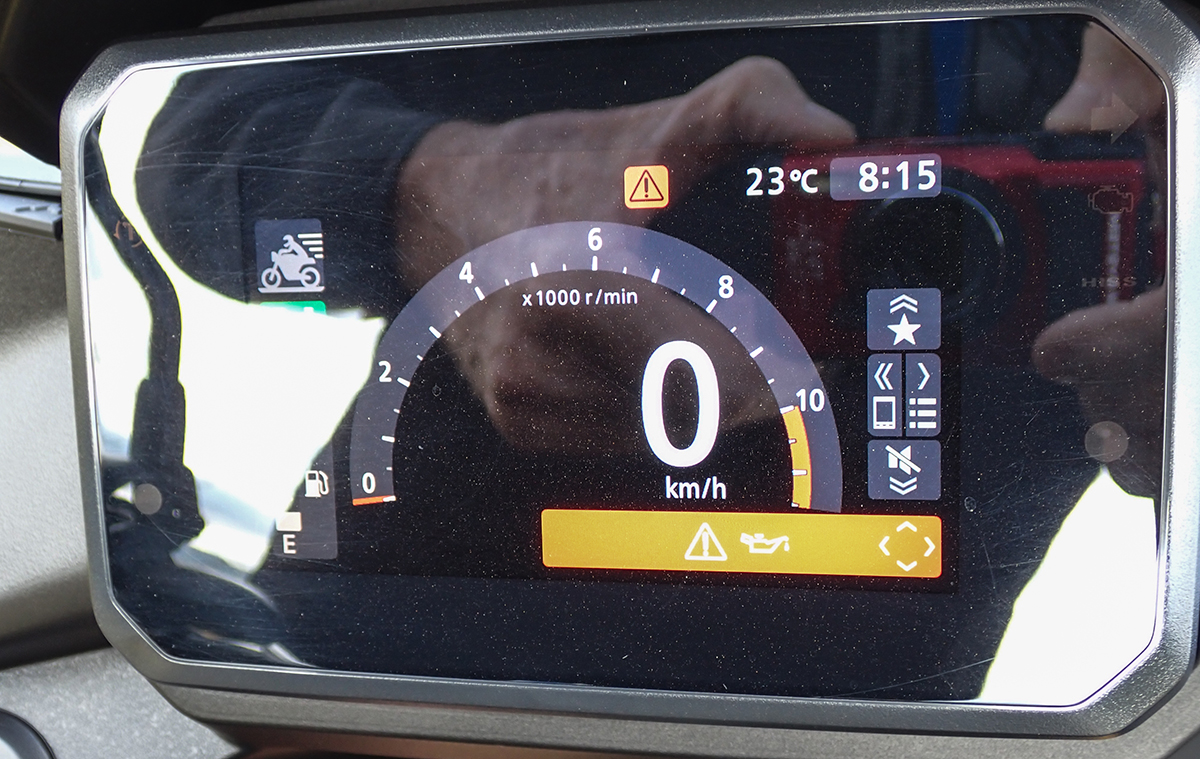
In the same vein, the 5” TFT display can be linked to Honda Road Sync for Navigation, phone and music purposes, especially for the GEN Z fellows who sadly aren’t able to get their jollies just from riding the Trannie. The windscreen is subtly reshaped and works a treat at all speeds. The seat feels on the firm side, but on my two-hour ride, it turned out to be supportive and comfortable. Cruising at 135 km/h with the odd ‘special stage’, the Transalp returned an average of 4,3 L/100 km or 23 km/L, good for almost 400 km on a tank. The general feel and weight of the bike is significantly less bulky and heavy than a litre plus Adventure bike. It feels light and flickable and is much easier to commit to a line or avoid a lurker off-road, making progress more fun and safer. An 850 mm seat height is also accessible to most, compared to some other bikes in the segment, which feel on stilts.
So, how do I sum up the 2026 Honda Transalp? In a nutshell? Balanced. BMW’s GS has ruled the big Adventure bike roost for years, not by being the best bike in any one area, but rather by being the best all-round bike. Honda has achieved the same with the Transalp. It is literally good in every area. Fit cruise control, tubeless rims and a main stand, and it will be damn near perfect. It is the ‘GS’ of middleweights. That, my friends, is huge praise for an exceptional middleweight with litre bike engine performance. Add to that mix Honda’s legendary reliability, build quality and a purchase price of around R220,000, and you have a bike that deserves huge success.
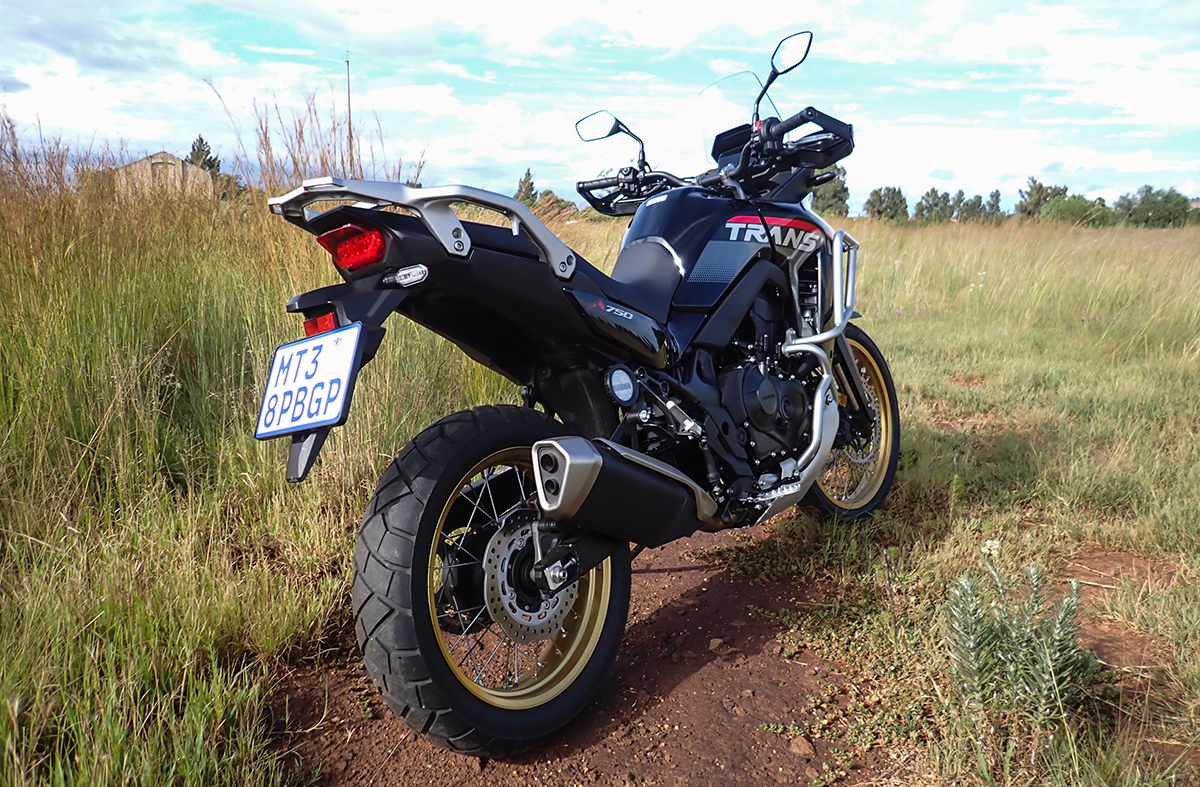
Honda XL750 Transalp
For more information on the bike featured in this article, click on the link below…