


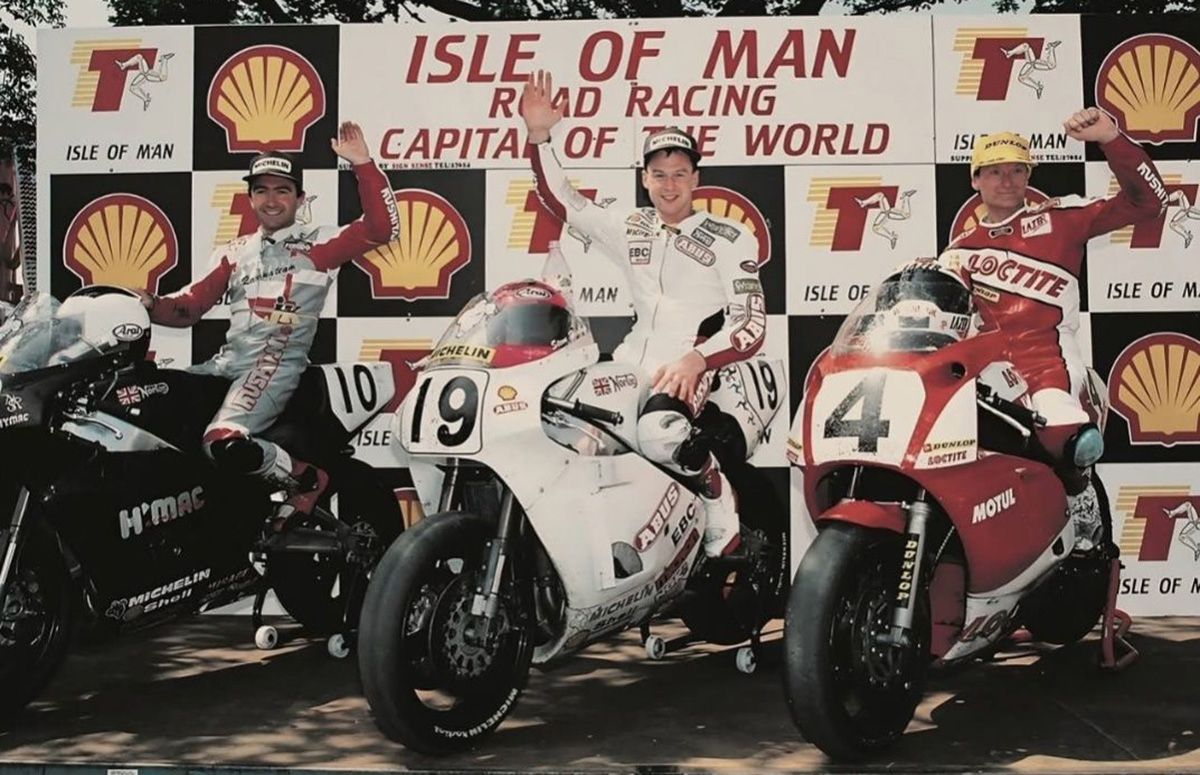
The Isle of Man TT races are unusual in that it is rare to see the top riders go head-to-head riding alongside each other and battling physically to the chequered flag. It is all done against the clock, often with the riders separated by several minutes on the road, even if they are mere seconds apart on corrected time. But that doesn’t mean that it can’t be fantastically exciting.
There are many TT races that lay claim to be the best ever – 1967 and the Agostini/Hailwood Senior TT; 1979 and the Alex George/Hailwood Senior TT – but the 1992 Senior TT can stand tall with both those races, while some call it the best ever. Throughout two hours of racing, the two main protagonists were never separated by more than eight seconds, and the outcome was an historic victory. As always, however, there was so much more to this race than what happened on the track.
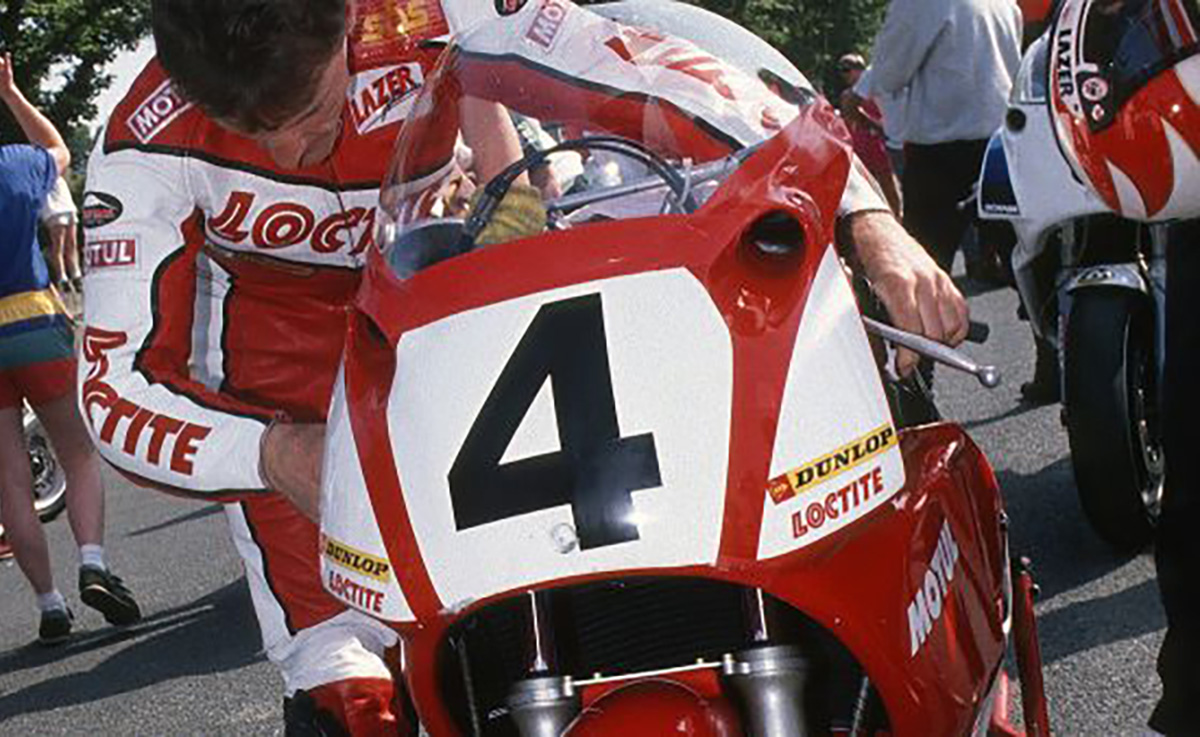
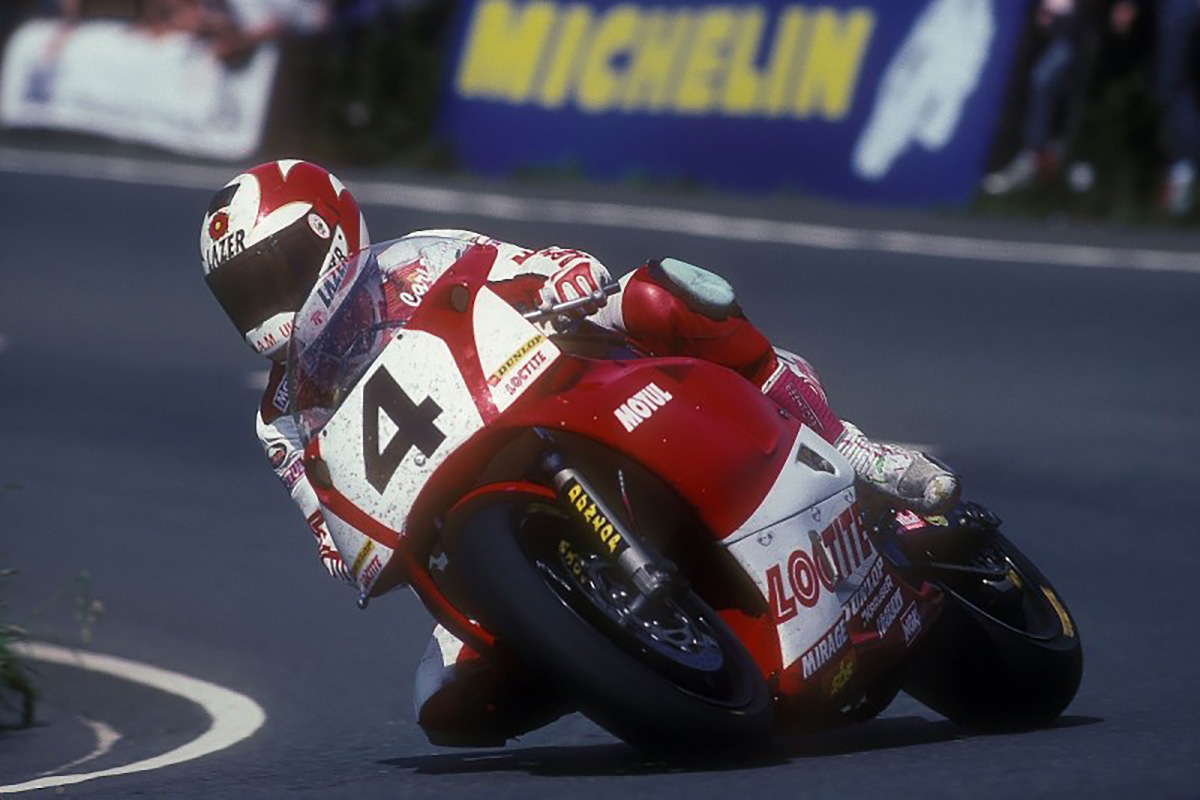
The two protagonists could not have been more different. Carl Fogarty would go on to become a four-time world champion in World Superbikes and never shied away from telling the world how good he was. Arrogant beyond belief, he made few friends on his way to the top and was possibly the fiercest competitor ever seen in racing. He would never acknowledge that a rider was better than he was because, obviously, they weren’t..!
Apart from, perhaps, Steve Hislop. Fogarty considered Hislop to be one of the finest TT racers of all time. He was a soft-spoken Scotsman who did all his talking on the track. Up to his unfortunate death in a helicopter accident in 2003, he won 11 TT’s and was devastatingly quick around the island.
In 1992, Foggy had been running a privateer entry into the World Superbike Championship and wasn’t expecting to head back to the Isle of Man, where he had been racing since 1985.
But he reckoned without a call from Yamaha, who offered him £7,000 to race, a sum matched by the Isle of Man tourist board. With a race team to fund, he couldn’t afford to ignore the offer.
Hislop’s route to the 1992 TT followed a predictable and disheartening path. Honda had offered him an RC30 to ride in the British Superbike championship and the TT. Then he found himself summarily dumped from the team, to be replaced by Simon Crafar (he of recent MotoGP commentary). Of course, this all happened at the last minute, leaving him precious little time to secure another ride.
However, he signed for Yamaha, who were keen to have a proven winner on their bike. £10,000 was offered alongside the chance to race in the British championship for Tillston’s Yamaha. What started out well, however, soon deteriorated when Yamaha gave preferential treatment to Rob McElnea’s Loctite Yamaha team. So Hislop offered an ultimatum: no equipment for the British championship, no Hislop at the TT. Yamaha called his bluff.
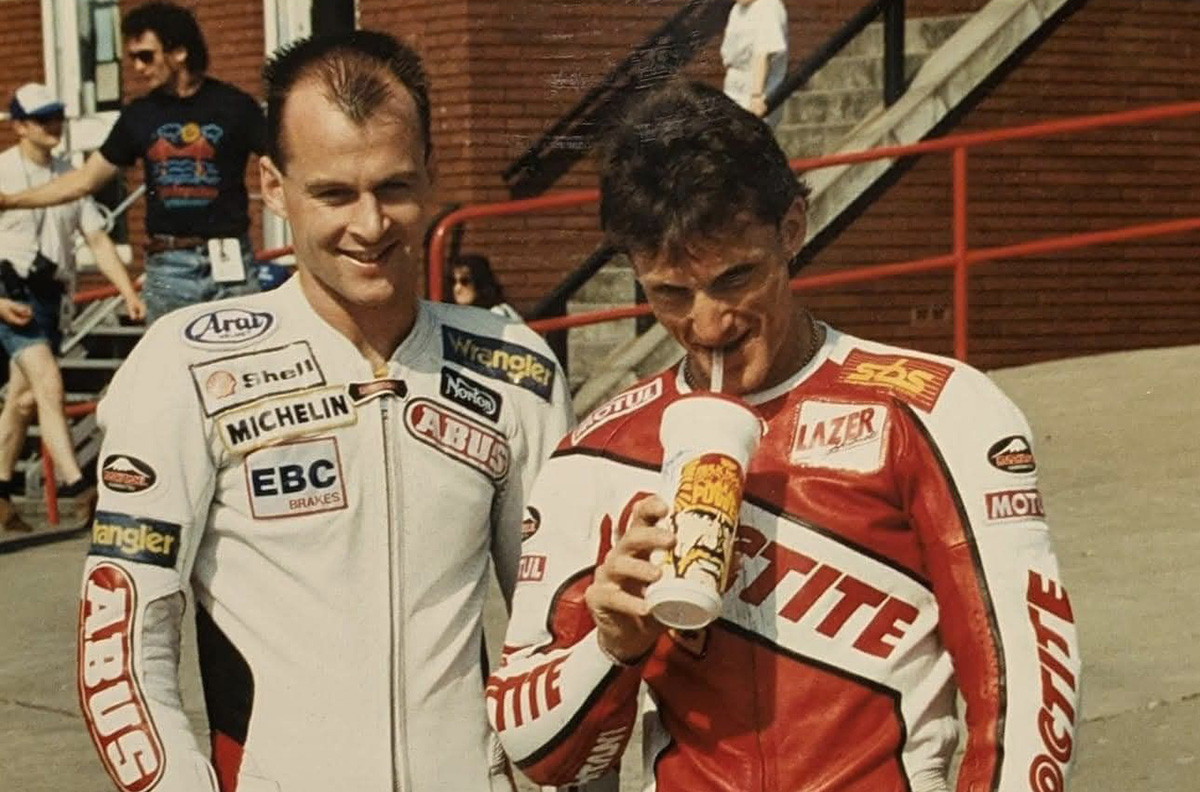
After the Oulton Park round on the Yamaha, Hislop turned up at Donington Park in Kawasaki colours. So, that really was the end of that! It was then that Yamaha reached out to Fogarty and made their offer, which he accepted.
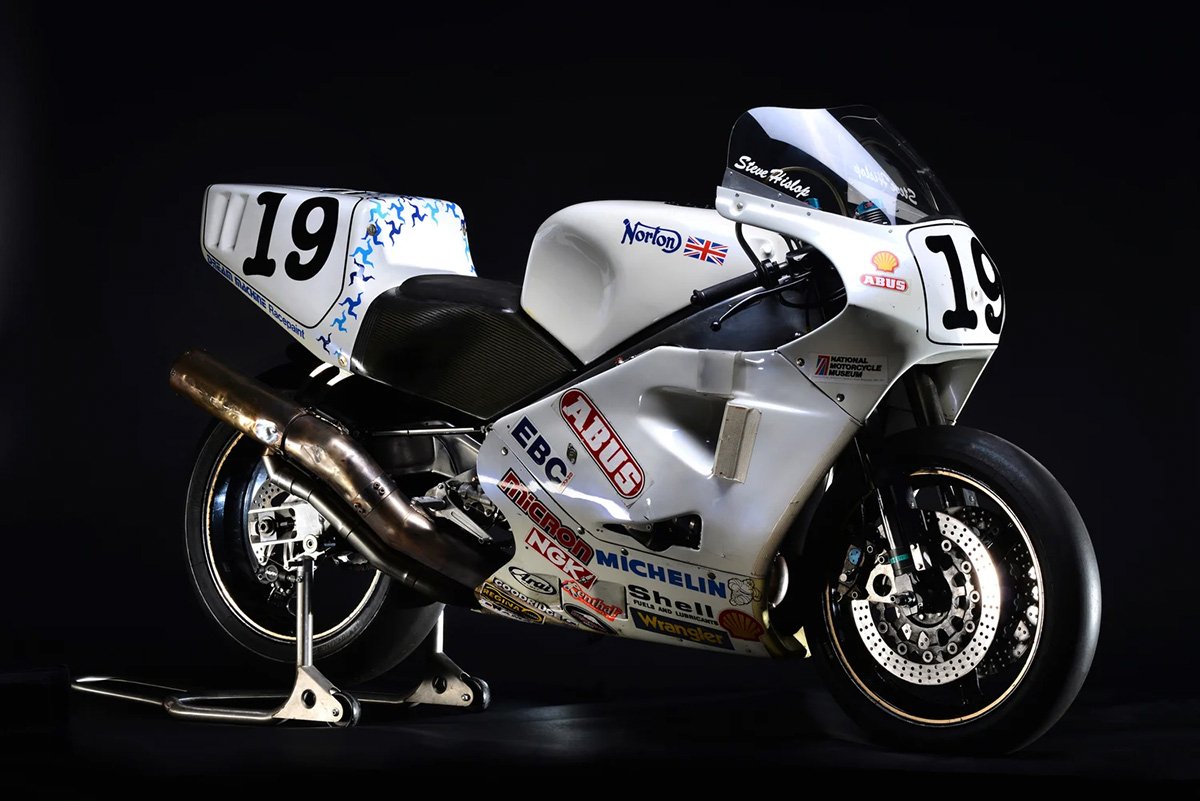
Hislop was out of a TT ride, but not for long. On hearing that Hislop was a free agent, Norton team boss Barry Symmons got a foot in the door and made him an offer. At this point, no one believed that the finicky Norton with its fragile (but powerful) Wankel Rotary engine could survive the intense mechanical strain of the TT. Hislop didn’t disagree with them, but he had no other option. He signed for Norton to ride the bike in the F1 and Senior TTs.
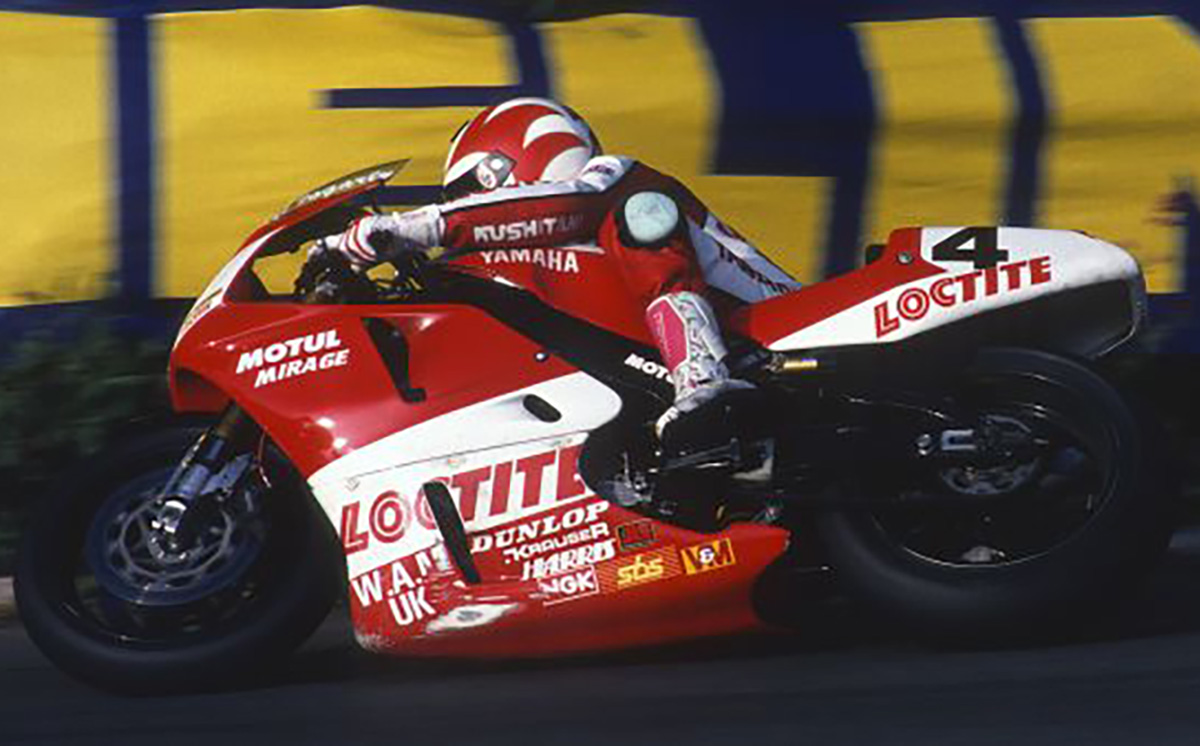
The F1 race came first, early in TT week. Fogarty took a commanding lead, with the Norton of Hislop suffering from its usual overheating. Nevertheless, he was running in third, unable to do anything about Fogarty’s stupendous pace at the front.
In fact, it was too fast; the Yamaha’s gearbox broke under the strain, and Foggy was out, absolutely devastated. Hislop eventually came home second behind Phil McCallen’s Honda.
The overheating was a real problem for the Norton, not helped by the hot temperatures throughout the whole of TT week that year! But the team had no budget to significantly re-engineer the bike. So, they took it to Jurby airfield to make rudimentary modifications and try to find a solution. In the end, they found that removing the front mudguard aided airflow to the badly stressed and hot-running engine. But would it be enough? The team had already proved the bike could last a whole race, but was it fast enough against a determined Fogarty?
Also addressed were the physical elements of riding the bike. Hislop was a small guy, so a taller screen was fitted to stop him being pushed backwards by the wind flow over the bike. Wider handlebars were also fitted to improve stability, something that is badly needed at the TT. All the modifications were small, but proved vital, especially when the day of the Senior TT dawned bright and sunny and turned into a blisteringly hot day. The fans lining the course lapped it up, but it was the last thing the Norton team wanted!
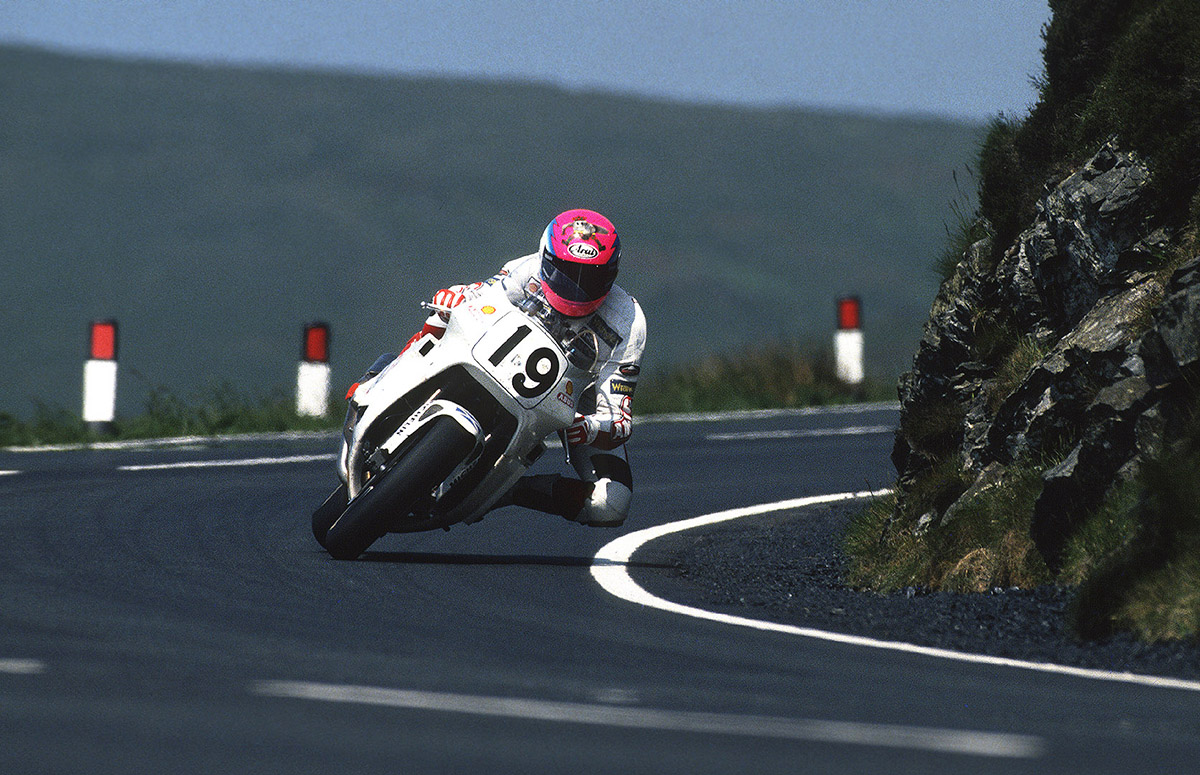
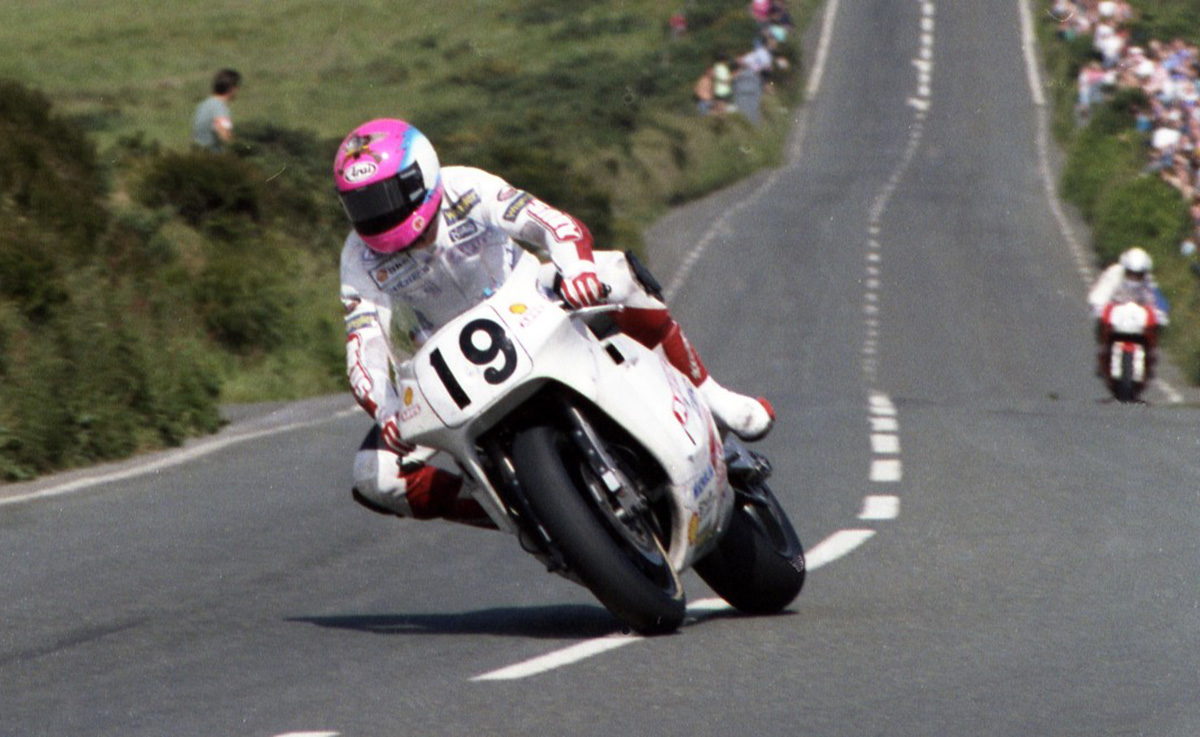
Foggy started 4th and Hislop 19th, two-and-a-half minutes behind (riders start at 10-second intervals), meaning he would have to battle his way past slower riders while Foggy had a virtually clear road in front of him.
The previous year at the TT, Hislop had adopted the tactic of maximum attack right from the start to try and demoralise Fogarty. But this was a tactic he could ill afford to try this year due to the fragility of the Norton in the stifling heat. He adopted a different tactic this time around, settling steadily into a rhythm. However, that didn’t stop him from leading Foggy by 2.8 seconds leading into the first pitstop at the end of lap two.
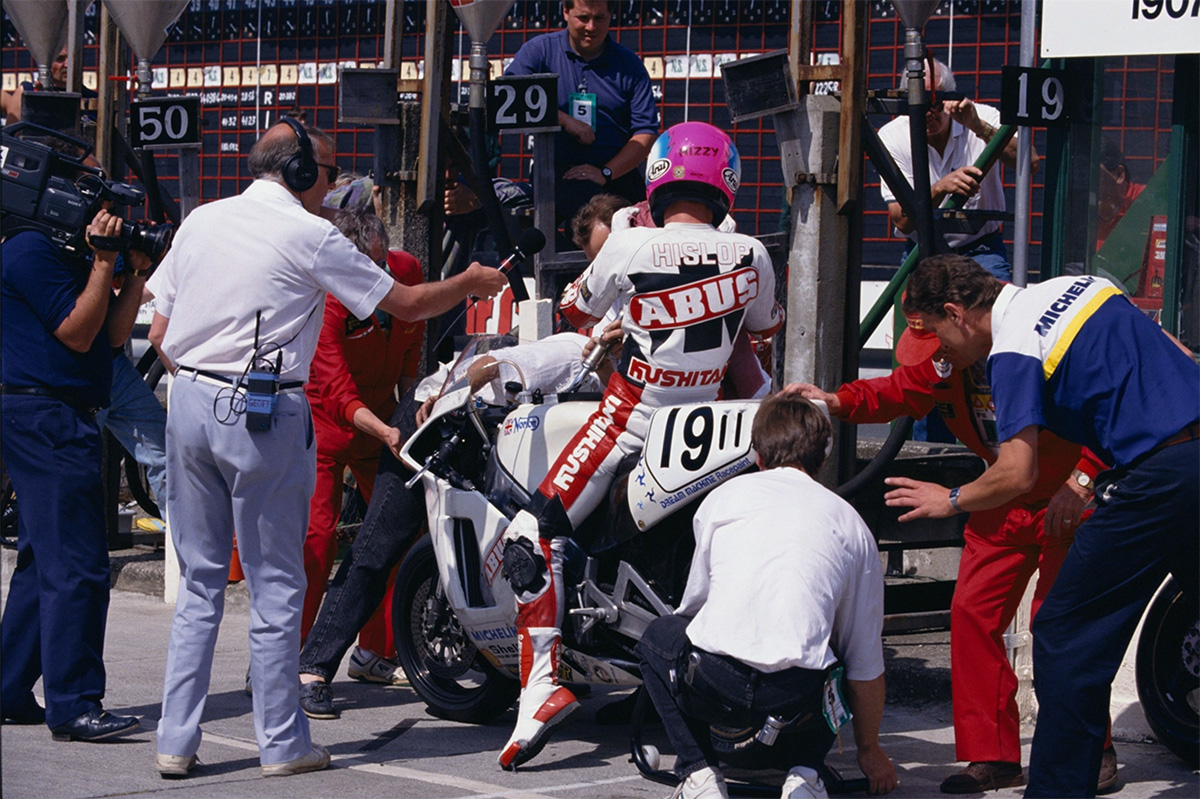
It was here that Hislop revealed his masterstroke. He opted to change his rear tyre, something that wasn’t necessarily the norm in those days. This, he figured, would give him an advantage in the event of a last-lap dogfight. With the power that the Wankel Rotary engine produced, Hislop would never have completed six laps on one rear tyre. Fogarty chose not to change his tyre in order to take the lead away from his rival.
Over the next two laps, the pair remained apart on the road but attached by an elastic cord on the time sheets. Hislop would master the first half of the lap to Ramsey, Fogarty would take the honours over the mountain. Hislop was smooth and calm, Fogarty fought his bike every inch of the way; in a way, their styles on the bikes reflected their personalities. But still they were inseparable on the time sheets.
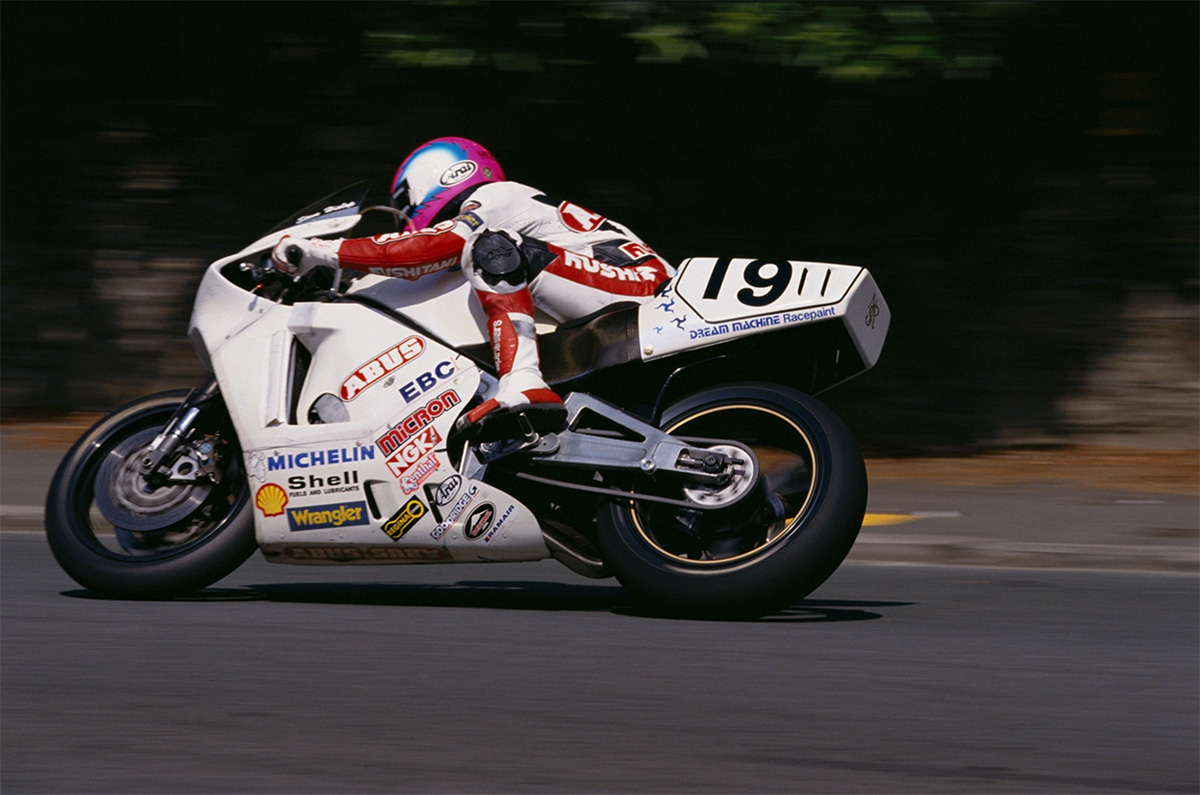
By the time they stopped at the end of lap four for the second and last pit stop, Hislop had eked out a 7.4s lead. But a fumbled pit stop reduced that advantage to one second. Hislop remained calm and settled into his rhythm again and rebuilt the lead to 6.4 seconds heading into the final lap.
And what a final lap! Fogarty’s Yamaha was literally falling apart underneath him – blown exhaust, parts rattling loose, leaking fluid from who-knows-where at the front of the bike – but he pulled out a display of gritty riding, beating Hislop’s previous lap record by three whole seconds! It was a lap that matched his battling personality.
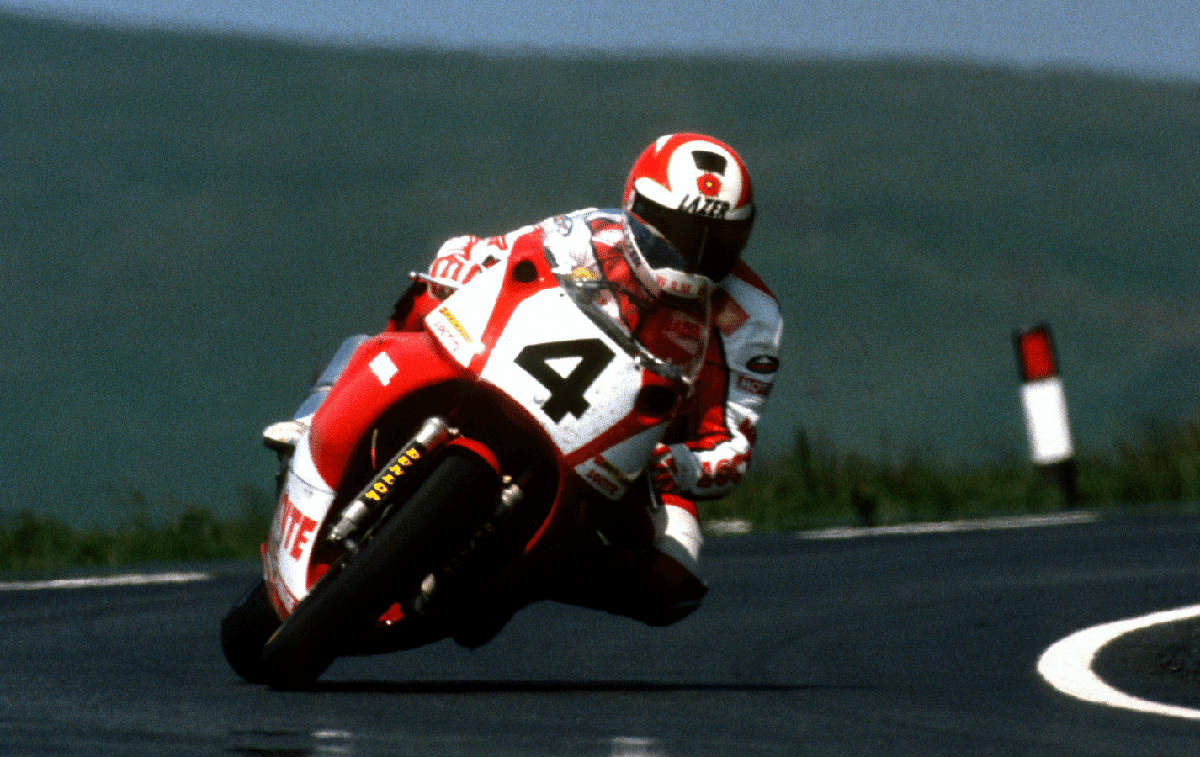
Despite the ferocity of Fogarty’s attack and without the luxury of backing off and cruising to the finish line, Hislop remained as calm and focused as few men could, and this proved crucial. Fogarty crossed the line, his Yamaha barely in one piece. Then the crowd had to wait for nearly three minutes for Hislop to cross the line, due to their respective starting positions. It was an agonising wait, but eventually, the Norton howled into sight and crossed the line, 4.4 seconds to the good.
It was an unbelievable and record-breaking end to a fabulous race. A new race record was one thing, but being the first rider to win the Senior TT on a British bike since Hailwood’s Norton victory in 1961 was something else.
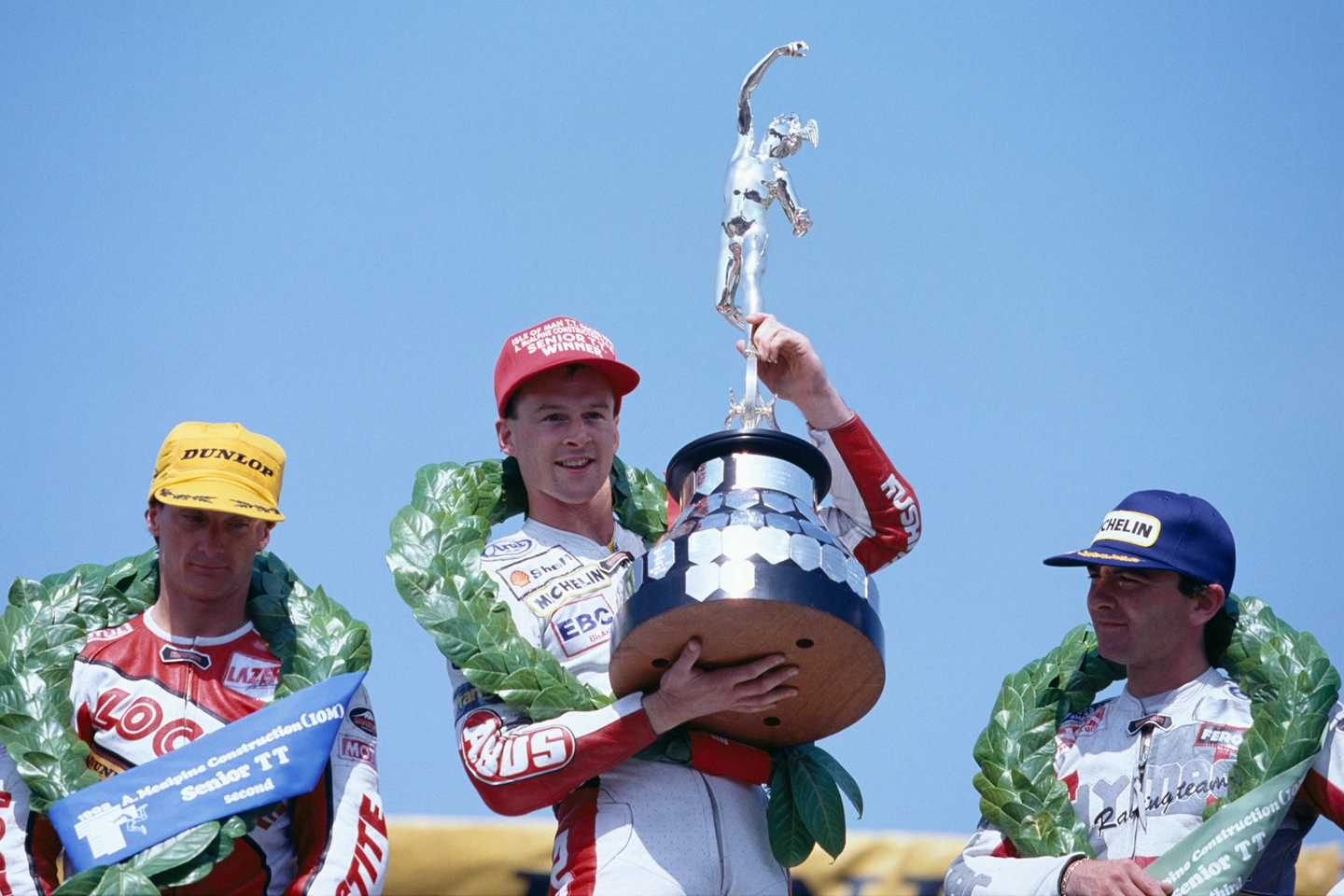
For once, Fogarty didn’t belittle his opponent by making excuses for why he lost. There was a tremendous mutual respect between the two rivals, which nevertheless pushed them both to incredible feats in order to beat the other man.