


When my mate Brian told me that he had organised for us to spend some time on two 650 Enfields and asked where I thought we should go, I thought for a second, then retorted, “The Magaliesberg”. Here is why. Back in the ‘70s, when I first started riding bigger bikes, the Stywe Lyne restaurant at Hartebeespoort Dam was our go-to breakfast run destination. Everyone who was anybody in biking circles would be there, and the roads had enough bends and sweeps to strut your stuff. Hekpoort, the Bekker School road and the Lanseria road would reverberate with the sound of booming bikes being throttled to the max. Invariably, the morning’s ride would end up at “the bridge”. The bridge over the Krugersdorp Highway is the bridge where we would gather to spectate the top-end dices of the day.
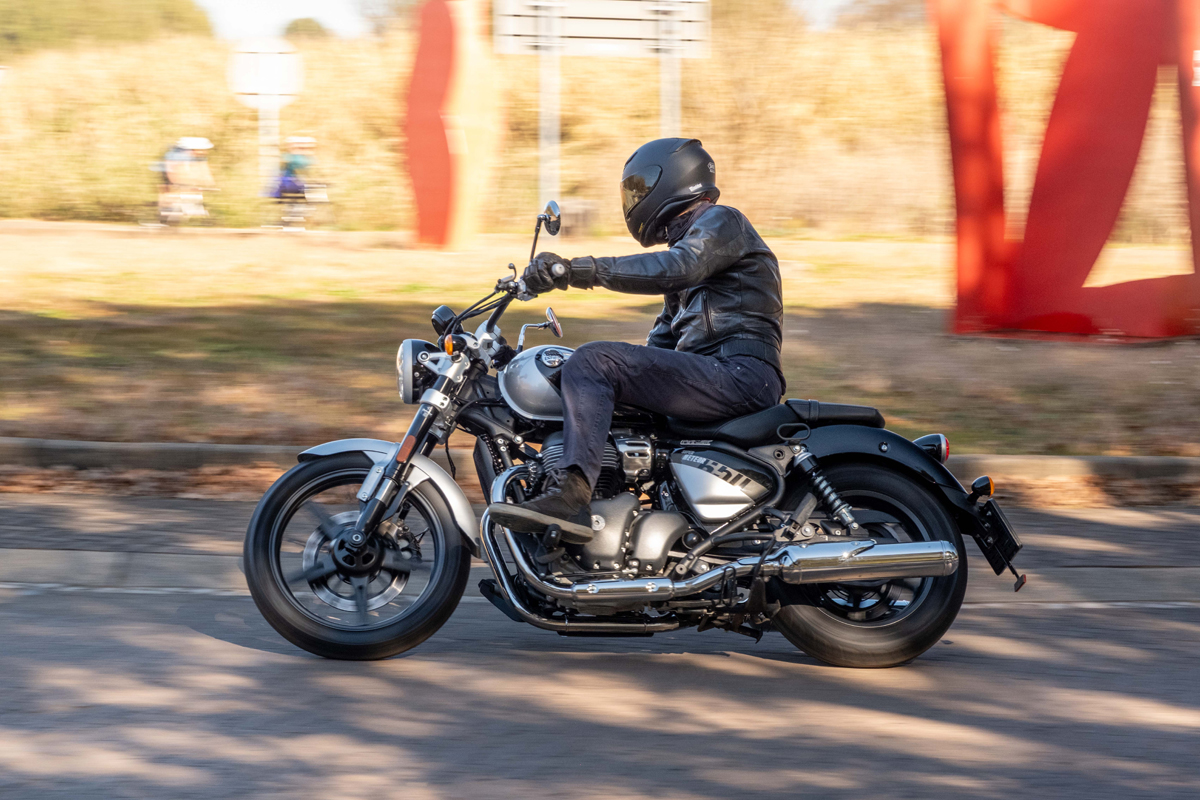
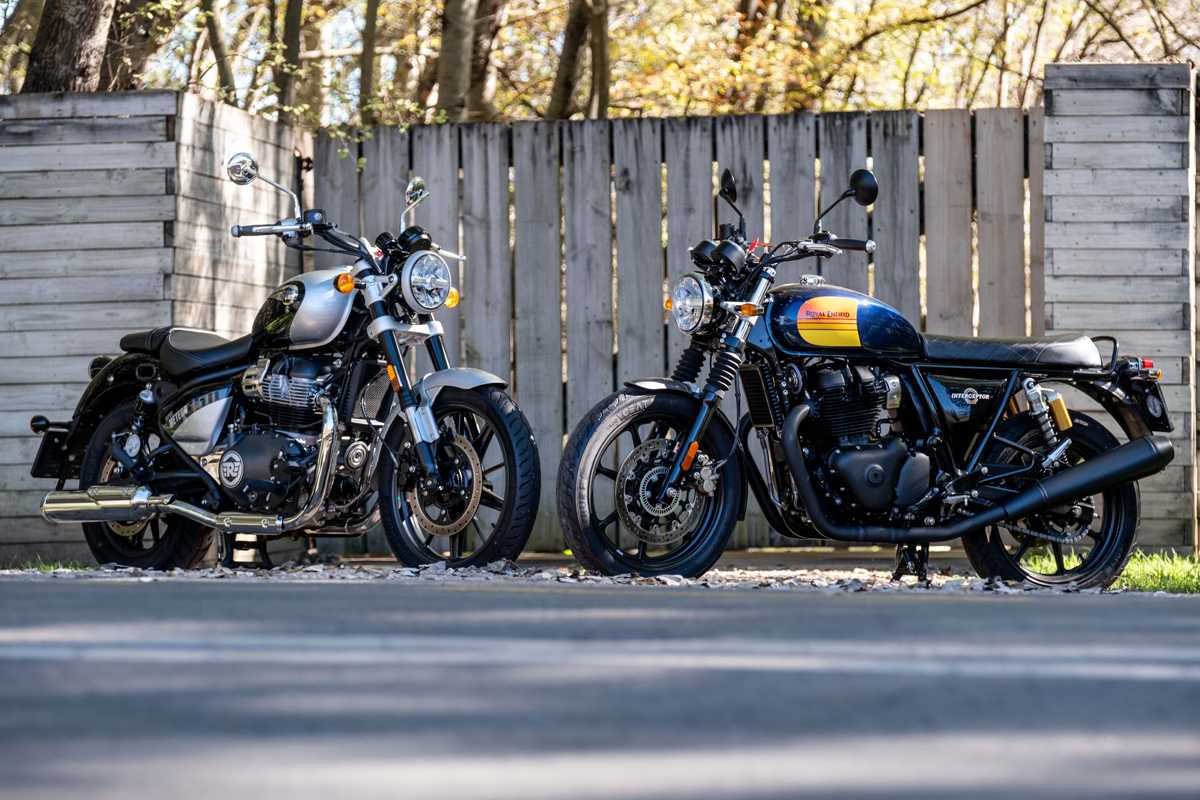
The two Royal Enfields we rode were the Interceptor, essentially the roadster model, and the Super Meteor, which is the cruiser-styled 650. The motors are identical, but the frames and suspension are radically different. The Interceptor has conventional ’70s-style 41mm ‘right side up’ forks and twin rear shocks. Travel is modest with 110 mm on the forks and 89 mm on the rear. This had me wondering how well they would cope with our less-than-perfect roads. The conventional riding position, which puts your feet under your seat, does allow you to lift yourself if you see a specific lurker. The Super Meteor, by contrast, has USD Big Piston 43 mm Showa’s with 120 mm of travel and 101 mm at the back. It is also a bit porkier, at 241 kg, than the 212 kg Interceptor. Bear in mind, though, that the Super Meteor has a 15,5L fuel tank versus the Interceptors’ 12,5L.
Life on a Royal Enfield 650
Ride either bike, and a couple of things are immediately apparent. An absolute gem of a motor. Whilst not overendowed with power at around 47 hp, it makes over 52,5 Nm of torque with a large dollop from right out of the basement. It is the way that it produces the power that is so endearing. Sublimely smooth and linear right through the rev range, it is incredibly rewarding to ride. The second standout feature, as is the case with all modern Royal Enfields, is the slick gearbox. The bikes, whilst not fast in the traditional motorcycle sense, gather speed in the most rewarding way. The bikes ride very differently.
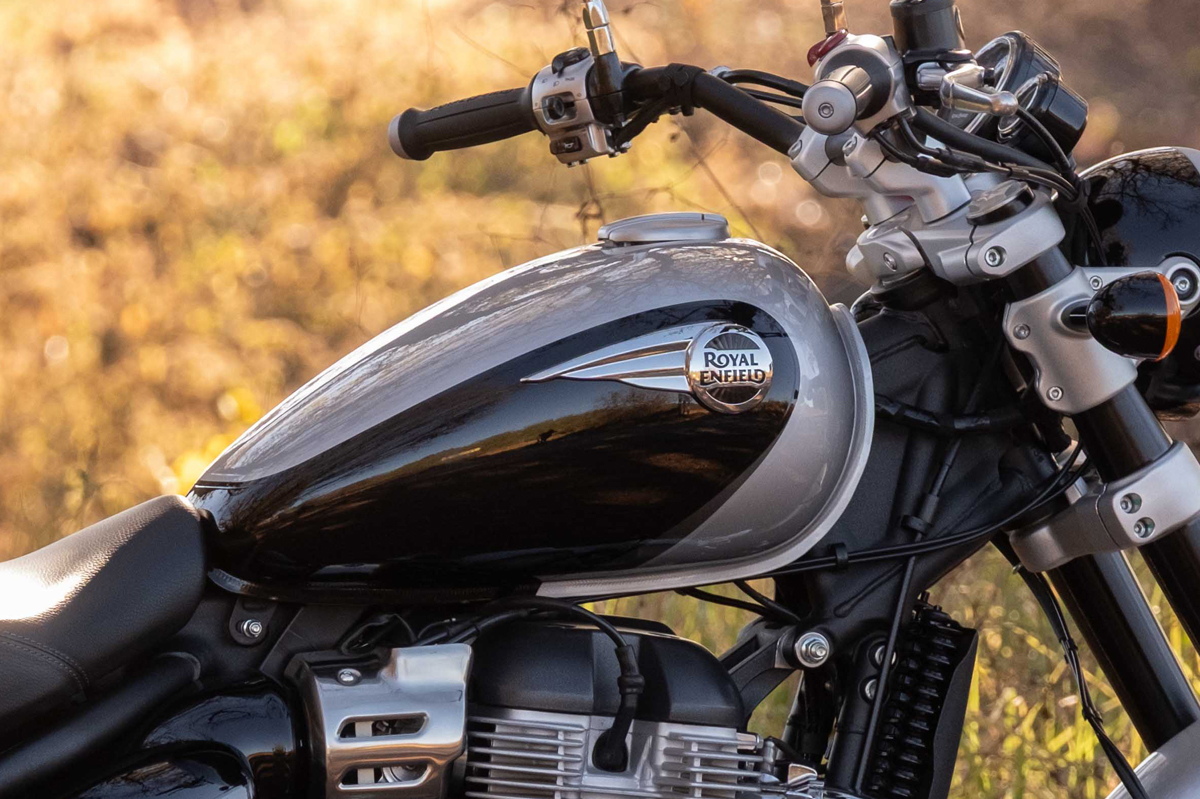
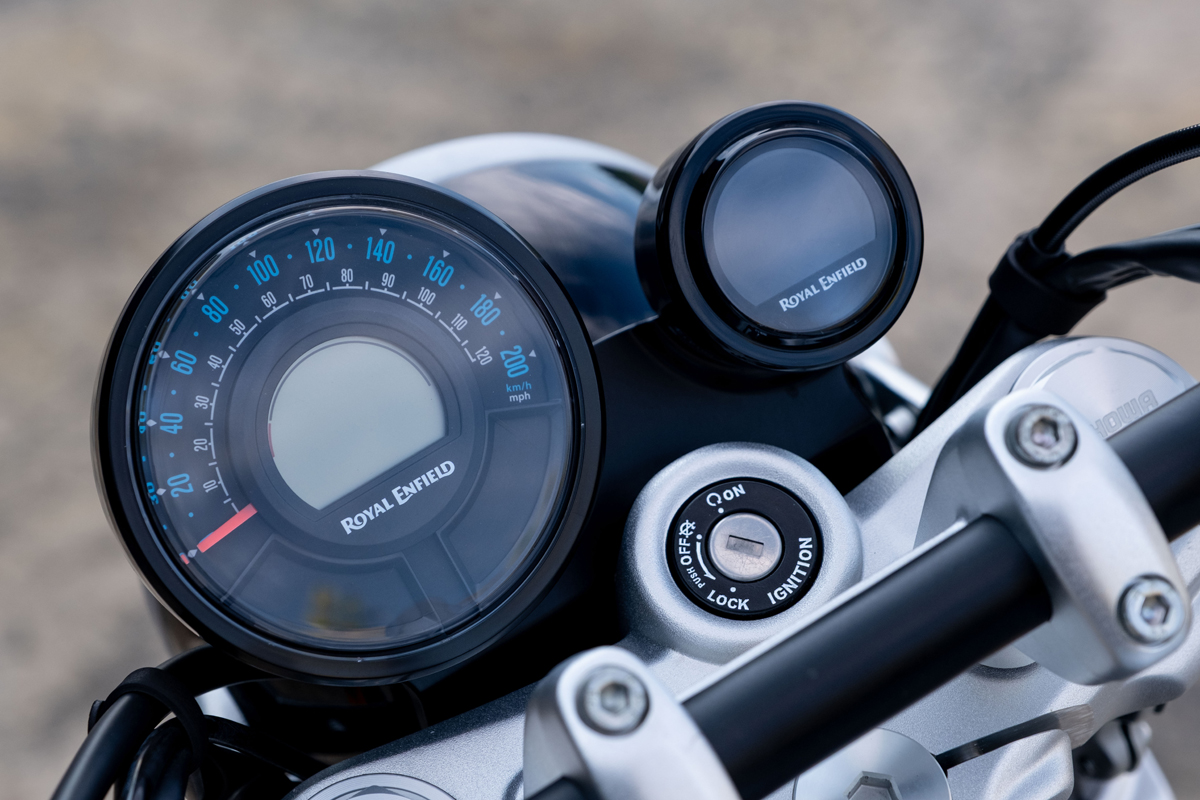
The Super Meteor feels solid and composed, albeit with quite a firm ride. I am not a fan of cruiser-style bikes in general, as I find them uncomfortable for my 6’3” frame. The forward control placement of the footpegs naturally rounds the lower back, which can get achy on an extended ride. Due to their lower stance, they also have limited rear suspension travel, which can result in a choppy ride. All things considered, the Super Meteor does remarkably well. I found the seat superbly comfortable. It cups your butt in a way that eliminates pressure points, and a decent perch is the end result. The deeper section tyres also help with bump absorption, and I found the bike significantly more comfortable than most cruisers that I have ridden. The instrumentation is familiar Himalayan fare, which has earned acclaim from almost everyone who has sampled it. A TFT and digital combo with turn-by-turn Navigation via a smartphone link, and all the vital info available at the press of a button. All this is presented in a circular, classic-looking clock.
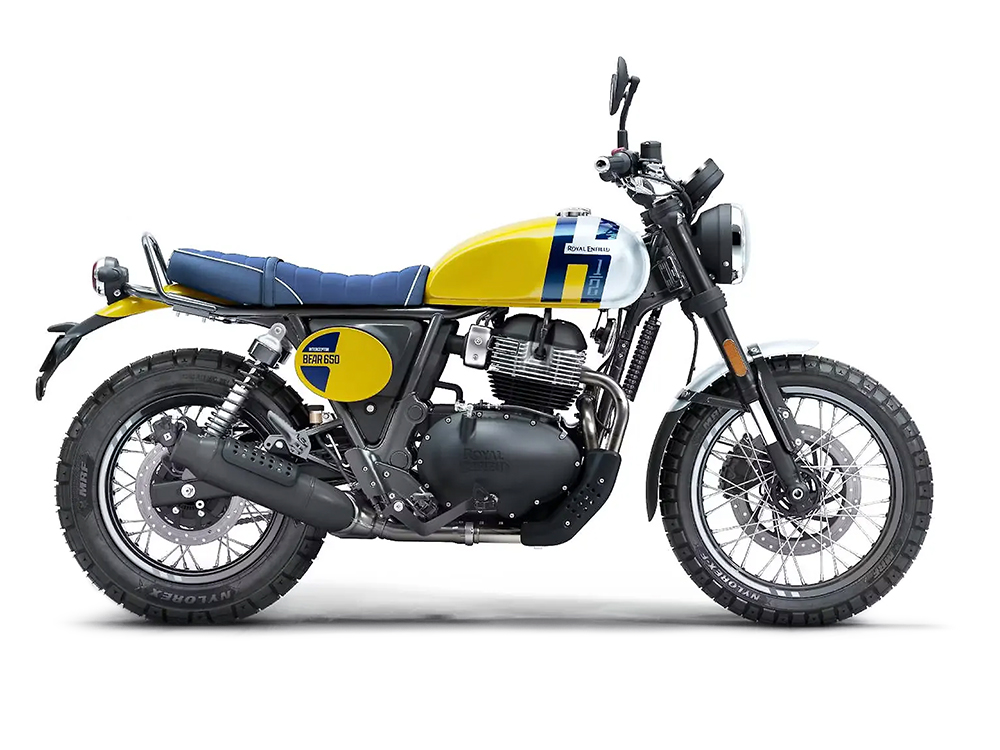
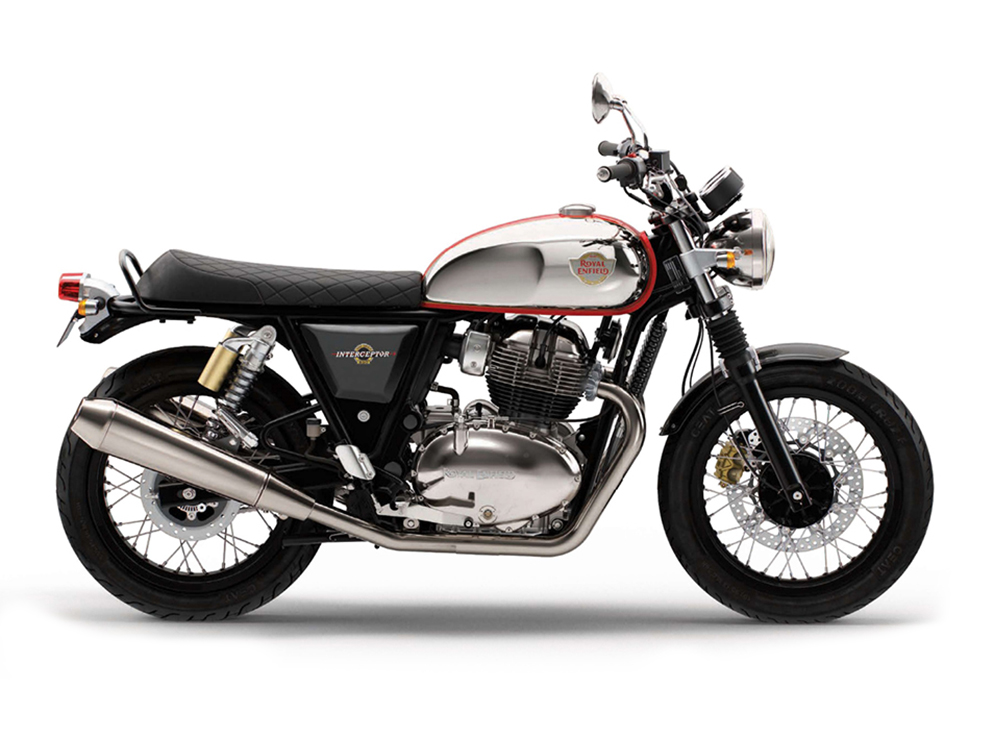
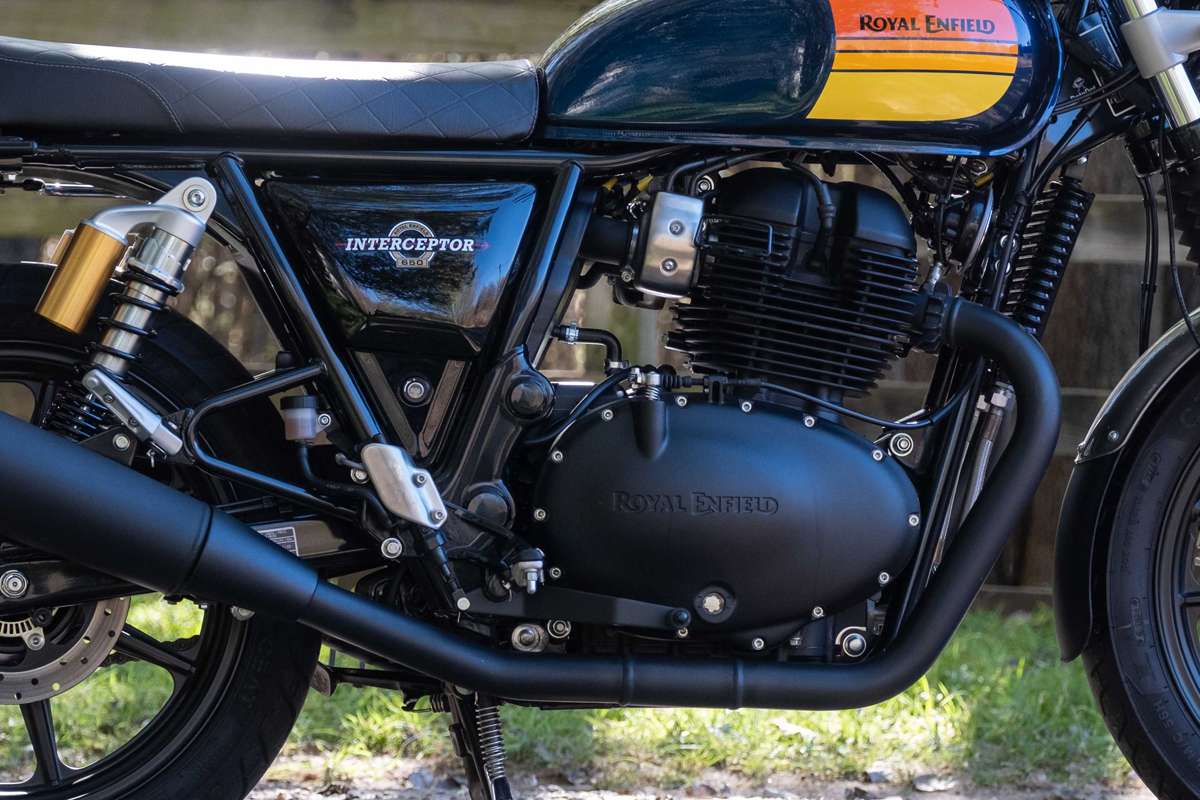
The Interceptor is bare-bones and basic, old-school cool. This bike is for the guy who digs classic ‘60s and ‘70s motorcycles for their simplicity and function. It is the perfect blank canvas for customisation. By comparison to the Super Meteor, the Interceptor feels light and almost flighty. The difference in front-end feel between the Showa USD forks on the Super Meteor and the older right-side-up units on the Interceptor is marked. The Interceptor feels like a reasonably sorted ‘70s motorcycle and tugs massively on the nostalgia heartstrings of anyone familiar with the bikes of that era. Let me explain.
In the ‘70s, I was riding CB 750 Hondas. I would literally uncrate the bike (I was working at a Honda dealership at the time) and, before even firing it up, I would swap the standard tyres to either Dunlop TT100s or Pirelli Phantoms. The back shocks would come off, and on would go S+W Stroker dual spring rate replacements. The front fork oil would be drained and replaced with my own recipe of STP and automatic transmission fluid, which would significantly improve the damping. A few large washers on top of the fork springs would increase the preload and stiffen up the front end. Now the bike would handle predictably, and the tendency to wallow in high-speed sweeps was eradicated. The difference in handling from the standard bike was marked. We could now drag the stator cover on the motor on the legendary “22” between Sabi and Hazyview. It must also be said that that magical piece of tar was billiard table smooth in those days.
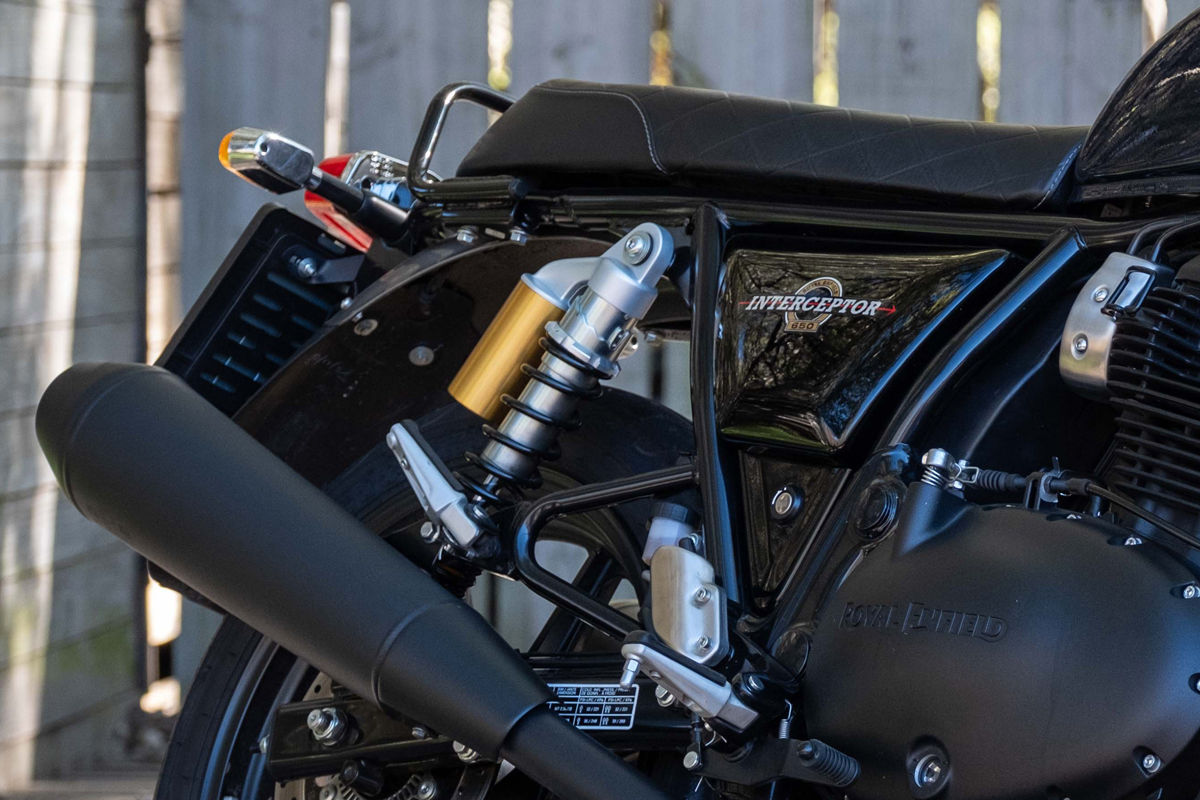
The Interceptor feels almost as good as my CB 750 after the mods. You have to ride it right to get the most out of it. For me, this is incredibly rewarding. Modern bikes have become so good that they work OK even with a ham-fisted approach. They allow riders to get away with poor riding skills by virtue of their good chassis and electronic trickery. Back in the ‘70s, poor riding would reap the whirlwind! Gen Z riders will shake their heads and say, “Why would you even want to ride a bike that wasn’t near perfect?” Well, here is the thing. Let me give you an analogy from the car world.
In the ‘80s, Porsche launched a technologically advanced 911 in the form of the 959. It relied on computer-controlled all-wheel drive, ABS brakes (still in their infancy) and adjustable suspension. Ferrari countered with the F40. A strikingly beautiful masterclass in raw, stripped-down performance. They countered Porsche’s electronic trickery with a lightweight analogue car that had brutal, 959-equalling performance, by virtue of superb chassis design, a 2,9-litre twin turbo V8 motor and driver feel second to none. Driver opinions at the time were that the Porsche was so good that it actually detracted from the driving experience. The F40, by comparison, was a visceral hands-on driving experience that had drivers revelling in the sheer mechanical perfection of it all.
And so it was with sorted bikes from the ‘70s. You had to ride them well to get the most out of them, but therein lay the fun and satisfaction. Royal Enfield has managed to capture that ‘70s soul to perfection, yet with modern touches and reliability as part of the package.
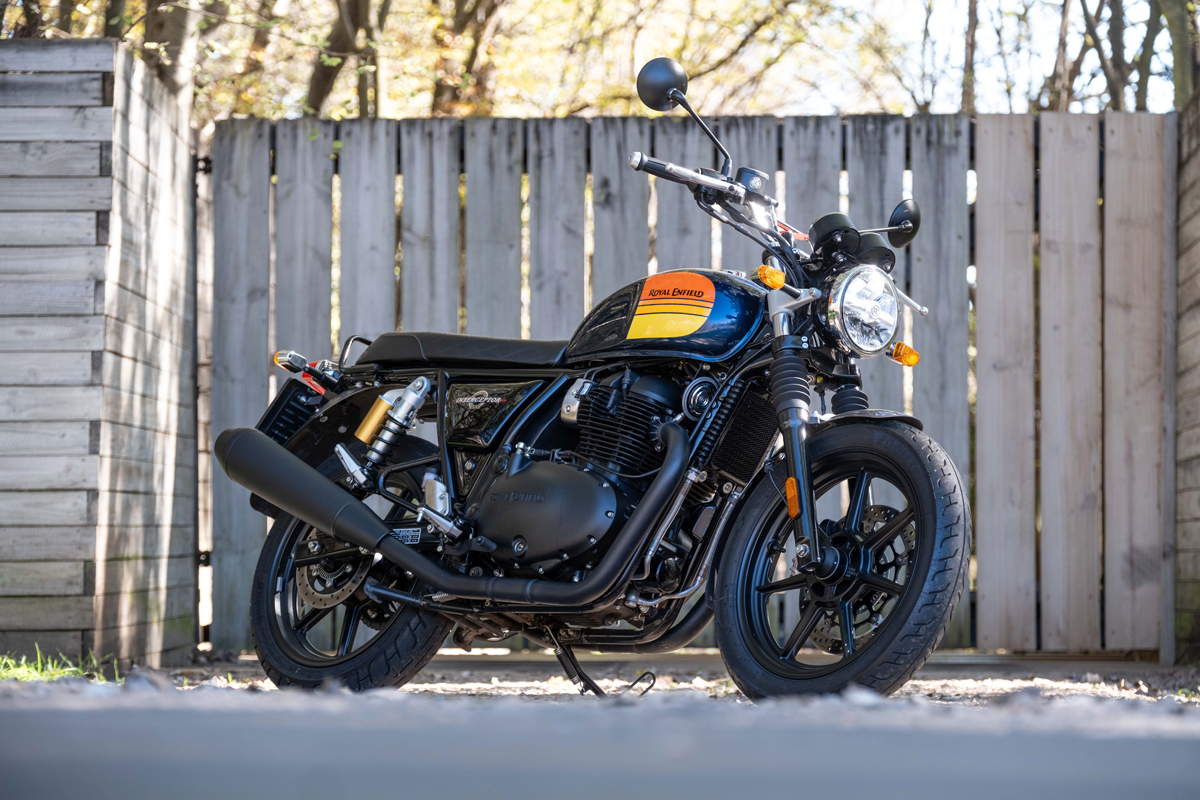
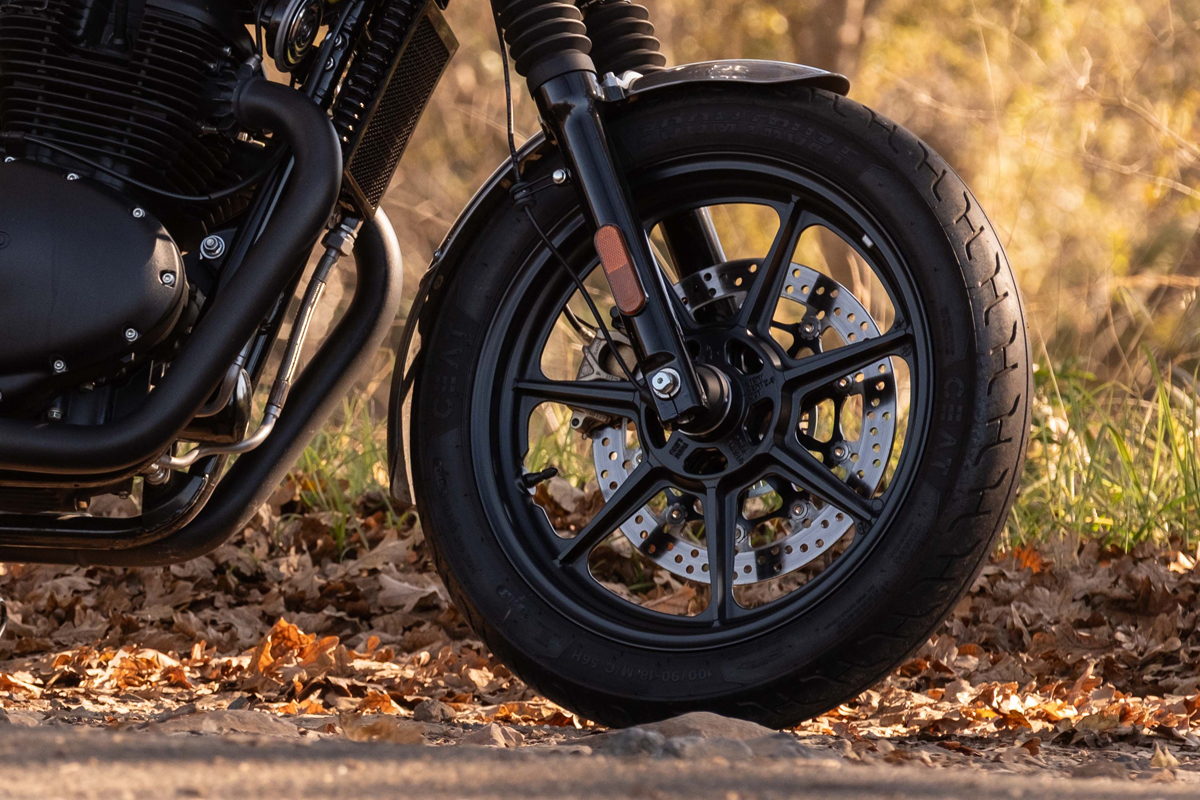
THE Interceptor was a deja vu experience for me. Riding the same roads as I strafed in the ‘70s, the Interceptor brought those memories flooding back. Road conditions have deteriorated massively in recent years, demanding more from suspension than ever before. The blank canvas and bargain price of the Interceptor Blacked-Out Edition that we were riding (a paltry R129,900) begs customisation to make it your own. It comes standard with 18” mag wheels with tubeless tyres, which is a boon. The instrumentation is an analogue-style speedo and a separate rev counter. It has a trip meter, odo and fuel gauge, and that is it. Simplicity personified.
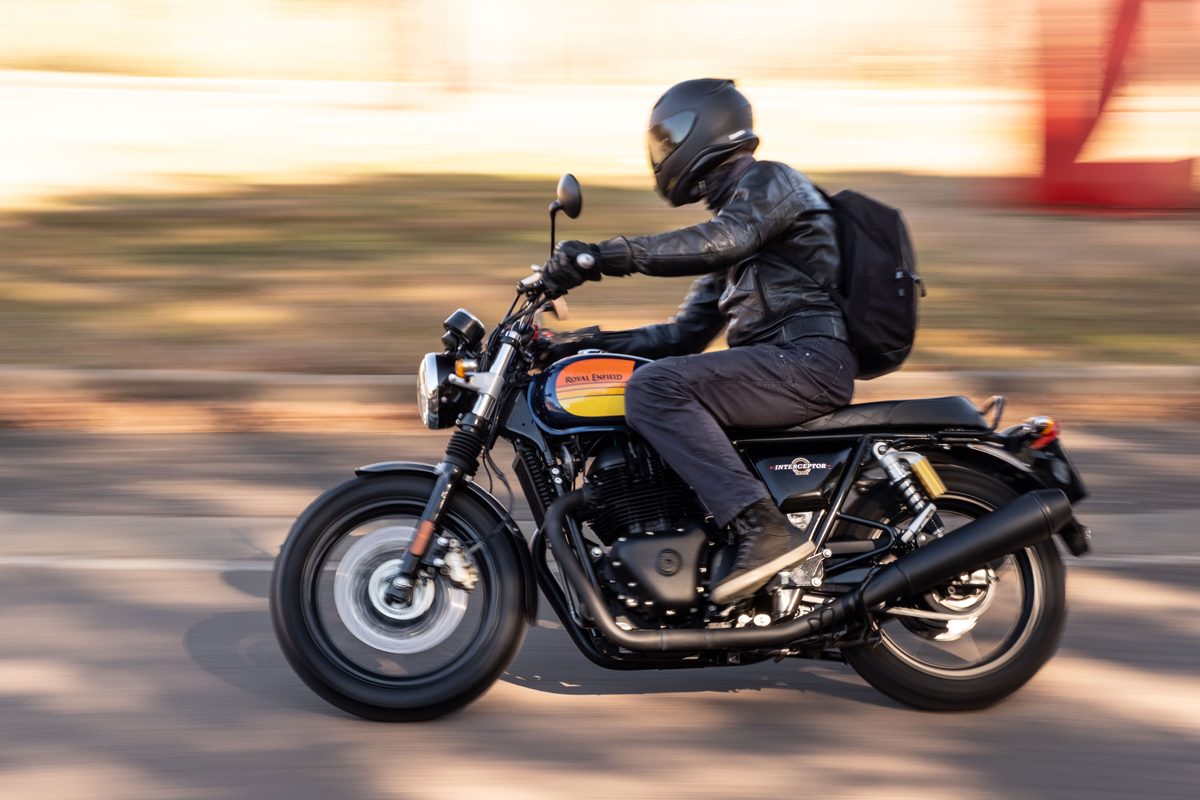
The riding experience is properly old school. The bike feels livelier than the Super Meteor, probably thanks to its lighter weight. It feels livelier suspension-wise, too. The ride is not as harsh as I was expecting, given the limited travel. The front forks do not feel as planted as the big piston Showas on the Super, but it is not unstable, just alive in a ‘70s sense. It is at its best at up to 70%, after which it can be a bit ragged. The motor is so sweet that it encourages you to run it between idle to 70%, so you never feel shortchanged. Cruising at up to 130 km/h is a doddle, after which the wind blast makes things hard going. The extensive Royal Enfield accessories catalogue now comes into play. After-market players like Hitchcocks in the UK also have enough goodies for the Interceptor to keep you engaged and drooling for years.
The Joy of Slowing Down
We rode to the Cradle of Humankind, took some photos, then meandered down Hekpoort and onto the Bekkers School road. We enjoyed a brunch at the Black Horse Brewery, then retraced our route up Hekpoort, turning onto the Satellite tracking road. The skies were blue, the temperature was a winter-defying 25 degrees, and the bikes were oh so sweet to ride. All was truly well with the world. The bikes reminded us, as we have learned in recent times, how rewarding it is to ride easy on the throttle, slow things down, and give yourself time to reflect on the experience.
We stopped for a cup of plunger coffee from my backpack and reflected on the bikes. They are superb machines with which to explore the backroads of our beautiful country. Unlike performance-oriented bikes, there is no ego involved, just pure riding pleasure. They have sufficient performance to entertain, dare I say “Royally”, without any fear or the apprehension factor that seeps in when you are strutting your stuff at the limit. They are lovely to look at, reminding us of an age when the world was, relative to today’s craziness, a simple place with simple pleasures.
Why Days Like This Matter
I filled the Interceptor with fuel with a view to checking the consumption. Topping up after 193 kilometres, I was stunned to see that it had sipped fuel at 26,45 km/L, good for over 300 k’s of riding on the 12.5 L tank. The Super Meteor, with its slightly larger tank, would be similar. As we went our separate ways, I reflected on an entertaining morning’s ride that was made such a pleasure by the wonderful demeanour of the bikes that we were riding. To quantify just how much I enjoyed it, let me put it like this. I am buying a 650 Royal Enfield. I cannot wait to take it to faraway places, with that soulful engine providing salve for my soul. As to which model it will be? Well, you will just have to wait and see, won’t you?
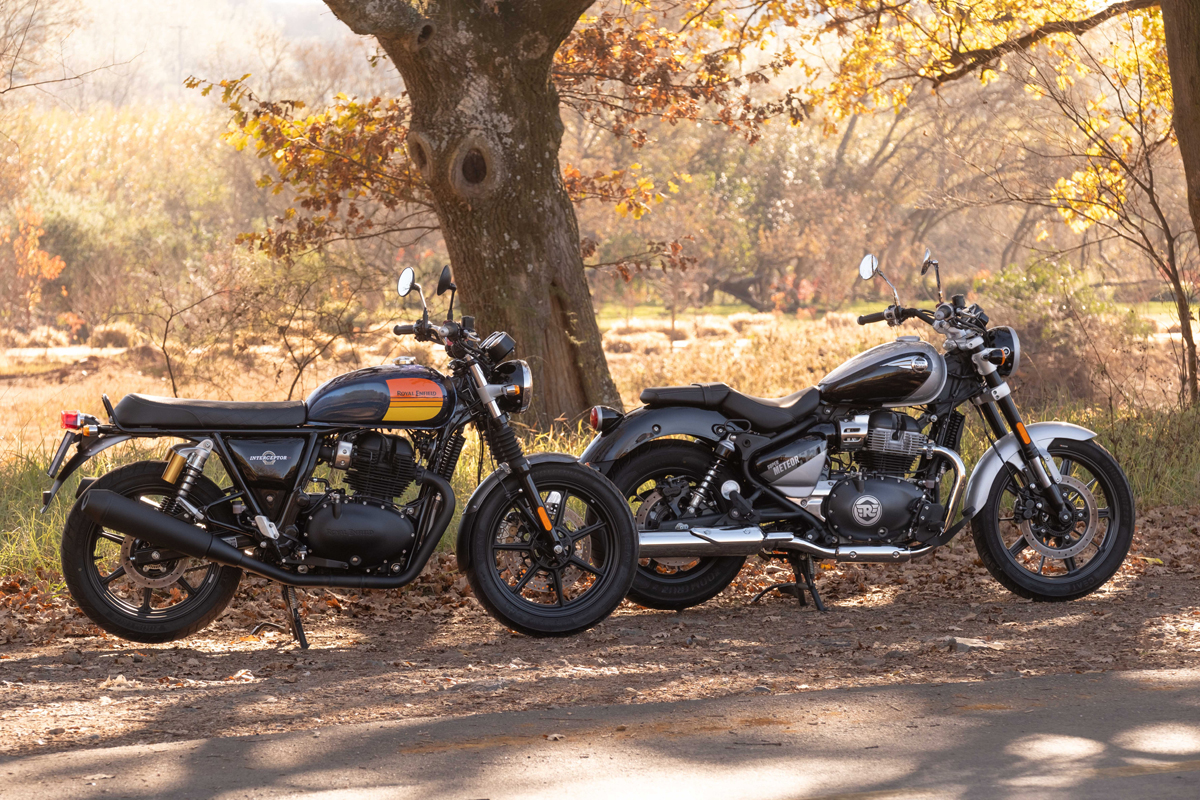
Royal Enfield 650s
For more information on the bikes featured in this article, click on the link below…