



Depending on where you live, November is a month to be feared or embraced. Here in the Southern Hemisphere, November heralds the true start of summer, while ‘oop’ North, people are battening down the hatches in preparation for a long winter.
It’s not all dark news for our northern neighbours, however, as November also marks the annual motorcycle-fest that is the EICMA show in Milan, Italy. This is the truly mind-blowing show at which all the major manufacturers set up their stalls for the next year and showcase all the new models they have been working on.
It is a completely overwhelming experience, and you need stamina and endless enthusiasm if you are to see everything; in fact, by the end of two days, you really don’t mind if there are still two enormous halls you have not yet visited.
However, in a truly selfless act of journalism, our intrepid photographer Bjorn Moreira was sent forth with cameras and a notebook to record all the significant reveals, of which there seem to be many, while the rest of the ZA Bikers gang sits here in Johannesburg heat to write it all up.
Honda
Despite having endured a torrid time on race tracks in both MotoGP and World Superbikes, Honda continues to develop the Fireblade. Of course, this model has nothing to do with the RC213V MotoGP bike but does form the basis of the bike used for WSBK and road racing.
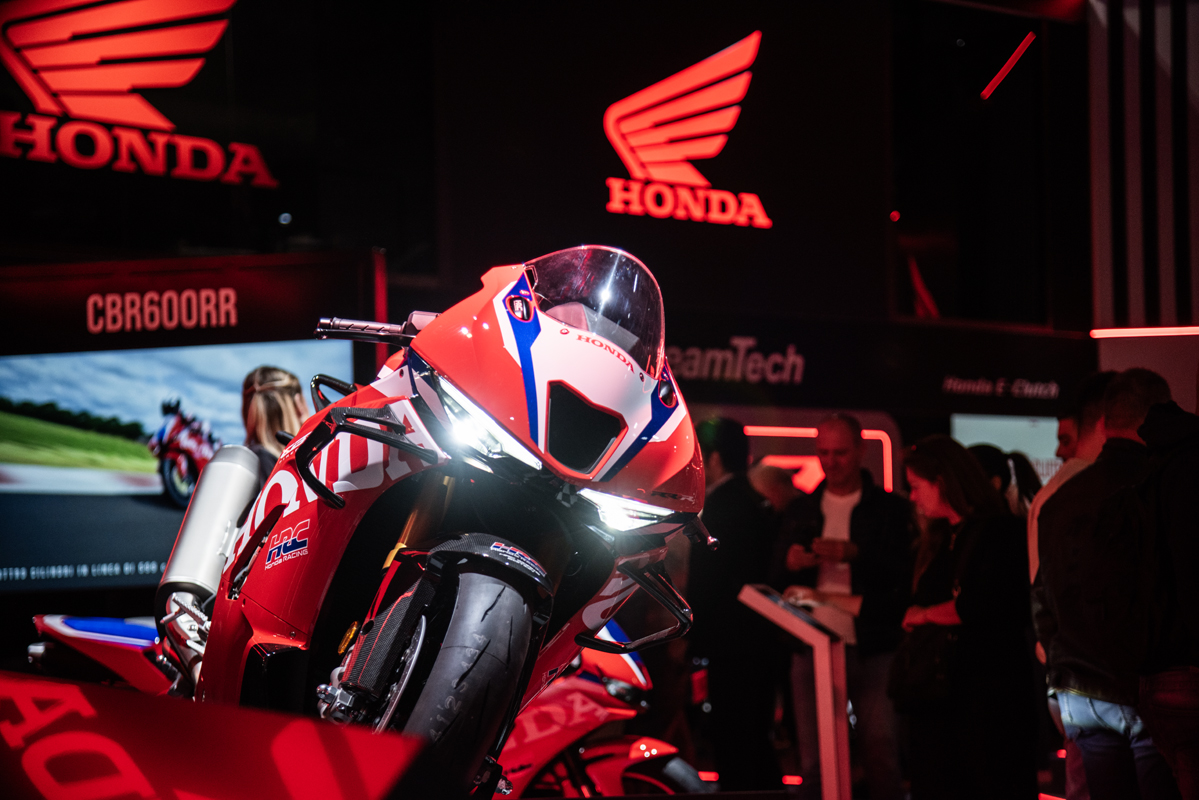
For 2027, we see evolution, rather than revolution, for the model. On one side of the road is the brand-new Fireblade; the base CBR1000RR-R, the CBR1000RR-R Fireblade SP. The engine remains the same inline four, developing 214.6bhp and 114Nm of torque. There are a host of detail revisions inside the engine, and there is an all-new aluminium frame, a lighter swingarm and the very latest in Öhlins electronic suspension. Wheels and Brembo brakes are also new, and so is the aero package, thanks to a new fairing with cleaner styling.
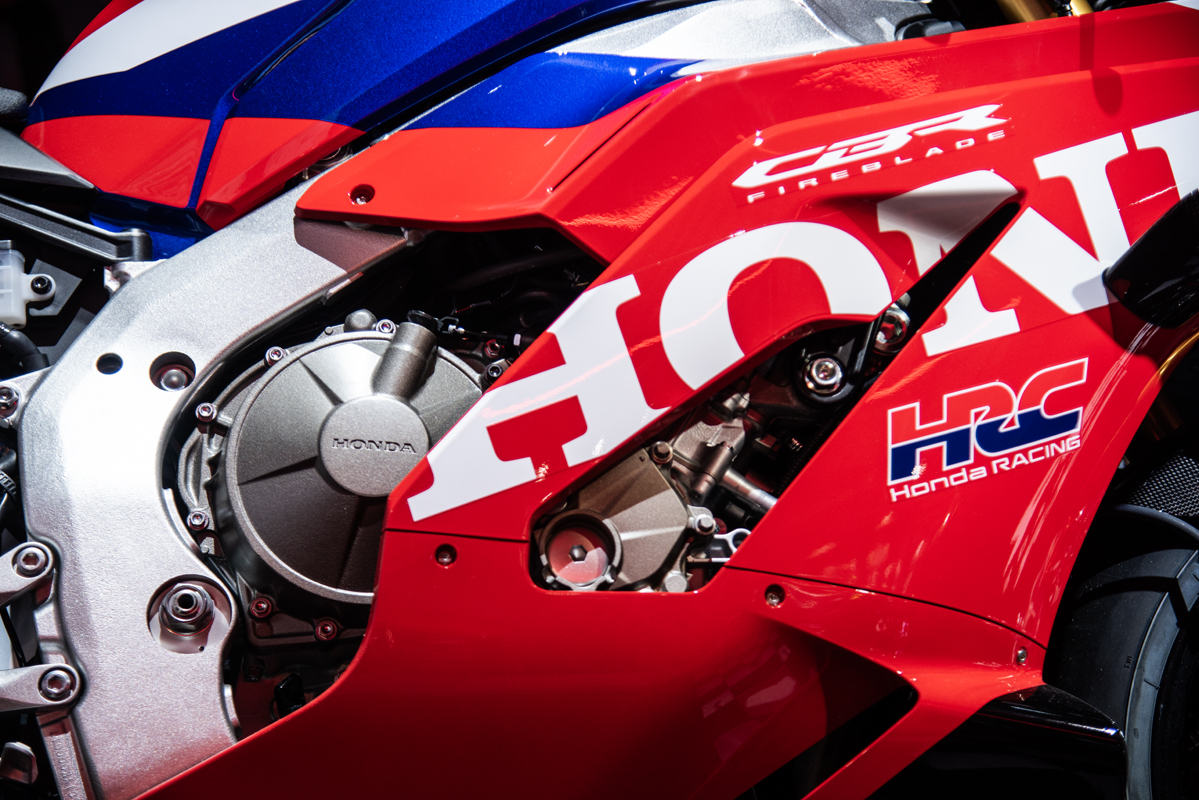
On the other side of the track is the new CBR1000RR-R Fireblade HRC Works Edition, a pure track-focussed model. It shares the engine and frame with the SP but features a host of competition-focussed enhancements, clearly aimed at giving Honda an edge in WSBK racing
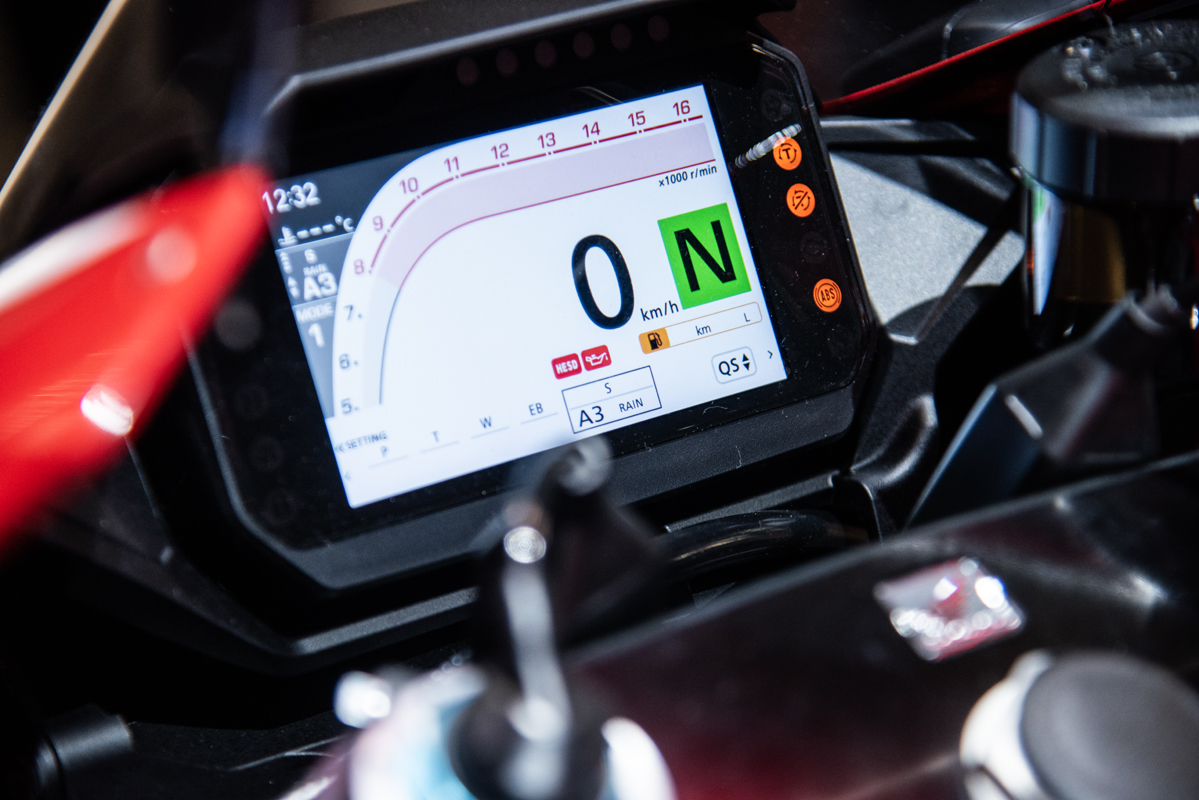
There’s adjustable steering head and swingarm pivot geometry, Öhlins mechanical race suspension and Brembo Hypure Sports front brake callipers.
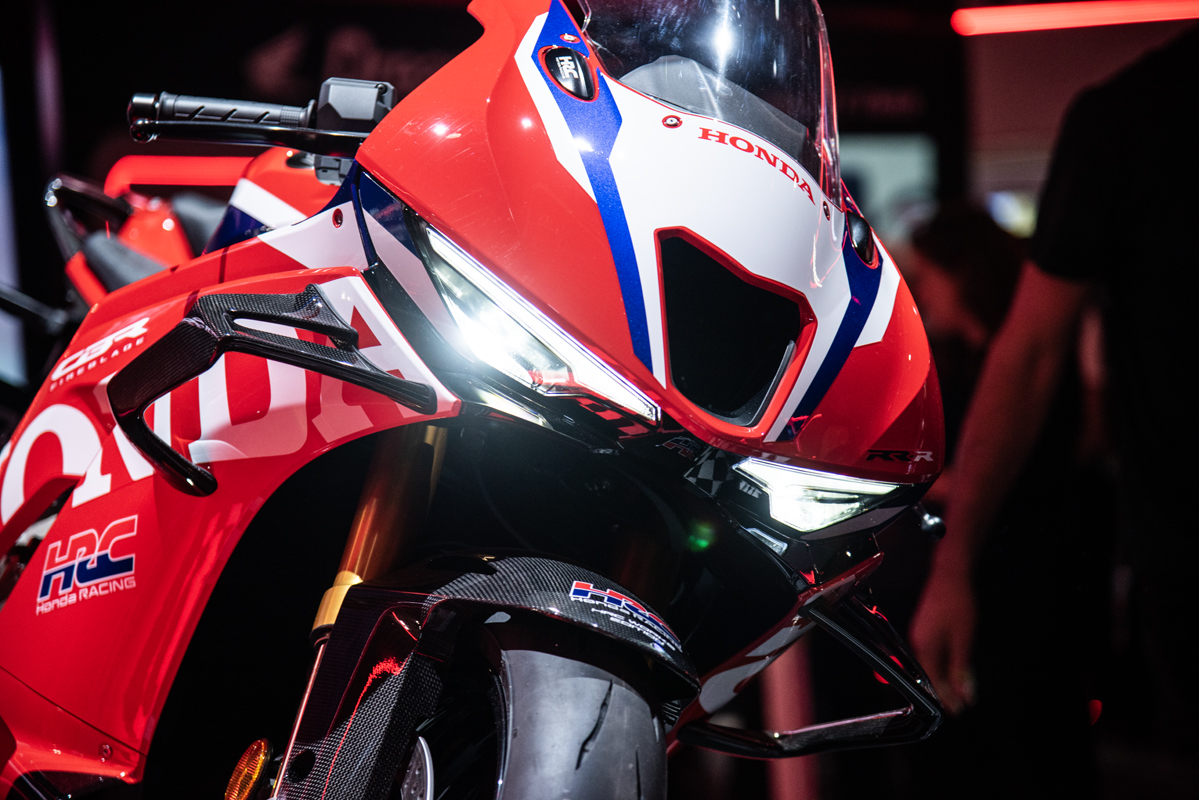
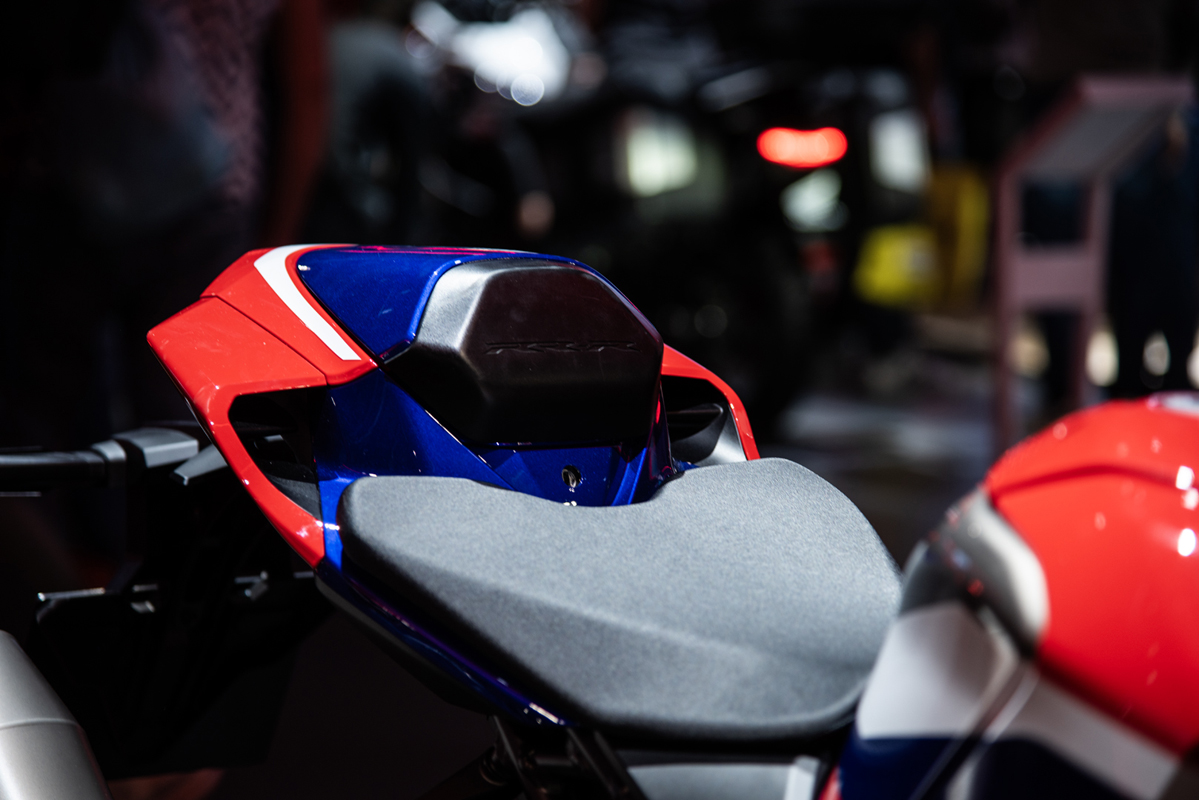
A single-seat configuration and CFRP (Carbon Fibre Reinforced Polymer) dual-element wing structure, alongside front mudguard and rear seat ducts, and an optional MotoGP-style HRC bottom-neutral shift pattern complete the bike’s setup.
The upper wing surface area is now 2.4 times larger than before, while Honda says it has optimised wing angle, area and placement to improve front-end stability during acceleration and corner exit. The whole package generates 3.5 times more downforce than the standard Fireblade. Naturally, the electronics package is significant.
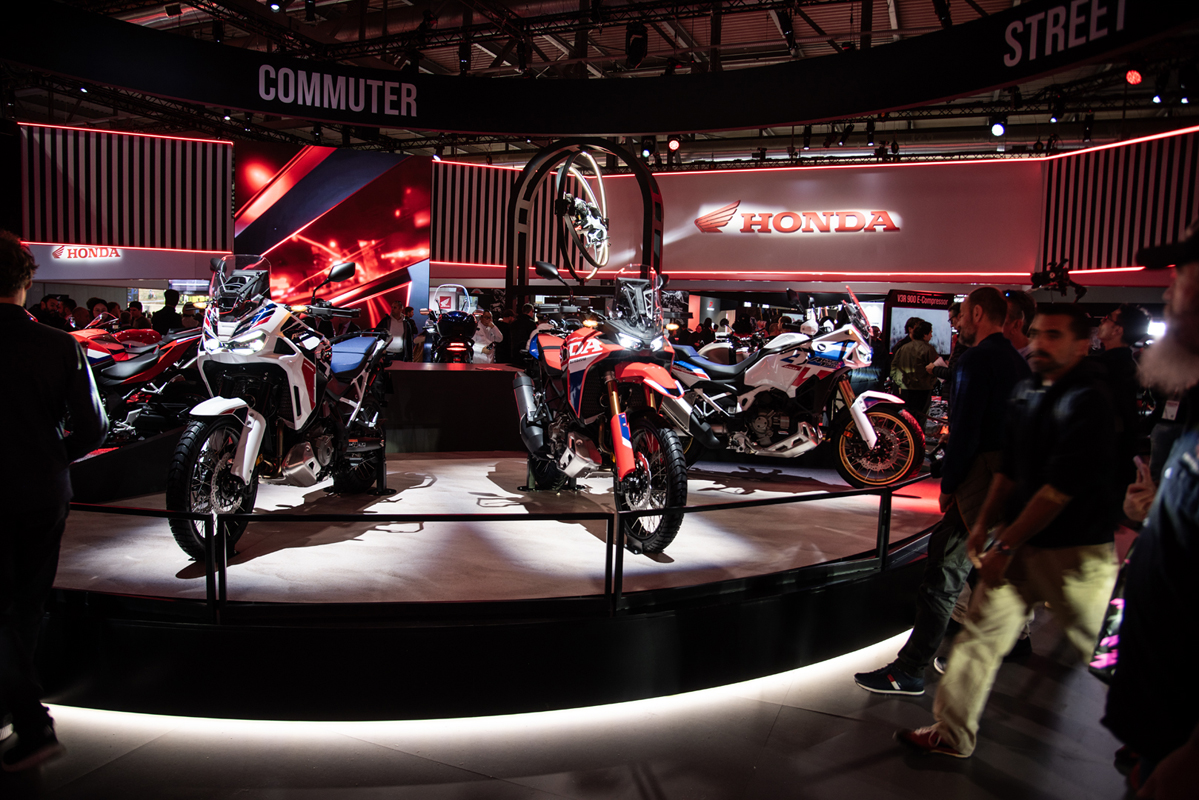
At the other end of the scale, the Africa Twin has received a significant upgrade: a new engine, lighter frame and refreshed looks. The engine has been upped to 1,131cc, producing 117bhp, a not-insignificant rise over the previous model’s 100bhp. Torque is very slightly higher. There will still be the choice of manual or DCT gearbox.
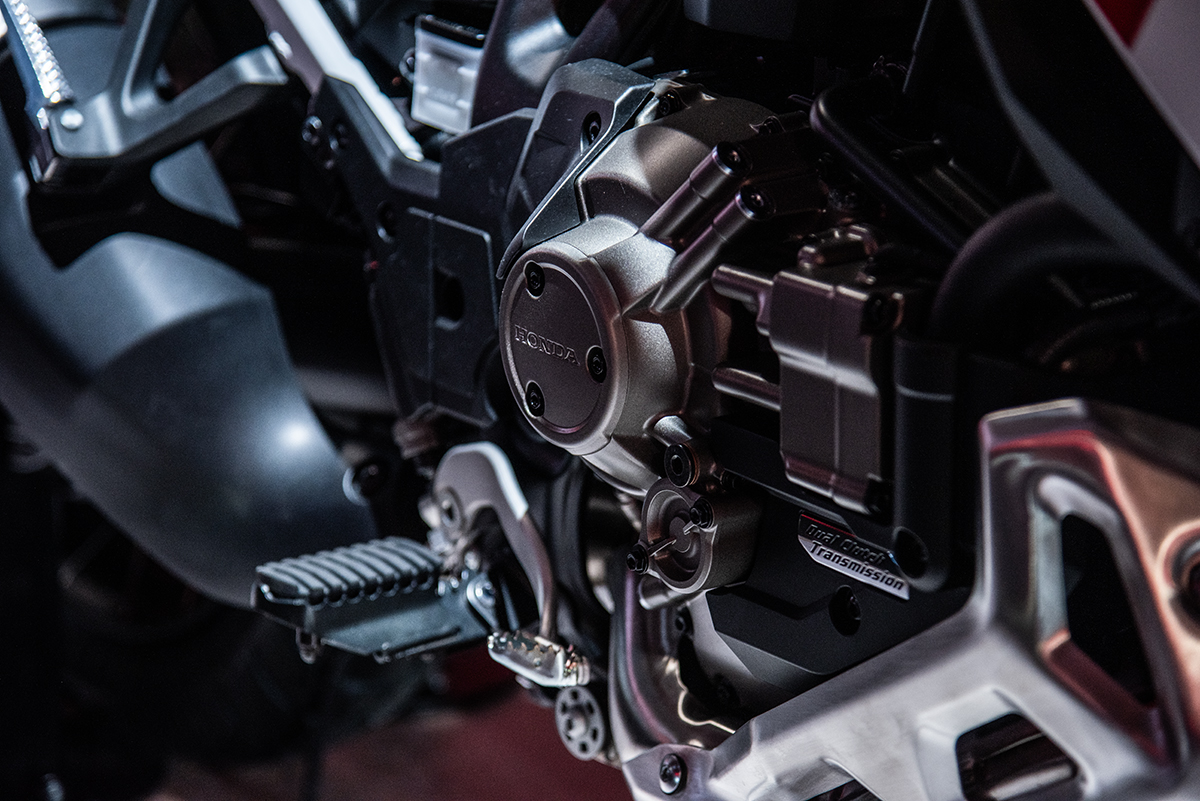
The frame and swing arm have been redesigned, with a claimed 1.5kg weight saving. Overall, the new model is around 5kg heavier than the outgoing model, although the centre of gravity is lower thanks to a new secondary fuel tank that lives under the seat.
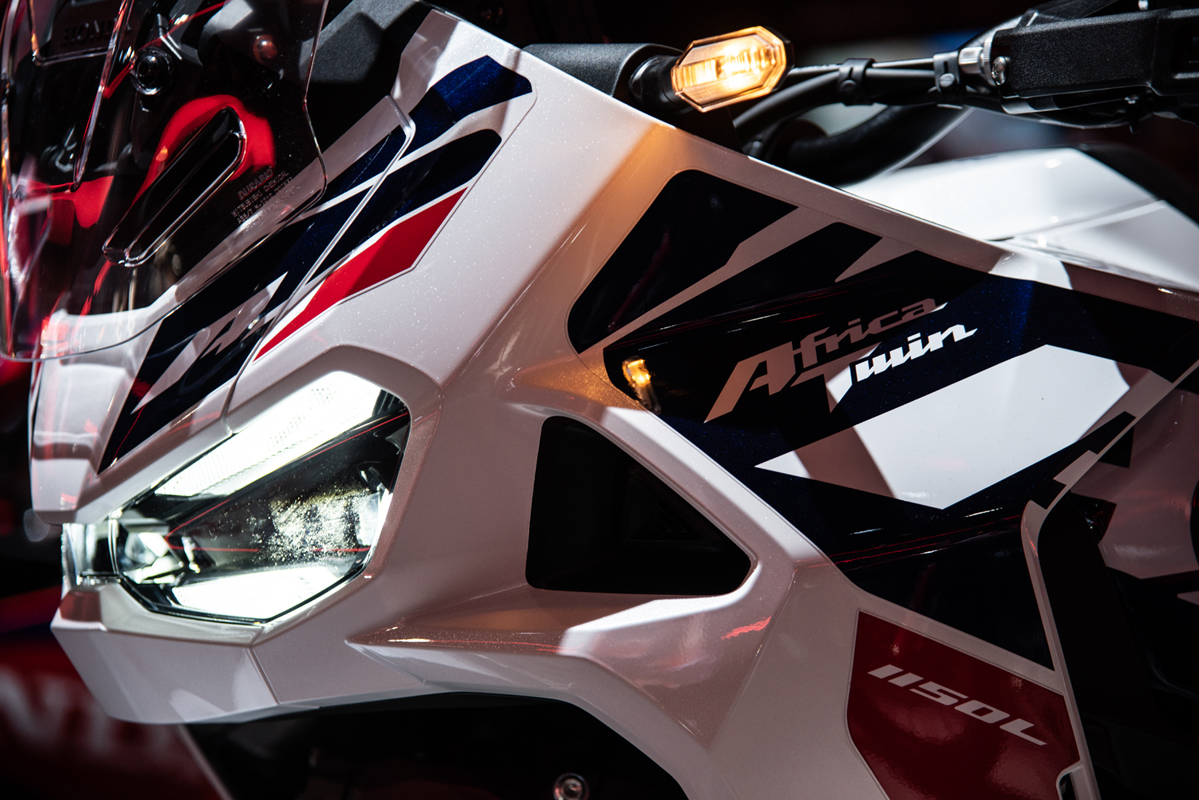
The forks are slightly beefier – 45mm up to 49mm – and Showa electronic suspension is now standard. The screen is now electrically raised and lowered, and the TFT dash is full colour and 7 inches wide.
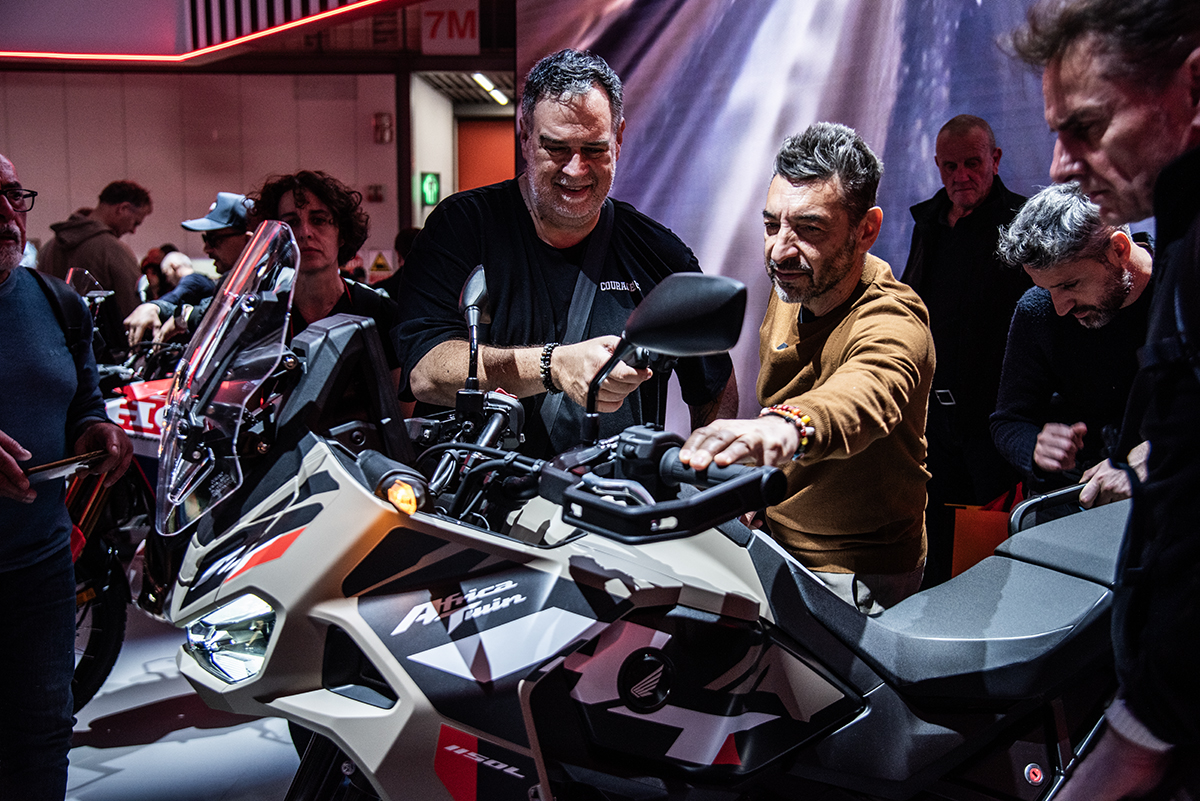
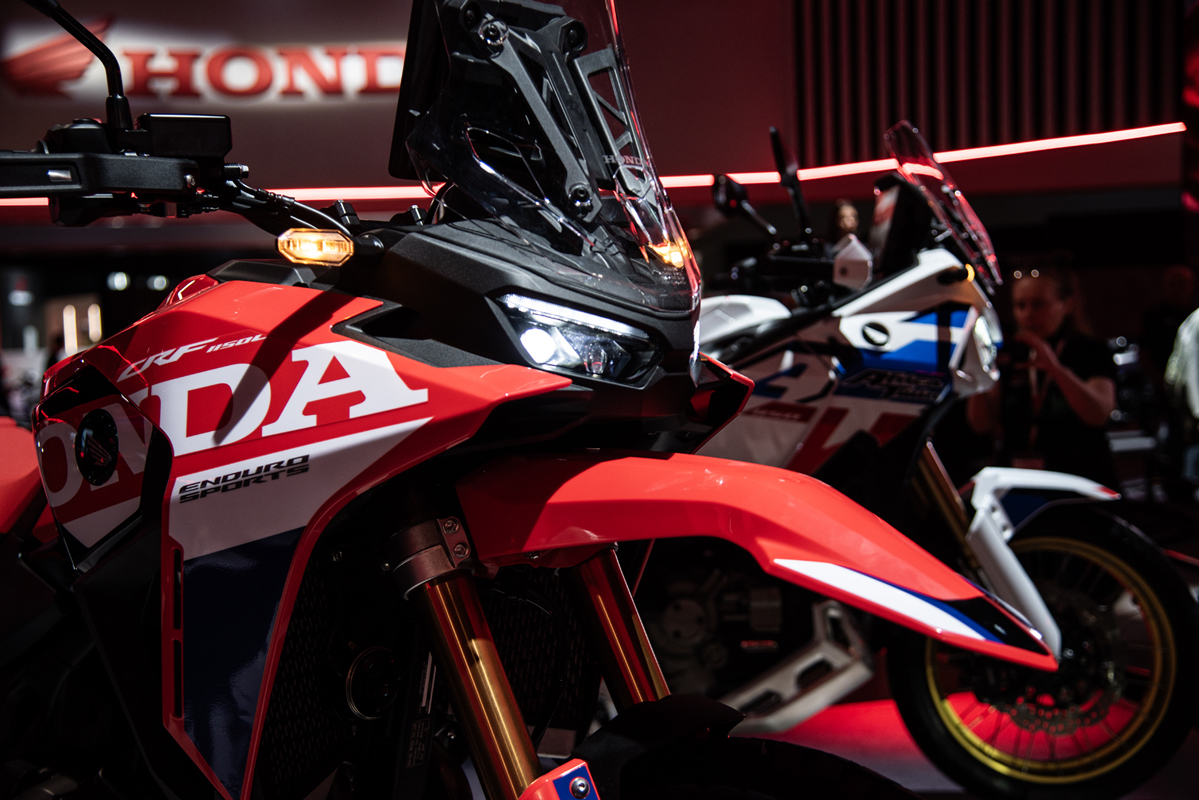
The 2027 Africa Twin family now comprises three distinct models: the standard Africa Twin, the long-distance-focused Adventure Sports and the new Enduro Sports. The Adventure Sports gets a 24-litre fuel tank and a 19-inch front wheel, while the Enduro Sports is aimed at riders seeking greater off-road ability, with styling inspired by Honda’s CRF450 Rally. Honda’s new radar-based SENSING RIDE system will be available as an option on the Adventure Sports DCT.
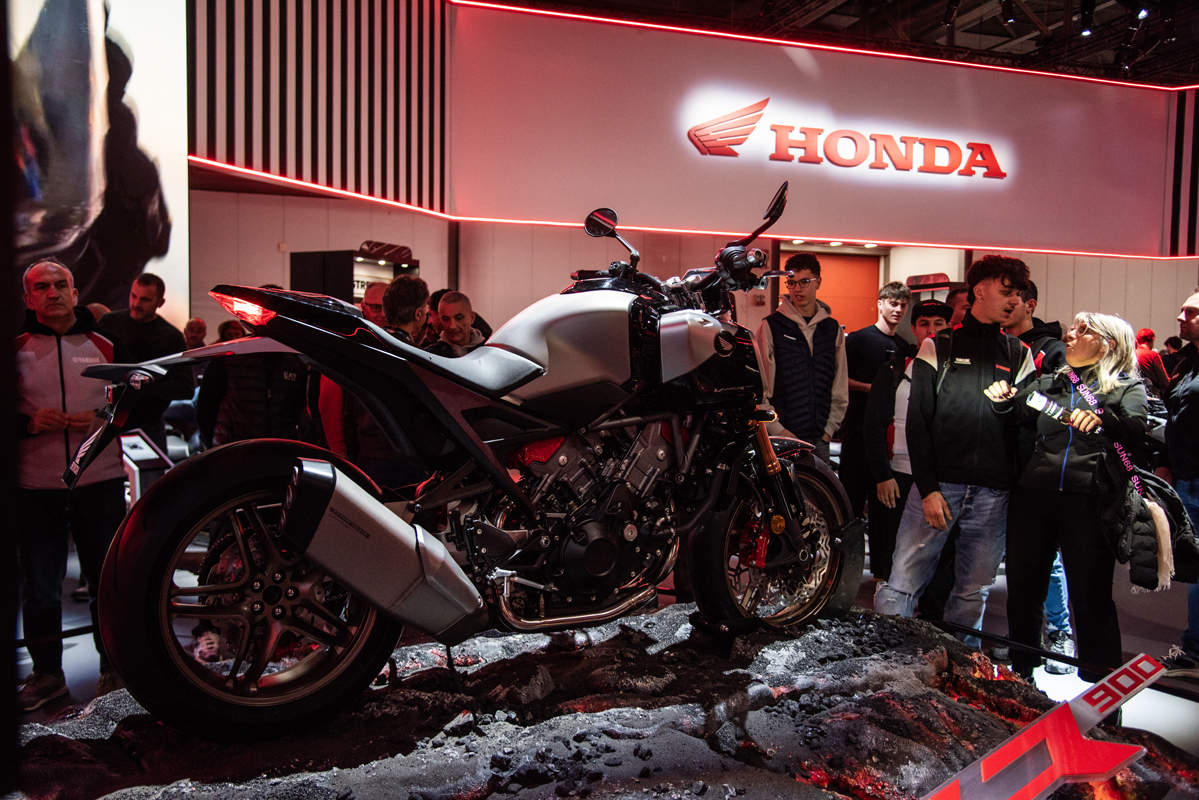
Honda also showed a new version of its radical V3R900 E-Compressor, two years after its original sighting and a year after its last appearance. Honda claims that this sighting is showing off the ‘final design lines’ before it goes into production.
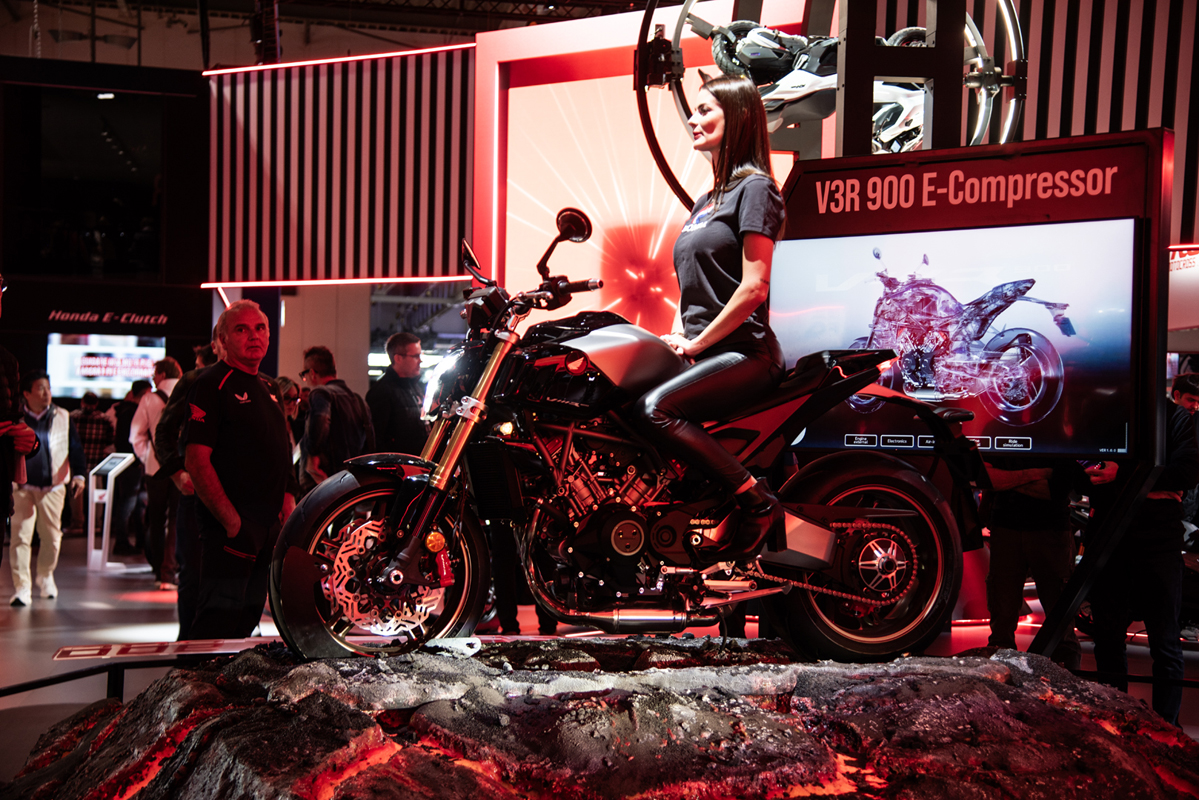
The V3 engine is obvious, but what isn’t so obvious is the fact that it has an electronically driven compressor, a system that will deliver instant torque at low revs and give performance comparable to that of an engine of, say, 1200cc.
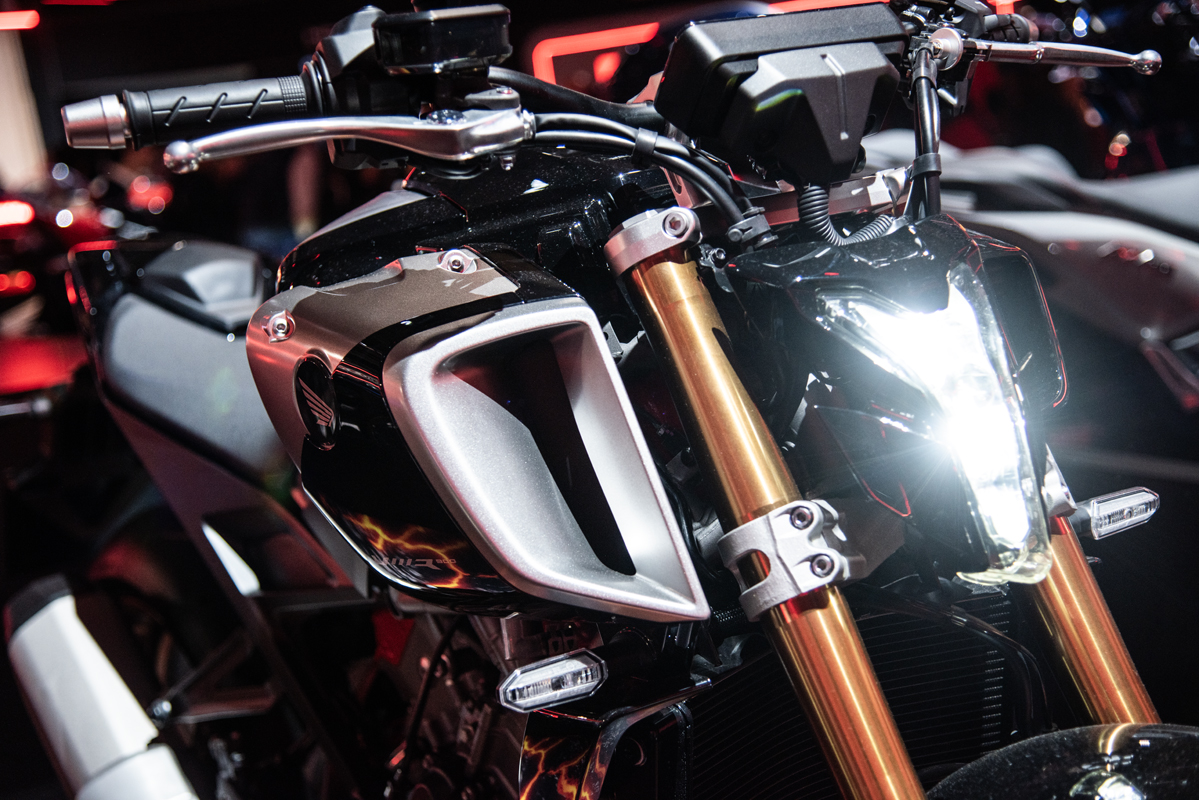
Perhaps the most controversial element is the use of AI-assisted functionality. But perhaps it’s only controversial because we don’t actually know what that means exactly just yet.
Suzuki
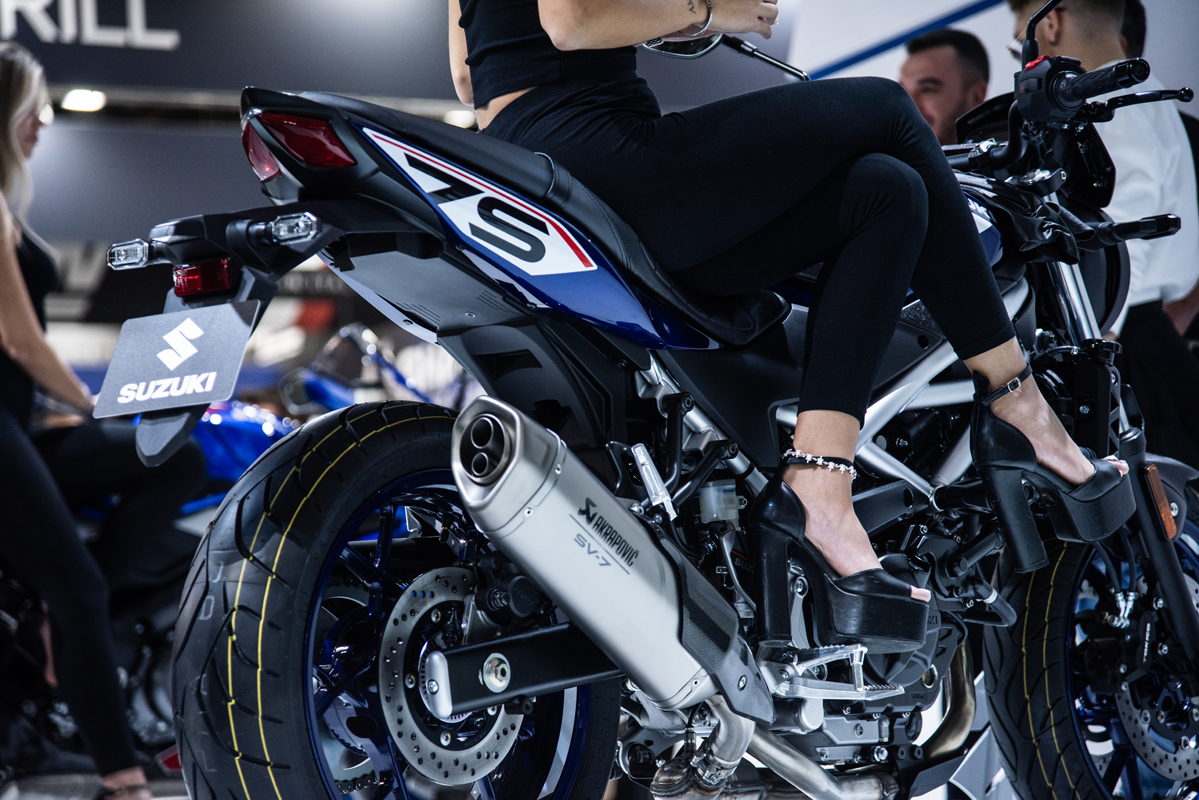
It’s a well-established fact that Suzuki engineering is among the finest in terms of longevity in motorcycling, and further evidence, if any were needed, has come in the form of the new SV-7S, which is none other than the immortal SV650 given yet another lease of life; it really is the bike that refuses to die!
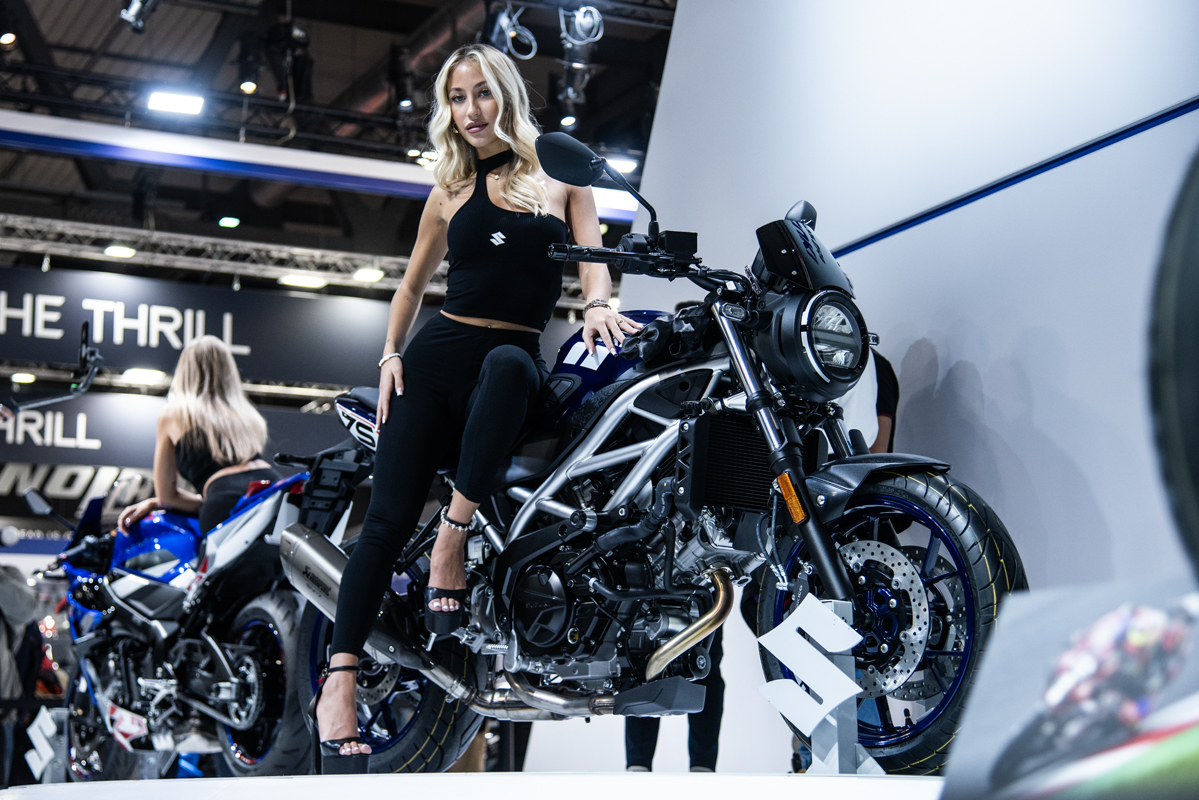
At its heart is the venerable 90-degree, 645cc V-twin that’s been around since 1999 and has produced 500,000 units. In this guise, it pushes out 72bhp and 47.2lb-ft of torque. Amazingly, Suzuki has enabled it to meet the Euro5+ emissions regulations. A new ride-by-wire throttle has given rise to more electronics, including three riding modes, traction control and a two-way quick shifter.
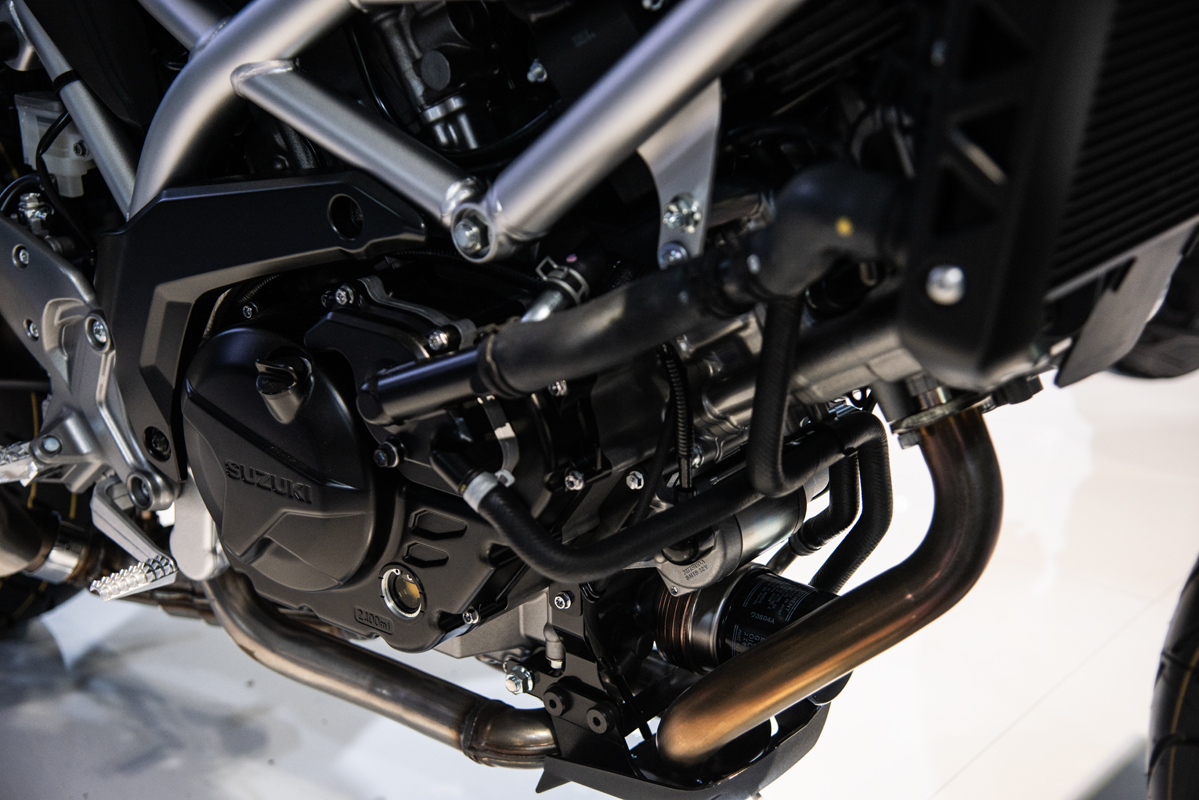
In terms of style, it’s very much the naked roadster the SV650 was, with an exposed trellis frame and a round LED headlight. Suspension and brakes remain simple but effective, and the only question that remains is whether we will see it in SA. We really hope so.
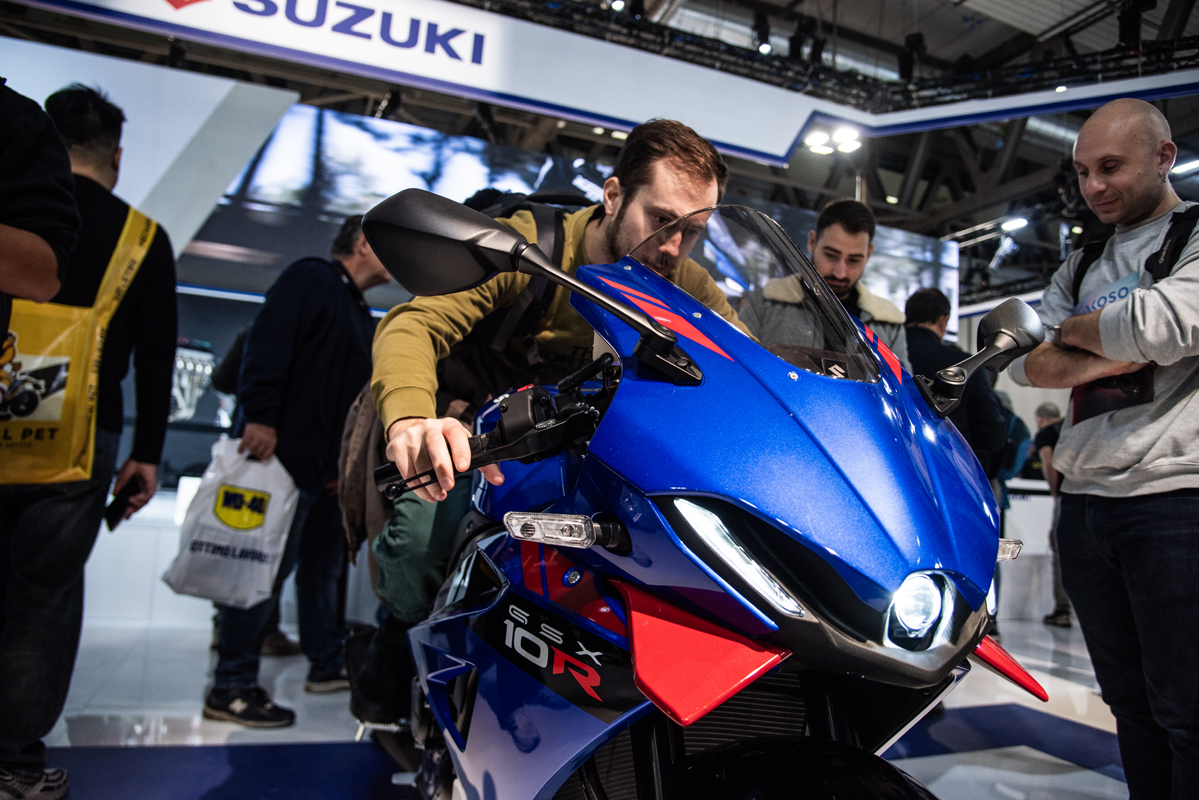
We’ve long been fans of the Suzuki GSX-S1000, -1000 F, -1000GX and -1000GT models, using the old but solid K5 GSX-R1000 inline four engine. Well, to the range has been added the GSX-10R, in essence the old GSX-R1000 reincarnated as a slightly mild sports bike. Think of it as a bike for riders who enjoy sports bikes but want something a little less uncompromising than the modern homologation-level superbikes.
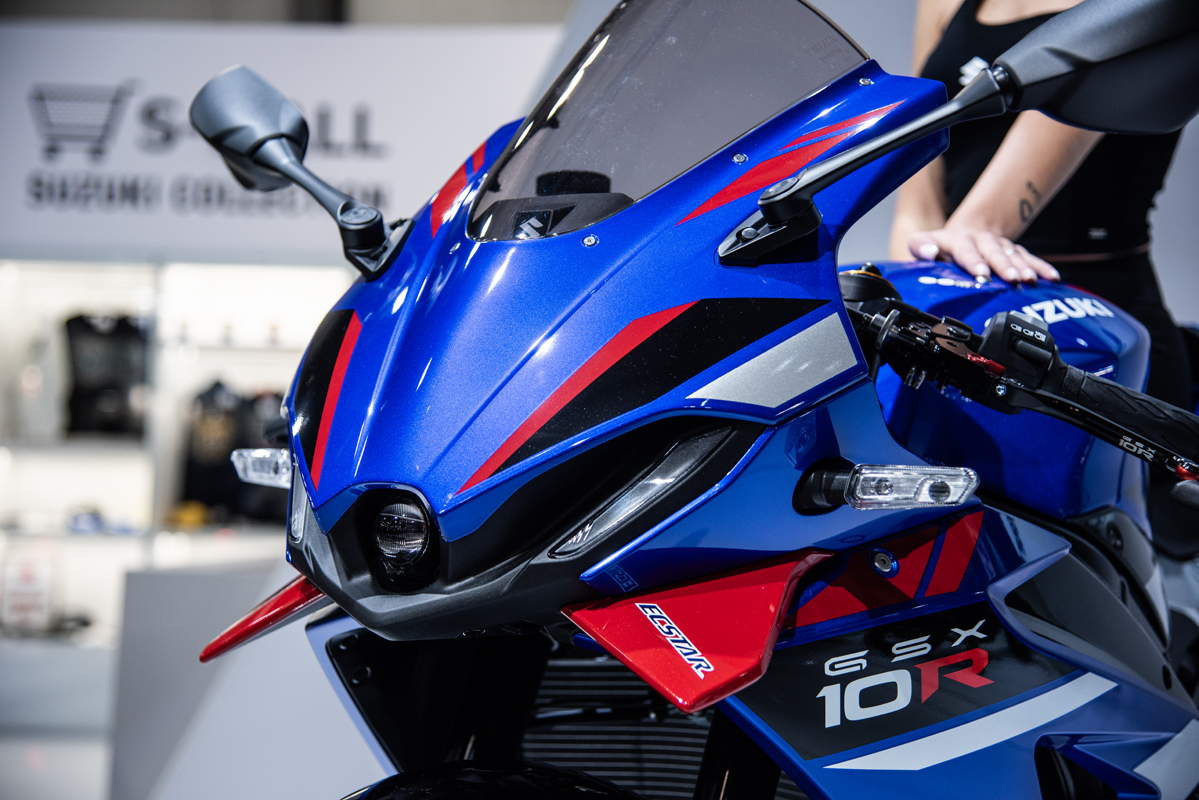
It’s a good move: a motorcycle that will be enjoyable across a wide variety of riding situations: urban riding, weekend open-road blasts, touring and track days. Think of it as not chasing performance at the expense of everyday usability.
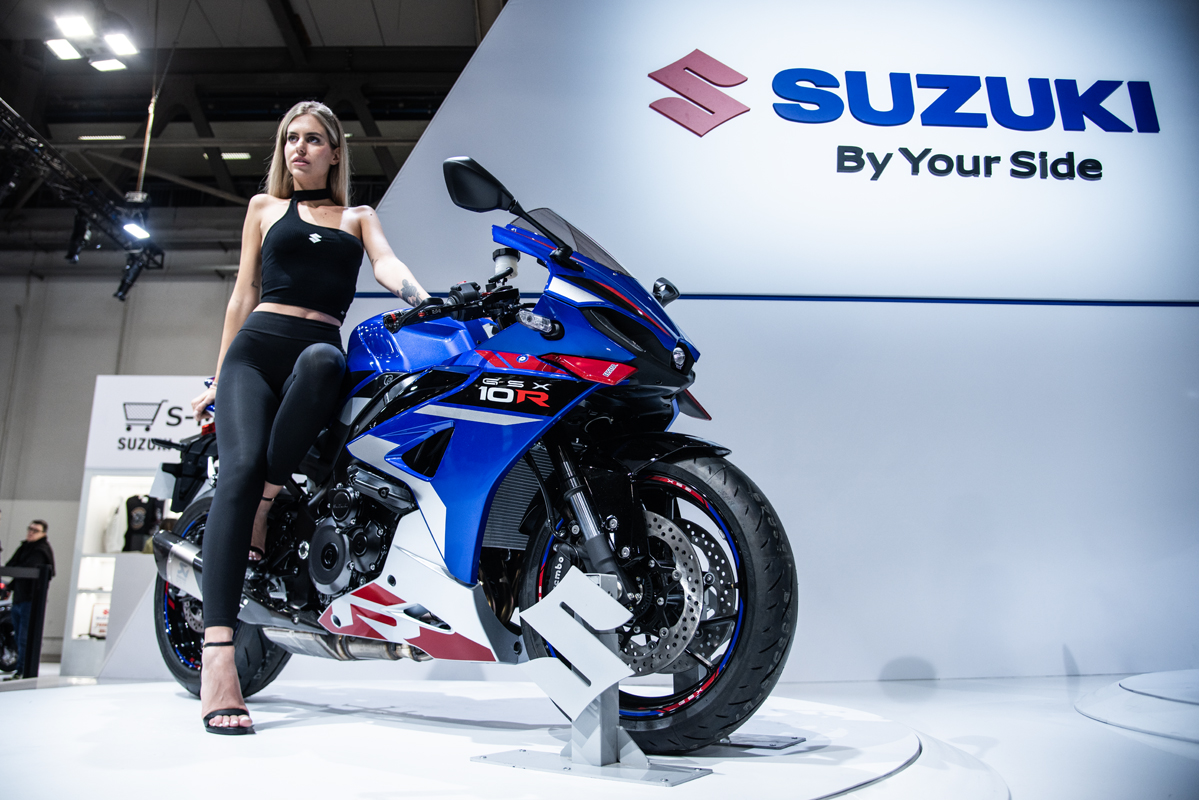
You get the same 150bhp and 78 lb-ft of torque the range has always offered, along with Euro5+ emissions compliance, ride-by-wire throttle, riding modes, quick shifter and slipper clutch. The electronics package is significant, including Suzuki’s first slide control system, launch control, engine brake control, lift-limiter, cornering ABS and cruise control with curve speed control.
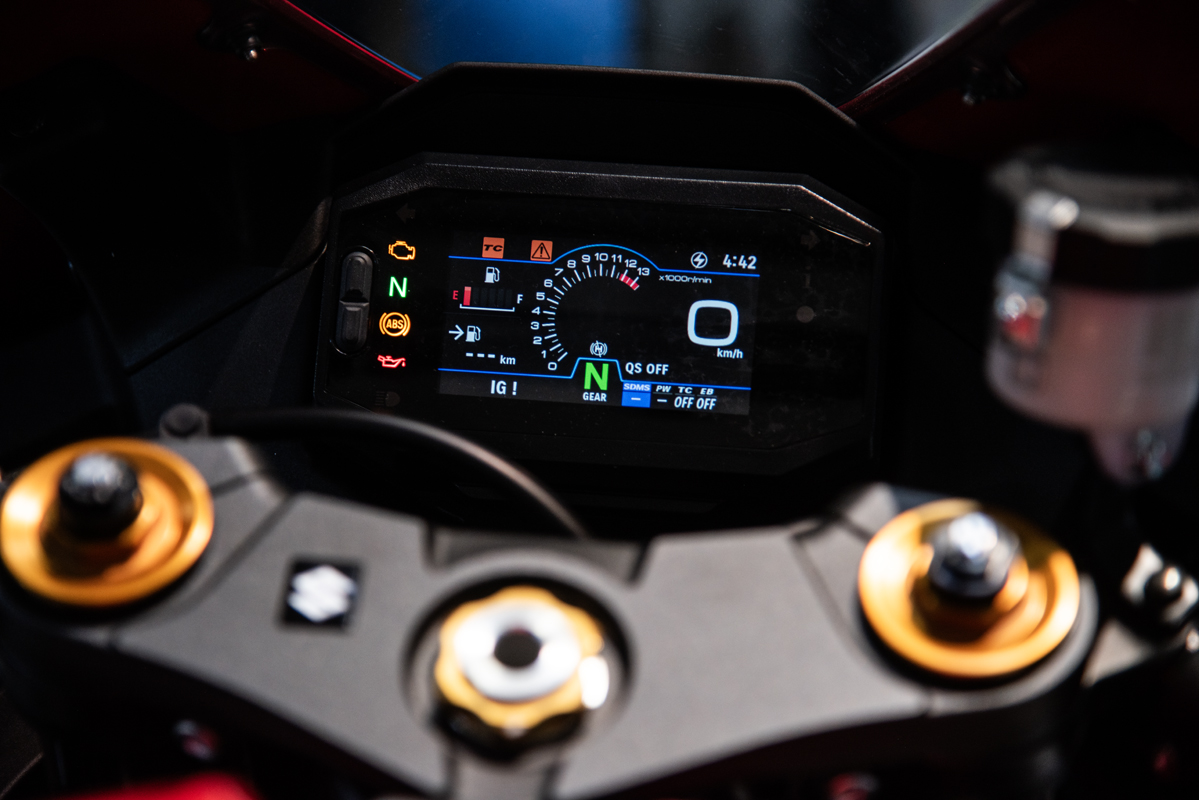
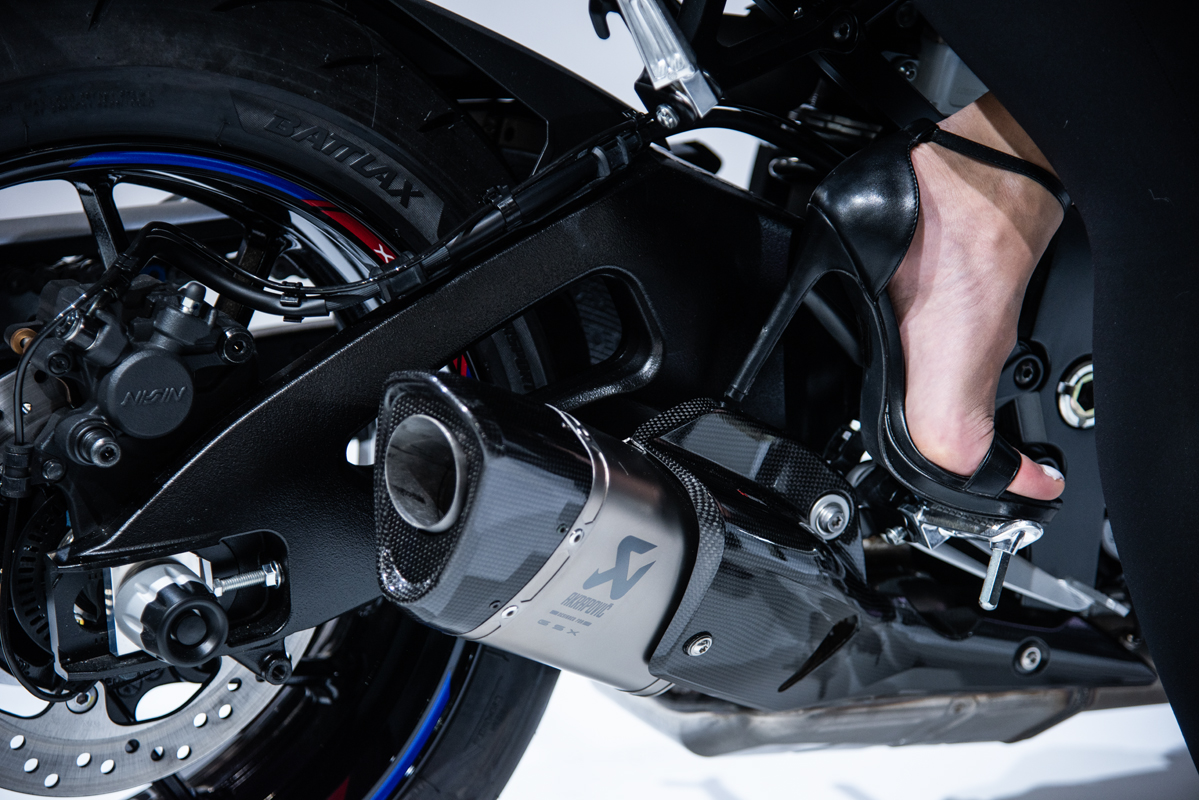
The frame is an aluminium twin spar, fully adjustable suspension is by KYB, an 18-litre tank and a seat that should give a good compromise between sports riding and long-distance touring. All-in weight is 214 kg, and we can’t wait to ride it!
Yamaha
Remember the wait we had to endure between Yamaha first showing the T7 concept and the production version appearing? It felt like (and was!) years. Let’s hope that the same won’t be the case for the newly announced T4 concept. It’s a good move on the part of Yamaha, as the recent development of the 400-500cc adventure market has proven to be extremely popular, especially as litre-plus adventure bikes are getting ridiculously large, heavy and overpowered.
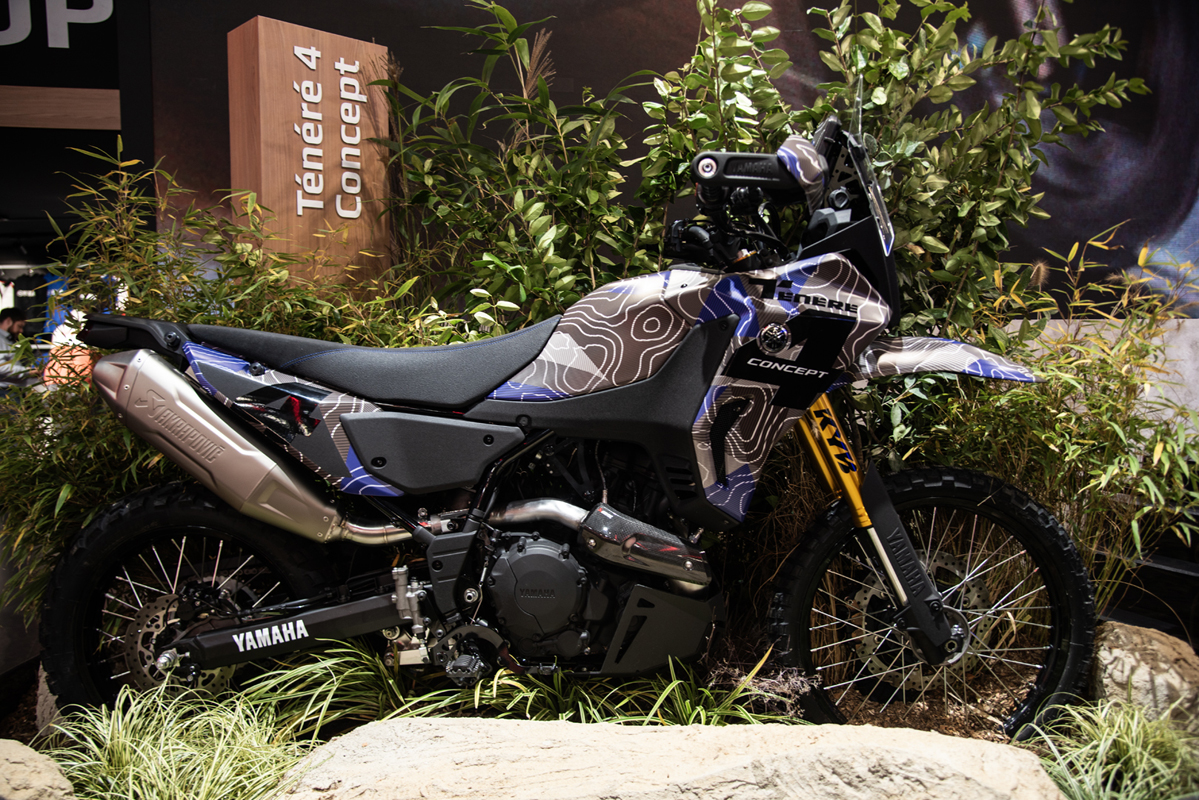
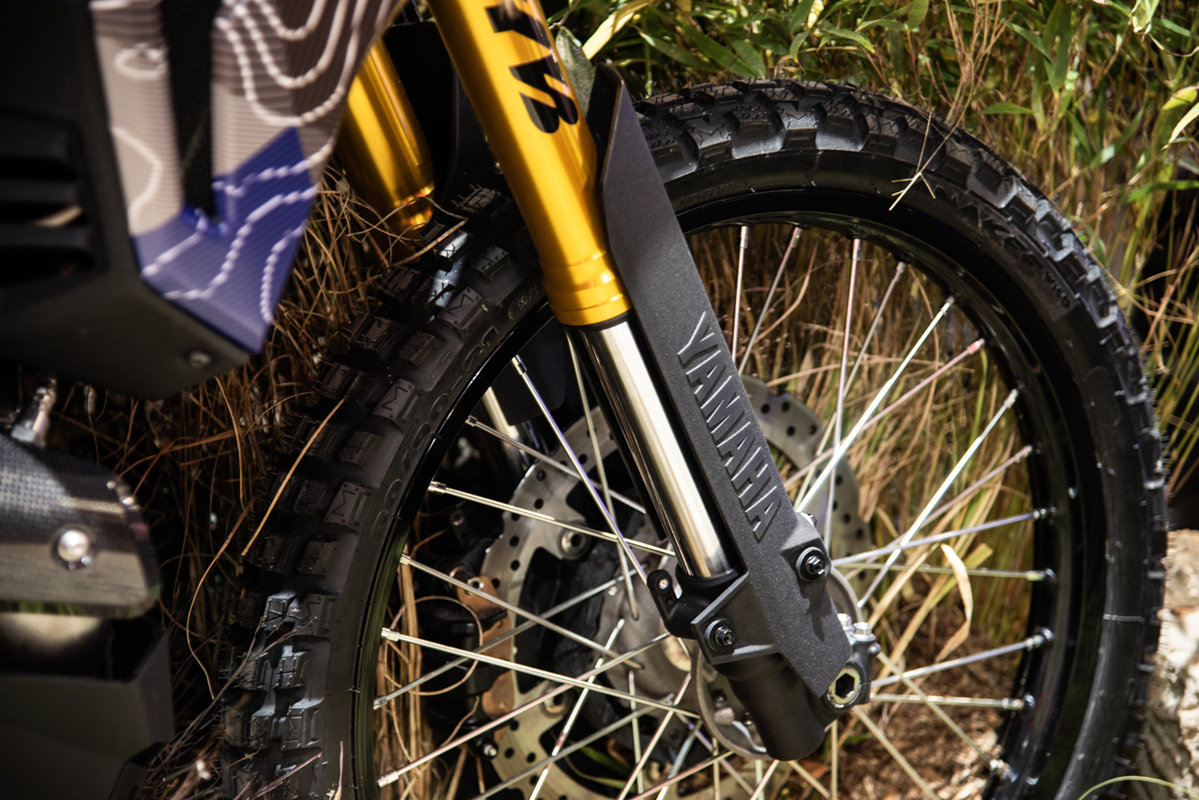
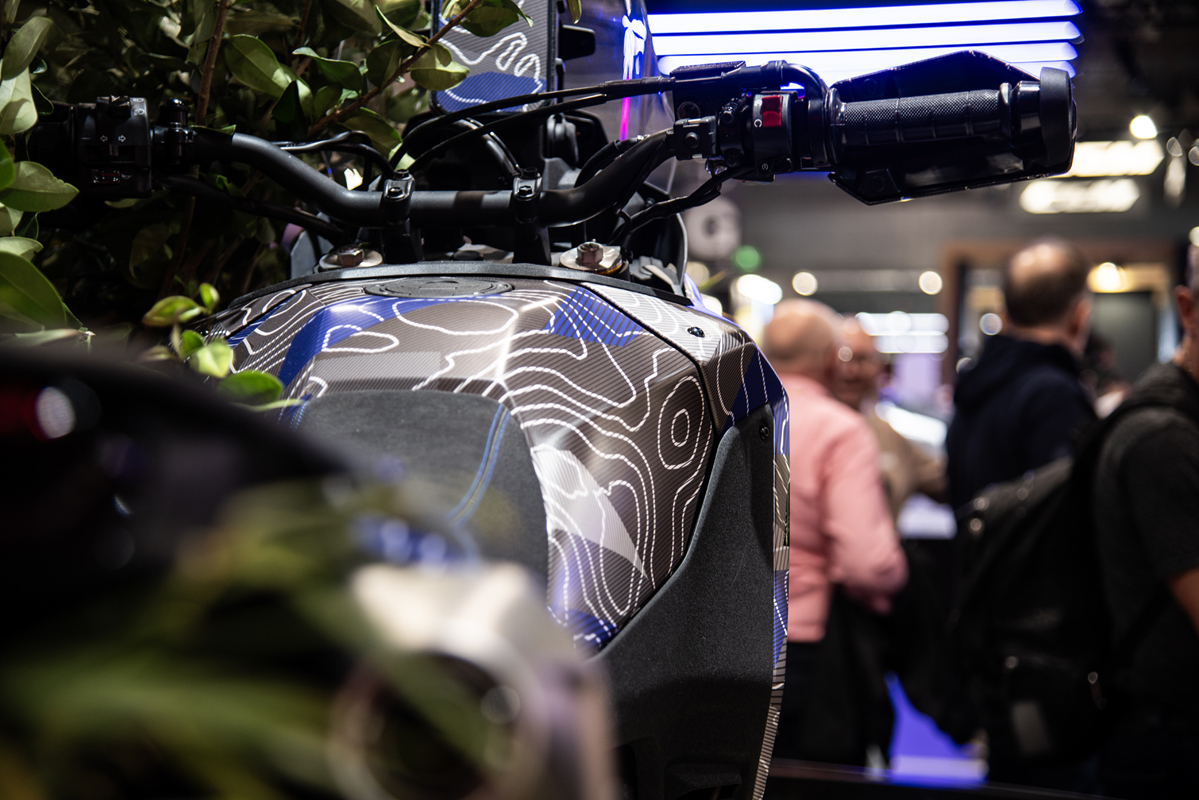
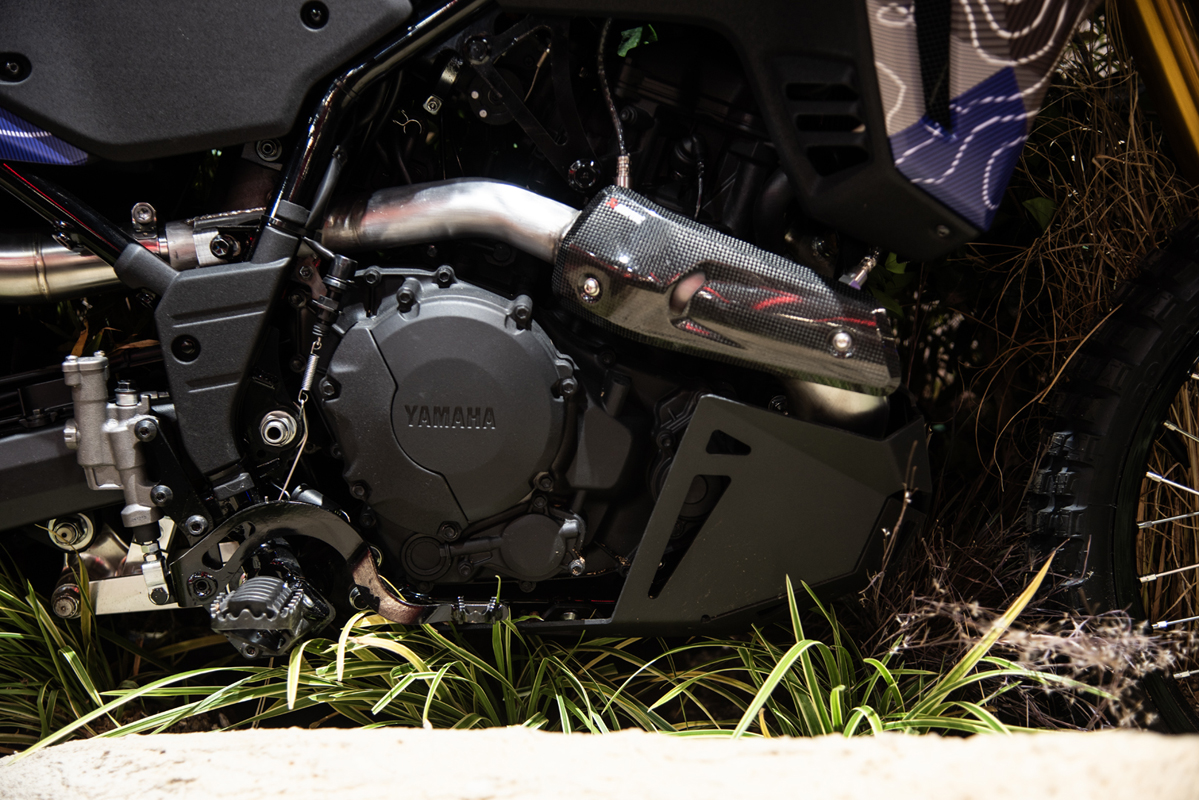
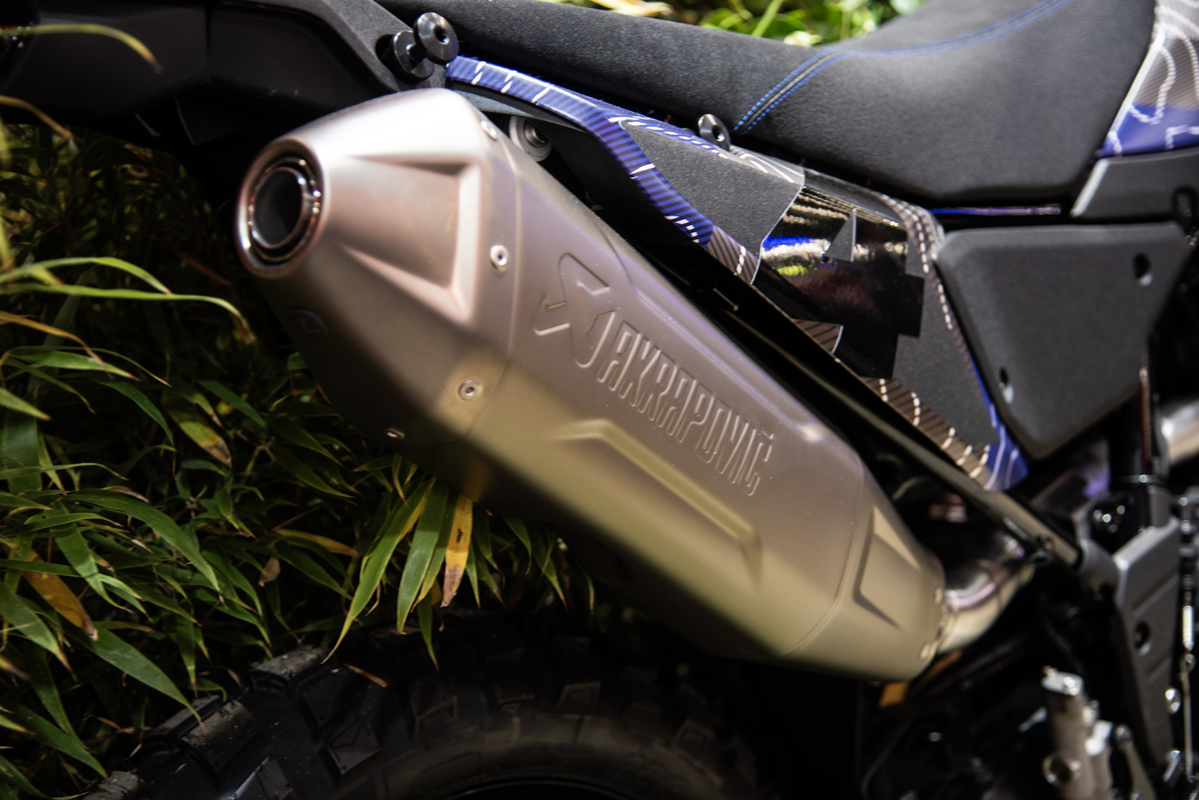
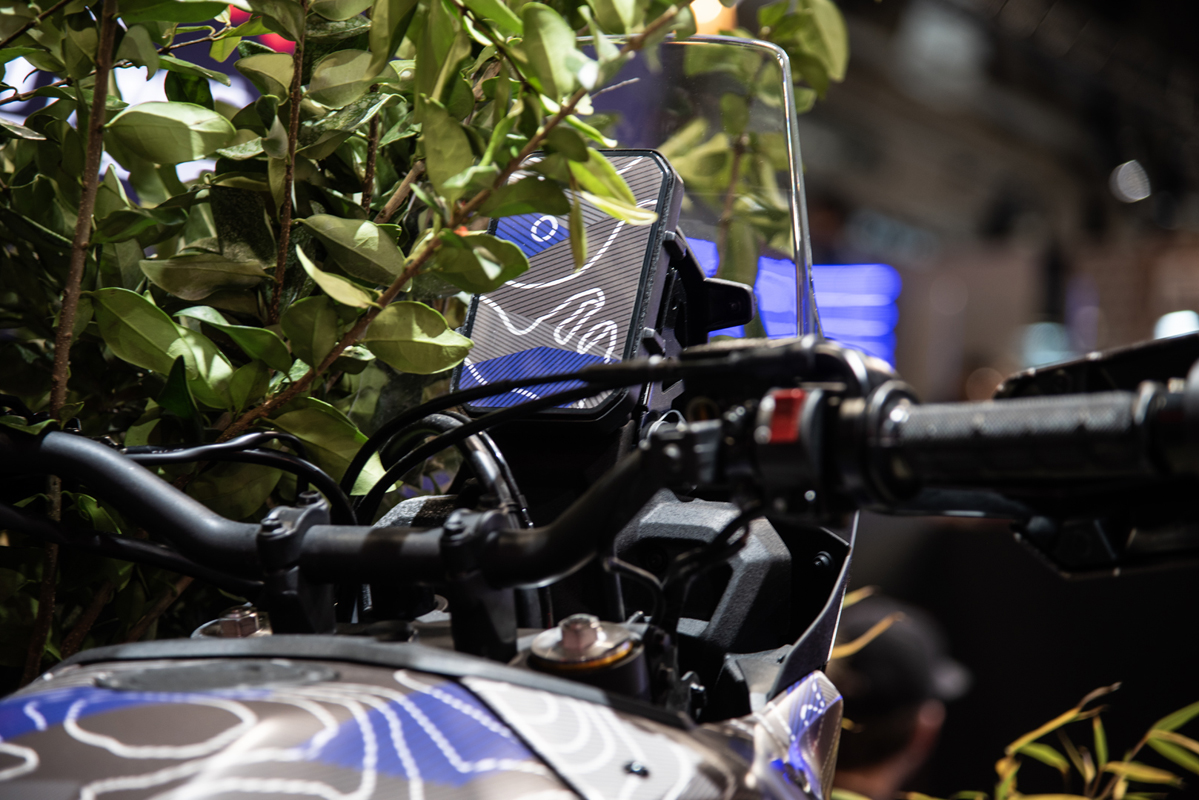
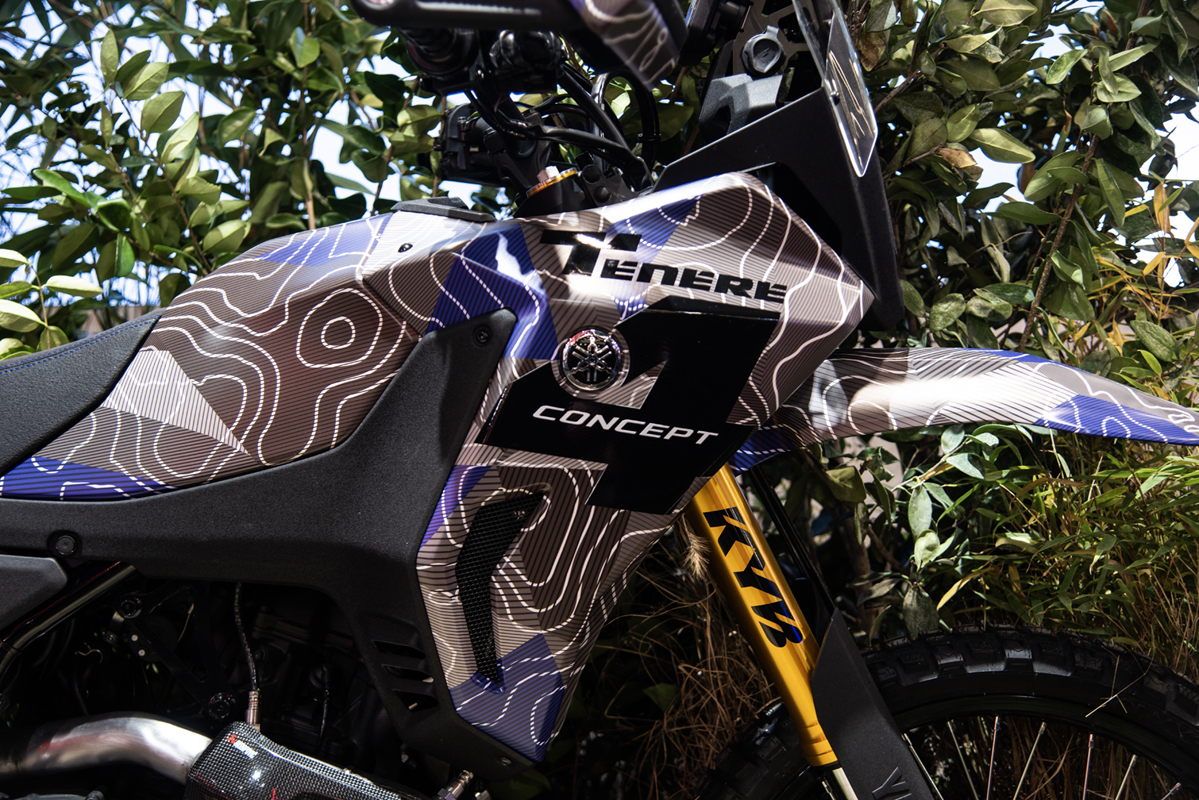
The concept bike had KYB suspension, an Akrapovic pipe and a 21/18-inch wheel mix fitted with Michelin Anakee Wild tyres. It may be a concept at the moment, but surely Yamaha can’t be caught napping yet again, so it has to be in showrooms next year.
Yamaha has also unveiled its own version of the ‘adventure’ maxi-scooter, as invented by Honda and the X-ADV, which was an ‘off-road’ version of the Integra maxi-scooter that itself was a version of the NC750.
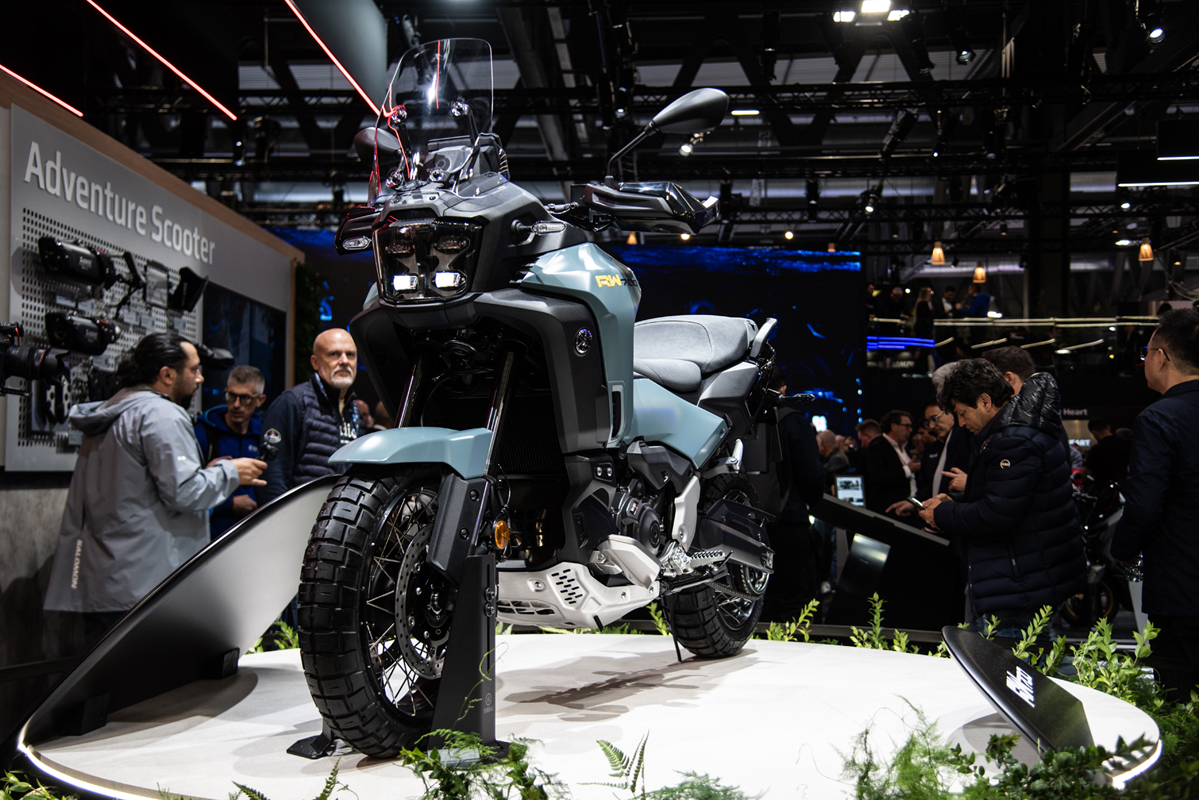
Yamaha’s version will be called the RW700 and will be powered by the parallel twin CP2 engine, as first seen in the MT-07, driving through the Y-AMT transmission, which allows riders to change gear via a handlebar switch. There are two models, the base RW700 and the RW700 Explore, the latter an up-spec model, with adjustable suspension, heated grips and seat, a centre stand and backlit switchgear.
A six-axis IMU system will allow traction control, slide control and brake control, all lean-angle sensitive.
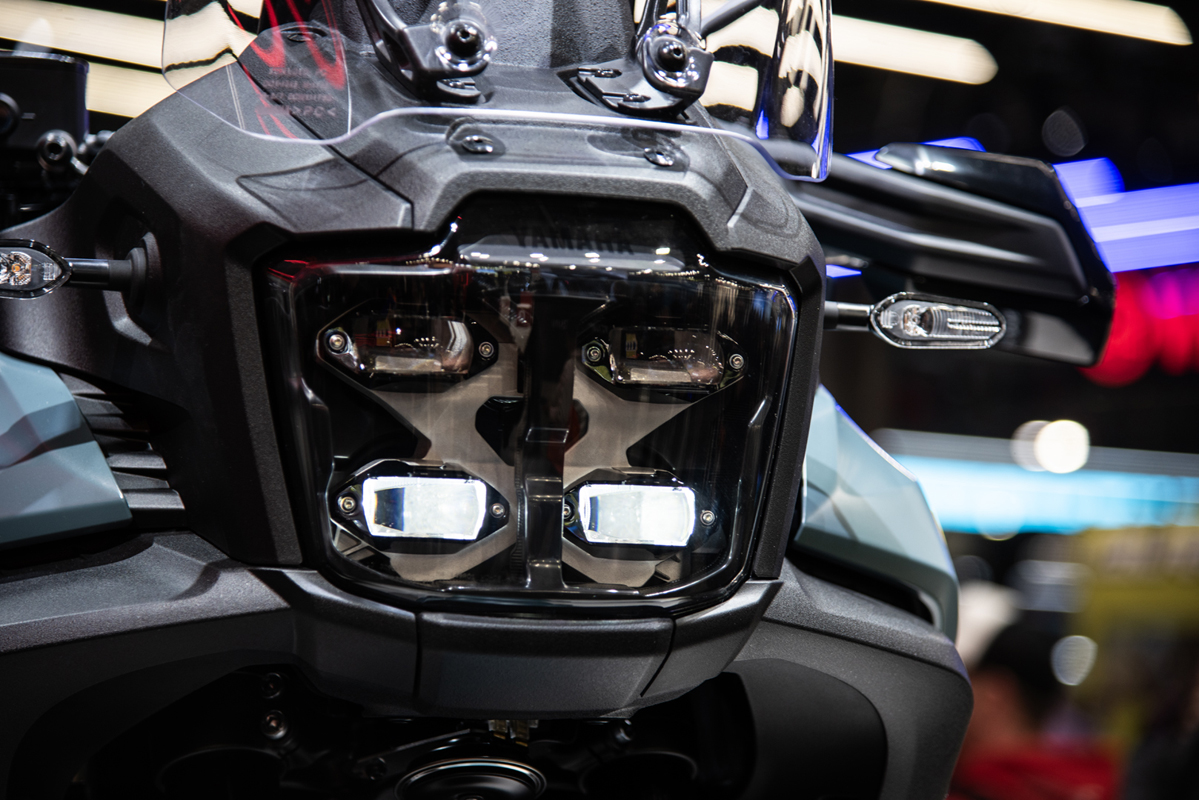
Also in the line-up will be the RW350, powered by a brand-new 327cc single-cylinder engine, developing 28.8bhp and 23.2lb-ft of torque. According to Yamaha, “the newly developed engine is part of a unique layout unlike anything Yamaha has used before: Yamaha Dynamic Ride. Unlike unit-swing setups where the engine and CVT housing are integrated and move vertically as a single unit, or rigid mounting arrangements where the swingarm extends rearward from the engine with the CVT unit fixed to the frame, Yamaha Dynamic Ride offers a setup where the engine is fixed to the frame, while only the CVT unit moves vertically around the crankshaft pivot”. Right, you are, then.
Royal Enfield
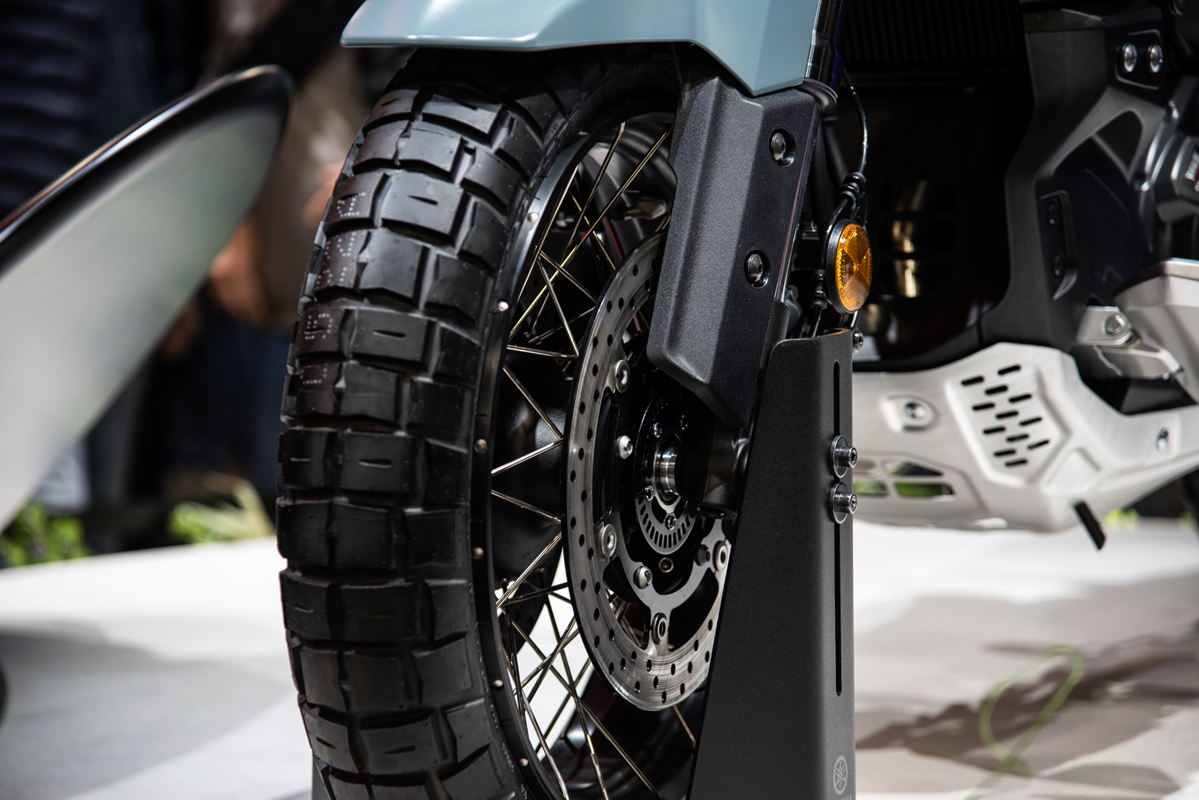
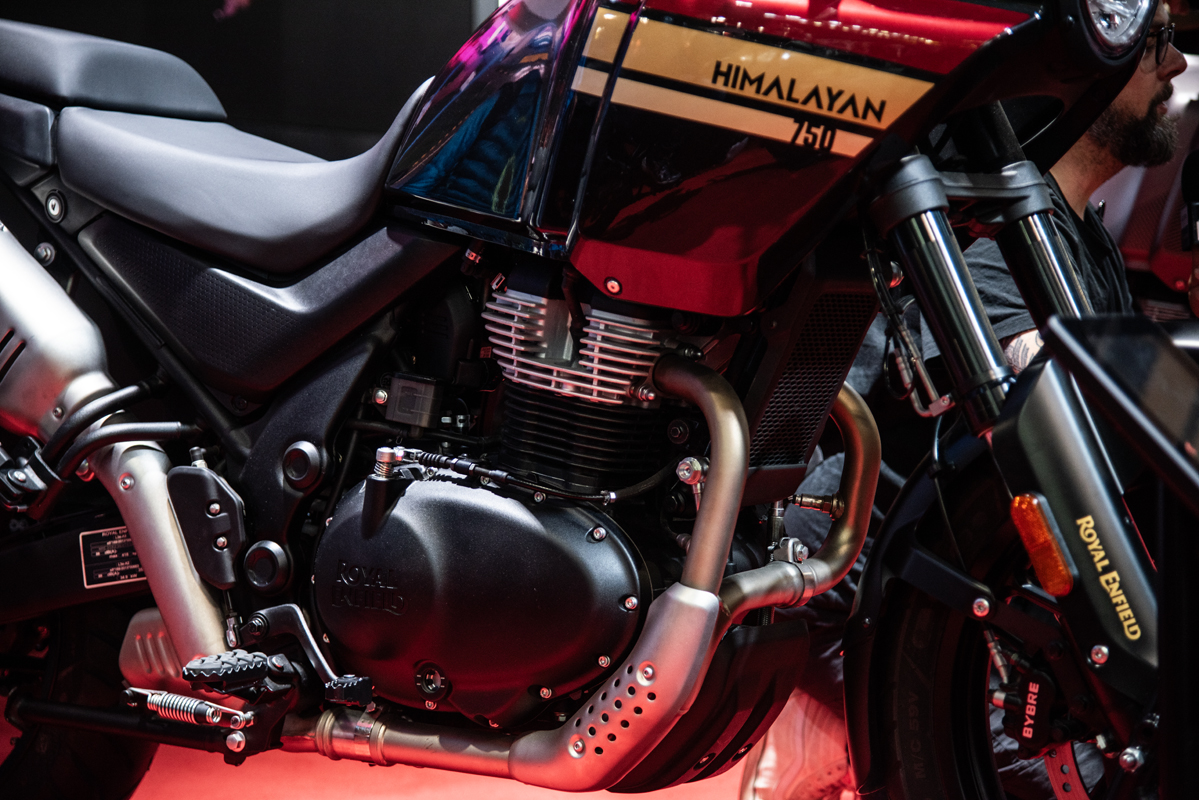
Having previously played in the smaller-displacement adventure bike class, RE has raised its game and brought out the Himalayan 750, powered by an all-new 743cc, air/oil cooled parallel twin engine, producing a claimed 54bhp and 46.5lb-ft of torque.
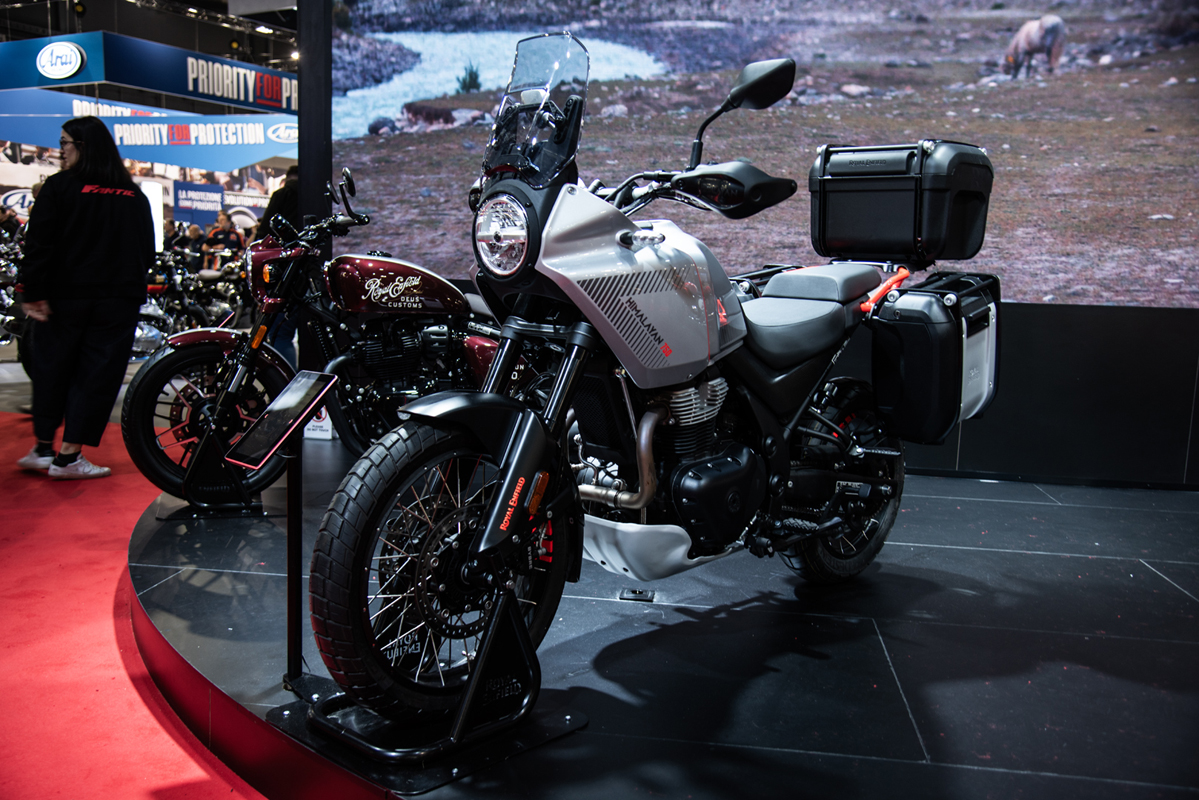
There’s a six-axis IMU, allowing for cornering ABS, lean-sensitive traction control, riding modes and cruise control. Wheel sizes are 19/17 front/rear; the tyres are tubeless, and there is a choice of cast or spoked wheels. Suspension is by Showa, there are twin discs up front, seat height is 815mm, and the tank holds nearly 18 litres. There will be four variants, offering the same platform but with different colour schemes available.
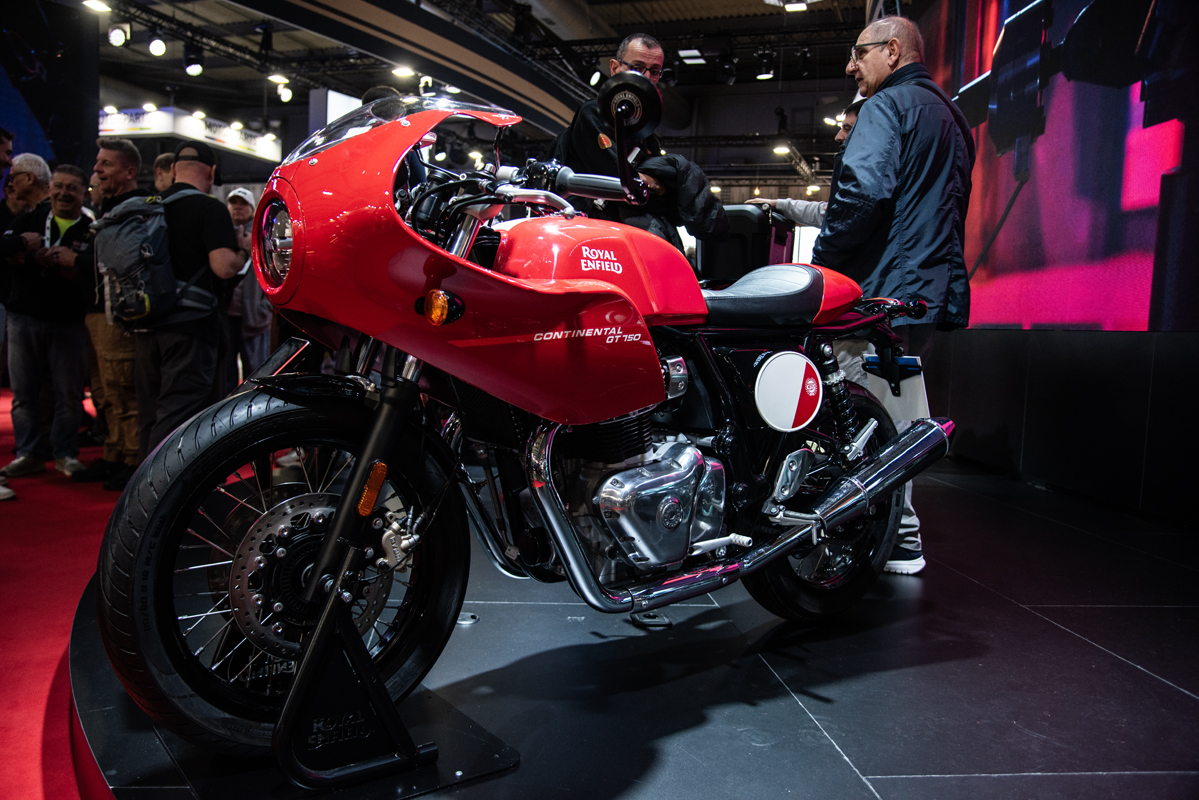
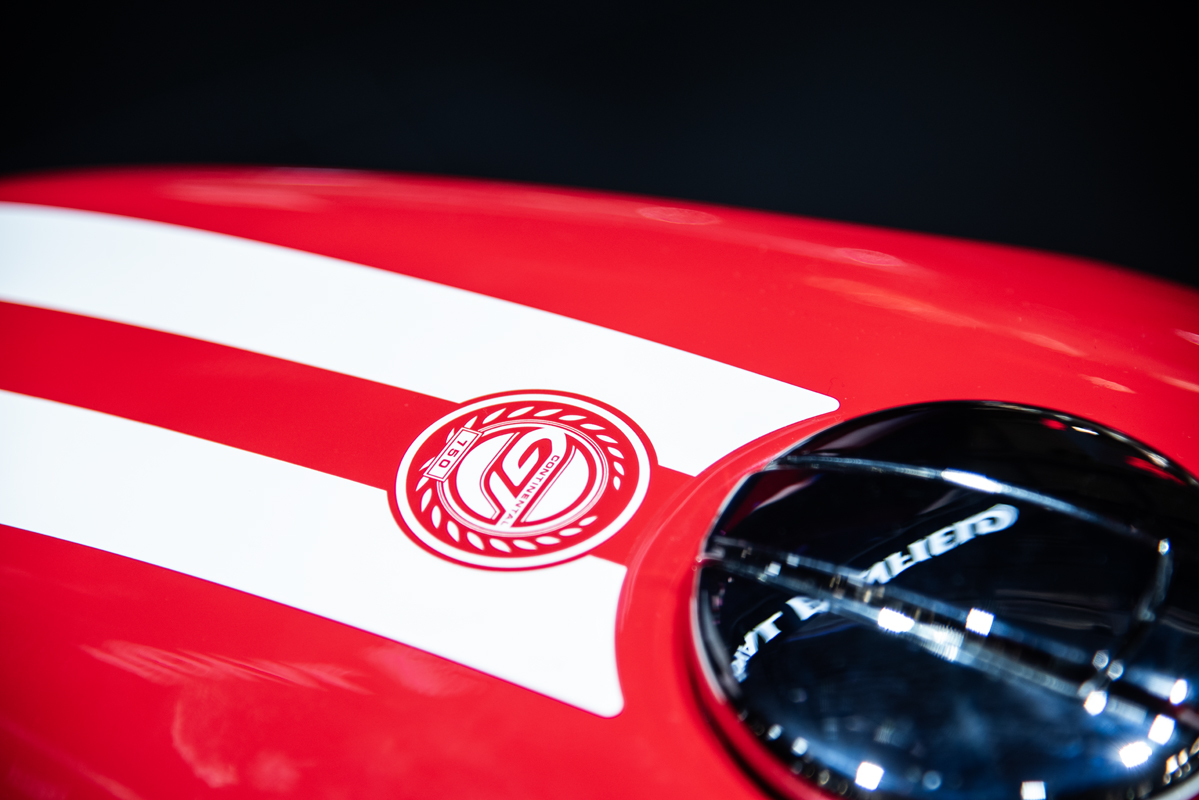
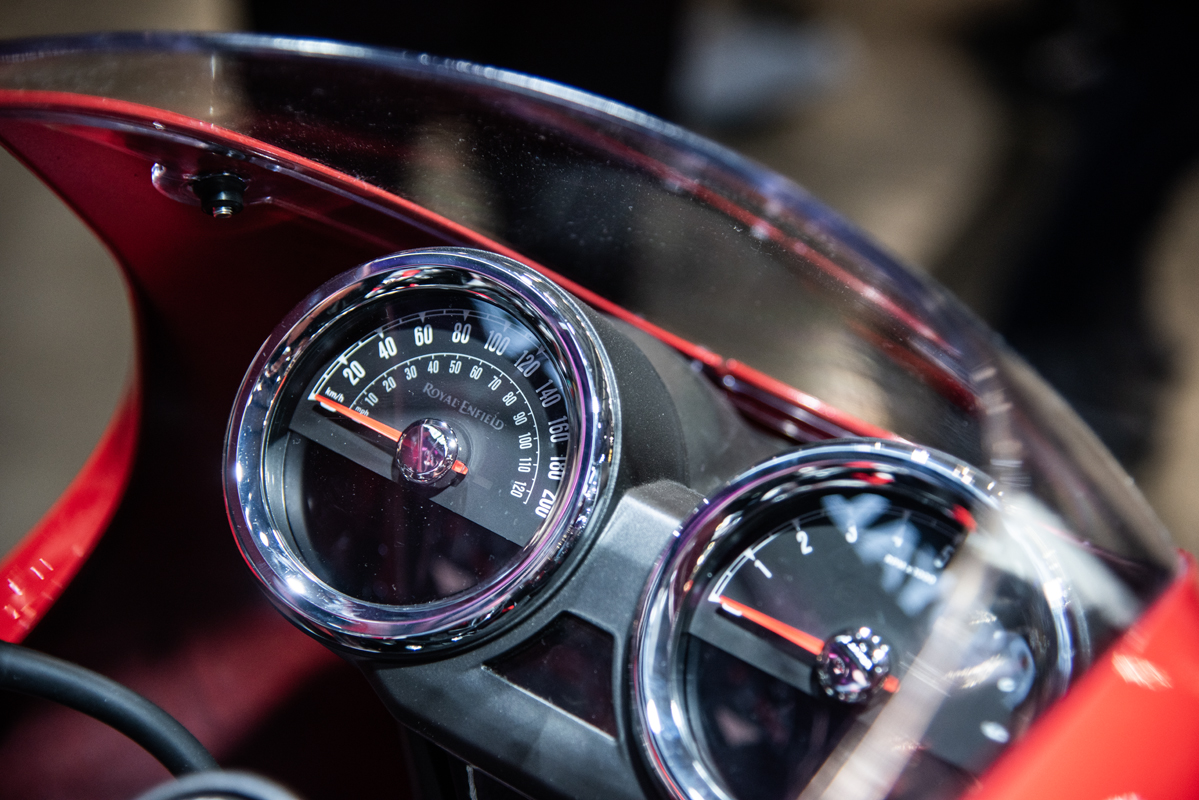
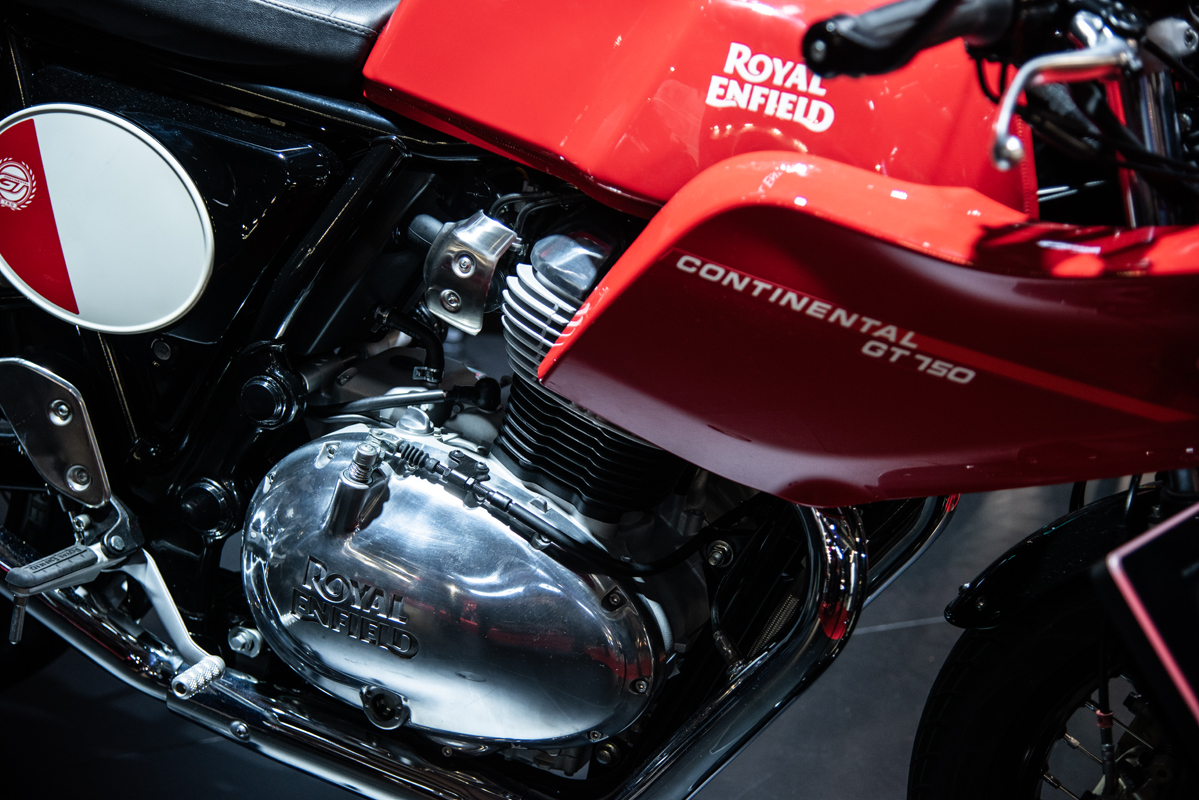
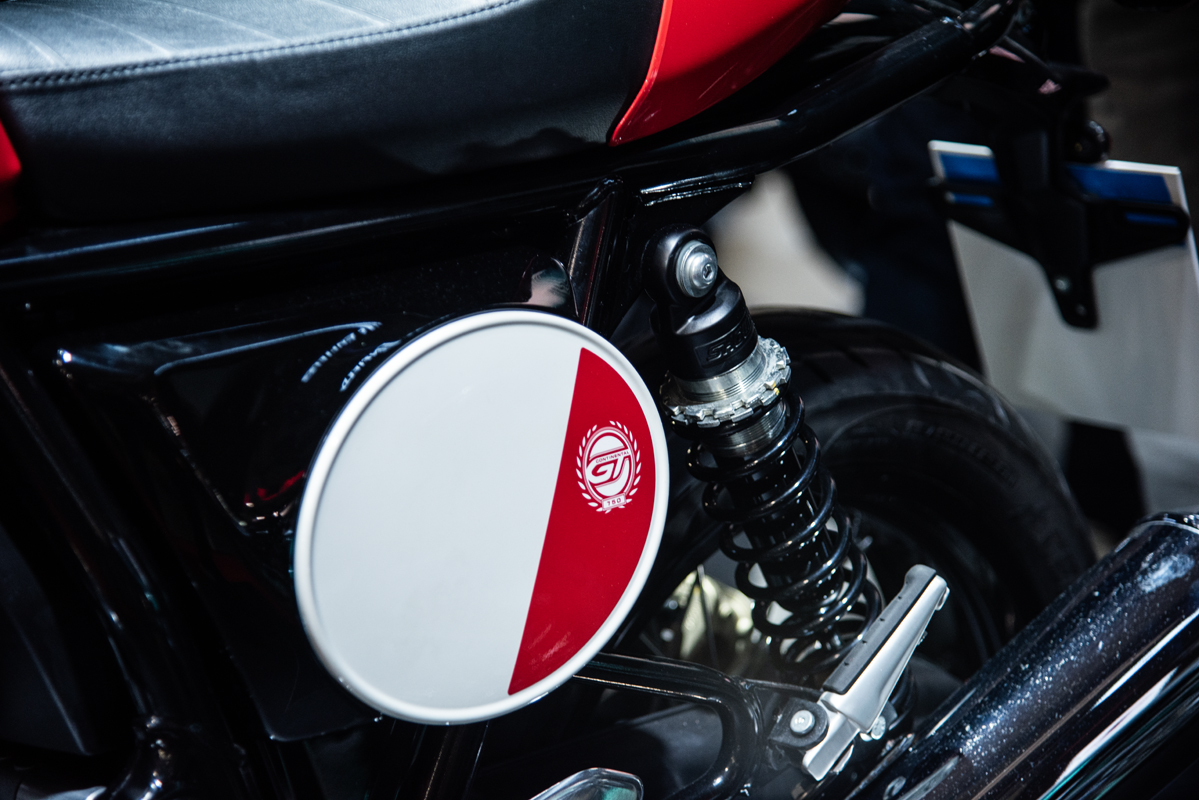
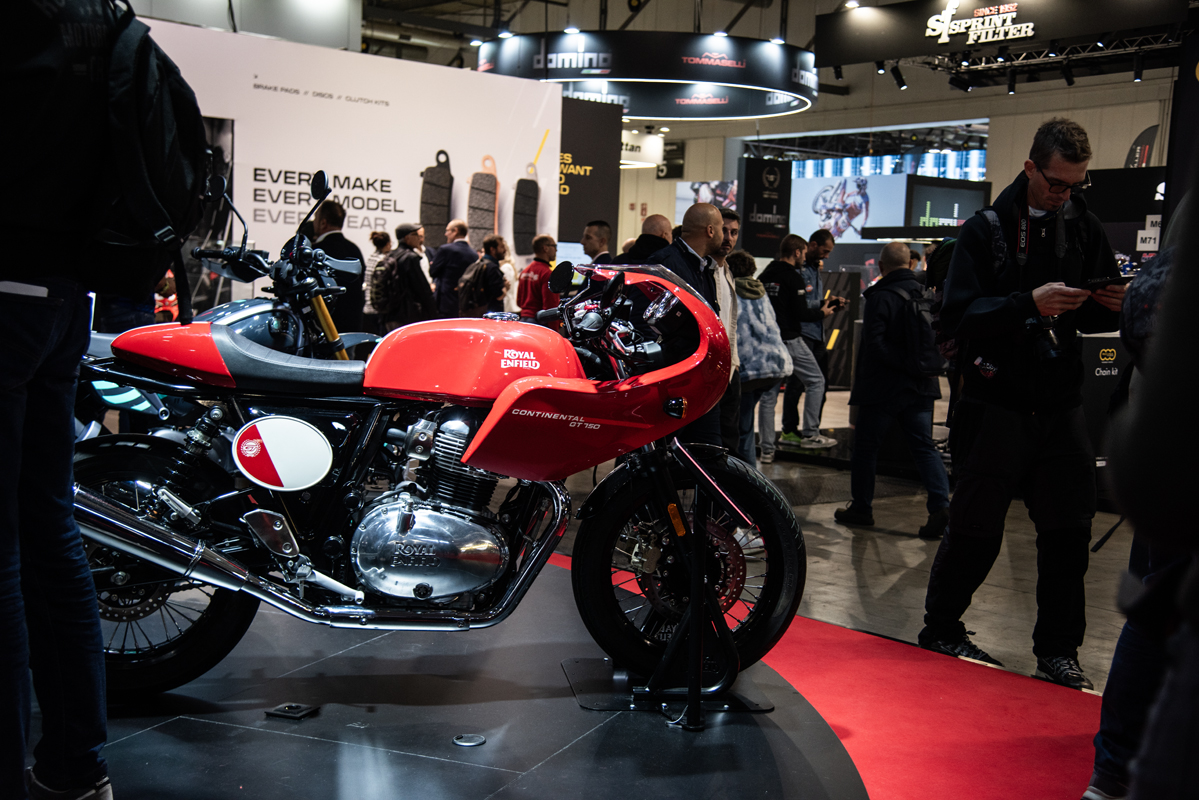
Alongside the Himalayan, Royal Enfield unveiled the Continental GT 750, a sportier new expression of its café racer. It uses an uprated version of the new 743cc twin and is set to become the brand’s highest-performance production motorcycle to date. The GT 750 will be offered in faired and unfaired versions. The unfaired bike keeps the familiar GT silhouette, while the faired version has lower handlebars for a more focused riding position. Despite the performance step forward, Royal Enfield says the bike will retain an analogue feel, with technology kept simple and neatly integrated.
CFMoto
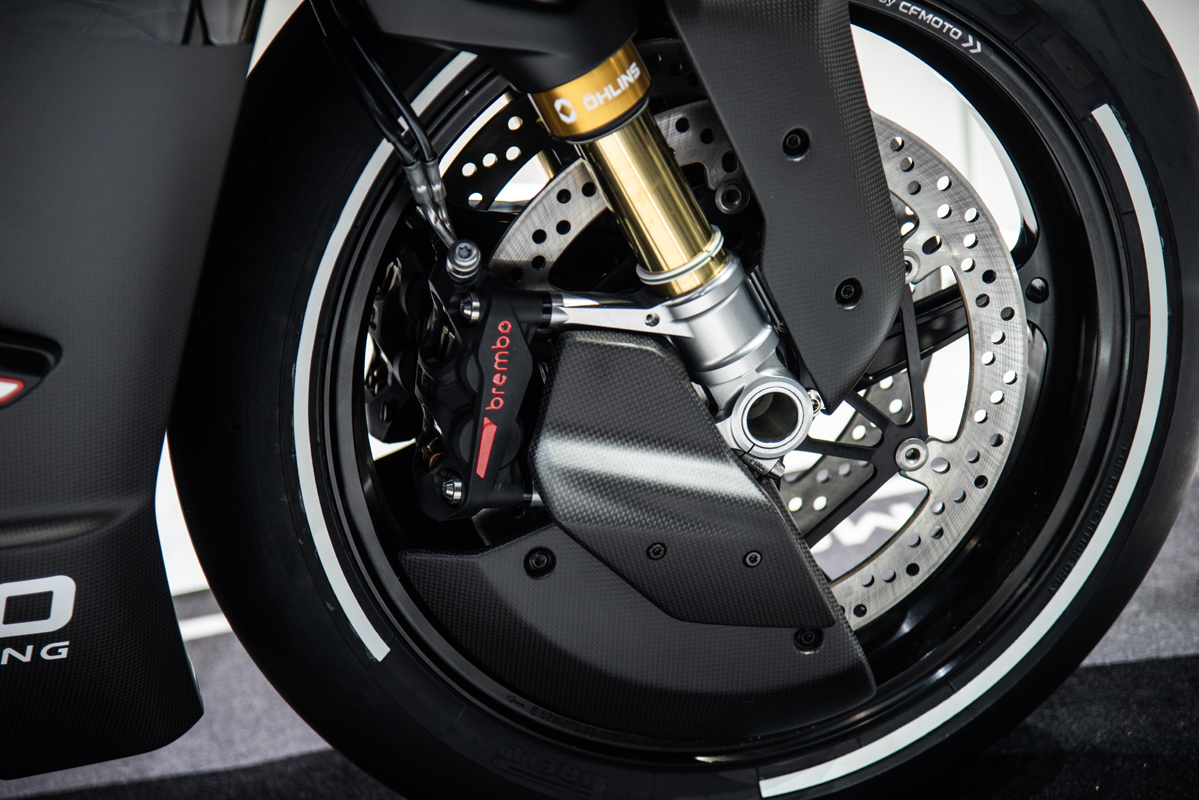
How about this, then? Chinese brand CFMoto has been causing quite a stir with its comprehensive range of street and adventure bikes, most notably in the 450cc class. However, all that is about to change as the company revealed its first superbike, the V4SR-RR, powered by a 997cc, 90-degree V4 engine, pushing out a claimed 210bhp! A closer look reveals a lot of Ducati Panigale V4-type thinking.
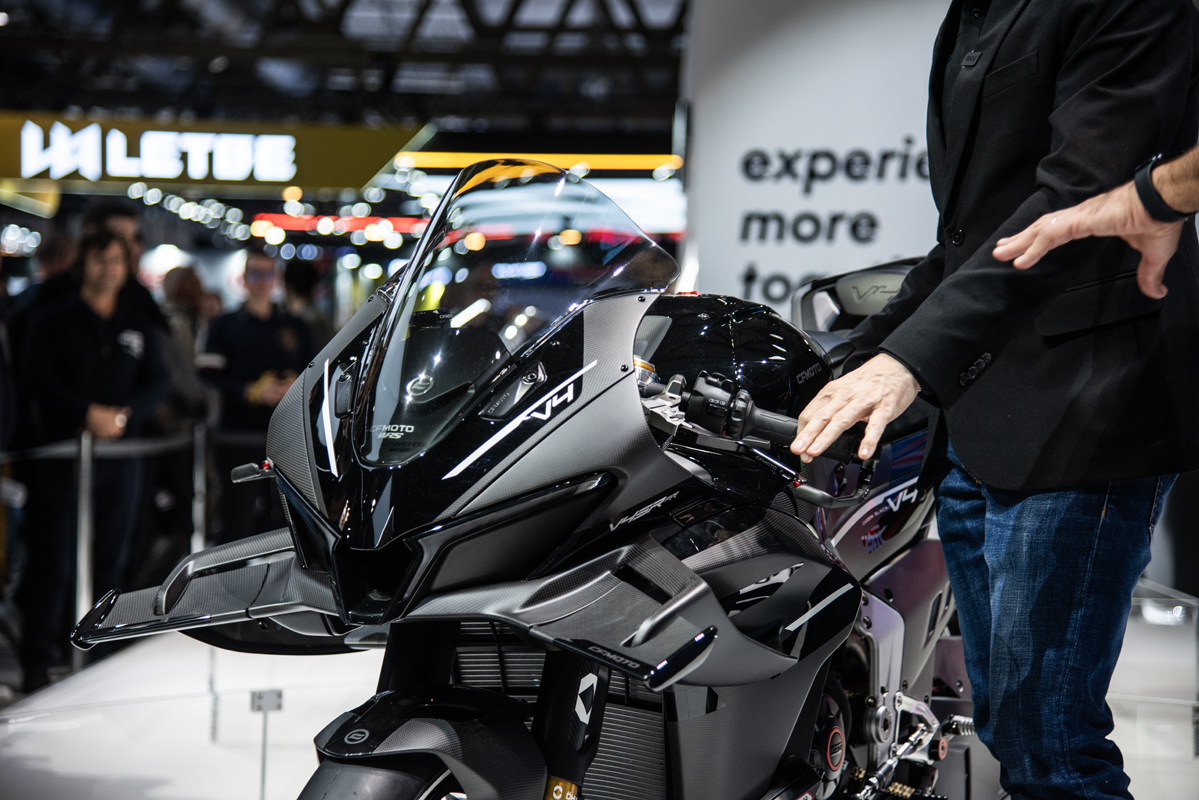
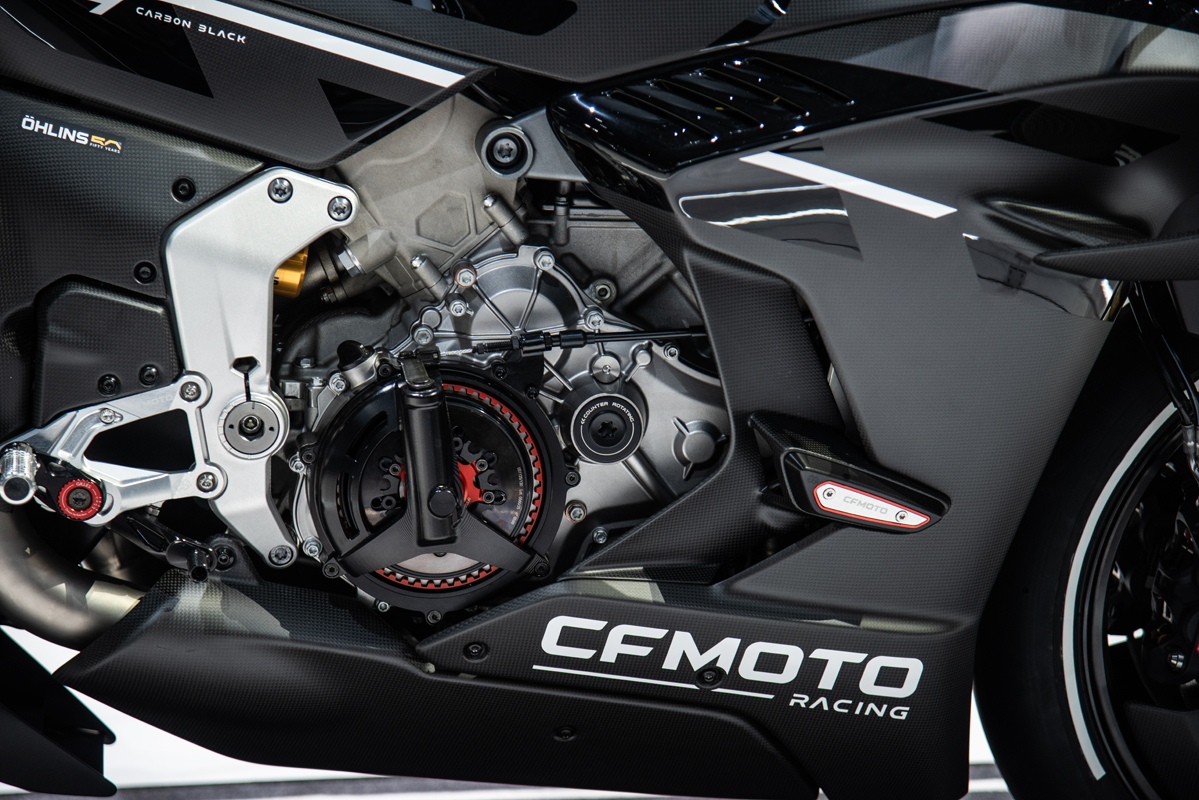
The engine is a stressed member of the chassis, with a front chassis arrangement holding the fork assembly, and the V4 engine features a counter-rotating crankshaft to counter gyroscopic forces. Help keep the front wheel down, in other words! Both of these are features found on the Ducati.
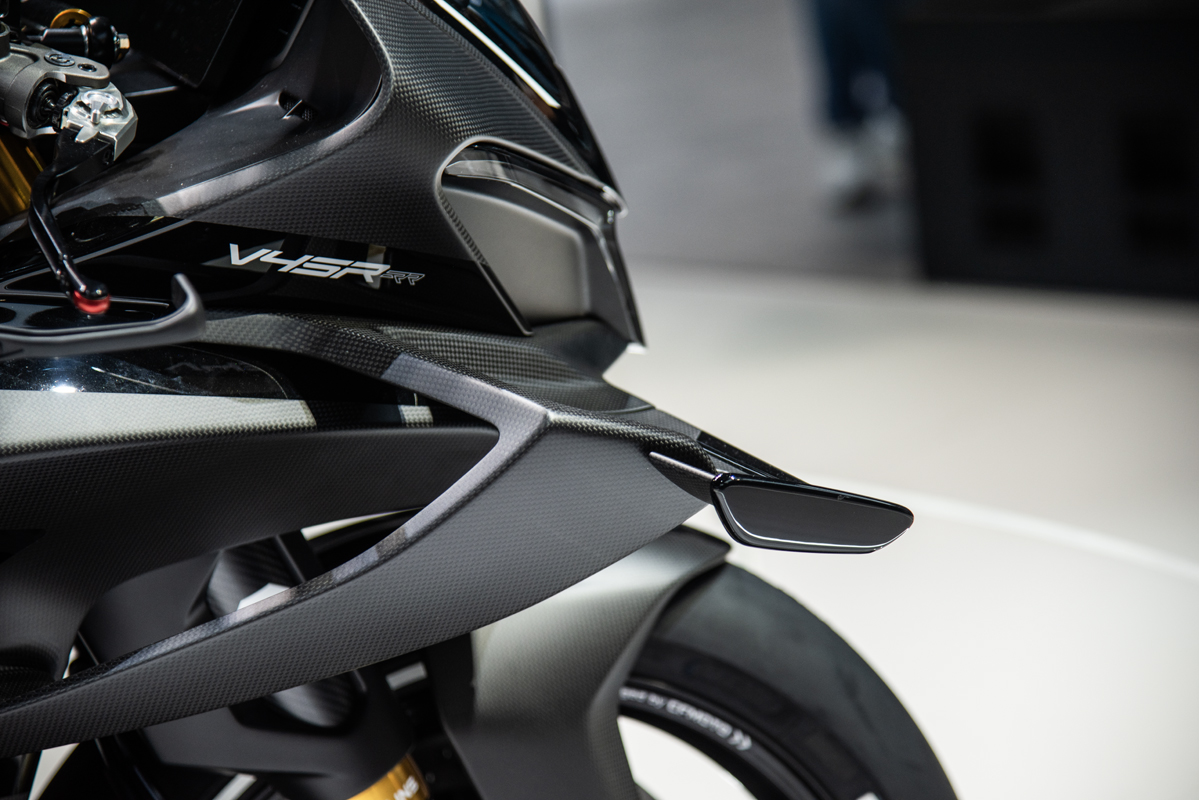
But CFMoto has another trick up its sleeve: active aero. The fairing features independently operated winglets to alter airflow around the front of the bike. This gives the best of both worlds: slippery in a straight line but downforce instantly as the brakes are applied.
Öhlins handles suspension duties, Brembo the braking, Akrapovic the breathing and Pirelli the grip. Dry weight is claimed to be 180kg. Also shown at EICMA was the V4SR-RR Carbon Black version, a more track-focussed example.
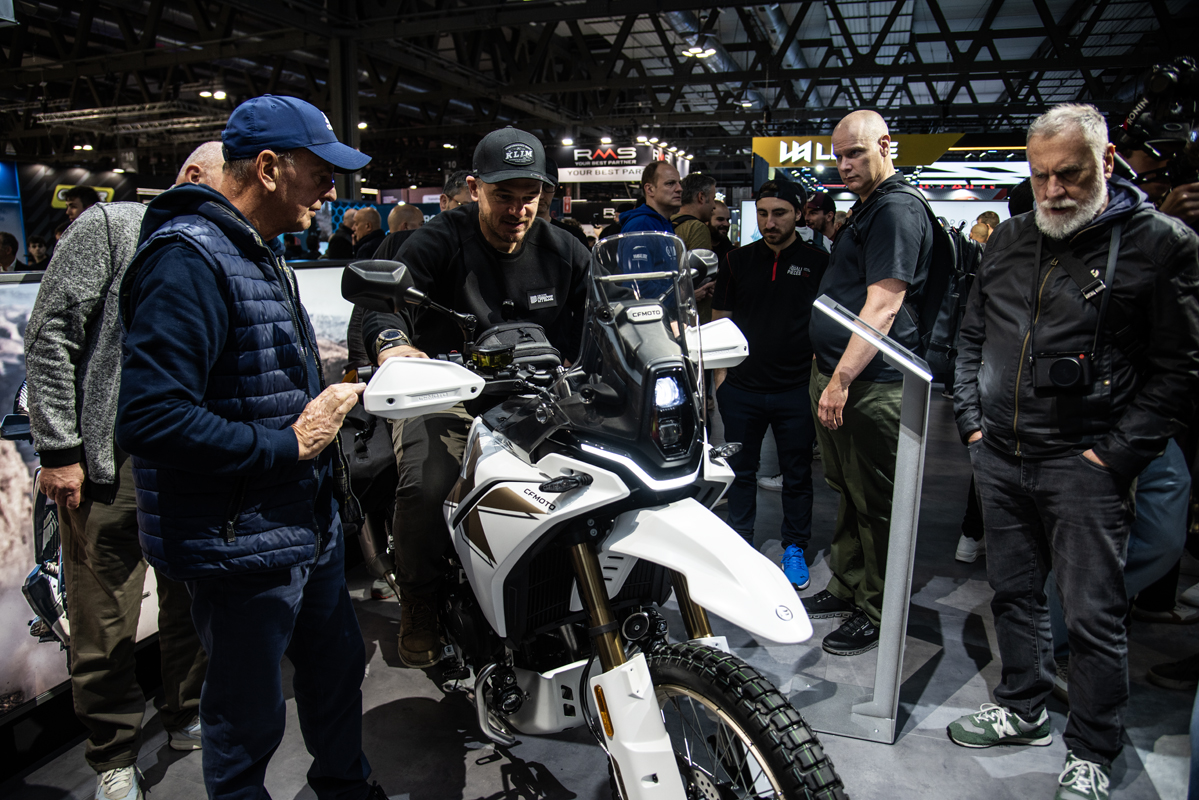
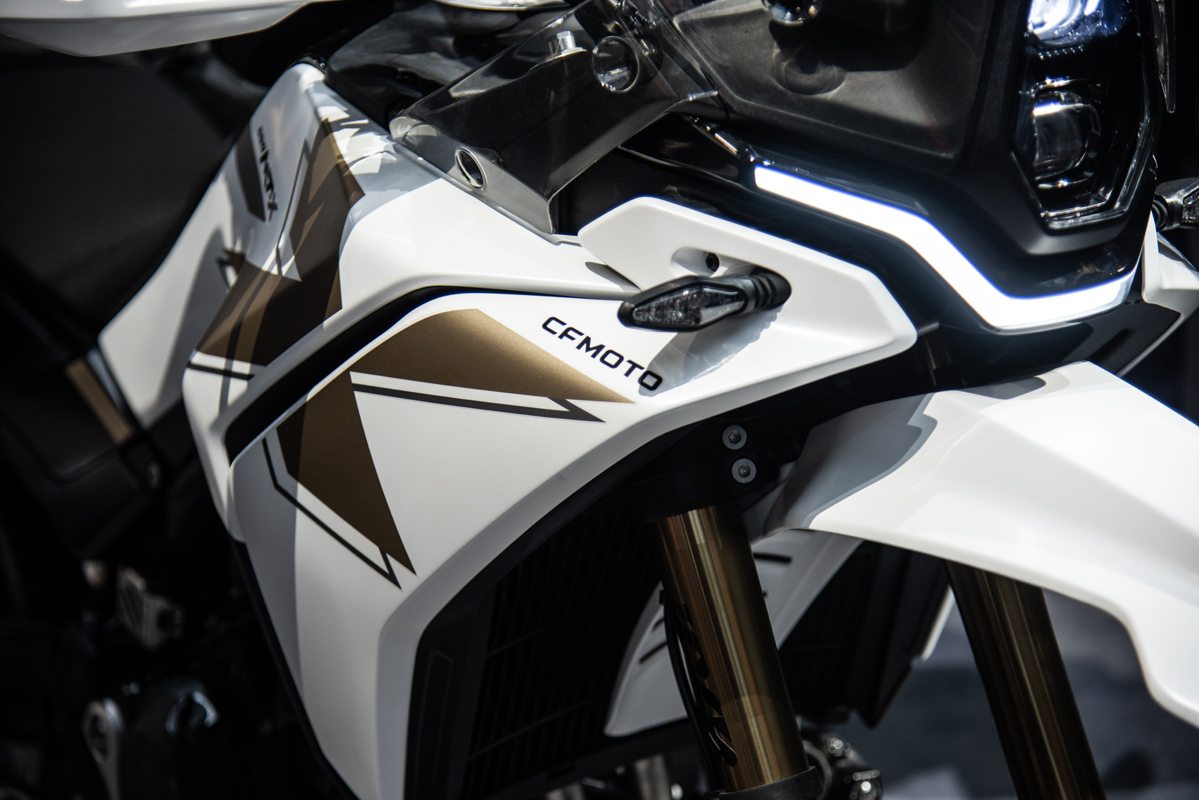
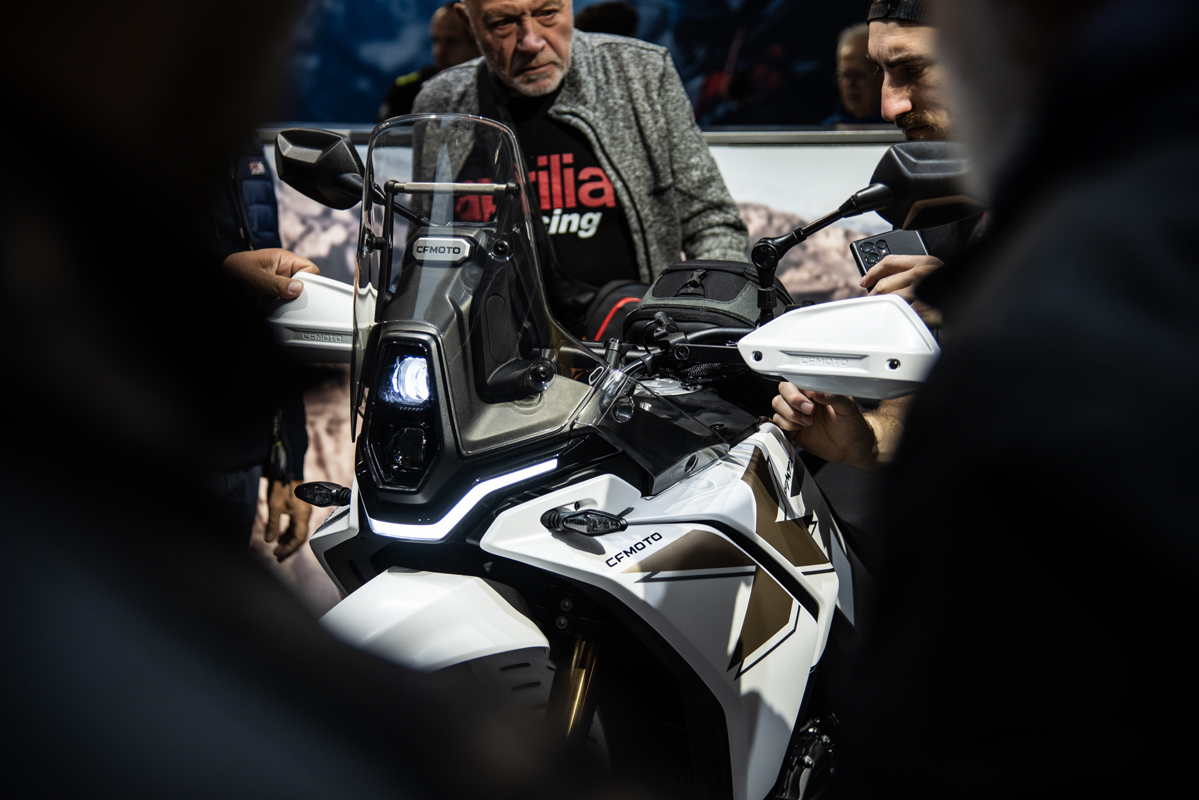
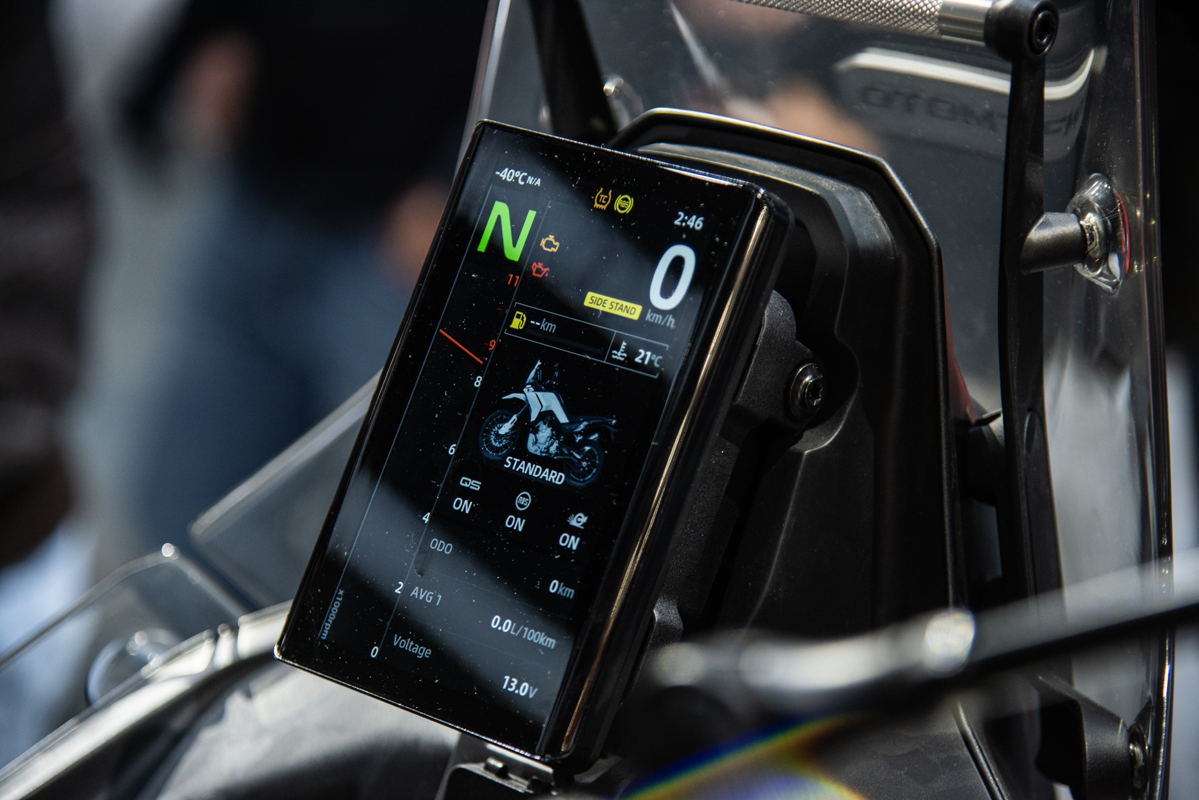
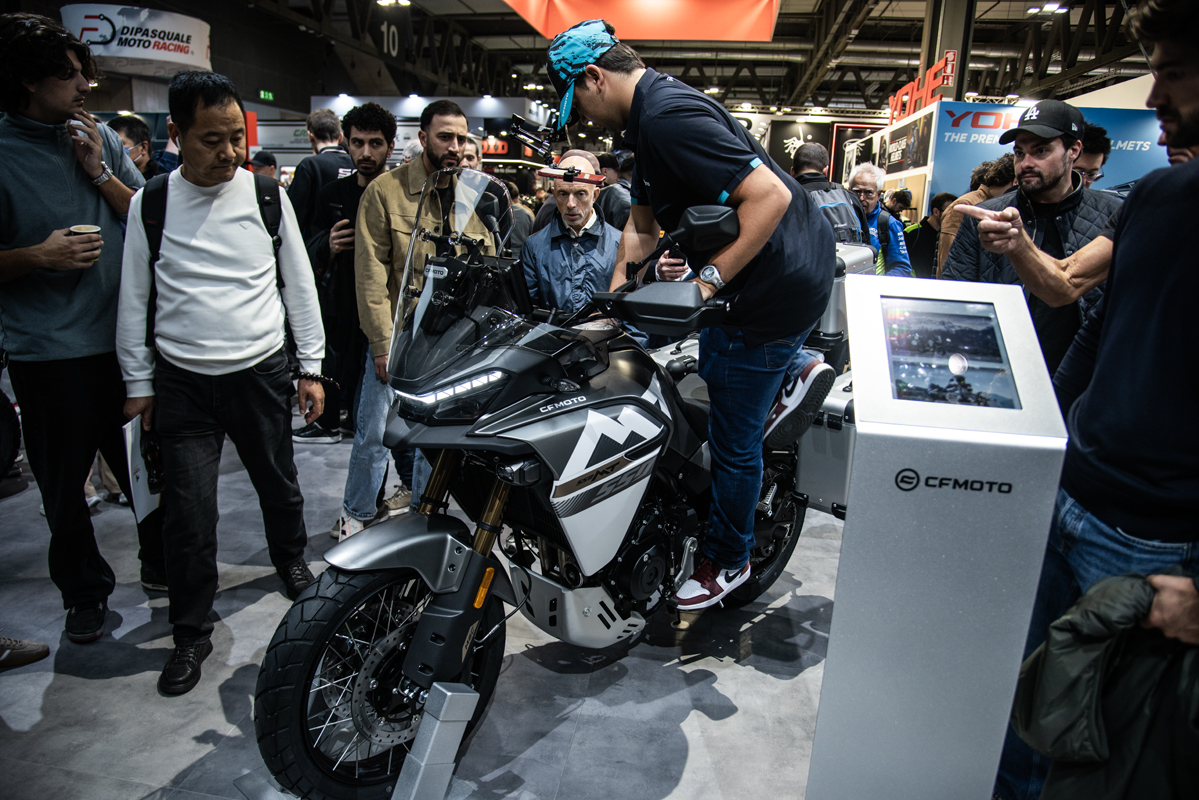
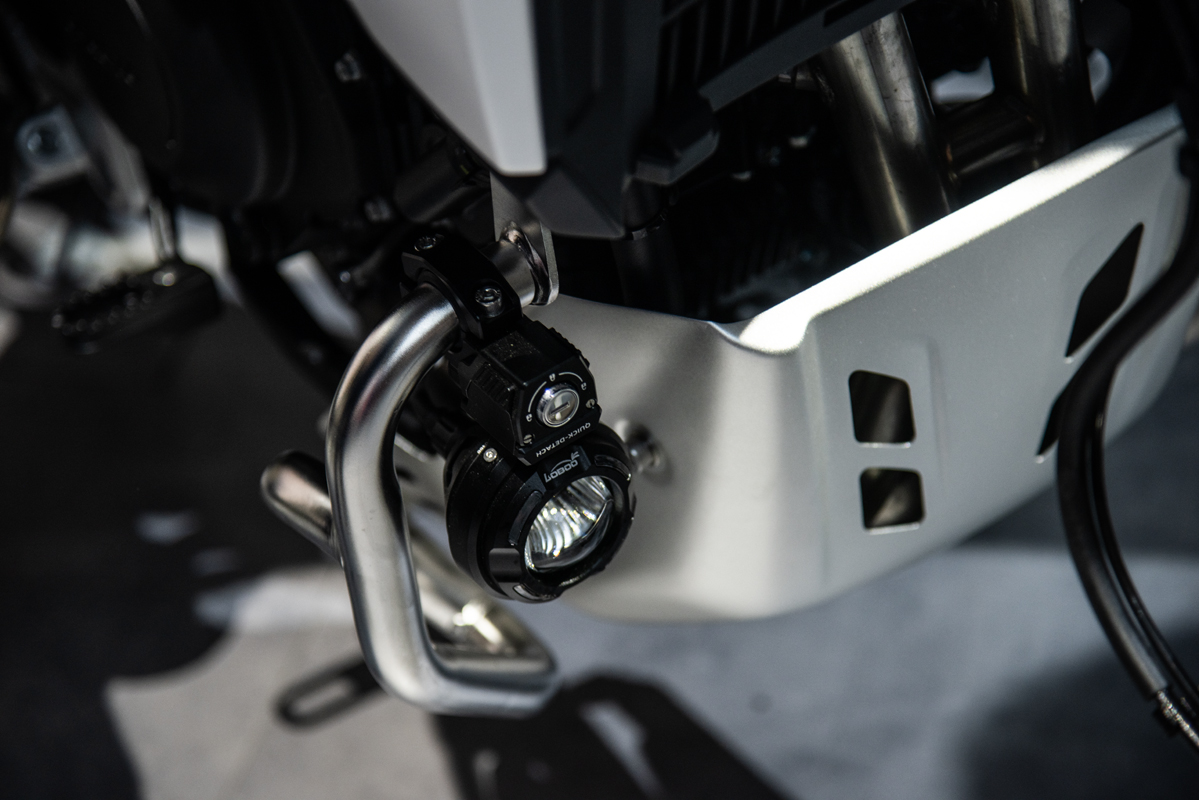
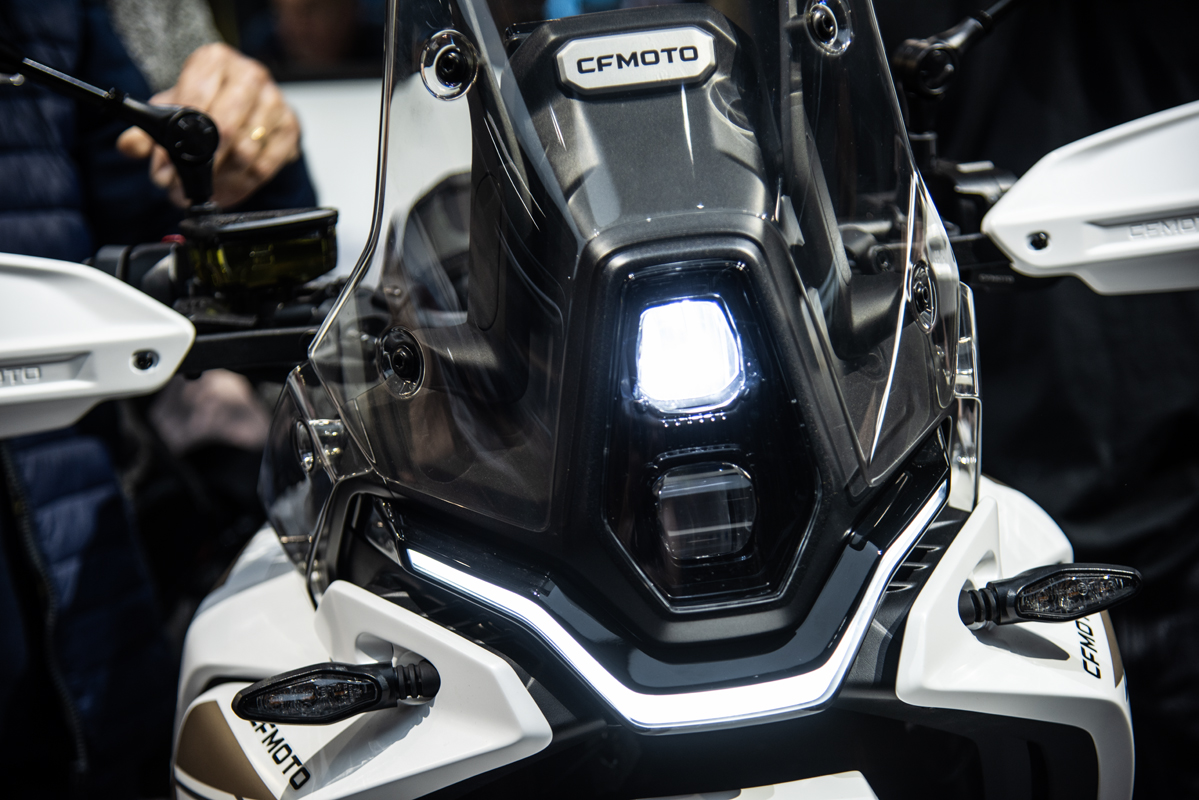
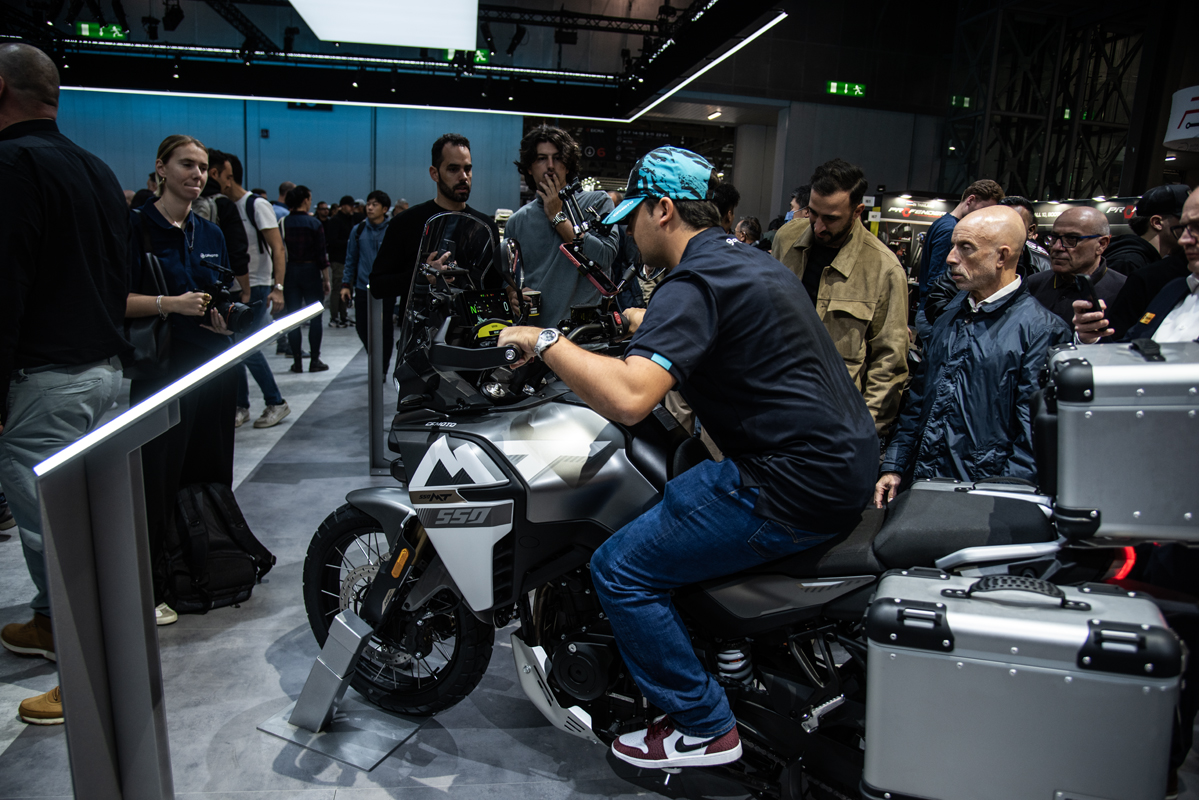
Joining the CFMoto adventure range are two 550cc-engined models, the 550MT and 550 MT-X, the latter being more off-road oriented. 30% more power output is claimed from the all-new engine, and it features an electronic clutch.
That’s about it for day one of the Press Days. Tune in tomorrow for more new model reveals.