
Wednesday, June 24, 2026

MOTORCYCLES • MOTORING • LIFESTYLE

Home Blog Page 7

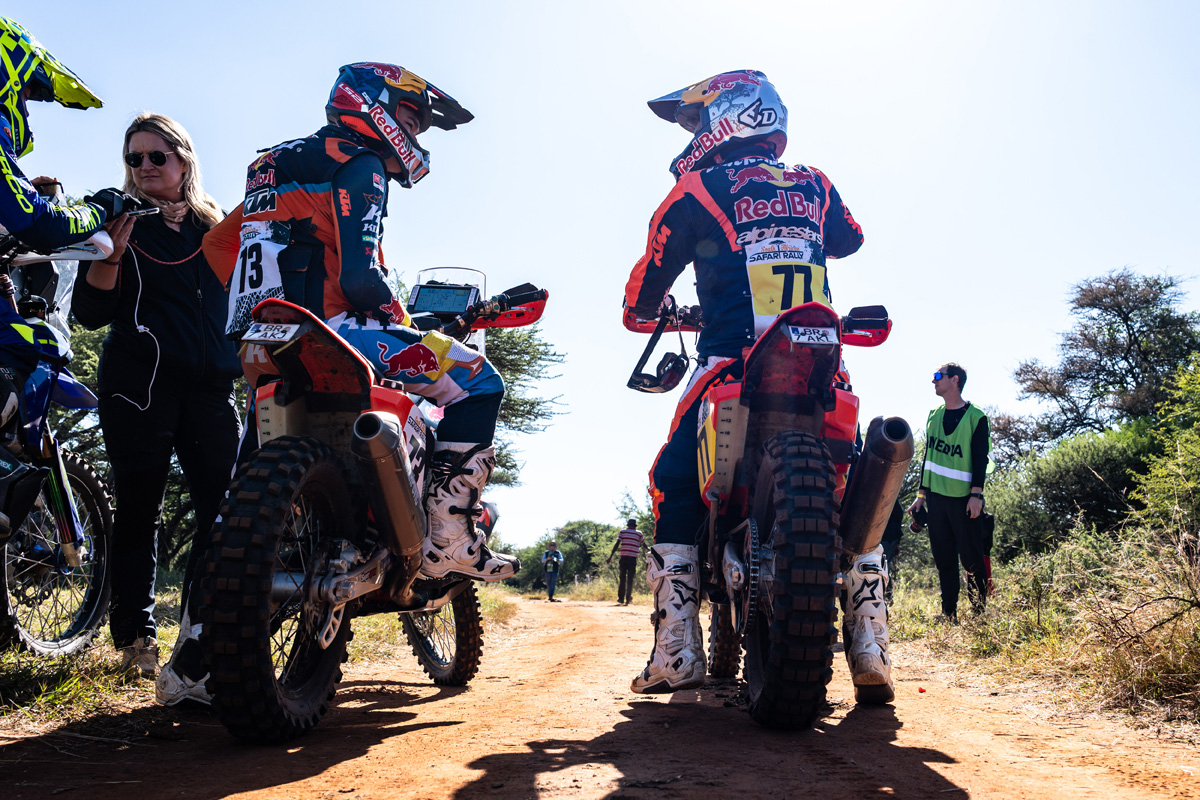
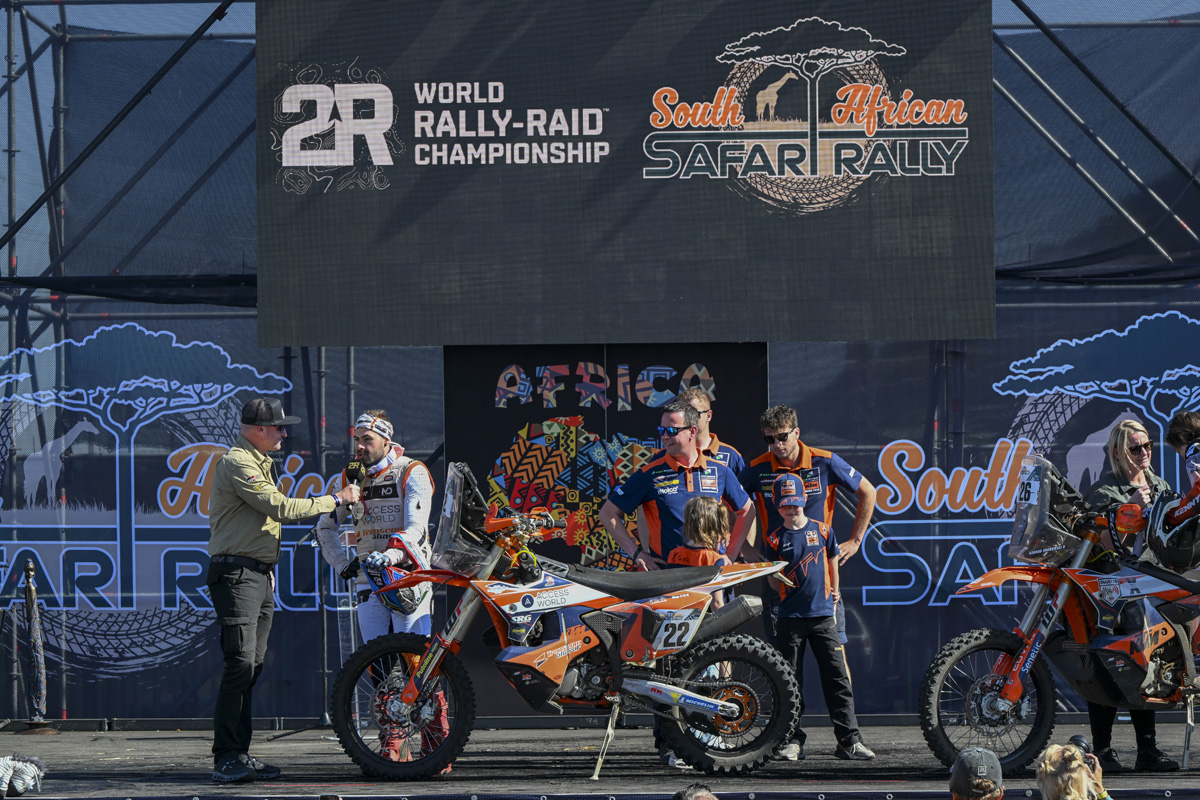
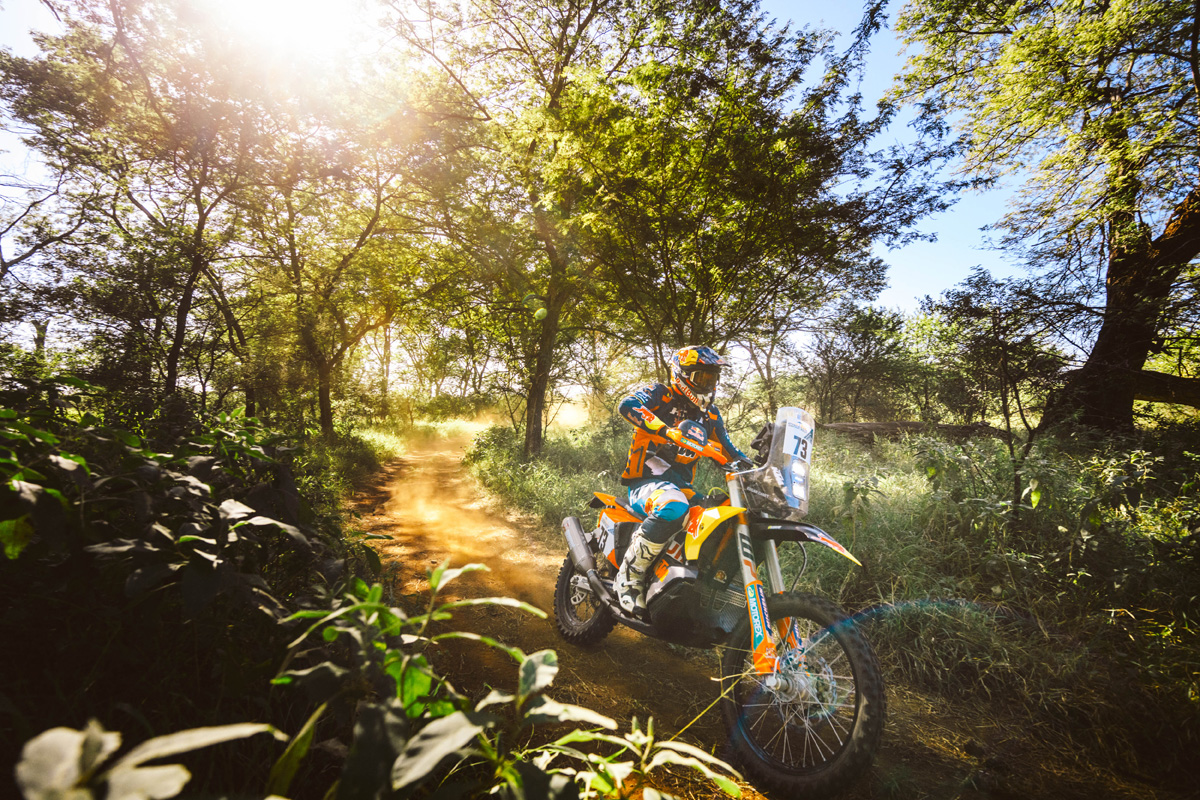
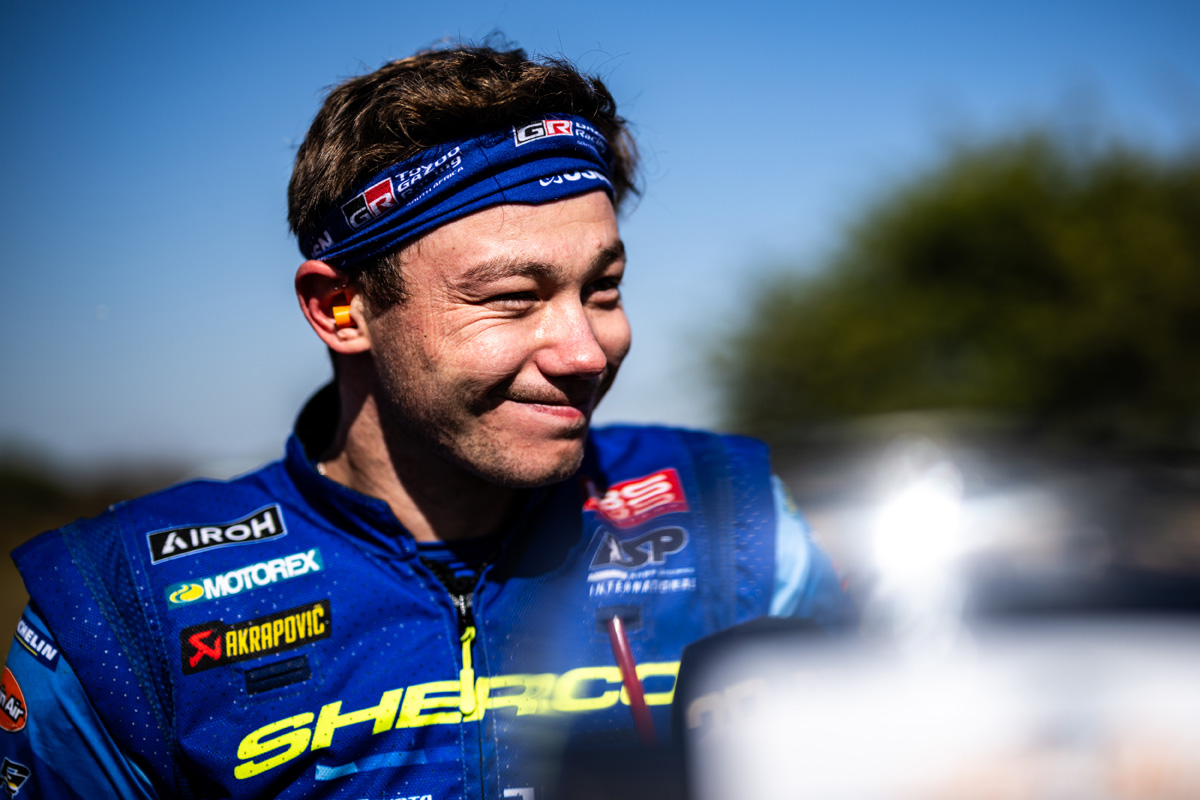
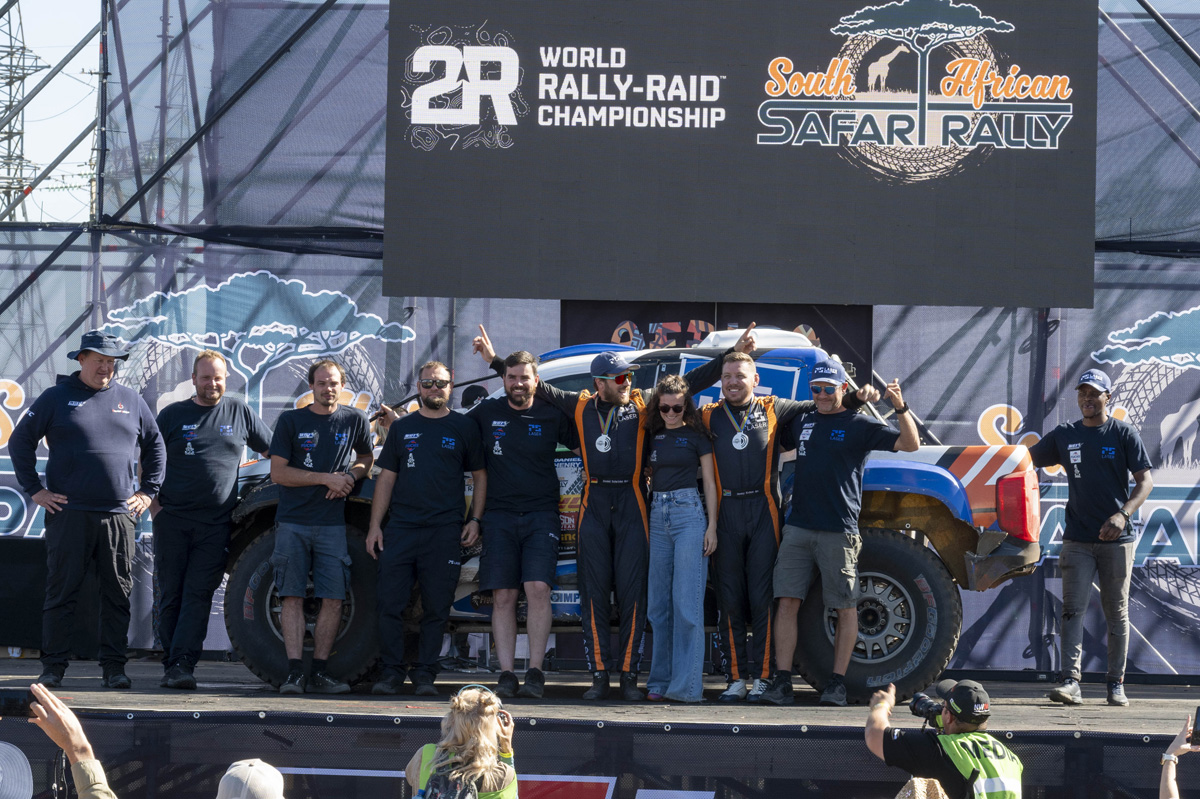
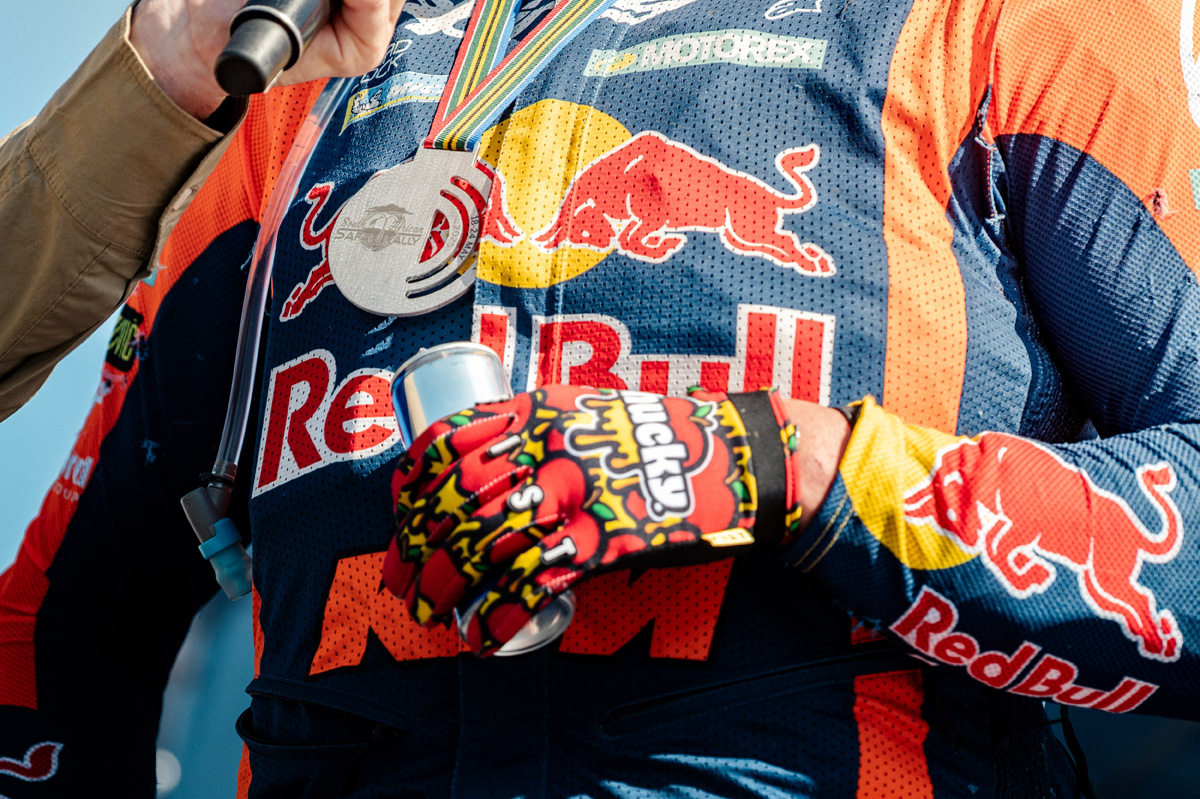
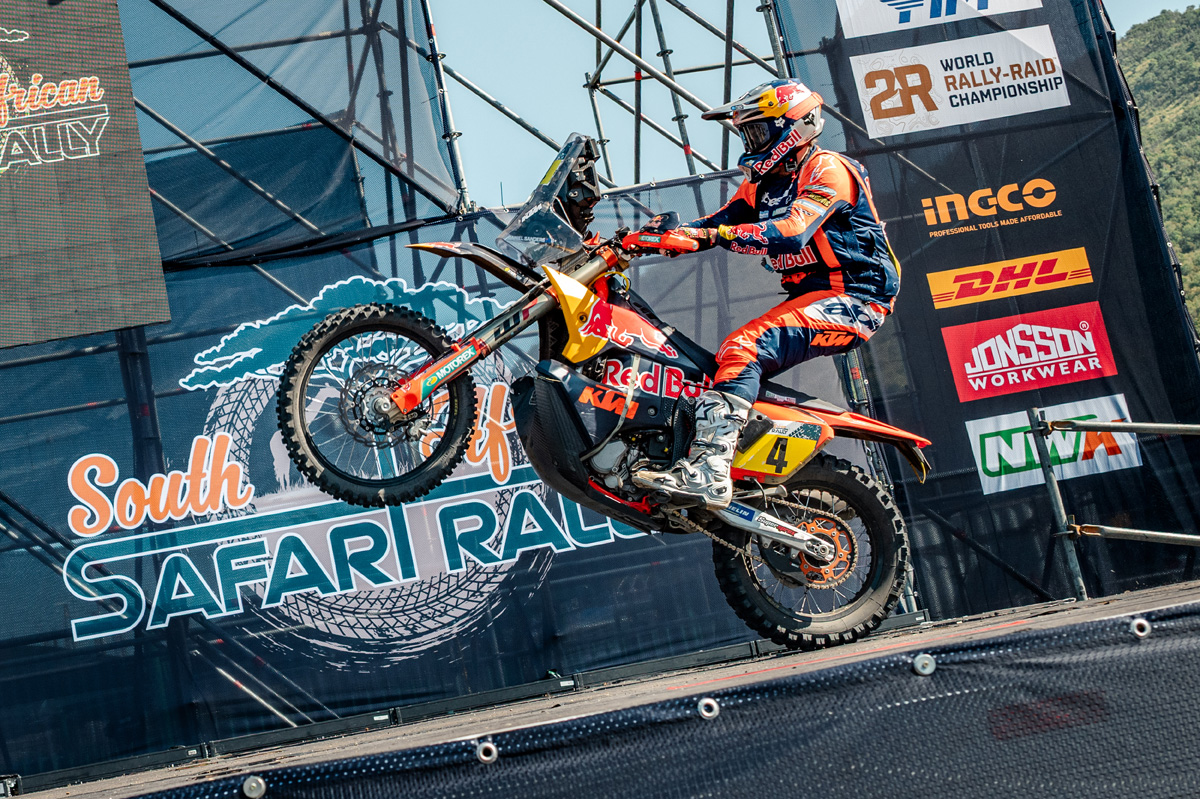
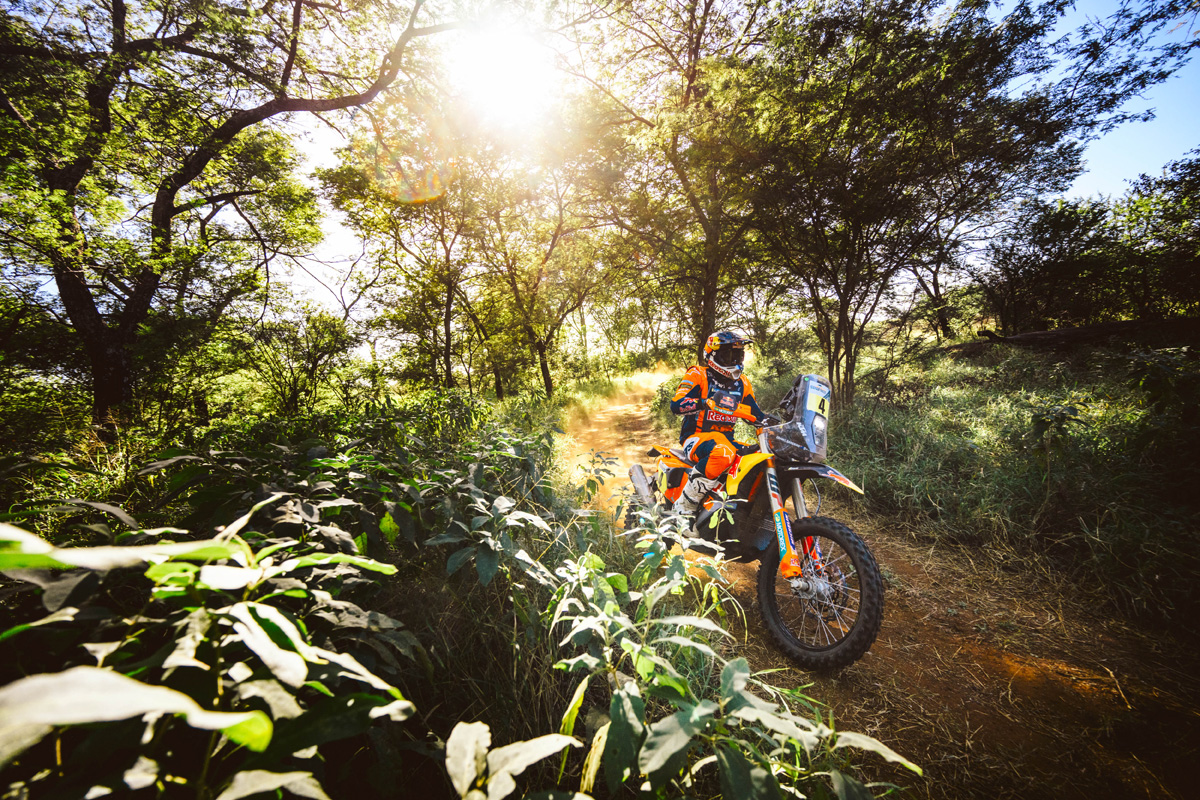
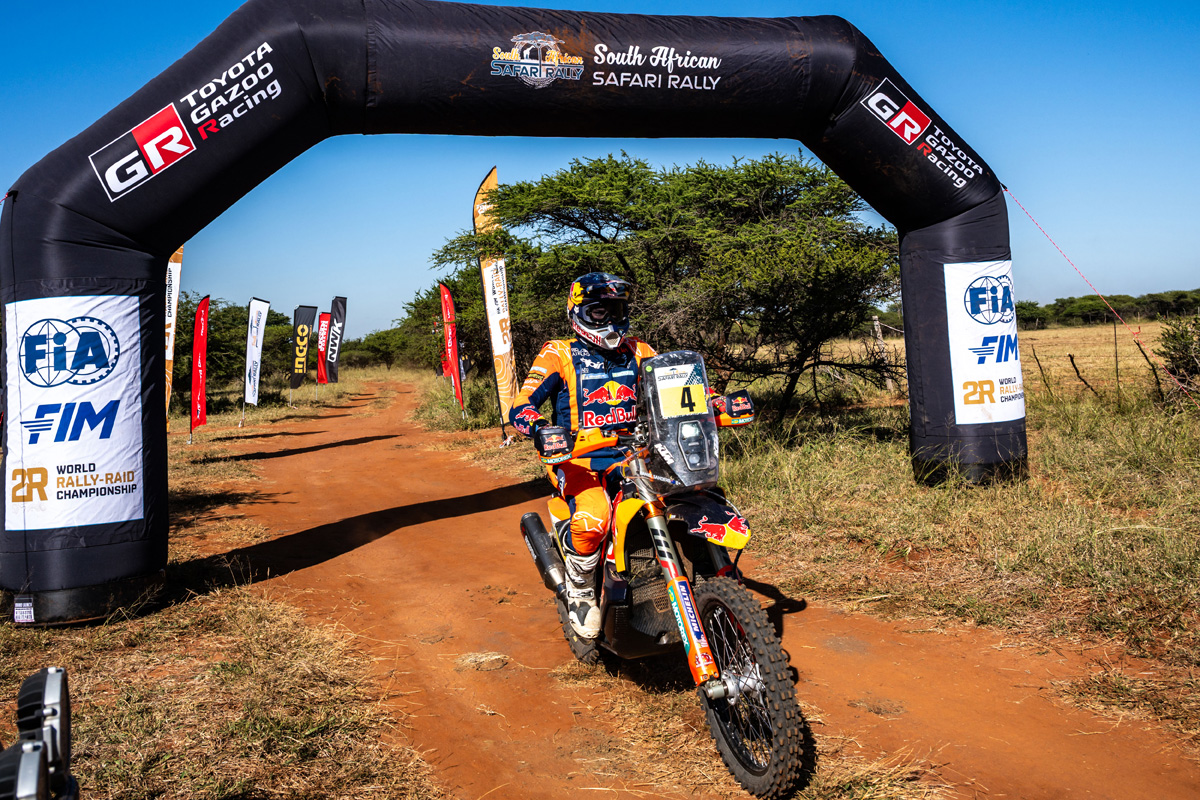
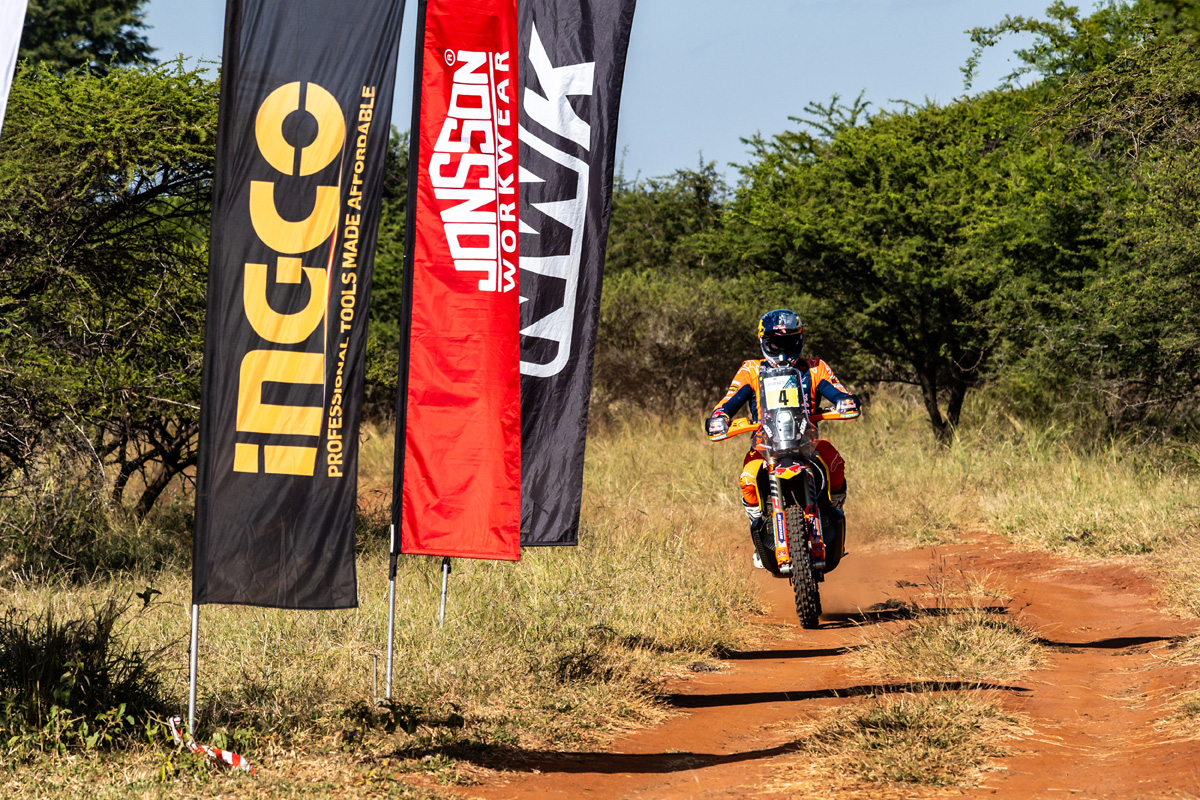
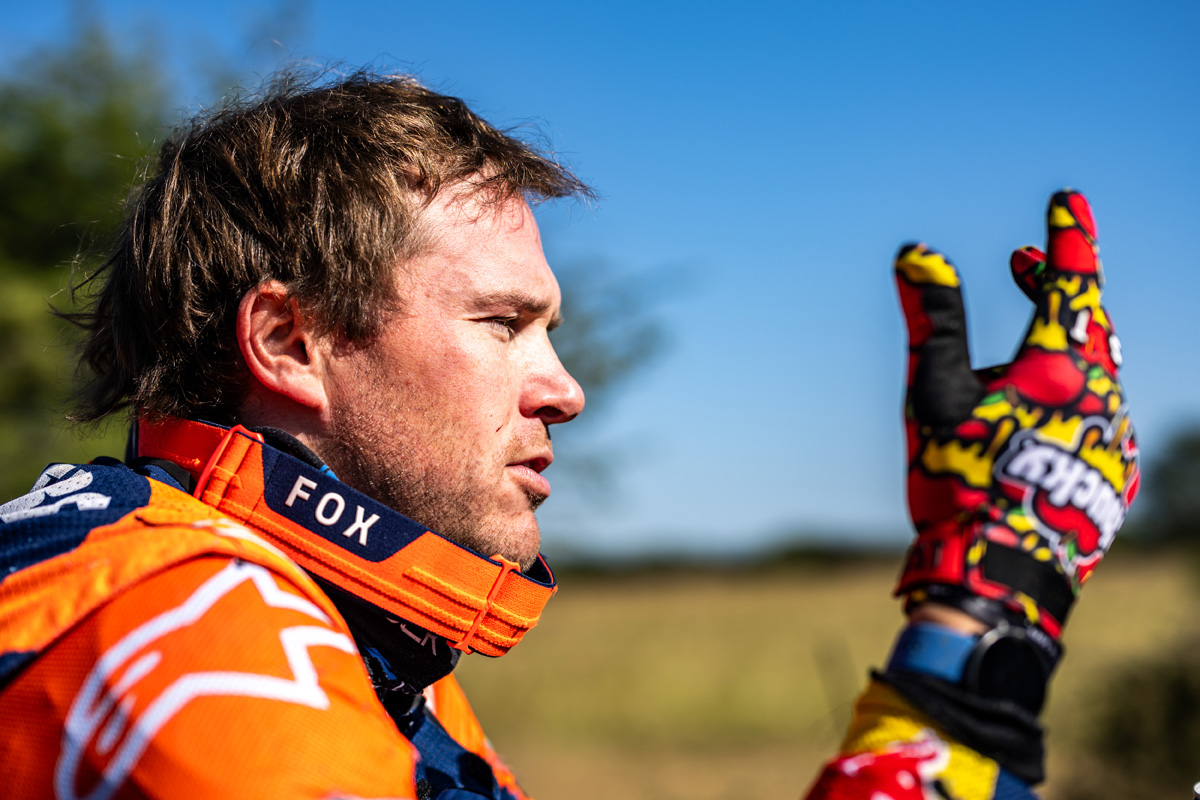
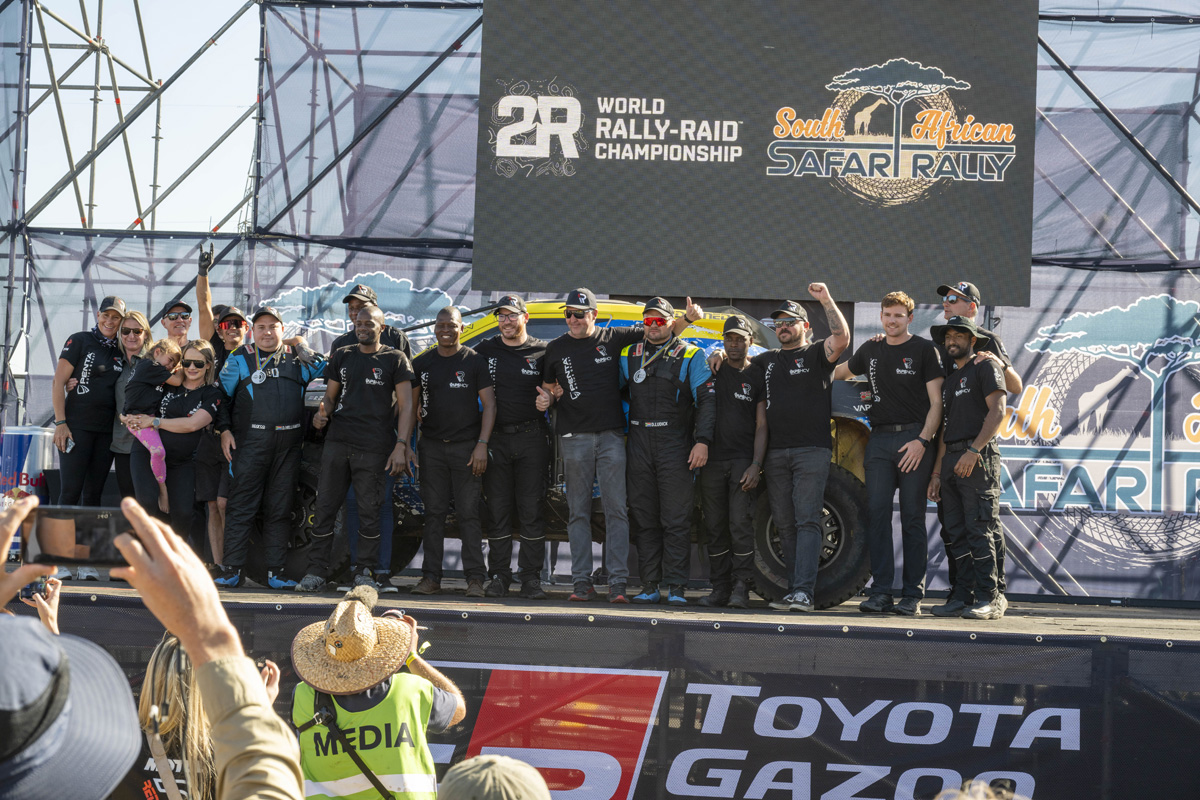
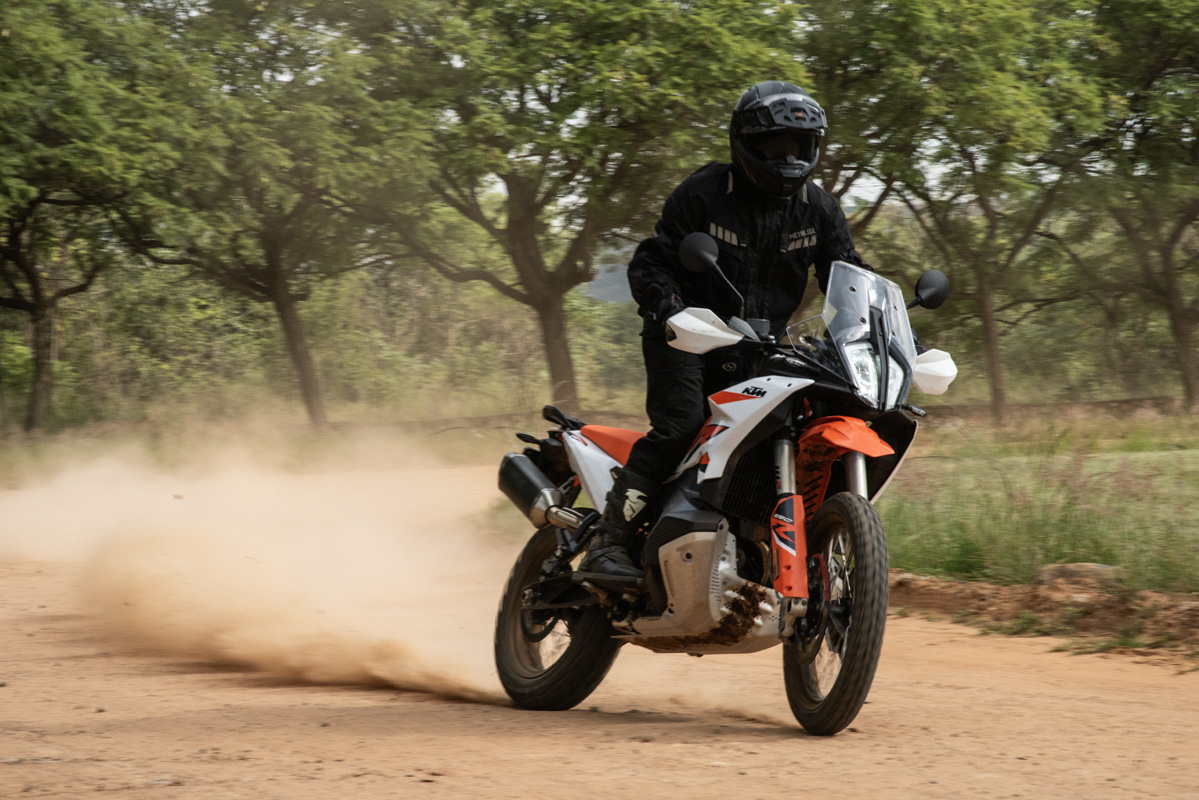
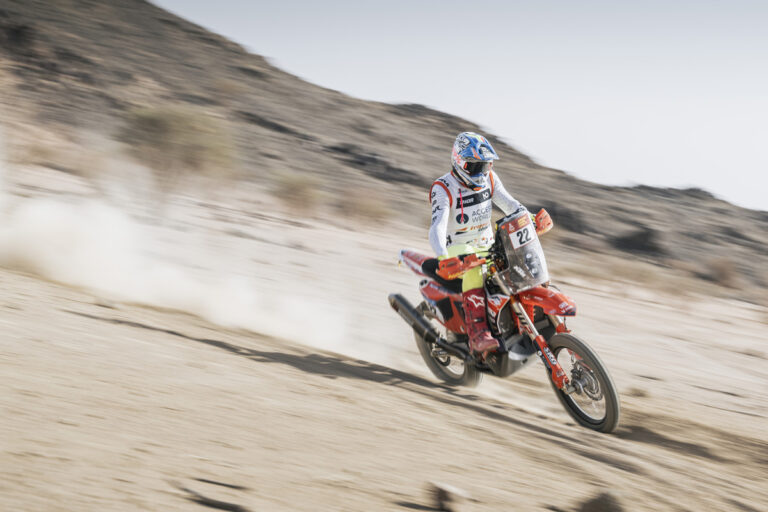
Fighting Off the Inevitable: The Daily Struggle of Surviving at the Back of the Dakar

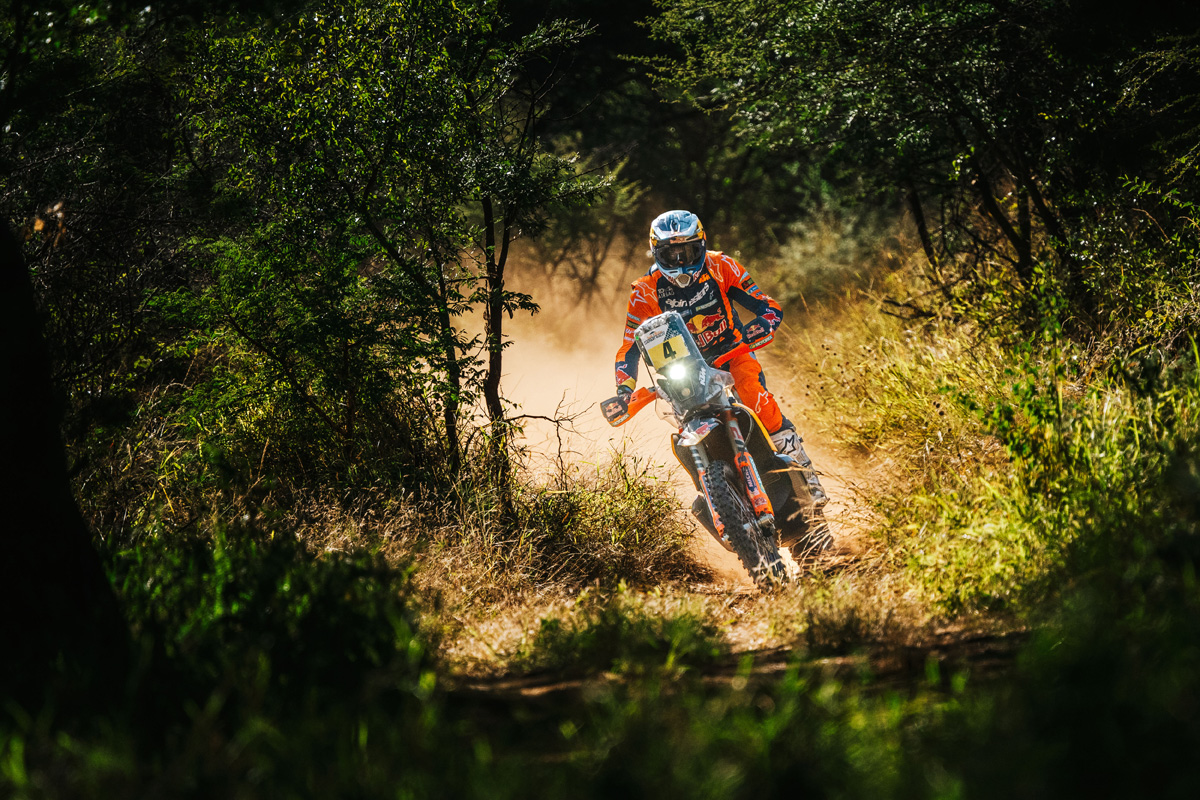
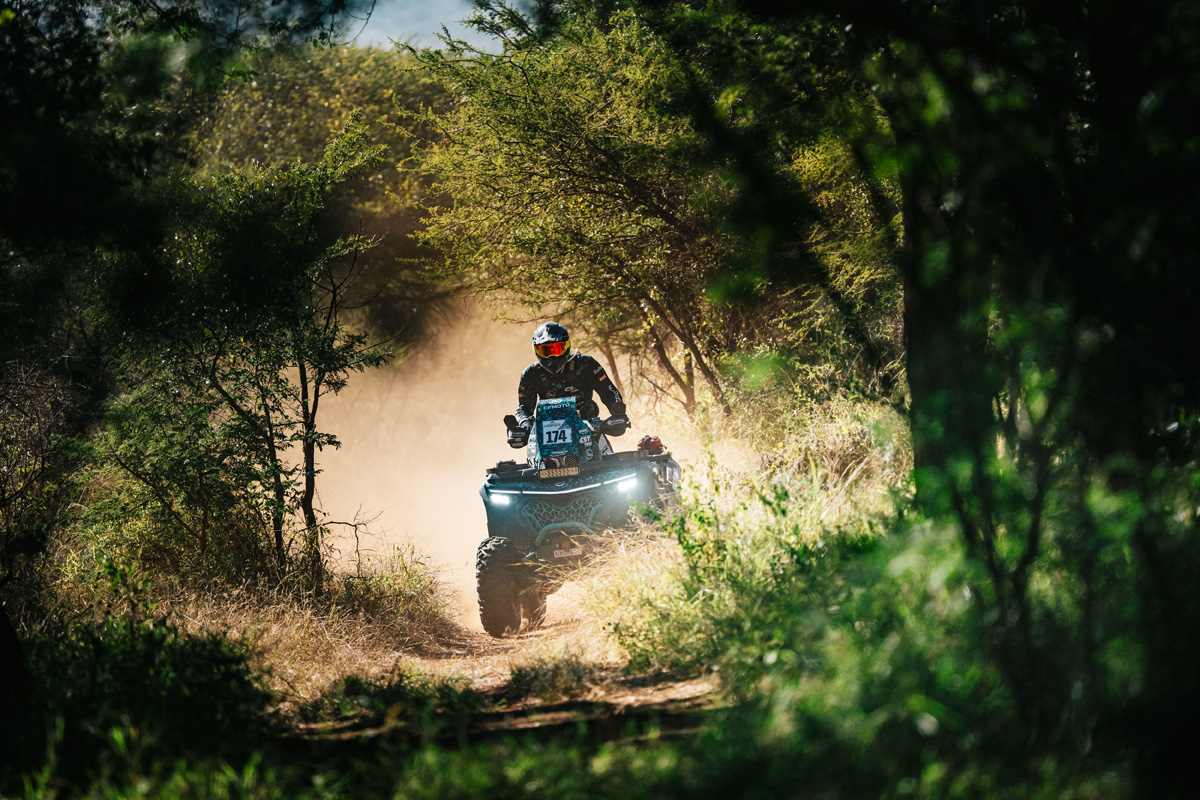
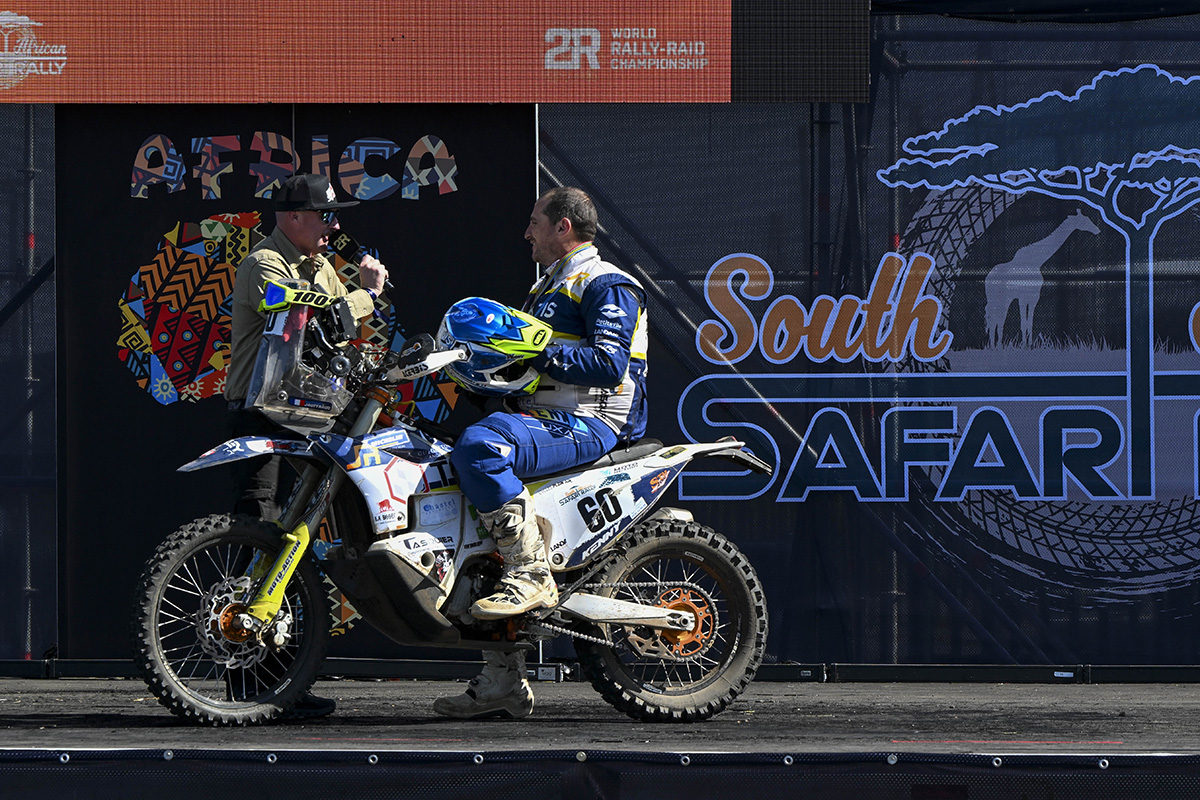
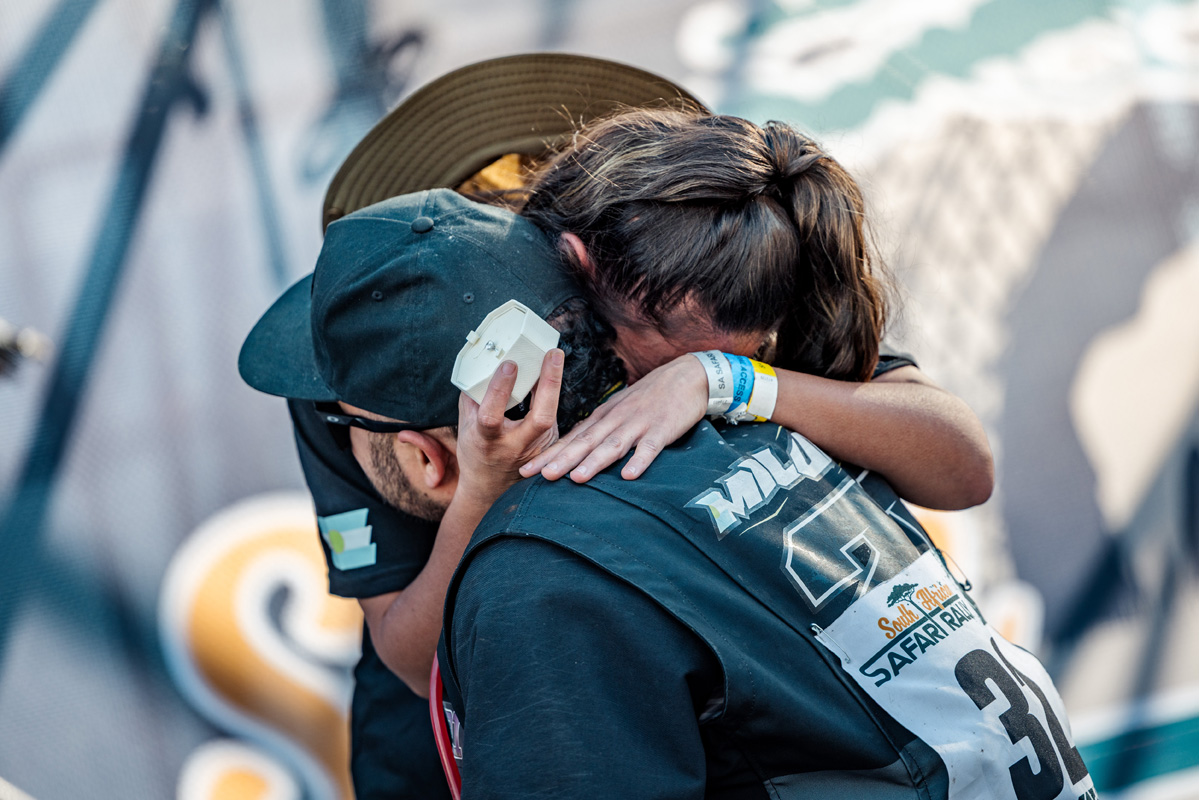
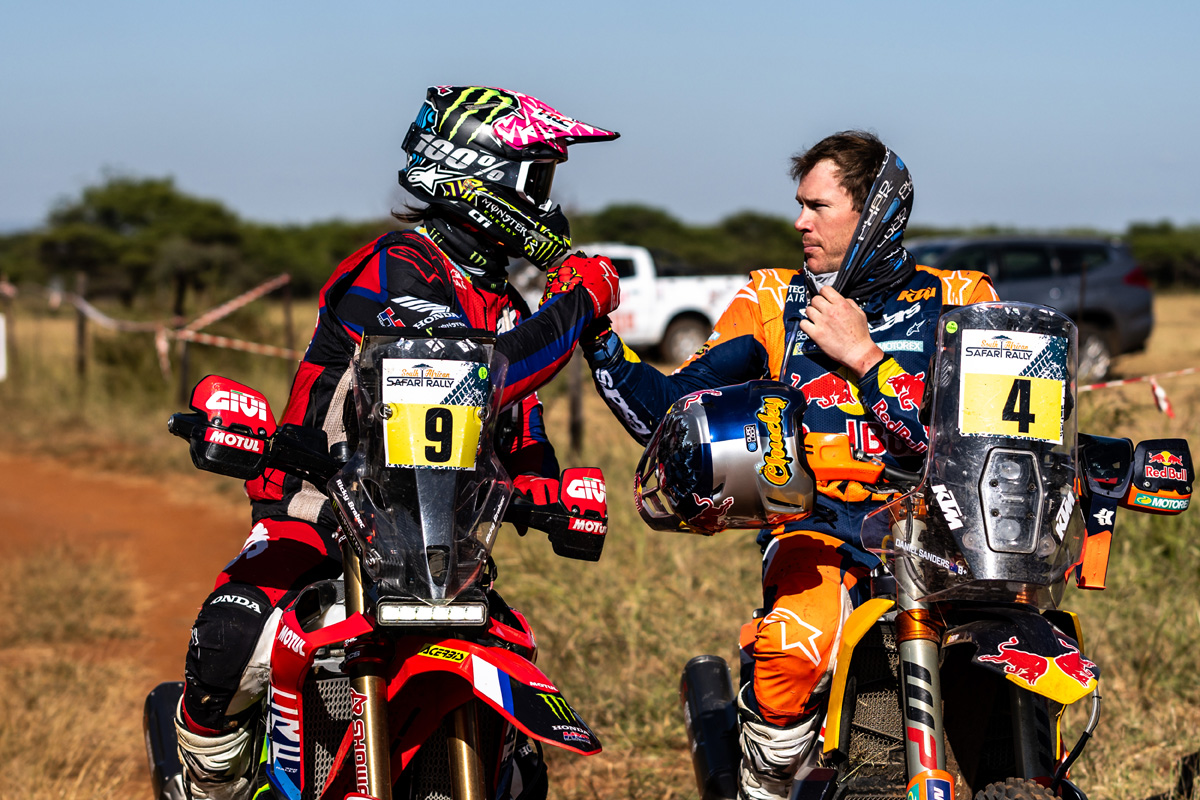
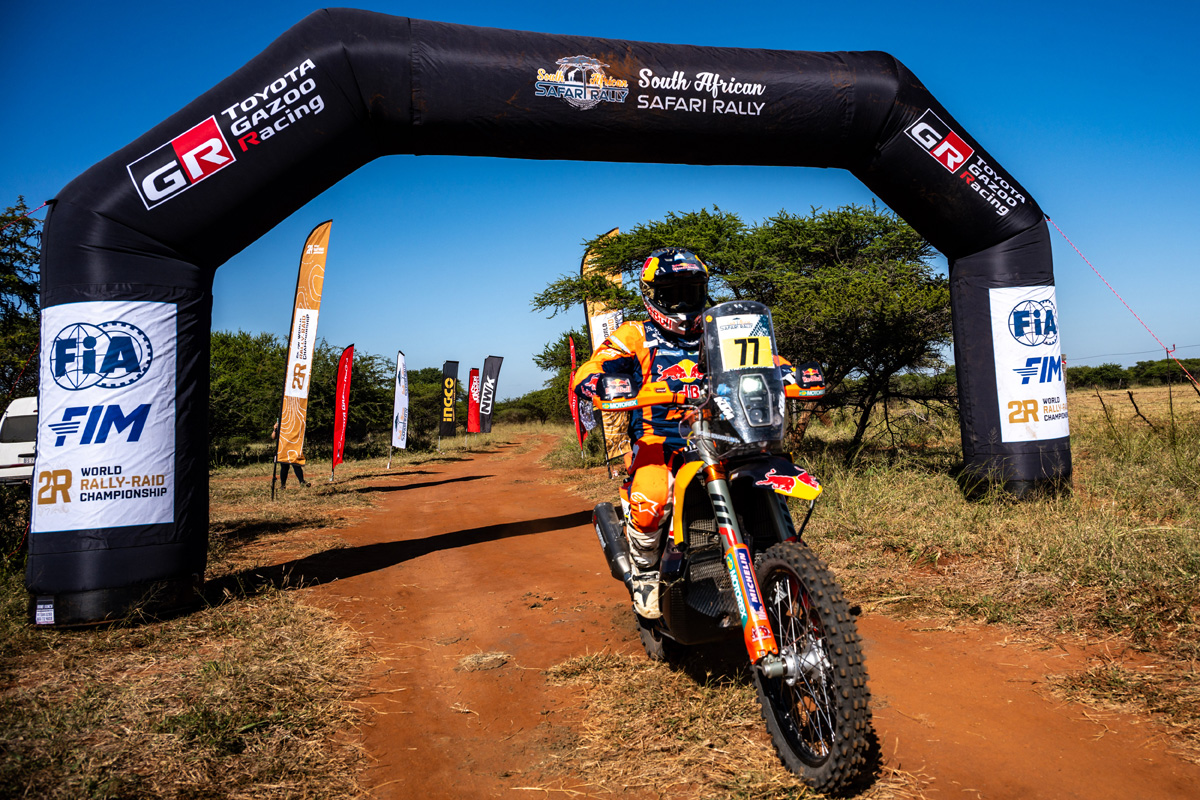
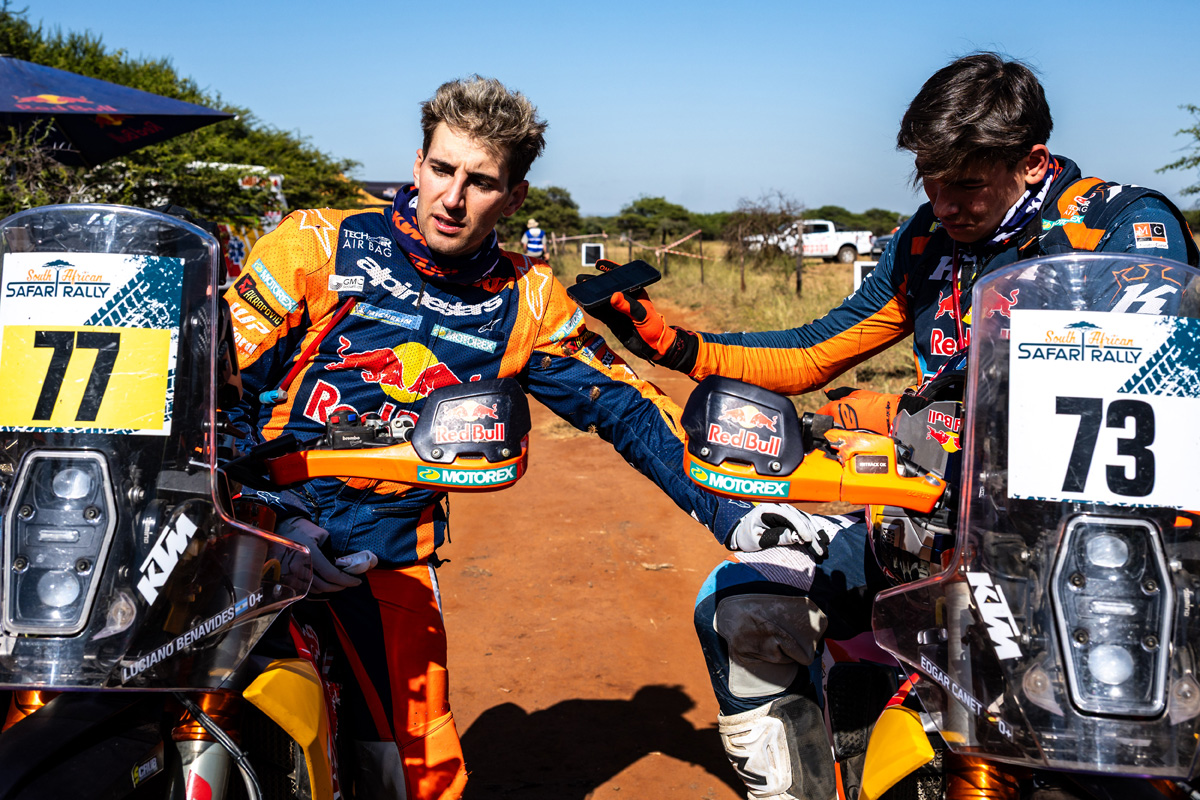
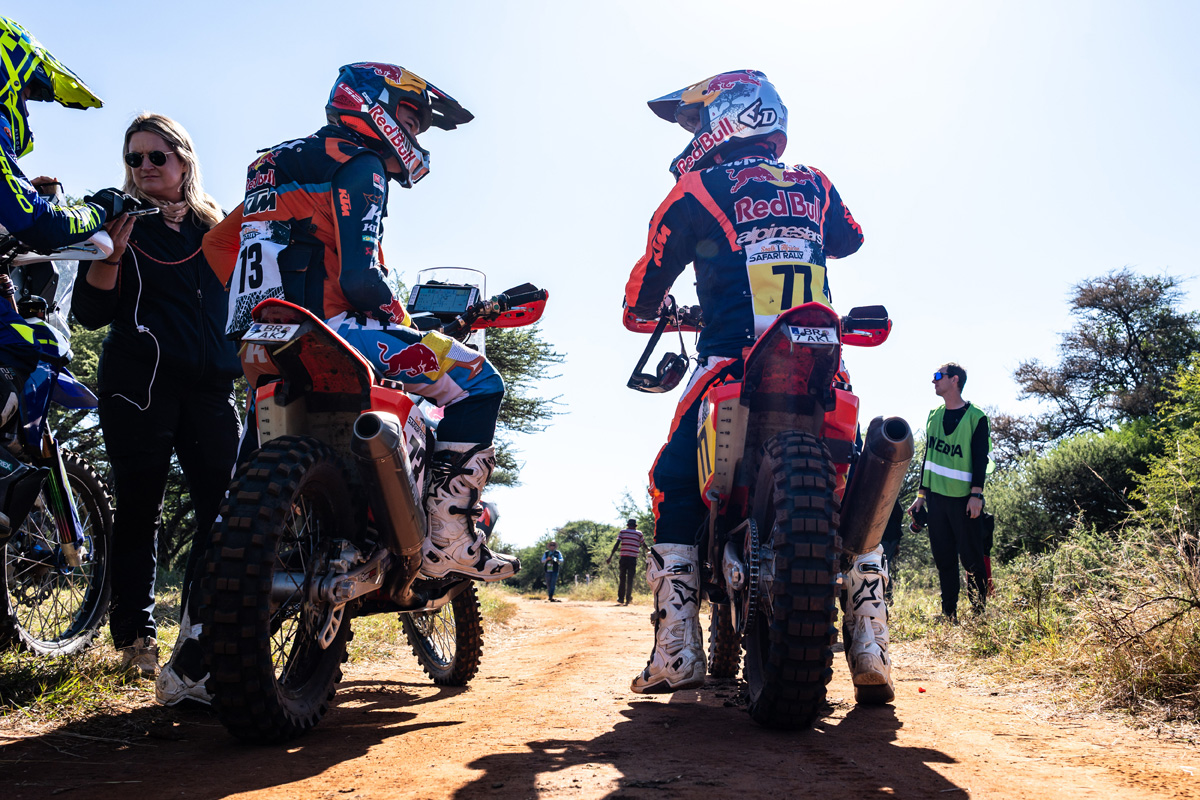
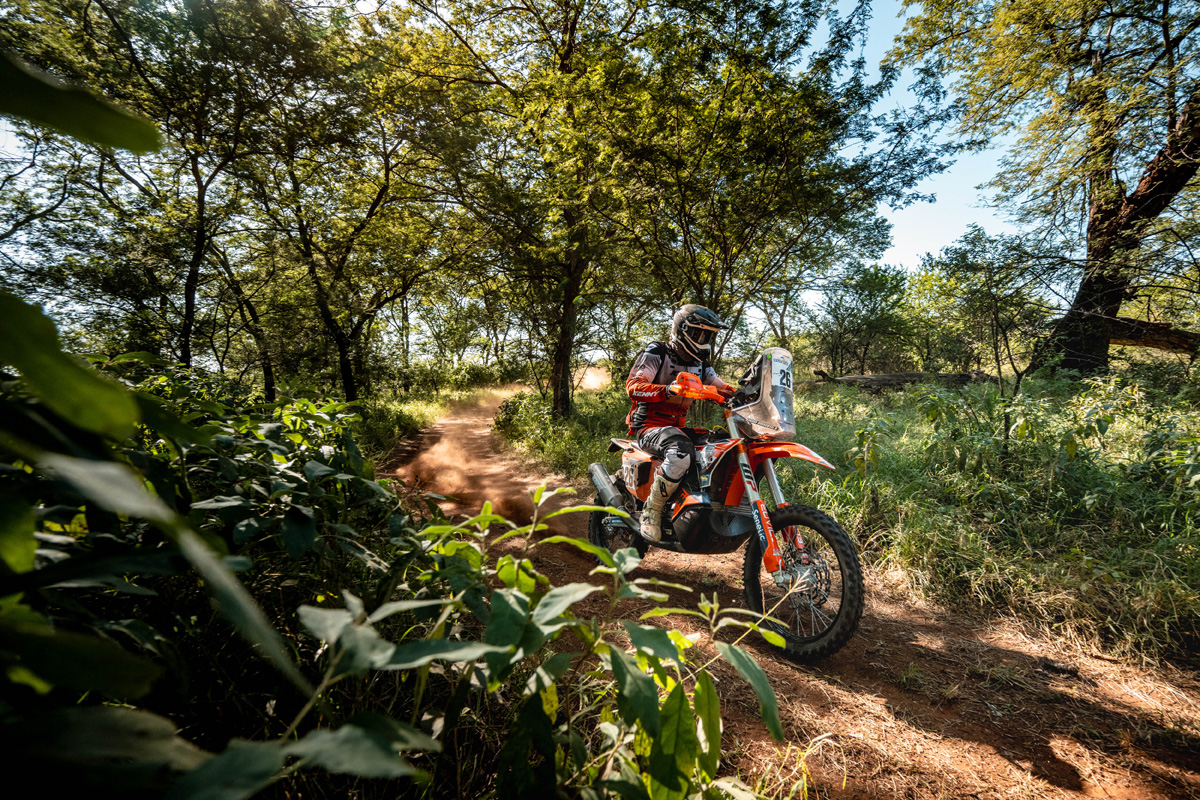
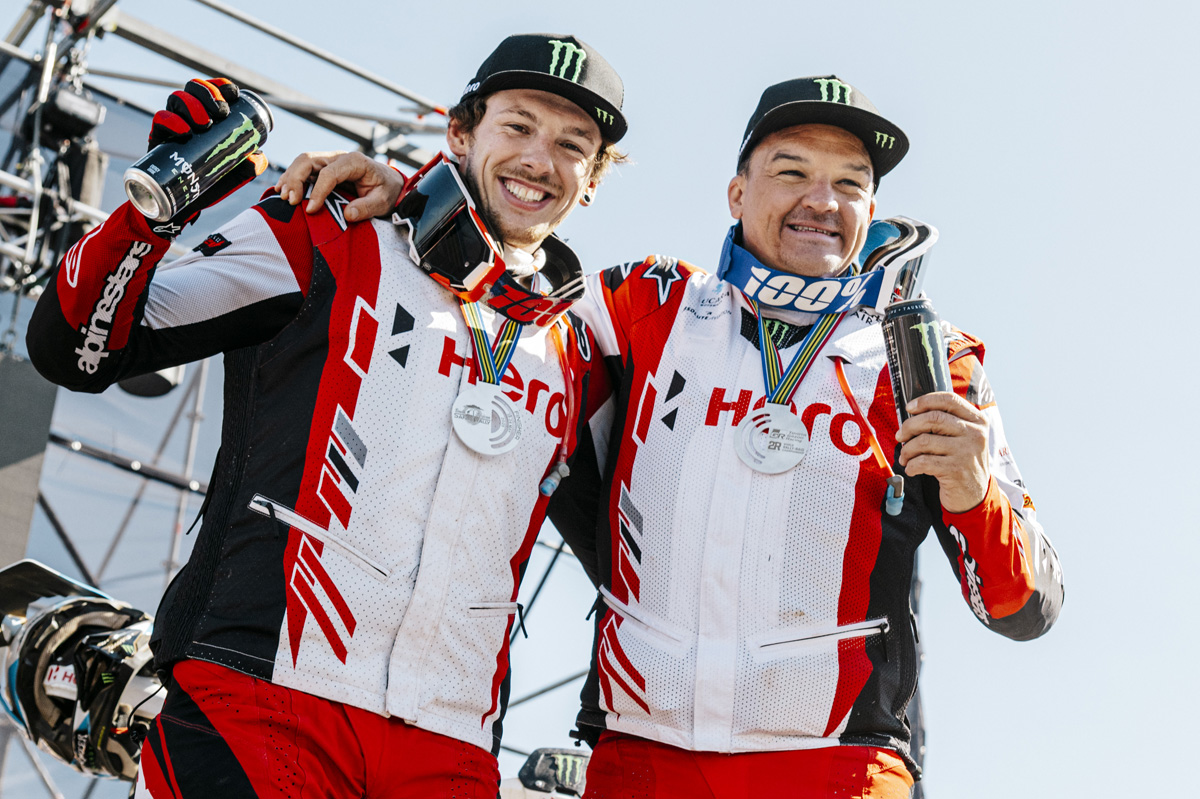
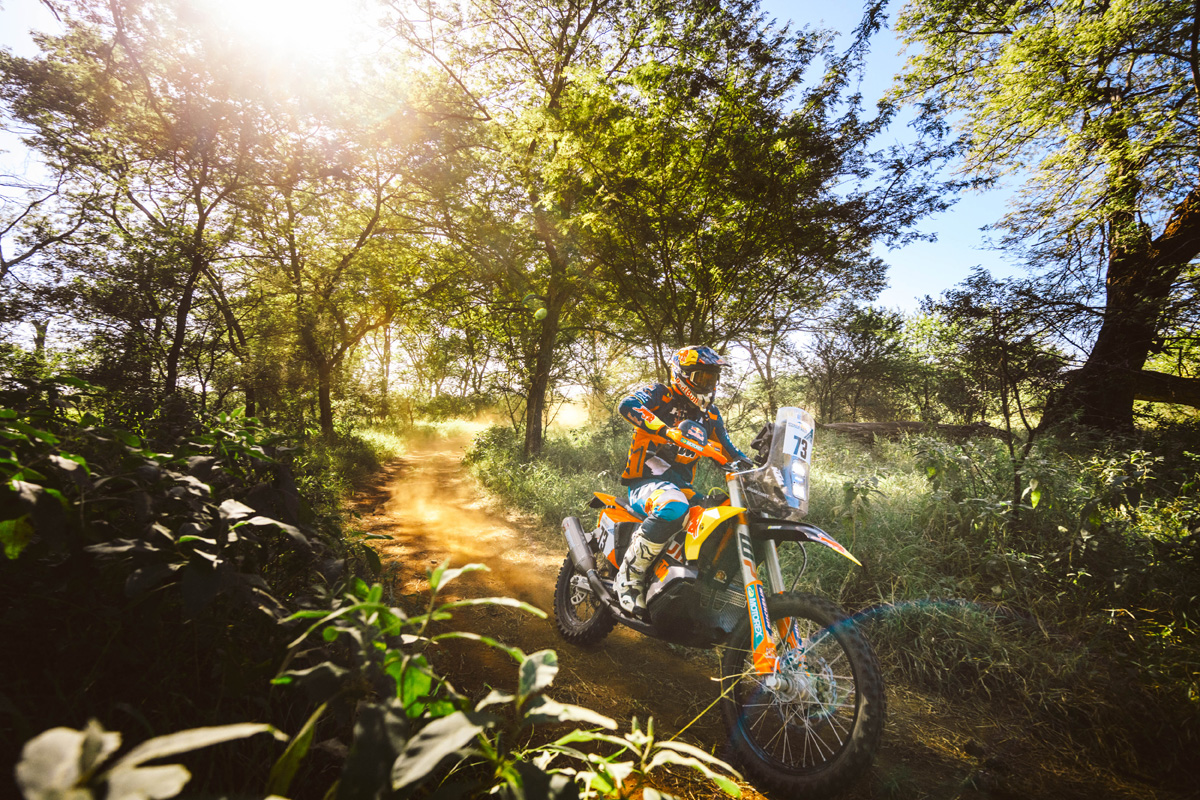
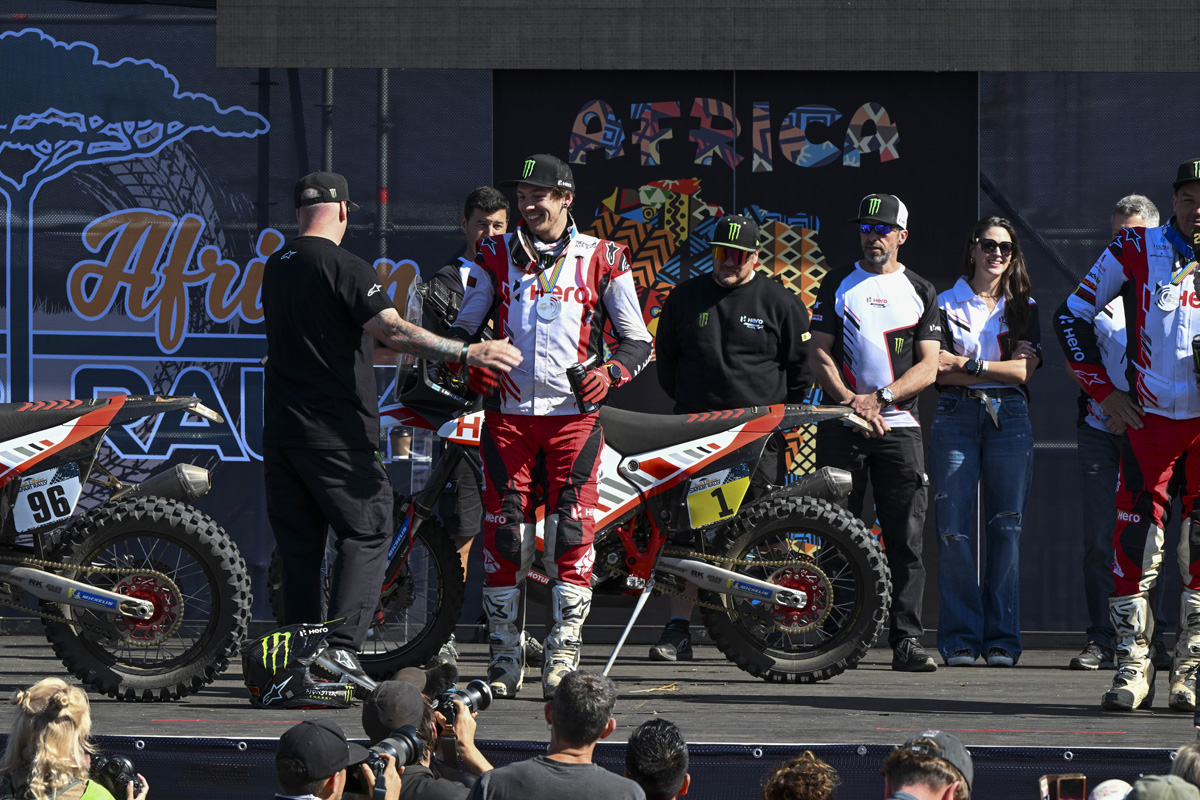
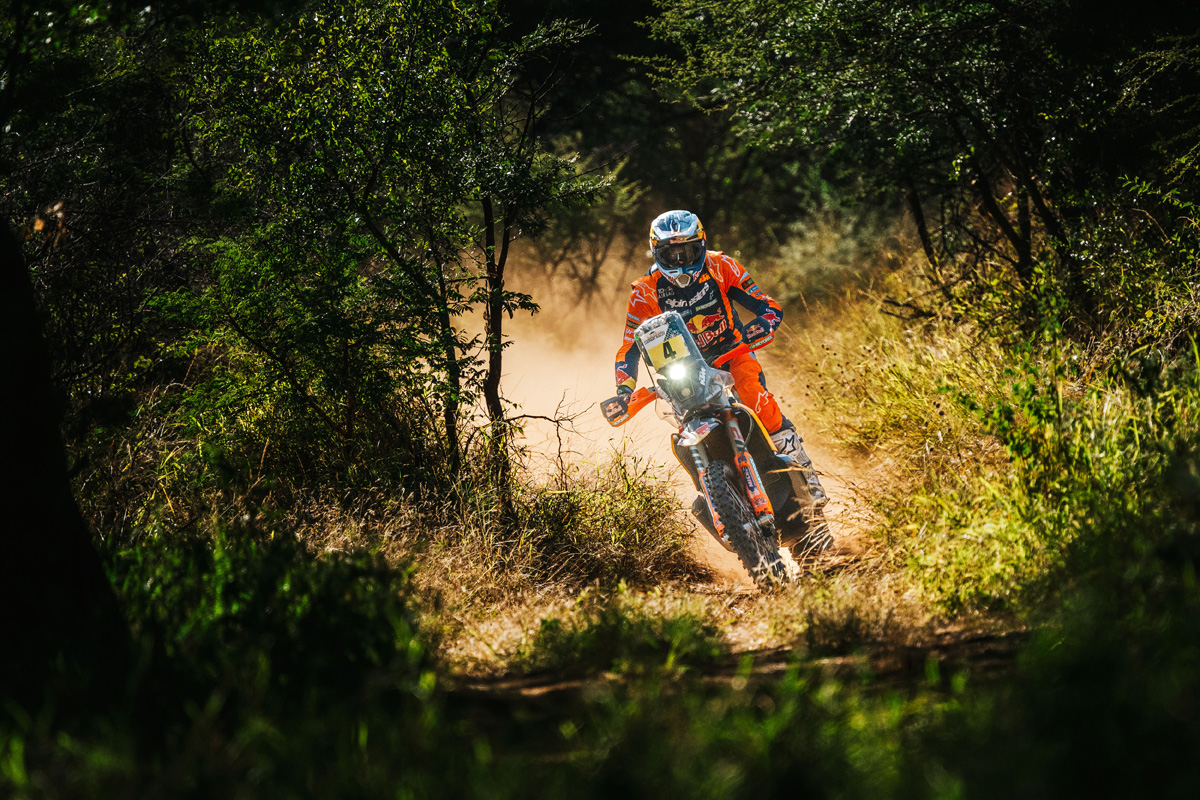
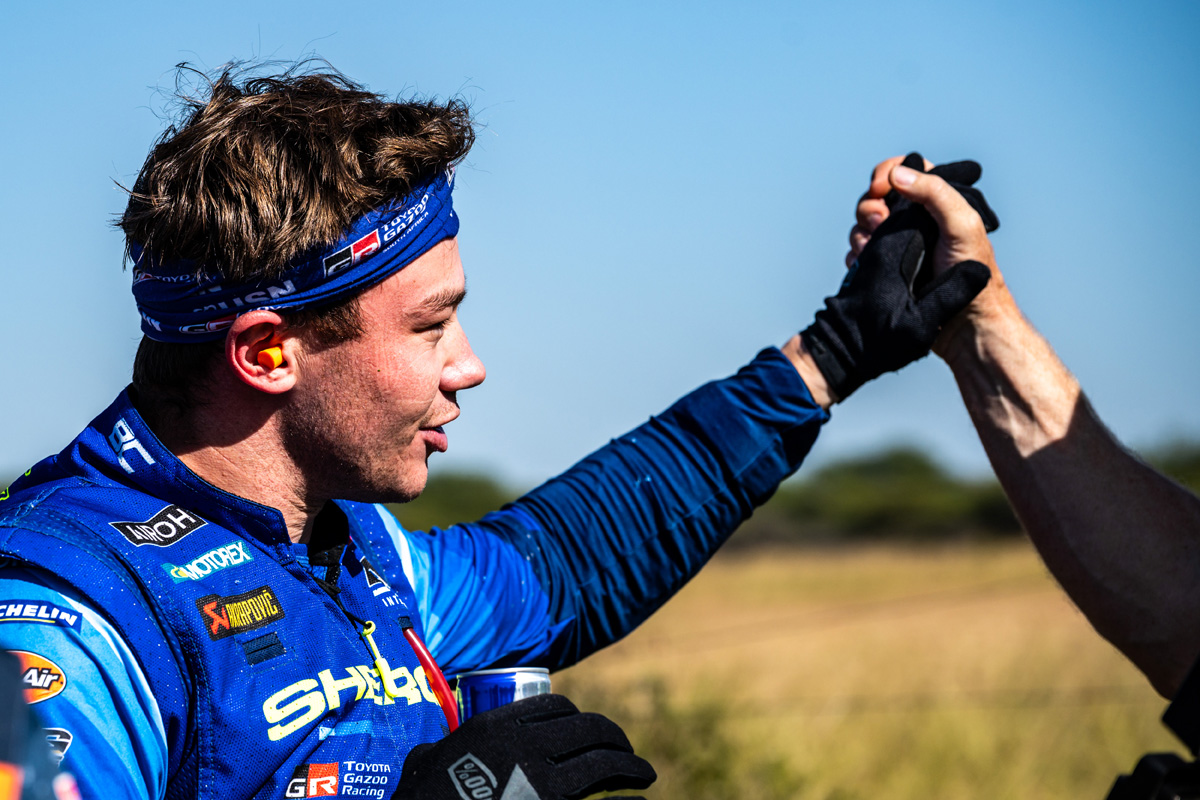
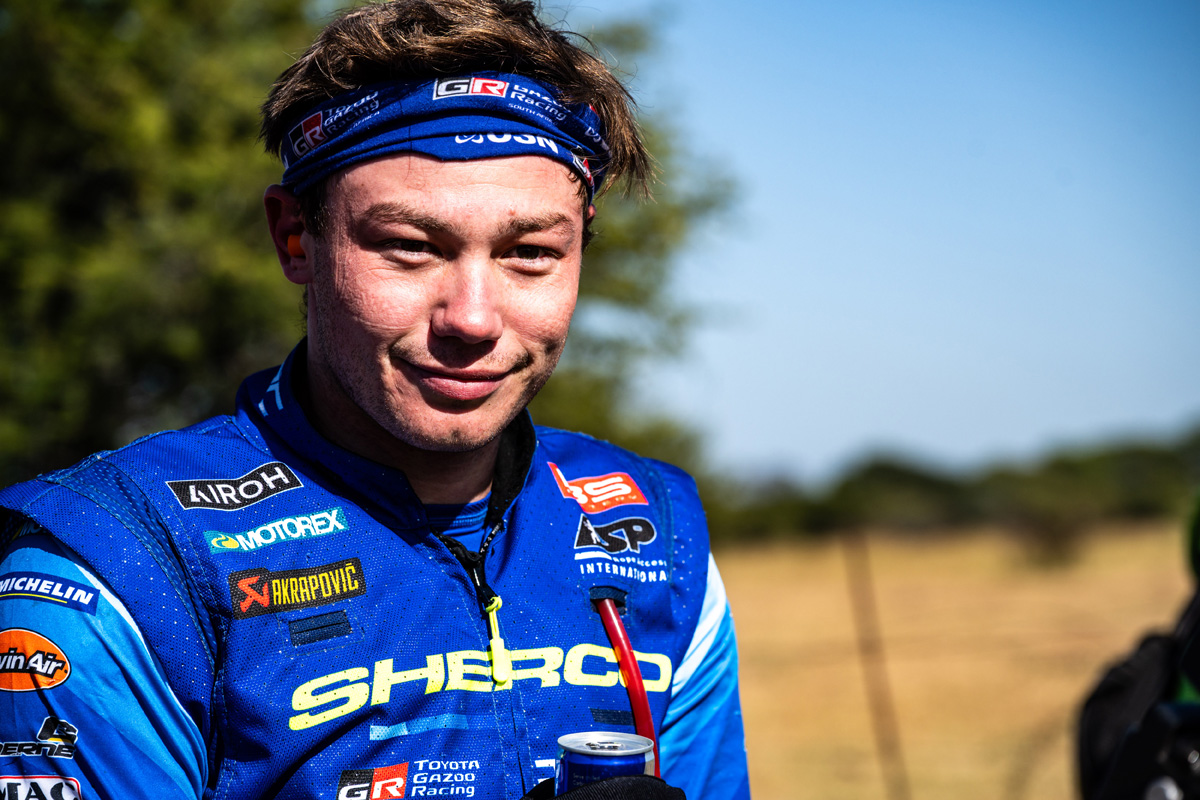
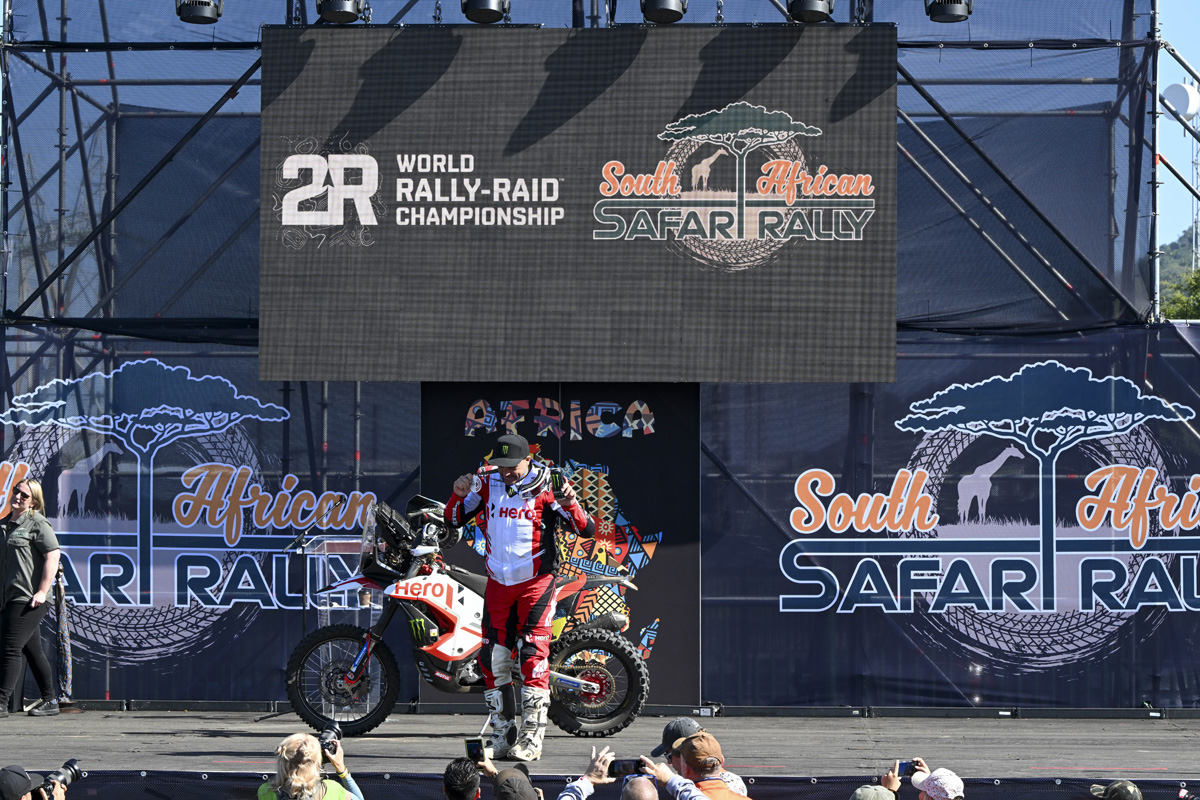
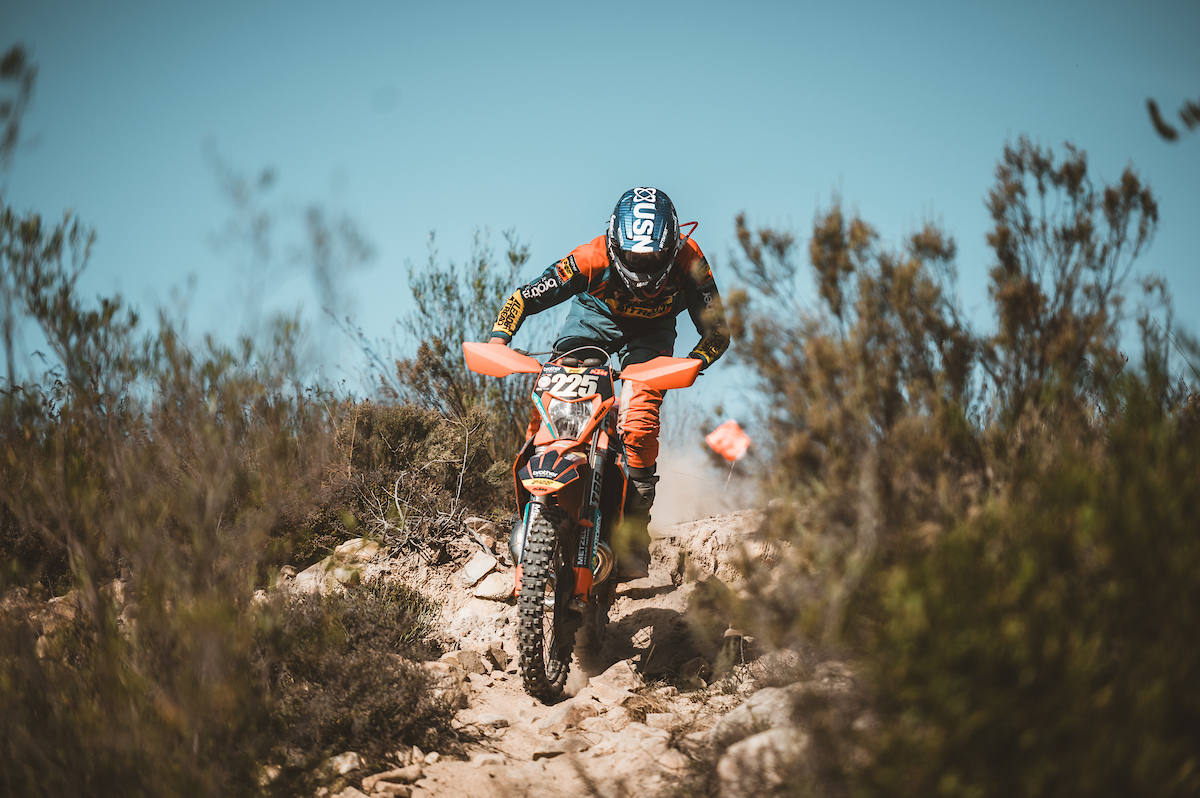
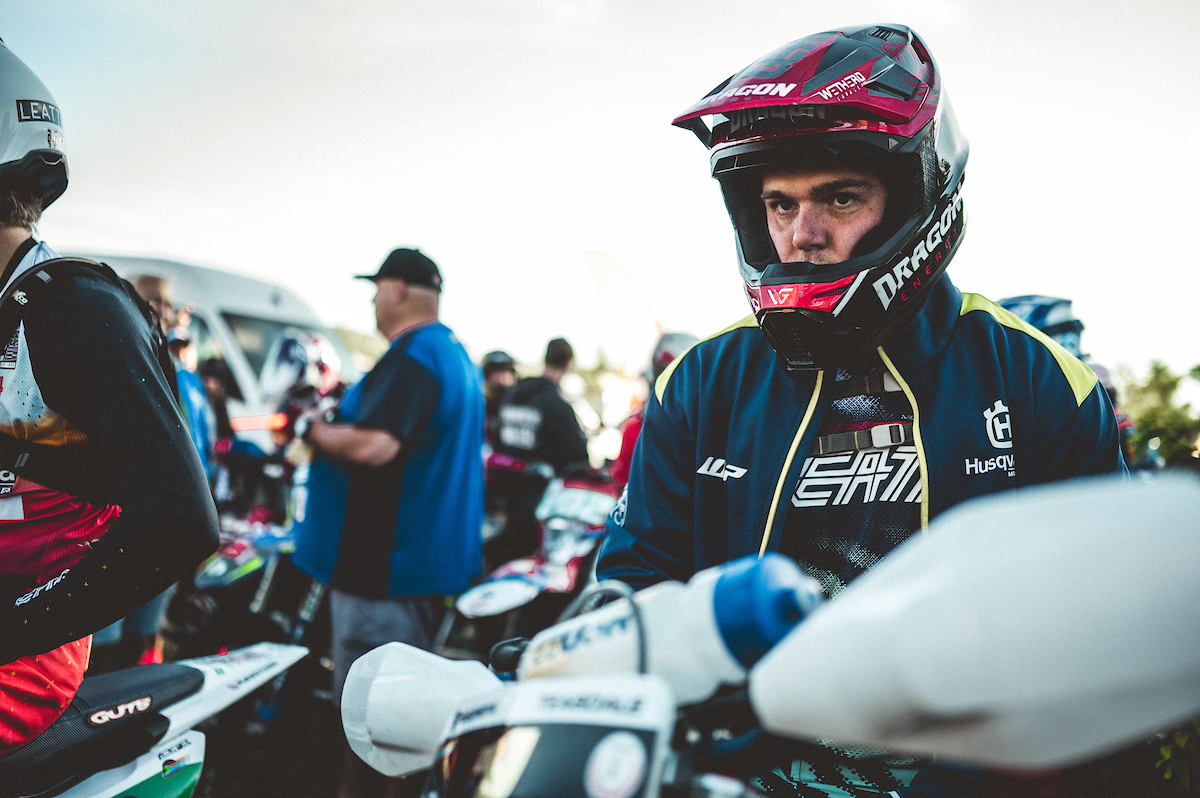
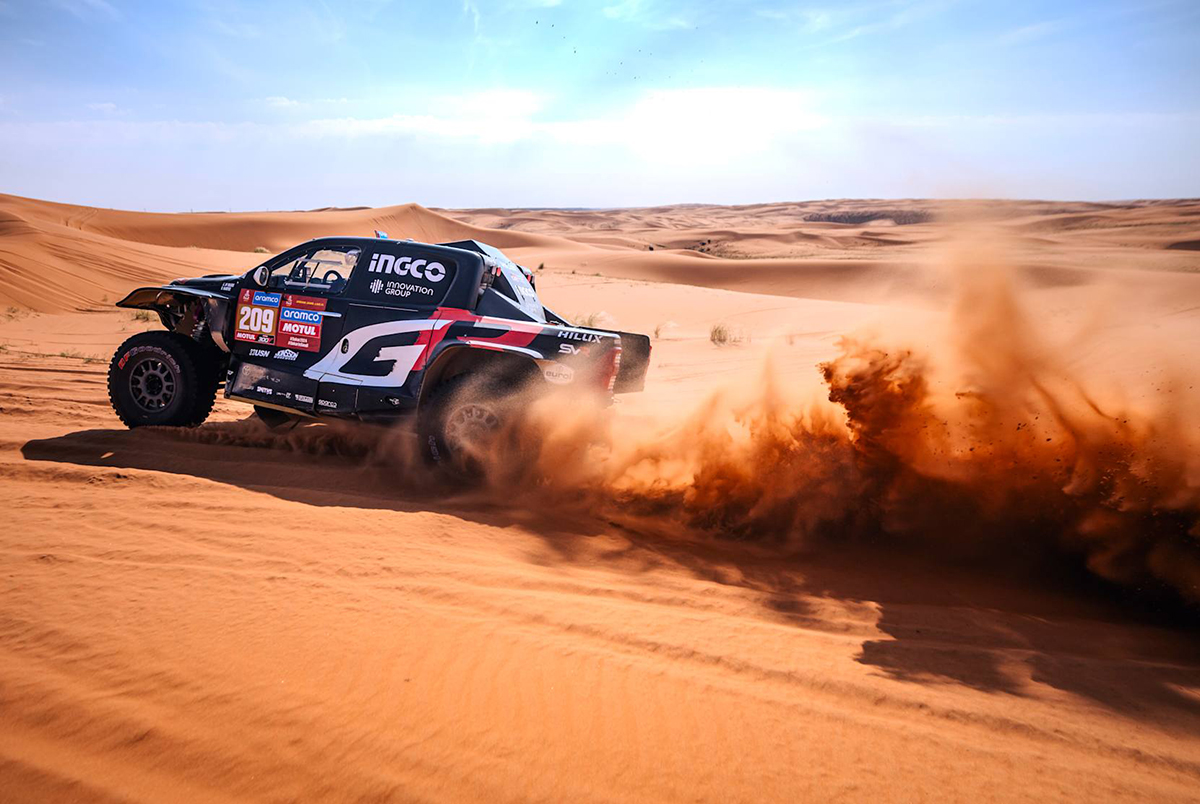
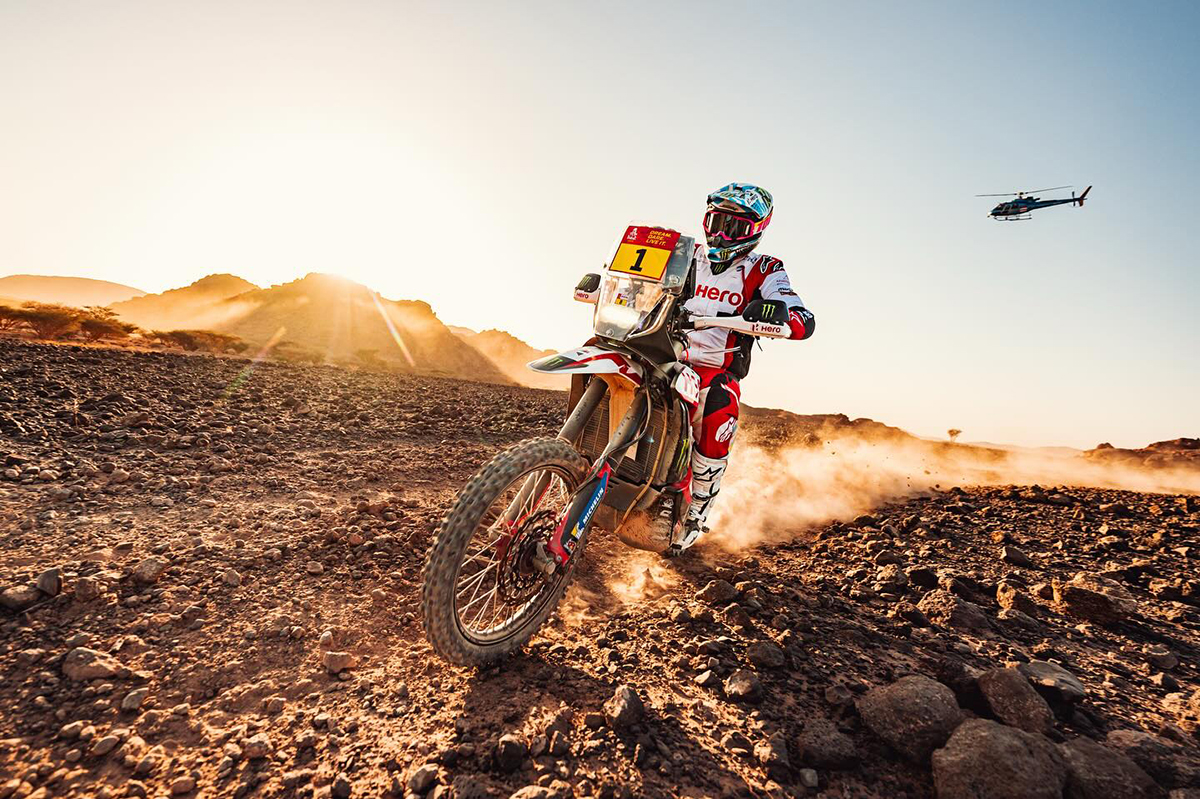
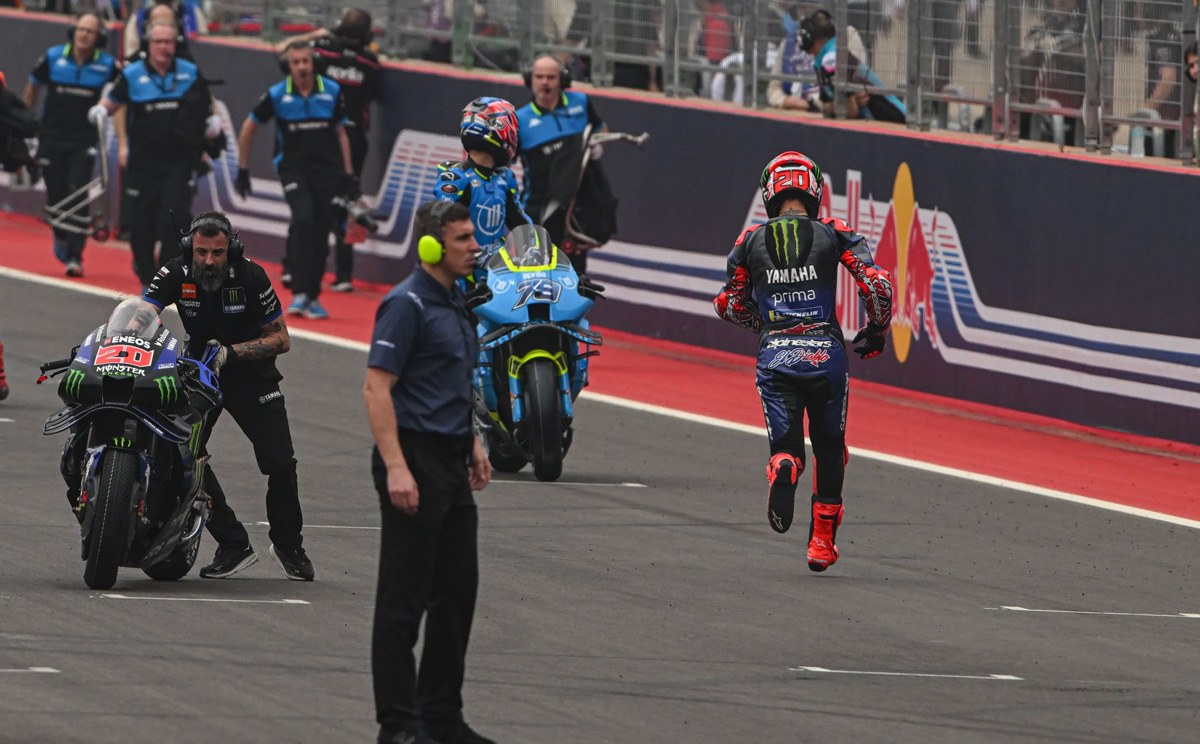
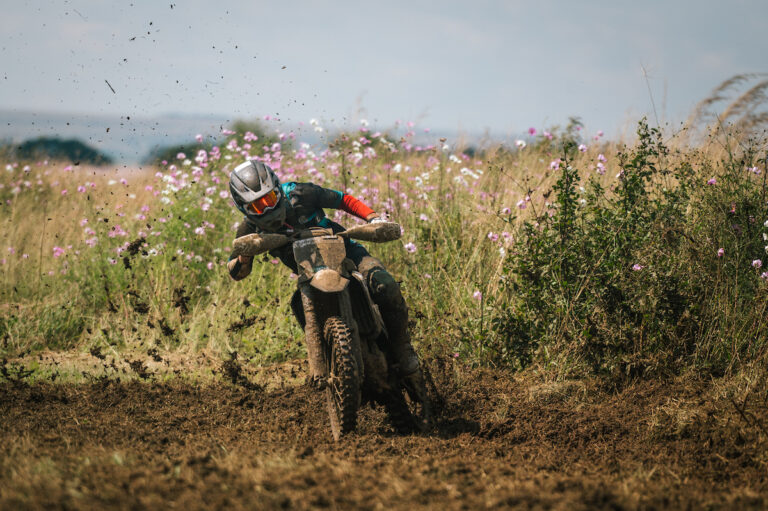
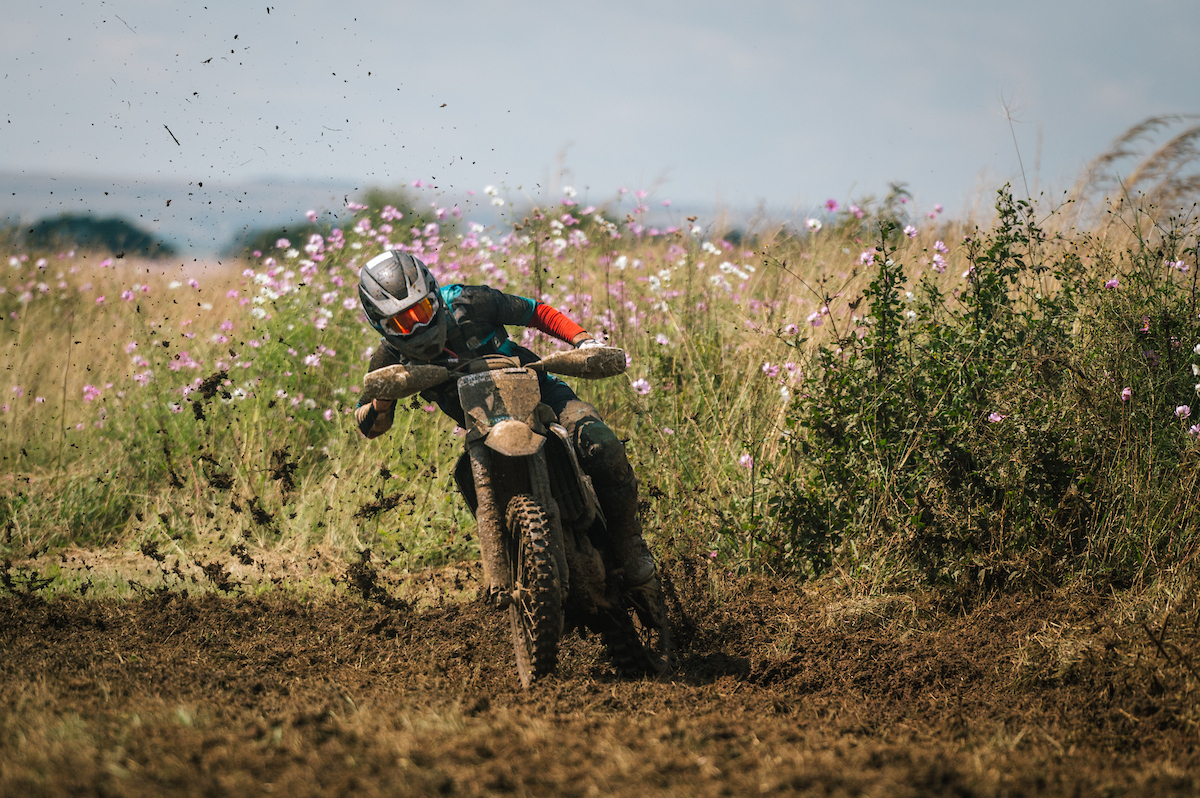
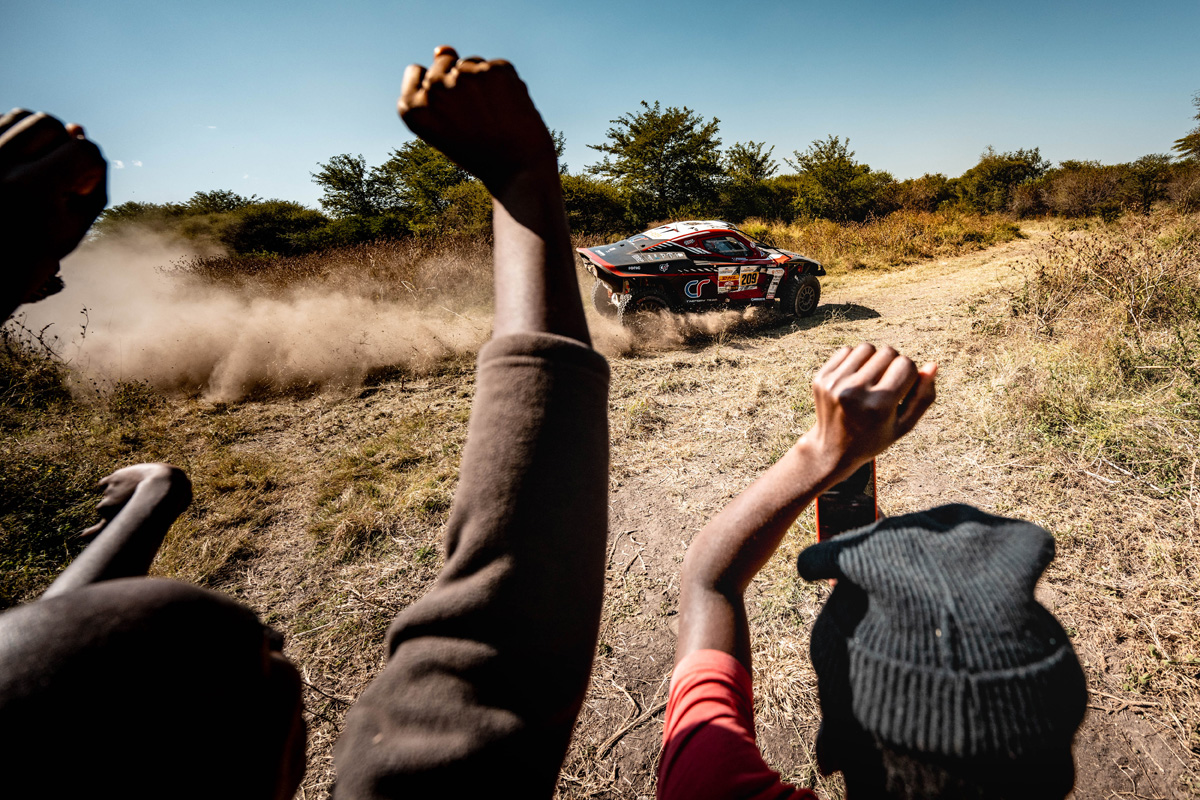
Image source: Willem Avenant

The Dakar Rally is the ultimate test of endurance, skill, and mental fortitude. Every competitor lining up at the start dreams of making it to the finish line, but the odds of survival diminish drastically for those who fall behind early in the race. Once you slip into the back of the pack, making up time is nearly impossible. Statistics show that riders who fall behind tend to exit the rally within the next day or two. The reason? A brutal combination of terrain conditions, vehicle traffic, and an unforgiving race structure that turns the back of the Dakar into a battlefield where survival is the only goal.

The Hell at the Back

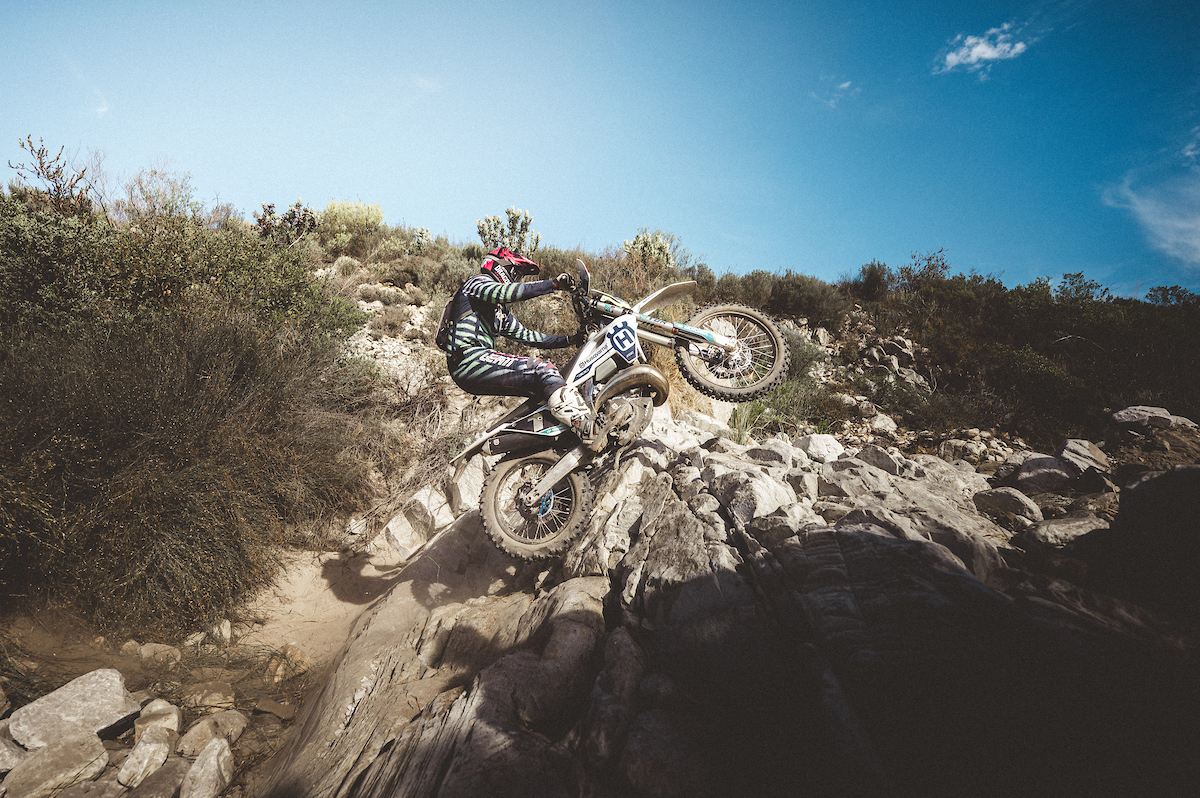
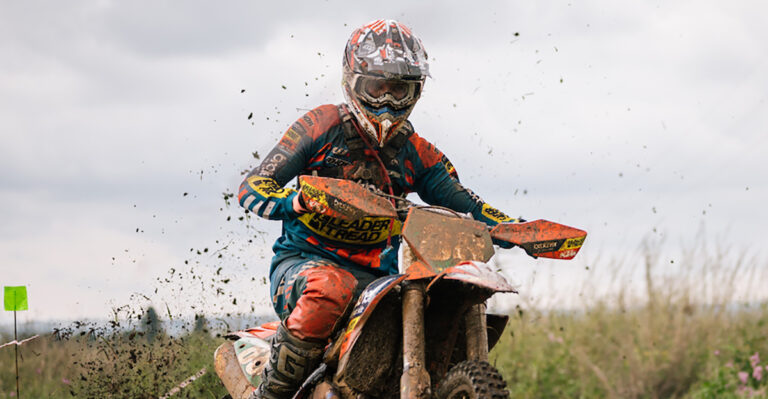
The further back you start, the worse the conditions become. Unlike the leading riders who experience the dunes and trails in their relatively untouched form, those in the back face a course that has been completely destroyed by the passage of hundreds of vehicles before them. What was once smooth sand is now a relentless labyrinth of deep ruts, massive holes, and churned-up fesh-fesh (fine, powdery sand that swallows bikes whole). Rocks that were buried in the morning are fully exposed, turning sections into treacherous minefields. Every turn, every crest, and every kilometre presents a new battle to stay upright.

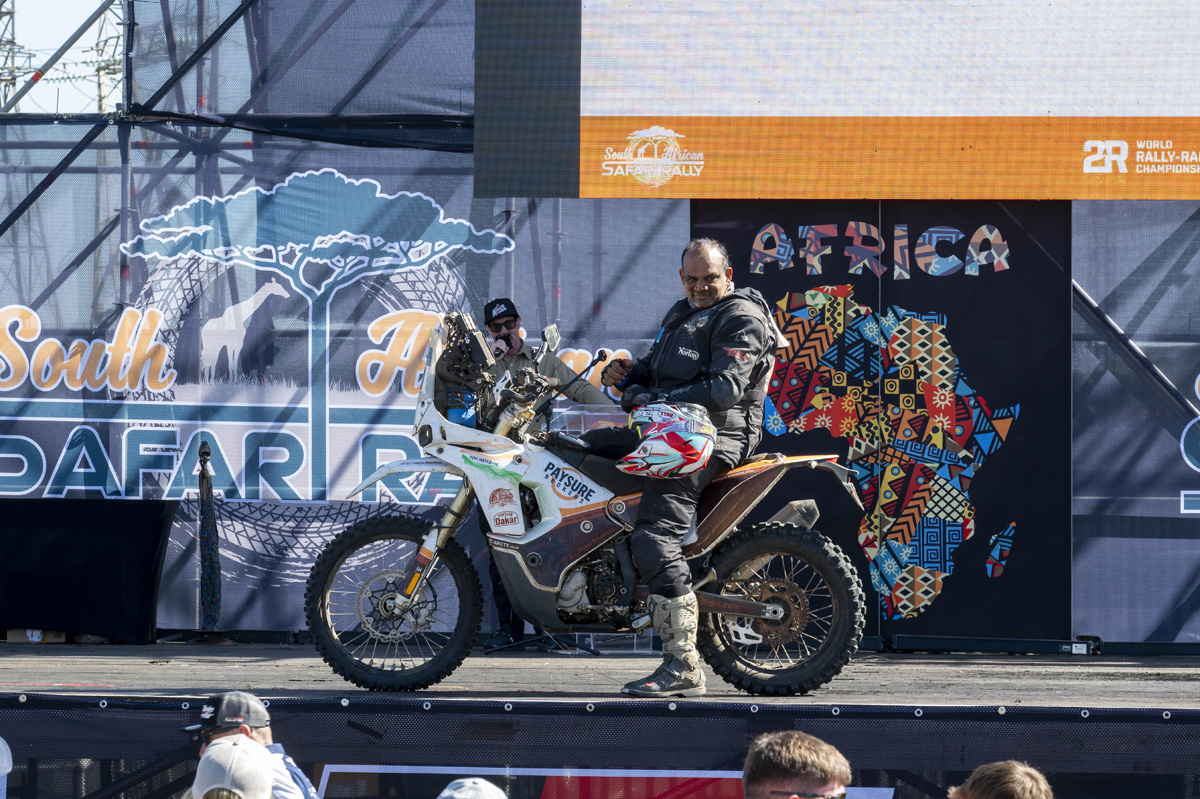
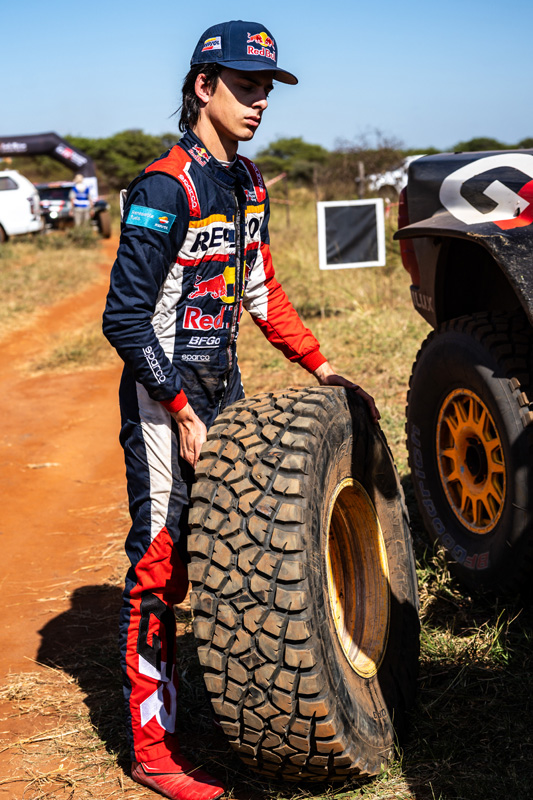
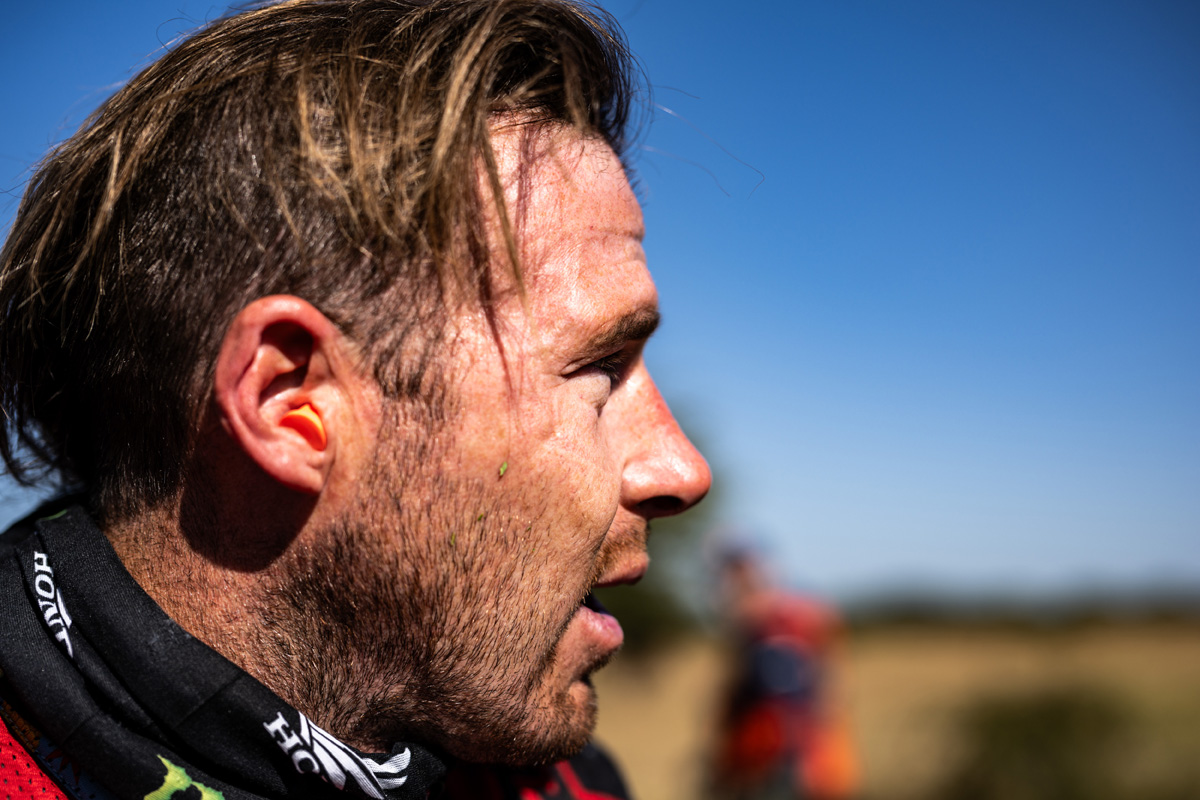
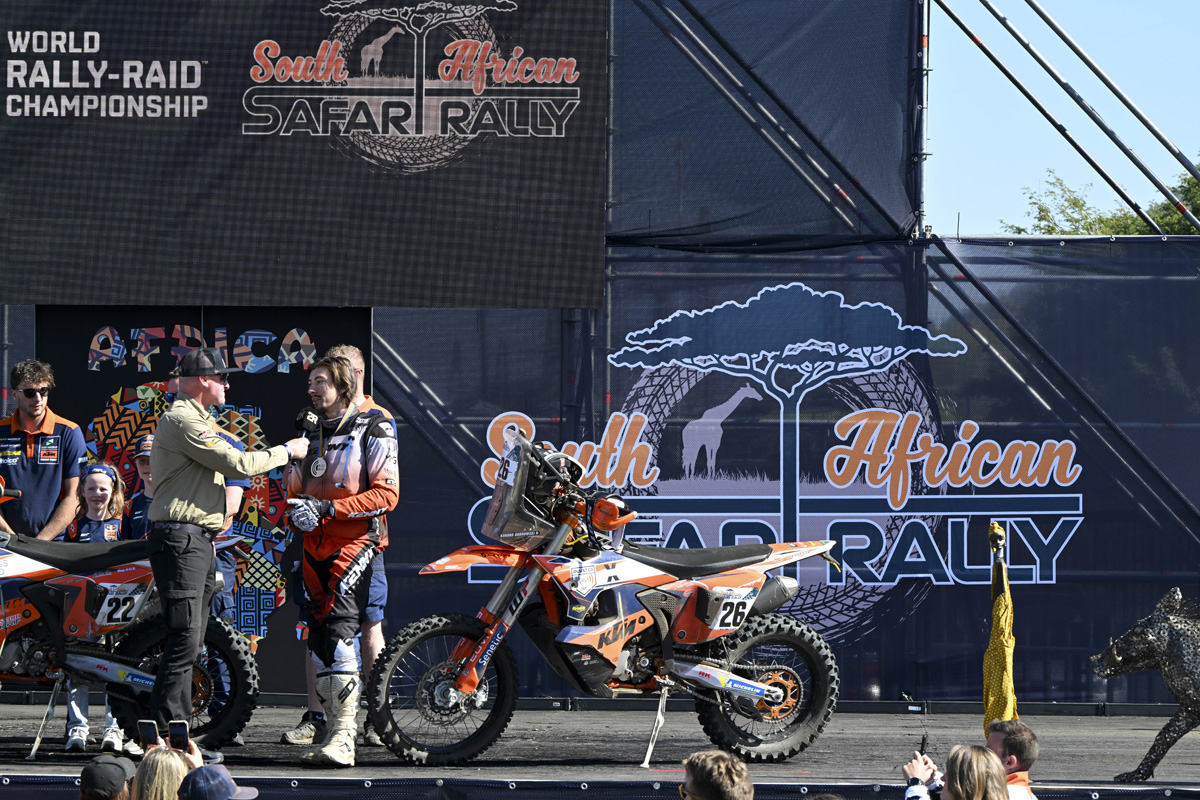
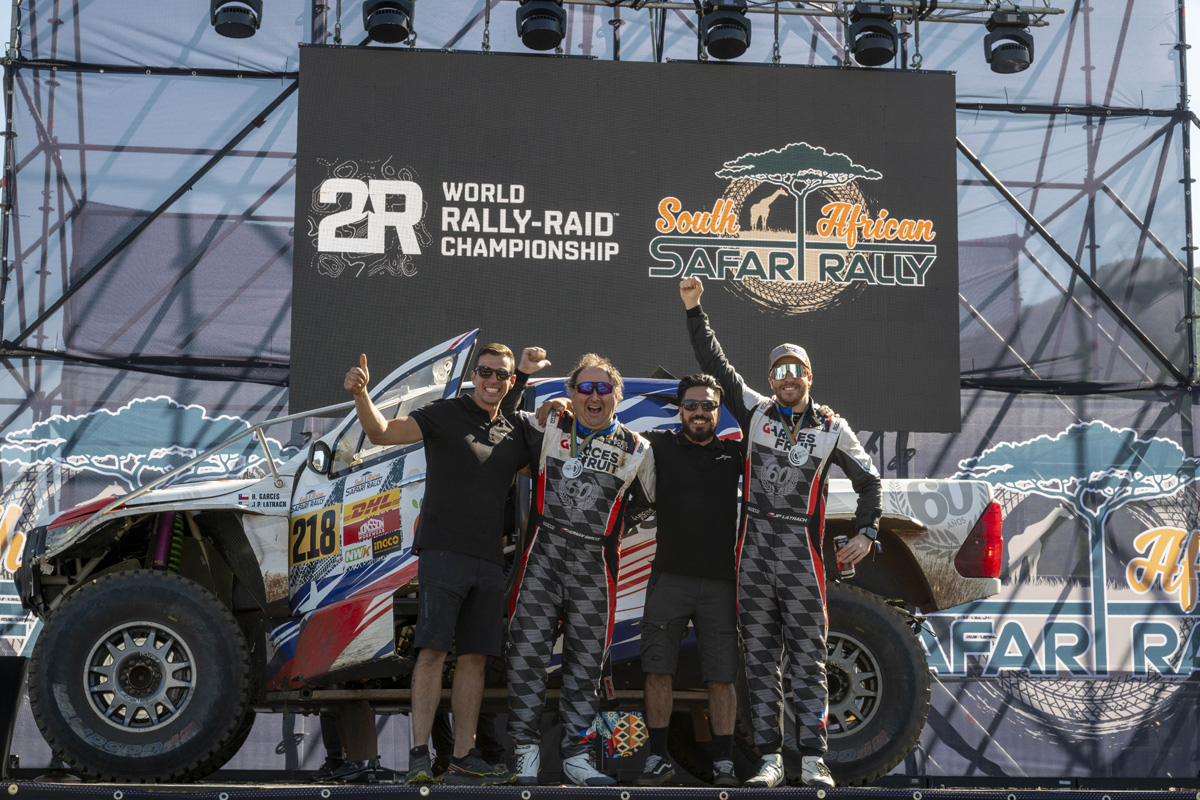
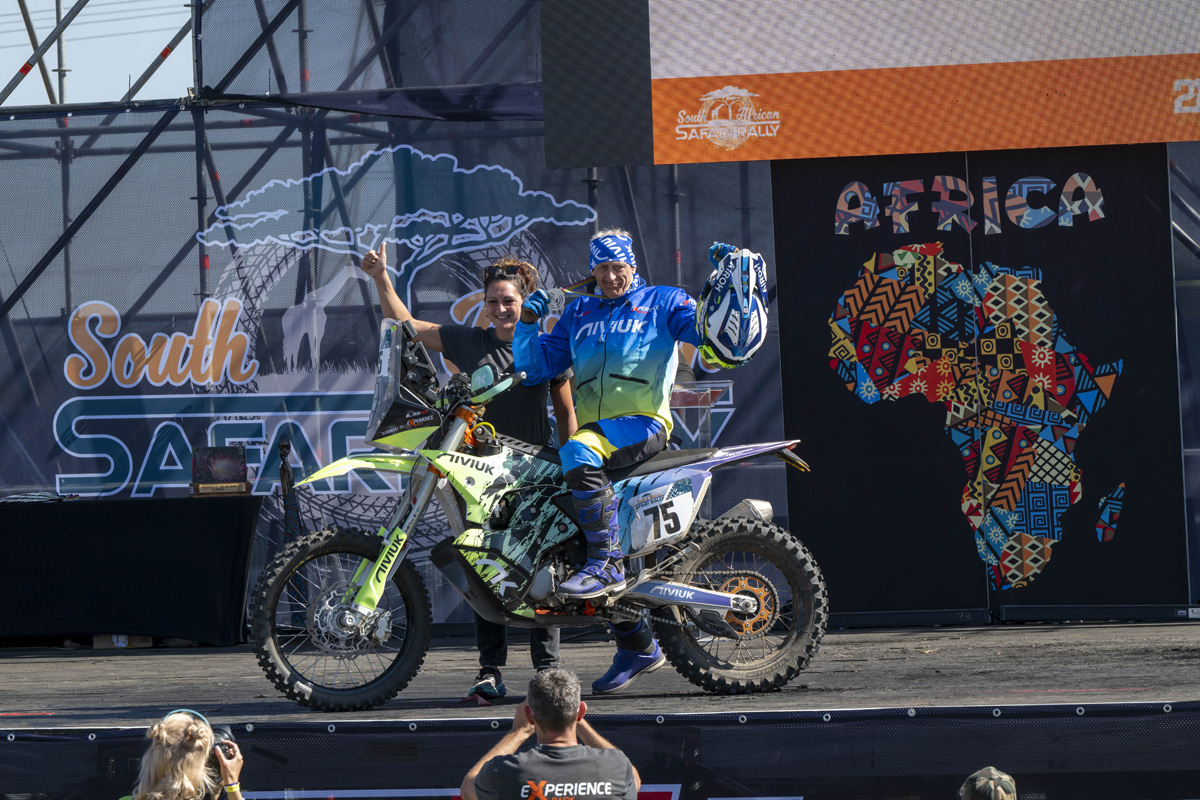
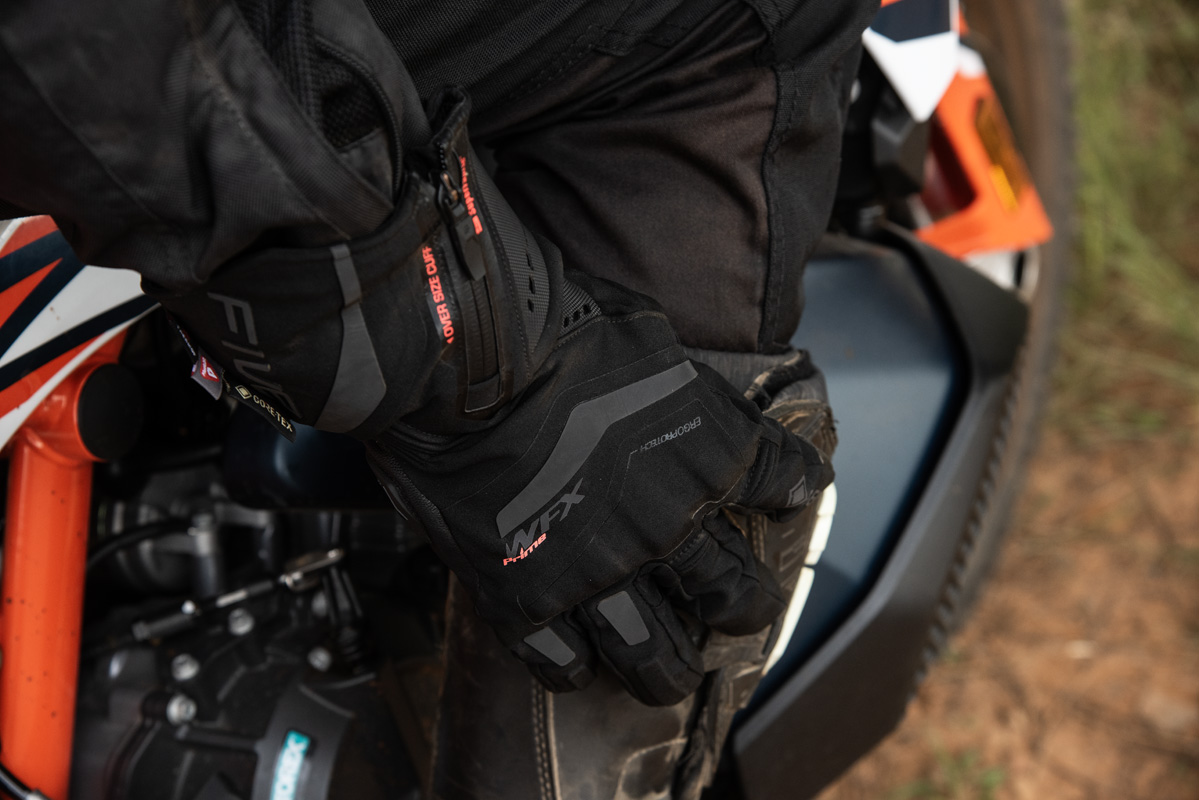
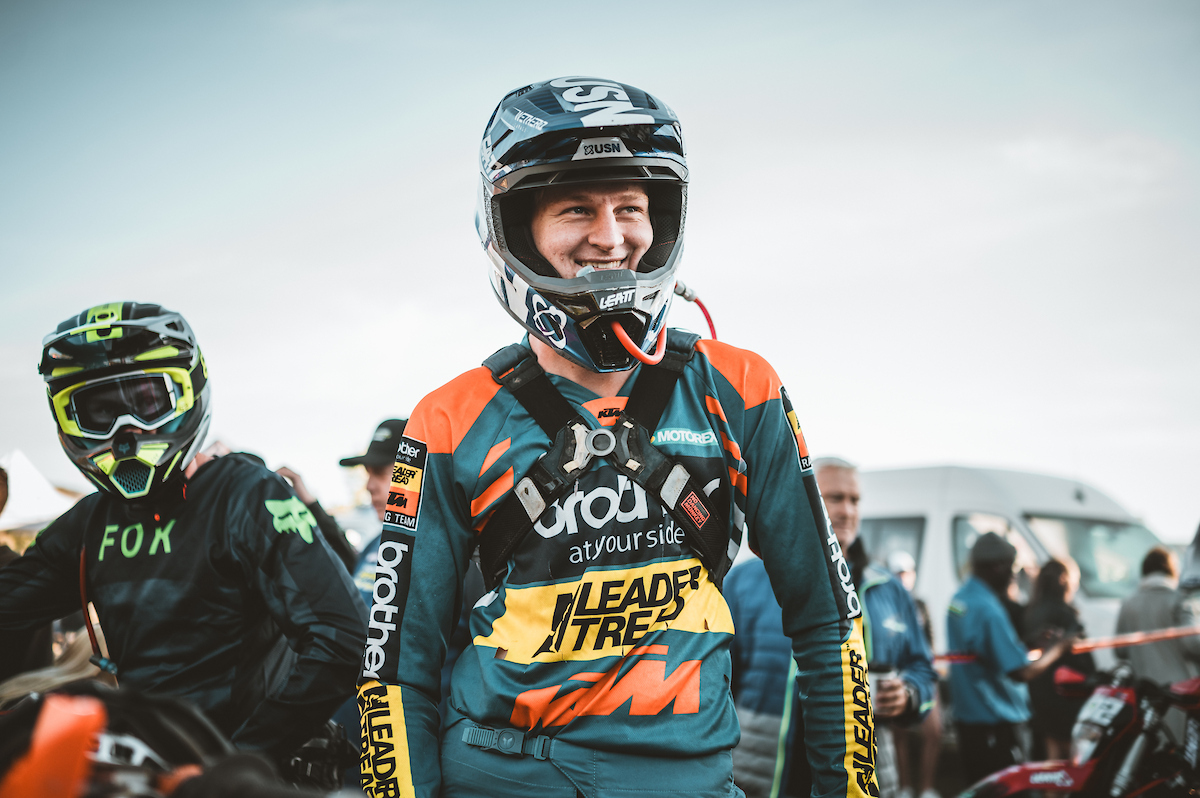
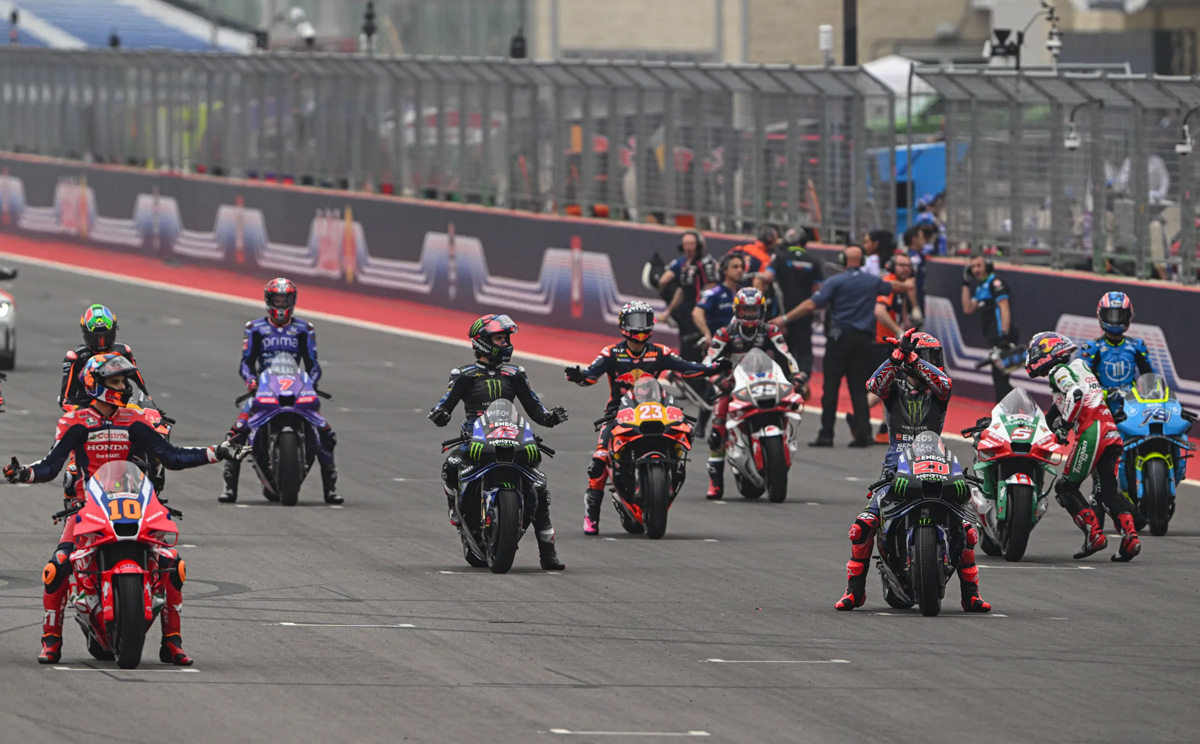
Photo credit: Duda Bairros

The Dust, the Cars, and the Trucks

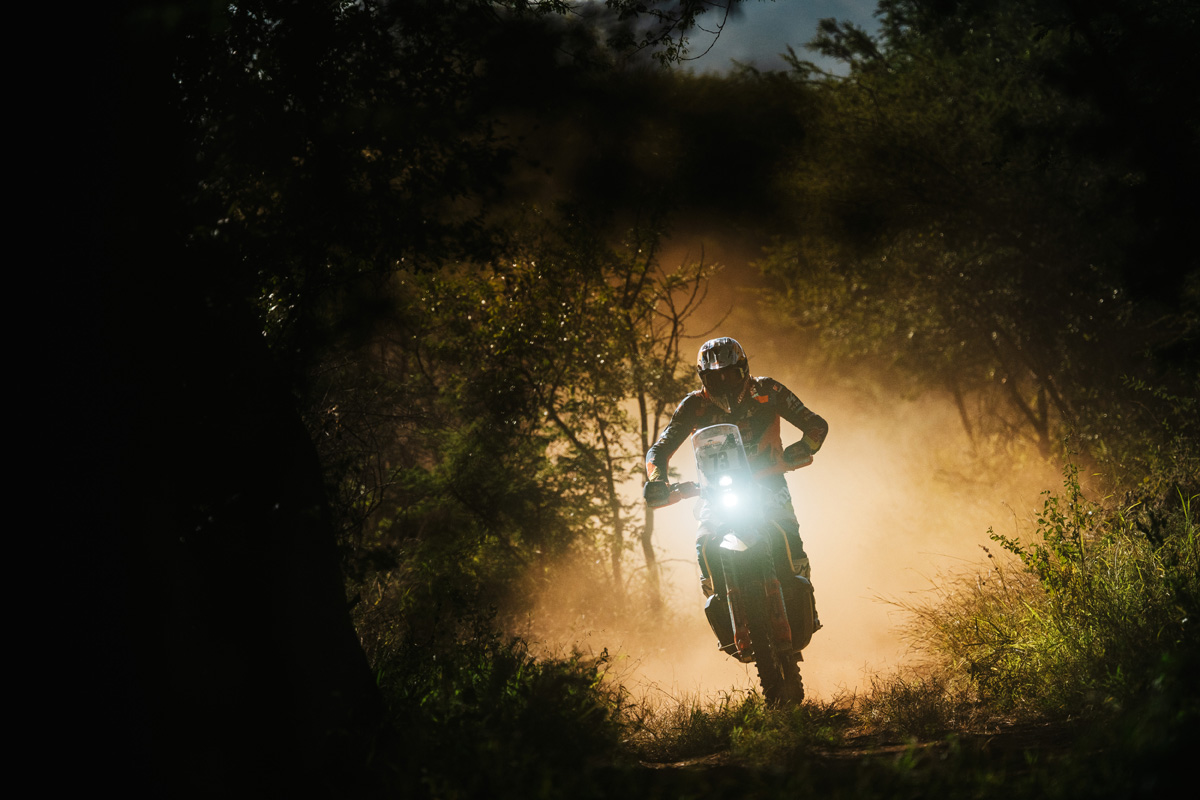
Falling to the back means riding in perpetual dust clouds that reduce visibility to nearly zero. The trucks and cars that started later in the day catch up quickly, and when they do, the real danger begins. Unlike a motorcycle, a car or truck driver has limited visibility and often relies on their Sentinel warning system to alert slower riders. But in the chaos of the Dakar, that beep might come too late. Being passed by a truck in the dust is a harrowing experience—several tons of metal moving at high speed, unable to see you, leaving you choking in a cloud so thick it blots out the sun. Every moment in this environment is a gamble, and the more time you spend here, the higher the risk of a catastrophic crash.

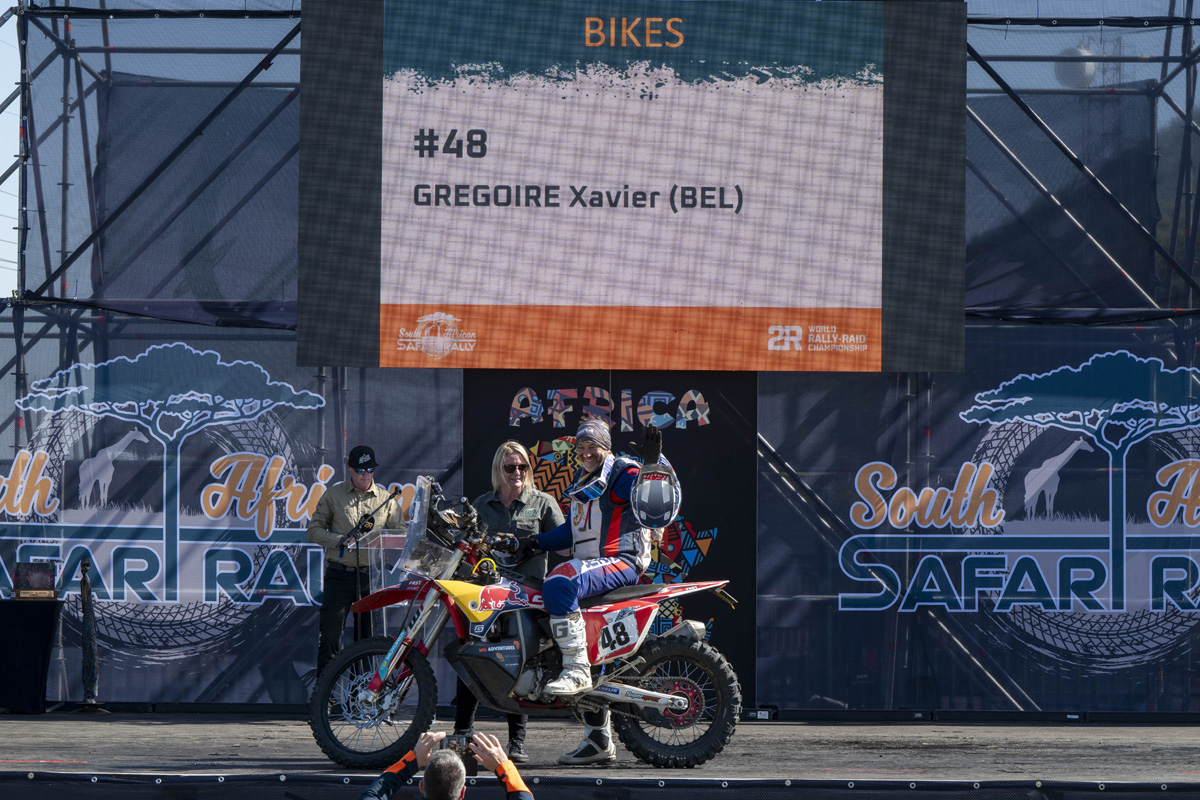
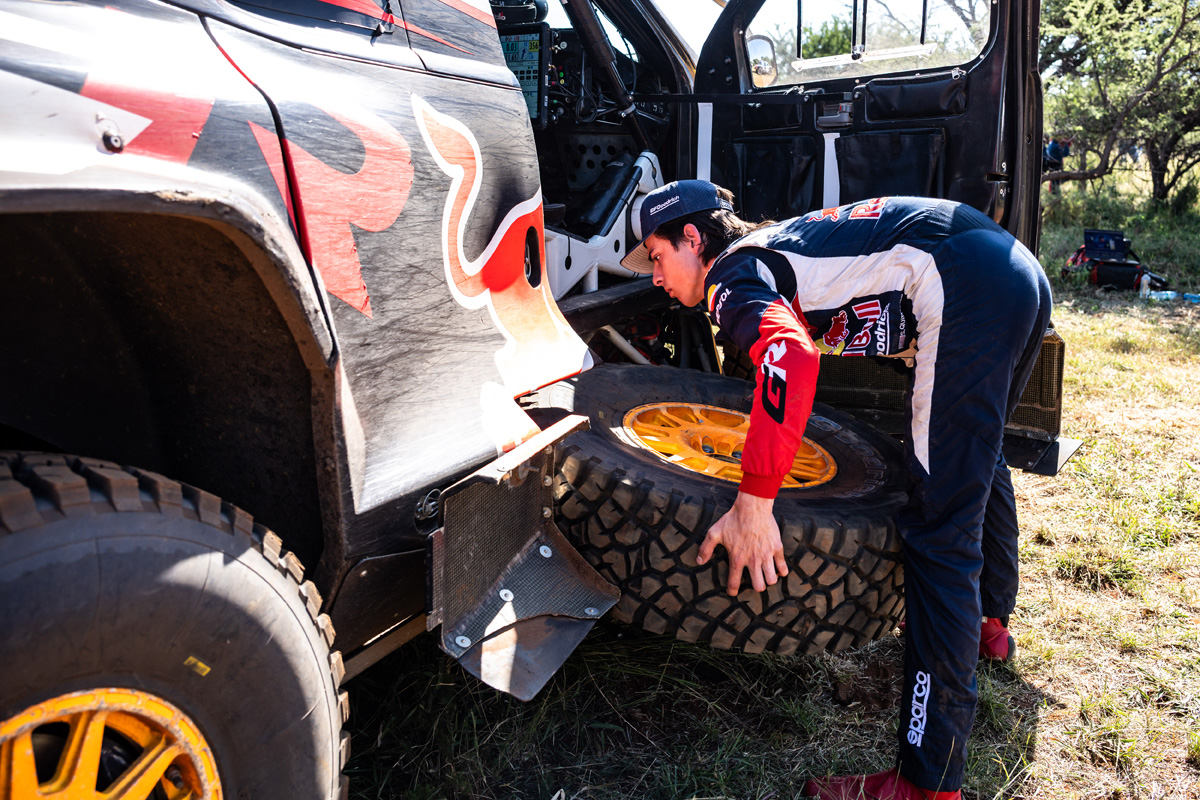
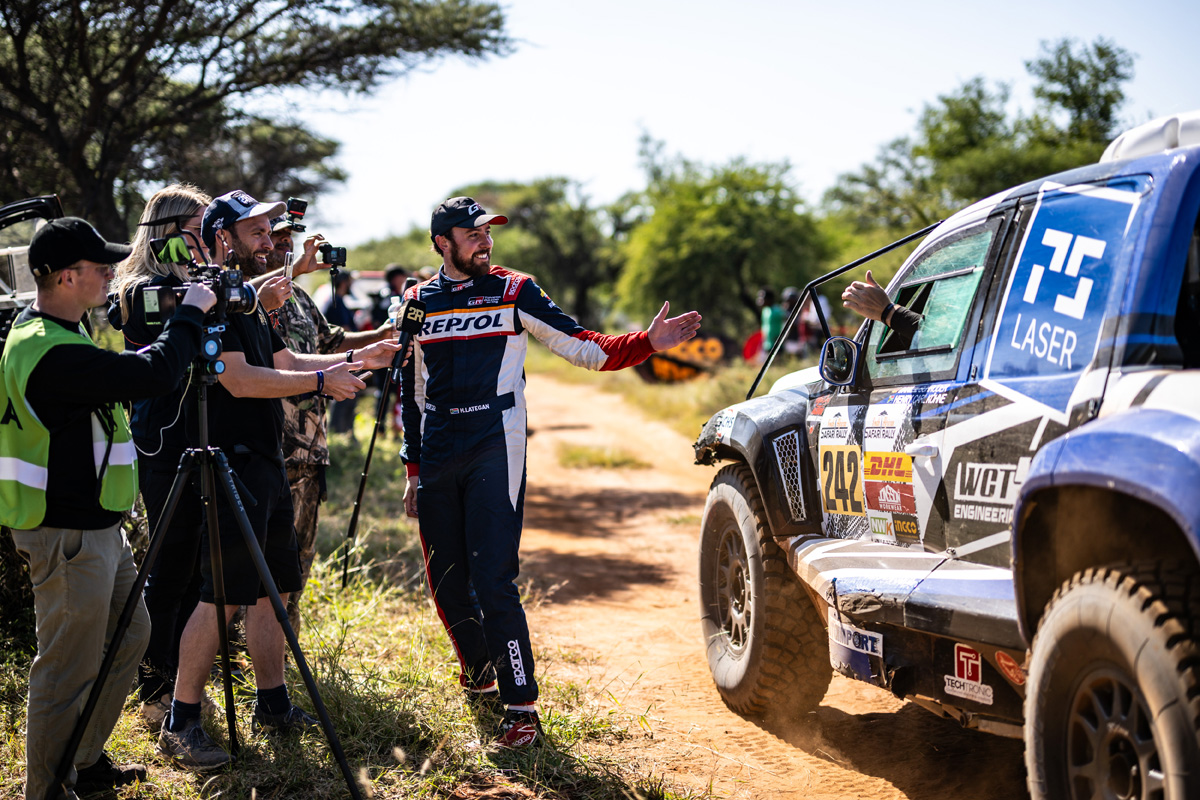
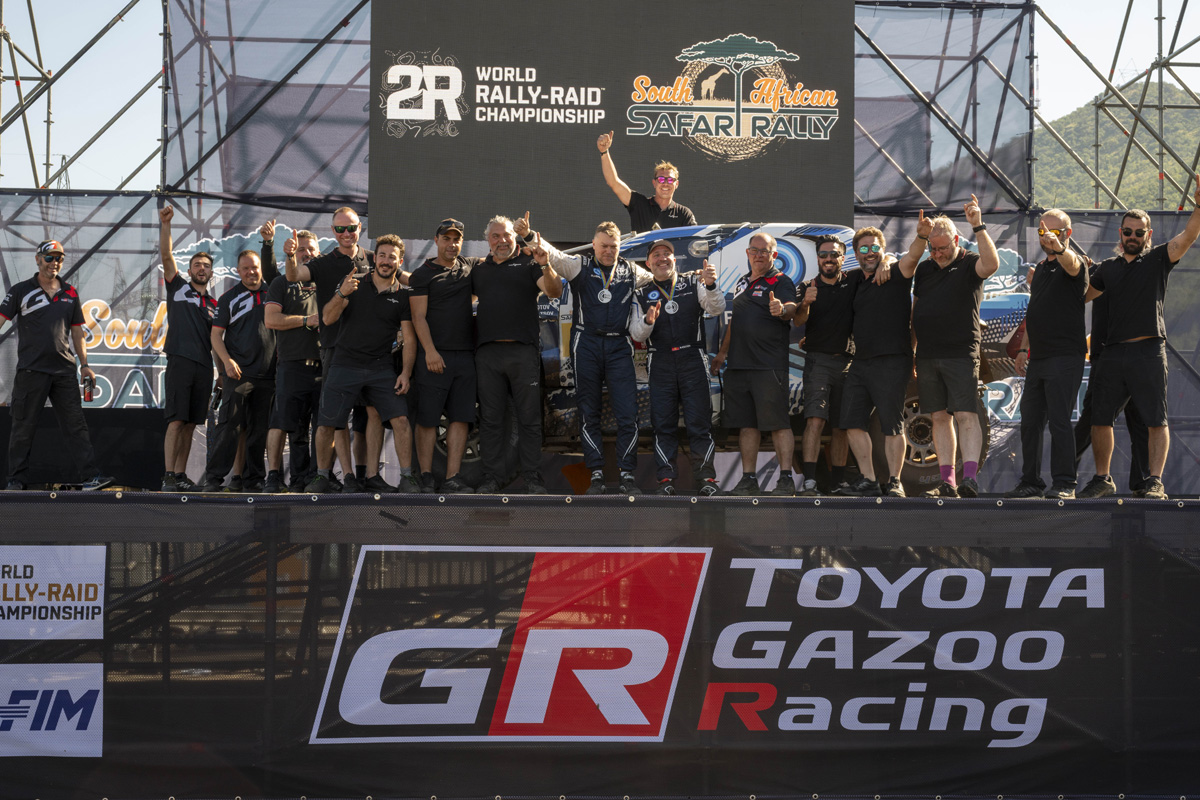
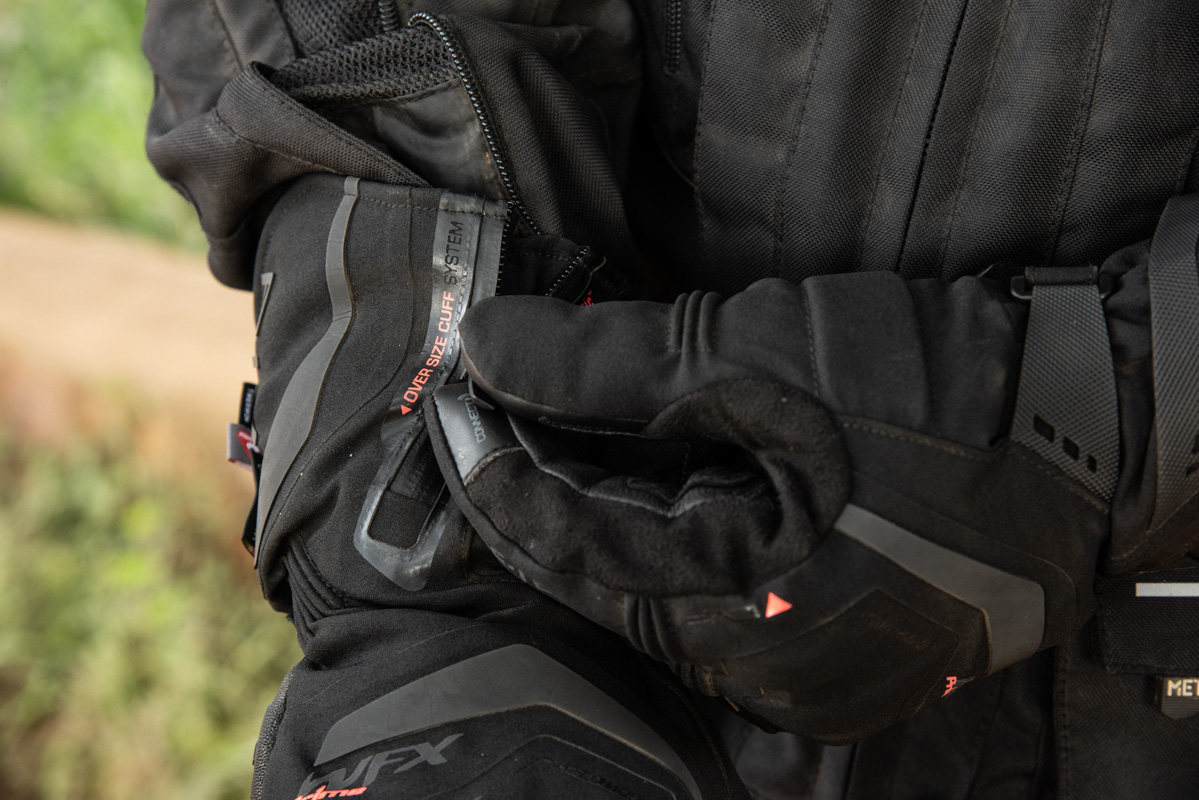
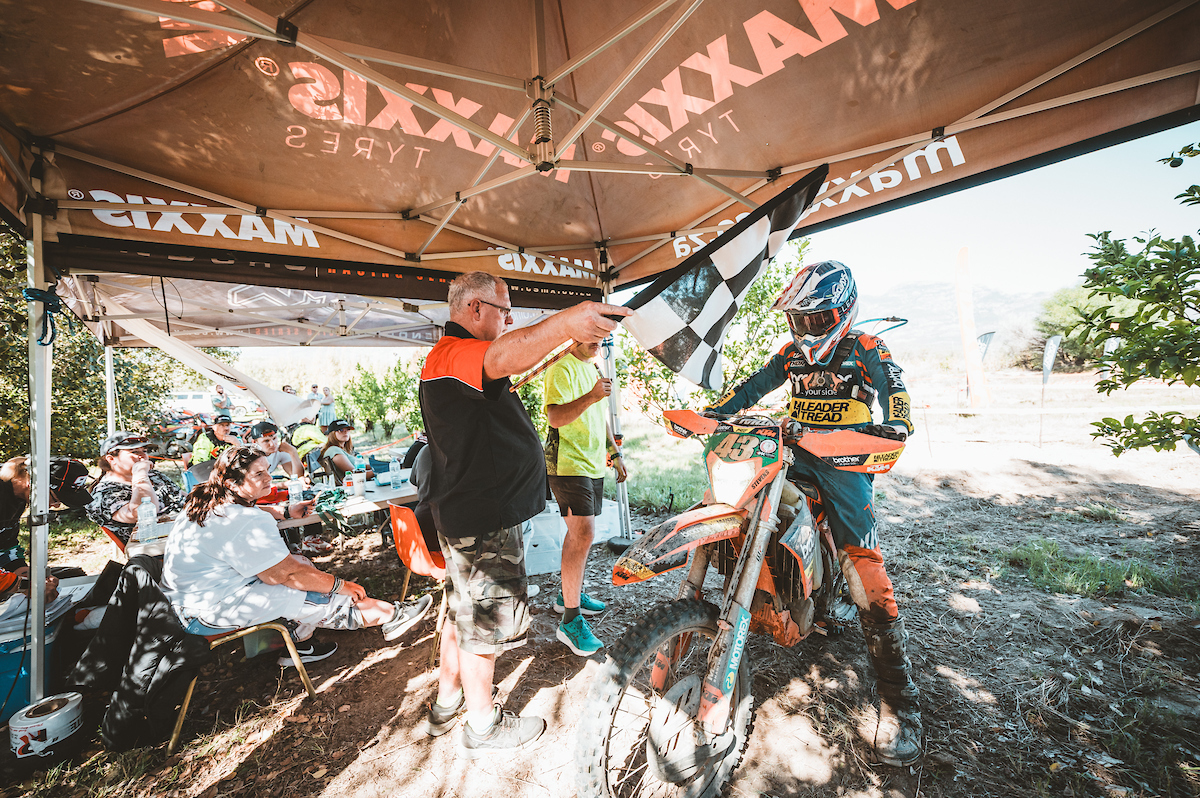
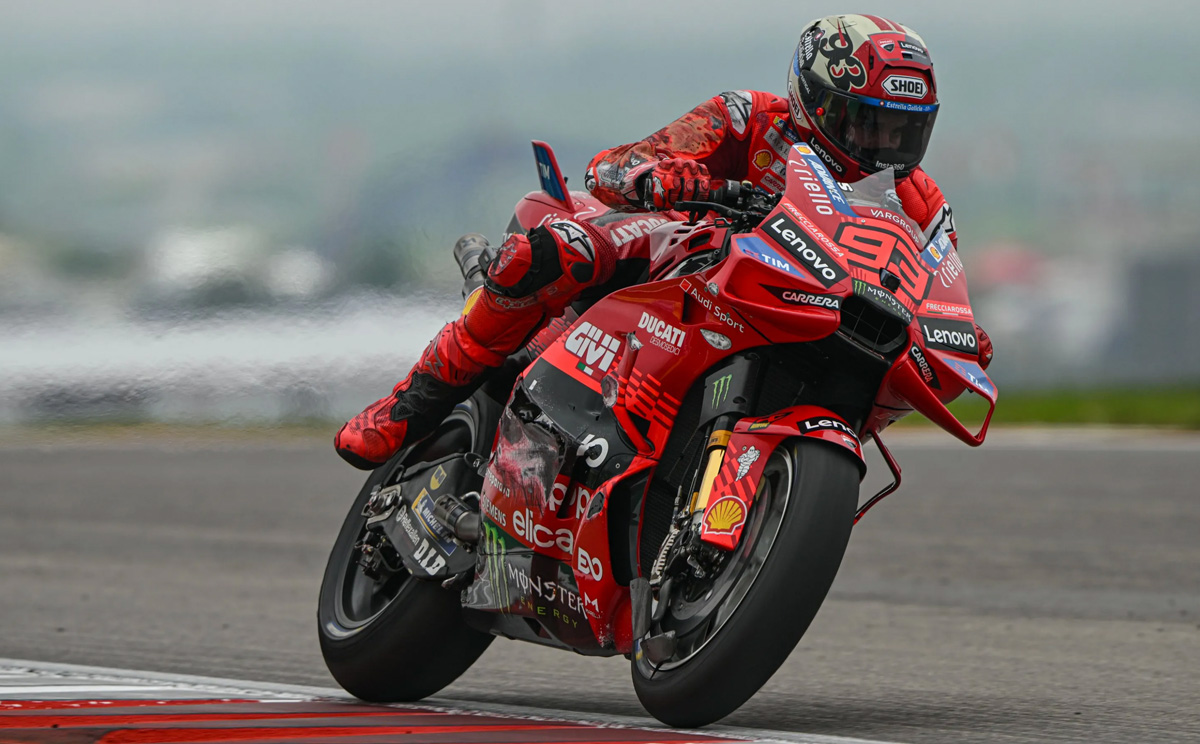
Photo credit: Marcelo Machado de Melo

The Time Spiral: No Way Forward

When you start late, you lose daylight. And in the Dakar, daylight is everything. The early starters have the advantage of racing in full visibility, with clearer trails and less fatigue. The further back you are, the more likely it is that you’ll be racing against the clock, literally, as the sun sets and darkness sets in. Riding at night in the Dakar is a nightmare—navigation becomes infinitely harder, shadows distort the terrain, and exhaustion sets in faster. The later you finish, the less rest you get before the next brutal stage.

The numbers don’t lie: The more time you spend on the bike each day, the worse your chances of finishing. Riders in the back spend significantly longer in the saddle than the leaders, increasing their physical and mental fatigue.

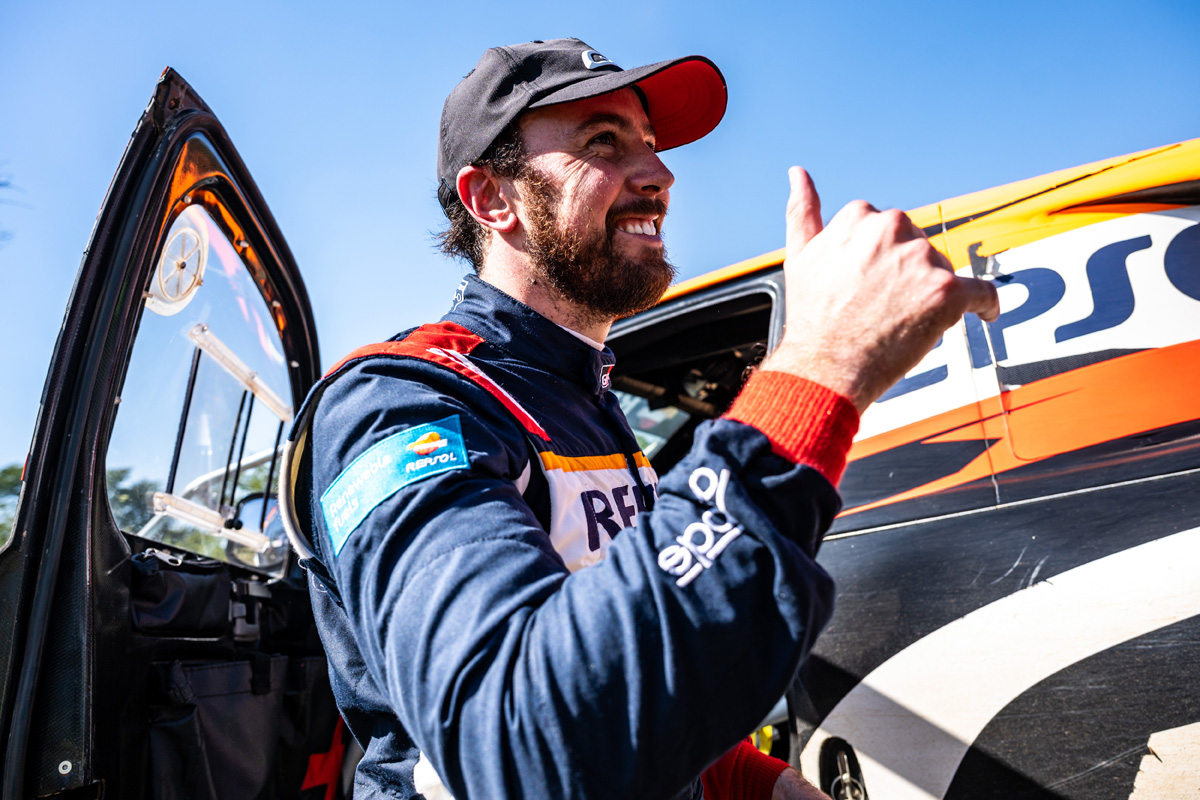
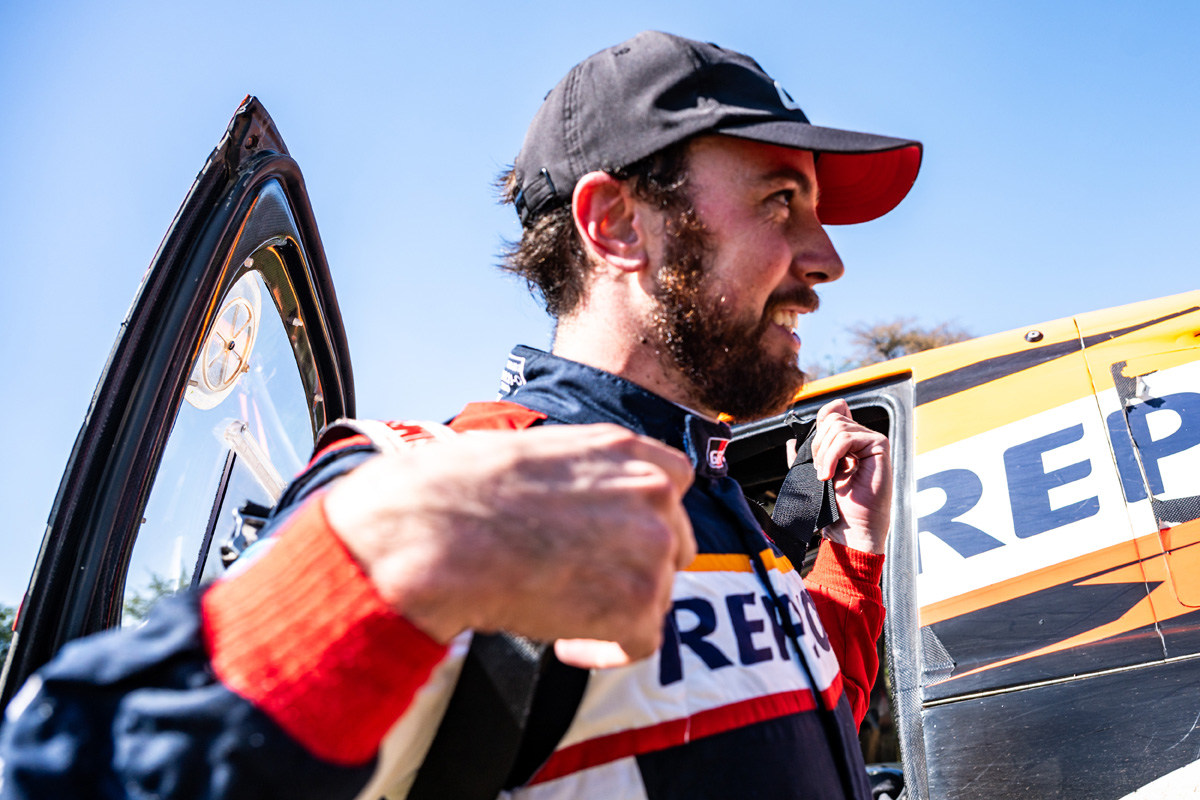
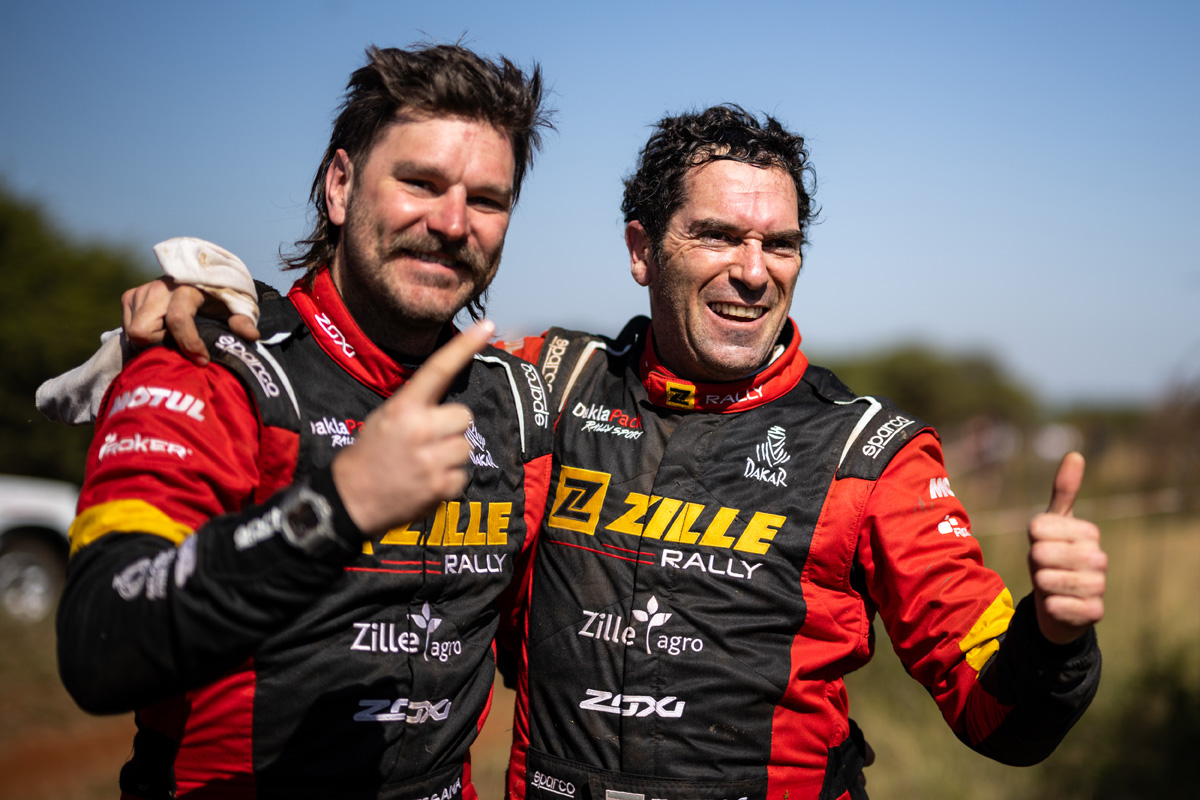
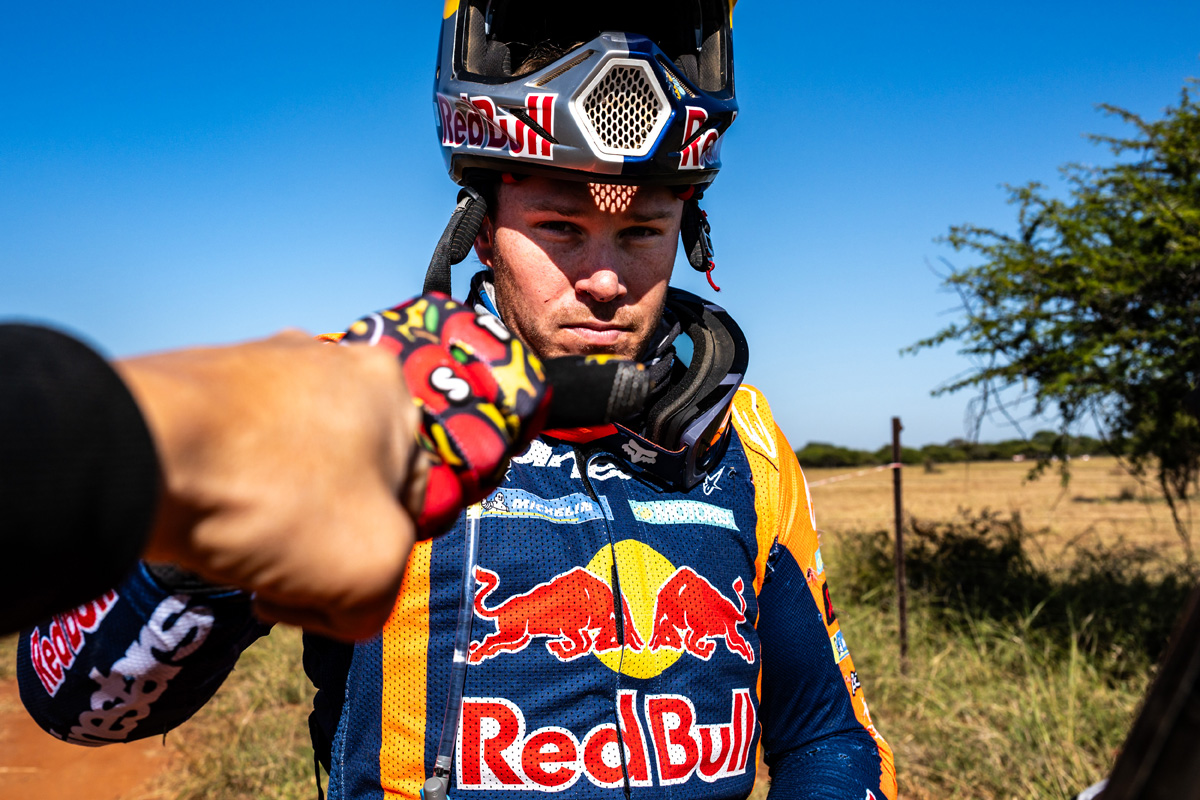
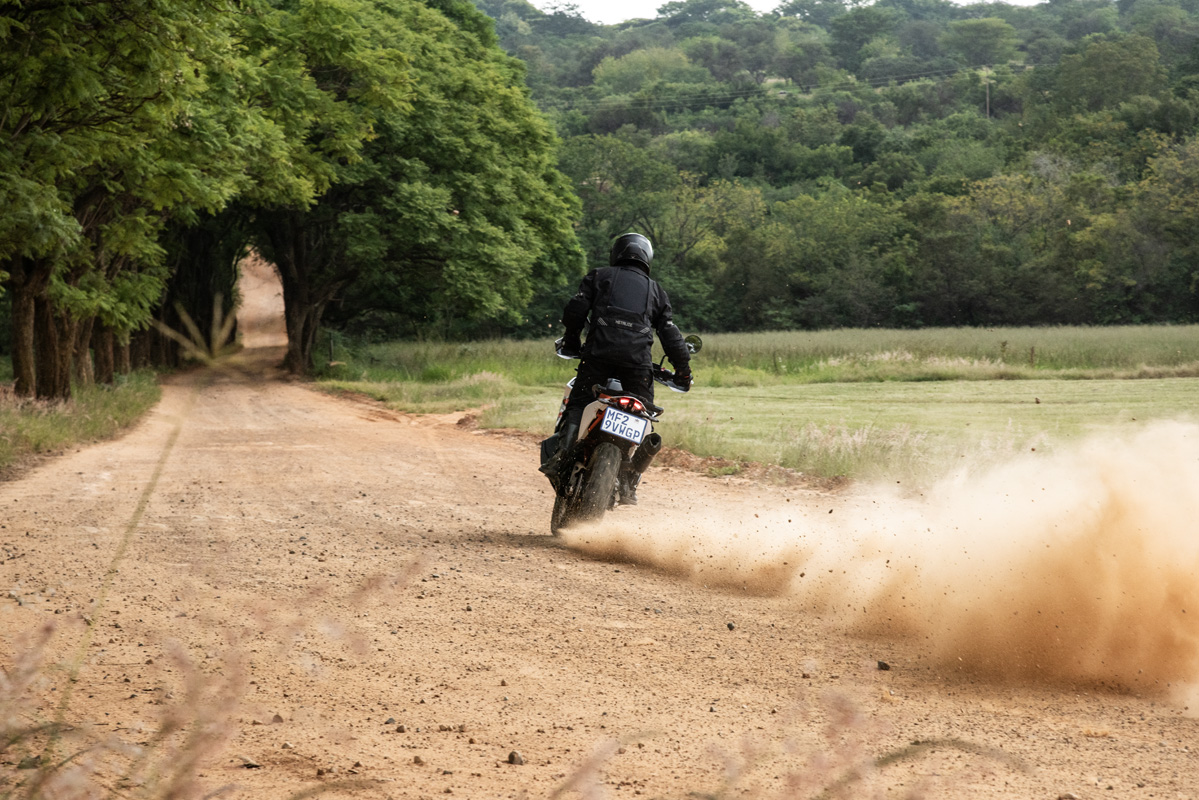
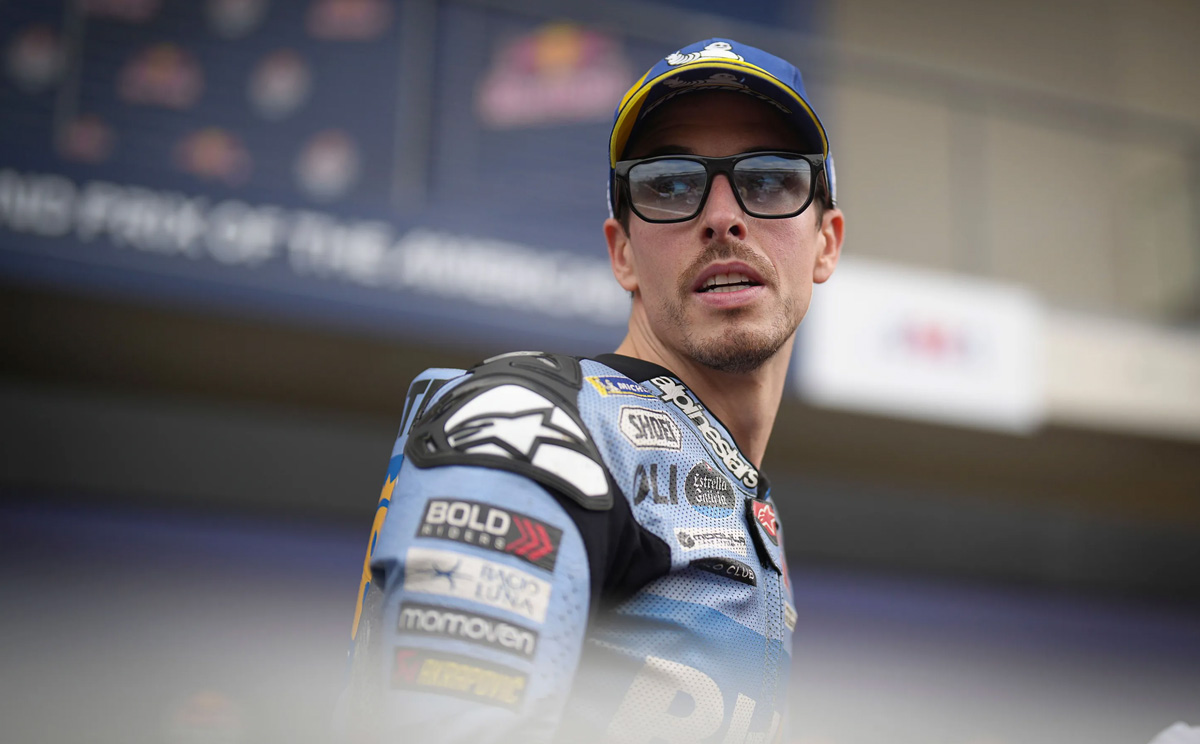
Image source: Willem Avenant

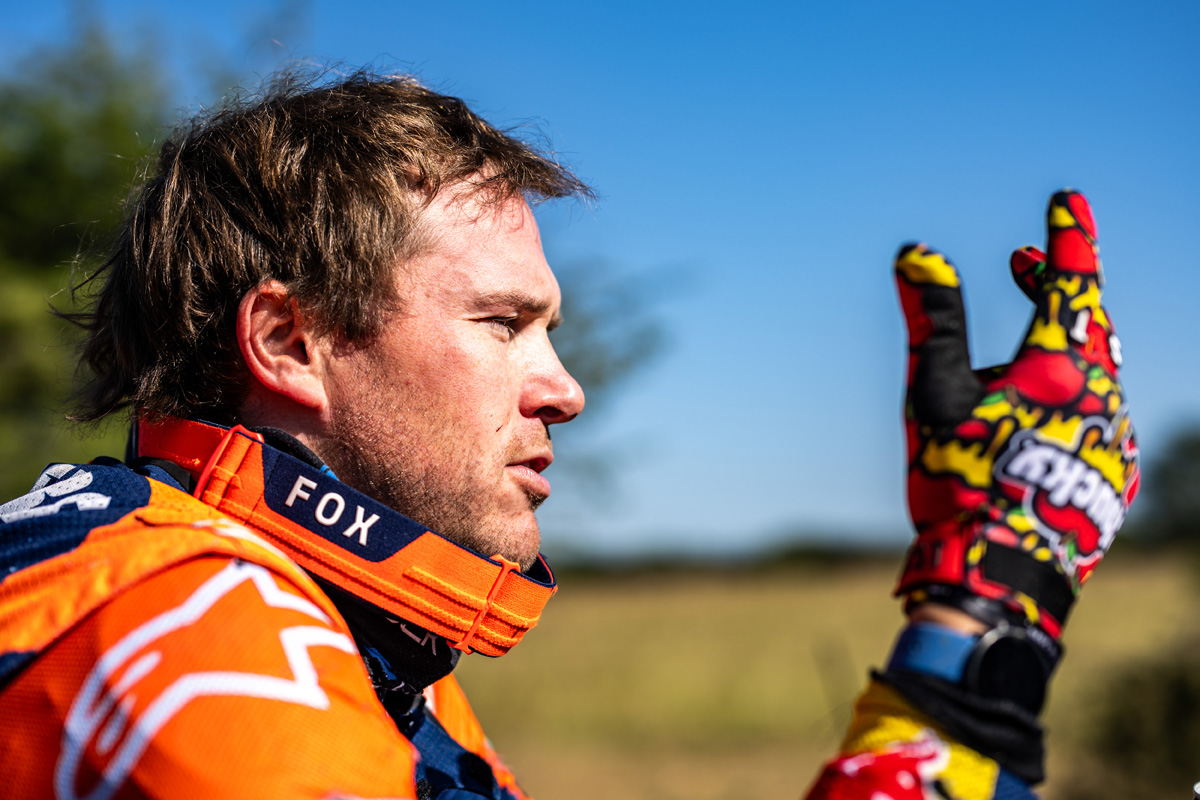
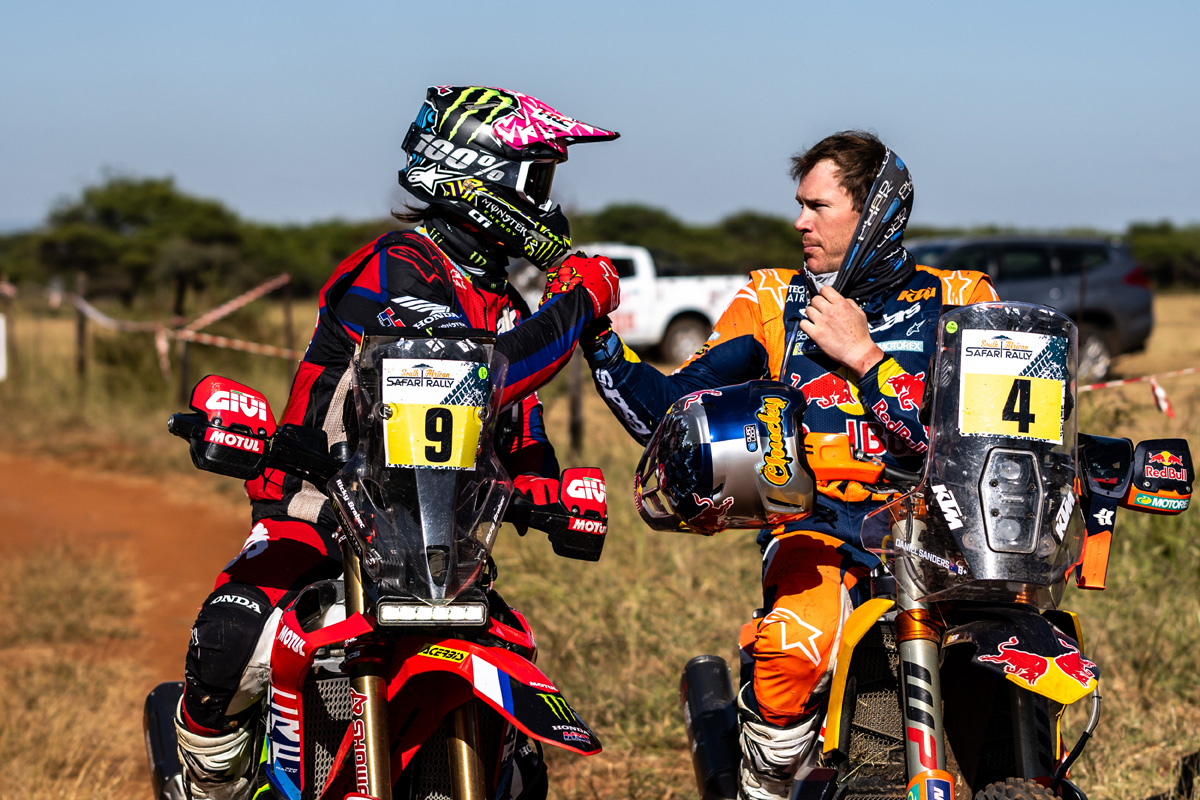
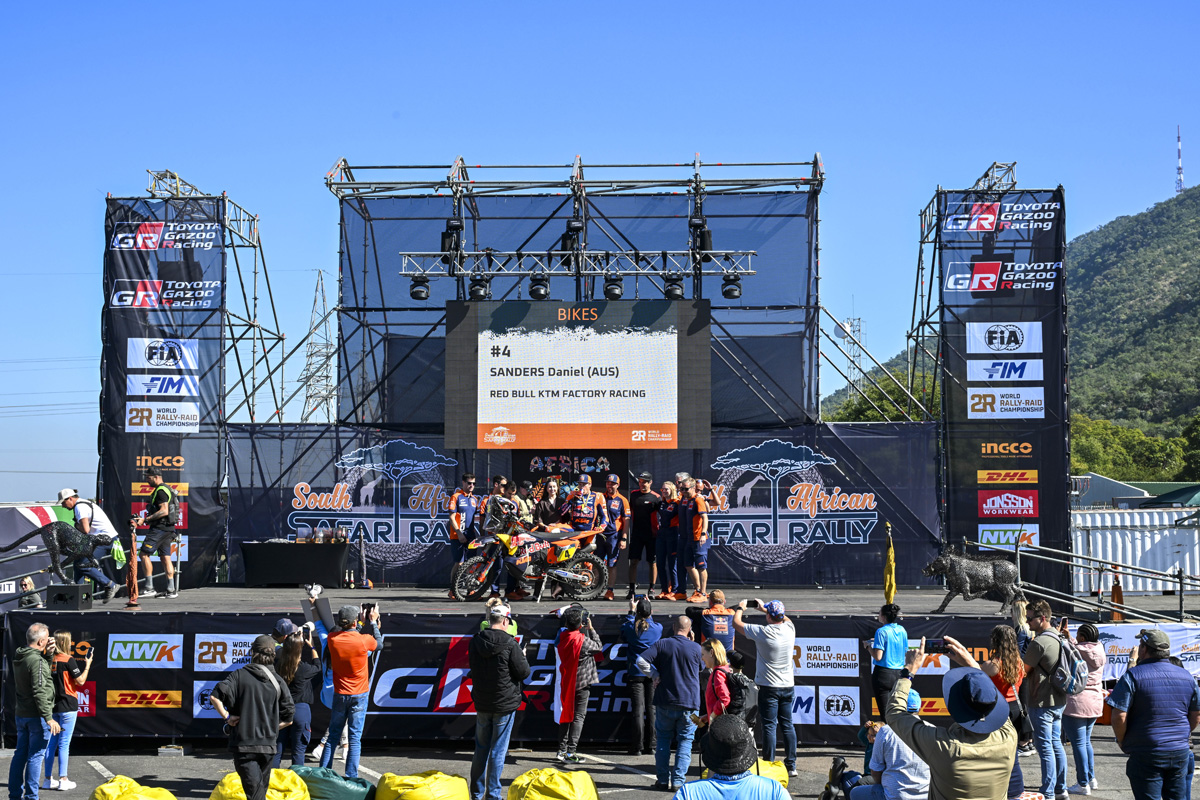
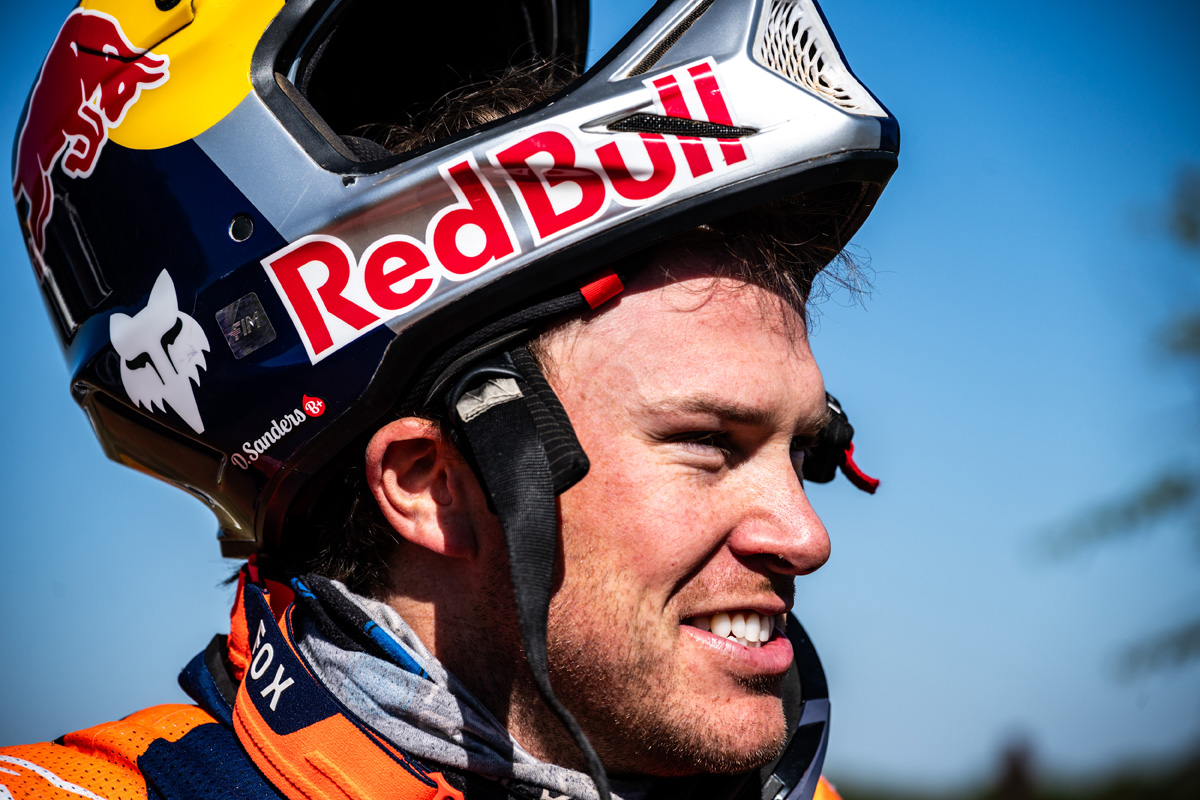
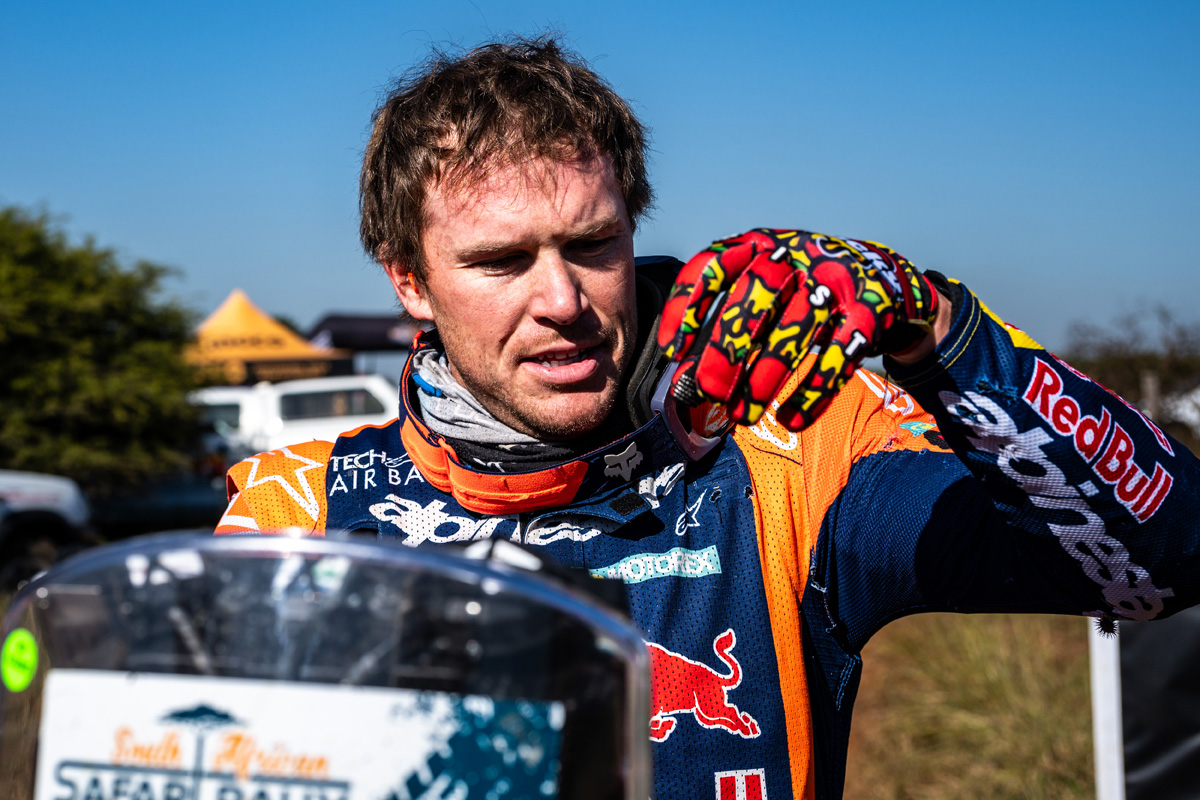
A prime example—my total riding time for Dakar was 116 hours on the bike (Specials only, if you include liaisons it is 160 hours), compared to 53 hours for the winner. That’s more than double the time in brutal conditions. My average? 9 hours per day of non-stop riding. Compare that to 4 hours per day for Daniel Sanders. The longer you ride, the more drained you become, making mistakes more likely. Fatigue leads to crashes, crashes lead to injury, and injury leads to withdrawal.

Photo credit: Magnus Torquato

The Emotional Toll: Losing Friends Every Day

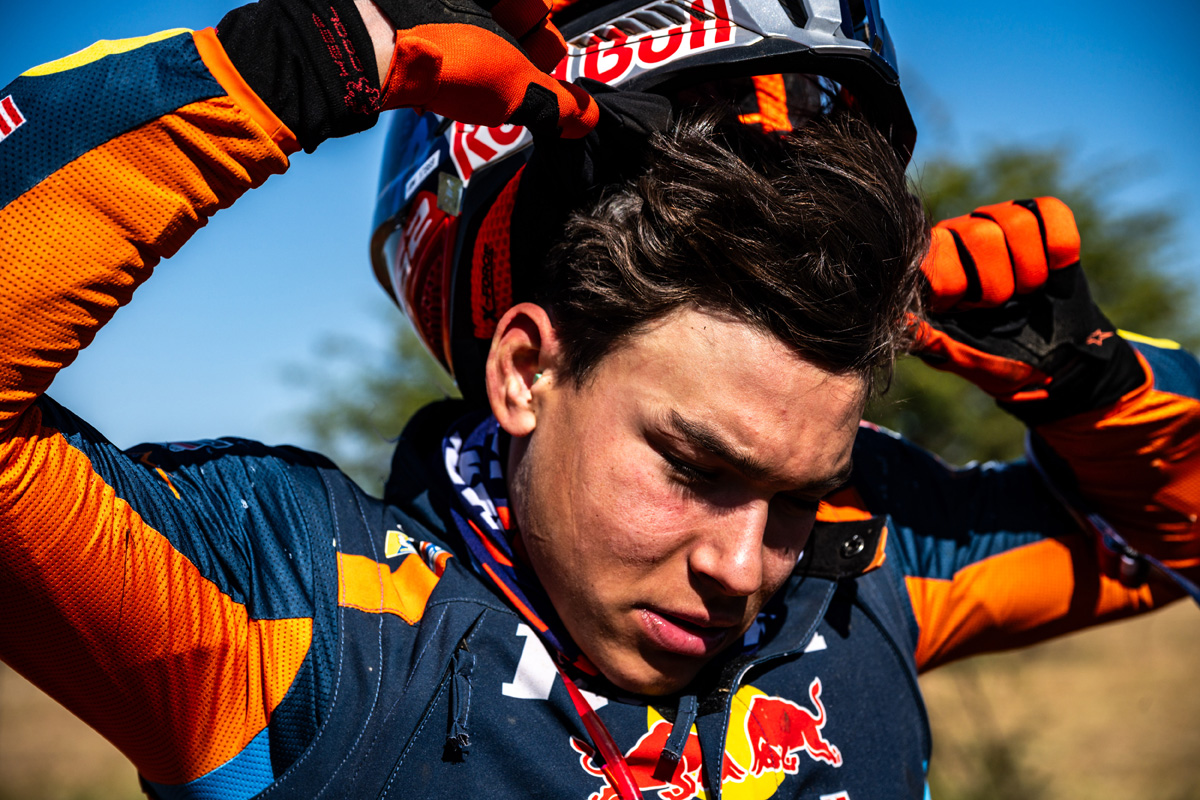
Historically, depending on the year, weather, difficulty, and terrain, only 50-60% of riders finish the Dakar each year. For me, emotionally, the hardest part was “losing friends” every day. Just as I made friends with a rider in the back and got to know him, the next day or the day after, he was gone. The mental anguish, stress, and fatigue of losing my riding partner every second day was incredibly difficult. It was inevitable—given the statistics, every time a riding partner did not show up to the start line, I knew I was one position closer to being in the same boat. Consistently being in the back and staying in the race, given the physical and mental challenges each day, is one of the hardest things to do. The loneliness of seeing those you bond with disappear from the rally makes the fight for survival even harder.

Photo credit: Helena Clancy

Defying the Odds

If you find yourself in the back and somehow manage to stay in the rally, you are fighting against every statistic. The withdrawal list tells a clear story: once a rider drops back, the likelihood of finishing drops with each passing stage. Every day spent at the back of the pack is a day spent defying the numbers, pushing through exhaustion, dodging trucks, and fighting through terrain that has become nearly unrideable. The Dakar is already the toughest race on earth, but for those stuck in the back, it transforms into a relentless war of attrition.

Image source: Willem Avenant

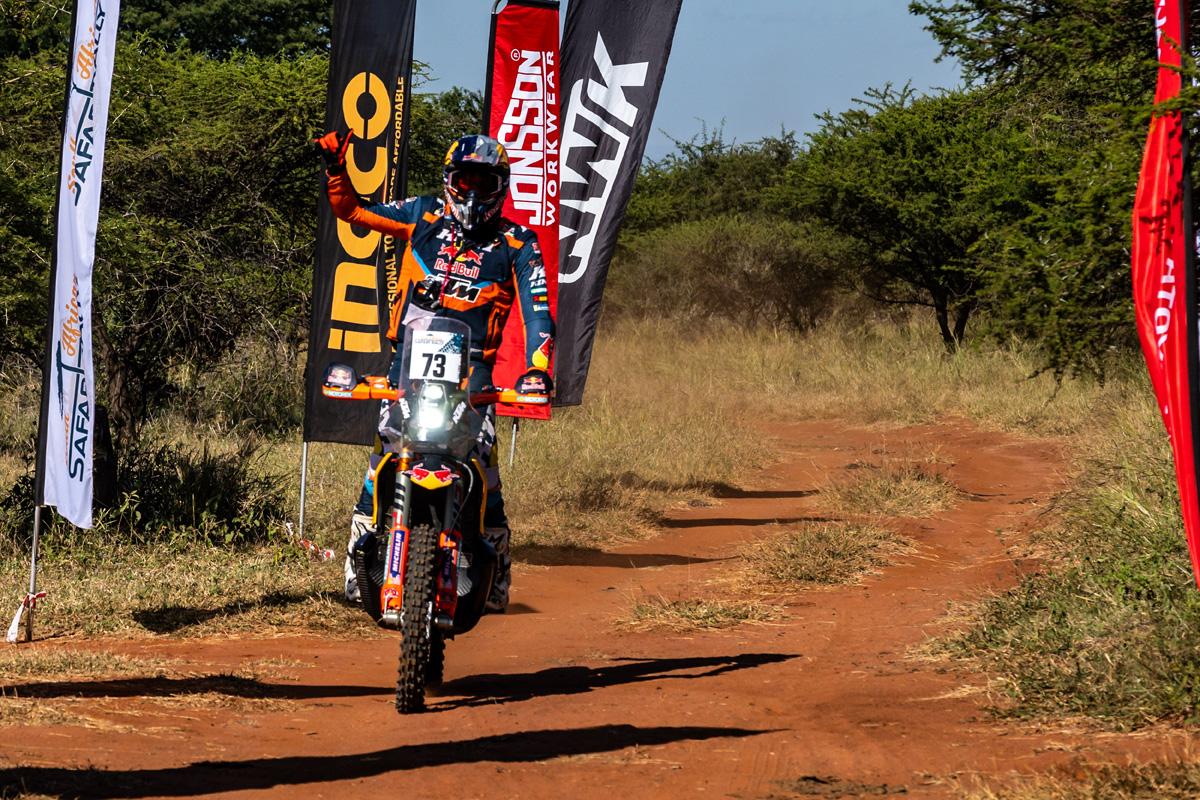
To survive here is to embrace suffering on a level most riders will never understand. It’s not just about speed; it’s about pure, unfiltered willpower. Because at the back of the Dakar, you’re not racing to win—you’re racing just to see another sunrise.

Photo credit: Matteo Gebbia

After sharing his preparation and insights through the Decoding Dakar series, Willem Avenant successfully completed the Dakar Rally. Drawing from the invaluable experience gained there—alongside years of rally racing across the globe, race director roles, training camps, and expert roadbook writing—his passion is to grow the rally community and help others succeed. Whether you’re looking to tackle your first rally, compete in Dakar, master navigation, or need a seasoned race director or team manager, Willem is here to help.

Reach out at [email protected] or connect via social media: @willemavenantracing.

Husqvarna Racing’s Star-Studded Lineup for the 2025 Season

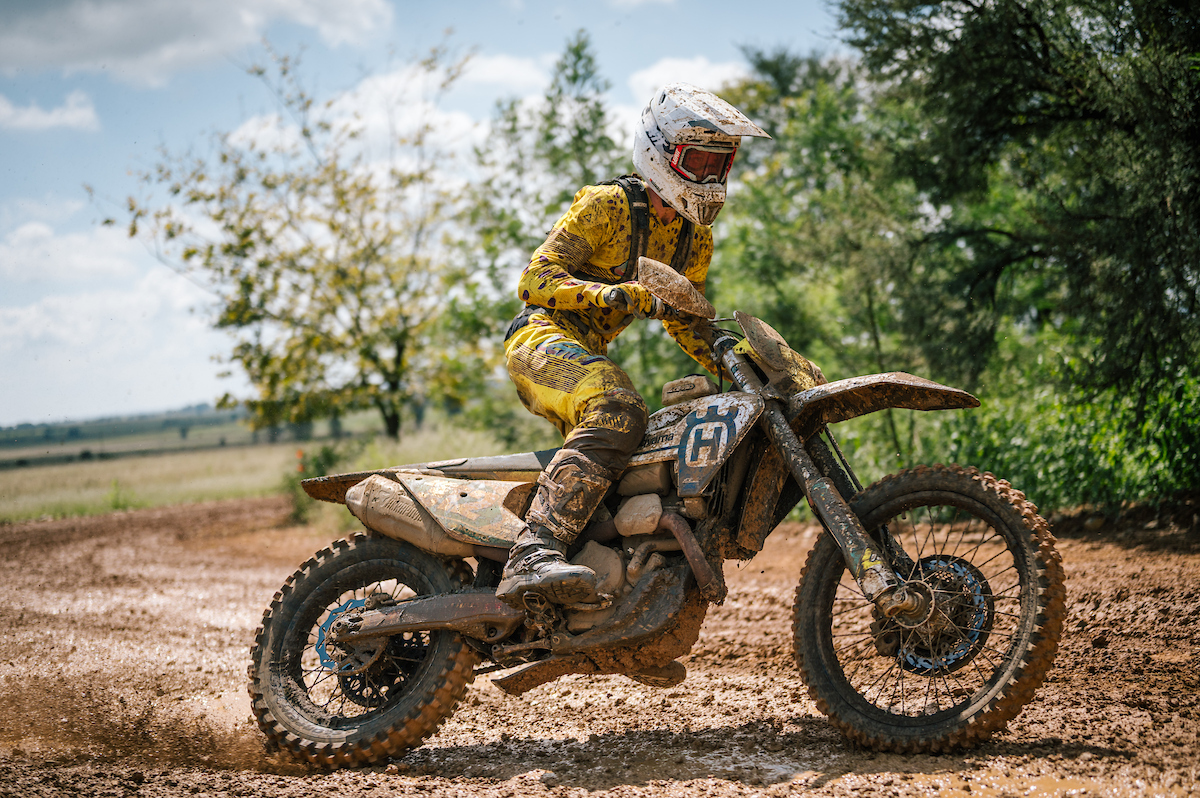
Image source: Husqvarna

Husqvarna Racing is set to charge into the 2025 racing season with a dominant line-up of championship-winning riders. Every rider on the roster is a proven titleholder, ready to defend their crowns and chase even greater success.

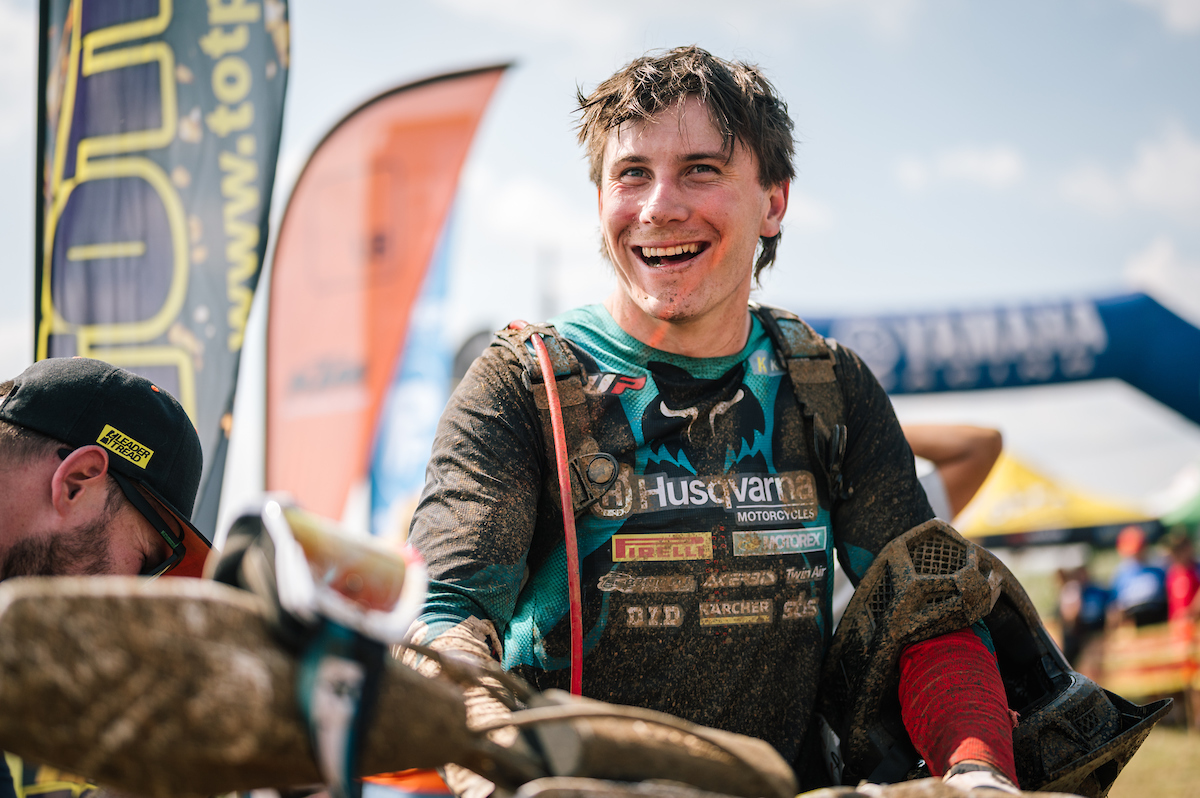
Leading the charge is Davin Cocker (#1), who dominated the 2024 season by clinching both the Overall and Open Cross Country championships. A fierce competitor known for his relentless drive and aggressive racing style, Cocker will once again take on the Open class aboard his Husqvarna FX 350. With a target on his back as the reigning champion, all eyes will be on him as he aims to defend his title.

Image source: Husqvarna

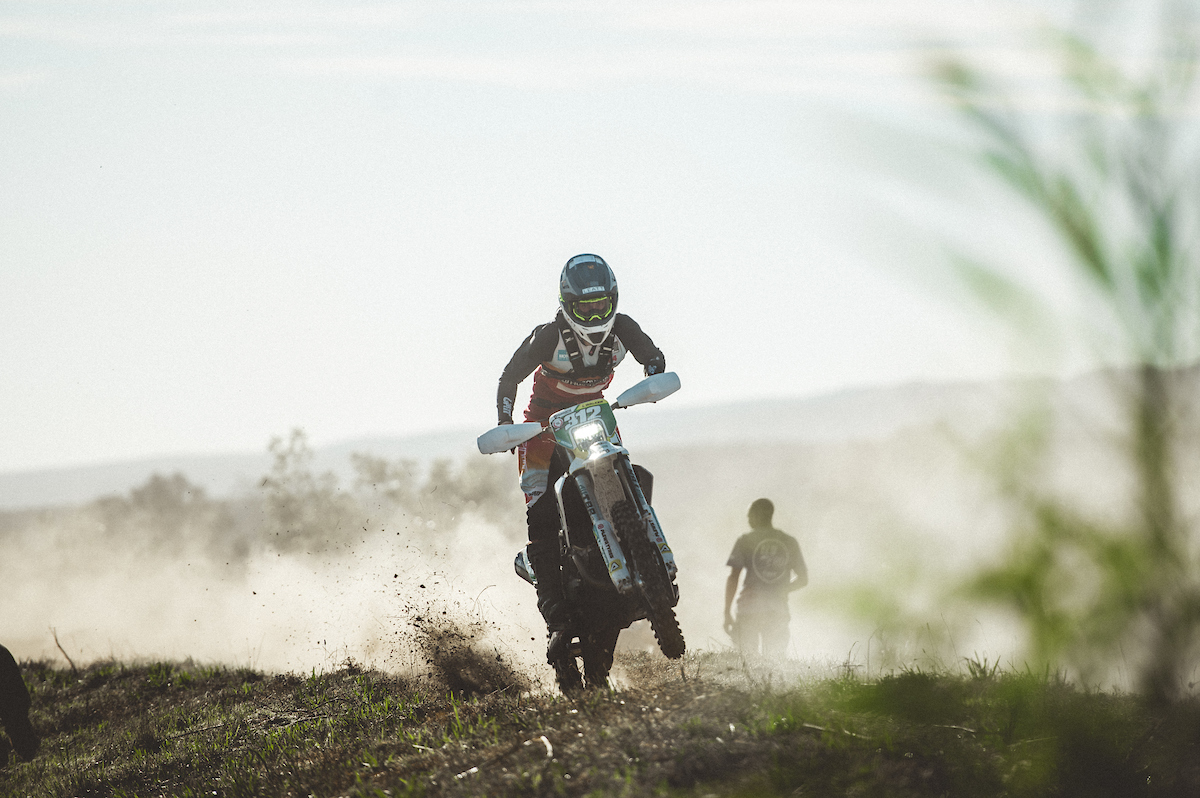
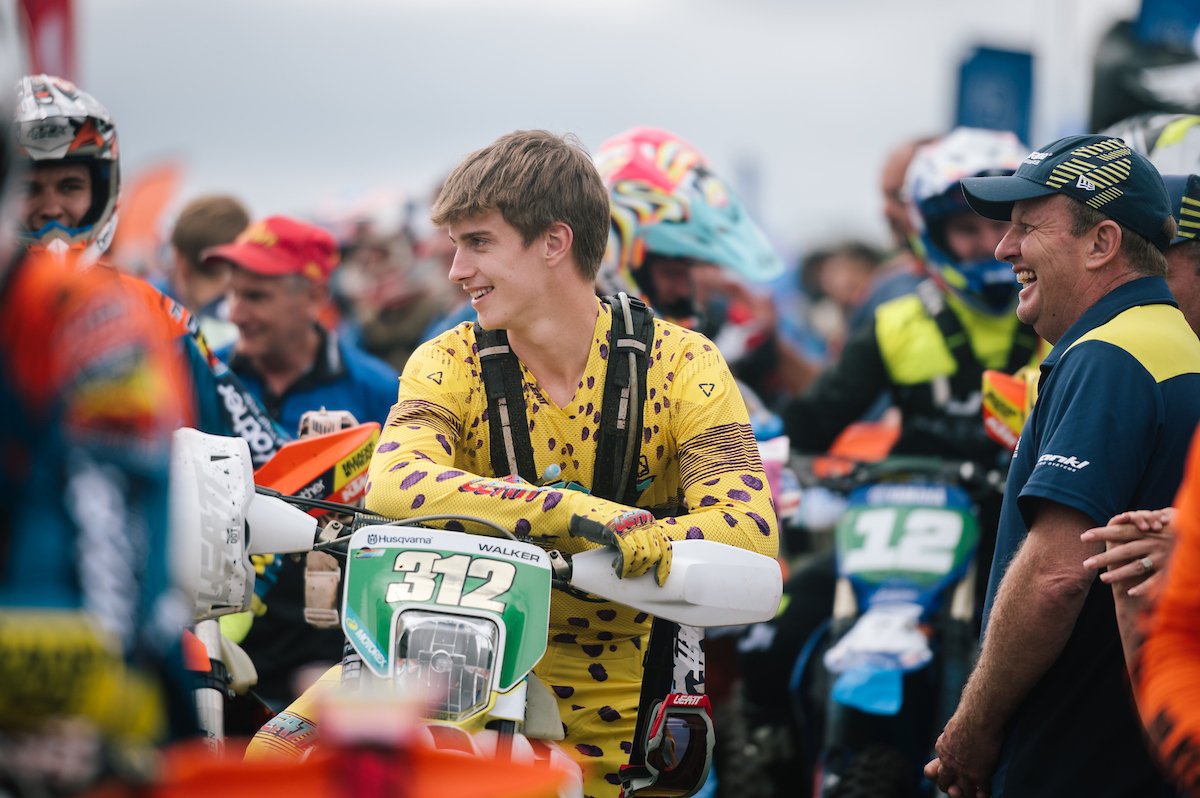
Returning for his second year in the OR3 class is Luke Walker (#312), who had a standout 2024 season, securing the OR3 championship while also finishing third overall in the series. Armed with his Husqvarna FE 250, Walker is determined to hold onto his title and build on last year’s success. Not one to be confined to a single discipline, Walker also made waves in the Enduro scene, showing remarkable consistency by finishing second in the final three rounds of the season in the E1 class. This year, he will continue to push the limits in Enduro aboard his Husqvarna FE 250.

Image source: Husqvarna

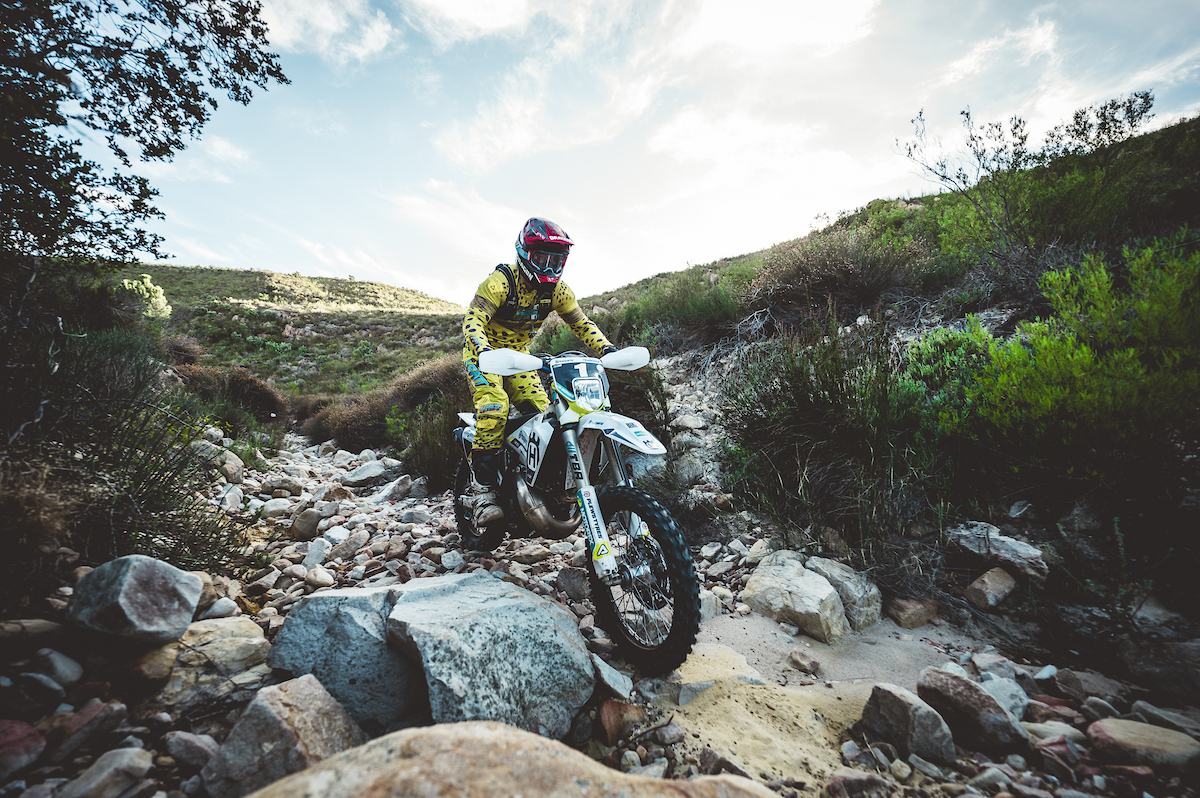
Completing the trio is Travis Teasdale (#1), an undisputed force in the Enduro world. Teasdale had a phenomenal 2024 season, securing both the Overall and E2 Traditional Enduro titles, while also dominating the National Hard Enduro Gold Class. His expert technical skill, coupled with unmatched endurance, makes him a formidable opponent in every race he enters. For 2025, Teasdale will be back on his Husqvarna TE 300, determined to maintain his hold on the top spot.

Image source: Husqvarna

The action kicks off this coming weekend in Bronkhorstspruit, where Cocker and Walker will line up to defend their Cross Country titles in the season opener. With a rider lineup stacked with talent and commitment to excellence, Husqvarna Racing is primed for another season of high-octane success.

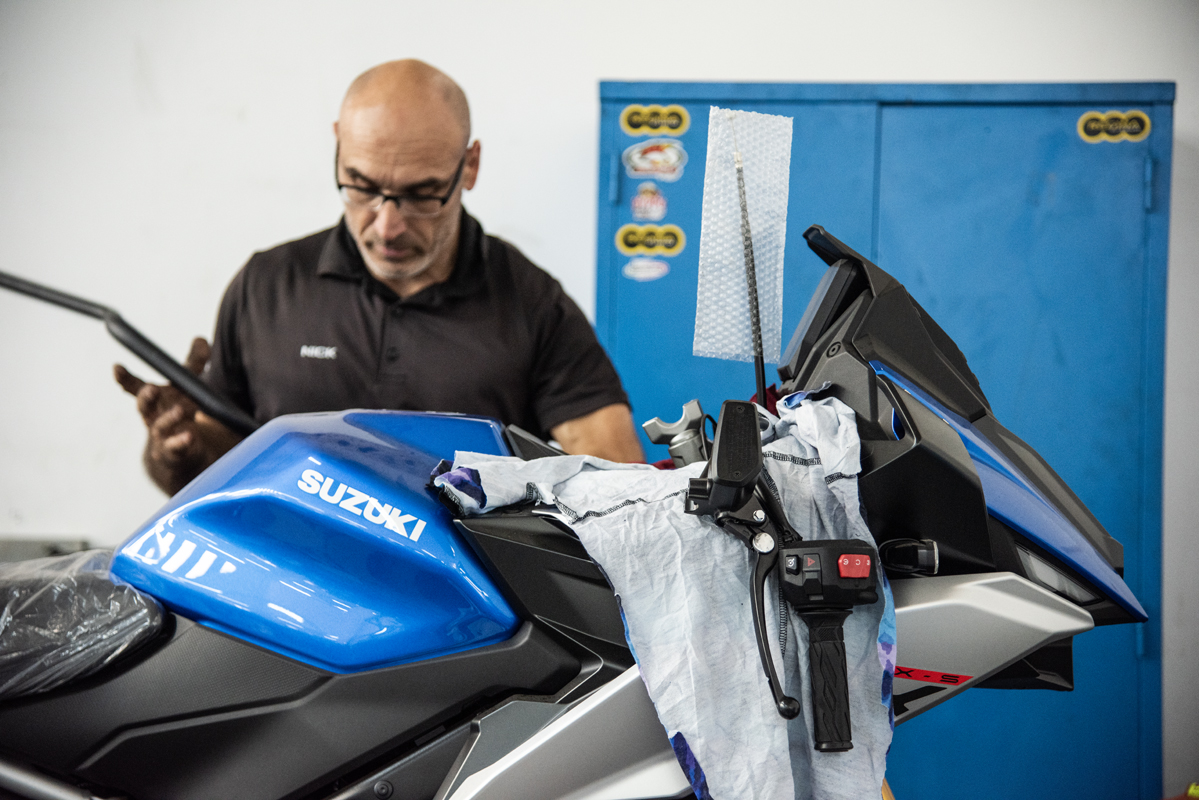
Suzuki GSX-S1000GX – Not The N4

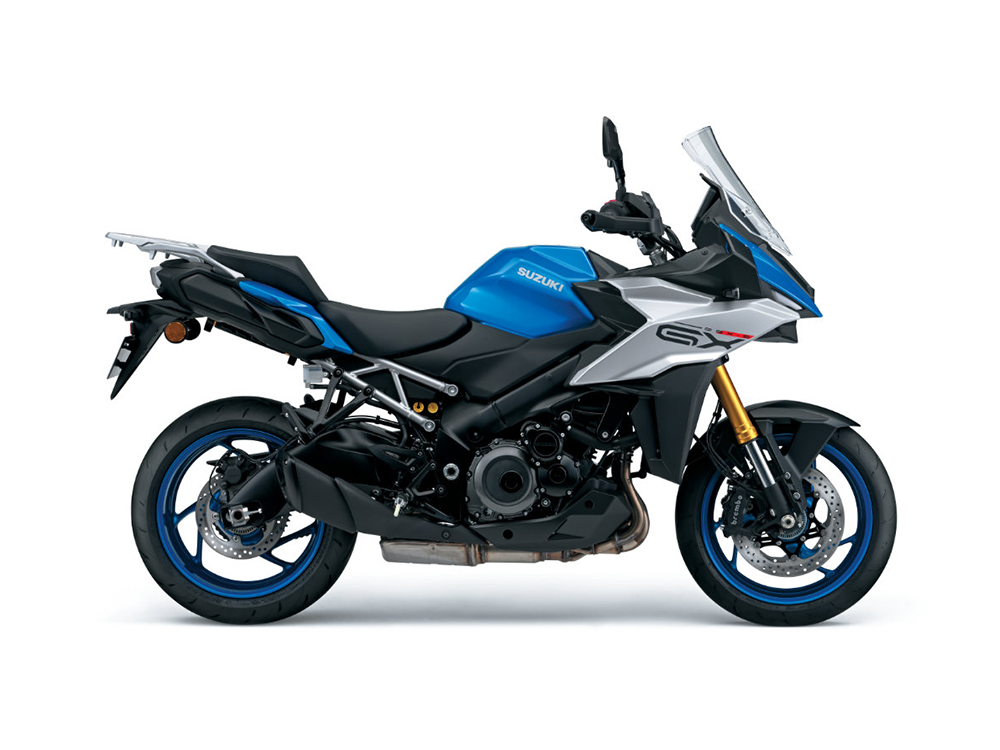
Image source: Suzuki

I don’t like riding the N4 from Gauteng to the Lowveld. It’s 350km of mostly uninspiring riding. The East Rand is a happy hunting ground for Gauteng traffic cops and shortly after crossing the provincial border, Mpumalanga cops are keen to give you a warm, expensive welcome. The road is infested with 26 and 34-wheel behemoths which usually stay in the left lane but have an irritating habit of overtaking each other on steep uphills and then battling it out for last place while a queue of cars builds up behind them. The Middelburg toll fee is R79.00 for a bike. It’s also R79.00 for a taxi carrying 18 passengers and towing an overloaded trailer. Clearly, this is unjust and therefore it behooves us bikers to sashay through without disturbing the moths breeding in our wallets. From Middelburg, it’s 100km to the Machadodorp toll plaza where the fee is an eye-watering R118.00, the country’s most expensive Class 1 toll fee. Total toll fees for a return trip are R394.00! Eina! After Machadodorp things get better. There’s a choice between riding Schoemanskloof or the Elands River Valley road past the gargantuan Sappi mill at Ngodwana. Both are excellent riding roads characterised by fast-flowing sweepers. But they hardly compensate for the tedium of the N4 and the outrageous toll fees.

On the infrequent occasions when I ride to Joburg I make a point of riding alternative routes. The destination is important but the journey is where adventure awaits. There’s real Africa out there and it’s easy to discover away from the N routes. In the immortal words of Lou Reed:

“Hey babe, take a walk on the wild side”
I said, “Hey Joe, take a walk on the wild side”

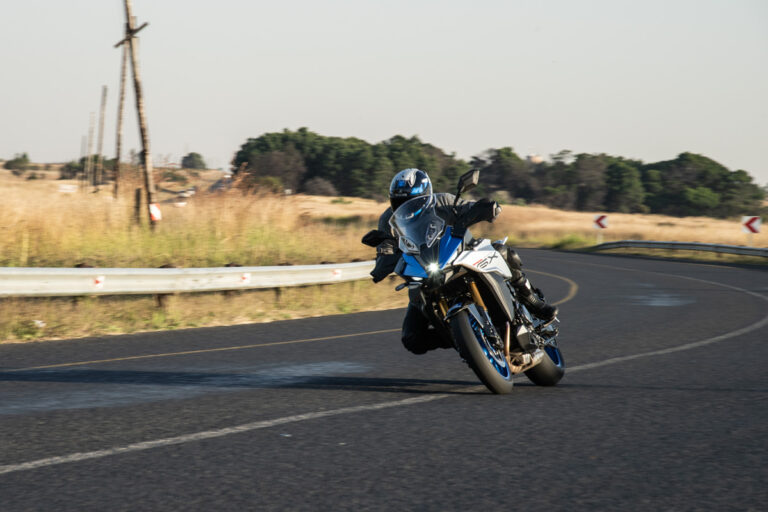
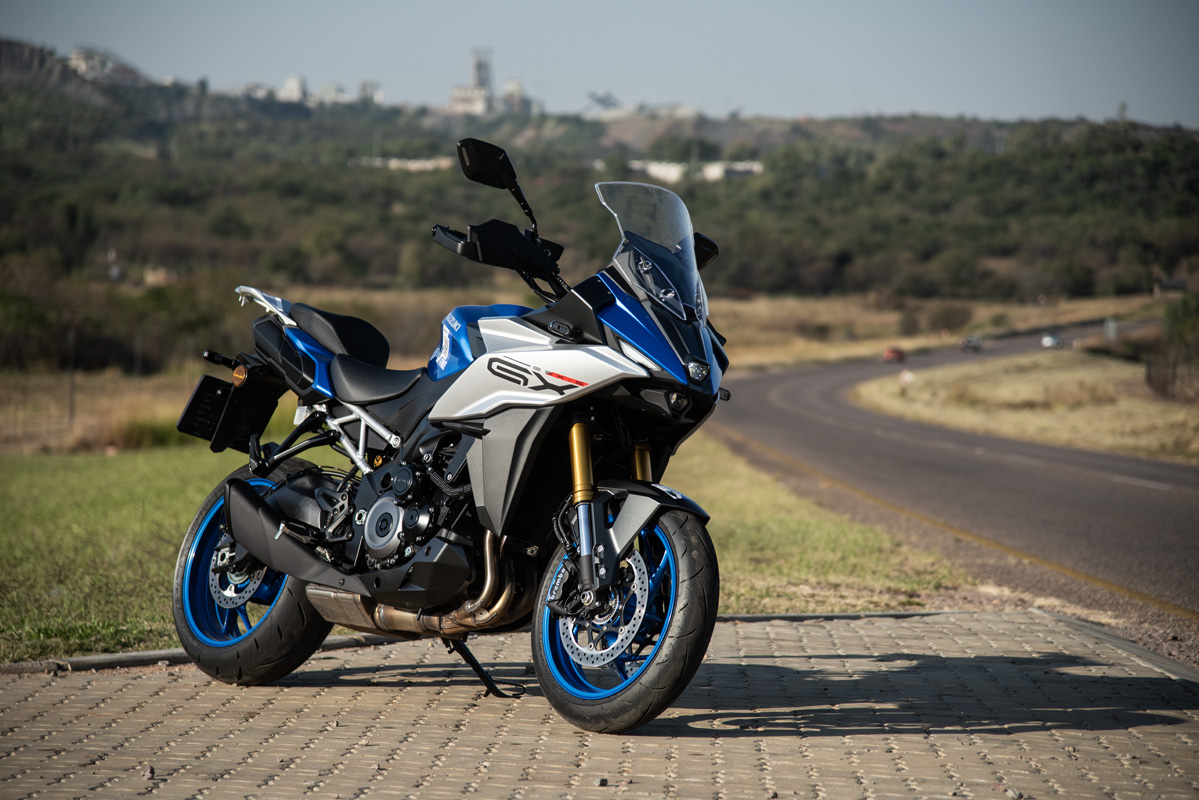
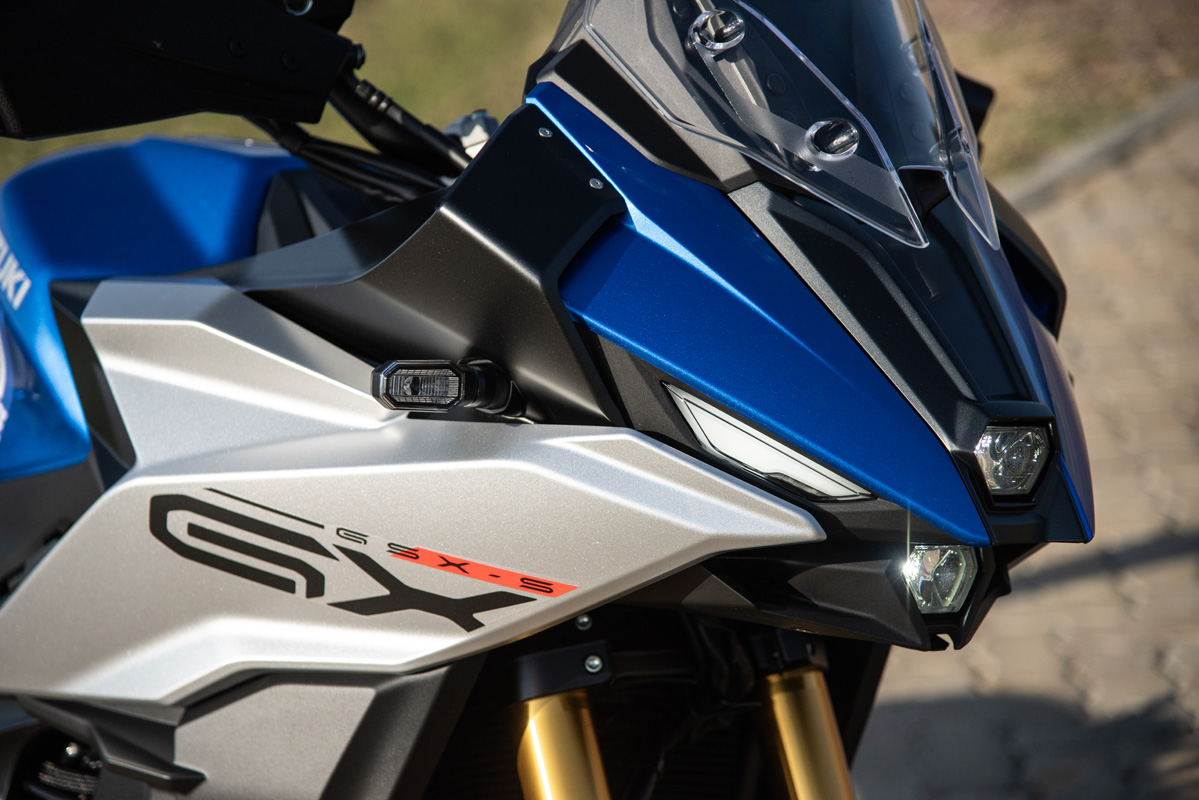
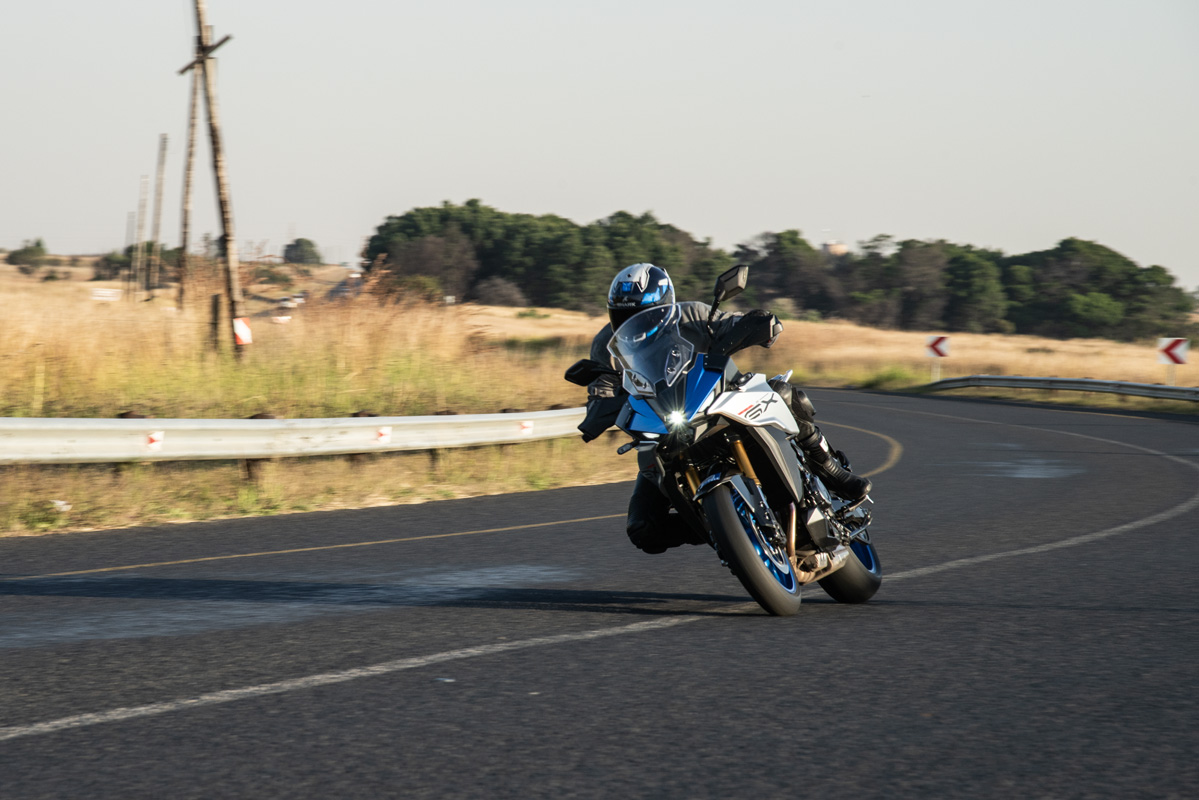
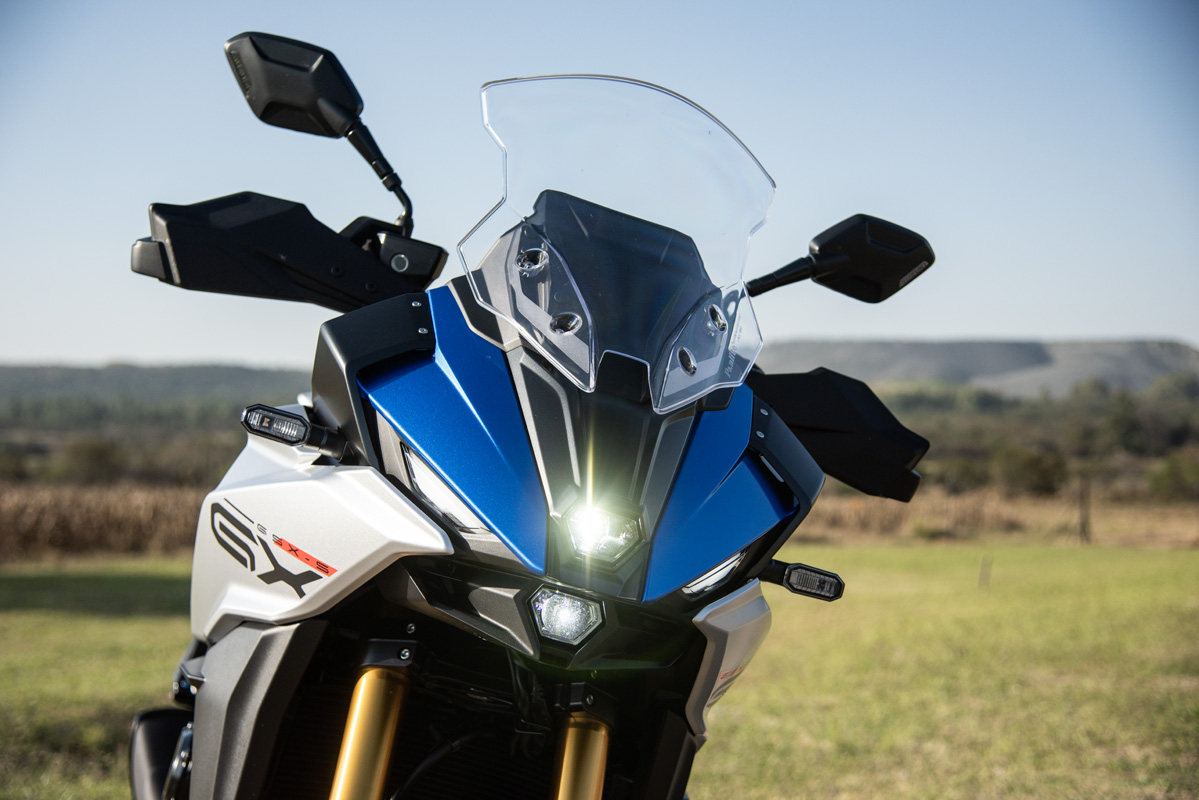
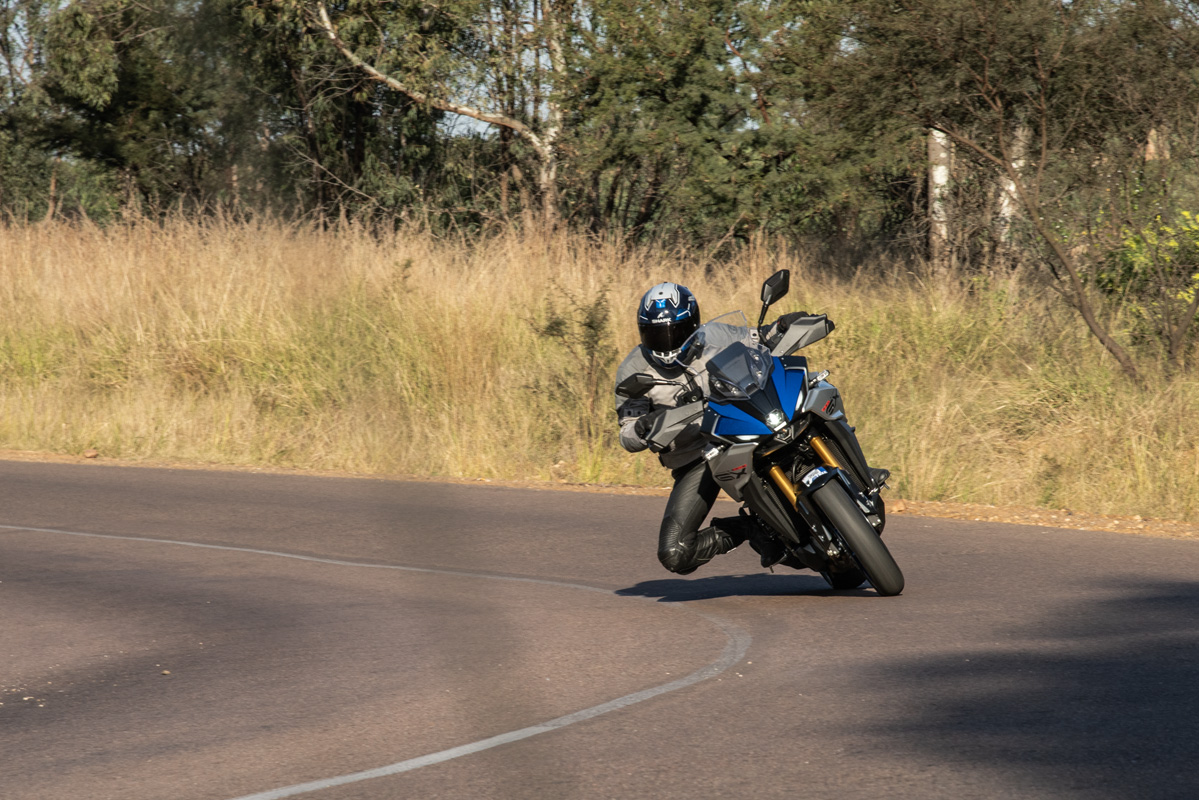
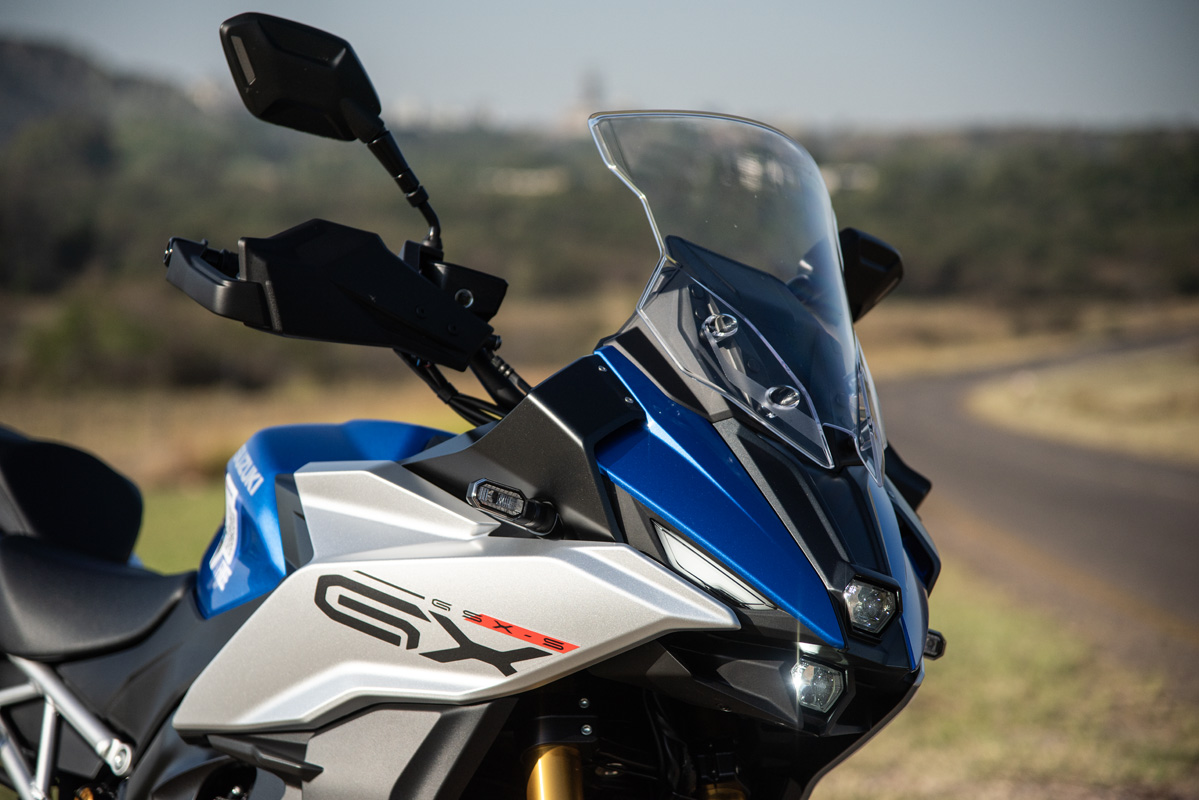
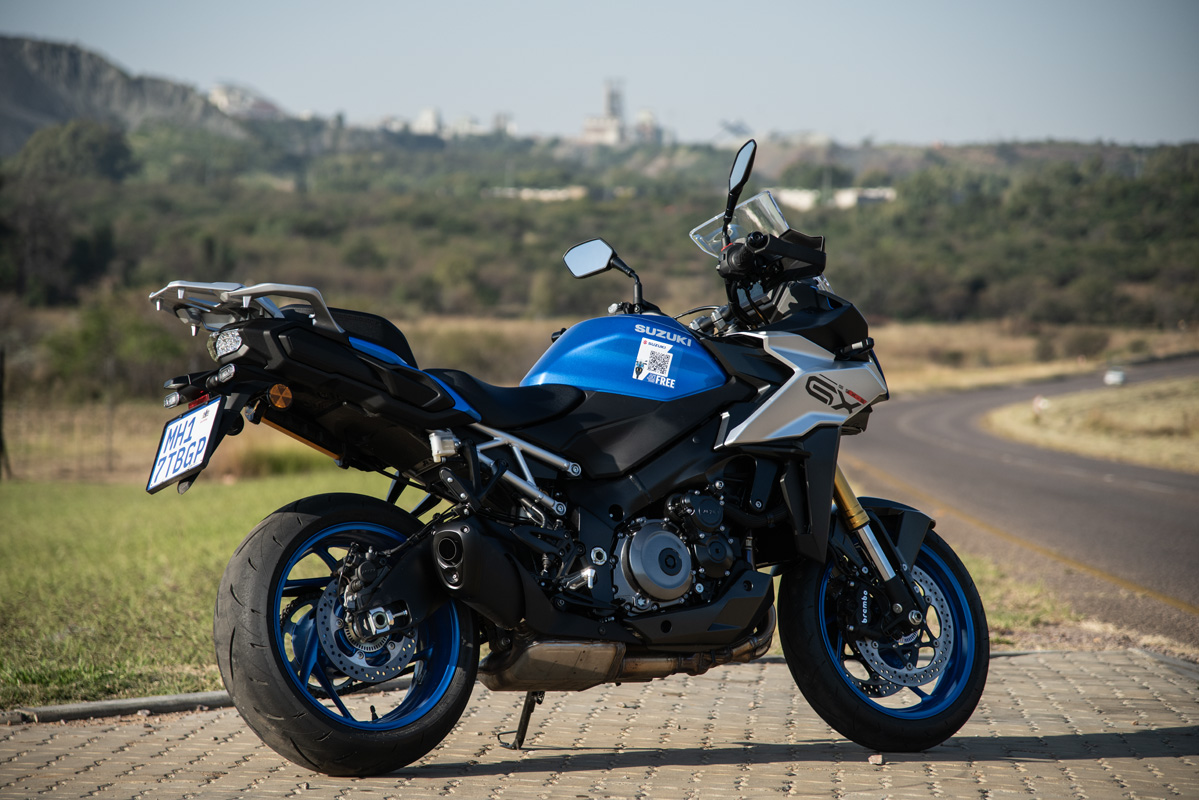
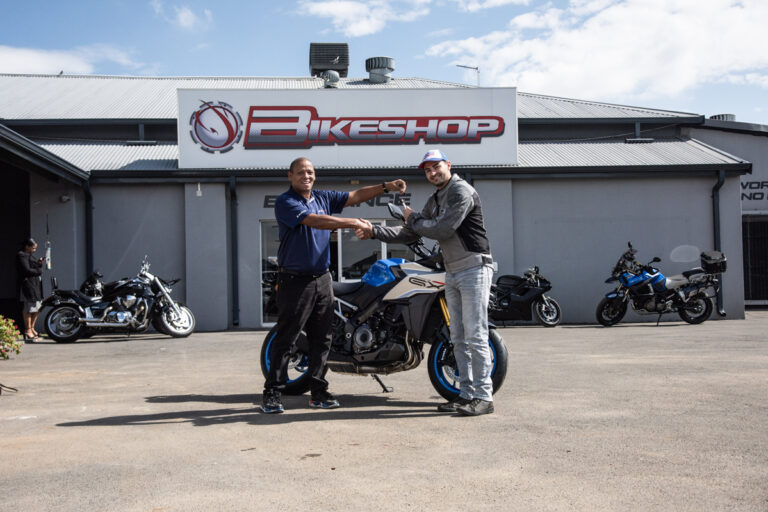
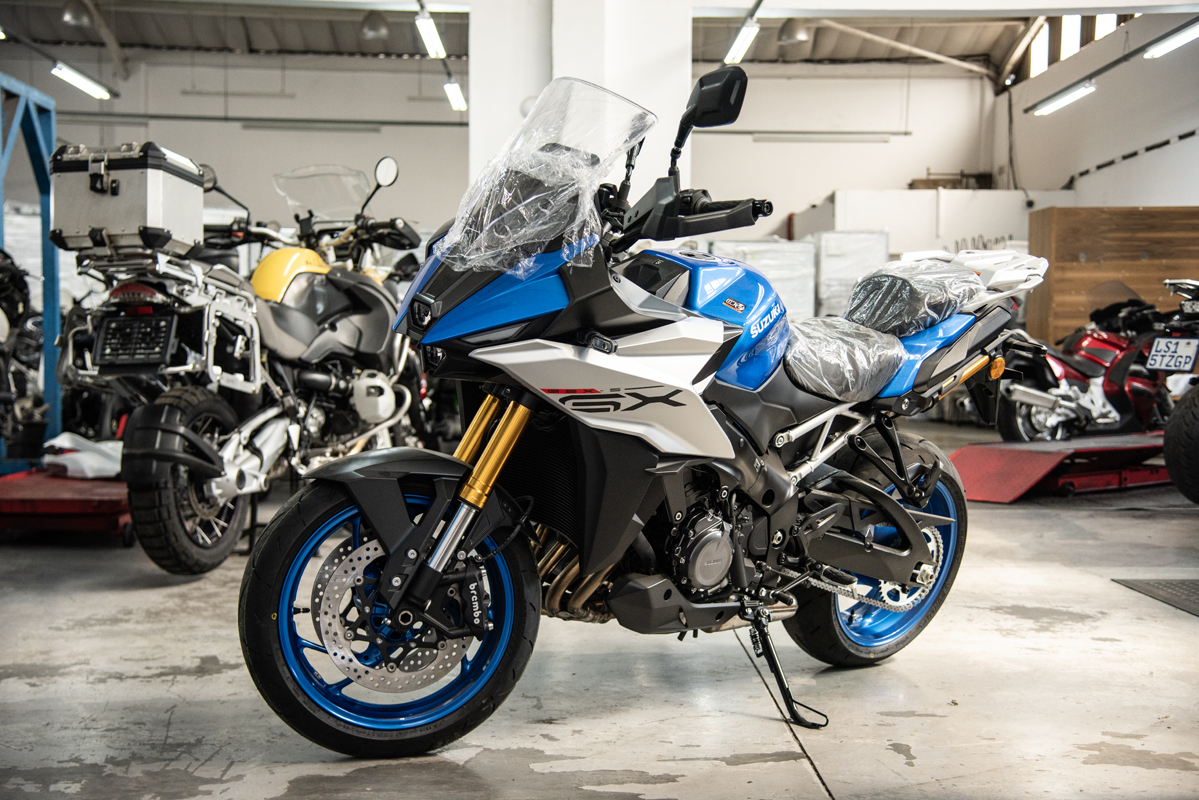
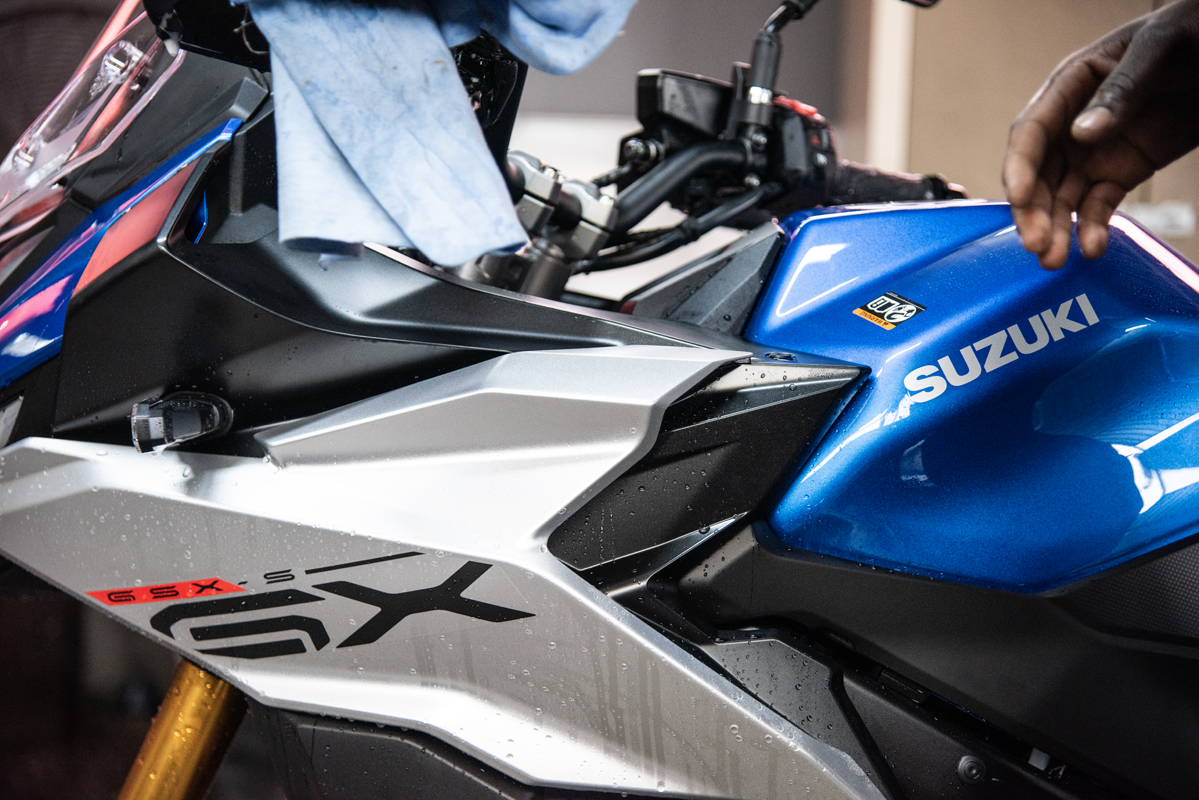
On Tuesday morning I collected a Suzuki GSX-S1000GX from Freedom Motorcycles in Nelspruit. The GX is a razor-sharp sport touring bike, a crossover motorcycle that combines the precision and performance of the legendary GSX-R1000 with the upright seating position and long-distance comfort of a touring machine. It weighs 232kg full of fuel. The GX is characterised by sharp lines, aggressive styling and rakish good looks. The vertically stacked pair of LED headlights is flanked by upswept LED position lights, the menacing eyes in the GX’s predatory lupine face. The GX is a wolf in wolf’s clothing.

I spent time with Dewald, the Sales Manager, so he could explain the myriad electronic settings of the Suzuki Intelligent Ride System (SIRS). For long-distance, high-speed riding, I chose medium settings for Power Mode, Traction Control, and Suspension Damping. Over more than 1000km on roads that varied from excellent blacktops to patched, potholed deathtraps, the settings suited me perfectly.

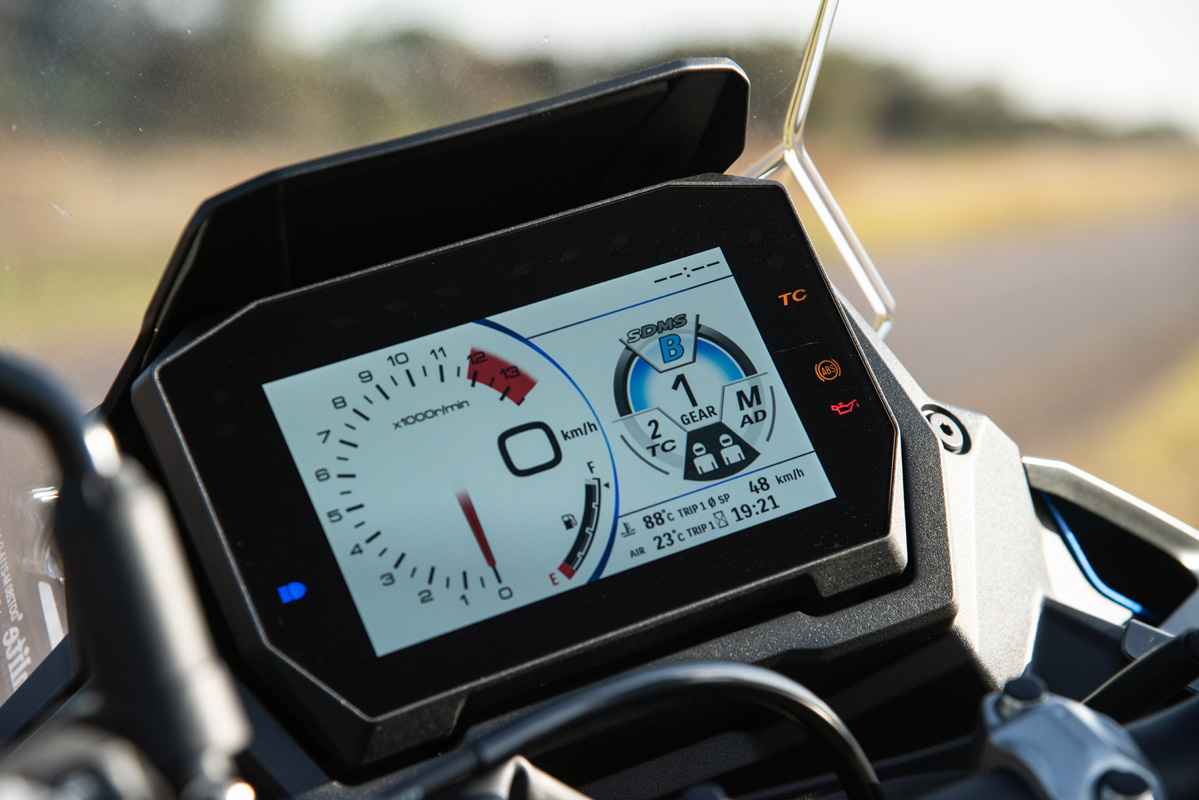
Brilliant TFT screen. All the info you need except for tyre pressures.

With my minimalist travelling kit strapped to the GX, I rode south on the R40. Nelspruit to Barberton is 40km of high speed, excellent condition tarmac which features the extremely tricksy Hilltop Pass. Hilltop has eight vicious corners that will give you big eyes if you run in too hot. But if you get them right, you’ll grind the hero blobs and erase every vestige of chicken strips on your rear tyre. It’s a brilliant pass. From the foot of the pass, the road runs through the valley of the Noordkaap River where the never-ending sweepers tempt you to hang off further and further and give your tyres a good scrubbing.

Barberton to Badplaas. 50km of amazing scenery and fast challenging roads.

At the junction with the R38, I rode east into the mountains. The first of two passes is Botha’s Nek which winds up rugged mountainsides cloaked in pine and eucalyptus plantations. The corners are fast and flowing and overtaking slow-moving vehicles is easy. From the summit the views over the Lowveld are spectacular. The second pass is Nelshoogte which drops steeply to undulating grasslands. Over the three passes, I discovered that the GX is a finely crafted weapon for dealing with challenging roads. Handling is precise and predictable, brakes are potent and progressive, and the bi-directional quick shifter is uncannily smooth and seamless. The GX was fitted with new Michelin Road 6 tyres which are developing a reputation as the best all-round tyre on the market. With all these factors in my favour and on roads that I know well I was riding like a maniac with his hair on fire, loving the speed and the confidence instilled by the Suzuki.

Summit of Botha’s Pass.

After the recent good rains, the Vygeboog Dam overflowed into the Komati River, which rushed like a torrent under the road bridge. On the flatlands approaching Badplaas, I bombed along at 180km/h, enjoying the soulful aural accompaniment of the 999cc mill spinning easily at 8000rpm. Despite the slim dimensions of the windscreen, the wind protection was remarkably good, and I was becoming increasingly impressed with the bike’s blitzing long-distance capabilities. This was going to be an exceptional ride.

I could have continued straight on to Carolina but I like the deserted R541 that runs southeast to Lochiel across vast savannahs. On one of the long straights, I tucked in and wound the GX to 230km/h with the engine howling sweetly at 10000 rpm. I’m sure I would have seen 260 if I tried but sometimes enough is enough. At the intersection with the N17, I stopped for a photo of the sign that declares this to be the Grasslands and Wetlands route. The N17 to Chrissiesmeer and thence to Ermelo is 100km of bucolic verdant meadows scattered with sparkling pans like sapphires strewn on a billiard table. It’s one of the most beautiful roads in the land but on this day I had no eyes for the scenery. I was focused on the ominous darkening sky on the eastern horizon. In the metropolis of Warburton, I stopped and donned a jacket that was gifted to me on a Harley launch many years ago. I had never worn the jacket and always assumed it was a rain jacket. Short before long, I discovered how wrong I was.

20 kilometres from Chrissiesmeer I rode into a maelstrom. On the grasslands, there was no place to hide and I had no choice but to ride on. It was the worst storm I’ve ever ridden in. Swirling torrents of rain and thrashing winds reduced visibility to practically nil. The darkness under the cloud was riven by incandescent lightning bolts and I found myself wondering what it would be like to be struck by lightning. Cars and trucks loomed like spectres out of the gloom and as I passed I imagined them thinking “Why is that fool riding in this weather?” The only upside was the Michelin Road 6 tyres which didn’t twitch once, even when I was navigating rivers running across the road. After twenty minutes of insanity, I stopped at the petrol pumps in Chrissiesmeer chilled to the marrow and dripping. It was still raining heavily so I sat in the garage shop and ate a Russian and Chips washed down with a cleansing lager.

Lunch in Chrissiesmeer.

Eventually, the rain slackened. I refuelled the bike and rode onwards to Ermelo. Now I was properly cold as the water evaporated from my sodden apparel. I resigned myself to a long cold afternoon in the saddle. I weaved my way through the chaotic Ermelo traffic and joined the N17 to Bethal. The road from Ermelo to Bethal has existed forever. Now it just happens to be a toll road with no viable alternative route. Therefore I considered toll fees to be optional and I opted to dawdle through with a smile on my face and a song on my lips. If I had stopped to pay I would have occupied an entire lane for at least five minutes. Stop. Switch off the bike. Remove wet gloves. Find a wet wallet. Remove card. Hand card to fee collector. Receive card. Drop card from trembling hand. Get off the bike. Replace card in wallet. Place the wallet back in the wet pocket. Get back on the bike. Struggle to put wet gloves back on while swearing loudly. Wipe mist from the visor. Start bike. Ride away. Just give bikers a dedicated metre-wide bike lane and be done with it. But Nooooooo! Rools is Rools! Bureaucratic idiots.

Just after Bethal, I rode out from under the clouds into bright, warm Highveld sunshine. I started to feel human again as my clothes began to dry. A few clicks past Trichardt I left the N17 and followed the R29 through Kinross, Leandra and Devon. It’s been many years since I rode through those towns. One word to describe them: Shattered. This is what I saw in the main streets: cattle and goats roaming free, piles of rotting garbage, litter everywhere, informal dwellings, shebeens, gutted buildings, wrecked vehicles, tatty spaza shops, broken fences, unemployable people sleeping in doorways. The degradation of once thriving platteland dorps is a microcosm of the destruction taking place on a massive scale across this country.

I continued the ride in a sombre mood and rejoined the N17 on the outskirts of Springs. At 17:00 I parked the GX outside Tonino’s Restaurant in Orange Grove. Tonino’s is a biker-friendly joint specialising in Portuguese cuisine. There were eight of us for dinner. I ordered 15 queen prawns for R225; excellent value for money. We spent a splendid evening swapping stories and talking twak as bikers do. After dinner Jamie and I rode in the rain to his casa in Victory Park. Despite tough conditions, it was an excellent day on the road. 480km of not the N4.

On Wednesday morning I inspected the bike before setting off. The rains of the previous day had washed every hint of lubricant from the chain. I like to think I’m a mechanically sensitive rider and therefore it makes sense to maintain the only exposed mechanical part of the bike. Jamie didn’t have any lube; he rides a shaft-drive GS and a belt-drive Harley. But I had a plan B. My route out of town was the N3 past the Suzuki HQ in Marlboro. I pulled in, Shane lubed the chain and I was back on the road at 11:00. I rode the R21 past the airport and then took the R25 to Bapsfontein and Bronkhorstspruit aka Dronkwordspruit. Riding conditions were ideal, overcast and cool. I set the cruise control at 150km/h and watched the emerald-green countryside fly by. In Bronkhorstspruit I stopped for photos at the magnificent Nan Hua Temple. The R25 crosses over the N4 and on the far side of the bridge, two female traffic cops were sitting on their BMW R1250RTs. Of course, I stopped to chat with them. They were polite enough but declined to talk about their duties so I continued on my merry way.

The road from Bronkhorstspruit to Groblersdal is a special ride. It traverses lush, mountainous bushveld terrain, a delight to the eye. There’s not much traffic but there are a few large settlements along the road with names you might never have heard of: Sokhulumi, Chief Magodongo, Verena and Dennilton. There are good reasons to take it easy when riding through these places. Firstly, there are myriad cattle, sheep, donkeys and goats on the road and the verges, and, secondly, there are bastard unpainted, slab-sided speed humps that launch you out of the saddle if you hit one at speed. North of Verena I stopped for a photo of the weather-beaten, almost illegible signboard at the entrance to Zithabiseni Resort. In 1999 Zithabiseni was the venue for the one and only, the first and last, the legendary Hustler Rally. In the months leading up to the rally, Hustler Magazine promised an extravaganza the likes of which South Africa had never experienced. And they did not lie. I don’t know where Hustler found so many gorgeous women but there they were in all their naked glory, basking in the sunshine, cavorting in the pool and parading their assets on stage. It was a fiesta of unbridled, gratuitous female nudity. I nearly went blind. But that was then and now I needed to gijima because I still had distance to cover.

In 1999 Zithabiseni was the venue for the one and only Hustler Rally a fiesta of gratuitous nudity. I nearly went blind!

I stopped in Dennilton for a photo of an old, abandoned Komatsu grader standing forlornly on perished tyres, slowly decaying in its final resting place. That sad machine suggested these lines from Shakespeare:

Fear no more the heat ‘o the sun,
Nor the furious winter’s rages;
Thou they worldly task hast done,
Home art gone, and ta’en they wages…

On the outskirts of Dennilton this old grader was gradually rotting away.

After Dennilton the road runs through the astonishingly fertile valley of the Olifants River, an Eden of citrus orchards, vineyards, maize, and a cornucopia of vegetable crops. The roadsides approaching Groblersdal are a colourful array of stalls selling crops from the valley; oranges, pumpkins, watermelons, mangoes, potatoes, onions and butternuts. It’s a happy scene and the stalls appeared to be doing good business as motorists stopped to stock up on fruit and veggies. It was a quick 60km blitz from Groblersdal to Stofberg through beautiful game-fenced bushveld panoramas and past Rooikraal Dam. I was expecting the R555 from Stofberg to Roossenekal to be a potholed disaster area but it wasn’t too bad. I turned off the R555 and rode the R577 across the plains towards the bulwarks of the Steenkampsberge looming ever larger on the eastern horizon. It was an exhilarating ride up and over De Berg Pass down into the flatlands. If you’ve never ridden De Berg, add it to your bucket list. It’s a magnificent spanking road on a wild, rugged mountain. Just before Jaap se Hoogte chrome ore trucks from Burgersfort join the R577 and for the next 10 kilometres the road is smashed. It’s a very bad section but to put things in context this was the only dodgy tarmac in two days and more than 1000km.

In Lydenburg, I had a decision to make. Long Tom Pass or Robber’s Pass? Robber’s was the longer option and it was only 15:30 so time was on my side. I rode north towards Ohrigstad on the R36. The last time I travelled the R36 was in July 2024. Then it was a potholed deathtrap but it has since been repaired and is in reasonable condition. 30 kilometres from Lydenburg I hooked right onto the R533 and steeked across the grassy plains to the foot of the pass. I have a healthy respect for Robber’s Pass. It never sleeps; it waits! I rode fast on the ascent to Crystal Springs and then took it easy on the steep hairpin descents to the valley of the Sabie River and Pilgrim’s Rest. The road is almost always littered with loose gravel and this day was no different. I love the tight bumpy road from Pilgrim’s up and over the mountain. It’s a good workout for rider and machine. No surprise, the GX bounded up the mountain like a surefooted goat. The R532 to Sabie is an iconic Mpumalanga road characterised by long, balls-to-the-wall sections as well as the butt-clenching corners near Forest Falls and Mac Mac Falls. If you know the road it’s high speed heaven. If you’re not familiar with the road err on the side of caution. And then, like a horse scenting the stable, I left Sabie and rode full tilt on the R537 to White River. That road is 44km of come-to-glory sweepers interspersed with flatstick straights, one of the best +200km/h biking roads in the country guaranteed to have you grinning in your helmet like a demented ape. As the sun set I pulled into my casa in Nelspruit with a very satisfying 560km day on the road behind me.

Allow me to restate the point of this article. If you’re riding from Gauteng to the Lowveld there are magical roads and intriguing places to the north and south of the N4. Challenging roads, amazing vistas, unexpected experiences, friendly people, and weird platteland dorps are yours to discover. Why drone along the N4 when an African adventure awaits you?

KTM South Africa Power-Packed Racing Line-up for 2025 Season

Photo credit: ZCMC

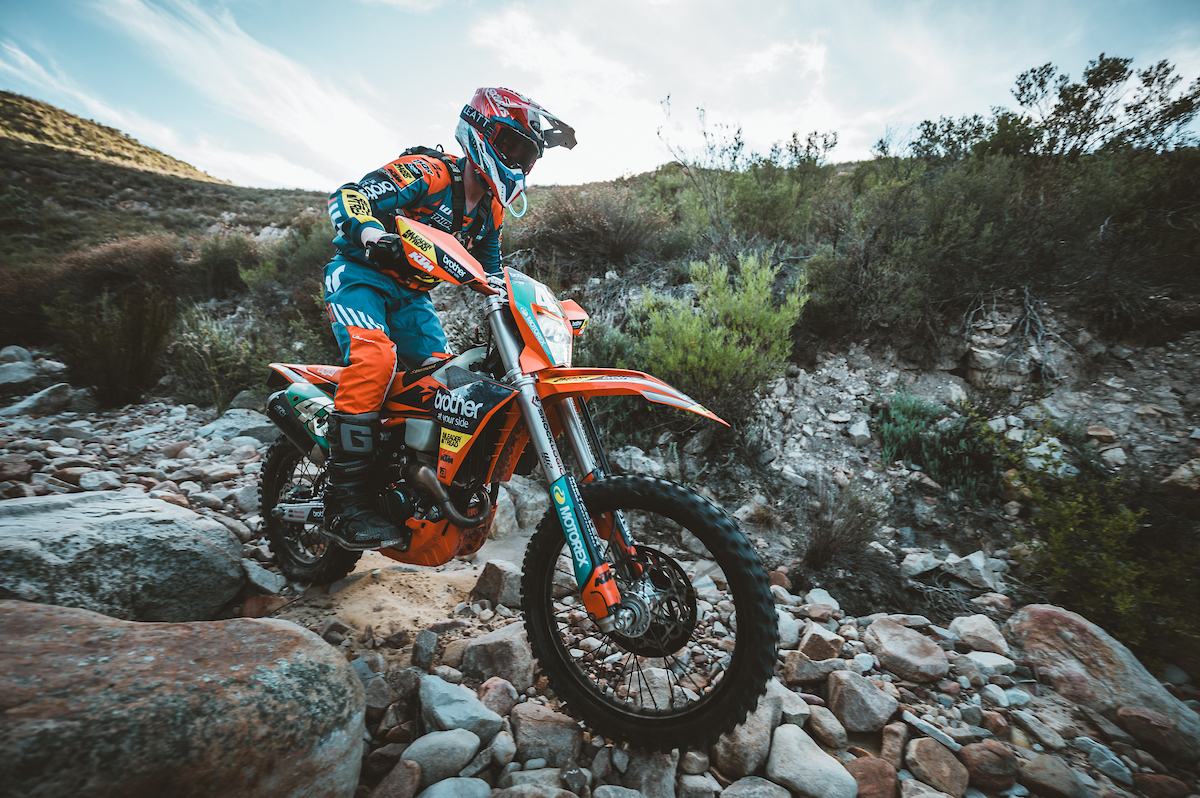
KTM South Africa is set to ignite the 2025 racing season with an electrifying line-up across Motocross, Cross Country, and Enduro disciplines. With a strong team of defending champions and rising talents, the Red Bull KTM Motocross team and the Brother Leader Tread KTM Cross Country and Enduro teams are primed to fly the orange flag high for the 2025 season.

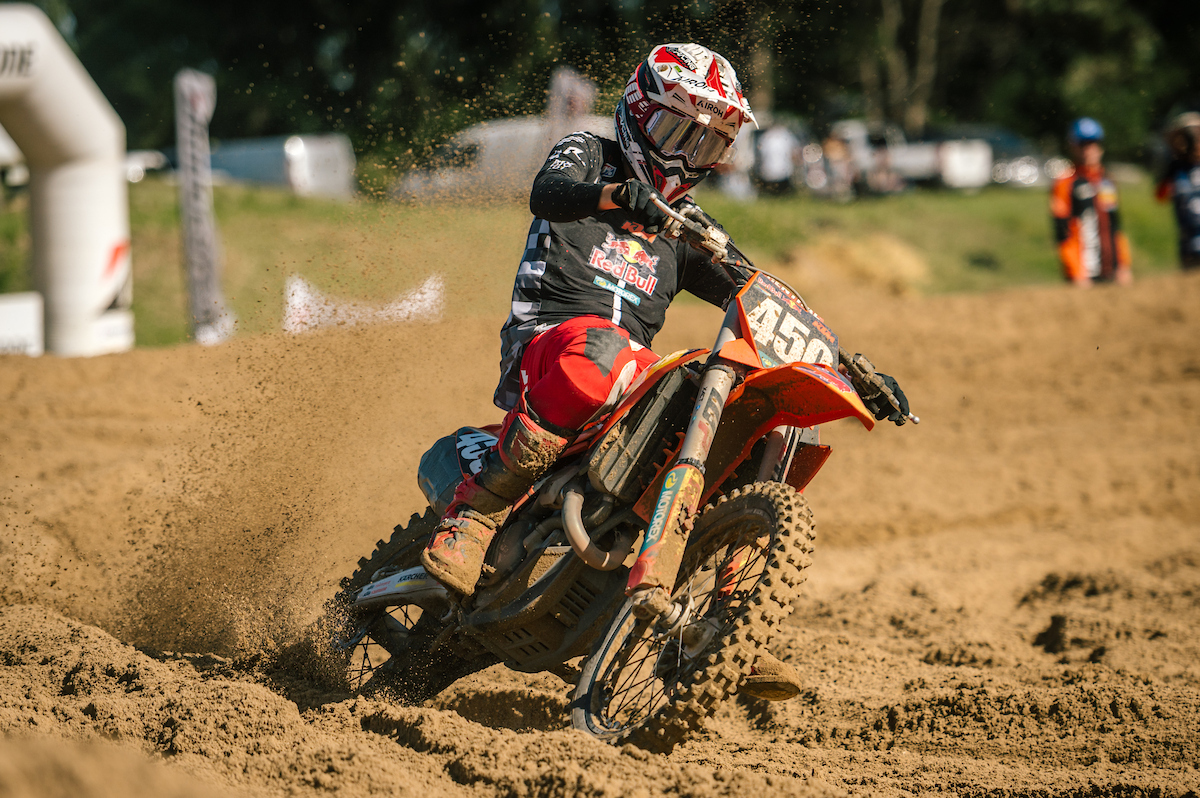
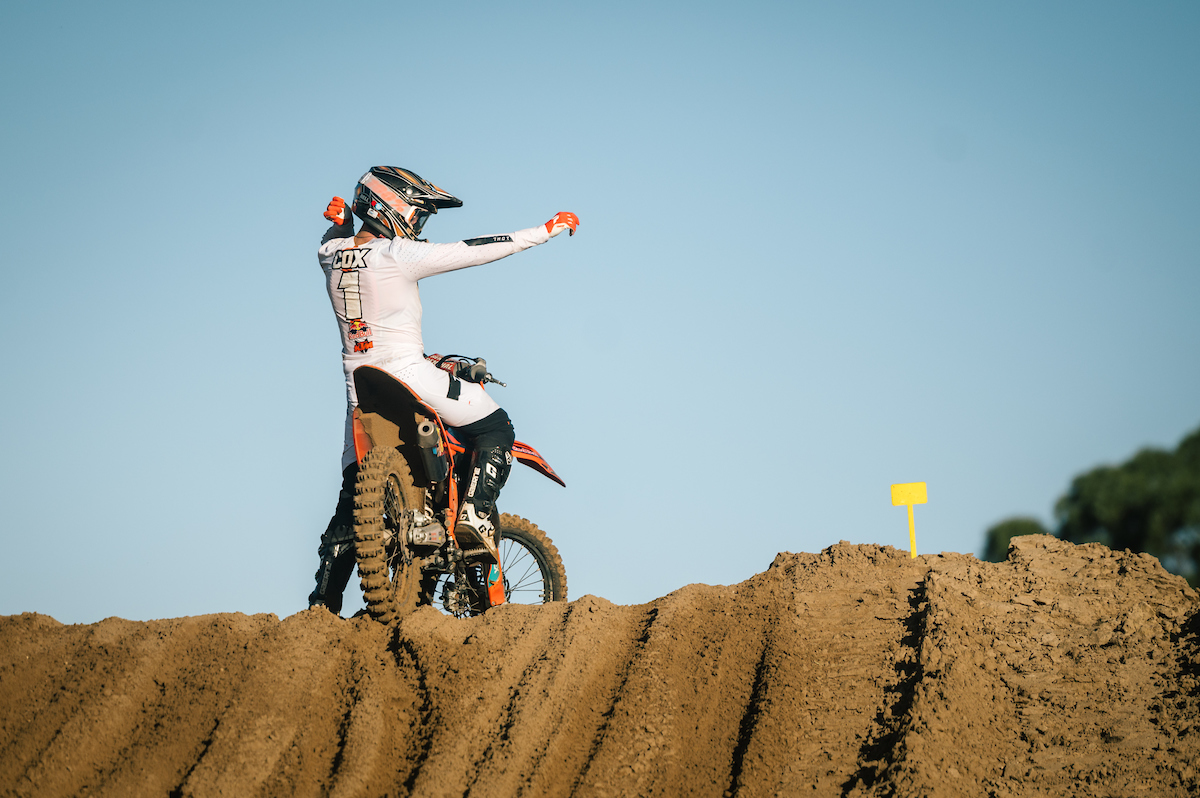
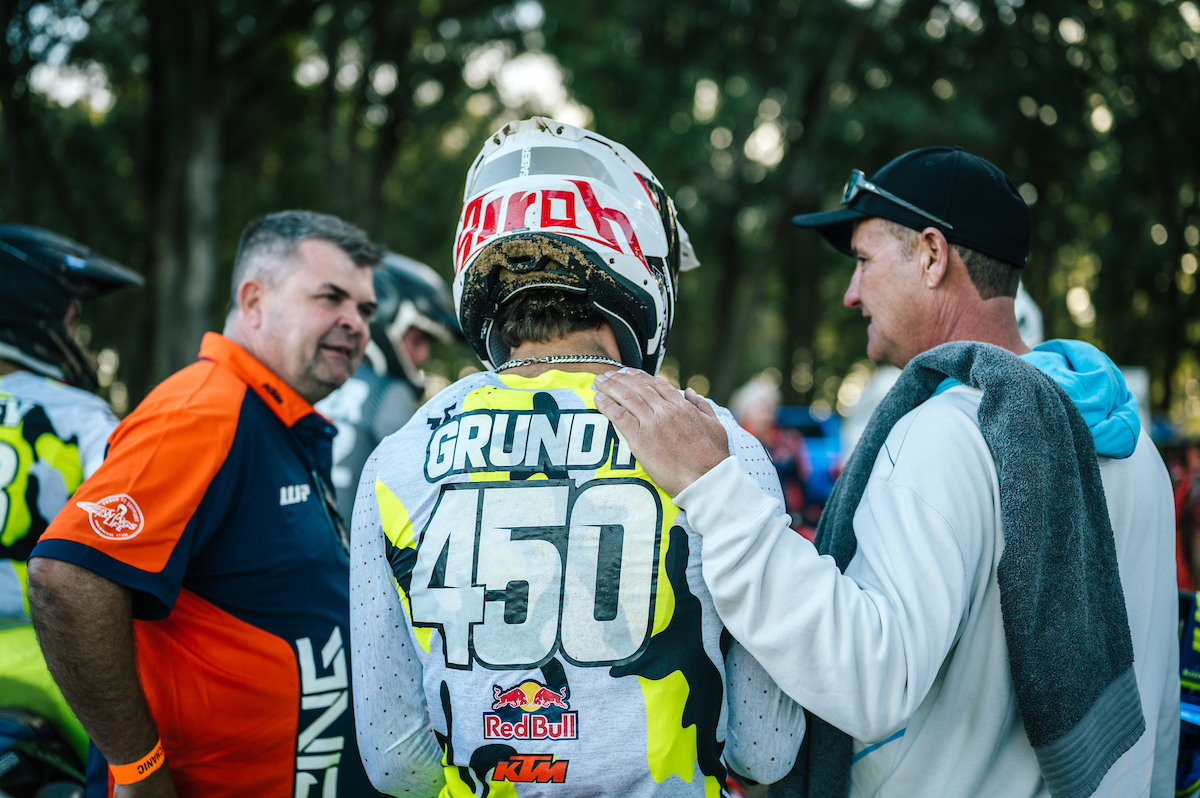
The Red Bull KTM Motocross team will be led by Cameron Durow, Luke Grundy, and Trey Cox. Durow returns as a dual defending champion, aiming to retain his MX1 and MX2 titles aboard the KTM 450 SX-F and KTM 250 SX-F, respectively. Grundy enters his second year in the MX2 class, eager to make his mark on his KTM 250 SX-F. Meanwhile, Cox will take on the High School class once again aboard his KTM 125 SX, determined to defend his championship title.

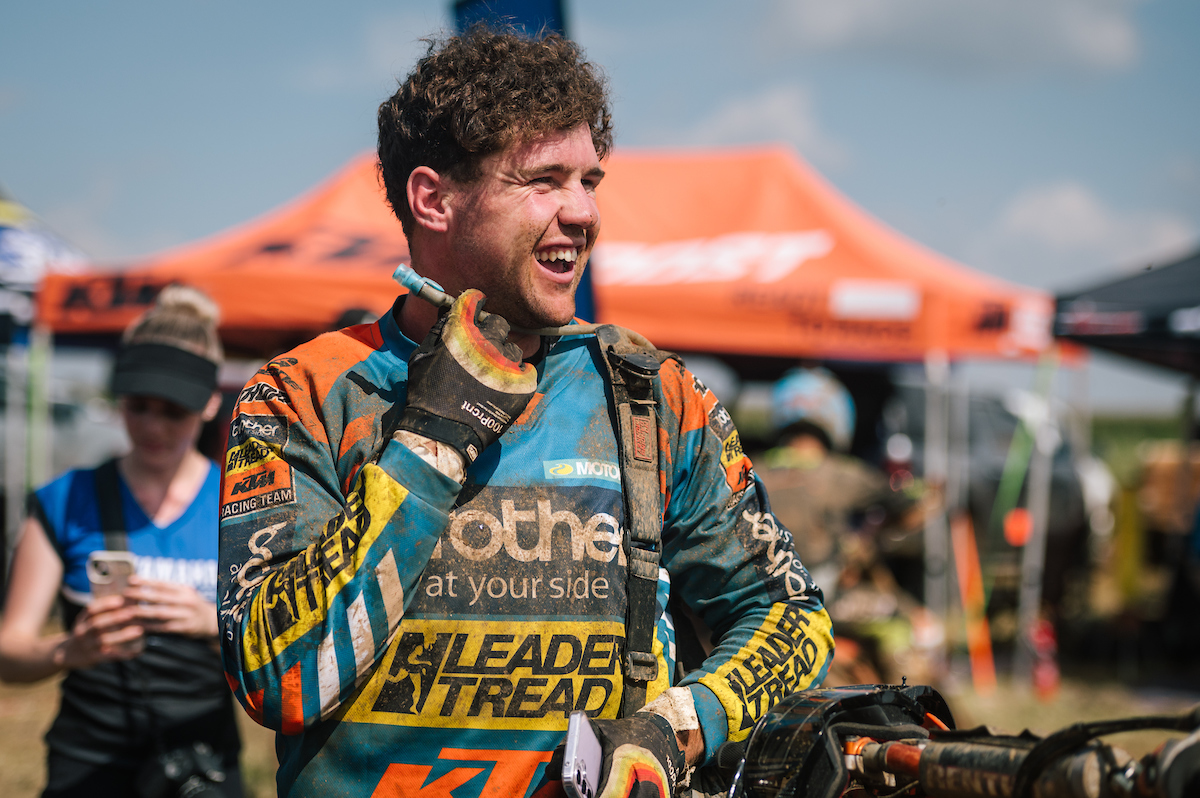
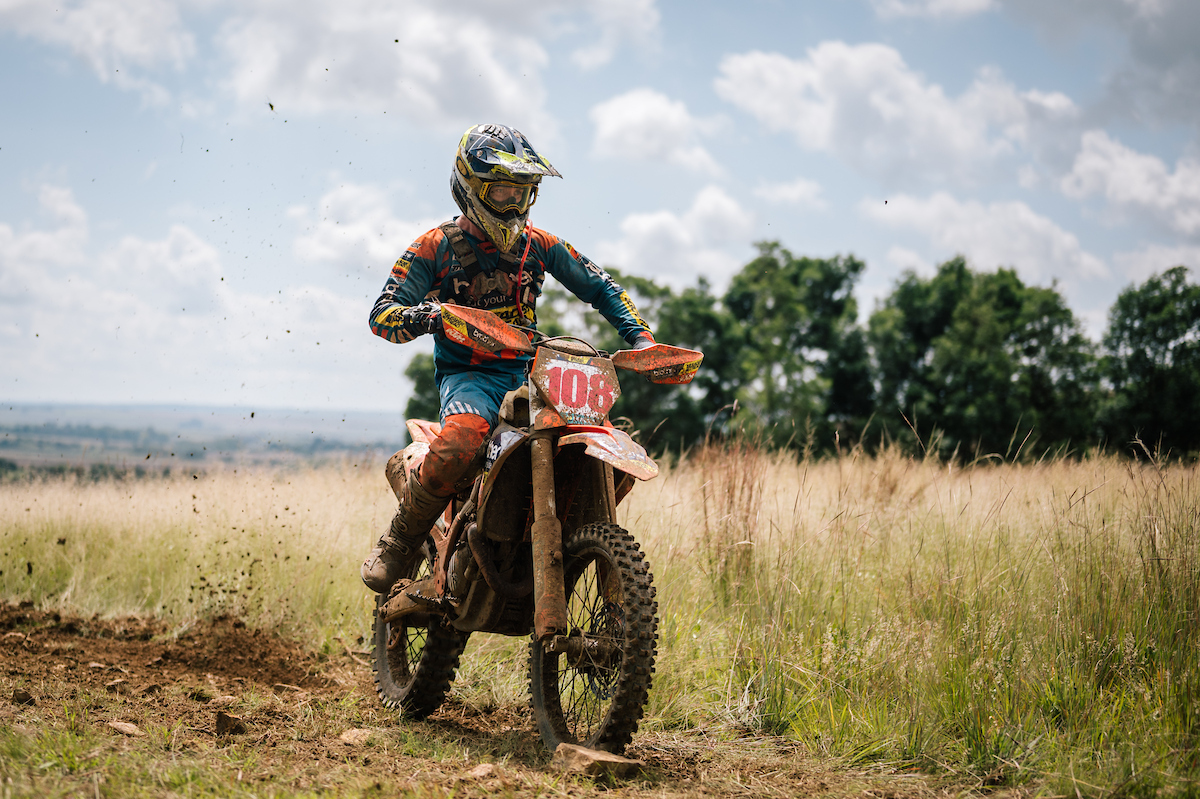
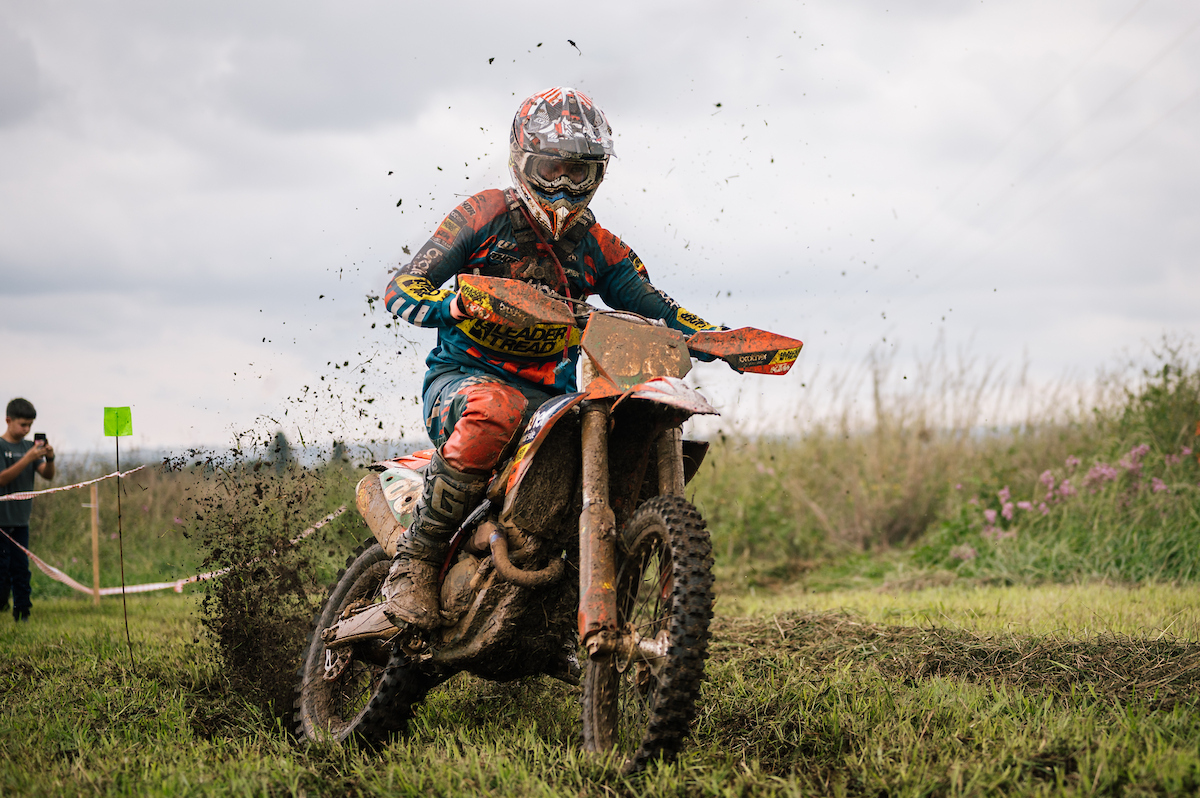
The Brother Leader Tread KTM Cross Country team features a mix of seasoned champions and ambitious contenders. Kerim Fitz-Gerald will return aboard his KTM 350 XC-F, following a strong finish last season. Scott Heygate, aboard his KTM 450 XC-F, is ready to chase the Open Class title after narrowly missing it last year. Matthew Wilson, a two-time OR3 champion, is set to regain his title on the KTM 250 XC-F, aiming to further cement his dominance in the class.

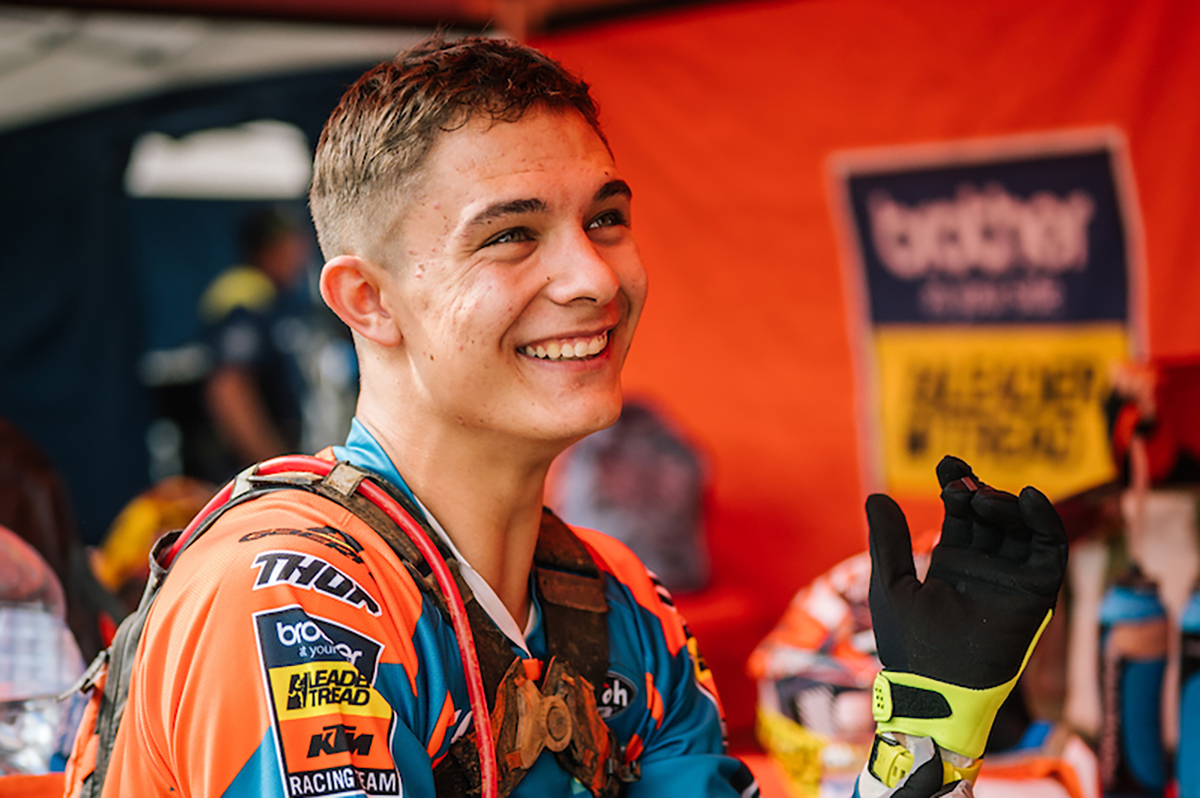
The Brother Leader Tread KTM Enduro team welcomes a blend of fresh energy and experienced talent. James Moore, new to the Brother Leader Tread KTM Enduro team but no stranger to the KTM Group family, will compete in the E2 class aboard his KTM 300 XC-W, bringing his technical expertise and endurance to the forefront. Young talent Matthew Stevens rounds out the team and will step up to the E1 class on his KTM 250 EXC-F, eager to put his skills to the test in the discipline.

The adrenaline-fueled 2025 season kicks off this coming weekend in Bronkhorstspruit, where the Brother Leader Tread KTM Cross Country team will take on the first round of the year. With a powerhouse line-up across all three disciplines, KTM South Africa is set to make an unforgettable impact on the championship territory.

Stay tuned as these riders push the limits, chase podiums, and uphold KTM’s legacy of racing excellence. The orange squad is ready, let the 2025 season begin!

#ReadyToRace

Suzuki’s Fabulous Frontier X – Road Tripping in the Fronx

0
Photo credit: Dave Cilliers / ZA Bikers

It was a sad day indeed when a fellow decided that red robots were overrated and just put foot. Irene, waiting to turn, was directly in his path and he hit the Swift Sport head-on. The airbags deployed, the car was spun through 180 degrees and the front of the Swift was destroyed. Credit to Suzuki’s build integrity the passenger cell was totally intact, and she emerged from the car shaken but not stirred. We loved “Sporty” as our Suzuki Swift Sport was affectionately known, but one look at the damage and I realised that Sporty had gone to the garage in the sky.

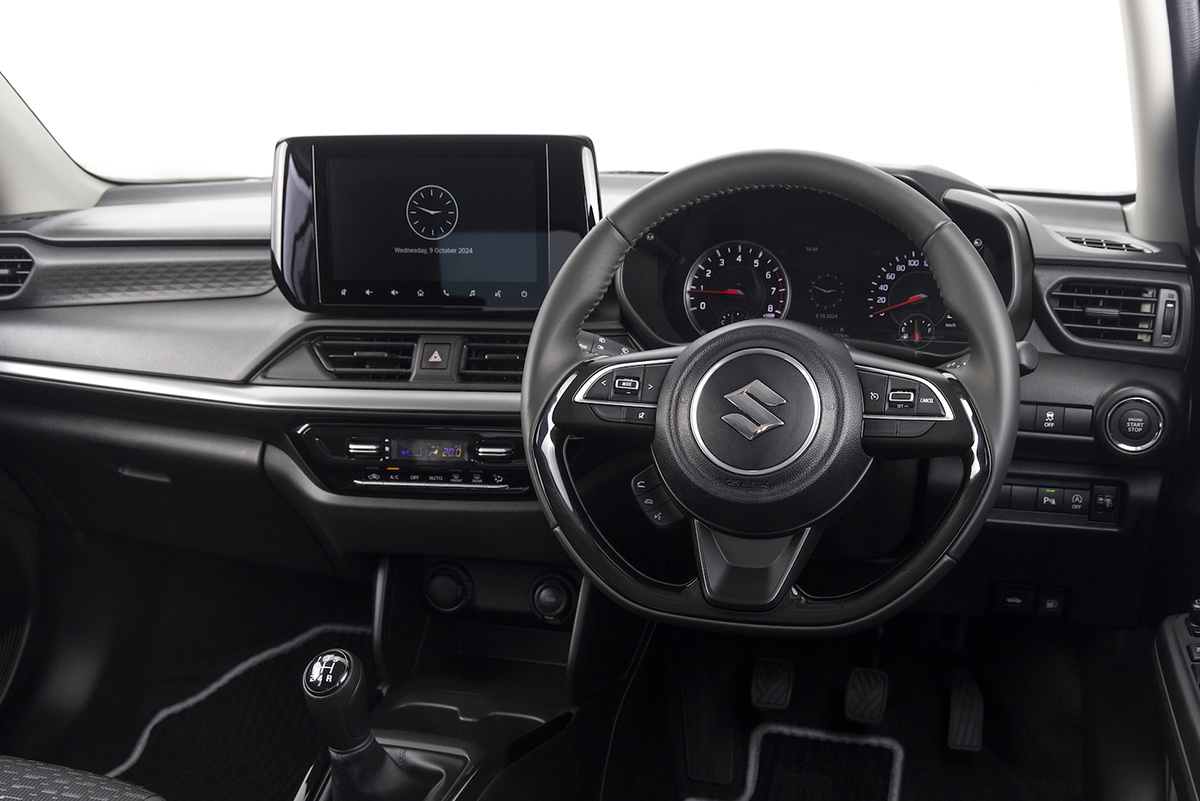
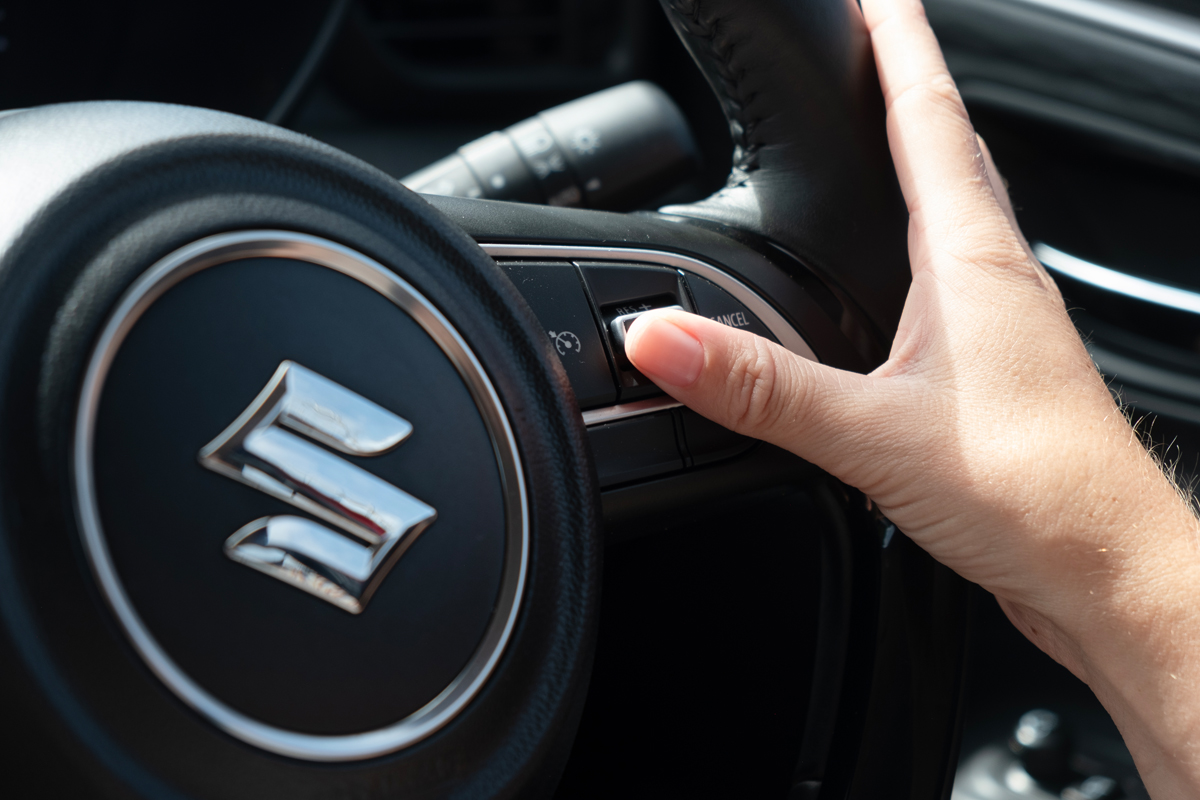
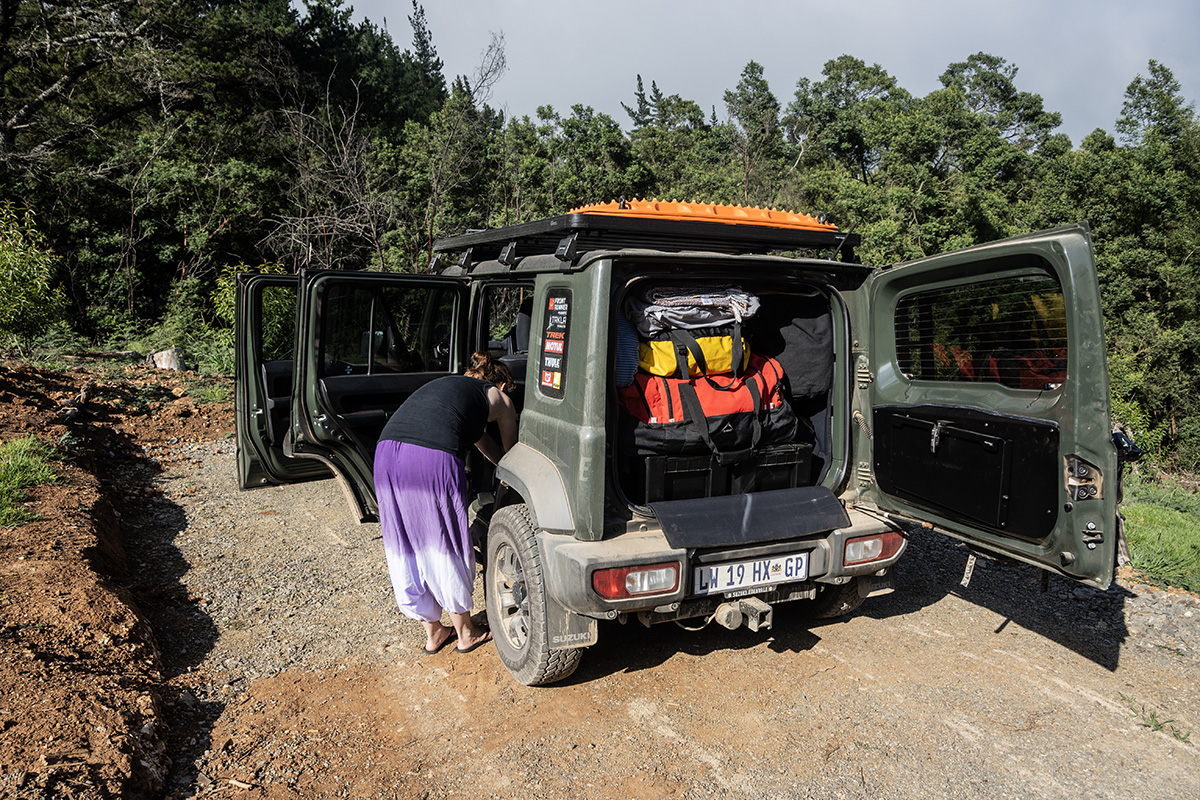
Considering how Irene uses her car we determined that an auto would best suit her needs, and the result was a brand-new Suzuki Fronx GLX in stunning silver. Irene loves the car! The GLX is comprehensively specced with all the bells and whistles that you can hope for, and then some. In no time her phone was paired, her music playing, and she enjoyed all the benefits of Android Auto. The reverse camera with its 360-degree bird’s eye view of the surroundings is a boon for anyone operating in an urban environment. She tells the car where she wants to go, and it pops up with directions on the display in front of her—amazing features on a car in this class.

Image source: Suzuki Press

The 1.5-litre engine, paired with a four-speed automatic transmission, performs unexpectedly well even at high altitudes. It is the same unit used in the Jimny yet feels significantly livelier in the Fronx. So why am I telling you all this? Cause we went road-tripping in January that’s why! After our family Botswana adventure Irene and I drove down to the Mother City. My brother and sister-in-law were visiting from the UK, where they have lived for the last 17 years, and a good mate of mine lives in Cape Town and we were overdue a visit. I was interested in testing the Fronx on the open road, so a road trip beckoned.

As we are known to do, we drove out of Pretoria at around 7 AM with no plans in terms of where we would overnight. We decided we would see how the travelling went and then take a “potluck” on accommodation. The Fronx has comfortable yet yielding seats which I felt may be too soft on a long journey. Not so. We spent a full 12 hours in the car, getting take-aways to minimise stopping time which I have found erodes your travelling time. At no point did we start feeling squirmy in our seats or fatigued. Allied to the seat comfort is the excellent ride quality of the Fronx. The suspension is supple and controlled. It would impress even more later in the day.

Image source: Suzuki Press

The elephant in the room, having changed from the pocket rocket Swift Sport, was whether we would find the Fronx “flat” and underpowered. Open road travel must deal with challenging road conditions. Travellers deal with hundreds of trucks on our national roads, courtesy of our ailing rail system. Your car needs to have enough power to overtake safely and effectively. I was very pleasantly surprised. The Fronx has an overdrive feature in the transmission engaged via a button on the side of the gearshift. When needing to overtake, I would disengage the overdrive and floor it. The Fronx motor loves to rev and gets quite a hurry up. Overtaking is really not an issue. Re-engage the overdrive and the revs drop then you re-engage the cruise control.

Image source: Suzuki Press

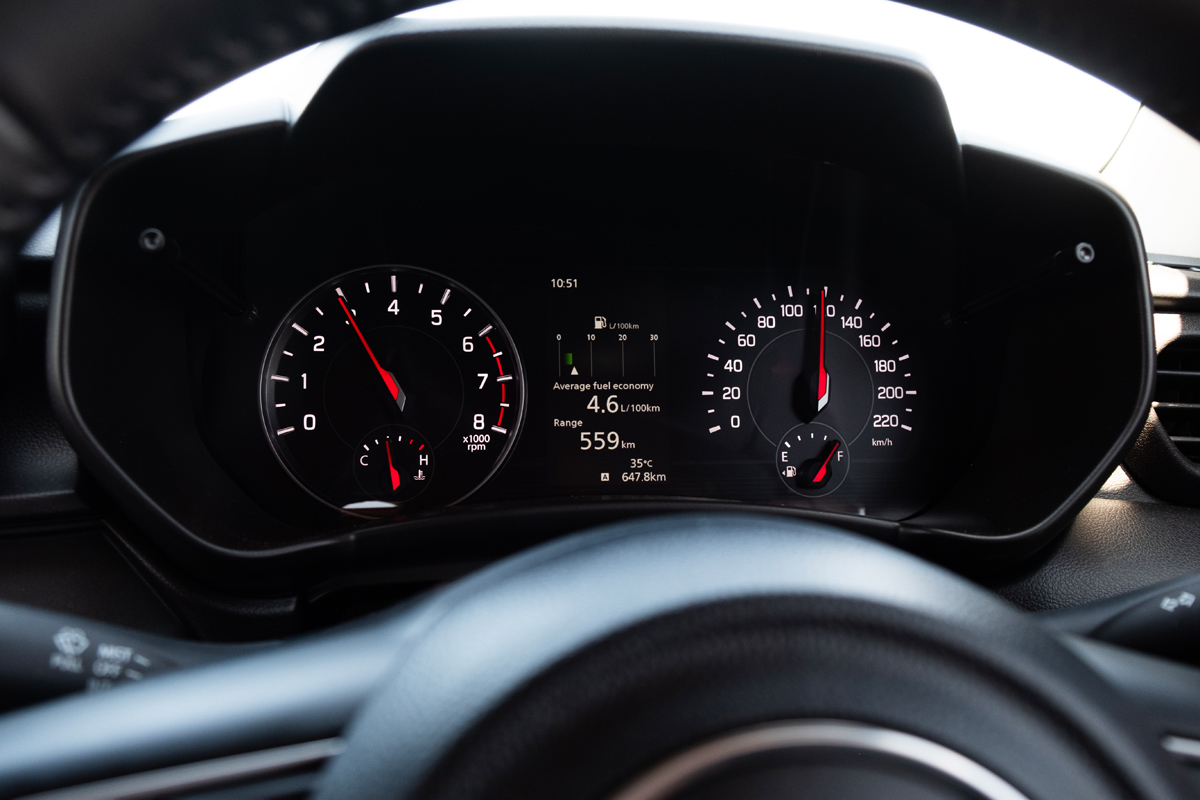
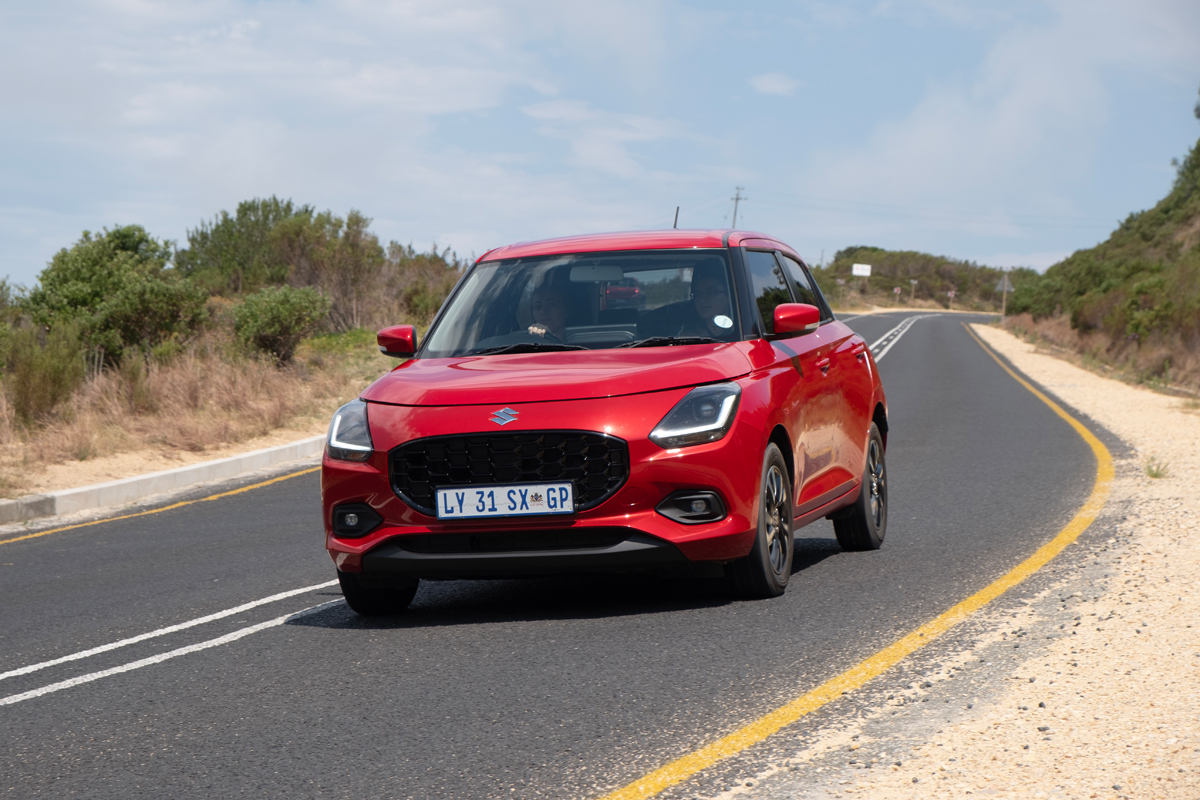
The result is a relaxed open-road cruiser. Fuel economy is another strong point. I set the cruise control on 125, allowing for some speedo error and over the course of our trip to and from Cape Town the Fronx averaged 15,5 k’s per litre. We arrived in Laingsburg in the late afternoon and started making some calls for accommodation. We didn’t want to stay in town but favoured a farm stay of sorts. Oh boy, did we strike it lucky! We came across a spot called Paardefontein Karoo Stay on Bookings.com. The turnoff is between Laingsburg and Matjiesfontein. We got explicit directions, which was just as well as there are a few junctions, farm gates and splits in the road to negotiate. The road is best suited for high clearance vehicles, with a “twee spoor” track to the accommodation.

Photo credit: Dave Cilliers / ZA Bikers

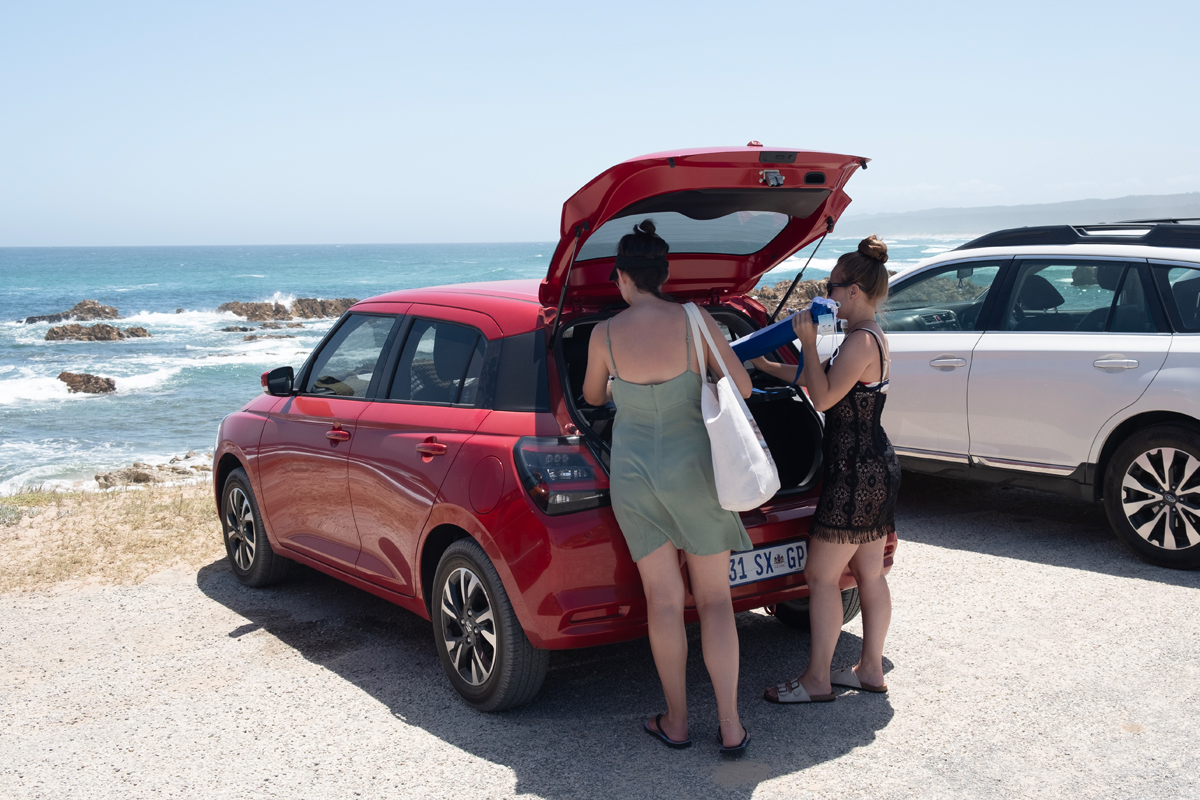
Irene had a bit of a sense of humour failure with her car traversing what she termed a “goat track”, but in reality, it just required exercising a bit of care and driving slowly. The distance from the tar was a bit more than we had anticipated, probably almost 20 k’s, but the Fronx made short work of it. The ride height of 190 mm proved a boon. The karoo vistas were truly spectacular. When we got to the accommodation we parked in a carport and then walked along a pathway for maybe 200 metres to a stunning cottage. Nestled against the hillside it has a magnificent view of the surrounding koppies, which, when we got there were painted gold by the setting sun.

Photo credit: Dave Cilliers / ZA Bikers

We plonked down our bags, poured a couple of whiskies and just soaked in the serene setting. A cool breeze had sprung up and the advancing chill eventually drove us inside. The cottage is comprehensively equipped with all you need to be comfortable. We had a leisurely dinner, eating chicken salad picked up in Laingsburg on our way through. It is hard to explain the tranquillity which seeps into your soul when you spend time in the karoo. The deliciously fresh air, the unique flora, the wonderful vistas and the magnificent late afternoon and early evening glow create an ambience which is a salve for the soul.

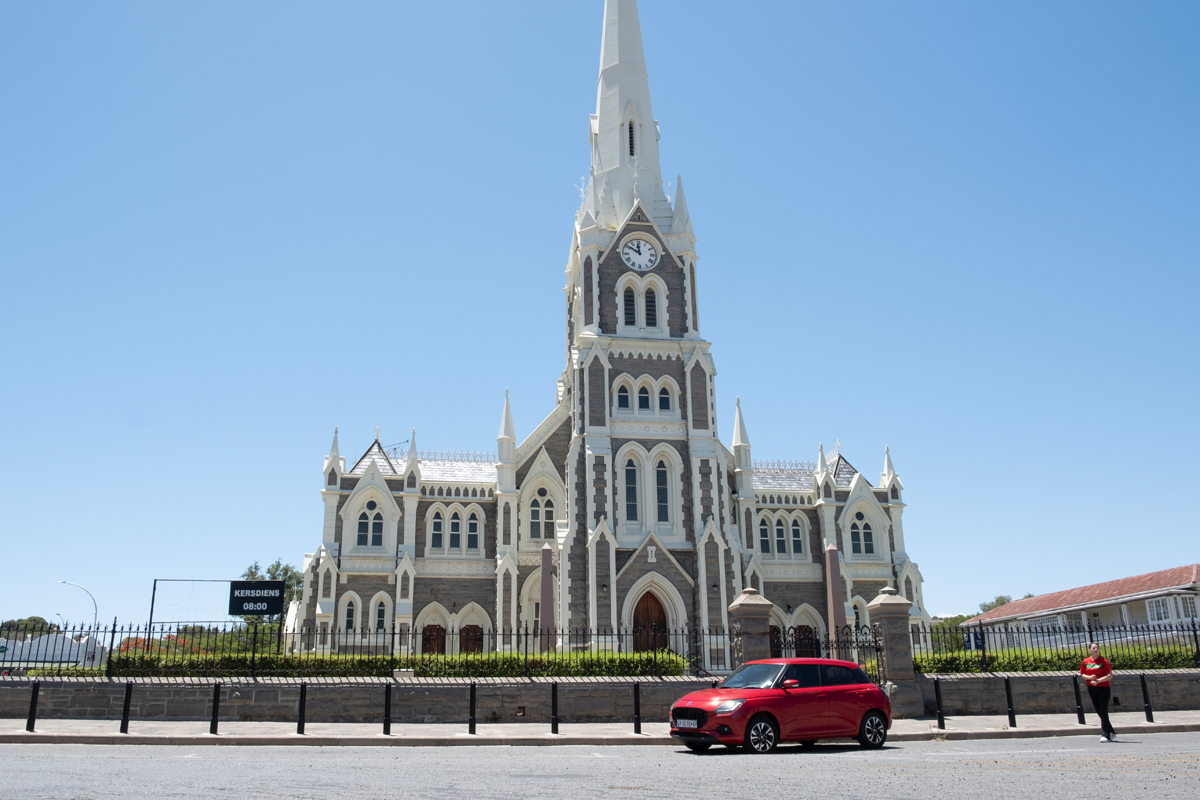
We slept well in the comfortable and cosy cottage (which accommodates two adults and two children) and woke to another beautiful karoo morning. There was nary a cloud in the porcelain blue sky, and we sipped coffee on the stoep, revelling in the early morning chill, enjoying the golden hour as the rising sun painted the karoo in all its glory. It was with some reluctance that we packed up and took a slow drive back to the N1, stopping once or twice for photos of the Fronx along the way.

Photo credit: Dave Cilliers / ZA Bikers

We stopped for a coffee and muffin in Touws River and reflected on our serendipitous “find” in Paardefontein Karoo Stay. Over the years of road-tripping, we have rarely booked but rather take our chances along the way. Whilst it has added immensely to the adventure it has also revealed a few gems. None more so than Paardefontein. I had spoken to Peter McMillan, the owner of Paardefontein on our way there the previous evening, somewhat exasperated by the distance from the N1 as well as by the state of the road. I phoned him to tell him how we had enjoyed the stay and to apologise for my grumpiness. I spoke to his wife as he was occupied, and she shared that Bookings.com didn’t elaborate sufficiently and that they had taken them to task. If you have a suitable vehicle, adventure bike or a Fronx, hee hee, make this a must-do stopover on your road trip. You will not be disappointed. They have options for larger groups too.

Down the Hex River pass and through the beautiful Hex River valley, then through the Huguenot Tunnel and on to Cape Town, we went. This, my friends, is truly “the fairest Cape of them all”. The weather was stunning for the duration of our stay. Pleasantly mild but sunny with cotton wool clouds in a blue sky. We stayed with our friend Peter who has a magnificent home with views over Noordhoek beach and Ou Kaapseweg. A perfect spot from which to frequent Kalk Bay, Simon’s Town and its surrounds.

We had a great breakfast at the Simon’s Town Yacht Club catching up with family. Well worth a visit if you have not yet been there. We also travelled through to Somerset West to visit Penny Sterley at her new Vespa Dealership, where she has now added Lambretta’s to the mix of cool scoots that she rents out and sells. The peninsula and surrounds are best explored on two wheels as the traffic is then totally negated. As already documented in another blog, we spent a stunning morning on a Royal Enfield Himalayan 450. Like a good boy scout, we were prepared and had brought riding gear along for just such a possibility.

Photo credit: Dave Cilliers / ZA Bikers

All too soon it was the end of our visit, and we tackled the long road home. The Fronx made short work of the 1000 k’s to Bloemfontein where we overnighted at Tom’s Place, about 40 k’s before Bloem. Cheap and cheerful and old school, we enjoyed a pleasant evening before resuming our journey home. On reflection, the Fronx delivered on all fronts. It is a wonderfully efficient daily driver, negotiating city sprawl without fuss or bother. What we learned on our trip is that it also doubles as a supremely reliable, comfortable, spacious and economical tourer. The X in Fronx is not just for show. It made short work of the “goat track” to Paardefontein and was sure-footed through the mountain passes. Irene reckoned that when we got home it would be bragging to its Jimny stable mate about its off-road prowess! Once again Suzuki has knocked it right out of the park with a car that offers brilliant value for money and delivers a good driving experience! Good job!

Photo credit: Dave Cilliers / ZA Bikers

Eswatini Ubuntu Ride

Swazi Boyz were the organisers of the event. The large fellow third from the right is named Bonecrusher!

I must have been in a coma for a decade. Until a month ago I had never heard of the Ubuntu Run even though the first run was held in 2015. I’m a member of a WhatsApp group, Moz/Swazi Sun Riders and one of the members posted the Eswatini Ubuntu Run flyer on the group. I spoke to my friend Carlos Paiva, convenor of the Swazi Rally, and we agreed to ride together. Done deal!

Eswatini Ubuntu Run flyer.

The Ubuntu Run was the brainchild of Rod McBride. The intention was to connect diverse groups of bikers who might not usually ride together. Ubuntu means “I am because we are” and embodies virtues like compassion and humanity. The idea caught on and from small beginnings, the Ubuntu Run is celebrated in nineteen African countries, in Portugal and the USA.

Francesco’s collection of Ubuntu badges.

On Saturday afternoon I rode from Nelspruit to Eswatini via Barberton, Badplaas, Lochiel and Oshoek Border Post. The border crossing was swift, painless and short before long I was flying down the magnificent sinuous two-lane blacktop that runs from the border to Mbabane. Near Manzini, I rode south and pulled into Riders’ Ranch for the weekend as the guest of Carlos and Sonia.

Sunday was a perfect day for riding. We rode to Matsapha Inn, the starting point for the run. The parking lot started to fill up as the Swazi clubs rode in: King’s Brigade, Hyena, Swazi Boyz, Harley Boyz, and Macs. Many of the Swazi guys were on litre-class superbikes, mainly BMW S1000RR, and all of them were without number plates. Seems the Swazi cops have a very relaxed attitude towards bikers. There was a big contingent of Mozambican bikers who rode in from Maputo. It was good to meet them face to face having only connected with them on WhatsApp before.

The ride began just before 10:00. 111 bikes left Matsapha Inn on a 200km lap. For the first 100km, we followed roads I had never ridden before. Eswatini has had excellent rains. The rivers were flowing strongly and the countryside was a patchwork of lush green meadows and eucalyptus plantations. We regrouped at the crossroads at Gege. Like an idiot, I hadn’t filled up that morning and I wasn’t sure I would make it to Nhlangano. There was a derelict fuel station at the crossroads. Half the roof had collapsed and the other half looked very dodgy. But the fuel pumps were still there. I’m an optimistic fellow so I rode in but it was obvious the pumps hadn’t worked in years. And then Sylvester appeared bearing a five-litre bottle of 95 octane. While he decanted the precious fuel into my bike he gave a well-rehearsed speech about how he was looking for a business partner to invest in re-opening the garage. I politely declined.

Carlos and I left Gege ahead of the pack and rode the brand-new road to Nhlangano. The road had been open for less than a year and was in immaculate condition. From Nhlangano I was back on familiar roads riding north in the valley of the Mkhondvo River. I always stop on a low-level bridge over the river and this ride was no exception. In previous years the river flowed gently through the pipes under the bridge but this time there was a deluge roaring through the pipes. We rode down the valley and ten kilometres from Riders’ Ranch the TFT screen on my GSA went blood red. I had ridden over a roofing screw which made such a big hole that the tyre deflated instantly. I always carry a tubeless tyre puncture repair kit but the tyre was so flat that it was impossible to insert a plug and the hole was so big that a CO2 bomb rushed straight in and straight out. I limped back to Riders’ Ranch. Carlos continued back to Matsapha for lunch at the end of the ride. I stayed behind with my wounded bike. Later that afternoon Carlos’s factotum Nene inflated the tyre with a compressor and plugged the hole but by now it was too late to ride back to Nelspruit which wasn’t a problem. I’m retired so one day is just like any other.

As things turned out it was a good thing I didn’t ride to Oshoek on Sunday afternoon. There was a monumental catastrophe up at the border post. A 26-wheel, 50-ton, coal carrier interlink lost its brakes on the steep downhill to the border post. The juggernaut demolished buildings destroyed sixteen cars and dumped its load of coal before grinding to a halt. Miraculously nobody was killed. On Monday morning the border post was back in action even though all the staff still had startled expressions and big eyes from the drama of the previous afternoon. I retraced my Saturday route and once I was through the border I was home in under two hours.

That was my first Ubuntu Run and it won’t be my last. I met many new friends and travelled new roads. And that’s what biking is all about, the road, the ride and the brothers. Roll on Ubuntu 2026.

Hanging with my Eswatini homies – Howie, Carlos, Nhlanhla, Francesco.

Putting The BMW R 1300 GS To The Test

Photo credit: Bjorn Moreira / ZA Bikers

Nothing in this world can be allowed to stand still; in the motorcycling world nowhere more so than when it comes to the development of adventure bikes. With so many impressively accomplished adventure bikes on the market, the bike that arguably started the whole trend, the BMW GS, has had to hustle in recent years to keep up. Even being outshone by certain manufacturers has never harmed sales nor, it has to be said, the ability, of the GS but, clearly, BMW engineers have felt the need for a complete rethink of the model, perhaps the most important of the bike’s life.

There have been several ‘problems’ facing the GS – losing out in the power stakes and an ever-increasing weight and bulk being the two main issues – although it could be argued that only the latter problem was one that urgently needed to be addressed. In chasing the power outputs of KTM, Triumph and Ducati, BMW has entered a battle it cannot possibly win as long as it sticks to the boxer-twin engine. In that case, you could ask, ‘why bother chasing more power?’ The idea of 160-180bhp in an adventure bike is frankly ridiculous so would BMW have been better concentrating on weight and bulk and gaining performance that way?

Photo credit: Bjorn Moreira / ZA Bikers

Whatever your thoughts, the R 1300 GS is here, with more power, less weight and bulk and more electronics than you can shake a stick at. There’s also an extensive list of options and a healthy new price tag, even before you start looking at the options list.

So, has it worked and, more importantly, is it worth the money?

Make no mistake, this is still a GS, it’s just that it is more compact, more powerful, lighter, slightly more refined, better-equipped (if you break the bank with the options list) and possessed of a new-found ability and agility that enables it to be more things to more people than ever before. If anything, the GS was always successful and a great ride no matter how it lost out to its rivals in various departments. The great thing about the GS was that it was always such a good all-rounder and the new R 1300 GS takes that quality and builds on it in an impressive manner.

Photo credit: Bjorn Moreira / ZA Bikers

The R 1300 GS really is all-new. The tubular steel chassis has been replaced with a steel monocoque shell that uses the engine as a stressed member. The suspension – Telelever at the front and Paralever at the back – is familiar but has been completely reworked to be lighter and stronger. The subframe is now a cast aluminium affair which raises a question about its ability to withstand serious accident damage; at least the previous tubular subframe would bend and be easy to weld up in an emergency but can you say the same about cast aluminium?

If the R 1300 GS still looks like a big bike well, yes, it is, but looks can be deceptive as, in every measurable parameter, the GS now lighter, slimmer and much less bulky. The fuel tank has one litre less capacity and sits lower, making the riding position feel even more spacious although it’s still not a bike for small people, despite the self-lowering suspension (an option, of course!). Personally, I found the foot pegs set too far back, meaning the feet are folded back under your bum but perhaps a month or two of getting used to the position would help.

Photo credit: Bjorn Moreira / ZA Bikers

Despite the new chassis structure, those riders familiar with GSs of old will feel immediately as if they’re in familiar territory, with an unmatched feeling of stability and balance and, if the semi-active electronic suspension option is ticked, superb ride quality with, at times, an almost magic carpet feel to the ride. The agility has been enhanced and it remains one of the most fun bikes to throw around on a twisty road.

This has to be thanks to the revised suspension, in which the electronics not only adjust the damping while on the move, but also the spring rate at the front and rear. This means that the ride can be as plush as you could ever need it to be but, when you’re in the mood and you change the electronics to a sportier mode, extra springs located in the piggy-back shocks come into play and stiffen things up when you want to get a move on along a twisty road. The rear suspension is self-levelling and will drop by 30mm when at rest as a concession to shorter riders.

Photo credit: Bjorn Moreira / ZA Bikers

In line with any modern bike, there is nothing to worry about in the braking department, with new front calipers and slightly larger front discs giving all the stopping power and control you could ever need.

Photo credit: Bjorn Moreira / ZA Bikers

Aside from the new structure, the other big news is the engine. With a slightly increased capacity to exactly 1,300cc, from 1,254cc, this is now BMW’s most powerful production boxer twin. More importantly, the torque curve has been flattened even further than it already was to give more torque all the way through the rev range. Figures of 143bhp and 149Nm of torque are impressive but you have to ask how far can BMW push the design in the face of rivals’ power outputs? More pertinently, is there any point chasing any more power if it means over-stressing the engine?

The cylinder heads utilise BMW’s Shiftcam variable valve timing technology to enhance low-rev torque and higher rev power. I found the engine to be mechanically a lot noisier than ever before, especially from the cylinder heads, which detracts slightly from the improved performance. As ever, the exhaust note isn’t particularly distinguished, remaining a drone that experienced GS owners will be familiar with.

Photo credit: Bjorn Moreira / ZA Bikers

What isn’t in question is the performance provided at any speed, in any gear. If it lacks the ultimate fireworks of the KTM 1290 or the Ducati Multistrada V4, then it is by no means disgraced and offers more than enough performance. The engine is smooth and brilliantly flexible in any riding situation.

The gearbox quick-shifter works well although nothing is ever going to make the boxer engine gearbox change gears without a significant clunk between gears. It’s about the only old-fashioned thing about the bike as a whole.

Photo credit: Bjorn Moreira / ZA Bikers

The electronics are significant and there is a lot of adjustability available (depending, of course, on which boxes you tick on the options sheet when ordering your bike.) Thankfully, the dashboard interface is relatively intuitive to use, although I suspect that many owners will set parameters once and then forget them, unless they are particularly skilful off-road riders who can detect the difference between settings.

One useful feature is a rocker switch on the left-hand cluster that can be configured to adjust one thing on the fly; the electric screen (another option), traction control, damping, ride height or the heating.

Photo credit: Bjorn Moreira / ZA Bikers

The screen is much smaller than before but, in its highest position, works extremely well, allowing the rider to ride with the helmet visor open with no wind blast on the face.

Performance is effortless and the engine is remarkably smooth. There’s so much torque everywhere at any speed and it really doesn’t seem to mind being lugged along slowly in a higher gear. Only time will tell if the engine can continue the reputation for reliability enjoyed by previous models.

Photo credit: Bjorn Moreira / ZA Bikers

The KTM 1290 Super Adventure R might be marginally better off-road and the Triumph and Ducati better road performers but the BMW remains what it has always been, a brilliant all-rounder capable, in the right hands, of some incredible technical off-road riding feats, never mind impressive mile-eating touring capability. There’s a lot of competition in the adventure bike market but the R 1300 GS can hold its own with any of them.

But hang on; in my humble opinion, the biggest challenger to the R 1300 GS is the R 1250 GS. Or even the R 1200 GS. Both of which can be bought with low mileage – and likely no off-road miles to boot – for less than half the price of a new 1300 with all the bells and whistles fitted. But – and here’s the rub – the 1200 and 1250 are nowhere near 50% less capable. If anything, the R 1300 GS is maybe 10 to 15% better but, at the price, it’s a lot of money for not a lot of gain.

Photo credit: Bjorn Moreira / ZA Bikers

What isn’t in doubt is that, in the R 1300 GS, BMW has successfully updated the GS theme with possibly the biggest advance in many years. It will sell like hotcakes around the world and be another huge success for BMW. What it also does is beg the question; how can you make it any better? Well, BMW has been doing that successfully for more than forty years and there’s no reason to believe that it won’t happen again in five or ten years. Whether a petrol-engined adventure bike will be relevant then is another matter entirely.

Team Green Opens 2025 GXCC with a Triple Victory

Image source: Kawasaki

Pepson Plastics Racing Kawasaki with Motul and Michelin enjoyed the perfect start to its 2025 Gauteng GXCC Cross Country Series season with a cracking performance at the Rysmierbult season opener on Saturday.

“Now that’s the way to open a new season!” Pepson Plastics Kawasaki team boss Iain Pepper explained. “We won three of the five classes we entered and the lads enjoyed a brilliant day in the saddle all around, our Kawasakis ran like clockwork and the entire team simply clicked back into action after the off-season.”

Image source: Kawasaki

Fourth overall, Cameron Becker rode his Pepson Plastics Kawasaki KX250X to a compelling OR3 class victory. Pepson Plastics Kawasaki Masters King Pieter Holl kicked off his championship defence with a dominant class victory riding his familiar Pepson Plastics Kawasaki KX450X. And young Jake Pretorius started his 2025 season with an OR4 victory on his Pepson Plastics Kawasaki KX250X.

“Congratulations also to the rest of the Pepson Plastics Kawasaki guys. To our team riders, Wian Wentzel, who was fourth in his OR1 debut and Jaycee Nienaber who had a steady run to seventh in OR1, Jayden Boyce seventh in OR3 Pro Am and last year’s 85cc South African champion Derek van Aswegen eighth on debut in OR3.

Image source: Kawasaki

Also to the rest of our brilliant team, well done one and all. “What more can I say than to congratulate our three winners and the rest of the team on an incredible performance, well done one and all,” Pepper concluded. “All the hard work, especially over the off-season has paid off handsomely and Pepson Plastics Kawasaki has started the 2025 season in perfect winning style!

Image source: Kawasaki

Liqui Moly Kick-Off 2025

Photo credit: Bjorn Moreira / ZA Lifestyle

Finding something you do today, something that you do well, and can give yourself credit for is a demanding task and most of the time, especially in today’s world, is not one’s priority. But who are we if we don’t have goals to work towards and what meaning does life have if we cannot enjoy our earnings and success—are we even allowed to give ourselves a pat on the back these days?

Photo credit: Bjorn Moreira / ZA Lifestyle

Thankfully, Liqui Moly South Africa understands that everyone needs a pat on the back, sometimes it’s just to help find your mojo or to help remind yourself that you are overcoming obstacles and fears and objections and also sometimes it’s a simple reminder that you’re getting the job done!

Photo credit: Bjorn Moreira / ZA Lifestyle

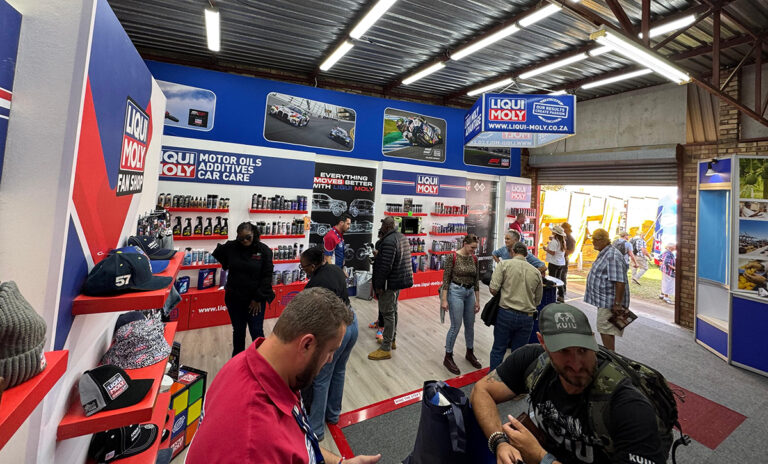
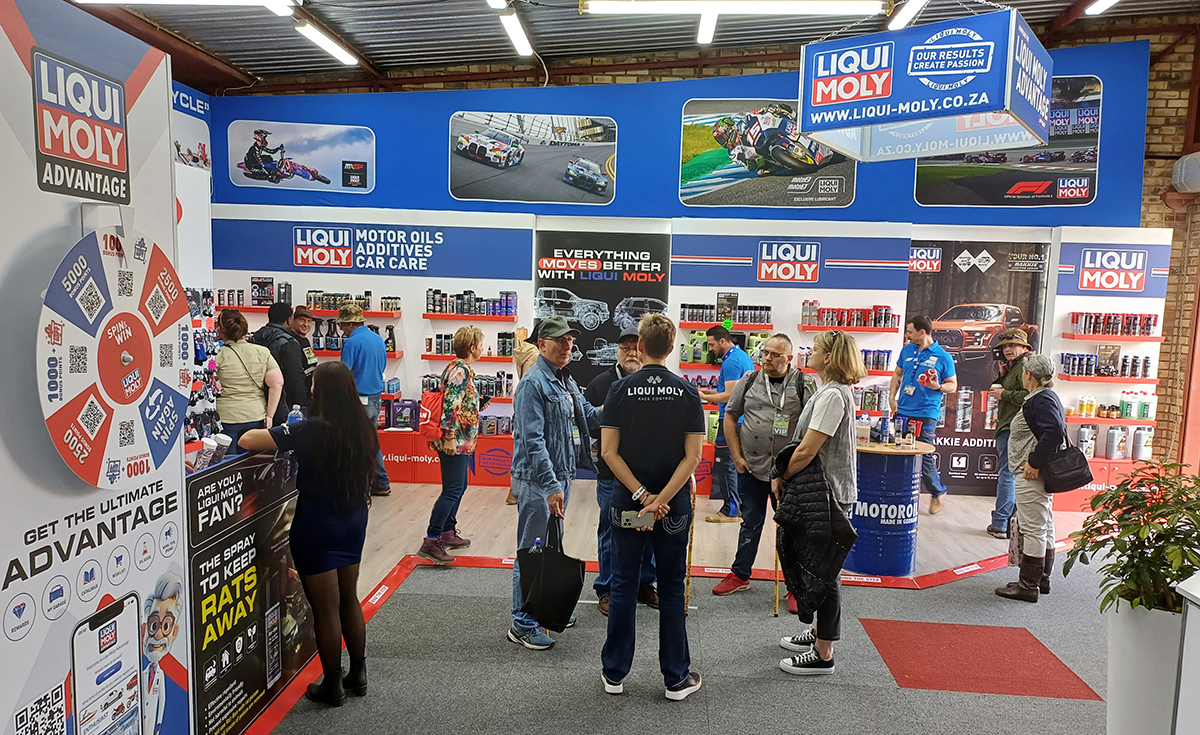
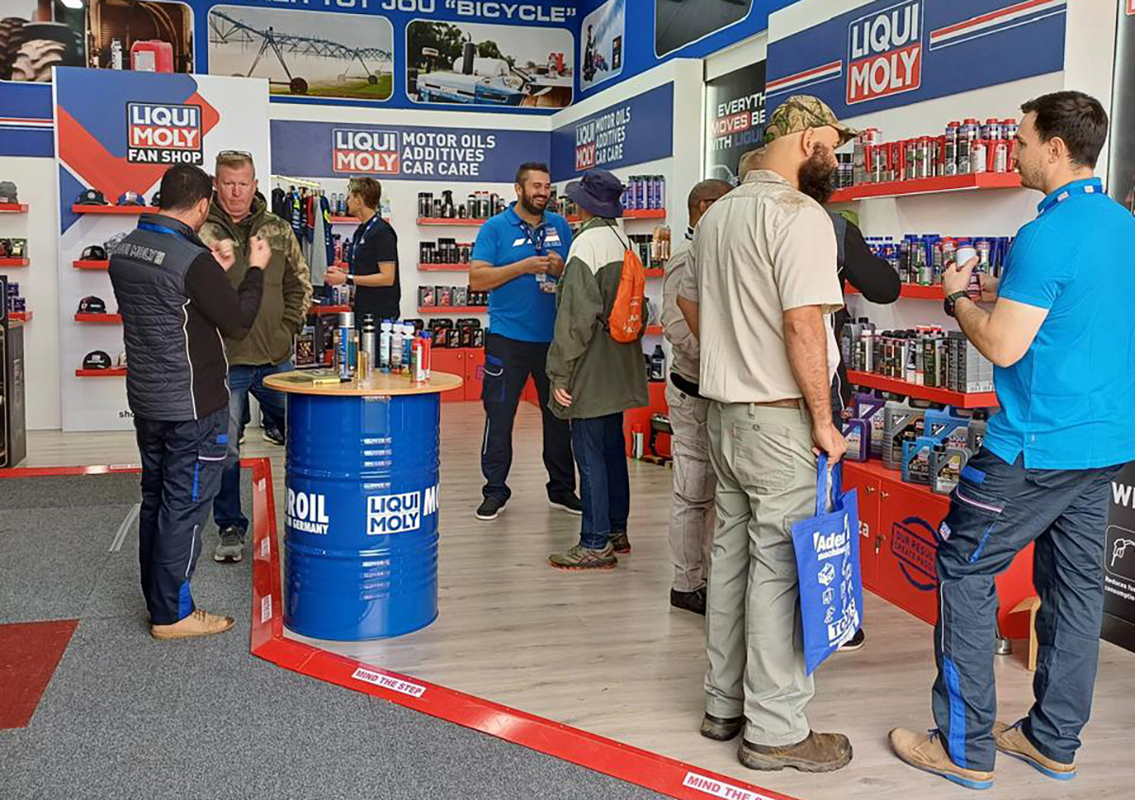
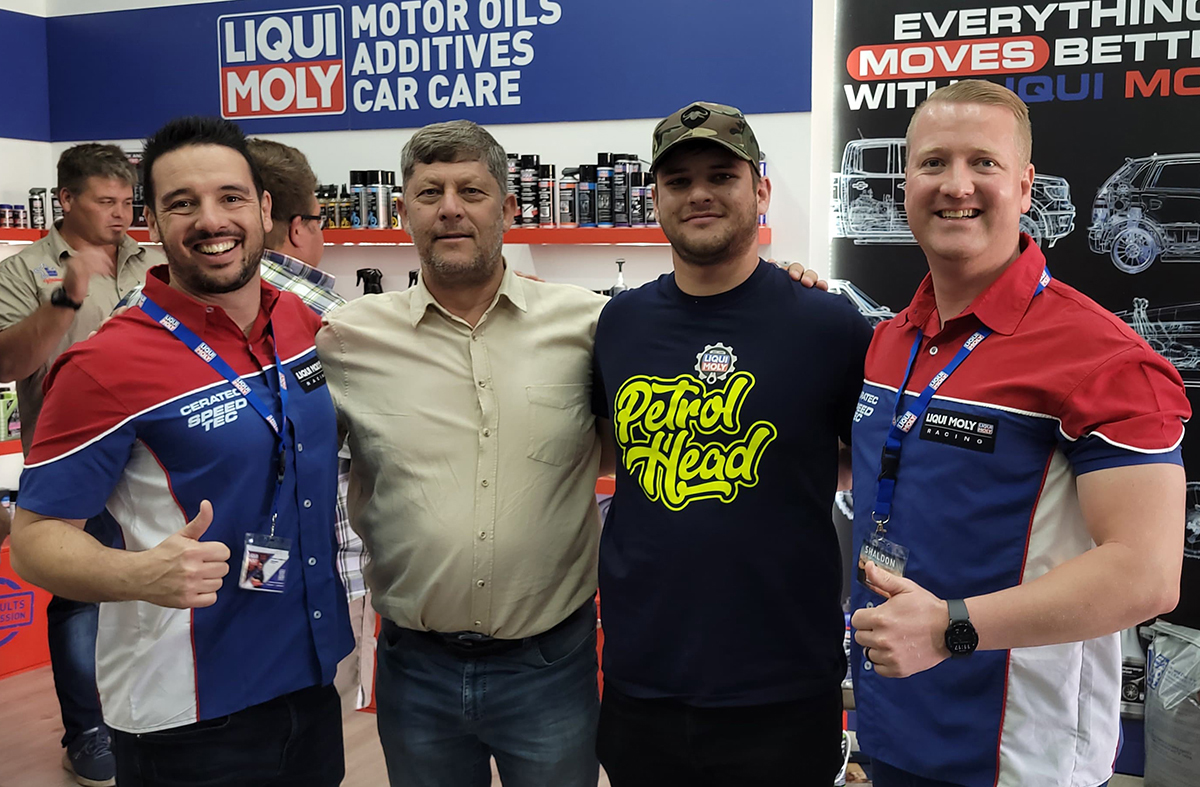
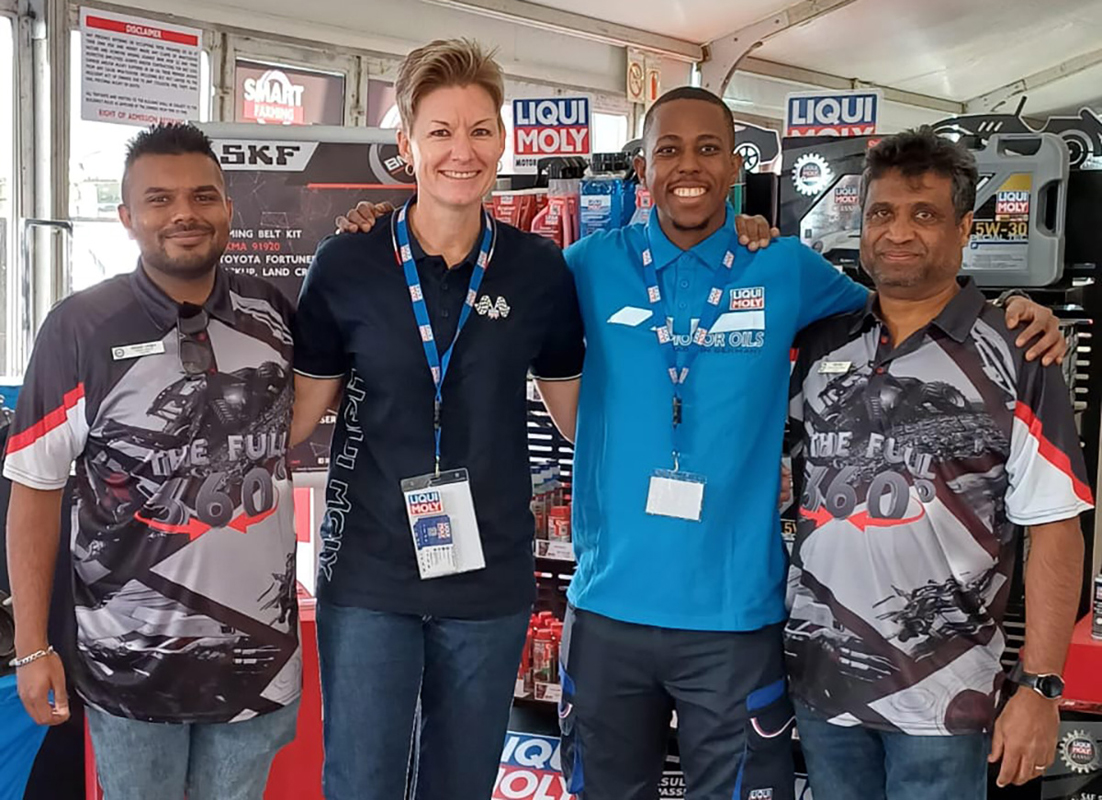
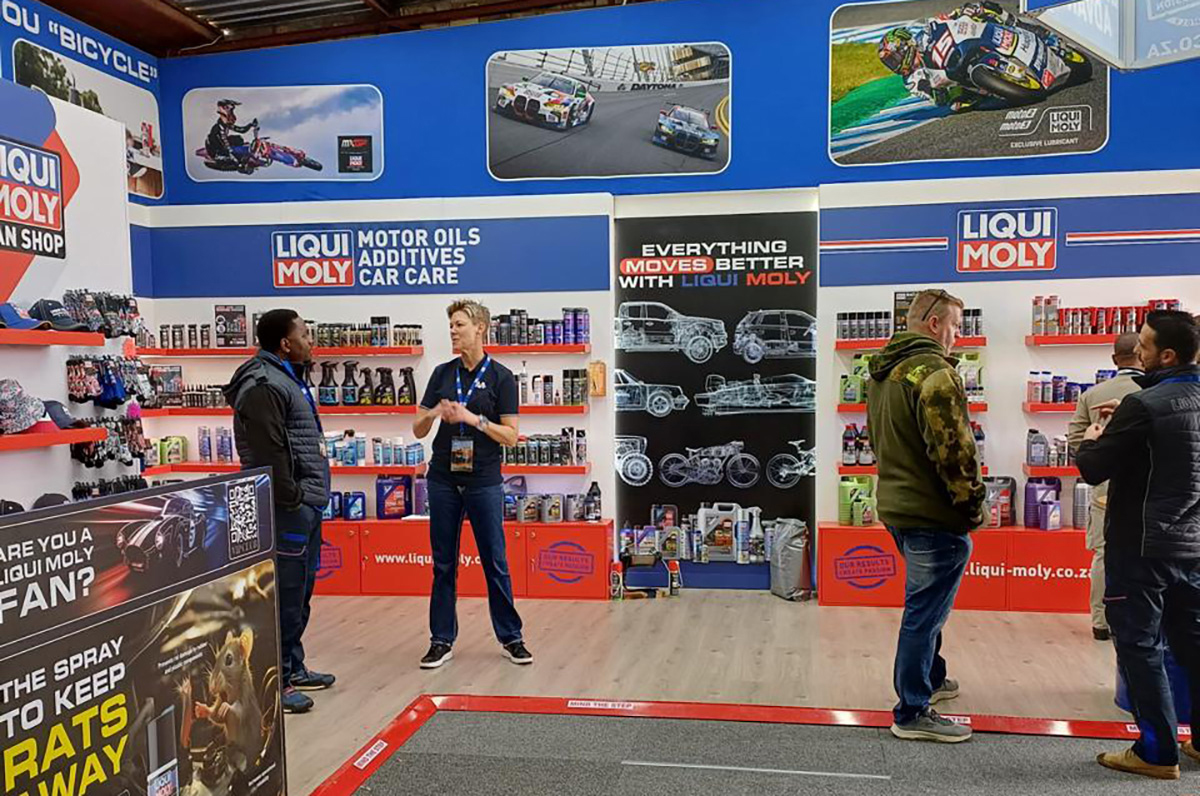
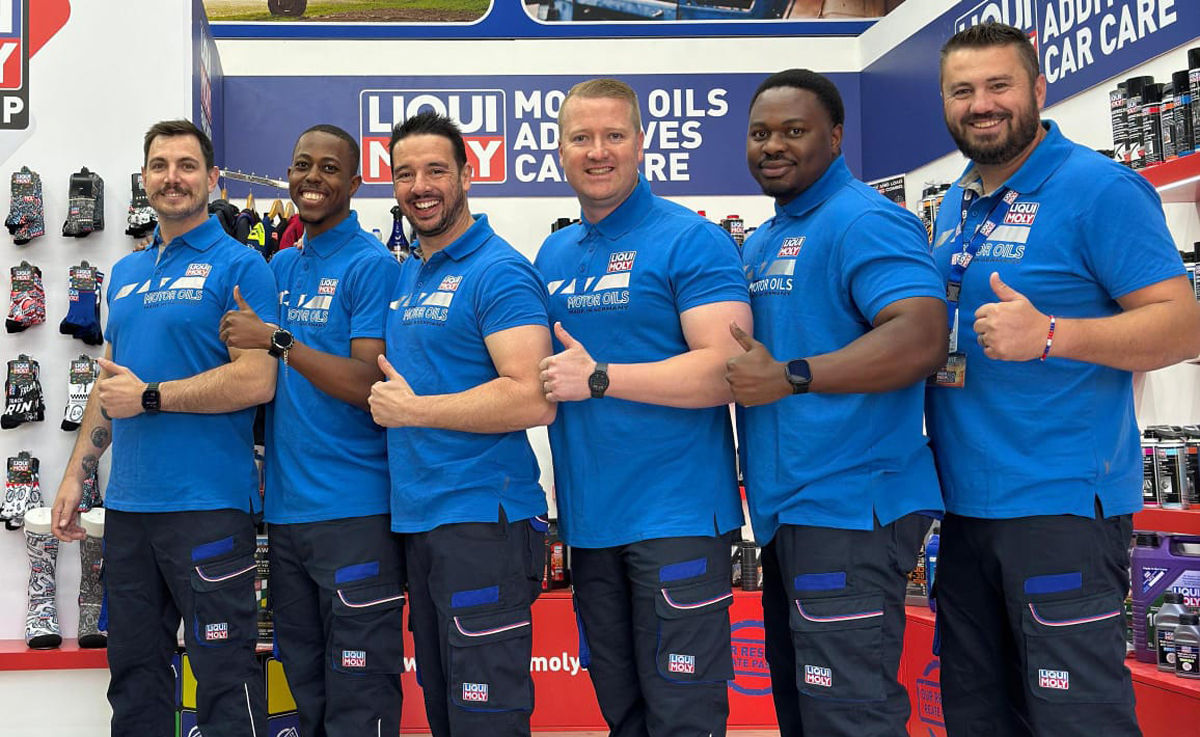
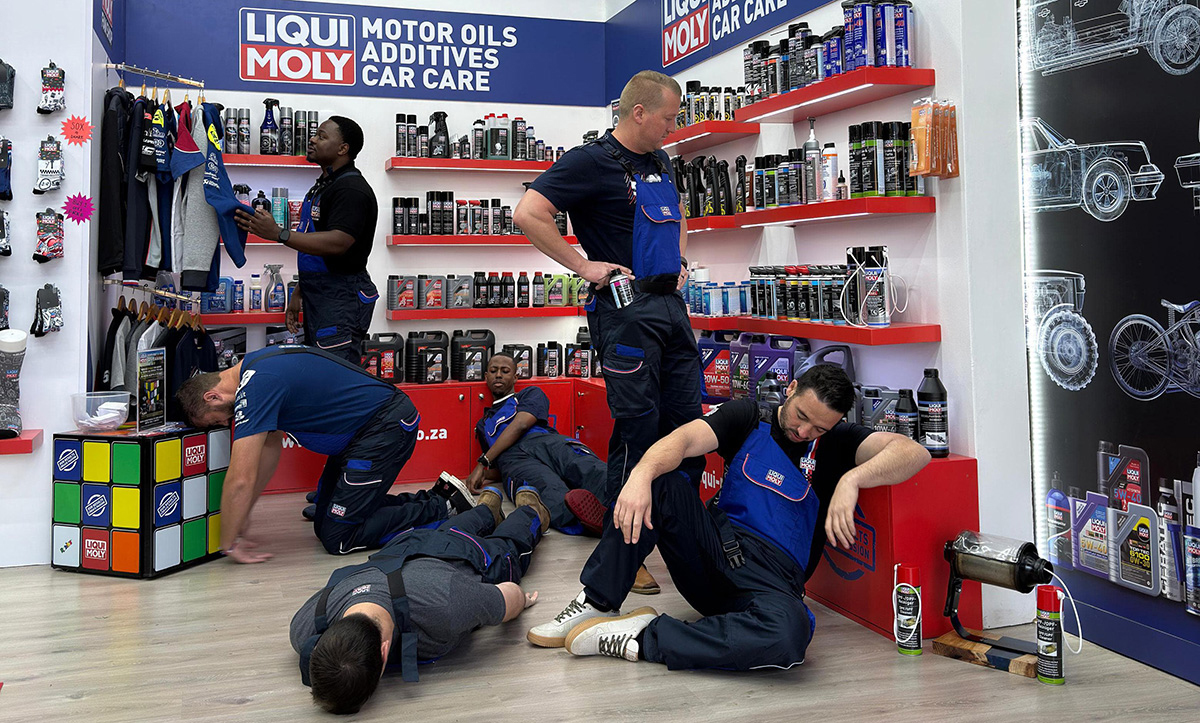
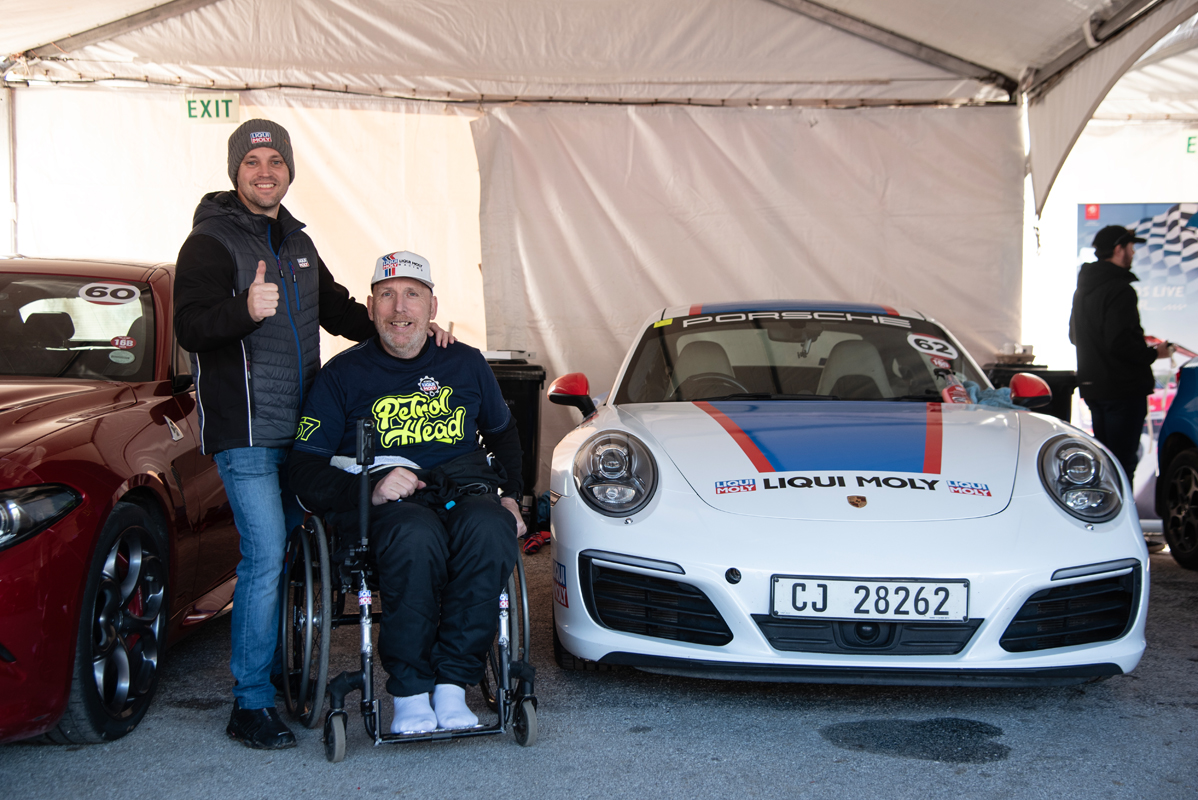
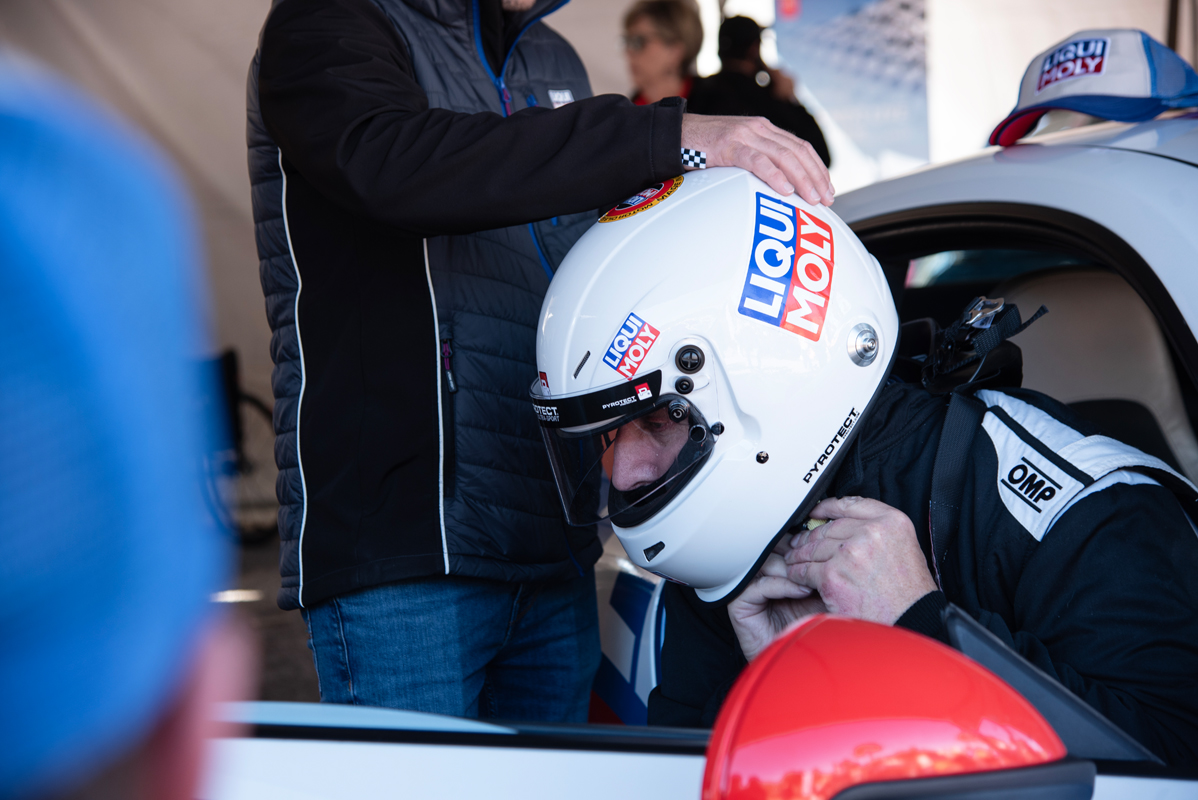
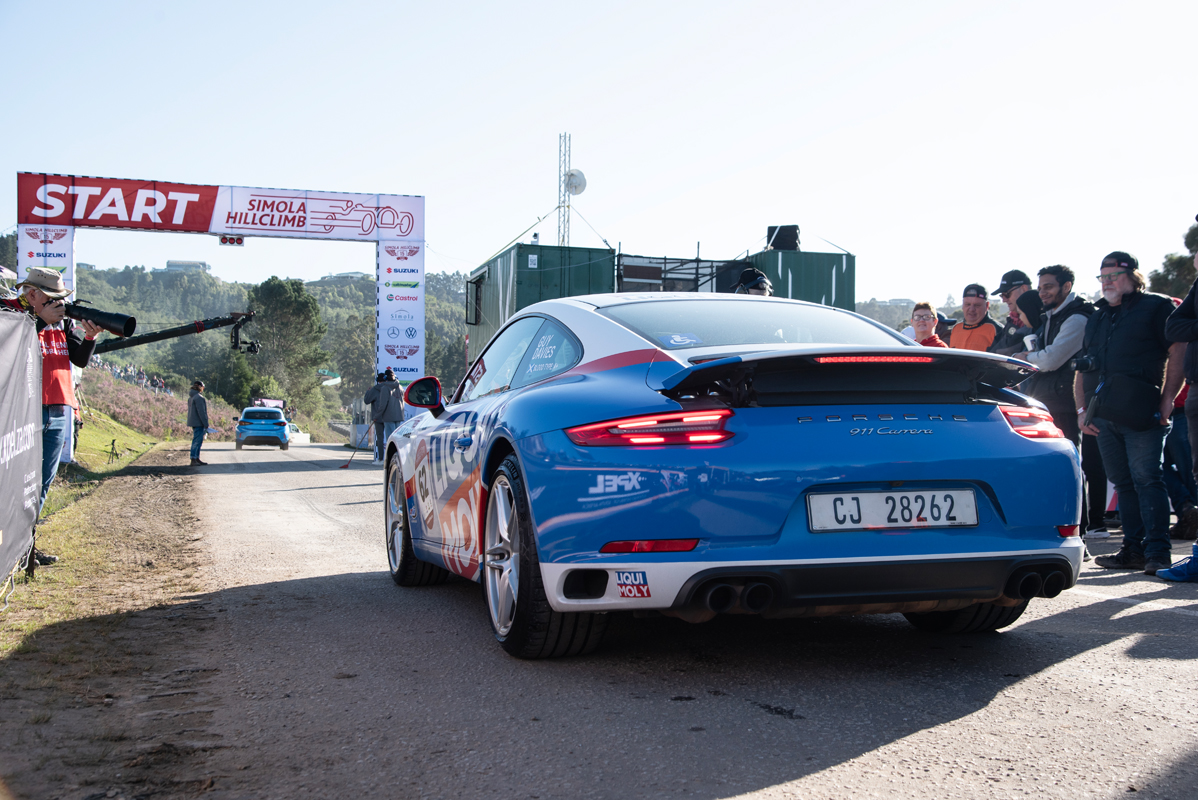
Every two years Liqui Moly likes to kick their year off with a select group of partners, supporters, and industry leaders. This year we at ZA Bikers received an exclusive invitation to the LIQUI MOLY Kick-Off Event—a prestigious gathering where passion met performance. We’ve worked with Liqui Moly for several years now both in the Automotive and the Lifestyle side and we’ve enjoyed building a strong bond with such a passionate brand, team and family.

Photo credit: Bjorn Moreira / ZA Lifestyle

The event took place at the notorious home of racing that is Ridgeway Racebar in Edenvale, this invitation-only event was an unforgettable evening giving everyone insight into “LM’s” strategy, celebration, and shared vision for the road ahead. I must say, LM turned Ridgeway into a second home base, it almost felt like you were walking into Liqui Moly’s head office. From 19:00 up until just after 21:00 LM celebrated benchmark after benchmark and also unveiled their 2025 plans to strengthen the partnerships that drive their success—it was a night that set the tone for another extraordinary year.

Photo credit: Bjorn Moreira / ZA Lifestyle

From our side, it was exciting to see Liqui Moly motivate their dealers’ sales teams through the Liqui Moly Advantage App, allowing each salesman to track their sales, unlock points to increase their knowledge through training programs and win prizes along the way. After the two-year mark, the best salesman in Southern Africa and Africa would receive a handsome prize of R100,000 for their efforts. This App is also available to the enthusiast which can help you find and research the products for your specific vehicle and potentially earn you enough points to join the VIP Club (this also comes with its benefits and prizes).

Photo credit: Bjorn Moreira / ZA Lifestyle

A hard-working employee Kaifo Amade from a dealer based in Maputo Mozambique by the name of AAGP (Auto Acessórios Grande Prémio) took the honours for best sales record in Africa recorded on the Advantage App. The smile said it all, Liqui Moly are empowering individual salesmen across all their stores and also lightening the load as far as “pats on the backs” and bonuses for the dealers across the country go. In SA, Goldwagen rounded off the top 5 retail stores with Alberton taking top honours and another top-performing salesman collecting his R100,000.

Photo credit: Bjorn Moreira / ZA Lifestyle

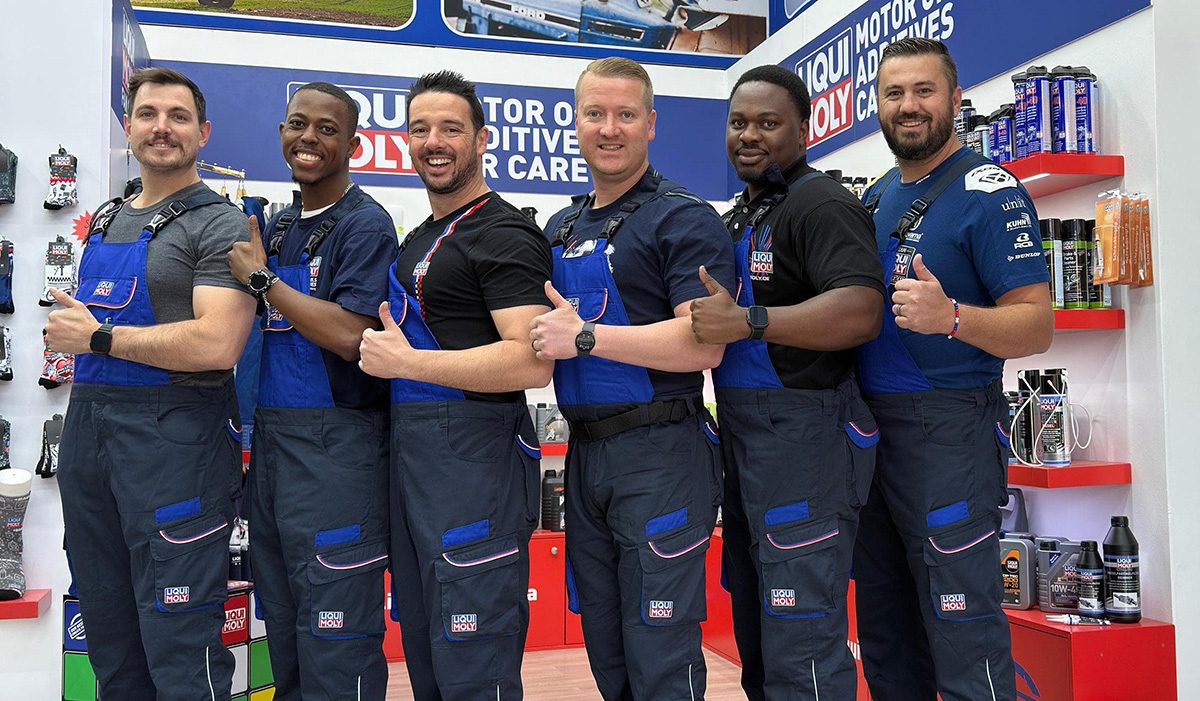
Liqui Moly welcomed a massive selection of sponsored athletes to the stage to say thank you for 2024 and a “let’s go get ’em” 2025. Two wheels, four wheels, pedal power and some young talent were also celebrated on stage. LM made it clear that they aren’t just involved in sports and sponsoring athletes for wins, but they are supporting people who are good brand ambassadors, those who can represent the brand well and show good sportsmanship.

Photo credit: Bjorn Moreira / ZA Lifestyle

Dealers, suppliers, media and athletes aside, Liqui Moly also highlighted their passion for education and giving back to the communities in need. The communities or charities that LM are passionate about are the Tshepang Programme for Orphaned and Vulnerable Children and the Bramley Children’s Home. The team are out there sweating, playing soccer, chatting with the kids and sharing words of motivation. Melicia Labuschagne (Managing Director Liqui Moly SA) and her team wanted to help these two heroes start the year on an up so R50,000 was donated to each cause.

Liqui Moly South Africa: “Here’s to pushing boundaries, fuelling passion, and showing both our partners — and our fans — the love they deserve in 2025!”

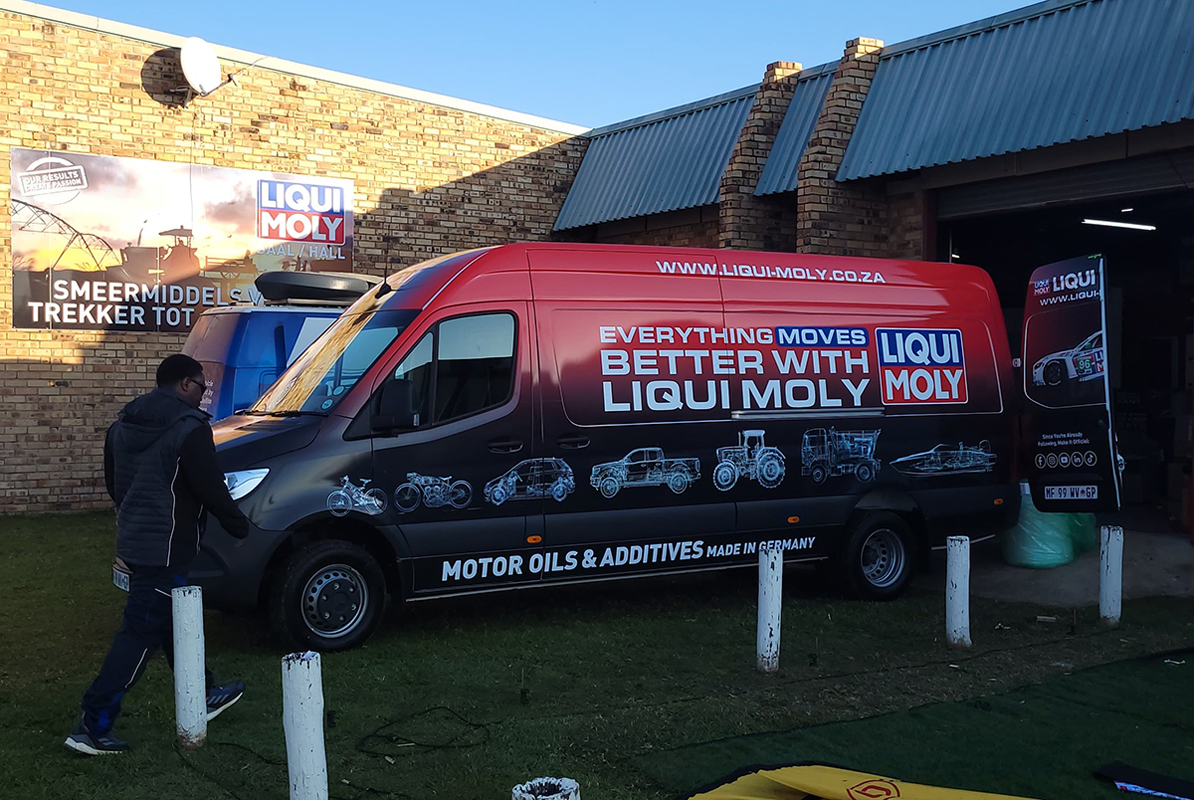
For more info on Liqui Moly products visit – www.liqui-moly.co.za

Ducati SA Now With The VW Group

Image source: Ducati

The next chapter in Ducati’s South African journey was written last night as Volkswagen Group South Africa officially took over responsibility for the importing and sales, including parts supply and servicing, of the iconic Italian brand.

Ducati has been owned by Lamborghini, itself a member of the Volkswagen Group, since 2012 so to bring the brand under that umbrella in South Africa is a logical step and should secure the future of the brand in this country for many years to come.

Image source: Ducati

Simphiwe Nghona, Head: Sales and Marketing at VWGA, said: “Ducati is a premium international motorcycle brand with a strong and proud heritage. Over the years, it has built a loyal and passionate client base in South Africa which our company is excited and looking forward to servicing from now on. We are confident that the current and future Ducati clients will positively benefit from our established sales and after-sales processes, as well as our dealer network.”

In a difficult time for the motorcycle industry in SA, VWGA is planning to grow the Ducati brand and broaden the client reach by integrating the Ducati brand into three dealer sites, which will be located in Gauteng, Western Cape and KwaZulu Natal. The current approved retailer in Gauteng (World of Motorcycles in Centurion) has been retained for the region. A new retailer in Cape Town, which is an existing Audi dealer, has been appointed. The plans are in progress to appoint a retailer in Durban for KZN.

Image source: Ducati

Nghona added: “We have set an ambitious growth target for the brand in its first two years of full operations under the VWGA stewardship. Our target is to achieve a double-digit market share in South Africa by the end of 2026 from the current market share base. The brand growth will be boosted by a range of exciting models which will be introduced in South Africa over the next two years.”

VWGA has appointed Tertius Cronje to head the Ducati Brand in South Africa. Cronje has 24 years of experience in the automotive retail business gained in the local and international markets. His experience includes 10 years in the motorcycle retail business.

Image source: Ducati

“South Africa is the ideal environment for our motorcycle range, either for track use, twisty roads or gravel. I am sure that this, together with the passion and professionalism of our new partner, Volkswagen Group Africa, will allow us to provide great experiences to our Ducatisti, allowing us to expand our presence in the country and get closer to their needs, also considering that in the country there are some of the greatest collectors in the world of special cars and bikes,” commented Francesco Milicia, Director: Global Sales & After Sales at Ducati Motor Holding Spa.

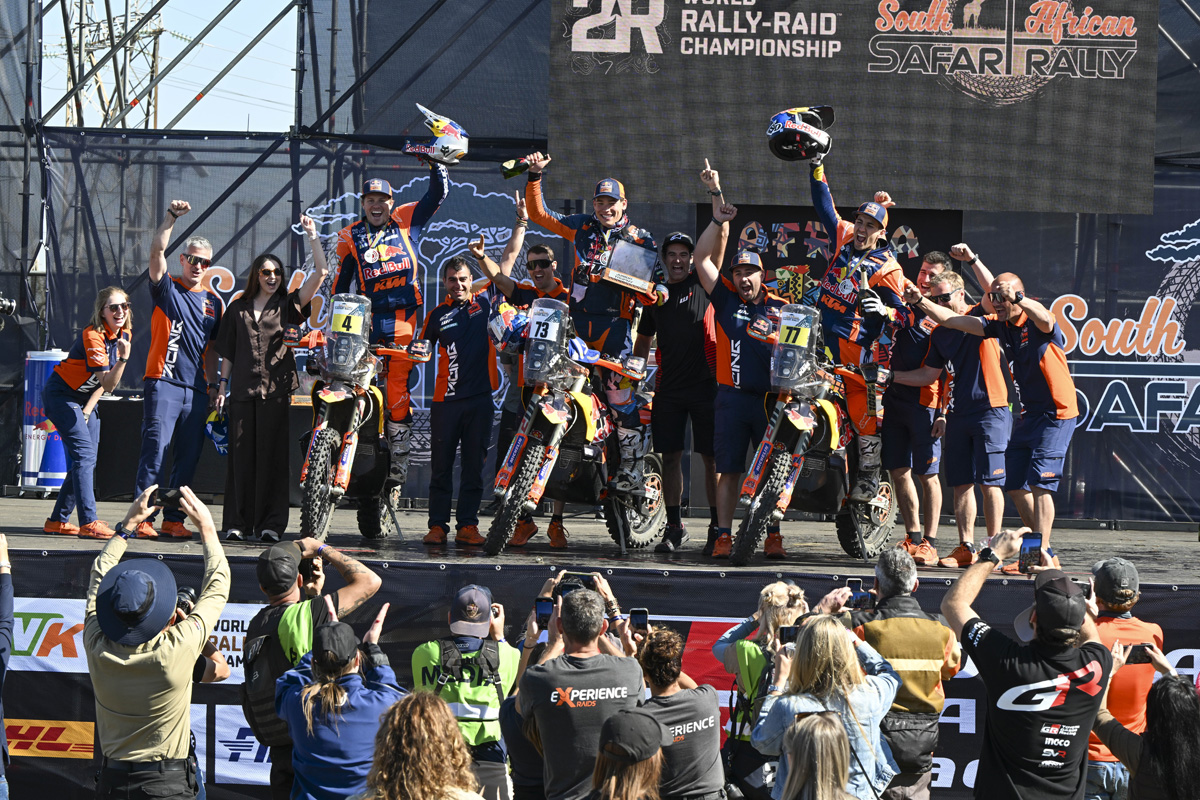
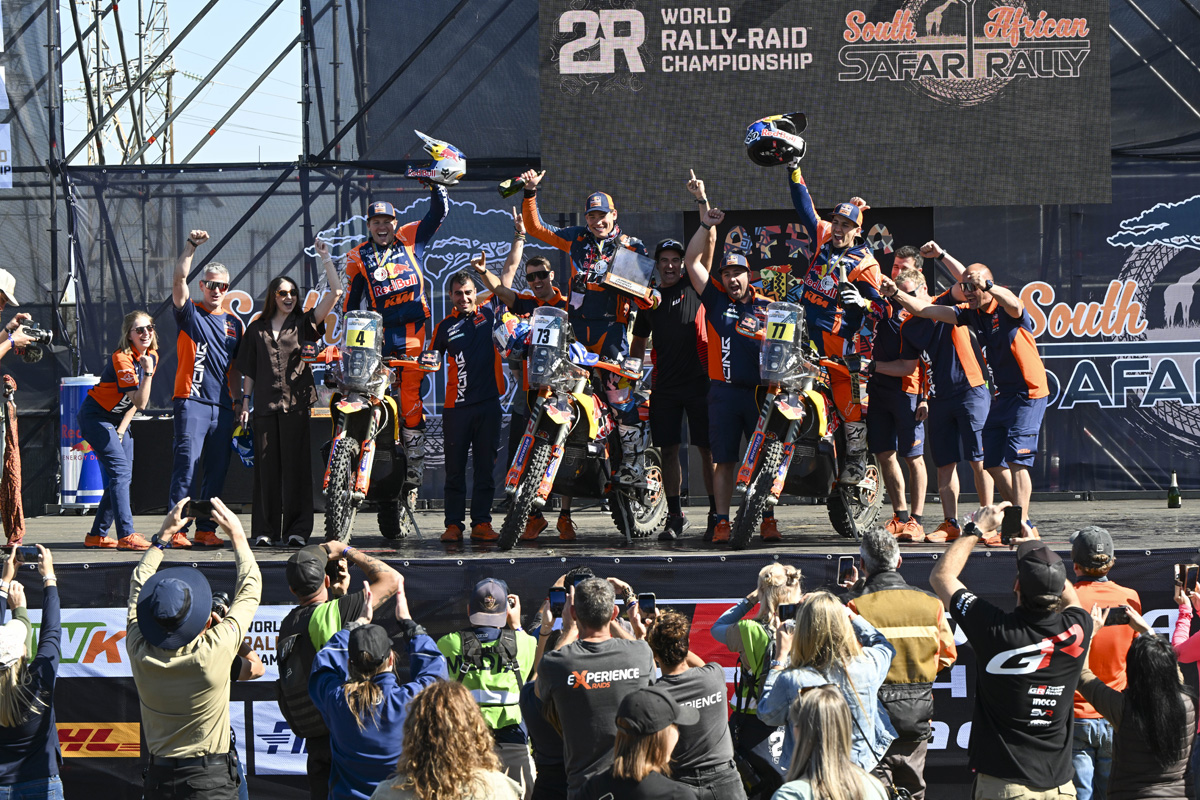
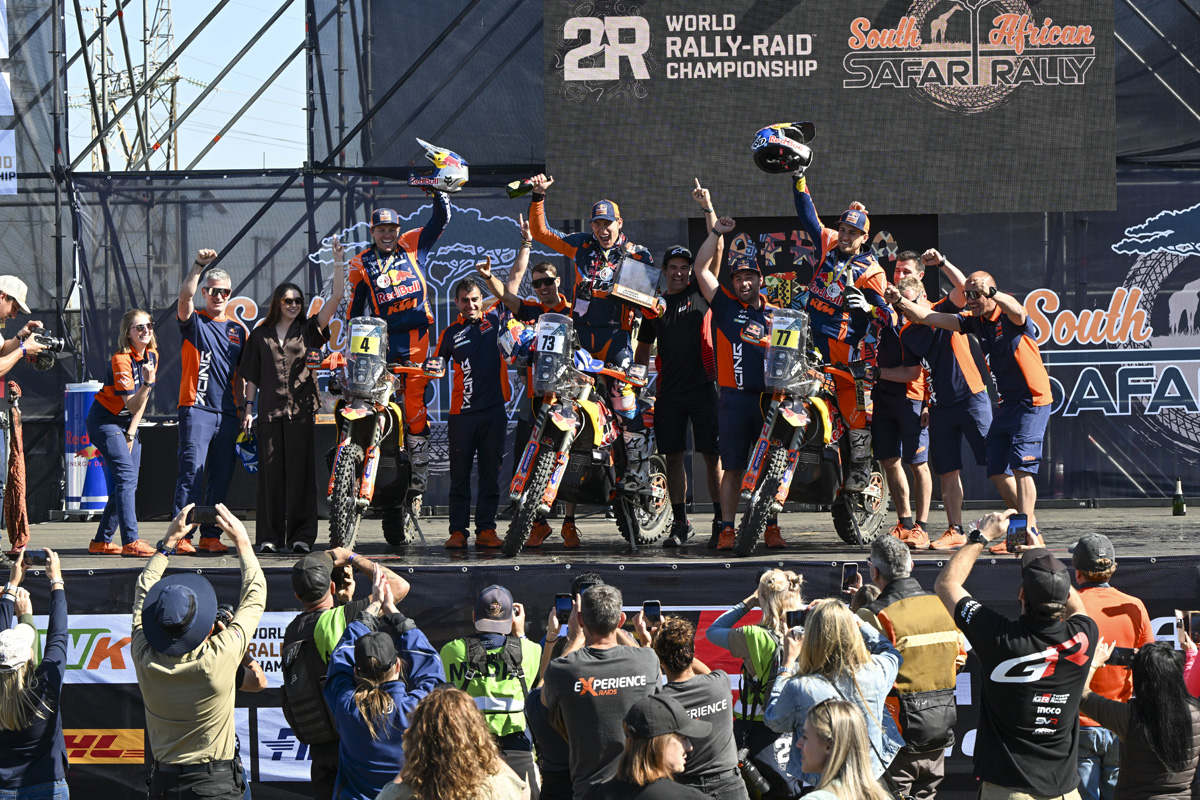
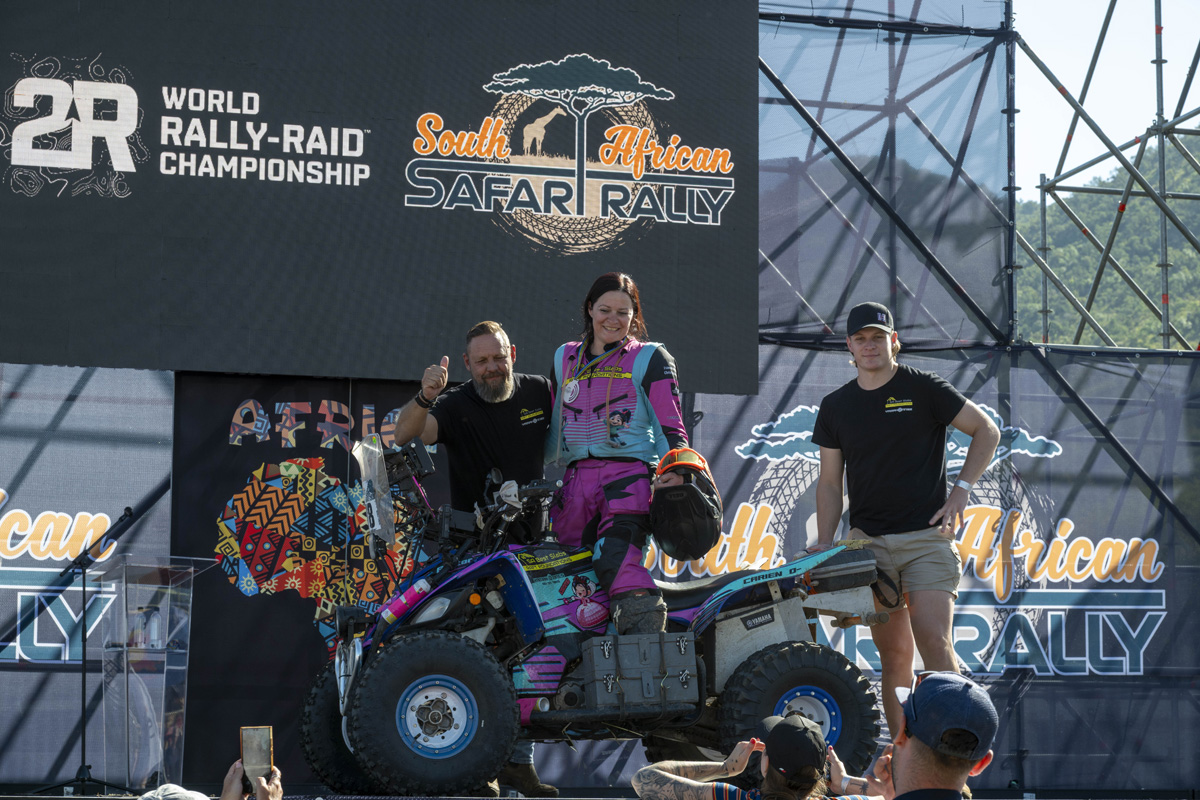
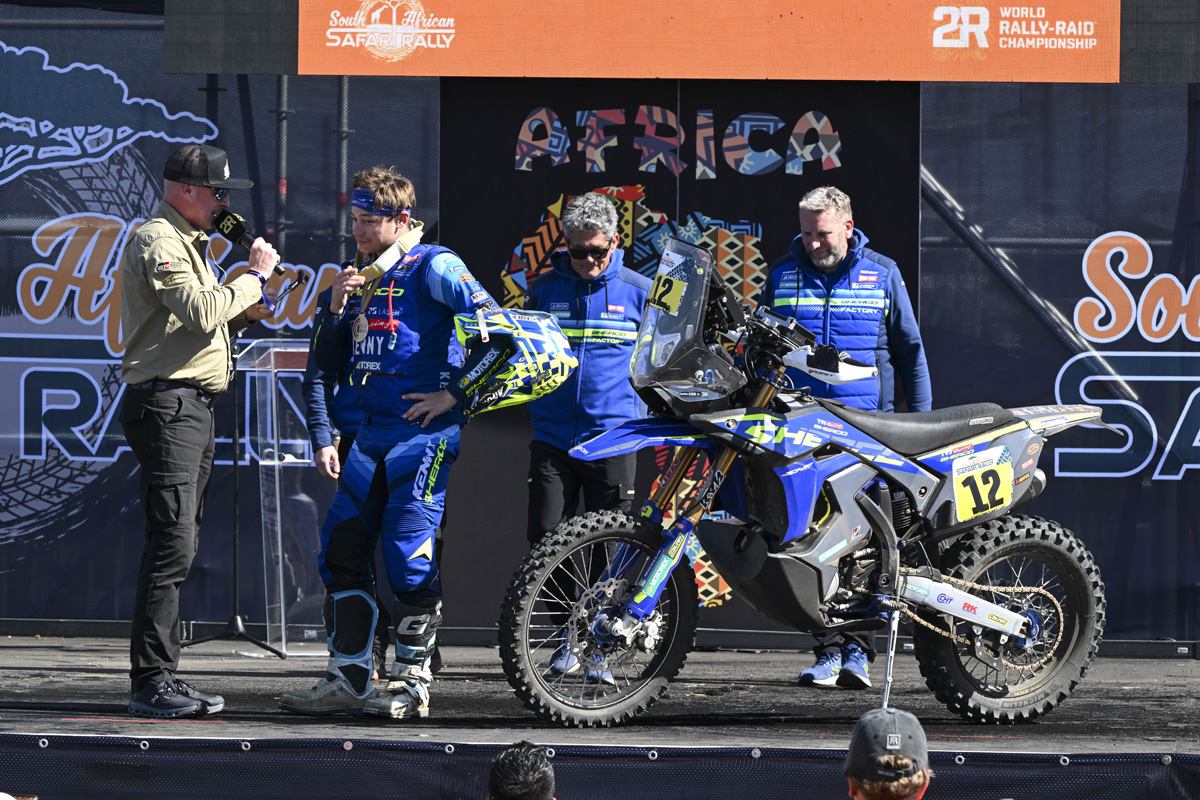
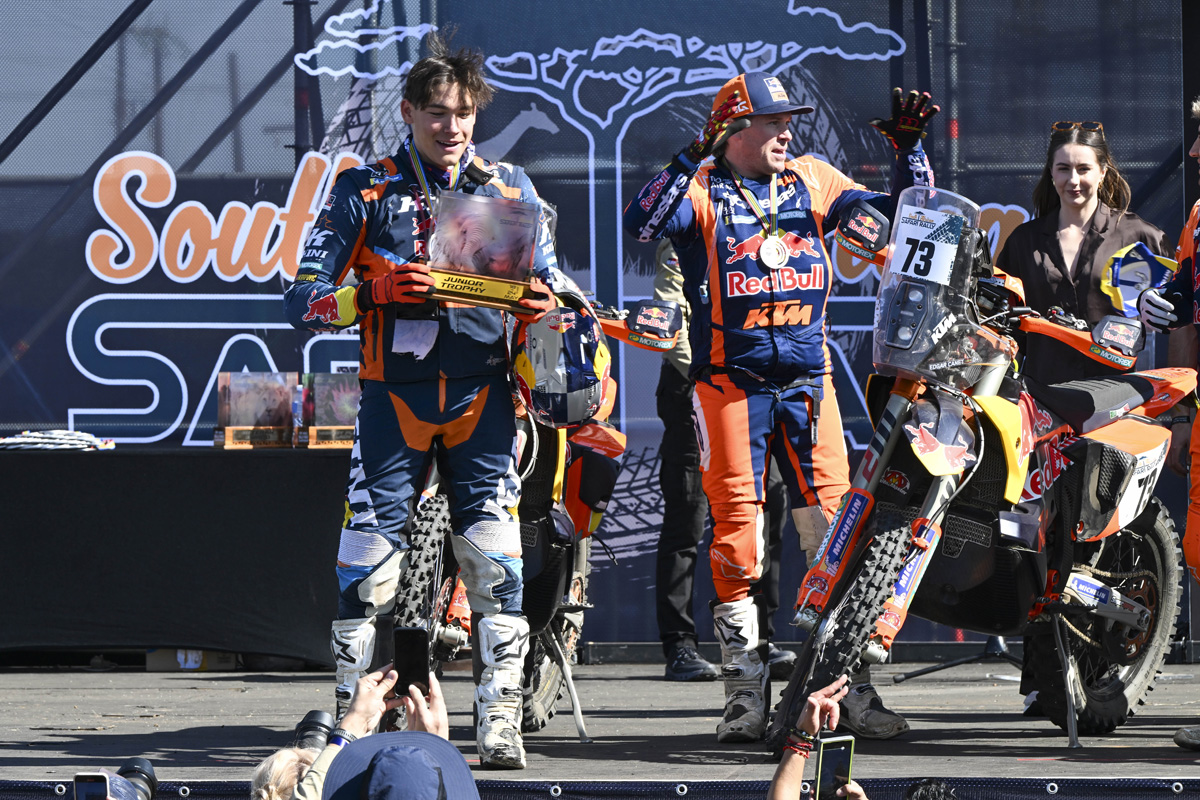
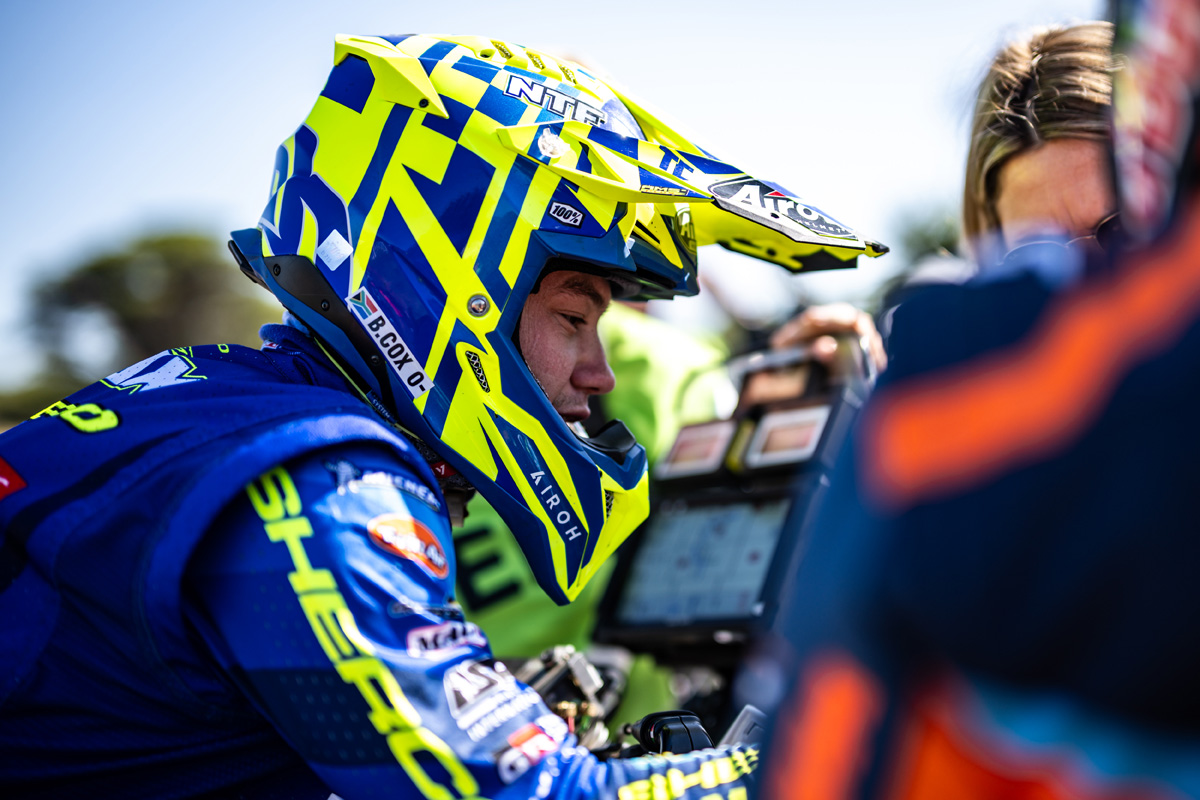
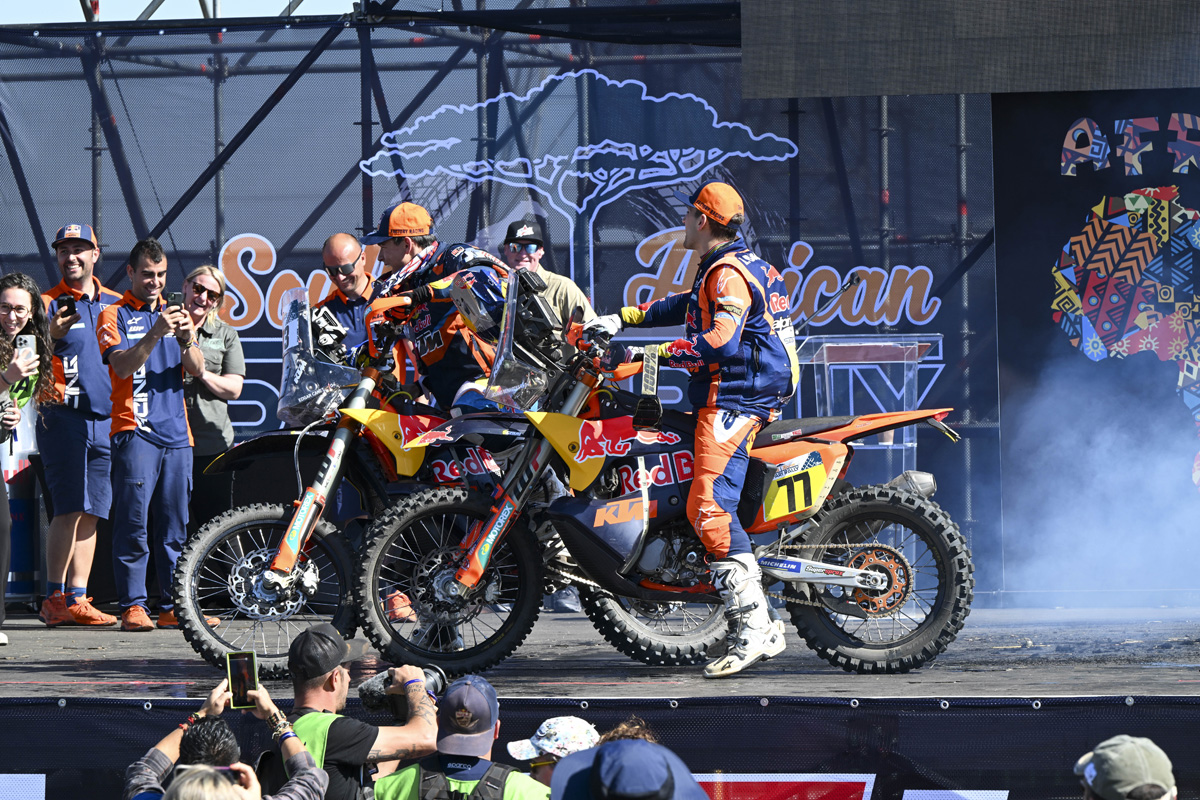
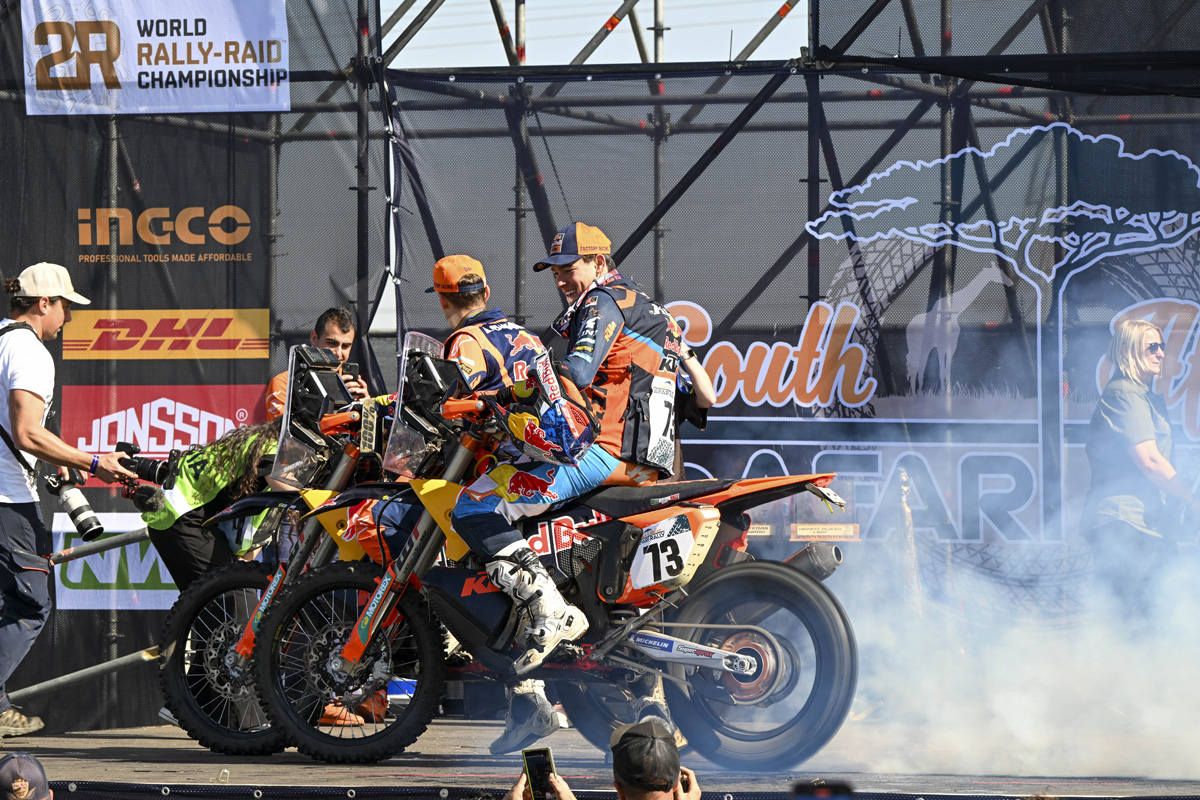
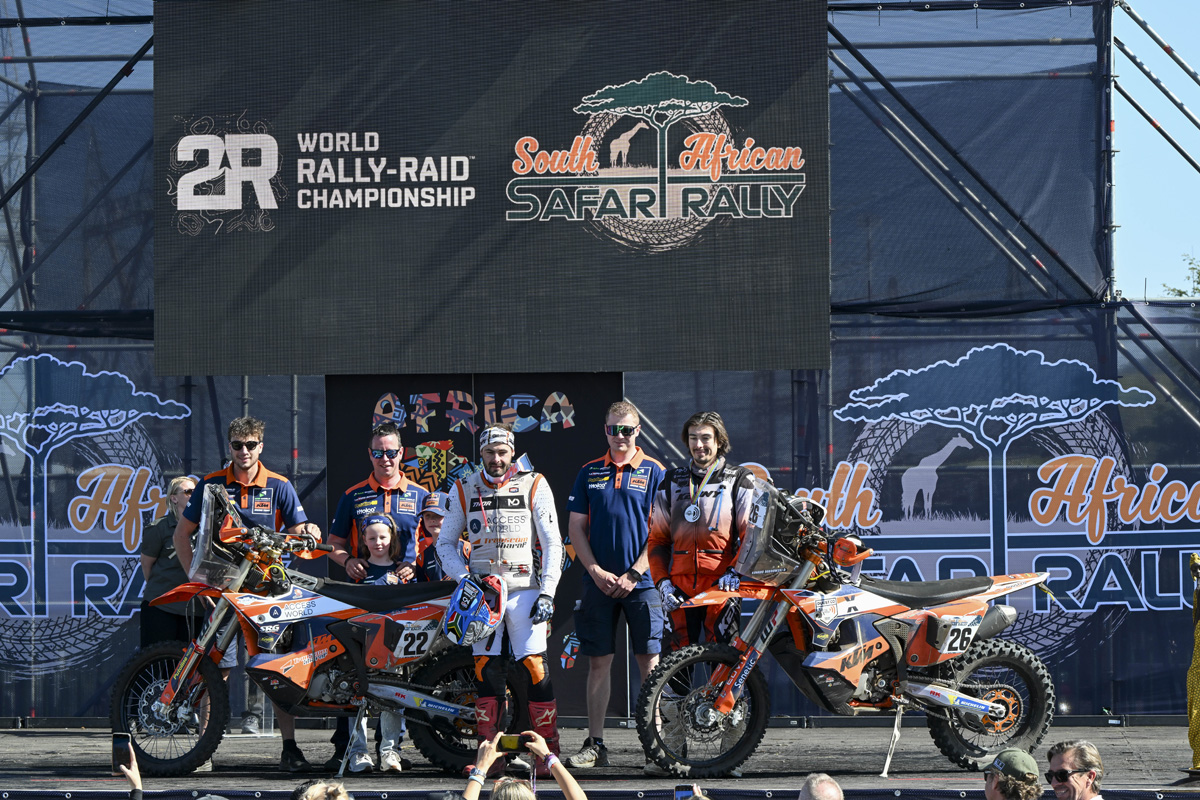
KTM Factory Racing: HOW WE WON DAKAR 2025!

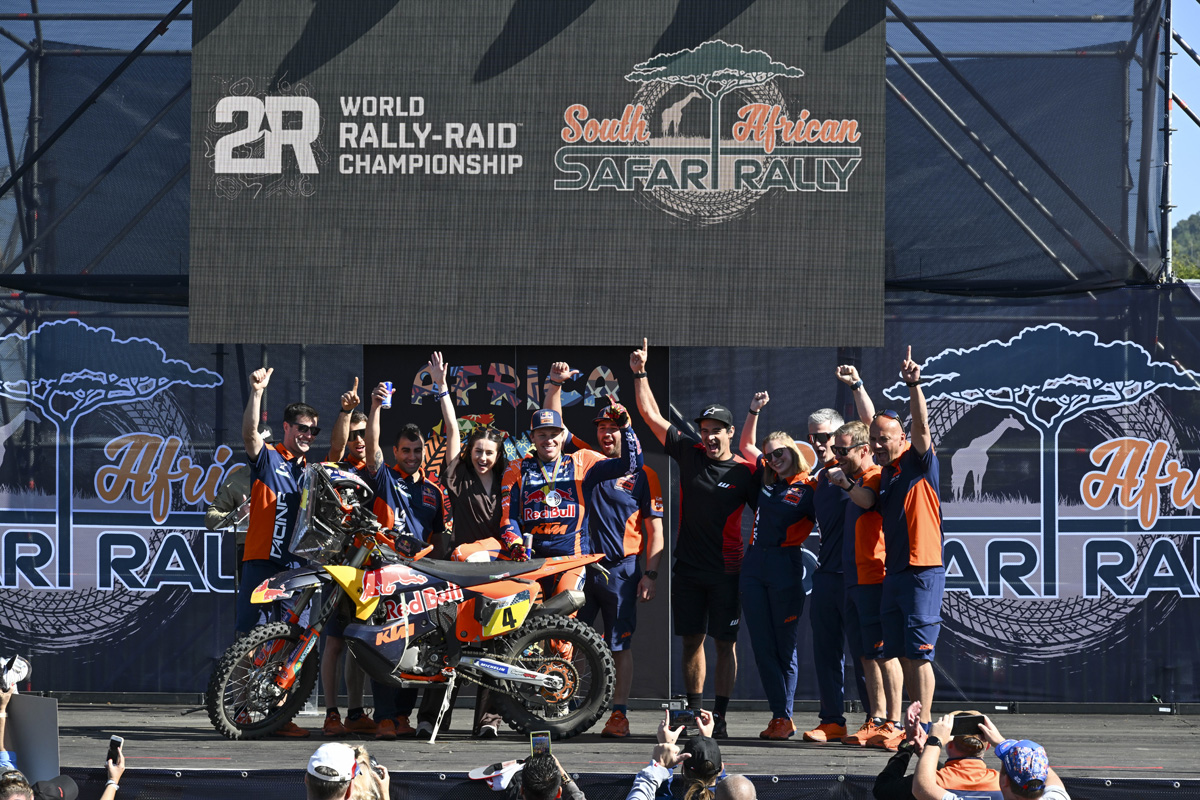
The 2025 Dakar Rally is certainly one for the history books, with Daniel Sanders claiming KTM Factory Racing’s 20th victory at the iconic event after leading from the very first day. Also, 19-year-old Edgar Canet dominated his Dakar debut to bring home the Rally2 trophy. From the pre-season photoshoot to the epic finish-line celebrations, here is the story of how we won the 2025 Dakar Rally!

Image source: KTM

Earlier this month, Daniel Sanders led Red Bull Factory Racing to victory at the 2025 Dakar Rally, securing KTM’s 20th win at the event. Sanders claimed five stage victories and dominated the race from start to finish, winning by nearly nine minutes. Rookie Edgar Canet impressed by topping the Rally2 category with four stage wins and finishing eighth overall. Luciano Benavides achieved his best Dakar result in fourth place after back-to-back stage wins. Despite withdrawing early, Kevin Benavides showed resilience with strong performances in the first week.

Linex bLU cRU Yamaha Racing Team Announces 2025 Rider Lineup

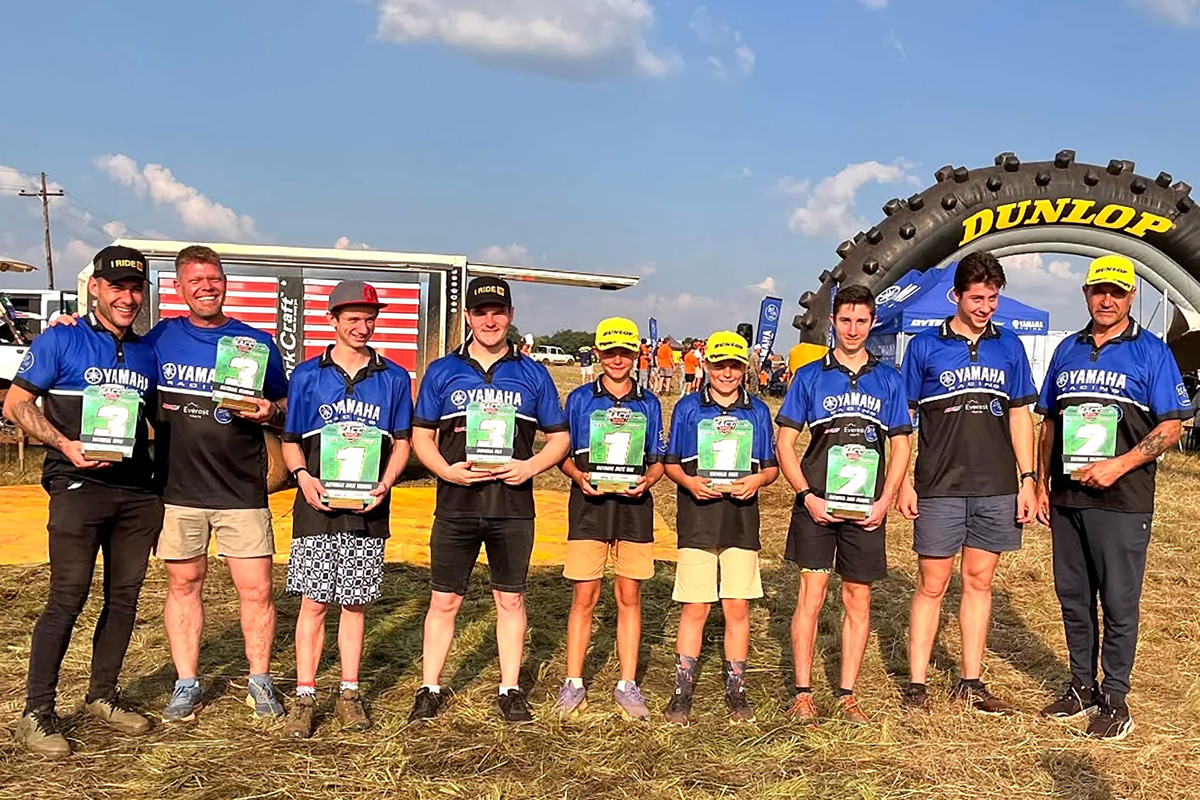
The Linex bLU cRU Yamaha Racing Team is thrilled to announce its official rider lineup for the 2025 season. Competing in the GXCC Gauteng Cross Country Series, the team is set to take on the competition with an impressive roster of talent.

Meet the 2025 Linex bLU cRU Yamaha Racing Team:

Zander King – OR2 Pro Category | Yamaha YZ250FX

Shawn Badenhorst – Seniors Category | Yamaha YZ450FX

Pieter Colyn – High School Category | Yamaha YZ125X

Image source: Linex Yamaha

The team is determined to make an impact in the highly competitive GXCC series and get the Linex name out there. With a strong mix of experience and rising talent, Linex bLU cRU Yamaha Racing is ready for the 2025 season.

“We are extremely excited about this new venture for 2025 with the race team. With the end goal being an increase in sales and getting the Linex name out there” said Justin Boniface (Team Manager). “Zander, Shawn, and Pieter bring an incredible mix of skill, determination, and passion for the sport. With the support of Linex Lynnwood, Linex Sandton, Yamaha Motor South Africa and our amazing sponsors, we are confident in a strong season ahead.”

Image source: Linex Yamaha

The team extends a heartfelt thank you to its sponsors, whose support makes this journey possible: Linex Lynnwood, Linex Sandton, Yamaha Distributors South Africa, A.M.P, Bikewise, Leatt, 32Gi, Bandit Graffix, PSP, CWC Electrical, Plasson South Africa, Mzanzi Agriculture, Nova Feeds, and AFGRI.

Fans can catch the Linex bLU cRU Yamaha Racing Team in action at all GXCC events throughout the season. Follow the team’s journey on social media for race updates, behind-the-scenes content, and exclusive rider insights.

Another Concept Store – Trek Bicycle Wolwespruit

Photo credit: Bjorn Moreira / ZA Lifestyle

Trek is a bicycle brand that has gotten everyone’s attention in the last few years, and we are not just talking about your competition-driven ‘XC’ cyclists, but the normal beginner and enthusiast. Like some other well-known concept brands in SA, Trek has slowly grown its footprint (just over 26 dealers in SA) and whilst still being one of the best-selling brands in the USA, they have focused its efforts on bringing the formula across waters and thus now growing their popularity in SA.

Photo credit: Bjorn Moreira / ZA Lifestyle

One of the ways that they’ve done this is by focusing on the products they develop, taking notes from the weekend warriors, free riders and the enthusiasts—riders that want something well built, long-lasting, unique and priced well too. I’m not saying all of Trek’s bikes meet these criteria and that’s simply because they also build state-of-the-art bikes for competition and some of their bikes are built for good old-fashioned peacocking.

Photo credit: ZA Lifestyle

Trek are one of the few brands that listen to their client’s feedback and that’s why we see many of their entry-to-mid bicycles fitted with very good parts and packed with usable features as standard. What we are also beginning to see more of in SA are these rapidly growing “official concept stores” that are owned and operated by Trek Official and offer all riders a ‘factory’ or premium dealership setup.

Photo credit: Bjorn Moreira / ZA Lifestyle

We recently visited one of Trek’s local concept stores at the gnarly Wolwespruit bike park in Pretoria, known for being a top-tier riding destination catering to cyclists of all skill levels…

Photo credit: Bjorn Moreira / ZA Lifestyle

What we saw at Trek Bicycle Wolwespruit is what you can typically expect to see at most of the local Trek Concept branches and that’s an entire range of both Trek and Bontrager products, a vast fleet of Demo bikes, highly skilled mechanics that could probably ride circles around you and in the case of Wolwespruit bike park, an epic testing ground for both bicycle and rider.

Photo credit: Bjorn Moreira / ZA Lifestyle

The advantage of having a brand-run retail experience is like no other, we’ve seen it in the automotive world and it just works, not only does it make fanatics out of the clients, but clients that trust, feel connected and are in turn fully invested in the brand from coffee to loading their bikes back on the rack.

Photo credit: Bjorn Moreira / ZA Lifestyle

One of the biggest advantages Trek Wolwespruit has compared to the rest is having demos and a bike park on their doorstep, allowing customers to test models like the Rail, Top Fuel, EXe, and Supercaliber, ensuring they find the perfect fit before making a purchase.

Photo credit: Bjorn Moreira / ZA Lifestyle

From the moment you walk into the store Marc (store manager) and his very accommodating sales team are at your service ready to guide you through the ocean of possibilities that is the vast range of Trek bicycles. The Trek team have kitted just about every visible part of the store with high-quality bikes, accessories and parts. Even behind the scenes, the Wolvespruit branch has a state-of-the-art workshop where trained technicians are prepped and ready to keep your bike working at its best.

Photo credit: Bjorn Moreira / ZA Lifestyle

Like a well-lubricated drivetrain, Trek SA and their concept stores are ready for the long haul and are here to bring all riders their flavour of MTB, Road, Gravel and E-bicycling fix. So, next time you are in town, stop by the store for a coffee, go for a demo ride and finish it off with a cold one and a Pizza from one of the many restaurants located on the premises.

For more information on Trek Bicycle Wolvespruit visit – www.trekbikes.com

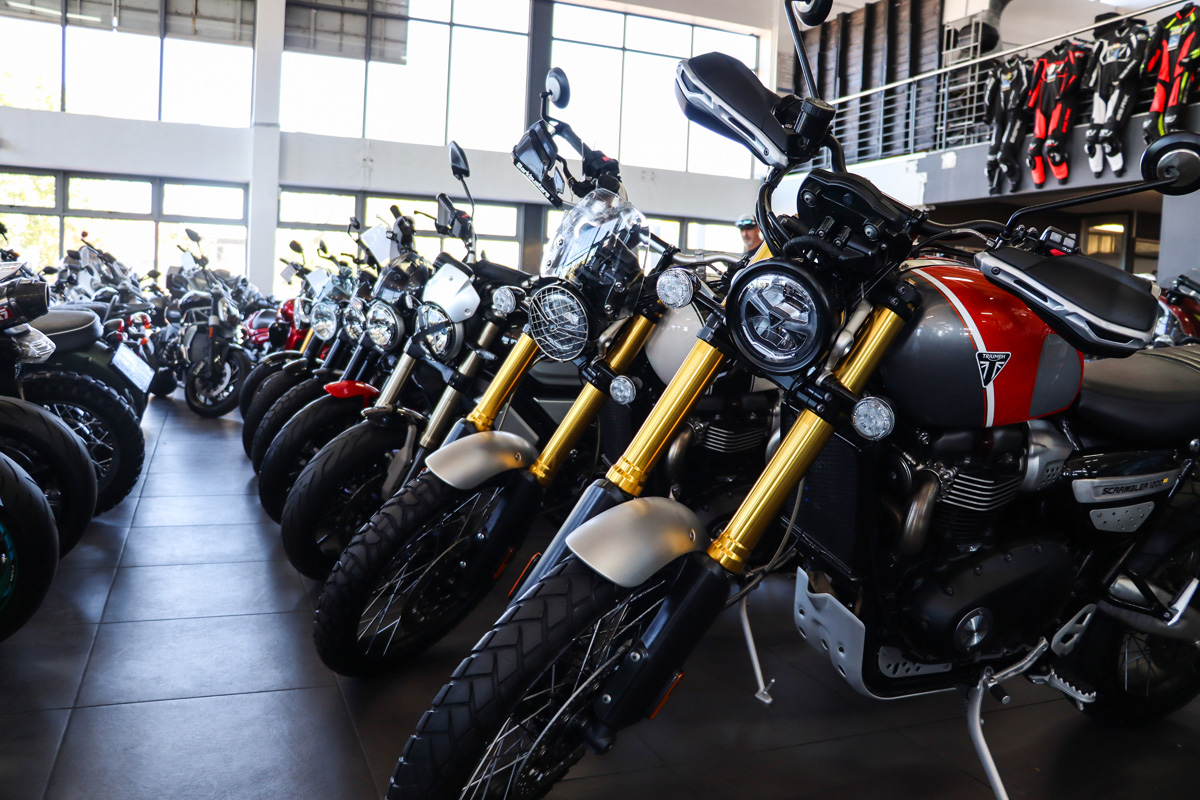
Motul Adds to the Great Vibe at Triumph Centurion Demo Day

Photo credit: Kevin Sanders / Motul

Triumph recently opened a new dealership in Centurion. Resplendent in typical Triumph style it is a top-notch operation. To introduce local riders to the brand they had an open day with their range of bikes available for demo rides. Triumph boasts a great range across the various genres and the event was extremely well supported. Chatting to Ian Van Der Merwe after the event he shared that more than 140 folks had put bums on Triumph saddles, and that in the course of a Saturday morning! Coffee, cold drinks and yummy boerie rolls all went down singing hymns!

Photo credit: Kevin Sanders / Motul

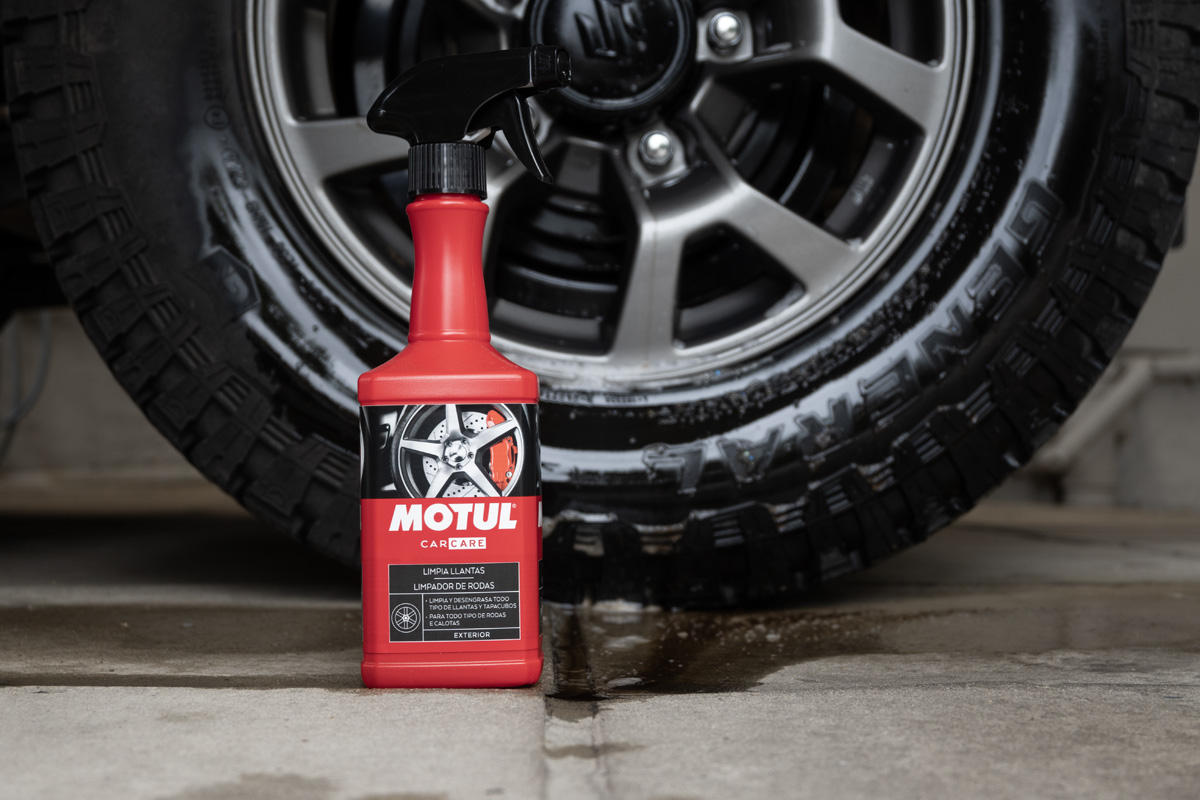
What impressed me too, was the amount of effort our friends at Motul put into the event. It was cool catching up with Jackie and the rest of the Motul crew. A range of their motorcycle products were also available to “demo”. Helmet & Visor Clean, Moto Boost & Clean, Wash & Wax Spray, Helmet Interior Clean (the Helmet & Visor Clean also comes in a pocket-sized bottle which, in my opinion, every rider should have in their jacket pocket).

Photo credit: Kevin Sanders / Motul

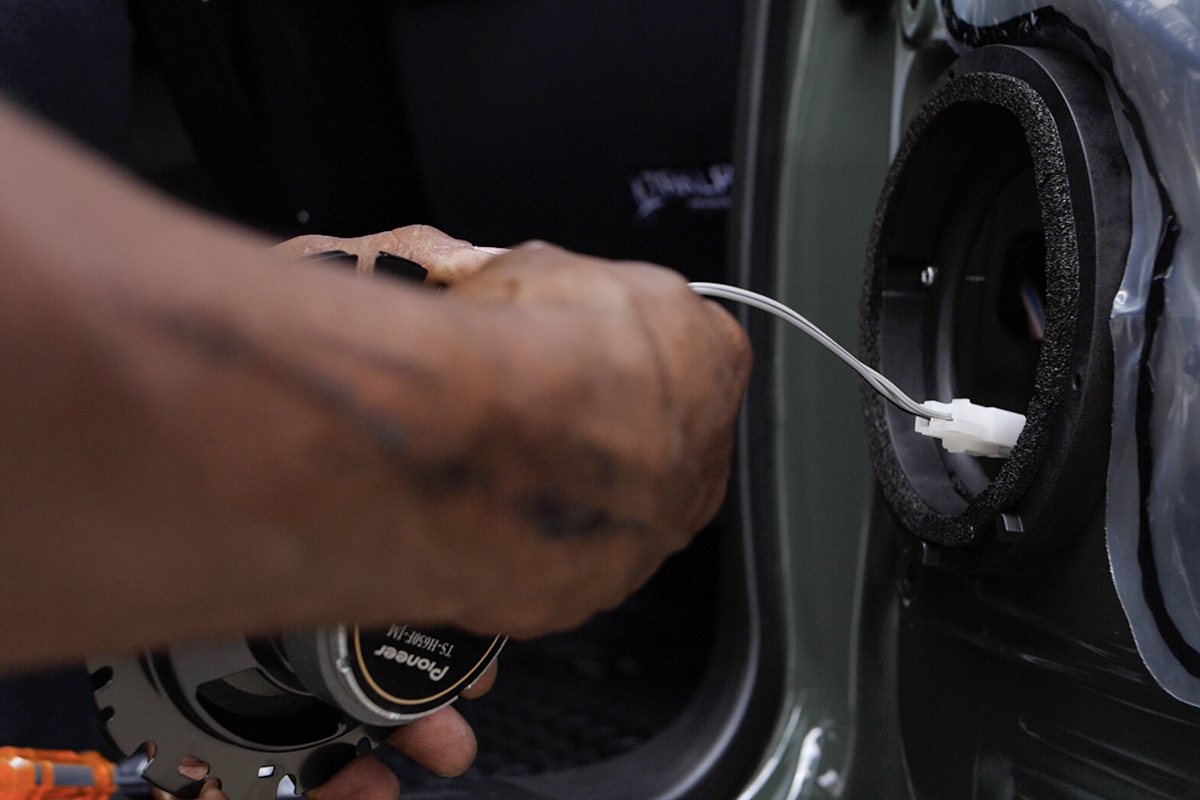
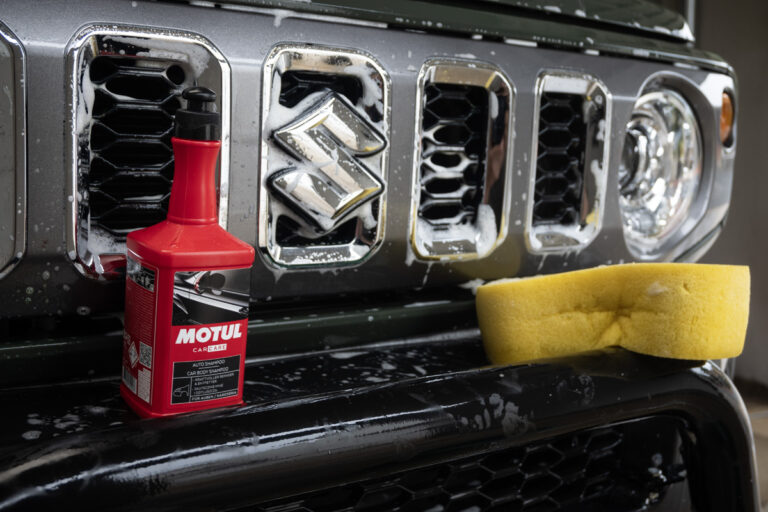
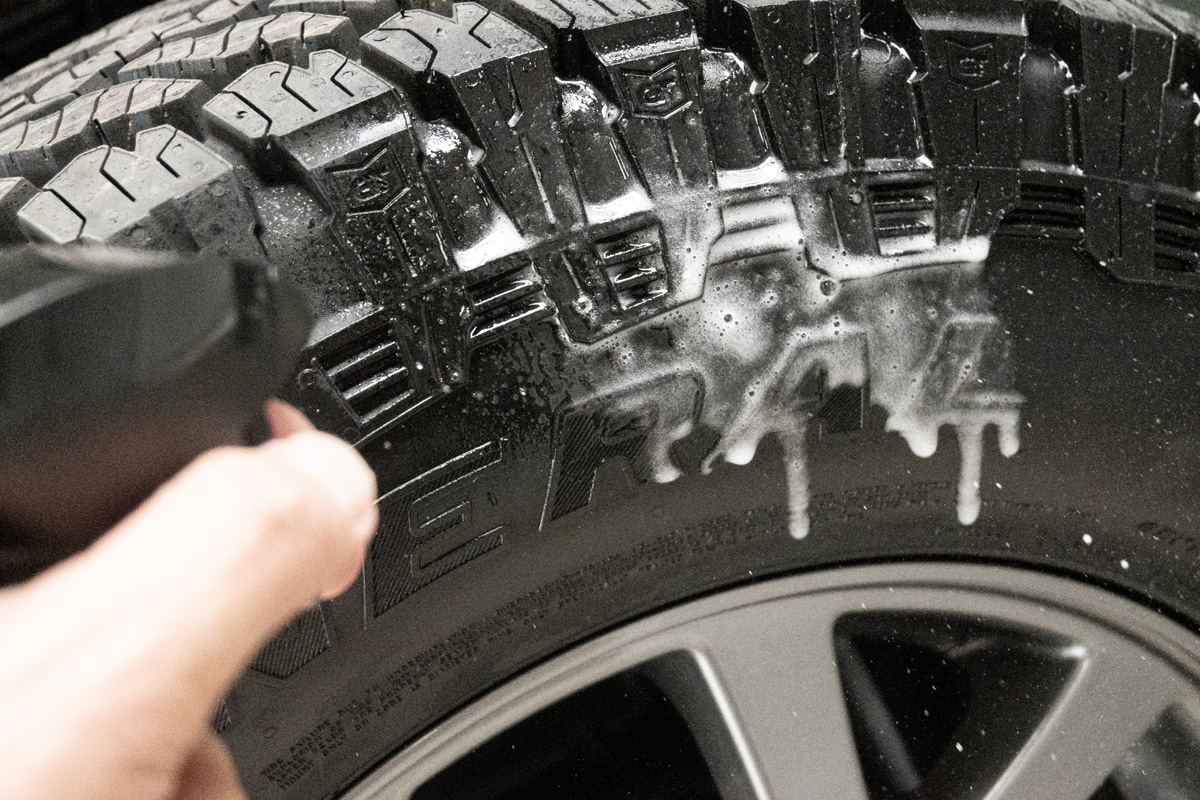
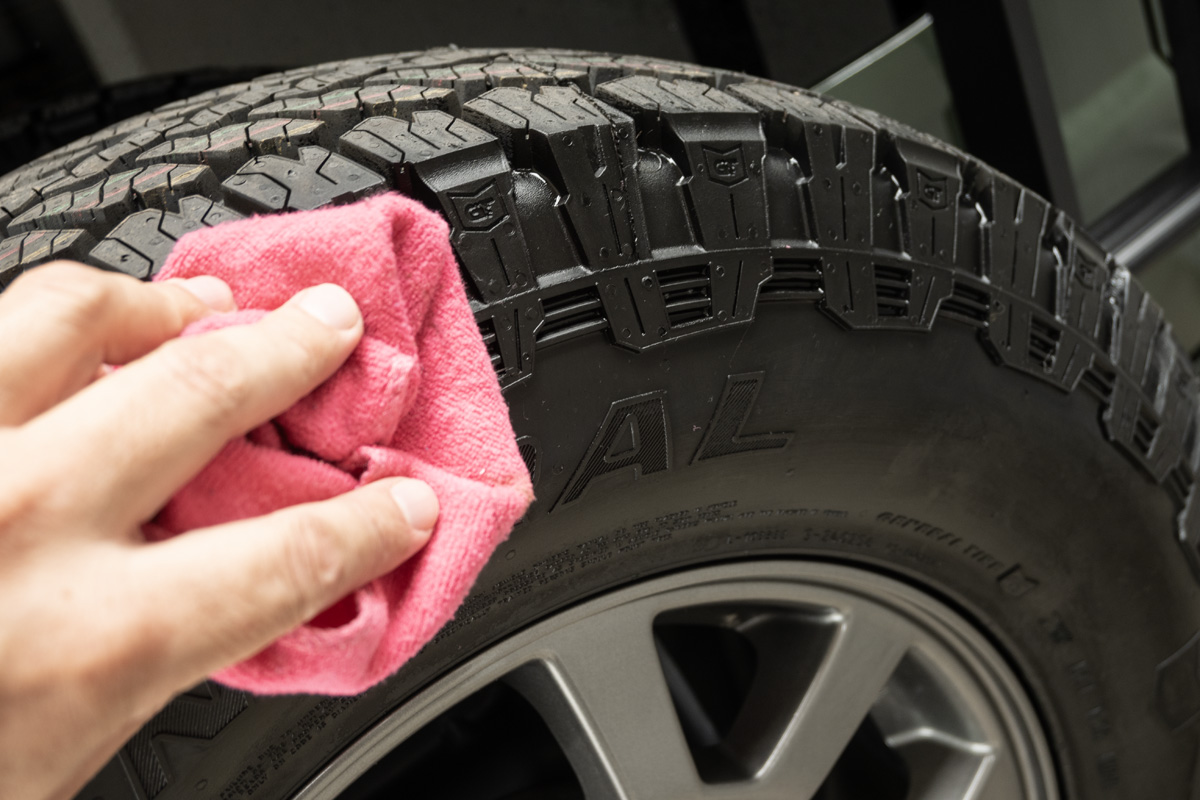
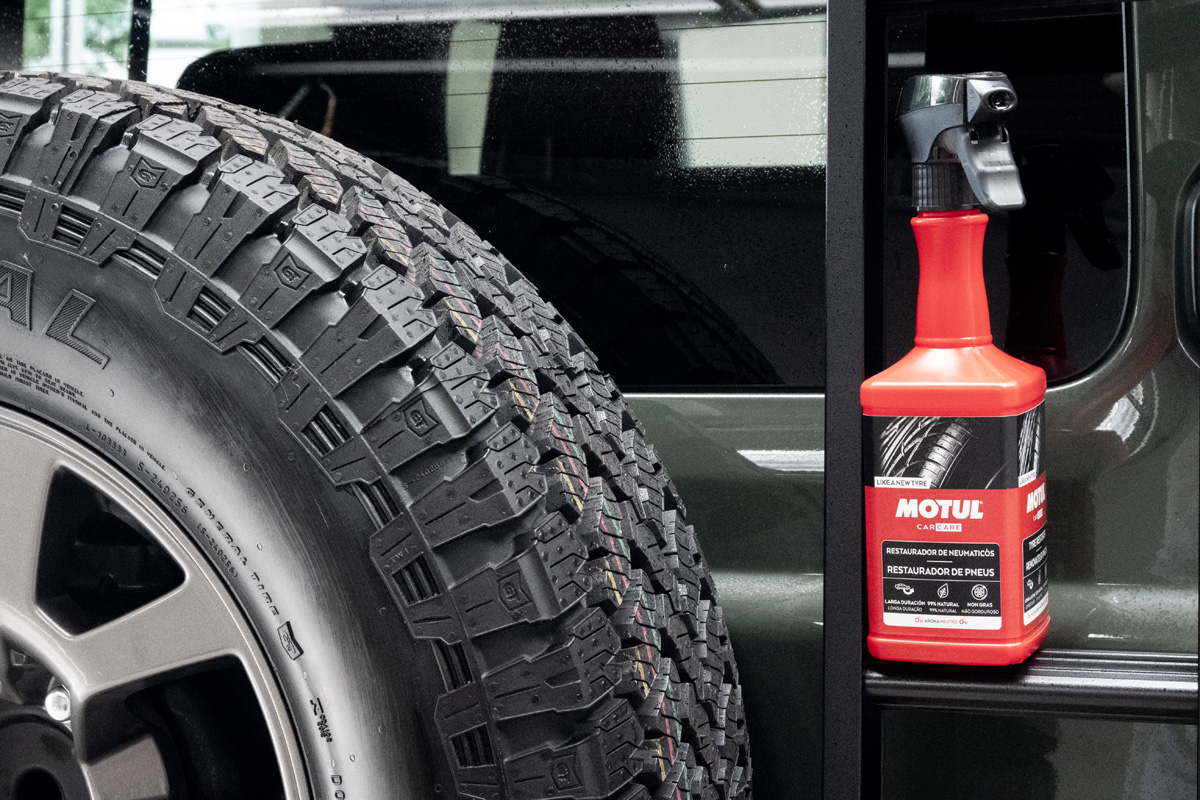
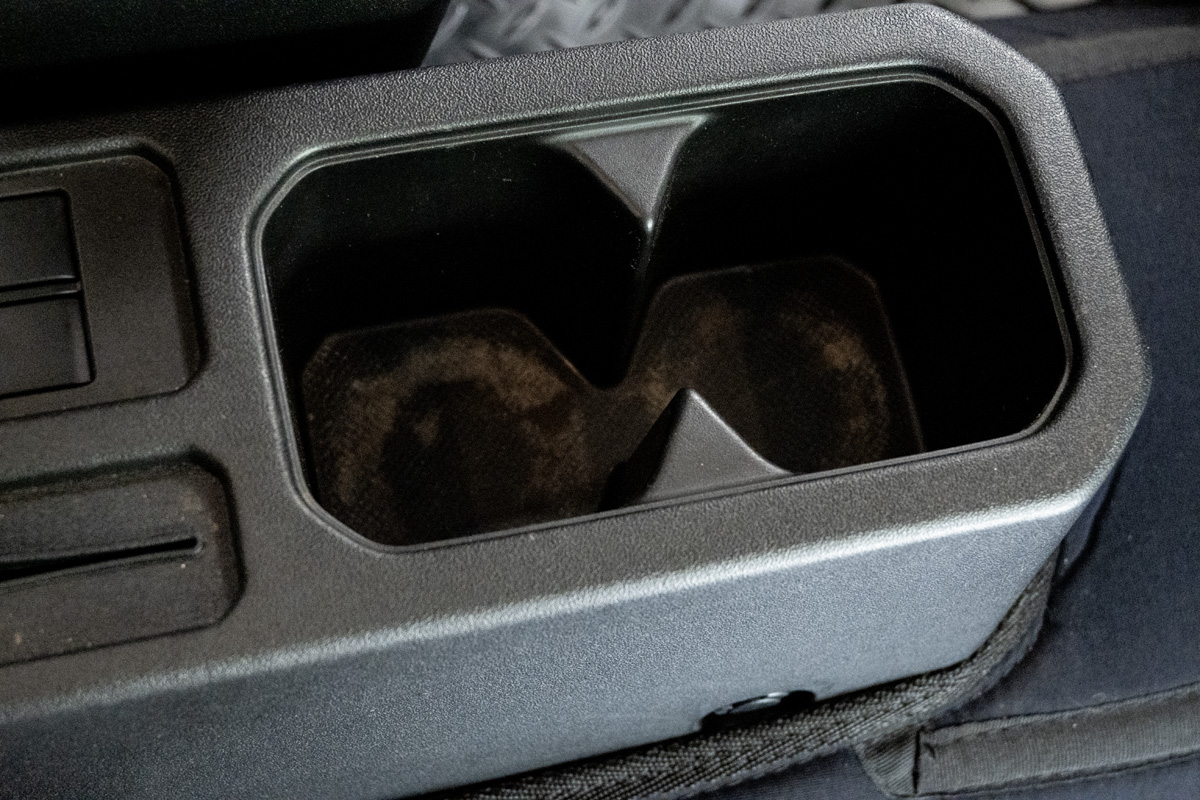
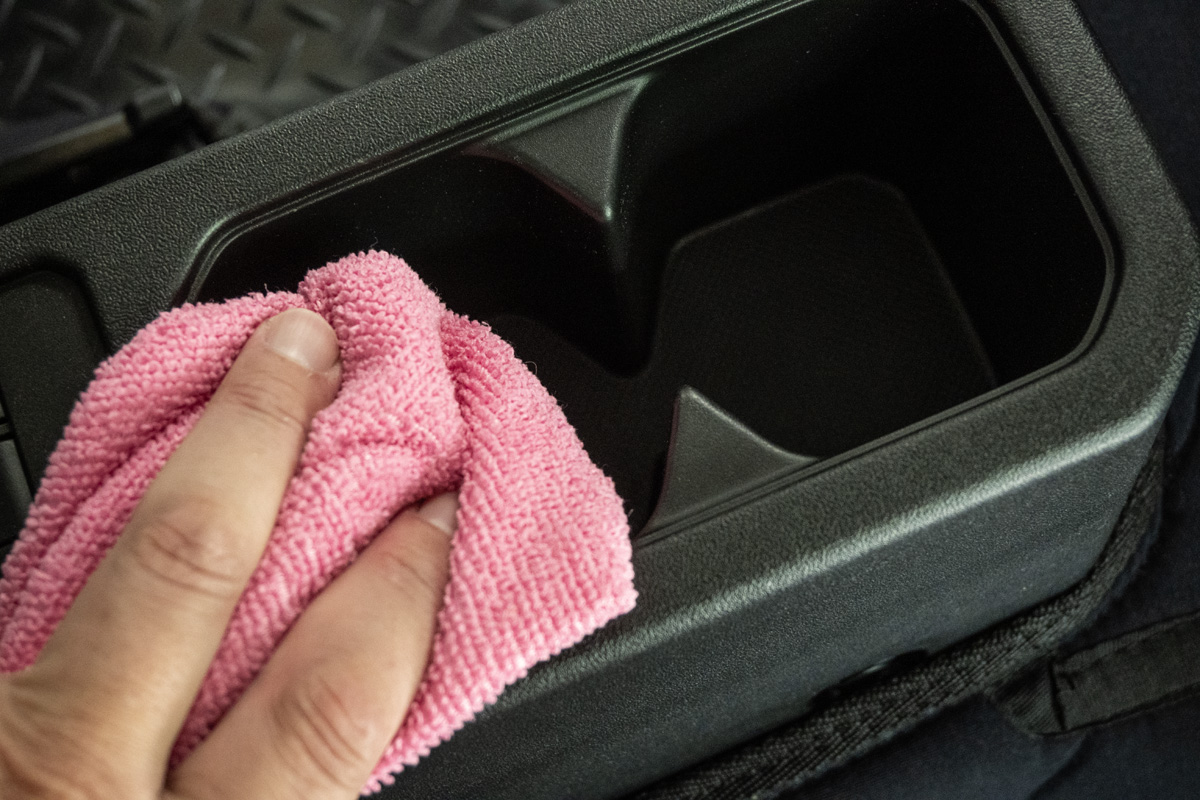
The modern-day motorcyclist is truly blessed to have bespoke motorcycle and kit care products of this quality and type. I have used Motul products elsewhere to good effect too. We recently did a road trip to the Cape with my wife’s Suzuki Fronx, which included 40 odd kays of dirt road. There was a brisk breeze blowing and the car got very dusty inside when we had to hop out to open the farm gates. Irene was bemoaning the state of her car’s interior, specifically the dust-covered dash. Motul Wash & Wax Spray to the rescue. I sprayed some on a soft cloth and wiped down the dash thoroughly then rubbed it up. Voila! Restored to an as new lustre.

Photo credit: Dave Cilliers / ZA Bikers

The bright red Motul gazebo and banners set off well against the classic Triumph Corporate charcoal colours. It all hung together to make a memorable event. Like with the Triumphs available to ride, Motul also allowed their customers to “try before they buy”. Good job to all who made it such a festive and successful occasion.

For more information visit: Triumph Centurion / Motul South Africa

Kaapschehoop kuiering – Easing into the holidays…

0
Photo credit: Brian Cheyne

Sometimes you feel that you just need a kick start to your end-of-year chilling. Doing something that just plain says ‘Relax!’. My mate Brian came up with an idea. “Why don’t we speak to Corrie at Lambretta and see if he can hook us up with a couple of 300s?” “Damn straight” I retorted, “why don’t we?”. Corrie, with his overdeveloped sense of adventure, was a pushover. There was a condition, however. “No problem, but I’m coming too!”. I phoned my mate Abrie from Angel’s Mist B&B in Kaapschehoop, my preferred chill spot. As always, he was accommodating, so it was trip on.

As is typical with these spurs-of-the-moment trips, our numbers soon swelled. My son Dave and stepson Ryan signed up, as did my old mate Loy, who was on a road trip from Cape Town with his trusty Honda NC700 DCT with over 150,000 trouble-free k’s on the clock. My buddy Vernon was keen to do an open road trip on his BMW F 900 GS, so he too jumped at the opportunity for a quick over-nighter. And so, the original two became three then five and ended up at seven!

Photo credit: Brian Cheyne

We rode out of Pretoria earlyish on a Saturday morning. Dave was on his 310 GS and Ryan piloted my NC 750 DCT. The Lambrettas immediately impressed with their willing engines and ride quality on the rather pockmarked back road to Bronkhorstspruit which would take us onto the N4. Scooters can have a choppy ride due to their stiff chassis and shortish travel suspension. Not so the Lambrettas. They exhibit good damping and an all-round comfortable ride. In no time the cavalcade was on the highway and heading east at a decent clip. The Lambretta is almost eerie at speed in that it is uncannily smooth and gives no sign of mechanical stress whilst cruising at the legal limit. I can confirm that the green ones are the fastest! For some reason the green beast that I was riding was a Rocketship, easily outpacing Brian’s stunning red chap and Corrie’s black fellow.

Photo credit: Brian Cheyne

We turned off at the Balmoral turnoff for breakfast at the Boer war-themed restaurant alongside a poignant Boer war concentration camp cemetery. After a hearty brekkie, we strolled through the cemetery, appalled at the number of young mothers and tiny children that succumbed to what ironically was termed a ‘Gentleman’s war’. Back on the bikes, we fuelled at the Ultra City then rode ever eastwards. Just after the Belfast turn-off we pulled into the Bergendal memorial to the last pitched battle of the Boer war. this preceded the guerilla warfare phase, where small bands of highly mobile boers led the might of the British Empire a merry dance around the country. After a good leg stretch, we cruised a little further, through the tunnel at Waterval Boven where we stopped and then rode through the old original tunnel which runs parallel to the current tunnel.

Photo credit: Brian Cheyne

The old tunnel is only accessible by foot or, of course, by bike. This leads to a decaying wooden deck which provides a great view of the waterfall off the escarpment which feeds the river in the valley below. Only Brian and I were aware of the tunnel’s existence, so it was a revelation to the rest of the group. The ride through the tunnel is pitch dark but it is not long before you literally ‘see the light’.

Back on the bikes, we continued down the valley, loving the cool air and even getting the odd spot of rain on our visors. We refuelled in Ngodwana before riding up the mountain to Kaapschehoop. The quaint little village owes its existence to gold being discovered there around the time that Barberton and Pilgrims Rest all experienced gold rushes. Small herds of feral horses, remnants of boer war mounts which got ‘left behind’ and flourish to this day, still frequent the village. The town was enveloped in mist which morphed into light rain at times. We got settled into Angel’s Mist and then, after a quick cold one, proceeded to the office, or rather ‘Nagkantoor’, the iconic little pub in ‘bo dorp’ run by investigative journalist and author, De Wet Potgieter.

Photo credit: Brian Cheyne

A year’s worth of concerns and cares seeped away as we ‘kuiered’ up a storm as only a bunch of motorcycle mates can. The little pub was particularly festive with a wedding party popping in to slake their thirst, or top up on Dutch Courage perhaps? By now breakfast was a distant memory so we decided to stroll down to the pub and pizza spot next door to our lodgings. The mist was now even heavier, and a general cool dampness prevailed. Festivities continued unabated over dinner, and it was a bunch of happy and content chaps that strolled next door for a wee drop of the red stuff before hitting the sack. All except Corrie that is.

Taking a little longer to don his wet gear than the rest of us, we had already made our way home before he emerged. In mist-induced confusion, perhaps slightly enhanced by a carafe or two of red, he turned left instead of right, embarking on a long and arduous tour of Kaapschehoop. Everything seems to look the same in the pea soup fog covering the village. After a tour of the furthest reaches of the town, he resorted to technology to aid his navigational skills and phoned me to drop him a pin.

Photo credit: Brian Cheyne

In no time he pitched up at Angel’s Mist, which begs the question as to how far and wide he wandered. His tale of woe was the source of much mirth at breakfast the next morning. His fitness app on his phone told the story of a comprehensive tour of Kaapschehoop. The ride home was epic. It was a deliciously cool morning with hints of blue sky breaking through. The bikes ran sweetly in the crisp air.

Photo credit: Brian Cheyne

Exiting the extortionately expense tollgate before Milly’s near Machadodorp, I gave the Lambretta its head to see what the green machine could do. Granted it is a significant downhill, but I was astonished to see the little 300 nudging 160 kph, pulling well into the red. It always remained rock steady, a testimony to excellent design and build integrity (please note dear reader that such lawless frivolity can be hazardous to your health and is not recommended and should not be emulated).

Photo credit: Brian Cheyne

After a coffee and more war stories at Milly’s, and a top up at the Ultra City, we kept a loose formation, occasionally enjoying some slipstreaming fun until close to Pretoria where we waved our goodbyes and headed to our respective homes. Thinking about the weekend it once again occurred to me how much richer we are thanks to our motorcycle habit. A night away on an eclectic mix of bikes and we were refreshed in body and soul.

Photo credit: Brian Cheyne

The Lambretta I rode is an obvious answer to urban mobility, and perhaps long-distance touring was not high on the design brief, yet the fact that it took it in its stride is testimony to a beautiful, efficient and superb scooter. Owning a bike like this makes economic sense and opens endless possibilities for getting away from the daily grind. You can embrace life in a way that seems to come naturally to the Italians. Thank you, Corrie, oh and by the way, just remember that the green ones are the fastest…

Photo credit: Brian Cheyne

For more information on Lambretta scooters visit – www.lambrettascooters.co.za

When are we going on “that” bike trip?

0
Childhood Photo

My love for all things petrol-powered stems from my dad and his passion for motorsport, adventure and motorcycles. Let’s just say it didn’t take long before I got my first bike. I wanted a motorcycle since the day I could say the word, so my dad made little three-year-old me a promise, and that promise was: “As soon as you learn to ride a bicycle, I will buy you a motorcycle”. By age four, I was on a 98-2001 KTM Pro Jr 50; the rest was history.

Project bikes, throwing spanners at one another during late nights spent in the garage, going to the race track, watching racing after church on Sundays and plenty of open road rides later, it’s fair to say that motorcycles have been the glue of our relationship. Life is a funny bugger though, it throws obstacles, piles of work and with that excuses of why it’s never the right time to go for a proper road trip.

Photo credit: Meredith Potgieter / ZA Bikers

This leads us to the title of this article – a question frequently asked by my dad, “when are we going on that bike trip?” My dad longs for road trips and has had many bucket list rides that he consistently looks back on, so I made him the promise that when the time is “right” we should go on an adventure bike trip. Life and all of its excuses happened to me but eventually, our calendars aligned.

Our plan was simply no plan, well that’s not entirely true, we had a destination and we wanted to stick to b-roads, dirt roads and railway line service routes, basically skipping out on all the boring tolled roads. My dad and I like traveling light so GoGravel backpacks for luggage were all we needed and repair kits were all stored under our bike seats. Talking about bikes, our short list of potential bikes grew and then shrank, crossing off all the heavy 1000 cc plus adventures and rather looking at the more exciting, lighter and dirt-capable middle-weight adventures. Our taste and style of riding soon led us to the Husqvarna Norden 901 and the new BMW F 900 GS.

Photo credit: Bjorn Moreira / ZA Bikers

My dad and I have had a massive crush on the Norden and in particular the Expedition model, which wasn’t available for our trip, but the standard model mixes good open road manners with decent enough dirt-worthiness for both mine and my dad’s skill level. One bike that I never thought I’d see my dad swing a leg over or choose for our trip was Bavarian’s new F 900 GS, the old GS stigma lives no longer with the new 900 thanks to decent Showa suspension, good ground clearance, aggressive off-road geometry and a strong but smooth power delivery. It doesn’t look like your typical GS, but rather a rally bike crossed with an adventure bike, which gets the thumbs up from old Julio and me, especially in the BMW motorsport colours and gold rims.

Photo credit: Julio Moreira / ZA Bikers

Day one of our semi-planned two-nighter adventure trip was to visit Julio’s high school mate David Seitz in Witbank, ride to some Nostalgic parts of my dad’s home town and then excavate some dirt at speed towards Dullstroom for our overnight stay at Kinlock Lodge. From Pretoria, we decided to head down Boschkop Rd passing Kitty Hawk Aerodrome and turn left onto a dirt road called Spoorweg Ave, just before the train bridge. This network of dirt roads led us to the R104 which popped out just before Bronkhorstspruit and then seeing us through to the Balmoral turn-off.

Photo credit: Bjorn Moreira / ZA Bikers

Usually, I turn onto the highway at this split road for a short stint, but my dad wanted to show me a scenic road that my grandfather would always drive back home on—even after the highway had been built he always enjoyed driving through the countryside. Nowadays you will find mining operations to the left and right of the R545, but it is still a scenic and peaceful route to take, so much so that I decided to stop for a picture and began to reflect on my time spent with my granddad—I could imagining him driving his Bronze Mazda Capella down this road with the windows down back in the day.

Photo credit: Bjorn Moreira / ZA Bikers

We rolled into Witbank, shot the breeze with David, enjoyed a recommended single track back to the main road and took in the last bit of the Witbank at the dam. First impressions of Witbank? It isn’t as bad as people make it out to be, yes there are some rough parts but the potential of the town and the development that is taking place far out ways the negatives.

Photo credit: Bjorn Moreira / ZA Bikers

Witbank to Dullstroom is just under 120 km and we thought we would b-road through Kromdraai to Middleburg and then catch the R104 to the turn-off that takes you into Dullstroom. Whenever I ride a road bike in this area I always get jealous of the adventure riders, this road makes your inner meerkat itch and it did for both myself and my dad. After the turn-off, we were on the railway line and cutting through the green pine forests into town. I just love adventure bikes!

Photo credit: Bjorn Moreira / ZA Bikers

Before heading into town for dinner we quickly dropped our backpacks off at Kinloch Lodge, a beautiful countryside lodge nestled up in the hills 12 km outside of Dullstroom en route to Highland Gate Golf Estate. If you love the countryside, rolling hills, good hospitality and fishing, Kinloch is a must-visit. Dinner saw us chat about how both bikes faired on day one and how the spec sheets paint them so similar, but in reality they have two completely different personalities.

Photo credit: Julio Moreira / ZA Bikers

The BMW surprised both of us as to how well it handled the dirt, the suspension ironed out the corrugations, rocks, ruts and jumps but what made riding off-road on the F 900 GS so comfortable was the dirt-focused rider triangle. Navigating the electronics rider modes was simple on the fly, with the mode button on the right switch gear selecting from the road-biased Dynamic to the dirt-worthy Enduro Pro mode with a single press of the button and better yet switching TC off was just as simple with a button on the left switchgear. For a modern bike filled with sophisticated electronics, we were both happy to see how easy it was to navigate.

Photo credit: Bjorn Moreira / ZA Bikers

The Norden was definitely a favourite coming into this ride and having ridden both models before I was glad to hear similar feedback from my dad. We were both impressed with how light the motorcycle feels due to the lower centre of gravity thanks to the low-slung fuel tanks. Fuel economy, fuel range, comfort and peppiness from the motor from low in the RPM range was a consistent visor open and giggle every time we made a stop. In what world is a KTM, I mean Husqvarna a better do-it-all bike than a BMW, yes I know BMW has an F 900 GS Adventure, but frankly, the base Norden fits right in the middle of both Germans, as it does with its Austrian cousins.

Photo credit: Bjorn Moreira / ZA Bikers

Negatives so far on the BMW were short fuel range from the small 14-liter tank and what we complimented the F 900 GS for on the dirt was its compromise on the road, leaving you slightly uncomfortable in the seat and arms on prolonged tar stints. On the Husqvarna, we had got the bike a day before our road trip and the suspension wasn’t set up for our ride and we felt it on day one with many angry head shakes both on the tar and especially on the dirt. After opening the Norden’s suspension manual we quickly dialled the suspension on its more sporty off-road setting making our complaint null and void. Suspension setup aside, the engine heat riding through town was a bit toasty, but that’s just nit-picking from me.

At this stage, both bikes were like two tasty meals that neither of us could make our mind up on quite yet—we also had plenty more riding to still do.

Photo credit: Bjorn Moreira / ZA Bikers

Day 2 saw us ride up to Mashishing formerly known as Lydenburg to meet up with old family friends Philip and Lenie Grover, before winding our way through twisty mountain passes and logging routes into Sabie for an overnight at Sabie River camp, a ZA Bikers favourite. We decided to ride the potholed R504 with plenty of reserves left in the wrist and boy is that road stuffed, we do hope to see the road works in Mashishing carry their way out onto the R504.

Photo credit: Bjorn Moreira / ZA Bikers

Once in Mashishing, we road up a lovely dirt road where we got to stretch both bikes’ legs and suspensions on the way up to the Grover’s. Once at the gate we wound our way through a stunning pine forest to Philip’s place and were greeted by massive Caucasian Shepherd Dogs or Caucasian Ovcharka as they are formerly known. A stout was a must as we planned to stay out of the blistering sun, spend some quality time chatting with the Grovers and also get to know and build trust with the dogs.

Photo credit: Bjorn Moreira / ZA Bikers

You must be thinking, what the heck is a Caucasian Shepherd Dog? These big grizzlies are large livestock guardian dogs that are native to the Caucasus region, notably Georgia, Armenia, Azerbaijan, and Dagestan. These stunning dogs were bred in the Soviet Union from about 1920 from dogs of the Caucasus Mountains and the steppe regions of Southern Russia. Philip’s wife Lenie takes care of these amazing hounds and is a South African breeder.

Photo credit: Bjorn Moreira / ZA Bikers

From the Grovers, we headed out on Long Tom Pass and enjoyed plenty of twisty tar. The one reason I love adventure bikes is that you don’t get a set menu like you do at a Michelin-star restaurant, but rather you get the full menu which means you are never dissatisfied. We got to the top of Long Tom and we could have easily chosen another twisty way down that was on dirt and it didn’t feel like we were sacrificing that much on tar compared to a touring bike and not that much on the dirt compared to a lighter travel bike. These adventure motorcycles are truly for those who have FOMO (fear of missing out) and once you’ve experienced it all you’ll struggle to go back.

Photo credit: Bjorn Moreira / ZA Bikers

We settled down in Sabie after riding as much tared and dirt road nirvana as physically possible in beautiful Mpumalanga. If you love riding bikes Sabie has it all, fast road riding, twisty logging routes and slow and technical forest routes, at one stage my dad and I were making our own routes as the skies had blessed the mountains with plenty of rain, leaving us with overgrown forest sections. Over at camp we lit our fire, poured our rum and just sat back reflecting on two full days of adventure riding, finding new routes and making awesome memories.

Photo credit: Bjorn Moreira / ZA Bikers

Right there we knew “that” bike trip had come to an end and we had already started planning “that next bike trip” by the time the ice in our rum had melted in toasty Sabie. Owning an adventure bike allows you to see the world or those holiday destinations from a completely different perspective, from being there to getting there and bonding over it all at the end.

As for the motorcycles we were impressed to see what these two companies had built after what seemed like engineers taking notes from one another. A wild off-road focused beamer and a feature-packed and sophisticated Husqvarna—two fantastic adventure motorcycles with two very tasty flavours.

For more information on the bikes featured in this article, click on the links below…

2024

BMW F 900 GS

Pricing From R253,450 (RRP)


Brand: BMW Motorrad
2023

Husqvarna Norden 901

Pricing From R246,699 (RRP)


Brand: Husqvarna

2025 AMID Motorcycle Expo

Photo credit: Brian Cheyne / ZA Bikers

There is an iconic line in the 1975 movie Jaws when Chief Brody sees the shark for the first time. With a cigarette dangling from his mouth, he mumbles: “You’re going to need a bigger boat.” Having just visited the second AMID Motorcycle Expo at Red Star Raceway, I feel that we are going to need a bigger venue soon! I was pleasantly surprised by the turnout, and that warms the cockles of my motorcycle heart.

Photo credit: Brian Cheyne / ZA Bikers

At the beginning of 2024, Arnold Olivier, National Director of AMID (Association of Motorcycle Industry Distributors) put together a Motorcycle Expo at Red Star Raceway. The event itself was organized on very short notice, which resulted in some manufacturers not attending because of other commitments. However, this was only the start of something that will hopefully become a permanent fixture at the end of January each year.

Photo credit: Brian Cheyne / ZA Bikers

The event coincided with the Suzuki Rider Safety Day which in itself is a wonderful initiative. The Suzuki Rider Safety Day allows riders of any skill level to come and improve their skills in the safe and controlled environment of the track. I have to give a special mention to the guys and girls at Suzuki. They really pour back into the motorcycle community. Not only are they one of the major supporters of Cancervive, but they also provide motorcycles for the CMA Riding Academy.

Photo credit: Brian Cheyne / ZA Bikers

This initiative helps new riders understand the basics of operating a motorcycle on their rolling road, and they also have scooters on hand to help beginner riders. Of course, none of this will be possible without Quinton and his crew at Red Star Raceway.

Photo credit: Brian Cheyne / ZA Bikers

This day, however, had even more to it, and the line-up of manufacturers was quite a sight to see. At last year’s event, almost all of the exhibitors could fit into the pit area of Red Star. This year, the pits were fully occupied by the manufacturers, therefore, the accessories and gear sections had to be moved to their own dedicated area.

Photo credit: Brian Cheyne / ZA Bikers

Honda gave us a first glimpse of the new 1000cc Hornet SP. Honda South Africa will only get the SP version of this bike, and pricing has not been finalized. However, speaking to Riaan Fourie from Honda, the price will be substantially less than what you will shell out for the latest CBR1000RR-R Fireblade SP. Where the Fireblade is a track-day weapon, the Hornet will be a practical, everyday bike with similar performance.

Photo credit: Brian Cheyne / ZA Bikers

Over at the BMW stand, most of the space was taken up by the new R 1300 GS Adventure, decked out in every conceivable add-on you can think of. I know this bike will sell well here in South Africa, but man, that bike is big! Next to it, the standard 1300 GS looks almost dainty.

Photo credit: Brian Cheyne / ZA Bikers

The new kids on the block, CF Moto, had a very impressive stand, and their range is quite extensive. That MT 450 looks like such a good bike for people like me!

Photo credit: Brian Cheyne / ZA Bikers

Yamaha brought their XSR 900 GP to the expo and this really is a beautiful machine to witness in the flesh. It was also good to see Kawasaki, SYM and Triumph join the fray this year.

Photo credit: Brian Cheyne / ZA Bikers

The extended accessory section included everything from motorcycle gear, luggage solutions and tyres. The guys from Bikewise were also on hand to clean helmets and look after your Arai helmet. I grabbed a hat from the friendly people at Motul which helped to keep the sun off my face. I also had a long chat at the AXOR helmet stand. They have a stunning range of affordable helmets and will be good news for cash-strapped consumers.

Photo credit: Brian Cheyne / ZA Bikers

For me, the highlight of the day was the racing, organized by Neil Harran and his team from the South African Motorcycle Racing Academy (SAMRA). SAMRA has been going for 16 years, and most of our young racers have graduated through this program. With full backing from Honda South Africa, they have 58 Honda NSF 100 motorcycles for the kids to race on.

Photo credit: Brian Cheyne / ZA Bikers

These are small motorcycles, but the program is only for ages 6 to 14. Also, absolutely no experience is required for you to join this program. They will even teach you how to ride. Once new riders are up to speed, they can go and race. To make the series fair, you get allocated a motorcycle on the day, so everyone races on equal machines. Neil pointed out that parents are not allowed near the bikes! On Saturday, the kids put on an 8-lap demo race, and maybe somewhere in there is the next Brad Binder. It was wonderful to see.

Photo credit: Brian Cheyne / ZA Bikers

I sincerely hope that this event will keep growing so that we will need a bigger venue very soon. This is a wonderful initiative, and again we have to thank everyone involved in putting it all together. May our motorcycle sales numbers climb, and may we have an even bigger turnout next year!

Finding New Escapes!

0

Over the holiday period, we took a road trip down to the Eastern Cape in our 5-door Suzuki Jimny fitted with General Tire Grabber AT3s.

Here is a sneak peek of how it all went down…

Detailed article to follow.

Fresh Sprouts in Botswana…

0
Photo credit: Dave Cilliers / ZA Bikers

When the December holidays descend upon us I am never keen to join the lemming run to the coast, or should that rather be the “sardine run”? To continue the frenzy of a Gauteng city for the ‘Vaalie’ induced frenzy at the coast holds little appeal for me. So often my holidays take me north rather than south, with Botswana once again my destination of choice. Namibia is a great bet too, but it is just a tad too far for a week away. People often ask if Botswana is not too hot in December. What I have found over the years is that once the rains start, Botswana cools down significantly. Whilst it is still humid, it doesn’t come close to Natal north coast levels. This Botswana trip had an allure of another kind.

December of 2023 saw my son Dave and me tiddler touring up to Chobe and beyond. Time around a campfire got us thinking. My daughter Jenny and her husband Ryan and their two teenage boys, Jared and Cameron have never experienced Botswana as we have, so a plan was hatched. We started to plan a post-Christmas extended family Botswana trip for the end of 2024. The old saying goes “The hunt is often better than the kill”. The excitement certainly became palpable as the countdown to our planned departure date began. On Jen’s family’s part it was the prospect of an adventure never previously experienced, and for us Bots veterans it was the prospect of sharing our favourite haunts with them.

Photo credit: Dave Cilliers / ZA Bikers

We departed Pretoria early on the 27th of December travelling in two Pajero’s. Ryan and his family driving their 3.2 Pajero and Dave his Pajero Sport with Irene, me, Ryan’s mom and our old friend Viv as passengers. Dave’s Pajero had three OZ tents on the roof rack and Ryan had my almost 40-year-old 6’ Venter trailer in tow with all our camping kit. We planned a mixture of Chalets, Safari tents and camping for economy’s sake and also to give the two fresh sprouts, Jared and Cam, a taste of what we have come to love. Nights in a tent in the wilds of Africa with a fire for comfort and on which to cook your food. Vaalwater is always our first stop for a brekkie at the Zeederburg Centre and an opportunity to get anything we may have forgotten at the Spar, and ice for the cooler boxes.

Photo credit: Dave Cilliers / ZA Bikers

We were giving Groblersbrug/Martin’s Drift border post a miss. Truck traffic has made this option a nightmare and travellers are ill-advised to attempt to cross there. Stockpoort/Parr’s Halt was our new choice. There is a minimum of 15k’s of dirt road which is reasonable on the Botswana side, or 43k’s for a more direct route. The distance to Palapye is then only 14k’s longer than via Martin’s Drift but that is totally negated by the time saved at the border. Stockpoort does not allow commercial vehicles at all, and the result was our crossing into Botswana after all border formalities were observed in under half an hour. Score!! The Pajeros ate up the dirt and we travelled through Mahalapye on the A1 linking Gaborone and Francistown.

After a burger at the Wimpy in Palapye, we turned left off the A1 and travelled through Serowe and on to Khama Rhino Sanctuary for our first night under Botswana skies. Those skies were rather overcast with clouds pregnant with rain, so we were grateful to be staying in chalets. Our second day would see us travelling over 600k’s to Maun, so we wanted an early start without the hassle of breaking camp. The obligatory fire was started, G&Ts were poured, and when we had a good bed of coals our Beef Lasagne was warmed up for dinner. We ate and then, as is our custom, sat around the “bush TV” with a nightcap in hand, watching the Mopani embers flickering glow. A soft drizzle encouraged us off to bed and all was extremely well with the world.

Photo credit: Dave Cilliers / ZA Bikers

Day two dawned with blue skies dotted with cotton wool cumulus clouds holding the potential promise of rain later in the day. Before getting on our way we did a loop through the sanctuary and were rewarded with various animal sightings, with the highlight being a Rhino mom and her calf mere metres from the road. What a sad day it will be for mankind if we allow these incredible animals to drift off into extinction courtesy of the madness and greed of man. Letlekane after 160 odd k’s delivered a Nando’s breakfast and then it was ever northwards past Orapa diamond mine, Rakops on the edge of the vast Central Kalahari wilderness, and eventually Motopi where we joined the main road linking Maun and Nata for a short run into Maun. A pop-in at the Drifter’s camp before Maun was cut short to a comfort break as they were busy with renovations and not up for visitors.

Photo credit: Dave Cilliers / ZA Bikers

We refuelled in Maun and drove to Old Bridge camp for “welcome in Maun” drinks. It was immediately apparent that southern Africa has been in the grip of a severe drought in recent times. We had seen evidence of torrential rains a week prior to our trip across central Botswana. In my 40 years of visiting Bots, I have never seen so much standing water in the Rakops area. Dry pans were now full of water. The river that flows through Maun is not dependent on local rains but is fed from the highlands of Angola, so that water typically only gets to Maun mid-winter, during the Botswana dry season.

Photo credit: Dave Cilliers / ZA Bikers

A pod of hippos and a lone crocodile frolicked in the pool in front of Old Bridge, but the river was essentially dry. We then made our way to Audi Camp where we were staying. Audi camp was one of the few camps in Maun during its real ‘frontier town’ days. Today it is a vastly different experience to the camp I visited in 1984. The amenities are great, with comfortable Safari Tents overlooking the river as well as great camping facilities.

Photo credit: Dave Cilliers / ZA Bikers

We spent two nights at Audi Camp, the second of which had me ‘assembling’ a rather tasty chicken potjie which I never thought we would finish, by this stage the sprouts had been affectionately dubbed “the hyenas”. I had forgotten what voracious appetites growing teenagers have. The pot was licked clean! We visited some funky pavement cafés, one of which is located where the original Duck Inn was, opposite the airport, which when I first visited was a dusty strip. The other pleasant spot is the Okavango Craft Brewery where we dropped anchor for a very pleasant afternoon. After breakfast the next day we headed out towards Nata, planning to stop at Planet Baobab just beyond Gweta for a cold one.

Photo credit: Dave Cilliers / ZA Bikers

Driving up to Planet Baobab we were aghast to see a place of absolute carnage. Irene and I visited there last September on a bike trip with some buddies and enjoyed a great breakfast and stroll around the unique architecture of the camp amongst the Baobab Forest. A fire on the 7th of November devastated the place. The iconic pub, restaurant, reception area and even the shaded lapas around the pool are all destroyed and reduced to rubble as re-building commences. So sad! The staff assured us that they will be up and running again by March 2025. We had a drink under a newly built lapa and on a deck surrounding the biggest Baobab, then continued to Nata before turning north again to Elephant Sands, where we would be camping for two nights.

Photo credit: Dave Cilliers / ZA Bikers

Elephant Sands, ‘Where Elephants Rule’, is always a high point of our Botswana trips. When water is scarce, literally hundreds of elephants come to drink at the freshwater trough in front of the lodge offering an unparalleled wild African elephant encounter. Due to the now ample water in the bush, I suspected that we would be lucky to see any elephant at all, despite having seen four or five along the road from Maun. And so, it was. On our second night, New Year’s Eve, two lonely ellies trundled in to drink and departed soon after. We chilled at the pool, slaking our thirst when necessary and letting the last vestiges of 2024-induced stress ebb away. Our first night delivered an African experience that rattled my fresh sprout grandsons to the core. Strolling around the now deserted waterhole the next morning I took some shots of fresh shoots that had pushed aside the parched sand after the first rains and it looked the picture of health.

Photo credit: Dave Cilliers / ZA Bikers

Spaghetti Bolognaise was on the menu and we started the makings as the sun was setting. As the lights came on around the campsite, they brought out what Ryan, who must be said is no fan of any flying insect, an ‘Apocalyptic amount’ of flying ants. Dave and I arrived at Elephant Sands during a monstrous storm whilst on our tiddler tour, so we had seen this movie before. Good rains cause a flying ant fest like you will only ever see in arid countries after early rains. The sprouts made Usain Bolt look pedestrian as they streaked between the ablutions and the sanctuary of their tent, where the flying critters were kept at bay by the mozzie netting. Ryan was about to capitulate as well. The hordes of flying ants were exacting revenge for every bug that had met its demise at his hands over the years.

Photo credit: Dave Cilliers / ZA Bikers

Irene and Viv climbed in the car and Ryan and family ate in their tents. It was just Dave and I who ate outside where, in all honesty, we realised that the worst of the insect aerial attack had abated. I assured the sprouts that the odd flying ant in their food was no biggie and just extra protein. I plucked the wings off one and consumed it in front of them, biting down to stop its wriggling before swallowing it as proof that they were good for eating. They visibly blanched and were clearly not converted to a bug diet. Our second night was nigh bug-free, and our braai proceeded unaffected. The previous night’s antics were certainly the cause for much mirth!

Photo credit: Dave Cilliers / ZA Bikers

The next morning, we decided that if the elephants were not going to come to us we would go to them. We drove a badly eroded dirt track past a Botswana Anti-Poaching camp that we had driven with good results in previous years. The Pajeros, both sporting General tyres, were seriously put through their paces with sand, mud and deep-water crossings, to which—as we’ve become accustomed—excelled superbly.

Photo credit: Dave Cilliers / ZA Bikers

For over two and a half years we have put our faith in General Grabber rubber on our 4x4s. My Jimny 3-door and my son’s Pajero Sport have ventured far and wide. The Pajero took us to Khutse in southern Central Kalahari, as well as Savute and Moremi, literally the wildest and most unspoilt parts of Botswana. The biggest compliment I can pay them is that apart from adjusting tyre pressures for the terrain we traversed, we didn’t have to consider them at all. They got us through deep water, mud, sand and over rocks without fuss or bother. On the tar, they gave good feel through bends and on the brakes. All this was without howling about their performance which is tiresome on long journeys. Truly a tyre for all seasons.

Photo credit: Dave Cilliers / ZA Bikers

Now back to the trip, the game spotting was also successful. We saw herds of zebra as well as kudu, duiker, ostrich, elephant, a lone marabou stork, warthog and unfortunately only the remains of buffalo. We hitched the trailer at the lodge and made the short hop to Nata Lodge, the iconic spot just south of Nata on the road to Francistown. With huge storm clouds brewing we chose the sanctity of chalets and safari tents over camping. The afternoon was whiled away at the pool, eating sumptuous amounts of “slap chips”, before retiring for a nap before dinner.

Photo credit: Dave Cilliers / ZA Bikers

Meals at Nata Lodge are enjoyed, weather permitting, on the paved area under huge indigenous trees that grow in and around the lodge. Typically, the threatening storm passed us by, and we enjoyed our meal in that balmy evening environment that Africa is so famous for. The heat of the day subsides, the light softens, and everything seems to take on a touch of magic, creating an amazing ambience. By now we were all solidly under Botswana’s spell. Well-fed and watered, we ambled off to bed.

Photo credit: Dave Cilliers / ZA Bikers

We only had a short 170k drive to our last night’s accommodation at Woodlands, one of our favourite spots in Botswana. We stopped at Nata Sanctuary, planning to access the pans if the road allowed and to see the pelicans and flamingos that descend on the pans after the rains. Upon hearing that they had not yet appeared, we decided not to access the pans. The second reason is a sore point that has developed over the years in Botswana. South Africans enjoy no SADEC rate over European visitors. To drive 7k’s to the viewing platform on the pans and see some wildebeest at best would cost us 100 Pula a head. Locals pay a smidge of that. Remember too that South Africans take a 30% currency hit with the rand weaker than the pula. Pricing is becoming more and more Euro and Dollar-centric at the expense of us Africans.

The Botswana National Parks are another case in point. The facilities are extremely basic, yet the fees are extortionate. On the day you book out of a park and leave when the gate opens in the morning you will have to pay a full day’s rate. The new President wants to diversify the Botswana economy which is heavily dependent on diamonds. The unique wildlife wealth of Botswana is, in my opinion, potentially a far more enduring and greater asset if managed properly and fairly. Right now, Namibia is a far more viable destination for South Africans given the rand/Namibian dollar parity and the fair cost for South Africans. The consistent flow of South African overlanders to Botswana gives them a decent foundation to build on. They should encourage more South African tourists to visit. Road maintenance is another issue that needs attention. Two sections of the Nata to Maun Road have been turned into a dirt road rather than repaired. Why? It has been this way for over 5 years!

Photo credit: Dave Cilliers / ZA Bikers

Enough negatives, but I would rather raise these issues and have them resolved than vote with my feet and stop going to a country that I love, with wonderful people. Over forty years, I have visited Botswana many times and taken groups of tourists there on several occasions. I have spent tens of thousands of Pula there, and don’t want to stop now. Hopefully, this appeal will not fall on deaf ears. We got to Woodlands campsite before Francistown just after lunch and settled into our comfortable and immaculate accommodation. We purchased braai packs and other yummy food at the reception, allowing it to thaw for our dinner. We were all set for a memorable last night in Bots.

Photo credit: Dave Cilliers / ZA Bikers

Woodlands is bordered by a dry riverbed. Dry, that is, for all the many years that I have visited, until now. Half of the dry riverbed was now a flowing river, testimony to the good rains in the area which have brought welcome relief to dry, dusty and arid land. We braaied up a storm and, timed to perfection, a storm rolled in as we took the last meat off the coals. We ate under the veranda and watched the blessed rainfall. We retired to bed with the gentle sound of rain on the roof.

The next morning the rain had abated and wonder of wonders, the river was flowing bank to bank! We packed up and got on the road to Francistown and on to Palapye where we would lunch before again using Stockpoort/Parr’s Halt to cross back into SA. For the first time on our holiday, we drove in persistent rain. Shortly before our turnoff at Mahalapye, the rain stopped. We again had to traverse the 43k’s of dirt which was now awash with water. The General tyres shod Pajeros were magnificent. With four-wheel drive engaged they maintained good and safe progress until we rolled up to the border and back onto the tar to home.

Photo credit: Dave Cilliers / ZA Bikers

Looking back on what was an epic family holiday and listening to Jared and Cam talk about the variety of experiences that this vast and beautiful country of Botswana had offered, got me thinking. They are fast approaching that time of life when they will have to sprout in life. Like the beautiful fresh sprouts which I snapped at Elephant Sands, they will enter the world full of hope and dreams.

Photo credit: Dave Cilliers / ZA Bikers

Life, like the intense Botswana climate, will inevitably beat them down on occasion, and they may wilt and be filled with self-doubt, but similarly, when you are at your weakest, the rain starts to fall, bringing new hope and growth. Despite its obvious flaws, life remains beautiful when tackled flat-out with the right attitude. Droughts, no matter how long, will break, with life-giving rain restoring the land. So, it is with life. Let’s all embrace life in this special part of Africa that God has blessed us with.

Dakar 2025: A South African Benefit?

0
Image source: Dakar

Another gruelling Dakar Rally has come to an end and, yet again, the performance of both two- and four-wheeled entrants had a distinctly South and Southern African flavour.

While riders and drivers of the calibre of Henk Lategan – who was to finish an agonisingly close 3 min 57 seconds behind eventual winner Yazeed Al Rajhi – Giniel De Villiers, Ross Branch and Brain Baragwanath are well-known to enthusiasts, what might not be so well-known is the fact that a large percentage of cars taking part in the rally are of South African origin.

Image source: Dakar

The SA-built Toyota Gazoo Racing Hilux EVOs were allocated to four driver/navigator teams, but there was disappointment for two GR teams who unfortunately could not reach the finish. After starting and finishing 21 Dakar Rally events and winning the race in 2009, Giniel de Villiers was forced to retire after Stage 6 due to his navigator, Dirk von Zitzewitz, having to withdraw due to a neck injury. This event was also the last outing for De Villiers as part of the Toyota Gazoo Racing squad.

Their teammates, Guy Botterill and Dennis Murphy, were also running well but experienced mechanical issues early in the race that dropped them down the field. They kept pushing and finished behind their teammates in second place on Stage 8 but rolled their GR Toyota Hilux EVO in the following stage and had to call it a day. Last year, Botterill finished sixth overall and was the best rookie at the event.

Image source: Dakar

Midrand-based Century Racing had no fewer than ten cars entered, seven finishing. Another South African manufacturer, Red-Lined, entered four cars, and they all finished.

WCT Engineering, who manufacture rally-raid race vehicles for the local and international market, had a successful Dakar, as the SA prepared VW Amarok, in the hands of regular competitors in the SA Rally-Raid Championship, German driver, Daniel Schröder together with local SA navigator, Henry Köhne, made it to the finish in Shubaytah.

Image source: Dakar

As mentioned, the SA team of Henk Lategan and Brett Cummings finished in a close second place with their South Africa-built Toyota Gazoo Racing Hilux EVO, after covering a total of 7,828 kilometres. The team won the Prologue on the first day, while they also won Stage 8 and led the field until Stage 9 and again at Stage 10 before losing it to eventual winners Yazeed Al Rajhi and Timo Gottschalk on stage 11 and running second to the end of the rally.

Four GR teams completed the Dakar Rally in the top 20 with Seth Quintero/Dennis Zenz finishing ninth overall, Lucas Moraes/Armand Monleon 14th and the 19-year-old South African, Sawood Variawa and his French navigator, Francois Cazalet, in 20th. Variawa also became the youngest driver to win a stage.

Image source: Dakar

The SA team of Brian Baragwanath/Leonard Cremer were 10th while their French counterparts, Mathieu Serradori/Loic Minaudier, brought their CR home in sixth place overall.

South Africa was well represented at the overall finish line in various teams. The multiple ‘Malle Moto’ Original by Motul (No Assistance) motorcycle finishers, Stuart Gregory, navigated the Zimbabwean, Will Battershill, to 38th place in the Ultimate T1.2 Class in the CR, while the young Dutch student Capetonian, Puck Klaassen, had the winner of the 2023 Original by Motul Motorcycle Category, Charan Moore from Ladybrand, showing the road in the T3.1 Challenger Class. The team finished 19th after an extremely challenging event, which saw them arrive back in the bivouac in the dark of night after being towed for nine hours on Stage 9.

Image source: GRally Team

They eventually finished just ahead of the young American, Corbin Leaverton, who had the young South African female competitor, Taye Perry, reading the notes. Perry is no stranger to the Dakar; she completed the 2020 Dakar Rally in the motorcycle category and navigated for Cyril Depres in 2022 when they finished 19th in the Car Category.

In the motorcycle category, two riders from SA managed to complete the distance with Michael Docherty winning Stages 8, 10 and 12 overall, finishing 14th overall and fifth in the Rally2 Class, while Dwain Barnard was 48th overall. Bradley Cox crashed out during Stage 6 while Aaron Mare did so in Stage 9.

Image source: Dakar

The 2025 Rally Raid series continues with a brand new round in South Africa, the South Africa Safari Rally from the 18th to the 24th of May, in the North West and Limpopo provinces. For more information, head to – www.sarallyraid.co.za

Bajaj South Africa Rider Training Scheme

Photo credit: Bjorn Moreira / ZA Bikers

Delivery bikes are now a way of life on the roads of South Africa and, while they offer not only convenience for the consumer but also employment for thousands of riders, it would be fair to say that the safety record of some of the riders isn’t the best. With that in mind, Bajaj South Africa has initiated a partnership in conjunction with its dealers and the Radah Skills Academy.

Photo credit: Bjorn Moreira / ZA Bikers

Radah Skills Academy is a skills development and training program designed to empower South African youth. Their initiative provides extensive rider training, mentorship, and placement opportunities in the delivery sector. The program lasts for six months and includes a variety of support services. Radah Skills Academy offer a New Venture Creation (NVC) course, assists beneficiaries in registering their own companies, helps them obtain learner’s and driver’s licenses Code A/A1, and ultimately connects them to major delivery platforms, such as Takealot, Mr D and others. They aim to help participants secure sustainable employment, achieve financial independence, and contribute positively to their communities.

Photo credit: Bjorn Moreira / ZA Bikers

Bajaj dealers will be the contact point for companies looking to recruit riders, and the dealers are empowered to offer rental solutions to businesses, which includes rider training. The first of these transactions involved Bajaj Hatfield and Takealot Centurion.

Photo credit: Bjorn Moreira / ZA Bikers

30 lucky riders met at Bajaj Hatfield after 6 months’ training at Radah, to collect their brand-new Bajaj Boxer motorcycles, from where they rode to the Takealot Centurion depot, but not before Radah Skills had filled up the petrol tanks of all 30 bikes free of charge.

Photo credit: Bjorn Moreira / ZA Bikers

Upon arrival at Takealot’s Centurion depot, riders filled in forms to become official Takealot delivery riders. Takealot also took them through a short classroom session explaining service delivery (how to talk and treat clients) and how the App works on their phones. Shortly after getting the thumbs up, riders grabbed their new work uniform and a drink – once again supplied by Bajaj SA – and headed out for their first day of delivery work.

It doesn’t sound like much but Bajaj SA is looking to roll out the initiative to Bajaj dealers countrywide, not to mention strengthen relationships with the likes of Takealot and other big delivery bike fleet users, to ensure the safety of everybody who uses the roads. A small step maybe, but an important one.

For more information, visit: www.bajajsouthafrica.co.za

ZA Bikers Scoop! I ride Royal Enfield’s superb Himalayan on African soil!

Photo credit: Dave Cilliers / ZA Bikers

We were excited to put out the press release at the end of 2024 that Royal Enfield’s range of bikes would be available in 2025. Moto Royale, a Cape Town-based outfit, will be importing the full range and plans to distribute them nationwide. Royal Enfield have made huge inroads globally, with extremely positive feedback from nigh on everyone who has ever slung a leg over one. They have become particularly popular in the UK, from where the brand originated, before being reinvented in Chennai in India.

The 411 Himalayan is much loved. It utilises a long-stroke single motor with plenty of grunt but not much horsepower. Owners found the friendly power delivery a boon off-road, and it found favour with new riders for its easygoing and relaxed demeanour. More accomplished riders liked the bike but bemoaned its lack of go. Royal Enfield heard and responded. They started developing a replacement which would address the shortcomings of the 411.

Image source: Royal Enfield

I visited Cape Town early in the new year and spoke to Adam at Royal Enfield [RE] about popping into their ‘under construction’ showroom, to see some of the bikes that they are bringing in. Despite being hectically busy, they were willing to accommodate. The showroom was a hive of activity, but I hardly noticed as I drooled over the bikes. Of particular relevance to me was the new 450 Himalayan, given SA’s ongoing love affair with Adventure bikes.

More and more riders are looking for lighter, more nimble offerings that dance in the dirt. Heavyweight Adventure bikes are ridiculously overpowered and a handful off-road, requiring significant rider skill to stay upright in the dusty stuff. In truth, only a small minority of riders possess these skills. On a recent foray onto long gravel karoo roads that I was part of, 5 riders out of the 15 that left Pretoria ended up injured from spills when they ran out of talent. Three of the bikes were write-offs.

Photo credit: Dave Cilliers / ZA Bikers

Here’s the thing. When you arrive on an Adventure bike with over 100 horsepower and weighing over 220 kg and which costs north of R250K, it becomes an ego-driven exercise where you feel that you must run with the big dogs. ‘Nuffsaid. It then easily ends in tears. This scenario has resulted in more and more riders seeking lighter, smaller and more nimble bikes that better bridge the divide between Adventure bikes and ‘plastics’. Bikes like KTM’s 500 are superb in the dirt but require too much maintenance, essentially just too ‘Ready to Race’. Honda’s CRF300 Rally sits at the other end of the scale with too little engine and comfort for really long distances and overly soft suspension. This has given rise to the ‘unicorn bikes’, those with enough motor to maintain highway speeds, [plus VAT] without feeling overly stressed and that are genuinely good in the dirt.

Kove’, CF Moto and Royal Enfield with the Himalayan, are all viable players in the unicorn space. The first two emulate ‘Rally bikes’ with only the Himalayan adding the vital utility of a true travel bike to the mix. The Himalayan is heavier, but it is also bigger, offering more room to move around and accommodate a pillion or significant luggage easily. It was with all of these considerations in the back of my mind that I was really keen to ride the Himalayan.

Photo credit: Dave Cilliers / ZA Bikers

I make no secret of the fact that I crave long-distance rides in remote areas, like Botswana and Namibia. Comfort, dirtworthiness and decent tank range are thus priorities, allied to absolute reliability. Everything that I have read or watched on YouTube about the 450 Himi indicated that it could be ‘the one’. The other consideration is Triumph’s soulful Scrambler 400X, which does not have the off-road focus of the aforementioned bikes, but is a viable choice if dirt prowess is not such a biggie for you.

Seeing my blatant and obvious interest in the two Himalayans on their floor, Adam asked if I would like to ride one. ‘Damn yes!!’ I responded. I arranged to spend a morning on the bike the next day. Friday dawned with magnificent weather.  The Mother City was putting its best foot forward. Sabrina, part of the RE team, lived in India for several years during which time she got well acquainted with RE, and was instrumental in bringing the brand to SA. She took me through the bike, then Irene and I hopped aboard and made our way towards Kalk Bay and beyond. We stopped at the iconic Olympia Cafe’ for a coffee and breakfast and to reflect on the ride. I asked Irene for her comments as a pillion. She responded very positively. Firm but comfortable seat and a surprising amount of room for a ‘small’ bike. This may be low on the list of priorities for most Himi riders, but two-up ability is a big plus in the big picture of a bike for all seasons.

Photo credit: Dave Cilliers / ZA Bikers

From a rider’s perspective, I made a few observations. The 450 is light and agile but not flighty. Criticism that the bike leans over too far on the side stand are a non-issue in my book. I would rather have it secure on the side stand when loaded or in heavy wind. If you struggle to pick it upright from the side stand then don’t consider a bike, period! You have a main stand too anyway. The motor has typical low amplitude single cylinder vibes at low revs that are in no way bothersome. As engine speeds rise it smooths out beautifully and has decent mid-range. This, even though we were two up. The bike was brand new yet happy to rev effortlessly. It surprised me with how strongly it pulled as the revs rose. It categorically has ample power to entertain both on and off-road.

Photo credit: Dave Cilliers / ZA Bikers

From the get-go, the Showa suspension impressed. Despite only having preload adjustment on the cantilevered rear shock, it is firm yet supple with a superbly controlled ride, even over dodgy pavement. The suspension is well dialled in and will not require upgrading whether on or off-road. It makes much of its 200 mm of travel at each end. The rider and pillion comfort are excellent. With the seat on its low setting, I was flat-footed at rest and on the tall setting I remained flat-footed with less bend at the knee. Great for stability or when dabbing a foot down through a technical off-road section. The gearbox operation is beyond reproach. Light and positive.

Photo credit: Dave Cilliers / ZA Bikers

The engineer who designed the bike deliberately laid the rear shock forward to achieve a seat height that was accessible to as many riders as possible. Wheels are 17” at the rear, deliberately for lower seat height, and an off-road friendly 21” front. The bike steers intuitively and remains stable under all conditions. If RE can do it right, why do so many other manufacturers produce bikes that require suspension work from the get-go? This impacts on the purchase price too. The Himi is comprehensively spec’d with a carrier, main stand and crash bars protecting the tank as standard. The bike has a hewn-from-granite demeanour. It feels solid and bulletproof. Royal Enfield have a comprehensive accessory catalogue too. A touring screen, handguards and perhaps a more robust bash plate are all you would need to tackle the gnarliest of roads. Fuel consumption is another strong point. At highway speeds, you can expect in excess of 400 k’s on a 17-litre tank.

Photo credit: Dave Cilliers / ZA Bikers

I did not play around with the electronics or the display. The instrument nacelle is thoroughly modern functionally yet has old-school design simplicity. Coming from an analogue background and preferring riding bikes to playing PlayStation, I only need a bike to share the vital info essential to the ride. The Himi 450 does all that and way more. If you have a newish device, it will pair with it to give you Apple or Android connectivity with the usual benefits. It is only the turn-by-turn navigation that is of any worth to me. If you must have music while you ride, the Himi will oblige.

Photo credit: Dave Cilliers / ZA Bikers

Our route took us through Simonstown and out on the Argus route. Two up in top gear the Himi coped effortlessly with the ascents. The top-end hit of the Sherpa motor makes overtaking a doddle. We descended into Simonstown via a series of hairpin bends with the Himi a joy on the mountain pass. It is an engaging and rewarding ride in every sense. When you spend time on a light, agile and responsive fun ride like this, you question why you allow yourself to be sucked into making ego-driven bike choices. Big, heavy and cumbersome bikes that are high in street cred yet low on fun and ease of use.

Photo credit: Dave Cilliers / ZA Bikers

I cannot wait to spend more time with the 450 Himalayan, using it across the full spectrum of its talents. This, my friends, is the thinking man’s Adventure travel bike. Fast enough to allow highway travel at the legal limit. Comfortable enough for a full day chasing horizons. Capable enough to tackle the route of your choice without apprehension. Affordable enough to leave you with lots of loot for adventures. Prices start at R105,500 and range to around R120,000, which has to offer the most bike for your money in this class. A brilliant value proposition.

Photo credit: Dave Cilliers / ZA Bikers

Yeah, I know I’m gushing but I really enjoyed my time on the Himalayan 450. Perhaps it’s just an age thing or maybe it’s the fact that I buried my ego a long while ago and started riding totally for enjoyment. As someone once said, “Ego is the anaesthesia that deadens the pain of stupidity”. I want to ride bikes that leave me with a silly grin on my face, rather than those that incite stupidity on the rand spent versus fun scale. With its genuine wide range of talents, I think that the Royal Enfield Himalayan 450 may just top that ‘fun for buck’ scale for me at present.

For more information visit: www.moto-royale.co.za

MotoGP 2025 Preview

0
Image source: KTM Tech 3

It’s a measure of how impatient we are for the 2025 MotoGP season to get going that I am writing this preview before the teams have even revealed their liveries, let alone conducted any meaningful tests so we can get some idea of which way the wind is blowing. There are a lot of new team/rider combinations, with very few teams remaining as they were at the end of 2024, so we enter 2025 with a lot of unknown factors.

The biggest shocks must surely be the defection of Jorge Martin from Ducati (Pramac) to the factory Aprilia team, and Marc Marquez’s promotion to the factory Ducati squad alongside two-time champion Francesco Bagnaia.

Image source: MotoGP

If Ducati had opted for anyone other than Marquez in 2025 over 2024 champion Martin, then it would have been a hugely controversial move on team manager Gigi Dall’Igna’s part. As it was, Martin felt betrayed by the factory Ducati squad, having finished second to Bagnaia in 2023 and taking the title in 2024 and feeling he was a shoo-in for the second factory seat, never mind the fact that, had he stayed with Pramac (and had that team stayed with Ducati instead of changing to Yamaha), he would have been guaranteed a fully up-to-date GP25. Ducati’s loss is definitely Aprilia’s gain but can that team give Martin the goods to fight at the front?

As it is, Ducati has a massively strong line-up, with Bagnaia and Marquez. What Marquez achieved on a year-old GP23 in 2024 was nothing short of miraculous, especially when no other rider of that model got much of a sniff of the podium. Of course, it’s no guarantee that he will gel with the GP25, or that the bike itself will be as dominant as previous iterations but you have to think that the momentum is with Ducati Corse, with perhaps the only real challenge coming from Aprilia.

Image source: Ducati

Of course, that ignores the possibility of KTM, Yamaha and Honda getting their acts together in 2025 but, as much as it pains me to say it, that seems unlikely. For that to happen, we will have to wait until 2027 for the new rules to come into effect.

The financial woes of KTM are well known, so no need to go into them here but it’s hard to see the wisdom of tens of millions being spent on racing when so many staff are being laid off and bikes are sitting unsold. If KTM had been challenging for wins and titles, maybe the expense could be justified, but how much marketing benefit is there in coming sixth, seventh, eighth or worse every weekend? Racing is nothing but hard-nosed and unsentimental so perhaps KTM’s withdrawal would leave the door open for a Suzuki return or even a BMW arrival? One thing is for sure, the grid could really do without losing four bikes (two factory KTMs and two satellite bikes.)

Image source: KTM

Yamaha finally has four bikes on the grid – two factory and two run by Pramac – obviously hoping that doubling the rider feedback will help drive the development of the M1 in the right direction. However, that hasn’t worked for Honda or KTM so why should it be any different for Yamaha? Much has been made of the impending change to a V4 engine from the last inline-four engine on the grid but surely expecting that alone to propel Yamaha to the front again is wishful thinking?

The factory Yamaha team remains stable, with Fabio Quartararo and Alex Rins riding. Prima Pramac Yamaha gains Jack Miller, widely acknowledged to be brilliant at developing bikes, so that will help. He teams up with ex-Trackhouse Aprilia rider Miguel Oliveira, so it’s an all-new team that will hit the tracks in February.

Image source: MotoGP

The Factory Honda team also remains stable, with Joan Mir and Luca Marini surely hoping for something much better in 2025 after a dire 2024. The loss of Repsol as title sponsor after 30 years will rob the grid of a familiar sight and many will hope that it’s not the beginning of a descent into obscurity for the long-standing and hugely successful MotoGP manufacturer. You have to hope that that is unlikely but stranger things have happened, and the world market for road motorcycles isn’t looking too healthy at present time, so how long before manufacturers feel that spending millions of dollars on racing is worth it?

LCR Honda retains Johann Zarco and introduces the first of three rookies to step up from Moto2 in the form of Somkiat Chantra. The squad naturally rides on the fortunes of the factory Honda, even though LCR outperformed Repsol Honda in 2024.

Image source: MotoGP

As mentioned, the factory Aprilia squad has champion Jorge Martin on its strength, and joining him will be Marco Bezzecchi, fresh from the VR46 team, where he was riding a GP 23. Trackhouse Aprilia will field Raul Fernandez and second rookie Ai Ogura.

The third and final rookie comes in the form of Fermin Aldeguer, who partners Alex Marquez in the Gresini team, riding Ducati GP24s.

Image source: MotoGP

VR46 will field Ducati GP24s, ridden by Fabio DiGiannantonio and Franco Morbidelli, who will surely be hoping for a stronger season after his preparations for 2024 were derailed by a bad crash pre-season.

Red Bull KTM Tech 3 has an all-new line-up, with shock signing Maverick Viñales being joined by Enea Bastiannini, who will surely be hoping to make Ducati rue their decision to drop him from the factory squad in favour of Marc Marquez. Whether that will be possible, remains to be seen.

Image source: KTM Tech 3

And that leaves the factory KTM team, Brad Binder being joined by rookie sensation Pedro Acosta. The question marks over the manufacturer’s future will no doubt be weighing heavily on the team’s mind but, for me, there is another, more pressing question.

Brad Binder has long been the darling of the KTM team, signing a multi-year deal very early on, which will take him to the end of the 2026 season – should KTM survive that long.

Image source: MotoGP

However, along comes Pedro Acosta, who causes a sensation in his first races on a satellite KTM RC16, outscores all the other established KTM riders and scores immediate promotion to the factory team for 2025. He has suddenly become the KTM rider everyone is looking at, perhaps to the exclusion of Binder. How does this sit with the South African? How do you react when a rider with – supposedly – more talent comes along and threatens your position in the team? If Acosta can do in 2025 what he did in 2024, it could be that KTM will find itself punching above its weight in the championship.

Of course, there are many variables; will the 2025 RC16 suit him? Could his input benefit Binder (and vice versa, naturally)? Will neither of them be able to challenge the Ducati dominance? Will Acosta’s presence fire up Binder to greater heights?

Image source: MotoGP

As an adopted South African, naturally, I hope that Binder will rise to the challenge and give as good as he gets. Acosta’s arrival might just be the rocket that KTM needs up its arse to start running consistently at the front and if Binder can benefit, then he’d be a fool to resent it.

In the next few weeks, we’ll get the first looks at all the teams in the official tests. Only then will we get some idea of where MotoGP 2025 will be heading and I can’t wait.

Image source: Ducati

Suzuki at the Clay Café

0
Photo credit: ZA Lifestyle

Any biker worth his or her salt will know well the Home of the Chicken Pie near Lanseria Airport, no doubt having stopped there for sustenance on a breakfast run. What you may not know is that there is now a brand-new venue at the same location, called the Clay Café.

Photo credit: ZA Lifestyle

Housed in a spacious and airy new building, the Clay Café is a novel take on the standard eating destination, in that patrons can get their creative juices flowing while feeding the body and slaking their thirst.

Photo credit: ZA Lifestyle

The name of the venue is appropriate as visitors can choose from a huge selection of pottery in plain white, ready to be decorated in one of a hundred different ways. Once a piece has been selected, all tools, brushes, paints, stencils and so on are provided to enable the budding artist in us all to come out.

Photo credit: ZA Lifestyle

When you’re finished, you hand the piece back to the staff so it can be sent to be fired and glazed, whereupon it is returned to the Clay Café, ready for collection. This takes about six weeks.

Photo credit: ZA Lifestyle

ZA Bikers has built a strong working relationship with Suzuki SA and, just before Christmas, we were invited to head to Clay Café where we found beautiful clay models of the Suzuki Jimny five-door model, ready for our attention. This is a new addition to the selection of clay models on offer, certainly not limited to Suzuki owners, and will prove to be a popular choice for many visitors.

Photo credit: ZA Lifestyle

Lest you think that a bunch of grown-up motoring and motorcycling journalists playing merrily with paints is a little childish, let me tell you that the vast majority of the clientele present on that day were adults, definitely having just as much fun as the children who were there.

Photo credit: ZA Lifestyle

Competitive instincts came out and, while the results were….mixed is probably the kindest way of saying it…. we all had great fun, fuelled by excellent pizzas and a few beers from the fully licensed bar.

Photo credit: ZA Lifestyle

I suppose the best thing about the Clay Café is that it’s something different to do after your breakfast run or even on a day when there is nothing much else going on; not a bad ride out, great venue, good food, really friendly and helpful staff and you get to take a memento home. It’s well worth a visit.

If you want to paint your very own Jimny visit one of these three Clay Café branches: Clay Café Hout Bay, Clay Café George or Clay Café Maggies Farm; and remember to tag Suzuki SA with #JimnyClayCulture.

Motul Bike Wash – Uplifting the Ts’enola Community

For the tenth year in a row, participating in the Roof of Africa was made a little easier thanks to Motul’s Bike Wash facility. Being able to blast off the dust and mud after each stage helped competitors get maximum performance from their motorcycles and made running repairs less challenging.

The Motul Bike Wash 2024

This year, the Motul Bike Wash facility involved a partnership between Motul and Industrial Supply Centre (ISC) with their Husqvarna HB34 pressure washers, Extreme Clean manager Craig Kruger and his team, EcoTanks and Cashbuild Maseru – and the teamwork continued after the race had ended.

Following the conclusion of the ‘Mother of Hard Enduro’, the 4750L EcoTanks water tanks were generously donated to the local Ts’enola community, in collaboration with Cashbuild Maseru. This initiative, spearheaded by the Bike Wash partners, marked a significant contribution to community support and sustainable development efforts in Lesotho.

During a heartfelt induction ceremony, Craig Kruger and his right-hand man, Brendon Venter, received traditional Basotho garments as a token of the community’s appreciation. The event underscored the profound impact of the donated water tanks on local livelihoods, especially in an area where access to water remains a challenge.

Community Deputy Thethuoe ‘T’ Lelakane in his Motul Bike Wash Extreme Clean shirt (left), introduces manager Craig Kruger (middle) and Brendon Venter (right)

Reflecting on the initiative, Craig Kruger remarked, “It was deeply humbling to witness firsthand the transformative power of this donation. Access to water is a basic necessity that many of us take for granted, and while it is more available in the Maloti Mountains, in Maseru, it can be a scarce resource. Through the Motul Bike Wash partnership, we are making a real difference, one tank at a time.”

Recently appointed Ts’enola Community Deputy, Thethuoe ‘T’ Lelakane, has been part of the Motul Bike Wash team for nine of the ten years, and now this initiative has come full circle, with a member of the team benefitting from water tanks donated to his community.

The Ts’enola community host the Motul Bike Wash Extreme Clean team and show appreciation for the water tanks donation

Mercia Jansen, Motul General Manager for Southern and Eastern Africa, explained that “Without the support of local communities, events like the Roof of Africa would not be possible. We are privileged to have this opportunity to give back through initiatives that resonate with our commitment to community empowerment,” she added.

For more information on Motul’s diverse product range and ongoing corporate social investment initiatives,  please visit Motul’s website.

Red Star Raceway Motorcycle Expo Returns in 2025

Photo credit: Bjorn Moreira / ZA Bikers

The disappearance of the AMID Motorcycle Expo after so many years was a huge blow to the motorcycle industry in South Africa, even if the reasons for its ceasing to exist were understandable – increasing costs and lacklustre support from the manufacturers, who were finding it hard to justify the costs.

AMID (Association of Motorcycle Importers and Distributors, a representative body for the motorcycle industry) realised that the industry would continue to contract if action wasn’t taken and, at the beginning of 2024, partnered with Red Star Raceway to create a much toned-down motorcycle expo that maintained the function of getting motorcycle, accessory, and apparel brands in front of the motorcycle community en masse.

Photo credit: Bjorn Moreira / ZA Bikers

It was judged to have been a big success, so much so that a second Red Star Raceway Motorcycle Expo has been announced for 2025, taking place over the weekend of January 25th and 26th.

Entry is free, and visitors will be able to look at the latest models from the following confirmed attendees: BMW Motorrad, Can-Am, CF Moto, Ducati, GasGas, Harley-Davidson, Honda, Husqvarna, Kymco, KTM, Kawasaki, MV Agusta, Lifan, Linhai, Polaris, Suzuki, SYM, Triumph and Yamaha.

Photo credit: Bjorn Moreira / ZA Bikers

In addition, there will be many of the premium accessory and apparel brands represented, making the Expo a must-attend event.

Sadly, the track will not be open for demo rides, which was such a strong feature of the Kyalami-hosted shows. While this is disappointing, it should in no way detract from what will prove to be another excellent weekend of motorcycling fun.

Photo credit: Bjorn Moreira / ZA Bikers

On Saturday, Suzuki will be running its bike safety road school. You’ll need to be pre-registered—your local Suzuki dealer will help with that, or you can contact Red Star directly on 076 624 6972.

After the excesses of Christmas and New Year, the Red Star Motorcycle Expo will be the perfect way to start your motorcycling year.

Bajaj Looking After SA’s Delivery Riders

Photo credit: Bjorn Moreira / ZA Bikers

No matter your opinion of them, their road manners or the state of the motorcycles they ride, there can’t be too many of us who have not relied on delivery riders to make our lives that bit easier and more time-efficient. New brand names have become huge in SA motorcycling, thanks to the likes of Big Boy, Hero and, perhaps most visibly, by Bajaj, especially when the bright yellow Bajaj Qute Bolt taxis are to be seen in ever-increasing numbers on the roads.

Photo credit: Bjorn Moreira / ZA Bikers

It’s easy to be cynical about the manufacturers of delivery bikes, thinking that all they do is supply the means of transport and then leave the riders to it, with very little in the way of customer care, other than making sure they have all the relevant spares for servicing and repair. However, a new initiative by Bajaj South Africa has given lie to this assumption and it’s all rather impressive, if we’re honest.

Photo credit: Bjorn Moreira / ZA Bikers

From October through to December 2024, Bajaj SA has been giving back to delivery riders through what they have called Service Camps, whereby delivery riders (on Bajajs, of course!) are invited to bring their bike to an established workshop for a free oil service and general check-up, with incidental repairs carried out at no cost. Not only are these Service Camps a way of giving back to their loyal customers but also as a way of introducing those same riders to the workshops, which will become official and fully-branded Bajaj service and sales centres.

Photo credit: Bjorn Moreira / ZA Bikers

Gauteng service camps were held in Roodepoort, Craighall, Centurion, Hatfield, Cresta and Eersterust and over 200 services were carried out at no cost to the riders.

Photo credit: Bjorn Moreira / ZA Bikers

The initiative will continue into 2025 and spread around the country and there will be dealer-based campaigns where new motorcycles sold will include service vouchers and other benefits for the riders.

Photo credit: Bjorn Moreira / ZA Bikers

Experienced motorcyclists might turn their noses up at delivery riders but there can be no doubt that not only are they adding huge convenience to the lives of many members of the public, but the industry is empowering many small businesses and individuals. Also to be taken into consideration is the effect the sale of hundreds, if not thousands of delivery bikes every month is having on the motorcycling industry in the country.

Photo credit: Bjorn Moreira / ZA Bikers

An aspirational motorcycle a delivery bike might not be for many, but for others, it is a lifeline and a chance to support their family, by providing a service that is becoming increasingly important to – and appreciated by – so many.

Bajaj SA really should be applauded for their efforts to support these hard workers.

Photo credit: Bjorn Moreira / ZA Bikers

For more information on Bajaj products visit – www.bajajsouthafrica.co.za

Equipping Your Bike With Circuit Equipment

0
Photo credit: Bjorn Moreira / ZA Bikers

OK, so that headline is a bit misleading but I couldn’t think of any other way of starting it that would avoid an explanation in the body of the text, so I bowed to the inevitable. Despite the name, Circuit Equipment doesn’t involve itself with circuit racing, at least when the surface is tarred (supermoto).

Image source: Circuit Equipment

Having been in existence since 1984, Circuit Equipment is a U.S.-based company (manufactured in Brazil) that specialises in accessories for off-road motorcycles and bicycles and the range is extensive, comprising hand-grips, ‘bark- basher’ hand guards, quick-action throttles, bike protection, some bike plastics, disc guards, paddock MX stands, bar pads, rider apparel and much more.

Image source: Circuit Equipment

In South Africa, the import agency for these exceptionally well-designed and engineered products is held by Autocycle Centre, a subsidiary of AutoX, which also deals with Willard, Sabat and Varta batteries for both cars and bikes, as well as Michelin tyres, Regina chains, Premier brake components and Elf motor oil for motorcycles and Nexx and HJC helmets. Adding Circuit Racing to the roster of high-quality products was a natural progression.

Photo credit: Bjorn Moreira / ZA Bikers

We recently sampled a set of grips and hand guards on a Suzuki 250 V-Strom and while we can’t comment on any impact resistance of the hand guards for the simple reason that we didn’t hit anything, we can report that the hand grips were comfortable and the hand guards looked good and felt solid and well-made.

Photo credit: Bjorn Moreira / ZA Bikers

A bit of research shows that, in the respective motorcycling and bicycling communities that Circuit Equipment works, the company enjoys a very good reputation, for both product innovation and quality. The product range is constantly evolving and expanding, with some road bike products starting to appear.

Photo credit: Bjorn Moreira / ZA Bikers

With many motorcycle brands expanding their manufacturing to India and China, we are seeing motorcycles, especially entry-level or motorcycles under 400cc being produced on a mass scale. This means that certain features lack inspiration in their design and are built for ‘mass function’ rather than flowing with the rest of the design language and we see that from the hand grips too, which just lack that tactile or premium feel. For a bike like the Suzuki V-STROM 250, which offers incredible value and represents the most affordable entry point into a world of adventure, we can account for some forgiveness.

Photo credit: Bjorn Moreira / ZA Bikers

What brands like Circuit Equipment help you do is take your ride to OEM+ for an affordable cost, with a design that fits your bike’s livery and shape. For instance, the Fenix handguards fitted to the Strom come in a variety of colours, a dash of carbon look-alike wrap and a flexible material that can take a beating. The Fenix sets you back as little as R1,200 and they are worth it, if you’ve got a smaller bike or aren’t in need of a wrap-around handguard you could look at a Vector or Dakar handguard from Circuit for half that price.

At the end of the day, you are going to spend time in the cockpit on trips, commuting and even staring at the bike well drinking a cold one with your mates, so why not give your dirt bike, commuter or adventure bike that OEM+ look it deserves with Circuit Equipment.

Photo credit: Bjorn Moreira / ZA Bikers

For more information, you can either visit Circuit Equipment’s own website, www.circuitequipment.us or Autocycle Centre’s listing at www.poweredbyautocycle.co.za

Road Trip To My First Rally On The New Kove 800X Pro

0
Photo credit: Brian Cheyne / ZA Bikers

When was the last time you did something for the first time? I have been riding motorcycles for the best of forty years but have never been to a motorcycle rally. Personally, I like to ride on my own, and crowds are not my thing. I got a call from a mate who lives in George about a new rally being planned around the Oudtshoorn area. It is called the GrootVoël Rally, and hearing him talk enthusiastically about the future they envision for this one, I said yes. I wanted to find out more, and with the date booked, I had to find a suitable steed to accompany me on this journey.

After a quick chat with Conrad Koen from Off-road Cycles in Pretoria, I managed to secure the new Kove 800X Pro. Obviously, I would need something to carry my undies in, so for that job, there is only one solution: Turkana Gear. Turkana is also involved in a wonderful initiative called the Turkana Safari Challenge. They give you 15 challenges to do, and if you complete them all, you stand a chance of winning some great prizes. As it happens, one of the challenges is to photograph your bike at Gariep Dam. Quite convenient then that I was heading that way!

Photo credit: Brian Cheyne / ZA Bikers

The Kove is a remarkably light dual-sport motorcycle, but after a brief stint on it, I was wondering whether my derriere would hold up on the 1000-odd kilometres down to Oudtshoorn. As a precaution, I made the decision to stay on the N1, all the way to Gariep Dam, and see if I could find a place to rest my weary head. The luggage solution offered by Turkana included the MadMules rackless soft bags, each side holding 15 litres. To compliment that, I added the Turkana Duffalo bag. That is good for another 25 litres. I normally carry my camera gear on my back, but with the distance ahead of me and the extra luggage solutions, I was able to fit it into one of the bags. Between the handlebars, I fitted the Turkana PelliPouch to hold all my essentials within easy reach. The Madmules fit on the Kove perfectly as the bike is already fitted with a rugged luggage rack.

Photo credit: Brian Cheyne / ZA Bikers

As day broke on the Wednesday before the rally, I was already negotiating the first bursts of light Johannesburg traffic. The fully laden Kove dispensed the distance with ease. The 20-litre fuel tank gave a respectable range, and while I was filling up in Ventersburg, the first of many onlookers walked over to try to identify the Kove. When they heard what it was, the reaction was universally positive. During the course of the next few days, I realised that many riders are looking for a lighter bike, and the Kove is definitely on their radar. When a bike competes in the Dakar, people seem to look past its Chinese origins.

I stopped at the Sand River Convention site where, in 1852, the United Kingdom and Ireland formally recognised the independence of the Boers North of the Vaal River. Visiting national monuments is also one of the Turkana challenges. Winburg also has a very impressive structure commemorating the Voortrekkers, and the area was remarkably well-kept.

Photo credit: Brian Cheyne / ZA Bikers

I pulled into Bloemfontein for a quick stop at Safari 4×4, the local Kove dealership. If anyone is in the area, they have great coffee! After a top-up of my favourite beverage, I headed onward towards Gariep Dam. I stopped in Trompsburg for lunch, and it always fascinates me how these small towns have a vibe all of their own. As I was devouring a burger, everyone that walked through the door, greeted the people in the restaurant by their name. Remarkable.

Photo credit: Brian Cheyne / ZA Bikers

At Gariep Dam, I took the obligatory photo for the challenge and realised that I was not tired yet. As it was still pretty early, I pushed on to Graaff-Reinet. I figured that every kilometre I travel today is one less for me to travel tomorrow. Dinner was a delight at Hello You restaurant and I got chatting to a retired couple about travelling, and before I knew it, it was way past my bedtime. The next morning it was raining, but I was confident that the Turkana bags would keep my undies and camera dry.

Photo credit: Brian Cheyne / ZA Bikers

I stopped in Aberdeen, which boasts one of the tallest church steeples in South Africa. In Willowmore, I stopped at the first shop that had the word “coffee” on the wall. With breakfast done, I tackled the last few hundred kilometres to George. I had to get a photo of the bike next to the ocean for the Turkana Safari Challenge, and the Outeniqua Pass stood between me and ticking another challenge. Here, the Kove amazed me. I could throw it around on the pass with some vigour, even fully laden. The front felt a bit soft on braking, but the front forks are fully adjustable, so I am sure that can be cured. I made a brief stop at Garden Route Motorcycles which will be the Kove dealer in George. From there I rode to Hartenbos, so I could hit the Robinson Pass back to Oudtshoorn.

Photo credit: Brian Cheyne / ZA Bikers

My destination for the night was with some friends who stayed on the Oudemuragie road outside De Rust. Here, I could experience the Kove on a decent gravel road. The electronics do not offer a dedicated off-road mode, but you can switch the traction control off completely, as well as the ABS. The throttle fuelling is a bit sensitive, but it handled the ruts pretty well. The next morning I headed for breakfast in De Rust and then made my way to the rally site, the Cango Mountain Resort, outside Oudtshoorn. As the riders started trickling in, I used the opportunity to go up Swarberg Pass with the Kove. I can honestly say that I enjoyed both the Swartberg Pass and Outeniqua Pass equally. This really is a true all-rounder.

Photo credit: Brian Cheyne / ZA Bikers

About the GrootVoël Rally

Rallies are in abundance in South Africa. Speaking to people, I did get the impression that there is at least one happening somewhere in the Republic almost every second weekend. However, this one wants to be something more than just another rally. This was the inaugural rally called the GrootVoël Rally. Their reasoning was: “If you put on a good rally, the people will come.” The upside of the location is that it is a sufficient distance from the town so the noise does not bother the residents of Oudtshoorn, but it is close enough that you could quickly pull into town should you be running low on braaiwood. As a bonus, the organisers managed to secure the Oudtshoorn airport runway for the Saturday morning, where you could do a quarter-mile drag or an uninhibited wheelie safely.

Photo credit: Brian Cheyne / ZA Bikers

The rally aims to establish something that could eventually grow into a bike week, rather than just a weekend. If you are going to attend at least one rally a year, they want it to be this one. A lot of thought has gone into the event and there were even two motorcycles given away on the Saturday evening. The organisers are hoping to get manufacturers to buy in on the idea and bring their demo models down for the event. Just imagine having the opportunity to ride Swartberg Pass with four different bikes, back to back! The roads around Oudtshoorn are spectacular. If you are an adventure rider, there are more than enough gravel roads of varying difficulty. The road riders have beautiful passes to enjoy, and the cruisers can cruise down Route 62. It is all there. It is a biker’s paradise!

Photo credit: Brian Cheyne / ZA Bikers

The event itself catered for all ages and affiliations. There were more than 20 different food stalls—eating lamb on a spit, served on a roosterkoek was something else! There was also a team of about 40 people that kept both the regular and temporary bathrooms clean. Overall, the rally was nothing like I pictured it in my head. These were all just normal people looking to belong somewhere with their tribe. As I walked through the campsite, I saw a beautifully maintained Kawasaki GPZ 900, the poster bike of my youth. Over some coffee, I had a long conversation with the owner about this bike. And right there, I understood the rally thing. We all share a passion for motorcycles, and having a conversation with a complete stranger about a motorcycle is just normal.

Photo credit: Brian Cheyne / ZA Bikers

As I said in the beginning, big crowds at rallies are not my thing, but this is the beauty of the GrootVoël Rally. There are so many places in the area where you can ride if you want to be alone. And then, when the riding is done, you can come and have a cold one and some decent food, while listening to the entertainment. With more than 1300 visitors to this inaugural event, it shows that there is potential to expand this event. Let’s hope that this rally can become all that the organisers envision!

Photo credit: Brian Cheyne / ZA Bikers

My thanks to Conrad Koen for entrusting the Kove to me. I covered almost 2000 km over 4 days, and the only issue I had was running out of fuel—my fault. I was enjoying the scenery of the Karoo so much that I did not pay attention to the fuel gauge. When I finally realised my mistake, I pulled into the only service station that had no petrol, all part of the adventure of solo travelling!

Photo credit: Brian Cheyne / ZA Bikers

Royal Enfield strengthens retail offering for South Africa in partnership with Moto Royale

Image source: Royal Enfield

Royal Enfield, the global leader in the mid-size motorcycle sector, today announced the start of a new distribution partnership with Moto Royale for South Africa, with confirmation of the first Royal Enfield Exclusive Store in the region opening in early 2025.

Image source: Royal Enfield

Established in 1901, Royal Enfield is the oldest motorcycle brand in continuous production. It now has over 2800 points of contact with motorcycle enthusiasts worldwide, including more than 200 exclusive stores. Buyers who purchase any Royal Enfield motorcycle today receive a three-year manufacturer warranty, three years of roadside assistance, and free membership to the Royal Enfield Riders Club to engage in community events.

Image source: Royal Enfield

Moto Royale’s all-new Royal Enfield exclusive store in Cape Town, Salt River, will open in conjunction with the expansion of Royal Enfield’s portfolio of mid-size 350cc to 650cc model availability for the South African market. Customer pre-orders are being accepted from 16th December 2025 on all key models including the HNTR350, Bullet 350, Classic 350, Meteor 350, Guerrilla 450, Himalayan 450, Interceptor 650, Continental GT 650, Shotgun 650 and Super Meteor 650 – with the newly announced Bear 650 and Classic 650 will be arriving in-store from March 2025.

Image source: Royal Enfield

Commenting on the new Royal Enfield and Moto Royale distribution partnership Arun Gopal, Head of International Business EMEA said “The agreement with Moto Royale represents a huge opportunity to develop our retail footprint in South Africa. Our consumer base in the area is already modestly established with an active community of loyal riders; the opportunity lies in a growing number of urban commuters and unmatched scenery to explore on two wheels. We have selected a partner who understands our core values and will develop the local brand experience in dealerships and grow the Royal Enfield customer community.”

Image source: Royal Enfield

Sabrina Schoeder and Adam McCallum, directors of Moto Royale commented “Royal Enfield’s expansion in South Africa, with its all-new 2025 product line-up and accessibly priced range, marks the beginning of a local biking revolution whereby accessibility and community are paramount. To this end, Moto Royale has already begun a programme of retail network development to support and service customers at the level expected by one of the world’s most iconic motorcycle brands. With the launch of the first exclusive store
in Cape Town, we look forward to more South Africans joining our Royal Enfield family.”

Image source: Royal Enfield

In addition to Sales, Service and Warranty for all Royal Enfield motorcycle models, Moto Royale offers complementary products such as Royal Enfield clothing and apparel, protective equipment and genuine motorcycle accessories, as well as tours, rentals and experiences in conjunction with Royal Enfield’s official experience partner in South Africa, RETZA (Pty) Ltd.

Image source: Royal Enfield

To learn more about the power and elegance of Royal Enfield motorcycles in South Africa visit: www.moto-royale.co.za & www.royalenfield.com.

Not The N2 – Suzuki V-Strom DL1050DE On A 3700km Odyssey

If you dislike N routes as much as I do, go ride the R719.

When I was a lightie I was amused by silly, non-existent books: Rusty Bedsprings by I.P. Knightly, Under the Grandstand by Seymour Butts, Seven Days in the Saddle by Major Bumsore. In November I spent seven days in the saddle of a new Suzuki V-Strom DL1050DE and I’m delighted to report that my bum was just fine and the V-Strom proved itself to be a brilliant long-distance touring machine in all kinds of weather and across all types of roads from the sublime to the ridiculous.

At 2255km the N2 is the longest numbered route in the country. My mission was to ride the N2 from its origin in Ermelo to its endpoint in Cape Town. In the days before the ride my plans were derailed. Heavy rain was forecast for the east coast from Richard’s Bay to East London. I’m not a fair-weather biker but I had no desire to ride 850km in snot flying downpours. It was an easy decision to start the N2 ride in Cape Town instead. But as you’ll read that didn’t work out either.

At 07:00 on Monday morning, I met Kyle, Suzuki Area Manager, at Suzuki HQ in Marlboro. I strapped my new Desert Fox bag to the rear seat and luggage rack of the handsome glossy black bike, got a rundown from Kyle of the bike’s features and by 07:30 I was on the road braving the insane Joburg traffic. The N3 was solid in both directions. The N1 was a mess because of an accident. Every offramp was choked and every arterial bridge over the N1 was rammed. It was a relief when Soweto disappeared in the mirrors and the open road lay ahead. With the Grasmere toll plaza behind me, I took it easy on the N1S. There was a strong smell of bacon borne on the breeze. Thrice I spotted the porcine, khaki-clad revenue collectors lurking in the bushes and blessed my highly tuned olfactory sense for saving me from their clutches.

It was perfect riding weather, overcast, cool and windless. I made good time as I crossed the Vaal, left the freeway and followed the country roads to Parys, Viljoenskroon, Vredefort and on to Bothaville. A few years back the road to Bothaville was a potholed deathtrap and it was a welcome surprise to find the road reconstructed and in 160km/h condition. The next two towns were Wesselsbron and Bultfontein. I thought I would have had enough fuel to make it to Bultfontein but I was still getting used to the range readout on the TFT screen. Once the range readout dropped below 100km the remaining range dropped at an alarming rate and the last thing I needed was to run out of fuel. Wesselsbron was a mess. Over the years the degradation of once proud and pristine platteland dorps has been a tragedy to behold. The pavements were broken and littered with uncollected garbage. The potholed main street was lined with buildings that hadn’t seen paint in a decade. Unemployed people sat in the parks and on the sidewalks with nowhere to go and nothing to do. On the outskirts of town an informal settlement of hundreds of zinc shacks mushroomed across the veld. I don’t know how this will all end but it cannot end well. I rode across the plains to Bultfontein and rejoined the N1 on the northern side of Bloemfontein.

The devastation of the Platteland – Wesselsbron Sports Club.

Viljoenskroon to Bloemfontein is a ride I highly recommend. The vast flat plains are the breadbasket of South Africa. Fallow mielie fields, waiting for the ploughs, stretch to the distant horizons. The landscape is punctuated by stands of ancient bluegums and occasional grain silos. This archetypal South African scene is the essence of lebensraum and a tonic for the soul.

On the southern side of Bloem, I picked up the N6 and headed to Reddersburg 60km distant. At about the halfway point the weather ahead looked increasingly ominous, a black wall riven by lightning. But there was bright sunshine to the west and a strong wind blowing in from the west which would dissipate the storm. I expected to ride through a shower and emerge slightly moist on the other side. Oh Yeah??? I rode into a ferocious Free State tempest. Thrashing wind, pelting hail, sluicing rain, blinding lightning strikes and zero visibility. After 10km of deluge and sound and fury, I emerged into bright sunshine soaked to the skin and stinking like a wet chicken. Way to go Howard! Why bother with the neatly folded and easily accessible rain gear in your luggage? Idiot! I stopped in Reddersburg, bought a drink and stood in blazing sunshine drying out and warming up.

There’s a magical, narrow tar road that runs from Reddersburg to Edenburg. Every time I ride that road it has become narrower as the grass encroaches. In 30km I did not see another vehicle and that’s the beauty of riding backroads and avoiding N roads. Edenburg to Trompsburg to Philippolis is my favourite road in all the land. It’s narrow and bumpy and potholed in places but it runs across breathtakingly beautiful, golden, grass-covered plains that disappear in infinity where the line between earth and sky becomes indistinguishable. I stopped to say ‘Howzit’ to a battered old tortoise and revelled in the ineffable tranquillity and solitude unique to great open spaces. My destination for the day was Hanover. As the shadows lengthened I cruised through Philippolis, crossed the Orange River, bypassed Colesberg and stopped at 3 Darling Street, Hanover at sunset. 3 Darling Street is owned by Dave and Heather, old bikers from Port Elizabeth. I spent a pleasant evening in their company, ate one of their legendary pizzas and then slept the sleep of the righteous man.

James Taylor sang in my dreams:
“Dark and silent late last night
I think I might have heard the highway call
Geese in flight and dogs that bite
And signs that might be omens say I’m going, going…”

I woke to bright sunshine on Tuesday morning. Great, a nice warm day on the road. Or so I thought. A few clicks down the road I realised I was badly underdressed but like an idiot, I pressed on. The sunshine was a distant memory as I rode under a low scudding cloud, the colour of ashes in a cold fireplace. The temperature readout was pegged at 11°C. After 160 miserable kilometres, I stopped in Three Sisters, put on as many clothes as possible and continued to Beaufort West. If you’re in the movie business and decide to make a zombie apocalypse movie, Beaufort West is the place to go. There will be no need to hire any extras. Weird, tattered apparitions stagger through town moaning and screeching and gesticulating and making a nuisance of themselves. I know nothing about drugs but it’s clear that those benighted souls are in the grip of industrial-strength chemicals.

I rode south into the great nothingness, the 100km of desolation from Beaufort West to Klaarstroom. In Klaarstroom I stopped at The Shed, drank an excellent coffee and admired the collection of old machinery which included an aeroplane, an MGB GT and a beautifully restored Chrysler. Meiringspoort was as mystical and magical as ever, an otherworldly canyon through the mighty Swartberge “waar die kranse antwoord gee.” It was a skip and a jump to De Rust and thence to Oudtshoorn, the start of a legendary road. Route 62 is one of the sweetest rides in South Africa characterised by orchards, vineyards, meadows, lakes, wildflowers, picturesque hamlets and abundant emerald valleys flanked by rugged sunblasted mountains. Route 62 traverses an intriguing and ever-changing landscape. The towns are easy distances from each other which breaks the ride into nice bite-sized chunks.

The Shed, Klaarstroom. Interesting spot – Excellent coffee.

By now the icy morning temperatures were a distant memory and I bombed along to Calitzdorp basking in the spring sunshine. Huisrivierpas is always a delight to ride. It’s tight and challenging with amazing views around every corner. Back on the open road, I rode at speed past Zoar and Ladysmith and thence to lush, beautiful Barrydale where property prices have gone aapkak because of semigration from Gauteng. Montagu, Kogmanskloof Pass, Ashton and Robertson were soon behind me and in Worcester, I joined the N1 for the last leg into Slaapstad. I was tempted to skiet the Huguenot Tunnel toll gate but decided on the less risky and more scenic option of riding up and over Bain’s Kloof Pass. I rejoined the N1 before Paarl and twenty minutes later parked the Suzuki at my nephew’s home in Durbanville.

Spectacular Huisrivierpas between Calitzdorp and Zoar.

Wednesday morning was the start of my quest to ride the length of the N2. I wanted a photo at the Cape Town Waterfront to depict the start of the odyssey. I left Durbanville, rode the N7 south and at 09:00 I joined the N1 to the city centre. I expected an easy ride but the freeway was rammed. It was horrible, high-concentration riding as I weaved through the crawling traffic. Eventually, I made it to the Waterfront which was a further nightmare with construction taking place everywhere. I took my photos and at last, it was time to hit the open road or so I imagined. Dream on Bru! The N2 past the airport, Somerset West and Gordon’s Bay was a mess. In Cape Town, every idiot, his moron brothers and his imbecile sisters, heads straight for the fast lane and refuses to budge. Add to the mayhem unsynchronised traffic lights and stupid speed restrictions. By the time I rode Sir Lowry’s Pass, I was a frazzled fellow. Houwhoek Pass was a sweet ride and for a brief while my mood improved but that was short-lived as I hit a Stop/Go at Botrivier. My usual tactic is to ride straight through but two-thirds of the road was under construction and the remaining third was barely wide enough to allow the passage of dozens of 26-wheeled juggernauts. I cooked in the sun for twenty minutes before eastbound traffic was allowed to proceed. The section under construction was about seven kilometres long which explained why the wait was so long. Ten kilometres later there was another Stop/Go and again I sat and cooked for twenty minutes.

Cape Town Waterfront. The start of the N2.

Past Caledon, the road through the Overberg was in excellent condition. I stopped for photos of the rolling wheat fields tapestry, and vast pastel-coloured landscapes to delight the eye. I had arranged to meet my mate Gustav for brunch in Riviersonderend at 11:00 and eventually, I stopped at Die Ou Meul, in a foul temper, at 11:30.

Overberg tapestry.

It’s too painful to describe in detail the rest of that awful day on the road. There were four more Stop/Go sections but by now I had learned my lesson. I didn’t bother to stop, rode straight through, took my chances with oncoming traffic and damn the consequences. Shortly after Swellendam, a smirking cop pulled me over for allegedly overtaking on a barrier line. I could see he was in the mood for an argument so I shut my mouth when he presented me with a fine of R2500. Another wonderful feature of the N2 is the capricious and completely random speed limits which vary from 120km/h to 60km/h and every speed in between. There are so many changes to the speed limit, especially in the Knysna environs, that it becomes almost impossible to remember what the limit is. To make my joy complete the temperature peaked at 37°C. When, at last, I reached my friend Greg’s house in Plettenberg Bay I was hot, exhausted and angry. In more than half a century of riding that was the worst day I have ever spent in the saddle. What should have been a great day on the road was a hideous, stressful, dangerous ride. I should have been enjoying the Garden Route fragrances and scenery but instead, I spent the day wrestling with Western Cape stupidity. Thank heavens I was on a bike. Pity the poor bastard driving from Cape Town to Plett. A 550km journey that should take six hours will take nothing less than nine hours.

Swellendam NG Kerk. Unique architecture.

On Thursday morning I had a decision to make; continue the N2 ride or abandon the idea. Plett to East London would be easy but then there were three baastid sections; the unpredictable and potentially hazardous Transkei, KZN zero-tolerance land with multiple toll plazas from Port Edward to Richard’s Bay, and the coal truck-infested road from Richard’s Bay to Ermelo. Over breakfast at the extremely swanky ‘The Plettenberg’ Greg and I looked at a map and on the spot I decided to discard my N2 plans and ride backroads I had never ridden before. My decision to cancel the N2 ride was vindicated the moment I left Plett. The N2 was down to one lane in each direction and once that mess was behind me the road became a freeway. There were two eastbound lanes and a single westbound lane. I expected a speed limit of 120 but this is the Western Cape so the completely arbitrary, churlish, spiteful, perfidious, pernicious, illogical speed limit was 80.

The Plettenberg. Swanky joint. Breakfast for a trivial R325.00.

I left the N2 and followed the R102 to Nature’s Valley, a road I had never ridden before. It was a beautiful ride through a lush floral landscape past farms with lyrical names like Blue Lilies, Narnian Meadows, Lily Pond and Four Fields Farm. To make my joy complete I found myself on the Grootrivier Pass which wound down and down through dense indigenous Tsitsikamma forest and ended at the ocean. In Nature’s Valley, I stopped at the Blue Rocks Café and sipped a bottle of Windhoek Draught which cost a stinging R50! I called my maat Gilbert and asked if I could stay at his home that evening. “Pull in,” he said. With accommodation sorted, I looked forward to spending the rest of the day exploring the R102. At the start of the Bloukrans Pass, there were all sorts of signs declaring the pass to be dangerous and closed and big arrows pointing to the N2 and the R67.50 Tsitsikamma toll plaza. To hell with that. I was on an extremely capable dual-purpose bike and the pass lay ahead. Bloukrans was a magnificent ride through never-ending tunnels of green. There were a couple of rocks in the road and that was the extent of the danger. At the foot of the Pass, I left the forests behind and rode into a landscape of pine plantations redolent with the fragrance of freshly cut timber. This day was just getting better and better.

Despite warning signs, Bloukrans Pass is easy to ride on a big dual-purpose bike.

I spent the rest of the day cruising eastwards on the lovely R102 with not a care in the world. In many places, the roadsides were brightened with hundreds of white lilies. In the meadows herds of dairy cows grazed contentedly. My helmet was filled with the perfume of flowers and eucalyptus, the smell of new-mown grass and freshly ploughed soil and the aromatic essences of the trees and fynbos of the Garden Route. This idyllic day on the R102 stood in stark contrast to the previous bloody awful day on the N2. As I rode through avenues of flowering trees I sang:

What a difference a day makes
Twenty-four little hours
Brought the sun and the flowers
Where there used to be pain…

Past Humansdorp and Jeffreys Bay the R102 ended. Back on the N2, I set cruise control at 120 and soon reached the exit to Blue Horizon Bay. It was a pleasant 15km chortle down to the ocean and Gilbert’s home. We braaied and drank beer and talked until late as old maats do. Gilbert’s joke: The girl says to her boyfriend “You only ever talk about bikes.” He says “What do you want to talk about?” She says “Tell me about your feelings.” He says “I really love bikes!”

Friday was a slack day with only one item on the agenda, a ride on the R102 to Van Staden’s River. Gilbert rode his Yamaha XT660 and led the way. We stopped on the low-level bridge over the river from where we had a perfect view of the massive concrete arch bridge where the N2 crosses the gorge. The bridge is known as the Bridge of Death because of the number of suicides who have leapt into the rock-littered abyss. The bridge opened on 11 November 1971 and just 12 days later the first suicide, a man from Uitenhage, jumped to his death. We spent more than half an hour in that scenic spot and in that time three groups of bikers rode past. Clearly, they were as averse to the N2 as I was. Back in Blue Horizon Bay I made the most of a peaceful afternoon and had a rejuvenating sleep. Saturday was going to be a long day on the road.

Ride the R102 and get this amazing view of the Van Staden’s River Bridge.

Saturday morning dawned bright and windless. I was looking forward to an 850km day in the saddle. Who knew what adventures lay ahead? As the saying goes; “The road whispers secrets only old bikers can hear.” I was on the road by 08:00. The N2 past Port Elizabeth and Coega was free-flowing and by 09:00 I was past Nanaga and riding due north on the N10. It was pleasantly cool, 19°C, and the road was in immaculate condition. Paterson was soon behind me and then it was up and over fast, tight, challenging Olifantskop Pass and onto the plains of the vast hinterland. I set the cruise control to a decent pace and the Suzuki devoured the distance to Golden Valley and Cookhouse, over Daggaboersnek and into the lush green valley of the Great Fish River. Cradock is yet another historical town that has fallen victim to the name-changing frenzy that afflicts this country. The new name is Nxuba. The coloured people of the town still live in abject poverty in baking tin shanties on a barren, sun-blasted plain. But hey, we changed the name from Cradock to Nxuba and taught them colonial bastards a lesson. Amandla Awethu!

One of the best passes in the land. Ride like a demon.

It’s only 60km from Cradock to Hofmeyr and in that stretch, there were four Stop/Go sections which I rode straight through. I was in hurry-up mode and blitzed to Steynsburg, Burgersdorp and Aliwal North. Aliwal North was named after the Battle of Aliwal which was fought in 1846. British East India Company troops under the command of Sir Harry Smith defeated the army of the Sikh Empire. For a short time, there was also a town called Aliwal South before it was renamed Mossel Bay. Now Aliwal North is also no more. It has been renamed Maletswai.

The Burgersdorp Blockhouse. Relic of the brutal Boer War.

I crossed the Orange River on the General Hertzog Bridge, left the Eastern Cape and began a long hot trek through the eastern Free State. I had already ridden 520km but I still had 330km to go. Thank heavens for cruise control. The V-Strom ran smooth and easy at my usual pace and soon I was through Rouxville, Zastron, and Wepener for my habitual stop in Hobhouse. I always stop in the churchyard to pay my respects to Emily Hobhouse who brought to the attention of the British public the diabolical conditions in the British concentration camps in which 34000 Boer women and children died during the Boer War. It’s 50km from Hobhouse to Ladybrand. That road is a disgrace, a legacy of yet another politician’s tenure as Free State Premier during which the province’s fiscus is treated as a personal bank account. There are killer potholes everywhere and to add insult to injury there’s a 10km section where the R26, the main arterial through the eastern Free State, is a dirt road. Provincial employees should go to jail for this nonsense. Ladybrand to Clocolan to Ficksburg and Fouriesburg is a lovely scenic ride characterised by towering sandstone buttresses and fertile valleys. The meadows and roadsides are home to stands of ancient trees, aspens, willow and poplars, their spring foliage shimmering in the breeze.

In Fouriesburg I stopped at DiPlaasstoep Restaurant. I hadn’t eaten anything the whole day and I demolished an outrageously excellent toasted bacon, egg and cheese sandwich washed down with a couple of Windhoek Draughts. I checked into the Fouriesburg Country Inn for the night. After a long day on the road, I was fast asleep by 20:30.

Sunday morning should have been an easy 400km ride back to Joburg. It started off well enough with a swift pipe opener to Clarens followed by a leisurely ride through Golden Gate which was as delightful as ever, the roadsides illuminated with banks of wildflowers, purples, oranges and yellows. I saw baboons and antelope and meerkats and dassies. And of course, there were the towering sandstone bastions that give the park its name. But as I rode north to Kestell I rode into the teeth of hammering winds from the north. Past Afrikaskop and Warden and then on to Villiers there was no respite. On the N3 between Warden and Villiers, I caught up with some other guys on bikes and we rode together for a while making exaggerated gestures to indicate how badly we were being slammed by the wind. All I could do was to hang on like grim death and endure the battering. This too shall pass! And it did. I parked the Suzuki at my daughter’s home at 13:00. I was tired but fulfilled. I hadn’t ridden the N2 but I had ridden a 3700km lap of the country.

Sandstone splendour. Golden Gate National Park.

These days if you add accessories to your new adventure bike the price will almost certainly exceed R400,000. That’s an eye-watering number and, frankly, it’s out of the reach of many men. Check these base model prices:

  • KTM 1290 Adventure – R350,000
  • BMW R1300GS – R362,000
  • Triumph Tiger 1200 Rally Pro – R340,000
  • Ducati Desert X Rally – R399,000

If you want to save R100K or more then I suggest you ride the Suzuki V-Strom DL1050DE which retails for R259,000. Over 7 days and 3700km, the Suzuki transported me in safety and comfort across this land. In all that time and distance the only maintenance I performed was to lubricate the chain every evening. The long travel suspension, 170mm front and 169mm rear irons out road irregularities and reduces fatigue on serious days in the saddle. The sophisticated, proven 1037cc liquid-cooled, fuel-injected, DOHC, 90° V-Twin never missed a beat and delivered an exhilarating ride on every conceivable road surface. The 20-litre fuel tank was good for 300km stretches and suited my riding style. I like to ride without stopping until the fuel warning light comes on. The multicoloured TFT screen provided all the information I needed with one exception – no tyre pressure readout. That might be due to the new 21-inch front wheel which has a tube instead of being tubeless like the rear 17-inch tyre. Fortunately, I never had a puncture and my ride was completely uneventful.

Suzuki TFT screen. What you wanna know?

For all the reasons mentioned here, the biggest Suzuki V-Strom is selling by the container load. This goes to show, you don’t need to spend R400K to embark on your personal journey of exploration.

Suzuki V-Strom 1050 DE

For more information on the bike featured in this article, click on the link below…

2026

Suzuki V-Strom 1050DE

Pricing From R261,250 (RRP)


Brand: Suzuki

My Jimny Journey with Motul

0
Photo credit: Bjorn Moreira / ZA Lifestyle

When Simon acquired his 5-door Jimny I immediately began scheming. I had been pondering a Jimny project for a long while. It is just Irene and I that need to be catered to so the essentially two-man 3-door Jimny held a lot of appeal. After all, we tour on motorcycles, hello? By comparison, a 3-door Jimny has tons of space! I owned a Gen 3 Jimny as well as an SJ410, so travelling a little slower down the road less travelled does not phase me much. The phenomenal off-road ability and legendary reliability of the little Suzies more than makes up for its lack of speed. It will get you there and back, every time! Chatting to Simon he made me an offer that I couldn’t refuse and I took ownership of the ZA Bikers 3-door.

Those of you who know me well will know that I am very particular about my vehicle care and maintenance. I always say that I wish I could buy all my second-hand vehicles from me! The Jimny is still on a service plan with Suzuki, but I want to know that everything is in ship shape and up to scratch. Enter Motul. Arguably the most vital engineering in your engine is the coolant and the lubrication. If either of those entities doesn’t pass muster you are lining yourself up for some serious poo, especially if absolute reliability is demanded of that vehicle. I have already mentioned in one of my Motul Memories blogs where we took small displacement air-cooled bikes around Botswana in the hottest month of the year that I insisted that all the participants use Motul 5100 on the trip. Developed in the cauldron of motorcycle Endurance racing, I had faith in its ability to keep the hard-working little motors alive, even in the 40-degree plus heat and running all day close to the redline.

Photo credit: Bjorn Moreira / ZA Lifestyle

I decided on an oil change and coolant swap. My Jimny is going to be used to traverse some seriously challenging parts of Southern Africa and I need to know that I have done all in my power to keep it happy and healthy. It’s not what you know but who you know. I am the first to admit that I am not an expert when it comes to the slippery stuff but I know someone who is. The son of an old schoolmate of mine just happens to head up the sales and technical side of Motul in SA, Taki Bogiages. I spent a morning sometime back picking his brain on why synthetic oil is special. He has a knack for explaining technical issues in a way that makes sense to the layman, so he was my go-to guy in my Jimny lube quest and Oh boy, was I glad I picked his brain! I came away wiser as well as with more money in my pocket. Let me explain.

The obvious place to start is to understand what Suzuki themselves set as a standard for the Jimny. This should also be considered in light of where in the world your Jimny lives and how it is likely to be used. It is tricky for Suzuki to put an oil spec in the handbook that is suitable for Iceland as well as for Southern Africa. There is perhaps a tiny bit of compromise required in both directions. I was trusting Taki, with his background in motorsport and chemical engineering, to make sense of it all. What he shared with me made total sense. Step one was to take the Jimny to a service centre where we knew the job would be done right. Enter Rommies Auto Tuning in Lone Hill. From the moment I arrived, I knew I was in good hands. Llewellyn Duvenhage started Rommies in 2020. Born out of a passion for motorsport and with an IT background, (ideal for understanding ECU remapping) they are a bunch of knowledgeable and able petrol heads whose passion is getting the best from your motor vehicle. Whether it is a service or tune-up that you are after, they are your guys. A far cry from booking your vehicle in for a service and hoping that it is in good hands. At Rommies everything is transparent and done properly. If you want the guys who work on your car to do so with the same care that you lavish on it, then Rommies are your chaps.

Photo credit: Bjorn Moreira / ZA Lifestyle

Before they commenced draining the engine oil a can of Motul Engine Flush was added and the motor ran for 15 minutes. The engine flush cleans deposits and clogging so that the offensive micro-particles then get evacuated with the oil drain. Hmmm, never thought of that…Then the filter was swapped for a fresh one before filling with the appropriate amount of fresh oil. And here is where I needed Taki’s help. I would have looked at the 100% synthetic Motul 8100 and just ponied up. Having said that, I’m not that guy that is looking for cheap oil. That is penny-wise and pound-foolish. I want the best oil for my application. Decent oil is much less expensive than an engine rebuild! Whilst I was looking to replace like with like it was not quite as simple as that. Pouring Motul 8100 into the Jimny would effectively have been taking a gun to a knife fight. Total overkill. The oil recommended by Taki was Motul’s 6100 SAVE-lite 5W-30 endowed with Motul’s “Technosynthese” technology.

Photo credit: Bjorn Moreira / ZA Lifestyle

Without boring you with too much technical blumph, let me just say that 6100 is a thoroughly modern lubricant designed to be used in modern gasoline and hybrid engines, naturally aspirated or turbocharged, where low friction fuel economy enhancing properties are specified. When you check your manual for oil spec you will notice a bunch of technical suffixes which speak to the required properties which the manufacturer seeks in the oil of choice. To be frank, Motul 6100 not only meets the required specs, it blows them away! The enhanced fuel economy of a Technosynthese lubed vehicle also stands me in good stead given where I intend to use my Jimny. Given that 6100 exceeds the manufacturer’s specification in all regards, also gave me total peace of mind in the unlikely event of a warranty claim. All of this benefit and extra protection for a very small, dare I say insignificant cost premium over the standard Suzuki spec oil.

Photo credit: Bjorn Moreira / ZA Lifestyle

Motul’s 6100 SAVE-lite 5W-30 is designed with outstanding oxidation resistance, anti-deposit protection, engine cleanliness, anti-wear protection and enhanced wear protection at low temperatures (when most wear takes place) thereby maximizing fuel economy between oil changes. Speaking of oil changes, I sometimes feel that 15,000-kilometer oil change intervals as specified by Suzuki and most modern manufacturers of normally aspirated motors can be stretching it a bit. If I use my Jimny a lot in dry, hot and dusty conditions, I am going to change my oil every 10,000 k’s. Why, you may ask? Because I can, and it gives me a warm and fuzzy feeling to know that my Jimny’s motor is happy and protected. My air filter was just such a case. Recommended for change at 15,000 km and not part of the lube job that we were busy with, Llewellyn whipped it out to check it, albeit that it is still 5,000 km till the next scheduled service. Despite Simon not having done much off-road during his time with the Jimny, the air cleaner was filthy. Llewellyn refused to put the offensive filter back and shot off to the local agents for a new one. Moral of the story? Check your filter every 5,000 k’s. Lastly, regarding the 6100, if needed you can top up with either mineral or synthetic oil. I carry a litre of oil along on trips for top-ups with the same oil, but that is just me. In reality, I have never needed to top up the oil in my Suzukis between services.

Photo credit: Bjorn Moreira / ZA Lifestyle

Last up was to drain and replace the engine coolant. We used Motul Auto Cool Optimal -37 degree C. Checking the specs, I was amused to see that Motul, thinking of everything, added a “bitterness agent” to the coolant. Apparently, coolant typically has a sweet taste but is rather toxic if ingested. Just in case you run out of the mix in the back of beyond and feel tempted to use your coolant…don’t, it will taste bad and ruin your dop! What must your coolant do? Obviously, it keeps your engine cool and happy but vitally it prevents corrosion of the cooling system. It is designed to keep the water pump, seals, hoses and plastic bits happy. We allowed the engine to cool before draining the coolant and refilling it with the Motul coolant. Llewelyn and I then went for a spin where after the oil and coolant levels were checked, I was on my way.

Photo credit: Bjorn Moreira / ZA Lifestyle

Now I know you will say it is all in the mind, but let me tell you the Jimny is running significantly sweeter. It is smoother than a smooth thing, but score that to happy Suzuki Engineering all operating optimally. The clean air filter will definitely allow the engine to breathe a lot better, with power and economy gains and that probably contributed the most to the perky performance. But here is the thing. When my Jimny is happy and running optimally on some of the best oils and coolants out there, then I am happy too. I have peace of mind that I am doing my bit to complement Suzuki’s fine engineering and keep it tip-top for many reliable k’s to come.

Photo credit: ZA Lifestyle

To learn more about Motul’s product range, visit Motul SA.

MV Agusta SuperVeloce 800 – Assassin in a Well-Tailored Suit

Image source: MV Agusta

It goes without saying, but let’s just say it anyway, the most well-known food, art, roads, vehicles and motorcycle riders in the world come from Italy. The Italians know how to mix passion into their daily lives like no other nation, they’ve got it nailed. One of those long-living examples from the motherland has to be MV Agusta, a company that lives, rides and shouts out their passion for motorsport, and design and always showcases to the world what true motorcycle exotica looks and feels like.

What started as Count Giovanni Agusta’s passion for aeronautics in the small town of Cascina Costa soon turned into supporting WWI and WW2 as the Italian Royal Air Force’s main servicing and manufacturer of parts. As war died down, one of Giovanni’s sons Domenico took over and decided to diversify the business and also run with his very own passion, a passion for motorcycles and racing. MV Agusta was officially born, MV being the abbreviation for “Meccaniche Verghera”, which simply means Mechanics and Verghera was the hamlet where the first MVs were made in the late 1940s.

Image source: MV Agusta

MV Agusta’s history has been marked by victories on circuits around the world. For heaven’s sake, their first motorcycle, the MV 98 Sport brought the manufacturer their first taste of victory at the hands of Franco Bertoni at Carate, Brianza. MV Agusta couldn’t have started their story any better, even if Hollywood had to write it themselves.

What followed was a string of victories that placed the company in the spotlight up until their last win in 1976. Throughout MV’s history, MV Agusta has been associated with some of the most successful riders in motorsport history, including MotoGP legend Giacomo Agostini, Carlo Ubbiali, Mike Hailwood, Phil Read, John Surtees, and Gary Hocking. With these acclaimed riders, MV reaped an incredible 270 Grand Prix motorcycle races, 37 World Constructors’ Championships, and 38 World Riders’ Championships.

Image source: MV Agusta

It’s more than fair to say that racing put MV Agusta on the map, but after disappearing off of the map for a couple of years, their resurrection in the early 90s thanks to Cagiva took a slightly different angle than before. Designed by Massimo Tamburini (the man behind the beautiful Ducati 916), Ferrari-derived engine development (that’s where the ‘F’ comes in) and backed by Cagiva, we are talking about the F4 750. MV made their return to the industry with the beautiful F4, not focused on racing but rather as an exotic motorcycle manufacturer building masterpieces in design with throwbacks to their glory days.

Why so much history, I thought this was a SuperVeloce review? Well, to properly understand the SuperVeloce, you need to know about these two eras of MV. Now I think the F4 takes the prize money compared to the 916 in the beauty pageant and my reason for thinking so is because almost 30 years later, the F4 parked next to the latest superbikes today still looks timeless. Remember the word timeless, we will touch on that again.

Image source: MV Agusta

Now MV didn’t completely give up on racing, but they sort of stuck to the middle-weight supersport series with their F3 675 model, which became the base of the loved F3 800. The F3 800 is a pedigree race machine that never raced but puts out an astounding power-to-weight ratio with the F3 only weighing 173 kg, delivering 150 hp out of its 798 cc triple and it’s also mated to a unique counter-rotating crankshaft. The bike is an absolute riot to ride, delivering near superbike levels of performance.

Now instead of doing what the rest of the motorcycle manufacturers do, which is detune some old superbike engines that are lying around the factory or put an underpowered naked bike motor into what they call a Neo or Cafe Racer, MV Agusta has just tailored Grandad’s old suit to fit the F3 800 and boy does it ride as good as it looks. It’s a timeless design with modern throwbacks to the past, but with a thoroughbred machine beneath the covers that will rev out to 14,000 rpm.

Photo credit: Bjorn Moreira / ZA Bikers

Now some would call the older fairing design on the SuperVeloce a dustbin wrap-around fairing, but I think that’s too trashy to say in the case of the SuperVeloce, I mean it looks like it travelled back in time and all that was tasteful got dragged back into the present time with it. The bike is a perfect combination of vintage racing meets modern elegant lines. The fairings for one do not have any visible fasteners which gives it a super clean and flowing look from one panel to the next.

Photo credit: Bjorn Moreira / ZA Bikers

The upper fairing in particular expands from the round headlight and is profiled with a retro sense of aerodynamic efficiency. Lower down the fairing adopts a modern profile, incorporating lateral air intakes and a spoiler. The masterfully contoured F3 tank conveys a sense of lean muscularity that carries through to the other end of the bike, where the seat cowl tapers into another rounded light, a look that’s not particularly retro-nostalgic but is perfectly coordinated with the front.

Photo credit: Bjorn Moreira / ZA Bikers

How could you not love the styling of Superveloce, I mean it’s got a senseless leather belt running down the middle of the tank, a machined triple clamp, red stitching on its seat that flows into a red pillion seat that mimics a cowl, the throwback CRC logo (Castiglioni Research Centre) near the top of the frame, but then it has a single-sided swing arm and triple side exit exhausts.

Photo credit: Bjorn Moreira / ZA Bikers

It’s just pure exotic I say, and it gets everyone’s attention. Oh, if you want to flash or make your SuperVeloce look like Agostini’s 500 Triple, Arrow also makes custom black pipes that look just like Ago’s.

Photo credit: Bjorn Moreira / ZA Bikers

As for modern electronics, MV have thrown their latest 5-inch TFT instrumentation display with what they say is groundbreaking tech. I think MV have laid out the display in a simple way that doesn’t distract the rider from the experience, you’ve got FLC (lift control) on the left, rider mode in the centre and traction control on the right of your screen, all accessible with one button without going into different chapters within a menu. I will say, that not having a petrol gauge on a modern bike reminds me a lot of my 94 Aprilia RS 250, just without a reserve switch—the bike does have a warning light that pops on though. I guess that is part of the MV charm!

Photo credit: Bjorn Moreira / ZA Bikers

The lap time, lean angle indicators and launch control will probably never get used by the kind of clients that would be interested in the motorcycle, but again, this is a modern take on an old race machine. I would have personally gone one step further and set the background of the display to yellow, like on the original F4 750, just to be extra nostalgic or even go for a round TFT like on the older Yamaha XSR 900 or Triumph Trident 660.

Riding the SuperVeloce is the same in ergonomics as the F3, which is very wristy and elastic leg-like, but it gives you a completely different experience because of what you see in the reflections as you ride by and as you look down at the leather running across the tank. The SuperVeloce is nosy and stiff in its handling characteristics out of the box, with some suspension setup you could get the ride setup for peacocking around town just right.

Photo credit: Meredith Potgieter / ZA Bikers

When you do eventually get out of town, you are riding pretty much the cream of the crop supersport machine and what that comes with is amazing high-speed handling, stability, brakes that work better than a pause button and standard pipes that somehow have past Euro whatever it is these day with an amazing Moto2 like scream past 10,000 rpm. Man, I love riding any of MV’s bikes that have this 798 cc triple, but the SuperVeloce takes the cake for me for the overall experience.

Photo credit: Meredith Potgieter / ZA Bikers

In the suburbs, like I said, you are riding a supersport bike so your turning circle is horrible, your wrists will get tired and you might even get a leg cramp or two which doesn’t exactly work very well when you are trying to pose. But, this is the price riders especially Italian motorcycle enthusiasts have paid and are happy to pay until the day they die, I’m one of them and I completely get it. The triple is rough under idle and is sort of like a child that is tired of shopping and wants to go home, constantly fighting in the lower rpms. That would be one of the main annoying factors, but you can ride around it by riding the clutch.

Photo credit: Meredith Potgieter / ZA Bikers

MV could have ditched the ‘Super’ in Veloce and could have given us a Veloce 800 with high clip-on handlebars, lower rear sets and a detuned 798 cc triple allowing for more torque lower in the rpm range, but everyone else already does that. MV Agusta doesn’t follow trends and I guess we see their racing background shine through the SuperVeloce in full effect and I can respect that.

Photo credit: Bjorn Moreira / ZA Bikers

So, is the SuperVeloce an offer you can’t refuse? Well, if you can afford one (around 400k) and love what MV Agusta as a brand stands for, then yes it is. You will find your local MV Agusta dealer in Alberton at Fast.KTM.

Race Report: Kyalami 9-Hour Endurance

0
Photo credit: Bjorn Moreira / ZA Lifestyle

Following on from our report from the Motorsport South Africa Awards evening, which celebrated a motorsport scene in rude health in SA, comes the race report from the Kyalami 9-Hour race, which saw not only great racing across all classes but also the crowning of a new SA Endurance National Champion.

Photo credit: Bjorn Moreira / ZA Lifestyle

Xolile Letlaka and Stuart White sealed the title after taking victory at the Nine-Hours of Kyalami with Mikaeel Pitamber drafted in as a third driver for the season-ending double-points race. The father-and-son team of Harm and Barend Pretorius won the inaugural V8 Roadster and Index of Performance National Championships in their Team Pesty Backdraft
Roadster.

Photo credit: Bjorn Moreira / ZA Lifestyle

The Nine-Hours of Kyalami, proudly driven by RACE! was a frantic race from when the lights went out to unleash the 34-car grid until the chequered flag fell at 10 pm.

Photo credit: Bjorn Moreira / ZA Lifestyle

Charl Arangies, the defending SA Endurance champion sprinted into the lead in his Bobcat Audi R8 LMS GT3 until pitting on lap 36 to hand the car over to his teammate Arnold Neveling who wasted no time re-gaining the lead from the Adjust for Sleep Nova of Nick Adcock, Michael Jensen, Charl Visser and Jonathan Thomas three laps later.

Photo credit: Bjorn Moreira / ZA Lifestyle

The Nova quartet won Friday’s Three-Hours of Kyalami and fought hard for the 100 points on offer by taking the lead once more on lap 51 when the Audi pitted for fuel. Neveling did a double stint but was forced to retire from the lead on lap 126 with alternator failure, ending a thrilling cat-and-mouse three-way battle.

Photo credit: Bjorn Moreira / ZA Lifestyle

The Nova was back in the lead with the Into Africa Lamborghini moving into second position, which was sufficient for Letlaka and White to win the championship if they brought the car home. With the Audi’s demise, White took the lead and held it through their next pit stop cycle, when Letlaka took over the driving duties.

Photo credit: Bjorn Moreira / ZA Lifestyle

Thomas jumped into the Nova and rapidly reeled in the green Into Africa car, setting a new Kyalami lap record in the process and finally took the lead on lap 164. Visser drove the final stint, keeping the Nova in front. With ten minutes remaining, the Proton safety car was called out once more and while driving slowly in convoy, Visser took off a glove to wipe his eyes, an incident that drew the race officials’ attention from the on-board camera and although crossing the line in first place, a 20-second penalty was issued for the infringement, and the Nova was classified second overall.

Photo credit: Bjorn Moreira / ZA Lifestyle

Taking third overall was the BBR Porsche 911 Cup team of Hein and Henk Lategan, Verissimo Tavares and Keagan Masters. The ultra-reliable Porsche developed a misfire and pitted just before 8 pm where the team lost seven minutes while the spark plugs were changed; the BBR team had a sufficient cushion to remain in the final podium step
which earned Hein Lategan and Tavares the overall championship runner-up position.

Photo credit: Bjorn Moreira / ZA Lifestyle

Fourth overall and winning class B was the Samlin Racing Trinity Lamborghini Gallardo Super Trofeo of Sam and Damien Hammond and Wayne Roach. The trio had an on-board jack issue which meant the car wouldn’t lift to change tyres during pit stops in the fourth hour of the race which cost them six laps as the technicians successfully worked to resolve the problem.

Photo credit: Bjorn Moreira / ZA Lifestyle

With 25 minutes remaining the Trinity Lamborghini made a splash-and-dash pit stop and had to be push-started as the car developed a starter motor issue.

Photo credit: Bjorn Moreira / ZA Lifestyle

Fifth overall and the class C win went to Samlin Racing’s MKT Tactical Volkswagen Polo SupaCup which ran like clockwork except for a mid-race fuel pressure issue which was traced to a malfunctioning fuel tank breather, which meant the car was short fuelled.

Photo credit: Bjorn Moreira / ZA Lifestyle

Team Pesty, fighting for two championships, ended sixth overall and had a tense race as their Backdraft Roadster was stuck in fifth gear from hour four of the race. They were involved in a furious battle with the Team Qhubani Backdraft of Fikile Holomisa, Bapi Rubuluza and motoring journalist Setshaba Mashigo, during the opening hour before
steadily pulling away before their mechanical issue struck.

Photo credit: Bjorn Moreira / ZA Lifestyle

Liqui Moly: Supporting SA Motorsport

Motorsport has never been able to stand on its own two feet, requiring ever-increasing support from sponsors. There was a time when cars raced in their national colours but, since 1968, the quest for finance has rendered that practice largely redundant and there have been a bewildering array of graphic designs gracing – or blighting, depending on your point of view – racing cars. Some have even become design classics.

Photo credit: Bjorn Moreira / ZA Lifestyle

Of course, motor racing is a valuable shop window for companies, whether their products have anything to do with motorsport or the automotive industry, and the wise ones hang their hat in the window. Motorsport is also a crucial laboratory for the development of products; the punishment lubricants and mechanical components take during races has only benefitted the normal, everyday motorist.

Photo credit: Bjorn Moreira / ZA Lifestyle

Liqui Moly has been at the forefront of South African racing for many years and the brand had a strong and unmistakeable presence at Kyalami; Liqui Moly proudly supported the SuperVee in the Single Seater event and Samlin Racing in the Endurance series who won their Class B and Class C?

Photo credit: Bjorn Moreira / ZA Lifestyle

But why spend all that money? Motorsport isn’t cheap, but there are huge benefits, both in terms of product development, support for SA racing and giving back to racing fans. Liqui Moly’s Melicia Labuschagne explained;

Photo credit: Bjorn Moreira / ZA Lifestyle

“Our sponsorship is rooted in a deep passion for motorsport. We see these events as an opportunity to connect with a dedicated community of enthusiasts, showcase the high-performance nature of our products, and support talented athletes as they pursue excellence. Motorsport aligns perfectly with our brand’s values of precision, endurance, and
innovation.

Photo credit: Bjorn Moreira / ZA Lifestyle

“The event was a resounding success, both in terms of the thrilling competition and the outstanding performances from our sponsored drivers. It’s always inspiring to see them push boundaries and demonstrate the reliability and strength that Liqui Moly stands for.

Photo credit: Bjorn Moreira / ZA Lifestyle

“We’re incredibly proud of the SuperVee event, which saw an incredible 37 cars on the grid, making it the biggest single-seater event in South Africa. The North vs. South Challenge has grown tremendously, and with its elevation to a national challenge, it’s cementing its place as a premier motorsport event. This milestone reflects not only the growing passion for motorsport in the region but also the impact of partnerships like ours in supporting this growth.”

Photo credit: Bjorn Moreira / ZA Lifestyle

Whilst there is obviously a marketing benefit to Liqui Moly’s involvement, it is clear that the involvement is driven by passion as much as profit.

Photo credit: Bjorn Moreira / ZA Lifestyle

You only have to talk to motorsport participants to understand the goodwill that Liqui Moly’s efforts have generated, not ignoring the fact that their products have helped multiple race and championship winners achieve their goals over the years.

Long may it continue…

Motorsport South Africa Awards Evening at Emperors Palace

Image source: MSA

Any naysayers and armchair critics out there who like to criticise the state of South Africa motorsport, on both two and four wheels, would have done well to attend the prestigious Motorsport South Africa (MSA) Awards evening held at Emperors Palace on Sunday, 1st December.

If ever an indication was needed of the rude health of motorsport in South Africa and the success of South African drivers, riders, and manufacturers internationally, then this was it.

No one has ever said it has been easy but the awards evening was a tribute to the resilience, dedication, and passion of South Africa’s motorsport athletes, teams, and contributors.

Image source: MSA

“This evening is a celebration of the determination and drive that define our motorsport community. It brings together the veterans, newcomers, and icons who have consistently thrilled their fans throughout 2024,” said Anton Roux, Chairman of Motorsport South Africa.

“The people in this room tonight are the ones who make motorsport happen in South Africa,’ he added. “We are recognising the achievements of 55 of you—congratulations to each one. At the same time, we must acknowledge the role of parents, spouses, grandparents, coaches, technicians, and friends who supported you on your journey here. We also extend our gratitude to sponsors, including Toyota’s Glen Crompton, VW’s Mike Rowe, and KTM’s Franziska Lucka, for their invaluable contributions. It is our duty to ensure that sponsors receive excellent value for their support.”

Image source: MSA

Roux highlighted MSA’s excellent year, with 315 events held, including impressive international performances by competitors across disciplines, including two-wheels, single-seaters, rallying, and the GT series.

He noted, “It’s not just on the track where we’ve excelled. Our outgoing CEO, Adrian Scholtz, is currently serving as a steward at the inaugural FIM Intercontinental Games in Jerez, Spain. This recognition speaks to the quality of South African motorsport. Additionally, our CEO, Vic Maharaj, now serves on the FIA World Motor Sport Council, and I continue my term as a member of the FIA Senate.”

Image source: MSA

Roux also reminded the audience that the third round of the W2RC World Championship will take place near Sun City in 2025, following the Dakar Rally and Abu Dhabi events. “I cannot wait to see the likes of Nasser Al-Attiyah, Sébastien Loeb, and Stéphane Peterhansel competing on South African soil. Considering that half the cars in the Dakar are manufactured here, this event promises to be monumental.” That last point in itself is more than enough to dispel any lingering thoughts that SA is underperforming in global motorsport.

In addition to the 65 national champions being honoured across categories such as motocross, enduro, cross-country, rally, karting, rally-raid, single-seaters, and saloon cars, 30 Protea Colours were also awarded to individuals who represented South Africa on international stages, showcasing world-class talent.

Image source: MSA

The awards ceremony also shone a spotlight on those who go above and beyond the call of duty. The MSA Special Awards recognised the contributions of individuals who help sustain and grow motorsport in South Africa, including Volunteer of the Year, awarded to Chairman of the Off-Road Marshal Unit of Southern Africa, Chris Kruger, and Photographer of the Year, awarded to independent, Andre Schoeman.

Image source: MSA

MSA’s highest form of recognition, the Golden Helmet Award, is bestowed upon individuals for exceptional achievements in, or contributions to, motorsport over several decades. “We are so proud that there were five worthy recipients of this award in 2024. In addition, five members of the South African motorsport community received MSA Special Awards for outstanding feats on the international stage or in recognition of their significant contribution to the sport,” continued Roux.

Image source: MSA

Four recipients were honoured this year in the MSA Pioneer Award, aimed at honouring competitors of colour who in the past paved the way for future generations in local motorsport, often in difficult and challenging circumstances.

The prestigious Pioneer, Special and Golden Helmet Awards honoured trailblazers and legends of the sport. Among this year’s honourees were Lukas David Hipondoka, Lance Isaacs, Mustapha Innes Murudker and Minota Ann van Bergen (Pioneer Awards), Abduraghman Amlay, Bradley Cox, Vere Hein, Taylor Hill and Johann Spies (Special Awards) and David Bland, Wayne Farmer, Jess Huggett, Derek Jacobs and Jeff Waberski (Golden Helmet Awards.)

Image source: MSA

“These specific awards highlight the incredible impact that individuals have made in shaping motorsport in South Africa, both past and present,” added Roux.

Recognising and acknowledging the generational gap and the role women are increasingly playing in motorsport, Roux paid special mention to the achievements of Minota Ann Van Bergen, who made history as a pioneer in South African motorsport, becoming the first woman to win a national rally championship in the country. To date, Minota is the only South African woman to have won both a national and international rally title outright, and she remains the sole woman to have received Springbok colours in rallying. Her achievements have paved the way for women in motorsport, proving that women can succeed in a male-dominated field on equal terms as evidenced by Taylor Hill, a 16-year-old young lady who exemplifies unwavering determination in her pursuit of becoming a professional motorsport driver. Born with a genetic condition, Charcot-Marie-Tooth disorder (CMT), a degenerative hereditary nerve disease, Taylor has followed her love for karting and overcome challenges posed by her disability. Despite using a wheelchair and lacking feeling in her legs, she remains undeterred.

Image source: MSA

“Embracing the FIA’s commitment to inclusivity, Motorsport South Africa has been inspired by the journeys of both these women,” acknowledged Roux.

“Motorsport is not just about competition; it’s about community, growth, and resilience,” said Roux. “We are proud to celebrate the achievements of 2024 and look forward to an even brighter 2025.

Image source: MSA

“To all award recipients, congratulations. Remember, you are role models and your every move will be watched by fellow competitors. In today’s digital age remember your social media posts are like a fingerprint or your DNA. What you post is there forever. One of the very first things that any promoter, sponsor or team manager will look at before they select you, is “your fingerprint”. So post responsibly and wear your blazers with pride,” Roux concluded.

The evening was a great success, the food and venue excellent and the company varied and distinguished. Most of all, however, the evening was confirmation, were any needed, that motorsport in SA is thriving and that the future looks very bright. All we can do is look forward to 2025 with great anticipation.

Image source: MSA

Leather & Chrome: Boksburg’s Newest Motorcycle Dealer

Photo credit: Bjorn Moreira / ZA Bikers

A new motorcycle dealership opening would not normally be cause for comment, but with all the negative news about the state of the motorcycle industry both at home and abroad, any new development is a welcome positive note.

Leather & Chrome, situated at 153 North Rand Road, Bardene, Boksburg, concentrates solely on used motorcycles and, given that the owners are also the Harley-Davidson dealership owners in Cape Town and Durban, there is a large selection of Harley models, from Sportsters through to three-wheeled Tri-Glides and Pan America adventure bikes and virtually everything in between. Every motorcycle on the floor is impeccably presented and they must be some of the best examples available anywhere in SA.

Photo credit: Bjorn Moreira / ZA Bikers

In addition to these is an ever-increasing selection of models from other manufacturers, covering every riding style, from sports bikes of every make to a rather tasty Triumph Bobber and a wide selection of BMW GS models. As with every motorcycle dealer, the stock will be continually revolving and evolving, so we’d recommend keeping an eye on the Leather and Chrome listing on ZA Bikers.

The healthy complement of BMW GS models is easily explained as the parent company in Cape Town operates a motorcycle hire business and, naturally, the iconic GS is a popular choice, even if the journey is to take place solely on tar, with not a bit of dirt in sight. Rates seem reasonable so please get in touch with Leather & Chrome for more details at: 011 611 8008.

Photo credit: Bjorn Moreira / ZA Bikers

Any dealership stands or falls on its staff and Leather & Chrome has a depth of experience that is hard to beat in any dealership in Johannesburg. Jared Vorster has over 12 years of experience with BMW in Gauteng; Clint Swart is an acknowledged Harley specialist with over 17 years of experience in the industry and Rassie Venter also has more years than he cares to admit (20-plus!) in both automotive and motorcycles. Experience such as that is not to be sniffed at.

Even as an experienced motorcyclist, walking into a dealership can be a daunting undertaking but the welcome at Leather & Chrome is immediate and warm and makes you feel right at home, which is the perfect start to the process of choosing your next two-wheeled investment.

Photo credit: Bjorn Moreira / ZA Bikers

At present, the Leather & Chrome service and maintenance workshop is being planned and configured, so there are no facilities on site, but every Harley-Davidson, BMW, KTM, Triumph, Ducati, Kawasaki, Honda, Yamaha or Suzuki that comes in that is still within its warranty period is placed into the official brand dealer network to have a full service and a thorough check before it is offered for sale. Even older bikes that are out of warranty will be given a service and checked over by a reputable and experienced motorcycle workshop. That can only be reassuring.

Leather & Chrome don’t claim to be reinventing the motorcycle dealership but, from what we have seen, they are determined to bring a very high level of professionalism to the pre-owned motorcycle market, both in terms of customer experience and the quality of the motorcycles that are being offered for sale. A visit is highly recommended for you to confirm this for yourself.

Bajaj Boxer Looks After Its Riders

Photo credit: Bjorn Moreira / ZA Bikers

It seems as if the year is ending with a spate of so-called “delivery bikes”, the latest of which is the impressive Bajaj Boxer 150.

In essence, it does nothing different to the Big Boys, Heros, Lifans, Kidens or any of the other brands you see plying their trade on the streets of the cities of South Africa but in reality, it does what it does rather well, managing to feel impressively solid and extremely smooth near its top speed, thanks to the balancing shaft inside the engine.

Photo credit: Bjorn Moreira / ZA Bikers

The model delivered was brand spanking new and the engine and gearbox were noticeably tight and stiff but loosened off nicely over the next 300 km, the performance improving with every passing kilometre. There is a carburettor to mix the fuel and air but there was never a moment’s hesitation, either on starting or at any point throughout the rev range, at any speed. Fuel economy also noticeably improved as the kilometres racked up.

Drum brakes front and rear gave no heart-in-mouth moments, the riding position was comfortable and only the rather odd gear sequence of Neutral -1-2-3-4-5, clicking down for every up-change being unusual, and taking a little more concentration than is normal, although that too became second nature after a while.

Photo credit: Bjorn Moreira / ZA Bikers

So, a well-built motorcycle with decent performance, comfortable, frugal and inexpensive to buy. So far, so good, but nothing tangible that really sets it apart from its competitors.

That is until you read through the latest press release from Bajaj South Africa. Delivery bikes lead an unnaturally hard life, as evidenced by the number of severely battered examples seen every day, all of which are still gamely giving service.

Photo credit: Bjorn Moreira / ZA Bikers

In an unprecedented move, Bajaj South Africa has announced the launch of the Downtime Guarantee. This promises to empower dealers and fleet owners with an impressive support initiative. The Downtime Guarantee is a commitment to ensuring businesses stay up and running, in the event of accident damage or mechanical faults.

The guarantee states that in the event Bajaj SA is unable to supply a spare part from its defined list of critical components within 7 days, the company will take the following proactive measures:

  • Loan motorcycle provision: Bajaj SA will supply a loan motorcycle to the fleet owner, ensuring that their business operations remain uninterrupted and that they can continue to generate revenue from the fleet.
  • Financial compensation: Should a loan motorcycle be unavailable, we will offer compensation of R250 per week of downtime to the fleet owner, helping to offset potential losses resulting from spare parts unavailability.
Photo credit: Bjorn Moreira / ZA Bikers

Naturally, there are some Terms & Conditions to be understood and met:

  • To qualify for this offer, the motorcycle must have been maintained exclusively by an authorized dealer from the time of purchase, using only Bajaj Genuine spare parts.
  • Spare parts must be ordered through official dealer channels.
  • The Downtime Guarantee agreement must be in place between the authorized dealer and the fleet owner.

The list of critical parts will be available from your local Bajaj dealer.

Photo credit: Bjorn Moreira / ZA Bikers

Now that all sounds very staid and dusty, but it’s a significant initiative, speaking volumes not only for the confidence Bajaj has in its products but also for the Indian manufacturer’s understanding that mechanical downtime for business vehicles can be disastrous, both for the companies operating the vehicles and for the operatives who ride them day-in, day-out. This will protect everyone’s livelihoods.

The initiative could also be seen as Bajaj demonstrating huge confidence in the product and, certainly, lengthy acquaintance with the Boxer 150 demonstrated a motorcycle that has an impressive build quality, backed up with an equally impressive riding experience. If the main thrust of sales will be to the commercial sector, there is no reason why private individuals should be getting anything less than a competent and economical means of transport.

Photo credit: Bjorn Moreira / ZA Bikers

Equally reassuring is the offering of a 5-year/100,000km warranty. If that doesn’t give some indication of the confidence Bajaj has in its engineering, then I’m not sure what will convince you!

At R22,450, do you really need much more convincing?

Photo credit: Bjorn Moreira / ZA Bikers

Bajaj Boxer 150

For more information on the bike featured in this article, click the link below…

2023

Bajaj BOXER 150

Pricing From R22,450 (RRP)


Brand: Bajaj

Wade Young Wins Roof of Africa 2024, Equals Alfie Cox’s Record of Nine Victories

Image source: RedBull

South African Hard Enduro star, Wade Young has triumphed at the 2024 Roof of Africa, claiming his ninth career victory to equal the legendary Alfie Cox’s all-time record. Young’s win, achieved on November 30 after three gruelling days of competition in Lesotho’s Maluti Mountains, reinforces his status as one of the sport’s all-time greats.

“It feels surreal to have matched Alfie’s record,” Young said after crossing the finish line. “He’s been a hero and inspiration to me throughout my career. To stand alongside him in the history books is an honour I never imagined when I first raced here at 16.”

The 28-year-old showcased unmatched endurance and technical mastery across the 350-kilometre course, which challenged riders with its unforgiving terrain and “virgin territory” sections introduced this year.

The Maluti Mountains’ rugged paths tested even the most seasoned competitors, but Young emerged victorious after fending off strong challenges in the Gold Class category.

“It’s always special to win here in Lesotho,” he added. “The mountains, the crowd, and the camaraderie among riders make this race unique. Racing in front of a home crowd really gave me that extra push to keep going when it got tough.”

Image source: RedBull

Young first made history at the Roof of Africa in 2012, becoming the youngest-ever winner at 16. Over the years, his dedication and consistency have turned him into a dominant figure, winning eight of the last twelve editions.

Reflecting on his career, Young expressed gratitude to his team and supporters. “This victory isn’t just mine. My team, my family, and everyone who believed in me played a huge part in this. Thank you to everyone who’s been part of this journey.”

With this landmark victory, Wade Young has cemented his legacy as a hard-enduro icon.

Will Willem reach the Dakar?

Image source: Willem Avenant

For as long as I can remember, I have dreamt of being one of those “phantoms of the desert.” Picture the hot Sahara Desert, a mirage in the distance, and the sound of a big-bore rally bike going flat out, piercing the quiet desert, a trail of dust rising up in the distance.

Have you ever thought about diving headfirst into an adventure where all you have is a paper scroll (roadbook), guiding you through thousands of kilometres over several days? The mix of thrill, terror, adrenaline, adventure, the uncertainty of arriving intact (or not), and the ultimate sense of accomplishment—it’s a unique experience that few other adventures offer in our world. Join me in this extraordinary journey, and let me guide you on how to embark on it yourself.

Image source: Willem Avenant

I have decided to finally act on my lifelong dream. Many of you who have known me for a long time will breathe a sigh of relief, as I have spoken of doing the Dakar for as long as I can remember.

The Dakar of old is a distant memory from an era of adventure long past. Gone are the days when you set off into the unknown with no support and armed with nothing but your confidence, your will to succeed, and your drive for adventure.
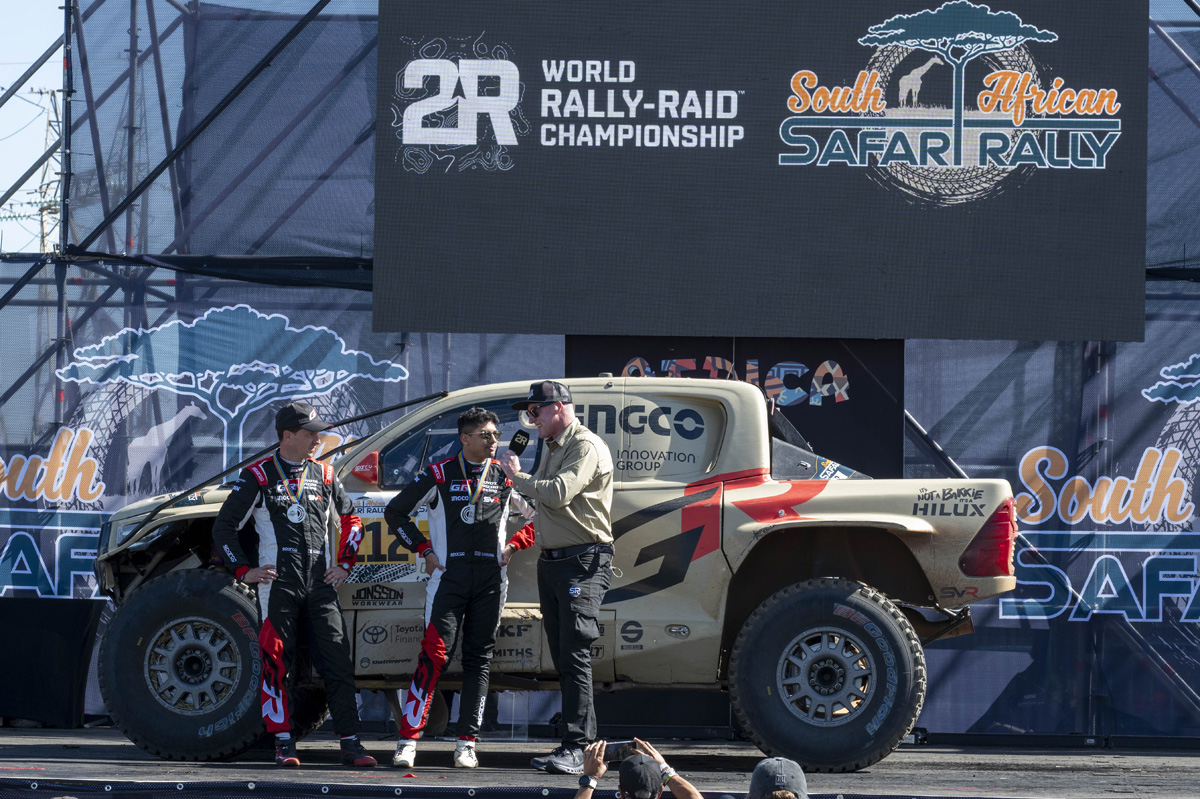
While still being the longest, toughest, and most gruelling motorsport race on the planet, the challenge now encompasses finding funds, gaining relevant experience, balancing work and family life, and a host of other challenges. As many Dakar competitors will attest, “doing the Dakar is the easiest part of the journey; simply getting to the start line is the true challenge.” As a lifelong Dakar hopeful, I can attest to that fact.

While researching the Dakar, I came across many people who started the journey but never finished, and in many cases, never even stood on the start podium. This was because they did not realize or necessarily understand what it would take to actually get there. I was also not able to find a clear, concise, or relatable account of how to actually get to Dakar.

Image source: Willem Avenant

My goal this year was to document my entire journey to the Dakar Rally 2025. This process included podcasts, videos, blog posts, social media posts, radio, etc., across a variety of platforms. Showing the ins and outs of “how to get to Dakar”, not just focusing on the two weeks of the race but the entire year before.

The Dakar Rally is the most expensive race in the world. If you count up all the very real expenses, just the entry is $18,000, team support and bike rental is $65,000, and airfare, protective gear, accommodation, FIM License are another $10,000. You stop counting after you reach $100,000, and you start asking yourself why you would spend so much money on a race. Surely there are better, more sane, more responsible, and more rational things to do with your money.

Here is the thing, dreams are not rational, and achieving them is never easy. Asking for help is always hard, much more so for the type of person who always wants to do everything himself and to prove that he does not need help.

Image source: Willem Avenant

Well, I need help, and I need support, and I am man enough to admit it.

I vow that I will focus every ounce of my being and ability on making this dream a reality. I want to bring you with me on my journey, not just as I surf the dunes of Saudi during the first two weeks of 2025, as you eagerly await any news from Dakar and hopefully share the special time with your kids, but I want to bring you along for the entire journey.

I want to show that achieving dreams is possible, but that it takes real hard work, effort, and A LOT of sacrifice.

I undertake to document my journey, the good, the bad, and the ugly, and to share it with you in as raw and honest way as possible with those of you who dream of going to Dakar one day, with those of you who just like a challenge, and with those of you who still believe that passion and grit can get the job done.

Image source: Willem Avenant

To show your support head over to his GoFundMe and help Willem Avenant get to the 2025 Dakar.

The All-New Fourth-Generation Suzuki Swift: Feel Iconic?

0
Photo credit: Suzuki Auto SA

For the launch of the all-new and now fourth-generation of Suzuki’s Iconic Swift, the “Swift Squad”, in the form of the South African media, made our way down to beautiful Stellenbosch and its mountainous surroundings. Thanks to some spirited driving and navigation challenges, we had an action-packed day, and as for the rest, we got to bond with the Suzuki family over the all-new generation of Suzuki Swift.

Photo credit: Suzuki Auto SA

The Swift as we know it has been around for the last 20 years in South Africa and has helped many new drivers and young families get onto the road. Suzuki has built a solid reputation in SA and so too can be said about the Suzuki Swift. Recent sales figures have proven this with the Swift being nominated as the most popular car in the country with over 86,000 sales since its arrival and this year for the first time Suzuki has punched through the 6,000 unit a month barrier with 1,179 units being covered by the Swift.

Photo credit: Suzuki Auto SA

So, it goes without saying, that Suzuki is creaming it when it comes to sales, but you must be asking yourself; why bring in a new Swift when the outgoing model is your best seller? Well, it’s simple, Suzuki wants to get ahead of the wave and right now their goal with the new car is to offer more luxury to the entry-level B-segment market, better build quality, more tech, better fuel economy, competitive pricing and through their marketing channels Suzuki want the Swift to take on a cult-like following like their notorious Suzuki Jimny.

Photo credit: Suzuki Auto SA

If you haven’t already noticed the trending hashtags from Suzuki on just about every social media platform known to man, here’s a reminder; #FEELINGICONIC, #SWIFTSQUAD and #SWIFTING. #FEELINGICONIC has to do with the design language of the new Swift, combining all the best character traits from the last three generations of Swift. Then we see #SWIFTSQUAD and #SWIFTING representing Suzuki’s lifestyle-focused experience behind owning a new Swift. Keep an eye on these hashtags if you want to carry on teasing yourself as Suzuki strives to make the Swift the most exciting car in its segment.

Photo credit: Suzuki Auto SA

Fancy marketing aside, what has changed with the latest gen and does it deserve all the hype?

Well, just look at the new design for starters. The new styling shouts out fun, cute, and modern, although the predecessor wasn’t ageing all that fast it just didn’t stand out from the plethora of b-segment hatches if you had to ask me. The latest model stands out in its GLX trim with diamond cut 15-inch rims, blacked-out A/B-pillars, hidden rear door handles, new LED L-shaped signature lamps, 3D LED tail light clusters, wide arches, clamshell bonnet and a sculpted tailgate with an integrated hatch spoiler. Oh, and the three-layer Luster Blue paint job is just an absolute stunner to me and my favourite colour out of the lot—the orange pearl metallic and premium silver are also very classy colour options.

Photo credit: Suzuki Auto SA

Depending on what model Swift you decide on buying out of the 5 model line-up, this will change trim level and pricing. You’ve got a base GL model available only in manual, two GL+ models offering buyers a choice of manual or new CVT and lastly, you’ve got the two top-of-the-range GLX models available in manual and CVT with paddle shift. You can open the door to your Suzuki Swift for as low as R219,900 with the GL model and R284,900 for the top-of-the-range GLX CVT.

Across the models, we see a revamped interior with digital climate control, front and rear electric windows, electrically adjustable and folding side mirrors height-adjustable driver seat, six airbags, ABS brakes with EBD, Brake Assist Function, Electronic Stability Programme, rear ISOFIX anchors and all manual models come with hill hold assist. Mat Watson from carwow would give the Swift a thumbs up for bottle and snack holders as there are many.

Photo credit: Suzuki Auto

So, how do you choose between these 5 models and 3 trim levels? The GL gets you all the hardware as the rest but helps the budget out with 14-inch steel wheels with plastic covers, no fancy infotainment displays with Apple Car play and no reverse cameras. The GL+ gets you 15-inch alloy wheels, a CVT option, a seven-inch touchscreen infotainment system wired to four speakers, a rear-view camera and a multifunction steering wheel. The GLX model gets you the attractive LED head and tail lights, 15-inch diamond-cut alloy wheels, a 9-inch touchscreen, a pair of front tweeters, keyless entry with push-button start, cruise control, automatic climate control and a leather multifunction steering wheel (with paddle shifters on CVT variants).

Even with all the latest improvements and changes to the new models, Suzuki keeps their weight under a ton at 946 kg and bang for the buck value when it comes to specs vs pricing, lower than their competitors.

Photo credit: Suzuki Auto SA

The heart of the new Swift is where we see a big change for this year, with the absence of one cylinder being a major talking point. Across the whole range, we see Suzuki’s new Z12E 1.2-litre three-cylinder petrol engine pushing out 60 kW at 5,700 rpm and 112 Nm of torque at 4,300 rpm. Suzuki’s idea with the Z12E motor was to create a more compact motor than before and offer more performance throughout the rev range.

How they’ve done this is by introducing multipoint fuel injection and four valves per cylinder. How it translated through the pedal is more engaging and the midrange feels like it has been improved. I do miss the smoother rev-happy 4-cylinder, but the 3-cylinder gives the Swift a more bubbly character as you work your way through the 5-speed gearbox.

Photo credit: Suzuki Auto SA

The Z12E is more than just a fun motor, it’s actually pretty efficient too. Suzuki claims a return combined fuel consumption figure as low as 4.4L/100 km or 22.72 km/L—an 11% improvement over its predecessor. In the mountainous Cape, we were getting roughly 5.0L/100 km in a manual, but with a more steady foot and a flatter landscape, I think drivers will get very close to the claimed figures.

Interesting fact: Depending on where you are driving in South Africa (inland or coastal) the new Swift offers running costs as low as 98c per kilometre. This is almost equivalent to riding a motorcycle, but with weather protection, three extra seats and a boot.

Photo credit: Suzuki Auto SA

After spending the day chasing beautiful landscapes, twisty roads, good food and even a fun gymkhana challenge, we settled down at the lovely De Eetkamer restaurant in the heart of Stellenbosch to collect our thoughts while watching talented Justin from Nomad’s Gallery work his rattle can magic on a Swift.

Photo credit: Suzuki Auto SA

Overall the new Swift isn’t just good for a car built in India, or good for its price tag, but rather just good in general. It offers buyers exactly what you see on the eccentric marketing videos and in turn, it helps entry-level buyers feel like they’ve bought a premium product. It feels stable on the road like the predecessor and the interior, especially in the GLX model, just calls for a road trip. The best part about Suzuki is that they’ve got a Swift to fit all budgets and all lifestyles, so make your pick, you can’t go wrong.

Photo credit: Suzuki Auto SA

As for us at the office, we are keen on revisiting the Swift life in Gauteng and possibly testing its long legs on a road trip. So, stay tuned…

For more information on Suzuki products visit – www.suzukiauto.co.za

Big Boy Pacer 200: Got Any Pace?

Photo credit: Bjorn Moreira / ZA Bikers

It might be fair to say that the Big Boy Velocity is one of the most popular commercial bikes in SA. You see thousands of them on the road, mini Checkers sixty60 toy delivery bikes in stores, and even our local MotoGP legend Brad Binder standing next to one in Checkers sixty60 commercials. Although it’s not a motorcycle people aspire to own, the Velocity is a workhorse of note priced competitively and built for measure.

The Big Boy Pacer 200 takes some notes from the Velocity but ramps things up a little. It looks much better, feels more substantial and has a lot more performance than the Velocity 150, thanks to its 191cc, four-stroke single-cylinder engine, which pushes out 10kW and 12.5Nm of torque. Even better, fuel consumption sits at a miserly 2.3l/100km, meaning that the 18-litre tank will give around 700km range. Not bad for R400 or so.

Photo credit: Bjorn Moreira / ZA Bikers

It will keep up with city traffic easily, and the engine is commendably smooth thanks to the balancer shaft lying within, while the five-speed gearbox feels sturdy enough to withstand the most ham-fisted operation. With a +/-100km/h maximum speed, it’s not so much fun on the highway but then you wouldn’t expect it to be, nor would you buy one to cover extensive highway kilometres. Around town, however, the performance is perky and the bike is nimble enough to be very useful.

Photo credit: Bjorn Moreira / ZA Bikers

The Pacer 200 is physically small but nowhere near as small as the Velocity models; as a six-footer, it didn’t feel ridiculously cramped at all. The seat is soft, which I like, but it is slightly awkwardly shaped so that you find yourself sitting on the step between rider and pillion, meaning that your arse is constantly being forced forward. Shorter riders would have no problem but a flatter seat would help.

Photo credit: Bjorn Moreira / ZA Bikers

Suspension and brakes are basic but function adequately and it’s comforting to have a front disc brake (although not equipped with ABS).

The off-road-biased tyres, on the other hand, are not my cup of tea, although they might improve once a bit worn – the model tested was brand spanking new. If I were considering a Pacer 200 for personal use, I would change the tyres to something more street-orientated (for example Michelin City Extra), but that’s just me.

Photo credit: Bjorn Moreira / ZA Bikers

It’s not a bad-looking bike, the red paint on the tank looks good quality and there are a few nice styling touches, such as the round rear light and teardrop indicators, not to mention the multi-spoke alloy wheels, finished in black. The crash bars are a useful addition, as is the rear carry rack. The footpegs fold up and there is a kickstart as well as an electric start. The dash is simple – an analogue speedo, illuminated gear indicator and a couple of other warning lights that you don’t know are there until they come on.

The smoked plastic covers over these latter two are very dark, personally, I found that this made them difficult to read in bright sunlight, but maybe I am just nitpicking at this point. The fuel gauge set into the speedo face, although very bright is a good touch for an affordable runabout. Being fuelled by a carburettor means that there is a fuel tap with a reserve position.

Photo credit: Bjorn Moreira / ZA Bikers

Big Boy are pitching this as an on/off-road adventure bike, which is pushing it a little, although it is by no means alone in this category. As an ultra-cheap machine to throw at the scenery while being effortless to pick up after a fall, it is hard to beat as long as you’re not in a hurry.

The Big Boy Pacer 200’s main rivals (Hero Xpulse, Honda XR190L, Yamaha XT250), may have an advantage in terms of outright quality, although the performance is similar, at R50k and upwards, they are over twice the price of the Big Boy, which comes in at R22,999. As I’ve said before about these inexpensive “delivery” bikes, all of them will give long service if looked after properly and ridden with due care and attention, which many delivery bikes most certainly are not. Having said that, it’s remarkable how much abuse they seem to be able to take and still work if the state of some of them on the road is taken as evidence.

Photo credit: Bjorn Moreira / ZA Bikers

Perhaps the main selling point for the Pacer 200 is that it doesn’t necessarily look like a delivery bike. The vast majority of these bikes will be sold for delivery duties and you’ll not see many of them parked in private driveways, but the point is that you really could own one of them as a practical, frugal, short-distance means of transport.

Fleet buyers, on the other hand, would do well to appraise the Pacer 200 which offers, in my personal experience, a lot more than the Velocity models for not a lot more outlay (the Velocity 150 costs R16,799).

Photo credit: Bjorn Moreira / ZA Bikers

The Big Boy range is extensive; for more information, head to www.samotorcycles.co.za

Big Boy Pacer 200

For more information on the bike featured in this article, click the link below…

2024

Big Boy Pacer 200 Commercial

Pricing From R22,999 (RRP)


Brand: Big Boy

The Beamer Gets The Leatherman D Treatment

0
Photo credit: Bjorn Moreira / ZA Bikers

The problem that sometimes arises when you buy a motorcycle is that the bike is not always in the exact spec that you would like. I owned a BMW R 1200 R, the naked roadster that uses the LC Boxer motor that preceded the 1250 cc and now 1300 cc range. BMW use the Boxer motor across a wide range of different models and applications. As I am known to do, I sold the Bee Em and later regretted it. So I shopped around and found another one, this time in the white with red accents colour scheme which I prefer over the silver of my last one. But with it came a problem.

Photo credit: Bjorn Moreira / ZA Bikers

BMW offer this bike with various seat options. There are Low, Sport and Comfort options. I suspect that my previous R 1200 R had the comfort option, which is significantly taller than the sport option on my “new” bike. Being a bit long in the leg, I way preferred the taller seat, not for the comfort, as the sport seat was great, but for the more relaxed angle of my knees. As I intend to use the bike as my long-distance touring machine, I also looked at a “comfortable” seat for the pillion. You know the old “happy wife happy life” story. The upgrade with the factory seats was going to smack me with over R10,000, which almost had me choking on my beer. There had to be another, more affordable option.

Photo credit: Bjorn Moreira / ZA Bikers

Then it dawned on me… I would chat with Dion Korkie. Dion is a legend in the custom motorcycle seat space. He has done work for a few of my mates. Simon had him do a custom seat for his Triumph Speed Twin, and Loy got his Honda NC 700’s seat pimped for comfort. In both cases the results were spectacular! Dion has an eye for what you want and, as a rider himself, perfectly marries form and function. The end result is a seat that looks factory and enjoys enhanced comfort.

Photo credit: Bjorn Moreira / ZA Bikers

I got hold of Dion and briefed him on my requirements. I wanted the seat in plain black, but with subtle red stitching to compliment the red frame on the bike. Well, to say that the result was what I wanted is a huge understatement! He knocked it right out of the park! The materials he used are perfect. The seating surface is a classy non-slip texture, with the sides a smoother texture. The stitching is subtle and perfect, flowing from the rider’s perch perfectly into the separate and slightly higher pillion seat. The end result is a seat that looks better than the factory option and works better too. The pillion seat is subtly re-shaped to prevent the pillion from sliding forward under braking. All in all, I could not be happier with the result. Needless to say, there was also a huge saving over the BMW option.
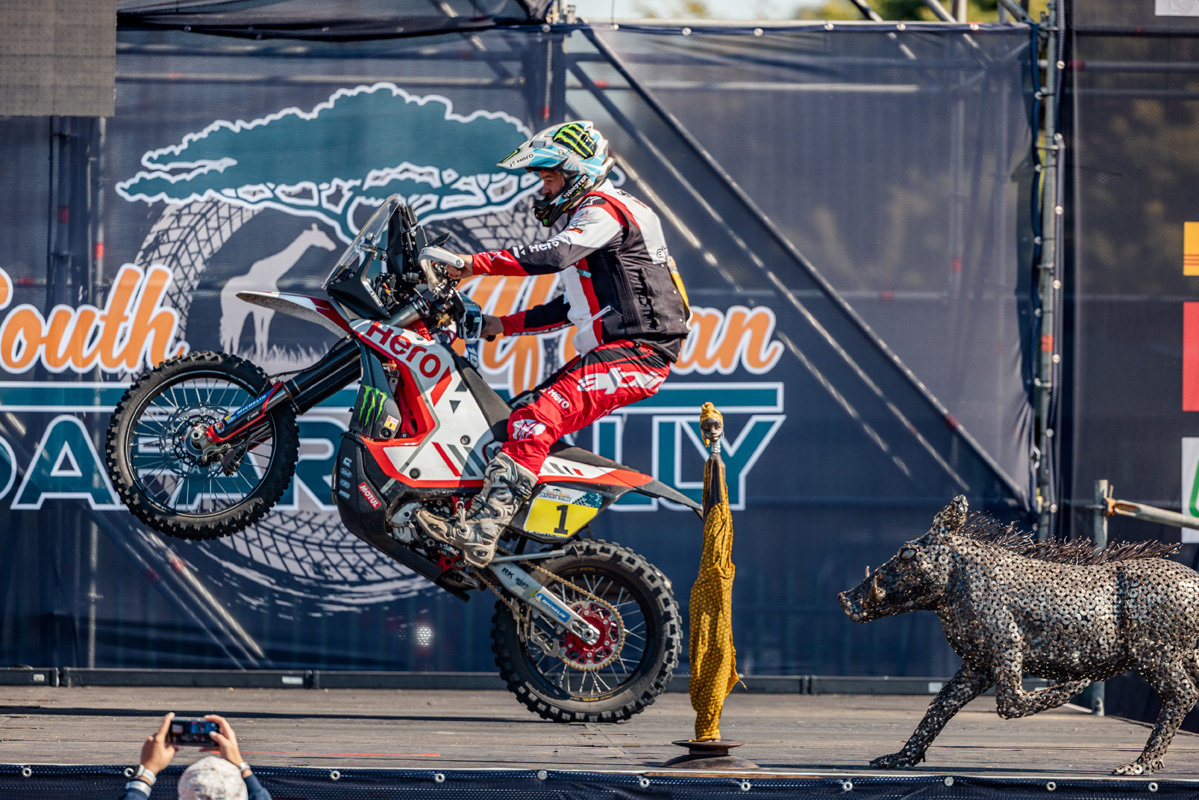
Photo credit: Bjorn Moreira / ZA Bikers

In a world of compromise in which we find ourselves today, Dion is a shining example that you CAN have your cake and eat it! If you need a structural or comfort improvement or simply want to customize your seat, speak to Dion. You will not be disappointed. You can reach him on 082 297 8727. Either call him or WhatsApp him. Your butt will thank you!

Photo credit: Bjorn Moreira / ZA Bikers

Acerbis – All The Kit All The Time

0
Photo credit: Bjorn Moreira / ZA Bikers

I recently got to do an epic trip with Honda and Footpeg Diaries to the Tankwa Karoo and the Cederberg, riding an HRC-colored Africa Twin Adventure Sport. The bike was a consummate distance-devouring beast. On reflection, a huge contribution to the riding comfort can also be attributed to the kit I was wearing. My adventure jacket, helmet and boots were all from Acerbis, a household name in the off-road kit for aeons (imported by Bikewise).

Photo credit: Bjorn Moreira / ZA Bikers

The chances of falling off your bike go up exponentially when you venture offroad. Wearing decent protective gear is absolutely essential. Amongst the best value-for-money offerings for quality, proven gear comes from the Italian company Acerbis. Born in 1973 from a business relationship between Franco Acerbis and American dirt plastics legend Preston Petty, Acerbis started manufacturing a range of dirt bike plastic goodies in 1975. I still use an Acerbis header tank which I bought almost 40 years ago it still works flawlessly, not leaking a drop. This prompted me to look seriously at the Acerbis kit when shopping for dirt riding adventure kit.

Photo credit: Bjorn Moreira / ZA Bikers

I acquired a pair of Acerbis X-ROCK motocross boots a while back. I literally wore them for 5 days for hours on end. No pair of boots that offer this level of protection deserves to be this comfortable. There is an initial couple of days of breaking-in, after which they settle down and are properly comfortable. Boots are so vital to your overall protection. Your lower legs are vulnerable in that the bike will often fall onto them, making lower leg injuries an issue if they do not have the proper protection. The X-ROCKs give you huge confidence.

Photo credit: Bjorn Moreira / ZA Bikers

Next up is my Acerbis Adventure jacket which is now a veteran of many arduous trips in both hot and cold environments. Adventure jackets in my opinion need certain characteristics. Versatility, enough pockets, hydration options, strategically placed armour, and easy ventilation options, the Acerbis jackets tick all these boxes. There is a pocket for a hydration bladder in the back, with hanger clips for the hydration bag, as well as the necessary apertures for the tubing. It has two breast pockets and two hip pockets as well. Across the lower part of the back of the jacket is a wide pocket which is really useful. I put a splash jacket in there for cold or rain showers. The sleeves zip off which allows you to vent your armpits if you half unzip the sleeves. The sleeves also feature a zip down the length of the sleeve which allows serious airflow during hot weather to assist two breast vents to keep you comfortable. The neck features two press studs, allowing you to compensate for the thickness of clothing in cold weather without feeling strangled.

Photo credit: Bjorn Moreira / ZA Bikers

There are two removable linings for additional cold and damp weather protection. Also very handy is a zipped pocket on the left forearm with a transparent plastic window. This is ideal for easy access to a credit card for toll gates and fueling. Zips are all YKK, the best and most durable in my experience. All these features come at decent pricing. It is comforting to wear a world-renowned brand with an excellent reputation without having to sell a kidney.

Photo credit: Bjorn Moreira / ZA Bikers

Last but not least is my Acerbis Adventure helmet. The HRC colours matched the bike perfectly, which was obviously not planned, given that I have had the helmet for over a year. Like my boots, it is seriously comfortable once settled. It features good venting and despite this, offers a really decent seal in poor weather or wind. There is a drop-down dark sun visor too. The helmet strap is fastened by a clip system which works flawlessly. Best of all, you do not pay a weight penalty despite the comprehensive specifications. This is important when you have a ten-hour day in the saddle. Your neck will thank you! The helmet is stable in the airflow too, with a well-vented peak that does not pull your head around as some adventure helmets tend to do.

Photo credit: Bjorn Moreira / ZA Bikers

So there you have it. If you are in the market for adventure riding kit you will do yourself an injustice if you don’t explore the Acerbis range. I can highly recommend it! (On that note, this kit was bought with my own hard-earned loot).

For more information have a look at the Bikewise website here – www.bikewise.co.za

Whipping Up a Frenzy of Excitement at Montecasino

0
Photo credit: Bjorn Moreira / ZA Bikers

No, this has nothing to do with winning big on the tables in the casino, but rather the daredevil and death-defying stunts taking place in the outdoor arena at Montecasino on Saturday 23rd November as an international cast congregated for the King of the Whip 2024 competition.

Belgian Freestyle Motocross rider Julian Vanstippen successfully defended his King of the Whip crown, claiming his third title in a row in front of a sold-out crowd.

Photo credit: Eric Palmer

Over 20 of the best Freestyle Motocross and Motocross riders took to the ramps to compete in the Best Whip and Best Trick contests. Up for grabs was a share of the R225 000,00 cash prize and various prizes from the official event partners. The 2024 edition saw the biggest list of international riders come out to compete – Julien Vanstippen (Belgium), Tom Parsons (USA), Pat Bowden (Australia), Genki “Wanky” Watanabe (Japan), Andreu Lacondeguy (Spain), Sebastian Westberg (Finland) and Antonio Navas (Spain).

Photo credit: Bjorn Moreira / ZA Bikers

Event organiser Ryan van der Spuy, said: “Every year this event exceeds expectations. It has gone from strength to strength and is now an event with international acclaim. We’re in our third year at this venue, sold out again, and saw seven international riders competing against our local stars, our most ever, which shows the event’s growth and recognition both locally and internationally.

“There were also two firsts for this event, and the sport itself saw an official pre-event riders press conference as well as betting partner playTSOGO joining to allow fans the opportunity to bet on their favourite riders.”

Photo credit: Bjorn Moreira / ZA Bikers

The action for the Best Whip competition began with the riders going head-to-head in four qualifying rounds. Judges were on the lookout for amplitude, style, and variation when deciding which of the 15 riders would qualify for the semi-finals. Seven more riders were eliminated in the semi-finals, leaving only eight to compete in the Finals.

Before the King of the Whip could be crowned, FMX riders had a chance to show off their crowd-thrilling freestyle tricks in the Best Trick Right-Side-Up and Upside-Down competitions where Pat Bowden proved to be the King of the tricks.

Photo credit: Eric Palmer

In the Best Trick Right-Side-Up competition, each rider had two chances to take to the ramps and pull off the best trick possible. Bowden claimed victory by showcasing his heart-stopping tricks like a Holy Grab to Double Heart-Attack Lookback and a Holy Grab to Rock Solid Indie. He was joined on the podium by crowd-favourite Genki Watanabe in 2nd place and Julien Vanstippen, who finished 3rd.

Photo credit: Eric Palmer

For the Best Trick Upside-Down, the riders had three jumps each to stake their claim. Not content with one first place, Bowden took the top step again to claim the title with a Backflip No Hander, Backflip Cliffhanger and a Backflip Double Grab. Rounding out the podium was Watanabe, who slotted into 2nd place and Dallan Goldman, who grabbed 3rd.

Photo credit: Bjorn Moreira / ZA Bikers

Bowden, winner of the 2024 Best Trick Right-Side-Up and Upside-Down competitions, commented: “It feels awesome as I had no expectations coming here. I didn’t even know if I would be riding until two days ago, as I broke my ankle around 10 days ago. I just taped my ankle as best I could before riding, so going home safe with two medals in the bag feels incredible.”

After the Best Trick contest, it was time for the evening’s premier event: The Best Whip final. As the sun set, the tempo began to ramp up, with the action only aided by a dazzling pyrotechnics display and a crowd on the edge of their seats. The Best Whip final saw the riders pull out all the stops to unseat reigning champion, Vanstippen as King of the Whip. It was a hotly contested battle between Tom Parsons, on-board the Stark Varg electric bike, and the defending champion Vanstippen. Vanstippen stepped it up a level to ultimately emerge as the 2024 winner and claim the Triple Crown. Parsons followed him in 2nd and Watanabe claimed 3rd, rounding out the top five were local riders Dalton Venter and Dallan Goldman, respectively.

Photo credit: Eric Palmer

Vanstippen, winner of the 2024 Best Whip competition, commented: “Third time in a row, baby. I’m so stoked and thankful to be back here. The crowd was insane, so claiming my third King of the Whip title in front of them was a fantastic experience. King of the Whip always puts on such a great event, and I can’t wait to be back next year battling it out with these amazing riders in front of this crowd!”

King of the Whip is presented by LW Mag in association with Ford, Monster Energy, Yamaha, Garmin, Motul, GoPro, PlayTSOGO and Estrella Cerveza.

KING OF THE WHIP 2024 FINAL RESULTS

Best Whip

1st Julien Vanstippen (Belgium)
2nd Tom Parsons (USA)
3rd Genki Watanabe (Japan)
4th Dalton Venter (South Africa)
5th Dallan Goldman (South Africa)

Best Trick Right Side Up

1st Pat Bowden (Australia)
2nd Genki Watanabe (Japan)
3rd Julien Vanstippen (Belgium)

Best Trick Right Side Up

1st Pat Bowden (Australia)
2nd Genki Watanabe (Japan)
3rd Dallan Goldman (South Africa)

World Hard Enduro Podcast Reveals Exclusive Insights into Legendary Roof of Africa Race

The World Hard Enduro Podcast has just released an electrifying episode that captures the essence of one of motorsport’s most challenging adventures—the 2024 Roof of Africa. Known to riders everywhere as “The Mother of Hard Enduro,” this legendary race traces its roots back to 1967 and promises an unforgettable journey through the mountain kingdom of Lesotho.

This year’s podcast episode offers an unparalleled look behind the scenes, featuring exclusive conversations with key figures in the hard enduro world. Motul’s Mercia Jansen provides insights into a decade of rider support, while Sherco Factory rider Teodor Kabakchiev shares his unique perspective as he prepares for both his African debut and first Roof challenge.

The 2024 race promises to be particularly exciting, with a revamped race layout designed to level the playing field among competitors. Listeners will get an in-depth breakdown of the brewing battle between local legends Wade Young and Brett Swanepoel, alongside the emergence of exciting young talent.

From the race’s historical context to the intricate details of the bike setup, the episode explores what makes the Roof of Africa truly special. The podcast doesn’t just preview a race – it captures the spirit and grit of an event that pushes riders to their absolute limits, racing across challenging terrain at altitudes that test even the most experienced competitors.

Whether you’re a competitor, spectator, or enduro enthusiast, this episode offers essential insights. From spectator tips to local knowledge, it provides a comprehensive guide to experiencing one of motorsport’s greatest adventures.

Tune in to uncover the stories, strategies, and passion that define the 2024 Roof of Africa.

Follow Us:

YouTube: @worldhardenduro
Instagram: @worldhardenduro
Facebook: World Hard Enduro
For more information, contact: [email protected]

Mud Is Temporary, Teamwork Is Forever! Motul Bike Wash Back For The 2024 Roof Of Africa

Image source: ZCMC Media

In addition to being the Official Lubricant Partner of the Roof of Africa 2024, Motul will once again make the ‘Mother of Hard Enduro’ a little easier for competitors through its Bike Wash offering.

Participants in all Roof classes will no doubt have to contend with dirt and mud as they take on the challenge of Lesotho’s terrain. As all Enduro riders know, mud has an uncanny ability to get into exactly the places it’s not wanted, and this can impact the performance of even the best-prepared motorcycles. In an event as competitive as the Roof, this can make all the difference between finishing and what might have been.

Image source: ZCMC Media

For the 2024 edition of the Roof, Motul has forged a new partnership with the Industrial Supply Centre (ISC) from Port Shepstone. Owner Brett Robins will be some serious cleaning hardware in the shape of Husqvarna HB34 pressure washers. And for the tenth consecutive year, the Bike Wash will be managed by Craig Kruger and his team from Extreme Clean. Their powerful combination of expertise and enthusiasm should ensure that Roof riders can stage a clean getaway at the start of each day’s riding.

Image source: ZCMC Media

Inspired by the beauty of the iconic Maloti Mountains and aligned with Motul’s “Protecting our Playground” ethos, this year’s Bike Wash will once again strongly emphasise sustainability. The team will be utilising the Biodegradable Motul Moto Wash from their MC Care range, a powerful cleaner and degreaser suitable for cleaning all types of motorcycles, whilst still being gentle on the environment.

Image source: ZCMC Media

The positive impact of the Motul Bike Wash will be felt long after the mud has settled following this year’s Roof. That’s thanks to a community initiative from EcoTanks (Gqeberha) and CashBuild Lesotho which will see the tanks supplied for the Bike Wash repurposed for use at schools and community centres.

“We’re excited to play our part in the legendary Roof of Africa and we’re confident that by blasting away the mud from competitors’ motorcycles, we can make this event even more enjoyable for all participants,” commented Brett Robins of ISC.

Image source: ZCMC Media

“After 10 years, the Extreme Clean team has become a fixture at the Roof of Africa, and we can’t wait to get our hands dirty this year,” commented Craig Kruger. “We look forward to working with Motul once again, and collaborating with new partners to offer an even better service to Roof riders,” he added.

“In many ways, our Bike Wash offering sums up Motul’s commitment to the Roof of Africa,” explained Mercia Jansen, Motul General Manager for Southern and Eastern Africa. “We’re celebrating 10 years of giving back to the riders while demonstrating just what our products can do in these extreme conditions. Our range of innovative, sustainable products that empower motorcycle riders to fulfil their potential, underscores Motul’s enduring support for motorsport,” she added.

Image source: ZCMC Media

Last but not least, this year’s Roof of Africa will include a FAST Adventure Ride, with fans already signed up to ride alongside the route to cheer for their favourite competitors. Motul has partnered with FAST to supply their superior products free of charge. These will be carried in a support vehicle that will offer a “roaming bivouac service” (just like in the Dakar Rally) for participants in the FAST Adventure Ride. Products from Motul’s MC Care Range will include Motul’s chain lube, oils, lubricants and coolant.

Given that Lesotho is also the perfect setting for mountain biking, the fact that Motul will be displaying their newly launched eco-friendly bicycle range, Motul Bike Care, is sure to be of interest to Roof competitors and spectators – not to mention Motul’s plans for a series of fun promotional activities.

Image source: ZCMC Media

For all the latest Roof news and views in the run-up to the event, visit: theroofofafrica.com

To learn more about Motul’s product range and commitment to motorsports, visit www.motul.com

Virgin Active Ride Joburg MTB with Liqui Moly

0
Photo credit: Bjorn Moreira / ZA Bikers

The iconic annual Virgin Active Ride Joburg challenge, hosted by the City of Johannesburg, took place over the weekend of November 11th and was another hugely successful event. 2024 was the 26th running of the event.

Photo credit: Bjorn Moreira / ZA Bikers

This year we attended the Virgin Active Ride Joburg MTB events leading up to the road race to show our support and see a few industry leaders at work. At this year’s MTB challenge, Liqui Moly South Africa was the lubricant sponsor and set up an impressive bicycle maintenance workshop, wash bay, accessory, and fan wear outlet.

Photo credit: Bjorn Moreira / ZA Bikers

Liqui Moly helped many cyclists prepare to conquer the incredible network of mountain bike trails within Steyn City’s exclusive walls! Steyn City offered cyclists a choice of three routes with different difficulty and distance levels: a 10 km, 25 km, or 50 km route.

Photo credit: Bjorn Moreira / ZA Bikers

The hidden Gem that is Steyn City was almost washed out on Saturday as heavy rains made it tough on all the competitors and for Liqui Moly, as the mud-caked riders and bicycles returned to base. After collecting medals, a large queue began at the entrance of Liqui Moly’s massive setup, both riders and bicycles requiring a lot of cleaning!

Photo credit: Bjorn Moreira / ZA Bikers

The event has always been a great family day, with lots of kids taking part on Saturday and the serious seeded riders taking part in the 25 and 50-km races on Sunday.

Photo credit: Bjorn Moreira / ZA Bikers

Liqui Moly really pulled out all the stops in their support of the event, showcasing their full bicycle product range, which even includes products to clean and care for muddy shoes and helmets.

Photo credit: Bjorn Moreira / ZA Bikers

It was a true team effort by Liqui Moly, the service crew being made up of seemingly everyone who works for this vibrant company, from marketing, sales, workshop, and so on.

Photo credit: Bjorn Moreira / ZA Bikers

Everyone got their hands dirty trying to help the kids prep, service and maintain their bicycles. Melicia Labuschagne (Managing Director Liqui Moly SA) was running up and down making sure everything was running smoothly, especially because the heavy rains made conditions difficult.

Photo credit: Bjorn Moreira / ZA Bikers

Liqui Moly is not new to the bicycling market but they continue to work incredibly hard to support events such as this, showcasing the extensive range of products available to SA cyclists. Liqui Moly’s support is vital to the survival and success of many events, Managing Director Melicia Labuschagne not only works hard to ensure things run smoothly but also takes part as a competitor. It’s this hands-on approach that makes Liqui Moly such a respected force in South Africa.

For more information on Liqui Moly products visit: www.shop.liqui-moly.co.za

MotoGP 2024: Barcelona Season Finale

0
Image source: MotoGP

To finish first, first, you have to finish. One of the most hackneyed phrases in any sport but one that perfectly sums up the 2024 MotoGP season. Francesco Bagnaia won 11 Grand Prix races – 18 races overall, if you count the Sprint victories – but Jorge Martin, the champion, made consistency count; when Bagnaia failed to finish – too many times by crashing out completely (eight times) and not simply finishing down the points – Martin made the most of it and, when Bagnaia did finish ahead, Martin was right there behind him to minimise the damage. Martin also only crashed out four times and scored 16 second-place finishes. That’s consistency.

In any season finale that goes to the wire, there is always a tinge of sadness for the loser that travels alongside the euphoria for the winner. When a contest is so close, no one deserves to lose. In 2024, this was even more so due to the protagonists conducting themselves in what could possibly be the most gentlemanly and sportsmanlike manner ever witnessed in top-flight motorcycle sport, both on- and off-track. They both were almost too nice to lose out in the final reckoning!

Image source: Ducati

Some observers lament the lack of antagonism between protagonists—Rossi and Gibernau, Rossi and Biaggi, Rossi and Lorenzo/Marquez, to name the obvious ones—claiming it makes the battle all the more exciting. But hasn’t this season proven that the exact opposite can be true? That witnessing clean and respectful racing can be just as tense and often brilliant?

Bagnaia did everything expected of him as reigning champion, becoming one of only five riders to have won 11 or more Grands Prix in a season, following Agostini, Doohan, Rossi and Marc Marquez. That’s exalted company. He has been an exemplary champion, preferring to do his talking on the track and not off it. No one would have begrudged him a third title.

Image source: Ducati

But the sport is all the better for having a new first-time champion, one who unequivocally deserves the title. Consistency is never sexy, but it is effective, especially when the rider is as exciting to watch as Martin.

Jorge Martin’s performances this year have been matched only by his own humility and refusal to be dragged into mud-slinging in the face of Ducati’s reticence to promote him to the factory squad for the second year running. Ducati’s loss is Aprilia’s gain. Let’s just hope it’s also Martin’s gain…

Image source: MotoGP

What’s just as good as the rider’s title is that Martin has given the Pramac team the distinction of being the first satellite team to win the title in the modern, four-stroke MotoGP era. Just imagine if the team’s jump to Yamaha machinery in 2025 coincides with the latter getting its act together and becoming a force in MotoGP once again. The championship-winning experience Pramac has gained in 2024 is worth more than all the sponsorship dollars and the team could pull off another masterclass if Yamaha can give the team the equipment…!

Bagnaia showed his two consecutive last-gasp championships were no fluke by doing everything he had to do and dominating the final weekend of the 2024 season; pole position, Sprint victory and Main race victory, where too often this season he has fallen short in one or the other. In light of the pressure he was facing, including the mentally devastating possibility of the title slipping out of his grasp, it was his greatest race weekend of the year. He could have done no more and could only rely on Martin making the fatal mistake under pressure.
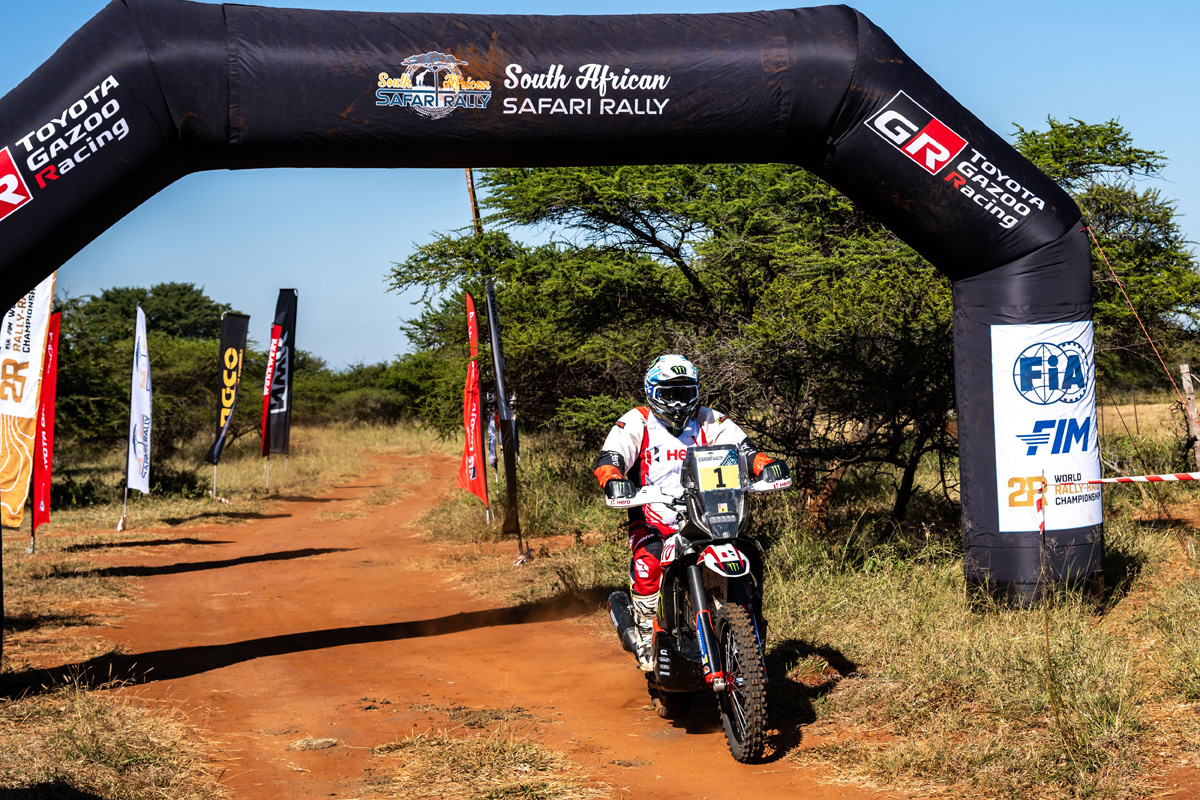
Image source: Ducati

Martin didn’t make that mistake. Yes, he was helped by having a 24-point buffer leading into the final round, but he also did what was necessary this weekend and didn’t put a foot wrong, even though there was potentially more pressure on him.
Looking at it that way, and considering the achievements of both riders, to choose a loser seems unfair.

Martin is a worthy world champion; let’s make no mistake about that, for all the talk of sportsmanship. He has been devastatingly fast all year, both aggressive and fair in his race tactics. He put behind him the disappointment of last year completely and believed in his own ability. There was also an enhanced vision of what it takes to win the championship and, when he had to, this year he played the percentage game and took the points.

Image source: MotoGP

It’s not that he ever held back, it’s just that it never looked like he was doing that. He always looked spectacular and, watching him, you could never be certain that disaster was far away. But somehow, he got away with it more often than not. He always looked fast.

That’s the difference between Martin and Bagnaia. When Bagnaia crashed, it was a complete surprise because he was always so smooth and unruffled and never looked as if he was going that fast. He is the two-wheeled equivalent of Alain Prost; a mobile computer that doesn’t look as if he’s going very fast until you look at the time sheets or the gap he has built to his competitors. Bagnaia might not get the pulse racing on track as much as Martin, Espargaro or Binder, but there’s an argument that says he’s the most complete racer on the grid, capable of pulling out pivotal performances when he needs to. Of course, he might not have to pull off those performances if he avoided the mistakes…

Image source: Ducati

The superiority of the Ducati GP24 was a huge factor in the title race. Many will criticise the championship because of the number of Ducatis on the grid but is that Ducati’s fault? If you’re given an advantage, you take it and, let’s face it, the advantage would have been nothing if the bike itself hadn’t been up to the challenge. The GP23 and GP24 have been the class of the field for two years and we’re witnessing a new era of MotoGP, just as we had the MV Agusta years, the Suzuki years, the Honda years and the Yamaha years, so let’s appreciate that. In a few years, it will be another manufacturer; it just so happens that this is Ducati’s time and we should enjoy it as such.
A better way of looking at it is to realise what Ducati’s dominance will do to spur Honda, Yamaha, KTM and Aprilia onto greater things. Imagine a grid with five manufacturers with a real chance of a win, not just through luck or a confluence of circumstances and a rider who rolls the dice (Binder, Austria, rain, anyone?).

Image source: KTM

There’s another measure to the GP24’s dominance; Martin, a rider with a very distinct style, can race toe-to-toe and beat a rider with a completely different style on the same machine. Think about it; eight riders on Ducatis this year and last, all with their own style of riding and all able to win. When did any manufacturer have that level of dominance, with two riders who were more than capable of beating each other? Rossi and Lorenzo on the Yamaha? Agostini and Hailwood on the MV Agusta? There haven’t been too many pairings and now we’re talking about one manufacturer with eight potential winners. That shows just how far Ducati has come.

Or how far the Japanese have sunk! When last was Honda barely mentioned in Grand Prix racing? Between 1968 and the early 1980s, when Honda wasn’t participating in Grand Prix racing at all, that’s when.

Image source: Honda

In 2024, Honda couldn’t buy a headline in any of the press, unless it was regarding Joan Mir not finishing a race yet again, or the fact that Luca Marini hadn’t scored a single point quite yet.

It’s not that Ducati have moved the goalposts so far beyond Honda’s reach, more that Honda has gone so wrong. In the normal scheme of things, Ducati might be the fastest, but Honda would be able to keep up and challenge to a certain extent.

Image source: Honda

Something, however, has gone terribly wrong at Honda this year (and last year, and the one before that…) Being slow is one thing, but trying to kill its rider at every opportunity is another, which is exactly what the latest RC213V has consistently tried to do. To suggest that it has taken Honda so long to rid itself and its motorcycle of the influence of Marc Marquez is ridiculous. You don’t forget how to build a racing motorcycle that quickly. Having said that, maybe the team has lacked a rider who has a domineering influence and who has driven development within the team, a role which has either been denied to Mir and Marini, or which they are incapable of assuming.

Much the same can be said of Yamaha, although Fabio Quartararo has produced some unbelievable performances in 2024, even if the final results have lacked the same sparkle. Much has been made of Pramac’s defection to Yamaha; two more bikes on the grid, double the feedback and development potential, which everyone is convinced is the golden ticket for success, given Ducati’s position at the present time.

Image source: Yamaha

What that ignores is that Honda, KTM and Aprilia all have four bikes on the grid and it hasn’t done them much good this year, has it?

There’s been a lot of noise about Yamaha’s move to a V4 in place of the inline four-cylinder engine. Only time will tell if the noise is more than the mere gnashing of gear teeth, with no visible improvement in performance. As with Honda, Yamaha has not forgotten how to build an effective racing motorcycle and will do so again.

And then we get to Aprilia and KTM. Unfulfilled promises might be the kindest way of describing their years. Aprilia’s Maverick Viñales scored a remarkable treble in Austin – pole, Sprint and Main victories – but, apart from that, there were only five other podiums for him and one Sprint victory and three other podiums for Aleix Espargaro. Certainly not what we were expecting after 2023.

Image source: Aprilia

The honest appraisal for KTM is that without Pedro Acosta and his nine podiums – three in Main races – it would have been a dire season, with Binder scoring only two podiums in the opening race and Jack Miller none at all. Dani Pedrosa scored a remarkable podium in the French Sprint race as a wild card entry but 2024 was a season to forget for the Austrian outfit. About the only positive was Acosta’s performance in his rookie year but it will depend on KTM’s ability to give him the bike he needs in 2025 if his talent is not to be squandered.

Image source: GASGAS Tech 3

And that brings an end to the 2024 season. Whether you think the right rider won the title depends on where your loyalty lies but we should rejoice in the fact that the title race went down to the last corner of the last lap of the last race, even if we were only waiting for a mistake from the champion-elect right up to that moment.

The protagonists will likely be different in 2025; well, one at least – Marc Marquez – while it would be a fool who would rule out Bagnaia and, if Ducati loses two bikes on the grid in 2025, then that still means three up-to-date GP25s and three GP24s. That’s a formidable armoury. Of course, we’ll all wish for Honda, Yamaha, KTM and Aprilia to up their game and close the gap but we might have to wait for that until the new rules come in, in 2027.

Image source: MotoGP

2025 starts two days after the final Grand Prix weekend, with a test in Barcelona. Marquez on a Ducati GP25, Martin on an Aprilia, Acosta on a factory KTM. Next year is shaping up nicely already.

Husqvarna Svartpilen 801 – The Dark Street Explorer?

Photo credit: Bjorn Moreira / ZA Bikers

With all the fuss and attention around adventure bikes in South Africa – much of it justified, it has to be said, thanks to their all-round practicality, excellent dynamics and performance – it’s easy to forget that a motorcycle can exist to simply be entertaining and fun to ride, with no alternative higher purpose.

In Europe, riding conditions and general availability of off-road riding opportunities mean that motorcycles other than adventure bikes are just as, if not more, prominent in the sales figures. This is reflected in the number of naked models that are available and also hugely popular.

Photo credit: Bjorn Moreira / ZA Bikers

Husqvarna, originally a Swedish manufacturer, which, for several years, has been part of the Pierer Mobility stable that encompasses KTM and GasGas, has undergone a radical change in the products offered. For so long a specialist in enduro and MX motorcycles, Husqvarna has not only entered the adventure bike market with the Norden 901 but also the naked sports bike market with the ultra-modern-styled Svartpilen and Vitpilen, two models that properly established a new design language.

As is the norm with motorcycles today, the 2018 Svartpilen/Vitpilen theme was due for an upgrade and, in the form of the Svartpilen 801, it has arrived. If, at first, there might be a sense of disappointment that the design language has been diluted to the point of slight anonymity, there can be no doubt that the riding experience has survived undiluted. Which, let’s face it, is the whole point of the exercise in the first place!

Photo credit: Bjorn Moreira / ZA Bikers

The biggest change is in the engine. The Svartpilen 701 was powered by the 692cc, 75bhp, single-cylinder engine from the KTM 690 range, whereas the Svartpilen 801 utilises the 799cc, 104bhp parallel twin-cylinder engine from the 2018 KTM 790 Duke, housed in a new tubular steel chassis, with calmer steering geometry, fully-adjustable WP suspension and a host of electronic rider aids. If the new model loses some of the uncompromising – but still playful – aggressiveness of the Svartpilen 701, then it more than makes up for it with a new-found sense of performance and sportiness.

Photo credit: Bjorn Moreira / ZA Bikers

I’m not going to even comment on the price, which is R206,699, because I’m sure we’re all bored of talking in incredulous tones about the cost of motorcycles these days. We really have to adjust our thinking and accept that they are no longer inexpensive; not that they ever were but the psychological barrier of a relatively ‘ordinary’ bike costing more than R200,000 is hard to overcome.

What might seem a little incongruous is the standard fitment of Pirelli MT60 RS dual-purpose tyres, which have an 80/20 road/off-road bias; quite why anyone would contemplate taking this bike off-road is not entirely clear but thankfully the tyres have more than enough grip for road riding and, to be honest, they do look brilliantly chunky and purposeful.

Photo credit: Bjorn Moreira / ZA Bikers

As a riding machine, the 801 is sublime; the chassis and suspension are brilliantly executed, the latter offering a plush ride without ever feeling like it’s losing control when pushed, and the springing is on the soft side, which enhances the feeling of quality. Naturally, the suspension is WP, fully adjustable, while the braking is handled by J. Juan, Brembo’s Spanish subsidiary. No complaints in that department at all.

Photo credit: Bjorn Moreira / ZA Bikers

The riding position tips the rider slightly forward but not to extremes and there is plenty of space, even for taller riders. The seat is a typical KTM offering, being flat, wide and reasonably comfortable, although you will want to take a break every hour and a half to get some feeling back into your backside.

Photo credit: Bjorn Moreira / ZA Bikers

It would be tempting to assume that the Svartpilen 801 is merely a KTM 790 Duke in different clothes but, having ridden the two bikes back-to-back, thanks to a friend who owns a 790 Duke, the Husqvarna somehow feels a little less manic and edgy. Don’t worry, it will still bring out the hooligan in you and cater for that side of your personality perfectly, it just does it in a slightly more civilised manner.

The engine is familiar to anyone who has ridden the 790 Duke and there is nothing you can criticise. 105bhp pushing along 181kg (wet) will always produce fireworks but it’s not peaky, nor does it have a violent delivery; there’s a linear spread of power and it is linked to a smooth and benign throttle. Fans of the old Svartpilen 701 might lament the loss of the single-cylinder engine and, compared to that, the parallel-twin engine in the 801 has lost a bit of character, but the performance has improved, just as the vibrations have reduced.

Photo credit: Bjorn Moreira / ZA Bikers

The electronics are extensive, with variables for ABS and traction control and there’s even a Supermoto mode for the ABS, that turns off the ABS at the rear, allowing the show-off rider to skid the rear wheel at will; it’s great fun but not great for rear tyre life! The bi-directional quick-shifter is brilliant, with a solid-feeling click to each change, the ABS and TC are lean-sensitive and there is, of course, the ubiquitous full-colour TFT dash as an interface for adjustments as well as riding information.

Photo credit: Bjorn Moreira / ZA Bikers

The Svartpilen 801 isn’t really a direct replacement for the 701, as it smoothed out some of the rough edges of the previous machine and turned into something a bit more civilised, if not slower or less dynamic. It’s as if it has grown up a little, which is no bad thing. Personally, I would have liked the styling to have been as ground-breaking as the original but perhaps it’s more a case of being used to the styling after six years of seeing them on the road. Maybe it would look more distinctive in another colour but it’s available in any colour you want, as long as it’s black…! All very stealthy, and I’m certain that no one will agree with me!

If I had to sum the Svartpilen up in one word, it would have to be “fun”. There was never a moment when it didn’t thrill and entertain, never a moment when I wanted more power or better handling and braking, never an opportunity missed to ride it, even if the journey was merely a couple of kilometres. If my day-to-day riding – including weekends – was limited to the urban jungle, the arguments for the 801 would be hard to resist.

Photo credit: Bjorn Moreira / ZA Bikers

Husqvarna 801 Svartpilen

For more information on the bike featured in this article, click on the link below…

2025

Husqvarna Svartpilen 801

Pricing From R206,699 (RRP)


Brand: Husqvarna

Exploring Front Runner’s Array Of Adventure Roof Rack Accessories – Part 01

0
Photo credit: Bjorn Moreira / ZA Lifestyle

We’ve had our 5-door Jimny now for a few months, and as you’ve seen, we’ve added several Suzuki ‘approved’ accessories to make the already versatile Jimny even more practical.

Just to recap, we’ve…

  • Installed Protection Parts from the Suzuki OEM parts catalogue
  • Applied ZA Lifestyle ‘adventure’ themed branding courtesy of Empire Graphic Company
  • Fitted a set of ‘all-terrain’ Grabber AT3s from General Tire
  • Locally made Seat Covers and Interior Protection from Takla Products
  • Roof Rack and Ladder from Proudly South African company Front Runner

Continuing with Front Runner, having had the roof rack installed, this not only gives the Jimny a ‘rugged’ look but with a few basic tie-down ring mounting points, strapping larger items onto the roof, such as ladders for example, has made the Jimny so much more practical than in its standard trim.

But why stop there? Front Runner offers an array of adventure accessories from; a range of sports carriers, and a huge selection of camping and expedition accessories including many storage solution options.

So as part of our ongoing Jimny blog, we’ll be testing several of these roof rack accessories, starting with two Pro Bike Carries, Cargo Boxes and Bracket Mounts, a set of Recovery Devices and a Mounting Kit—time to pimp our rack!

Front Runner Pro Bike Carrier

First up is Front Runner’s Pro Bike Carrier, which is constructed with the same weather-resistant stainless steel and powder coating as the Front Runner racks and mounting systems.

Photo credit: Bjorn Moreira / ZA Lifestyle

As we do regular bicycle features at ZA Lifestyle, we opted for two of these bike carriers to be fitted to our rack.

The selling points for us are that firstly; no front wheel removal is necessary, which just makes things simpler when loading, and secondly the carrier is adjustable to most wheel diameters including road bikes, MTB and fat bikes with tyre widths ranging from 18mm/0.7″ up to 132mm/5.2″ (including e-MTBs), which is vital to us as it gives us flexibility when collecting different bike types from clients.

Photo credit: Bjorn Moreira / ZA Lifestyle

The installation process was quick and easy, taking approximately 30 minutes in total, we laid things out in a way that we could still put other accessories on—maximising the versatility potential of the rack.

To load a bike, simply remove the fixing bracket, lift the top wheel holder into position and lift the bicycle into place. Then Loosen the knob to lift the bottom wheel holder so it touches the tyre and then adjust the knob to fix the front wheel firmly into position.

Photo credit: Bjorn Moreira / ZA Lifestyle

Finally, the rear wheel sits into a wheel holder and is tightly secured using a rachet-type fixing mount. Voila! It’s that straightforward…

Photo credit: Bjorn Moreira / ZA Lifestyle

We’ve tested the rack with both an entry-level hardtail MTB and a high-end e-MTB, both bikes were loaded on/off with ease and what’s nice is that the carrier folds flat and secures onto your rack when not in use.

Bikes can be locked using Rack Accessory Lock.

Front Runner Wolf Pack Pro Cargo Boxes and Bracket Mounts

Next up, we wanted extra storage on our roof rack and for that, we managed to fit a set of Wolf Pack Pro Cargo Boxes in between the bike carriers which mount in seconds using Wolf Pack Pro Mounting Brackets.

Photo credit: Bjorn Moreira / ZA Lifestyle

These durable brackets will hold your cargo boxes securely in place through any terrain and are designed to work with Front Runner Roof Racks. They are lockable and offer versatile placement anywhere on your roof rack. We found them to be particularly handy for storing our dirty MTB kit after our ride—a superb storage solution from Front Runner.

Pro tip – having the boxes mounted between the bike carriers is great in that they act as seats when you are mounting/dismounting the bikes.

Photo credit: Bjorn Moreira / ZA Lifestyle

MaxTrax Recovery Devices and Mounting Kit

Finally, as often is the case when out-capturing content for our platform, the journey takes us to some weird and wonderful places that are often off the beaten track, which inevitably puts us at risk of getting stuck.

With a little room left at the rear of our rack, we decided a little ‘peacocking’ was in order so we fitted a set of ‘Orange’ MaxTrax Recovery Devices which mount very neatly using Front Runner’s Recovery Device Mounting Kit.

Better safe than sorry—oh, and they look super cool too.

Photo credit: Bjorn Moreira / ZA Lifestyle

With the December holidays fast approaching, we’ll be testing a few more adventure goodies from Front Runner so stay tuned…

For more information visit: www.frontrunneroutfitters.com