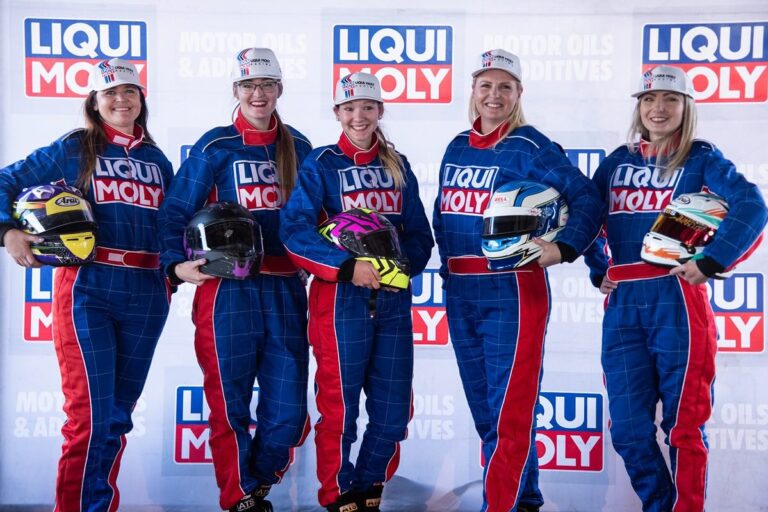
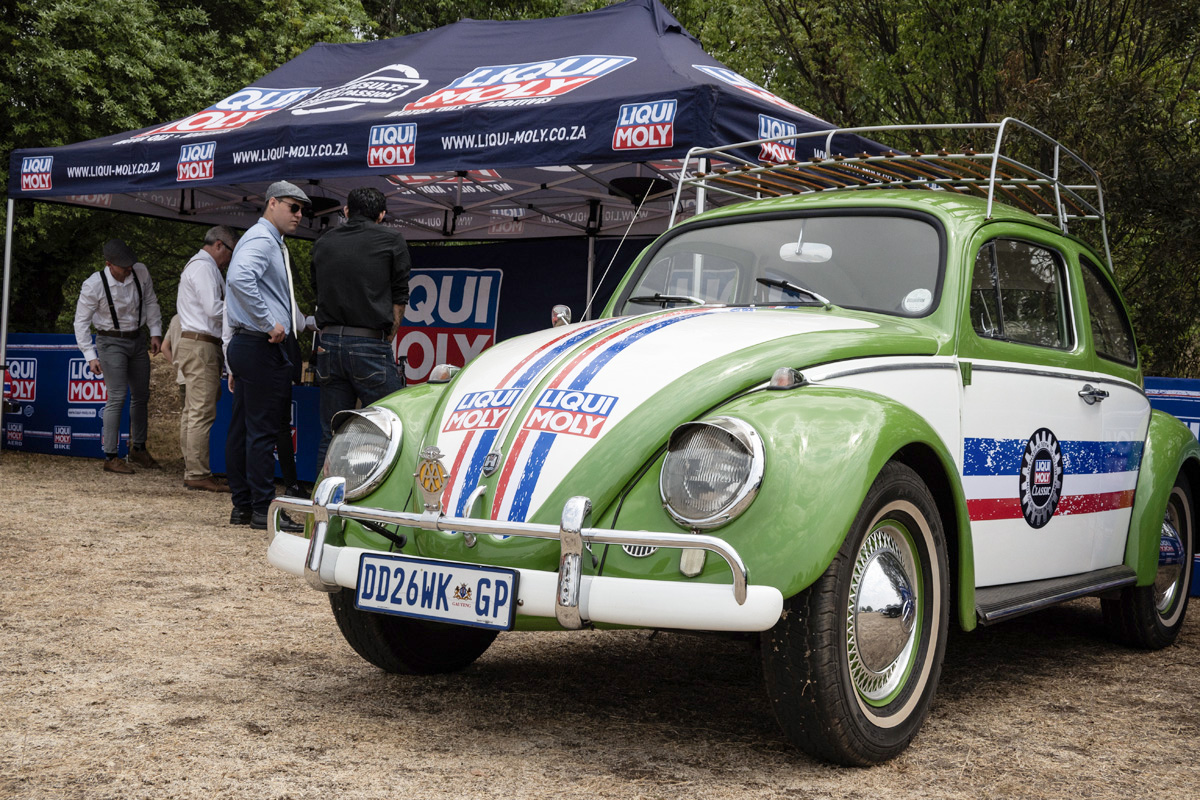
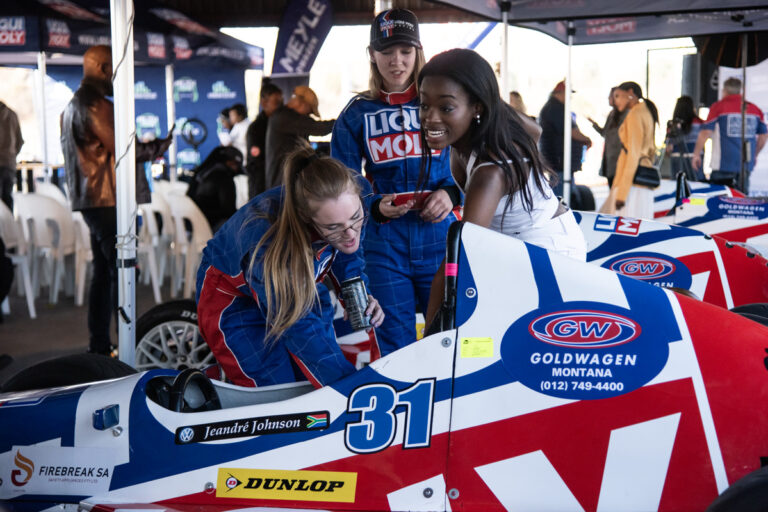
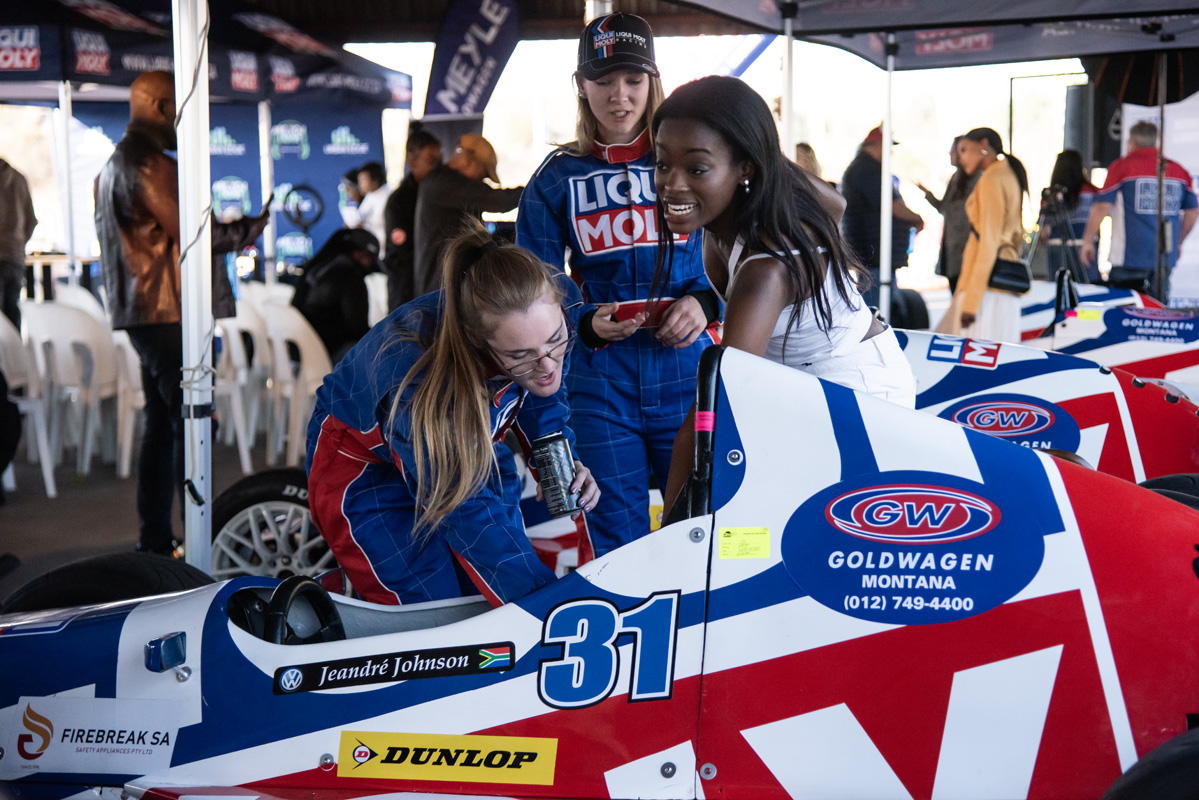
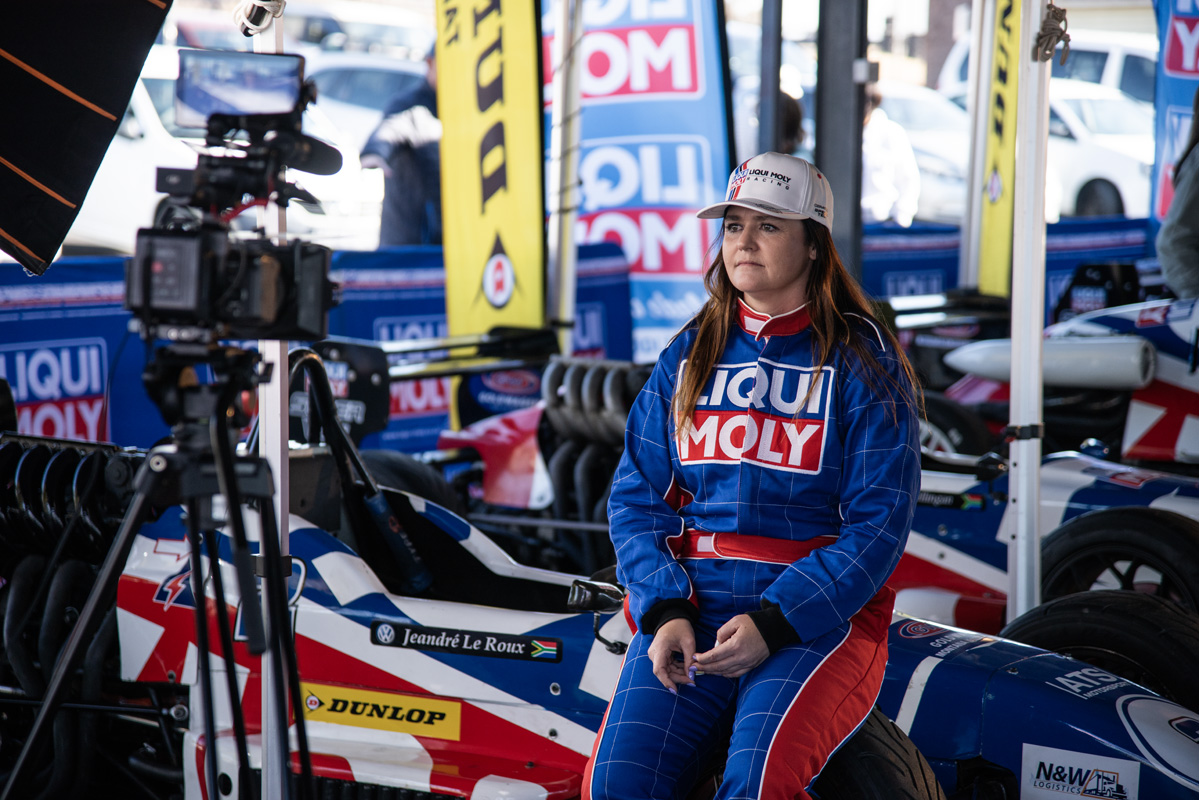
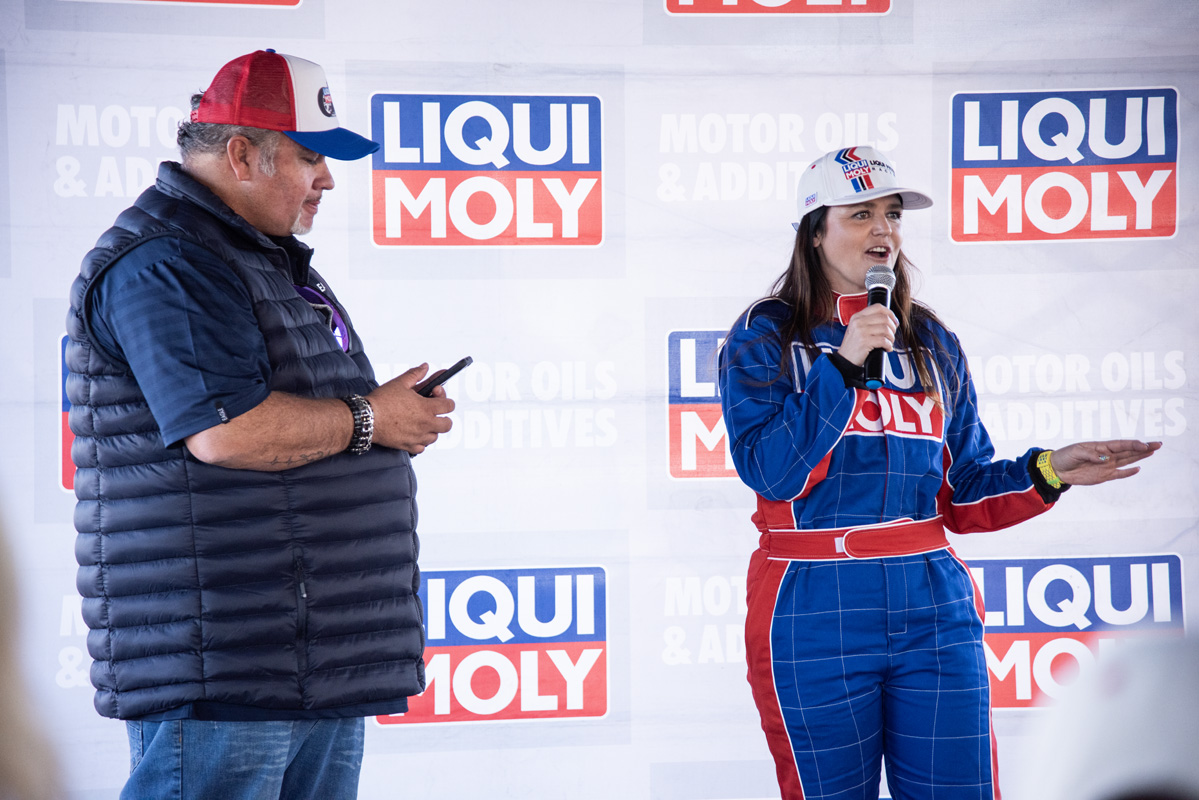
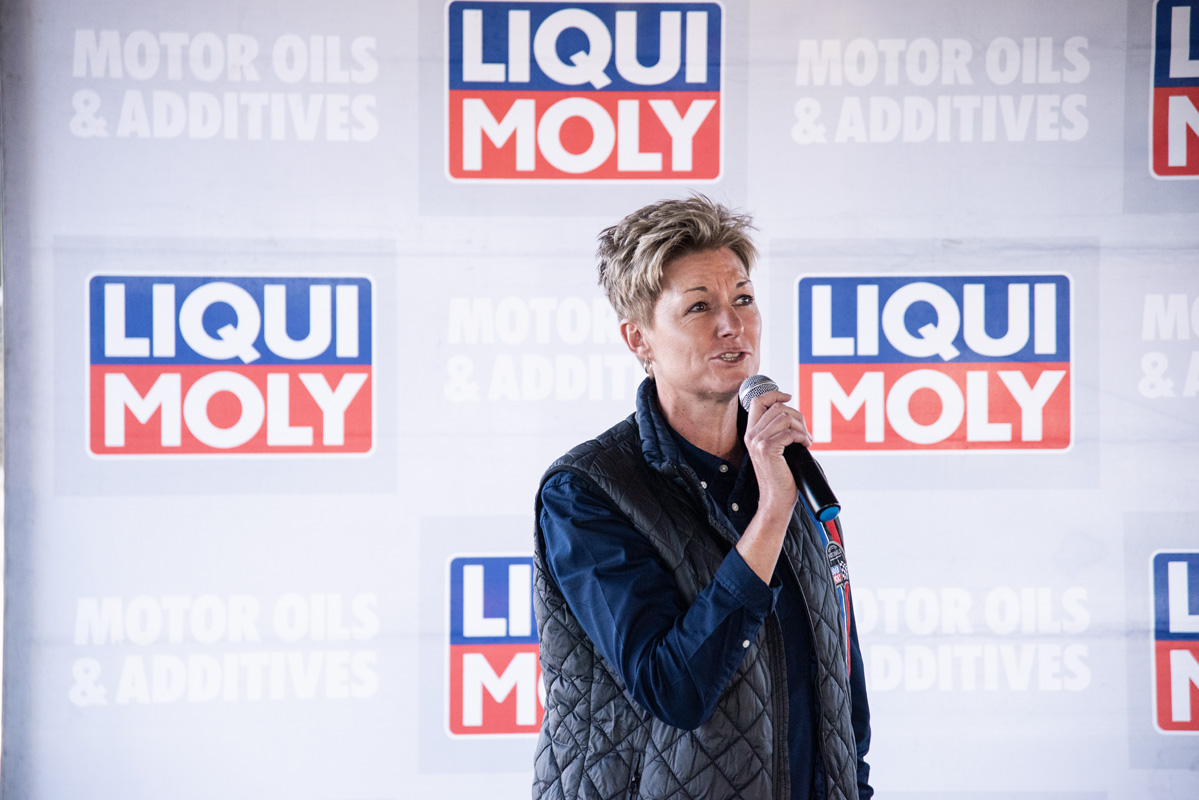
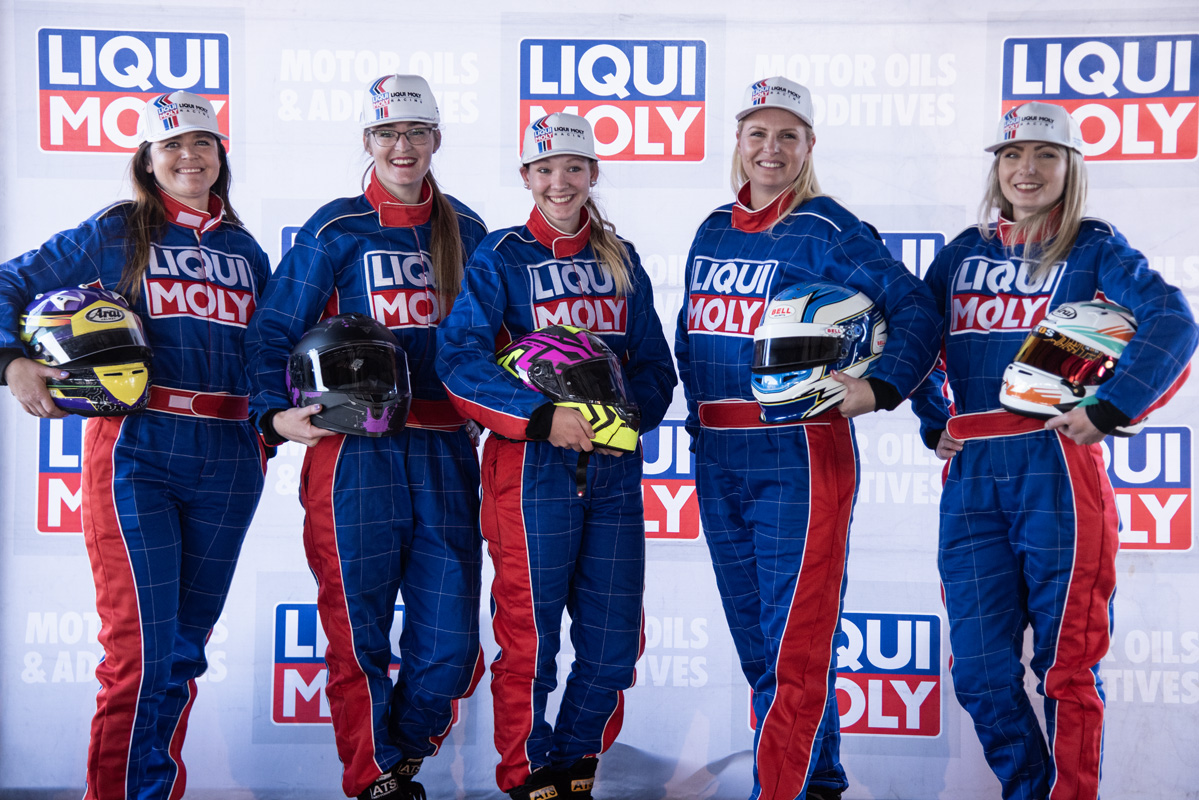
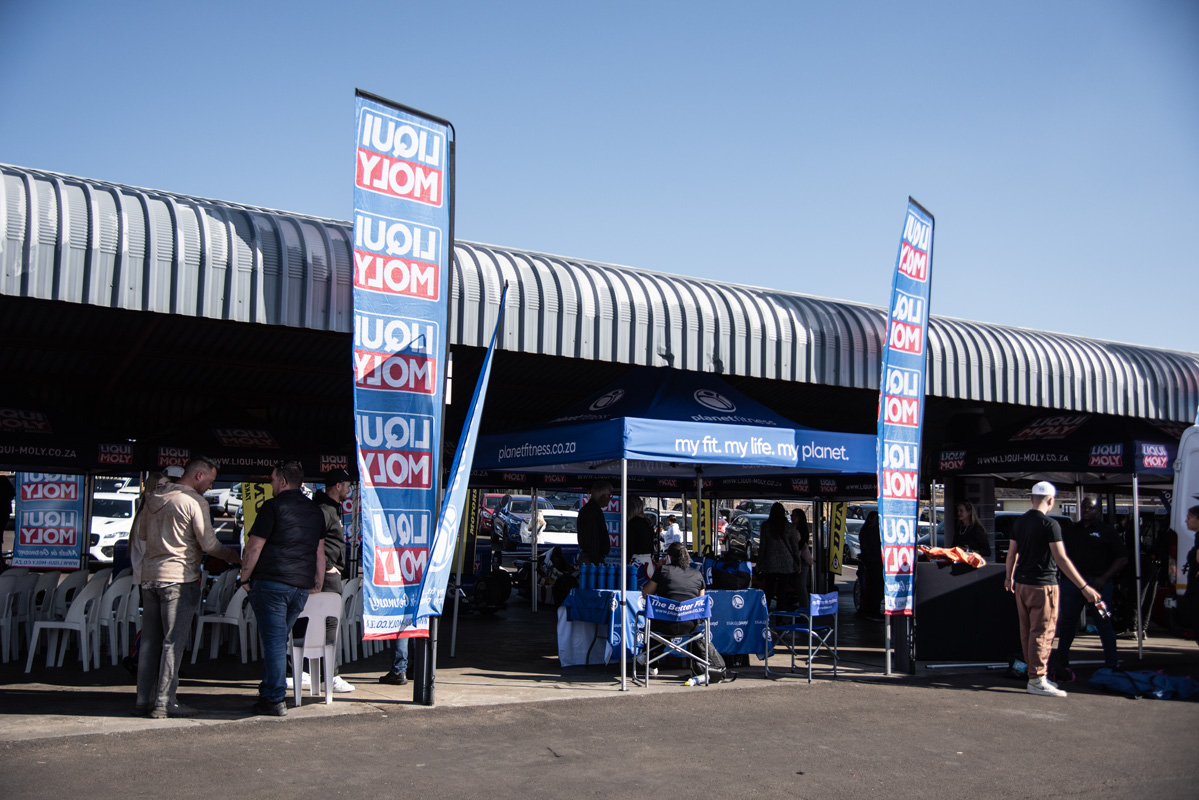
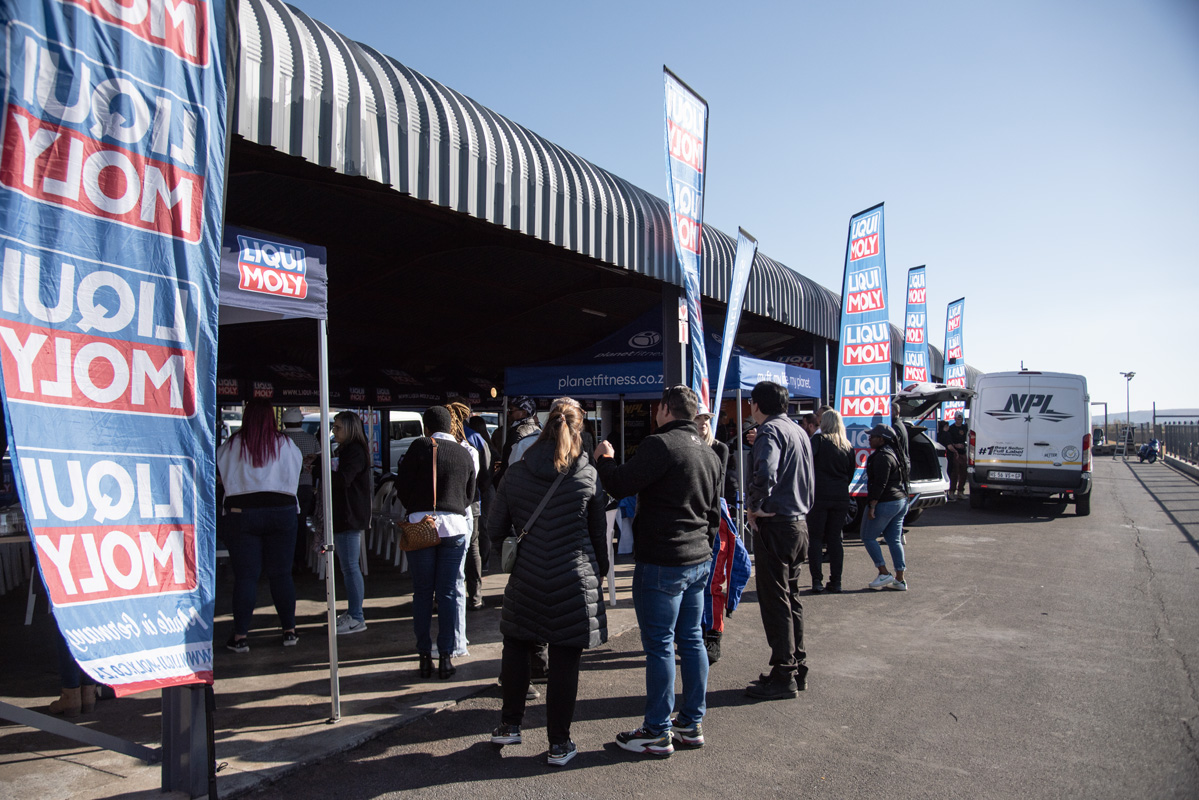
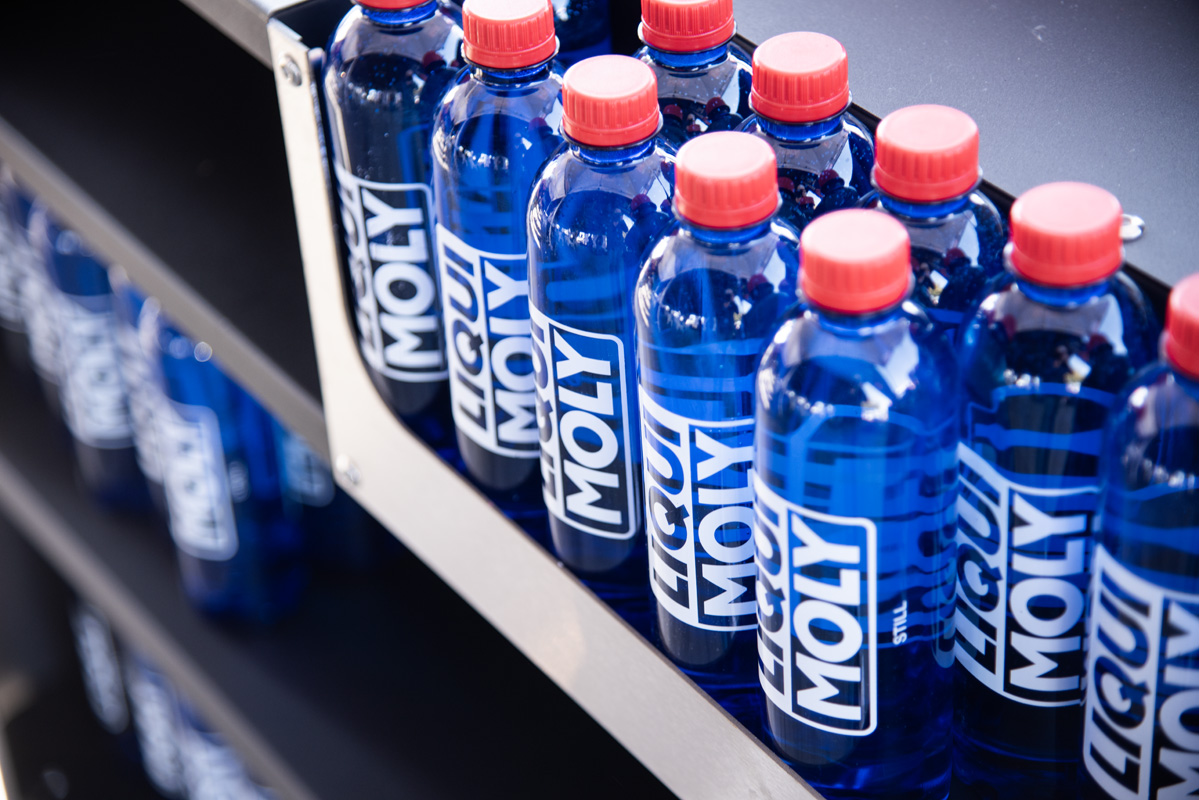
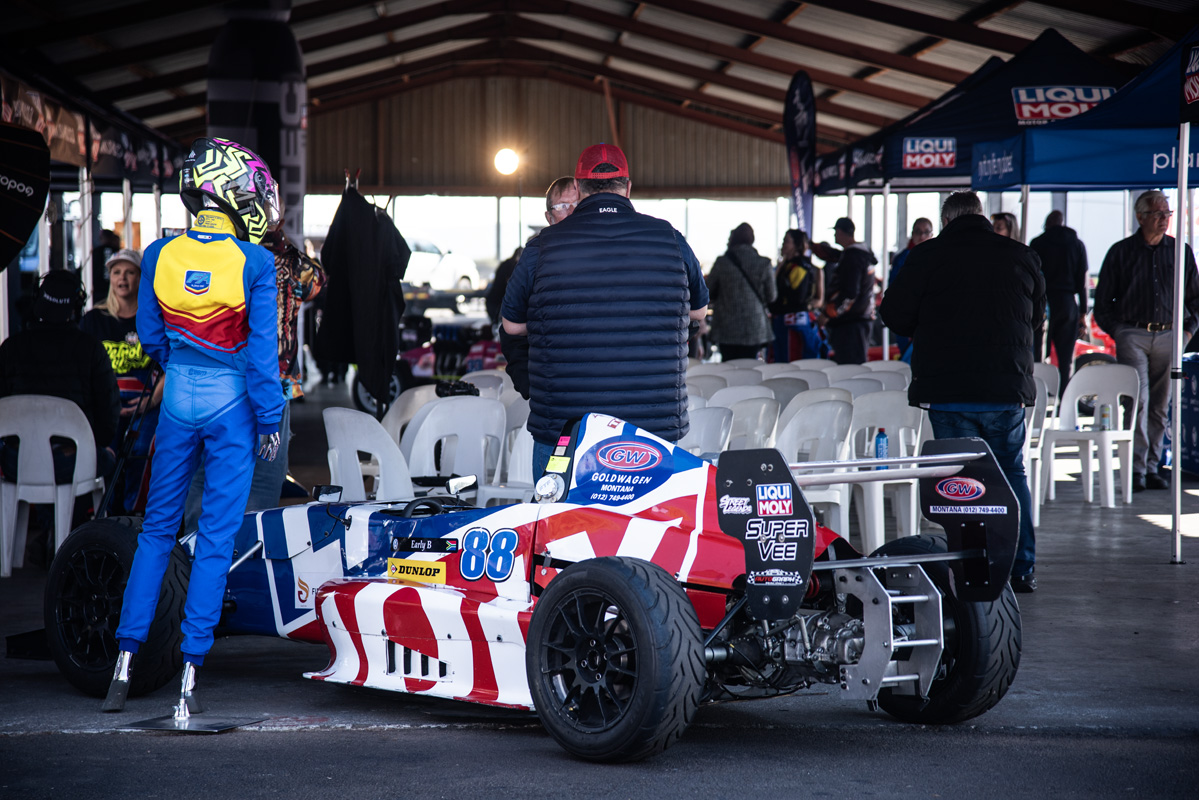
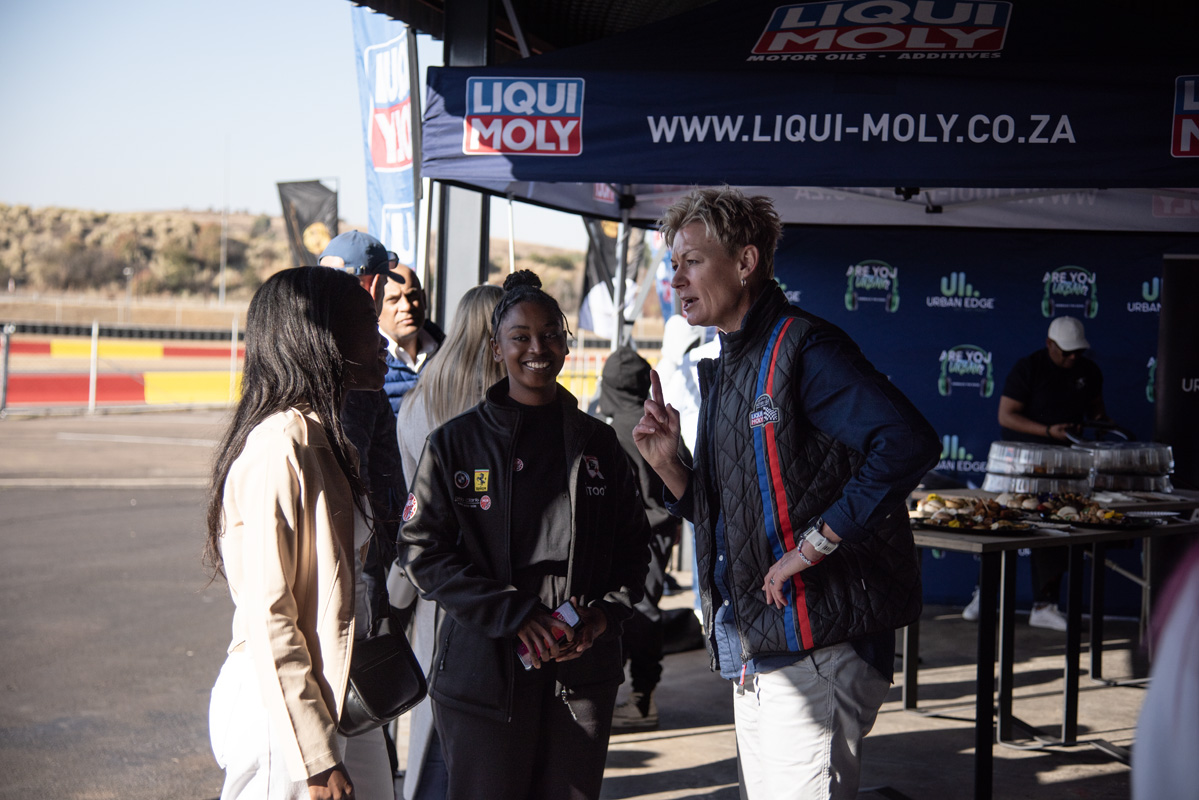
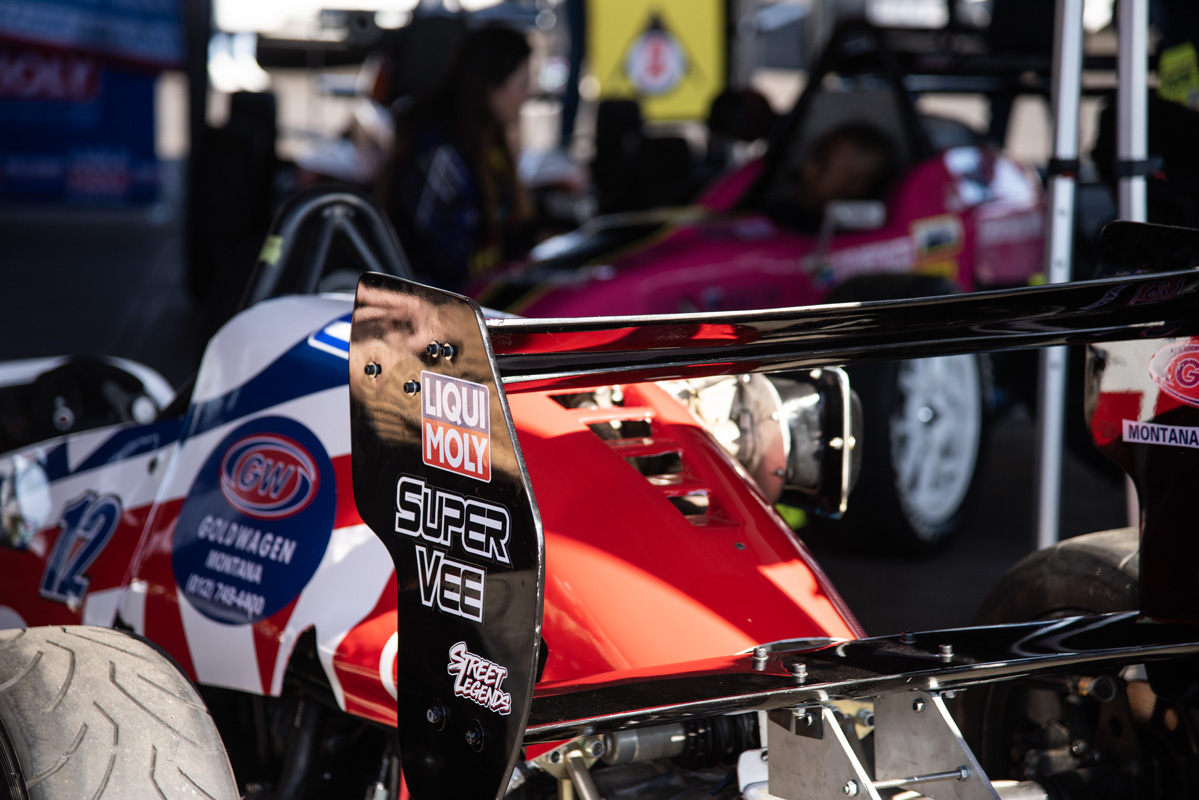
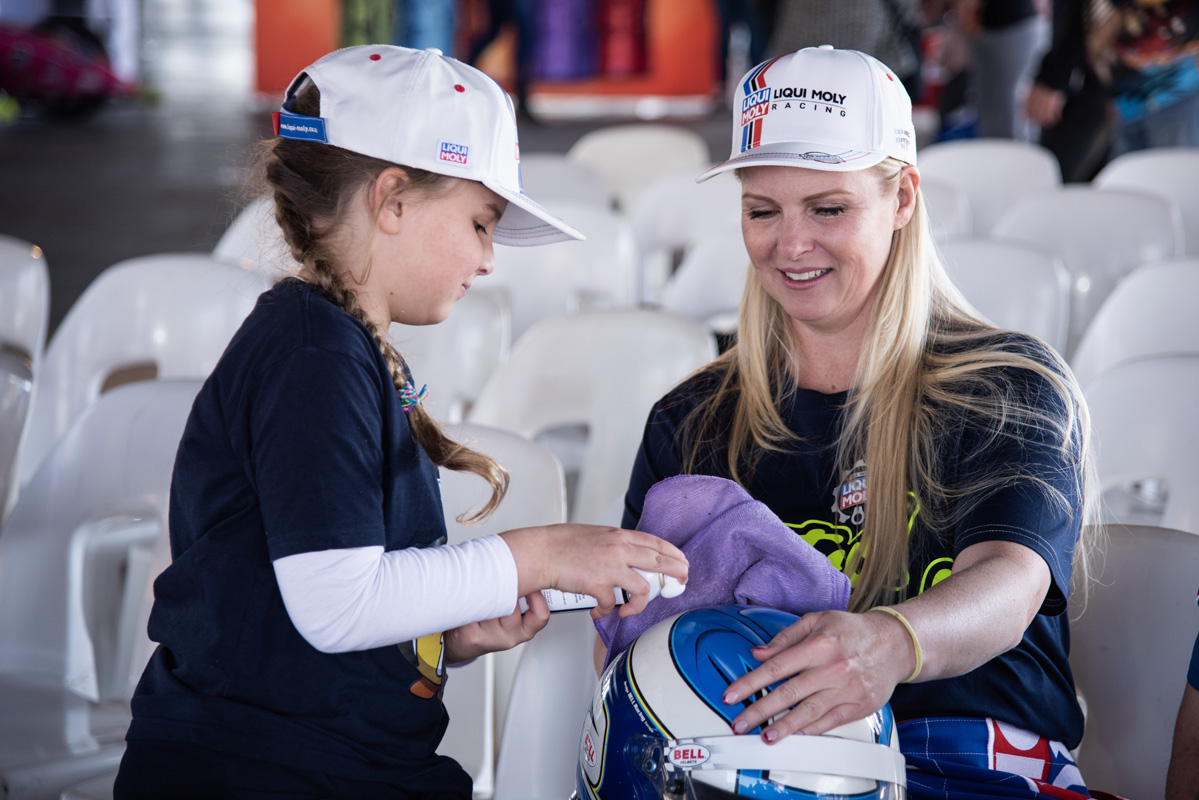
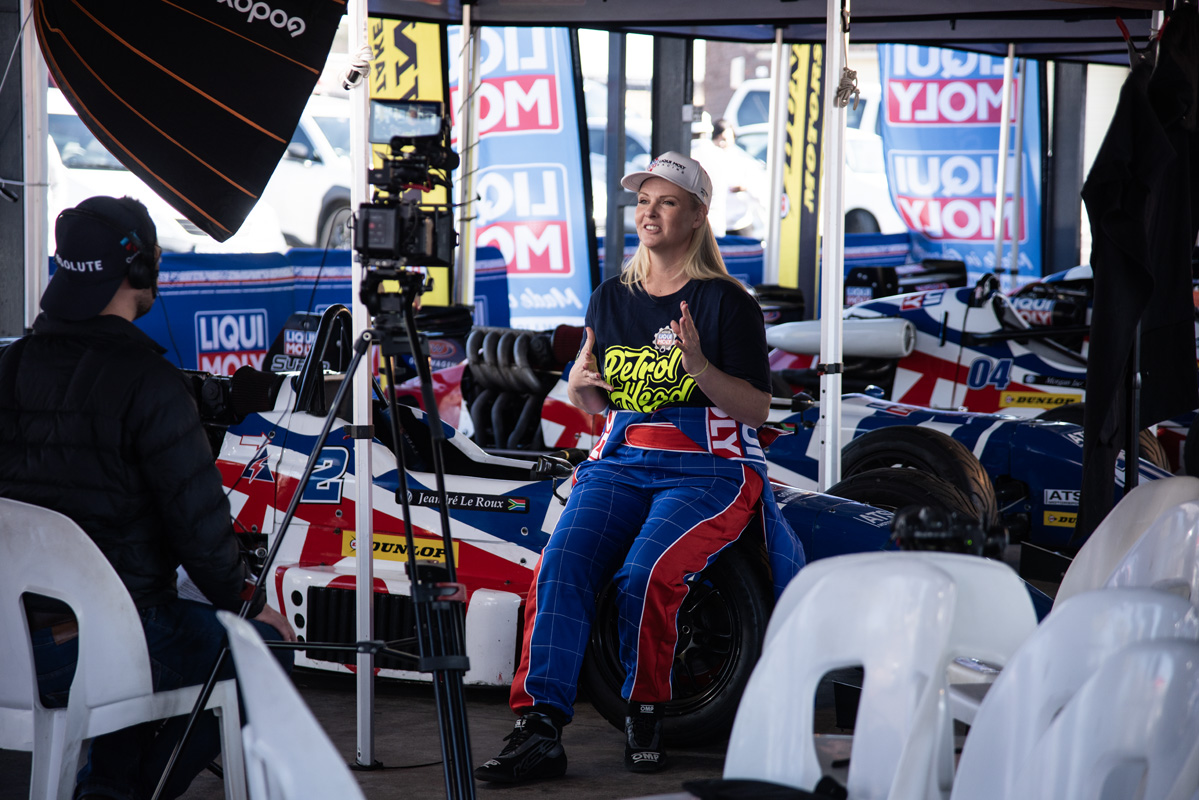
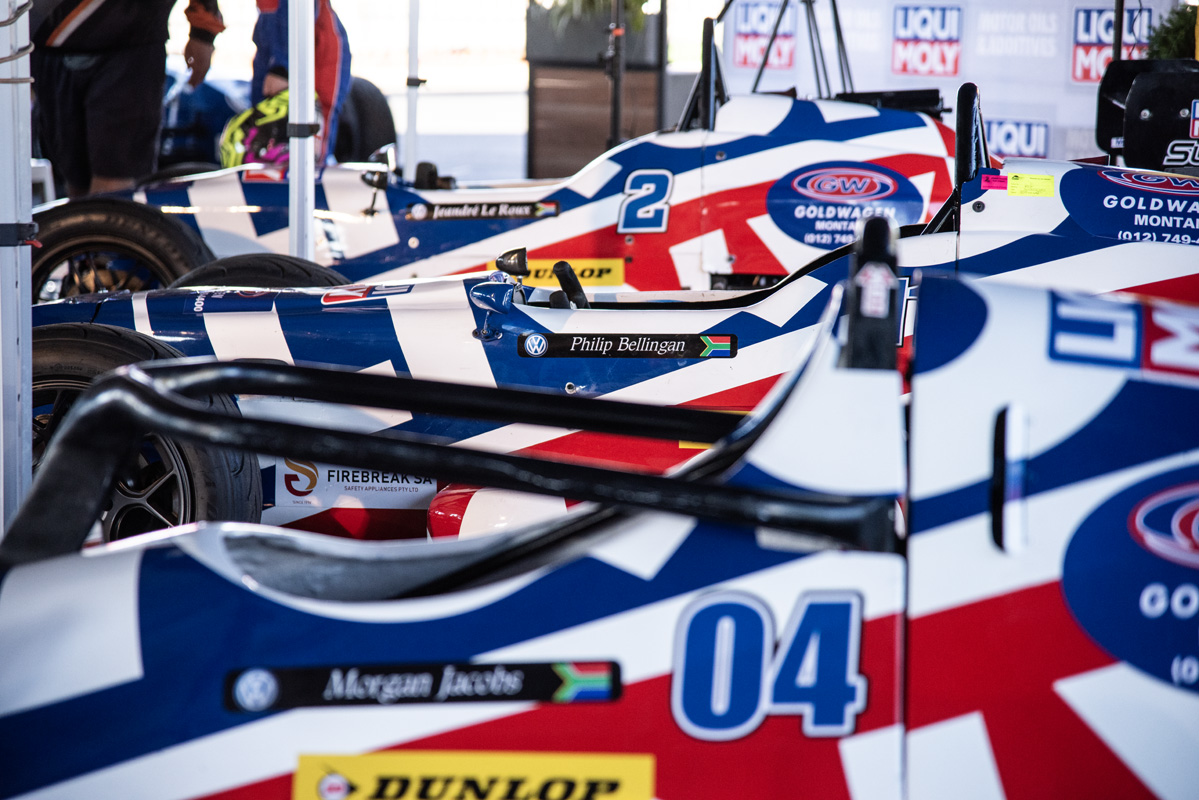
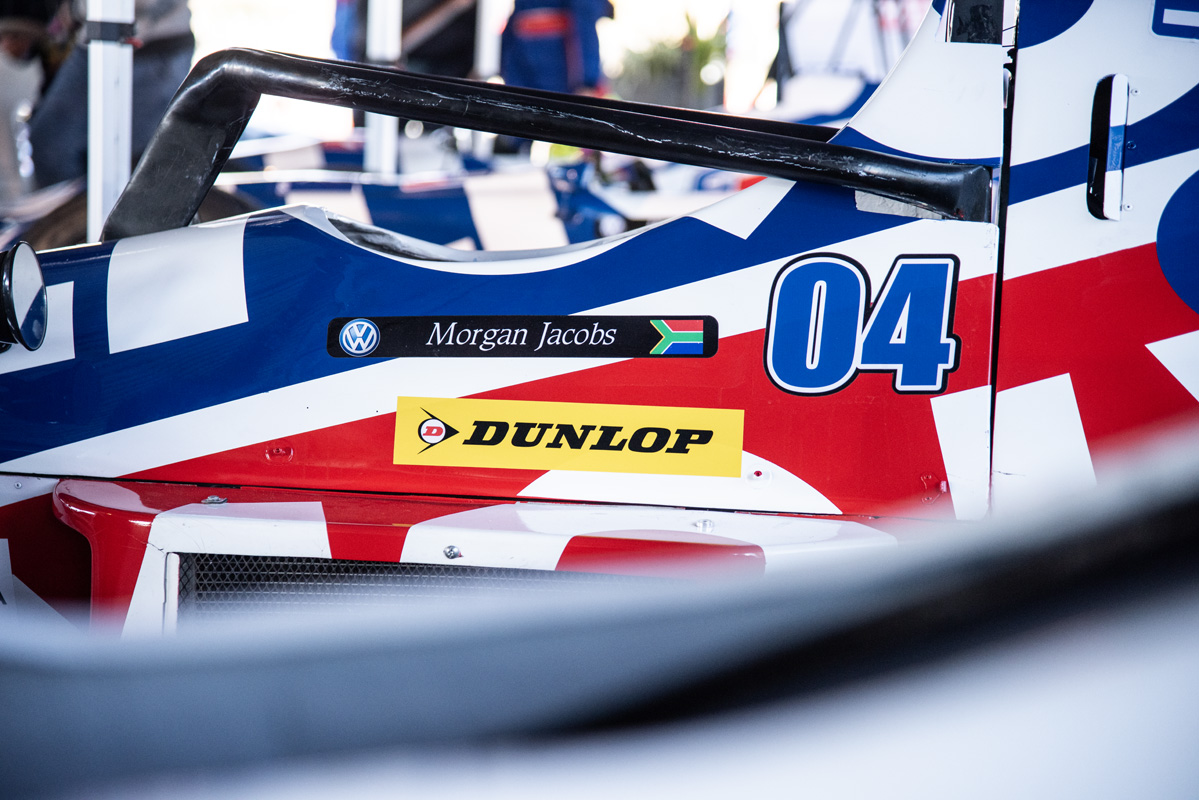
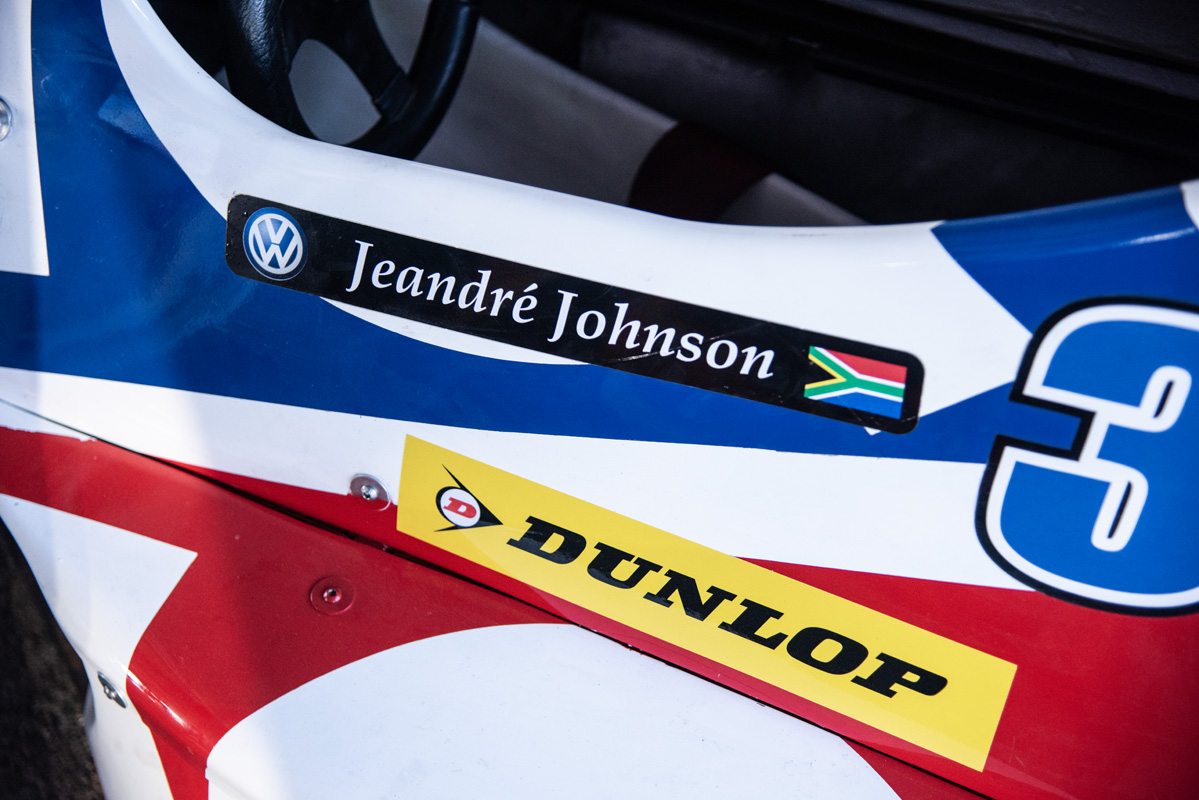
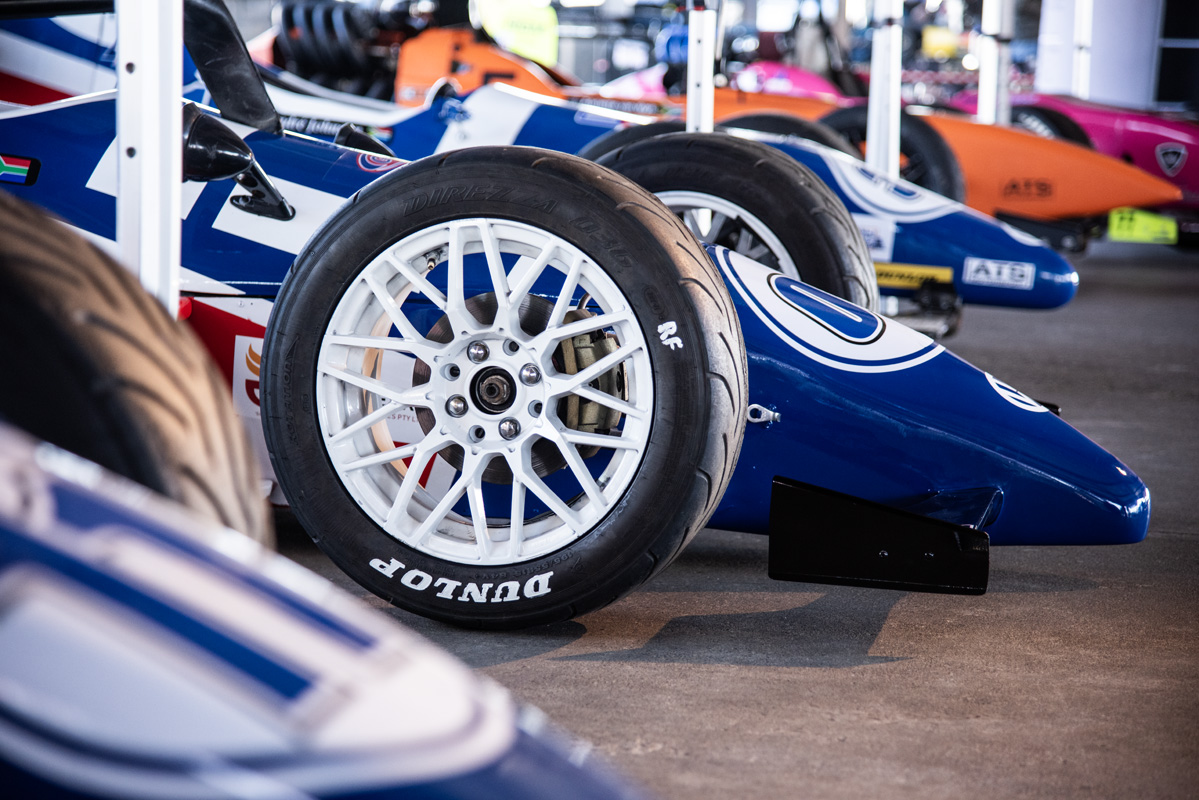
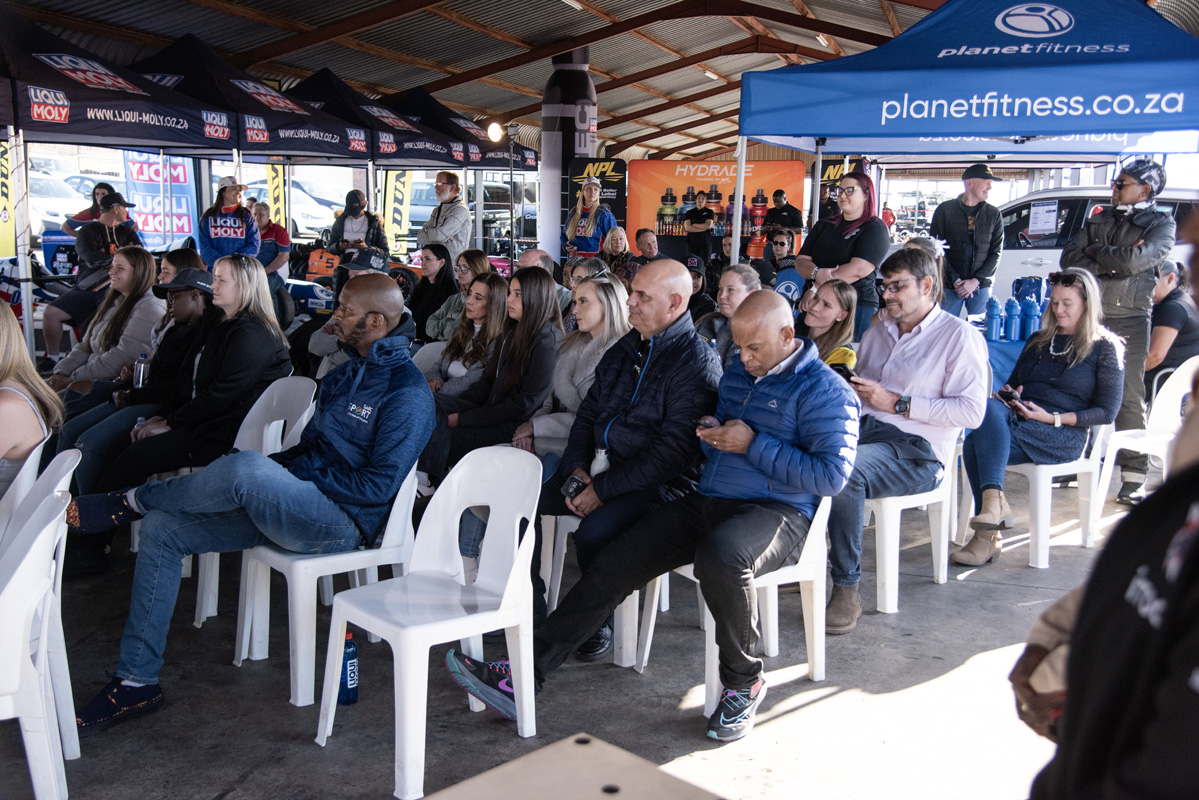
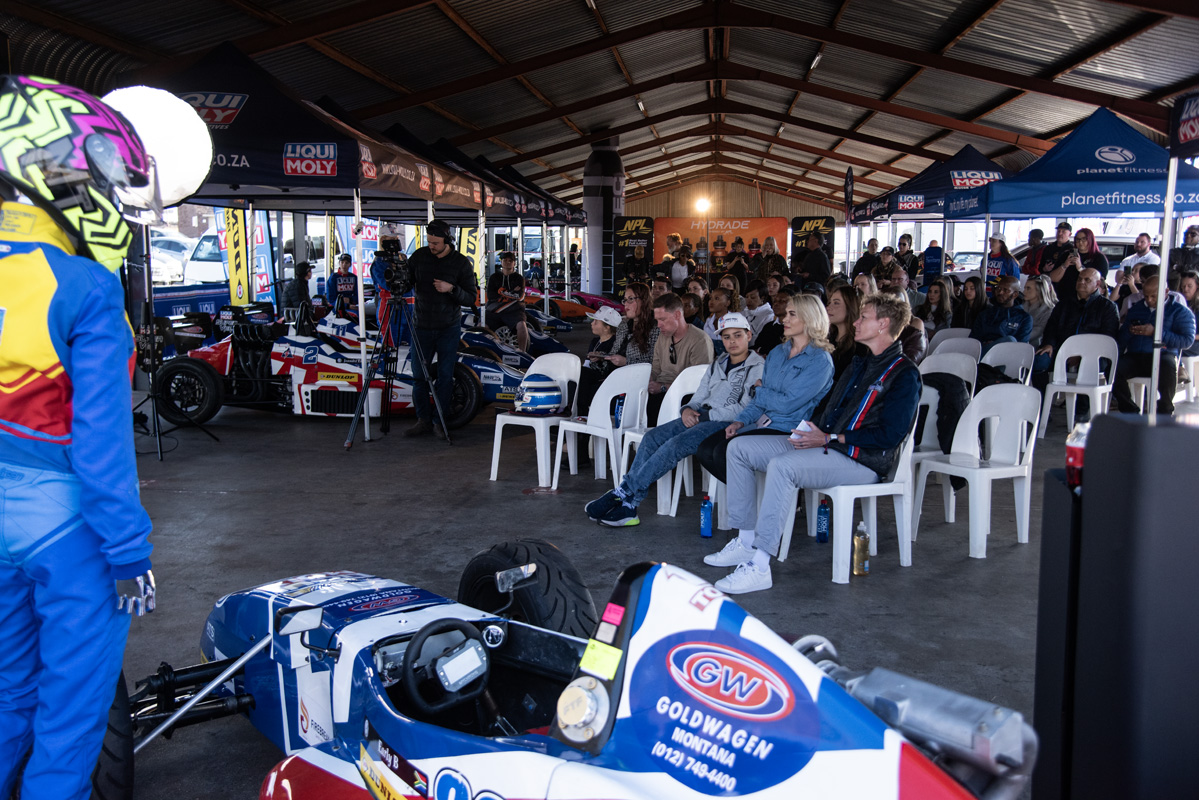
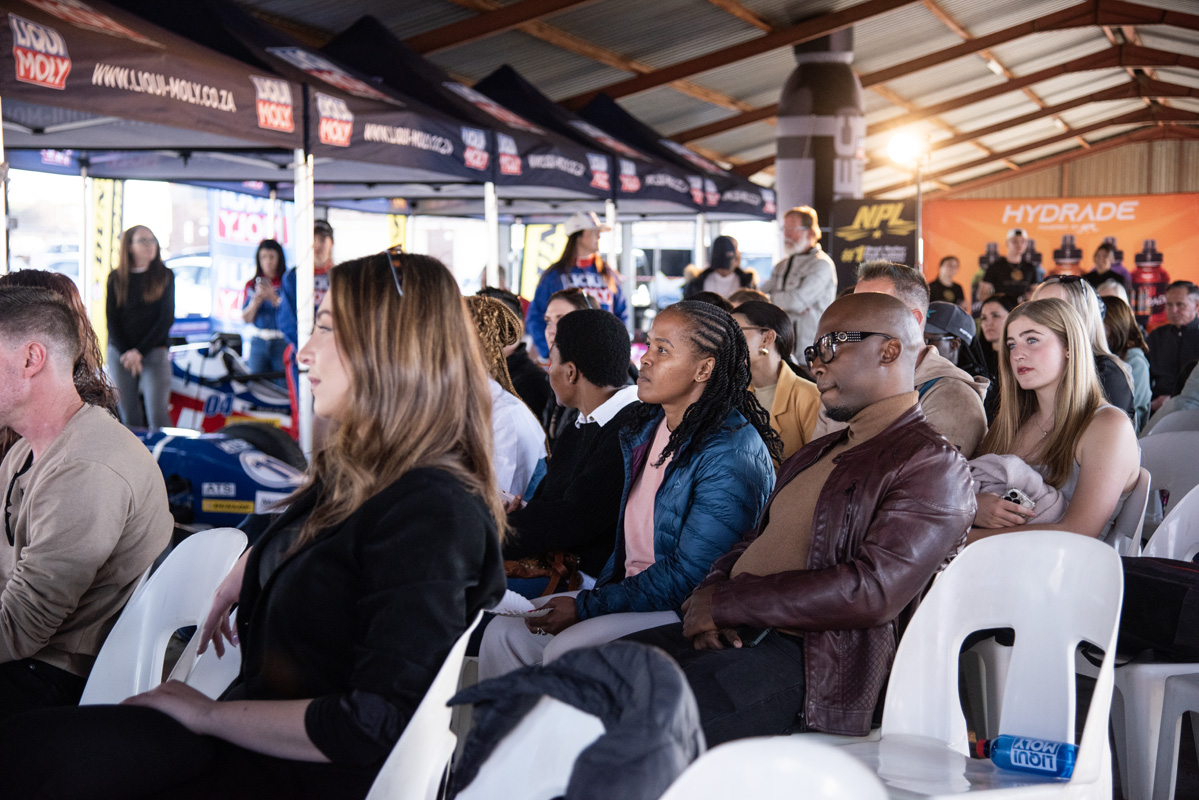
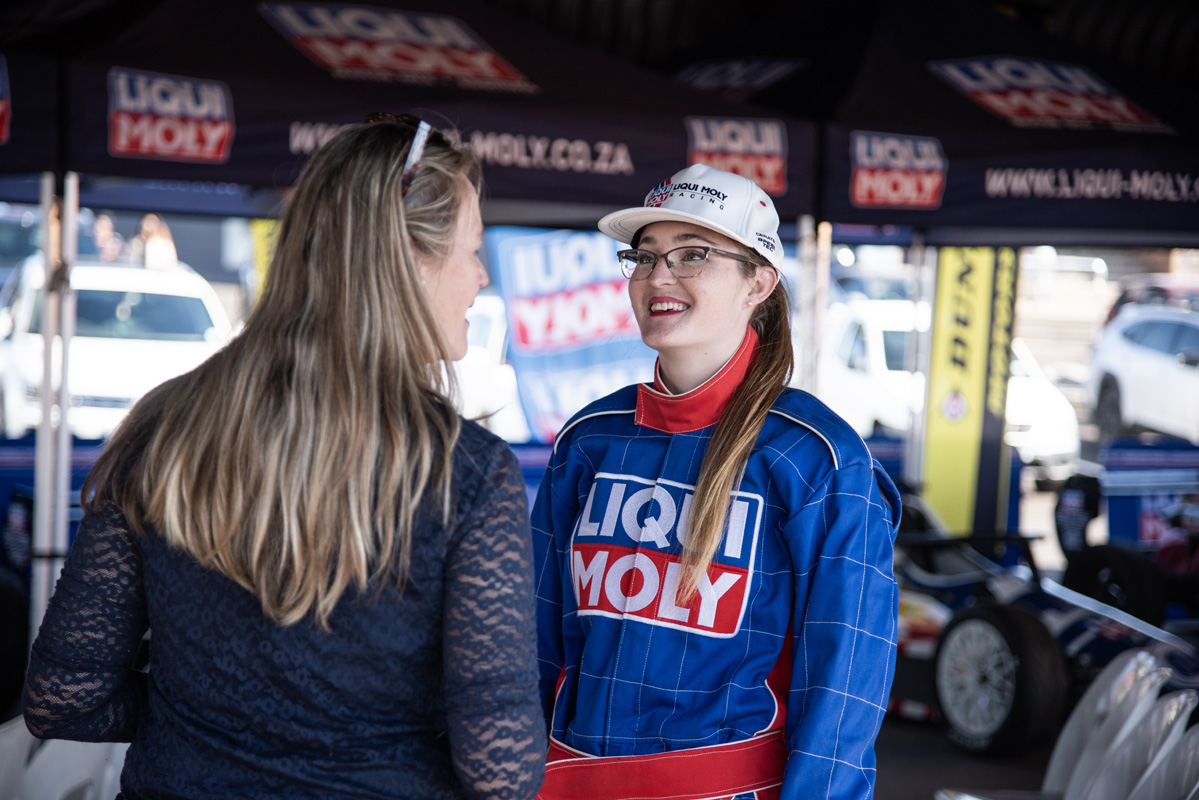
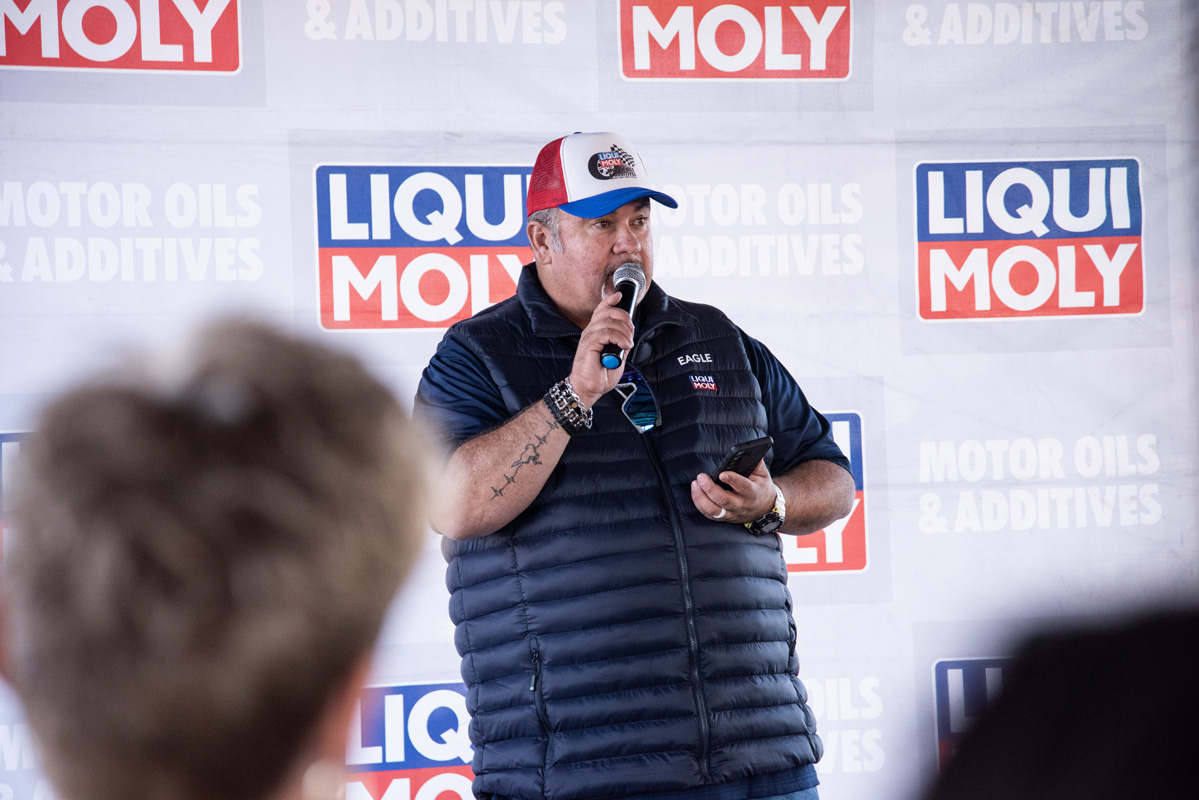
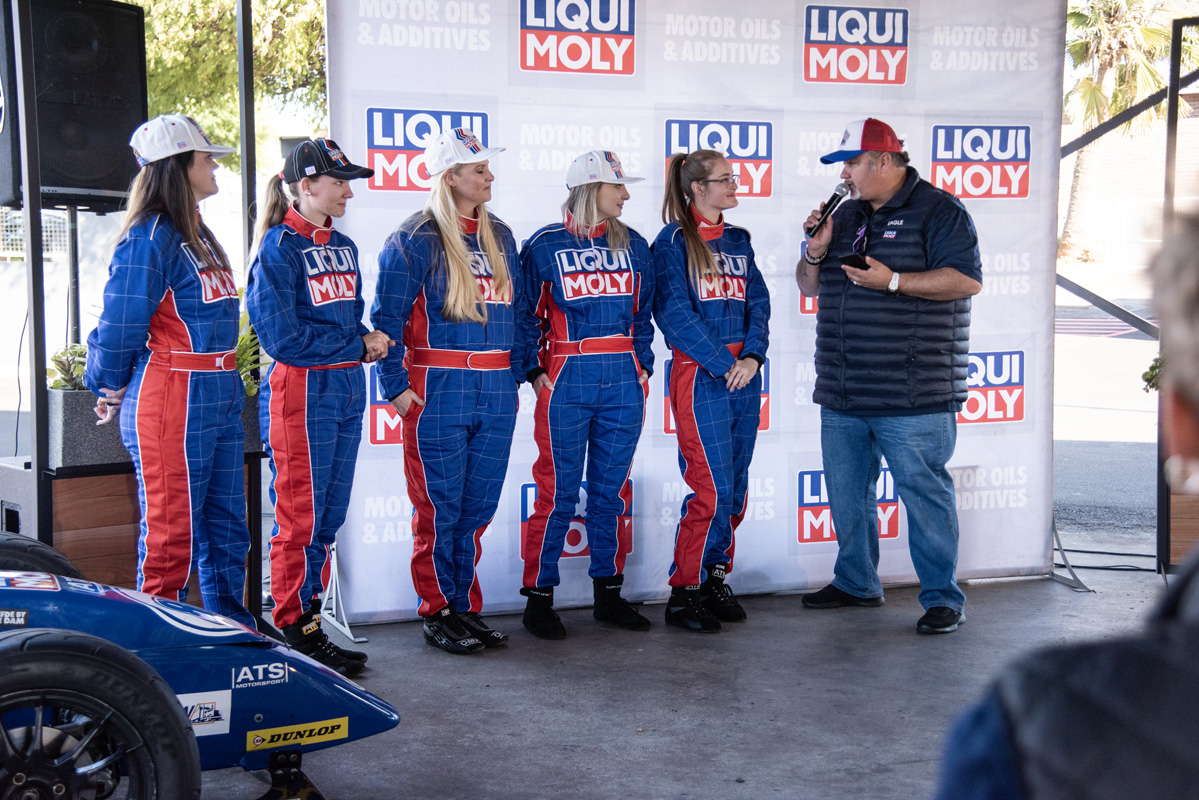
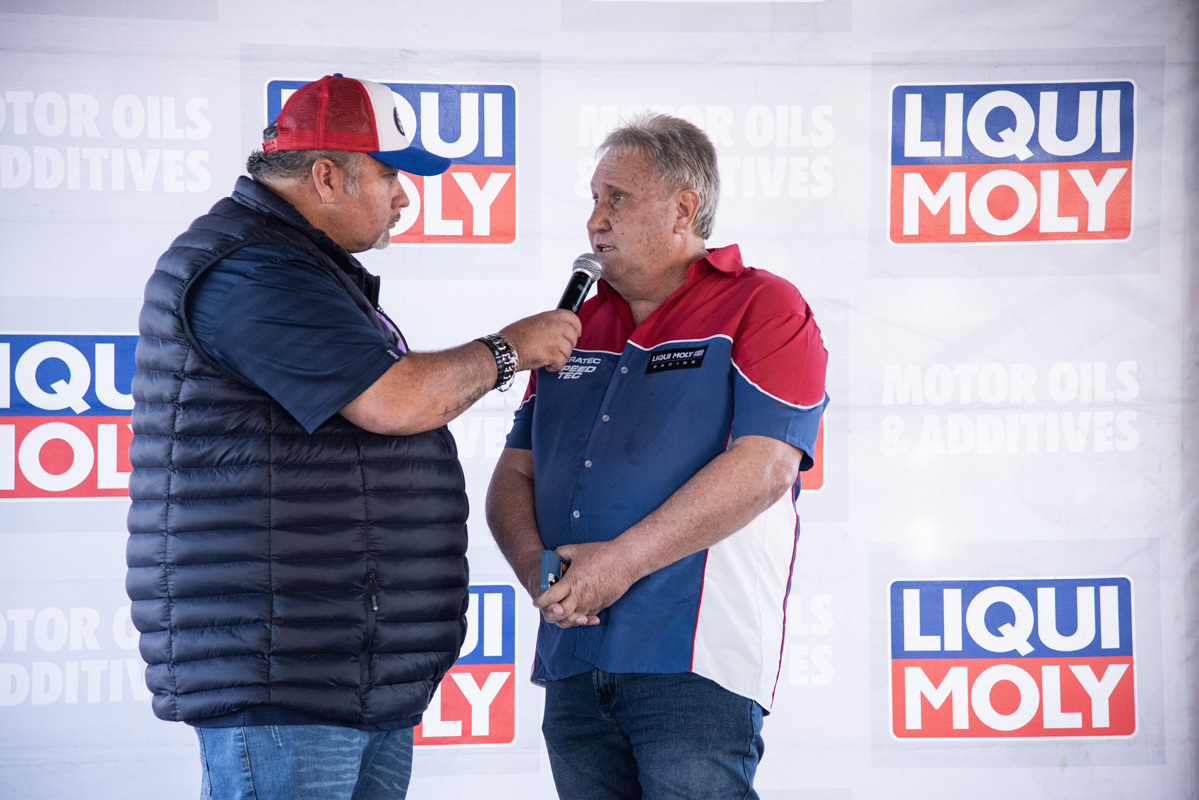
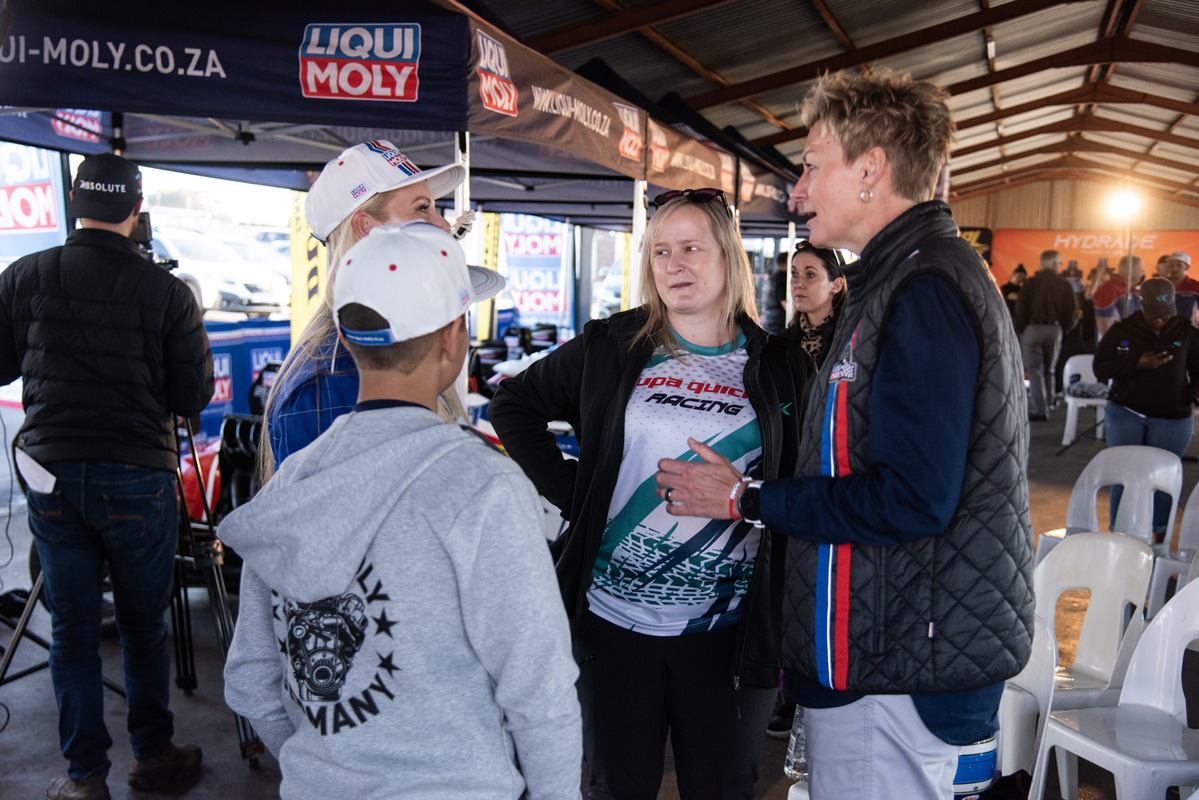
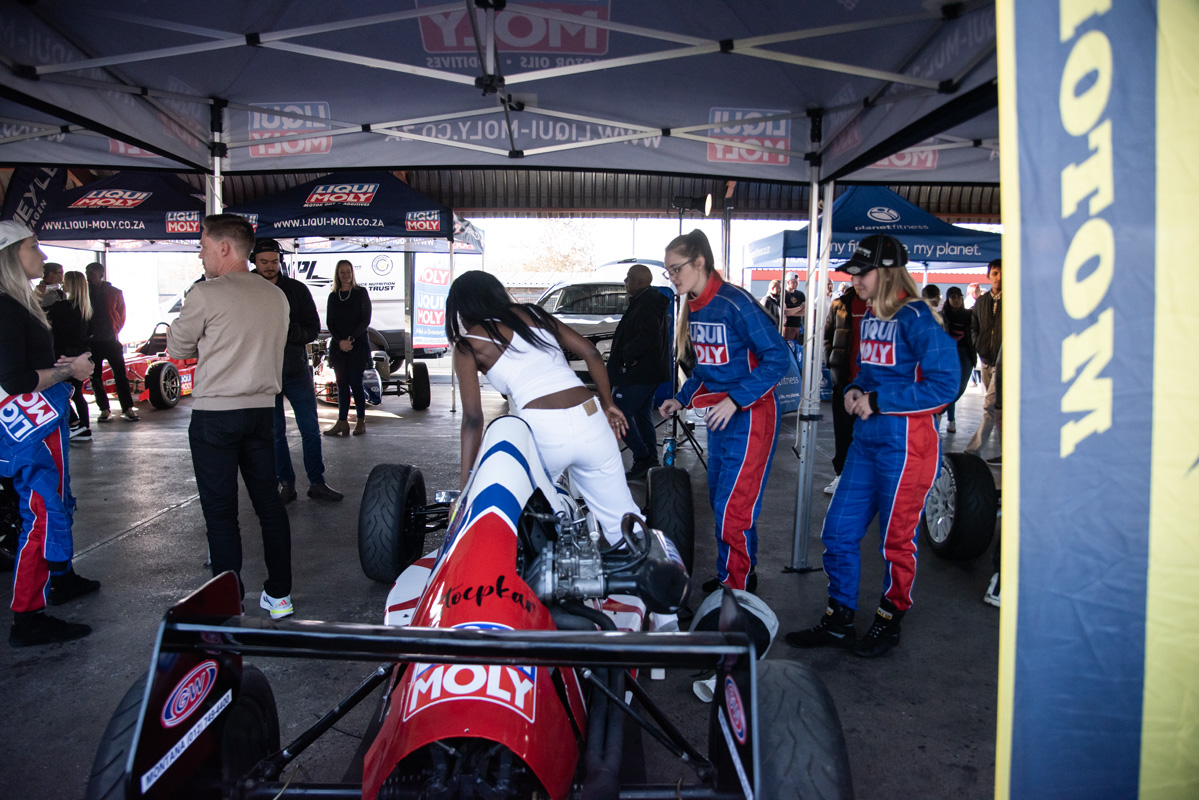
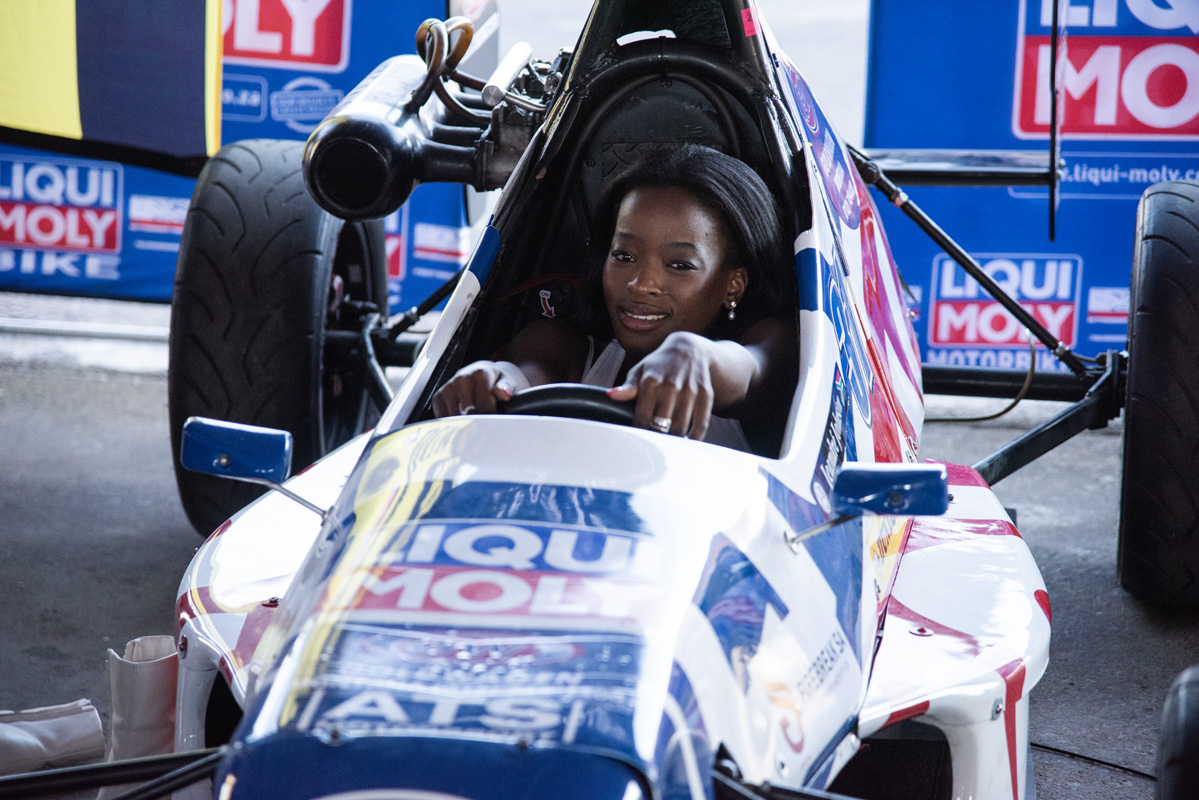
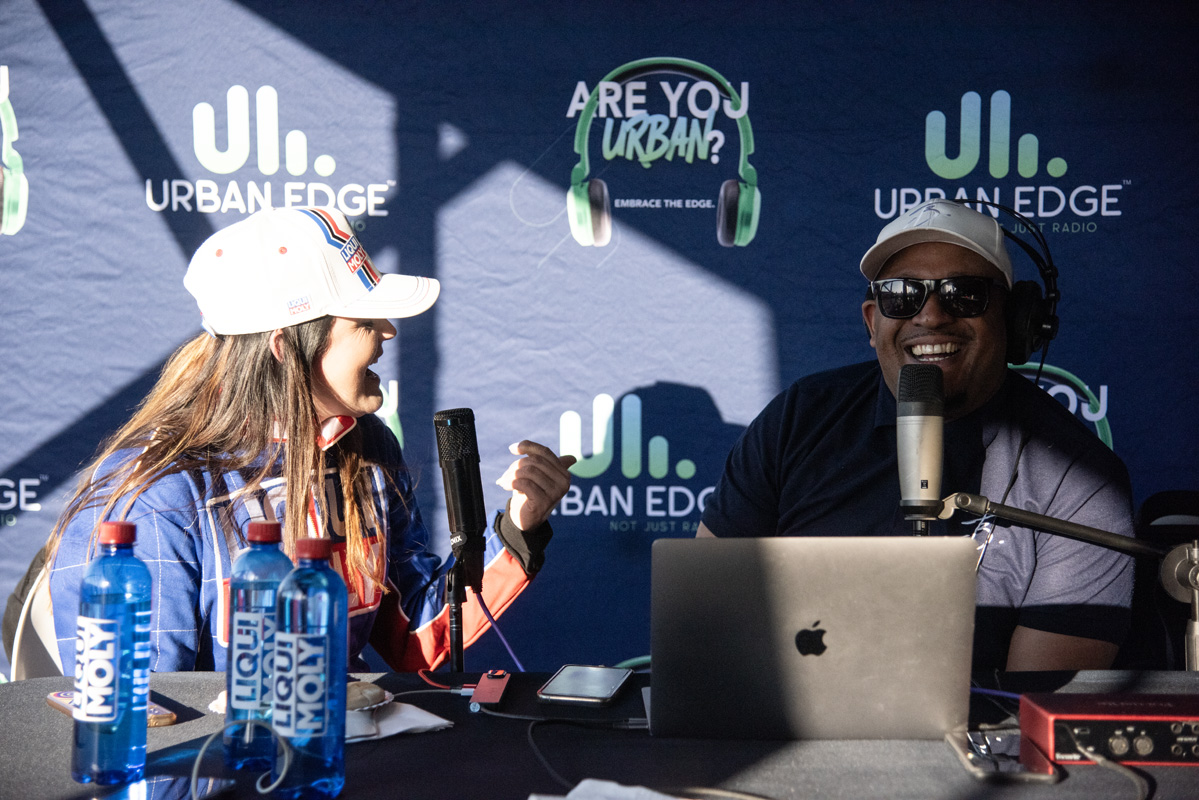
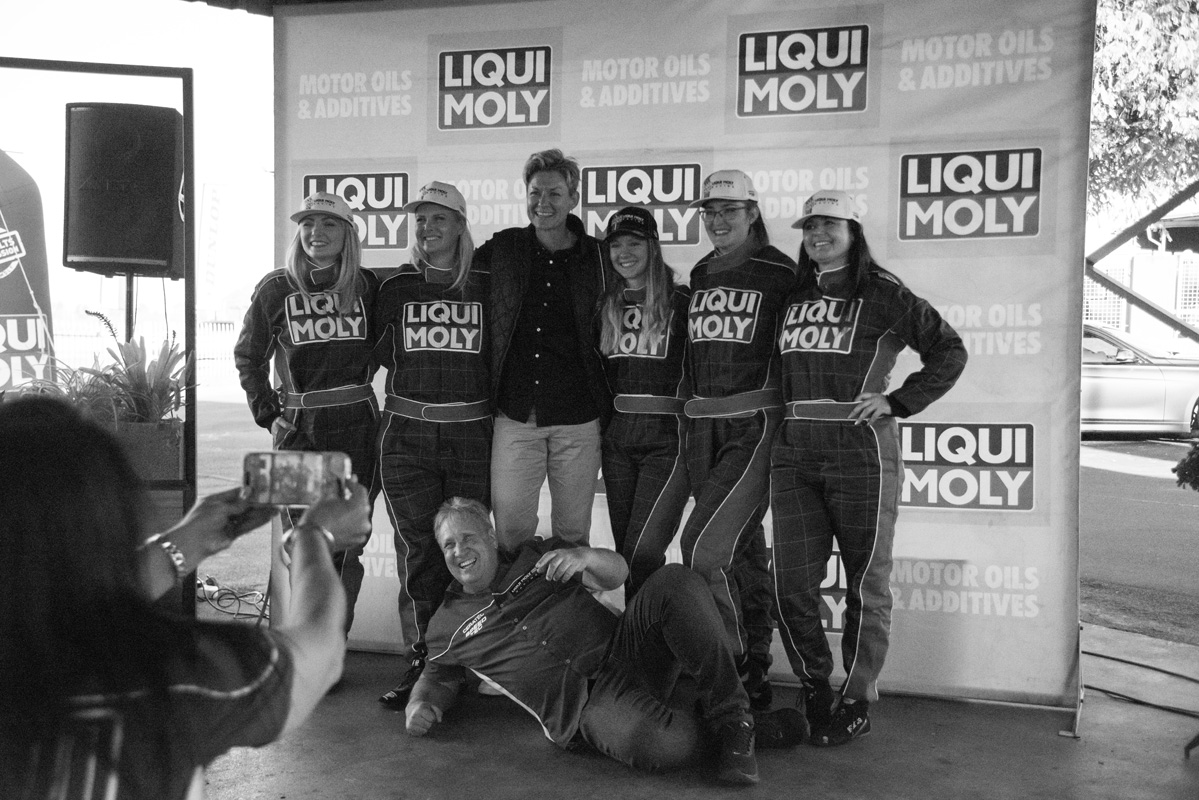
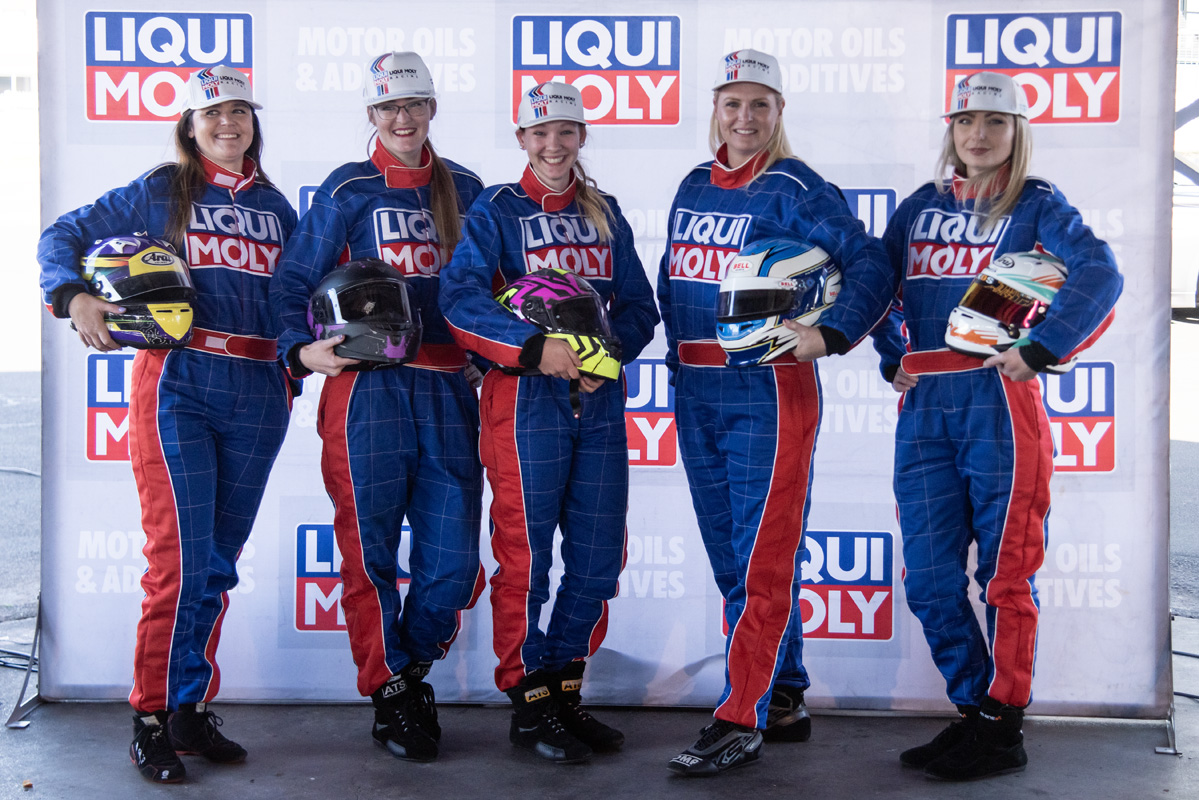
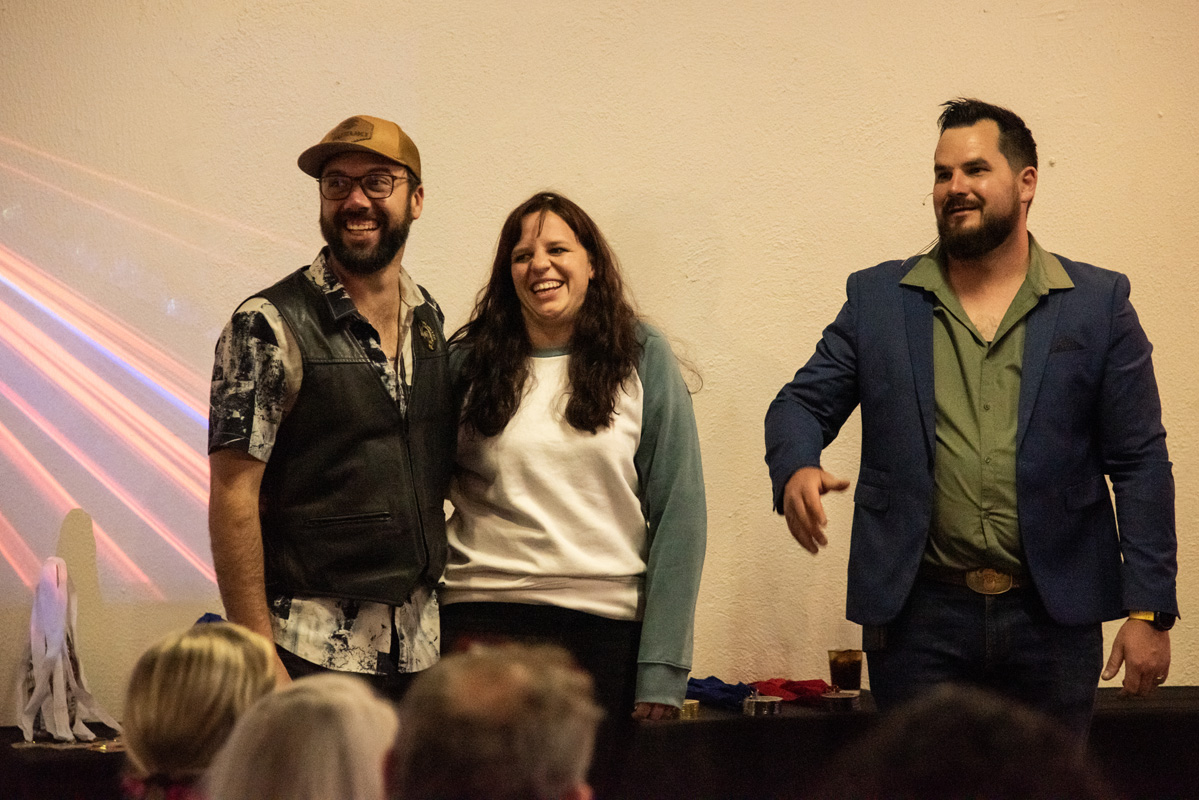
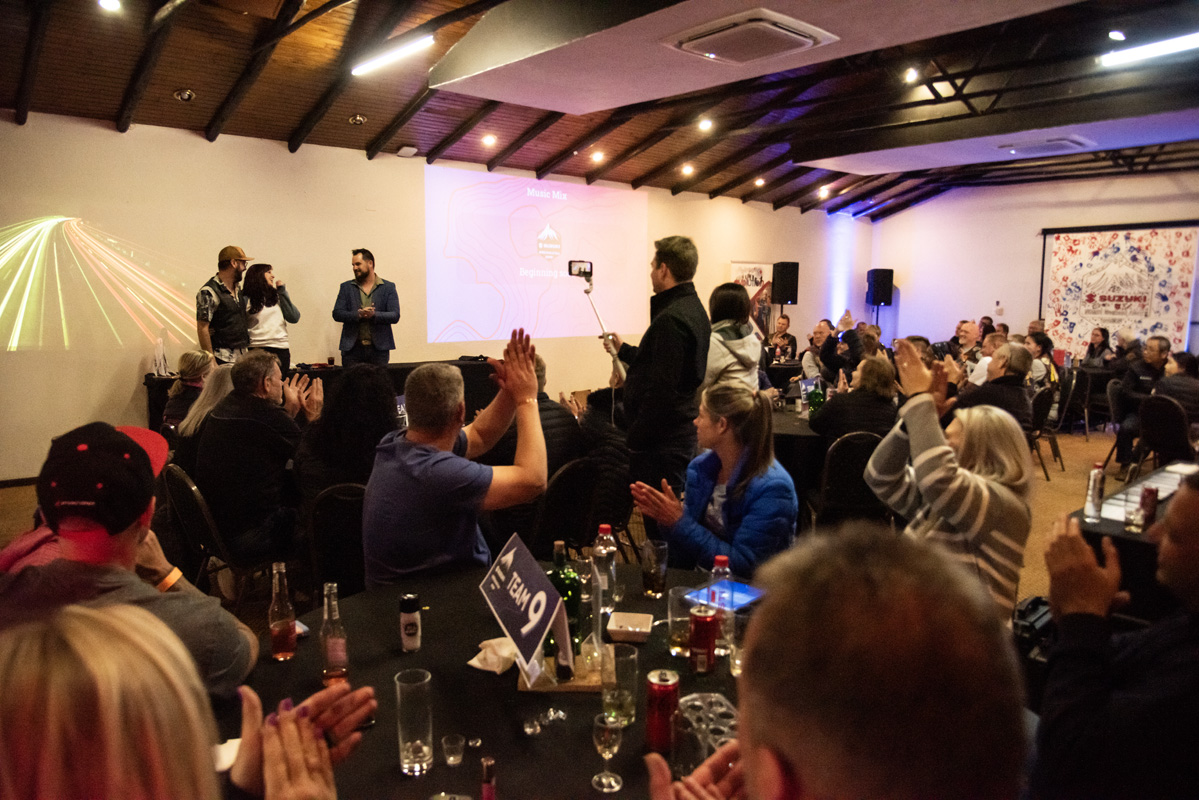
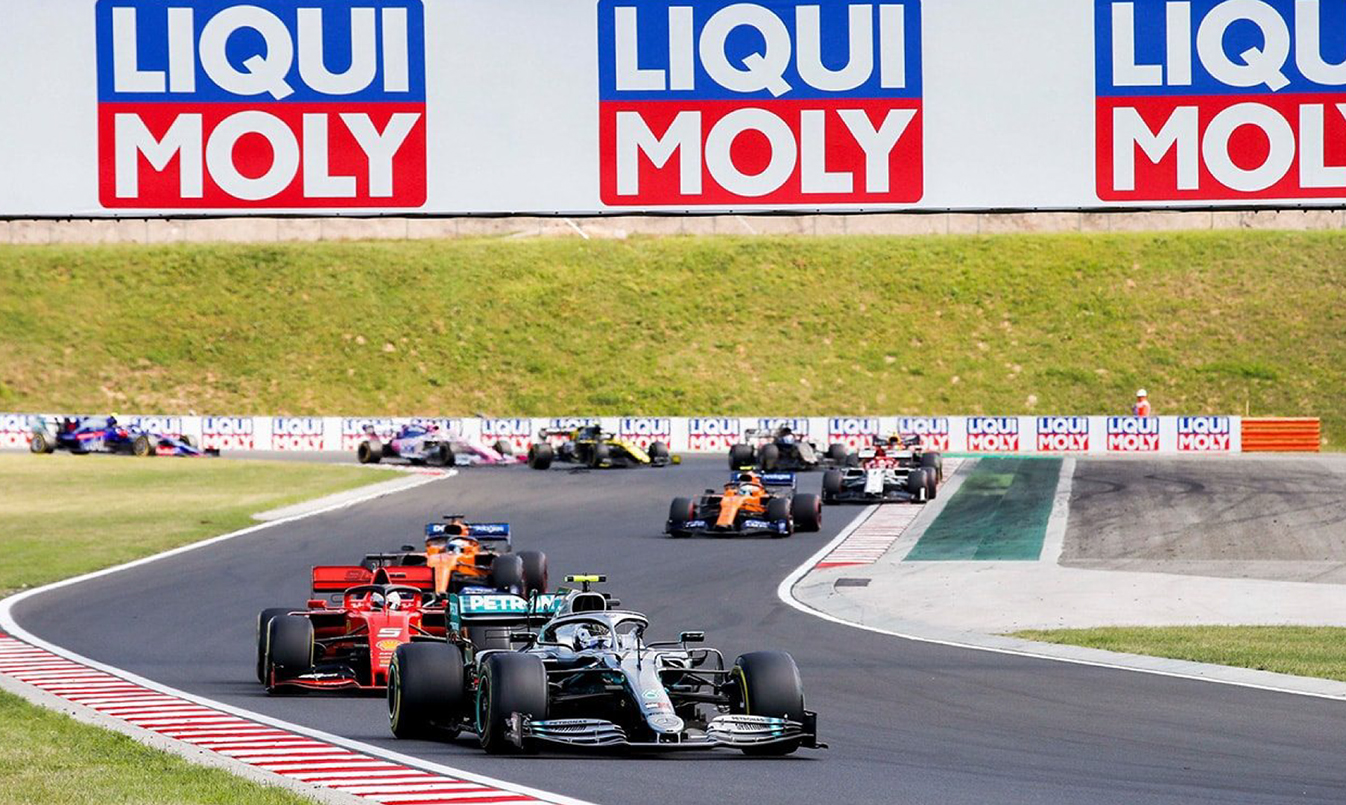
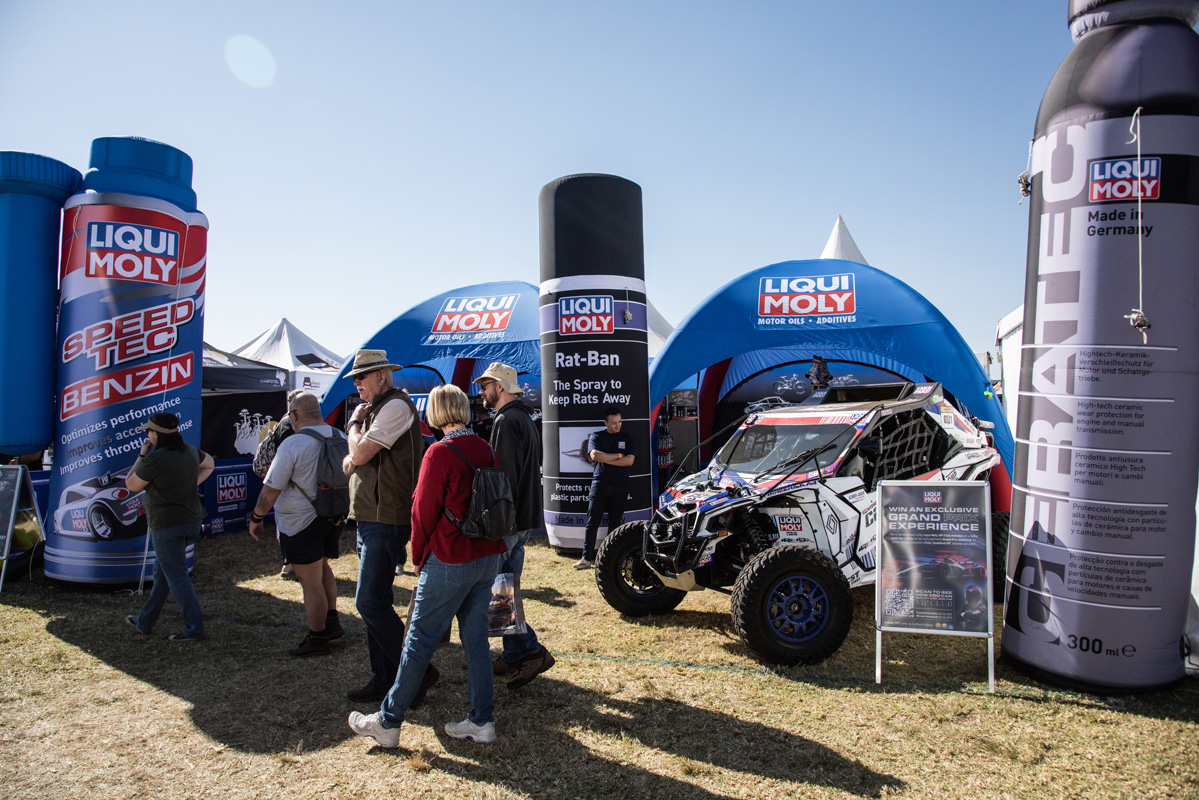
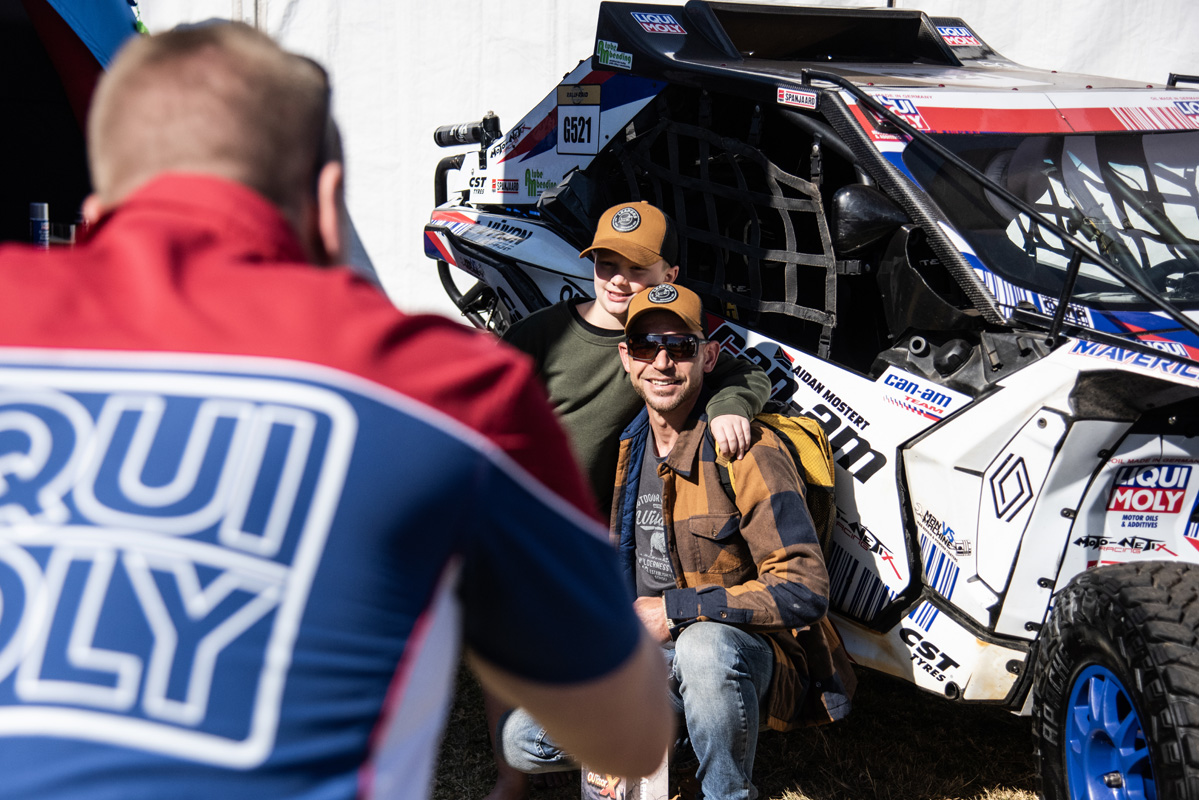
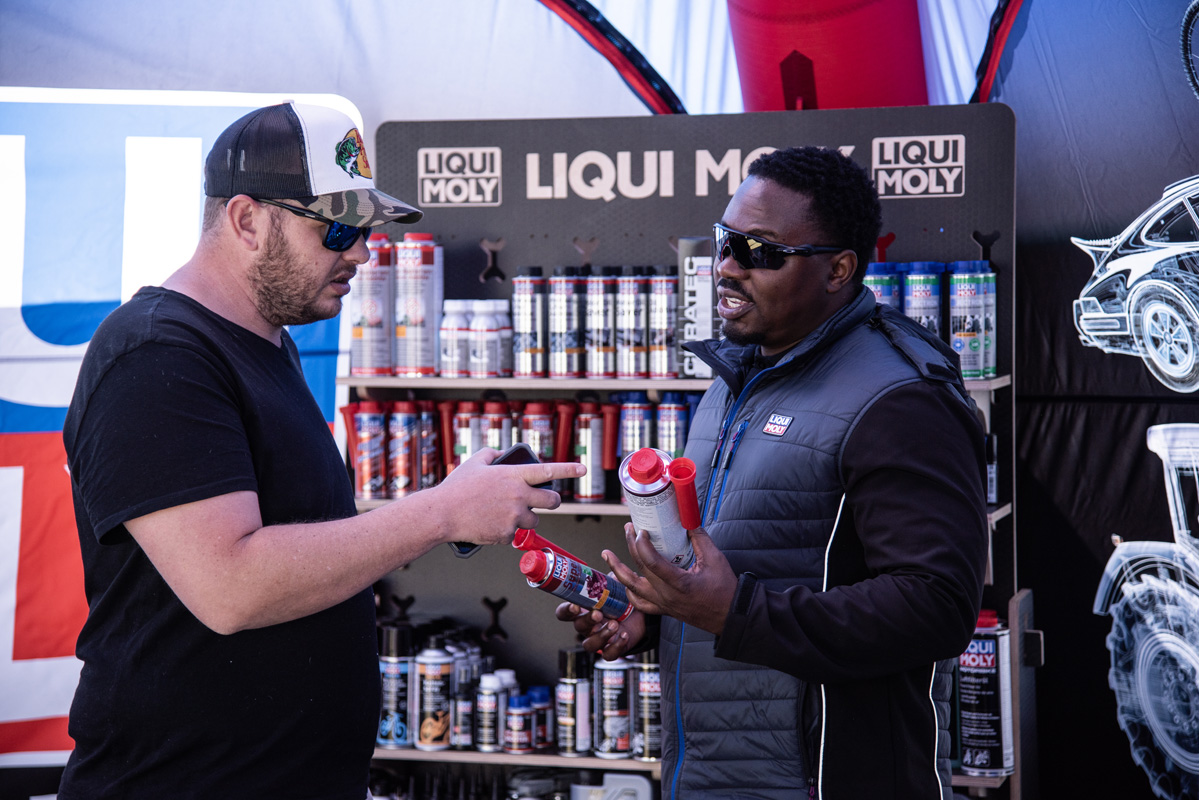
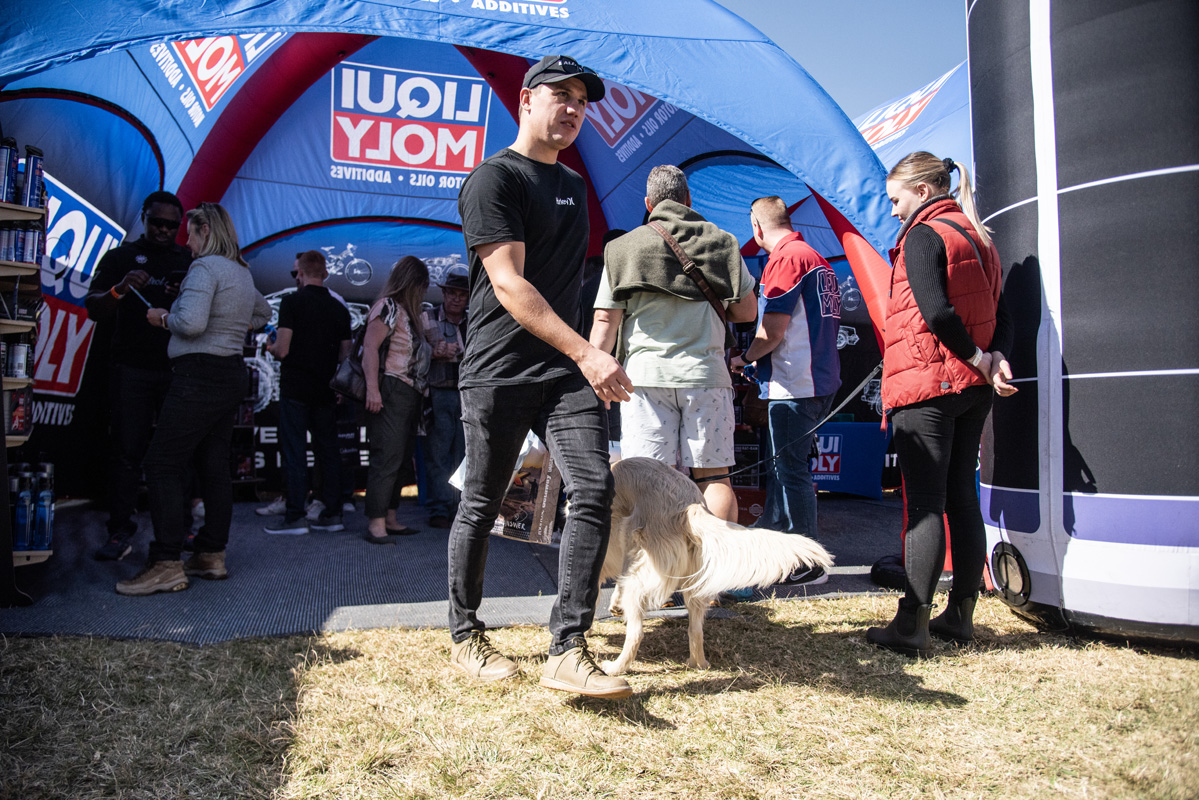
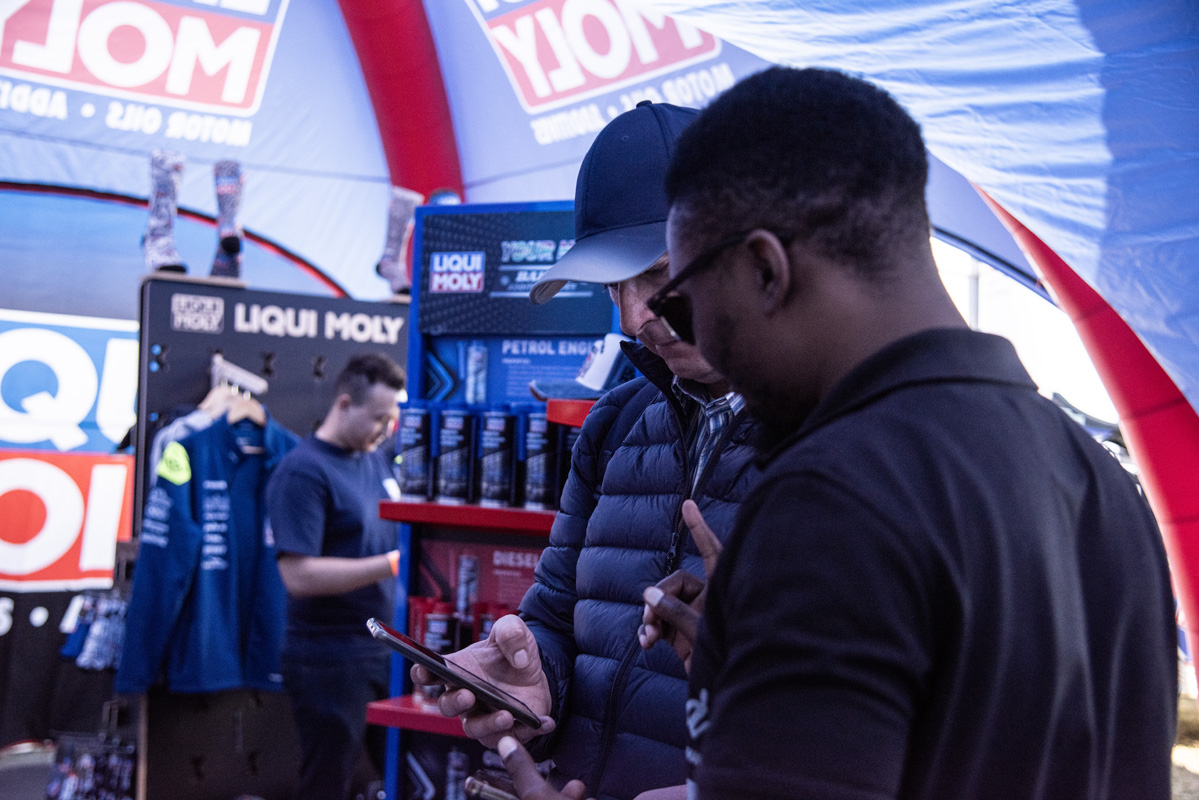
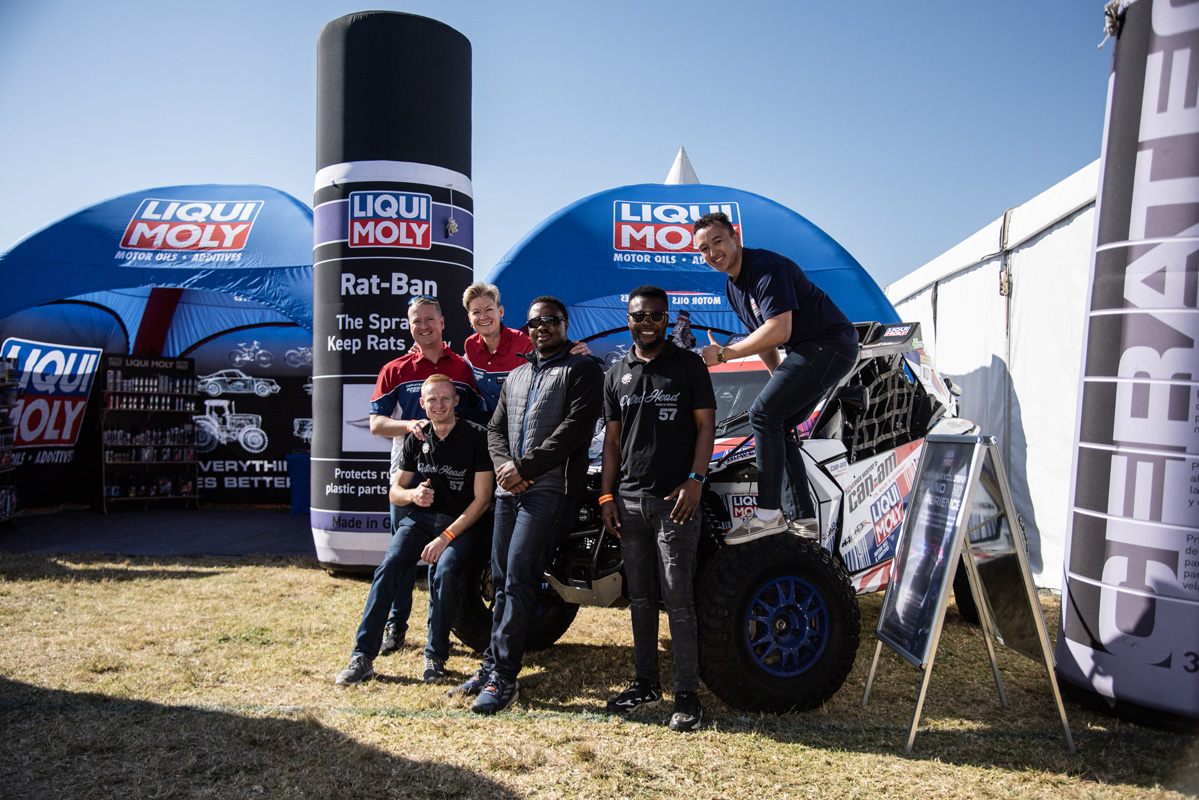
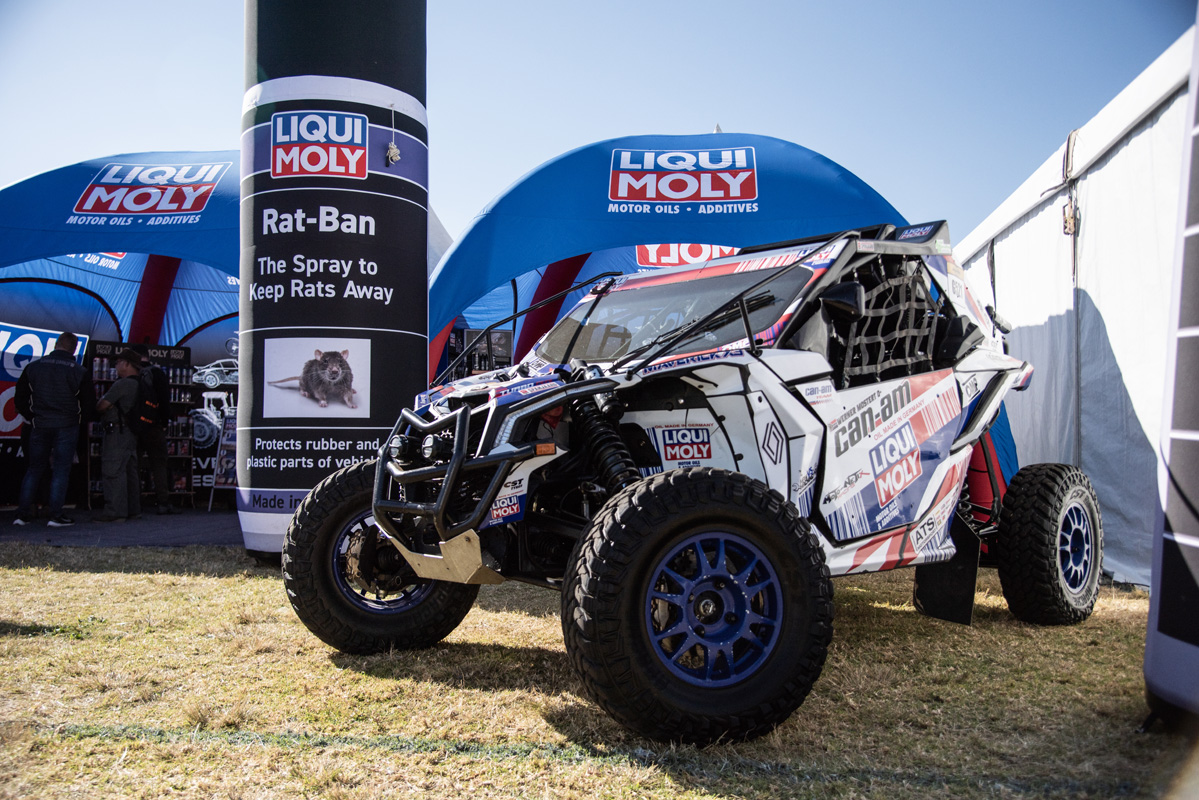
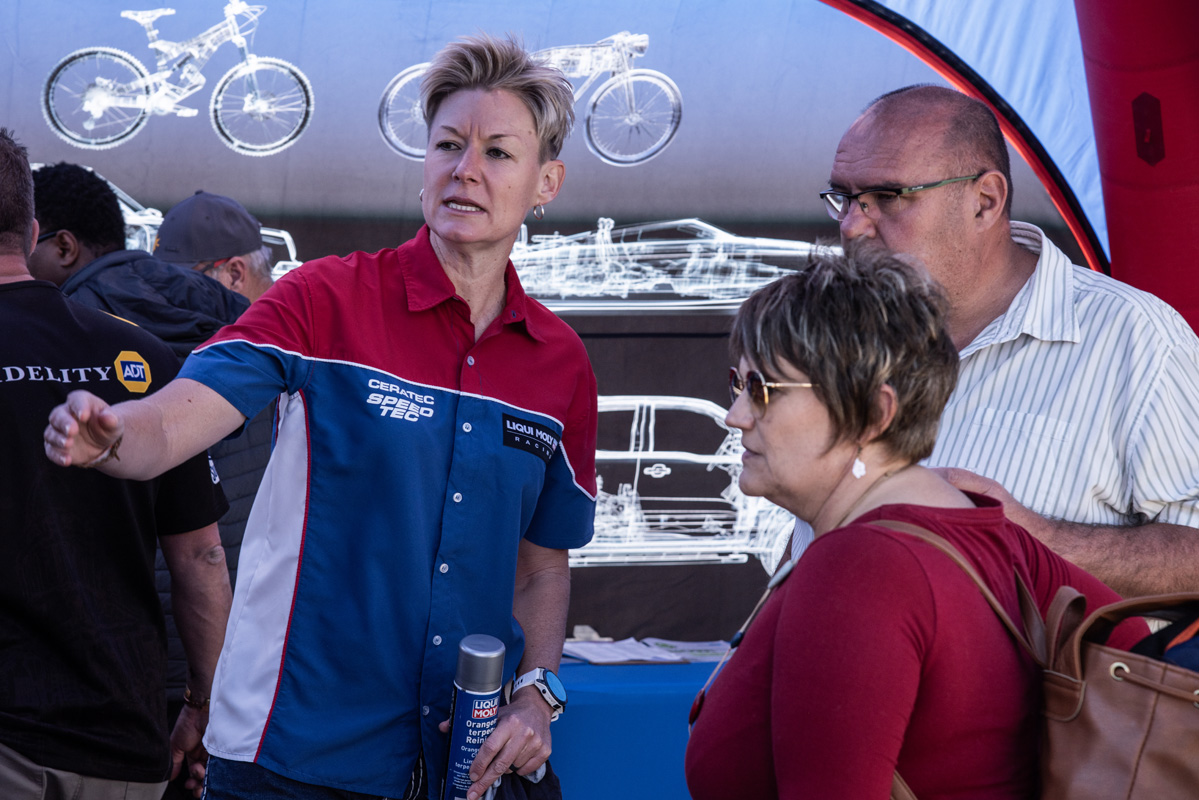
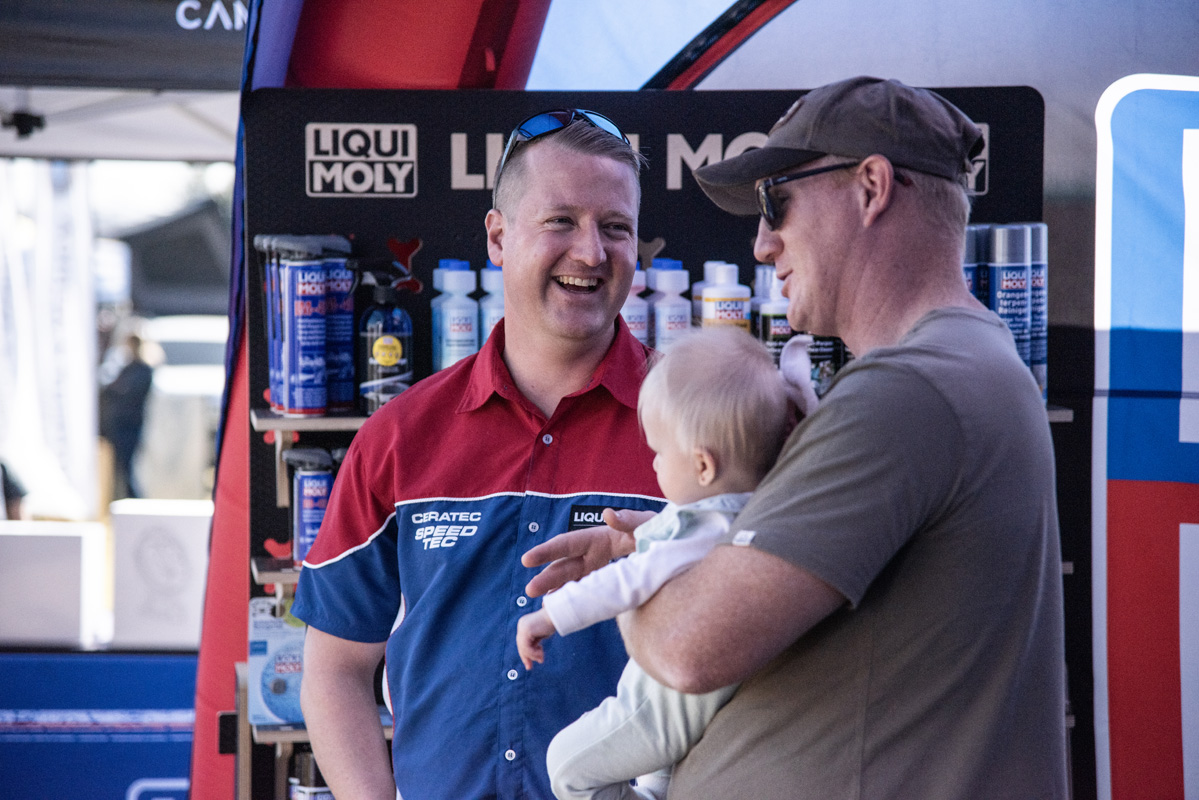
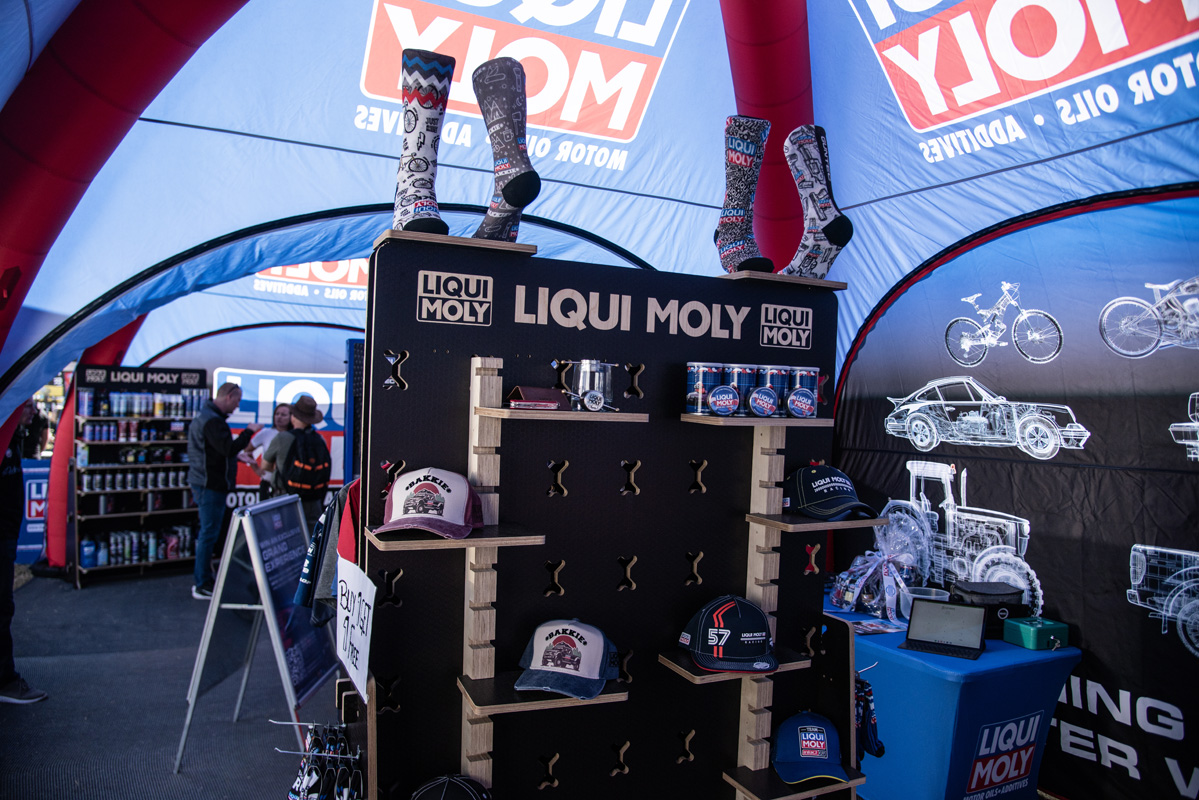
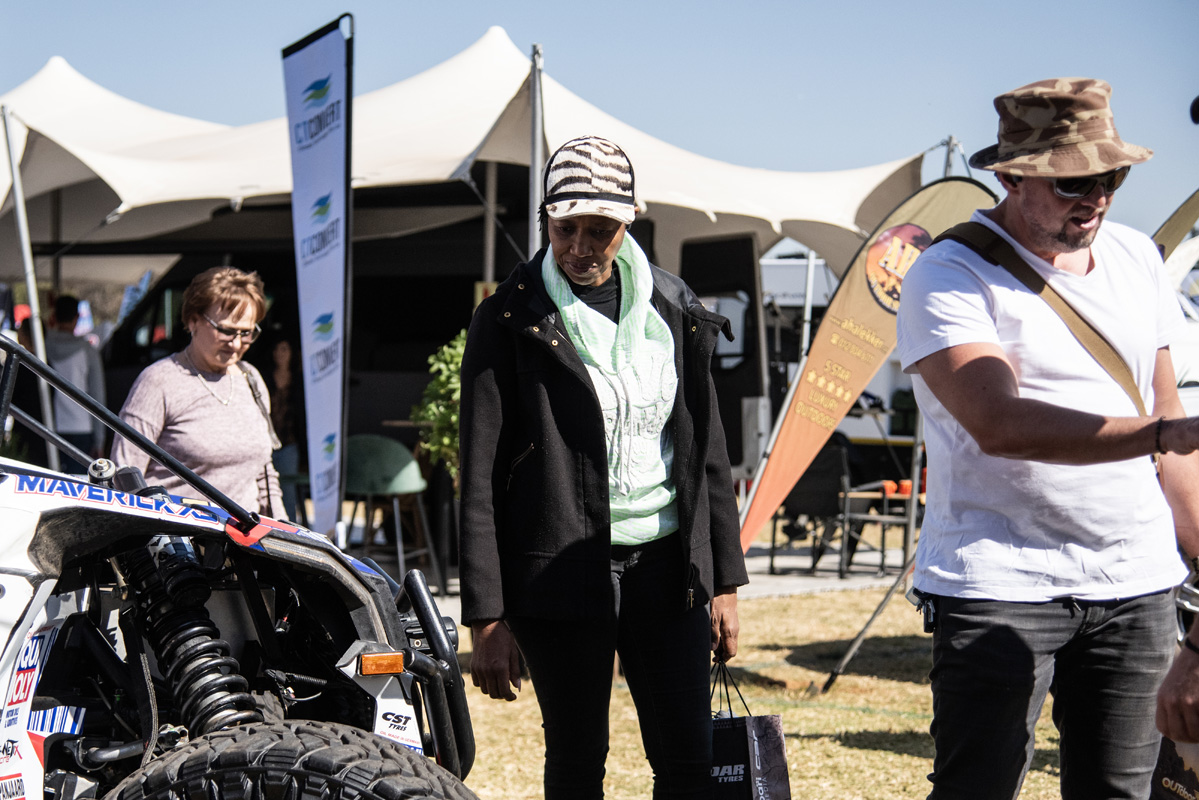
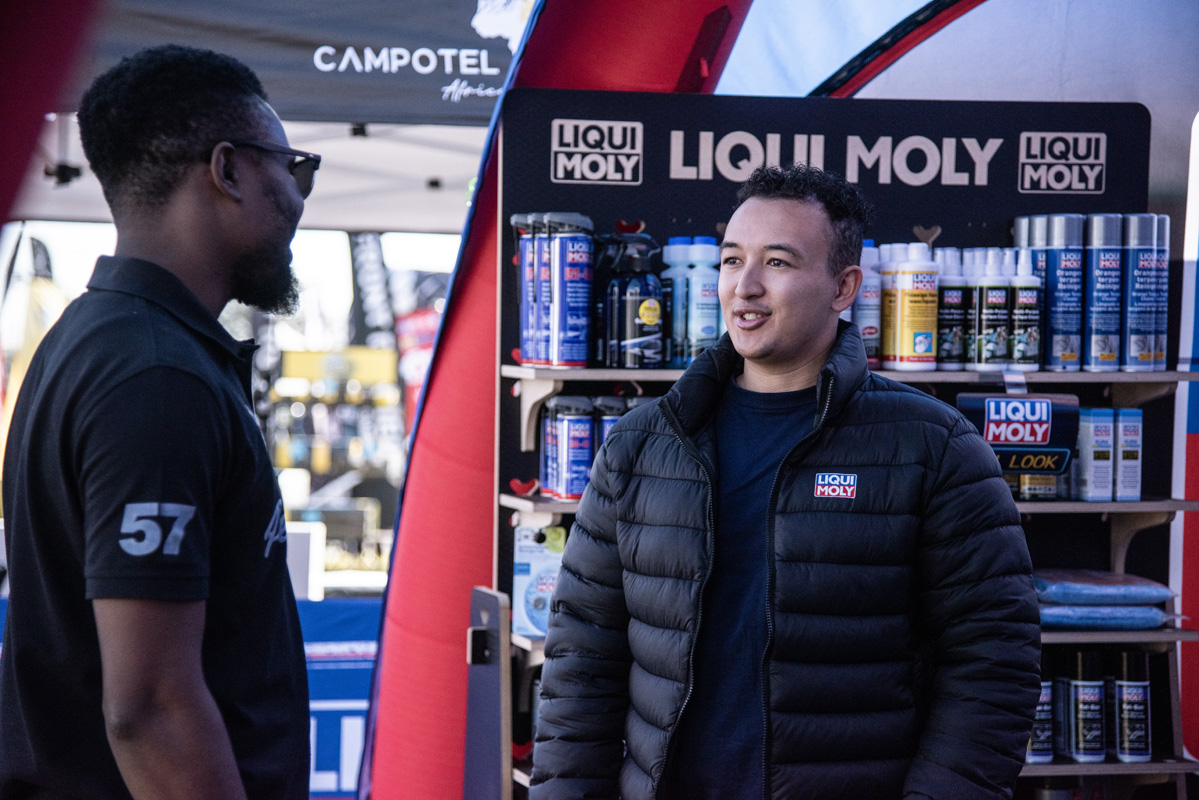
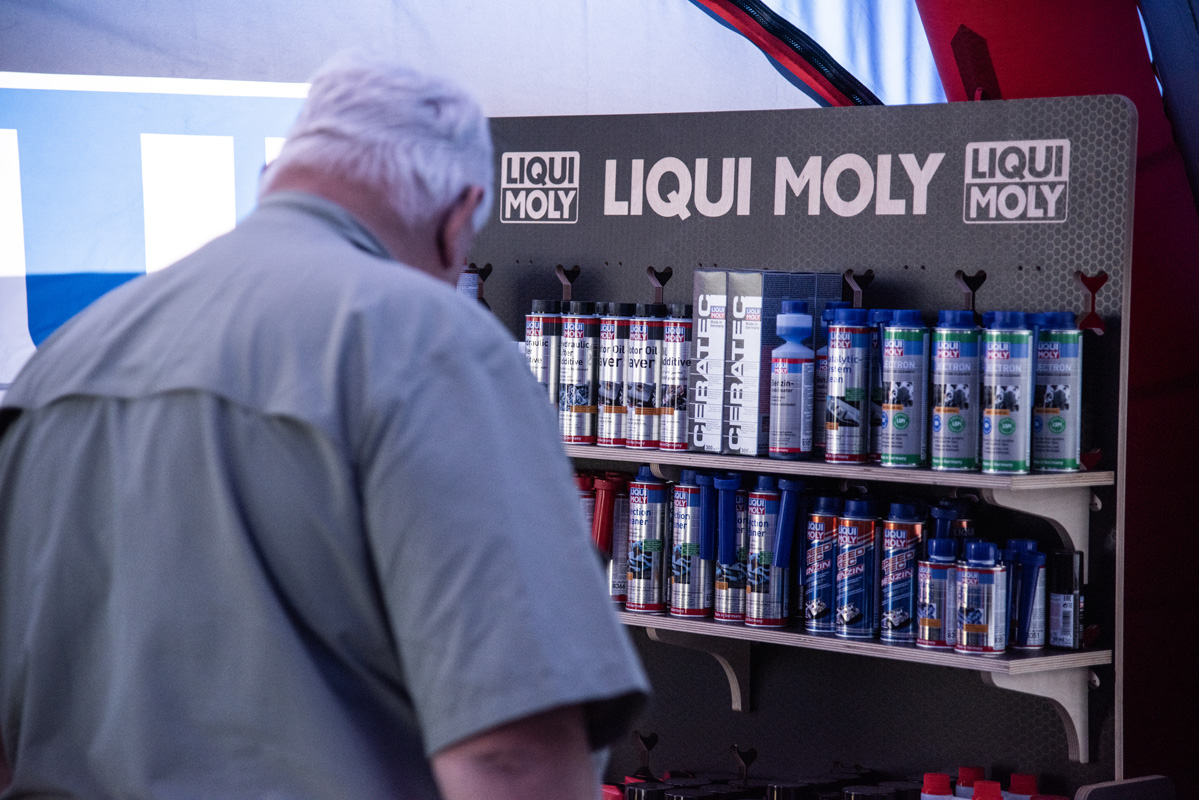
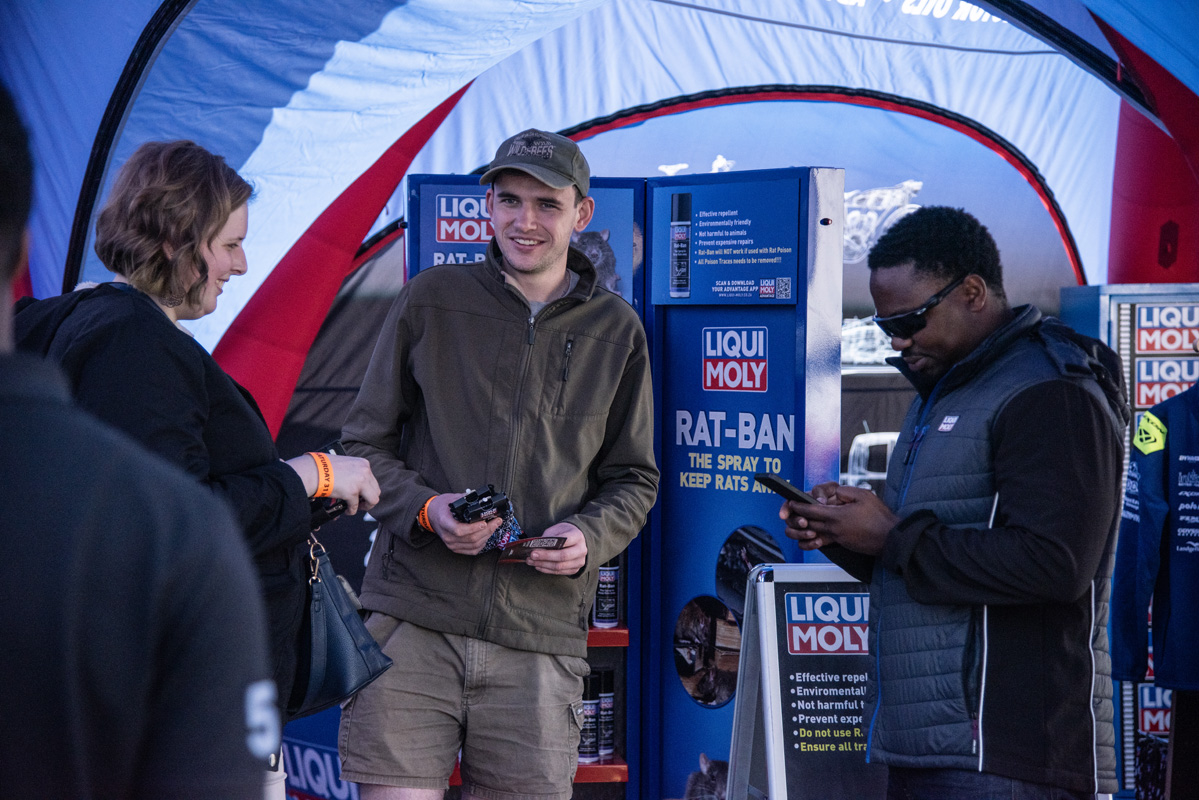
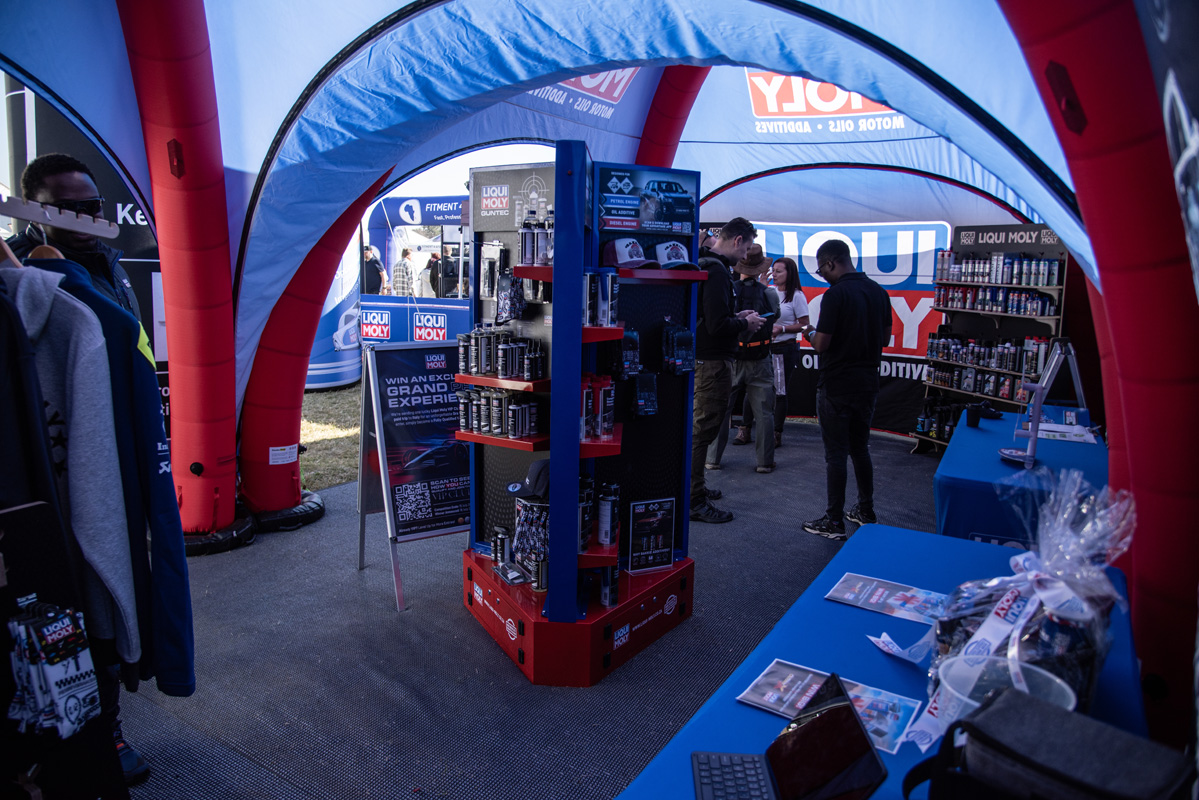
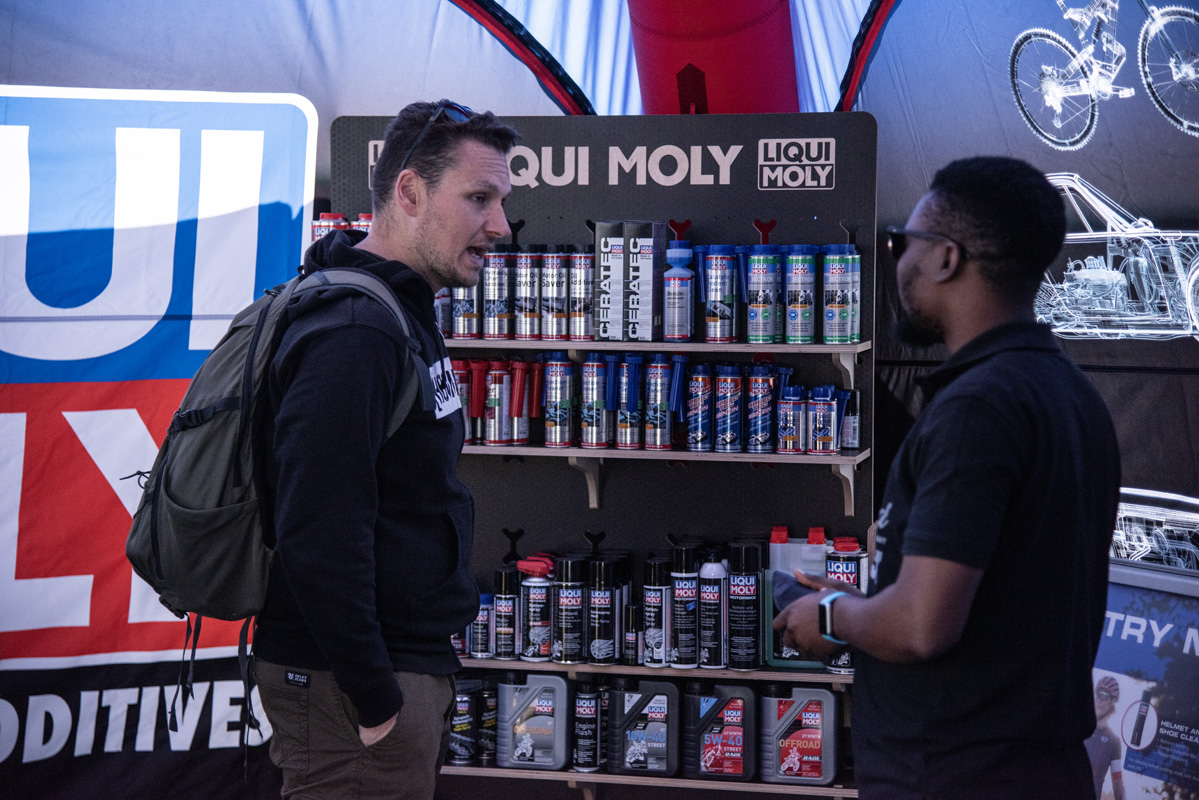
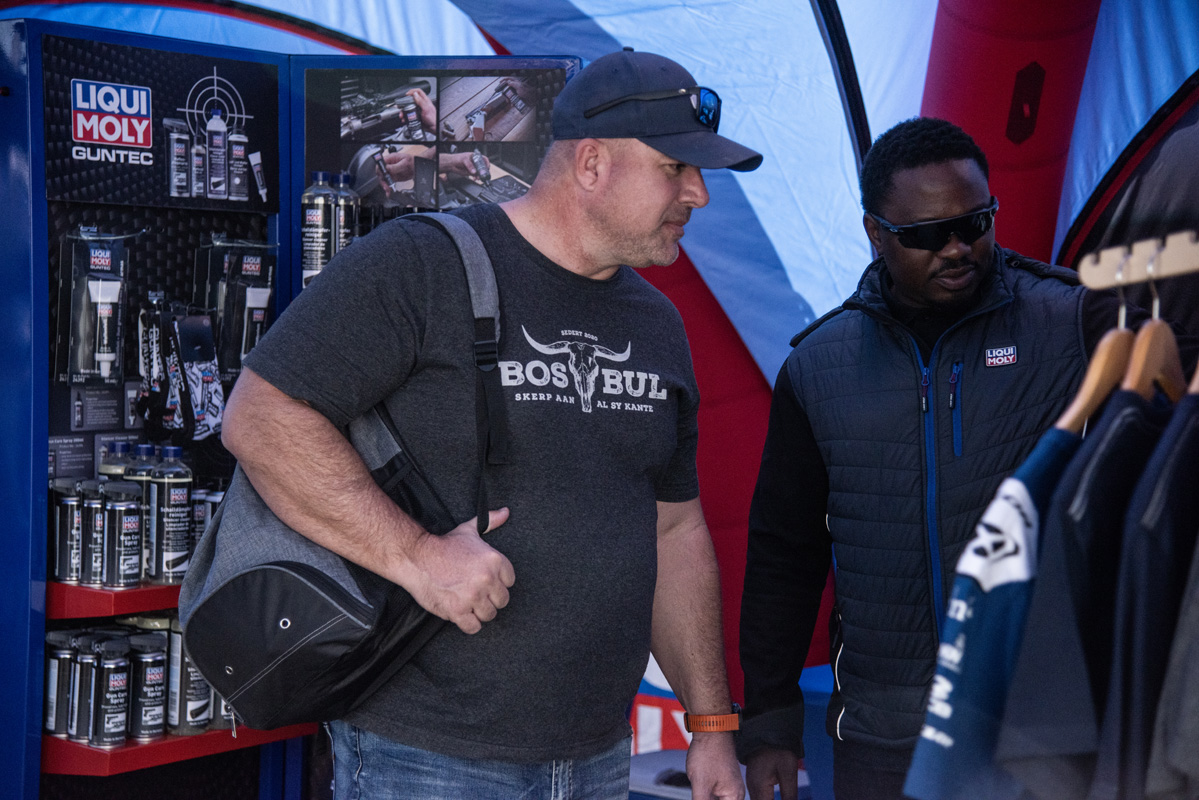
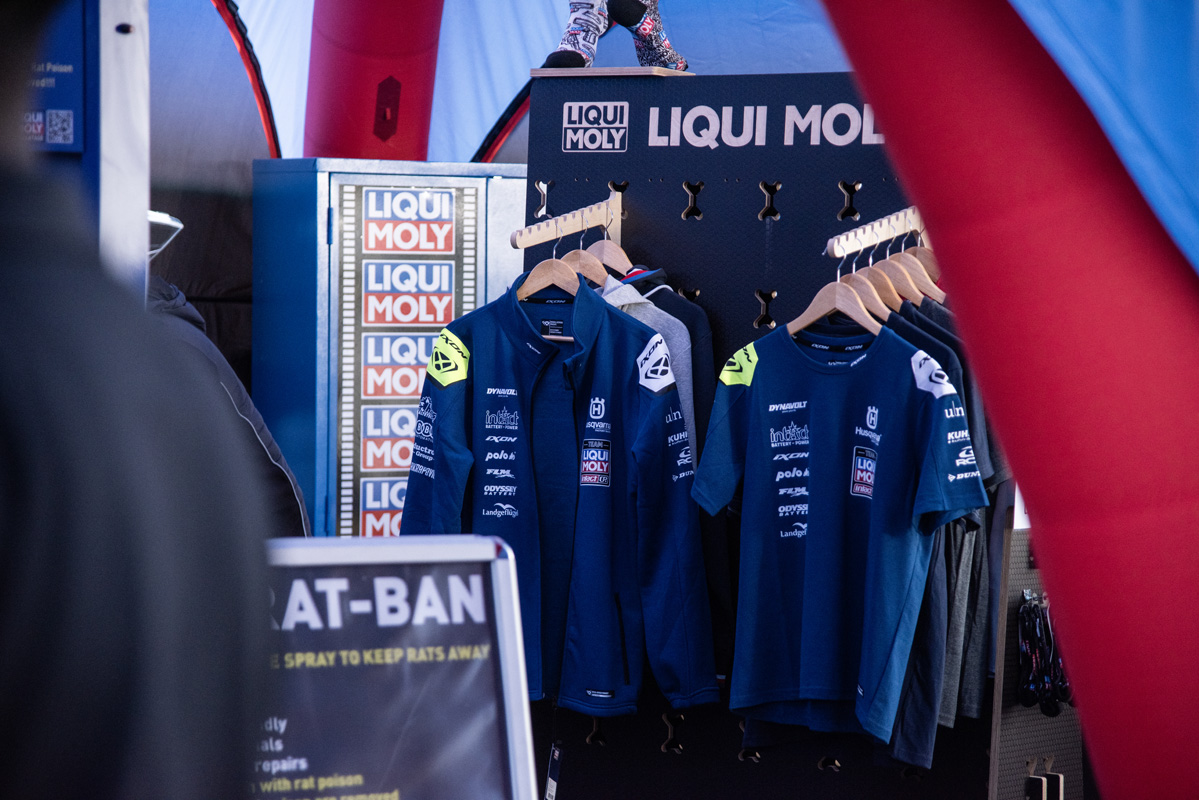
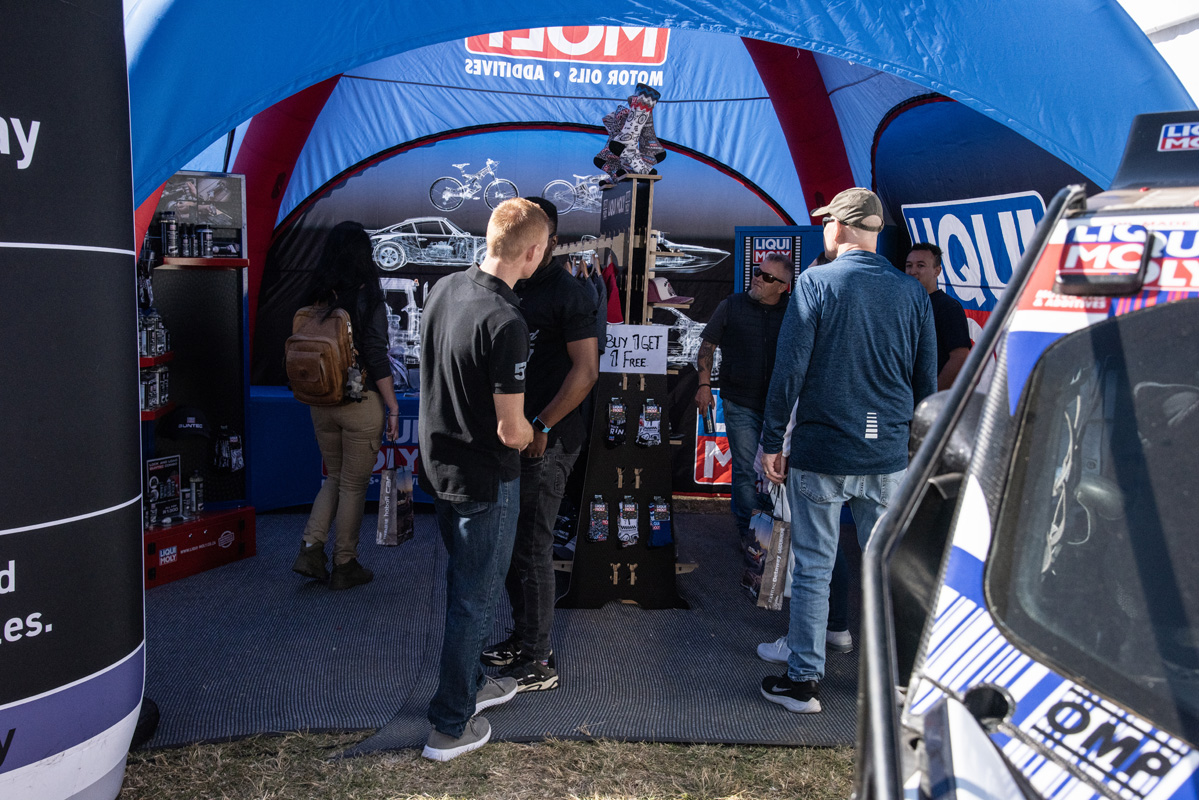
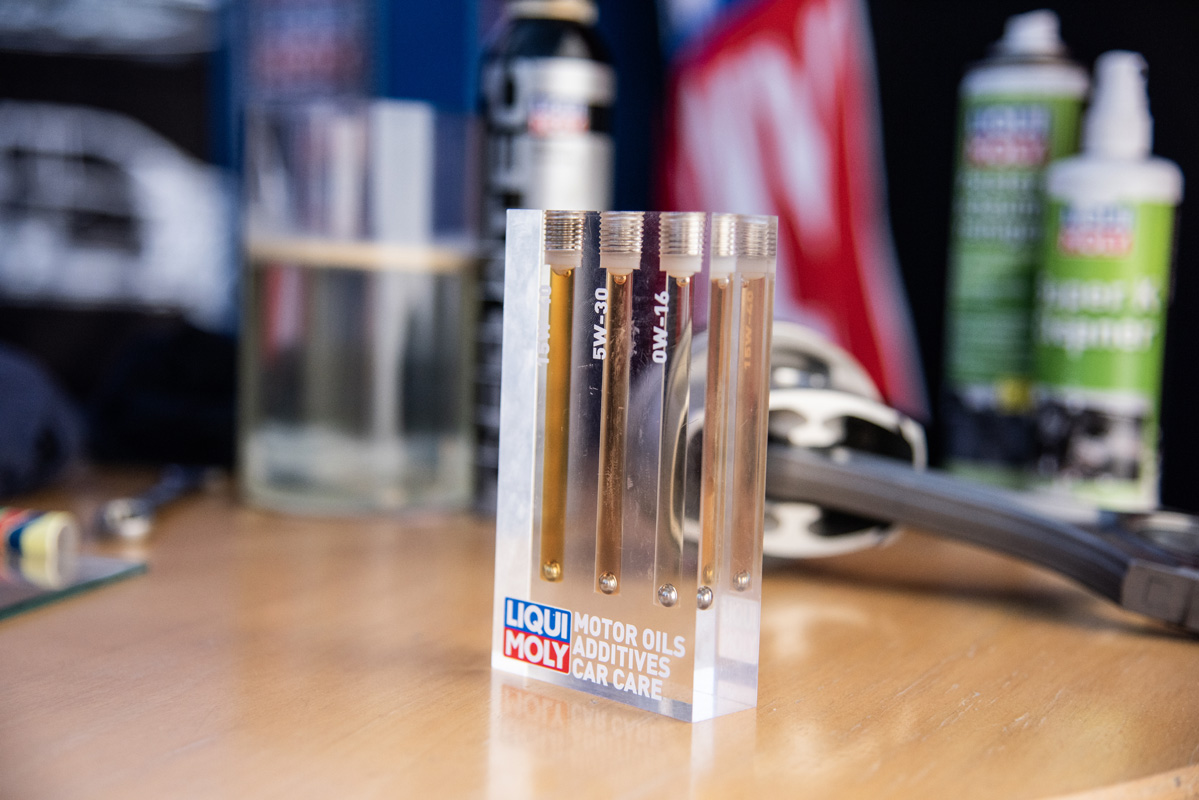
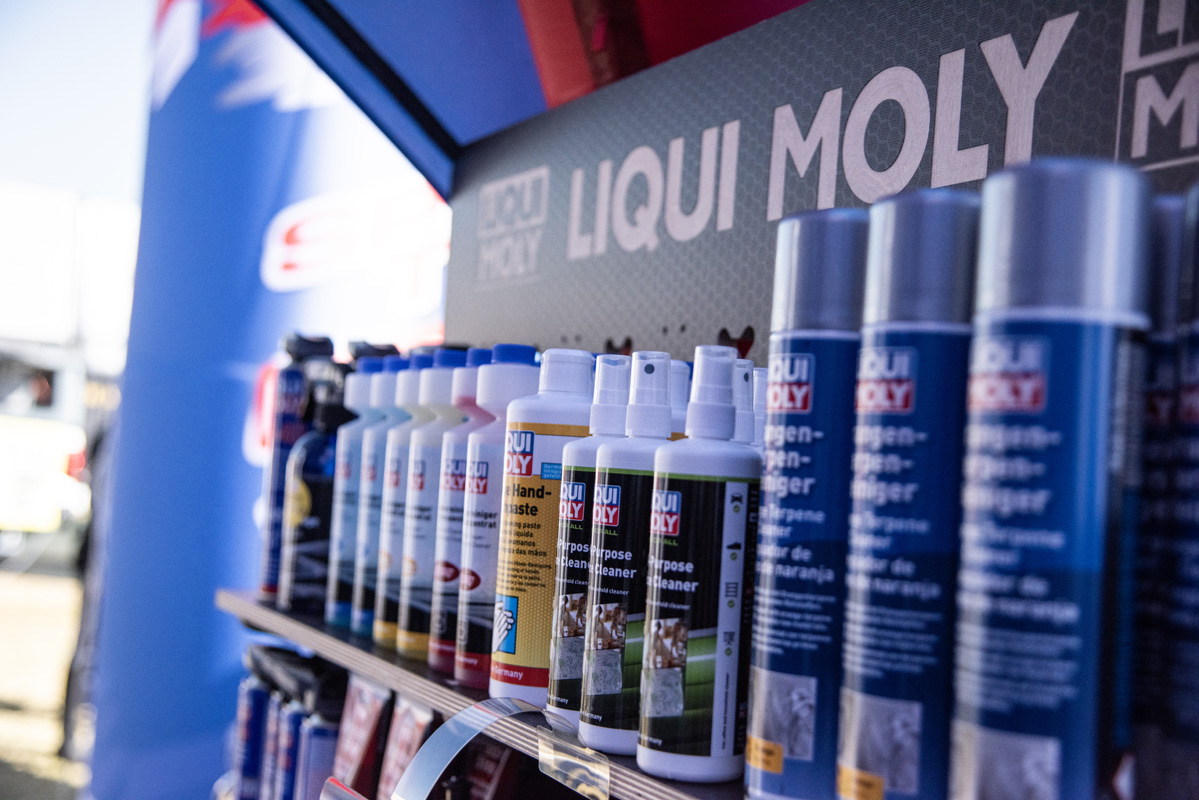
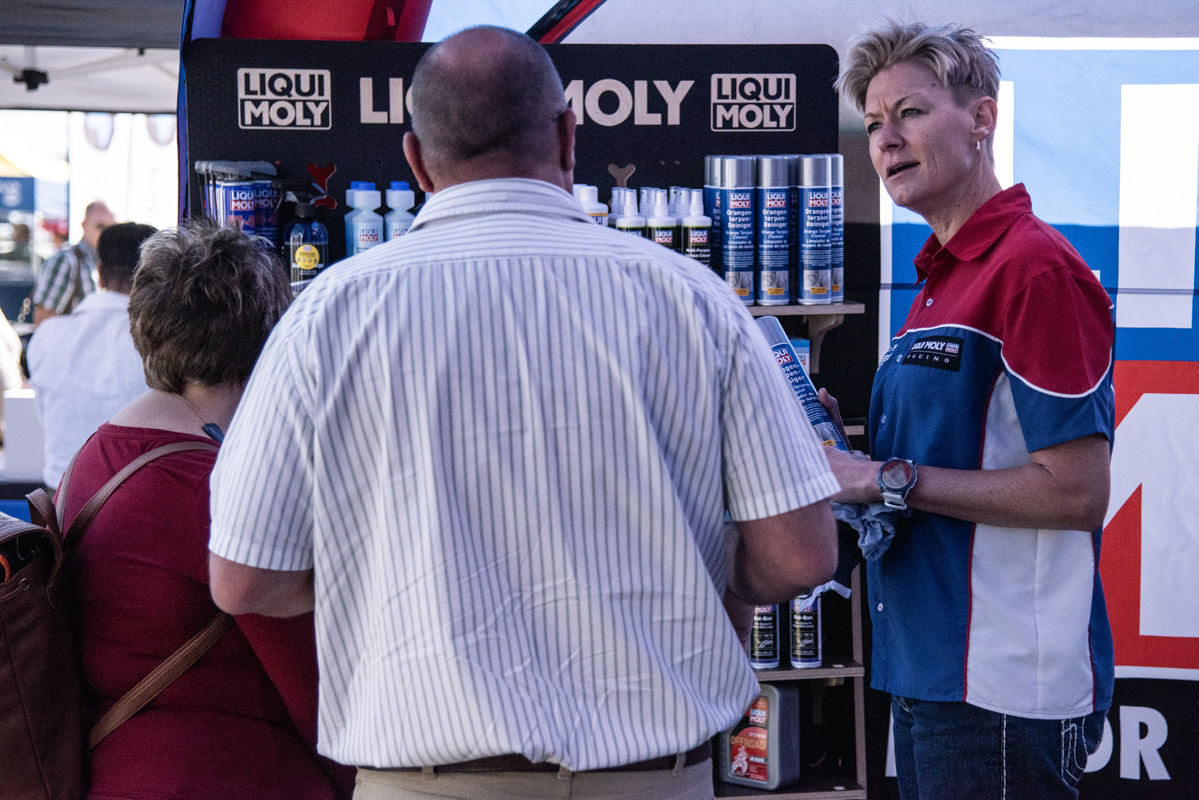
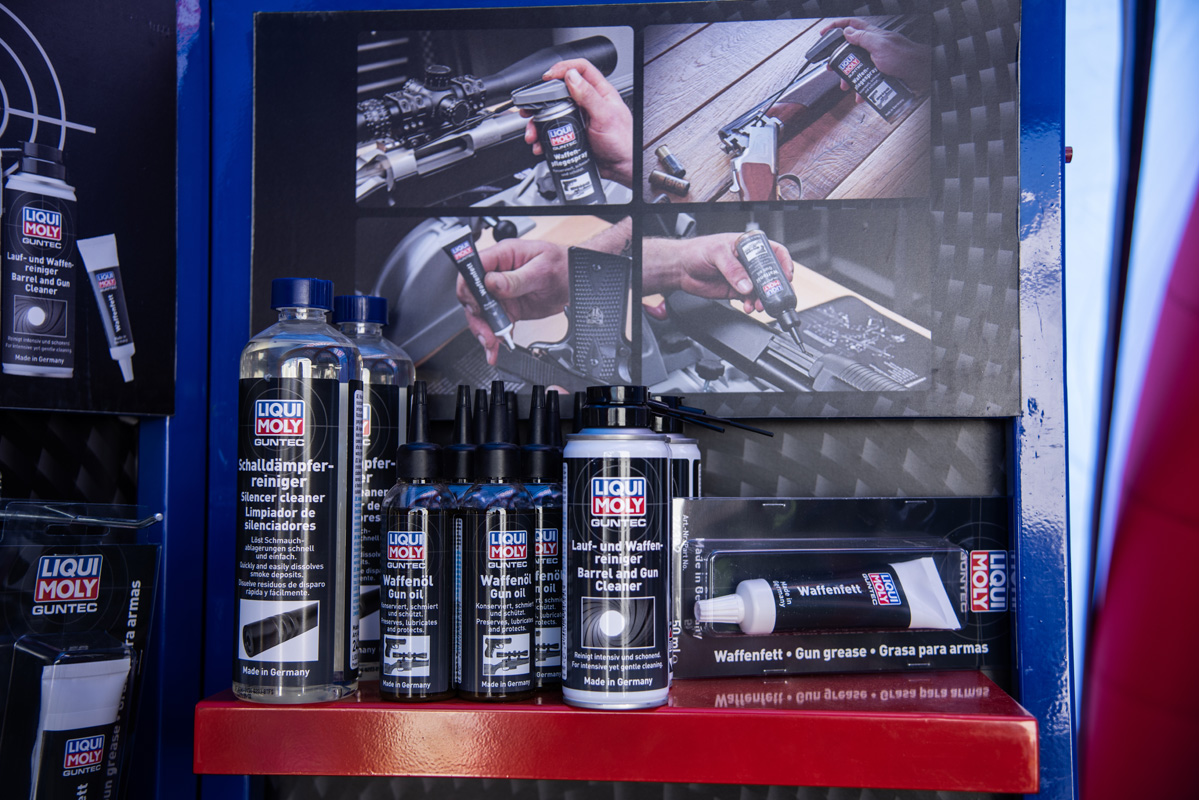
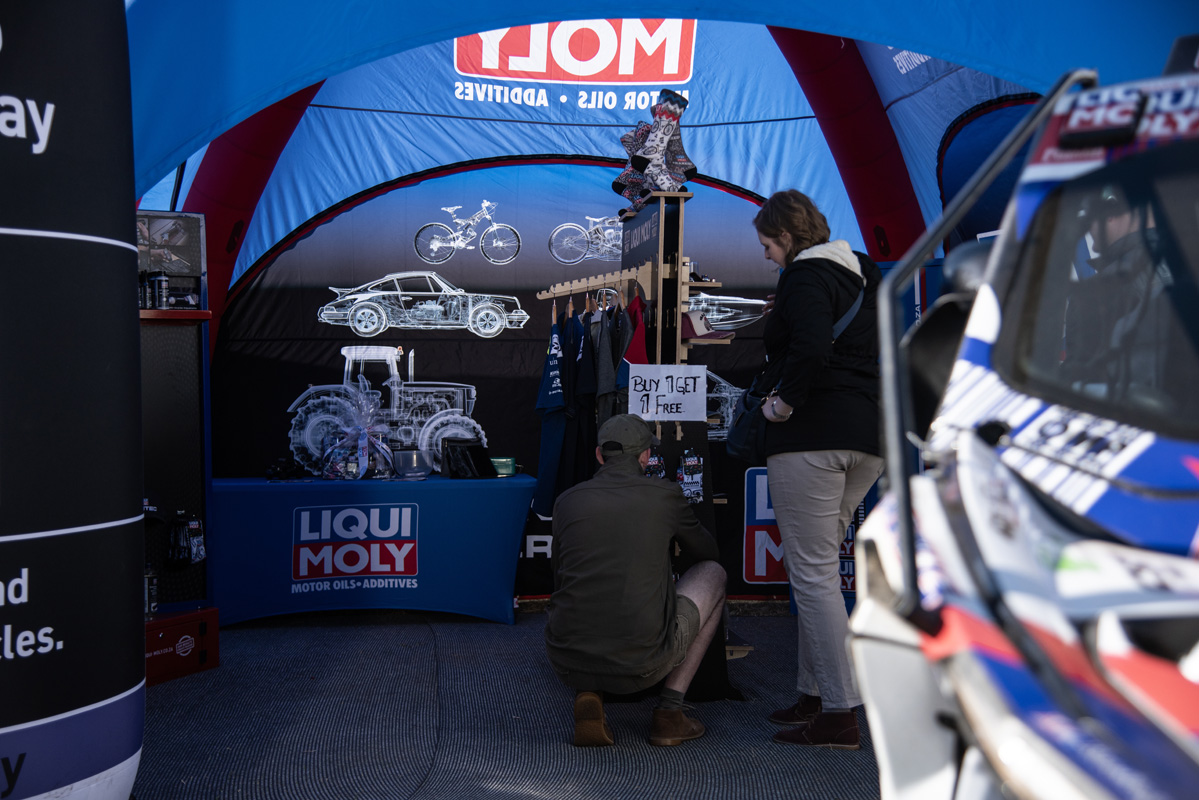
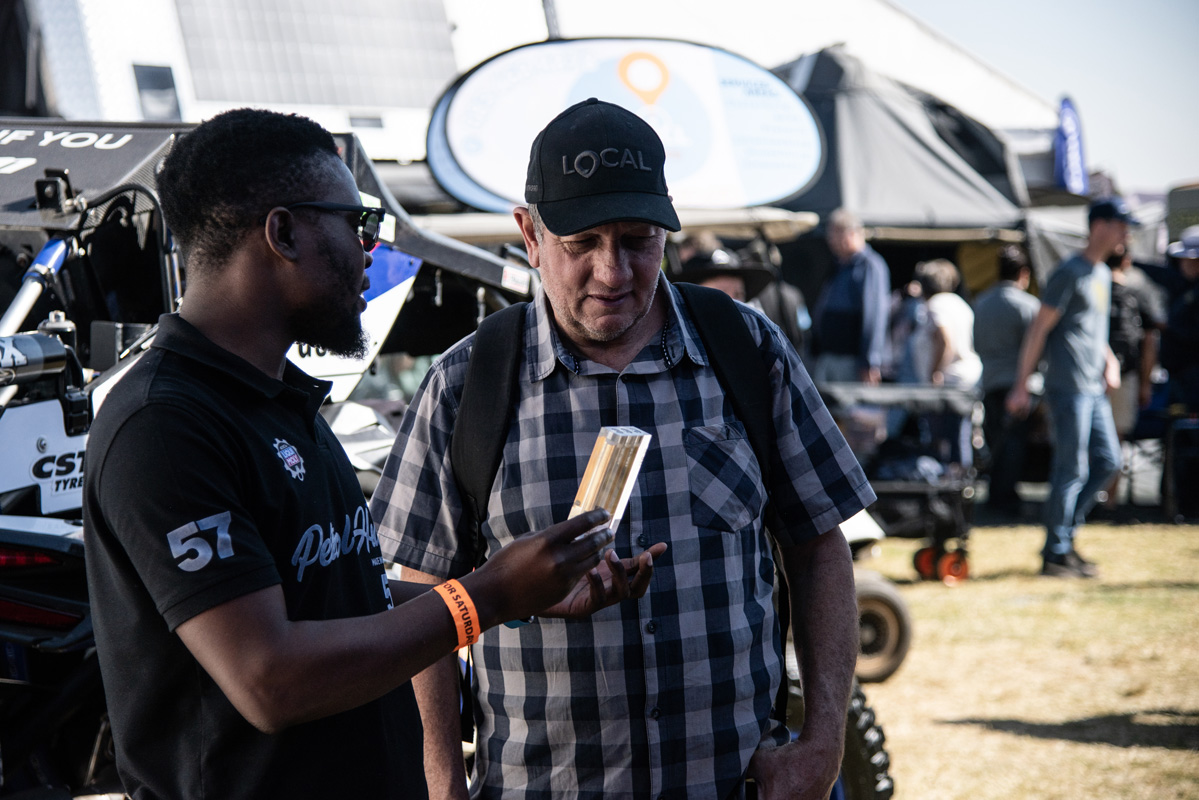
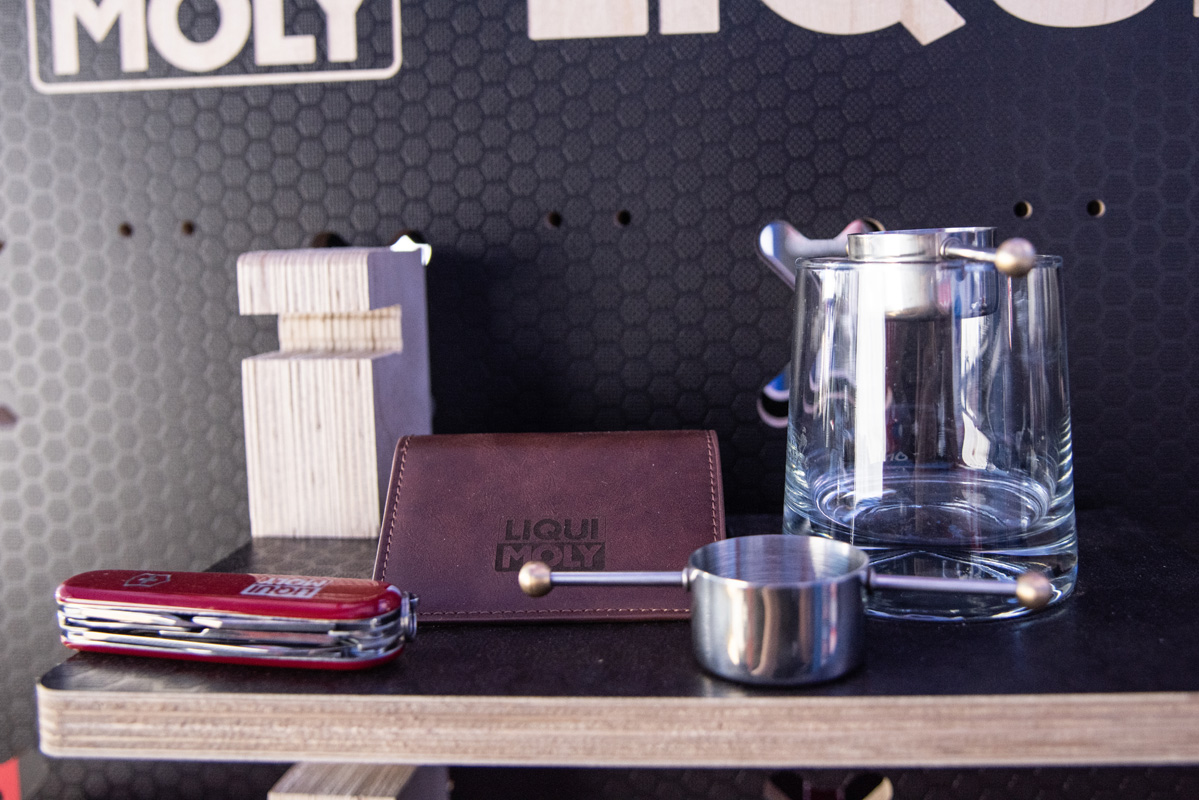
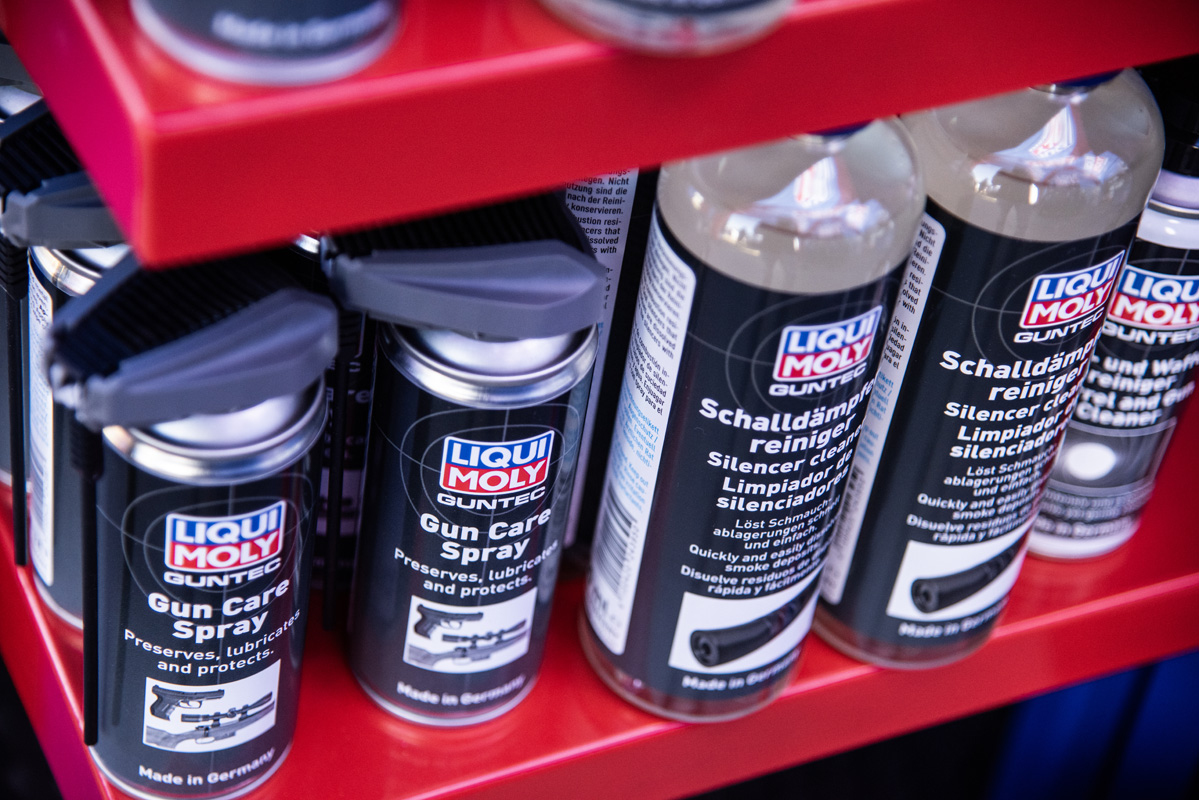
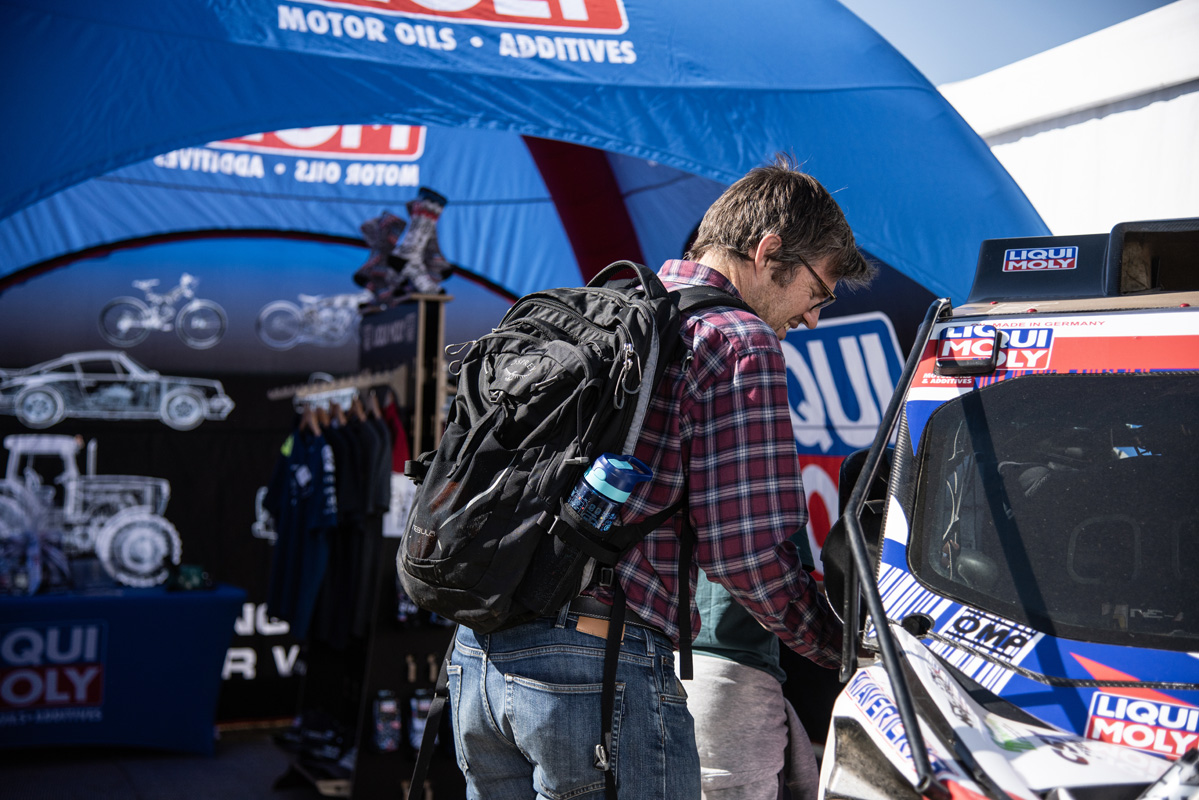
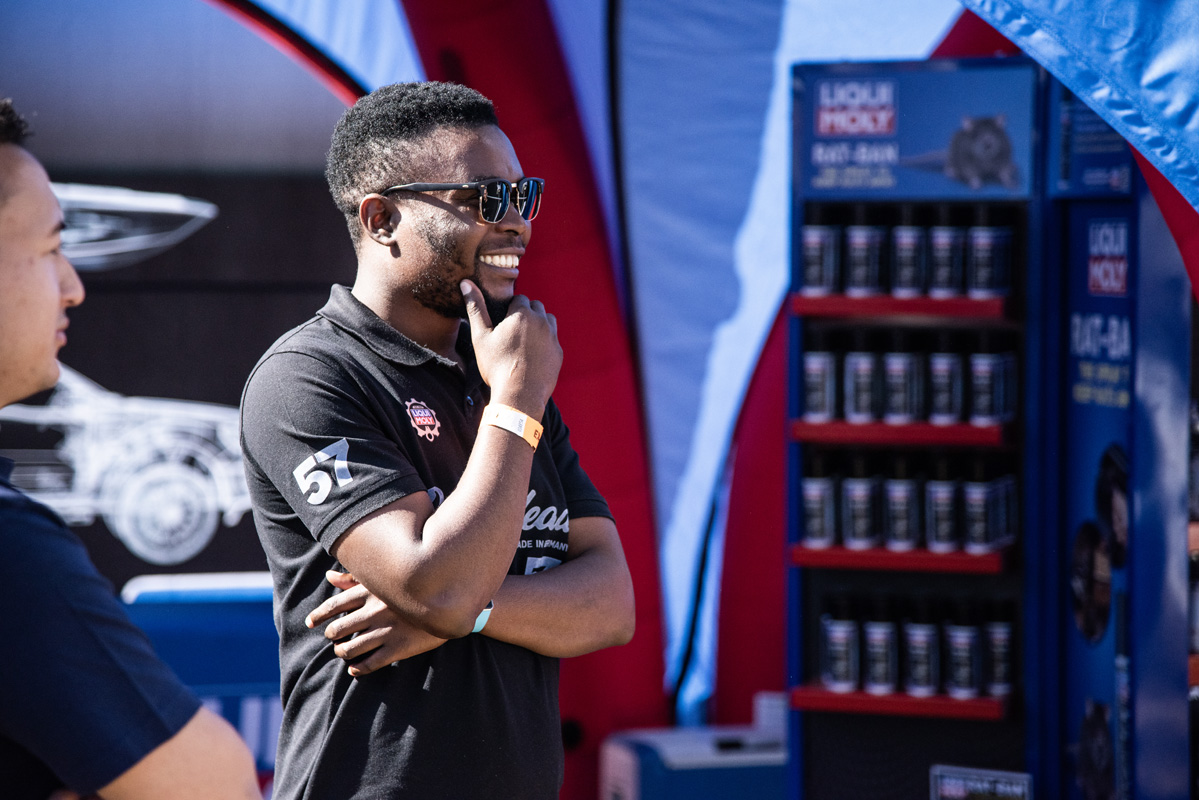
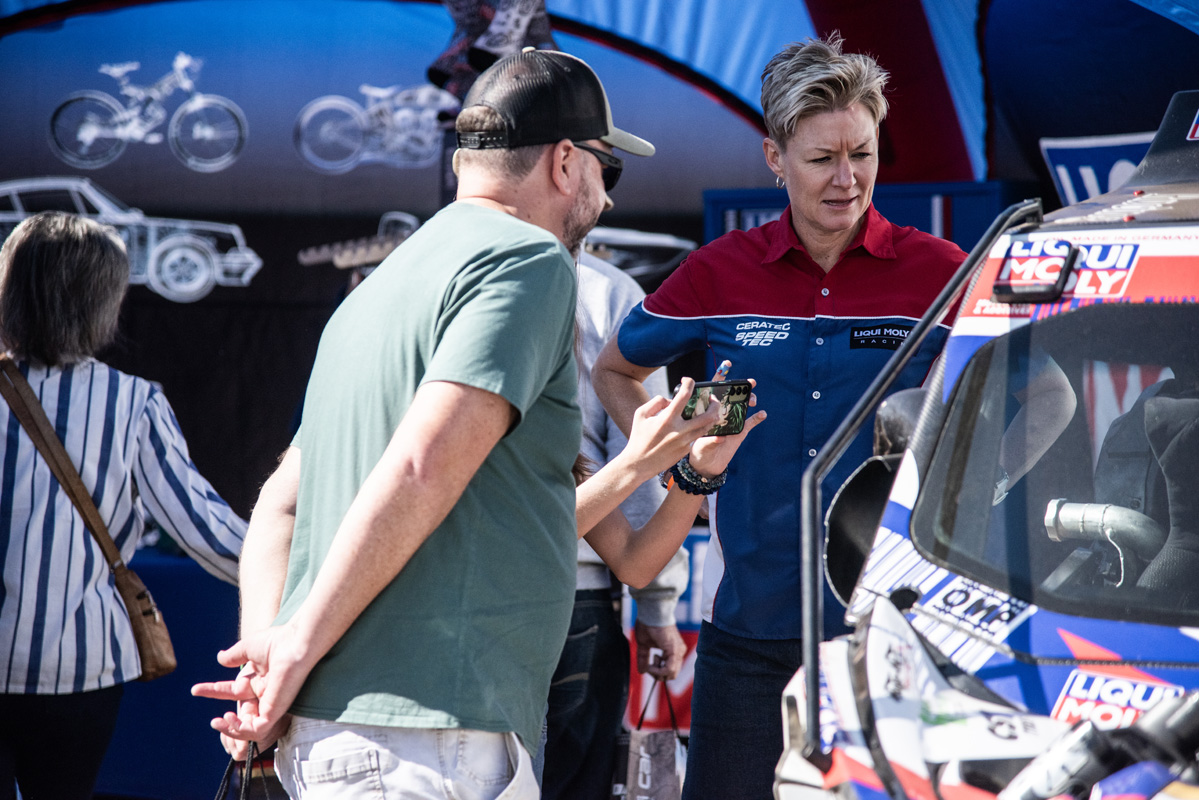
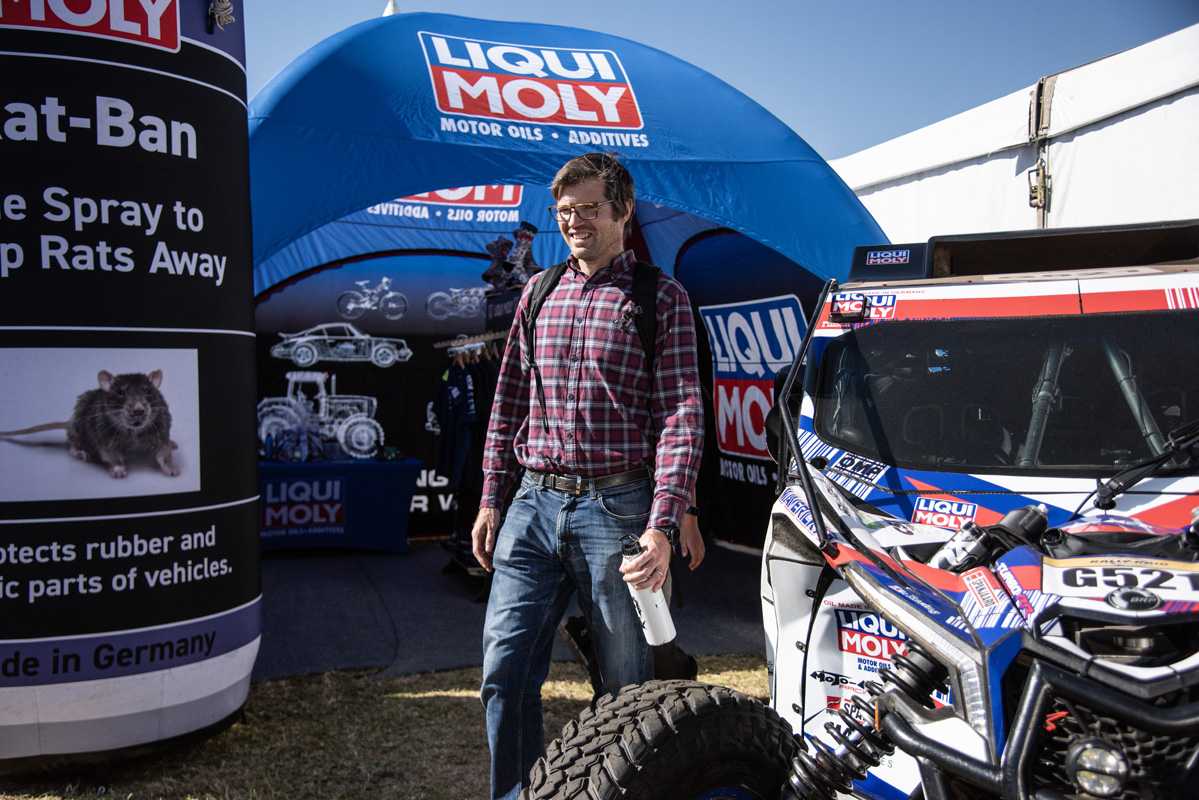
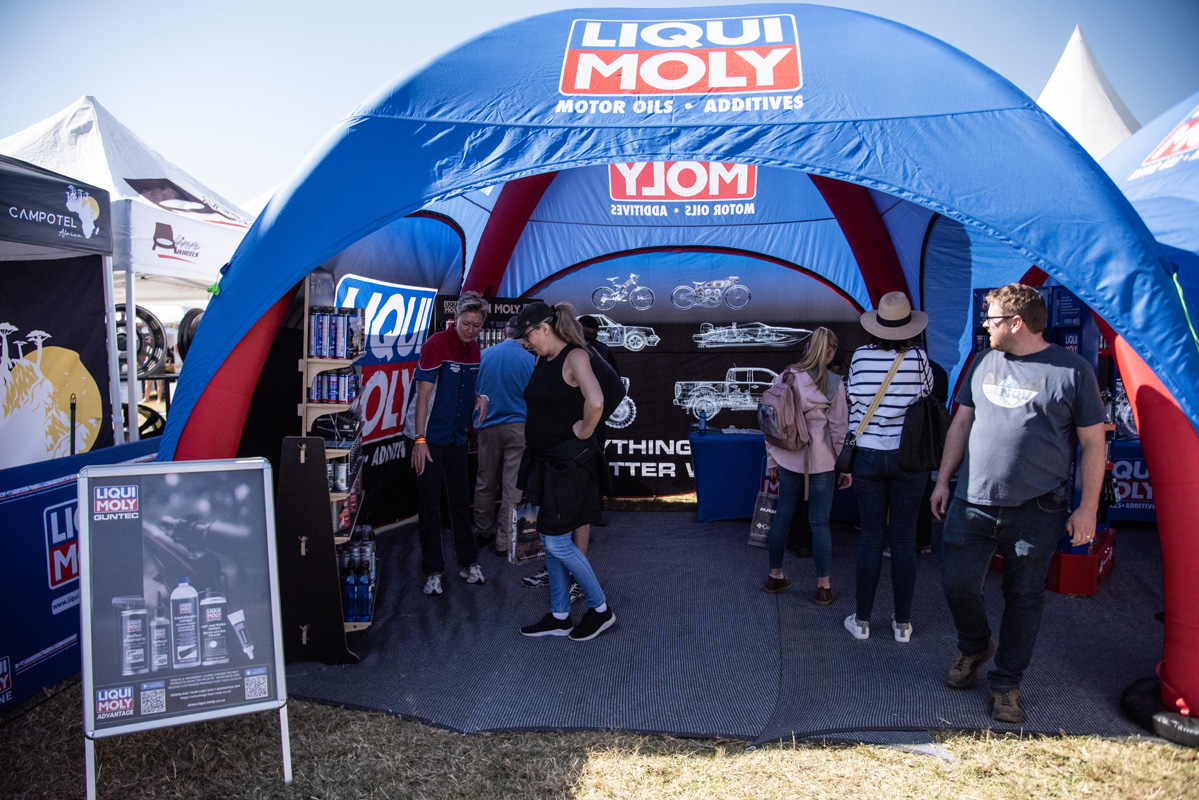
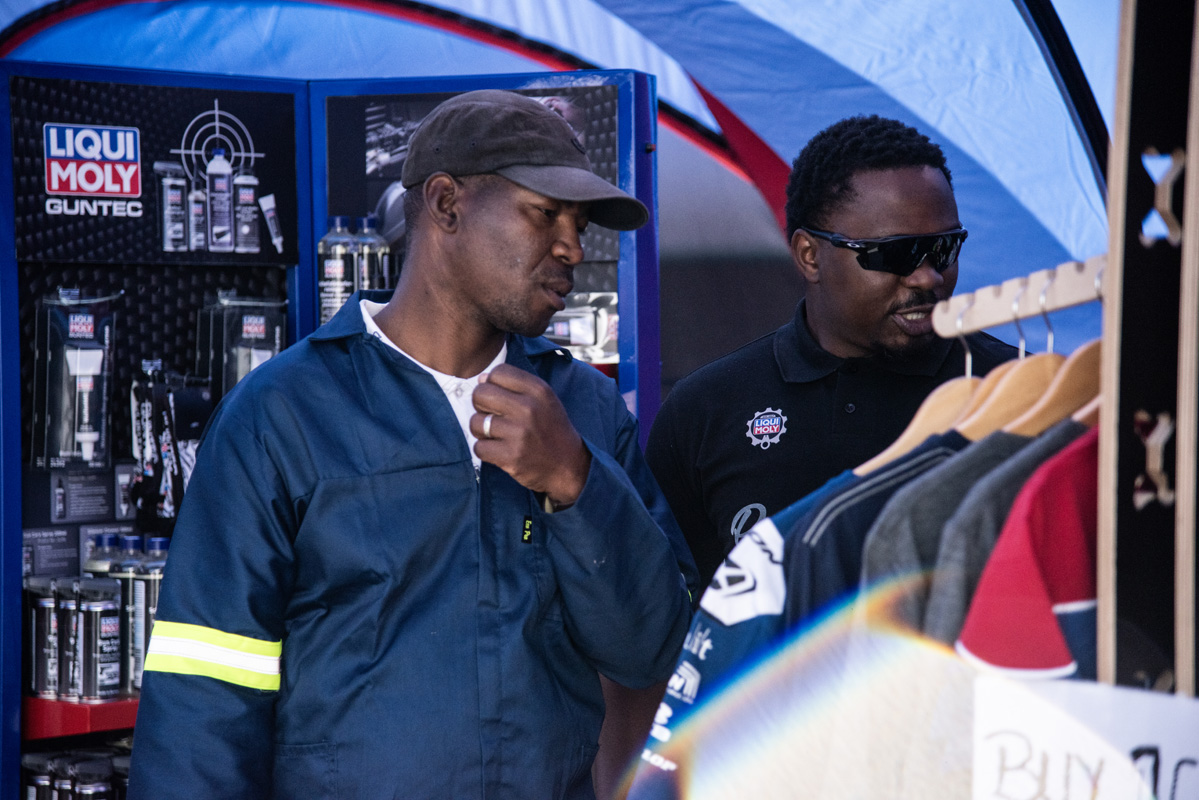
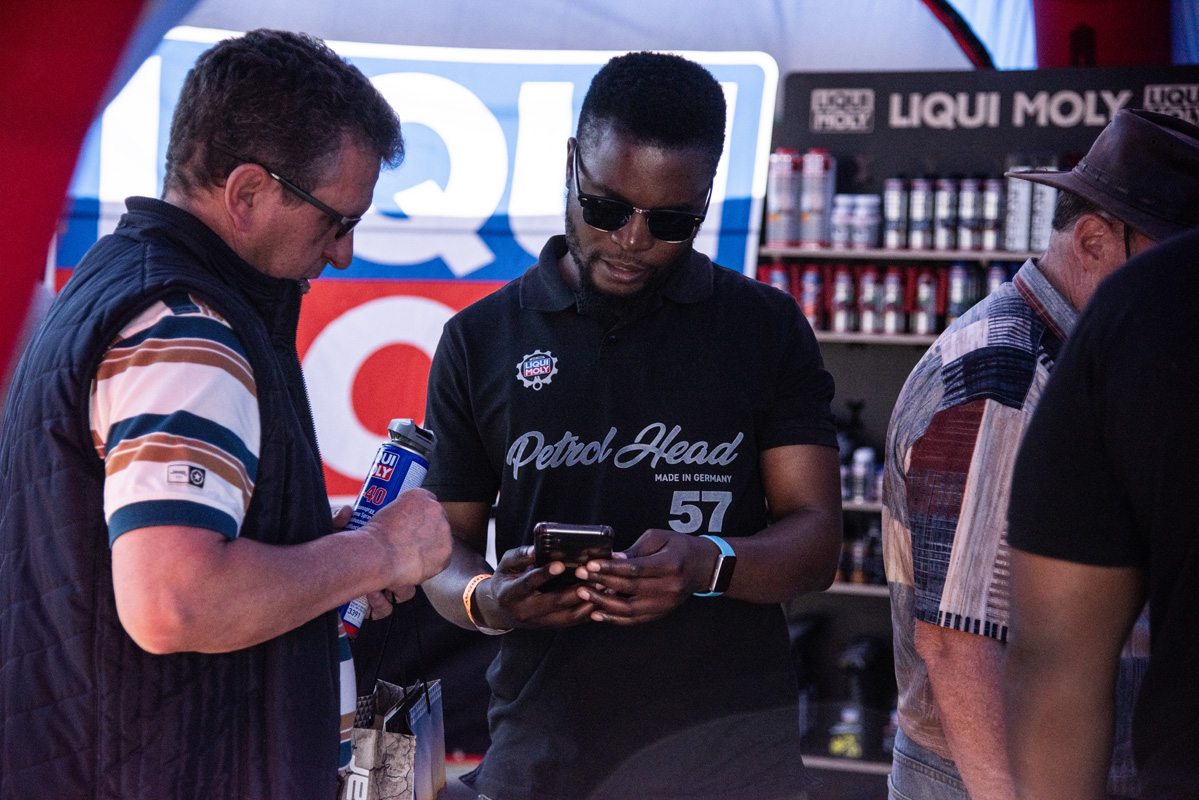
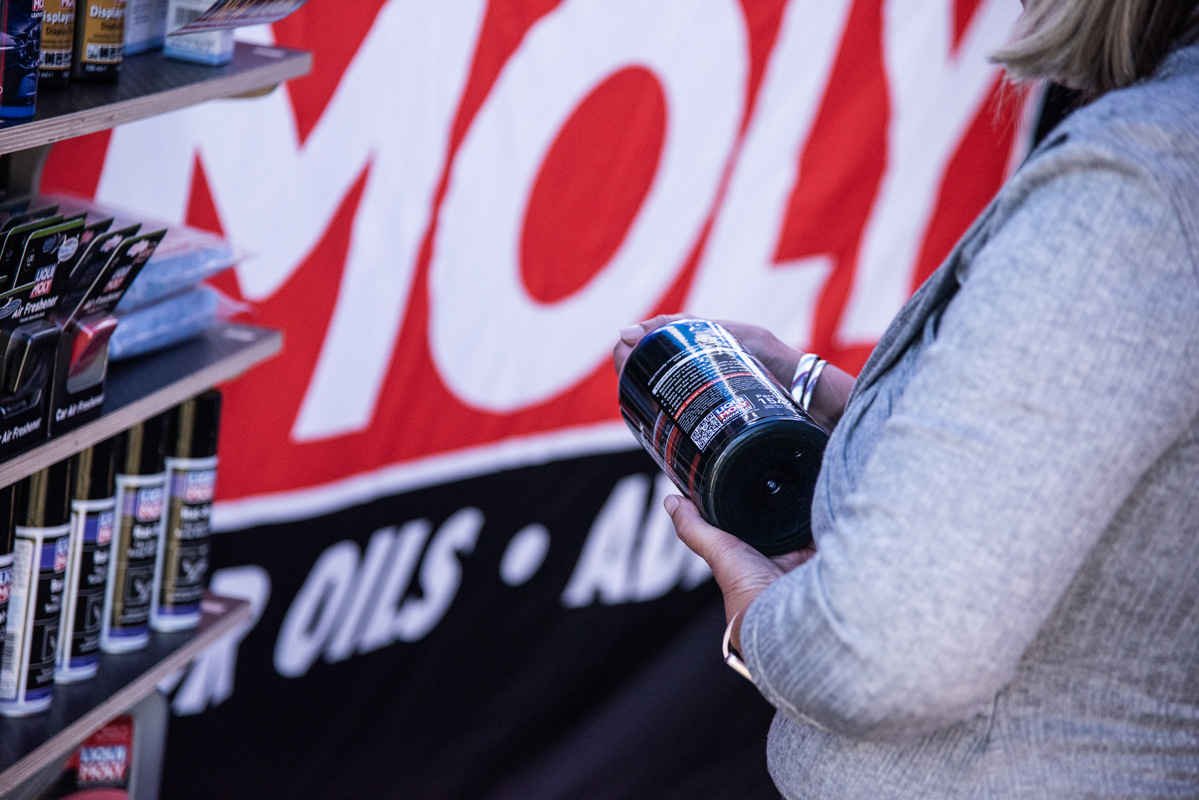
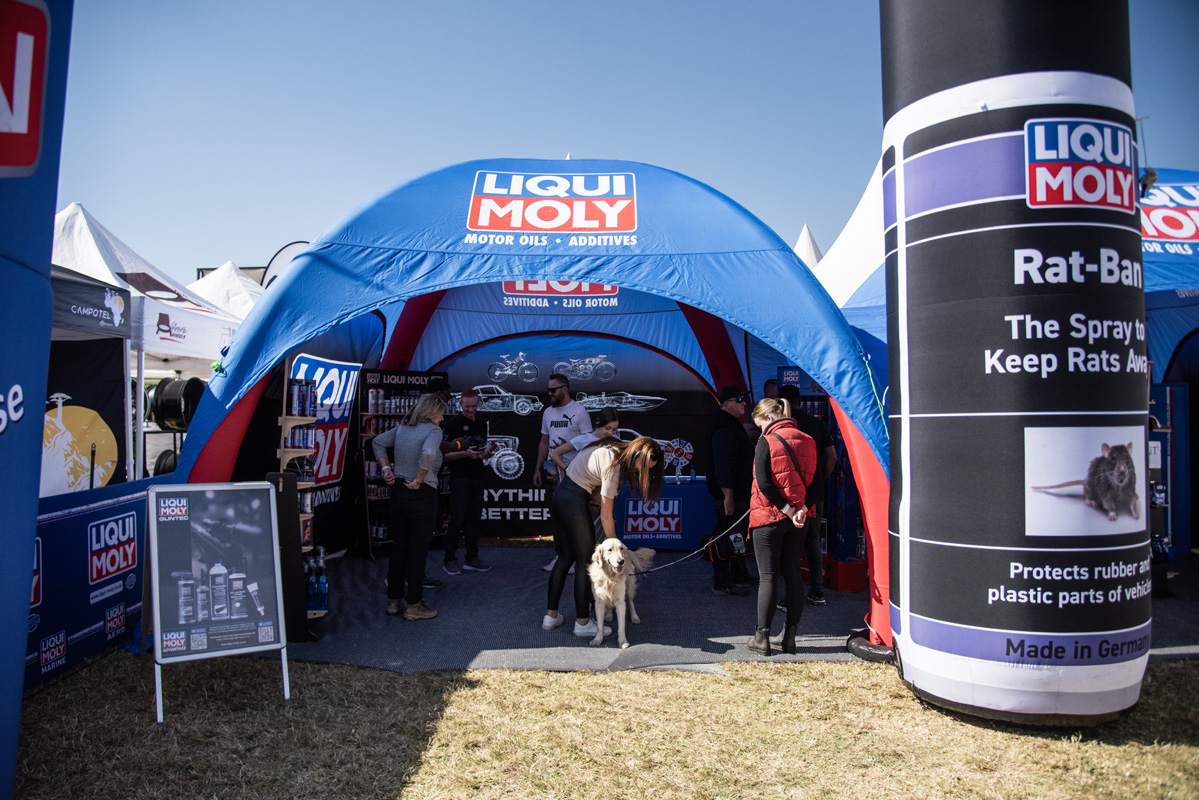
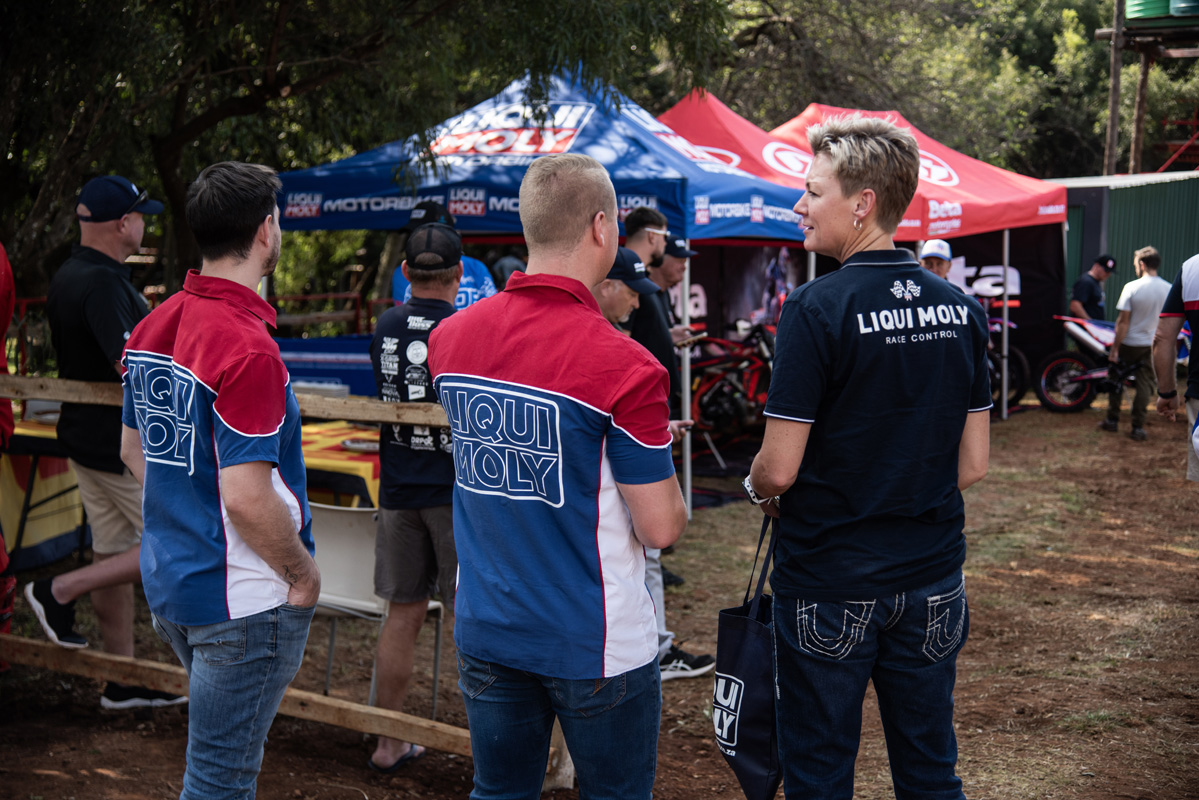
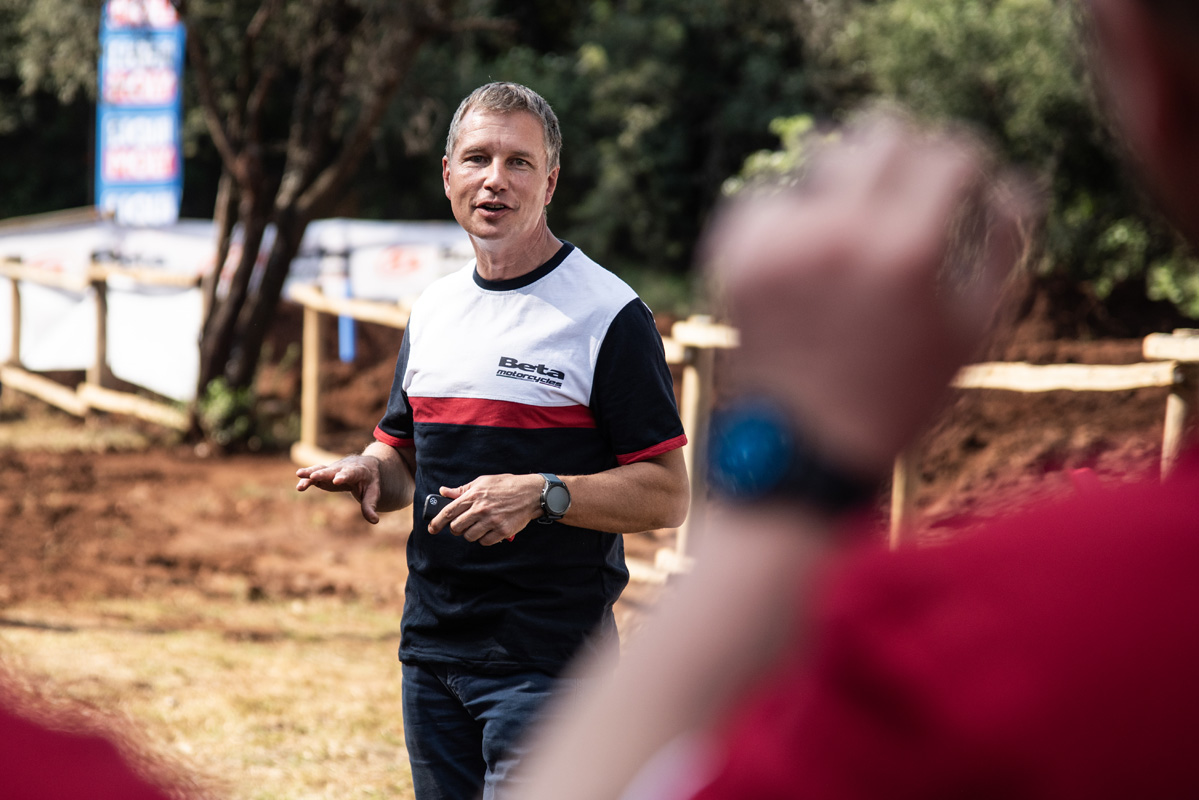
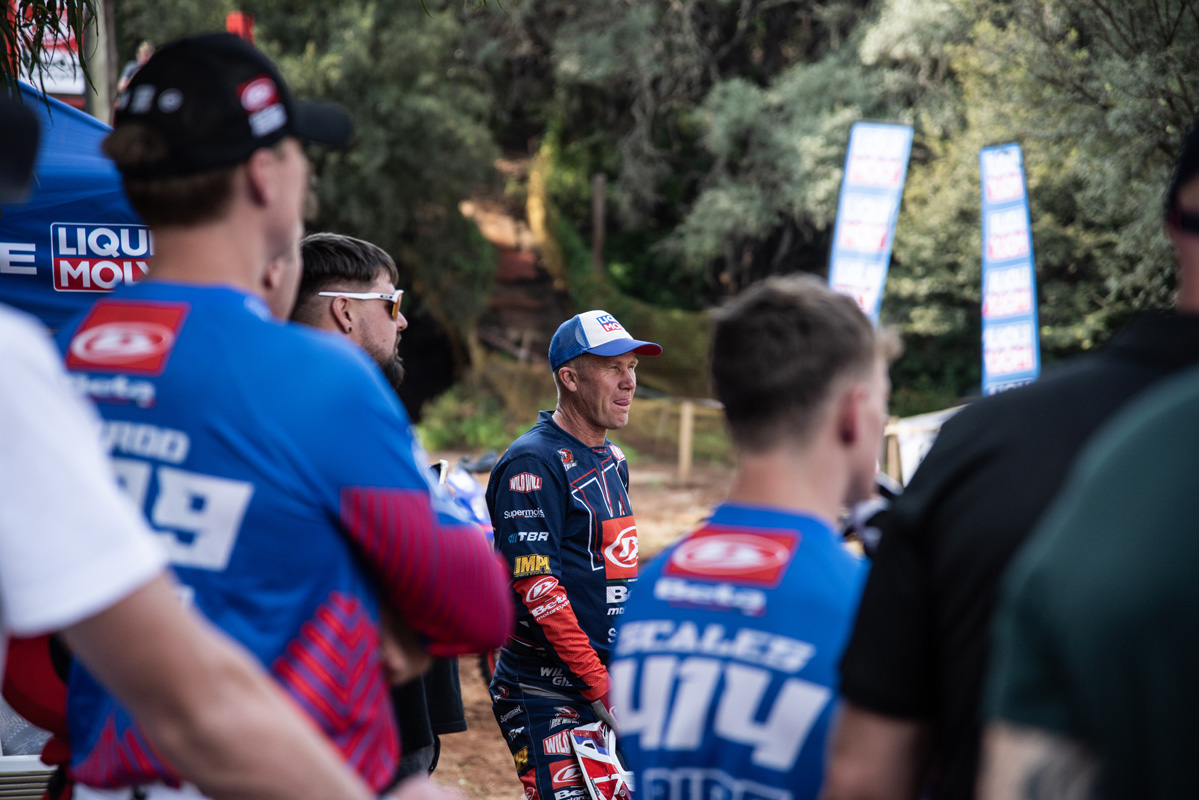
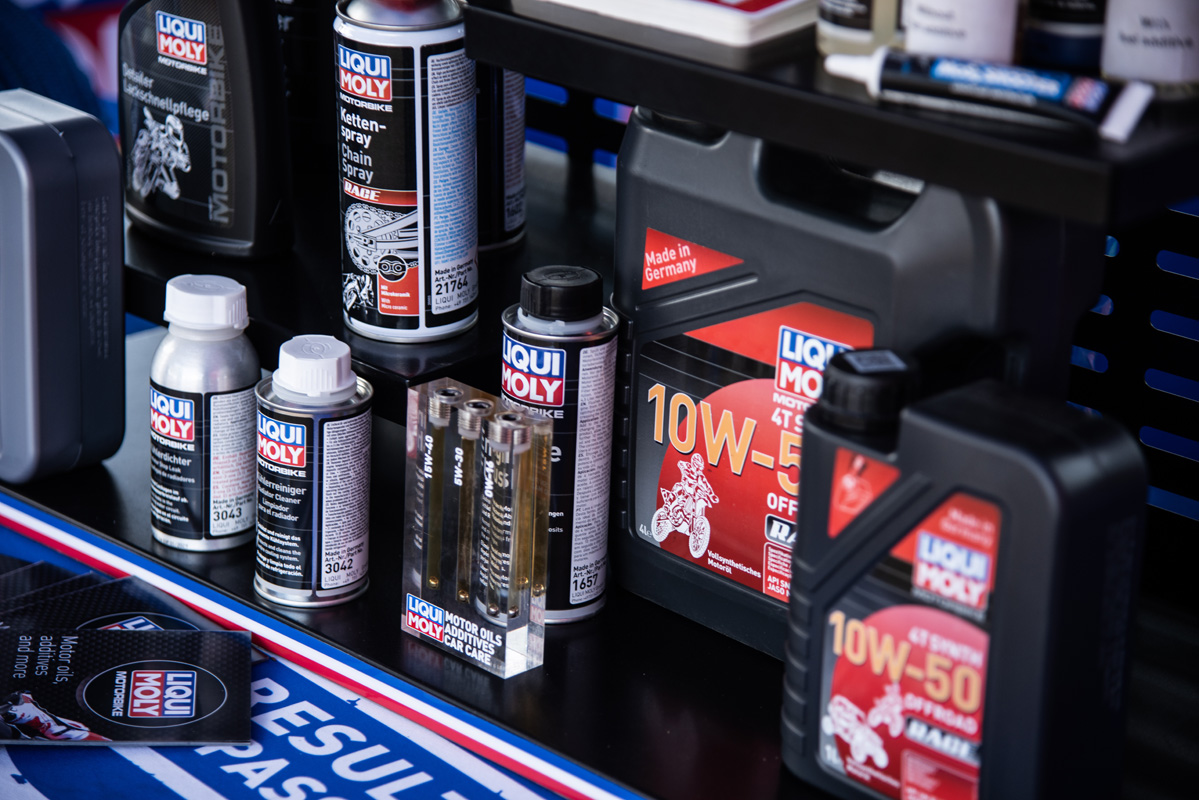
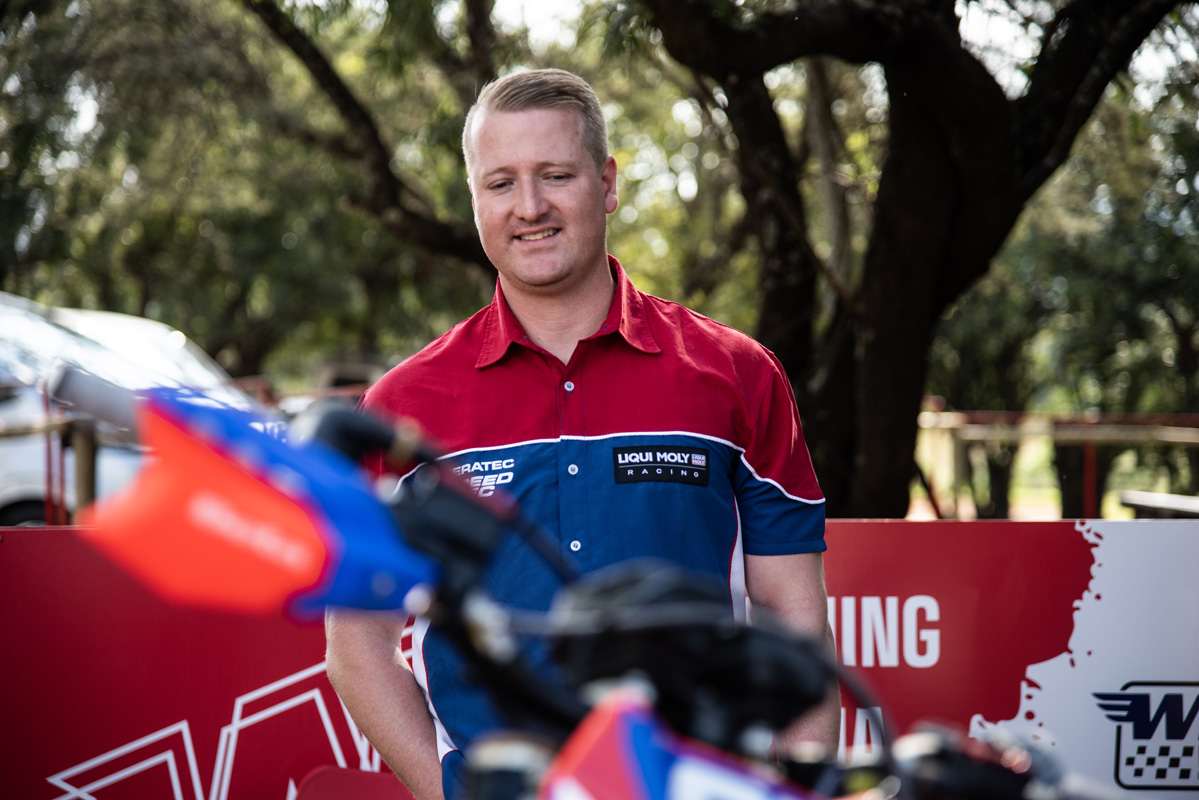
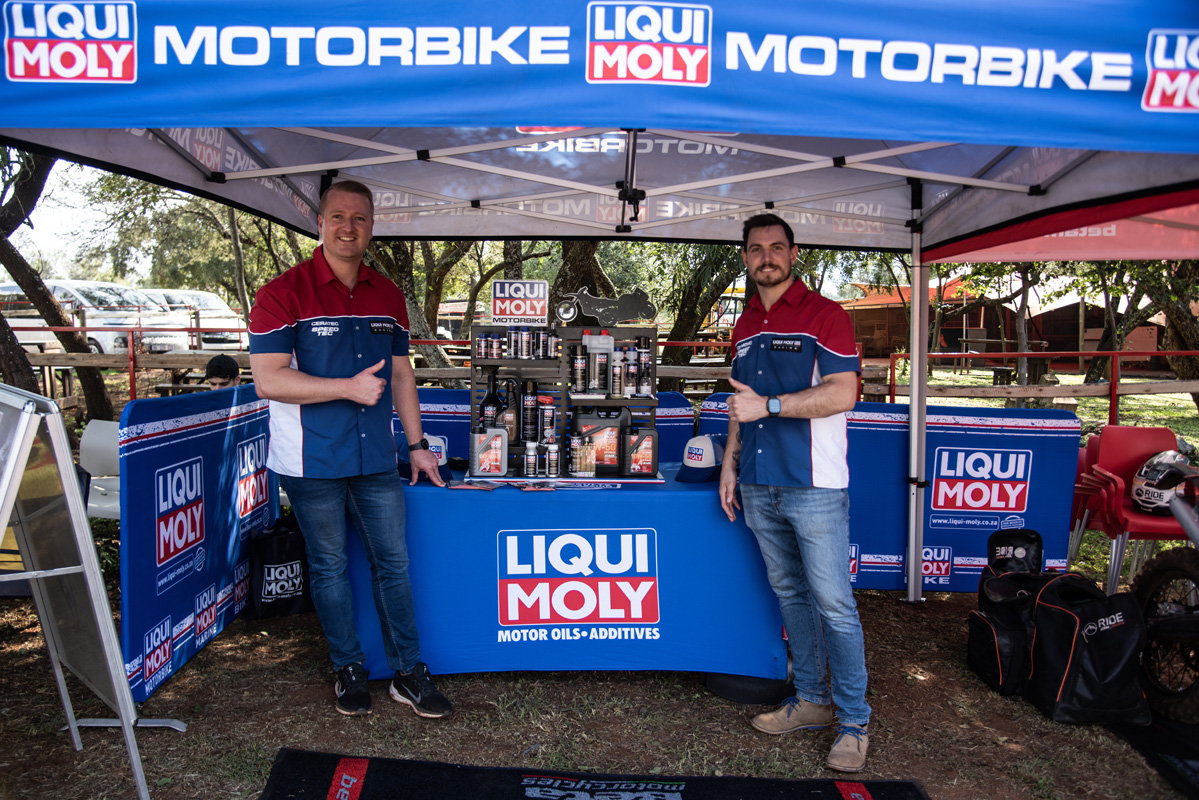
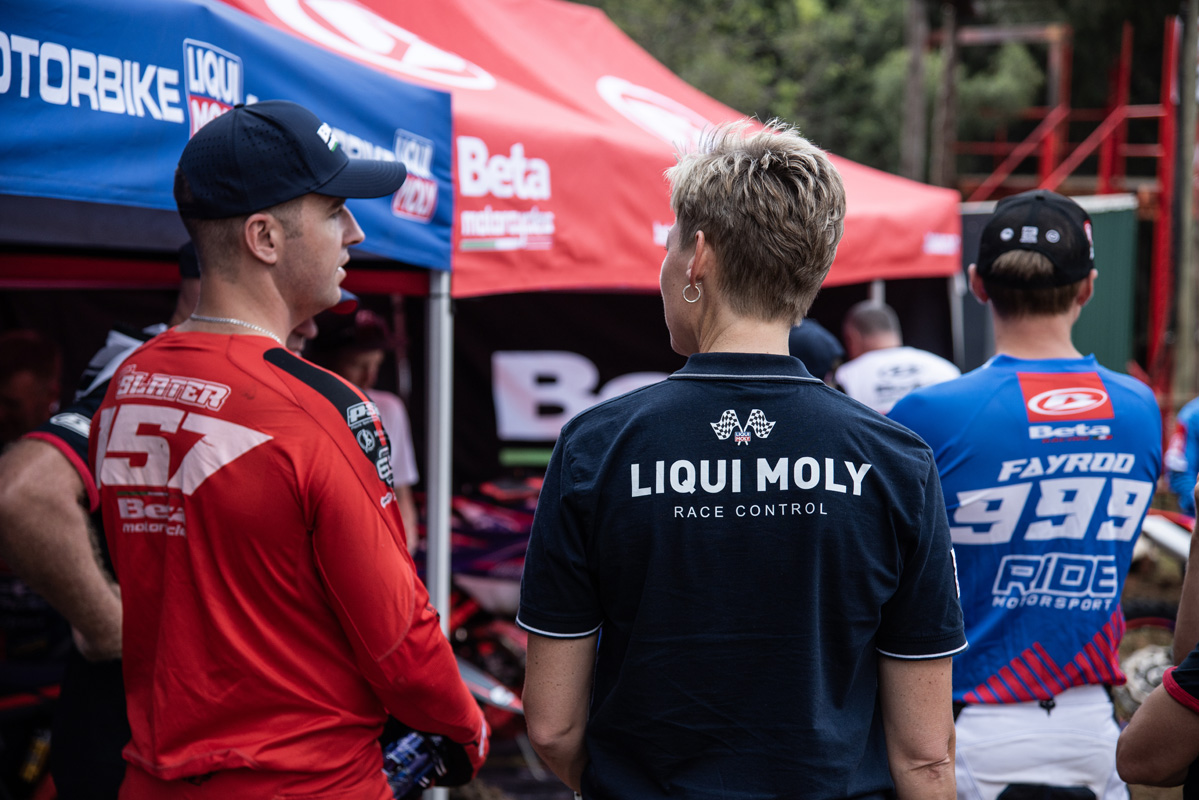
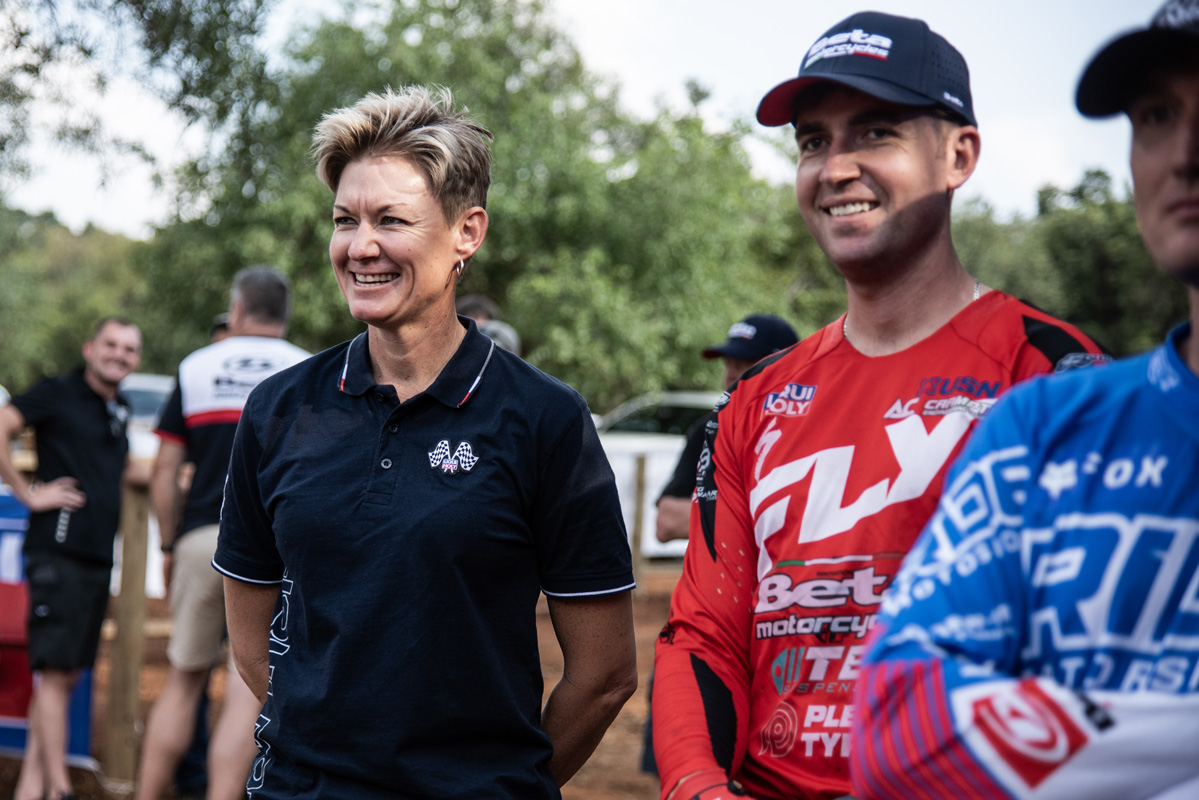
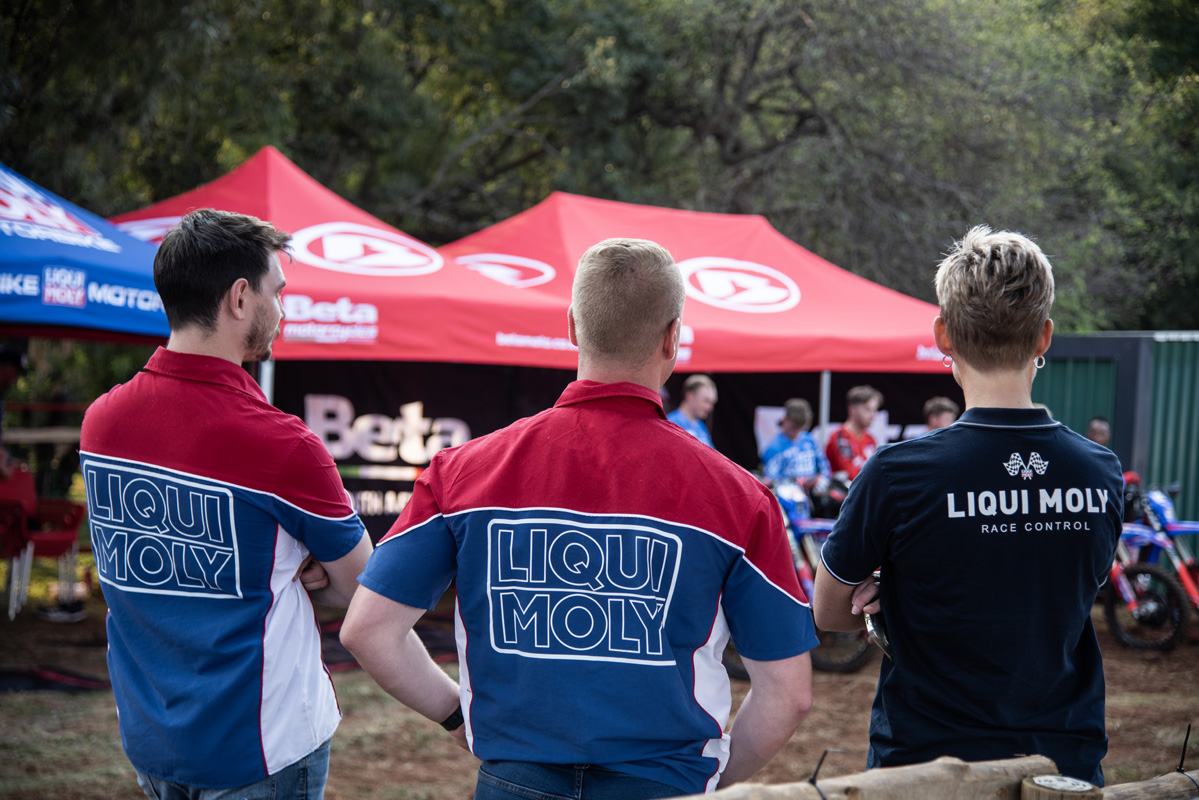
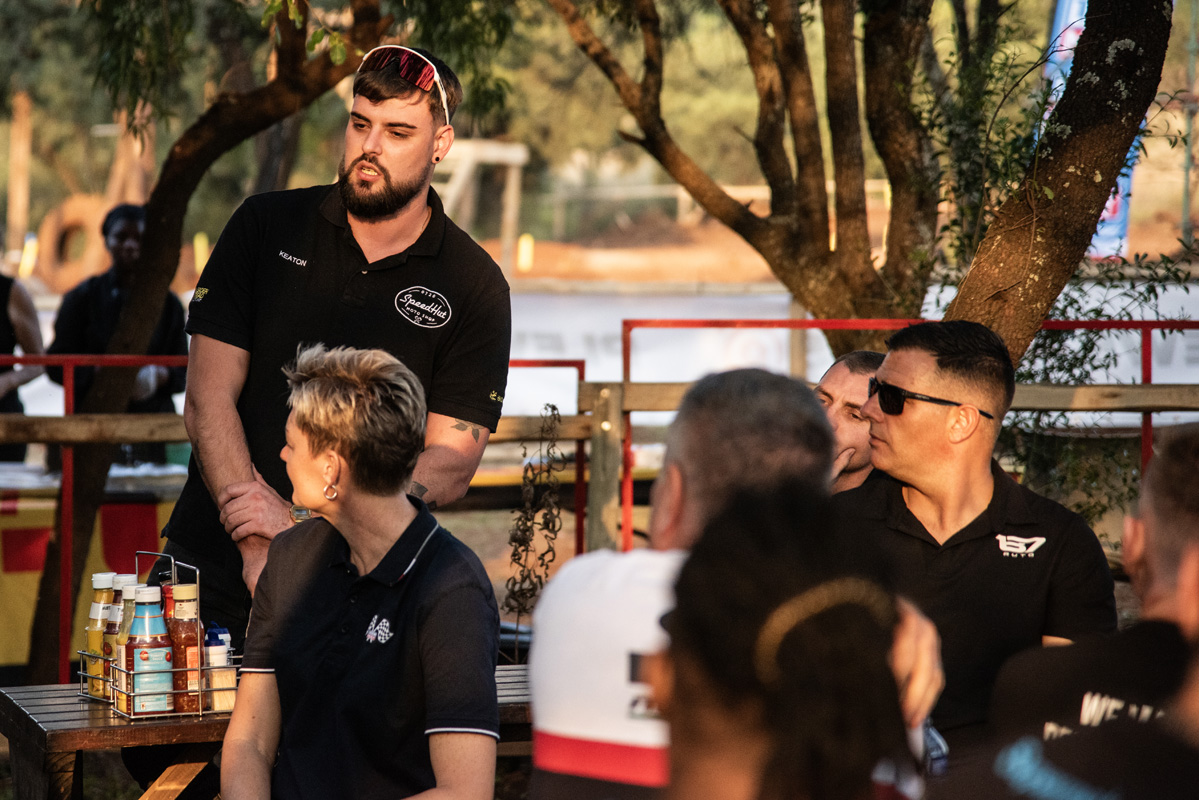
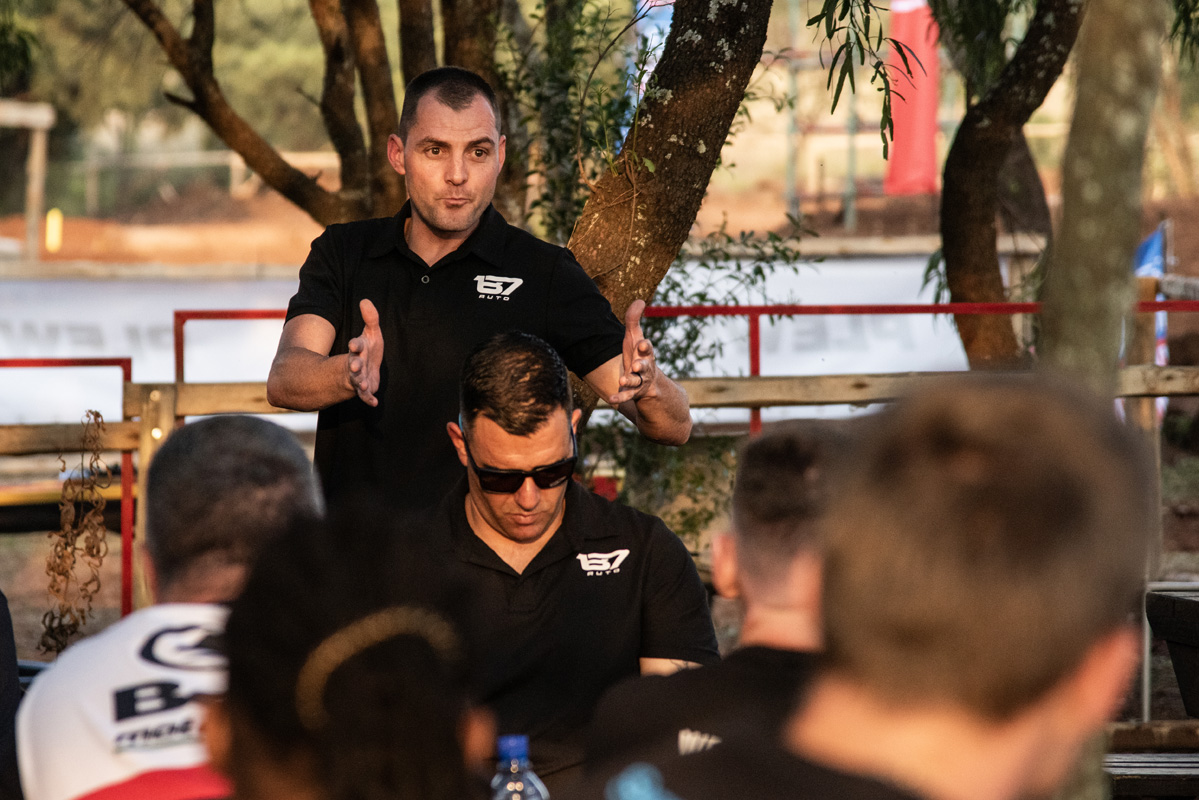
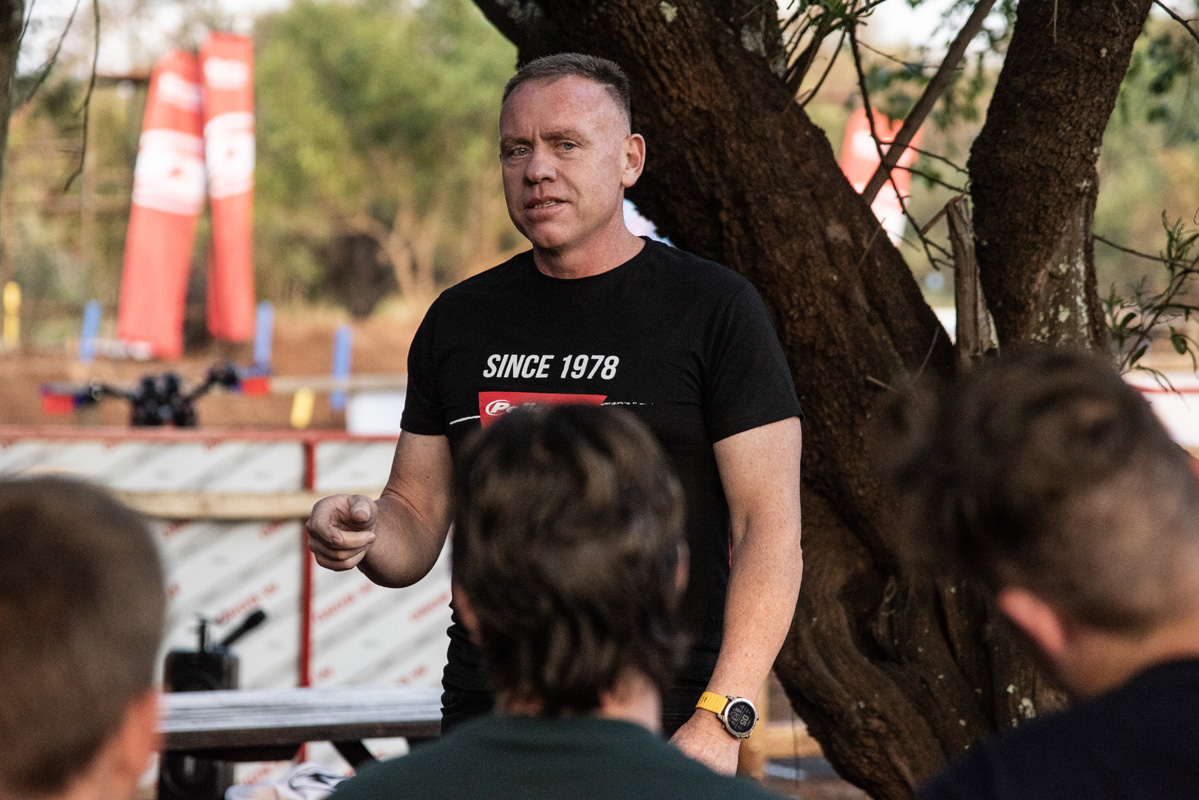
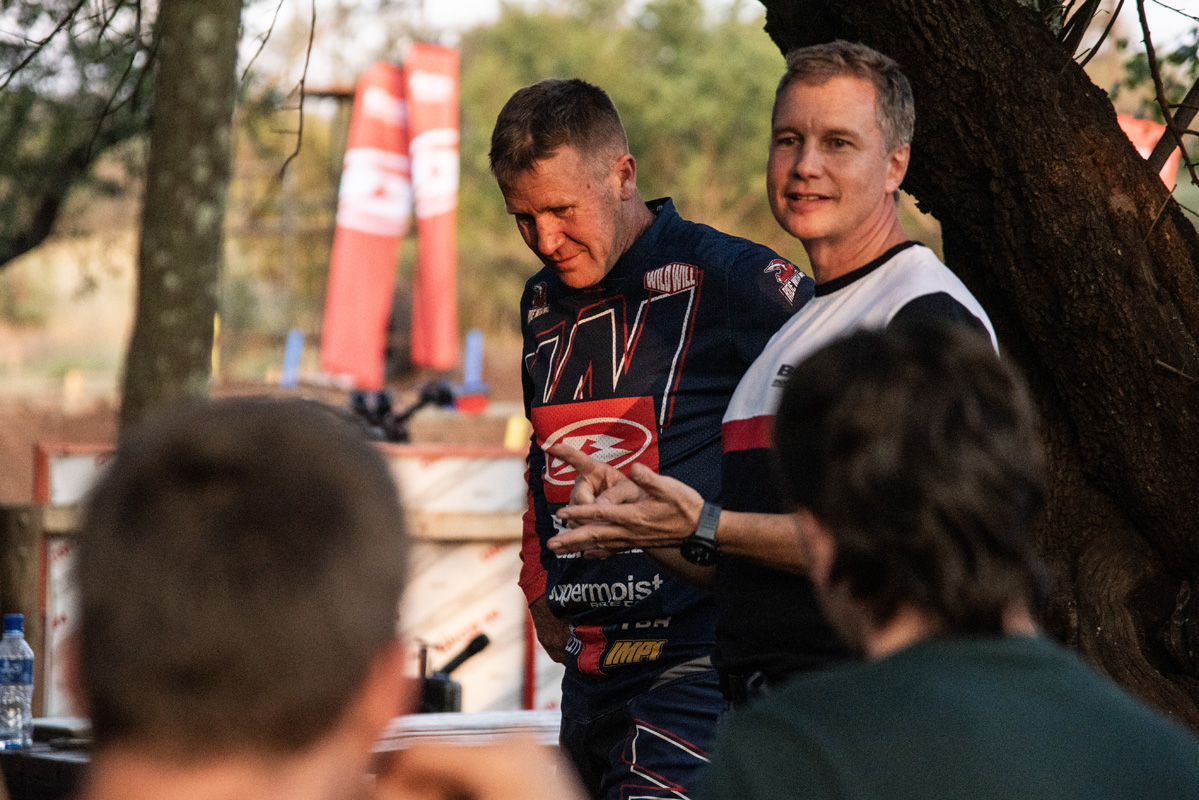
At the beginning of August, we attended the Liqui Moly Super Vee Women’s League launch at Zwartkops Raceway, where we witnessed a number of talented women getting ready to, once again, take on the world of motorsport. With the theme of Women’s Month in mind, Liqui Moly is continuing its support for women this August.
Liqui Moly South Africa is running a promotion for the whole of August, where if you spend R400 or more, you’ll receive a FREE Square Air Freshener, and if you spend R600 or more, you’ll receive a FREE Air Freshener & a Liqui Moly Mug.
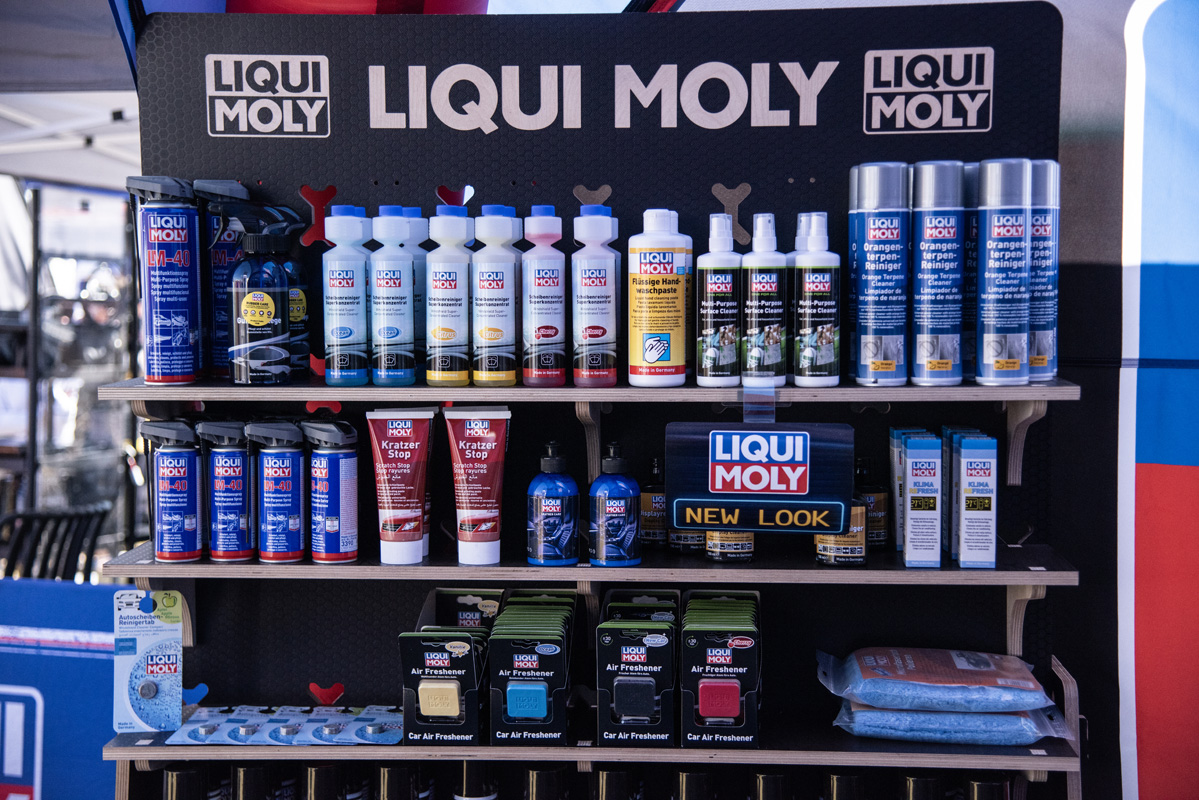
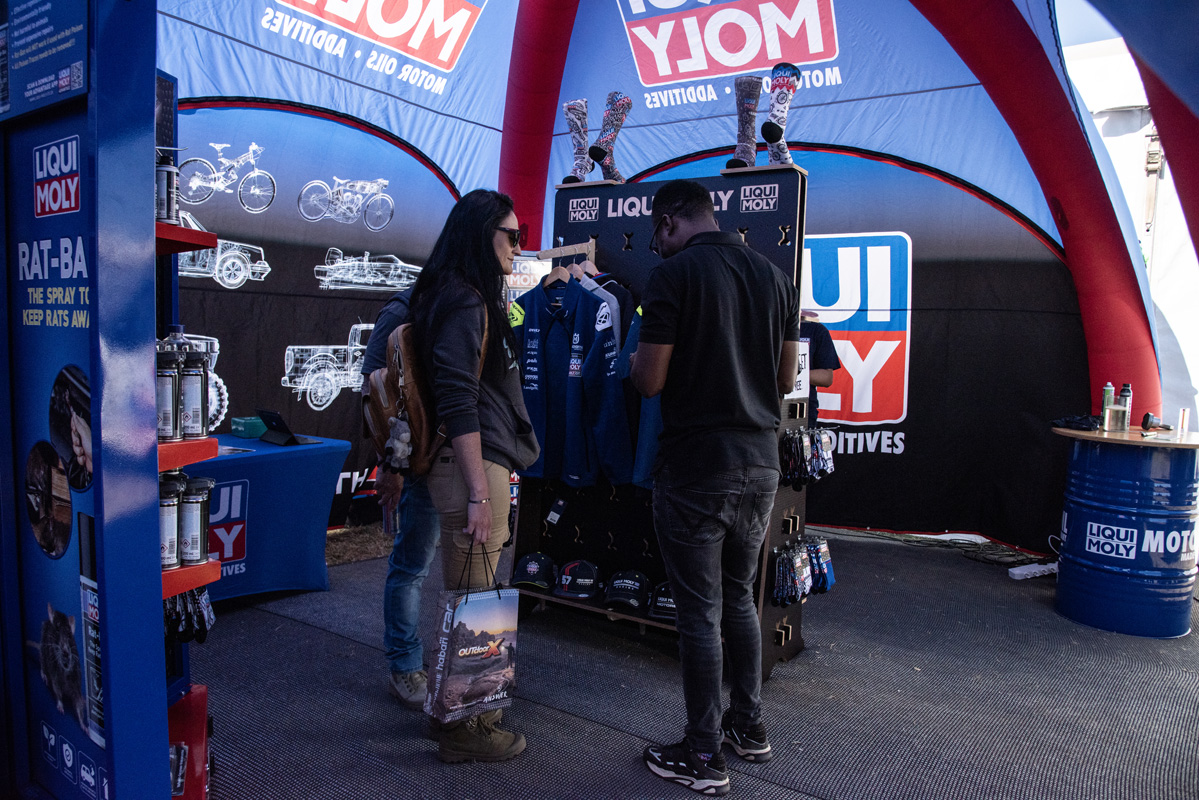
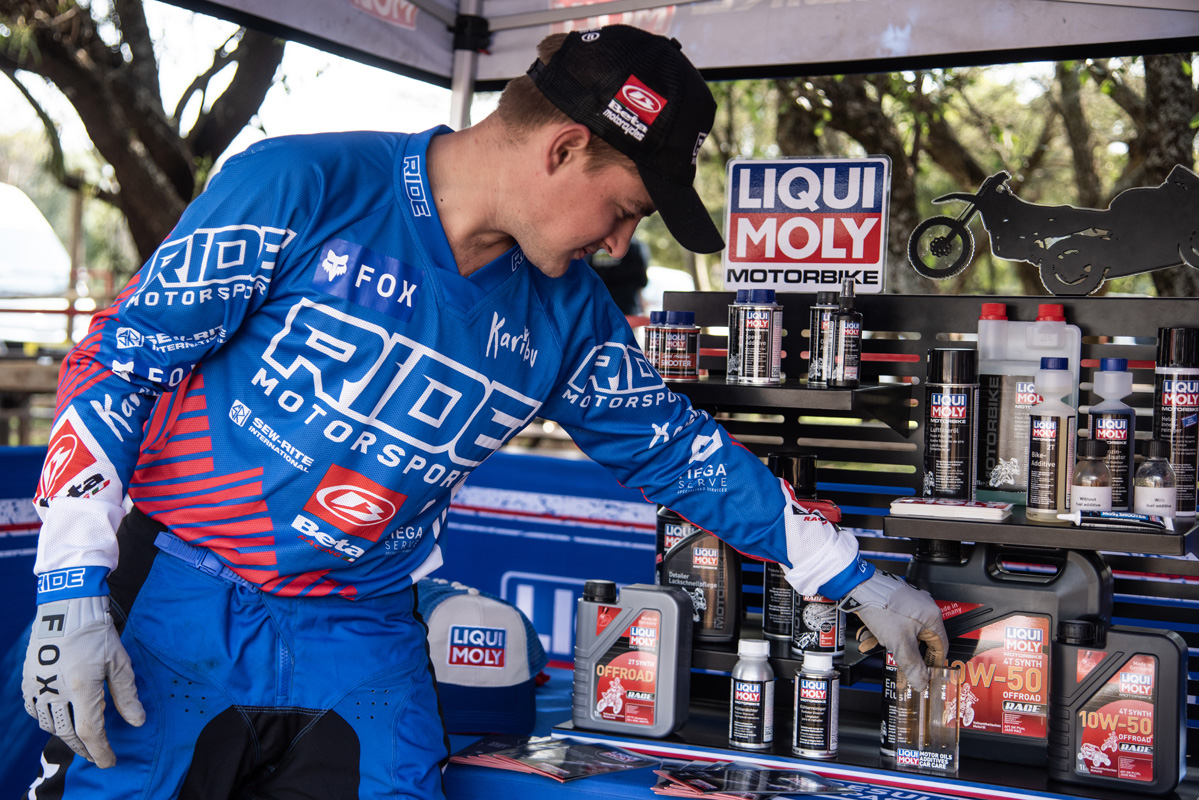
Now you may ask, where do I spend my money and on what! Well, I know we women have a dozen things on our plates daily, so adding to that list might seem like a hassle; however, Liqui Moly makes it easy for us ladies. They have an online store that provides us with the full shopping experience from the comfort of wherever we find ourselves in our busy schedules. Simply visit www.liqui-moly.co.za and browse through their extensive range of products.
Image source: Liqui Moly
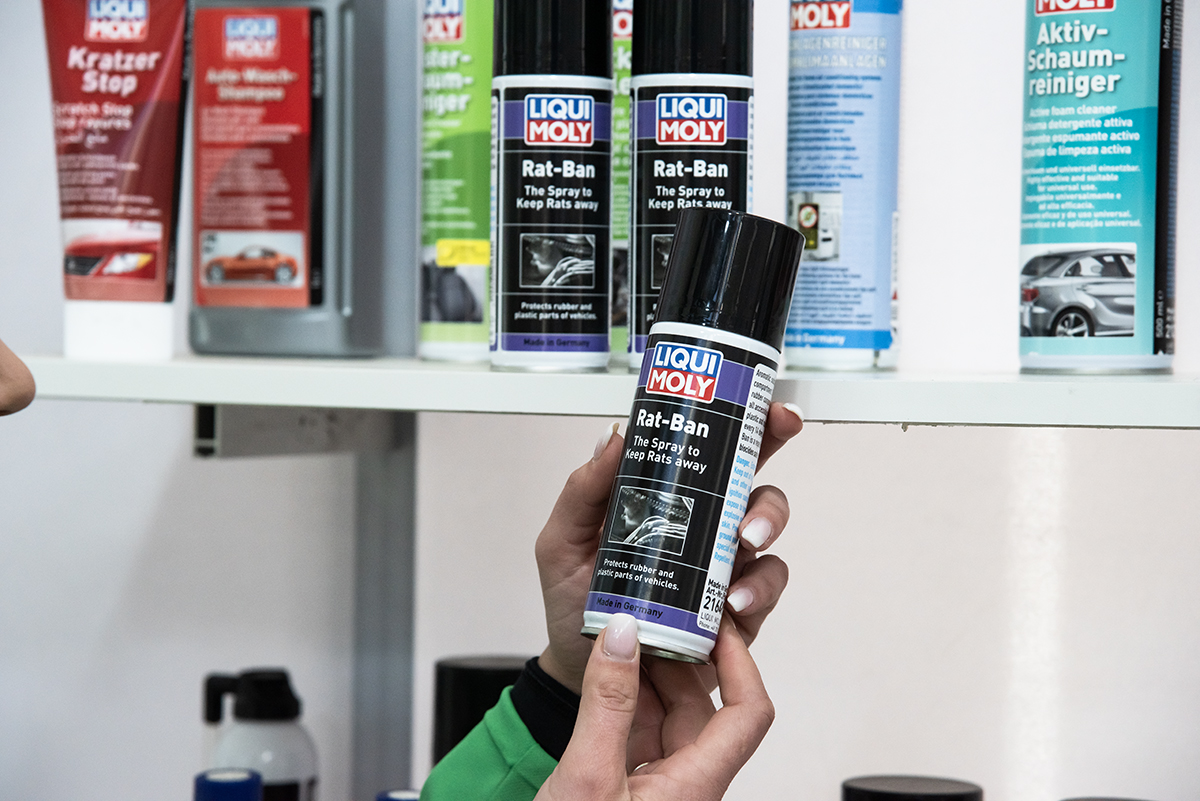
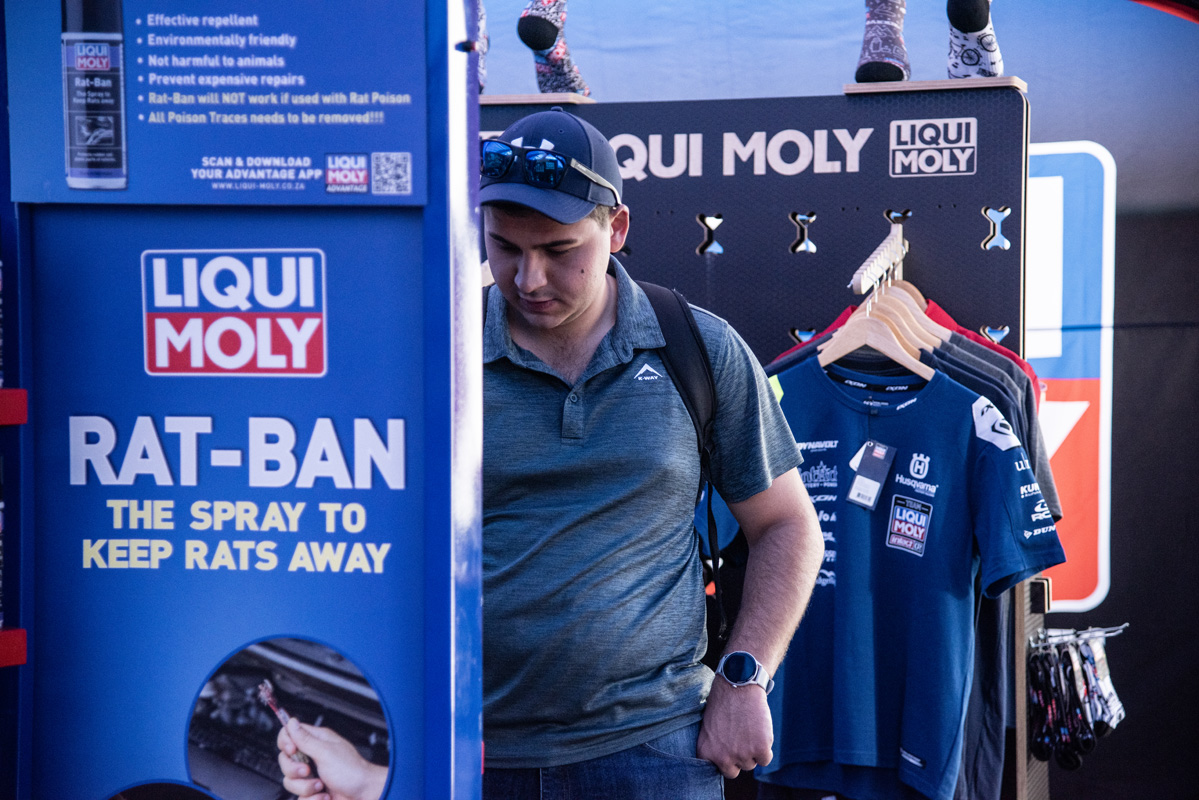
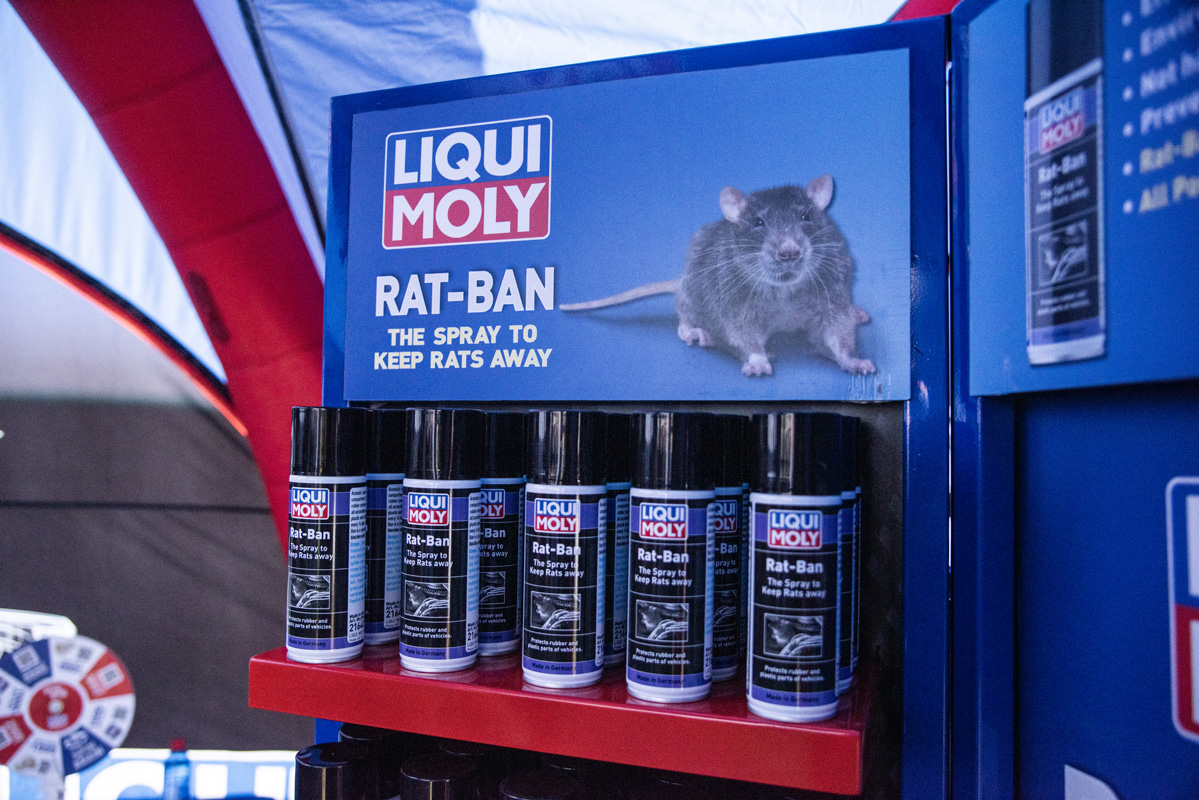
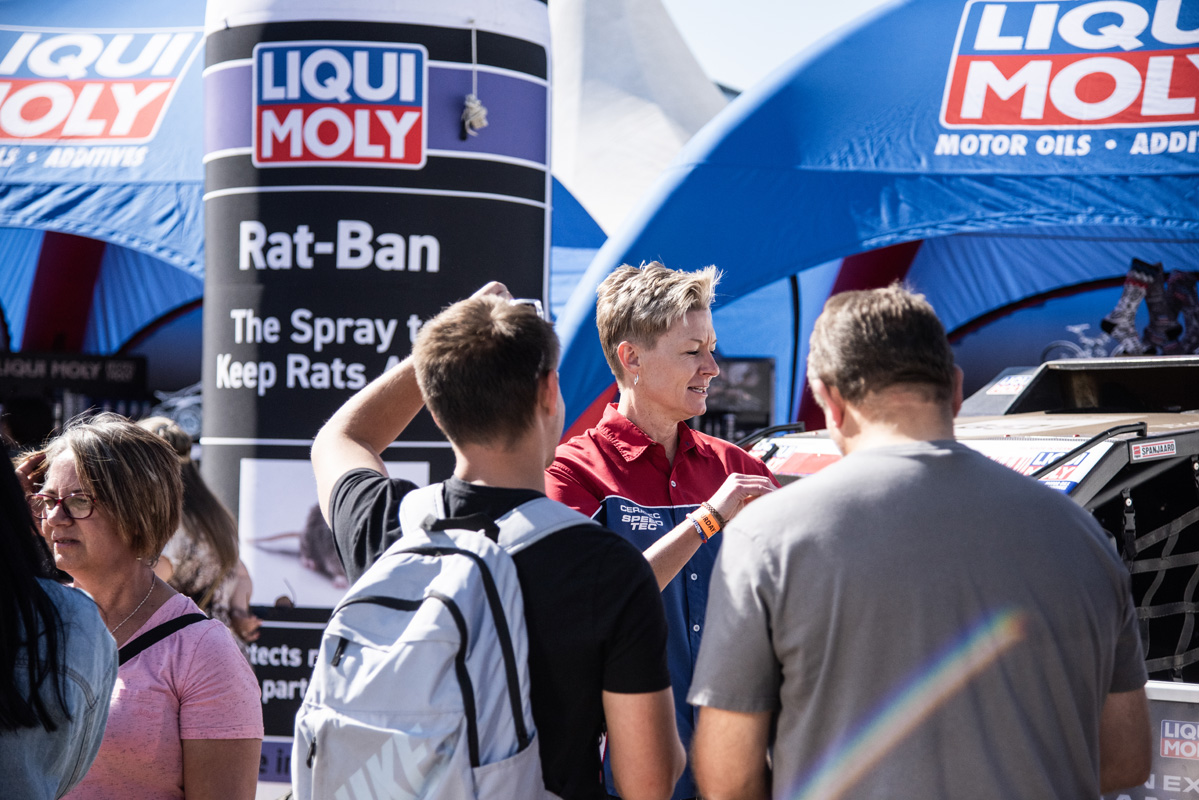
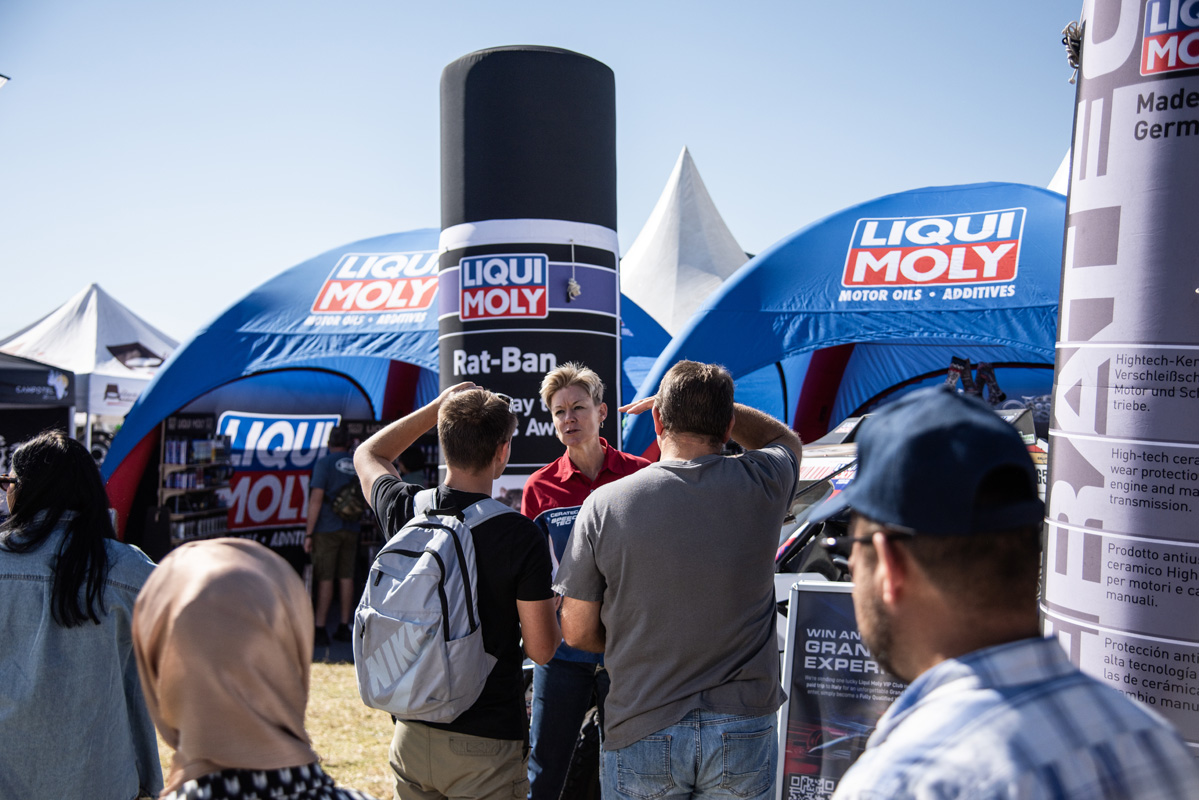
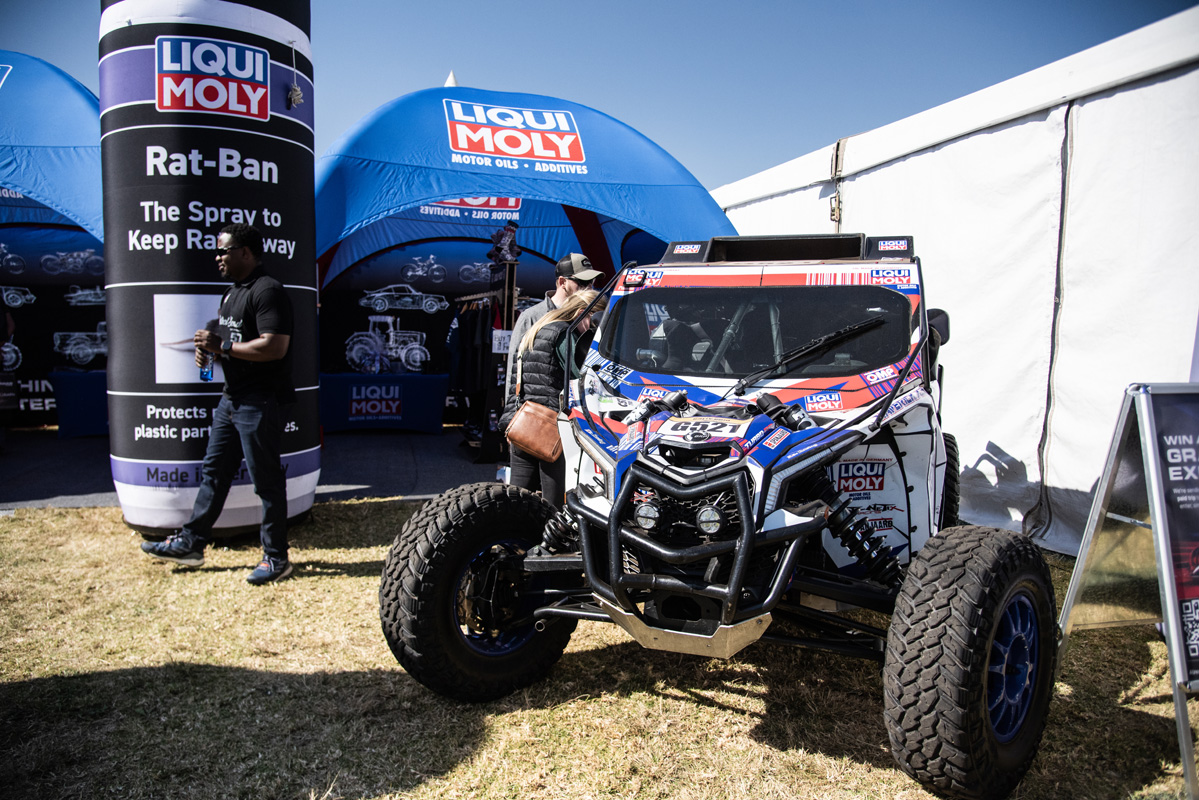
You might feel overwhelmed when you see everything they have to offer, but let me narrow it down to a few products that I myself enjoy using. To start, I’m sure we have all come across an awful stench coming from somewhere in the house. Using our keen sense of smell, we eventually locate what used to be a sneaky rat but is now the epitome of disgust… We can all agree that even though rat poison kills the little rodents and keeps them from damaging our precious goods, the aftermath is not so pleasant. This is where Liqui Moly’s Rat Ban comes into play. Please note this is not a rat poison but rather a repellent, which, in my opinion, is rather welcoming. I’d much rather repel the little floofies than find them dead in my garage, not sure about you? What I love about this product is that it is both human and animal friendly, meaning that no matter where I spray it, it won’t be harmful to anyone, including the despised rodents. Simply spot-spray any area, every 2 weeks, where you would normally find them, and you’ll be sending them to your neighbour’s house instead (kidding), but yes, they won’t be making a trip to your house anytime soon.
Photo credit: Bjorn Moreira / ZA Bikers
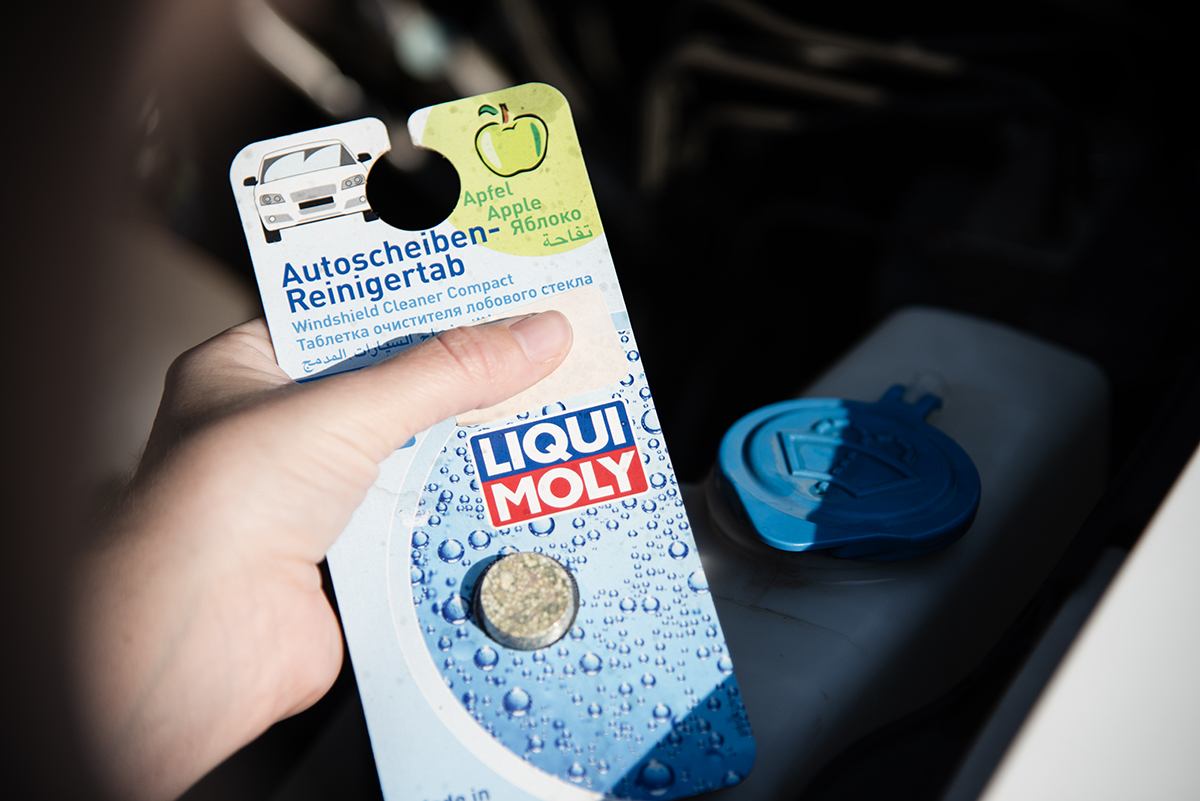
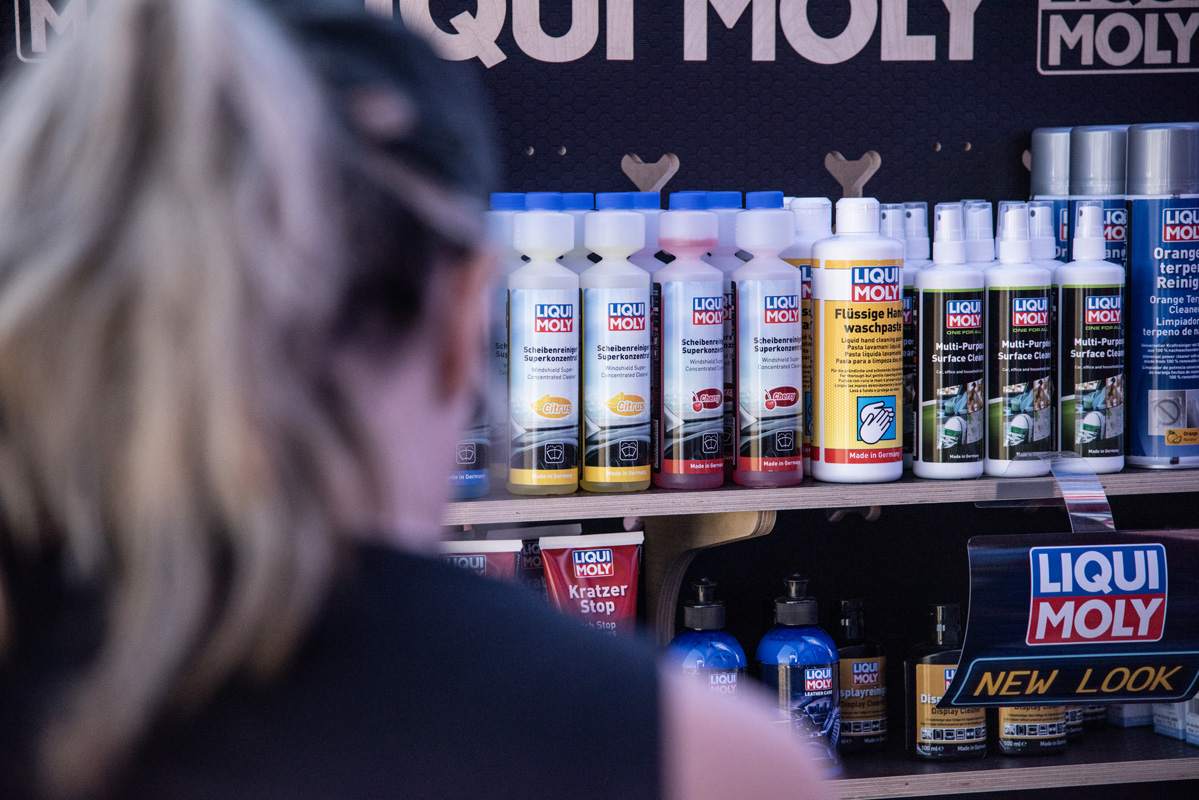
Next up is Liqui Moly’s Windscreen Tablet. This little guy is as easy as dropping it into the water bottle of your car, and you will have a bug and dirt-free windshield for all those trips to the stores, children’s after-school activities and family holidays. It’s as easy as plug and play, and we ladies sure love hassle-free products that make our lives a little easier. Bonus feature–it’s Apple fragranced.
Photo credit: Bjorn Moreira / ZA Bikers
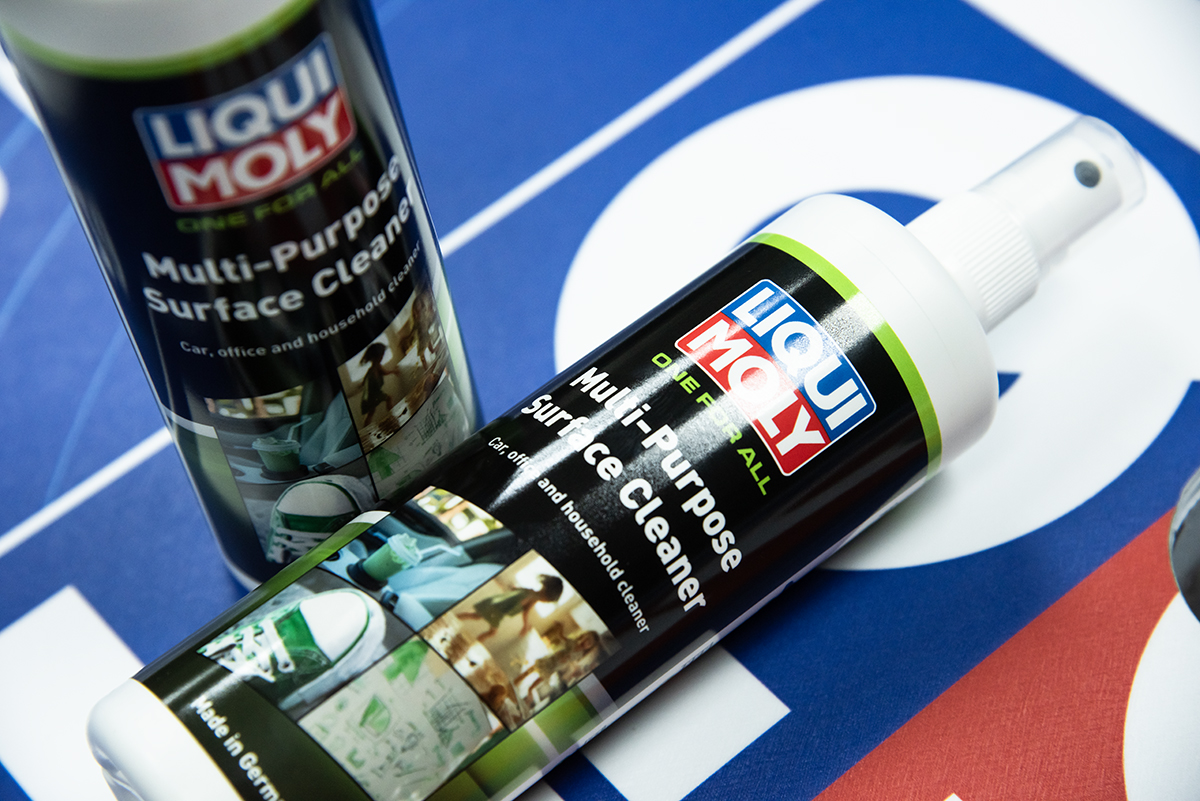
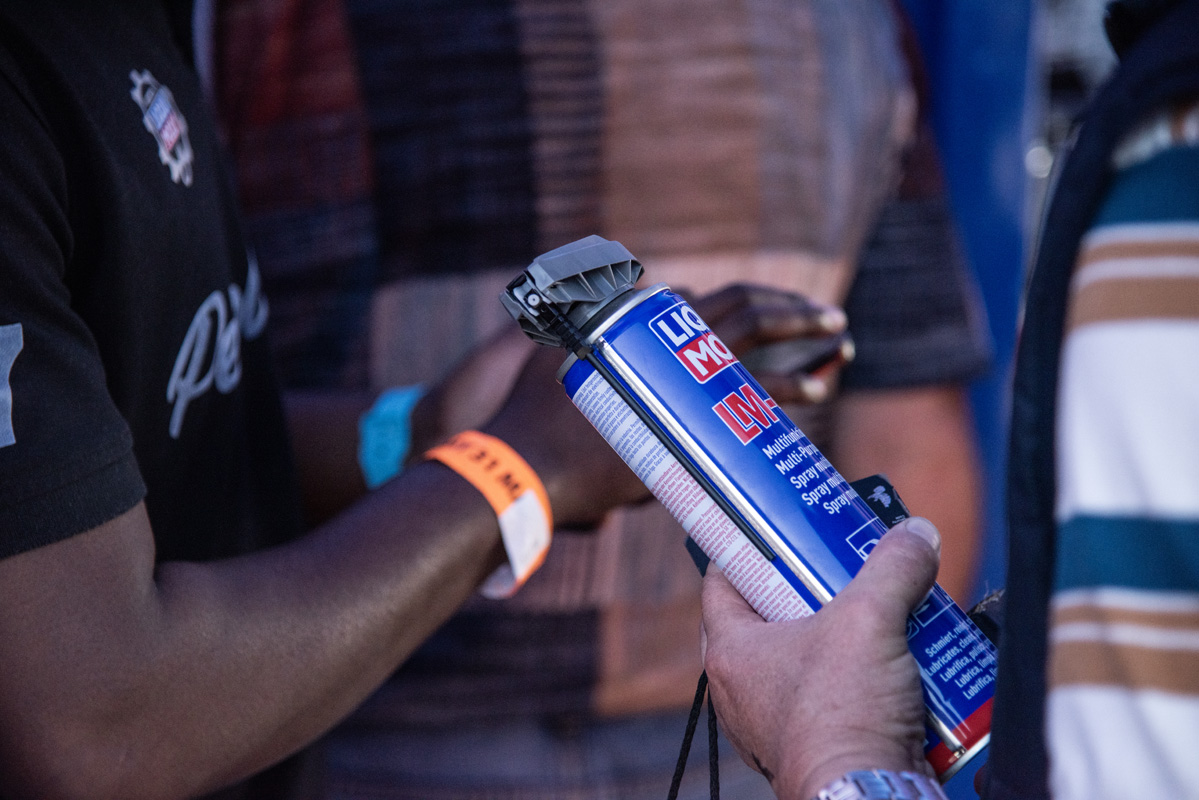
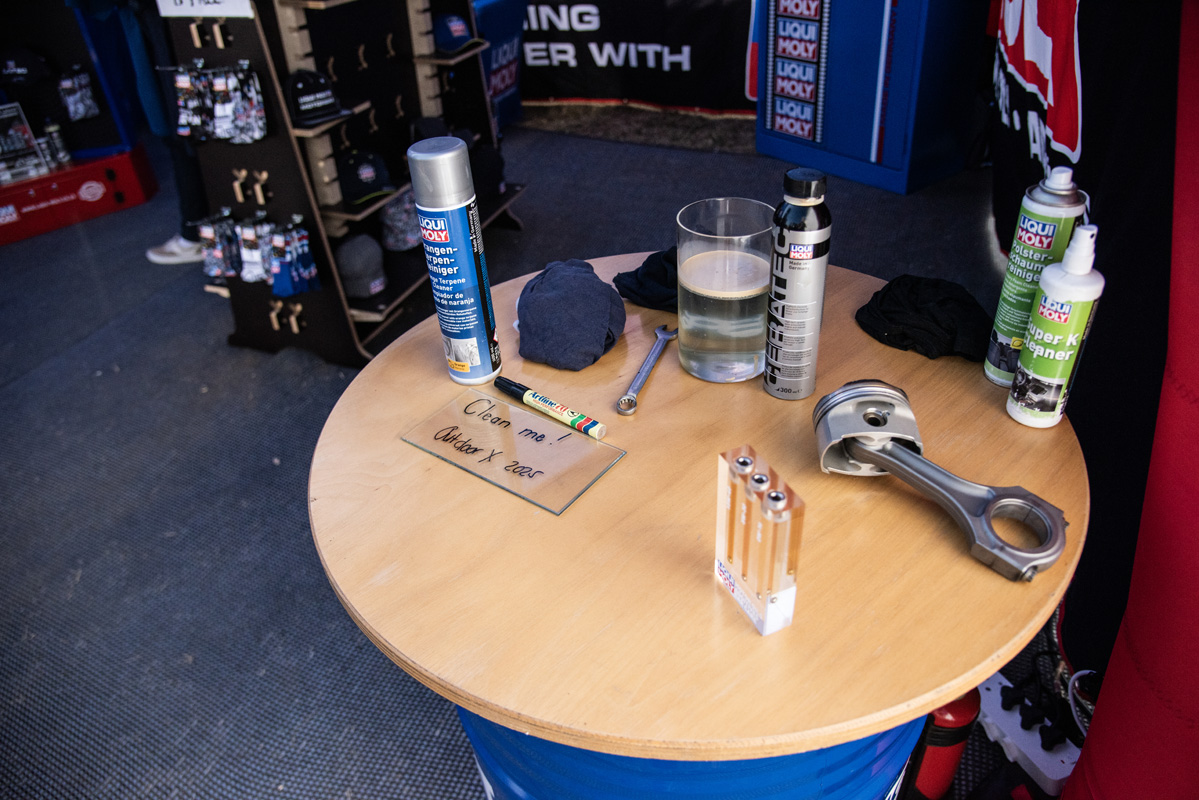
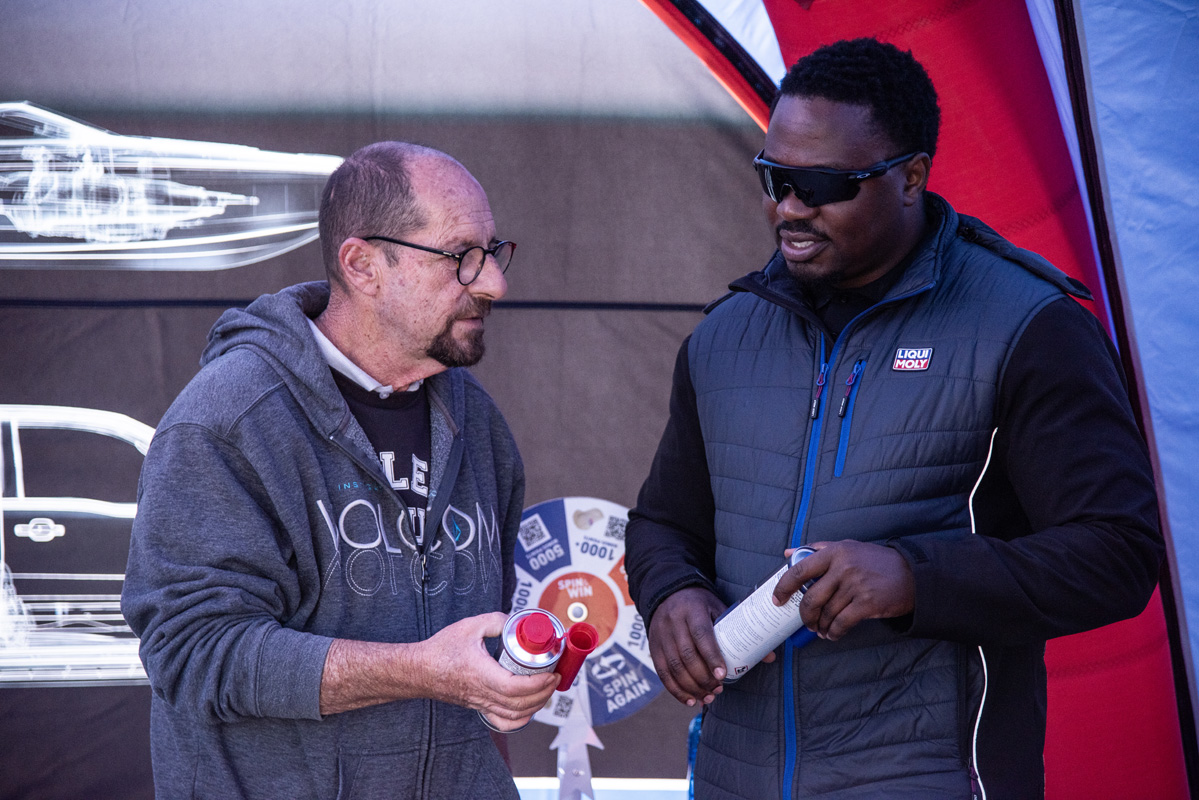
Another product, which Liqui Moly calls its Super Hero Spray, is the Super K Cleaner (renamed as Multi Spray). Let me tell you, I become extra excited when I see this product in action. It cleans anything off of everything. Don’t believe me, try it yourself! Teachers—it removes stubborn stains from your beautiful whiteboard, including those from permanent markers. Moms—it removes sticky finger marks from table tops. Starbucks girls—it removes those spilt latte rings from your cupholders, and me—well, let’s just say that the only time my white sneakers are white is the day I bought them; however, Super K effortlessly removes those infuriating dirt marks on my beloved AllStars. To me, any product that can save my white sneakers is worth my hard-earned money. How about you?
Photo credit: Bjorn Moreira / ZA Bikers
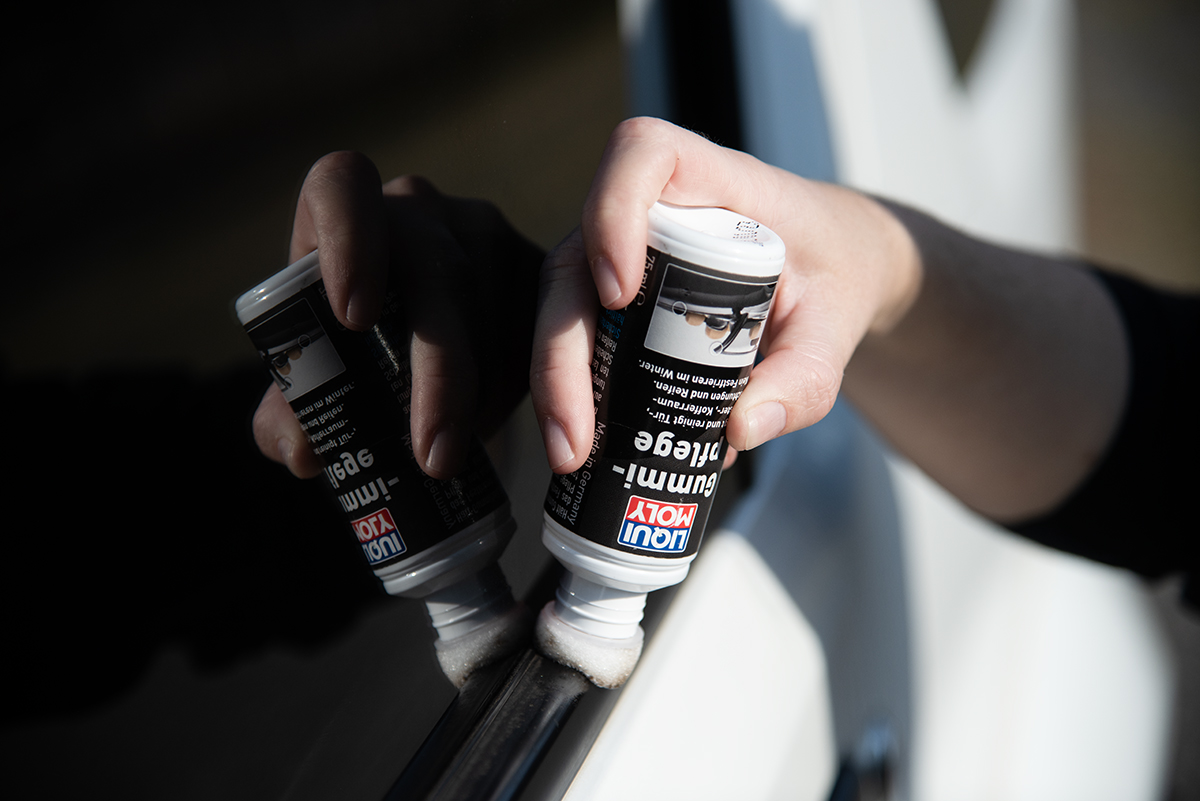
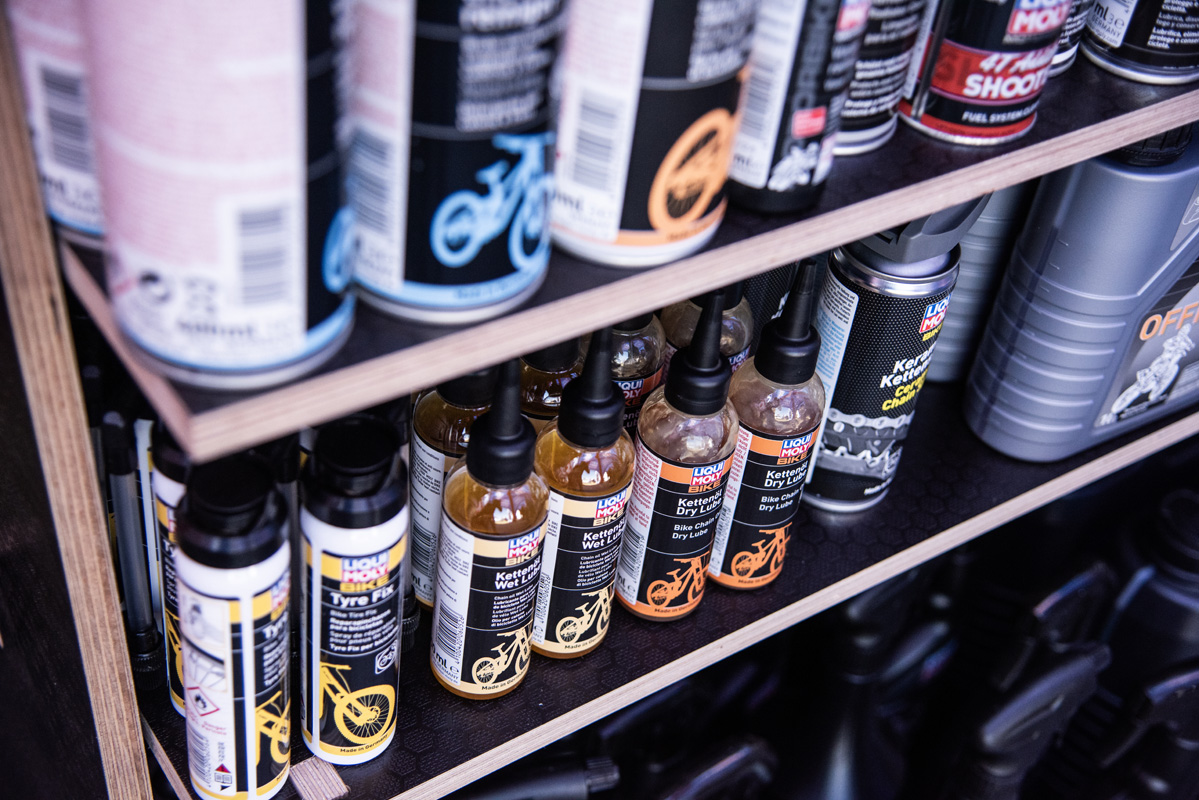
Now these are only a few products. I have a whole range, and a few others that I use on a daily and weekly basis are the Liqui Moly Leather Care, Liqui Moly Rubber Care Stick and my ultimate product, the Liqui Moly Display Cleaner. All of these mentioned are incredible products that are great for maintaining, cleaning, treating and protecting, and bonus points, they all smell amazing!
Photo credit: Bjorn Moreira / ZA Bikers
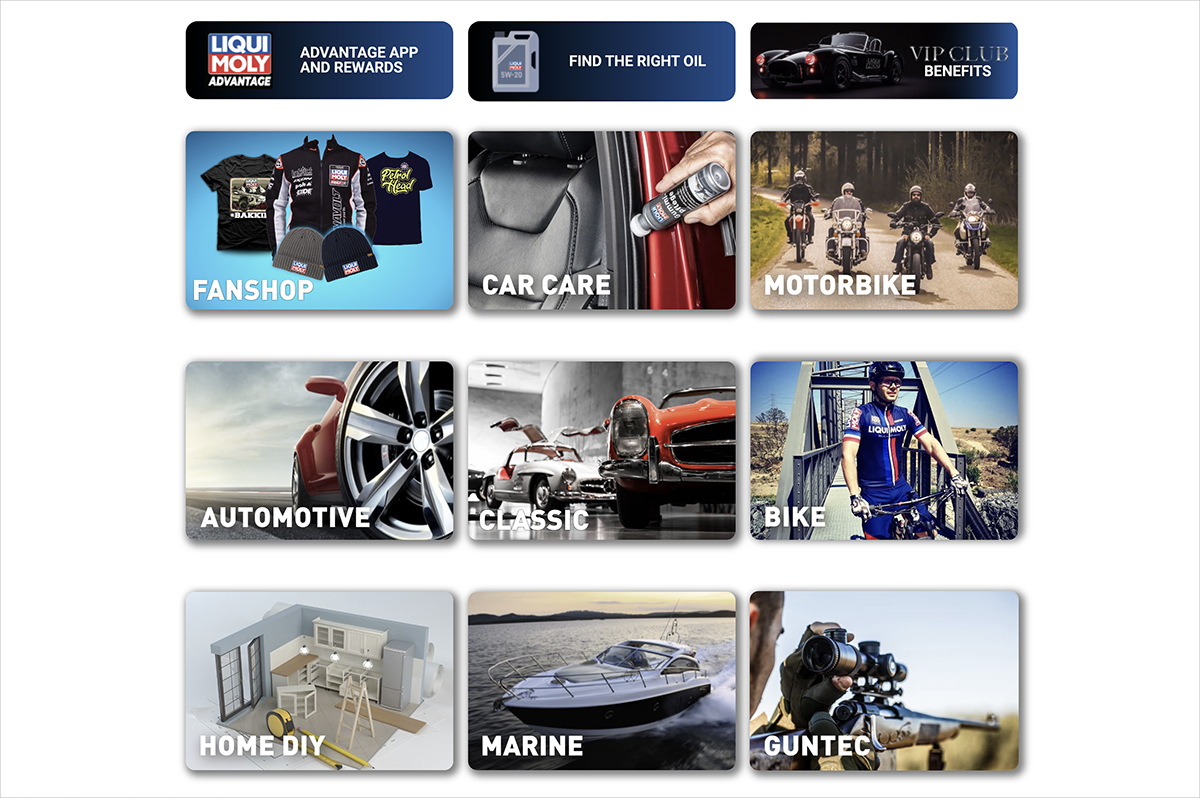
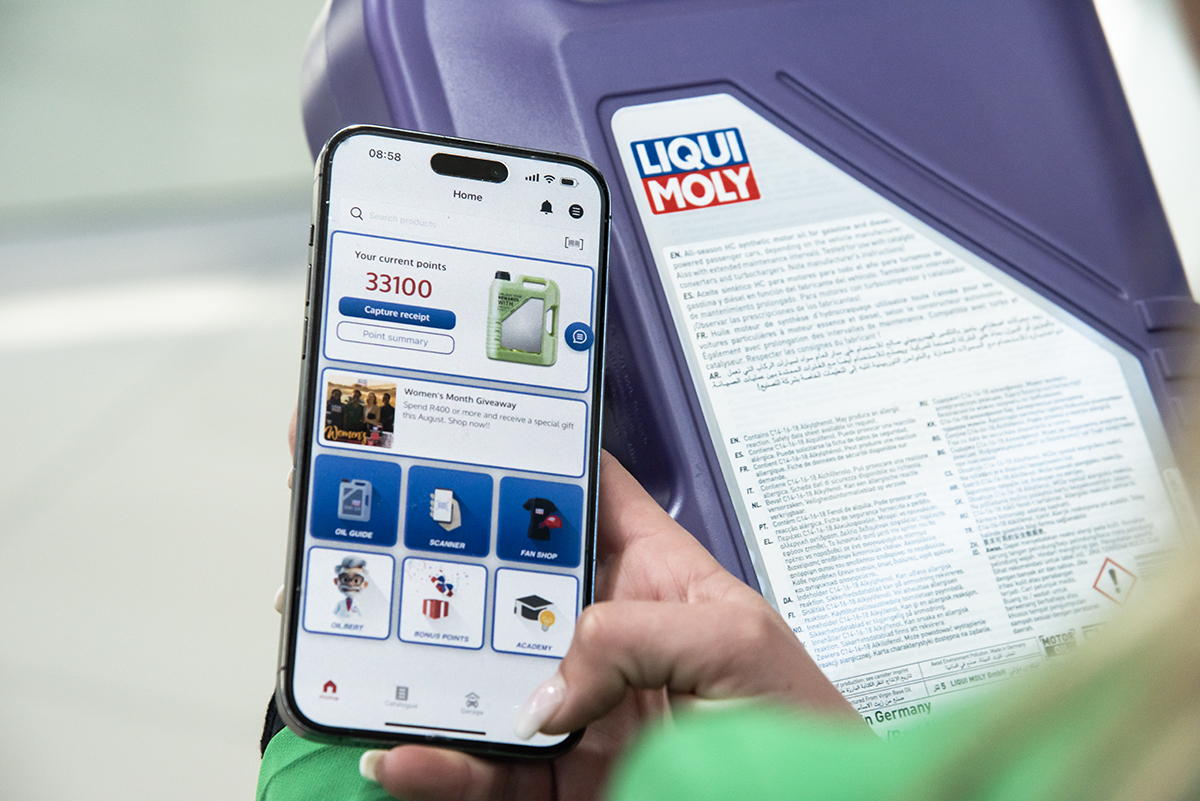
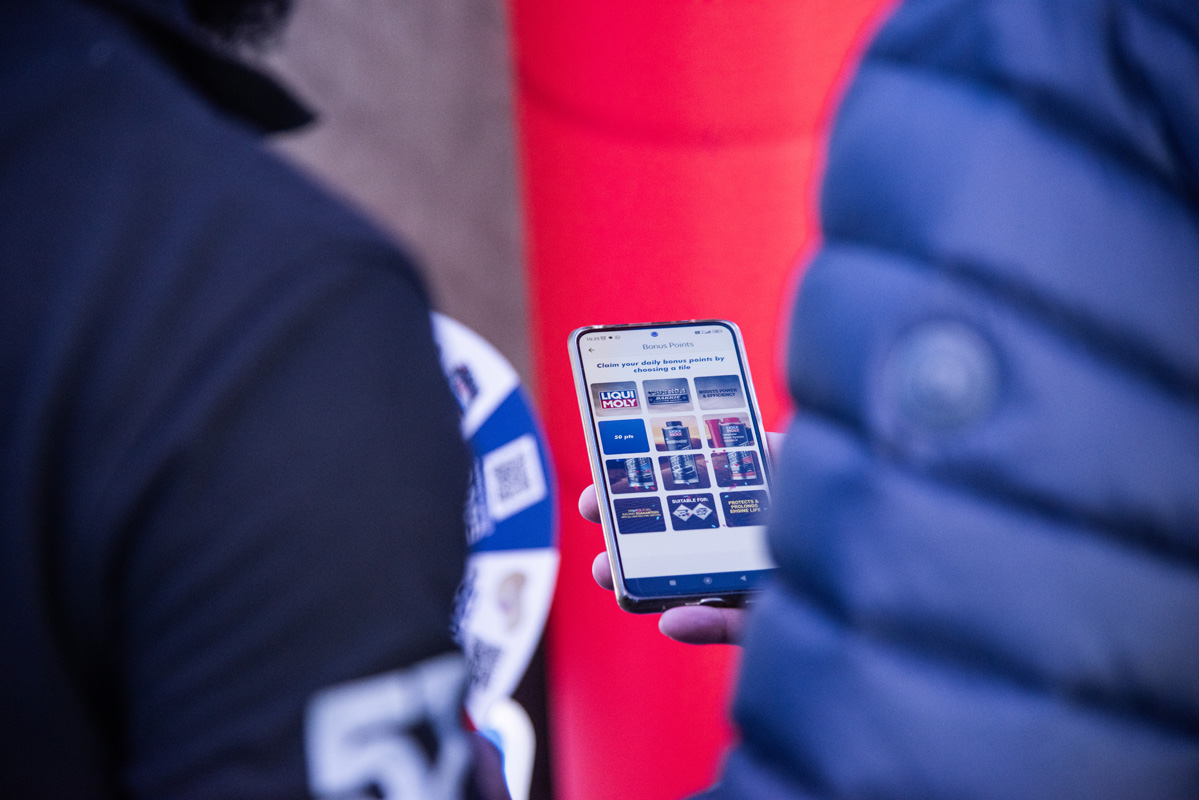
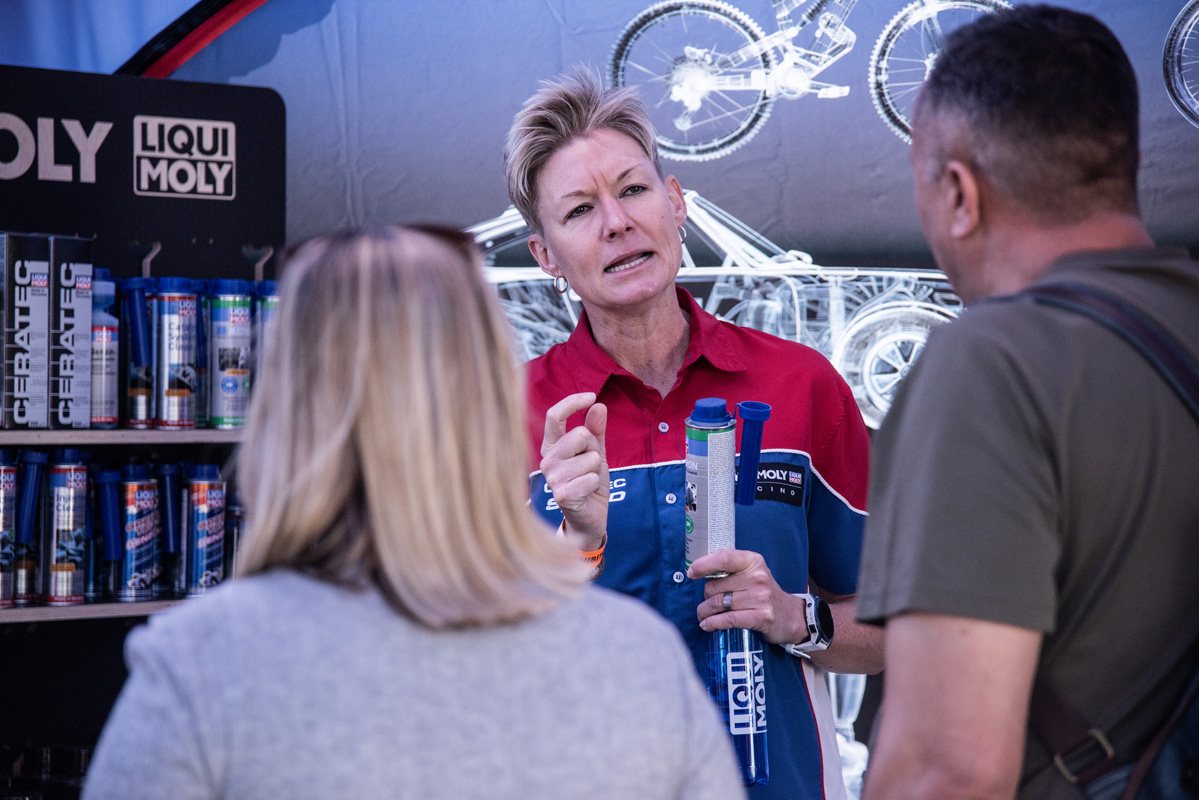
Of course, Liqui Moly also has Automotive products available, and if you’re a lady who likes to do things yourself or you simply don’t have a man to do it for you, Liqui Moly has you covered. They have the Liqui Moly Advantage App, which you can download. It takes you through each product step by step, as well as tells you exactly which products, such as oil, your car requires. Not only will you be able to purchase the right product, but you will also learn something new in the process, equipping yourself with useful knowledge along the way. So next time the mechanic asks you an engine-related question, you can reply in confidence.
Photo credit: Bjorn Moreira / ZA Bikers
If you feel like Liqui Moly products can help make your life easier and smell good, then don’t miss out on this August’s Women’s Month Specials. Head over to your nearest local dealer or visit their online store and fill your cart with these effortless products, and get rewarded this Women’s Month.
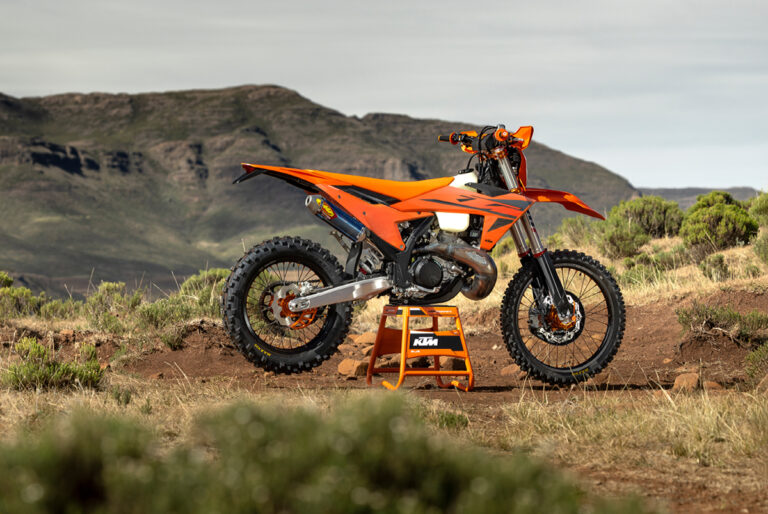
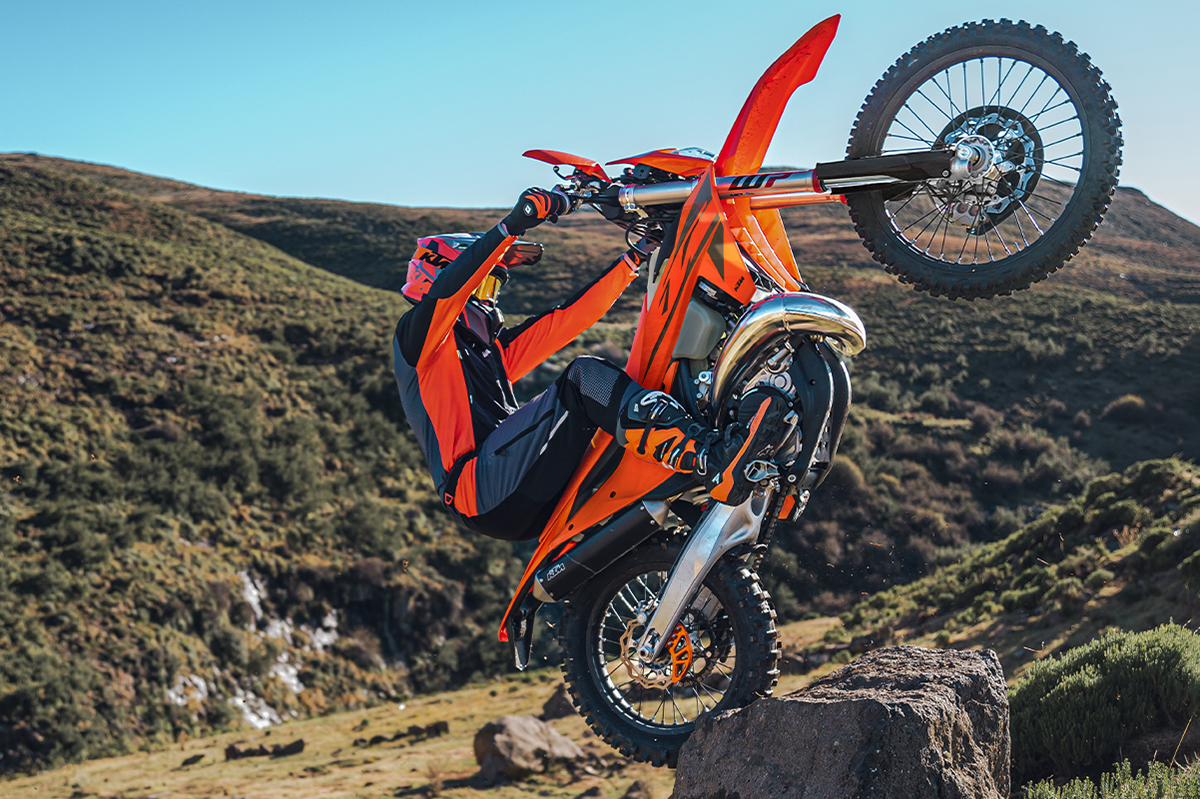
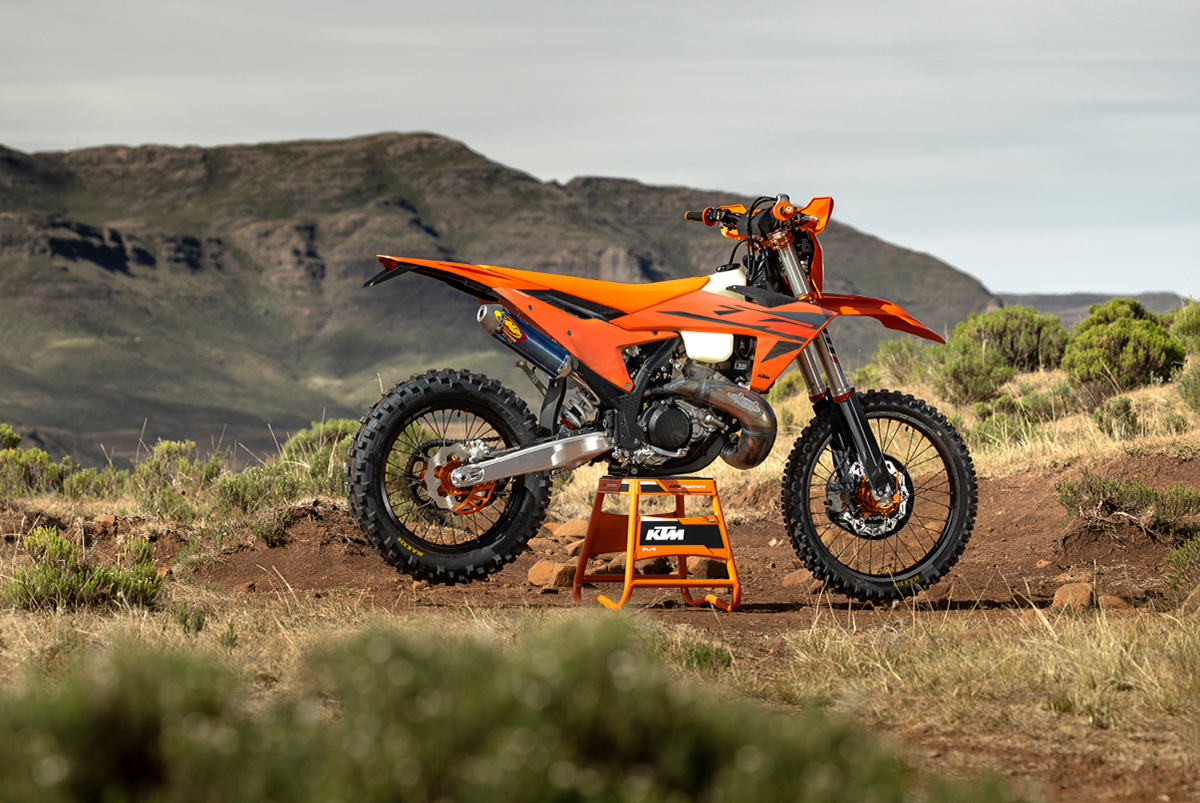
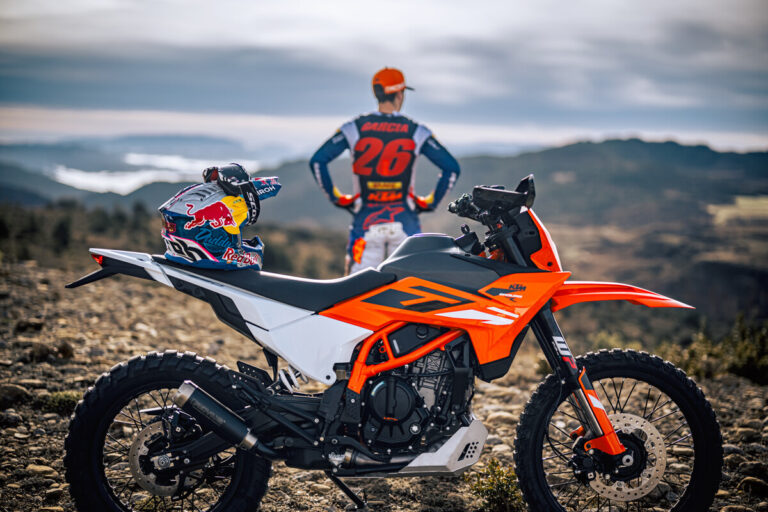
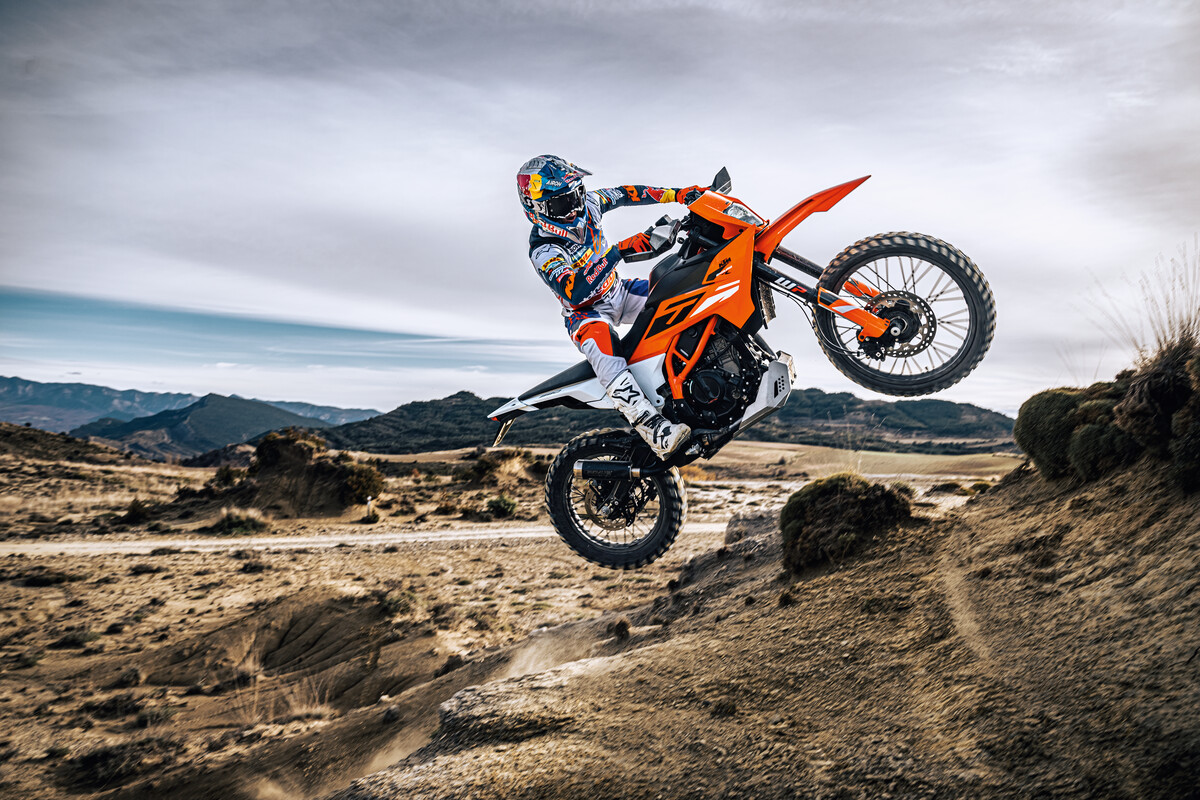
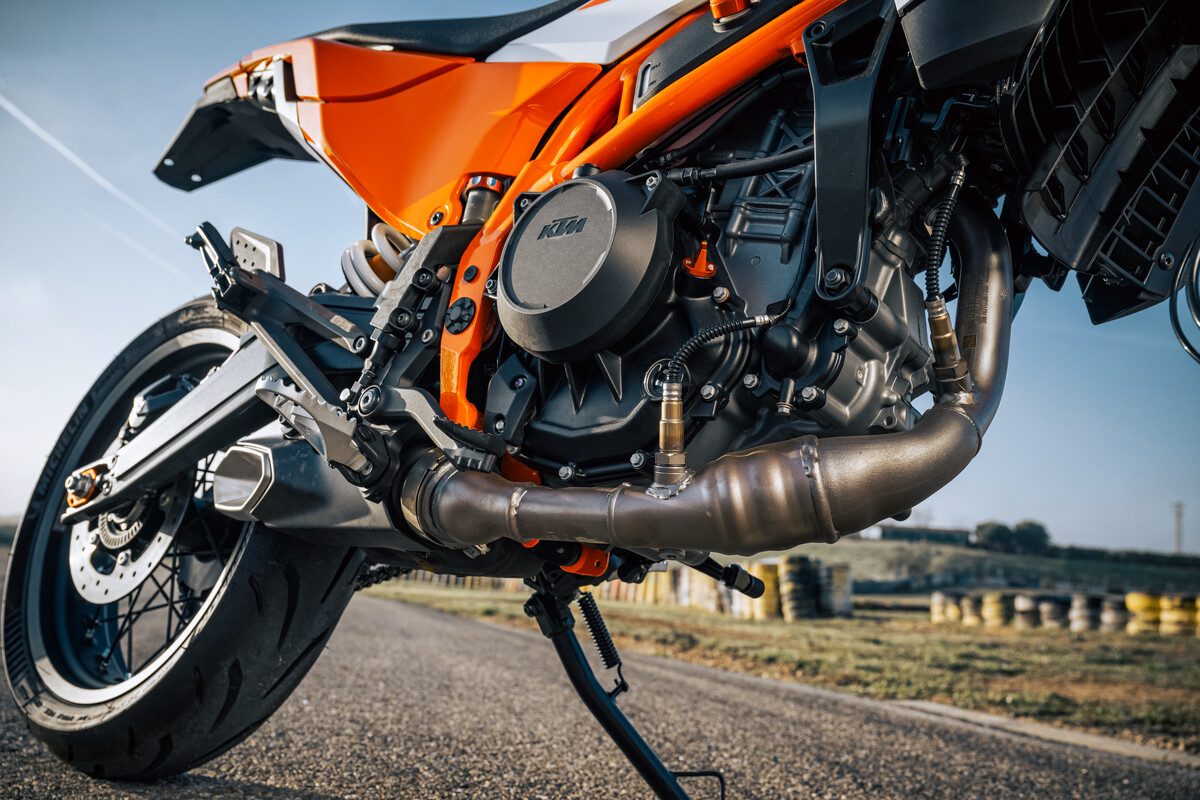
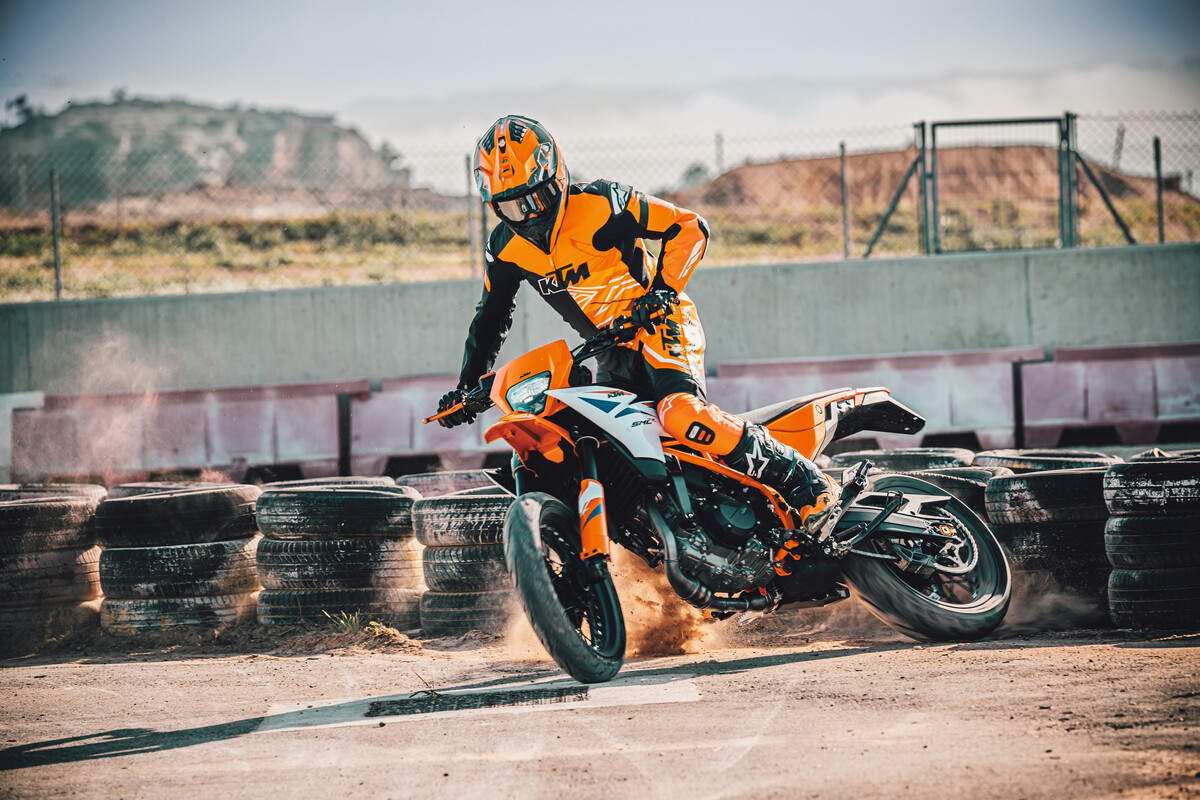
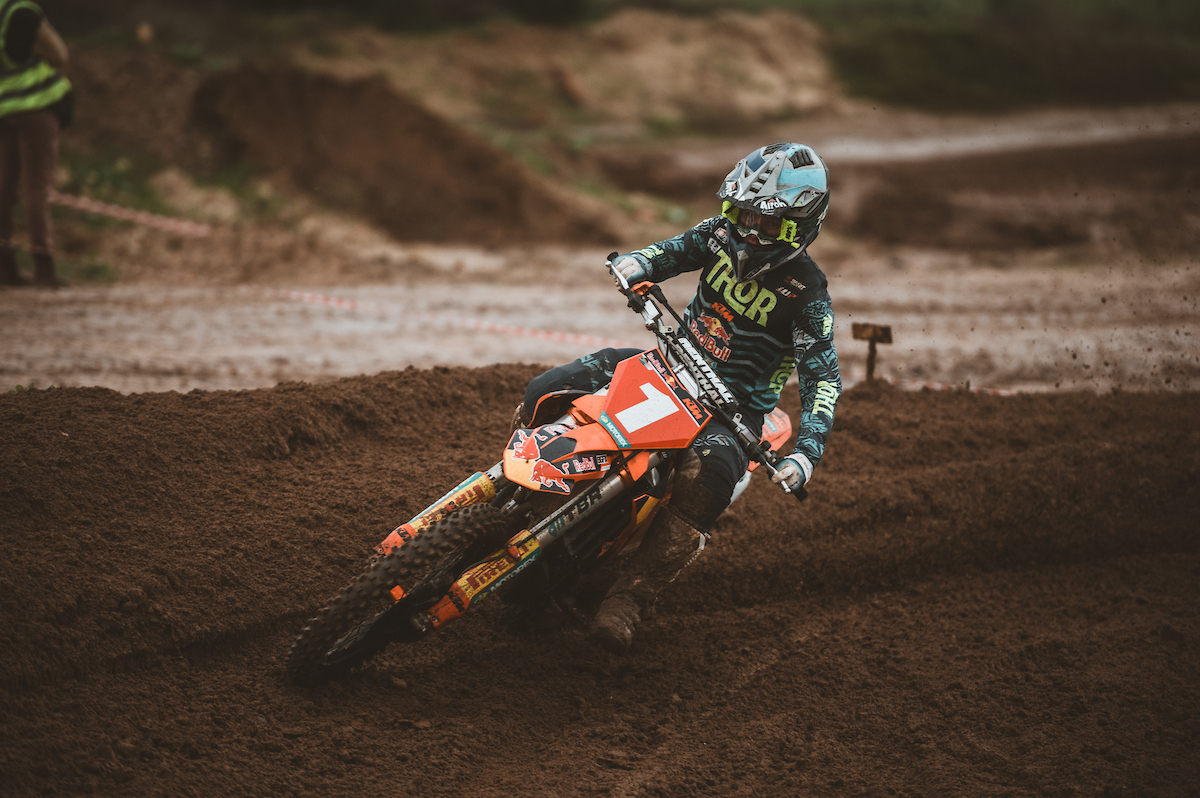
If you’ve been procrastinating about buying that KTM you’ve always dreamed about, then maybe now is the time to do something about it.
To help you make the decision, KTM has a red-hot deal on the 2025 300 XC-W, in the form of a not-inconsiderable R15,000 discount. That’s enough to buy yourself a full new set of protective gear or an awful lot of petrol to enable you to ride into many sunsets.
Image source: KTM
For more information, contact your nearest KTM dealer.
‘All men must die, but only some men truly live’ – William Wallace, Braveheart.
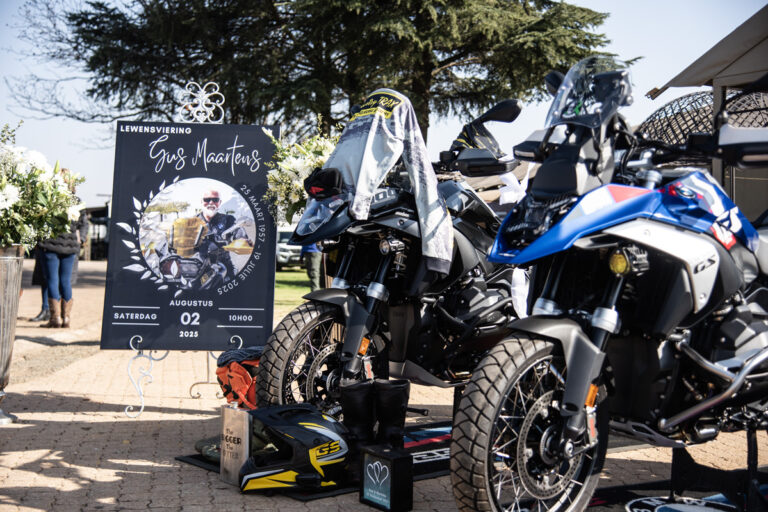
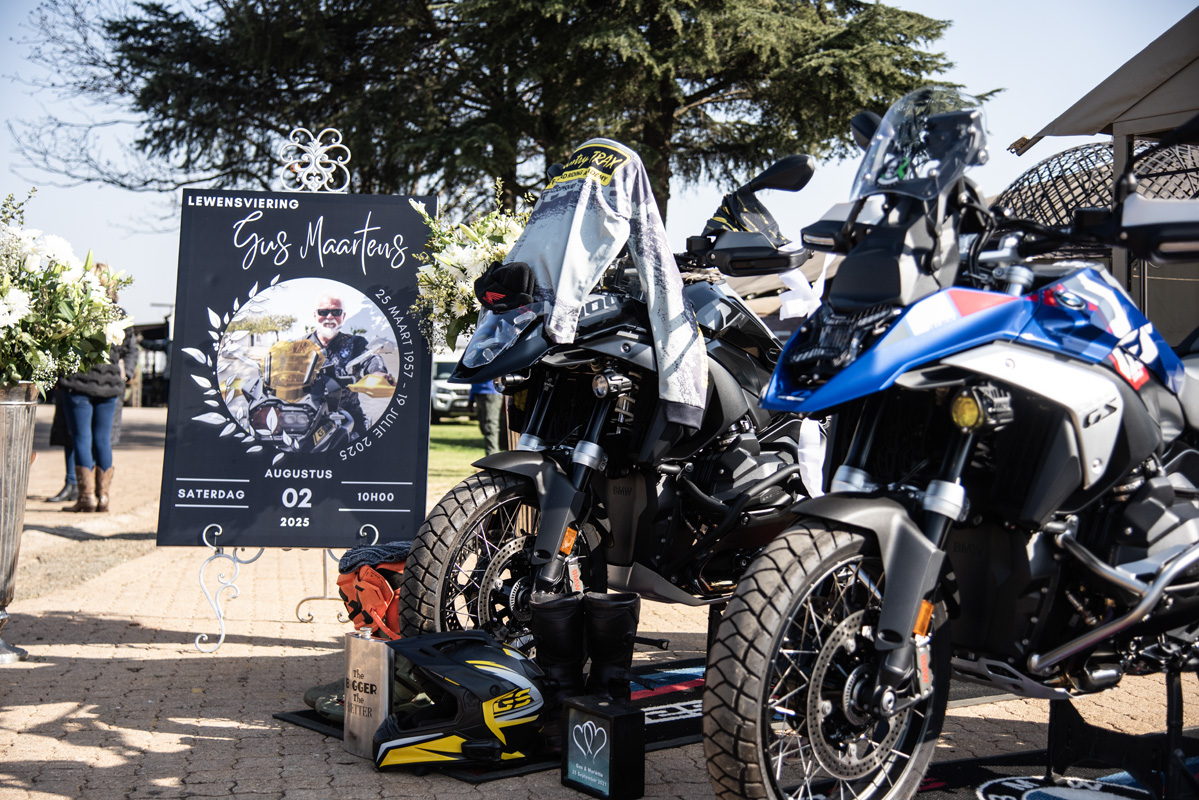
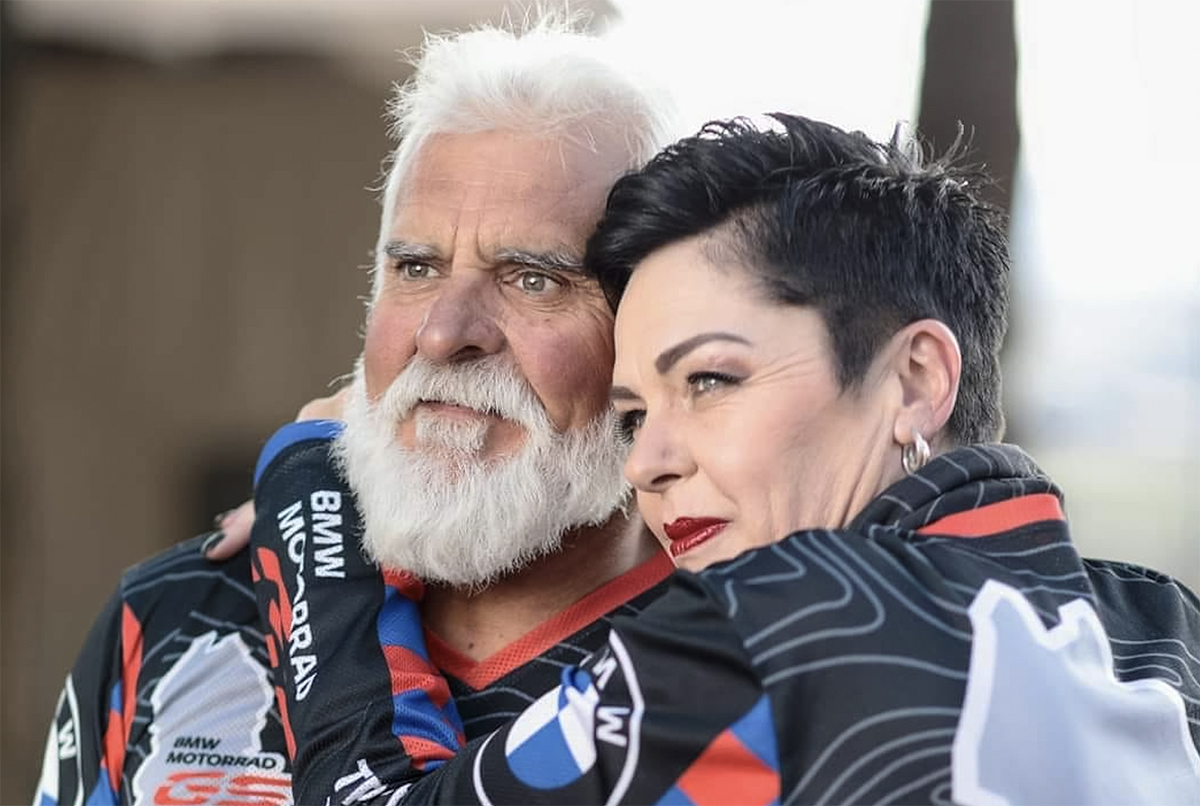
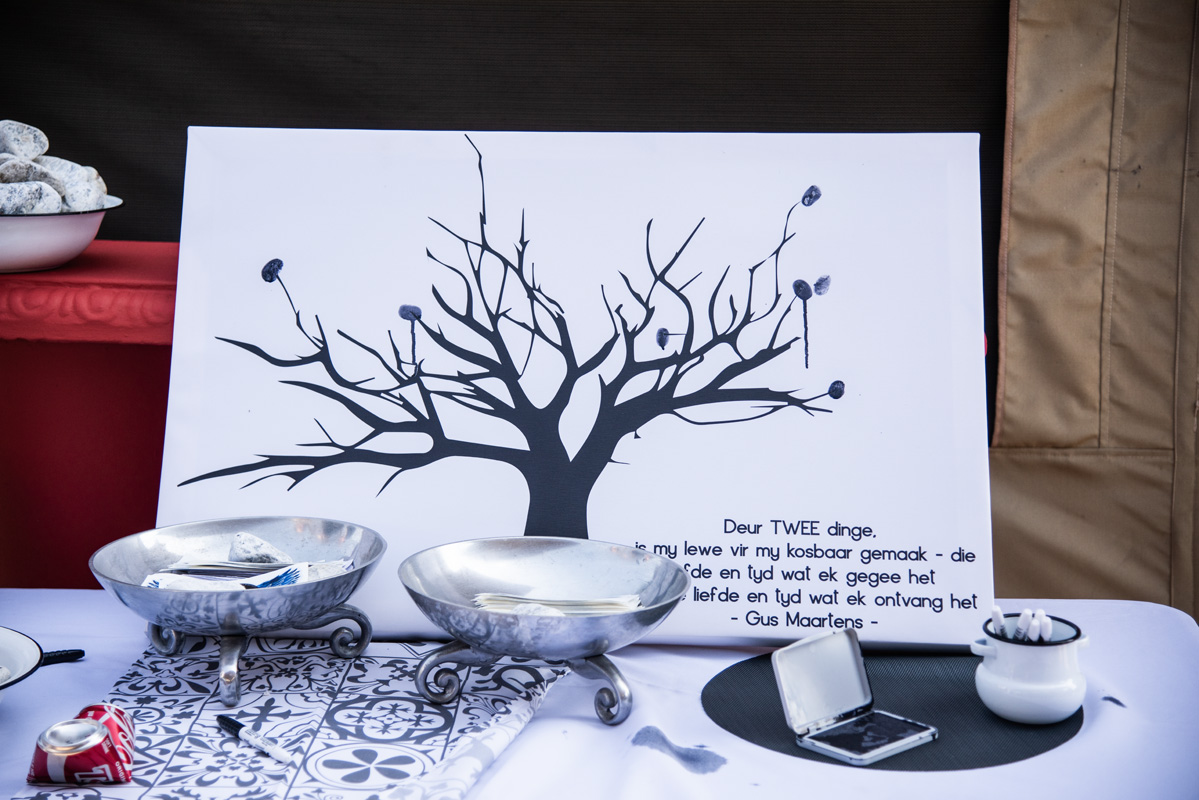
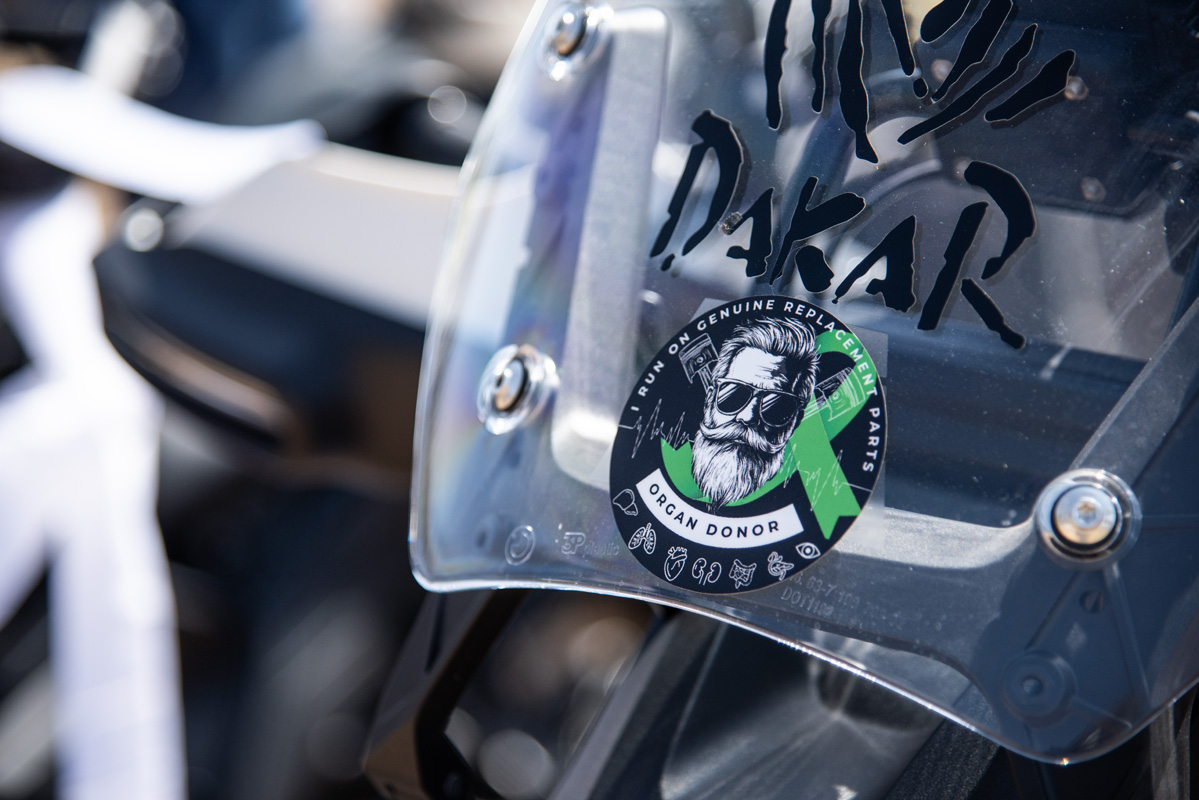
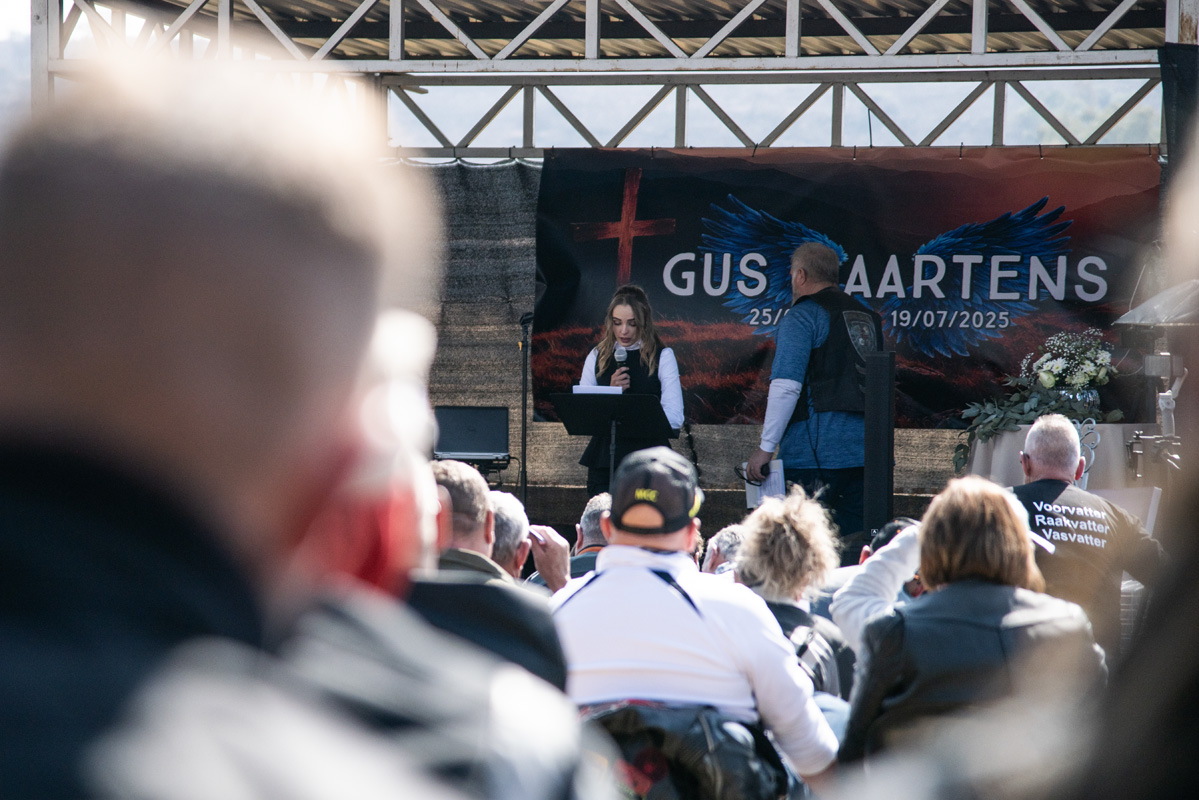
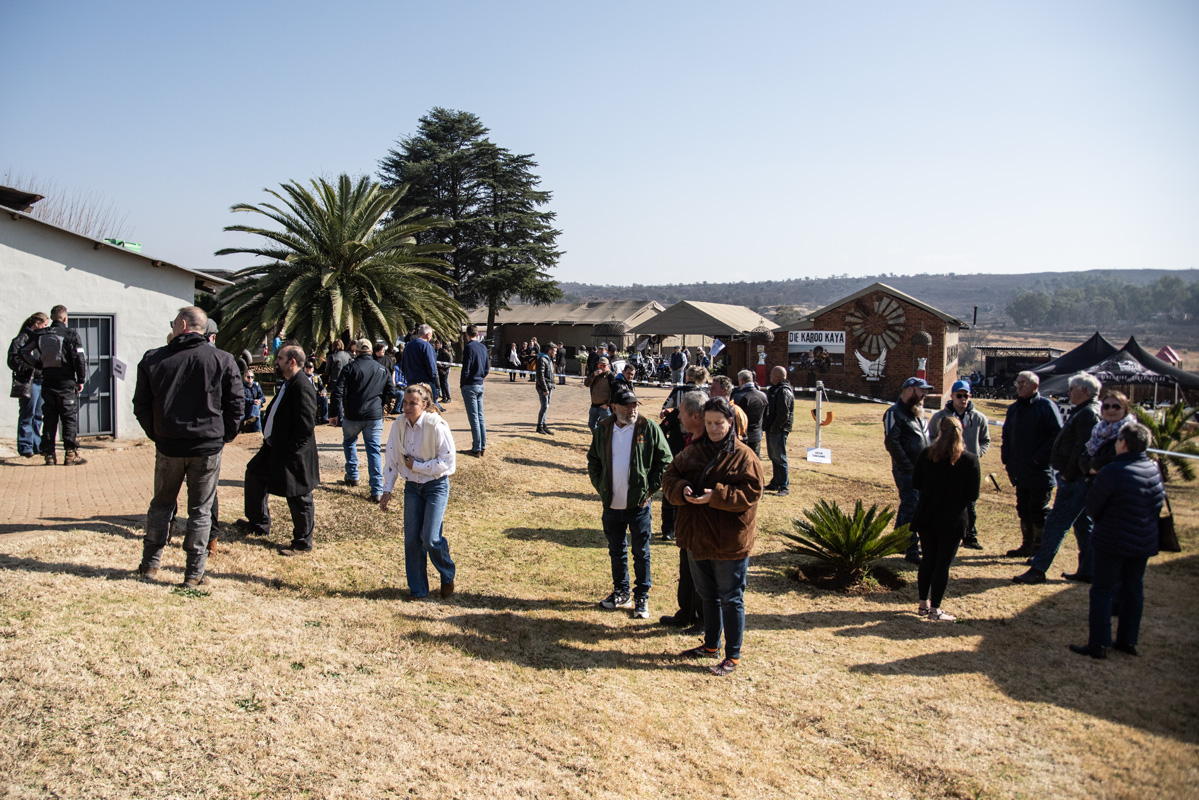
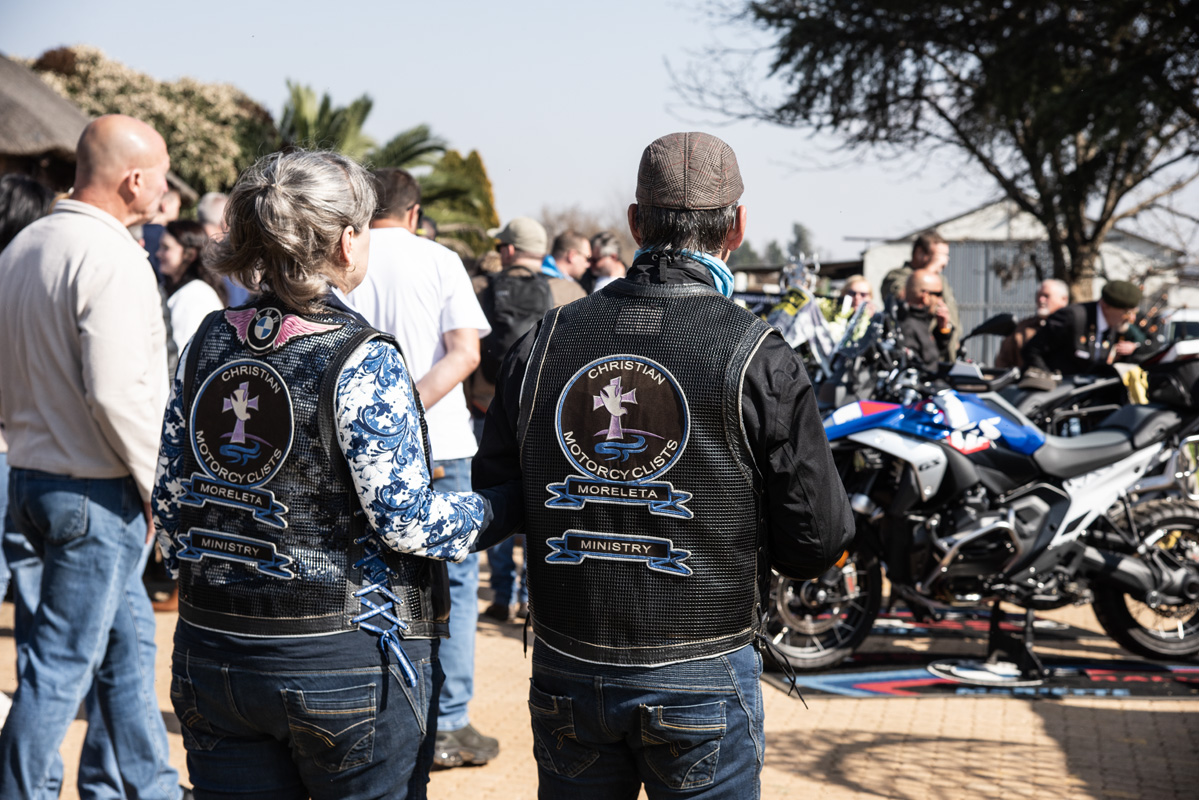
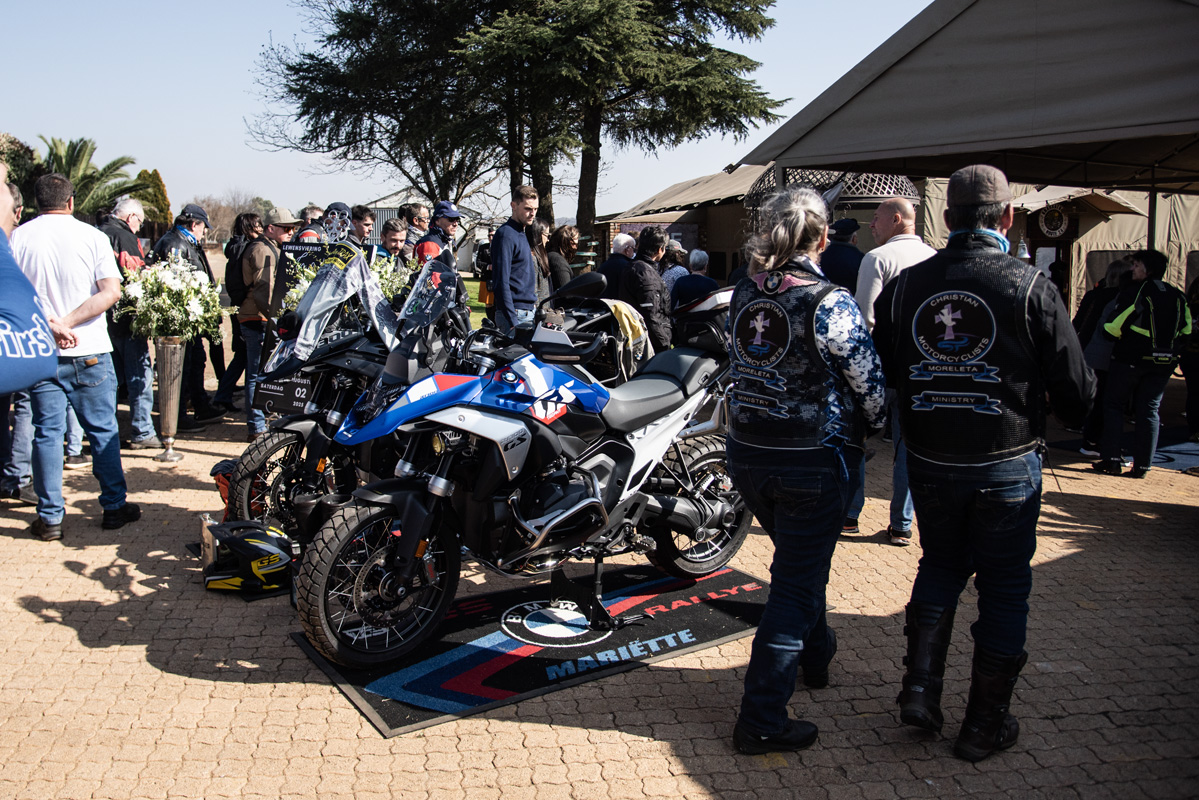
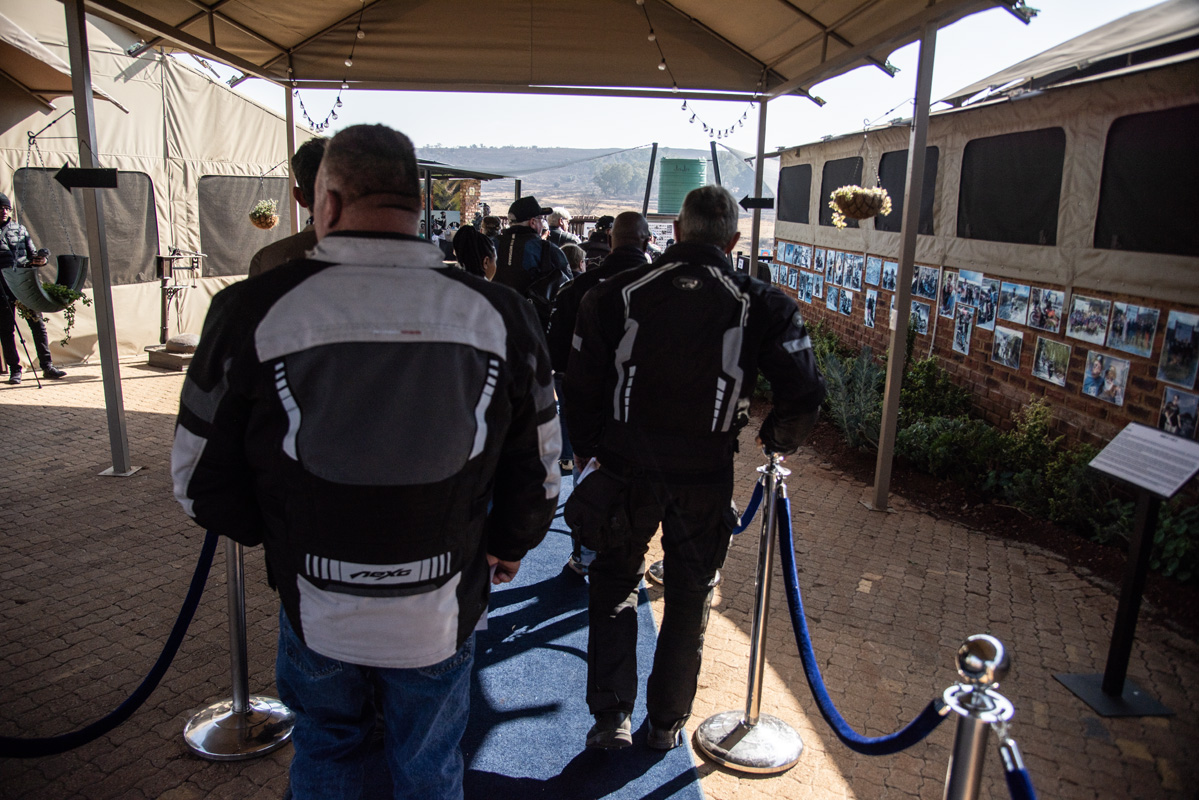
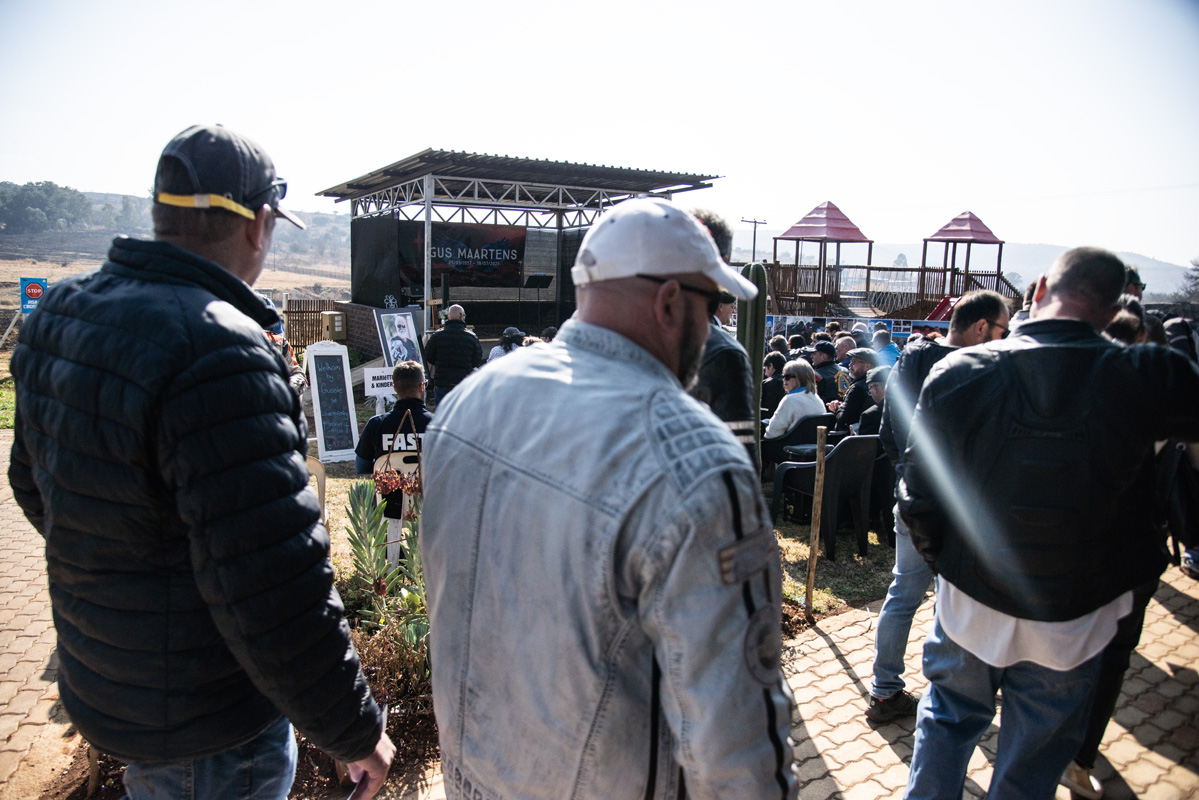
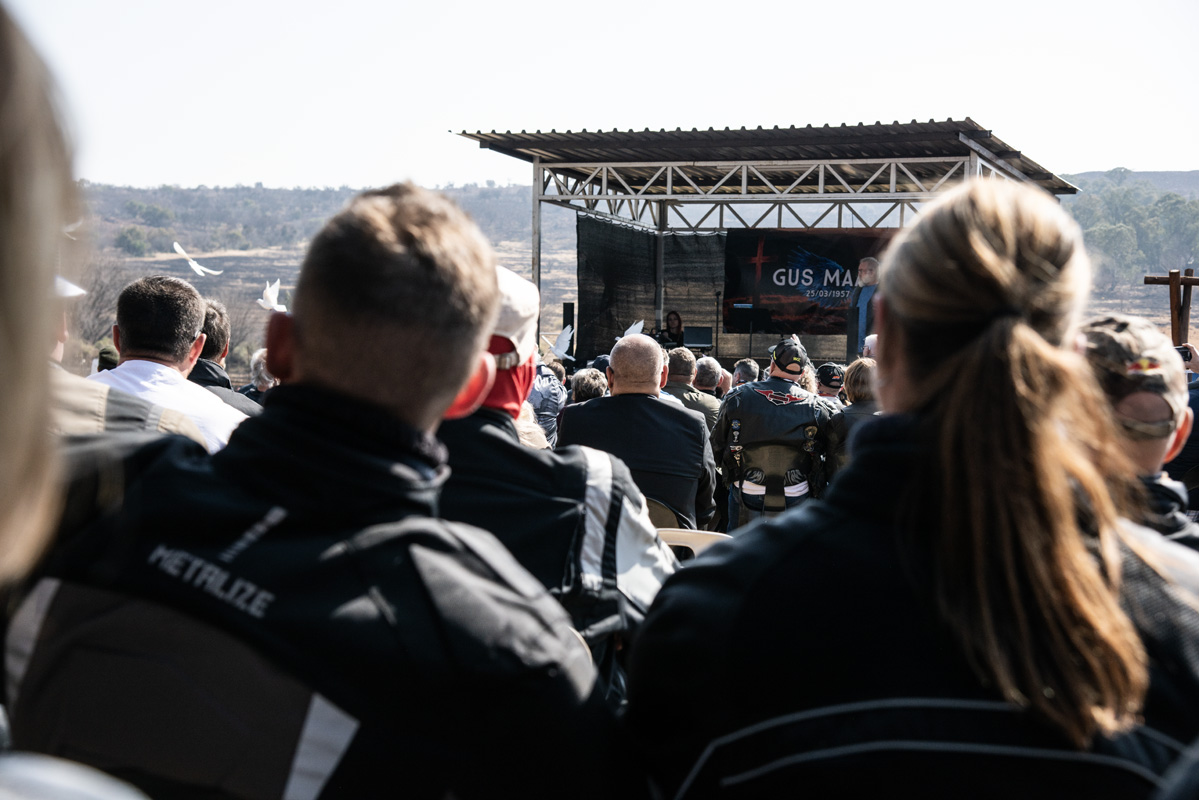
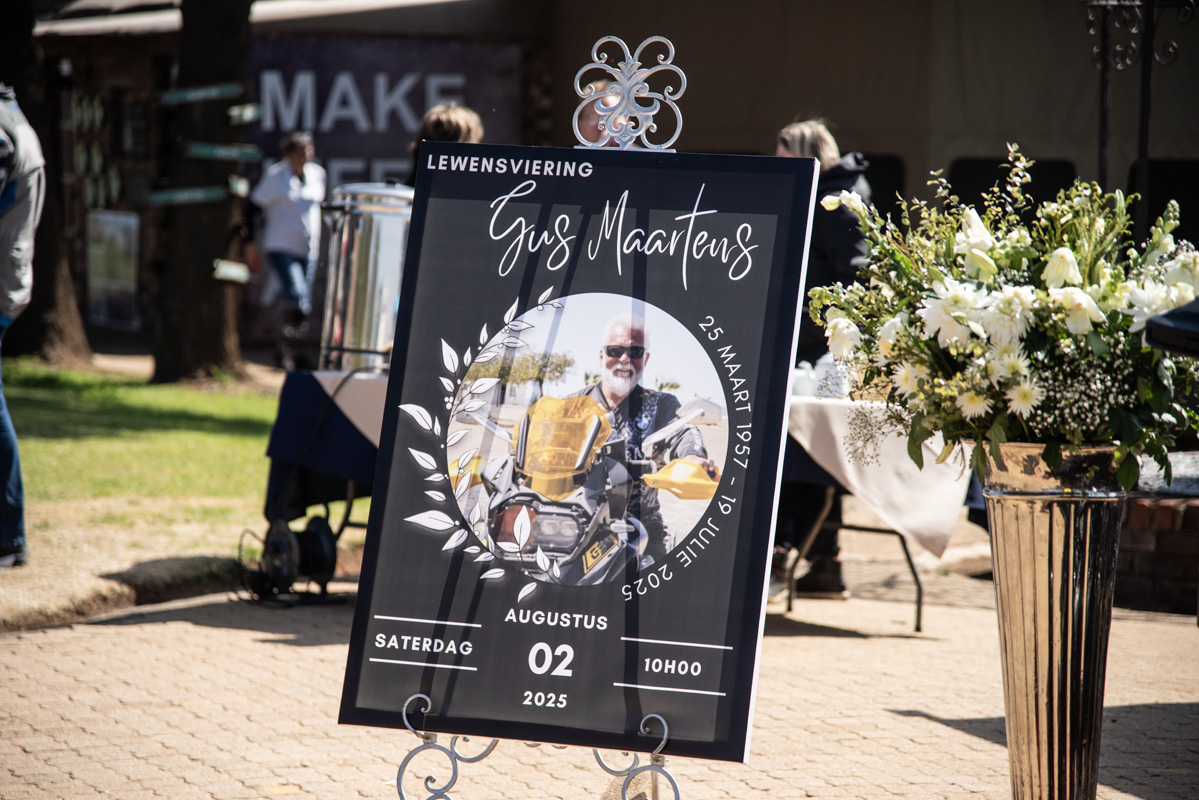
Motorcyclists and friends gathered at Grotto to Gravel in the Magaliesburg on Saturday to show their respect and celebrate the life of Gus Maartens, who went to his eternal home on the 19th of July after an incredibly brave battle following a double lung transplant more than a year ago. Like everything he did in his life, Gus fought his final battle with supernatural guts and determination. The support that he received from his beloved wife, Mariette, during his illness will forever be an inspiration to all who know them. Little did they know the significance of the marriage vows pledged to each other at their unique marriage ceremony at Tankwa padstal in their beloved Karoo, seven odd years ago.
Image source: Mariette Maartens
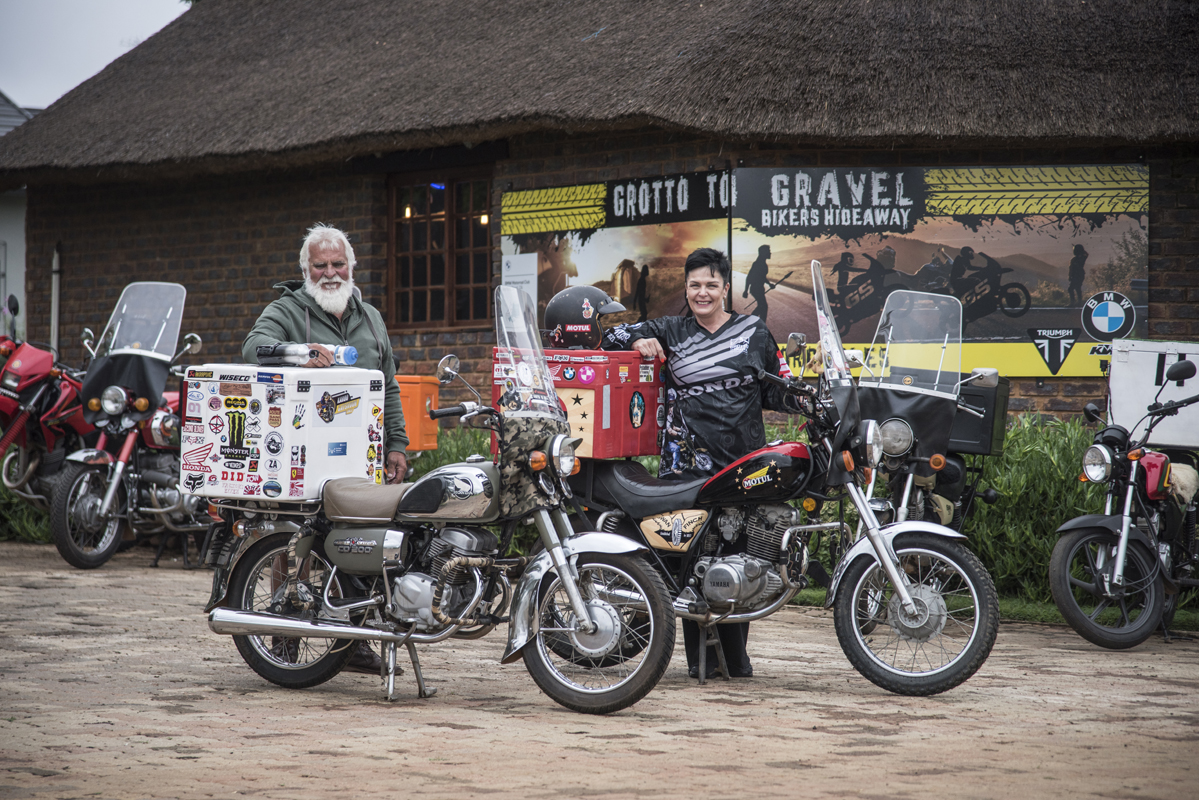
Gus and Mariette met through a mutual love for motorcycles. Gus had suffered the passing of his wife, and Mariette had barely survived a traumatic and abusive relationship. Gus was smitten with the feisty girl and won her over with unconditional love, kindness and empathy, erasing the scars of the past and showing her what God intended marriage to be. What followed was a wonderful adventure with their mutual love of bikes at its core. Gus accepted Mariette’s girls as his own, and his love for Mariette was reflected in the love that he showed them. The love that they radiated as a family was infectious and rubbed off on all the many folks who got to know them.
Photo credit: Bjorn Moreira / ZA Bikers
‘To have and to hold from this day forward, for better or for worse, for richer or for poorer, in sickness and in health, to love and to cherish, till death do us part’, the vows so glibly repeated and so easily forgotten when strife strikes. But not for Gus and Mariette. When Gus was diagnosed with a terminal lung illness, they did the same as when attacking challenging terrain on their beloved GSs. They looked up, stood up, and opened up! Gus, supported every step of the way by his Mariette, continued living his life with enthusiasm, just piggybacking an oxygen cylinder that helped him breathe. The threat to their future also served to deepen their love for each other as well as their trust in God. Miraculously, a lung transplant, the only hope for Gus, became possible and was duly done.
Photo credit: Bjorn Moreira / ZA Bikers
What followed was over a year of battling to recover. Gus and Mariette were on a rollercoaster of hope and despair. Just as he seemed to be on the road to recovery, infection would beat him back down again. This was a recurring theme for over a year. Mariette clocked up more than 50,000 k’s travelling to Milpark hospital and back, being there for her man through it all. Comforting, encouraging, pampering and praying. If love alone could have healed Gus, he would have flourished. Friends they had made rallied around in support, both materially and prayerfully. Gus suffered terribly, both physically and mentally. In drug-induced psychosis, he relived battles fought in Angola during the border war. All who saw what he was going through marvelled at the strength of the man, both mentally and physically. He was running a different kind of Comrades. A marathon during which the highs and lows caused him to love more deeply and grow his faith in God immeasurably.
Photo credit: Bjorn Moreira / ZA Bikers
It was a real-world example of the truth of 2 Corinthians 12:9, which tells us that ‘His strength is made perfect in weakness’. Gus and Mariette were on a journey with their God, where it was only their faith in Him and His strength that kept them going. On the 19th of July, with her head on his chest, Mariette told Gus that it was ok to let go, that he would find healing and an end to his suffering in heaven with the Jesus that he had come to love so much. He peacefully breathed his last and went home. Scripture tells us that ‘to live is Christ and to die is gain’. This is difficult to grasp for us who think that our life on earth is what it is about. I believe that our lives on earth are preparation for eternity. At the appointed time and place, we will go home to our Creator.
Photo credit: Bjorn Moreira / ZA Bikers
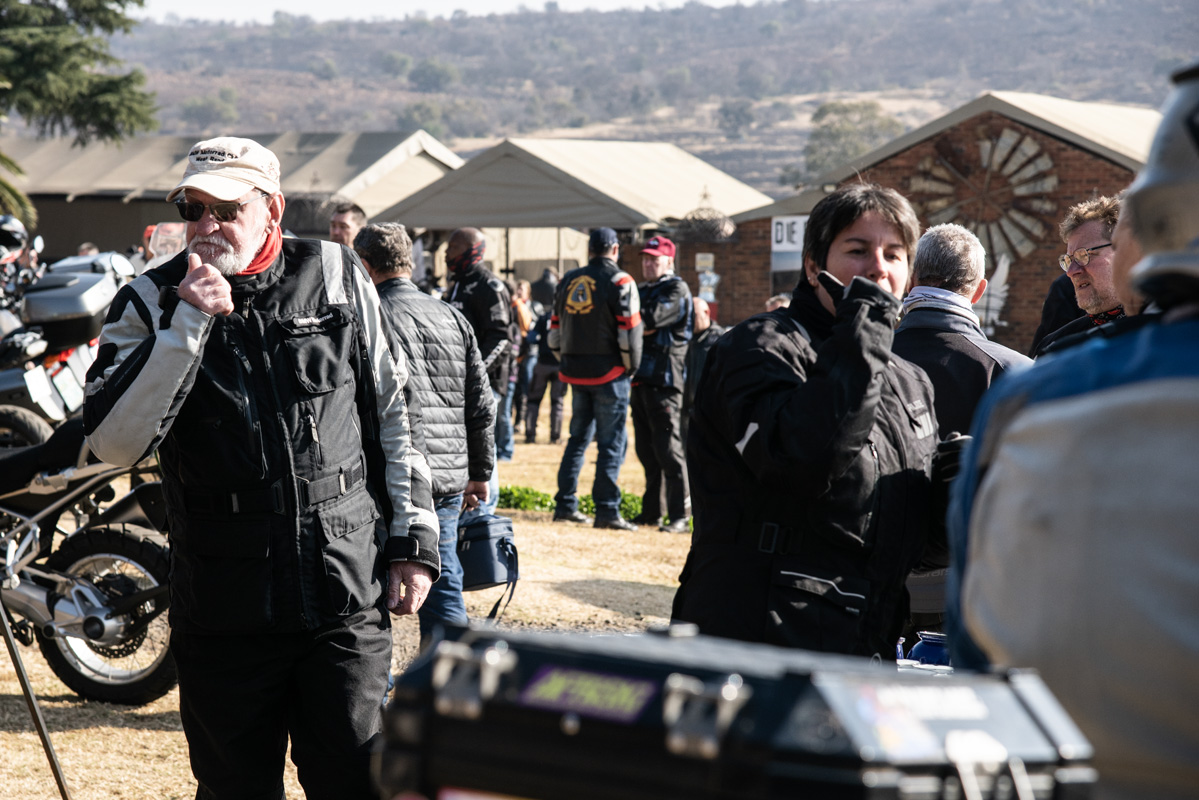
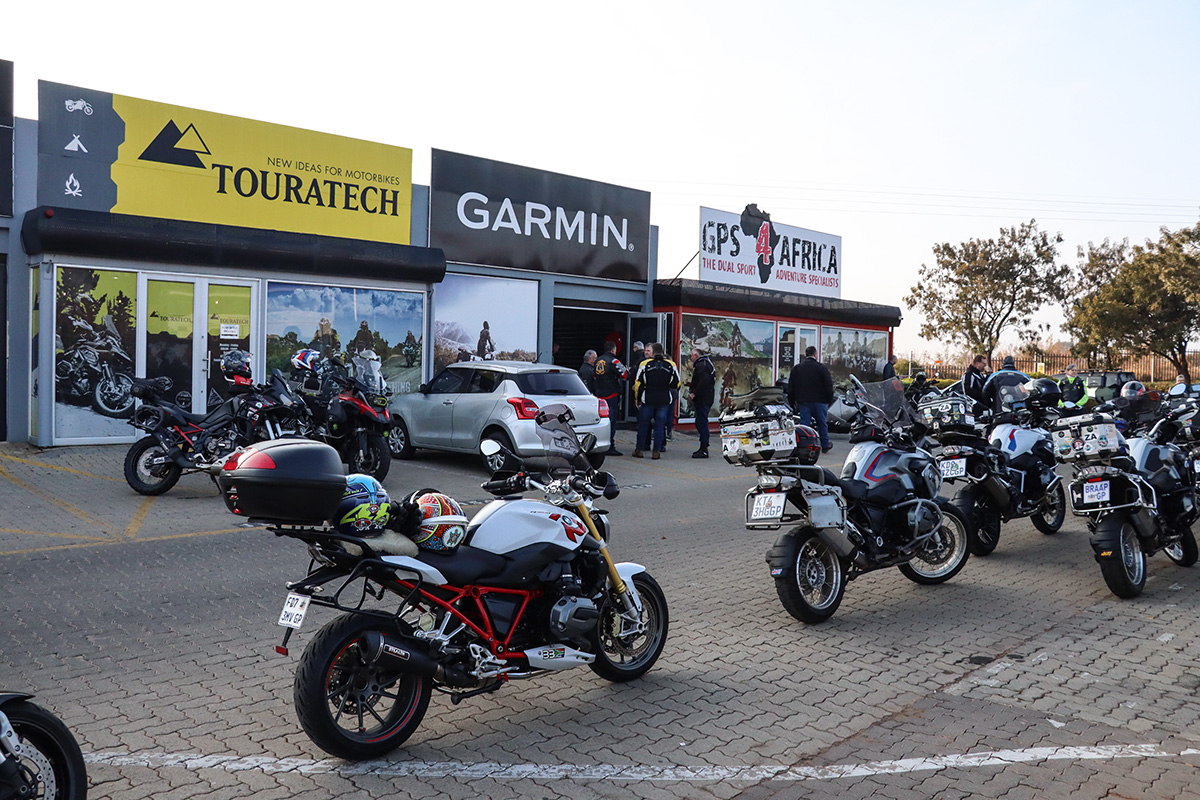
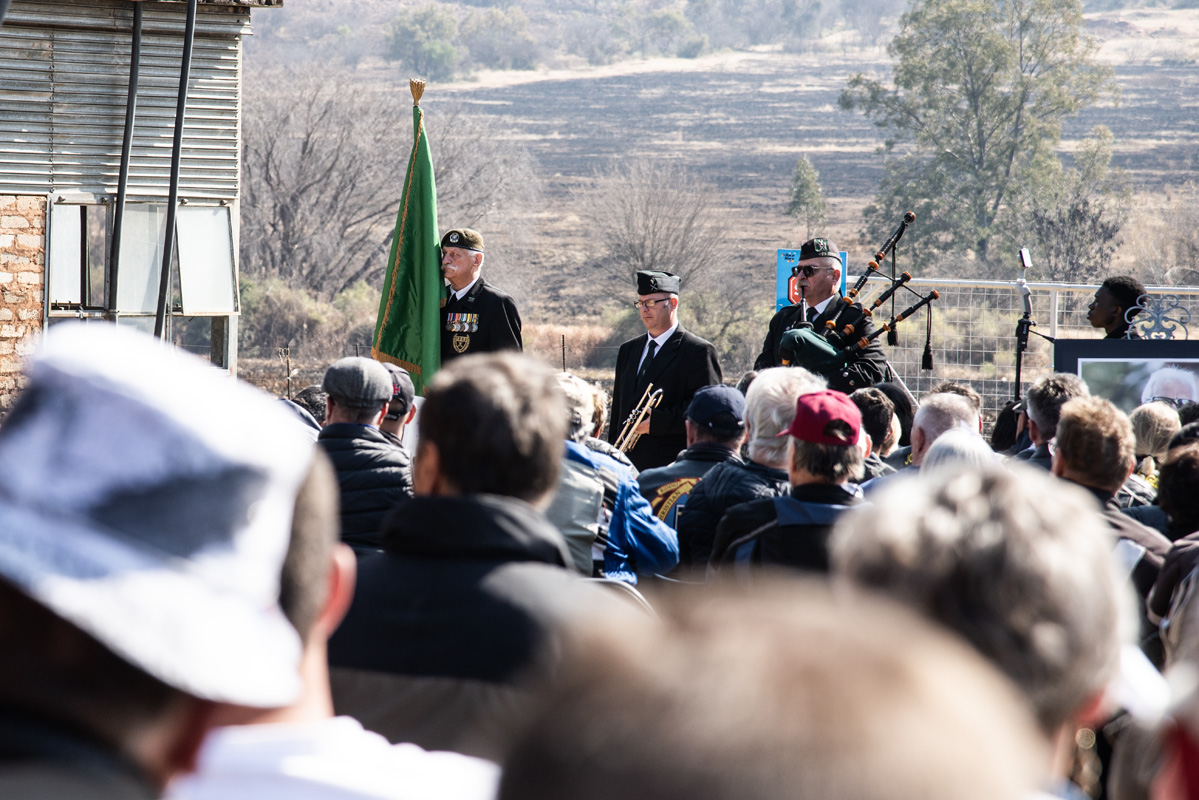
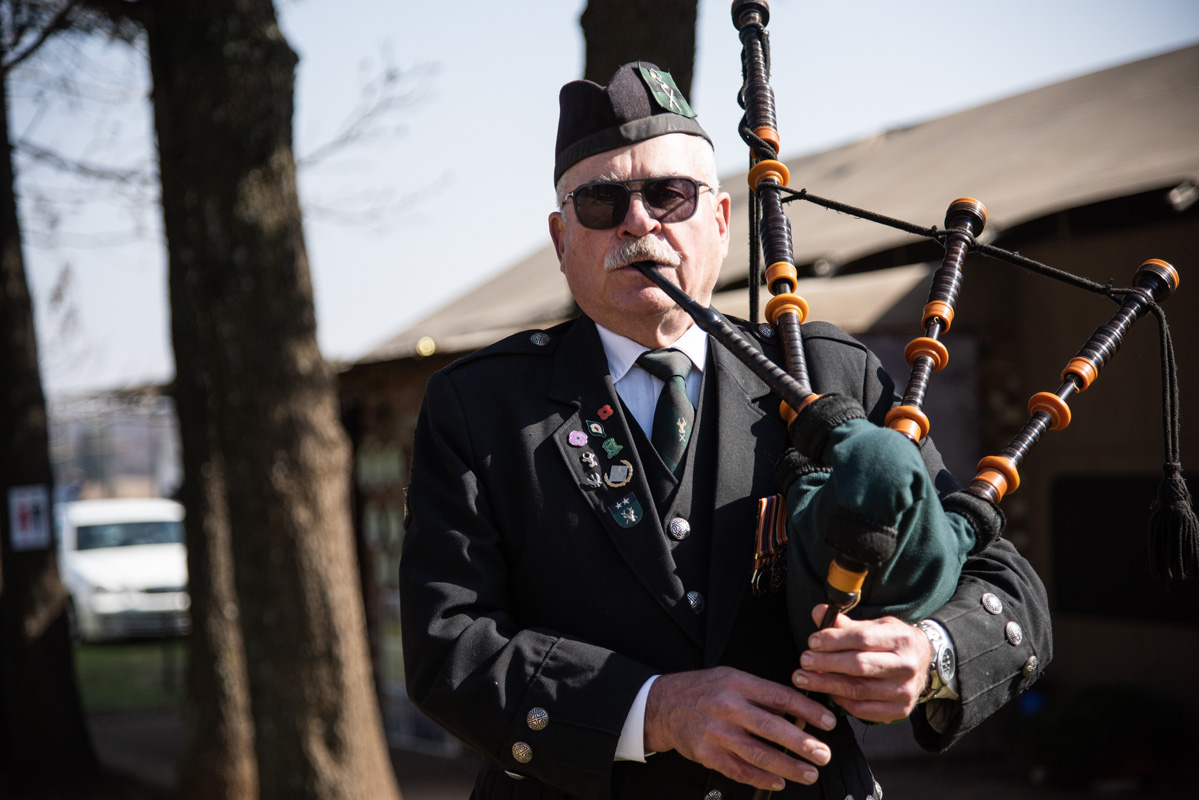
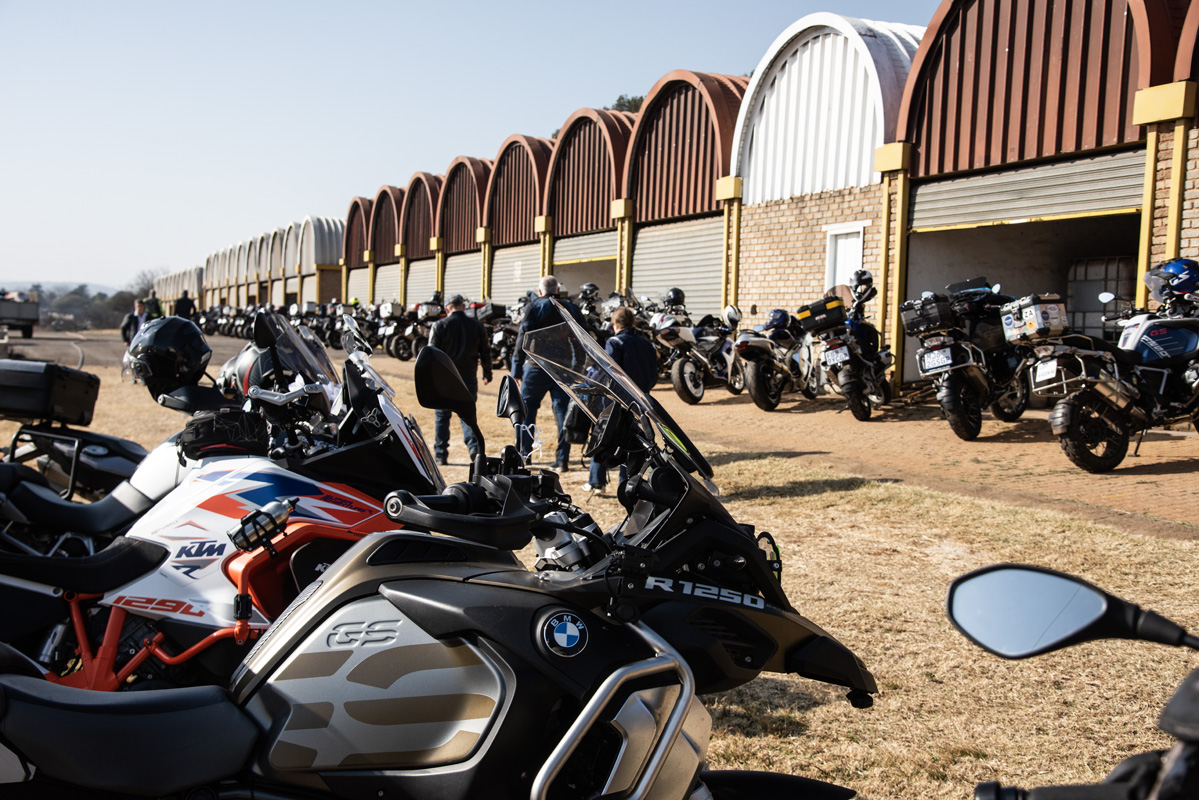
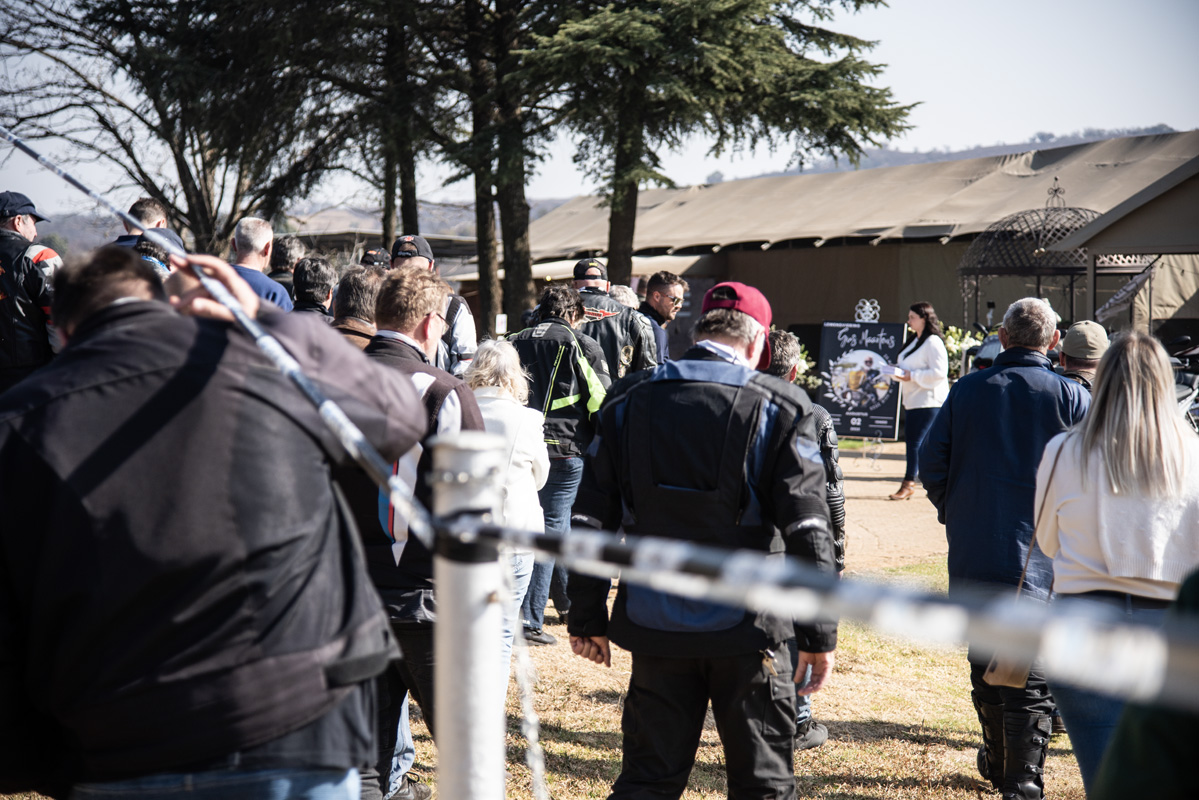
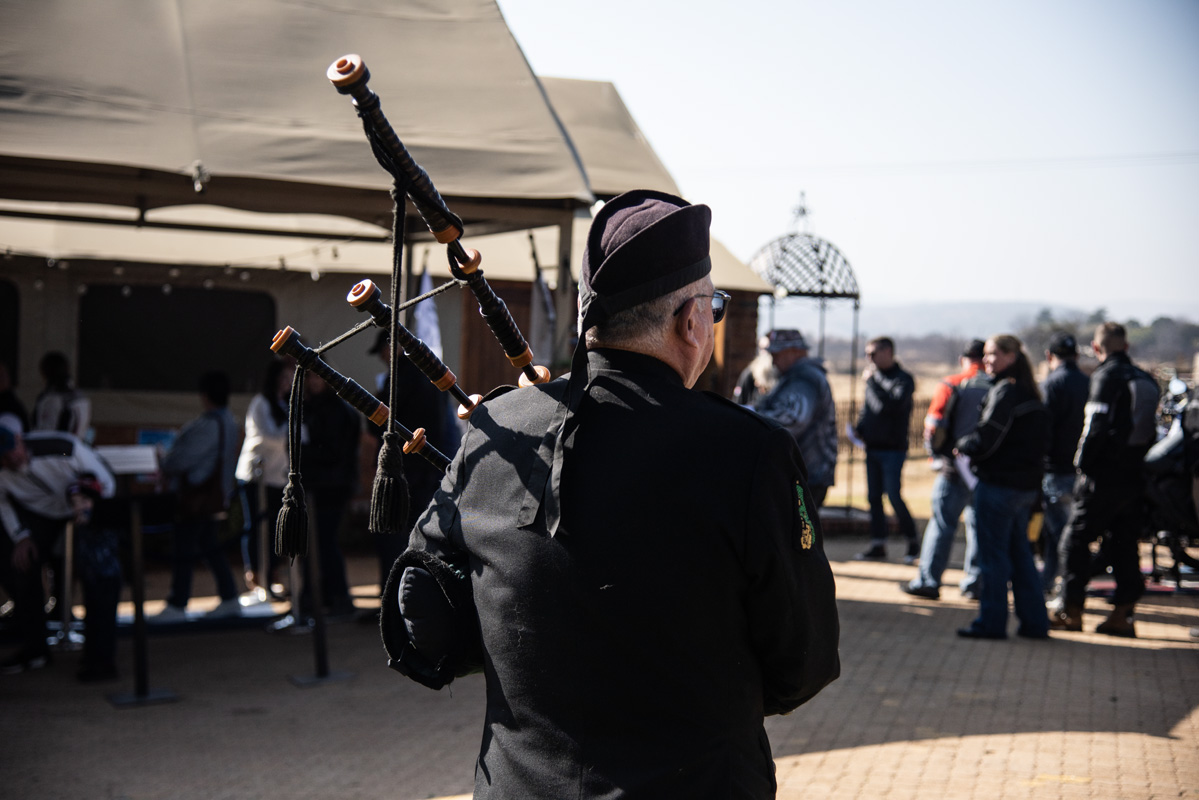
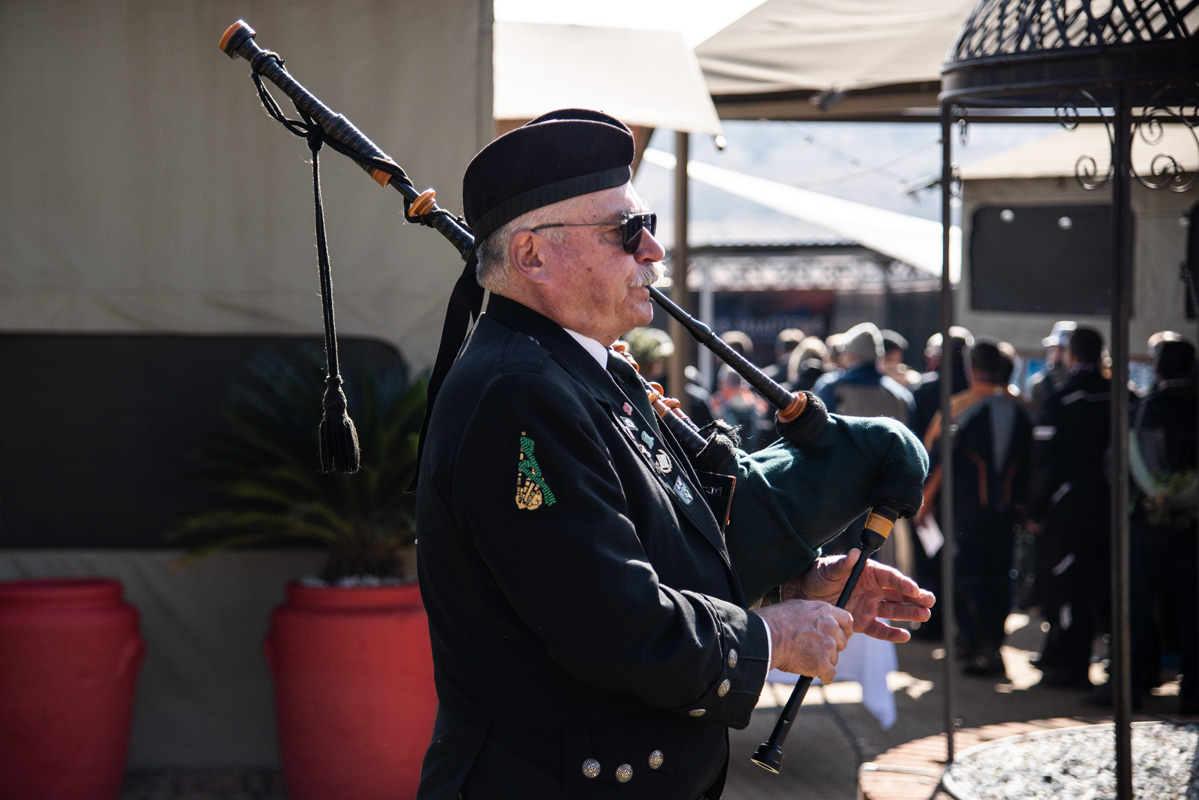
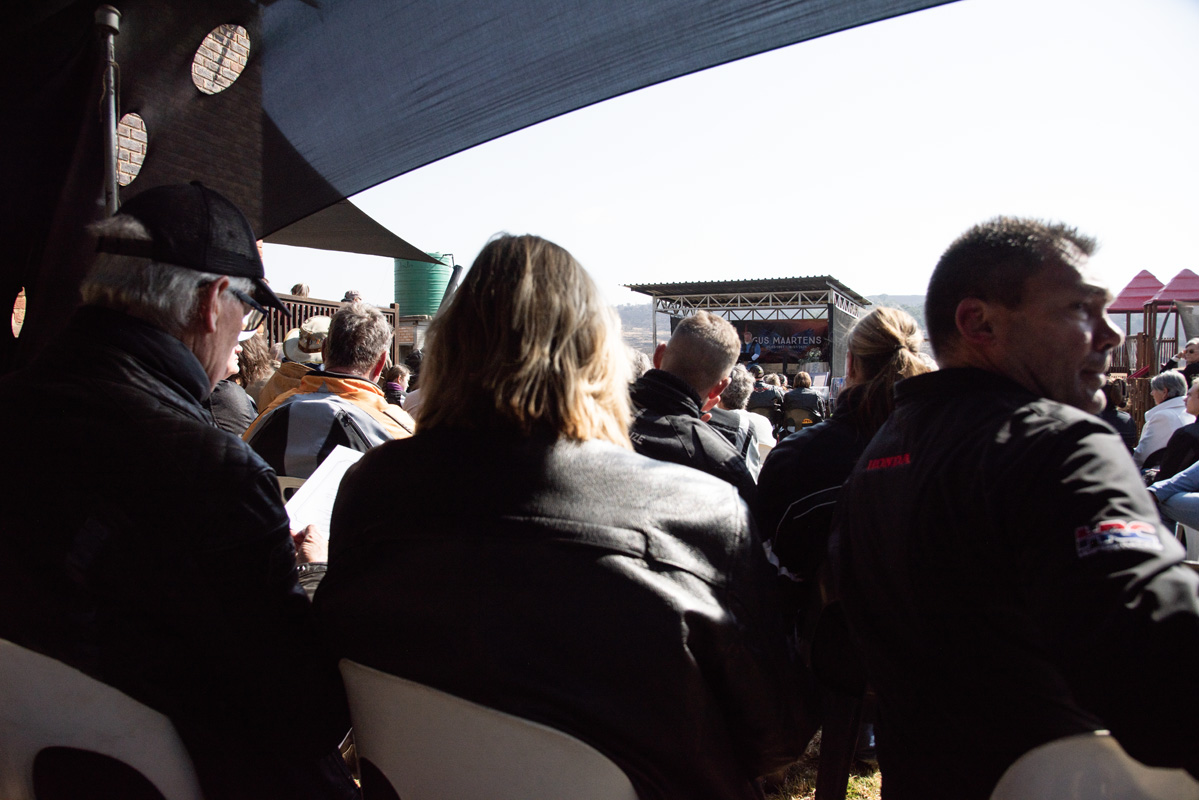
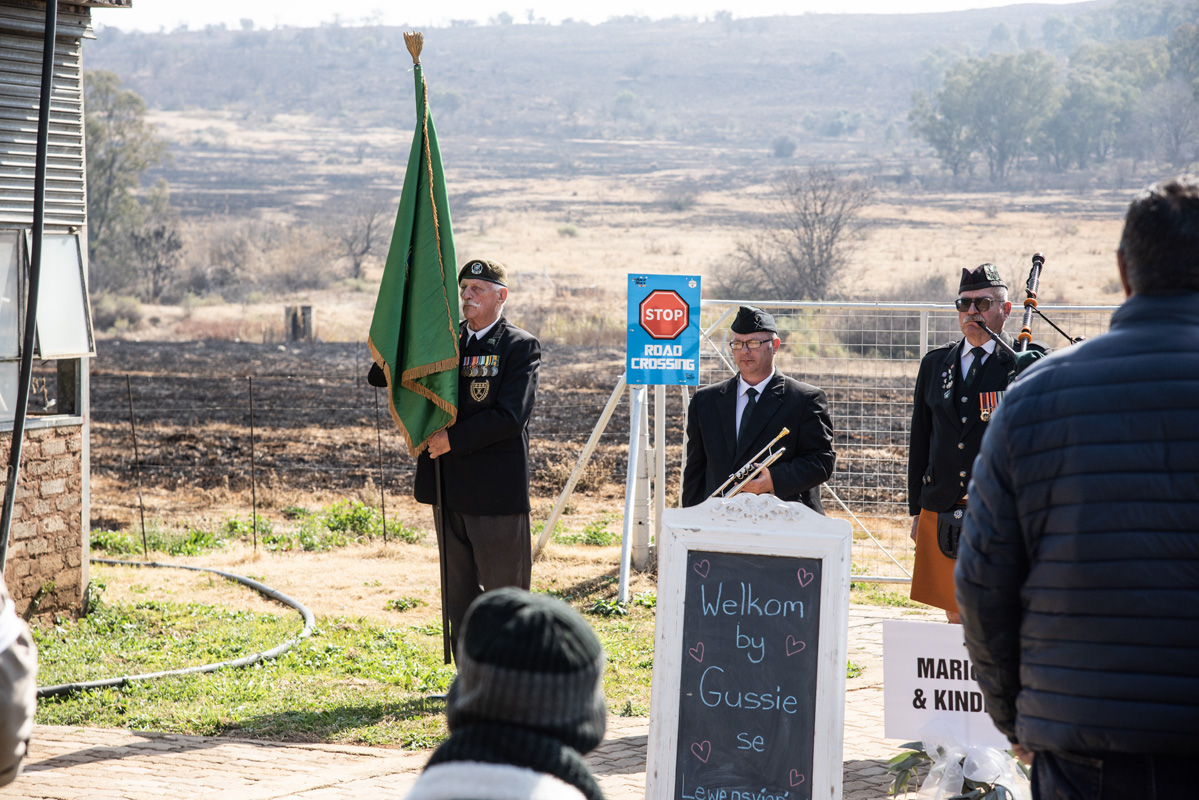
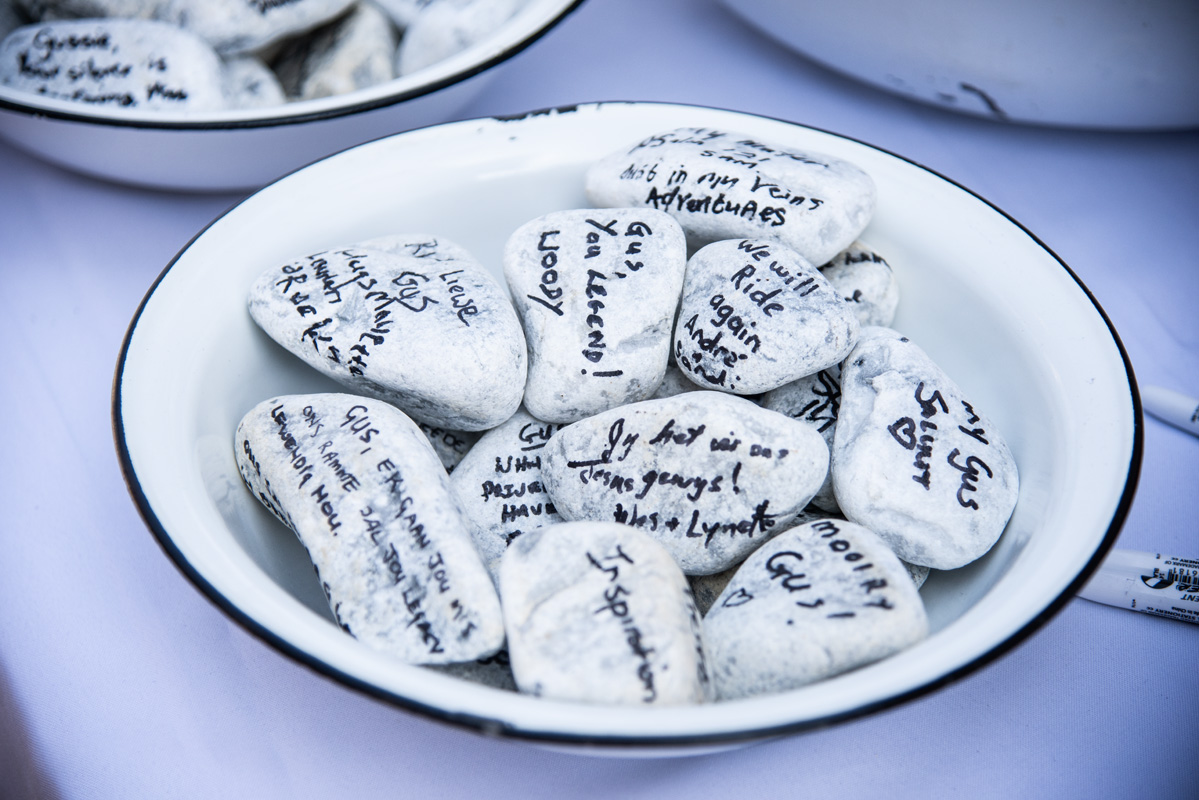
There were two rides to Grotto to Gravel. A bunch of riders met at 8 am on a chilly winter’s morning to ride through from Touratech in Centurion. A second group left at 8,30 am from Raceworx in Jo’burg. After arriving at Grotto to Gravel, everyone proceeded from the parking area to the seating set out for the service conducted by Pastor Johan Van Eck. The procession was accompanied by the haunting strains of a lone piper playing Amazing Grace. Johan Lee then shared from the heart on the blessing of life given by organ donors. His account of the loss of his 19-year-old daughter and the five lives saved through the donation of her organs was both moving and thought-provoking.
Photo credit: Dave Cilliers / ZA Bikers
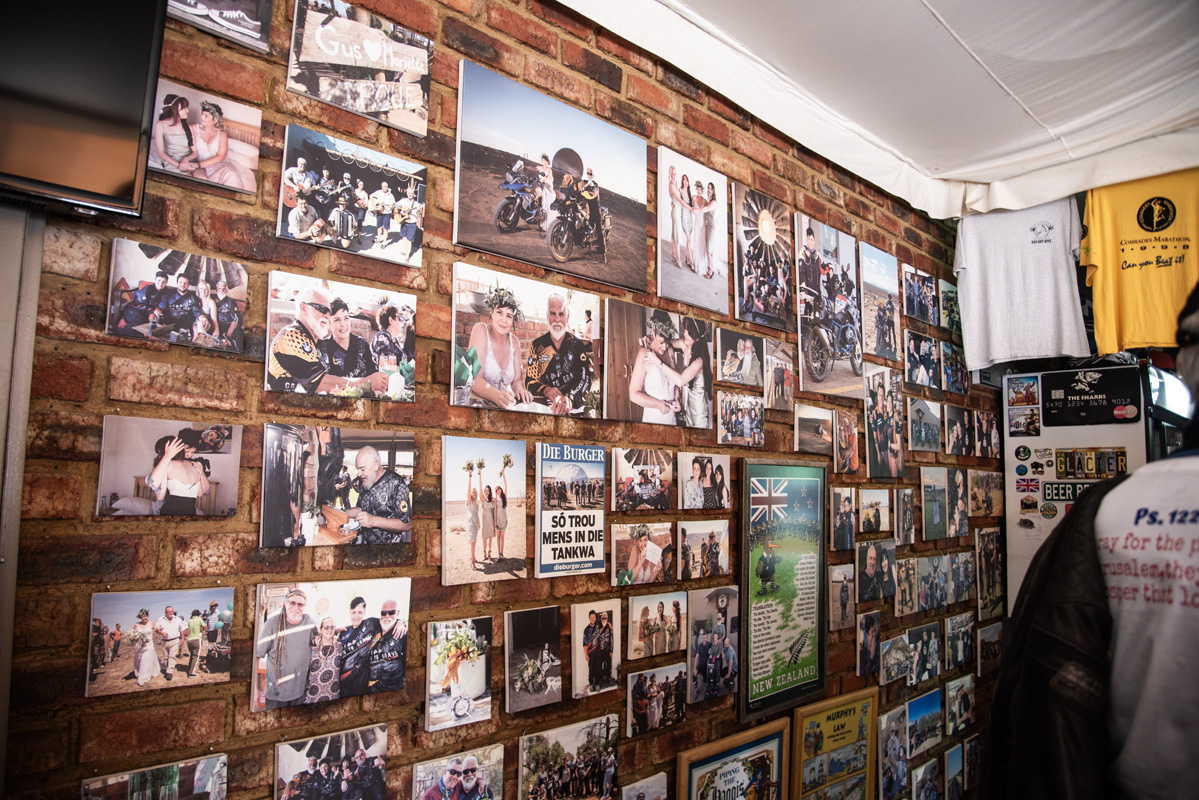
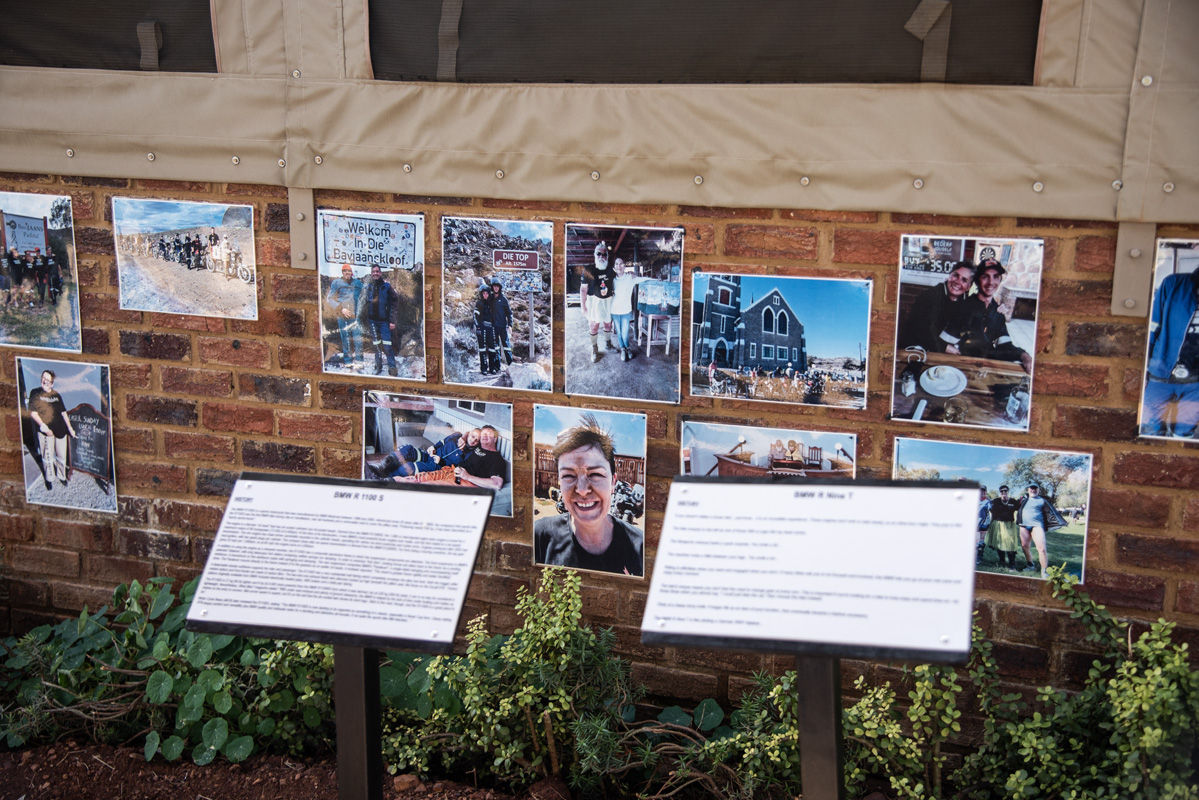
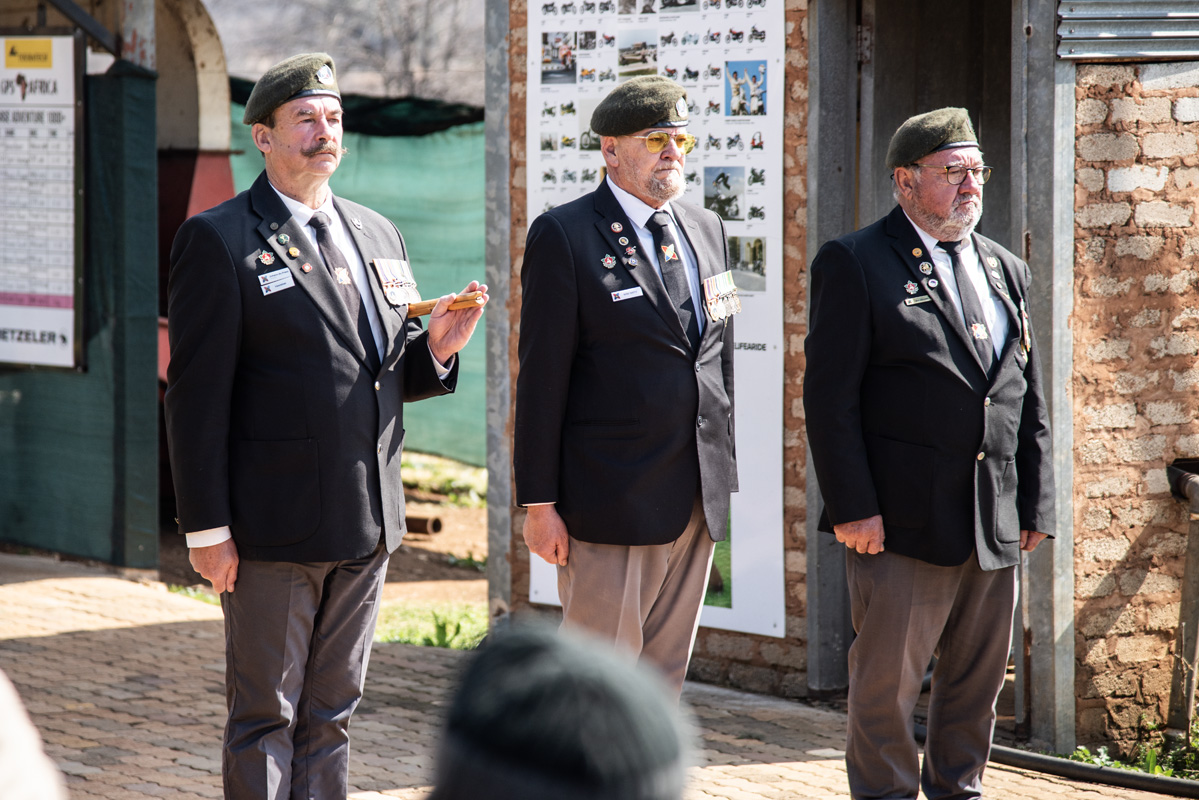
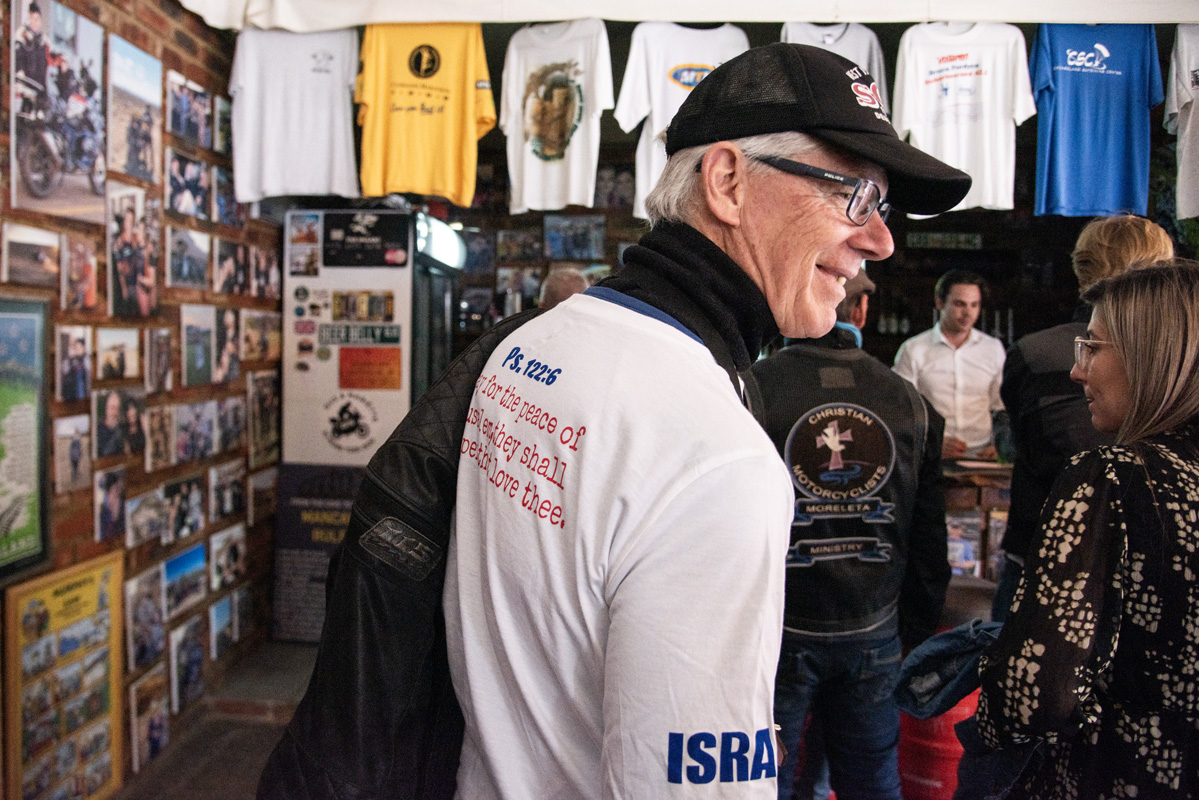
A short ceremony by some of Gus’s old army veteran comrades was poignant and a reminder of the sacrifices made by brave men in the service of their country. A bugler played the Last Post as the veterans stood to attention and saluted their fallen comrade. The walls at Grotto to Gravel are adorned with many photographs of Gus’s exploits, as well as the many adventures that he shared with Mariette, bearing testimony to a rich life lived with much love and passion. Theo Scholtz, a long-term friend, shared anecdotes on the life of a remarkable man.
Photo credit: Bjorn Moreira / ZA Bikers
Pauli Massyn, who, together with his wife Retha, was a pillar of strength for Mariette throughout her ordeal, then took on what was for me the most difficult task of a hugely emotional day. He read Mariette’s letter, paying homage to the man she loved so dearly. This was followed by Mariette’s daughter, Marcelene, sharing her feelings on ‘Pa Gus’. Speaking from the heart and with huge emotion, she shared the love that they had shared. His unconditional love, encouragement and guidance literally helped shape her life into the brave and independent young woman that she is today. What an incredible account of the true measure of the man!
Photo credit: Bjorn Moreira / ZA Bikers
With the formalities completed, we enjoyed a spitbraai lunch and drinks, celebrating the life of a truly special man. Kudos to Mariette for honouring her man in such a remarkable way. The cry of her heart, which was evident in her ‘totsiens’ letter to Gus, was how she couldn’t navigate life without him. I feel that his answer to her would be the same as when she struggled to negotiate deep sand on her ‘delivery bike’ on one of their adventures. With her in tears but carrying on to the best of her ability, he reassured her with the words ‘jy sal dit maak my skat, jy het balsak!’
Photo credit: Bjorn Moreira / ZA Bikers
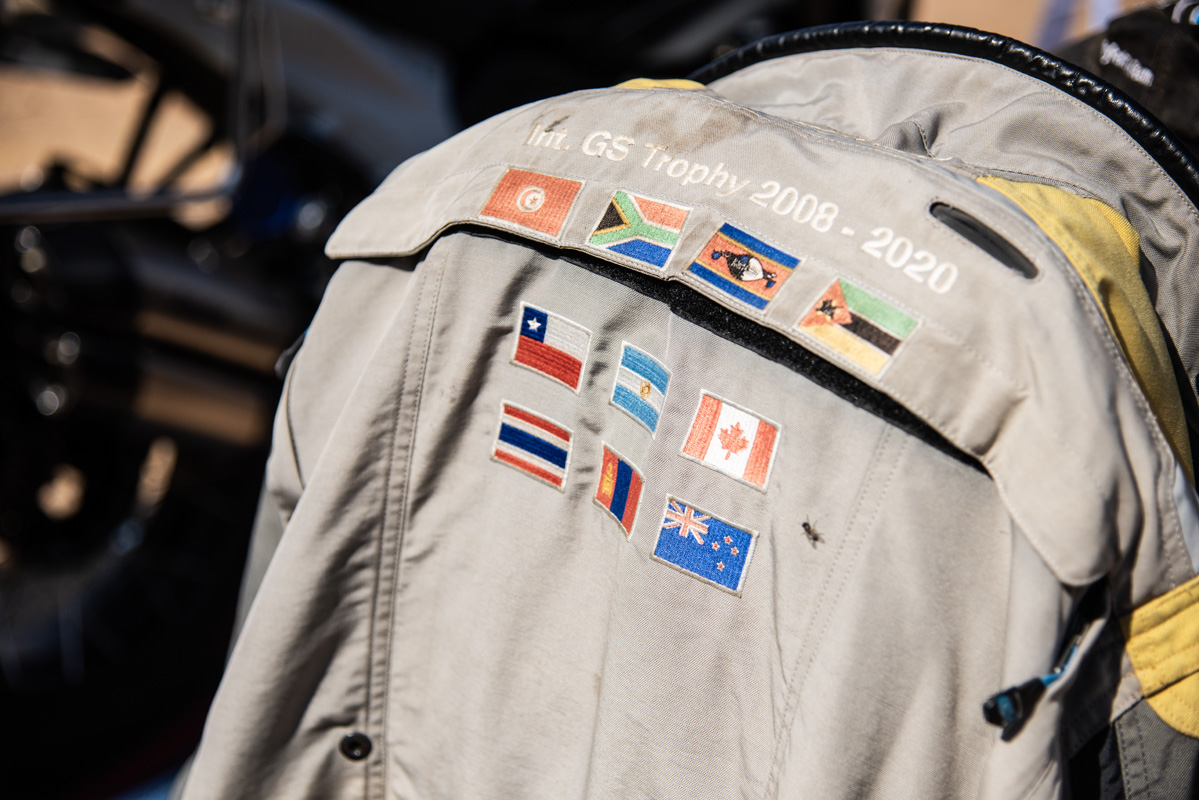
Gus, we are going to miss you dearly! In your quiet and humble way, you left deep footprints in all our hearts. No one I know has ever looked as cool as you in shades, that’s a fact! You now know what we all still wonder about… Does the Lord, too, ride a GS? The Word tells us that there is rejoicing in heaven when a believer comes home. Man, what a party that must have been! You sucked the marrow from life and brought joy to those who loved you, none more so than your Mariette and her girls. You are now restored and whole again. ‘Totsiens my friend, till we meet again. ’
“If it ain’t broke, don’t fix it”. I’m pretty sure we’ve all heard the saying more than a dozen times, but it holds more weight today than it ever has before, where thinking smart and spending less is crucial to keeping the cash flow or whatever is left on the table at the end of the day, back in your pocket. Most of us South Africans have inherited a mentality from the older, and some will say wiser, generation of our family trees. This so-called mentality sees the majority of us looking at our purchases or potential purchases in a long-term ownership sense, where often longevity and reliability are reflected in the quality and the price of the purchased product.
Some sayings that start to further ring bells: “Buy cheap, buy twice” or even “buy nice or buy twice”. These old sayings are more of a guideline or an almost gospel-like scare to lead us down the straight and narrow. It’s all good advice in the end, and it forces you to do proper research to make sure that whatever you buy is going to last you and not have to be replaced like a Duracell battery every few months. No offence to the battery-operated or e-bike guys, but you know what I mean…
Photo credit: Bjorn Moreira / ZA Bikers
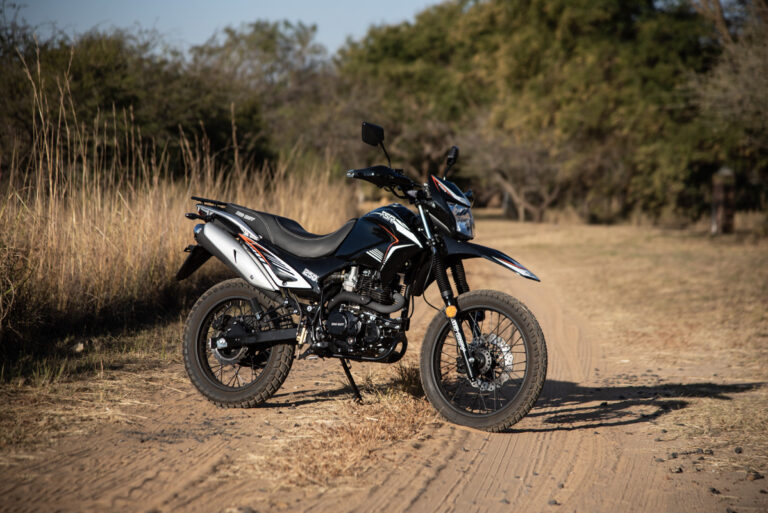
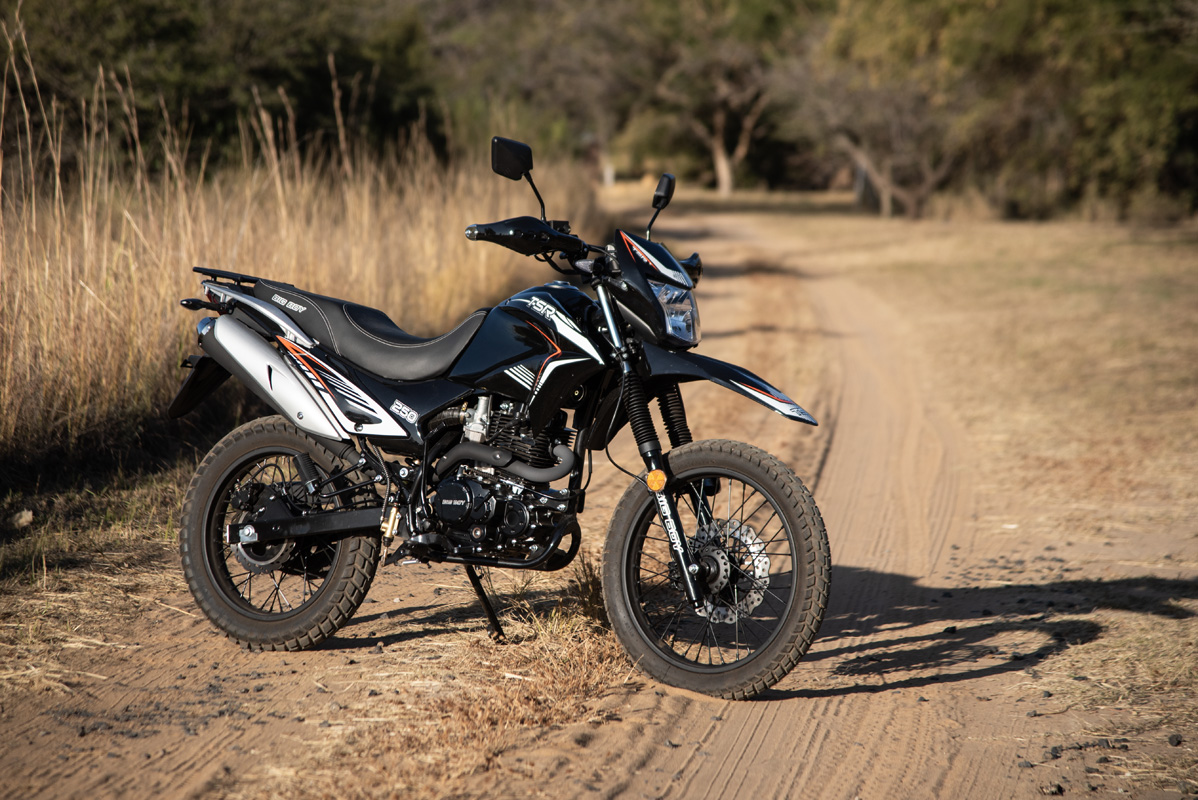
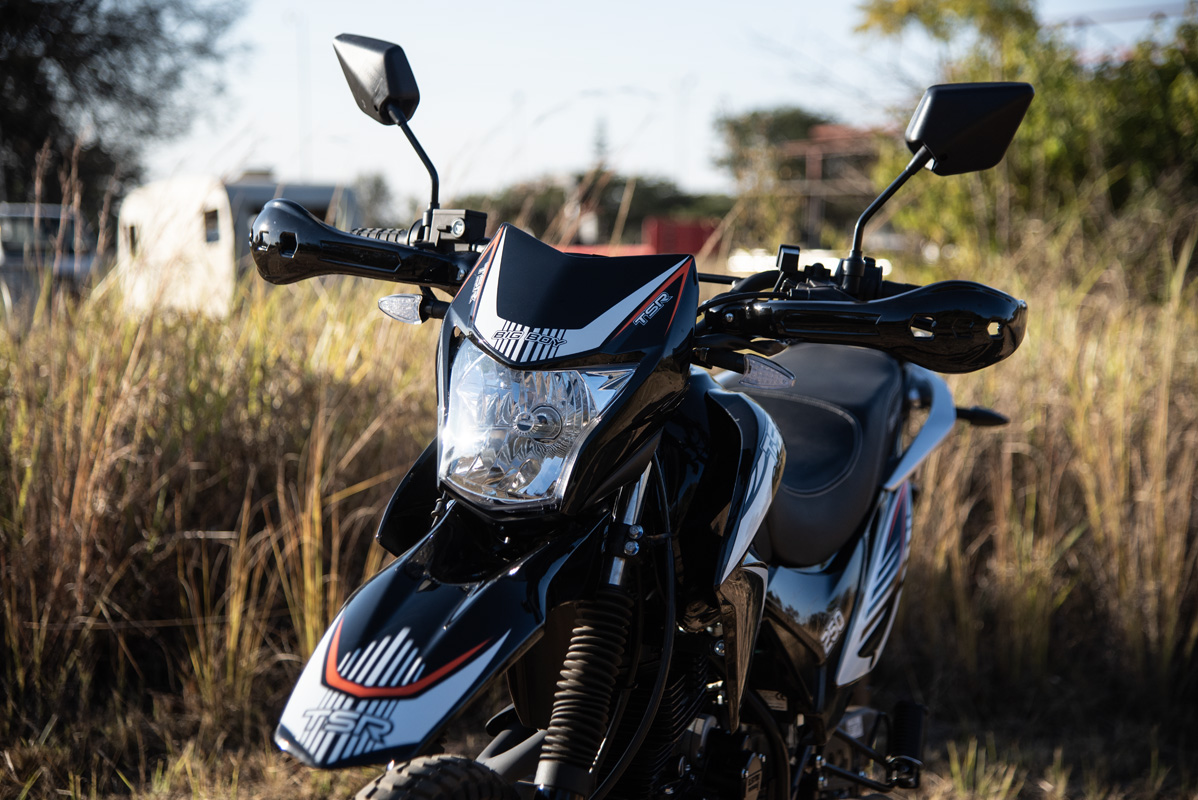
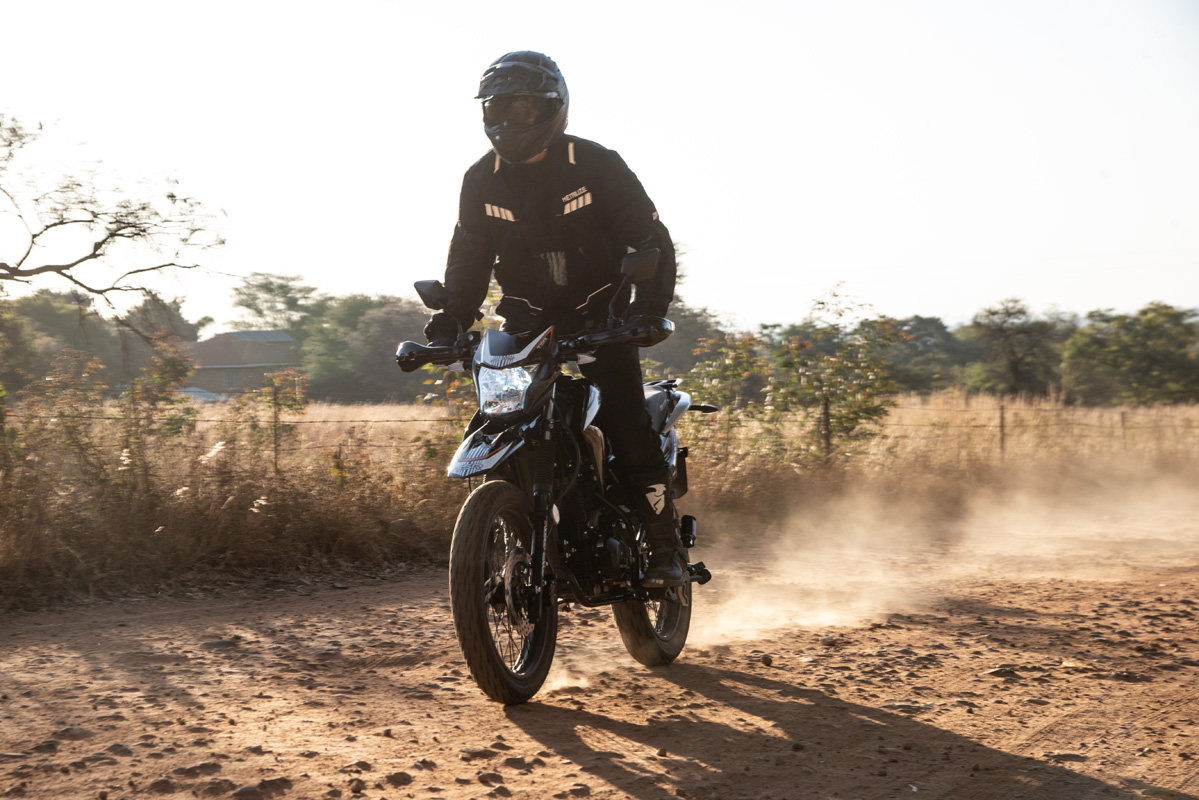
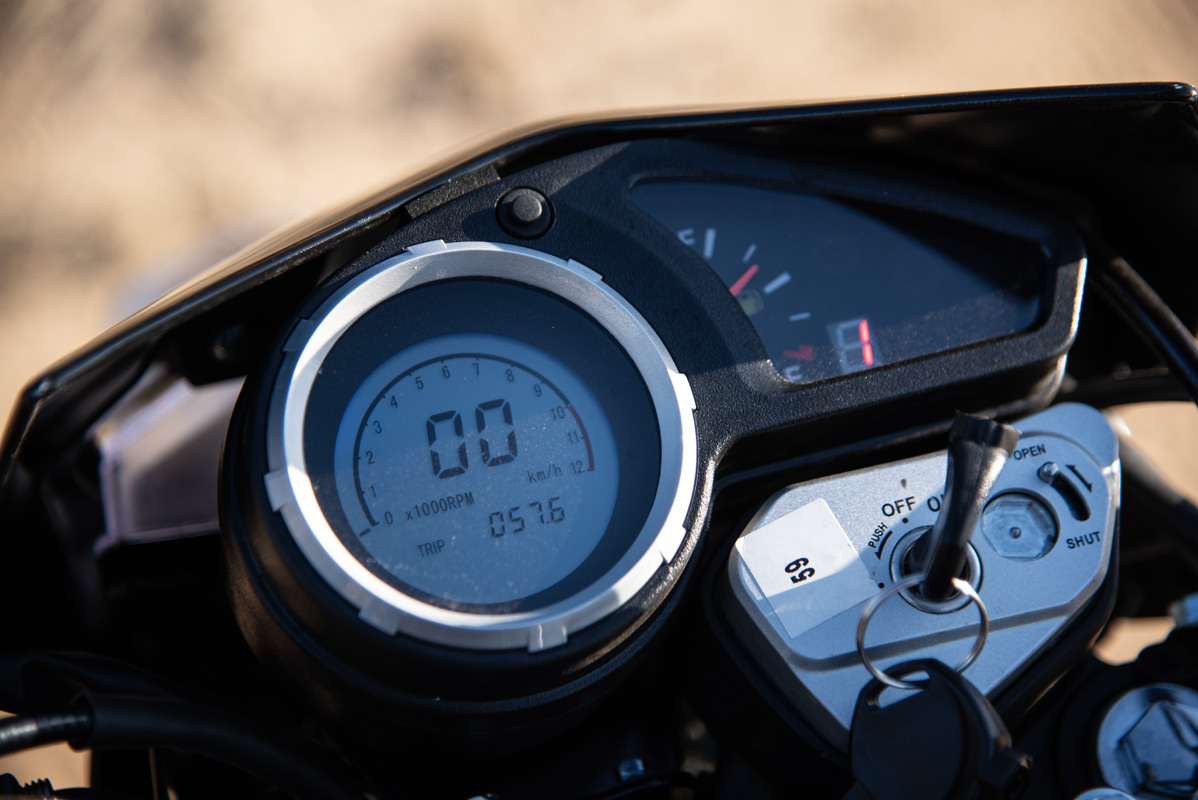
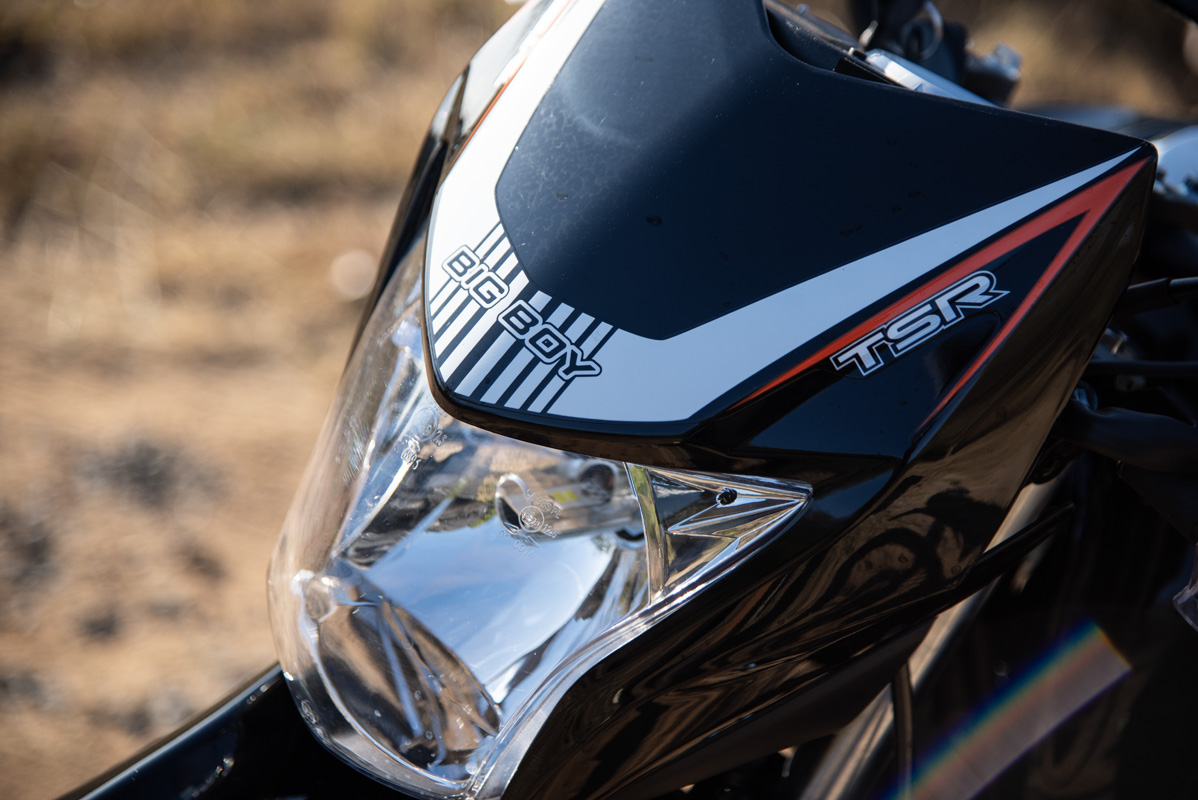
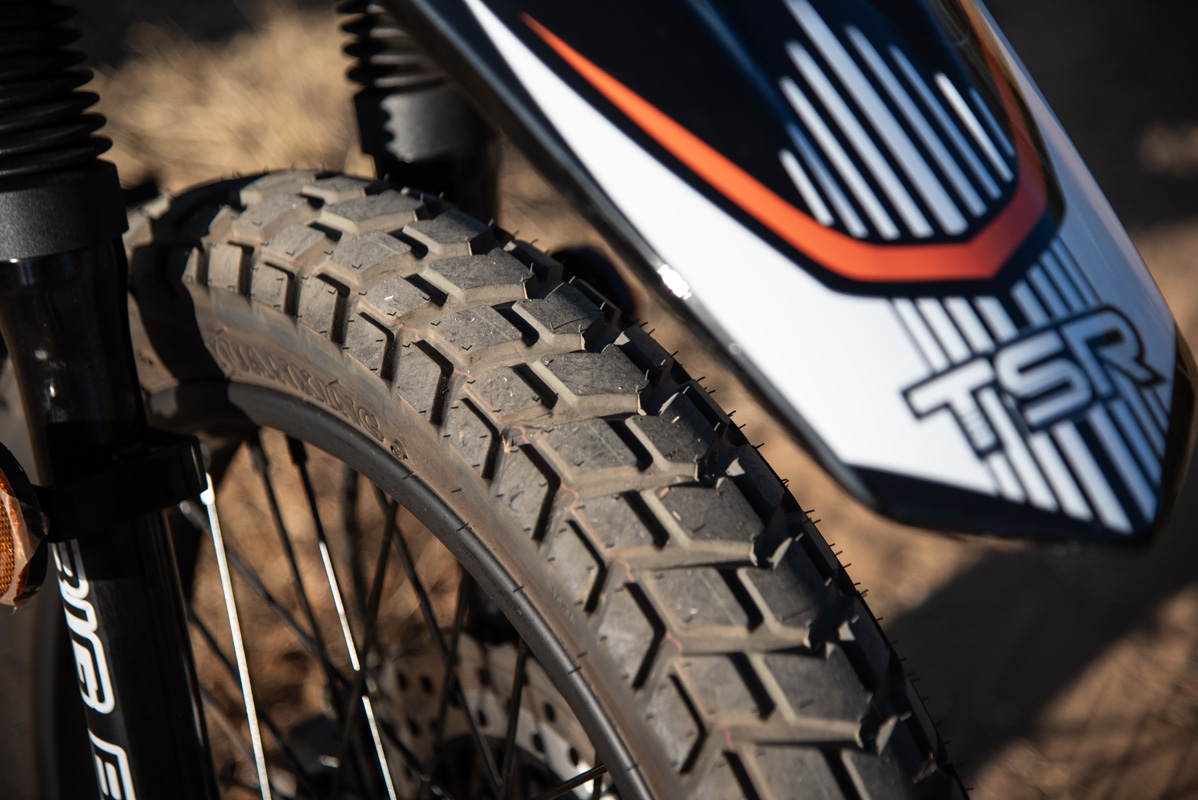
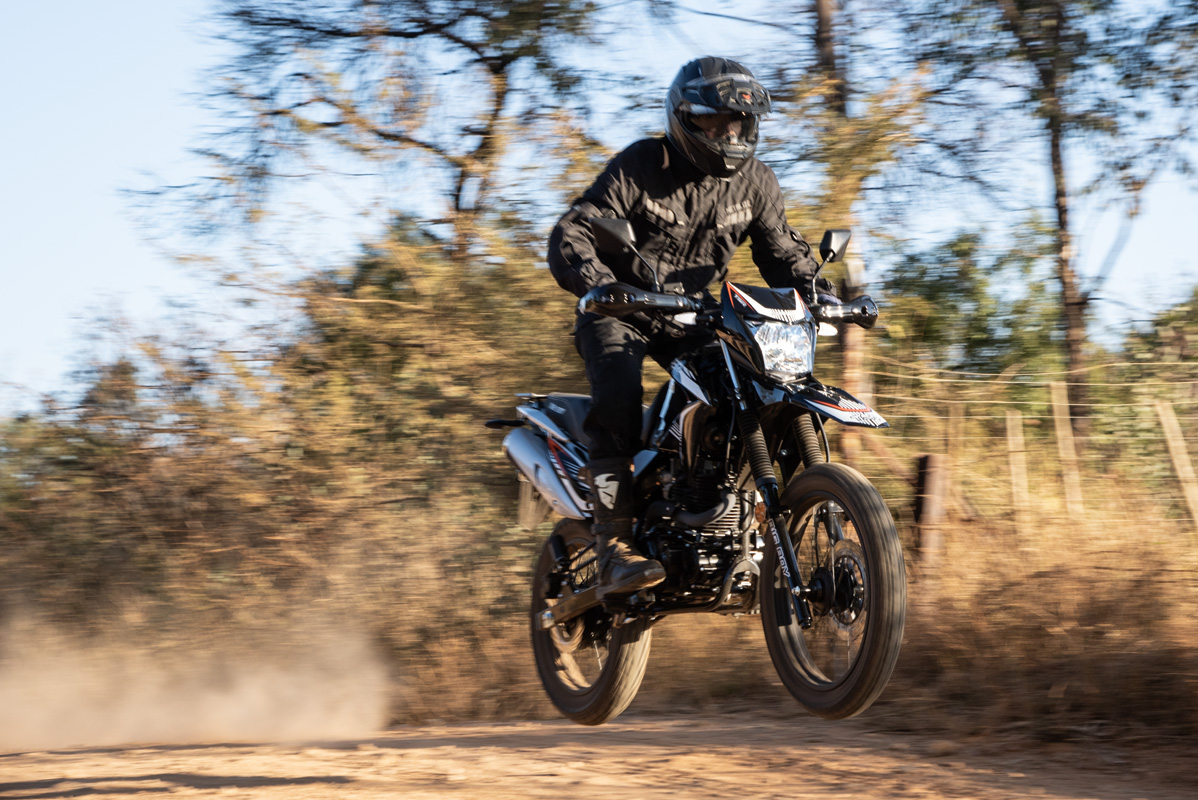
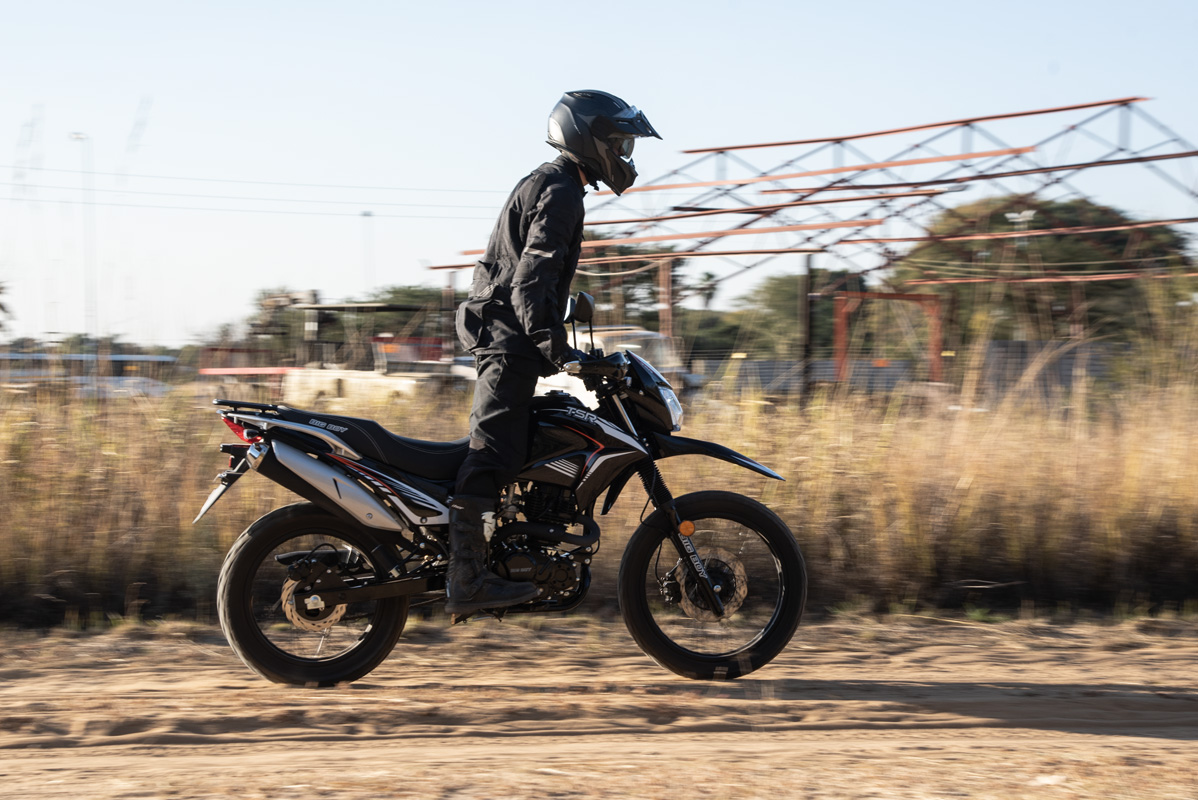
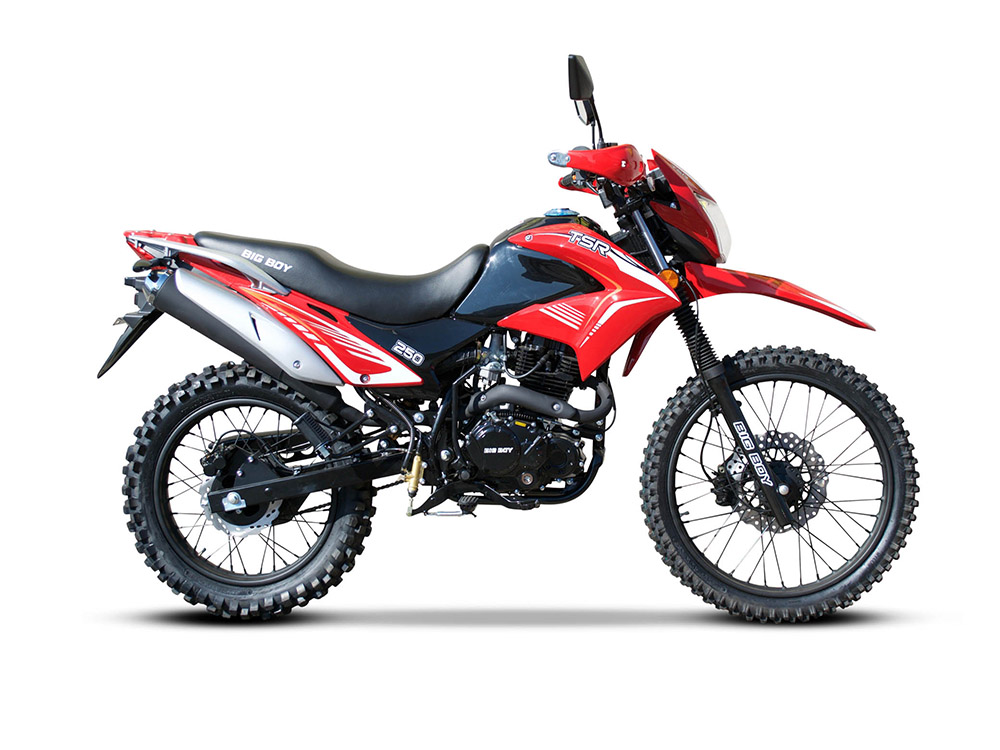
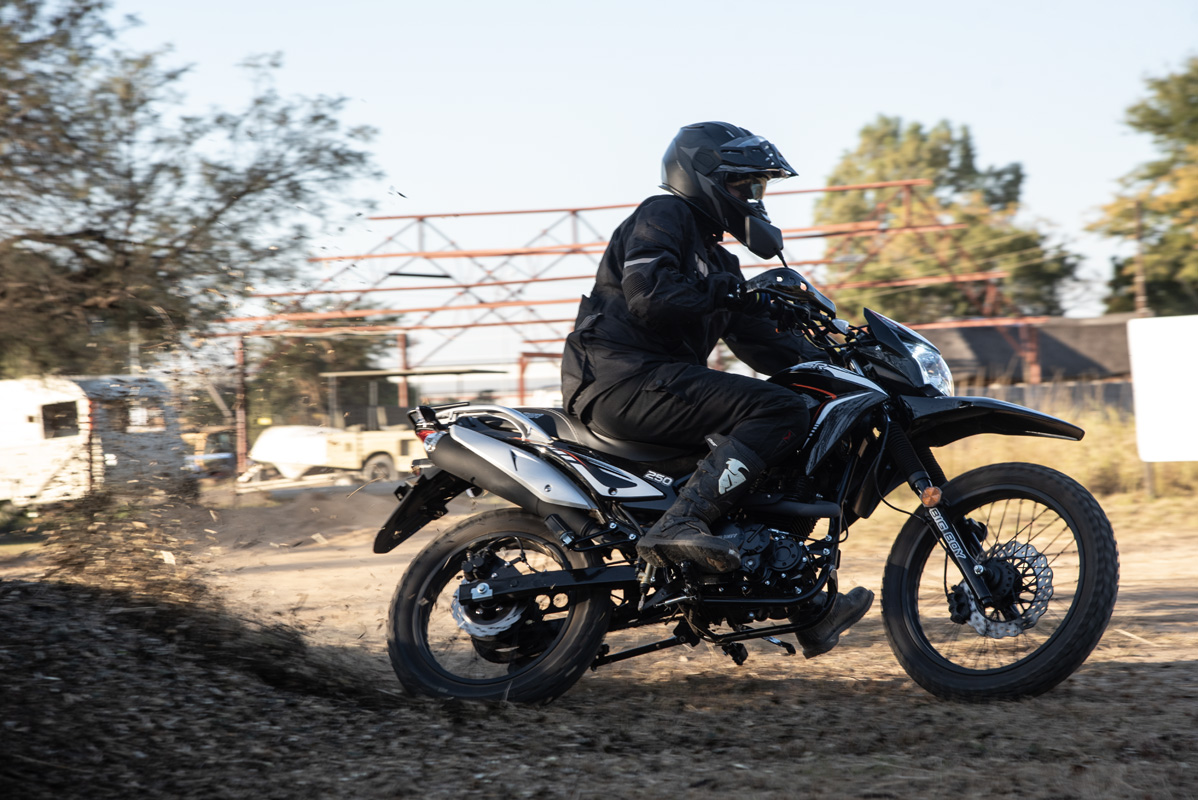
Big Boy is a motorcycle brand that needs no introduction. Big Boy have proven themselves in the commercial space with their affordable pricing and good after-sales support, and their entry-level motorcycles have gotten many beginner riders into the two-wheeled world of motorcycling, thanks to the TSR, Revival and Velocity providing years and years of good service. Just over 90 dealers nationwide, over a decade of business in SA, and a 3-year 20,000 km warranty aren’t just a couple more words to finish this paragraph off; it’s a few reasons why Big Boy should be valued as a good brand to invest your hard-earned money with.
Photo credit: Bjorn Moreira / ZA Bikers
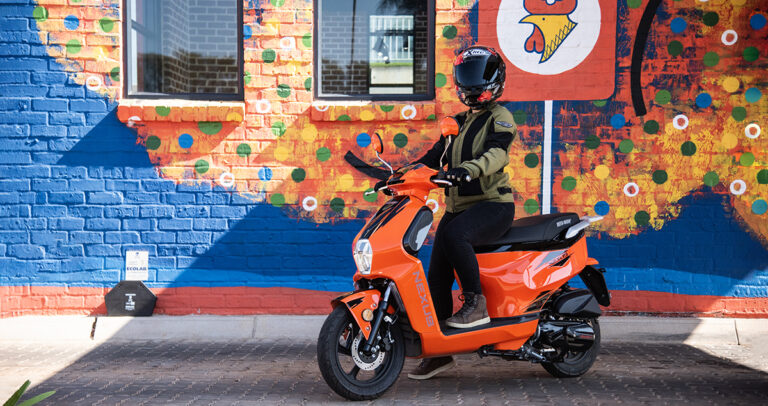
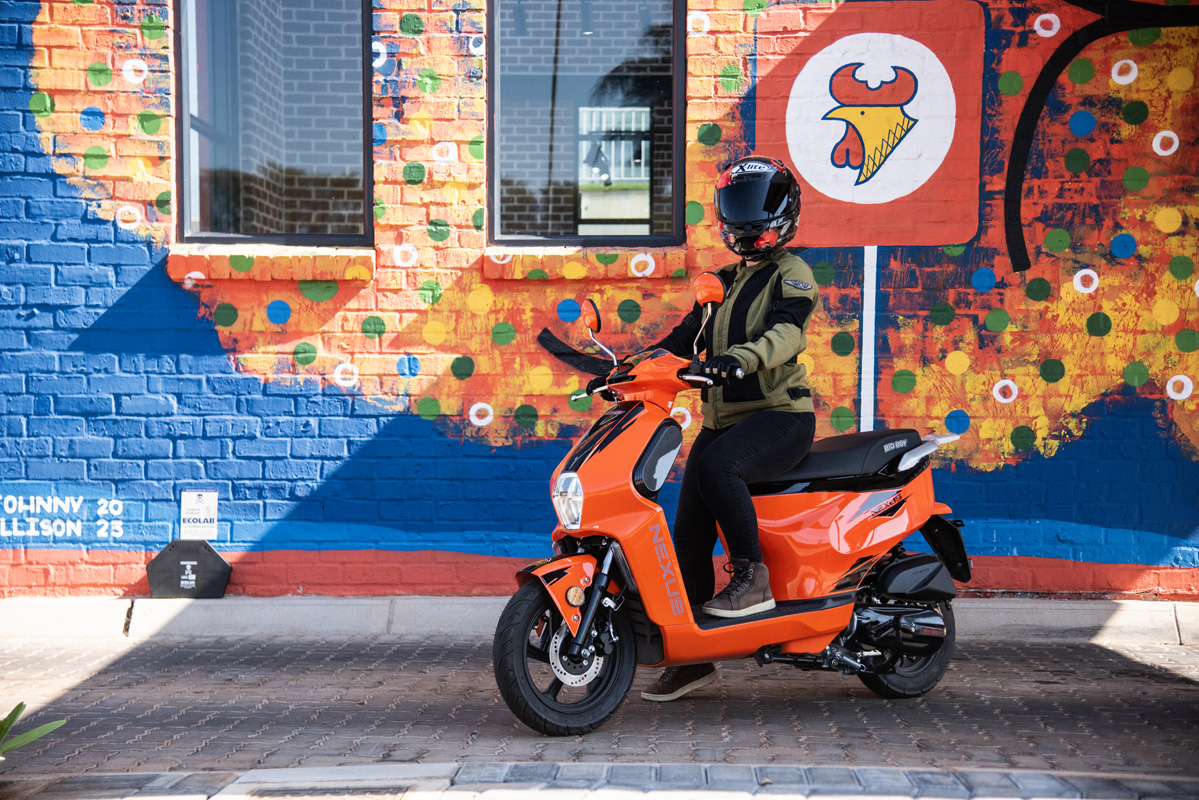
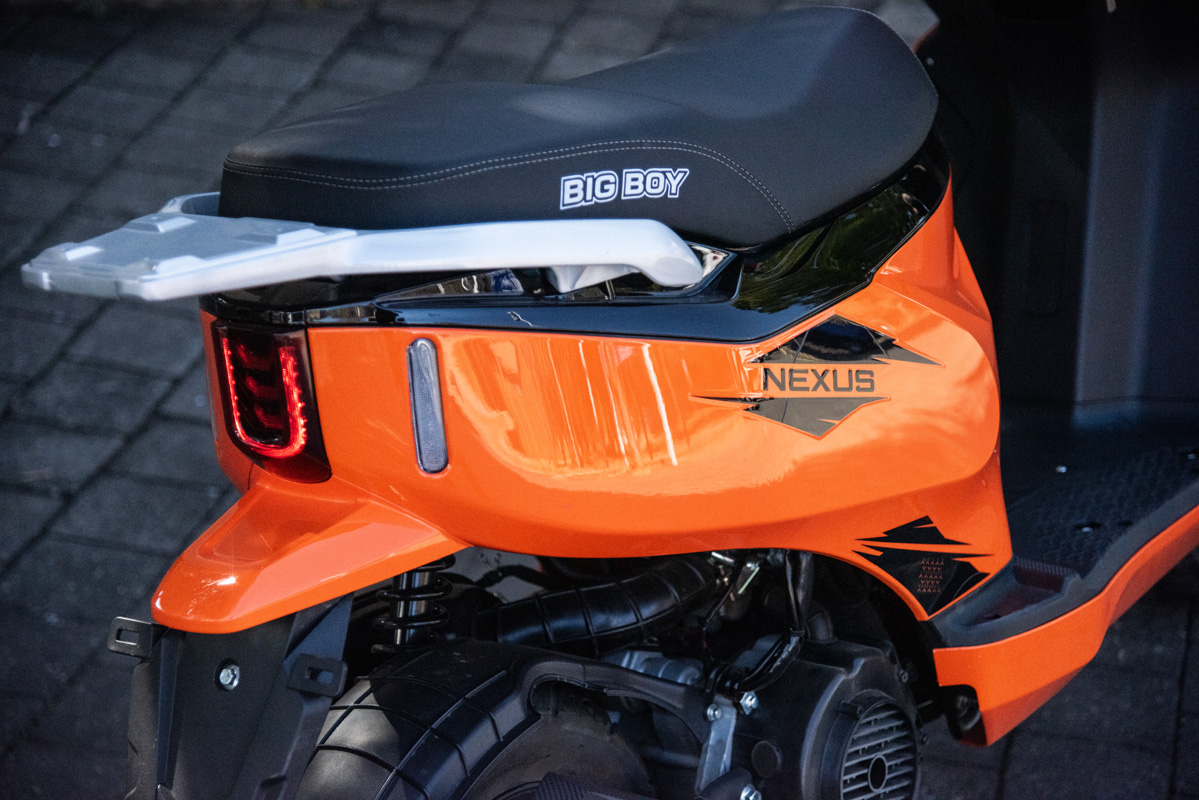
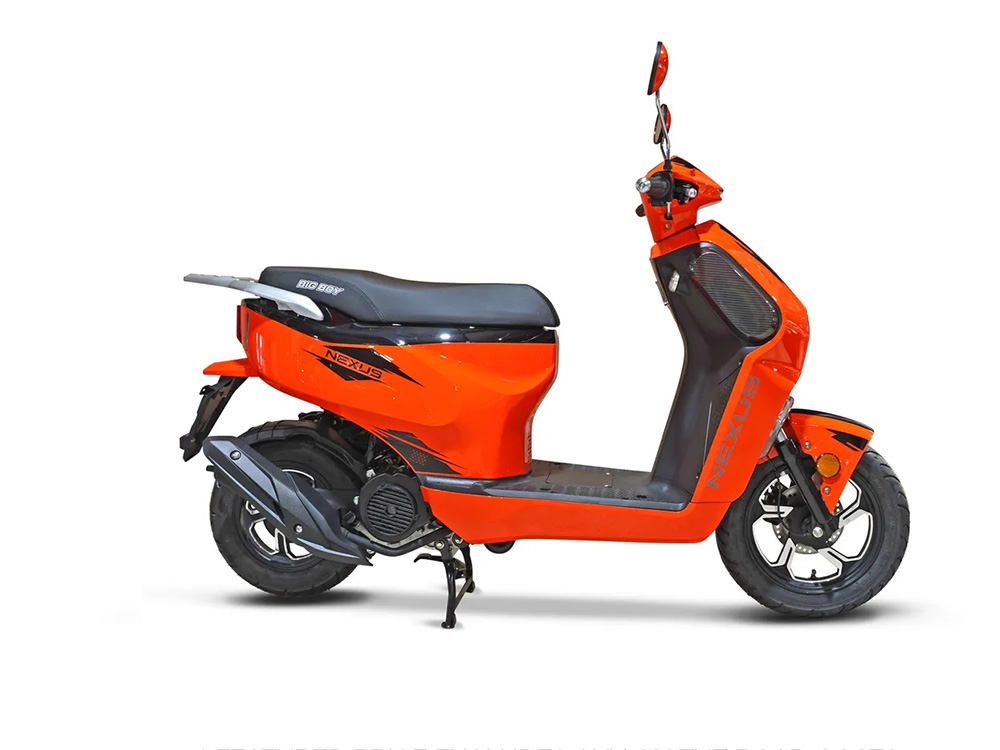
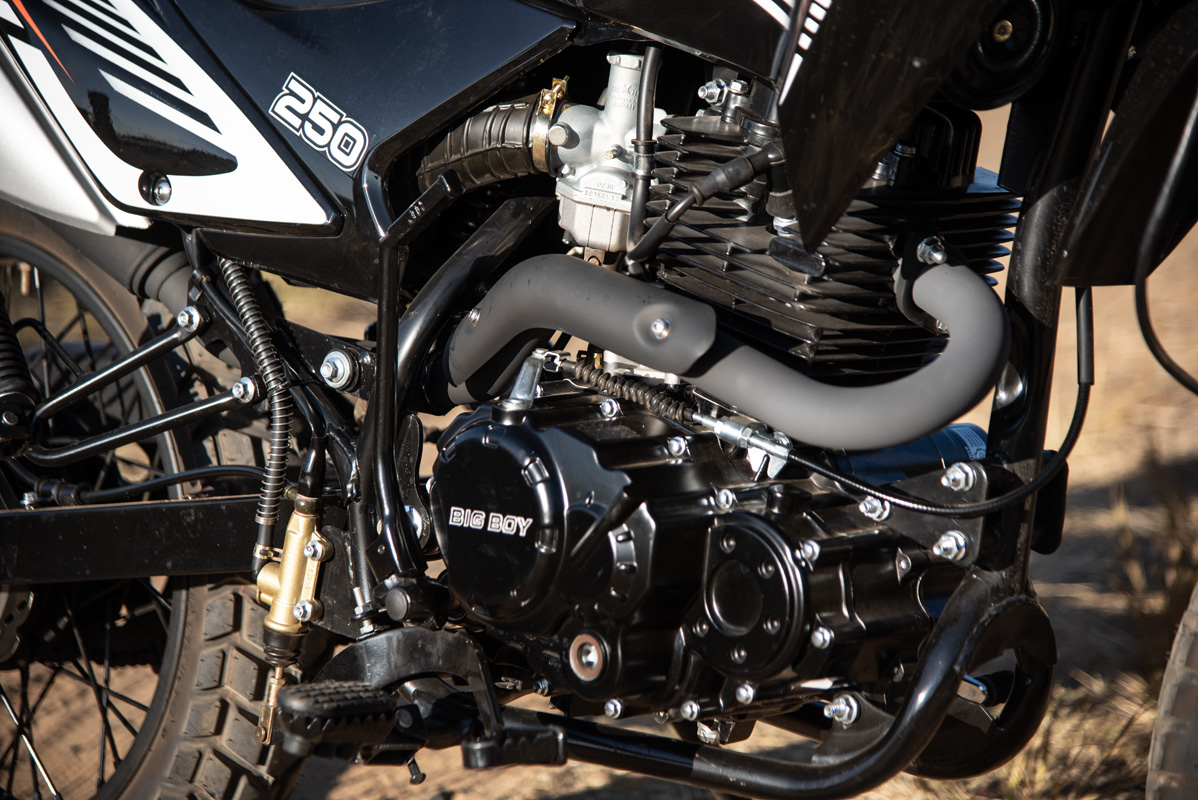
Going back to, if it ain’t broke, don’t fix it, this year we see a new scooter on the block, but with a motor that has been used in Big Boy’s existing lineup for a while now, we are talking about the NEXUS 125. Now, the ‘Nexus’ is Big Boy’s new entry into their range of scooters, offering riders and commuters modern looks, modern features, very good pricing, at a cent under 20k, and the same 125 cc four-stroke air-cooled GY7 motor that has stood the test of time in the Revival, Slingshot, Adventure 125 RS and D-Lite 125. If it ain’t broke, don’t fix it, right?
Photo credit: Bjorn Moreira / ZA Bikers
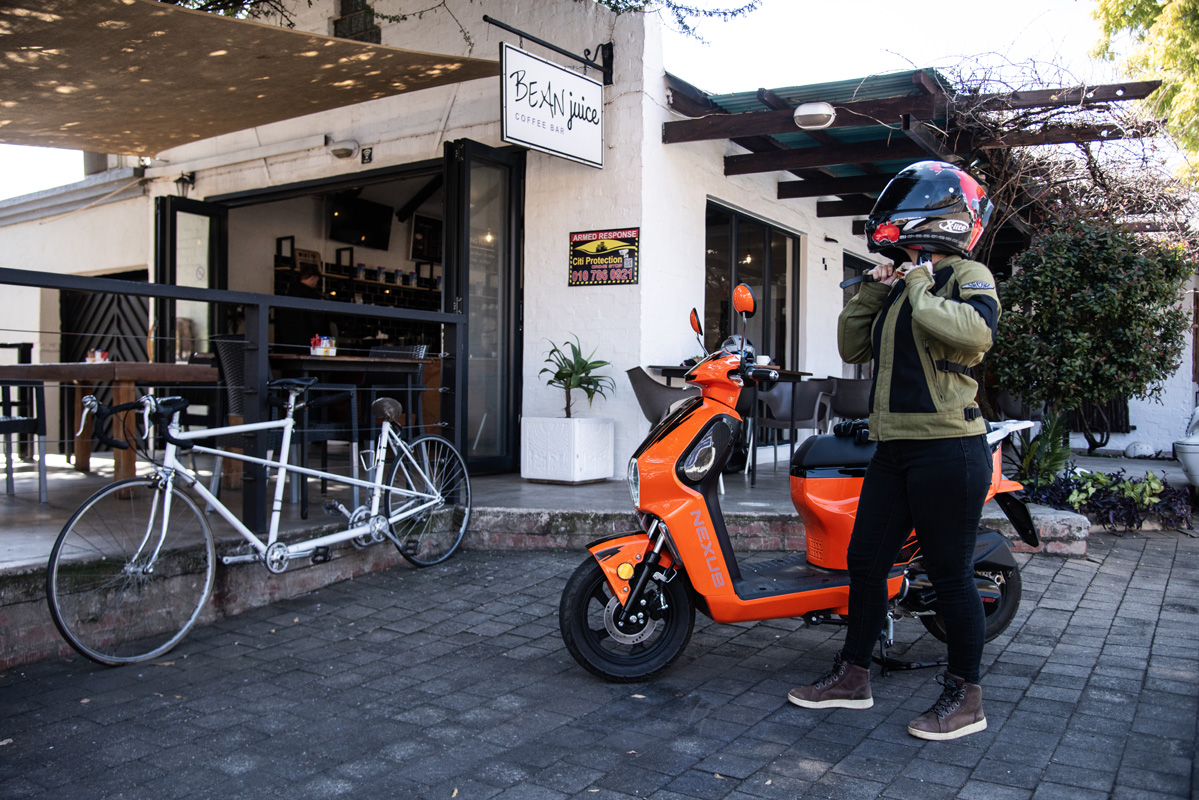
How do you choose which Big Boy scooter to buy if they are all the same? Well, just like you choose your favourite packet of chips. They come from the same soil, fried in the same oil, but all have different seasoning and therefore have a vast range of flavours that appeal to different riders. What am I getting at? Well, the Nexus is suited for the first-time 2-wheeled commuter wanting to ride to school, sports practice and if the family allow, to their mate’s house after homework. It’s also a great scooter for those who stay close to work and don’t need to spend much time on highways, and don’t want to ride or drive an overkill vehicle 10 or 20 km down the road. I’m sure we’ll see the Nexus used in the commercial space, but I honestly think it’s a great commuter and shouldn’t be overlooked as just another “delivery bike”.
Photo credit: Bjorn Moreira / ZA Bikers
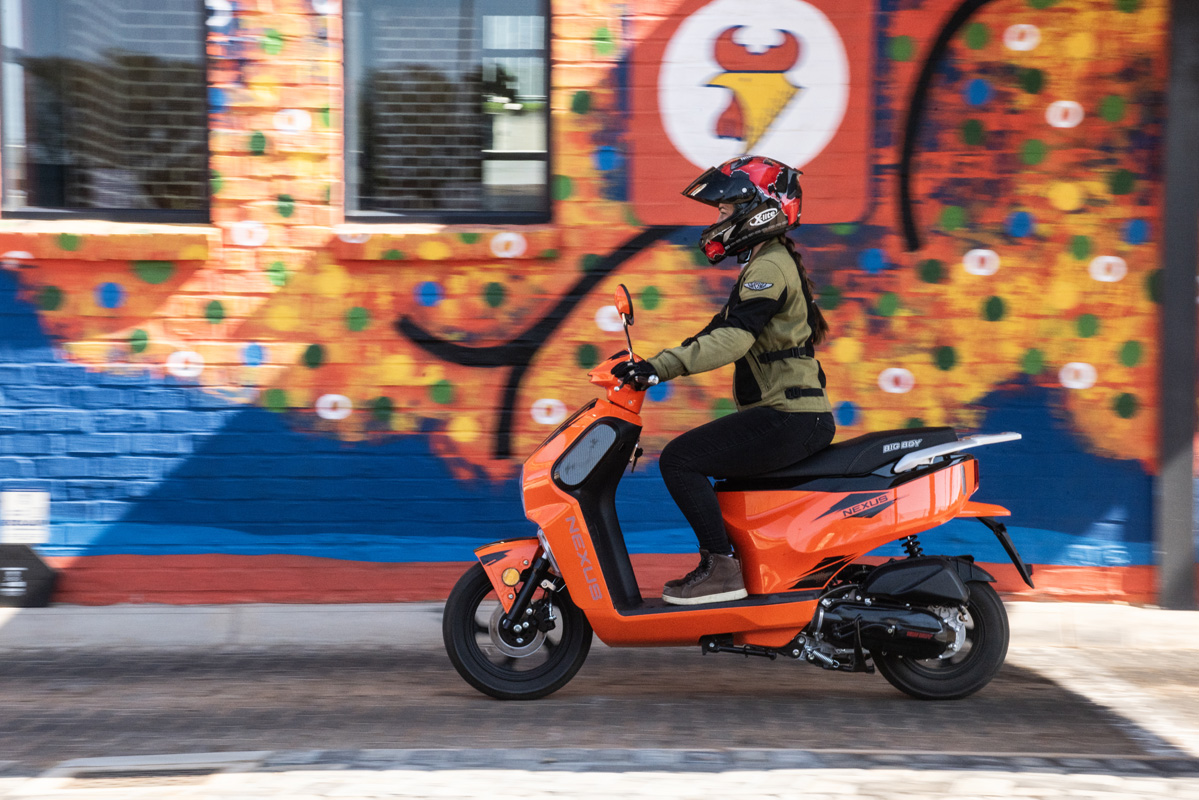
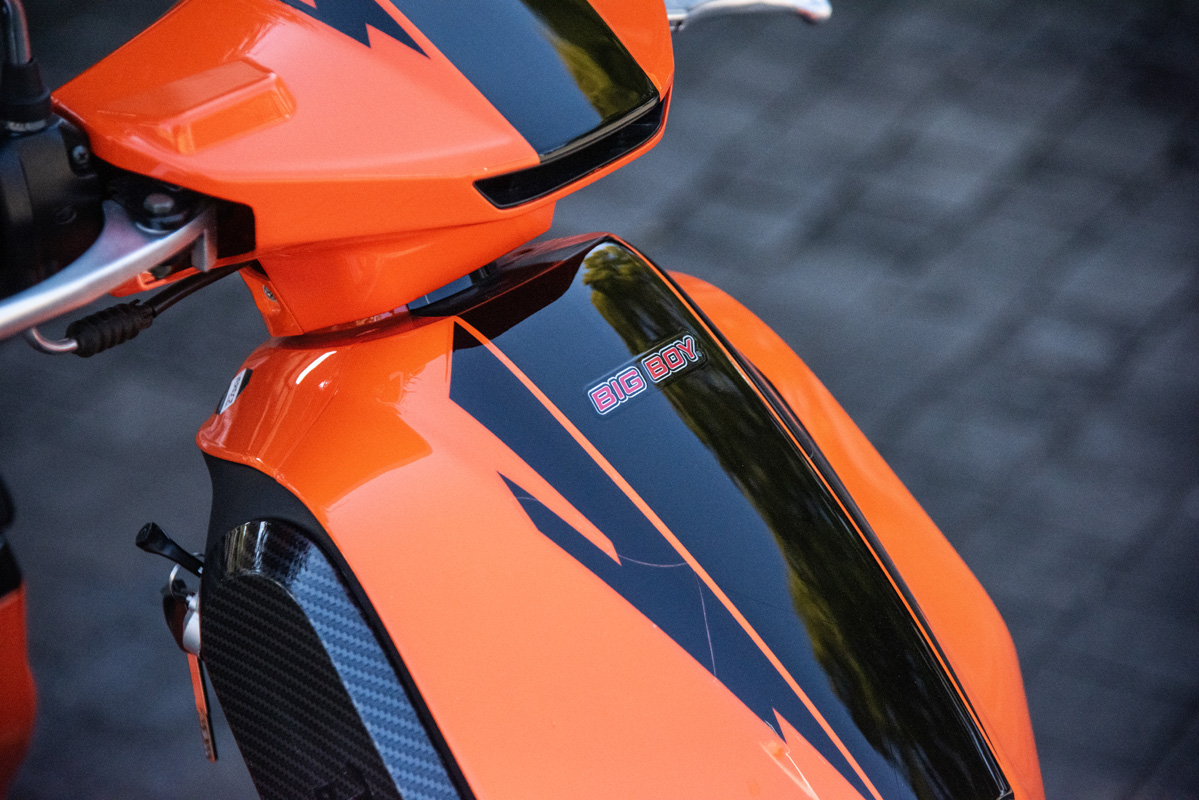
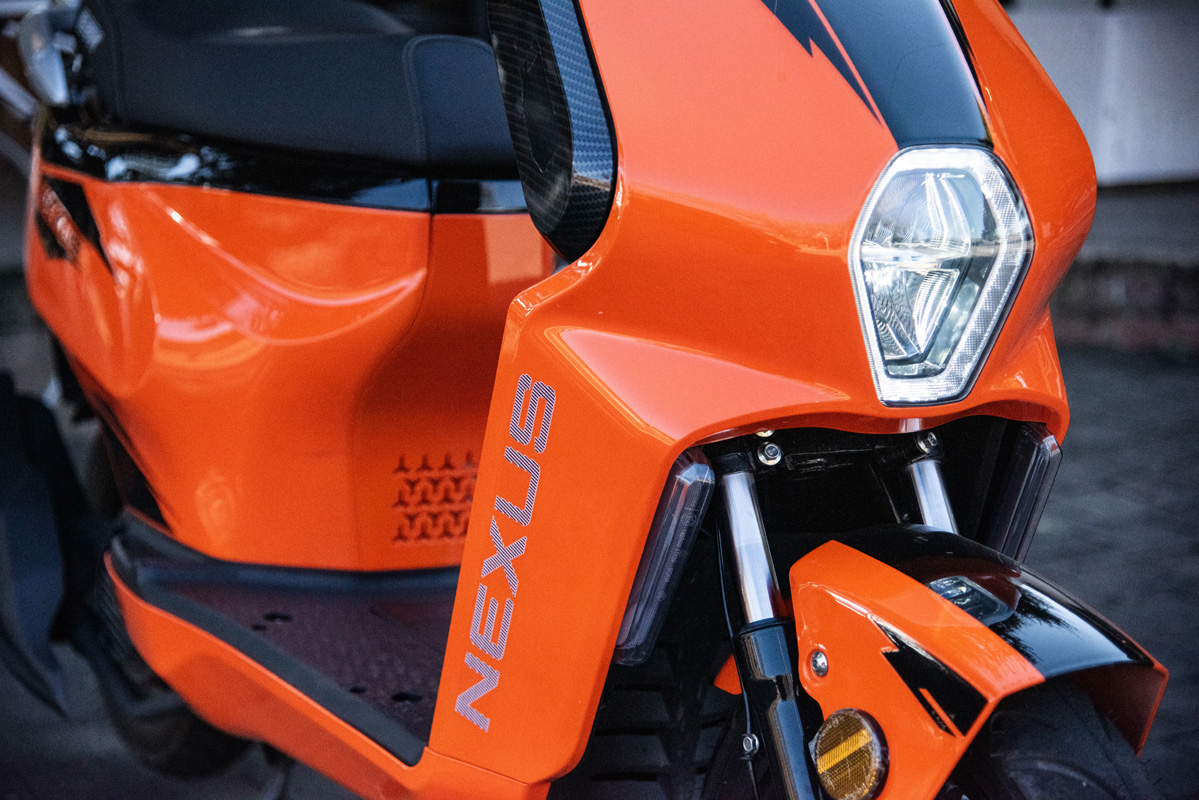
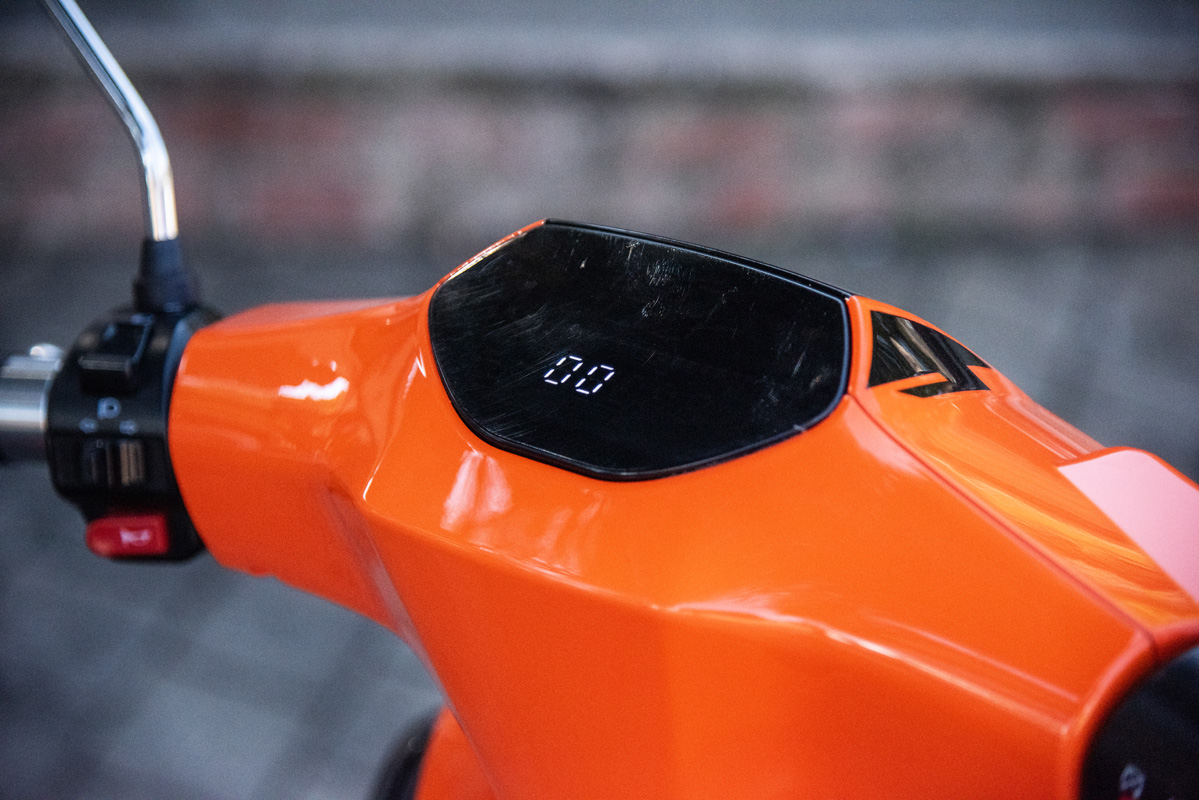
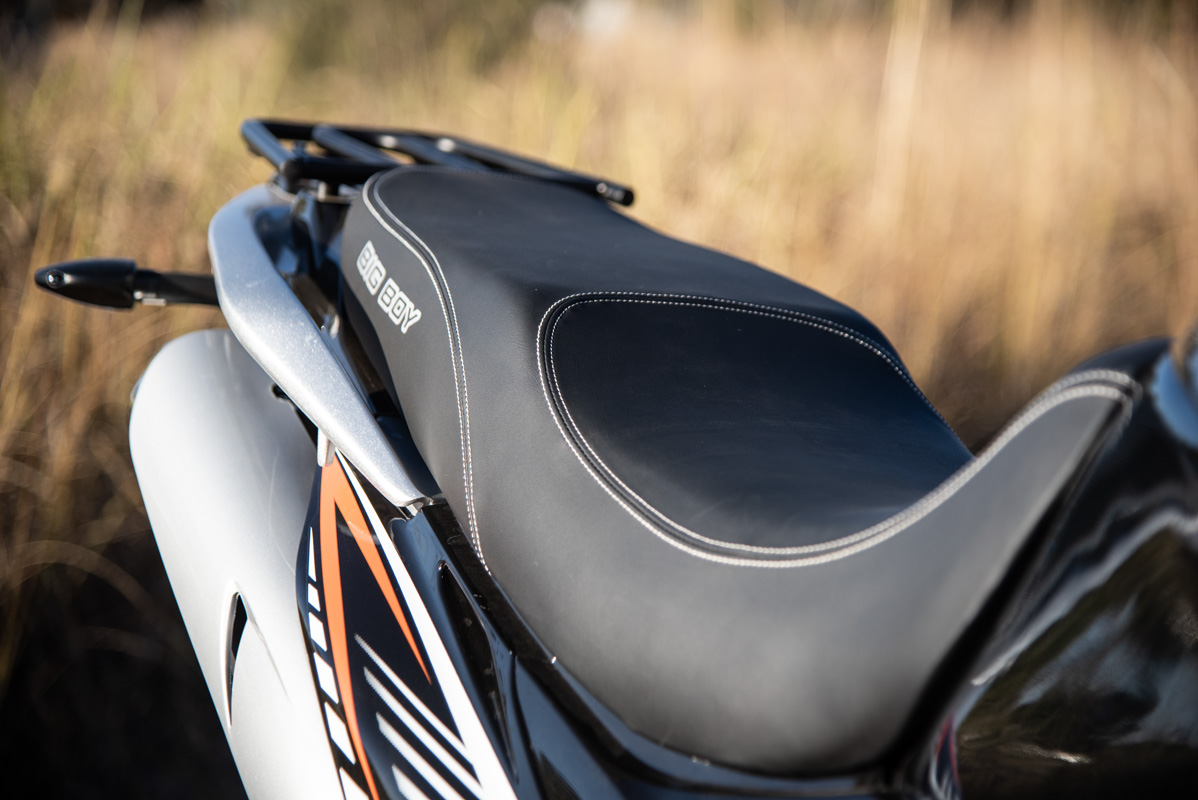
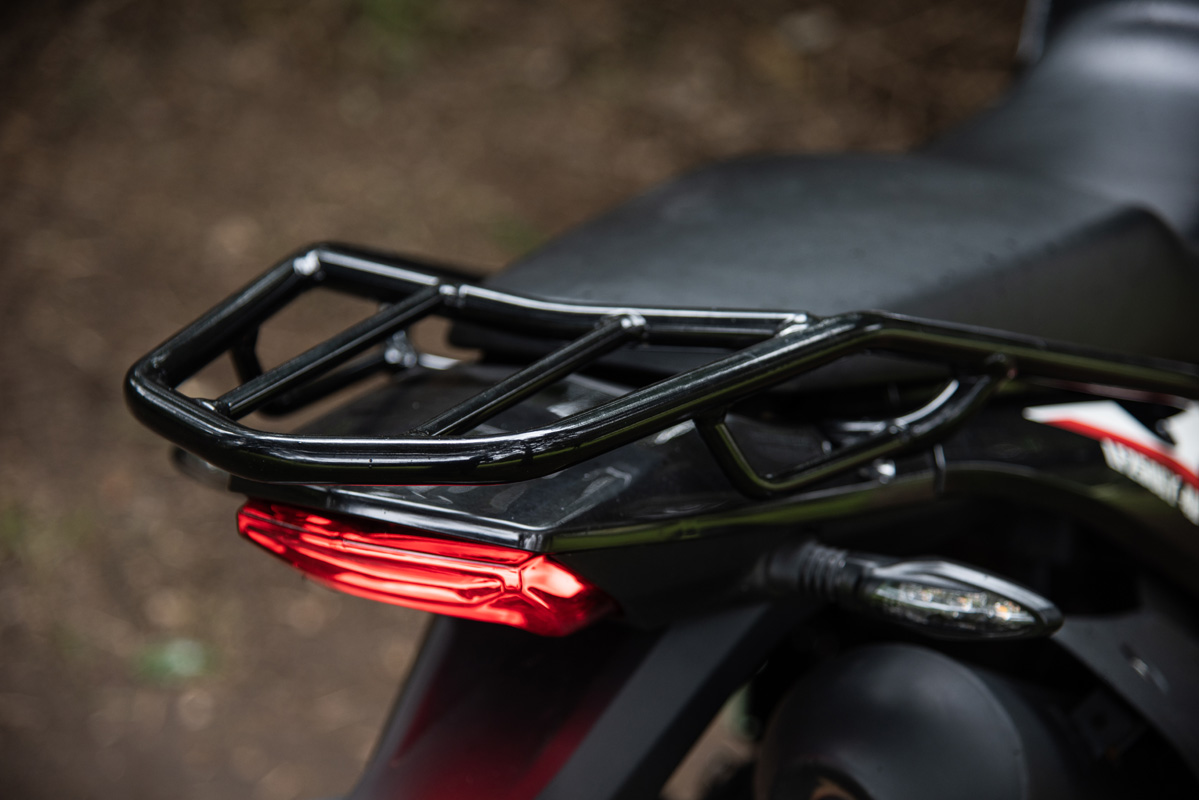
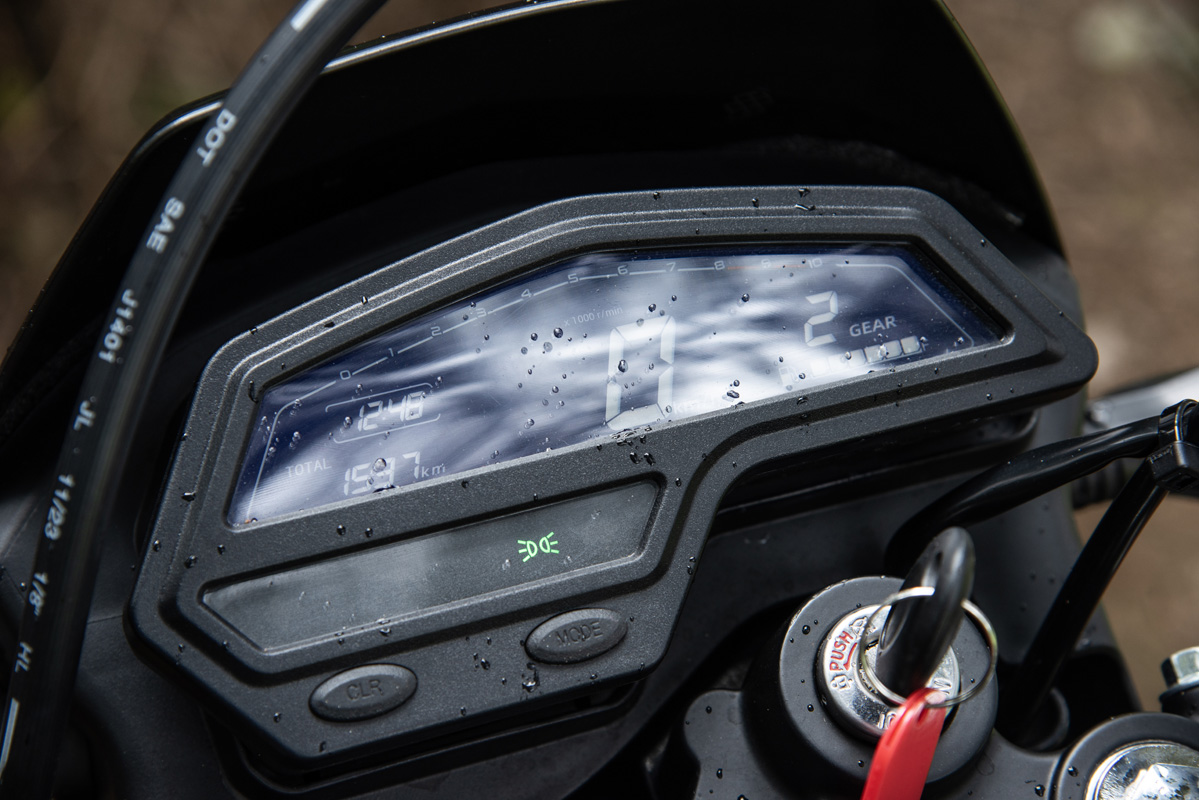
The Nexus comes in three colours: white, a sleek grey and as seen on our test bike, a very vibrant orange. Matching its modern look is a small but classy LCD display, LED lighting, centre stand, ignition security lock and a decent-performing front disc brake. With the Nexus being a scooter, you have a storage option under the very comfortable seat, it’s big enough to fit a single bag grocery run, and there is an additional luggage hook for that second bag. Unfortunately, you won’t be able to fit a full face helmet under the seat, which is a pity, so a backpack or laptop bag will have to be your main storage option, unless you fit a topbox on the rear rack.
Photo credit: Bjorn Moreira / ZA Bikers
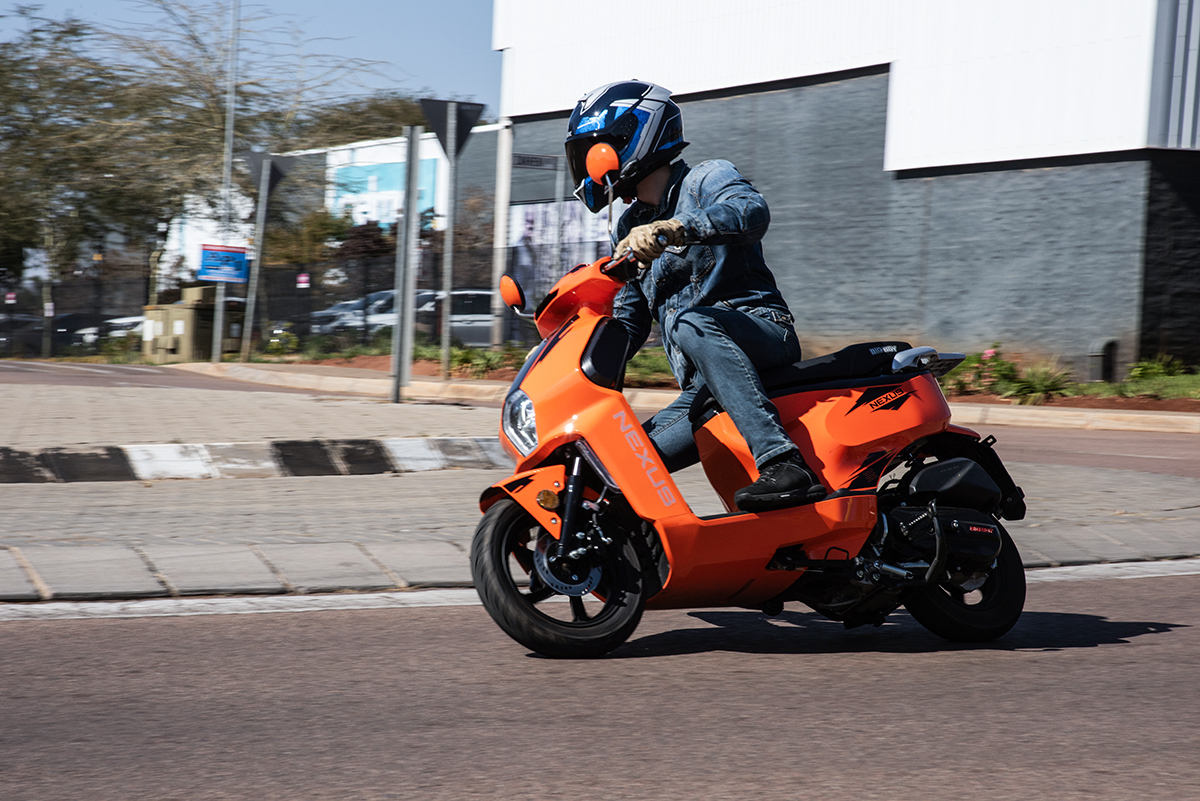
Compact, smooth and fun best describe the Nexus as soon a you hit the start button. The Nexus really is a compact bike that weighs a smidge under 100 kg, which makes it easy to manoeuvre, peppy off the line, and it returns a decent fuel economy of just under 3.0L/100 km, getting you around 200 km out of its 6 litre tank. As mentioned above, the Nexus has a proven 125 cc 4-stroke air-cooled GY7 motor seen in many Big Boy scooters and delivers a smooth ride from its CVT transmission and a decent top end just under 90 km/h.
Photo credit: Bjorn Moreira / ZA Bikers
The Nexus gets a lot of attention wherever you go, getting the occasional “that’s cute”, or “is it electric?”, and most of the time, “that’s a cool scooter, how much”? When you are riding the Nexus, it has a comfortable upright riding position, and although compact from a wheelbase and design point of view, it still offers enough room for both tall and short riders. With the dimensions of the Nexus being quite small, we see a weight limit of 110 kg, which in turn means you’ll most likely use the Nexus as a single-seater commuter for the most part—if you want to avoid putting strain on the mechanics.
Photo credit: Meredith Moreira / ZA Bikers
Just as NASA adopted its “faster, better, cheaper” philosophy in the 1990s, we see Big Boy, along with many other motorcycle and car manufacturers, adopting similar methods today. And that brings us to our conclusion of Big Boy’s Nexus 125. The flavour that the Nexus 125 brings to Big Boy’s lineup of scooters is its youthful lifestyle charm, affordability and reliability.
Big Boy NEXUS 125:
For more information on the Big Boy NEXUS 125 featured in this article, click on the link below…
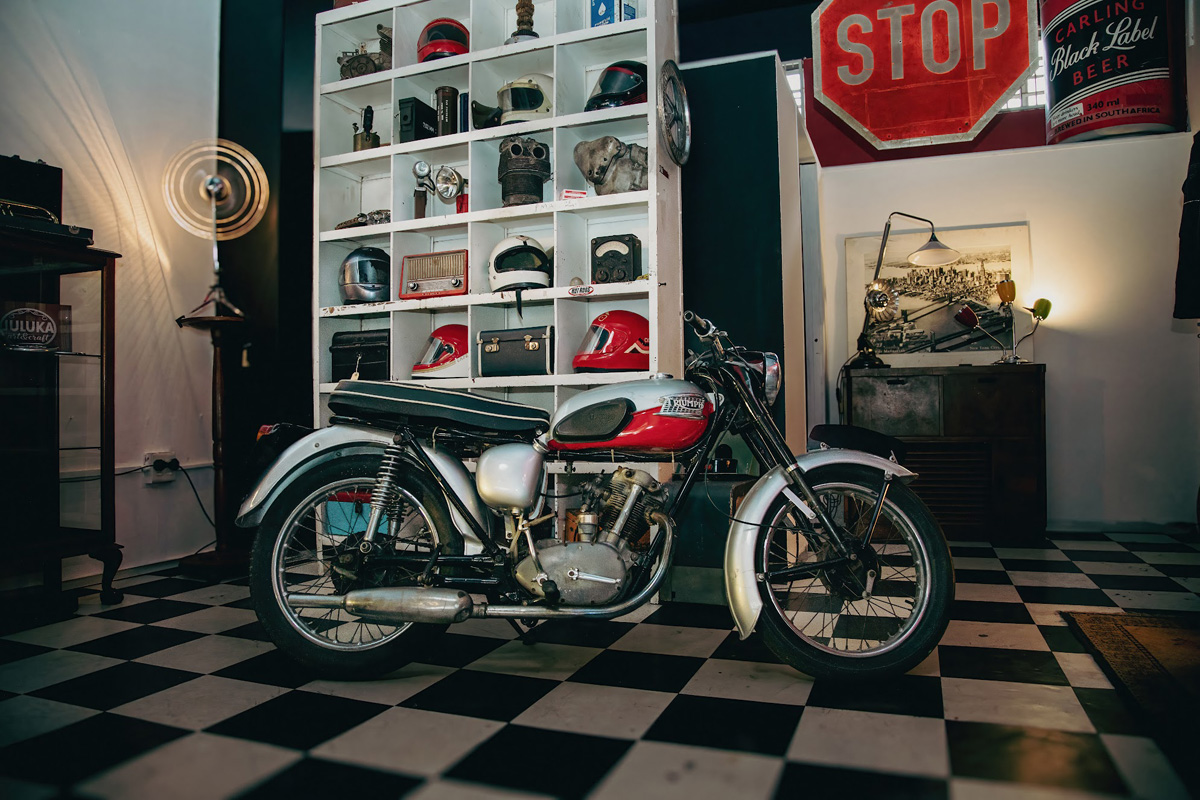
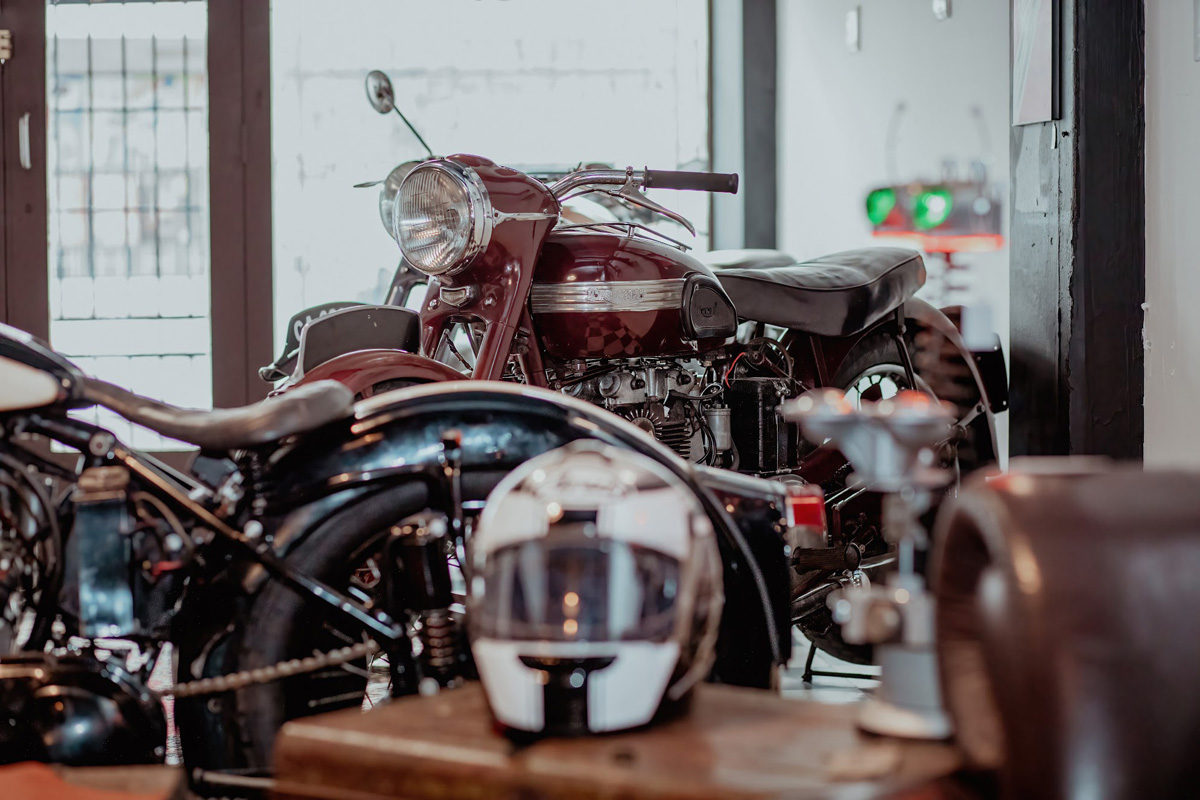
Classic motorcycles might not be everyone’s cup of tea, even if the story they tell is of the history of motorcycling; you can trace a direct line between the simple models of yesteryear to the technology-laden motorcycles of today.
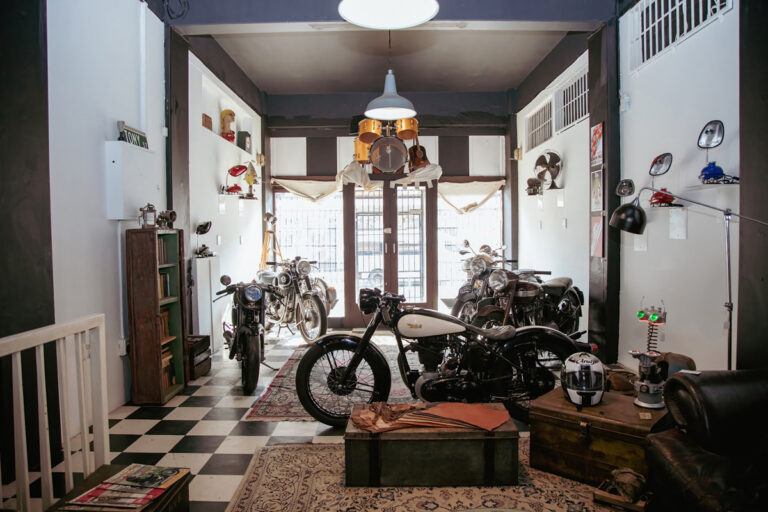
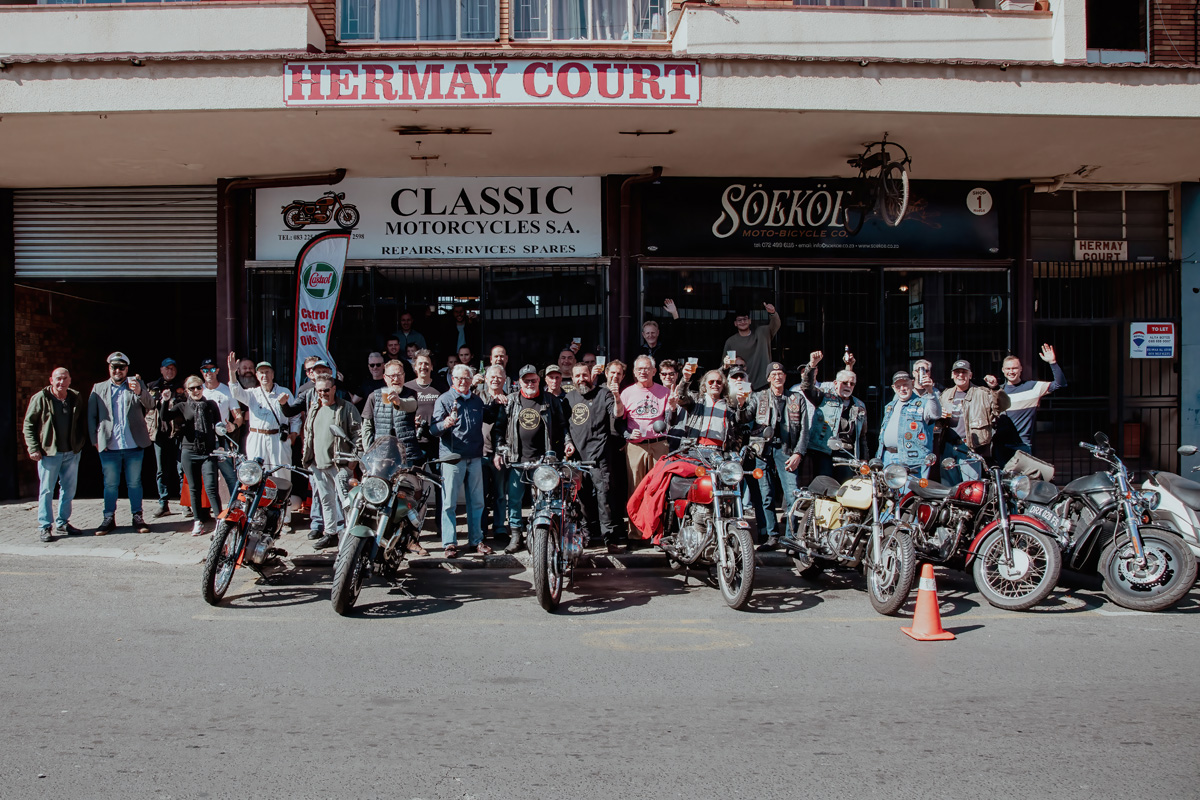
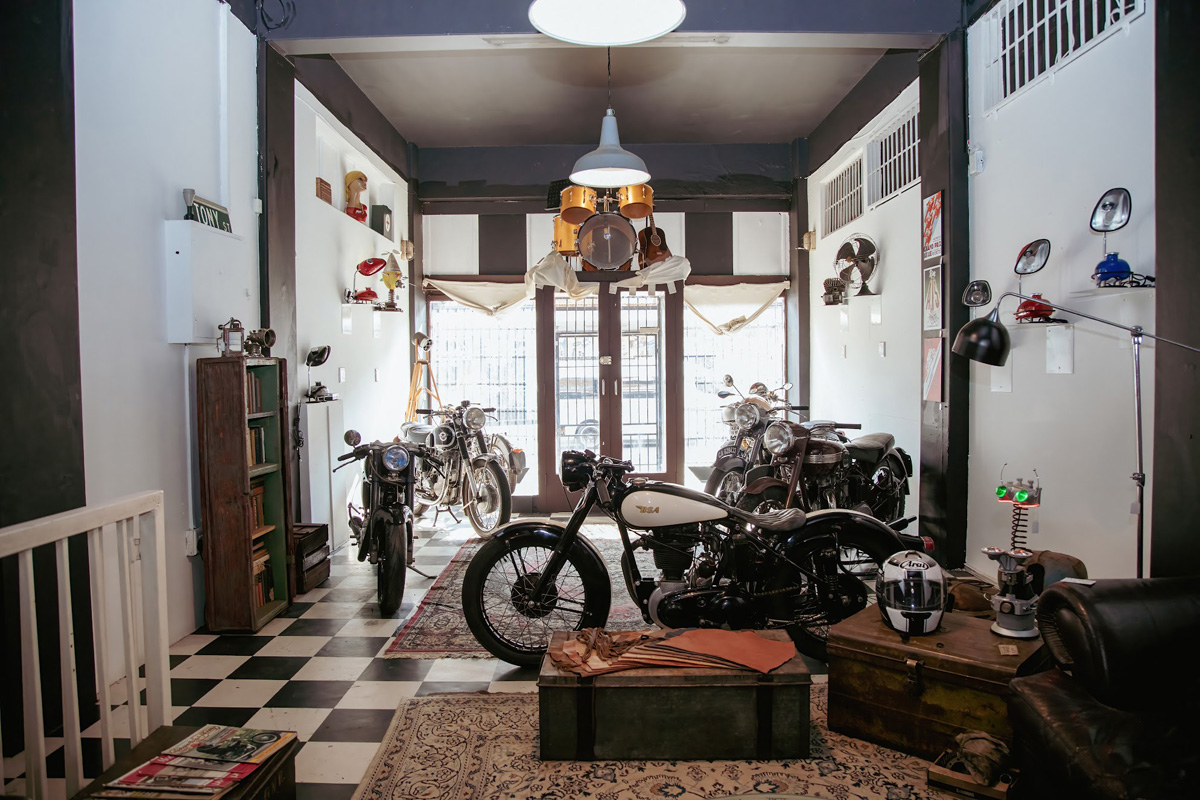
While many motorcyclists wouldn’t entertain the idea of running a classic, there is a large and very active classic scene in South Africa, and it is with this in mind that three enterprising fellows have opened Classic Motorcycles South Africa in Fishers Hill, Germiston, to sell, service and restore classic bikes.
Photo credit: michellebradshaw_photography / CMSA
Many of you will be familiar with Desmond Soekoe, manufacturer of excellent motorised bicycles. He, along with Tony Visser from the Rusty Trunk and Harry Fisher, whose work you will have read at www.zabikers.co.za, have thrown everything into the venture, believing that there is a gap in the classic market that is just crying out to be filled.
The new premises sits right next door to Soekoe’s shop at 14 Main Road, Fishers Hill and it is quickly becoming a hub for anyone who appreciates classic motorcycles.
Photo credit: michellebradshaw_photography / CMSA
One of the problems in running classic bikes is the availability of spares, either new or used. Classic Motorcycles SA can help with this, too, either from their stocks of used parts or through sourcing new parts from the UK. CMSA are also agents for the range of Castrol Classic oils.
Another problem comes with buying a classic, especially if there is no experience of running one in the past. With their wealth of experience, the guys can assist with this as well, whether it be helping find the classic you’re looking for or checking over a bike you’re interested in.
Photo credit: michellebradshaw_photography / CMSA
The shop is open every day of the week and from 9 a.m. to 2 p.m. on Saturdays. You can call them on 082 654 2598 or 082 771 2003, and you can follow them on Facebook: Classic Motorcycles SA.
One-make racing series are a cost-effective way of going racing, as well as offering close racing that’s popular with both entrants and spectators alike.
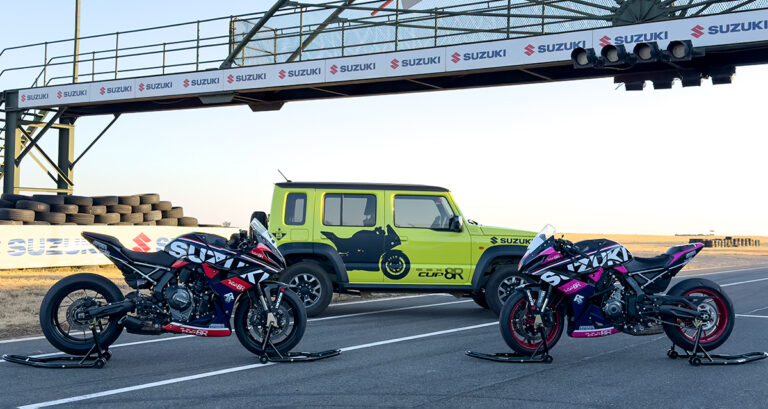
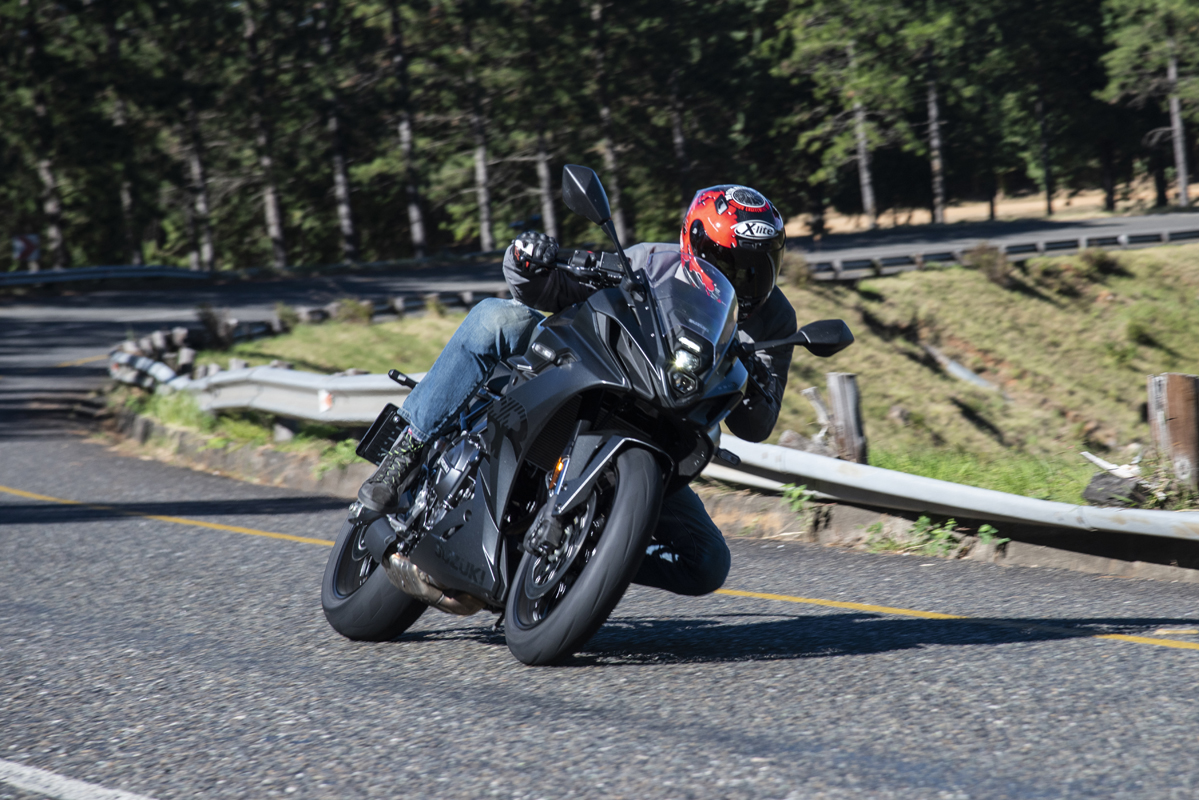
Suzuki’s latest sports road middleweights, the GSX-8S and GSX-8R, have made a significant impact within their respective classes, combining excellent performance and chassis dynamics with accessible pricing. The 8R, in particular, is an obvious basis for a one-make racing series, and that is exactly what Suzuki Motorcycle South Africa has just announced.
Photo credit: Meredith Moreira / ZA Bikers
The series has been approved as a class for the 2026 regional season and will take place in Gauteng initially, with a vision of expanding to other provinces in years to come as demand dictates.
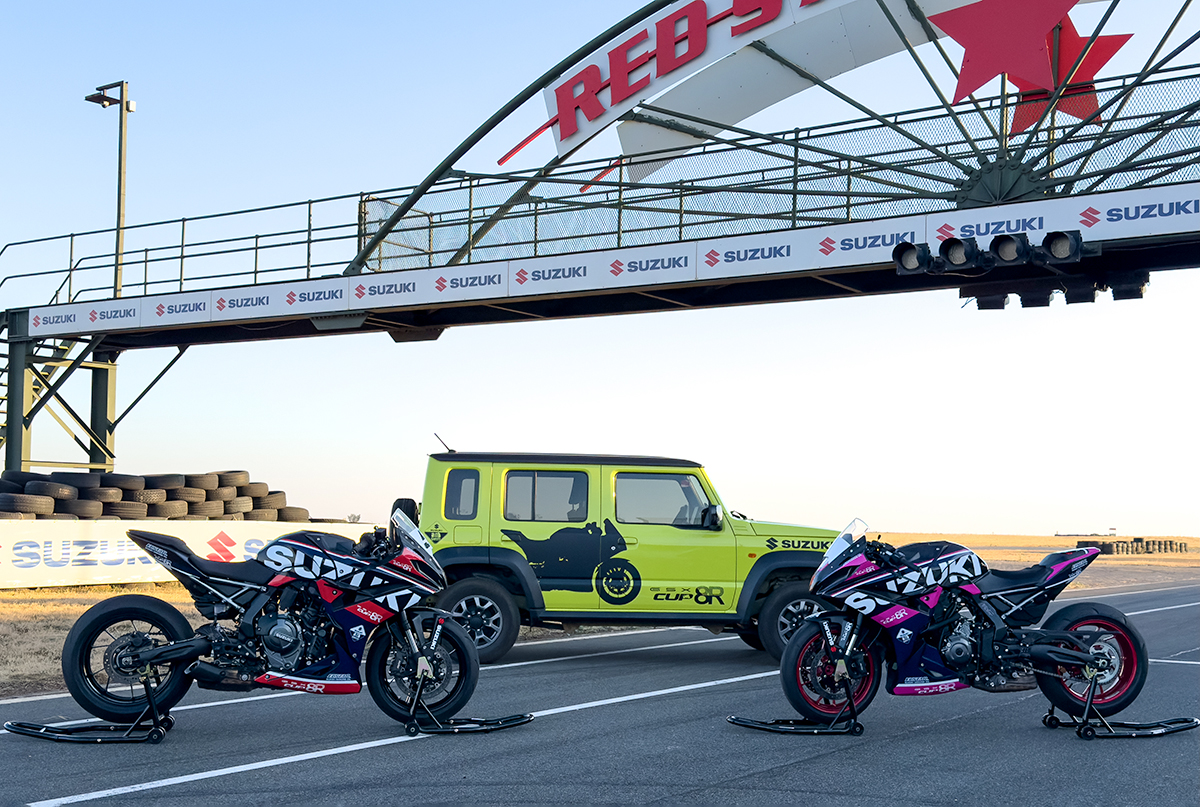
The GSX-8R models will be as close to standard as possible, allowing only for modifications with safety in mind. The racing is also as cost-effective as possible with a new bike on the grid for as little as R190 000. Furthermore, with only one set of tyres allowed for each round, the costs are under control. Individual round winners in 2026 will win a set of tyres for the next round, and the overall winner of the 2026 season will win tyres for the full 2027 season.
Image source: Suzuki
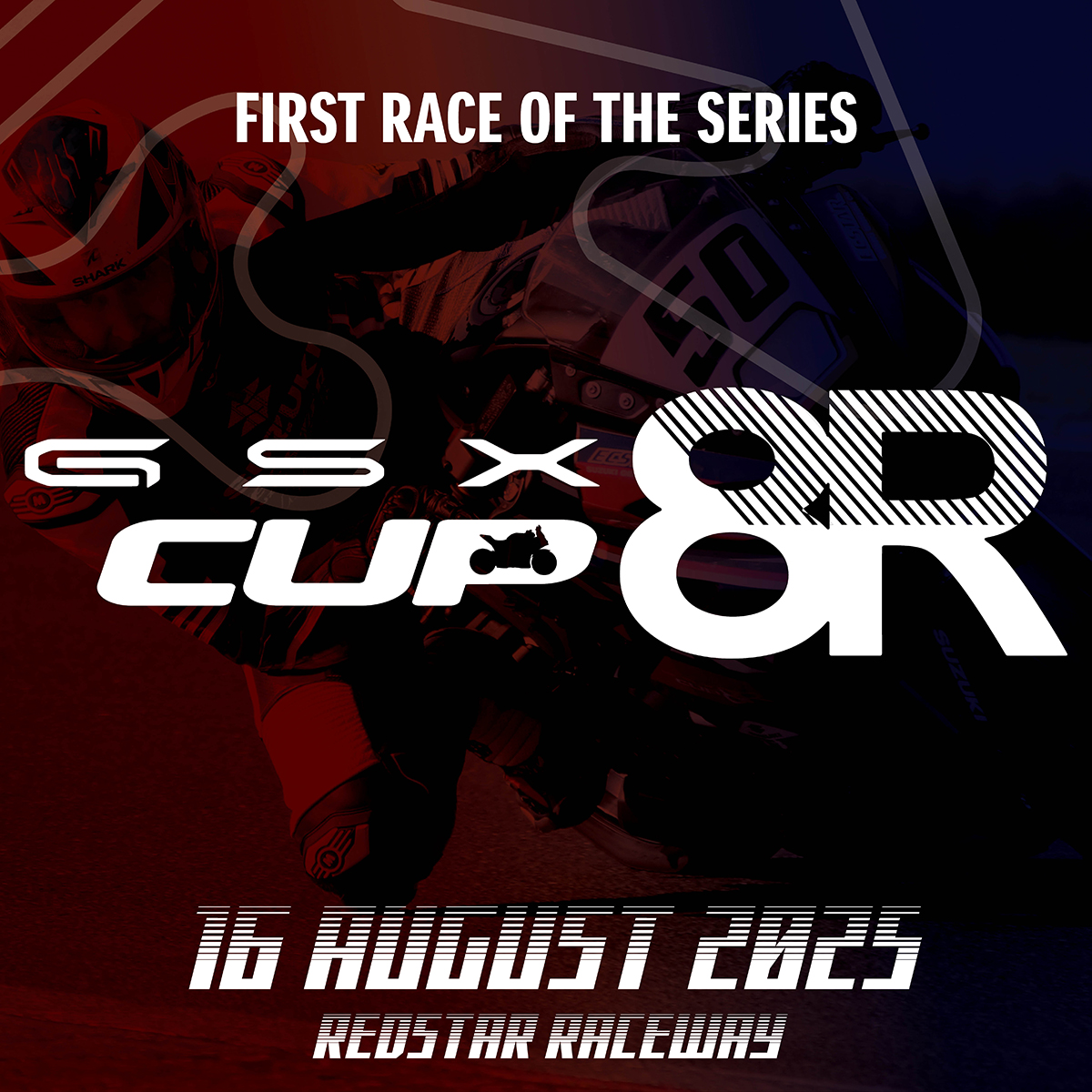
Two 8R Cup bikes will be in action in the “Under 500 cc” category at the upcoming race day, 16th August, at Red Star Raceway. Be sure to head over, have a look and chat with the Suzuki team representatives about the series for 2026.
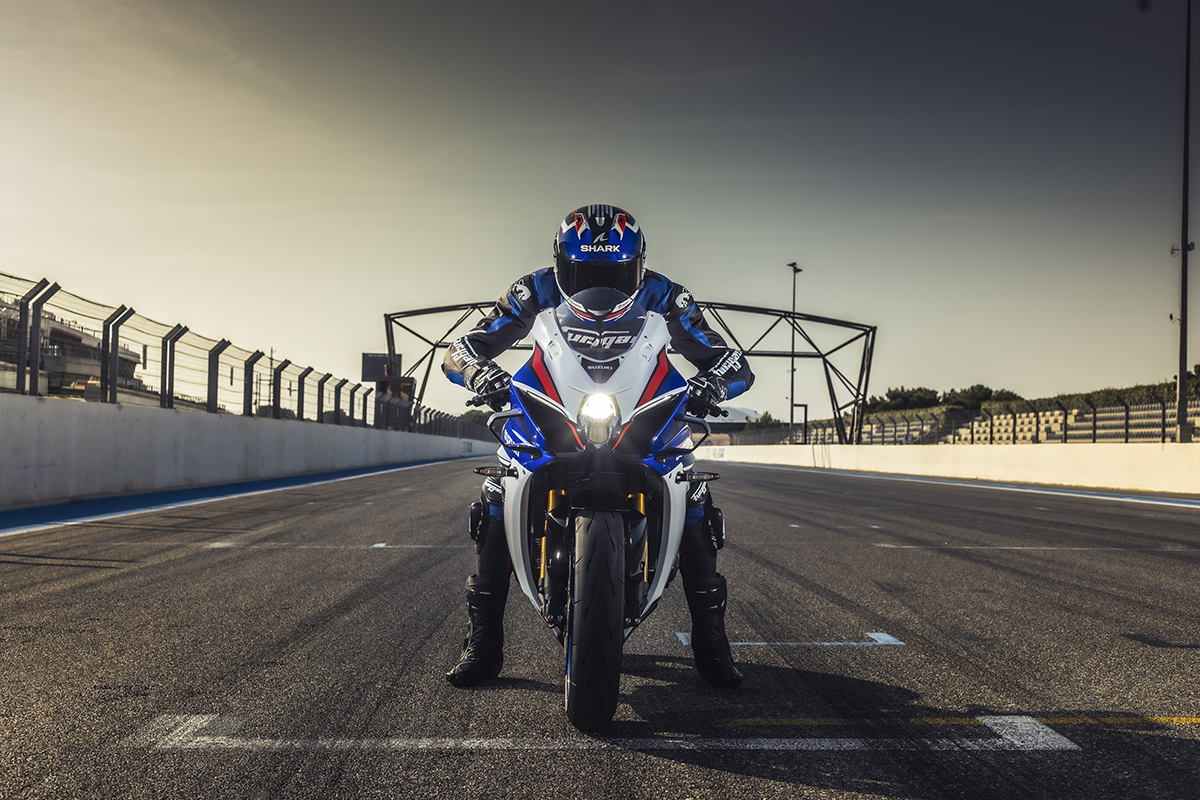
Sports bike fans have had a lean time of it in recent years. Sure, the likes of the Fireblade, ZX10 and R1 are still available, but manufacturers aren’t throwing as much development resource at them simply because sales have dropped through the floor. They are still nominally flagship models, showcasing the best technology the manufacturer has to offer and forming the foundation of production-based racing series, but in the face of the popularity of adventure bikes, the sports bike is nowhere.
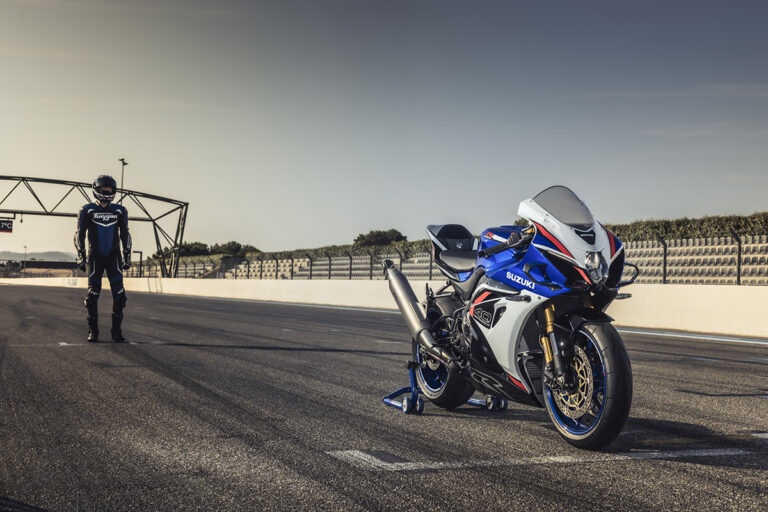
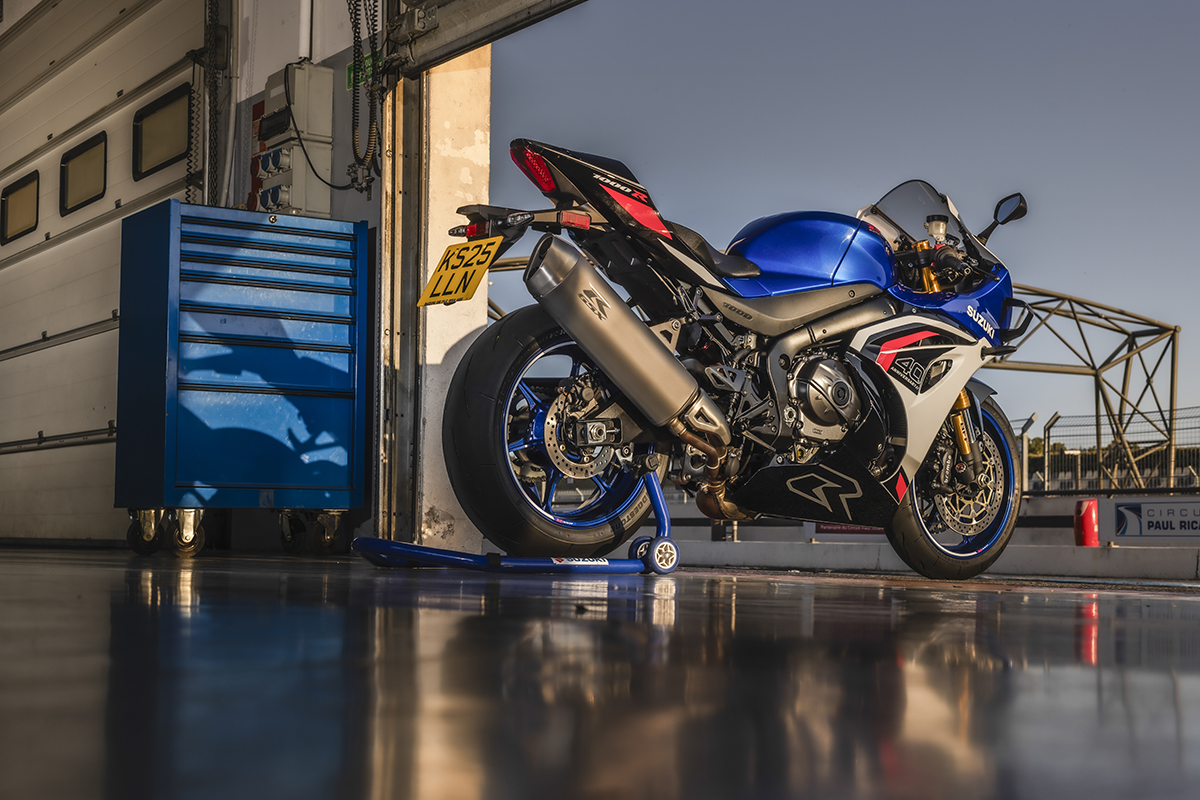
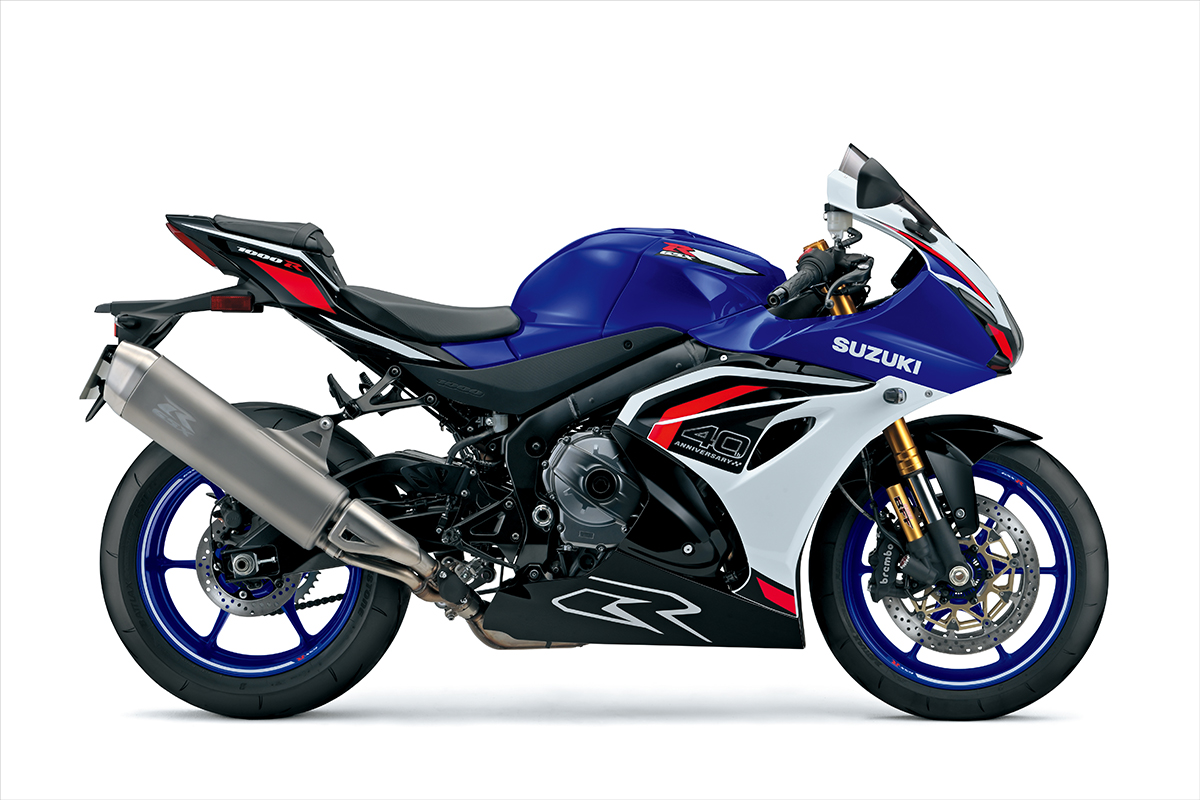
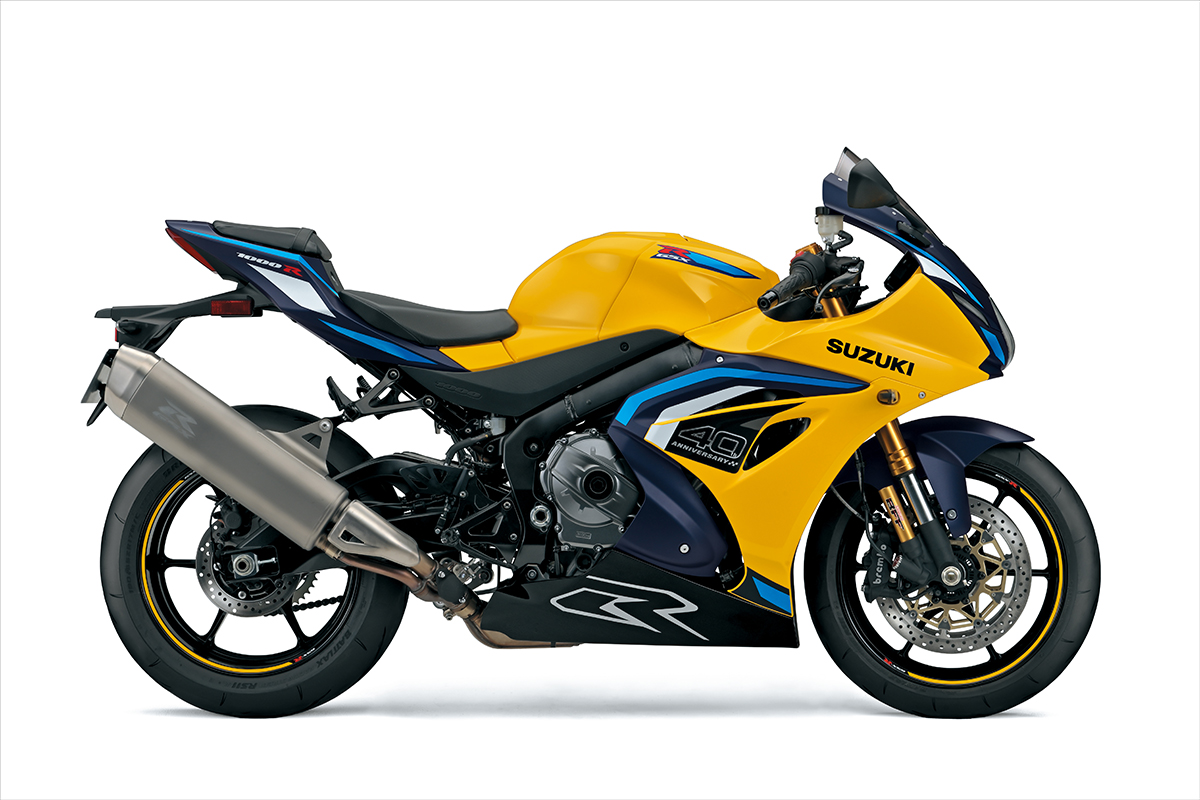
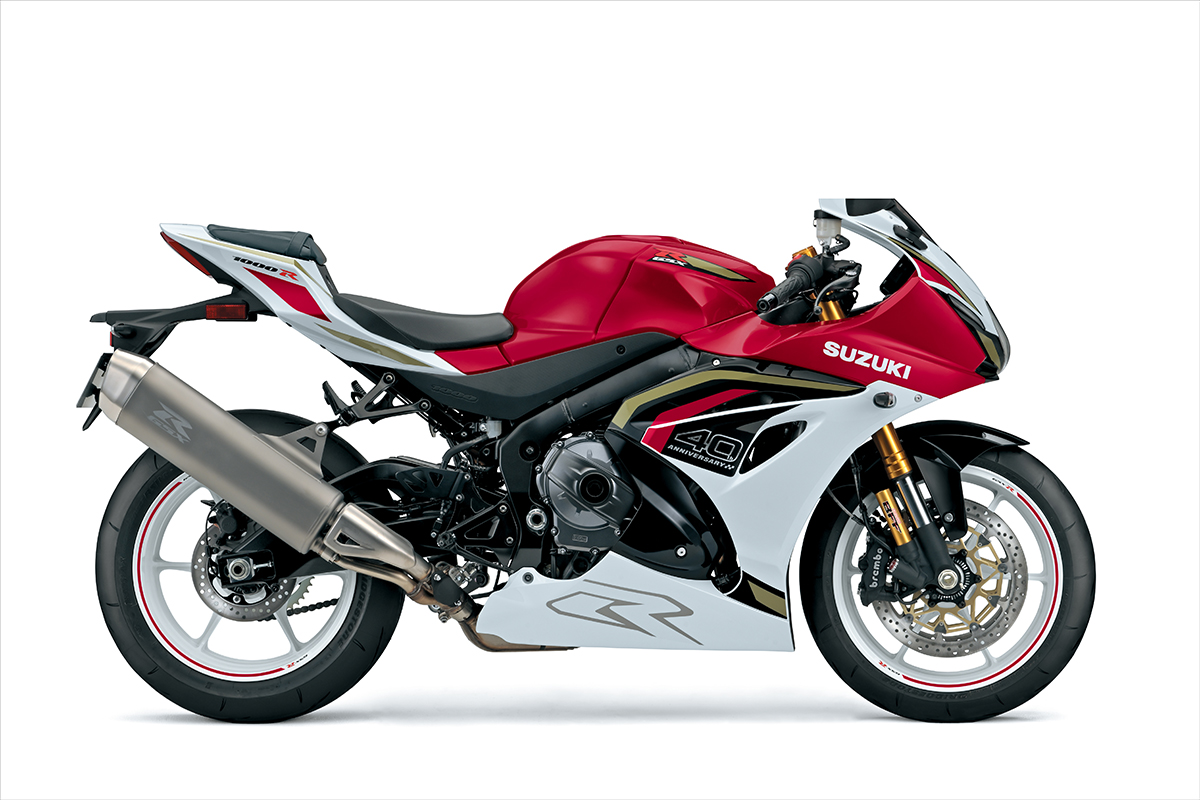
And then there is the immortal Suzuki GSX-R1000R. Forty years young this year, but it’s been absent from many countries’ sales lists for a while simply because it wasn’t meeting the latest Euro emissions regulations. Fans of the bike could be forgiven for thinking that that was it for their favourite superbike.
Image source: Suzuki
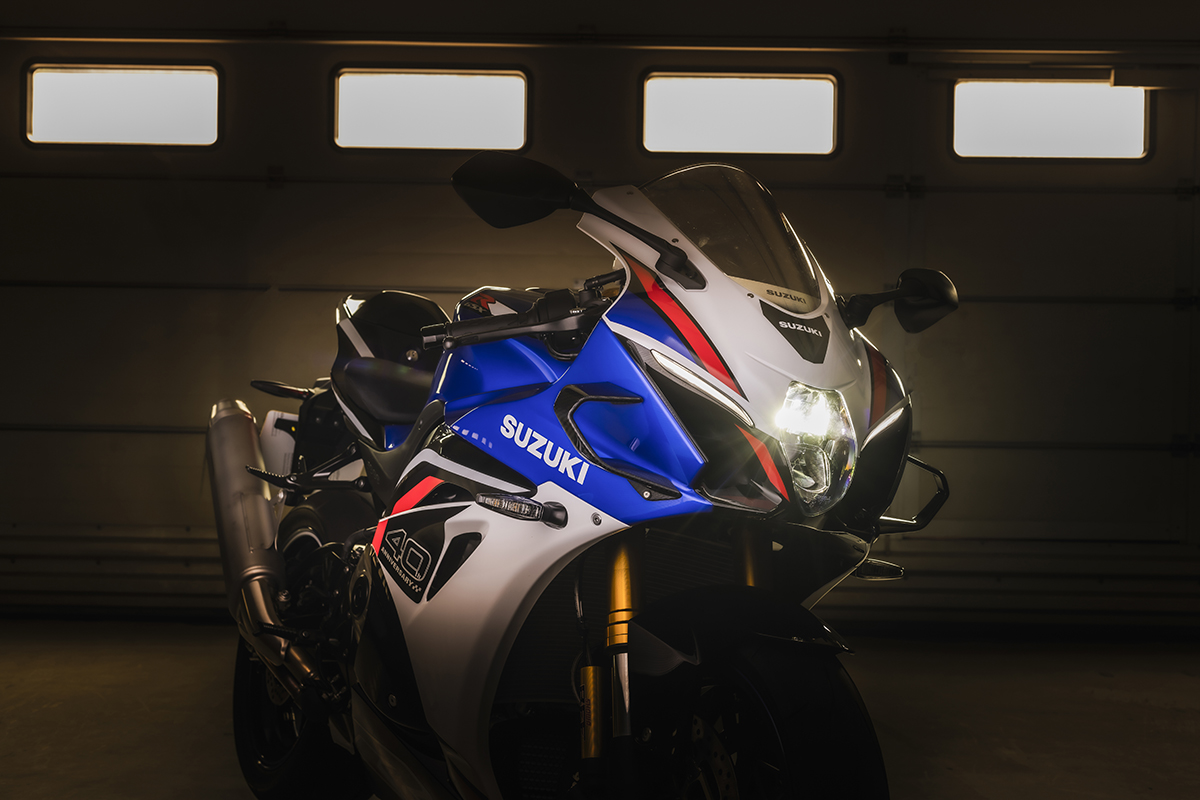
However, in a significant development, Suzuki has brought the Gixxer back to life, and it promises to be better than ever.
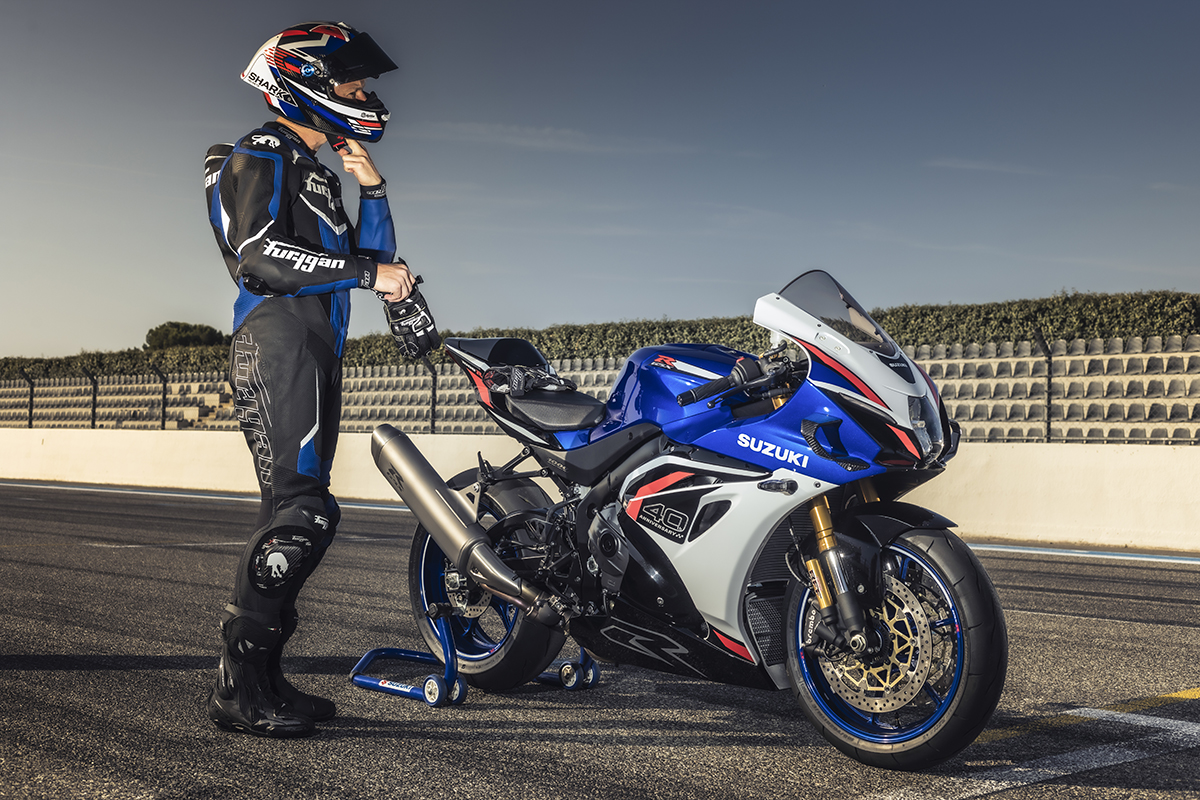
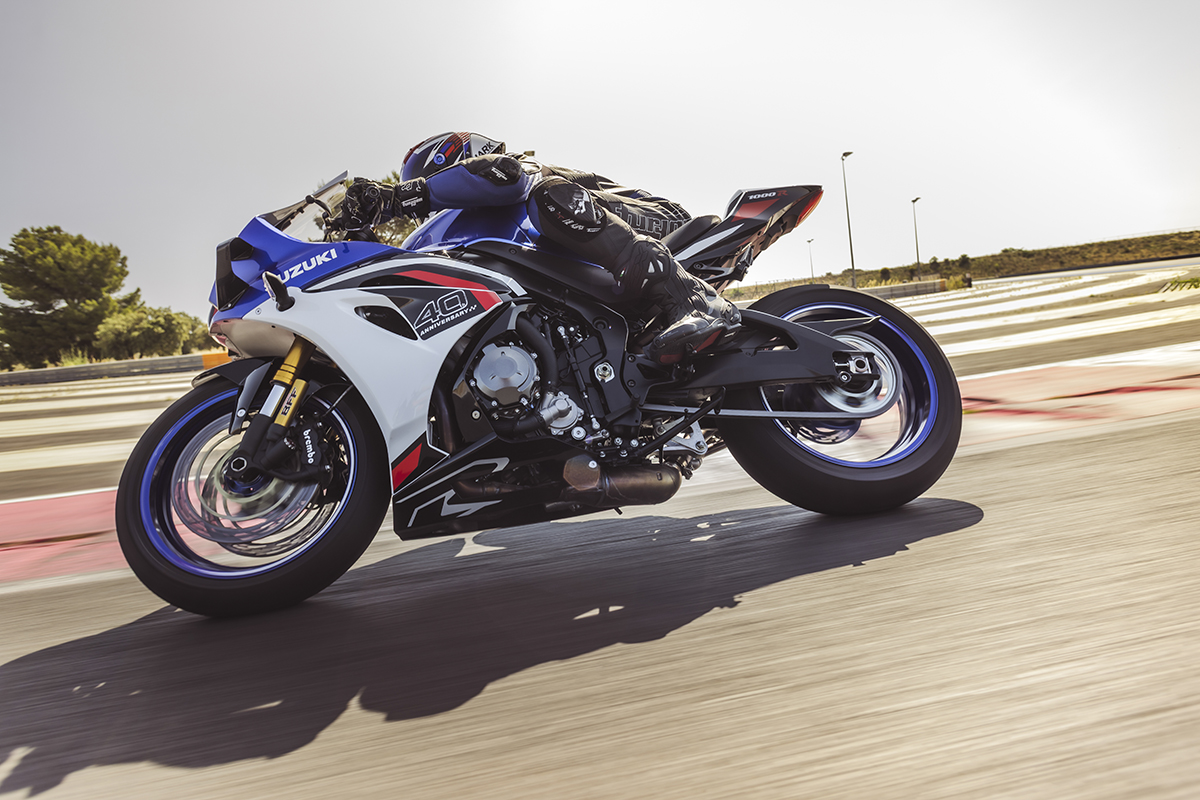
The engine is both old/familiar and new. The 999.8cc inline four gets a new crankshaft, crankcases, pistons and connecting rods and now runs a 13.8:1 compression ratio. The engine meets the Euro5+ regs, retains the variable valve timing and has a completely refreshed fuelling system. Suzuki claims 195 horsepower and 110Nm of torque, both figures less than the competition boasts, but in the real world, where most of us live, it’s more than enough.
Image source: Suzuki
What’s more, not only is Suzuki aiming to retain its reputation for bullet-proof engineering, it’s also laying a foundation for further tuning by owners and racers alike, without any loss in reliability.
The chassis remains much as it was, a twin-spar aluminium frame and swing-arm, while Suzuki had to go down the aero route by fitting winglets to the front fairing. Showa handles the suspension duties, Brembo monoblock callipers handle the braking, and Bridgestone handles the grip.
Image source: Suzuki
Naturally, one of the main upgrades is in the electronics. The electronics suite, headlined by a six-axis IMU, and Suzuki’s newly refined Roll Torque Control system (RTCS) is a predictive traction control system that works out the optimum power delivery before the wheel starts spinning, rather than reacting afterwards. Traction control is still active in the event of a slip, but with the RTCS in place, it should feel smoother through corners and with less oscillation as the TC engages and then disengages.
Image source: Suzuki
A six-axis IMU is controlling a ten-level anti-wheelie system, launch control, lean-sensitive ABS, two-way quick shifter, slope-dependent braking control and low-RPM assist and easy-start function.
There are three colour schemes available: blue and white, red and white, and yellow and matte blue. The bikes should be arriving in dealers sometime mid-2026, and the price, of course, is to be announced.
It promises to be the best Gixxer yet; sharper, more powerful, more up-to-date, but the same superbike you’ve always loved.
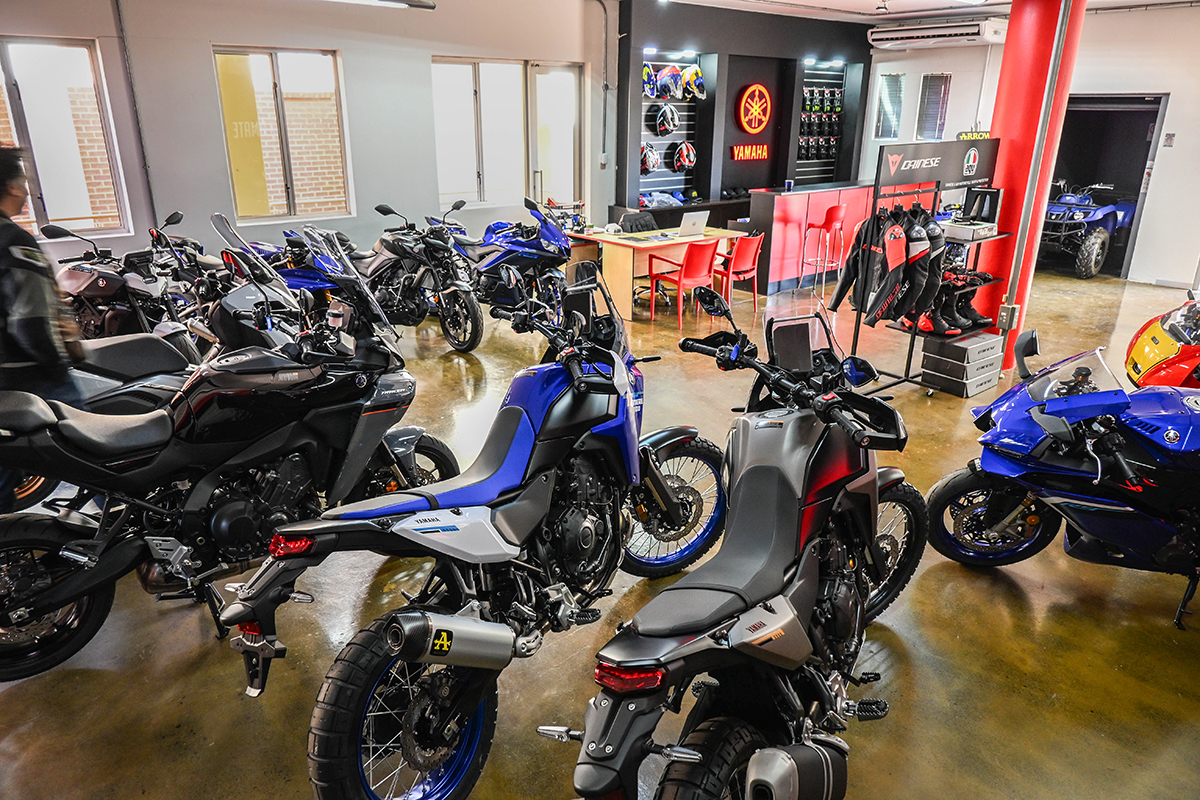
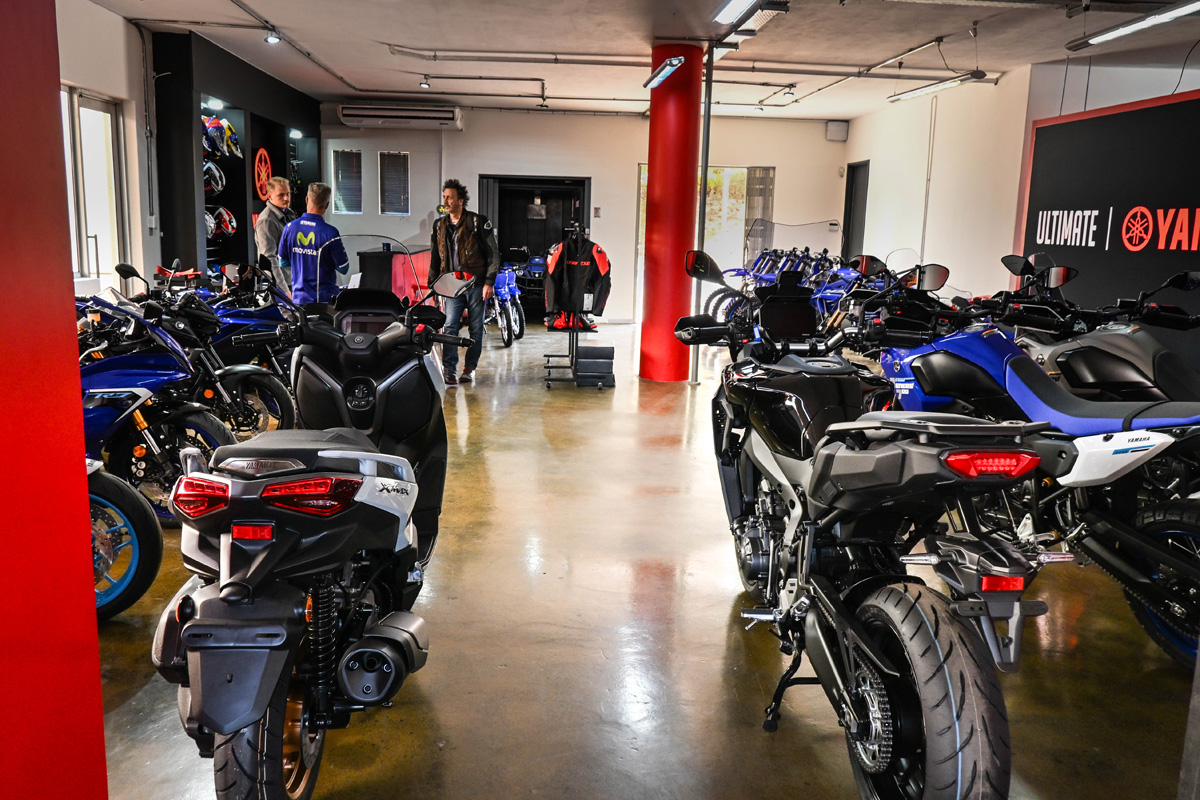
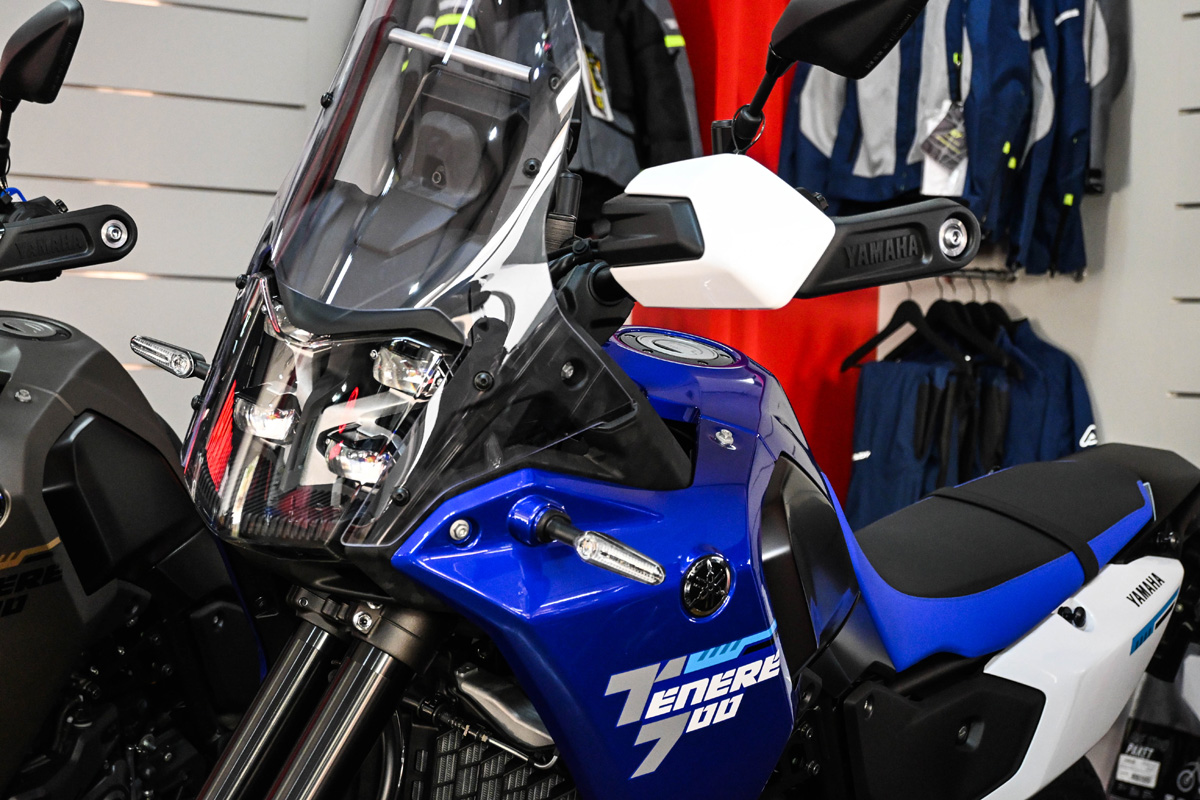
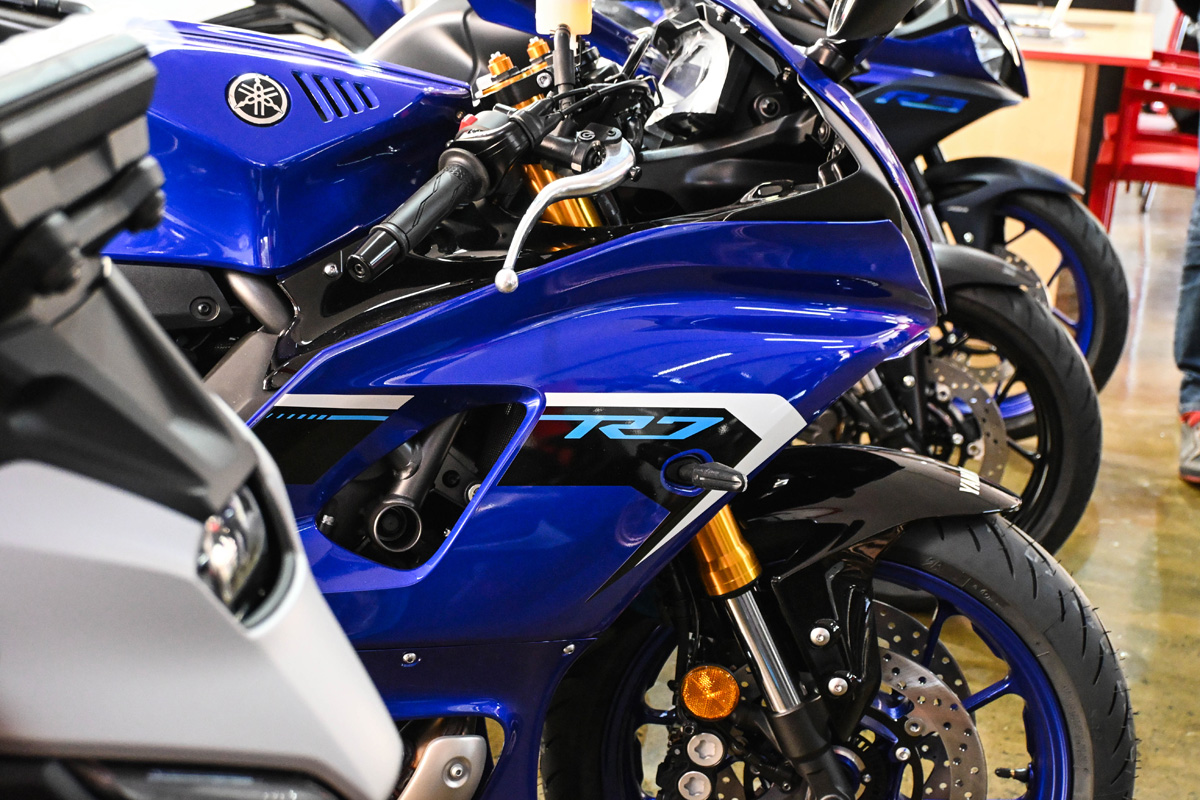
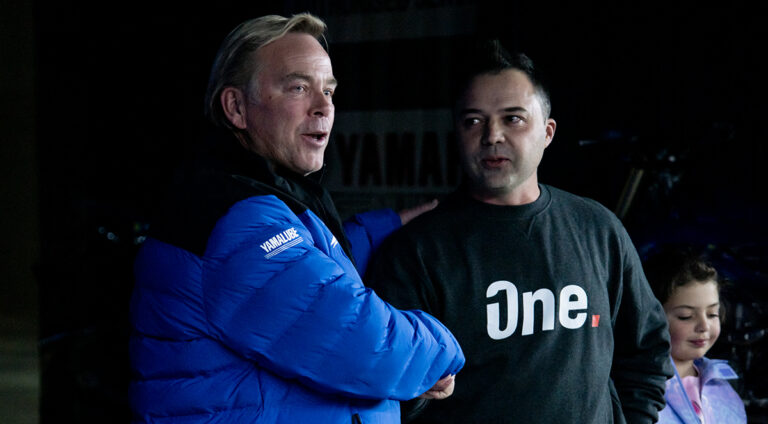
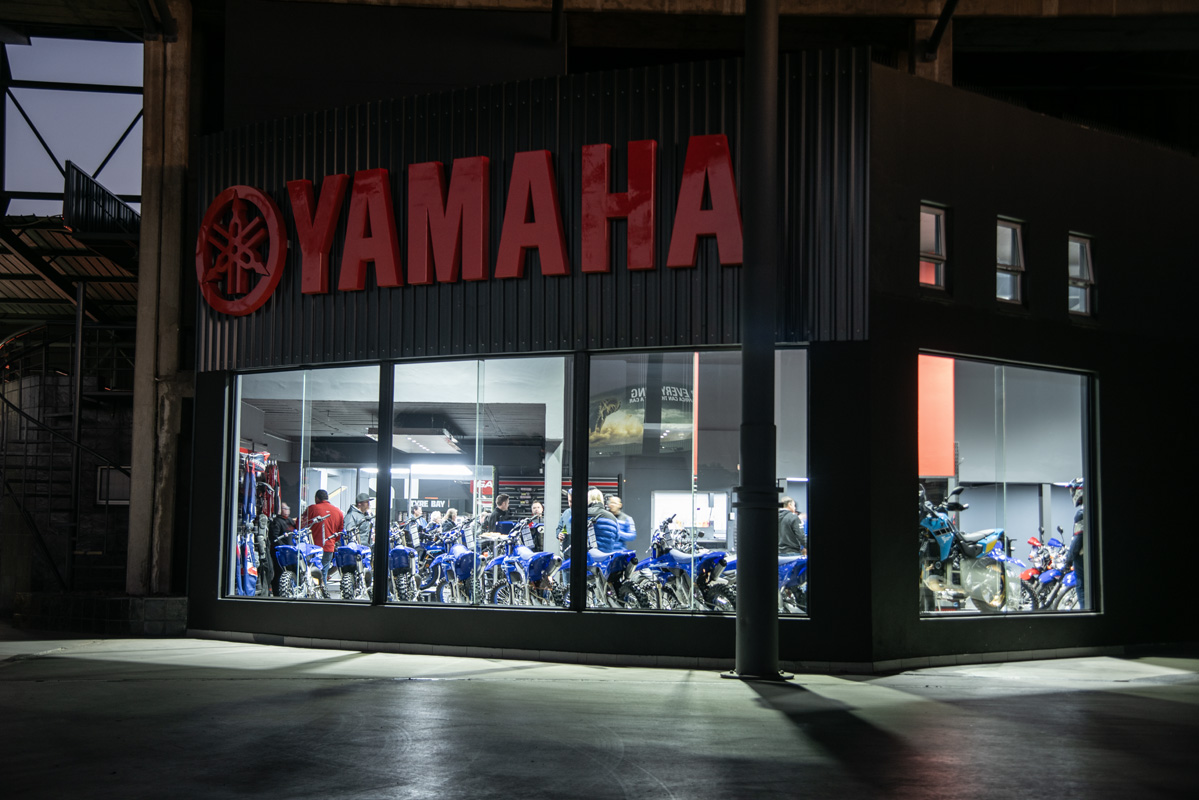
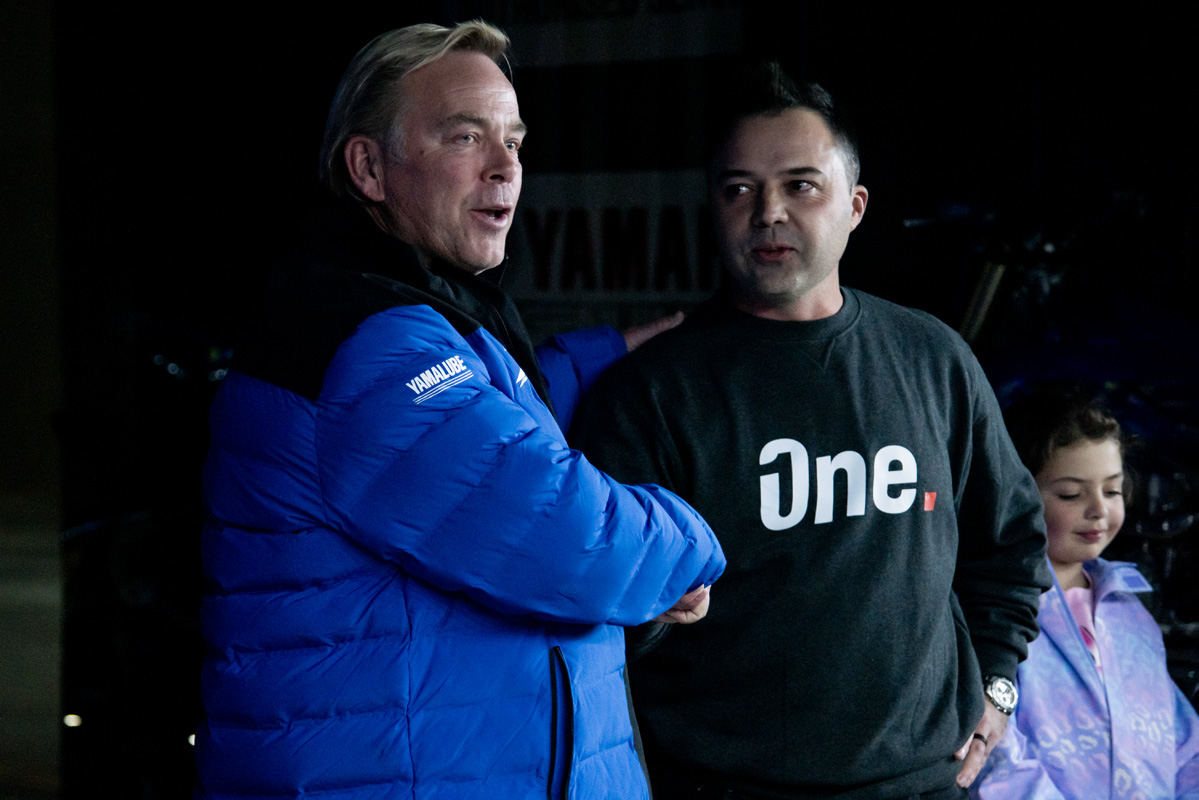
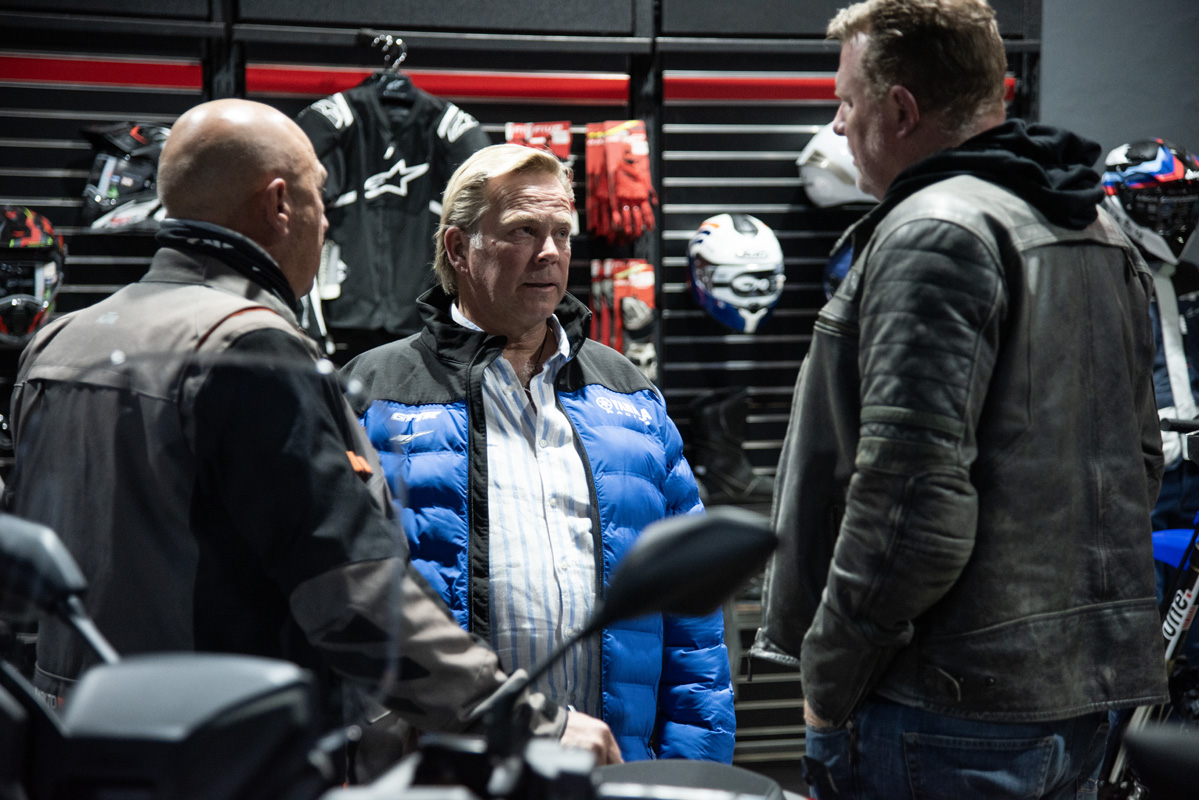
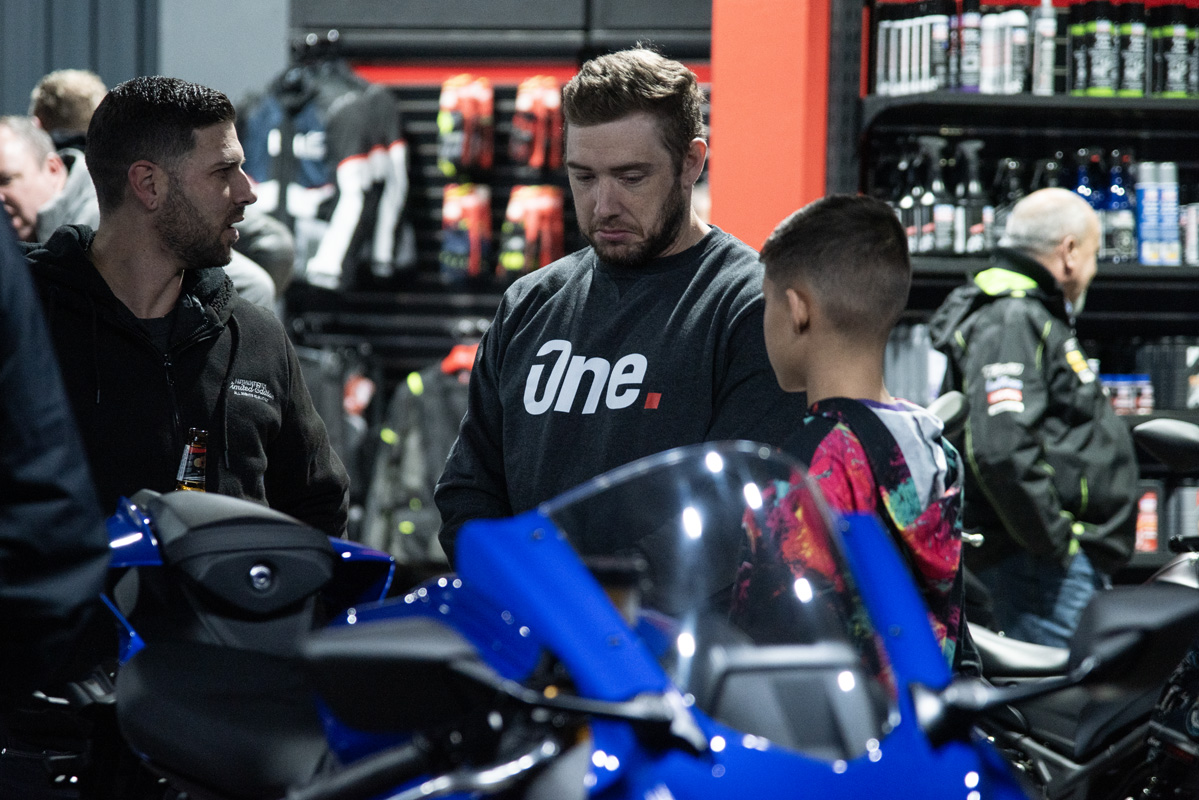
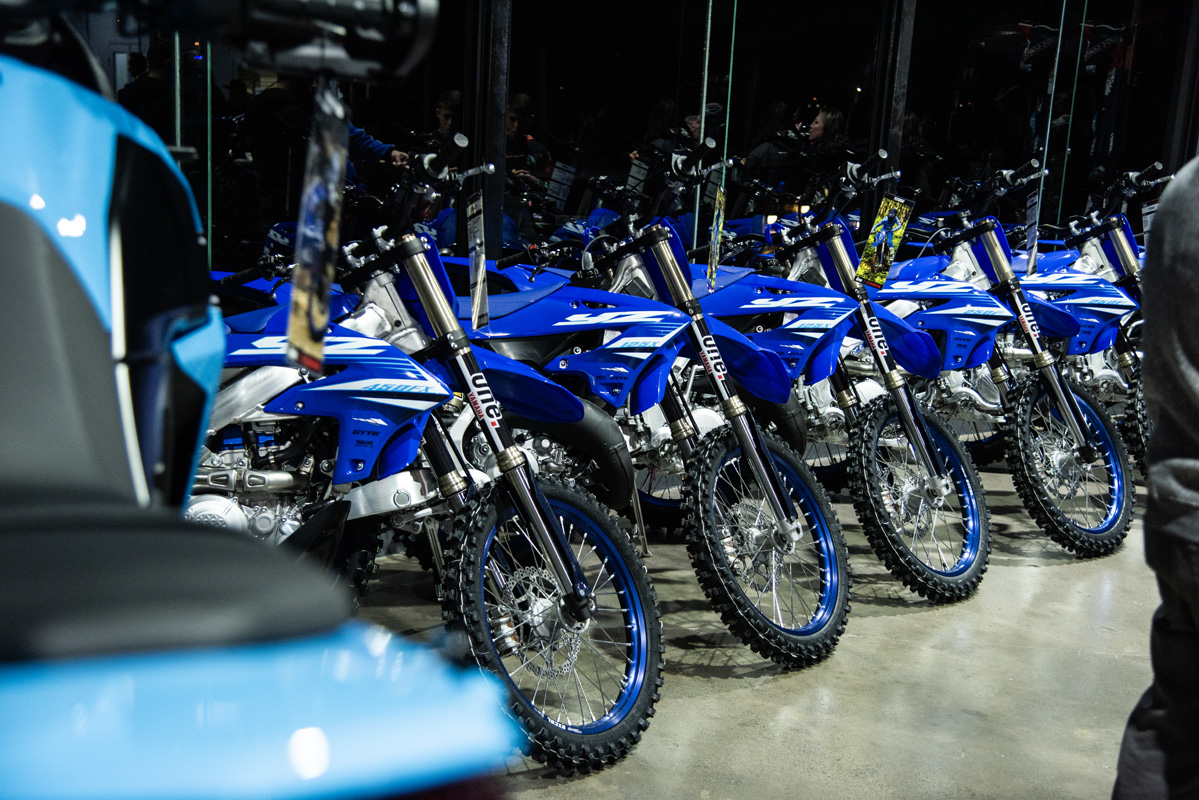
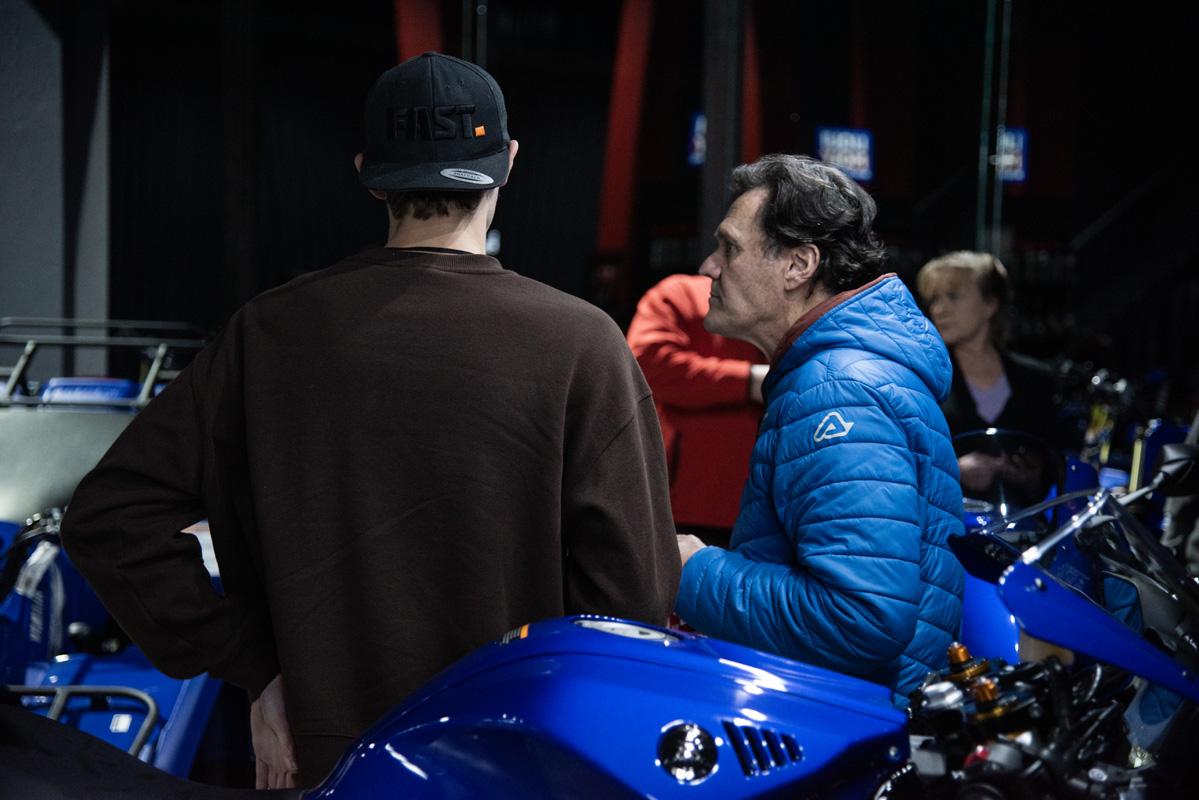
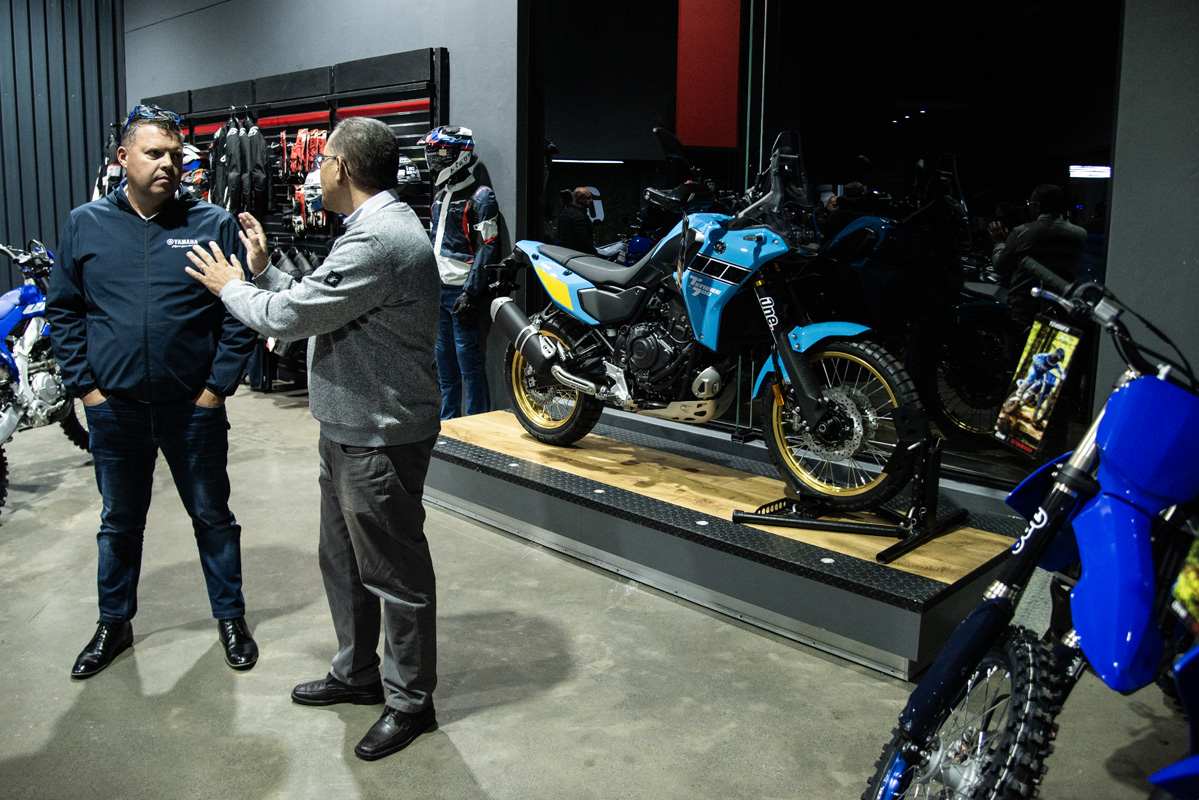
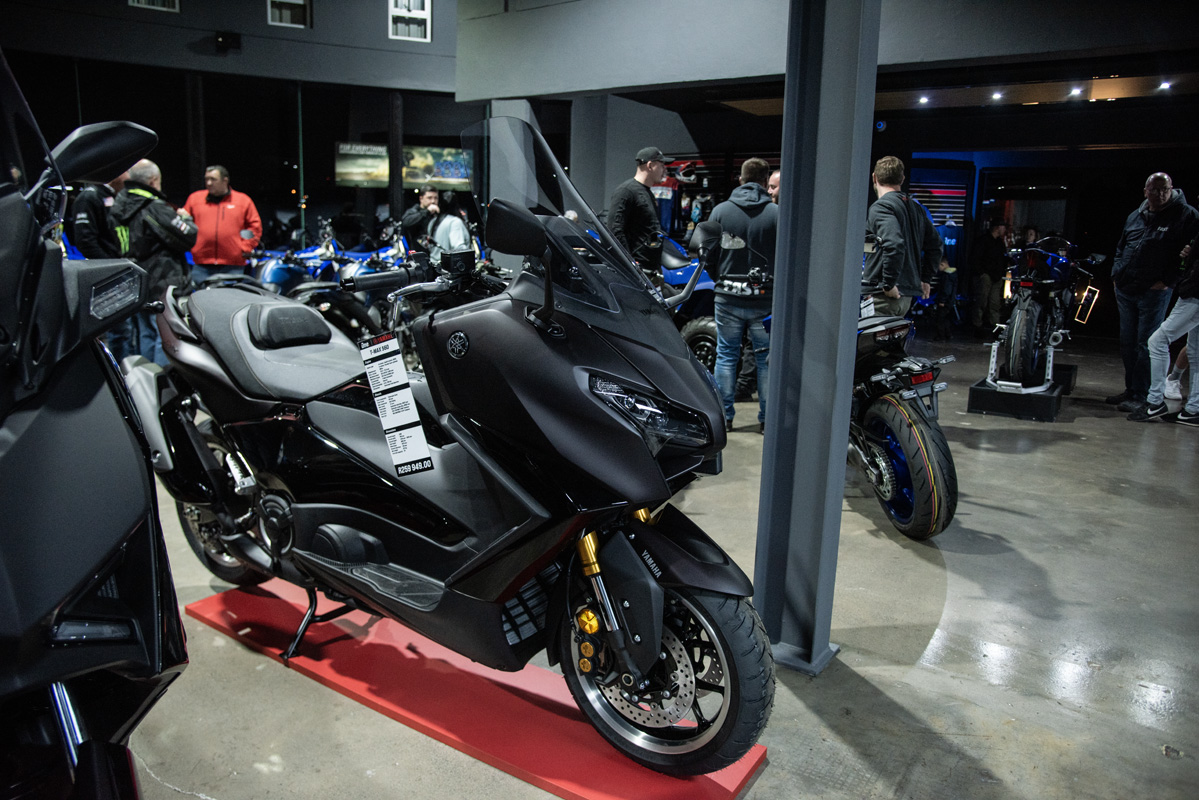
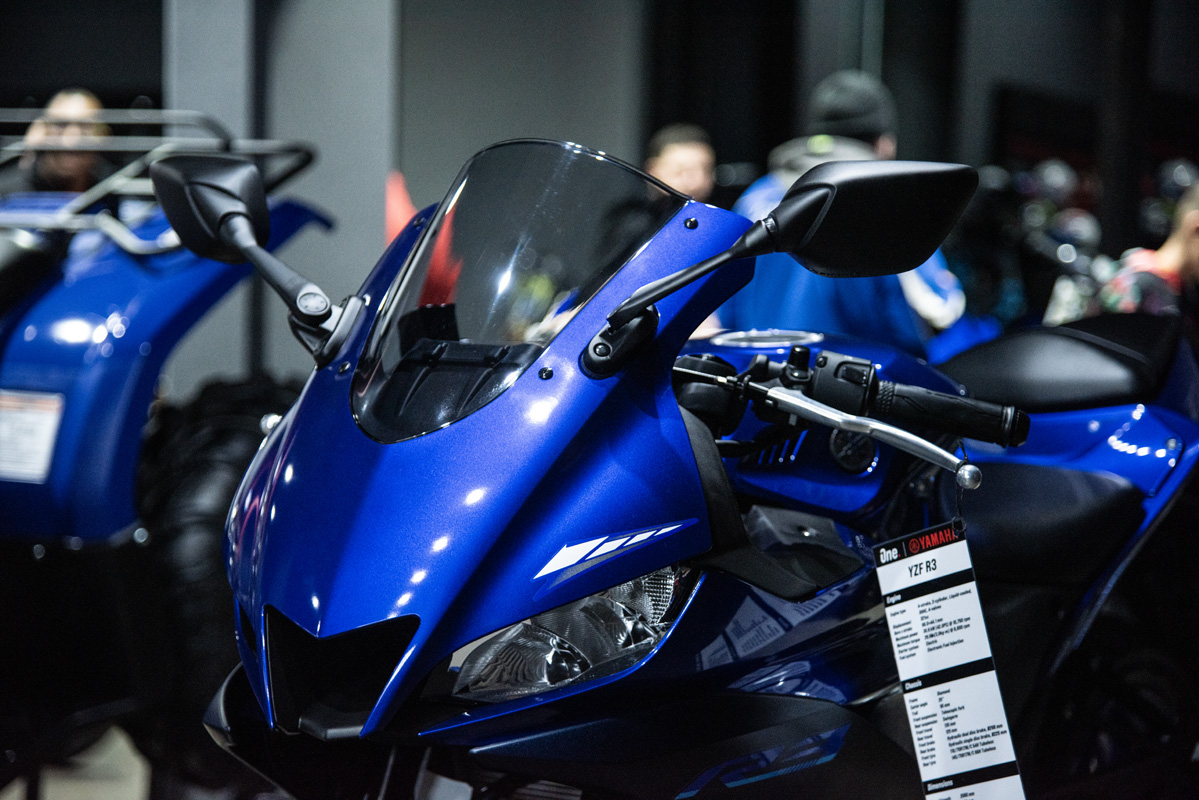
Following on from the news that FAST KTM in Alberton is now also a Yamaha (One. Yamaha) dealer, comes yet more encouraging news from the Blu Cru.
Photo credit: Bjorn Moreira / ZA Bikers
The fact that both KTM and Yamaha have seen the value of developing multi-franchise dealerships – a complete turn-around in working practice for both brands – can only be good news for the consumer, and it seems that having two essentially competing brands under one roof actually stimulates sales, rather than diluting them.
Photo credit: Bjorn Moreira / ZA Bikers
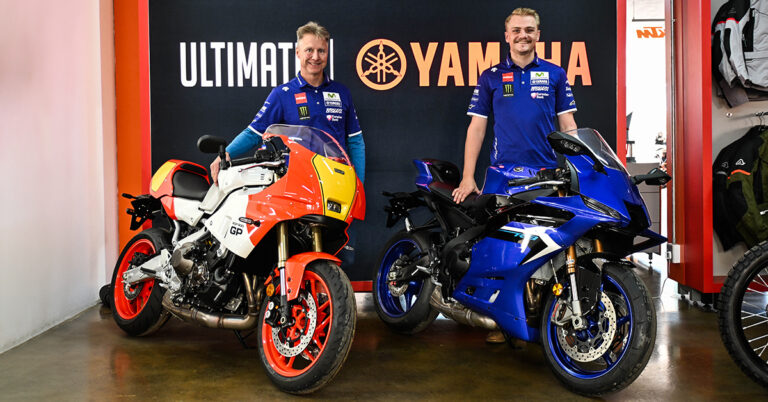
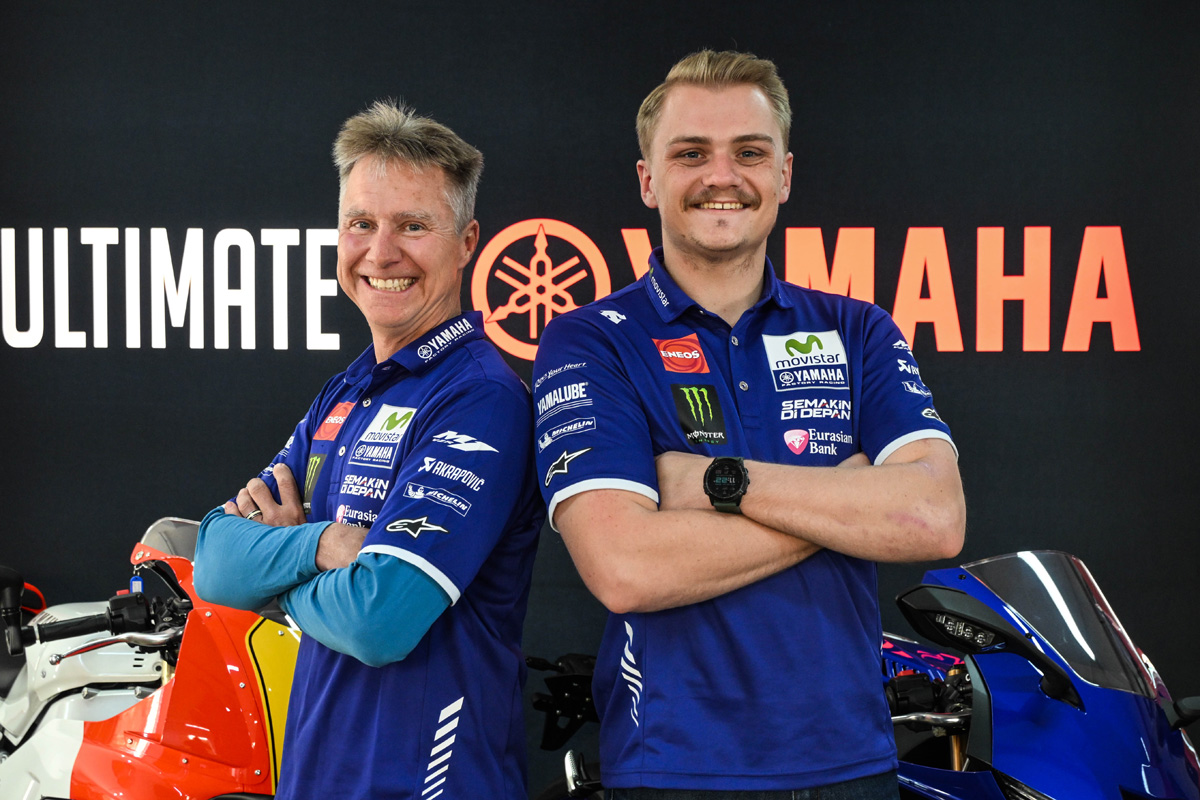
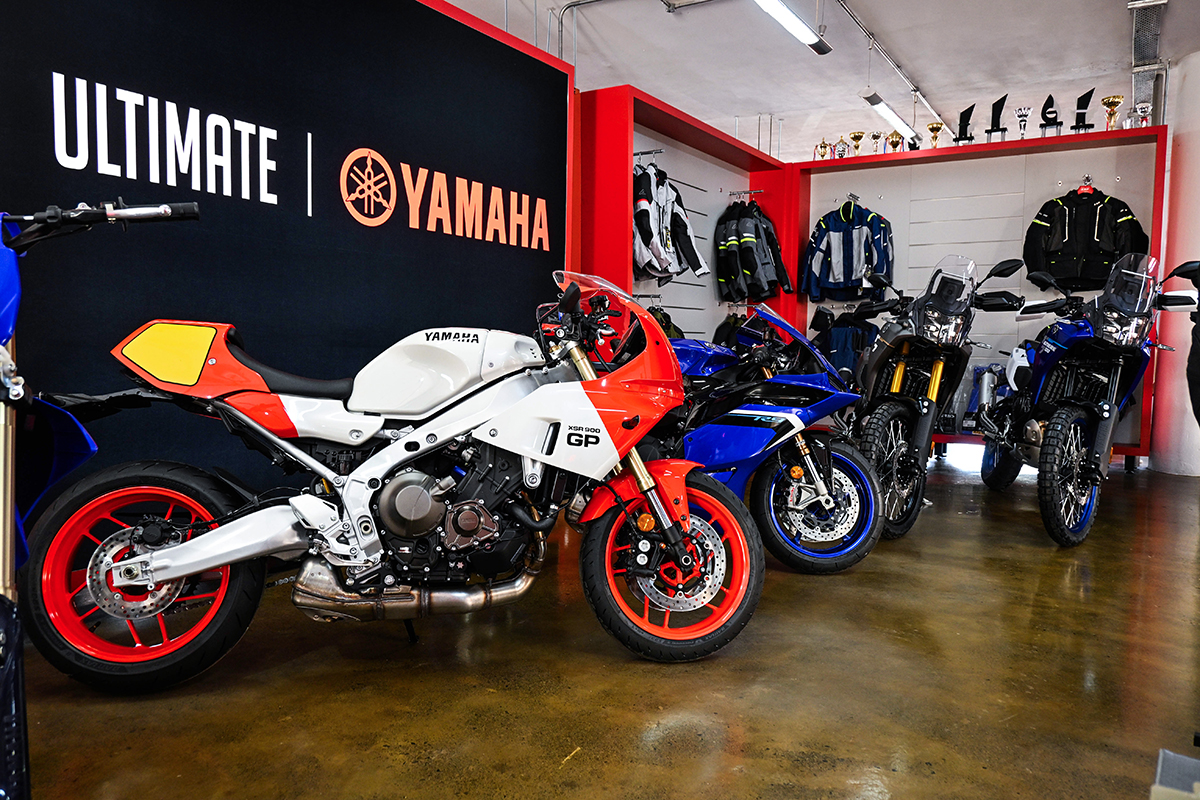
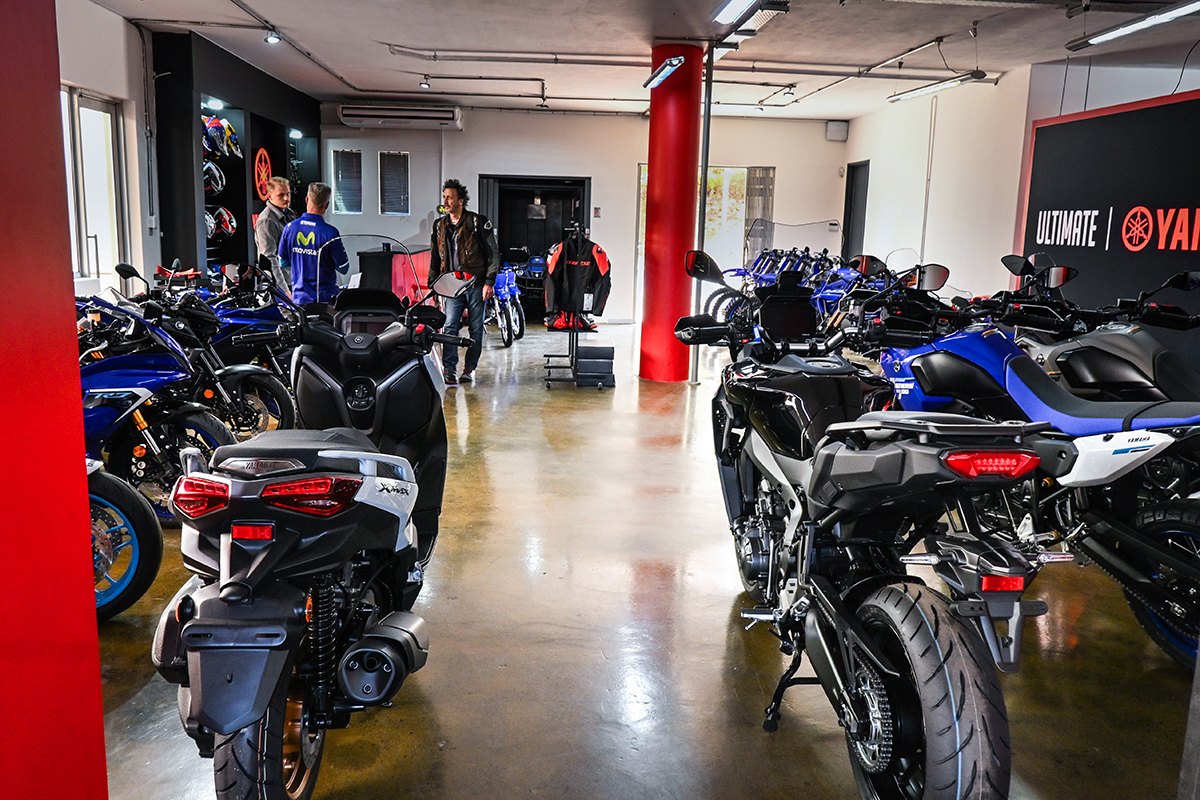
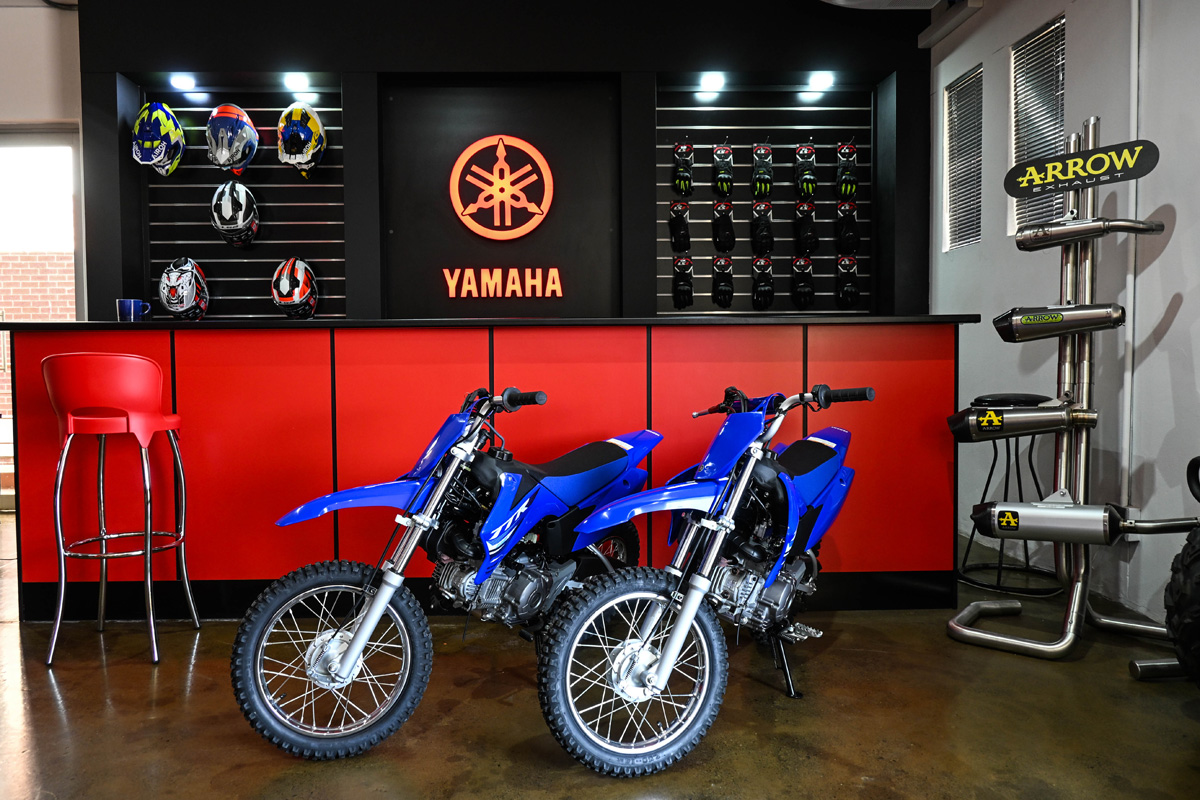
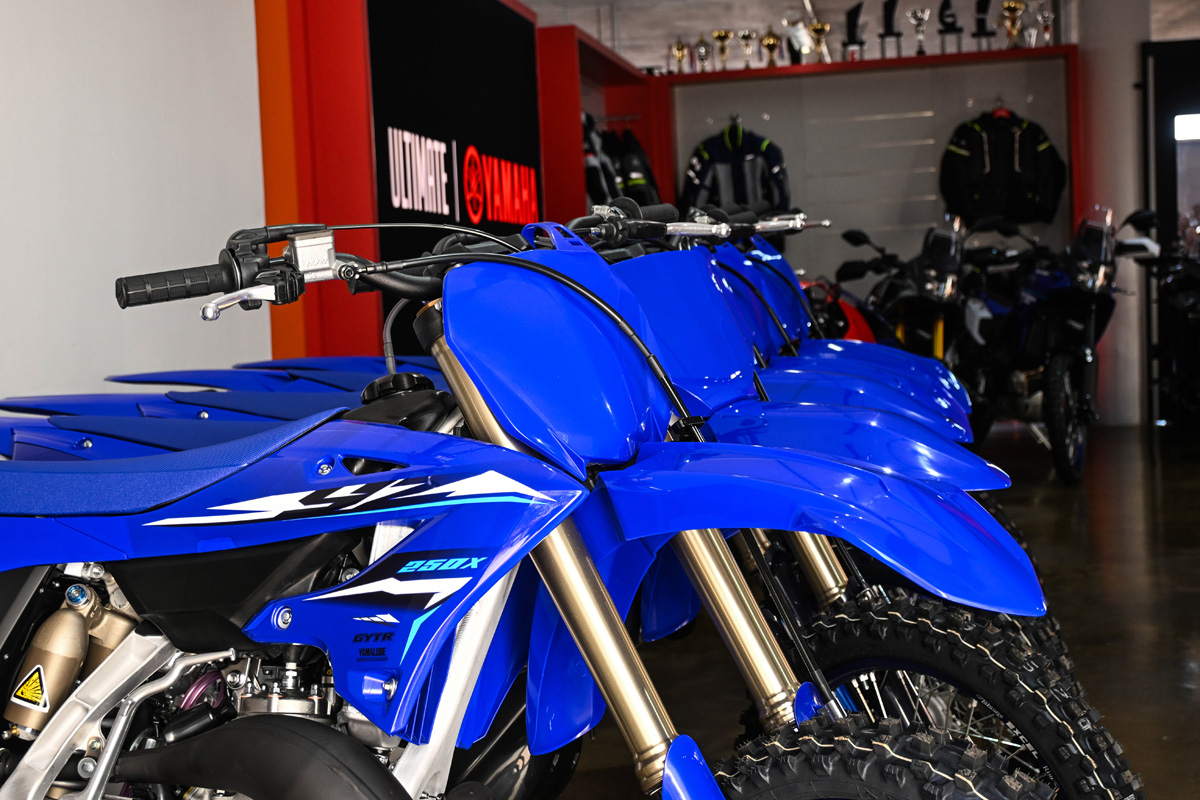
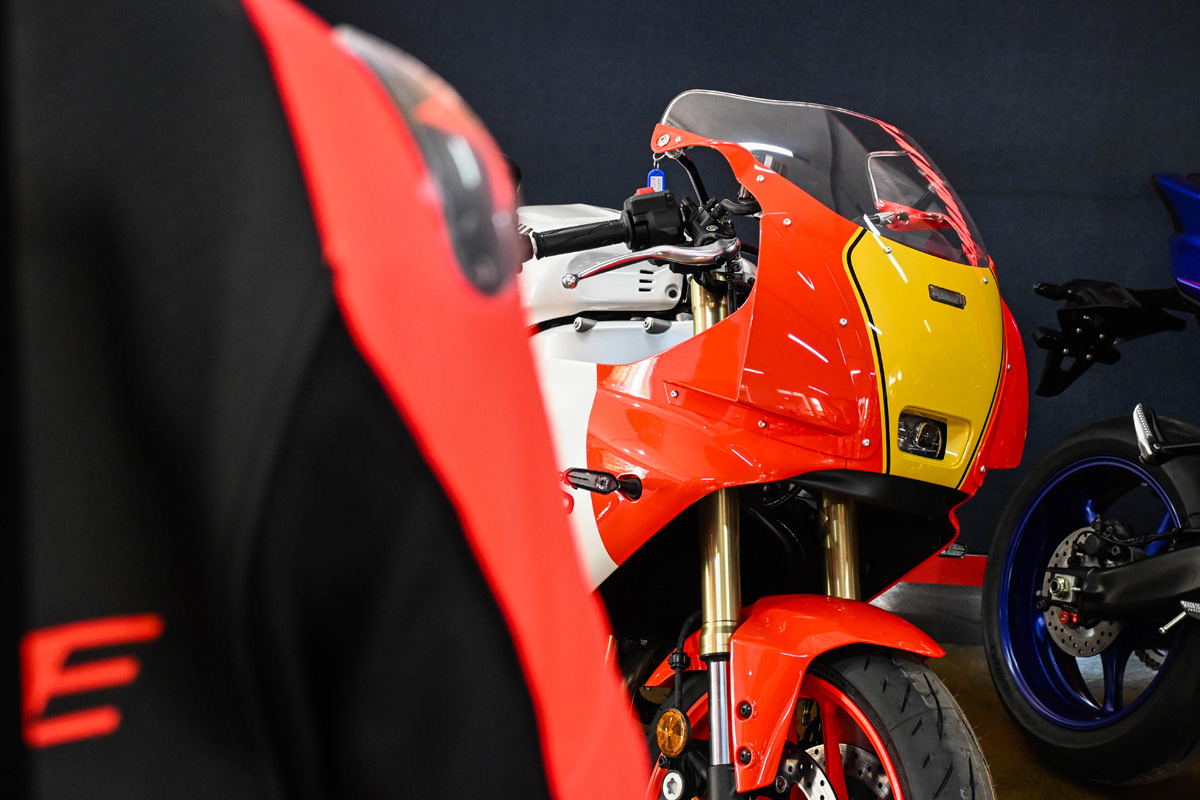
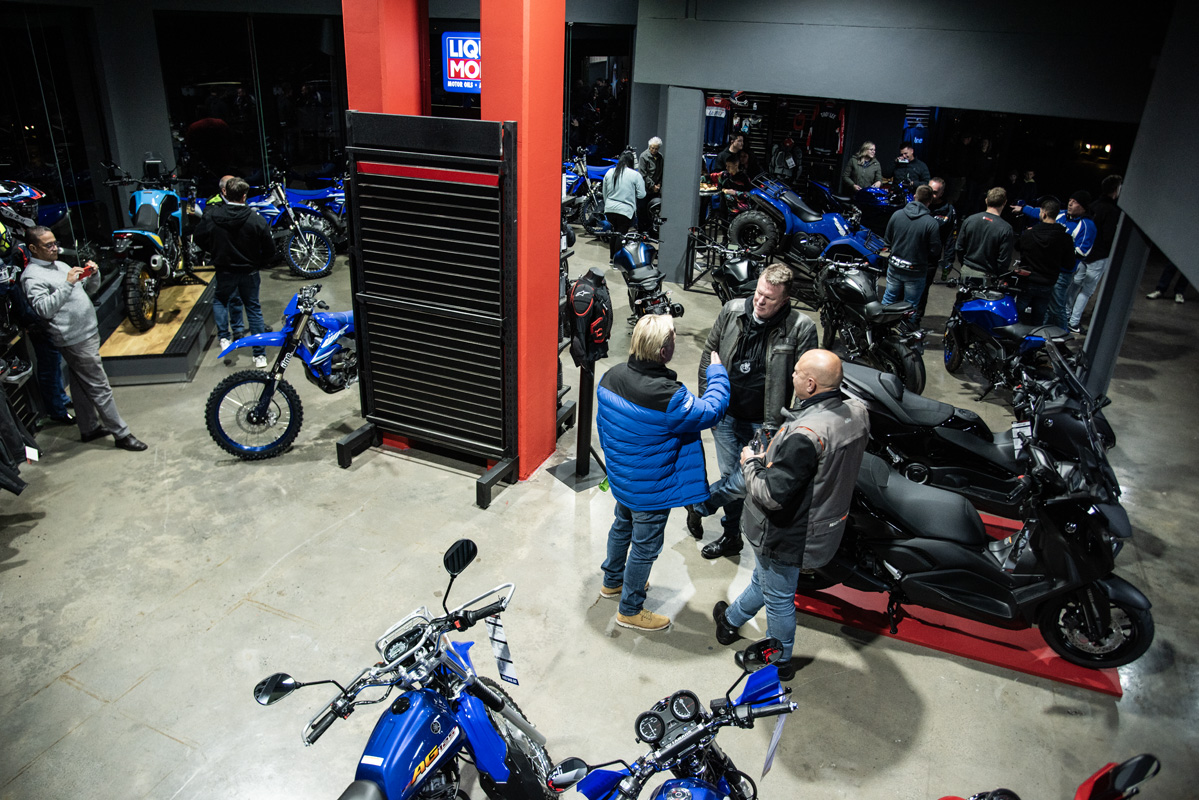
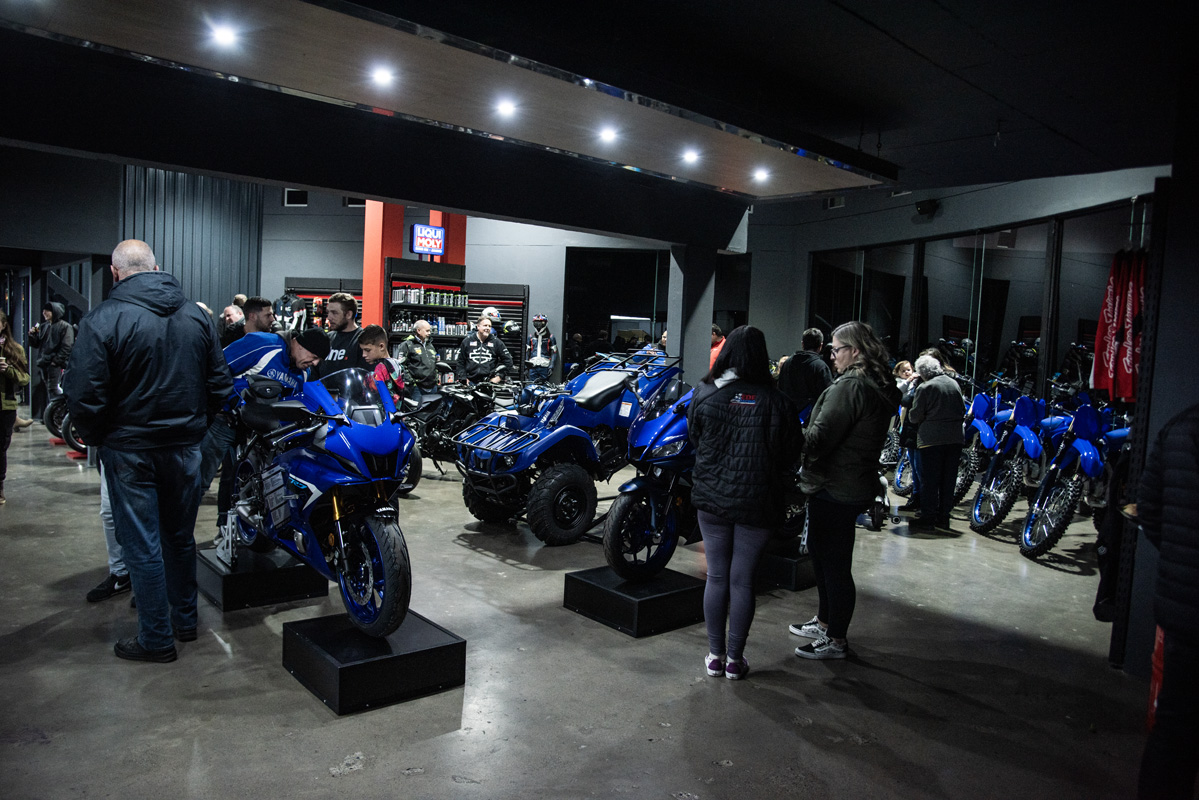
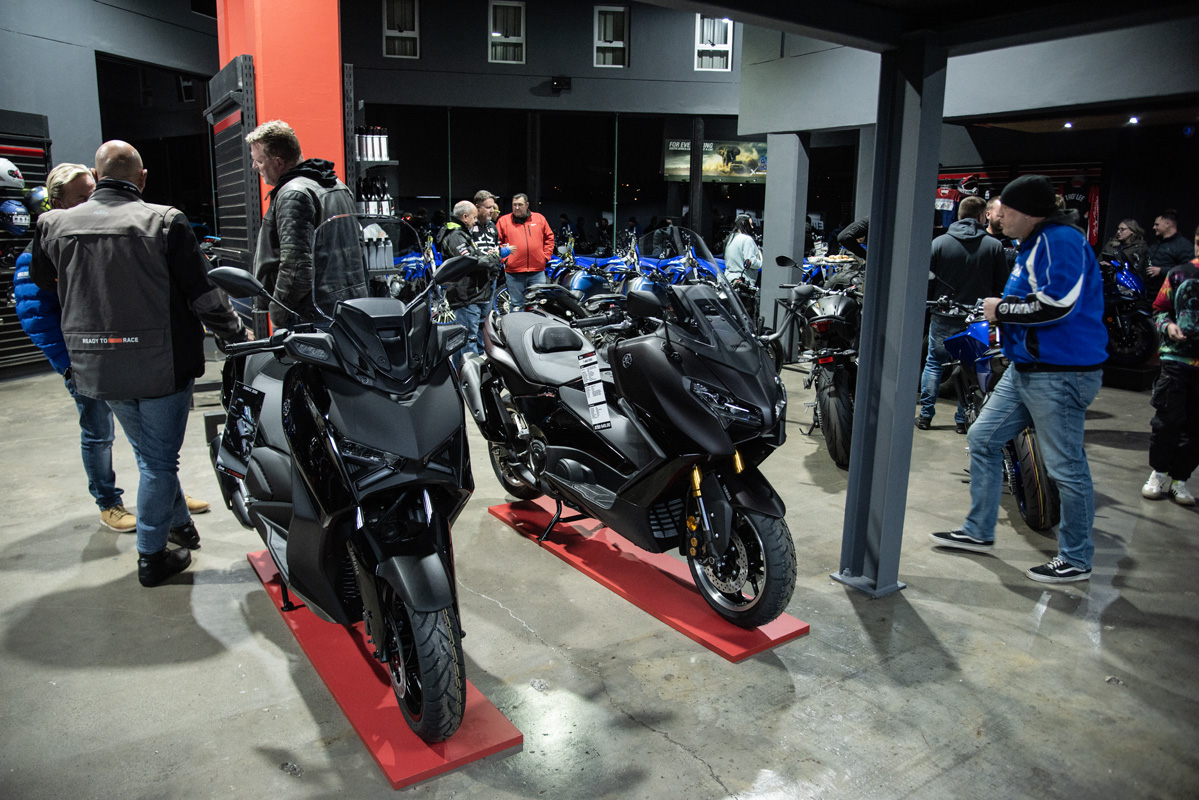
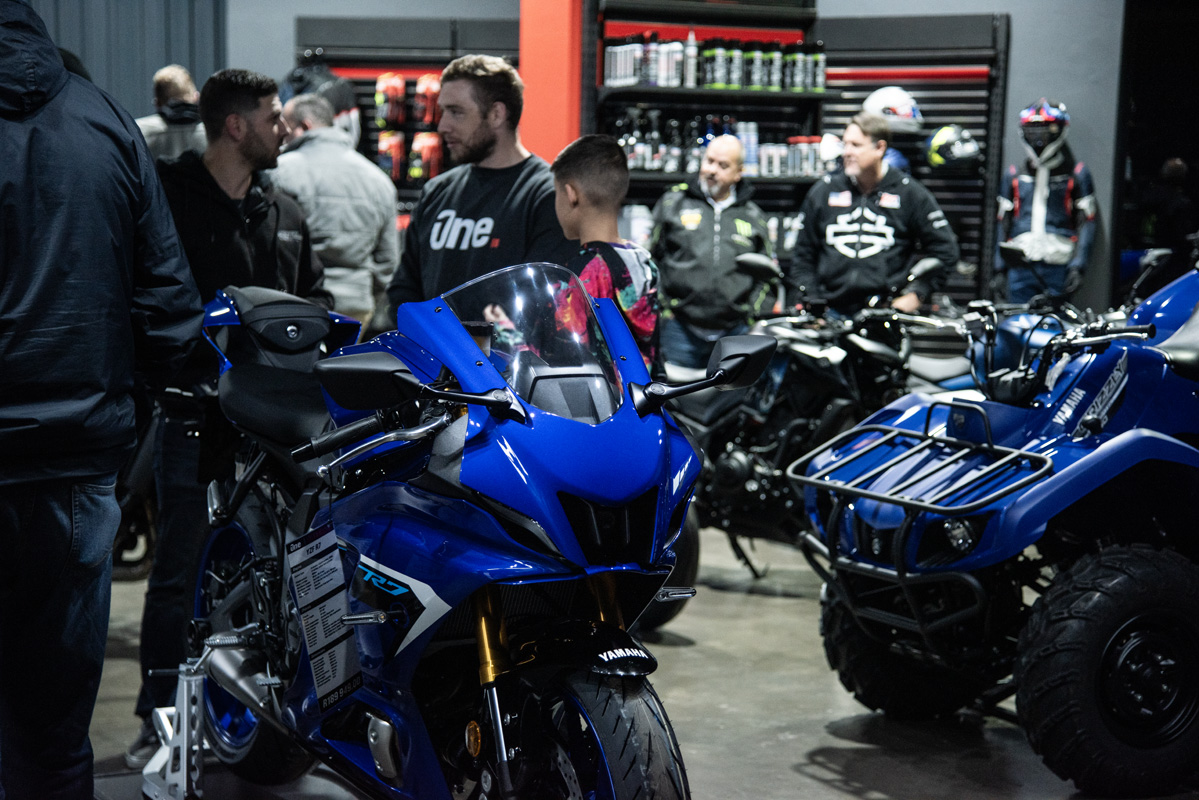
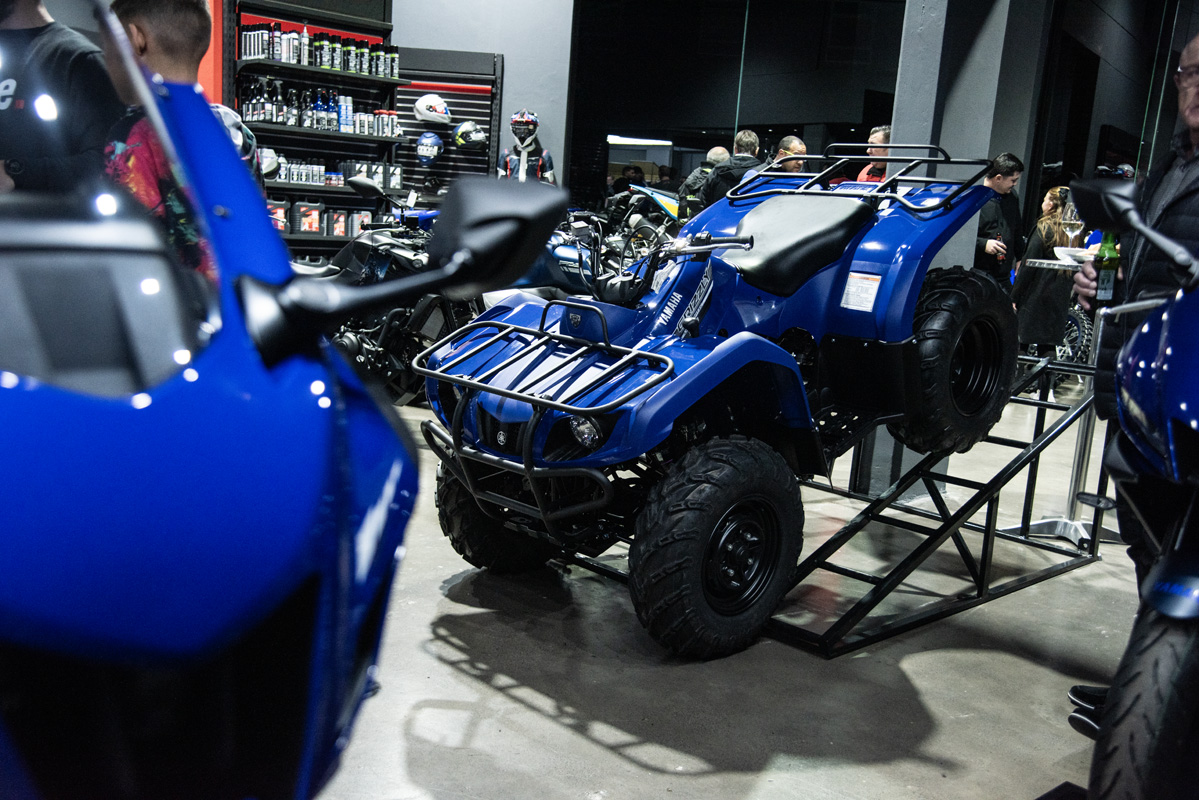
So, the next big news from Austria and Japan is the news that Ultimate Performance KTM in Centurion (also known simply as KTM Centurion) has given space in its showroom to form Ultimate Yamaha.
Photo credit: Bjorn Moreira / ZA Bikers
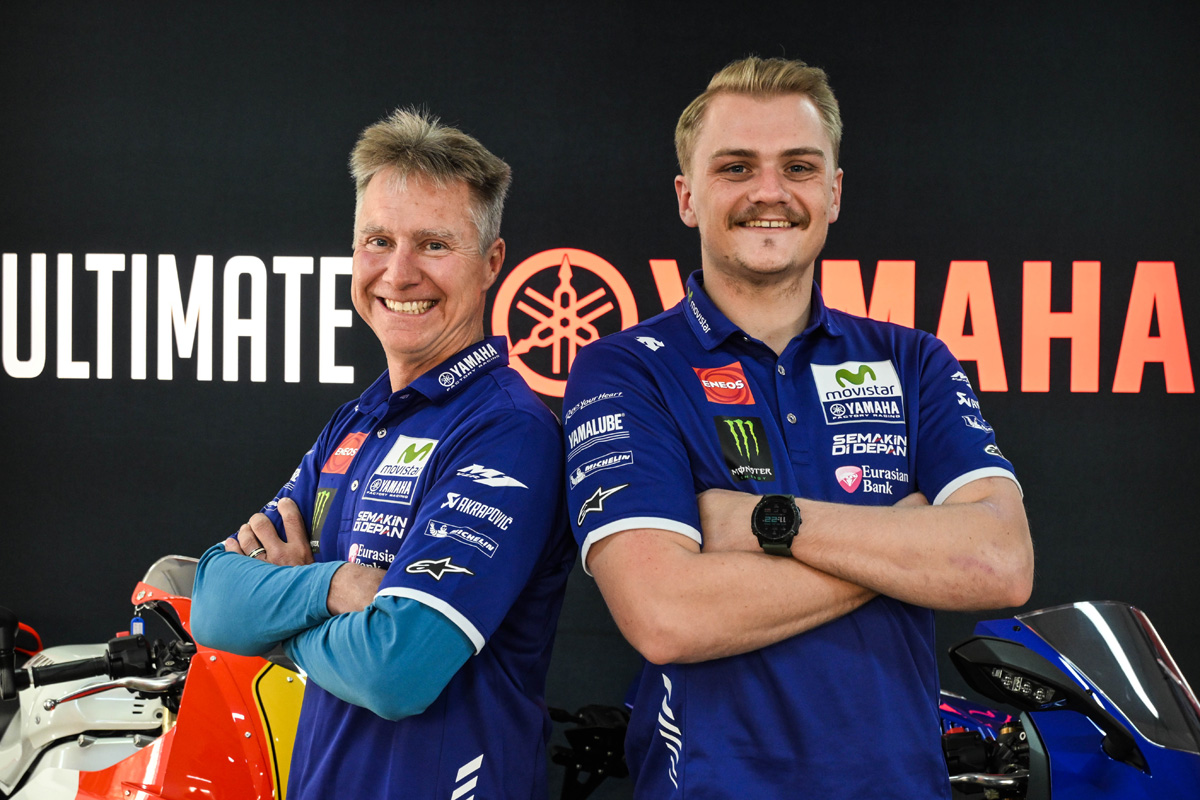
Thomas Tonkin and Vasco Barbolini need no introduction to motorcyclists in Pretoria, having been at the forefront of the industry for nearly 30 years. What they don’t know about selling, servicing, repairing and race-prepping KTMs isn’t worth knowing. With their combined areas of expertise on the showroom floor and in the workshop, customers have enormous peace of mind when buying or servicing KTM bikes. That same mentality and expertise will now work its magic for Yamaha.
1 of 17
For more information, give them a call on 012 643 1110 or, even better, take a ride out there on Saturday morning (or any morning for that matter). The address is Centurion Gate Business Park, John Vorster Drive, Centurion.
The small but perfectly formed KTM 390 has been a huge success story for the Austrian manufacturer, and rightly so; it’s small, light, with punchy performance, excellent brakes and handling, funky good looks and a modest price tag. What’s not to like?
Image source: KTM
Since the 390 Duke appeared all those years ago, KTM has developed the 390 platform into a very convincing adventure bike, the 390 Adventure, an enduro model (guess what, it’s called the 390 Enduro R…!), and one of KTM’s specialities, the hooligan 390 SMC R.
Image source: KTM
What has also just been announced are the 390 Adventure X and 390 Adventure R, which, if you’re familiar with KTM naming, means different levels of equipment and ability, but still wrapped up in incredible accessibility and value-for-money.
Image source: KTM
If any of the above tickle your fancy and you’d really like to have a closer look and perhaps a demo ride, then this Saturday, 2nd August, head to your local KTM dealer and there will be examples of all five models – Duke, Enduro R, Adventure X, Adventure R and SMC R – available to look at, poke and drool over.
Image source: KTM
With prices ranging from R105,000 to R140,000, it is obvious that these are machines that are offering an awful lot of ability for very reasonable prices. You really can’t afford to ignore them.
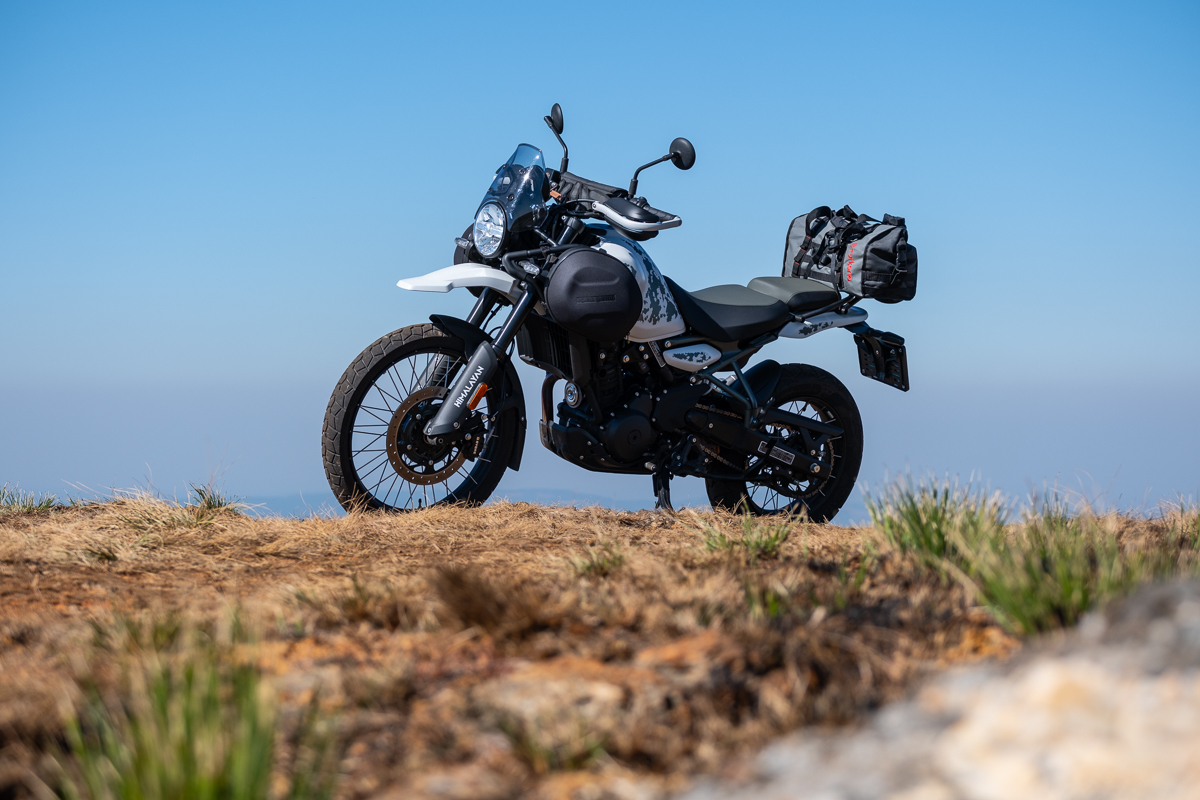
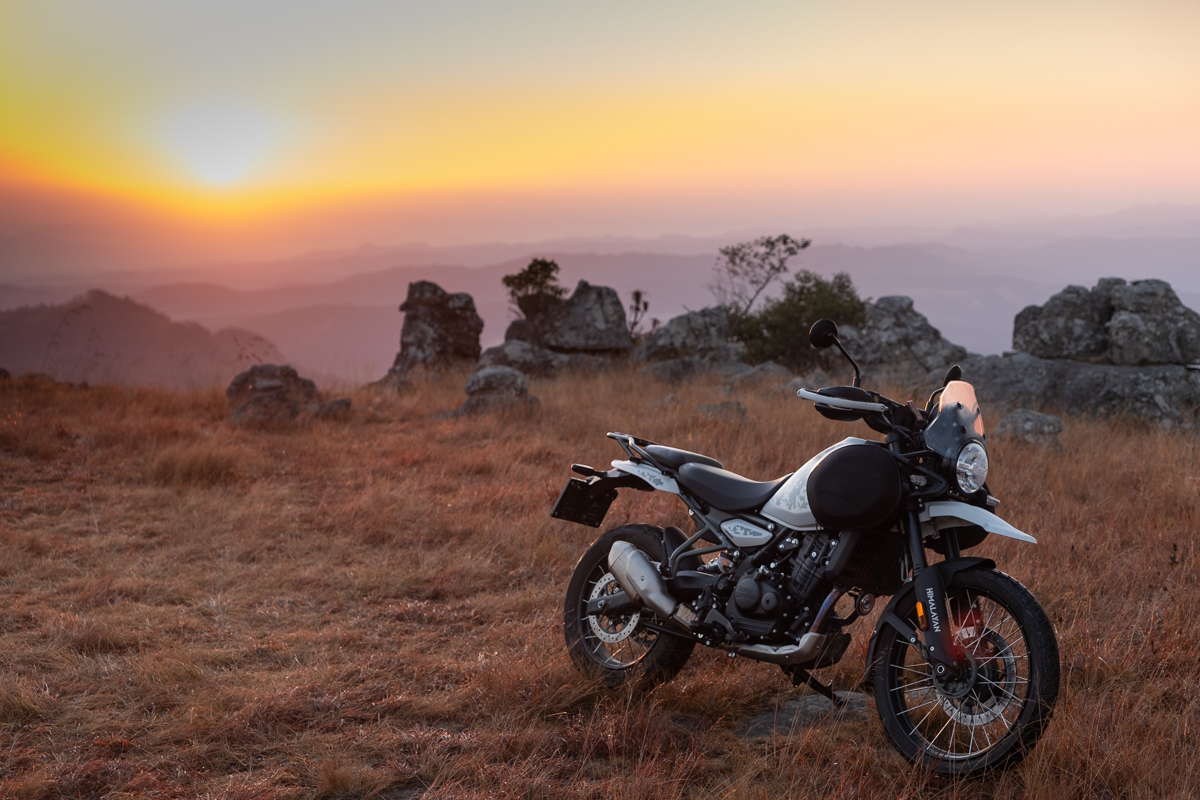
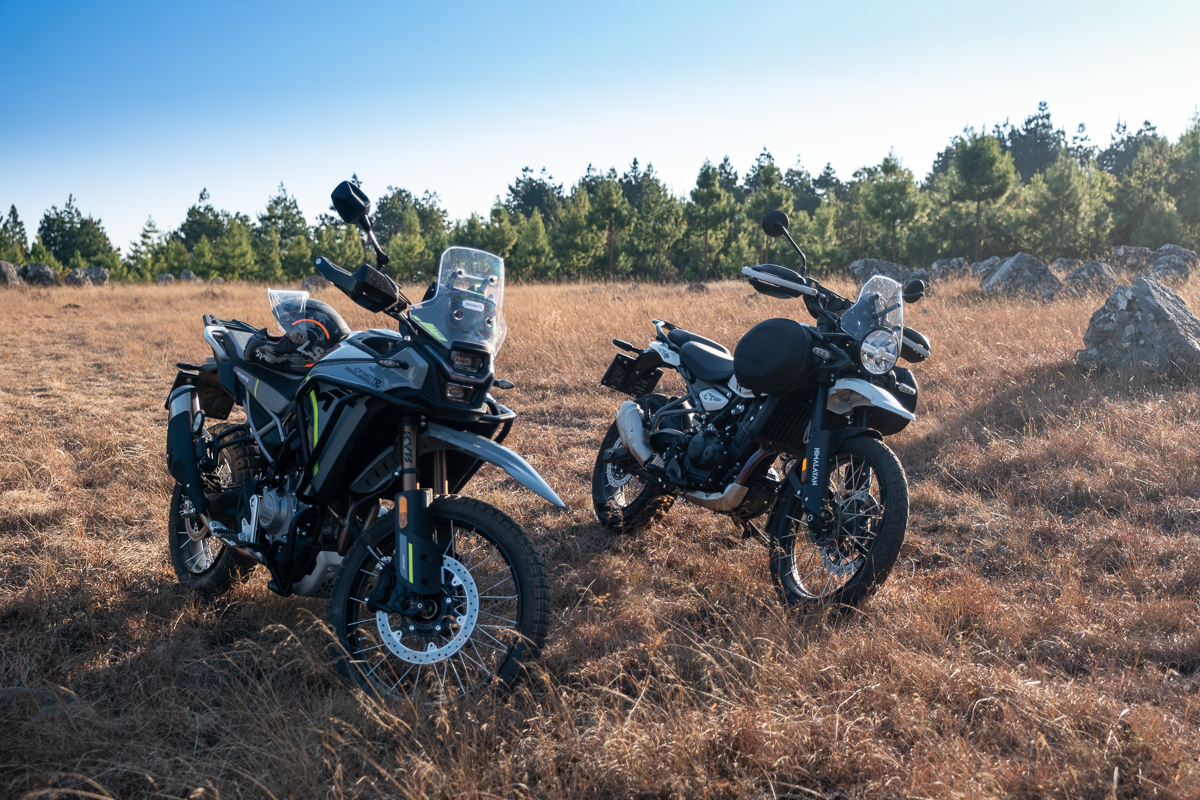
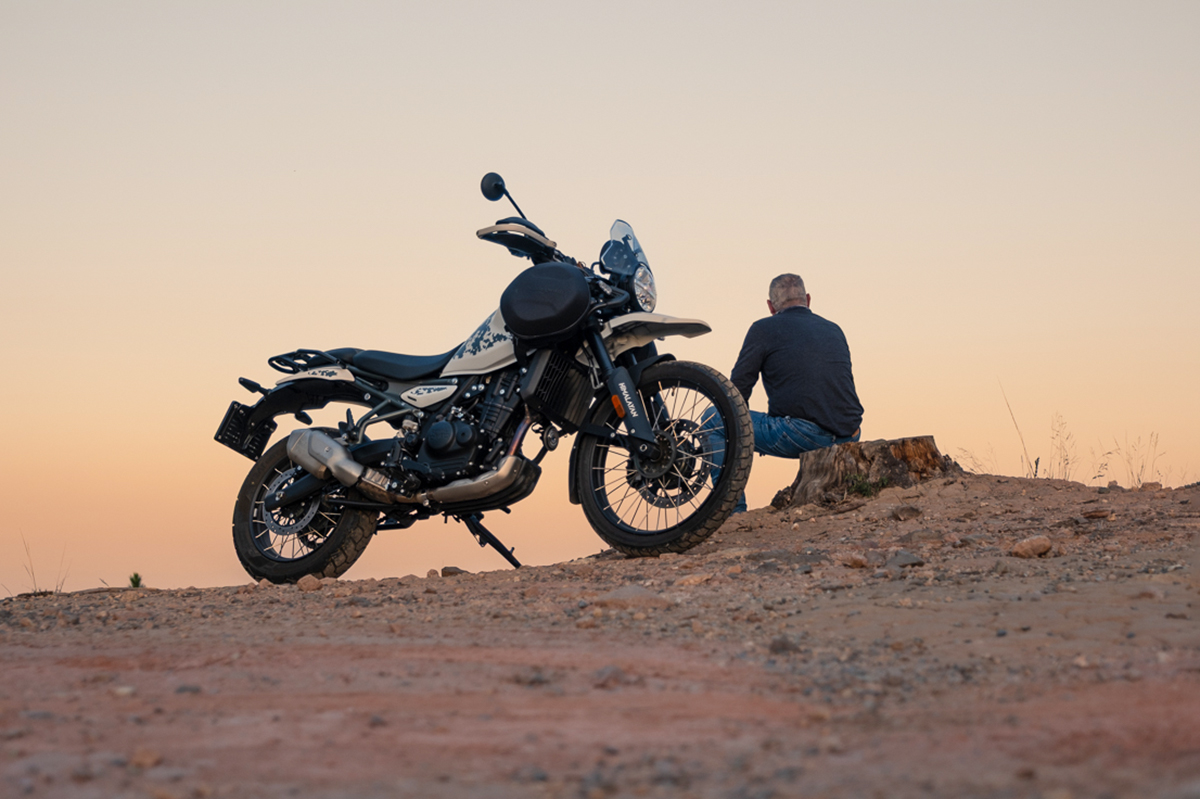
Few people do more to get bums on seats than the folks at Turkana Gear. Last year, I participated in the Turkana Challenge, and it got me doing things that I would not normally consider. The challenge consisted of 15 unique challenges for you to complete, and once done, you are eligible for some spectacular prizes. In this year’s Turkana, the challenges are divided into different categories with even more prizes to be won. On my last visit to Kaapschehoop, I finished the last of the 2024 challenges, so what better way to kick off the new challenge with another trip to Kaapschehoop? My regular riding buddy, Maarten, rides a BMW R 1250 R, which means we have to stick to the grey stuff. But, with him sitting this one out, it opened up a whole host of potential routes I could take, seeing that I was on my new Royal Enfield Himalayan 450.
On our last visit to Kaapschehoop, we ran into the owners of the quaint B&B called Kattekwaad, Chris and Lulu. While Maarten was chatting to Lulu about cats, I mentioned that I wanted to visit the little antique store in search of old watches. Chris pulled out an old Tissot watch and gave it to me, saying that it was broken and that I could have it. Back home, I inspected the watch and found the main winding spring to be broken. After carefully disassembling the watch, I replaced the spring and got the watch ticking again. I sent a video of the watch to Lulu, and I could hear Chris in the background asking if he could have the watch back. He was only joking, of course, but I knew that I was going to ride back to Kaapschehoop one day and return Chris’ watch to him.
Photo credit: Brian Cheyne
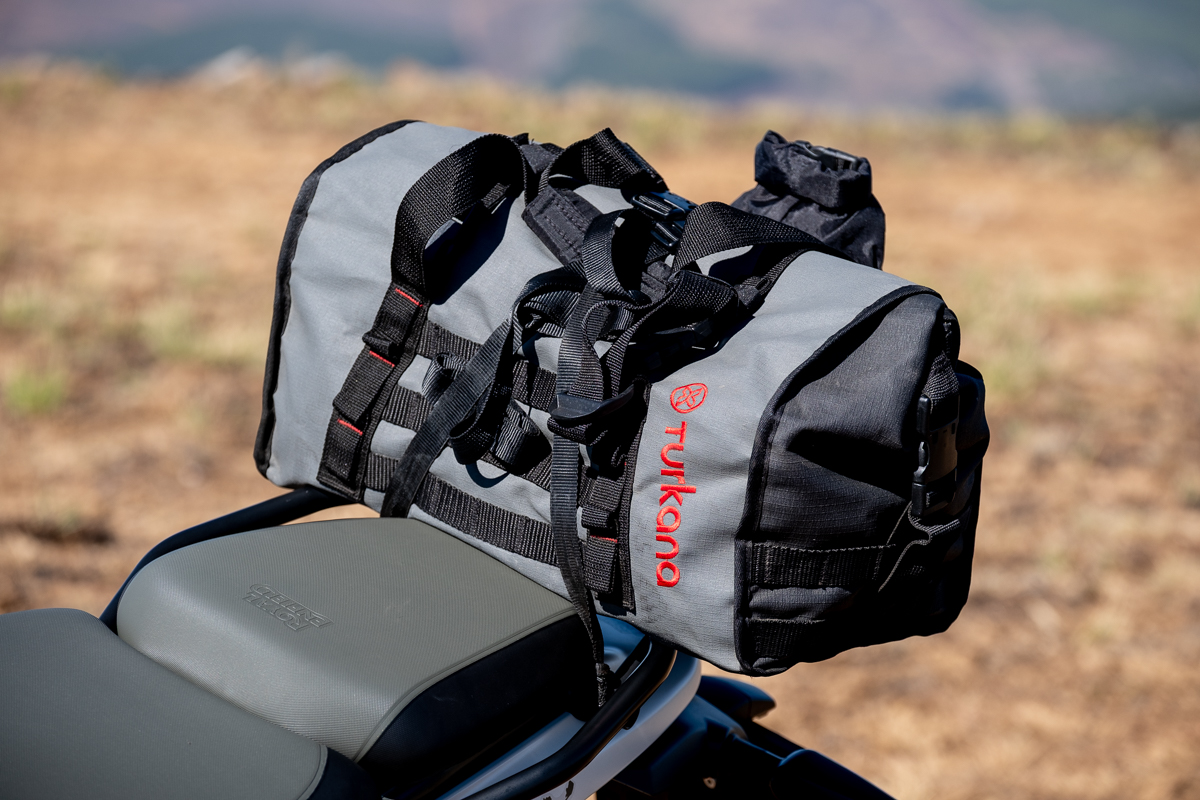
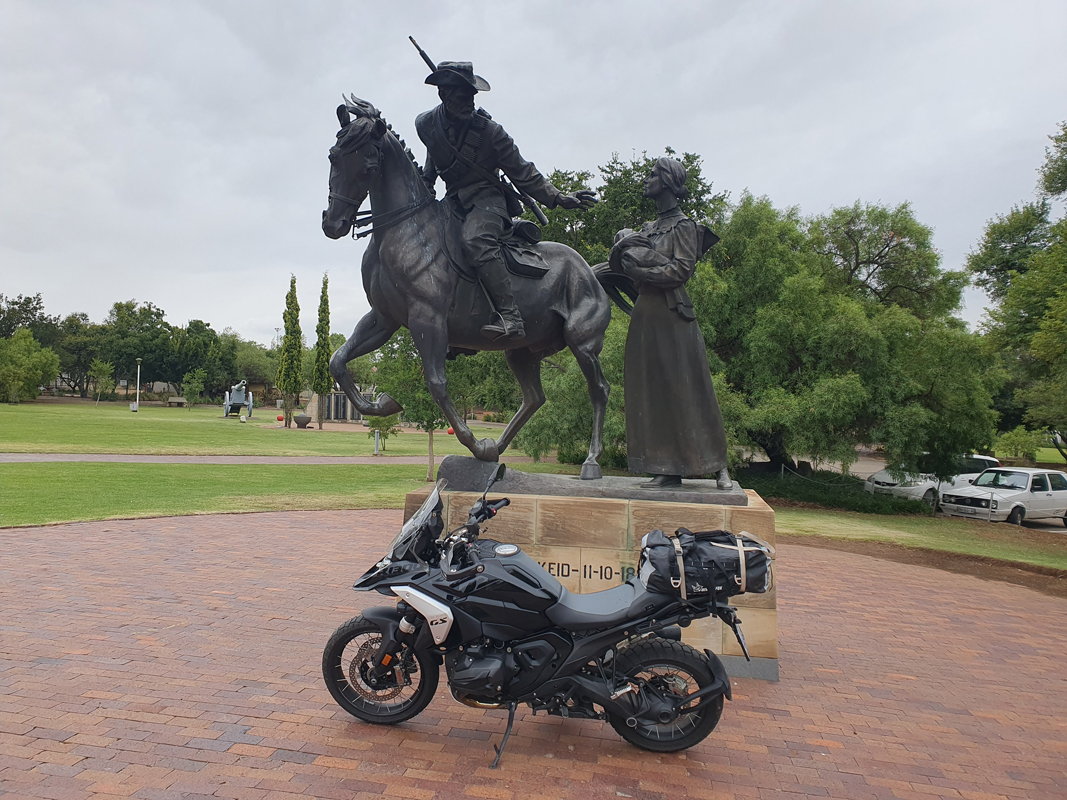
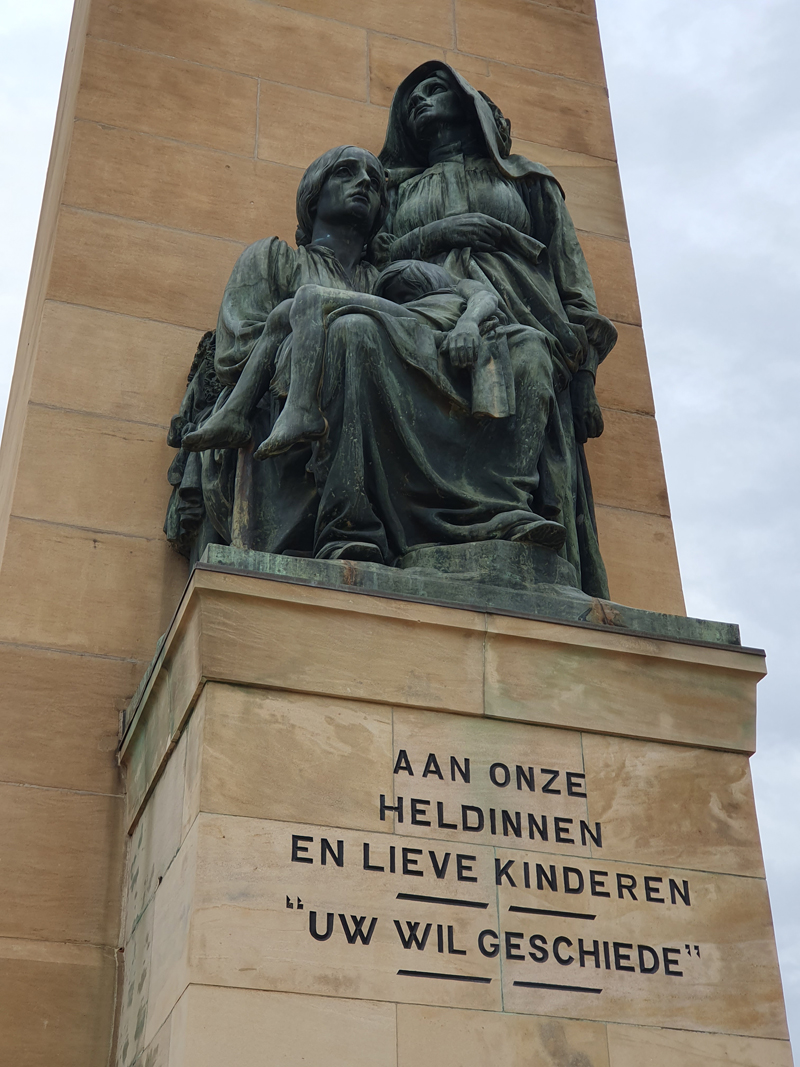
On a chilly July morning, I set off in the direction of Kaapschehoop. I had my trusty Turkana Duffalo bag strapped to the bike, and Turkana Pellipouch doing duty on the handlebars. The Himalayan comes standard with a rear luggage rack and additional tie-down loops on the frame, which is ideal for tying things down. My first stop was to be the Balmoral concentration camp site just past Bronkhorstspruit. This site has a wonderful restaurant where coffee is an absolute must. As I was thawing, I strolled through the cemetery and reflected on the brutality of war. There are 427 graves here. 339 of them are children under the age of 15. Please tell me again how you are having the worst day of your life when your barista gets your chai-latte wrong.
Photo credit: Brian Cheyne
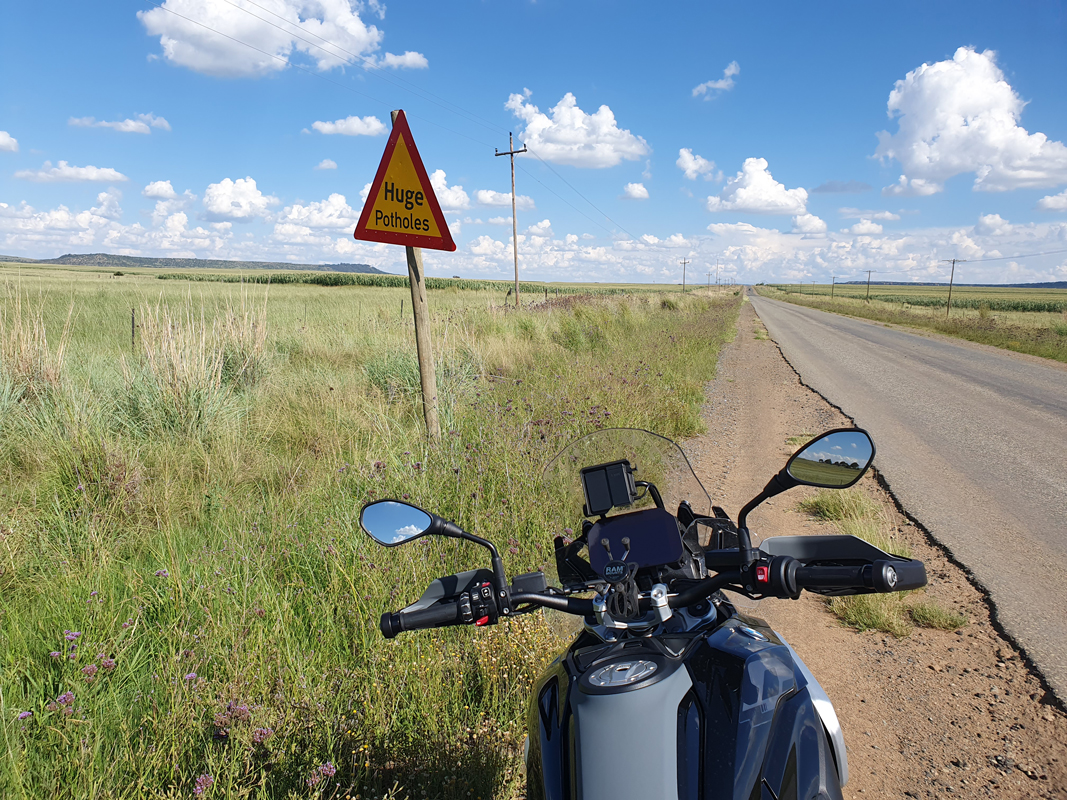
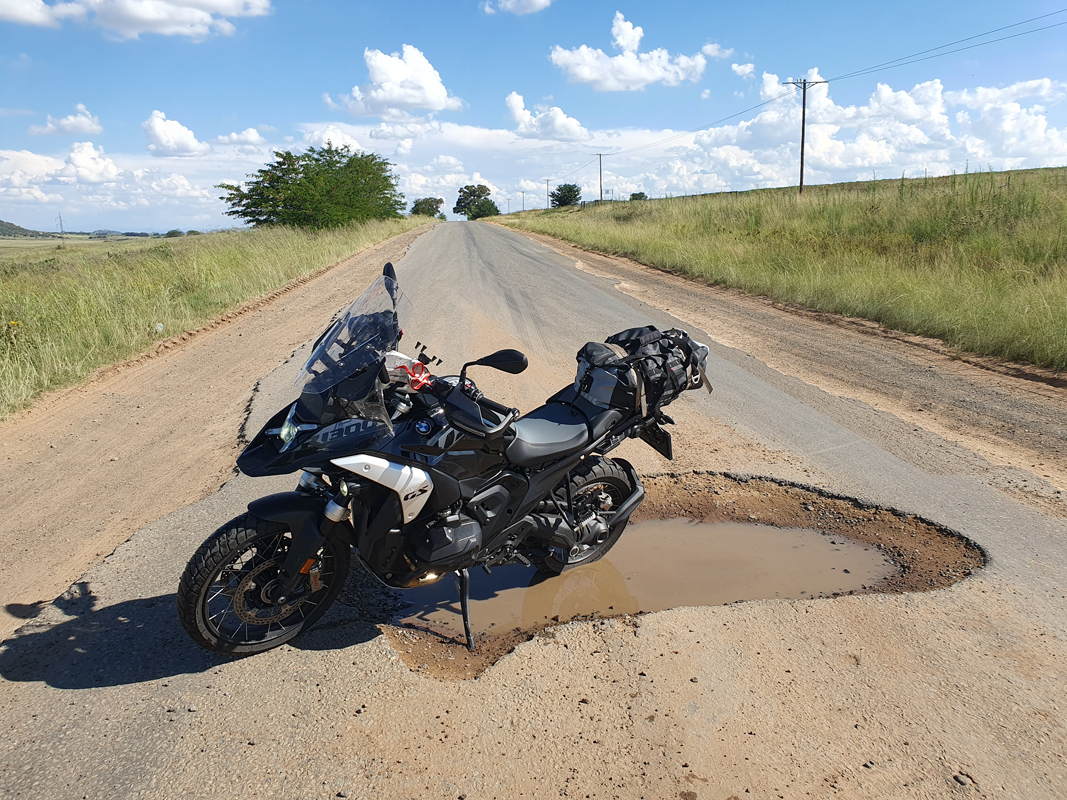
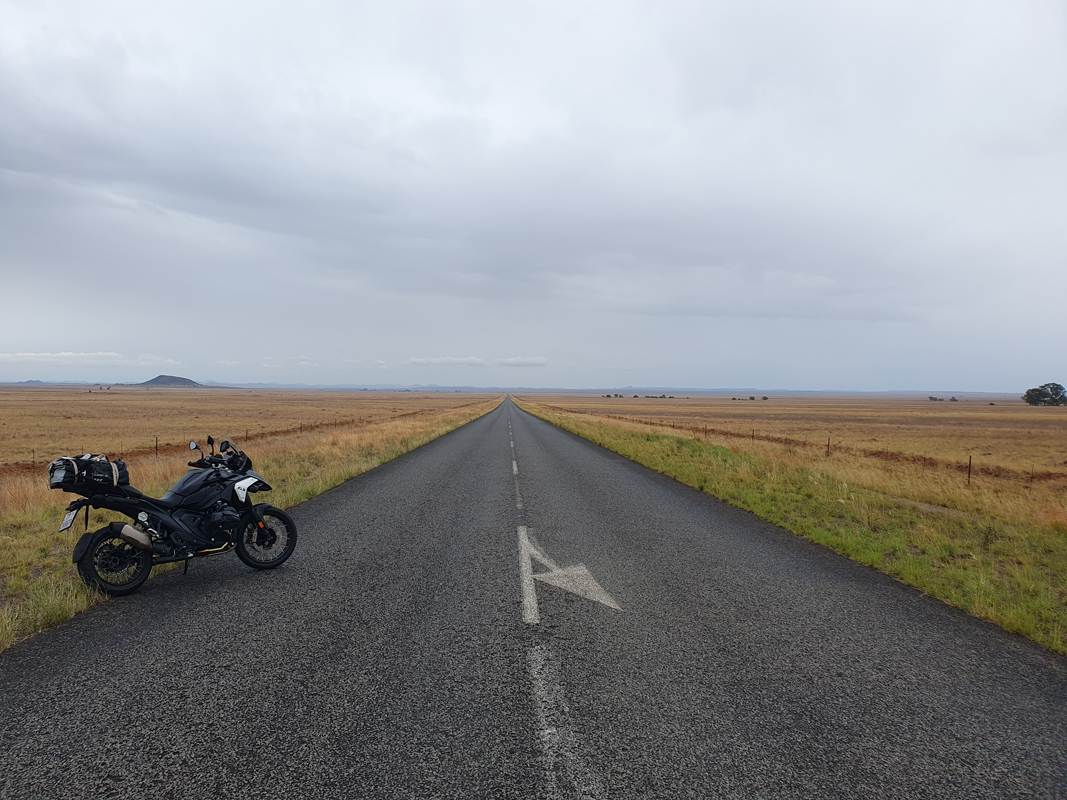
After coffee, I saddled up and headed on the N4 to save some time. I stopped in Dullstroom for another round of coffee and scones. I am happy to report that the notoriously potholed road from Dullstroom to Lydenburg is now mostly fixed. The unhappy part of it is that the trucks are now back on this road, so who knows how long the repairs will hold up. From Lydenburg, I headed up Long Tom Pass. This is where the Himalayan really surprised me. The shocks are from Showa, and they do a fine job of keeping the Himalayan on course. At this altitude, not all of the horses pull their weight, so outright speed is not an option. But then I remembered a hidden service road up Mauchsberg. This requires a nimble bike with torque to navigate the twisty uphill climb. Seems like I was on the right bike then! The road takes you to the top of the mountain, overlooking Long Tom Pass. I spent a good couple of minutes here, enjoying the silence.
Photo credit: Brian Cheyne
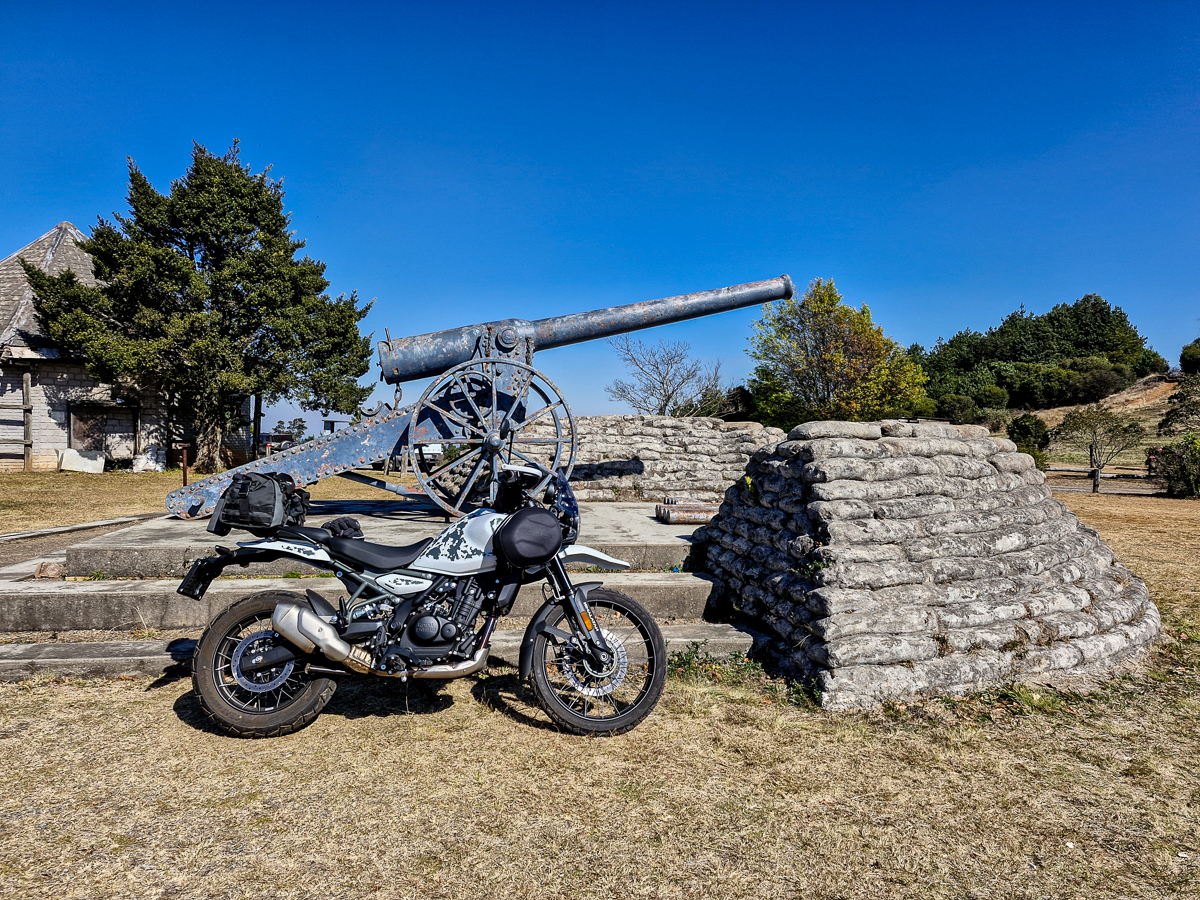
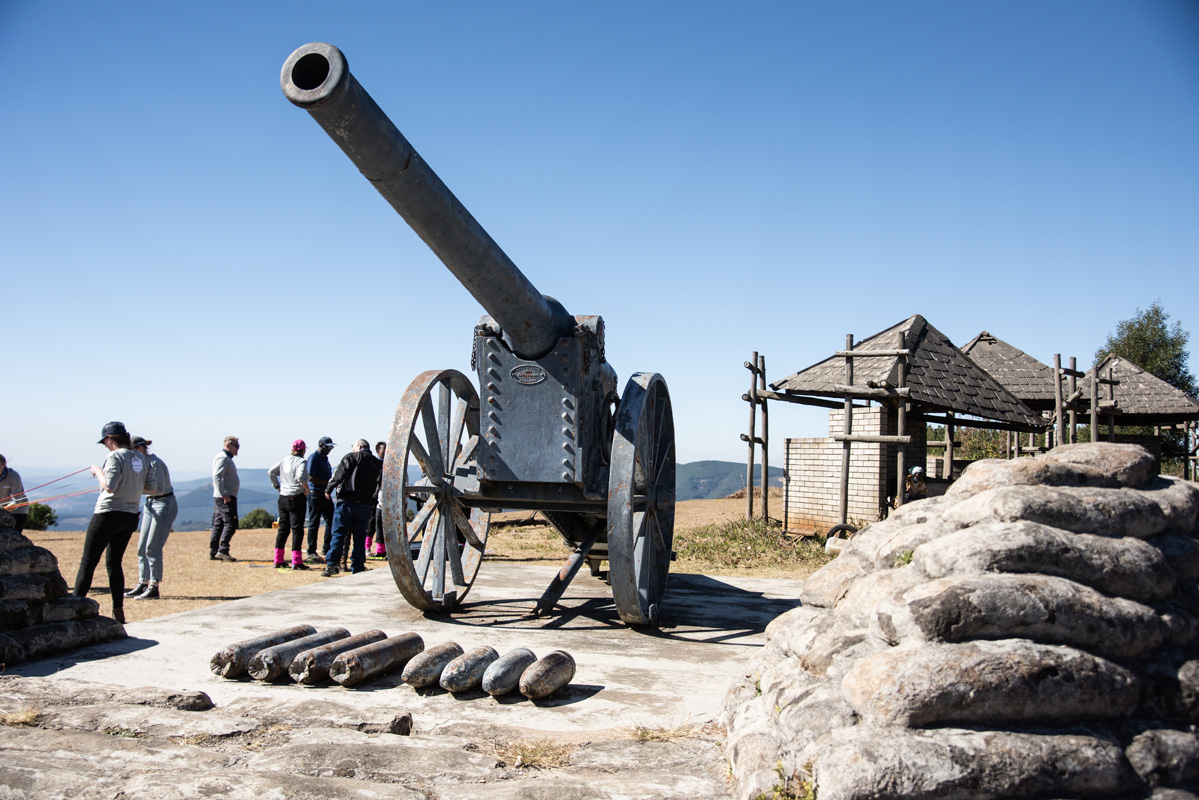
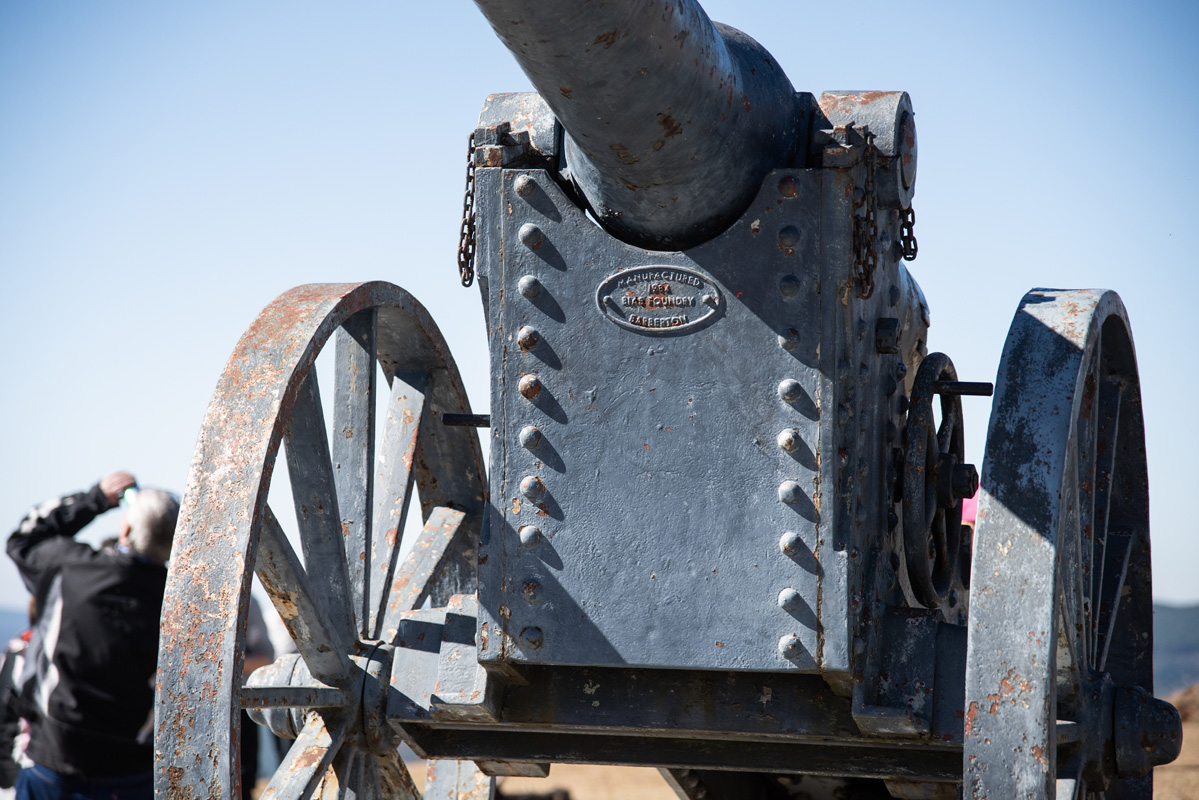
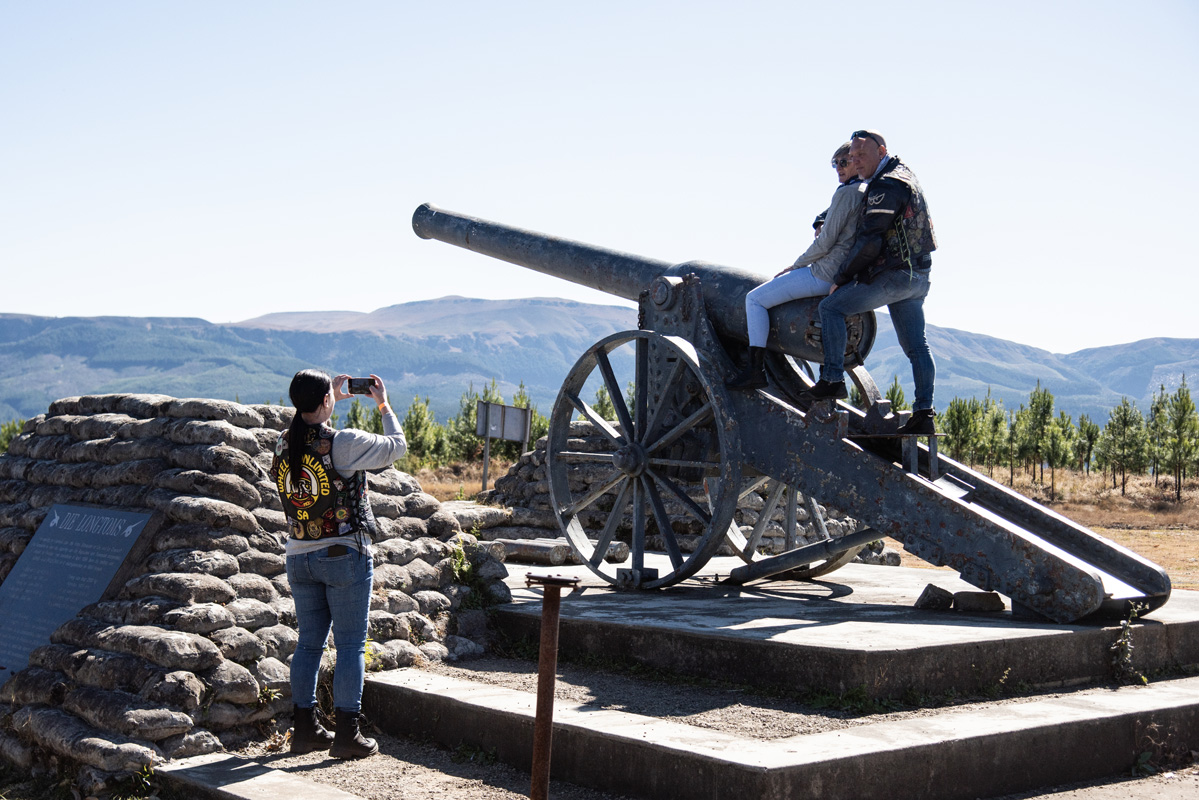
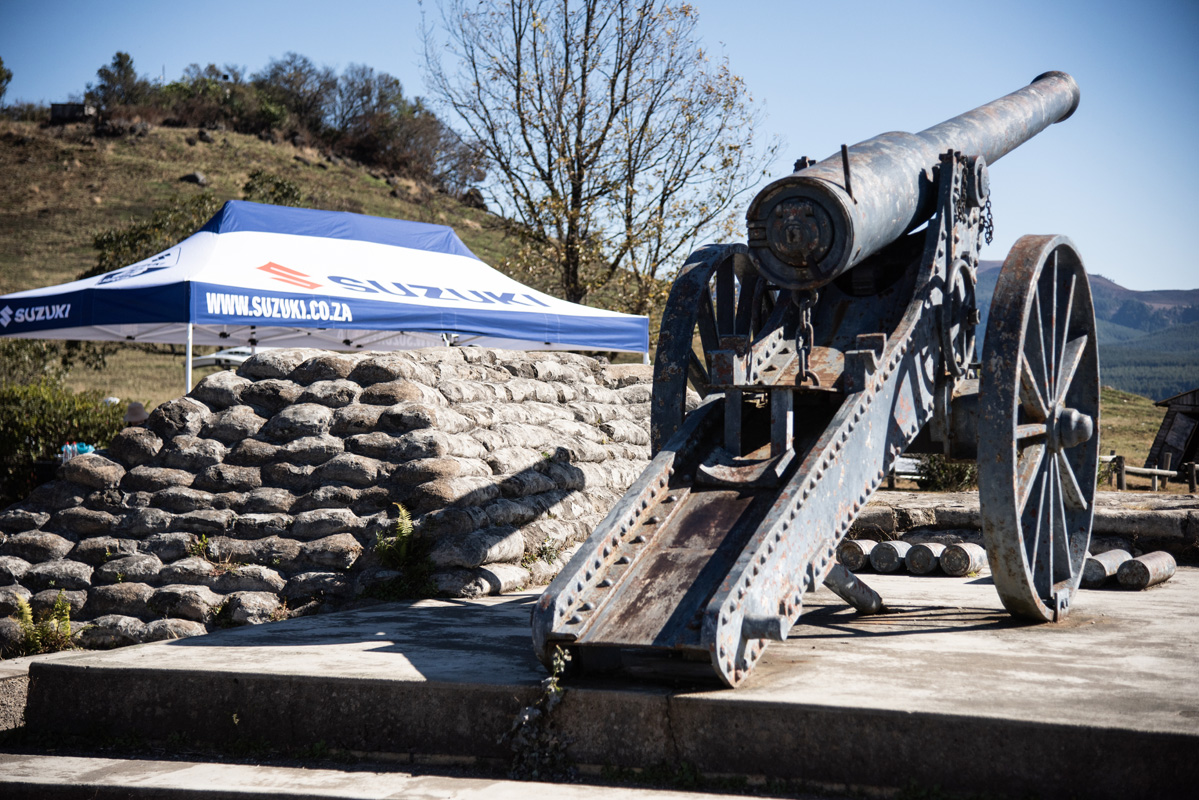
After descending the pass, a quick stop at the Long Tom canon meant I was not far from my overnight accommodation. Another pass or two, and I rolled into Kaapschehoop. I checked in with Abrie at Angel’s Mist Guest House. He had his friend Helmut over, and the coals were almost ready for a delicious chicken braai. My timing was perfect!
After a late lunch, I strolled over to Chris and Lulu’s place, watch in hand, ready to surprise Chris. I came at a bad time. Poor Chris was down with the flu, and even though he tried to look excited, I was not going to ask him for a photo with his watch. I let them be, got on the Himalayan, and went in search of a place to photograph the sunrise the next day. Abrie had some ideas, and he accompanied me on his new CF Moto 450. I am happy to see more and more people converting to the sub-500 cc class of bikes!
Photo credit: Brian Cheyne
The next morning, I headed to the sunrise spot, and I marvelled at our beautiful country. I just sat there with coffee in hand, peering over the escarpment. I think I must move here…
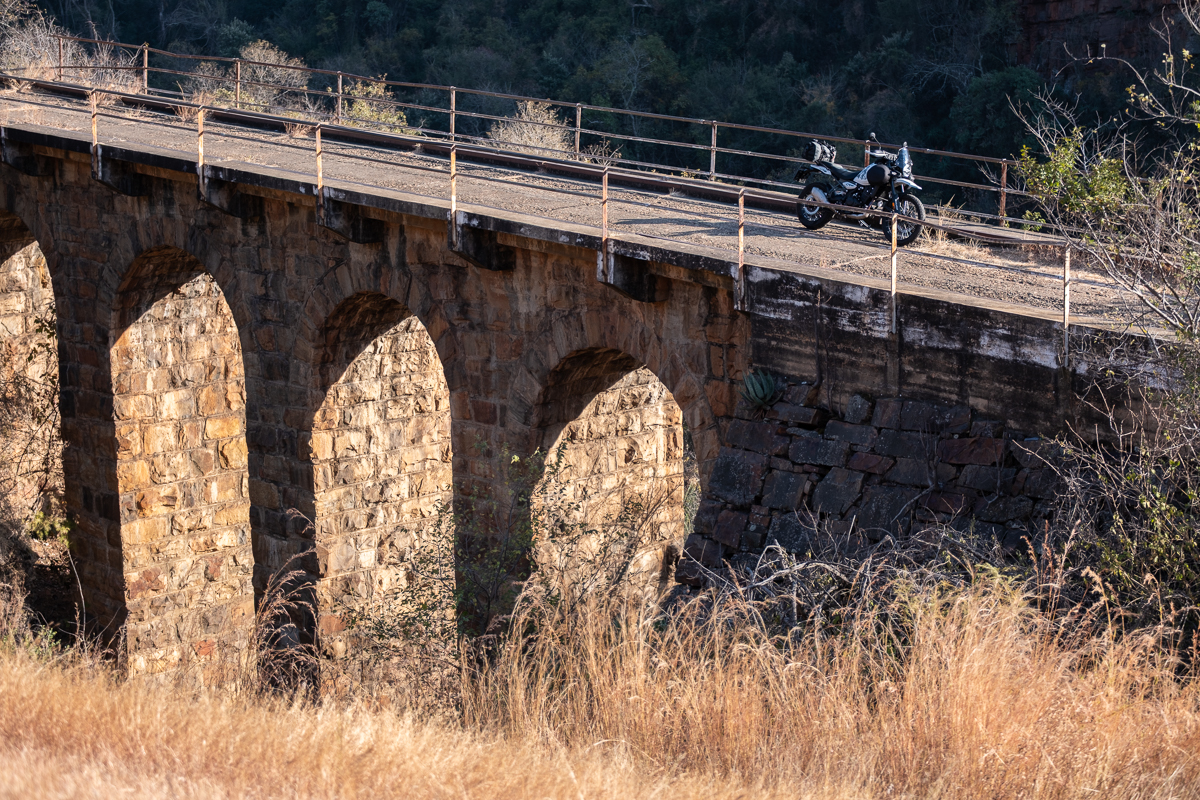
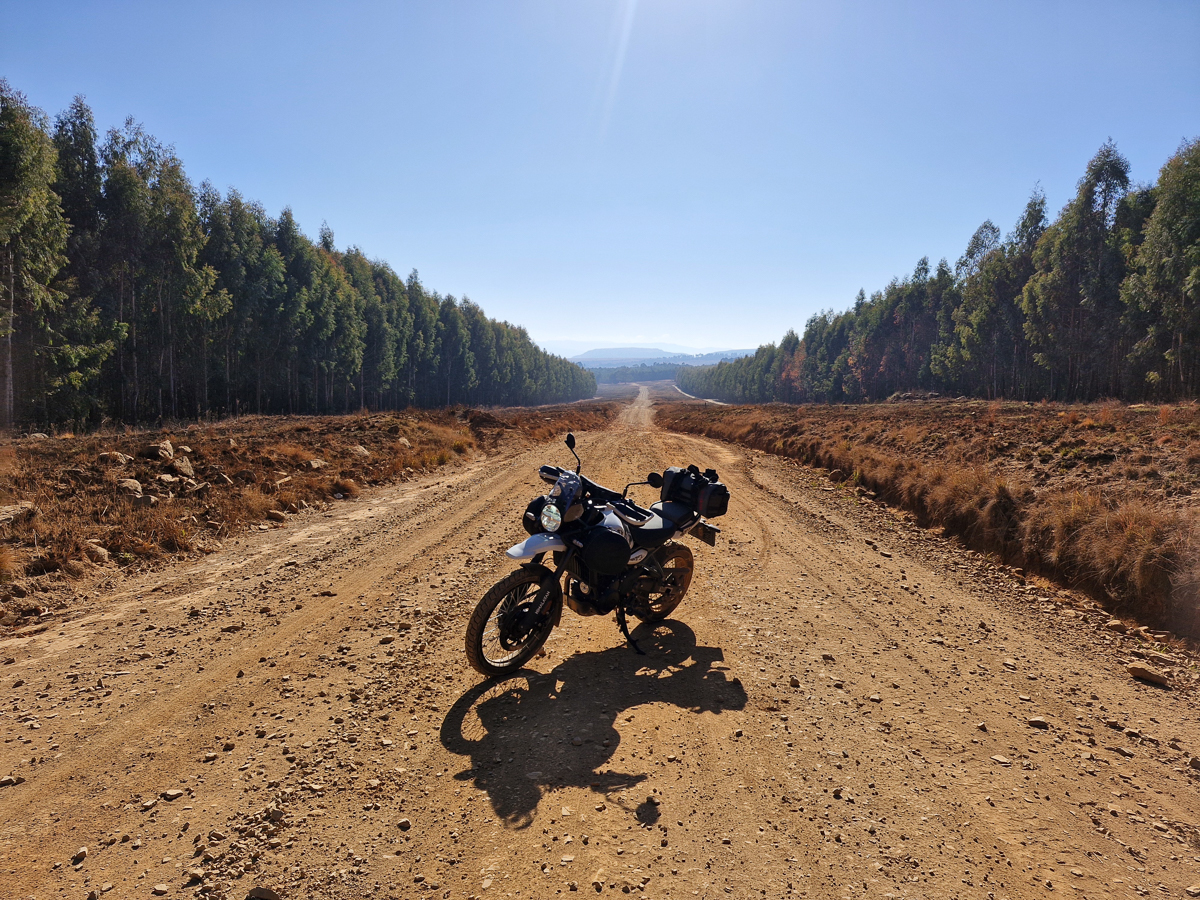
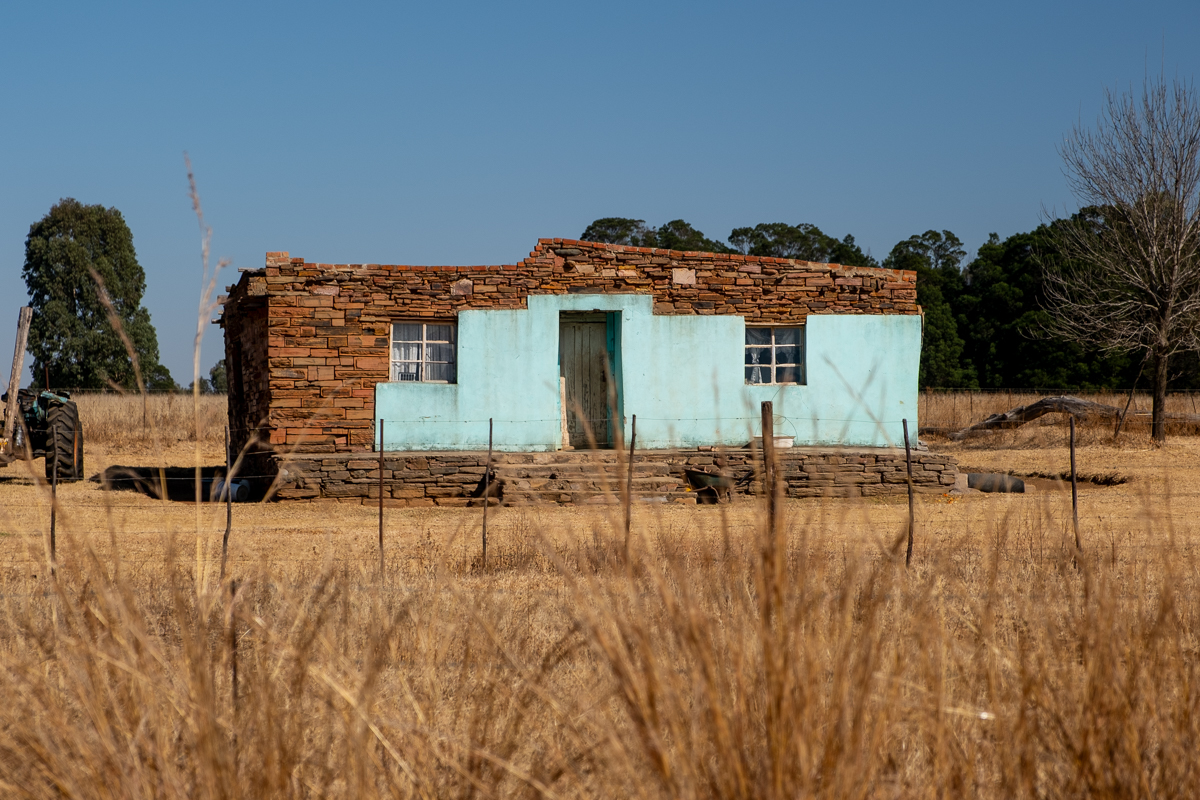
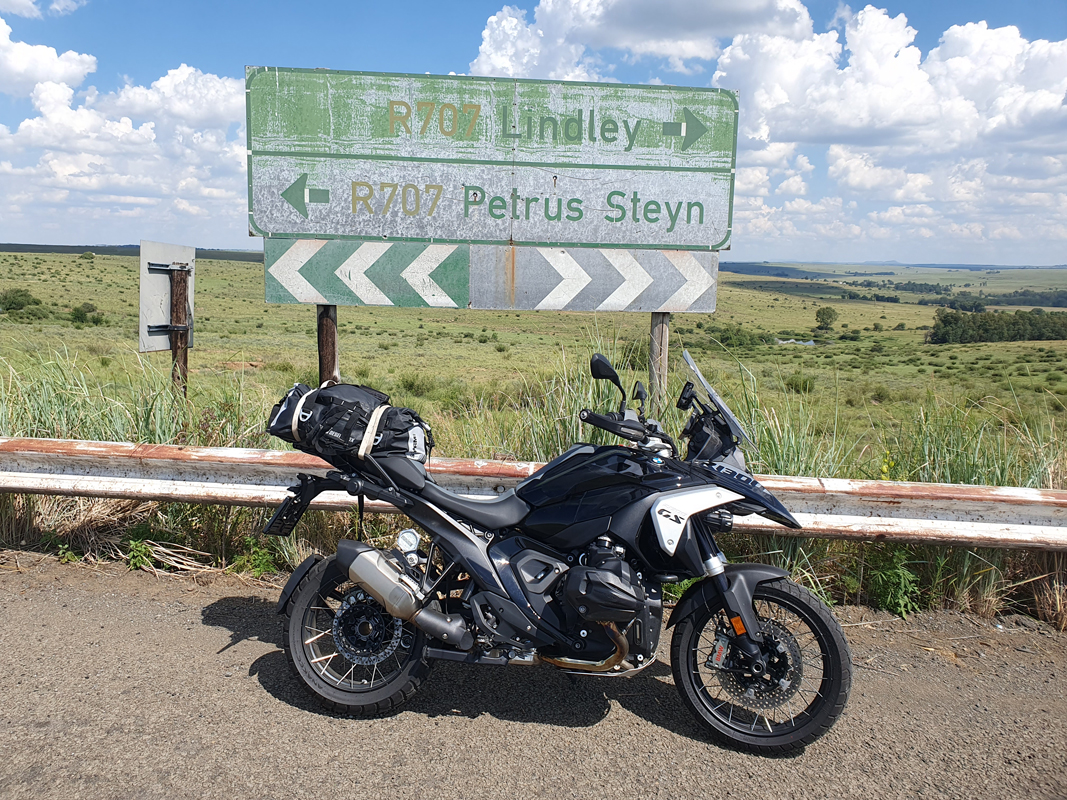
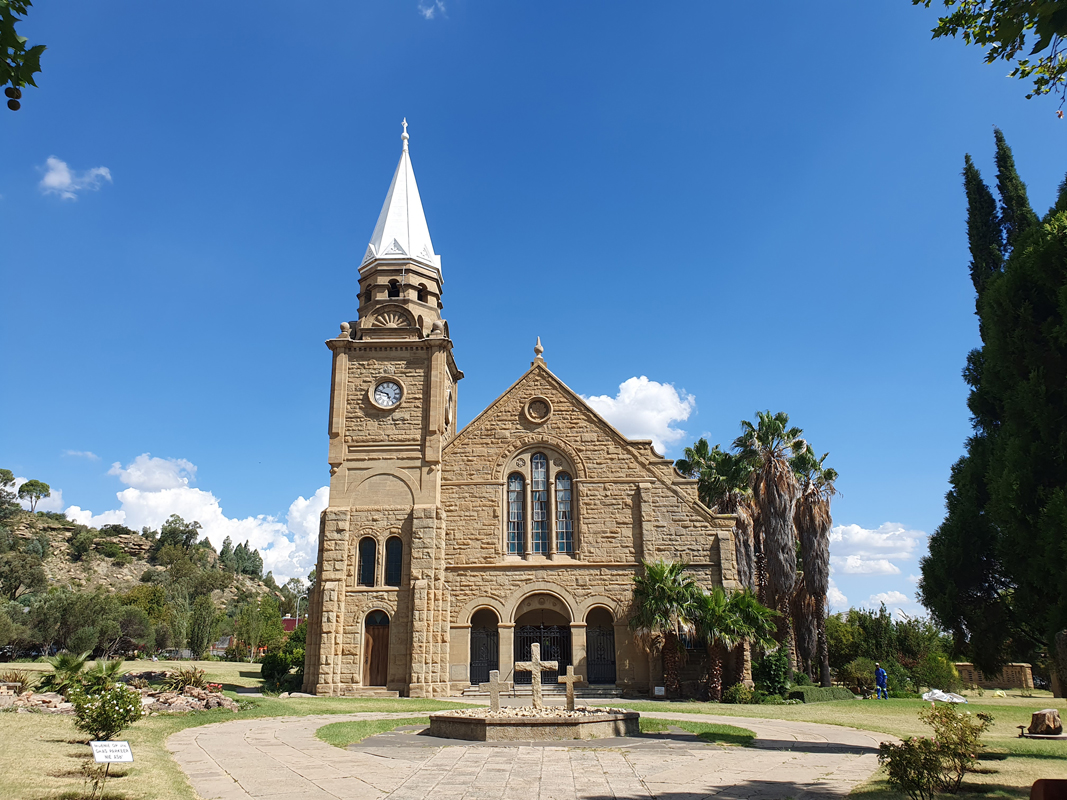
Heading back down Kaapschehoop pass, I revelled in the Himalayan’s handling again, all the while wondering how it would fare on dirt. Well, I was about to find out. After stopping at the five-arch bridge and the NZASM tunnel for the Turkana Safari, I turned into Waterval-Boven, through the town, and onto a dirt road. I switched the Himalayan’s ABS off on the back wheel and just went on my merry way. There were a few nervous moments as the tyres were road biased. They are not bad on gravel, but I would not want to ride through mud with them. Two rotations and you will be on slicks. The gravel ended just as I was starting to get comfortable. I headed back in the direction of Machadadorp, but instead of re-joining the N4, I headed towards Carolina to see if I could find the lesser-known ghost town called the Hamlet of Bonnefoi.
1 of 2
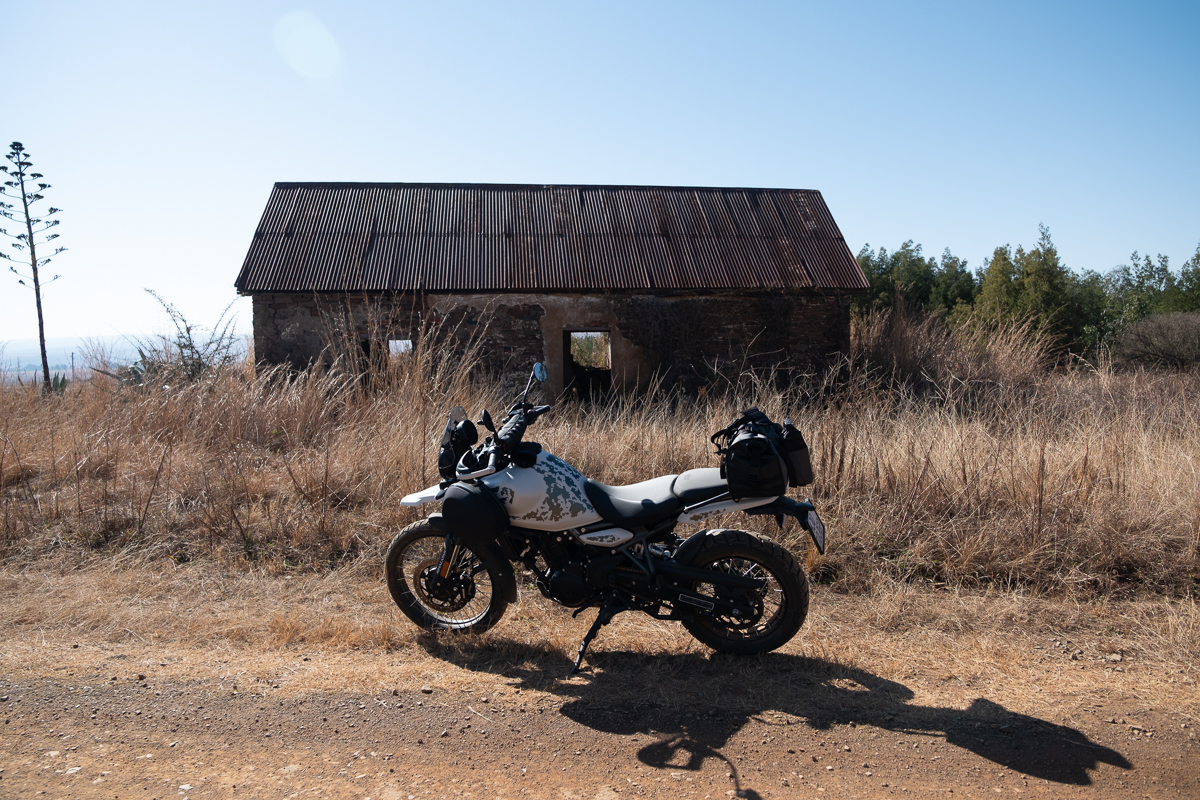
Charles Everard and his brother Thomas had a trading store in Bonnefoi. The hamlet was on the old wagon route to Lydenburg. They also had a post office. One day, a certain Bertha King came from Bethal to collect her mail, and there she met Charles, fell in love, and got married. In 1903, she was instrumental in building a stately farmhouse. They also built a church and a school. She was an artist at heart and even taught the local kids about different art techniques. The artistic streak continued with her children and grandchildren, who became artists in their own right. To this day, the Everard Group Artists still inspire other artists. Bertha’s daughter, Ruth, was responsible for the design and the construction of the Anglican Church in the nearby Carolina. Apartheid activists Braam Fischer and Joe Slovo were also said to have used Bonnefoi as a hide-out, before fleeing to Swaziland.
Photo credit: Brian Cheyne
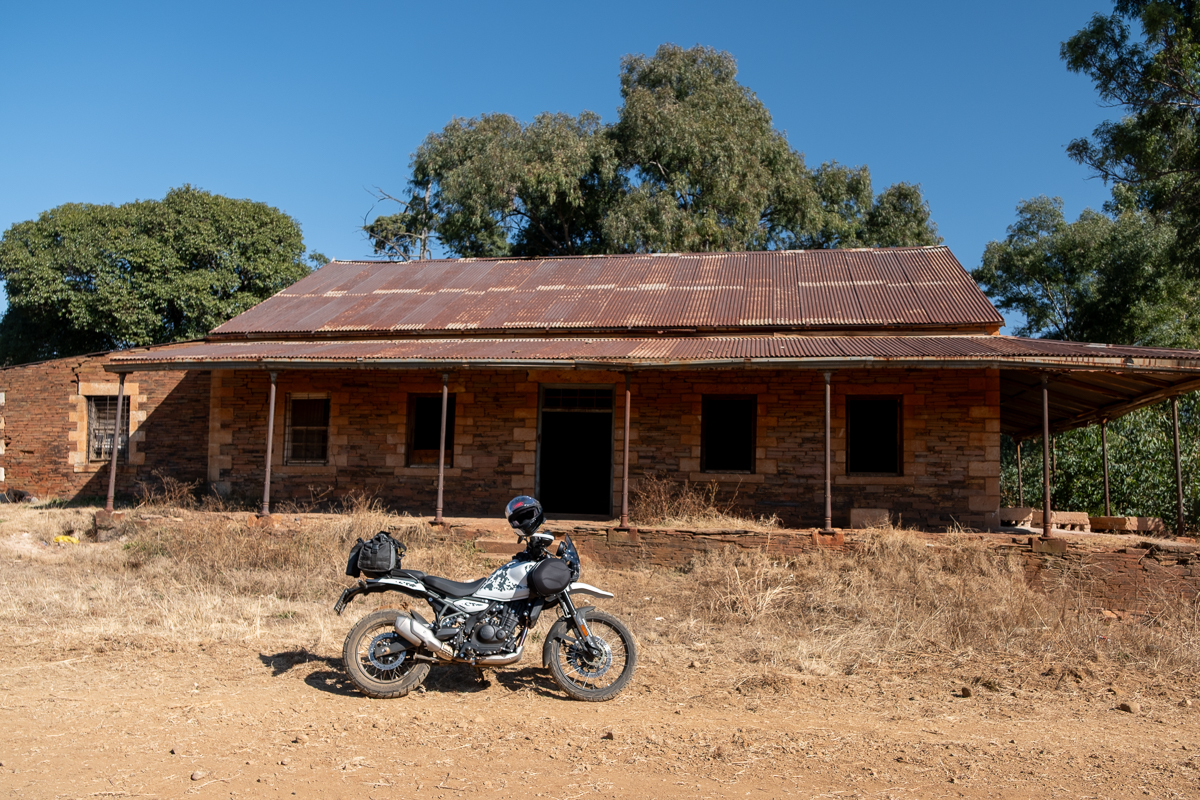
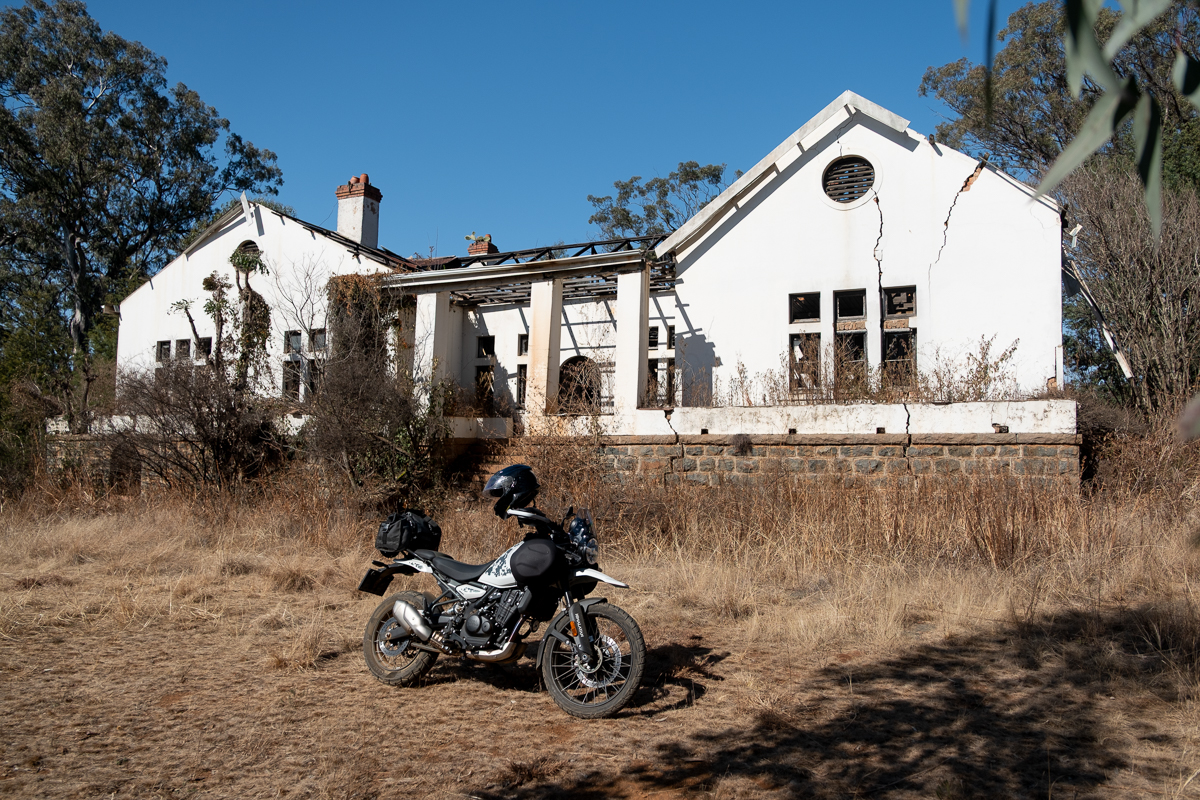
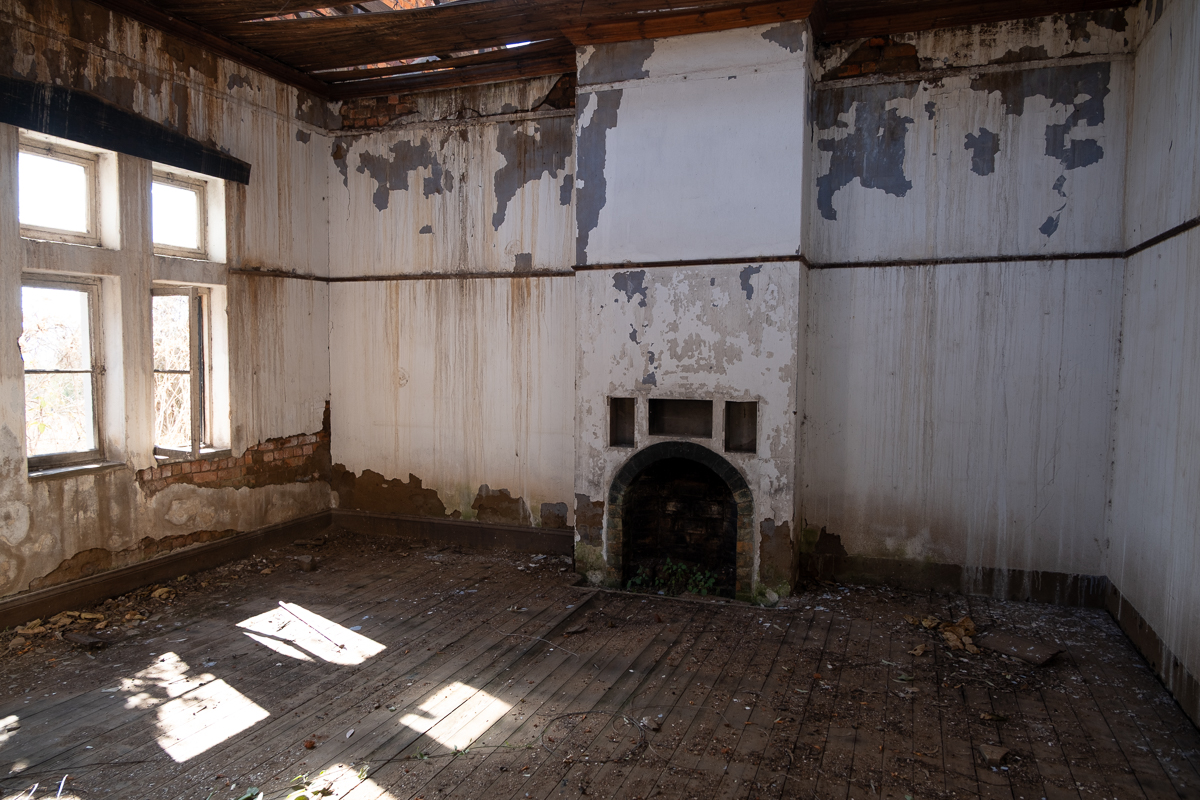
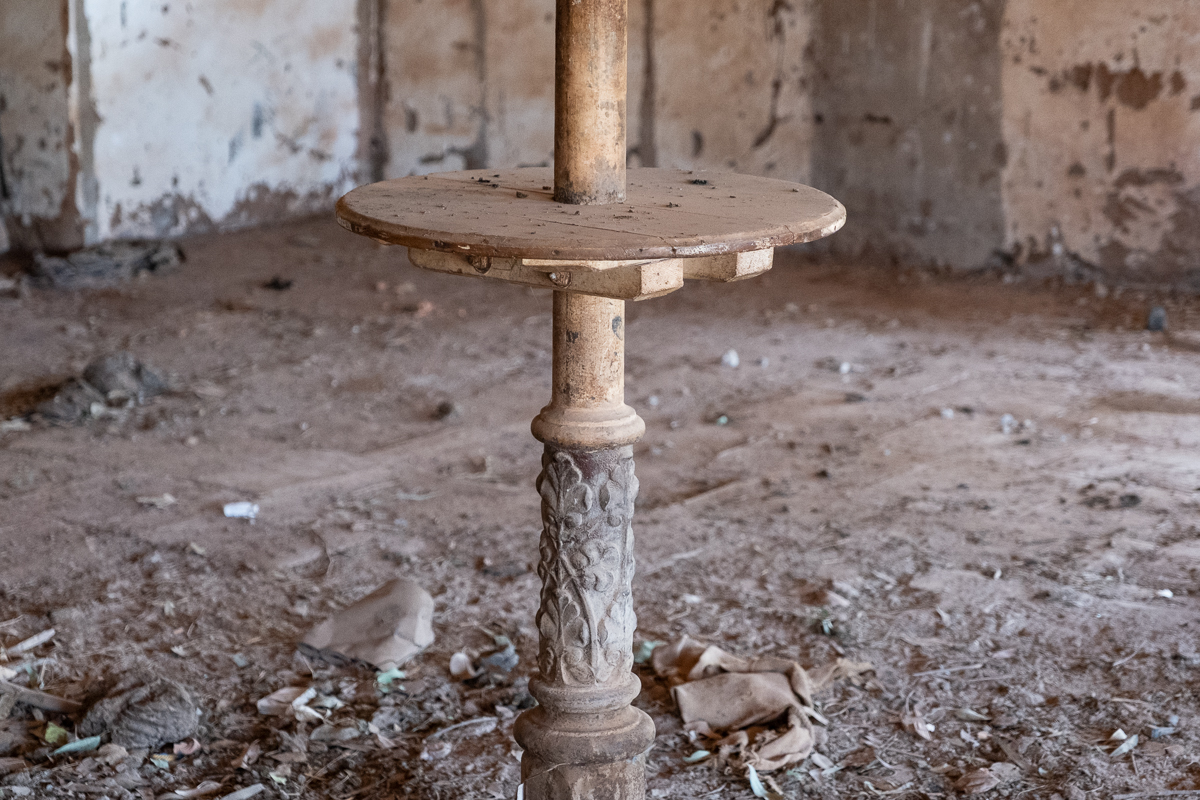
I stopped my own iron horse in front of the trading post building, and even though the building is a bit worse for wear, the beautifully ornate metal pillars are still holding the structure intact. I then rode to the old farmhouse and wondered what wonderful stories had been played out here in 1903. Each room had a fireplace, so I can just imagine the crackling of fire and the sound of laughter.
1 of 5
The house is being carried away piece by piece, and not long from now, there will be very little left to remind us of this glorious time. I was a bit moved when I left Bonnefoi. The church is no longer in use, but at least the old school has been repurposed as a house. Then came the boring slog back home, which gave me ample time to think about the Himalayan. This bike is ideal for the type of riding I do. I like travelling slowly and experiencing my surroundings. Just before I joined the N4, I saw a jackal surveying the next farm to terrorise. Near Dullstroom, I saw a majestic eagle on a telephone pole. Had I been on a faster bike, I might have missed them altogether. The Himalayan proved a worthy travel companion, and more and more people are starting to see that small-capacity adventure bikes can do the job. You only have to look at the motorcycle sales figures to see the trend. Adventure bike sales are up by 18% from January to June, compared to the same period last year, and 44% of those bikes were in the sub-500 cc category! So, if it is adventure you are looking for, the Royal Enfield Himalayan 450 is just the ticket. And if you have no idea where to go or what to do, the Turkana Safari will get you started!
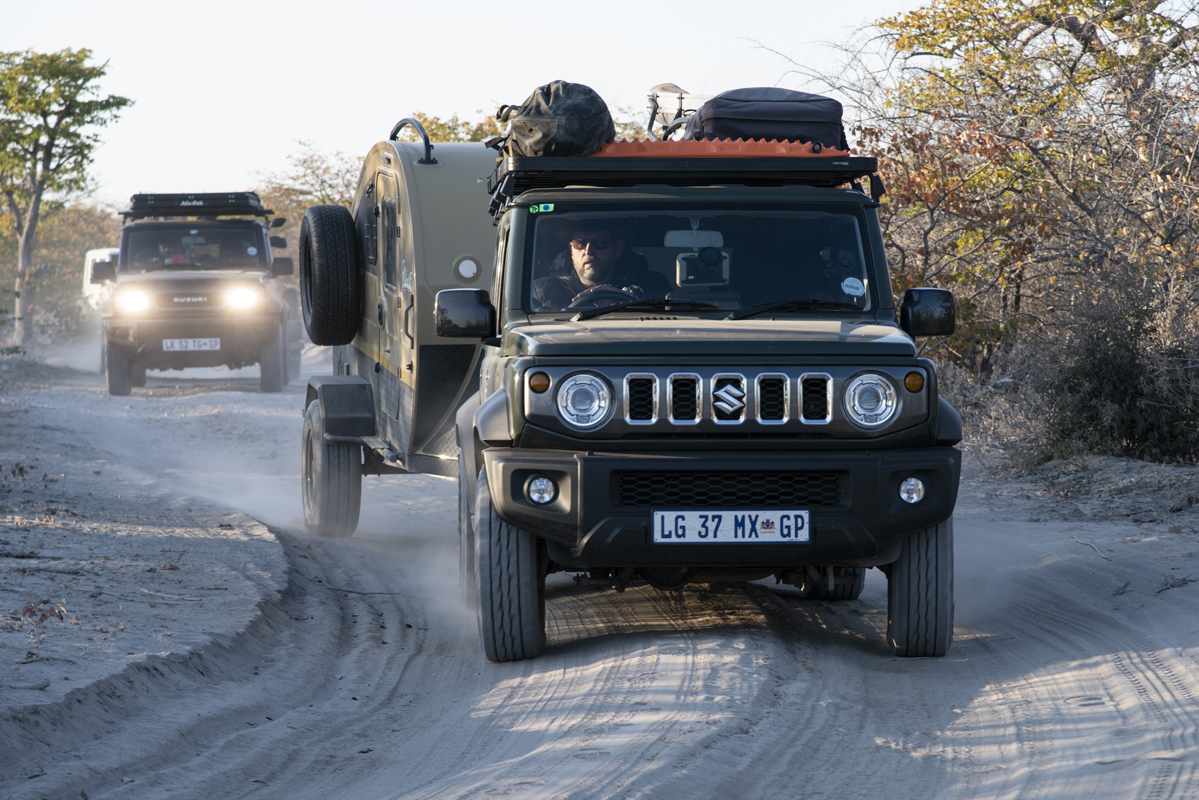
Anyone who has owned Suzuki’s magnificent little Jimny will concede that there are some improvements that can be made, which take the off-road performance to a different level. None more so than upgrading the standard suspension. Unlike manufacturers like Toyota, Suzuki do not, as yet, have approved suppliers of suspension components for their Jimny. From a personal perspective, this is a huge pity, given the absolutely stratospheric difference in ride quality, road handling and overall vehicle stability that premium suspension makes. The short wheelbase, solid axle setup of the Jimny, which contributes to its phenomenal off-road ability, is also, in other aspects, an Achilles’ heel. To deliver its best, it needs quality suspension. Unfortunately, changes to your standard suspension will void your warranty on these parts, so it requires some careful consideration before making changes.
Photo credit: Meredith Moreira / ZA Lifestyle
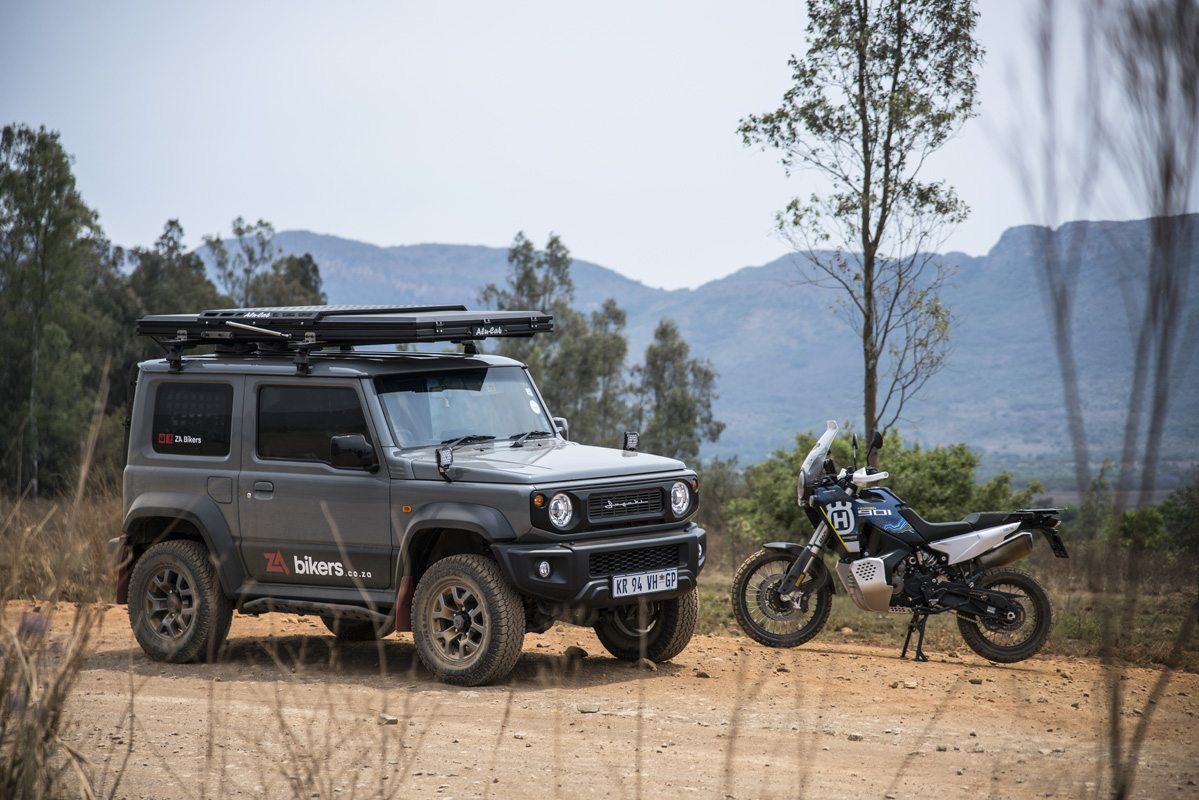
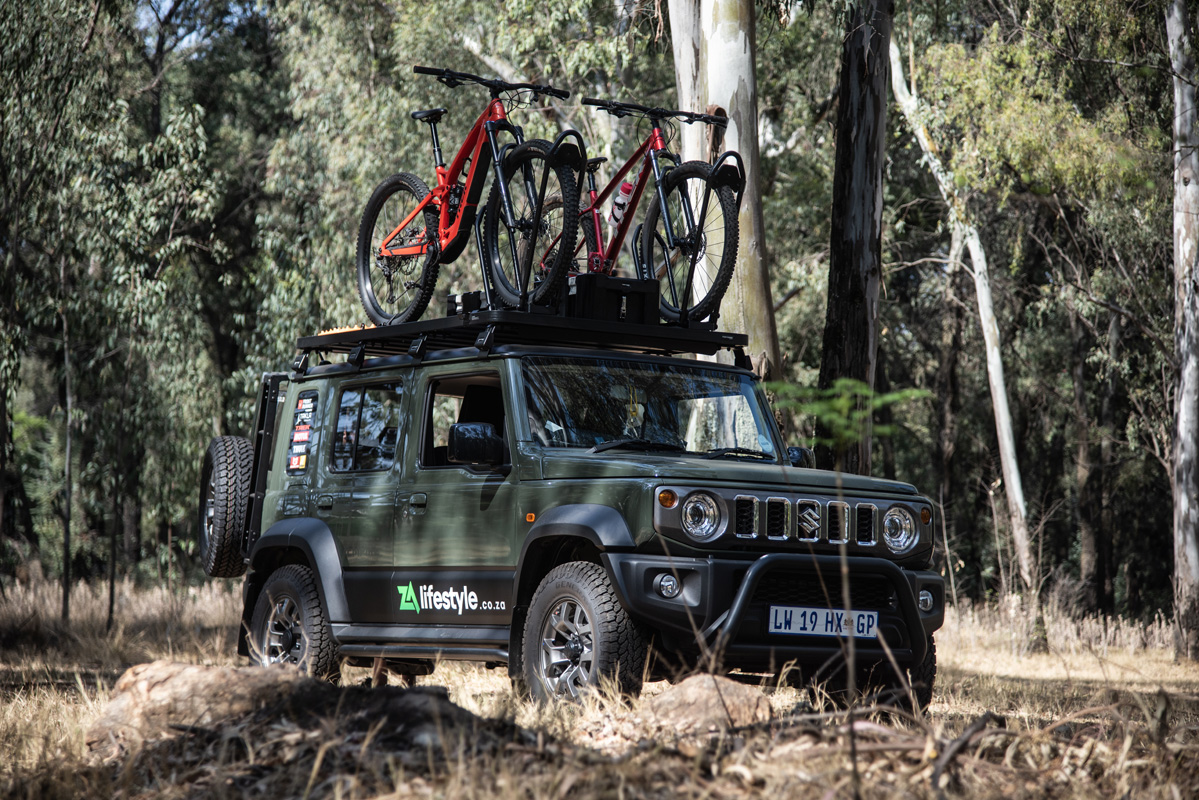
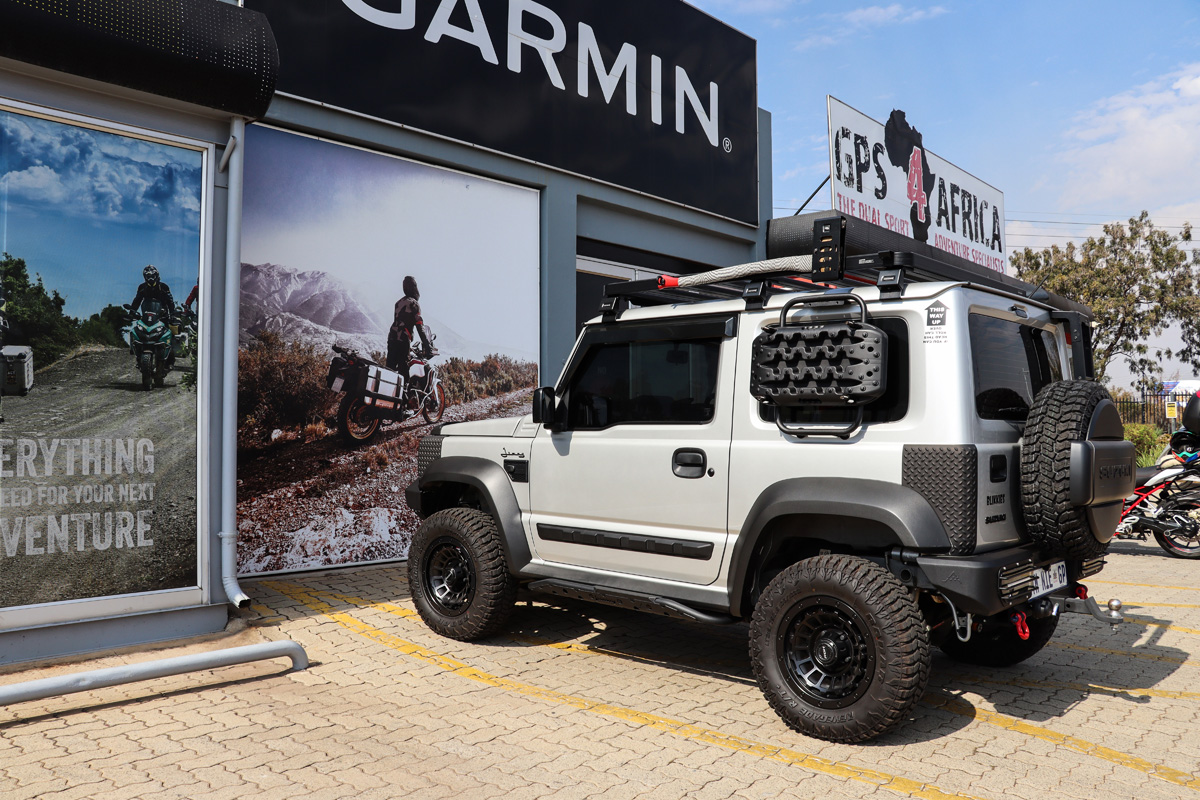
The Jimny has spawned a cottage industry of goodies available for this iconic little 4×4. There is hardly a dead standard Jimny out there. Given its tidy, ok, read that as ‘tiny’ dimensions, many owners fit a roof rack for extra packing space. Bicycles, rooftop tents and extra fuel often end up on the roof, often with an ignorant disregard for weight limits. This additional weight, carried on top of the vehicle, exacerbates the limits of the standard suspension, which starts to sag under the load, causing even more instability.
Photo credit: Bjorn Moreira / ZA Lifestyle
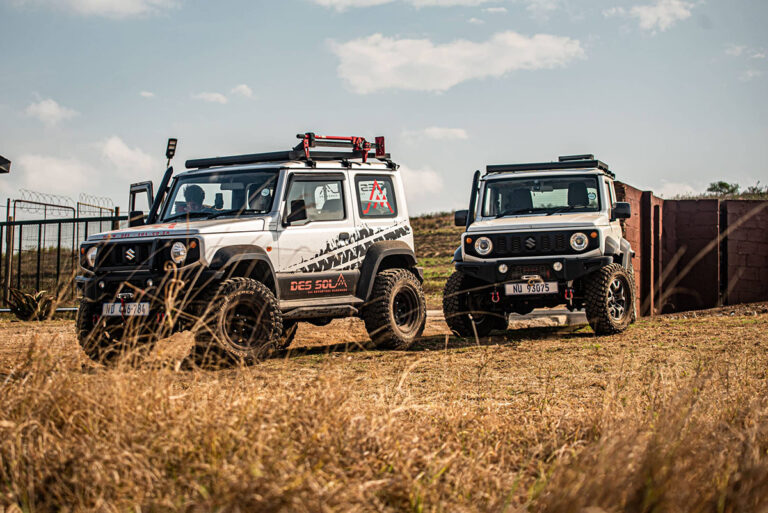
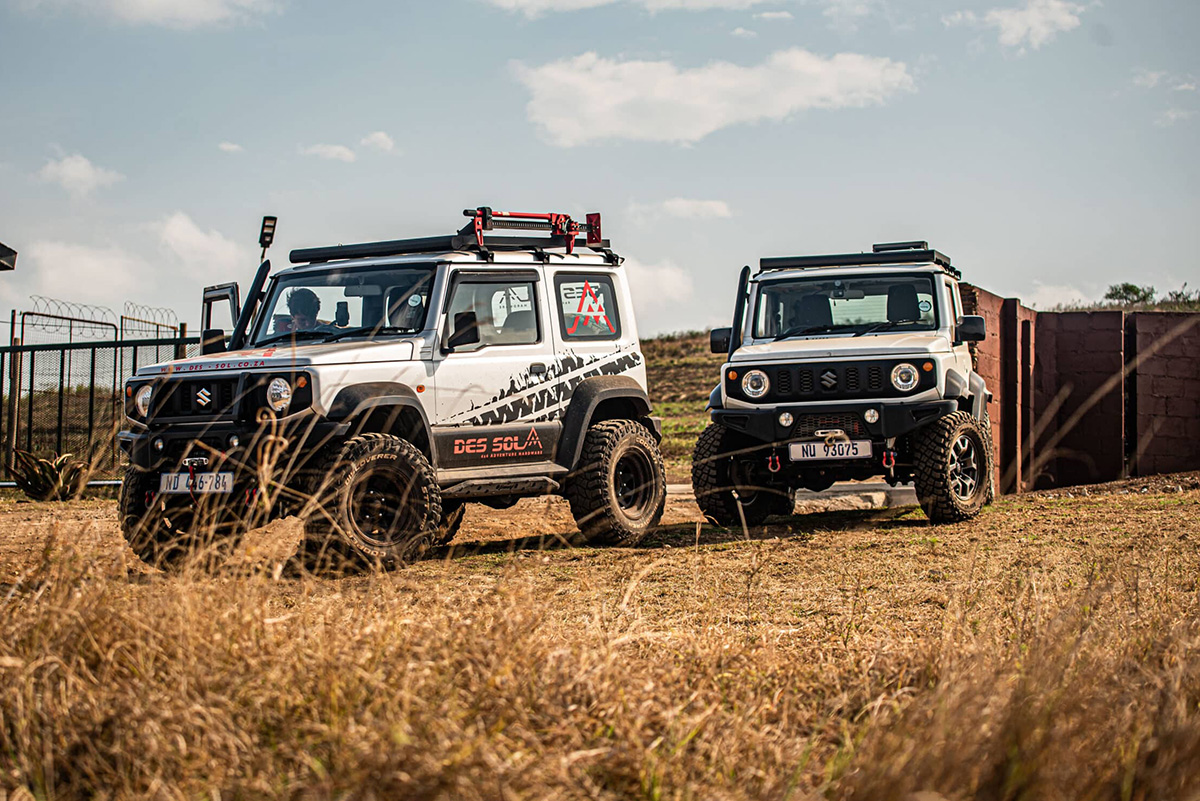
Interestingly, Suzuki have preferred suppliers for roof racks, notwithstanding the potential for errant handling characteristics. If any of the above strike a chord with you, you may be considering a suspension upgrade for your Jimny. Now what? There are many options out there from respected suppliers. Why would you, or should you, choose Des-Sol above the rest?
Image source: DES SOL
Well, for those who don’t know, Des Sol is a Proudly South African company specialising in Jimny goodies of the highest quality. Way back in 2019, they recognised, from their extensive experience with Jimny’s, the need for better suspension. They developed upgrade springs, which gave the Jimny greater suspension travel and paired them with Gabriel Safari dampers. To give ongoing support to their customers, they have always looked for good local suppliers with a track record of reliability and service. They flirted with expensive American imported shocks but were never totally satisfied with the end result.
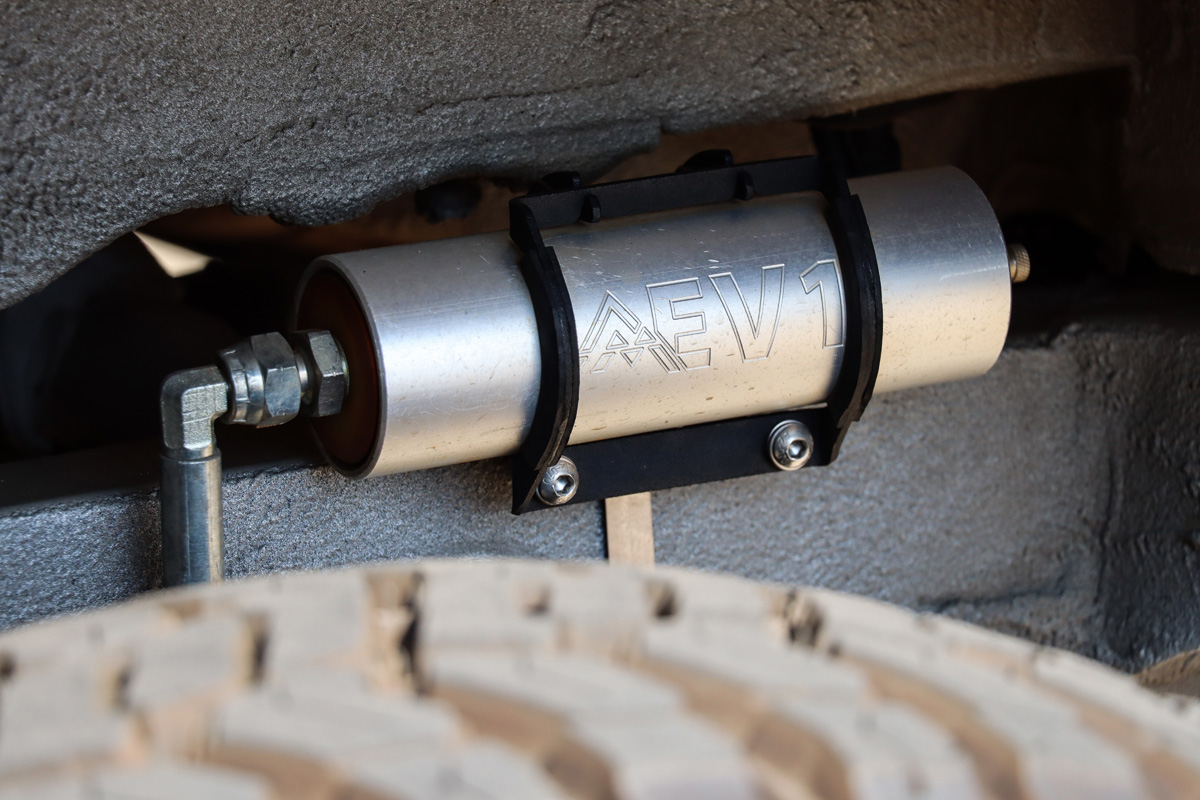
When Gabriel pulled the plug on their Safari line of shocks, Des Sol took the plunge and started development of a superior suspension solution for the Jimny. The result was the EV1 dampers, which compared favourably with the best of the imported offerings, but without having to pay for the liability of a weak rand when importing from countries with strong currencies.
Photo credit: Dave Cilliers / ZA Lifestyle
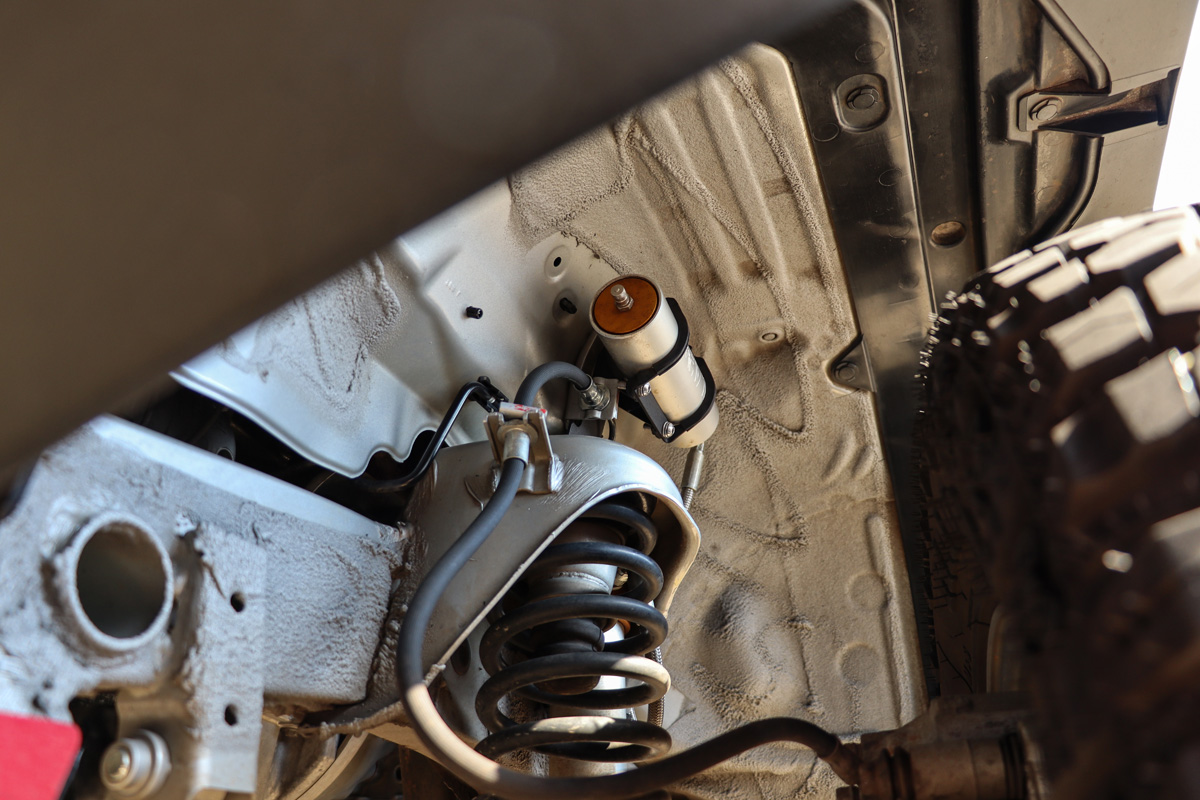
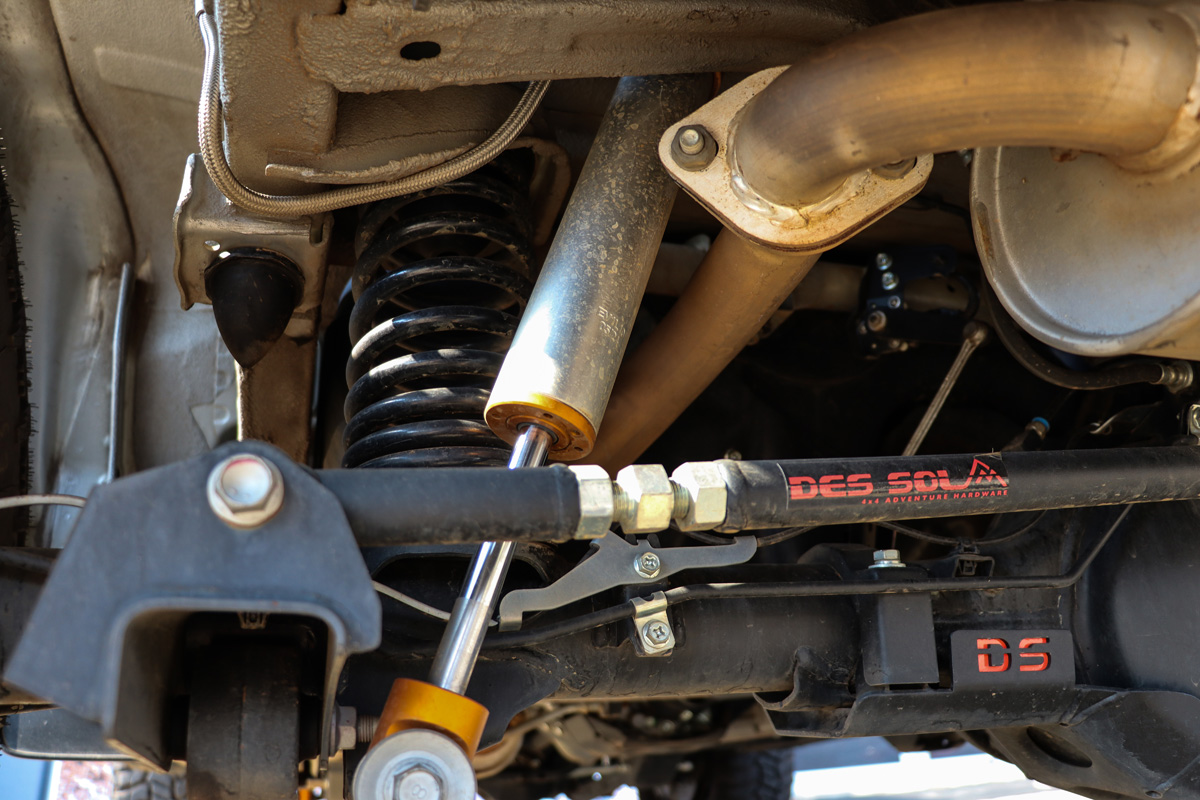
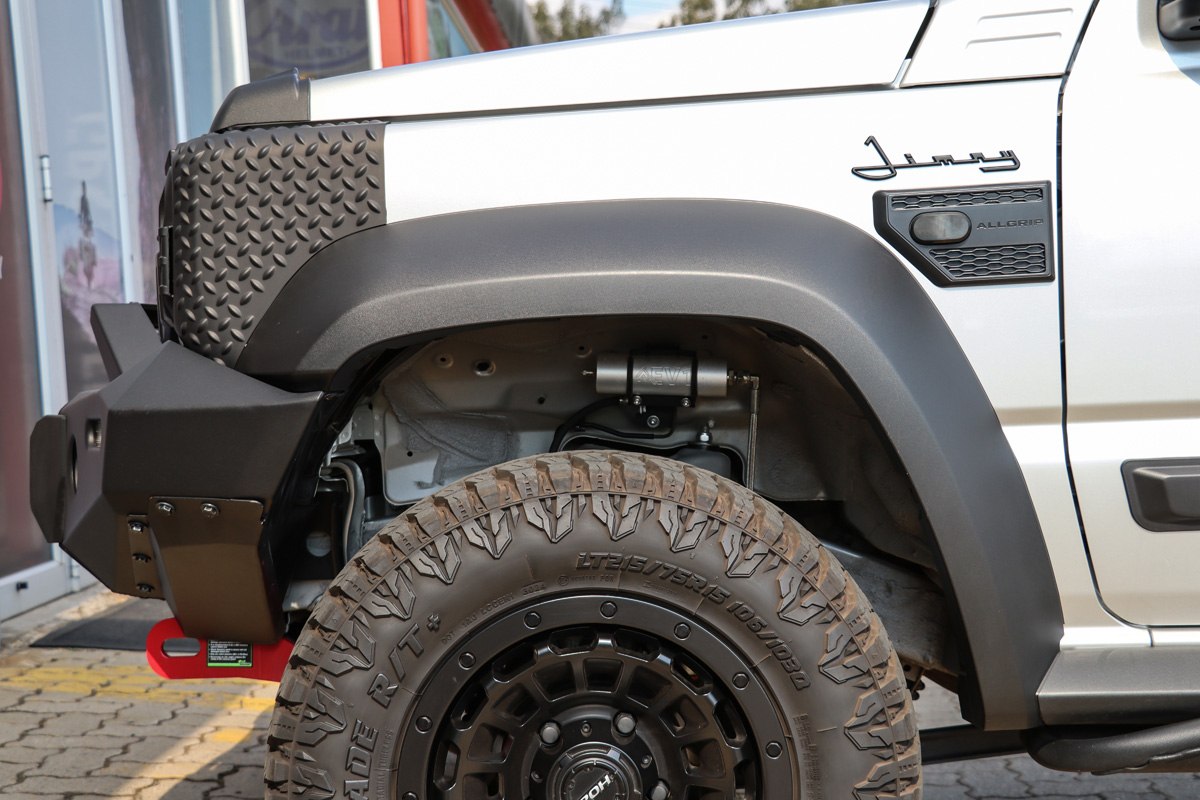
Starting with a clean sheet also meant that they didn’t have to utilise simply what was being offered, even if it was not ideal for local conditions, but rather develop what they considered the optimum setup. The top off-road racing suspension setups utilise a Monotube Remote Reservoir design. This is an immediate improvement over imported setups, none of which utilise Remote Reservoirs, which carry double the amount of oil and provide superior cooling. This gives consistent performance in hot and harsh African conditions.
The high-quality seals which Des Sol use, allied to the Motul shock oil, allow the shocks to perform consistently at heat ranges which way exceed the capabilities of imported twin tube shocks. Hard anodised aluminium tube with internal components machined from billet aluminium completes the robust picture. Damping is adjustable through the use of different shim stacks.
Photo credit: Dave Cilliers / ZA Lifestyle
This all sounds spectacular, but does it work in the real world? To find out, I spoke to Pauli Massyn from GPS 4 Africa, who runs one of the sweetest pimped Jimnys that you will ever see. Being an accomplished off-road bike rider and having a Touratech outlet, Pauli understands suspension better than most. He acquired his Jimny with a popular Australian-made suspension. He was not 100% happy with the performance. He felt that there was more body roll when traversing rough terrain than he was comfortable with. He fitted Des Sol suspension and was happy with the end result. He felt that the off-road ride quality was significantly improved; however, he felt that the ride was a trifle firm. Des Sol’s response was to re-shim the dampers with excellent results. Pauli now has the performance and ride quality that he desires.
Photo credit: Dave Cilliers / ZA Lifestyle
From the outset, Des Sol designed their suspension to be serviceable and rebuildable. The product is also modular, meaning that all upgrades that may happen in future can be applied to the existing product. This means that it is not one size fits all. Tell them what you want, and they will spec the shocks to suit. If you decide to convert your Jimny into a mini overlander and require more weight-carrying ability, you can whip out the shocks and have them tuned to suit the new application. None of that flexibility is available from an imported product. An 8-year Unlimited kilometre warranty puts their money where their mouth is. Adjustable remote reservoirs are at the point of launch. This will allow you to tune the damping with the twist of a knob. The modular nature of the suspension system is such that this feature can be retrofitted to current EV1s.
Photo credit: Dave Cilliers / ZA Lifestyle
Des Sol suspension has been so well received by the ‘Jimnisti’ that they have struggled to meet the demand. This encouraged them to upgrade their manufacturing capacity by 70%. Passing the economy of scale benefit in manufacturing costs on to the consumer has meant that Des Sol have managed to limit the cost of a full Jimny suspension kit to a starting price of R28,999. This is phenomenal when you consider what you are getting. I believe, from personal experience, that nothing enhances the Jimny experience as much as a decent suspension upgrade. It should be fundamental to whatever Jimny build you are planning. There are Suzuki dealers who will do the upgrade before you even take delivery.
Winter gets a bad rap generally. It gets light late, dark early, and it’s chilly. In the Highveld, it also has some advantages, though. Days are generally bright, it doesn’t rain, and once the morning chill has receded, the days are mild, only getting nippy again when the sun bids goodbye to the day, which typically happens around 6 pm. The big blue skies that we enjoy always turn my thoughts to Botswana. The sparsely populated, vast open spaces give the cerulean sky an even broader appeal. The idea of traversing the Botswana plains and soaking in the wildlife experience becomes immensely appealing.
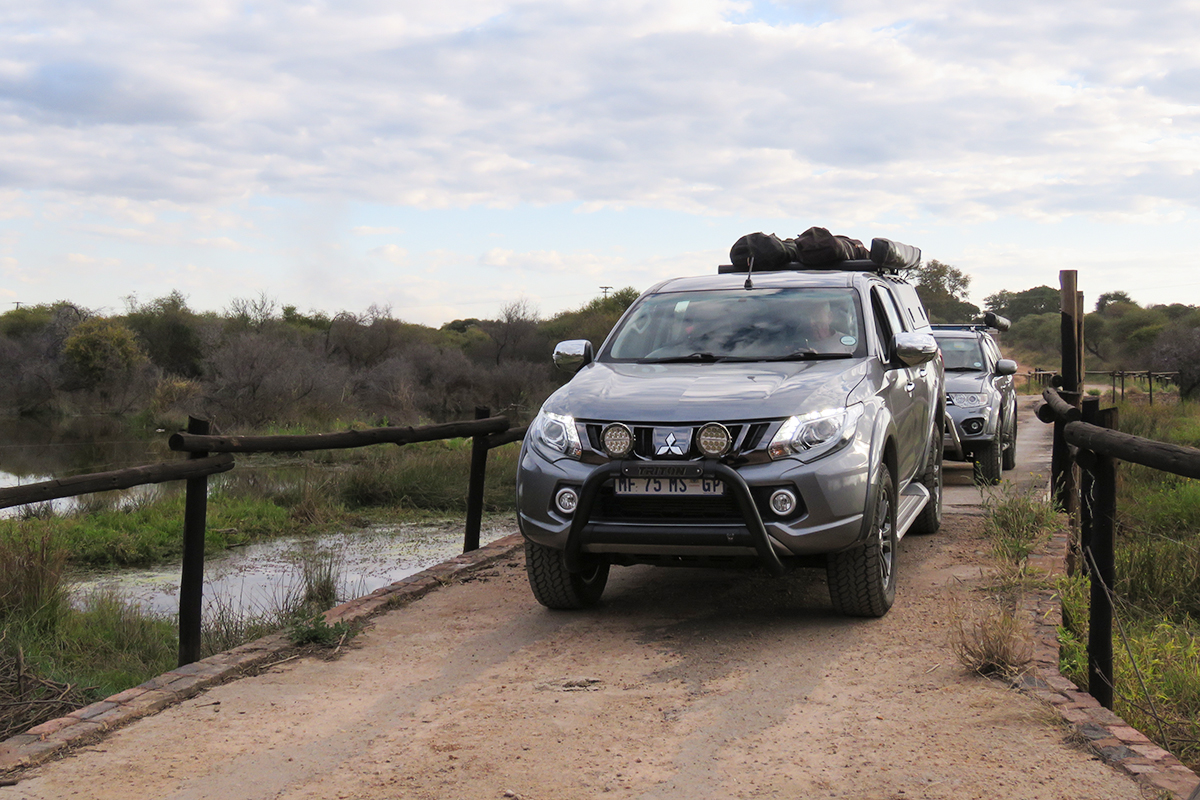
When my son Dave suggested that I join him, his girlfriend Lisa, and her two teenage boys, Jake and Dean, on a trip to Botswana, I was all in. It would also give me the opportunity to do a trip with my “new” second-hand Mitsubishi Triton 4×4. My mate Peter is my go-to Botswana travel buddy, so I convinced him to fly up from Cape Town and join us. My friend Ken has an expression, “the hunt is better than the kill”, and this rings true for camping trips too. The planning of where to go, what to do, and what to take starts to amp up the excitement, which helps the time fly by and come your departure date, you are raring to go. Irene sat this one out as she recently enjoyed a cruise that she was blessed with, and looked forward to some time alone to binge-watch a season or two of Yellowstone.
Photo credit: Dave Cilliers / ZA Lifestyle
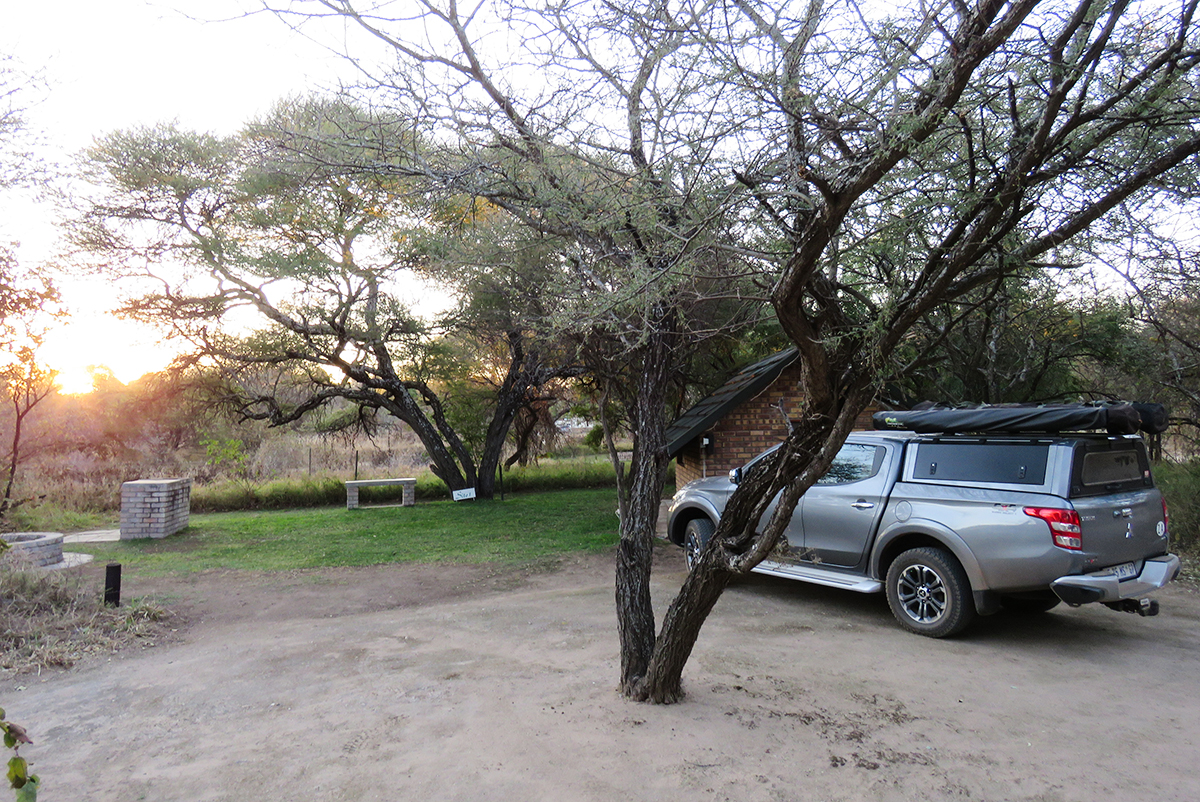
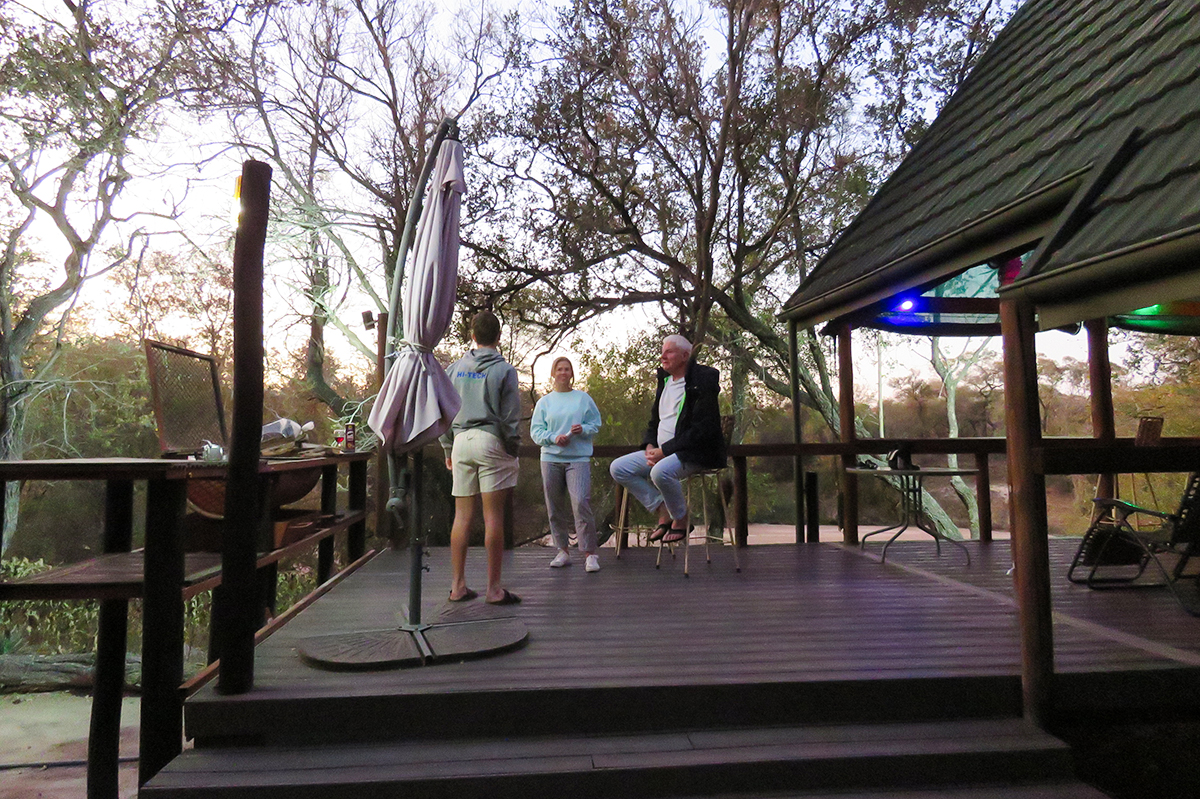
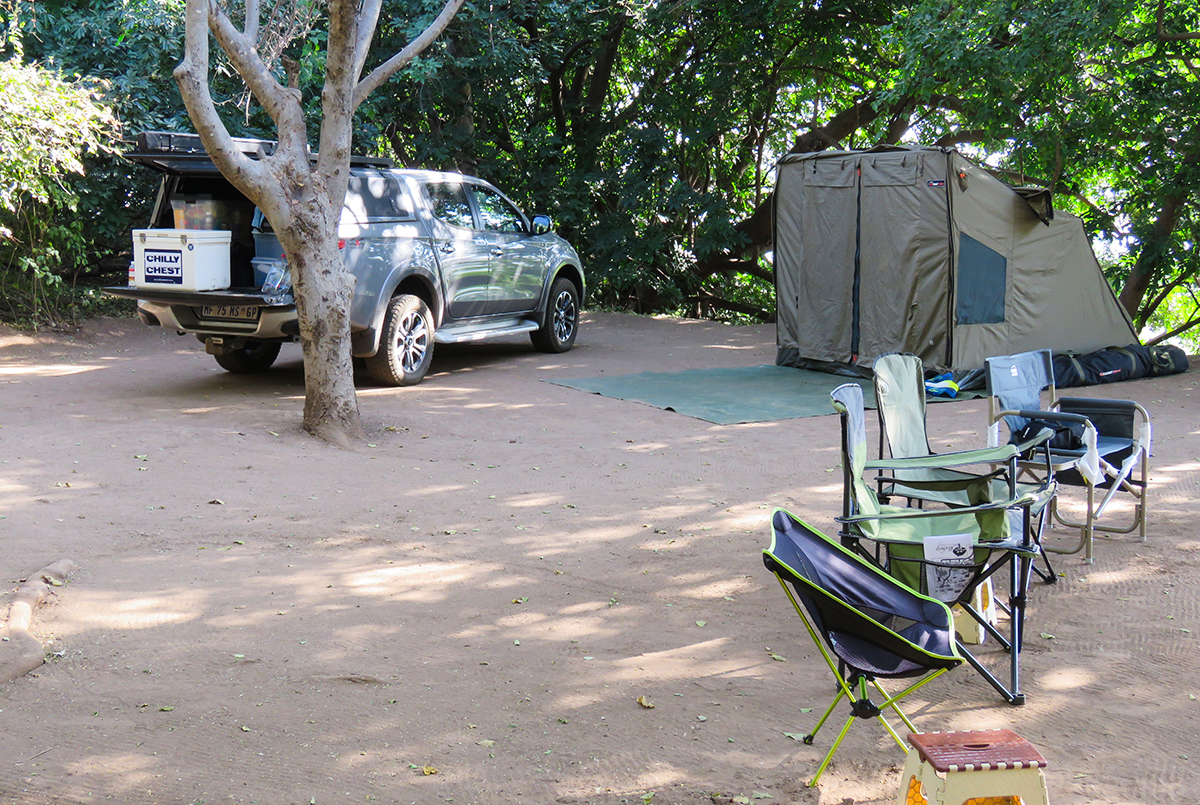
Lisa and her boys were Botswana newbies, so they were wildly excited at the prospect of a trip to relatively untamed Africa. Vehicles were packed and repacked as we fine-tuned our camping kit. The trip was going to combine chalet and tent dwelling, depending on where we were going. Three Oztents went on the roof racks, and all the bedding and cooking kit went into the back of my Triton. Dave had a morning’s work on the Thursday of departure, so we had a short first day’s travel planned. Our first night was at De Kuile, a rustic “hunters’ camp”, ten k’s beyond Lephalale. This gave us a 70 km hop to the Stockpoort/Parr’s Halt border post on Friday morning. We arrived in the late afternoon and settled into the basic but comfortable accommodation. In no time, we were seated around a hardekool fire with sundowners in hand. Sosaties, garlic bread and salad were on the menu. Dave braai’d, as we enjoyed our first hardekool “bushveld TV” of our trip. The therapeutic effect of the bushveld and a braai fire worked their magic as the city stress ebbed away. The weather was nippy but surprisingly mild as, dinner done, we sipped on a single malt nightcap before turning in.
Photo credit: Dave Cilliers / ZA Lifestyle
By seven the next morning, we were on the road to the Botswana border. The horror show that is Grobler’s Brug/Martin’s Drift border post, logjammed with trucks, has caused us to rather use Stockpoort/Parr’s Halt, despite the 13 km of dirt road that needs to be negotiated on the Botswana side. With the 4×4’s dirt is welcomed rather than avoided, so within half an hour, border formalities were completed, and we were travelling in Botswana. We drove the tar road from Macheneng village to Mahalapye, where we refuelled with significantly cheaper Botswana diesel. Mahalapye is a sizeable town with all the modern amenities and is situated on the A1 Road that runs from Gaberone in the southwest to Francistown in the northeast. Breakfast was at the Wimpy in the next town, Palapye, where Lisa met with and introduced us to some old friends who live in Palapye. We gleaned some valuable route tips from them, which stood us in good stead on our return journey, but more on that later.
Back on the A1, we smashed the 160 k’s to Francistown, where we got three whole fillet steaks from a great butchery that I know from previous trips. If bought from an appropriate butchery, Botswana fillet is the best you will ever eat, and it comes at half the price of similar quality steak in SA. After sixteen k’s, of which eight k’s are a benign dirt road, we pulled into one of our favourite campsites in all of Botswana, Woodlands. Professionally run and immaculately maintained, Woodlands offers both superb campsites and beautiful chalets overlooking what, at this time of the year, is a dry riverbed. We were privileged to see this as a raging torrent during our December visit.
Photo credit: Dave Cilliers / ZA Lifestyle
There is a covered deck with a dedicated braai space overlooking the riverbed, and this is where we prepared and enjoyed our second dinner of the trip. The first night in Botswana is always special, especially in a stunning bushveld environment. Woodlands is situated on what is known as the “Hunter’s Road”. A route traversed for over 150 years by hunters and traders travelling into and from the hinterland of this vast country. If the trees could talk, what tales would they tell? It somehow seemed fitting that our first night in Botswana should be in the footsteps of these ghostly giants.
Photo credit: Dave Cilliers / ZA Bikers
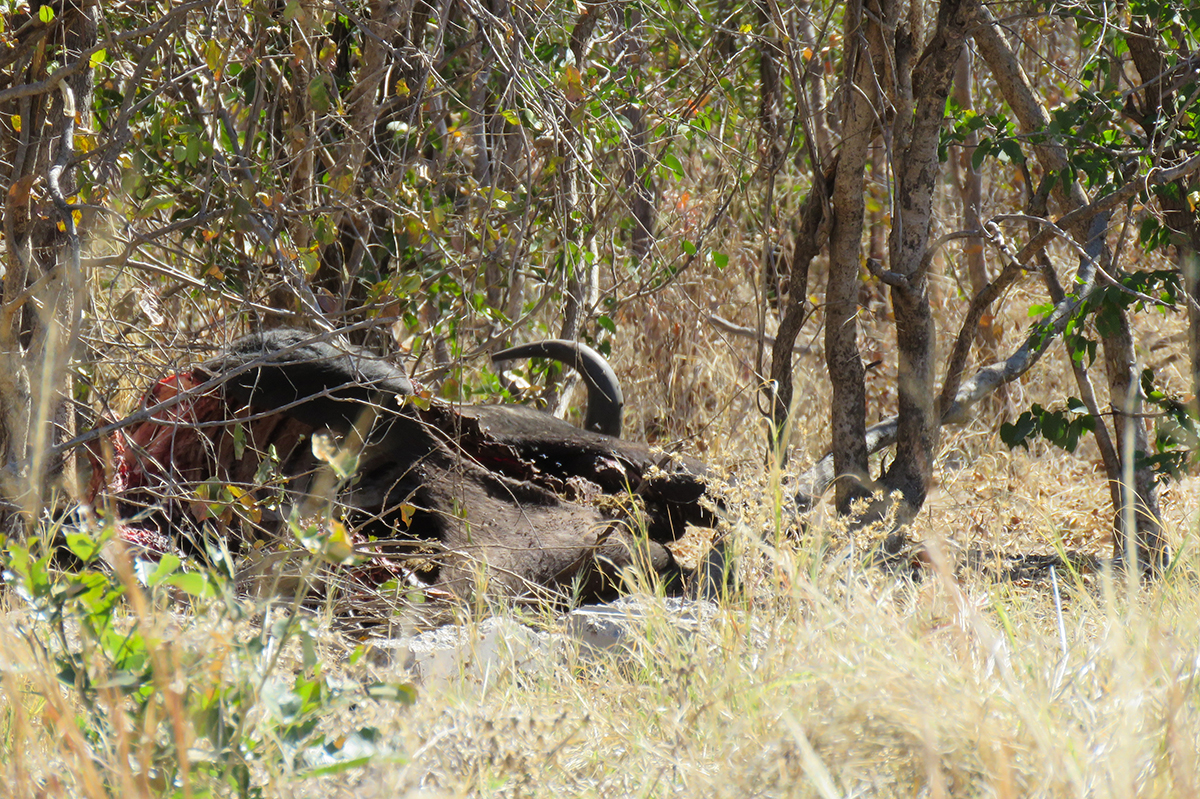
Our first stop the next morning would be at another Botswana legend. Nata Lodge. Two hours travel from Woodlands; it is the perfect breakfast stop. Their breakfast buffet is expensive, especially for South Africans, but it is one of those things that, if at all possible, you must treat yourself to. To see our two teenagers tuck in was a treat, not that the rest of us held back either. Tummies full and hunger satiated, we travelled north, through Nata and on towards Senyati, a campsite adjacent to the Zimbabwe border about 20 k’s short of Kasane. About 170 k’s out of Nata, we had a wildlife encounter that will forever be etched in our memories. Jake, who is by nature a quiet person, piped up with an almost nonchalant “Buffalo, lions eating a buffalo”. Dave was driving and actually overshot the scene, wondering if it was possible, but at the same time braking. He did a U-turn, and Jake managed to take some photographic evidence. We were behind them and followed suit, in time to see a couple of lionesses slink into the bush, temporarily disturbed on their kill. This all unfolded thirty metres off a national road, just in the sparse treeline. Incredible!
1 of 2
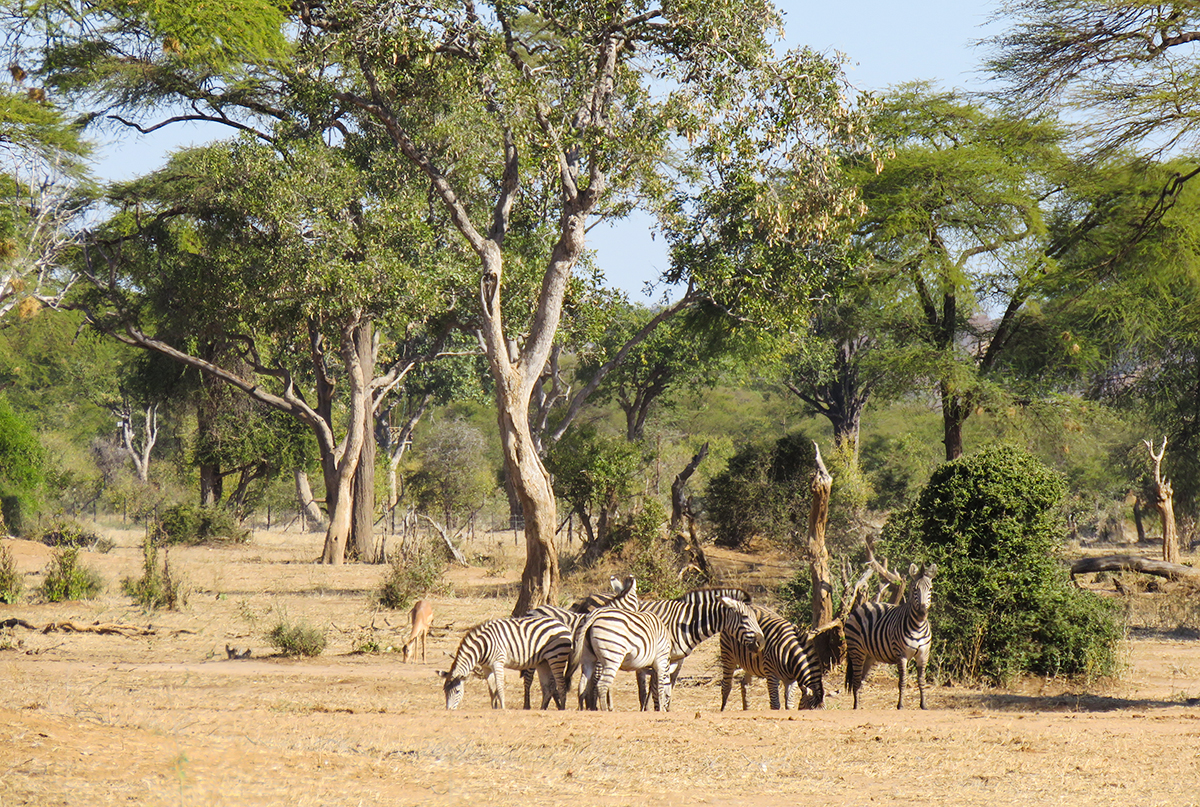
We stopped at Pandamatenga, a huge fenced-off farming area 30 k’s later, just to let off some of the excitement of our incredible sighting. What a magnificent, wild and exciting country Botswana is. Human encroachment and population growth in Africa have made Botswana, and Namibia to a lesser extent, some of the few countries left where you can still have this sort of experience. I have ridden this road many times on a motorcycle and had many game sightings, especially elephants, but never a lion. Wow! Driving to Senyati, I was reflecting on our lion encounter. Unfortunately, even Botswana’s prolific wildlife is coming under pressure. On a recent visit to Khutse Game Reserve, on the southern edge of the Central Kalahari, almost all the lions which made this park so special have been wiped out by villagers bordering on the park. A goat or cow is taken, and in a fit of anger, the lions responsible are killed, either shot or poisoned. Ten years ago, I visited Khutse and enjoyed numerous lion encounters, but sadly, hearing the roar of these magnificent animals has now become a rare occurrence. Botswana Wildlife should come up with a compensation system for such losses. Lion numbers in Africa have dwindled steadily over the years, and we should act before it becomes another “rhino story”.
Photo credit: Dave Cilliers / ZA Lifestyle
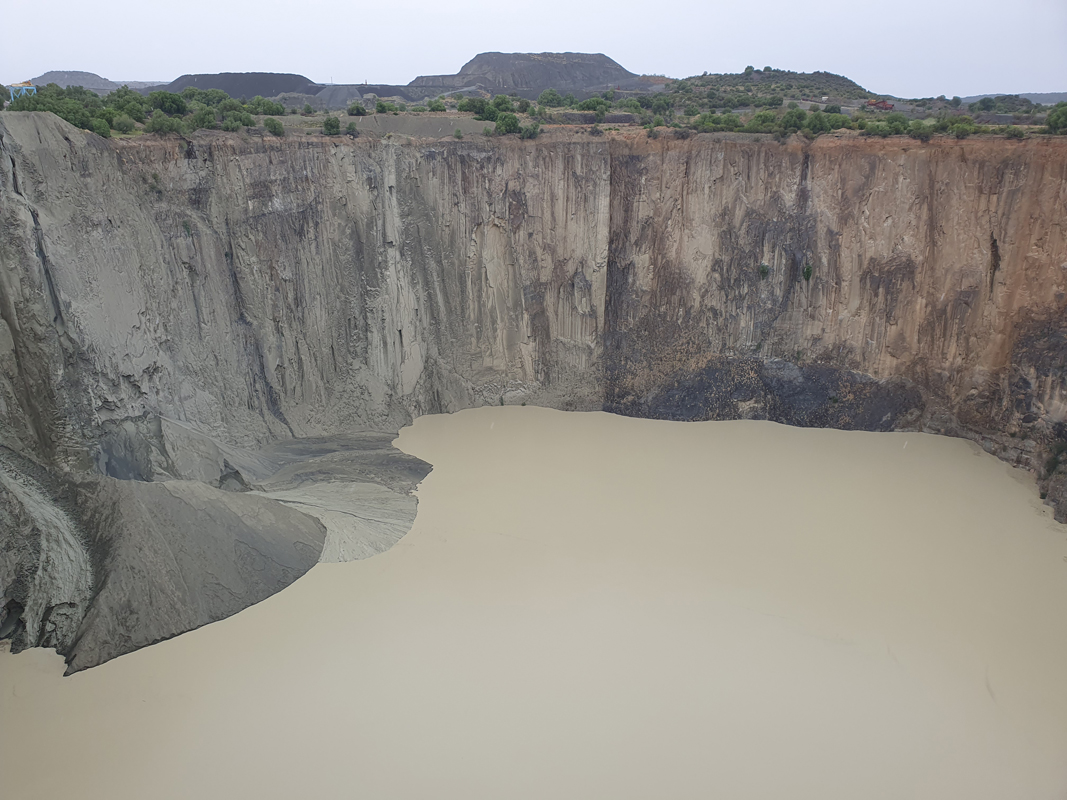
Kruger Park in South Africa has found ways for neighbouring villagers to benefit financially by being involved in conservation efforts. The long-term tourism revenue will eclipse such spending in the long run. If Botswana don’t actively protect their wildlife heritage, it will have squandered its single biggest natural asset. If well managed, the sustainable foreign exchange revenue from wildlife tourism, allied to huge job creation, will eclipse diamond revenue. Diamonds will eventually run out. Botswana cannot allow the same to happen to its wildlife. They are blessed with a small population in relation to their tracts of unspoilt wilderness. Their wildlife is a world heritage of which they are the custodians and beneficiaries.
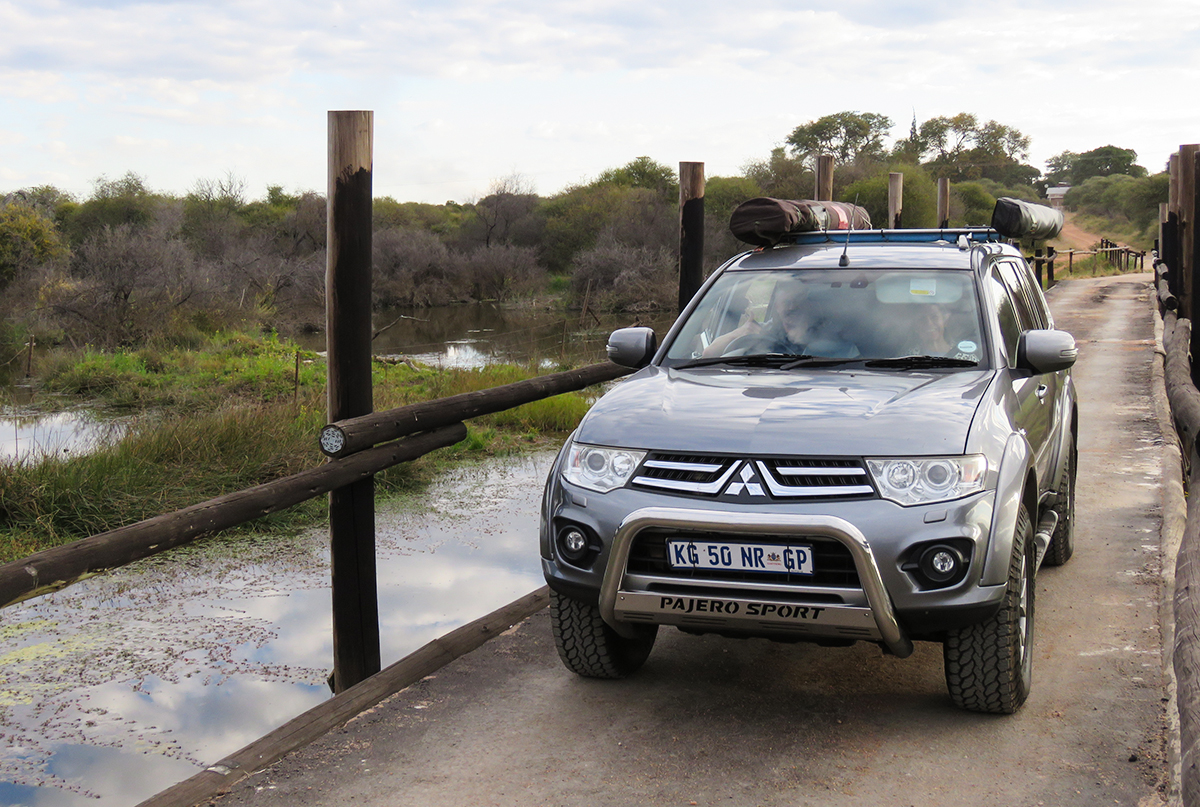
Leaving Pandamatenga, while still virtually in the village, an eland almost centre punched Dave’s Pajero Sport as it dashed across the road. How it missed him, I do not know! Our next camp, Senyati, has a waterhole with a ground-level hide accessed via an underground tunnel. This is located in front of a double-story thatched viewing deck. The campsites are pleasant in that they each have their own individual shower, toilet and kitchen setup. Hot water is still the “donkey” system, which works effectively when properly managed. Fires lit under the geyser drum provide hot water. Fires need to be made timeously. When the camp is as full as it was while we were there, it is a bit hit or miss. We were using our expensive firewood to keep our water hot. Generally, the camp is a bit untidy and unkept, signs that management is not up to scratch, a sentiment that is echoed on TripAdvisor. Since COVID, camping prices seem to have escalated sharply in Botswana, and facilities do not always meet expectations given what you are required to pay.
Photo credit: Dave Cilliers / ZA Lifestyle
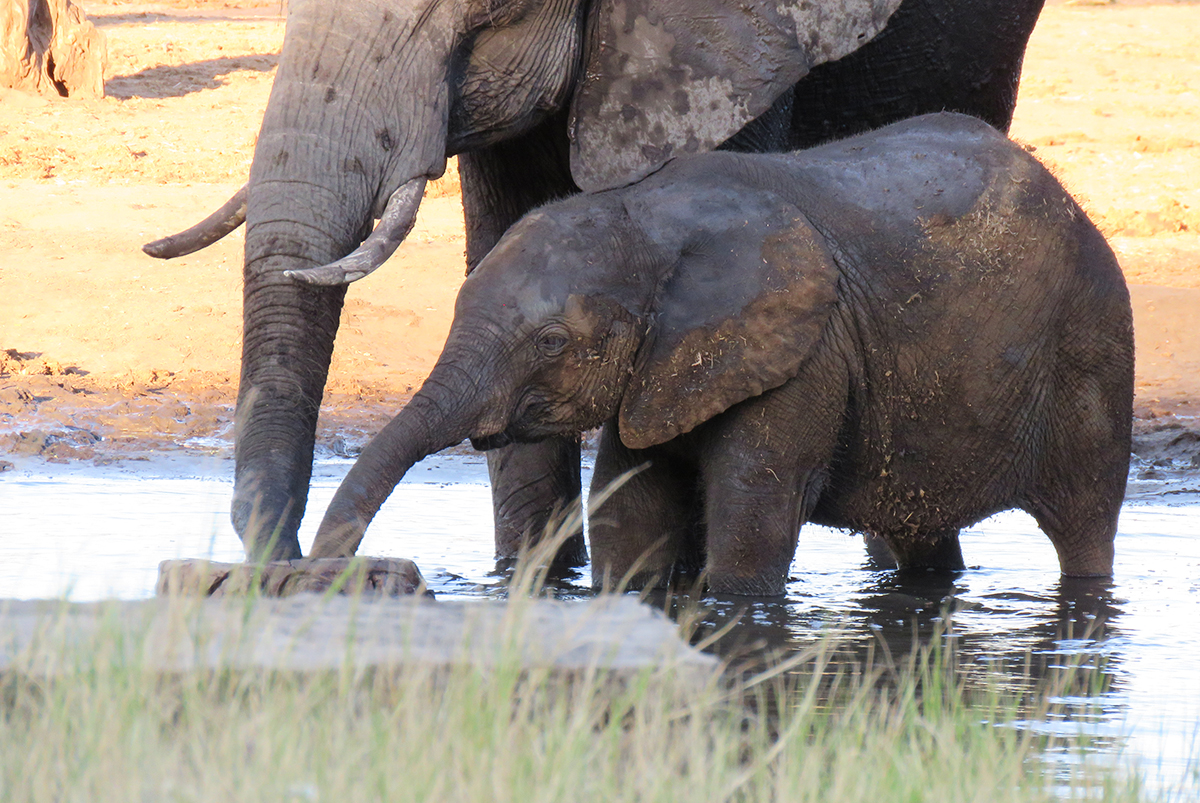
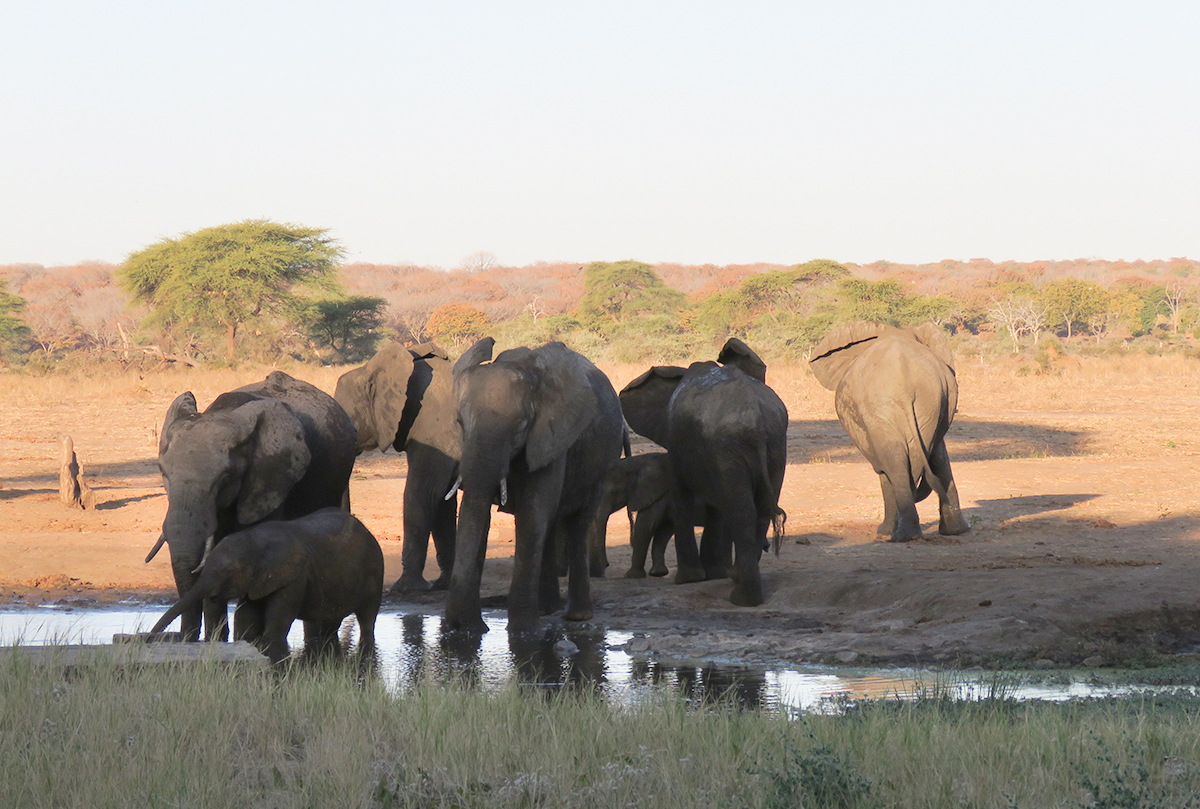
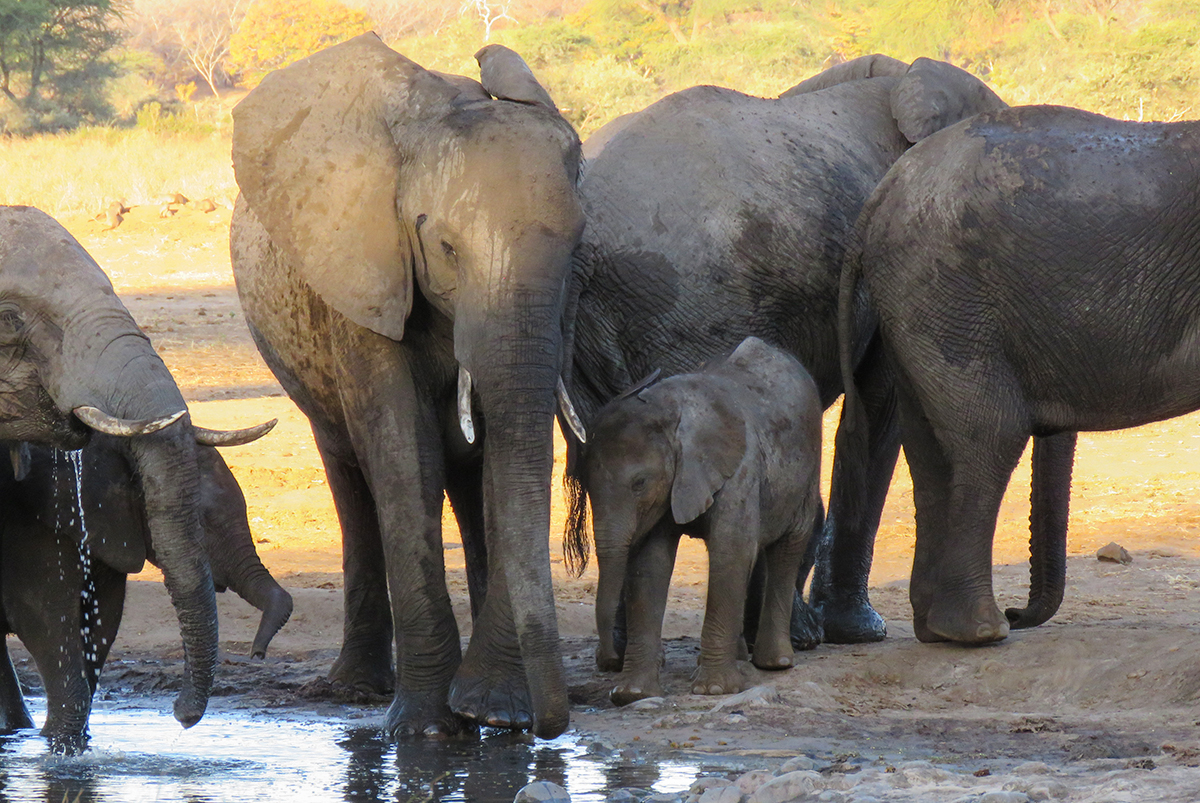
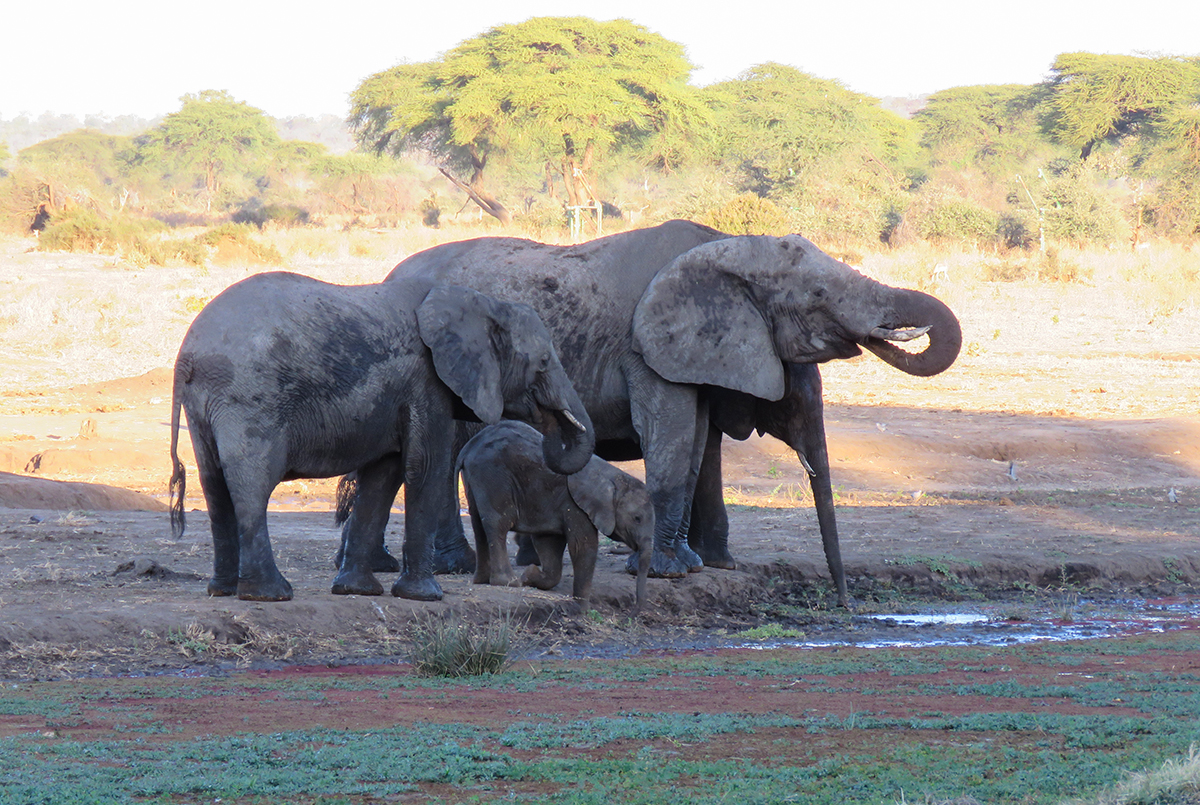
The wildlife experience is what continues to come to the rescue, bringing tourists back despite. Dave, Lisa and the boys were down in the hide one evening watching a small herd of elephants, including some adorable “littlies” drinking. After a good while at the watering hole, almost as if on command, the elephant trumpeted and advanced towards the hide, even sticking trunks into the apertures, as if trying to get the scent of the occupants. Needless to say, adrenaline was pumping like mad for the hide occupants. Just as suddenly as their approach, the elephant wheeled and trundled off. Elephants move in a fashion that is almost eerie. They come and go in silence. They seem to appear as huge grey wraiths out of nowhere and disappear in a similar fashion. Truly incredible animals.
1 of 4
We spent three nights at Senyati, during which time Dave took Lisa and the boys on an excursion to see the spectacular Victoria Falls in Zims. I have seen them numerous times before, and, dare I say it, back in the good Rhodesian era when, despite the bush war, there was an upbeat and positive vibe in the town. Tourists abounded, and curio sellers had pockets full of loot. Tourism is apparently picking up again, but I doubt it will ever get close to the heady levels of the ‘70s and ‘80s. I prefer to remember all those times I visited in the heyday, before dollar-based pricing made everything extortionately expensive. Cash-strapped countries need to make the most of what nature has endowed them with, and in the case of the Victoria Falls, they certainly do! Again, it is worth biting on the proverbial bullet and just doing it. It is one of the great natural Wonders of the World after all.
Peter and I cruised Kasane, checking out some of the lesser-known lodges that enjoy the Chobe River waterfront. One that really impressed was Kubu Lodge. Well run and maintained, it is beautifully located with stunning river views. The kicker for me is that they have discreet SADEC rates that make it a bit more affordable for South Africans. They also have a nice campsite and restaurant facilities. I will definitely be spending time there on my next trip, God willing. Chobe Safari Lodge is undergoing renovations, but we had a drink at one of their riverside bars. Lovely! Doing the pricing for river cruises was a bit of a shock. What was a must-do in the past, and very affordable, is now the preserve of Euro and Dollar tourists only. There is no way a family of four could justify the kind of spending required. Sad.
Photo credit: Dave Cilliers / ZA Lifestyle
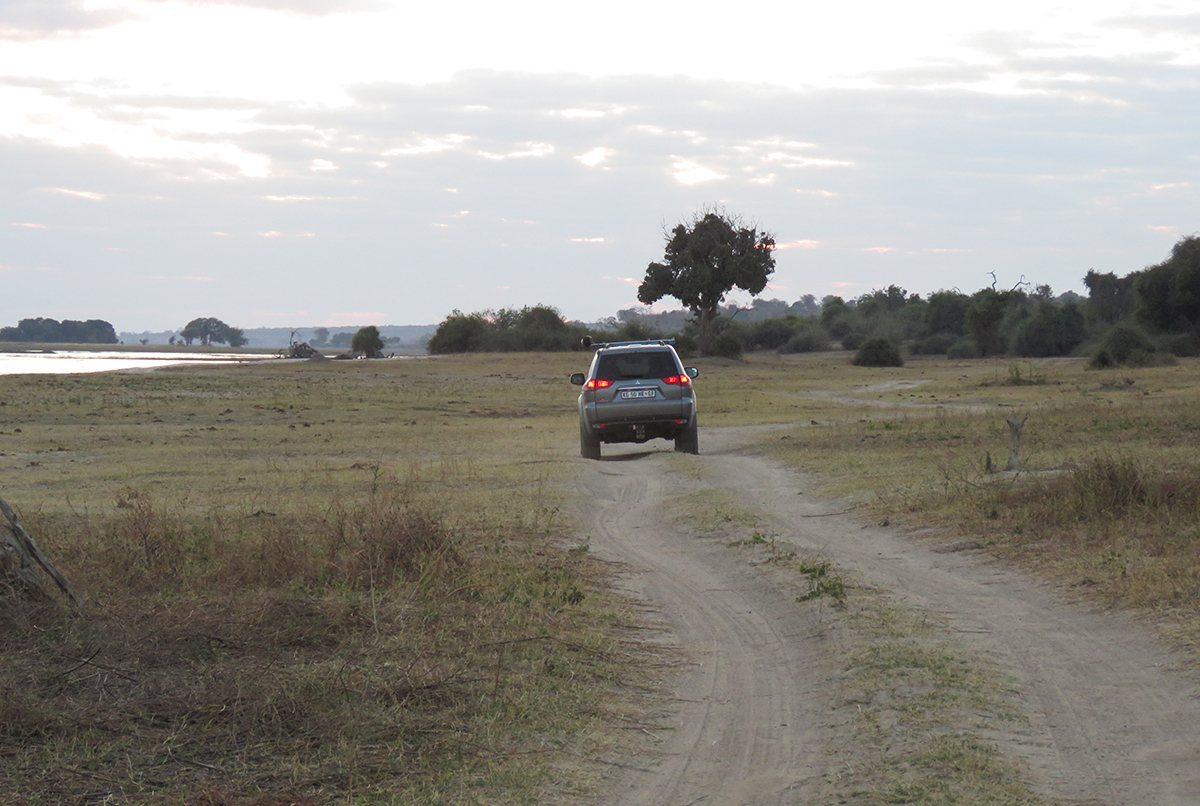
From Senyati, we headed on the main road to Namibia, which runs through the Chobe Game Reserve. Our destination was Muchenje Campsite, which overlooks the floodplain of the Chobe River, and is on the road that leads to the Savute and Moremi wilderness areas that are traversed on the east side of the magnificent Okavango Delta. This is a strict 4×4 road only once in Savute, and also best attempted when water levels are low. Oddly, water is highest in the winter dry season when water from the Angolan Highlands flows down into the delta. Travelling on the main tar road through Chobe can bring spectacular wildlife encounters. We seem to have the idea that if you are on a dirt road, you will see more game. Clearly, no one tells the game this. The last time I travelled this road was two Decembers ago, travelling back from Muchenje on that occasion. Dave and I were on our “little bikes” and we saw a wild dog right adjacent to the road, lots of elephants, and then to top that, we had our ride delayed for some while as a massive herd of Buffalo meandered across the road.
Photo credit: Dave Cilliers / ZA Lifestyle
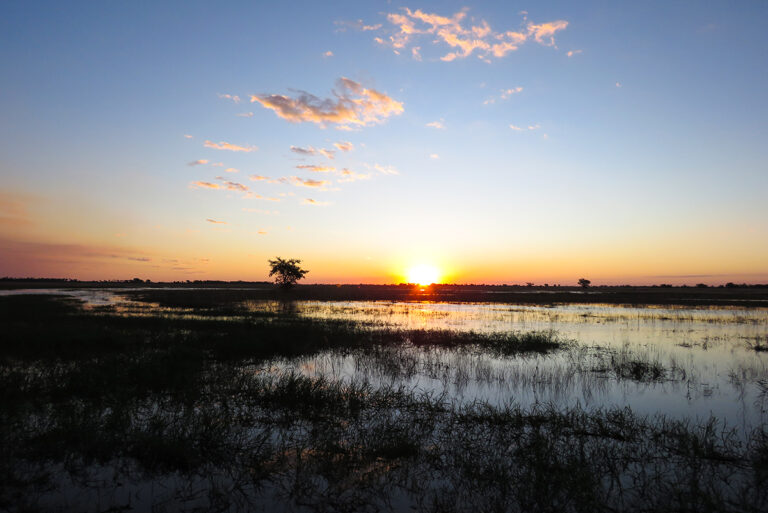
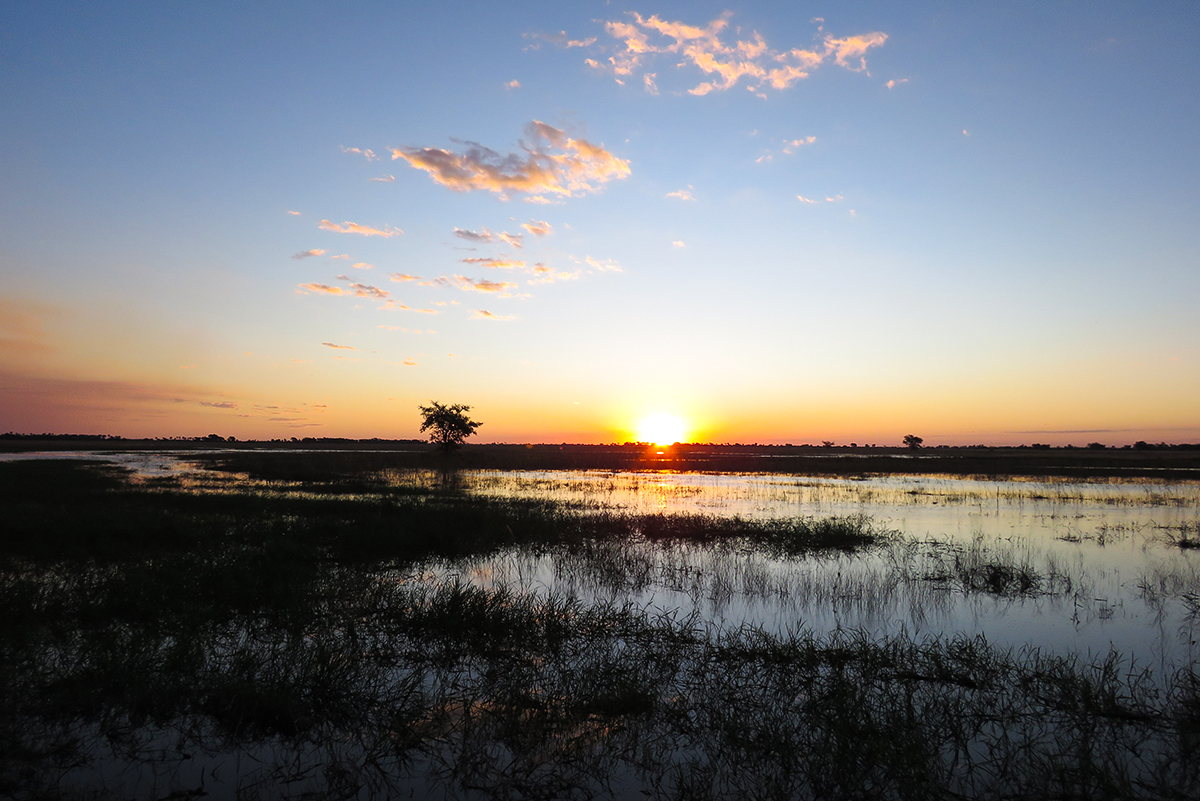
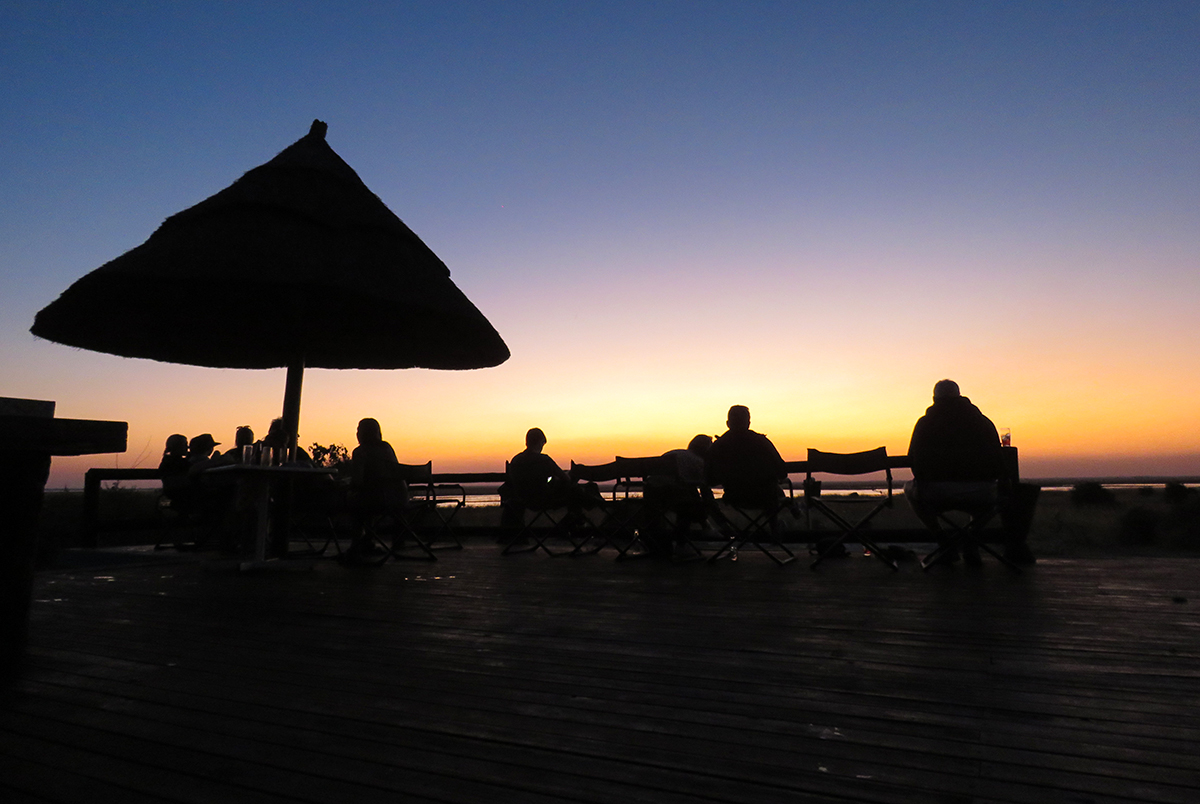
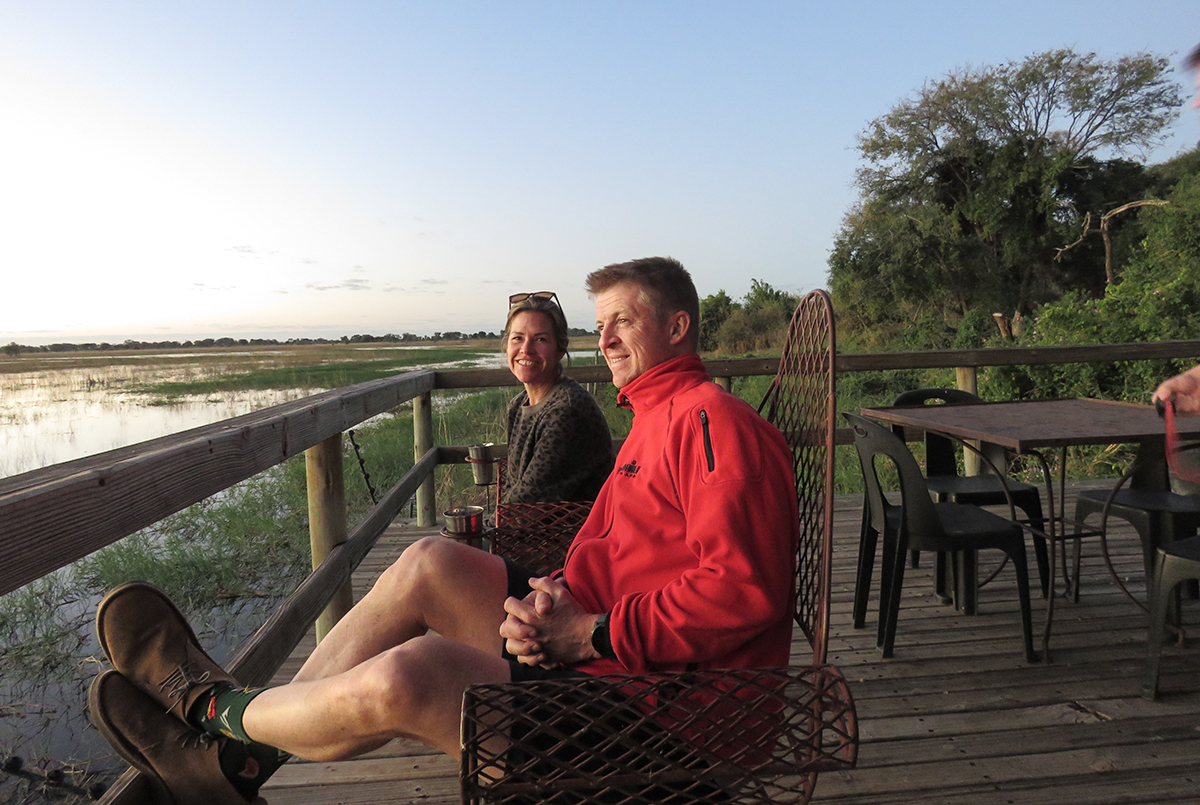
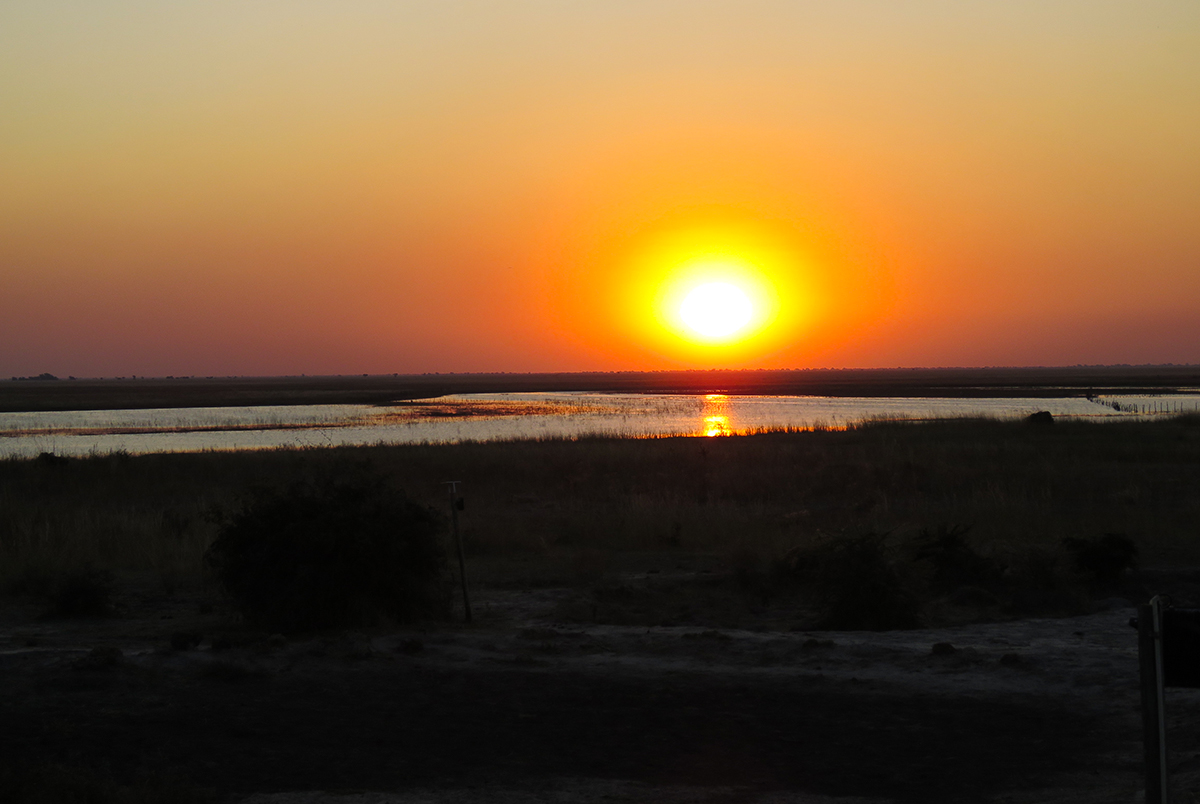
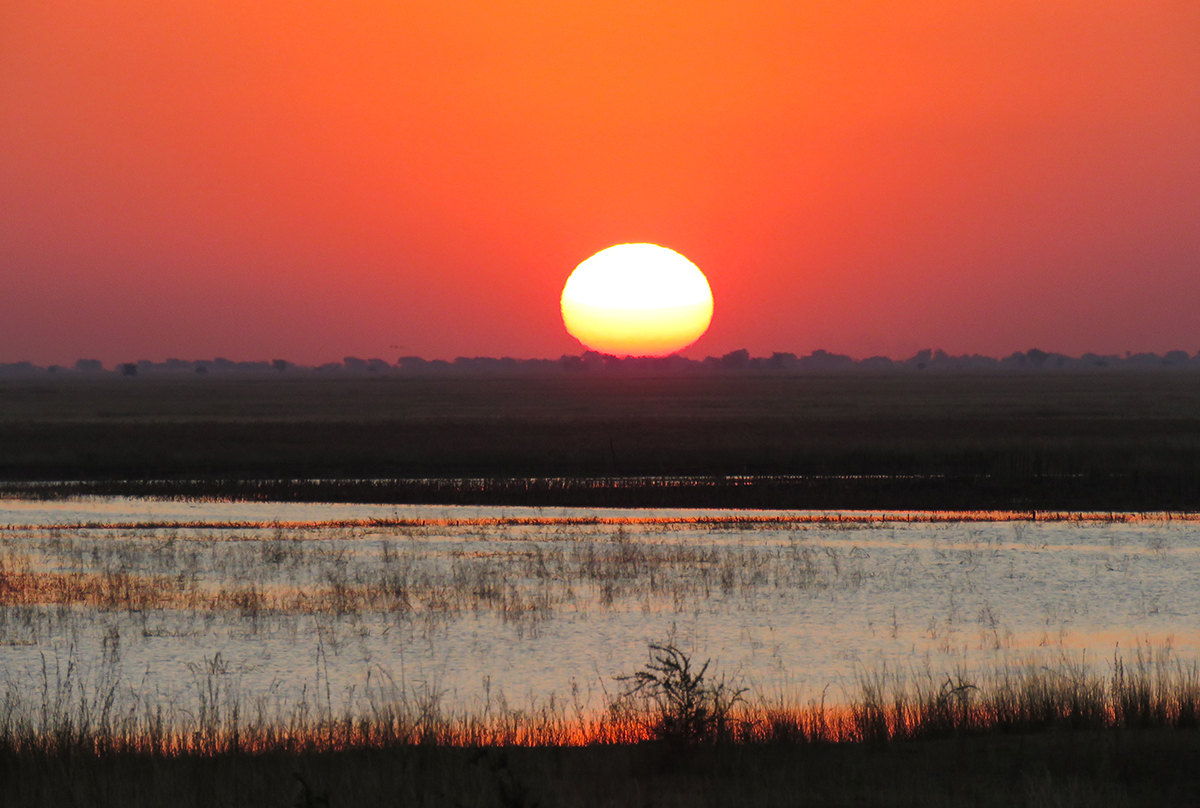
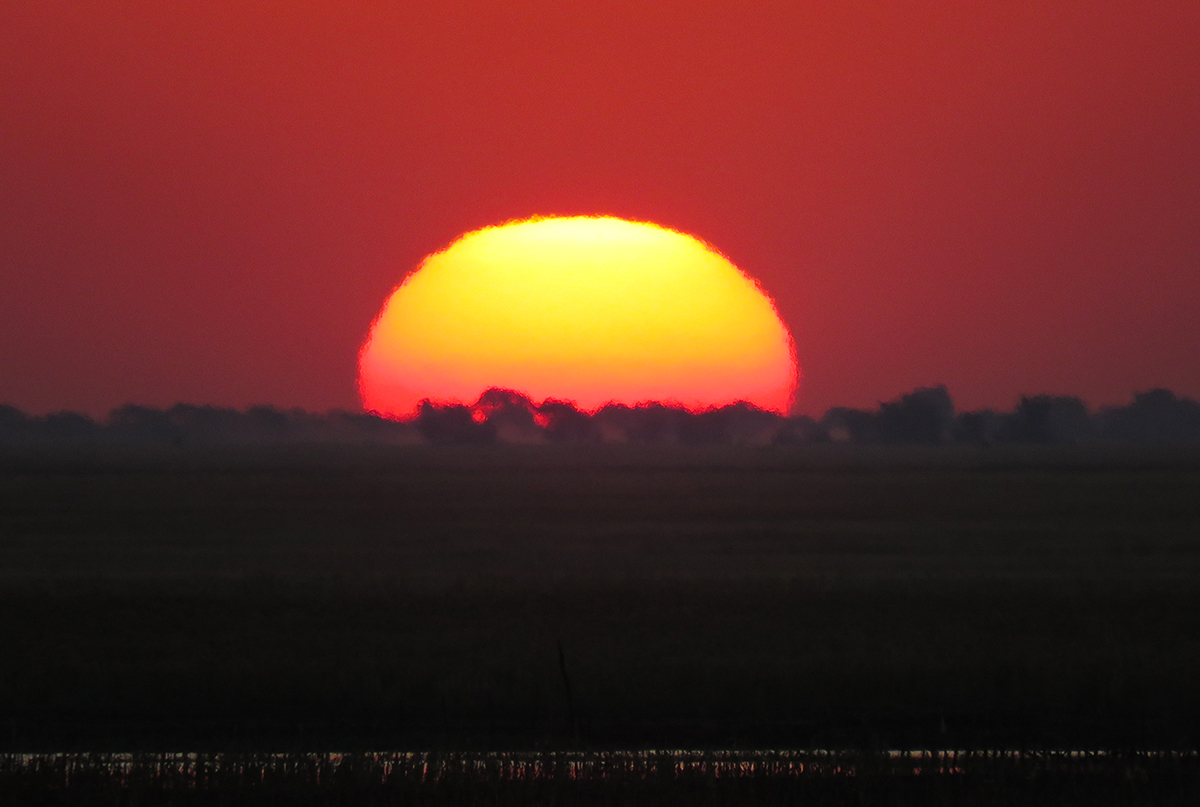
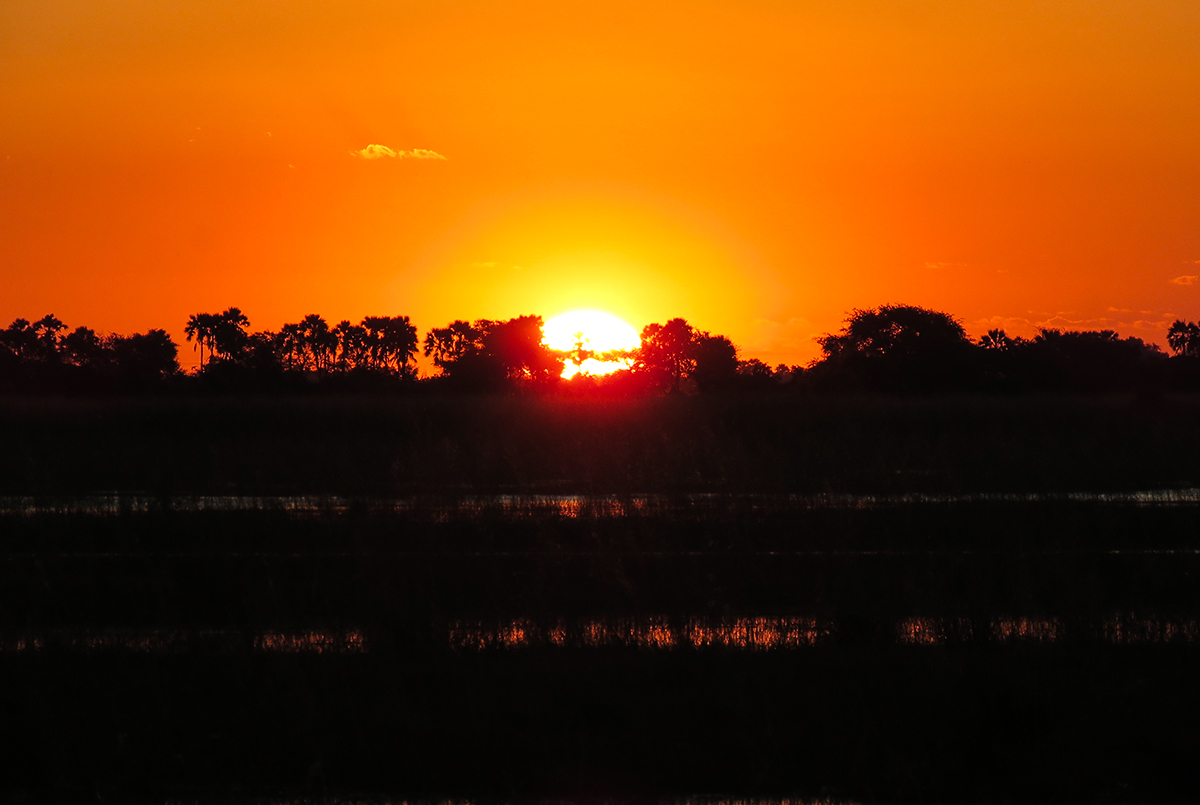
This drive was not so eventful, and we reached Muchenje camp in plenty of time to get settled. We had another wildlife plan for the next day. We would pay park fees and spend the morning in the park, but this time driving the dirt roads that run next to the Chobe River. A highlight of camps on the Chobe floodplain at this time of year is experiencing the most haunting and spectacular African sunsets imaginable. We drove to a lodge called Mwandi View, where Dave and I stayed on our bike trip. They have a deck in front of their dining area, which makes for incredible sunset viewing, complete with your choice of sundowner in hand. O my Lord! The sunset did not disappoint. While no photo truly can capture such an overwhelming spectacle, it will give you a glimpse of what we experienced. The sun, now an orange orb on the horizon, lights a silver shimmering carpet across the floodplain. As the sun sets and slides below the horizon, the orange changes to red and the silver carpet glows like lava. Truly, I don’t have words for what is almost a spiritual experience. I would literally do this trip to experience just one such sunset! We drove back in the gloaming to Muchenje, each quiet with their own thoughts shaped by what we had just witnessed. Dinner of fillet, butternut and salad put paid to another stunning day spent savouring the delight that is wild Africa.
1 of 4
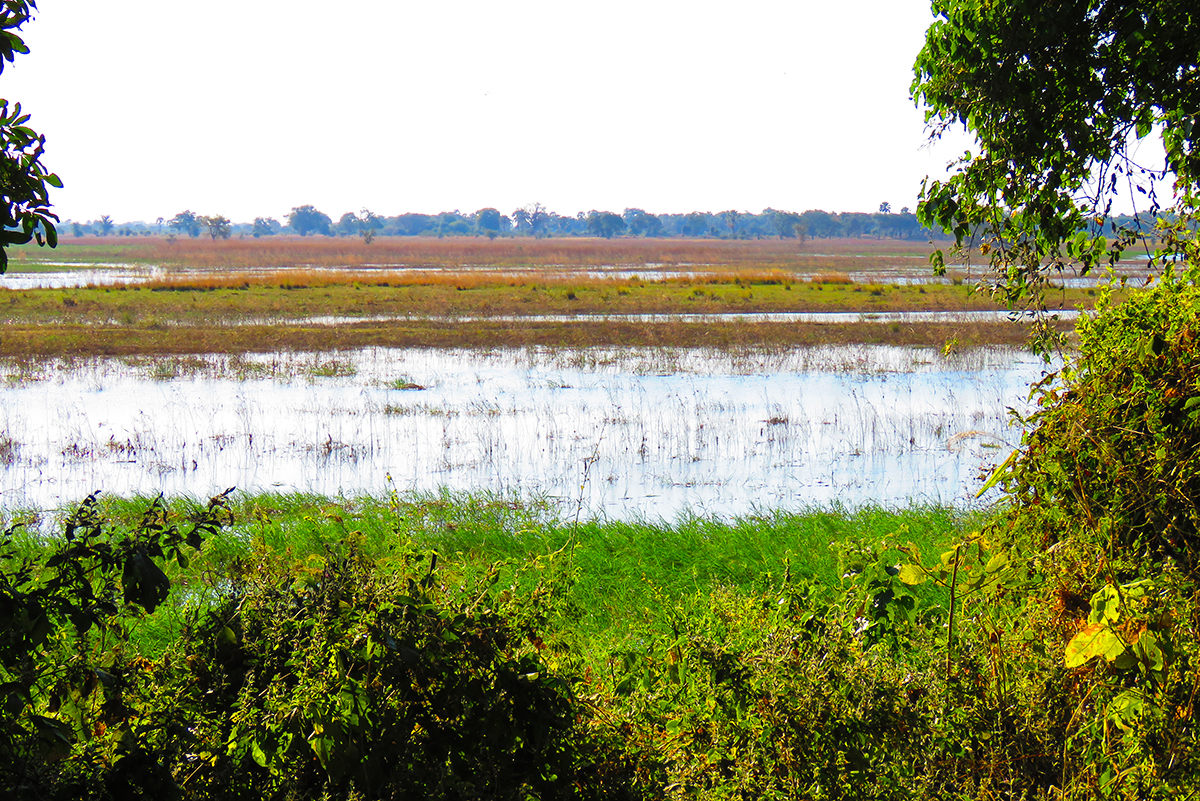
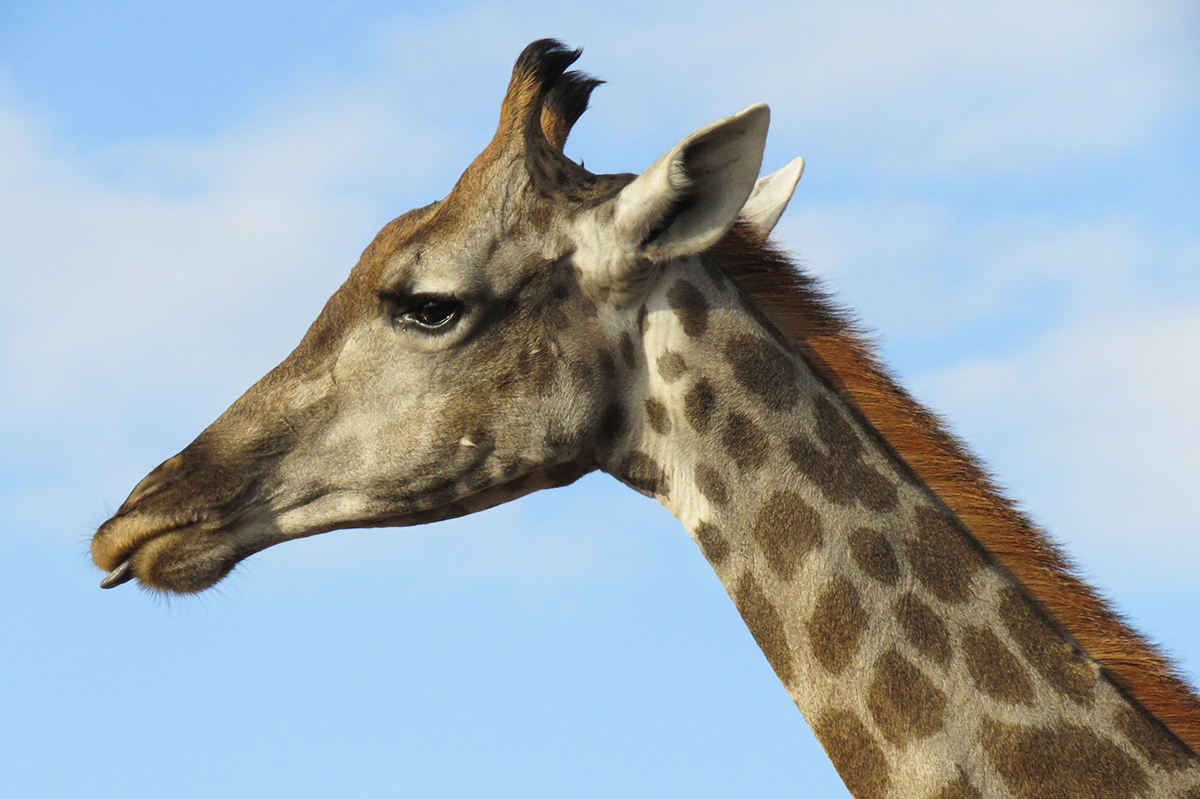
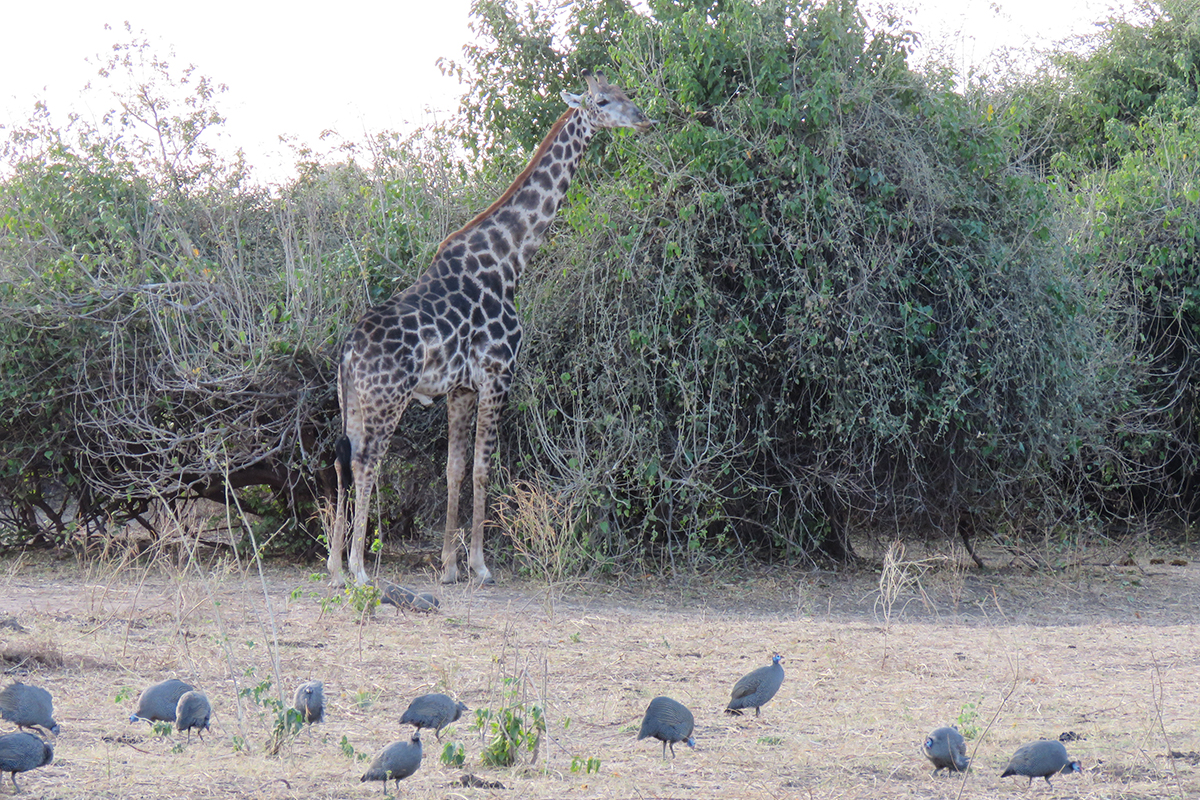
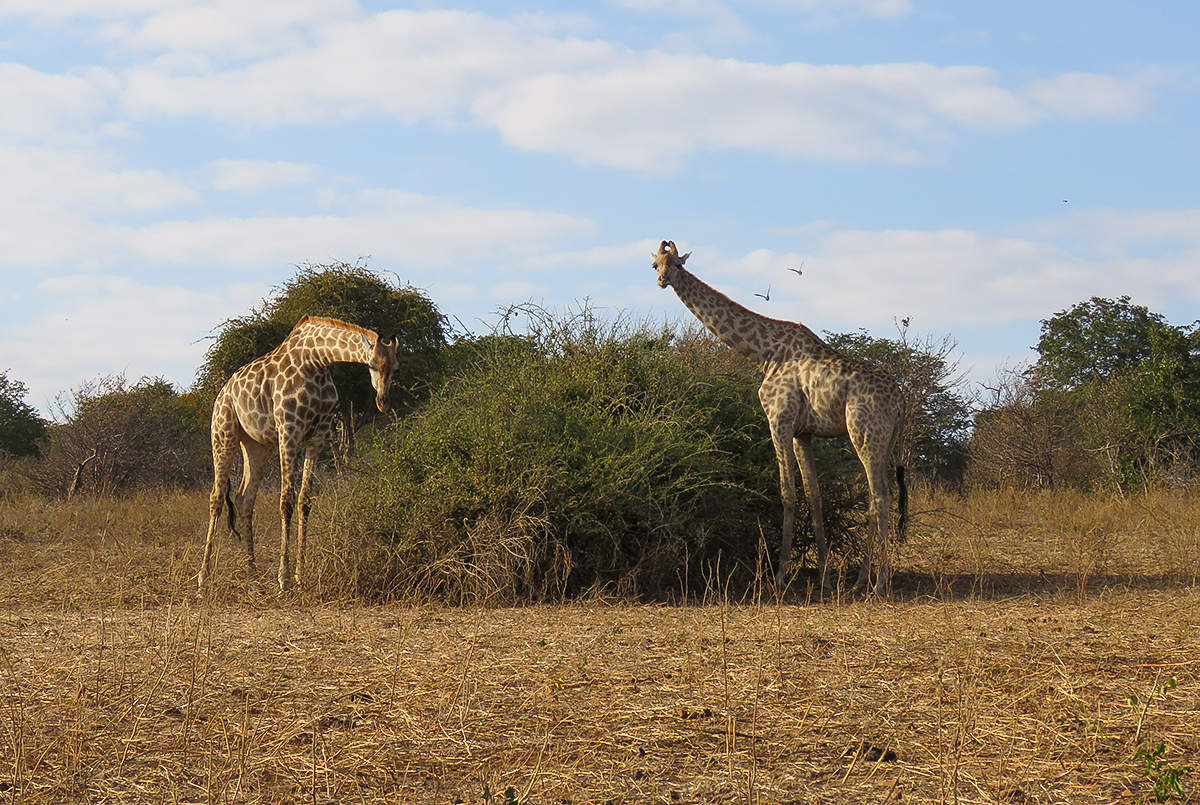
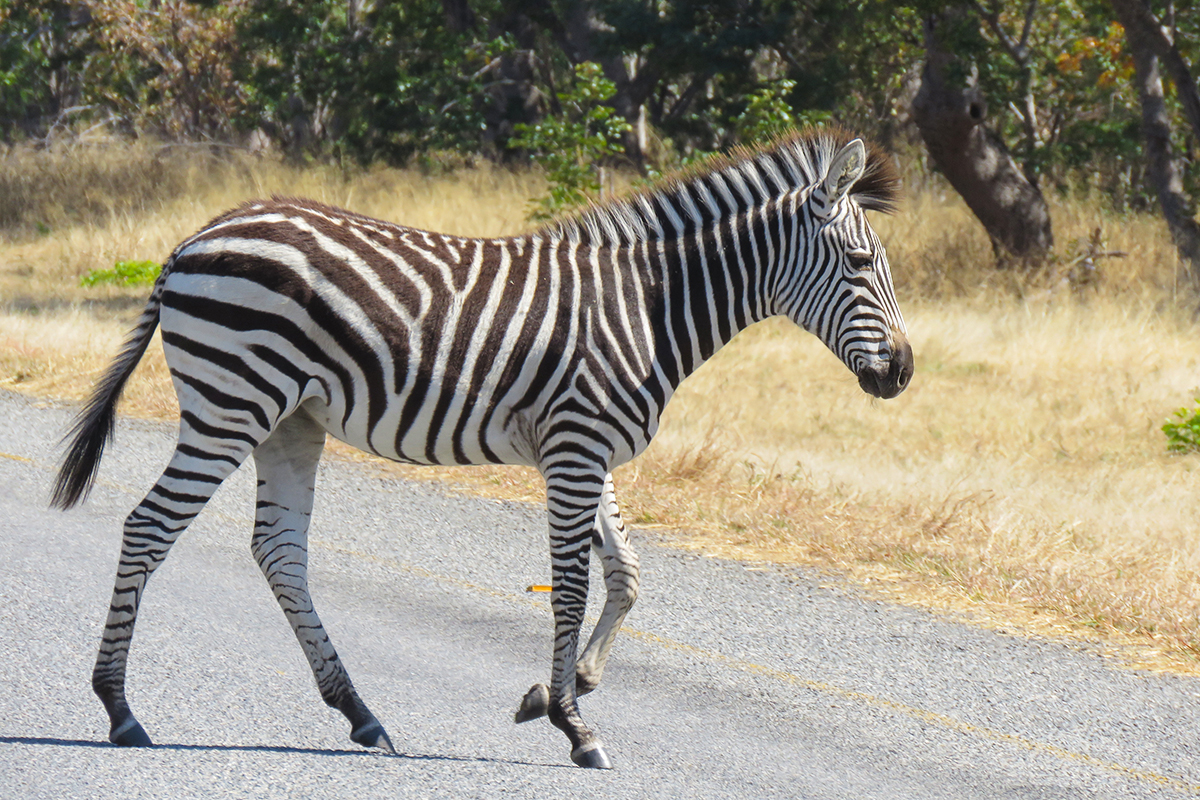
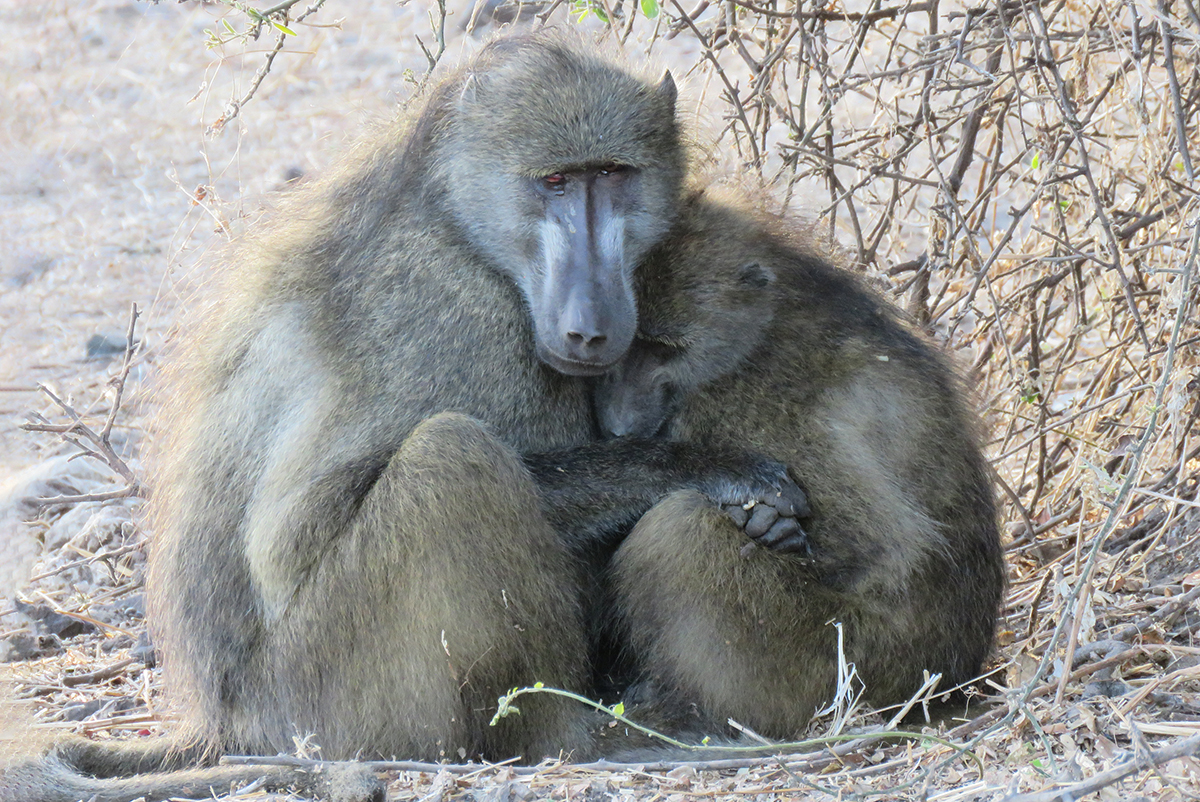
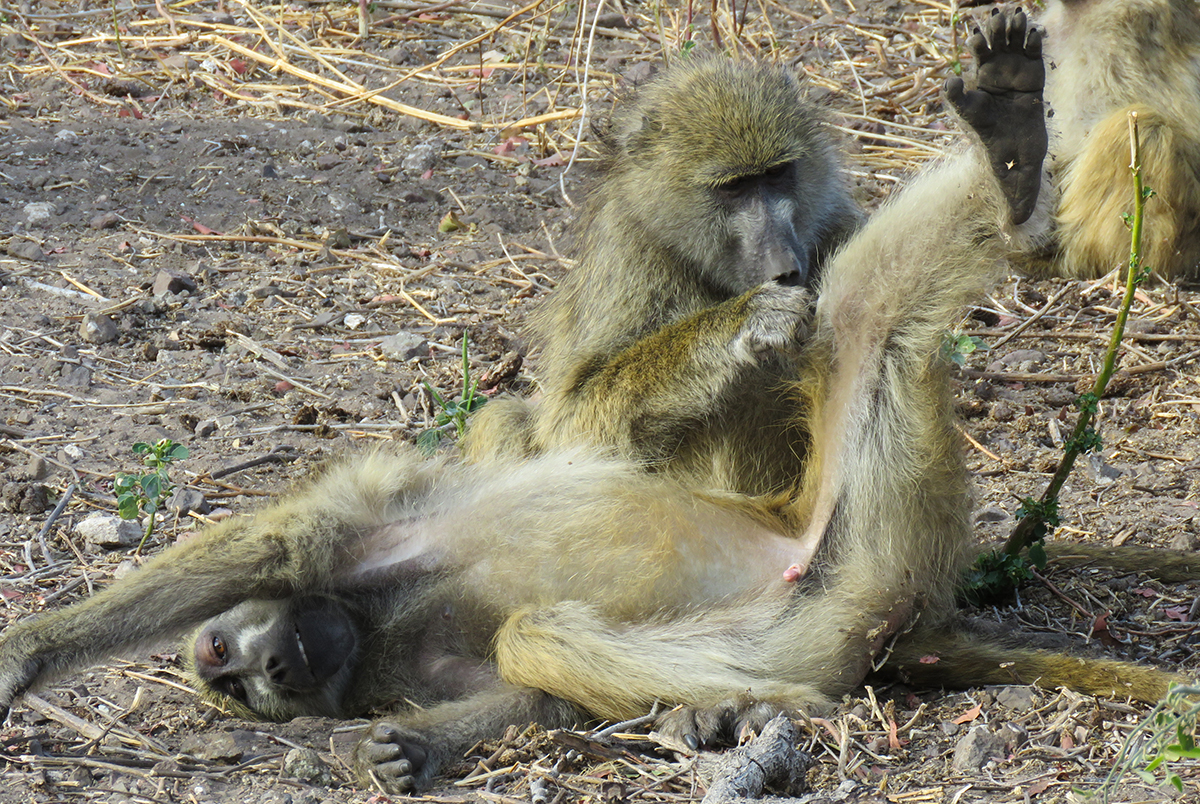
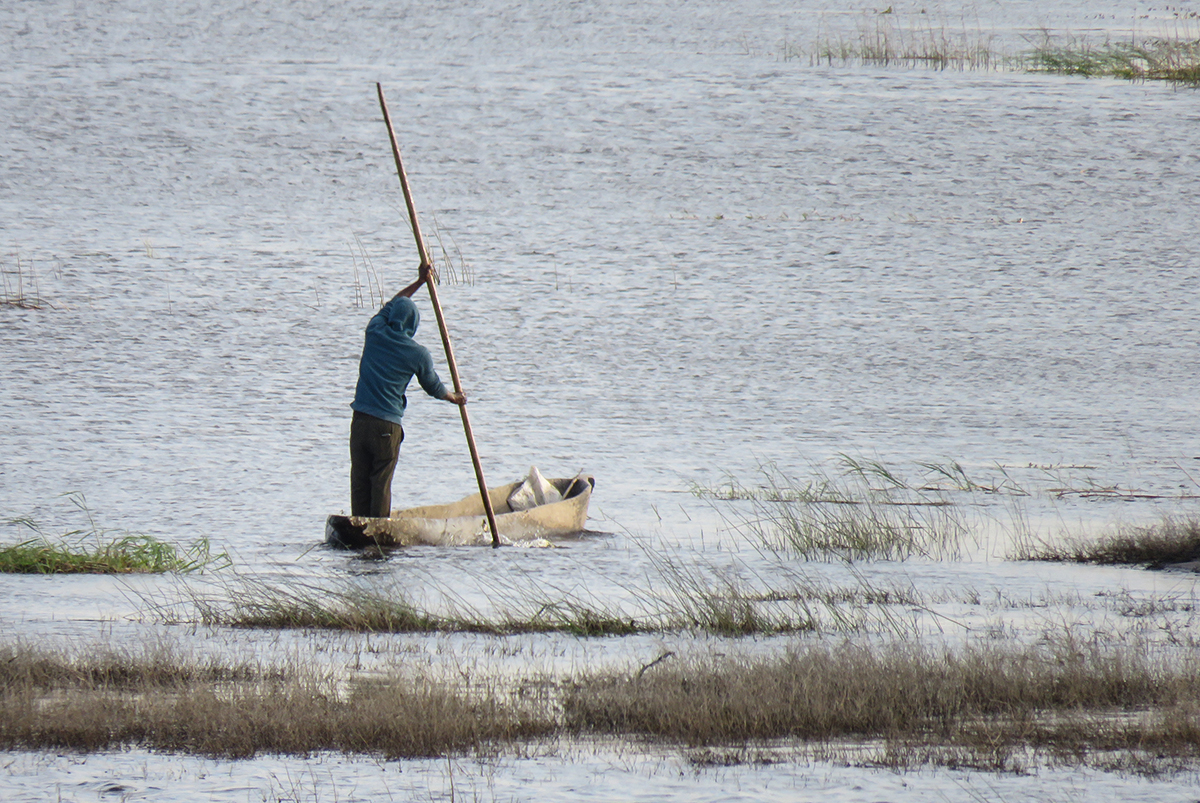
Early the next day, we pulled up to the Ngoma gate for our game drive along the Chobe. It was quite nippy, as it often is at sunrise in winter. With the rising sun providing a silver lining to the scudding clouds, it was the promise of another wonderful day. In no time, the sun’s heat would obliterate the clouds to once again give an uninterrupted view of “big blue” in all its azure magnificence. The game encounters began. A troop of sleepy, and obviously cold, baboons were sheltering from the light breeze behind a bush. You could literally see the misery on their faces as they huddled together for warmth. Zebra and the journeys of the giraffe were plentiful. We encountered the first herd of roan antelope that I have ever seen in the wild. The road along the river was in reasonable condition, and 4-wheel drive was not required, despite some rocky and sandy inclines. The constant river floodplain backdrop, also with the rising sun playing on it, revealed the occasional fisherman dropping nets from his Makoro dugout canoe. “Aren’t there crocs in the Chobe?” was the obvious question on everyone’s lips. Well, a man’s gotta eat, you know!
1 of 10
Meandering down the riverside roads, all was truly well with our souls. Soaking in nature in all its glory without the interruptions of fiendish electronic gadgets was just so good! We stopped for a leg stretch, then drove to one of the camps where which was seemingly uninhabited, but did chat with the occupants of a game viewing vehicle who shared the news of four lions on a zebra kill. As Murphy would have it, this kill was on the tar road that we had travelled the previous day. We set out on a deep sand and rutted track to try and get to the site of the kill. The Mitsubishis were in their element. We turned onto the tar road, eventually to immediately see a huge hyena who was no doubt heading to the kill, a kilometre or so down the road. By the time we arrived, there were a few vehicles trying to catch sight of the lions who, irritated by the attention, had dragged their meal deeper into the bush. We saw the odd flick of a lion’s ear or tail, but nothing that clearly resembled a lion. With grumbling tummies, we decided to return to camp for a brekkie.
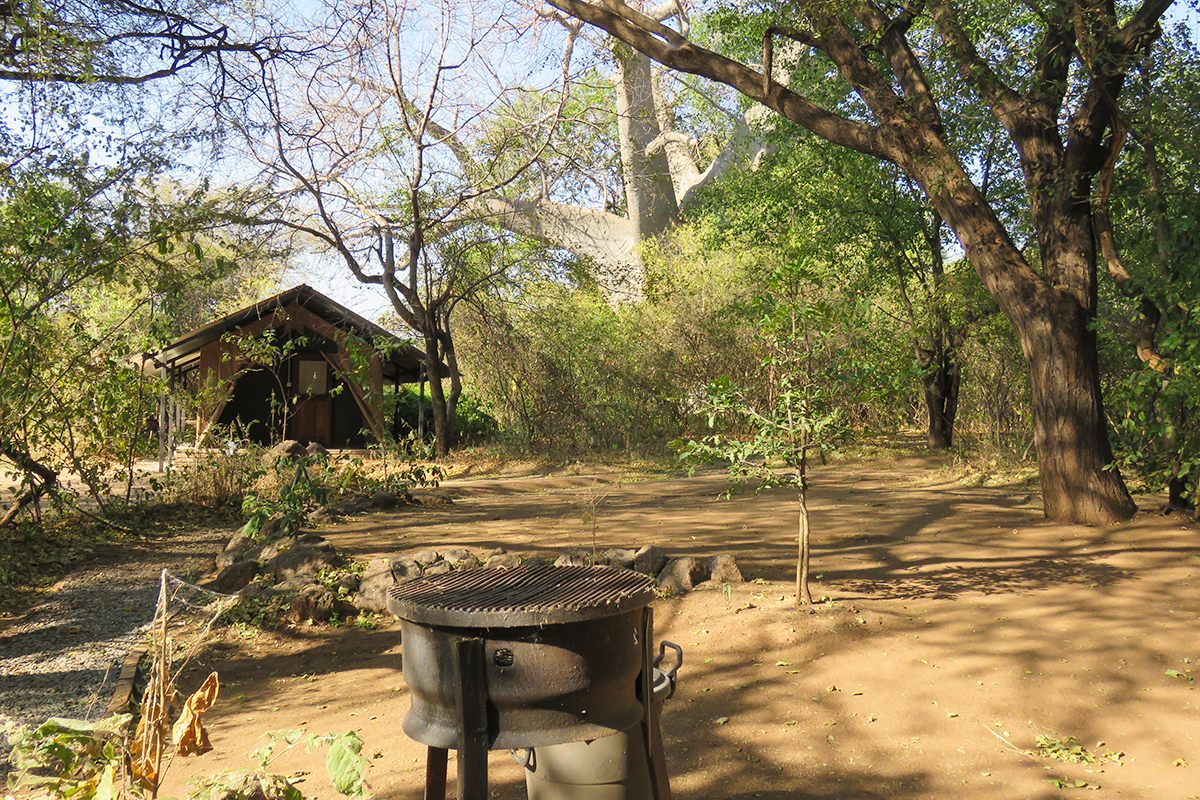
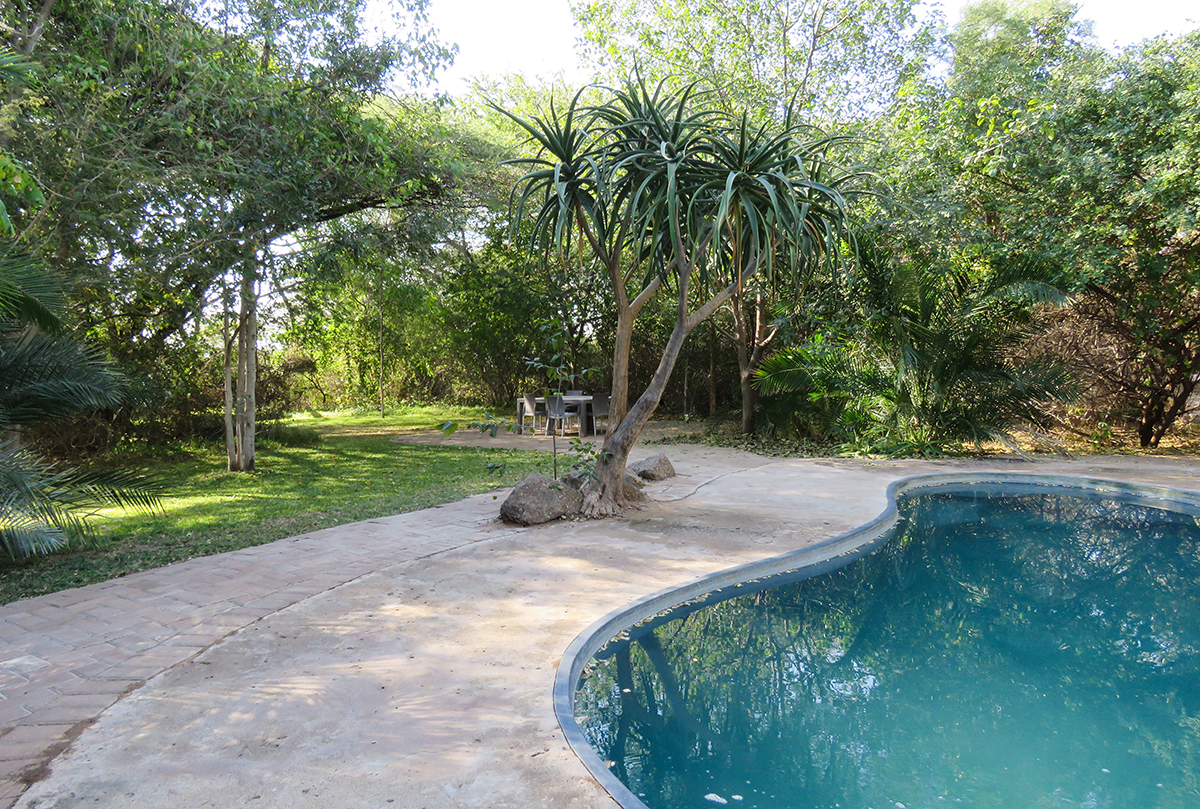
Muchenje is a lovely, well-run campsite which also has the option of safari tents and chalets. A swimming pool, set in pleasant surroundings, is a haven in the heat of the summer. Vervet monkeys are the perennial plague of African campsites. Muchenje have a cheeky crew who will ransack your camp given half a chance. I carry two catapults and marbles to discourage these little guys, and Dean and I dished out some punishment till they decided there must be easier pickings elsewhere. Lisa and I manufactured yummy jaffles till everyone had eaten their fill. Our signature jaffle was a cheese and bacon chap into which we broke an egg and then patiently turned until the egg was perfectly cooked, but with still runny yolk. Why does food prepared in the bush just taste so much better? The shady campsites at Muchenje mean that in the cooler months, an afternoon siesta in your tent is very much an option. With the jaffles increasing the gravitational pull on our eyelids, it was nap time.
1 of 2
Muchenje has a deck overlooking the floodplain too, so armed with our chosen bevvie, we trooped down to witness another incomparable sunset before getting our braai fire going. We ate, and then chilled and chatted, sipping on some red wine. This time spent around a campfire in a wild African setting, preparing and enjoying a meal in the company of good friends, is incredibly restorative. There is a scripture which says, “Be still, and know that I am Lord”. The truth is, we don’t really know how to be still in the frenzied world in which we live. We get so dragged along in the craziness that the only way to chill is to realign with the rhythms of nature. Well, that’s what works for me. Botswana, with its low population density and untamed, wide-open spaces, remains my go-to place for really chilling.
Our last day in Botswana was to be at Elephant Sands. Those of you who have read any of my previous Botswana blogs will know that it is one of my “go-to” spots. Situated 50 k’s north of Nata, it is a short hop from Muchenje. We packed up and set sail, being rewarded with some elephant sightings as well as something really special. A honey badger swaggered across the road just in front of us and then climbed a bank before disappearing into the bush. I just love these animals! Tougher than a tough thing and totally fearless, they are all heart! Their arrogant swaggering gait kind of sums them up. “Mess with me if you dare!” We stopped at Pandamatenga for the obligatory “slap chips”. 100 k’s from Kasane, it is the perfect way to banish mid-morning hunger pangs.
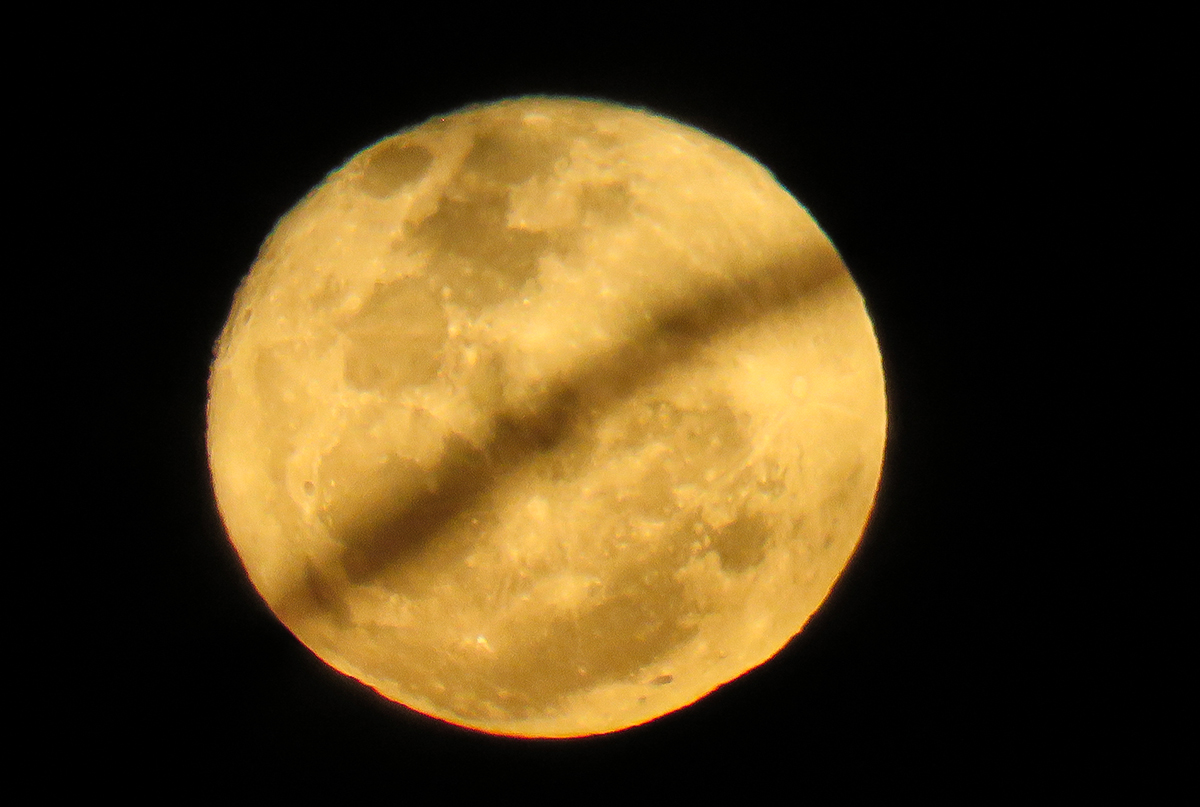
We pulled into Elephant Sands, where we were booked to camp. Whilst the campsites are pleasant, they get somewhat overwhelmed when they are very full. Given that it was school holidays, there were plenty of overlanders, some with hordes of rug rats in tow. A solitary elephant ambled in, spent some time at the waterhole, then beat a hasty retreat, no doubt also put off by the hordes of loud kids let off the leash by inconsiderate parents. Note to self, avoid Elephant Sands during school holidays. Peter very kindly paid to upgrade us to two comfortable Safari tents opposite the lodge and away from the child-induced pandemonium. We settled in and I prepared a chicken, pumpkin and potato pot, which went down singing hymns! Sitting on the stoep of the tent and gazing over the rain-fed waterhole, testimony to this year’s good rains, we watched the sun set behind the lodge as it bade farewell to another day. The moon deserves an honourable mention. It developed, over the course of our trip, into a huge bright full moon, giving off its gentle glow, subtly illuminating the landscape. God must have had such fun when He created all these
wonders!
Photo credit: Dave Cilliers / ZA Lifestyle
We slept warm and snug despite the coldest night that I have ever experienced at Elephant Sands. The next morning, we packed the vehicles and basked in the early morning sun, which played over us as we enjoyed breakfast on the patio of the lodge. We had a long day ahead, so we got on the road, retracing our steps to South Africa. This is where some local knowledge significantly shortened our trip. We turned onto the Palapye Martin’s Drift Road and then, about 35 k’s along this road, took a tar road which took us on a scenic drive to Macheneng, and then on to the border at Parr’s Halt. It was here that we had the only negative experience of our trip.
As you approach the border at the end of the 13k dirt road, it makes a turn to the right, necessitating slow driving and then a sign which says, “Barrier Ahead”. You are then confronted with the gate into the border control establishment proper. Unfamiliar with the setup, you look through the gate to see where you need to park. When I came to a stop, after traversing the gate at perhaps 3 km/h, a policeman told me that Dave and I had failed to heed the stop sign on the gate post, and not come to a dead stop before parking, and that we should go to his office. There, a policewoman told me that we had ignored the laws of Botswana and must each pay a 1000 Pula fine. I have travelled to Botswana since 1984 and certainly respect the law there. I have, in fact, supported the fact that, unlike in SA, laws are enforced.
Photo credit: Dave Cilliers / ZA Lifestyle
Laws are made with the objective of maintaining order and keeping people safe. Our actions were in no way contravening this spirit. It was a blatant attempt to extort money from travellers on a technicality. She then arrogantly and condescendingly said she would allow us to pay 1000 Pula for both of us. Apologising for not stopping dead at the sign, I replied that either we both paid, or they should warn us to be more vigilant in future and let us go. I added that if fined for a ridiculous technicality, I would simply never set foot in Botswana again. While I was speaking, a Botswana-registered car, as well as an official Botswana Revenue Service vehicle, both merrily drove straight through the gate without stopping either. Clearly, no one obeys this ridiculously placed sign on the basis that they are coming to a stop within five metres anyway! Witnessing the indiscretion of their own, our licences were handed back and we left.
This is so “African”. I have found the Botswana police to be competent, fair and reasonable over my many years of travelling in their wonderful country, but then all it takes is a couple of short-sighted and arrogant officials to blight this record. Why is it that we keep on scoring “own goals” in Africa? We travelled on for another night at De Kuile, where we braai’d for the last time and then built up the fire to enjoy our final “bushveld TV” whilst reminiscing on another amazing Botswana adventure. The next morning, it was back to the big smoke, all very chilled versions of the travellers that had headed north 9 days earlier. God willing, we will be back in Botswana sooner rather than later. Kubu Lodge on the Chobe with Irene in December? I think so.
With the racing in 2025 being rather predictable – or, at least, the results are predictable – we really need something to offer alternative entertainment over the course of a Grand Prix weekend. No one, however, wanted the farce that played out in the Sprint race.
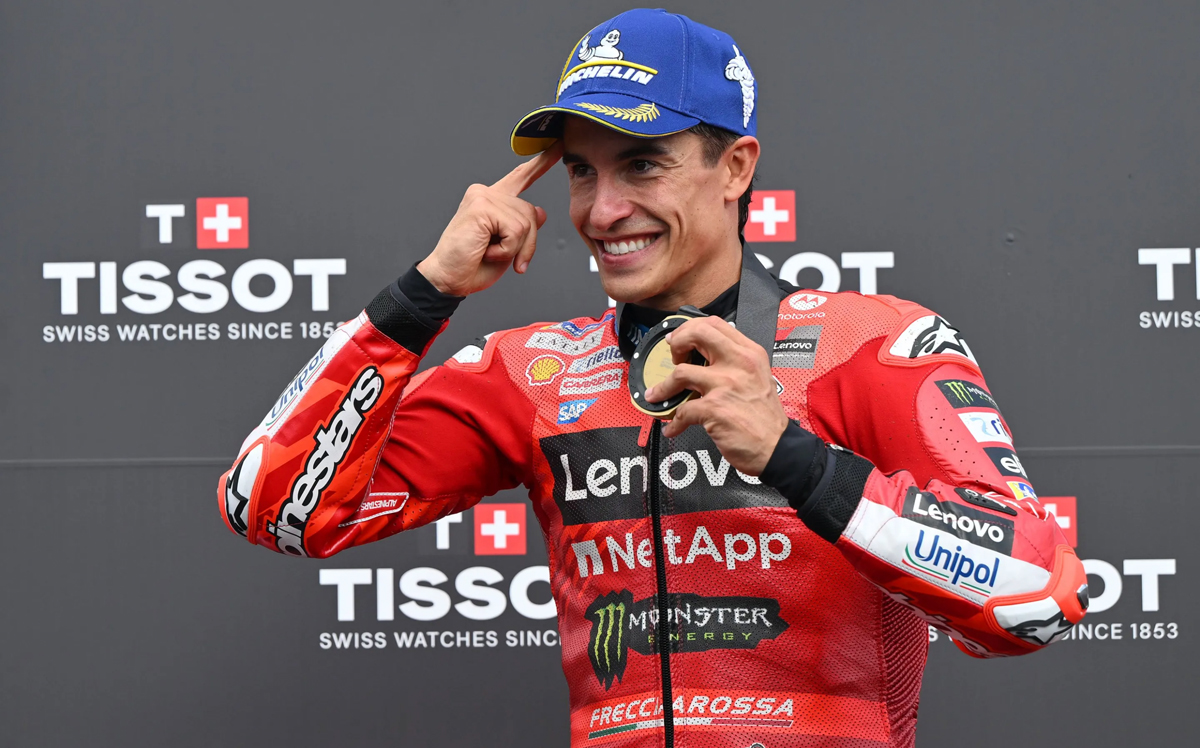
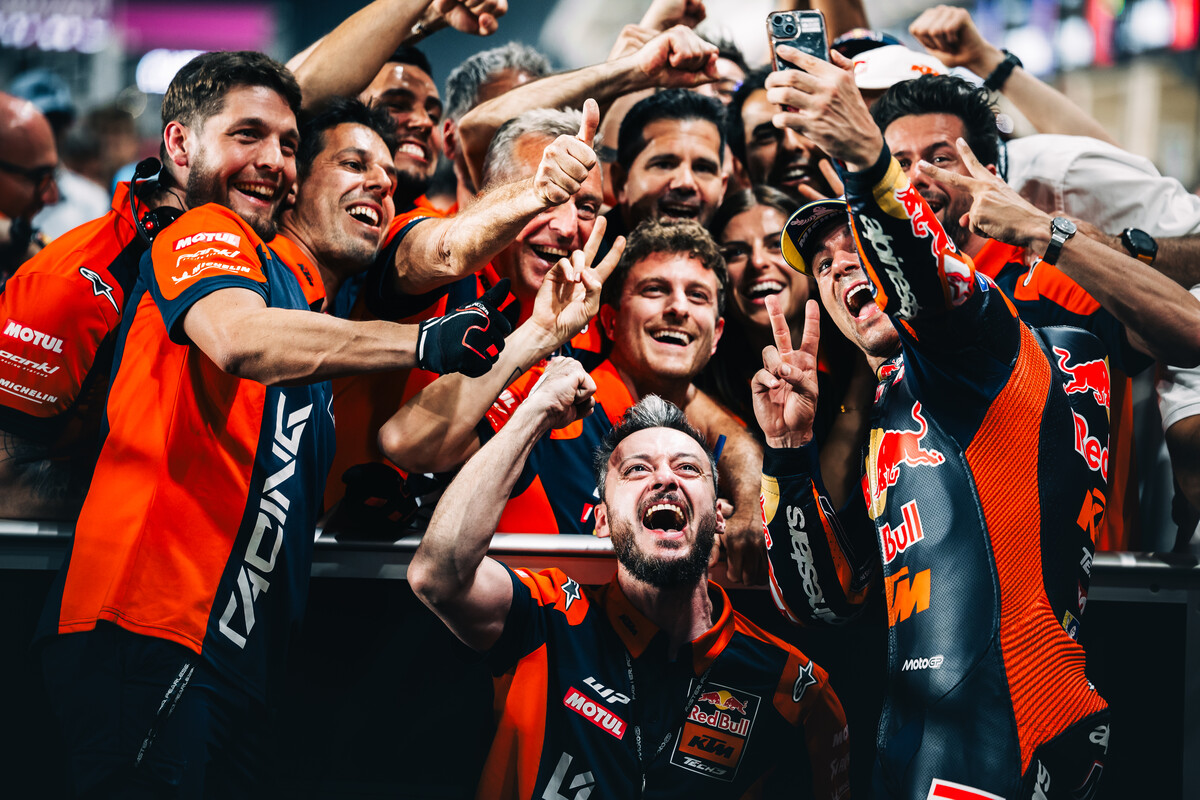
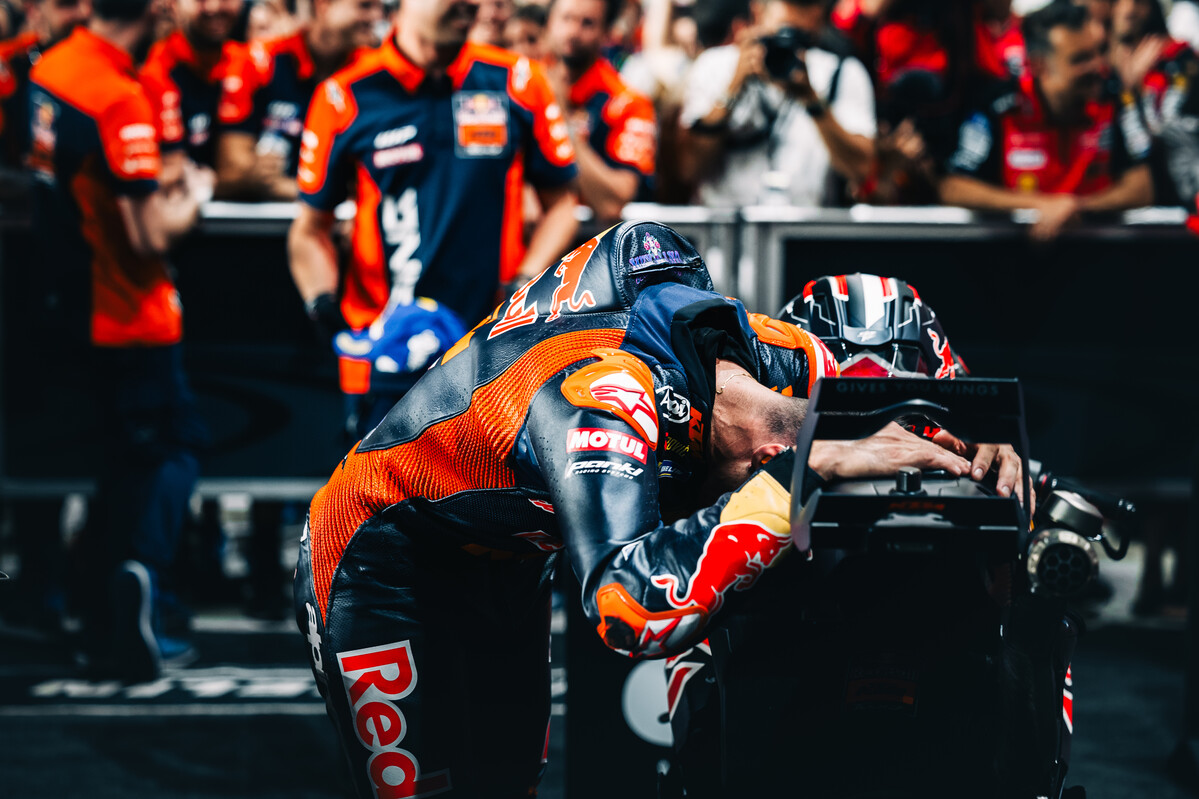
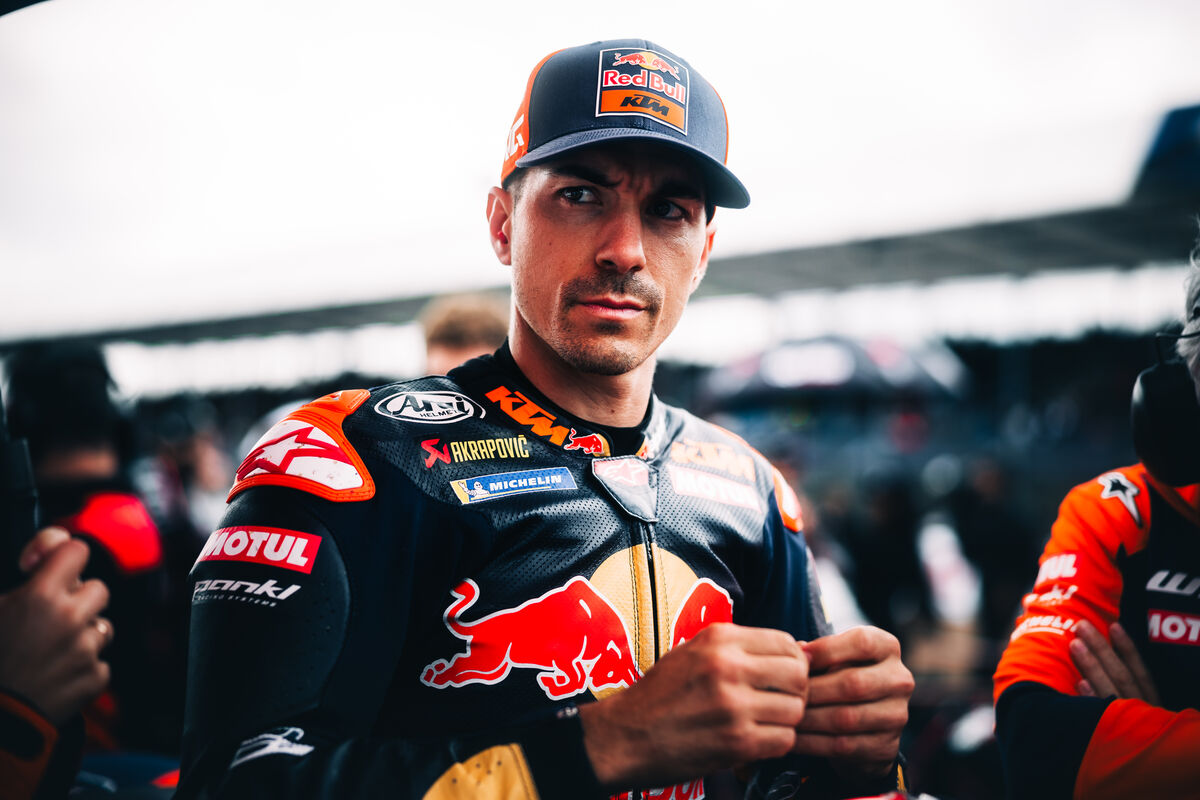
The tyre pressure rule has never been anything other than controversial, and it has already derailed one rider’s achievements this season, when Maverick Viñales was denied a stunning podium in Qatar with a post-race penalty for running under pressure for too long.
Image source: KTM
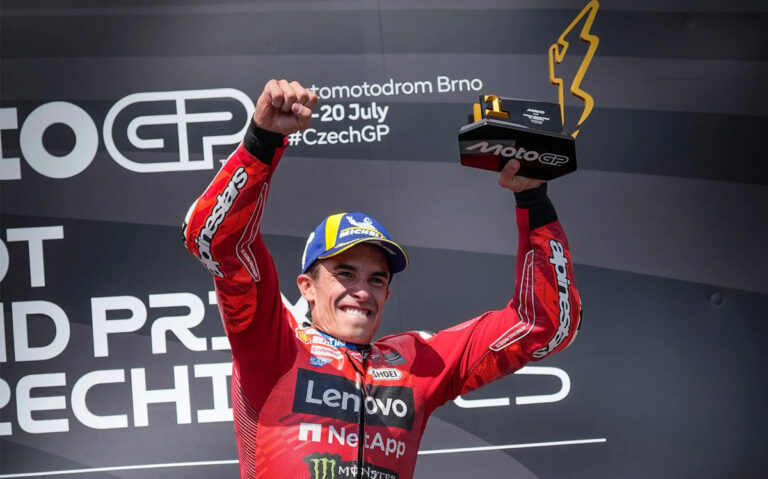
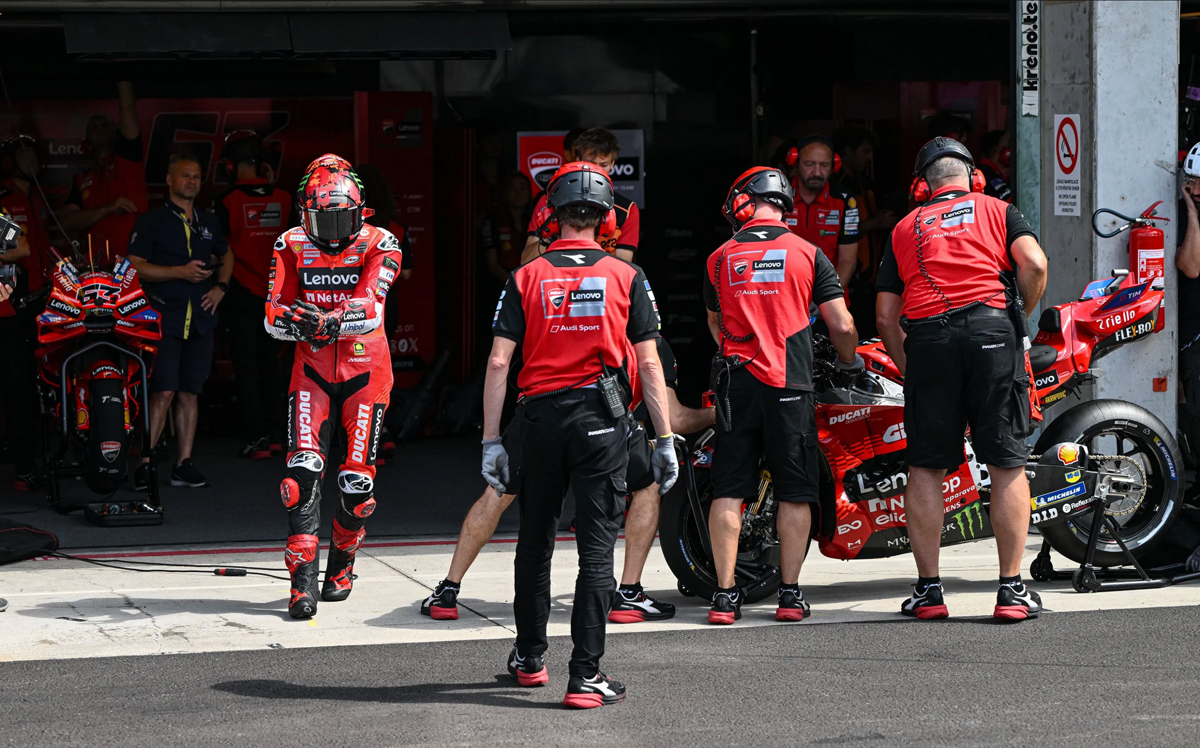
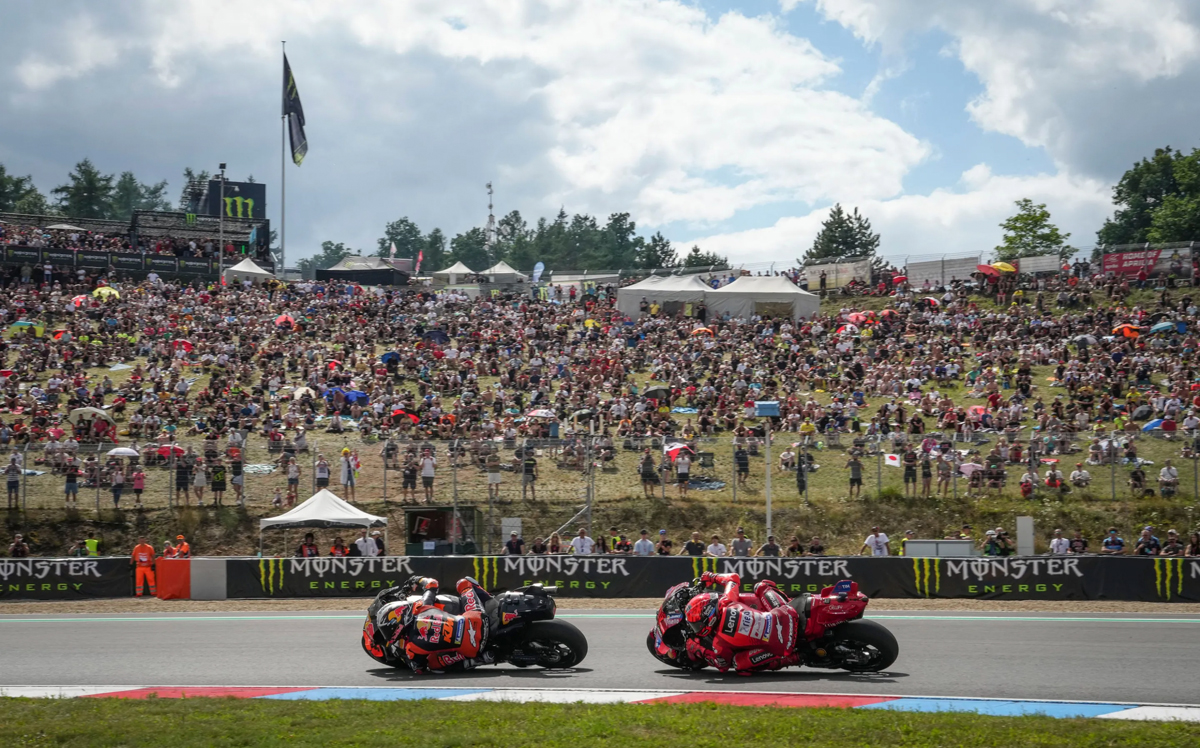
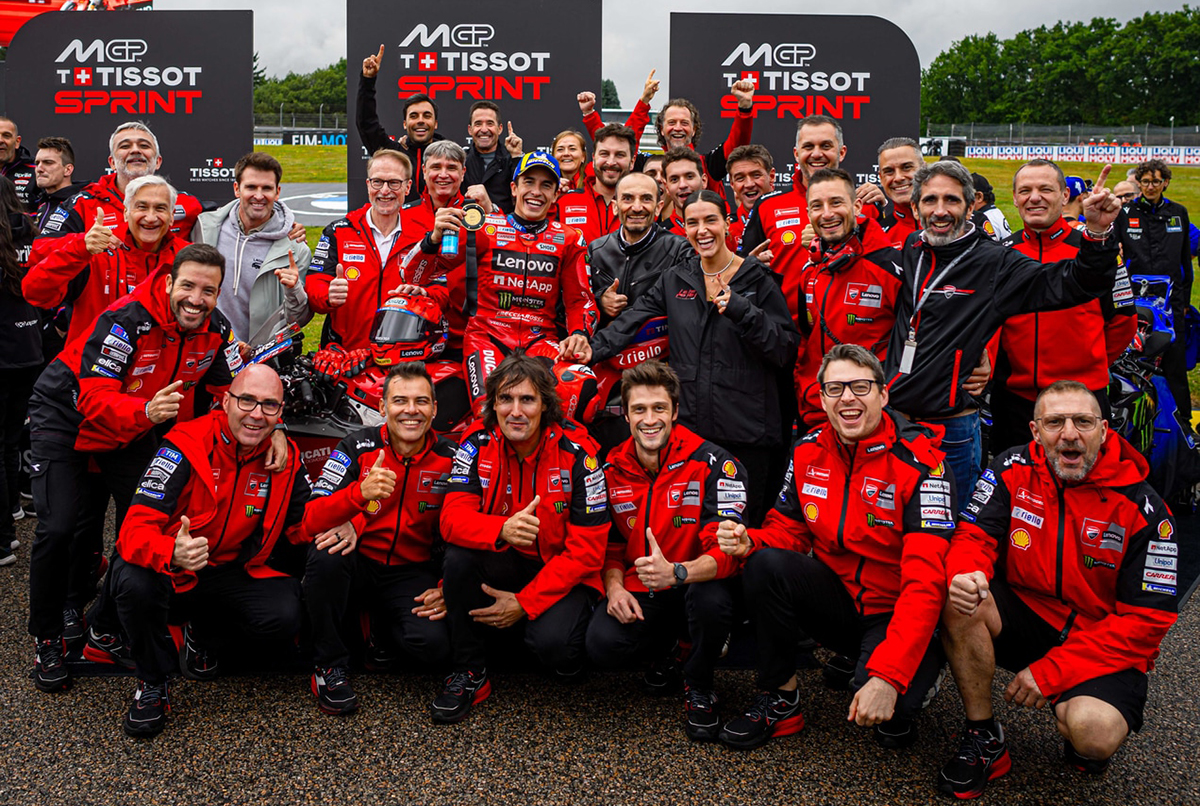
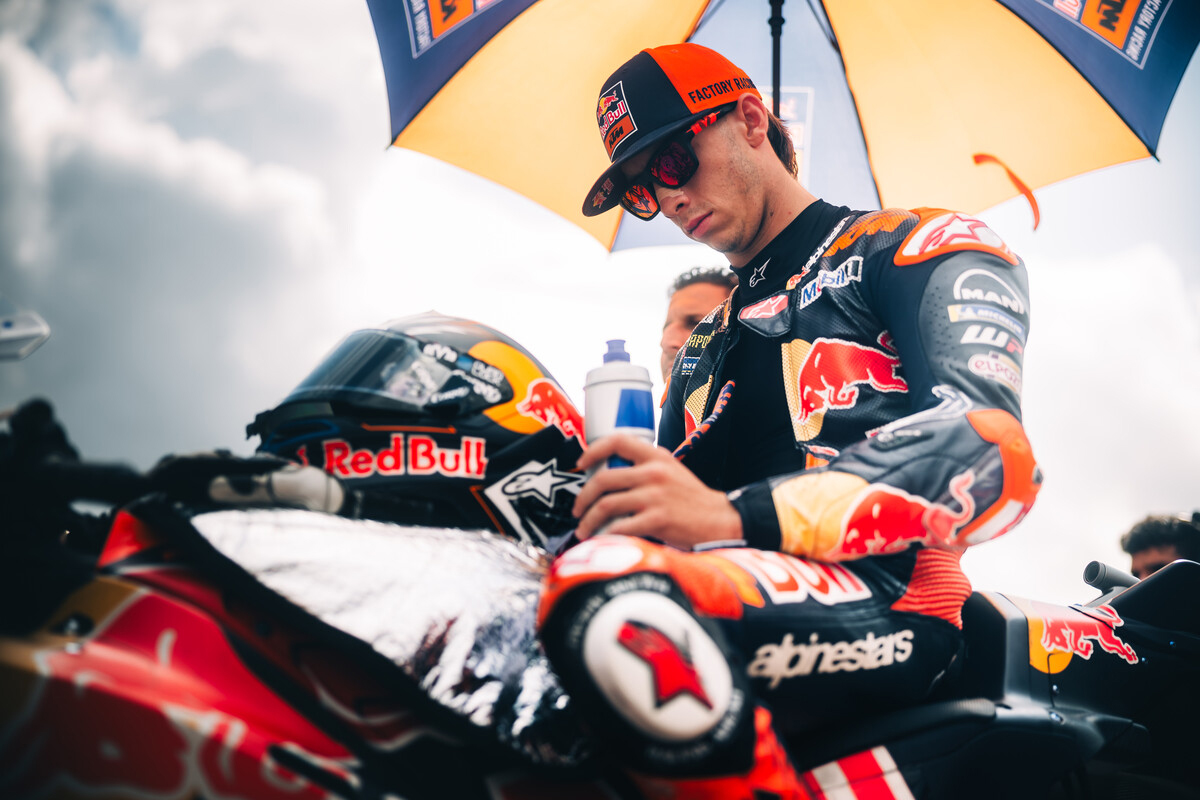
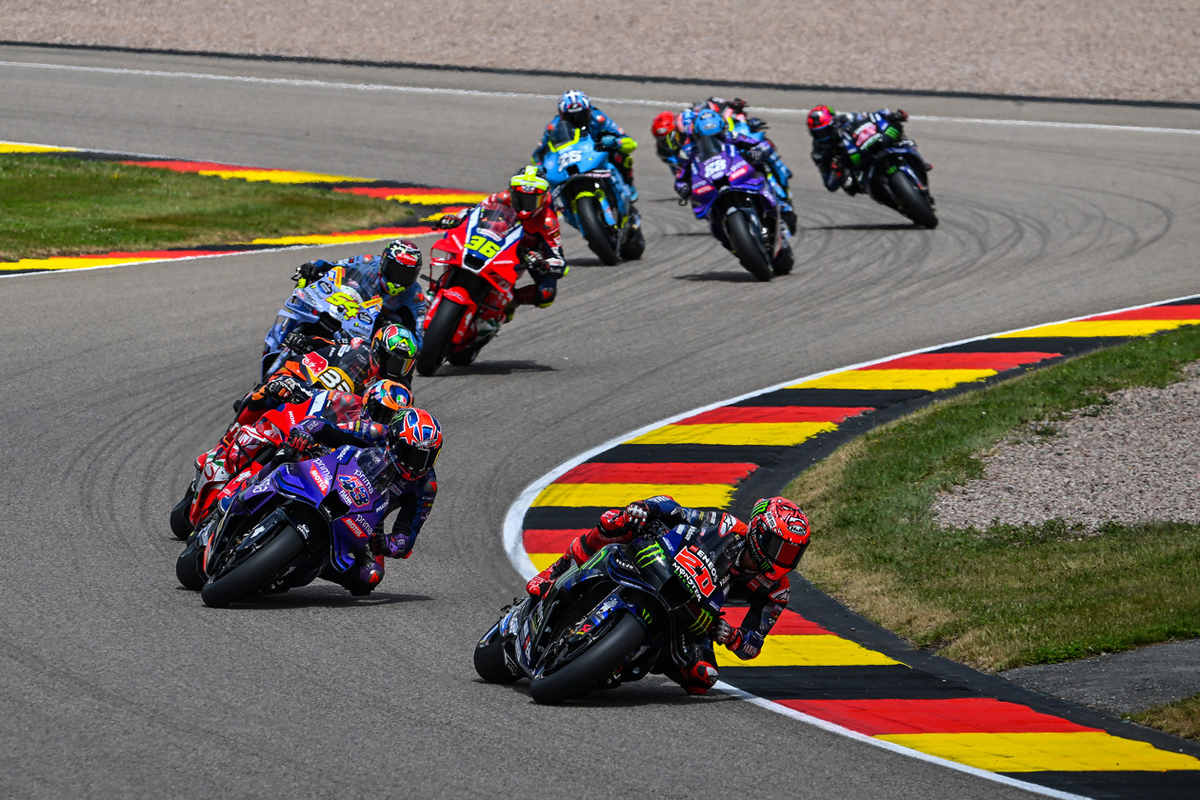
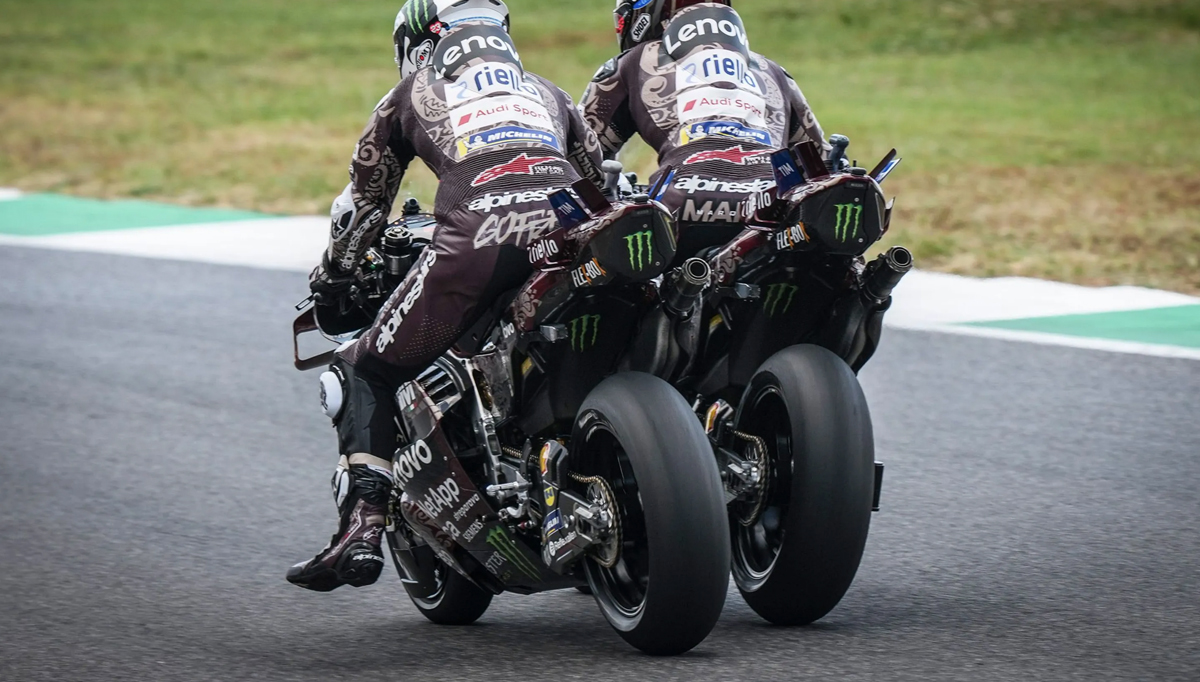
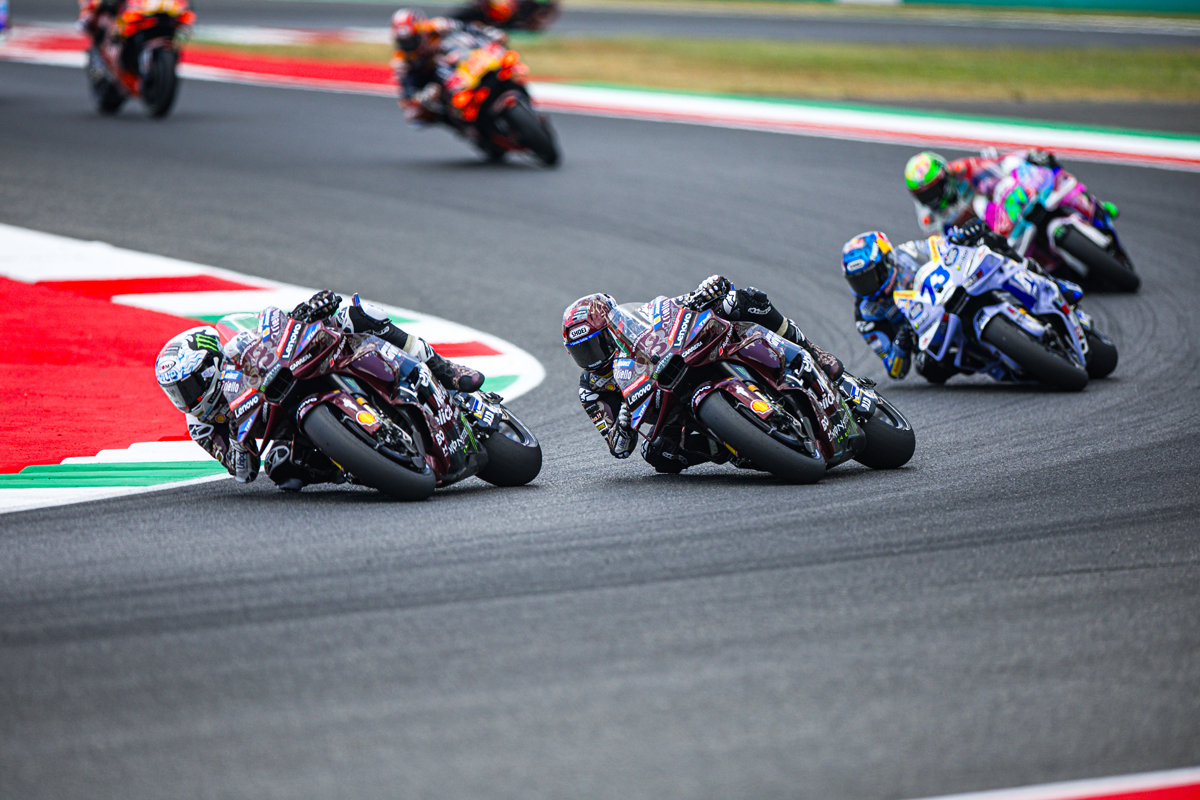
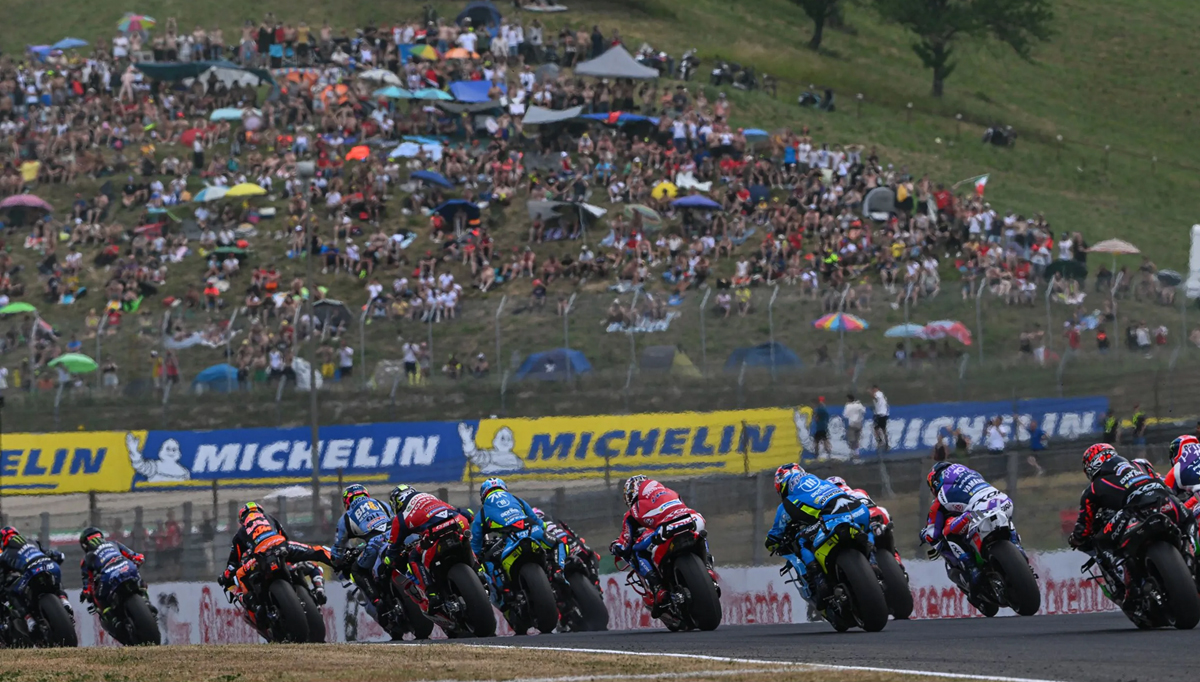
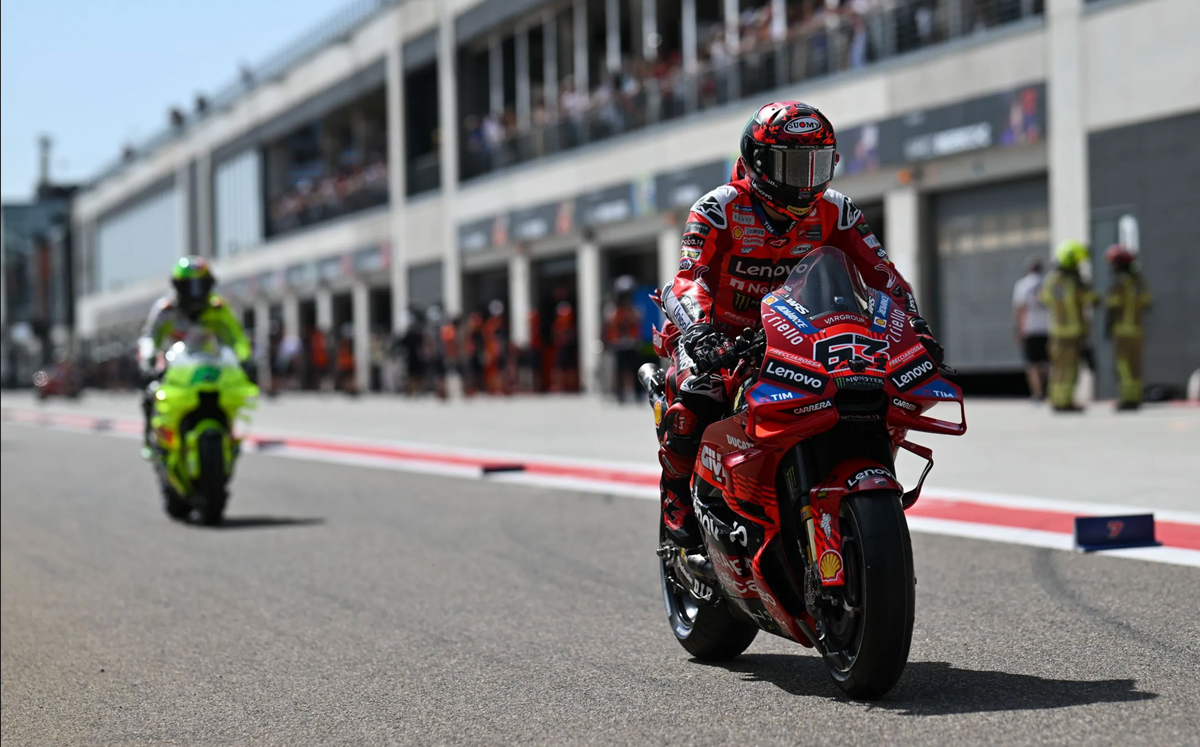
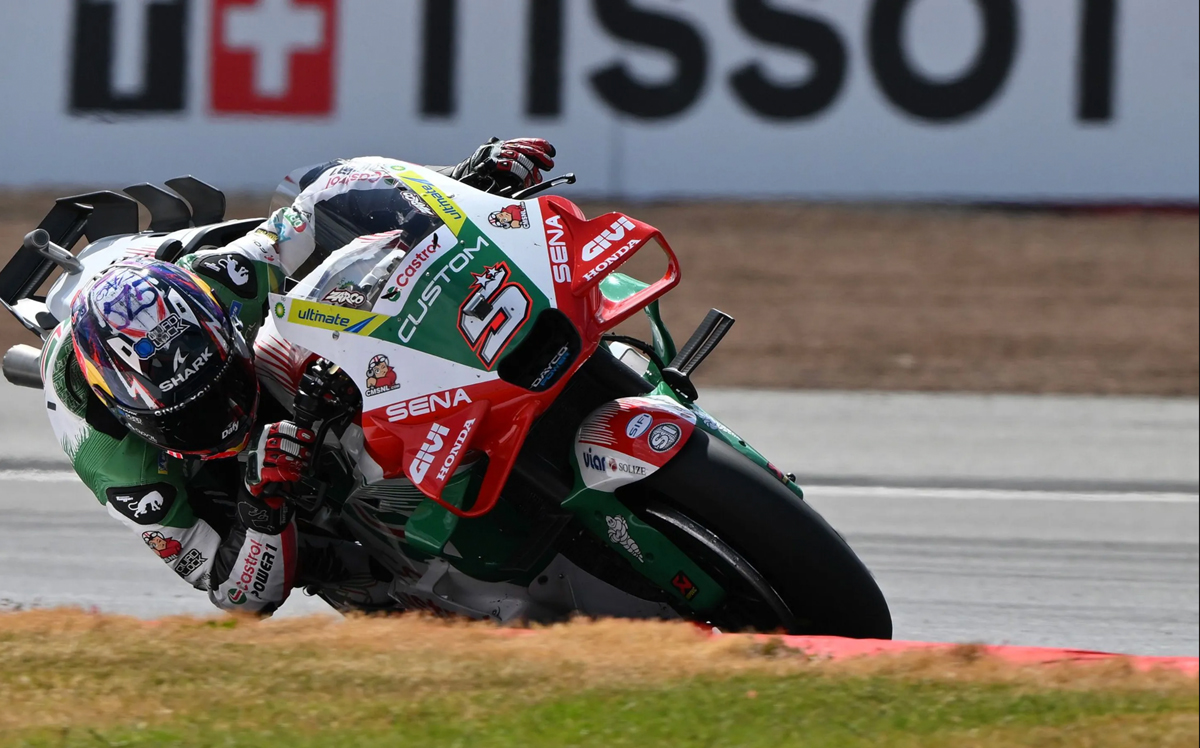
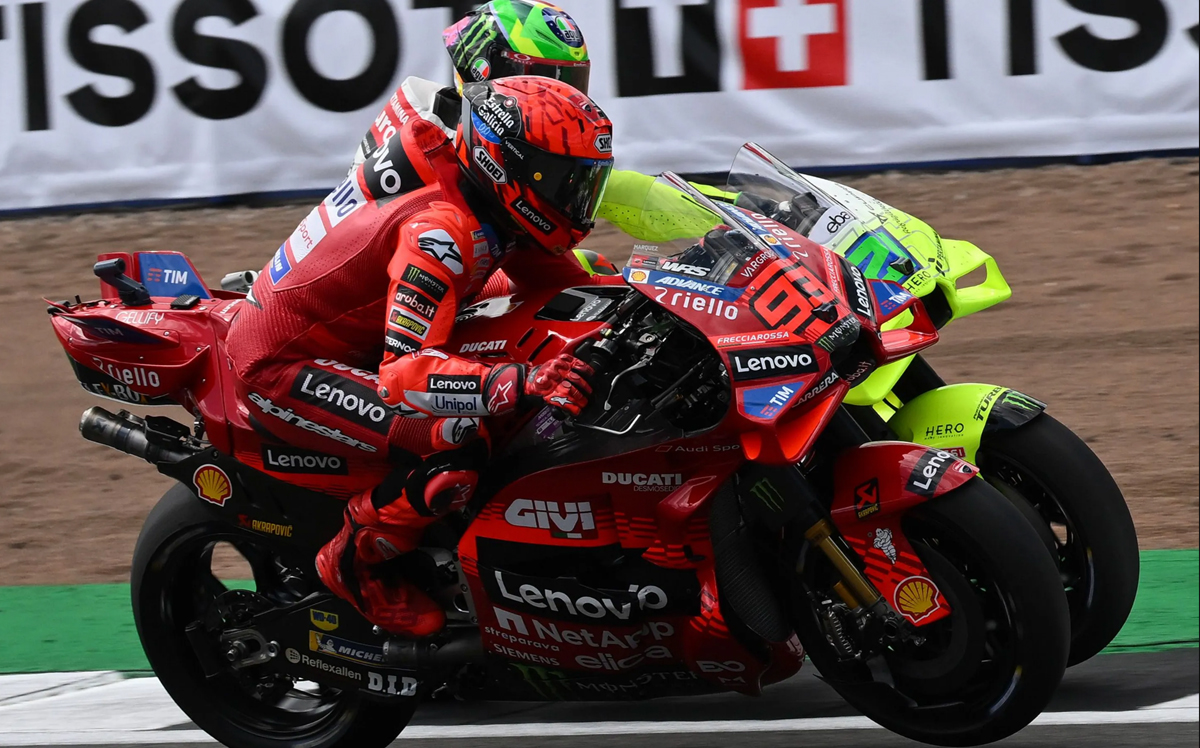
But that pales into insignificance in light of the ridiculous situation we saw in the Brno Sprint race, both factory Ducatis slowing dramatically, their riders sitting up and allowing the rider behind to pass, in order to follow that rider closely and get some heat back into their front tyres to avoid a penalty. Marquez was able to recover to win, but Bagnaia’s race was completely ruined.
Cheating – perhaps it’s better to call it “creative interpretation of the rules” – has been part and parcel of motor racing since the very dawn of the sport. Some have got away with it, others haven’t. But it’s part of the fabric of motorsport and, even if you cannot condone it, you can’t deny that it adds colour and intrigue.
Image source: MotoGP
Running under pressure in a MotoGP race is not cheating; however, it’s a lottery surrounding getting the calculations right before a wheel has turned in the race, trying to guess what position your rider will be riding in, and therefore the temperature the front tyre will be subjected to. It’s a thankless task for both riders and engineers, none of whom have a crystal ball. Too low pressure and there’s a penalty; too high and there’s dangerously reduced grip, the rider either plummeting down the order or crashing with who-knows-what consequences, often for other, innocent, riders sharing the same piece of tarmac.
The tyre-pressure rule is the enemy of clever strategy and interesting racing; it is merely rolling the dice and seeing if the gamble pays off. Maverick Viñales’ stunning result in Qatar was exactly what the season needed; the subsequent penalty was the complete opposite.
Image source: KTM
There is another factor in the dissatisfaction. It’s disgusting that race results can be decided after a race, and after the podium has been celebrated. Not only does it deny the fans a definitive result, but it also denies the racers themselves the opportunity of standing on what could possibly be their only podium in their career; a retrospective podium is meaningless and also disrespectful to the rider himself.
It’s easy to point the finger of blame at Michelin, whose fears about the safety of its front tyre under increased downforce-induced loads were a factor in the introduction of the minimum tyre pressure. But the teams also had a say. There always was a minimum tyre pressure rule, but it was never enforced; teams were suspected of running very soft front pressures, but no one complained, and the MotoGP world was a happy place. But obviously, there was some behind-closed-doors dissatisfaction within some teams, who possibly drove the tyre pressure initiative more than other teams. That is, of course, conjecture, but not entirely implausible.
Image source: MotoGP
What is inexcusable is that Michelin has failed to come up with a tyre solution that would negate the need for pressure monitoring in the face of concerns about safety. Now, with the company due to bow out of MotoGP at the end of the 2026 season to make way for Pirelli, there is little or no incentive to invest time and money in creating a new front tyre that will be obsolete in 18 months’ time.
And so, we live with a sword of Damocles hanging over each race result. Through luck, not judgement, there have been no race victories taken away through low tyre pressure, although the 2024 championship title finale was marred slightly when the two protagonists – Bagnaia and Martin – went into the final championship-deciding round with a penalty apiece; one more infringement from either would have resulted in a time penalty and the title outcome being decided in a board room, not on the race track. Pathetic.
Image source: MotoGP
There is one possible positive outcome of the Sprint race debacle, and that is that the new majority owner of MotoGP, Liberty Media, will not at all like the negativity around the issue, in which case we’re likely to see the back of it sooner rather than later. MotoGP is shooting itself in the foot, and something is needed to put it off its aim. The 2027-on reduction in aero will go some way to doing that.
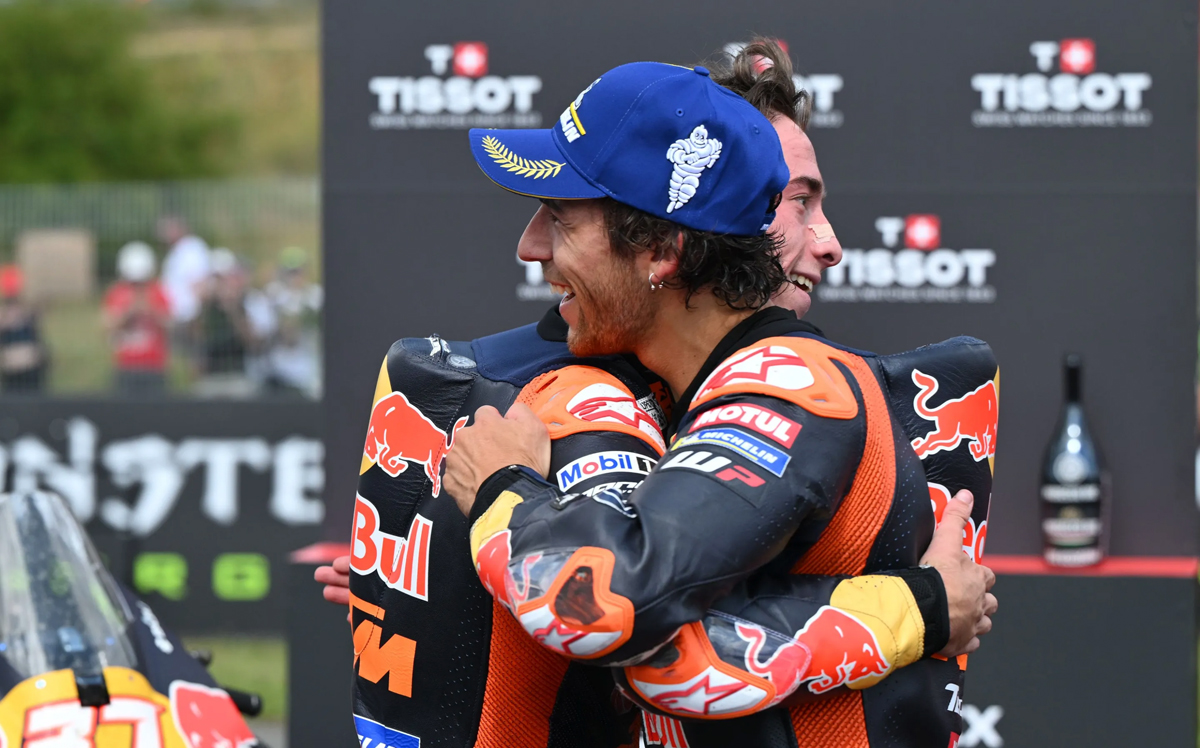
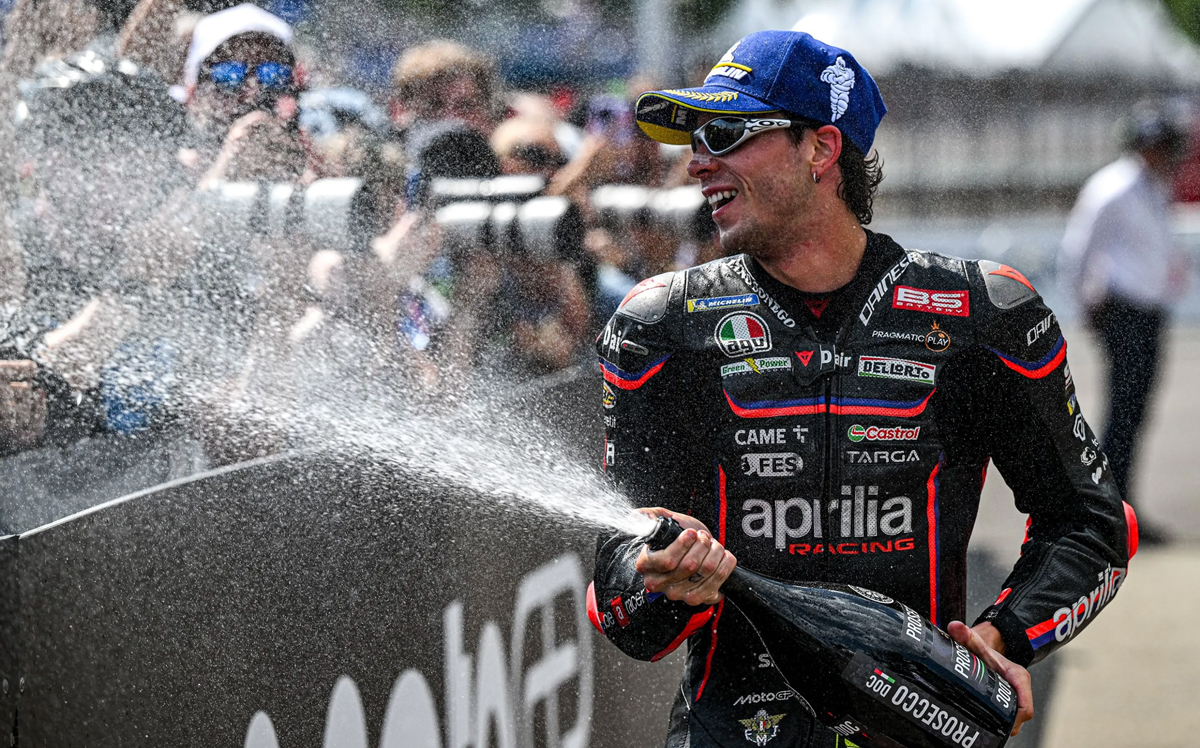
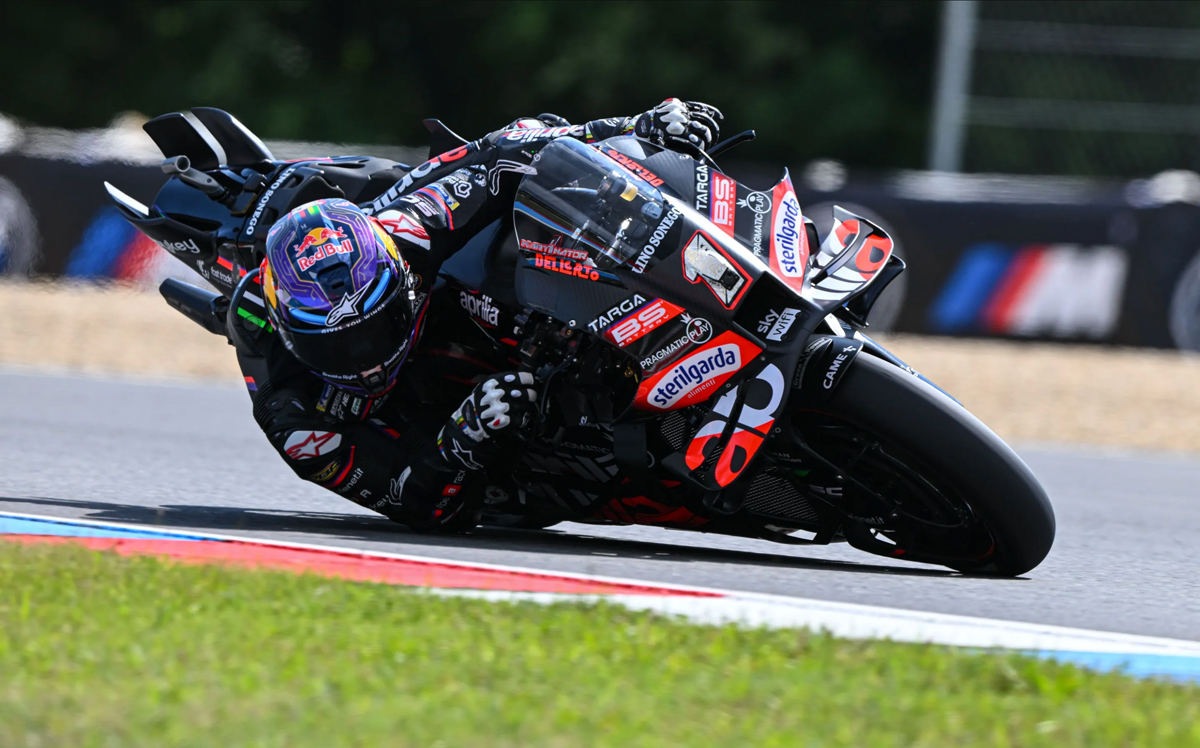
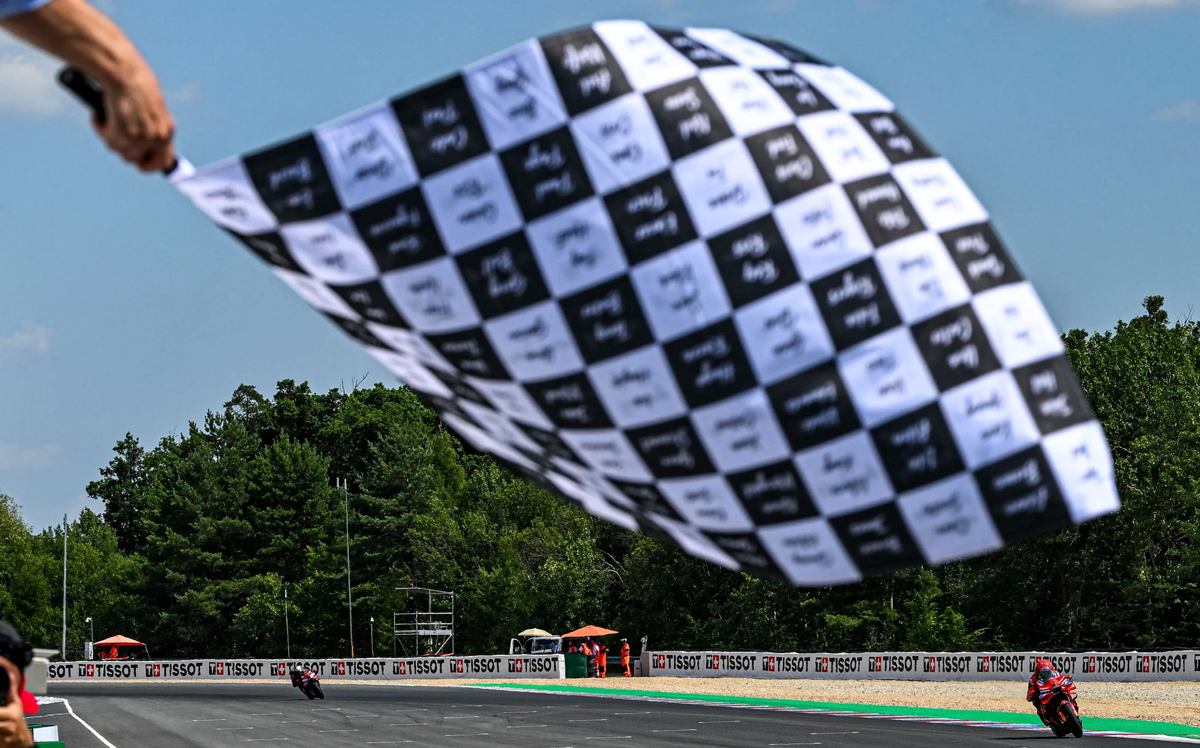
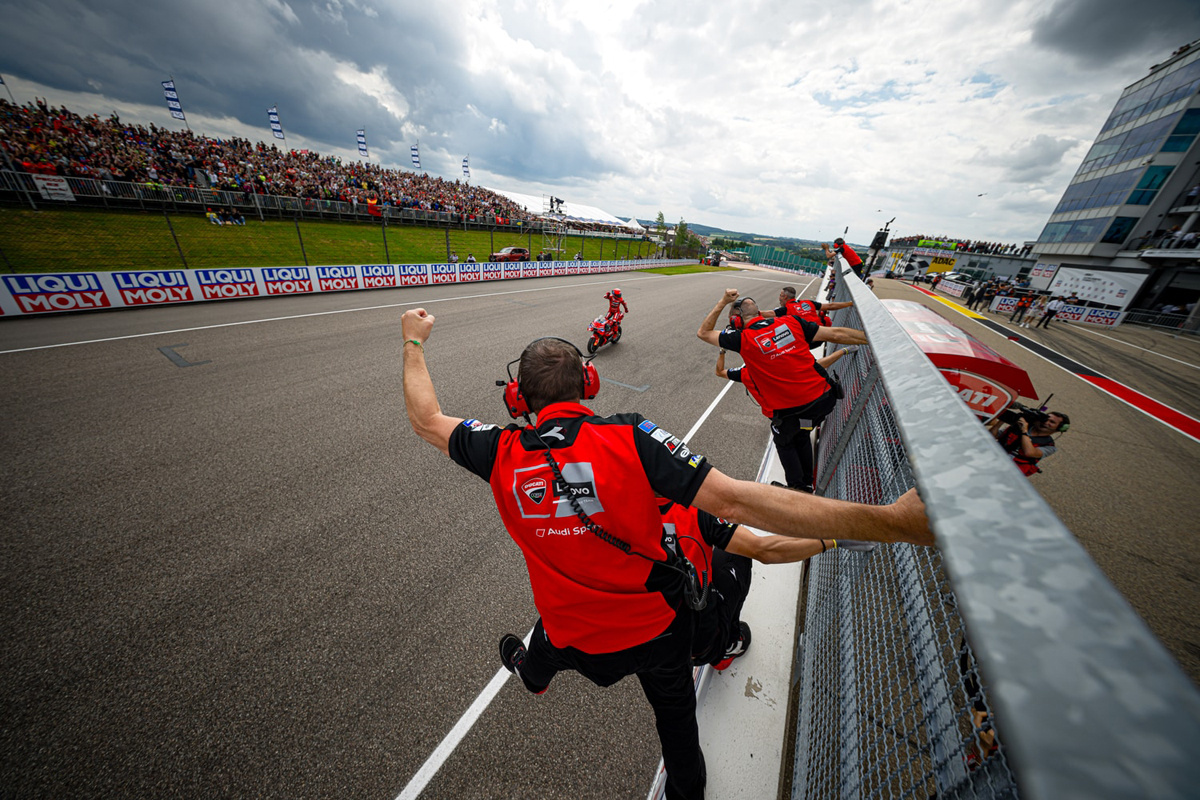
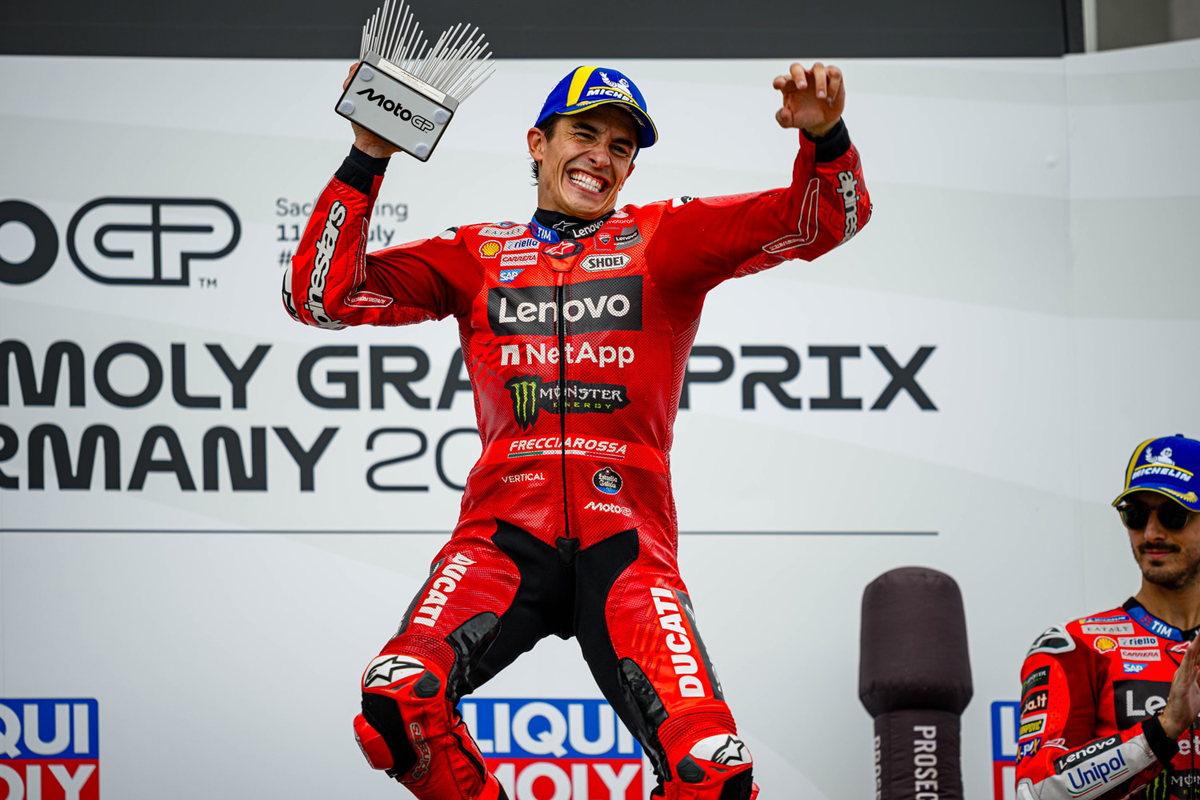
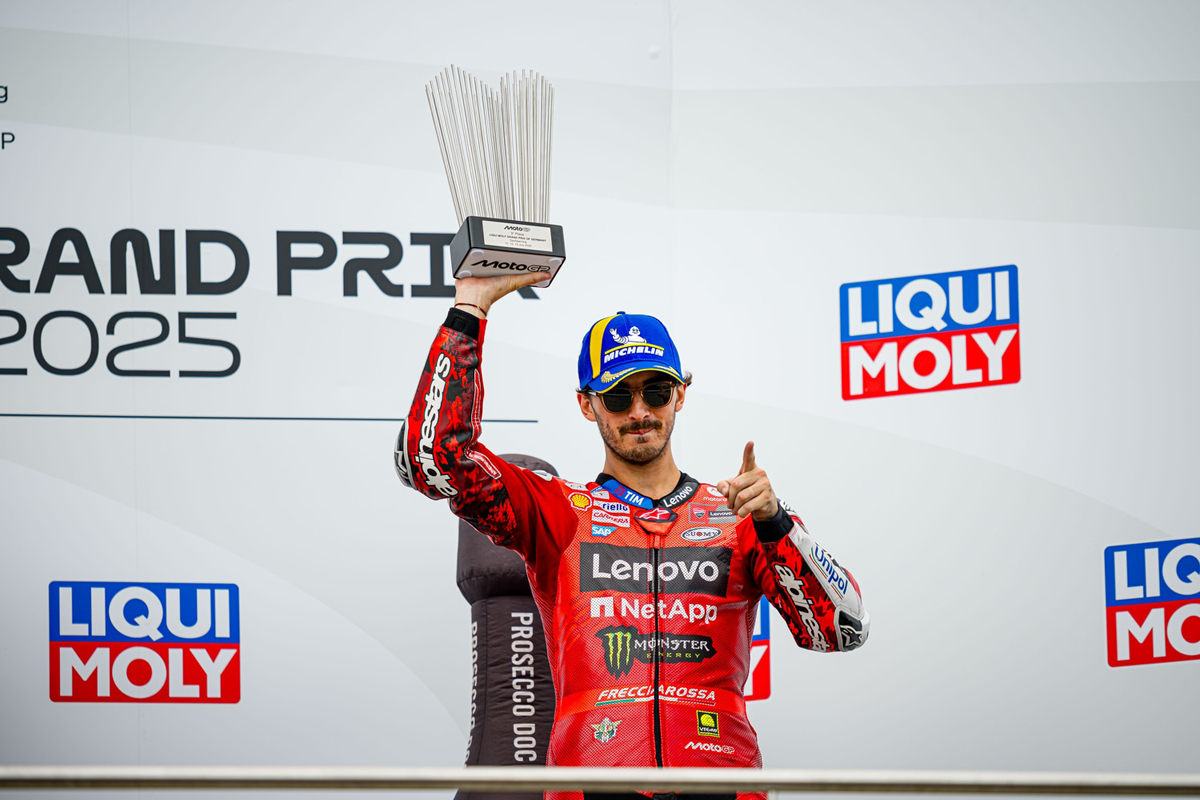
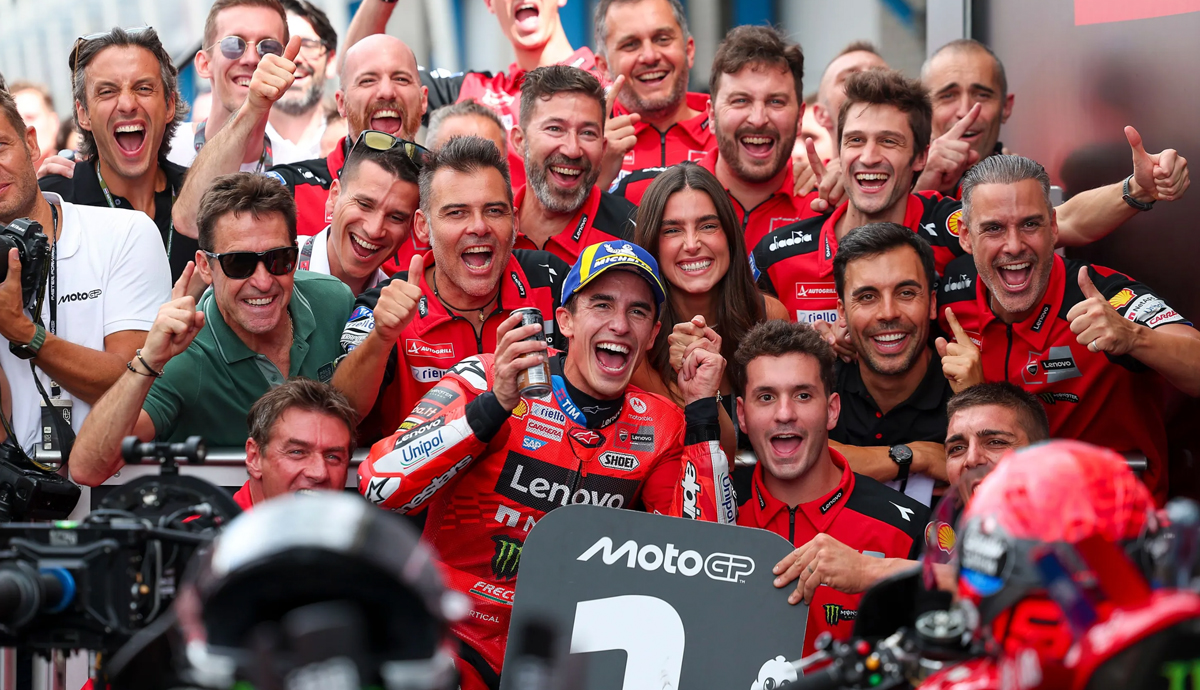
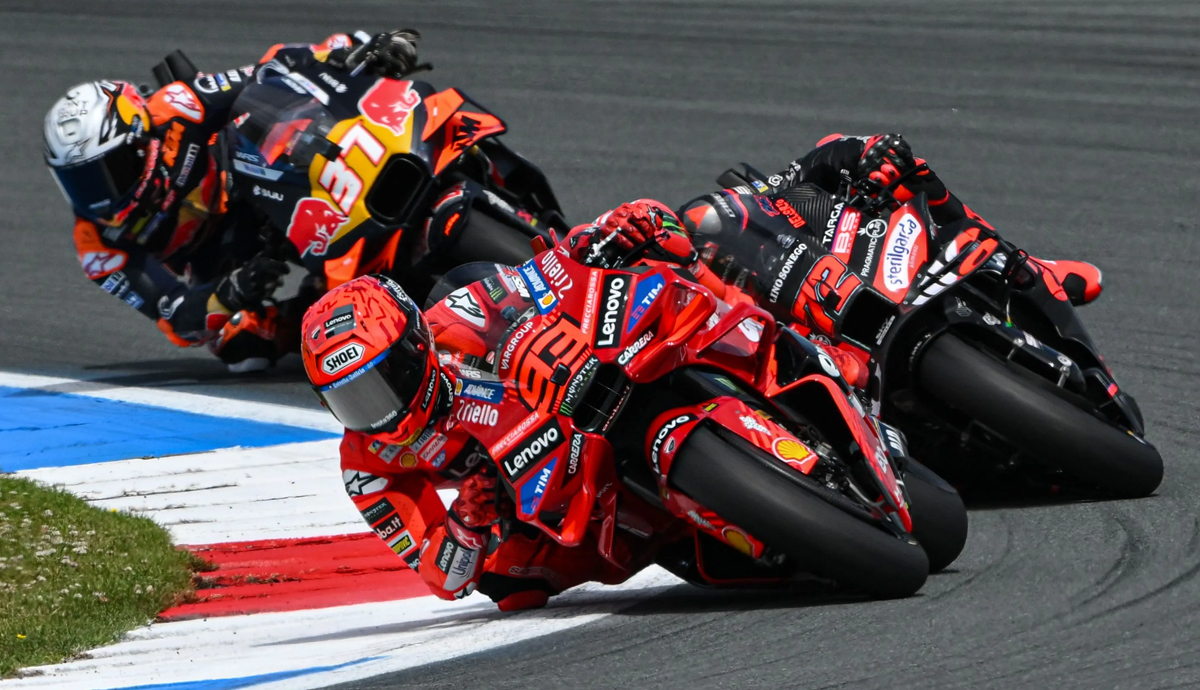
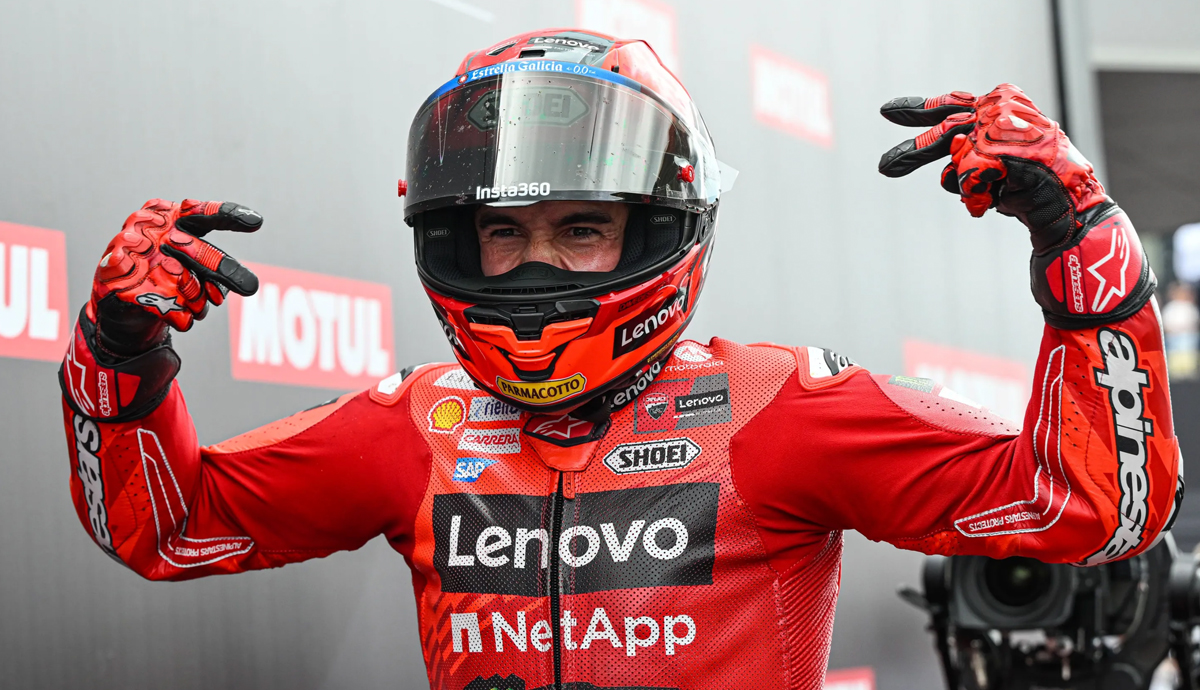
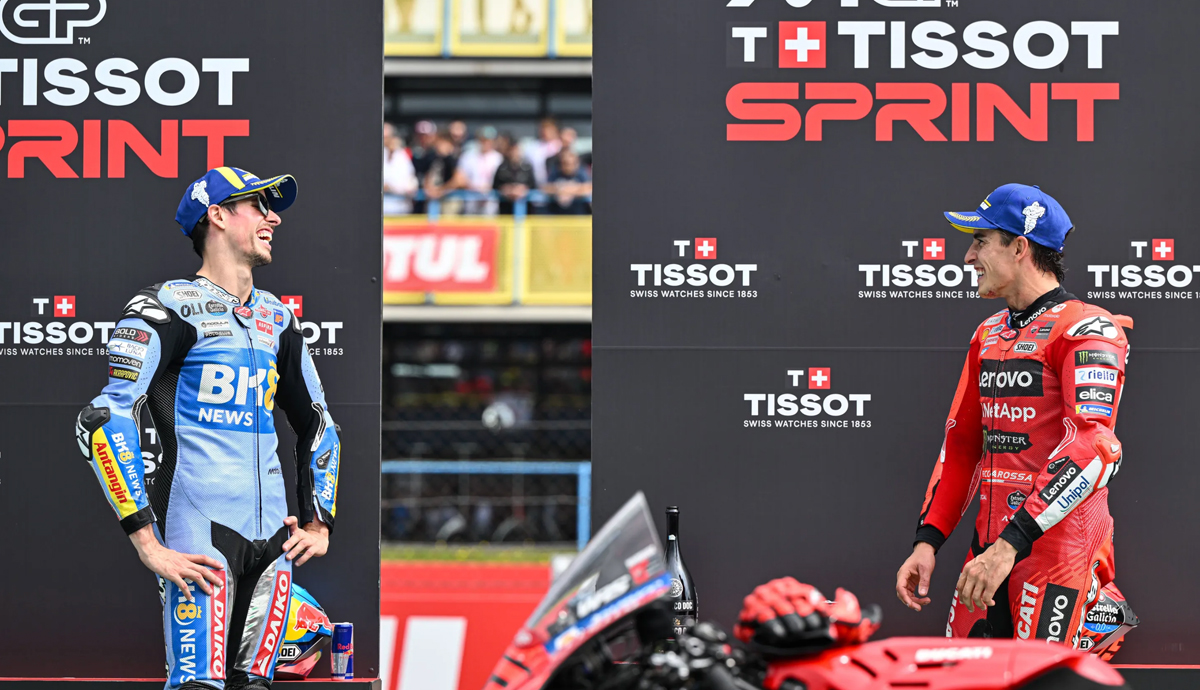
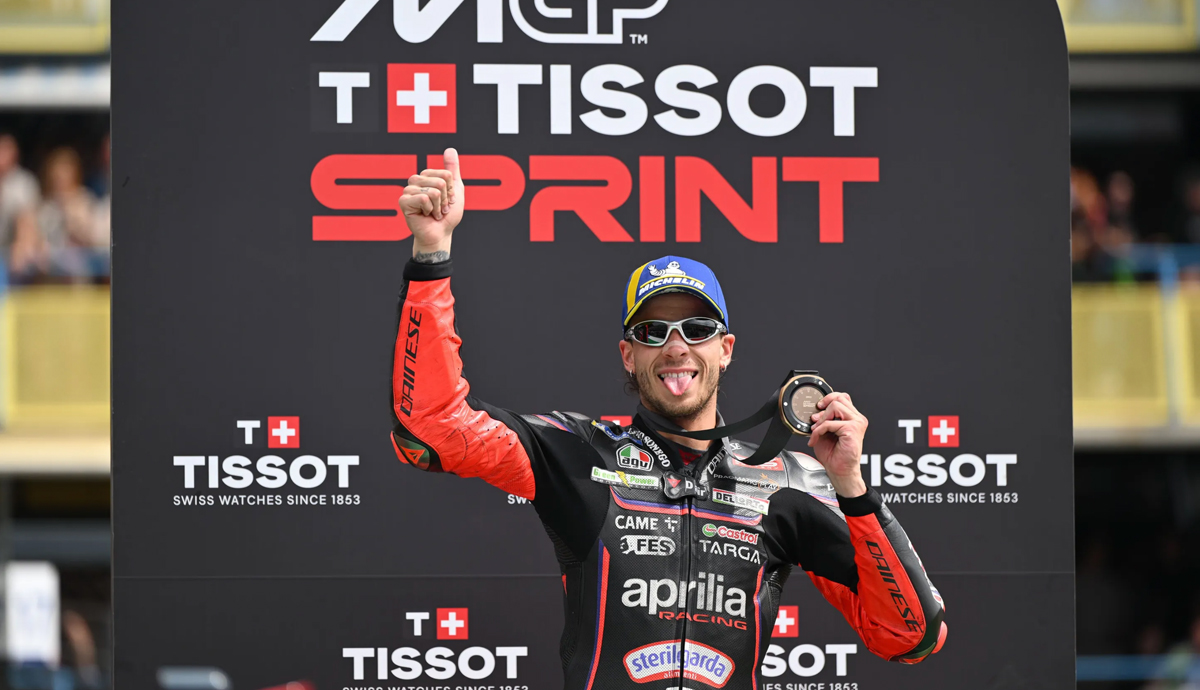
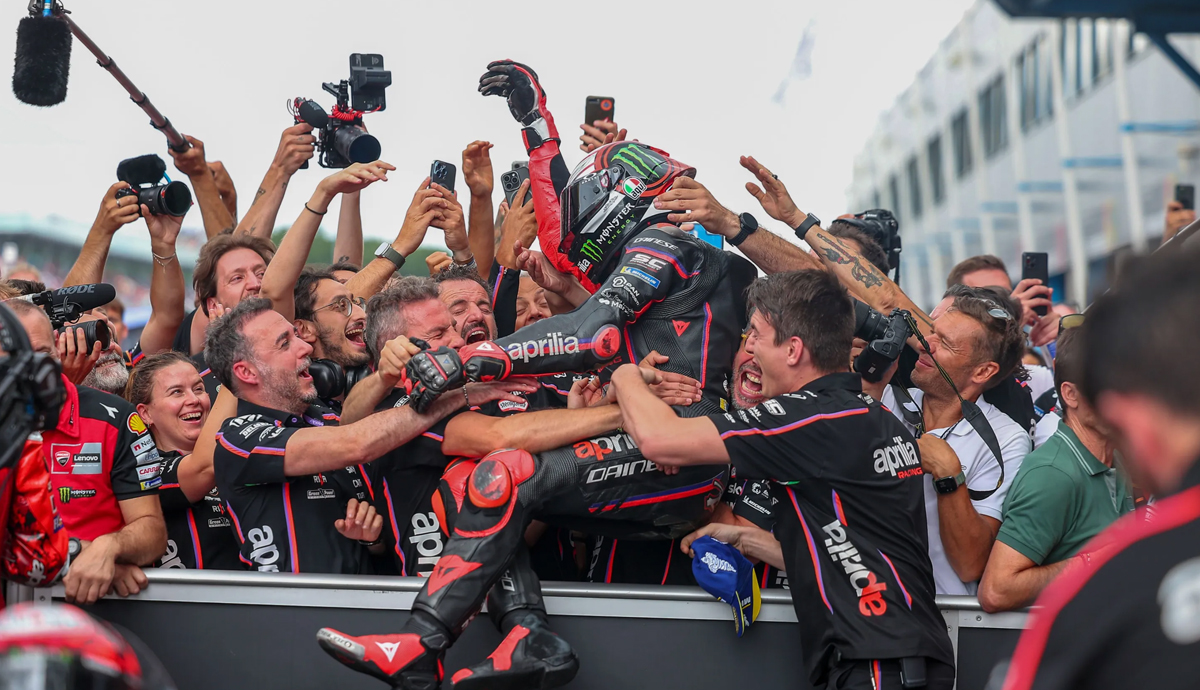
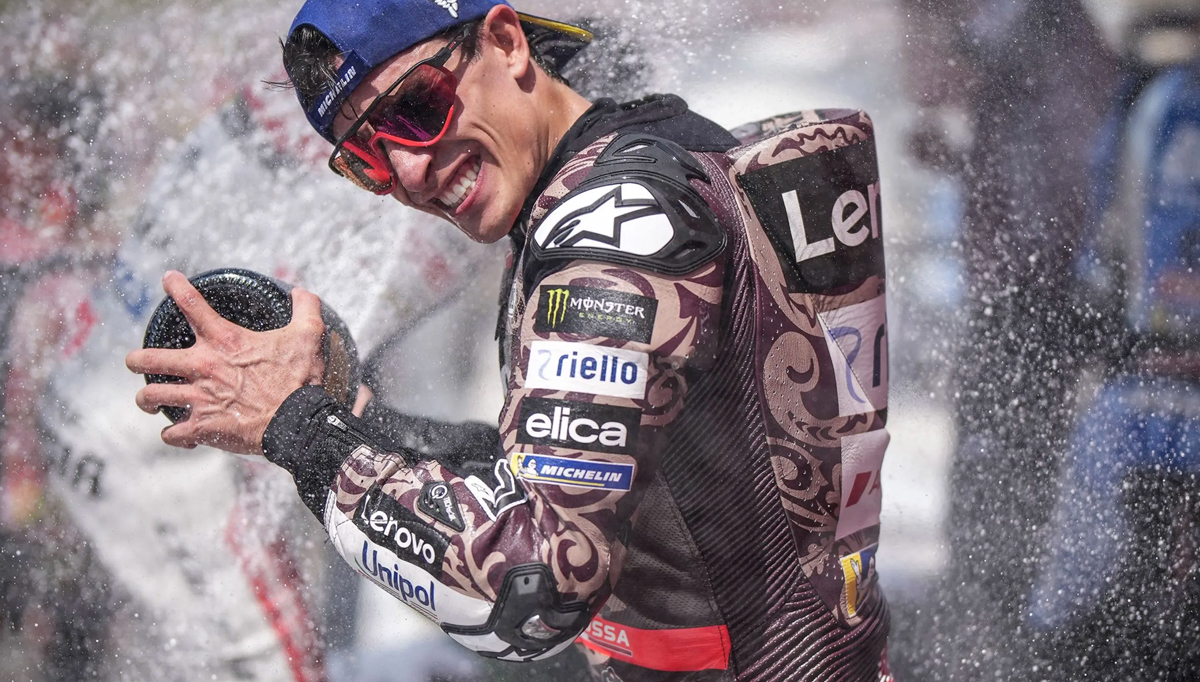
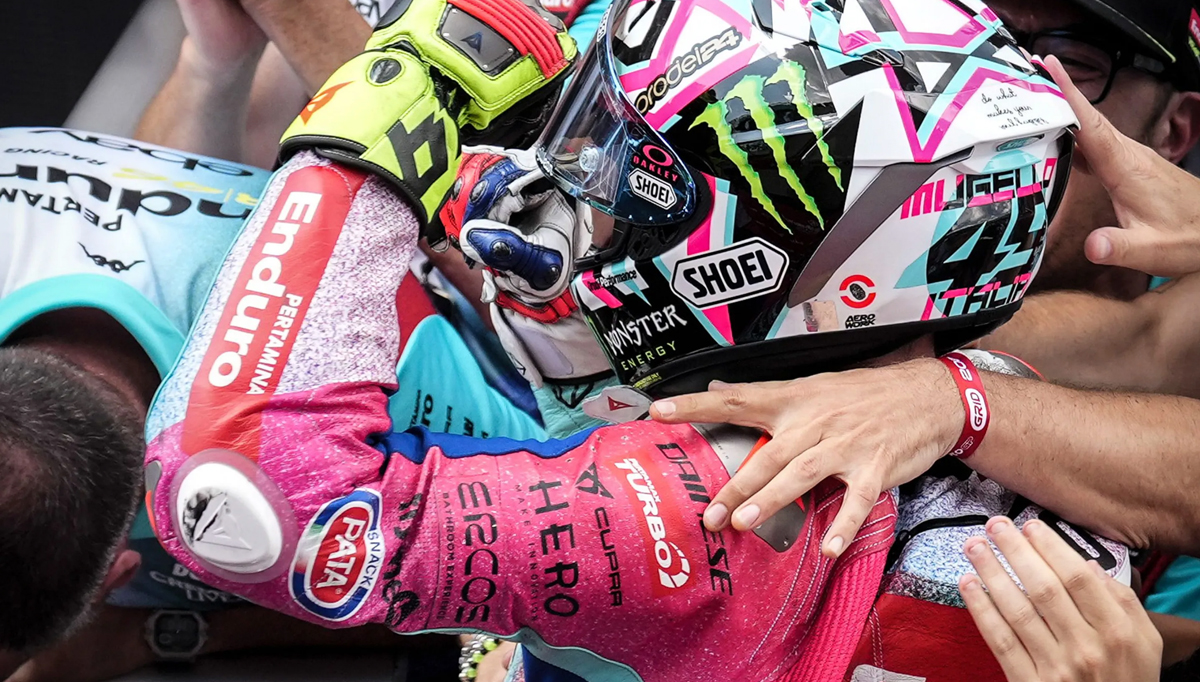
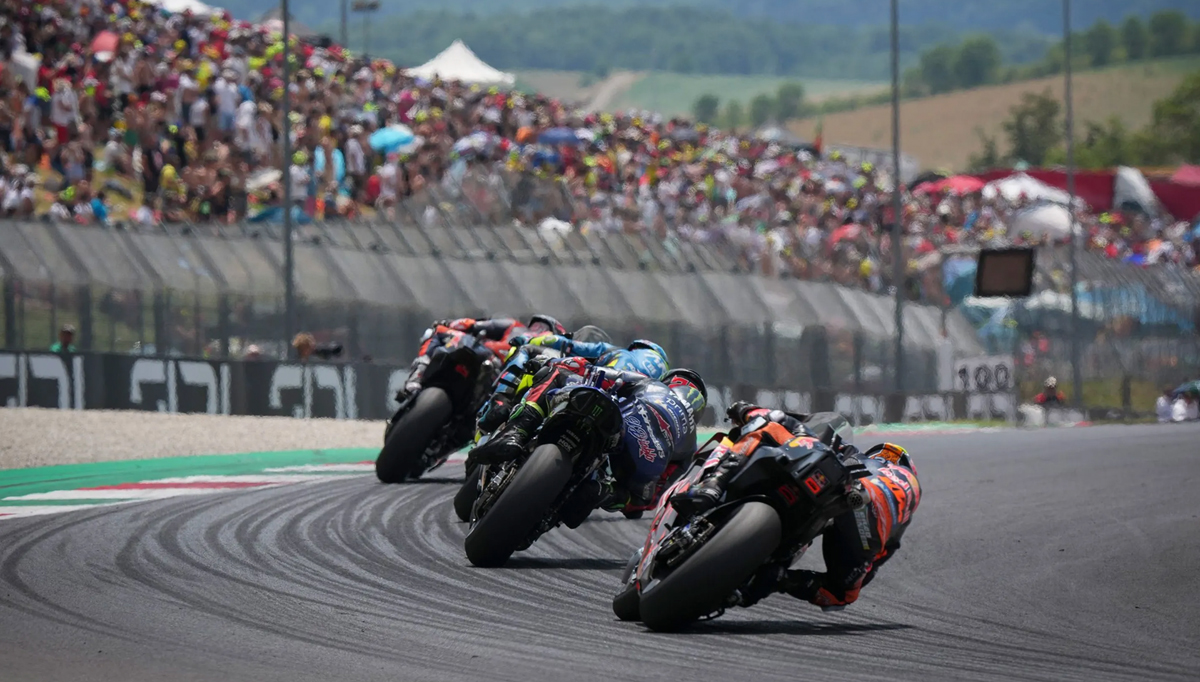
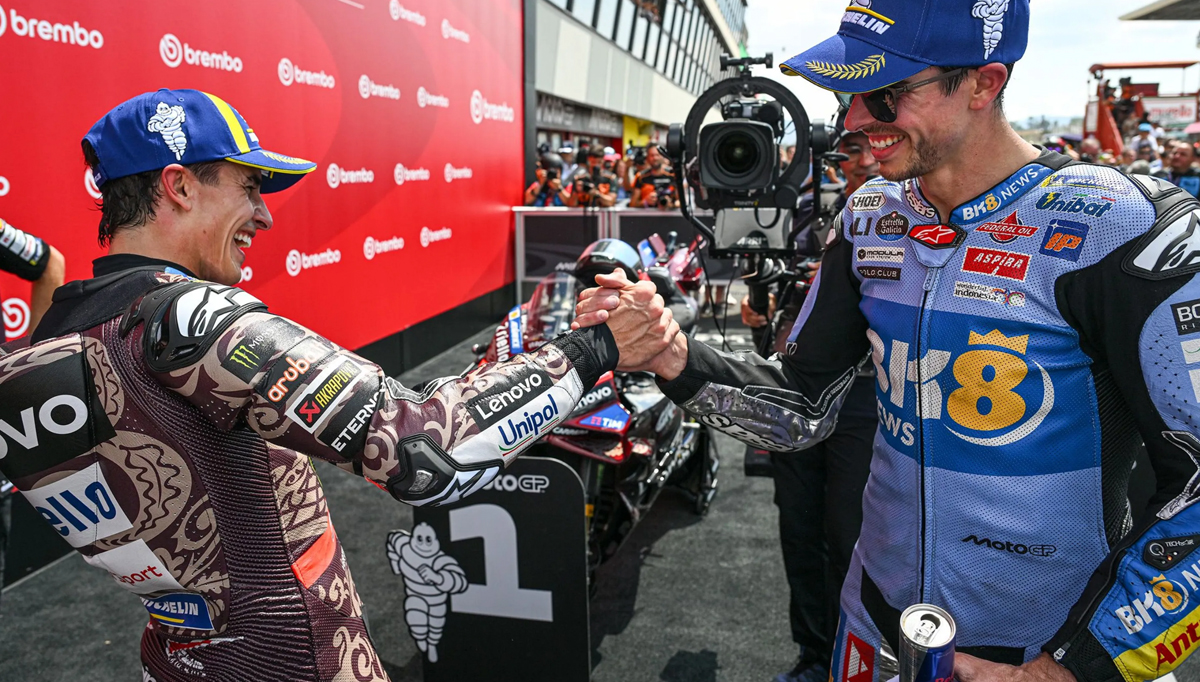
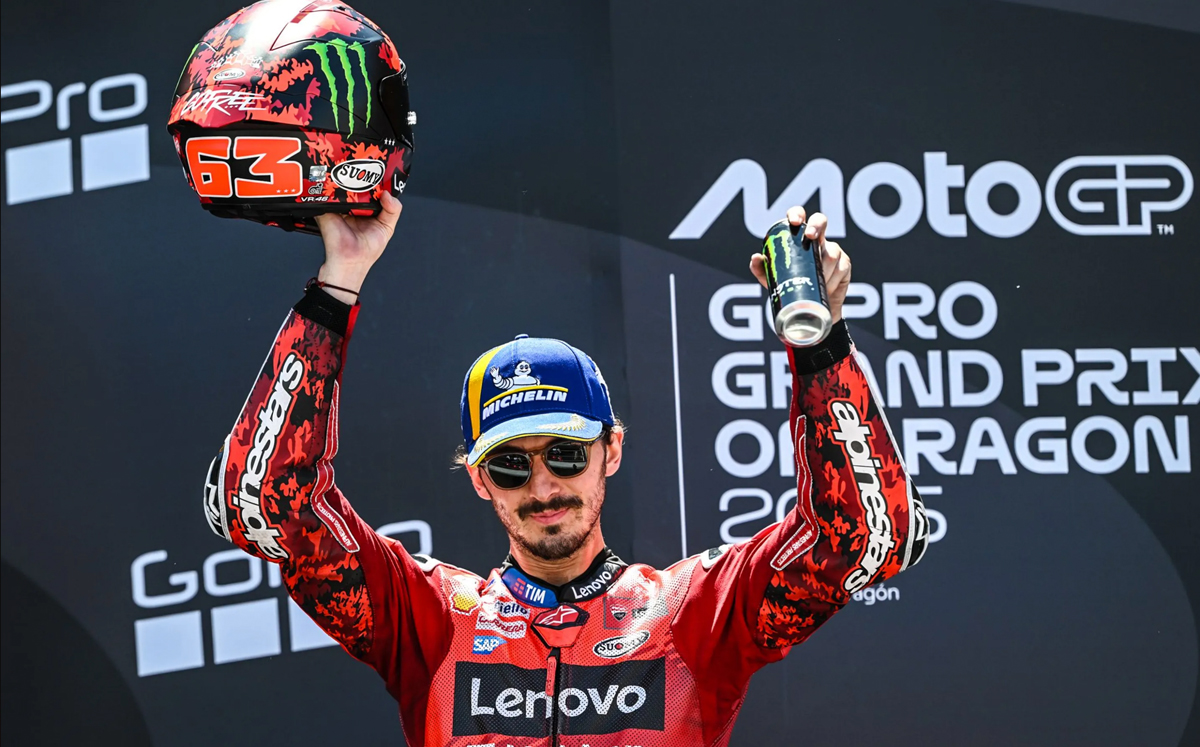
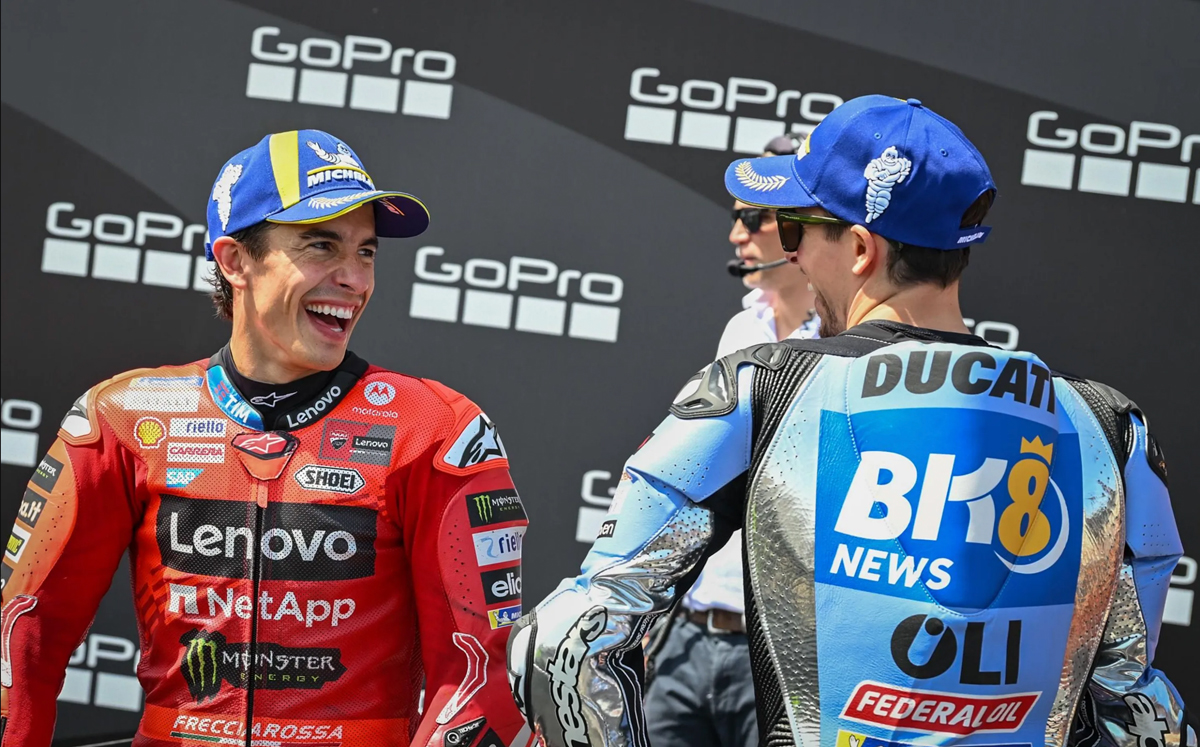
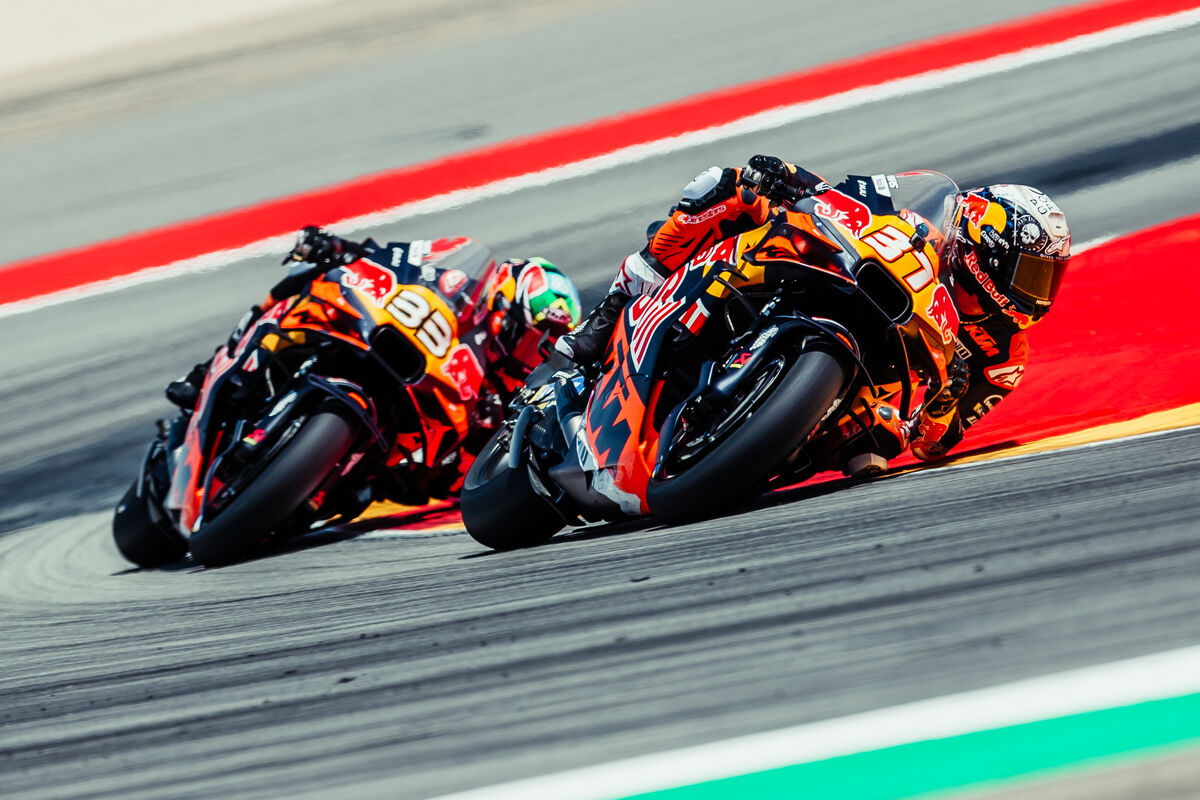
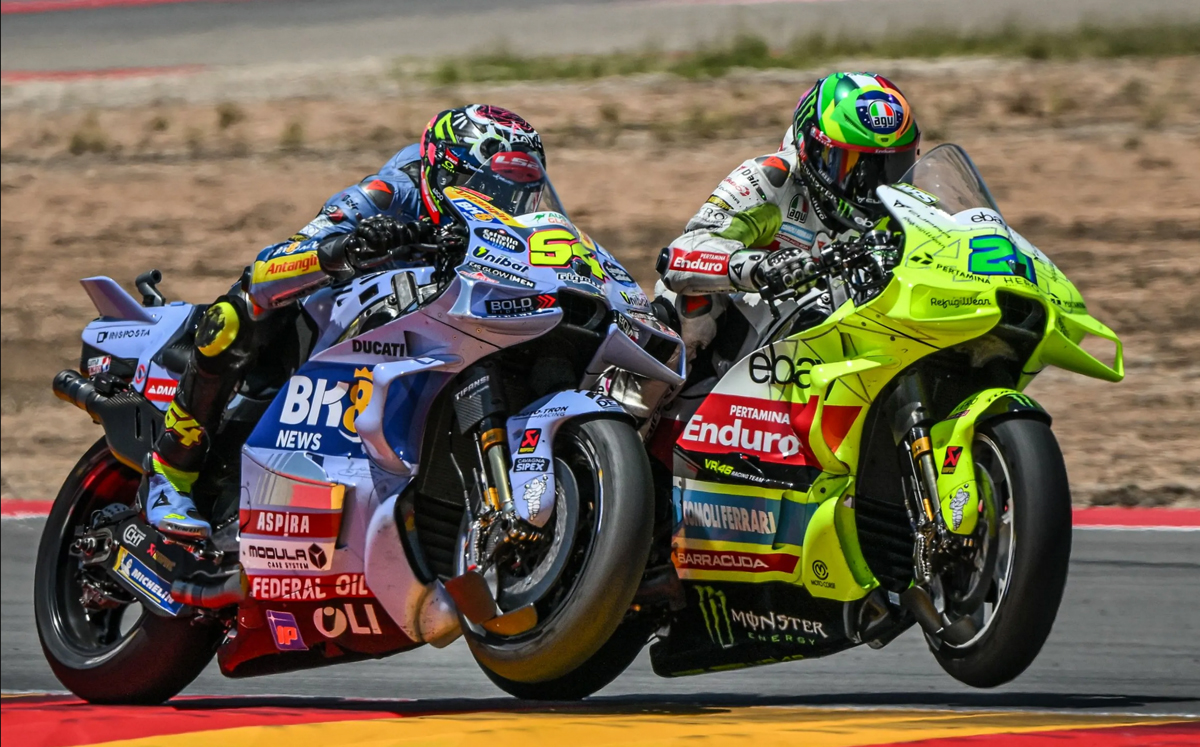
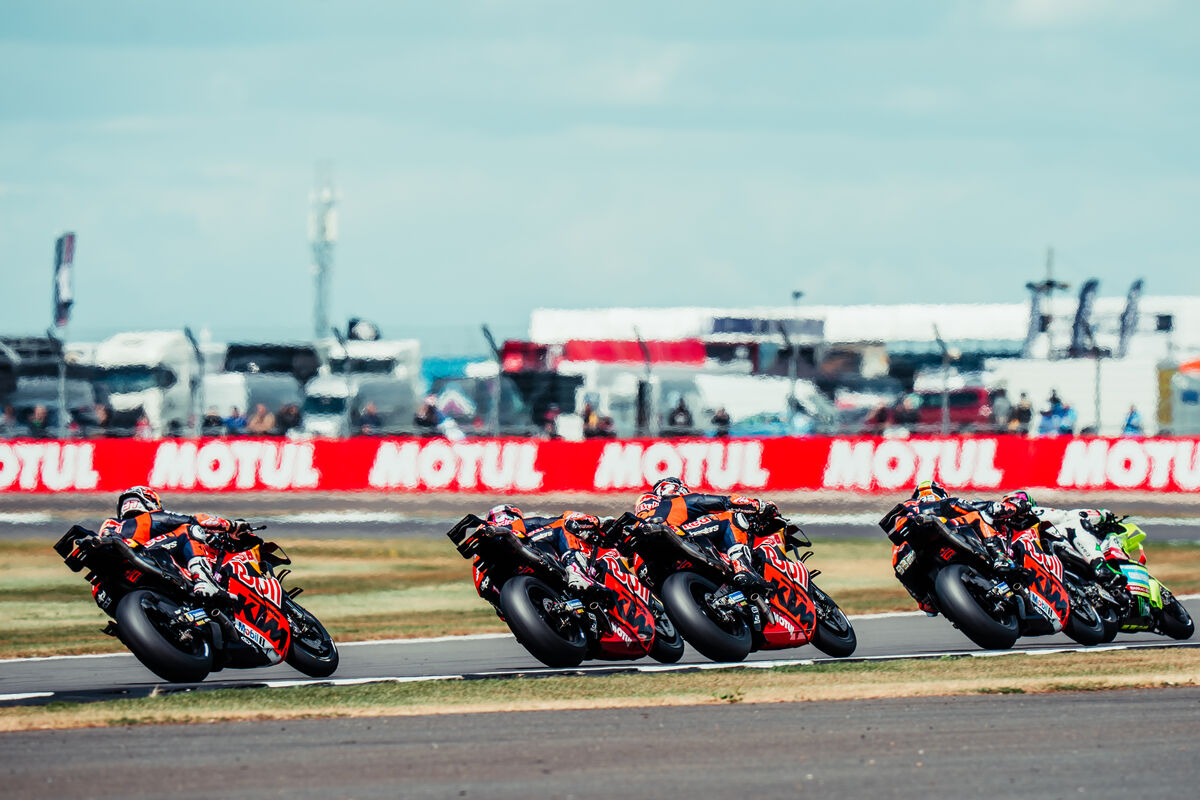
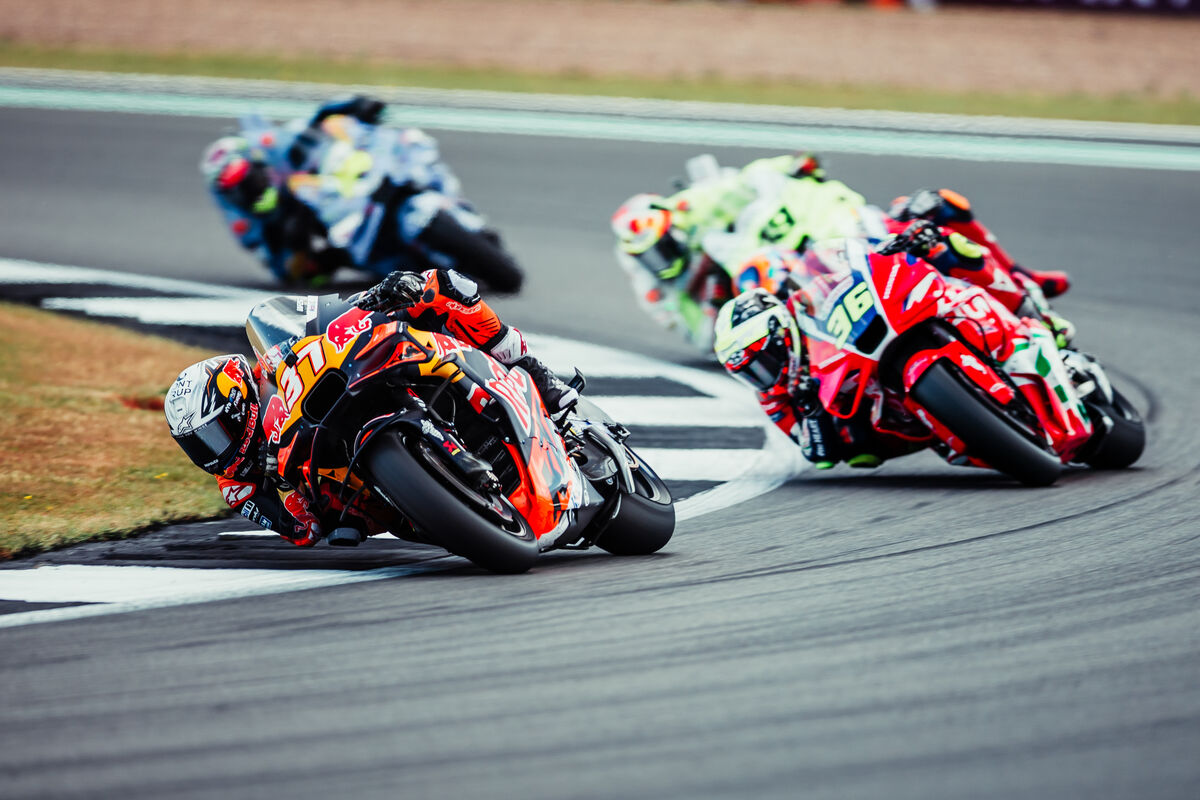
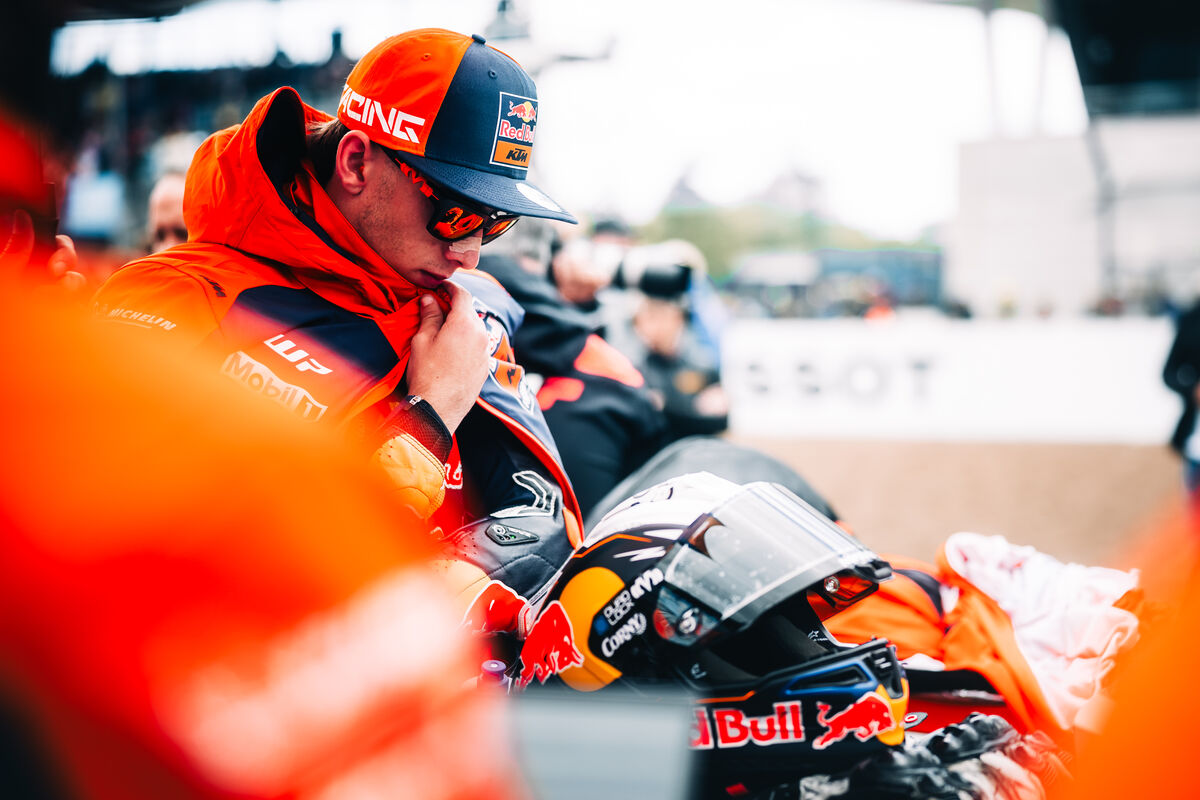
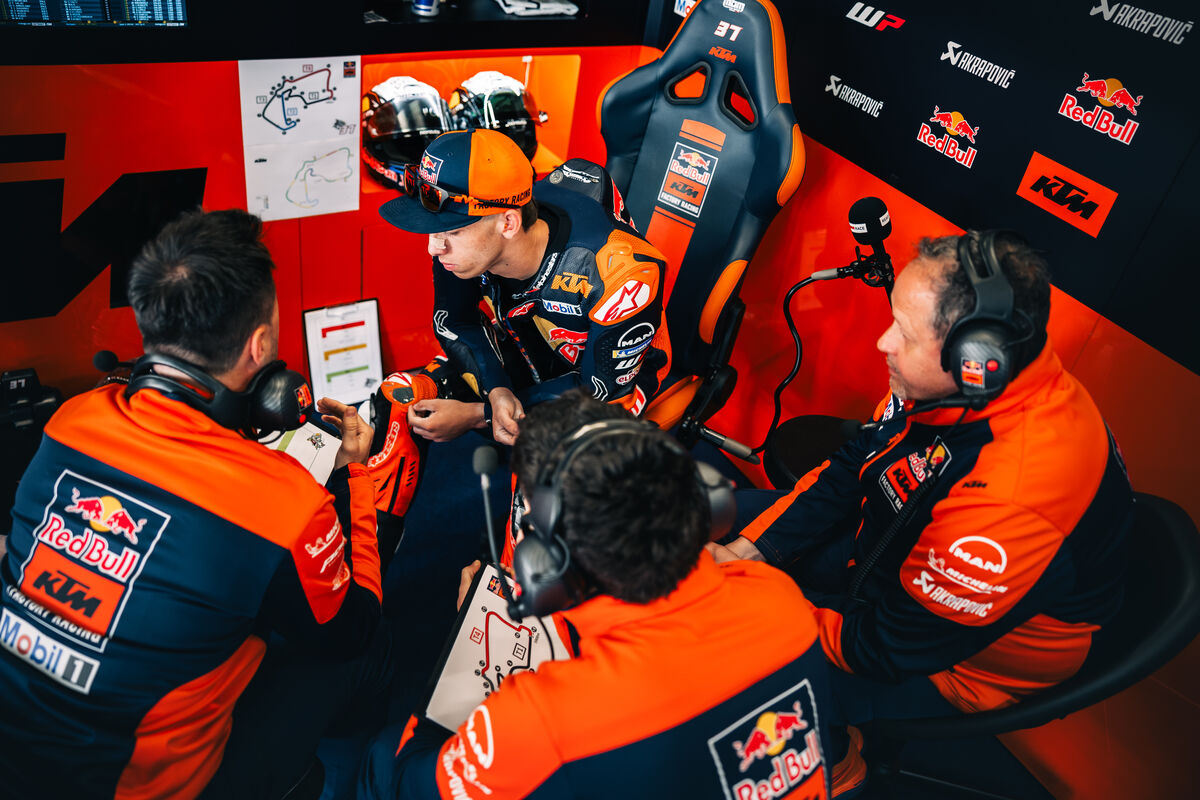
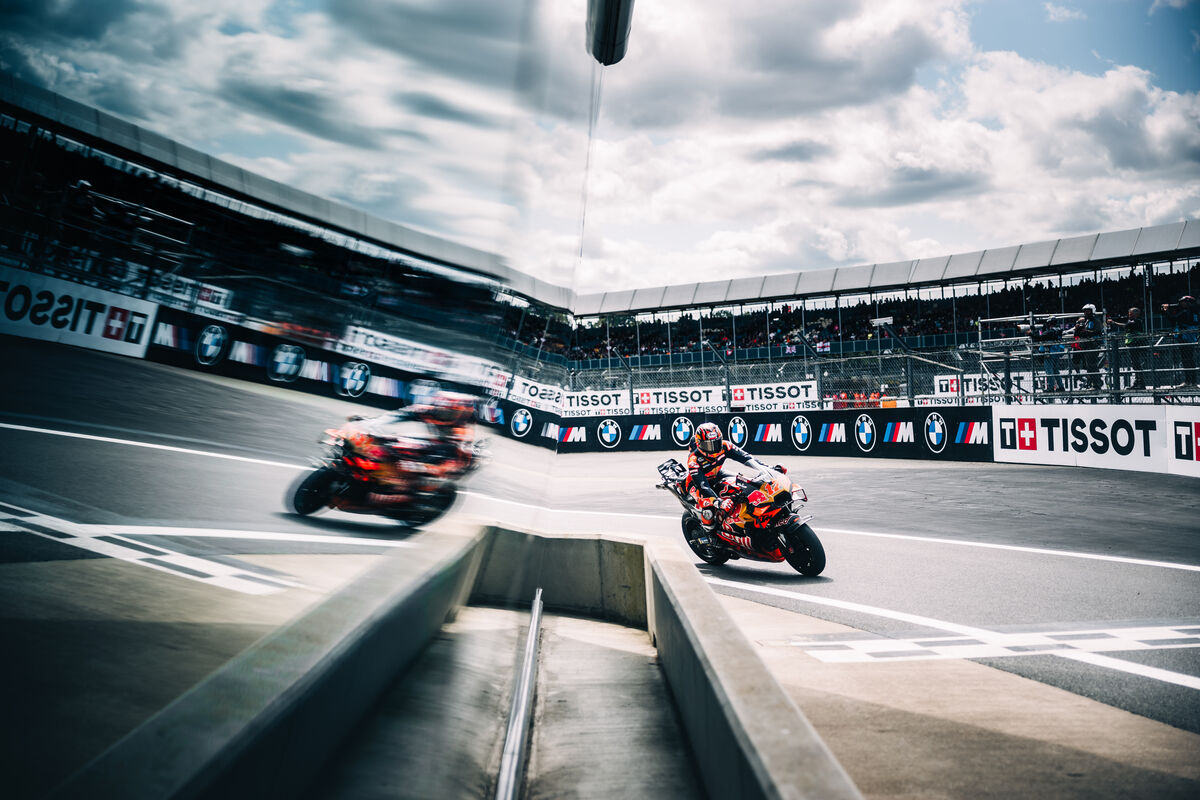
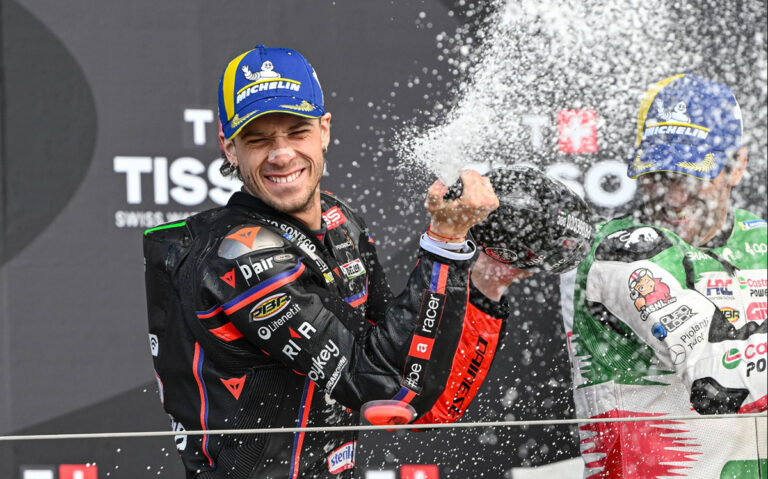
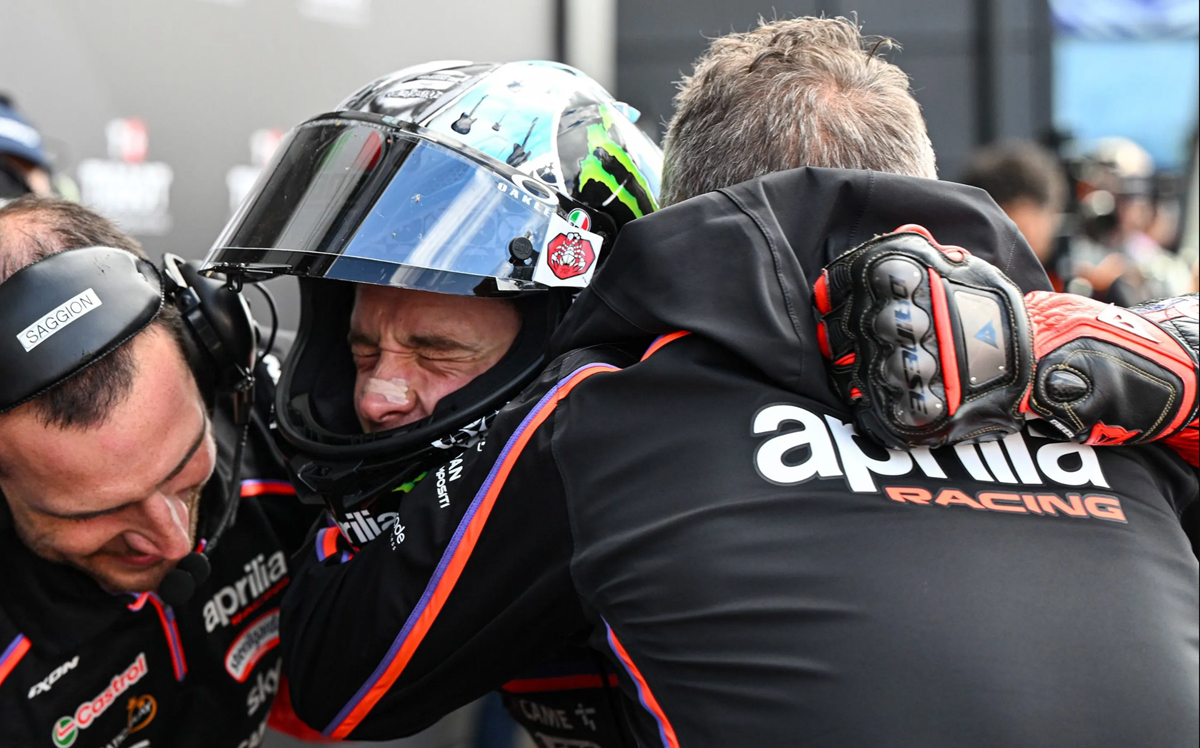
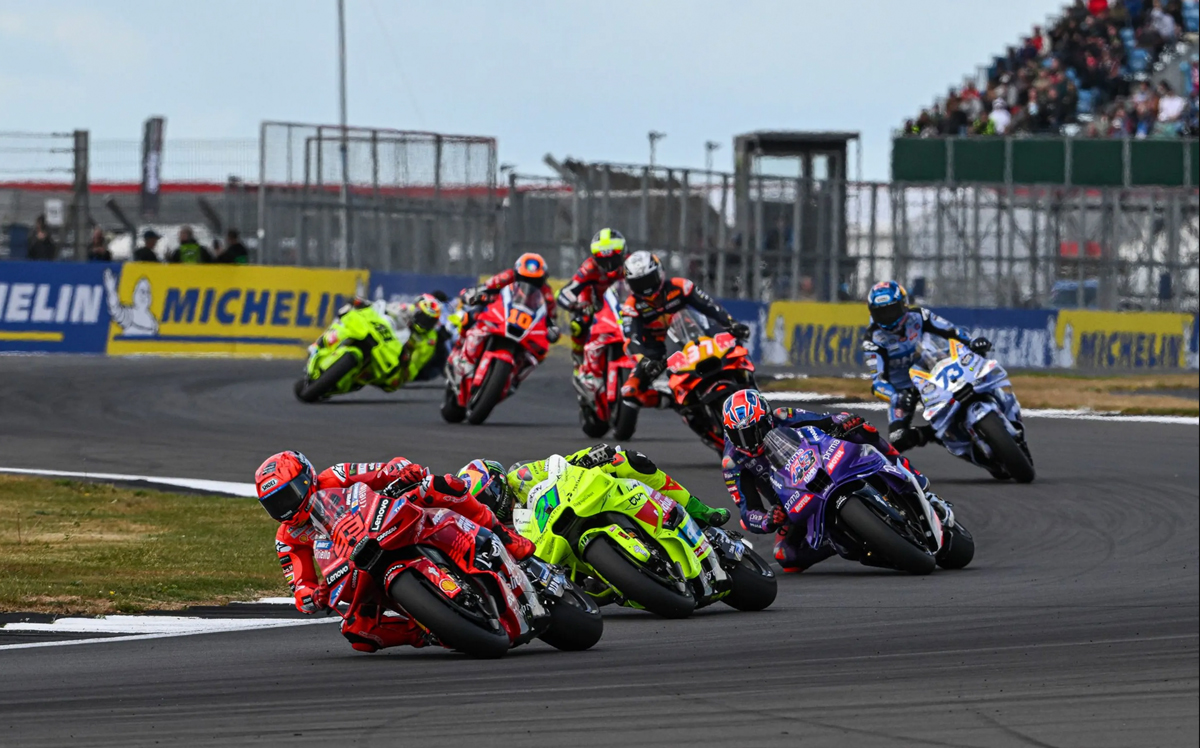
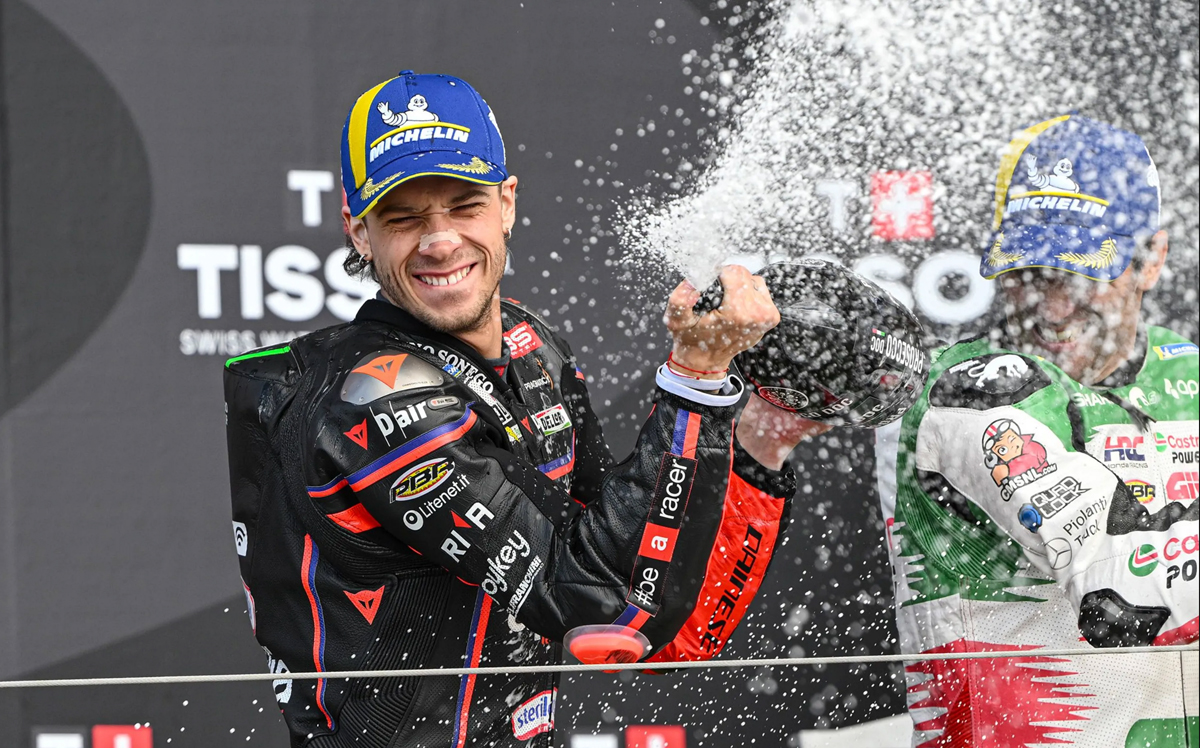
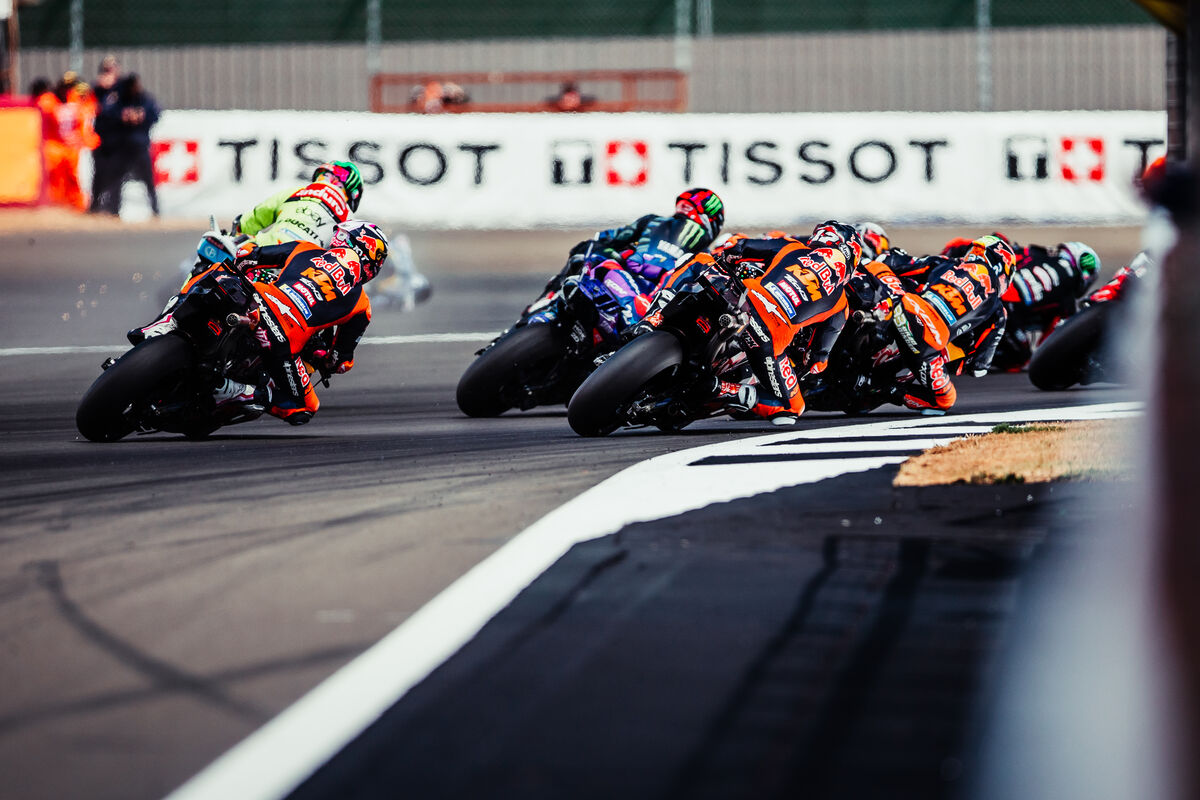
In the meantime, there were two races over the weekend, and Marc Marquez had to work harder for the double than for a long time. The main takeaways from the whole weekend, outside of Marquez’ fifth double in a row – the first time Ducati has won five GPs in a row – were the performances of the KTMs and the Aprilias, Acosta and Bastiannini taking second and third for a double KTM podium in the Sprint and then Bezzecchi (Aprilia) and Acosta second and third in the Main race.
Image source: MotoGP
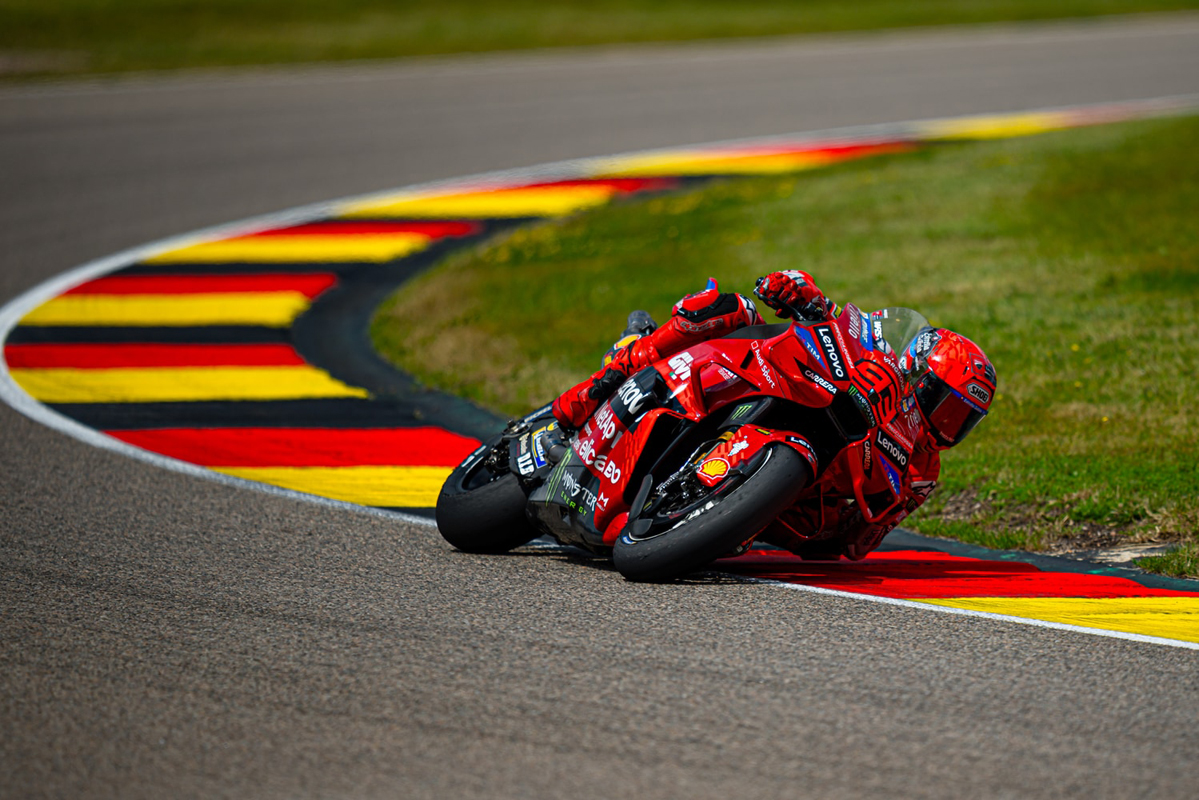
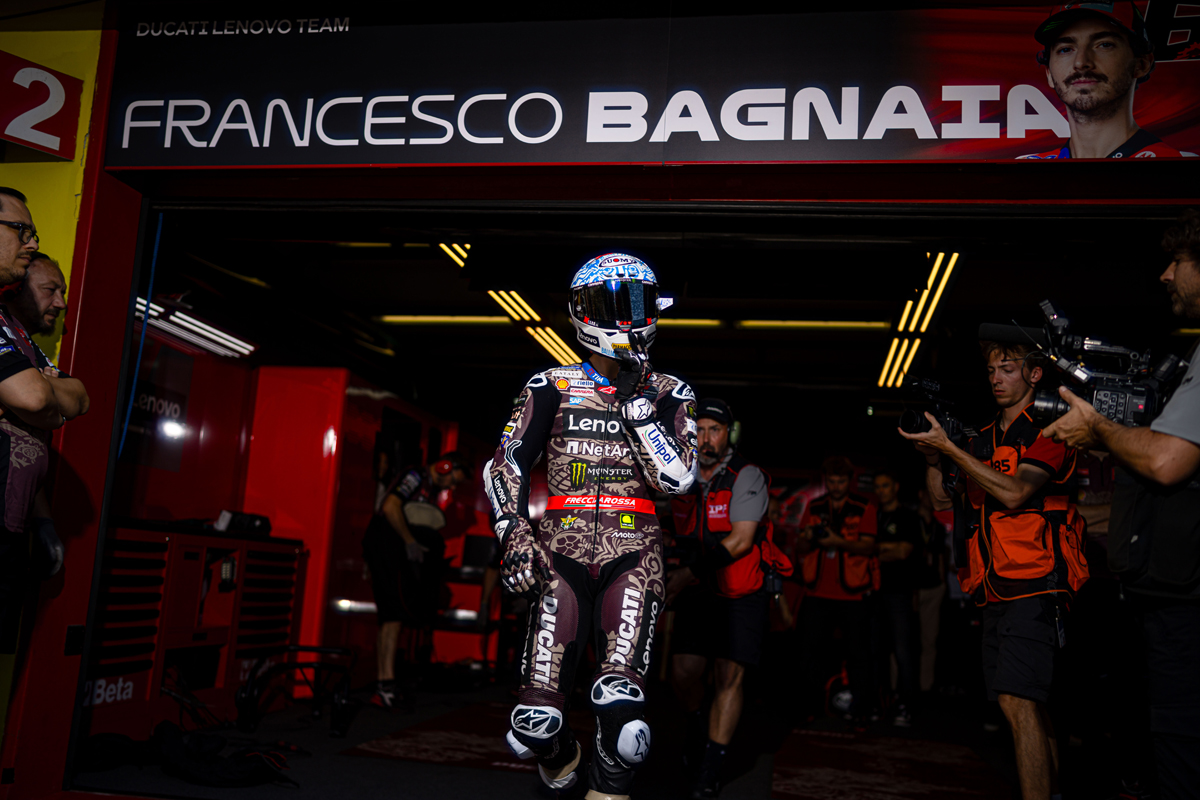
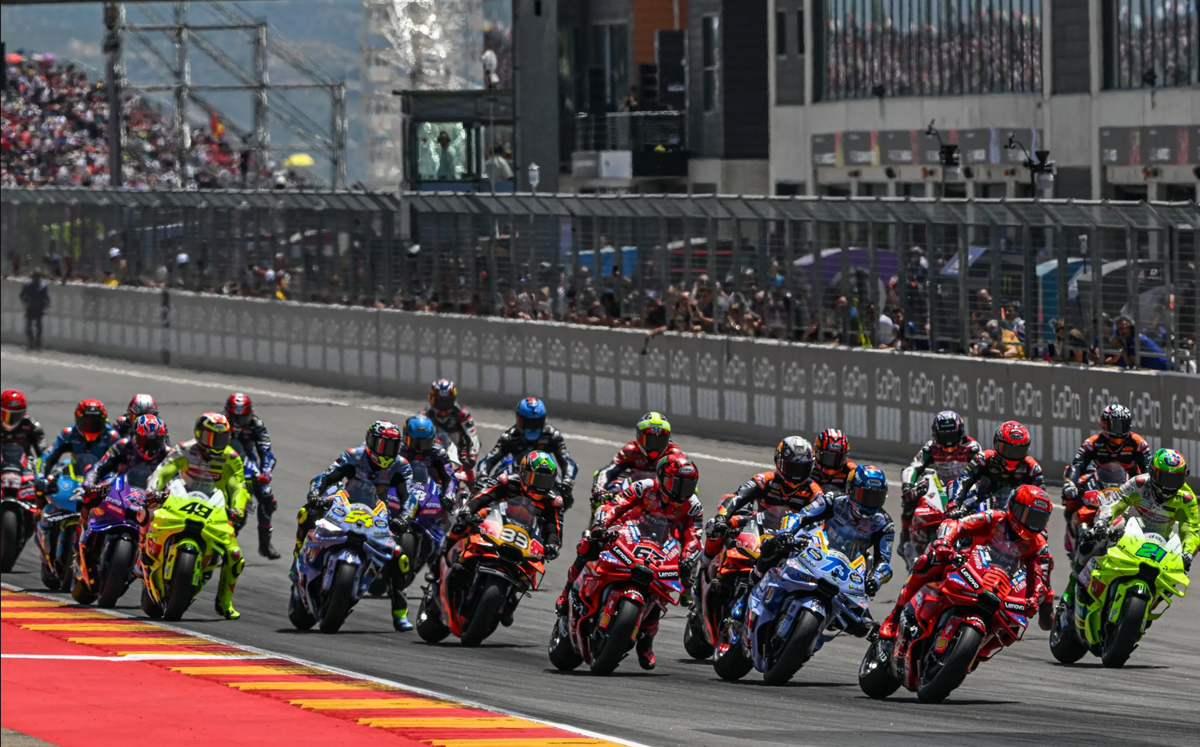
Bagnaia took an impressive pole position after suffering the indignity of having to go through Q1, and managed to lead into turn one, but Marquez soon disposed of him, and that was that. Marquez was pulling away before we had the bizarre sight of both Bagnaia and Marquez allowing other riders to pass. If Acosta thought all his Christmases had come at once, then it was clear that Marquez was simply biding his time, a point he duly proved with an easy overtake for the lead on the penultimate lap.
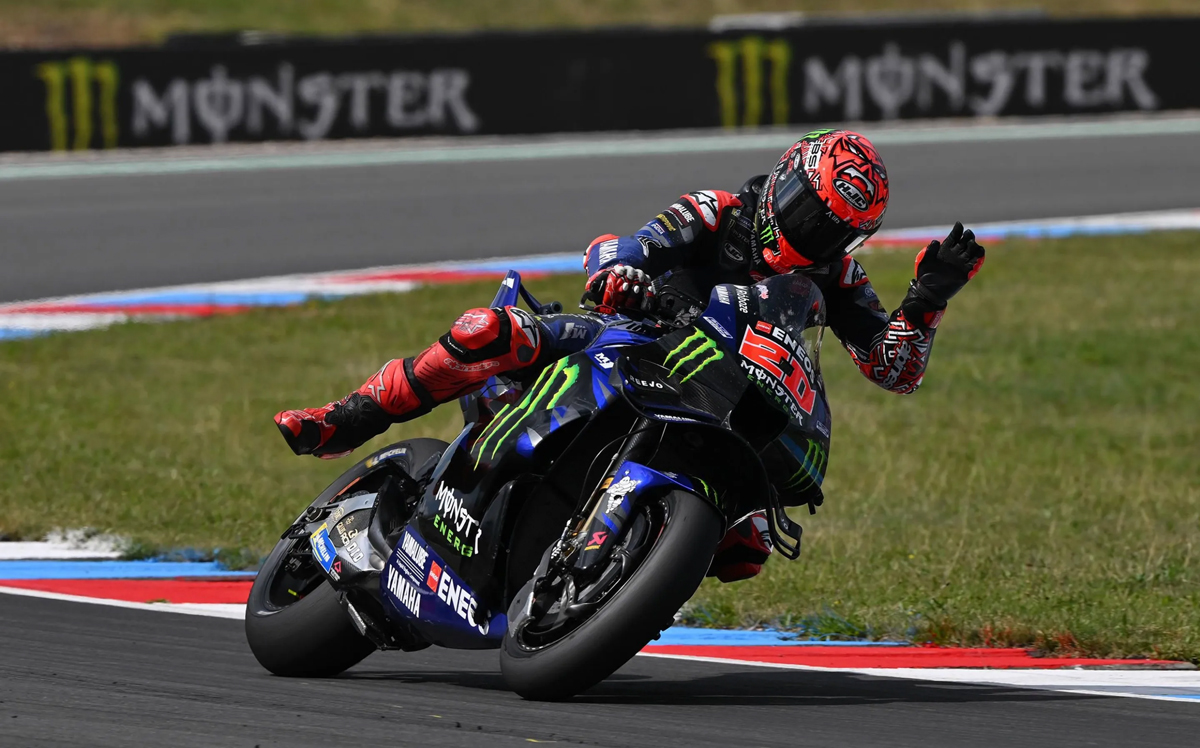
While Marquez had performed the let-by task with precision, Bagnaia wasn’t so lucky and managed to be passed by Quartararo and Bastiannini as well, after which he was powerless to do anything and would finish an angry seventh.
Image source: MotoGP
Bagnaia repeated his quick start in the Main race and actually managed to lead lap one, despite a passing attempt by Marquez, but at the start of lap two, Bezzecchi passed Bagnaia, as did Marc Marquez and Acosta. Meanwhile, Alex Marquez wasn’t doing his championship hopes any good by crashing out, taking the unfortunate Joan Mir with him.
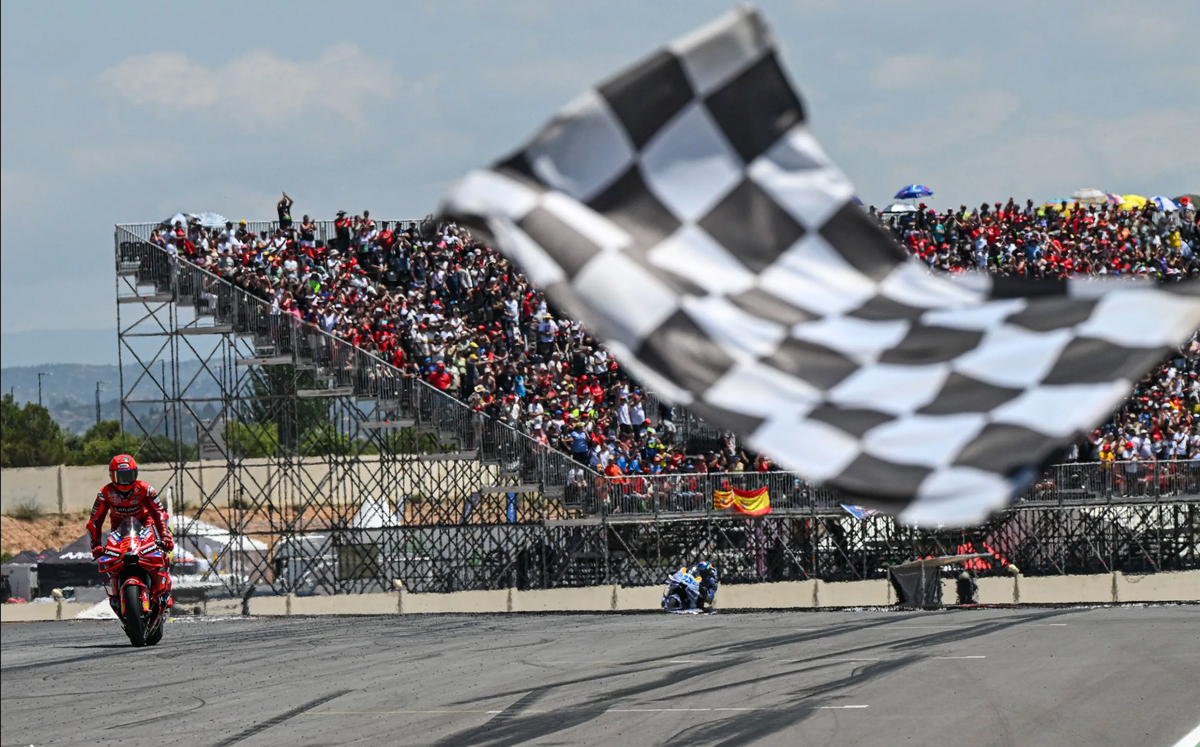
Bastiannini was looking good as he passed Bagnaia for fourth, but then he crashed out, while Marquez got past Bezzecchi for the lead and simply sailed off into the distance, lapping so much quicker than his rivals that it was a bit of a joke, really. Bagnaia wasn’t letting up on Acosta, but just couldn’t get close enough to make a pass. And that’s how it ran out: Marc Marquez, Bezzecchi, Acosta, Bagnaia, Fernandez, Quartararo, Martin, Aldeguer, with Binder and Pol Espargaro rounding out the top ten.
Image source: MotoGP
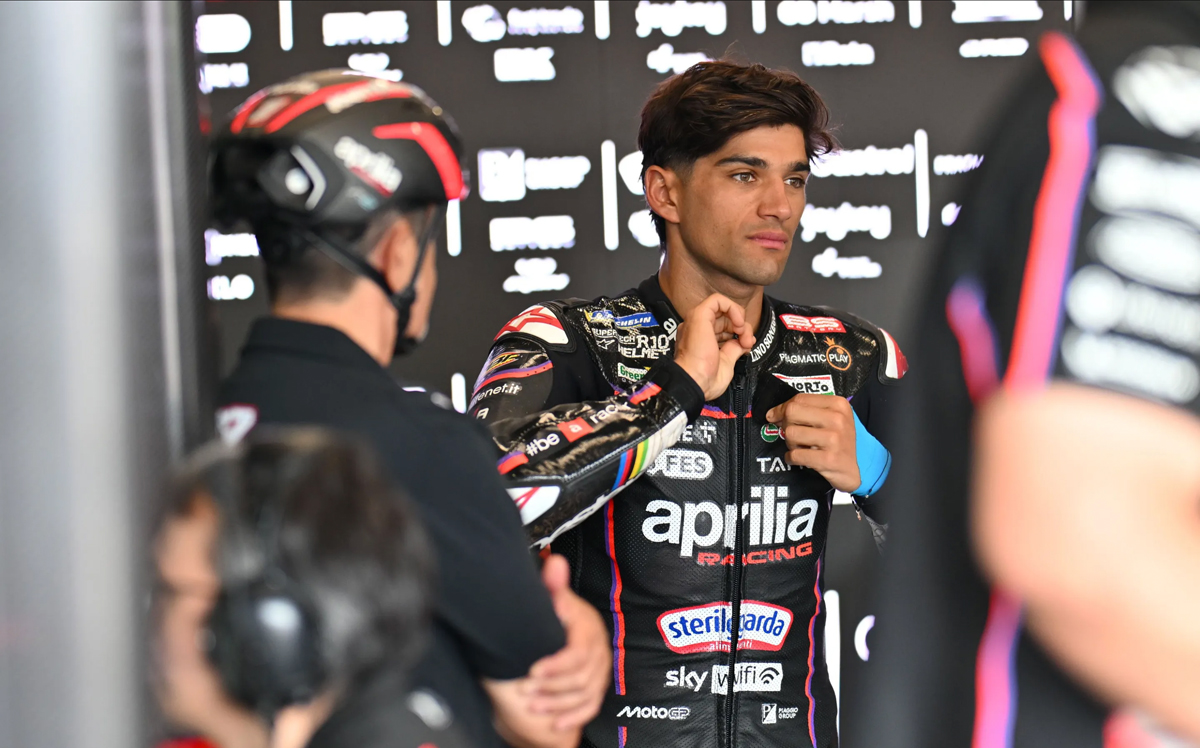
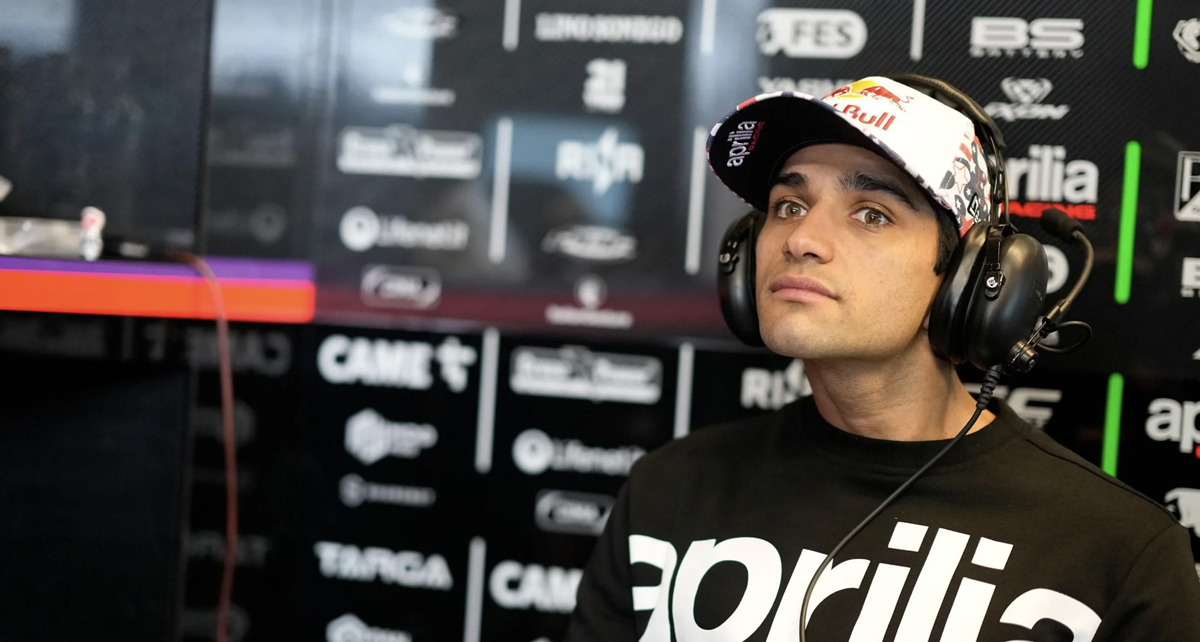
With all the hoo-ha going on at the front, Jorge Martin made a quiet but still impressive return to the grid, having seemingly patched things up with Aprilia to the point where he has committed to seeing out his contract with the team to the end of 2026. Eleventh in the Sprint and seventh in the Main race are results not to be sniffed at after such a long lay-off; lap times that were 0.6 seconds a lap slower than Marquez were also nothing to be ashamed of, given the amount of track time he’s had this year.
Image source: MotoGP
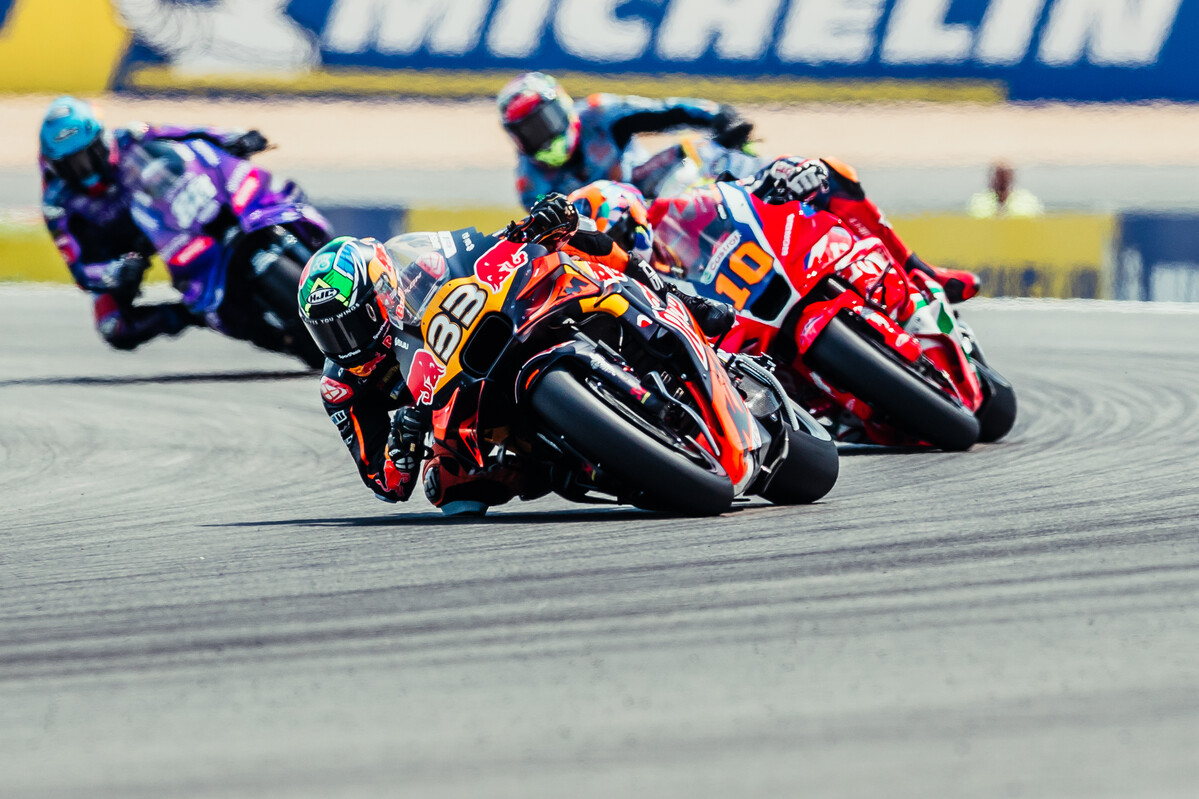
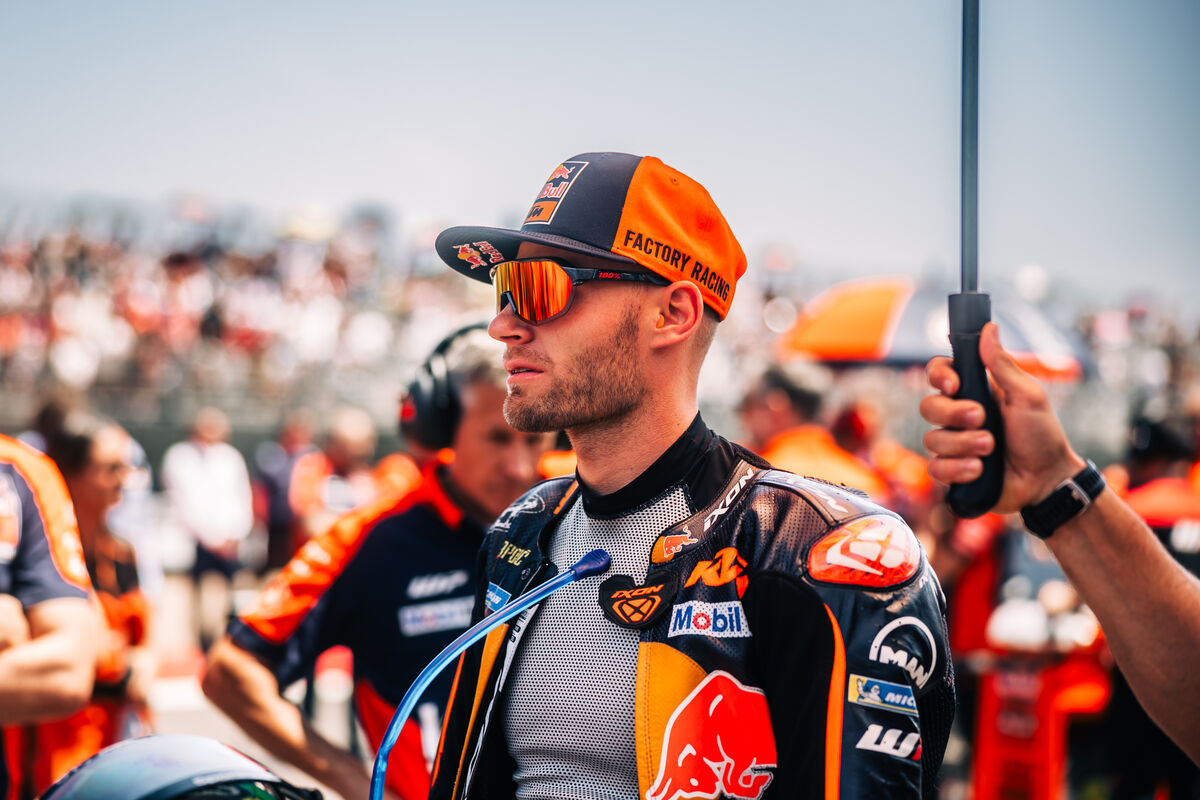
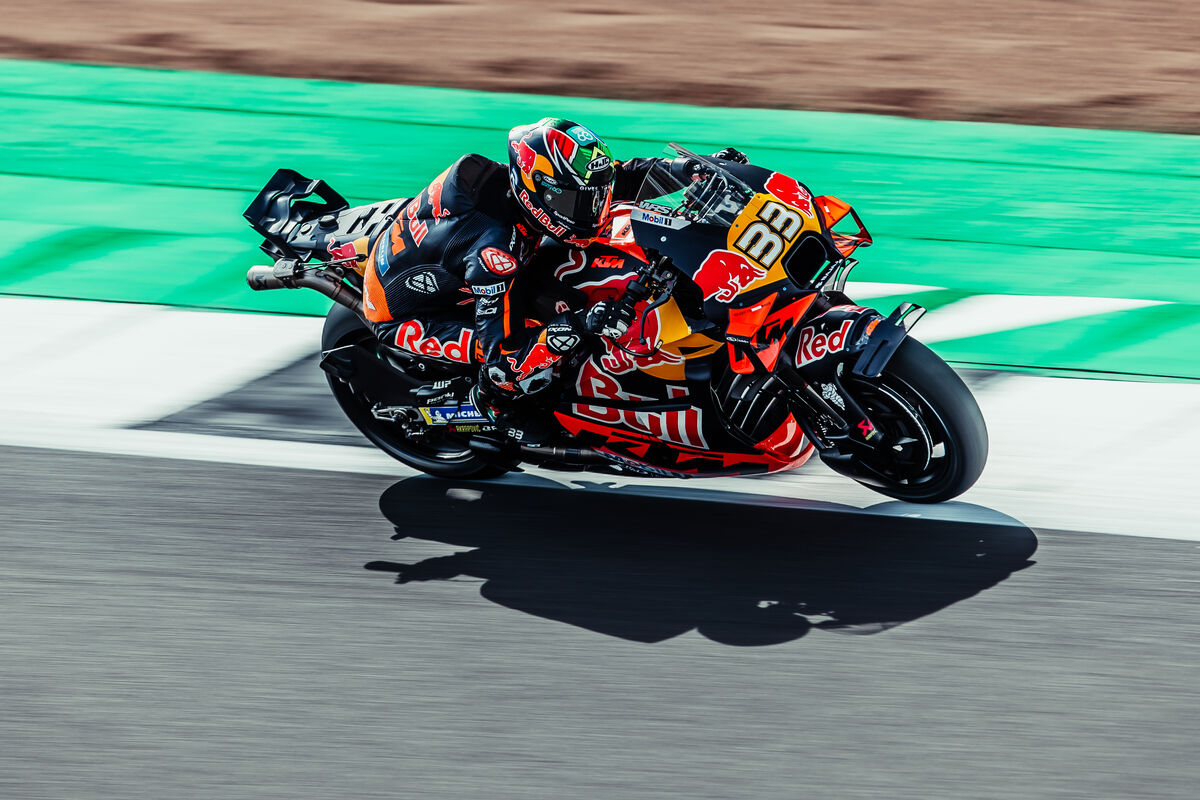
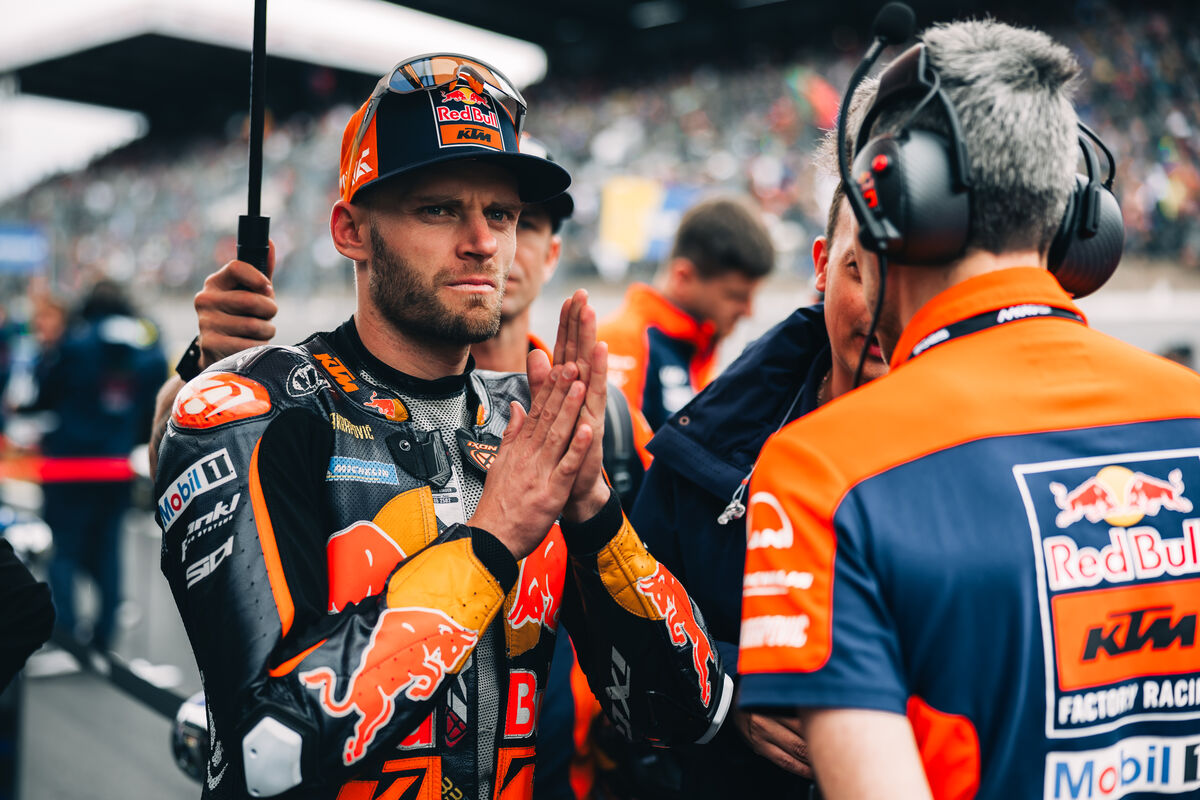
Of more concern was the plight of Brad Binder. Qualifying 19th, finishing behind the KTM test rider Pol Espargaro in the Sprint (10th) and then one place ahead of Espargaro in the Main race (8th) was nothing to write home about. When other KTMs are finishing in the top three, it’s just not good enough. Yes, there will be mitigating circumstances for Binder’s performance, but it can’t go on forever; he has to either make the bike work for him or alter his riding style to suit the bike’s strengths, of which there may be few, but they are there. Contracted to the end of 2026, he may be, but a future on the grid beyond that isn’t built on mediocre results, no matter if they are the bike’s fault. Of course, the paddock insiders will know the real story – the KTM’s faults and Binder’s strengths – but any professional sport is always looking for the Next Big Thing, and it is the weakest performers – for whatever reason – that will make way.
Image source: KTM
We head into the mid-season three-week break with a Marc Marquez title all but confirmed; 120 points ahead of his brother, 168 points ahead of his teammate in third. In reality, it is only Marquez himself who can lose the championship now. If he can hold his concentration and not make any mistakes, then the title is his. As he all too well knows, however, one slip and it’s all over; at this age, that means really all over, not just taking a year or two to recover. The big question that remains is, can he defend that title successfully in 2026 and overtake Valentino Rossi’s tally of seven MotoGP championships? As usual, who’s willing to bet against it?
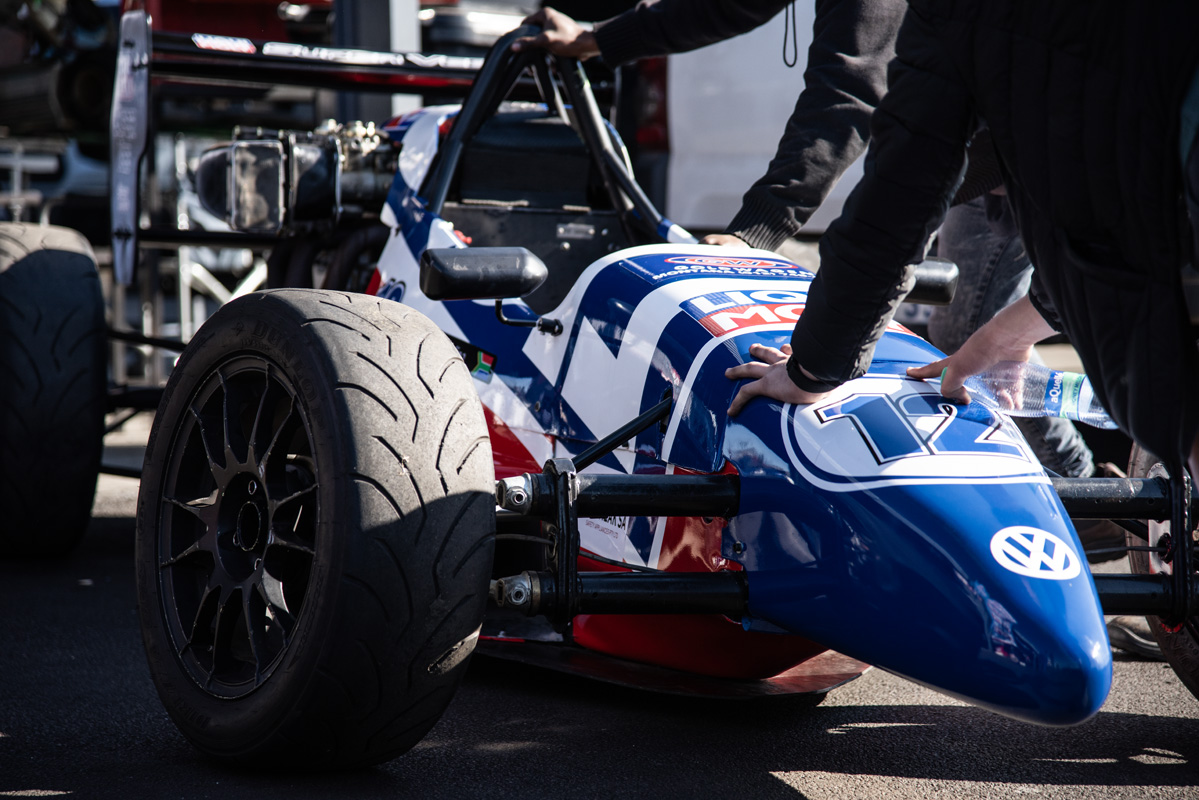
For those of you who may not know, the DNA of Super Vee has been around in South Africa since 1965 in the form of Formula Vee. It has forever been SA’s best form of grassroots racing, with the simple formula being an open-wheeled, single-seater tied together by Volkswagen components, specifically the front suspension, transmission, rear axle, and engine, with limited modifications allowed.
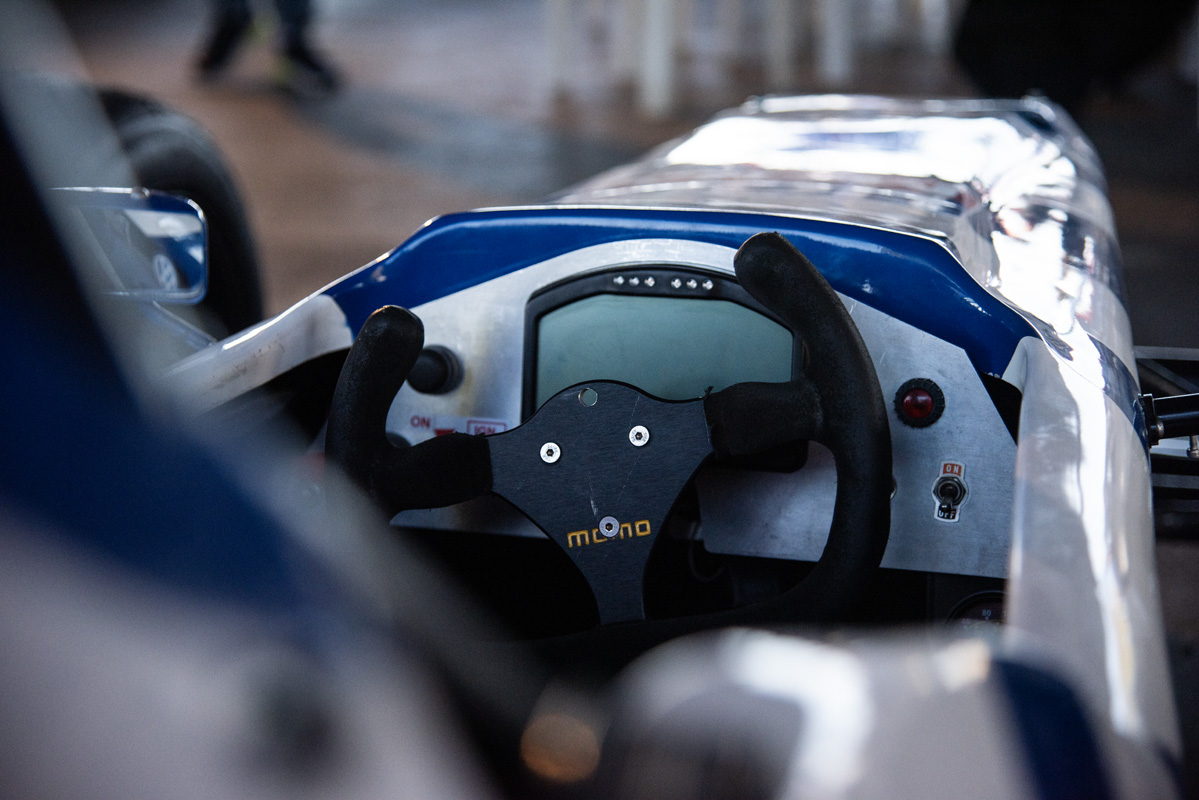
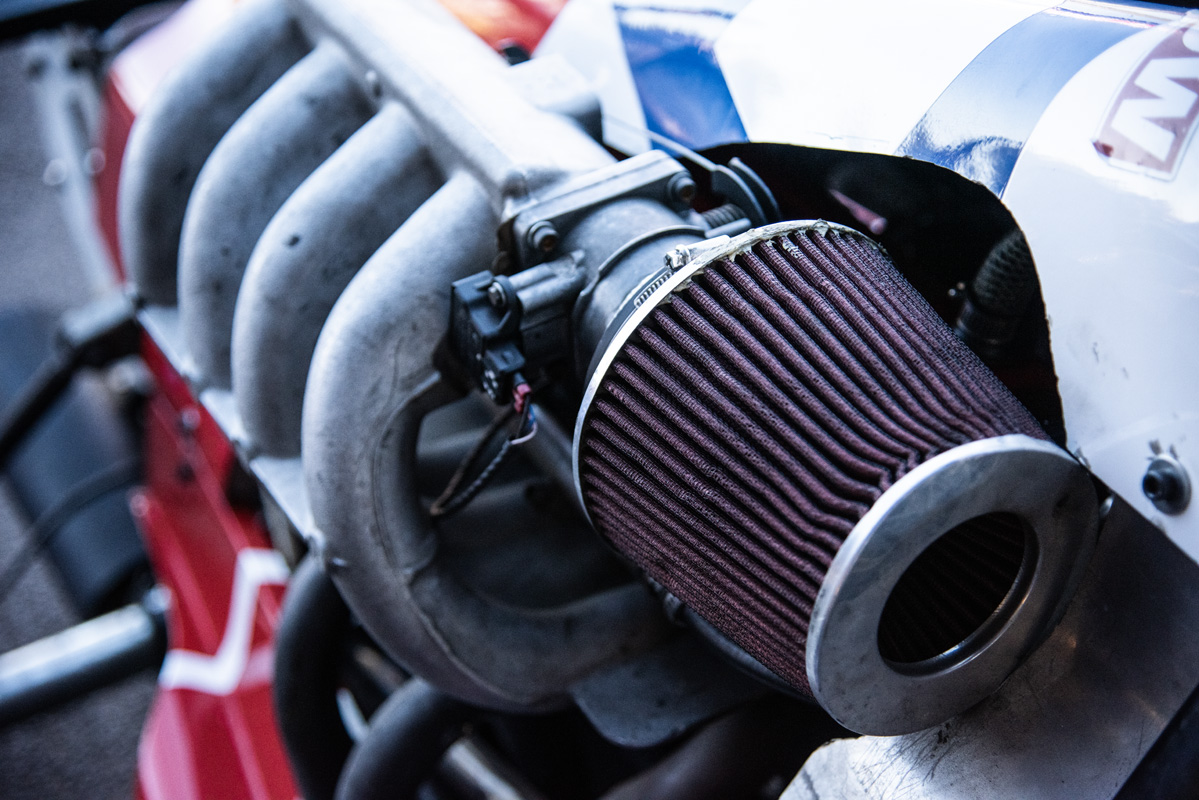
Taking on new heights, 2022 saw the evolution of this iconic class, morphing into Super Vee. The class got a decent upgrade, seeing 1600 cc fuel-injected engines, wings and diffusers for more downforce. Although an evolution rather than a revolution, Super Vee got the refresh that it needed, and the price and weight of the cars stayed pretty close to the original concept. This evolution has kept the class a grassroots stepping stone for drivers to focus on their driving skills, affordably.
Photo credit: Bjorn Moreira / ZA Bikers
One of South Africa’s best female drivers, if not the most famous female driver of all time, Desiré Wilson started her career in the mid 70s in the Formula Vee class. Although there have been many legendary women drivers over the year’s, like South Africa’s own Desiré Wilson (who enjoyed 58 years of competitive racing, seeing her drive more than 130 types of race cars on 100 tracks in 18 different countries, competing in the World Endurance Championship, Le Mans, Indy Cars and even Formula One to name a few), motorsport still seems to be perceived as a testosterone-fueled “man’s sport”. History has shown that women are just as competitive as soon as the helmet is on and the visor shuts; there’s no arguing that, but the environment, or rather the stigma, needs to change.
Photo credit: Bjorn Moreira / ZA Bikers
Thankfully, we are starting to see more female interest in motorsport, both from the supporting side of things, but also wanting to get involved in the sport. This craving has always been there, and now, thanks to in-depth and high-quality media and marketing coverage of more women drivers and their stories, like with Netflix’s Drive To Survive series covering Abbi Pulling, Bianca Bustamante, and Lia Block, the environment and the feedback given are rapidly starting to give more women the confidence they need.
On a bright and sunny Thursday afternoon at Zwartkops Raceway, we witnessed another major step in Super Vee, but an even bigger one for women’s racing in South Africa. Liqui Moly, MSA, Dunlop, Goldwagen, NPL, ATS Motorsport and Planetfitness, to name a few, were all there to voice and show their support of this new format of racing that helps break down stereotypes and creates a welcoming environment for all women. Welcome to the Super Vee Women’s League…
Photo credit: Bjorn Moreira / ZA Bikers
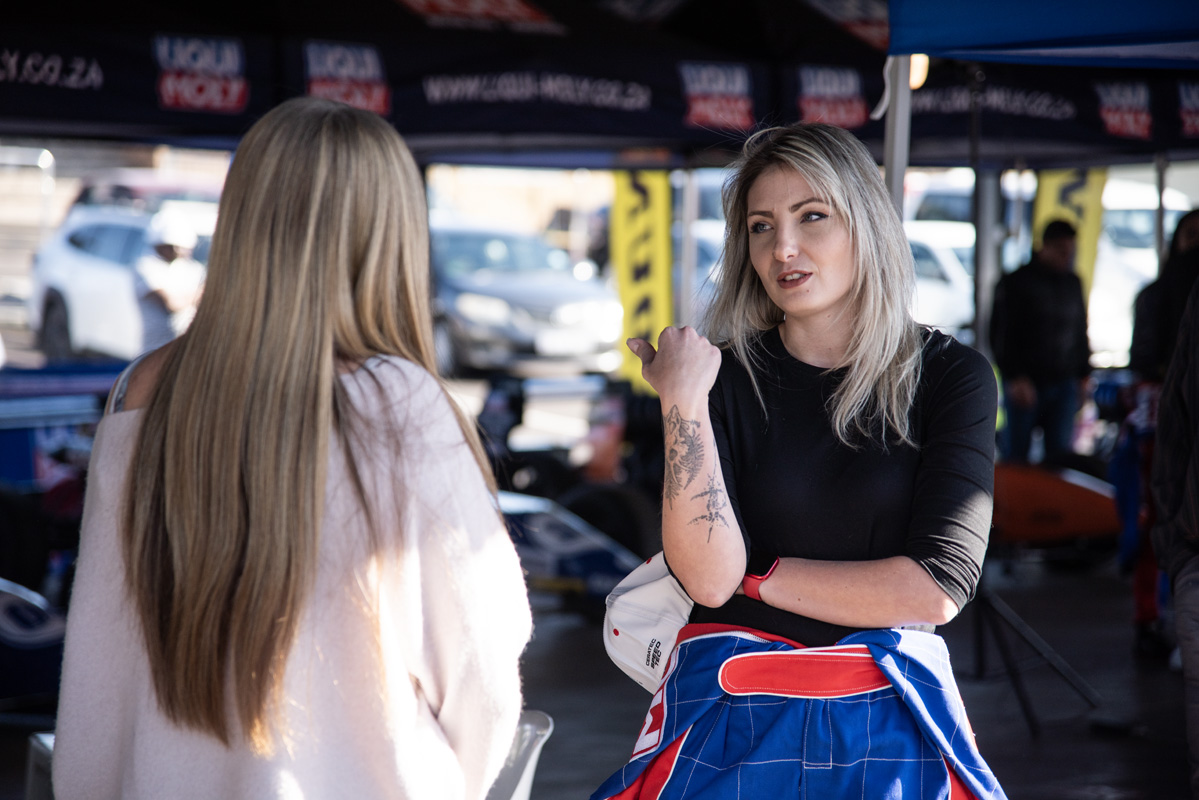
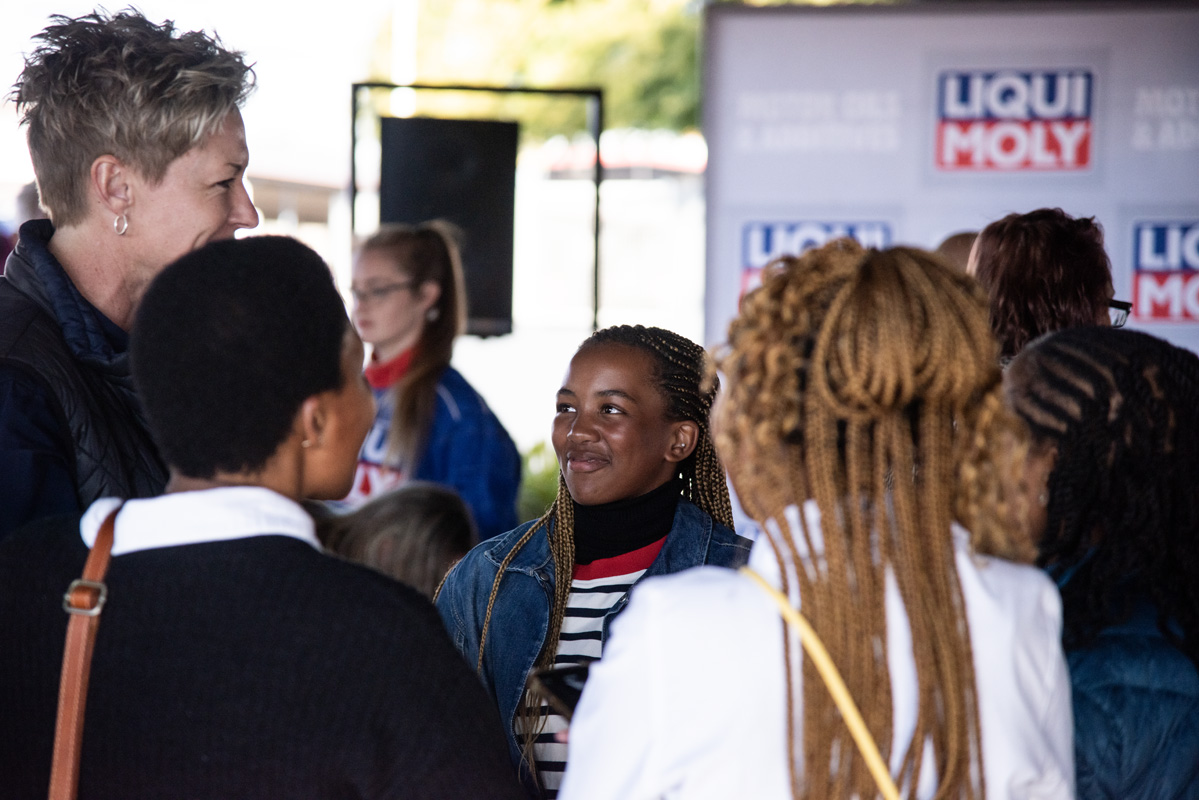
Near the karting circuit at Zwartkop, Liqui Moly had its factory setup pits with race-prepped Super Vees in red, white and blue, TV cameras rolling, journalists, insta-famous influencers, the big moguls of the motor industry, and some familiar women drivers in Liqui Moly race suits all in one place. Seeing the look on the faces of all the women and younger ladies in the room as they saw and heard the female Super Vee drivers talk was amazing.
The passion and excitement that the drivers injected into the bloodstream of the spectators was instantly visible; this is what it’s all about: inspiring future generations and hearing that it can be done. A few male drivers took to the mic and shared their excitement to see more women racing against them and also giving kudos where due, as they have been overtaken and beaten fair and square by some of these ladies out on track.
Photo credit: Bjorn Moreira / ZA Bikers
The idea of this league is not to separate the women from the men, but to give the women the support they need, the coverage to inspire and help make the transition easier and more welcoming. Driving the initiative verbally and on track are Fabienne Lanz and Anriette Van Wyk! Fabienne is very well known in motorsport as she has driven many disciplines and has had great success in her racing career up to the present. Fabienne’s goal is to help create a space where women do not feel intimidated by the prospect of competitive motorsports, where women can ask questions and learn without the fear of being made fun of or being seen as redundant.
Fabienne encourages women to empower themselves by learning through asking questions, making mistakes and also thinking clever by using AI. She recommended downloading Liqui Moly’s advantage App, which gives you access to a host of knowledge on lubricants, cleaners, techniques, and even an expert AI called “Oilbert” who helps you navigate the right Liqui Moly products for your vehicle. How cool is that!
Photo credit: Bjorn Moreira / ZA Bikers
Talking about Liqui Moly, Melicia Labuschagne, Director of Liqui Moly South Africa, holds this close to her heart and is proud to be a part of this initiative and wants to help the Super Vee Women’s League create the ideal environment for women to learn and enhance their skills. Liqui Moly has been in partnership with Super Vee for 5 years, and the reason behind it is that they see the passion from the drivers and the teams, but also the sportsmanship, where in Super Vee, no one gets left behind. If there’s a misfire or a part that needs replacing or a few tenths that need improving on track, the drivers help one another as if they are one big team.
Her vision with the Super Vee Women’s League wasn’t to create a divided camp, but to enhance this big team feeling for the female drivers. She went on to say, “People blossom where they are seen, supported and celebrated. If this can be an environment or motorsport class where women can flourish and learn from one another, and therefore become better drivers than they were yesterday, then we would have reached our goal.”
Photo credit: Bjorn Moreira / ZA Bikers
Following Melicia onto the stage was Des Webber from Goldwagen Montana. Des Webber expressed her excitement for the series and the prospect of nurturing local female talent. Goldwagen is the official parts supplier to the Super Vee Women’s League.
As seen and heard on the day, further inspiring the next female generation in the Auto and motorsport trade was listening to all the key players, sponsors and corporations that by coincidence are all run by women. Most don’t see or hear about it because, well, people in high positions don’t like to shout out from the hills about it, but rather work extremely well in silence—the world of motorsport is a very diverse one where women occupy a host of high roles.
Photo credit: Bjorn Moreira / ZA Bikers
The day came to an end, inspiration was stuck to the wall of everyone’s minds, and now it was the drivers’ turn to show off their cars, setups and knowledge of racing before the sun said its farewell speech. So, there you have it, we will be keeping an eye out on the Super Vee Women’s League and bringing you updates and action soon. We look forward to seeing the passion for motorsport thrive as these women, once again, take on the world of racing.
While it might sound cliché, the saying “things get better with age”, we make an exception for ‘the saying’ every year with the Suzuki Numbi Weekend Away—it really does get better year on year. Each year, the team at Suzuki SA make it their priority to spice up the recipe, making it an exciting experience for the Numbi faithful and a blast for all newcomers. Fun, a bit of competitiveness, plenty of sightseeing, top riding in the country, bonding over motorcycles and sharing the love for the open road. This is the makings of the Suzuki Numbi Weekend Away and the framework that brings the “family” back each year.
Photo credit: Bjorn Moreira / ZA Bikers
Last year saw the biking media join forces at Hotel Numbi & Garden Suites in Hazyview, Mpumalanga, bringing a cluster of personalities together that shouldn’t share the same room slowly morph into a functioning Frankenstein of a team. We did pretty well and even bonded over the experience, which we never really get to do. This year, however, we joined forces differently, not as a team but as a group of Suzuki GSX-S1000GX riders.
Photo credit: Bjorn Moreira / ZA Bikers
A month or so ago, Suzuki very generously pulled an Oprah Winfrey on the media. Suzuki SA: “But it’s not just one, two or three. You get a GX! You get a GX!” We all got long-term GXs, and we have all seriously fallen for the bike. In Suzuki’s versatile lineup of motorcycles, the GX ticks many boxes, from comfortable two-up touring, twisty road and track days, daily commuter, open road mile muncher, and it’s a bike that you still turn around and look at before you head to the office. It’s smooth yet characterful, powerful yet poised and feature-packed yet functional—it’s the clever man’s cherry on the cake kind of motorcycle.
Photo credit: Meredith Moreira / ZA Bikers
With time on our hands before Numbi, we got to prepping, accessorising and protecting our longer-term GX, “Big Blue”, for the open road. Big Blue is honestly near perfect right out of the box. The GX is a cross-over sports tourer equipped with Suzuki’s first ever shot at electronic suspension, it has a K5 GSX-R1000 derived motor, cruise control, adjustable windscreen, brembo calipers, decent travel for our sometimes dodgy road surfaces, it’s packed with a hoast of easy to use rider aids and I personaly find the looks very attractive.
Photo credit: Meredith Moreira / ZA Bikers
If near perfect, why mess with the GX? Well, because Suzuki has specced the GX the way they have for our market, the GX is almost 40k cheaper than the nearest “performing” competitor, which leaves room to personalise and fit some tasty extras to make the GX even more worth the spend. Overseas, we see the GSX-S1000GX available in a “+” model, which gets you more touring-based upgrades like colour-matching panniers and a centre stand. Now, although not available on paper as the + model in SA, Suzuki genuine accessories are available for you to go wild on your GX and build your own + model, if that is what you’d like.
Photo credit: Bjorn Moreira / ZA Bikers
Without the price loaded on the standard bike, it also leaves you with an ocean of goodies and practical accessories, both OEM and aftermarket, to take a closer look at, again, if building your own GX+ is the plan. Otherwise, saving nearly 40k gives you room to plan some funtastic open road trips and a couple of track days too.
Photo credit: Bjorn Moreira / ZA Bikers
With a figurative 40k to juice up Big Blue in mind, we rang up Suzuki SA’s genuine parts and accessories division and negotiated a set of colour-coated panniers for practical storage and touring needs. Doug got cracking and before we knew it, they were installed by simply removing the rear plastic block offs and replaced with plastic brackets with pannier hooks and two sliders were mounted to the back of the rear passenger stays.
Photo credit: Bjorn Moreira / ZA Bikers
The boxes add 30L of storage per side, which is big enough to fit two medium helmets or his and hers luggage for a weekend away. Shad, Givi and many other brands were options, but Suzuki’s genuine accessory panniers both look better and fit better on the GX.
Photo credit: Bjorn Moreira / ZA Bikers
The local wizards of exhaust pipes, VYKON, came to the party with their latest slip-on system offering better looks, a lighter pipe and a very clean exhaust note. Yes, it’s not a full system, but honestly, the GX doesn’t need it; the VYKON elevates the thrill without aggravating everyone around you—no one wants to be dubbed “that guy” status on a group ride.
Photo credit: Bjorn Moreira / ZA Bikers
Instead, the VYKON elongates the look of the bike. I personally like a longer pipe on a big bike versus a small stubby exhaust, and with the new evolution of VYKON, you get a high-quality finish in the form of good build quality and a high-end look thanks to the glassy carbon exhaust tip. Best part is, the VYKON fits the GX with good clearance for the OEM panniers—this was a big bonus for me. If you want to keep your Suzuki warranty, enhance the looks and performance, VYKON, in my opinion, is a very good option for the GX.
Photo credit: Bjorn Moreira / ZA Bikers
If you love your bike, you’ve got to put on some PPF. What the flip is PPF? PPF is paint protection film, similar to a wrap but less to do with branding and more to do with protecting your paint and in Big Blue’s case, the stunning Suzuki blue paint work and the gold Showa forks had to be protected at all costs. Our good mates from Empire Graphics in Alberton took one quick look at Big Blue, drew up a stencil for a kit and printed us PPF with some subtle graphics, because why not, right?
Photo credit: Bjorn Moreira / ZA Bikers
The main man at Empire, Mark Dos Santos, also agreed that subtle works best for that OEM plus look we were going for. Shortly after, Mark sent me a design on some very sick rimtape inspired off of the early 2000s GSX-R models—finishing off the look but adding an extra bit of sportiness to Big Blue too.
Photo credit: Bjorn Moreira / ZA Bikers
In the week leading up to visiting “Empire”, I had already picked up a chip on the OEM GX sticker, loose stones and gravel on our roads are bound to at some point damage our bikes and that’s the importance of this clear film, its damn cheap, can look pretty cool if you opt for graphics, and it keeps your pride and joy good as new.
Photo credit: Bjorn Moreira / ZA Bikers
Lastly, we pulled into Liqui Moly headquarters for some Motorcycle Care products for the road, so we could keep Big Blue looking, running and apparently with Liqui Moly products, smelling pretty good too. Lisa hooked us up with Motorbike Quick Detailer, Chain Lube, Helmet Interior Clean, Visor Clean and Multi-Spray to keep our GX and anyone else’s bike up to scratch. Over a dozen Suzuki faithful got me to lubing their chain and detailing their bikes with these products, and with the Liqui Moly smell literally in the air, everyone had a good comment to make on these fantastic products.
Photo credit: Bjorn Moreira / ZA Bikers
All these extras, cleaners, PPF and tasty modes fitted to the GX still saw us left with “money” for a Suzuki Numbi Weekend Away and leftovers before creeping up to the GX’s German competitor.
Photo credit: Bjorn Moreira / ZA Bikers
With Big Blue ready, we rolled into the 14th rendition of the Iconic Suzuki Numbi Weekend Away to meet up with around 20 other teams who would be taking part this year. 200 km of twisty and very scenic roads saw us circle navigate, answer historic Suzuki and geographic questions on Mpumalanga, figure out riddles, fly and attempt to land drones, build a block tower and take funny pictures all around Hazyview, Graskop, Sabie, Mashishing and White River.
Photo credit: Meredith Moreira / ZA Bikers
It was like “The Amazing Race”, but rather than crossing the line first, you have to focus on earning as many points as possible, putting effort into executing the required photos and being a team player. Yes, there was a cut-off time at 16:00, but 99% of the teams finished in the required time.
Photo credit: Bjorn Moreira / ZA Bikers
Talking about team players, Meredith, my better half, filled that role very well as she loves these quiz-type games, is extremely competitive and always has her head in the game, unlike my easily distracted self. ‘Meri’ kept us on track, directing us on the “GO TEAM” app from checkpoint to checkpoint; she even managed to save Shuan and Donovan a few km of riding in the wrong direction. Thanks Kyle!
Photo credit: Bjorn Moreira / ZA Bikers
Meredith: Suzuki Weekend Away 2025 is only my second year of attendance, but it sure raised the bar for the next one. Having won three separate prizes, including a First Aid course, a 3rd place medal, and best of all, a Caberg helmet, I’m not sure how we can top that! I guess a gold medal would be the ultimate prize, we’ll see… Apart from doing so well this year, I can honestly say that regardless of whether you win, the fun remains the same. This event is the perfect opportunity to step away from the busy life that we live and step into what feels like being a child again—from pulling the ugliest faces to finger painting, you get to enjoy every moment.
Photo credit: Shaun Portman / Moto Rider World
This year, our partner in crime was the GX, and I must say, I have grown a little fond of it in the past month. I can honestly vouch that it is a great bike to have for trips like these. The paniers surprised me, I was able to fit everything I needed for the weekend into just ONE! Yes, I packed light, but I was still able to fit all the goodies Suzuki gave us as well, so that says something. I can proudly say that my butt survived the 1000ks we did, and the suspension spared me a lot of bumps in the road. Overall, the GX is remarkably comfortable, and if we had to add a top box, I might be tempted to take a nap on those long straights…
Photo credit: Bjorn Moreira / ZA Bikers
I’ve come to realise that there is a “family” type atmosphere that revolves around the Suzuki Weekend Away, and people from all over come together to participate in the fun and games. This year, however, two couples chose to share their very special milestones with the Suzuki family—one couple celebrated their wedding anniversary while another stepped into a new phase of life by getting engaged. This only proves that the event is more than just a bunch of people attending; instead, it’s an occasion in their “life calendar”, and I’m so excited to have experienced it as well. I’m hoping to be privileged enough to attend the Numbi 2026; I’m sure the Dream Team and Suzuki SA will once again bring us an immense amount of fun.
Photo credit: Bjorn Moreira / ZA Bikers
Some medals, a prize or two, amazing chow and good company saw us wind down the weekend with smiles all round. The GX got us there and helped us enjoy every second of it, so much so that we planned a long trip back home through Sabie and into Kaapschehoop before munching down the highway kilometres back to Pretoria. Shaun was enjoying his GX so much that he decided to join us and extend the ride back home on Sunday. We dialled in our Showa suspension and instantly became Maverick and Goose to our brunch stop at the Bohemian Groove Cafe.
Photo credit: Meredith Moreira / ZA Bikers
The trip saw Meri and me put just over 1000 km on Big Blue, and we could have happily set our cruise control on to the next destination. We averaged 18 km/L with Big Blue minus the 15 km/L mountain passes, which saw a reasonable 300-plus km from the 19-litre tank. The GX can easily do 20 km/L plus, but when you’ve got Thor’s hammer in the form of a K5-derived GSX-R1000 motor underneath you, you are going to want to have the full experience, and that’s what we love most about Big Blue—if you ask him to party, he parties hard.
1 of 45
So, if you are reading this, and you either own a Suzuki, want to be part of next year’s Suzuki Weekend Away or are eager to ride a GSX-S1000GX, then visit your nearest Suzuki dealer now.
Suzuki GSX-S1000GX
For more information on the bike featured in this article, click on the link below…
The modern motorcycle hasn’t always been designed with customisation in mind, and many are beautiful enough not to warrant it. There are some bikes, however, that might be seen as perfect from the moment they roll off the production line, but the manufacturer has still given owners the opportunity to stamp their own personality on the bikes.
There can be few motorcycle fanatics who find the current crop of Triumph “modern classics” – Bonneville, Scrambler, Bobber, Speed Twin and Thruxton – anything other than properly beautiful machines. What’s even better is that the beauty is so much more than skin deep, and the models can truthfully be seen as thoroughly modern motorcycles rather than simple pastiches of past glories.
Image source: Tailor Made Triumph
From time to time, Triumph releases Factory-Custom versions of some of its modern classic models, as well as the outrageous Rocket 3, in strictly limited numbers worldwide. These may feature special paint jobs, alternative parts made from carbon fibre, billet aluminium, brushed nickel and leather, uprated components such as suspension and exhaust systems, performance parts and so on.
As good as these are, the customer might have his or her own ideas about how they want their Triumph to look in customised form. That’s where Triumph South Africa comes in with Tailor Made Triumph.
Image source: Tailor Made Triumph
Tailor Made Triumph has the ability and the parts catalogues, both OEM and after-market, to turn your dreams into reality. There is literally nothing they can’t do to your Triumph, be it a modern classic or any of the up-to-date sports and adventure models.
Many owners simply want to personalise the appearance of their bikes, and to this end, Triumph can carry out cosmetic surgery involving any and every part of the motorcycle, from paint and upholstery, to powder coating, nickel plating and polishing, either using parts from the Triumph OEM catalogue or from a number of after-market suppliers, for whom Triumph SA is the official agent in the country. These include Motone, British Customs, Free Spirit and New Rage Cycles.
Image source: Tailor Made Triumph
But Tailor Made Triumph can also enhance the performance of your bike through the use of carefully selected and specified performance parts, again from both the OEM catalogue and after-market suppliers.
The good thing about having Triumph do the customisation work for you is that your warranty will not be affected in any way, so you will still enjoy peace of mind as to the health of your bike, which is not something you can say with certainty when you use an outside supplier or builder. What Triumph SA is enabling you to do is have your dream brought to life by fully trained and certified Triumph technicians, so you know the work will have been done properly, using parts that have been specifically designed for use on Triumphs.
Image source: Tailor Made Triumph
There are two ways you can go about creating your dream Triumph. The first is to head to your nearest Triumph dealer and talk to them about your ideas, and let them show you the best way of achieving them.
The other way you can do it is from the comfort of your own home. If you go to the US or UK Triumph websites, you will find a configurator tool, which will allow you to “build” your bike digitally, using all the many parts available officially through Triumph. You can then save your concept, send it to Triumph SA, and they will then cost it in Rands and get your project on the road.
Image source: Triumph UK
Of course, one of the easiest and most distinctive ways of altering the appearance of your Triumph is through a unique paint job, and Tailor Made Triumph is exceptionally well-qualified to carry this out, from concept to completion, working with you every step of the way to ensure you get exactly what you want.
If you’ve visited a Triumph dealer recently, you can’t have failed to notice some of the spectacular custom models that frequently grace the showroom floors; all of these will have come directly from the Triumph workshops. Look closely, and they are absolutely flawless, with perfect workmanship and paint.
Image source: Tailor Made Triumph
For more information on turning your Triumph dreams into reality, contact Triumph South Africa on 011 444 4444.
It was Mick Doohan who famously commented on his dominance during the mid-1990s, “What do they want me to do, ride slower?” or words to that effect. This was in response to the accusation that his dominance, which saw him leading often by over half a minute or more, to the point where he was literally cruising at the end of a race, was becoming boring.
Which, of course, it was. But who was to blame? Doohan and Honda for being so dominant, or the rest of the field for being unable to catch up? Any race team comprising hundreds of personnel is responsible for the success or otherwise of a team, but it is the rider who bears the brunt of the criticism for dominance, as he does for the failure to perform. Life isn’t always fair.
Image source: Ducati
Racing has always thrown up era of domination, be it on two wheels or four; MV Agusta, Hailwood and Agostini in the 1960s, McLaren/Williams/Senna Prost in the late 1980s, Rossi/Honda/Yamaha in the 2000s, Marquez/Honda in the 2010s; Vettel/Hamilton/Verstappen, Mercedes and Red Bull also in the 2010s. It’s inevitable – the natural order of things.
In MotoGP, Ducati has been dominant in the first half of the 2020s, but who’s to say how long this will continue into the future? And, if it does, who’s to say that it will be boring? Come the rule changes in 2027, it’s likely that one team will get it more right than the others, but it’s also likely that more than one team will get their sums right and produce a winner. We can but hope.
Image source: Ducati
I have always tried not to tie an allegiance to a particular rider or team. Naturally, I have my favourites, but I try not to let them interfere with my passion for good racing. Unfortunately, as much as I respect what Marc Marquez is doing at the moment, it’s not making for particularly exciting racing. However, that has as much to do with the rules as one rider’s talent. But still, we’re back to the blame being heaped on one particular rider, not the other riders or the teams.
Marc Marquez has his fair share of critics, but sometimes it feels as if he is hated for not only beating Valentino Rossi – the fans’ darling – but for not being Rossi. Marquez’s dominance through the 2010s was no different to Rossi’s in the 2000s, but he’s frequently reviled for it, whereas Rossi was loved. Yes, Rossi worked his charm with the fans, but Marquez hasn’t exactly been a recluse.
Image source: Ducati
Now, in 2025, the Marquez dominance is back, with devastating effect; a remarkable achievement after a near career-ending injury. 10 Sprint wins and seven GP victories out of eleven, giving him an 83-point lead over Alex Marquez and a frankly ridiculous 147-point lead over his teammate. Bagnaia proved that it is possible to overturn a large deficit when he beat Quartararo to the title in 2022, but Alex Marquez simply hasn’t got the pace to deal with big brother and close the points gap, not while Marc stays on the bike and finishes each race, at any rate.
The Sachsenring has been a happy hunting ground for Marquez over the past 15 years. Put simply, when he has raced there, he has won, by and large. That’s 12 victories – one in the 125cc class, two in the Moto2 class and the rest in MotoGP. Did anyone really think it was going to be any different this year? And that is Marquez’ secret weapon; he has the competition beaten before they even get to the circuit on a Thursday. Even the tracks he wasn’t expecting to do well at this year, he’s won at. That’s a huge psychological advantage.
Image source: Ducati
Germany 2025 was the first race since 2011 to have only ten finishers. The starting grid for the Main race was already looking depleted, Maverick Vinales and Franco Morbidelli withdrawing through injuries sustained during practice and the Sprint race, Enea Bastianini being signed off work due to illness, and Somkiat Chantra recovering from surgery.
Then the race saw an unprecedented number of fallers; Joan Mir, Ai Ogura, Marco Bezzecchi and Fabio DiGiannantonio, who both crashed out of podium positions, Lorenzo Savadori, Johann Zarco, Pedro Acosta and Miguel Oliveira. Many of the crashes were at turn one, which has a downhill braking area, following a small crest, so the rear tyre goes completely light and throws all the weight onto the front tyre.
Image source: KTM
Normally, that’s not a problem, as that is exactly what happens under braking. The problem on Sunday was the fact that A) the track had been washed clean by the rain the previous day so there was already reduced grip and B) the temperature was too cool for the hard tyres that all runners were using in order to go the full 30 lap distance, so they could hardly get up to the correct temperature.
For two riders, the number of crashes was a positive bonus. Alex Marquez was riding with injuries sustained at Assen, and he doubted he could have challenged for the podium, but the crashes made him more cautious, which suited his physical condition, and he was in the right place to benefit. Similarly, Pecco Bagnaia, who started tenth and wasn’t likely to trouble the podium had it not been for the crashes, was promoted to third. A fat lot of good it will do him in the championship race, and he can’t claim any significant improvement in his feel on the bike, so it was a hollow third, even if it was still a podium.
Image source: Ducati
There was something else that occurred to me as I watched the race: what has happened to Alex Rins? It doesn’t seem that long ago that he was challenging for race victories, but he’s all but dropped completely off the radar in 2025.
Yamaha has been in the news for all the wrong reasons for the past two or three years. This year, the team is in the news for more positive reasons – the development of its new V4 engine. The team has also been in the news thanks to the efforts of Fabio Quartararo, taking pole positions and the very occasional podium, as well as leading the British GP convincingly before dropping out with mechanical issues. He finished third in the Sprint race and fourth in the Main race in Germany.
Image source: Yamaha
But Rins has been completely invisible this season; can you remember when he was last mentioned in the commentary for any race? In Germany, he was 39 seconds behind Marquez at the flag, 18 seconds behind the next rider up the road. That’s not slow, that’s glacial in MotoGP terms.
I don’t think it will be the end of his career, performing like that, as it might well be for some other riders, but what can it be doing to his confidence? Likewise, MotoGP teams will be looking to Moto3 and Moto2 for the next star rider, and when they spot them, they’ll be looking for ways to make room for them in MotoGP. The underperformance of the Yamahas might have nothing to do with Rins, but that will have little weight when it comes time to finalise the line-up for the following season.
Image source: Yamaha
There’s only a week to wait for the next round, Brno in the Czech Republic. Anyone brave enough to bet against Marc Marquez?
Philippolis is a funky town with many happy venues.
It was the best of times. On a beautiful Wednesday morning, I cruised through the suburbs of Joburg on my BMW R 1250 GS Adventure. I was on my way to collect a BMW R 1300 GS demo from Motorrad, Sandton. It was the worst of times. I overtook a Toyota Cross just as the driver turned right into her driveway. The collision hurled me across the road, and I landed hard on the pavement. It’s been decades since I crashed on tar. I lay winded on the pavement, taking stock of my limbs and, mercifully, I seemed to be OK despite being badly shaken. Kind passersby picked up my GSA, which appeared to have suffered minimal damage and started easily. It could have been an aggravated encounter with the driver, but once we confirmed we were both comprehensively insured, the tension evaporated. The driver and I travelled together to Linden SAPS in her newly battered Toyota to report the accident for insurance claim purposes. After being buggered around at the cop shop for a mere two and a half hours we returned to the scene of the accident, parted ways and I continued my interrupted journey to Sandton.
An inauspicious start to the day
I collected the sparkling Triple Black 1300 from the friendly Motorrad folk and was loose on the land at noon, having lost three hours of prime riding time. My destination for the day was Bloemfontein, and the path of least resistance would have been to tool down the deathly boring N1, but I had planned a backroads route and there was plenty of time to stick to Plan A. I rode the dreaded M1S and M2E, then followed the R59 south.
In the March 2010 issue of Bike SA Magazine, I wrote an article about two Suzuki Boulevards developed by Trajan TG Grobler, the legendary bike builder. Earlier this year, TG called and asked if I had a copy of the article, so I fished it out and had it in my backpack to give to him. TG operates from his premises in Alrode just off the R59, so it was a minor detour to pop in for a café and a catch-up. TG is the first choice for men who are serious about releasing the hounds of hell that lurk inside every Suzuki motor. All those years ago, when I collected the Boulevards, I recall watching TG complete the assembly of a GSX-R1000 motor. As he torqued the last cylinder head bolt and the torque wrench clicked, he spoke, “That’s perfect, but it will have to do.” As pleasant as the conversation and the coffee were, tempus fugit, and I still had more than 500km to ride to Bloem.
Popped in to say Howzit to TG – Trajan Grobler – the ace Suzuki tuner at his workshop in Meyerton
I continued south on the R59, crossed the Vaal and followed the R57 to Heilbron and Lindley. The roads were in good condition, and there was very little traffic. I set cruise control at a leisurely 150km/h and the Beemer and I got into serious distance demolition mode. Just past Petrus Steyn, I turned southwest on the R707 to Lindley, Arlington, Senekal and Marquard. It was a golden afternoon. The GS was running effortlessly like a long pedigreed dog with the engine temp readout constant at 82°C. I sat in a cocoon of still air behind the windscreen, comfortable despite the pain in my left shoulder. Until Marquard, the ride had been easy and stress-free, but that couldn’t last forever.
1 of 2
The R707 traverses beautiful rolling countryside
Senekal NG Kerk was inaugurated on 17 December 1896. Unlike most churches in the Free State it survived the Anglo-Boer War
It’s 30km from Marquard to Clocolan, 30km of diabolical potholed tar where the signs have been annotated to read “Huge Potholes”. I think it would have been appropriate to have signs stating “You Might Die Today”. Eventually, I stopped in Clocolan for fuel. My plan was to ride the deserted platteland road to Excelsior and thence to Tweespruit and the N8. When I told the petrol jockey I was going to ride to Excelsior, he gave an exaggerated eye roll and said, “If you think the Marquard road is bad, the road to Excelsior is ten times worse. Rather ride to Ladybrand and then the N8 to Bloem.” Sage advice. Had I not lost so much time that morning, I would have ridden the backroads, but the shadows were lengthening and my host for the evening was expecting me at 17:00.
1 of 2
Marquard to Clocolan. The grim reaper frequents this road.
Marquard to Clocolan. The grim reaper frequents this road.
I cruised due west past Westminster and Thaba Nchu straight into the malevolent eye of the setting sun. There were cops everywhere, so I rode at the speed limit and reflected on the sights I had seen that day. My enduring memory of that ride through the platteland was the proliferation of shacks on the outskirts of every town. Three metres by three metres zinc dwellings spread like a shiny rash across the bare veld. There’s no shade, no water, no electricity, no sewage system, no roads, no employment, and, I imagine, no hope. It’s just bleak and depressing. I don’t know what the answer is, but exponential population growth is not going to end well.
When planning this trip, I decided to sleep in Bloem on the first night. I’m not a fan of sterile hotel rooms, so I used my network and within an hour I had an invitation from Frans Henning from the Harley-Davidson Club to sleep at his home. I arrived at Frans’s home in Fichardt Park just after 17:00 and, as bikers do, we hit it off like old mates, drank a few beers, and then he drove us to a local bikers’ boozer for a steak dinner. It was a very pleasant evening, but after a tough day, I was keen to rest my aching carcass. I ate a handful of Schedule 5 painkillers and sank into the arms of Morpheus.
On Thursday morning, the bruises on my torso had bloomed into a garden of rainbow shades. Despite the painkillers, I was taking strain. I found a pharmacy, got a Voltaren injection and then rode to the National Women’s Memorial to meet my connecko Johan Colyn, a local historian. The Women’s Memorial is a shrine to the 26000 Boer women and children who died in British concentration camps during the Anglo-Boer War. It is one of Afrikanerdom’s most holy places. The monument was unveiled on 13 December 1913. It comprises a 120-foot-tall obelisk and a statue by Anton van Wouw inspired by Emily Hobhouse.
Afskeid – Farewell. 11 October 1899. Start of the Second Anglo-Boer War. Bronze by Danie de Jager
When Emily Hobhouse was visiting the concentration camp at Springfontein, she encountered a group of dishevelled and neglected women near the station. There was no accommodation available for them in the camp itself because there was a shortage of tents. With sticks and pieces of old canvas which they scrounged from the British soldiers, they had erected rough shelters. Hobhouse was called to attend to a sick child, and she described the following scene: “The mother sat on her little trunk with the child across her knee. She had nothing to give it, and the child was sinking fast. There was nothing to be done and we watched the child draw its last breath in reverent silence. The mother neither moved nor wept. It was her only child. Dry-eyed but deadly white, she sat there motionless, looking not at the child, but far, far away into the depths of grief beyond all tears. A friend stood behind her who called upon Heaven to witness this tragedy, and others crouching on the ground around her wept freely.” The Women’s Memorial is a spiritual place and well worth a visit.
Dry-eyed but deathly white, she sat there motionless, looking not at the child, but far, far away into depths of grief beyond all tears.
Once Johan and I said our farewells, I rode southwest out of Bloem, stopped for a Big Mac in Fleurdal and then followed the R706, destination Jagersfontein. The R706 is a road you need to ride. It runs dead straight for 110km across seemingly infinite savannahs bereft of any signs of habitation. I set cruise control and relaxed in the saddle, alone and content with my thoughts. In the hour-long ride to Jagersfontein, I saw less than a dozen vehicles. I was an insignificant speck in a vast landscape, a lone voyager navigating an ocean of grass.
Splendid solitude. The R706 runs like an arrow from Bloemfontein to Jagersfontein
Jagersfontein is the site of the largest hand-excavated hole in the world, with a depth of 200 metres and an area of 20 hectares, slightly larger than the Kimberley Big Hole, which is 17 hectares. In 1870, a farmer found a 50-carat diamond in the veld, and a diamond rush ensued. The most famous diamonds found at Jagersfontein were the Excelsior, 972 carats, and the Jubilee, 650 carats, named in honour of the 60th anniversary of Queen Victoria’s coronation. Fifteen years ago, I visited the mine, which was a tourist attraction open to the public, and I wanted to see the hole again. That morning, when I asked Johan about the mine, he said it had been closed for years, even before the calamity which struck the town in 2022. In the early hours of 11 September 2022, the catastrophic failure of the mine tailings dam released 6,000,000m3 of liquid sludge, which smothered 200 houses and 1600 hectares of farmland. De Beers closed the mine in 1972, and since then, the town has been dying by inches. In the aftermath of the collapse of the dam, it’s almost a ghost town with a few tatterdemalion businesses barely surviving on the main street.
1 of 2
Jagersfontein diamond mine. The biggest hand-excavated hole in the world at 20 hectares, larger than the Kimberley Big Hole at 17 hectares.
Jagersfontein diamond mine. The biggest hand-excavated hole in the world at 20 hectares, larger than the Kimberley Big Hole at 17 hectares.
The grounds of the mine were enclosed by a two-metre palisade fence. At my age, I had no illusions about being able to scale the fence. However, there was a spot at ground level where it appeared as if someone had forced the fence away from the upright pole. I tugged on the palisades until the gap was big enough to squirm through. I walked across the grounds and squeezed through a narrow steel cage, which was once used to control access to the hole. Instantly, I was in a world of pain. There was a wasp nest about 10cm in diameter in the top corner of the cage from which squadrons of wasps launched themselves and attacked my hands, neck, ears and head. Squealing like a piglet, I beat an undignified retreat. I was stung at least twenty times, but I hadn’t come this far not to reach my goal. I put on my helmet and gloves and zipped my jacket collar up to my chin. Second time around, the wasps were just as agitated, but I made it through unscathed. The fifty-metre boardwalk leading to the hole was completely rotten with two-metre-tall rank weeds growing through the cracks and holes. I trudged through the growth to the cantilever platform, which extends for twenty metres beyond the lip of the hole. The platform seemed to be sound, so I walked to the end and gazed into the abyss and thought deep thoughts for five minutes before returning to the bike. Mission accomplished. A trip to Jagersfontein might not be everyone’s idea of fun, but for me it was a splendid adventure, one which I highly recommend.
Just 12km west of Jagersfontein, I stopped for photos in the main street of Fauresmith. What makes Fauresmith special is that it’s one of only three towns in the world where the railway line runs down the middle of the main street. The other two are Tullahoma, Tennessee, USA and Wycheproof, Victoria, Australia. Unfortunately, the last locomotive chuffed through Fauresmith in 1999. I stopped at the Phoenix Restaurant for a Coke and then rode 50km to Koffiefontein. That town is a disgrace. The main road has more potholes than tar, there’s litter everywhere, and raw sewage runs in the gutters. During WWII, Koffiefontein was an internment camp for Italian POWs. One of the prisoners, an artist named Fascio, painted murals of King Victor Emmanuel III and Benito Mussolini. The murals have been preserved and are still in remarkably good condition. It was a short blitz to Luckhoff, where I stopped for fuel and immediately wished I had not. Before I could remove my helmet, a couple of scaly bliksems were in my face, telling me their tragic life stories and asking for money. A security fellow chased them away. They epitomised a town infested with ragged unemployed people and hordes of scruffy urchins lounging around with nothing to do and all day to do it.
1 of 5
Fauresmith. One of only three towns in the world where the railway line runs down the main street. The last train ran through Fauresmith in 1999.
Ancient iron girder bridge over the Rietrivier at Koffiefontein
Koffiefontein was the site of an Italian POW camp in WWII. Portraits of King Victor Emmanuel III and Benito Mussolini were painted by a prisoner named Fascio.
Koffiefontein was the site of an Italian POW camp in WWII. Portraits of King Victor Emmanuel III and Benito Mussolini were painted by a prisoner named Fascio.
Well preserved traction engine in Koffiefontein
The steel girder Havenga Bridge crosses the Orange River downstream from the Vanderkloof Dam. The Orange is the border between the Free State and the Northern Cape, and it was a short ride to my destination for the day, Orania, the jewel of the Northern Cape. I checked into Die Oewer Hotel, changed out of my riding kit and went exploring. You can read all about Orania on the internet, so this is a list of my observations: I did not see any burglar bars, electric fences or razor wire. There is no litter. The people are polite, helpful, friendly and proud of their town. The thriving industrial area features many specialist engineering workshops. There are thirteen different churches!! The droëwors I bought was the best I’ve ever eaten. There’s only one liquor store in the town. Orchards of mature pecan nut trees are a feature of Orania. The majestic Orange River, wide and deep, was a few metres from my hotel room and is the font of Orania’s thriving agricultural sector. Rain began to fall, and I retired to my room with a couple of cans of beer and my packet of droëwors. After my picnic dinner, I slept a sleep of contentment.
1 of 2
Havenga Bridge over the Orange downstream from Van Der Kloof Dam
Currency of Orania – the Ora
On Friday morning at 09:00, I met Hennie Pelser, one of the very first people to settle in Orania when it was founded in 1991. Hennie is the foremost pecan nut grower in Orania and enjoys taking tourists around town in his three-wheel ELEKTRA. He was a fount of knowledge. There is zero unemployment and no homelessness in Orania. There are more than one hundred houses under construction, with many more planned. This is a haven where Afrikaners celebrate their culture, their community and their language. Good for them. Long may they prosper. I walked up Monument Hill to see the six busts that gaze with steely eyes over the town. To this day, Paul Kruger, JBM Hertzog, DF Malan, JG Strijdom, HF Verwoerd and BJ Vorster are revered as leaders who fought for the rights of Afrikaans people in South Africa. Standing in front of them is a statue of a young boy rolling up his sleeve. He is called “Kleinreus” – Little Giant – and is the can-do symbol of Orania.
1 of 5
Hendrik Verwoerd Museum
Koeksister Monument. A tribute to women who baked koeksisters to raise money for churches, schools, children's and old people's homes.
Hennie Pelser. Orania tour guide and fount of information. Eleksa trikes are very popular for transport around town
Monument Hill is home to busts of Hertzog, Malan, Strijdom, Verwoerd and Vorster; the men who led the National Party during its triumphal years
The flag of Orania depicts a small boy rolling up his sleeves. He is “Die Klein Reus” – “The Small Giant” and represents the spirit of Orania
From Orania, I rode south, made a detour to Vanderkloof for a photo of the dam wall and then continued south to Petrusville. Looking at the map the previous evening, I saw what looked like a dirt highway running from Petrusville to Colesberg. Just south of town, I found the R369 and rode into the magnificent solitude of the Karoo. The road was in immaculate condition, and I bombed along at 160km/h for the first 10km with great vortices of dust billowing from the rear wheel. But then I backed off. I relaxed at 100km/h and imbibed the immensity of the landscape, the freshness of the morning, the scent of the vegetation and the infinity of the cerulean sky bowl.
1 of 4
Van Der Kloof Dam
Petrusville NG Kerk
Petrusville to Colesberg. 90km of the sweetest high-speed dirt across a desolate arid plain
Beautiful Leopard Tortoise strolling the wasteland
Once a year, about forty dodgy old bikers gather for a weekend of gentle debauchery in a platteland dorp. The Poetry Rally was first held in 2000, and every year since then the jol has been a keenly anticipated event. This year, our venue was the Philippolis Hotel, 56km north of Colesberg. On Friday afternoon, the manne rode in from across the country, and that evening there was a riotous party in the hotel bar. Our host for the weekend was Mike, who runs the hotel and who did a splendid job of accommodating the rowdy, hungry and thirsty bikers. After breakfast on Saturday, we had the whole day to explore the hamlet and its environs. Philippolis has developed a deserved reputation as a funky town, home to artists and bohemian refugees from the cities. We strolled the dusty streets, peered into the art galleries, and stopped for golden throat-charming lagers in bars that played excellent music. We rode a few clicks out of town to Route 717 Pub on the banks of the Waterkloof. The microbrewery concocts delicious Karoo Ale made with the crystalline waters from the river on its doorstep. It was a wonderful, serene day, just what I needed, and the bonus was a refreshing afternoon siesta to prepare for the evening ahead. Saturday night cabaret was a trio of local geriatrics called “Die Wilde Toppies”. They were great entertainers and a fitting finale to a memorable weekend.
1 of 4
Philippolis NG Kerk
Philippolis is a funky town with many happy venues.
Philippolis is a funky town with many happy venues.
#114820 and 125632 and
Die Wilde Toppies entertained us on Saturday night
When I woke on Sunday morning, my shoulder was beyond painful, and I wasn’t looking forward to the 600km ride from Philippolis to Joburg. 600km is not that far, but it’s not trivial either. But I had Willie Nelson to cheer me up as I sang into my helmet on the road north to Trompsburg and Bloemfontein… I stopped in disbelief at the ruins of the Trompsburg railway station. The weed-infested railway tracks are still there, but every building has been smashed to smithereens. What a difference thirty years makes.
Trompsburg Railway Station. I have no words
On the road again
Goin’ places that I’ve never been
Seein’ things that I may never see again
And I can’t wait to get on the road again
I set cruise control at 140km/h and let the GS do all the work while I tried to find a position that didn’t aggravate my shoulder. In Winburg, I turned off and rode to the Voortrekker monument on the outskirts of town. The razor wire gate was closed but not locked, so I pushed it open and rode to the monument for photos. The grounds are unkempt, the roads are cracking up, and the weeds are taking over. It’s incomprehensible that there’s no sense of heritage or history in SA unless, of course, it’s to do with changing the names of towns. By Kroonstad, I was sick of the N1 and decided to ride the R721 to Vredefort and Parys, a road I had not ridden in many years. It was a warm afternoon, the road was in perfect condition, the GS was effortless, and after a 2000km weekend in the saddle, I was in a happy place. After Parys, I rejoined the N1 and as the shadows lengthened, the Joburg skyline appeared on the horizon.
Voortrekker Monument on the outskirts of Winburg.
At my daughter’s home, I asked her to help me take off my riding jacket. As she tugged on the left sleeve, I winced as the jacket dragged my shirt over my shoulder. Catherine exclaimed, “Crikey, Dad. You’ve got a bone sticking out of your shoulder.” She was right. I had a displaced fracture of the clavicle, which needed surgery. I suppose the intelligent decision would have been to have the surgery performed in Joburg, but what the hell. I’d already ridden 2000km with a broken bone, and a further 350km home to Nelspruit wasn’t going to make a difference. On Monday morning, I returned the GS to Motorrad, collected my bike, rode home and checked myself into casualty.
Five days in the saddle with a broken collarbone – Doh!!
In 2024, I rode the 1300 GS on the BMW press launch in Mpumalanga. I loved the GS then, and I loved it even more on the long road. The GS is the benchmark for dual-purpose motorcycles. Small wonder that my R 1300 GS Adventure will be the eighth GS I have owned.
You know that the motorcycling world has gone retro crazy when manufacturers are taking completely modern models and giving them a retro makeover.
Image source: Suzuki Motorcycles
Suzuki’s GSX-8S has been a brilliant success for the manufacturer, not only replacing but completely updating the venerable SV650 that had so many fans around the world since 1999. The SV650 was the best of bikes; small, light, easy to handle, with punchy performance from the V-Twin engine, plenty of entertainment value and completely bullet-proof. The GSX-8S might have ditched the V-Twin engine in favour of a parallel twin and housed it in a completely new chassis, but the recipe remains the same, as does the entertainment value.
Image source: Suzuki Motorcycles
What the GSX-8S wasn’t, however, was retro in any manner of speaking. That hasn’t stopped Suzuki from delving into its past for inspiration for two new models based on the 8S, the GSX-8T and the GSX-8TT.
Image source: Suzuki Motorcycles
Taking the GSX-8TT first, Suzuki has drawn inspiration from the much-missed T500 Titan model, produced between 1968 and 1975. That bike was a two-stroke parallel twin-engined roadster, the over-engineering of which went a long way to cementing Suzuki’s reputation for bullet-proof reliability.
Image source: Suzuki Motorcycles
The GSX-8TT doesn’t simply recreate the past, it reinterprets it using modern design language combined with a ‘retro’ aesthetic appeal, while utilising contemporary technology to enhance the riding experience. True, this might be dismissed as a styling exercise, but when the basis is one of the finest naked sports bikes in its class, then surely adding surface glitter can only be a positive.
Image source: Suzuki Motorcycles
The main features of the re-styling are the distinctive headlight cowl surrounding the round headlight and the prominent under cowl, or chin spoiler, and a pair of unique paint jobs; Pearl Matte Shadow Green and Glass Sparkle Black, both enjoying dynamic striping on the tank and headlight cowl, matching the wheel colour – red on the black model and sand green on the Pearl Matte.
Image source: Suzuki Motorcycles
Other details are handlebar-end mirrors and a tuck-and-roll style seat, stainless steel silencer cover and black-finished side covers.
Image source: Suzuki Motorcycles
The GSX-8T is sort of the same, deleting the headlamp cowl and chin spoiler, while still retaining a pleasing retro style, largely thanks to the Candy Burnt Gold paint option on the tank. It is also available in Metallic Matte Black.
Image source: Suzuki Motorcycles
Under the skin, it’s GSX-8S business as usual, the 776cc parallel twin engine pushing out 83 horsepower and 57.5 lb-ft of torque. On the electronics side, there is a bi-directional quick-shifter, ABS and traction control.
Image source: Suzuki Motorcycles
Both the 8T and 8TT are slated as 2026 models, but speak to your local Suzuki dealer for more information on when we can expect to see these beauties in South Africa.
It’s called the Cathedral of Speed, and it’s a good description, for Assen is one of the most beautifully fast and sweeping circuits on the calendar. There are plenty of stop-and-go tracks, with sharp corners linked by long straights, but Assen is completely different; ultra-fast corner after ultra-fast corner with very few straights worth the name, the start-finish straight being the longest.
It’s also rather narrow, and the clever rider can utilise corner speed to prevent the rider behind from making a lunge on the brakes into the next corner. This is exactly what Marc Marquez did on both Saturday and Sunday, particularly the section at the end of the lap leading up to the chicane – one of the traditional overtaking spots – where his blistering speed in left-handers gave him enough of a margin at the chicane to prevent anyone getting by.
Image source: MotoGP
The 2025 Assen TT was Marc’s third consecutive Grand Prix weekend clean sweep – no other rider has managed that since the Sprint format was introduced in 2021. The Sunday victory also puts him equal with legend Giacomo Agostini on all-time premier class wins and only 11 behind his old rival Valentino Rossi; I, for one, will not be betting that the Italian’s record will still be standing in a year or so’s time.
There is even more for Marc’s rivals to be despondent about; the last two Grands Prix – Mugello and Assen – have been at tracks where he hasn’t previously shone, and yet he won them both. Assen was even more depressing for his rivals as he was battered and bruised after two very high-speed crashes in practice.
Image source: MotoGP
Then consider the next race on the calendar – the Sachsenring in Germany. Marquez has won there eleven times in 15 years: 2010, 2011, 2012 in Moto3 and Moto2; 2013, 2014, 2015, 2016, 2017, 2018, 2019 and 2021 in MotoGP. Nope, not laying odds on this year’s race there, either!
Then consider the fact that Marc’s closest championship rival, his brother Alex, crashed out of the Main race in Assen, breaking a finger. Will he be fit for Germany? Even if he is, he’s now 68 points behind Marc, and no number of second places will close the gap if Marc is ahead of him at the finish line. Nor does it look as if Bagnaia can do anything to find a solution for his desperate inability to get the GP25 to work for him.
Image source: MotoGP
Nor, if it comes to that, does it look as if Yamaha, KTM, Aprilia or Honda are getting their acts together consistently. Aprilia, on the evidence of Assen, does at least have some cause for cautious optimism; Marco Bezzecchi taking a Sprint race third and Main race second, both of which could be construed as a two-finger salute to Jorge Martin, whose contract machinations continue to make headlines.
Image source: MotoGP
It would be fair to say that Martin has lost a lot of support and respect over his treatment of Aprilia. Being injured and unable or unwilling to return to the fray too soon is one thing, but to then kick sand in the face of Aprilia and attempt to activate a clause in his contract to get out of it a year early is quite another.
Image source: MotoGP
What that does is make us question if he really is fit enough to return, which might be unfair, or even downright inaccurate, but it’s an inevitable consequence of his actions. Certainly, the medical reports coming from Aprilia seem straightforward enough; things are healing nicely, but it’s taking a long time.
Then, put into the mix Bezzecchi’s victory at Silverstone and the pair of podiums in Assen, demonstrating that the Aprilia is the best of the rest among the MotoGP manufacturers, and it’s difficult to understand Martin’s “I want to leave” position.
Image source: MotoGP
Yes, he was hugely put out by Ducati’s decision to go for Marquez over him for the second factory seat, but signing for the factory Aprilia wasn’t exactly a hardship. So why has the relationship soured so quickly? It’s not as if he has been able to take part in the first ten rounds of the season and found the ’25 Aprilia RS-GP significantly lacking; he’s barely turned a wheel in anger and, when he has, he’s been far from fit. So why the desperation to jump ship? And, let’s face it, jump ship to the Honda, which is the only factory seat available in 2026; the RC213V hasn’t exactly covered itself in glory in the past four and a half seasons.
Image source: MotoGP
Yes, everything is reset in 2027, meaning that theoretically, all teams will start on an even footing, and the resources of Honda can’t be underestimated, so that to get your feet under the table a year early and learn how the team works can never be a bad thing but surely any team would be wary of taking on a rider who so clearly feels that a contract is not worth the paper it is written on.
Now, Carmelo Espeleta, CEO of Dorna, has waded into the argument, stating that Martin will not be allowed to race for any other team until the contract situation with Aprilia is sorted out by the courts. Martin’s manager, Albert Valera, insists that Martin is a free agent for 2026, but it seems that Aprilia disagrees.
Image source: MotoGP
It’s a messy situation, the more so because it follows on from a stunning 2024 title-winning season, the first for a satellite team since the change to four-stroke engines back in 2002.
It was hoped that Assen would be a happy hunting ground for Yamaha, with its concentration of corners and no long straights, which should have theoretically played directly into Yamaha’s strengths; a stunning pole position lap seemed to confirm this, Quartararo living up to his 2025 qualifying promise. But the race was another matter, as the Frenchman struggled with grip, crashed out of the Sprint race and then, in the Main race on Sunday, got caught up in Fermin Aldeguer’s accident, which Quartararo managed to avoid but only by taking to the grass, dropping him well back. A recovery to tenth was good, but it could have been so much better.
Image source: MotoGP
KTM had its best weekend for some time, Viñales finishing sixth in the Sprint and following that up with a fifth in the Main race, with, surprisingly, Acosta ahead of him in fourth. Ironically, it seems that the legendary KTM engine power was a bit of an embarrassment for Viñales, who complained that he was getting rear wheelspin in fifth towards the end of the race!
“Regarding the tyre life, it’s the first track where I’ve faced it.” “In other tracks, normally on Sunday, it’s quite OK – I don’t have a drop. But here, there are many long corners, and this bike is so powerful!” said Viñales. “When you shift 4-5-6, the engine is massive.” I said, “Come on, you are spinning in fifth gear?” “I never had that in my life!” He continued: “Maybe I need to ride a little bit more carefully, because it wasn’t on the edge of the tyre, it was on the traction side.”
It is no secret that I am a huge NC fan. As a ‘lifer’ that uses my bike for everyday transport as well as for leisure, the DCT NC that I own has proven to be almost everything, and more, that you could wish for in a utility motorcycle. Totally reliable, comfortable, frugal, effortless to ride, and you better believe it, fun. So, I was quite intrigued to see how much better Honda’s upgraded 2025 model is. Let’s start with what’s changed.
Styling has been slightly sharpened with new LED headlights and gloss black trim replacing the previous model’s alloy coloured trim. It is a handsome beast, that’s for sure. My test bike was also in the classy green first seen on the CB500 X. Finish is typical Honda, absolutely top drawer. A TFT dash replaces the older model’s LCD version, and its functions are driven by new switchgear. The left-hand switch cube has a repositioned paddle for upshifts, and the headlight dim\bright and flash paddle sits on top of the cube, also operated by the left index finger. There is a backlit cube switchgear for accessing the display’s info. Horn and indicator switch positions are thankfully unchanged. Muscle memory got my index finger in a bit of a tangle with the upshift paddle and the light switch, but new DCT owners are unlikely to have such issues.
Photo credit: Dave Cilliers / ZA Bikers
Other changes are a subtle change to the windshield, and more significantly, the addition of a second front disc brake. The front brake discs are 296 mm with dual piston calipers versus the 320 mm disc of my 2022 model. I see journos raving about the upgrade, but in truth, what it has improved significantly is feel rather than braking power. The single disc is powerful if used in anger. The new setup gives similar power but with better modulation. Apparently, the wheels are slightly lighter too, offsetting the weight of the extra disc, so no worries there.
The DCT algorithms have been revised, with the goal of achieving smoother pickup and shifts. Doing a U-Turn is now a tad easier, with smoother ‘clutch action’ and power modulation. I would say that there is a distinct improvement. It is not a day and night difference, but rather a subtle refinement. The previous incarnation of the NC DCT was already a polished performer in most respects. In typical Honda fashion, they never rest on their laurels but always seek a level of perfection that is staggering. Now that I’ve covered what is new, let’s talk about what makes the NC DCT unique and so special.
Photo credit: Dave Cilliers / ZA Bikers
I recently rode my NC to Gqeberha, and then down the Garden Route to Cape Town, before riding home to Pretoria on the N1. My bike has the optional Honda touring screen fitted, as well as Barkbuster Storm handguards, which deflect wind and water off my hands. I rode the 1130 km to Gqeberha in one go. The NC has perfect ergonomics for touring. It makes a mockery of long-distance travel. I don’t believe there is another bike in the middleweight category that can even come close to matching the NC as a tourer. Anyone who dubs this bike a ‘commuter’ is doing it such an injustice! Sure, it makes an effortless commuter, but the DCT is such a pleasure in all applications.
My average fuel consumption was 24 km/L over the whole trip. I was filling up every 300-odd km. The 23L ‘frunk’ storage space, located where the tank would typically be, is a real boon. It swallows most full-face helmets and endless oddments. When I ride my other bikes, I am reminded how useful the weather-tight storage is. On my Cape trip, I stored a flask of coffee there for easy access to enjoy a cuppa when the fancy took me. A puncture repair kit, chamois and rain jacket are permanent residents in the ‘frunk’.
Photo credit: Dave Cilliers / ZA Bikers
The 8-valve SOHC parallel twin is a gem. With 58 hp @ 6750 rpm and maximum torque of 69 Nm produced at 4,000 rpm (which equates to a road speed of 130 kph in top gear), it hums along with uncanny smoothness, virtually never dropping down from 6th gear. Overtaking is effortless, with a prod on the thumb downshift paddle launching you past the slower traffic, and then the DCT engages 6th again as you resume your cruising speed. Extended periods of 150 kph cruising are equally effortless, with only a small penalty in overall consumption. It has 4 engine modes. Standard, which is its default setting, Sport, Rain and User. You also have the option of ‘Manual’, where you shift manually, utilising the paddle shifters. Standard mode is uncannily intuitive, so that is my go-to mode. Extra thrust is a mere thumb press or two away.
The Showa Dual Bending Valve Forks work well, and it matters not one jot that they are non-adjustable. The rear shock is preload adjustable only, but decently damped. The NC is a pleasure to steer down a winding road at speed. Is it a closet road racer? No. Is it engaging to ride in the twisties? Oh, hell yeah! The NC sports 17” wheels, with a 160/60 on the back and a 120/70 up front. Allied to a 27-degree rake angle, the steering is neutral and extremely stable, even when traversing gravel roads. With only 145 mm of ground clearance and 120 mm of suspension travel at each end, restraint must be exercised on gravel, but the NC will get you there. The low centre of gravity afforded by the under-seat fuel tank and horizontal placement of the motor adds to the stability, and makes the NC feel 30 kg lighter than the 226 kg that it actually is. A low seat height makes it accessible to virtually everyone and also amps up that feeling of control.
Photo credit: Dave Cilliers / ZA Bikers
I was so impressed with the gravel road stability of my NC that it got me thinking. In Europe, Honda sells an NC-based Adventure scooter that is the business! It was the second-best-selling Honda in Europe in 2023. The Honda X-ADV. Powered by NC750 DCT running gear, it sports longer travel suspension (153mm), spoked wheels, DCT, cruise control and USD front forks. It even has a dedicated ‘Gravel’ engine mode! It sells in Europe for 7,500 Euros, which equates to around R150,000.
Check out my post from EICMA for pics. It has super comfortable seating for rider and pillion. It has a floorboard foot position for touring and commuting, but footpegs which allow a standing position off-road. How about it Honda? It’s the kind of zany bike that could spawn a cult following if marketed well, along the lines of a Honda Grom on steroids! You could have bespoke shops catering just to X-ADV faithful. I will buy the first one, guaranteed! I digress, but seriously Honda…
Photo credit: Dave Cilliers / ZA Bikers
The engine modes on the NC, as is the case with most bikes that come so equipped, alter the engine braking, traction control and power delivery. Firstly, when you have an engine as user-friendly as this with good throttle modulation, I would even question the need for different modes. I would love to see the statistics. Do optional engine modes really benefit riders in terms of safety or usability? What they do is change the way the bike reacts to throttle input under given circumstances, which, to my mind, destroys predictability. For example, if you are riding a benign dirt road to your B&B and you suddenly encounter 30 metres of sand. Typically, you would open the throttle to get the front wheel light as you steer through the little sand obstacle. In standard mode, your NC would accelerate and then, when the back wheel spins even slightly, the traction control would cut the power, the opposite of what you are trying to do.
Photo credit: Dave Cilliers / ZA Bikers
Don’t try and idiot-proof bikes. Make them predictable so that riders can apply skills which work under various circumstances. A 160 hp bike makes a case for needing traction control. An NC, not so much. How many riders tinker with their suspension settings regularly? Very few, I would wager, yet we think bikes must have adjustable suspension.
A lot of the ‘adjustability’ on modern bikes is of more value in barroom bragging than in the real world, and we pay for these answers to questions we never asked. The 2025 NC has an TFT dash by which its vitals can be accessed. It is well presented and legible in all light conditions. Like all TFT displays, it requires some scrolling through menus to access all the information that you require, but it is relatively simple compared to many other bikes. My old NC with the LCD display is easier to navigate around, but not nearly as legible. The Gen Z lot will love the new setup.
Photo credit: Dave Cilliers / ZA Bikers
In summary, the updates to the NC totally modernise the bike. At R162,599 for the DCT model, it offers exceptional value. There remains nothing like it. Not as a commuter, tourer, or ride for all seasons. The 23L utility space where the tank normally lives on a bike is a game-changer for practicality. Reliability and low running costs are legendary. Examples with over 300,000 km are not just still running, they are thriving on just regular servicing and the occasional fresh chain and sprockets. Valves only require checking around every 25,000 km and are then easily accessed, and adjustment is by screw type tappets. Oil services are easy to achieve, and even air filter changes are not too painful.
Honda carry a bunch of accessories with which to pimp your ride. Topbox, panniers, mainstand, touring screen, heated grips and more. They are a little backwards in coming forward with allowing you to kit out your bike in a cost-effective fashion. Packages include some stuff but not others. Let buyers choose from the accessories catalogue and give them attractive bulk discounts. Only BMW seem to understand the benefit of accessorising bikes. They make it easy and seamless. There is profit going begging.
Photo credit: Dave Cilliers / ZA Bikers
Honda seems to know what we need even when we don’t. They build a low-revving bike that produces its power and torque where it counts and lopes along with a mellow rumble, never feeling in the least stressed or strained. Perhaps it isn’t as ‘exciting’ as some other bikes. Some, particularly those who have never ridden one, may even call it bland. But for me, my NC is a salve for my soul. It delivers without fuss or bother, a willing accomplice on my adventures. My life would be incomplete without an NC in my garage.
Honda NC750X:
For more information on the Honda NC750X featured in this article, click on the link below…
The cold and wet Cape Town weather delivered one of the toughest Motocross Nationals of the season at Zone 7 this past weekend, but it didn’t stop the Red Bull KTM squad from lighting up the podium. Thanks to track owner Johann Spies and his crew for prepping a rideable and safe track despite the heavy rainfall leading up to race day. The conditions were gnarly, but the orange machines charged through.
Image source: ZCMC Media
In the MX1 and MX2 classes, Cameron Durow was in top form, topping qualifying and claiming a controlled Moto 1 victory. A heavy crash in Moto 2 dropped him to the back of the field, but he fought back to an impressive P3, securing the overall win in MX1 (1-3). Durow claimed second in MX2 as his two mistakes cost him the top step, finishing 2nd overall.
“Moto 1 went perfectly, I felt good and controlled the race,” said Durow. “Moto 2 was tough after the crash, but I’m happy to salvage P3 and the overall. A bit frustrated with my mistake in MX2, but looking forward to making up for it in the next round”
Image source: ZCMC Media
MX2 delivered some of the most intense racing of the day. Luke Grundy grabbed the holeshot in Moto 1, with Durow reeling him in for the win. In a chaotic Moto 2 with multiple lead changes, Grundy kept it tidy and crossed the line first, claiming the overall win (2-1) and extending his points lead.
“2-1 with intense battles and wet, tricky conditions for the overall — I’ll take it!” Grundy commented. “Keen for Bloemfontein next. A big thanks to the team for the support this weekend.”
Image source: ZCMC Media
Trey Cox had a standout day, delivering solid results across both the High School and MX2 classes. In the High School class, Cox was fastest in qualifying and rode to P3 in Moto 1 after a tough start. He bounced back with a dominant Moto 2 win to secure 2nd overall (3-1).
In his rookie season in the MX2 class, Cox impressed once again, putting in an awesome ride to claim 3rd overall (4-2) against the country’s best.
Image source: ZCMC Media
“It was an up-and-down day,” said Cox. “First, motos just weren’t good enough, but Moto 2, I managed to turn it around. Good experience and hungry for more.”
Red Bull KTM Team Manager Kerim Fitz-Gerald was upbeat about the team’s performance: “All in all, it was a positive day for the team. The conditions tested everyone, but the boys showed grit and speed. There are a couple of mistakes we need to iron out, but if we keep believing and stay patient, the big results will follow.”
Image source: ZCMC Media
Red Bull KTM leaves Cape Town with silverware in hand and a clear focus on keeping the momentum rolling into Bloemfontein.
There’s a party going down and everyone is invited! Following the success of the inaugural event in 2023, Suzuki Auto South Africa is thrilled to announce that the second Suzuki Safari Town Festival will be happening in Oudtshoorn, Western Cape, on 27 September 2025.
Photo credit: ZA Lifestyle
Forming part of the broader Jimny Gathering weekend, this fun-filled celebration of life, freedom and the unmistakable Suzuki spirit will rock the historic Oudtshoorn Recreation Ground with an incredible line-up of homegrown musical talent. Partygoers can expect to revel in energetic live performances from headlining acts such as Jeremy Loops, Spoegwolf, Karen Zoid and Port Elizabeth rap sensation Early B – among others.
Image source: MotorPress
“The first Suzuki Safari Town Festival exceeded all our expectations – the energy, the turnout, the sense of community. It set the tone for something truly special,” says Henk van der Schyf, event organiser.
Photo credit: ZA Lifestyle
“For 2025, we’ve taken everything people loved and turned it up a notch. More music, more adventure and more ways to celebrate the spirit of Suzuki and the beautiful Karoo town of Oudtshoorn. We can’t wait to welcome everybody back.”
Photo credit: ZA Lifestyle
While live music is most certainly the main attraction, Suzuki and the event organisers have arranged for a large selection of food and refreshment vendors to add an extra level of enjoyment to proceedings. On top of this, festival goers can delight in various craft bars, a large kids entertainment area and opportunities throughout the day to meet and mingle with the performing artists, including comedian Schalk Bezuidenhout, who returns as the event’s official MC, bringing his signature wit, charm and humour.
Image source: MotorPress
Though Jimny Gathering is tailored for Suzuki Jimny owners and 4×4 enthusiasts—with four days of trails and adventure set to play out in the nearby Outeniqua Mountains—the Suzuki Safari Town Festival is open to the public. Everyone is welcome, whether you drive a Jimny or simply want to enjoy great music and lots of ‘gees’ under the Karoo sun.
Image source: MotorPress
“Suzuki is a brand for all South Africans. While we have some exciting activities planned specifically for Jimny owners, we also wanted to make sure that everyone visiting Oudtshoorn for the weekend can join in the fun,” explains Brendon Carpenter, Brand Marketing Manager at Suzuki Auto South Africa.
Image source: MotorPress
“Our first Suzuki Safari Town Festival in Clarens was filled with good vibes and plenty of lekker people, and we’re expecting this edition to be even better. We’re looking forward to seeing you all at the main stage!”
Winning just one race in MotoGP is hard enough, but to match your race number in race wins is something else again. At Mugello, Marc Marquez notched up another milestone in his incredible career to win his 93rd Grand Prix across all classes. Oh, and he scored his 100th pole position as well, the first rider ever to reach that milestone in the history of motorcycle Grand Prix World Championship racing.
Image source: Ducati
Given his domination of the 2025 season, it’s easy to forget that in 2020, 2021 and 2022, it looked likely that his career was over as he struggled to recover from a badly broken arm. To not only come back but lead the championship, giving every impression that the 2025 title is his for the taking, is a measure of his skill and determination and must rank among the most impressive of sporting comebacks.
Image source: MotoGP
That the Mugello round would fall to a Ducati was, of course, never really in doubt, but the likelihood of Pecco Bagnaia standing on the top step in 2025 as he had done the previous three years was remote. The first nine laps told a different story, however.
This was the battle we’ve been looking forward to for a long time: Bagnaia vs. Marquez, head-to-head, and it was fantastic. Throw Alex Marquez into the mix, and there was a humdinger of a fight, with no holds barred and no punches pulled. It was great stuff, with all three riders leading at some point, but you couldn’t escape the fact that Bagnaia looked as if he was skating on thin ice.
Image source: MotoGP
Indeed, while he looked like his old self during the first five laps, as soon as the front tyre dropped off around lap five, he knew his chances of maintaining the fight at the sharp end were done, confirmed by a near-crash at the end of lap five when the front threatened to wash out from underneath him. To make matters worse, he was then passed on the final lap by DiGiannantonio, losing out on a second podium of the weekend.
Image source: Ducati
Bagnaia was understandably despondent after the race: “I just gave my maximum, trying to at least fight for this win, but after six or seven laps I needed to slow down because with the first drop of the front I was understeering everywhere and I just tried to control. Every time I was 0.3s/0.4s behind Alex Marquez, I was understeering again a lot, the front was not helping me like all the rest of the season, and it’s the same situation as always. Till this moment, we are not able to understand what to do.”
Image source: Ducati
Conversely, Marc Marquez understands that he has to wait for the rear tyre to wear a little and reduce its grip before he can make the most of his devastating speed, so while he was fighting with Bagnaia and his brother in the early stages, it really was a matter of being patient and waiting for the bike to come to him. Mugello isn’t necessarily his best circuit; the fast, flowing corners not entirely suiting his super-hard braking skills that work so well on tighter track layouts, so he knew that to take victory at a track where he expected to struggle would not only increase his points lead – he is now 40 points clear of his brother – but also sow seeds of demoralisation in his championship rivals.
Image source: Ducati
If the remainder of the race was business as usual, then it did nothing to dull the memory of that initial fight, but don’t you wish it had continued throughout the whole race? When was the last time we had a fight to the line?
Despite the relative boredom of the last thirteen or so laps, the producers saw fit to ignore what was happening further down the running order and concentrate on the top three. Maybe the thought of yet another Ducati victory on home soil was too good to miss, but it really didn’t make for scintillating viewing. Having said that, there really wasn’t a lot going on further down the order.
Image source: MotoGP
Yet again, it was Maverick Viñales who was the best KTM on track, running in fourth for a while and enjoying a tussle with Morbidelli, only for the latter to barge into Viñales and send him skidding into the gravel, his race run. Acosta and Binder might have at least finished in eighth and ninth, but they were 19 seconds away from the winner. At least Binder got to the chequered flag; his Sprint race was over before it had really begun, being nudged off by one of the VR46 Ducatis and taking Zarco with him at the first turn on the first lap.
Image source: MotoGP
But, aside from that, there really wasn’t much to recommend the Mugello race as one for the history books, apart from the aforementioned pole position and race-win numbers for Marquez.
Up next is the Cathedral of Speed, Assen, another super-fast and flowing circuit, but, as ever, who would bet against Marc Marquez coming out on top? Nothing is ever certain, of course, and weather can always play a part in that part of the world, but Marc is proving himself proficient at any circuit, while Bagnaia is incapable of getting his GP25 to work for him, and Alex is becoming known as Mr Second Place.
Image source: MotoGP
While the Yamahas are hampered by top speed, they are supremely nimble, so that could bring Quartararo into the mix, while Viñales on the KTM and the Aprilias could spring a surprise. Of course, I’d love to say that Binder and Acosta will be up there, but they’ve really got to sort out their qualifying to stand any chance. Still, never say never!
In the main, motorcycle dealerships in South Africa are one-brand affairs; the multi-franchise dealer is a rarity. However, in the current market climate, perhaps we are seeing a swing towards the latter concept.
Photo credit: Bjorn Moreira / ZA Bikers
The latest evidence is to be found in Alberton. Many people will be familiar with FAST. KTM, sitting right next to the N12 highway in the north of the town. For many years, the site was also the home of ROC Harley-Davidson, but a change of ownership of Harley-Davidson Johannesburg meant that that arrangement came to an end.
Photo credit: Bjorn Moreira / ZA Bikers
More recently, MV Agusta also gained a presence on the site, which made sense as, at the time, that fabled brand was part of the Pierer Mobility group, which, of course, also owns KTM. Even though MV Agusta has returned to the full ownership of the Sardarov Family, after KTM’s financial woes, the brand still has a home at FAST. KTM.
Photo credit: Bjorn Moreira / ZA Bikers
Now, in a significant move, the space once occupied by Harley-Davidson has been filled with Yamaha’s latest dealership, One. Yamaha, to be run by the FAST. KTM team, which means that it is sure to be a huge success, particularly as it fills a geographical gap in Yamaha’s dealer structure in Gauteng.
Photo credit: Bjorn Moreira / ZA Bikers
When looked at closely, combining KTM and Yamaha under one roof, so to speak, makes a lot of sense, as Yamaha plays in several areas that KTM doesn’t, namely scooters, quads and 4×4 four-wheelers. In the areas where both brands compete head-to-head – road and off-road bikes – it can only benefit the customer to have more choice in one location.
Photo credit: Bjorn Moreira / ZA Bikers
We see the many accessory brands from Yamaha South Africa‘s umbrella stocked at One.Yamaha, joining the collection of the Fast. umbrella, making the picking easy and the options vast, bringing clients a truly premium experience.
Photo credit: Bjorn Moreira / ZA Bikers
At a very relaxed and well-attended opening night, both Adrian Bac of Yamaha South Africa and Nathaniel do Amaral of FAST. KTM showed every sign of being very happy with the collaboration, Adrian praising Nathaniel and his team for being incredibly easy to work with during the intense set-up period, and Nathaniel emphasising the importance of Yamaha as a brand. Certainly, everything Nathaniel has done in the motorcycle world has been driven by a passion for motorcycles, and FAST. KTM has always been well-run and very successful; bringing their expertise to the Yamaha brand could just be a masterstroke for all parties involved.
1 of 20
So, if you live in the South of Johannesburg and have felt out of touch with Yamaha simply because there was no dealer nearby, then One. Yamaha has to be your new favourite weekday and weekend destination.
The full address is Corner Voortrekker Road & Louis Trichardt St, Alberante, Alberton, Johannesburg 1448, and the telephone number is 011 867 0092.
With the annual Suzuki Weekend Away approaching, and with time allowing us the opportunity to bond with our long-term Suzuki GSX-S1000GX, that’s exactly what we’ve been doing. Since swinging a leg over Big Blue, we’ve bonded with the onboard electronics and semi-active Showa suspension and have since made small tweaks to the rider triangle for open road riding. For example, the manually adjustable screen has been moved up into its mid-position and in turn, it provides a more comfortable space out of the wind blast for touring.
Photo credit: Meredith Moreira / ZA Bikers
I spend a lot of my time behind screens, camera lenses, and behind the handlebars of all the latest motorcycles in the SA market, whilst sounding like the dream job, it does come with its challenges. Having to stay online is one of them, but luckily, these days, wireless networks are pretty strong, motorcycle intercoms have become more affordable and dependable, and most new motorcycles offer cell phone connectivity, which allows mirroring of GPS, caller IDs, and so much more. For me, having the opportunity to stay connected on a bike from Monday to Friday is crucial to having my job done right.
Photo credit: Meredith Moreira / ZA Bikers
The final bit of electronics to wrap my head around to make my Monday to Friday commutes more connected was connecting my phone to Big Blue and downloading the Suzuki mySPIN App. You can find the mySPIN app on the App Store and Google Play to get things started, and once downloaded, turn on your Bluetooth and your WiFi and walk up to your Suzuki.
Photo credit: Meredith Moreira / ZA Bikers
The App works on both the GX and the GT models, so if you are reading and own a GT, the process is the same. Turn on your Suzuki, hold the ok button in for a few seconds to open up the main menu and scroll up to “Bluetooth Connection”. Once in, you’ll see a bunch of devices you can connect to the bike, like your intercom, your pillion’s intercom and of course exactly what we’re looking for, a mobile device.
Photo credit: Meredith Moreira / ZA Bikers
So, why should you connect, and what features does it unlock? The Suzuki mySPIN app allows you to connect your smartphone to the motorcycle’s display, enabling access to compatible apps like maps, music, and contacts directly on the bike’s screen. The app also has a neat feature that I quite like called Vehicle Finder. This clever system allows you to view your bike’s real-time location, which for me helps when visiting clients or when in meetings, giving me peace of mind knowing my bike is still there. Even if security isn’t an issue, you can set up the ‘finder’ to share location with loved ones whilst on your commute or bike trip.
Photo credit: Meredith Moreira / ZA Bikers
There are a few tedious things to remember when connecting, but you will quickly get used to them. The connectivity via the app to the bike is through Bluetooth and Wifi, so you’ll need to use your phone’s data for the whole system to work seamlessly. Whilst Bluetooth devices are remembered, you need to manually connect your WiFi to the bike each time by accessing the mySPIN app each time. You also need to make sure that your phone is unlocked for it all to work; if your phone locks, then everything stops working. Tediousness aside, mySPIN is a basic app that, in my opinion, works just fine.
Photo credit: Meredith Moreira / ZA Bikers
I will say, having an intercom will enhance the experience, especially when wanting to search GPS coordinates or songs, as you need to type keyboard-esque commands through the switch gear, which could much easily been done through voice command through your intercom. I answer calls, Google and even do searches through voice command, and it works well and kills two birds with one stone.
Photo credit: Meredith Moreira / ZA Bikers
At the end of the day, Suzuki’s mySPIN app is a simple and safe way of connecting to reality in an almost hands-free setup. The Suzuki mySPIN isn’t groundbreaking and has a few tedious traits, but it supports enough third-party applications to get the job done, and it doesn’t cost you a cent.
Everest Wealth Ridgeway Racing Yamaha came back satisfied with a great result from the second round of the South African Cross Country Motorcycle Championship at Dalton near Greytown in KwaZulu-Natal on Saturday. A class win, three bikes in the top ten and podiums all round left the team with a spring in its championship step.
“The Blu Cru enjoyed another splendid National Cross Country outing at Dalton this weekend,” Everest Wealth Ridgeway Racing team boss Harry Grobler smiled after the race. “Another 65 cc Junior victory, third, fourth and fifth in the Open class with all three of those bikes in the top ten, second in High School, second and third in Seniors and third in Masters is a job very well done. Congratulations to our entire team!”
Image source: MotorSport Media
The Blu Cru’s youngest team member, Ryan Wichman, extended his 65 cc Junior class national championship advantage with another win aboard his YZ 65 at Dalton, while Ruald Potgieter enjoyed a good run to sixth in 85 cc Seniors. Everest Wealth Ridgeway Racing Yamaha High School ace Murray Smith was another rider to consolidate his 125 cc lead with a strong second in class behind a local wildcard.
The team’s three-bike Open class team saw Slade Smith on the class podium in third, ahead of Maddy Malan and Hayden Louw. All three Everest Wealth Ridgeway Racing Yamaha YZ 450 FX entries finished inside the overall top ten, too. Wian Wentzel was sixth in OR3 after he only climbed aboard his Blu Cru YZ 250 FX for the first time in race week.
Image source: MotorSport Media
On the top side of the Everest Wealth Ridgeway Racing Yamaha age spectrum, Blu Cru man Gerhard Vorster ended second in Seniors ahead of Shimwells Yamaha rider Marco Cocci. Old man Warrick van Schalkwyk, meantime, rode home a creditable third in the Masters to conclude another Yamaha podium rout in KwaZulu Natal.
Everest Wealth Ridgeway Racing Yamaha’s next South African Cross Country outing is at a venue to be confirmed on the first weekend of August 2025.
The Brother Leader Tread KTM Team came out firing at the second round of the National Cross Country Championship in Dalton, KwaZulu-Natal, this past weekend. The riders tackled fast and dusty conditions to secure solid results and valuable championship points.
Image source: ZCMC Media
In the highly competitive OR3 class, Matthew Wilson claimed a hard-earned victory, fending off a determined chase from his competitors. Wilson showed his grit and composure throughout the day to secure the top step of the podium. “I’m stoked with today,” Wilson commented. “I knew I had a few seconds on Luke, and I could do something with that. The bike felt great, and I’m happy to take this one.”
Image source: ZCMC Media
In the Open class, Scott Heygate added valuable points to his championship tally with a second-place finish. Heygate endured a challenging day in the saddle after a crash cost him crucial seconds, but remained focused to bring home a podium result. “ I had too many mistakes today, I’ll try to clean up and go forward from here. We’ll regroup and see how we can improve for the next round,” he shared.
Image source: ZCMC Media
In the Seniors category, Kerim Fitz-Gerald had a standout ride, taking top honours and flying the orange flag high. “I’m really happy with how my riding has improved; it’s getting better each and every time,” said an upbeat Fitz-Gerald.
Brother Leader Tread KTM Team Manager, Megan Prinsloo, praised the riders for their commitment and results: “It was a tough, high-speed track, and the guys put in a great effort. Proud of the way they handled themselves out there, solid points for the championship and some good momentum heading into the next round.” The team now shifts focus to Round 3, determined to build on this weekend’s successes.
It was a strong weekend for the Husqvarna Racing team as they tackled the second round of the National Cross Country Championship in Dalton, KZN. Despite the very dry, fast, and dusty conditions, the team delivered impressive results, as Davin Cocker dominated the field with a flawless performance.
In the Open class, Cocker put in a clinical ride to claim both the overall and class win, further extending his championship lead. He set the pace early and maintained his advantage through the demanding conditions. “Not much dust for me luckily, but it was a very dusty day out,” Cocker commented. “Managed to bring it home and I’m very happy about that.”
Image source: ZCMC Media
In the OR3 class, Luke Walker had a solid outing, continuing his fight in the championship standings. Walker closed the gap on class leader Matthew Wilson and secured a well-earned second place for the day. “I managed to close the gap between myself and Matthew, but it wasn’t enough, unfortunately,” Walker shared. “Still had a great day out and happy to make up some points.”
Image source: ZCMC Media
Husqvarna Racing Team Manager, Megan Prinsloo, was proud of the team’s performance: “Both riders showed great control and pace in very dusty conditions. Davin’s ride was flawless, and it’s good to see Luke continuing to close the gap and stay in the title hunt.”
With strong results in hand, the Husqvarna Racing team now looks ahead to Round 3 of the championship, aiming to build on this weekend’s success.
A few years ago, Big Boy Scooters posted a video on their YouTube page depicting the journey of two legends, Anton Gaybba and his Big Boy TSR 250. In the video, we saw Anton successfully put over 35,000 reliable kilometres on his TSR over the recorded 7-year span of riding and had travelled far and wide to prove that the size and price of your bike have no relation to the amount of adventure that can still be had. Reading through the comments below, I saw that Anton replied a few years after the video was released and what he said will shock the anti-Chinese and small bike haters. He updated us 3 years post-video, saying the TSR had passed 10 years of ownership and was still running strong.
Photo credit: Bjorn Moreira / ZA Bikers
We journos can swing a leg over a bike and give you our initial impressions and our feedback as we ride hundreds of bikes a year, but we rarely get to put over 1000 km on a test bike, which means we have to dive into the rabbit hole of research to find out what ownership looks like. Our knowledge on long-term ownership is just as good as yours, so seeing and hearing from people who ride their bikes thousands of kilometres and maintain their machines allows us to tell the rest what a ‘sweet buy’, or ‘expensive buy’ a machine will be from the get go and heading into future.
Photo credit: Meredith Moreira / ZA Bikers
I’ve always been a fan of dual-sport motorcycles as they tick the boxes for those who like heading off-road, but have to settle that there will be a few stages of tar in between. The market is bursting with small and middle-weight adventures and dual sports at present, but not everyone has got over 100k to spend, and if it’s your first time tasting the dual-sport life, do you want to spend 100k?
Photo credit: Bjorn Moreira / ZA Bikers
While Big Boy is widely known for their commercial bikes across the country, the Big Boy TSR has forever been one of the company’s top sellers. When looking at the value and versatility that the TSR offers, it’s simple to understand why it’s a top seller in Big Boy’s stable. For 28k, the TSR 250 offers riders a simple carbureted 223 cc counter-balanced 4-stroke single-cylinder motor, 5-speed manual gearbox, disc brakes front and rear, full LED lighting, an electric start, spoked wheels with semi-offroad tyres, handguards, digital trip and speedo, fuel gauge, USB charge port, gear indicator, ignition security lock, rear carry rack and a comfortable seat—it is feature rich…
Photo credit: Bjorn Moreira / ZA Bikers
The TSR comes in two flavours, namely the TSR 125 and the TSR 250, and both are available in three colour options (white, red and black). Both bikes are identical and can only be told apart by pricing, and even that is just a 3k difference (the TSR 250 is currently on special for just 1k more than the 125).
Photo credit: Bjorn Moreira / ZA Bikers
We’ve tested Big Boy’s TSR 250 before, and we were impressed with what bang for buck it provided, but it did need a few tweaks in the form of less aggressive tyres and a comfier seat to make it a zero-compromise machine for both on and off-road duties. The latest update of the TSR gets exactly that. We see a stronger and stiffer material being used on the seat with coloured stitching to break the dark look and a Big Boy logo. The tyres on the previous model, although really good off-road, weakened the overall performance and handling of the TSR. Just by fitting less aggressive knobbly tyres, the braking, handling and engine performance all feel better.
Photo credit: Bjorn Moreira / ZA Bikers
We know that the kind of riders who are going to buy the TSR are money-smart commuters, farm owners, first-time teenage riders and maybe even the off-the-beaten-path delivery riders. To fit this mould, the TSR needs to be able to handle a beating, be reliable and cost the owners as little to own and run as possible. So, with that in mind, I didn’t hold back on the TSR; I rode it hard, and after almost a month of daily riding, it still runs straight, starts without fault and proves that it can handle a proper “pakslae”.
Photo credit: Meredith Moreira / ZA Bikers
The TSR is a comfortable bike to ride with a roomy rider triangle; the handlebars are high up and wide, the footpegs are low with rubber inserts, the seat cups you in and is comfortable for short stints. With fewer knobbles than last time, the TSR cruises much smoother on the road, and this also helps reach the frugal 30 km/L fuel economy, which, if riding under 90 km/h, will get you around 360 km out of its 12 L tank. The top end is north of 125 km/h now on a long, long straight away, which translates to cruising happily between 90 and 100 km/h at 7000 rpm, around 2000 rpm under redline.
Photo credit: Bjorn Moreira / ZA Bikers
These smaller bikes are very nimble, and with the TSR 250 weighing just 128 kg, it is seriously easy to move around the garage and to flick in and out of corners. For the dual-sport riders, the rider triangle isn’t bad for standing up on the pegs, if you are my height, at 176 cm. If you are taller, you will need risers or higher rising handlebars so you can feel less bent over and more natural. I find it tough to critique the TSR at this price, as many other companies get these small details wrong and cost 10 times the value of the Big Boy, so buying bars or risers is a cheap fix since there is plenty of budget left, and who doesn’t like customising their ride?
Photo credit: Meredith Moreira / ZA Bikers
Talking about many other bikes out there, if we are looking at the stiffer and top-shelf competition, we have to look at the Japanese. Even when you aren’t comparing pricing, the TSR goes up against the Honda XR190 and the Yamaha XT200, and pretty much matches both bikes on the spec sheet and nails them in a few areas, too. If you were to hand me the keys to any of them stripped of their fairings, I promise you I would struggle to tell the difference. Then we take a closer look at the warranties and servicing that are offered, and the Big Boy is right up there with a 3-year/20,000 km warranty and 3000 km service intervals that are again similar mileage but cheaper than the rest.
The TSR argues its case well, it is feature-packed, looks pretty dual-sporty, does everything its priced at and more, has been proven to be reliable, and even when there is still any form of reserve, they are backed by SAM (South African Motorcycles) which opens you up to 100+ dealers in Southern Africa to service and maintain your TSR. The TSR is honestly the most fun I’ve had on a cheap and cheerful motorcycle in a long time, perhaps a sticker kit and a centre stand later, and I might just be off on my own trip.
We live in an age of influencers. Product providers see merit in their products receiving exposure when used by people who are in the public eye. A case in point is Honda Wing Brits. A hometown celebrity is the popular Afrikaans musician and songwriter Christoph Kotze’, who goes by the stage name Appel. Honda Wing Brits has given him an Africa Twin 1100 to use in the medium term. Part of the deal involved rider training at the spectacular ADA Training facility located on the ‘Satellite road’ near Hartebeespoort Dam. We took a ride out to take a peek at proceedings.
Photo credit: Bjorn Moreira / ZA Bikers
We watched Appel following his instructor through a series of drills, after which we got an opportunity to chat with him during a coffee break. I think that Appel’s songs resonate with a lot of South Africans. He typifies guys who engage in outdoor pursuits like hunting, fishing, 4x4s, rugby, motorcycles and weekend braais with buddies, where the odd beer or ‘vuil coke’, courtesy of ‘Rickie Louw’, would be consumed.
Photo credit: Bjorn Moreira / ZA Bikers
For Appel, adventure motorcycles are a firm favourite on that list. Kudos to Honda Wing Brits who saw an opportunity to get exposure for their Africa Twin 1100. Appel has written songs for Theuns Jordaan as well as producing five albums, one of which, ‘Patriot’, topped the iTunes chart. He has quite a stage personality, belting out lifestyle-oriented songs in his pleasant gravelly voice. Country and western SA style!
Photo credit: Bjorn Moreira / ZA Bikers
Appel’s wife and daughter were also enjoying getting to grips with a little Honda CRF under the watchful eye of an instructor. Appel’s rationale is that his little girl isn’t ever going to play rugby, but she can get into bikes like her dad. Referring to his own experience at ADA, Appel shared that despite owning an Adventure bike of his own, he was benefiting hugely from professional instruction. The finer nuances of motorcycle riding skill are often lost without exposure to decent instruction.
Photo credit: Bjorn Moreira / ZA Bikers
I would earnestly recommend doing an ADA course, irrespective of your level of skill. The old saying, ‘familiarity breeds contempt’ does not only apply to relationships, but to skills too. Sometimes we get sloppy over time and neglect some of the foundational skills that enhance our safety and enjoyment of riding bikes. Professional athletes use coaches to stay sharp and excel in their sport. Why are we, as riders, any different?
Thanks to ADA Bossman Heine Engelbrecht for the invite to hang out with Appel and enjoy some typical ADA hospitality. We had a ball!
1 of 19
For more information on the bike featured in this article, click on the links below…
Maseru, Lesotho – Cementing its position as one of the world’s toughest off-road motorcycle events, the ‘Mother of Hard Enduro’ has been added to the Hard Enduro World Championship (HEWC) calendar for the first time. Not only that, but the Roof will potentially be the decisive final round of the season and will take place from 20 to 22 November 2025, with Registration and Documentation taking place on 19 November. This will see Lesotho placed firmly on the world Hard Enduro map, in a welcome boost to tourism in the country and across southern Africa.
Image source: ZCMC Media
In keeping with the Roof of Africa’s new status and the fact that this legendary event will now be in the spotlight like never before, this year’s event will be planned and delivered by an elite team of event organisers. They plan to channel all their route planning and racing experience to deliver an event that’s worthy of the HEWC, and the heritage and legacy of the Roof itself.
Image source: ZCMC Media
Event Director Ross Whitehead shared that the new management team has built on last year’s experience to develop a strengthened operational plan. He expressed full confidence that, with months of work already done, the 2025 edition of the Roof will be a standout experience for all its stakeholders. “Our focus is on creating an elevated experience for every Roof competitor, support crew, partner, and spectator alike,” he stated.
Image source: ZCMC Media
Key members of the 2025 Roof team include Route Director (and veteran of 30 previous Roof of Africa events) Graham MacLachlan, as well as Tausten Gibbs and Mitchell Gallagher (experienced Romaniacs route managers), LORA member and Chief Mashal Likotsi Koo Lemeke, and HEWC Track manager Mike Skinner.
Image source: ZCMC Media
With dedicated route managers for the Roof classes (Gold, Silver, Bronze, and Iron), an increased level of focus and attention to detail will elevate the Roof experience for everyone involved. In particular, Whitehead is keen to highlight the appointment of motorsports industry figure Sakkie Maartens as Start and Finish Manager, thereby ensuring professionalism in every aspect of the event.
Image source: ZCMC Media
A strong line-up is anticipated for this year’s Roof, with title contenders Billy Bolt, multi-Roof winner Wade Young, four-times FIM HEWC world champion Manuel Lettenbichler, Mario Roman, Mitch Brightmore, Teodor Kabakchiev, and Alfredo Gomez all scheduled to compete in the Gold class, with more international and local riders to be confirmed nearer the time. The chance to see the 2025 champion crowned against the backdrop of Lesotho’s iconic Maluti Mountains is sure to attract the attention of motorsport fans worldwide.
Image source: ZCMC Media
Phakisa Mokhesi, Secretary of the Lesotho Off Road Association (LORA) and Race Secretary for this year’s Roof of Africa, has expressed excitement about the event’s growing international profile and its local impact.
“We always look forward to hosting the Roof of Africa here in Lesotho,” Mokhesi said. “The fact that this event will now have a global stage will help us to uplift local communities and create a positive showcase for Lesotho’s landscapes, people, and unique Basotho culture.”
Image source: ZCMC Media
Southern Africa’s international profile will be further raised by the support of confirmed 2025 Roof sponsors, including leading brands such as Red Bull, FNB, Avani Hotel and Casino, The Reporter, Plews Tyres, Econet, LNDC, Maluti, Naledi Outdoor Advertising, XCO, and SOX Footwear.
Entries for the 2025 ‘Mother of Hard Enduro’ will open on 16 June 2025. For updates on this year’s event, visit The Roof of Africa website and join the conversation on Facebook and Instagram.
Image source: ZCMC Media
In closing, the Chairman of LORA, Mopeli Ntabe adds, “With renewed focus, professional execution, and a deep respect for the heritage of the Roof, we are confident that the upcoming edition will not only meet expectations, but exceed them. We look forward to welcoming you back to an experience worthy of this great tradition.”
If ever there was an emphatic answer to the travails of the past couple of races, both of which he lost, then it would be Marc Marquez’ complete domination of the Spanish GP at Aragon; fastest in every practice session, pole position, Sprint and Main race wins and fastest lap. It doesn’t happen often; the last time that happened was back in 2015 in Germany, and the rider to accomplish that was none other than Marc Marquez. If ever there was an indication that Marquez, the elder, was back on top after too many years in the injury wilderness, then that was surely it?
Even though the Aragon victories were not unexpected, given that the track has previously been a happy hunting ground for Marc, the level of dominance, coupled with the attendant increase in his championship lead, will certainly have provoked a sense of resignation among his rivals up and down the pit lane. After a few races without a victory and including some unforced errors, Marquez needed a race in which to stamp his authority on the championship once again, and you’d have to say it was job done.
Image source: MotoGP
Or maybe not. After yet another disastrous Sprint race, Pecco Bagnaia suddenly came alive in the Main race, finishing on the podium in third place. A greater contrast between Saturday and Sunday there could not have been, and, apparently, it was all down to a change in front brake discs. A change to a larger disc size seems to have made all the difference.
“Until yesterday (Saturday), I was using all my force to decelerate the bike, but the bike wouldn’t decelerate and I was locking everywhere,” said Bagnaia after the race. “Today we just changed something on the disc and from the start of the day (Warm Up) I was able to brake harder when I needed, brake less when I felt that the front was locking, so it was a huge step for me and it was a little detail that has given to me a bit more confidence that has helped me to be competitive lap-by-lap.”
Image source: MotoGP
“Before the change, I was losing the front, understeering everywhere, and it was quite difficult for me to be competitive yesterday in the Sprint race – I tried, but the front was locking in every corner, so it was tough. “Today, from this morning, I was feeling much better, maybe the disc has helped, but maybe not just the disc. I was able to force the entry of the corners, and the feeling was that the tyre was there, not that I was losing it, so it was a huge relief for me.”
“We just changed the disc of the bike, and it’s something that we never did in the past, and it’s something that we were not thinking about because normally it’s always the same. It was a huge step and it helped me to be able to brake less and reduce the speed more. Until yesterday, I was the one with more pressure on the brake and less deceleration, so it was a bit strange, and this morning it was better already with changing just this.”
Image source: MotoGP
He added, “We decided to upgrade the disc, to move to a bigger one, and I feel a bit better. It’s important to find some solution or to try another step, just to believe in a victory at home because Mugello is a track where I was always super-competitive and I want to arrive there and at least fight for it, not like this weekend that I finished on the podium but I never had the chance to win.
“So, I would like to have a chance at least. I don’t think it’s the solution to my feeling, but it’s something that has helped.”
Image source: MotoGP
Mugello and Assen – the next two tracks on the calendar – have been successful races for Bagnaia in the past, so he will be hoping for the good feeling to continue through today’s test at Aragon and into the next month of racing. He may be 93 points off championship leader Marquez, but, as 2022 proved, that is not necessarily insurmountable, although it is hard to see anyone but Marc Marquez taking the title in 2025 if he can maintain his current form. Of course, Alex Marquez is also still in with a shot, so Bagnaia has twice the trouble he had in 2022, but you don’t win two consecutive championships without knowing a thing or two about how to race. A competitive Bagnaia will almost certainly give the Marquez brothers something to think about.
Image source: MotoGP
What was also encouraging was to see both Acosta and Binder fighting in the top five, with Binder even setting fastest lap at one point, after too many races where they have been languishing far down the order. If Acosta wasn’t able to successfully challenge Bagnaia and Binder ultimately crashed out, it was still a step in the right direction, but, as always with KTM, it remains to be seen if this is the start of a consistent patch or if it will be business as usual at Mugello. Binder, at least, is confident that he is moving in the right direction in setting up his bike, with more weight on the front to prevent it washing out underneath him.
Image source: KTM
One thing is certain, however; after the last two rounds at Le Mans and Silverstone, with both factory riders being very vocal about the RC16’s shortcomings, something desperately needs to be done if KTM firstly is to not lose Acosta, secondly if Binder is not going to have his reputation damaged too much and, not least of all, if KTM is to continue in MotoGP, see here.
Aragon signalled progress of a sort for the Austrian manufacturer, but was it a flash in the pan? We’ll have to wait two weeks to find out.
Image source: KTM
In Aragon, if the top four remained relatively static, then at least we had a bit of entertainment from Morbidelli and Aldeguer, who were squabbling over fifth, the verdict going in favour of Morbidelli at the flag. But the fact remains that overtaking is still a rarity in modern MotoGP.
Image source: MotoGP
Hopefully, the rule changes in 2027 will make a difference – smaller engines and no ride-height devices and, more pertinently, a reduction in aero dimensions. Do the rules go far enough? Personally, I can’t see why aero cannot be banned altogether, perhaps by introducing maximum bodywork dimension rules. The fact is, however, that having tasted the benefits of aerodynamic downforce, teams will be loath to lose it altogether and would no doubt come up with more interesting fairing designs to compensate for the loss of downforce should their “wings” be clipped.
Image source: MotoGP
There is an argument that technical innovation should not be stifled in a prototype racing series. The problem is that every innovation makes the bikes faster until we get to a point where they are too dangerously fast for even the modern racing circuit, complete with its huge run-off areas.
Some will argue that the rule book is already too restrictive to imaginative engineering thinking, and it is true that today’s rule book is vastly longer than it was, say, twenty years ago. But perhaps this is the point of racing: to put up roadblocks and let the engineers navigate a way around them, thus stimulating development. As long as that development is not at the expense of good, close and, essentially, exciting racing.
If you’ve dreamed about watching a Formula One Grand Prix live, in the moment, at the side of the track, with all the colour and noise, then perhaps your chosen race would be in the heart of motor racing passion, Italy. And, if it’s Italy, then it has to be Monza, surely?
Well, it’s time to stop dreaming and start doing something to give yourself the best chance of achieving that dream, and you can do that with Liqui Moly.
Image source: Liqui Moly
Liqui Moly will be sending one lucky Liqui Moly VIP Club member on a fully-paid trip to Monza, to experience an unforgettable Grand Prix weekend, from September 5th to 7th, 2025! As in, this coming September!
The prize includes flights and accommodation, exclusive race day tickets and VIP hospitality and entertainment.
To find out how to qualify, you can watch this video here, but basically, this is how.
First, you have to download the Liqui Moly Advantage app on your phone and complete the Enthusiast Profile.
Second, you must perform the training modules on the app and, finally, get out there and start buying Liqui Moly products in order to earn points. Every product in the LM range carries points, and you can find out how many for each product on the app.
Image source: Liqui Moly
To become a VIP member, you have to earn at least 10,000 points to be a Gold Member, 20,000 points to become a Platinum Member and 30,000 points for Diamond. With each level, there are increasing benefits, which the video will tell you about, but the main advantage in becoming a VIP member is that you will be entered into the draw to win the fabulous prize of a trip to the Italian Grand Prix at Monza in September.
Image source: Liqui Moly
That’s just around the corner, so stop procrastinating, download the app today and start your journey to Italy with Liqui Moly.
I’m sure many riders out there have never set up their suspension, nor have they even attempted adjusting a motorcycle to their ideal rider triangle. Many motorcyclists simply buy their motorcycle right off the showroom floor and enjoy their iron horses as is for the entire length of ownership. While there is nothing wrong with doing so, if the bike is perfectly suited to your preferences, but if it isn’t, it can lead to the impression of the bike being uncomfortable, the suspension seeming too hard or soft, the bike being too tall or heavy and a whole host of other issues that stop you from buying that dream bike.
Good sales staff should set up the bike for a rider’s weight, height, riding style and as many other preferences as they can before you head out on that maiden test ride, but let’s just be honest, do motorcycle salesmen like that even exist in this modern era? The answer is a blunt no… We motorcycle journalists occasionally tweak our test bikes to our preferences before starting the review process; standard settings are usually close to being perfect, if you weigh 81 kilograms, but there’s always room for further improvements.
Photo credit: Meredith Moreira / ZA Bikers
Motorcycles are way more personalised to fit us as riders compared to cars; you can be vertically challenged and have a weekly McDonald’s subscription and still drive a jacked-up Land Rover Defender with almost no difference in driving experience or pleasure. Luckily, motorcycles have evolved in electronics and suspension technology over the past ten years, which means you’ve got a built-in version of Dave Moss tuning (legendary suspension setup artist) in the form of electronic suspension within your switchgear and TFT display. No more riding to the garage, reading through the bike manual or googling what rebound, compression, and preload are.
Photo credit: Meredith Moreira / ZA Bikers
With consistently changing road surfaces in SA, you’d have to sacrifice the ideal suspension setup for an in-between setting, as manually adjustable suspension cannot give you the best of both worlds, well maybe if you are willing to go through the pain of setting up your suspension a second time on the side of the road, while your mates ride into the distance laughing—tedious and not gonna happen. Whilst there is an argument over motorcycles becoming too PlayStation generation and causing many distractions, jacking up prices and, therefore, pissing off the hardcore bikers out there, we cannot deny that all this progress for many others its a blessing in disguise. With all this new technology being available across many brands, the price for premium tech is also starting to slowly drop and become more attainable.
Photo credit: Meredith Moreira / ZA Bikers
Big Blue, our long-term Suzuki GSX-S1000GX, falls into the category of easy-to-set-up on-the-fly PlayStation generation motorcycles, with its “Suzuki Advanced Electronic Suspension” or ‘SAES’ for short. The GX is the first bike in Suzuki’s lineup to feature Showa’s semi-active suspension, and what it gets you in turn is a range of selectable modes to adjust your GX to your riding style, road surface and load. Witchcraft, you say, but no, semi-active suspension technology has been around now for years in the motorcycle world, with Ducati already having a proper Skyhook system back in 2013 on their Multistrada.
Photo credit: Bjorn Moreira / ZA Bikers
12 years later, we see Suzuki and many other motorcycle manufacturers equipping their premium models with this tech, and we are happy to see Big Blue equipped with its own. So, how simple is it to navigate and set up? Suzuki makes it easy, even for us journos to figure it all out within a few presses of a button with a clear and easy-to-read 6-inch colour TFT display and a simple switchgear toggle on the left side of the handlebar.
Photo credit: Meredith Moreira / ZA Bikers
On the TFT to the right of the rev counter and speedo, you’ll see four cubes circling the gear indicator, which represent traction control, damping, preload and at the top you’ll see SDMS (Suzuki Drive Mode Selector), which is where you can store your preset riding modes for all parameters. Clicking on the back button sees one of the cubes selected in black, which allows you to scroll up or down to change the setting in the block. Once satisfied, a simple press of the ok button and your riding mode of choice is remembered and saved. What I quite like is that you can change modes on the fly within each preset if needed, but the simplest way is to set a preset for all types of rides.
Photo credit: Meredith Moreira / ZA Bikers
For example, I’ll talk you through my two main presets in SDMS. ‘A’ mode is my everyday commute preset with TC1, preload on one rider with luggage and damping on hard for some sportier commutes. I don’t usually have much luggage, maybe a camera and laptop bag, but I like how the bike steers with a bit more preload set at the rear and a stiffer ride on the GX specifically gives me more confidence, so damping on H is my go-to for the faster and smoother roads. I’ve set up ‘B’ mode for touring with my wife, and that is set up on TC2, preload on rider and pillion and damping on medium for a plush yet sporty cruise.
Photo credit: Bjorn Moreira / ZA Bikers
You’ve got three presets available (A, B and C), 7 TC settings, 4 damping settings (Soft, Medium, Hard and Custom) and 4 preload/ride height options. There’s not plenty, but enough to choose from and once all your parameters are set, scroll up to the SDMS cube and press ok to save your preset mode.
Photo credit: Meredith Moreira / ZA Bikers
Suzuki has made the settings on the GX easy to access, understand and adjust without being a rocket scientist. I mean, if you’ve ever had a go at setting up the electronic suspension or riding parameters on the latest Superbikes or European machines, you’d get cross-eyed in seconds by the sheer number of changes for one, and secondly, trying to understand how all the numbers affect or change the bike is near impossible without a test track. The GX is simple, and if your mind changes as you are riding, you can switch presets or make a change from hard to medium on the damping in seconds and ramp up the TC if the roads get a bit damp, it really isn’t that difficult or distracting. If it is distracting, just pull over and make those adjustments, it’s still much quicker than twisting clickers or getting a spanner out.
Photo credit: Meredith Moreira / ZA Bikers
So there you have it, the GX is equipped with easy-to-use and top-quality suspension that anyone can use and very quickly appreciate. I must say the medium damping mode right across all the preload heights has really impressed me the most and is the best balance for SA roads. As we speak, there are only two other competitors in SA up against the GX, namely the BMW S 1000 XR and Yamaha Tracer 900 GT+. However, the Suzuki offers premium quality and sits right in the middle when it comes to standard equipment vs value for money, which gives riders their own choice of how to kit out the GX to their liking within their own budget and in their own time, rather than paying for more than what they need.
With the Suzuki Weekend Away approaching us, we will be testing out Suzuki’s ‘mySpin’ App, slipping on a few accessories from the Suzuki catalogue list and adjusting the rider triangle to make Big Blue touring ready, so stay tuned.
Every time we watch the riders set off at breakneck speed down the dizzying plunge of Bray Hill at the start of a TT race, it is nigh-on impossible to quell the feeling in the pit of the stomach that there is a good chance that one or more of them might not be coming back.
Image source: Isle of Man TT Races
It has been rare for one of the top riders to fall victim to the vicissitudes of the course, which somehow makes it all the worse when one of the lower-order riders has an accident. After all, it happens while they are not necessarily challenging for outright glory, but merely taking part for the love of the sport.
Image source: Isle of Man TT Races
But, every now and again, one of the top riders does come short and, this year, it was the turn of Peter Hickman who, in previous years has been one of the men to beat, with 14 victories to his name and also the outright lap record, at 136.358mph; a record that no one looked close to equalling, never mind beating, this year.
Happily, Hickman escaped the 140mph crash with nothing worse than extensive bruising, but it was the end of his TT for 2025. Similarly, Michael Rutter, seven-time TT winner, also came short in the Supertwin race and suffered a fractured spine and other injuries, thankfully none of them life-threatening.
Image source: Isle of Man TT Races
But these were mere side-stories to the main action of practice and race week, with anticipation high up and down the paddock. Sadly, however, this wasn’t a TT to remember, the weather proving particularly inclement, adversely affecting both practice week and race week, the main victim being the cancellation of the closing Senior TT on the last Saturday of the meeting. For once, it wasn’t the rain that stopped play but the high and unpredictable winds, which caused so much havoc over the mountain section of the circuit.
Image source: Isle of Man TT Races
As in previous years, there were several riders who were the focus of attention, being the most likely to take wins from the various classes. In 2025, the riders most likely were Davey Todd, Michael Dunlop and Dean Harrison, who pretty much made the podium celebrations their own in the solo classes, while the Crowe brothers took both sidecar race wins.
Image source: Isle of Man TT Races
The week started with the Superbike race, the victory in which is, along with the Senior TT, one of the races every rider wants on their CV. Davey Todd beat Michael Dunlop and Dean Harrison. Dunlop then prevailed in the first Supersport race, with Harrison second and James Hiller making his only trip to the podium for the week.
Image source: Isle of Man TT Races
Harrison then took the first Superstock race, ahead of Davey Todd and Dunlop, while Dunlop was unstoppable in the pair of SuperTwin races. The second Supersport race saw Dunlop increase his win tally to an incredible 33 wins, only a year after breaking his Uncle Joey’s record of 26 wins.
Image source: Isle of Man TT Races
Harrison took victory in the second Superstock race, with Todd and Dunlop joining him on the podium. The Senior TT was shaping up to be a real humdinger, but the weather put paid to that, bringing an end to a difficult week, weather-wise.
Image source: Isle of Man TT Races
Of course, this is all very interesting, but the real news for the fans in South Africa was that, again, we had our very own rider taking part. Allann (AJ) Venter was back at the TT, this time with significant backing from Johannesburg-based FuturExotics owner, Zunaid Moti. The huge injection of cash to Venter’s TT aspirations will see him at the TT for at least the next two years, and he has to be hoping for better fortune next year.
Image source: PR Worx
For any privateer, saddle time in road racing conditions is difficult if they don’t live in the country where it takes place. AJ had some valuable saddle time at the North West 200 races in Ireland, which are the traditional warm-up races for the TT, but his running at the TT itself would have been seriously hampered by the dreadful weather on the Isle of Man, which curtailed the normal practice schedule. Of all the circuits in the world, the Mountain Course is the one for which you need the maximum preparation, no matter how many times you have ridden in anger there.
Having said that, AJ’s TT was by no means unsuccessful. He took 15th place in the opening Superbike TT, 25th in the first Supersport race, 21st in the first Superstock race, 12th in the first SuperTwins race and 24th in the second Superstock race. In the other races, he was forced to retire through mechanical maladies.
Image source: FuturExotics
Perhaps not the TT he was hoping for, but he can come home with the satisfaction of posting his fastest ever lap of the TT, at 126.649mph. What is even better is that, given the sponsorship lifeline provided by Moti, AJ can really concentrate on preparations for the next two years without the stress of wondering how to finance it all.
When he returns, we’ll be sure to catch up with him and get the full story, which promises to be as fascinating as ever.
Photo credit: ZA Bikers
So, that was TT 2025, seemingly here and gone in a flash, and, despite the best efforts of the weather, the racing, when it happened, was as mesmerising as ever, the memorable moments veering between heart-in-the-mouth incidents and the sheer insane speed. Throughout it all, the heroes are the riders, the heroines the bikes and the evil menace waiting to catch them all out being the Mountain Course, 37 ¾ miles of the purest racing experience you’ll ever witness.
When a racing team from Japan arrived at the Isle of Man in 1959, to take part in the 125cc TT race, very few people knew who the company was, let alone realise that they were witnessing the first stirrings of what would become the most successful motorcycle racing team and the largest motorcycle manufacturer in the world.
Fast forward 66 years, and Honda Motor Co. has reached the unbelievable milestone of cumulative global motorcycle production of 500 million units!
The Honda company was formed in the late 1940s, although the story begins earlier than that. Soichiro Honda founded his first company in 1936, manufacturing piston rings. In 1946, the Honda Technical Research Institute was formed, initially producing motorised bicycles using war surplus 50cc engines. When these ran out, Honda designed and built its own engines, and it was a short step from that point to the arrival of the first fully Honda-built motorcycle, the Dream D-Type, in 1949, 76 years ago.
Image source: Honda Global
The rise of the Japanese motorcycle industry can be traced from that moment, with Honda playing a leading role. The arrival of the Super Cub in 1958 signalled the creation of the most successful motorcycle design in history, with well over 100 million sold, and still selling! By 1961, a mere two years after their appearance at the TT, Honda was winning races and championships and hasn’t stopped since.
Image source: Honda Global
By 1968, Honda had built 10 million motorcycles, with 50 million coming up in 1984. The 100 million motorcycle milestone was reached in 1997, 48 years after the Dream D-Type was launched, which is respectable, but nothing compared to the growth since then.
It then took 11 years to reach 200 million motorcycles produced and only six years to reach 300 million. By 2018, annual global production reached 20 million units, while a cumulative total of 400 million was reached in 2019. Now, in 2025, the magic 500 million total has been achieved.
Image source: Honda Global
From those humble beginnings in Japan, Honda now has 37 factories in 23 countries, selling motorcycles through 30,000 Honda dealers.
That is quite the success story and, at this rate, we’ll be reporting on the 600 million mark in around 2030 and, possibly, 1 billion motorcycles by 2050 or so!
Not bad for a company that started in a small garage in Hamamatsu by one of the engineering greats of all time, Soichiro Honda.
As our dogs are getting older, leaving them with a family member or pet sitter isn’t really an option, and driving too far outside of Jo’burg isn’t an option either. After researching various booking agency platforms, I came across a quaint-looking hillside cottage in Magaliesburg, which was only a 1-hour drive away from where we live, and it was pet-friendly.
Photo credit: Simon Morton / ZA Lifestyle
What also drew my attention was that the unit of interest was on a 4×4 ‘only’ route. So, of course, this now had my attention, as it had the signs of “A Jimny Weekend Away With The Woos!” written all over it… The place was called Saamrus Guest Farm.
Taking our woos (Loki & Mika) with us meant we’d need extra packing space, so we decided to take our Thule cargo box along for the trip to carry our extra luggage.
Photo credit: Simon Morton / ZA Lifestyle
What’s nice is that the box mounts ever so simply onto our Front Runner roof rack. There is no need for additional brackets, as the box comes with four mounting claws. Simply, place the box onto the rack, open the box on one side, then line up the slots with the load bars.
Photo credit: Simon Morton / ZA Lifestyle
Next, place the claw into the slot and tightly fasten the box onto the rack. You know it’s tight, as there is a torque system letting you know…
Photo credit: Simon Morton / ZA Lifestyle
A practical addition to our already very versatile Front Runner roof rack. It amazes me, the number of different setups that can be had for various adventure activities with the Front Runner roof rack system.
Photo credit: Simon Morton / ZA Lifestyle
Packed and ready to go, we headed out on Friday afternoon, just before peak hour traffic kicked in. Leaving the big smoke in the distance was very exciting!
On arrival, we were met by the staff who were very pleasant and guided us to our cottage for the weekend. They were not kidding about the 4×4-only route, as we passed the sign at the foot of the hill.
Photo credit: Simon Morton / ZA Lifestyle
No problem for our Jimny, we cruised up in 4×4 mode without any hassles. The whole experience was made so much sweeter, knowing that our accommodation for the weekend was so secluded and private—it was exactly what the doctor ordered.
Photo credit: Simon Morton / ZA Lifestyle
The location of the cottage was superb, on a hillside right next to hiking trails. The unit was self-catering, so we took enough food and stuff so that we didn’t need to venture out anywhere.
A very cosy little cottage; it had all the amenities needed so that we could just sit back, relax, and enjoy the peaceful sounds of nature while staring into the sunset, enjoying a sundowner of sorts.
Photo credit: Simon Morton / ZA Lifestyle
We ventured out once or twice with the woos, who both enjoyed themselves tremendously. So a big thumbs up from them all round.
Photo credit: Simon Morton / ZA Lifestyle
Talking about woos, the other nice addition that we’ve added to our Jimny is Takla seat covers. These did wonders in keeping the seats protected from our 4 legged adventure travellers. Made from a highly durable fabric, Takla Products are well worth the investment as they protect your OEM seat covers, which in turn helps keep the vehicle’s value.
Photo credit: Simon Morton / ZA Lifestyle
All in all, a great weekend was had. Short trips like these are so rewarding… We owe it to ourselves to, once in a while, take some time out from all the hustle and bustle of our busy daily lives. What a blissful and well-needed weekend it was!
Photo credit: Simon Morton / ZA Lifestyle
If, like us, you drive a Jimny (or any 4×4), have pets and live in Gauteng, then do yourself a favour and give Saamrus Guest Farm a look.
It’s almost a year since a bunch of virtual strangers gathered for a bike tour to Botswana. Those strangers came back as firm friends. Perhaps the life that was most changed after the Botswana adventure was Rochelle’s. The experience so enthralled her and she enjoyed riding the Honda NC750 X so much that she found a mint, as-new example at Honda East Rand and bought it. Her husband Pieter is suffering from a serious case of “fomo” and is drooling over various options. I felt that we needed another ride together to renew our friendship, so I came up with “The Kaapsehoop Canter and Magoebas meander”.
Photo credit: Dave Cilliers / ZA Bikers
Having limited time, we stole away from our crazy schedules on a Friday, met mid-morning at Pallet Farm Stall in Rietvalleirand in Pretoria East, smashed a cup of their excellent coffee and a pancake (or two), then headed out east. We rode out on the Welbekend road with the idea of joining the N4 at Bronkhorstspruit, thereby doing less highway and avoiding the Donkerhoek toll gate. The one missing boogie was Brian, who was in the Cape on a family tour. Leon was on his brand-new red BMW R 1300 GS Adventure, Pieter was on the NC that Rochelle had ridden to Botswana, which I now own, and Steven was on his trusty and potent KTM Super Adventure 1290 S. I rode my BMW R 1200 R, unfortunately without Irene as she was in bed with bronchitis. Rochelle was raring to go on her new NC.
The weather was playing ball with the most perfect blue-eyed day, which, like Goldilocks’s porridge, was neither too hot nor too cold, but just right. The forecast for the weekend was for the good weather to continue for the duration. Bring it on! We cruised out towards Witbank, turning off at the Balmoral offramp to have a brunch at Sergeant Pepper, a cool Boer War-themed restaurant adjacent to the poignant Balmoral Concentration Camp Cemetery. Over breakfast, I shared a bit of the history relating to what was a really sad event in our nation’s history. We only had a total distance of under 300 k’s to travel, so we got back on the bikes and meandered east.
Photo credit: Dave Cilliers / ZA Bikers
Sticking with the Boer War history, we turned into the Bergendal Memorial just past Belfast. The scene of the last pitched battle of the Boer War before the guerrilla warfare that was to drag on thereafter, with an elusive bunch of ragtag farmers leading the might of the British Empire a merry dance. It was eventually Lord Kitchener’s heinous scorched earth policy that brought the war to an end. Taking in the serene and peaceful site, it is hard to imagine that this is the place where cannons once roared and men bled and died.
Photo credit: Dave Cilliers / ZA Bikers
Back on our bikes, we continued down the N4, passing Milly’s, Machadodorp and down the Elands River Valley past Waterval Boven. I love showing people who have travelled this road many times the old NZASM tunnel, which was hewn through solid rock way back in 1892. The tunnel replaced a rack-railway system, which was the only place in the world outside of Switzerland where such a system was used. This system used a toothed rail between the normal tracks, which the engine, suitably adapted, could hook into. In this way, the train could traverse excessively steep gradients without slipping and sliding. The tunnel is very dark and best ridden on a bike to light it up. Not a good idea in this day and age to walk through on your own. The view of the Elands River cascading down a waterfall into the valley below is something to behold.
Photo credit: Dave Cilliers / ZA Bikers
Once again, we mounted up and continued down the valley with surprisingly little traffic. It seems that most traffic takes the alternate route since that road has been pimped. At Ngodwana, adjacent to the Sappi sawmill, the road to Kaapsehoop goes off to the right, up the mountain. This road has some nice sweeps, albeit a little bumpy. Adventure bikes, with their long-travel suspension, are the weapons of choice if red mist descends. On a previous occasion, Brian and I did a day trip to Kaapsehoop on our Ducati Desert Xs and smoked them up the mountain. The Italian thoroughbreds revelled in that sort of abuse, as did we. This time it was Leon and I who set a brisk pace up the mountain. The R 1300 GS has decent mumbo, and with the R 1200 R for company, made short work of the 14 k’s to the little village of Kaapsehoop perched on the top of the mountain. Rochelle was being exposed to very different riding from what she had experienced in the wide-open spaces and straight roads of Botswana. A perfect opportunity to further develop her riding skills. In no time, we got settled into Angel’s Mist, our B&B of choice in Kaapsehoop.
Photo credit: Dave Cilliers / ZA Bikers
It was late afternoon by now, and a visit to Kaapsehoop is not complete without popping into ‘the office’. Being a trifle thirsty after our ride, we got into comfy kit and then strolled up through the village to a little local watering hole called ‘Nagkantoor’. Owned and run by acclaimed journalist DeWet Potgieter, it is the perfect spot if you “have to work late”. We toasted the gathering of the Boogie clan with a couple of ice-cold chaps of various persuasions. My son Dave, who had left late due to work commitments, arrived soon after, enjoying his ride immensely on his recently acquired Honda CB500 X. Whilst Dave is new to the clan, his bike is not, having been Brian’s ride on the Botswana jaunt. Subsequently acquired by Dave. Brian is now the very proud owner of a spanking new Royal Enfield Himalayan, for which he has great travel plans.
After chewing the fat with DeWet, we strolled to a local eatery next door to Angel’s Mist for dinner. As per usual, the typical bike banter ensued around the table as we satiated our now considerable hunger. Not having been on most of the roads that we planned to ride the next day, we wondered about their state, given the poor record of road maintenance generally prevalent in Mpumalanga in recent years. It was then off to bed. What’s to be will be, with typical Boogie spirit, we would have a good time no matter what.
Photo credit: Dave Cilliers / ZA Bikers
Saturday dawned bright and sunny. Early mornings in Kaapsehoop are often shrouded in mist, but not this day. We enjoyed a great brekkie, packed the bikes and rolled down the mountain, keeping an eye out for the feral horses that roam the forests and often stroll through the village. Unfortunately, they were lying low, so we filled up at Ngodwana and continued our journey. Our route would take us towards Sudwala Caves and then right to Rosehaugh and on to Sabie. From Sabie, we would ride to Graskop, with the obligatory stop at Harrie’s for a coffee and possibly a pancake, before heading out past God’s Window.
The ride up the mountain from Sudwala is exhilarating with great, constant-radius bends which encourage much red mist tomfoolery. Leon and I tipped the BMs on their ears and hauled up the mountain with Dave in hot pursuit. Despite his horsepower deficit, he gave a good account of himself thanks to the Honda’s great handling. The road to Sabi is bumpy in places but pothole-free, again allowing enjoyable and spirited riding. We rolled in and out of Sabi and on to Graskop, where we enjoyed Harrie’s hospitality. It was now pleasantly warm, making for brilliant riding weather. Watered and fed, we rode out of town past God’s Window, Bourke’s Luck potholes and the Three Rondawels. This ride, adjacent to the Blyde River Canyon, is stunning. Again, the road surface is pretty good, and the views are magnificent.
Photo credit: Dave Cilliers / ZA Bikers
The road then T-Junctions with the Lydenburg, Ohrigstad, Hoedspruit road. Turning right at the T takes you over the Abel Erasmus Pass and onto the JG Strydom tunnel. The road surface is a bit patchy in places but not potholed, with some spectacular mountain views. After the good summer rains, the countryside is beautiful, still lush and green, with a lot of water in the river snaking through the valley to your left. We stopped at the tunnel for some pics. It was getting properly warm with the temperature approaching 30 degrees C, so it was good to get on the bikes and get the “fans” going again. 33 k’s before Hoedspruit, we turned left to Tzaneen. With the wisdom of hindsight, we should have ridden into Hoedspruit, then turned left on the Mica, Letsitele road. Although slightly further, it is an open road ride, whereas the road we took travels through a lot of congested urban sprawl before Tzaneen. Nevertheless, we made it through Tzaneen and out of town to the left turn onto the Magoebaskloof road. We were booked into the Magoebaskloof Hotel at the top of the pass, so we had the immense pleasure of riding up the pass. The road surface is excellent, but there is no room for error. If you run out of talent, you are either going into the mountain or off the mountain. It still makes for superb riding, and it was a happy bunch of bikers that pulled into the Hotel in time to watch the French MotoGP.
Photo credit: Dave Cilliers / ZA Bikers
The facilities are good at the Magoebaskloof Hotel, and the location is amazing, with panoramic views across the valley. The food is also proper. Where it does fall short is in creating an ambience. It gets nippy in the evenings, yet they do not get a fire going in the main bar, which is lovely, and sports a huge fireplace. Similarly, the fireplace in the dining room lies dormant. Some nice background music, a fire for atmosphere, and good food make for a great recipe for repeat business. We had a pleasant evening, slept well, and after a hearty breakfast, packed up and rode to Haenertsburg to fill up. Sunday was Mother’s Day, so we planned on getting home reasonably early. It was interesting to see the fuel consumption achieved by the various bikes. Dave’s CB500 X was most economical, returning around 31 k’s/l, with the two NC’s nipping at his heels with just under 30 k’s/l. My R 1200 R surprised me with 22 k’s/l and Leon’s big Adventure doing closer to 18 k’s/l. I didn’t check Steve’s big Katoom, but would guess that its consumption was similar to the BM’s.
Photo credit: Dave Cilliers / ZA Bikers
The ride to Polokwane is pleasant enough, starting with some magnificent twisties. We chose to ride the alternate route from Polokwane, which is very pleasant, taking you through Potties and Nylstroom. The N1 tends to be busy and costly with its toll gates. We pulled into the Wimpy in Lephalale for a drink before saying our goodbyes and jumping on the highway for the final dash home. Another wonderful one for the books! I would highly recommend this route for a two-nighter. The roads are generally good, with suitable sections for the odd “special stage”. At no point when you are off the highways do you not get to enjoy beautiful scenery, which varies from mountains and valleys to forests and bushveld. The distances are also very comfortable, with the longest day being around 340 km, with plenty of stops along the way for refreshments if necessary.
And so, another highly enjoyable Boogie came to an end. Friendships rekindled, good roads ridden, new experiences shared. Once again, the common denominator is motorcycles. How bland and boring is a life without a bike? Get out there and ride!
I must say I was intrigued to ride Yamaha’s ‘automatic’ MT-09. My daily hack is a Honda NC750 DCT, so I was keen to see what Yamaha’s take on self-shifting motorcycles is. I was also intrigued by the choice of platform with which they chose to introduce this technology. The MT-09 has, over the years, garnered a reputation as a hooligan tool of note. Naked bikes are purist, dyed-in-the-wool sort of machines, which require quite a bit of compromise to live with. Styling is still the familiar ’Transformer’ look that we are familiar with.
Photo credit: Bjorn Moreira / ZA Bikers
My test bike was in the wonderful Yamaha ‘bLU cRU blue’ and looked the business. The riding position allows for some ergonomic fine-tuning, but is spot on for me as is. The Auto MT is keyless, so you need the fob to be on you for it to react to the ignition switch. Why do you take something that isn’t broken and try to fix it? If you switch the MT off when it is in gear, you cannot move the bike without starting it, selecting neutral, which lives below first gear, and then switching the bike off. Irritating! An auto MT? OK then, let the games begin!
Photo credit: Bjorn Moreira / ZA Bikers
I have always been a fan of Yamaha’s DOHC 4-Valve CP3 Triple. In its latest 890cc form, it is, in my opinion, one of the greatest motors ever slotted between two wheels. Powerful, gruff and torquey, it feels much more powerful than its 119 hp would suggest. Whilst maximum power happens at 10,000 rpm, the torque curve is a thing of beauty, peaking with 93 Nm @ 7000 rpm, it makes usable torque from out of the basement, with over 50 Nm available from as low as 2,500 rpm. Good power characteristics to cobble onto an auto box.
Photo credit: Bjorn Moreira / ZA Bikers
So, how does this auto box work? Honda uses double-clutch technology, similar to Porsche’s PDK setup, which essentially has two gearboxes and shifts by jumping from one gearbox to the other, where the next gear is already engaged. This results in instant shifts with absolutely no hesitation. Yamaha has gone a different route. The engine has two electric motors called ‘actuators’ which operate the clutch and gearshift on your behalf. In ‘Auto’, selected by pulling a trigger on the right-hand handlebar cube, you engage first by pulling the paddle shift on the left handlebar. Once first is selected, you simply open the throttle and off you go. A ‘D’ is displayed on the dash, or you can select a more aggressive and sportier ‘D+’ via the right cube-mounted mode button.
Photo credit: Bjorn Moreira / ZA Bikers
You now have full auto, and it’s a simple twist and go, with the bike shifting up and down on your behalf. To be frank, I found the shifts to be a bit at odds with the way we typically ride. Shifting up mid-corner or suddenly dropping a gear when negotiating a traffic circle can be a trifle disconcerting. It is not as intuitive as Honda’s DCT. Shifts are also not as smooth, with a mild mechanical clunk felt through the bike. Full power through the gears results in a millisecond drop off of power at each shift, less noticeable when riding sedately. You can intervene with the paddle shifter if needed by either changing up or down as the situation demands. But there is more.
Photo credit: Bjorn Moreira / ZA Bikers
Selecting ‘MT’ brings a different dynamic, which, to my mind, suits the character of the MT way better. Here you have Sport, Street, Rain and custom modes, which allow you to select your power delivery of choice. In MT, you need to use the plus and minus levers to change up and down as you please; however, the bike will change down when you come to a stop. Upshifts require you to select the next gear; failing which it will bounce off the rev limiter until you intervene by hooking the next gear. Interestingly, shifts are seamless, identical to using a good quickshifter, with no mechanical feedback or hesitation as experienced in ‘auto’. This is how I would set up my Auto MT. Blast away from standstill, blip through the gears by flicking your left forefinger and then, when you climb on the brakes for a corner, drop gears for the required engine braking with your thumb. Hold the gear you want when you want it, and shift at your pleasure. Rolling to a stop, you let the bike select first before you take off again. In this way, the ride is sporty and engaging, playing on the strengths of that incredible motor.
Photo credit: Bjorn Moreira / ZA Bikers
At 196 kg wet, the auto is only 2,8 kg heavier than the manual, so no issues there. The suspension is good, with fully adjustable USD front forks and a preload-adjustable rear shock. The bike feels light and agile and turns effortlessly. The handlebar input is extremely light, and if you are ham-fisted with your input, you can cause some instability. I found myself pinching the tank with my legs so that I could be light and precise with my steering.
Photo credit: Bjorn Moreira / ZA Bikers
The MT is highly rewarding and engaging to ride, which translates into a great sport riding experience. At 14l, the tank could ideally house another 3 litres to give better range. Yamaha quotes 5L/100 economy, which is easily achieved if you take it easy; however, taking it easy is not what these bikes are about. The aural symphony and gruff rawness of the CP3 motor when throttled is incredibly addictive and not conducive to economic progress.
Photo credit: Bjorn Moreira / ZA Bikers
Brakes are Yamaha’s usual in-house callipers, but are mated to a Brembo master cylinder, and they work really well, keeping the 120/70×17 front and 180/55×17 rear wheels on the straight and narrow. Instrumentation is via a 5” TFT display, which accesses the menus to set up the traction control and wheelie control aspects of the bike, as well as provide all the vital info that we are accustomed to. Garmin Streetcross SATNAV is also accessible, as is smartphone connectivity via MyRide. Fuelling is spot on, with none of the on/off switch character of early MT-09s. Cruise control is standard, nice for those solid citizens who would consider touring on their naked.
Photo credit: Bjorn Moreira / ZA Bikers
So, all in all, I don’t think that the auto detracts in any way from the riding experience and maybe even introduces some options when in heavy traffic, negating the need to constantly be fanning the clutch. Once you are used to the absence of both clutch and shift lever, and embrace the functionality offered by the various modes, the auto MT is as much fun as any MT ever was.
Photo credit: Bjorn Moreira / ZA Bikers
The question is, has Yamaha answered a question that no one ever asked? A manual quickshifter-equipped MT-09 is wonderfully engaging to ride, and it lives in territory that we are familiar with. You pay a significant premium for the pleasure of the auto, with its R259,950 price tag. A whopping R40,000 premium over the base MT and R20,000 over the SP, which gets you Brembo callipers and higher-shelf suspension from Öhlins and KYB. Ride them both or all three, and you be the judge and decide what floats your boat. Either way, you will get a cracking roadster which will put endless smiles on your dial.
Photo credit: Meredith Moreira / ZA Bikers
For more information on the bikes featured in this article, click on the links below…
Every week, there are dozens of stories emanating from the MotoGP circus, involving every rider and every team. There is one story, however, that has particular relevance for South Africa as it concerns the team our local hero rides for: KTM.
The Austrian manufacturer’s financial troubles have been extensive and well-documented over the past year or so, but it appears that financial stability has returned to the company following a significant investment from several investors, most notably the Indian manufacturer Bajaj. The company already owned 49% of KTM but now, thanks to an initial 170 million pounds Sterling injection and, most recently, a further 500 million pounds Sterling boost, Bajaj is the majority shareholder.
Image source: KTM
So, all is now rosy in Austria? Well, not exactly. While three of India’s motorcycle companies, Hero Motocorp, Royal Enfield and TVS, are active in motorcycle sport in one way or another, Bajaj has no motorsport ambitions. Furthermore, Bajaj’s chairman, managing director and CEO, Rajiv Bajaj, is apparently completely anti-racing, believing that it is a waste of money and resources.
It’s not a new stance; Triumph Motorcycles’ boss from the 1930s through to his retirement in the 1960s, Edward Turner, steadfastly refused to commit to a factory racing programme believing the same thing as Bajaj; that it used up time and money that could be better used to develop motorcycles that would sell to the public. Given Triumph’s financial stature in this period, while rivals Norton enjoyed huge success on the race track but struggled with solvency throughout the same period, you’d have to say Turner’s opinion ultimately was the right one.
Image source: KTM
Given the level of its investment, Bajaj might well baulk at the 50 million pounds needed every year for the MotoGP project, especially when it is singularly failing to deliver the goods race weekend after race weekend. Throw in an anti-racing boss, and things are looking bleak for KTM’s MotoGP project.
The problem with this is that it erodes confidence throughout the team so that not only do riders start to leave for greener pastures, but so do essential team personnel, thus exacerbating the downward spiral. However, there are also reports that Bajaj sees value in MotoGP participation in the medium term, so maybe things aren’t as bleak as they seem.
Image source: KTM
That brings us to the travails of the four KTM MotoGP riders in 2025. Brad Binder was particularly vocal about the RC16 after the British GP at Silverstone; finishing 15th, he admitted that “that’s literally my level at present”, complaining of so much instability in the windy conditions that he was having to roll off the throttle on the straights, while the cooler temperatures left him feeling he was going to crash at every corner, as the front medium tyre offered no grip whatsoever.
“That was horrendous. Horrendous,” he said after the race at Silverstone. “I got off to a good start in the first one. Then the second one, I didn’t get a great launch at all. Anyway, I got past a few guys, but it was just so rough. I had so much shaking down the straight and from corner to corner that I kept rolling the gas on the straight, which is never a good thing. So, that was really not ideal. Just missing a lot of confidence, especially from the front.
Image source: KTM
“I felt fine when I was behind somebody and took a bit of temperature, but as soon as I was alone, I felt like I couldn’t crank the bike over because I felt like the front would wash the whole time. So, not very good for sure, really, really struggled that race. Even going slowly, I had moments where I was lucky not to have crashed. I need to find some confidence, just try and find a little bit of good feeling and try and use it.”
The big question now is, how long can this carry on?
“It’s not ideal for sure,” Binder added. “Don’t get me wrong, I mean f*** me, I know I’m not supposed to be riding in 15th position. But it is what it is, that’s literally my level. I feel like I could go with the boys a bit at the beginning, but then I have these funny moments. The last thing I want is not to finish four races in a row. Then at the end, riding around to my limit, I was having moments as well, and I said, “What the hell am I doing?” So, a little bit tricky. I need to find some confidence again, and I’m sure we’ll figure it out.”
Image source: KTM
Binder’s teammate, Pedro Acosta, was similarly downbeat.
“It was a race of hopelessness,” he said. “It’s quite sad to see that you try to be perfect in acceleration and pick up the bike and lean angles and try to be close to the others, and then lose everything in acceleration. It’s clear that we don’t have the same amount of grip that the other bikes have.”
Image source: KTM
Perhaps Acosta has to be patient with the development of the RC16?
“I don’t accept, and I’m not patient. That’s it. Opportunity passes one time in life. I will not take all of my life to be a champion in this championship. I need help from the factory. That’s it.”
Image source: KTM
After a brilliant rookie year – on a KTM RC16, of course, albeit a satellite team bike – Acosta was obviously hoping for better things with the factory team; “I signed that contract – to come fight for a championship,” he said. “That is clear. To fight and even lose, but to fight for it. But I was talking about this problem from the first day of testing I did on this bike. But it’s still there. The problems are not something new.”
“Maybe this year the lap times are even closer and even faster, and it’s worse for us. Maybe having more brands being competitive is even harder for us. It looks like we are not as good as we thought. And it looks like we need to change things. I read that Yamaha brought a new chassis here. They made it to pole position. And he (Quartararo) was going to win the race…”
Image source: KTM
One of the KTM riders, however, seems to be coping much better with the wayward KTM. Maverick Viñales took a spectacular second place in Qatar before the position was stripped from him due to a tyre pressure infringement penalty. Then he had the top five races in Spain and France.
It seems he is fast becoming the reference point for the development of the RC16, which suffers in low grip conditions and rear chatter and vibration at the rear. This has become apparent since the introduction of Michelin’s new rear tyre at the beginning of last year. The tyre offers so much grip and this causes vibration, while at the same time overpowering the front tyre, affecting ultimate front-end grip, which brings issues with turning the bike.
Image source: KTM
These issues are clearly exacerbated by the riders feeling they have to push hard to maintain the pace of their rivals; Binder admitted he’s pushing too much, while Acosta can’t use the hard-braking style that worked so well for him last year because the bike simply doesn’t want to be ridden that way.
As Viñales said, “I had this idea that the KTM should be ridden aggressively. Because I saw Pol (Espargaro, KTM test rider) and Brad be so aggressive on the bike. But when I arrived, I started to ride aggressively, which I like, and I said, “This is not working, it’s not working at all, and I’m slow.” So, I decided to switch and ride smoothly, and it seems to work. But now I need to understand how I can ride smoothly while pushing a lot.”
Image source: KTM
Do all the KTM riders follow the lead set by Viñales, in terms of adapting their riding style to the bike rather than trying to bend the bike to their will? It seems they might have to if they can turn the RC16 into a competitive package. If that happens, then the chances of Acosta and Binder wanting to remain at KTM beyond the end of 2026, when both their contracts will be up for renewal, will be improved immeasurably.
This past weekend at Idlewild Country Estate in Pretoria saw over 450 top-quality exhibitions and close to 30,000 people make their way to one of SA’s biggest Outdoor & Lifestyle Expos that is, of course, Outdoor X. Outdoor X is a combination of everything that is South African; camping, adventure, decorate, auto, braai, garden and even lifestyle for the foodies. To be frank, Outdoor X is almost seven expos put into one. Yes, it’s a juggernaut, but it is run and laid out extremely well. The sheer size and variety are also what make this event perfect for all ages and a great family-friendly environment for all to have fun, learn, spend money and inspire.
Photo credit: Bjorn Moreira / ZA Lifestyle
Walking through the one-way maze at this year’s expo saw us step foot into Liqui Moly SA’s stand, seeing three massive blow-up Cans of Liqui Moly’s notorious Rat-Ban, Ceratec and Speed Tec fuel additives immediately drawing our attention. Also bringing much attention to the public was the Liqui Moly-sponsored Can-Am Maverick Racing buggy, raced by Werner and Ian Mostert in the national cross-country championship.
Photo credit: Bjorn Moreira / ZA Lifestyle
Much like Outdoor X itself, Liqui Moly have a wide range of products, we are talking about over 4000 to be specific, so it’s fair to say that if Liqui Moly don’t have it, it’s probably not that important. At the expo, however, Liqui Moly had a fantastic selection catering to the outdoor enthusiast with their Car Care, Motorcycle, Automotive, Bicycle, Marine, Guntec, Bakkie and even a Fan Ware range for those who follow and support the brand’s many athletes—everyone likes a bit of merch. There were also hampers to be won worth R5000 if you spent R1000 on Liqui Moly products.
Photo credit: Bjorn Moreira / ZA Lifestyle
With an impressive product range, setup and a knowledge-rich team, Liqui Moly were ready for three days of Outdoor X. Spending some time at the stand saw a variety of different kinds of people touching, feeling, asking questions and occasionally even testing out the products. The sales staff had their hands and mouths full with happy past clients, new to the brand walk-ins, recent converts and workshop owners, farmers, housewives, kids and even the odd dog or two. It was great to hear all the feedback given by those who use Liqui Moly products and are now stocking their shelves with more useful items, and some even joining the Liqui Moly VIP Club.
Photo credit: Bjorn Moreira / ZA Lifestyle
What was impressive to see was how well the staff at the stand know their products and how they want you to know how to, why to and when to use their products. The Liqui Moly Advantage App also helps you understand more about their products and which Liqui Moly products have been approved to be used on your vehicles. What is a nifty feature on all new Liqui Moly products is the QR codes that can also be scanned through the app, which again helps you learn more about each product yourself.
Photo credit: Bjorn Moreira / ZA Lifestyle
At the end of a very busy and exciting weekend, it’s fair to say that Outdoor X allows both the exhibitor and the public a chance to have a real human connection, no cold-calls, which we all hate, but rather an experience that helps you connect with a brand on a much more personal level. So, keep an eye on Liqui Moly as they will be popping up at more events that we all enjoy throughout the year and make sure to schedule Outdoor X in your calendar for next year, I promise you won’t be disappointed.
Pietermaritzburg played host to an unforgettable weekend of racing as the Red Bull KTM motocross team delivered a standout performance at their home round of the 2025 National Motocross Championship. With a sea of orange lining the Thunder Valley track, the team treated fans to an action-packed day of podium finishes and championship-defining moments.
Image source: KTM
Trey Cox was unstoppable in the 125 High School class, storming to both moto wins and extending his lead in the championship standings. Not settling for just one class, Cox backed up his flawless High School performance with a strong showing in MX2, finishing 3rd overall with 4-2 moto scores. Reflecting on his home race, Cox said, “I did everything to win at home, and there’s no better feeling than that. I’m so happy to have a perfect day in the 125 class and another solid podium in MX2.”
Image source: KTM
The MX2 class delivered one of the most memorable moments of the season so far, as Red Bull KTM locked out the podium with an emphatic 1-2-3 overall sweep. Luke Grundy took top honours with 2-1 finishes, bouncing back brilliantly in the second moto to secure the overall and strengthen his championship lead.
“2-1 moto scores for 1st overall in MX2. It was a bit of a tough day, but I’m stoked on the outcome and can’t wait to see what Cape Town has in store,” commented Grundy.
Image source: KTM
Cameron Durow, the reigning MX2 champion, started the day with a solid victory in the first moto, edging out Grundy to claw back valuable points. A crash in the opening lap of moto two saw Durow drop to 19th, but the Red Bull KTM rider put on a spectacular charge through the field to finish 5th, enough for 2nd overall on the day.
Image source: KTM
In the premier MX1 class, it was business as usual for Durow. Trailing by 10 points heading into round four, Durow knew what needed to be done — and he delivered in style. A commanding 1-1 performance saw him not only claim the overall win but also reclaim the MX1 championship lead. Sharing his thoughts after a pivotal day, Durow said, “What a weekend! Racing at home, in front of our supporters, and being able to go 1-1 in MX1 and get the points lead back, it doesn’t get much better than that. I had a tough second moto in MX2, but I’m proud of the way I fought back. Big thanks to the entire Red Bull KTM team for an epic day.”
The team now turns their focus to the next round in Cape Town, carrying serious momentum and a solid championship position across the board.
Beta must be in a unique position: an independent manufacturer of off-road motorcycles. In existence since 1905, the Italian company has built an enviable reputation amongst both amateur and professional riders alike.
Photo credit: Bjorn Moreira / ZA Bikers
Liqui Moly might be younger – only 60 years! – but it too is renowned for innovation and technical excellence in the field of lubrication, additives and care and service products, developed in Germany.
Photo credit: Bjorn Moreira / ZA Bikers
What better, therefore, than these two venerable companies joining forces for the benefit, again, of both amateur and professional off-road riders?
Photo credit: Bjorn Moreira / ZA Bikers
In South Africa, the driving force behind Beta Motorcycles is Rock Steady Distributors, and, recently, the Beta SA Race Team was officially launched, bringing together the team’s athletes, Beta SA dealers and key partners.
Photo credit: Bjorn Moreira / ZA Bikers
The launch event also marked the debut of a strategic partnership between Beta SA and Liqui Moly, building on the long-standing global alliance between the premium German oil specialist and the iconic motorcycle brand. Both parties bring cutting-edge technology and performance to the table and will be a formidable force against which rival manufacturers will have to bring their A-games to beat.
Photo credit: Bjorn Moreira / ZA Bikers
The venue for the launch was the Wild West Enduro track, which is significant as the event coincided with the launch of the new Beta Enduro Cross Track, which was opened by the Beta SA Race Team’s riders, showcasing their and the bikes’ skills.
Beta SA would like to give special thanks to the current Beta SA dealers for their continued support, including Ride Motorsports in KZN, Droomers Powersport in the Cape, Russell Campbell Dirt Bikes and SpeedHut in Johannesburg and 187 Auto in Pretoria.
1 of 35
You can follow all the action of the Beta SA Race Team on Facebook and Instagram.
Kawasaki has long had a thing with 900 cc four-cylinder motorcycles. The original Z1, code-named Project New York steak, culminated in the launch of the legendary Z1 903 in 1972. Designed to be the fastest production motorcycle that money could buy, it was to be a thumb in the eye of Honda’s CB750 Four, which had been launched with great acclaim in 1969. The Z1 delivered on all fronts, with the only possible exception being rather unruly handling. The Honda handled better, but probably only because it made 25% less power than the Kawi.
Photo credit: Bjorn Moreira / ZA Bikers
As with the Honda, the big Kawi became more civilised over time, losing some of its ferocious power but becoming a more rounded motorcycle. The Z1 birthed a line of Z900s, which have lasted and prospered up to this day. I have been privileged to ride every new version since 1972, so I was very keen to sling a leg over the 2025 model. Suffice to say, the current Kawasaki Z900 is a very far cry from that original Z1.
Photo credit: Bjorn Moreira / ZA Bikers
In recent years, Kawasaki have applied the spirit of Sugomi to their styling. Dynamic, aggressive and powerful, it hints at a predator about to pounce. Reminiscent of Jimmy Dean’s song from the 1960s, Big John. ‘Kinda broad at the shoulder, and narrow at the hip, everybody knew that they give no lip to Big John’. The Z900 has a similar waspish waist and broad shoulders, loaded with menace. The bike abounds with neat touches, and the finish is superb. To my mind, it looks fantastic.
Photo credit: Bjorn Moreira / ZA Bikers
The TFT display is clear and legible in all light, with a central rev counter flanked by a digital gear indicator and speedo. Smack in the middle is a somewhat gimmicky lean angle gyro like you would find on the dash of your Cessna. The left handlebar cube has a mode switch to toggle through all the vital info, including recording left and right maximum lean angles as well as accessing riding modes, varying power and the way it is delivered. That lean angle recorder could well result in a few insurance claims in cases where ego outstrips talent. I kept the bike in Sport mode for its time with me. The bike weighs in at 213 kg fully fuelled.
Photo credit: Bjorn Moreira / ZA Bikers
At the heart of the beast is the familiar 948 cc DOHC, 4-valve four-cylinder motor. With a massively oversquare bore and stroke, it is free revving, yet almost surprisingly torquey. Fuel injected via four 30 mm throttle bodies, it churns out a velvet smooth 123 hp @ 9,500 rpm and 99,1 Nm of torque @ 7,700 rpm. This mill is a peach. It is smooth and linear with a decent top-end hit. There is a brief buzz felt through the tank at 5,000 rpm, after which it smooths out to be almost eerily smooth at highway speed and beyond. When a motor is this smooth, it makes accessing the power intensely pleasurable. The gearbox has 6 speeds, is light and slick in operation and has a superb bi-directional quick shifter. The action on the slipper clutch is light, aided by an assist function.
Photo credit: Bjorn Moreira / ZA Bikers
The seat is stepped, with a broader seat pad for the rider tapering to a pillion perch which is only ‘to the nearest coffee shop’ friendly. Passenger pegs are also placed high, so the passenger is forced to cling to the rider like Velcro so as not to abandon ship when the rider gets even mildly enthusiastic with the throttle.
Photo credit: Bjorn Moreira / ZA Bikers
Kawasaki apply an ERGO-FIT approach to the rider where there is a degree of adjustability to the riding position, allowing the bike to be adjusted to rider preference. The handlebar has a decent bend and width, allowing good leverage and enhancing the general light and agile feeling of the bike. The tiny screen covering the dash is totally cosmetic and has no functional value, so sustained speeds in over 140 km/h become hard work.
Photo credit: Bjorn Moreira / ZA Bikers
There is a cruise control function which helps for open road comfort, but the naked nature of the bike and hard seat don’t make it a suitable long-distance missile. Dynamically, the bike delivers incredibly, with a visceral appeal that is intoxicating. The Nissin callipers are 4 pot on the front 300 mm discs and 1 pot on the single 250 mm disc. Immensely powerful and with superb feel at the lever, they effortlessly reign the bike in from all speeds. A 17-litre tank is good for close to 300 km in typical riding, and perhaps 250 km if you are really enthusiastic with the throttle, which I must say is quite easy with this beastie!
Photo credit: Bjorn Moreira / ZA Bikers
Use it as intended, as an all-round hooligan tool, and all other aspects are soon forgiven and forgotten. The Z900 loves being thrashed unmercifully, shrieking its four-cylinder song and squirting down the road with serious vigour. For even more enjoyment, put some sweeps and corners in that road. Tip it on its ear, and the Z sticks to its line with poise and absolute stability. Endowed with KCFM (Kawasaki Cornering Management) software, the bike utilises its 6-axis IMU (Inertial Measurement Unit) to keep the bike perfectly balanced and under control, even at warp speed.
Photo credit: Bjorn Moreira / ZA Bikers
The wheels are 17” at each end with a 120/70×17 on the front and a sensible 180/55×17 on the rear. Endowed with decent rubber in the form of Dunlop Sportmax, the Kawi is an absolute blast to ride. This bike just plain works! The suspension is fully adjustable on the 41 mm USD front fork and adjustable for preload and rebound on the rear shock. The ride quality is good, and suspension action is properly controlled. I don’t think I would shell out for the SE model, which comes Ohlins-equipped. The rear shock is in a cantilever position as opposed to Kawasaki’s familiar Uni-Trak setup.
Photo credit: Bjorn Moreira / ZA Bikers
The 2025 Z900 costs R219,990, which is a big jump from the previous spec, which went for around R180,000. Having said that, I always touted the Z900 as the bargain of the century! The current price is good value for what you are getting, and very competitive in its class. The Z900 is an extremely polished performer, with stunning looks and huge appeal. I do get why naked bikes have historically been slow sellers in SA. They are as narrowly focused as sport bikes. The lack of wind protection, generally manic nature and uncomfortable seating do not make them conducive to big open road trips. As an urban commuter and weekend weapon, it is another story. The upright riding position works well in traffic and is great for short-haul blasts. The clean windblast over your helmet makes for a much quieter ride than a screen-equipped bike. Whilst they are colder in winter, they are much cooler on a hot summer’s day.
To pick up where I started, the 2025 Z900 is a simply superb motorcycle for its intended hooligan lifestyle. The Project New York steak Z1 has evolved over a 50-year period into a magnificent motorcycle. I think that the power that this bike makes is the sweet spot for a sports naked. I recall riding a Ducati V4 Streetfighter with over 200 hp down a bumpy road. It was a scary experience, to be honest. The huge power threatened to hoik the front wheel skywards at the slightest provocation. By comparison, the Kawi feels totally in control. I am the first to admit that my skill level is not up to extracting the full worth from a 200-plus horsepower motorcycle, but I believe in all honesty that I don’t believe there are many riders who can. That is why electronics are vital on these monsters. It is akin to feeding a pitbull a sedative in the hope that it calms down a bit when on the leash.
Photo credit: Bjorn Moreira / ZA Bikers
What is also apparent is that the current Naked’s are not as user-friendly as in yesteryear. The Z1 was a great two-up tourer with the extra weight calming the lively chassis. I remember my old mate Charlie looking for a passenger before taking on Honda 750s, as he could still dust them two up and keep the big Kawi running straight. Not so the current Zed. If your lady friend is prepared to spend serious time on the pillion, it is a sure sign that she is seriously into you! This would be a reason why you may choose the modern retro Z900 RS with its bikini fairing and pillion-friendly accommodation over the Z900.
Photo credit: Bjorn Moreira / ZA Bikers
It would surely not be too difficult for Kawasaki to engineer a GT touring kit for this bike. A screen, proper comfy double seat and perhaps even heated grips with handguards could be the makings of an absolute winner. I would be first in line to put my money down. In the meantime, if you are a purist with a penchant for handsome naked roadsters with proper capabilities, you know where to go. This Kawi is proper!
Photo credit: Bjorn Moreira / ZA Bikers
Kawasaki Z900
For more information on the bike featured in this article, click on the link below…
While it is encouraging to report that some Chinese-manufactured motorcycles are getting infinitely better and more in line with what the European and Japanese manufacturers are building, it is also necessary to understand that the Chinese ability to make cheap and cheerful motorcycles continues unabated.
In South Africa, the only time you will see such motorcycles being ridden is by the army of delivery riders that have sprung up in vast numbers in a short space of time. That these same motorcycles might make sensible alternatives for general transport requirements has been largely lost on the motorcycle buying public, who remain at best sceptical and at worst downright dismissive.
Photo credit: Bjorn Moreira / ZA Bikers
Is it fair to ignore the advantages of a motorcycle that costs very little to buy and peanuts to run? It’s not going to get the heart racing; it’s not going to raise your social standing; it’s not something that is going to inspire pride-of-ownership; it is transport in its most basic form, which is, after all, what many of us need most of the time.
What these inexpensive Chinese bikes are not is sexy in any shape or form. South Africans do not ride motorcycles for practical purposes; they are seen as toys and, as such, they have to appeal to the heart more than the head.
Photo credit: Bjorn Moreira / ZA Bikers
However, what the LIFAN X-Trail 250 has on its side is practicality. I mean, here’s a motorcycle that costs R28,000 to buy brand new. It’s got tall, soft suspension, which is perfect for the excuses we call roads. It’s got a 250 cc single-cylinder engine which might not be the last word in performance but, if looked after and serviced, will last as long as you need it to, whether that’s a year or five years.
We look at delivery bikes and judge them entirely on the condition that they are in, which is generally awful. But what do you expect given the hands in which they are operated? No motorcycle comes out of a year of daily hard work looking very good. I remember my time as a courier rider in London in the late 1990s. No Chinese bikes then; they were all Suzukis, Hondas, Yamahas and Kawasakis and they were all completely shagged out and tatty. Meanwhile, there were the same bikes in private hands that were well looked after and were in great condition.
Photo credit: Bjorn Moreira / ZA Bikers
So, it’s the same now. Buy yourself a Chinese motorcycle and you’re going to look after it. You certainly won’t be riding it all day every day in every imaginable weather, so it will last. And the most important thing is that you’ll pile the mileage on the workhorse and not on your pride and joy sitting alongside it in the garage.
The LIFAN X-Trail is the BSA Bantam of today. It’s the Honda Cub, the Honda CX500 or the anonymous YD 100 Yamaha; it’s a no-frills, practical workhorse designed to keep the masses moving in the country where it was built. If the mindset of the SA population could be changed to embrace motorcycles as transport, as has happened in Asia and India, then it would be bikes such as the LIFAN that would sell the most.
Photo credit: Bjorn Moreira / ZA Bikers
It’s not perfect. The seat covering is soft and stretchy; it will last perhaps a month or two of hard use before tearing. KMSA, the importers of LIFAN, had fitted a set of semi-off-road Pirellis to the demo unit, which gripped the road surface superbly.
Photo credit: Bjorn Moreira / ZA Bikers
On the plus side, the LIFAN X-Trail 250 comes equipped with LED lighting all round, disc brakes front and rear, a decent LCD display with a gear, odo, clock, rpm and fuel gauge. We also see a rear rack, plastic sump protector, kickstarter and fork gaiters. For a bike built to a price, it certainly comes packed with many standard features.
Photo credit: Bjorn Moreira / ZA Bikers
The performance isn’t great for a 250 cc, although it has to be pointed out that there was likely some running-in still to be endured on the demo unit, as the mileage was around the 1,000 km mark. But it’s sprightly enough for keeping up with urban traffic, while being light and manoeuvrable enough to make threading through standing traffic easy.
Photo credit: Bjorn Moreira / ZA Bikers
The other thing to realise about such motorcycles as the LIFAN is that they make great beginner’s bikes. As a beginner rider, you have few preconceptions about how a bike should ride, so you’ll likely find joy in the sense of freedom rather than depressing yourself comparing it to the performance and dynamics of your R300,000 investment sitting in the other half of the garage which, of course, it can never match.
And neither was the 50 cc two-stroke you rode when you were 16 (and now wish you hadn’t sold) very good, either. But as a beginner, it was your whole world. That’s what the LIFAN X-Trail 250 represents today; someone’s first bike as much as another person’s means of making a living to feed their family.
Photo credit: Bjorn Moreira / ZA Bikers
As such, it shouldn’t be derided. Rather, let’s just be thankful that there are still two-wheeled options that don’t require a king’s ransom to buy. If we could persuade more people to ride them, then the motorcycle industry in this country might thrive once again.
For more information on the LIFAN range, contact your nearest dealer.
Hardtails are back and better than ever! Don’t get me wrong, hardtails have never left, but for the last few years, they have been bland, jacks of ‘none’ and seen as bottom of the food chain beginner bicycles. This is no longer the case, as brands like Trek are building proper killer hardtail cross country race bikes and hard-charging trail bikes that are feature-packed and loaded with decent, if not top-tier, depending on what you spend, components.
Photo credit: Bjorn Moreira / ZA Lifestyle
With all the technological advancements in suspension, drivetrains and frames, some would argue that hardtails in theory should be seen as old tech and therefore be phased out. Whilst that statement has some sensible weight, there is another argument that fights the case of hardtails still having a place on our trails. We cannot overlook the advantages of a hardtail compared to its heavier and more expensive full ‘sus’ counterparts, especially with all the latest tech also being transferred into the hardtail class. These semi-rigid beasts are more efficient when it comes to pedalling, they offer great resistance to shock in rough sections, are cheaper to buy, cheaper to maintain and on shorter, more technical rides, they can definitely be a quicker bike in the right hands.
Photo credit: Bjorn Moreira / ZA Lifestyle
Trek has a vast number of hardtail mountain bikes to choose from, starting from the entry-level Marlin, X-Caliber, Procaliber, right up to the jumping jacks that are the Roscoe range. The Procaliber, however, stands out as being the best all-round package for the rider who wants to take their hardtail riding to the next level, whether it be short track to ultra-endurance, World Cuppers and even first timers, the Procaliber is an XC mountain bike built to deliver the ultimate hardtail performance no matter the rider or terrain.
Photo credit: Bjorn Moreira / ZA Lifestyle
With Trek Bikes SA putting together a great value proposition on their Procaliber 6 and ‘8‘, we took a pedal down to Trek Bicycle Wolwespruit to take a closer look. Right now, the Procaliber 6 and 8, Trek’s alloy range of the Procaliber, are on special offer; the ‘6’ is selling for R24,000, was R30,000 and the ‘8’ is selling for R28,500, was R40,000. The price knock has nothing to do with a lack of sales, but rather a clever tactic from Trek to get more riders eyeing and talking about the new Procaliber range.
So, what’s the difference between the two, and how much bang for your buck are you actually getting?
Photo credit: Bjorn Moreira / ZA Lifestyle
As mentioned, the Procaliber 6 and 8 are Trek’s alloy versions, this sees riders a good entry and midpoint to the Procaliber family, which gets you 29˝ wheels, a 120 mm RockShox fork, internal cable routing, 12-speed, Sainte-Anne tyres, Bontrager Line dropper and stiff thru-axles for hardtail efficiency, just to name a few.
Photo credit: Bjorn Moreira / ZA Lifestyle
How the naming slash numbering conventions work with Trek is, the higher the number in the range the higher the spec, so in this instance, the top of the range ‘Procal’ is the 9.6 and that gets you the carbon frame along with a whole platter of juicy parts, but for double the price of the Procaliber 8, which in the scheme of things isn’t a lot for a race bike, but we are after value and that’s where the 6 and 8 come back into the picture.
Photo credit: Bjorn Moreira / ZA Lifestyle
The Procal 6 comes in two colours, the stealthy Satin Black and the vibrant Viper Red. We see the 6 and 8 share the majority of their Bontrager parts like the dropper, bars, seat, stem, grips and tyres, and the geometry on both bikes is identical.
Photo credit: Bjorn Moreira / ZA Lifestyle
However, where the clever Procaliber 6 saves the normal rider who just wants a Procal to start with, is in the form of its drivetrain, brakes and suspension. We see a more basic solo air spring RockShox Judy Silver fork, Shimano MT200 hydraulic brake setup, a Shimano Deore M6100 cassette, chain and shifter and a Shimano MT512 crank.
Photo credit: Bjorn Moreira / ZA Lifestyle
Although more “entry level” in feel, quality and weight, these products have been proven to be able to take a beating and survive some hardcore riding conditions. The only real price to pay on the trail is the extra weight, which sees the Procaliber 6 weigh in just over a full kilogram more than the 8 at 13.56 kg (medium frame).
Photo credit: Bjorn Moreira / ZA Lifestyle
On the Procal 8, we see the single but very attractive Plasma Grey Pearl being the only colour option for now and a few quality upgrades for those looking to get a better feel out of their riding experience. We see better suspension quality from the RockShox Recon Gold RL fork, better braking performance and feel from the Shimano MT4100 lever and MT410 calliper, we also see a lighter and snappier drive train in the form of E*thirteen Helix crank, Shimano SLX M7100 shifters, cassette and chain.
Photo credit: Bjorn Moreira / ZA Lifestyle
Although the drivetrain is lighter and in a different class to the Procaliber 6, the gear ratio stays the same, running a 30T up front and a 10-51 12-speed at the rear. For the extra spend, you are getting a very decent upgrade if you are serious about your riding and if you are looking for that bit of extra feedback from your component.
Photo credit: Bjorn Moreira / ZA Lifestyle
At the end of the day, Trek is running a very impressive special on two very good entry points into the world of cross-country weekend fun or the start of your cross-country racing journey. Both bikes offer good quality, good performance, and, thanks to Trek SA, even better value than before.
Photo credit: Bjorn Moreira / ZA Lifestyle
So, if you are in the market for a dirt weapon that’s pocket-friendly, visit your local Trek Bicycle Store whilst stocks last.
It was perhaps appropriate that, on the weekend of the most boring (if not the most picturesque) F1 Grand Prix of the year, Monaco, we also had a MotoGP race full of drama and fantastic racing at the circuit that hosted the very first post-war F1 Grand Prix in 1950, Silverstone.
Anyone who was at Silverstone for that first Grand Prix would struggle to recognise the place today; certain parts remain the same, but it has undergone significant changes over the years. Thankfully, the basic ingredients that made it one of the better racing circuits in the world have been retained – a fast, wide, sweeping layout, rewarding both power and agility that invariably produces great racing.
Image source: MotoGP
After Ducati’s winning streak was, at last, brought to an end in Le Mans thanks to a brilliant ride by Johann Zarco on his Honda RC213V, we could have been forgiven for assuming that normal service would be resumed at Silverstone; a circuit where you could reasonably expect the Bologna Bullets to thrive given their power advantage. But no one could have predicted the outcome of a fantastic race, one in which Ducati played a very subdued part.
The first shock was yet another unbelievable pole lap by Fabio Quartararo and his Yamaha, his third in a row. The Yamaha might be down on power but if its riders can run the lines they like – long, sweeping lines as opposed to the Ducatis that can dive into the corner, stop and turn and punch out of them, a movement that upsets the following Yamahas – then, as Quartararo showed in qualifying and the Main race, they can be untouchable.
Image source: MotoGP
The other factor was that the Yamahas were running the soft front tyre, giving them an early race advantage (although no one knew if they would last the race distance at that pace), while the Ducatis didn’t look happy on any front tyre, especially not the medium front they chose to run on.
If the Sprint race conformed to expected practice, with a fine win for Alex Marquez, followed by Marc Marquez and Fabio Di Giannantonio to complete yet another all-Ducati podium, the top ten looked distinctly varied, with Aprilia, Honda, Yamaha and KTM all represented.
Image source: MotoGP
This was but a taste of what was to come the next day in the Main race. At the start, Marc Marquez showed his intent and led into the first corner, while brother Alex sensationally slid ignominiously out of the race before he had even negotiated that corner. This was huge for the Championship, especially as Bagnaia was sitting in third behind Quartararo, but such is the lack of confidence Bagnaia has in his GP25 that it seemed almost impossible that he would feature in the race. What a change from last season.
Then it happened! Marc Marquez lost the front at the Becketts complex and, all of a sudden, perhaps Bagnaia could gain valuable points on his title rivals. But out came the red flags to stop the race, the reason given that there was oil on the track, not where Marc Marquez had crashed, but where Franco Morbidelli and Aleix Espargaro had crashed at the last chicane at the end of the first lap. As less than three laps had been completed, the race would be restarted with all riders eligible to form up on the grid, including both Marquez brothers! Talk about luck being on their side.
Image source: MotoGP
At the restart, Bagnaia got the hole shot but Quartararo was past into the lead by turn three, while Marc got past his brother at turn four, as did Jack Miller; the Yamahas have definitely improved, a point proven by Quartararo as he simply disappeared at the front, while Miller got by Marc for third place and then Bagnaia for second, the latter then overtaken first by Johann Zarco and then by Marc Marquez.
It was definitely not Ducati’s day as both the factory bikes then ran wide at Copse, and re-joined in ninth and tenth, Marquez still ahead of his team mate. But Bagnaia was looking in real trouble as he was clearly struggling with grip and, inevitably, he slid out and his miserable season continued.
Image source: MotoGP
By this time, Quartararo was 4.5 seconds up the road, and it was looking unlikely that anyone would be able to do anything about him. For Yamaha to find its form again in 2025 would be hugely appropriate as this year marks the 50th anniversary of the manufacturer’s first premier class world title (then for 500 cc-engined bikes, all of which were two strokes) back in 1975, courtesy of Giacomo Agostini.
Almost unnoticed in all the excitement was the fact that Marco Bezzecchi on the Aprilia was lying third behind Quartararo and Miller, with Zarco fourth, Alex Marquez fifth, Morbidelli sixth, Mir seventh and Marc Marquez eighth. Bezzecchi and Zarco got past Miller, and now we had a race on as, even with a five-second deficit to make up, Bezzecchi looked as if he had the speed to catch up to Quartararo, while Marc Marquez was making progress up to fourth.
Image source: MotoGP
Then Yamaha managed to snatch defeat from the jaws of victory, as the rear ride-height device on Quartararo’s bike stuck in the lowered position and he had no choice but to retire the bike, leaving the Frenchman distraught; he really didn’t deserve that. When the emotion subsides, he will realise that there is nothing but positives to take from Silverstone, but the pain will never fully disappear.
And that, to all intents and purposes, was that. Bezzecchi was out front by 4.5 seconds, and Zarco led Marc Marquez by just over a second, and he in turn was having to defend from Morbidelli behind. Indeed, into the last lap, Morbidelli was right on Marquez’ tail and, coming into the final chicane on the last lap at Vale, Morbidelli got past Marquez, only to run slightly wide and allow Marquez back through and cross the line half a bike’s length ahead. But neither of them could do anything about Zarco, who took a well-deserved second place just two weeks after his Le Mans victory.
Image source: MotoGP
Honda, Yamaha and Aprilia back in the mix for victories? That’s going to spice things up nicely. It’s hard not to think of 2025 as another Ducati walkover, but perhaps they won’t have it all their own way?
The day belonged to Bezzecchi and Aprilia, however, and what perfect timing it was, with the news leading up to the British Grand Prix being dominated by the continuing Jorge Martin/Aprilia, will-he-leave/will-he-stay saga. You knew the team realised this was a pivotal moment as they not-so-subtly pointed out that the RS-GP was a winning machine, a message clearly directed at Martin; “This is a message to Jorge. Our bike can win,” team boss Massimo Rivola said.
Image source: MotoGP
“I think the best way we can do it is to show that we have a fast bike.” Mind you, if the reports about Martin’s desire to activate the get-out clause so early in the season are true, without having had the chance to see for himself what the Aprilia can do, would it be once bitten, twice shy for Aprilia to put their faith in the reigning world champion heading into 2026? Also, surely any other team would be wary?
So, a victory for Aprilia at a circuit that has been good for them in the 2020s, which might mean that it is a flash in the pan, but it’s encouraging nonetheless. But what about KTM? Pedro Acosta finished an anonymous sixth, with Maverick Viñales four seconds behind in eleventh, Brad Binder five seconds behind Miller in 14th and Enea Bastiannini a ridiculous 48 seconds behind Acosta in 17th. In a week when news came through of a huge bailout of KTM by Bajaj, all but securing the future of the Austrian company, these dire performances will not help the race team’s prospects.
Image source: Rob Gray / KTM
It’s back to Spain in two weeks’ time for the Aragon MotoGP round, the eighth of the season, and the championship is really coming alive. Surely Quartararo’s forward progress will net him a win soon, while both Zarco and Bezzecchi have proved that we can’t afford to count them out when things fall into place for them and their teams. Will it be enough to deny Ducati title glory? Maybe not this year, but then again, stranger things have happened.
Yes, folks, Royal Enfield is alive and well in Gauteng! I told you about my visit to Cape Town for the SA launch, at Moto-Royale, of the iconic British brand Royal Enfield, which, despite significant ties to the Old Country, is now Indian owned, with its headquarters in Chennai. I was invited to attend the local launch at the stunning World of Motorcycles multi-franchise operation in Centurion. The whole third floor has been transformed into a Royal Enfield mancave of note, so Irene and I went to check it out.
Photo credit: Dave Cilliers / ZA Bikers
The evening kicked off with the unveiling of the Enfield presence by Jos Matthysen, owner of World of Motorcycles. Moto-Royale’s Adam McCallum, accompanied by Adish, gave the background to acquiring the rights to Royal Enfield in SA. Braam Smit gave us some history on Royal Enfield’s origins, and Jos introduced his staff and expanded on their commitment to growing the brand in Gauteng. That commitment is very clear when you see the comprehensive stock of Enfield’s on display. Not only are the various models represented, but colour options are too. Royal Enfield is not just a brand; it is a family. Strolling around the bikes on display is like being in the family lounge. Overstuffed leather sofas and tasteful furnishings give a distinct Old English look and feel, the sort of ambience you would get in an upmarket Old English tobacconist, but thankfully, we’re talking motorcycles rather than cigars.
Photo credit: Dave Cilliers / ZA Bikers
The real thrill was ogling the full range of Royal Enfield models on display. These bikes are soulful in the extreme! We live in a world where change is happening at an exponential rate. Royal Enfield has managed to capture the essence of motorcycling and embody it in bikes with timeless styling. Bikes which have a new heart in an old soul. Modern and reliable mechanics are clothed in old school styling, which harks back to a time when motorcycles were essentially economical transport, which over time morphed into a hugely pleasurable lifestyle activity. A way in which you could pull on your helmet, gloves and leather ‘lummie’ and take off on your bike, letting the worries and woes of everyday life melt into obscurity. Literally therapy on wheels.
Photo credit: Dave Cilliers / ZA Bikers
Over time, manufacturers saw the economic attraction of building various genres of bikes which would appeal to as wide an audience as possible. Complexity snuck into an activity which was simple and intoxicating. That wonderful simplicity was slowly drowned in a sea of complexity and marketing one-upmanship. In many instances, bikes became more appliance-like as manufacturers attempted to answer questions that weren’t even being asked. Royal Enfield never sold their soul. They remained true to their recipe of simplicity and function. Rather than trying to compete in this rat race of mechanical and electronic complexity, they set about modernising their offerings into superbly functional and satisfying motorcycles. They simplified their manufacturing processes with state-of-the-art facilities with component suppliers in close proximity, thereby maximising manufacturing efficiencies, which in turn significantly lowers their production costs. The end result is a range of superb and soulful motorcycles offering unparalleled value for money.
Photo credit: Dave Cilliers / ZA Bikers
This is why I refer to the influx of Royal Enfield as a REvolution. I encourage you to pop into World of Motorcycles and see for yourself. The aura of calm simplicity is all-pervasive. Whatever bike you currently ride, you need an Enfield in your garage. A bike that is a reminder of the fundamentals that birthed an industry. You may just find that the “supermodel” that you are currently dating is becoming seriously demanding and heavy on the body and wallet, pulling you more and more into life’s ‘fast lane’. Choose a “girl next door” type of motorcycle who demands little, is incredibly rewarding, and a soulful friend with whom you want to make epic memories. Royal Enfield, still built like a bullet – motorcycling salve for the soul.
Photo credit: Dave Cilliers / ZA Bikers
Did you know? – The Royal Enfield name evolved from The Royal Small Arms Factory, founded in 1816 and located in Enfield, which was a UK government-owned enterprise that at one time manufactured small arms. Hence the “built like a gun” catchphrase. Two rifles manufactured at this factory have a rich history in South Africa. The Martini-Henry was a firm favourite amongst Boer marksmen and accounted for many unfortunate ‘Khakis’ during the Anglo-Boer War, whilst the British in turn were armed with Lee-Enfield rifles. Other motorcycles that evolved from small arms manufacturers are Benelli, BSA, CZ and Husqvarna.
From drifting to stunt shows, Gas Motorshow 2025 is bringing the heat to Durban!
Attention, petrolheads! The Gas Motorshow is preparing to take over Suncoast, Durban, on 14-15 June, promising an adrenaline-filled weekend packed with Africa’s rarest and most exciting vehicles, world-class entertainment, and stunt performances.
Image source: Gas Motorshow
Hosted by Gas Magazine, a leader in the South African automotive industry, the event will dazzle attendees with epic stunt performances from Team Bizzarro—known for their incredible stunt work in movies such as John Wick and Fast X—and so much more, including drifting, spinning, and freestyle motocross. This event will bring several motorsport elements to one action-packed arena, blending high-octane thrills with the best of lifestyle entertainment, featuring your favourite international stars and local celebrities.
Image source: Gas Motorshow
No matter your motoring interests, you’re guaranteed to be in awe of the mouth-watering machinery on display, from classic and vintage cars to JDM icons, stanced vehicles, and more, including motorbike showcases and drag racing exhibits.
There is fun for the whole family this Father’s Day weekend, from live music to gaming tournaments, prizes, raffles, and giveaways. Each day wraps up with an after-party. Saturday’s lineup includes Kelvin Momo, Tyler ICU, Blended SA, Liam Hans, Summer Heyns, and more. DJ Kent, MiCasa, Nivaad Singh, and other local talents will bring the festival to a memorable close on Sunday.
Image source: Gas Motorshow
Don’t miss South Africa’s biggest motoring and lifestyle event – get your tickets now! Gates open 9 AM to midnight on Saturday and 9 AM to 11 PM on Sunday.
Saturday Pass: 14 June 2025, 09:00 | R300 to R1,500
Sunday Pass: 15 June 2025, 09:00 | R300 to R1,500
Image source: Gas Motorshow
It’s not just about the cars and stunts—it’s about the vibe. Gas Motorshow 2025 will celebrate South Africa’s love for cars, music, food and good times.