

Wednesday, June 24, 2026

MOTORCYCLES • MOTORING • LIFESTYLE

Home Blog Page 42

Ride Review: Triumph Trophy SE

The purpose of testing bikes at ZA Bikers is to give you, our readers, an accurate assessment of what the bikes we test are like to ride and more importantly own. Sometimes we are blown away by sheer performance of a bike that we overlook the “warts”. Once you become accustomed to the performance, more importantly, what is the bike like to live with? The bottom line is that a great one night stand may not be the ideal girl to marry! So, what is the Triumph Trophy SE like to have and to hold? Thanks to Arnold Olivier at Triumph, I got to find out over a six day period, four days of which included the Easter long weekend.

The Trophy SE is the luxury tourer of the Triumph range, unashamedly aimed at what has been the segment bench mark; the BMW 1200 RT. This segment, unlike bikes such as Honda’s Goldwing, has some sporting prowess whilst still having the ability to cover long distances fast and in comfort.

At the heart of the beast is Triumphs 1215cc three cylinder, in-line engine. Generating 132 bhp and 118 Nm of torque, there is no shortage of shove. The Triumph is not fast in a sport bike sense but never feels underpowered in any way. 80% of the maximum torque is available from 2,500 rpm, and the Trophy accelerates out of the corners and overtakes slower traffic with a mere twist of the wrist. The abundance of torque, allied to decent horsepower allows a long sixth gear, resulting in really relaxed cruising. At 4,000 rpm the bike achieves the highway limit. 150 kph at only 5000 rpm, with another 5000 rpm to the redline! Lovely! Decent fuel economy is another spinoff of gearing and engine characteristics. I achieved 19,56 kpl over 400 kms of two up riding, including at least 100 kms of town and around. A 25 litre tank allows a 500km range at 130 kph. Obviously consumption rises with speed, but the Triumph will consistently surprise with good consumption.

Trophy1

The engine has a lot of character. Under hard acceleration it makes a noise not unlike that of a jet turbine spooling up, albeit in a muted way. It really is intoxicating. At cruising speed it is more of a “grum” (what you get when you mix a growl and a hum). It’s really pleasant without being intrusive. Twincam Triumph triples are really iconic motorcycle engines – smooth and torquey with oodles of soul. To mimic the BMW, I can confirm that the Trophy, like the R1200RT, has a top speed of “over 200 kph”. Interestingly, the Triumph handbook recommends fuel of 91 octane or above. The SE runs beautifully on 93 with nary a stutter or hiccup. This will definitely lighten the fuel budget.

The SE is the top of the range model and as such, it’s spec is very comprehensive. Standard features include an excellent crystal clear radio (audible at 130 kph!); electrically programmed and adjusted suspension; power screen adjustment with memory which reverts to your chosen screen position when you switch on the ignition; wonderfully working cruise control via easily set buttons on the right switch assembly; panniers of equal size, easily able take a full face helmet with lots of room to spare. The headlight beam can also be electronically adjusted for load or suspension setting. The rider portion of the seat is height adjustable for those somewhat vertically challenged. There is a compartment in the right upper fairing which locks automatically when the ignition is switched off – an excellent place for a wallet and cell phone that’s easily accessible to the rider. In total there are four power outlets on the bike!

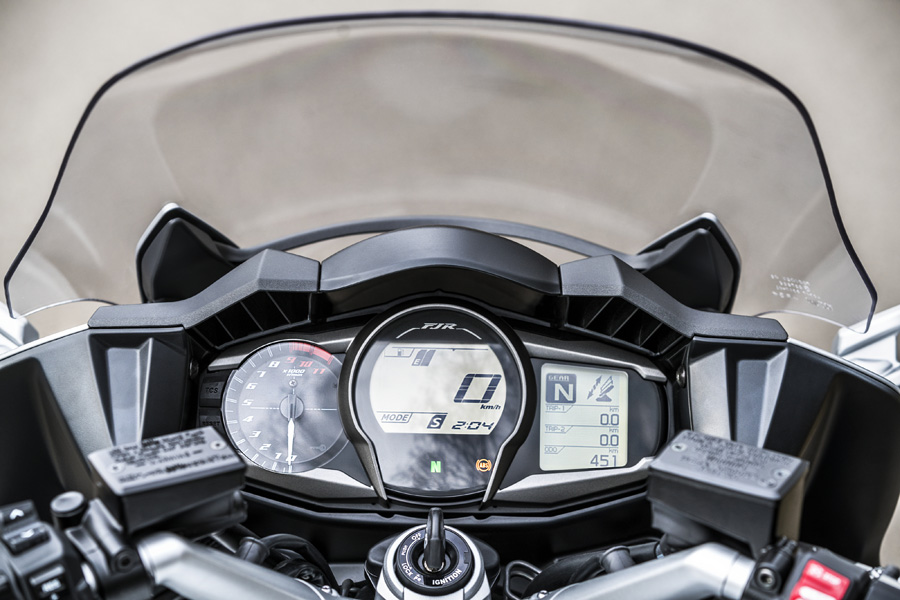
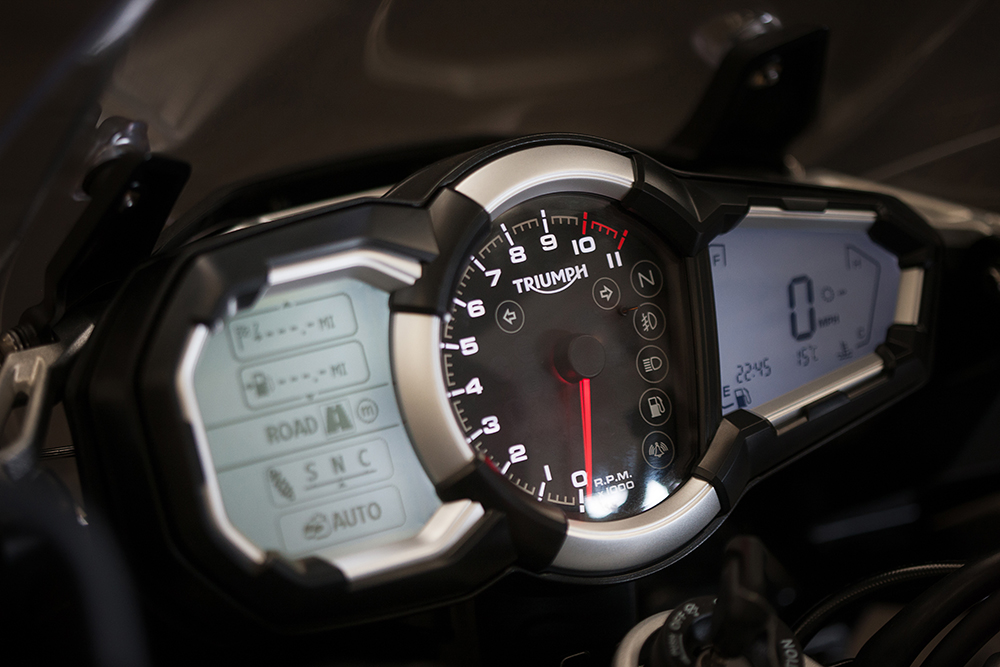
The Trophy has perhaps the most comprehensive dash info in all of motorcycledom. Analog speedo and rev counter bracket a digital display that tells the time, what gear you are in as well as ambient temperature. Scrolling up and down, via a thumb operated switch on the left handlebar, allows access to Trip1 and 2, elapsed riding time, odometer, average speed, average fuel consumption, current fuel consumption, distance to empty, litres used, tyre pressure for back and front tyres, engine mode and suspension setting. Brilliant!

Trophy3

The engine power modes are “normal”, “power” and “sport”. The suspension adjusts electronically for rider, rider plus luggage or rider plus passenger. Even for someone as electronically challenged as myself, the settings are simple to achieve. Engine modes are adjustable on the fly, whereas suspension adjustment must be done at a standstill. After trying various combinations, take it from me, keep it simple. Engine on sport and suspension on rider plus pillion is sublime! Set up like this, the bike is responsive, rapid and it steers with absolute precision and accuracy! In recent years Triumph has earned a reputation for building good handling bikes. The SE is no exception!

Set up as described, one up or with a pillion, the bike steers neutrally and with pinpoint accuracy at all speeds. Once rolling, the SE feels 50 kg’s lighter than it’s 301 kg weight. It flicks from side to side with amazing ease. Not once did the bikes suspension feel harsh – not even in patched and potholed roads. The Trophy delivers a composed and compliant quality ride at all speed, on all surfaces. Hats off to the suspension engineers at Hinckley! The “Sport” engine mode is responsive without being abrupt. So much so, that I could do a feet up u-turn, two up, by simply feathering the superbly smooth clutch and applying the merest whiff of throttle. There is also absolutely no driveline snatch or slop in the drive train. The gearbox is sweet shifting and the shaft drive is faultless.

The seat, oh the seat! In 43 years of motorcycling rarely have I come across such a fine “cush for the tush” This bike should be banned from Iron Butt rides. All day comfort makes them no big deal!

When you first ride a comprehensively faired bike like the Trophy or BMW RT, it is a bit disconcerting. You are so accustomed to wind resistance that hole being punched in the air almost feels as if you are rushing into a vacuum. You become aware of wind on your back as air rushes forward to fill the void created by the passing of the bike. I could actually ride with my visor up, yet feel cold on the back of my neck. Playing with the screen height as you ride allows you to get the best setup, after which you relax and boogie on down the road. This bike makes highways bearable and back roads a blast. Your passenger too is cosseted in comfort and plenty of space to move around. Despite it bulk the ergonomics on the SE are excellent.

The SE does not come standard with heated grips or seat as does the RT. However, the fairing is so effective that despite thirteen degrees early morning temperature and airflow gloves, my hands were not at all cold. The test bike was fitted with the optimal heated grips, but I did not use them at all. The test bike was also fitted with a 50 litre colour coded top box which comes equipped with a power socket. The socket picks up power through the mounting plate and requires no wires to be connected or plugged in. Neat! Charge your laptop or camera safe and sound in the top box while you ride.

Trophy4

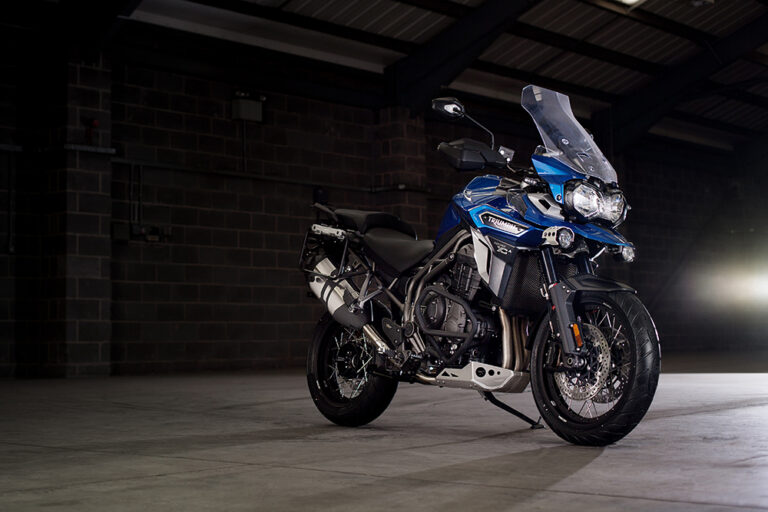
The bike was painted “Pacific Blue”; a deep metallic blue reminiscent of a colour popular on Rolls Royce cars. The front of the mudguard, panniers and the recesses for your knees in the tank, are all protected by a clear plastic film. The overall fit and finish is top class. There is absolutely no doubt what so ever that the Triumph Trophy SE is a formidable contender in it’s class. With 16,000 km service intervals, and a current price of R179,500, it is an incredible value proposition. Even with heated grips (R3,155) and the 50 litre top box (R7,995), the Trophy at R190,650 is a good R14,000 less than a metallic painted RT without a top box. Serious food for thought!

You will like travelling long distance at speed and in comfort, with that significant other on the pillion? All your kit stashed out of harms way in the panniers and top box, not a bungee in sight. Riding through Botswana, Namibia and the wide open spaces or vistas of the Northern Cape or the Karoo, should be magnificent. We are blessed in Southern Africa with an incredible network of tar roads on which to unleash a cruise missile like the Trophy and I am sure that more of us are going to experience it.

Oh yes, and as for warts? Genuinely, there aren’t any! What you get is a handsome, refined bike that is as unflustered commuting as it is traversing the country. What more could you want?

For more information on the Trophy SE visit: www.triumphmotorcycles.co.za
To Flash or not to Flash… That is the question!

0

Whoa guys! Before you reach for the lapels of that grubby raincoat… I am not talking about that kind of flashing. This is a motorcycle blog! I’m talking modern motorcycle electronics. Perhaps the three letters that define performance characteristics more than any other are ECU; Electronic Control Unit. The little black box that, coupled together with the onboard computer, tells your bikes engine what to do, and how to do it.

Back in the days, you tuned your bike by mechanical means; Airbox, valve adjustment, jetting, exhaust, timing etc. By harmonizing these elements you would try to optimize your bikes ride performance. The ECU has changed all that. To meet emission standards and please regulators, the Design Engineers from each bike manufacturer, programme the ECU to do their bidding. Sounds great, but the truth is, the end users, us riders, don’t always see eye to eye with these dudes. Take my Yamaha XT 1200Z Super Tenere as an example.

The Super Ten is a good adventure bike, no question. Fact is it has some fundamental flaws. Let me explain. The Ten has a “fly by wire” throttle. There is no throttle cable as we know it, but rather electronic impulses to the fuel injection, controlled by the ECU, which control fuelling, engine timing, traction control and so on. The Ten also has two power modes, activated by a switch on the right handle bar, Sport or Touring. In the “Sport” mode, the performance is adequate with way more urgency than “Touring”, which softens the performance to that of a Honda 700 Trans Alp.

Question number 1 to the Yamaha Design Engineers:

Why, in the name of all that is Holy, would I or anyone else for that matter, want to emasculate my 1200 to perform like a 700? Bottom line, turf the Touring mode and just give us Sport. Enter politically correct. There was a time when “throttle control” was part of every discussion around bike performance. My right hand would determine how much throttle was applied in any situation. This was part of honing your riding skills. Now a little black box makes the decision. Get my drift?

The other problem is that the ECU is a crappy rider! My Super Ten suffered with a “soft spot” just off idle, felt particularly when pulling away. There was also discernable throttle lag when cracking the throttle open. You would get the feeling that the motor was always lagging behind what your right hand was telling it to do. Now, a bit of research, via my friend Google, cast a lot of light on the subject. It seems that Yamaha engineers do not think that riders are up to handling an un-bridled Super Ten, so they electronically hobbled the beast! – on purpose!!

Despite restricted power, the Super Ten is an excellent adventure bike. Good suspension, great comfort, proven reliability and uncanny stability on the dirt, ticks all the boxes. Almost every test report I have read on this bike recognises all of these attributes but they also refer to a bland, or even boring engine. Aagh!! – Let’s face it, boring and bikes just shouldn’t share the same sentence!

The liquid cooled BMW 1200 GS and the beastly KTM 1190 R are far from boring! In real world rides, the GS spanks the KTM due to its rich vein of torque. The top end rush of the KTM is seriously thrilling, and way softer torque at low to medium revs let the KTM hook up its back wheel and find traction in the dirt. So where does that leave the Super Ten? In one word – behind!

This is where it is essential to flash, if you own a Ten. No guys, leave your pants on, “flash” the ECU!

Way back when, a disgruntled Super Ten rider got some electronic boffs to decipher the ECU to see what gives. Over time, a recording or remapping process evolved, whereby all the fuelling and power limiting maladies were addressed.

The end result? – Phenomenal!

Instantly the Yamaha is transformed into the bike it should be. Good, gut wrenching grunt, stomp, shove, torque by the bucketful, is available from idle. Gone is the soft spot. Gone is the throttle lag and in its place, power like you would hope for, from a 1200cc parallel twin. The old seat of the pants sensation is one thing, but get a load of this. Strapped to a dyno an incredible picture emerges. The power and torque curves are rich and strong from out of the basement, eclipsing the standard bike at all engine speeds. The mid-range swells the power from 49hp to just on 70hp! The torque swells an incredible 12nm! This transforms the Super Ten from boring to roaring instantly. The gearing on the Super Ten is such that 5000 rpm in top gear equates to a speed of around 160kph. Fact is, you never have to rev this bike. It responds instantly as you surf that huge wave of mid-range power.

Riding my mates KTM 1190R, back-to-back, leaves me totally underwhelmed. The Katoom feels sterile by comparison. Only when you rev the hell out of it does it stamp its authority. Who wants to rev the tits off a twin anyway? For me, mid-range is king!

So, to flash or not to flash? From my gushing it is obvious. I love the “new“ bike. I could never go back to a stock ECU equipped Ten. Everything, even the fuel consumption, has improved. There is honestly no downside. I rev the bike less than before the flash because I don’t need to. I sometimes felt as if keeping the “old” bike on the boil was hard work. Now everything is effortless. Nuffsaid! I rest my case.

Ride Review: Triumph Tiger 800

There is something utterly intoxicating and addictive about the sonorous wail of a Triumph triple at full chat. When that triple is housed in the latest, WP suspended chassis of the 800 XCx, it really, really rocks!

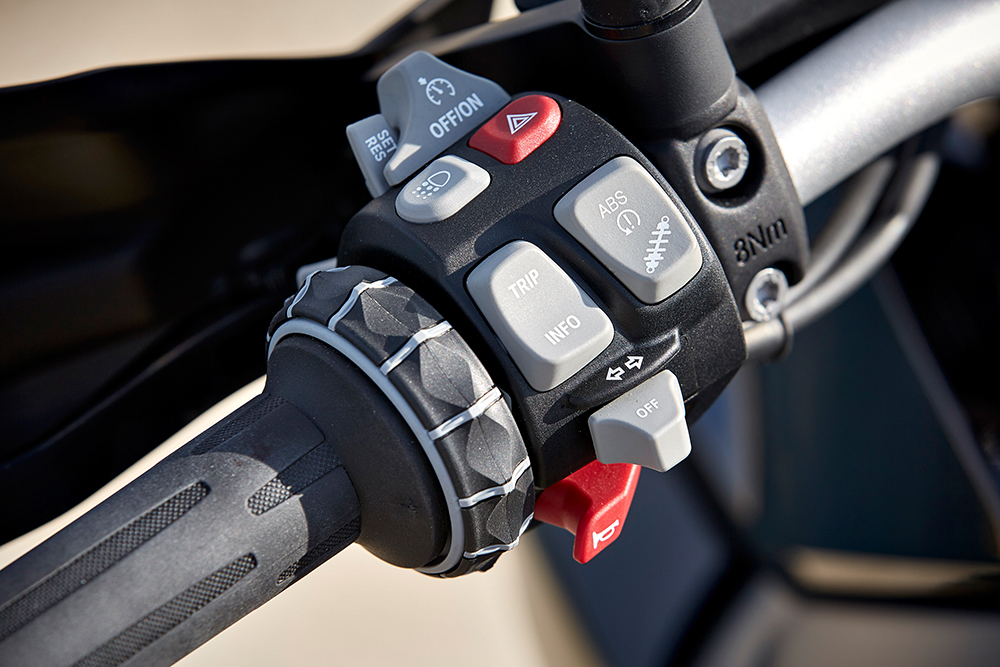
Ride-by-wire enables switchable ABS braking. “On”, “Off” or “Off-road” are all available at the push of a button. In “Off-road” mode, the ABS is disabled to the rear wheel allowing “backing-it-in” with the rear wheel locked, whilst a degree of front wheel slip is also dialled in – more on this later.

2F2G6964

Traction control is also standard and this is programmable to “On” or “Off-Road”. Four different throttle maps are also available – rain, road, sport and off-road. Each mode optimizes power and torque delivery for the appropriate road conditions.

A really neat feature is the programmable rider mode; this allows you to pick and choose what works best for you. The ECU then stores this in its memory allowing you to set the electronics up to your performance – SUPERB!

Cruise control is also a standard feature as well as a trip computer with features such as travel time, average speed, fuel economy, range to empty as well as current consumption.

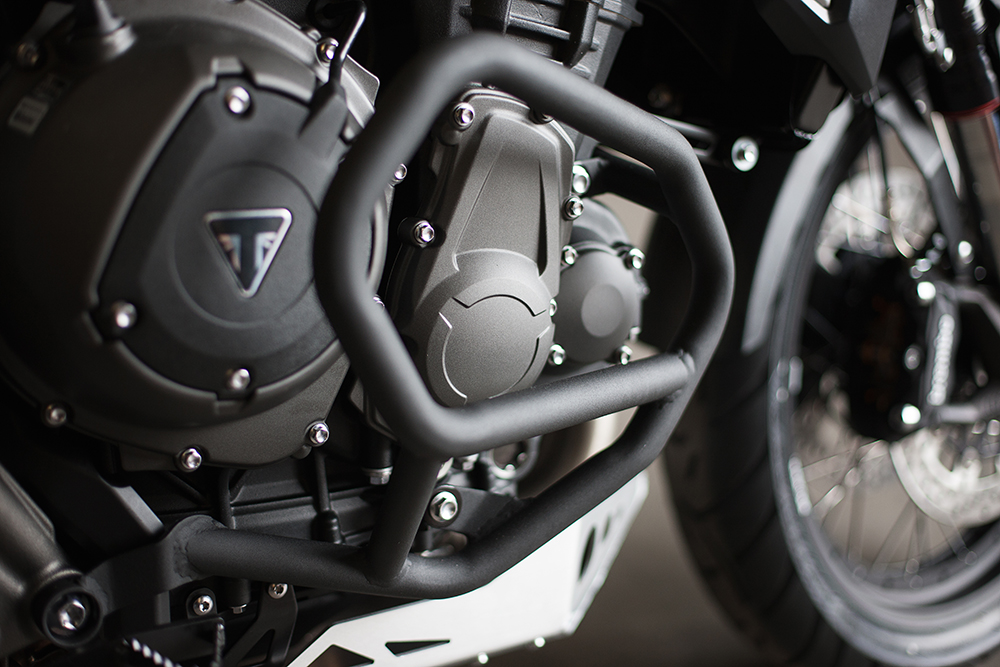
Last, but definitely not least, is that WP suspension is standard on the XC models. South Africa will only get the top of the range XCx, which sports the full electronics package as well as a sump guard manufactured from aircraft grade aluminium, hand guards, engine guards and a centre stand, all as standard. The WP forks on the XCx have adjustable rebound and compression damping whilst the rear shock adjusts for preload and rebound damping. The XR model keeps up-rated and refined Showa suspension. The front forks are not adjustable and the rear shock is preload adjustable only.

2F2G6868_GRD

2F2G6867_GRD

Wheel sizes remain unchanged on both models, with 17-inch rear and 19-inch front for the XR’s cast wheels, whilst the XC rides on spoked 18 inch rear and 21 inch front better suited to off-road conditions.

Hooray!! – Both bikes have self-cancelling indicators.

I am really itching to let you know how all these changes and improvements relate to riding experience!!

The launch day proceeded with military precision and as promised we mounted the bikes around 11:00am with the plan to ride tar and dirt on both variants, swapping amongst the journo’s to get saddle time on each. Triumph emphasizes their focus on technology to optimize the ride, on and off-road. Boy-oh-Boy they really got it spot on.

My first ride was on a XRx. Caspian Blue is Triumph’s name for a blue metallic paint, perhaps a shade lighter than that familiar to Subaru fans – beautiful!! The XRx sits lower due to its slightly shorter suspension and 19-inch front wheel, although the seat height is adjustable (on both models).

Arnold led us out on a blisteringly hot summers day. We rode the familiar Hekpoort pass at a brisk clip, the XRx handled impeccably. The adjustable screen and comfortable seat, coupled with good ergonomics, make the Triumph a wonderful place to be. The long sweeps of the Bekker Schools road were strafed at speed with the muted wail of the Triumphs music to the ears. The 800’s have always had good gearboxes, albeit with a heavy-ish shift action. The aforementioned mods have rectified that – now it is positive and perfectly weighted. Nice!

2664

Regrouping to ride some dirt, we pressed the mode button to switch to “off-road”, and then off we went. Spaced out at 1-minute intervals we could enjoy the ride without chewing dust. I was really impressed by the competence of the XRx on dirt. The firm suspension is supple enough to soak up rocky lurkers and the rain ruts without fuss. Fact is, the XRx makes a competent adventure bike, breakfast runs, commuting, touring “on” or “off-road” one up or two, the XR does it all. The bike is stable and totally happy on dirt even when ridden with gusto. The only time I experienced mild headshake was when slowing over a washboard rain rutted surface. Get on the gas, transfer the weight rearwards and it is instantly composed. At the end of this section of dirt we regrouped for a welcome ice water to compare war stories. We also used this opportunity to swap bikes.

The XCx – Oh, Lordy, what a bike!! As good as the XRx is and it is good, the XCx is simply better.

What I haven’t mentioned yet is the improved heat management. The bigger radiator now vents through larger and reshaped vents. Even on this +36’ day, the engine heat was never overly apparent or bothersome, which is a significant improvement over the old model. Both models share a similar electronics package, however the real advantages over the XRx are the different wheel sizes and the WP longer travel suspension.

2F2G6876_GRD

Fact is, as Katoom owners know and keep telling us, “WP suspension is proper”! The biggest difference compared to the previous Showa shocks is the finesse of the WP’s. The Showa’s tend to top-out over minor irregularities on the road, felt through the bars. With the WP suspension, you have sweet controlled damping everywhere, couple this to excellent off-road electronics and you very simply have a new middleweight champ. Back it into corners on the back brake then jump on the main jet (or fuel injected equivalent) and the XCx power slides in a perfectly controlled manner, and at no stage do you perceive electronic intervention. It makes you think you are really talented.

Perfectly linear power delivery from the turbine-like triple finds, and maintains, traction even on loose surfaces. The bike is composed at all speeds; even silly speeds feel safe on the dirt on this bike. Bloody Hell – I’m gushing aren’t I?

Back on the tar on the satellite road and still on the XCx, I give the bike its head. Road blemishes disappear thanks to the WP’s and the bike is plush and accurate with not a wobble or wallow despite speeds just shy of the double ton. WOW!!

Don’t just take my word for it… RIDE the XCx and see for yourself!!


Quick Chicks!

0

There is just something about women in leathers. I’m not talking about your average rally going lady in leather pants that are meant to do the job of a corset. Or, as the lady in Think, Love, Pray called it, a “muffin top”. You get the picture? No, what I am talking about is a smoking hot female poured into leathers. Not just any leathers, Race leathers. Let’s face it, not many women have competed with the best on motorcycles. Certainly not at world class level. The early 90’s in the States produced an incredible exception.

If you took the time to read “Motorcycle Gunslingers”, posted a while back, you would have got a snap shot of the motorcycle drag racing scene in the US in the seventies. Top fuel, the big dogs of the drag racing scene, saw a quarter mile elapsed time of 7,86 seconds set by Russ Collins on a triple engine Honda powered beast. What no one knew at the time was that the seventies had birthed another drag racing phenomenon. The 7th of August 1970 to be exact, heralded the birth of a slip of a Southern girl who was destined to make an indelible mark on motorcycle drag racing in the 90’s and beyond.

Angelle Sampey. Standing 1,55m tall and weighing under 50 kg’s, Angelle is smoking hot, with ink black hair and a chassis of flawless design. Top that off with a face that is mixture of supermodel and girl next door and you have something really alluring. Angelle married really young to an equally young marine. She won her first races in the Pro Stock class as Angelle Sampey, and then post marriage, as Angelle Seeling. Unfortunately Mr Seeling was somewhat threatened by his young wife’s success and, forced to choose between Seeling and racing, Angelle bid him farewell and focussed on her Suzuki GSXR-1100 based pro stocker. Angelle put her career as an ICU nurse on hold and embraced the male dominated world of professional drag racing.

angelle-sampey-drago-interview-1

At this point let’s forget the facts for a moment, and embrace the reality of pro stock motorcycle racing. “Pro Stock” is kind of a silhouette class. The bike still looks, albeit vaguely, like the standard bike. Picture a GSXR1100 on cortisone for a month -swollen and bloated. A pro stocker is huge! Long, low and wide. A big man struggles to straddle the monster. Now, just imagine, a petite, tiny girl, black hair cascading from her helmet down her leather clad back. Angelle was virtually prone on the bike. Arms stretching to clench the bars, her feet splayed out back and to the sides, rolling up to the line at the “Christmas tree”. The lights would literally go from red to green. Green was when all hell broke loose, but first, you must stage. Drop the clutch and spin up the slick on the back wheel. With smoke pouring off the back tyre the bike lurches forward whilst the rider holds it against the brake. This puts heat into the back tyre, getting the rubber to optimum traction.

The violence of “staging” is a precursor of things to come. The crew rolls the bike back behind the start line. Both bikes (there are two lanes on either side of the Christmas tree) inch forward until they cut the beam in the start line. The bikes are staged and ready to launch. The riders are oblivious of all else. Their eyes focus on the lights and with every fibre as taught as a bowstring they prepare to launch. The throttle hand brings the engine revs to a crescendo. The millisecond the light goes green the left hand fans the clutch, desperately seeking the “sweet spot”. The perfect balance between spinning the back wheel uselessly and bogging the motor. This in drag racing parlance is known as the “reaction time”. Go too early and you “red light”, gifting the run to your opponent. Get it right and the traction lifts the front wheel, the bike rides onto the “wheelie bars” (two small bars which extend a couple of feet behind the bike), and you rocket down the strip. Without the wheelie bars the bike would flip, rearing up and tossing the rider off.

2014DT1_RA_0645941

The ride, fighting a gravity induced daze, tries desperately to keep the bellowing monster going straight. As the revs reach a crescendo and the rider punches the pneumatic or electronic quick shifter and hooks the next gear with the bike gathering momentum with insane speed. A quarter mile down the track the “traps” await the shrieking human and mechanical bullet. The bike cuts the beam and the elapsed time is posted on the huge digital display at the quarter mile mark. There is quite simply no margin for error. Weeks, months, even years of preparation play out in under seven seconds. No other form of motorsport is as intense or unforgiving.

In this area of motorcycling gladiators, Angelle made her mark. Under the mask of femininity lurked an iron resolve. Initially sponsored by Winston, and then by the US army, Angelle took on and beat the best in the business. The prominent pro stock riders in the late 90’s and early 2000’s were Anton Brown and Dave Schultz. For three years running, 2000 to 2002, Angelle won the NHRA Pro Stock Championship. She entered 182 successive races and qualified in every one. Out of 506 rounds raced she won an incredible 364 times. A 71,9% win ratio.

The credit crunch of 2008 put an end to her racing. Unable to raise sponsorship in 2009, Angelle was forced into retirement in 2010. Her fastest quarter mile time, a pro stock world record was set at 6.871 seconds, boasting a terminal speed after only 440 yards from a standing start of 194.21mph (314,28kph). An astounding 41 career wins. Only Dave Schultz, who sadly died in 2001, from cancer, won more meetings with 45. All however, is not said and done. At the end of 2014, Angelle Sampey-Drago (now married with a 3 year old daughter, to Seth Drago, an all round nice guy), returned to racing. Incredibly, within 4 runs, she was back on the pace, posting a 6,90. Watch this space!

What was interesting is that it is was not only on two wheels that women dominated drag racing in the US. The Top fuel category was won in 2001 by Shirley Muldowney. “Cha Cha” as she was nicknamed, rose to be crowned “The First Lady of Drag racing”, by beating all time greats, “Big Daddy” Don Garlits, and Connie Kalitta, during a truly golden era of drag racing. Try and wrap your head around these numbers. A standing start quarter mile elapsed time of 4,64 seconds with a speed through the traps of 320.2 mph (518.72 kph!)

Shirley Muldowney:
ChaCha02

hrdp_0904_10_z%20shirley_muldowney%20funny_car

The exploits and incredible courage of these two women paved the way for women to succeed in motorsport. Currently drag racing in the States is a much prettier place with the likes of Ashley Force and Angelle Sampey-Drago. Danica Patrick is setting the NASCAR tracks alight in more ways then one. Real babes, and motorsport, you just gotta love it!

Ashley Force:
brittany-ashley-courtney-6

Danica Patrick:
Danica-Patrick-006 copy

Video Footage: Angelle Sampey-Drago Career Highlights:

APACHE INDIANS RAID VICTORIA FALLS!!

0
Photo credit: Dave Cilliers / ZA Bikers

Those of you with a smidgen of historical knowledge will know that the Apache Indians are incredibly tough, survive in the wilderness on just about nothing, and led by a chief named Geronimo led the US Calvary a merry dance for months in the remote “bad lands” of New Mexico.

This is a tale of four Apaches roaming far and wide across the south of another continent – Africa! If the truth be told they are not quite the same kind of Indian though! They are Indians of the Sachin Tendulkar variety. Built by Indian manufacturers TVS, the TVS APACHE 180 RTR is an absolutely incredible little commuter motorcycle. Like Sachin, it may be small in stature, but under the stylish exterior beats the heart of a lion!

IMG_0367
Photo credit: Dave Cilliers / ZA Bikers

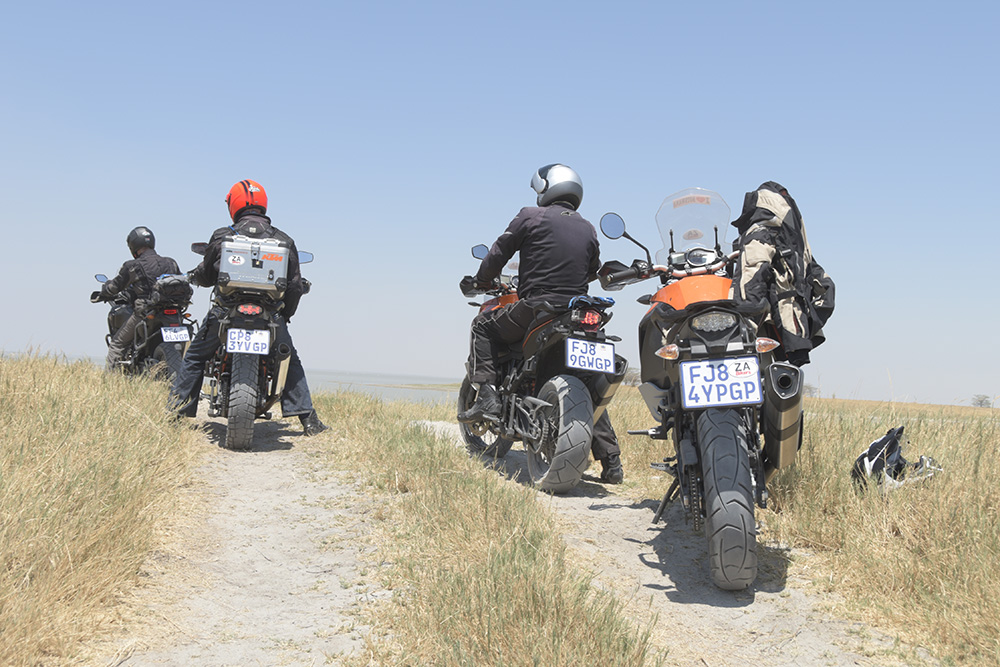
My buddy Cobus found that his Landcruiser Troopy was too tall to fit into his parking spot at work, so on my recommendation acquired a TVS on which to commute. I sweetened the deal by promising Cobus “a trip on our TVS’s”. And so it was that when news of “the trip” spread we ended up at 6.30 am on a Friday, with four Apaches, accompanied by Willem on his 650 Honda Trans Alp, all fully laden with camping gear, cruising north on the “old road” to Bela Bela and beyond. After a quick Wimpy brekkie in Bela Bela it was back in the saddles and with the day getting ever hotter, we hung a left in Modimolle and then a right in Vaalwater. All was well with the world as we game spotted through the beautiful bushveld. Marken, Baltimore and Tom Burke were all reeled in and despatched as we approached Botswana. As always on the S A – Botswana border you are back on the road in no time. In the late afternoon the four Apaches with their shepherding Trans Alp pulled into Itumela Camp in Palapye.

Photo credit: Dave Cilliers / ZA Bikers

After sipping on ice cold St Louis beers, and gorging ourselves at the buffet we retired to our comfy dorm for a well-earned doze. With newfound respect and confidence in our plucky Indian steeds we looked forward to the days ahead.

Day two dawned drizzly and cool and after fuelling we rode north to Francistown and breakfast. With hunger stilled we set Nata in our sights and gave the Apaches their heads. The drizzle was long since banished by the furnace that is our African sun, so it was some hot and bothered riders that pulled in to Nata Lodge to slake their raging thirsts. The smouldering aftermath of a veld fire that had raged in the night turned the dry bush into a hot and somewhat tortured landscape. The thermometer on my watch registered 40º plus for the first time on our trip. Our destination was Elephant Sands, 54 kms out of Nata on the Kasane road. The deep sand track to Elephant Sands Lodge was somewhat intimidating, so yours truly, with a bit more experience, offered to ride the bikes through the sand. Well, who do you think face planted in the sand first? None other than “The Sandmaster” himself!!

IMG_0354
Photo credit: Dave Cilliers / ZA Bikers

If it wasn’t for Steve, who gave me my “Sandmaster” moniker, helping to pick up my heavily laden beastie, it would still be lying there! (He wasn’t much help actually as he was weak with laughter!) We felt a bit better when Jaco, the Lodge Manager told us that, “ dis vir julle maklik, jy moet sien hoe sukkel daai manne met die groot B.M.W’s!!” Take that Charlie Boorman! Our hardships were soon forgotten as the St Louis flowed and we adopted the serene vibe of this oasis in the bush. Special mention must be made of the incredibly tasty ribs, pap and gravy, salads veggies and pudding that topped up our tanks and increased the gravitational pull on our eyelids! Elephant Sands was not quite done with us however …………………………

Photo credit: Dave Cilliers / ZA Bikers

This was also the night that Simon, our very own Yorkshire man, decided to go big! As the evening progressed he was hooking gears with alacrity, seriously depleting the local St Louis and brandy stocks. He was in a bungalow with Willem and I, and with huge difficulty, we had managed to still his alcohol-induced motor mouth! At this point, Willem shook out his bedcover and deposited a monster scorpion on his bare left foot. What followed was the best performance of the “scorpion jig” I have ever witnessed. The final score before we settled down was takkie 3, scorpion 0, spider 0, cockroach 0!

Scorpion
Photo credit: Dave Cilliers / ZA Bikers

Having witnessed this wild activity, and with the temperature inside the bungalow a sultry 38º at 9 pm, Simon stated categorically that there was no way he would be able to sleep. Willem and I were still grinning as slumber overcame us.

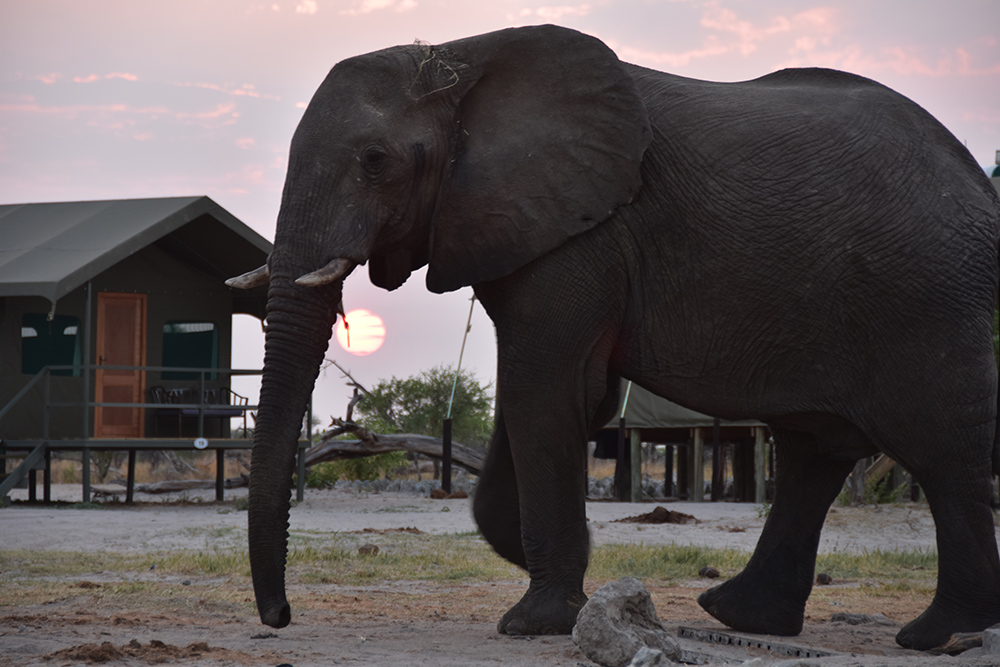
In an attempt to travel in the cool of the morning we were up early, packed, checked the footprints of the gentle giants that Cobus saw at 1 am, and ready to ride. My Apache was also now sporting Willem’s dance partner, cable tied to the crash bar. After a breakfast stop at Pandamatenga, where it should be noted petrol is no longer available, we cruised on to Kasane. We did stop a couple of times to photograph an elephant family sheltering in the shade. How awesome to ride in this unspoilt wilderness where elephants and other wildlife come and go as they please!

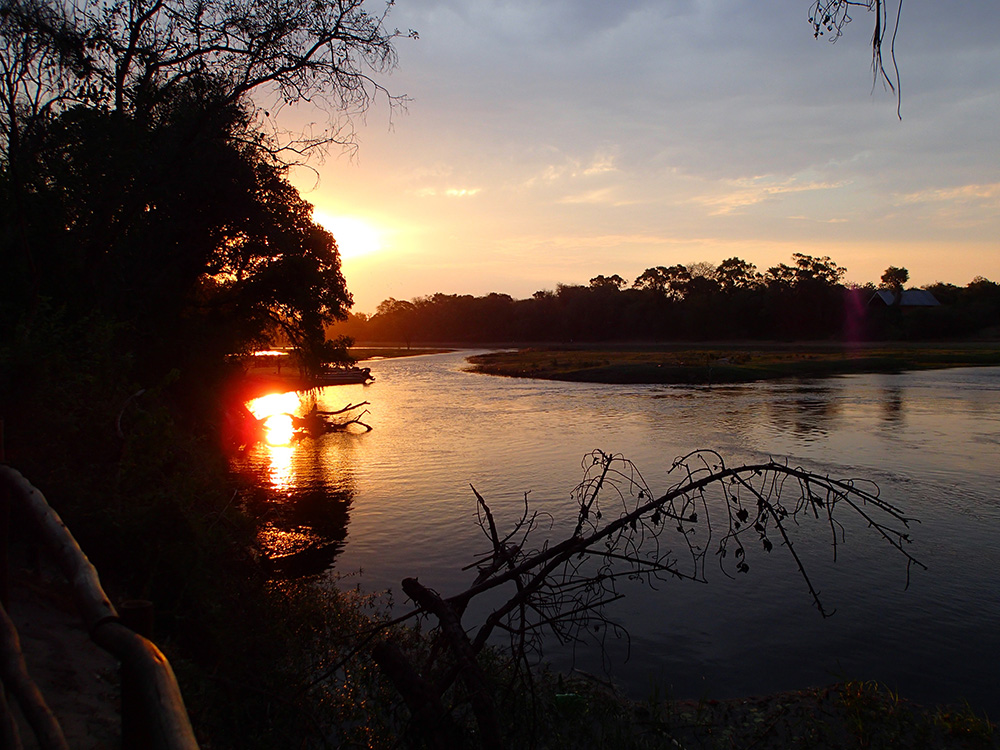
After pitching our tents in the campsite at Chobe River Lodge we shopped for our first self-cooked meal. We enjoyed amazing fillet steak (R55 a kilo in Botswana), mealies and rolls, washed down with the adventurer’s travel mate, Captain Morgan and coke. A stunning sunset over the Chobe river bade farewell to another special day!

IMG_0376
Photo credit: Dave Cilliers / ZA Bikers

A quick calculation whilst fuelling the Apaches the next morning showed that we were averaging 40 k/pl at our 95 kph cruising speed! Unbelievable!!

Our fuel-saving helped to offset the US$46 road and carbon tax levied by the Zimbabwe powers that be for the pleasure of spending your tourist bucks in their country! Through the border, and an hour later we purred into Victoria Falls.

Sunset
Photo credit: Dave Cilliers / ZA Bikers

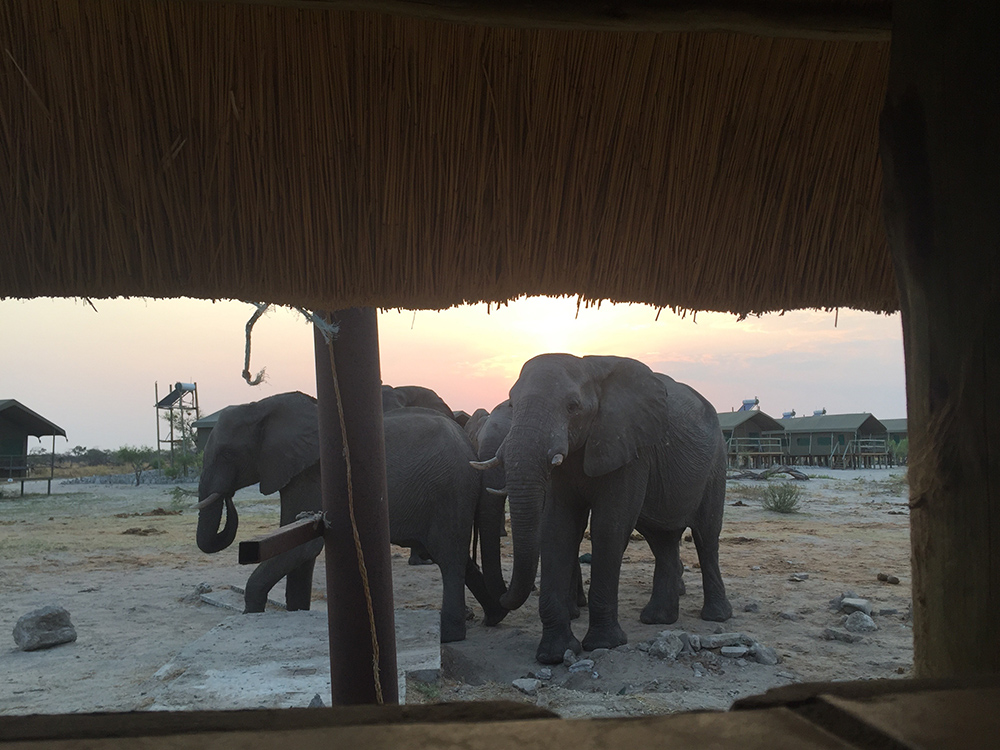
Vic Falls remains one of my favourite destinations. What a special place! The Municipal Campsite has been upgraded with a restaurant and swimming pool and is immaculately maintained. In no time our tents were pitched on “shady lawn” and we strolled to the elegant and stately Victoria Falls Hotel for a drink. Thick walls and high ceilings with fans keep the finely furnished, colonial-style lounges cool. The view of the railway bridge to Zambia, with its famous bungee jump, is spectacular from the terraced lawns in front of the hotel. After an afternoon swim, we rode up to the lodge adjacent to the Boma restaurant and witnessed a herd of elephant at the waterhole. All this as the sun, a huge red orb, set in the background. Sunrise and sunset in Africa are experiences you simply never tire of!! The light softens casting pink and purple hues on a normally harsh landscape. The phrase “red skies at night, the shepherd’s delight” must have been coined in a similar country! Back we went for dinner next to the pool and then to bed.

Bright sunny skies heralded in a new day. A visit to the Falls themselves was on the agenda for the day. At R160 it is cheap at the price! We meandered along the opposite lip of the magnificent gorge over which the Zambezi river boils and tumbles in all it’s glory. Magnificent red spiky flowers grow in the rainforest resulting from the constant spray from the falls. Vervet monkeys gambol about, chattering and seeming ever on the lookout for mischief. One simply must experience the falls first hand as words cannot convey their splendour!

Victoria falls
Photo credit: Dave Cilliers / ZA Bikers

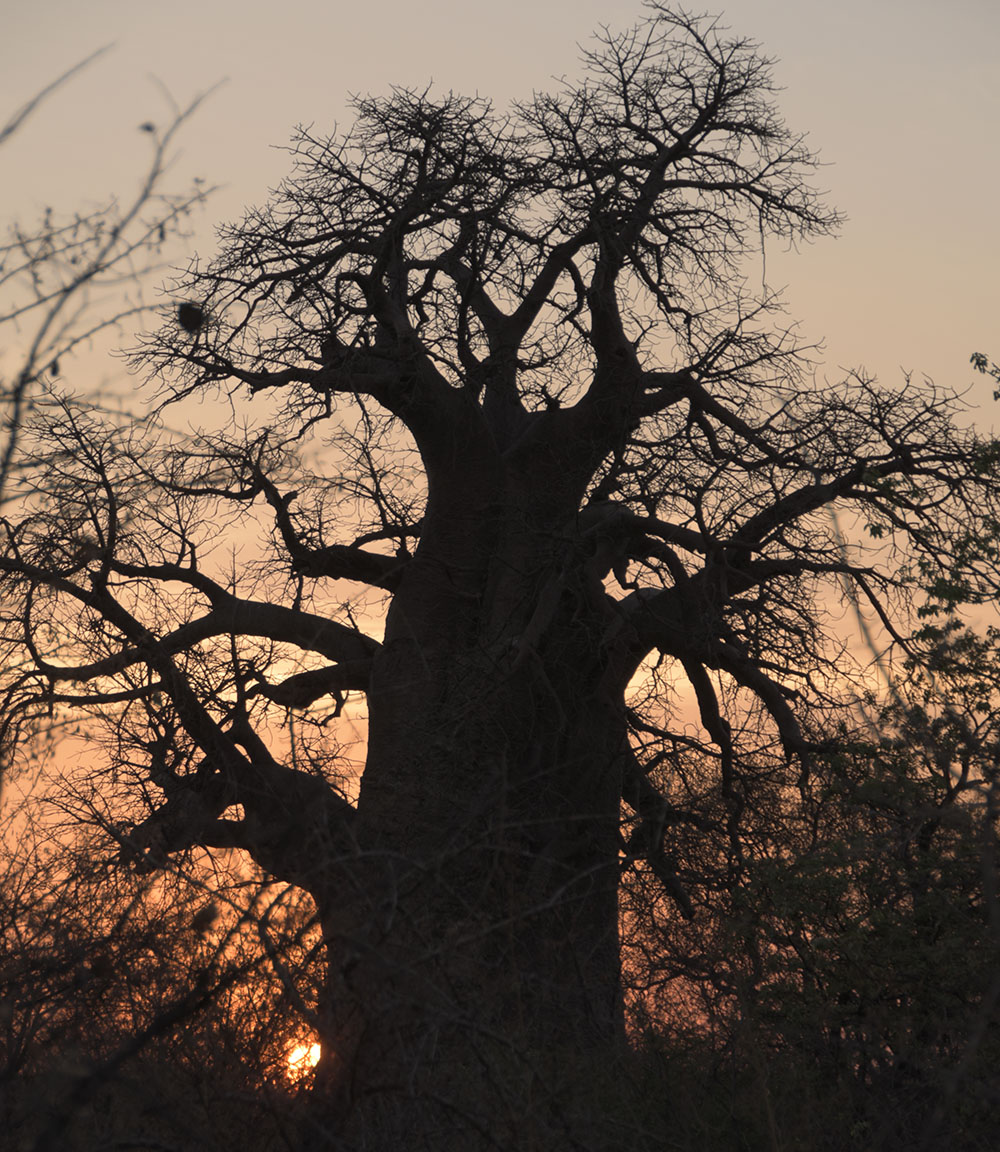
We took the scenic route back from the falls, stopping to photograph our amazing bikes with the backdrop of the “Big tree”, a 1 500-year-old huge old Boabab. Having really enjoyed chatting to Captain Morgan at Chobe, Steve, since dubbed “Corporal Coleman”, and the Sandmaster went to replenish our stocks. We discovered that in Zimbabwe, only “Admiral” rum is sold. We decided that the “Captain” had clearly been promoted to Admiral and as such would have even more wisdom to share! Warm rum is not really recommended unless spiced with gunpowder, lit and then downed as a flaming brew on the prow of your ship! (The Blackbeard Teach – he of pirate fame, method).

An empty TVS top box, filled with ice covering two 2 lt cokes bracketing the “Admiral” made a pretty picture, The Admiral chilled in this fashion while we witnessed another sunset at our now favourite water hole. Back at camp the crew of the good ship “TVS” engaged the Admiral and marvelled at his nautical tales! A very good time was had by all! If the truth be known some did not come away unscathed from the “Admiral’s” broadsides and were destined to carry head and stomach wounds into the next day. Corporal Coleman, who was valiant and courageous and at the forefront of the fray, was somewhat grievously smitten. It would appear that he is an old hand at such fighting, and with
huge wisdom made the Admiral walk the plank. It seems that the Admiral hung on to the rudder for a while but the courageous corporal made a full recovery!

Photo credit: Dave Cilliers / ZA Bikers

We departed Vic Falls in mercifully overcast and cool weather, a welcome respite from constant 40º heat, and rode to Bulawayo, where after we hit the only real rain of the trip. Gwanda and our fuel stop and then we punished another 76 kms to arrive at Tod’s Guest Lodge, our stop for the night. Our trusty TVS’s had run 638 kms without any hassles. Our longest day in the saddle!

With rain in the air, we booked into rooms. We gathered in the historic pub, complete with pictures of a youthful Ian Smith with Diane, the iconic Tod’s resident giraffe. Sadly, both have since passed away. Tired from our lengthy ride, we enjoyed a scrumptious meal, had a nightcap and retired early.

With heavy hearts due to our trip coming to a close, we got an early start for Beit Bridge. The much-vaunted border crossing was a breeze and we pulled into the Spur in Messina for a much-needed breakfast. Willem and Simon left to ride home to Pretoria, whilst Cobus, Steve and I planned a final night at Nylsvlei Game Reserve near Nylstroom.

Photo credit: Dave Cilliers / ZA Bikers

The gate at Nylsvlei was already closed when we arrived, after negotiating 8 kms of good dirt road to get there. Motorcycles are not allowed at Nylsvlei under normal circumstances but considering we were the only campers the staff agreed to our staying the night. And what a night! After pitching tents, Cobus got a fire going while we prepared a beef stew. Sitting around the fire, sipping on our preferred tipple, and listening to the jackals and calls of the prolific night birds we chatted and toasted an amazing adventure! 2 665 kms at an average of 40 k/pl and not a drop of oil used by the Apaches! How cool is that? I believe that the biggest contributing factor to the reliability of the bikes and general oil consumption was the fact that all of the bikes were running on MOTUL 5100. This oil was developed for motorcycle endurance racing and therefore deemed the best option for what was going to be an endurance trip. The first modification I do on all my bikes is to fit a new oil filter and change the oil to MOTUL – then you know your set for any adventure!
Photo credit: Dave Cilliers / ZA Bikers

Simply dream it, plan it and do it! We are blessed to live on the most exciting and amazing continent with unparalleled diverse landscapes and fauna and flaura! This was the first of many TVS tours. How about it? Join us for our next ride on the wild side!
The downside of biking

0

When folks hear that I have ridden bikes for nigh on 47 years, the inevitable question arises, “So Dave, have you ever fallen off?” Well, Duh, Hallo, of course I have! I mean is ducks bum watertight? Motorcycles are inherently unstable vehicles. Leave them to their own devices and they fall over. Nothing assists this falling over process as much as a rider. In our defence however, there are occasions when we are helpless participants in this unpleasant process. Let me tell you about my first “proper” crash. I say “proper” because prior to the incident I am about to tell you about I had two “new rider” get offs. I low sided my CB125S Honda on a huge swathe of diesel deposited by a bus on a nice sweeping corner. The one moment I was pitching the bike into this lovely right-hander in Crown Avenue in Pretoria, and the next moment I was trying to overtake the sliding bike on my bum. I duplicated this error on a sand strewn corner after a typical Highveld thunderstorm had washed fine sand over the road. Let this be a lesson to you. Experience and awareness have subsequently negated these slippery threats. So, back to the biggie…
1978. My Honda CB750FZ was a year old and really fast for the time. Gutted 4 into 1 exhaust, properly jetted with the air box drilled to breath better. The biggest contributor to top speed was the Bobby Bell full fairing, (including enclosed belly pan) and single seat and tail piece. Despite substantially lengthened gearing the F2 would rev out to 11,700 rpm in top gear. A whopping 2,200 revs past the 9,500rpm red line. It would pin the needle on the Nippon Denso speedo to cover the ND logo at 6 o’clock. A good centimeter past 220kph. The fairing and tail piece contributed 1500rpm on top end. Amazing! If you think I have gone off at a tangent? Not really. You see I’m trying to set the scene. Back in ’78 the roads were good and un-congested. This meant a serious amount of riding time was spent testing top end.

On the day of the incident some mates and I were returning from Kyalami. The Ben Schoeman freeway was a new two lane, super smooth piece of black top. The opposing lanes were separated by a wide stretch of dirt. Riding towards Pretoria, we crested the hill at new road and started gathering some serious speed down the long downhill that followed. This was the F2’s moment to strut its stuff! I gripped the clip on bars firmly and tucked in behind the production racing fairing bubble. The bike ran the speedo needle off the dial with the shriek of a high revving four. I flew past my mate on his Goldwing GL1000 and was now bearing down on a car in the fast lane perhaps 400 meters ahead. I thought if I chopped the throttle and let the motor run against compression I would scrub off enough speed differential between the car and my hauling F2.

As I rolled of the throttle the violent weight transfer onto the front wheel caused the front wheel to burst. The deflated tube bunched up inside the tyre, distorting the flat tyre and ripping the narrow clip on bars from my grasp. At over 200kph things happen quickly to say the least. The human brain never ceases to amaze! Instantly I realised I was not going to recover control and I remember thinking, “Now you must relax and roll, ’cause if you tense up you’re going to break bones”. The next millisecond I hit the tar, and, according to the eye witness account of my buddy on the Gold Wing, bounced at least 4 meters into the air. My second coming to ground was on the dirt between the two lanes, whereupon I first bounced, then rolled and slid 110 paces (I know this for a fact because we subsequently returned to the scene and measured the distance from the gauge marks made by the bike on the tar, to where I eventually came to a rest.) Just so you get some idea, we are talking the full length of a rugby field!

I marvel at the inherent strength of the human frame. The Bible says we were “wonderfully knit together in our mothers womb”. You better believe it. You would expect a 200+kph thump, followed by 110m of tumbling to literally rip you apart. People who saw the fall all expected the worst. As providence would have it the ground was soft from a week of heavy summer rain. The muddy surface must have cushioned my fall to some degree. At some point my full face Schuberth helmet came off my head. My glasses were ripped from my face by the departing helmet, breaking the frame and slicing a 4cm gash across my forehead. Covered in mud with blood running from my forehead into my ear and out again I looked a sight. An ashen-faced woman whispered to a companion, “He’s dead, there is blood coming out of his ear”. Despite feeling a bit like a frog after a session in a blender, I was still very much alive. I opened my eyes and muttered that I was ok which seemed to upset the woman even more. I seemed to the casual onlooker to be more dead then alive.

There was another weird aspect to this drama. The world was tinted blue. Serious! It was as if I was seeing the world through blue cellophane. I tried to get up but fell over. You try standing up after 110m of “ring-a-roses”. Dizzy just doesn’t adequately describe where I was. Someone put me in the back of their car and whisked me off to the hospital. I don’t really recall the journey so I must have passed out from the shock. “Casualties” started cleaning my wounds. A huge divot out of my left knee and smaller one out of the right. My right hip also lost a chunk of flesh. The strut holding the fairing uppers broke and stabbed my left upper arm to the bone. Structurally I was amazingly intact. Two broken metacarpal bones in my right hand, which has probably involuntarily stuck out to break my fall. That was it! A serious shot of morphine chilled me out while they scrubbed and dressed my wounds. I went home the same evening.

My poor F2 didn’t fare so well. It stayed on the road, somersaulting over the car that had initiated the deceleration, and subsequent carnage. The front fork stanchions snapped clean off. The crankshaft was bent from the sides of the engine slamming into the tar. The bodywork self destructed totally. It eventually ended up on the left of the highway about 300 meters from where the wheel popped.

Now remember, this was long before cell phones. Feeling rather the worse for wear, I decided a bit of parental TLC was needed. I got my mates to drop me off at my folks apartment. They just about keeled over when this bloody and muddy apparition pitched up on their doorstep. Once over the initial shock and reasonably certain that I was not about to expire, my dad reckoned that all I needed to win a Frankenstein lookalike contest was a bolt through my neck! Charming. I consoled myself with the fact that at least chicks dig scars!

I believed that what saved me from serious, or even fatal injuries, was the fact that I never rolled into anything solid. Gloves, Leather jacket and Sidi boots reduced my injuries significantly. Jeans really offer no real protection, hence the severe roasties from which I bear the scars 37 years later. So there you have it. The full account of my first proper attempt at studying my fundamental orifice without the assistance of a looking glass.