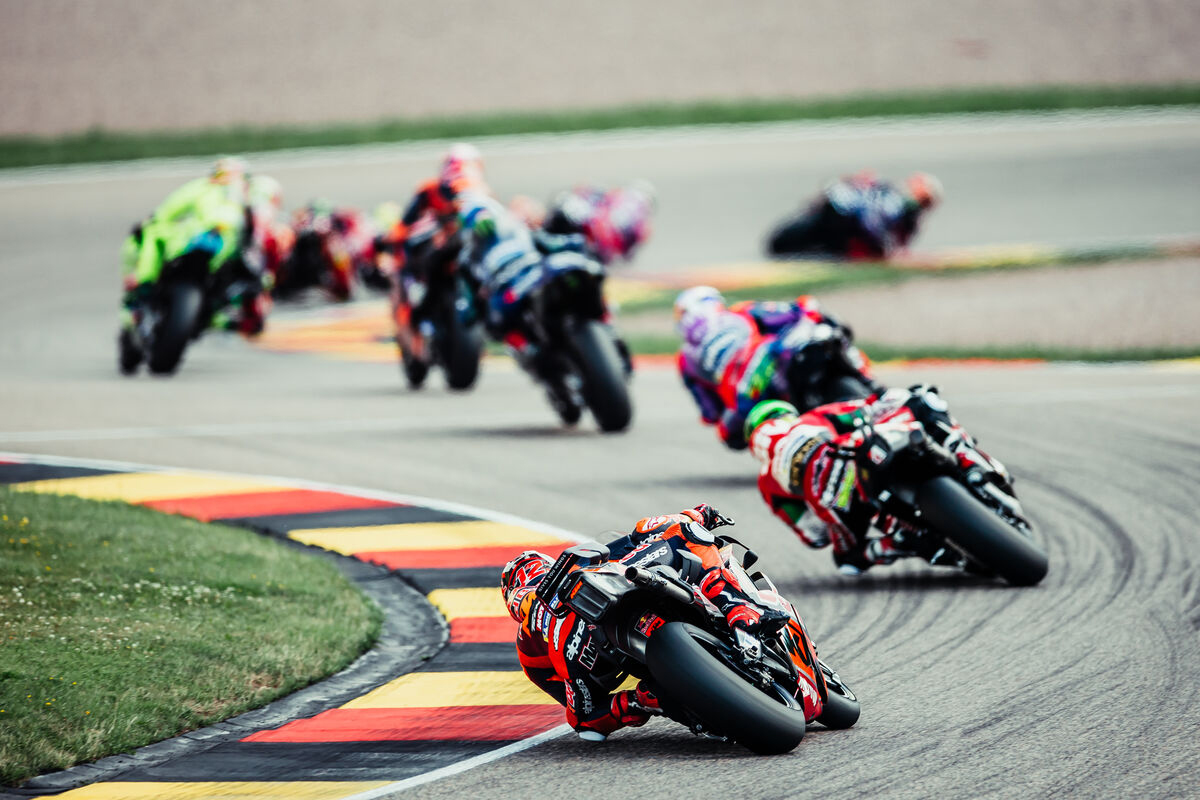



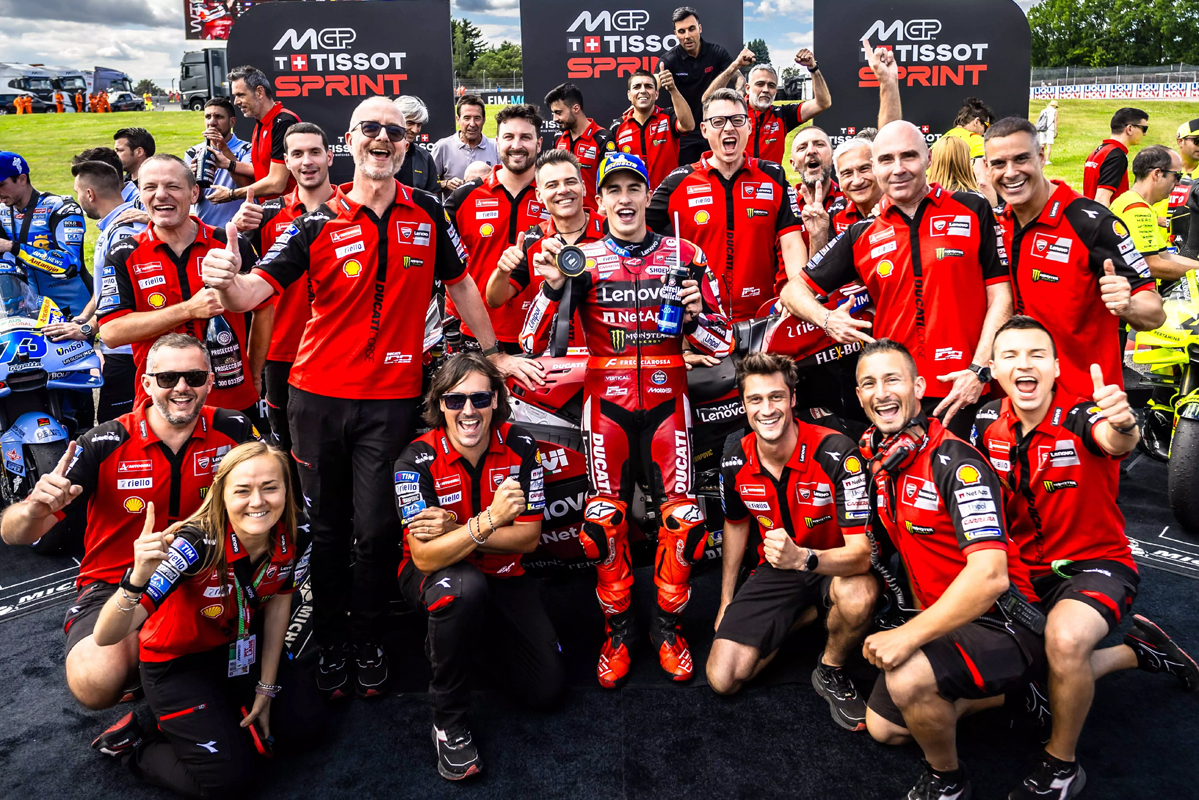
How can we have had eleven rounds of the 2026 MotoGP championship already? We’re at the halfway point of the season. The circus has packed up its troubles in its kit bags and headed home for a month-long break, some teams and riders licking their wounds, trying to figure out what’s gone wrong with their season, while others are in a much happier frame of mind, celebrating their good – and perhaps unexpected – fortune.
If there was any doubt about the outcome of the two races in Germany, then history should have told you that it was more than likely that Marc Marquez would win both, the rest of the field engaging in a futile attempt to catch him. Previously, he has won nine MotoGP Grands Prix here, in addition to two Moto2 and one 125 cc GP races. With his Sunday victory, Marquez now matches Giacomo Agostini on ten premier class wins at the same circuit—Agostini’s coming at Imatra, in Finland, one of the circuits that modern riders would probably not even cycle around, let alone race, so dangerous was it by modern standards.

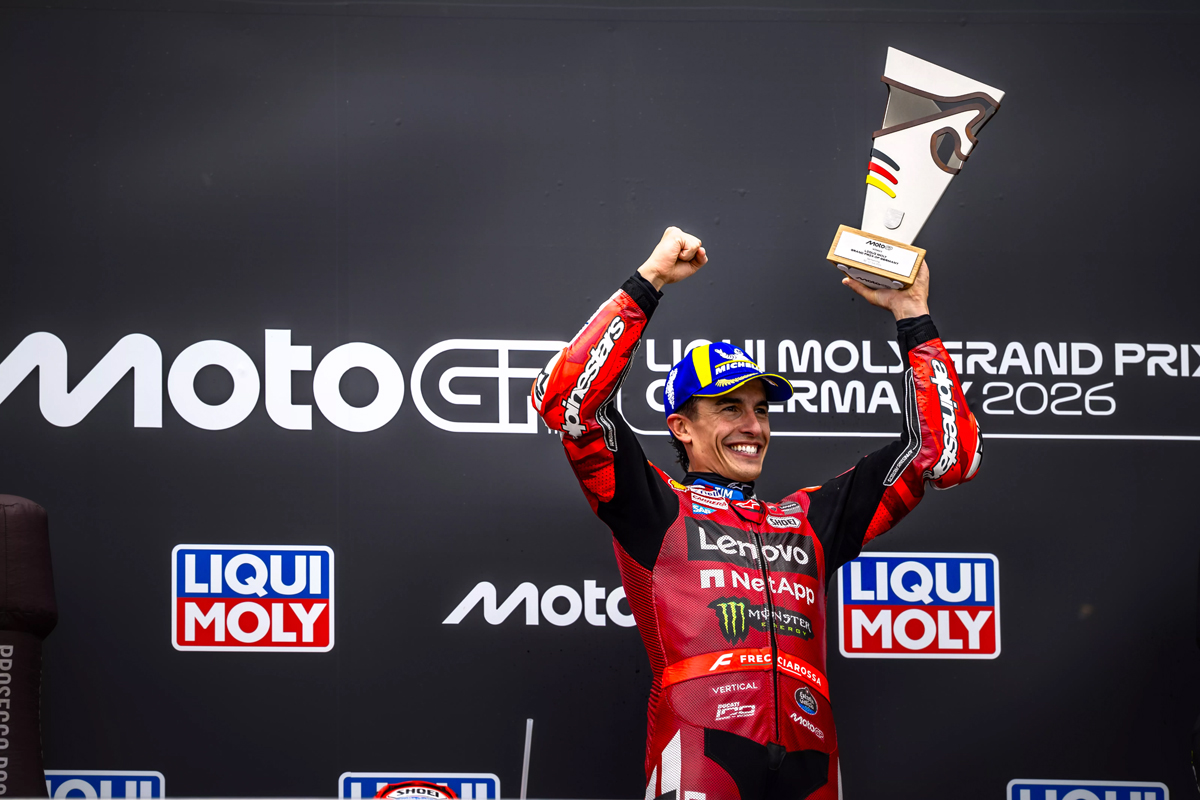
The Sachsenring is no Imatra, but it is still a track where Marquez can almost guarantee victory, stealing a handful of points from his rivals. The big secret to this track is that it runs anti-clockwise, meaning an excess of left-hand corners, which Marquez loves, while it also plays to his injuries in that it puts a lot less pressure on his right shoulder.
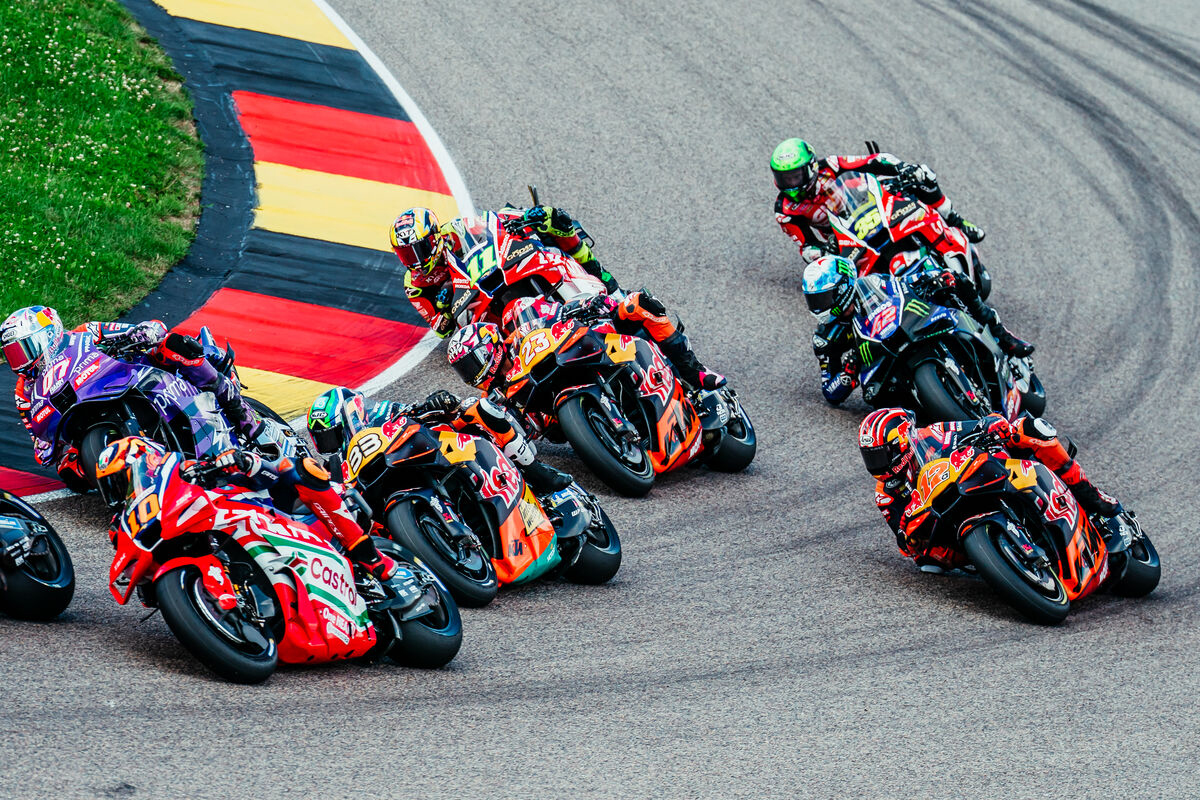
The Sachsenring is also a great track to watch MotoGP riders ply their trade, with long, long corners that really work the tyres, and significant changes of elevation. The fast right-hander onto the steep downhill section before the two lefts to take them back onto the pit straight is a corner that really sets the men apart from the boys.
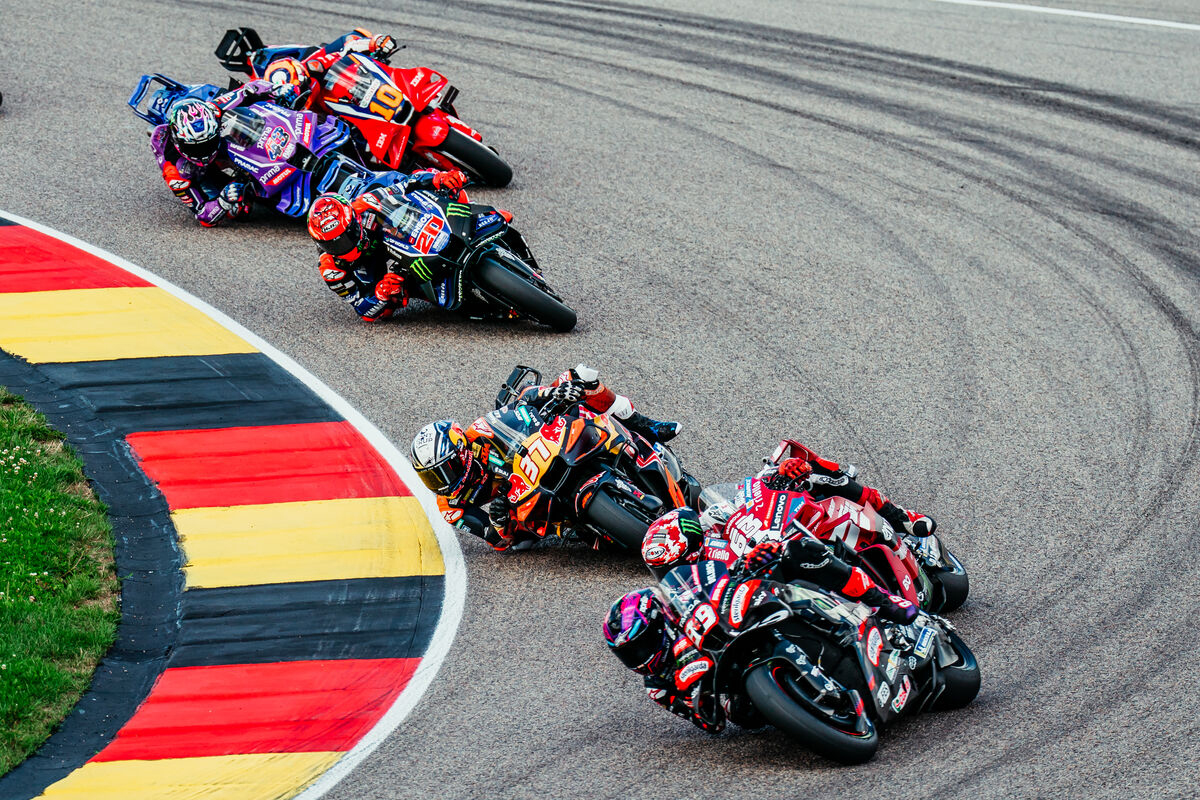
The main point to take from Germany was not the races themselves, which were pretty dull affairs, if we’re honest, but rather the continuing implosion of the factory Aprilia team, which has been happening since Mugello, four rounds ago.
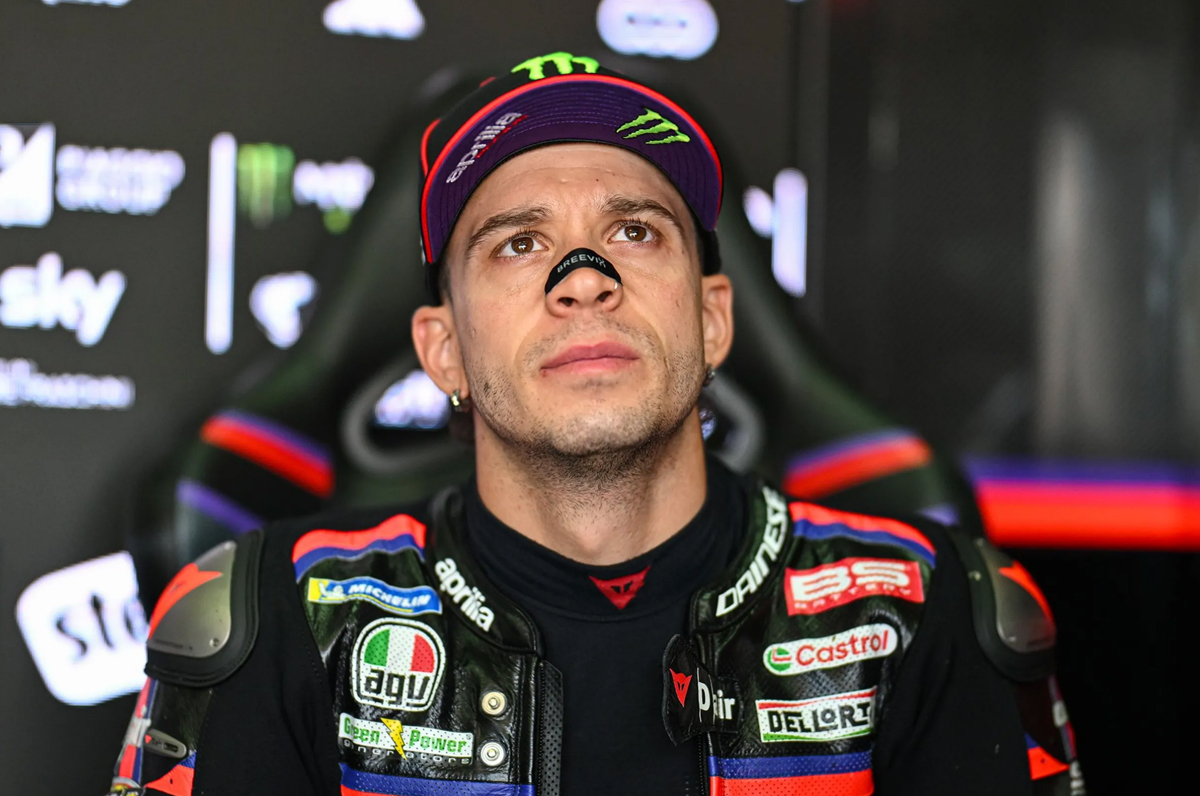
You may remember the beginning of the season, Bezzecchi taking three wins on the trot, before losing three on the trot and then winning one more in Italy, while Jorge Martin did a double at Le Mans in between.
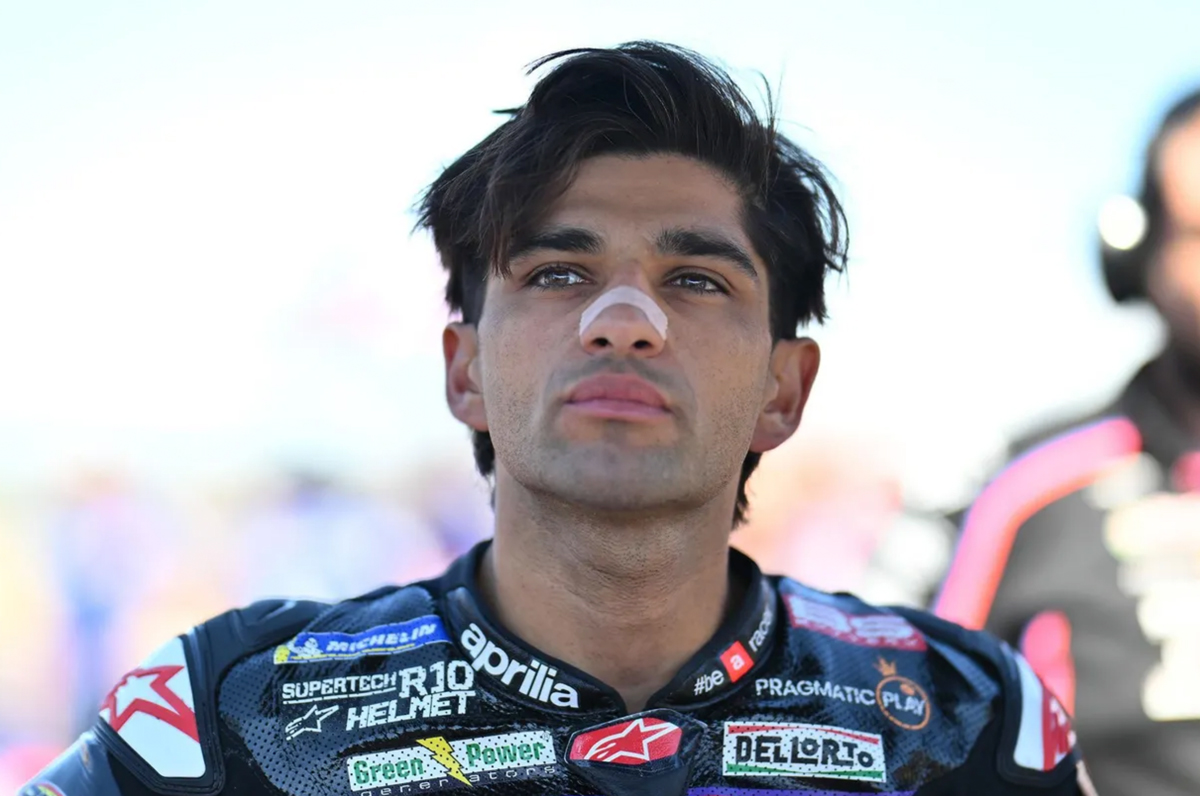
Since then – Hungary, Czechia, Holland and Germany – the factory Aprilia team has only troubled the GP podium once, courtesy of Martin in Assen, with one Sprint podium for Bezzecchi. The Trackhouse Aprilia team in the same period has taken a GP win (Ogura), a Sprint win (Fernandez) and five additional podiums. Bezzecchi hasn’t helped his chances with a disqualification from the Czech GP, crashing out of the Assen GP and an injury in qualifying, ruling him out of the German GP weekend.
And all this time, Marc Marquez has been defying his injuries to take a double in Hungary, a GP victory in Brno and another double in Germany. What was once a 102-point deficit to Bezzecchi is now an 18-point deficit to championship leader Martin, with Bezzecchi now behind him and Ogura only four points in front!
With a four-week break in which to recover full fitness in his right shoulder, and given his relentless presence at the front of the grid and in the results, nothing is standing in Marquez’s way of an eighth title. Yes, Martin is leading the championship, and Ogura has plenty of momentum, not to mention Fernandez and DiGiannantonio in the mix, but there is just something inexorable about Marquez’s progress and his rivals’ crumbling in front of his eyes.
What is also evident is the change in his attitude on race day. If he has no chance of winning, rather than throwing himself down the road in an attempt to achieve the impossible, he’ll play the percentage game and take the points, preferring to bide his time for when the pendulum swings back in his favour, such as Germany. Injury has added yet another weapon to his armoury – patience – and his rivals should be worried; a Marc Marquez using his head as well as his talent is very dangerous.
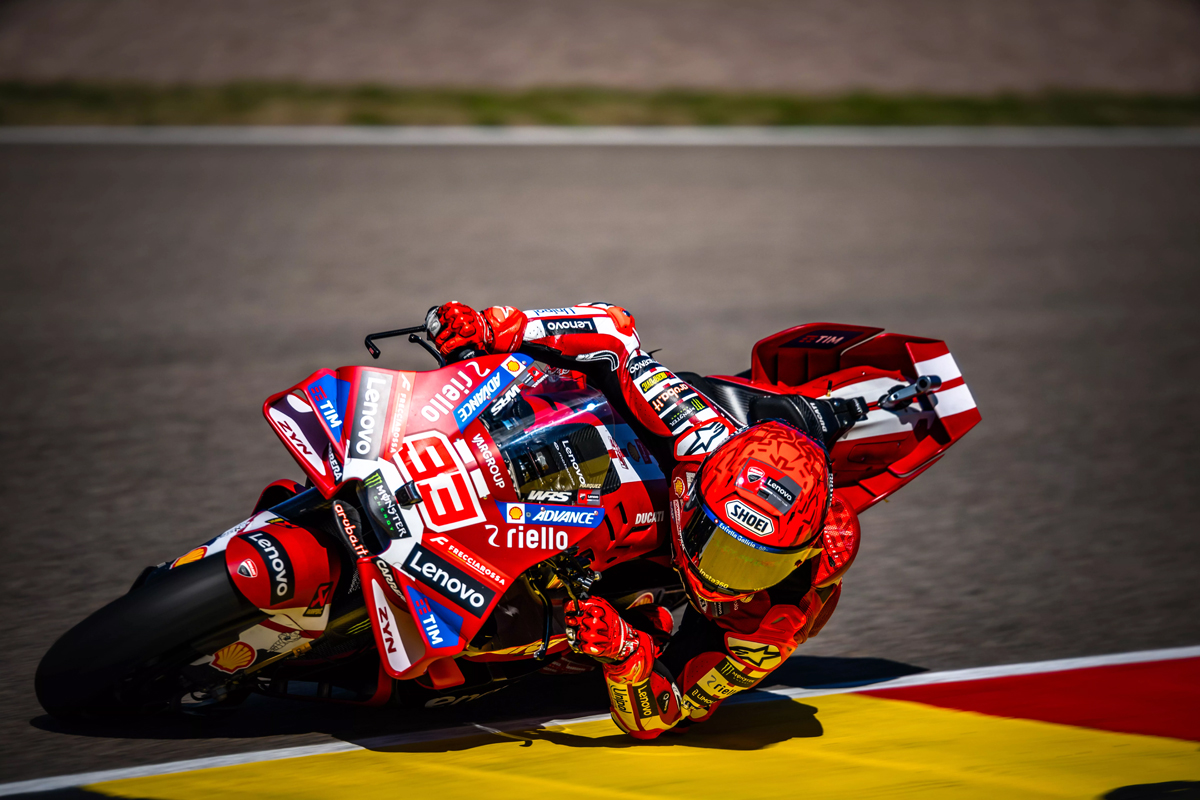
In Germany, not once did Marquez look like he was pushing any envelope, the mild crash in FP1 notwithstanding. He did what was necessary and nothing more. In the unlikely event he was running second or third, you get the impression he would have settled for that – especially knowing that Bezzecchi was out before the racing began – rather than risking all to make up a place.
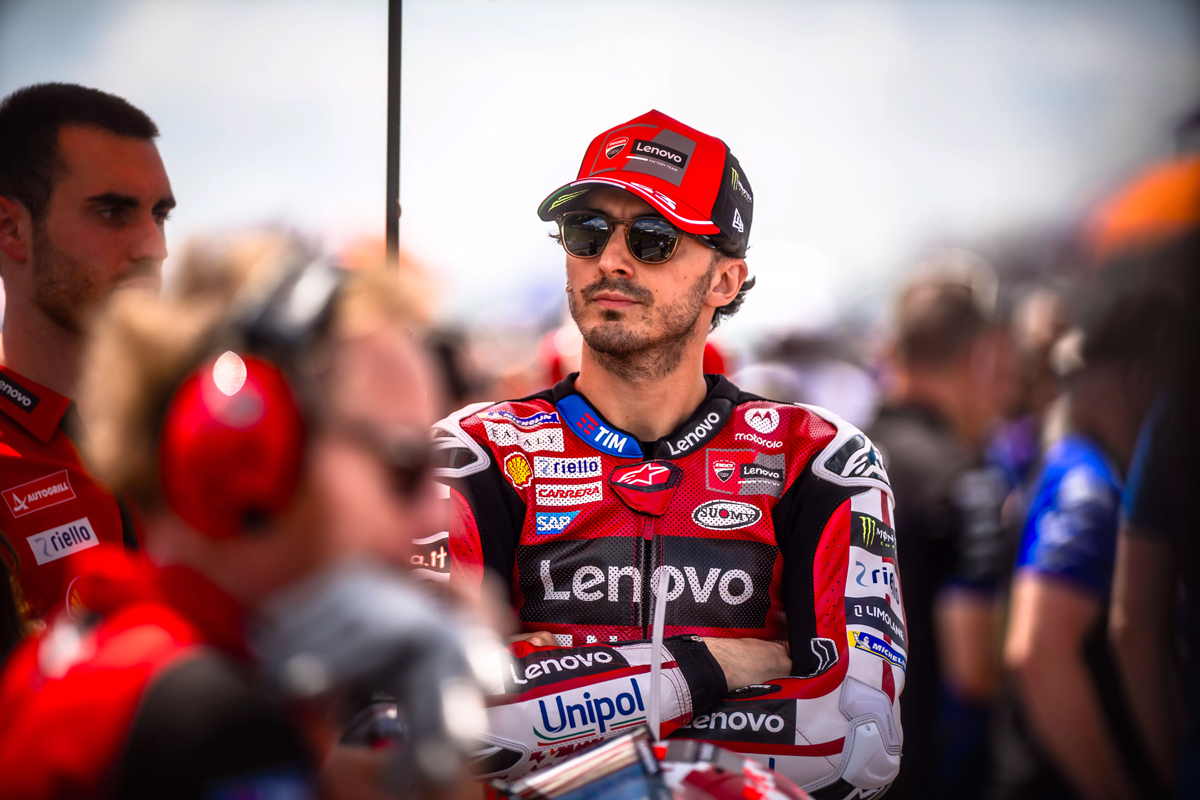
Another interesting thing about Marquez’s success (and DiGiannantonio’s and Alex Marquez’s, for that matter) is Bagnaia’s failure to achieve the same results with the same bike. His move to Aprilia surely can’t come soon enough for the two-time world champion. It’s not that long ago that he was challenging for the title (2024, against Martin) or winning back-to-back titles (2022 and 2023), which must make his form in 2025 and 2026 even harder to bear, especially when his teammate and the satellite riders are winning races and titles on the same machinery.
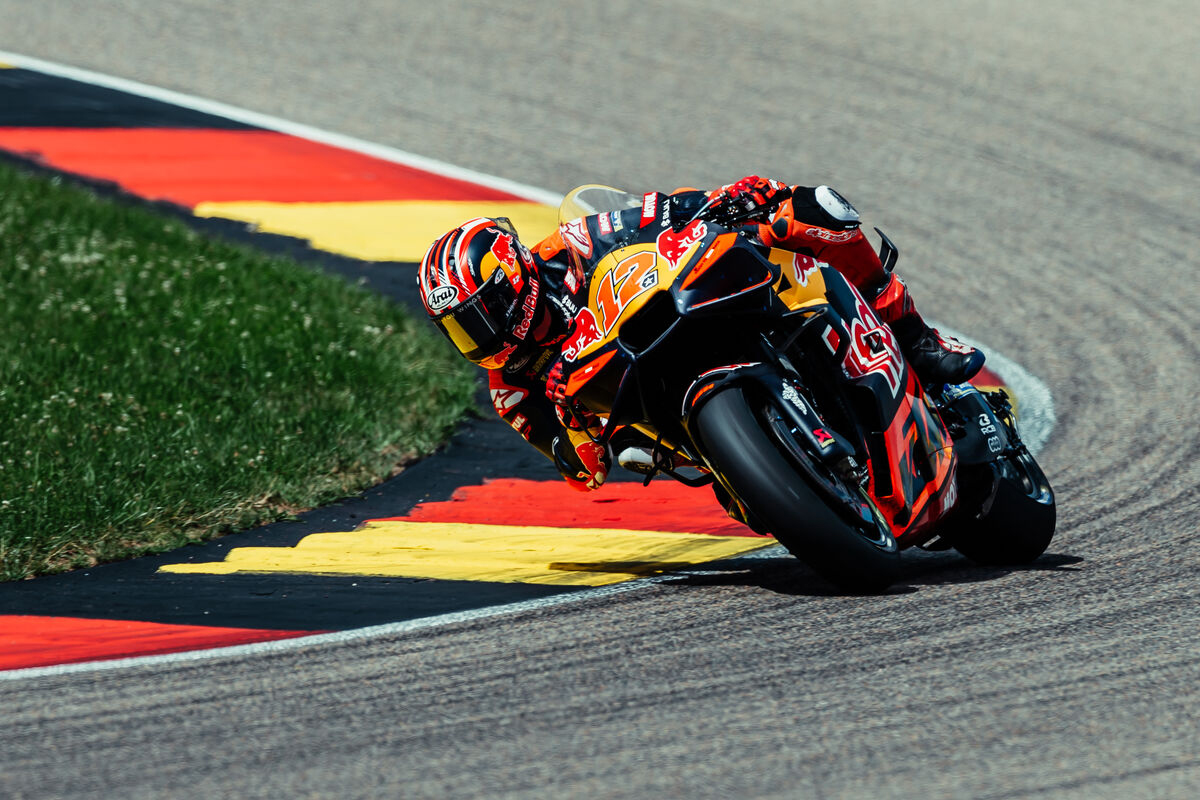
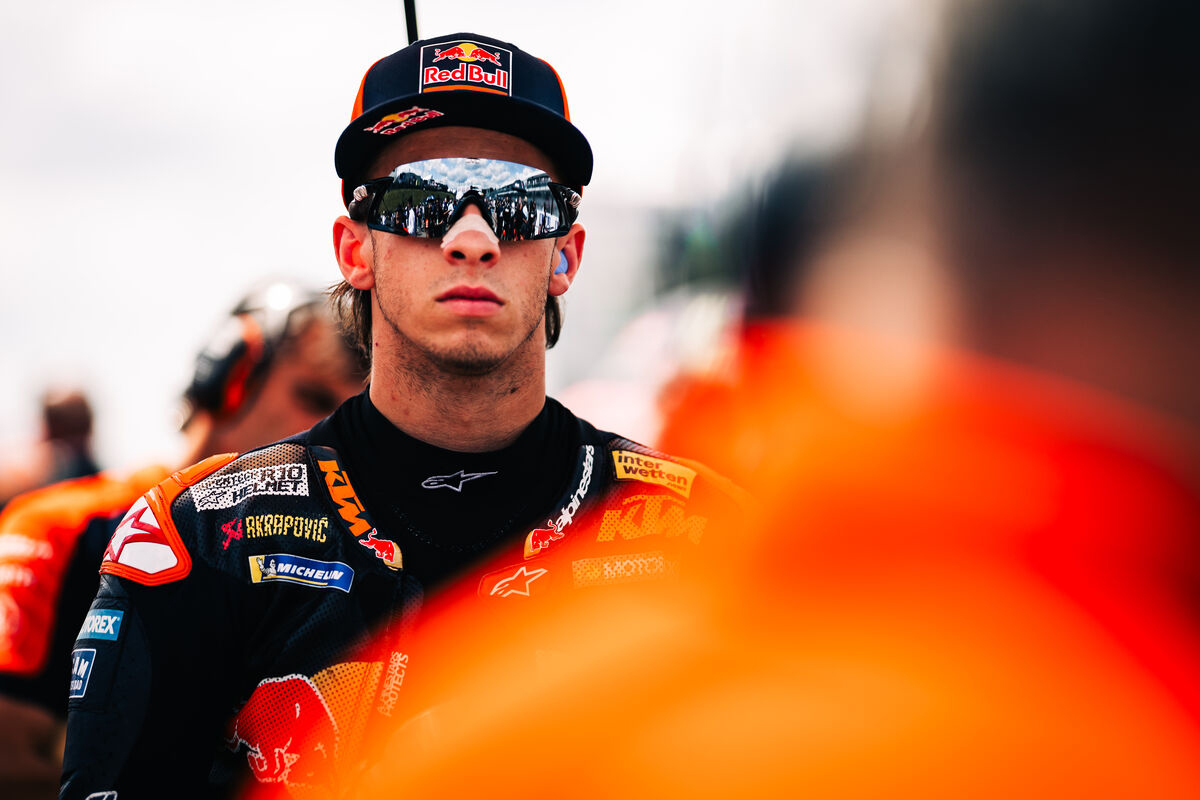
Meanwhile, it’s all happening at KTM! For the second time in his career, Maverick Viñales is torpedoing his chances of staying with the team, while KTM itself is admitting there is something very wrong internally with its engine.
Viñales was once looking good on the KTM, getting results that the other riders could only wish for and being seemingly a shoo-in for the factory KTM team for 2027. Then came injury and a really protracted recovery, which sidelined him – and continues to do so – followed by a series of remarkable outbursts against Tech3 and KTM. First, he claims he signed a contract with the team that was then rescinded, not that he really wanted to sign it in the first place. That provoked the comment, “I don’t want to stay here. This was not really serious from their part.”
Then he claims he has been promised one thing – a seat at the factory team – only for that to be withdrawn, with a potential seat at Tech3 replacing it. He also claims there was a clause in his KTM contract preventing him from negotiating with other teams, which he respected, only for KTM not to honour its promises to promote him to the factory team, leaving him no time to find another seat.
Meanwhile, KTM has insisted that it has done everything to help Viñales recover from injury and has seemingly forgiven him for the outbursts, which must be largely due to frustration at his own situation. However, the manufacturer is bound to look after its future and, in the face of Viñales’ continuing injury issues, had no choice but to look elsewhere to fill the factory and satellite team seats.
We may yet see Viñales on a bike next year – there is no doubt he is still a very good rider – but, boy, is he emotional! Look at the end of his Yamaha period, and now history is repeating itself at KTM. If he doesn’t feel loved, he throws his toys out of the cot, and that’s not going to endear him to many teams.
For its part, KTM has admitted that there is a problem with its engine, which has had consequences on track, not least of which was Acosta’s issue in Spain that caused him to slow suddenly and catch Alex Marquez out, leading to his huge accident.
Given that engine design and upgrades have been frozen since the beginning of 2025, the problem likely lies with manufacture or supply, as the problems didn’t exist in 2025, but KTM needs clearance from all rival manufacturers to unseal the engines to investigate and replace parts. Aprilia has consented, but it is not known what response the other teams have given.
Happily, KTM announced a renewal of the Red Bull sponsorship for 2027 and beyond, which is as good an indication as any that the manufacturer will be part of the MotoGP scene for the foreseeable future. Watching a race from the 1990s the other day, I was struck by the number of bikes on the grid – way more than the 22 we have today (although a lot of those in the ‘90s would have been privateers with little or no chance of troubling the podium) – and it brought home that we might have less bikes today but the level of skill from front to back is much more consistent. However, MotoGP can’t afford to lose any bikes from the grid if the series is to remain healthy.
For some teams – Yamaha, Honda and KTM – the complete reset that will be 2027 can’t come soon enough. Don’t forget also that it is going to be a reset in more ways than one; the bikes will change, of course, but also there will be a huge change in the rider market, making 2027 one of the biggest shake-ups of the status quo in the history of the sport. I can’t wait for that, but until then, let’s enjoy the second half of this mesmerising season, after a short pause to catch our collective breath.