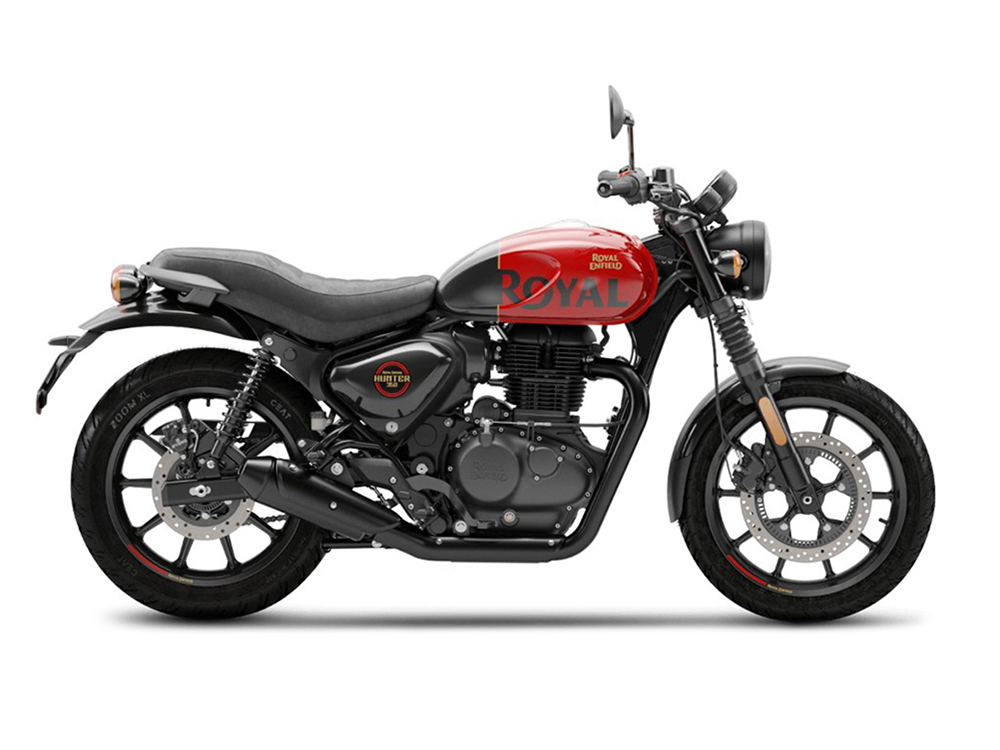



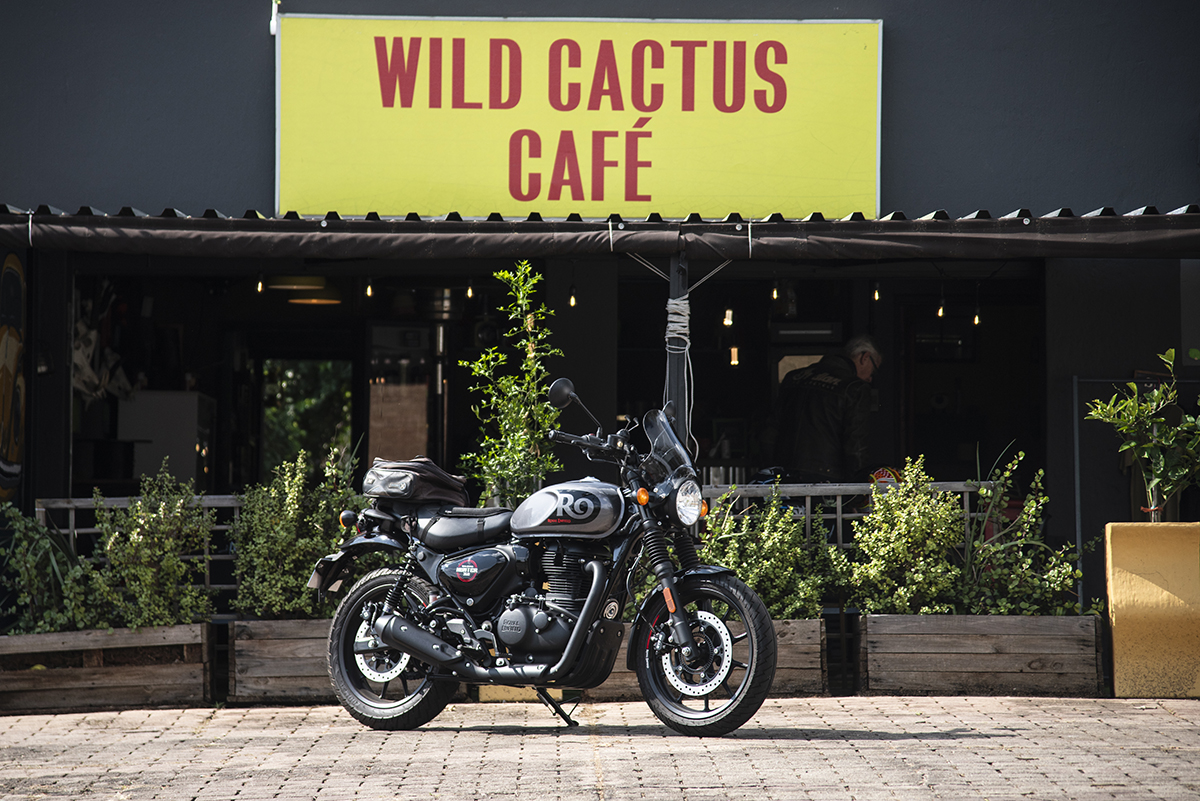
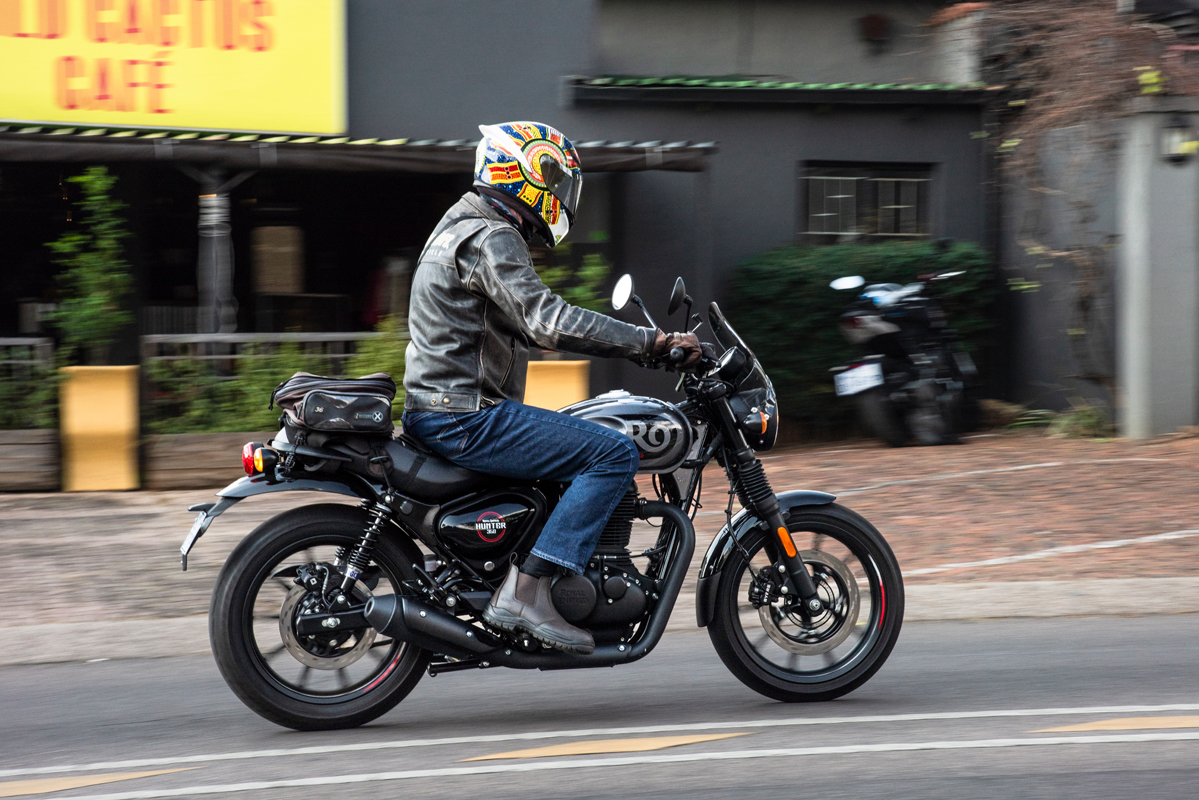
My Royal Enfield Hunter 350 has now ticked over 6,000 km, and I have to tell you, I have enjoyed every moment on it! So much so that I sifted through an accessories catalogue and bought some cool goodies for it. More on that later. Living with the Hunter is just so effortless. Whether it is pushing it around in the garage or negotiating congested highways and byways, its light and agile persona is such a pleasure. I want to try to put into words exactly what it is about the Hunter that has so won me over. To best explain, I want to expand on Royal Enfield, the brand.
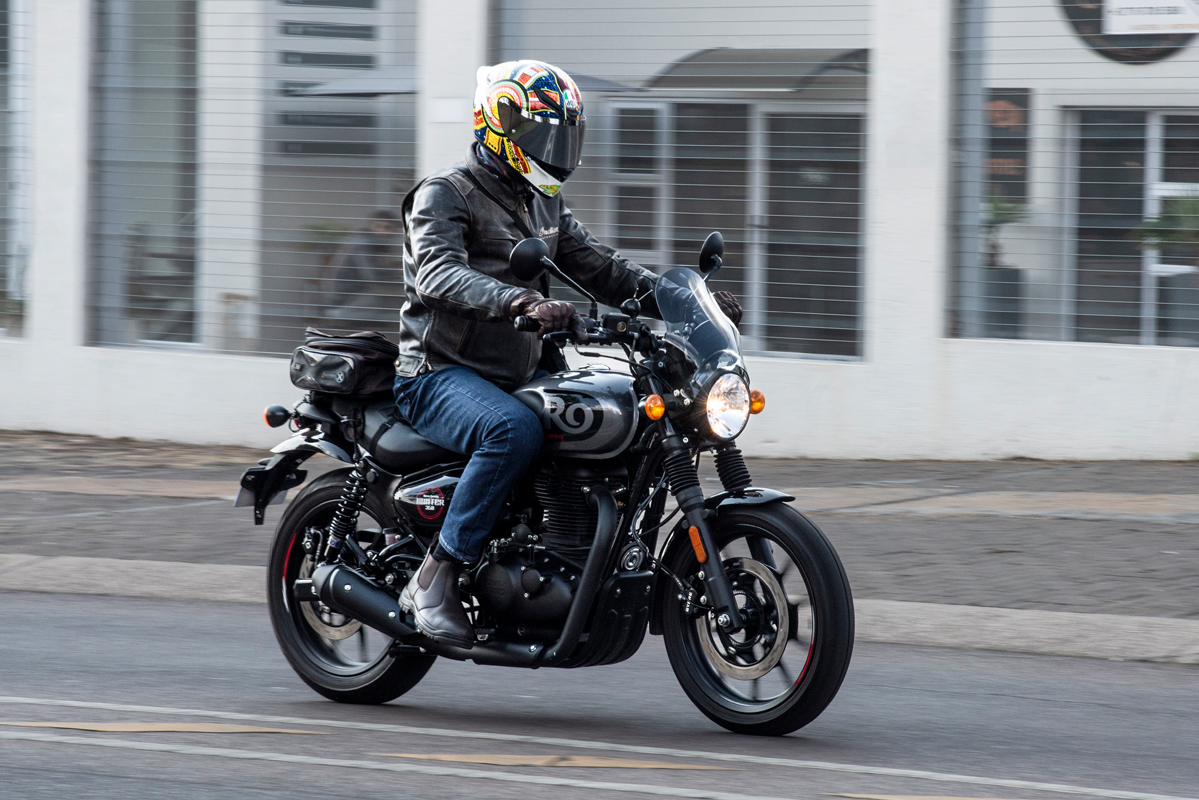
Why Royal Enfield Is Winning
What if I told you that Royal Enfield, in 2025, sold almost as many motorcycles globally as Triumph, BMW, Harley-Davidson, Ducati, KTM and Kawasaki combined! Royal Enfield sold over 1,2 million bikes! All the legacy brands mentioned above together only sold about 40,000 more bikes. But, as the ad famously says, “that is not all”. The average age of the buyers of the combined brands hovered around 50 years of age, whereas the average age of Royal Enfield buyers was 27 years old. The legacy brands bristle with tech and all the bells and whistles, whereas Royal Enfields are the essence of motorcycling simplicity. On paper, the Enfields also don’t seem to match up. Let’s just take one example. Kawasaki’s ER-6 (Z650/Ninja 650) has a 649 cc engine which develops 72 HP and 66 Nm of torque. By comparison, the Royal Enfield Bear 650, with its 648 cc air-cooled twin, produces 46,4 HP and 56,53 Nm of torque. The only notable benefit of the Bear is that it produces its torque 2,000 rpm earlier in the rev range. So, what’s up?
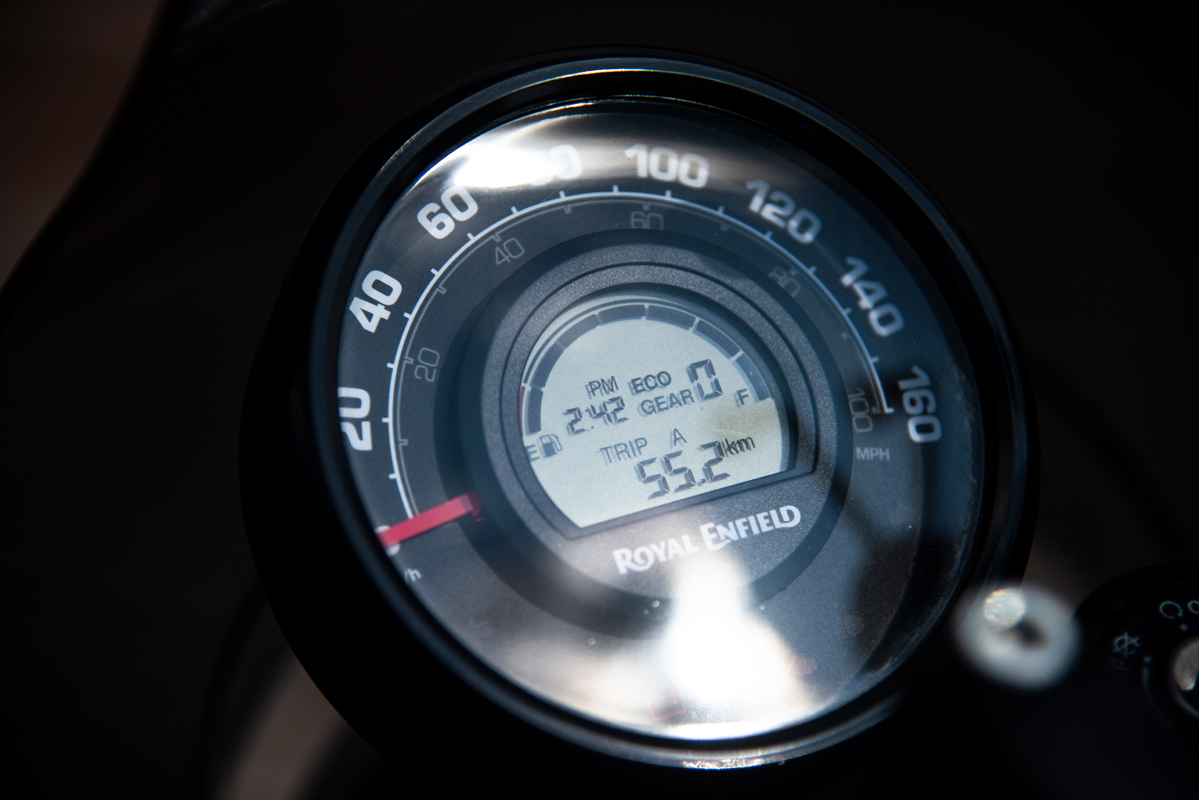
The statistics suggest that the Gen Z buyers of Enfields are “tech’ed out” and revel in the analogue simplicity of offerings from Royal Enfield. The obsession with tech and speed that has driven bike development up to now is apparently being replaced with motorcycles that remind folks of a less complex and way simpler world. They are voting with their wallets for bikes that are driven more by soul than ego. Royal Enfield has resisted the temptation to simply play in the same space as everyone else, but has set the standard for simple, affordable, robust motorcycles with soul. Bikes that foster a feeling of wellbeing in riders as they burble down the road on a wave of torque.
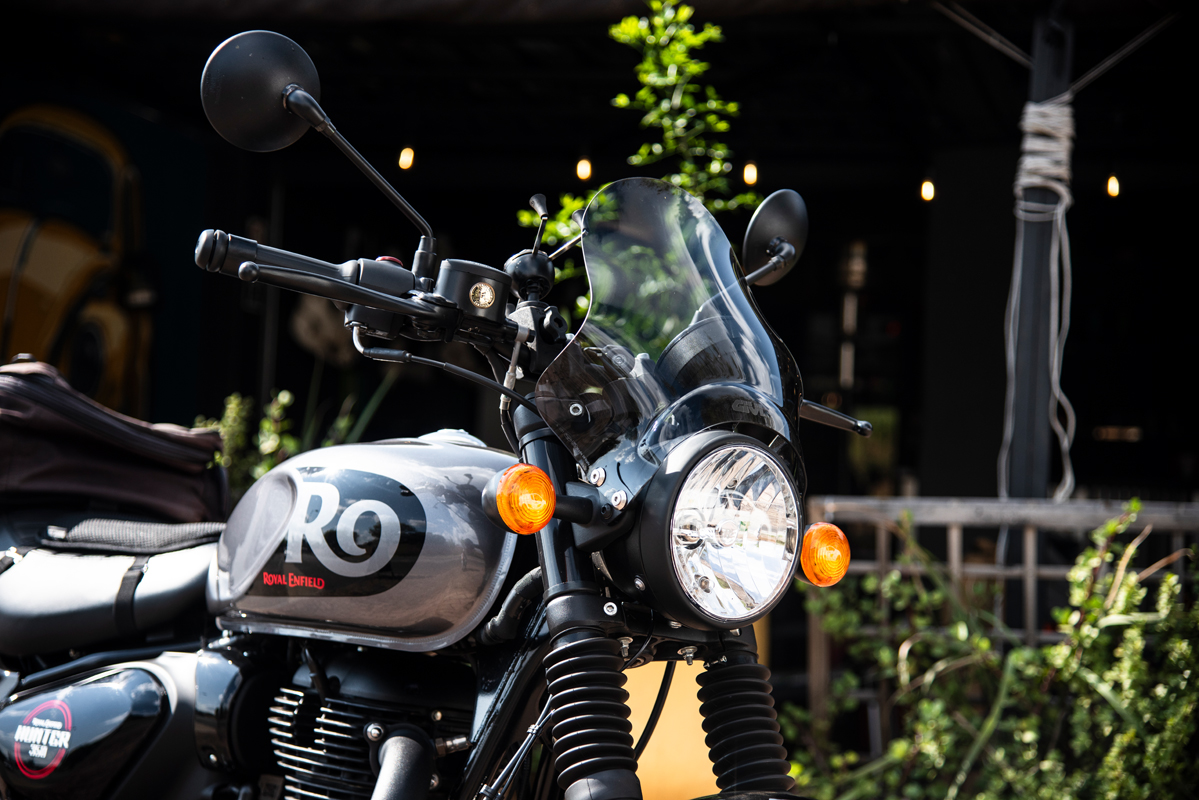
And then there is the styling. Ageless. I always park my little Hunter where I can see it as I sip on my flat white. I have said before that my Hunter is seriously slow, and it is, but it is slow in a really cool way. Let me try and explain. Back in the ‘70s I owned a Honda CB350 Twin. The little Honda developed a healthy 36 HP, but at a stratospheric 10,500 rpm; similarly, the maximum torque was 25 Nm @ 9,500 rpm. My little Hunter looks anaemic by comparison with a mere 20,2 HP, but that is delivered at 6,100 rpm and the torque of 27 Nm @ 4000 rpm. Do you understand why specs don’t tell the true story? The Honda blows the Hunter away on peak power and almost matches it on torque, but it has to be revved out of its wits to do it. Riding the Honda, you feel as if you are constantly wringing its neck, whereas the Hunter motors along without a care in the world, equalling and overshadowing the real-world performance of the Honda in a totally chilled fashion. Guess which bike is easier to live with?
Making the Hunter My Own
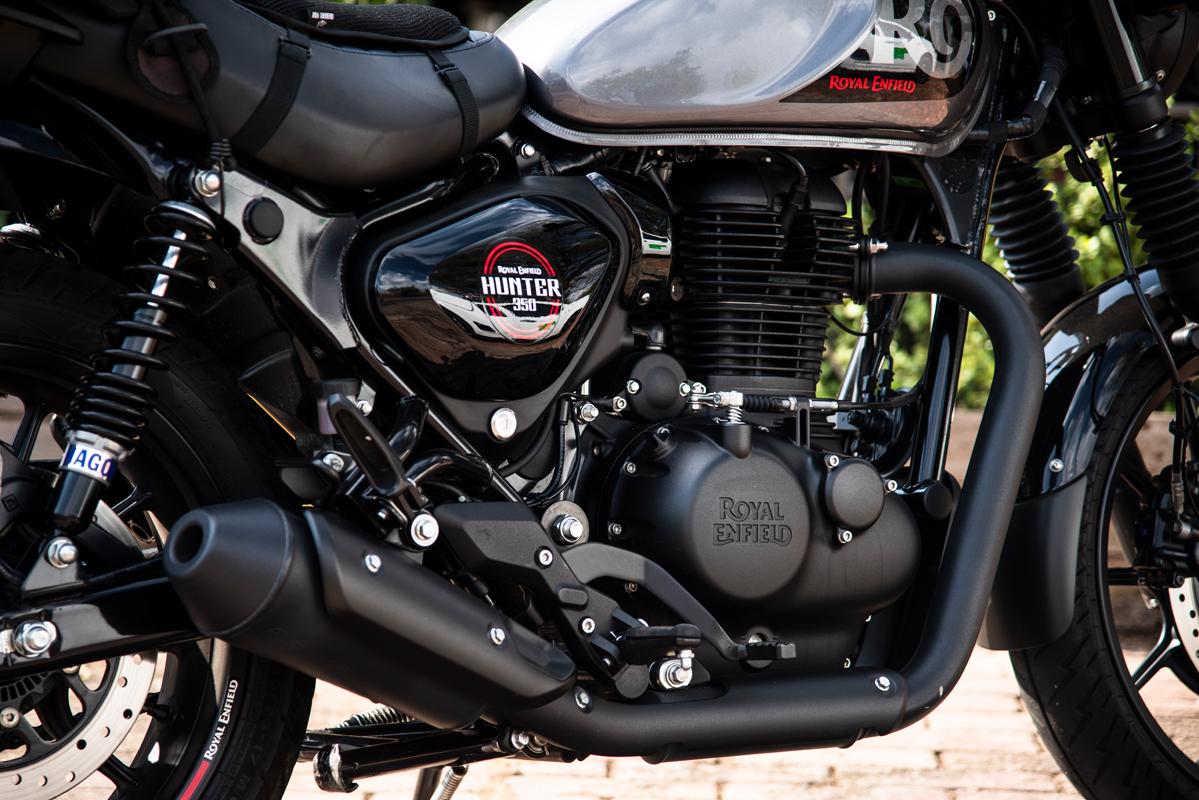
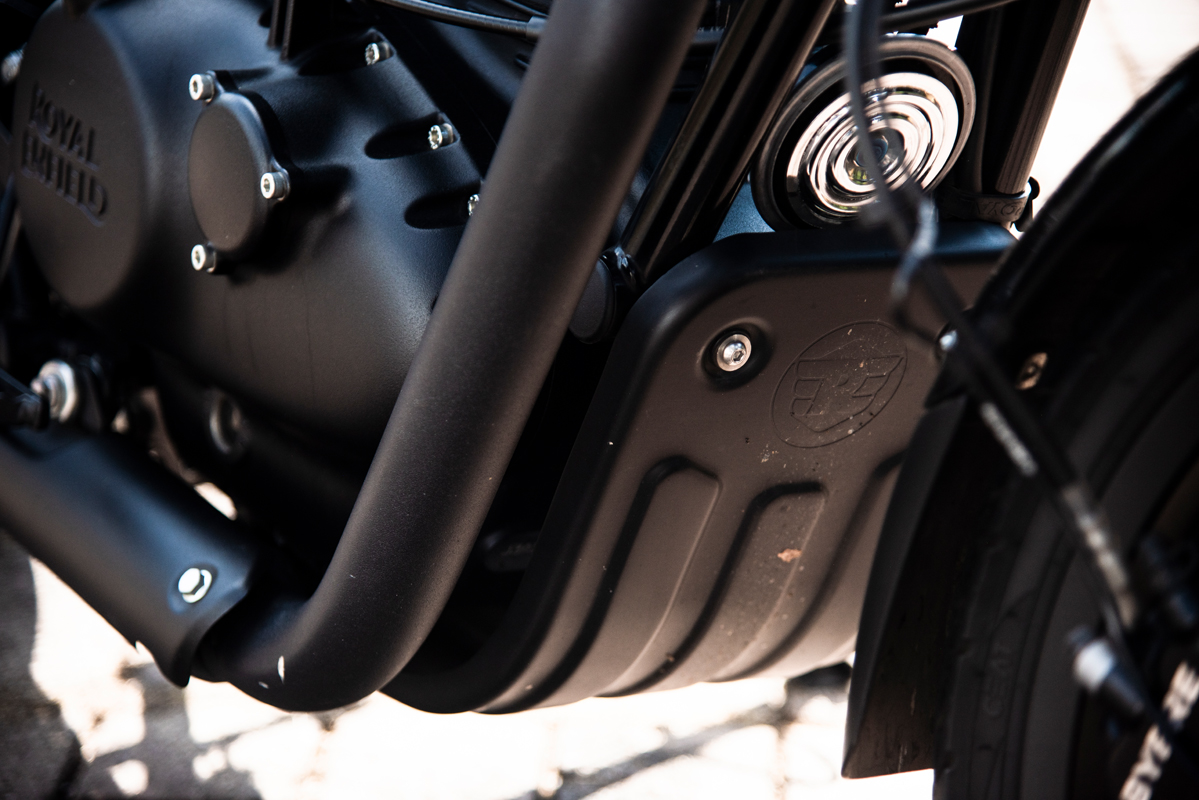
Royal Enfield’s J-series engine, which powers its 350 range, is a beautiful thing. It is unbelievably smooth throughout the rev range and constantly sips from a deep and accessible well of torque. An Australian motorcycle comparison puts it superbly when they say, “it is low powered, not underpowered”. Given the price of the Hunter at around 80 grand, it is also a blank canvas for subtle customising. When I got the bike, I fitted a factory skid plate because I knew that at some point, I would meander down a dirt road. Then, as we bikers are wont to do, I started searching the net for Hunter bits and bobs. Enter Hitchcocks in the UK.
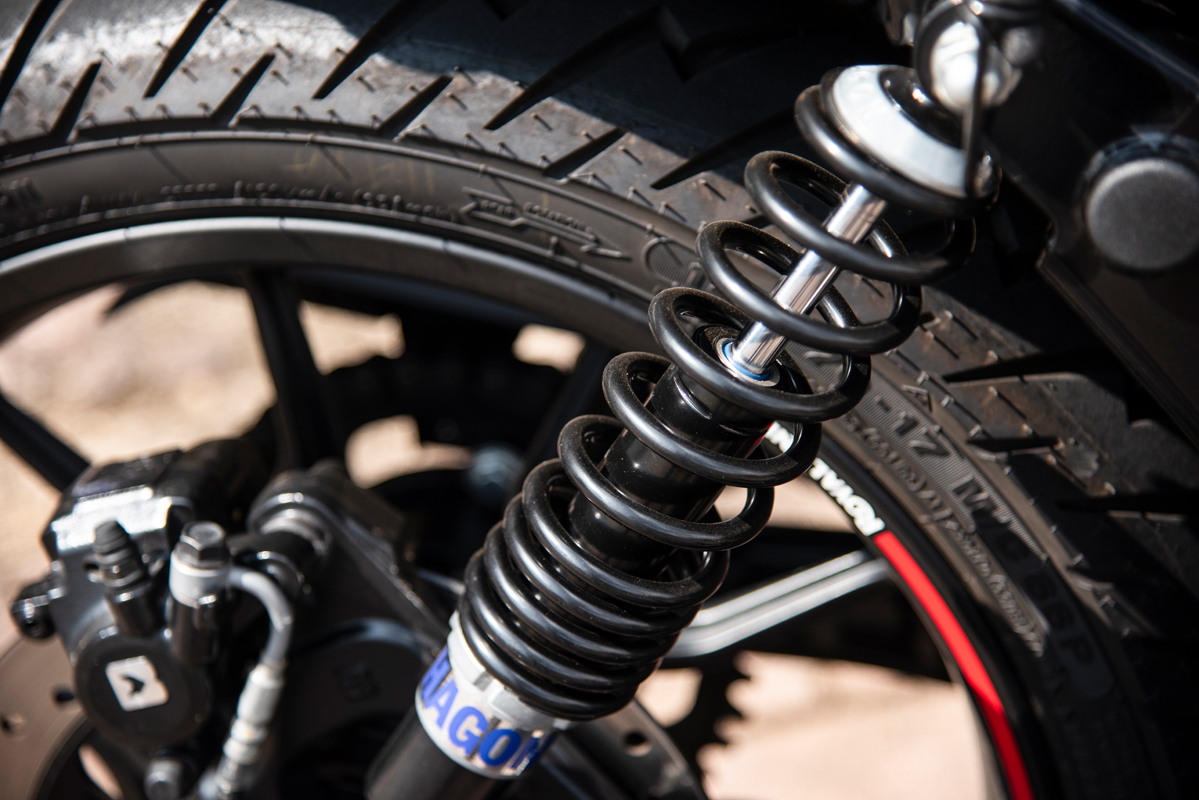
Dealing with Hitchcocks was amazing. Firstly, their website is super easy to navigate, and even with my palpably pathetic computer skills, I was soon immersed in the pages of farkles for my Hunter. I ended up ordering a Givi screen with a Hunter-specific mounting kit, a set of Hagon rear shocks, a 16-tooth (one tooth up from standard) front sprocket, progressive front fork springs and a set of soft pannier brackets. I ordered, and within an hour got an email asking me to check that my front forks were Showas, as the springs were Showa-specific. Flip, how’s that for service. I confirmed that all was good. On the same day, I ordered a one-tooth bigger sprocket from Triumph in Sandton for my Scrambler 400. 5 days later, my Hitchcocks order was delivered to my door, and Triumph informed me that my sprocket had arrived. Brilliant! Prices compare favourably with anything available locally, even when factoring in import duty.
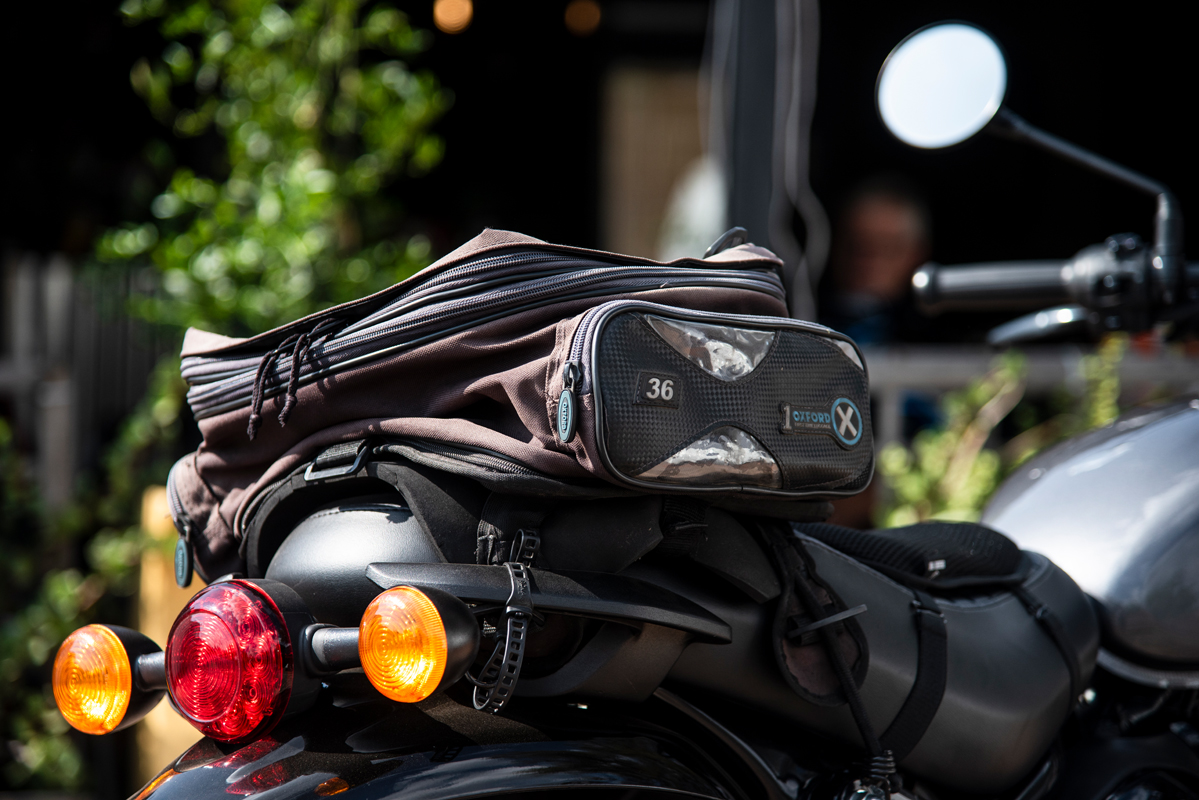
So, why the specific goods for the Hunter? Well, despite softening a wee bit over 6,000 km, the rear shocks on the Hunter are slightly oversprung and maybe a tad underdamped. The result is a bit of a buckboard ride over particularly bad surfaces. The Hagons are slightly softer sprung but with better damping, so the result is a beautiful, controlled ride. Score! The screen is high enough to make a difference to windblast on my body and just looks the business. The front springs will go in at some point, but I’m satisfied with the job done by the standard chaps. Now let’s chat about the sprockets.
Gearing It for African Roads
Indian-manufactured motorcycles, in my experience, are geared on the low side. The reasons are probably that speeds in India are generally low due to the general traffic congestion, and also because you often see a family of three or more on one bike (probably the reason for the firm suspension too). In Africa, with our open roads, we travel faster. On the Hunter, the engine power characteristics are such that at 100 km/h, the motor is turning at around 4,800 rpm. Going a tooth bigger on the front drops the revs to around 4,300 rpm, smack onto the maximum torque. A similar story with the Triumph. The Scrambler 400 is geared lower than the Speed 400, possibly for challenging off-road ascents. In reality, the Speed sprocket on the Scrambler is a gain everywhere. The motor has ample torque at low revs, but you lose the snatchiness in first and second, in favour of smooth linear shove and more comfortable highway performance.
When motors operate at, or near, their torque peak on the open road, they smash hills and cruise comfortably at lower revs, which means lower piston speeds, and ultimately less wear. Radically over-gearing the bike can be harmful, causing lugging and big strain on the big end and other engine components. On both my bikes, one tooth is a revelation. The second reward is fuel economy. Watch this space, but the current tanks on both bikes are already showing signs of improved fuel economy—enough to make fuel station owners sob into their tills.
The Long Way Home
My Hunter is like my best bud. I love hanging with him. I find myself choosing to take the long way home. When time allows, I will do an extended Botswana trip on my Hunter. Hours spent listening to that sweet motor burbling away are the most incredible two-wheeled therapy for me. The speed, or lack thereof, is such a non-issue, and actually a reset. When we did our Tiddler tours on 180 cc bikes to Victoria Falls and back, and then around the Okavango Delta, into the Caprivi Strip and back into Botswana, finally winding our way home, it was a revelation. The travel time and destination faded into obscurity, in favour of the journey and the story that was unfolding. Thanks to Hitchcocks and the latest mods, my Hunter is raring to go. Ally that to the Gypsy in my soul prodding the hell out of me, and we’ll have to come up with a travel plan.
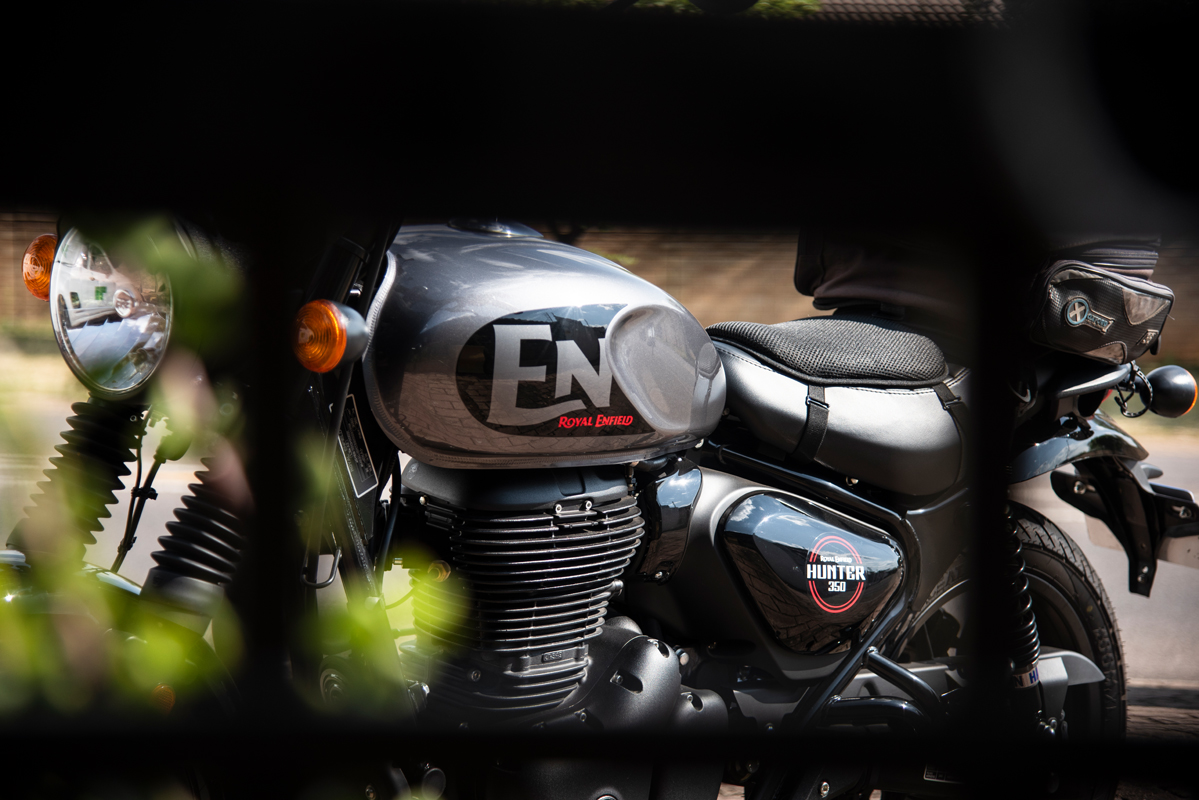
The question you need to ask yourself is: why don’t you have a Hunter in your garage? It’ll save you a fortune in fuel costs, which will mean the bike actually costs you nothing. You can toss your blood pressure meds and get off the Urbanol. Start planning which early morning coffee spots are worth a visit. Finally, I dare you: plan an epic adventure. Something you can tell your grandkids about. In the immortal words of William Wallace in Braveheart, “Every man dies, not every man really lives.” Get a soulmate in the form of a Hunter, or check out the rest of their range, but I promise you, with a Royal Enfield in your garage, your life will take on new meaning.
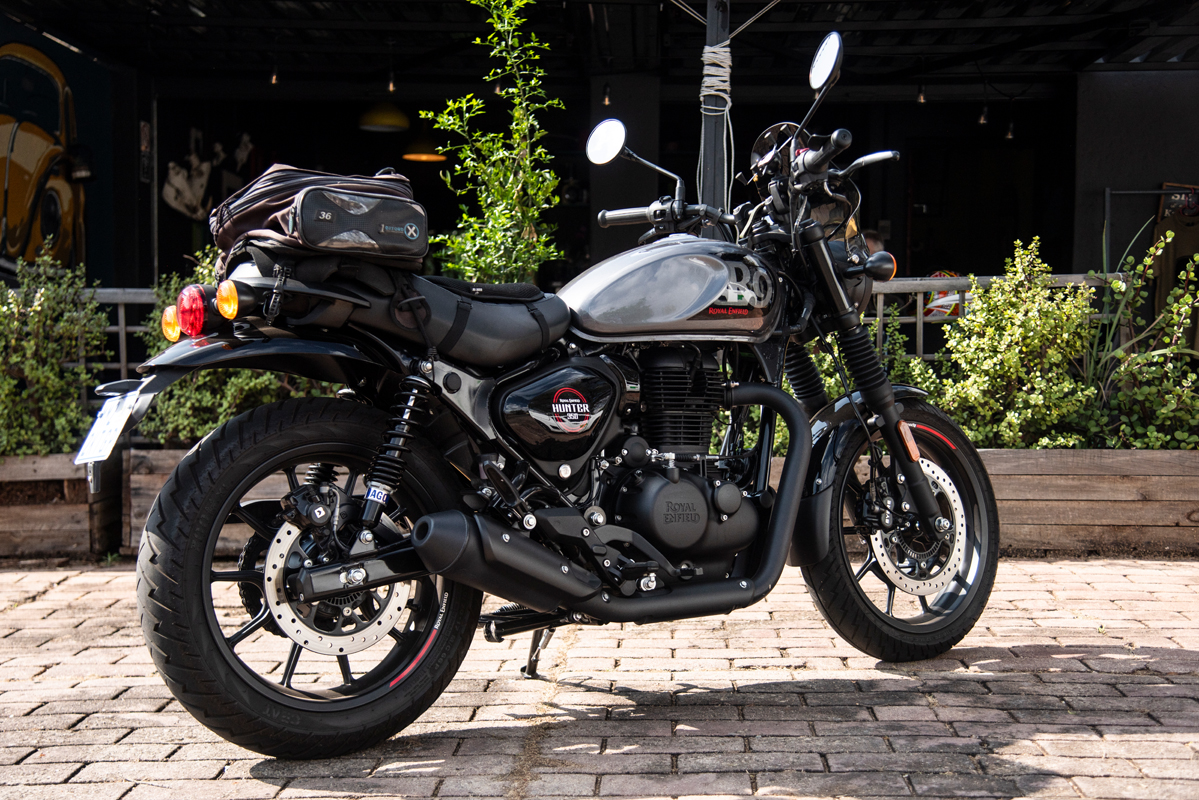
Royal Enfield Hunter 350
For more information on the bike featured in this article, click on the link below…