



My car-buying history has always been based on needs rather than wants. Life started with a two-door hatchback, but when my kids were born, that configuration became impractical. So began a line of people-carriers, right up until the point they got their own cars, and my life simplified again. Currently, my wife has a small hatchback, and I drive a mid-sized crossover. If my choices were based purely on wants, I would probably have a completely impractical sports car in my garage. Something I cannot get into or out of without spraining something.
With my wife about to go on early retirement, my needs are changing again. My personal choice would be a small electric vehicle that we can top up at home to serve as a daily run-around. Mini released the Aceman in South Africa last year, and I reached out to them to see if it would meet my requirements.
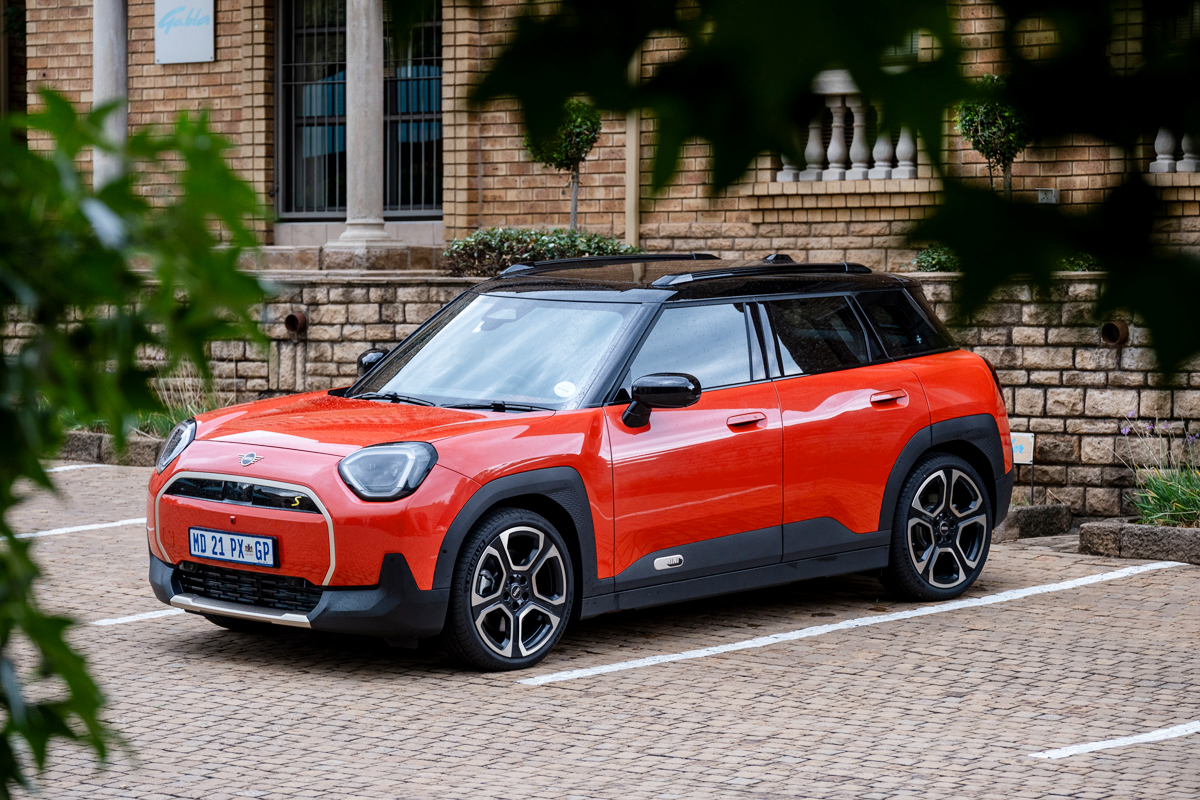
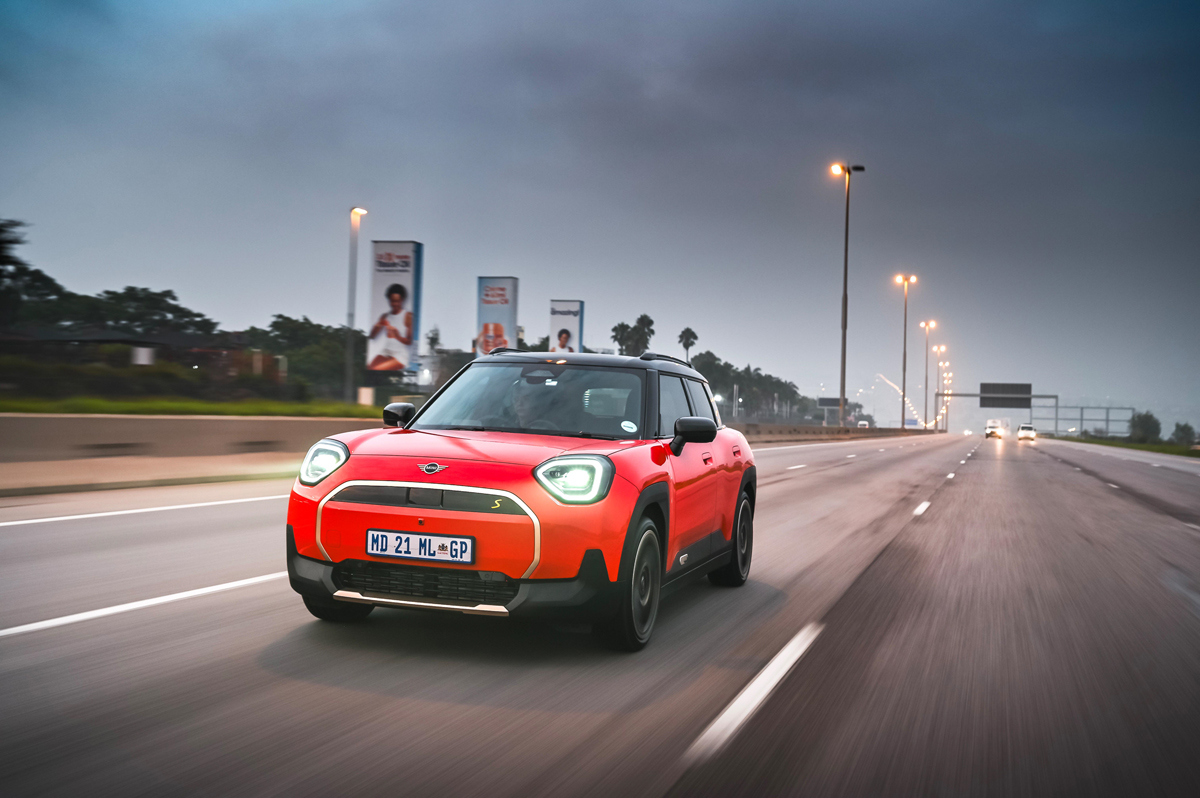
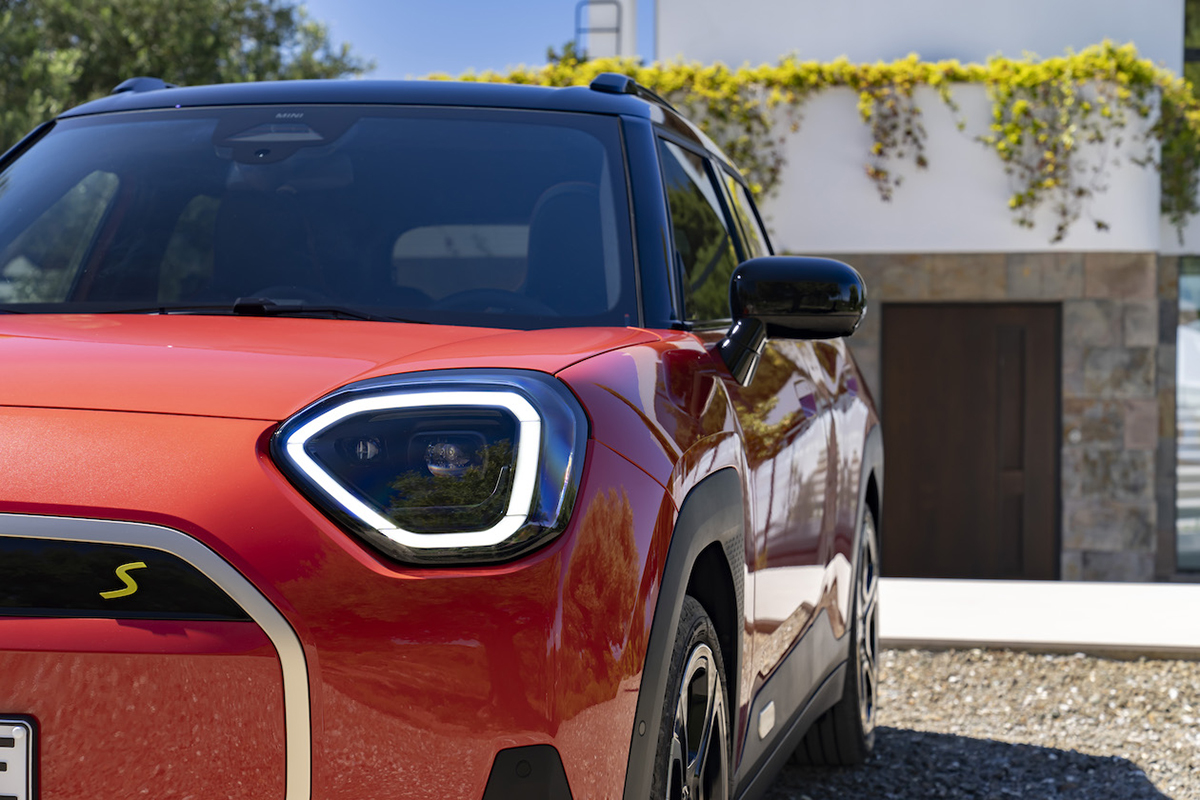
At first glance, the Aceman is unmistakably a Mini, positioned between the Cooper and the Countryman in terms of size. It retains the short overhangs of its siblings, giving it a purposeful look, and the characteristic Mini grille remains, flanked by LED headlamps.
The interior is a visual delight for someone who studied art. Every colour and accent is carefully chosen to complement the others. The dash is covered in a coarsely wound cloth with ambient lighting underneath. That same cloth is present on the door cards, though I must admit the material is not very comfortable if you rest your elbows there. The leather-clad seats are very comfortable, and even here, the colour choices for stitching and piping are meticulous. However, the seats adjust manually, which I found odd for a car in this price range. You sit very low, and because the battery is located under the floor, the foot well space is somewhat limited. The beefy steering wheel reflects the sporty nature of the Aceman SE.
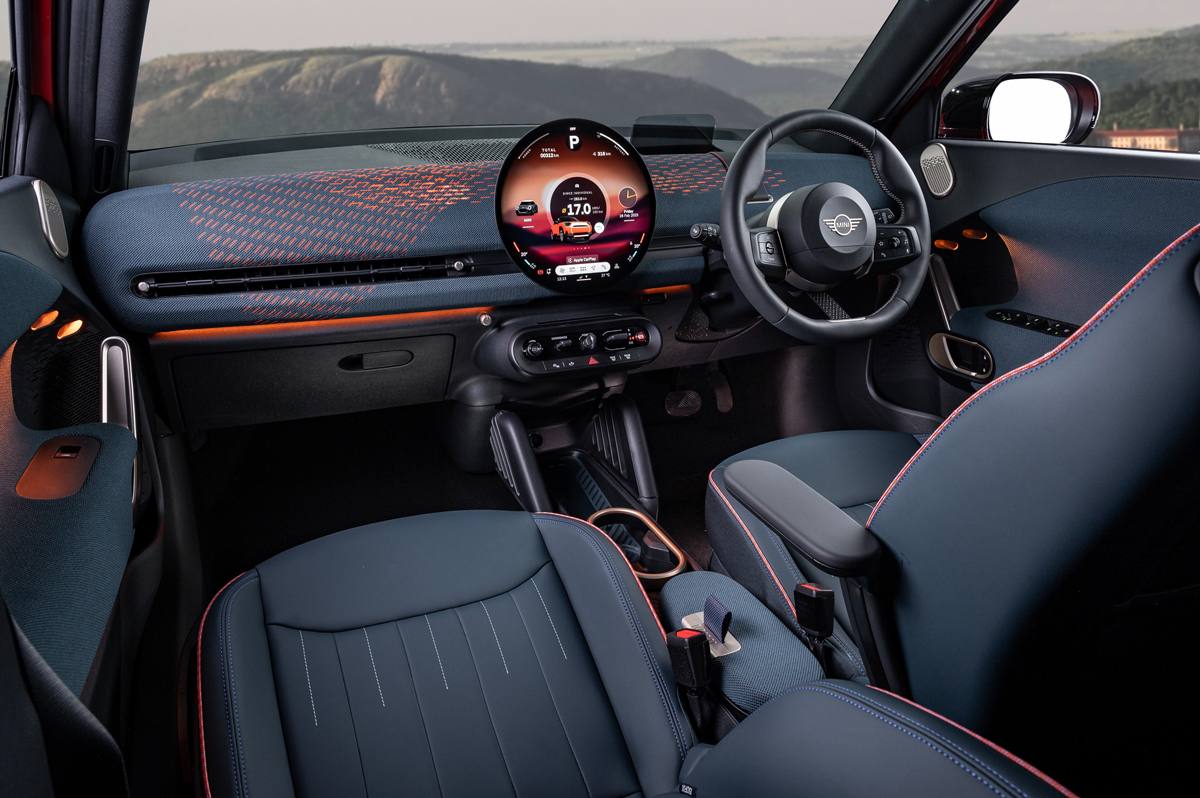
The massive instrument dial sits in the centre of the dash, harking back to the original Mini design. Nowadays, it is an OLED screen that controls everything. The only physical button is for volume control, and pressing it mutes the radio. There is another button to toggle through various display modes; Mini calls “Experiences.” Once you find your favourite screen layout, though, I think you will hardly ever use this button again. Other physical toggles are used to start the car, select the drive mode, and put it in Park.
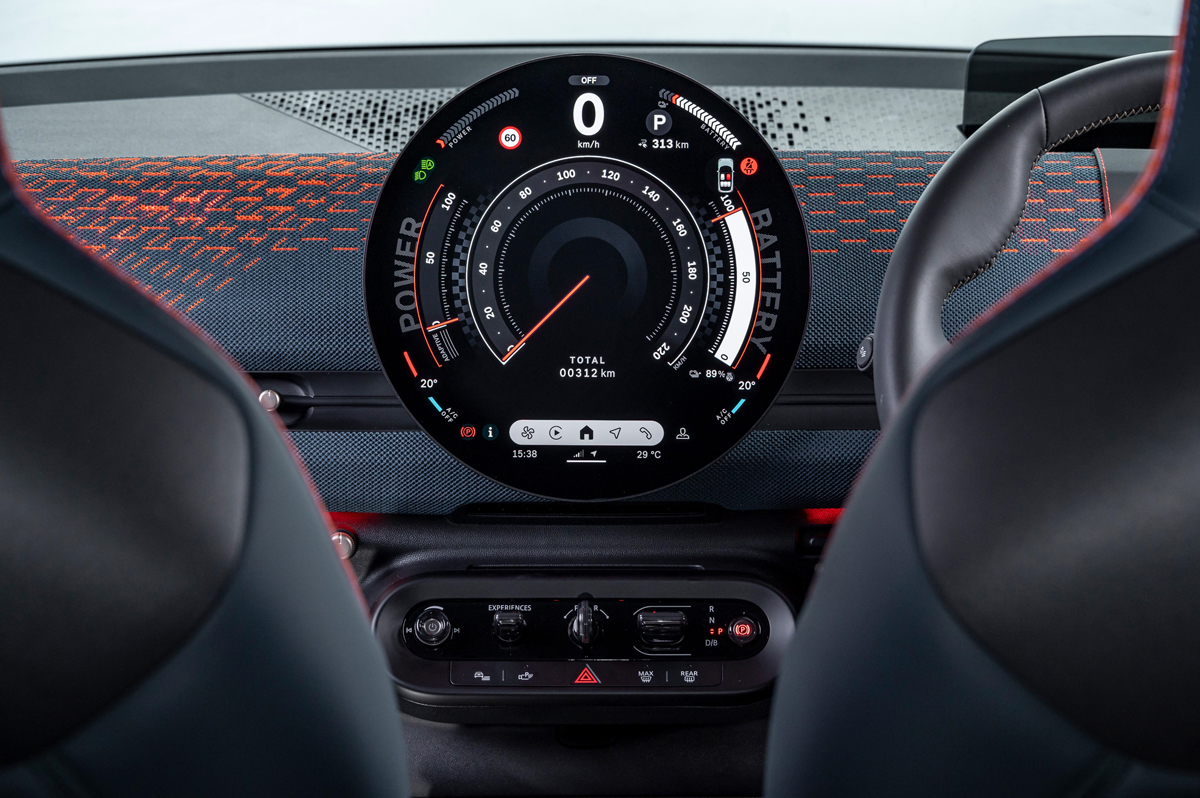
My major gripe with this setup is that even basic tasks, like changing the fan speed, require paging through a menu. In one mode, the adjustment for the fan is at the bottom, in another, it is a vertical setting on the right. It is all a bit confusing.
While exploring the menus, I found an interesting icon for the parking assistant. Using twelve ultrasonic sensors and various cameras, the Aceman can identify a vacant space and parallel park itself. If you have a very tight spot, you can even park the car using your phone. When you return, you can ask the car to drive out of the space so that you can get in comfortably. I gave it a try while reversing out of my garage, and it was unnerving to hand over control to the car. It made some minor adjustments to the steering wheel, and once outside, it attempted to enter the road. At this point, I put a stop to its frivolity. I guess the more you use the system, the more comfortable you might become, but I was not going to risk any further shenanigans. I wanted to return the Mini in one piece and free of dents!
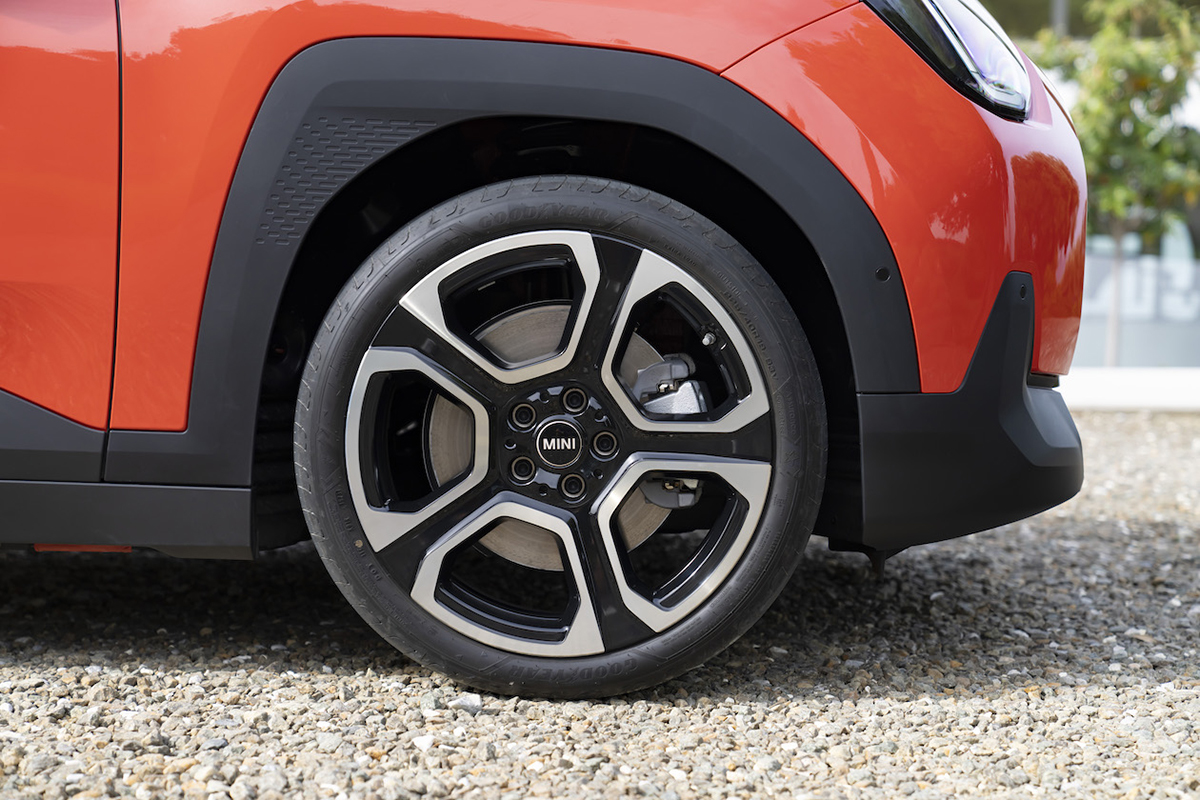
The suspension is on the sporty side of firm, doing an amazing job of keeping the car in check during hard cornering. As with all electric cars, the effortless acceleration is what impresses most. To provide a sense of speed, the Mini emits various electric noises. At first, I thought they sounded great, until I realised the sound was coming from the speakers and everyone outside was completely oblivious to the electric whizzing I was hearing.
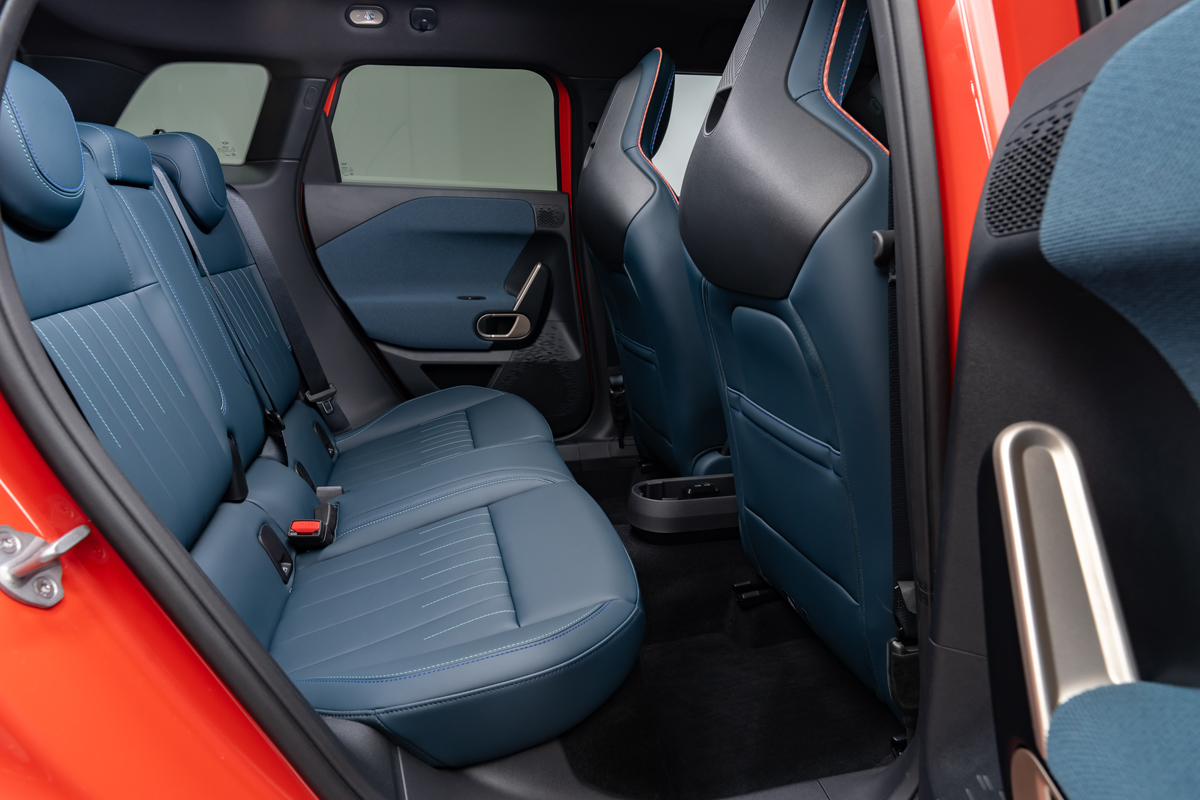
The rear seats have ample space, and the boot is large enough for most eventualities. While the rear seats split for more options, the standard boot space is more than adequate for a car of this size. However, one downside of the under-floor battery is the loss of a crucial item for South African roads: a spare wheel. The Mini only carries a tyre repair kit, which won’t help you in the event of a pothole strike.
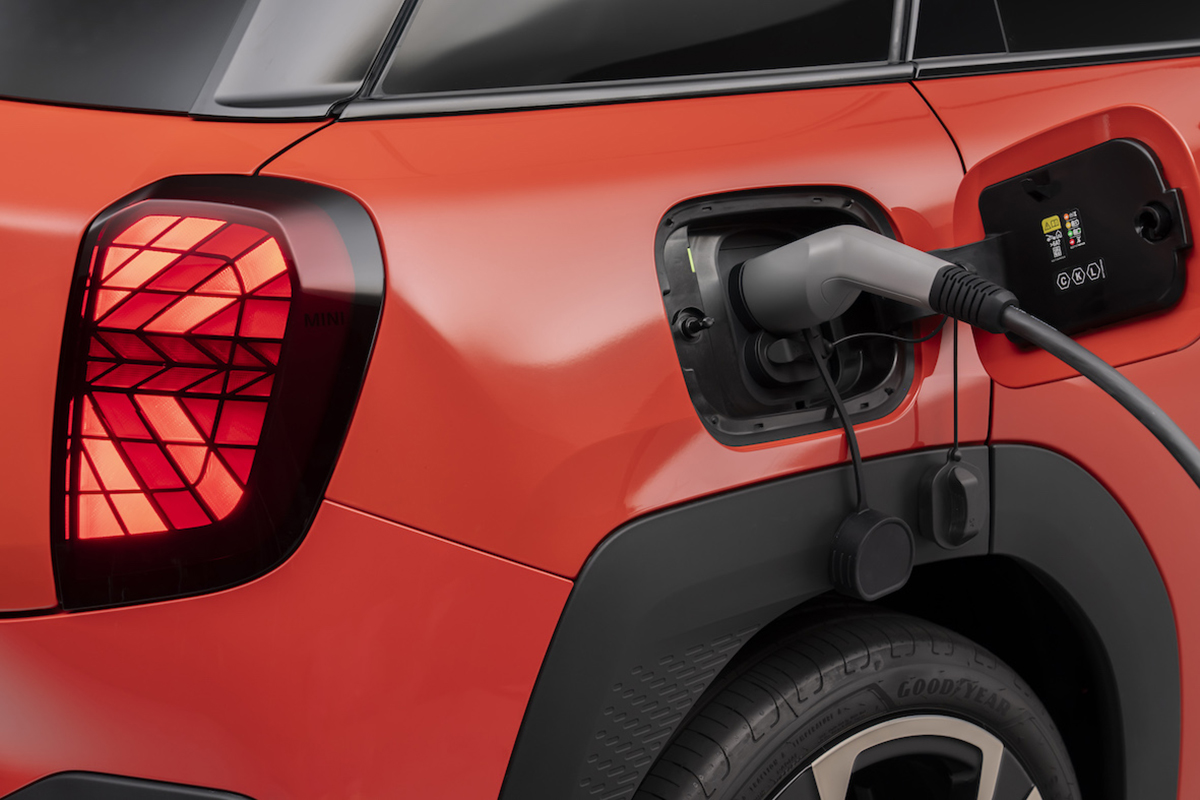
Charging presented no problem, as new stations are popping up frequently near me. While I prefer charging at home, it is painfully slow with the supplied cable. It is far more efficient to plug in at a mall while having lunch. In one Pretoria mall, I saw three cars charging while their owners shopped. The EV trend is clearly catching on. Of course, you still get the inconsiderate oafs who park their ICE cars in electric bays because they are too lazy to walk an extra 20 meters, but there will always be that one person.
Ultimately, the Aceman will likely remain a second car. It isn’t quite a holiday car yet, not because of the Mini itself, but because of the unpredictable nature of the charging infrastructure. I don’t want the stress of planning stops only to find a station out of commission or occupied. For long trips, I’ll stick to internal combustion.
Returning to my “needs vs wants” list: I reviewed an Alfa Romeo recently, and that car spoke directly to my wants, though my bank account didn’t share the sentiment. At the other end of the scale is the BYD Dolphin Surf, which is available at a more agreeable price. If I look at needs, the BYD wins; if I look at wants, the Alfa takes it. However, the Mini Aceman SE is a well-thought-out car with incredible attention to detail. It might just be the perfect middle ground for both.
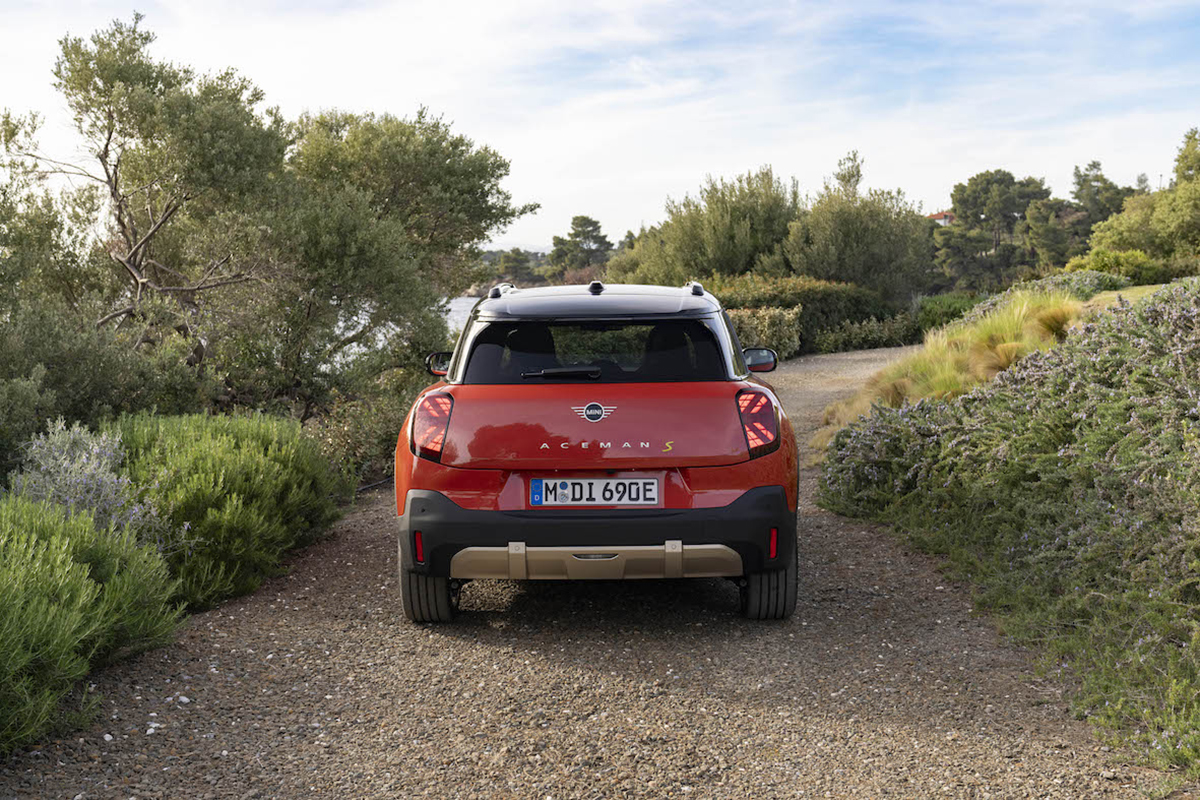
There are two Aceman variants available: the E and the SE; however, South Africa will only see the SE version. Below is a table with the key specifications:
Mini Aceman SE
Battery energy content: 54.2 kWh
Power/Torque: 160 kW / 330 Nm
0-100 km/h: 7.1 seconds
Claimed consumption: 14.8-13.9 kWh/100 km
Estimated range: 382-406 km
Maintenance plan: 5-year / 100 000 km
Warranty: 2-year unlimited km on the car and 8-year/100 000km on the battery