


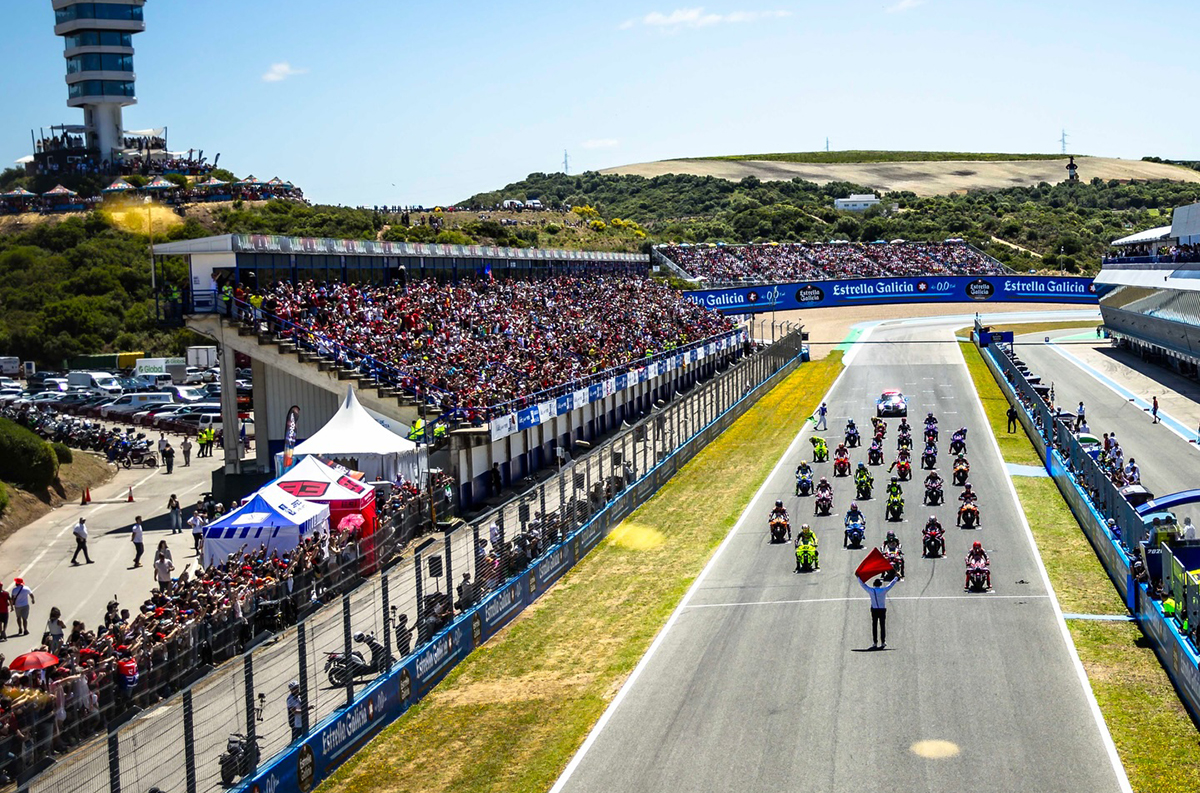
The quality of racing is so high at the present time that, being so spoiled, we lament a processional race, such as was served up on Sunday in Jerez. Saturday was exceptionally exciting, which only made Sunday a bit of a letdown, despite the fact that there were some significant retirements and a different-looking podium.
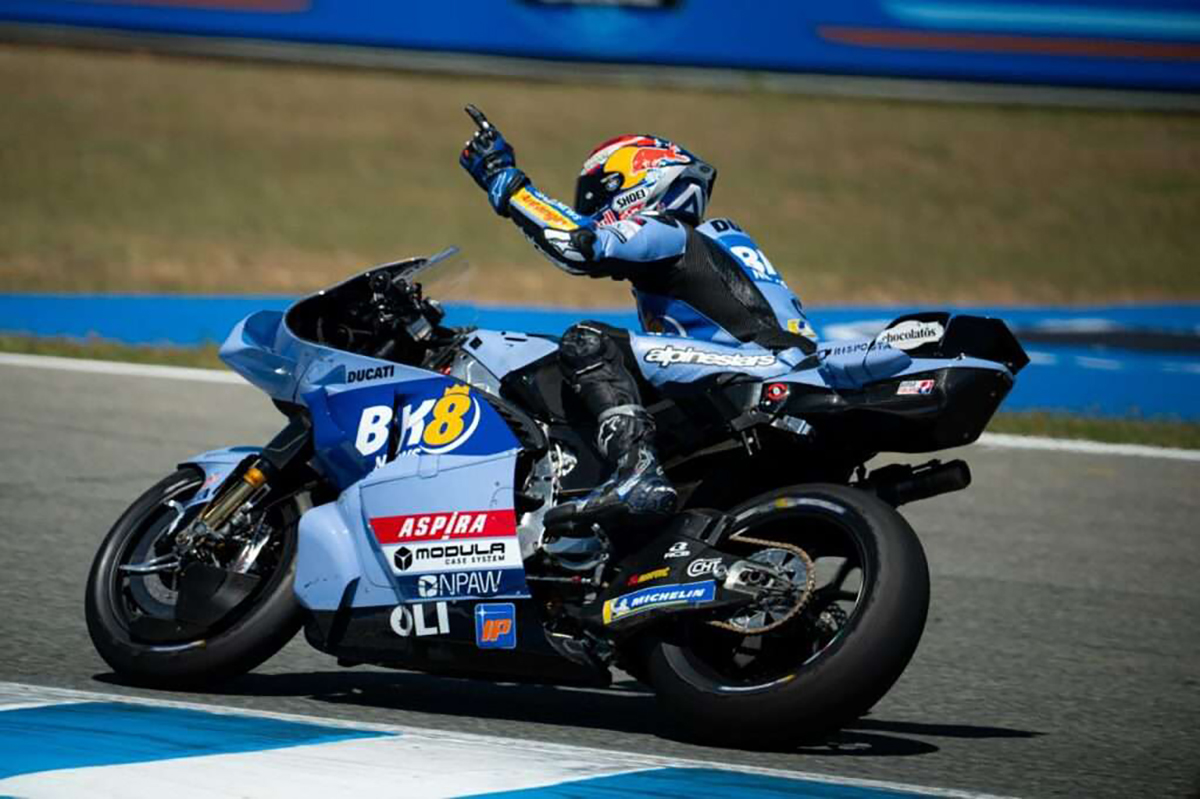
Alex Marquez had looked the whole weekend as if he were in complete control, and his Gresini team gave him the tools to make the most of it. Thus, it was no surprise that he duly took up position at the front of the field shortly after the lights went out and was never headed, to record his second consecutive Spanish GP victory, with Bezzecchi second and DiGiannantonio third.
Marc Marquez crashed scarily out of second place, and Bagnaia retired with front brake issues, meaning that no factory Ducati has been on the podium for nine Grands Prix races, and that hasn’t happened since 2014.
Marco Bezzecchi could do nothing about Alex Marquez, and so his laps-led record fell, as did his winning streak of five races, but he did extend his lead at the head of the championship table.
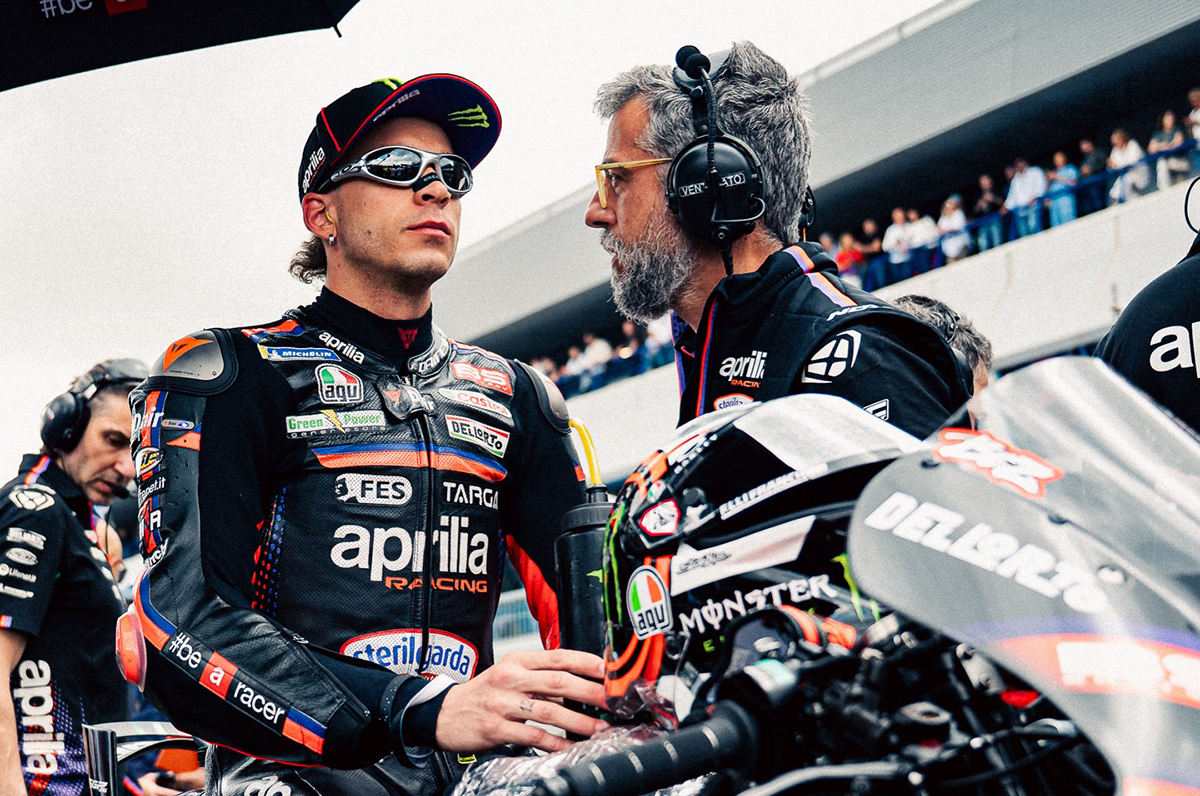
Aprilia had all four bikes in the top six, while Yamaha filled five of the last seven places (Yamaha test rider Augusto Fernandez was a wild card entry and finished last). To add insult to injury, Joan Mir completed two long lap penalties and still finished ahead of every Yamaha other than Quartararo, and even he was less than half a second ahead at the flag.
The KTMs were underwhelming, and Zarco had a very good day on the Honda. And that’s possibly about all you can say about Sunday.
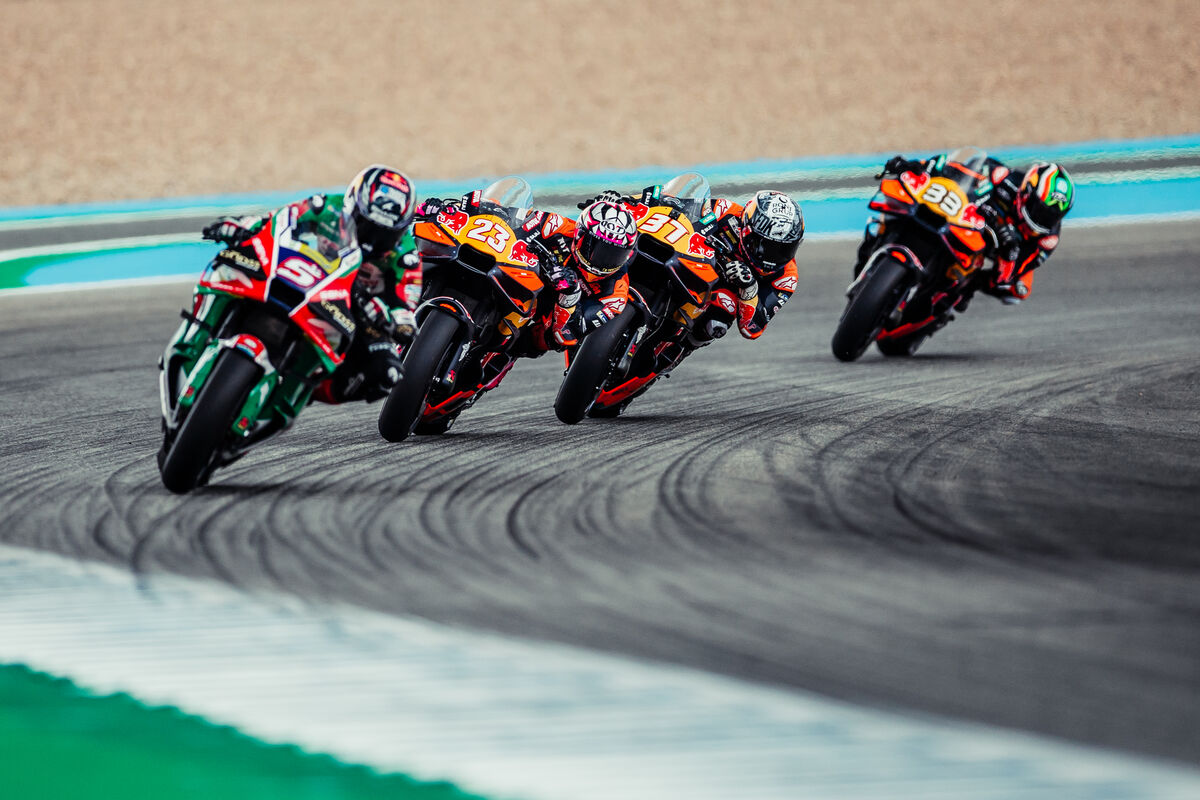
Ahh, but Saturday? That was something else.
Often, the concentrated format of the Sprint races throws up frenetic action, and Jerez was no different. It was also the first flag-to-flag Sprint race in the format’s history, with riders able to swap to wet tyre-shod bikes when the rain arrived. And that caused chaos and controversy.
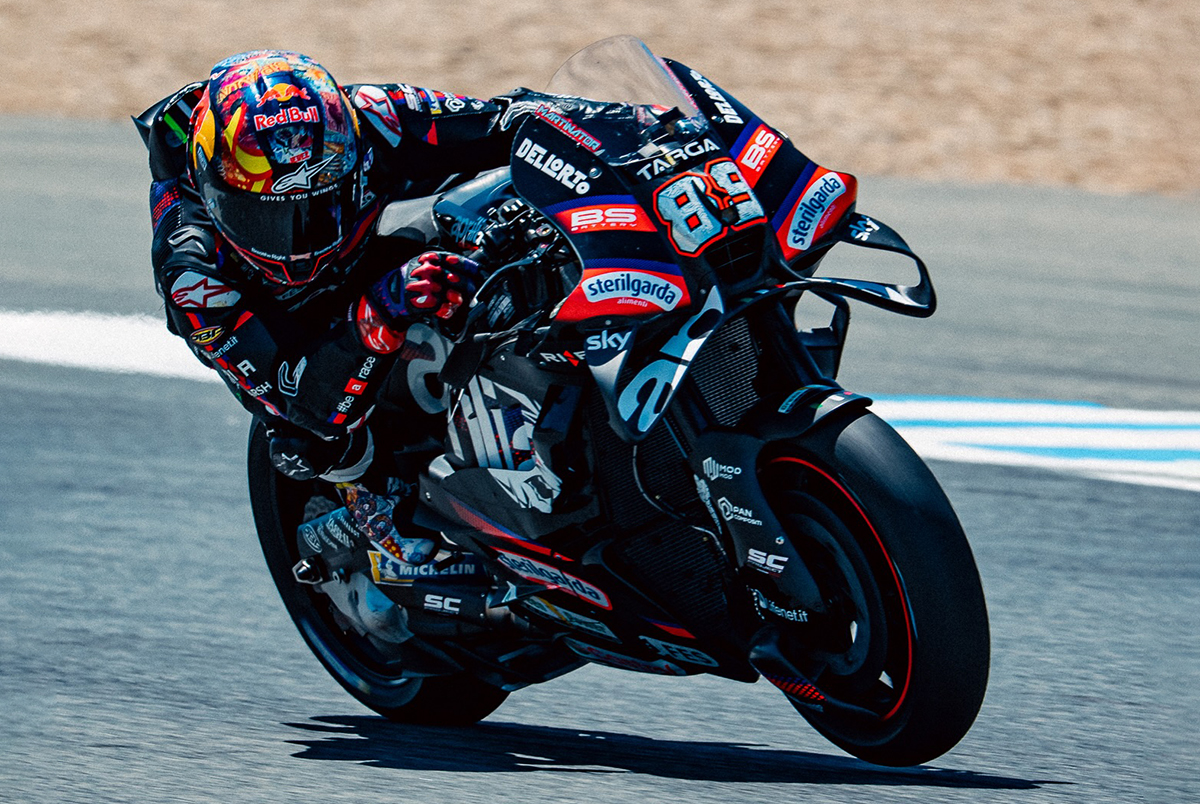
The race started dry, and Marc Marquez streaked into an early lead, while Jorge Martin made a blasting getaway to lie fourth from tenth on the grid, turning that into third before the first lap was out. Then, heartbreakingly, braking into the first turn, Martin’s front brake discs were glowing bright red, which isn’t something you see on MotoGP bikes very often. That signalled his immediate retirement. Meanwhile, Aprilia’s chances had been dealt another blow as Marco Bezzecchi plummeted to the back off the line when Alex Marquez’s visor tear-off lodged under Bez’s back wheel, causing him to lose all drive off the line. Not the first time we’ve seen that, and maybe there needs to be a rule about tear-offs being removed on the grid?
With ten laps to go, Marc was well out in front, brother Alex struggling to get past an impressive Zarco, who then had a bit of a ding-dong with DiGiannantonio over third place, as the white flag came out, signalling that the pit lane was open to swap bikes. That can only have meant one thing: the rain had arrived, but not so heavy that all riders chose to stay out for another four or five laps, by which time, Alex had reeled in Marc and taken the lead.
Now the rain was really coming down, and so cue the controversy. Marc Marquez slid gently off to the outside of the final Lorenzo hairpin, leading onto the pit straight. He kept the bike running, picked it up and then proceeded to ride across the track and across the grass on the inside of the corner, making his way to the pit lane to swap bikes. Was that legal? MotoGP is pretty strict about track limits, and had Marc not only broken them but also gained an unfair advantage?
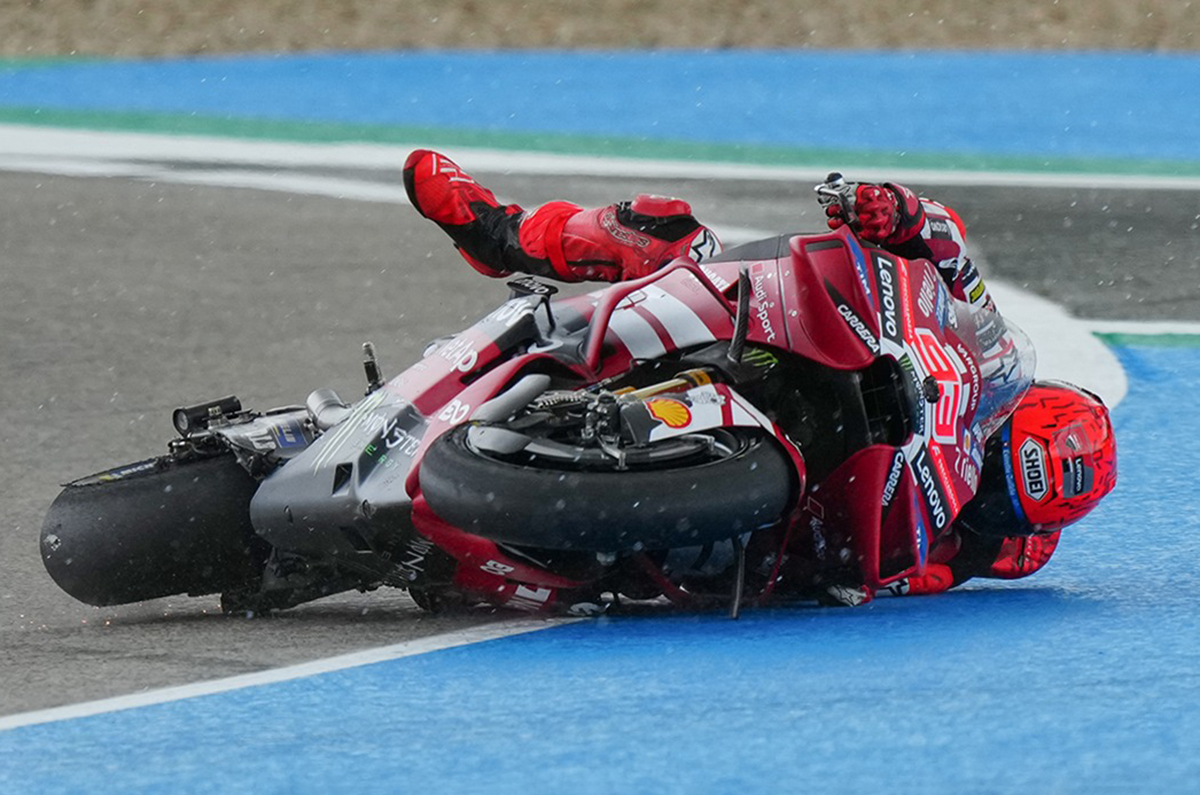
That would no doubt be decided after the race, but it all looked academic as, when he rejoined the race, he was way down in 17th place. However, just as the academic looked likely, all those up front who hadn’t changed bikes were tiptoeing around a streaming wet track on the wrong tyres. And that caught out Alex Marquez, allowing DiGiannantonio into the lead, but it was clear that all those who had changed bikes early were going to be in the podium seats.
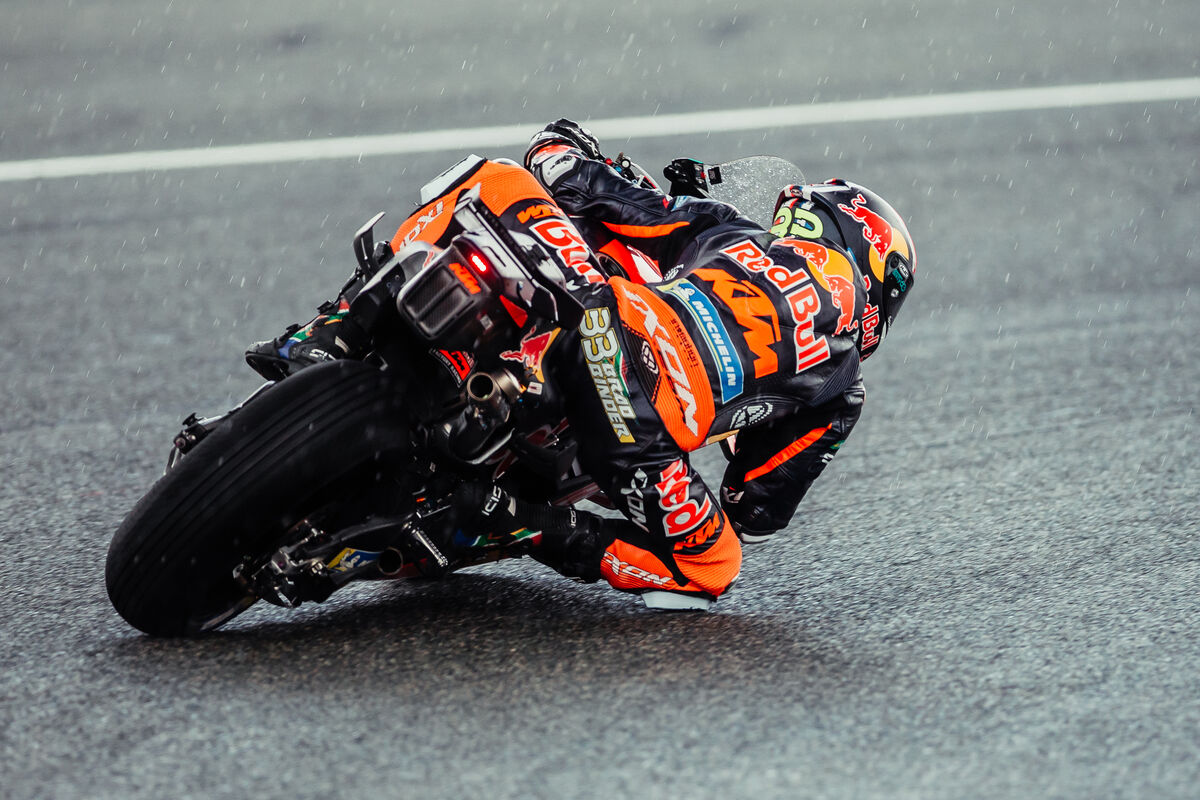
One of those was Brad Binder, who had been the first to make the pit call and had left the pits ahead of all the other early stoppers. But he messed up the opportunity by sliding off, although he rejoined to finish a disappointed fourth.
Meanwhile, up front, Bezzecchi crashed out and, amazingly, Bagnaia was leading, but Marc Marquez clearly had the better pace and took the lead with one lap to go, a lead he held to take the most unprecedented victory. I’ve been checking, and it seems that, not since the Senior race at the 1965 Isle of Man TT has a rider crashed and gone on to win a Grand Prix race. In that case, it was Mike Hailwood who crashed his MV Agusta at a corner called Sarah’s Cottage, but remounted to take the victory.
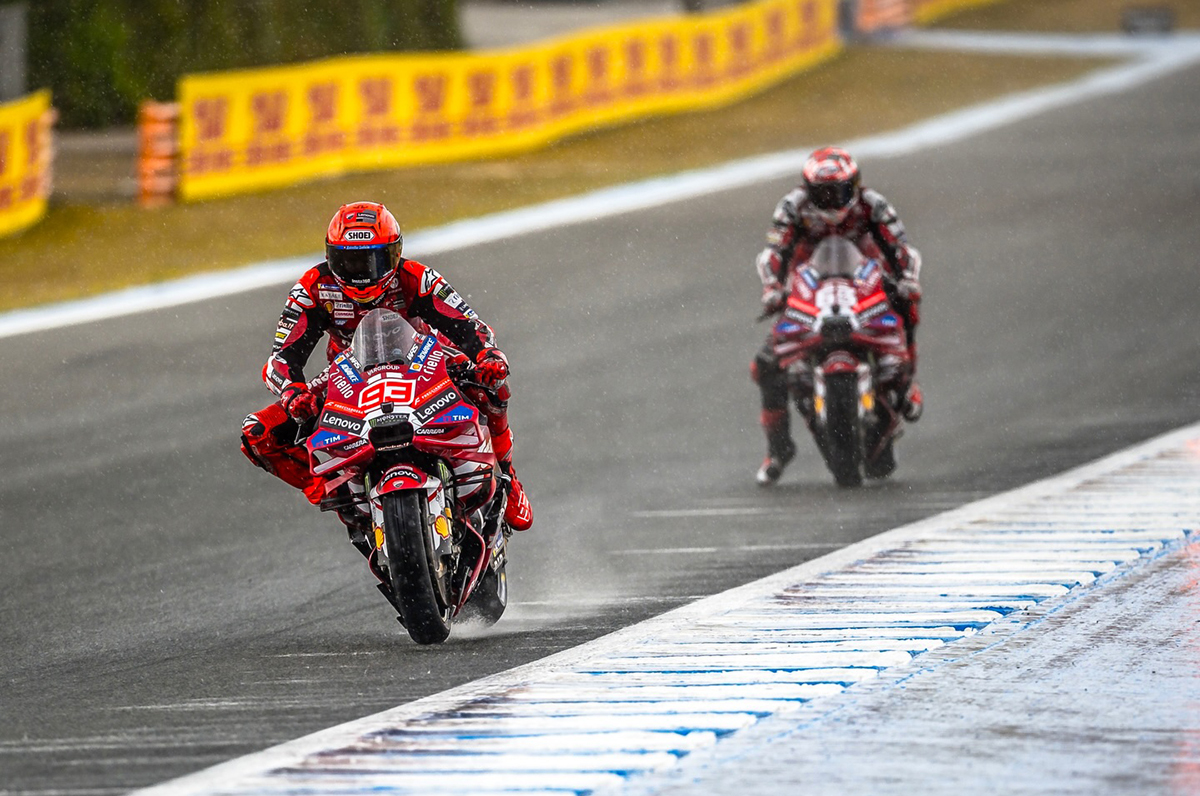
But was Marquez’ victory legal? Quite a few riders were vocal about it, claiming that Marquez should have been disqualified or, at least, been given a penalty. But the stewards disagreed and, given their reasoning, you’d have to say they’re right.
The white line the riders have to respect on pit entry is the line on the inside of the pit entry curves. On exit, it is the white solid line on the right, or track side of the exit. Marquez therefore did not touch the inside white line on pit entry, nor did he cross a green-painted piece of asphalt, which would have caused a penalty. He didn’t endanger any riders after his crash when he crossed the track as they had all passed. He adhered to the pit lane speed limit and, even though he crashed out on the circuit, he did not receive any instruction from the marshals, so he had not disobeyed any orders from them, which would have meant leaving the circuit altogether and returning to the pits via the access roads.
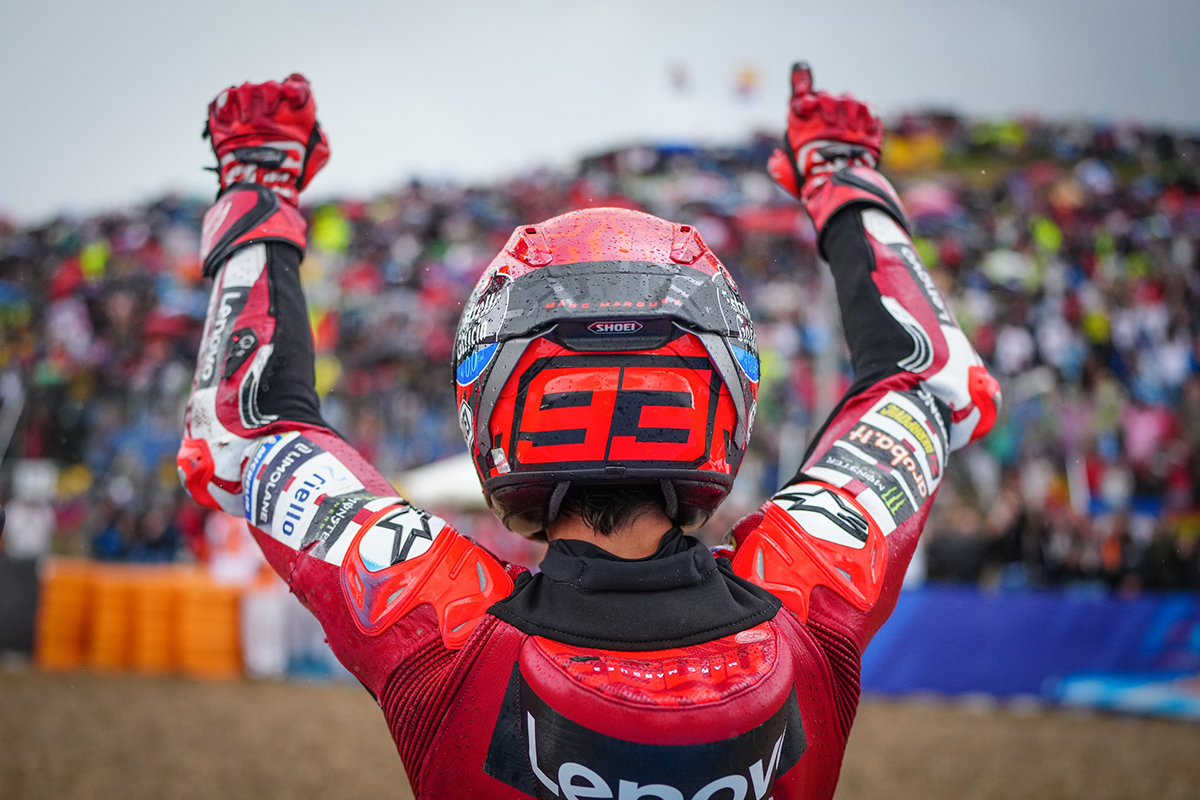
So, his victory stands, whether you like it or not.
A big question that has arisen from Jerez is, have Ducati caught up with Aprilia? Even without Martin’s brake-related retirement and Bezzecchi’s tear-off affected Sprint start in the Sprint race, neither looked to have any answer to the pace of Alex Marquez’ GP26, in both Sprint and Main races, second, fourth, fifth and sixth for Aprilia in the latter notwithstanding.
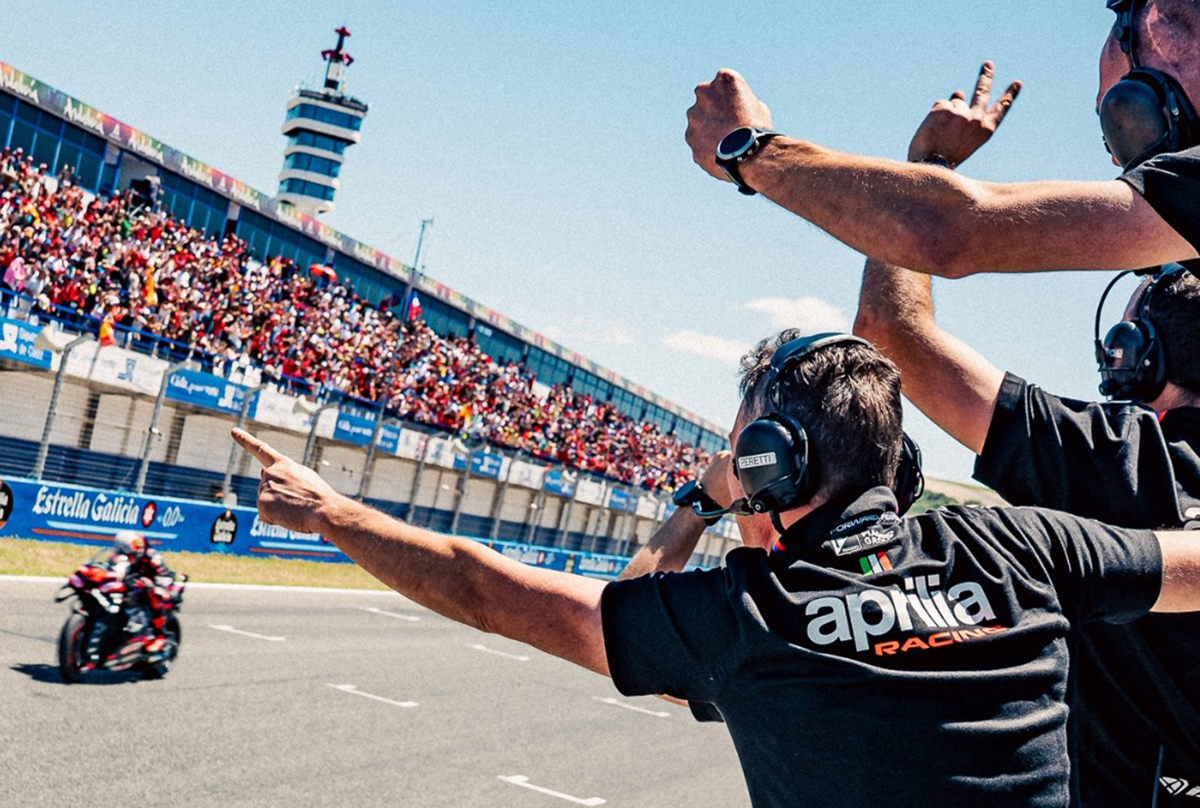
Significantly, the satellite Ducatis are making the factory bikes look a bit second-rate at the moment. Add to this Marc Marquez’ physical fitness and Bagnaia’s mental fortitude at present, and it’s not a golden age for the factory team right now.
This is shaping up to what could be a brilliantly close MotoGP season, as weekend domination seesaws between Ducati and Aprilia, between factory and satellite teams and between former world champions and those looking for their first title.
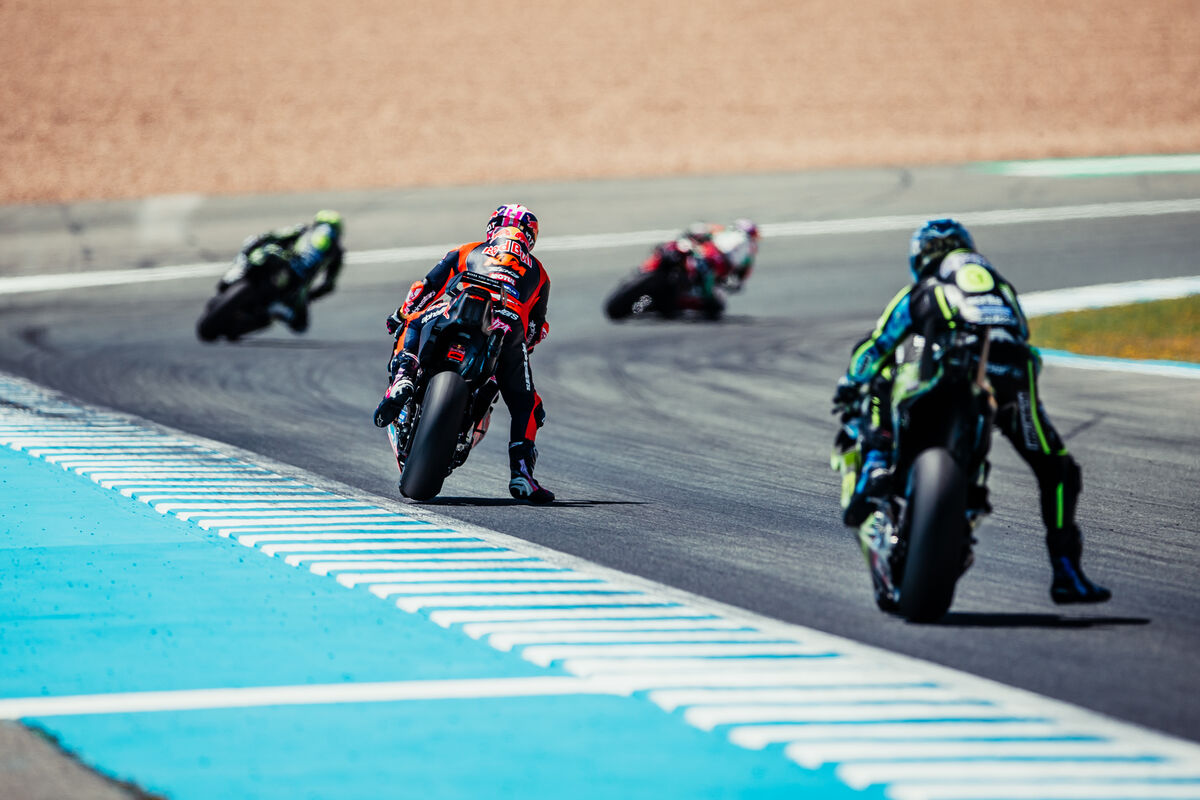
The battle will be joined again in two weeks in France. Any bets?