

The first Swazi Rally I rode to was in August 1996. It was my first long ride on my one-week-old, gleaming, crimson, brand-new, out-of-the-box, Honda CBR1100XX Super Blackbird. R64,000 cash from Honda in Craighall Park. I loved that bike. It was magnificent, the fastest production motorcycle on the planet with an analogue speedometer marked to 320 km/h. I was a styling fool. Back in the day, the legendary Brian Pierce-Fleming, aka The Colonel, was our route captain. For some retarded reason he decided we would cross into Swaziland at the Nerston/Sandlane border post. That seemed like a good plan at the time because we were the only travellers and the border formalities took less than fifteen minutes. But two minutes later we were in a world of pain. The road from Sandlane to Bhunya was 25 km of snotty dirt, and within the first kilometre my beautiful Bird was covered in mud and dust. It was a horrible ride. We cursed The Colonel, who was gracious enough to acknowledge the error of his ways and paid for all our booze for the weekend to compensate for his kak navigation.
I’ve been riding to the Swazi Rally every year since, and until this year I avoided Nerston/Sandlane because I still bear the psychological scars. Maybe it was time for change. My friend Carlos Paiva, the rally organiser, assured me that the road from the border to Manzini was in reasonable condition, and my mind was made up. I would ride to the 33rd Swazi Rally on roads that were unfamiliar due to the passage of time.
Resfeber is a Swedish word that describes the restless, jittery mix of excitement and anxiety one feels before a journey begins. It translates literally to “travel fever”: the moment when anticipation and nerves tangle together in your gut, when the bike is packed, and it’s almost time to ride. I slept restlessly on Thursday night and woke before the alarm on Friday morning. My anxiety was not misplaced. The mountains were obscured by low rain-bearing clouds and the temperature was hovering around 12℃.
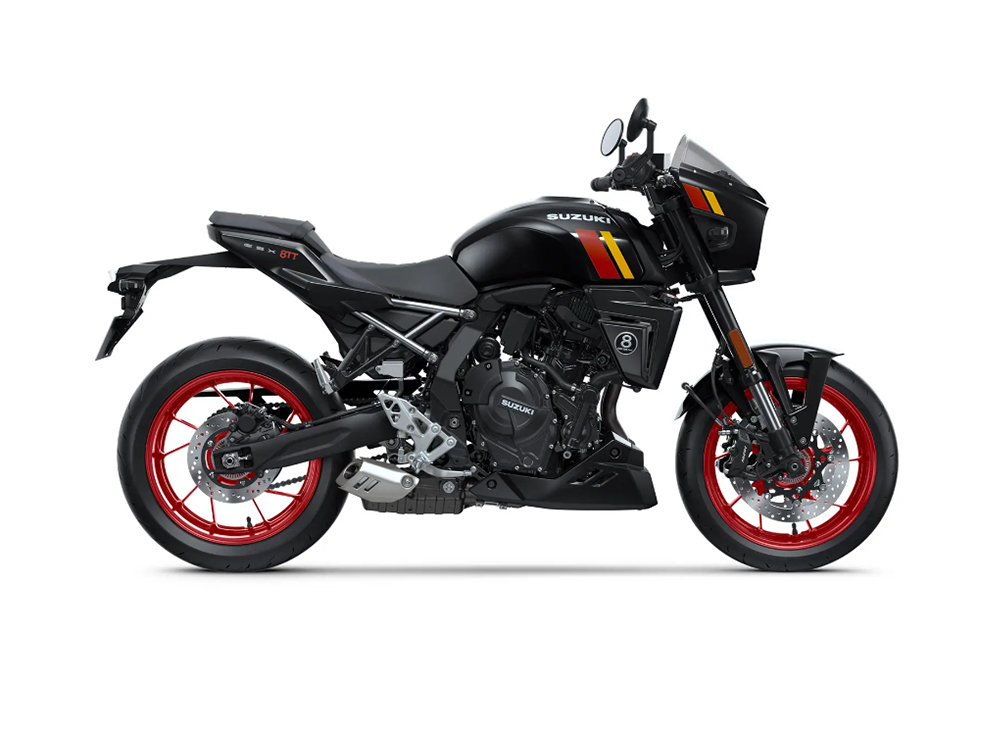
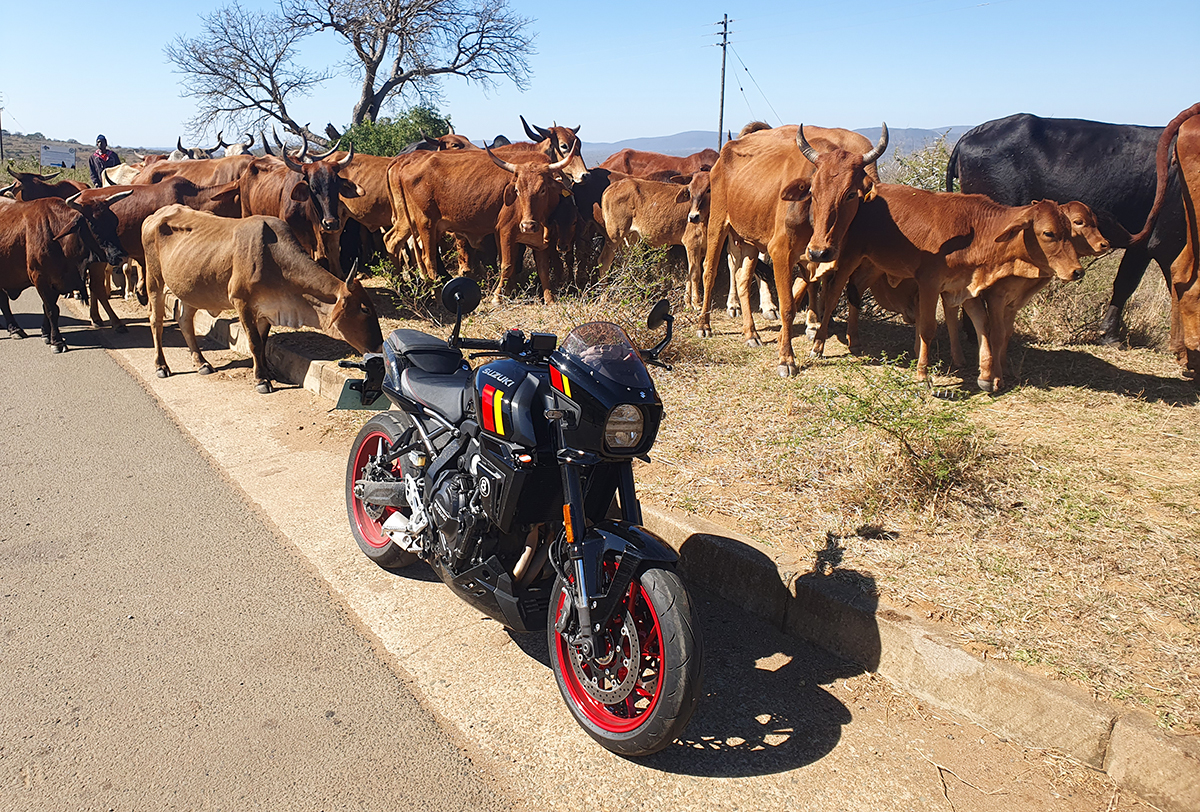
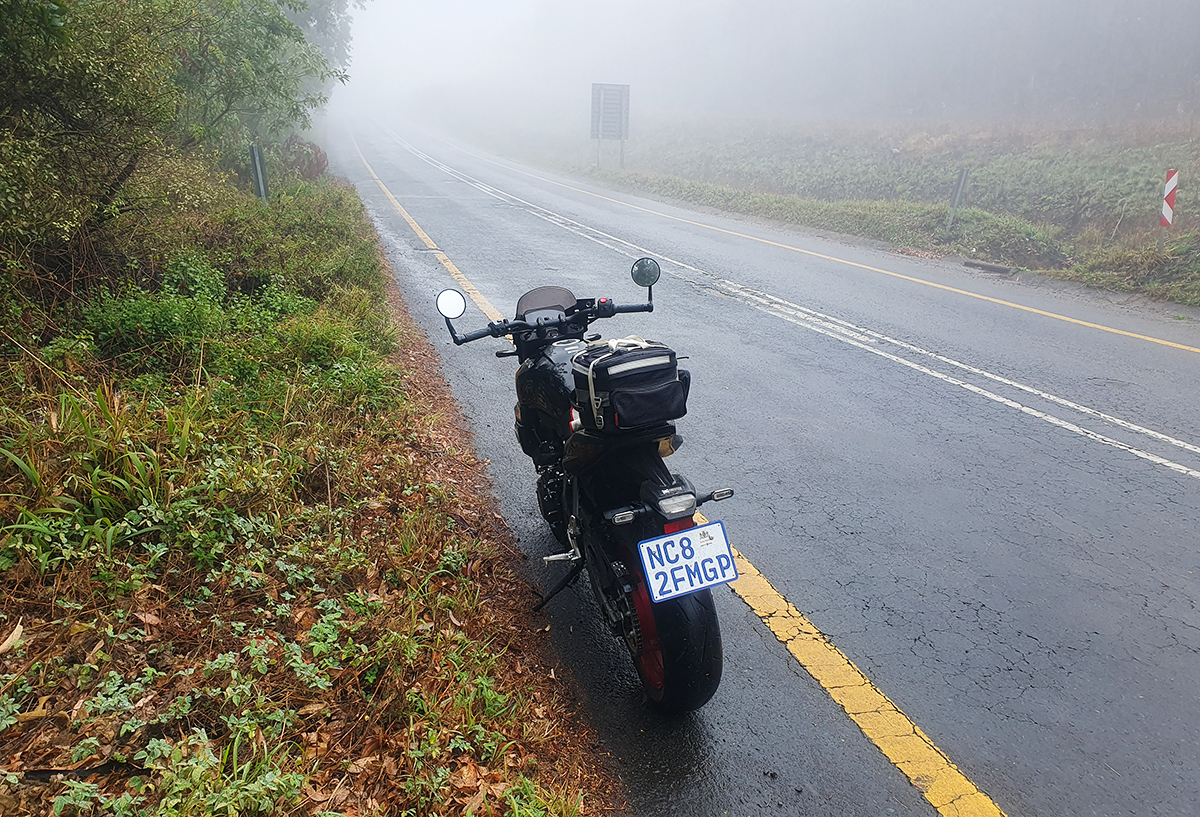
My ride for the weekend was the Suzuki GSX-8TT. I fuelled the TT at Sasol Westend on the R40 towards Barberton. There were a dozen other bikes at the garage, Sun Riders from Mbombela. They were already in festive rally mood, revving and hooting as new riders arrived. As I rode over Hilltop Pass, I realised I was underdressed, but to return home for warmer apparel would have taken an hour, so I pushed on. Not clever! The R38 up the escarpment and over Bothasnek and Nelshoogte was cloaked in dense mist. It was a whiteout with droplets beading on my visor, so visibility was nil. On a blind corner, a herd of cattle coalesced out of the gloom, and I felt the TT’s ABS kicking in as I braked hard on the slick road to avoid the stupid beasts. On the western side of the mountains, the clouds lifted and so did my spirits as I dropped down to the plains on the way to Badplaas. It was turning out to be a beautiful day despite a dodgy start.
In Badplaas, the cops had set up their regular roadblock to check for unpaid fines. At the rear of the command vehicle, there was a queue of miserable-looking people being coerced into coughing up ZAR. I don’t ever volunteer to give the cops money. If they want my loot, they must come and fetch it, but they are too slack, so I have quite a collection of unpaid fines. I sneaked up the left of the cars and turned left onto the R541 with the roadblock diminishing in the TT’s mirrors. On the way to Lochiel there’s a looong straight where I tucked in behind the cowl and saw 200 km/h with the mill singing happily at 8500 rpm.
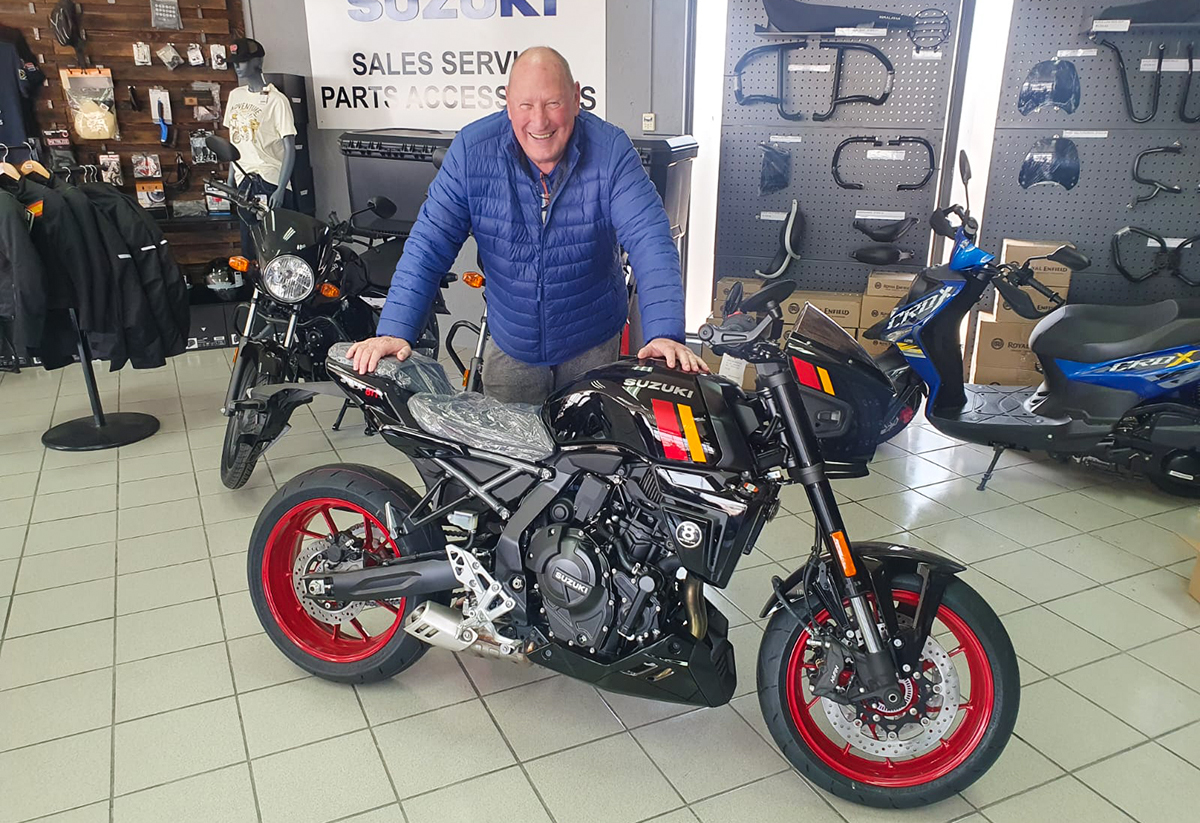
When I was planning my trip to the Swazi Rally, I wrote to Stuart and Kyle at Suzuki South Africa and asked if they would suggest a suitable bike for the ride. Without hesitation, they recommended the new Suzuki GSX-8TT and sent one in a crate to Freedom Motorcycles in Nelspruit. I went to collect the newly assembled bike with zero kilometres on the odometer. What a treat to be the first to ride a brand new bike still redolent of that heady factory smell. The TT is a neo-retro middleweight machine powered by a liquid-cooled, fuel-injected, DOHC, 776 cc parallel-twin that delivers 61kW and 78Nm. The six-speed gearbox comes standard with a velvety up-and-down quick shifter, which makes selecting the correct gear on tight and twisty roads completely intuitive. The 270° crankshaft delivers a smooth ride, further enhanced by twin balancers positioned at 90° to the crankshaft. The TT is a silky machine, vibration-free and all-day comfortable. The upright seating position and the relative ergonomic placement of the footpegs, handlebars and saddle perfectly suited my 1,86 metre frame.
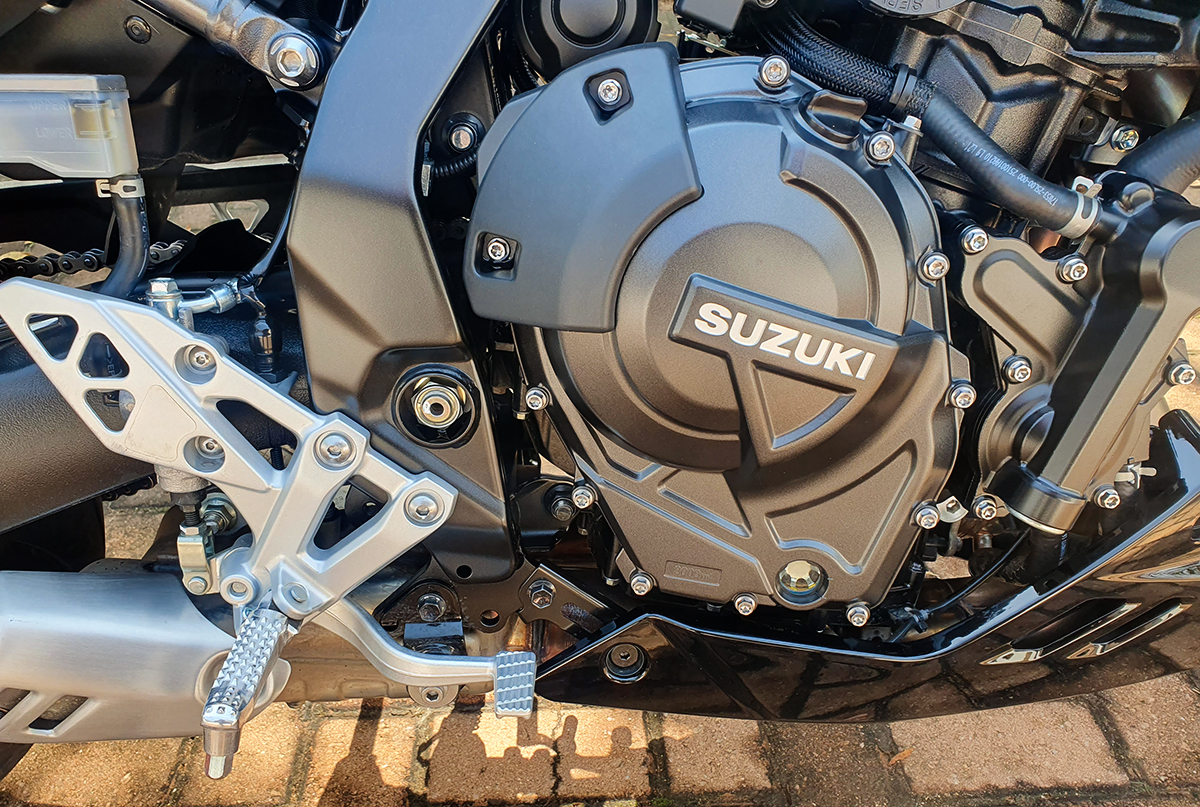
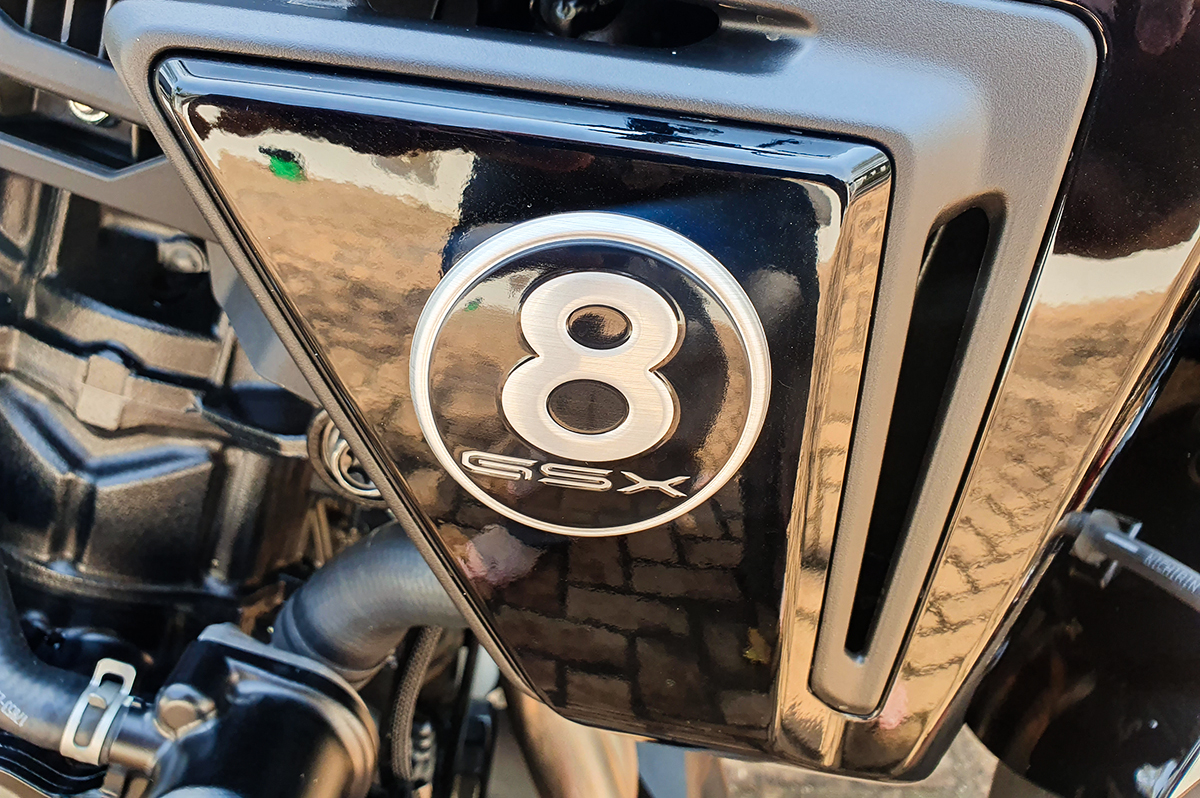
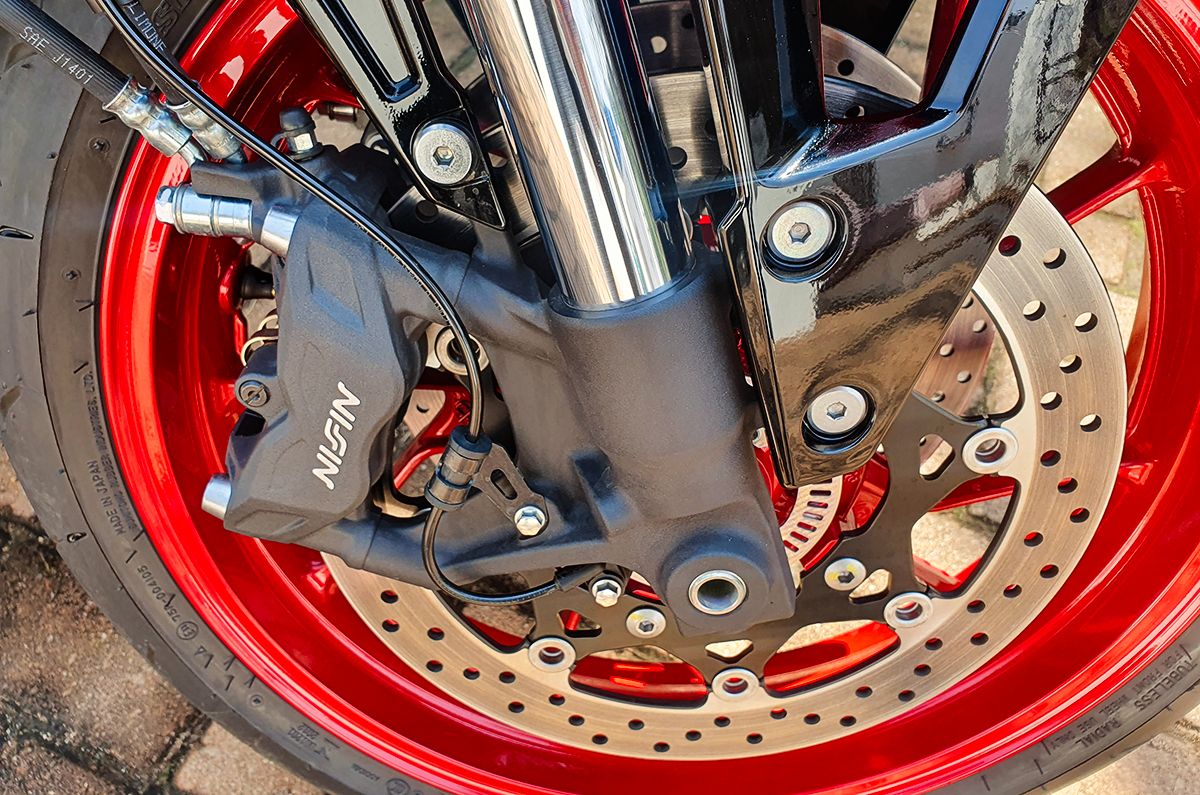
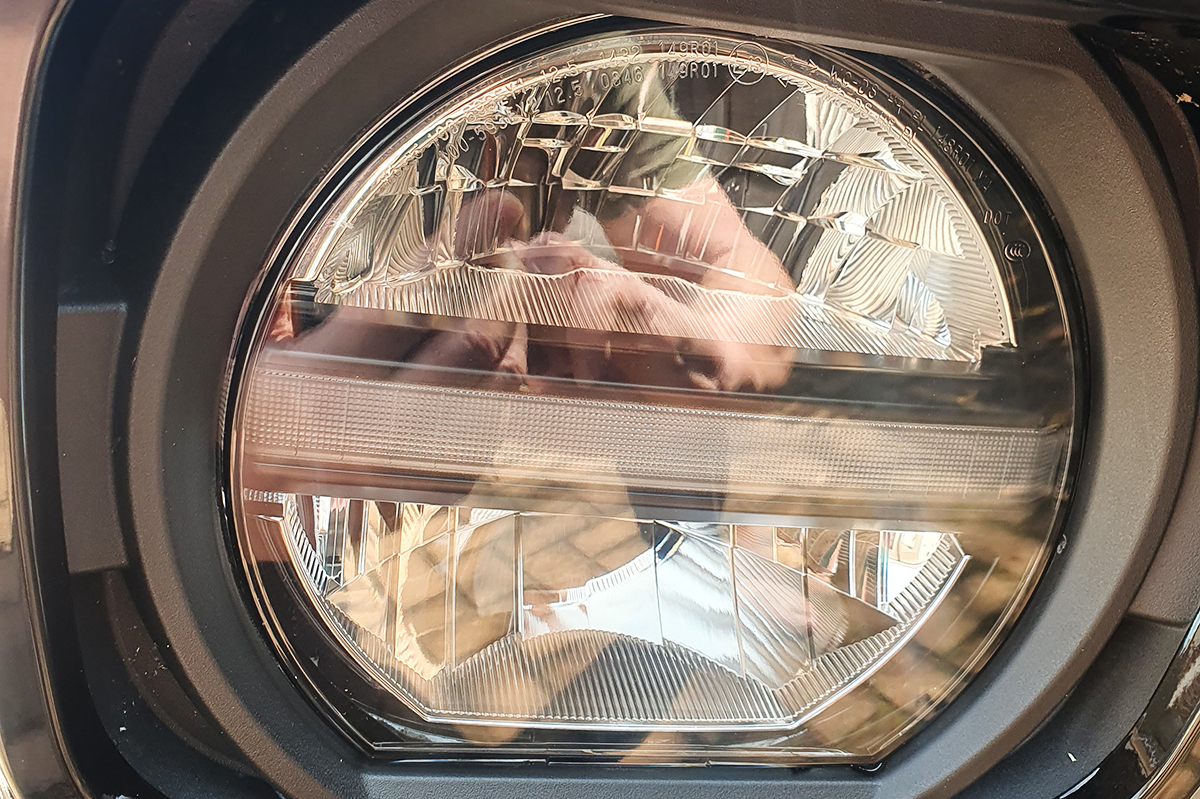
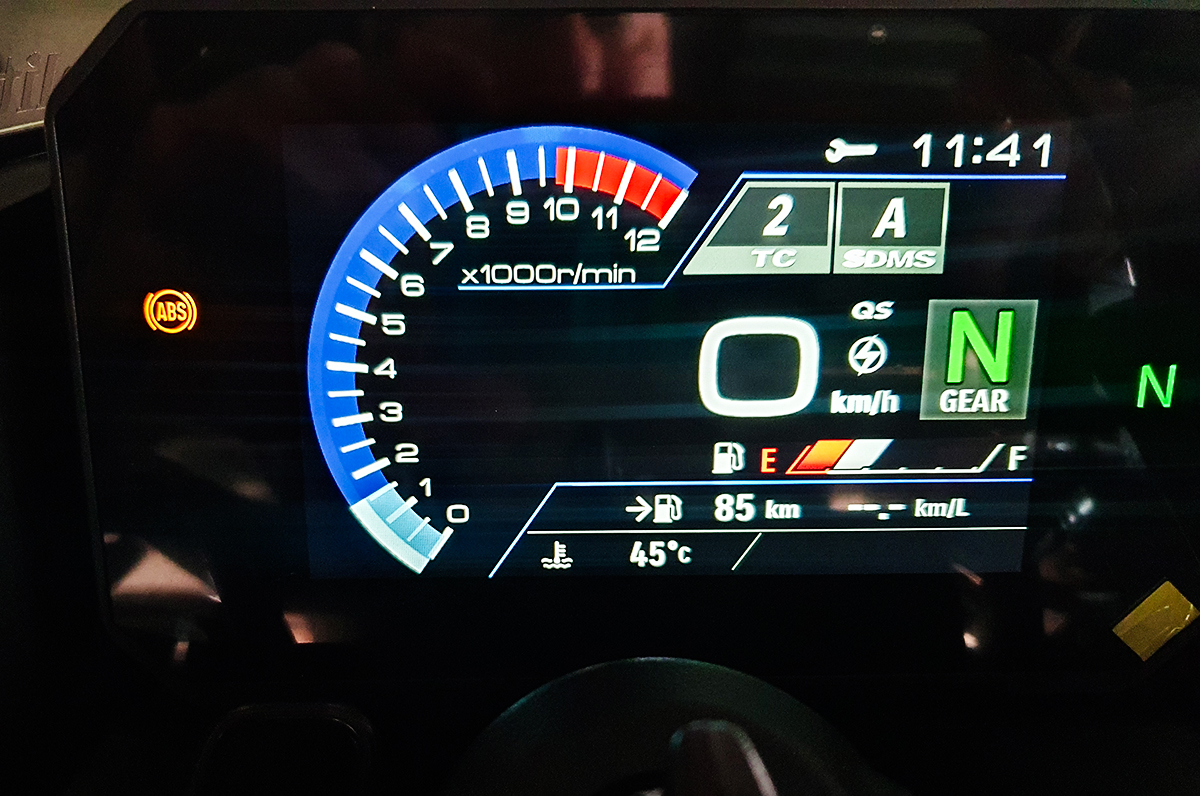
The TT is a funky-looking machine with styling that pays homage to ‘80s era muscle bikes like the Suzuki GS1000S. The café racer-inspired cowl is surprisingly effective at wind deflection. It looks sharp and houses the flat-bottomed LED headlight. Bar-end mirrors emphasise the TT’s café heritage and look uber cool. The 16.5 litre tank with sculpted knee indentations flows into the well-padded seat, and the stepped pillion seat sits above the stubby tail piece. The groovy, glossy black paint scheme is offset by red and yellow stripes, and the red alloy wheels pick up the red accents of the bodywork. The fully exposed matt black mill exhibits exquisite engine castings punctuated with silver hex bolts. The belly pan encloses the catalytic converter and the underside of the mill to the point where the stubby stainless steel exhaust emerges beneath the right foot peg. On the radiator shroud there’s a proud 8 Ball logo which rounds off an eye-catching and beautifully executed styling package. Comprehensive rider information is presented on the 5-inch TFT screen. The only missing info is tyre pressure readouts.
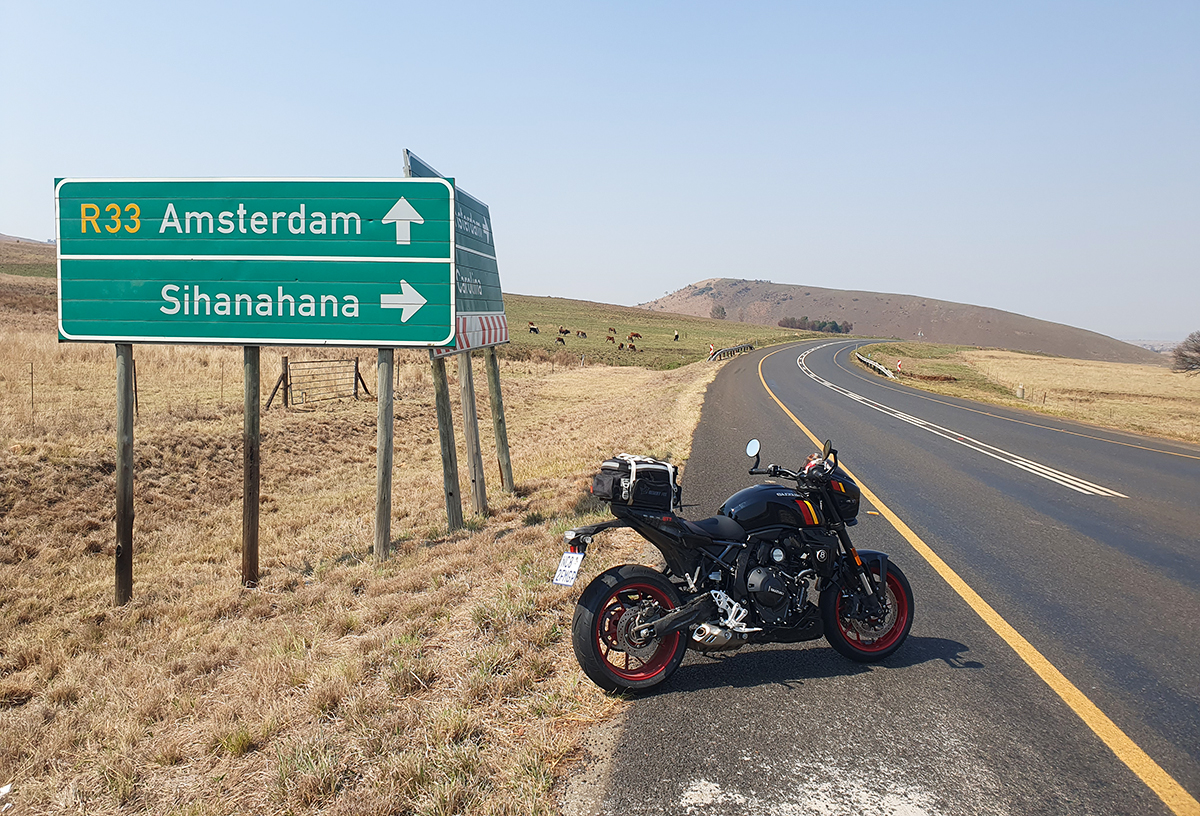
At Lochiel there were dozens of bikes heading east on the N17 to the Oshoek Border Post. But why be normal? I rode west on the N17 for 30 km, then turned south to Amsterdam. The R33 to Amsterdam is 50 km of flowing blacktop that winds through vast plantations of eucalyptus and pine. I rode at a leisurely 160 km/h with the TT barely ticking over at 6500rpm. If ever someone offers you a timeshare in Amsterdam, take my advice and run like hell. That benighted dorp is deteriorating at an alarming rate, potholed roads, decaying buildings, and filth everywhere. Just ride on through like I did once I found the unsignposted R65 to the Nerston/Sandlane border post. The road to the border, skirted by plantations, was in reasonable condition and short before long I arrived at Nerston. As I entered the precinct, a SAPS Constable stopped me and asked for the bike’s papers and my passport. He laboriously compared the VIN to the NATIS document, scrutinised my passport and told me to remove my helmet so he could see it was me and eventually, in a lofty manner, said: “You may proceed.” Before I proceeded, I said, “Why are you wasting my time here when your colleagues at customs and immigration are going to perform the identical procedures?” I received the 1000-yard stare over my left shoulder and buggered off in a huff.
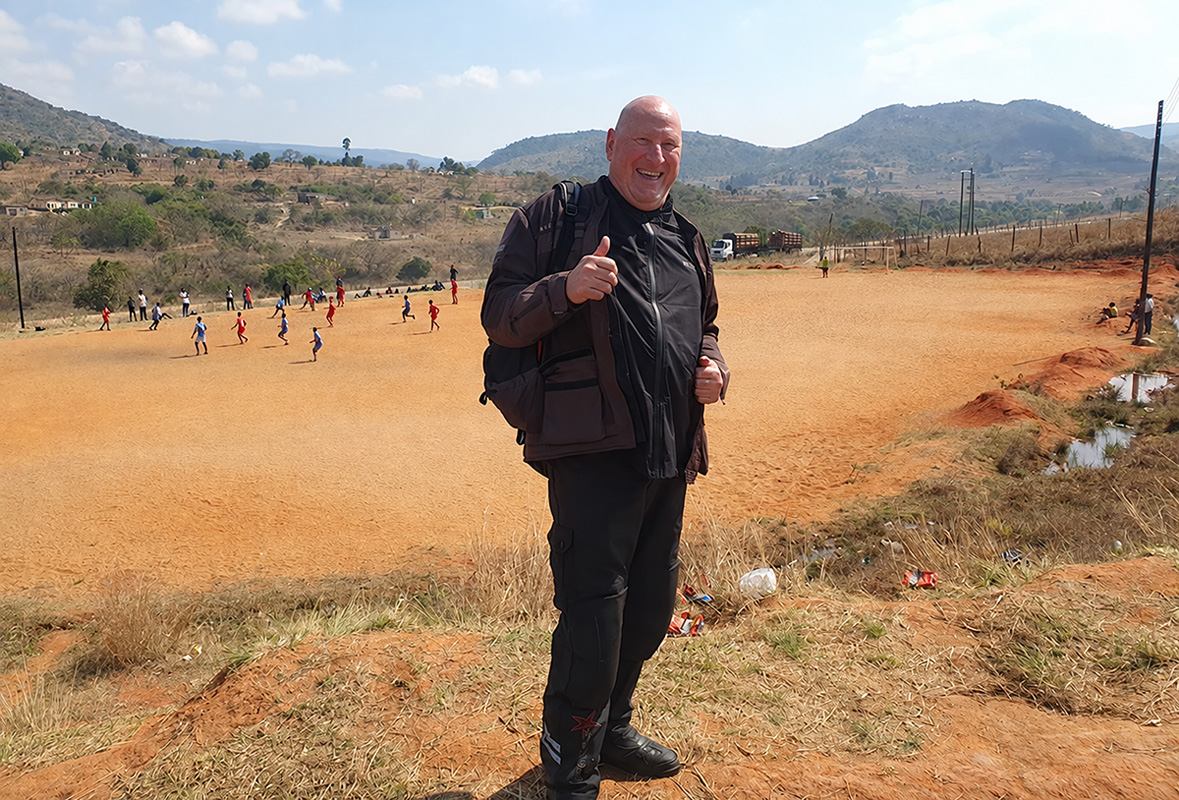
On 1 June 2026, SARS implemented new cross-border customs regulations. Before you leave home, you must complete a declaration at SARS and print the document to show at the border. I went through the whole rigmarole, but the officials at Nerston were completely uninterested. At Sandlane I paid R80 road tax and was on my merry way to Bhunya. That road is a narrow, bumpy tar track which winds down the mountains into the valley of the Usutu River. Sometimes the tar ends without warning and you hit nasty gnarly gravel at speed. But that’s OK. It’s an adventure, and you take the rough with the smooth. From the massive Montigny Sawmill in Bhunya, I rode east to Manzini and then followed the MR9 south towards Sidvokodvo and the Swazi Rally. Just a few clicks before the rally site, I stopped at a dusty field to watch a kids’ soccer match. It had been a cold start to the day, but now it was cooking. I asked a local fellow where I could buy something cold to drink. He said there was a shop nearby, so I gave him E100 to bring back a drink for each of us. As he disappeared into the bush, I wondered if I’d just said goodbye to my money. Shame on me! Ten minutes later, he returned with two ice-cold drinks, and we enjoyed them together as we watched the match.
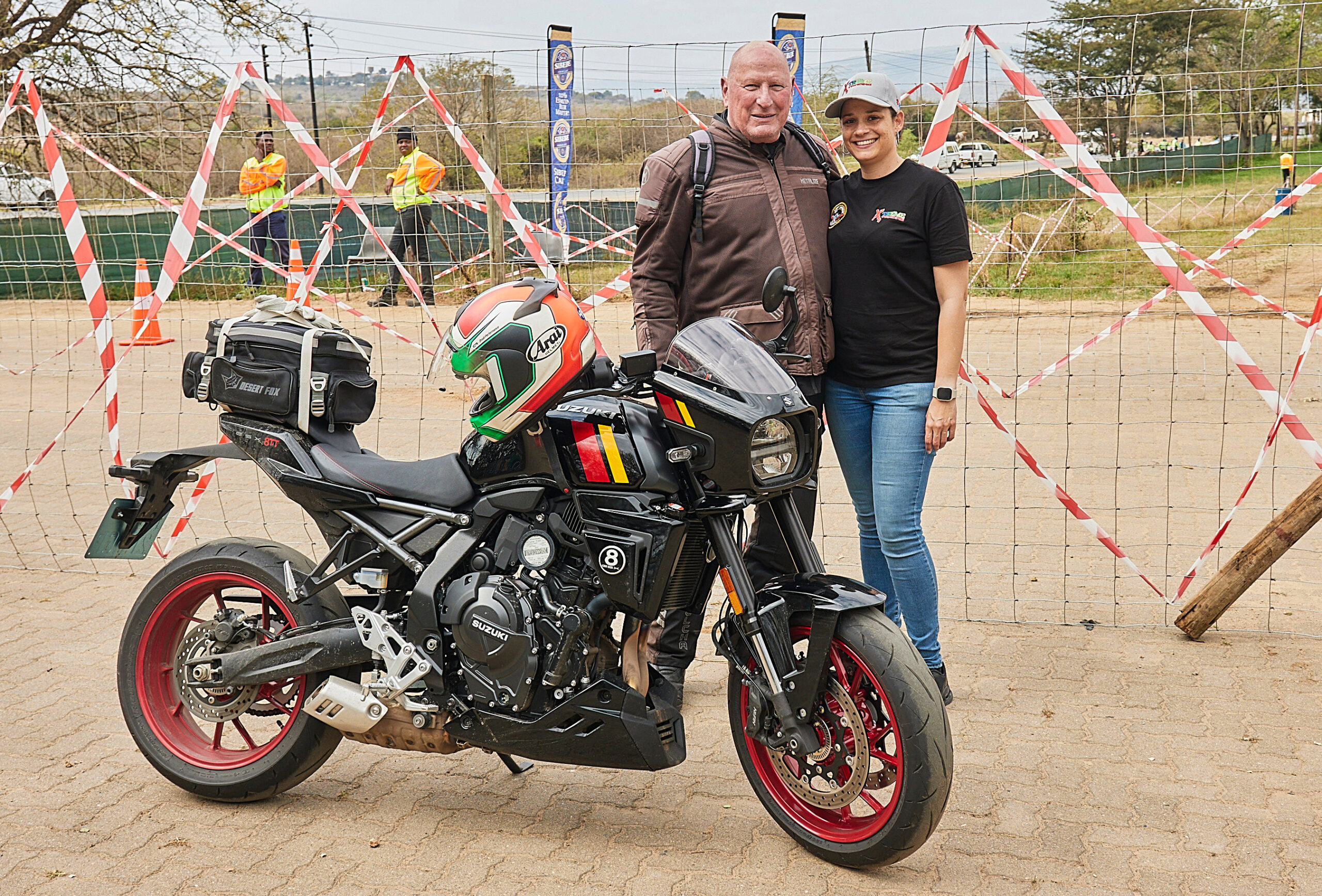
Five minutes after my Sibebe was finished, I pulled into the 33rd Swazi Rally. My friend Barbara Paiva manages the main gate and was there to meet me, as was Albert Dunn, whose photos are an integral part of this article. I cruised up to the main hall and settled down in Bar One with a delicious Sibebe Draught. How kak can life be? That evening there was a blowout party at Riders’ Ranch, but after a good day in the saddle I needed an early night. I rode the TT to the Paiva homestead and was asleep by 9 pm.
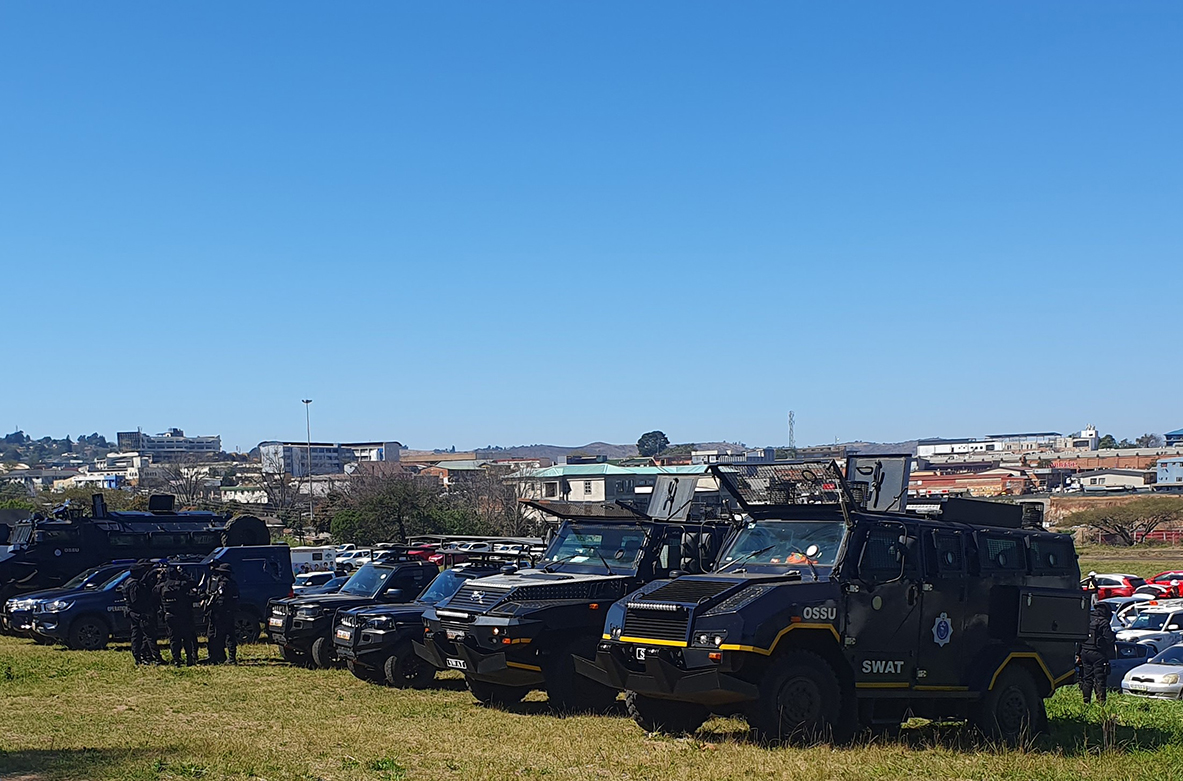
After breakfast on Saturday morning I set off to indulge one of my favourite pastimes, to ride roads I had never ridden before. I rode north to Manzini, and on my way out of town I passed the exhibition centre where the annual Eswatini International Trade Fair was in full swing. Curiosity got the better of me, and I rode in to see what I would see. There were thousands of visitors and what appeared to be an equal number of Eswatini security personnel, Royal Eswatini Police Service, Eswatini Defence Force and a whole bunch of badasses in black battledress and menacing black battlewagons, the Eswatini Special Weapons and Tactics SWAT teams. I asked why there was such a significant security presence and was told that King Mswati III would attend the trade fair later that day. I asked, “What time will he get here?” because I was keen to see one of only five absolute monarchs on earth. The other four are the rulers of Brunei, Oman, Qatar, and Saudi Arabia. “The King will arrive when he arrives. Maybe at 18:00.” It was 10:30, and I decided to forego the pleasure of seeing His Majesty.
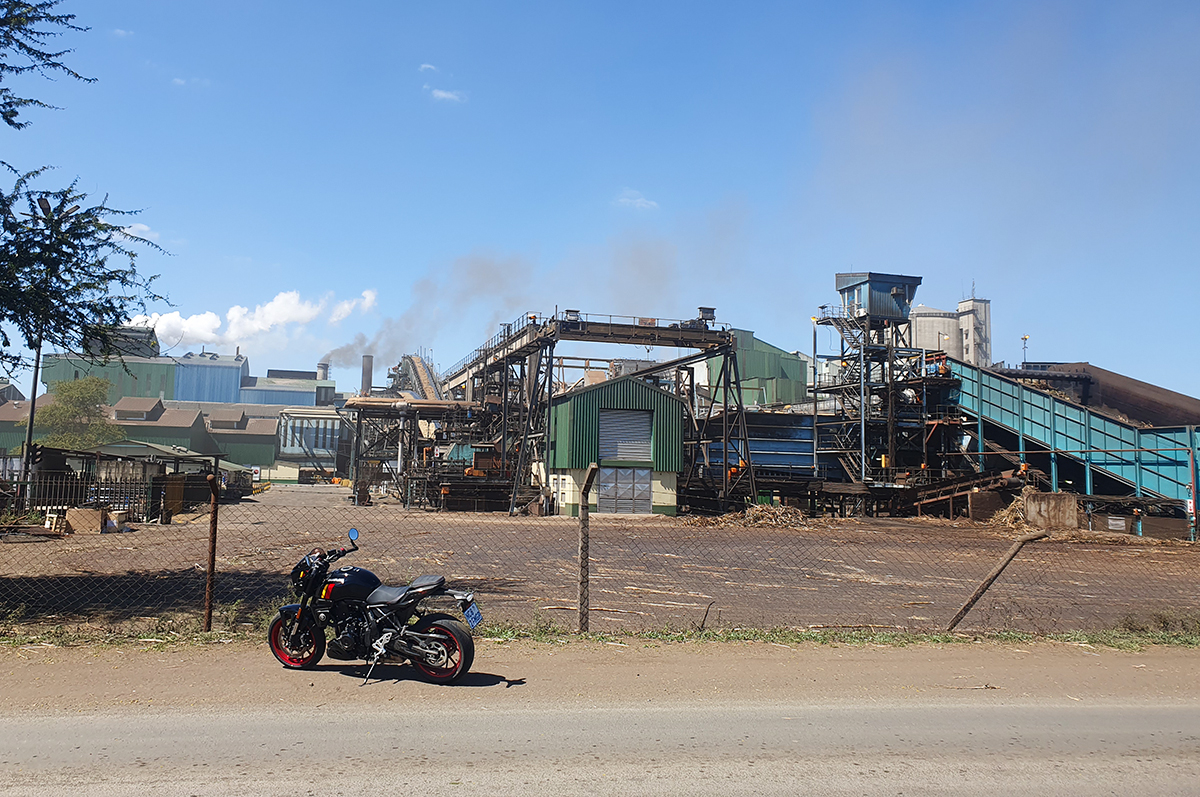
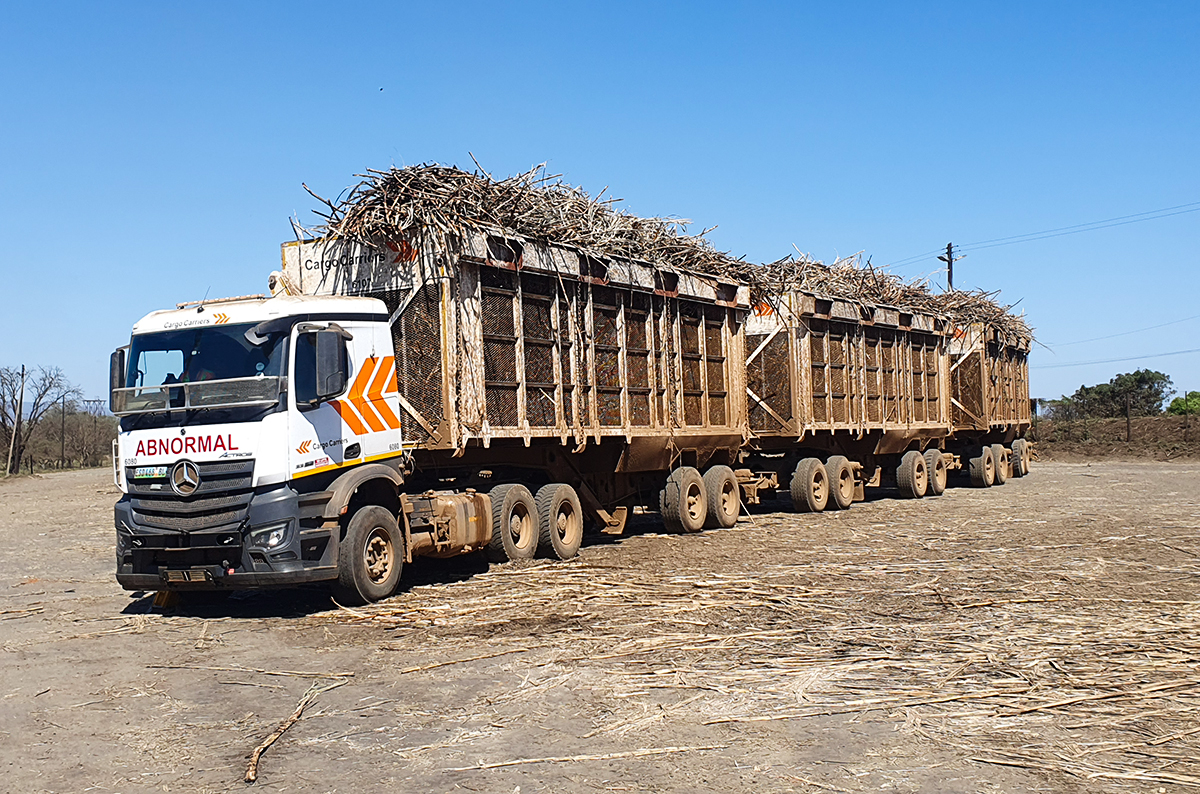
I rode east and turned south at Hhelehhele, then picked up the road to Siphofaneni. This was an otherworldly landscape of low hills, each one crowned with massive boulders. The approach to every village was controlled by seven baastid speed bumps and, of course, seven more on the other side. I hate speed bumps. Leaving Siphofaneni, the countryside was flatter and dotted with glimpses of green as sugar cane fields appeared. In just a few kilometres, there were swathes of green to the horizons. I stopped at the Ubombo Sugar Mill in Big Bend to watch a never-ending procession of articulated trucks feeding the mill’s ravenous maw. The air was thick with the sweet, pungent reek of molasses and burnt caramel, combined with the earthy scent of bagasse.
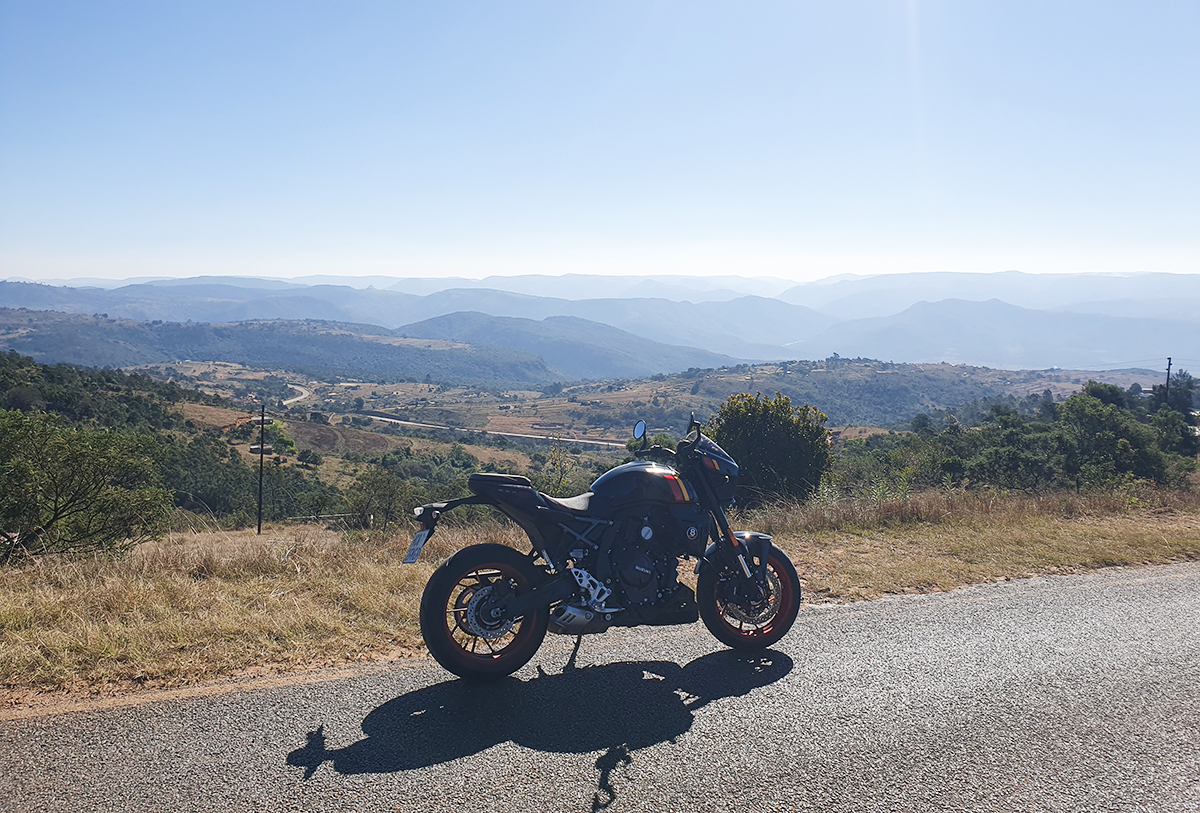
There was hardly any traffic on the MR8 south to Lavumisa. Under a balmy afternoon sky, adrift in a vast landscape, the Lebombo Mountains dominating the eastern horizon, I was a solivagant, a solitary wanderer untethered and loose on the land on a fine machine, just me, the bike and the road, that nirvana which only bikers can achieve. From Lavumisa I rode west on the MR11. The first thirty kilometres were grim, parched bushveld and then suddenly the road wound up into the mountains. It was magical riding all the way to Nhlangano, whence it was the last stretch on the MR9 north through the Grand Valley of the Mkhondvo River.
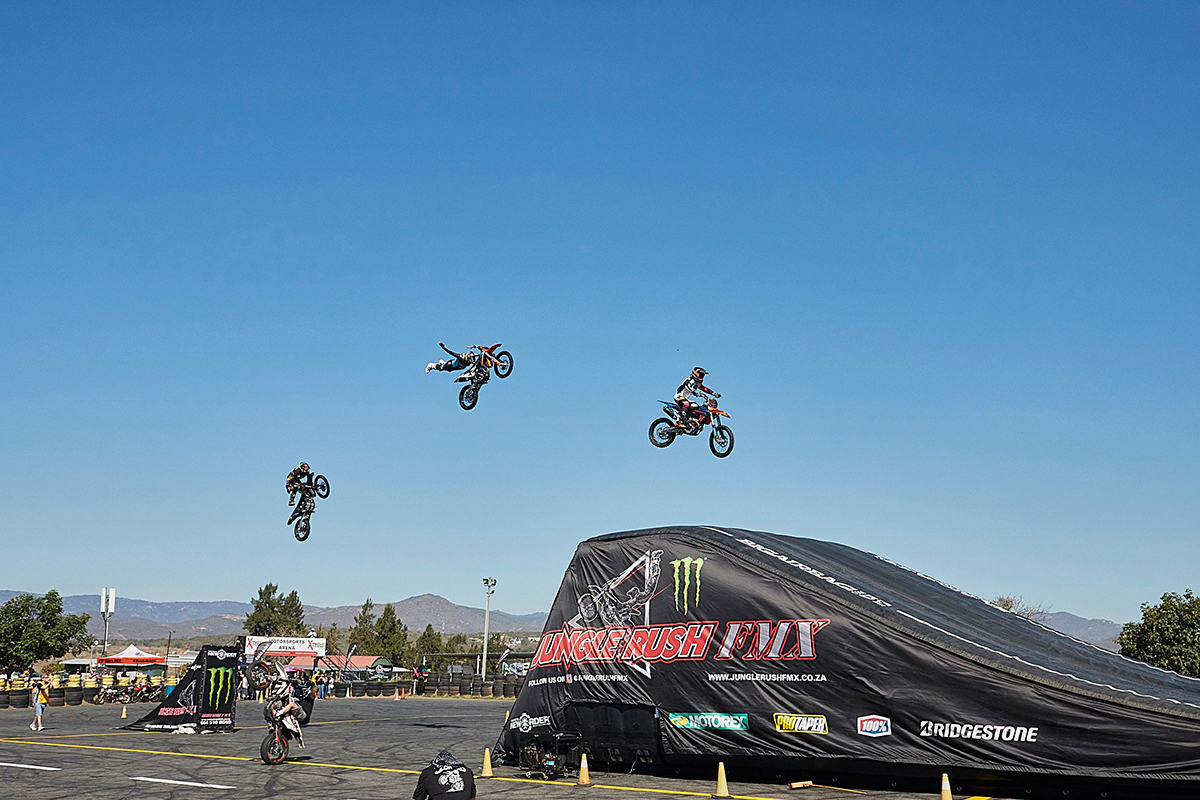
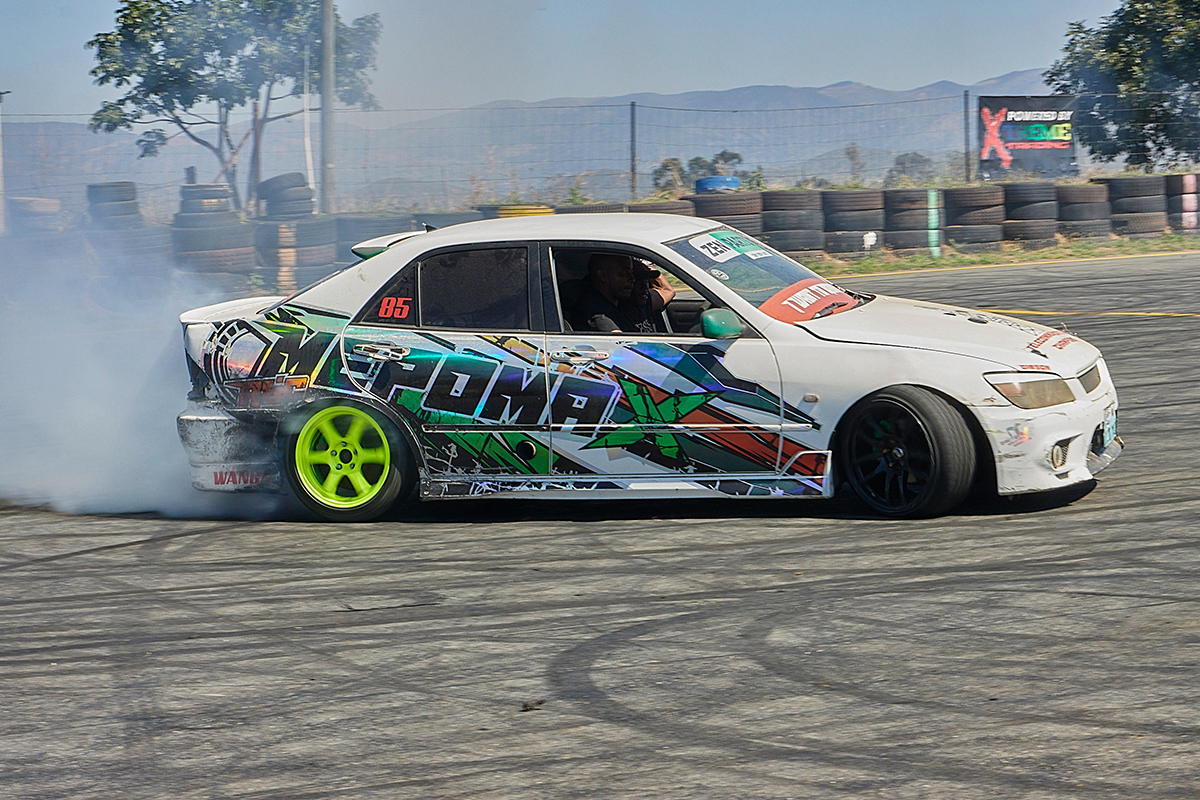
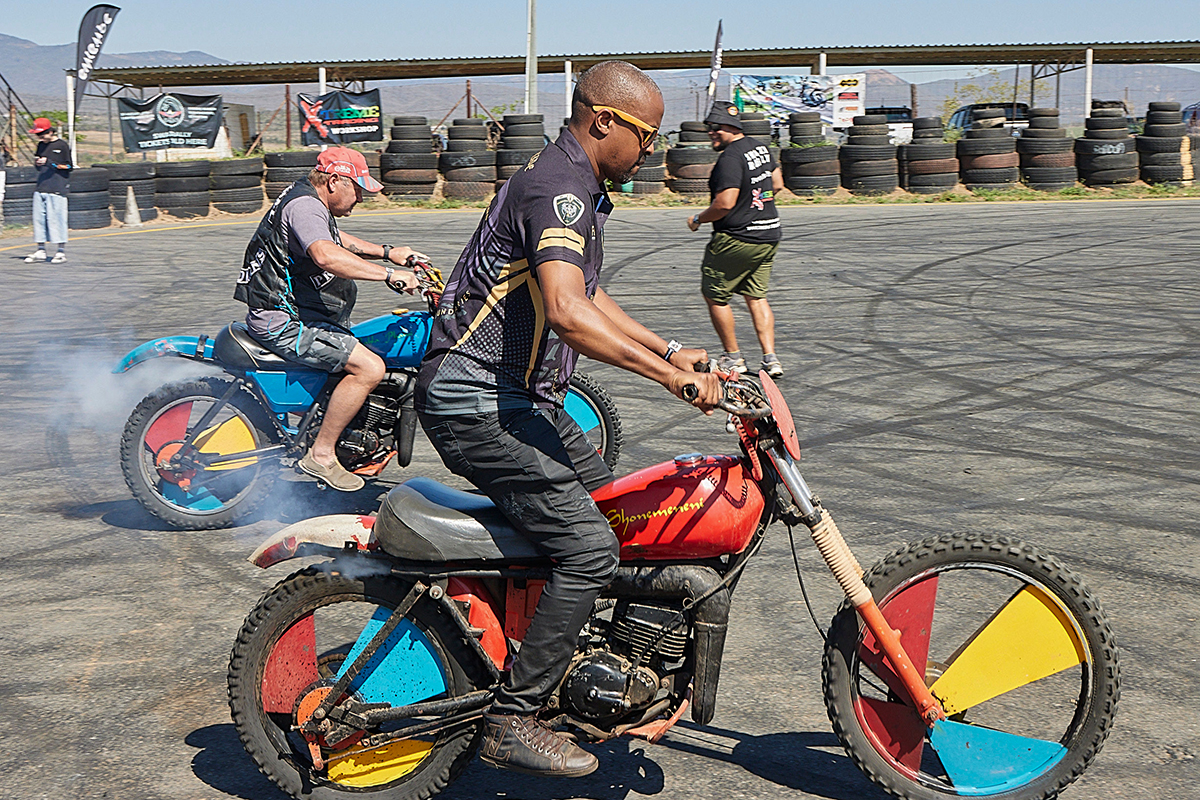
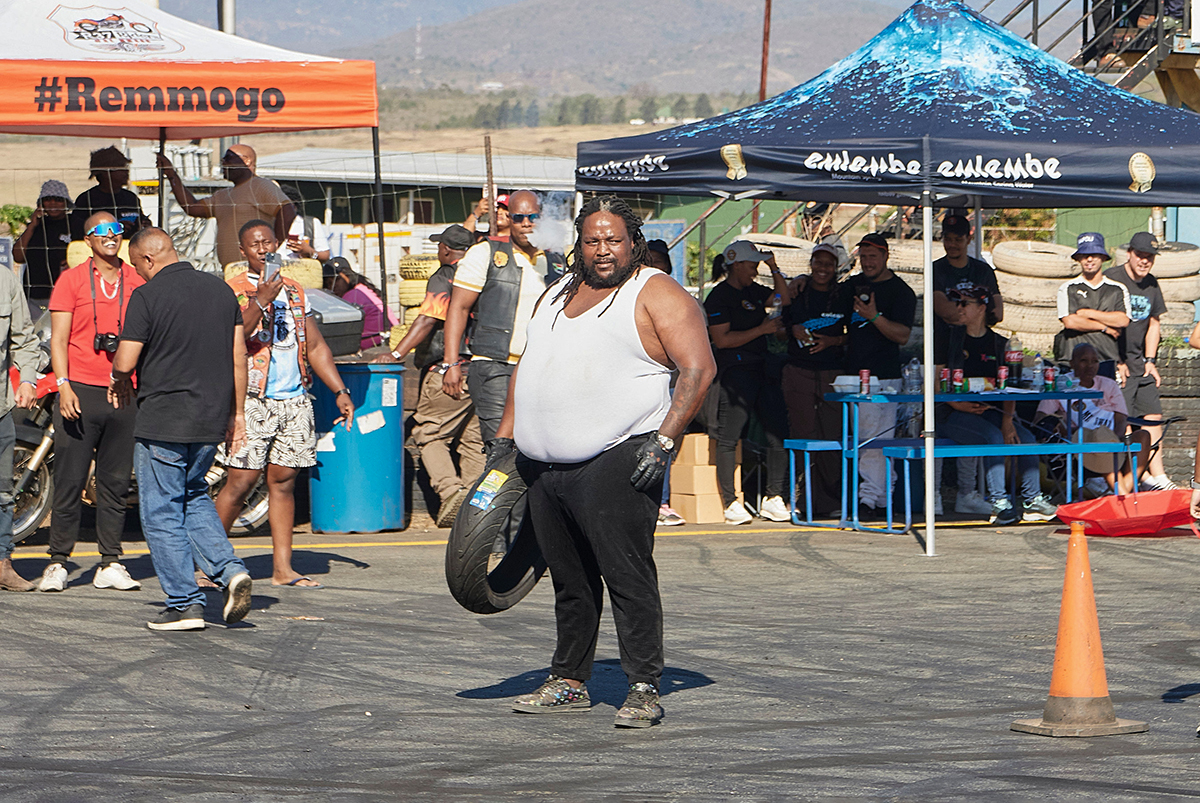
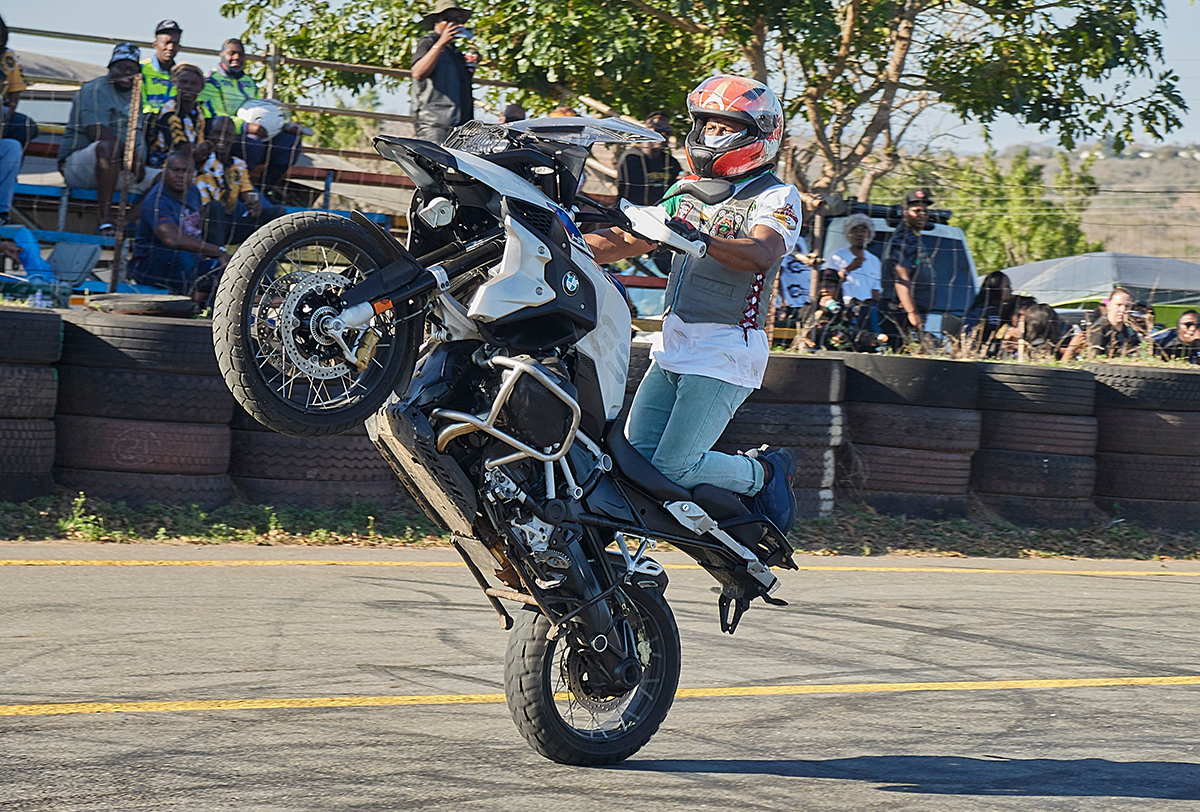
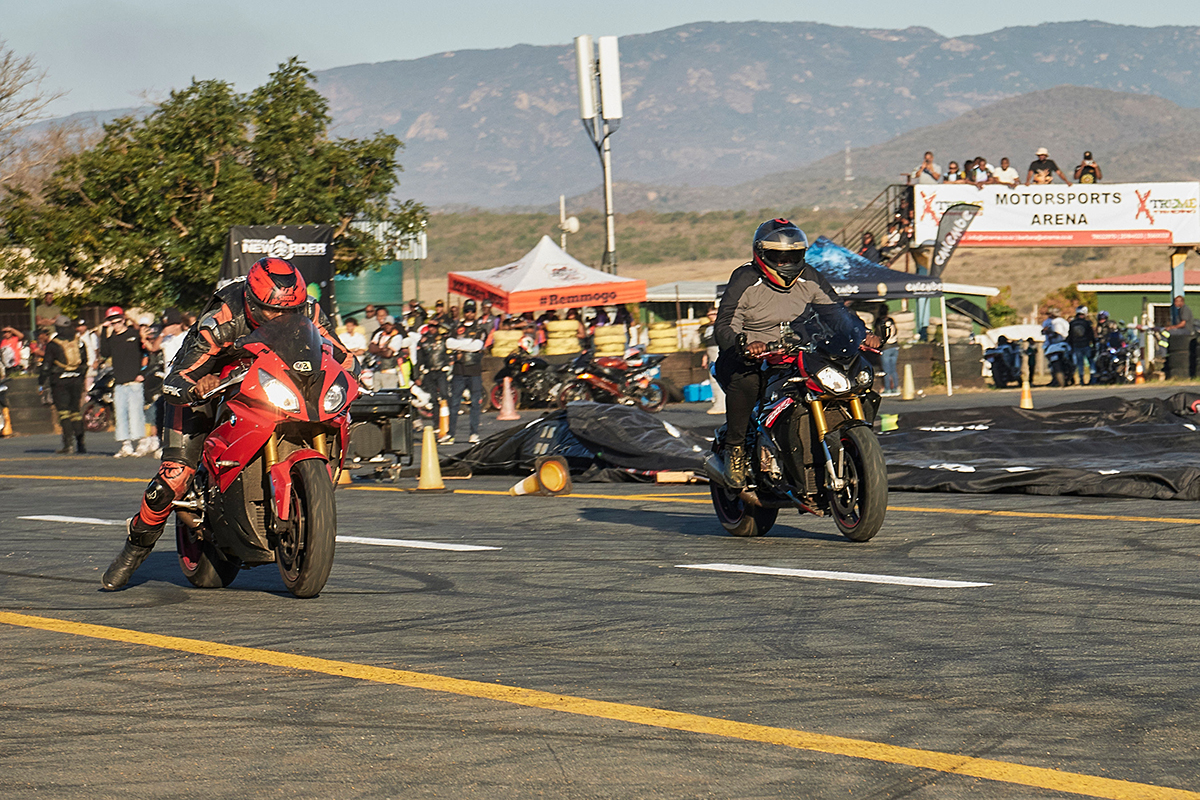
It was 16:00 when I arrived back at Riders’ Ranch after a memorable 340 km day in the saddle. It was a good way to spend Saturday instead of drinking too much beer in the blazing sun. I rode straight to the arena where the sports were still in full swing. The Saturday programme included spinning and drifting, slow races, egg and spoon races, Jungle Rush FMX, tyre throwing, jumping bikes, longest wheelie and the hugely popular drag races. The Swazi Rally lays on non-stop crazy action from 11:00 to 18:30. As the sun set, I rode to the Paiva homestead to watch rugby. It was the second test of Rugby’s Greatest Rivalry at DHL Stadium in Cape Town. The mighty and glorious Bokke defeated the All Blacks 33-26, a most satisfactory result.
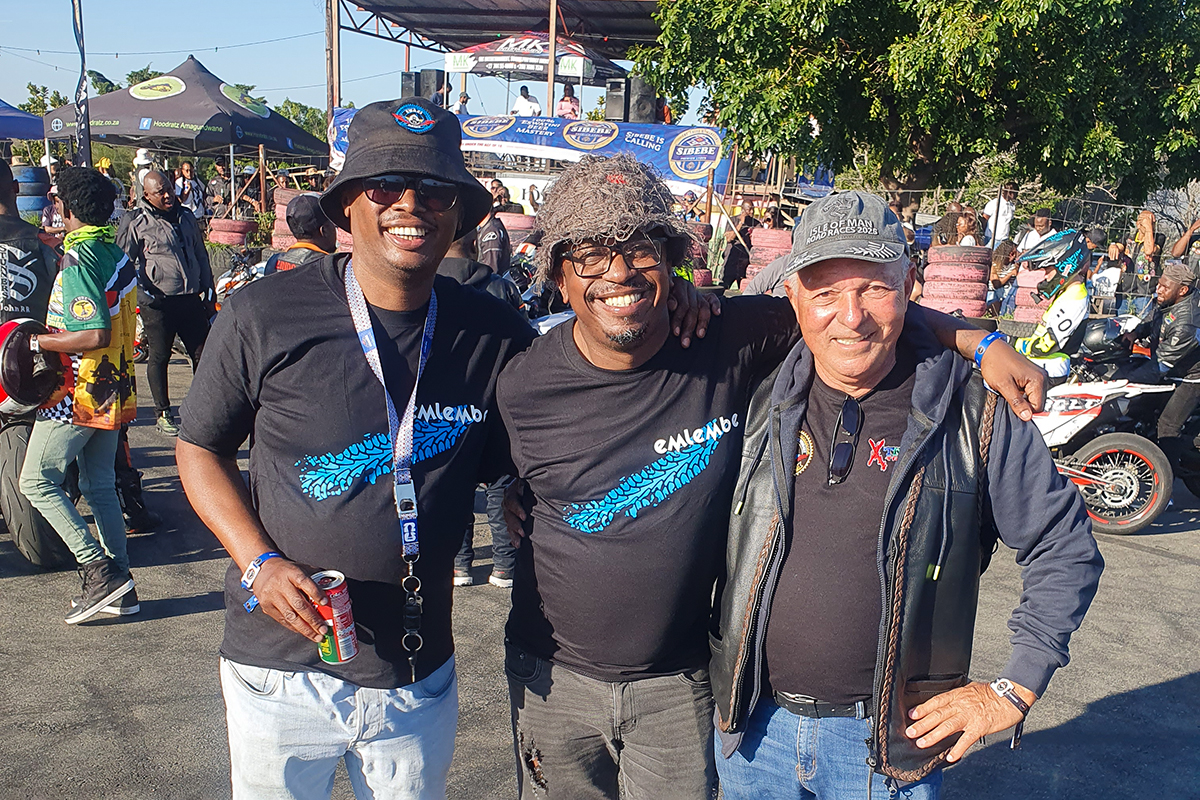
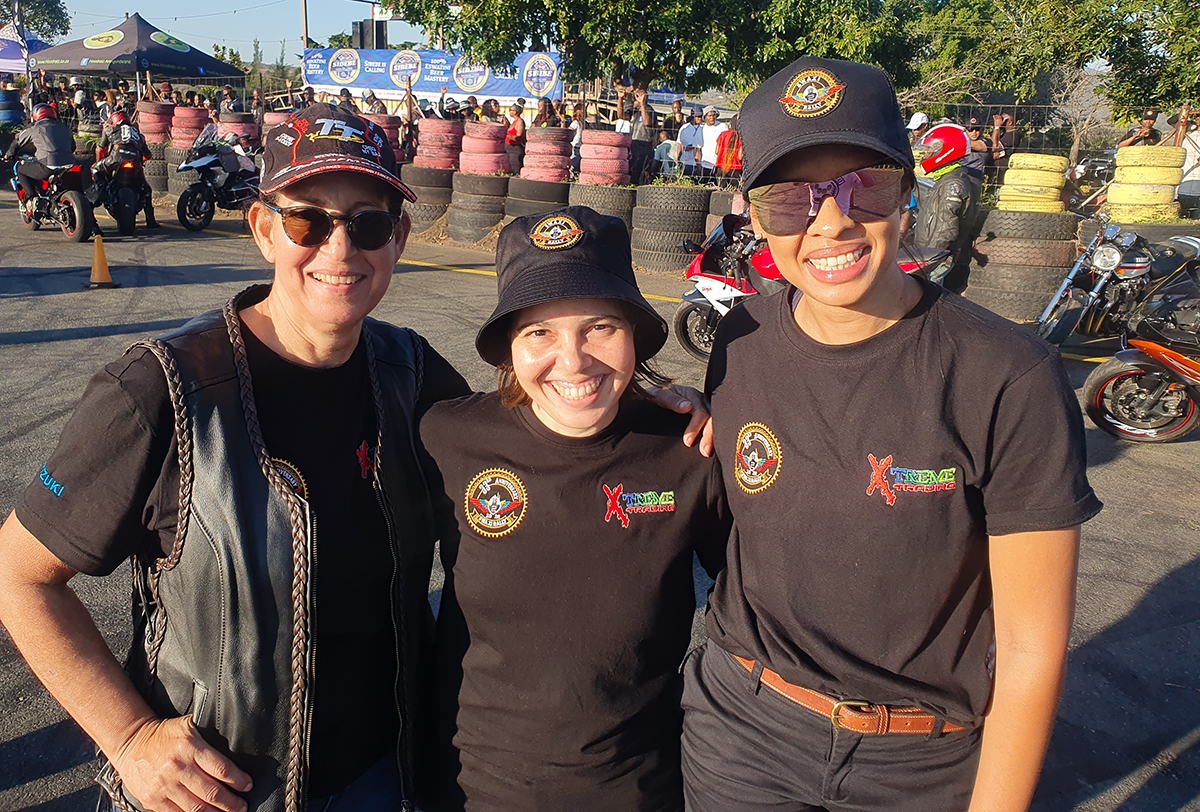
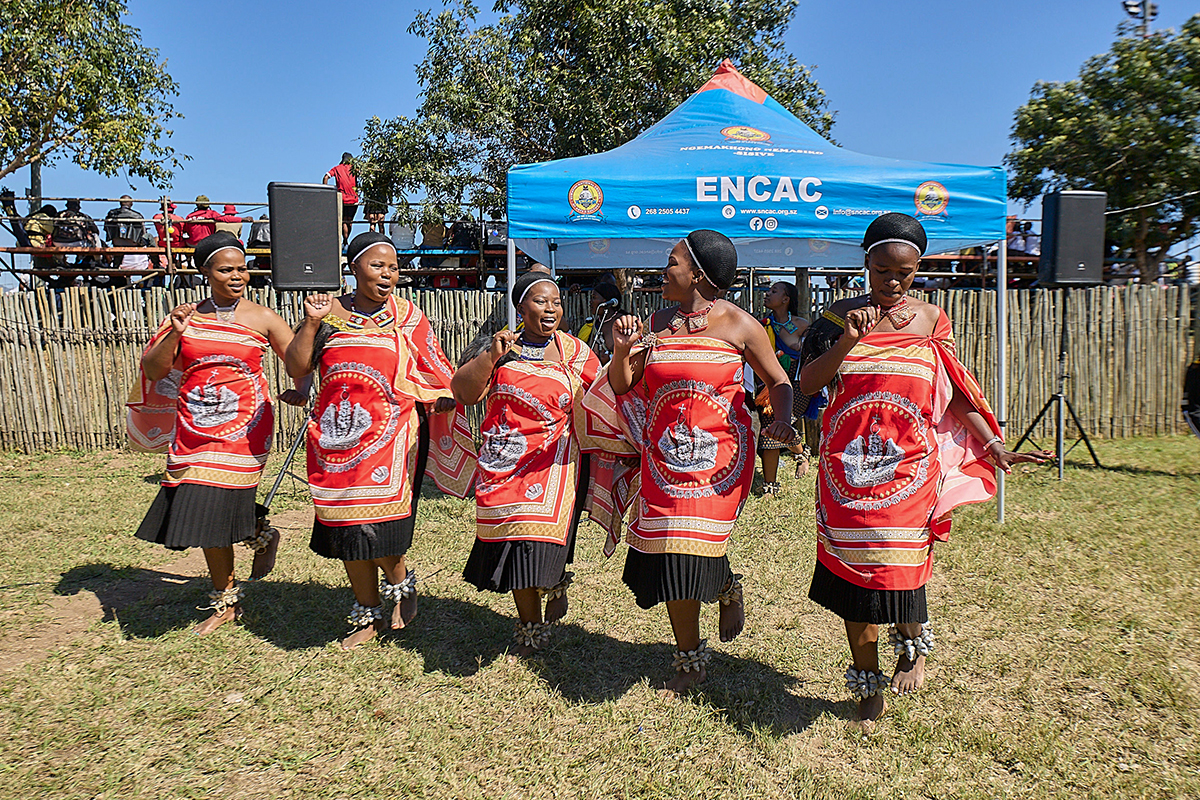
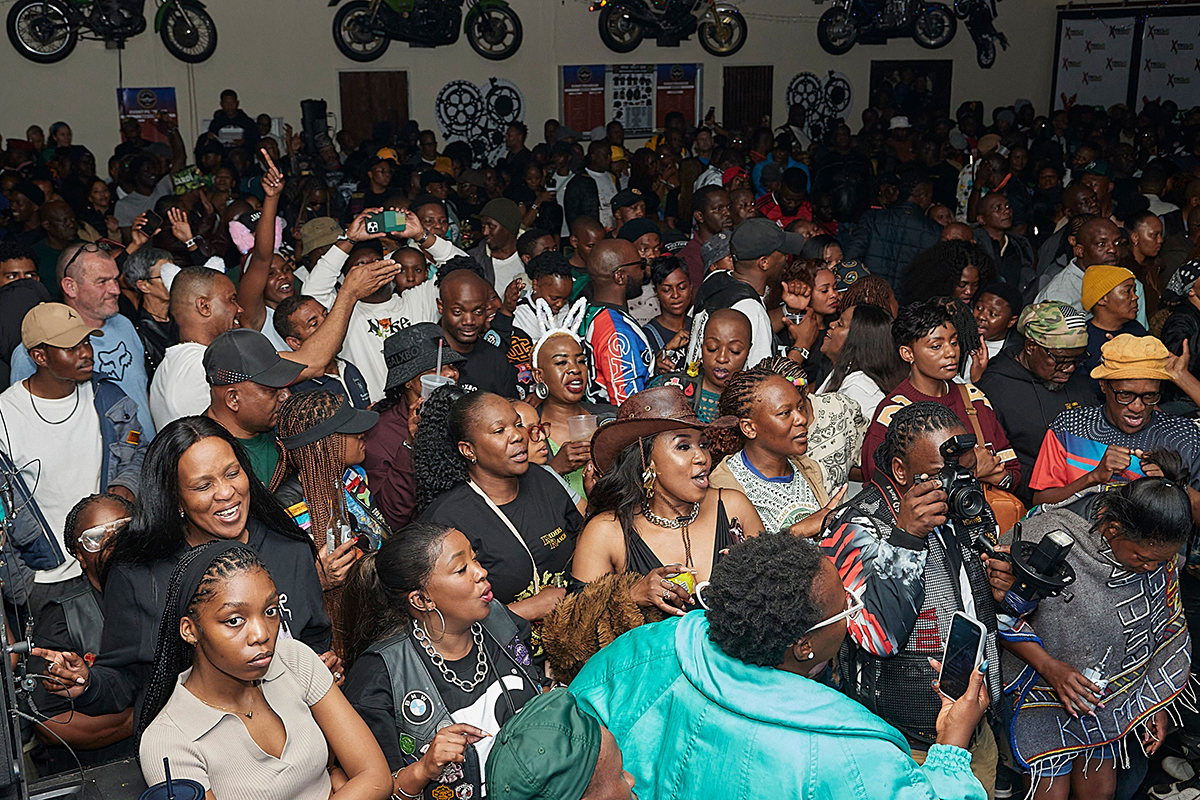
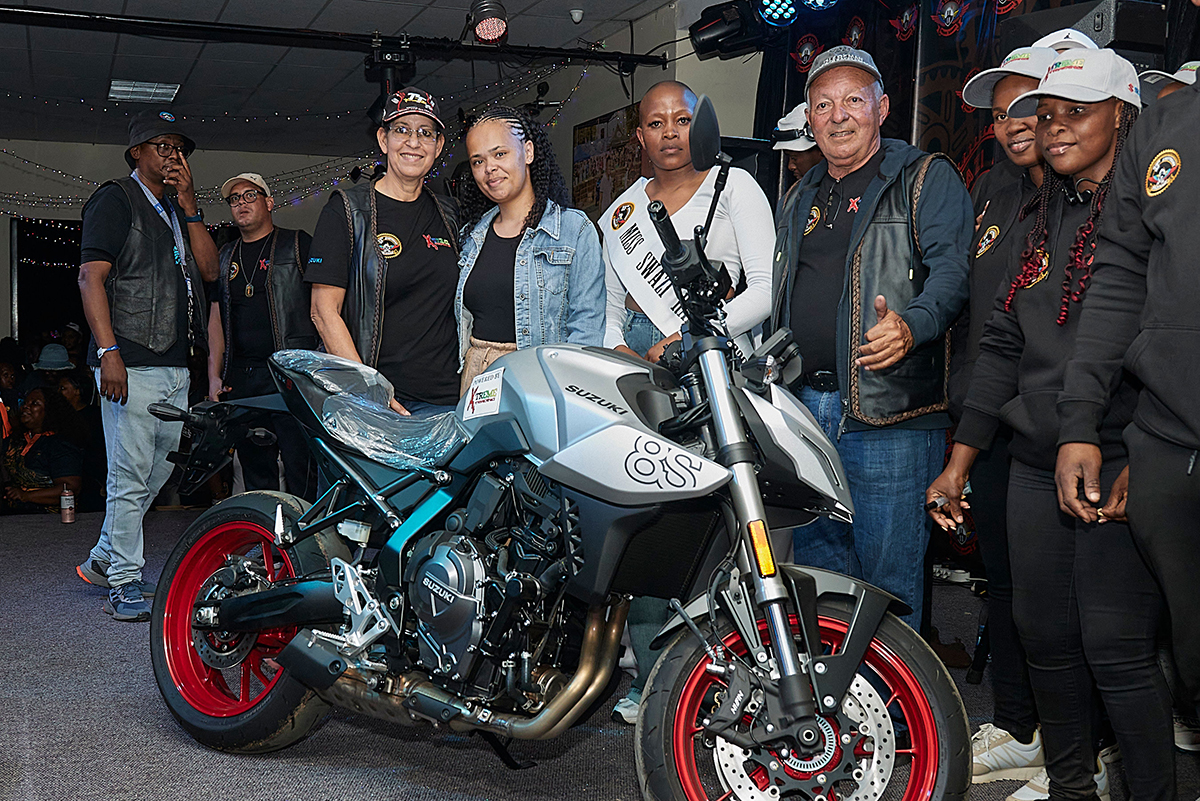
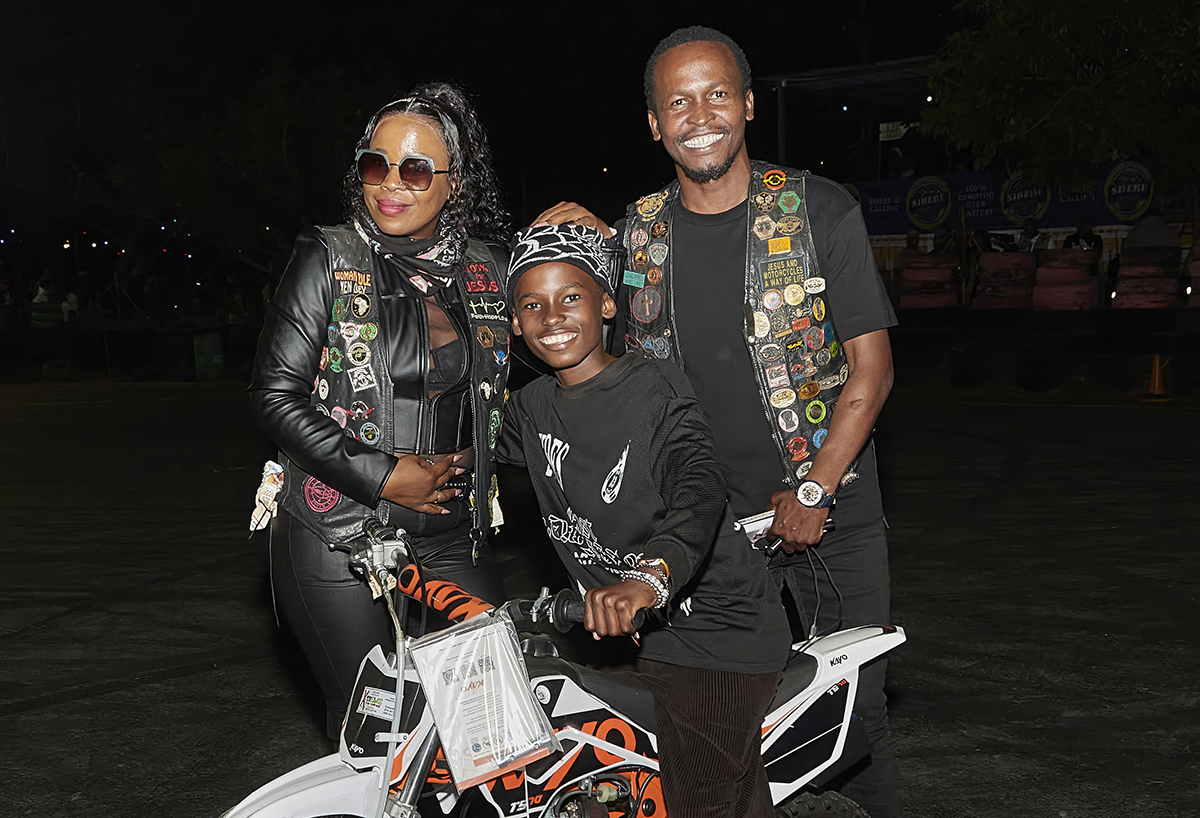
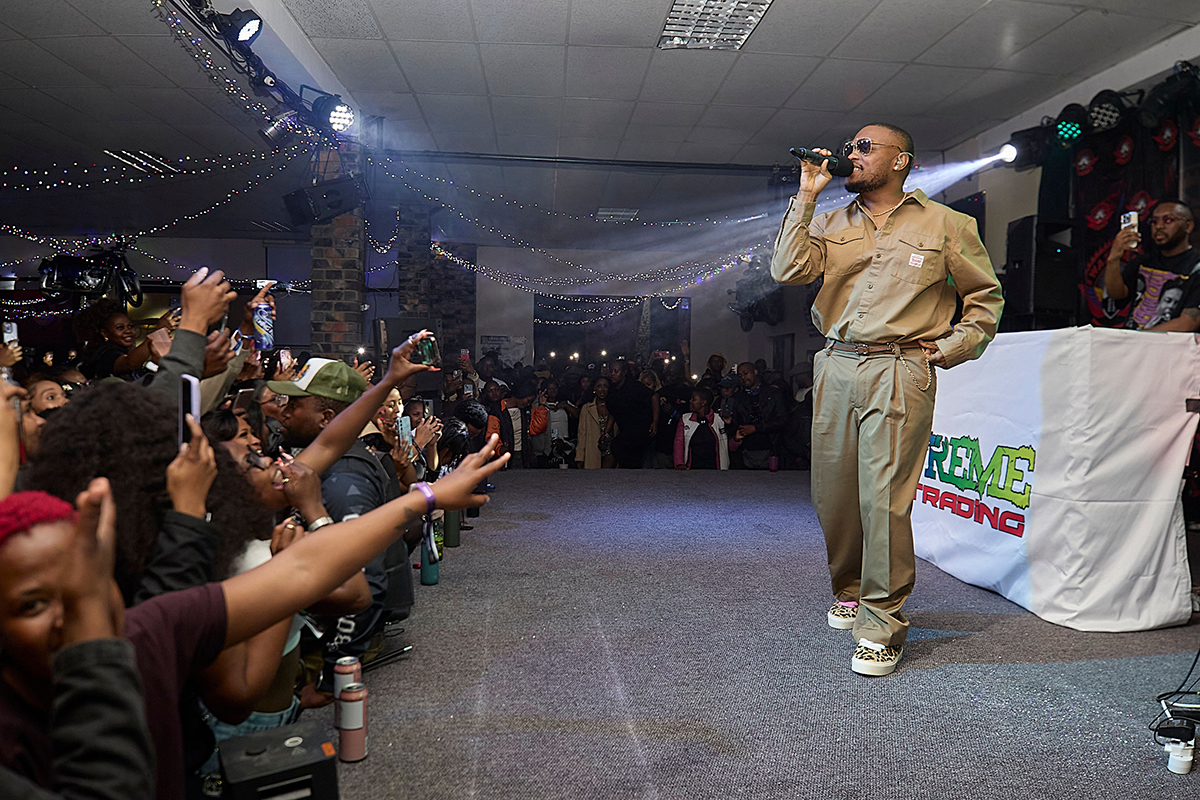
I walked back to the main hall for the climax of the rally, the lucky draw for a Suzuki GSX-800S. The hall was a heaving, sweating, cacophonous mosh pit as the anticipation and excitement rose to fever pitch. Tyra Rose, a local Eswatini lady, was the lucky winner. South African hip-hop superstar K.O took to the stage and rocked the joint. The entertainment continued until 05:00 on Sunday morning and included the legendary late-night Swazi Rally “Cabaret Dancers”, aka ecdysiasts. But I wasn’t there to see them.
Under a luminous starlit sky, I walked back to the homestead accompanied by the living chorus of insects tinkling and chirping, haunting bird calls, and the eerie cries of bush babies. In this African night of rare splendour, as I gazed at the majestic panoply of the Milky Way, I was reminded of the words of Ptolemy the Astronomer: “I know that I am mortal by nature, and ephemeral; but when I trace at my pleasure the windings to and fro of the heavenly bodies I no longer touch the earth with my feet: I stand in the presence of Zeus himself and take my fill of ambrosia, food of the gods.”
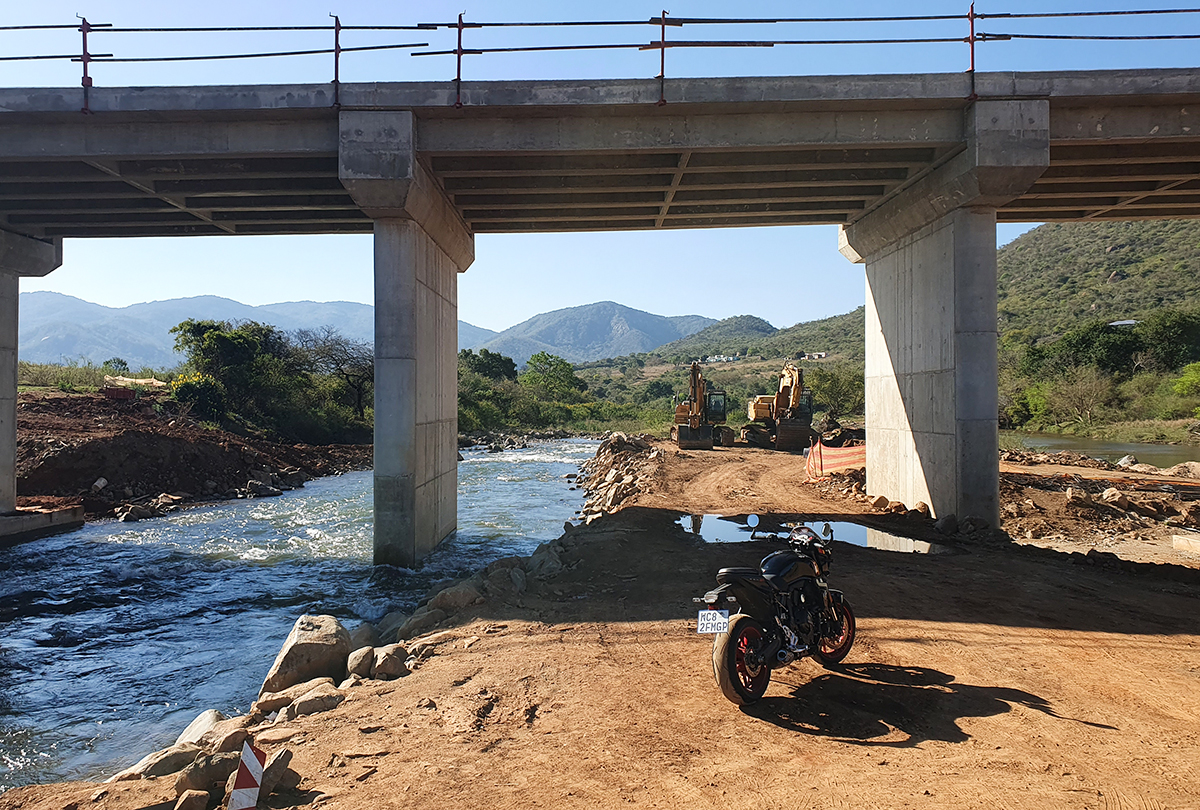
On Sunday morning I said my fond farewells to the Paivas and rode north to Mananga. The border crossing was a formality, and soon I was on the R571 riding towards Komatipoort. At the Komati Sugar Mill I took a risk and followed a sign that read Komati Kortpad. Fifty metres in, there was a tollgate?! But the bloke in the booth waved me through. A kilometre further, a bridge crossed the fast-flowing Komati River. From there it was a lovely ride on a deserted road that traversed hundreds of square kilometres of sugar cane fields. Eventually the road joined the N4 at Hectorspruit and from there it was a skip and a jump home through the Crocodile Gorge.
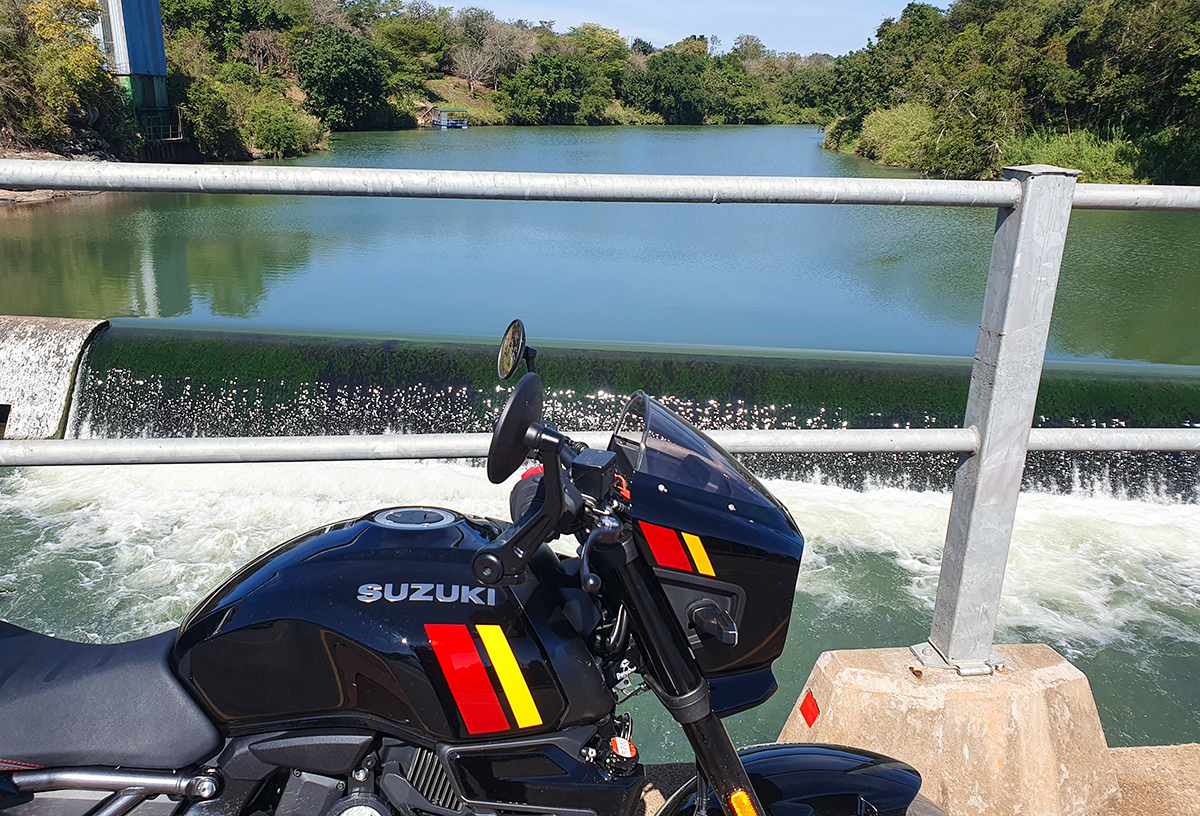
The GSX-8TT was a brilliant steed. Swift and sure and sexy to boot. I rode 950 km over the weekend with an average fuel consumption of 18 km/L. The TT sells for R189,900. Take a test ride. You’ll buy one!
Suzuki GSX-8TT
For more information on the bike featured in this article, click on the link below…