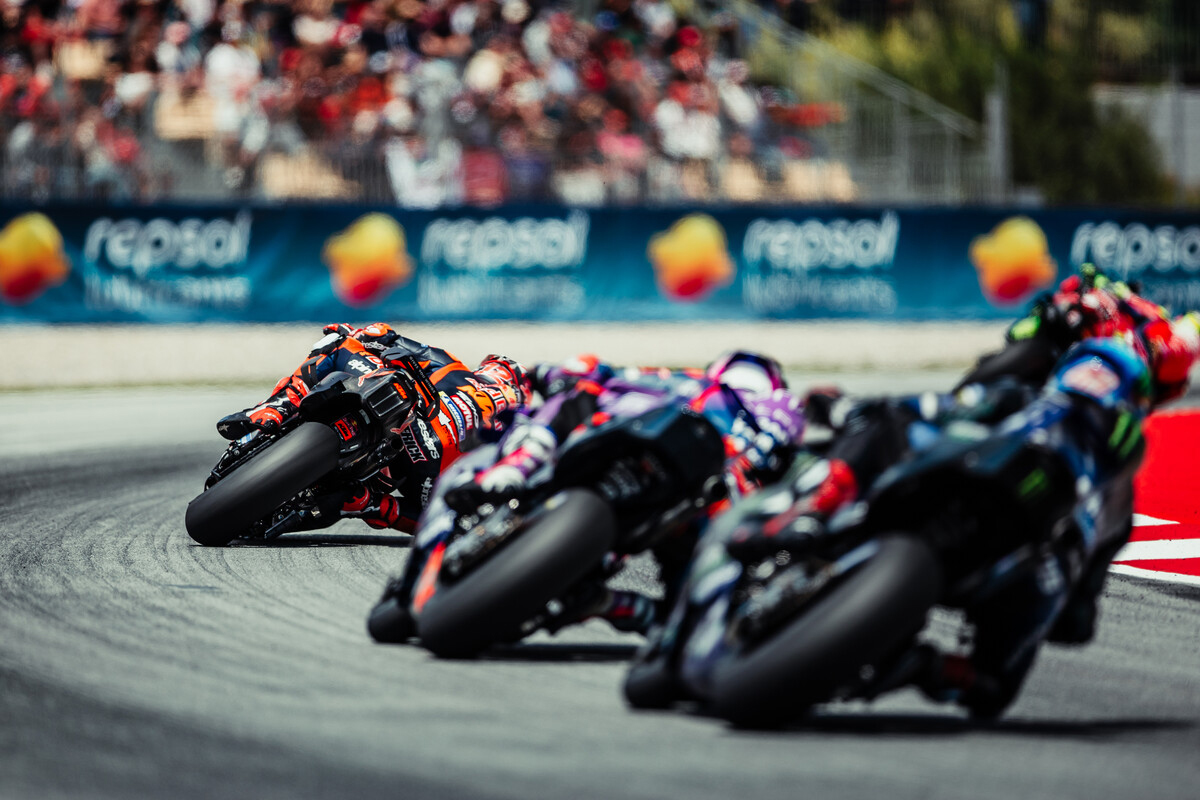



Two things to take from the races this weekend: that trying to predict anything in MotoGP is pointless, and that these men are superhuman.
The least controversial – or shocking – of those is the unpredictability of the events in the Sprint and Main races, not to mention the closeness of the racing; the Sprint winning margin was the closest in Sprint history, while the Main race result, even without the shock exits and incidents, was something that no one could have predicted.
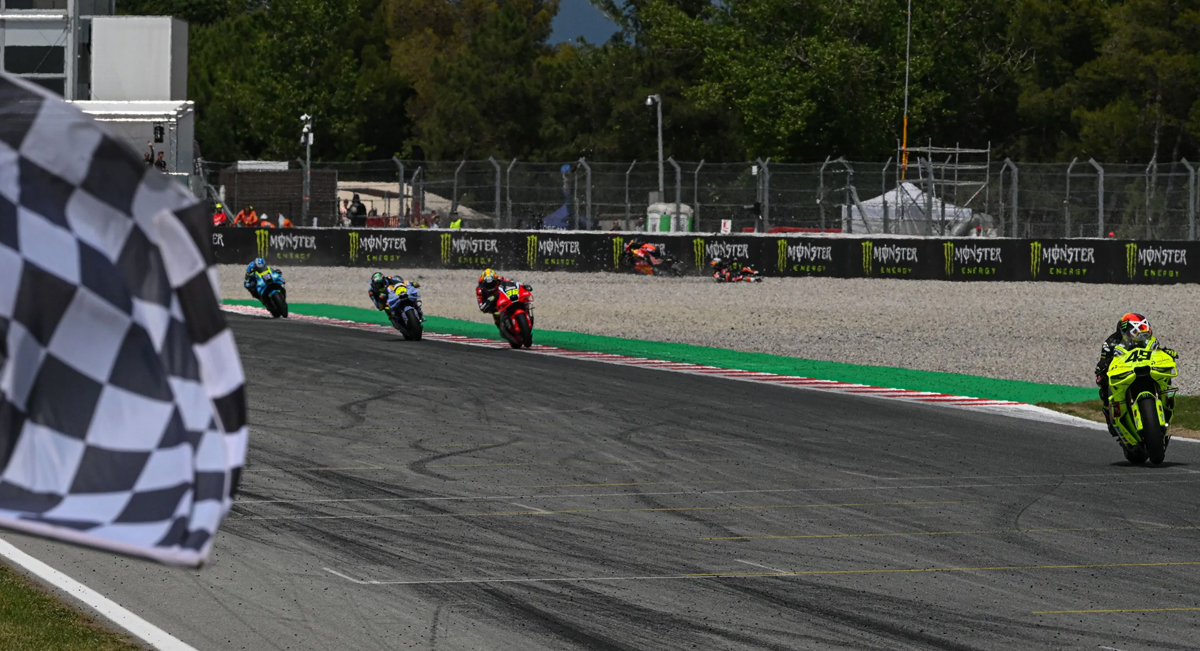
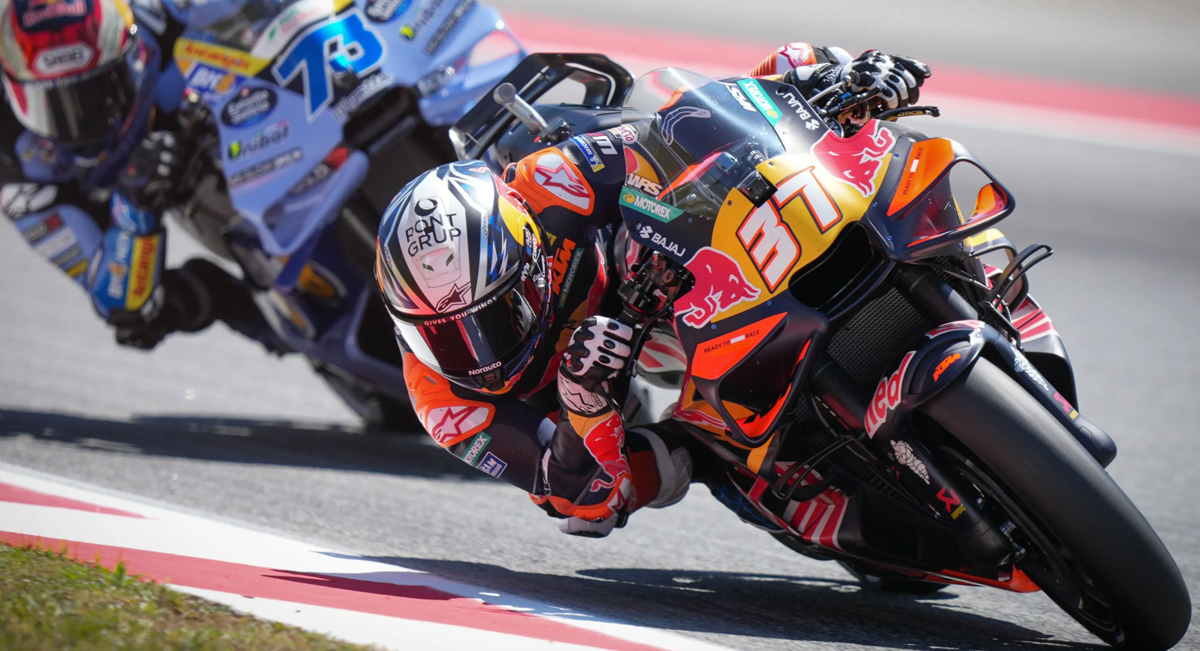
Talking of predictions, who would have predicted before the weekend that we would have two factory KTMs running at the front during practice and qualifying? Who would have predicted that one of those KTMs would crash out of the Sprint race at the first corner and then have his bike fail as he approached the grid for the start of the Main race and have to divert into the pits to get his second bike, starting dead last in the process, yet still finish seventh?
Who then would predict that the other factory KTM would run right at the front in all three attempts at racing the Main race, only to have its own technical issue that would spark the horrific accident to Alex Marquez that stopped the race for the first time? Who would then predict that the same rider would then be fighting at the front of the truncated Main race, only to fade at the last before being punted off at the very last corner of the race?
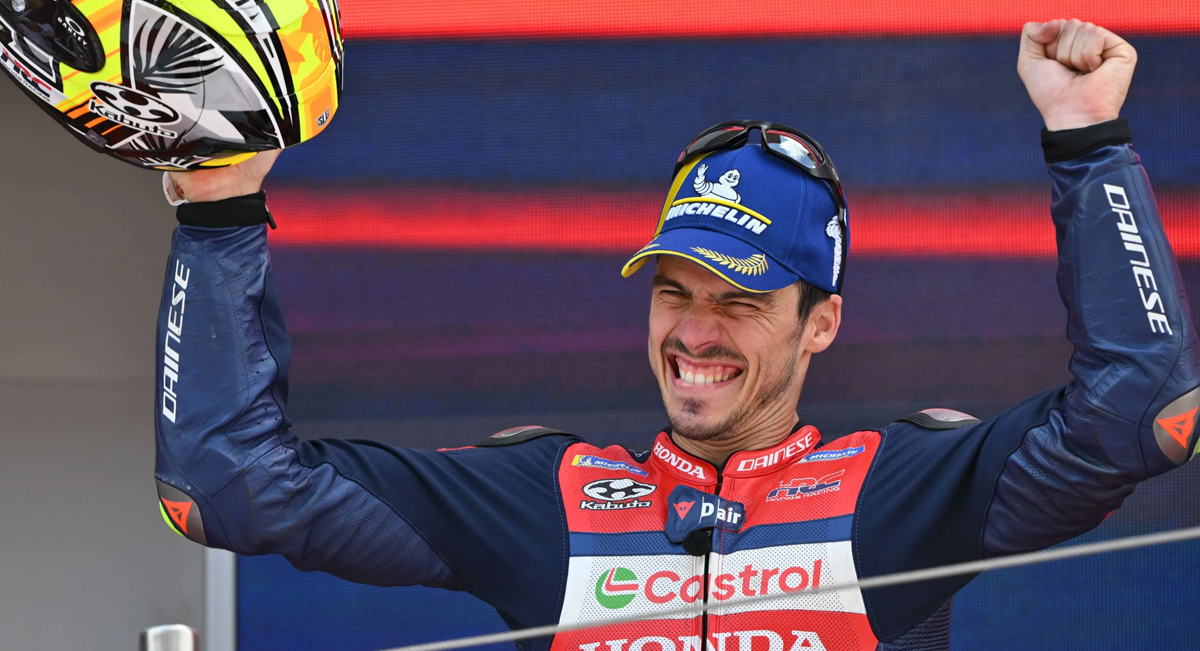
Who would have predicted a Honda – a satellite Honda, at that – would be running at the front after the first Main race start and then a second Honda – factory, this time – would be in contention for the win after the third start, taking a podium spot and then losing that position for a tyre pressure infringement?
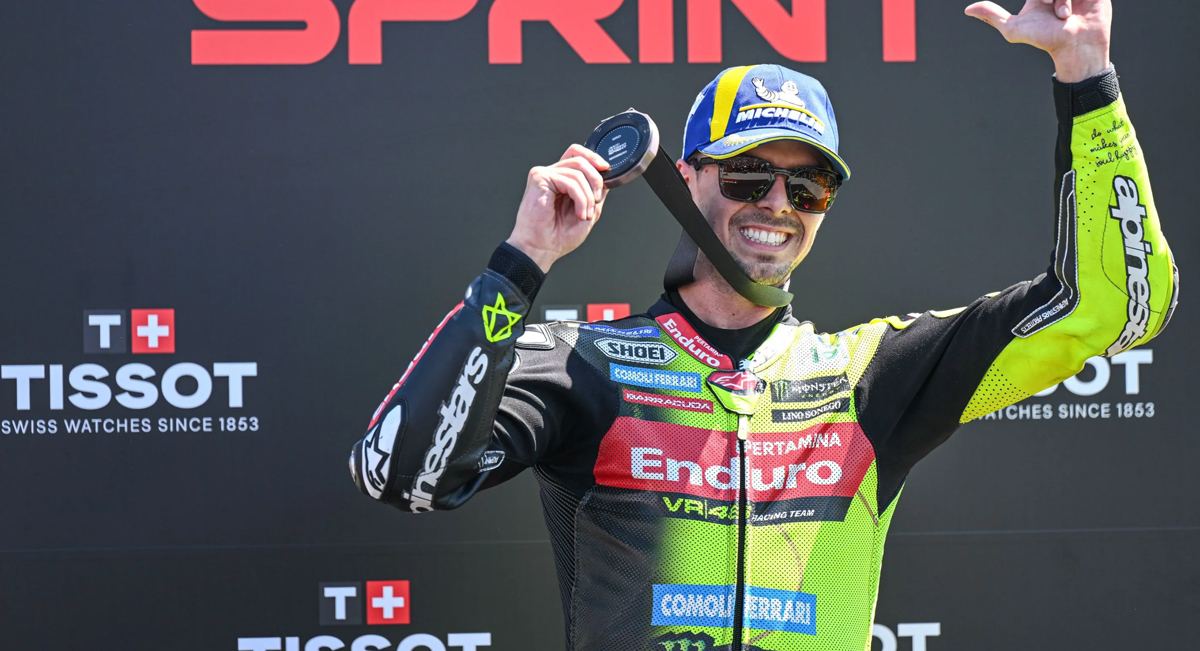
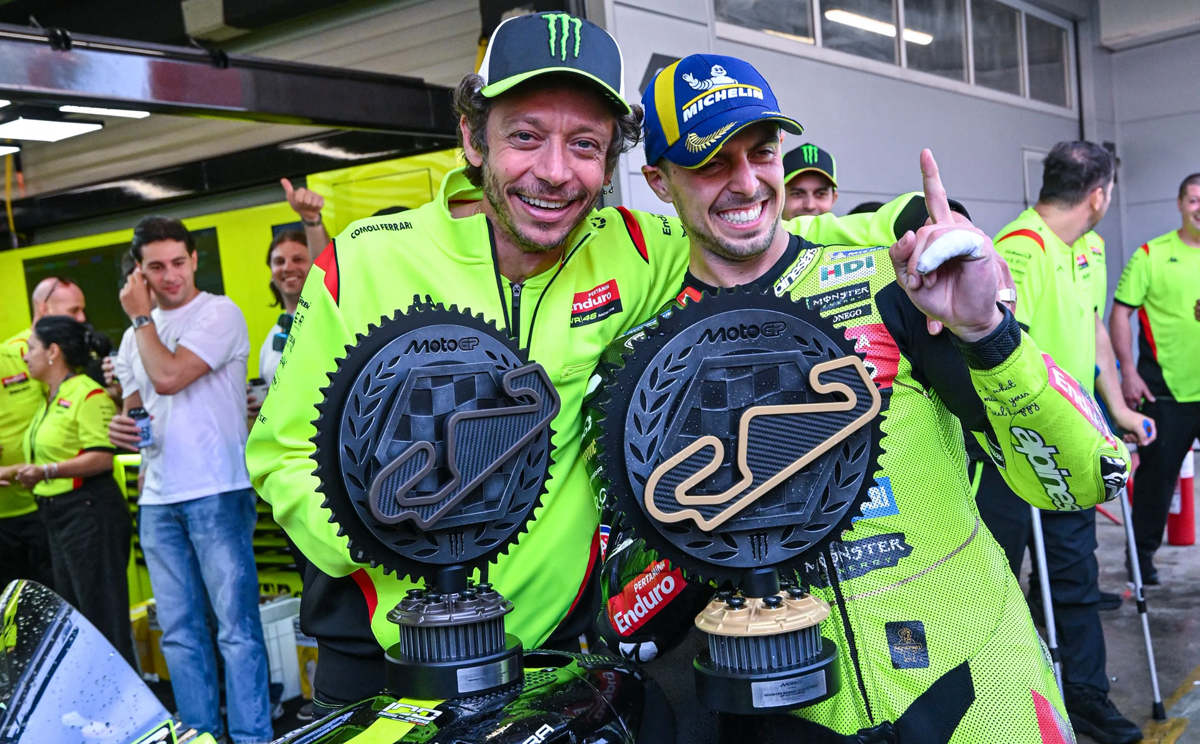
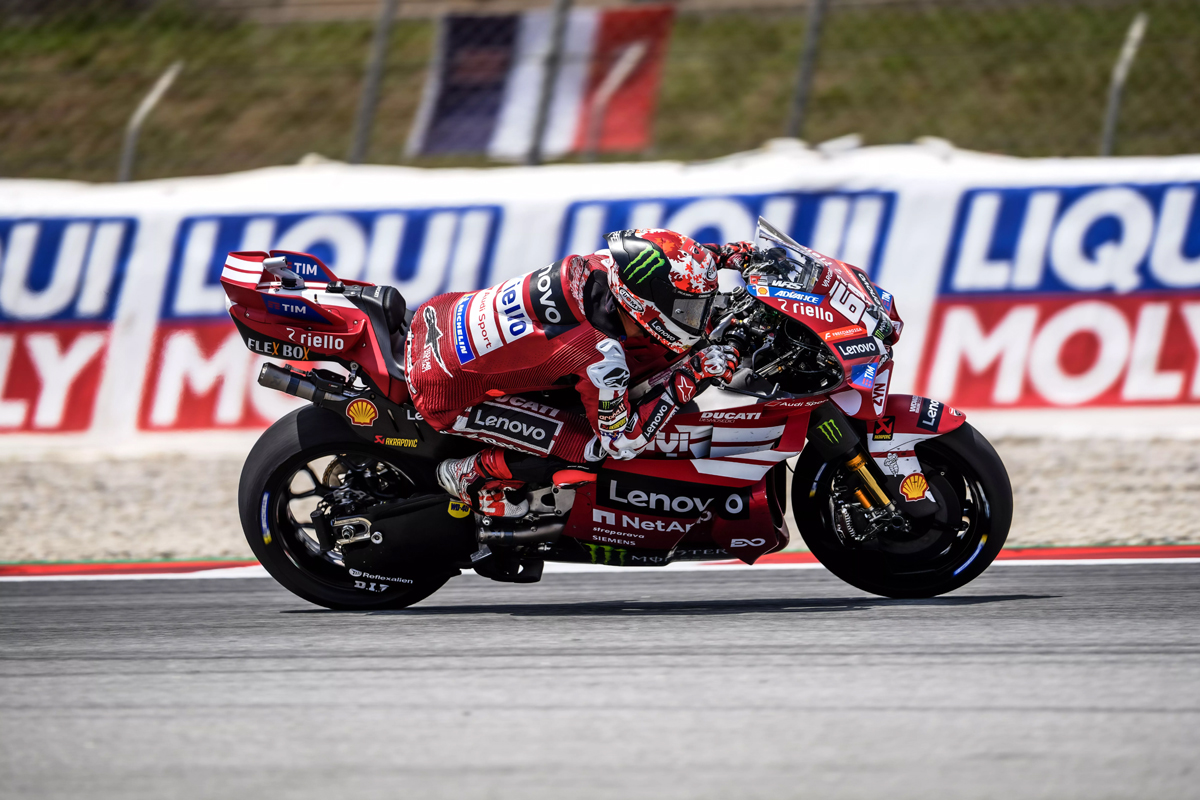
Who would have predicted Fabio DiGiannantonio winning for VR46, as rumours swirl around him moving to the factory KTM team for 2027? Not I. Pecco Bagnaia taking the Ducati factory squad’s first podium in eleven races? Nope! Jorge Martin threatening to overturn Marco Bezzecchi’s points lead only to be taken out by fellow-Aprilia rider Raul Fernandez? Nope! DiGiannantonio being skittled out by debris from the Marquez crash, clutching his hand in pain, and yet somehow restarting his bike and making it back to the pits in time to take the restart and win the race! A rather eventful hour for him!
All brilliantly unpredictable, especially if you have no particular favourite rider and just want to see good racing right to the very end.
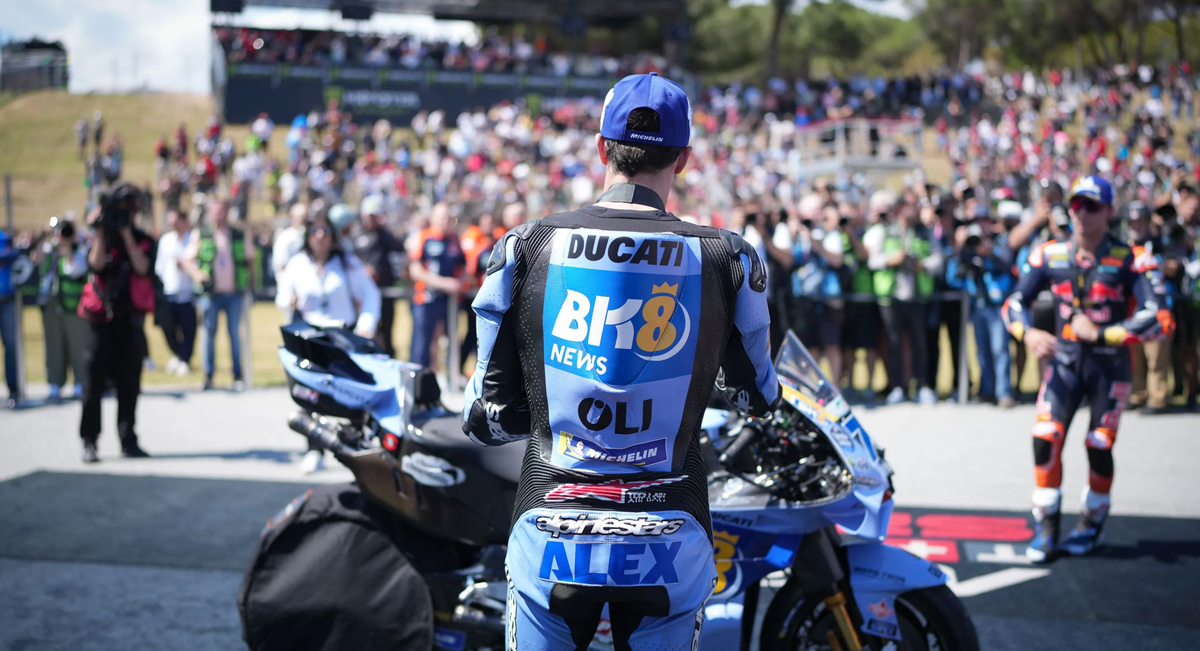
But we also saw the dark side of the sport, or what could very easily have been the darkest of dark sides of the sport. Look at that crash of Alex Marquez; in past decades of motorcycle racing, he wouldn’t have survived that crash. Indeed, it’s hard to understand how Alex Marquez survived that crash. The wall was terrifyingly close, his speed was enormous, and the margin for survival was minuscule. And yet he not only survived, but suffered merely a fractured collarbone and a “marginal fracture” to his C7 vertebrae.
How? How is that possible?
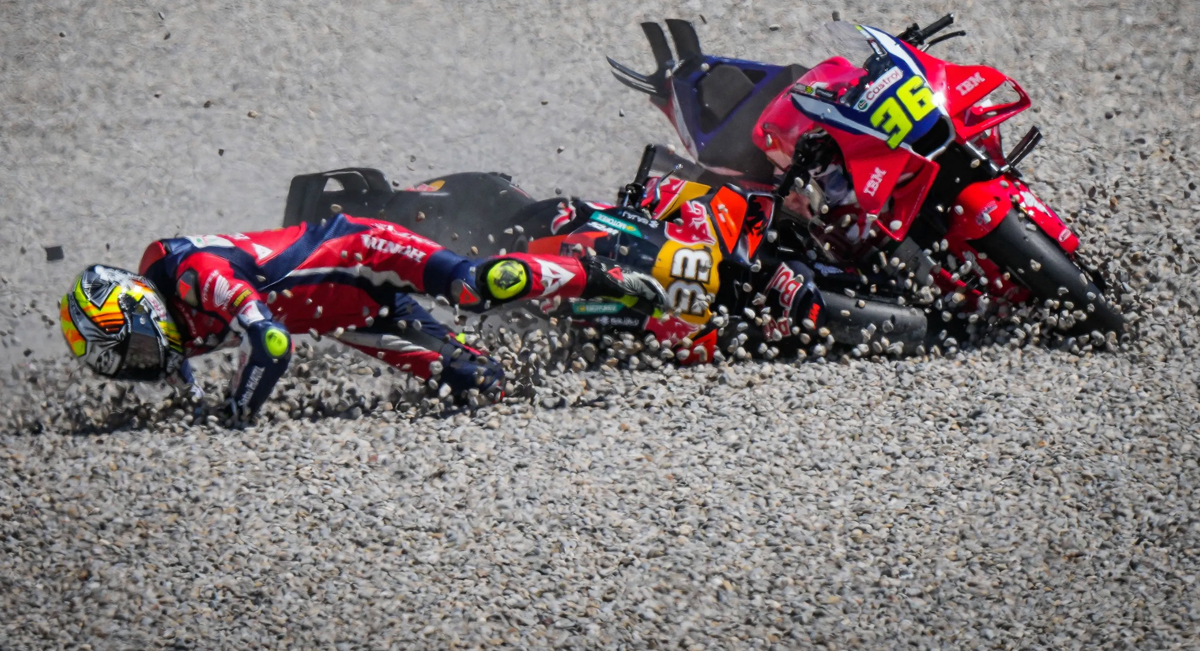
Then look at Johann Zarco’s crash; how he was tossed around like a rag doll as his foot became entangled in Pecco Bagnaia’s Ducati’s rear wheel as it slid and tumbled into the gravel; how did he escape with nothing worse than torn ligaments in a knee and a small fracture at the bottom of the fibula? By rights, his leg should have been snapped in two.
Again, how? How did both those riders, in effect, walk away from those crashes? What happened in Barcelona is a long way from the outcome that many of their racing ancestors would have faced. Track safety today is light years ahead of how it used to be, and I’m not talking in terms of 60, 70 or 80 years ago; even in the 1990s, the riders were fighting for better safety conditions and the race organisers and track owners were pushing back against the inevitable, and some of the races were run at circuits that today’s riders would not even walk around, let alone ride or race.
There is obviously no way track owners can move every single obstacle from the vicinity of the track; local geography alone can preclude this. Of course, anything can be done, but how can you predict and protect against every single possible outcome of every possible accident scenario, especially on a straight? You just can’t.
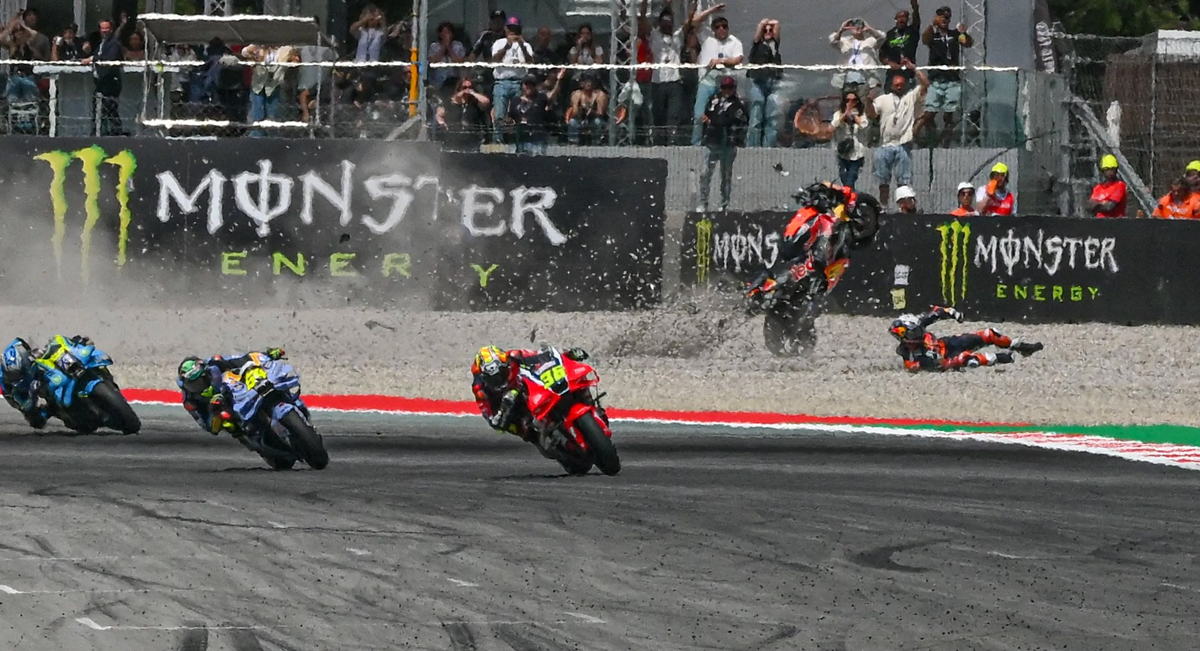
This raises another interesting question: how much danger or risk is acceptable? Can you remove all the risk and retain the essence of the sport? Is risk a part of the challenge? From a spectator’s viewpoint, does making racing too sanitised remove the attraction? One racing insider once said that he believed that the public came to watch races to see the incidents and accidents, not just the racing. Who’s to say he is wrong?
You could argue that no one is holding a gun to the riders’ heads to make them race. Yes, there is a lot of money at stake, a lot of investment and a lot of livelihoods on the line, but should any rider on the grid decide that enough is enough, there would be hundreds of riders ready to take up the slack and put his life on the line, so any gesture of withdrawal on safety grounds is a hollow gesture in the greater scheme of things.
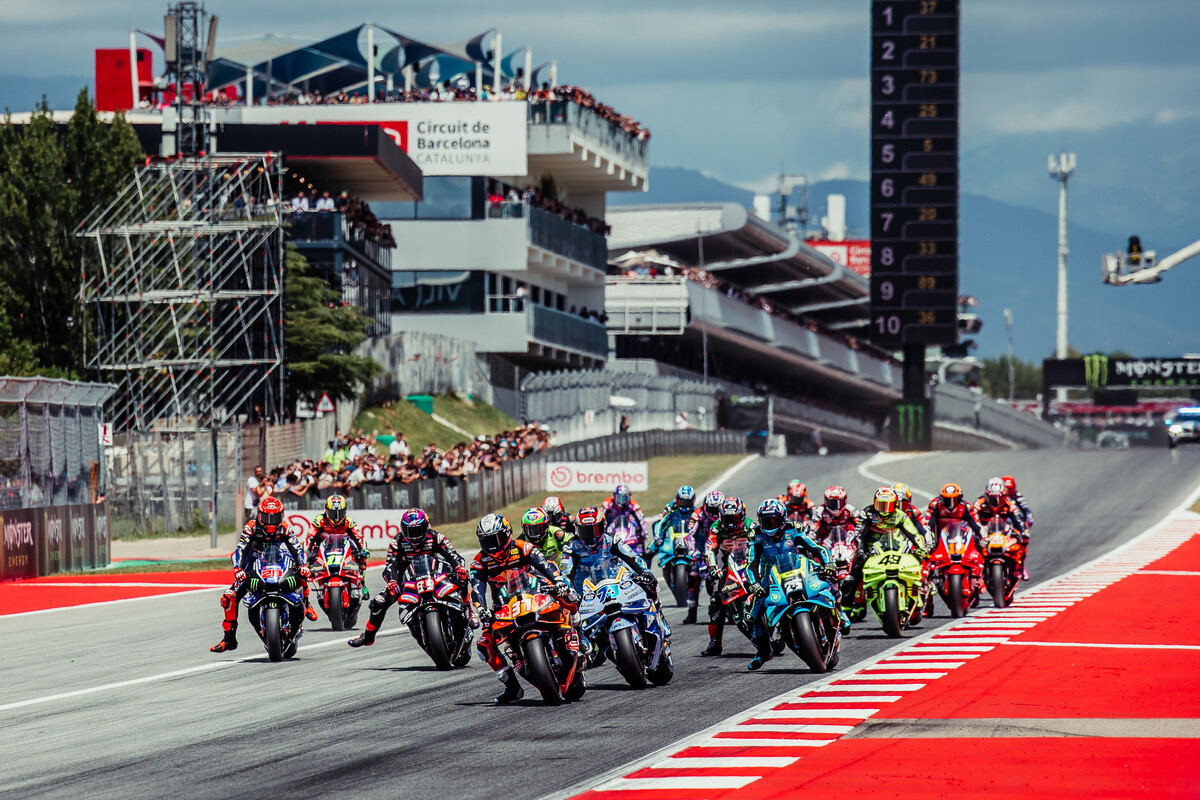
Risking their lives is exactly what the riders are doing, no matter how you dress up the spectacle. No one can race at those speeds with nothing but a bit of cow or kangaroo hide covering their body, some armour protection and a thin airbag and be truly safe. The risks are calculated as far as they can be, but they can never be removed.
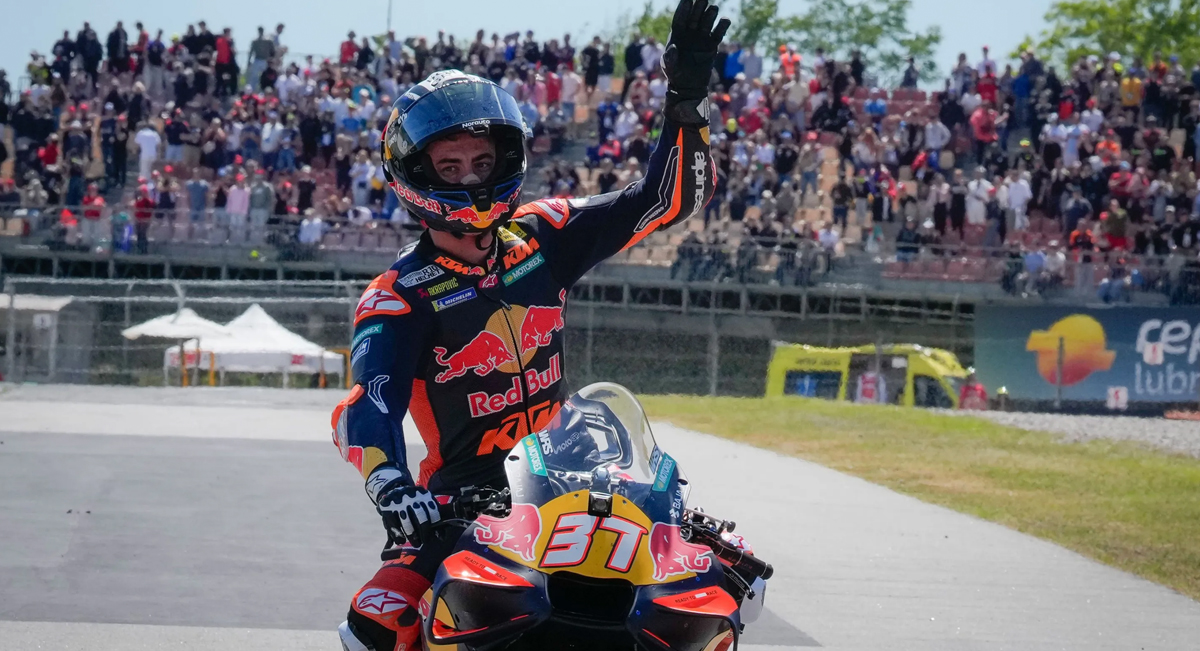
Then there is the mental side of accidents. How did Pedro Acosta get back on the bike after seeing what he inadvertently caused to happen to Alex Marquez? How did any of the riders who saw it happen? Remember Austria 2020? Valentino Rossi cheated death by millimetres by not one but two flying wrecks, being visibly shaken as he pulled into the pits but getting back on and giving it as much as he ever had just a few minutes later. These men are made of different stuff than you and me.
Think of the Gresini or LCR team members seeing Alex Marquez and Johann Zarco’s accidents on the screens, and then having to wait for news from the marshals and medics. What must be going through their minds in that news vacuum? Will it be infinite relief or devastating grief? And it won’t have been the first time they have had to go through that process; that’s the nature of racing at any level. But having experienced it once, how do you go through it again?
Barcelona 2026 was the race that seemingly didn’t want to finish! One red flag is rare; two red flags are rarer still; two red flags with less than the required distance covered to declare a result are almost unheard of. But that’s what happened, and the racing was brilliant throughout. How fantastic to see not only a KTM running at the front but also a couple of Hondas; not only running at the front but maintaining that position through merit and not luck. OK, so if the race had been a full-distance affair, then maybe the Hondas would have faded – or Mir crashed in his efforts to keep up – just as Pedro Acosta’s tyres faded despite being only 12 laps old. But it was still great to see some different bikes running at the front.
Jorge Martin was mightily unimpressed with his race, as well he should be, but to take it out on his team when he came back to the pits was a little harsh. The adrenaline must have been flowing in abundance after 12 laps of seething about the crash, and his gander was definitely up. It might not have been so bad if it hadn’t been another Aprilia that took him out, but that’s only conjecture. The main thing is that he saw a potential victory and championship points lead wither to a larger points deficit than when the race started. We’re still only at the beginning of the season, but as the man said, it’s never too late to start winning, but it’s always too early to start losing.
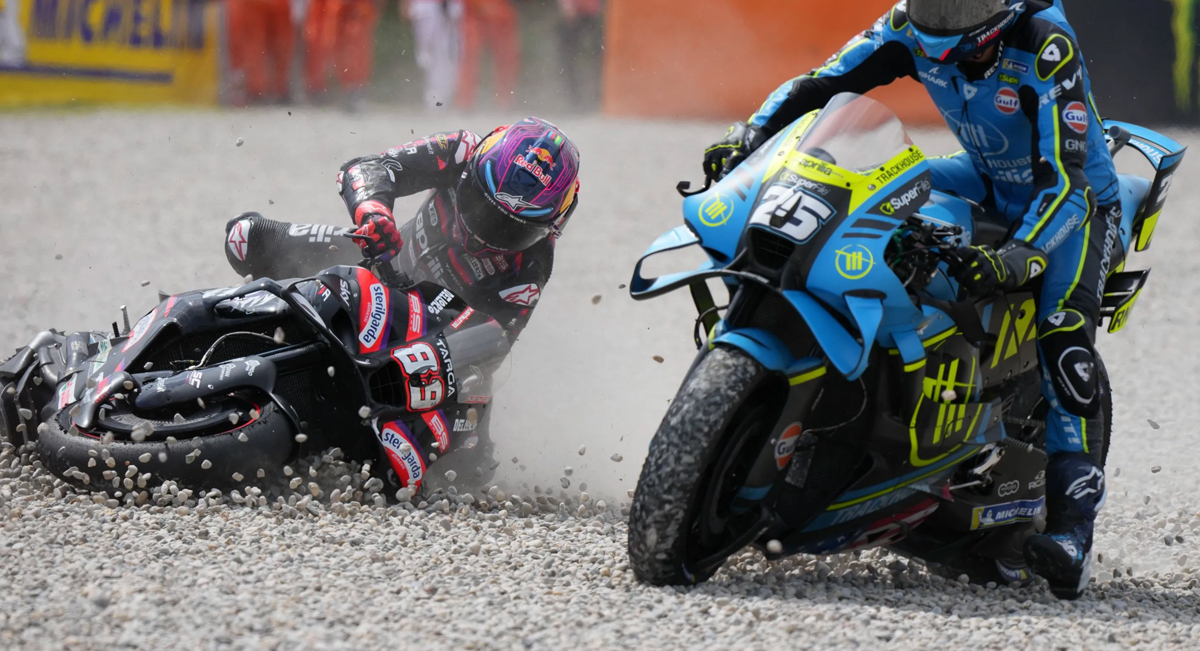
In all this, spare a thought for Brad Binder. Mighty in practice and qualifying, only to be taken out at the first corner of the first lap of the Sprint race, then suffering a bike problem on the warm-up lap of the Main race, causing him to push the bike off the grid just as the lights were about to go out. He could start from the pit lane on his spare bike, but it looked like a forlorn hope. That was before all the mayhem up ahead, two restarts and post-race penalties that finally elevated him to seventh! Not at all what he would have wanted from such a promising start, but to get through all that with a significant points haul must be some consolation?
For KTM also, it was a troubling weekend; a technical fault for Binder on the line, a technical fault forcing Bastiannini out of the first Main race and a technical fault causing Acosta to slow suddenly and trigger the Marquez accident. It seems that all the faults were unrelated, but the FIM technical people were right to question the team, to ensure that it wasn’t a pattern and might happen again, with similar devastating results.
There are two weeks for everyone to lick their wounds before we head to Mugello over the last weekend of May. Time enough for us to lie down in a dark room, recover and collect our thoughts! Whether we will see both Marquez brothers and Zarco back in action is unknown, but what we do know is that, when they do return, they’ll be racing as hard as ever, as if nothing had happened.
As I said at the beginning, superhuman!