



When the invitation landed in my inbox to join TVS Motor Company in India for the 2026 TVS Africa Partner Summit, it was one of those opportunities that required very little thought.
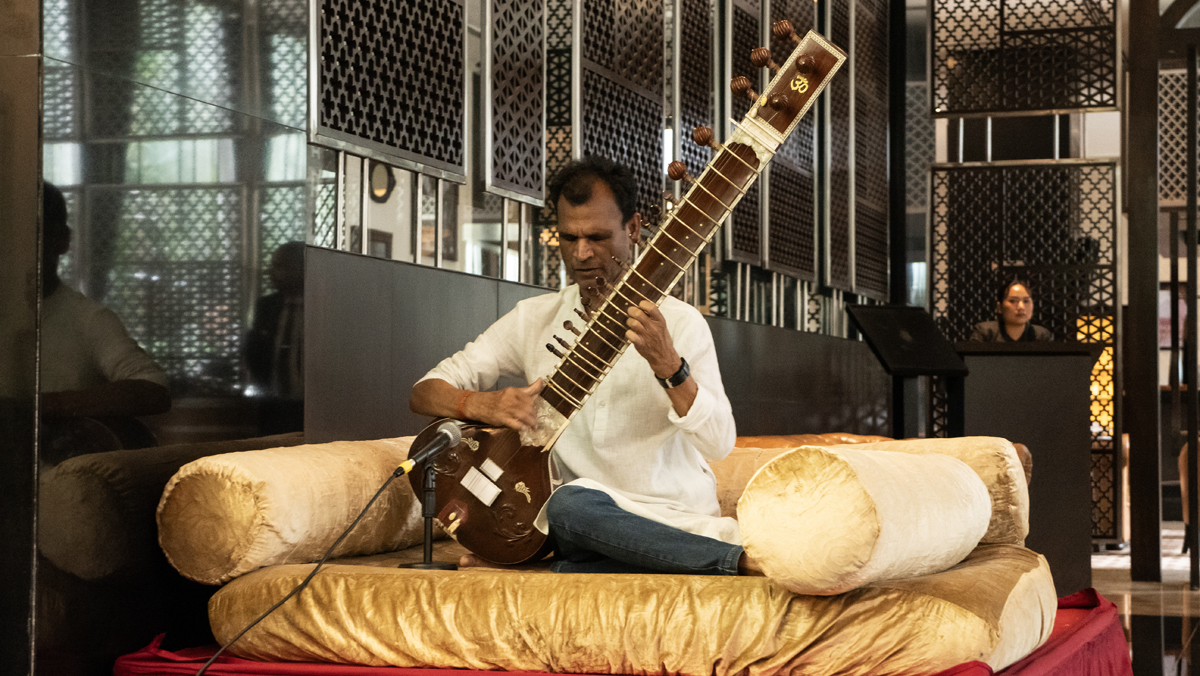
India is the largest motorcycle market in the world, with over 220 million registered two-wheelers, so getting the chance to experience it from inside one of its largest manufacturers was exciting enough. But for me, there was another layer to this trip.
My relationship with TVS goes back much further than ZA Bikers. In fact, if you trace the story back far enough, TVS played an unlikely but significant role in ZA Bikers existing at all.
So, more than 15 years after those early encounters with the brand, I found myself packing my bags for Bengaluru, finally heading back to the country where, in many ways, part of my own story began.
WHERE IT ALL BEGAN
My relationship with TVS actually predates ZA Bikers. In a previous life, for a short period around 2010, I was a minnow importer of TVS motorcycles into South Africa.
This is how I met my colleague and good friend Dave Cilliers, who contacted me at the time about a trip his son was doing through Africa, tracing the footsteps of his late grandfather’s wartime history.
Off the back of that trip, the itch for our own African adventure needed scratching. And, as with all adventures, the excitement began with the planning. We mapped out a route that would take us from Pretoria, via Botswana, to the Chobe River, then cross into Zimbabwe to Victoria Falls, and eventually make our way back home.
The trip covered approximately 2,500 km over seven days, with all the camping equipment we needed for our African adventure strapped aboard our trusty steeds.
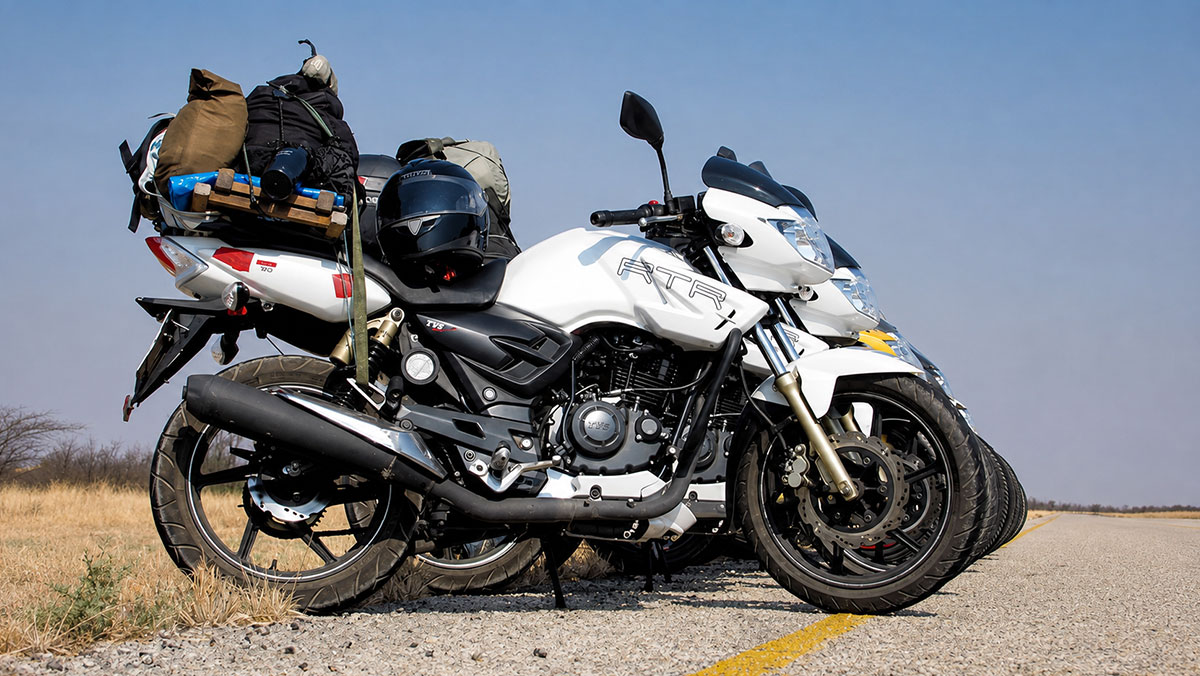
What impressed me then still sticks with me today. We rode a bunch of Apache RTR 180s through extremely hot and harsh African conditions, with temperatures exceeding 40 degrees, and not a single bike suffered a mechanical issue along the way. Not only that, when we got home and checked the oil, it was still golden—an early testament to the build quality of TVS motorcycles. Read the full story HERE.
Shortly afterwards, we visited the TVS factory in Hosur, India. We were blown away by the sheer scale of the operation and, significantly, were given an insight into TVS’s future growth plans for Africa.
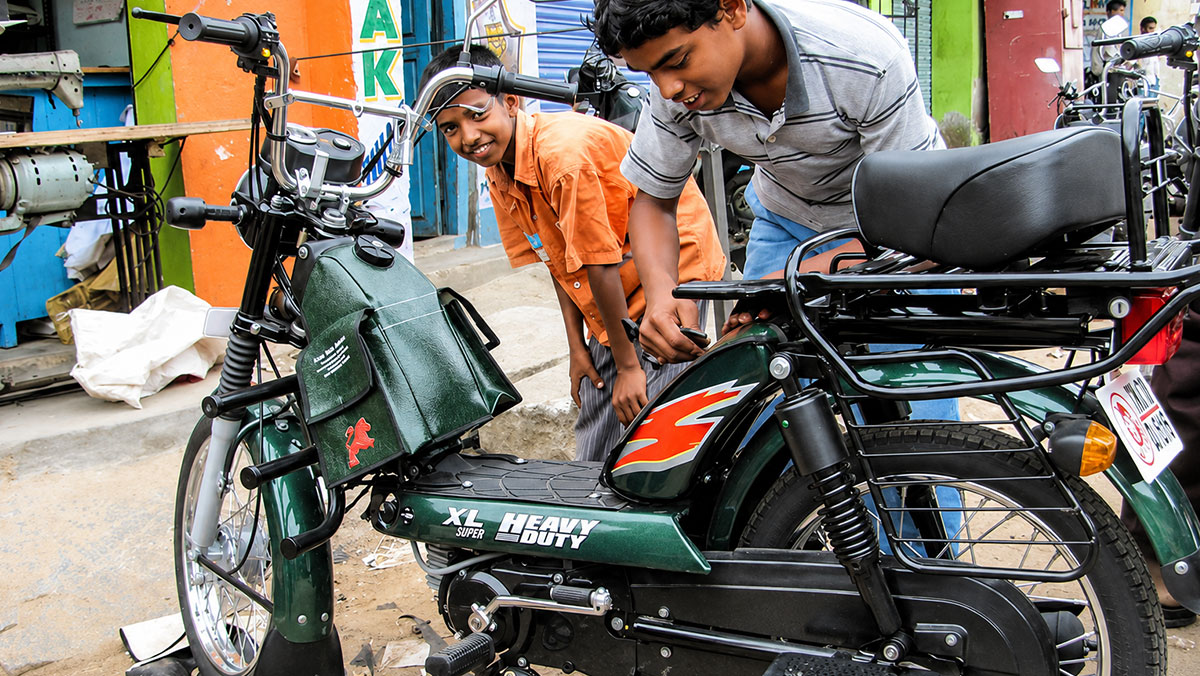
In the years that followed, Dave’s and my friendship and shared passion for motorcycles eventually blossomed into the birth of ZA Bikers.
Sixteen years later, I found myself returning to India as the editor of ZA Bikers, once again at the invitation of a company that had unknowingly helped set the wheels of this whole journey in motion.
ARRIVING IN INDIA
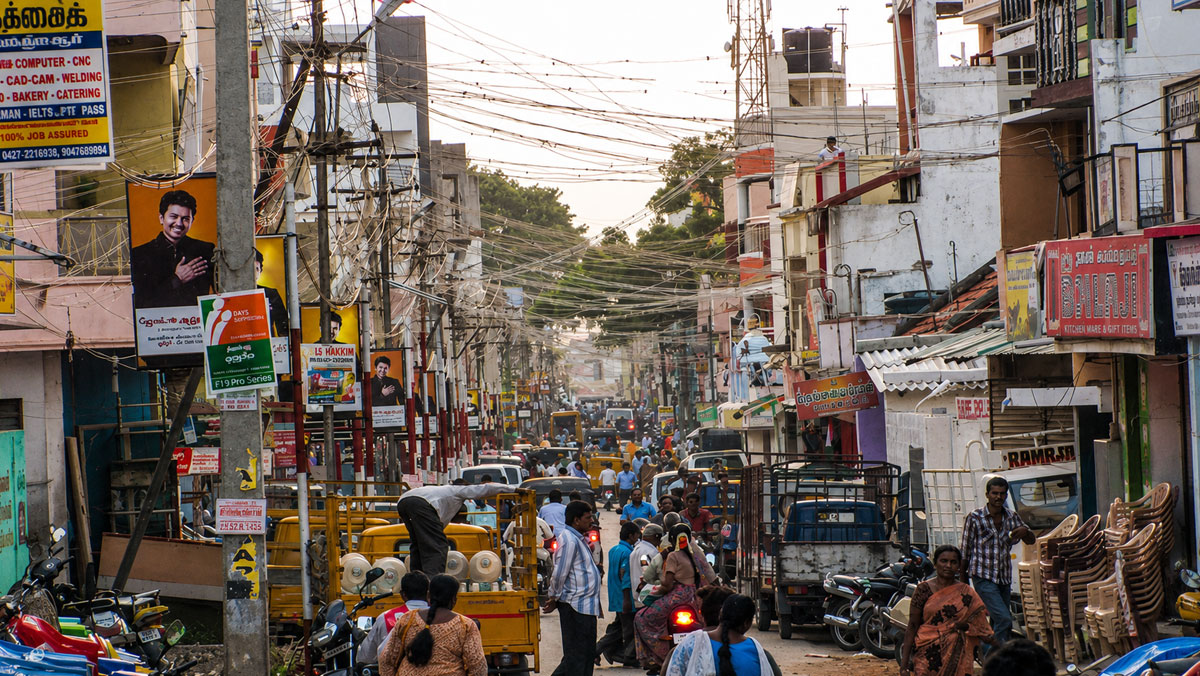
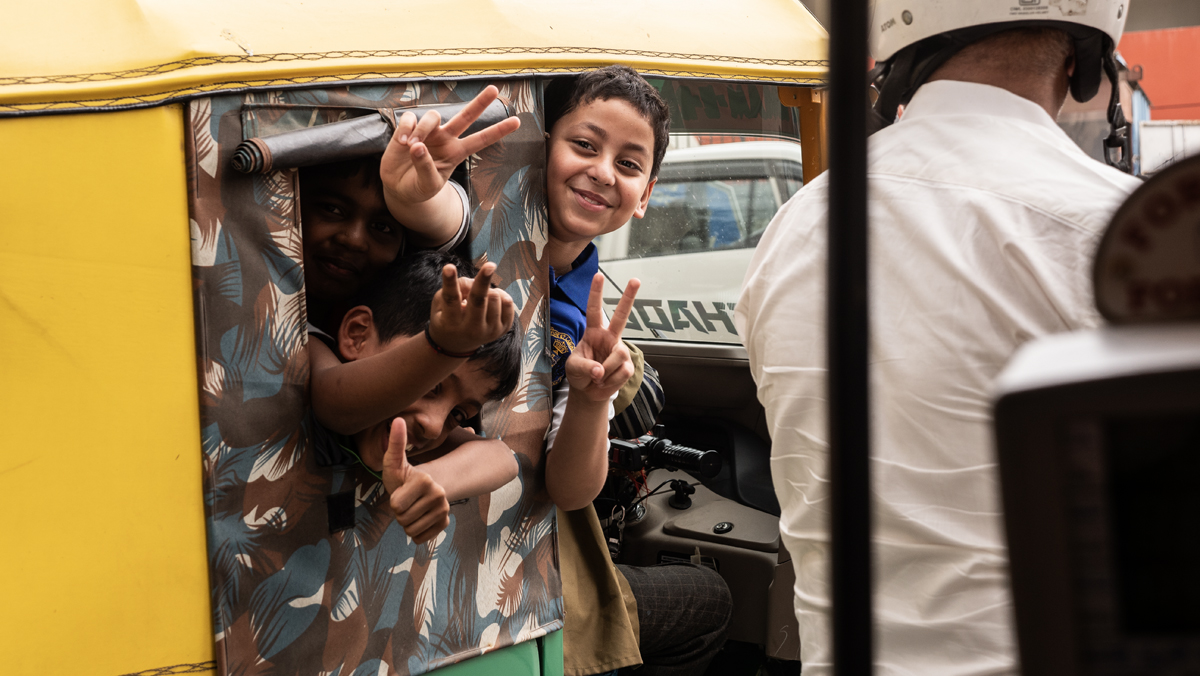
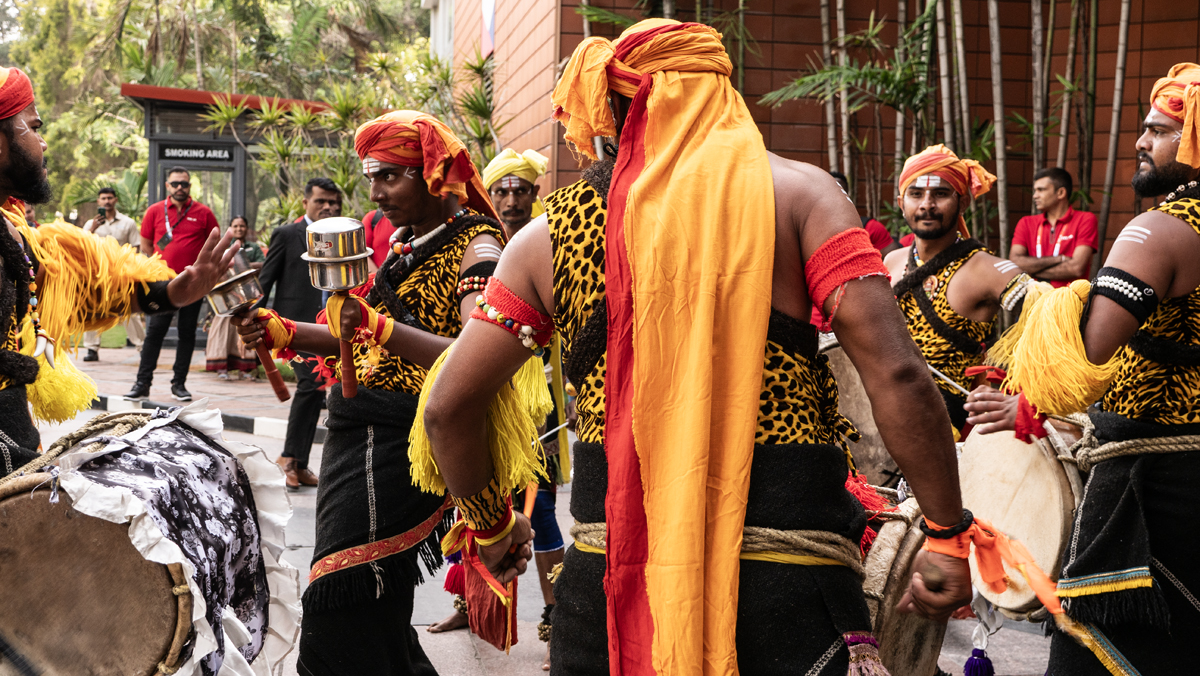
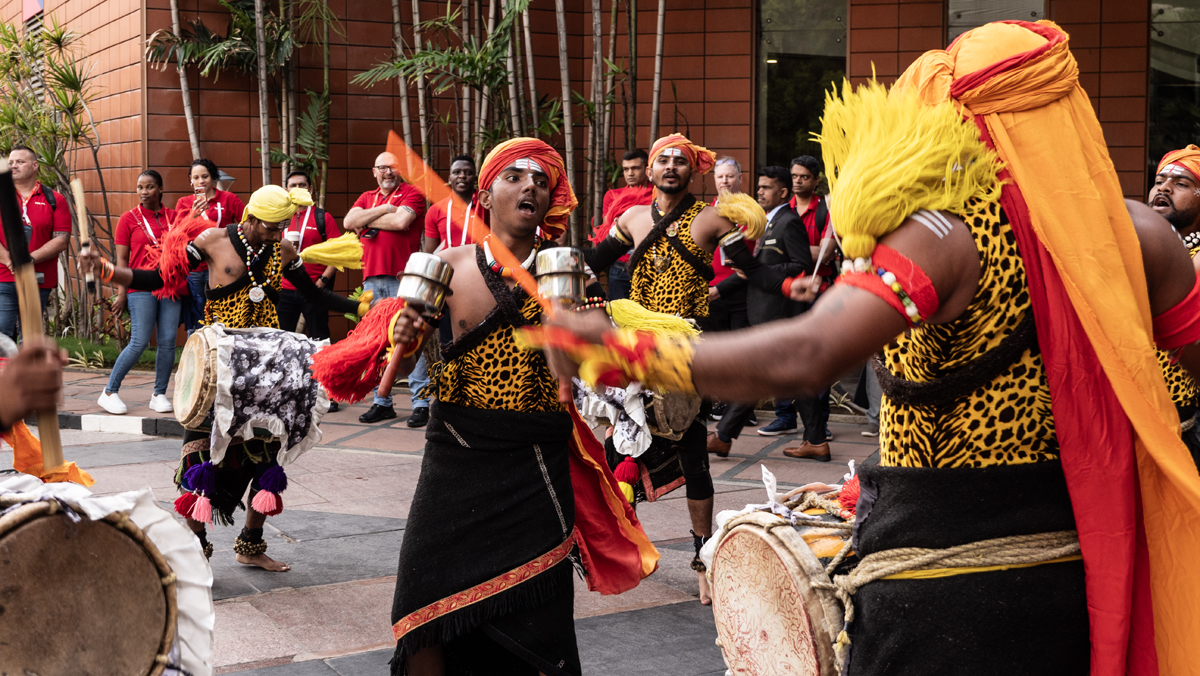
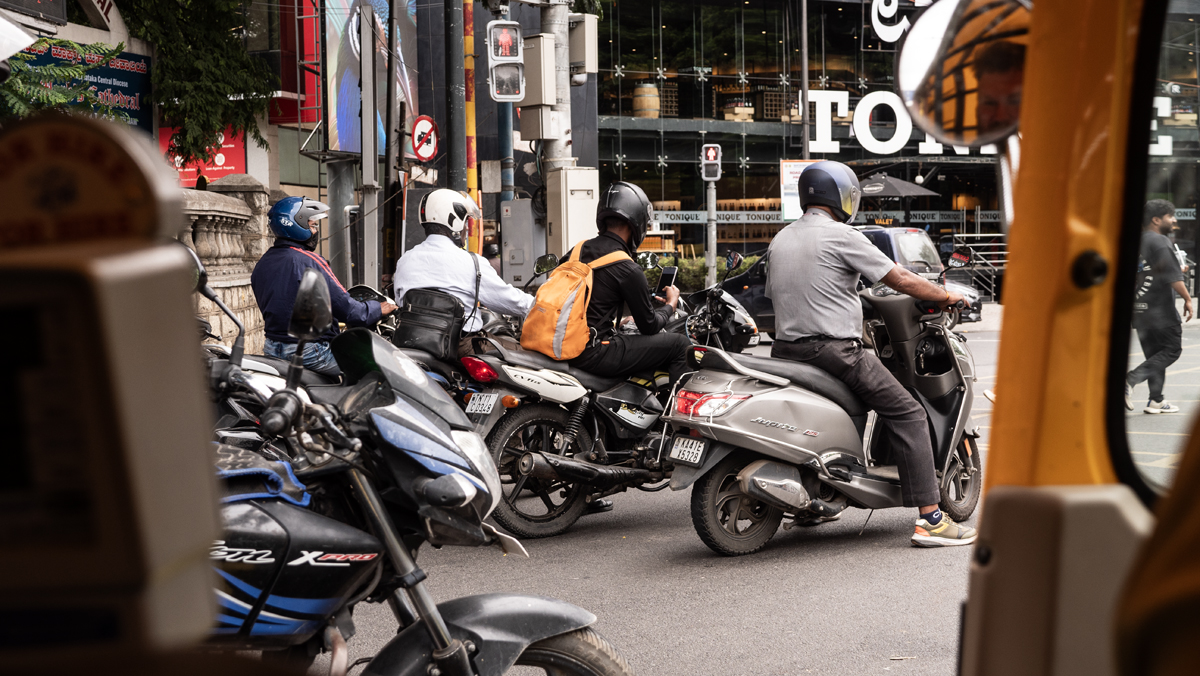
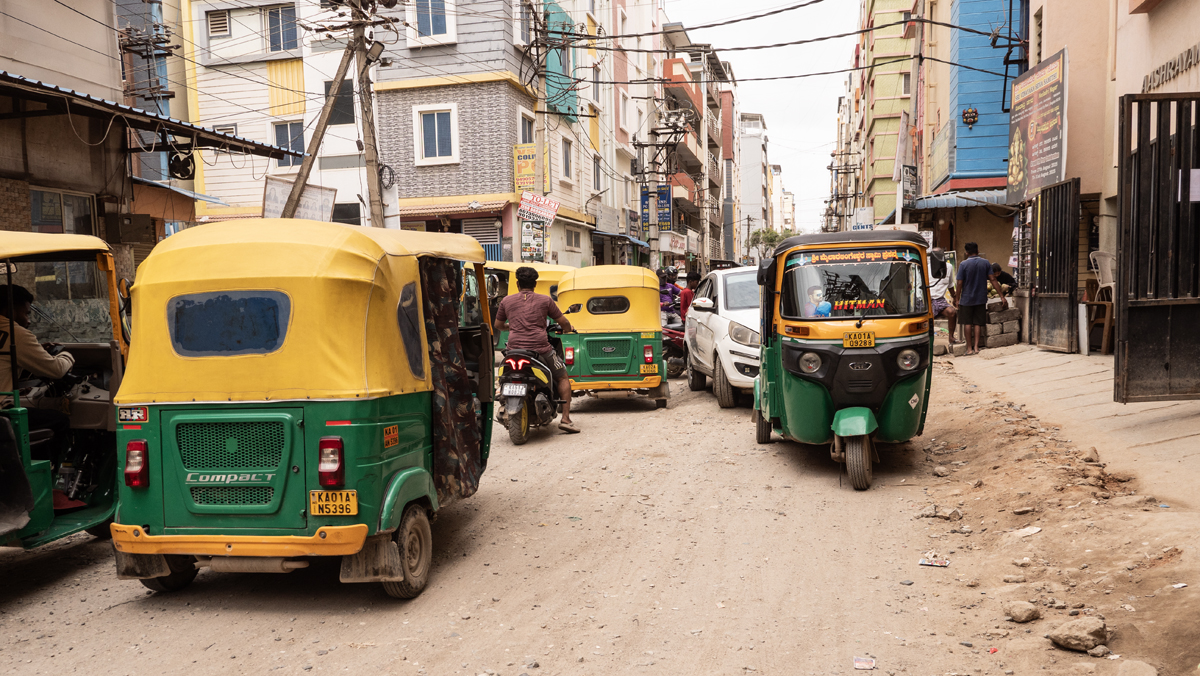
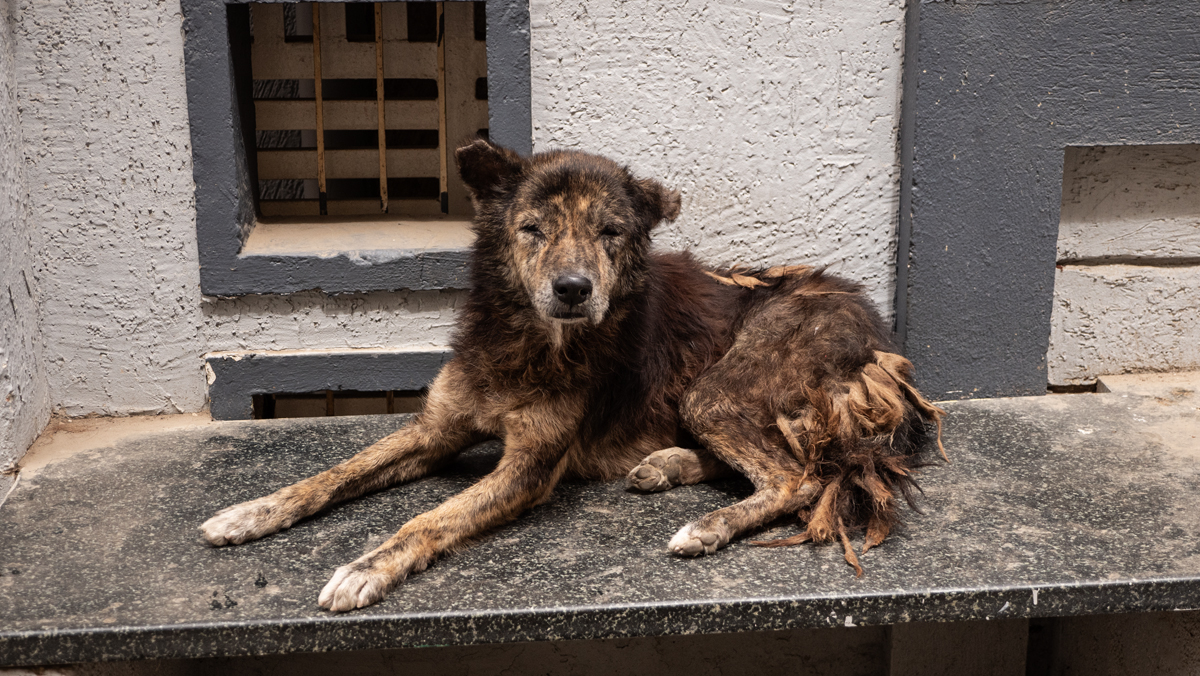
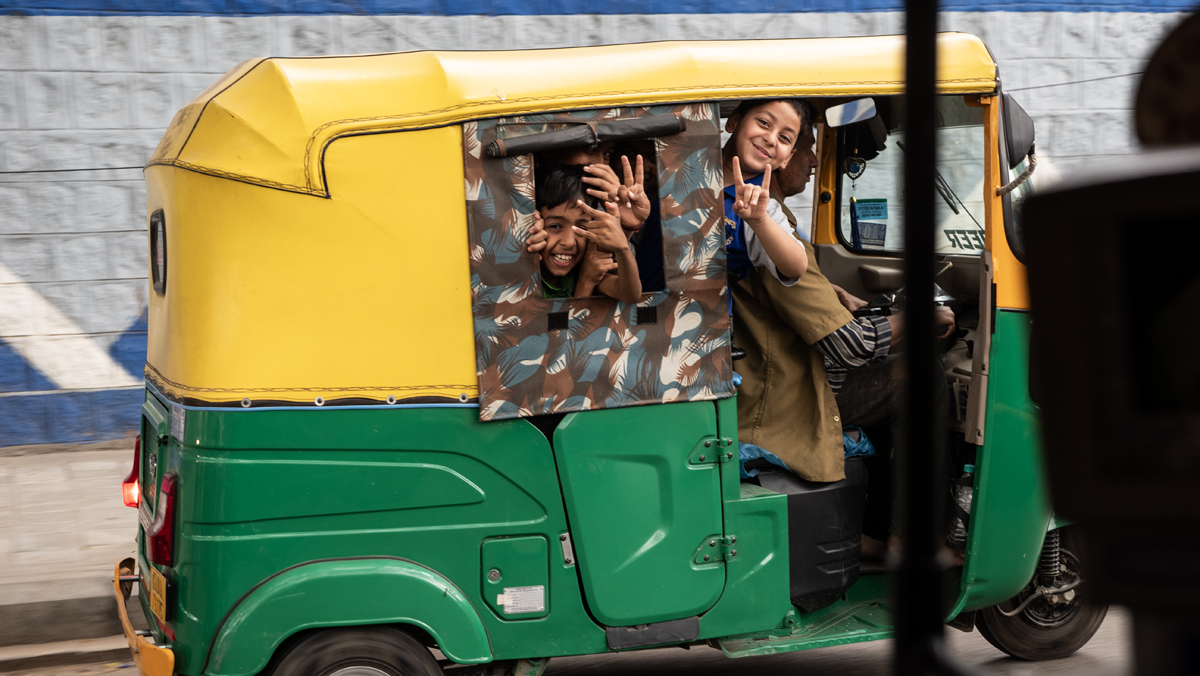
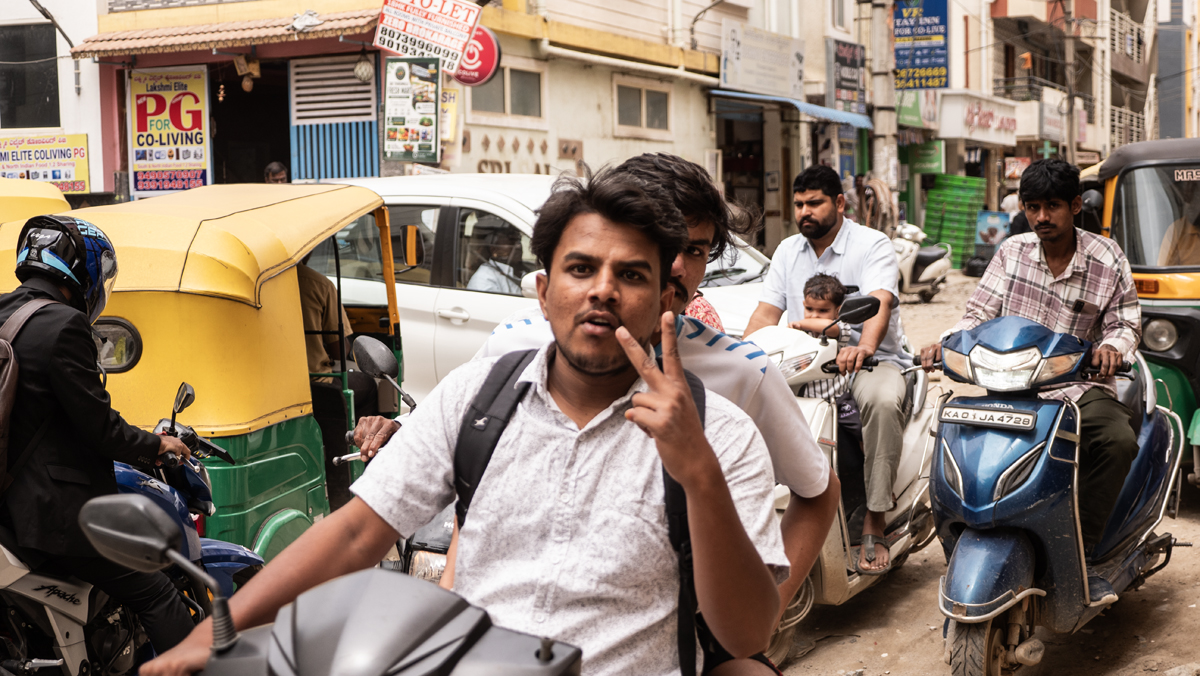
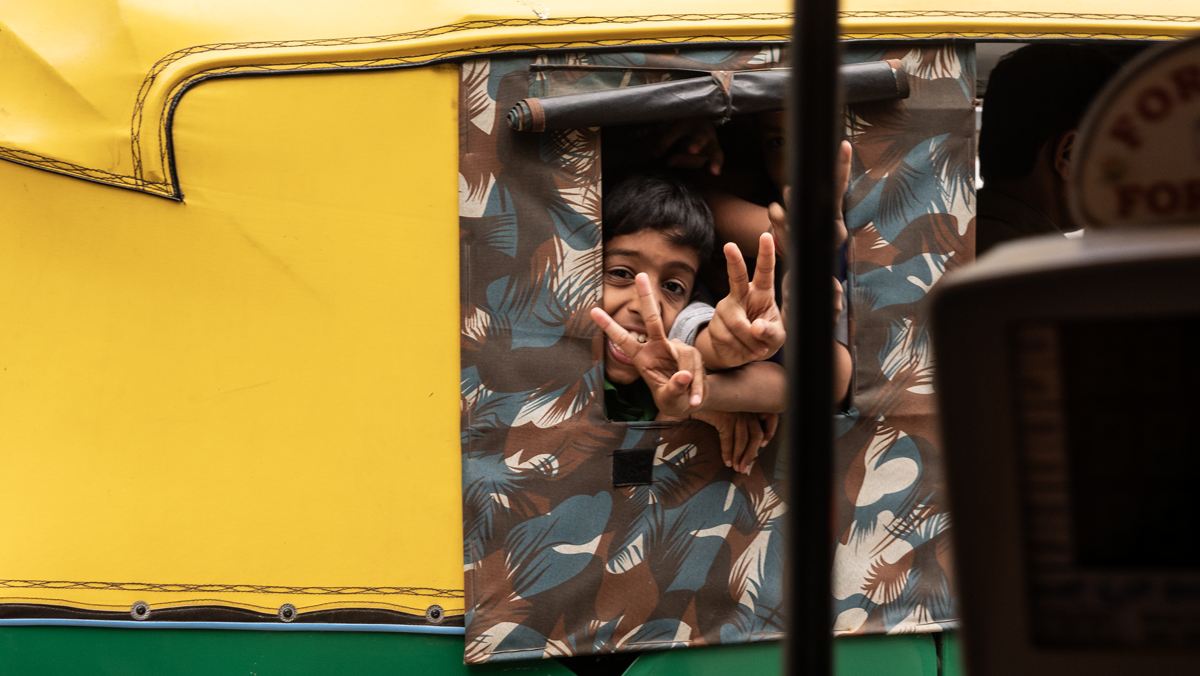
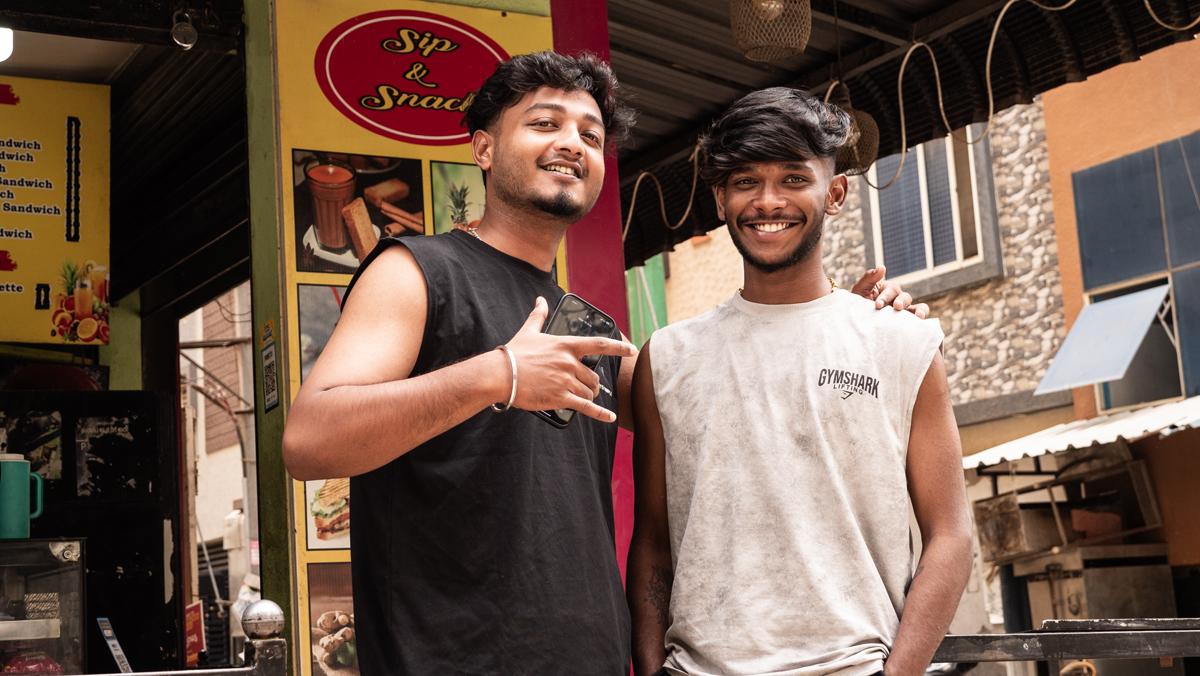
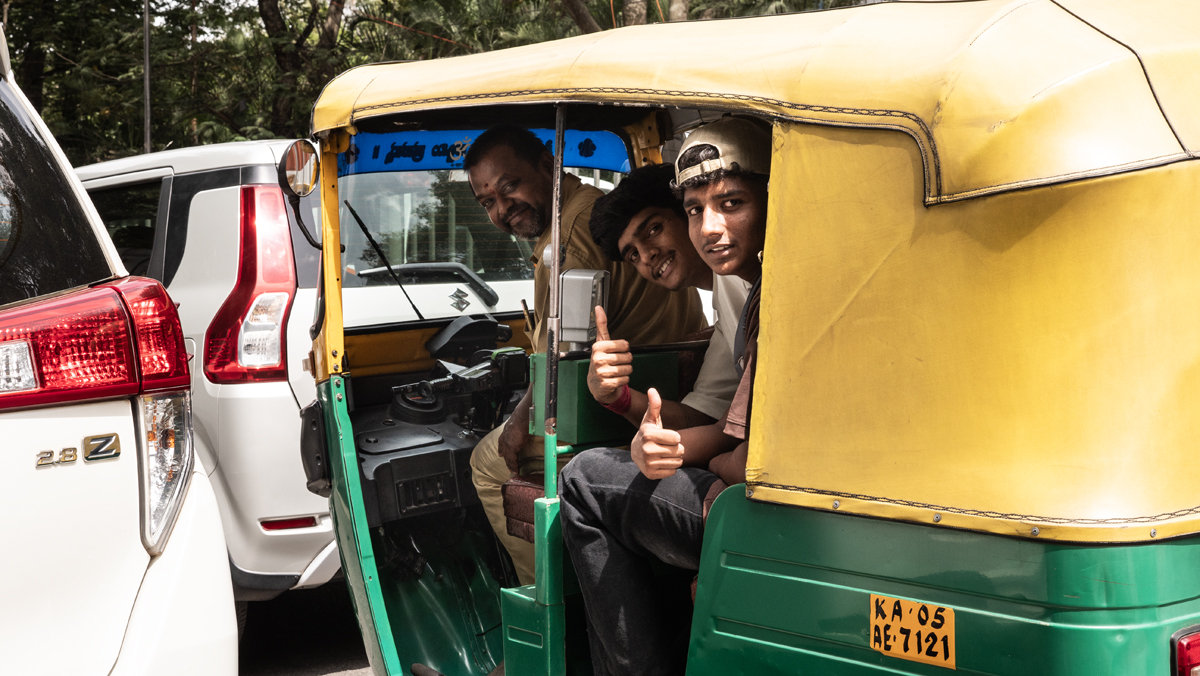
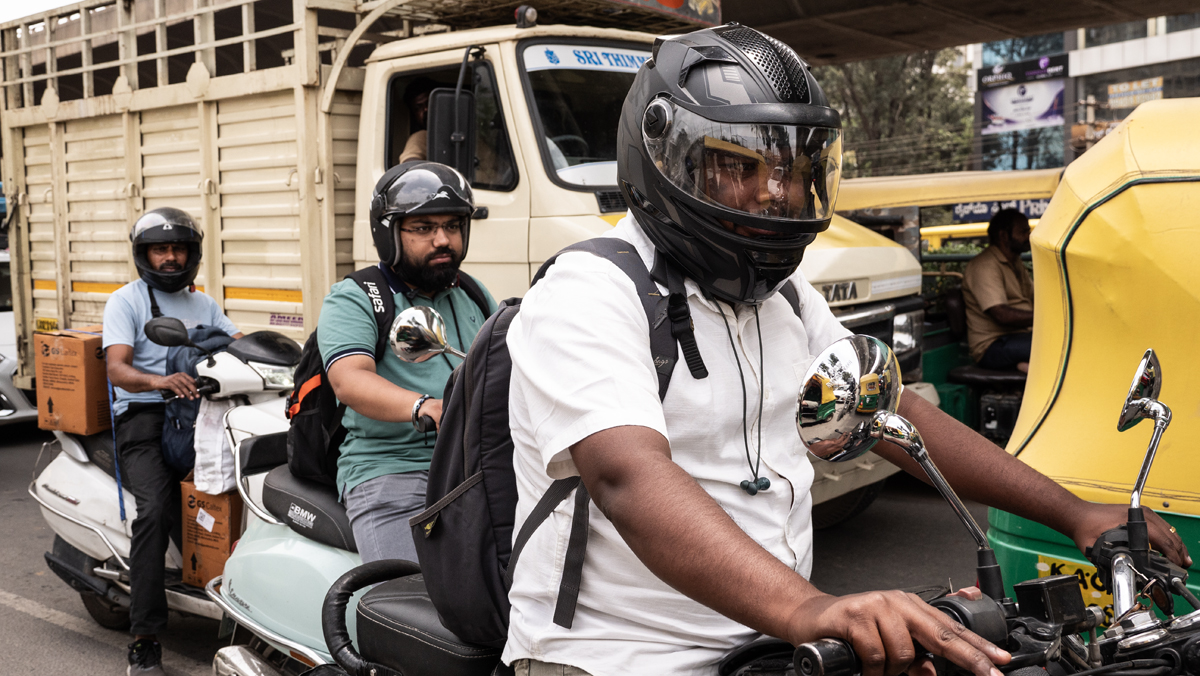
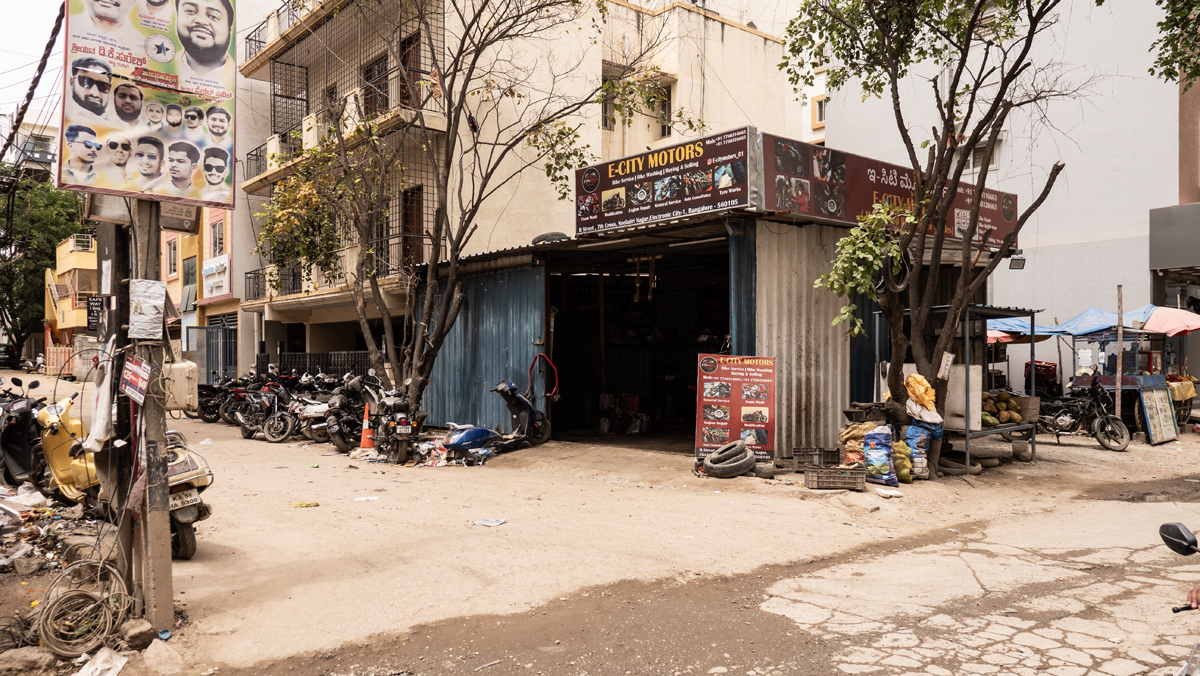
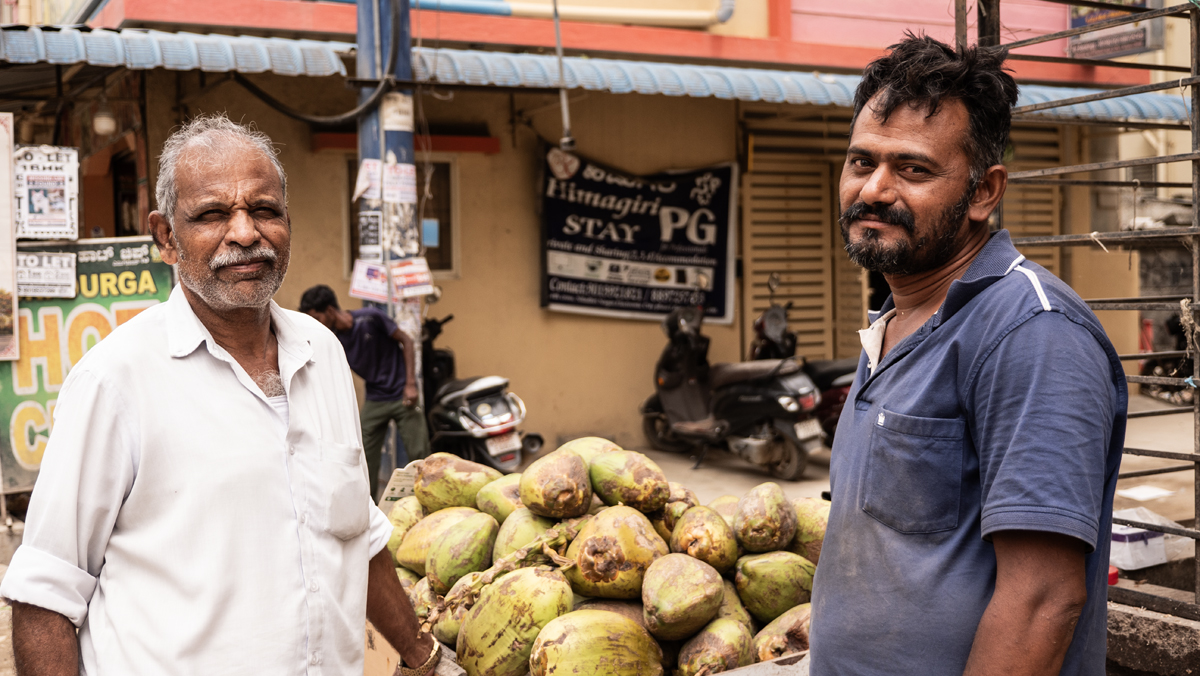
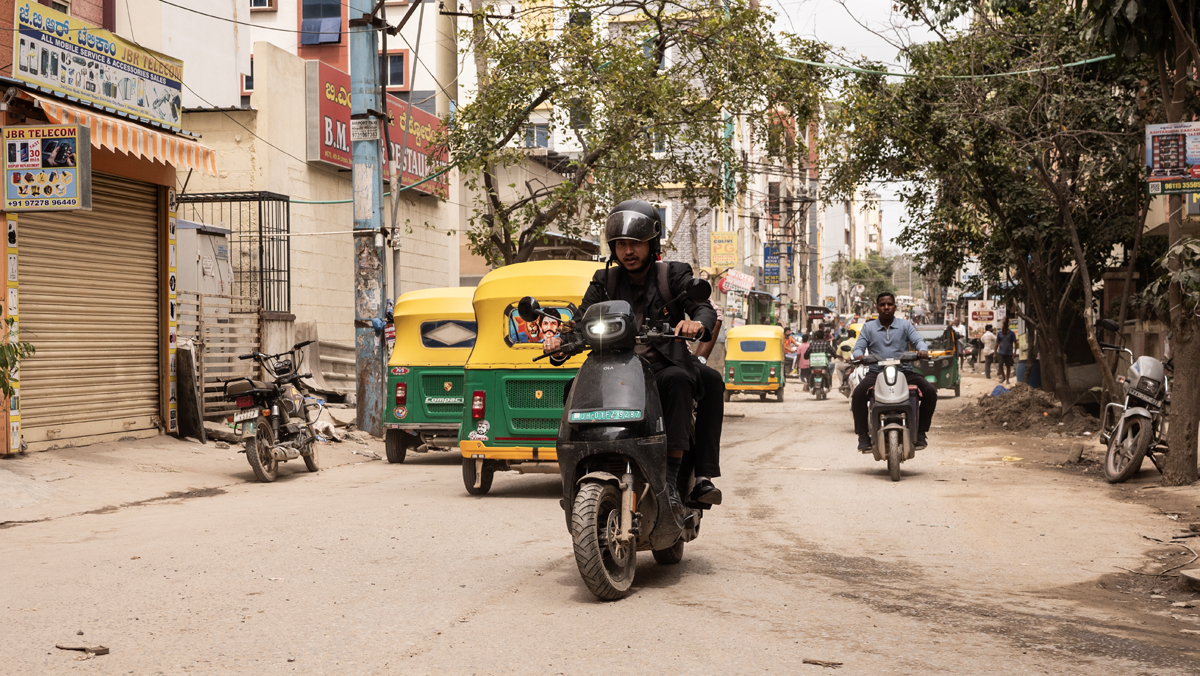
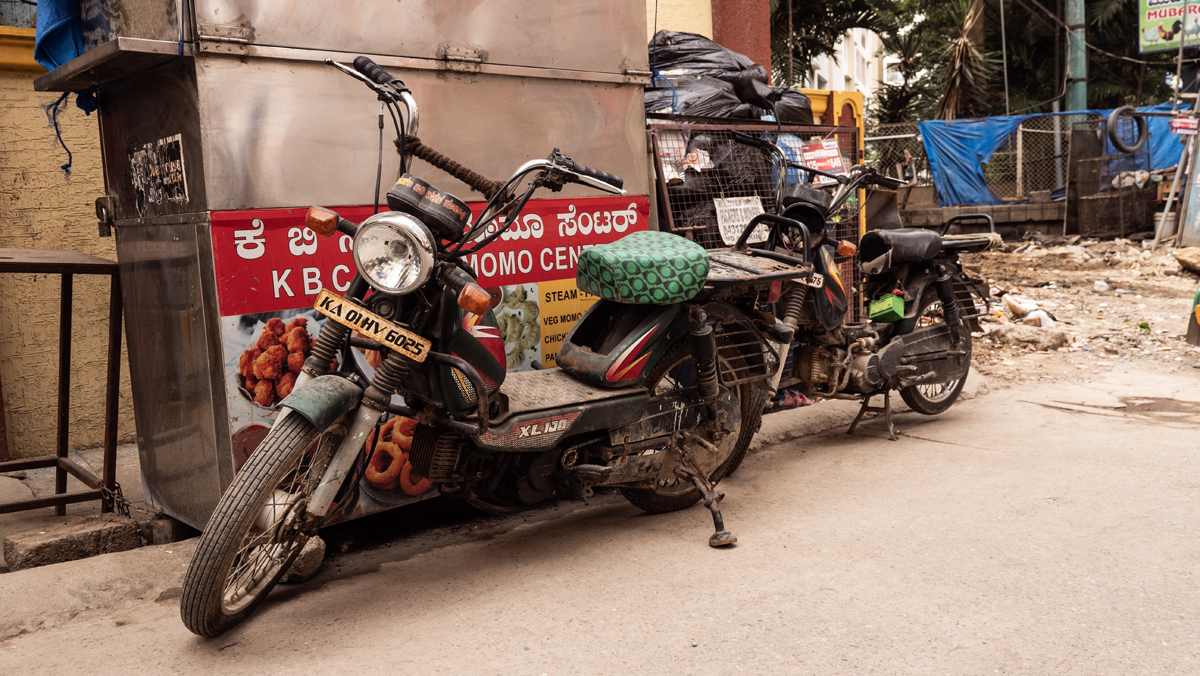
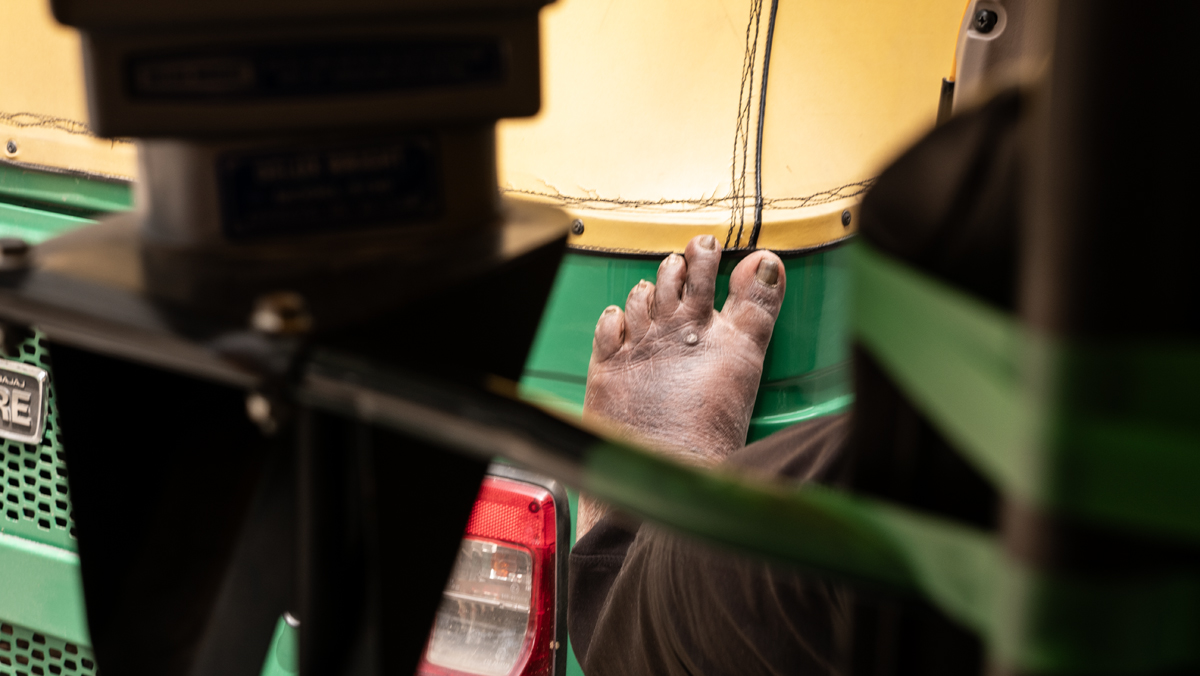
Arriving in Bengaluru, our bus journey to the hotel was insane! I hadn’t anticipated that it would take us three hours to travel 50 km. A total sensory overload of heat, colour, people, noise, movement, traffic and smells.
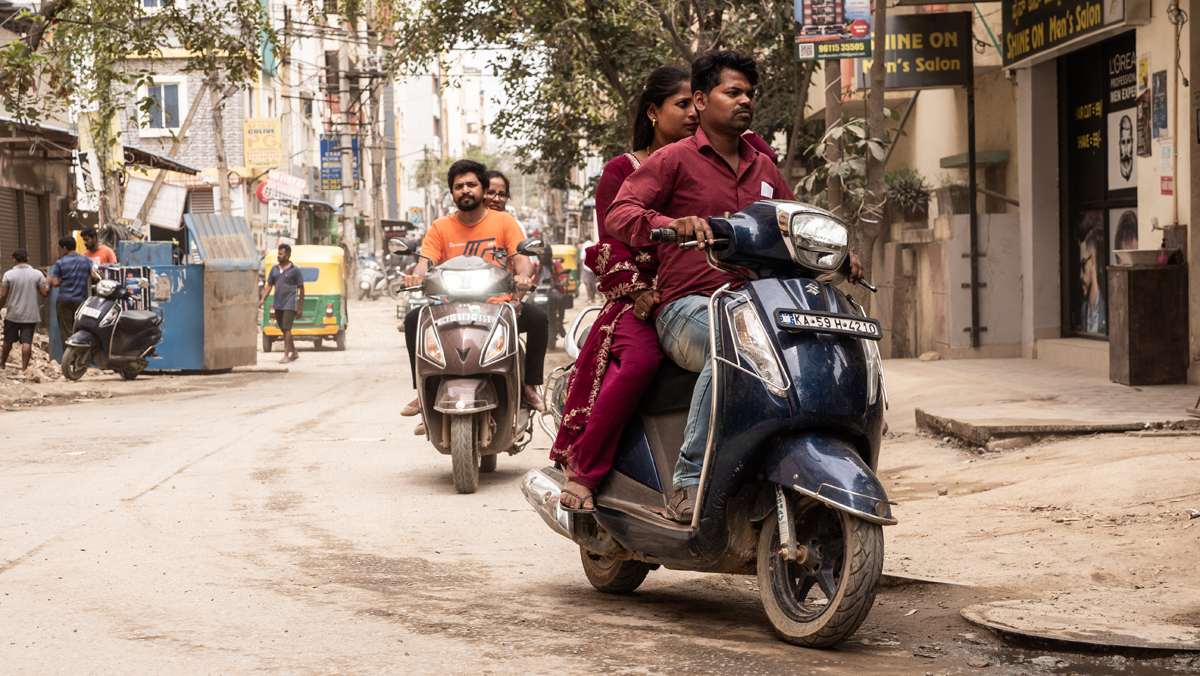
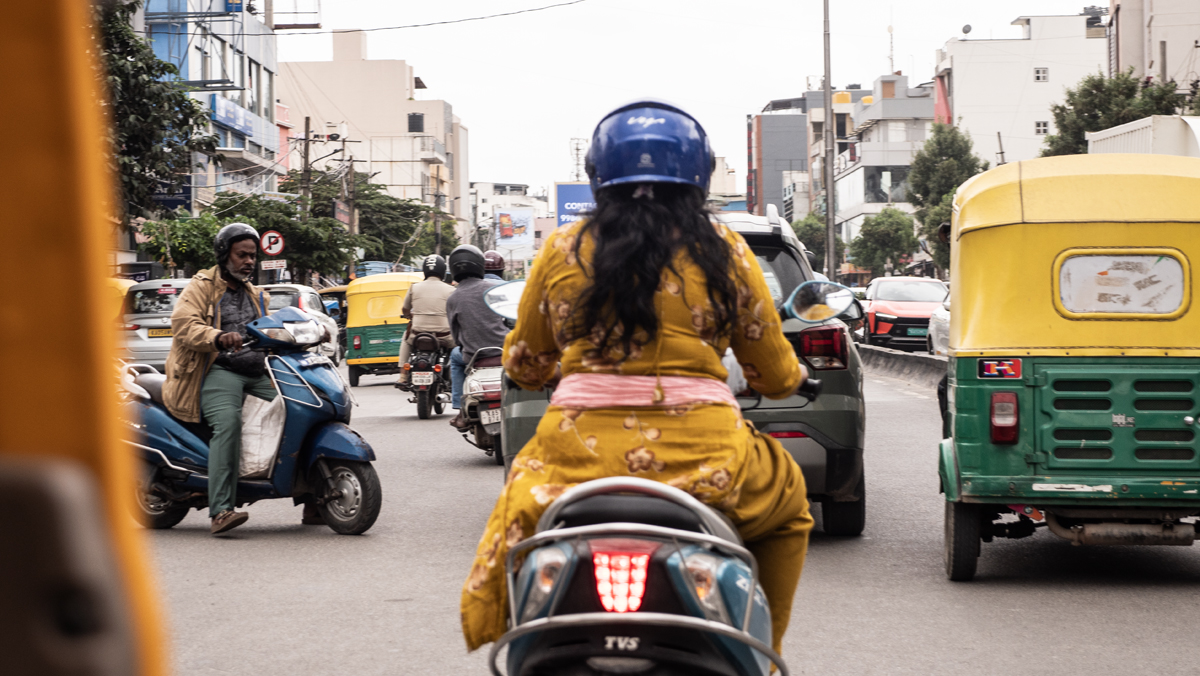
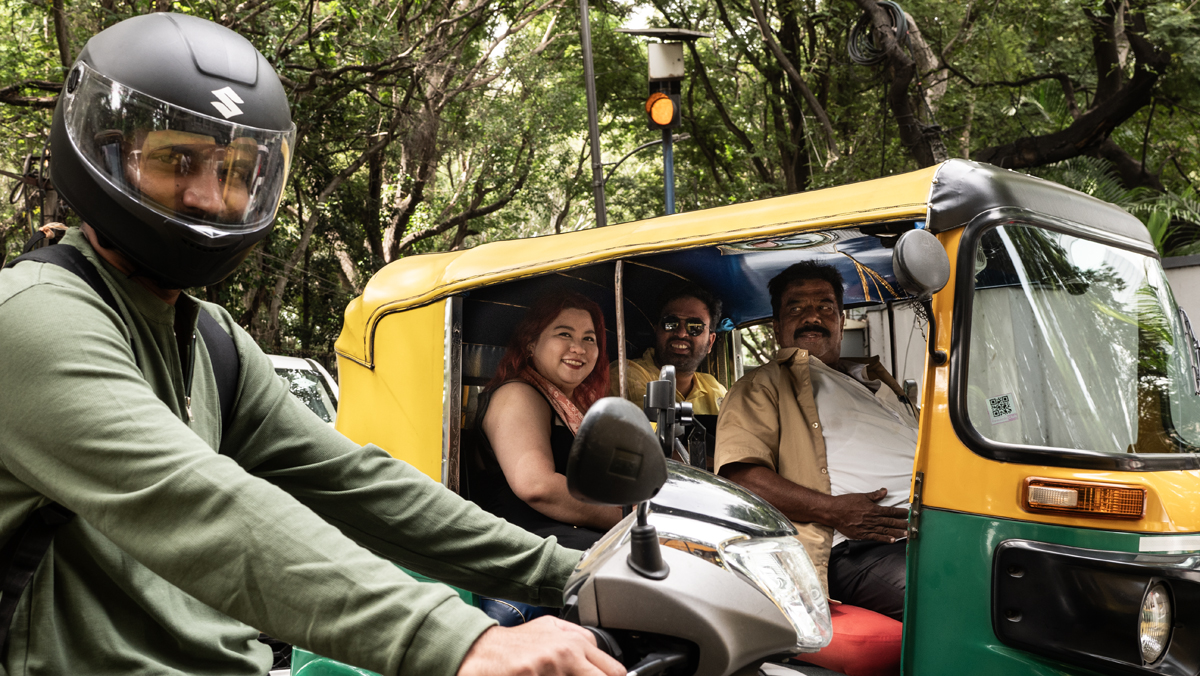
The traffic initially appears chaotic: cars, buses, tuk-tuks, scooters and motorcycles seemingly occupying every available centimetre. Lane markings appear more like suggestions, with vehicles squeezing through gaps you’d never attempt at home, horns constantly hooting and transportation flowing in every which way.
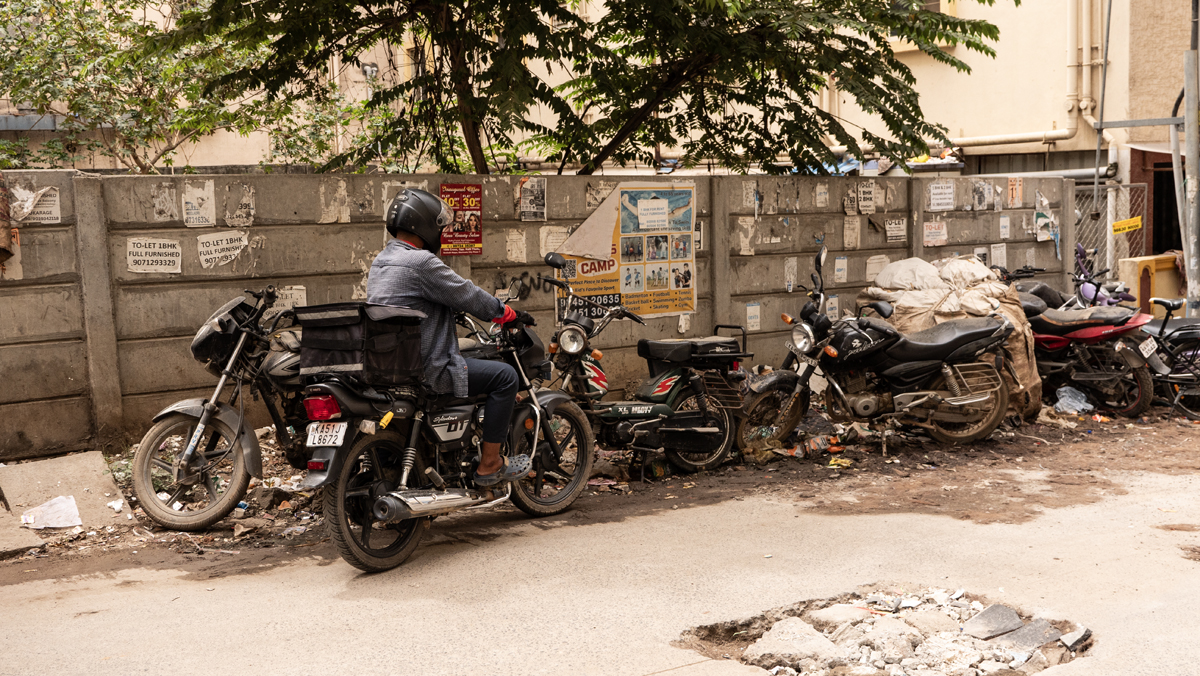
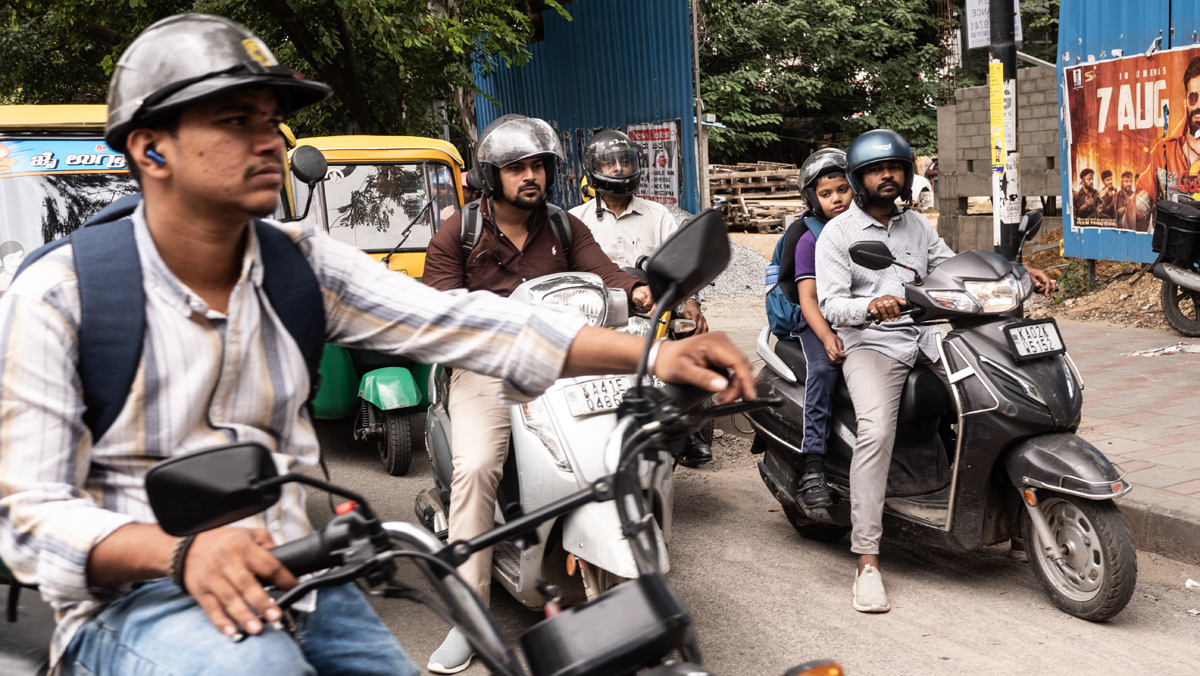
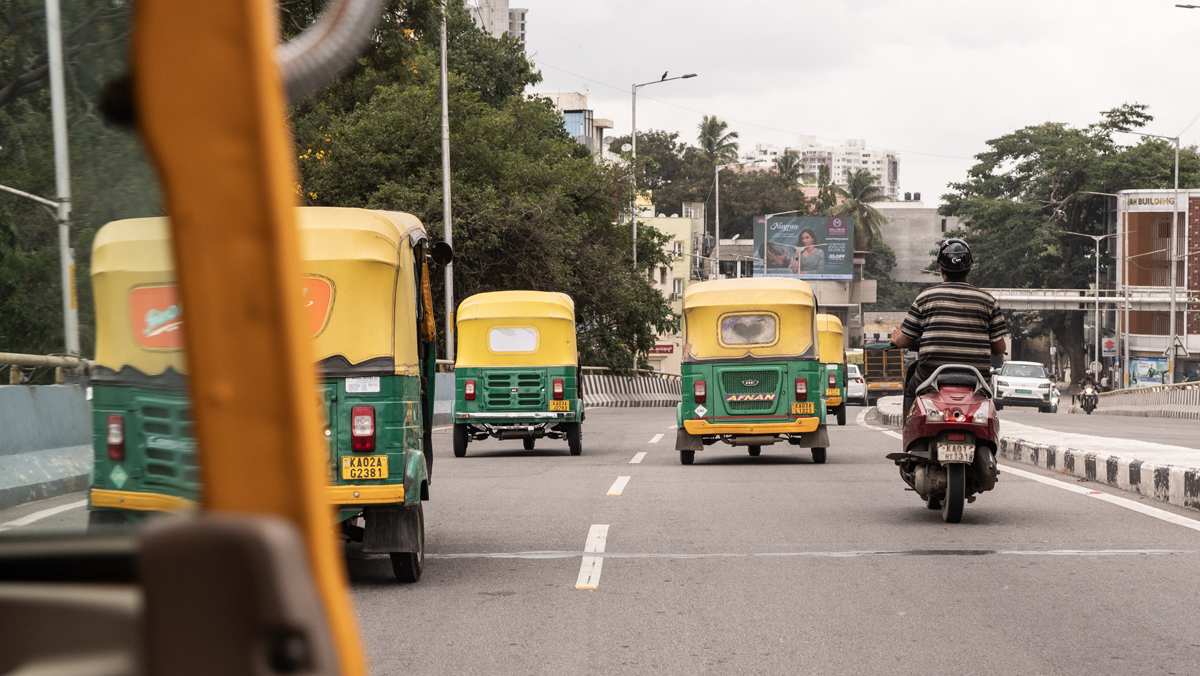
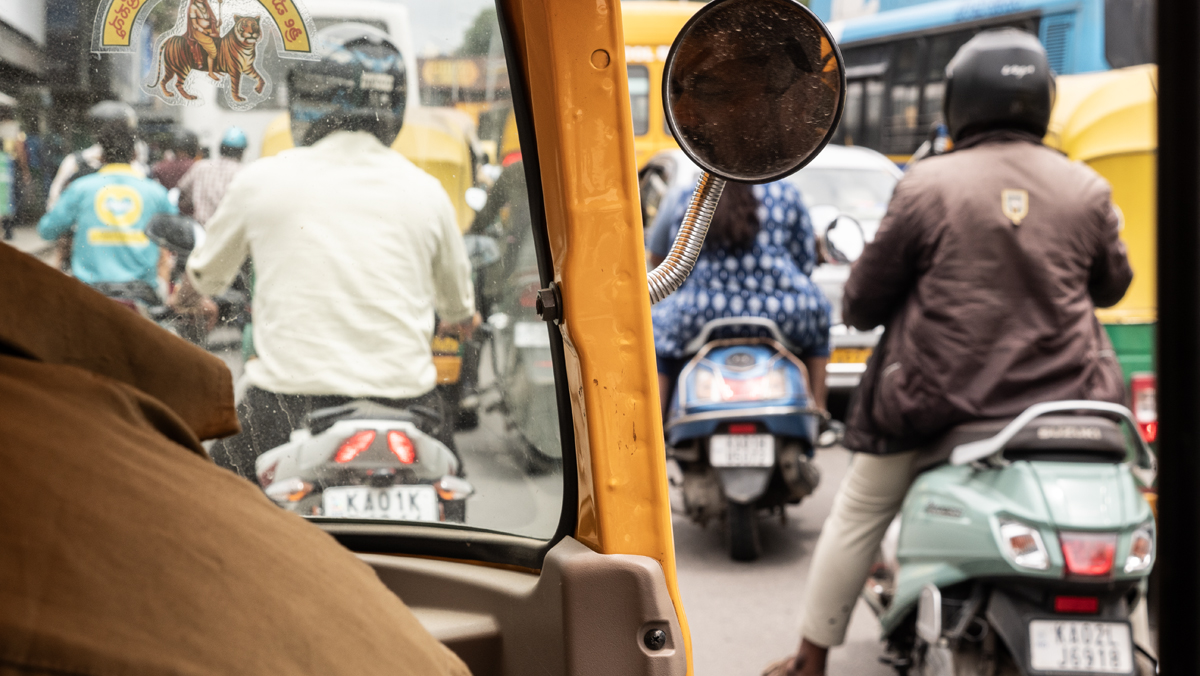
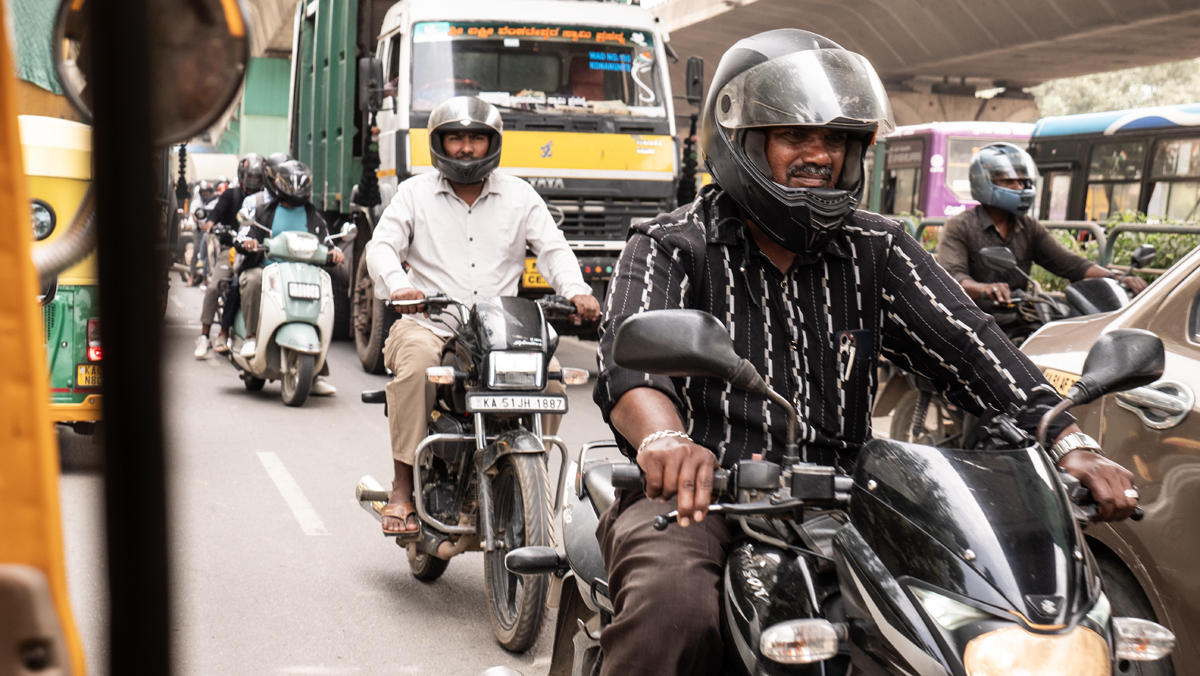
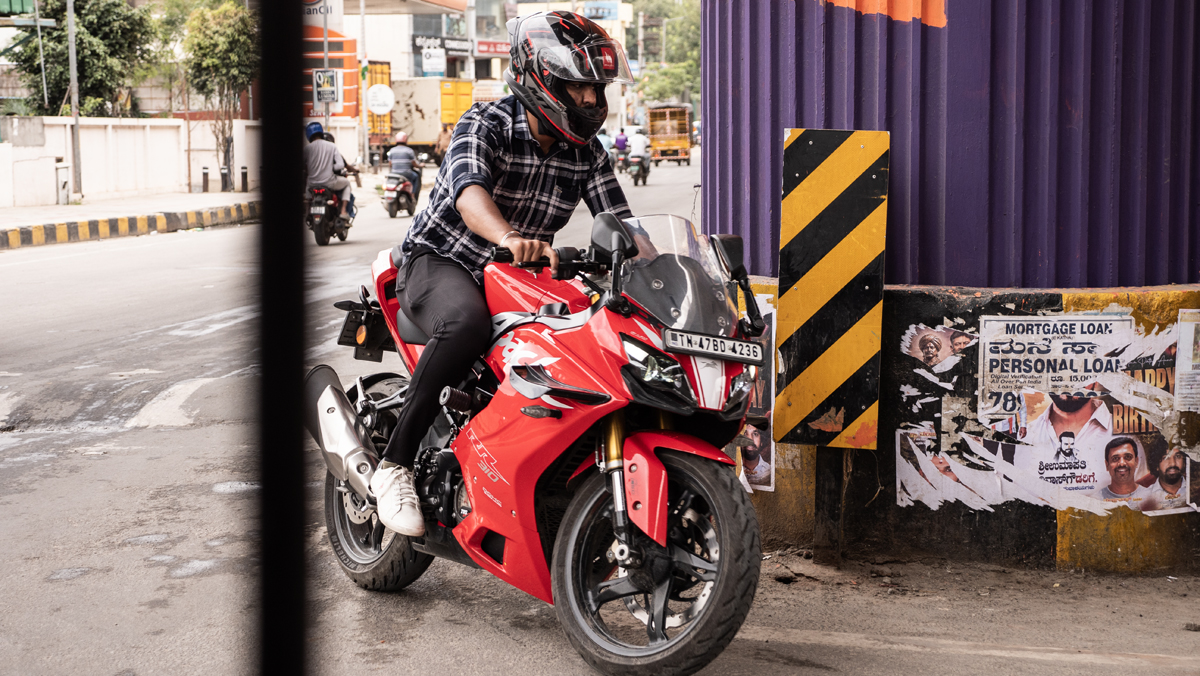
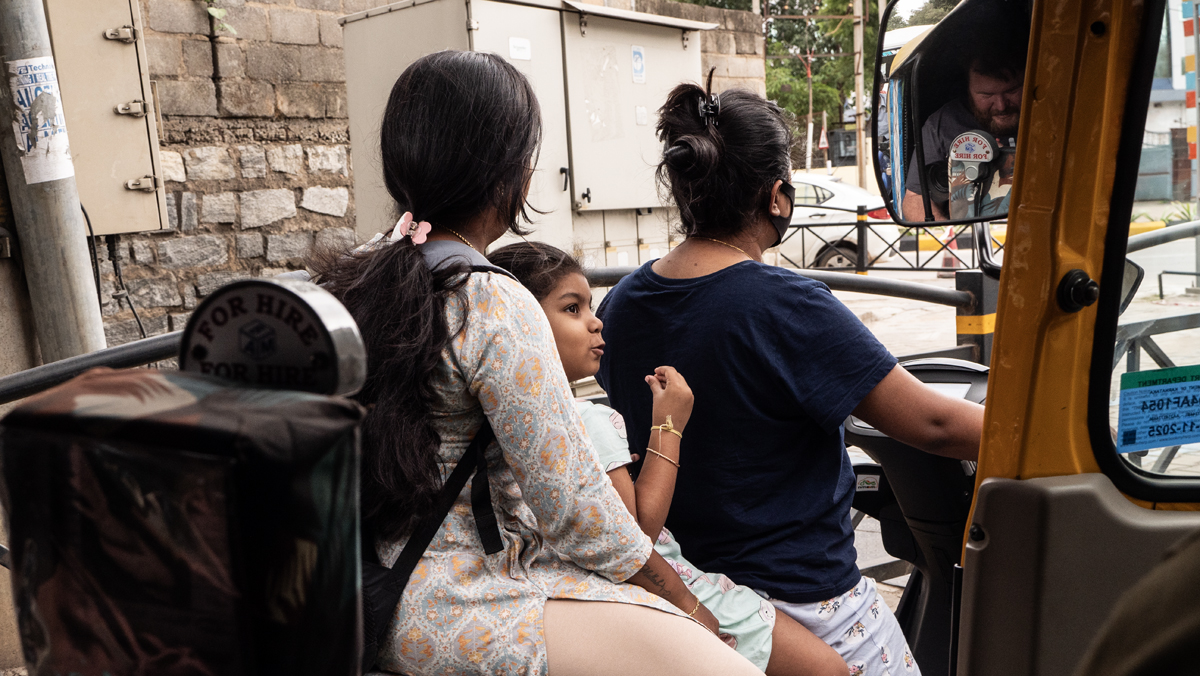
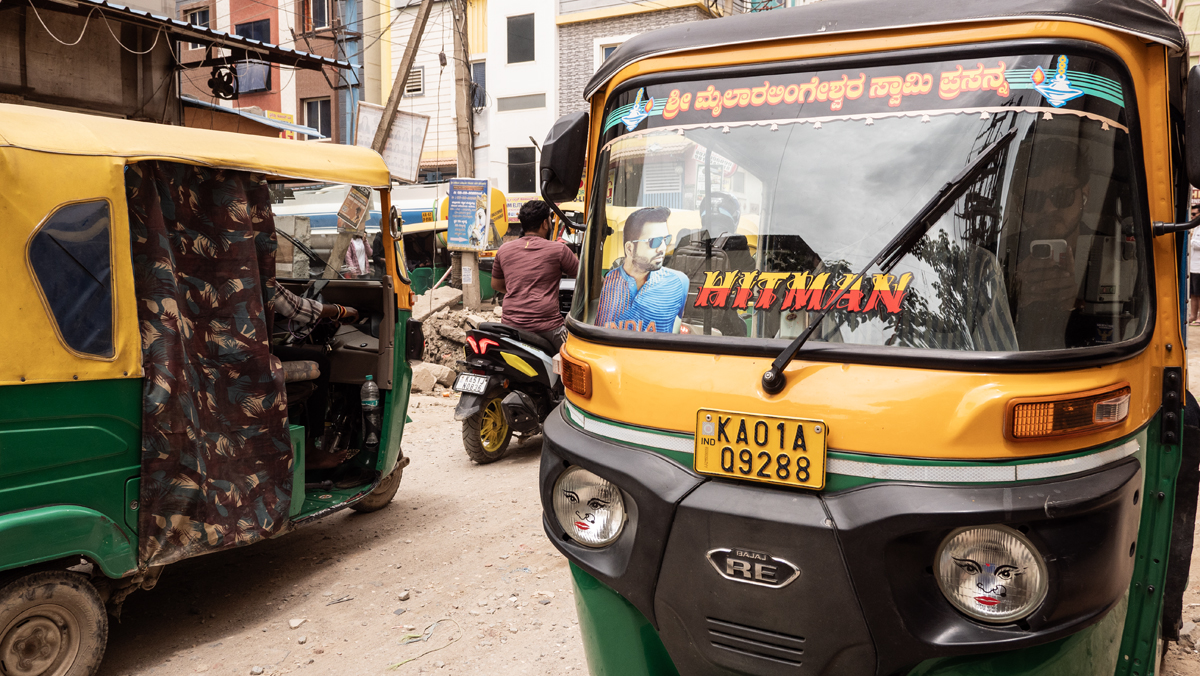
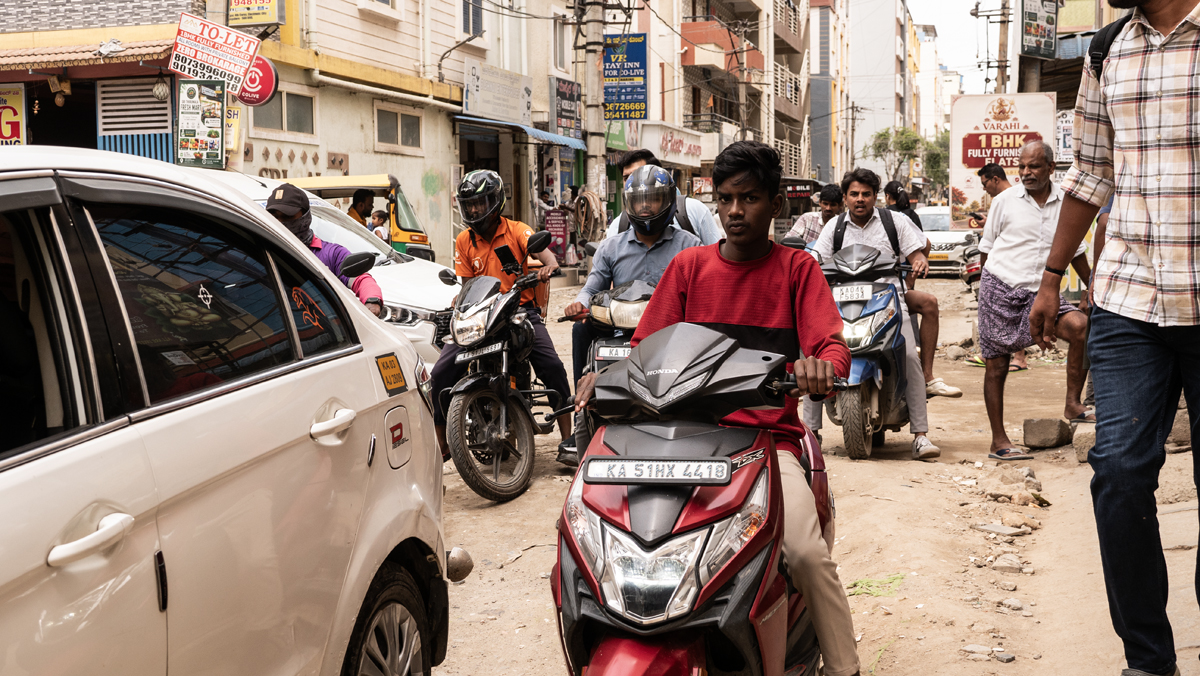
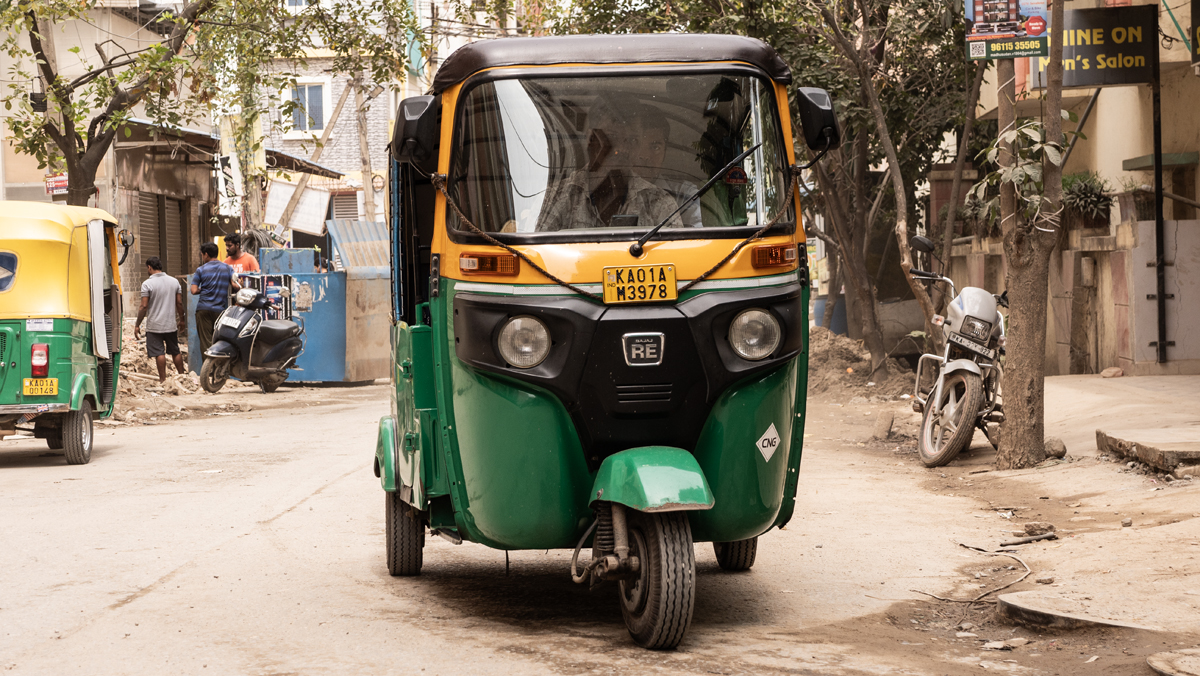
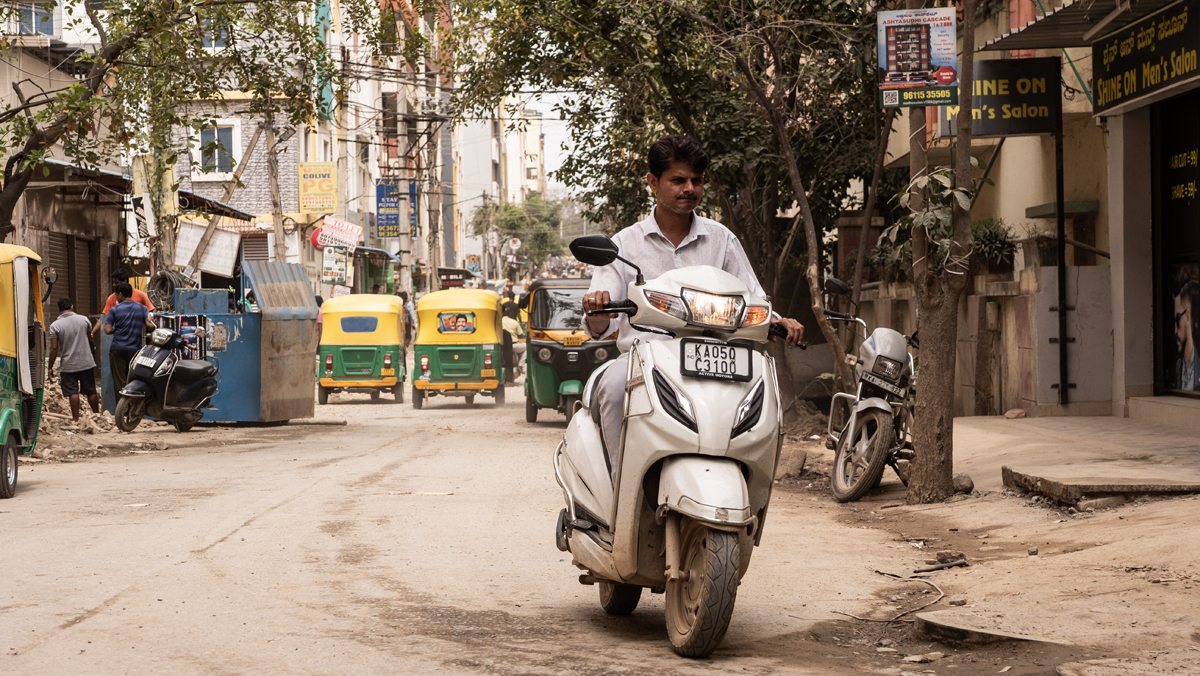
How on earth does this work?
From South African eyes, it looks chaotic. But spend some time in India and you quickly realise that the hooters are used as communication rather than aggression. The people are surprisingly calm within the chaos, almost in a meditative state, moving with what is happening around them rather than reacting aggressively to it.
Everything just seems to work. There’s a rhythm to it:
I’m here > I’m alongside you > I’m coming through.
This is such a contrast to South Africa, where a hooter often communicates frustration, or taxis announcing their presence to bystanders.
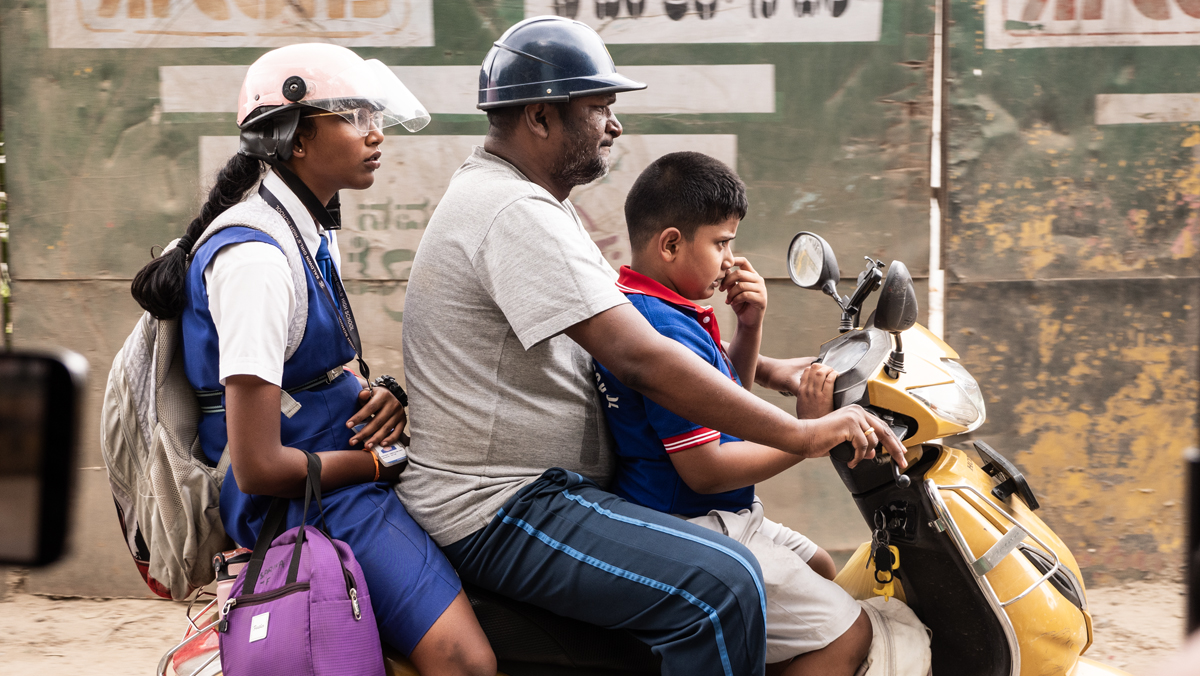
What’s apparent is that motorcycles aren’t simply part of the traffic here. In a country of almost 1.5 billion people, they’re part of what keeps this enormous population moving. People commuting; families travelling together; people carrying goods; delivery riders; scooters used for everyday errands; motorcycles functioning as working vehicles.
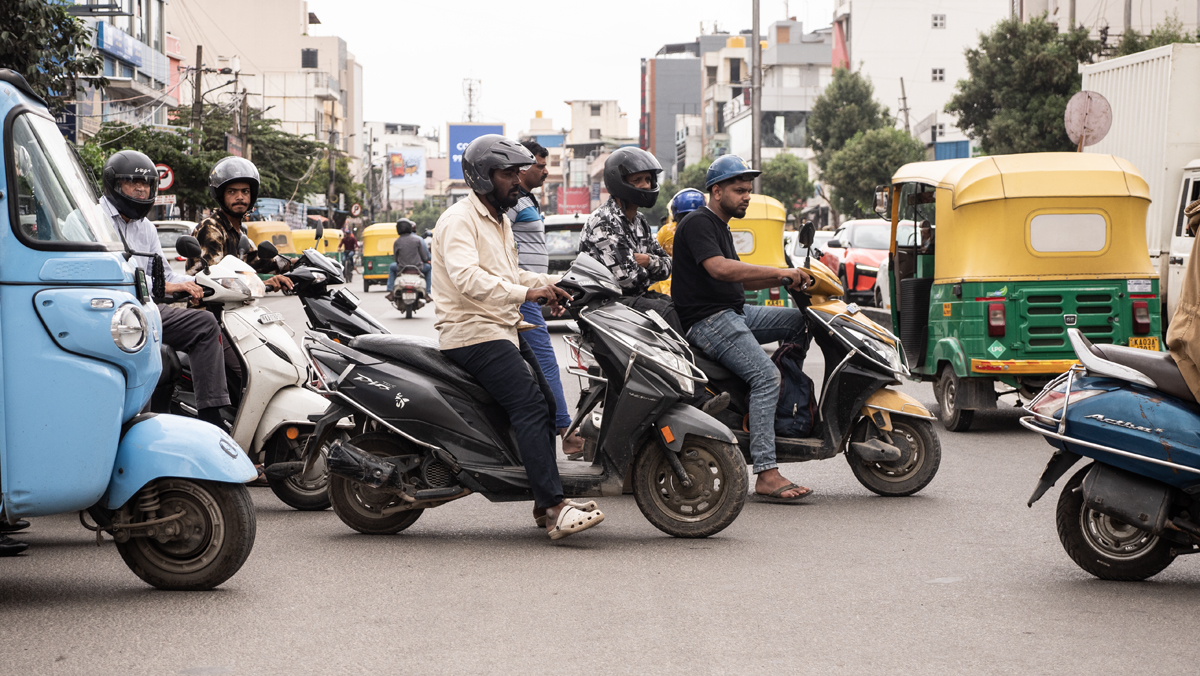
For many, two wheels aren’t about recreation or lifestyle; they’re a necessity: affordable personal transport, a working tool and, in many cases, a means of earning a living. I would describe it as the ‘heartbeat of India’.
WHO IS TVS?
For many South African motorcyclists, TVS may still be a relatively unfamiliar name. On a global scale, however, it’s anything but.
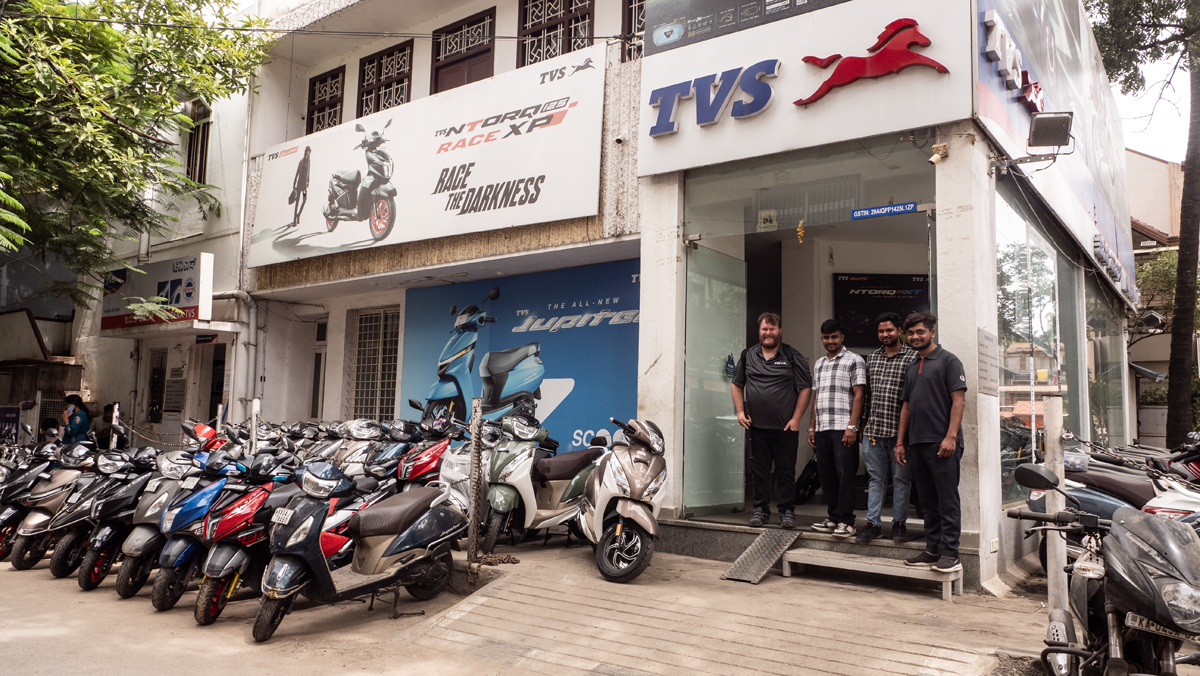
Part of the wider TVS Group, whose industrial roots stretch back more than a century, TVS Motor Company has grown into one of the world’s major two-wheeler manufacturers. Today, the company says there are more than 50 million TVS vehicles on the road, with a presence spanning over 80 countries and a product portfolio ranging from everyday commuters and scooters to electric vehicles, three-wheelers and the performance-focused Apache range.
Those numbers certainly put the scale of the company into perspective, but there are probably two names that will make its engineering credentials more immediately relatable to South African riders: BMW and Norton.
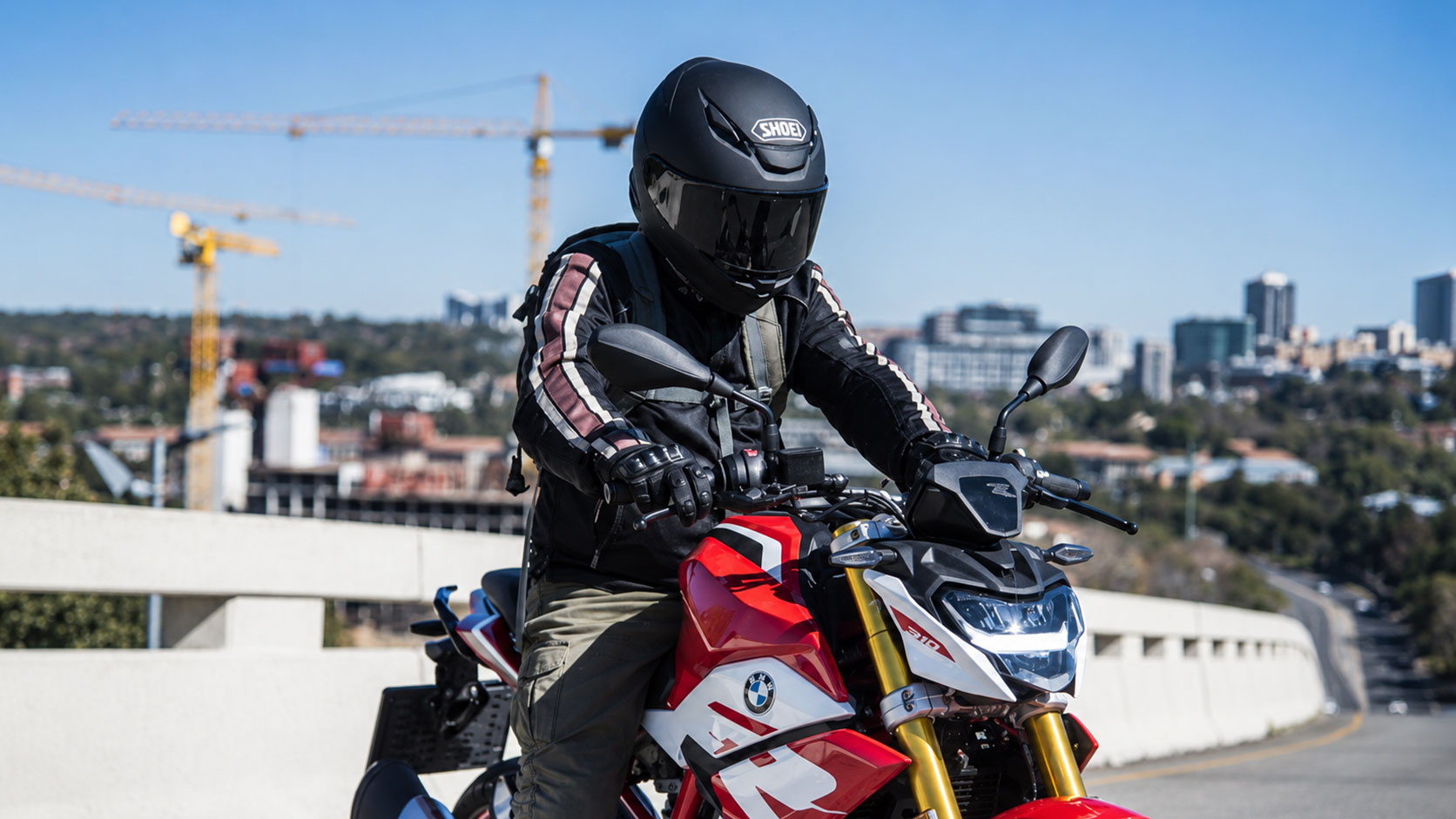
TVS’s relationship with BMW Motorrad dates back to 2013, when the two companies entered into a strategic partnership to develop and manufacture smaller-capacity motorcycles. The resulting BMW G 310 platform will be familiar to many local riders, with models such as the G 310 R and G 310 GS both manufactured by TVS at its Hosur facility in India. The partnership also gave rise to TVS’s own Apache RR 310.
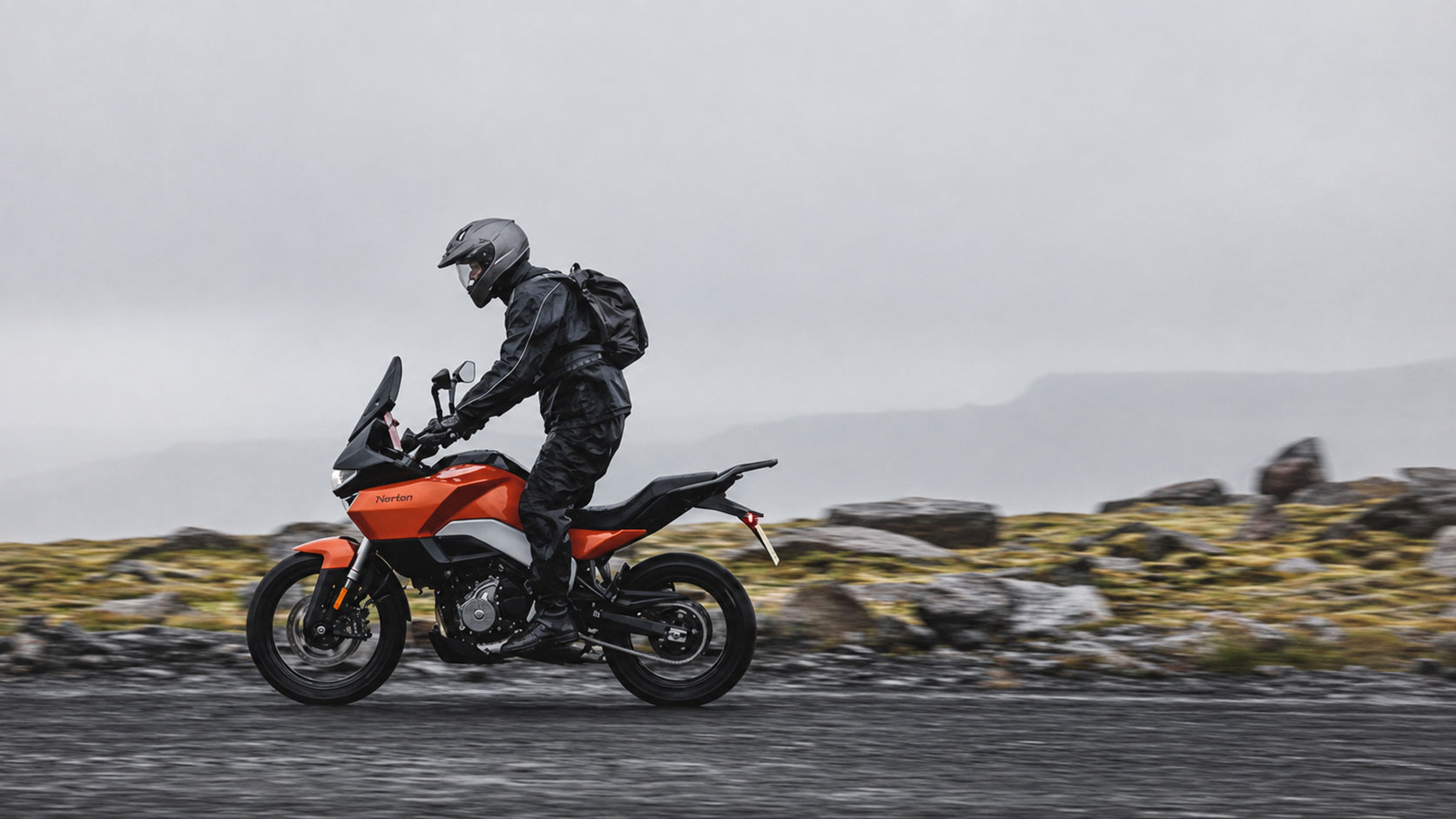
Then there’s Norton.
TVS acquired the legendary British motorcycle manufacturer in 2020 and has since invested heavily in rebuilding the brand. It’s a fascinating contrast: an Indian manufacturer synonymous with providing affordable mobility to millions of people now also owns one of Britain’s most historic motorcycle brands. We’ve already had a taste of what that next chapter looks like, with our very own Dave Cilliers spending time aboard the new-generation Nortons at the Manx R and Atlas international press launches.
For me, this was perhaps the easiest way to comprehend just how much had changed since my first involvement with TVS back in 2010. The Apache RTR 180s we’d ridden through southern Africa all those years ago had given me an early appreciation for the company’s ability to build a tough little motorcycle. Sixteen years later, I was looking at a global manufacturer operating on an entirely different scale.
And Africa, as we were about to discover, is already a significant part of that story.
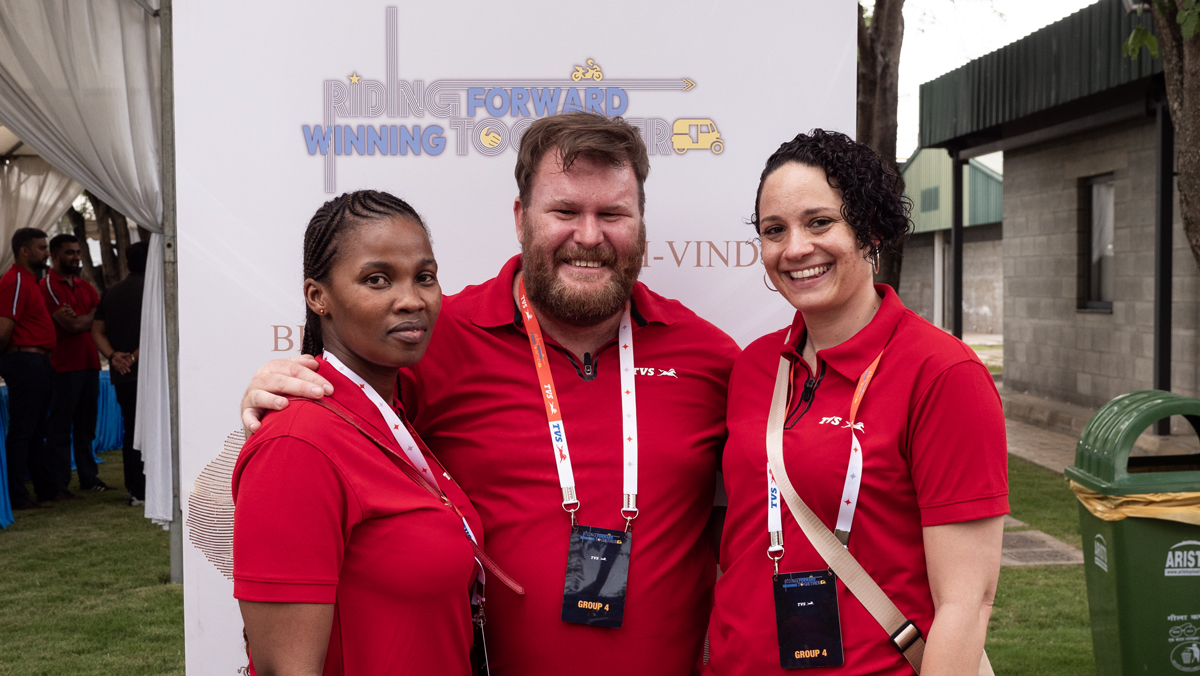
2026 TVS AFRICA PARTNER SUMMIT
But we hadn’t travelled halfway across the world simply to understand the scale of TVS; we were there to understand its ambitions for Africa.
The 2026 TVS Africa Partner Summit brought together distributors and partners from across the continent for what was essentially an intensive working conference, with much of the day’s programme understandably aimed at the people actually responsible for growing TVS in their respective markets.
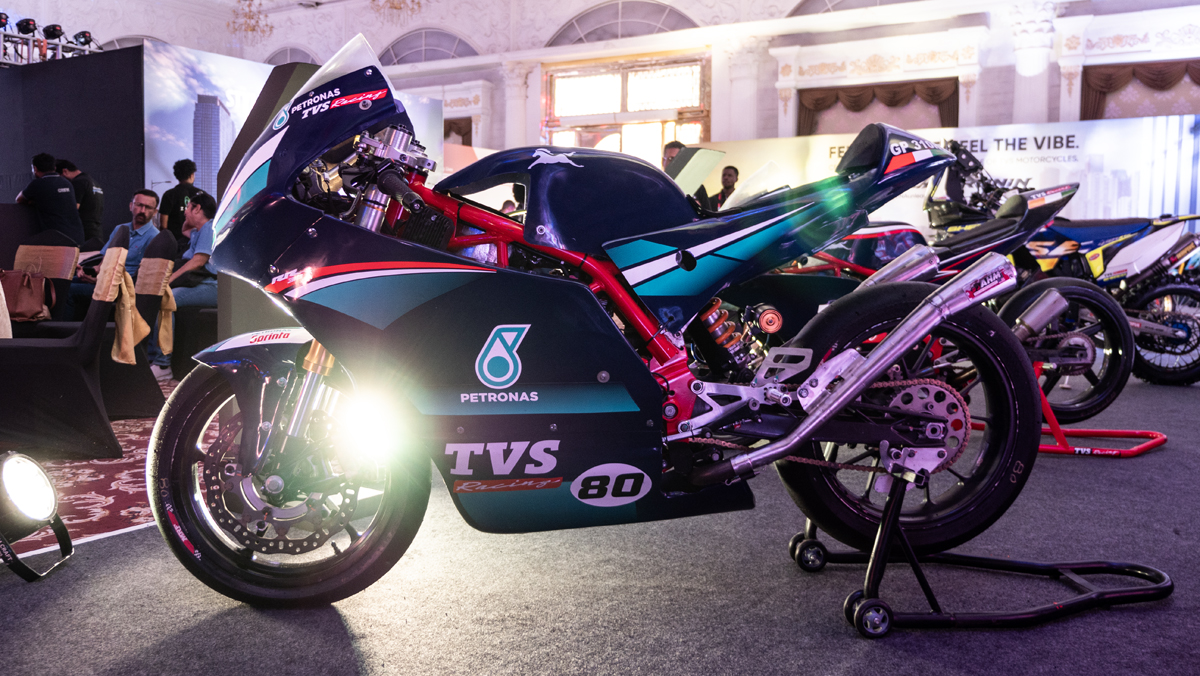
Speakers from across the TVS organisation covered everything from sales performance and future targets to products, motorsport, marketing and even dealer signage. Not all of it made particularly riveting material for a motorcycle journalist. Still, collectively it revealed something far more relevant: TVS is serious about Africa and its growth potential, aptly reflected in the summit slogan, “Riding Forward, Winning Together.”
A few statistics certainly stood out. According to TVS, it is currently the #1 motorcycle-selling brand in Africa, has a presence in more than 50 countries across the continent, and sells approximately 1 million motorcycles annually.
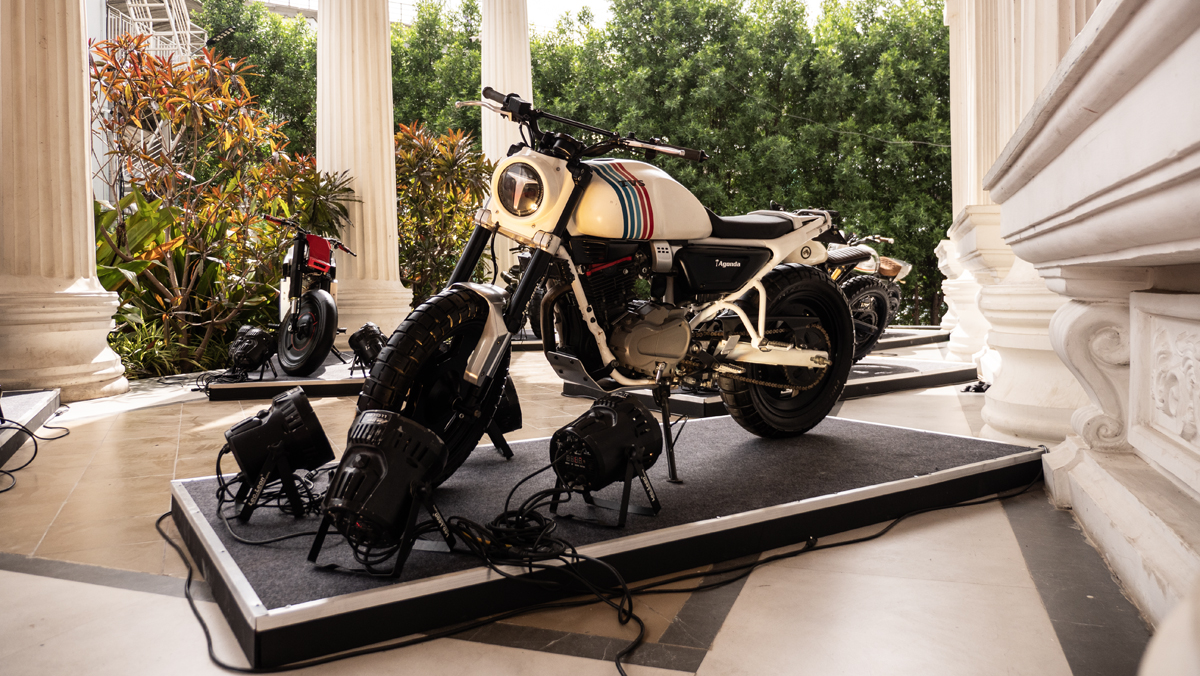
Kenya provides an interesting example of just how established TVS already is on the continent. Its distributor, Car & General (C&G), has enjoyed a 25-year partnership with TVS across Kenya and Tanzania. Interestingly, I remember hearing about C&G during my first involvement with TVS back in 2010, when they were apparently already selling thousands of motorcycles every month back then already.
That relationship has now entered another chapter, with TVS establishing its own regional office in Nairobi, working alongside C&G and its dealer network. The Kenya branch also serves as a strategic hub for TVS’s wider African operations, another indication of just how seriously the company is approaching the continent.
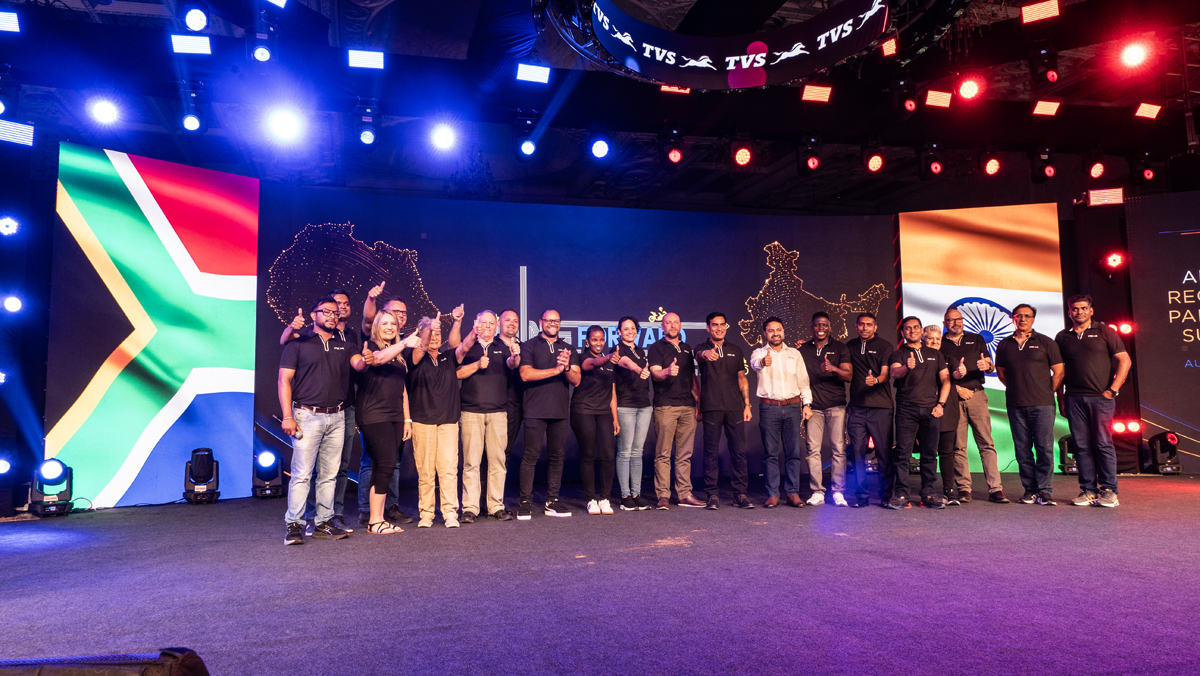
Once again, it highlighted the commitment TVS is making to Africa. South Africa was also formally recognised as one of the newcomers to the TVS family during the summit, which, given my own history with the brand, was a proud moment.
INSIDE TVS
Returning to the Hosur manufacturing facility after more than 15 years was another opportunity to see just how much had changed. As expected, the scale of the operation was impressive, but this time it wasn’t necessarily the machinery that left the biggest impression on me. It was the people.
What stood out was how deeply TVS appears to invest in its people, with a strong emphasis on learning, collaboration, well-being and personal development. Employees, and even their families, are viewed as stakeholders in the business, reinforcing the strong sense of family that seems to run through the organisation.
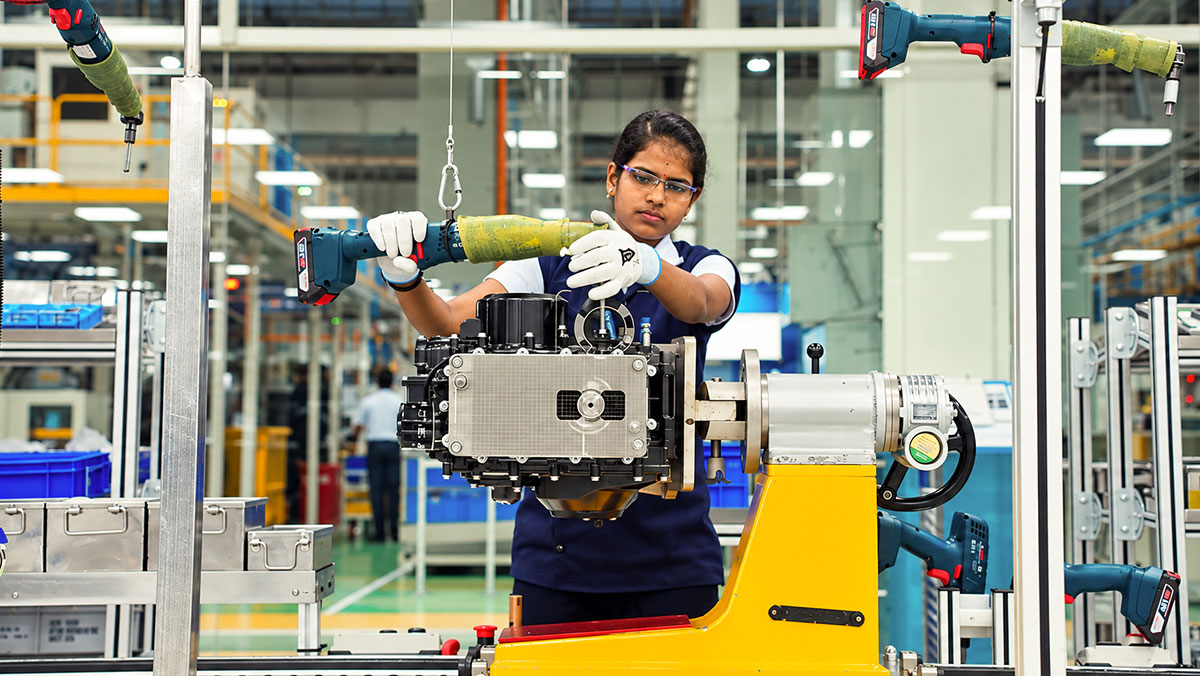
This became apparent walking through the manufacturing plant. Around 1,400 people work across two eight-hour shifts, producing approximately 6,000 motorcycles a day, with a finished motorcycle rolling off the production line every 25 seconds. What really surprised me was the lack of robotic automation in the production line. These motorcycles are being physically built by people, and there was a genuine sense of pride in what they were doing.
AFRICA: WHERE MOTORCYCLES MEAN SOMETHING DIFFERENT
In South Africa, we tend to view motorcycles primarily through the lens of recreation, lifestyle and passion. However, across many African markets, motorcycles fulfil a fundamentally different role, driven largely by necessity: mobility, commerce and livelihood.
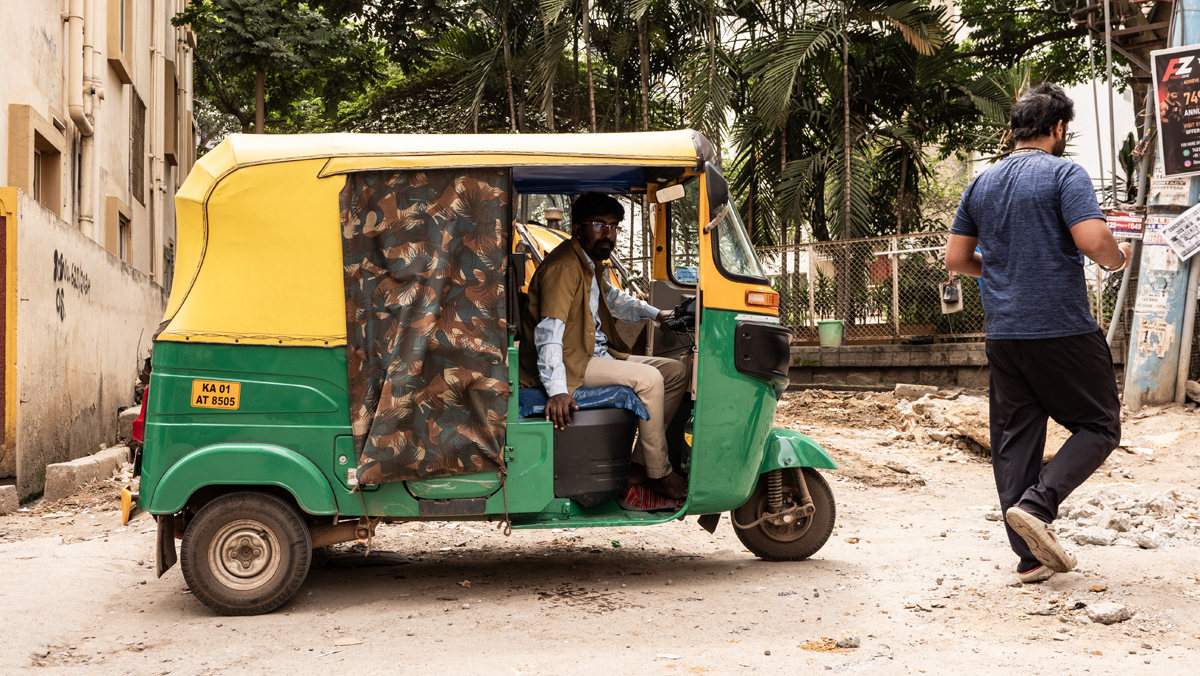
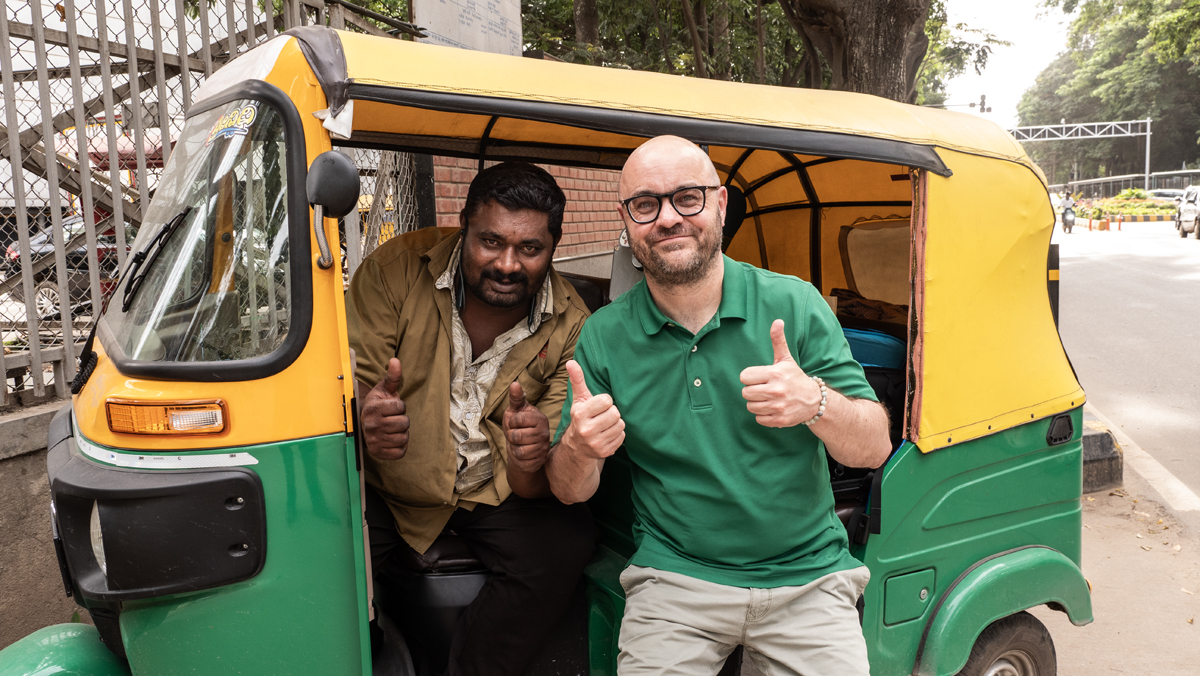
Kenya’s boda boda economy is a perfect example of this. These commercial motorcycle taxis provide affordable passenger and goods transport across the country, while also creating a means of earning a living for a huge number of riders. This helps explain why TVS is already selling around one million motorcycles annually in Africa and why the continent matters so much to them.
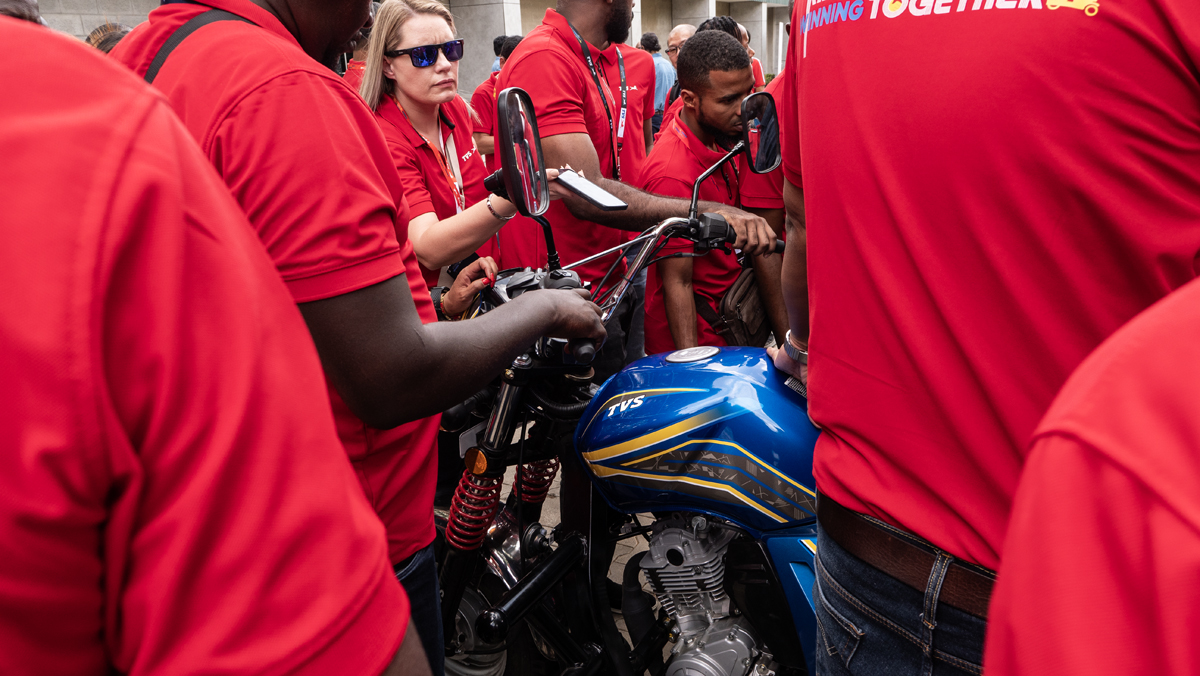
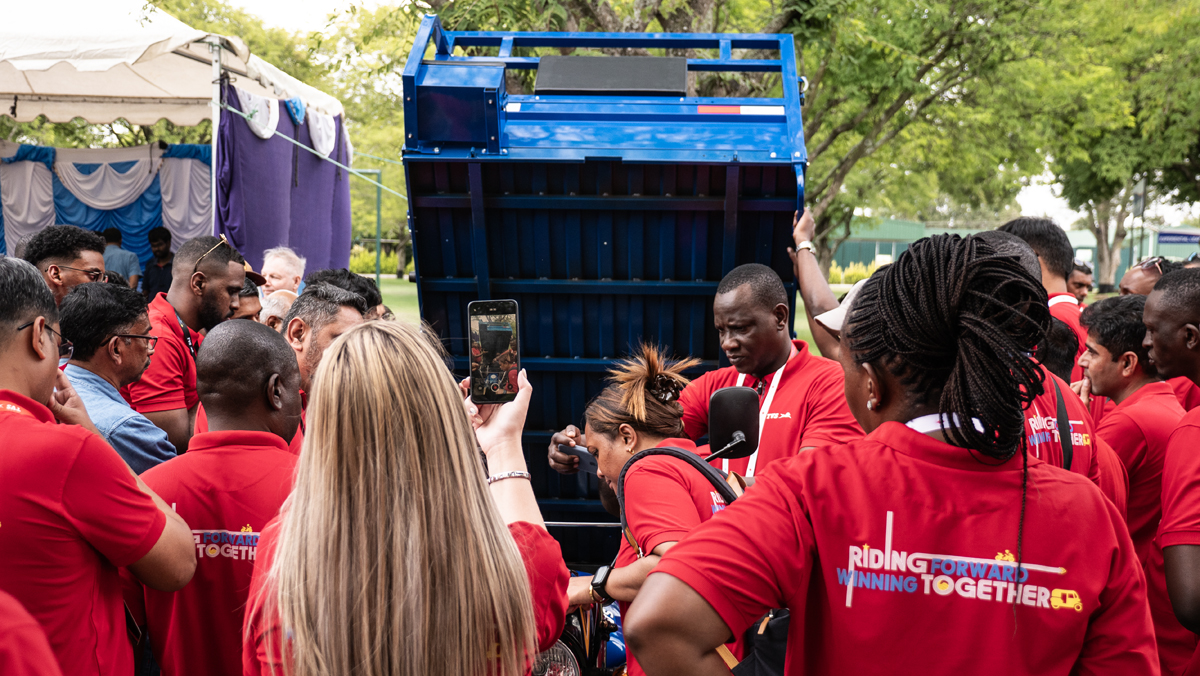
During our factory visit, an HLX-based load-carrying prototype developed specifically for Africa generated plenty of excitement among TVS’s African partners. Built around the rugged HLX platform and with a claimed one-ton payload capacity, it’s a fascinating example of TVS developing products around the practical needs of the continent. From a South African perspective, something like this could make a lot of sense in our agricultural sector. I reckon it would attract plenty of attention at NAMPO.
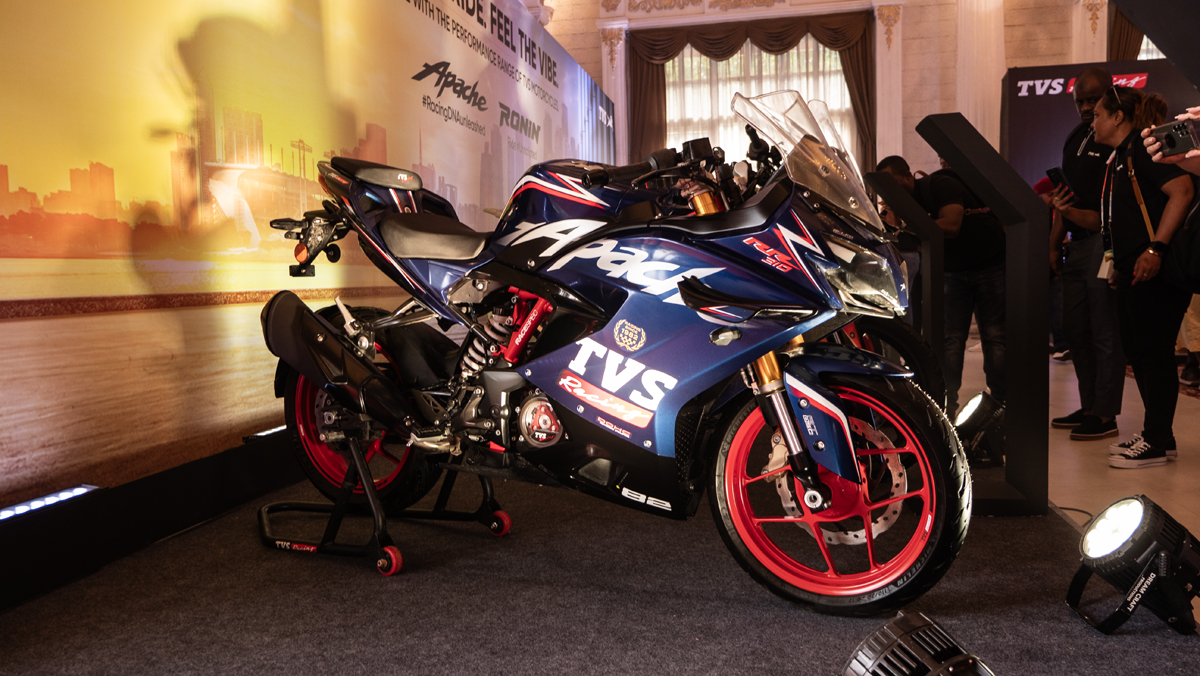
There was one motorcycle we saw in India that particularly caught my eye: the new Apache RTX adventure bike. Powered by a 299.1 cc single-cylinder engine, with 180 mm of suspension travel and ergonomics designed around long-distance travel, it looked ideally suited to adventure. Looking at it, I couldn’t help thinking how perfect something like this would have been for the African trip Dave and I undertook all those years ago.
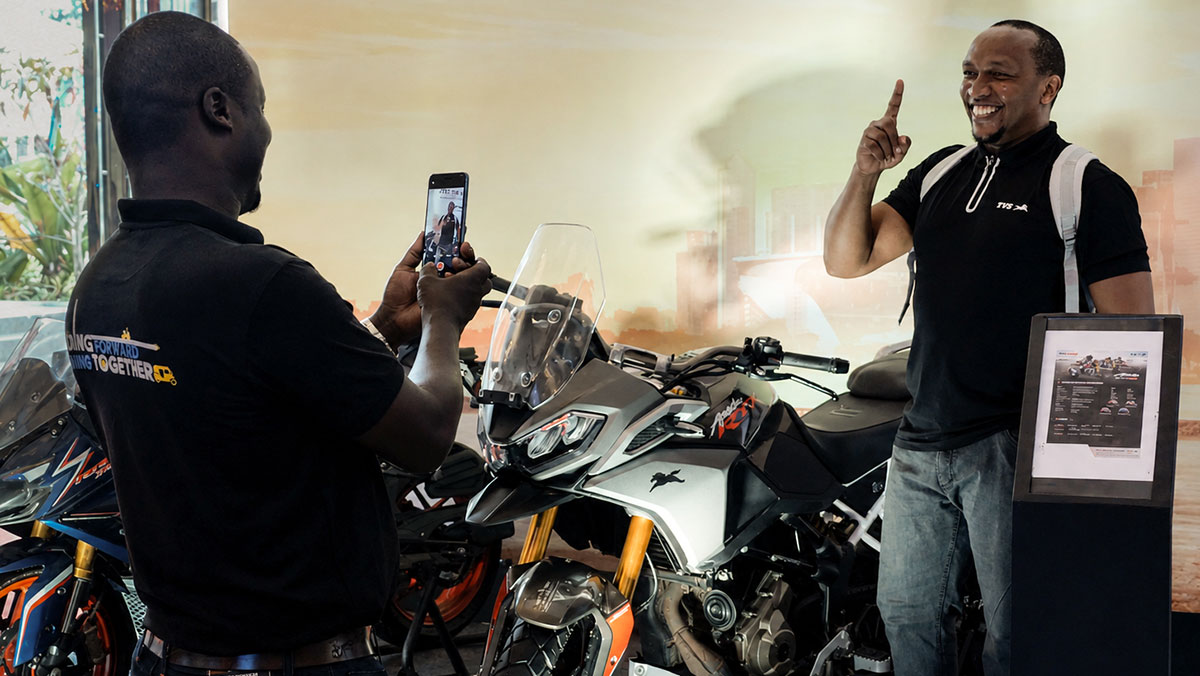
Perhaps, when these bikes eventually make their way to South Africa, there’s an opportunity for us to revisit that journey and, with it, reconnect to a simpler approach to adventure riding. One that’s less about size, power and technology, and more about loading up a small-capacity motorcycle and simply heading off in search of adventure.
BRINGING IT HOME: THE SOUTH AFRICAN OPPORTUNITY
TVS has a new opportunity in South Africa with Bidvest, but perhaps the bigger opportunity isn’t simply selling more motorcycles to existing motorcyclists. It’s helping South Africans recognise the potential of two wheels as a means of creating livelihoods.
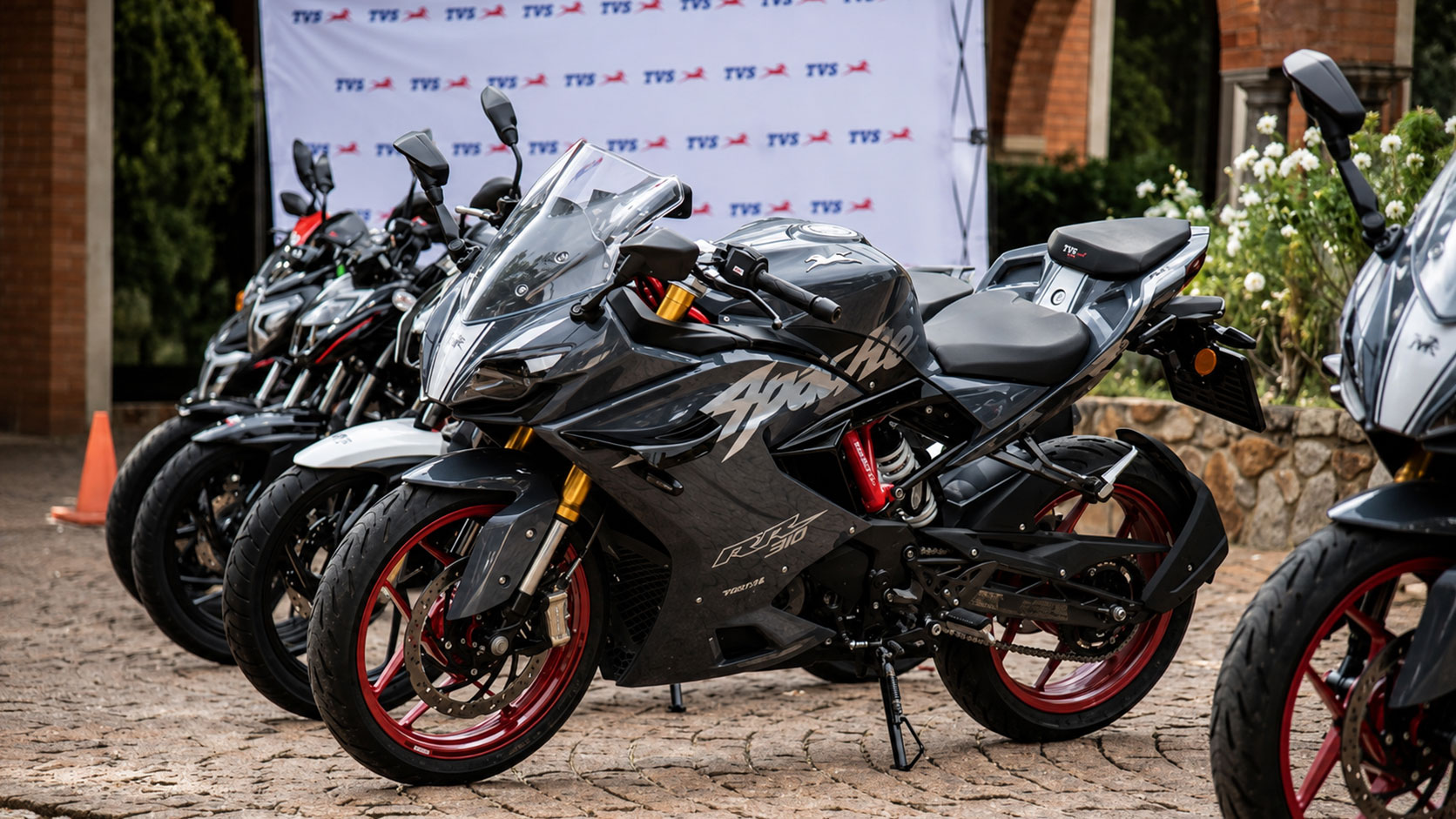
We’ve already started to see this shift since the Covid pandemic, with an explosion in the local delivery motorcycle sector. Uber Eats, Mr D, Checkers Sixty60 and countless smaller delivery operations have made working motorcycles an everyday sight on our roads.
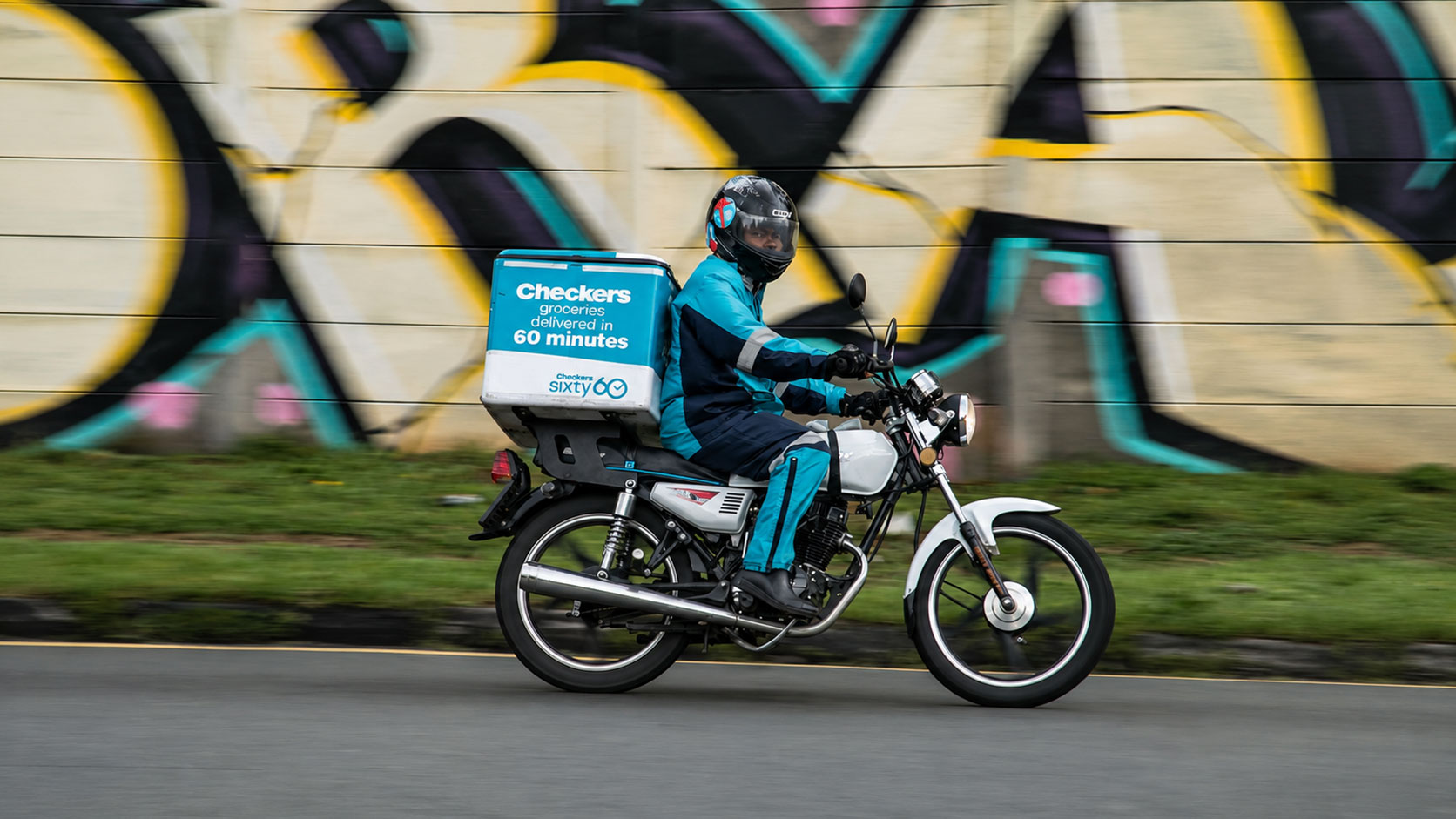
Perhaps an even bigger shift in thinking is needed. According to Statistics South Africa, the unemployment rate among young South Africans aged 15 to 34 currently stands at a staggering 47.4%. Could affordable two-wheeled mobility provide one relatively accessible route into earning a living, where a motorcycle becomes the means of earning, rather than simply the means of getting to work?
We certainly hope so. Because if there was one thing this trip reinforced for me, it’s that the true potential of a motorcycle isn’t always measured by where it can take you, but by what it can enable you to do.
Necessity. Mobility. Livelihood.
For more information on TVS in South Africa, visit: www.tvsmotor.com