



Since becoming a radio show host, I’ve been fascinated by the stories of the rock stars and artists whose music I’ve been fortunate enough to play on the radio over the last 10 years or so. What has also intrigued me is how my show, The Ride, has evolved around these stories.
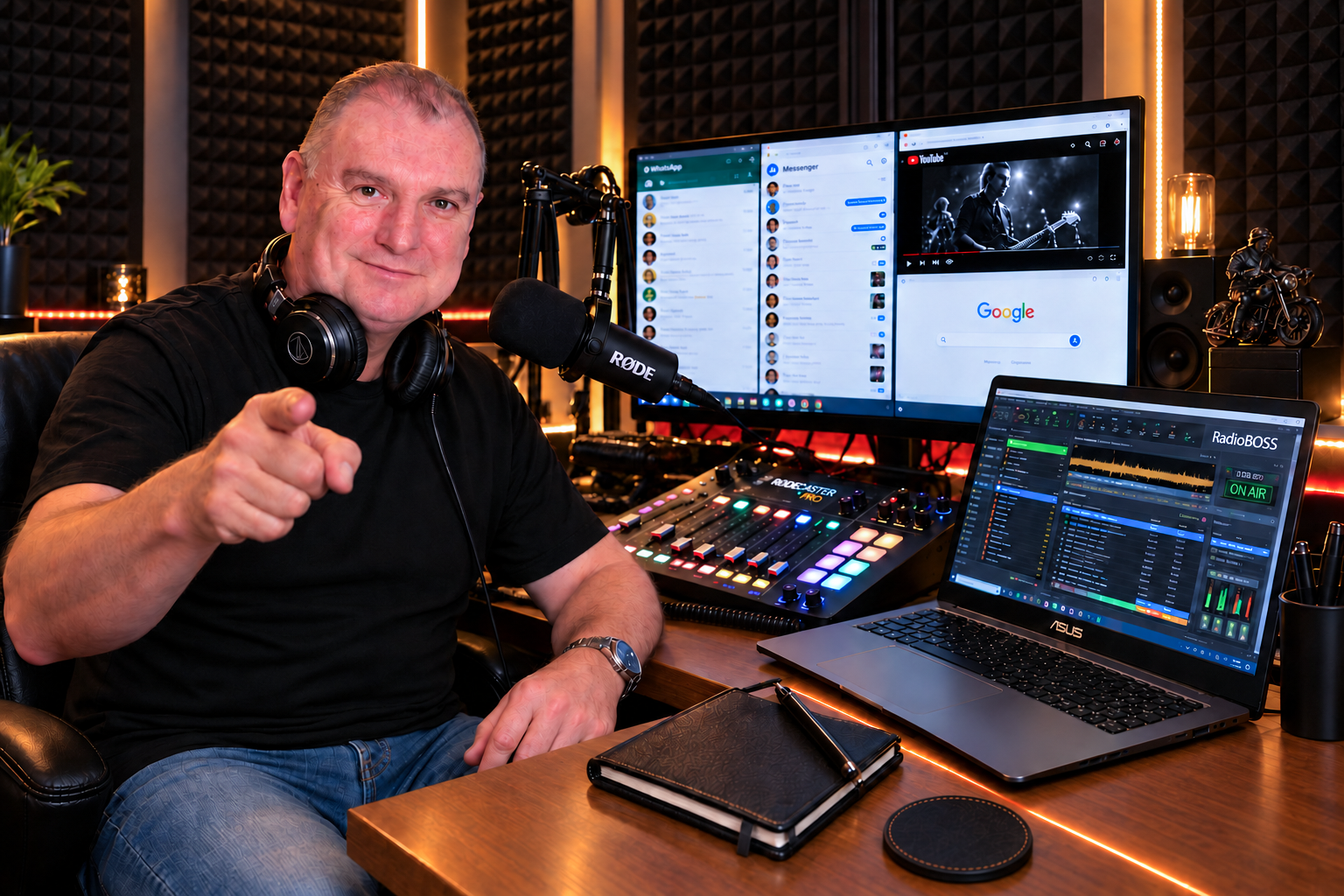
I’ve always enjoyed taking people on a journey of discovery through rock music, not just playing the old rock classics, but also the deep cuts and forgotten hits hidden in plain sight on albums we listened to long ago and bought with our hard-earned money growing up. I discovered that listeners loved the idea of going on a musical ride with me, and that it resonated with the biker community worldwide. So they started following my show.
In my show, the stories I present support the songs I feature. Together, the stories and songs create an intriguing mind map that draws listeners into the journey. Over time, I became fascinated by artists whose love and passion for motorbikes influenced their lives and their music.
In collaboration with ZA Bikers, I will present a series of stories about artists whose love affair with metal and machine became an anchor point in lives filled with creativity, mystery, and intrigue. First up, I’ll share Bob Dylan’s story, or myth, of the motorcycle accident that changed the direction of his life and music, reshaped his relationship with the musicians who would become The Band, and may have saved him from the burnout threatening to extinguish arguably one of the greatest lights in rock music history.
Let me start the story with a caveat. The circumstances of the motorcycle accident that changed Bob Dylan’s life were never officially documented: no police report was filed, and Dylan was apparently not hospitalised. For this story, we therefore rely largely on Dylan’s own accounts and later retellings, which do not always agree. How much is fact and how much is myth? I’ll leave you to decide. It’s a fascinating story, nonetheless.
The Pressure Valve
Have you ever experienced the silence that only comes when an engine stops running? I’m not talking about the silence of night, the silence in a room, or even the silence when someone holds their breath. It’s a silence that fills the space and makes your ears ring. On 29 July 1966, Bob Dylan would meet that silence on a lonely road near Woodstock, New York. It was a silence that may have saved his life.
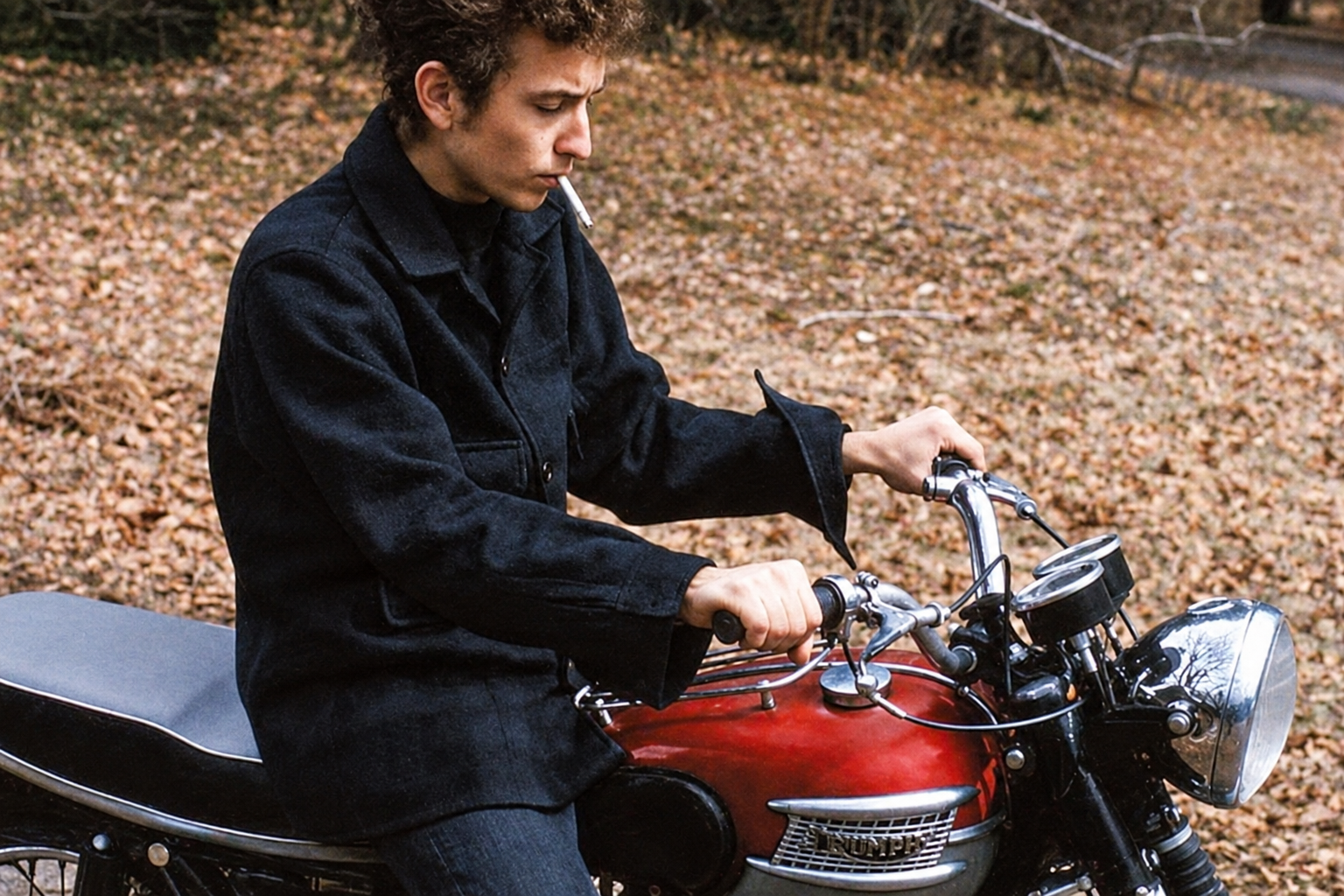
By the summer of 1966, Bob Dylan was 25 years old. He was tired. He had recently released his seventh studio album, the double album Blonde on Blonde, which was climbing the charts. Bob Dylan felt he had to answer to everyone, and the pressure was taking its toll. After his controversial electric performance at the Newport Folk Festival the previous year, sections of his audience had turned against him, booing the electric portions of his concerts. Some felt that he had betrayed the acoustic sound of the Greenwich Village folk revival. In contrast, others appointed him “the voice of a generation” and expected him to continue speaking for the political and social causes of the time.
Accounts from the period describe Dylan using amphetamines to keep pace with the stresses and strains of the time. He had already completed an exhausting world tour between February and May 1966, and his manager had reportedly arranged more than 60 additional US concerts for later that year. But he was tired. Tired of being cast as the reluctant “voice of a generation”. Tired of the music industry. Tired of the media and tired of the fans. Tired of the very machine that had built him into a superstar and now seemed intent on consuming him. To add to his woes, he had just finished a book of stream-of-consciousness prose poetry called Tarantula. The publishers, the fans and the literary snobs were demanding an explanation of what he had written and why he had written it. He wasn’t interested in their remonstrations.
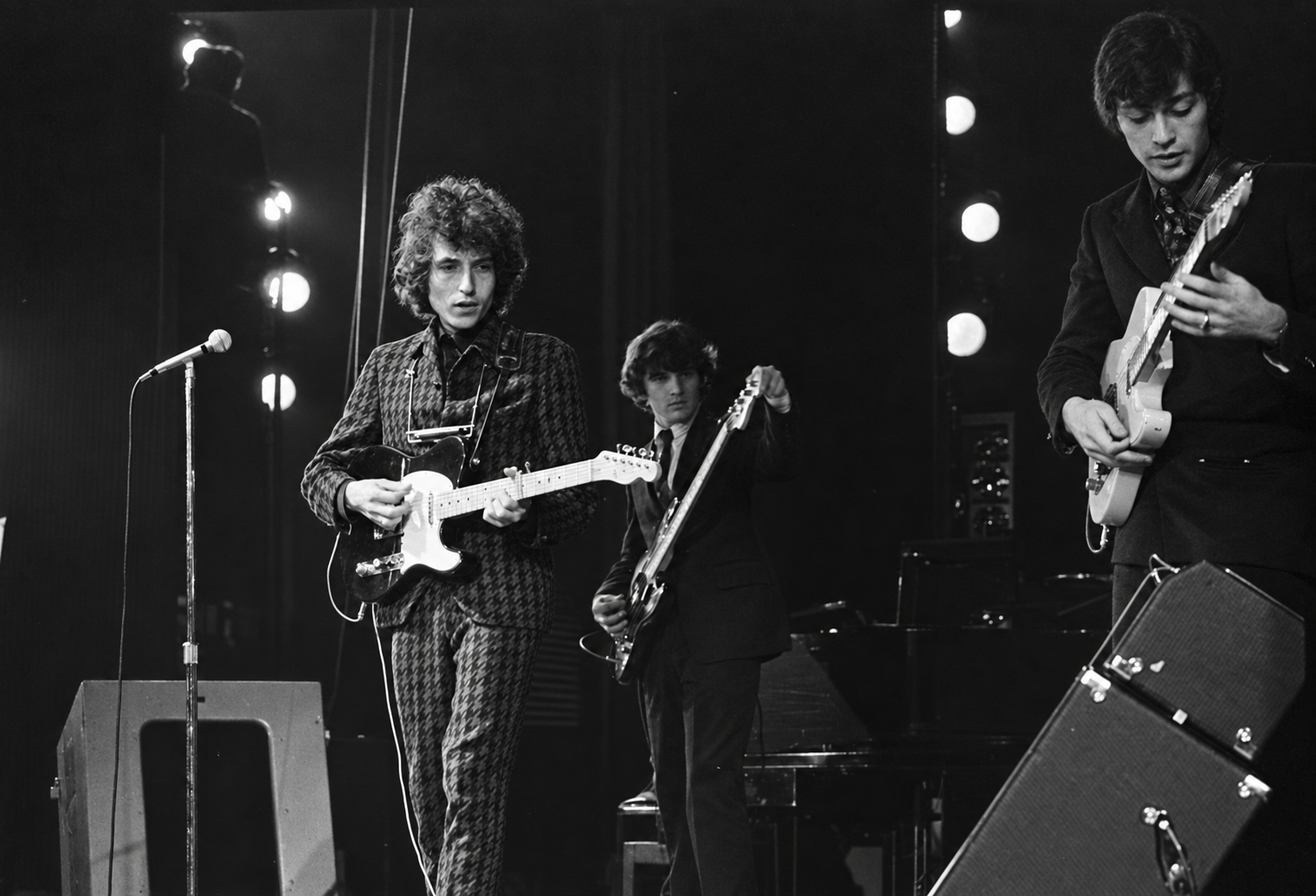
Photo: Roger Pic/Bibliothèque nationale de France. Public domain.
Snapshot of the Crash
With his head spinning and desperate for solitude and an escape from the stress, Bob Dylan climbed onto his motorcycle on the morning of Friday, 29 July 1966. According to one account, he collected the 500-cc Triumph Tiger 100 from his manager Albert Grossman’s home in Bearsville, New York, before taking to the open road. Dylan was no novice; reports suggest that he had owned a Harley-Davidson as a teenager. On the bike, no one could threaten him, stress him, or question him. A motorcycle has no audience: just the silence, the open road, and clear thoughts.
In that version of events, Dylan rode through the Catskill Mountains, along Striebel Road towards the Glasco Turnpike, and the world became something he could handle. We can imagine the tang of hot oil and exhaust fumes, the deep thump of the twin-cylinder engine vibrating up through the foot pegs and into his bones, and the wind finding every gap in his leather jacket. The Tiger was a way to escape; it was where you got to do all the talking, or none at all.
In one retelling, Dylan left Albert Grossman’s house on that Friday morning, with his wife Sara following in a station wagon, and rode along Striebel Road towards the Glasco Turnpike. The sun sat low ahead of him. Perhaps, despite the years of sleeplessness, stress, frustration, and sheer exhaustion, it felt like just another day. Then he squinted into the morning sun. Dylan later said that he was blinded for a second, panicked, and hit the rear brake. The wheel locked and the back end slid out. In a flash, he was off the bike. We can imagine the Tiger sliding away from him across the road, the sound of its engine fading as he fell.
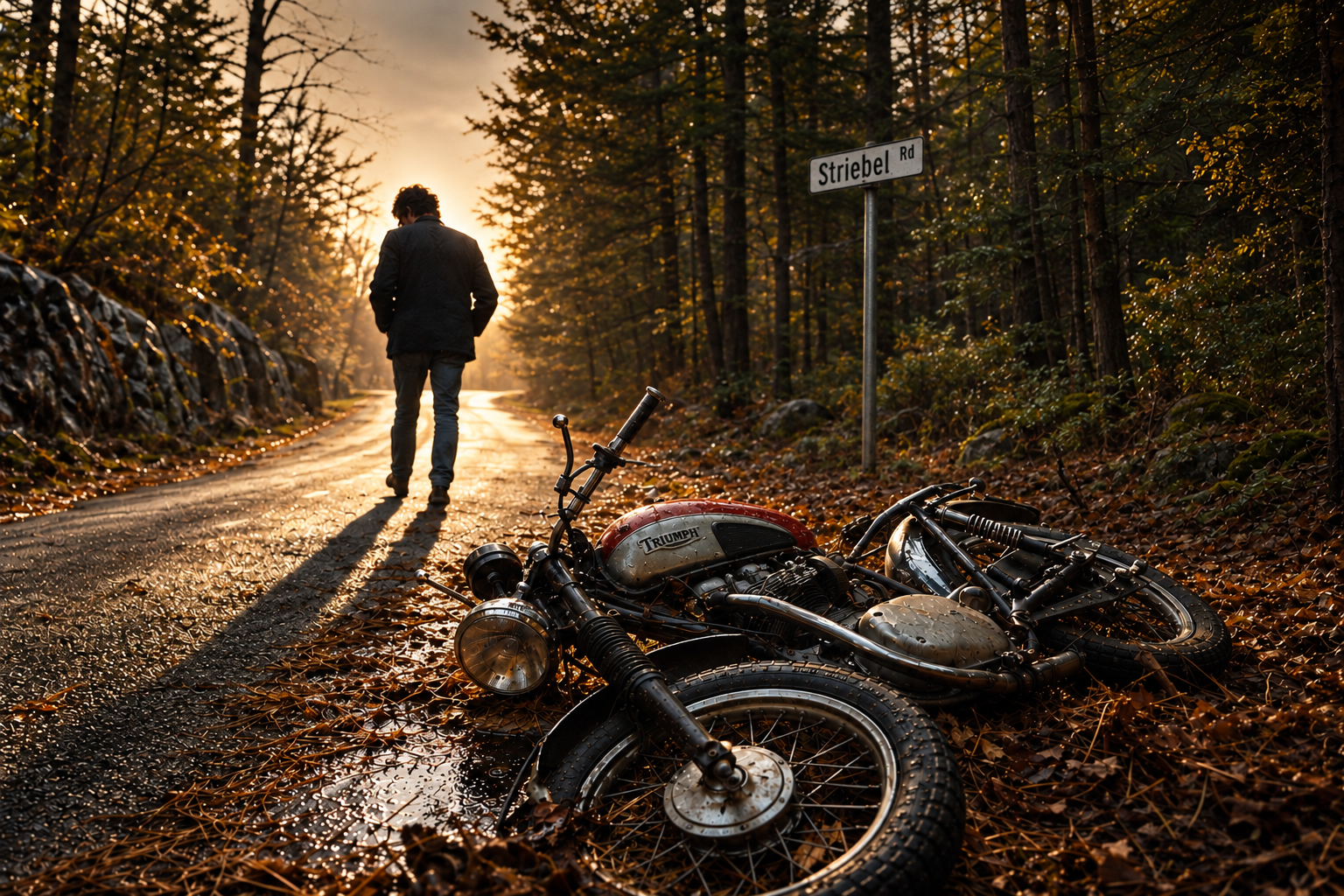
And this is where the story goes quiet, not only in terms of the tranquil morning, shattered by the sound of the accident and then forced back into a deafening silence, but also in terms of what really happened next. No report of the accident was filed with the police, leaving no official record of the crash. One account says that Bob’s wife, Sara, was following him and took him back to Albert Grossman’s house. Reports of his injuries varied, although Dylan later indicated that he had suffered a concussion and fractured a vertebra. A brief newspaper report published four days later said only that he was under a doctor’s care. Later accounts say that he recuperated at the home of Dr Ed Thaler rather than in hospital. Even so, the true extent of his injuries was never firmly established. Silence.
But in the minds of the fans, the record company, the media and the hangers-on, all with their own agendas, the greater injury was to “the movement” they believed he led. His remaining concert dates were cancelled. Work on the tour documentary that would become Eat the Document was delayed, while the planned publication of Tarantula was postponed. The so-called voice of a generation suddenly went quiet. Bob Dylan withdrew almost completely from public view.
The Great Retreat
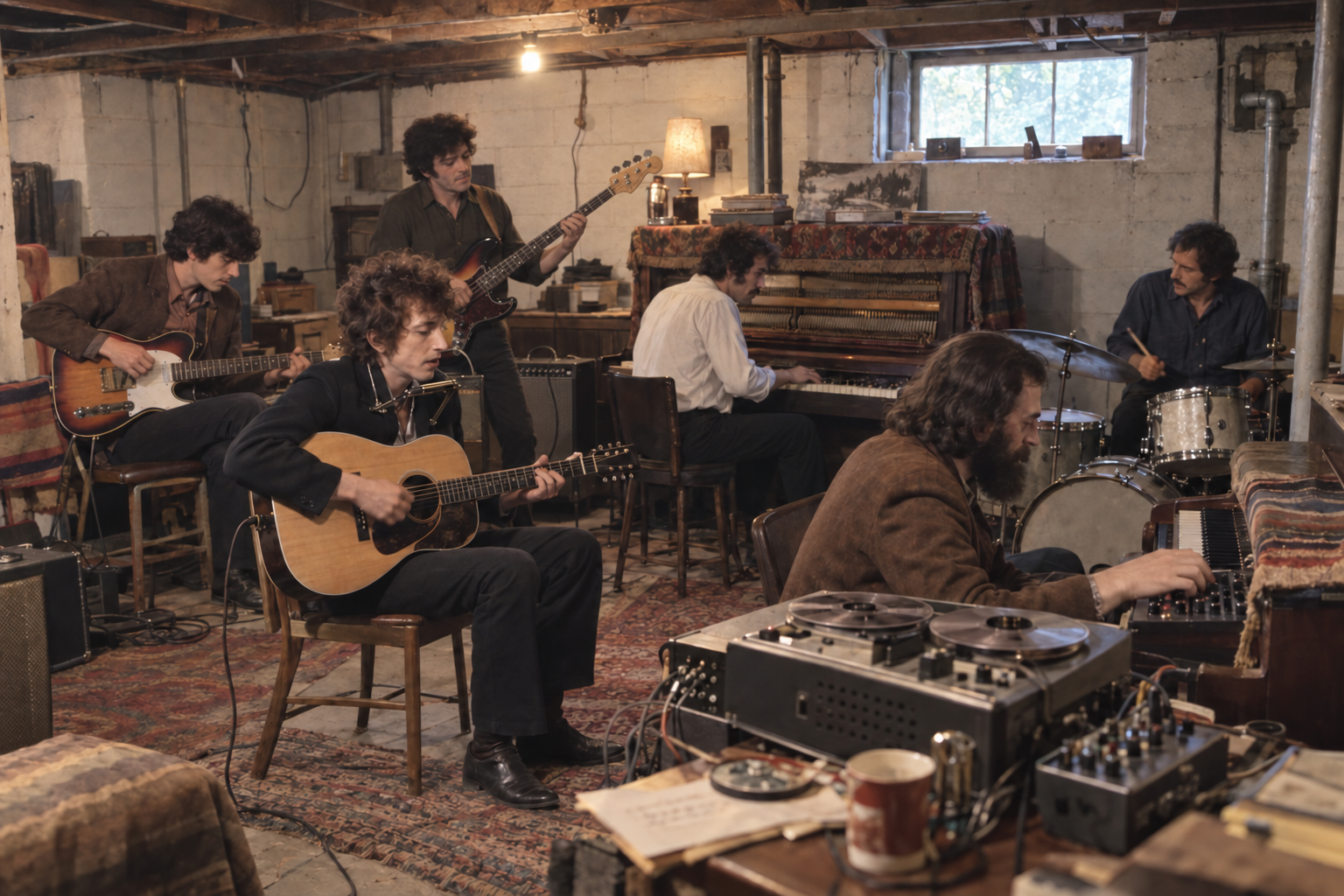
Bob Dylan used this time in the woods to remake himself. It would be 17 months before he released his eighth studio album, John Wesley Harding, and just over three years before he returned to give his first full-length concert at the Isle of Wight Festival in 1969. In between, he retreated into family life with Sara and their young children. He also resumed working with four members of the Hawks, the musicians who had backed him during his 1965–66 electric tours and would soon become known as The Band: Rick Danko, Richard Manuel, Garth Hudson and Robbie Robertson. Levon Helm, who had left the Hawks in 1965, rejoined his former bandmates towards the end of 1967, when Dylan’s basement sessions were largely complete. The recordings began informally in the “Red Room” of Dylan’s home before moving to the basement of a pink-painted house in West Saugerties known as “Big Pink”.
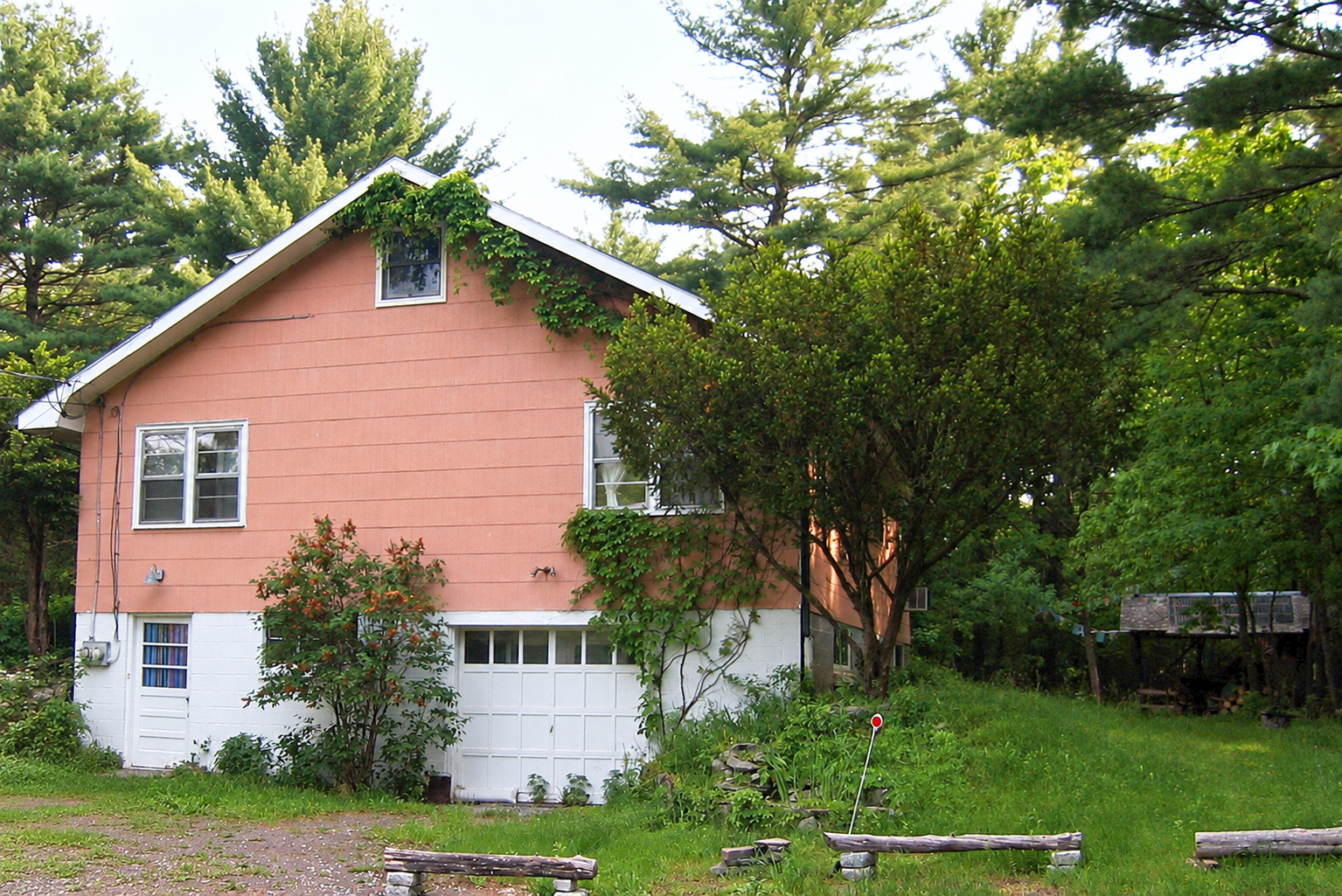
It was in this famous building, “Big Pink”, during 1967 that they recorded some of Bob Dylan’s most enduring music. Across the Red Room and Big Pink sessions, they captured more than 100 performances: old ballads, country, blues and gospel songs, humorous fragments, unfinished sketches and a remarkable collection of new compositions. The atmosphere was informal, but the sessions were not entirely free from commercial purpose. Many of Dylan’s new songs were recorded as demos for his publishing company so that other artists could record them; they were not intended to become a new Dylan album. Eight years later, in 1975, Columbia released The Basement Tapes, a double album credited to Bob Dylan and The Band and generally counted as Dylan’s 16th studio album. It combined 16 recordings featuring Dylan with eight tracks by The Band. By then, demand had grown through cover versions, calls from fans and the circulation of bootleg recordings. The original tapes remain a record of a simpler, quieter period in Dylan’s life and, perhaps, of healing. The album proved a commercial success, reaching number seven on the US Billboard album chart and number eight on the UK Albums Chart.
Bob Dylan’s legend continued to grow. He was inducted into the Rock & Roll Hall of Fame in 1988 and awarded the Nobel Prize in Literature in 2016. His near-continuous touring schedule since 1988 became popularly known as the “Never Ending Tour”. At 85, he continues to perform extensively and has released 40 studio albums, most recently Shadow Kingdom in 2023. Had the accident on his Triumph Tiger 100 not forced him to stop and rest, it is fair to wonder how long he could have continued at the pace he was living.
The Meaning of the Ride
The lesson in this, for anyone who has pushed a bike, or life itself, past the point where the front wheel starts talking, is that sometimes the machine that carries you also has to be the one that puts you down. Not because it’s mean, but because you leant too hard into a moment that couldn’t hold you, and something had to give before you did. Bob Dylan’s crash has been studied by biographers for sixty years, all looking for the “story”, as if the details are more important than the result.
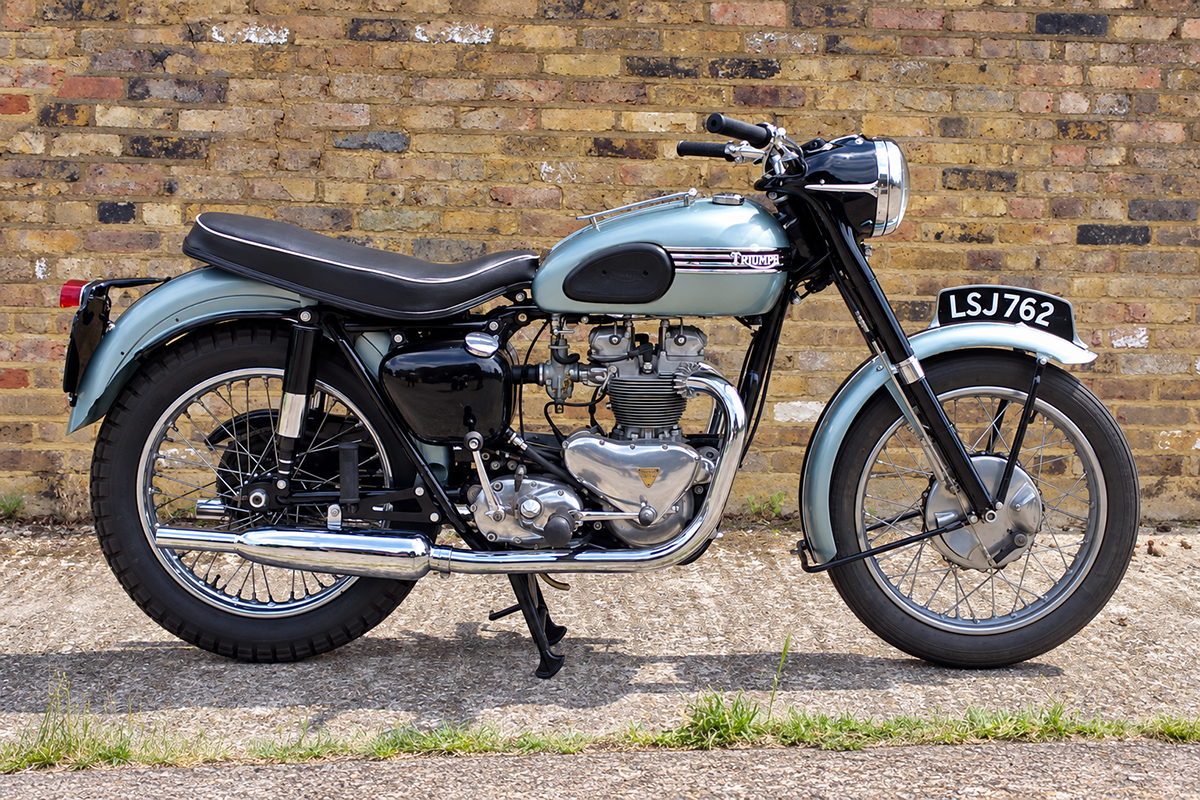
For me, it’s a simple, oil-and-gravel moment that took away a man’s forward motion just when he needed to lose it. The Tiger did not fail him. If anything, it did exactly what a good machine does when a rider has stopped listening to it. It told him, in the only way it could, that the ride was over, for now. He withdrew into the woods and returned as a different kind of artist. Sometimes you have to lose your balance to find your centre. Sometimes the crash is the kindness.
THE BASEMENT YEARS
From Dylan’s reported 1966 motorcycle accident to Big Pink and the release of The Basement Tapes in 1975, this 30-song playlist follows the influences, recordings and unexpected interpretations that shaped the journey.
Curated by Dave Dantu for ZA Bikers.
This isn’t a playlist. It’s a ride!
LISTEN TO THE RIDE
Want to hear Dave behind the microphone? Listen to the 13 September edition of The Ride on Mixcloud.
The Ride broadcasts every Sunday from 07:00–10:00 South African time on Rock Radio UK. Listen live on the website or through the station’s dedicated mobile apps: Apple | Android
Current global times: 🇬🇧 London 06:00–09:00 | 🇿🇦 Joburg 07:00–10:00 | 🇩🇪 Berlin 07:00–10:00 | 🇦🇪 Dubai 09:00–12:00 | 🇭🇰 Hong Kong 13:00–16:00 | 🇦🇺 Perth 13:00–16:00 | 🇦🇺 Sydney 15:00–18:00 | 🇳🇿 Auckland 17:00–20:00 | 🇺🇸 New York 01:00–04:00 | 🇺🇸 Los Angeles 22:00–01:00 (Saturday).