



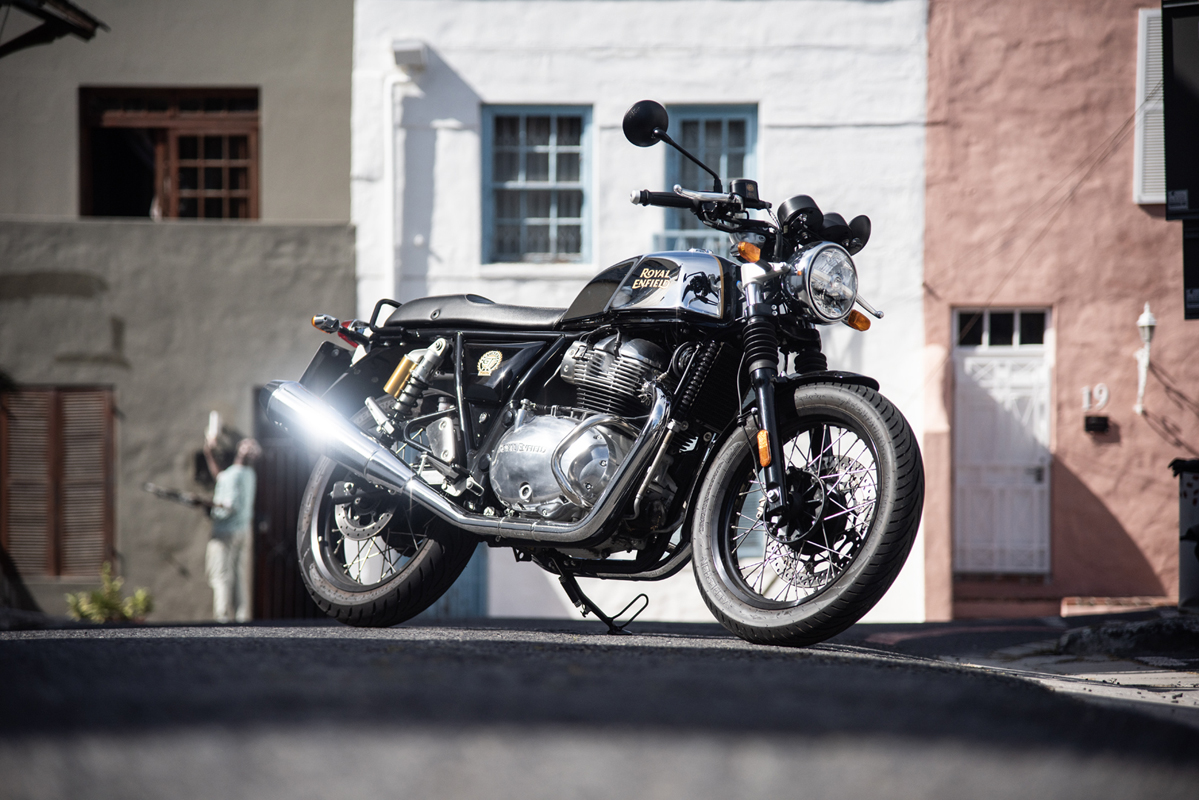
We live in a world where everything is becoming smarter, faster and more connected. Our phones know more about us than we’d probably like; technology is finding its way into almost every part of our lives, and switching off has become surprisingly difficult. Perhaps that’s why analogue experiences are making a comeback, and why a motorcycle that asks so little of you technologically can offer so much in return.
For years, Dave Cillers has been flying the Royal Enfield flag at ZA Bikers, encouraging the industry to bring the brand to South Africa and reminding us that motorcycling doesn’t always need to be about bigger numbers, more electronics or the latest technological breakthrough. Since Royal Enfield arrived, he’s continued to sing its praises and has a very special Hunter 350 in his keep. I’ve listened, but it wasn’t until I climbed aboard the Continental GT 650 that I began to appreciate just how much sense it makes.
I’ve always had a soft spot for the Café Racer scene. Growing up watching Café Racer TV and paging through magazines, I dreamed of owning a proper modern classic. My Yamaha XSR900 Kenny Roberts Edition gave me a taste of that world, but it never quite scratched the itch, if I must be honest. A modern classic, in my eyes, should lean a little more heavily on the classic than the modern, preserving the character and soul of the original idea while making it work in today’s world.
A Proper Modern Classic
Walking into Moto Royale, chatting to the passionate staff and seeing the Continental GT in its Mr Clean livery on the floor, I was surprised by how quickly that old spark returned.
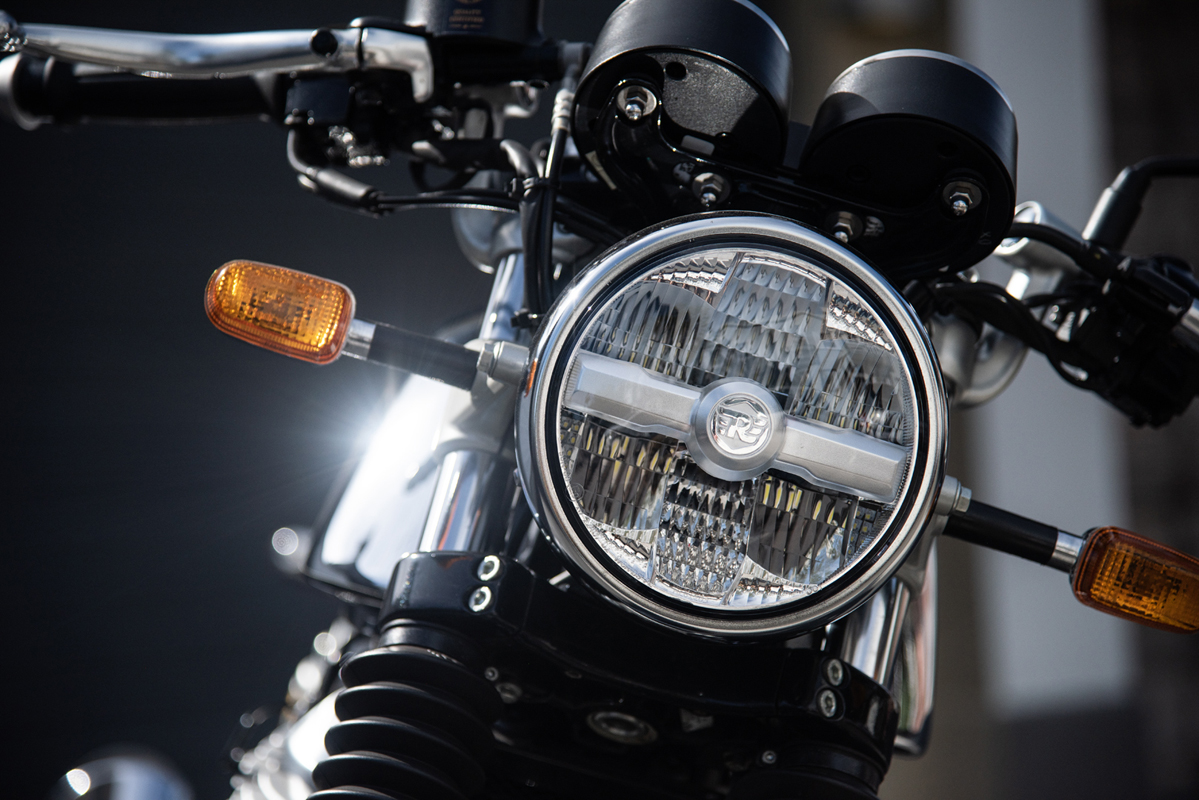
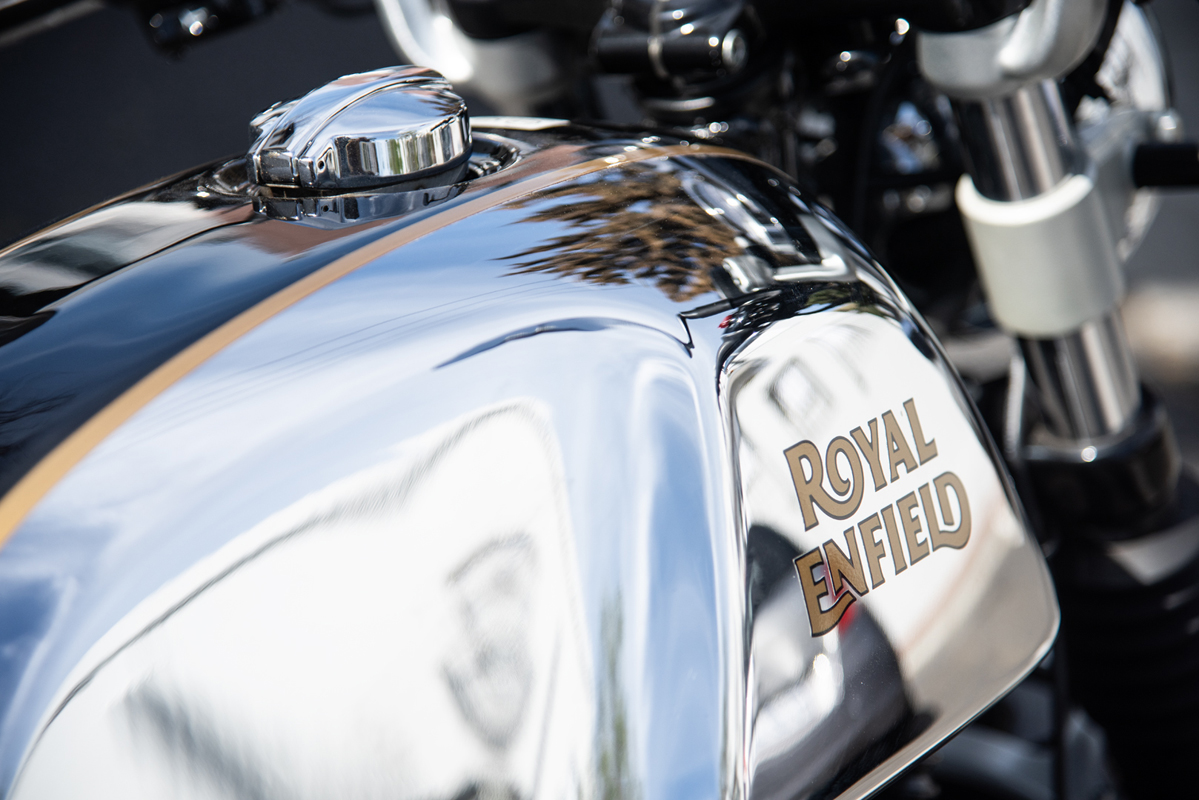
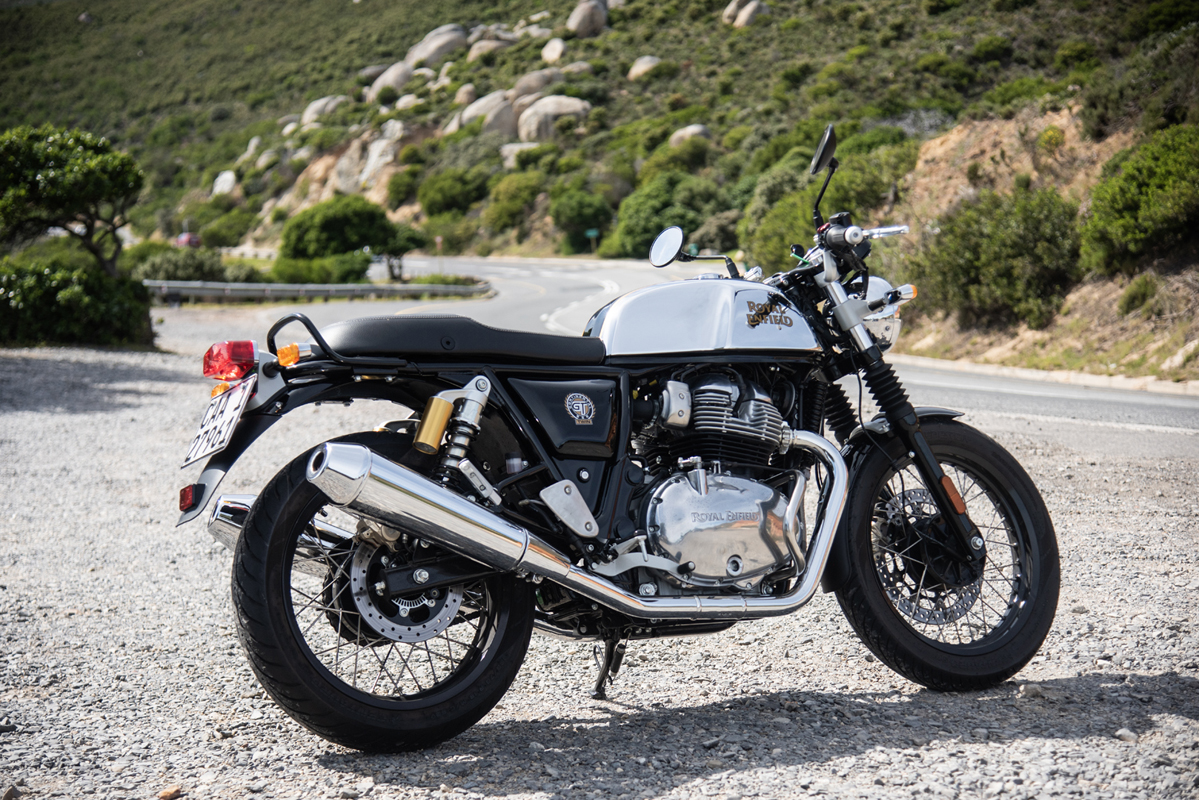
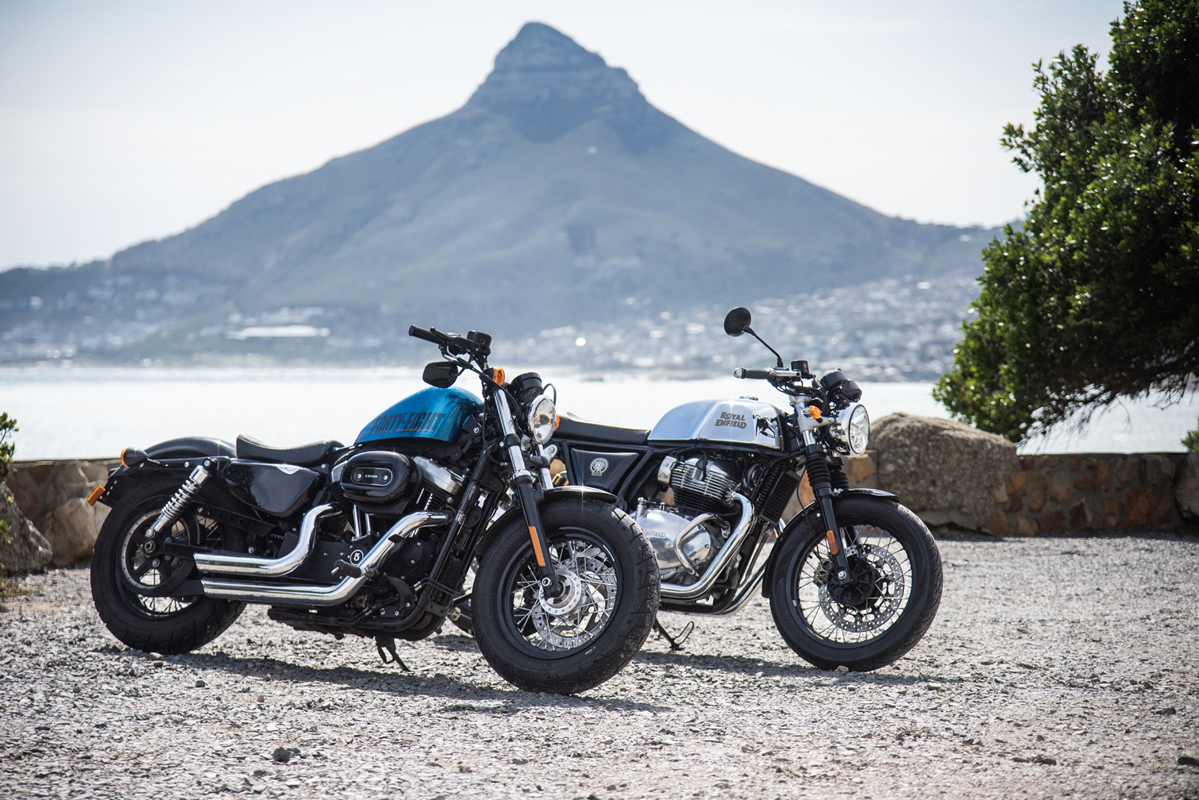
With its sculpted 12.5 litre tank, clip-on handlebars, single headlight, twin exhausts, spoked wheels and beautifully exposed parallel-twin engine, the GT has the proportions of a proper Café Racer. I’d admired it from a distance since its return as a 535 cc single, but the move to the 650 twin in 2018 was what really caught my attention, along with many Royal Enfield and modern classic fans.
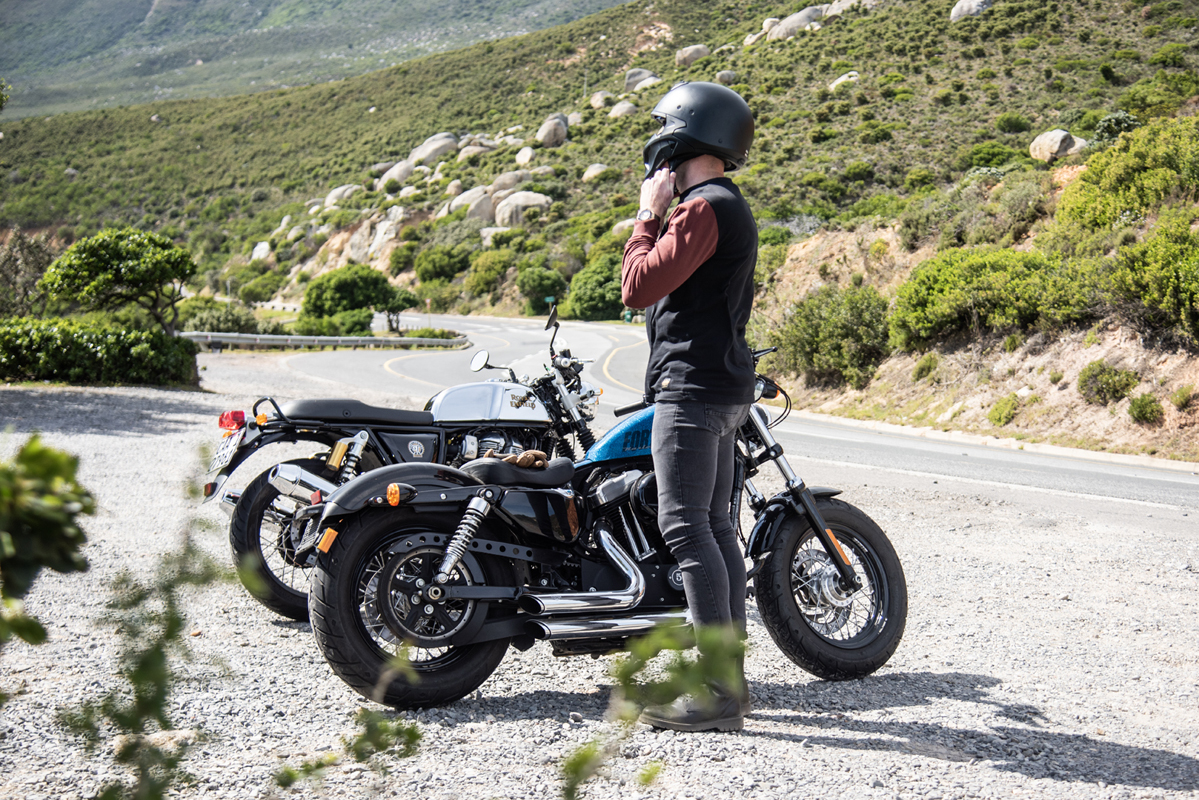
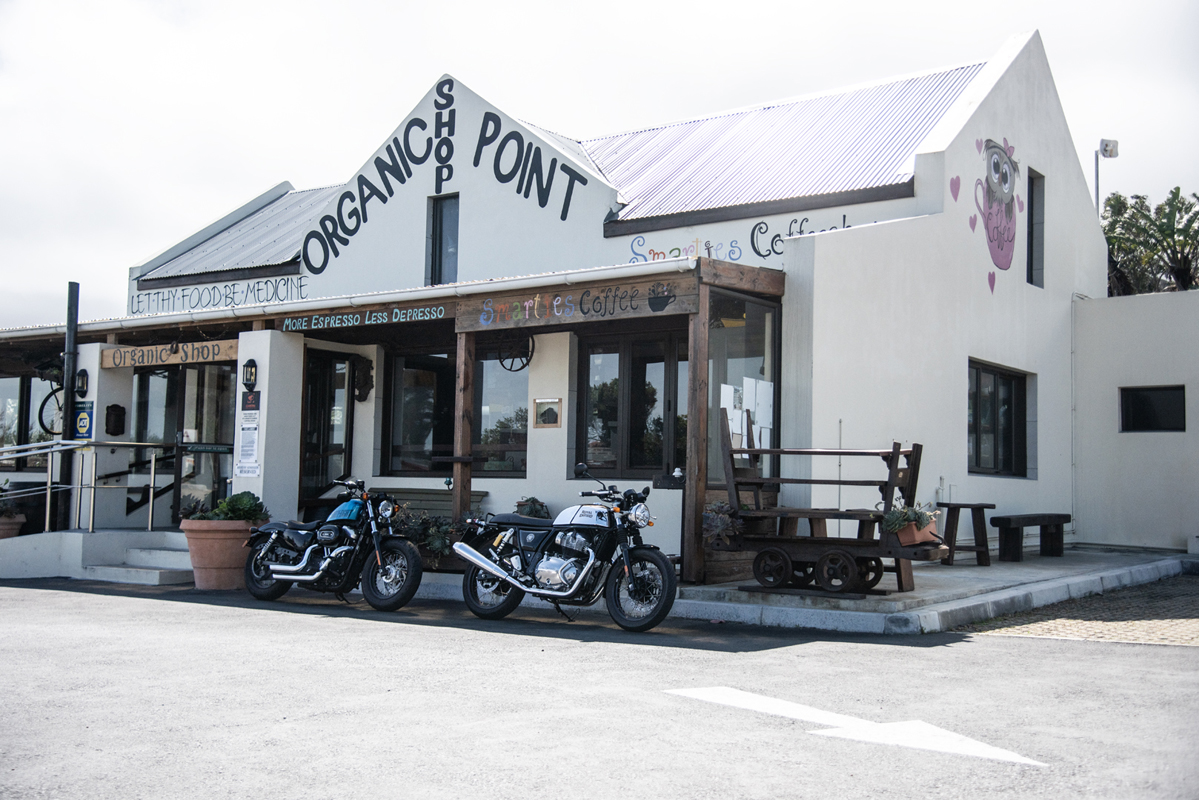
With Cape Town at my fingertips and my good mate Jean-Pierre on hand as a twisty-road tour guide on his trusty Harley-Davidson Sportster Forty-Eight, we set off from Woodstock, heading through Sea Point and Camps Bay before tackling Victoria Road, Hout Bay and Chapman’s Peak. Our return through Constantia and Newlands gave me around 120 km to explore the GT in town, along the coast and through the mountain passes, with a few well-earned coffee stops along the way.
A Stout With No Nonsense
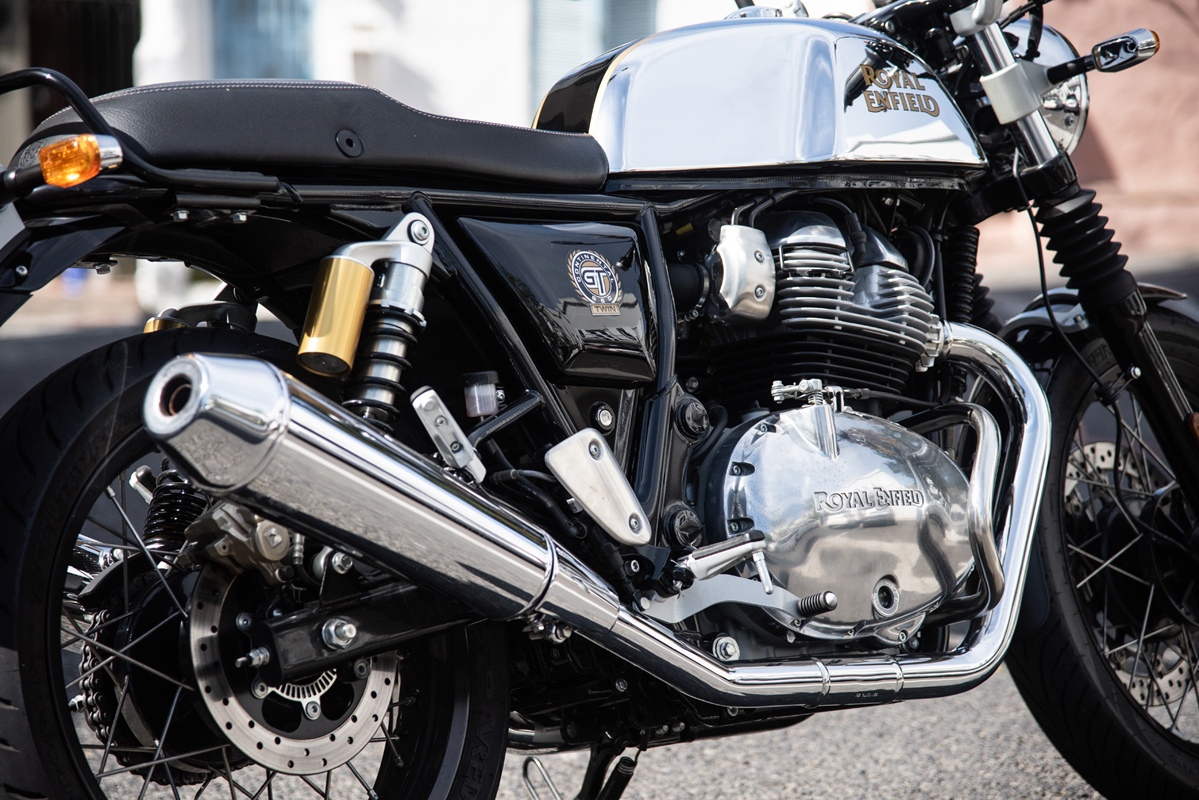
So, what makes the GT so special? For starters, it looks and feels beautifully archaic. Twin analogue instruments display the essentials, the fuel cap is chrome and key-operated, the rear suspension uses twin preload-adjustable shocks, and the engine sits proudly in the frame without a mountain of plastic hiding it. It’s a motorcycle with presence. There’s something reassuring about all that exposed metal and mechanical simplicity. If you walked around it in the dark and stubbed your toe, I suspect you’d come off considerably worse than the bike.
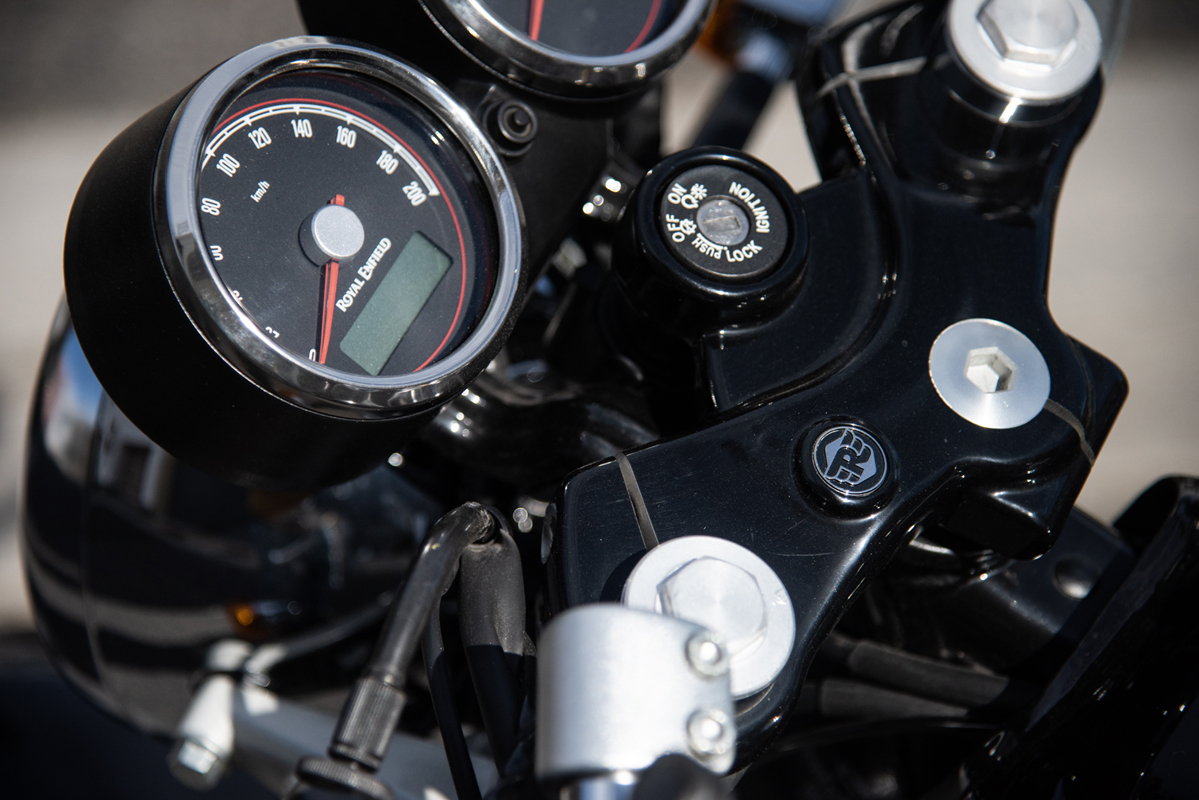
Of course, it isn’t completely stuck in the 1960s. There’s fuel injection, ABS and a six-speed gearbox, which is about the level of modern intervention a purist would want in a motorcycle like this. Give us the essentials, keep the character and let us get on with riding.
The 648 cc parallel twin produces around 50 hp and 52 Nm of torque, but the figures don’t tell the whole story. If motorcycles were drinks, this one wouldn’t be an IPA or a trendy craft beer. It would be a traditional stout. There’s a meaty growl low down, a satisfying pulse through the rev range and a smooth delivery that encourages you to savour the ride rather than chase the rev limiter.
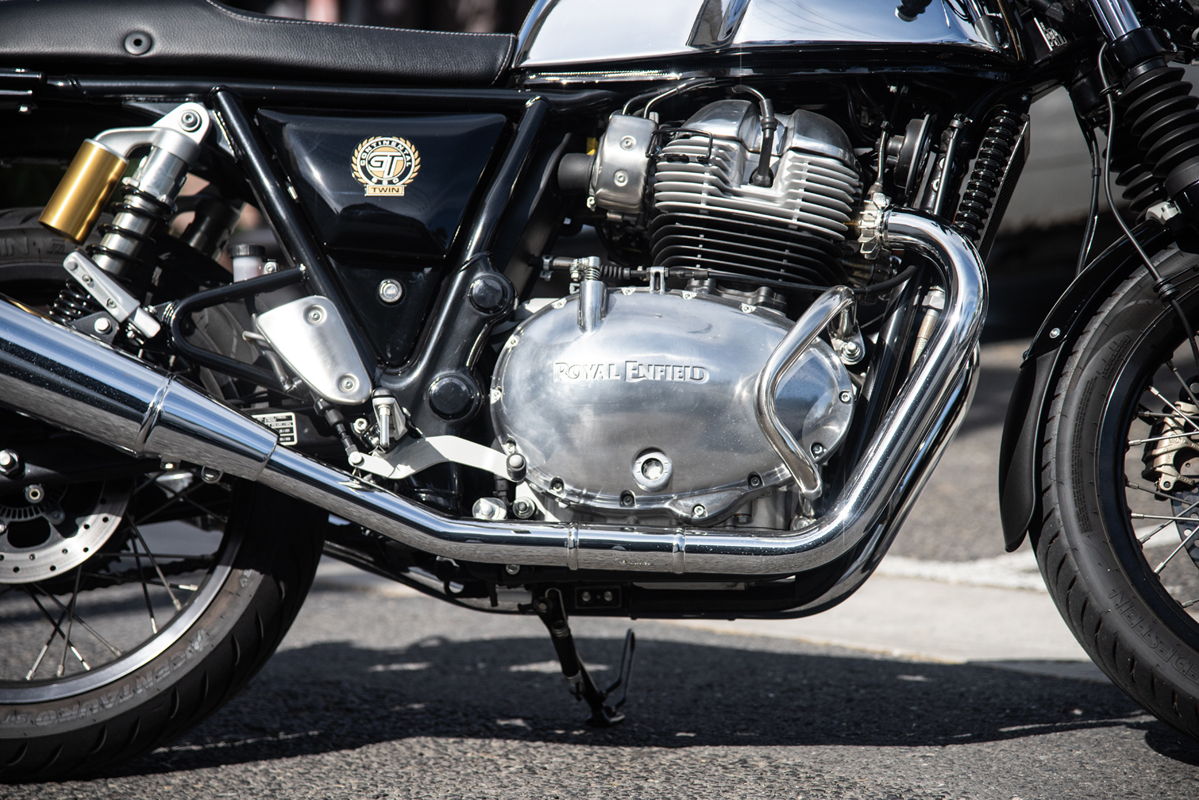
It has enough performance for the city, coastal roads and mountain passes without demanding that you ride like you’re trying to qualify for a race. In fact, I spent most of my time short-shifting happily around 3,500 RPM, which surprised me because peak torque kicks in at around 5,150 and peak horsepower at 7,150 RPM. The handling is engaging, the suspension dealt well with the rougher patches of tarmac we encountered, and the riding position struck a pleasing balance between sporting intent and real-world usability. Those clip-on handlebars look committed, but the overall package proved more accommodating than I’d expected.
Again, the rims are up for debate. I personally like the spokes for that authentic 60s look, but I must say the alloys look great too, are slightly lighter and are easier to clean and maintain. “Tomato, tomahto”, you decide, but for me, on Mr Clean, it has to be the spokes.
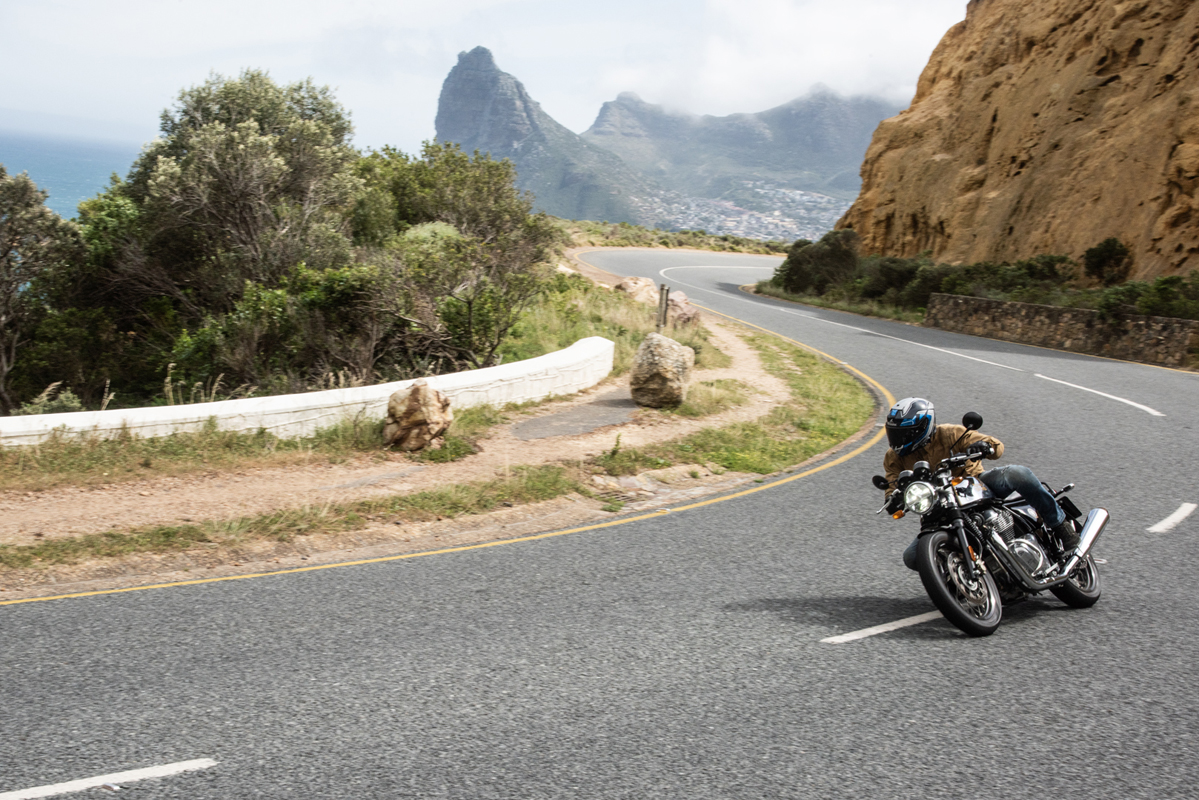
One of the GT’s biggest strengths is that it doesn’t need a shopping list of upgrades to feel like a complete motorcycle. Royal Enfield offers a selection of tasteful accessories, while the international aftermarket scene caters for owners who want to take things further, from full fairing kits and exhaust systems to more involved engine modifications. The possibilities are extensive, but the beauty of the GT is that you can leave it standard and enjoy it just as much. For the money, at R129,700 (for the base model), it delivers a lot of motorcycle without needing to be transformed into something special.
Royal Enfield’s history adds another layer to its appeal. The company partnered with Madras Motors in India in 1955, initially assembling Bullet 350s under licence. Production continued in India after the British operation closed in the early 1970s, and Eicher’s acquisition of Enfield India in the 1990s helped lay the foundations for the global brand we know today.
While many manufacturers chase ever-higher performance figures and increasingly complex machinery, Royal Enfield has found its place by offering motorcycles with character at accessible prices. The Continental GT 650 sits towards the premium end of the Royal Enfield range, but remains an attainable way into the Café Racer world without starting a build from scratch or buying a brand new European alternative.
And that brings me back to Dave’s argument. Perhaps we’ve spent too much time looking at what motorcycles can do, rather than what they make us feel. There’s nothing wrong with technological progress, but after some seat time on the Conti, I found myself agreeing with something Dave has been saying for years.
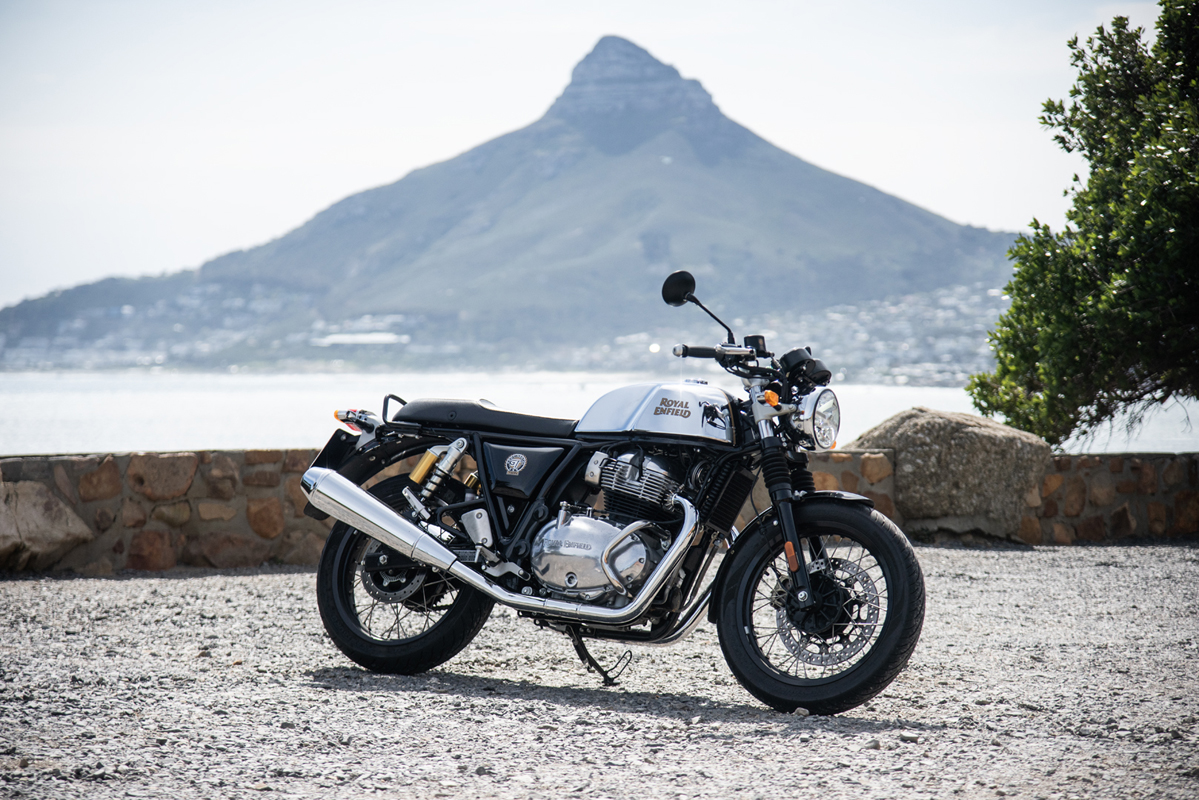
If it were up to me and my personal opinion, a traditional Café Racer should look the part, deliver an engaging ride and make you want to take the long way home. On all three counts, the Continental GT 650 gets it right. So, for the most part, was it worth finally meeting one of my Café Racer heroes? Absolutely. The Continental GT and Cape Town make a cracking combination, and I came away understanding the appeal of Royal Enfield a little better. Sometimes, the best ride is the one that makes you forget about everything else for a while.
Royal Enfield Continental GT 650
For more information on the bike featured in this article, click on the link below…