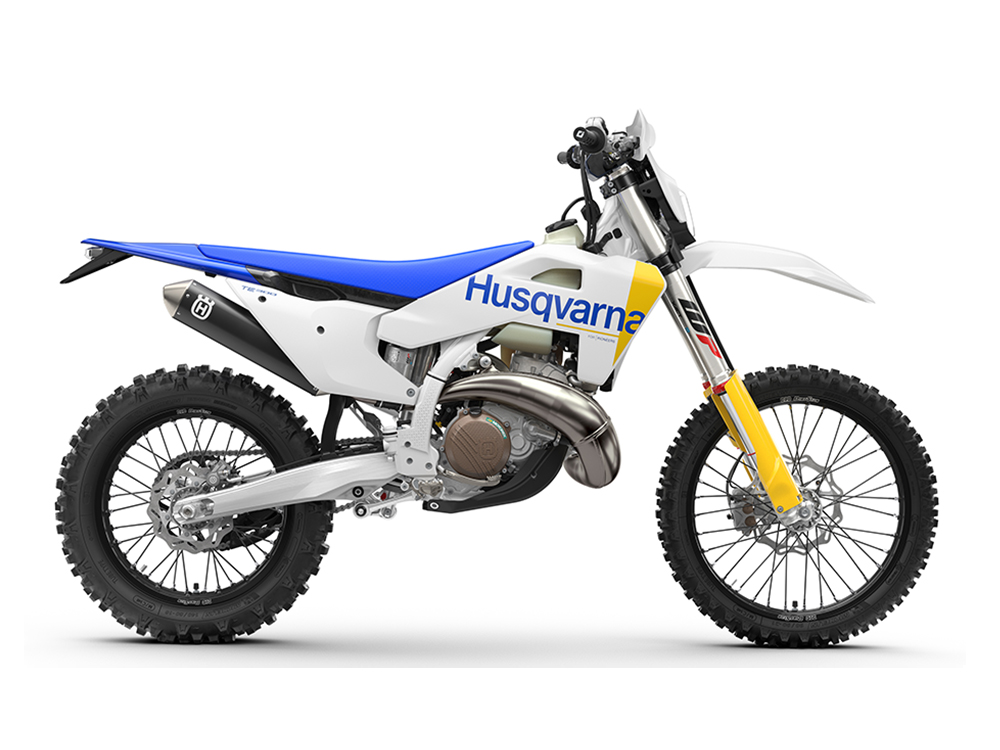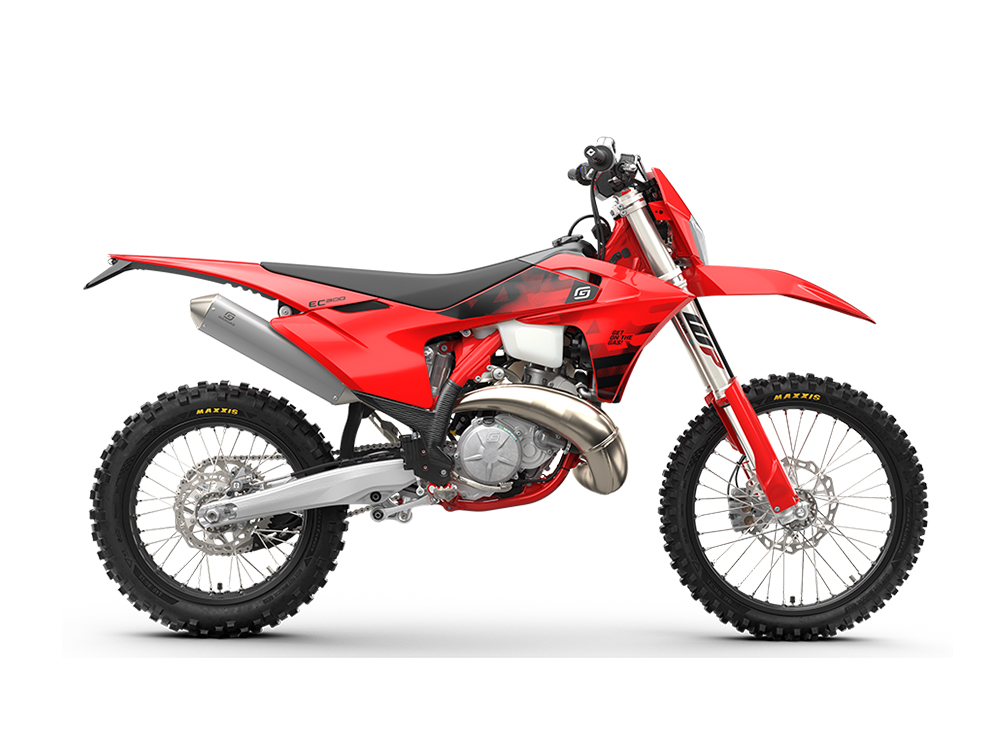



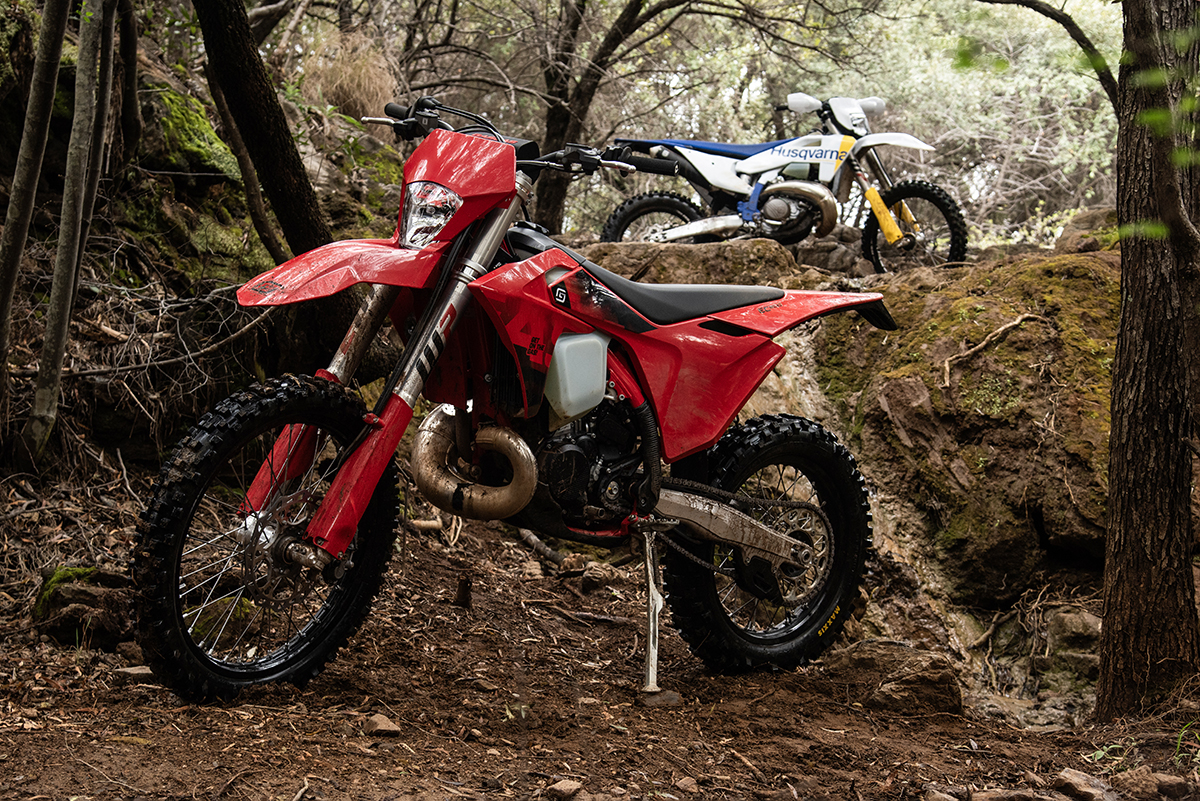
September and October have been big months for enduro, with the Roof of Africa, Sea to Sky and the FIM 6DAYS Enduro putting the sport firmly in the spotlight. Amid all the action, we got to swing a leg over two of the latest 300 cc two-stroke enduro machines from the Austrian stable. Not the KTM 300 XC-W HARDENDURO or Husqvarna TE 300 Pro, but the bread and butter of the range, the 2027 GASGAS EC 300 and Husqvarna TE 300.
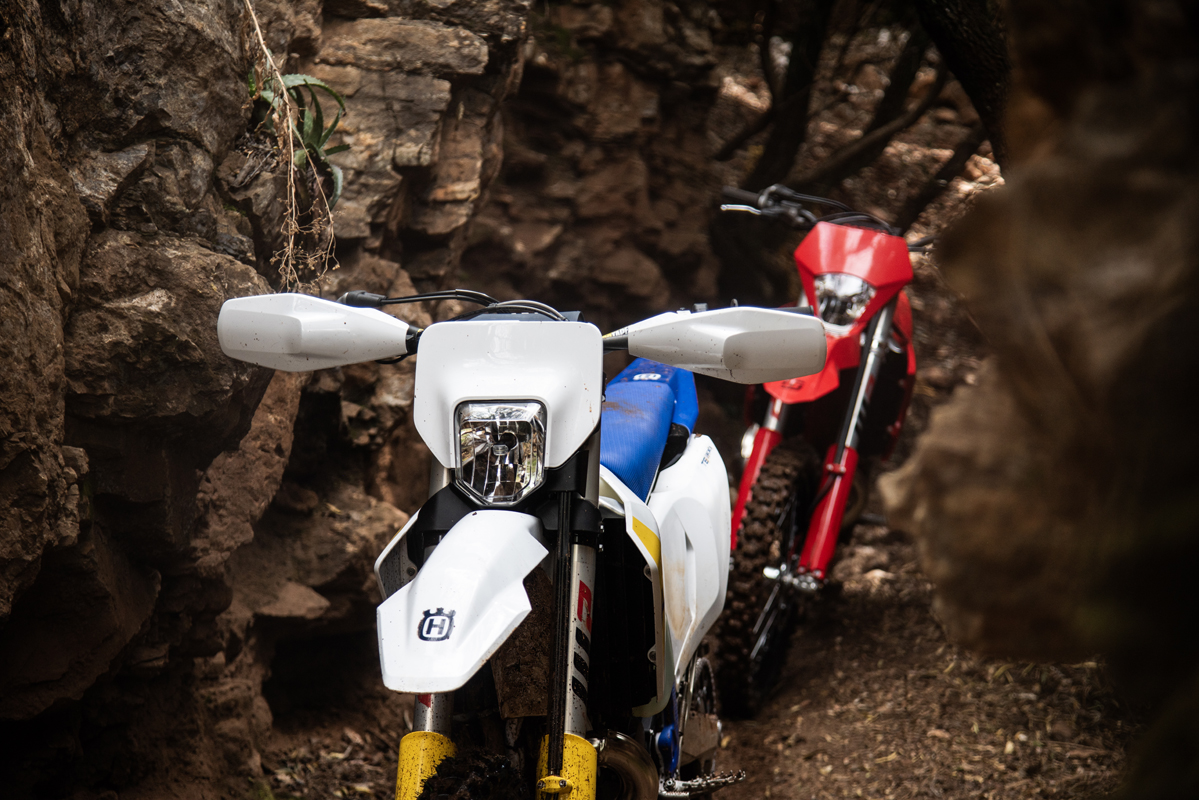
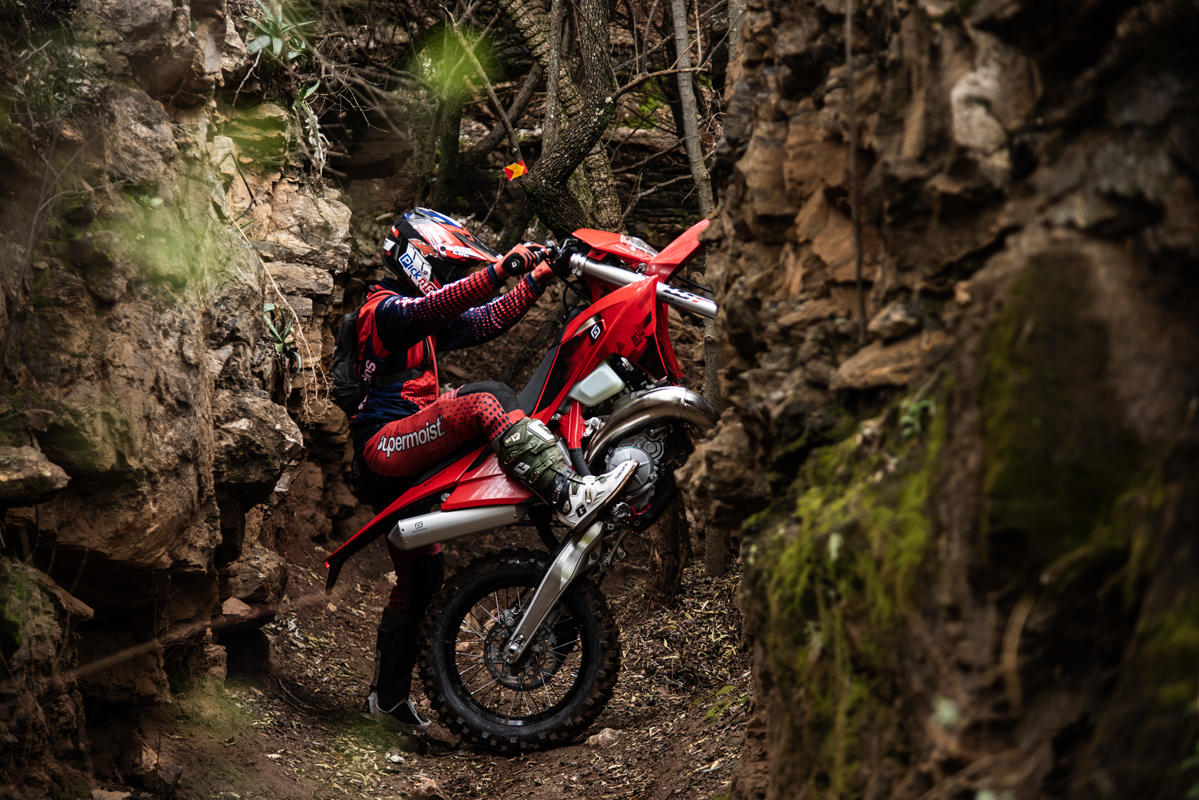
When I say brand new, I mean brand new. Heinrich Aust and I loaded the bikes into the van and headed to Wild West Enduro Park, in the hills and valleys around Hartbeespoort, for a day on the trails. I brought my enthusiasm and decidedly amateur enduro skills, while Heinrich brought the experience, having competed against some of the best in the business, including a near top-ten Gold finish at this year’s Roof of Africa and a battle against the best at Sea to Sky in Turkey. It made for an interesting pairing, with two very different perspectives on the same bikes.
Same Family, Different Flavour
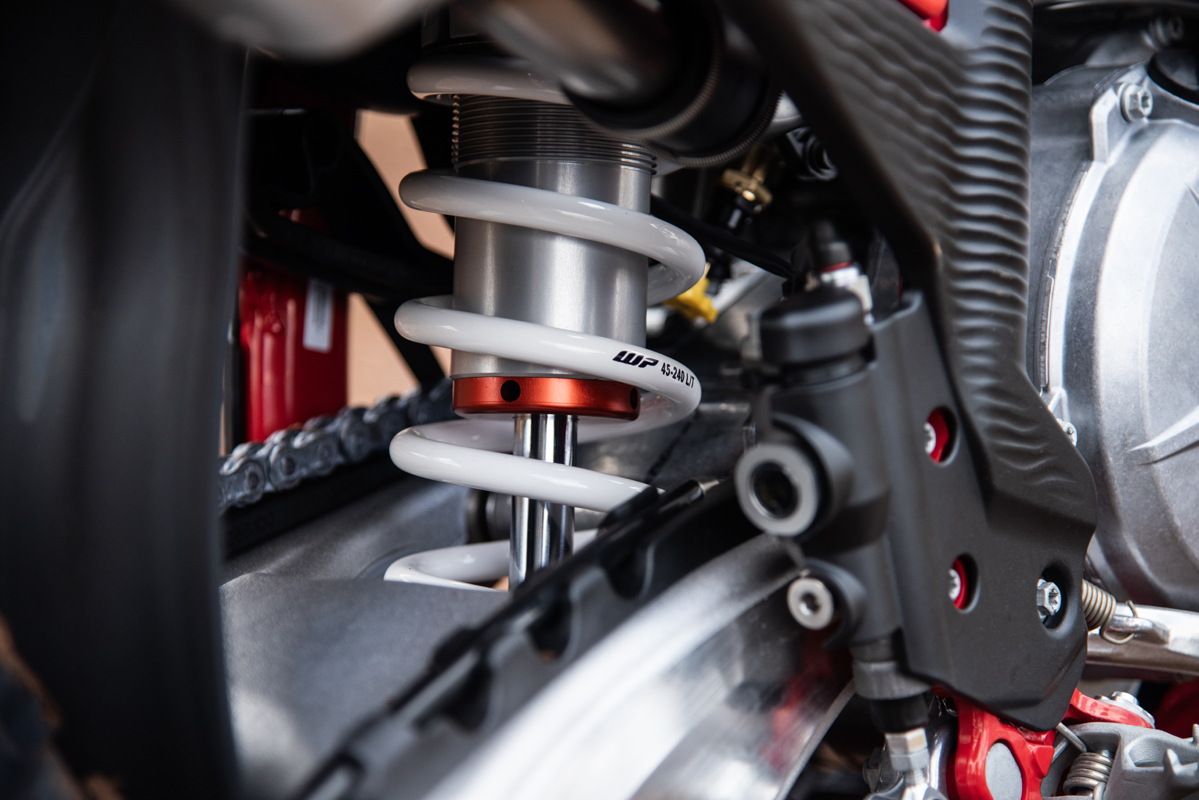
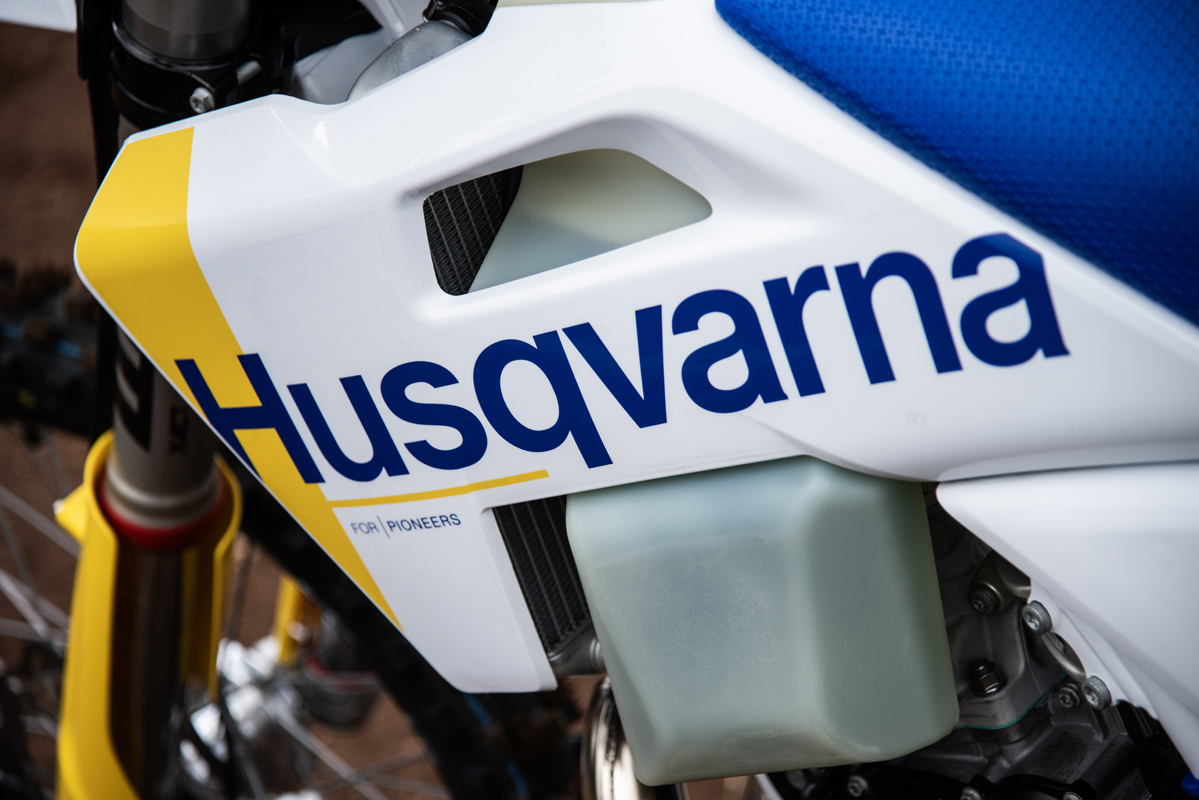
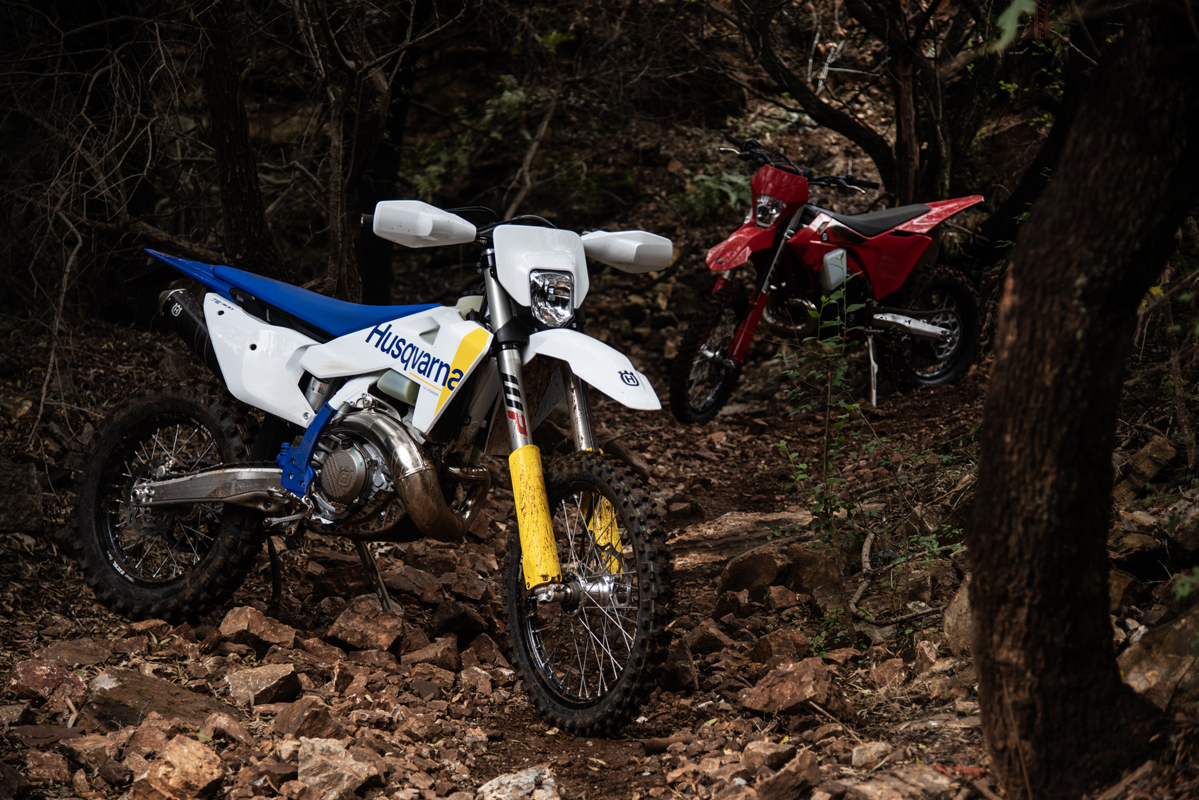
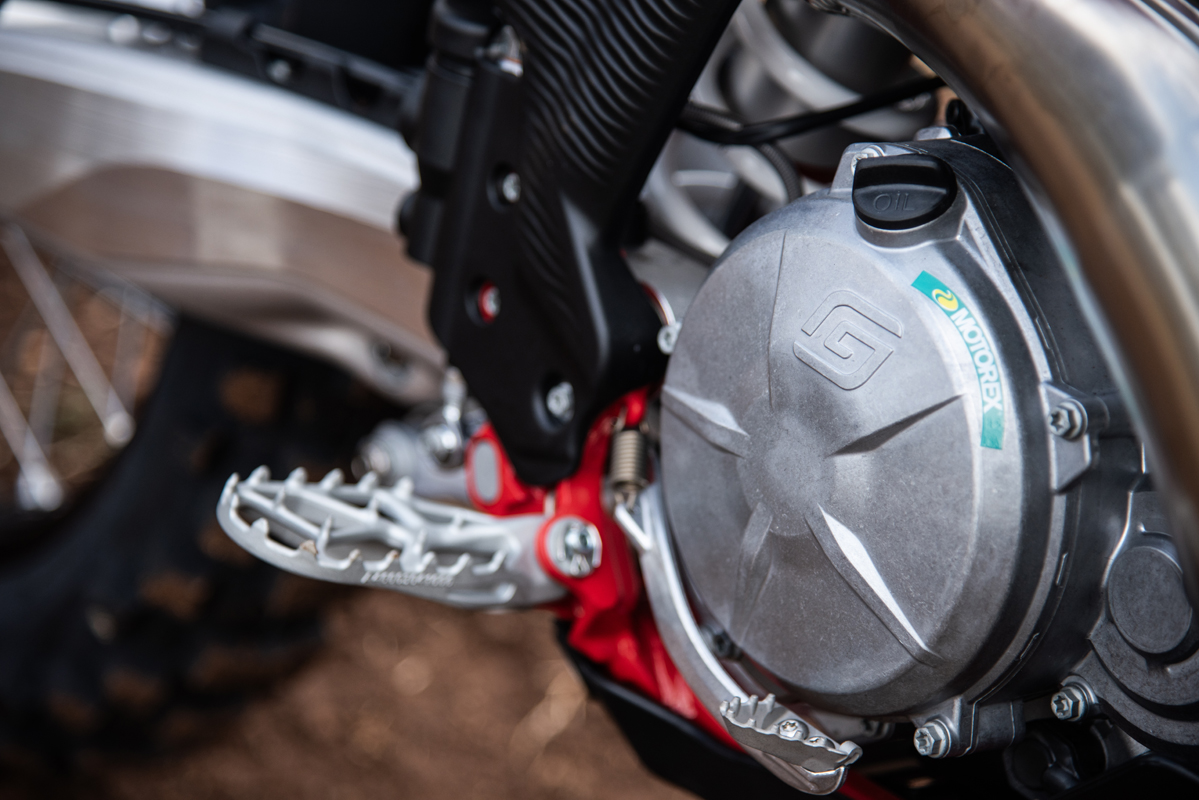
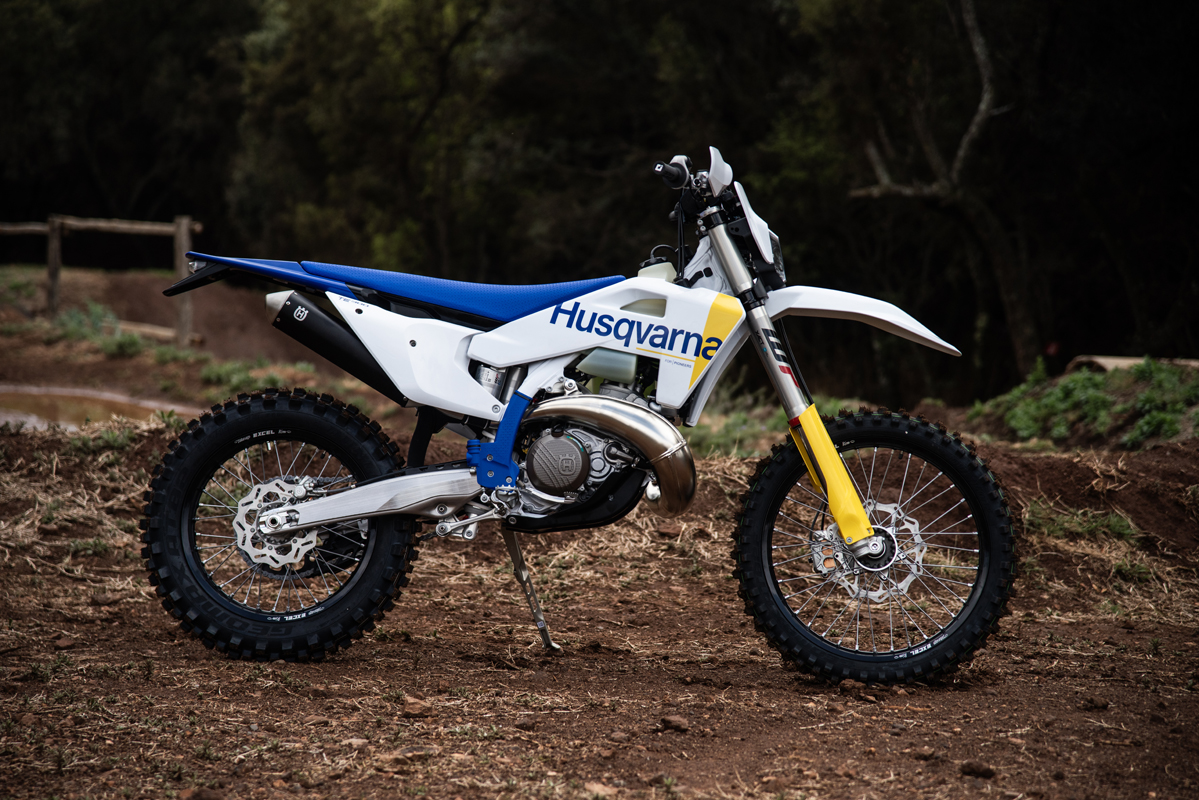
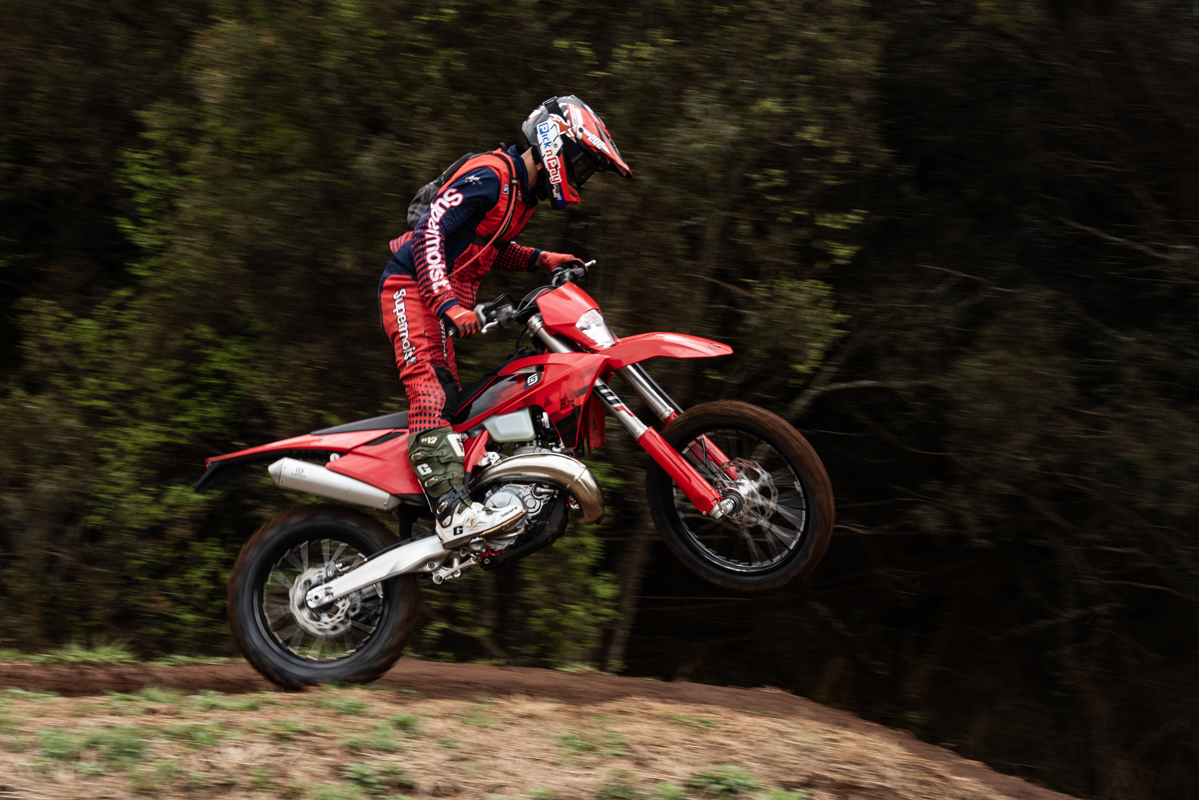
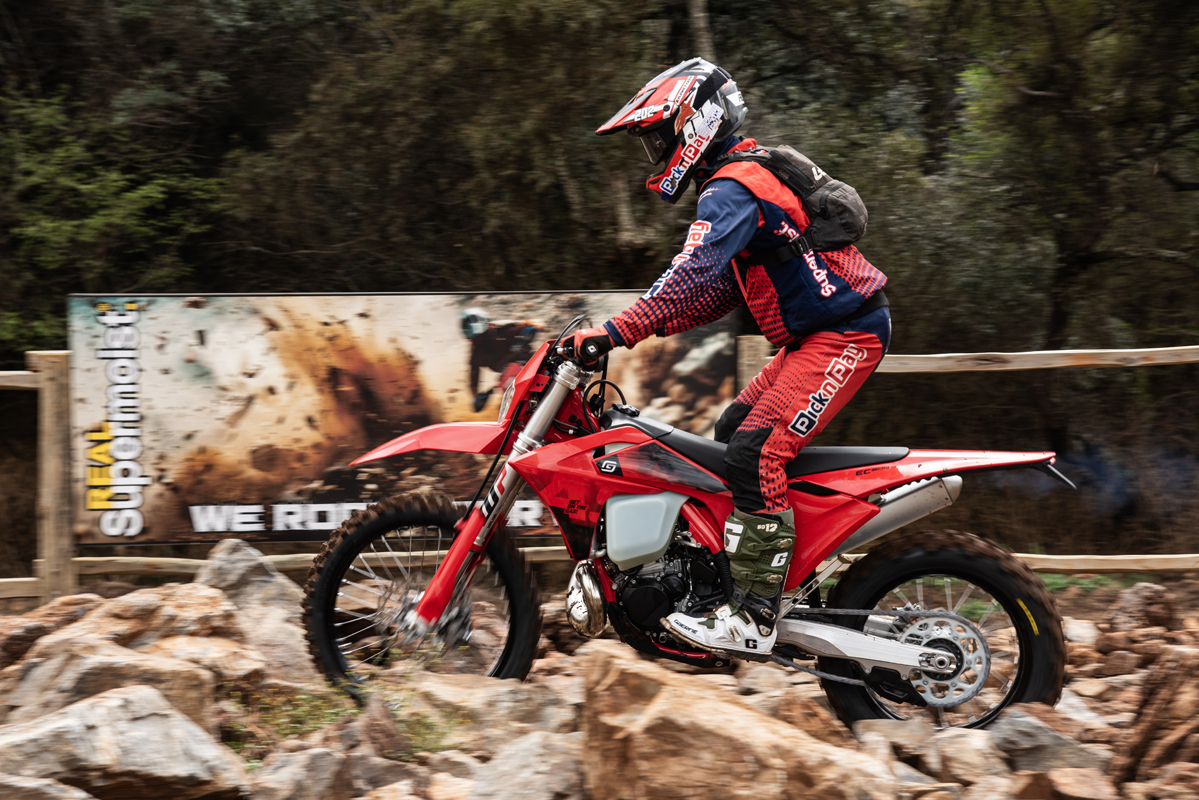
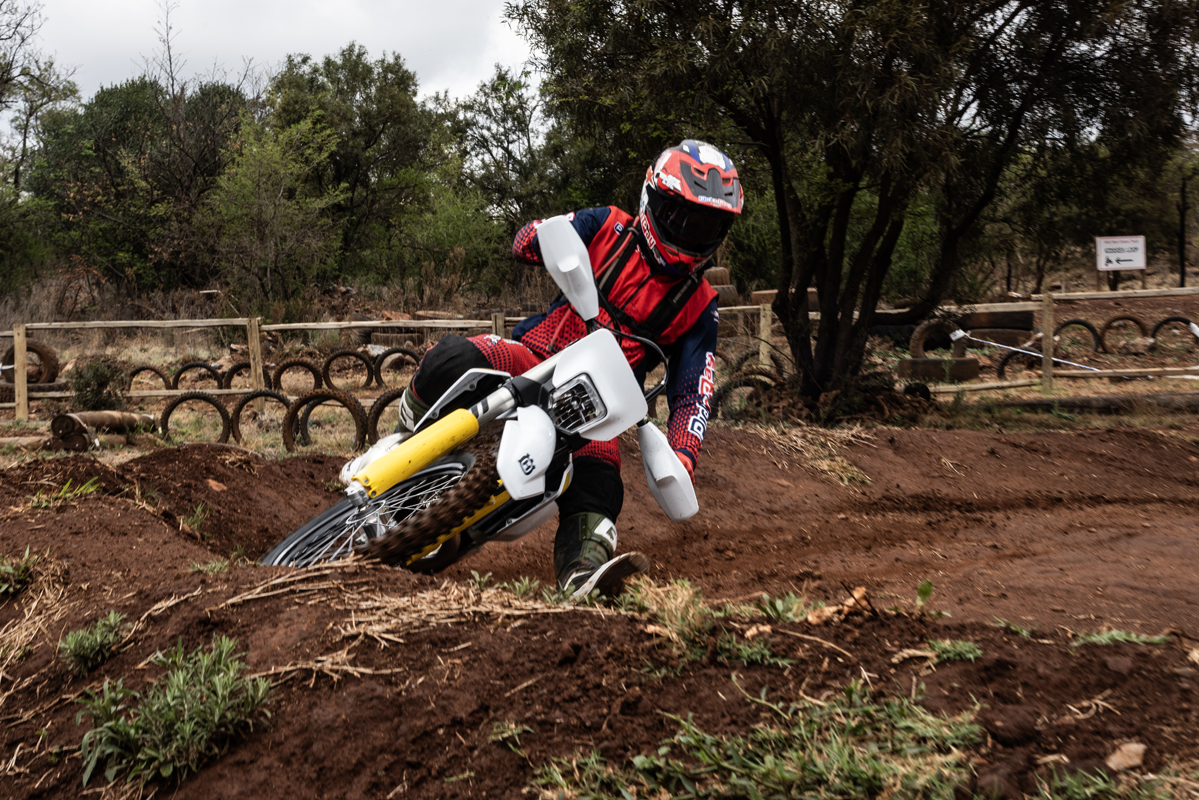
At first glance, the Husqvarna is the one that grabs your attention. Its new colour scheme gives it a factory-racer look, while the GASGAS retains more of the familiar red identity we have come to know. Look beyond the paintwork, though, and you’ll find plenty of shared DNA. Both use a liquid-cooled, 293.2 cc two-stroke engine with throttle-body injection, paired with a six-speed gearbox. Both also run WP XPLOR suspension with rear linkage, but the similarities only tell half the story.
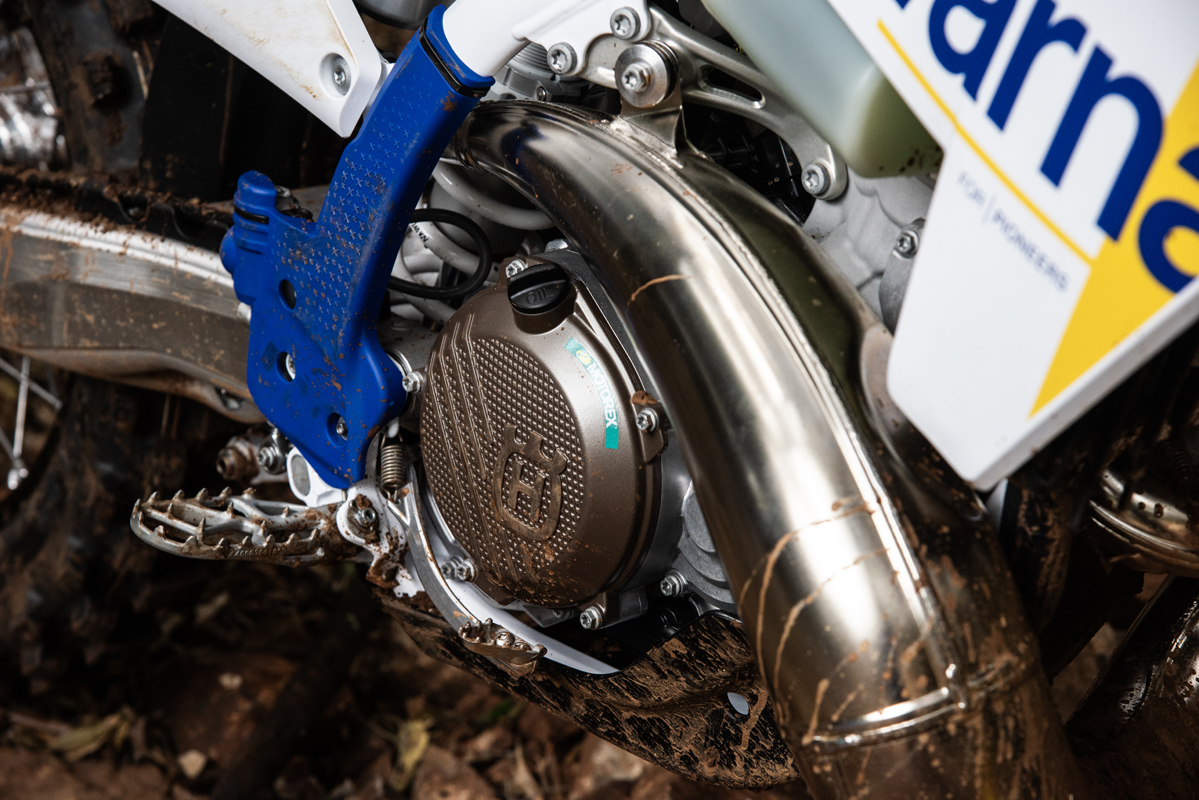
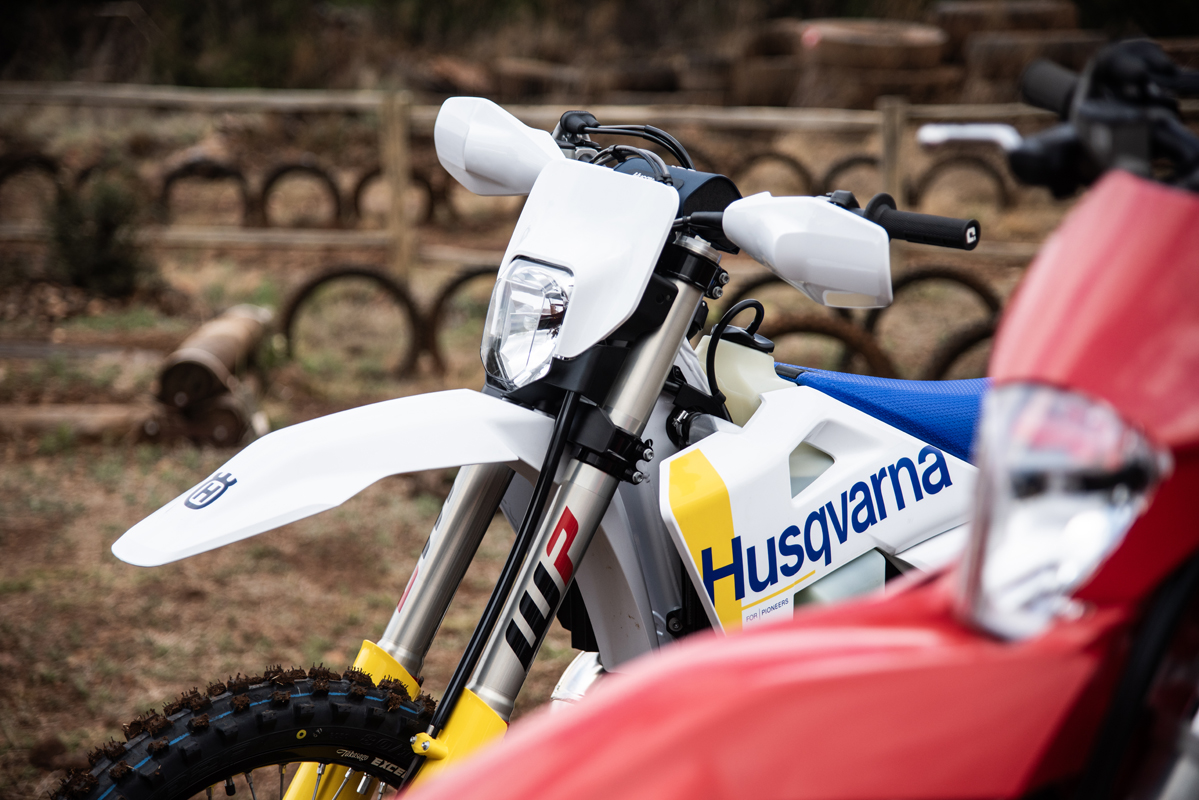
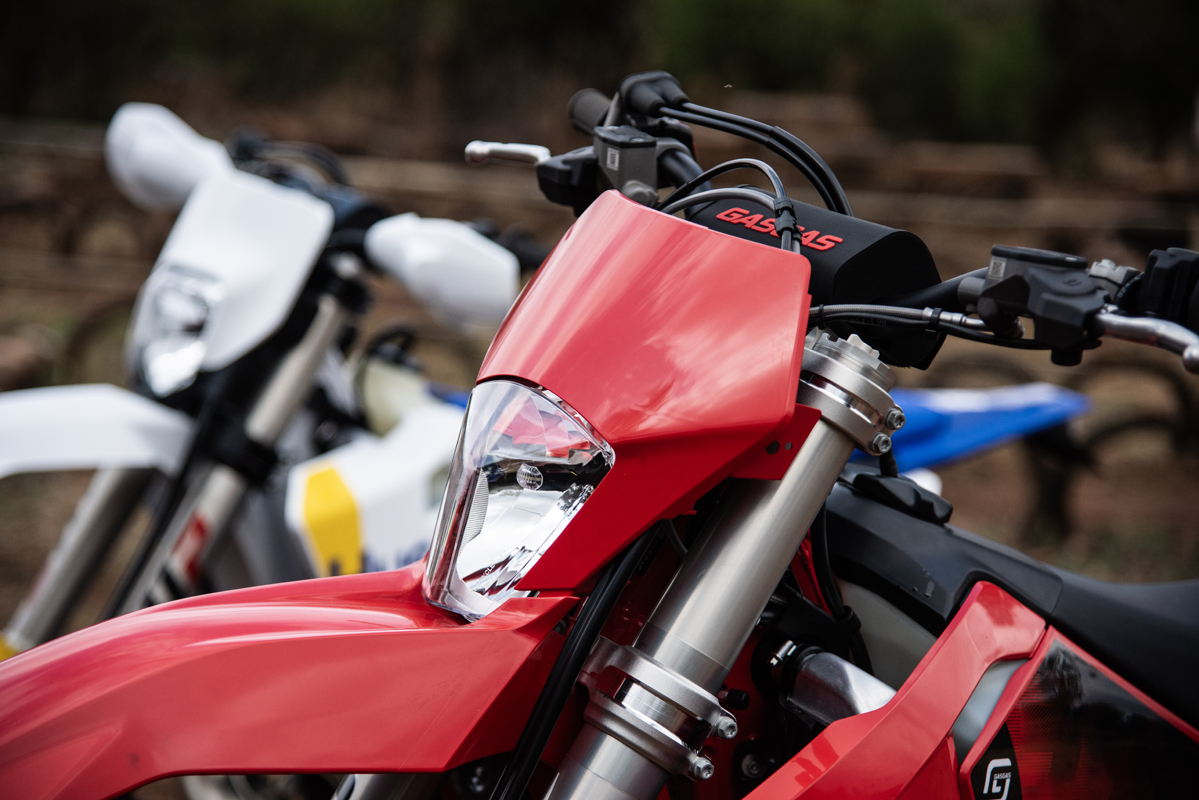
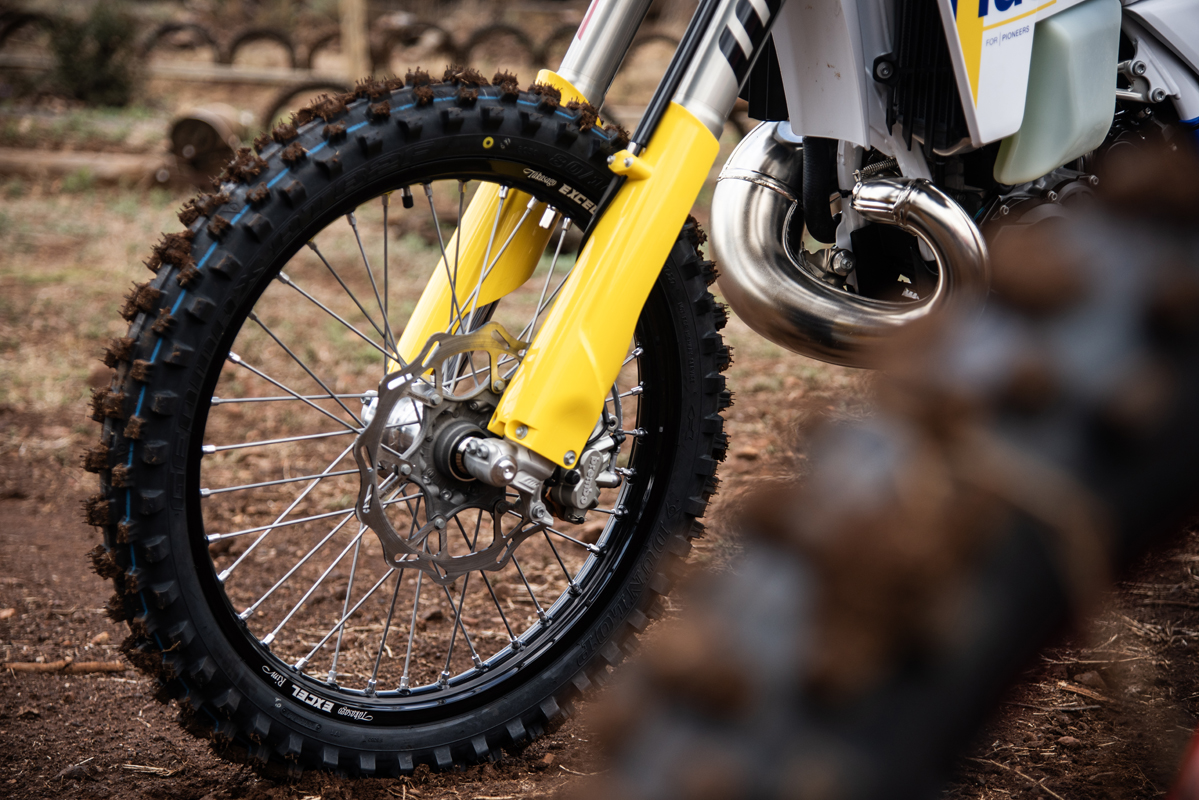
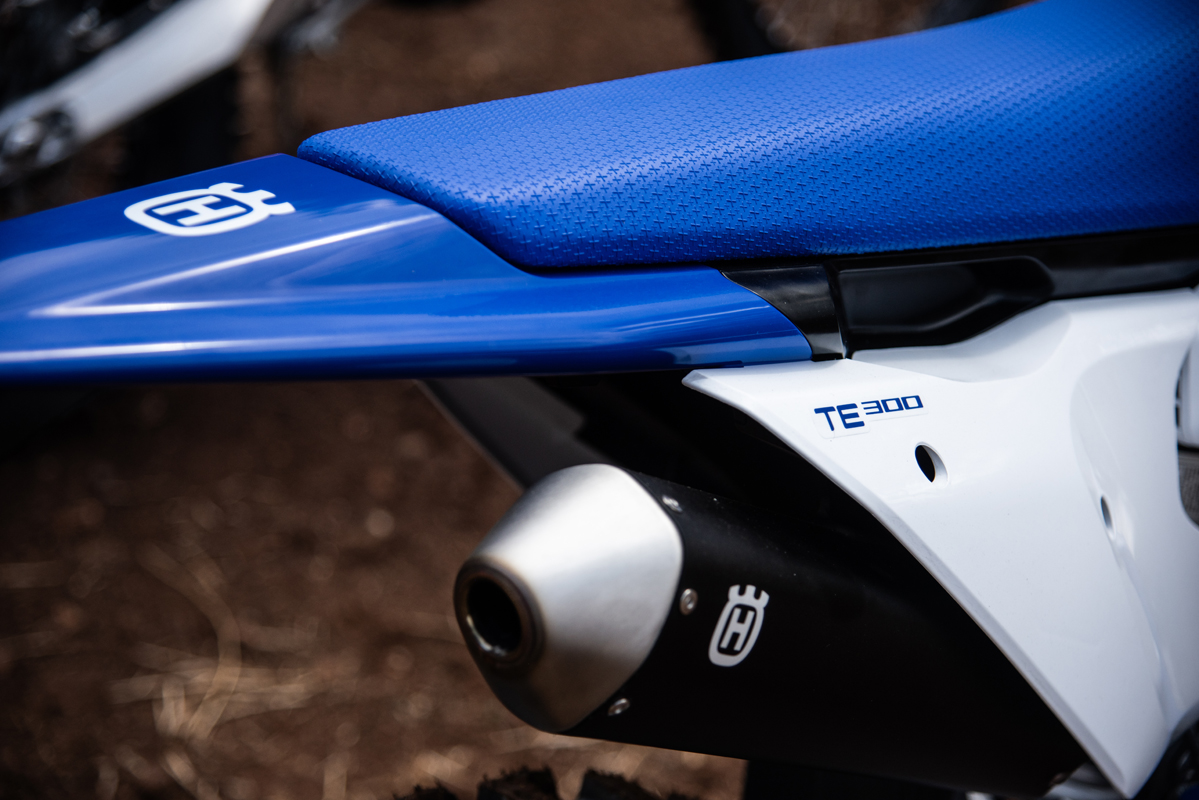
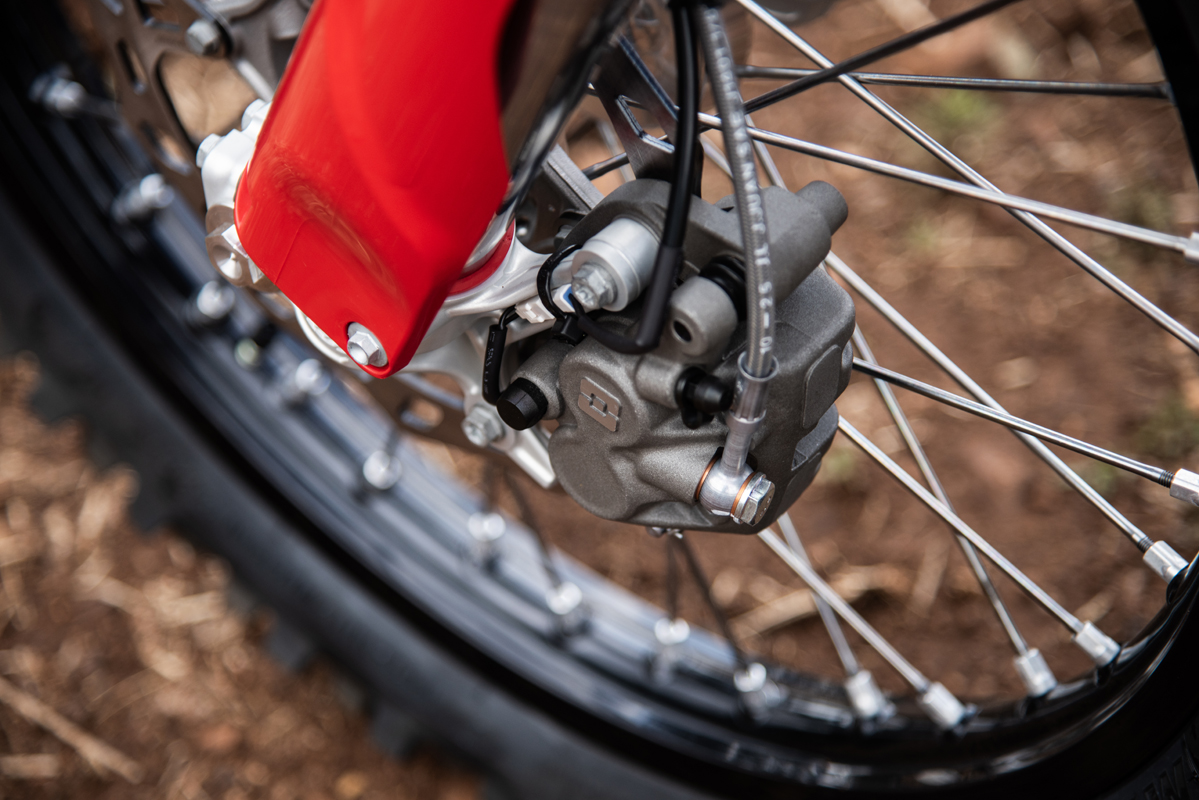
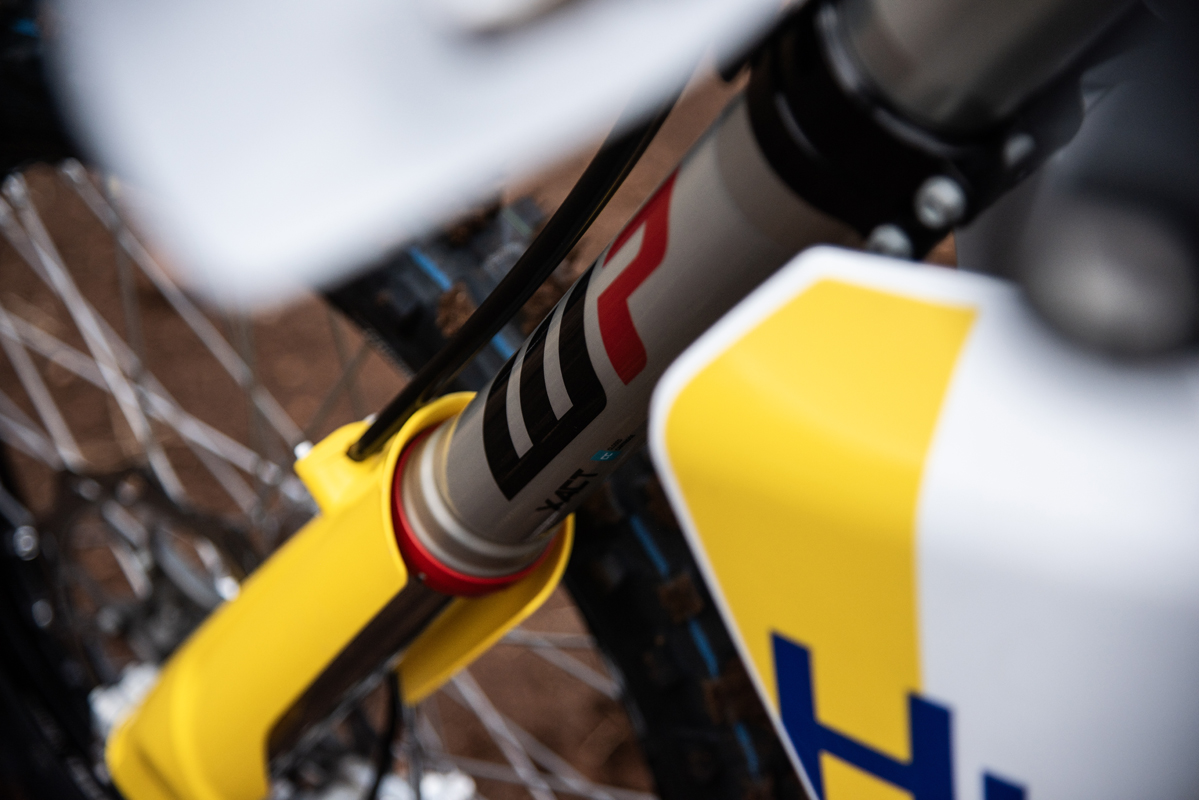
The most notable difference is up front, where the GASGAS uses a WP XPLOR open-cartridge fork, while the Husqvarna gets a closed-cartridge setup. Their subframes differ, too. The red bike uses a conventional aluminium construction, while the Husqvarna’s hybrid subframe combines 60% polyamide with 40% aluminium. Brake callipers, brake master cylinder and clutch master cylinder hardware follow a similar divide, with BRAKTEC components on the GASGAS and Brembo equipment on the Husqvarna.
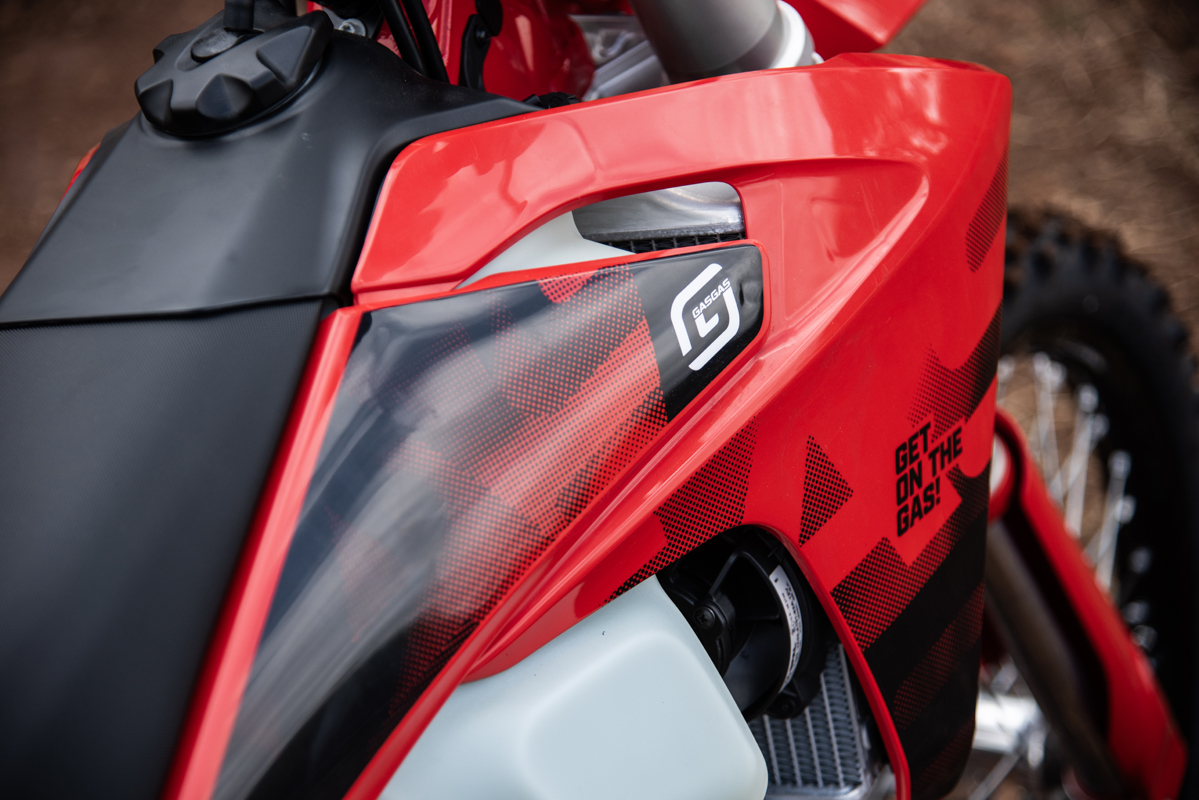
We also see both bikes have their own wheel and tyre combinations, handlebars and switchgear, while the Husqvarna arrives with handguards and a bash slide plate as standard. The GASGAS counters with a slightly larger 9-litre fuel tank, compared with the Husqvarna’s 8.5 litres, a radiator fan and greater claimed ground clearance of 354 mm against the TE 300’s 343 mm.
So, while the two bikes share their foundations, each has been given its own flavour through a different mix of components and equipment. The real question is how much of that translates into the riding experience.
Heinrich was immediately impressed by the changes, particularly the Husqvarna’s appearance and the way both bikes felt on the trail. He reckoned the power delivery had improved, with a sharper throttle response and a more progressive build-up of power than he remembered from previous models. The suspension and chassis balance also stood out, especially on descents and off-camber sections where a planted feeling can make all the difference.
He described the Husqvarna as a Rolls-Royce and the GASGAS as a Ferrari. The former feels more plush and composed, while the latter is a little firmer and more eager to play. That doesn’t mean the Husqvarna can’t be ridden hard, nor that the GASGAS is uncomfortable. They simply have different personalities.
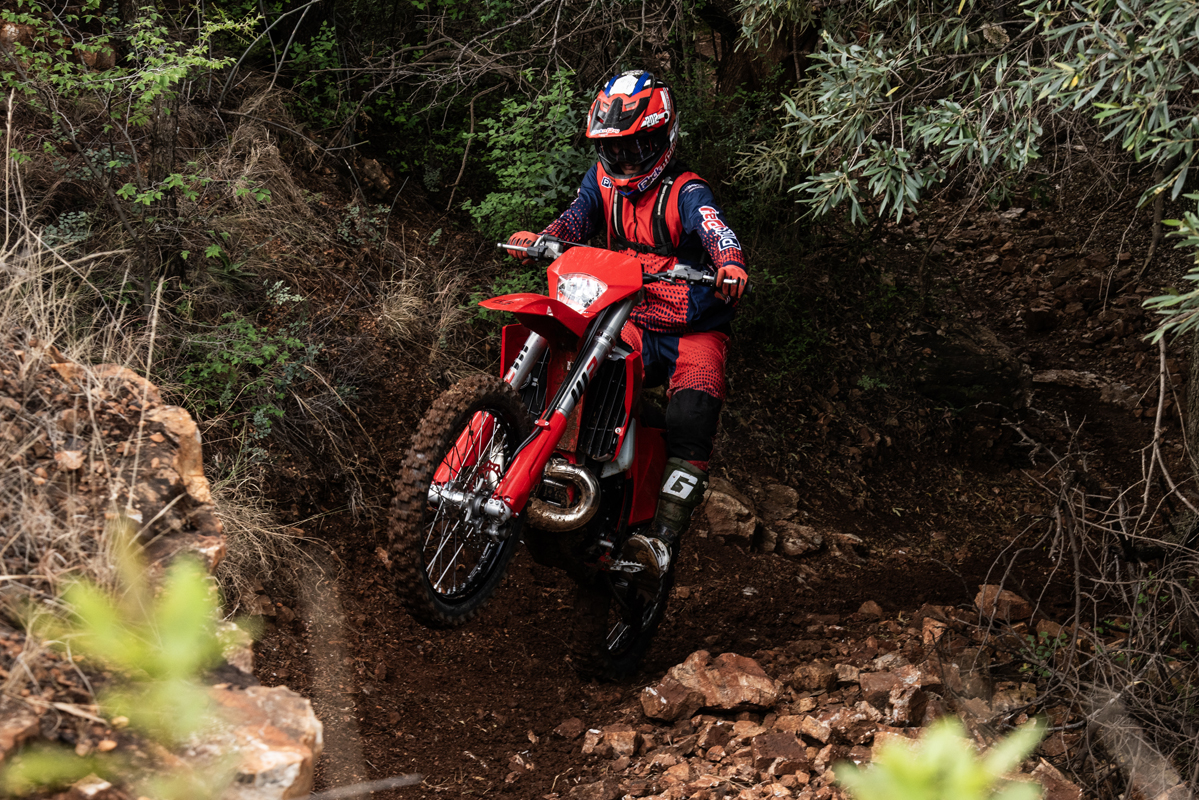
I’m certainly no enduro pro. In fact, I tend to approach enduro as a social ride rather than a full day of sweating, swearing and questioning my life choices. Jokes aside, when you’re still learning, every obstacle presents a challenge. The easier a bike is to ride, and the more it works with you rather than against you, the more enjoyable the day becomes.
I love a purist machine as much as the next enthusiast, but enduro isn’t a sprint. You can spend hours on the bike, and I want smooth throttle response, forgiving suspension, a predictable chassis and plenty of feel through the brakes and throttle. Anything that helps me conserve energy and stay in control is a bonus.
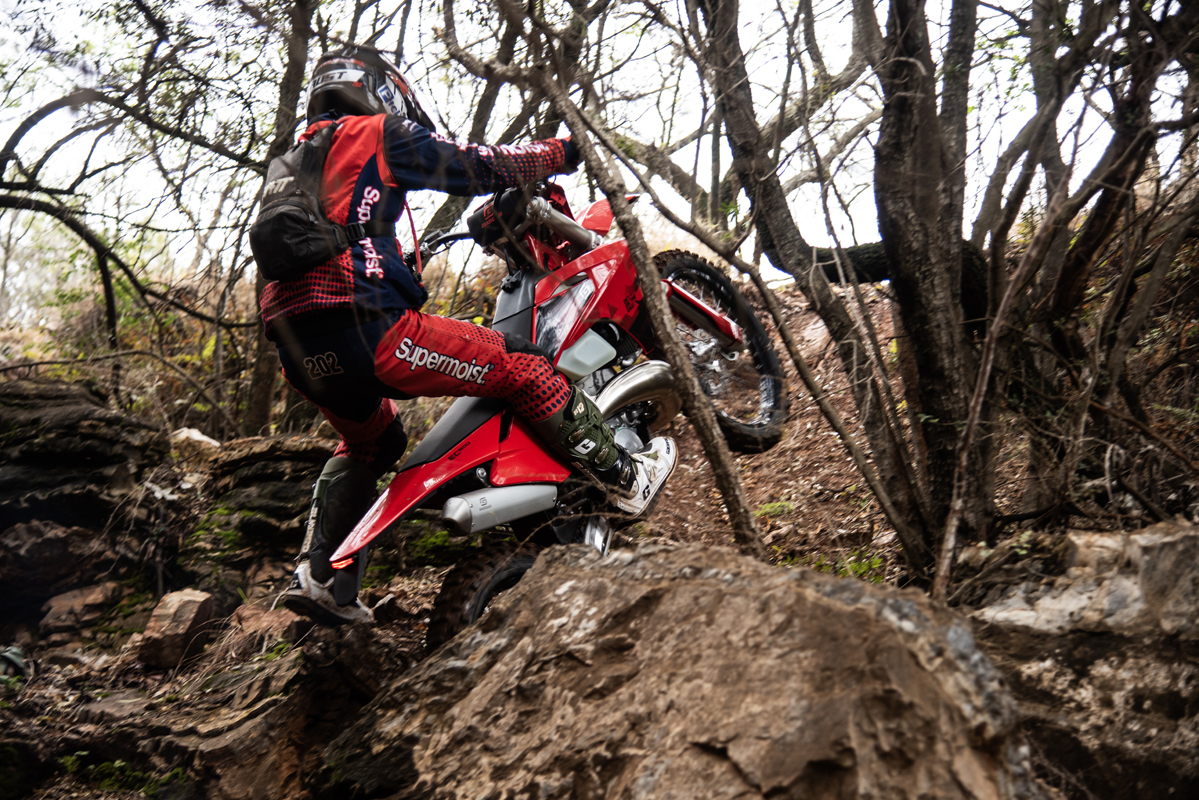
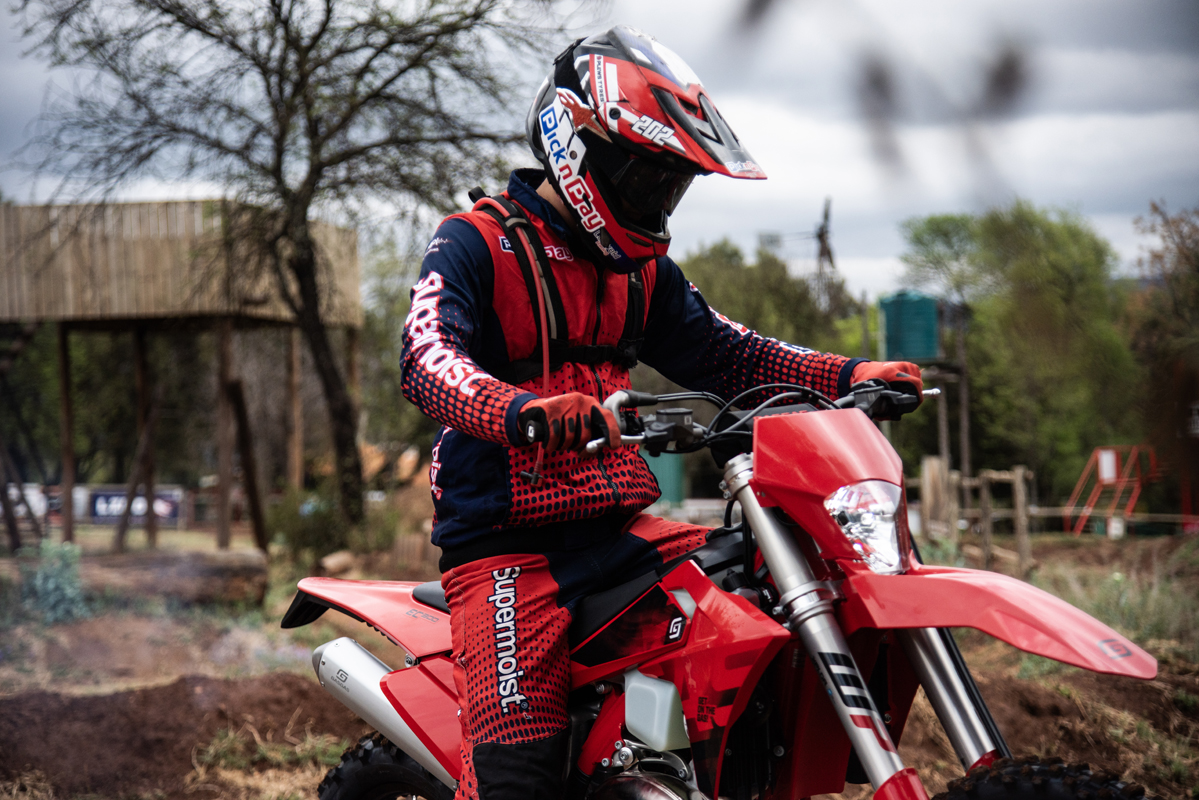
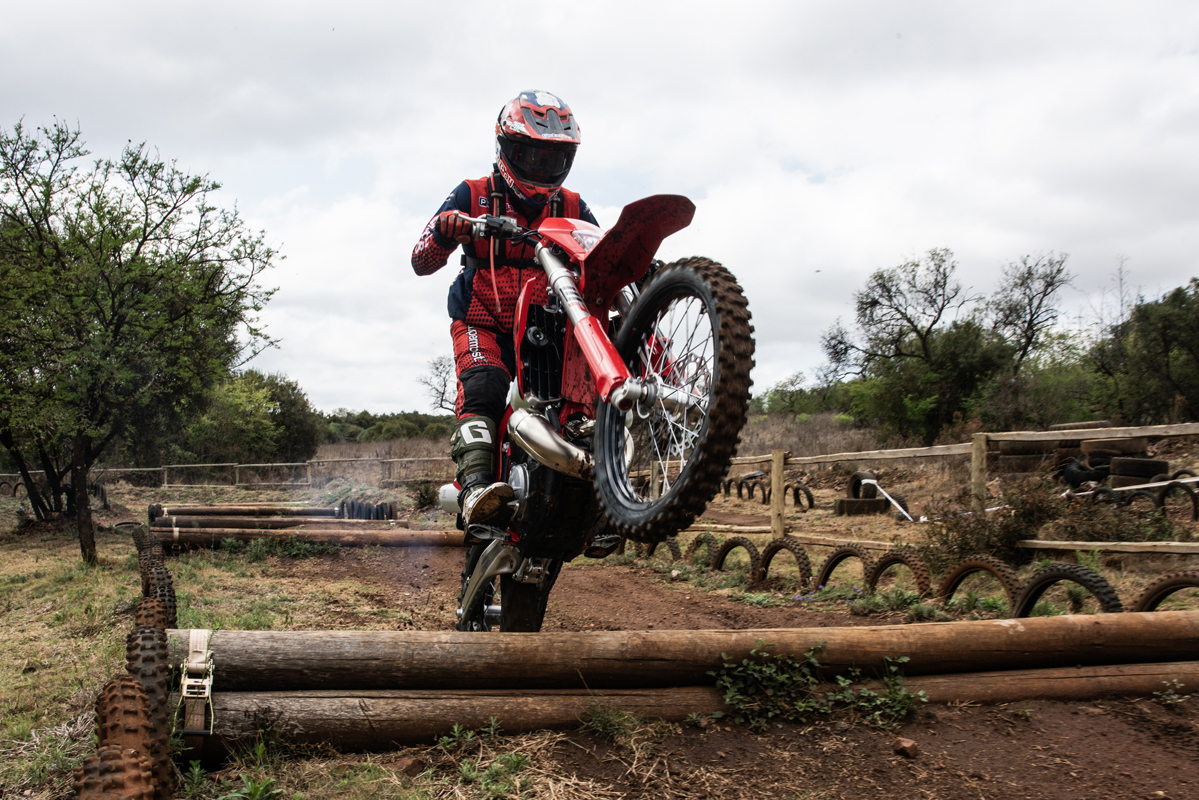
The GASGAS feels light, agile and playful. Its more aggressive throttle response makes it feel lively, and you can carry a taller gear while feeding in little bursts of throttle as you pick your way along the trail. It’s the sort of bike that encourages you to have fun.
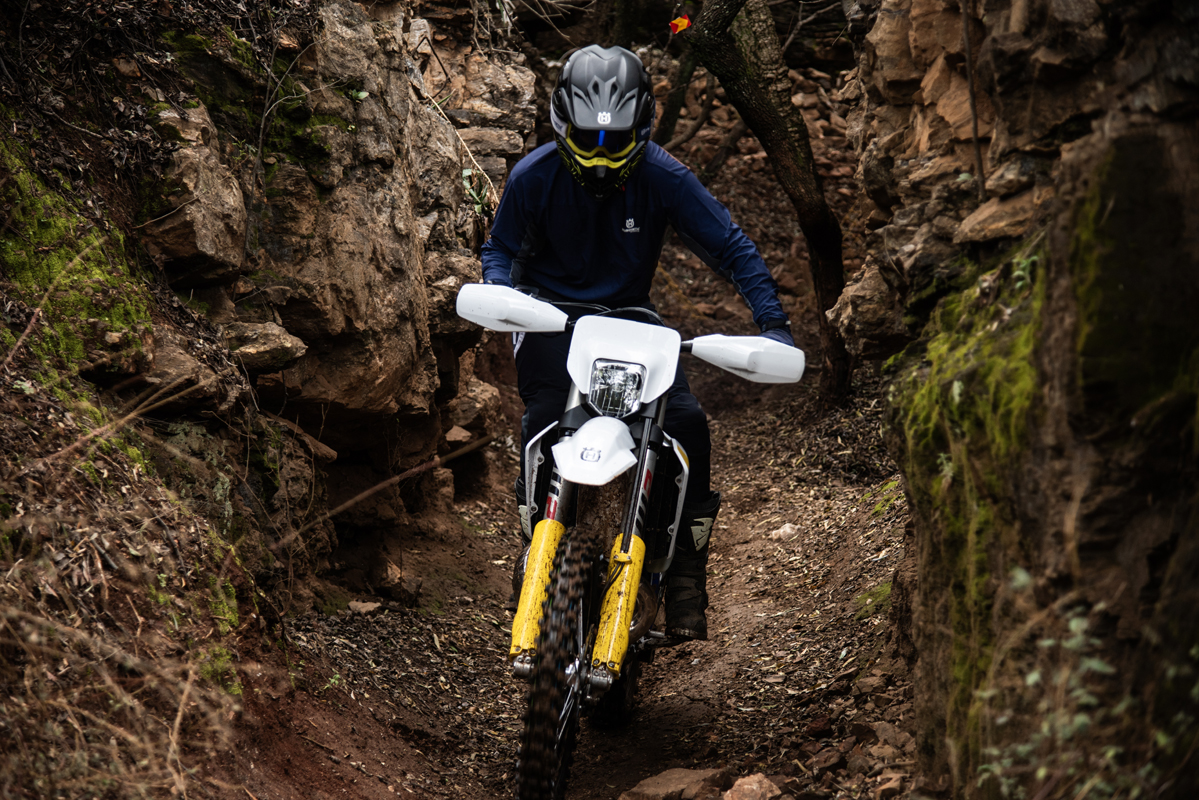
The Husqvarna, however, left me feeling rather spoilt. For my slower, more cautious riding style, the suspension, throttle, clutch and brakes seemed to work together more naturally. The bike felt forgiving, allowing me to concentrate on the terrain ahead rather than constantly thinking about how I was operating the controls.
On the Trail
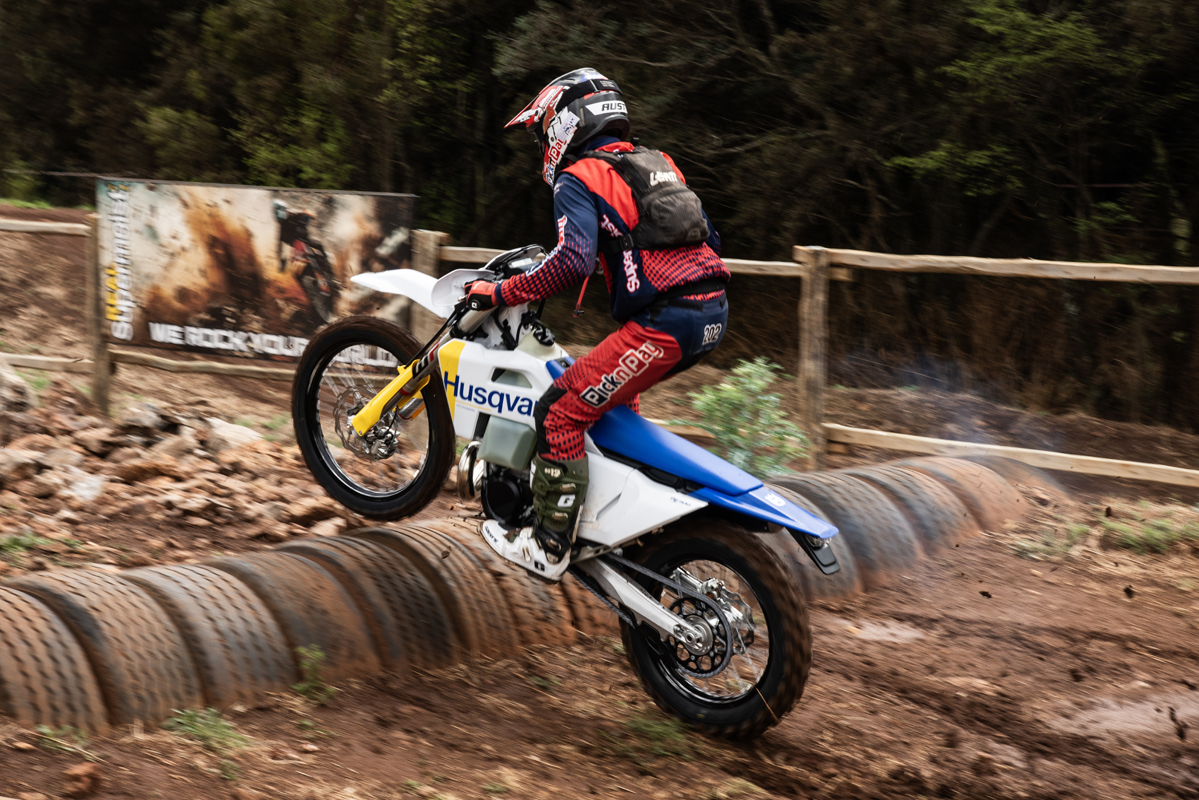
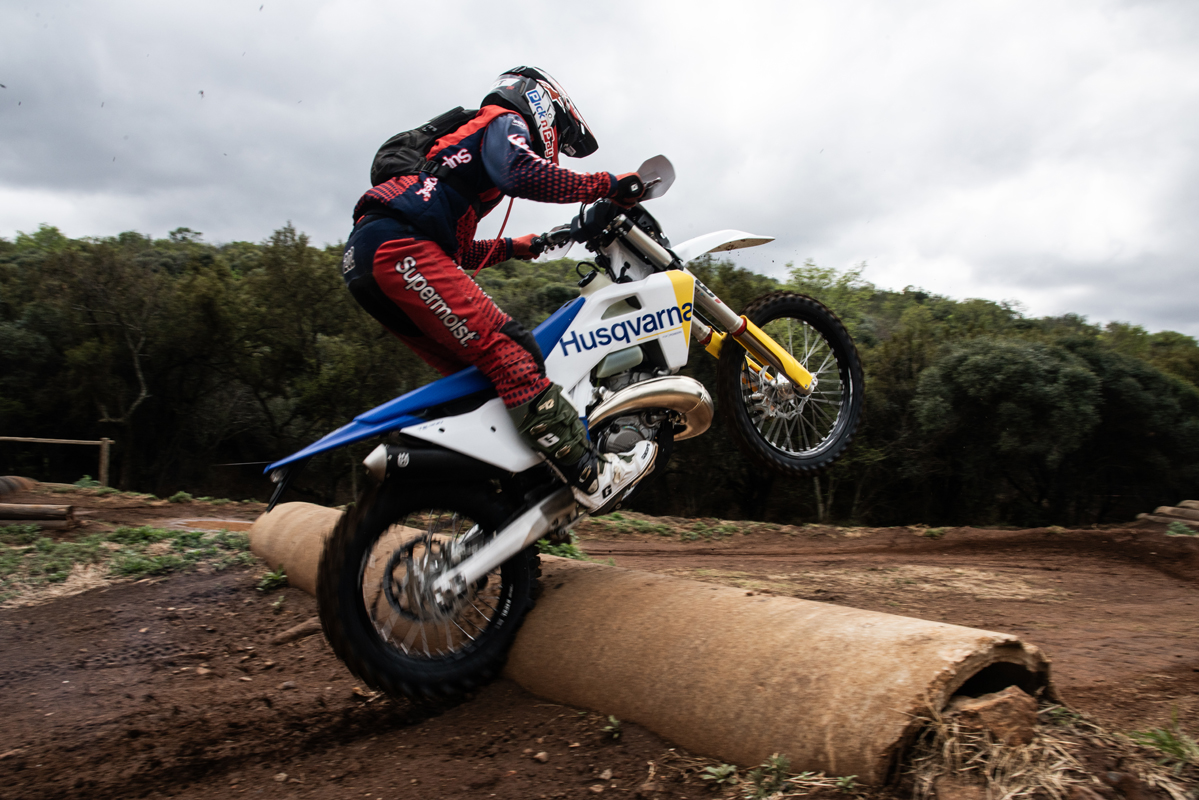
Heinrich also noticed a difference in the way the two engines delivered their power. On the technical hills at Wild West, he could keep the GASGAS on the throttle for much of the climb. On the Husqvarna, opening the throttle brought the front wheel up more readily, forcing him to ease off. To him, that suggested a little more bottom-end torque from the TE 300. It’s a subjective impression rather than a measured difference, but it highlights how differently the two bikes can feel in the same conditions.
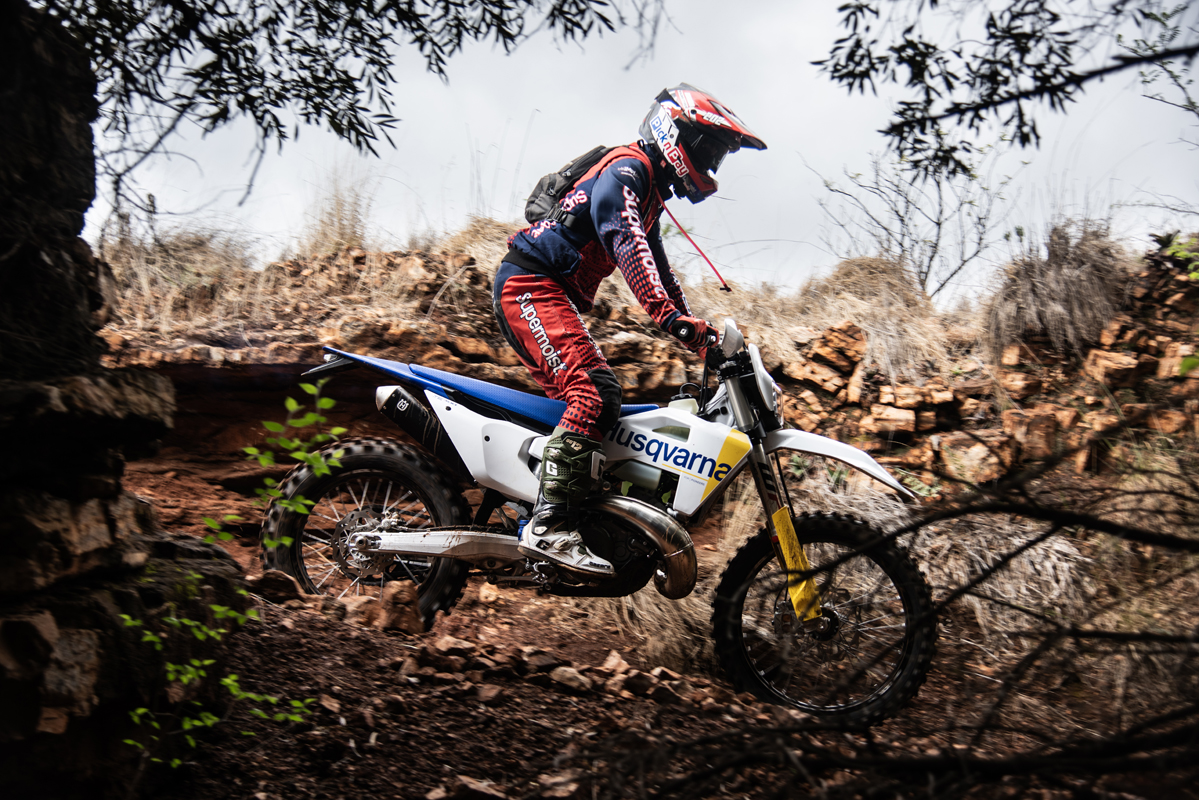
For me, the difference was less about outright power and more about finding traction. I’m still very much at the stage where I need to calculate my line, carry enough momentum and hope my plan comes together before gravity has other ideas. Heinrich, on the other hand, could probably climb just about anything with his eyes closed.
What I noticed was that I seemed to have more mechanical grip on the Husqvarna. Whether that came down to the tyres, the valving of the rear shock or the way the bike delivered its power, I can’t say for certain, but I experienced less wheelspin and found the climbs easier to manage. Now and then, it felt as though the TE 300 was giving me a little pat on the back, reassuring me that I might actually know what I’m doing.
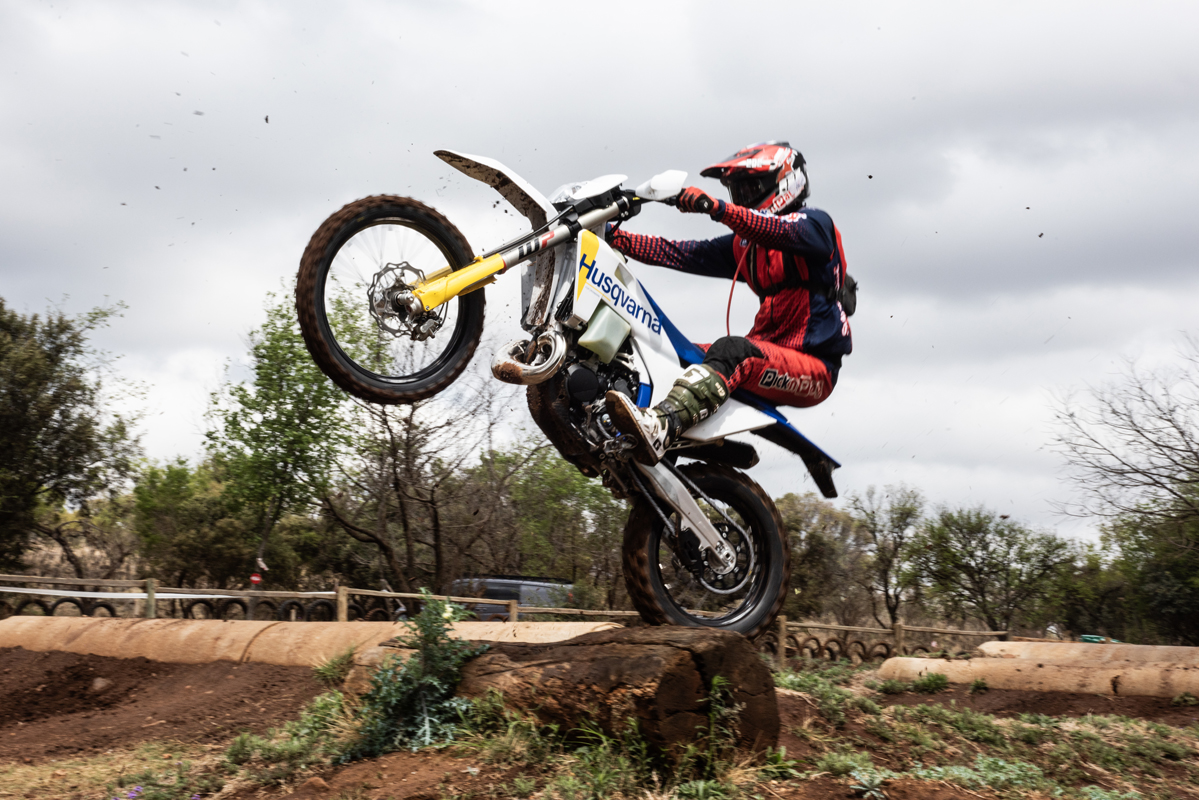
That feeling matters when you’re still building confidence. Heinrich found both bikes more planted than their predecessors, particularly on descents and off-camber sections. For me, the Husqvarna’s more forgiving feel made it easier to concentrate on the trail rather than constantly correcting my inputs. In enduro, that little bit of extra confidence can go a long way.
There are other details worth considering, too. The GASGAS’s simpler switchgear, unbranded triple clamps and rims, open-cartridge fork and lack of standard handguards and bash protection reflect its more cost-conscious specification. The Husqvarna brings a more premium hardware package and extra protection straight from the showroom. However, the GASGAS’s greater ground clearance and radiator fan are practical advantages of their own.
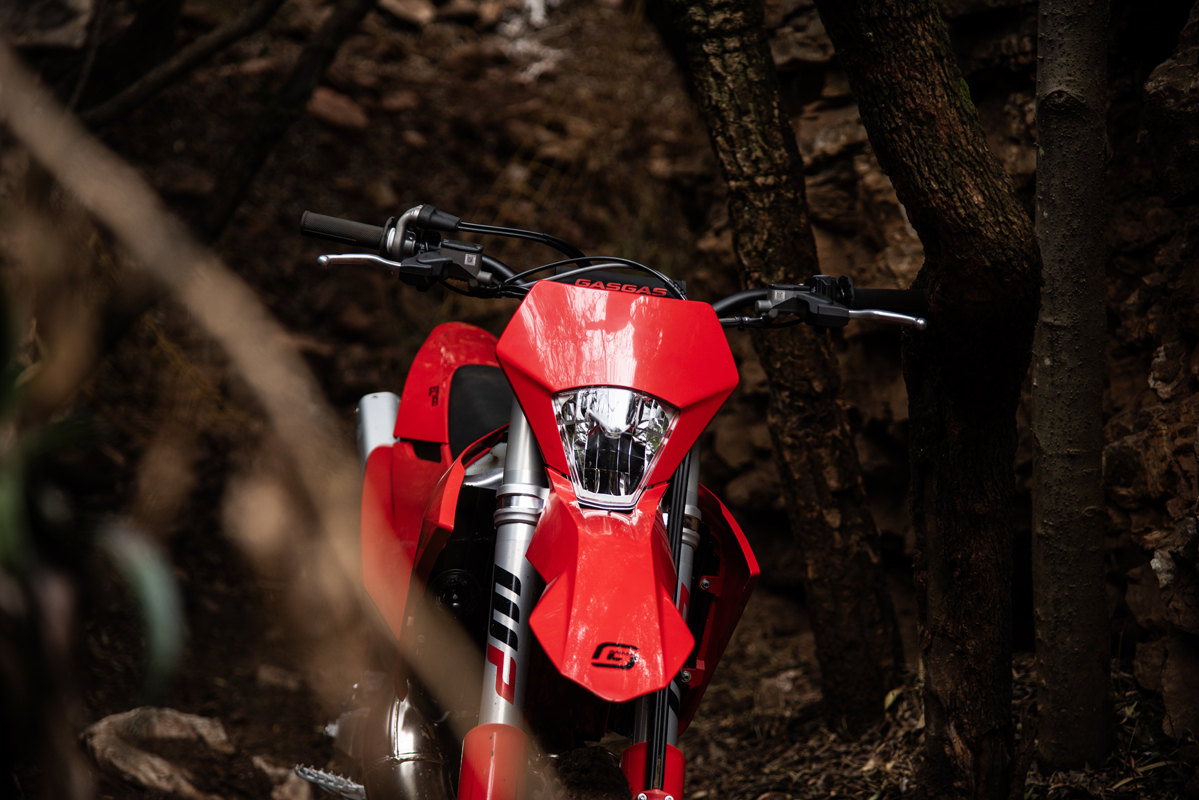
And this is where things get interesting for South African riders. We tend to personalise our bikes, whether that means fitting handguards and bash protection, choosing different tyres or setting up the suspension to suit our riding style. If you’re going to make those changes anyway, starting with a more affordable motorcycle makes plenty of sense. The GASGAS gives you that opportunity without sacrificing the core ingredients that make a modern 300 cc two-stroke such a capable enduro machine.
The GASGAS EC 300 retails for R171,999, while the Husqvarna TE 300 comes in at R185,699. That’s a difference of R13,700, with both bikes backed by a one-year Premium Manufacturer’s Warranty. The Husqvarna’s extra equipment and premium components help explain the price gap, but whether they’re worth the additional outlay depends on what you value and how you plan to use the bike.
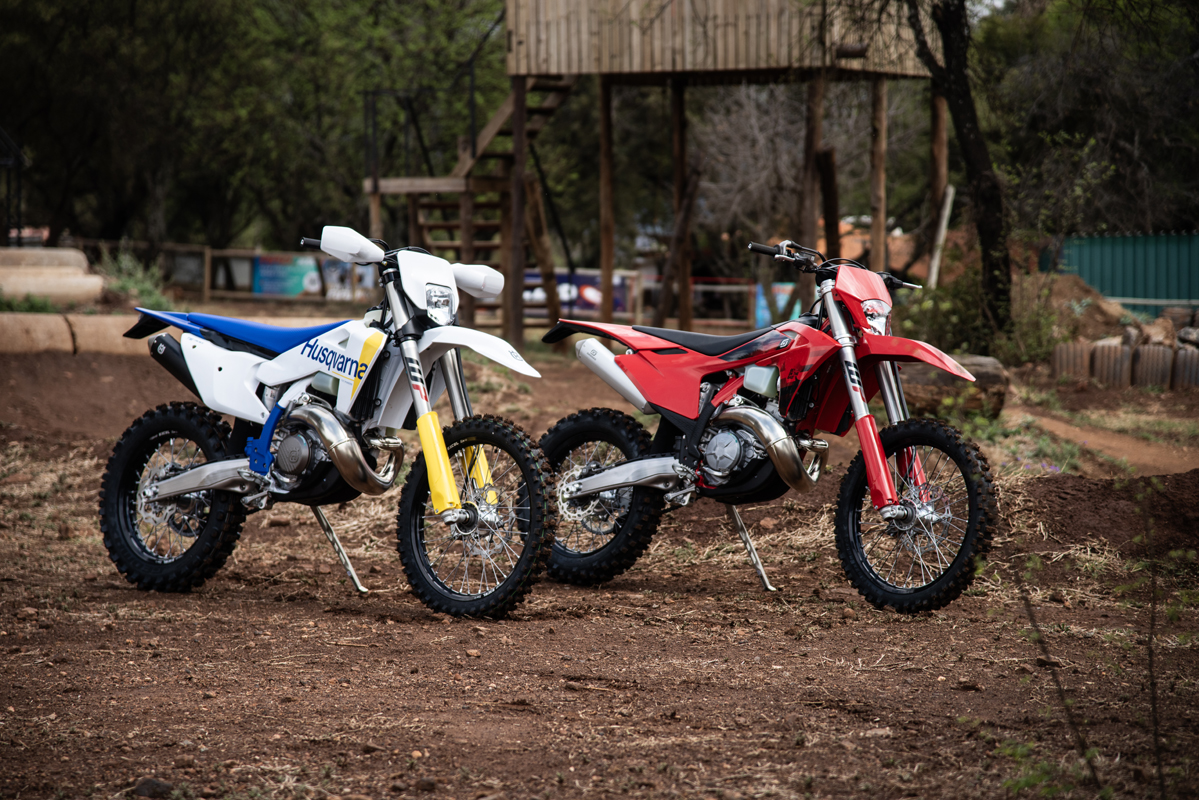
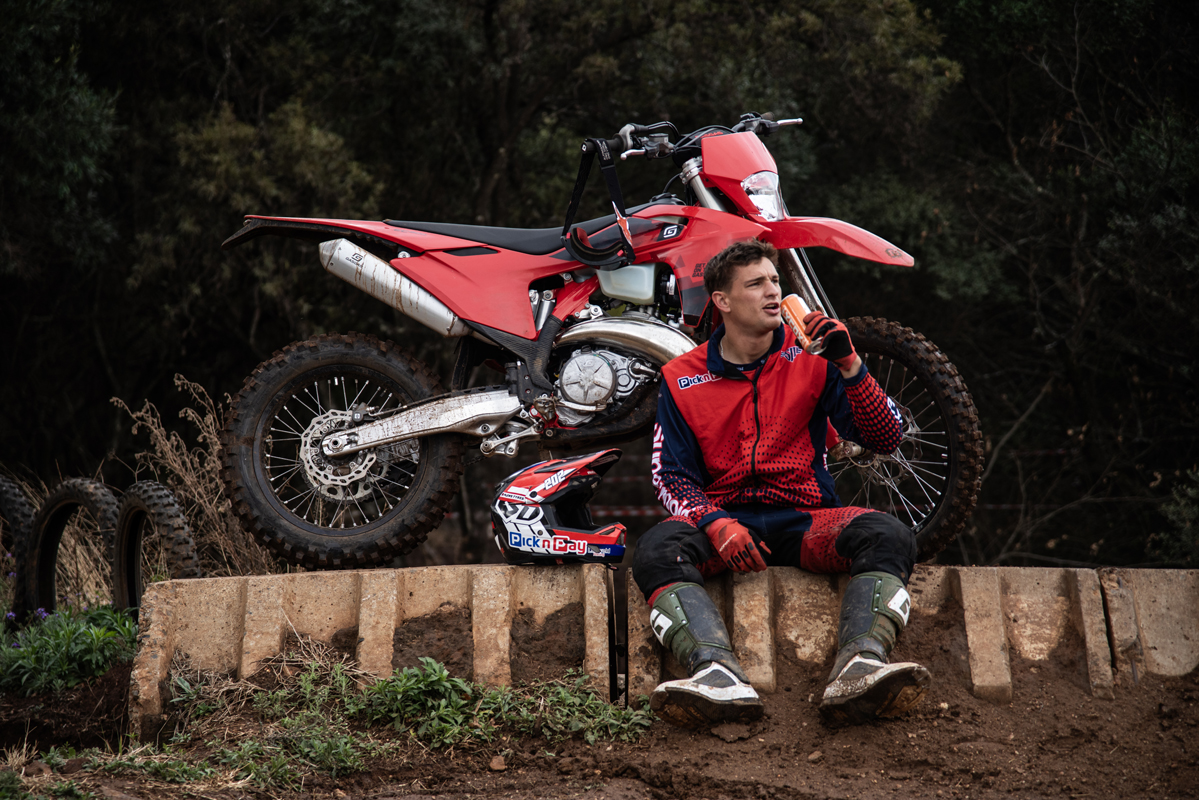
We only spent a few hours riding the 2027 GASGAS EC 300 and Husqvarna TE 300, so this is very much a first impression rather than a definitive verdict. What we came away with was a pair of closely related enduro bikes with distinct personalities. The GASGAS is playful and eager, offering a more affordable entry point into the family, while the Husqvarna feels more composed and forgiving, particularly from the saddle of a rider who is still finding his feet and the racer.
GASGAS EC 300 & Husqvarna TE 300
For more information on the bikes featured in this article, click on the link below…