

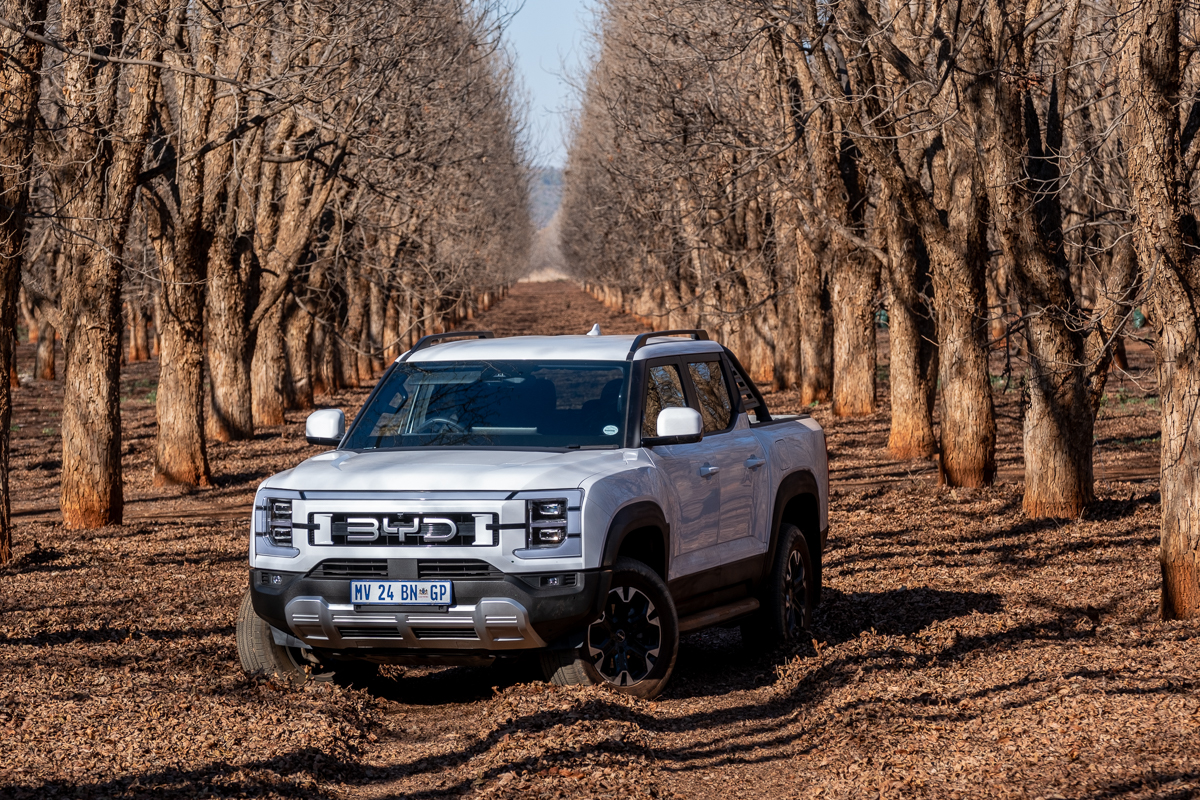
My father was a land surveyor, and when he bought a Toyota Hilux 4×4 single-cab bakkie back in 1984, it was classified as farm equipment. It was a true workhorse. The “carpets” were vinyl, so you could hose the cabin down inside and out. Its 0–100 km/h time was simply listed as “eventually”, because a calendar was a more appropriate measure of acceleration than a stopwatch. Then came the double-cab Hilux. The rear seat was cramped because the floor was flat and high, but it marked a shift in buyer behaviour: South Africans realised they could have the seating layout of a sedan with the practical utility of a bakkie. Fast-forward to today, and local roads are overrun by double-cabs. With Chinese manufacturers entering the fray, consumers are spoiled for choice. One newcomer, however, has grabbed headlines not just for utility but also for a hot-hatch sprint time: the BYD Shark 6. We spent time with it to see if it has more to offer than sheer speed.
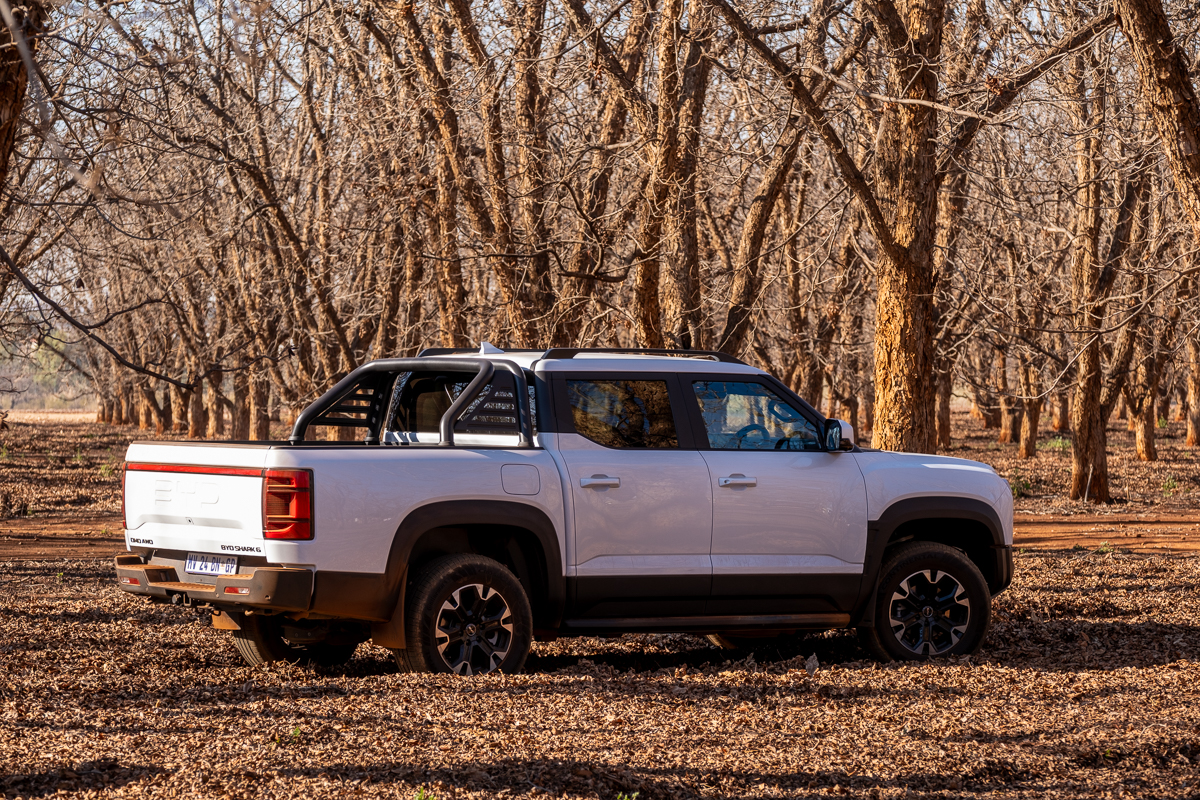
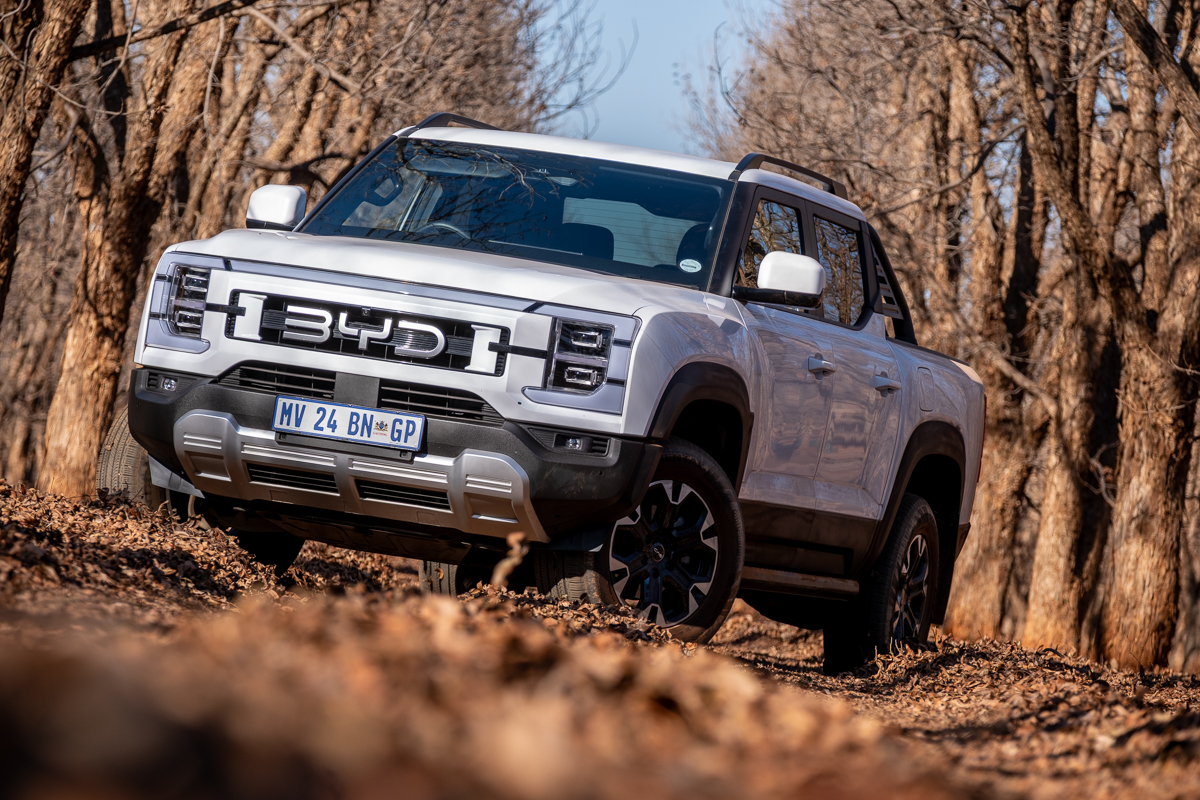
When designing a double-cab, there is limited room for artistic freedom. A bakkie must have a load box at the back and a blunt nose for pedestrian safety. The BYD logo is very prominent at the front, framed by a full-width LED light bar. That theme is repeated at the rear. Blacked-out wheel arch cladding and substantial side steps give it an assertive stance. Those side steps proved essential, as the Shark is a large vehicle. In fact, it didn’t fit in my garage simply because I never considered owning such a long car when I placed my home inverter batteries.
PLUG-IN POWER
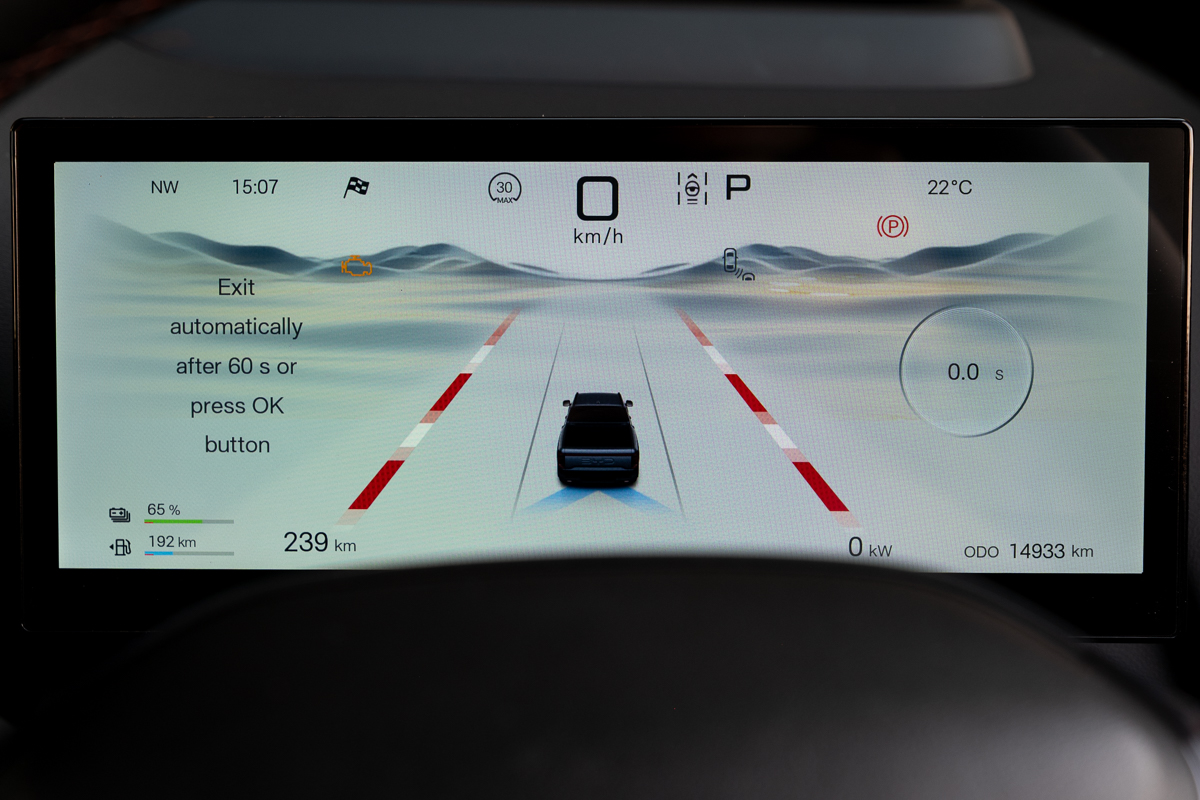
Under the skin lies BYD’s DMO (Dual Mode Off-Road) platform. It pairs a 29.58 kWh Blade Battery with a 1.5-litre turbo petrol engine and two electric motors, one on each axle, driven through a single-speed transmission.
That is the beauty of the plug-in hybrid architecture. On daily commutes, you can run purely on battery power for roughly 85 km. Charged overnight at home or at a public station, the petrol engine rarely needs to fire up. When the battery depletes past a pre-set value, the engine engages primarily as a generator to feed power back into the battery and electric motors. During highway cruising or under full acceleration, the engine and electric motors join forces to output a staggering 321 kW and 650 Nm of torque.
LUXURY MEETS PRACTICALITY
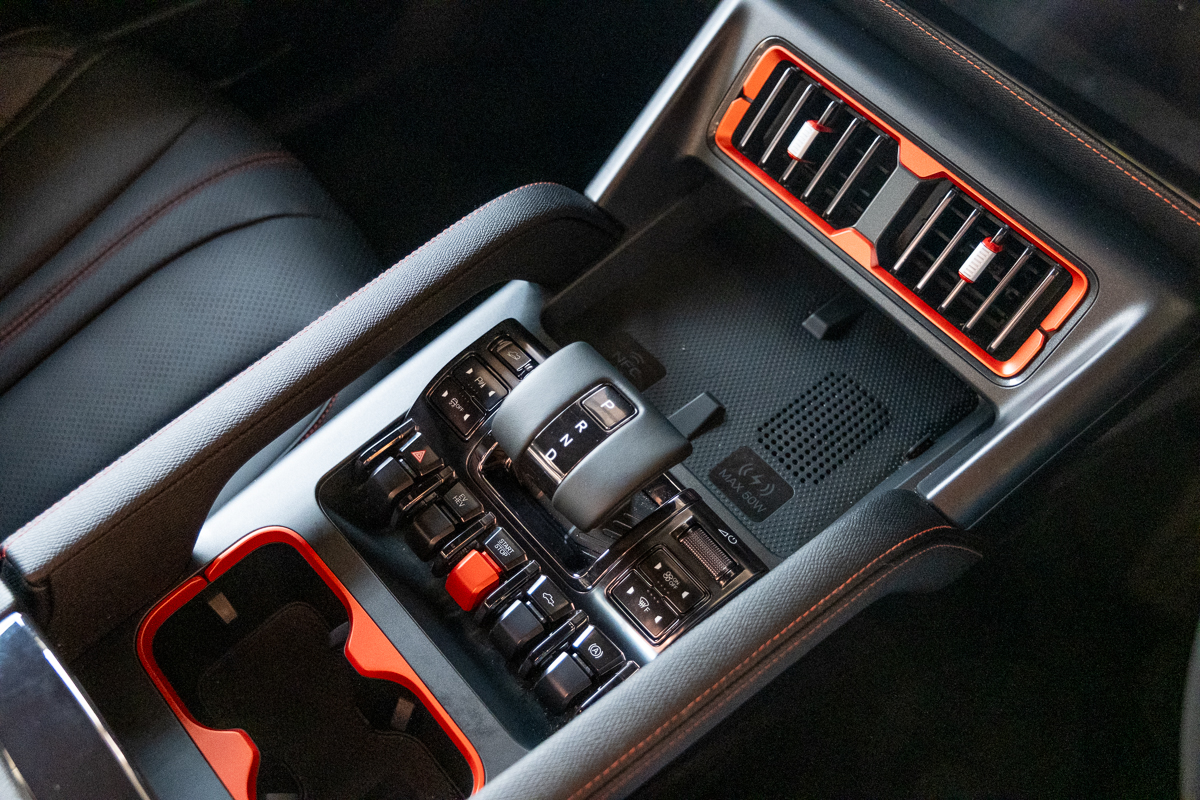
Inside, you’re greeted by electronically adjustable seats trimmed with sporty red stitching, complete with heating and ventilation functions. Red accents on the air vents complement the cabin’s theme, while the toggle switch row behind the gear selector feels inspired by modern sports cars.
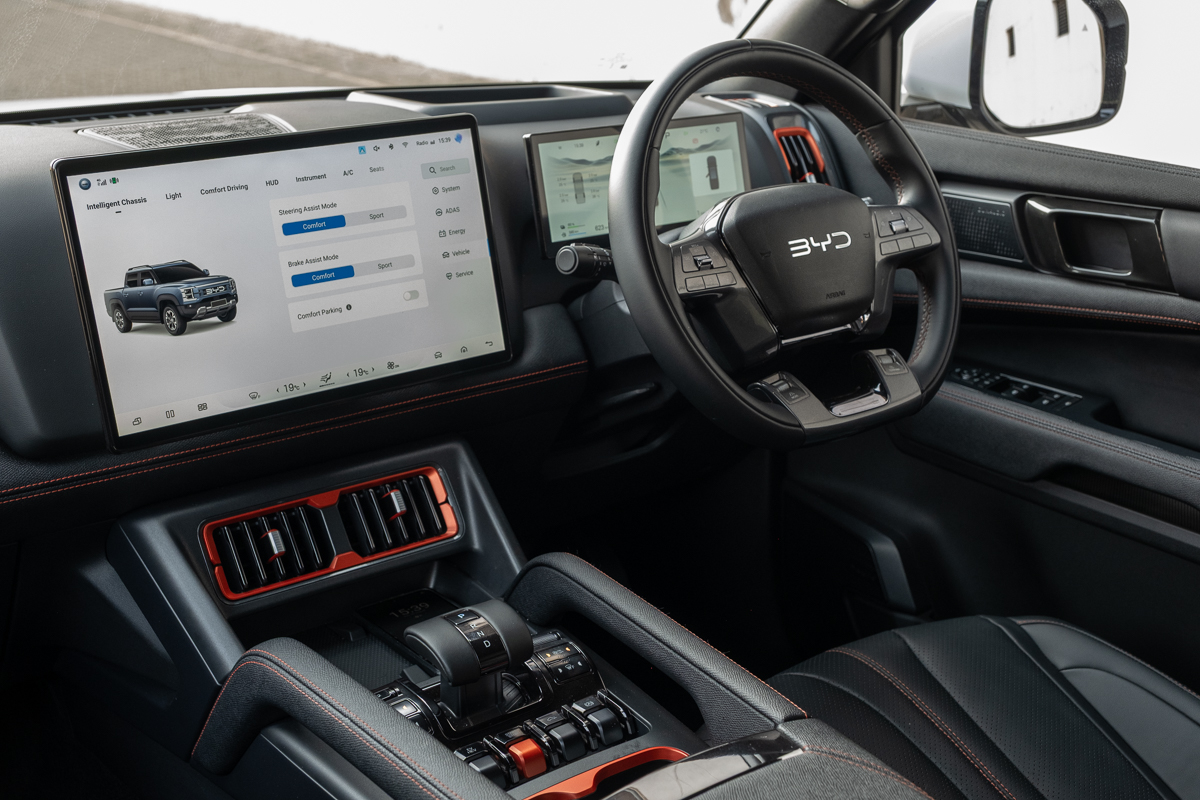
A massive rotating centre screen and a digital driver display dominate the dash. While BYD retained physical buttons for key driving functions, many settings require screen interaction. Fortunately, most primary functions respond reliably to voice commands via “Hey BYD”. Parking a vehicle of this size is simplified by a 540-degree camera system that includes an “under-car” view to ensure you stay neatly inside parking bays.
Ride comfort is where the Shark truly diverges from traditional bakkies. Featuring independent double-wishbone suspension at both front and rear, it glides over rough surfaces and corrugations with SUV-like composure.
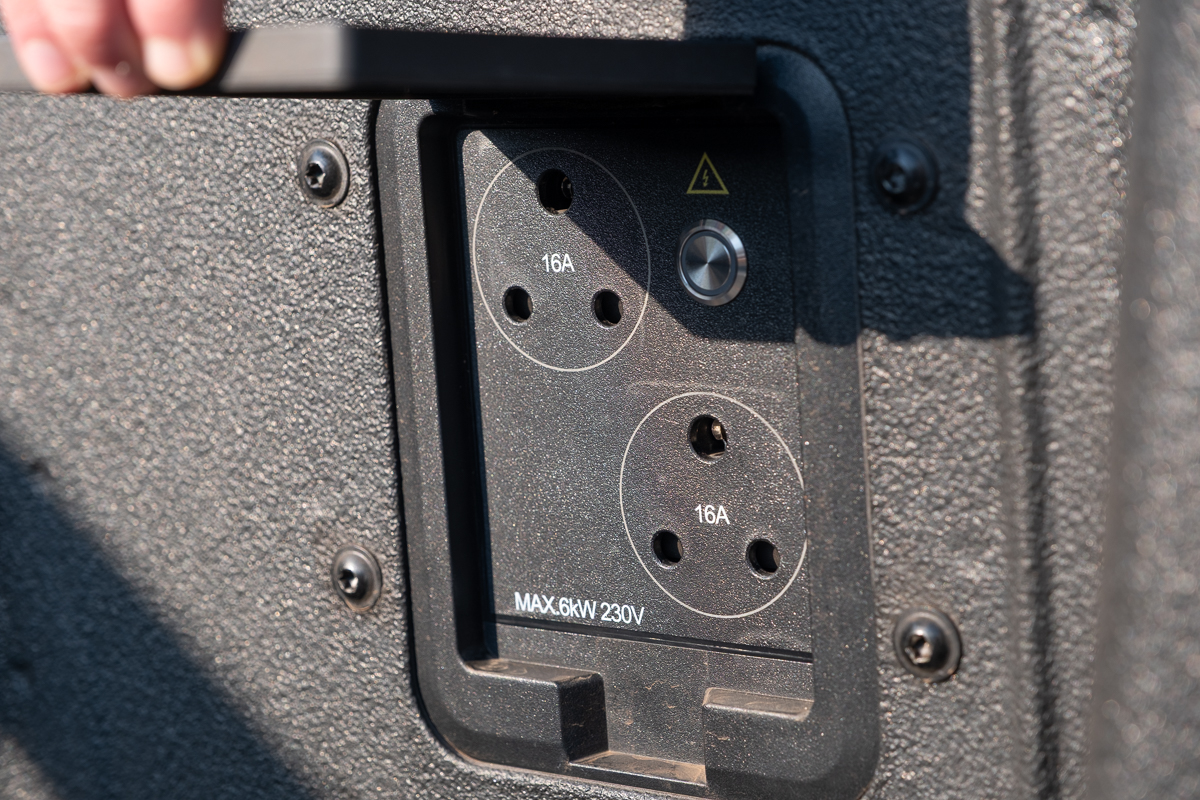
Practicality remains intact: the assisted tailgate opens at the touch of a button to reveal a factory-lined cargo bed. Crucially for South African buyers, BYD fitted a 240V (3.6 kW) Vehicle-to-Load (V2L) power socket into the side of the bed, allowing you to run power tools at a job site, camp appliances off-grid, or household essentials during load shedding.
FAST, FRUGAL AND FUN
When charged daily, fuel consumption can easily hover around 1.5 to 2.0 L/100 km. Running uncharged purely on hybrid power yields a real-world average closer to 7.5 to 8.5 L/100 km. Even though BYD claims 9.6 L/100 km, I managed a decent 7.6 L/100 km over the week of driving.
Just be aware that the Shark can bring out the hooligan in you. With all four wheels gripping to catapult you forward, a 0-100 time of 5.7 seconds is achievable. This is from a vehicle that weighs around 2700 kg! It really is impressive, but the BYD Shark 6 is more than that. You are cocooned in luxury, and if need be, you can lug around some stuff too.
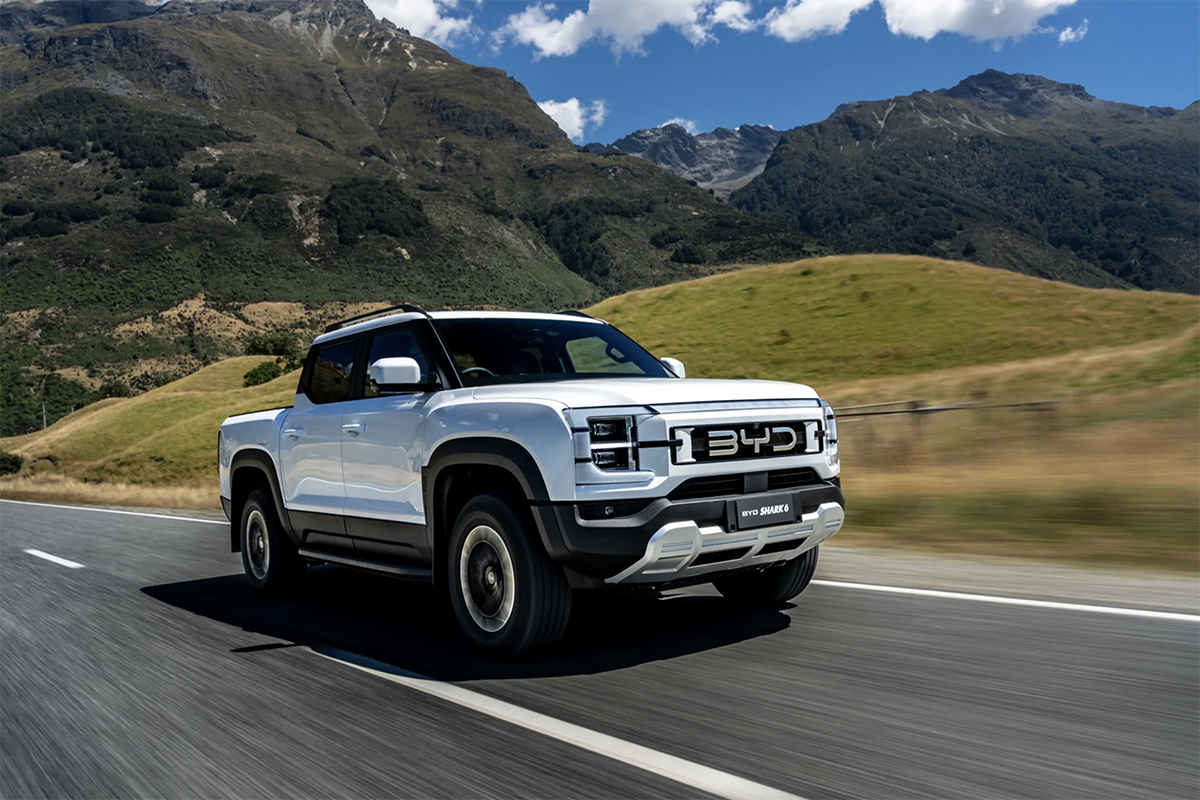
BYD has also recently introduced the Shark 2.0T DMO Performance. Upping system outputs to 350 kW and 700 Nm, it drops the 0–100 km/h sprint to 5.5 seconds, which will surely rattle some Raptor cages. It also ups the towing capacity from 2500 kg to 3500 kg.
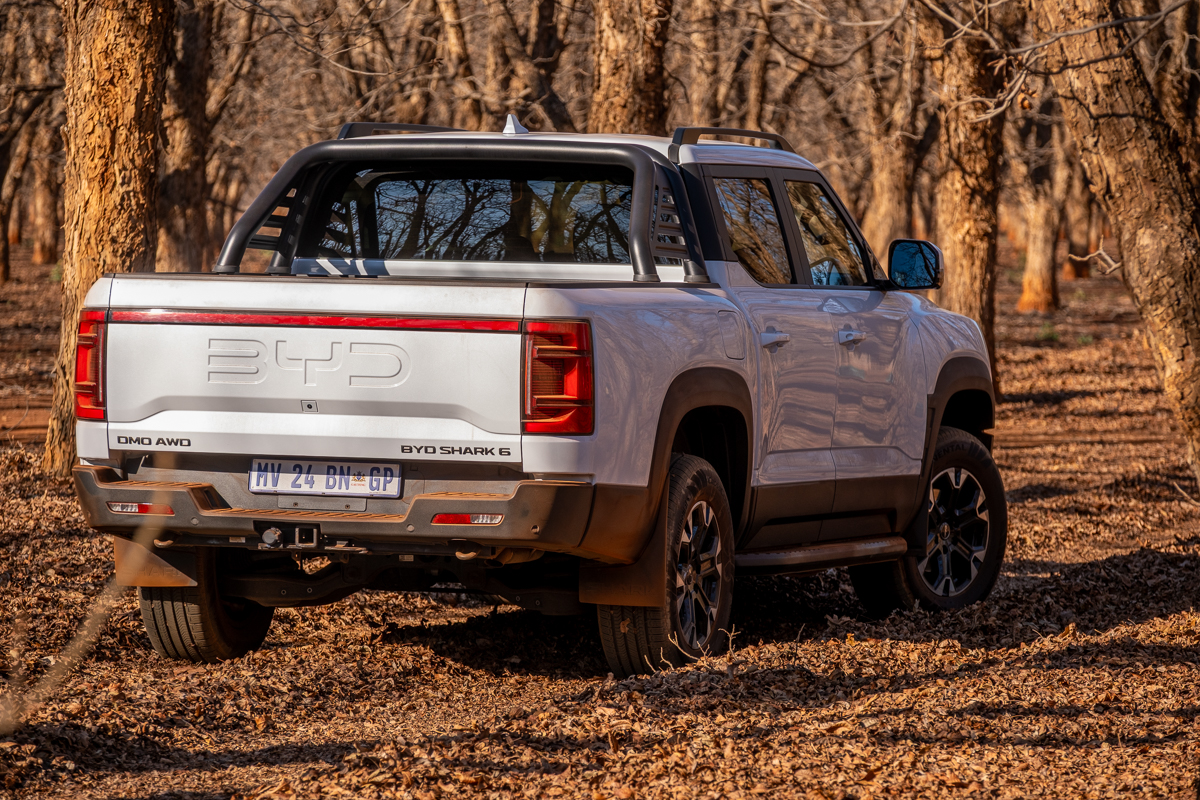
Overall, the BYD Shark 6 proves there is far more to it than headline-grabbing acceleration. It combines SUV-like comfort and technology with useful bakkie practicality, while its plug-in hybrid drivetrain delivers impressive efficiency when used as intended. It may be a long way removed from the hose-down Hilux workhorses of old, but it is a compelling example of just how far the double-cab has evolved.
For more information, visit: www.byd.com