

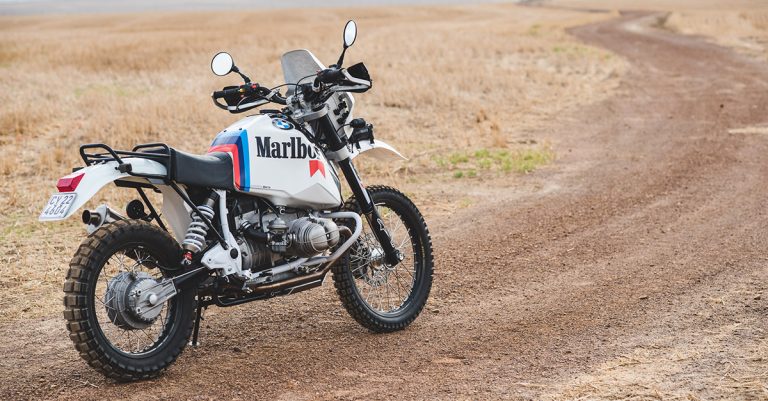
This past Saturday, the Dakar Rally kicked off in Lima, Peru. It’s the 40th edition of the notorious race, and a lot has changed since 1978, when intrepid racers lined in up Paris.
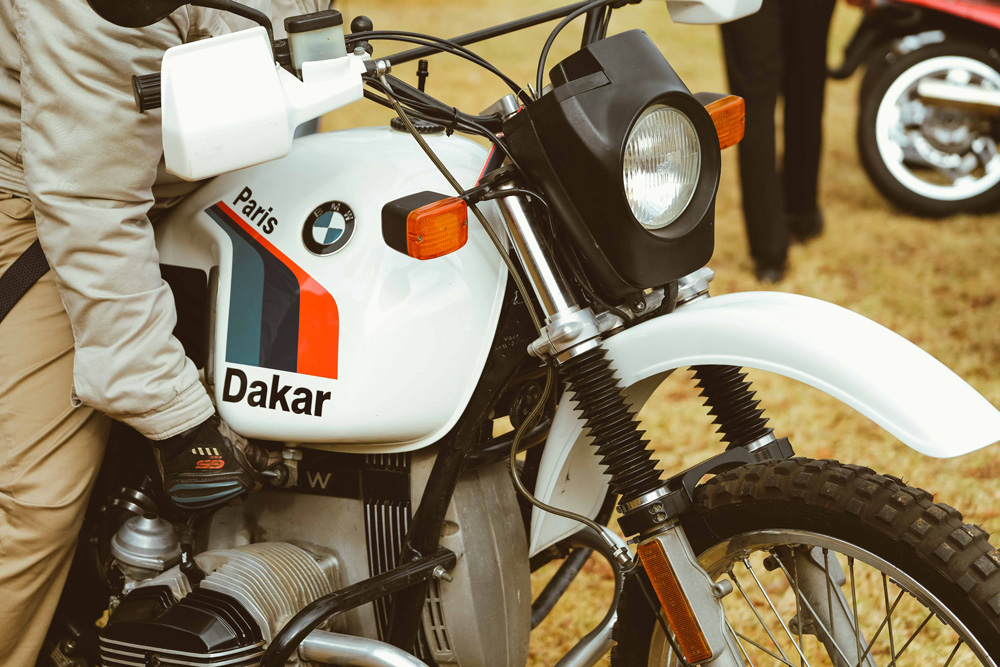
Modern Dakar bikes are lightweight, sophisticated off-roaders, with a maximum capacity of 450cc. But the early days of the rally were dominated by mammoth desert racers—like the mighty BMW R80G/S, which racked up four wins in the 80s.
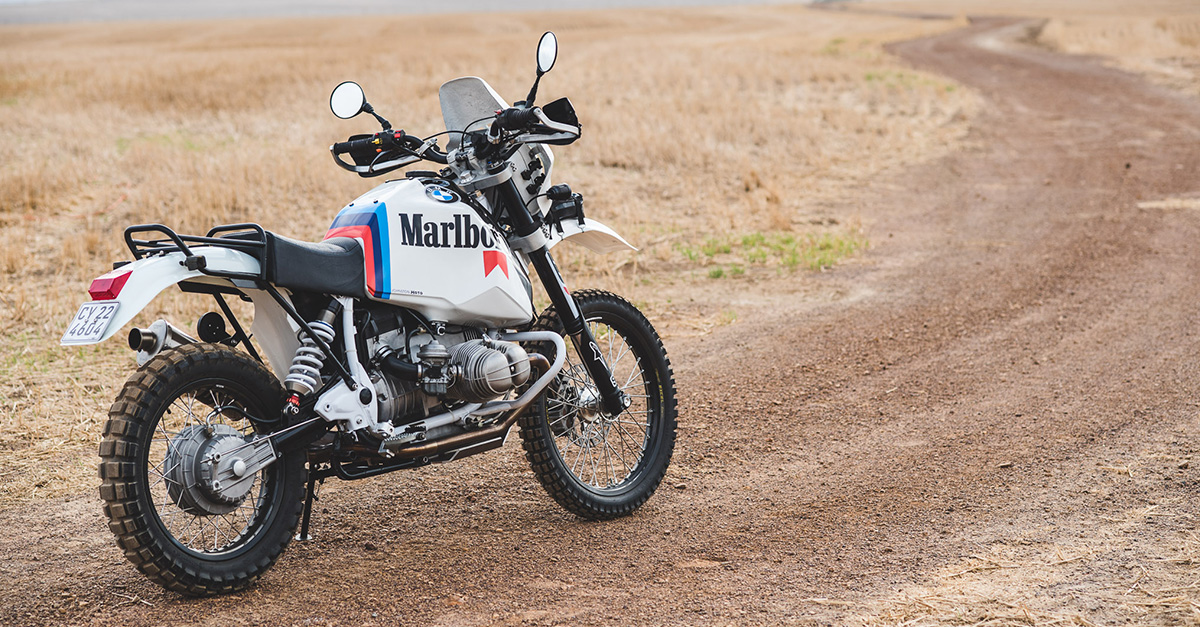
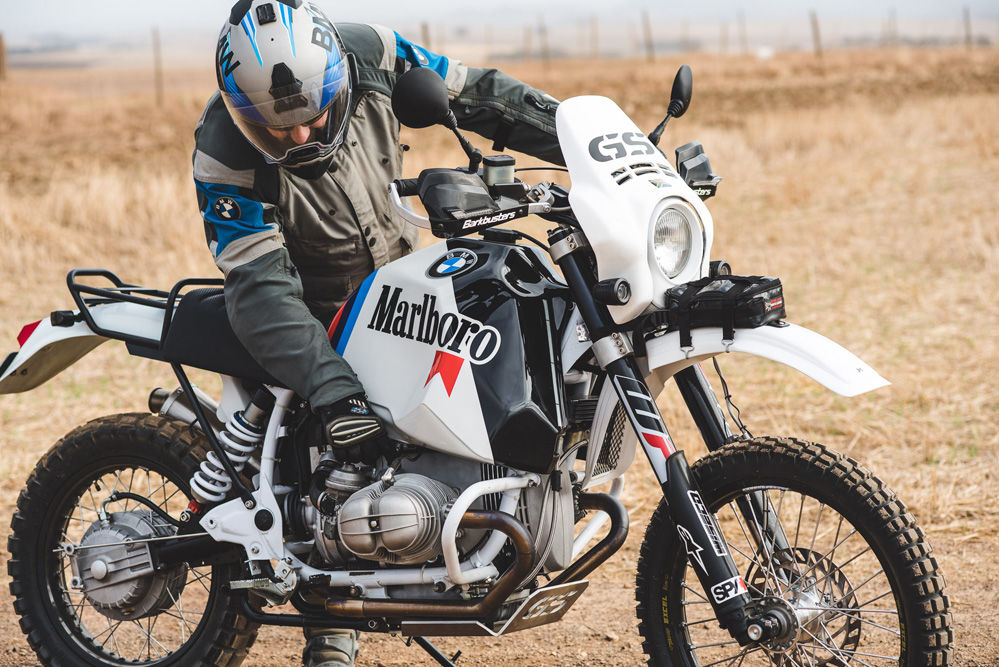
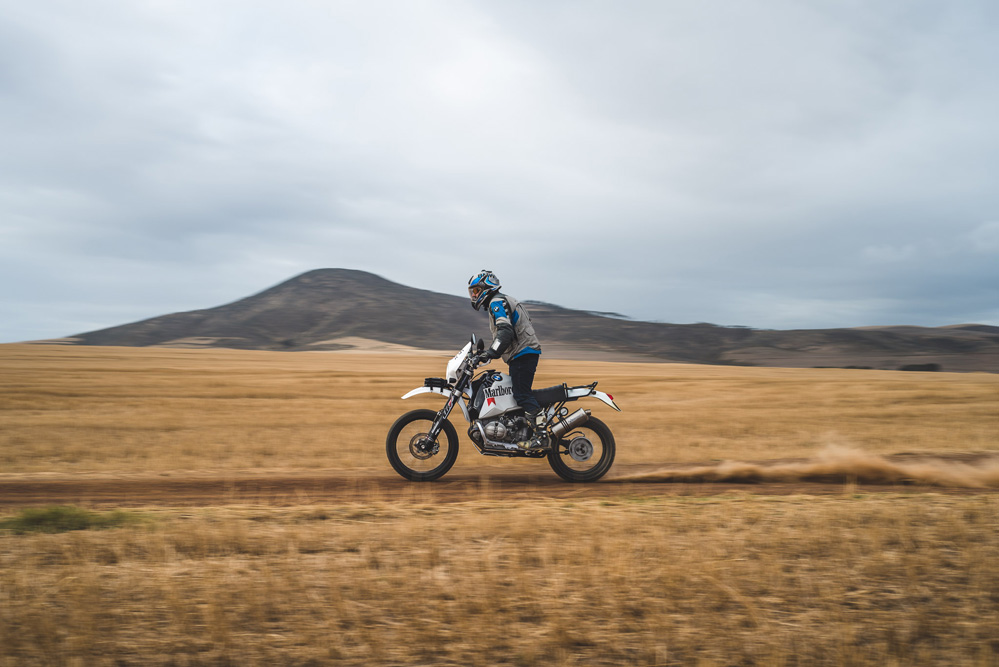
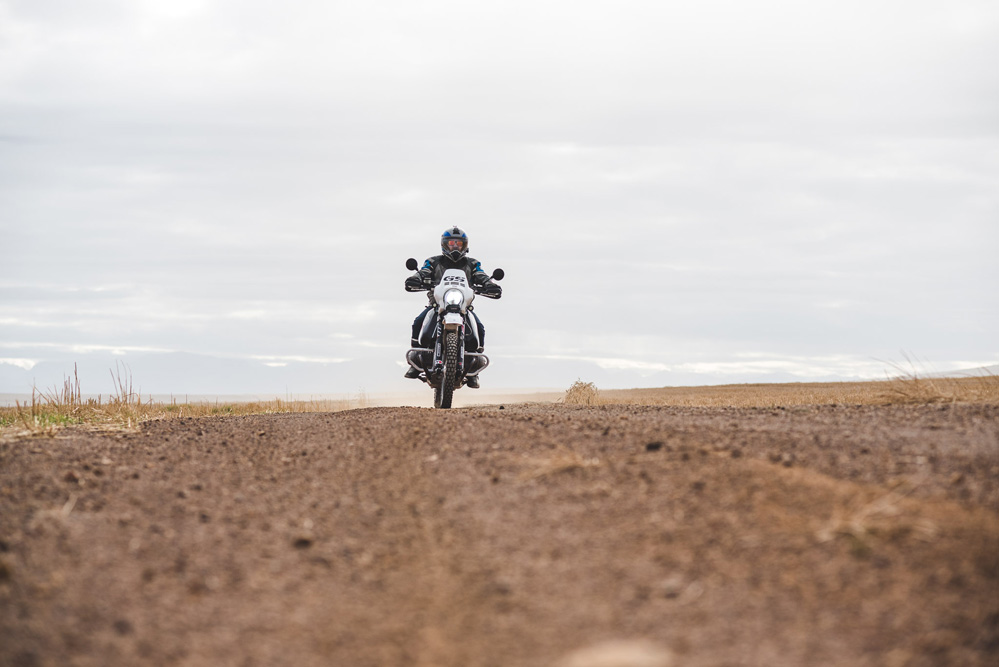
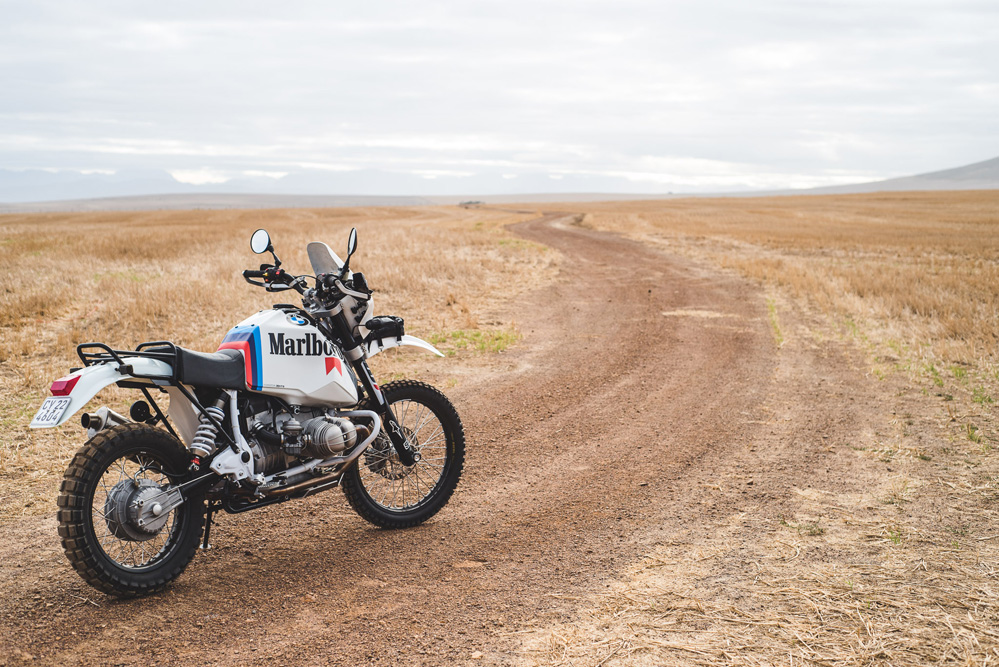
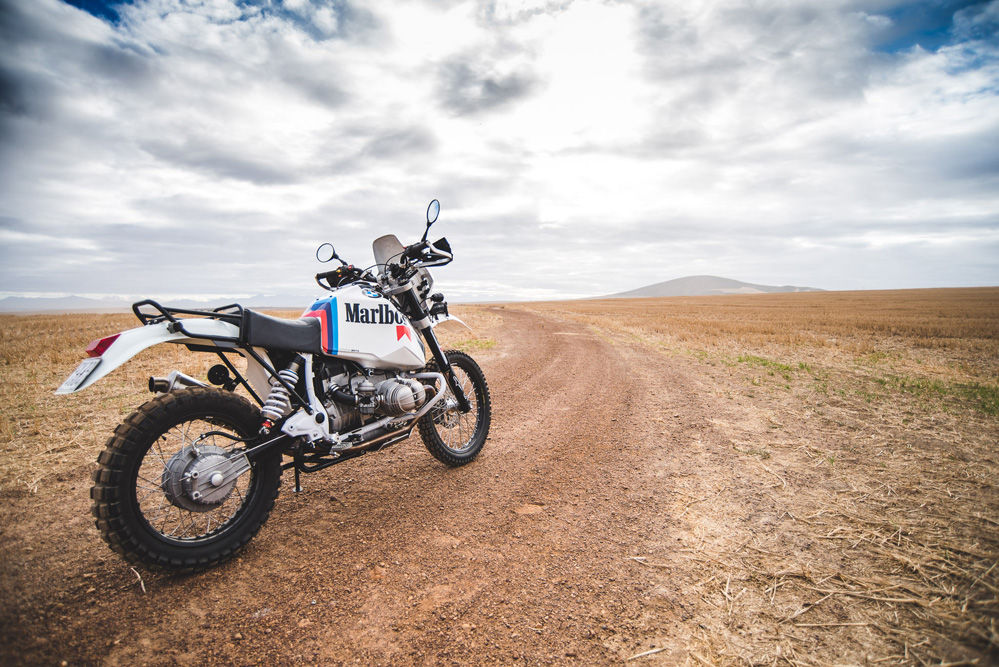
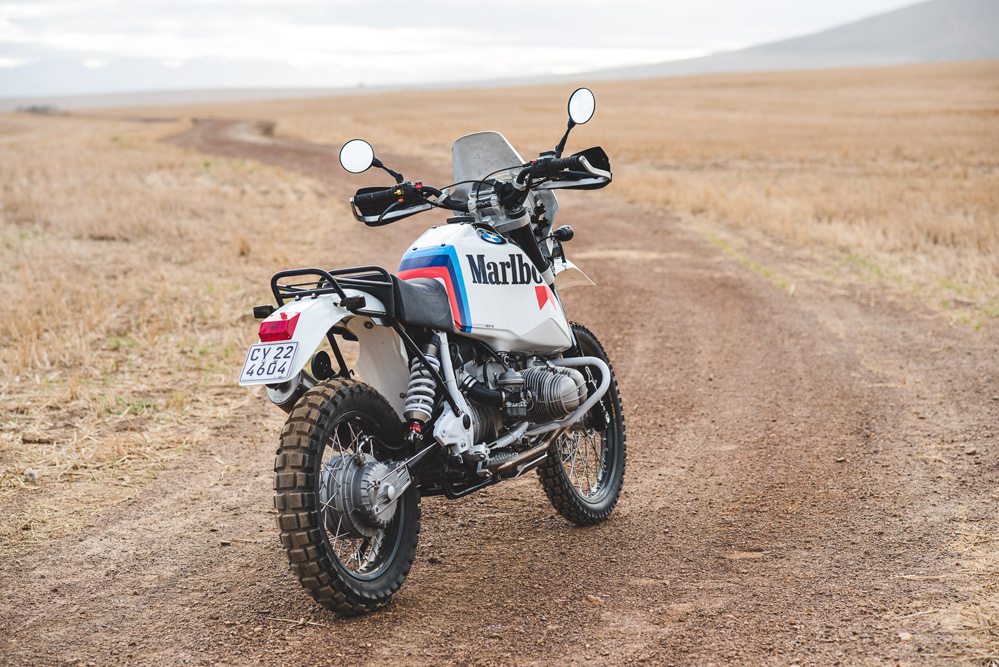
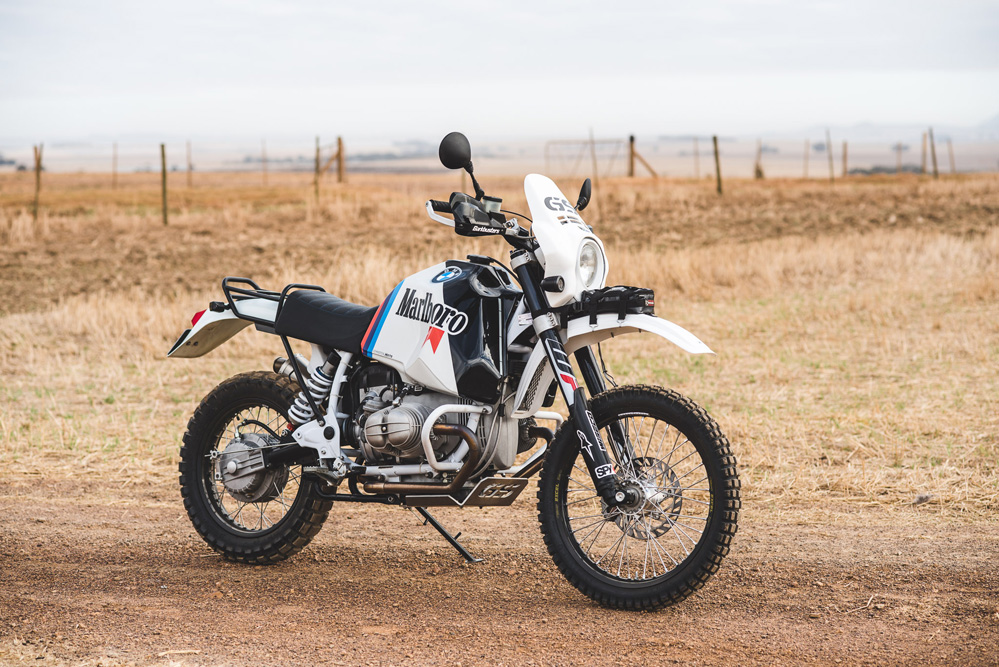
This immaculate 1982 model is a restomod owned by Mark Johnston, and it’s a spectacular homage to the Dakar-winning days of the Gelände/Straße. And remarkably, it’s only Mark’s second build.
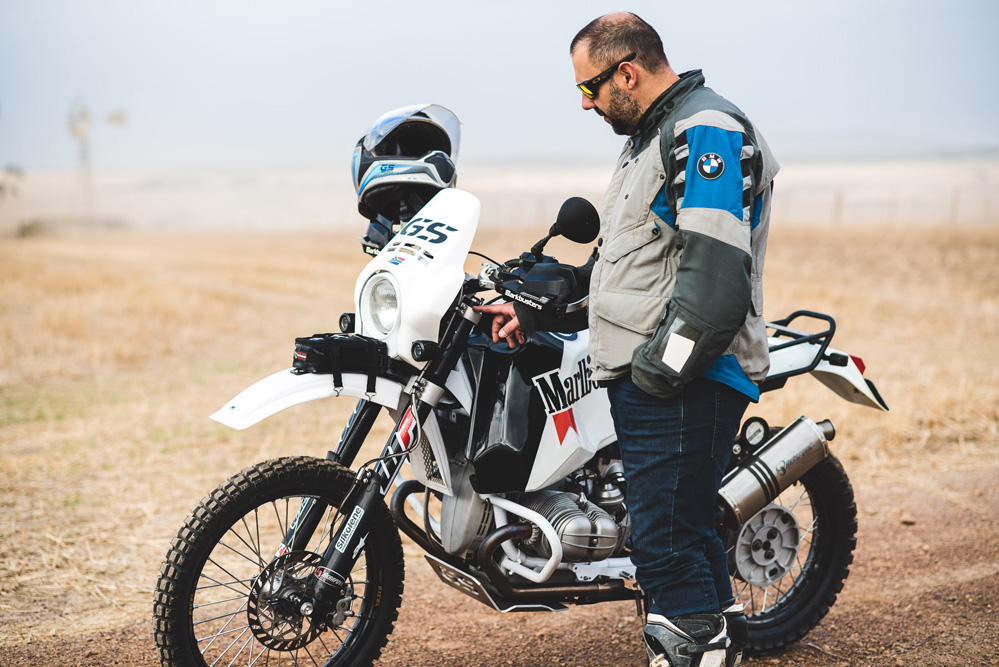
Mark lives in the northern suburbs of Cape Town, South Africa, but bought the bike blind from a guy upcountry in Pretoria.
“I wasn’t too concerned about the overall condition, as most of it was going to be replaced anyway,” he says. “But the bike turned out to be OK in the end.”
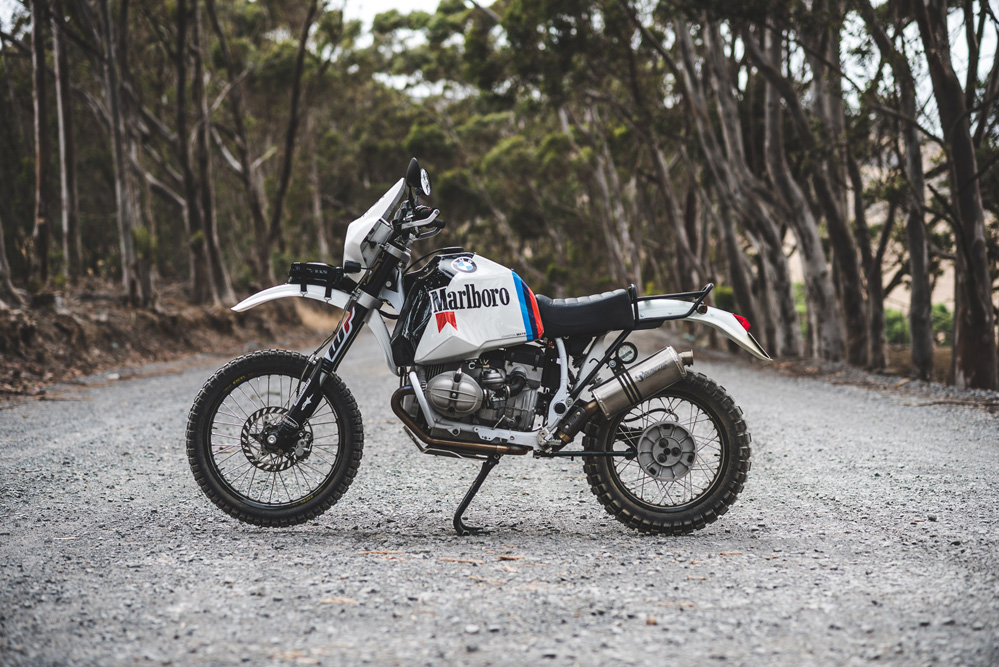
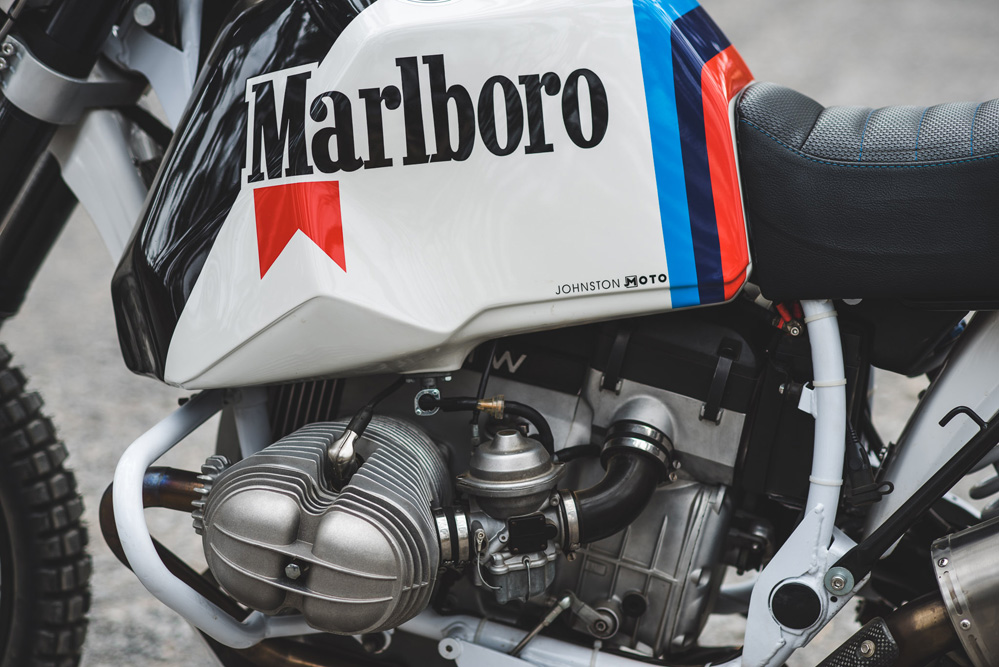
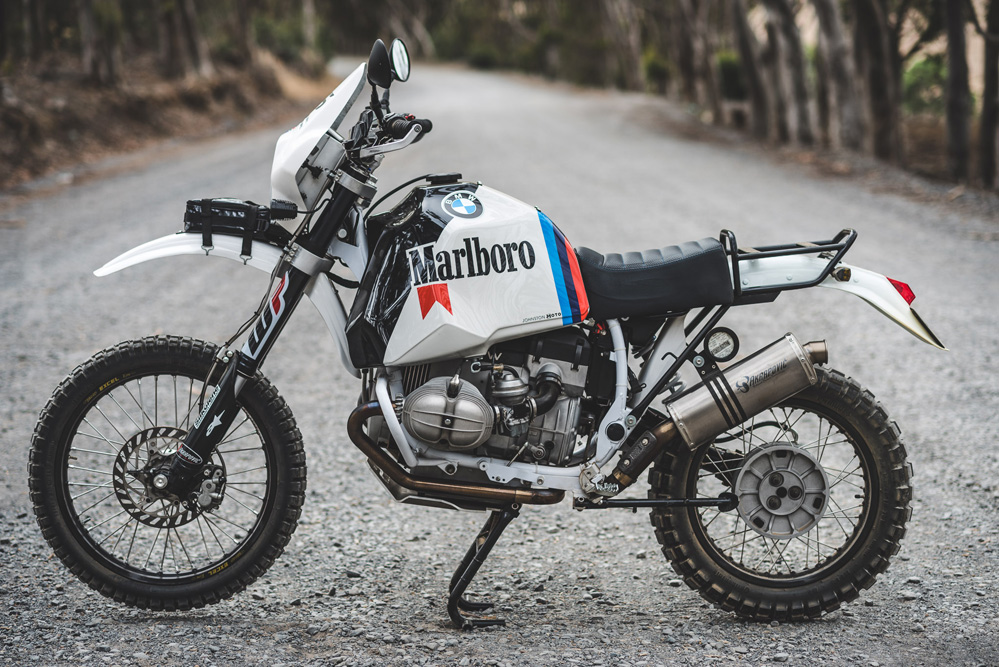
‘OK’ didn’t stop Mark from ripping out the G/S’s motor and shipping it to Volker Schroer in Port Elizabeth. Volker rebuilt it from the ground up, bumping the capacity to 1,000 cc with a big bore kit from Siebenrock. The work included gas flowing the heads, and installing valves suitable for unleaded petrol. The exhaust silencer is from Akrapovič, but the header is custom, courtesy of Scorch Design.
Back home, Mark began transforming the classic Beemer’s chassis. He started with a set of 48mm upside-down WP Suspension forks up front, liberated from a KTM 525 EXC. The forks were also fully rebuilt, with new stanchions and stiffer springs.
They’re hooked up to the bike via a set of custom triples, made by Mark’s go-to guy for machining: Ian Ketterer at BlackSilver Customs. The front wheel is an all-new custom setup, and the front brake caliper was rebuilt and connected to a new master cylinder.
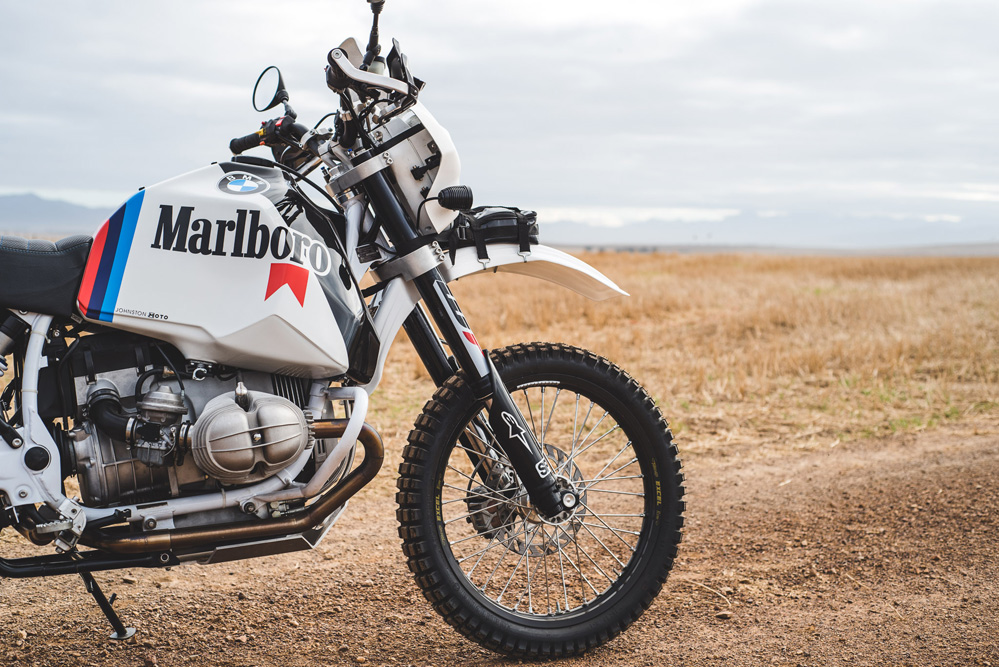
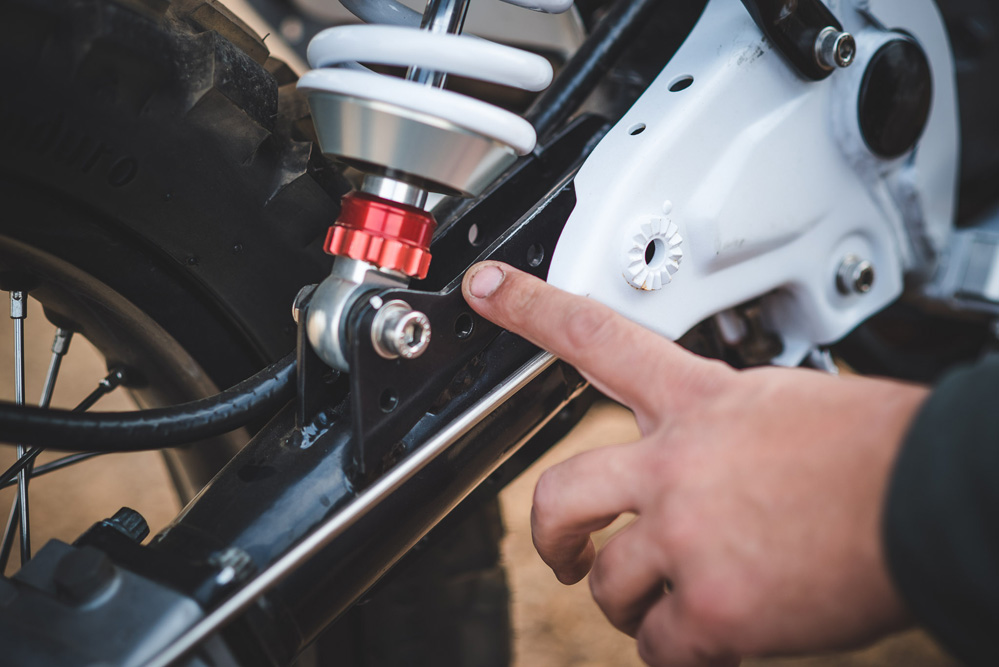
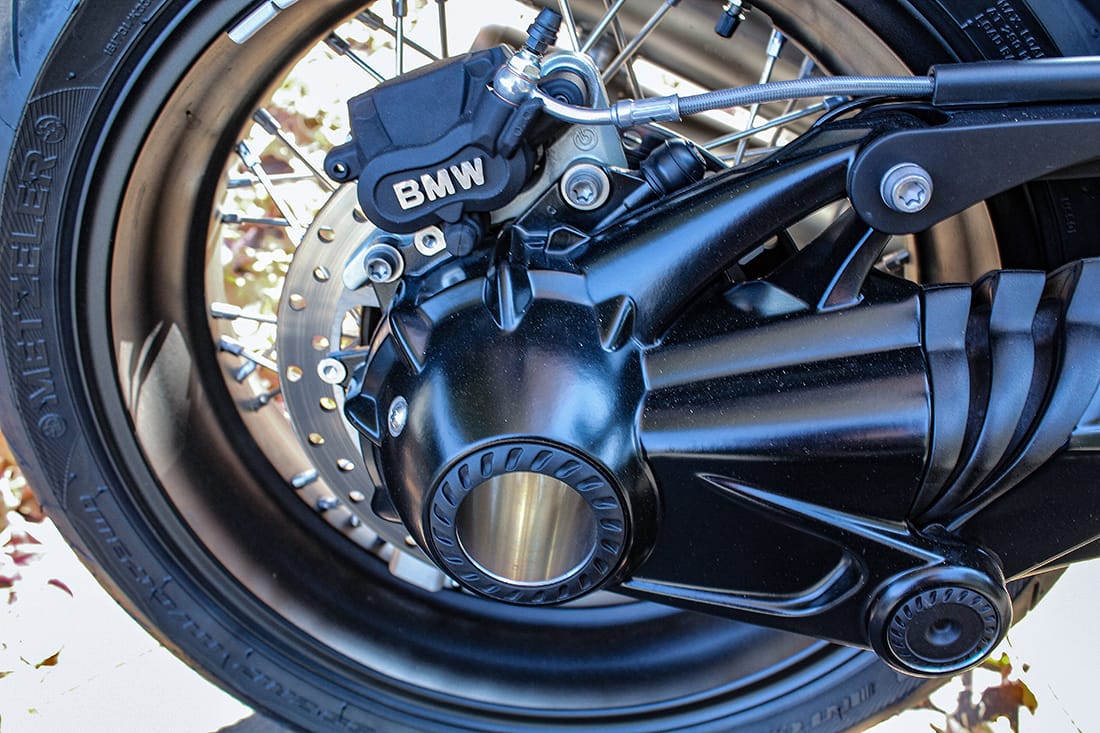
Out back, the swingarm was lengthened by almost two inches, and an offset added so that a 140-section tire could be squeezed in. The rear shock’s a one-off too, built by local suspension guru Martin Paetzold at MP Custom Valve.
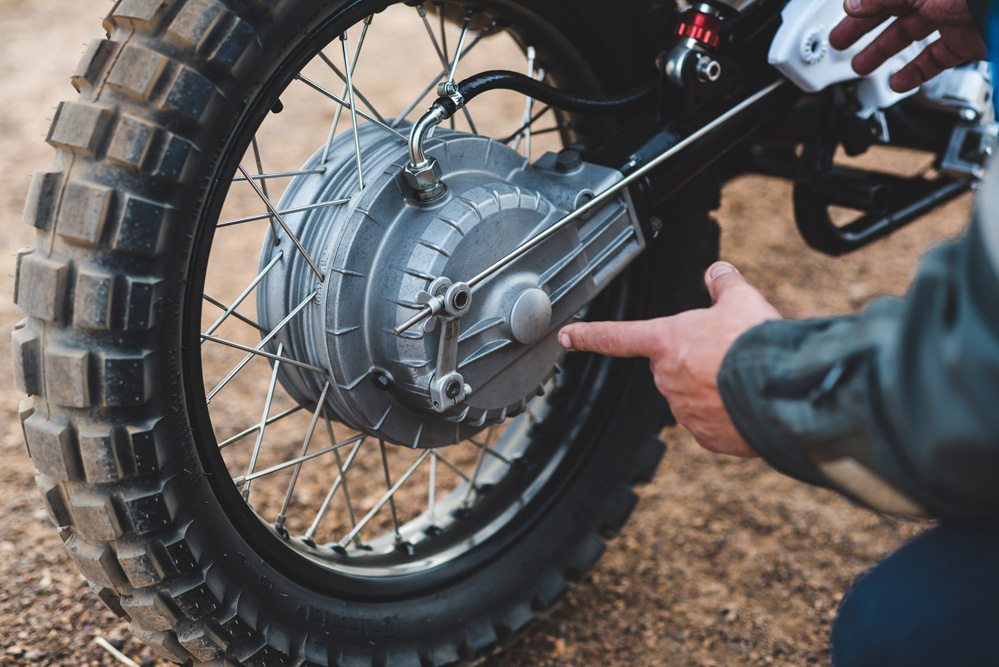
The subframe’s another custom piece, built for one and with a non-removable luggage rack. Look further down, and you’ll notice that the subframe support struts also include tiny hooks for securing luggage straps.
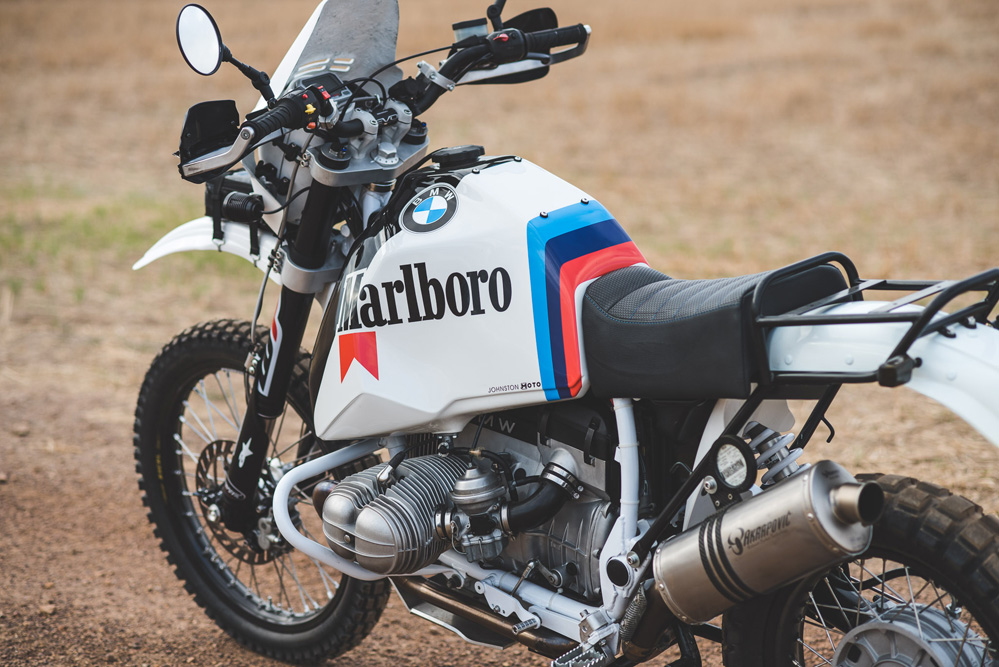
For the seat, Mark used the original two-up pan, but cut it shorter and reshaped the back with fiberglass to accommodate the rear fender. He then re-shaped the foam, added a gel pad and sent the seat to Alfin Upholsterers for a fresh cover.
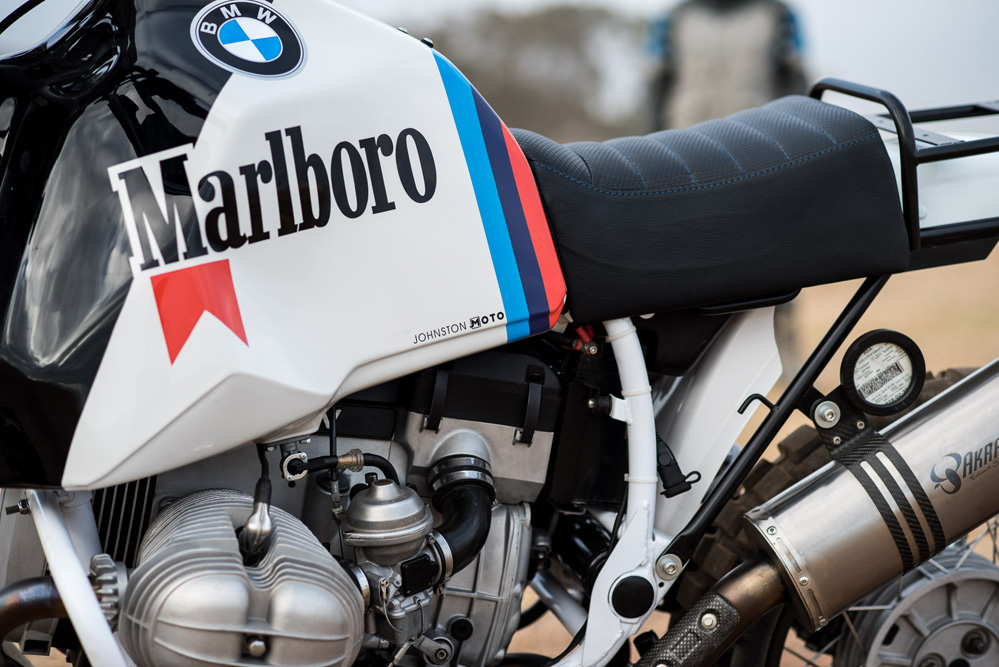
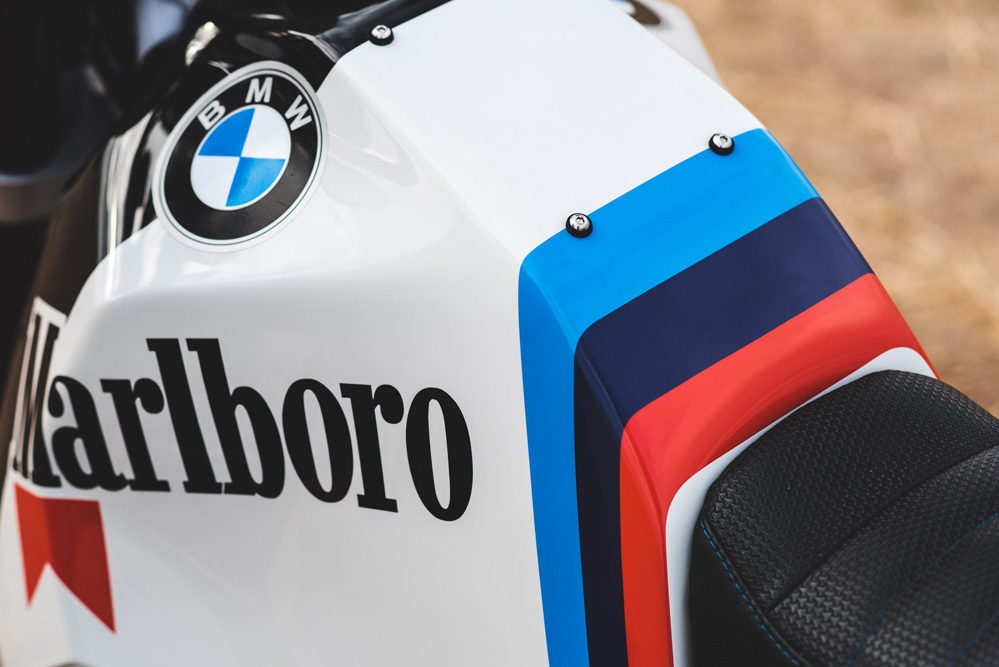
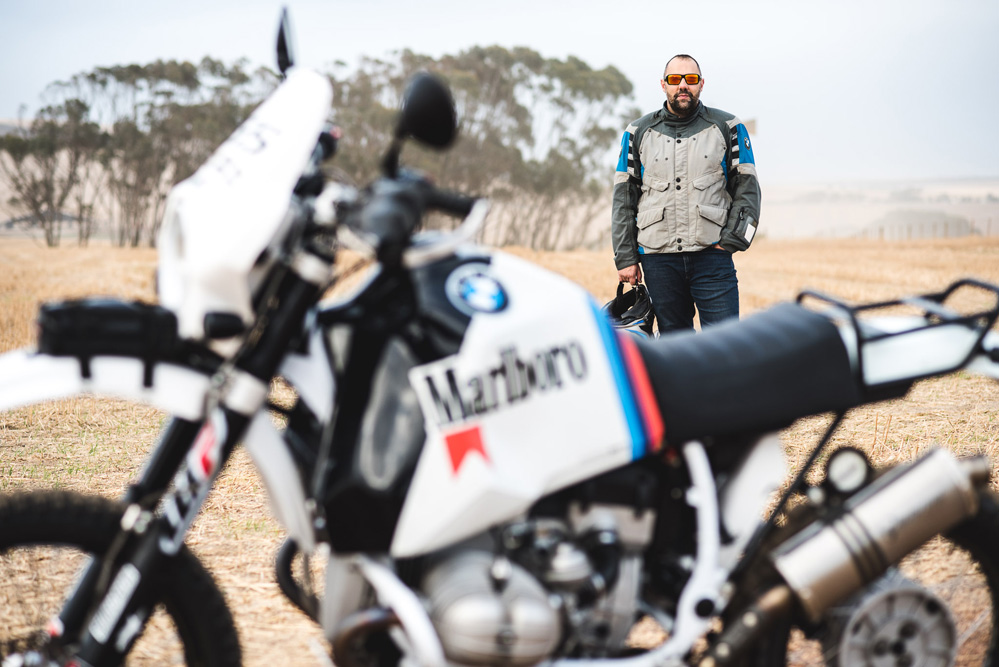
Just in front of it is an HPN rally tank, imported from Germany and painted in a variant of the original Paris Dakar race livery.
The headlight mask is an OEM BMW item (from the original ‘Paris Dakar’ edition of the R80G/S), but revised to work with quick-release straps. Off-road style fenders conclude the bodywork at each end.
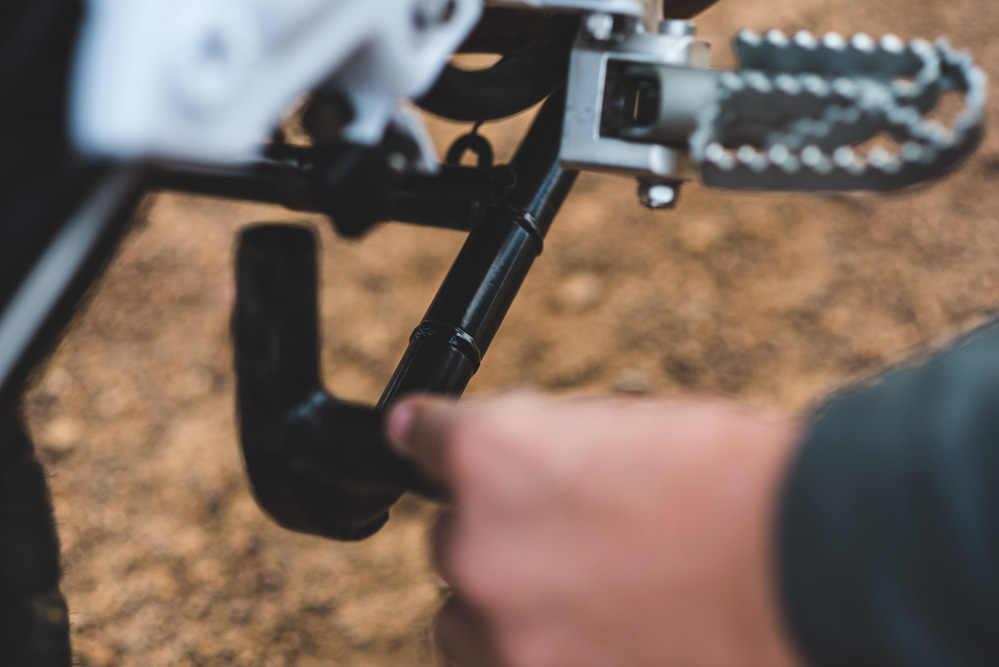
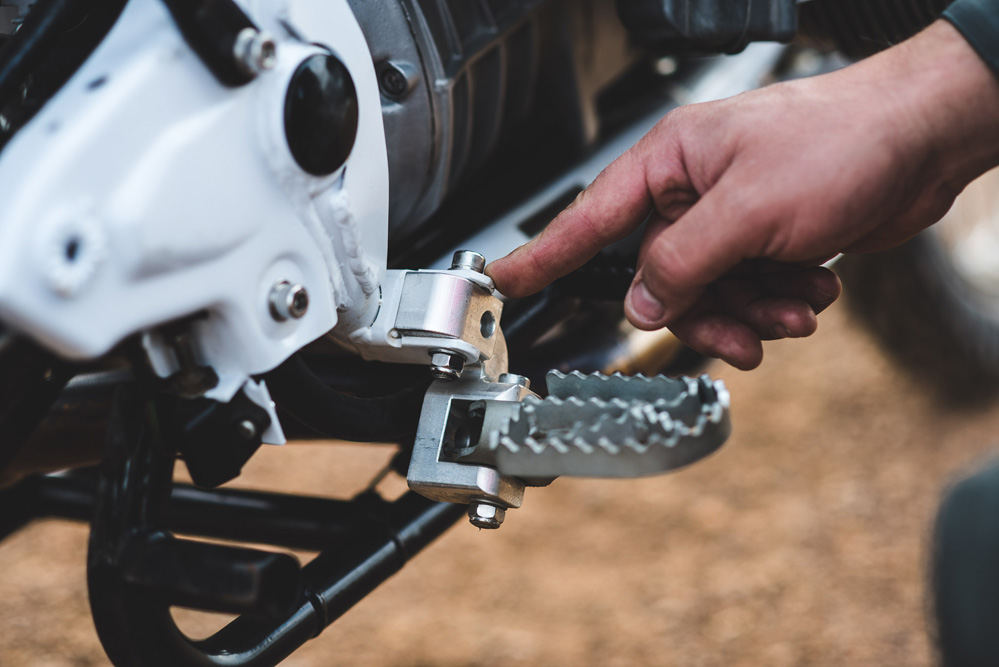
Most of those changes are glaringly obvious, but there’s an endless list of subtle mods too. Mark built a new side stand (and side stand mount), relocating it to further back. The foot pegs have been swapped for burly off-road items, mounted on lowering spacers. And the rear brake lever setup has been modded to keep it safe from rocks.
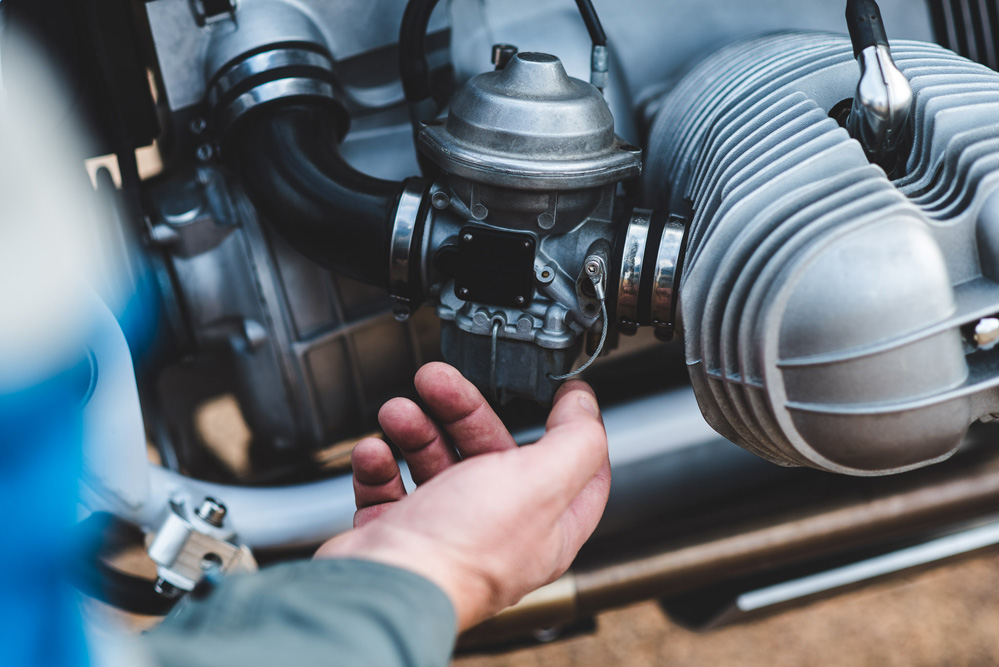
There’s no choke lever up top though—Mark ditched it in favor of small choke pulls on the carbs. He also built custom breathers for the diff and gearbox.
The cockpit’s a combination of original switchgear, a simple Acewell speedo and ProTaper Evo handlebars, attached to custom risers. Also present are foldaway mirrors and a set of Barkbuster hand guards. And both the headlight and spots are LED-equipped.
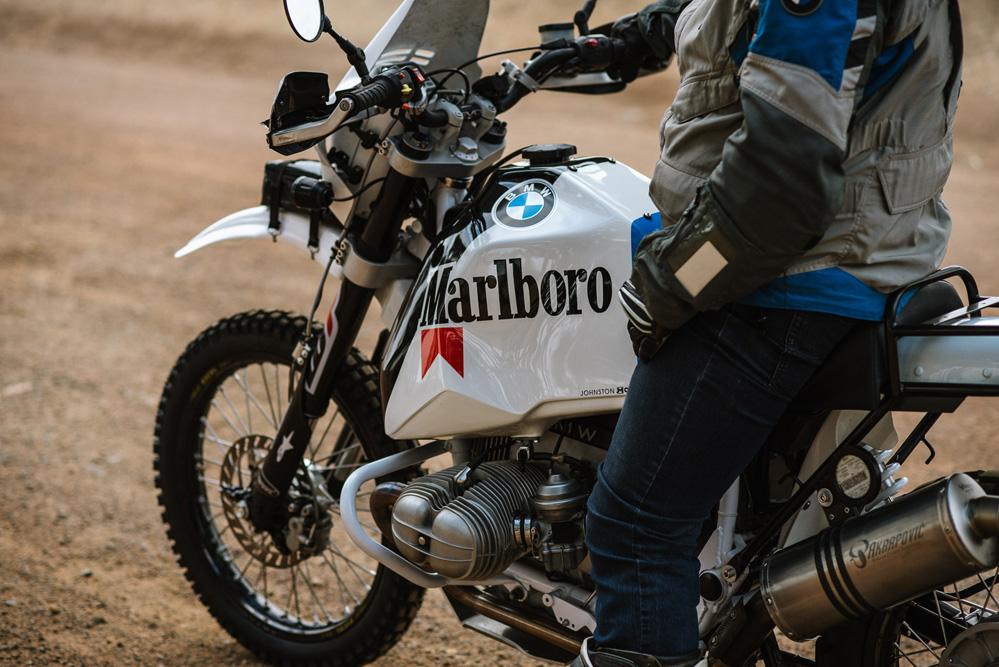
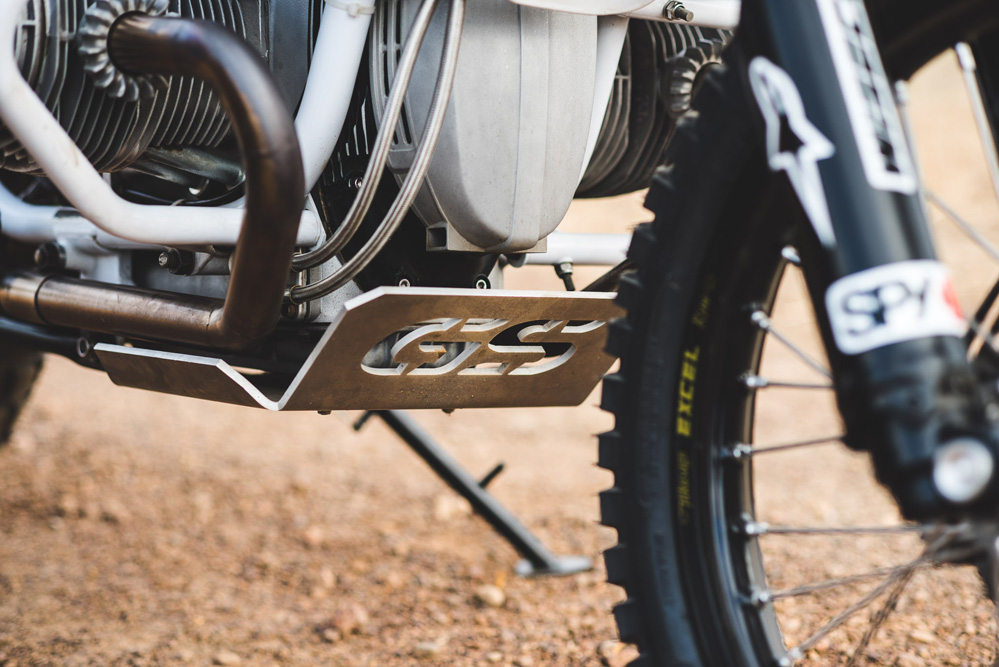
We can also spot crash bars, a sump guard, and support strut for the front fender. It’s clear that Mark designed this R80G/S to go off-piste, which it already has.
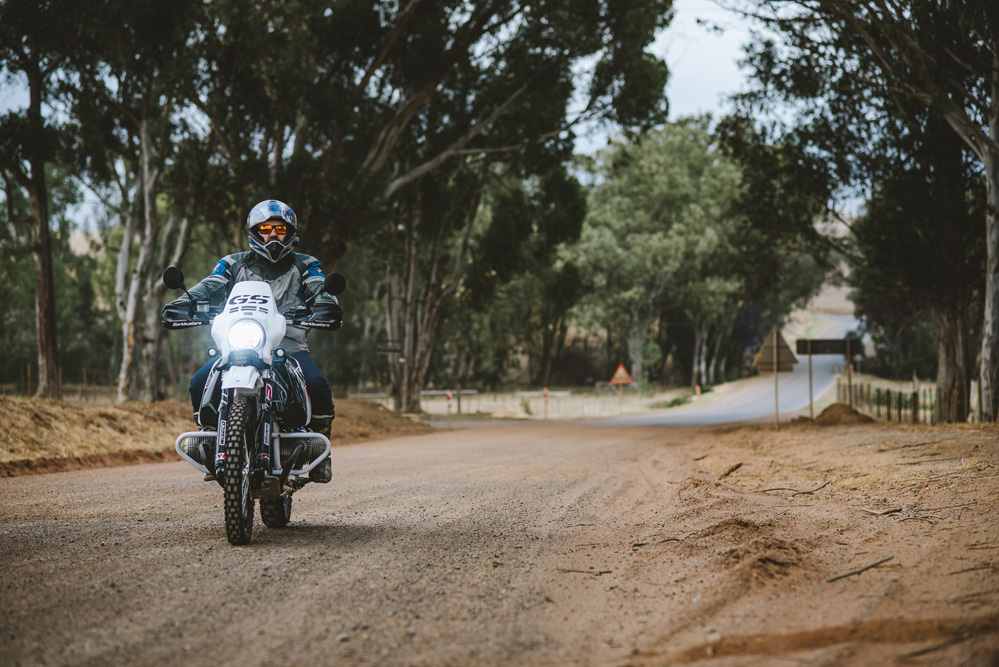
“The bike rides like a dream,” he reports. “With all the changes, you wouldn’t think you’re riding a 37-year-old bike. I put on 4,000 km in no time riding the South African countryside.”
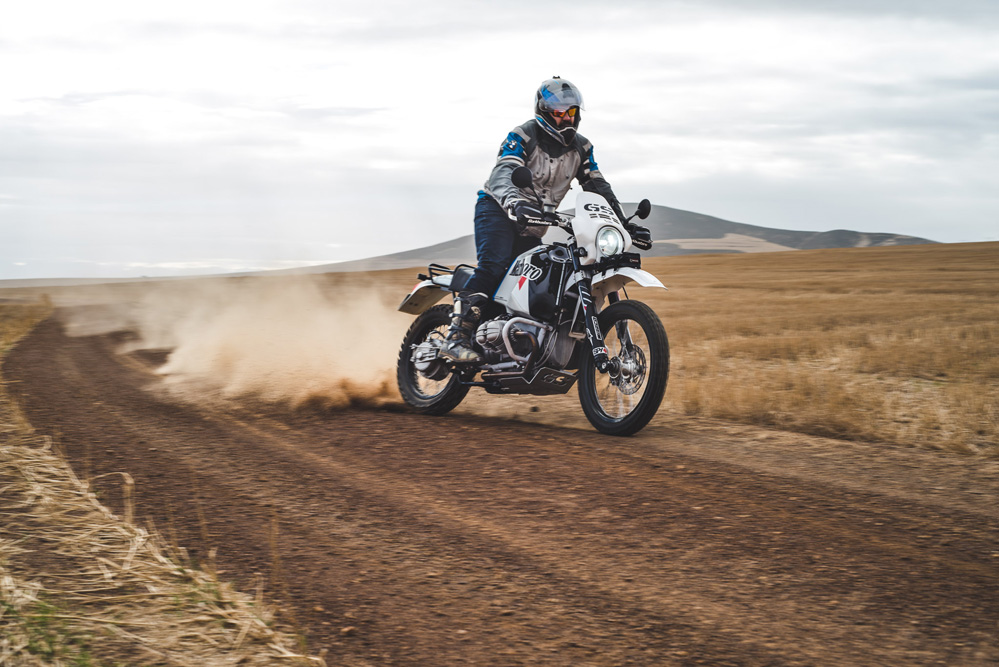
Though it wasn’t Mark’s plan originally, the R80G/S is already sold. And we’re not surprised—even though building bikes is an after-hours endeavor for Mr Johnston, he certainly has the eye, talent and determination to make it work.
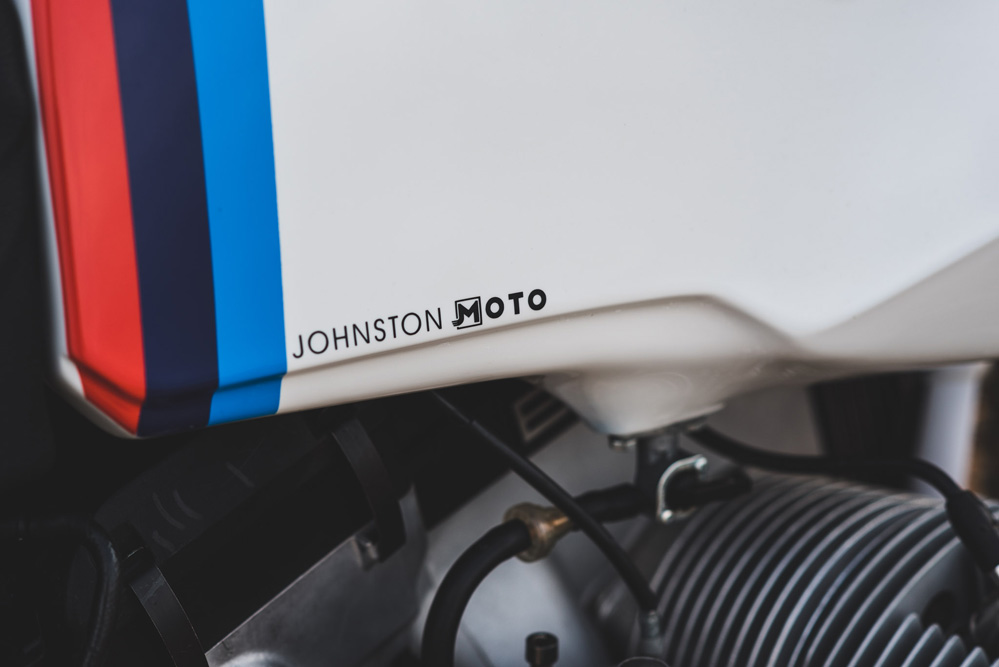
The sale also spurred him on to tackle more projects. So he’s officially launched Johnston Moto, with a view to cranking out a couple of builds a year.
Who else is looking forward to seeing what he comes up with next?
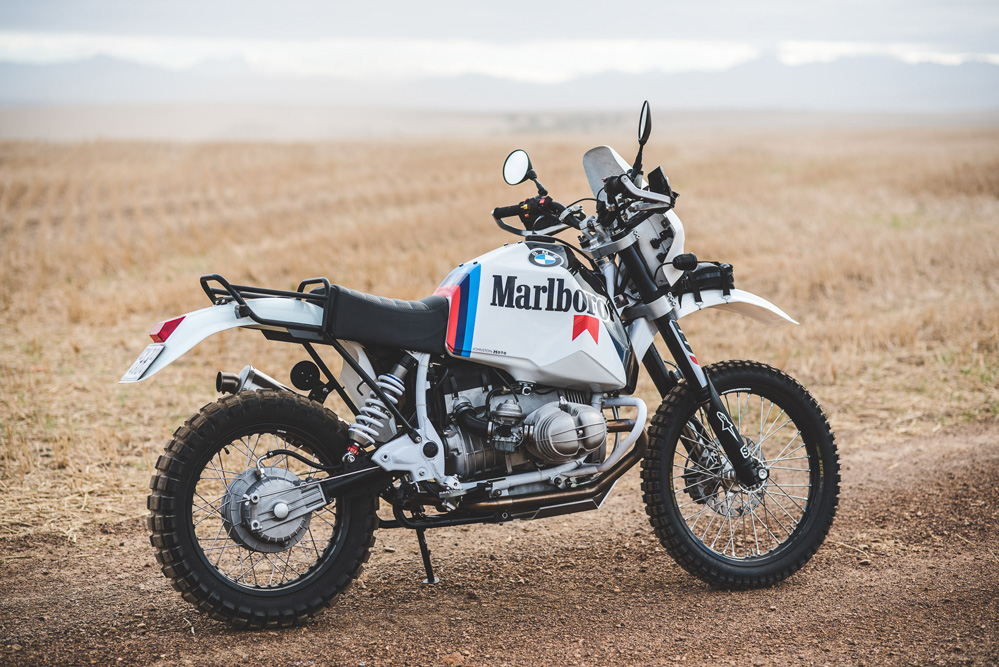
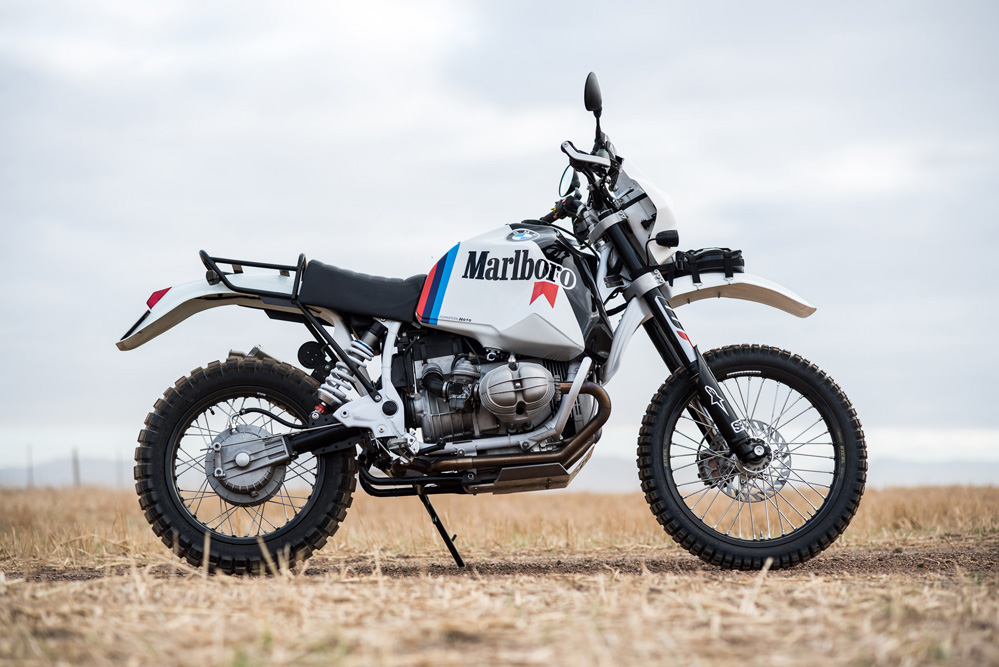
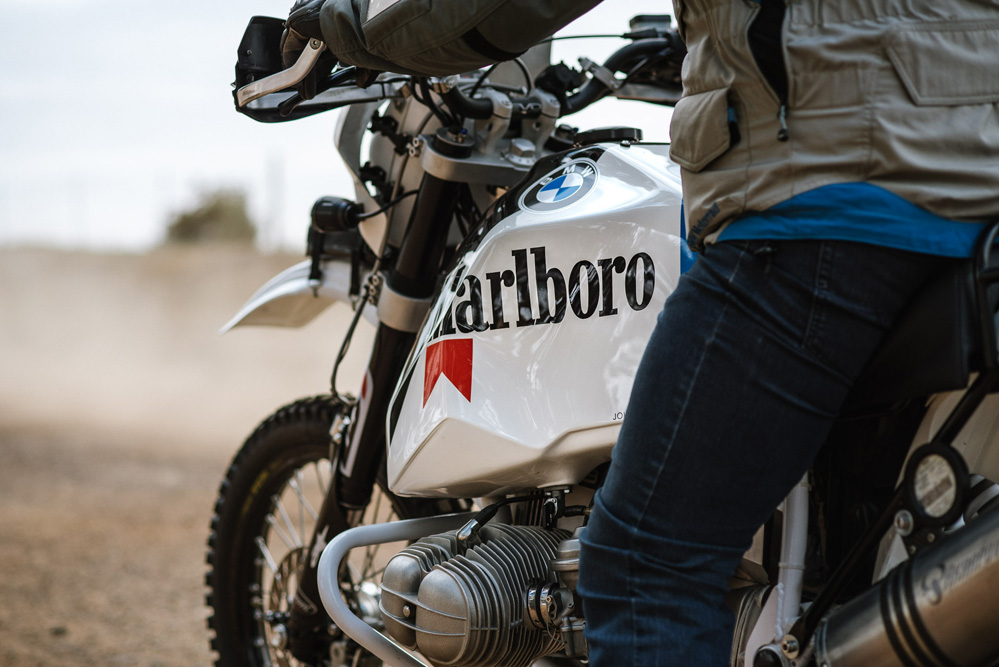
In addition to the mentioned suppliers, Mark would also like to thank Willie De Kock and Ian Blomeyer for their support.
Links:
Johnston Moto Facebook: https://www.facebook.com/johnstonmoto/
Instagram: https://www.instagram.com/johnston_moto/
Images by Devin Paisley: http://devinpaisley.com/
This article first appeared on Bike EXIF and is reproduced with permission.
 Back then, big capacity trail bikes were very capable and efficient, but slightly boring to ride on the road.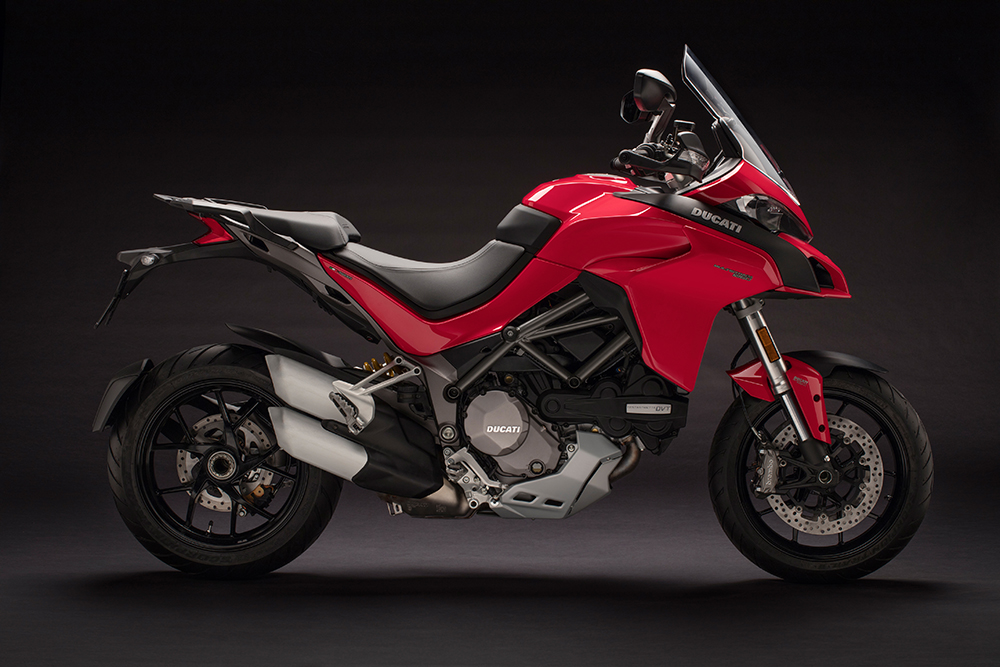
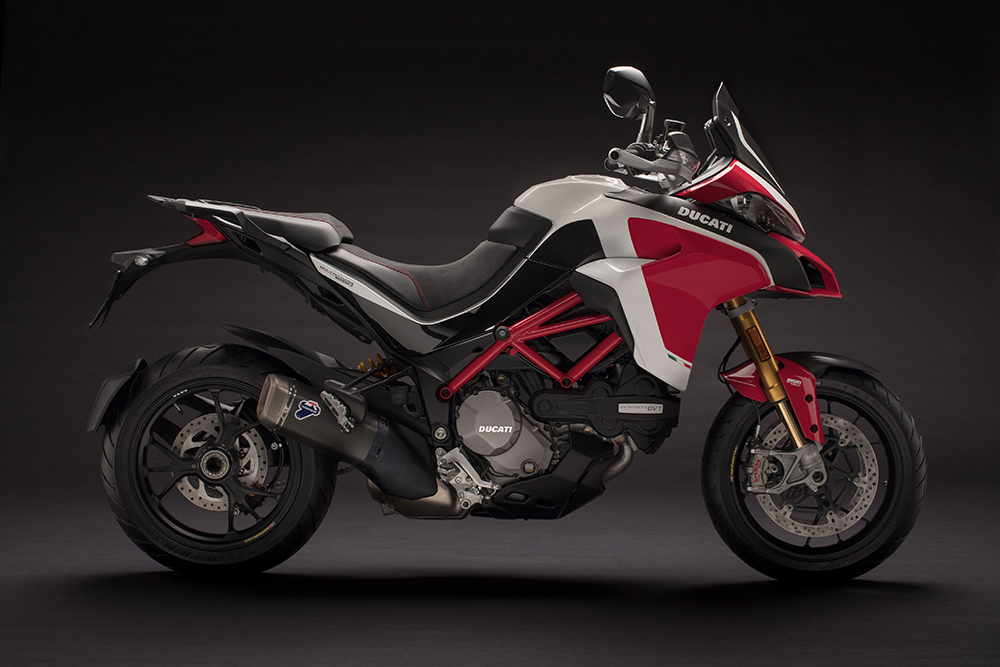
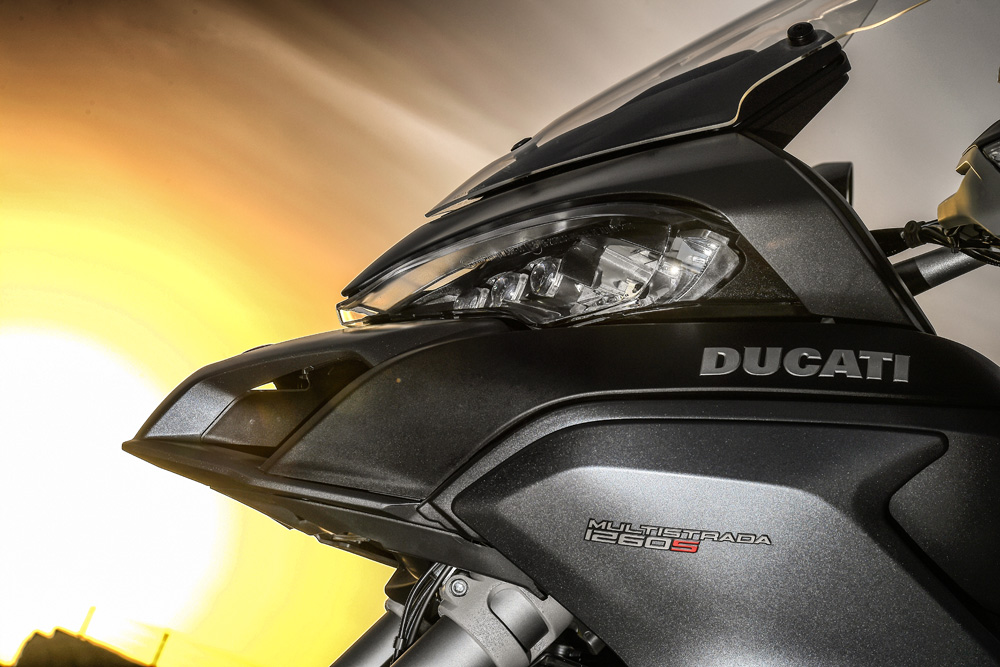
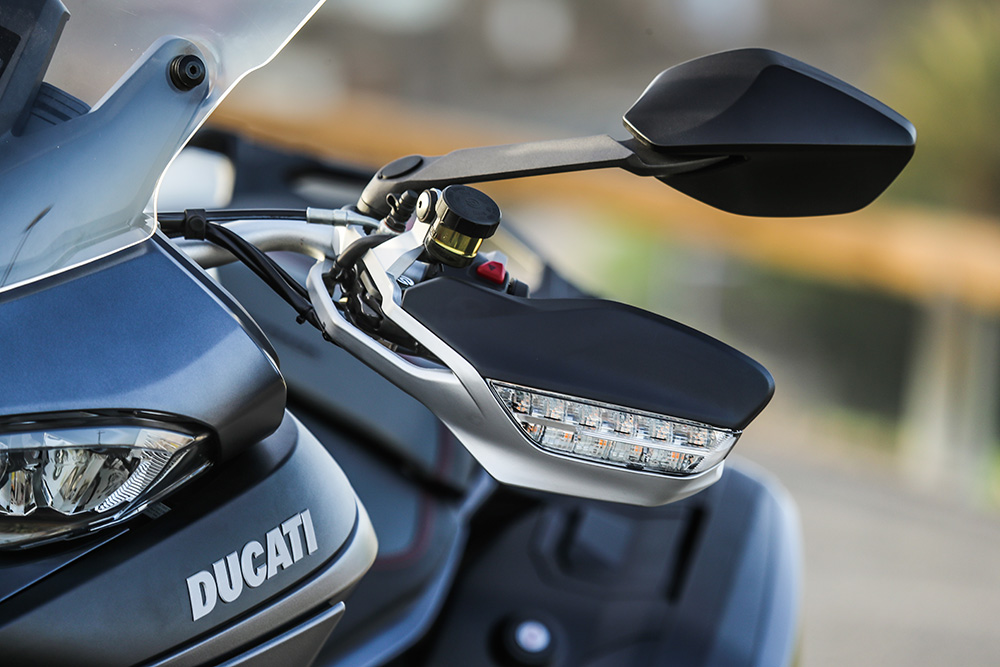
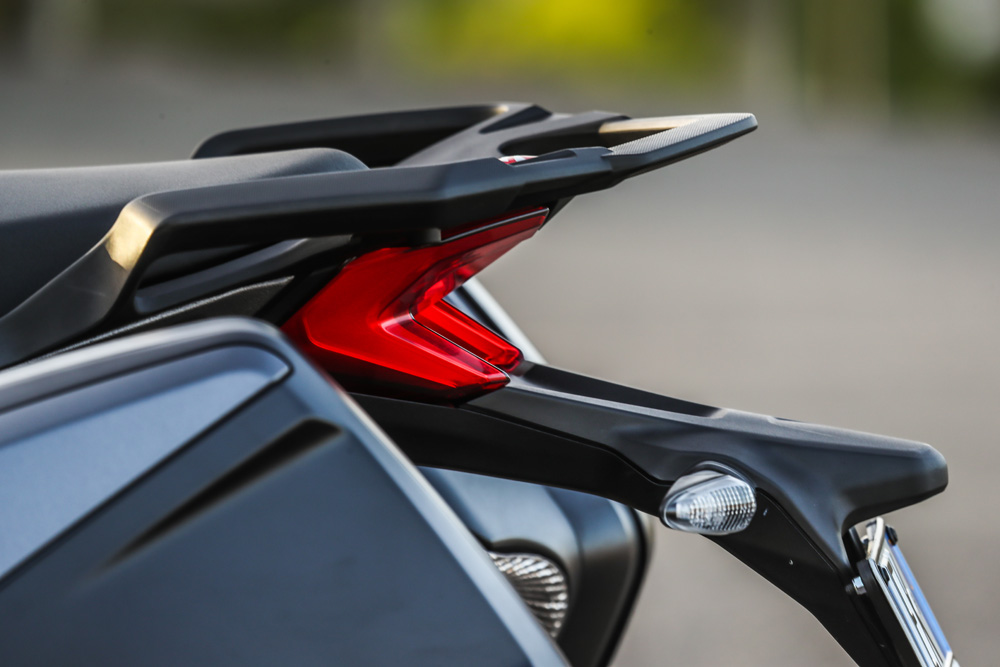
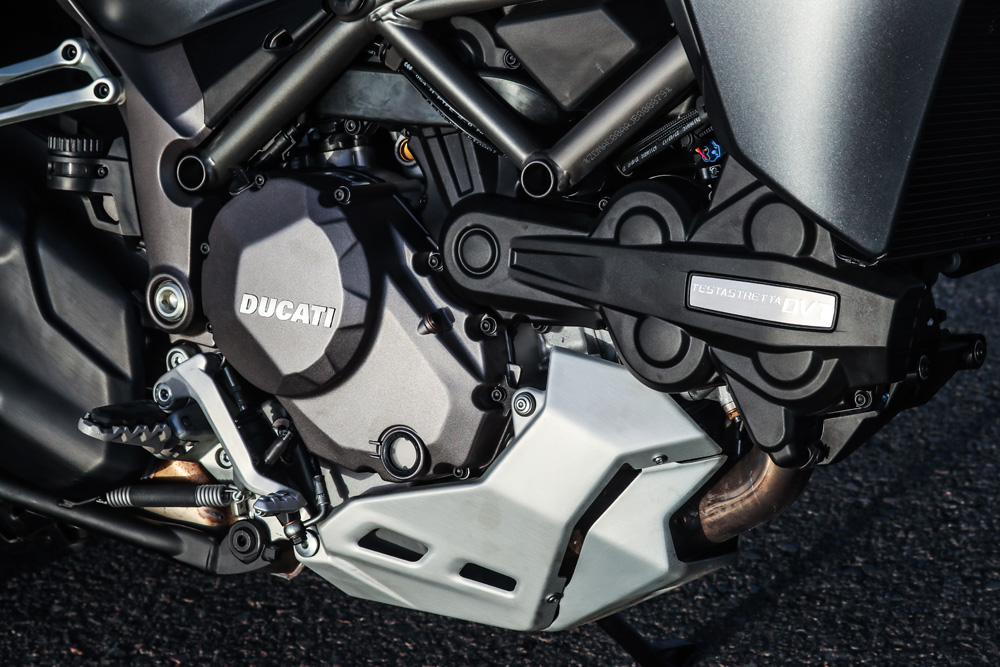
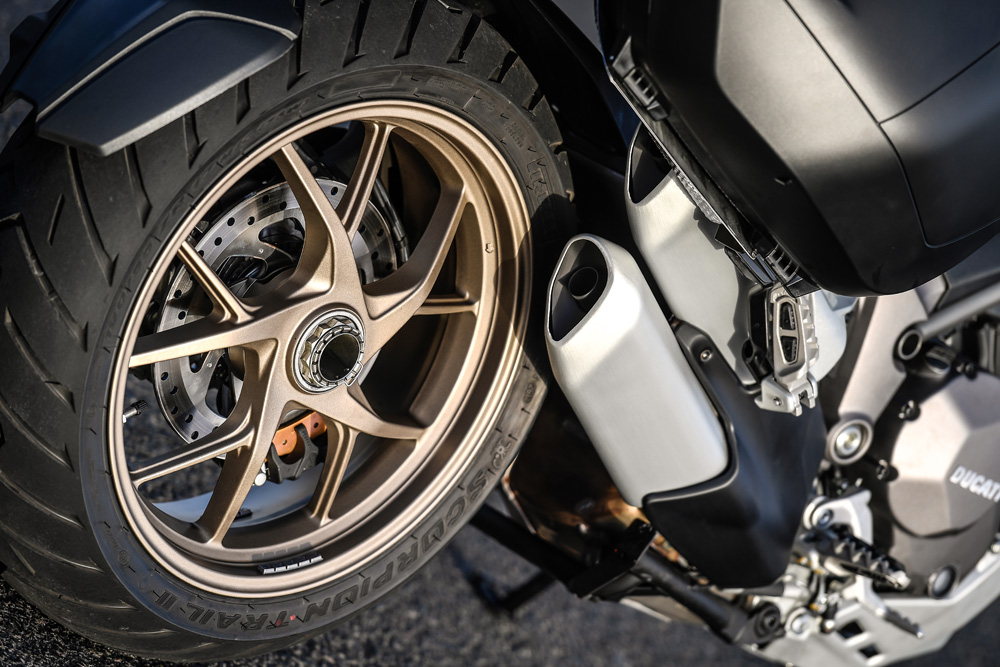
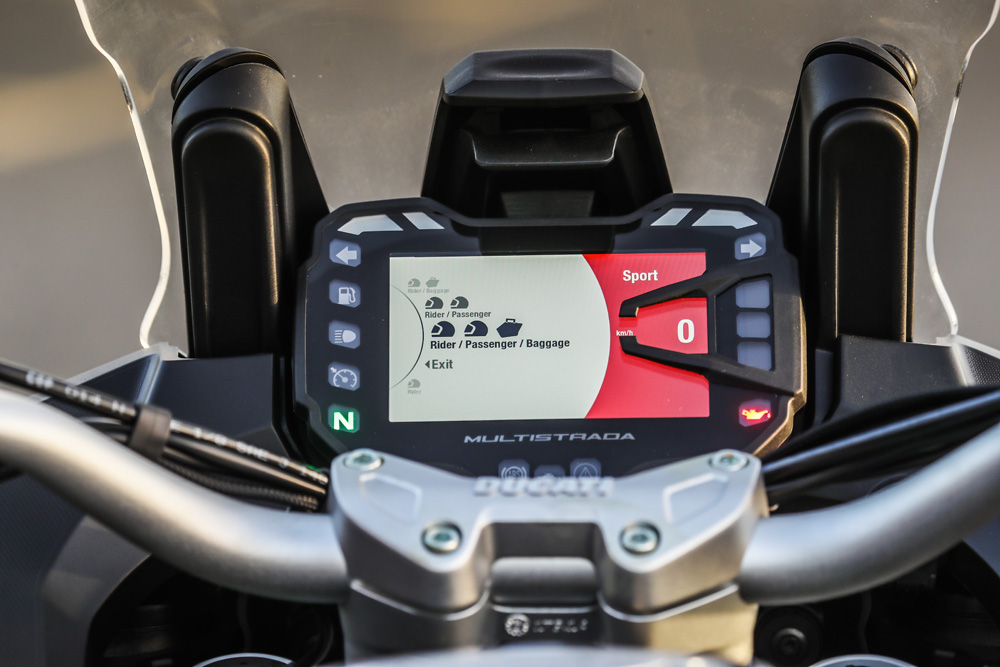
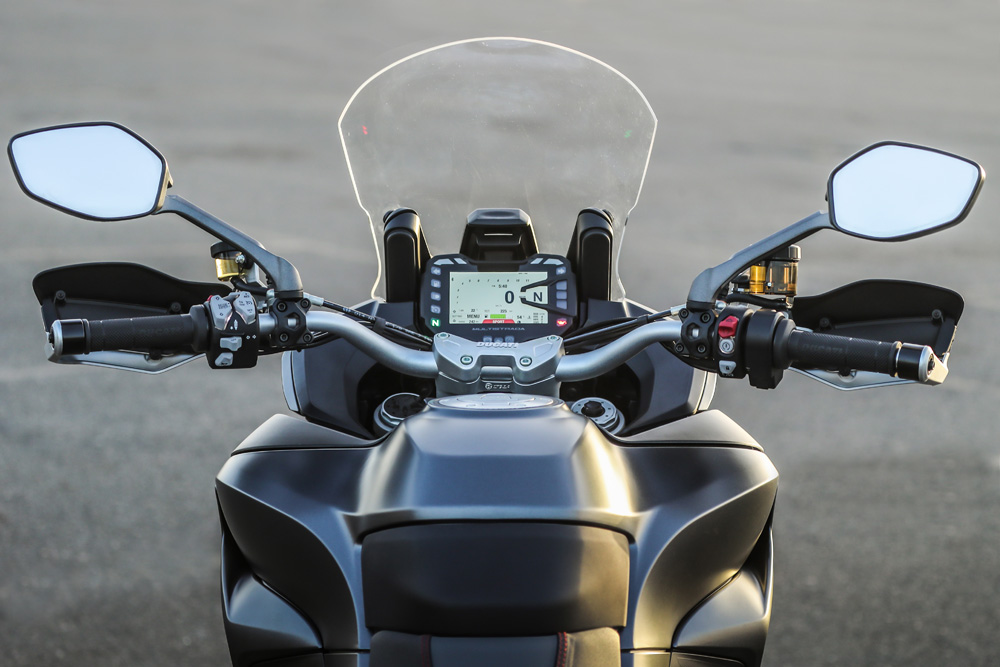 A X-Diavel engine
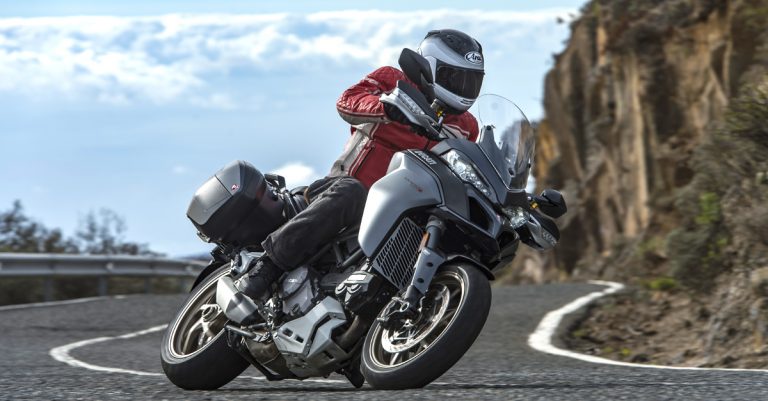
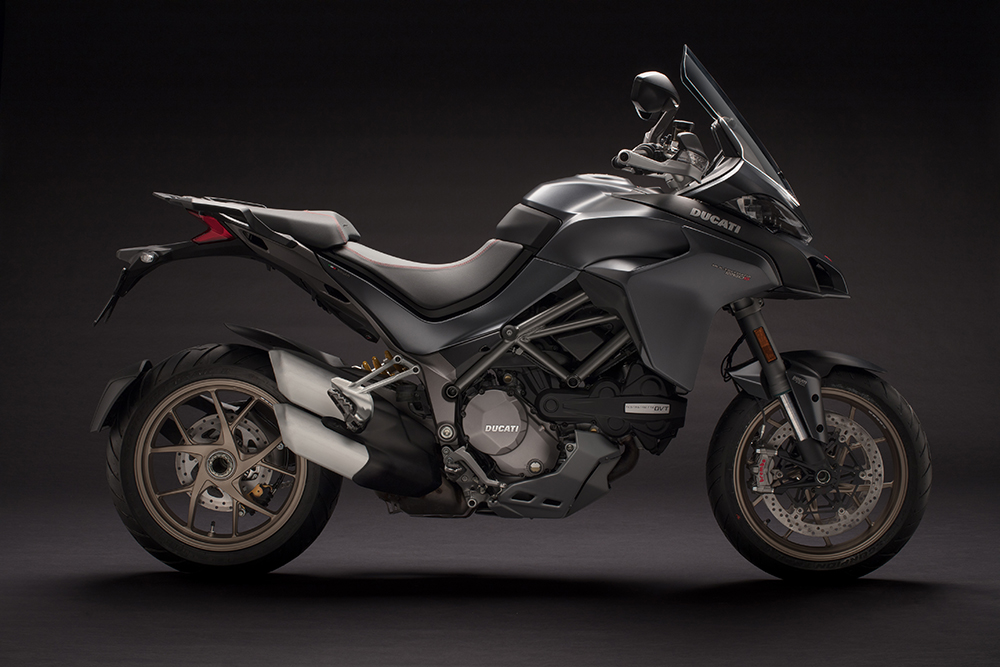
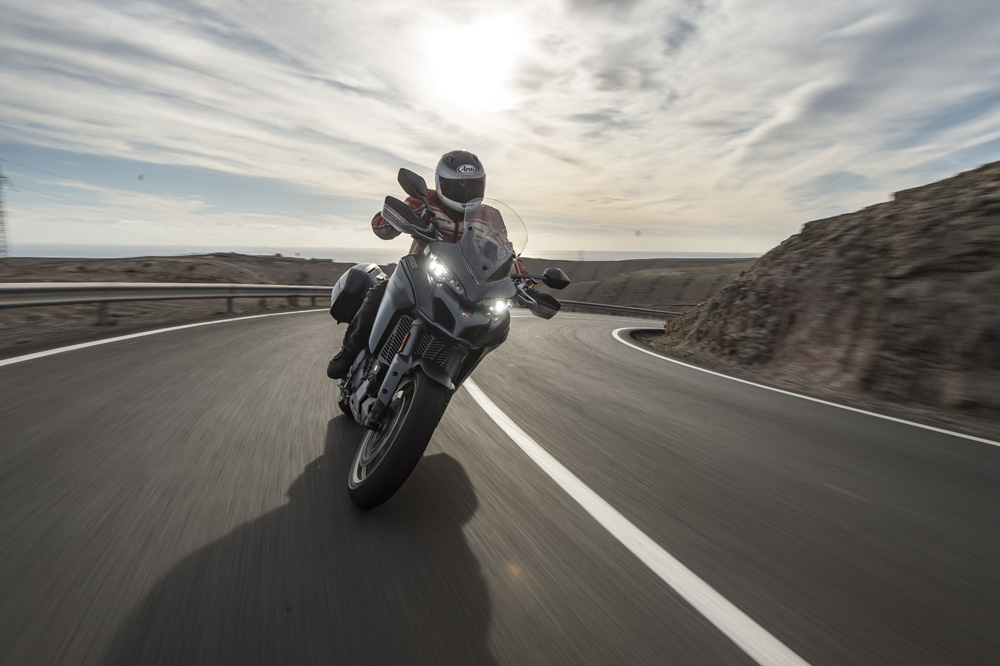 85% of the torque is already available at 3500 rpm. At 5500 rpm, the Multistrada 1260 has 18% more torque than the Multistrada 1200. Above 4000 rpm, there is no big dual-sport bike with more torque than the Multistrada 1260!
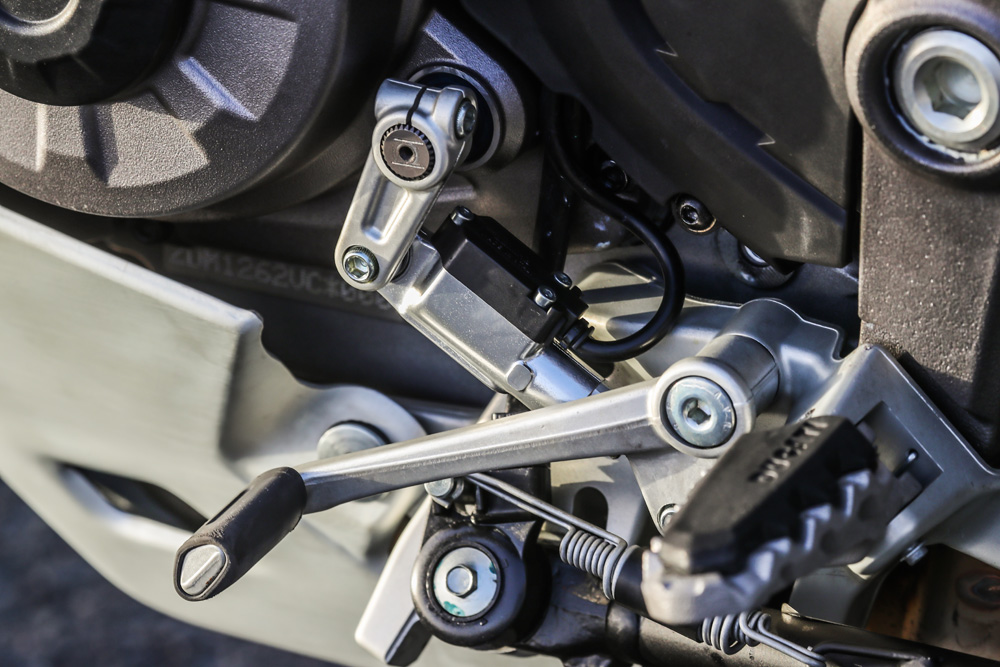
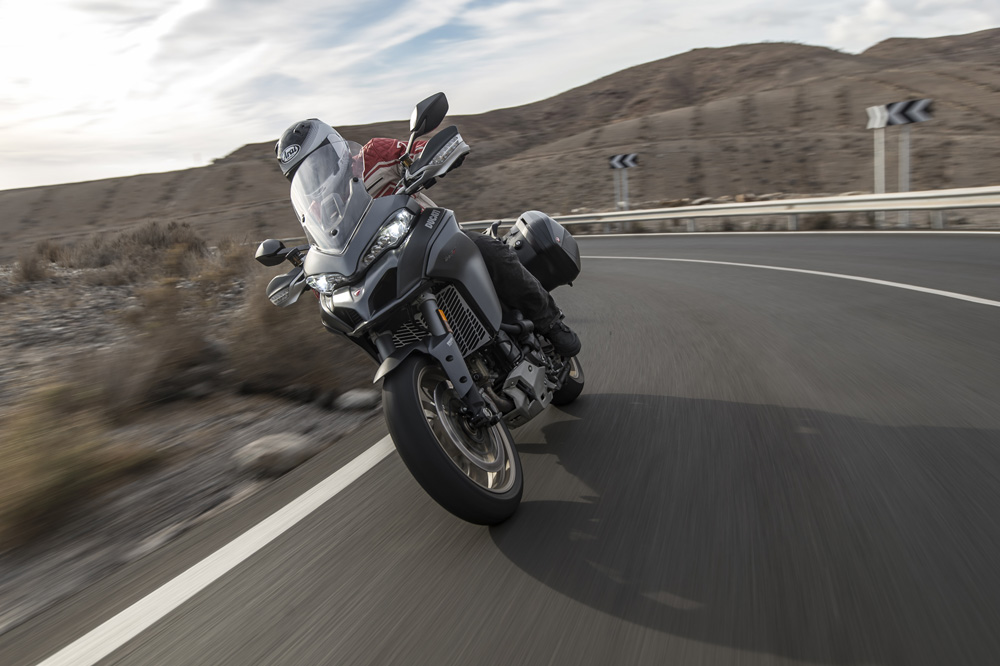 Another great asset is the up & down quick shifter, which is now fitted as standard on the Multistrada 1260. It’s not only fun to use; it’s also extremely efficient, and during our test on the Canary Islands mountain roads, where we spent most of our time in 2nd and 3rd gear, I quickly dispensed with using the clutch, even when down-changing to 1st gear in some of the tight hairpins.
 A very wide range of capabilities
 Hardcore riders will be able to use the TFT dials to access and fine tune chassis set up. For an aggressive riding style the suspension works best set at the “hardest” setting, and the pre-load needs to be adjusted too. Even in that configuration, the front end lacks a slight bit of feedback. The rear shock, managed by the electronic suspension SkyHook Evo, can be a bit too soft in rebound, giving the bike a bit of movement mid corner.
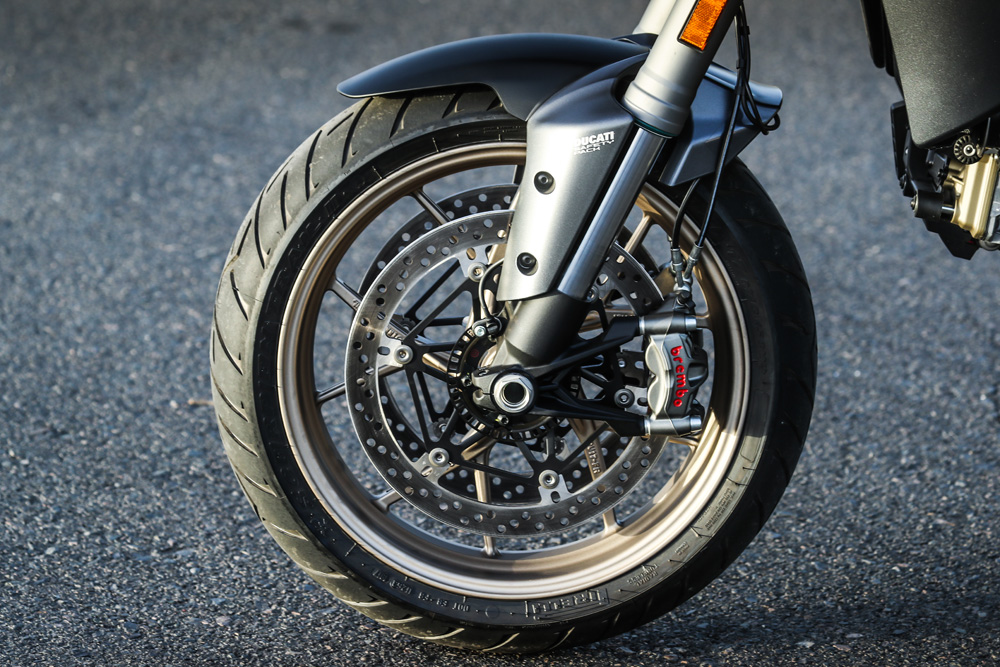
 The amount of power, the real ease with which it turns, the neutral riding position, the great brakes and grip from the Pirelli Scorpion II tires: so, as the pace gets faster and faster you end up expecting the same feedback as a proper sport bike. Hardcore dual sport riders will find some relief in the Pikes Peak version of the Multistrada 1260.
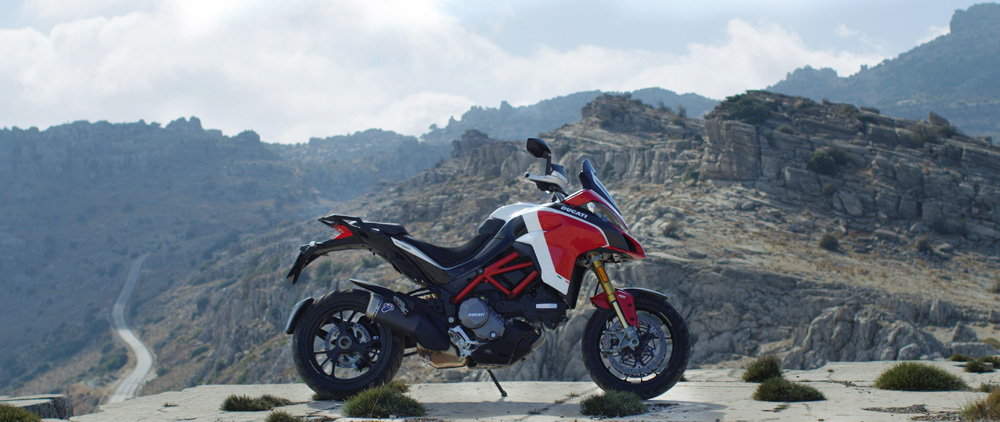 During our ride, we recorded 6.6l/100 km on the compute – enough for a 300 km plus fuel range. This was with some seriously spirited riding. The Multistrada 1260 does not pretend to be a cross-country traveller, the Multistrada Enduro and Enduro Pro remain in the range, although they stick to the 1200 engine.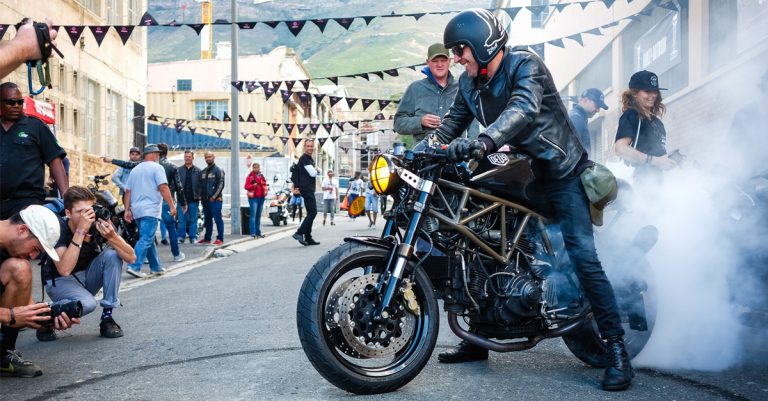
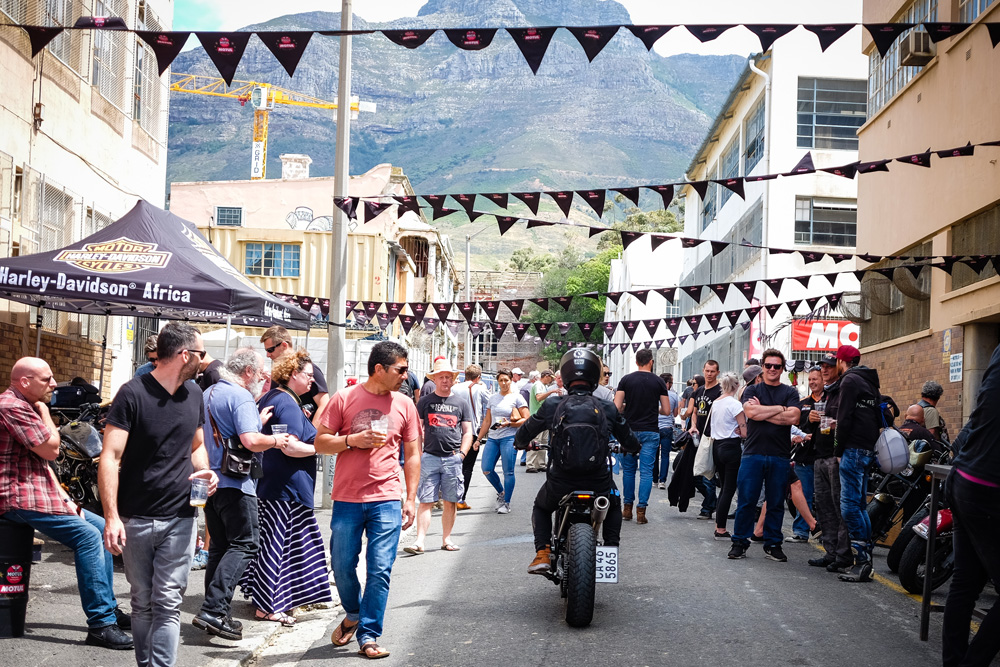
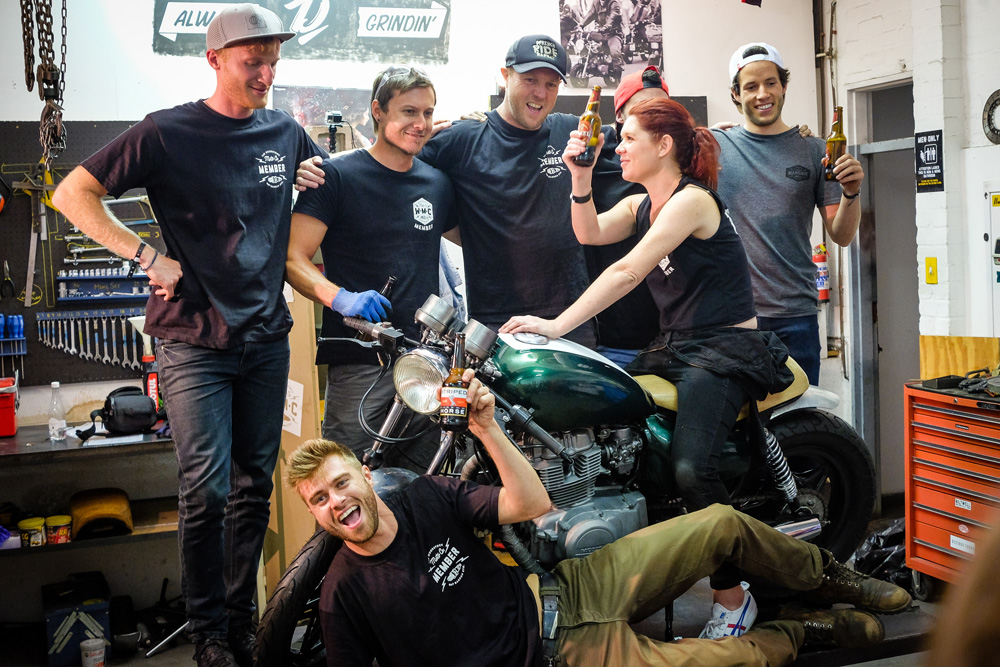
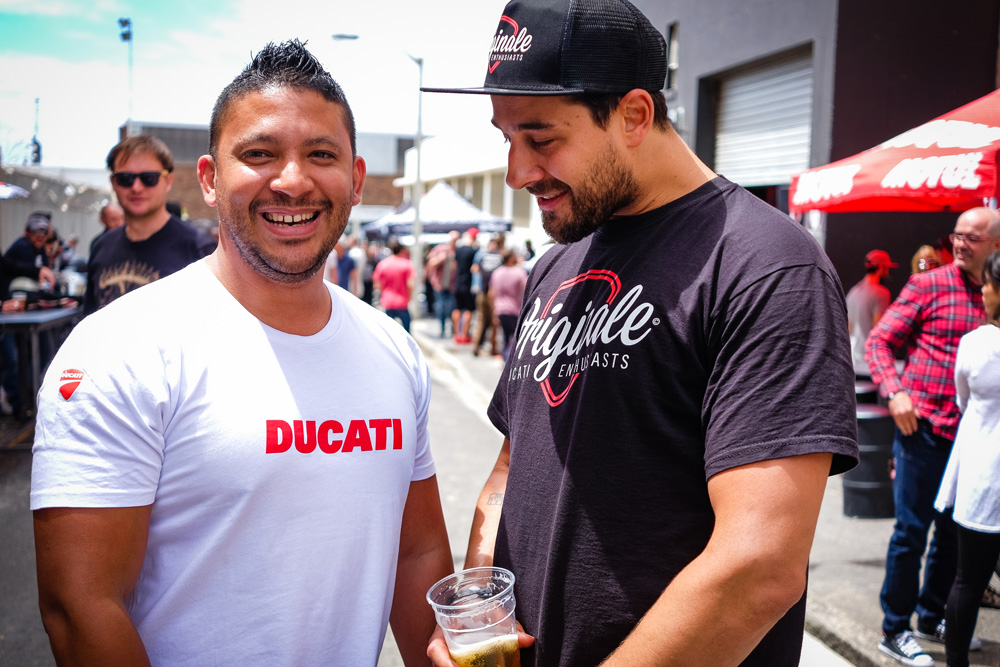
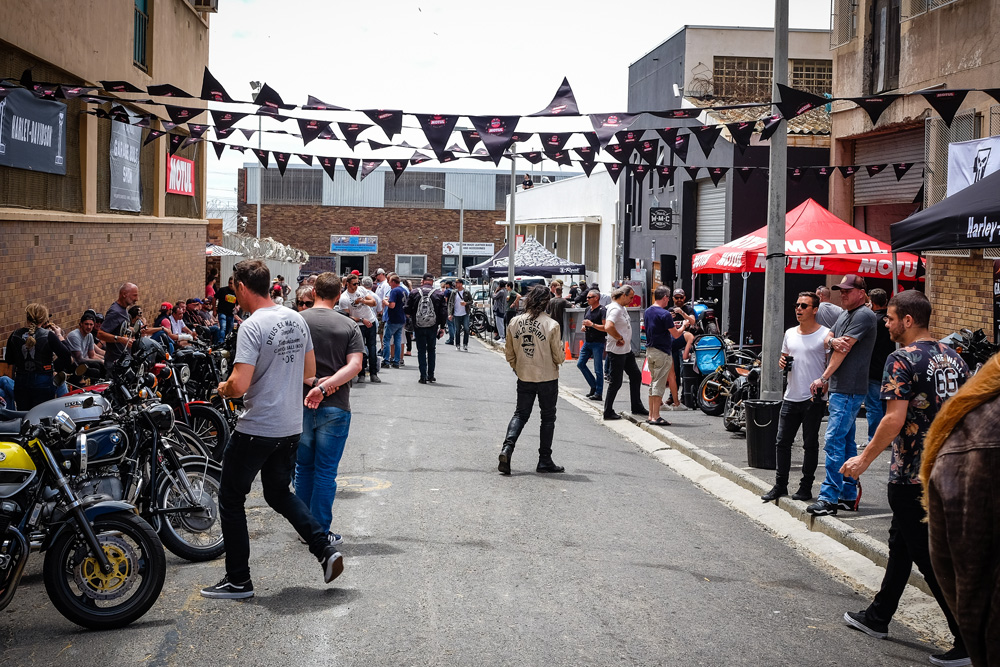
 But for one afternoon in early December, their activities spill out of their front door, as half of Barron Street is shut down for the annual Garage Built Show. A massive moto-themed street party—the only one of its kind in Cape Town—the Garage Built Show is an amplification of what the WMC is all about.
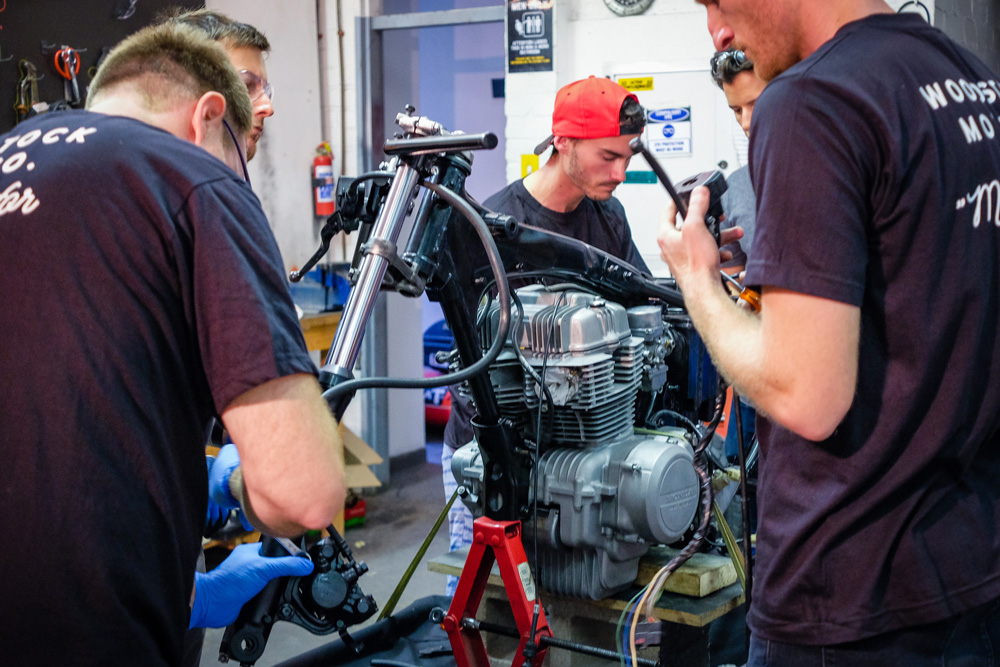
 I get roped in each year to curate the custom bike exhibition—one of the core features of the show. So I get a unique look at what goes on behind the scenes too. In the days leading up to the event, the WMC crew is tasked with pulling off a small miracle; transforming their warehouse-style workshop into a festival-friendly space.
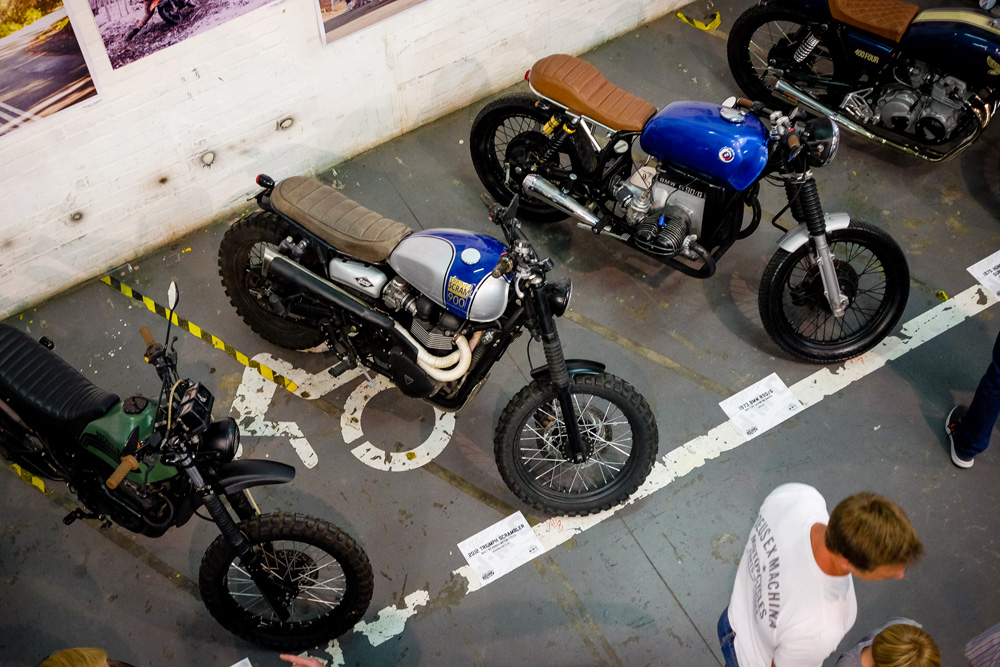
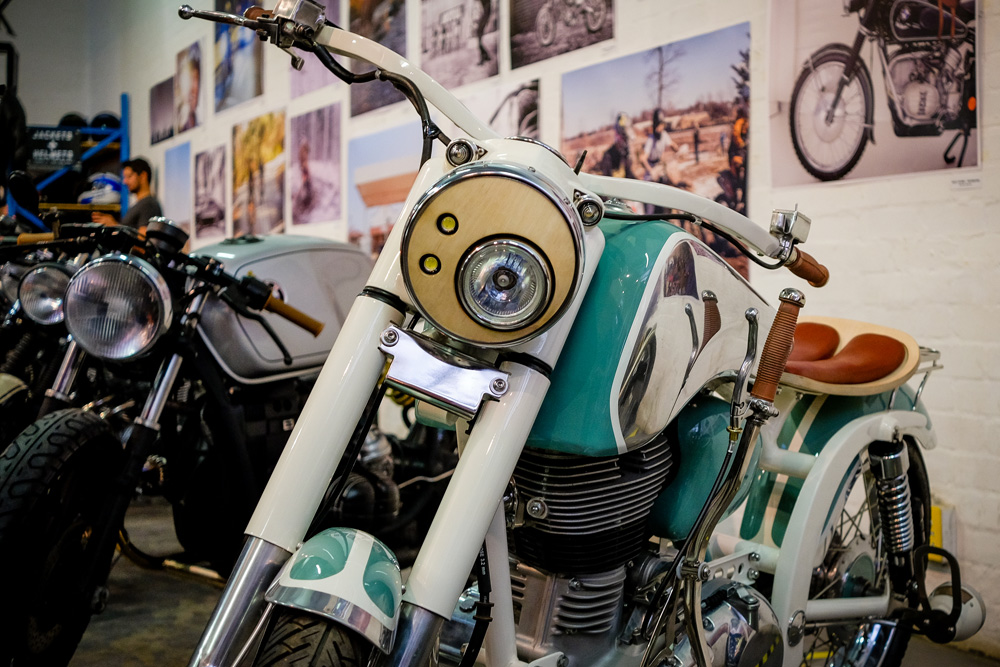
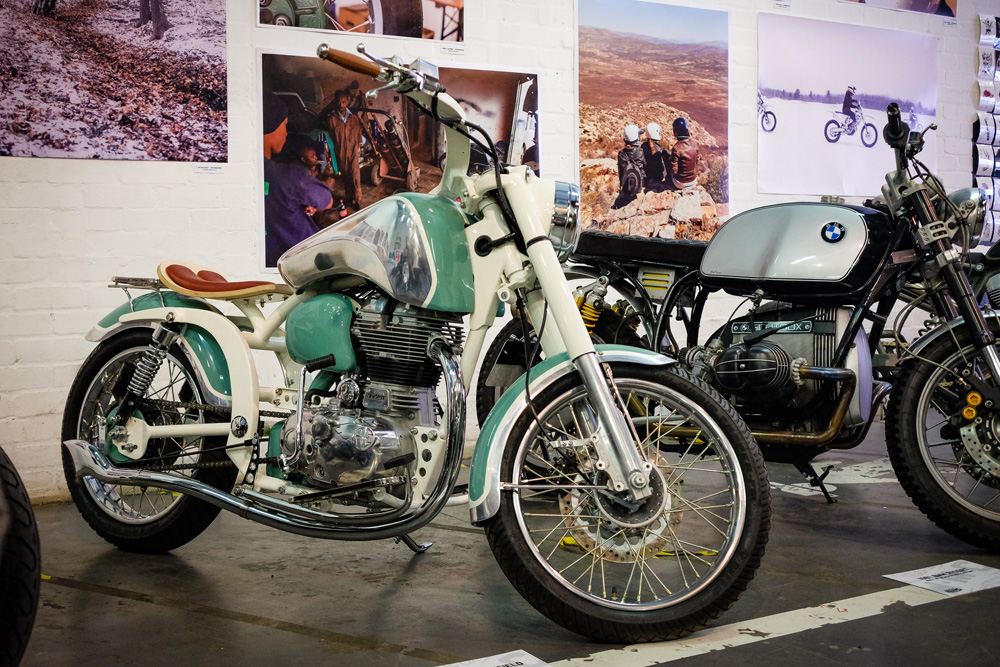
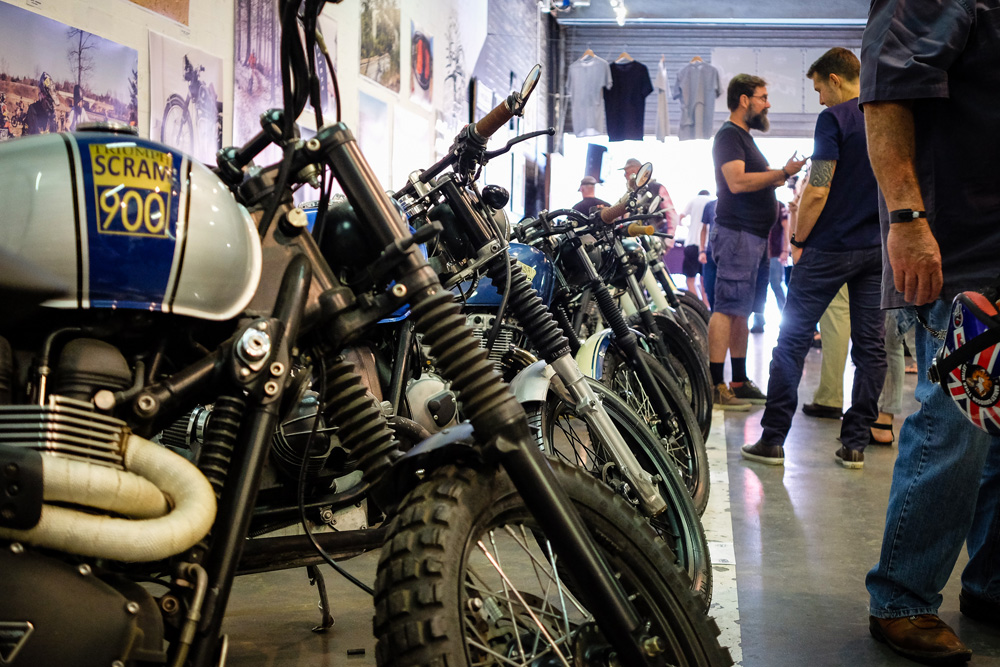
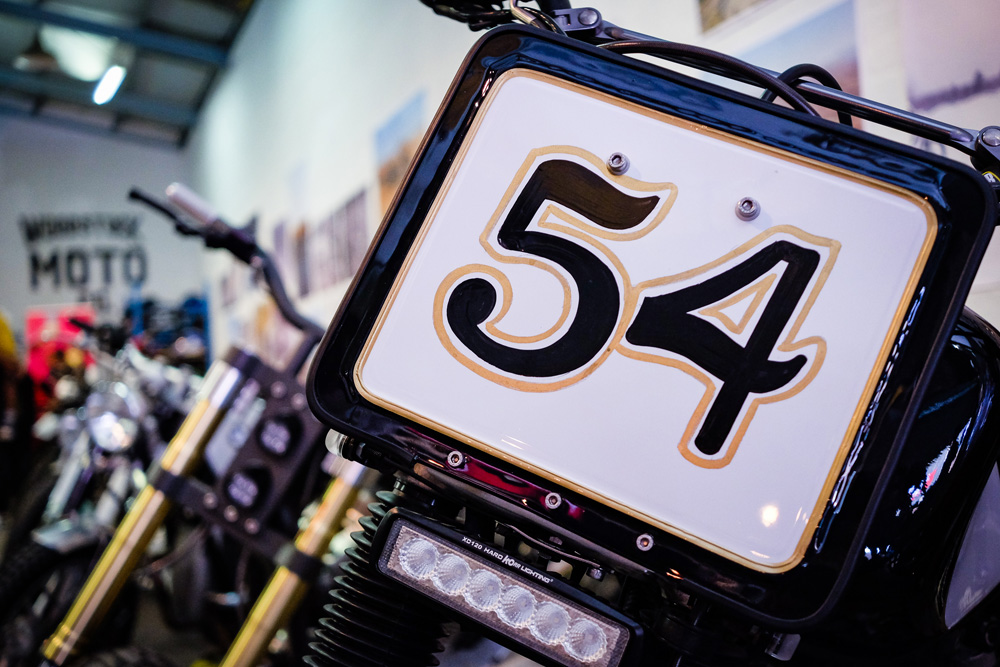
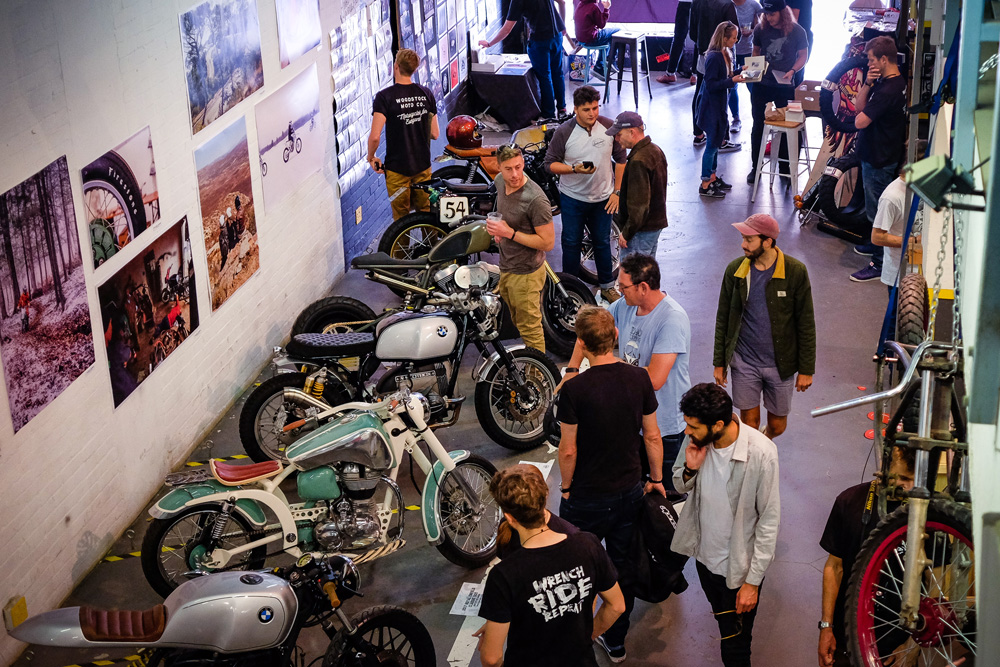 This year—the show’s fourth—eleven unique custom motorcycles dominated the WMC’s main floor. There were bikes from pro and garage builders, spanning multiple styles, marques and ages. Highlights included a brand new Royal Enfield with heaps of hand-shaped bodywork, a burly Harley-Davidson Sportster, and an 80s-model Suzuki GS450 that was built entirely at the WMC by one of its members.
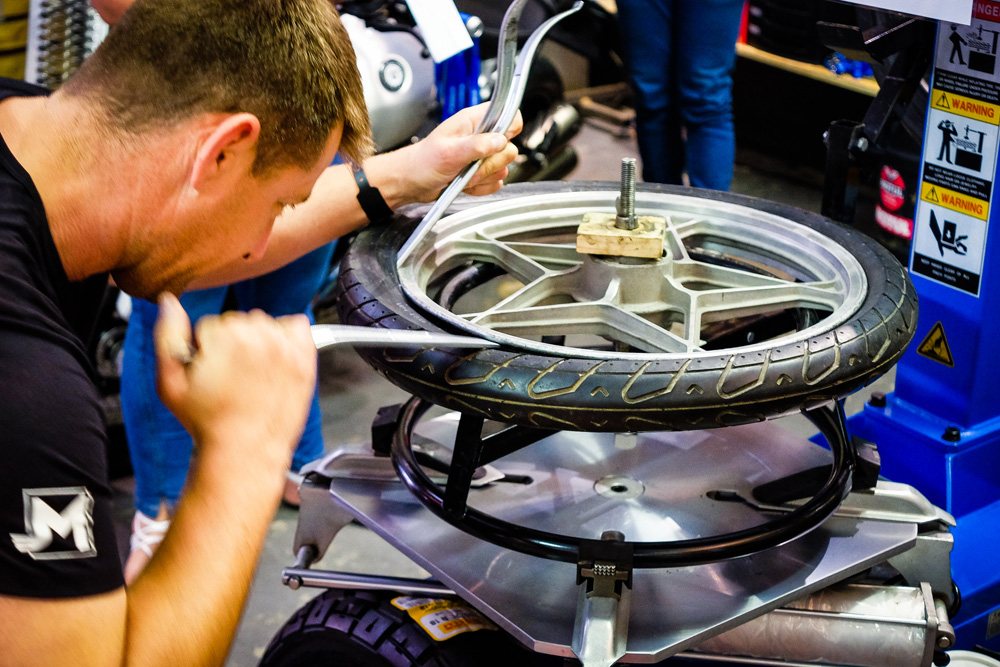
 Alongside the bikes, photography and illustrations from multiple photographers and artists lined the wall. WMC resident Greasers Garage and Cape Bike Tyre were on hand to show off their wares to the public, with the latter hosting a tyre changing contest. And in one corner, WMC members completed a live custom bike build in front of scores of curious eyes.
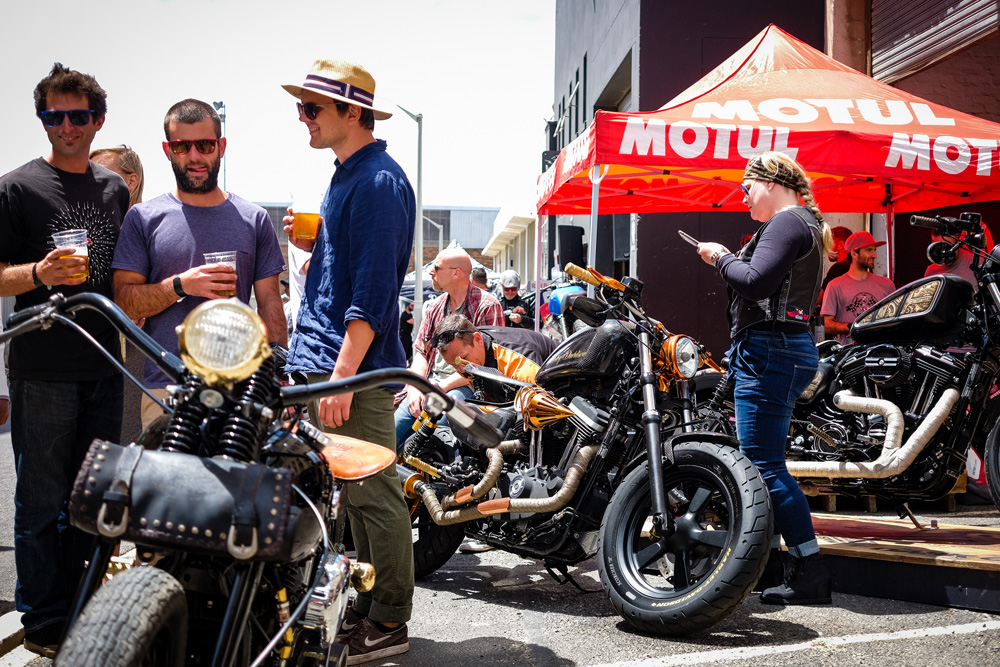
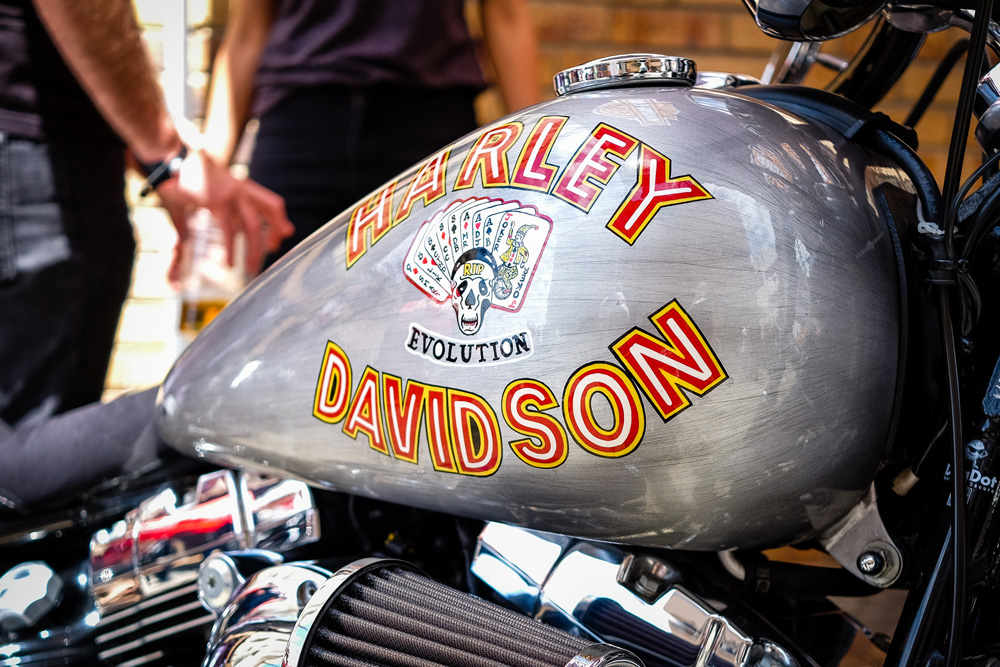
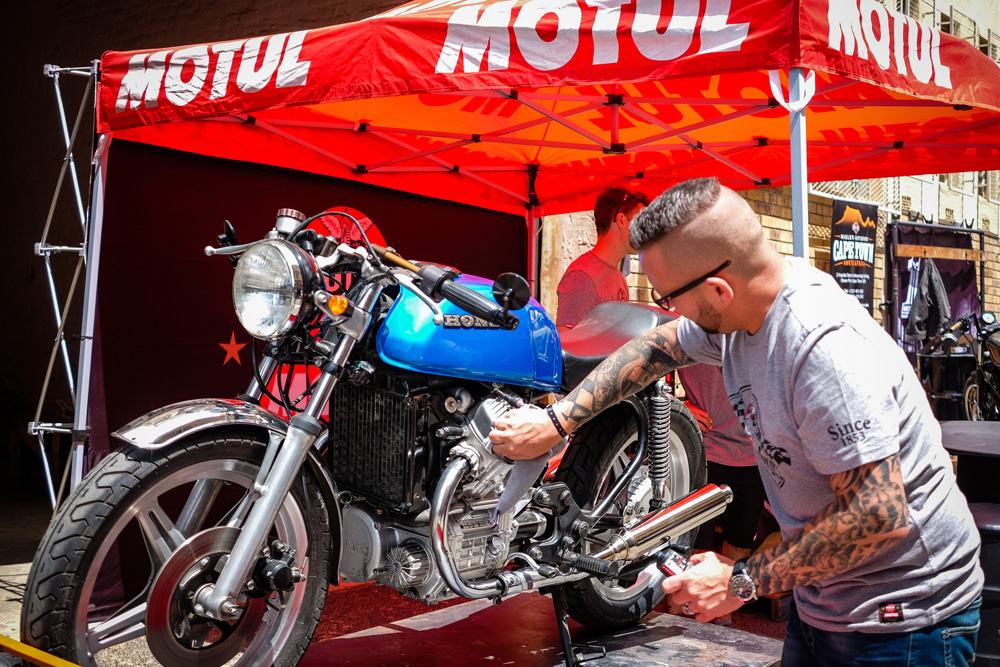
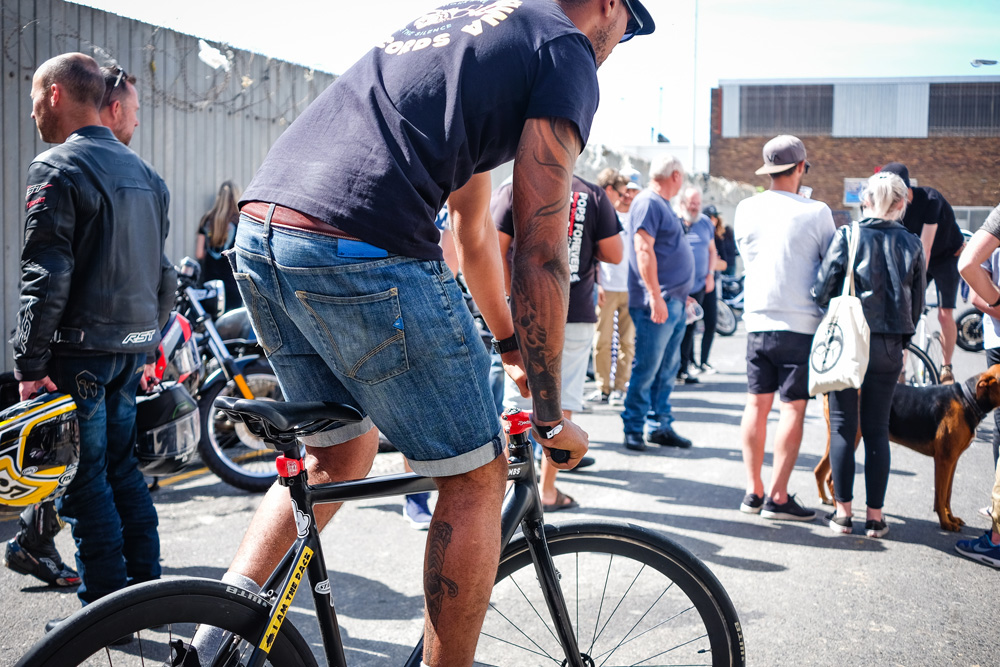
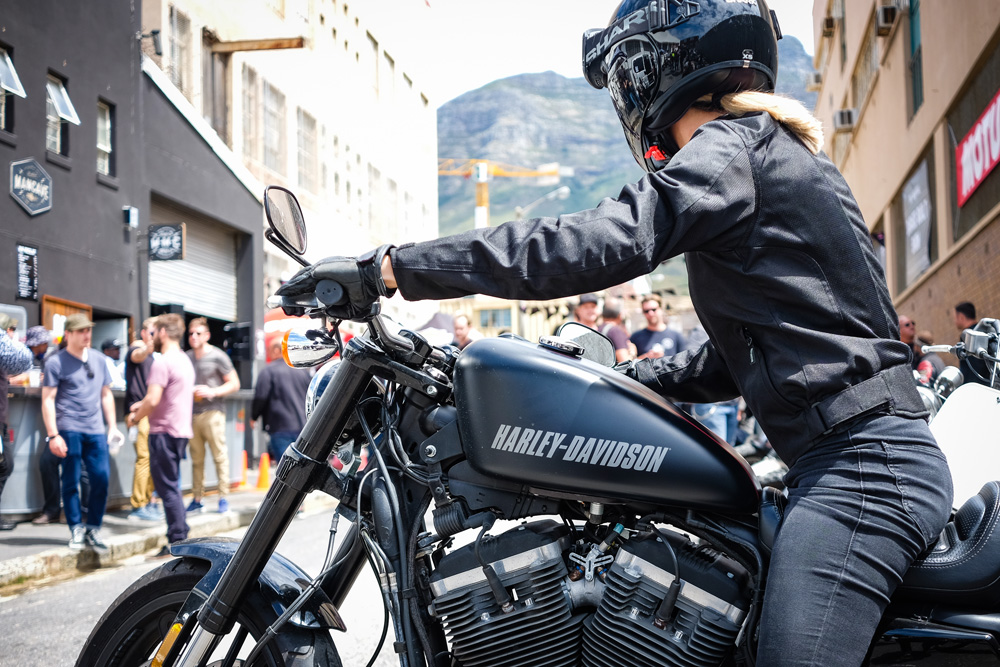
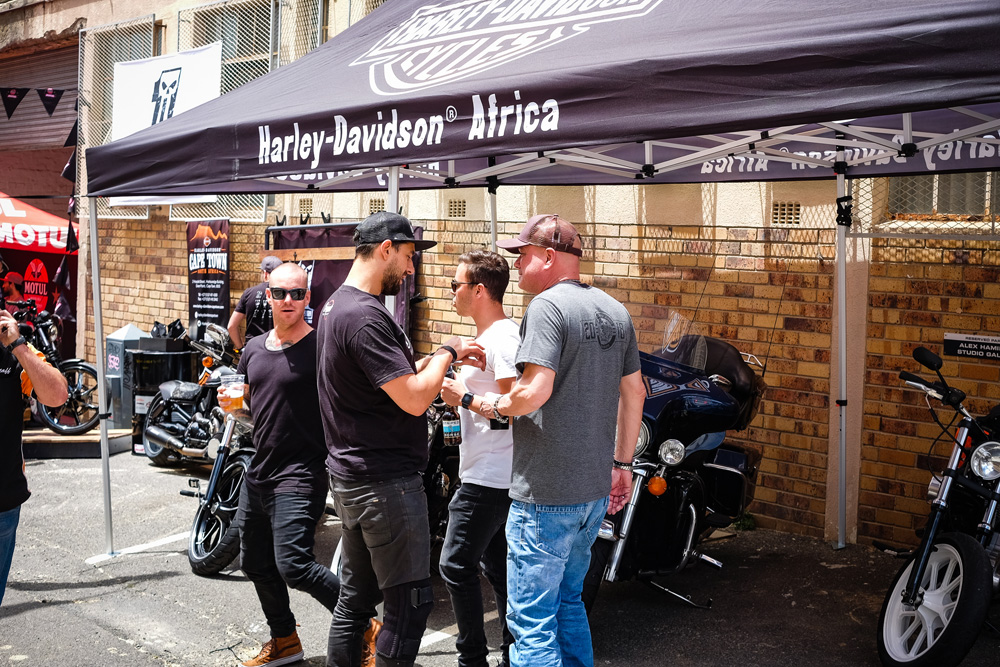
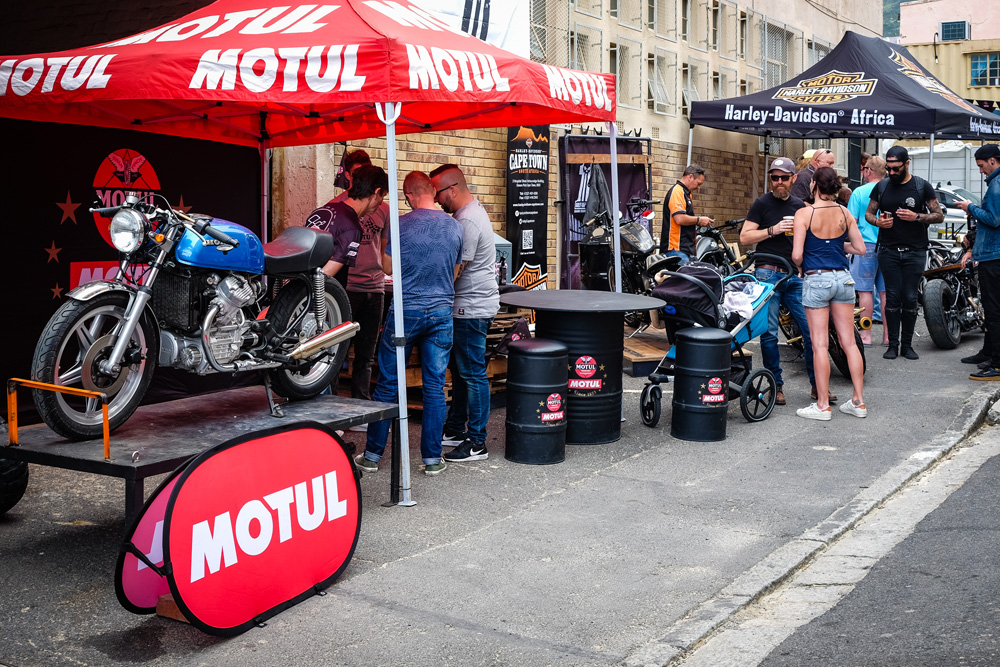
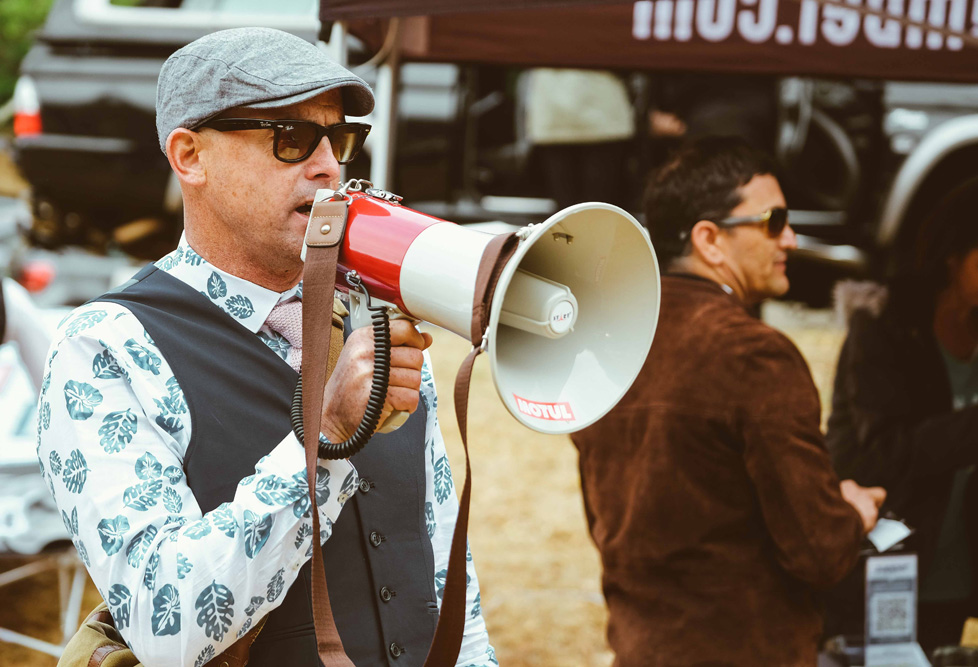
 Outside, headline show sponsor Motul had their full range of products on display. They also ran demos throughout the day, treating a Honda CX500 café racer to various cleans and polishes. Fellow sponsors Harley-Davidson Cape Town brought down some of their latest models, and hosted a special custom Harley parking area. Also on hand were Deus Africa, Journeymen and local bicycle company Rook Cycles, who held a track stand contest throughout the day.
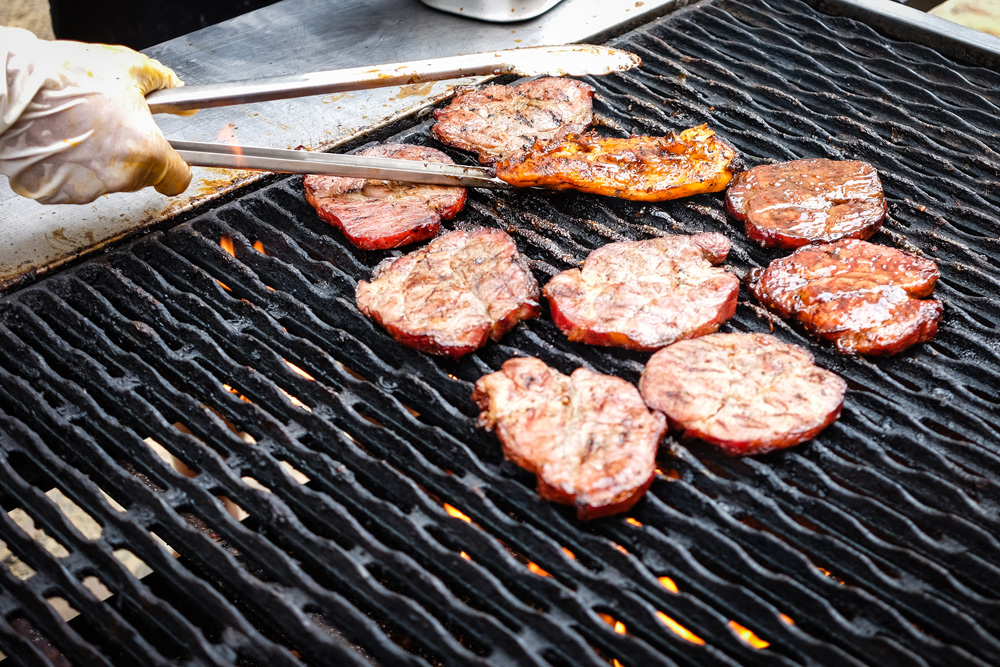
 Visitors were fed tasty pork neck and chicken burgers by Tailgate Foods, and hot dogs from Baguette Sandwiches. Tribe Coffee handled caffeine-related refreshments, Red Bull ran a fully licensed bar, and Striped Horse kept the liquid gold flowing.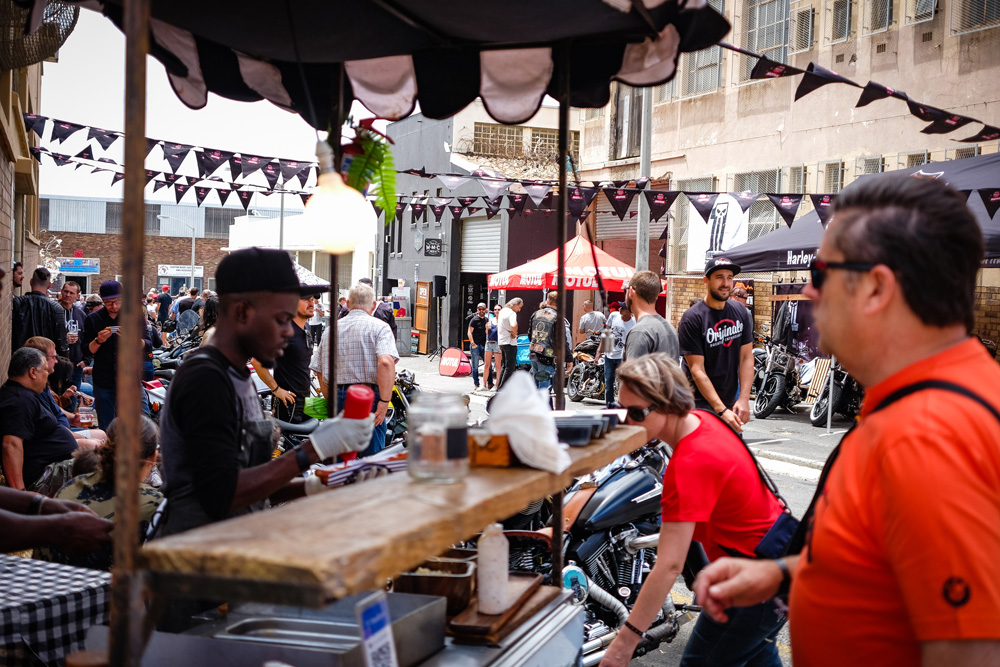
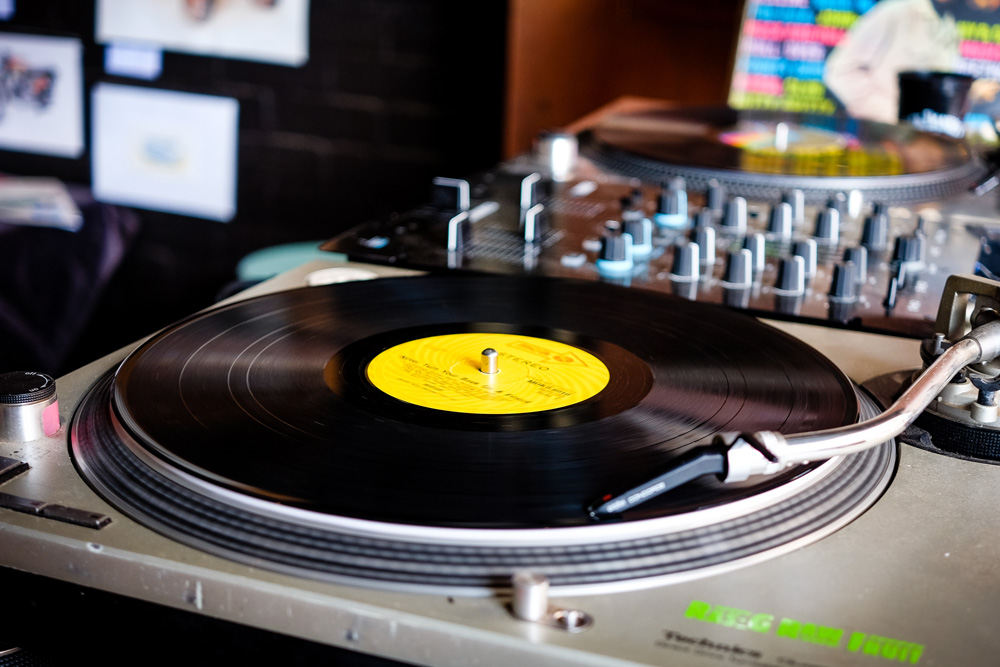
 Local vinyl ninjas Roastin’ Records kept heads bobbing all day long with their eclectic choice in tunes—ranging from blues and classic rock, to hip-hop.
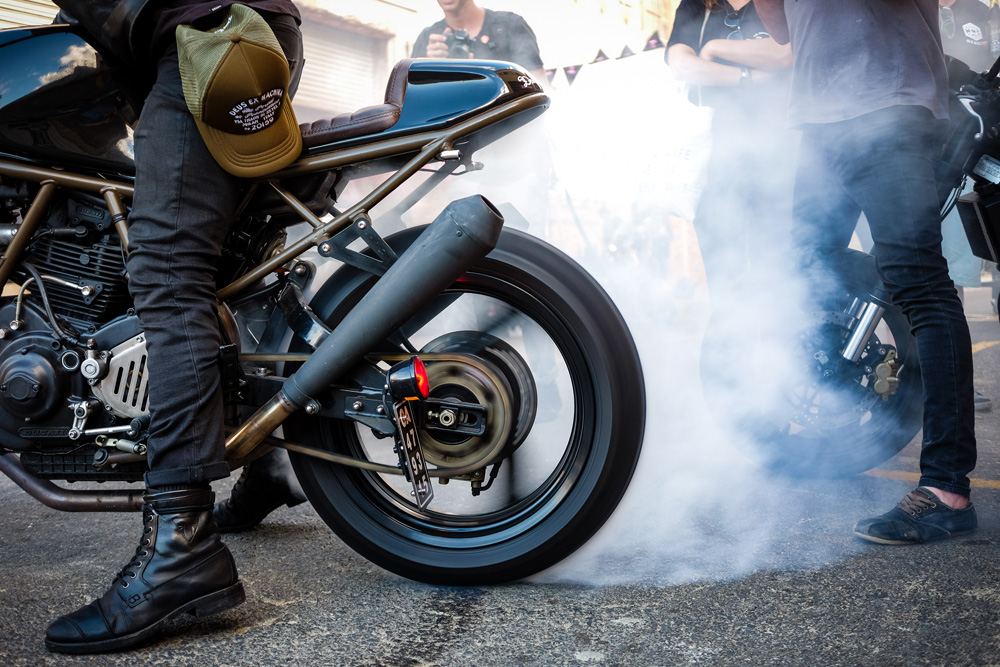
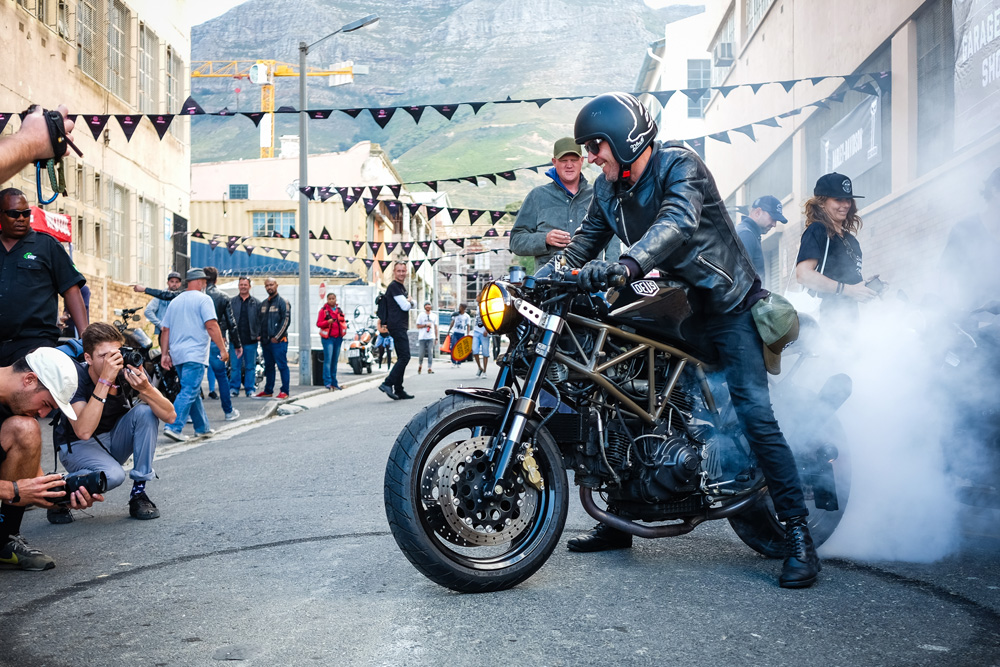
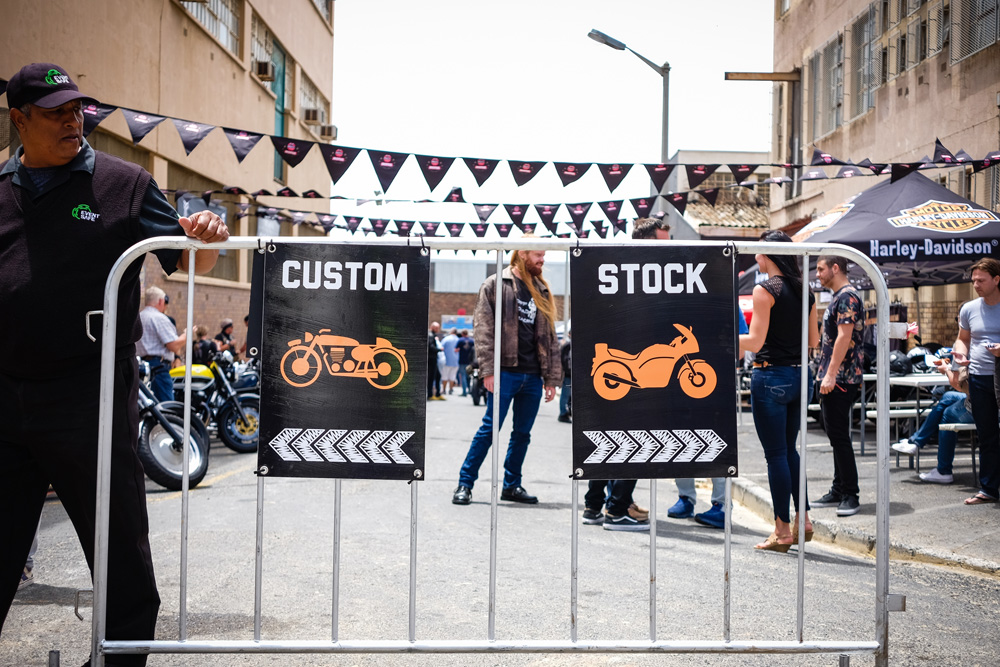
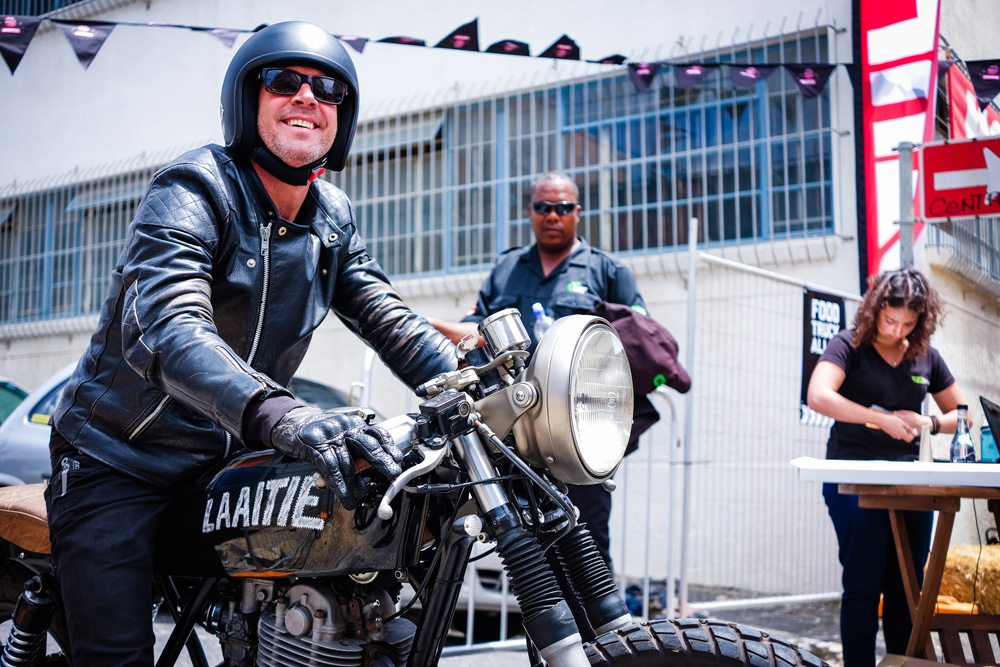
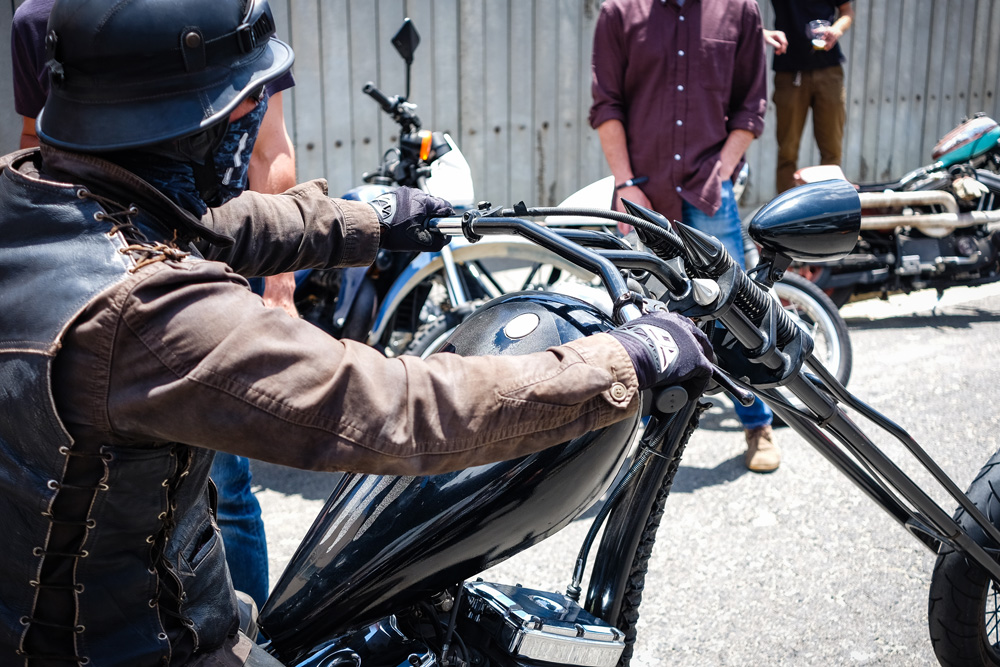
 While the main custom display was happening inside the WMC’s building, the street outside showed equal creativity with designated parking for anyone arriving on a custom motorcycle. Eyes shifted and necks bent as bikes rolled in one-by-one, filtering their way through the crowd.
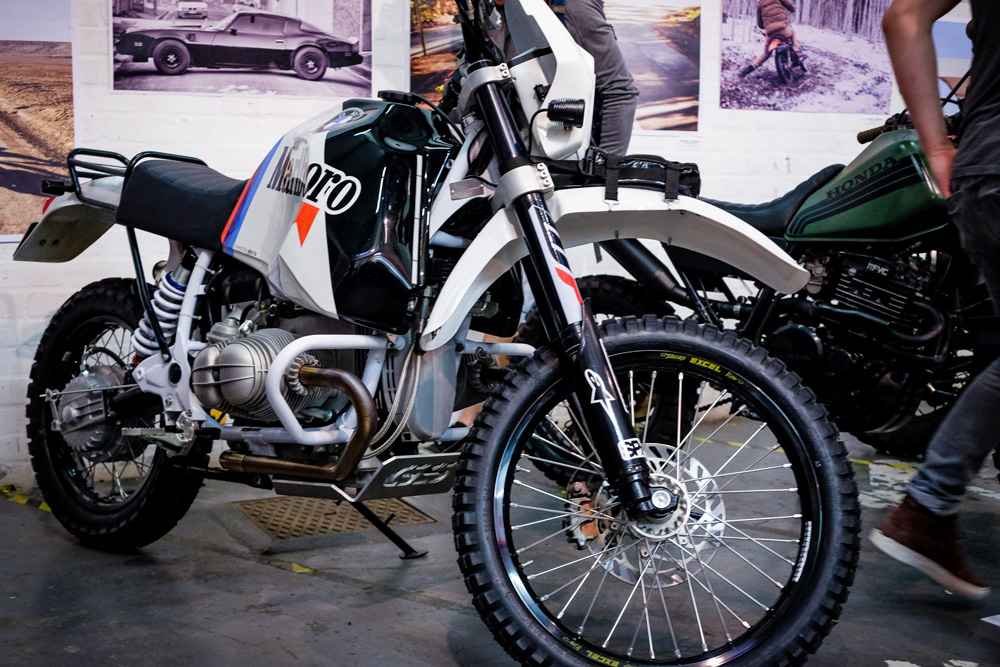
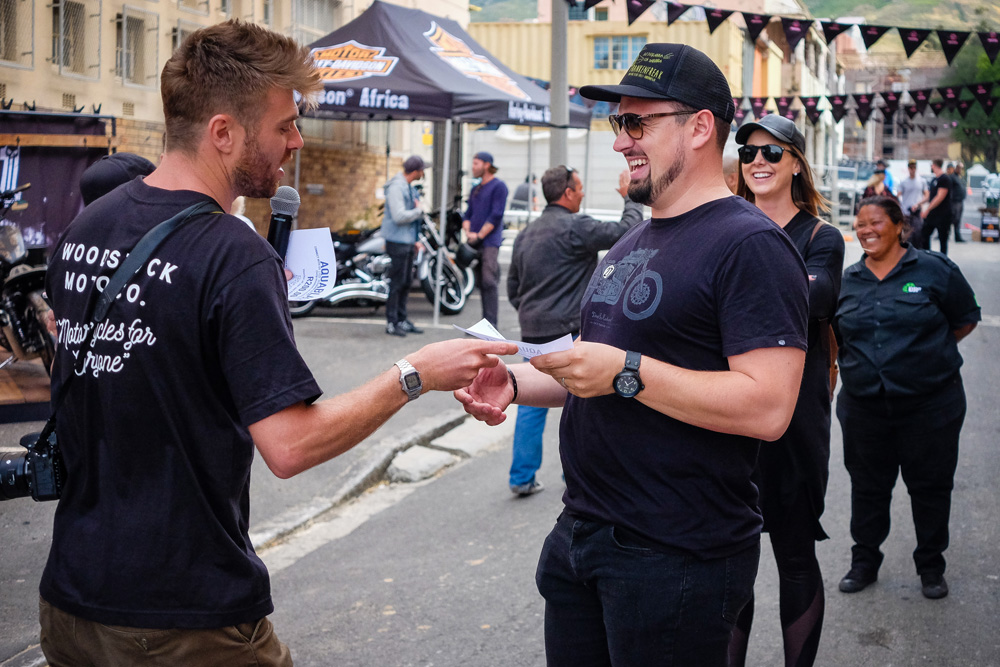
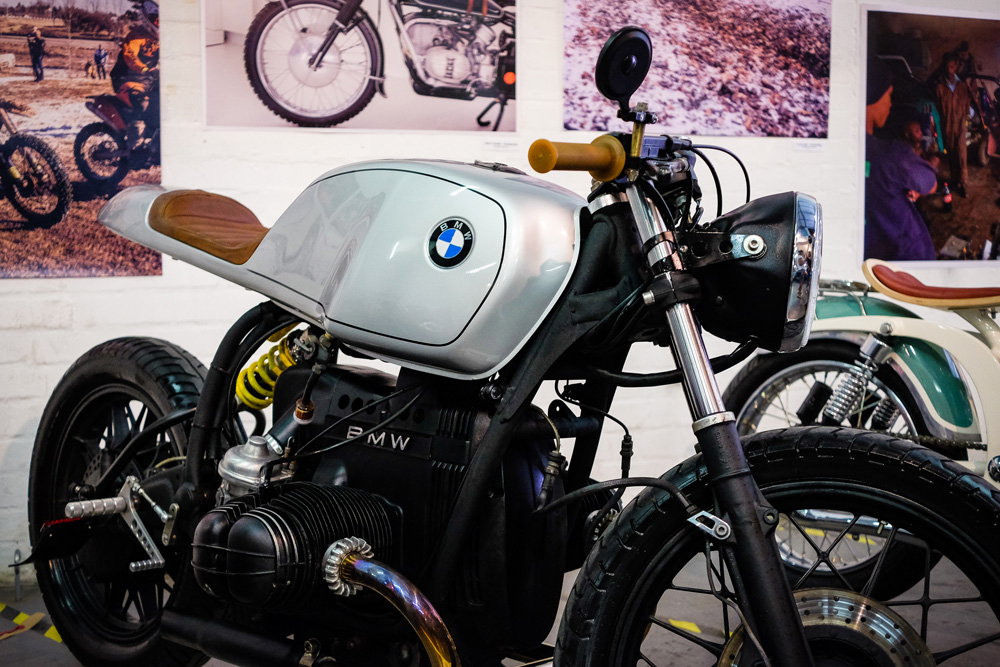
 Judging at the Garage Built Show is a casual affair each year, with a panel of judges each picking their favourite motorcycle, and the people picking a ‘People’s Choice’ winner for the day. Motul picked Stoos Customs’ off-the-wall Harley-Davidson Sportster as their winner, while I (Rather be Riding) opted for Johnston Moto’s awe-inspiring Paris-Dakar style BMW R80G/S. Greasers Garage gave Barry Ashmole (The Garage) the nod for his Enfield, finished mere hours before the show. Ian Ketterer at BlackSilver Customs bagged an honourable mention, for his 81 BMW R100RT.
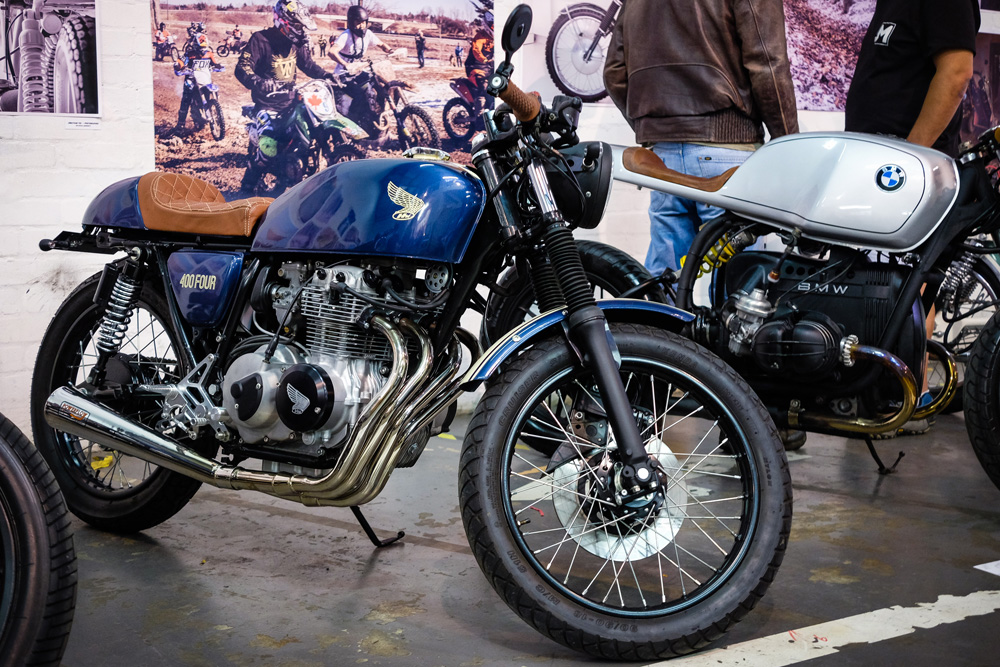
 Outside, Harley-Davidson picked their favourite bike from their own parking lot—a beautifully maintained 1942 Flathead. Devin was tasked with choosing his favourite custom bike from the parking lot as the official Woodstock Moto Co. pick, and settled on a slick Honda CB café racer that nearly didn’t make it there on the day. As for the people, they voted via Facebook, crowing Leo van Staden the winner with his classy 1975 Honda CB400F Supersport café racer.
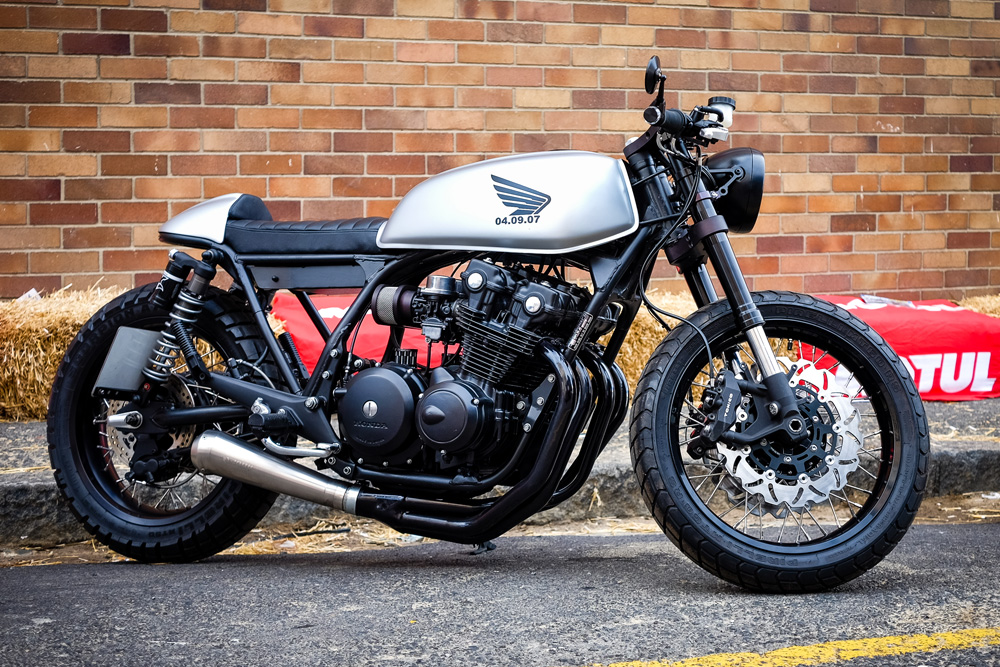 Leo walked away with a brand new Bell Helmet for his efforts. The full pool of prizes for winners included goodies from Motul, Harley-Davidson, WMC, Timber City, Deus and Dirasi. But for the winners, it was less about the prizes, and more about the kudos for the hard graft they’d put in.
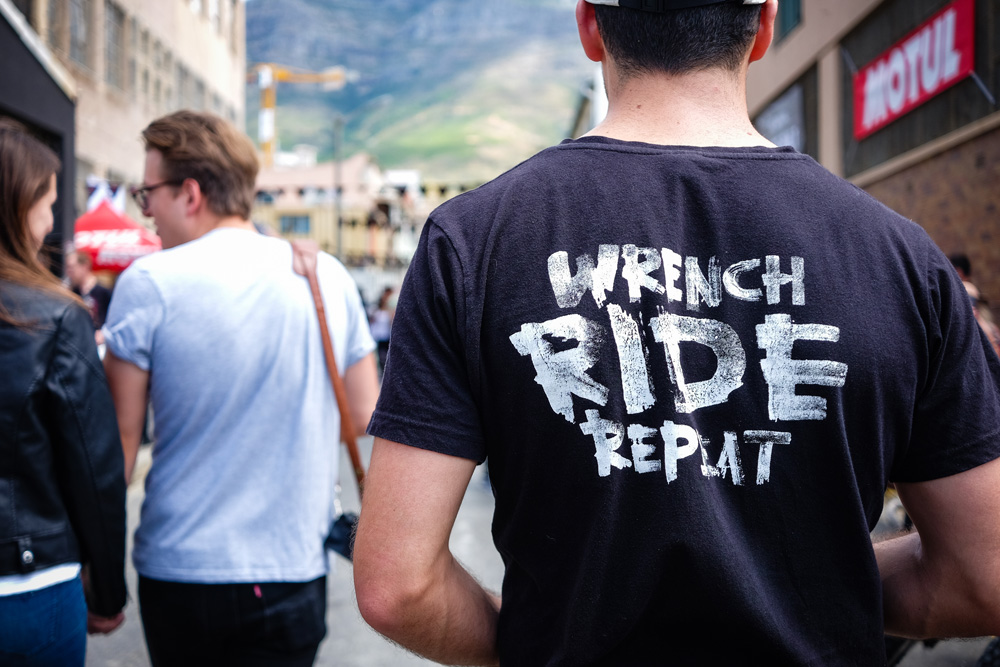
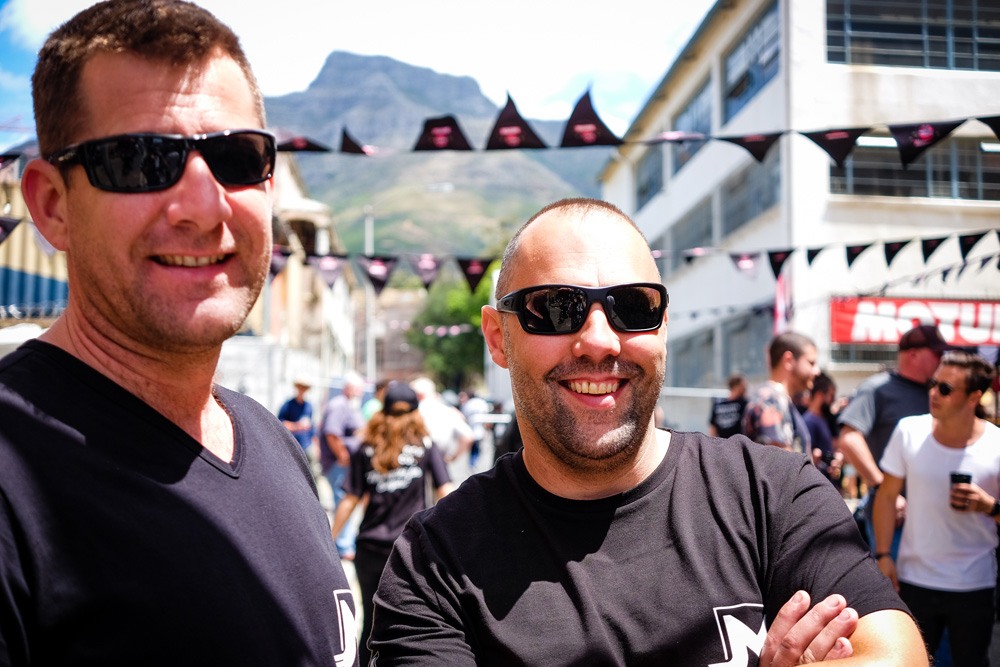
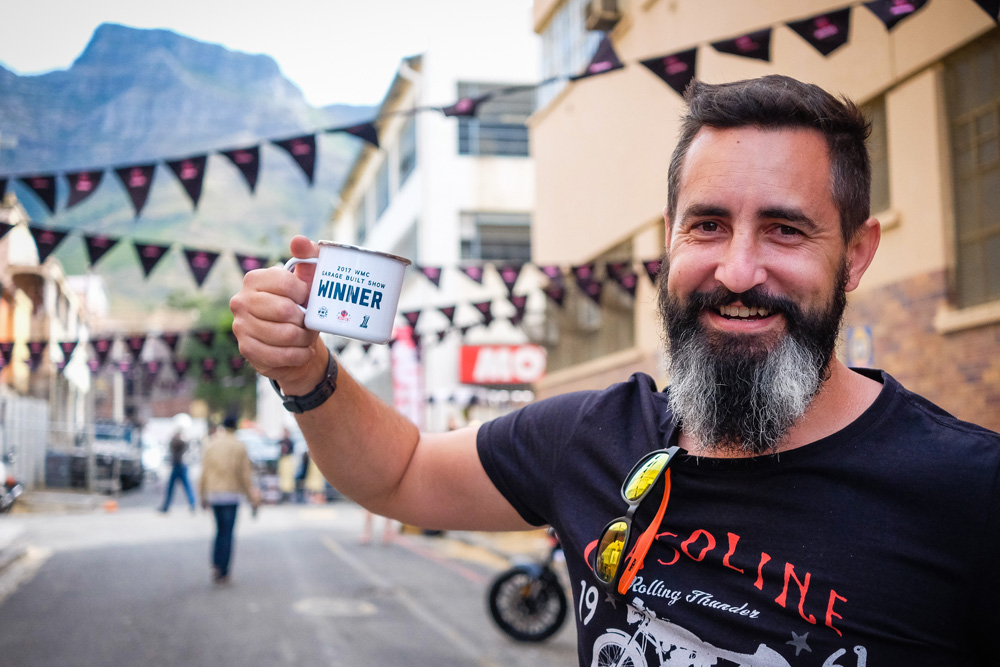 And they weren’t the only ones smiling. Just about everyone wandering around the show looked like they were having a good time—whether they came there by motorcycle or not. That easy-going, inclusive vibe is what makes the Garage Built Show an excellent way to spend a Saturday afternoon.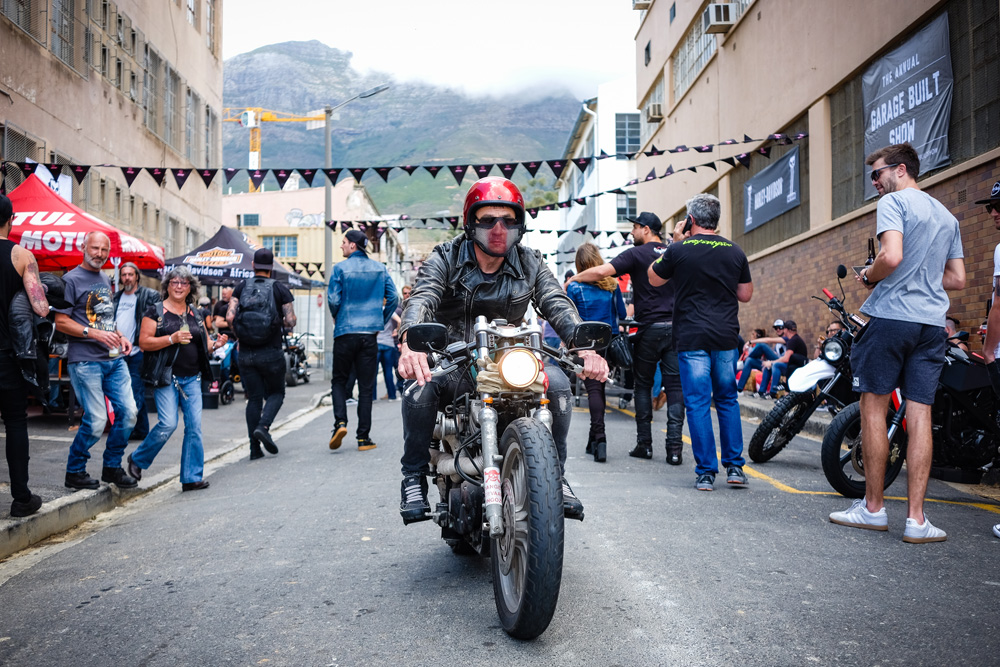
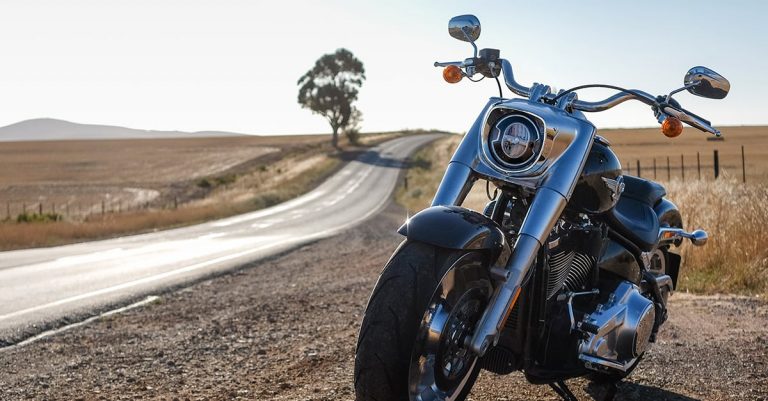
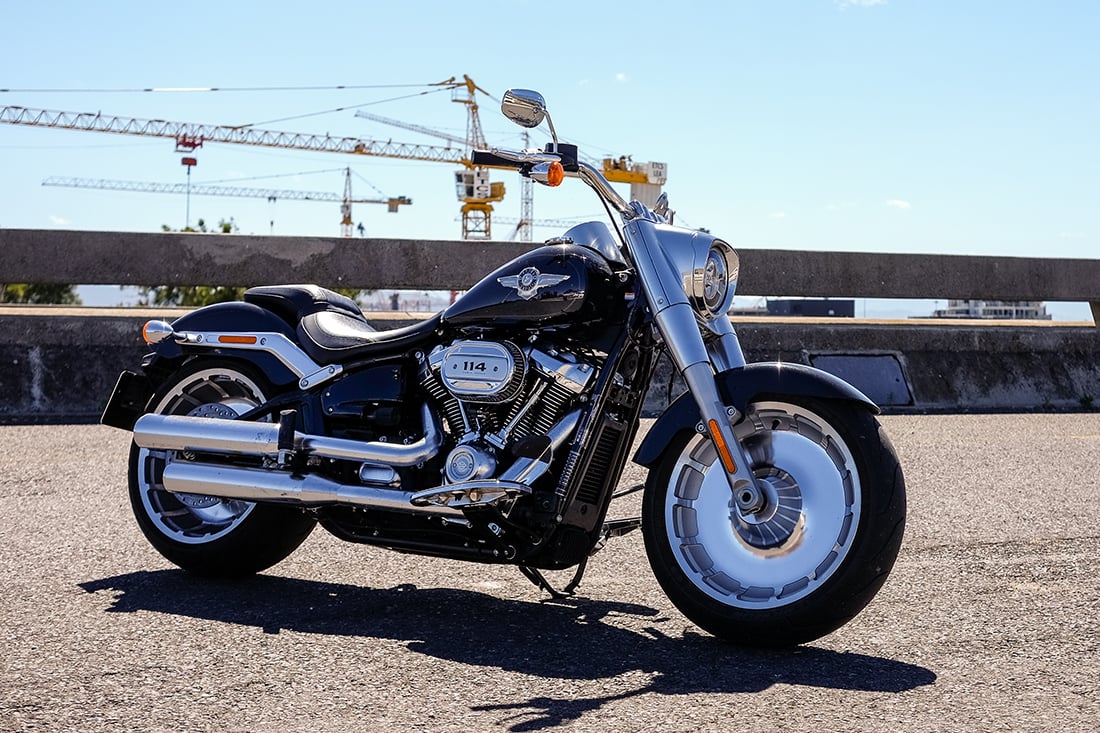
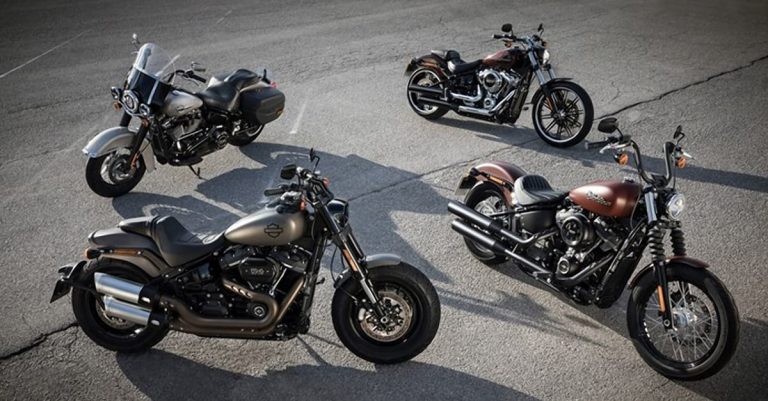
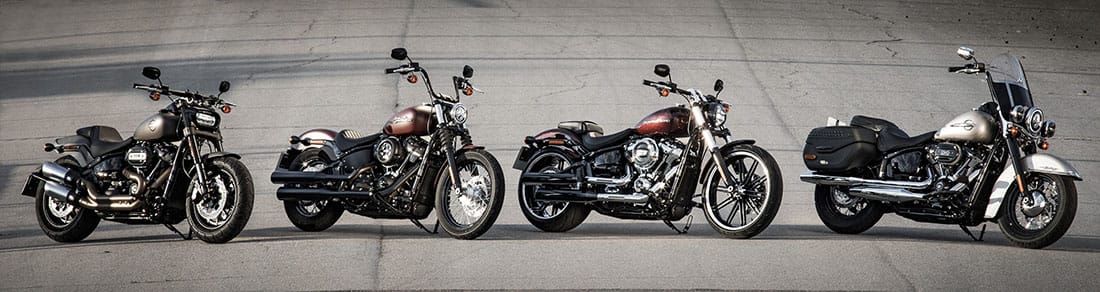
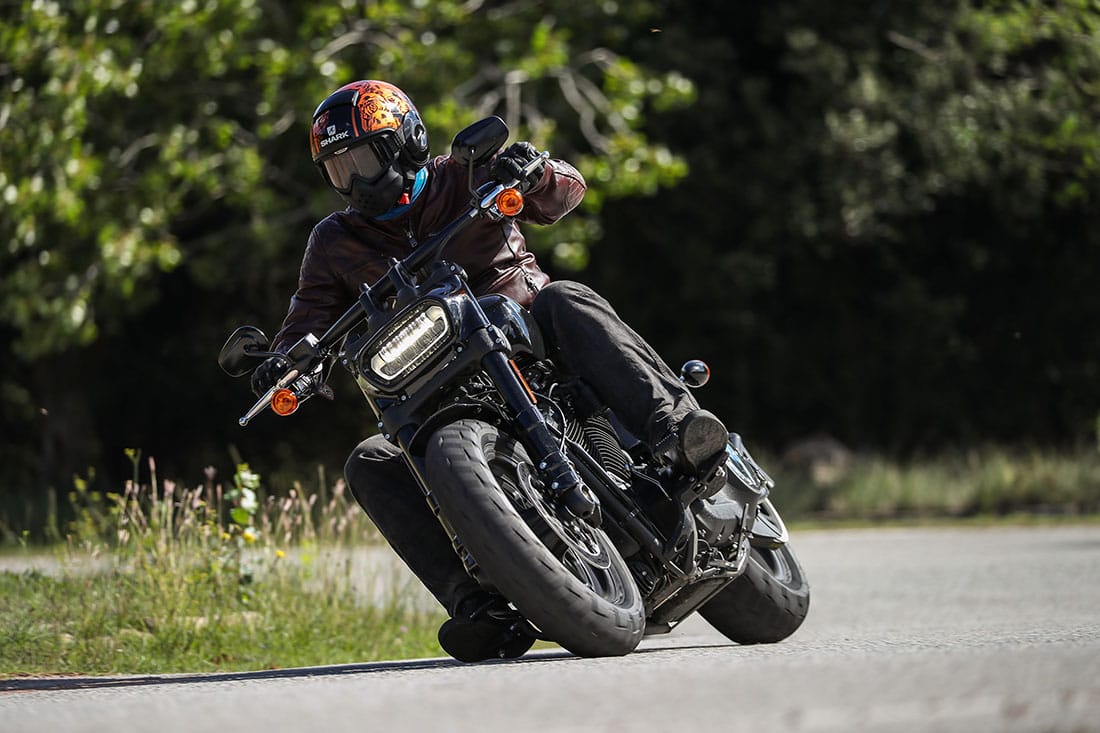
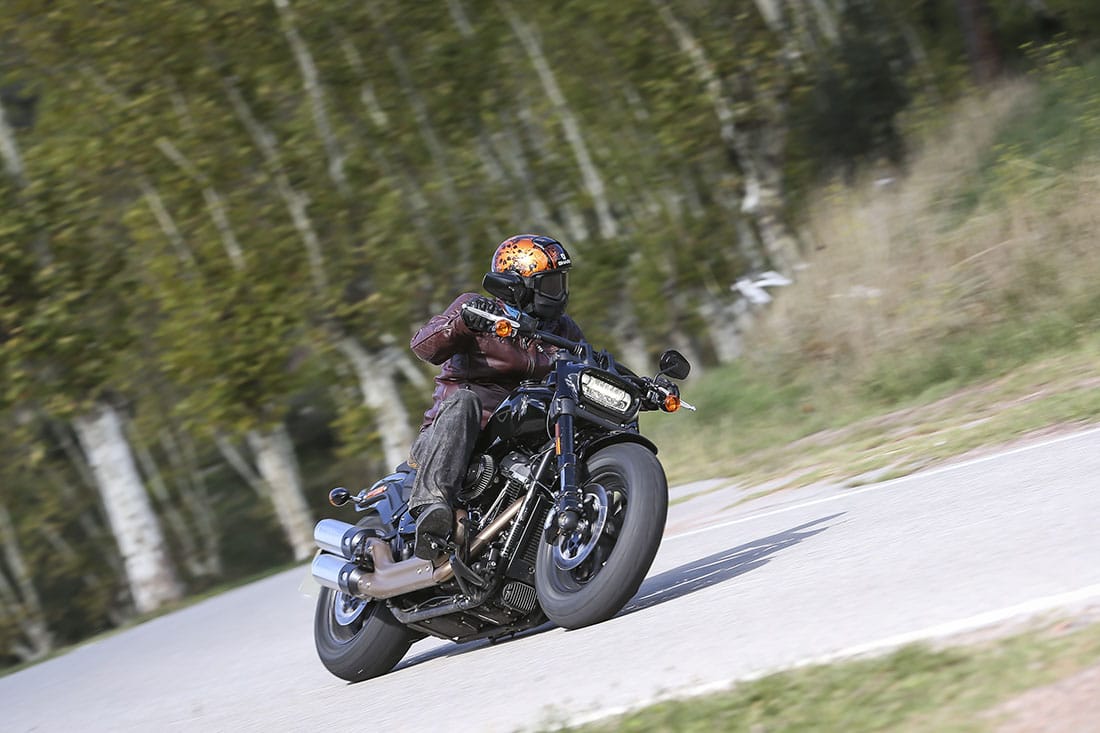
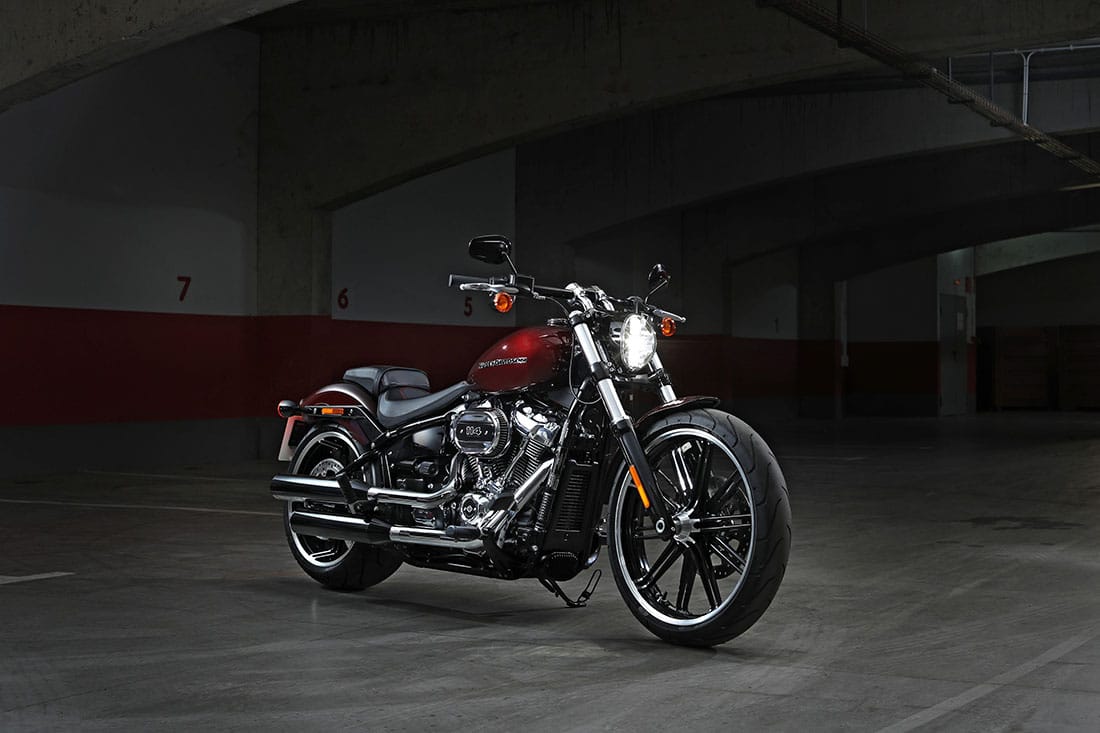
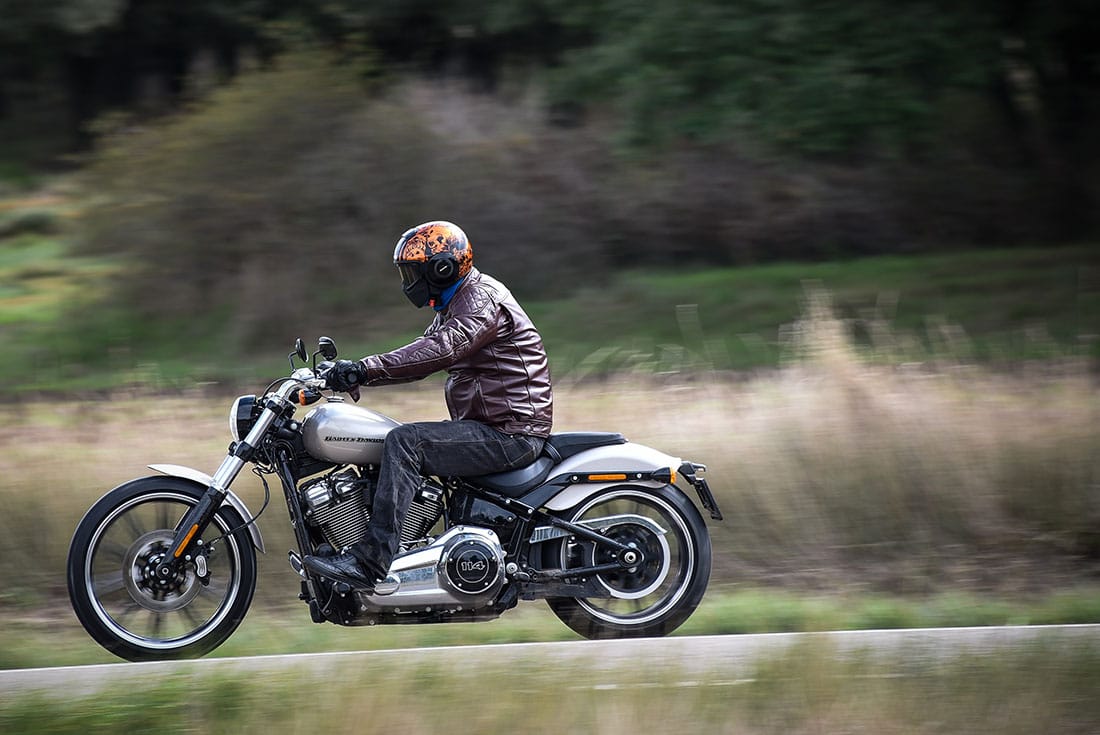
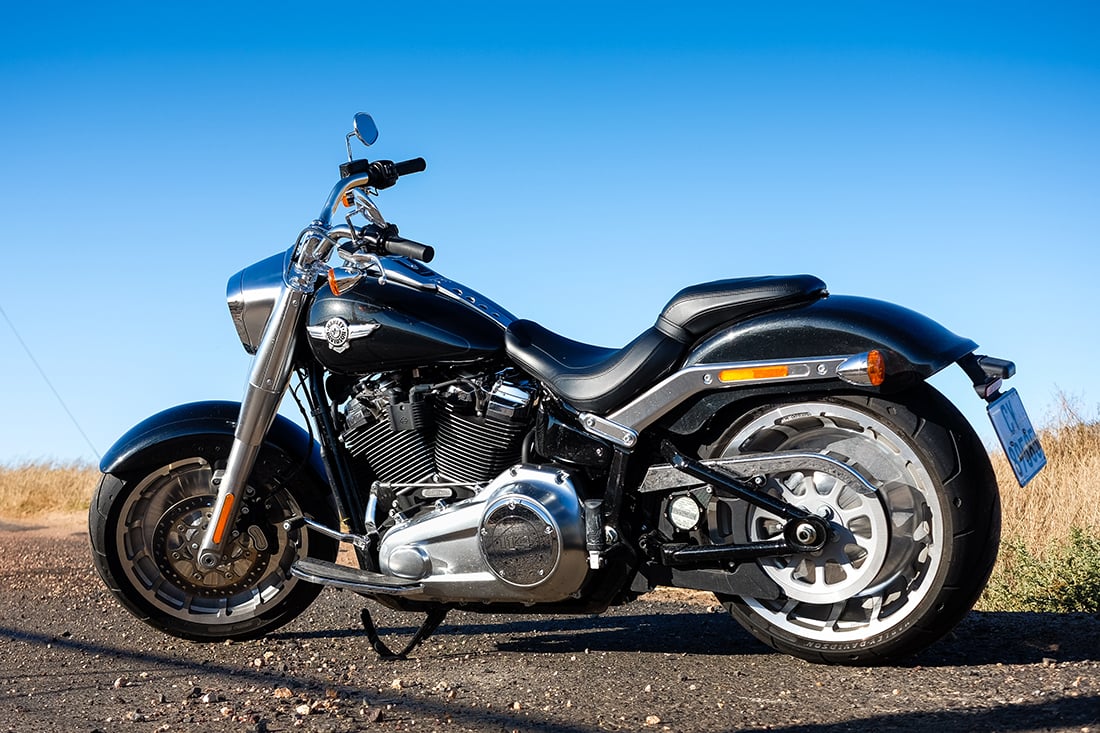 To find out, I’ve been working my way through the range. At the European Softail launch, I squeezed in saddle time on the Fat Bob, Street Bob, Breakout and Heritage Classic. Back on home soil, I grabbed the keys to this guy—the 2018 Harley-Davidson Softail Fat Boy.
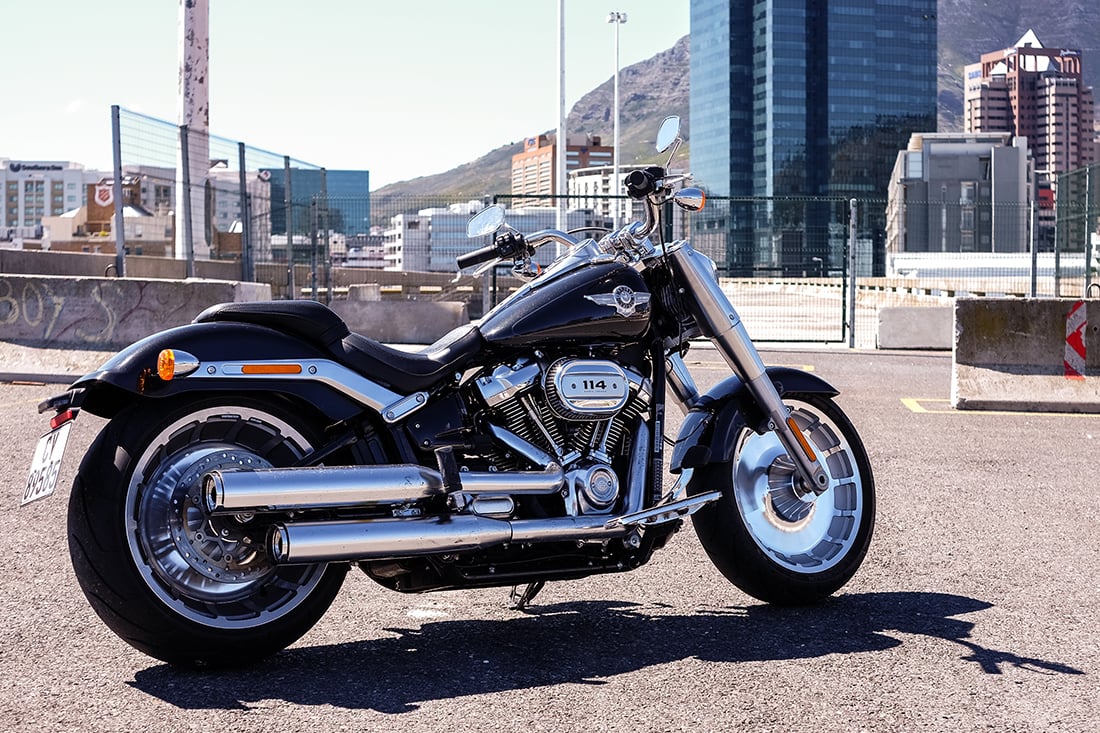 That’s because Harley have put a new-school spin on an old-school look. Yes, there’s a fair helping of chrome, but a lot of it is ‘satin chrome’—a brushed finish that’s gorgeous to both the eye and the touch. That’s complemented by an assortment of polished metal, and yes, some blacked-out, parts.
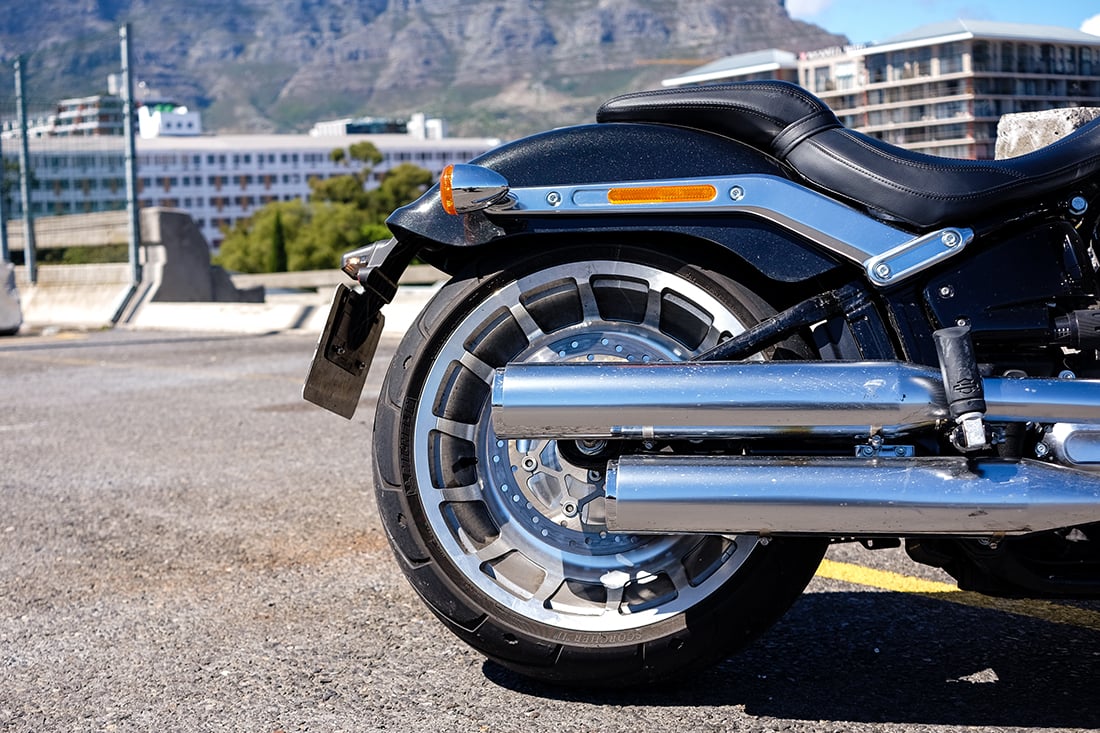
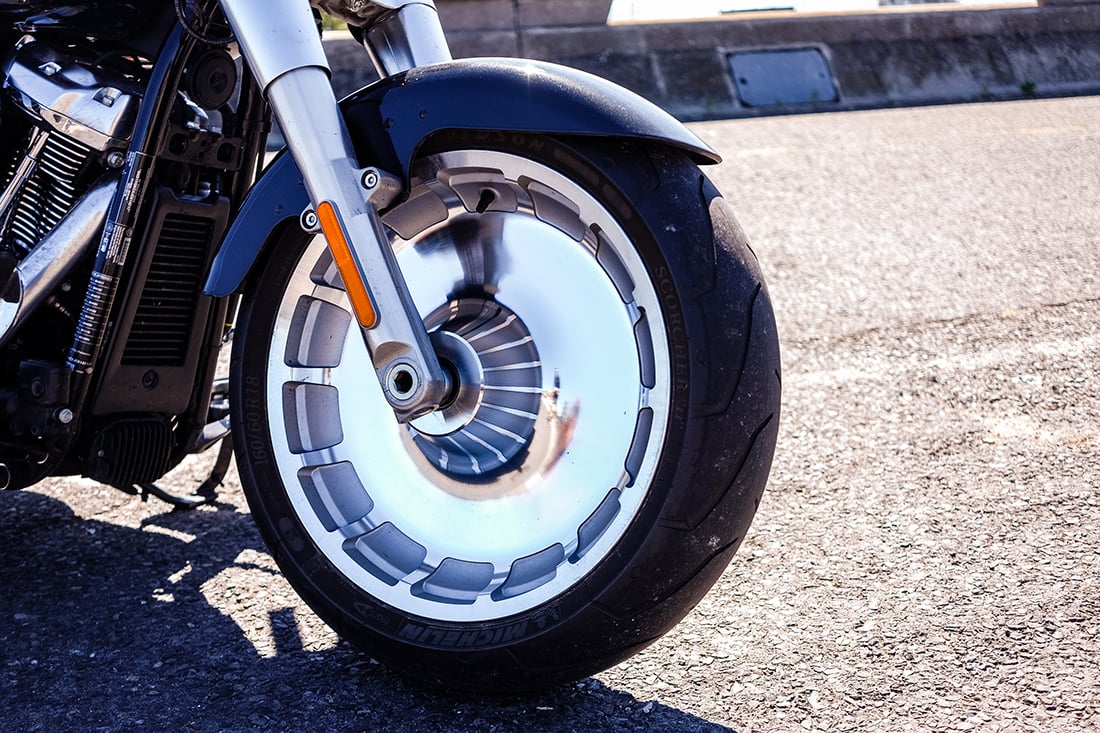 The other big visual hit comes from those gigantic, machined aluminium ‘Lakester’ wheels. The wheels measure 18”, with a 240 out back and a whopping 160 up front—the largest front wheel Harley’s ever put on a stock bike. Harley calls it a ‘steamroller stance,’ and there’s no denying that the Fat Boy has serious presence. Even the broad fenders look great—especially out back where the rear light is integrated into the indicators, leaving the tail smooth.
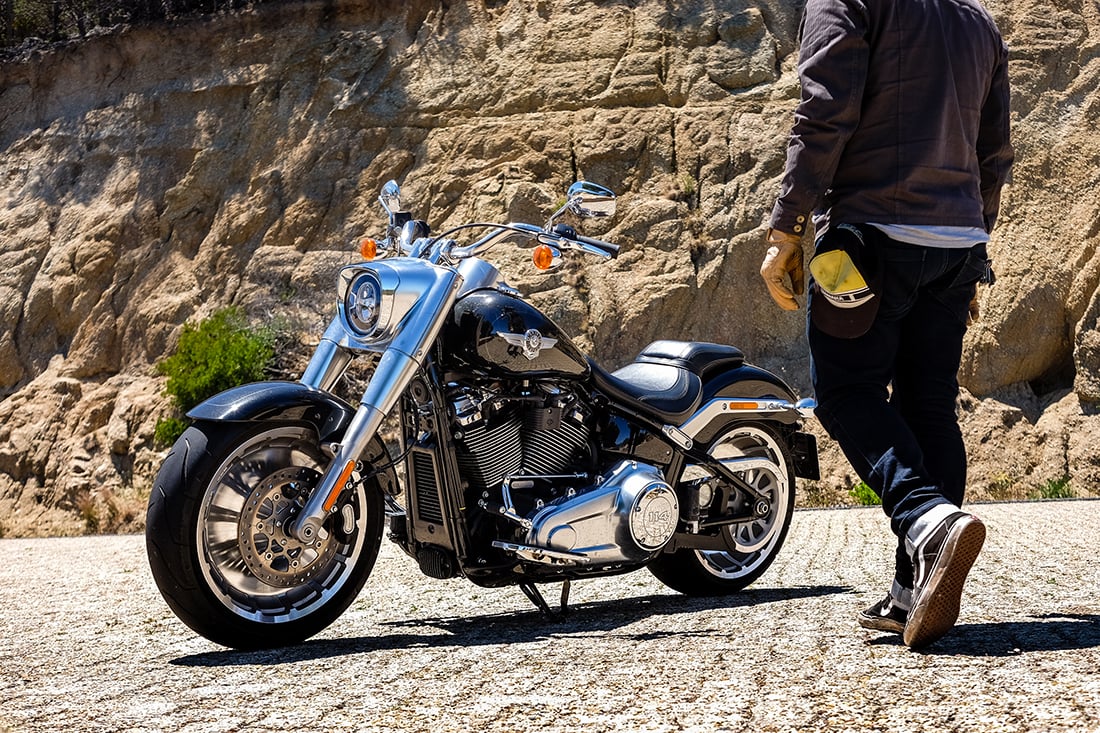 But on the Fat Boy, that improved handling is held back by those steamroller wheels. It’s not that it won’t turn, it’s just that it needs a little encouragement (and a lot of body English) to do so at any sort of pace. And at 304kg dry, it’s also one of the heaviest of the new models, making slower manoeuvres just as much of a chore.
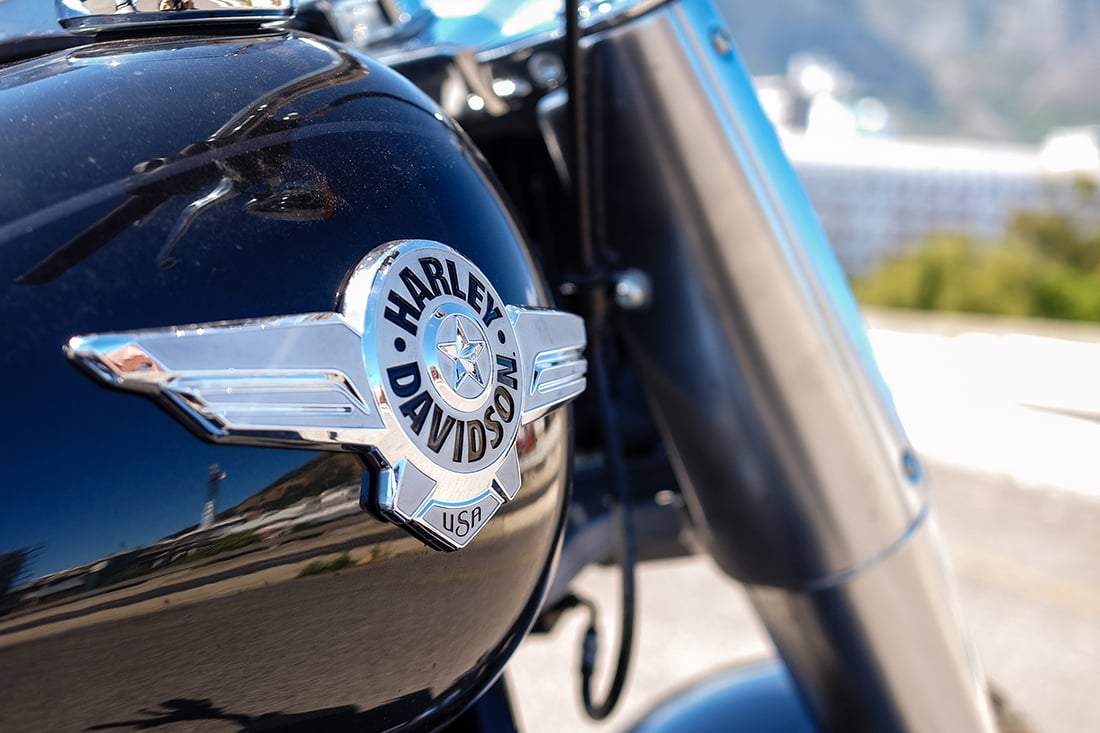
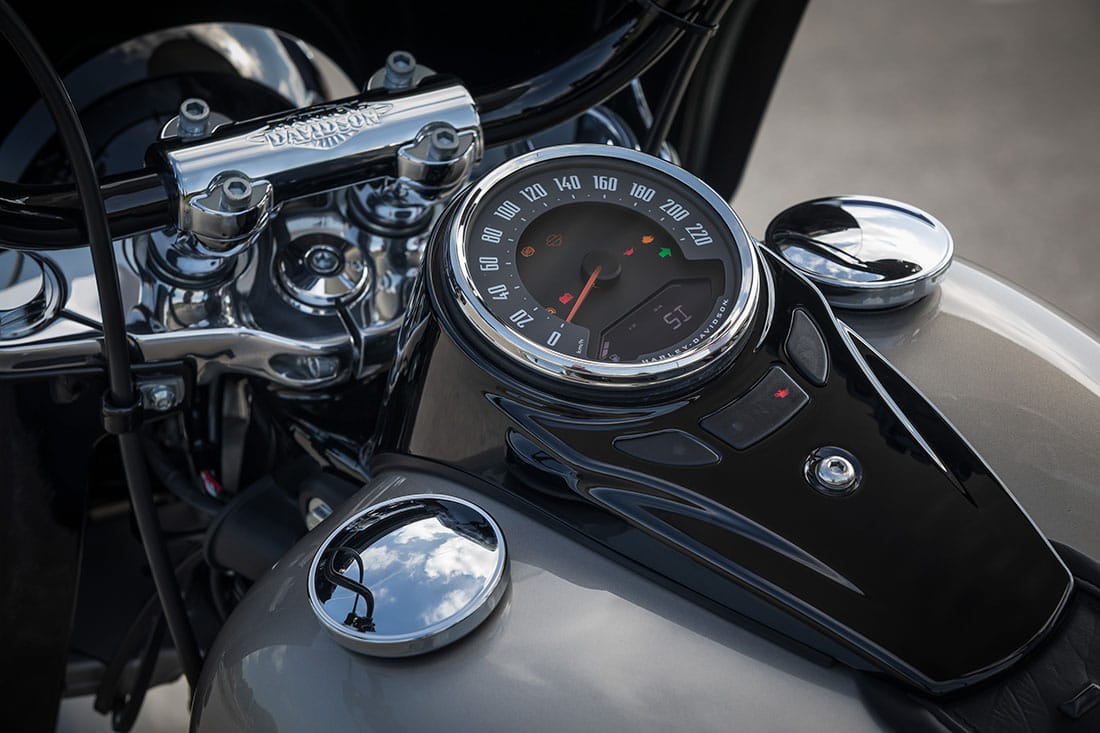
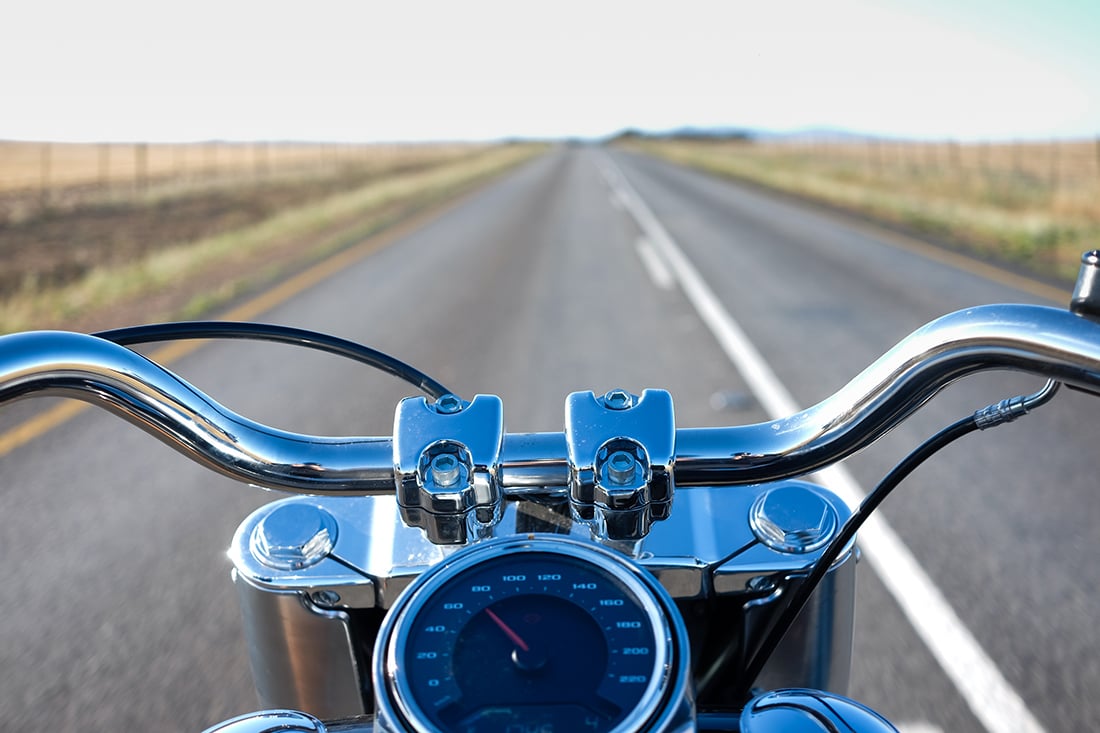 The cockpit is refreshingly neat, with all of the wiring—and the new Softail ride-by-wire throttle—hidden inside the bars. You’ll find the speedo down on the tank, and while I’m not usually a fan of looking down for info, I can’t imagine it any way. It’s also a really well-designed unit, combining an analogue speed readout with a digital display that includes fuel level, gear position and all the regular info. Nice details abound—like the drilled tank ‘strap’ and the chunky bar clamps.
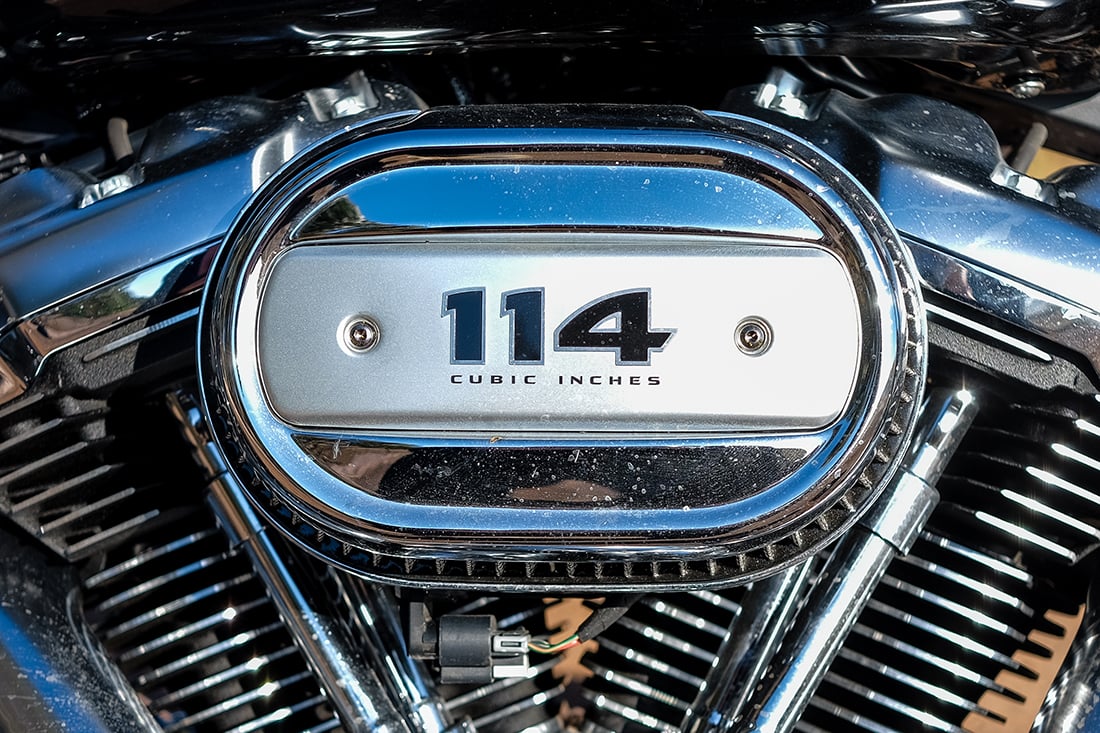 You can get the Fat Boy in either a 107 (1 745cc) or a 114 (1 868cc). My test unit was a 114, and pulled like a freight train with 155Nm of torque on hand. Kudos to H-D for improving the rest of the performance package too; like the fuelling, which is much smoother than before. The new torque-assist clutch is a treat, and won’t leave you with a tired left hand. Each gear still responds with a solid click as you move through the box, but I can’t fault the feel (and I can actually find neutral, unlike on previous models).
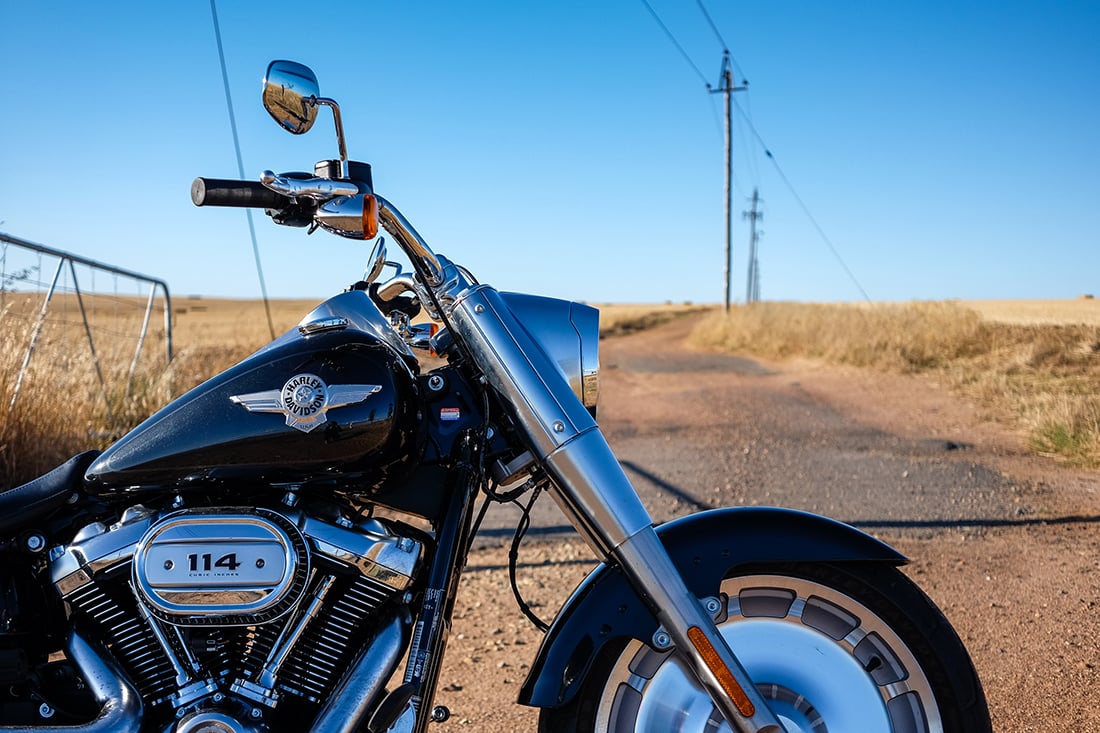 Harley-Davidson’s design philosophy is “form follows function, but both report to emotion.” On the Fat Boy, that emotion refers to the classic Harley aesthetic that it evokes. I lost track of how many thumbs up, approving nods and ‘nice bikes’ I got during my time with it.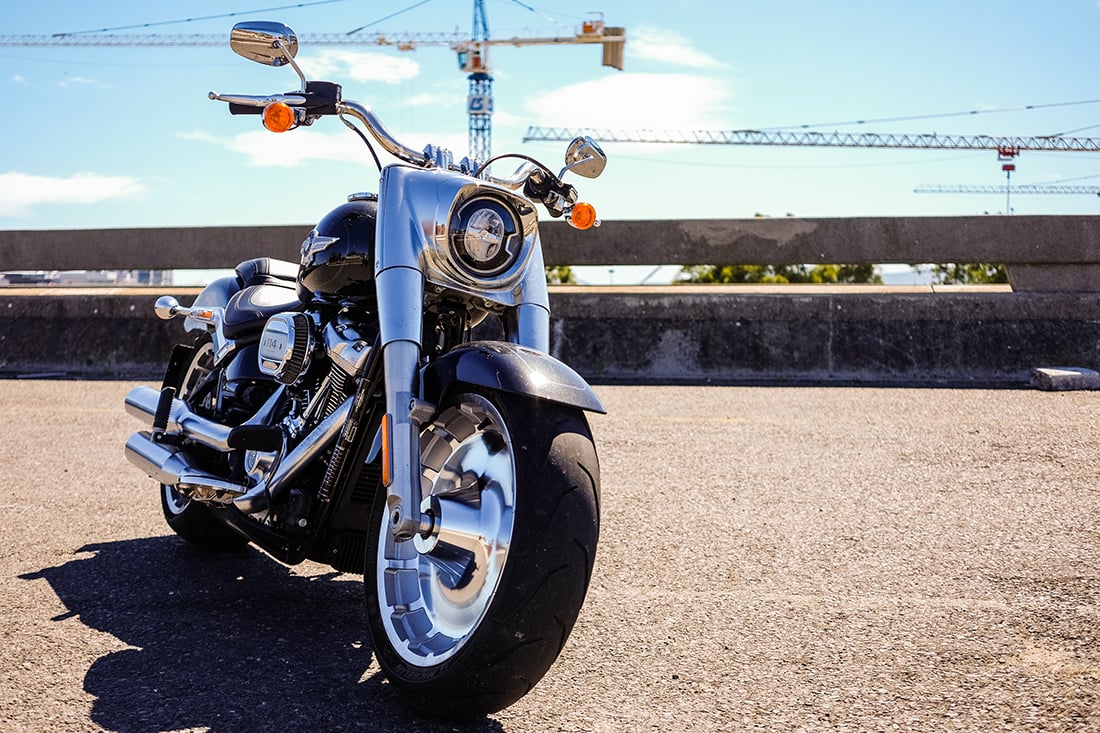
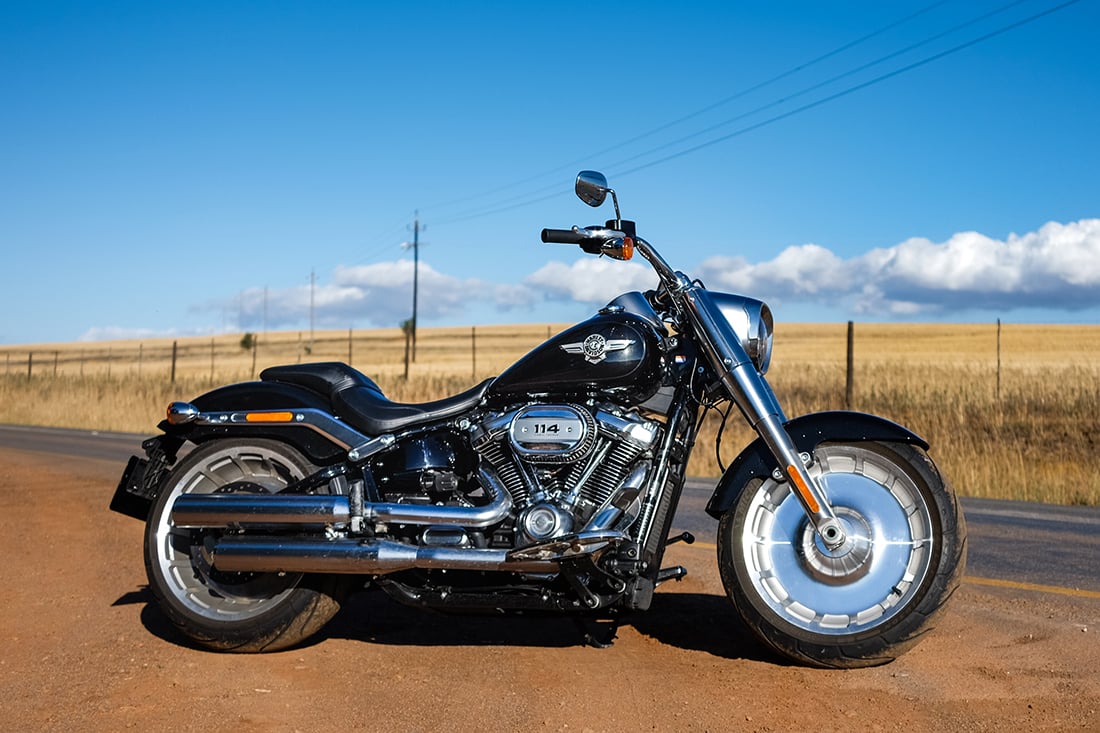
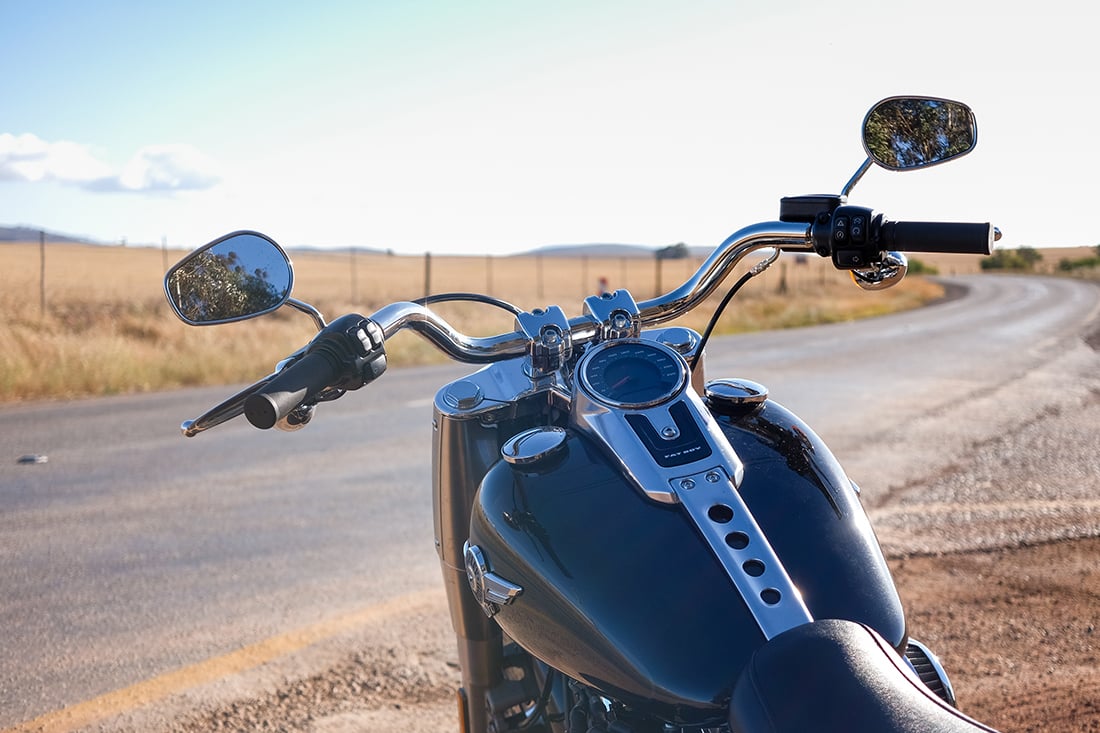
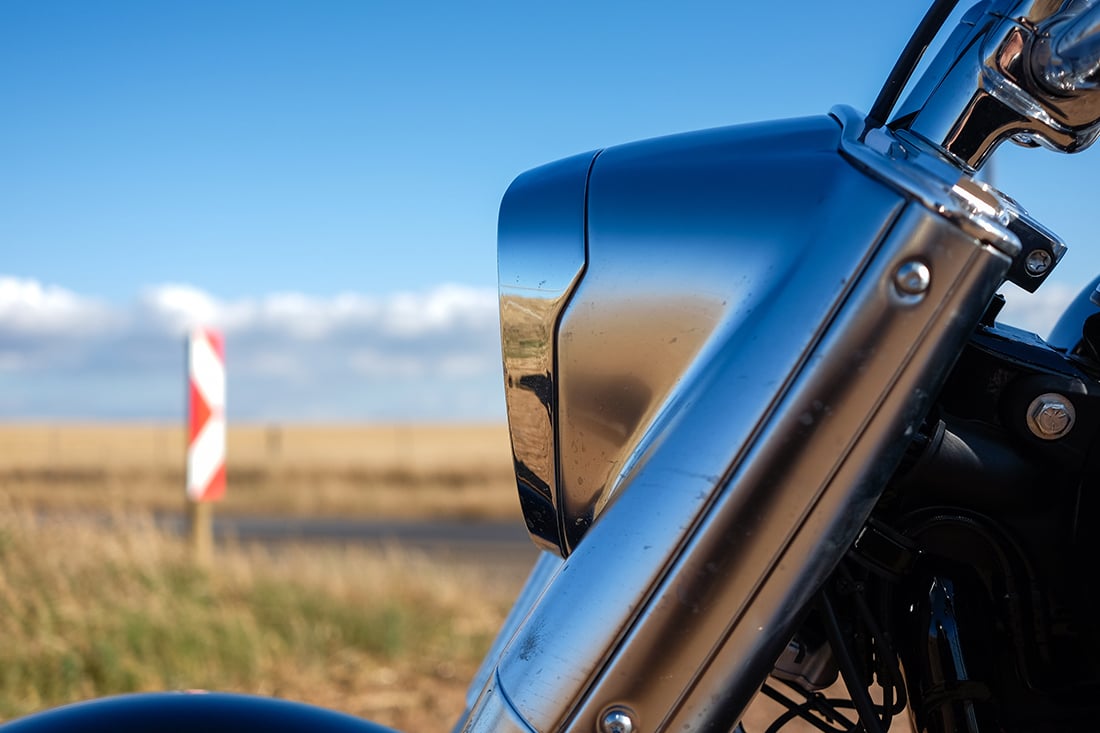
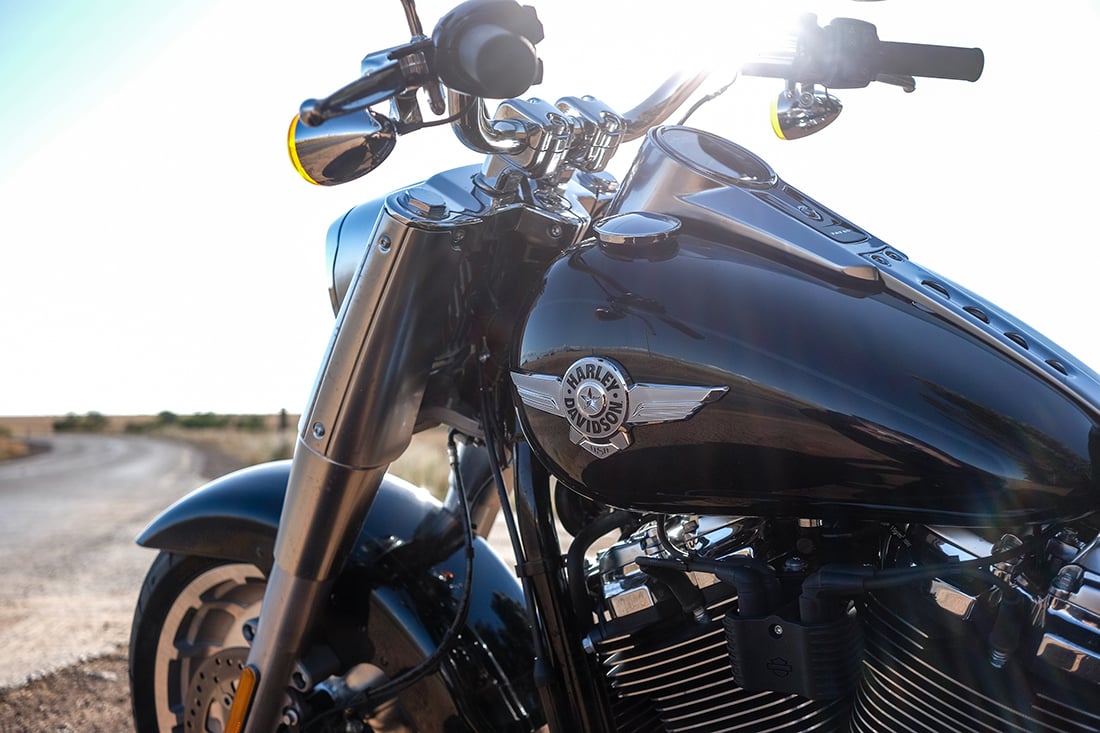
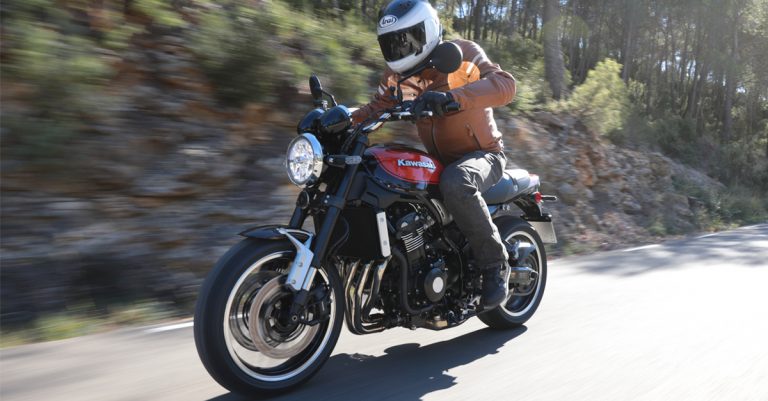
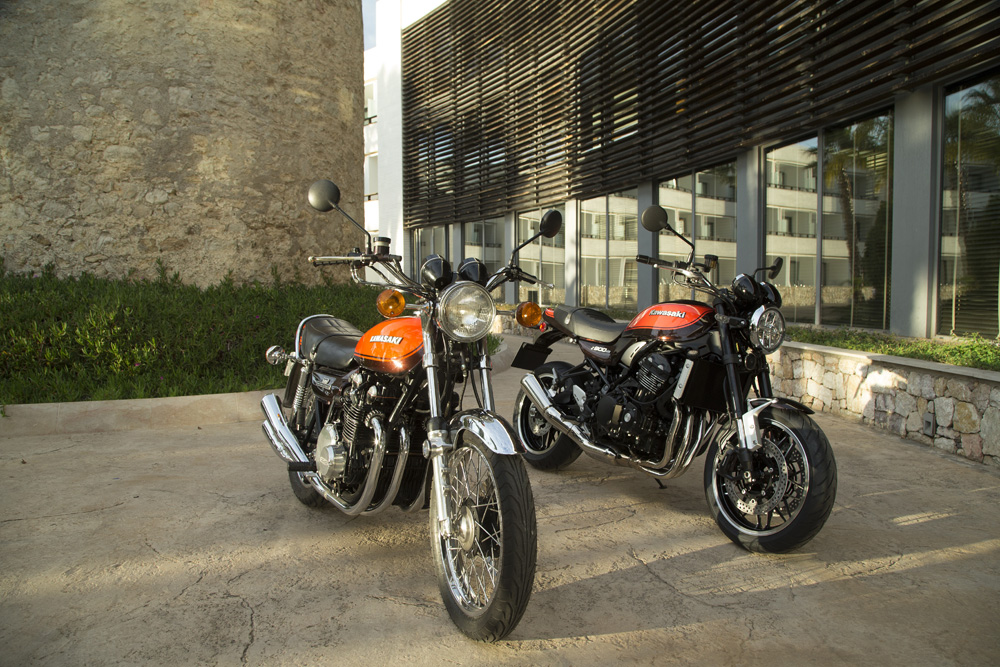 There is a real move to retro bikes. Hence, for quite a long time, the market has been full of machines which could claim some historical heritage and some genuine posing value, while propped on their side-stands in front of a trendy pub. Truth is, many are slow with below average riding qualities. This is not the case with the Z 900 RS.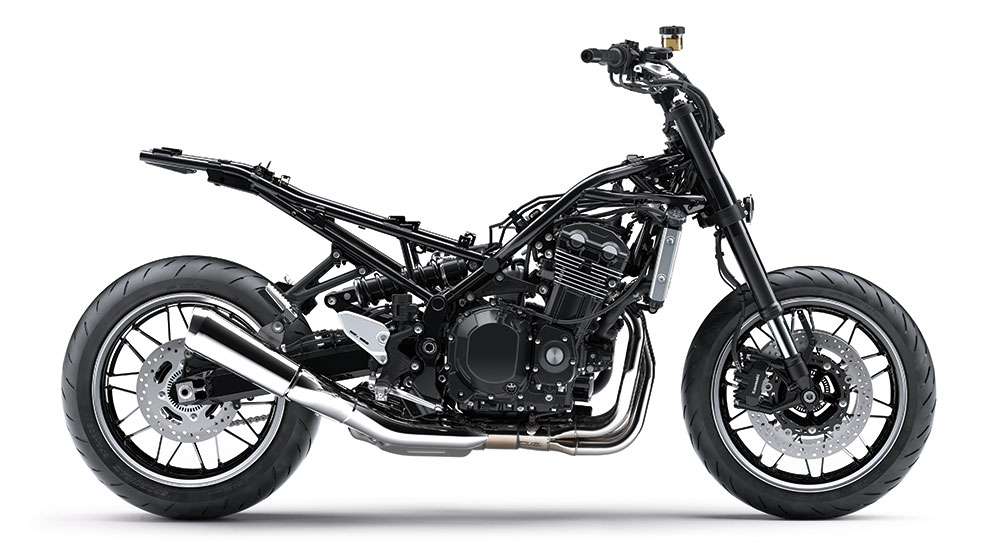
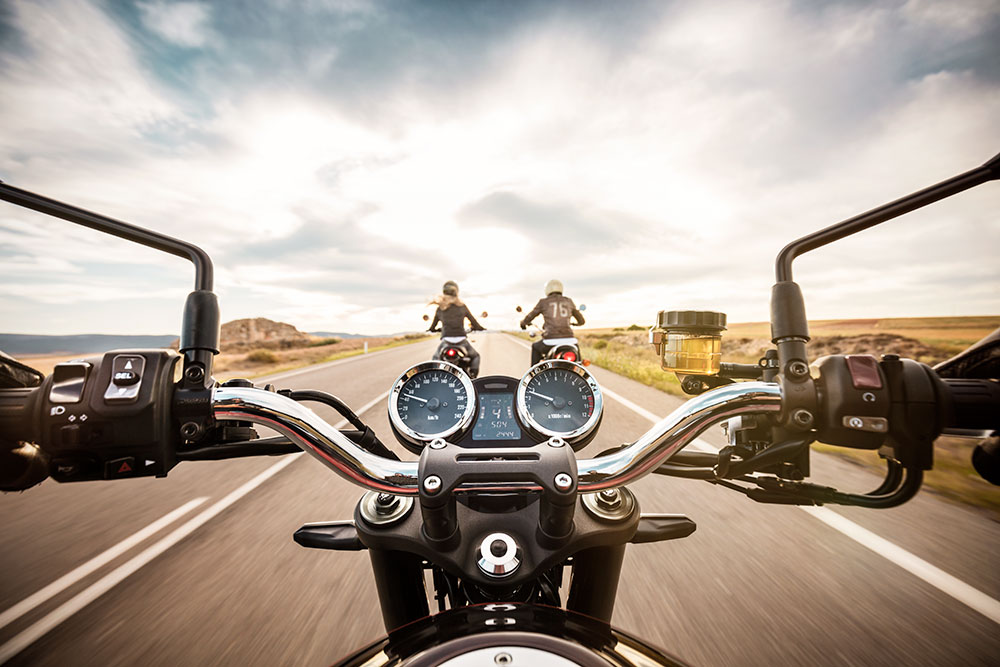
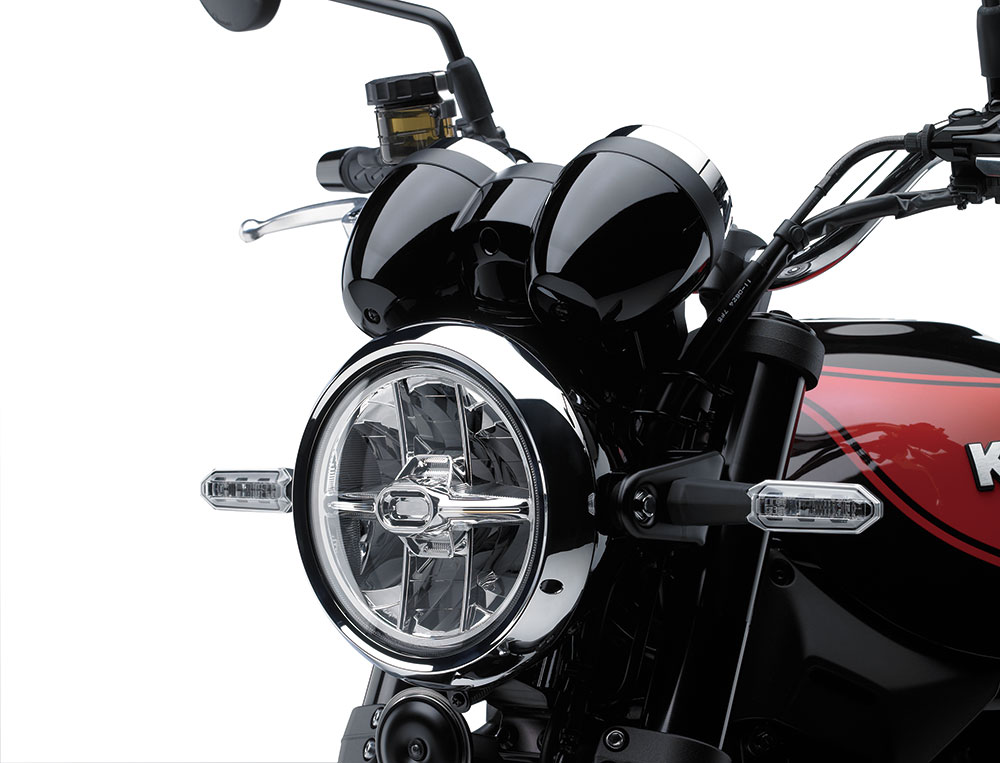 The old-style dashboard keeps the same max speed indication as the original Z1 (240 km/h), and the centre parts of the dials looks exactly the same. However, a large digital screen sits in between and shows many features such as a fuel gauge, a gear indicator, traction control level, as well as air temperature, fuel range, and average + instant fuel consumption.
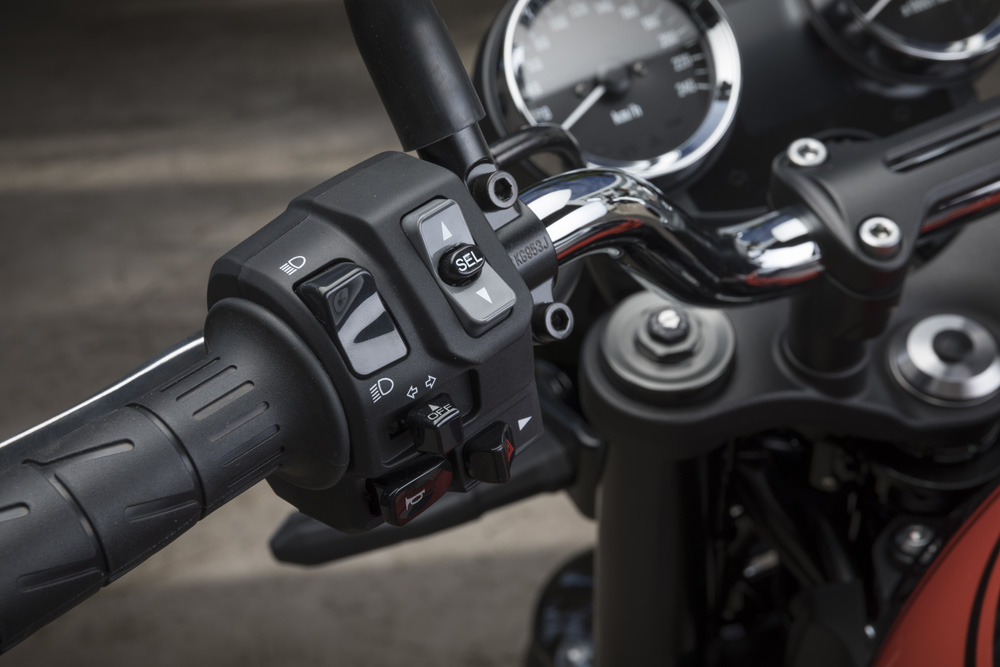
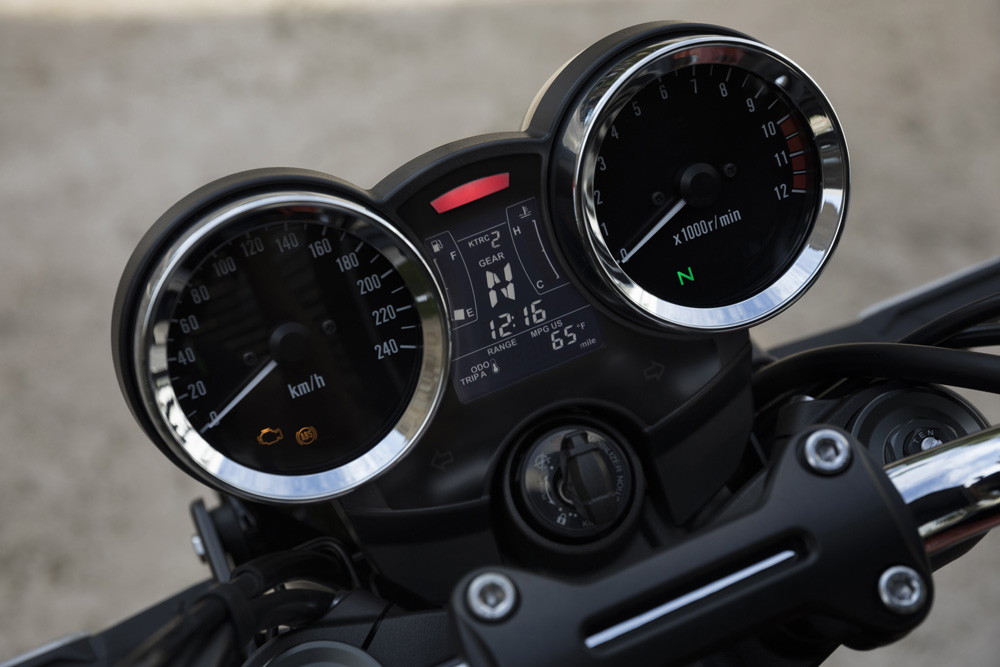 Everything is easy to access thanks to a left hand button. With no fly-by-wire throttle, the Z 900 RS cannot offer any riding modes to follow the current trend. That does not really matter anyway, as the lovely engine characteristics all but render such wizardry redundant.
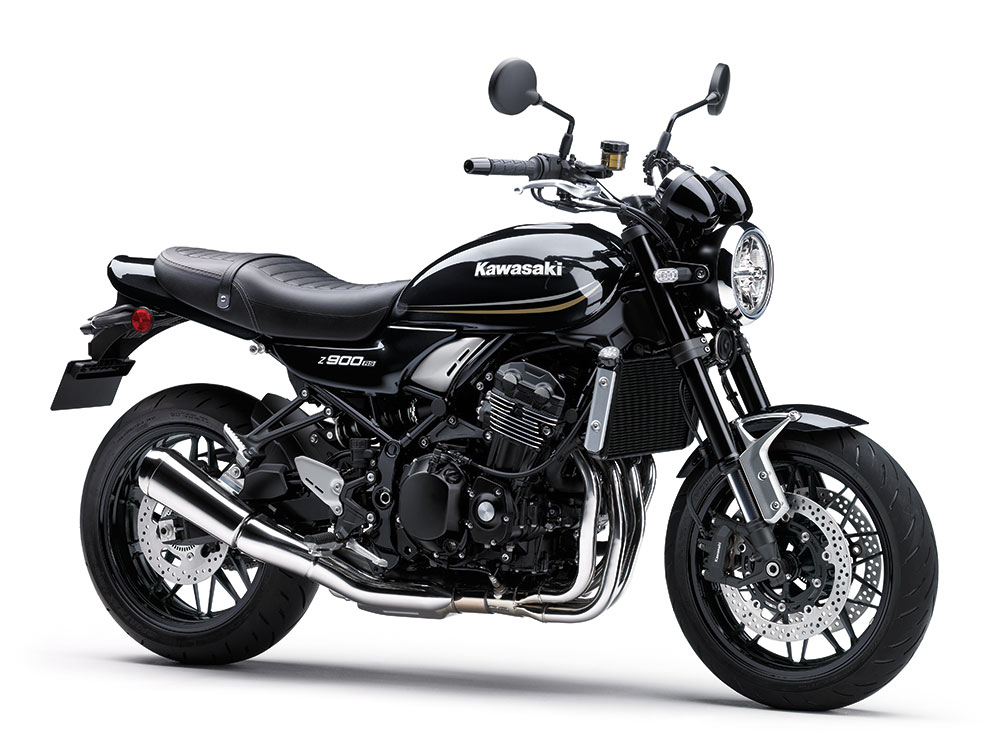
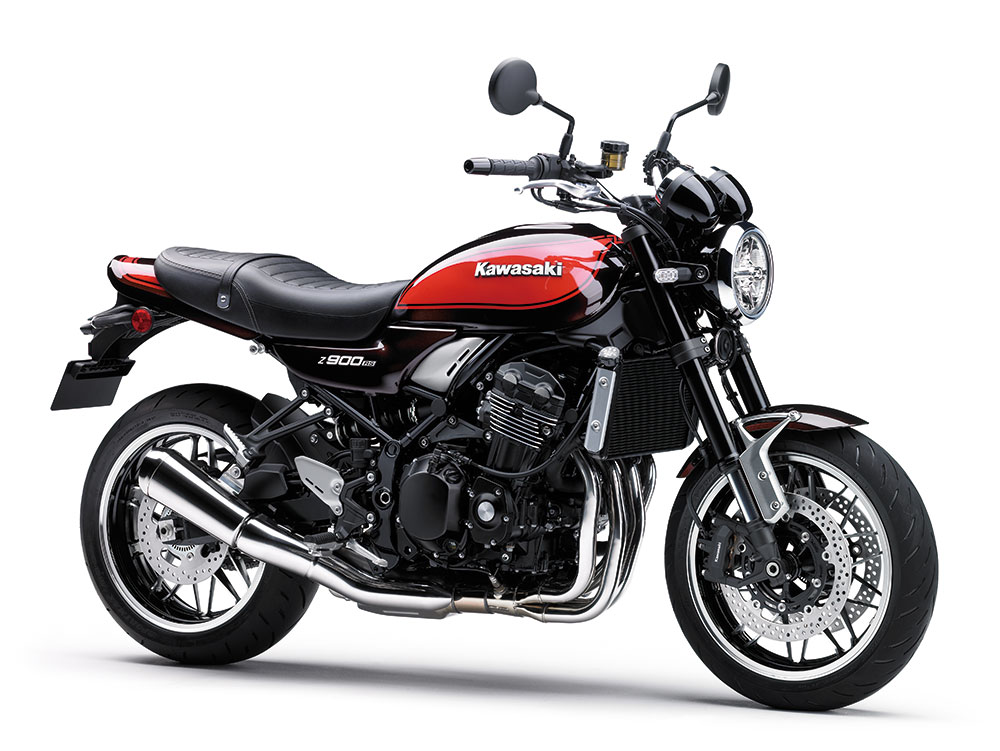
 Aside the obvious overall design, the styling department went very far indeed, to pay homage to the original Z 1. The painting looks the part, although, in the old times, they used a bit of arsenic powder to get that sparkling effect. Environmental laws became strict, but modern technologies allowed Kawasaki to keep the same colour attitude. The seat strap is fixed by a part that has the same plate and the same crosshead screw as before. If Kawasaki never considered a four pipes exhaust for weight and cost reasons, they studied 20 prototypes (
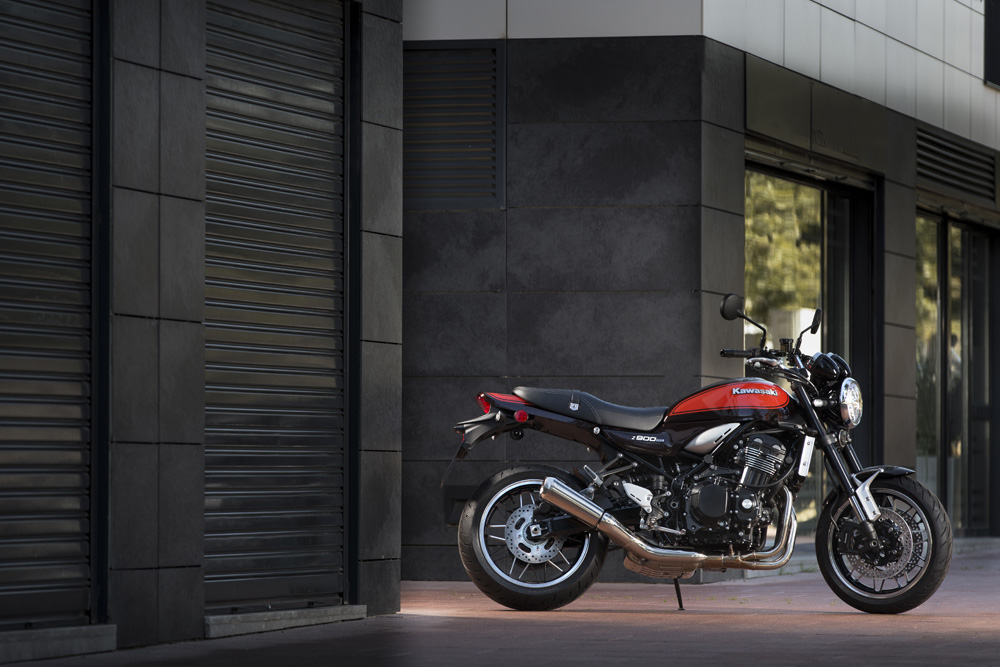 Besides the green Café version, the Z 900 RS will be available in three colours – matt green, black and orange/brown, so you should find one that suits your tastes.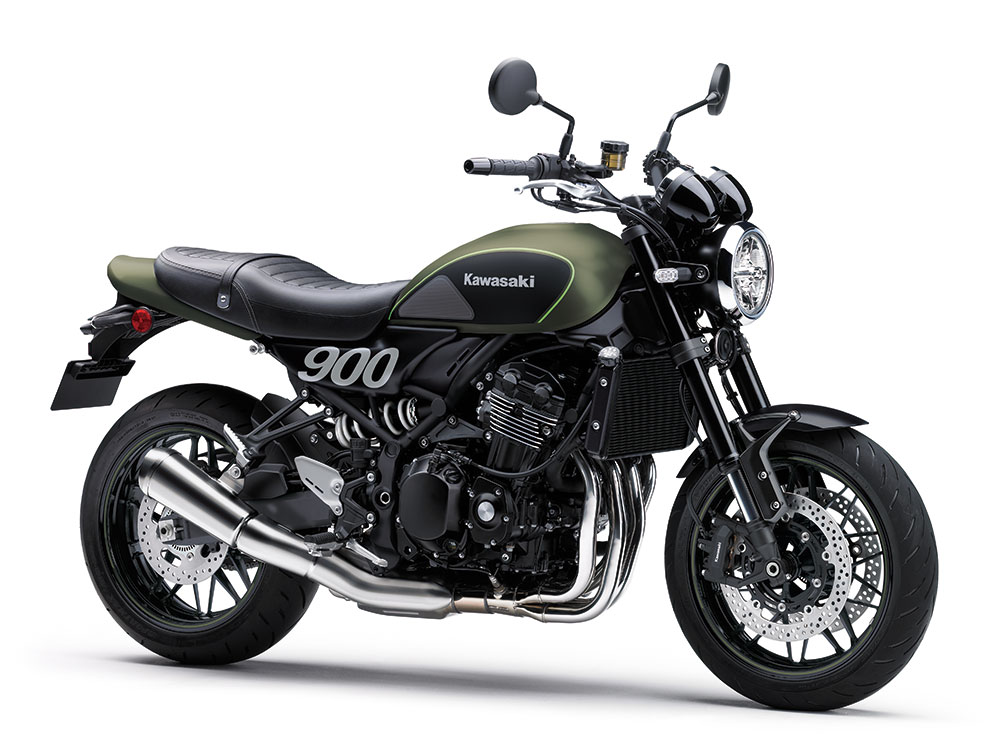
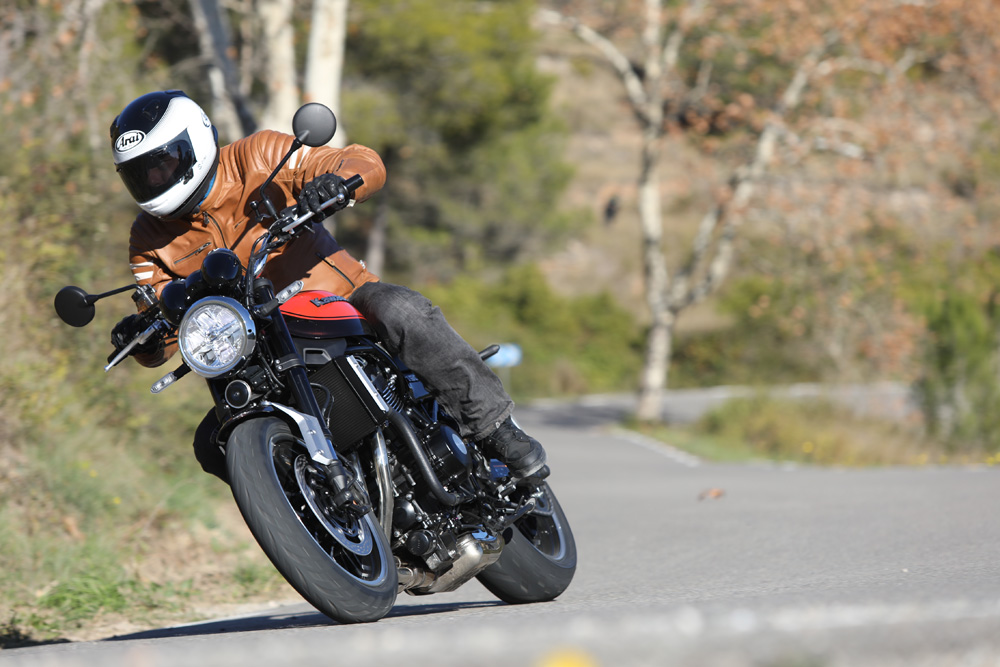 All of this changes the riding experience. Between the Z and the RS, the peak power difference is easy to notice as the retro-bike does not have the engine revving freely to the red line with a deep intake sound. The RS is more linear between 7 and 10000 rpm but below 7000 rpm, it offers more power and torque than its “modern” naked sibling.
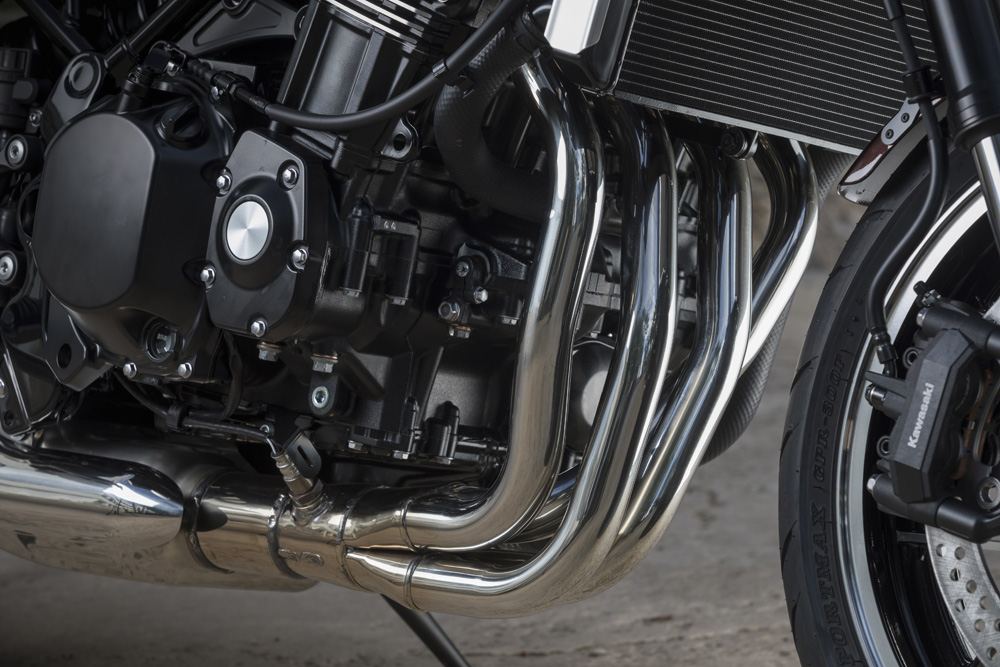 If we all admit that an average Z 900 RS fan is looking for more everyday life riding pleasure rather than a succession of thrilling acceleration, then the RS scores a big mark. In real life, while gently cruising on the Mediterranean coast south of Barcelona or winding through a variety of mountain roads, the amount of usable power is always a source of great fun. The inline four pulls strongly from low revs and the acceleration is always very consistent. A great engine then and definitely on par with the bike’s spirit and the Z1 heritage.
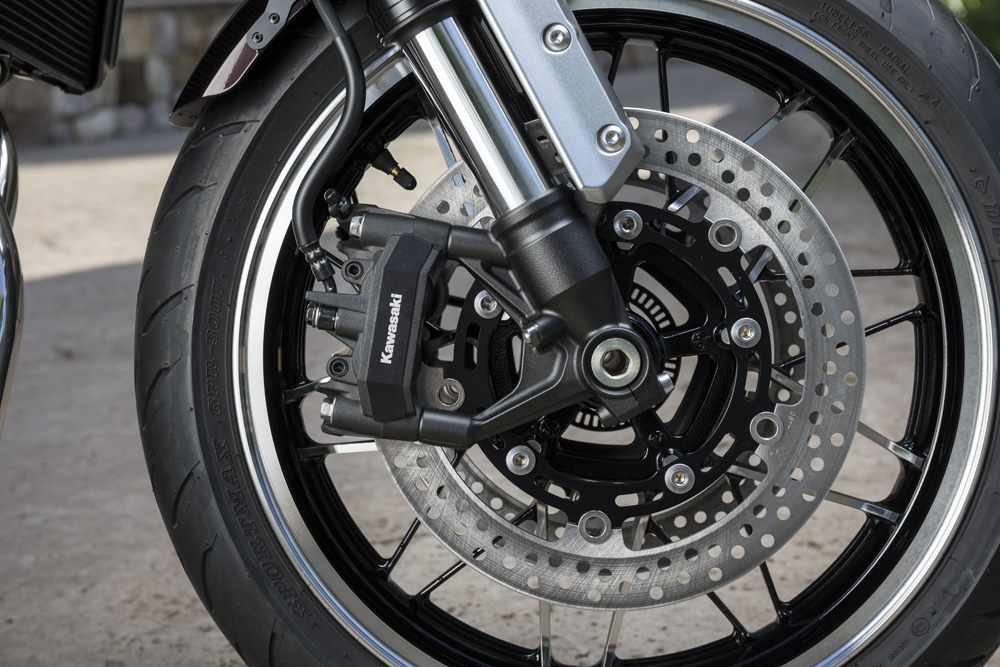
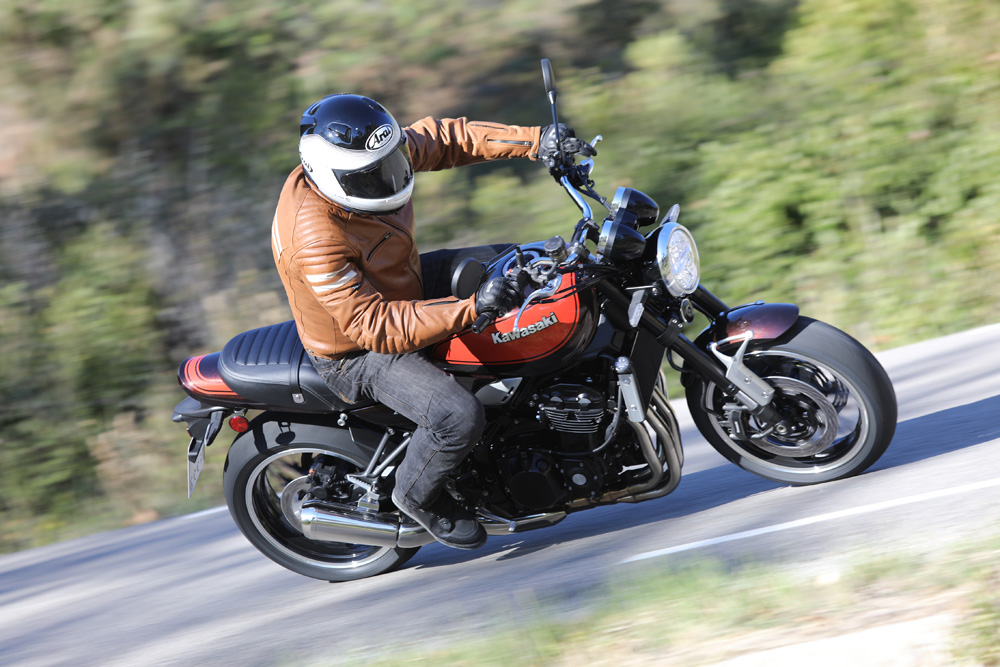 I was positively surprised by the overall level of comfort on this bike, which has never been one of the Z family’s qualities. The riding position is very neutral, with handlebars higher and closer to the rider than on the Zed. The bike has smooth controls and an assisted clutch. The seat is great, with a small step which aids comfort while cruising and when pushing hard. Great news also comes from the suspensions department with a 41mm upside-down front fork (travel: 120mm) and a single-shock rear absorber (travel: 140mm). They are both very well mannered and decently damped. They are even a bit soft, but not wallowy in any way and the good chassis provides comfort and riding pleasure. Unlike the Z 900, the RS version features radial front brakes, the radial brakes are set in the same way: good braking power but no brutal initial byte.
 All that gives the 900 RS a dual personality. Easy to ride (once in action, the 215 kilograms just disappear) and absolutely neutral bike to handle, which should appeal to the urban commuter or for the beginner rider. But, different to many retro-bikes, the Z 900 RS can also handle a higher pace and still deliver lots of fun with much more ground clearance than a Honda CB 1100 RS; more mechanical character than a BMW R nineT and more agility than a Triumph Thruxton, which can be seen as the RS’s natural competition. While pushing harder and harder, the only downsides will come from a riding position that is too upright, which minimises loading the front end and the riders movement on the bike. But then, if that is what you want, you start to exit the Z 900 RS’s design parameters and purpose.
 In conclusion…
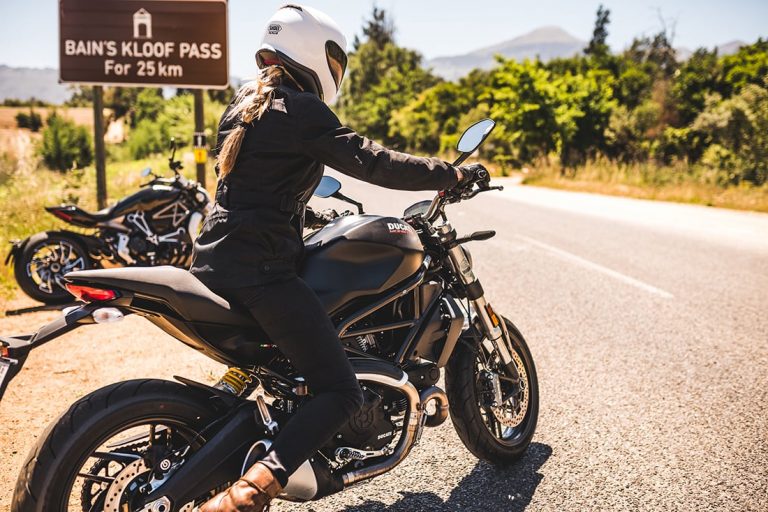
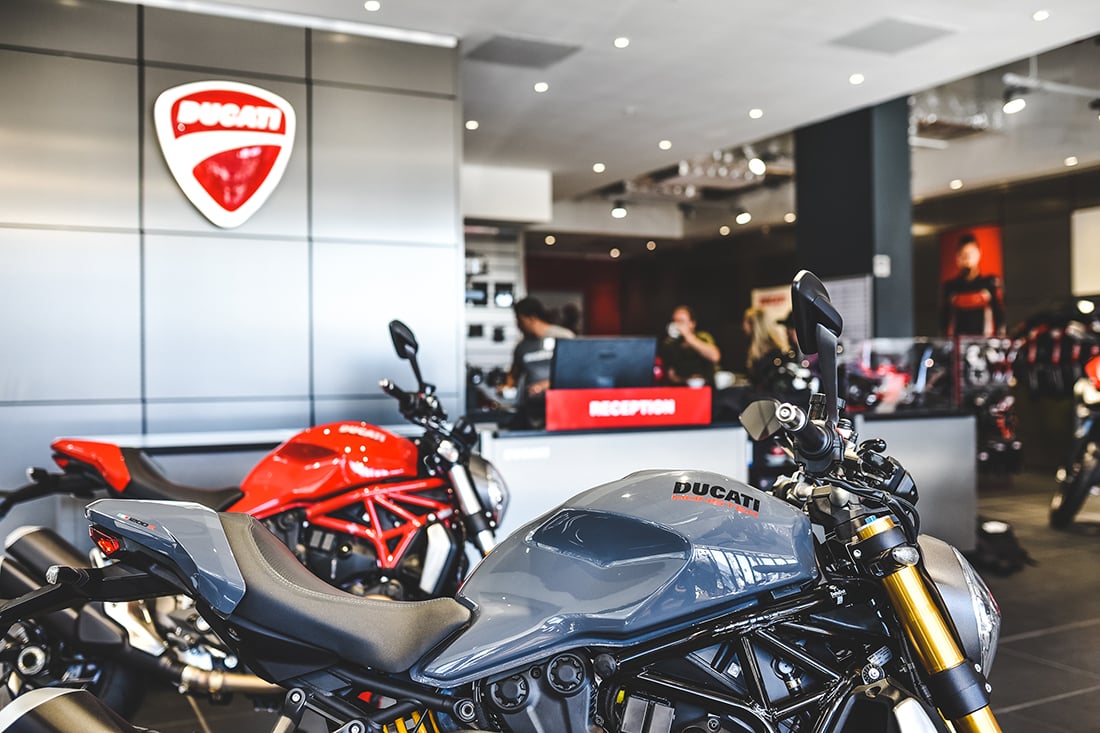
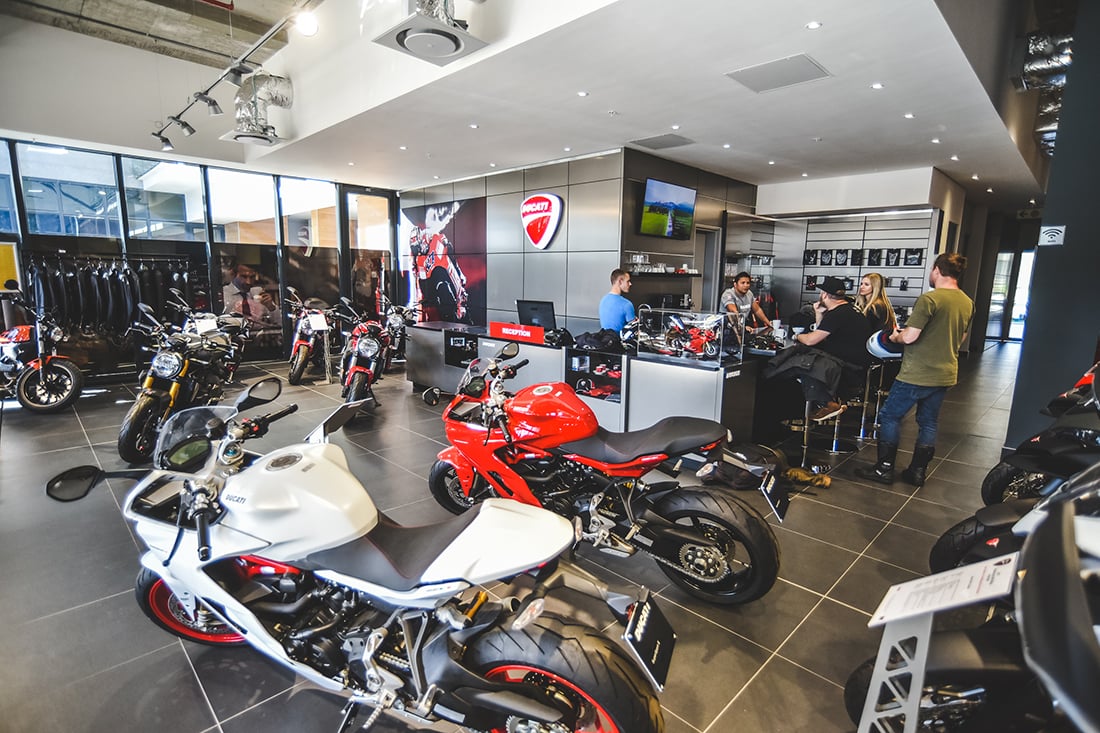
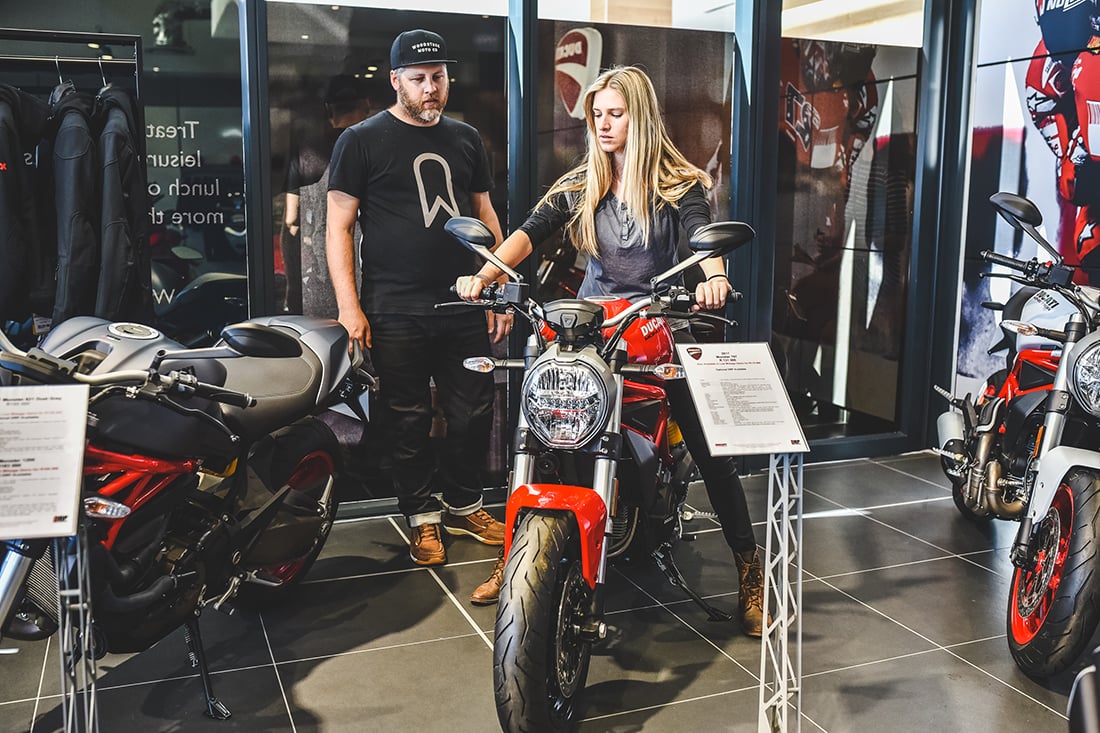
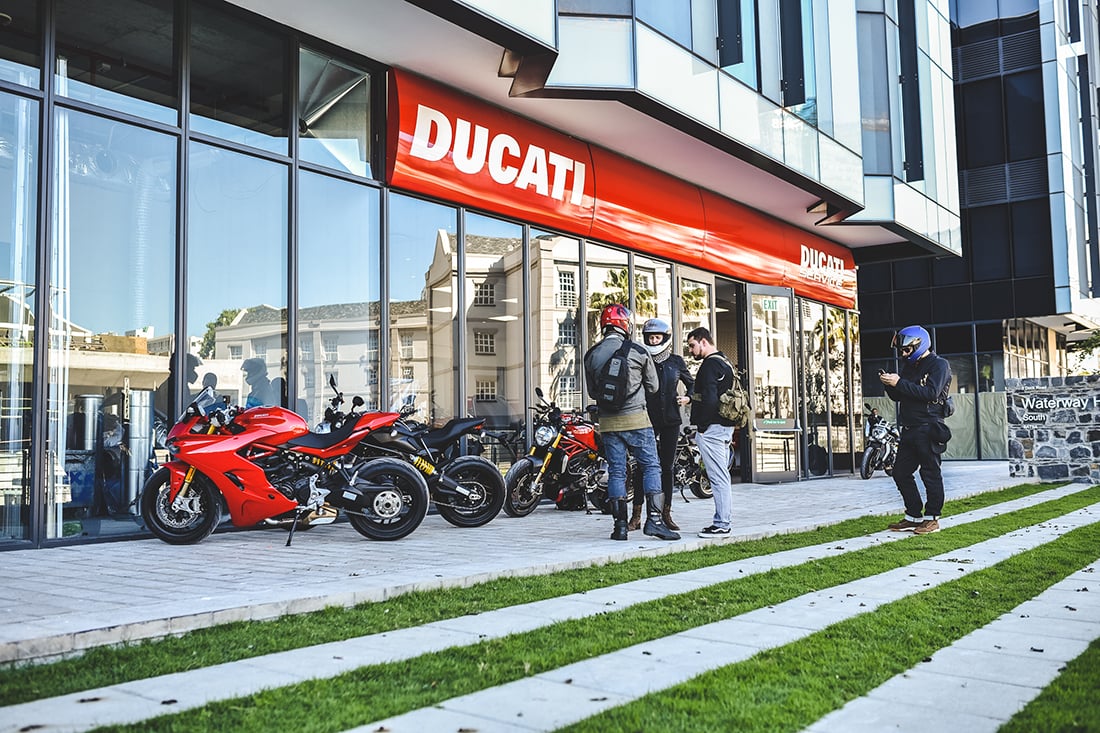
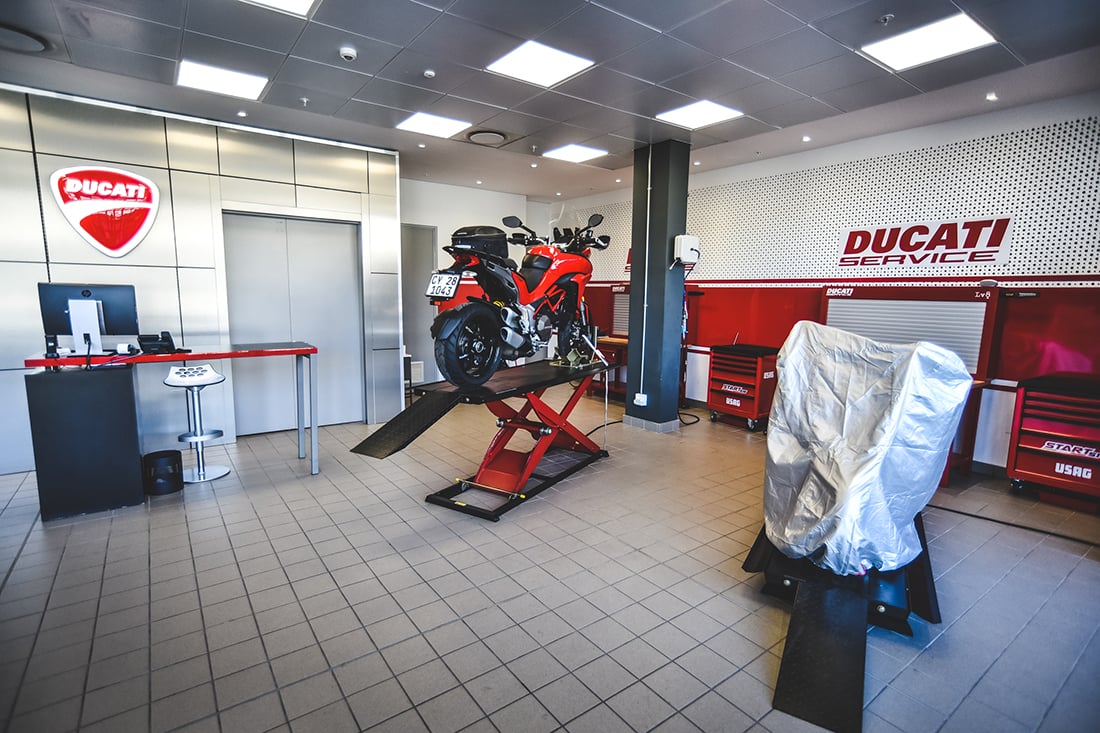
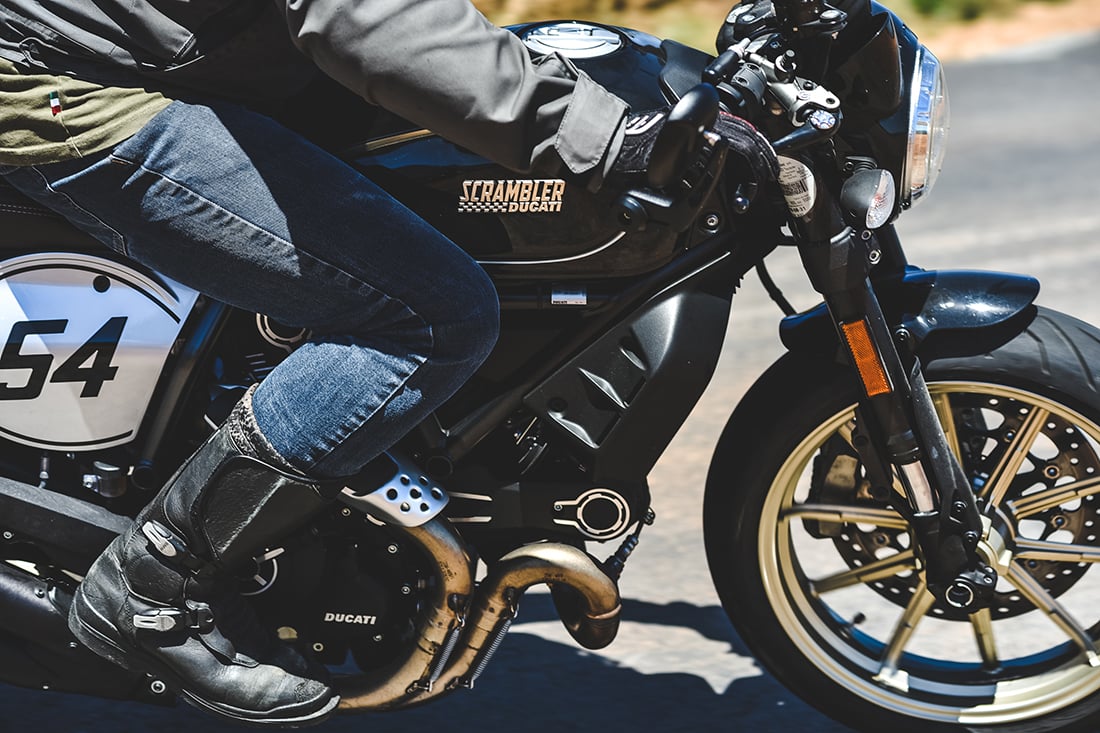
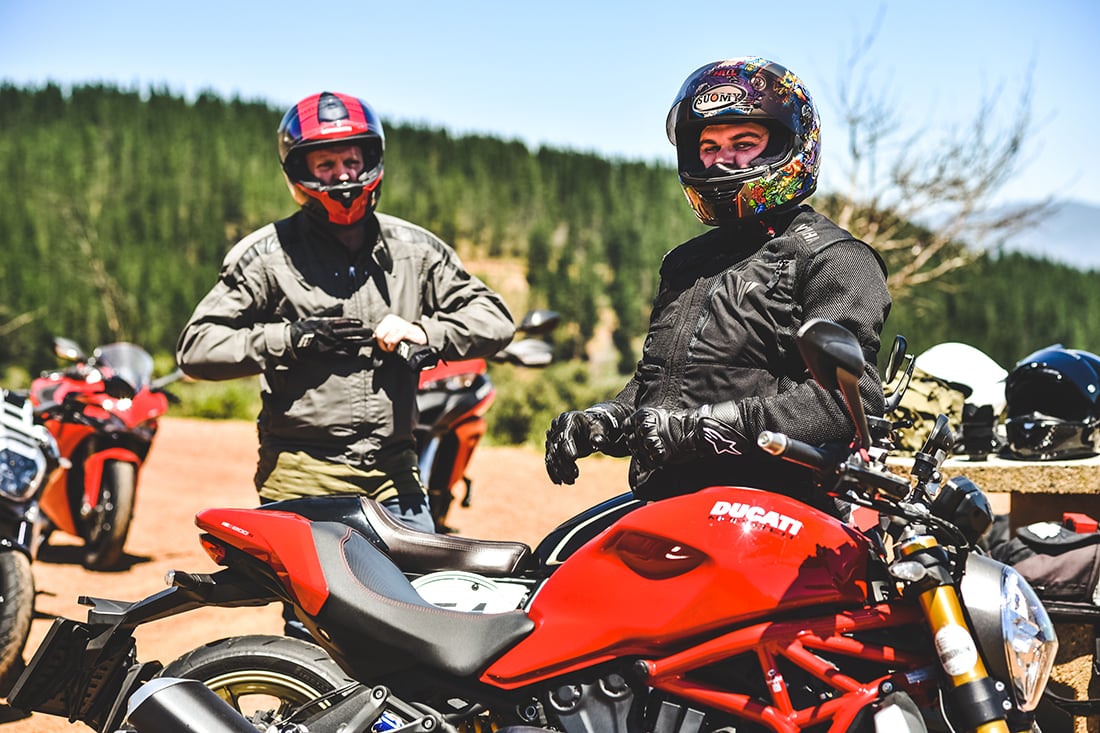
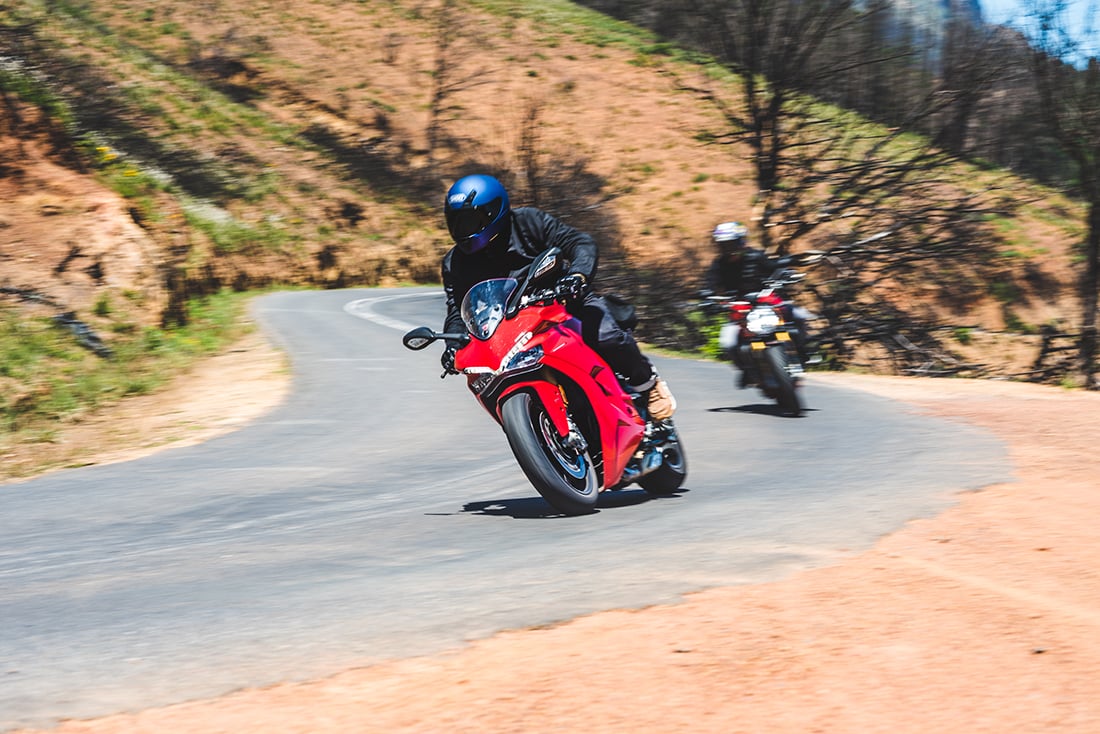
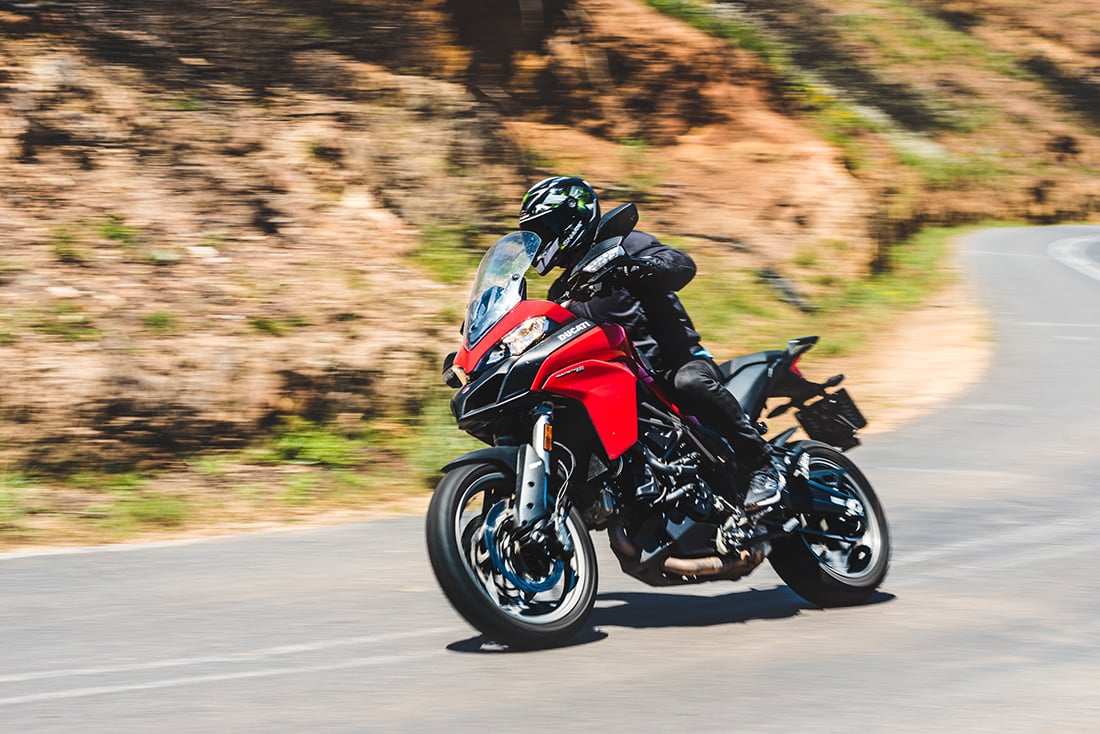
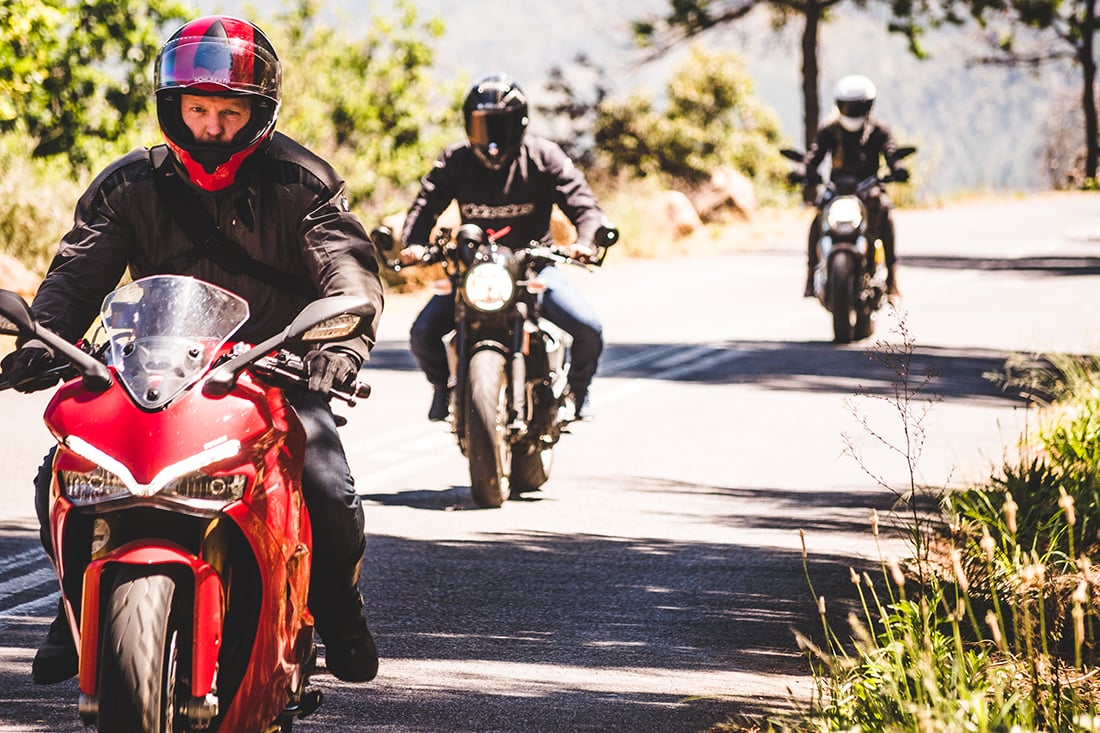
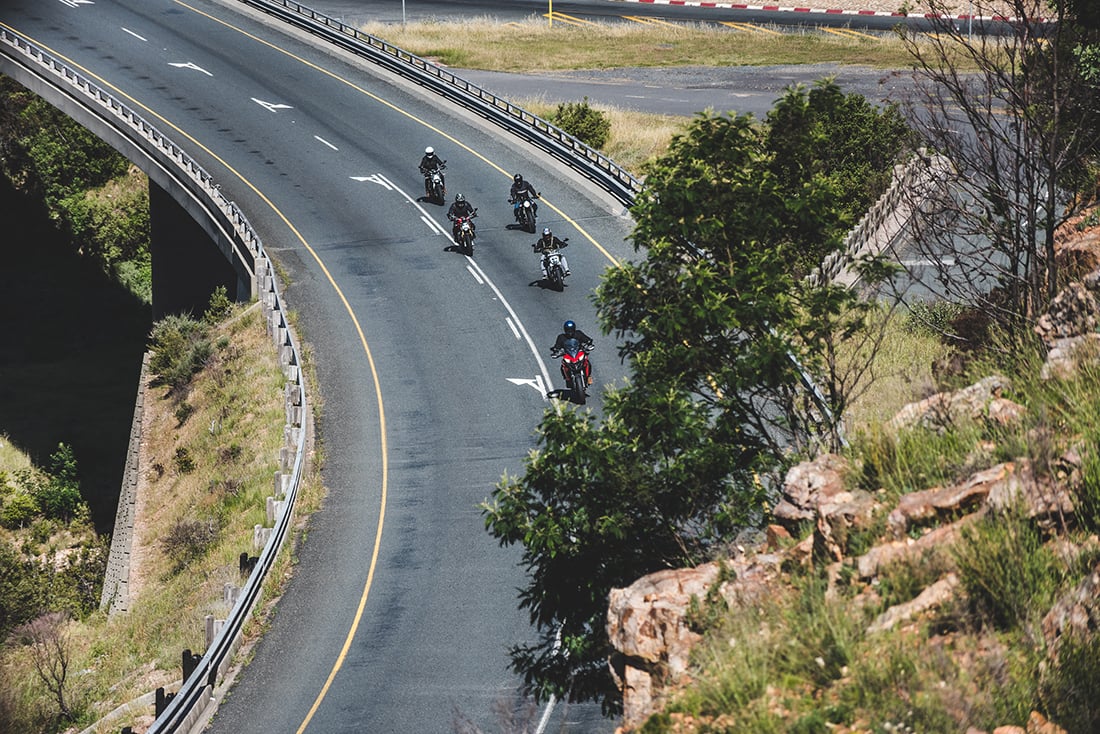
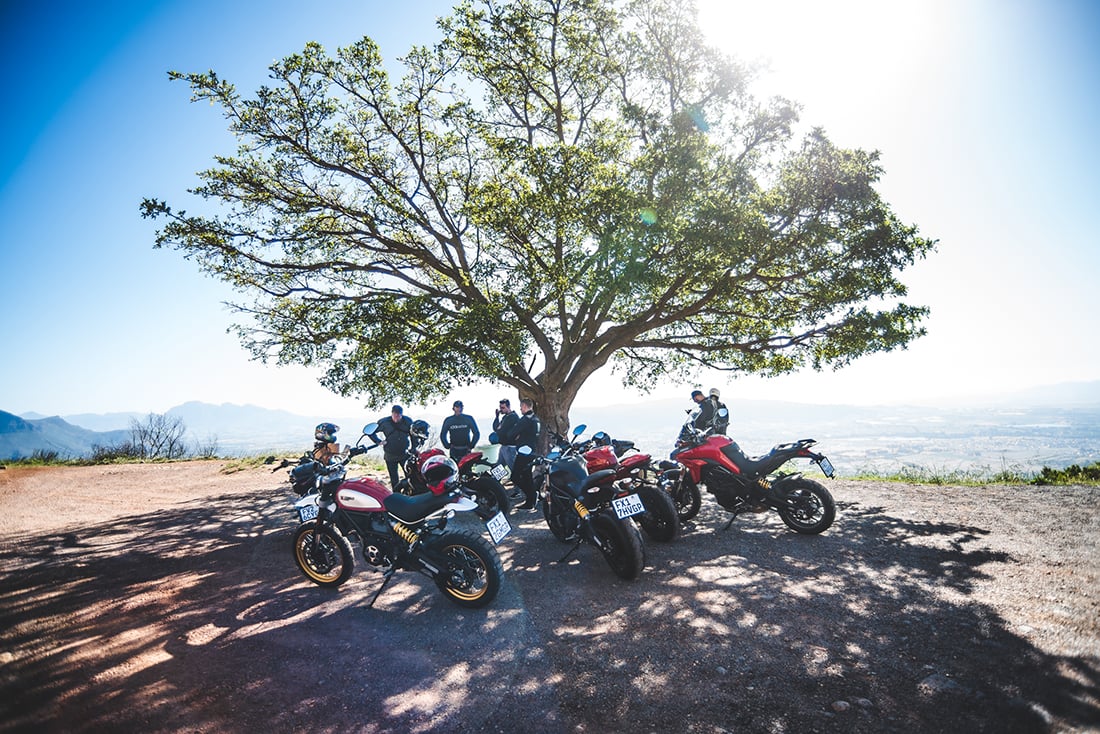
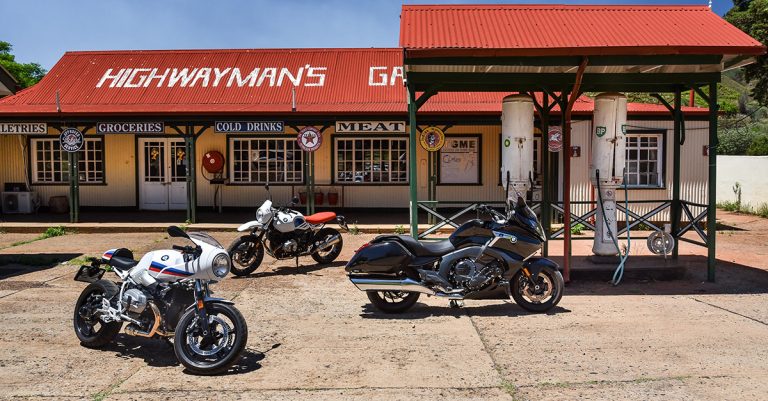
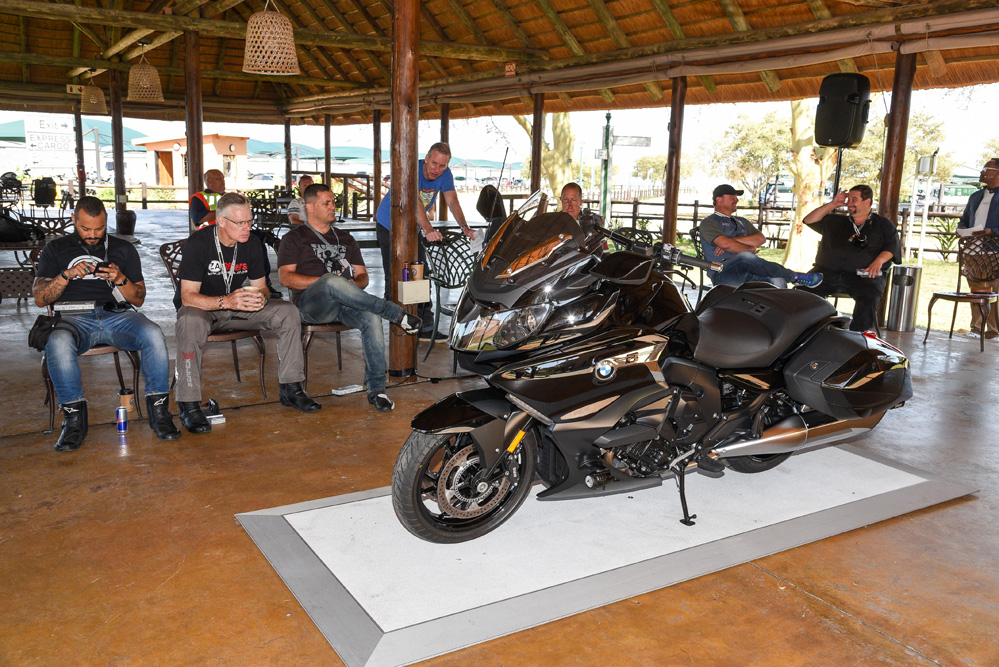 After a tasty breakfast, and rundown on the Bagger by the BMW brass, we kitted up and chose a bike to ride on the first leg of a 300k ride. I claimed the R1200R for the first leg. What a beautifully torquey and refined and balanced motorcycle this is! I cannot help thinking that with a little bit of wind protection, the R1200R would make a way better choice than a GS for riders who never venture off road. The conventional front forks give excellent feedback. I love this bike.
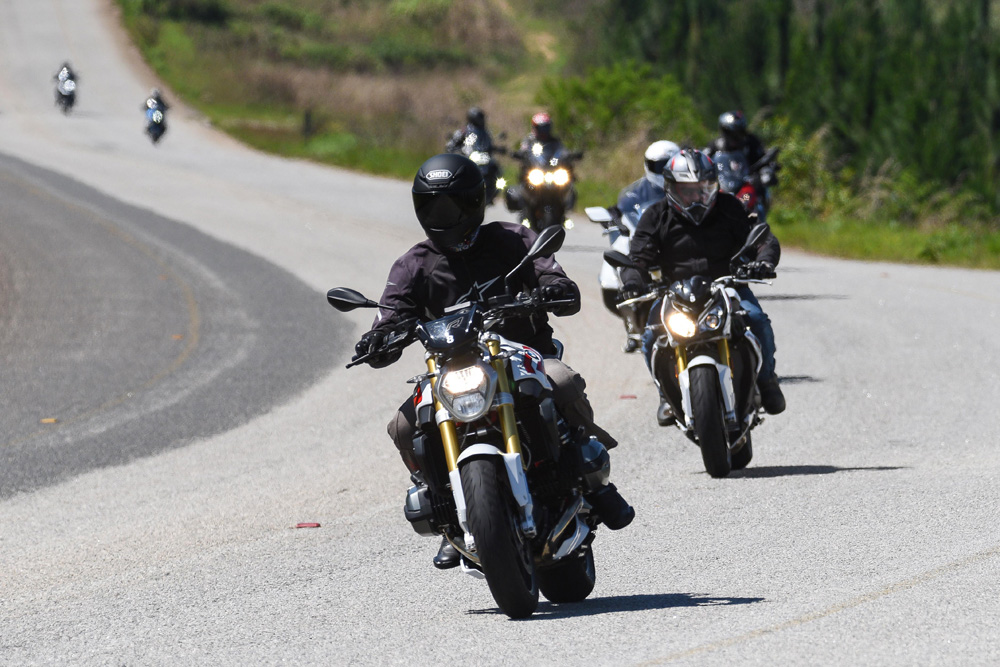 Next up I hopped on the F800 GS. This GS is now starting to show it’s age. The motor is vibey at revs, and the steering is vague. This was exacerbated by the fact that it was shod with TKC 80 knobbly tyres. Opposition brand offerings have caught and passed the 800 GS on most fronts. I do know that a replacement is under development. Watch this space.
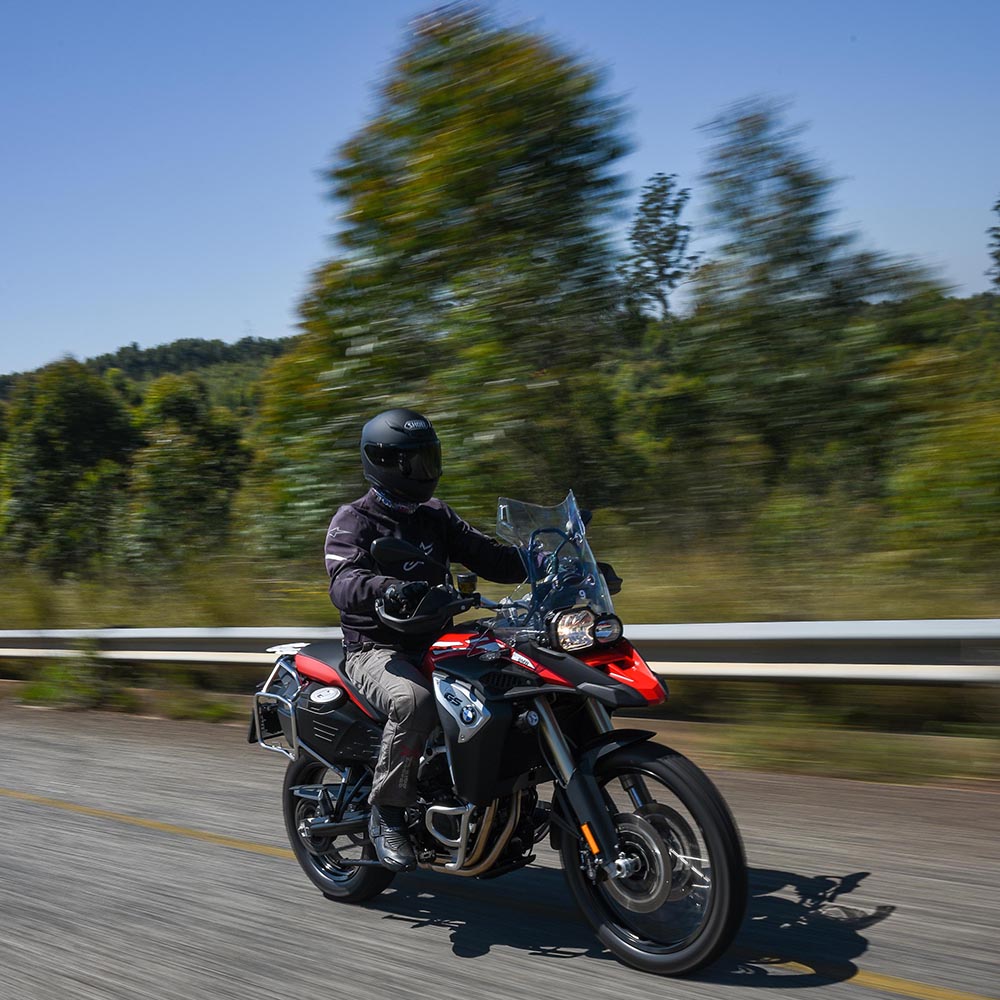 Wow! Now for the Bagger. I rode this beauty up Longtom pass to the cannon site. It is inconceivable that something this big can feel so light and, dare I say it, almost nimble. 118Kw and 170Nm of torque delivered in a silky smooth six cylinder fashion, make for an intoxicating ride. The decent ground clearance allows the fun to continue in the twisties too. Impressive!
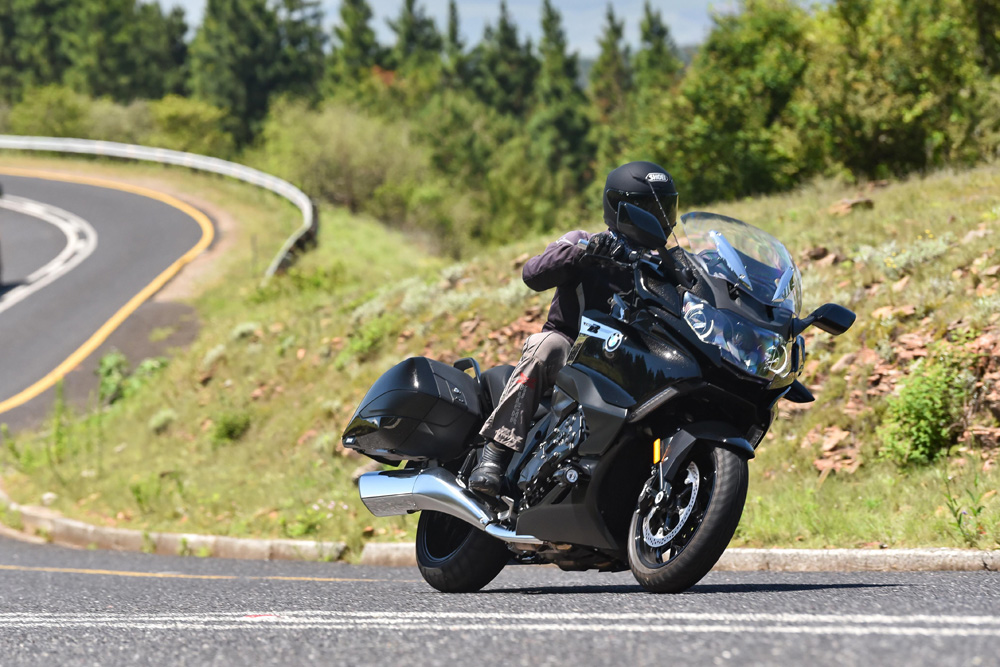 Going from the Gor’Blimey to the ridiculous, I jumped from the Bagger mothership, onto the impish G 310 R. As the pass tightened up the little 310 absolutely railed through the turns. On big bikes like the Bagger, the riding sensation becomes muted. You know there are wheels down there somewhere but almost ride on faith rather than feel. On the littlest Beemer it is the exact opposite. It is totally engaging to ride! First of all it punches way above it’s weight, performance wise. Secondly, it corners so fiercely that every bike in front of you in the tight stuff becomes a moving chicane. More fun than a bag of monkeys on the right road.
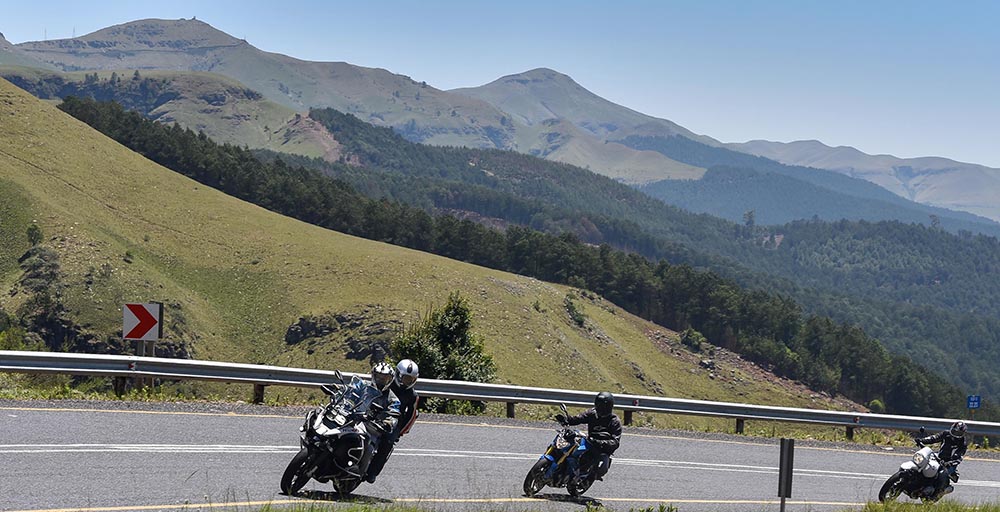 The R9T Urban GS is the street scrambler of the R9T range. Styled like the original R80 GS it is a charming blast from the past. As with the whole R9T range, the bike sports the venerable 81Kw air/oil cooled motor from the previous GS range. It is a lovely mill, with plenty of power and torque in this application. The bike is taught and really pleasant to ride. I dig it.
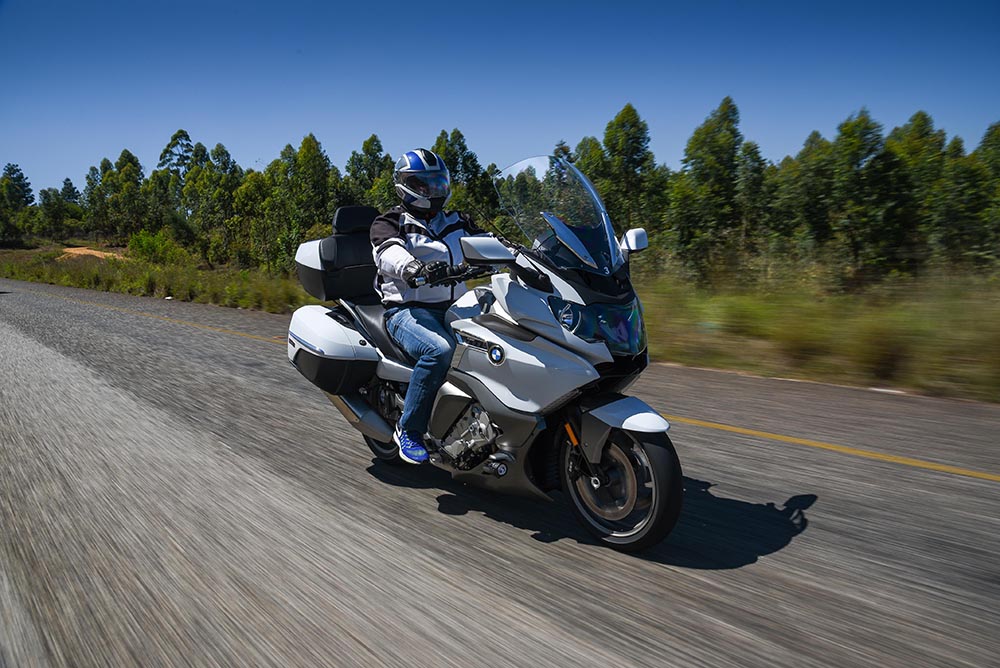
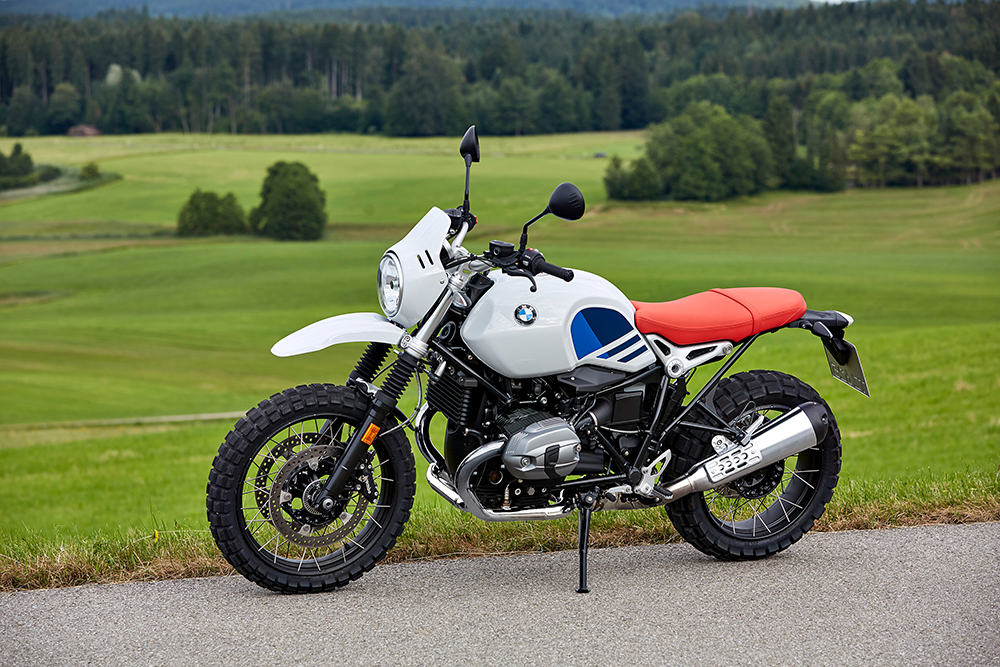 Once again I climbed from a naked bike onto the super tourer K1600 GTL. As competent as the Bagger, but with a back perch that will satisfy the most fastidious passenger, the GTL will waft over vast distances in serene comfort. Once again, not as engaging as smaller lighter offerings, but a magnificent horse for the super touring course. The same 6 Cylinder mill as the Bagger raises refinement to amazing levels.
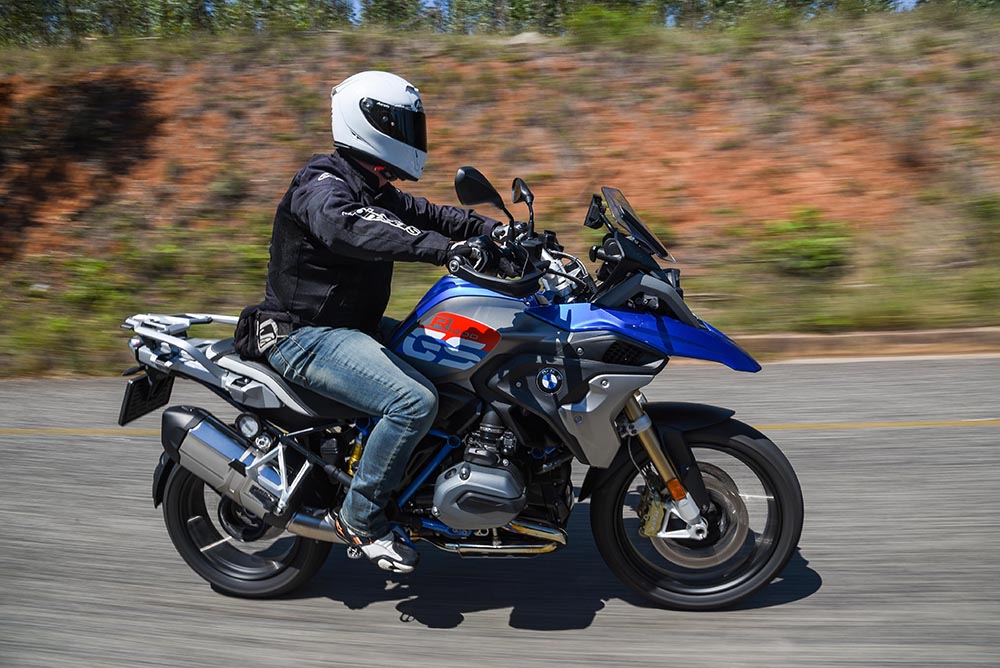
 What can I say about the R1200 GS that hasn’t already been said? In RALLYE guise it is meant to be the most dirt worthy GS. We only rode on tar, but the bumpy tight road out of Pilgrim’s Rest reminded me of what an accomplished performer the GS is on damn near any road. Little wonder they sell as well as they do. Mr. Do-it-all.
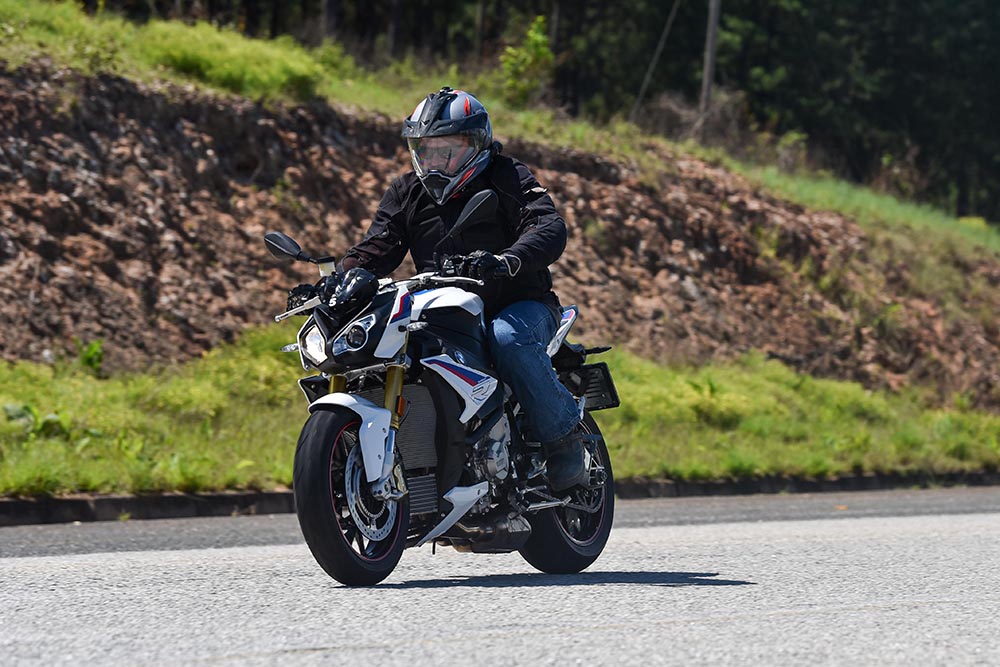
 The S1000R is an absolute weapon! Faster than a fast thing, with a chassis to match, and ALL the electronics needed to control the beast. You will not find a better naked sport bike. You may favour another engine configuration or whatever, but you will not find a BETTER bike, period!
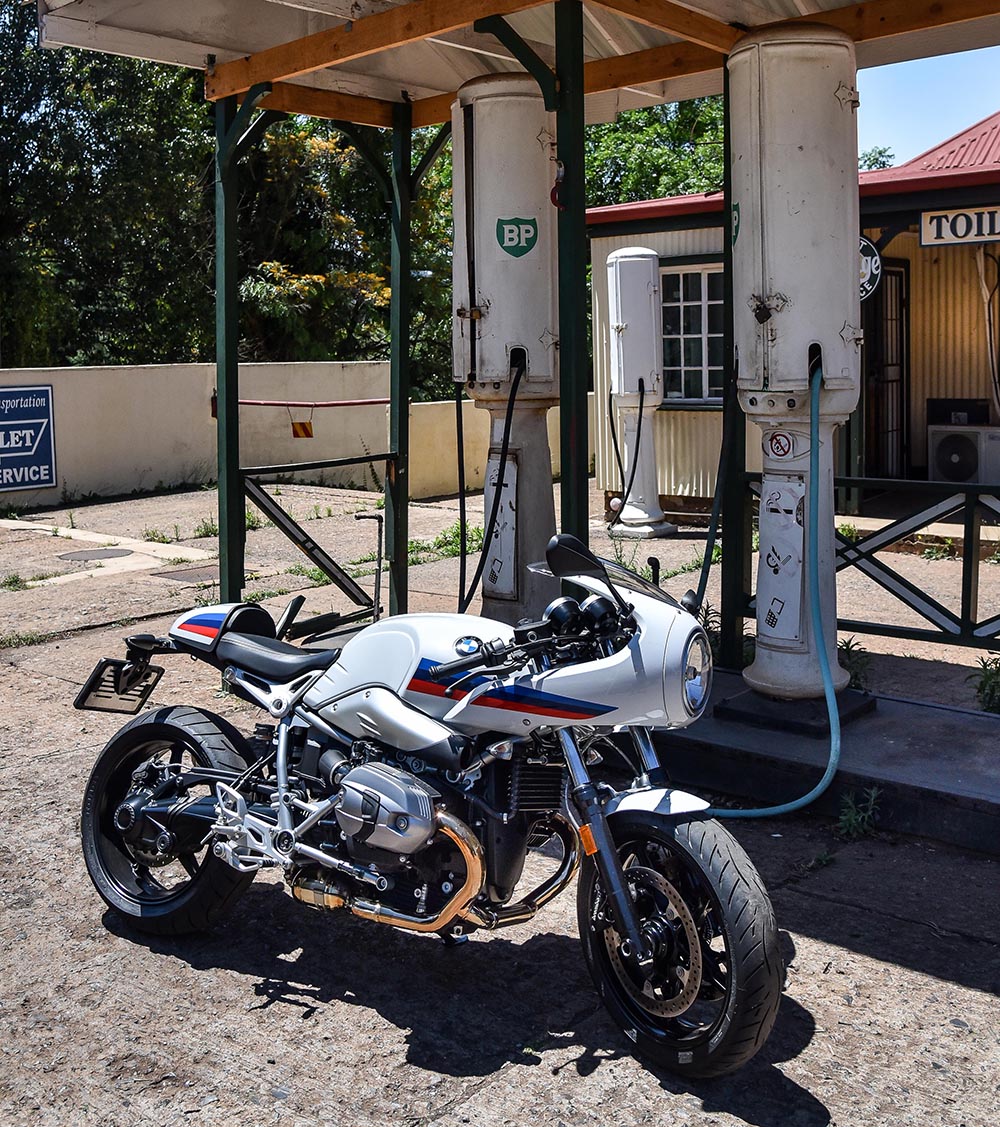
 My next ride, after a scrumptious lunch, was on one of the most beautiful Bee Em’s of all time. Certainly if you were around bikes in the 70’s. Yes, you guessed it, the R9T Racer. Stunning in BMW Motorsport livery, the Racer is a feast for the eye balls. Unfortunately riding it is another story. If you have legs like Danny De Vito and the arms of an orangutan, then you will be comfortable. The riding position is seriously uncompromising. The Germans will be the first to tell you that form should follow function. It is a Racer after all! The faster you ride it , the better it gets. The Racer loves long sweeps taken at speed, then all is forgiven. I f your neck and wrists take too much strain just stop and gaze at it. It makes the pain bearable.
 Practicality has never been more exciting than on the S1000 XR. Put a decent fairing and comfy seat on a S1000 R and you come up with a truly practical super bike that can do it all. You sometimes find yourself looking for another gear. The motor, like that of the S1000R, feels busy, even when it is loafing along. The fact that there is such abundant power, at almost any revs, supports the feeling of needing to hook another gear.
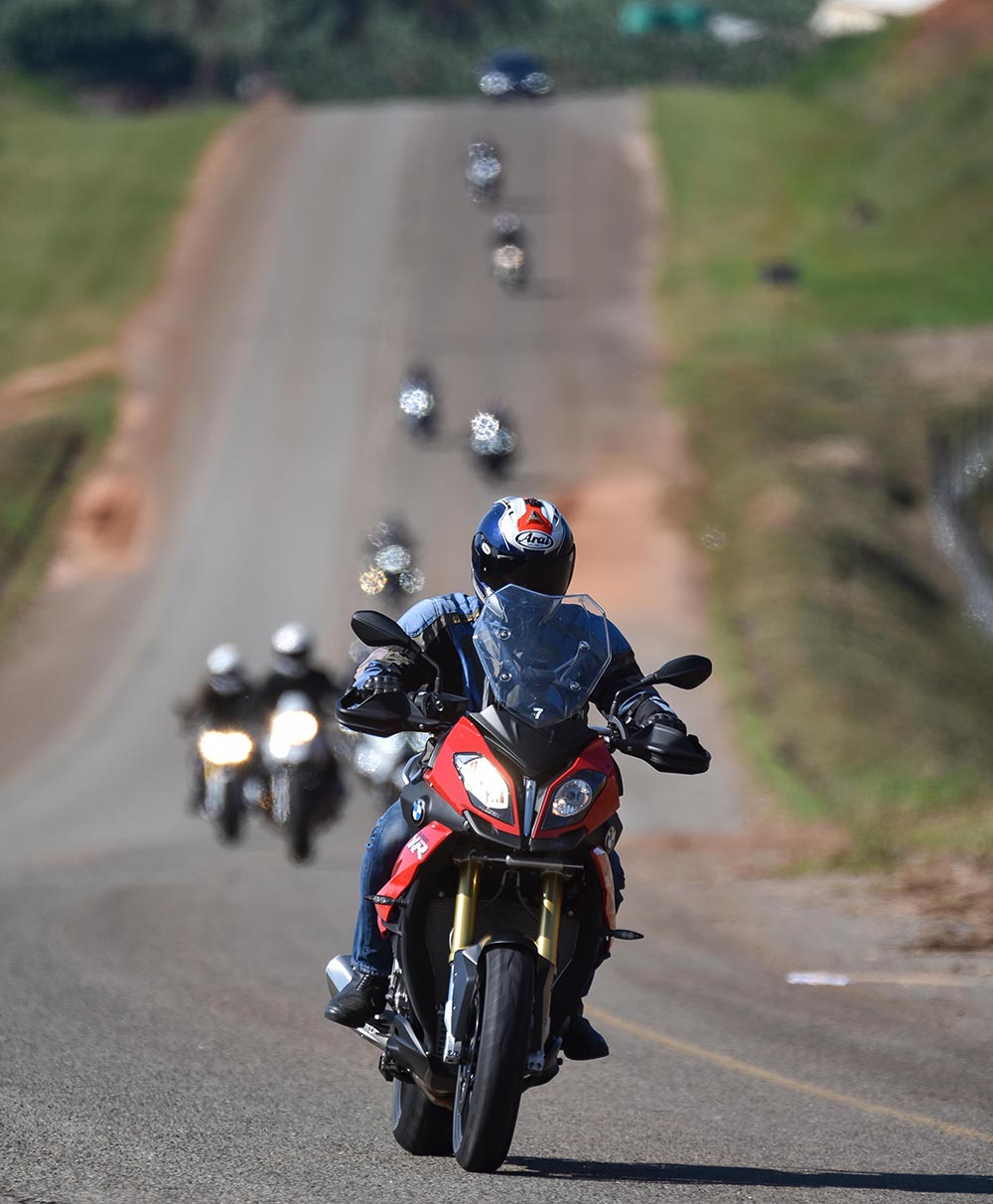 The S1000 XR carried me back to the airport, and the conclusion of a wonderful days riding. As fortune would have it, the weather was absolutely perfect. A bit like baby bears porridge, not too hot and not too cold, just right! The range of BMW bikes that we rode emphasized how incredibly this manufacturer has progressed in recent years. They truly have a bike for all seasons. Not just any old bike either, but bikes that reflect the thorough design and build quality that are synonymous with BMW. No matter what your fancy, there is a motorcycle with the familiar blue and white roundel on it that virtually guarantees rider satisfaction. Pop down to your local BMW dealer and see for yourself. You will not be disappointed!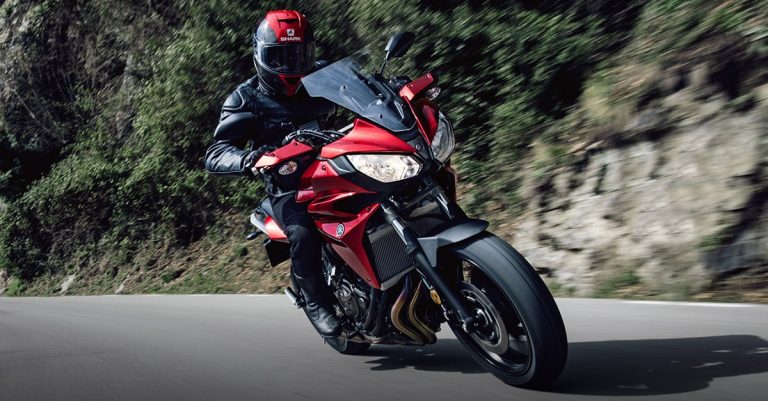
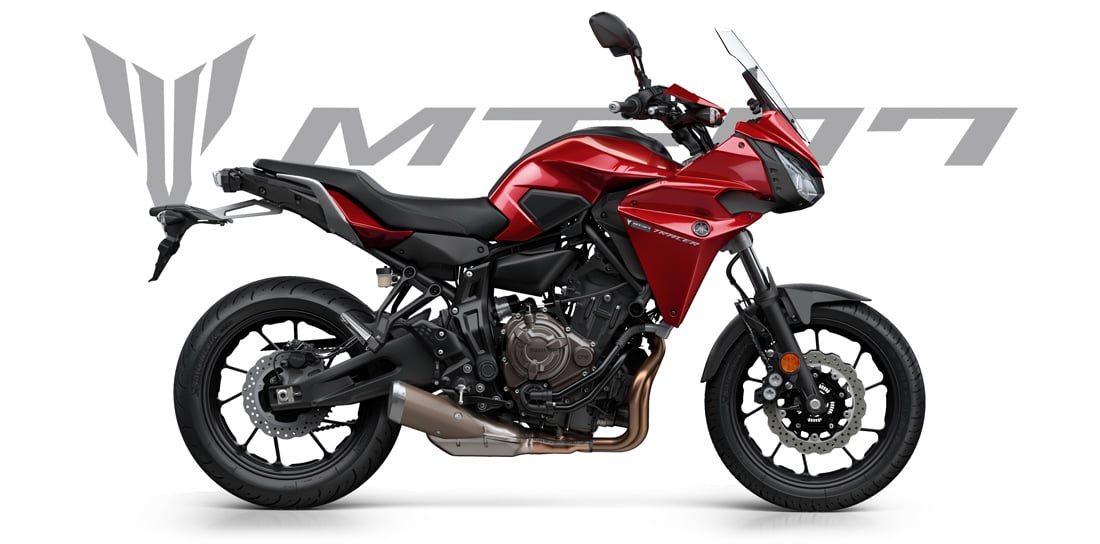
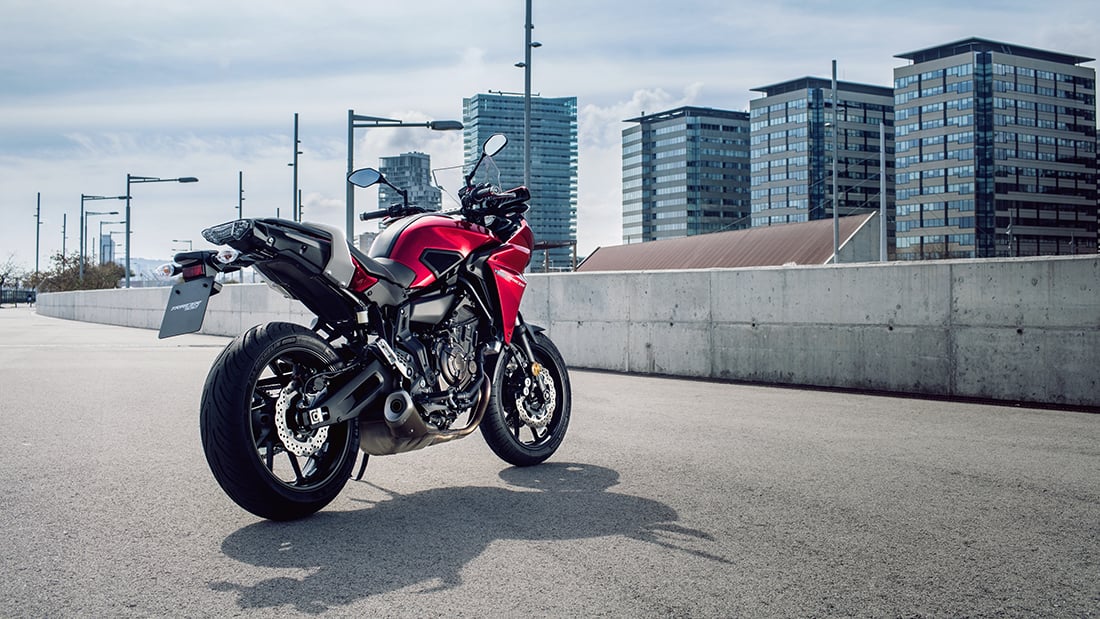
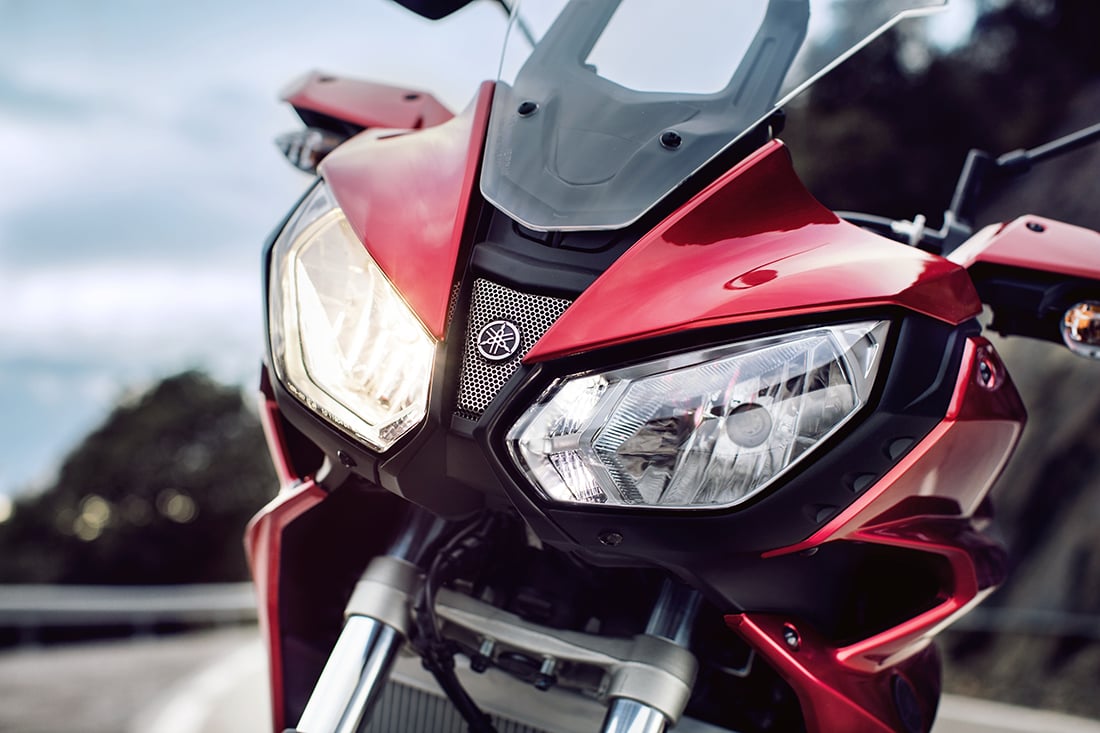
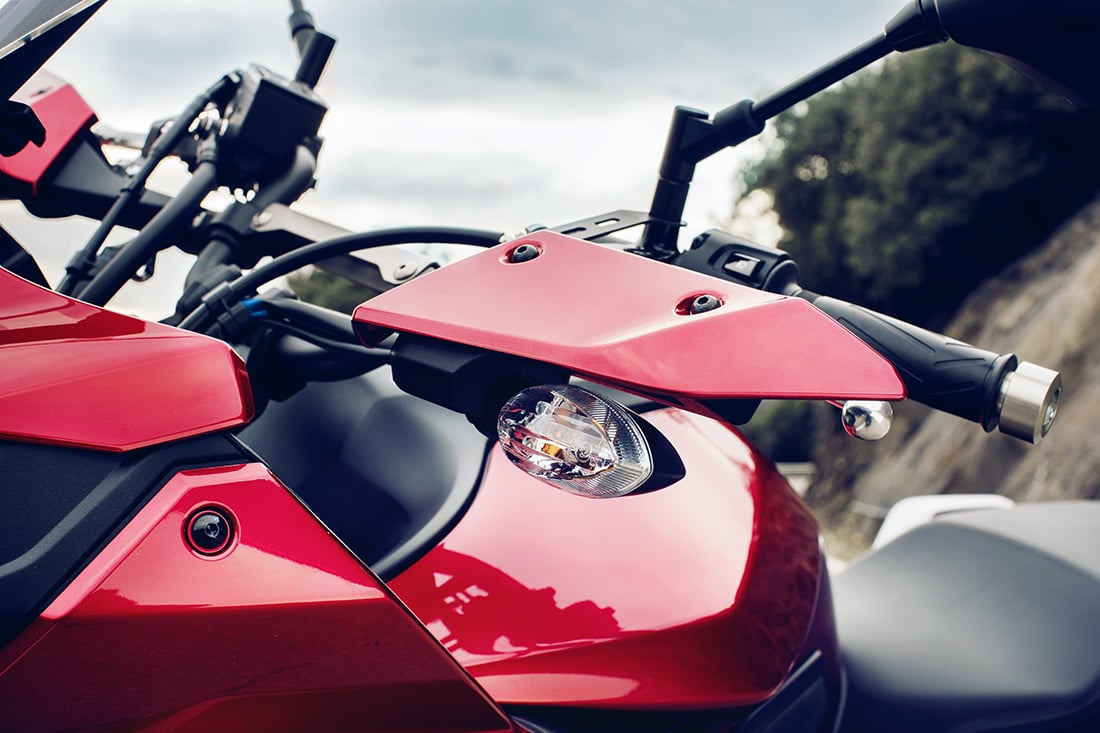
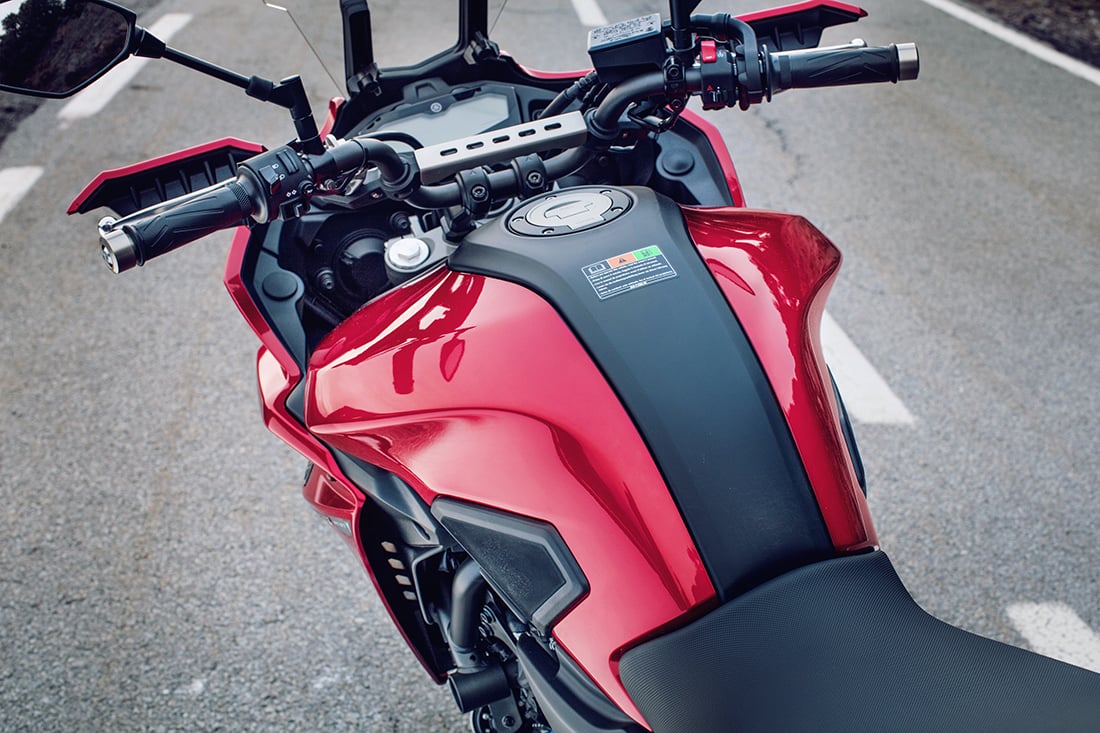
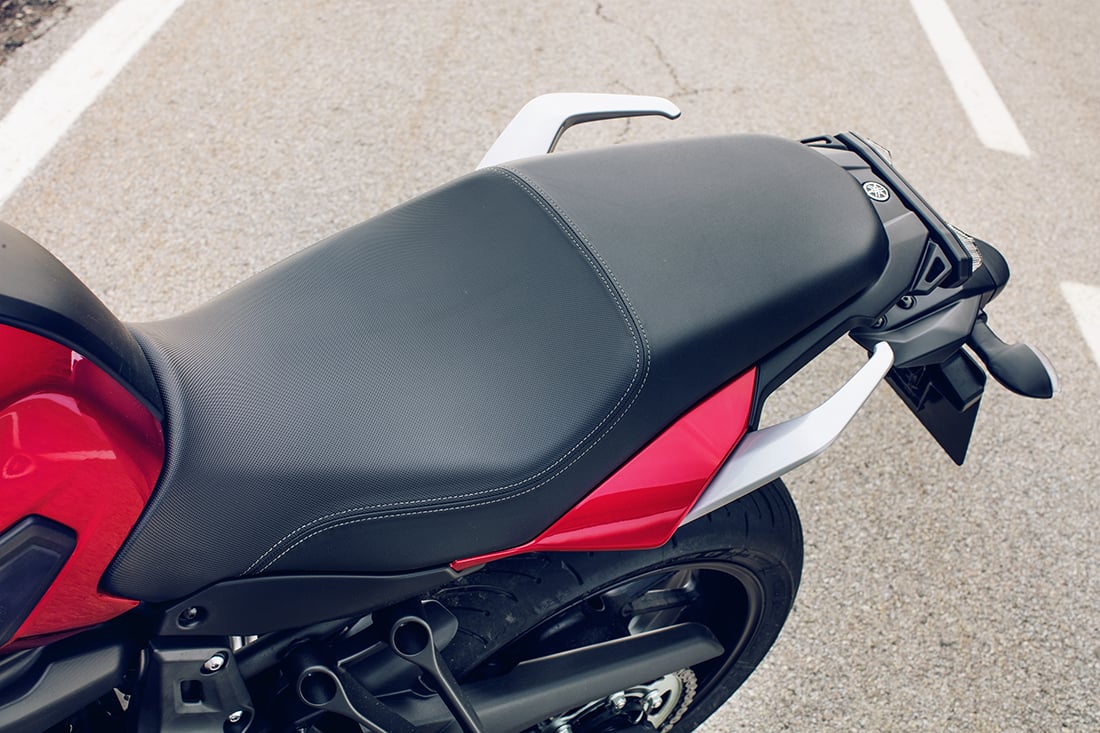
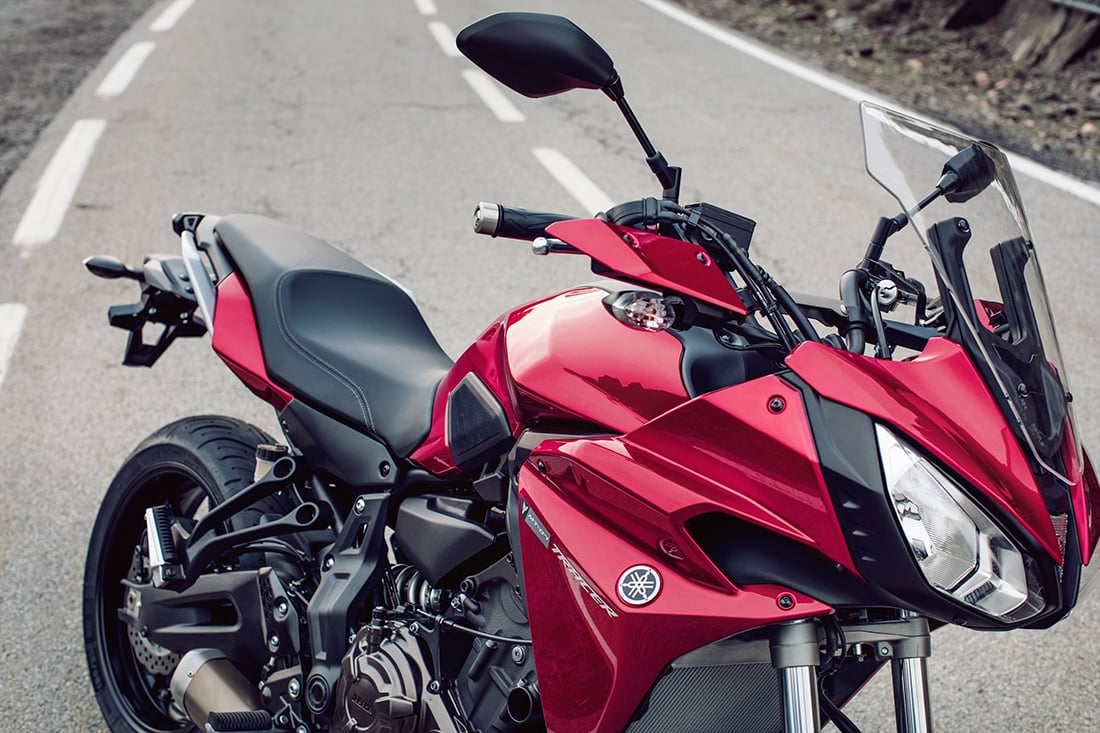
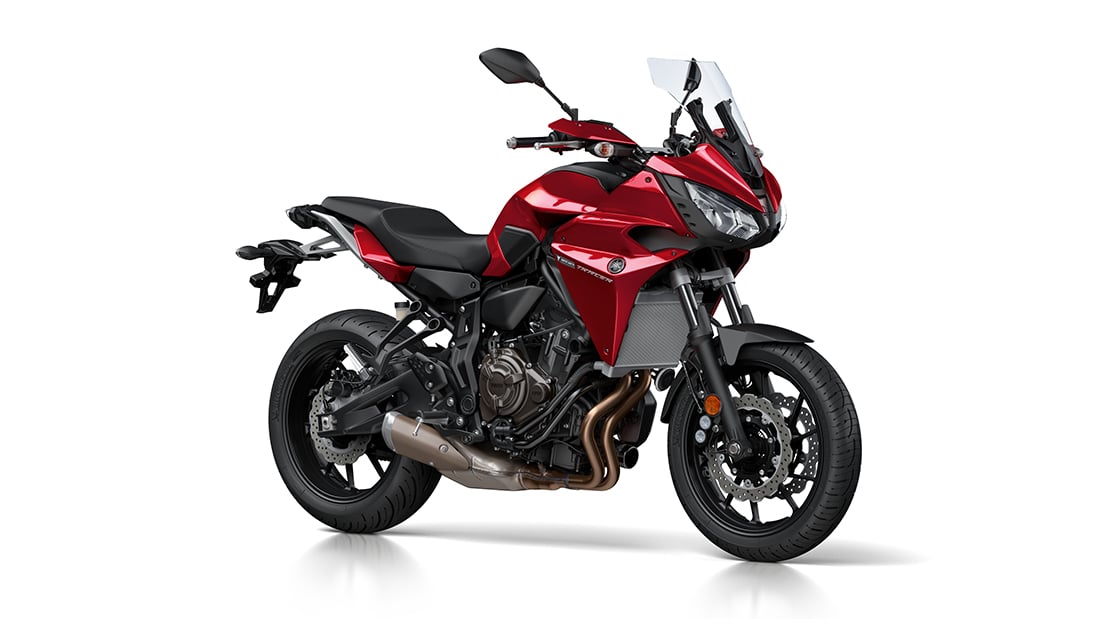
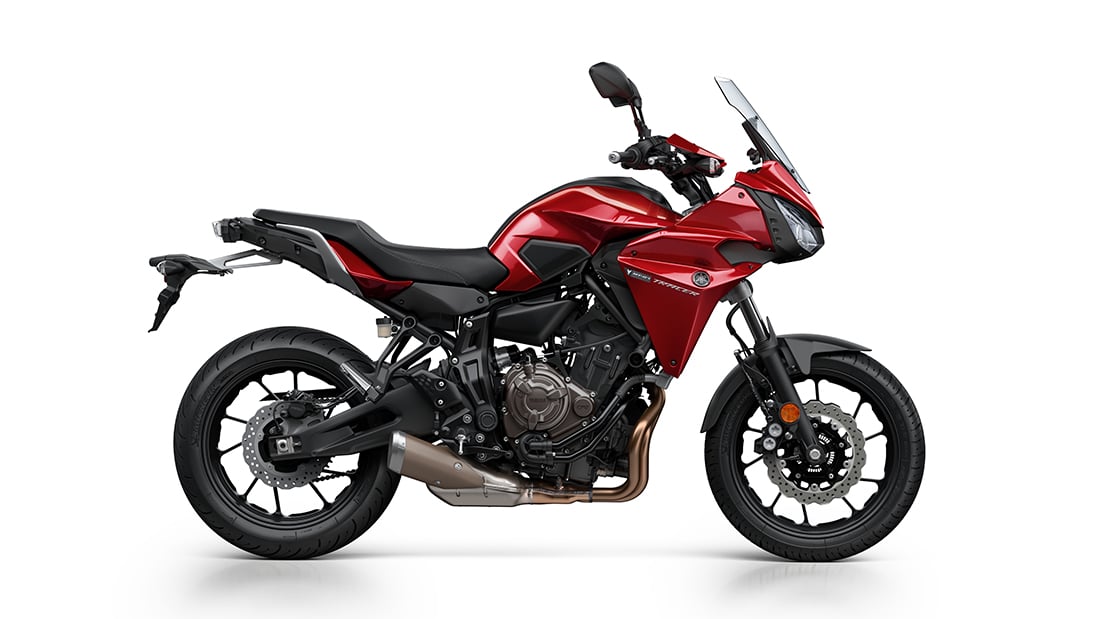
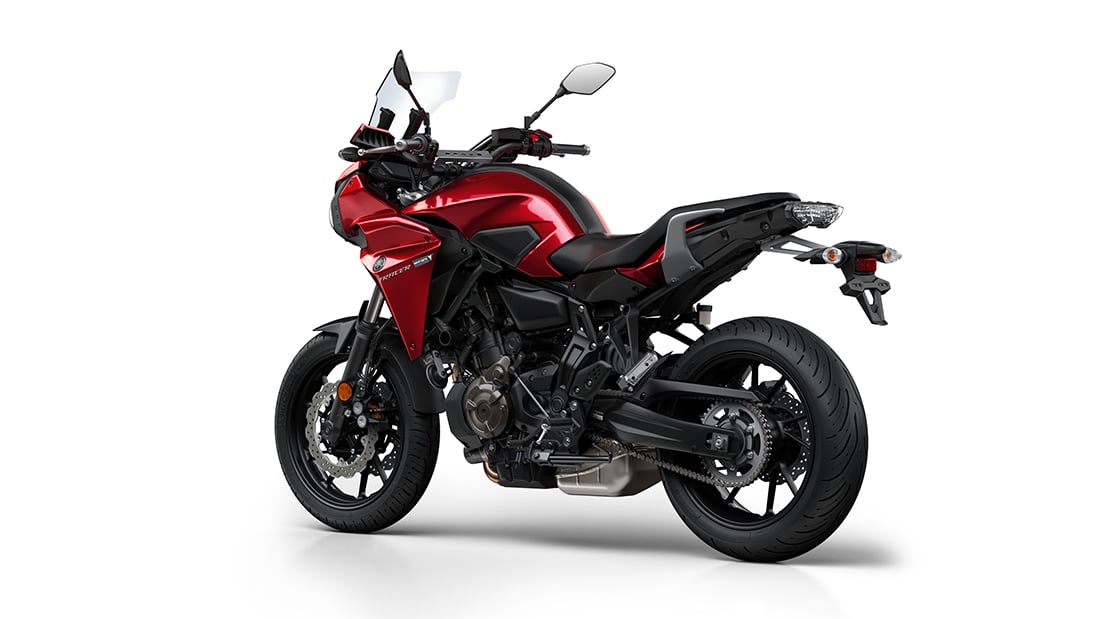
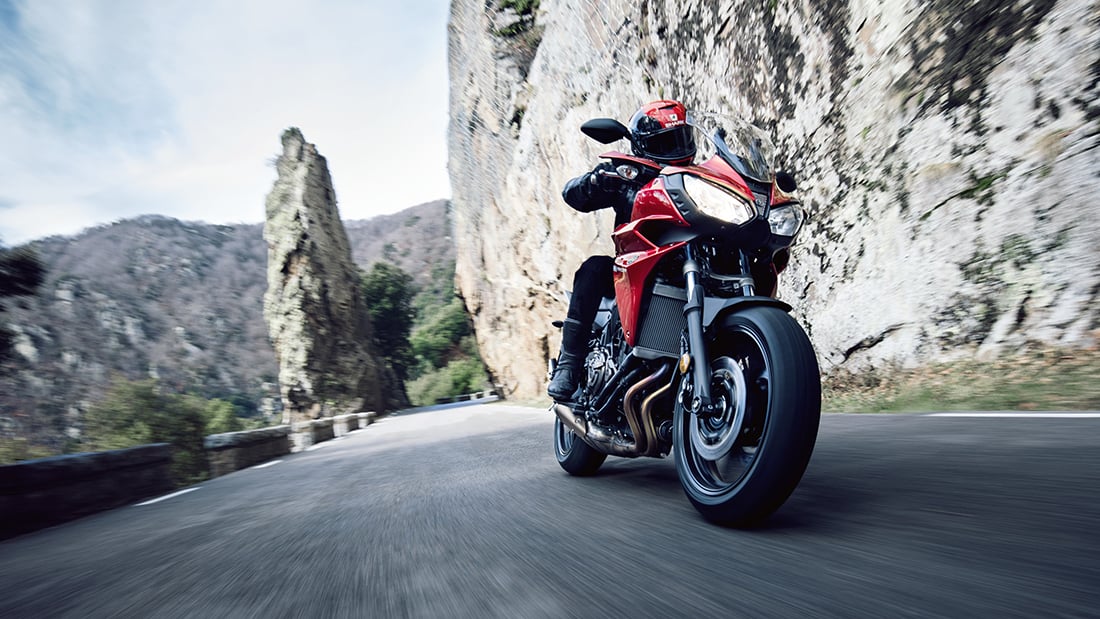
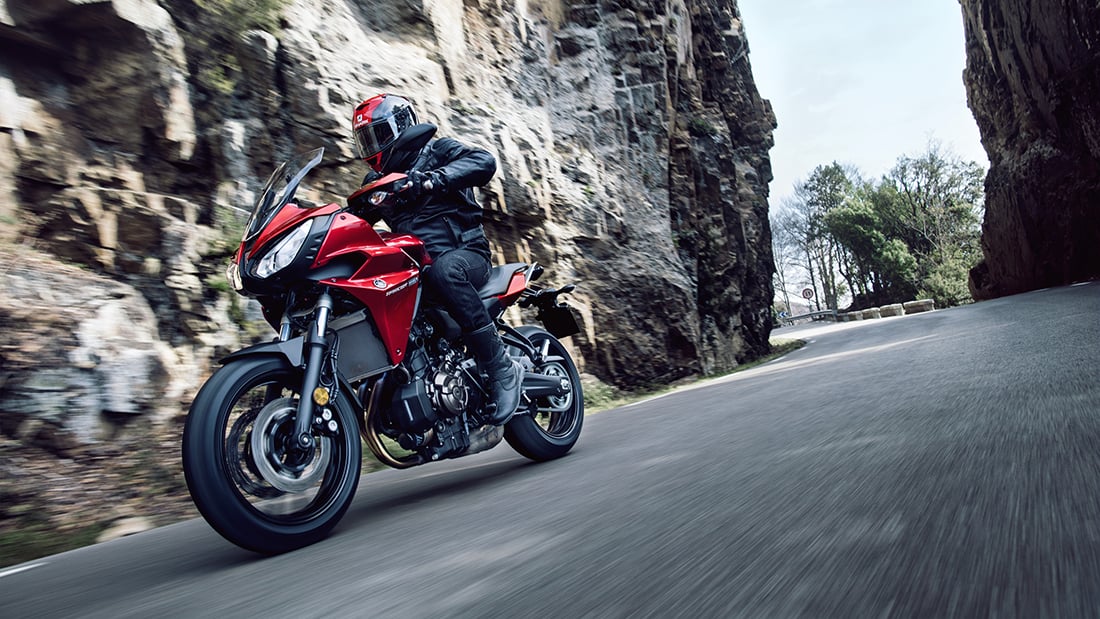
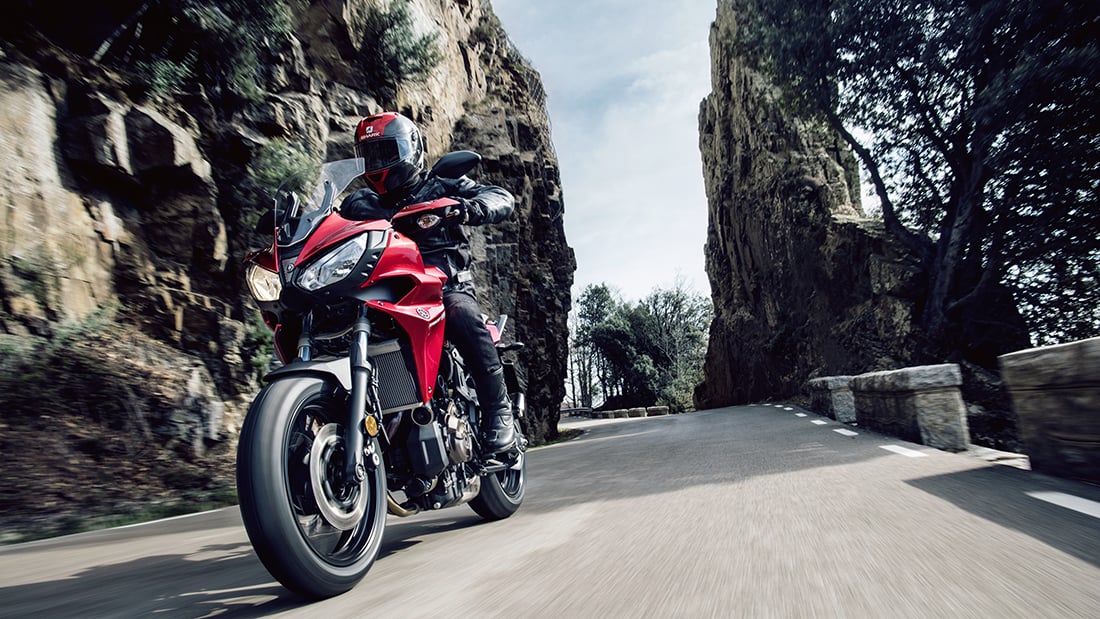
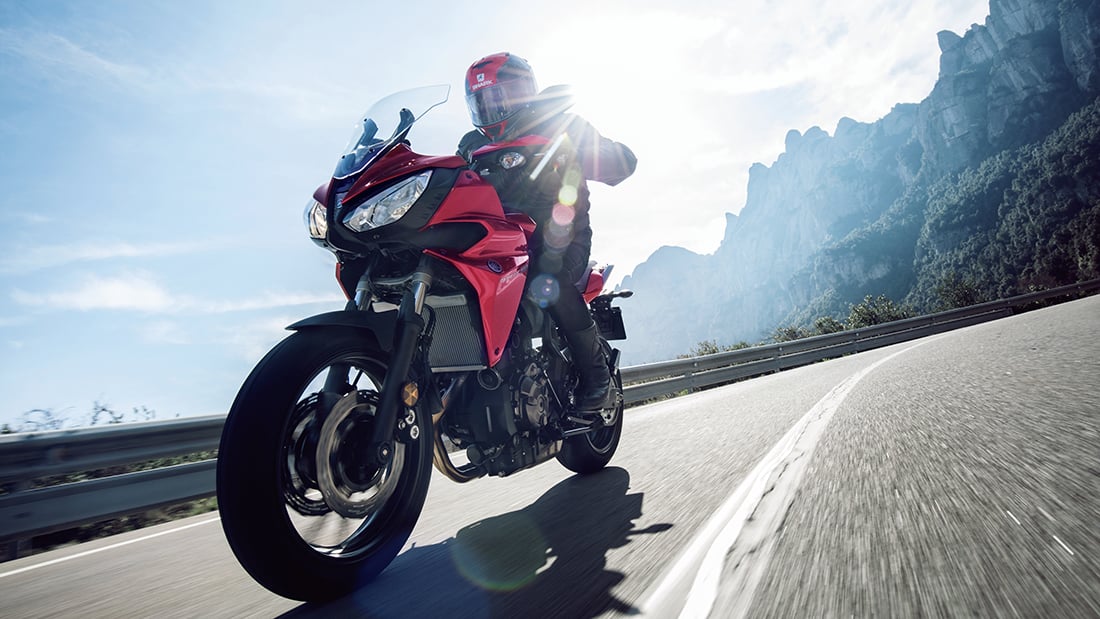
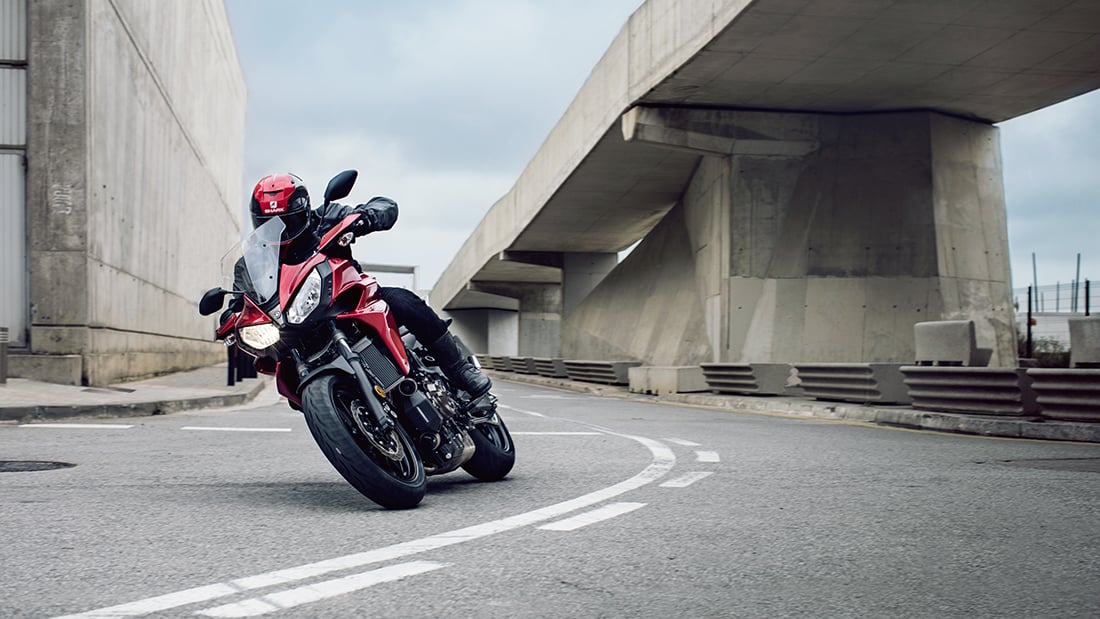
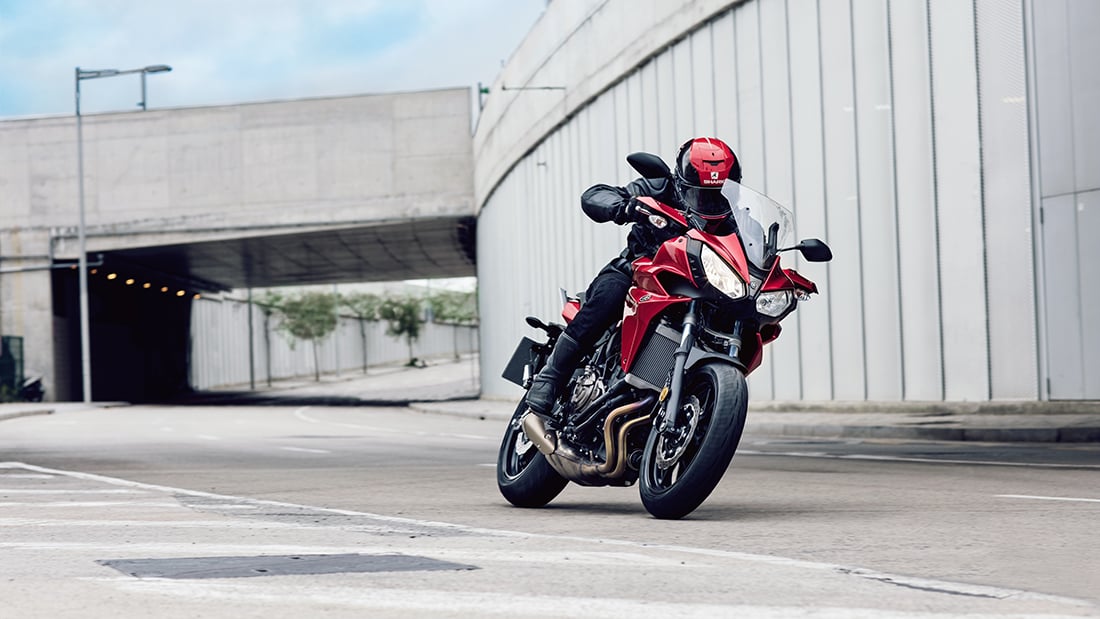
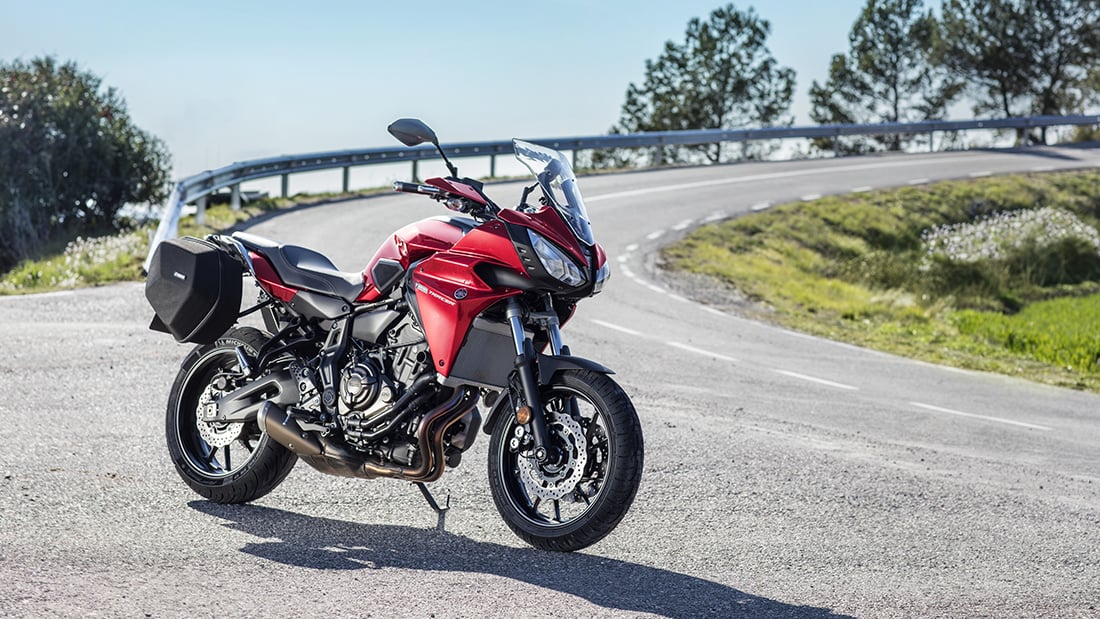
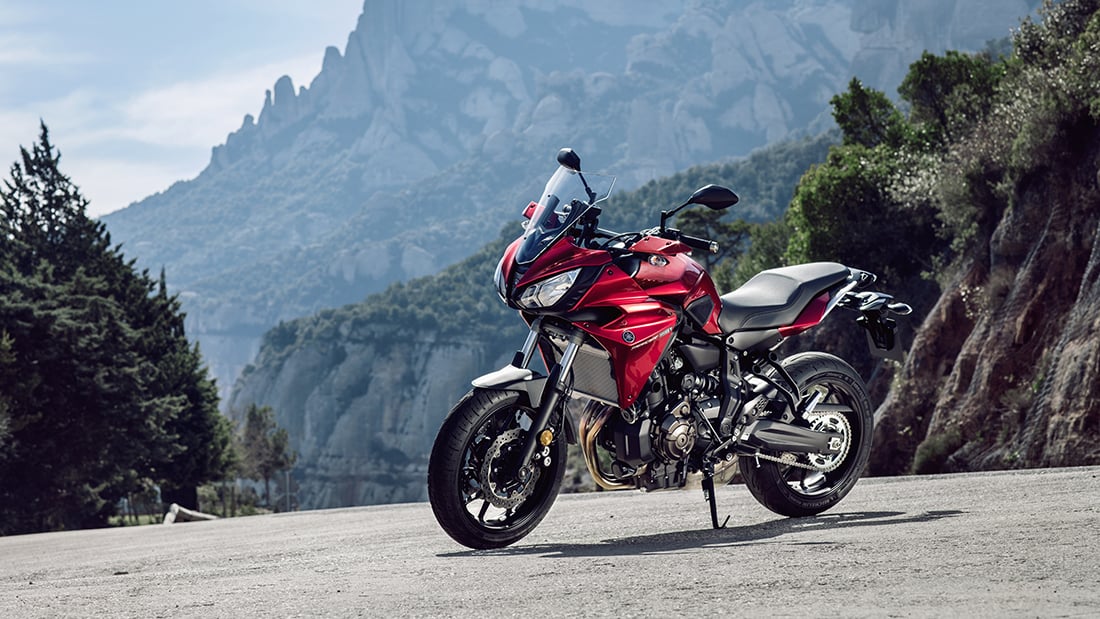 The medium rise handlebars have a trick looking stainless steel slotted brace and sport colour coded wind deflectors cum handguards. The front indicators are mounted unobtrusively below the handguards. The windshield is adjusted via two knurled knobs, which, once loosened, allow manual raising or lowering of the screen. Simple and effective.
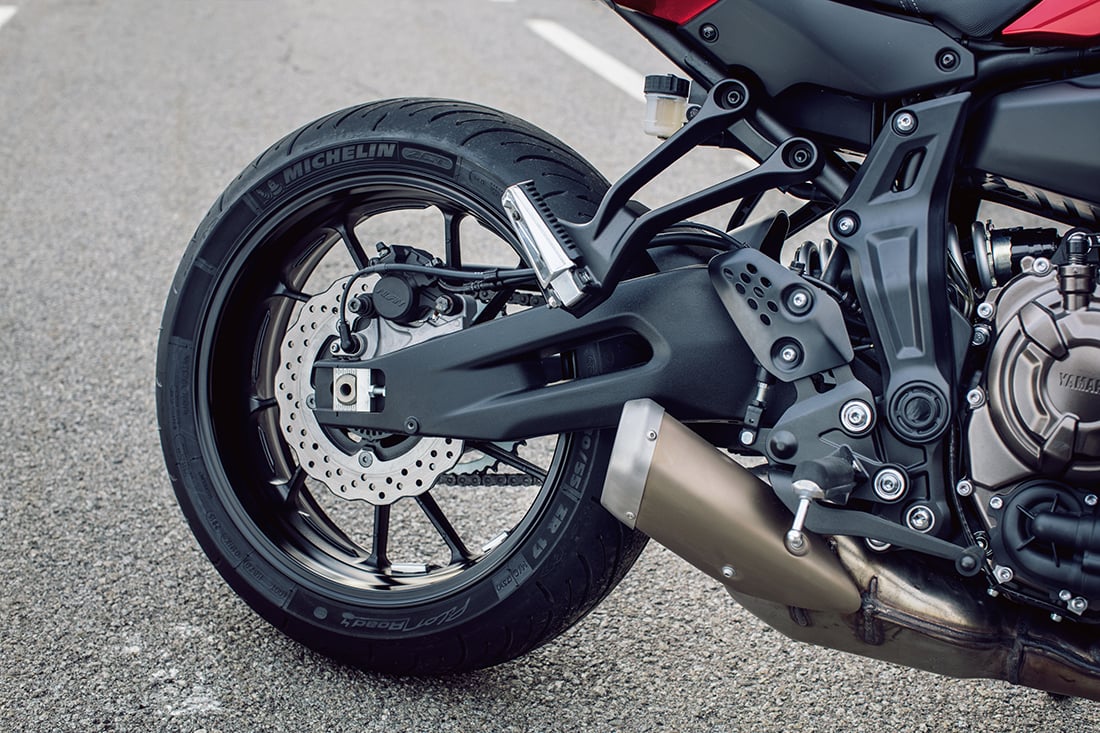
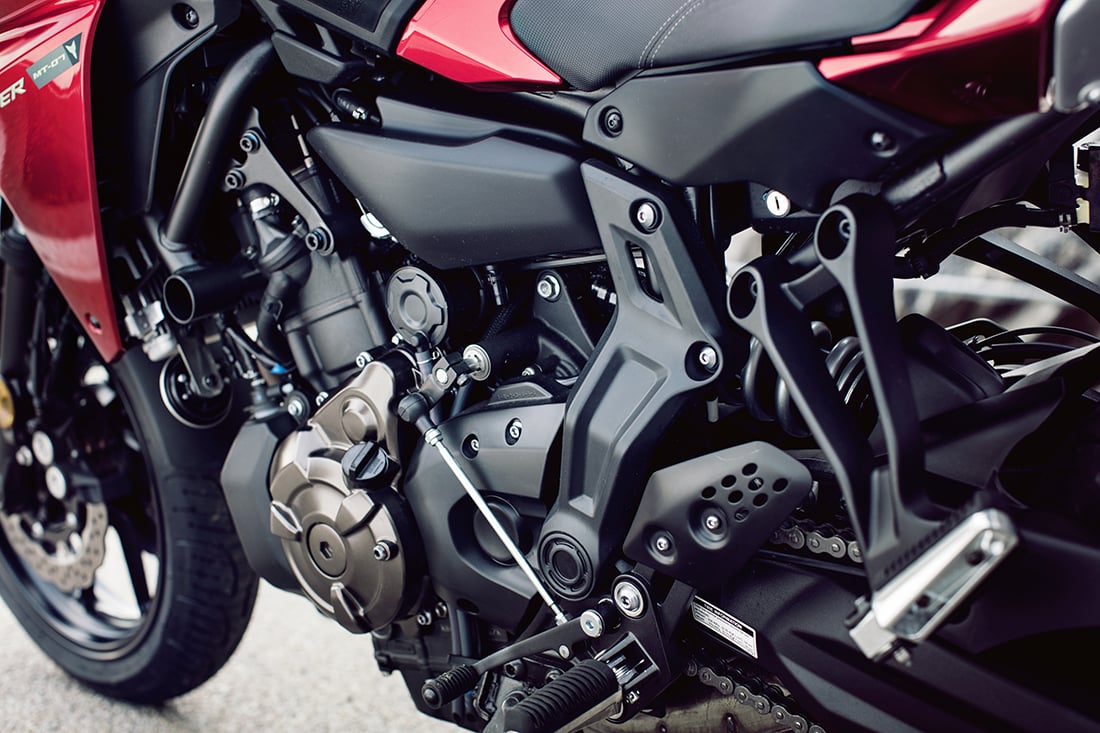
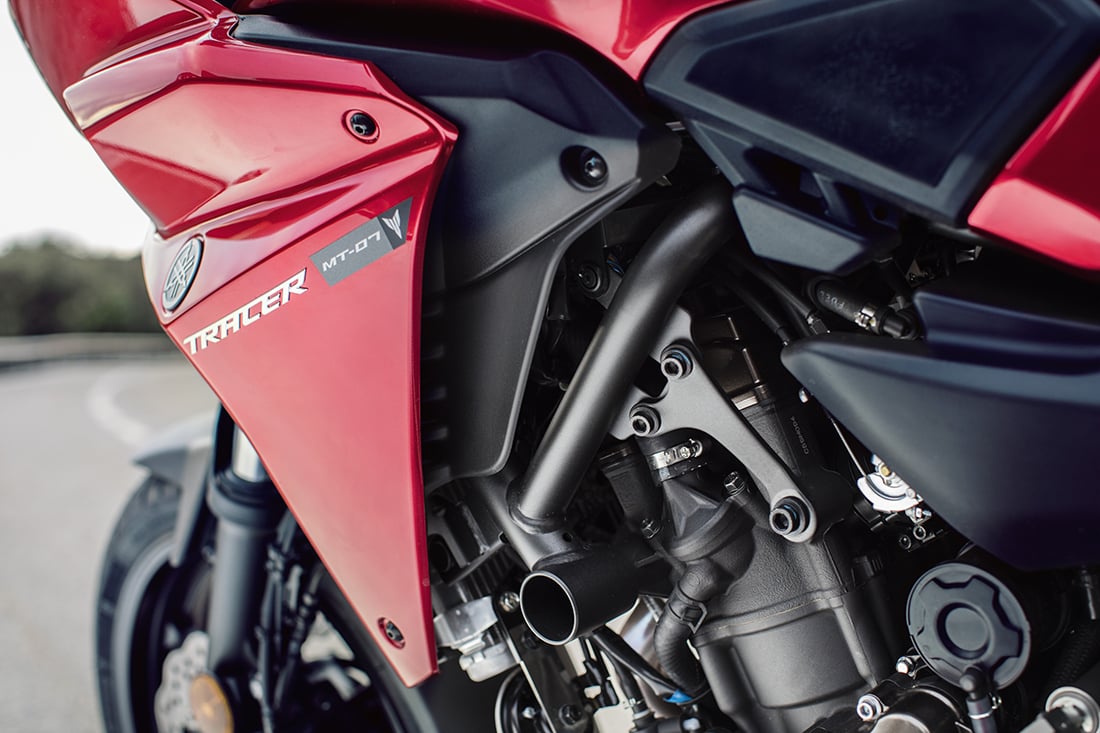
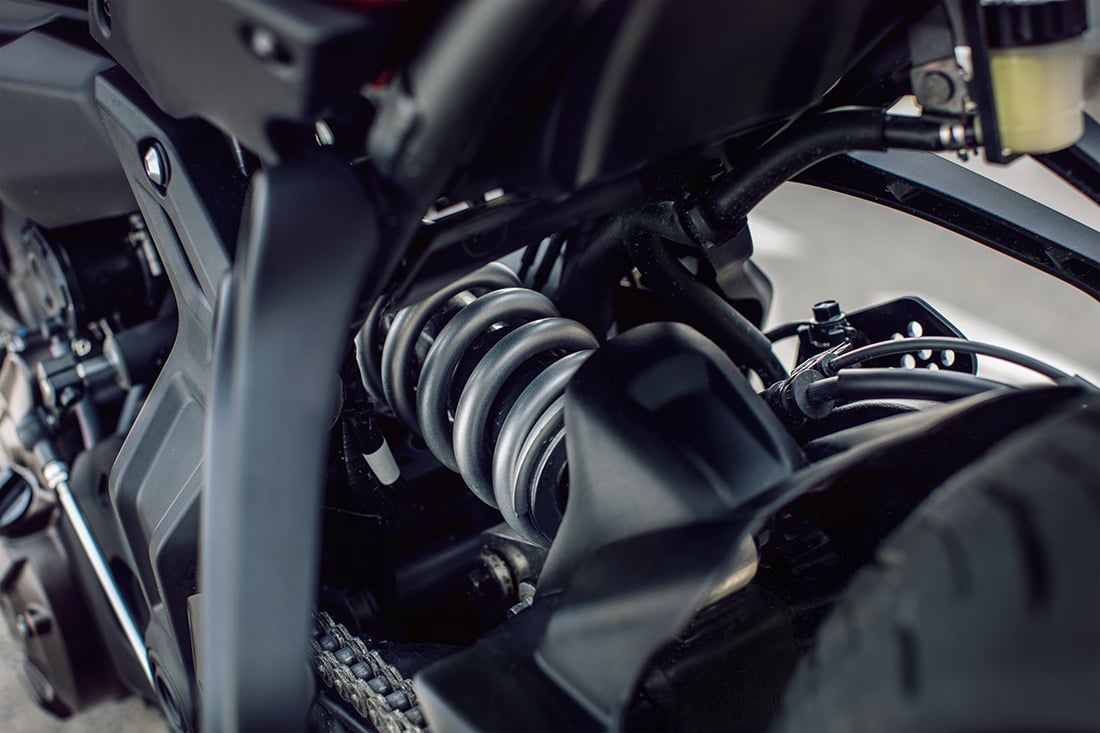
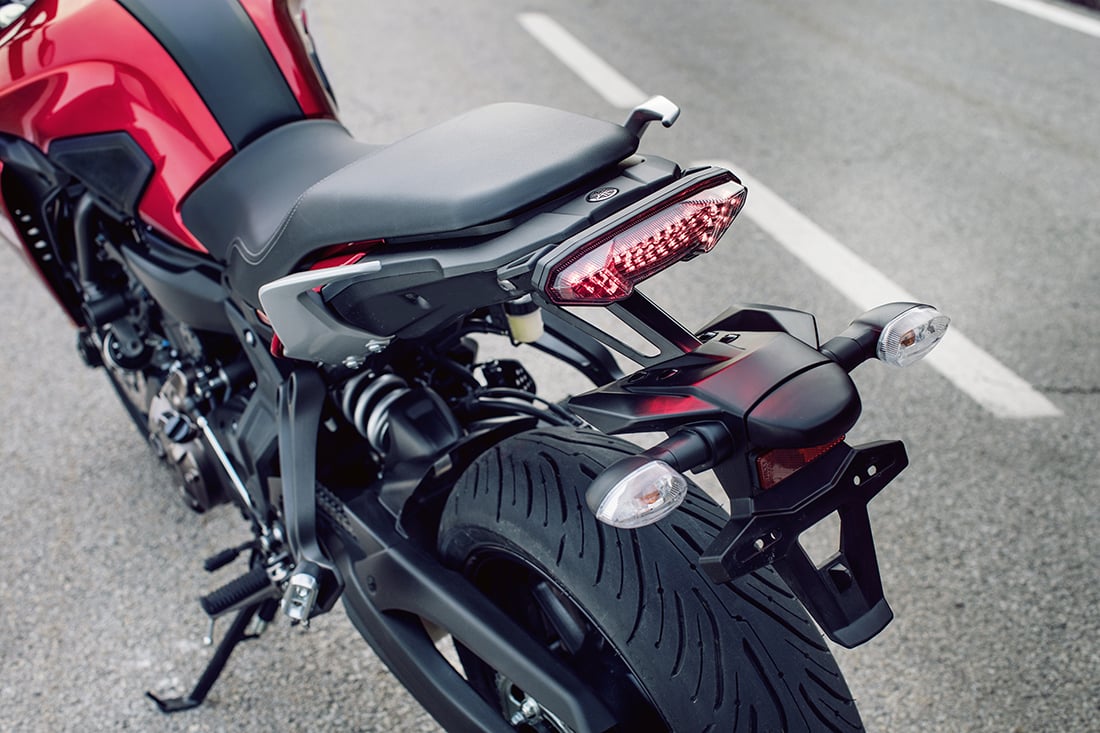
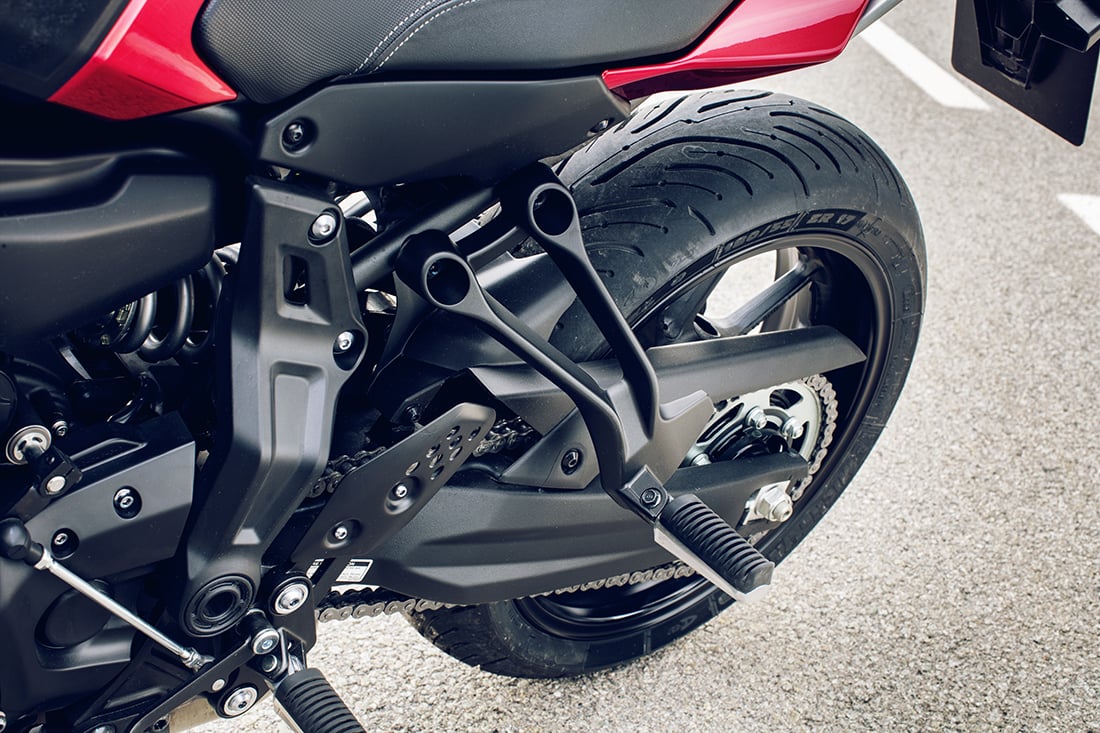
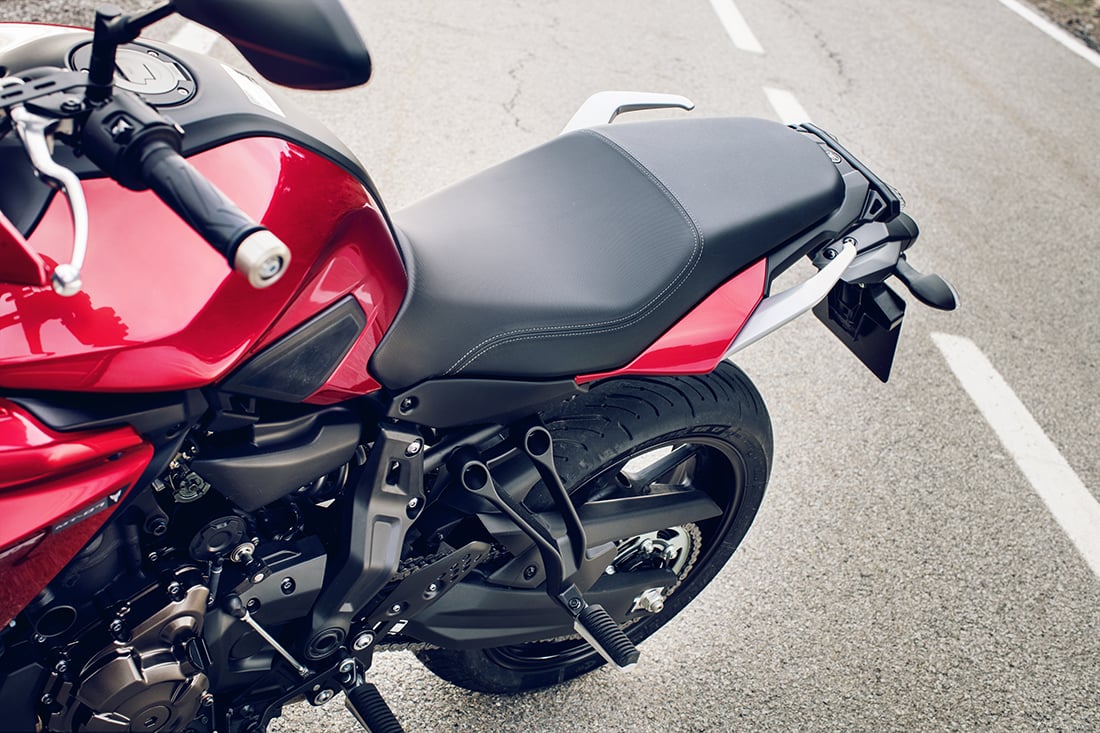
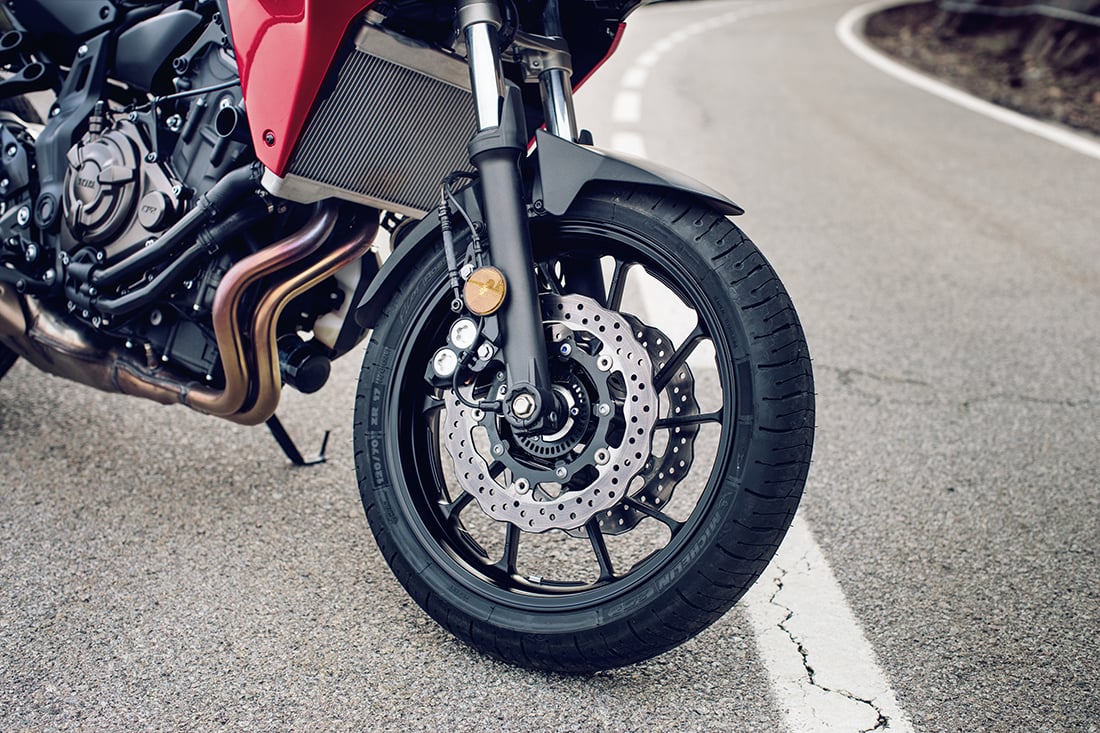 The motor hangs from the steel trellis frame as a stressed member. An aluminium swing arm, finished in a classy flat black, suspends a handsome black mag wheel. Once again, as with a number of their engines, Yamaha use a stacked gearbox tucked in behind the motor. The result is a lovely narrow motor and sleek motorcycle.
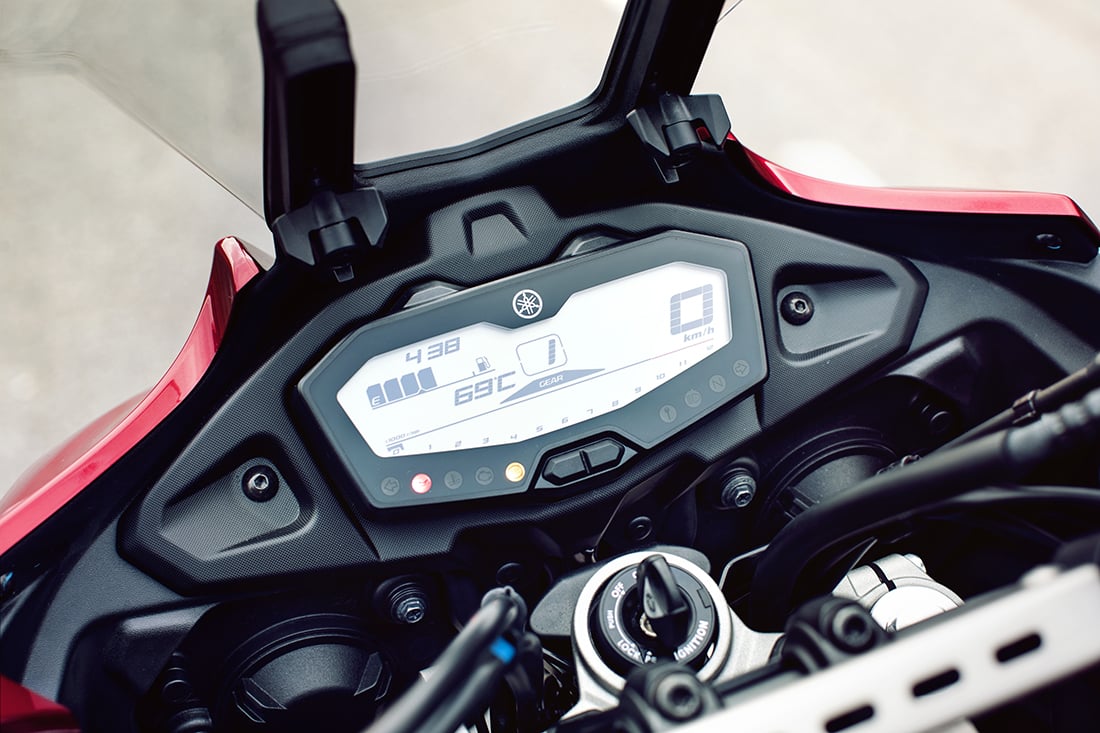
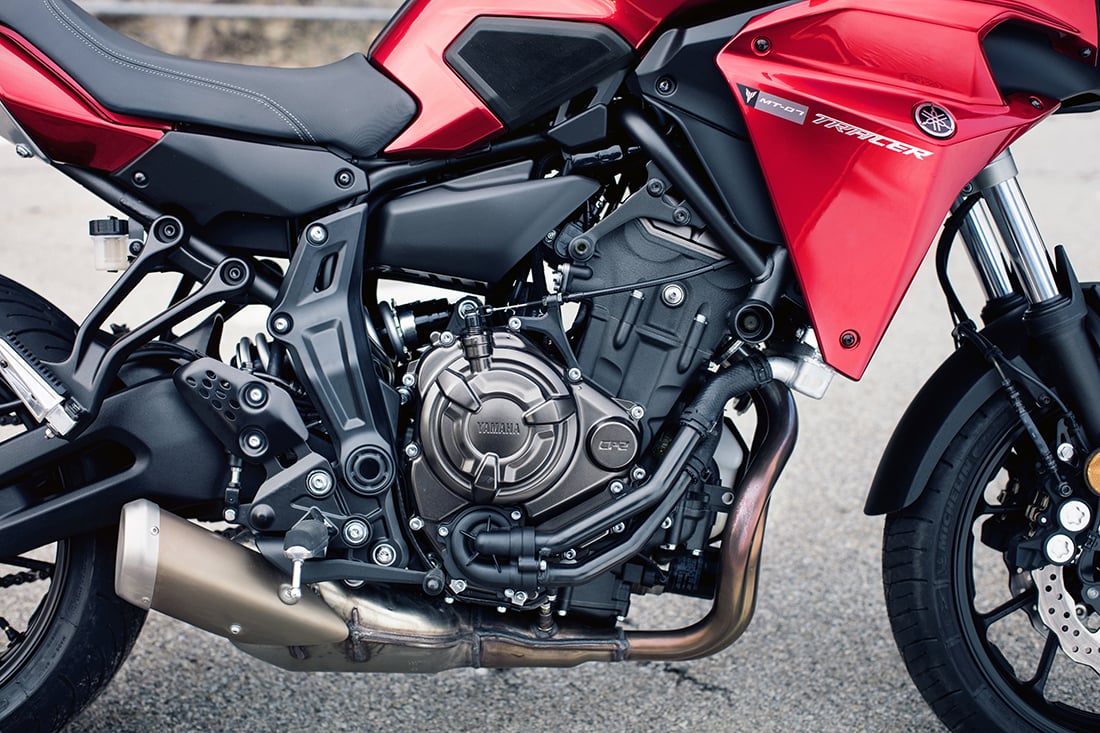 Instrumentation is digital and comprehensive. Average and current consumption, fuel gauge, odo, trip meters, air and engine temperatures, gear indicator, the lot. Brakes are twin discs up front with a single rear. Suffice to say there is plenty of power and good feel. ABS lurks in the background for when your talent runs out.
 Specifications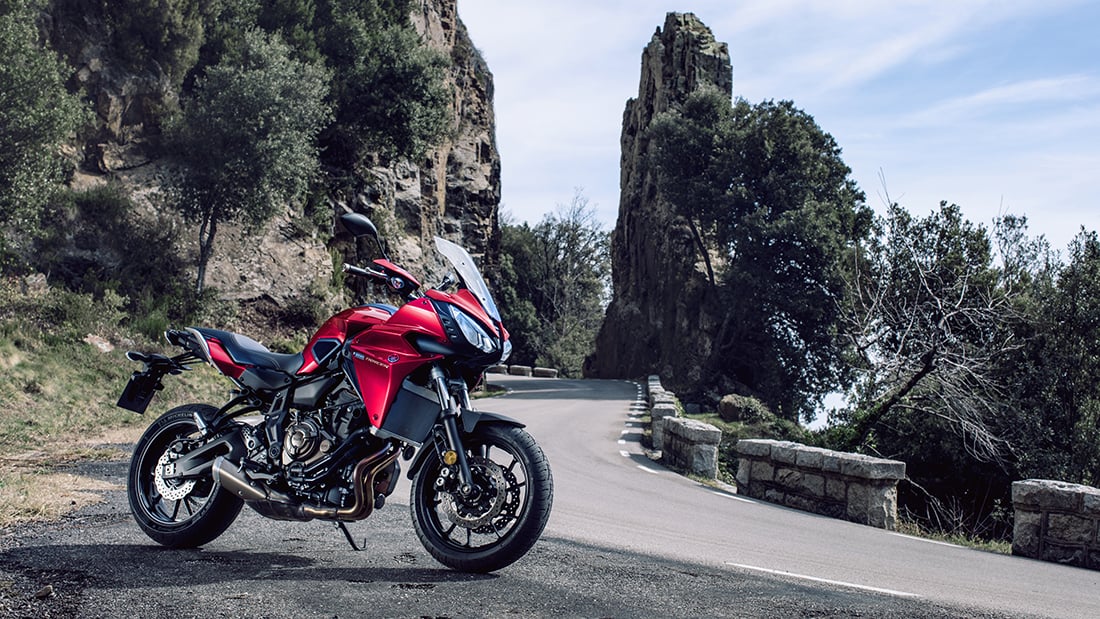
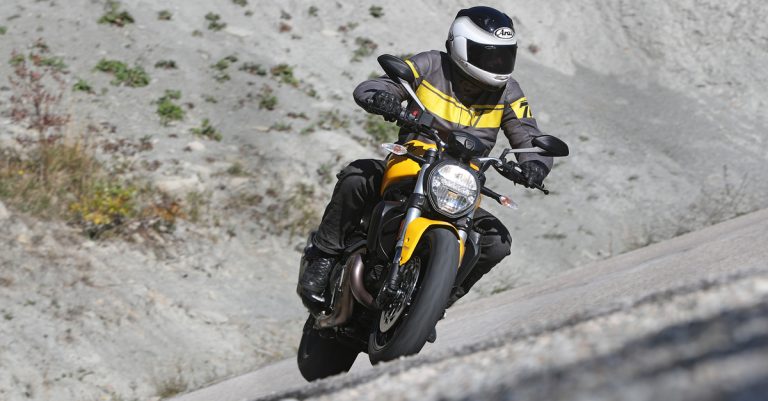
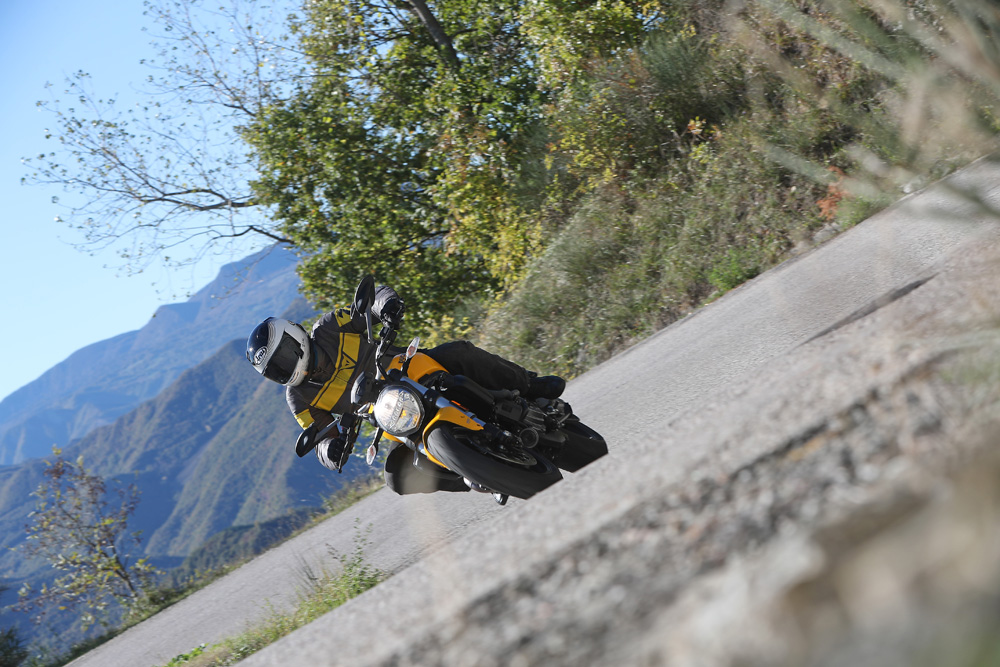 Yellow submarine:
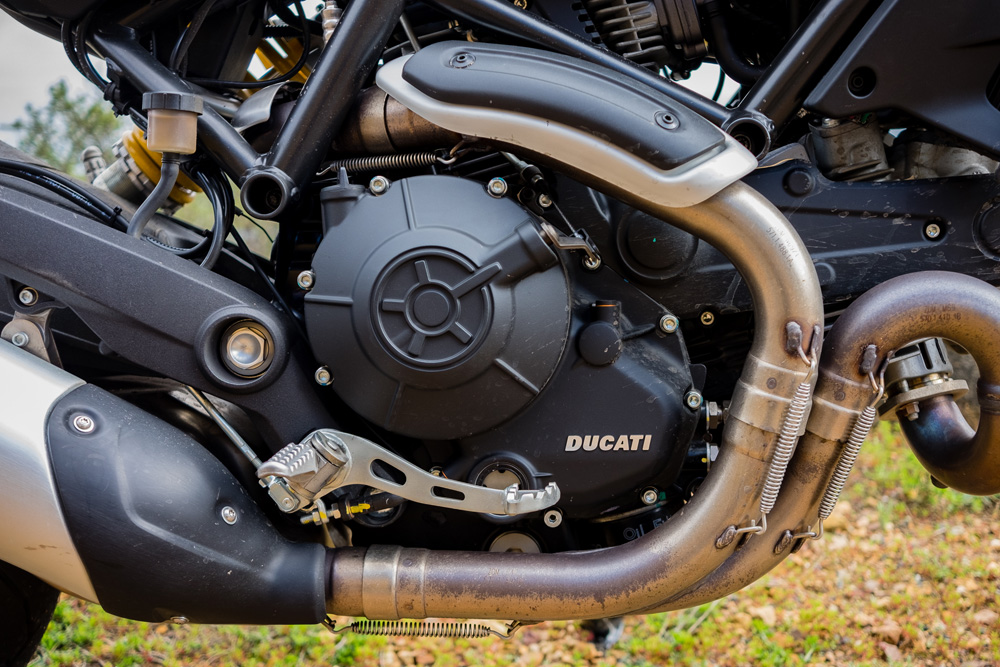
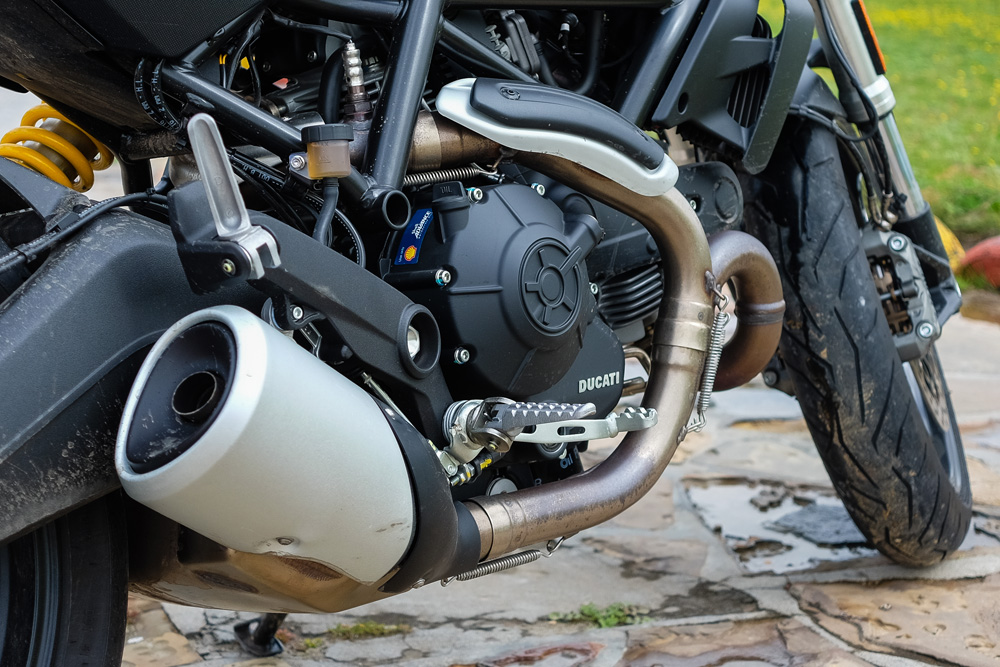
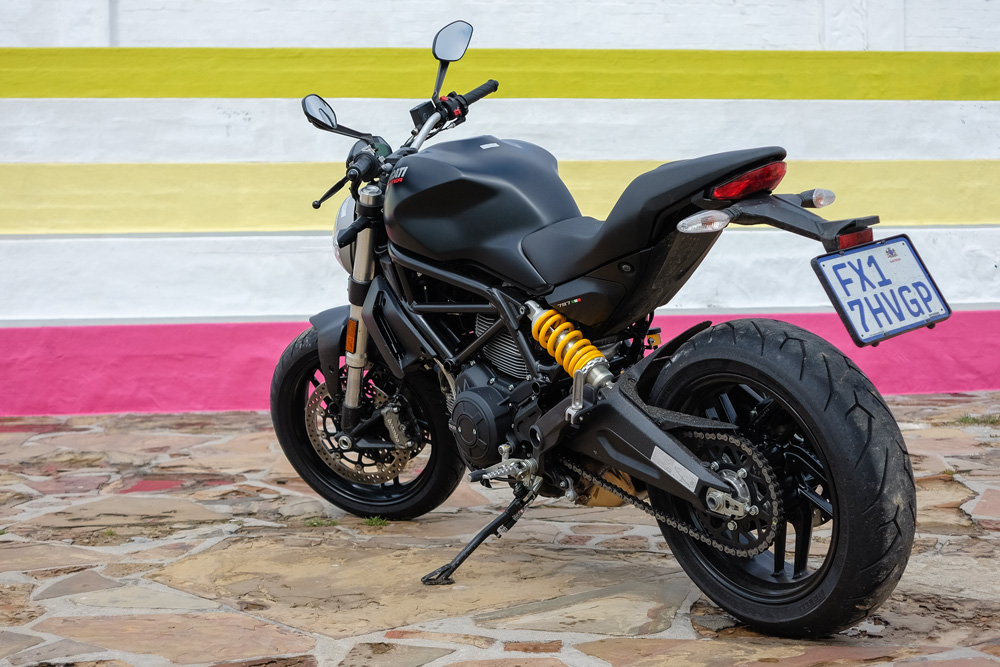
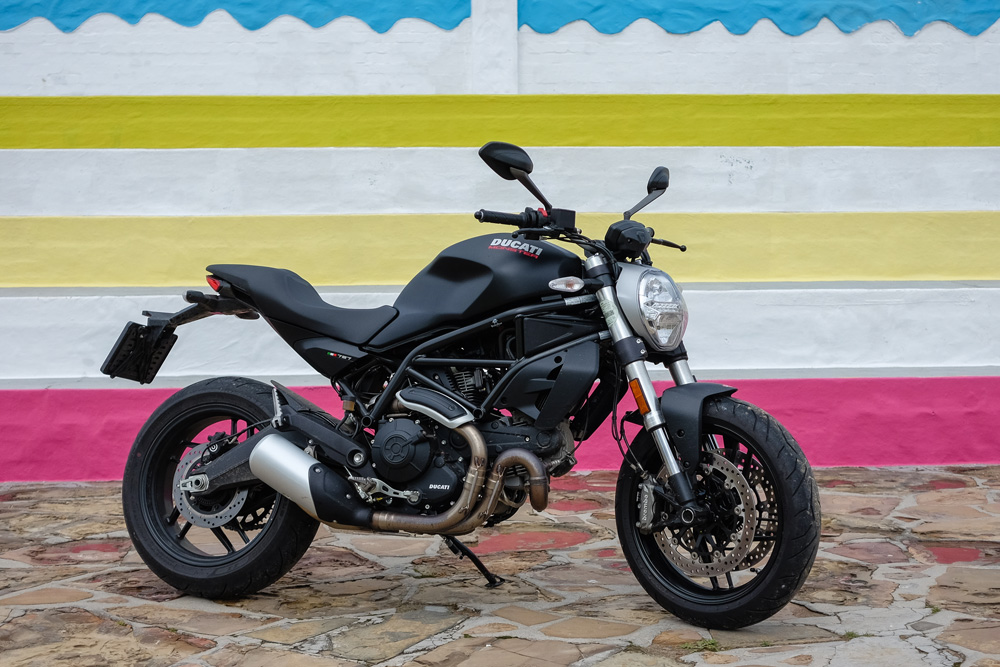
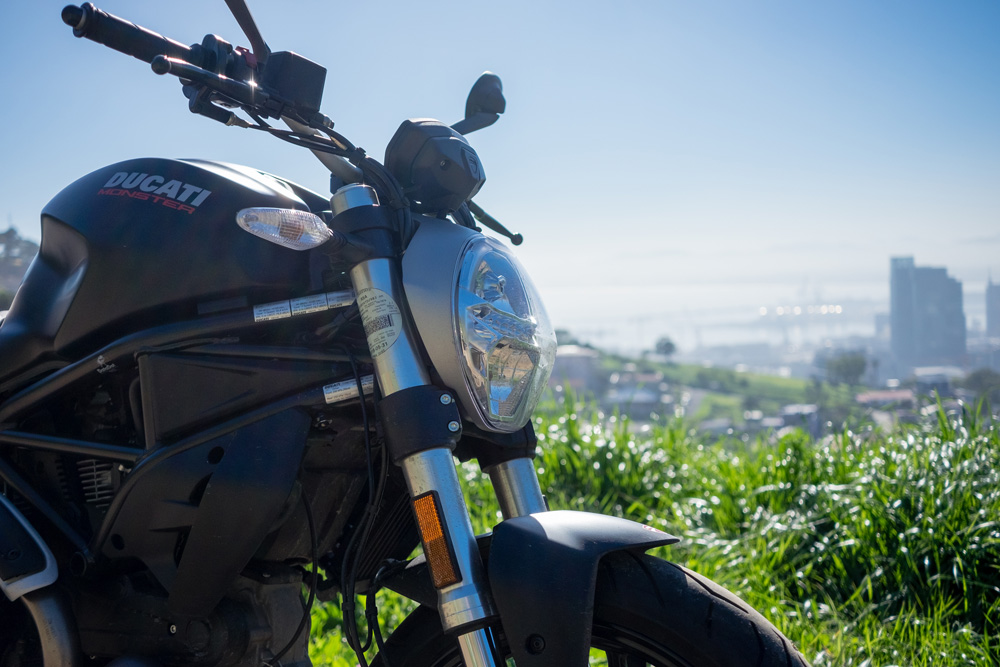
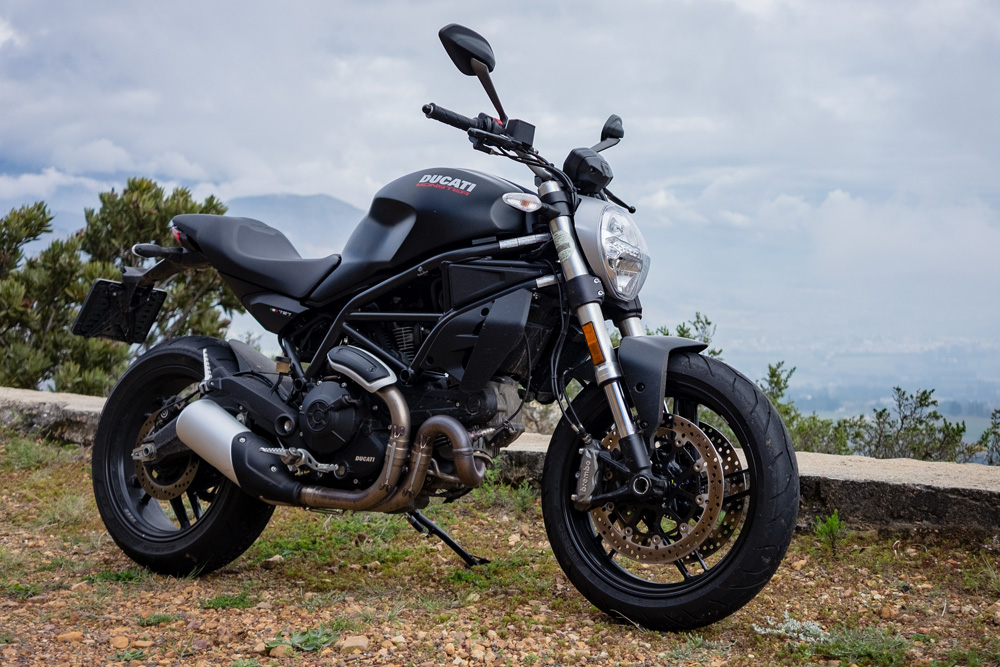
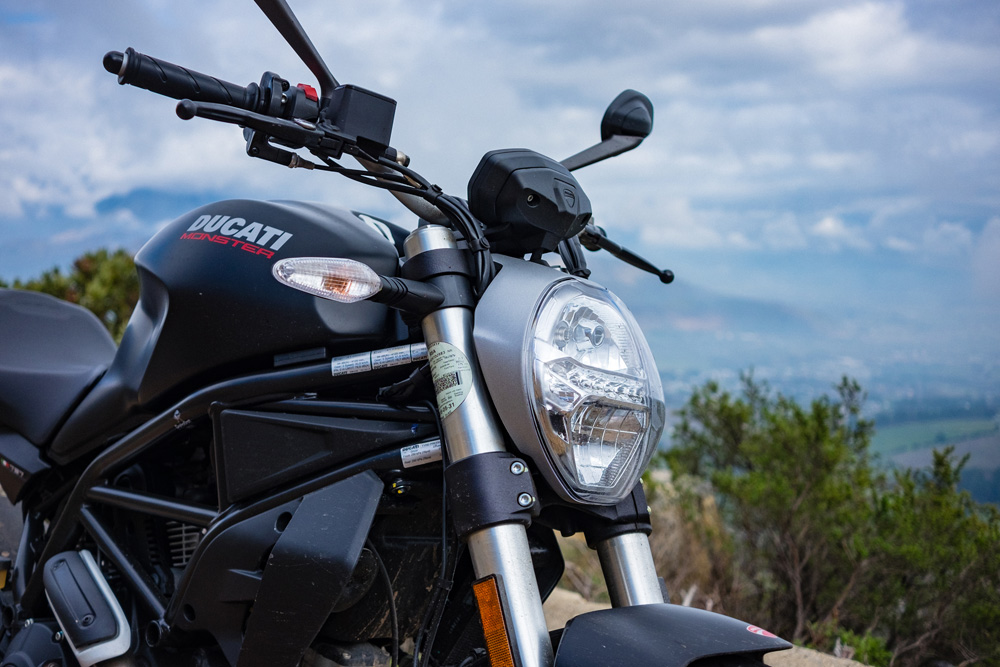
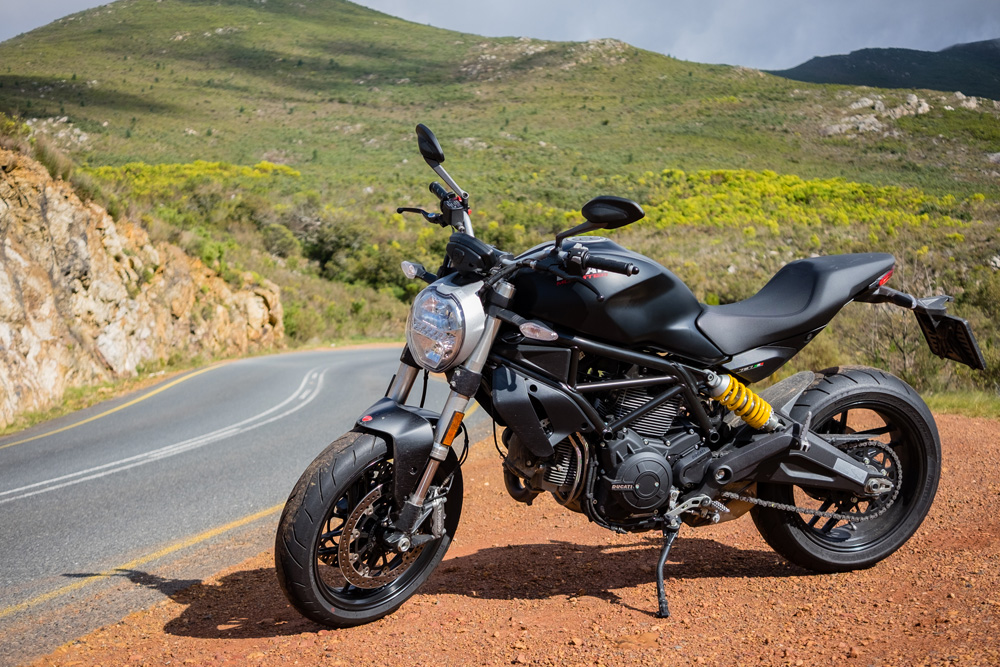
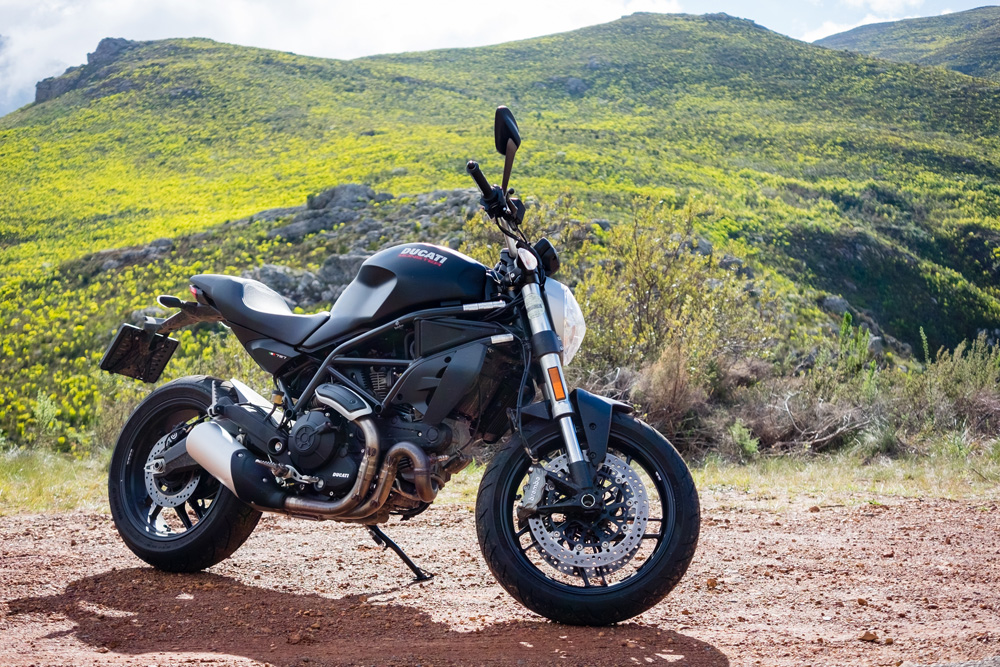
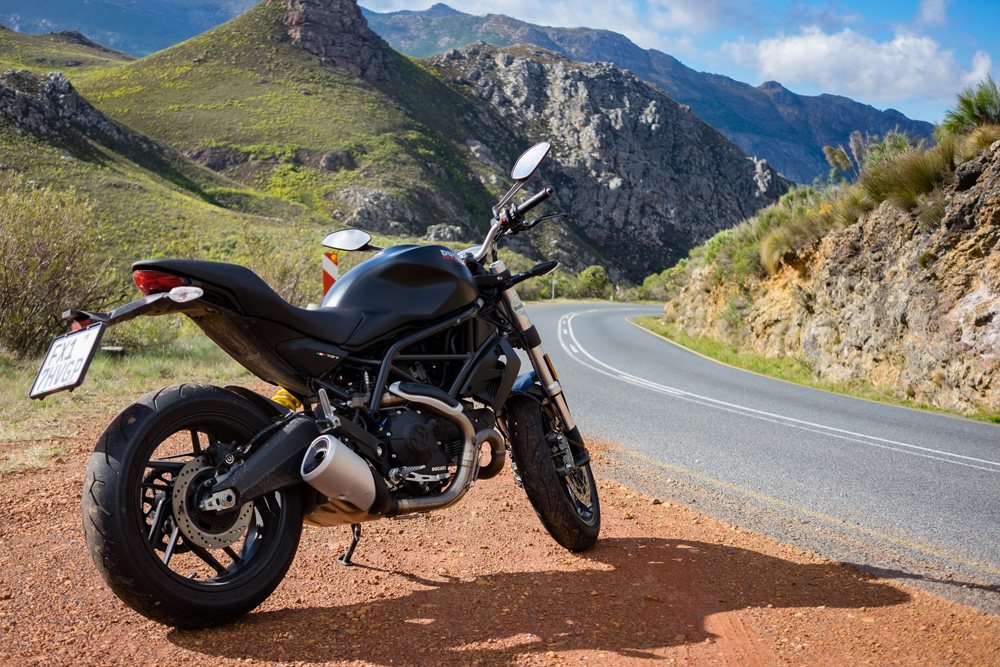
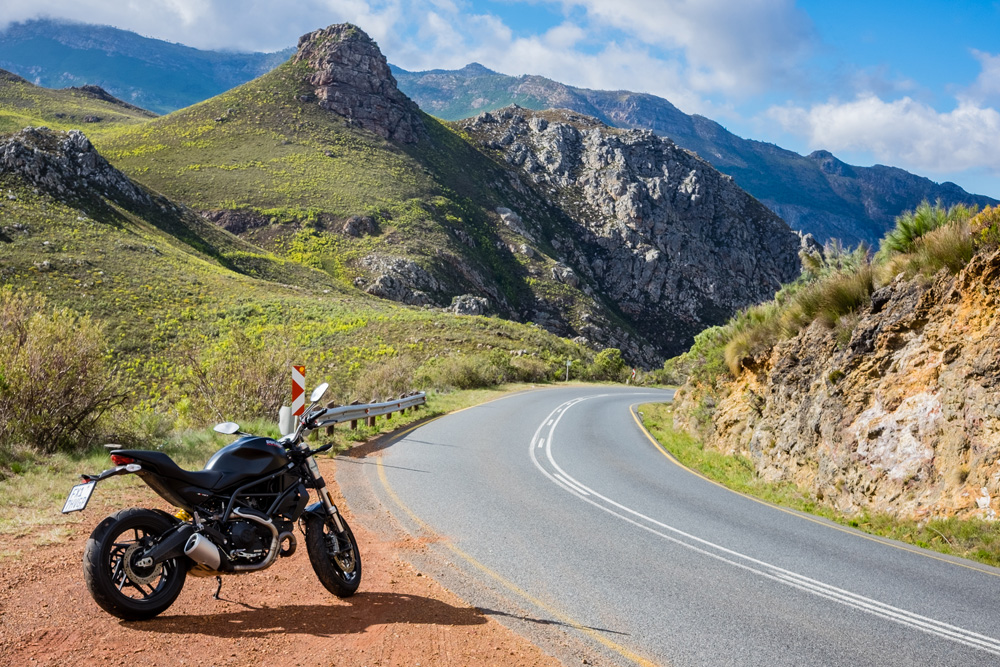
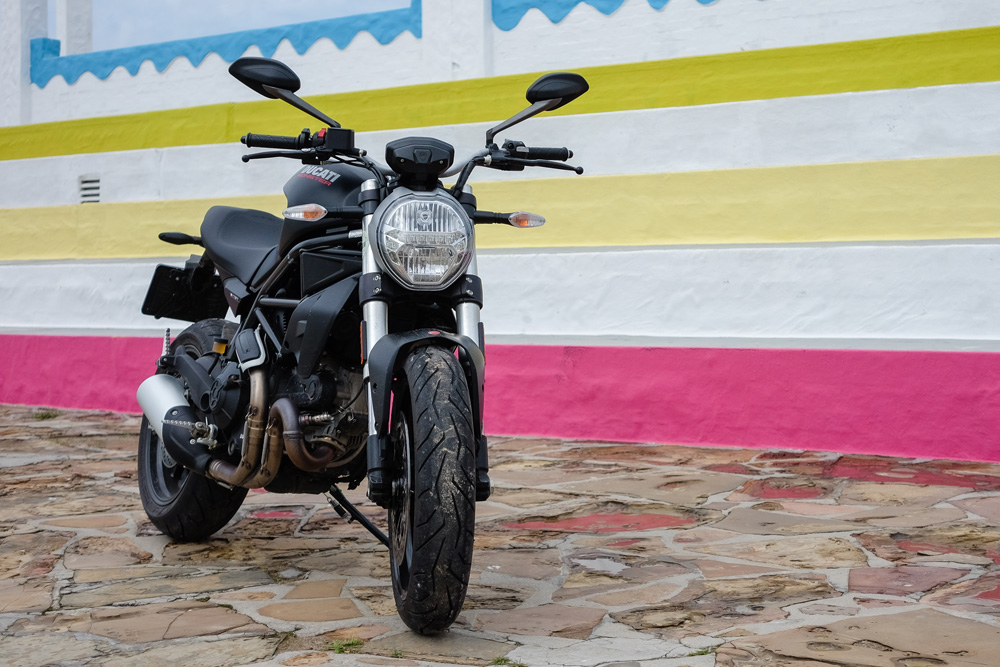
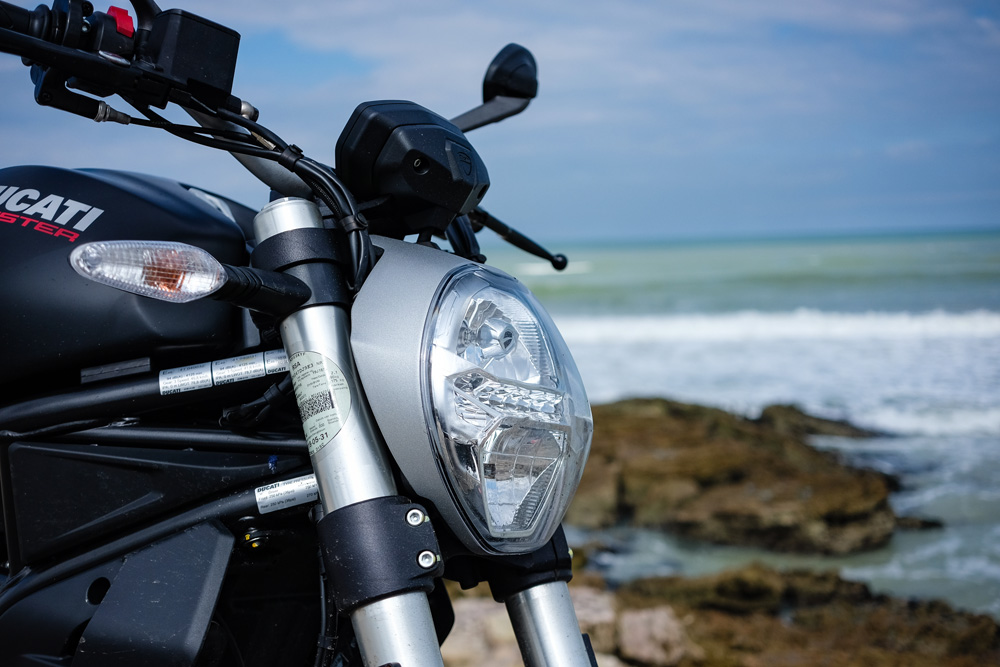
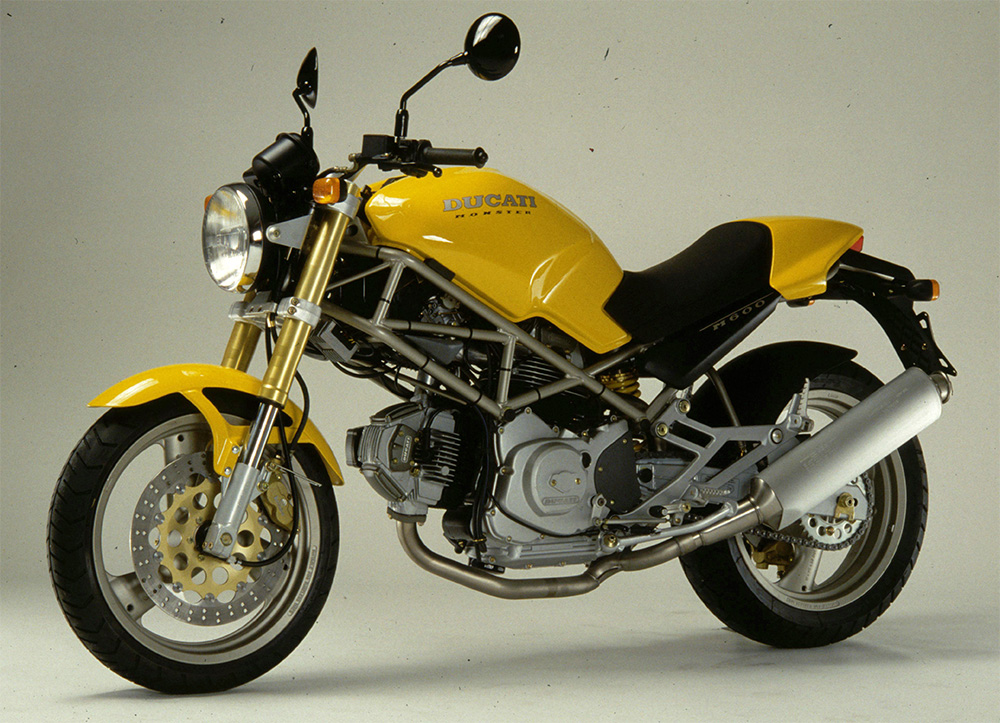 The yellow was part of the Monster range until the end of the 2004 and for some, the yellow scheme has been missed for about 13 years: well, not any more, the ‘yellow submarine’ is back – welcome back! I should tell you though, that the yellow scheme is not the only way to recognise the 2018 Ducati Monster 821, as red and black are also offered in the colour chart, but for me, it has to be YELLOW!
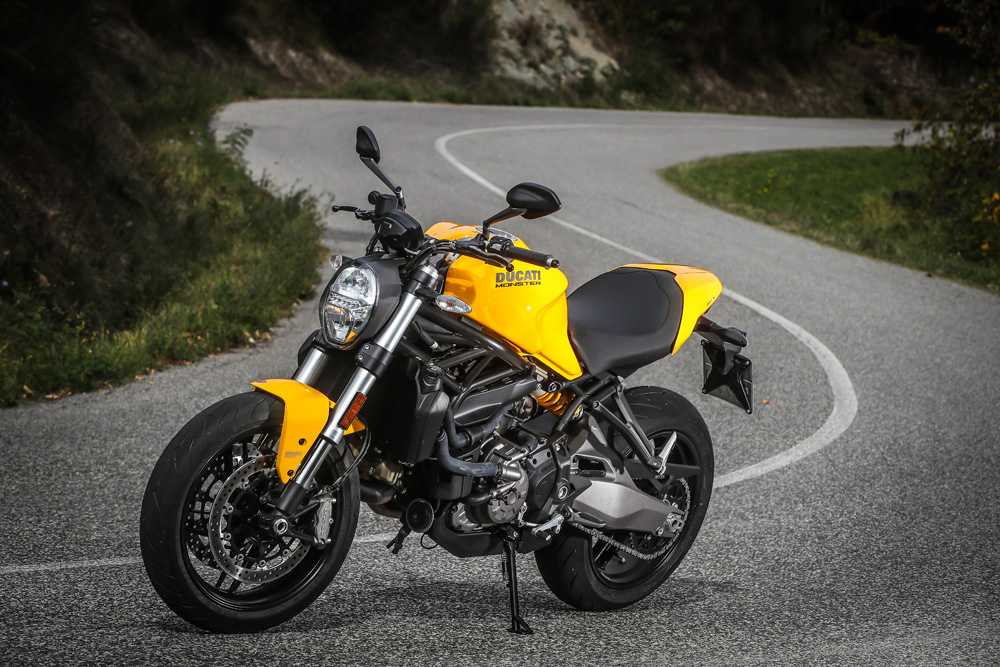 Other new features:
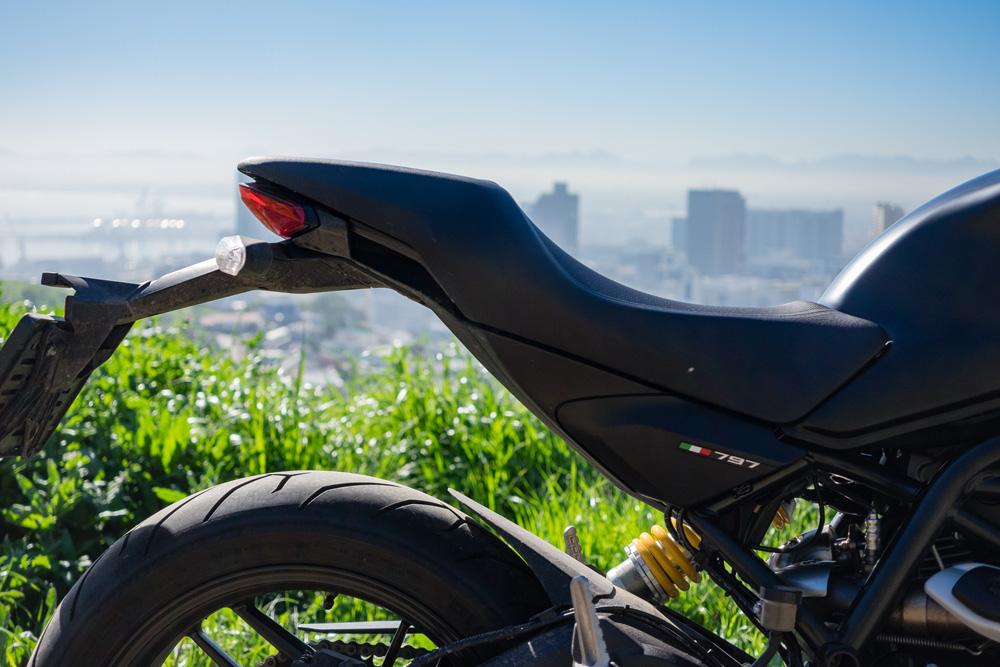
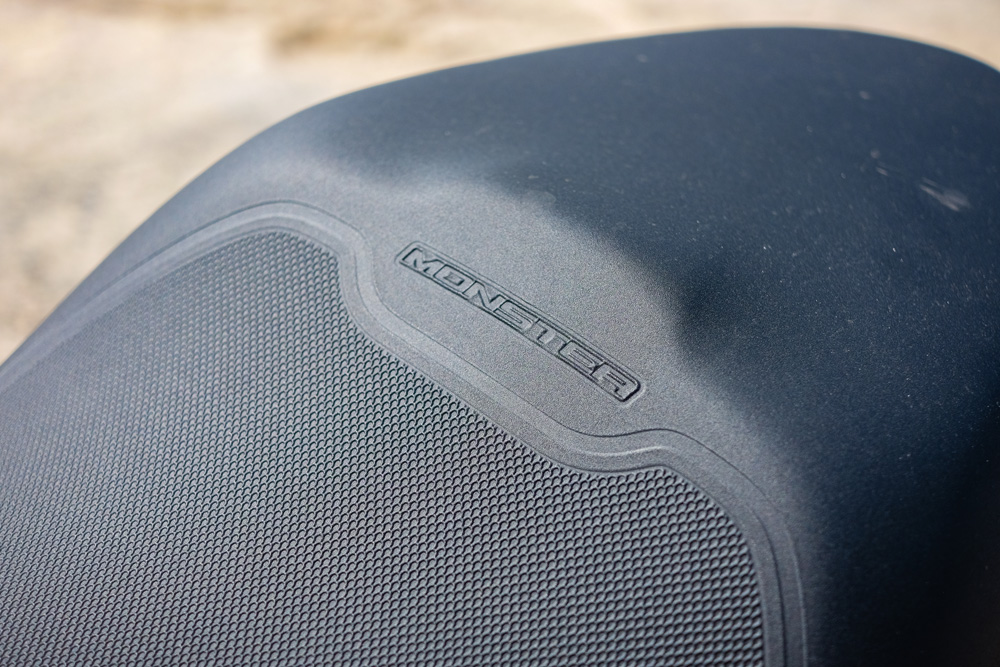
 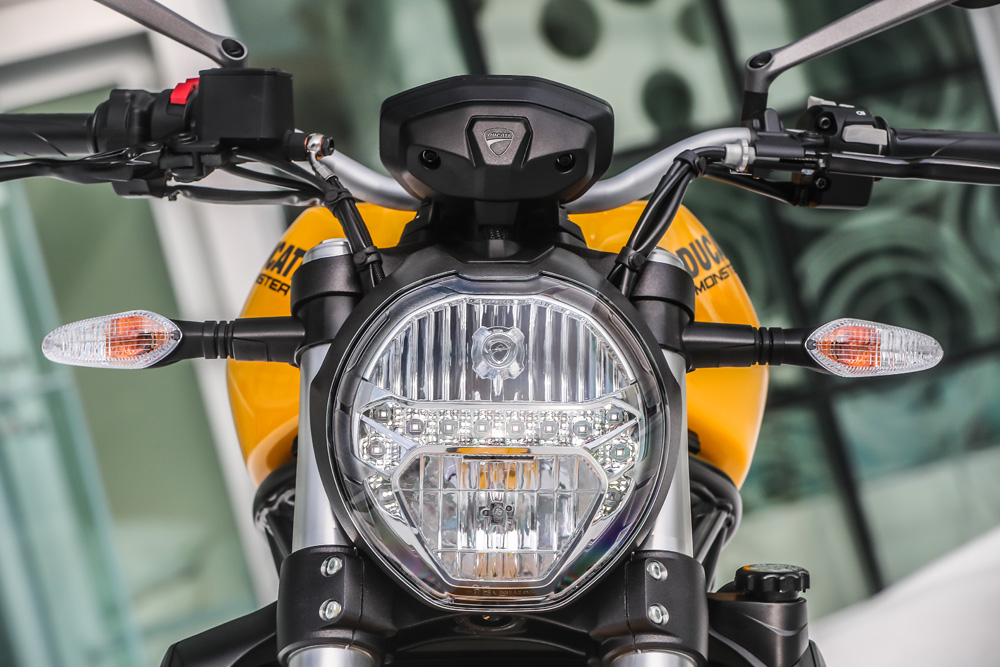 Second: a new seat and tail cover – slimmer than before.
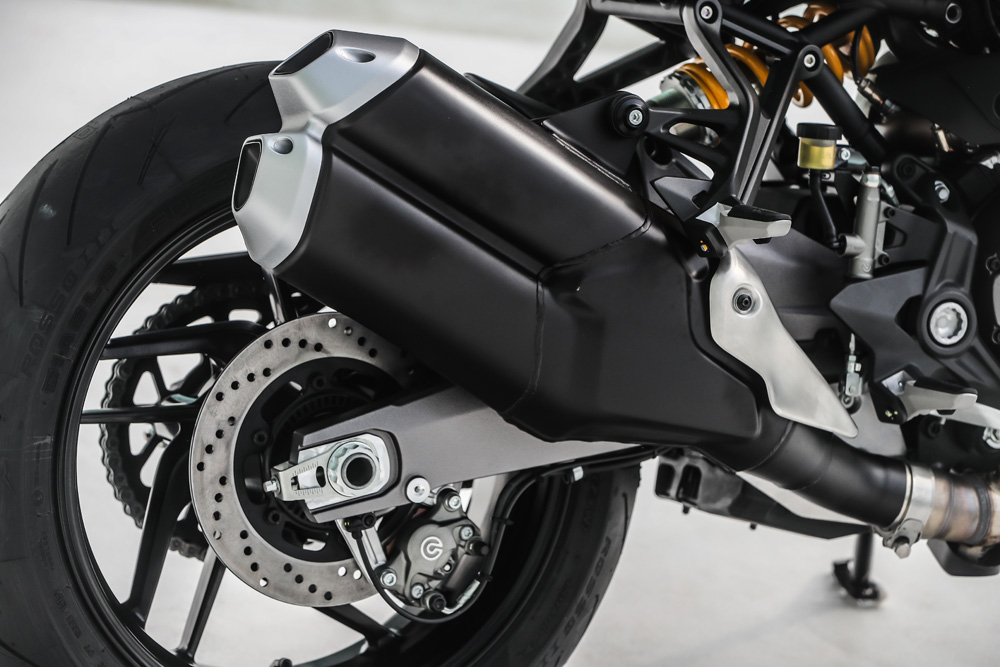
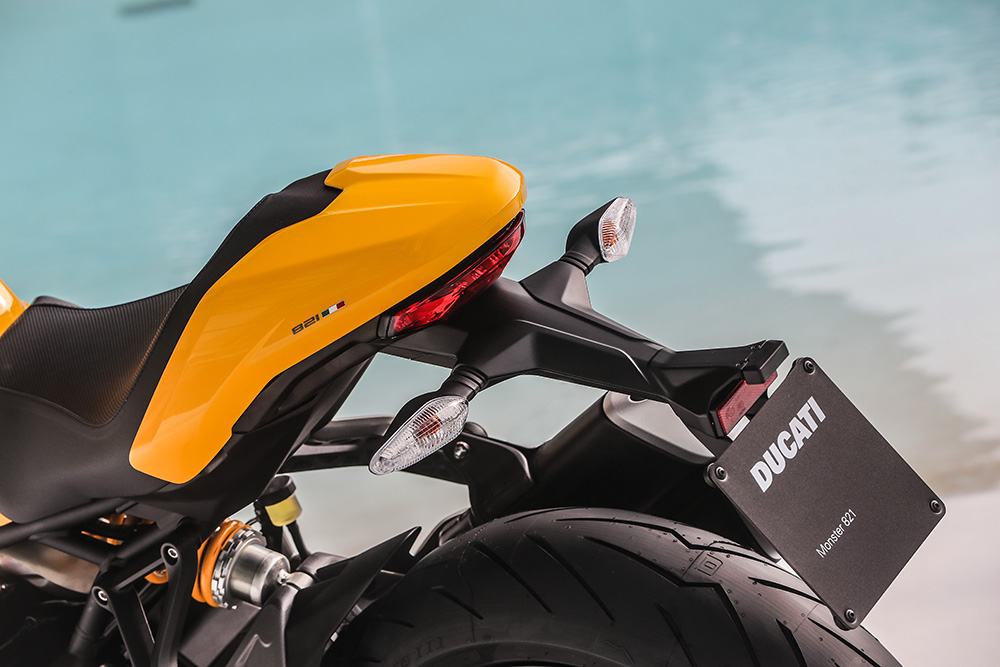 Third: a new exhaust, thanks to the Euro4 regulations.
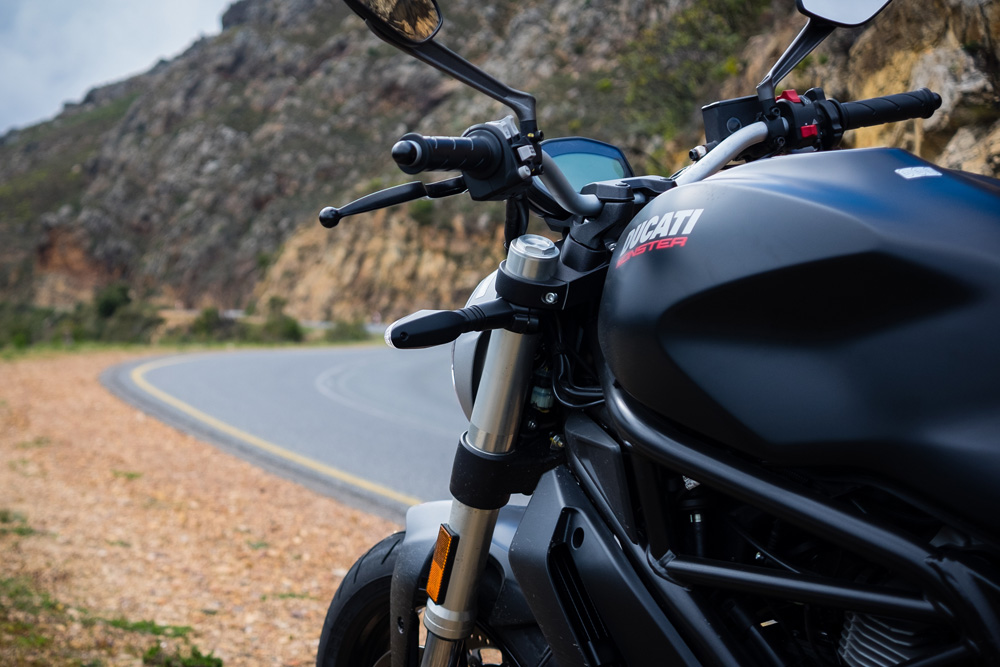
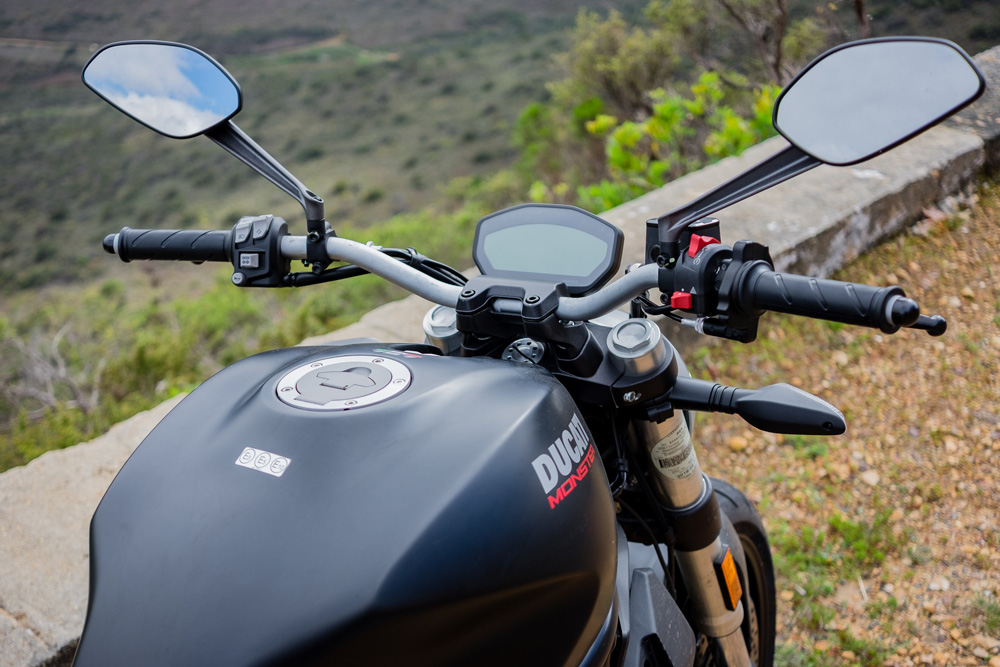
 Four: a new dashboard, which is now a full TFT colour tablet, including some useful information from a fuel gauge and a gear indicator.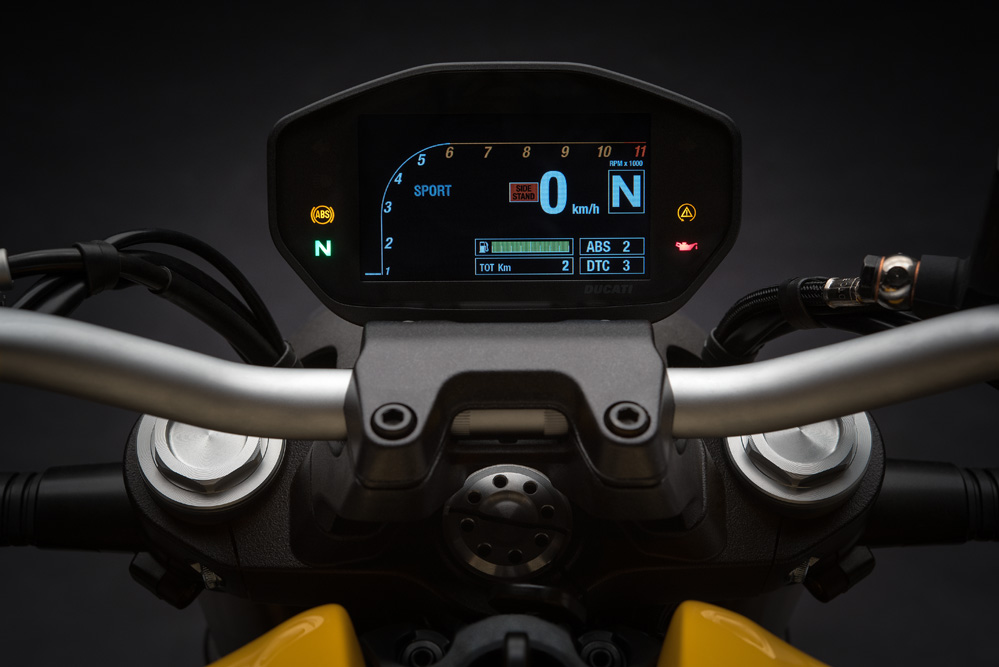
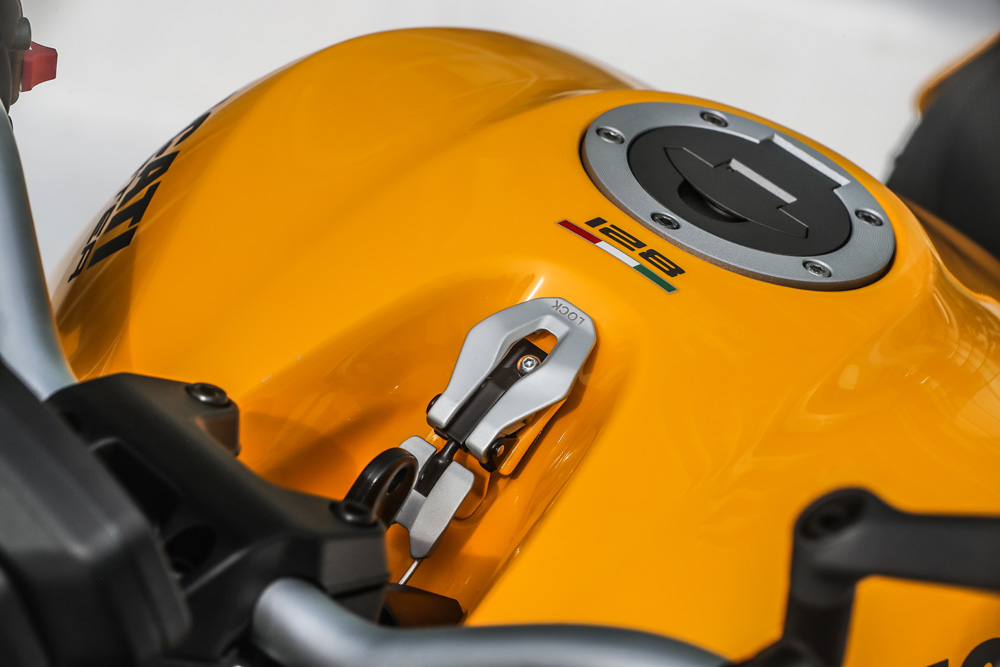
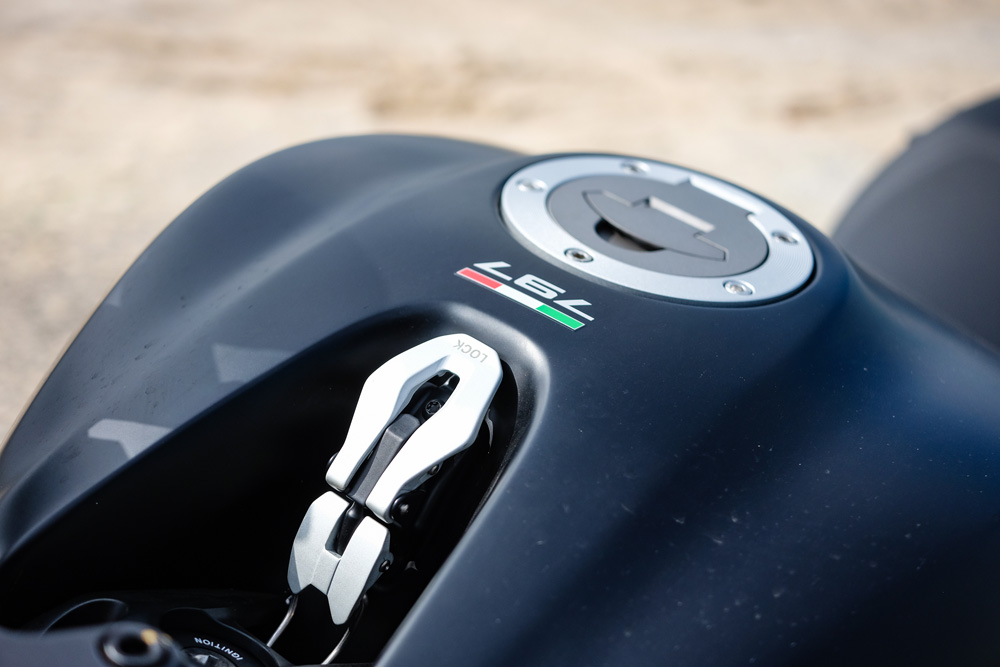
 Six: the new fuel tank hinge, which is like the one fitted on the old Monster!
 Seven: the new up & down quick shifter, although it’s an optional fitment.
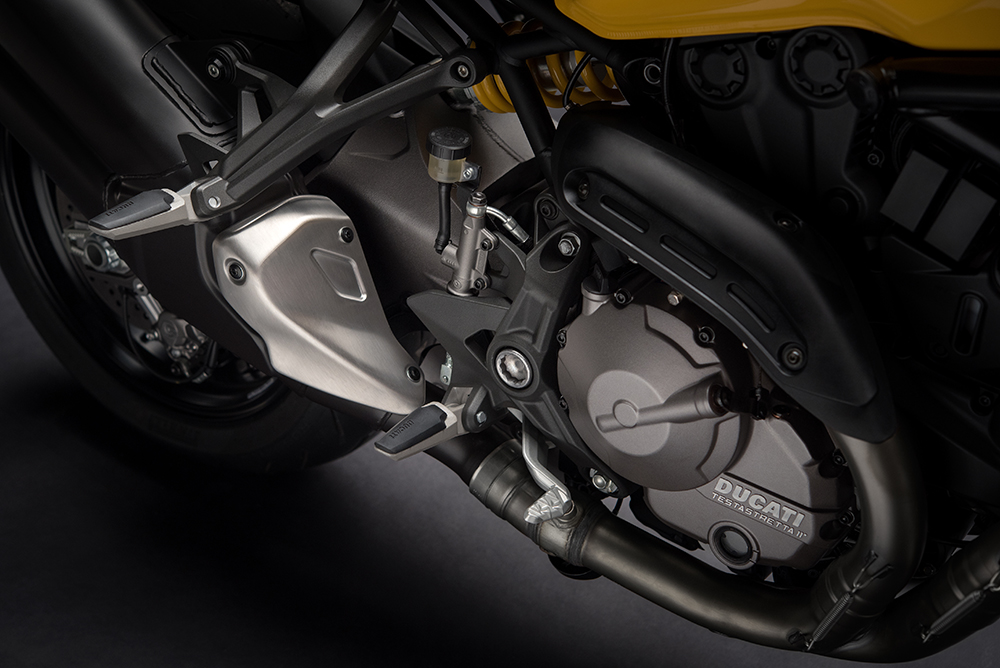
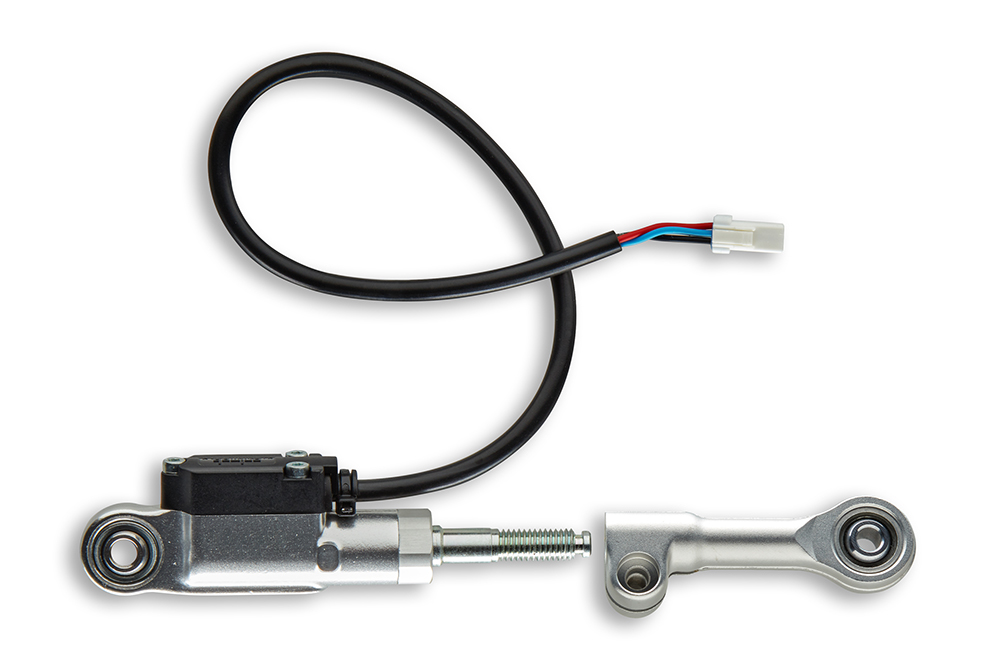 The eight point is more difficult to spot: the engine has suffered a little bit due to the Euro4 regulations, shrinking from 112 hp to 109 hp (at 9250 rpm) and from 91 to 88 Nm of torque (at 7750 rpm).
 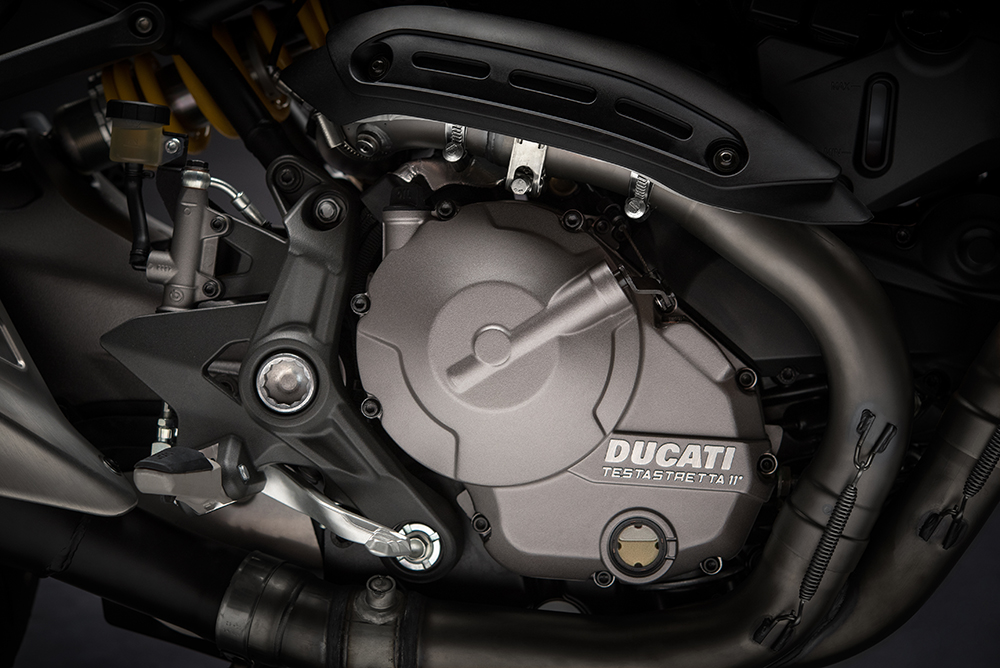 Still perfectly balanced:
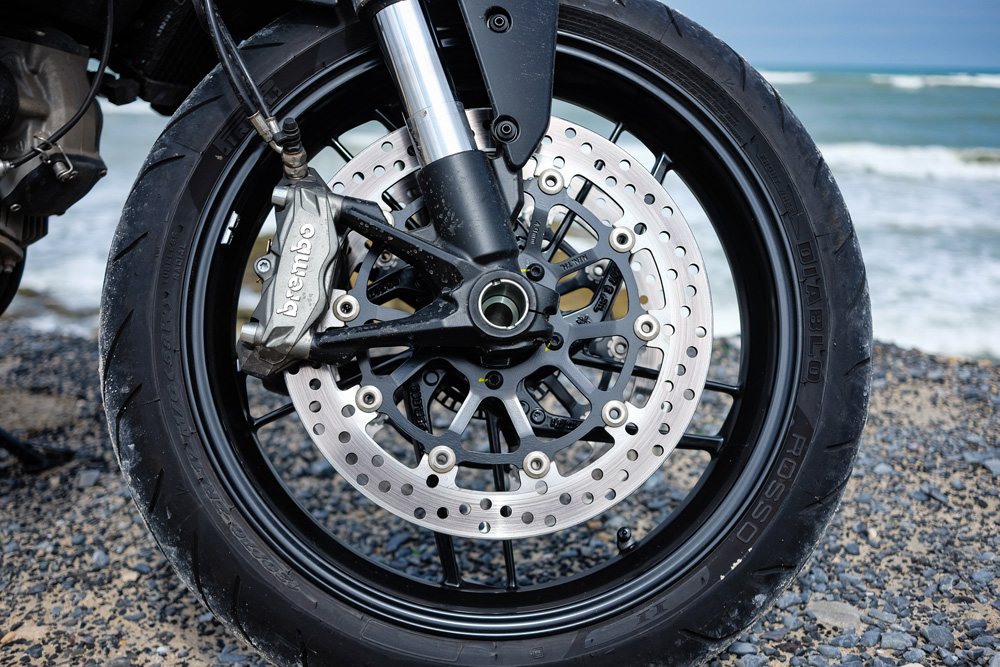
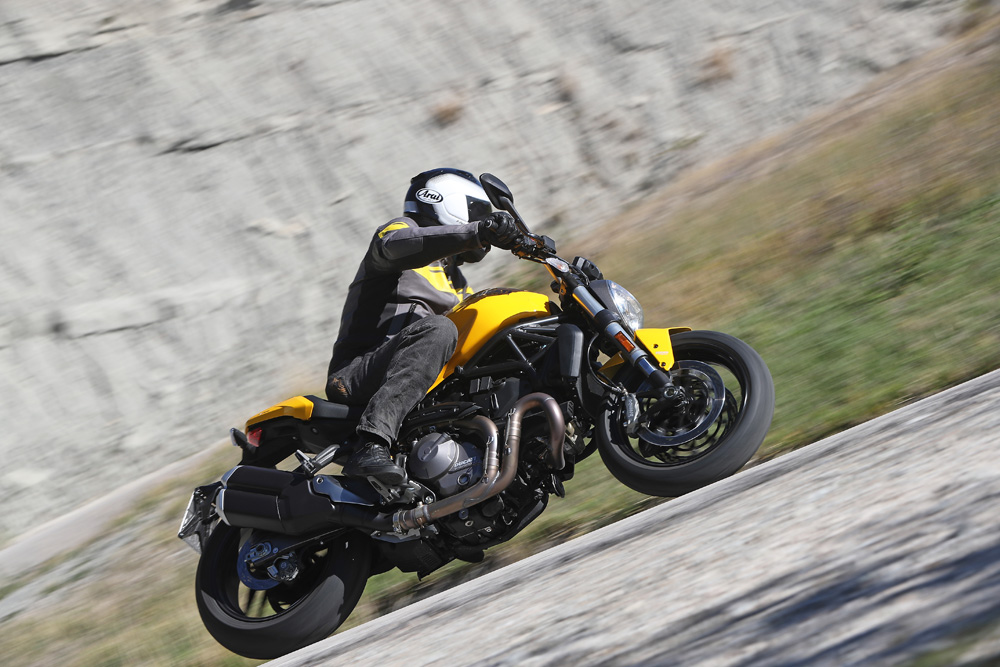 We did not ride in a touring fashion, so it’s hard for me to say how the 821 will fare. However, the bike has a really good feel to it; is light (188 kg dry, 206 kg full); narrow (the fuel tank has lost one litre at 16,5); has a torquey engine; the riding position is slightly leaned over the front (enough to face the wind but not to put more pressure on the wrists) and the new foot pegs are (at last!), much more comfortable. I can see myself enjoying the Monster 821 on the Blyde River Canyon roads, although, while pushing harder, I could handle an adjustable front fork, because as it is, it’s slightly unbalanced being much softer than the rear shock. The Brembo radial M4-32 callipers do not prevent the sometimes brutal initial byte but is probably fine for a large cross section of potential riders.
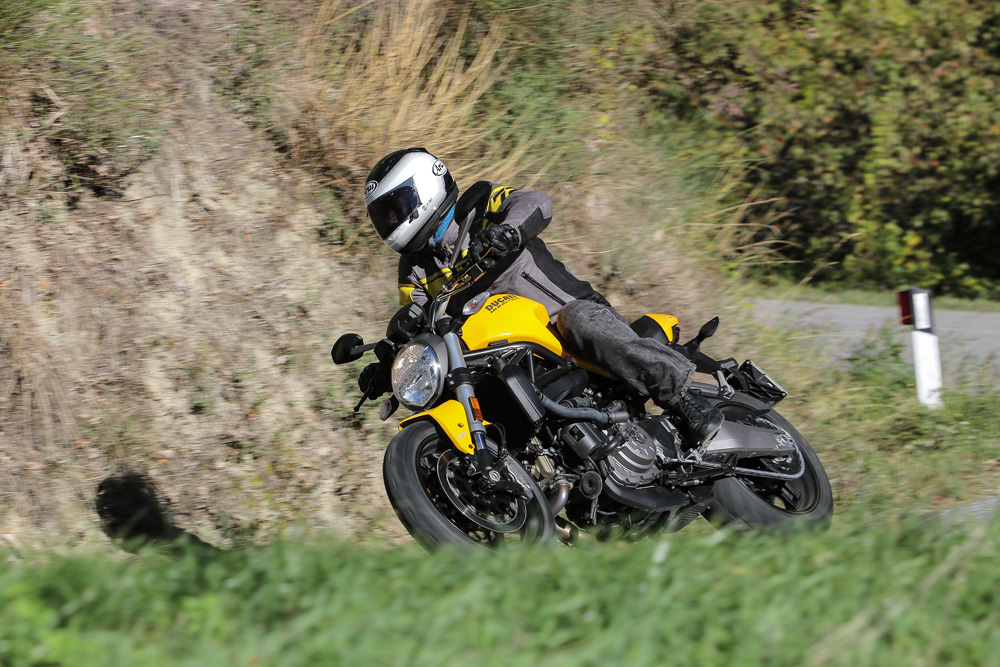 Summary: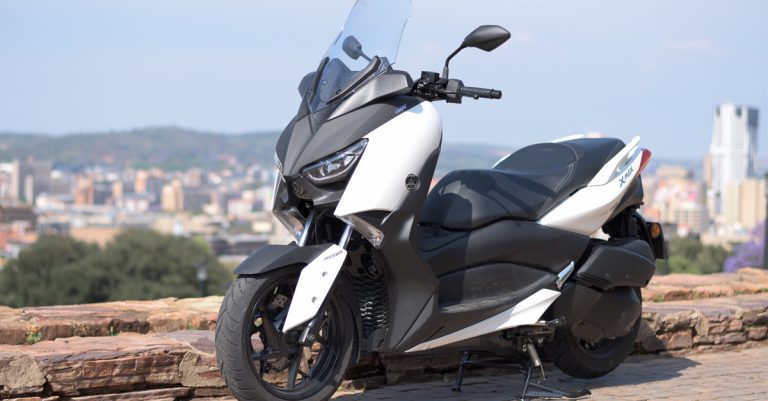
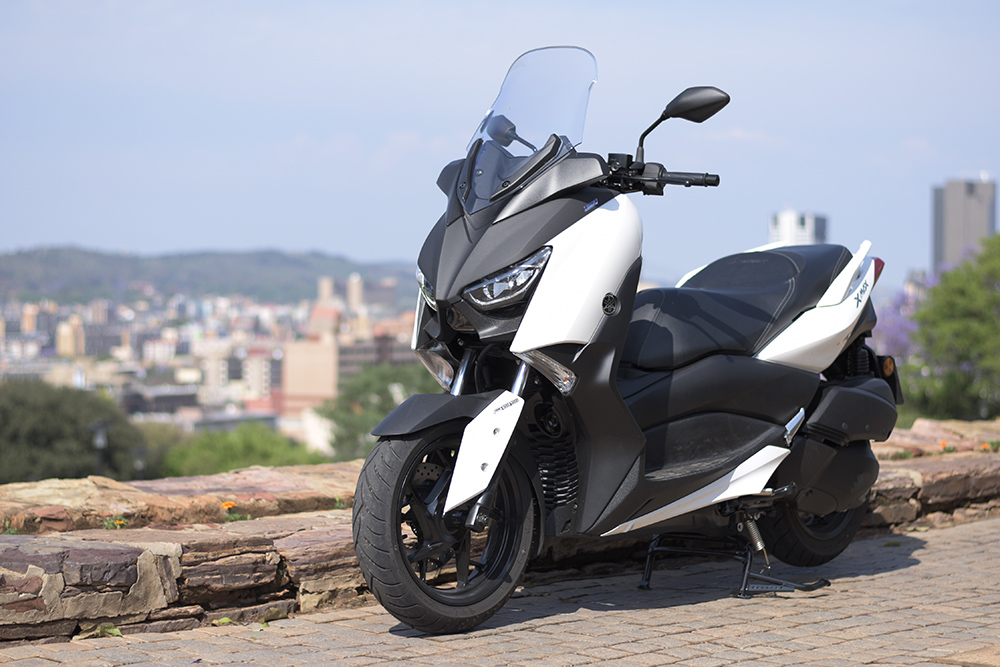
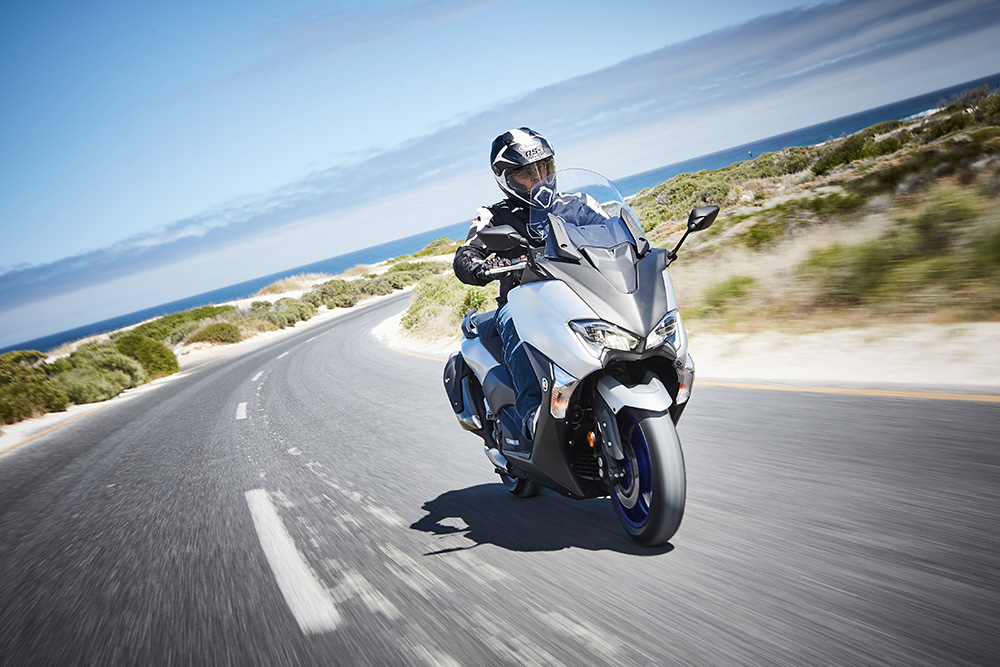 So, when Yamaha told me that they were introducing a smaller version of the T-Max, called the X-Max 300, I was extremely keen to get my hands on one to see if the smaller sibling could be as equally surprising.
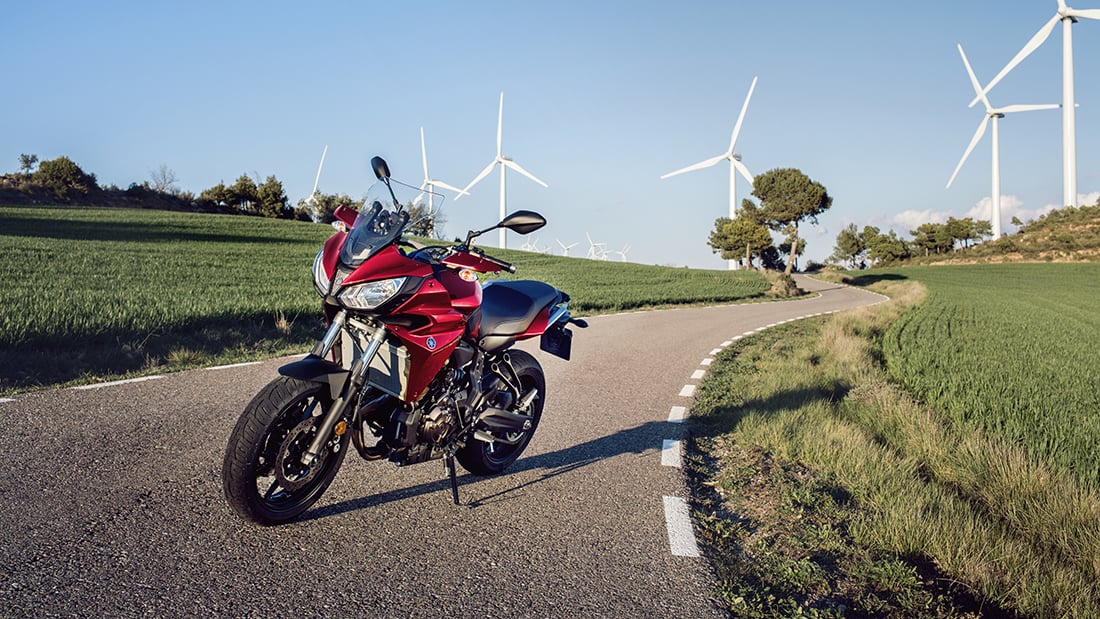
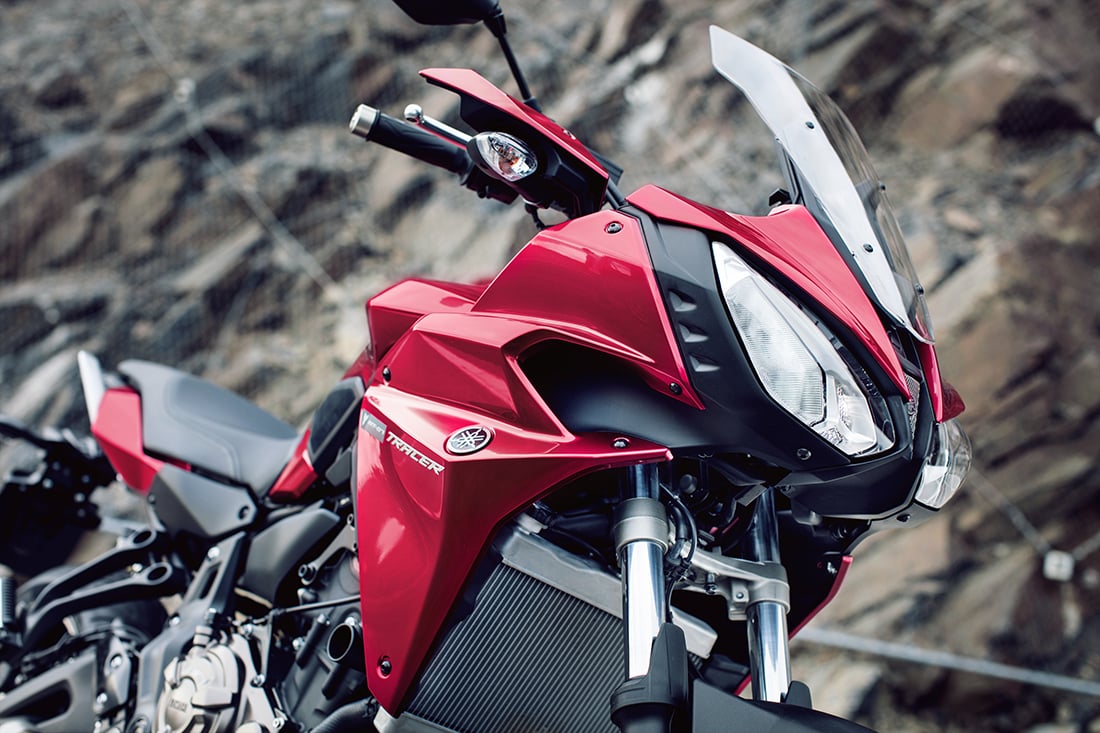
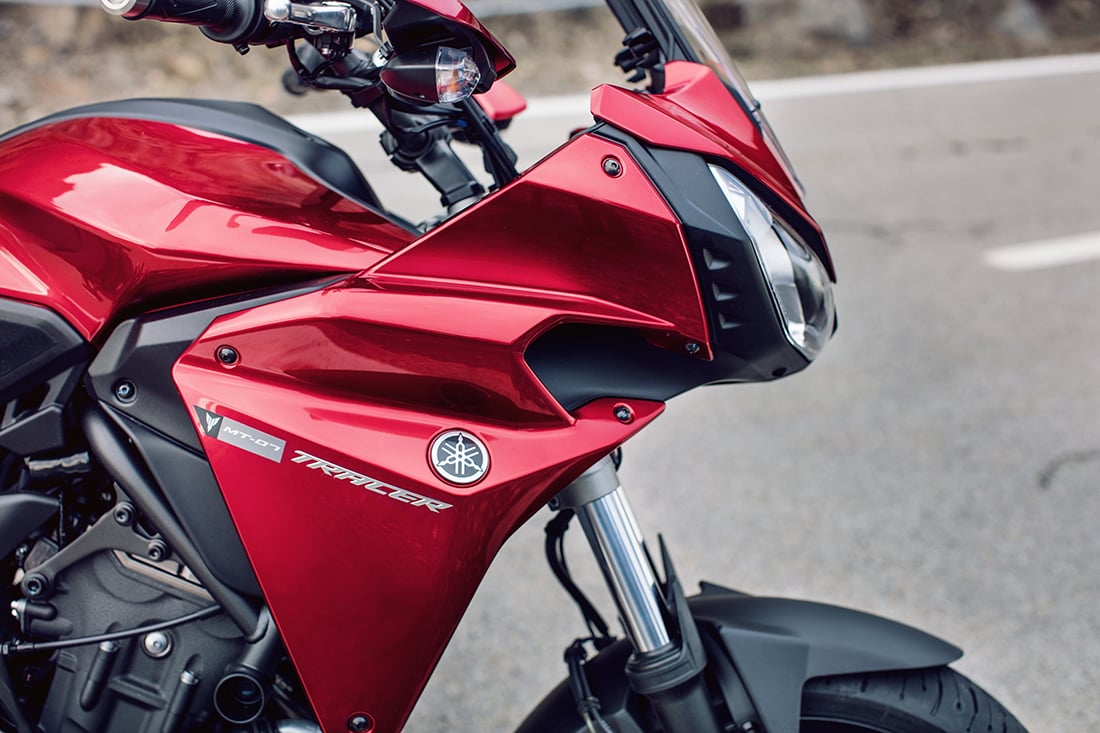
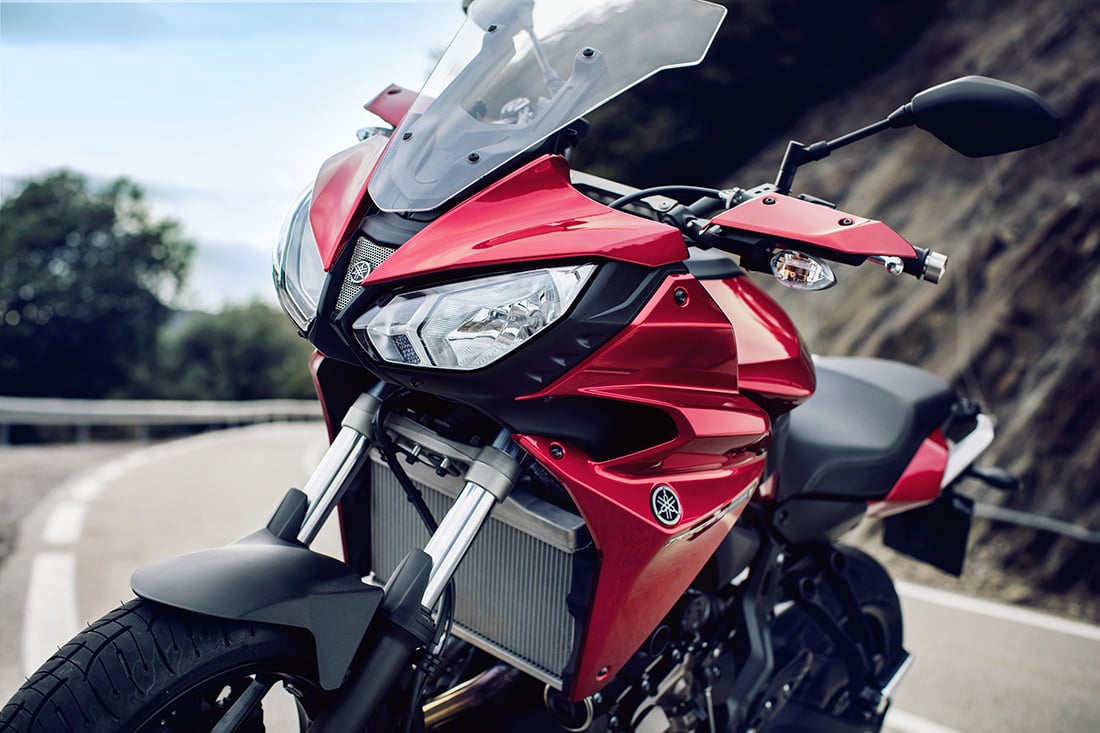
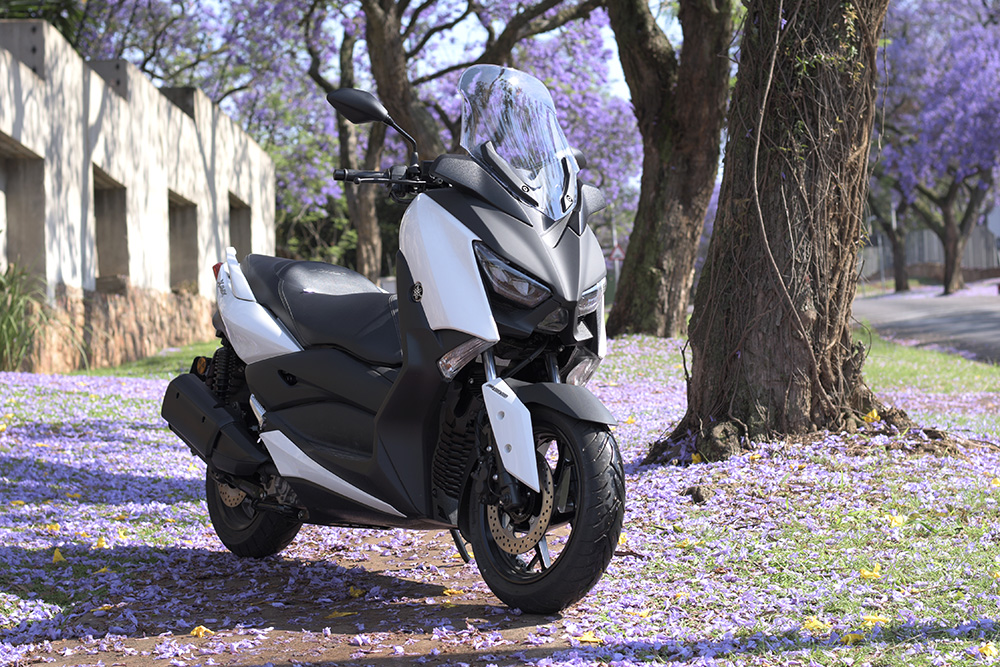 What immediately got my attention was the build quality of the X-Max 300. I had dropped off the new 2017 Tracer 700, which costs around twice the price of the X-Max and right away when climbing aboard the X-Max 300, I could feel the same build quality and that no short-cuts had been made by Yamaha in making this entry level commuter.
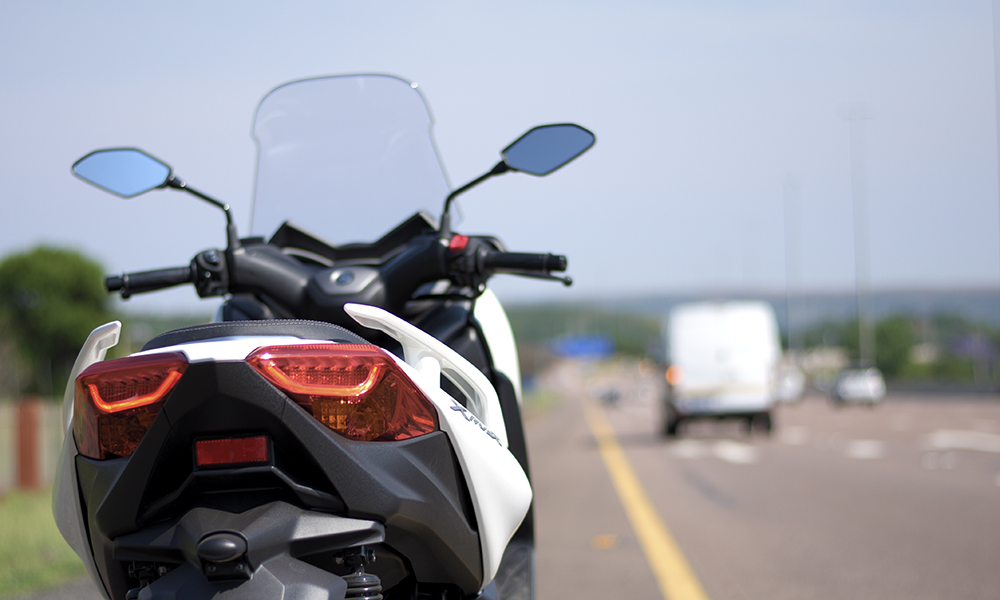
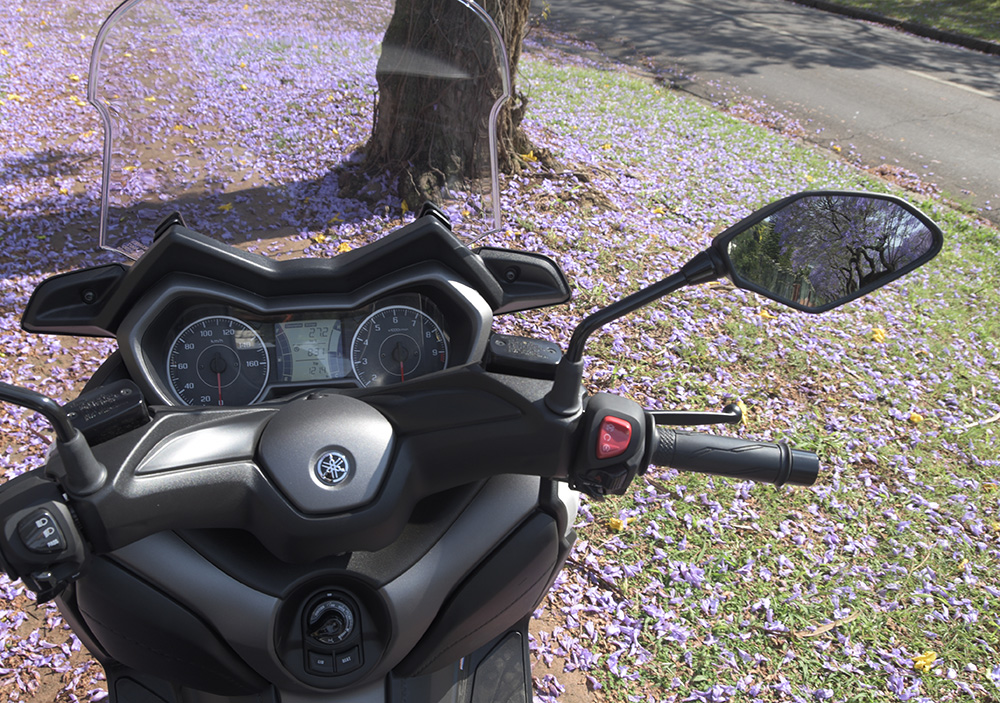 The headlights and taillights are both LED and have been derived from the same DNA as the top of the range T-Max; they have a distinguished, high-tech look, which I really like.
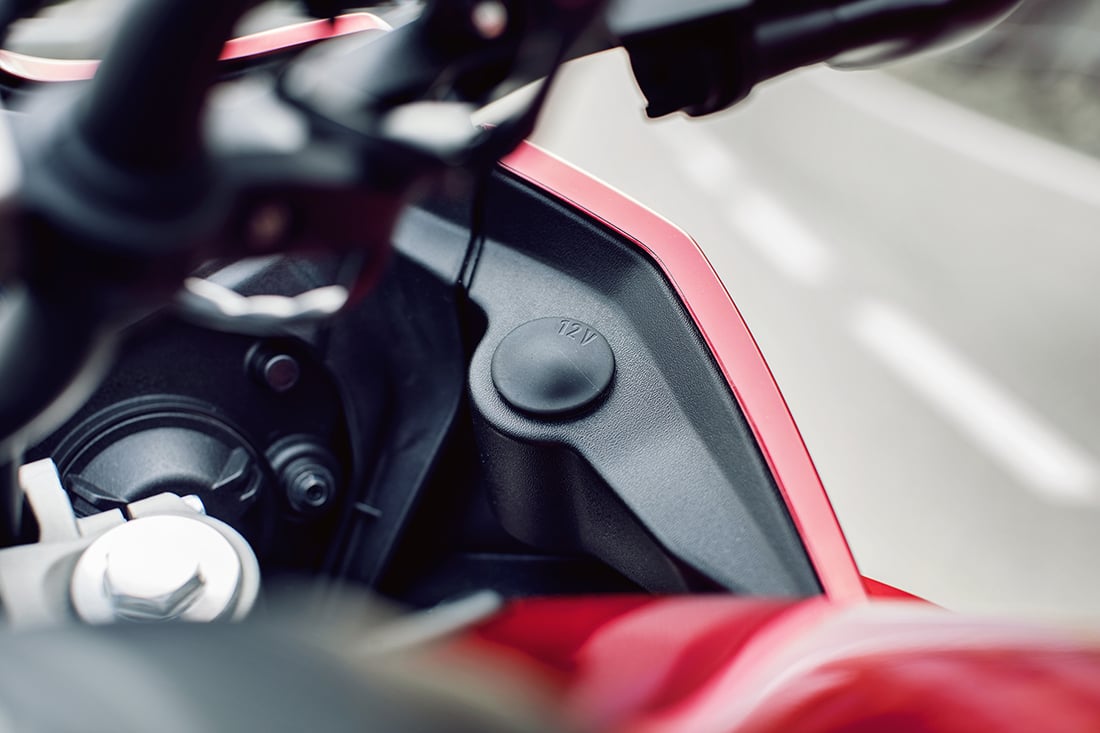
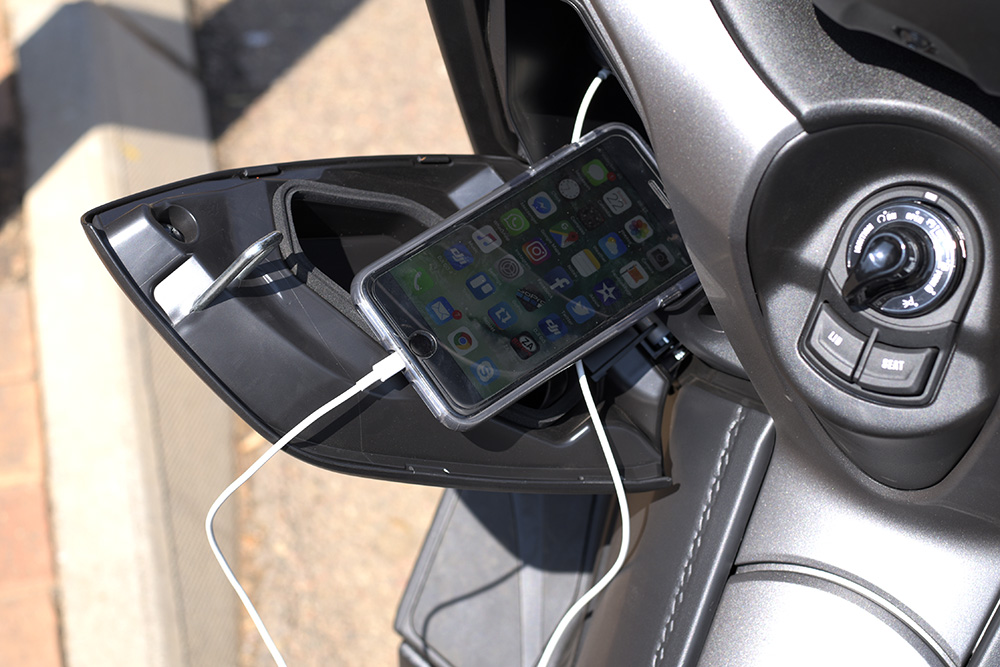
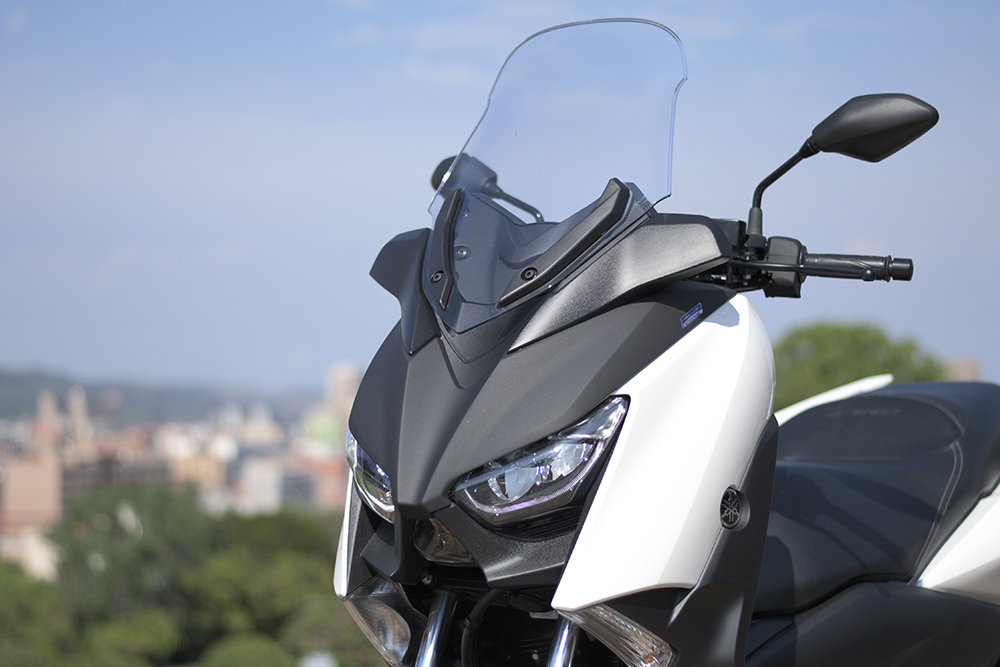 Other stand-out features include; a ‘Smart Key’, keyless ignition system and a 12V outlet so you can charge your cell phone whilst on the go.
 The X-Max 300 comes with a powerful and efficient new 300cc, 4-stroke, liquid-cooled SOHC 4-valve engine. Power is just under 28 bhp at 7250 rpm with torque clocking in at 29 Nm at 5750rpm. In and around town the X-Max is such a blast to ride. It’s light-weight and nimble and this makes cutting through the traffic very easy.
 The X-Max 300 is also very comfortable. It has a couple of feet position options, the first giving you a more sit up and beg position and the other a laid-back cruising style. Both screen and handlebar positions are adjustable, the screen can be moved up and down by 50mm and the bars can be moved closer by 20mm. I did not need to make any adjustments to the demo model as the set-up was perfect for me. However, taller riders should check this out before buying, as I feel they might feel crammed-in on the X-Max 300.
 Braking power is supplied by a 267mm front disc and 240mm rear disc, and ABS is fitted standard. Being critical, the front brake could do with a bit more power, but it’s certainly not bad. When using both brakes together, as they should be used, then braking is much better and I can say, they feel nicely balanced.
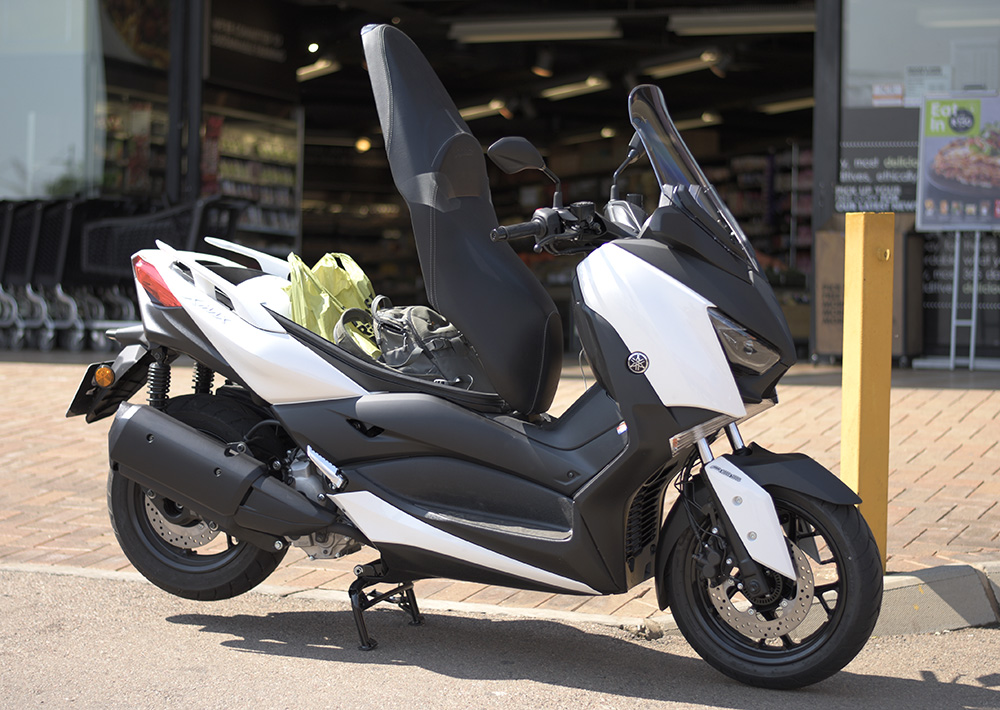 The price tag for a Yamaha X-Max 300 is R69, 960, which is great value for money!
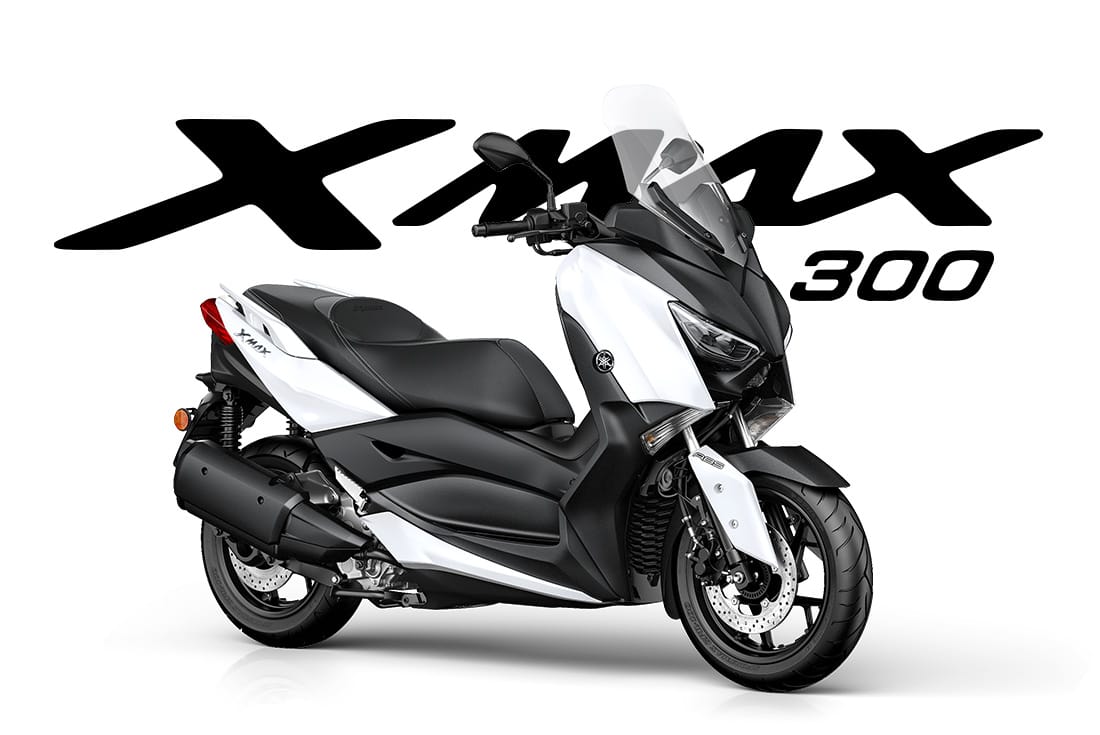 Specifications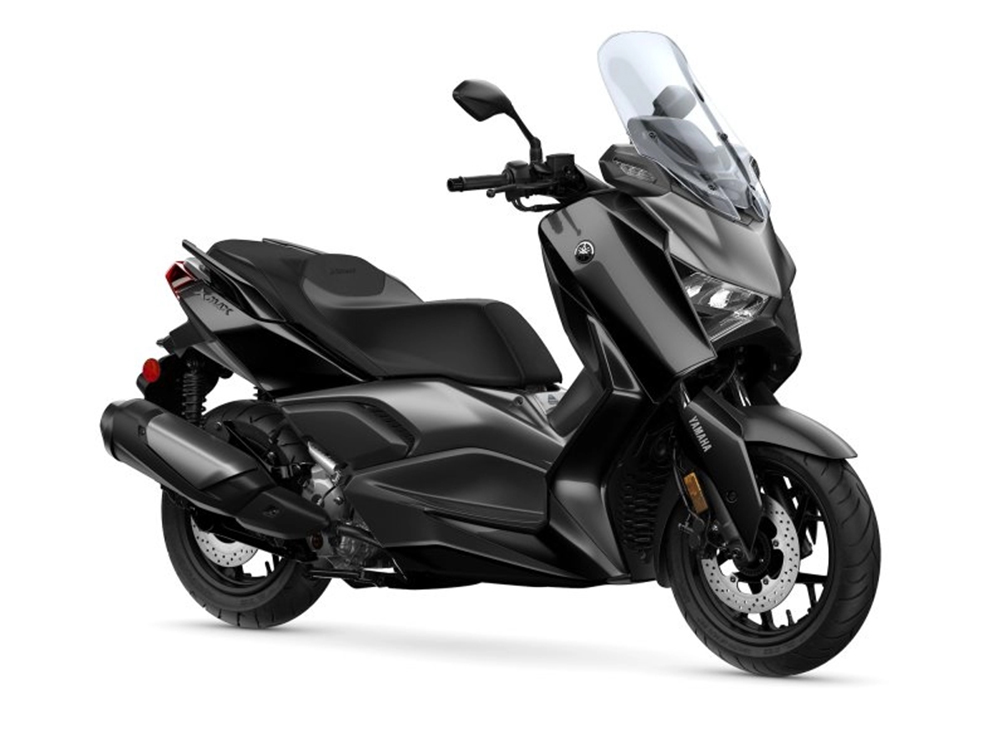
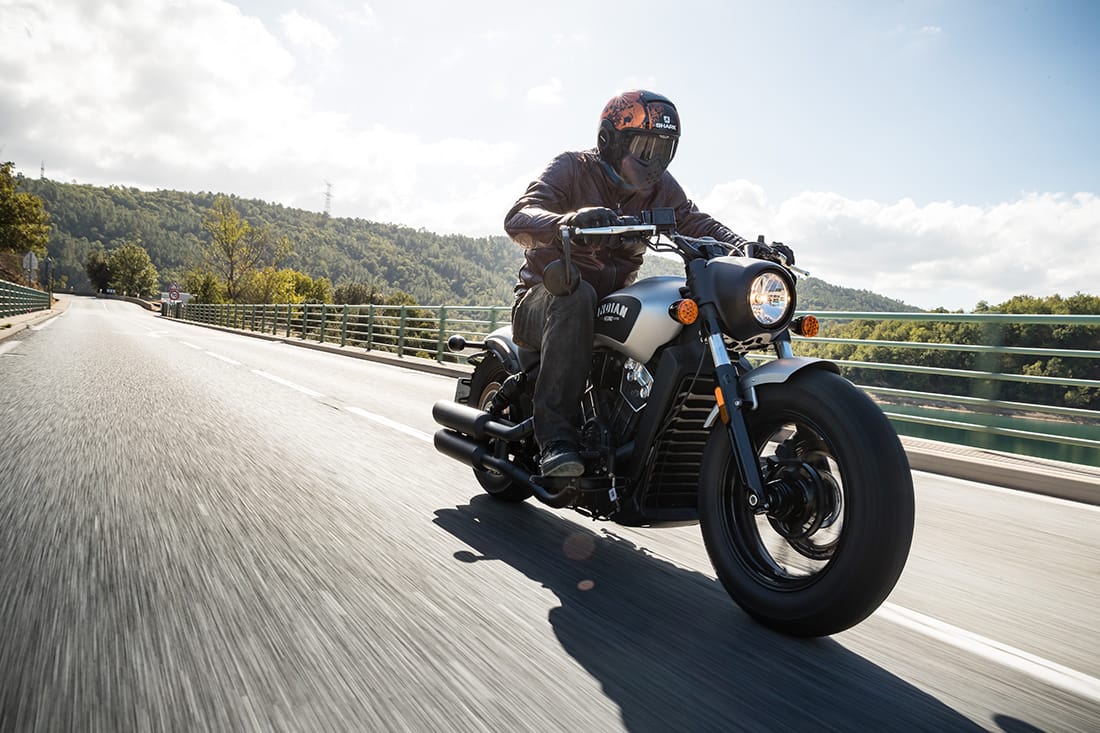
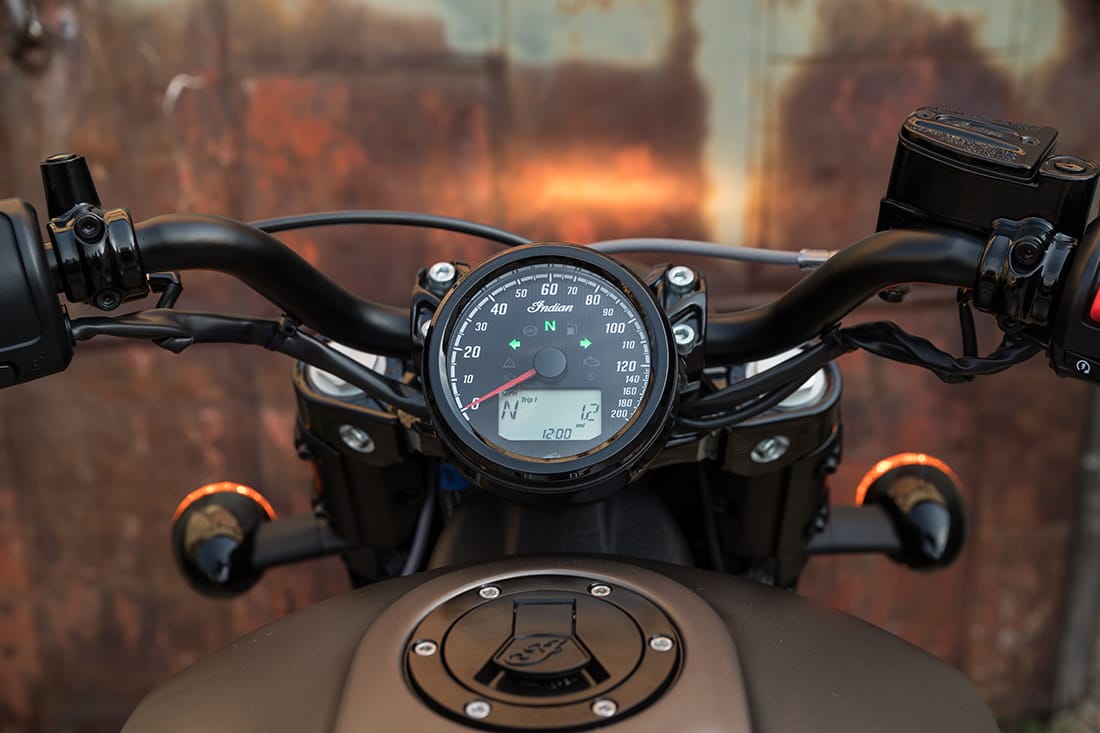
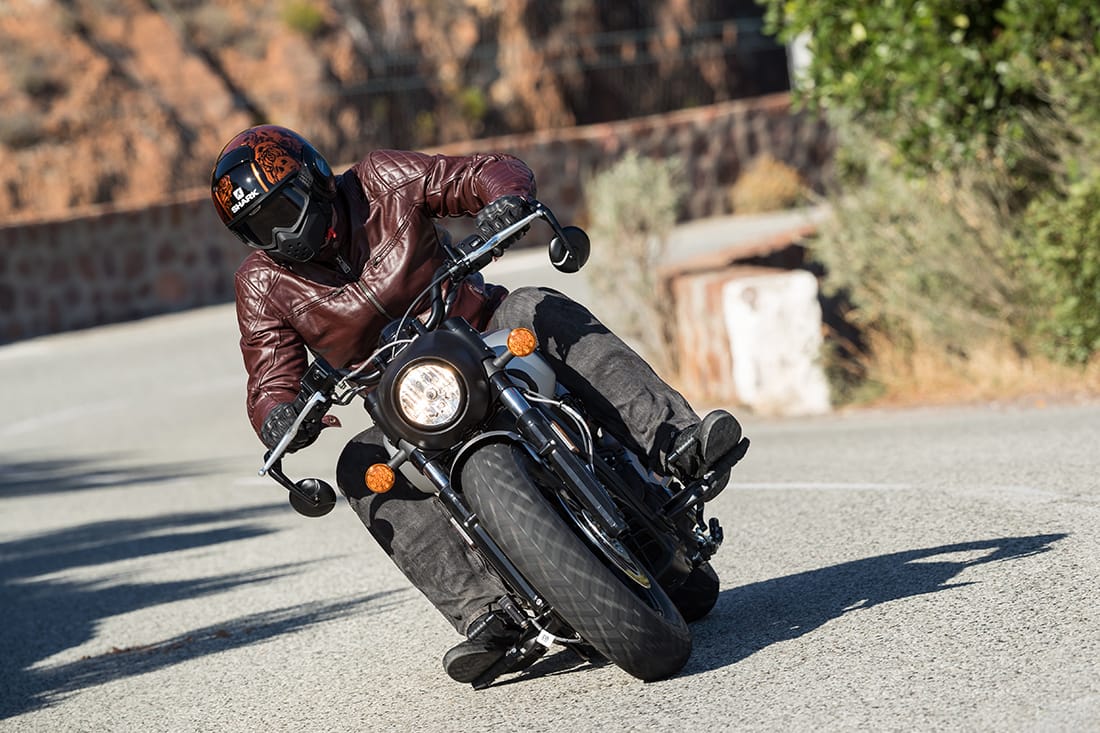
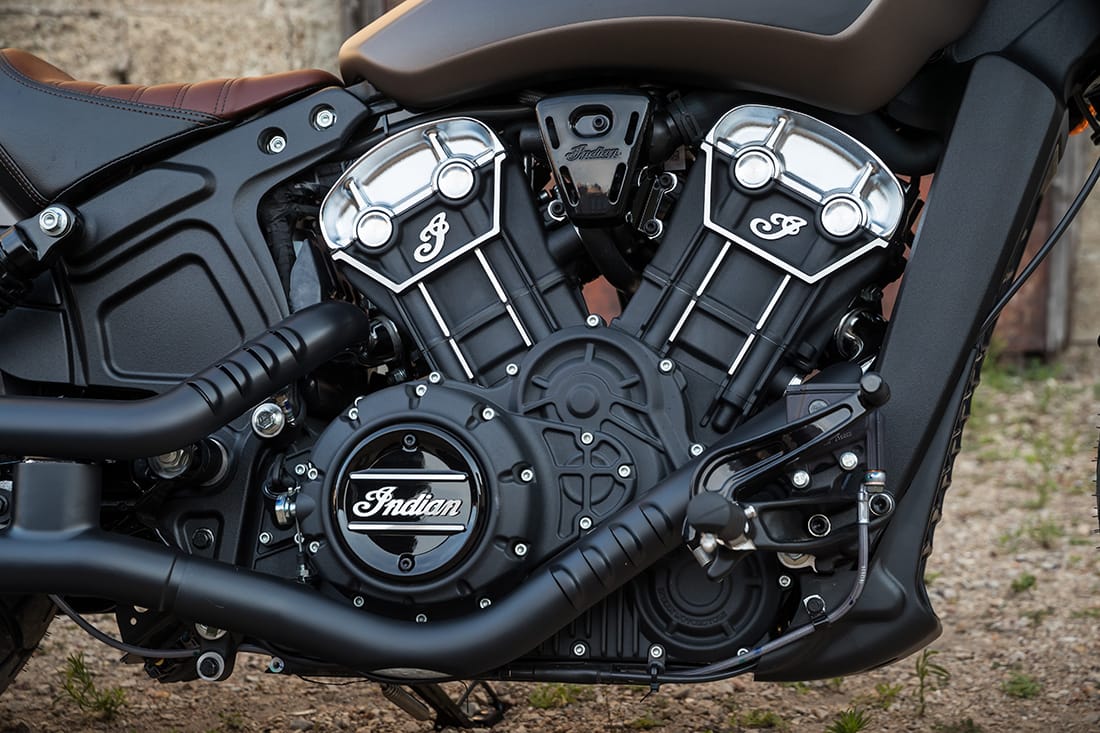
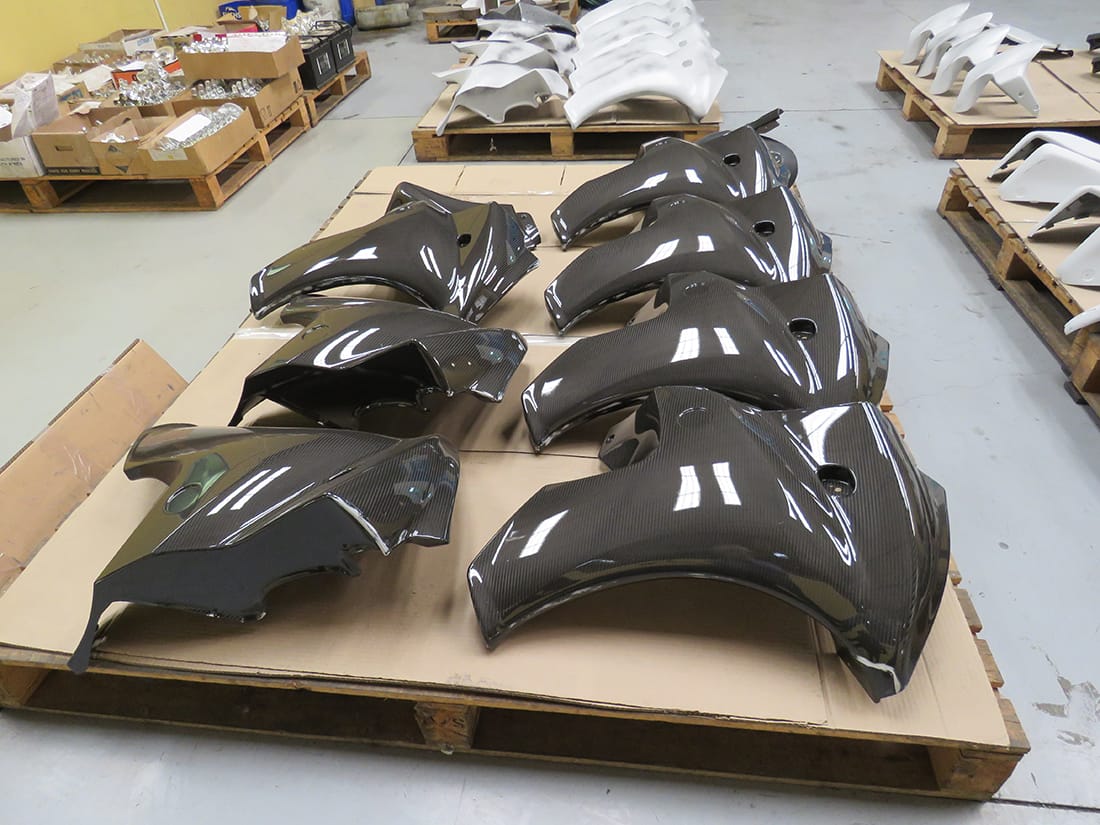
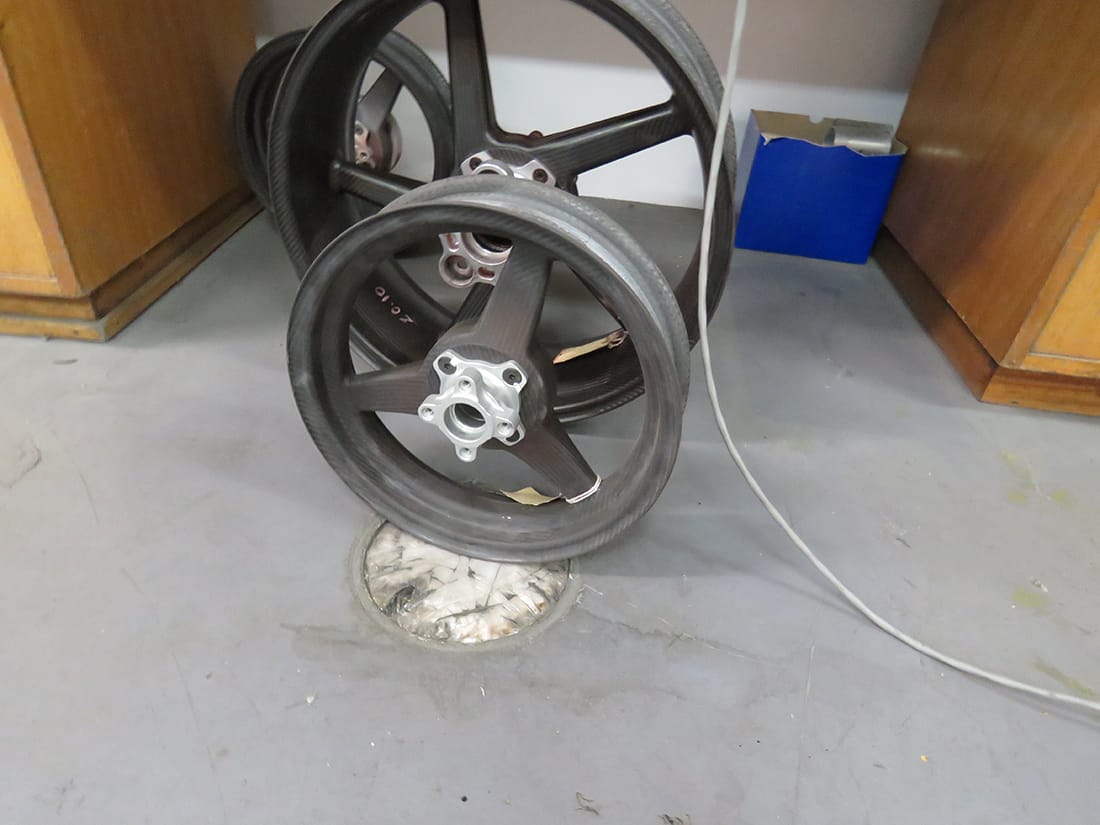
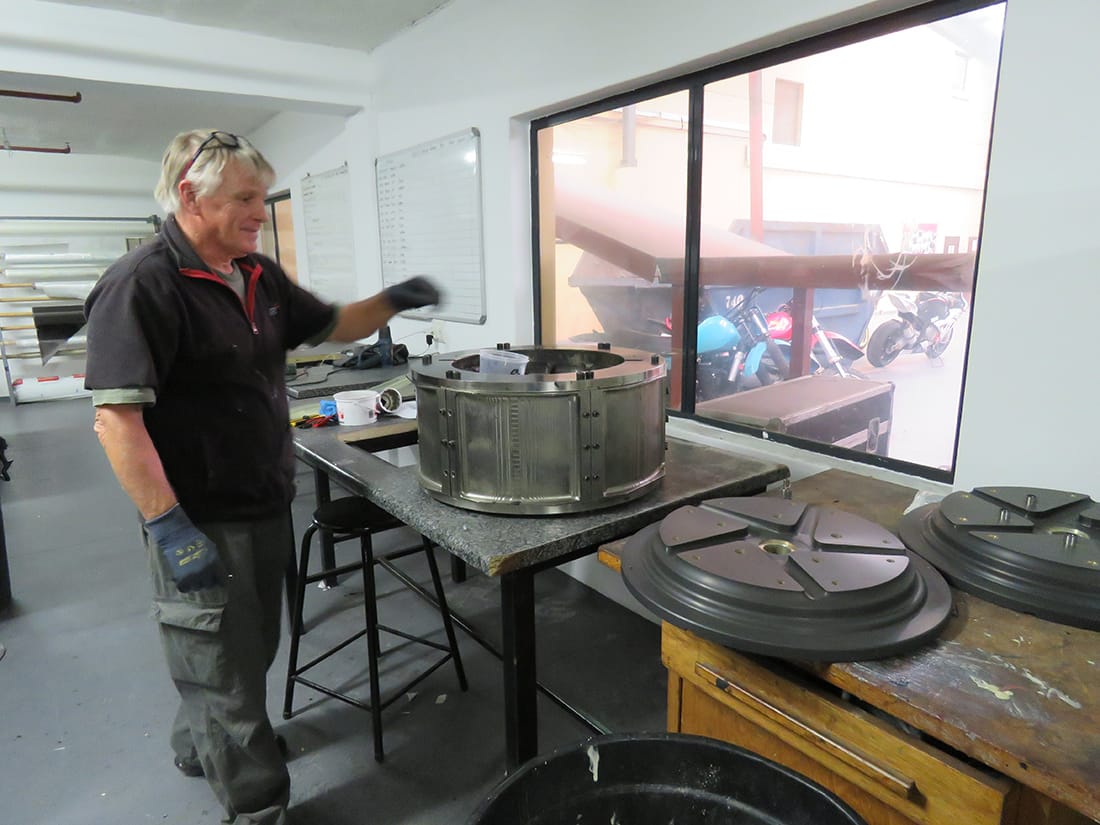 As it happened, Gary knew a bit about carbon fibre. He was running a company called ProCarbon who made aftermarket bits and bobs for superbikes. The performance of the lightweight carbon Dymags left such an impression on him that, upon returning to SA he started to plot and scheme in true “Skunkworks” fashion. The Council for Scientific and Industrial Research had developed some state of the art carbon fibre technology for military application. Notably the airframe for the cutting edge Rooivalk attack helicopter. Gary applied this technology with a few ideas of his own and the rest as they say “is history”.
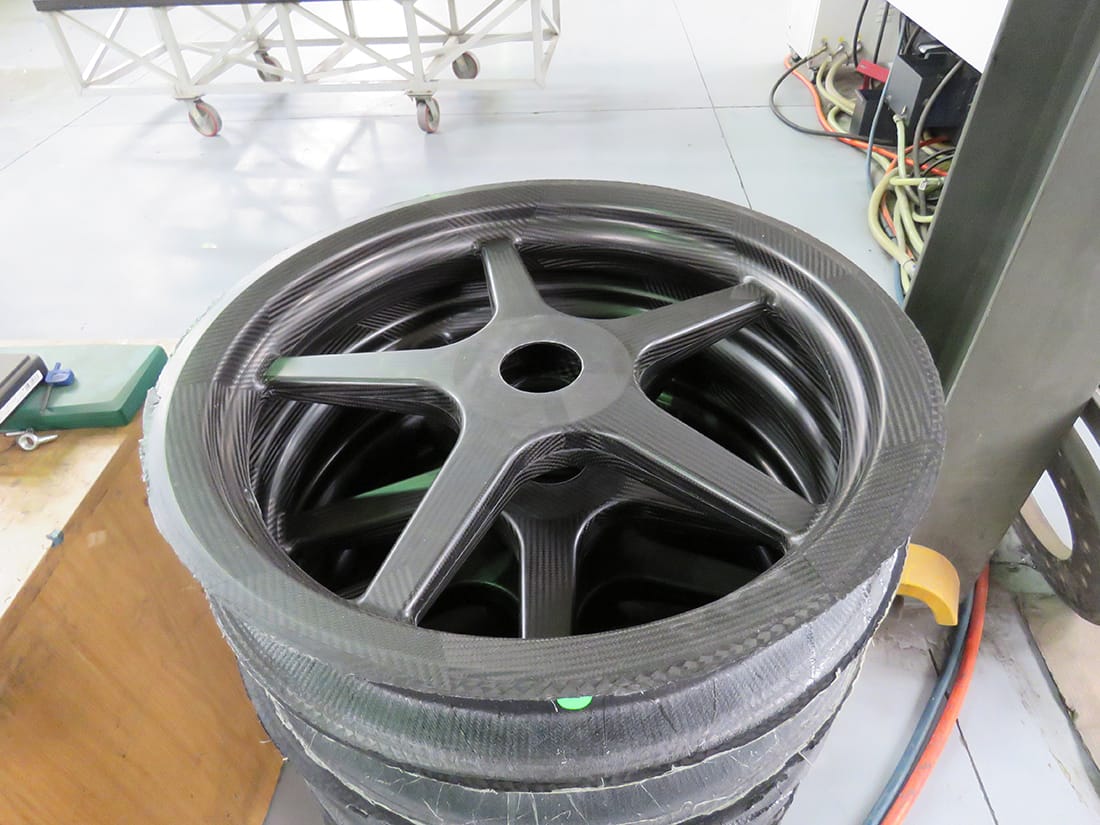
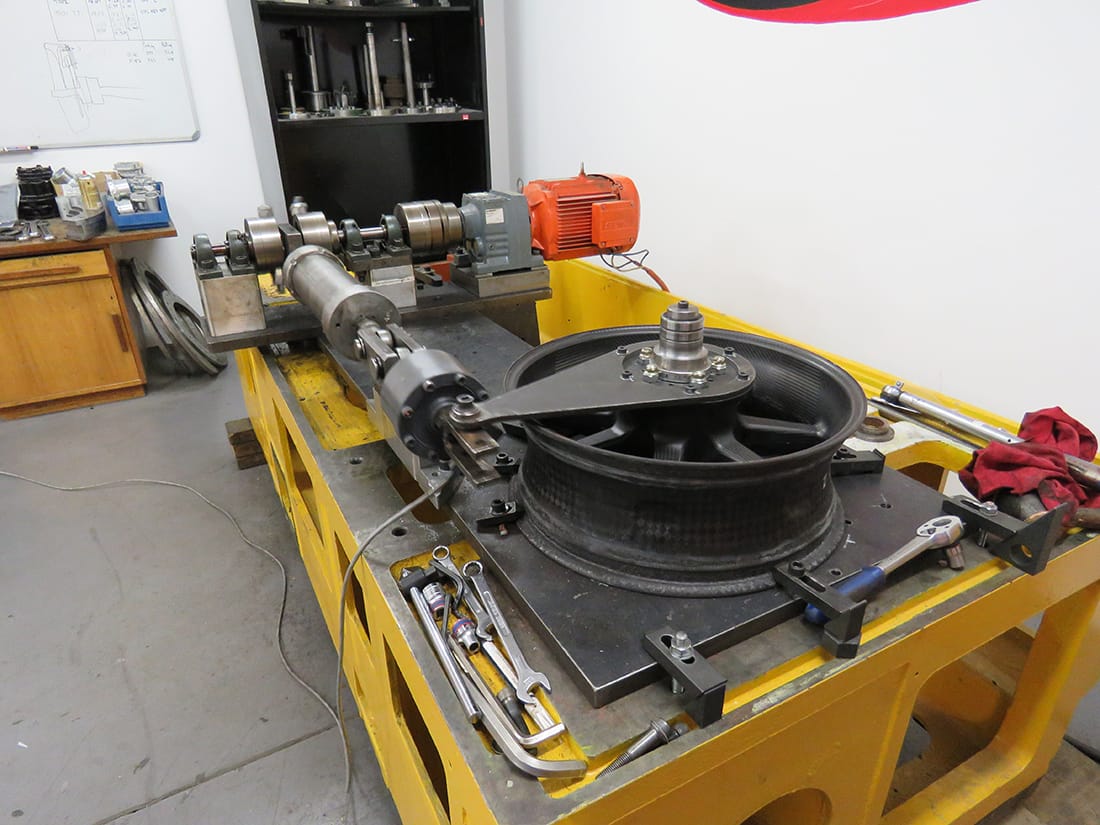
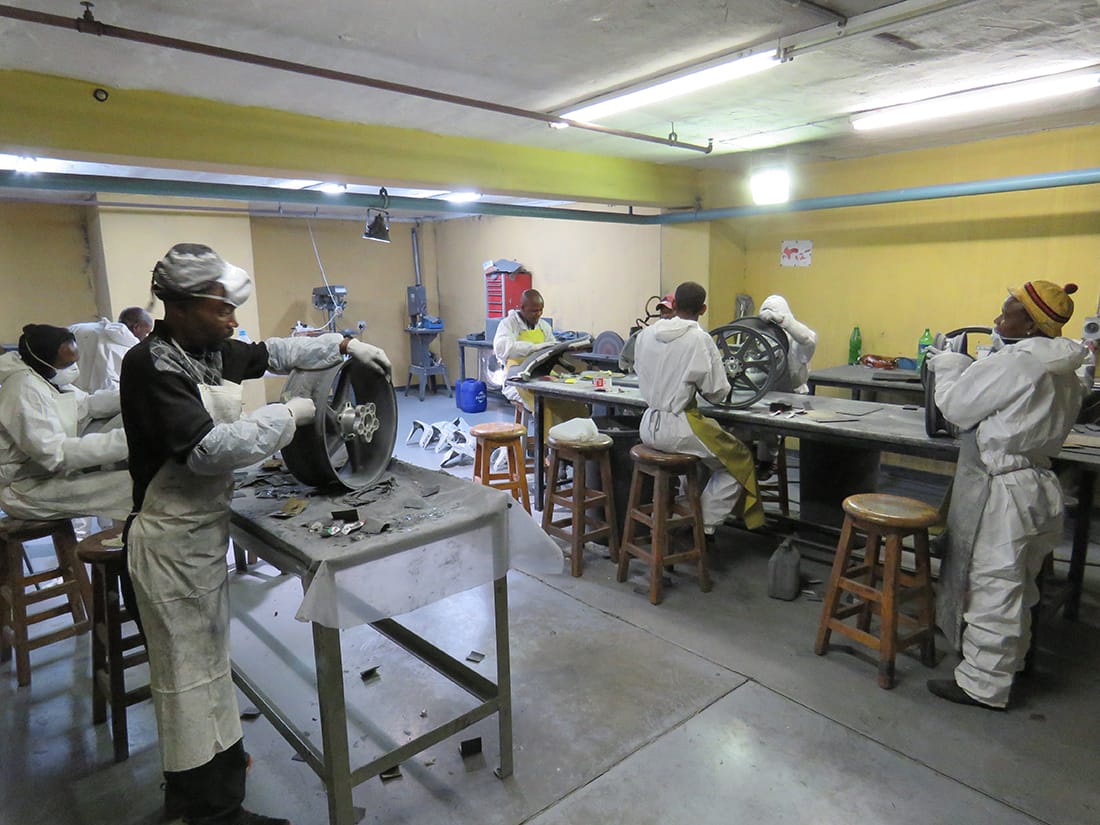 OK, so that is obviously a massive over simplification! Around this point the other half of the BST success story arrived on the scene. Terry Annecke, an ex IBM Systems Engineer and then Marketing Director of Microsoft S A, was looking for a new challenge and fresh stimulation. With Gary’s technical skill and Terry’s business and marketing acumen BST took off. Gary developed a technique whereby the wheels were assembled from pre- cut carbon sheets, moulded in two halves using special silicone inserts to keep the spokes hollow and then baked in big “oven bags” for 4-5 hours at 125 degrees C. The oven is also pressurized to 6 bar.
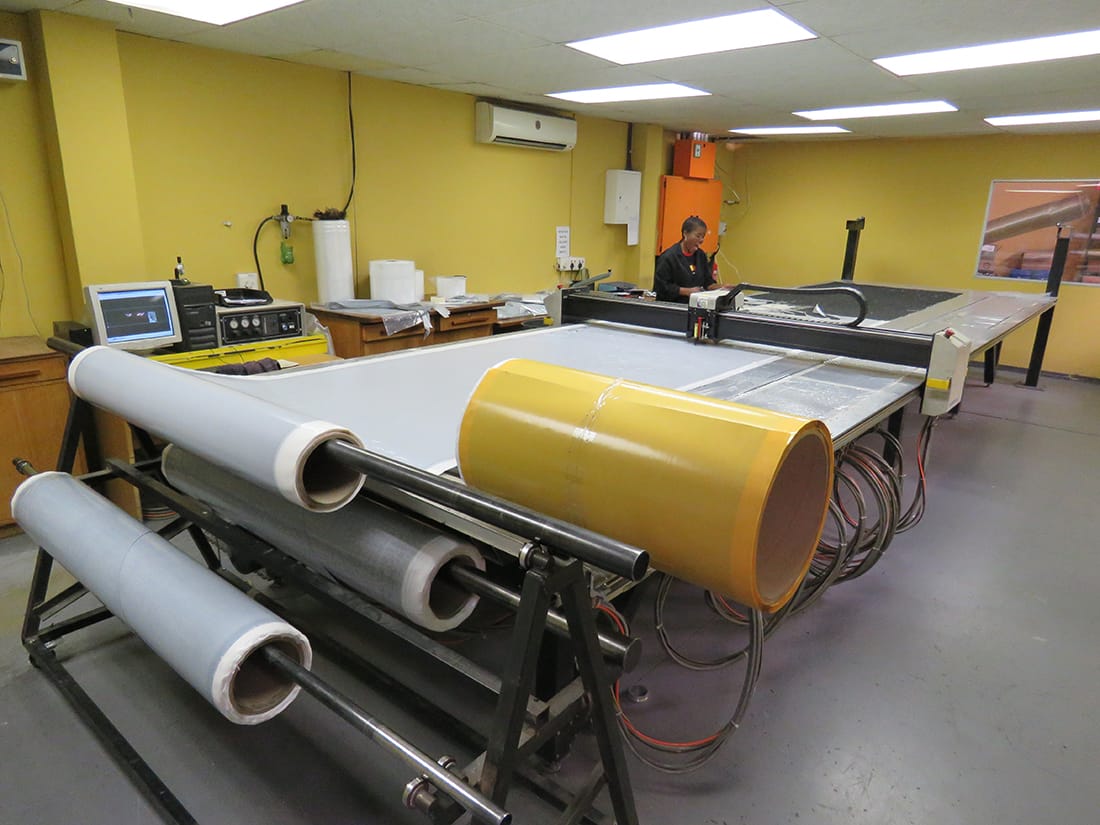 Lest you think that sounds simple, consider this. The sheets of carbon fibre are imported from the U K. To maintain the integrity of the materials the sheets are packed in dry ice for the trip. BST keep the sheets of carbon fibre in a huge cold room at a constant -20 degrees C. In order to keep the particular resins happy the sheets are warmed to 0 degrees C daily. Bloody hell! Each wheel is made from around 130-180 carbon components, laser cut for each application. The hubs are machined in house from billet aluminium. The latest wheels are 100% carbon and can shave between 40 to 60% off the weight of a normal mag wheel. This equates to the equivalent of a 5 hp gain on your typical super bike. The handling improvement is huge! Turn in is improved and braking significantly better. All this without compromising the bike in any way, as with engine modifications. Bikes with less power benefit even more because they have to get their wheels turning and the weight of the rims is a major factor as the engine tries to get them rolling. The same applies to braking. Cyclists understand the benefits of light wheels because they are the engine!
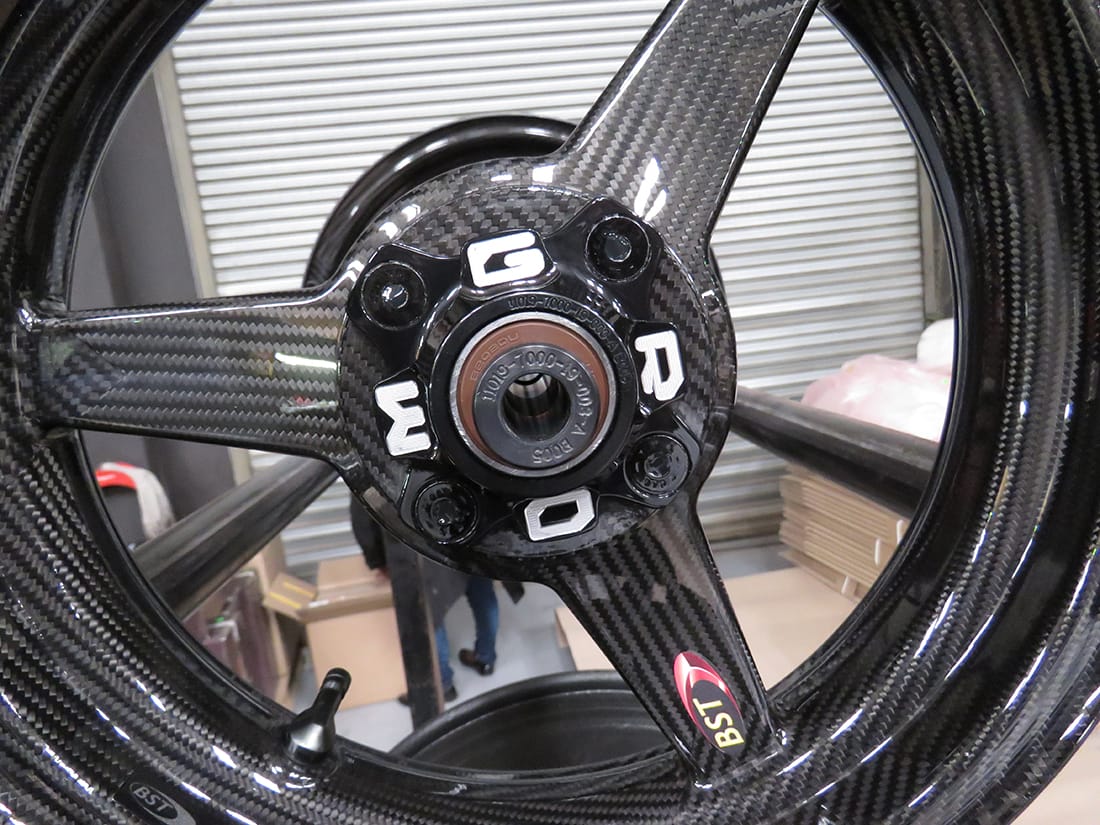 Last but not least is the fact that BST’s look spectacular. The finish is on another level entirely. The clear coat is an UV screen that will last for 50 years. If you are really serious about extracting the best performance from your bike then lightweight wheels are a must. It is not only the performance gain, but the enhanced “feel” of the bike and the way it rides. Interestingly enough BST”s are gaining huge traction with cruiser riders, both for the way they feel as well as the way they look.
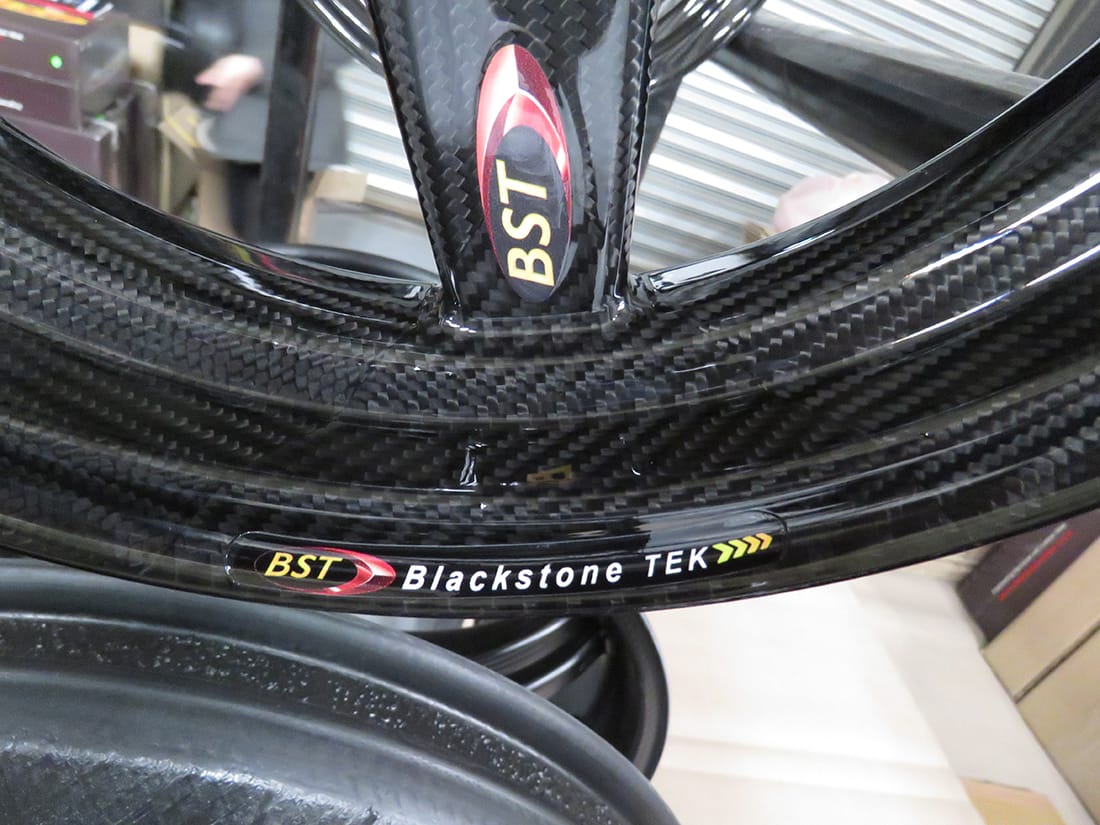 BST are recognized as world leaders in motorcycle carbon fibre applications. Apart from Ducati, for whom they build wheels and swing arms, KTM RC8 fuel tanks and all the Confederate Wraith suspension components are built by them too. They are building supercar wheels too, for cars like the Ariel Atom. The German authorities have approved BST for road use too. This is testimony to the strength and durability built into this incredible product.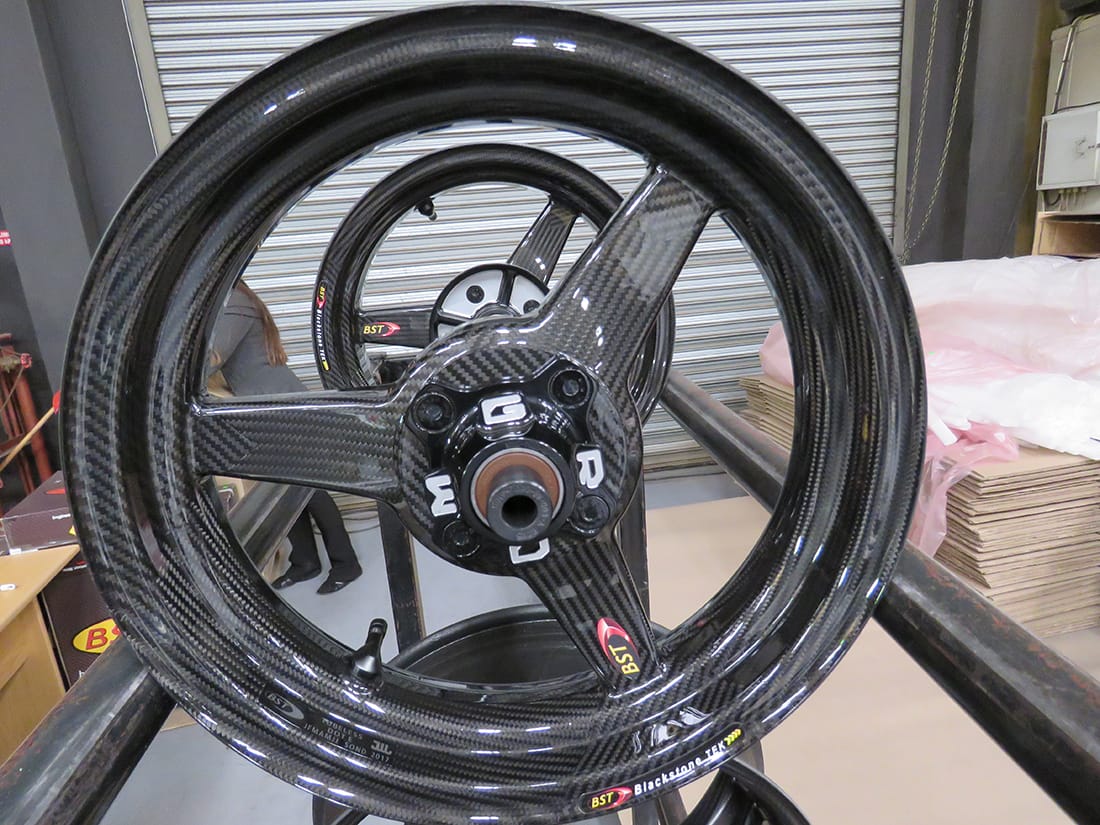
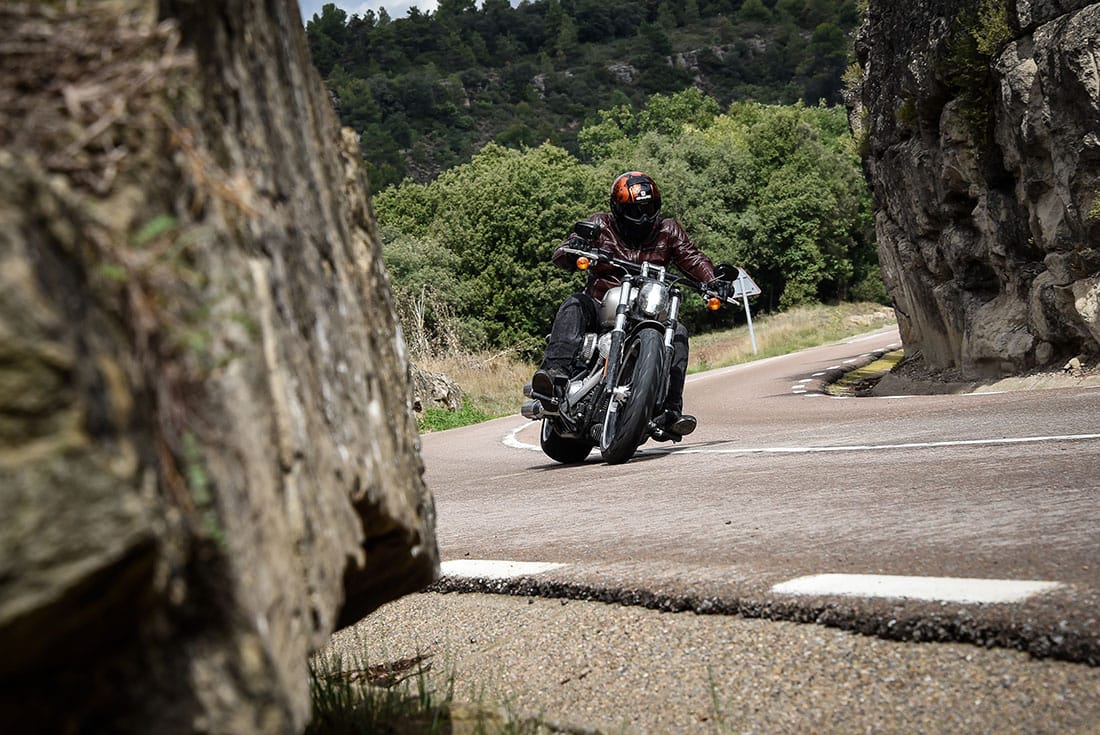
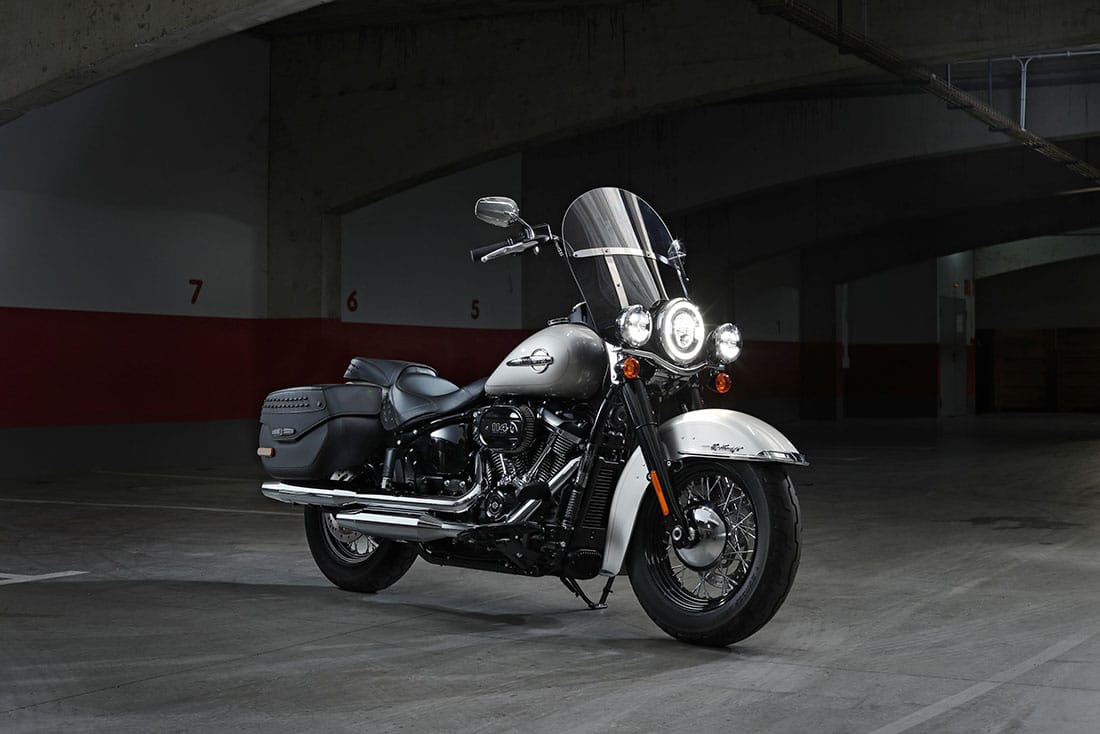
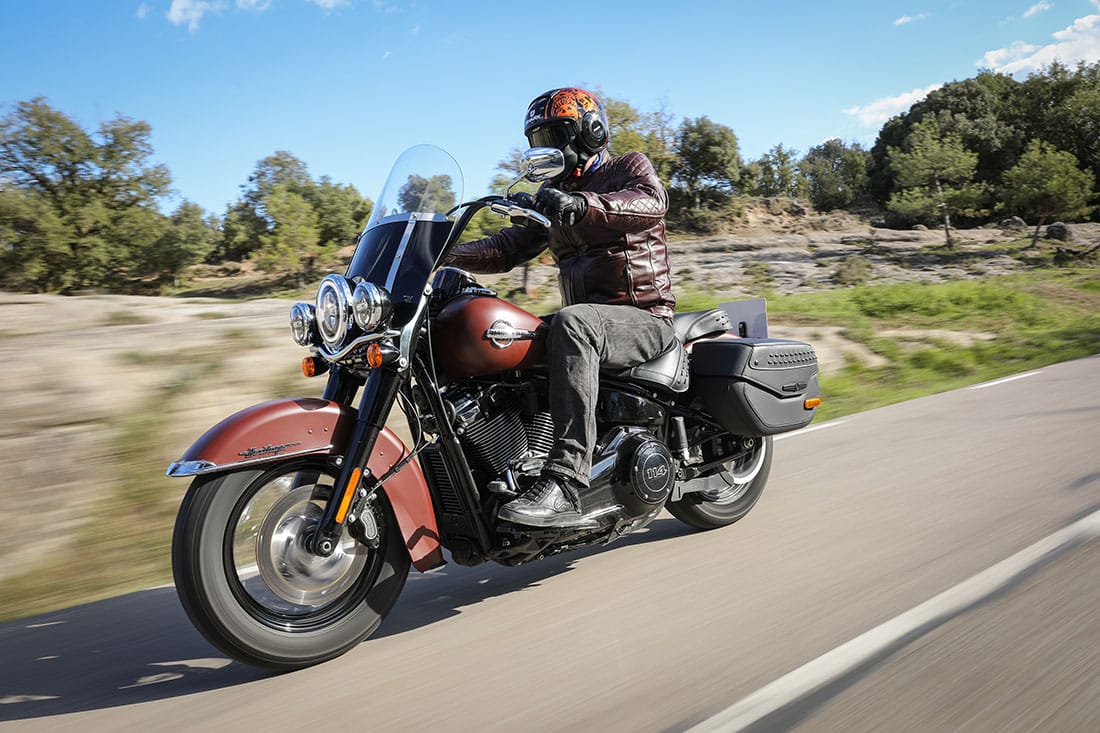
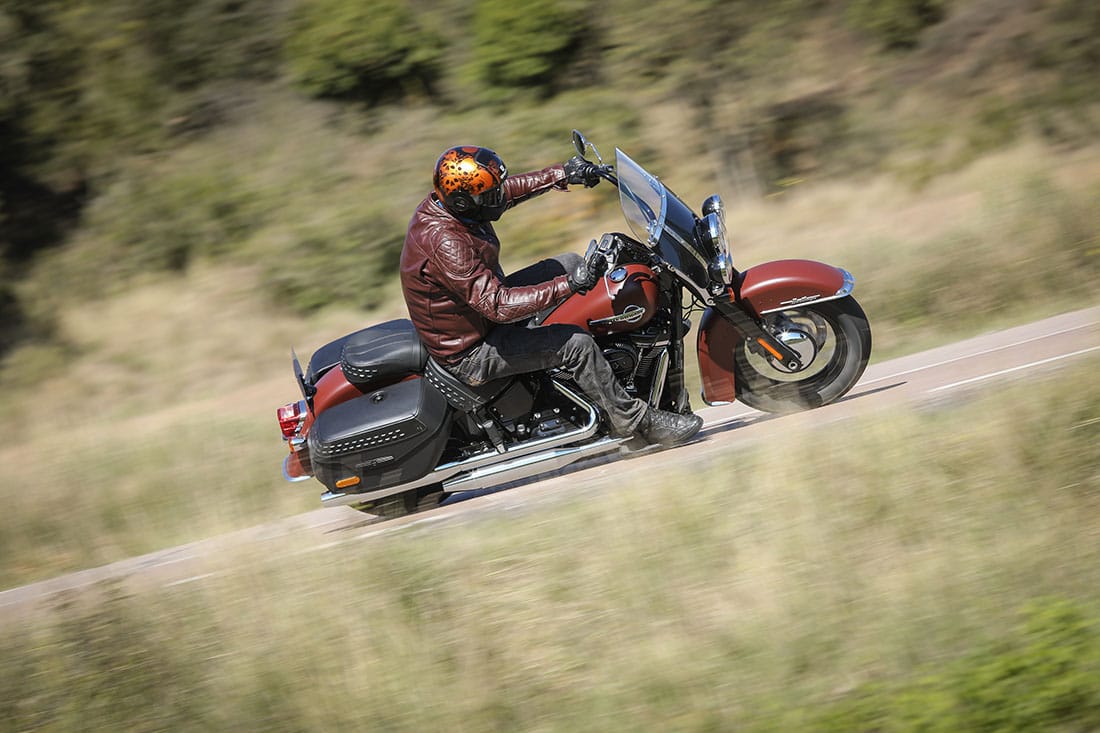


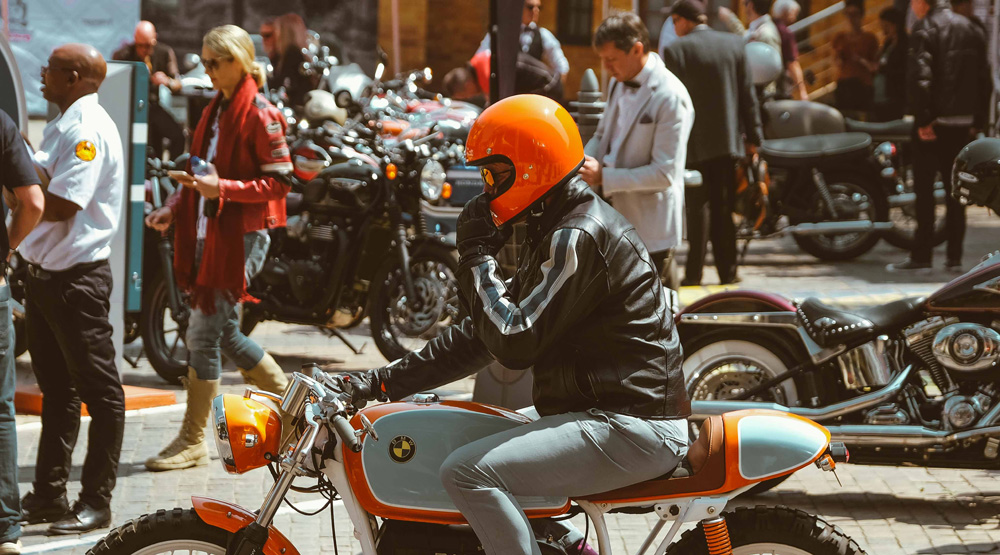
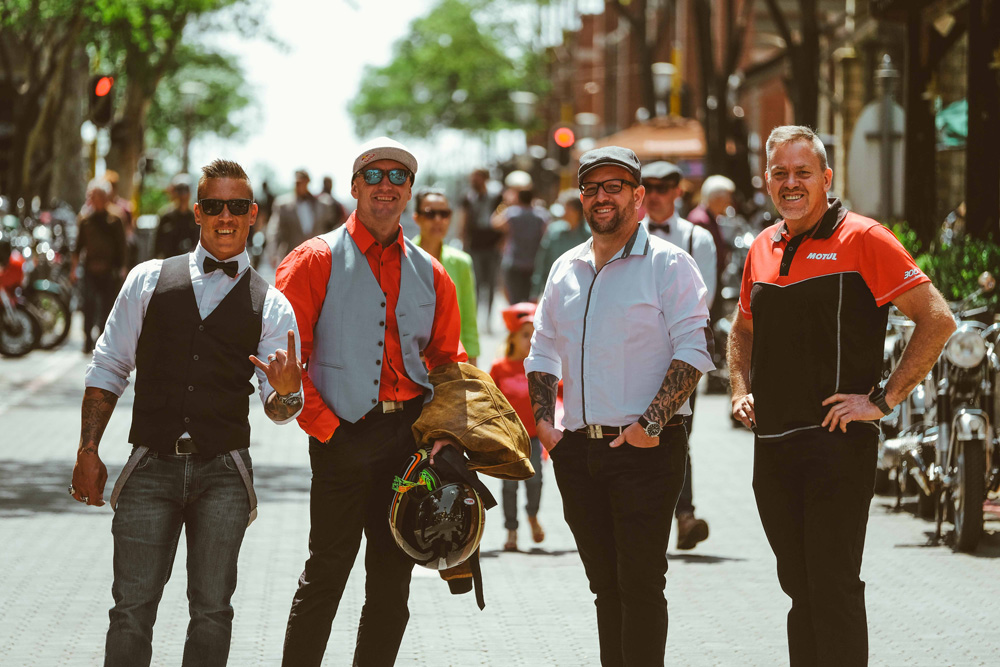
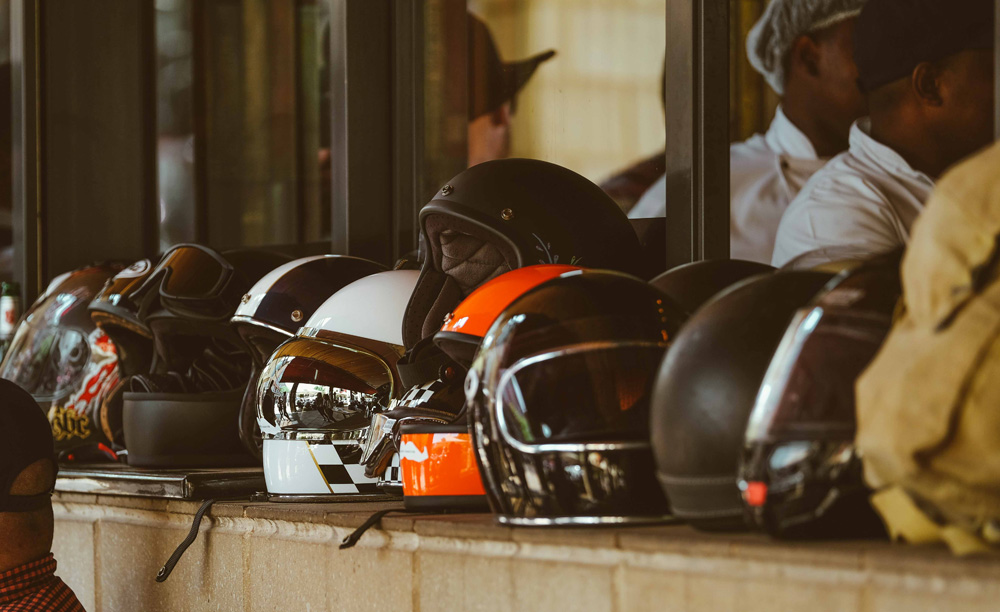
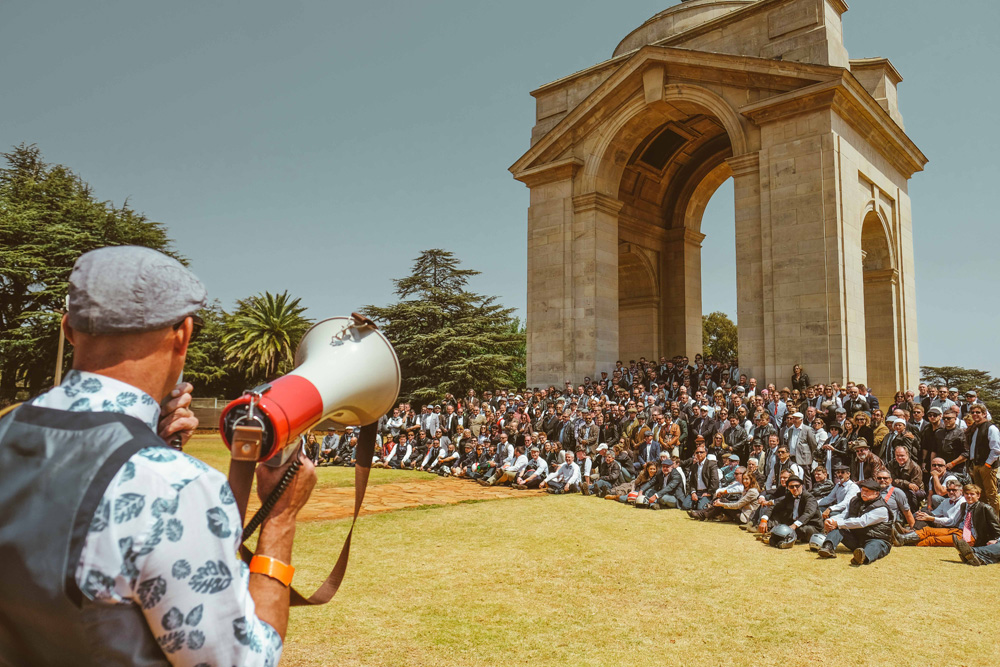
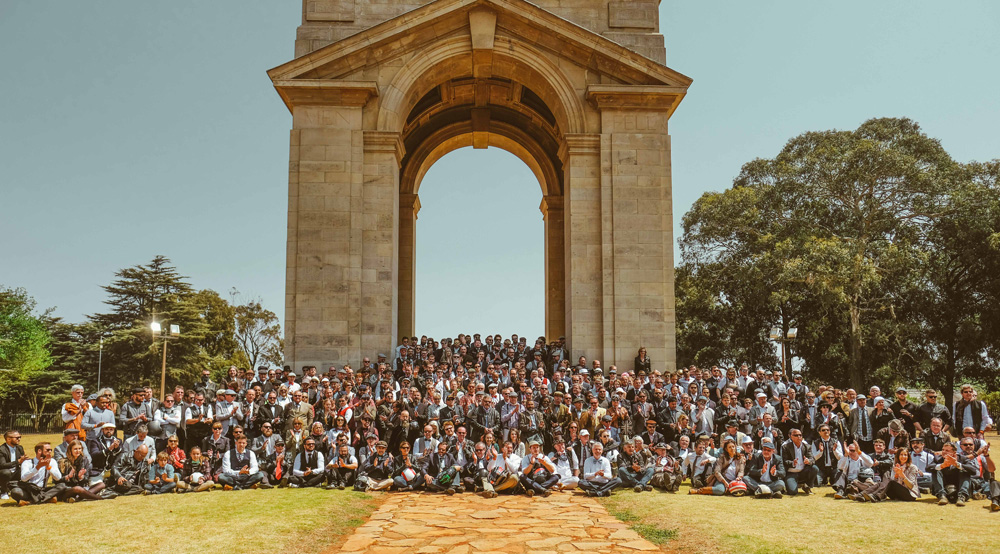
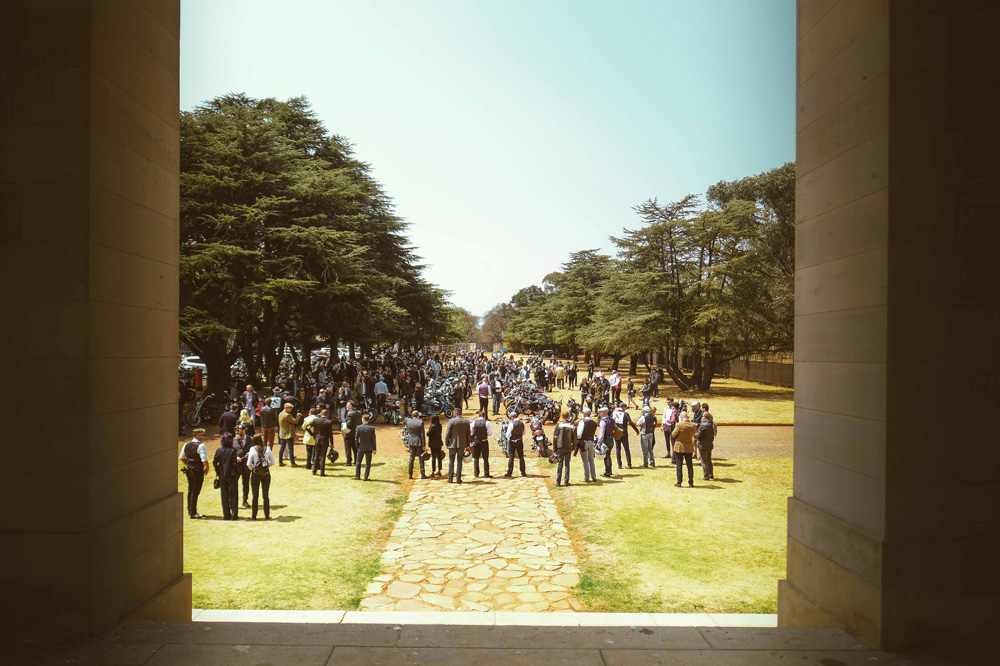
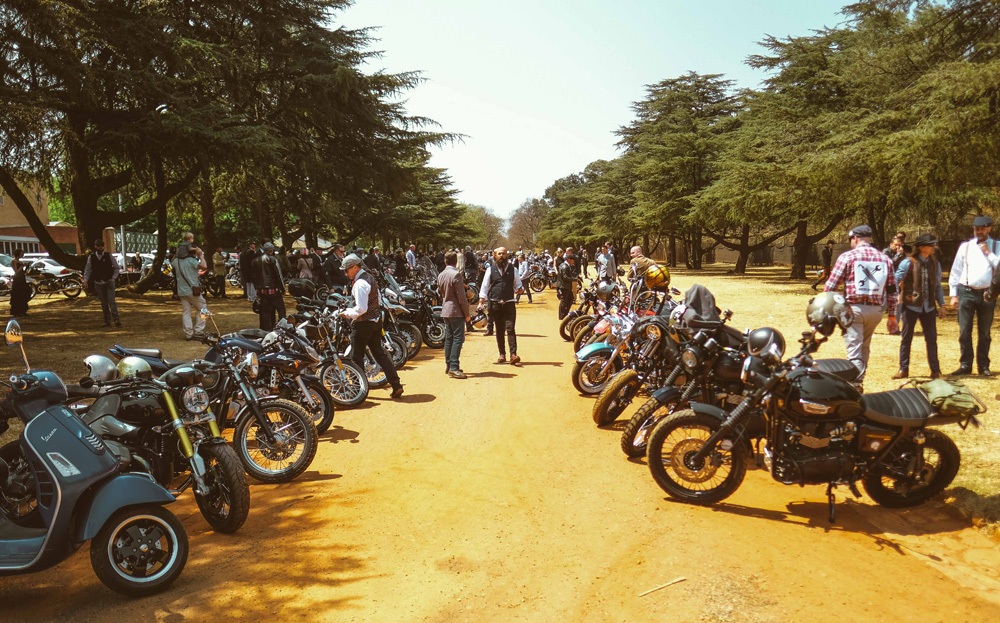
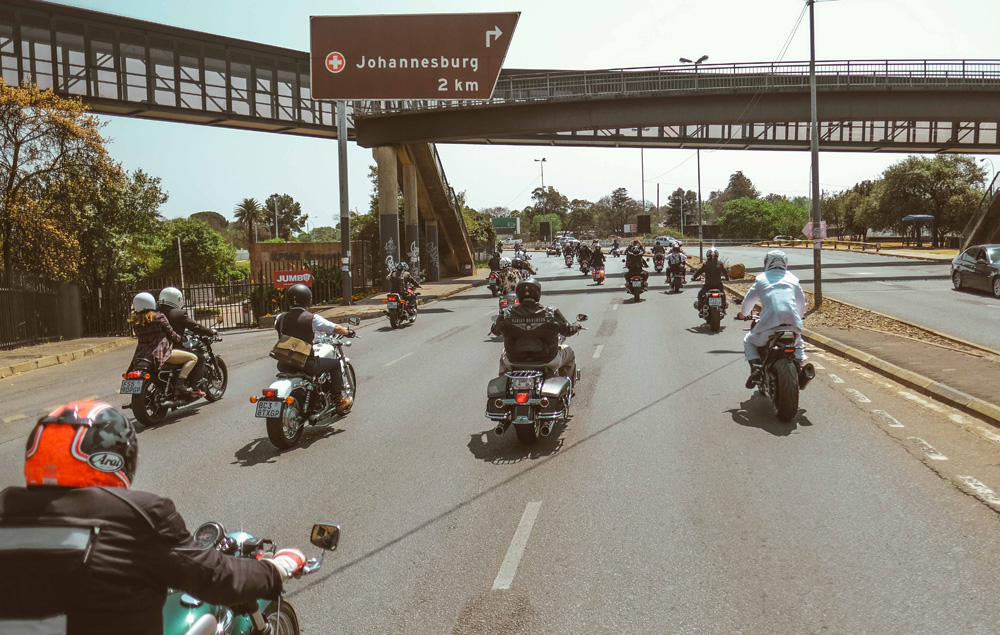
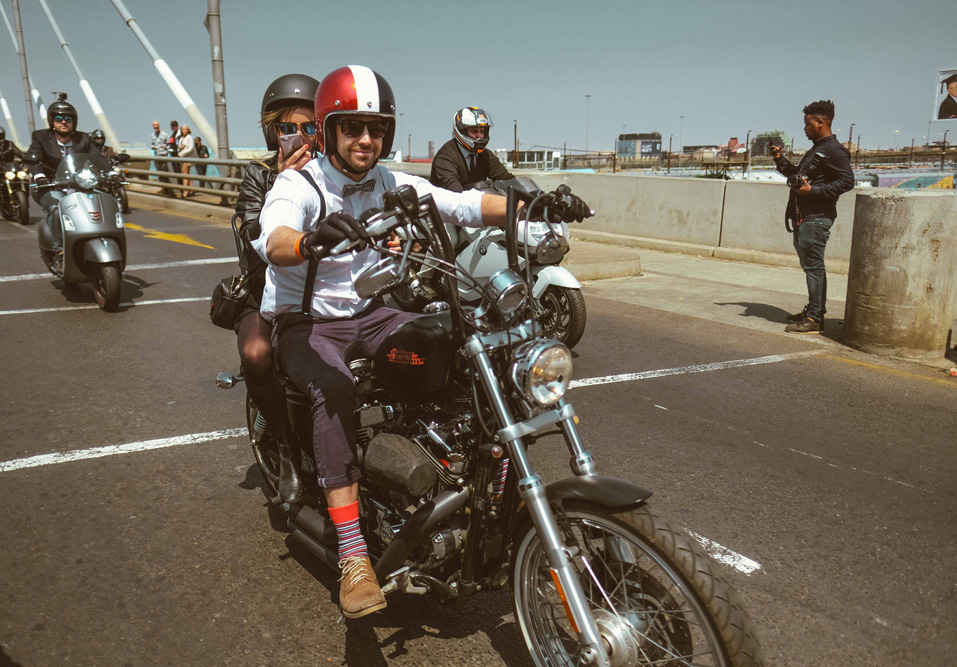
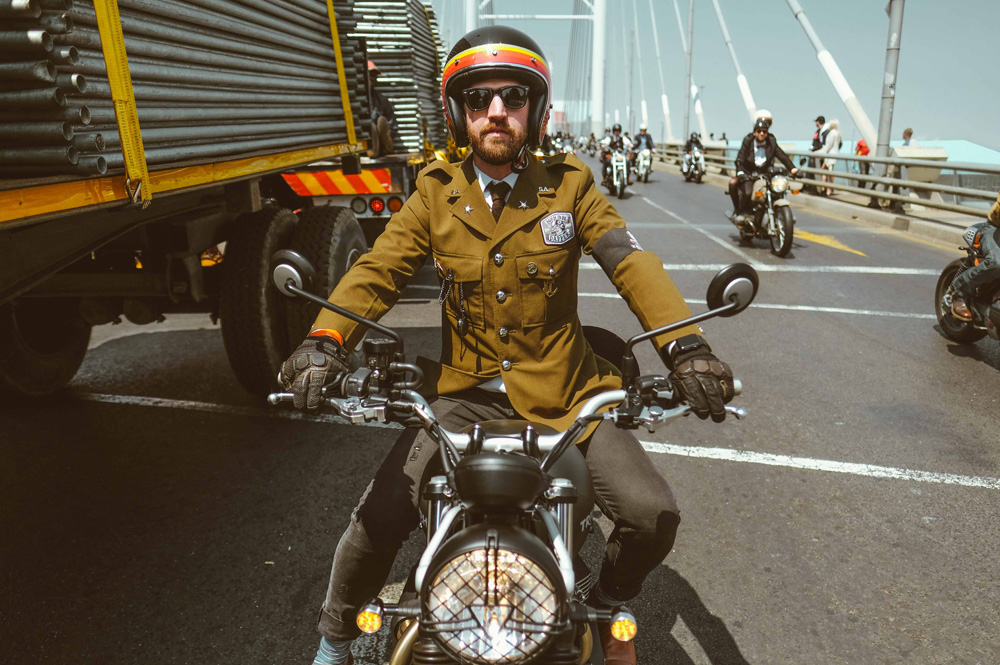

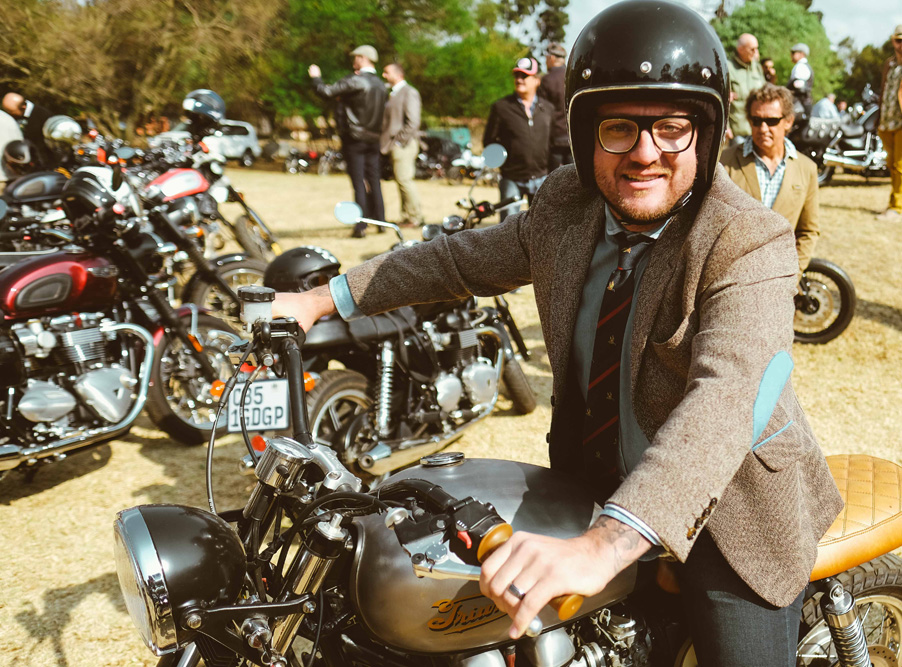
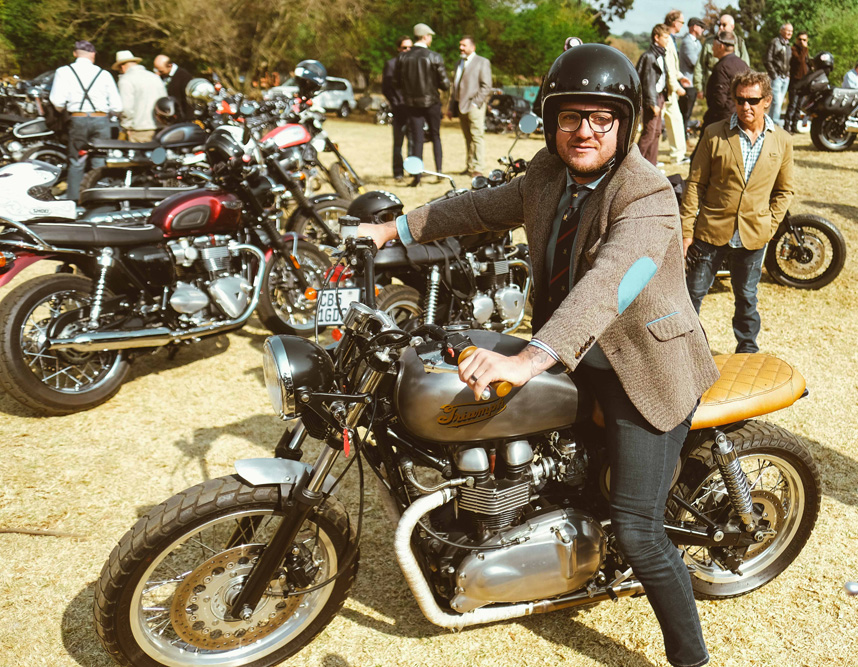
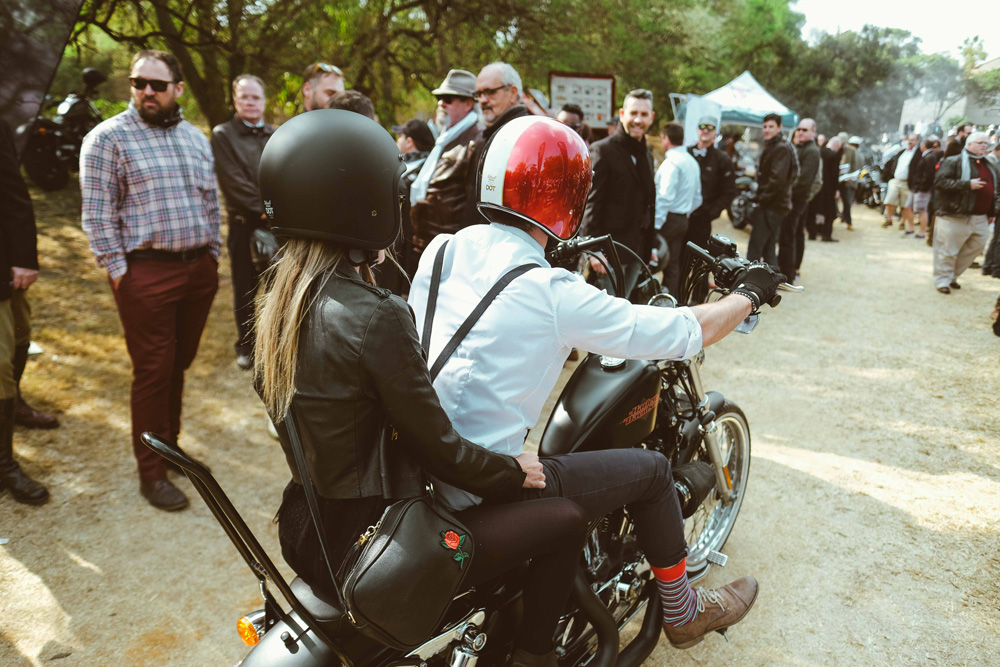
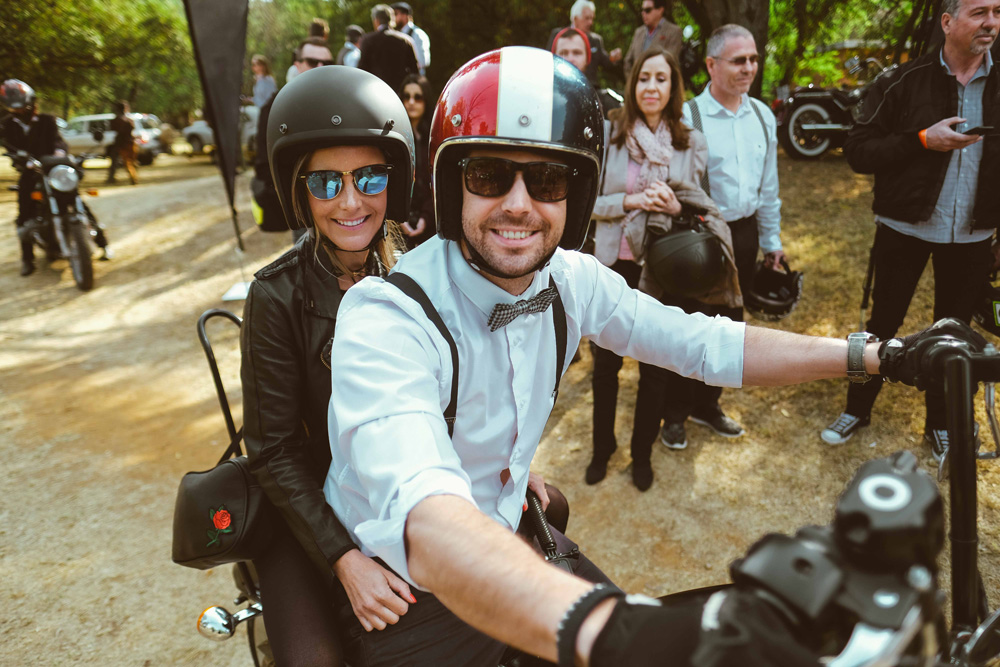
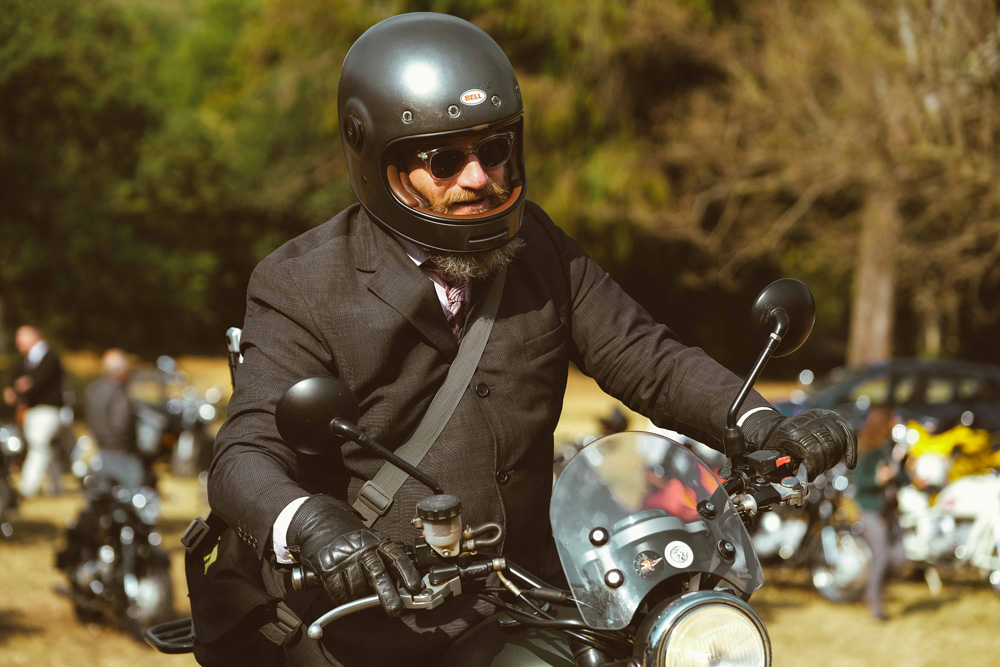
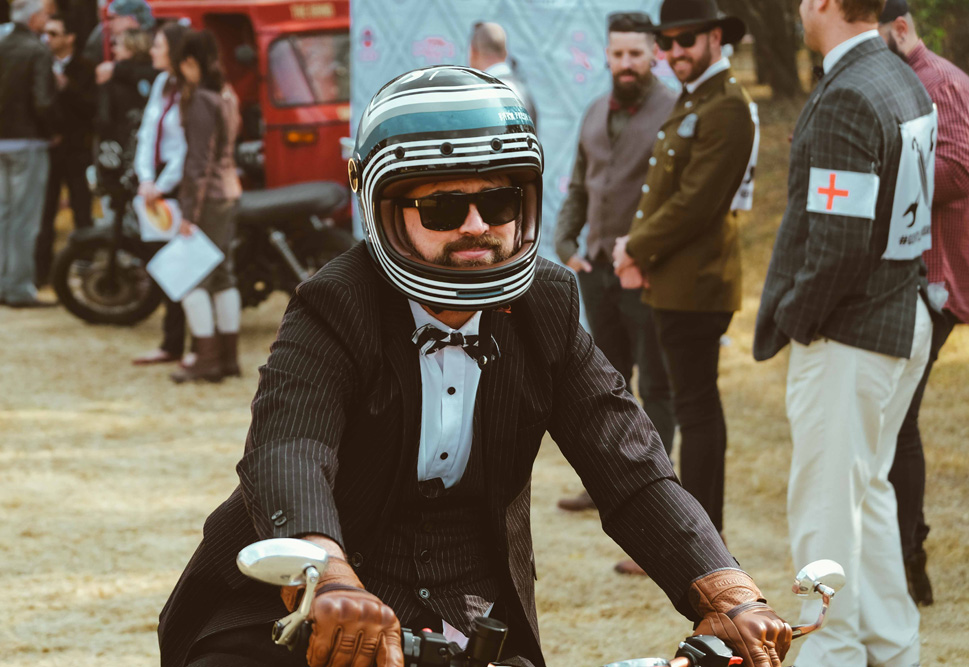
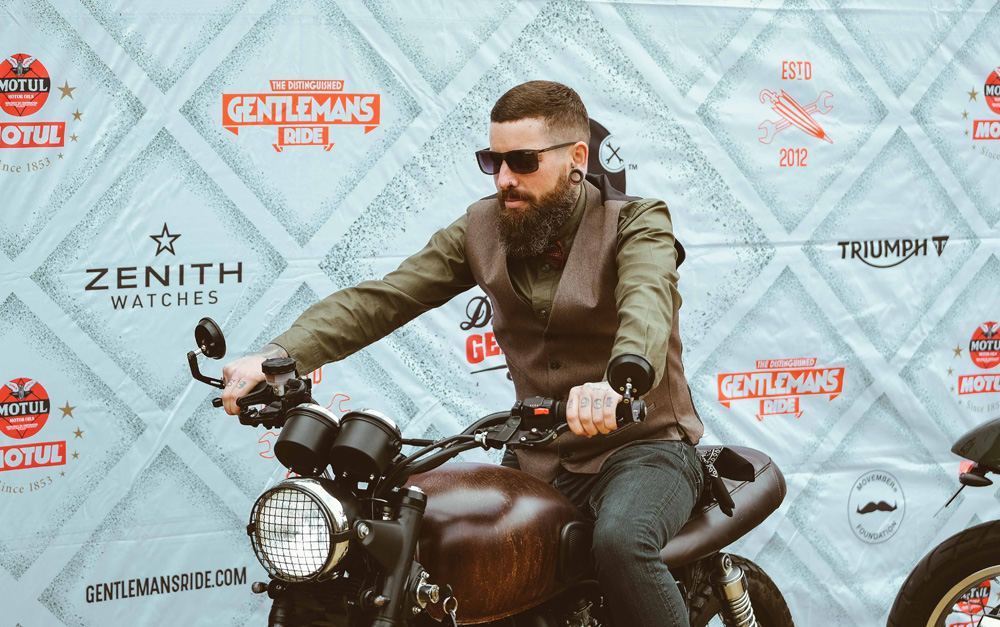
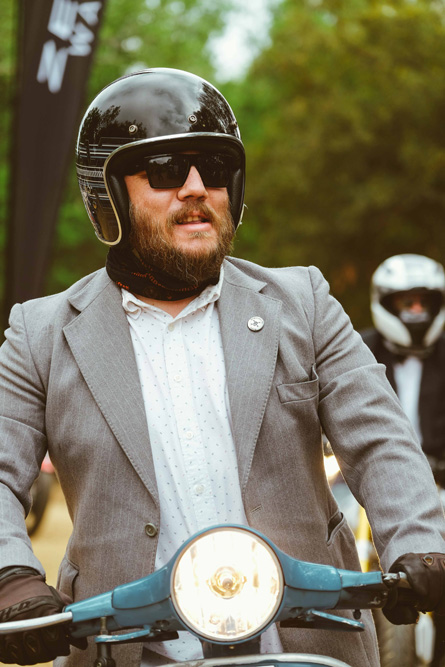
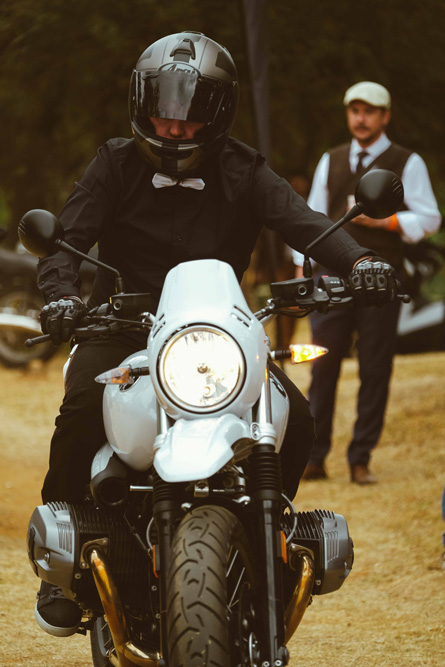
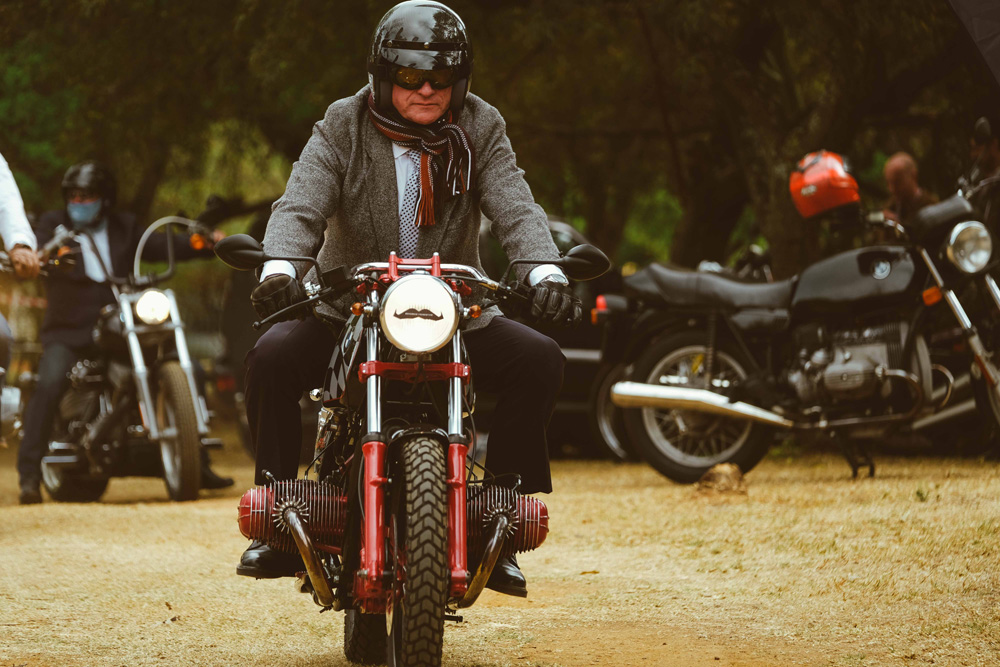
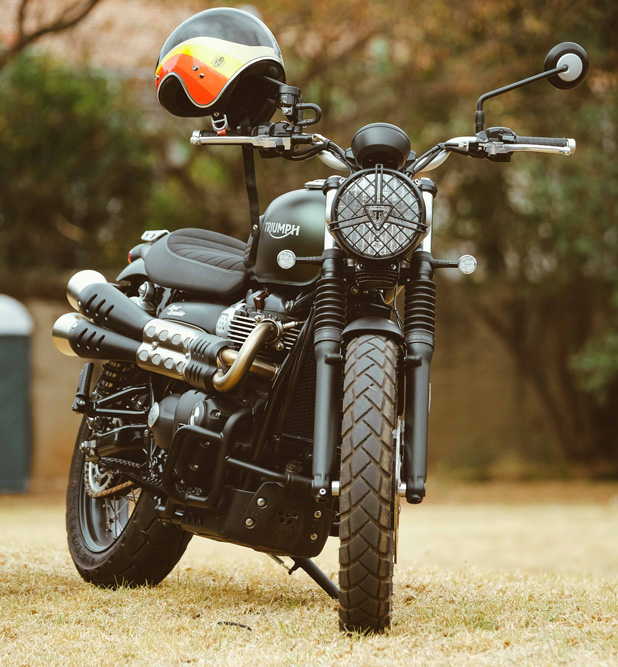

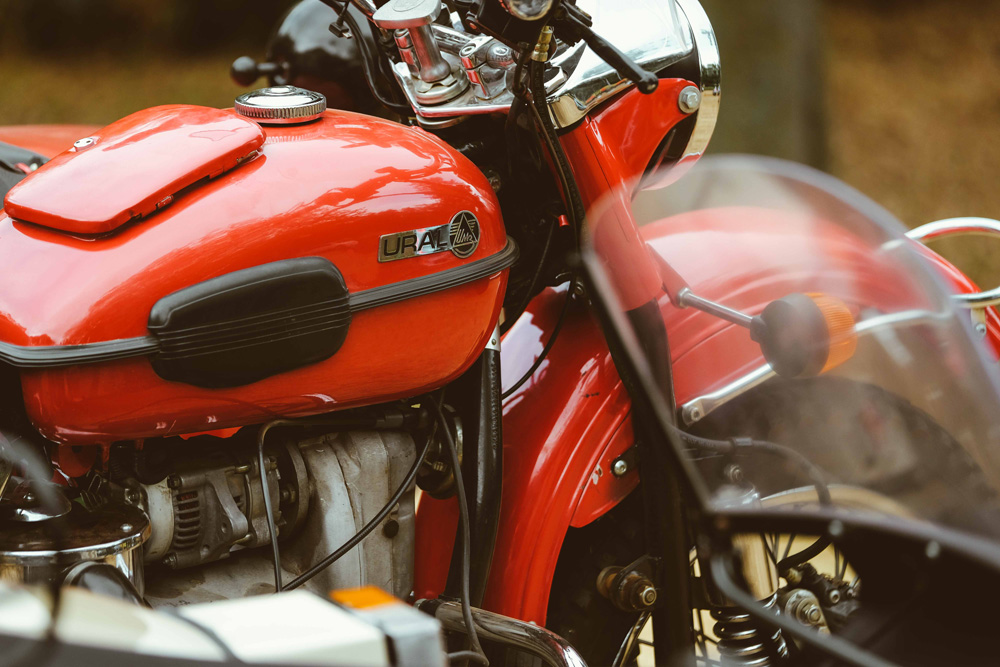
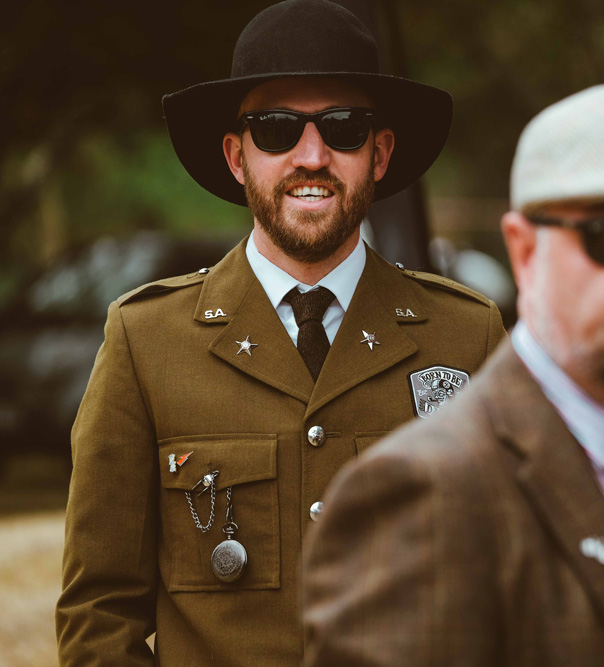
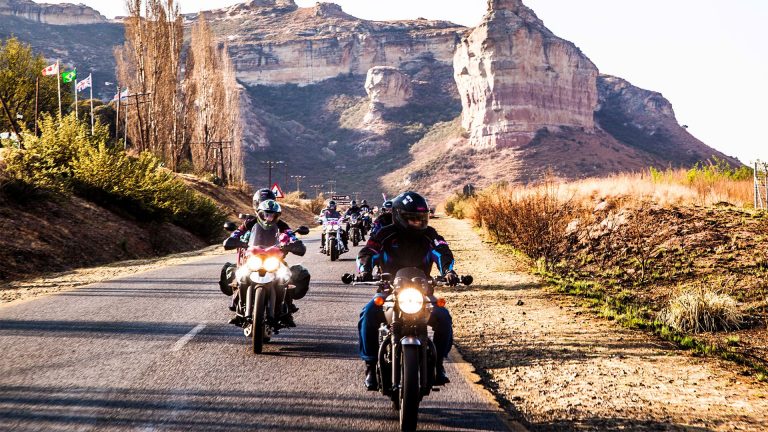
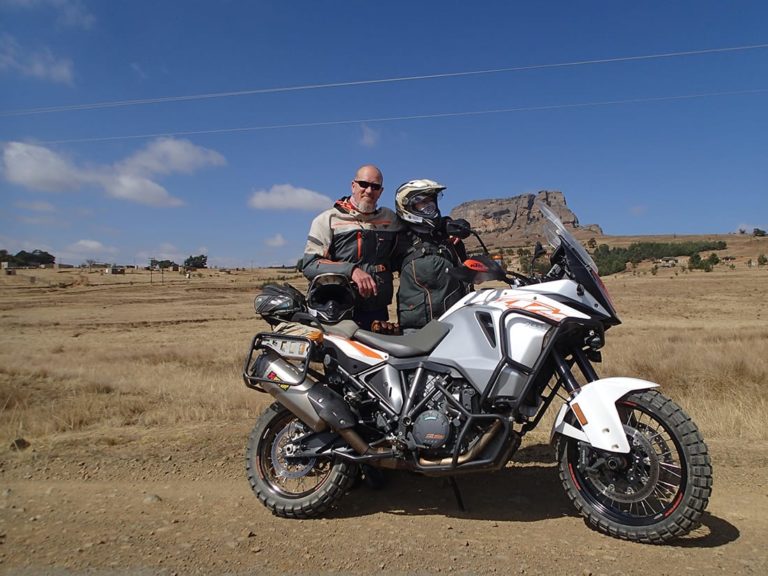
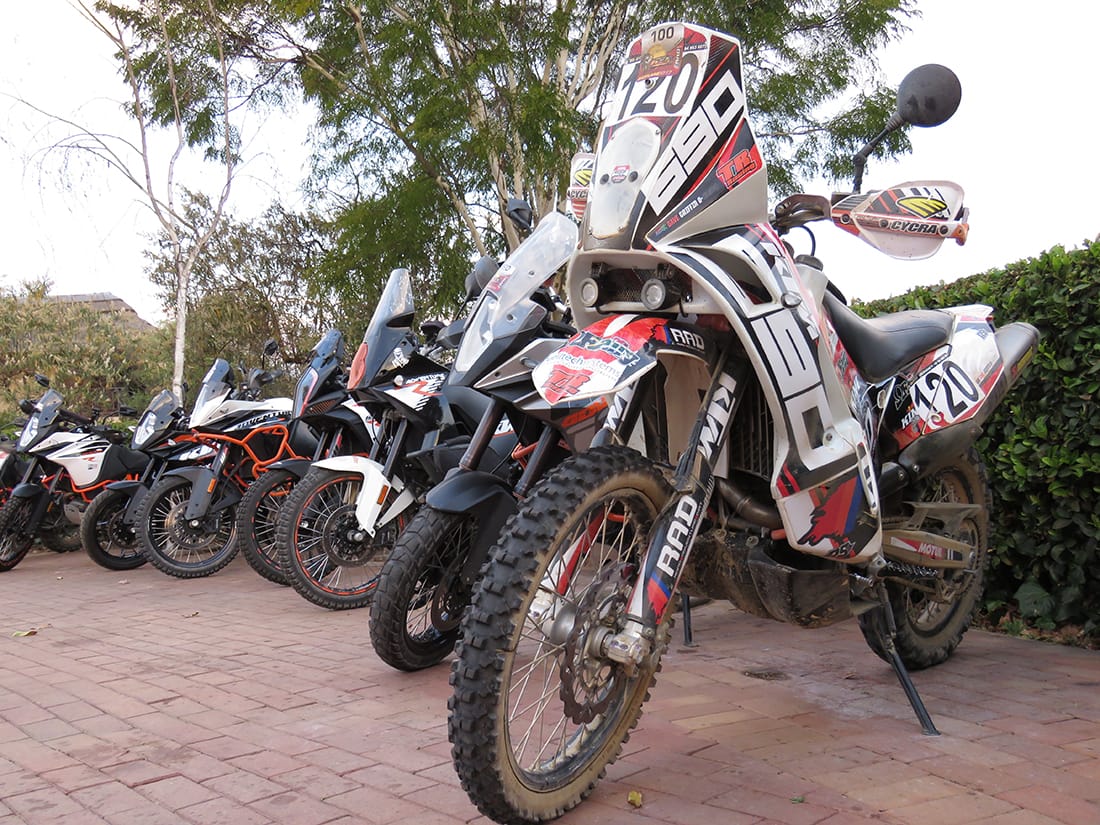 I rode to the event from Gauteng on a 1290 Adventure R. As we now know, the newly crowned Pirelli Bike of the Year for 2017. Magnificent it is too. Tearing, touring or smashing the dirt, it conquers all with consummate ease and ability. I rode this bike on the first days green route with off road mode engaged and all electronics off. Sure footed and well suspended, the 1290 R was a treat.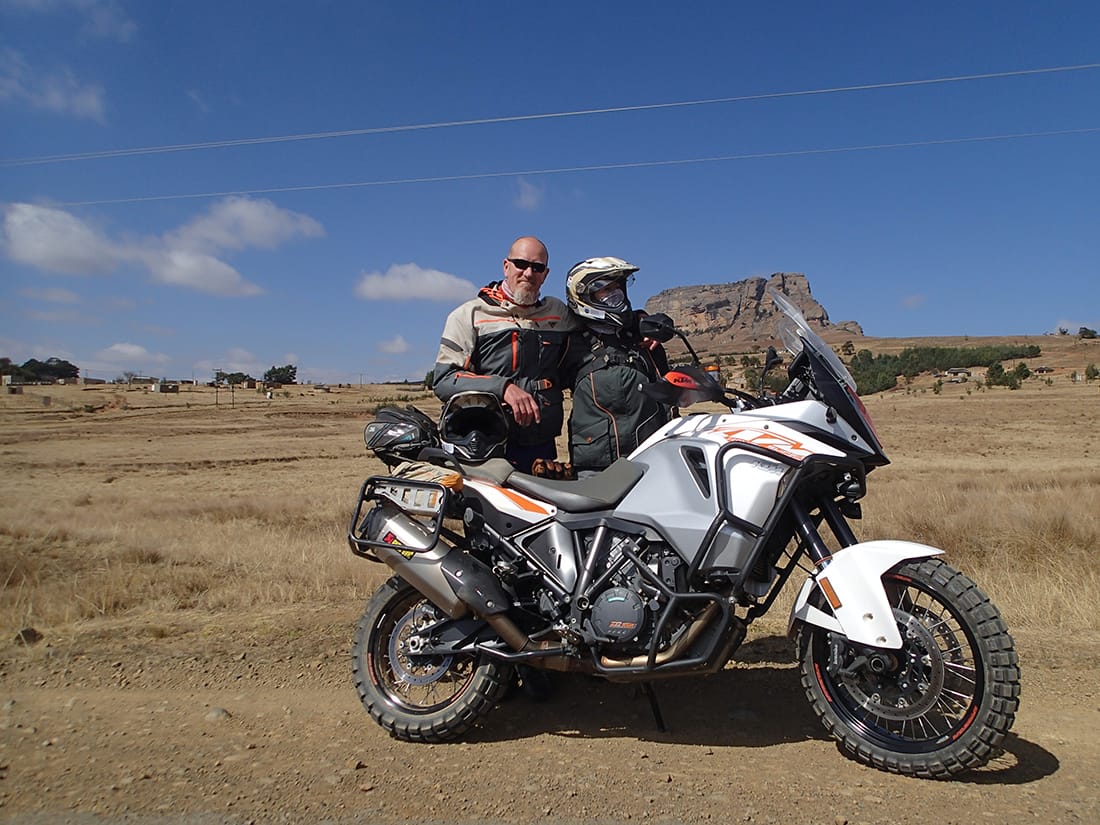
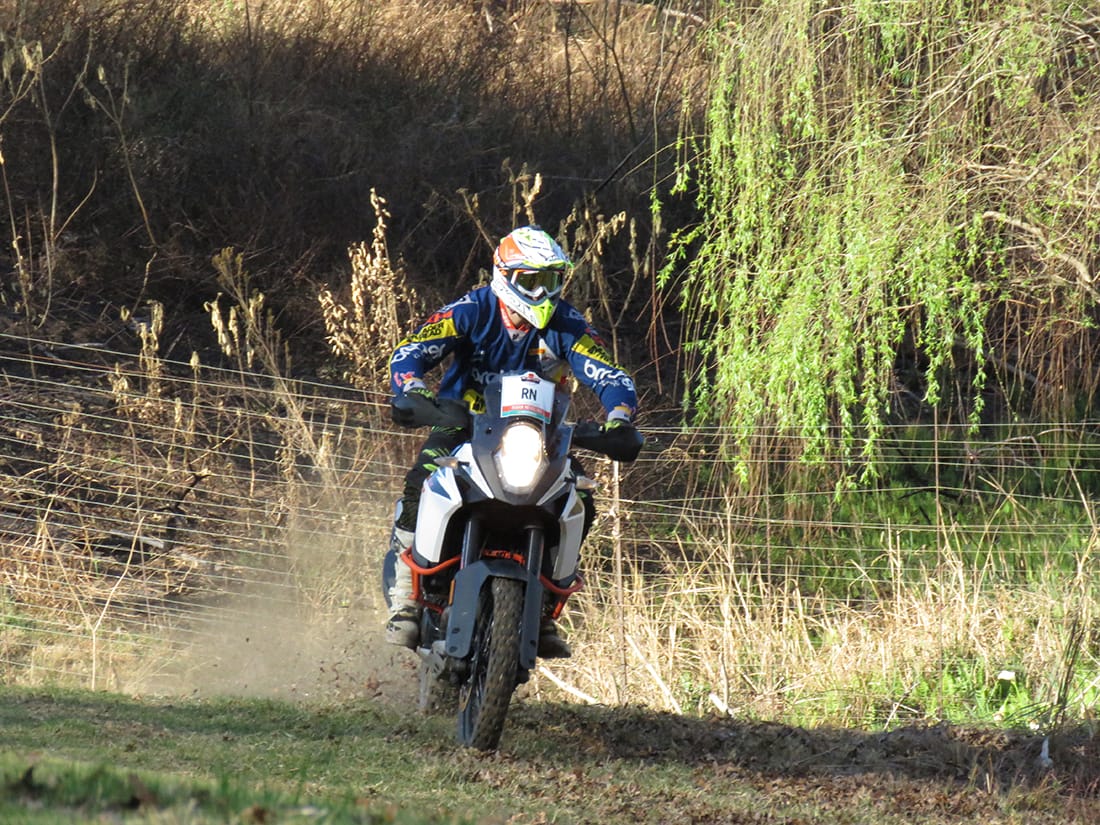
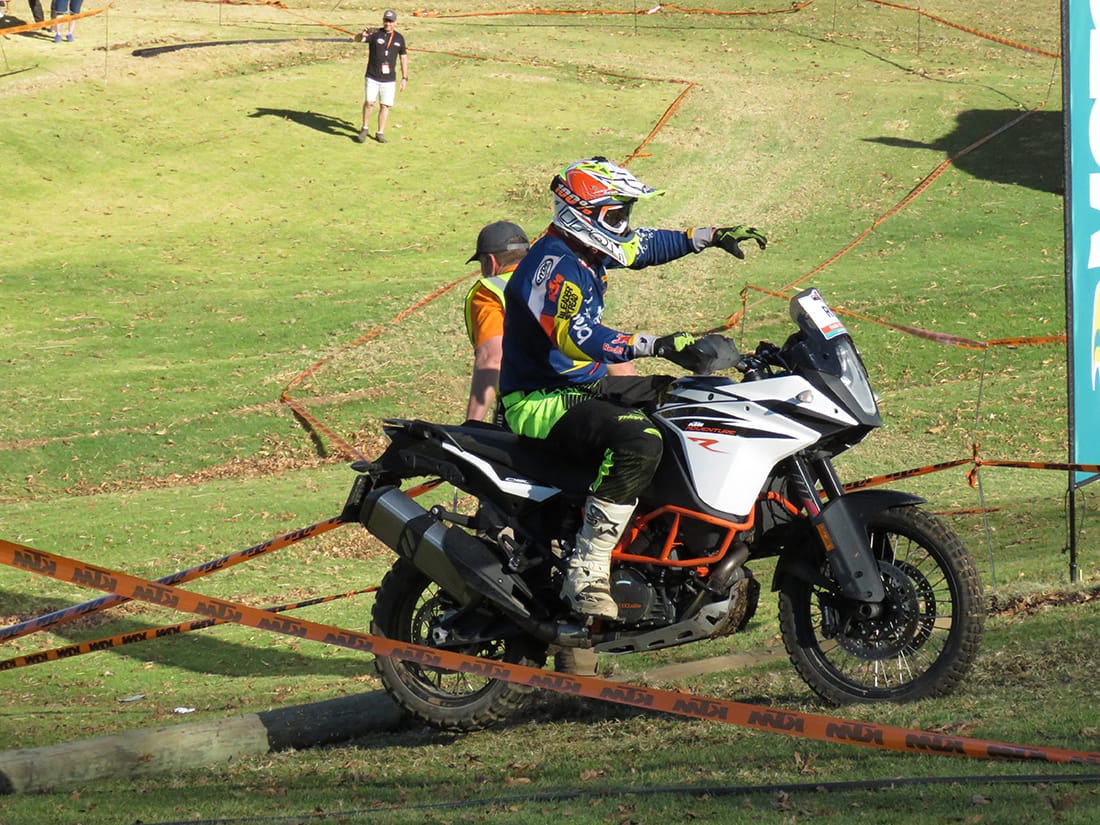
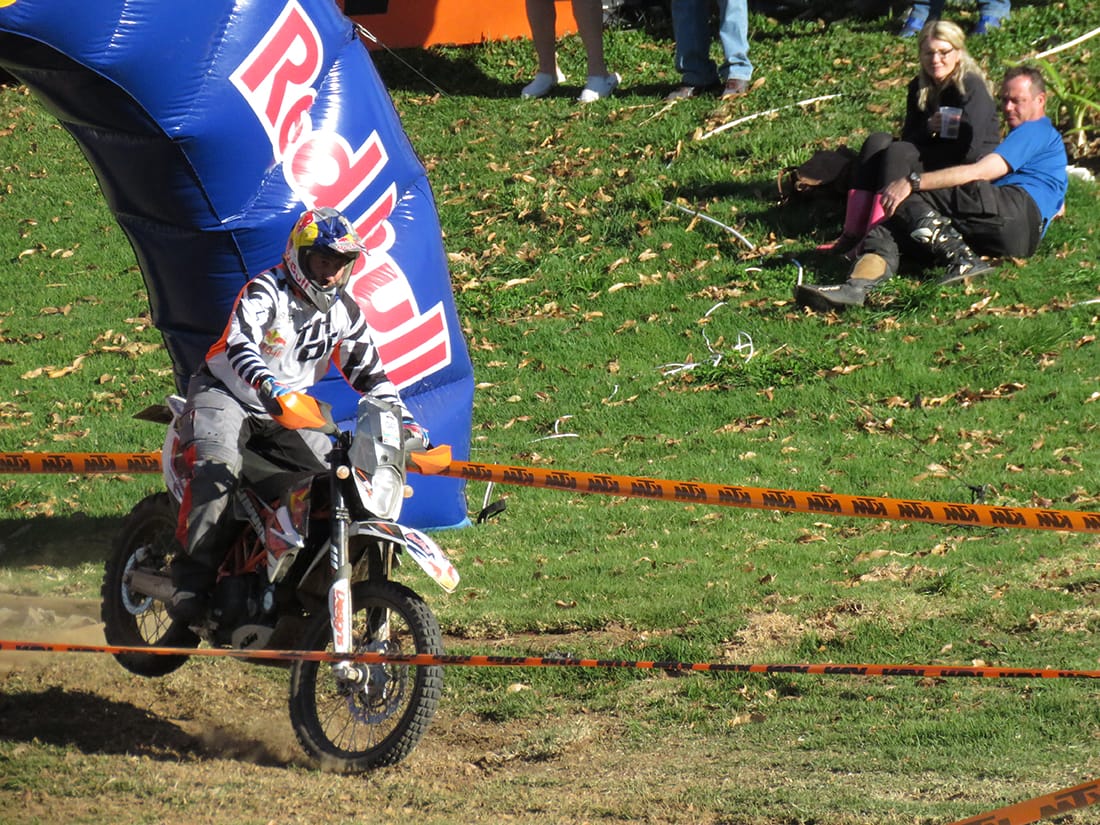
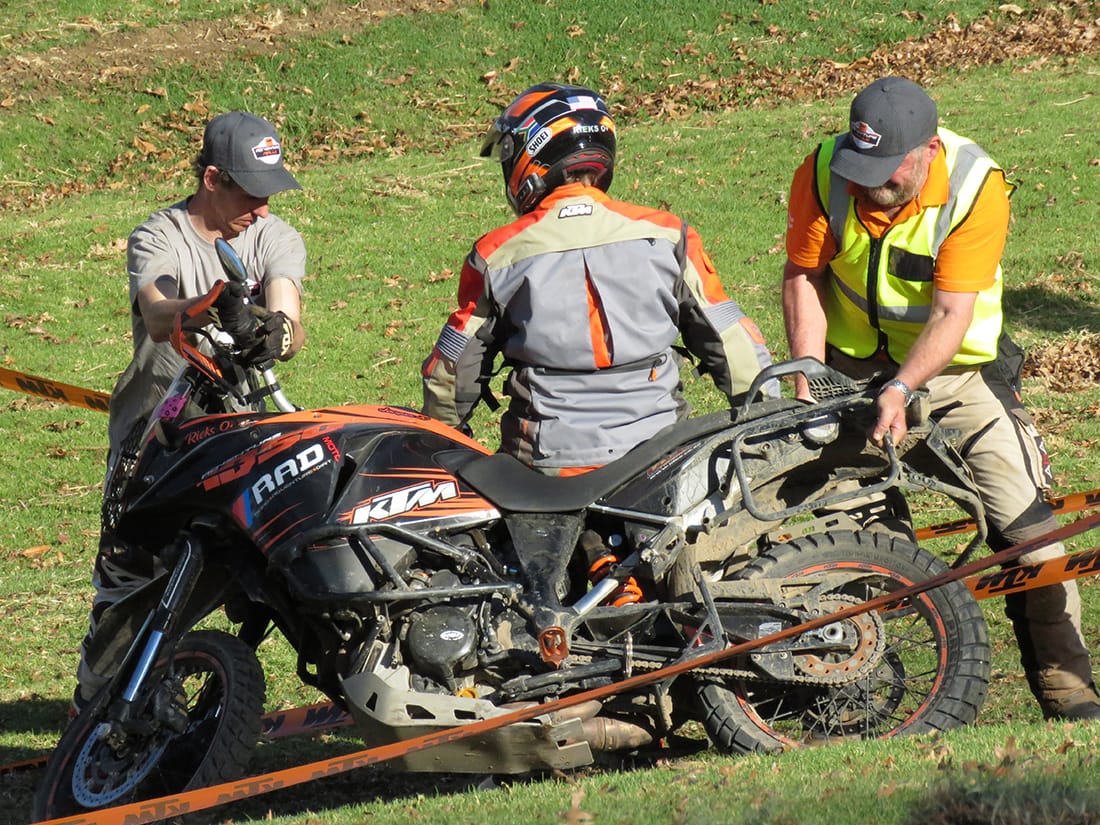
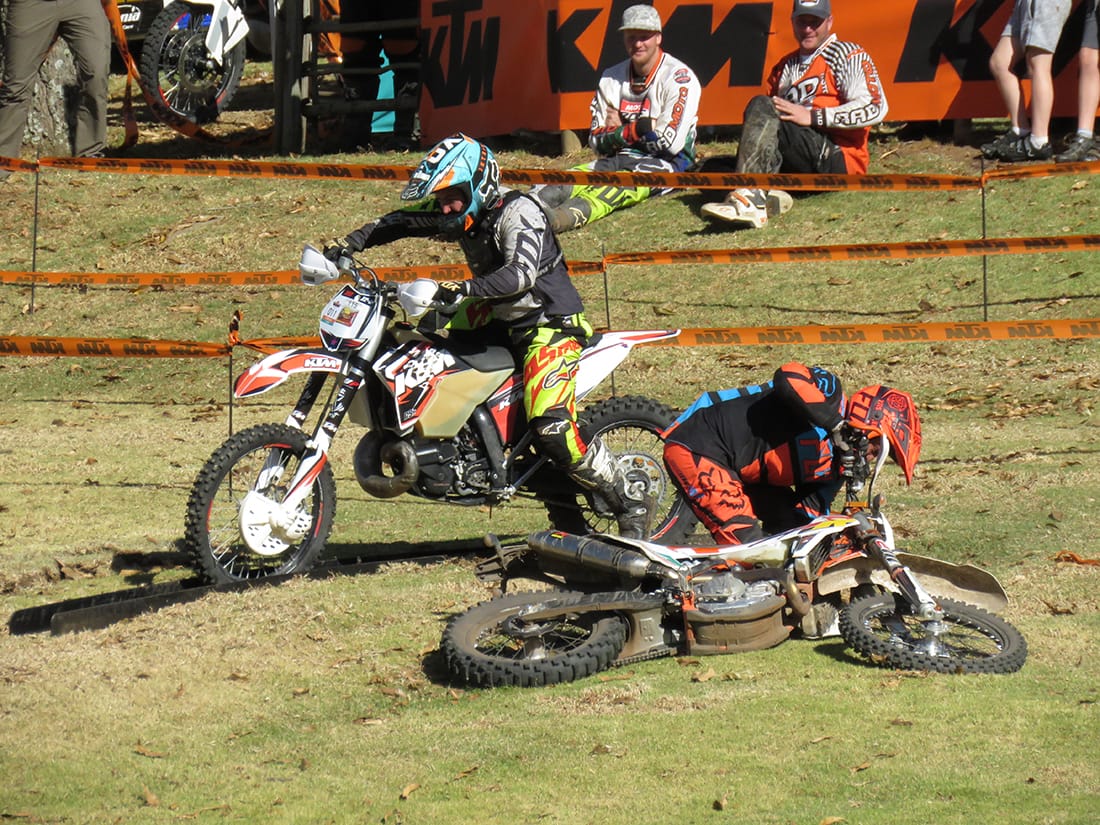
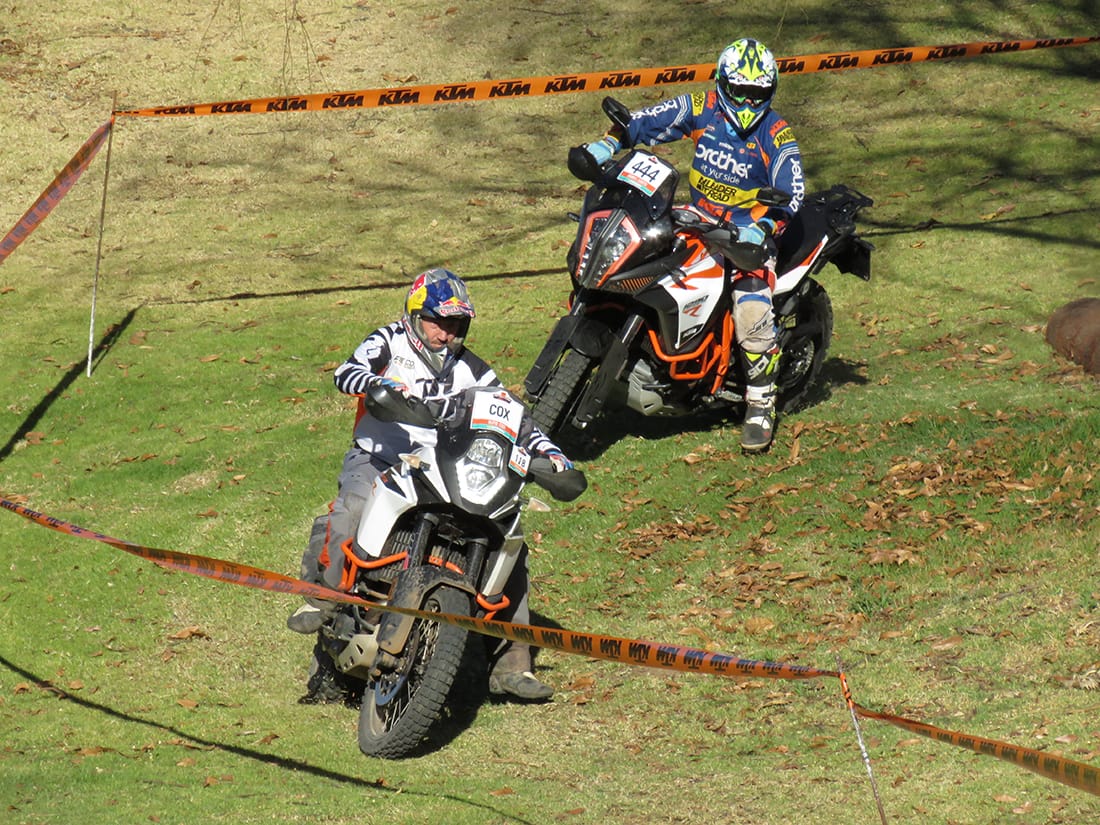 All looked over for Alfie when he capsized, only to have Riaan return the compliment. Up in a flash, Riaan had it in the bag only to lay the bike down in the mud. Alfie sneaked past to take the win. “We always put our Dealers first”, was Riaans laughing retort.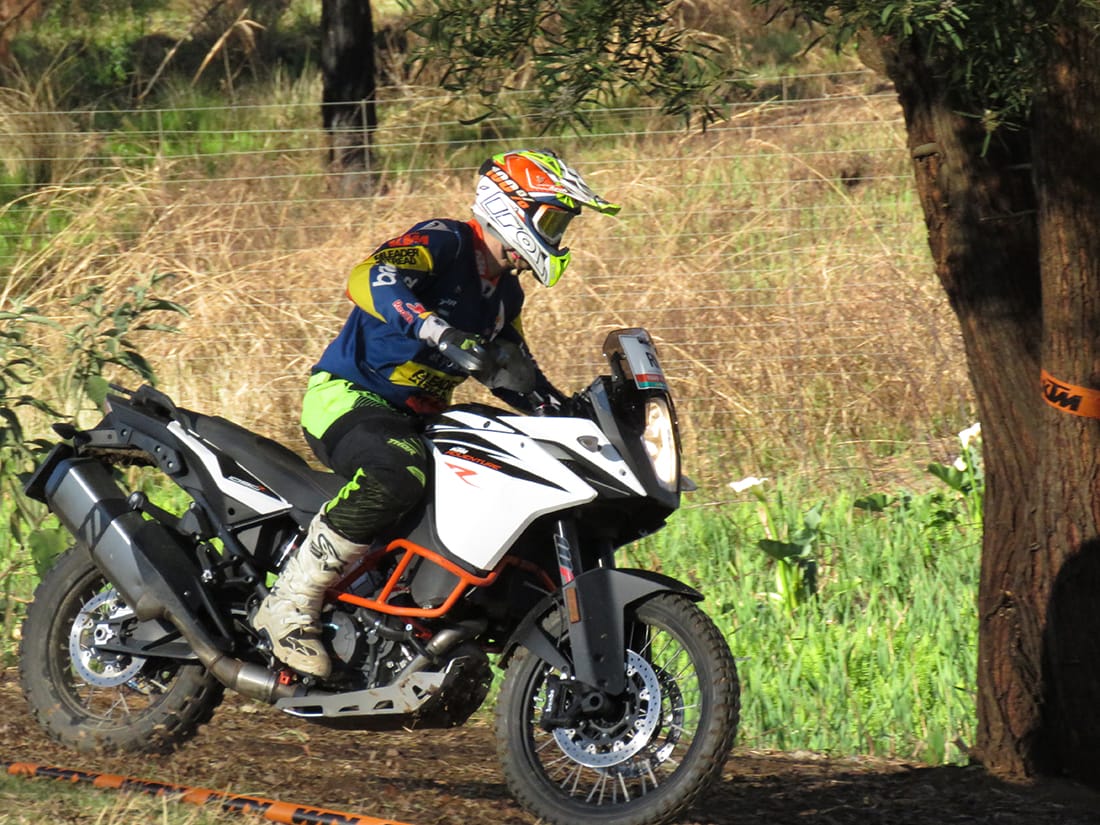
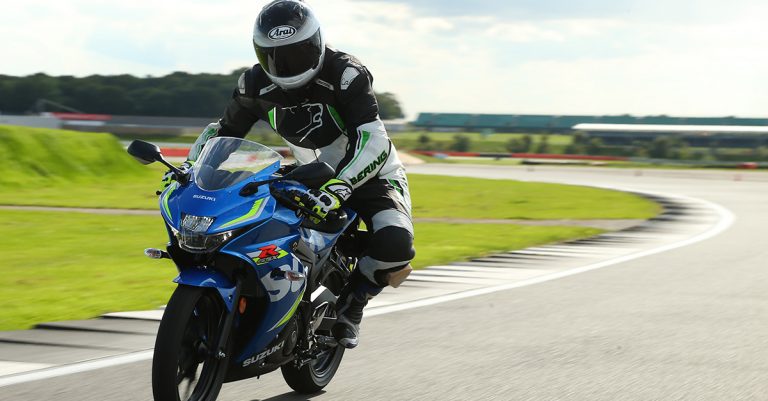
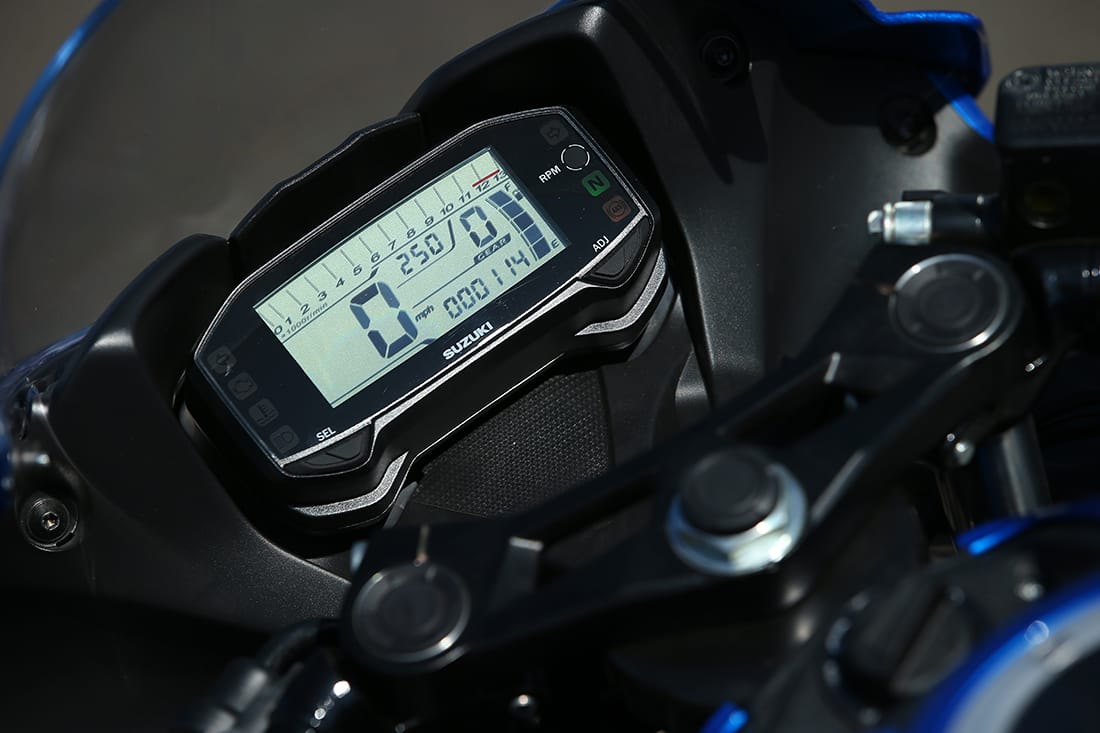
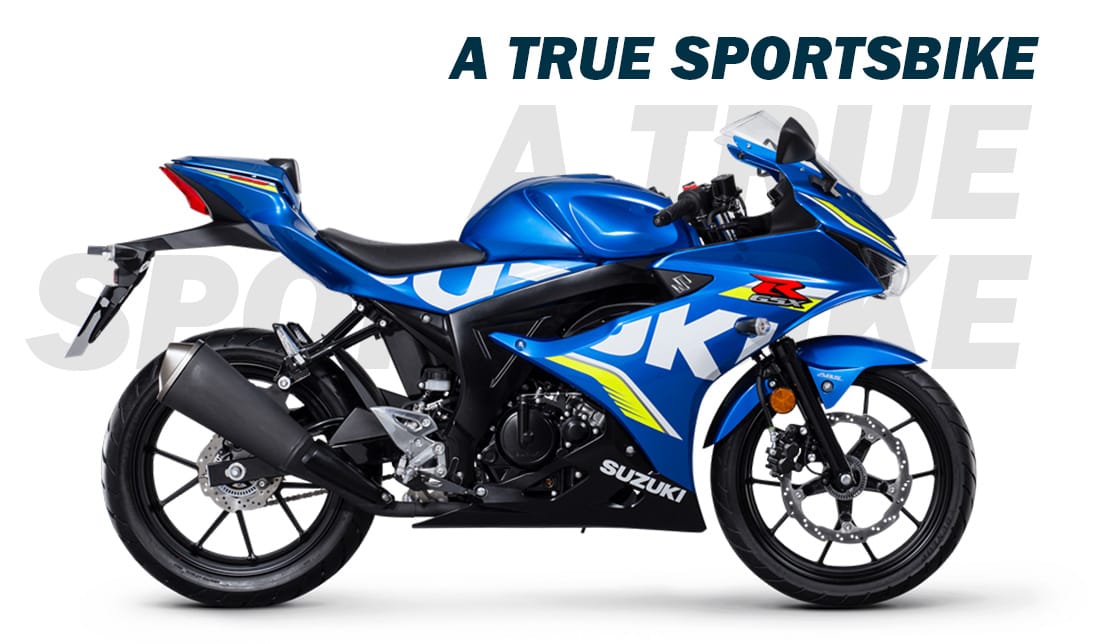
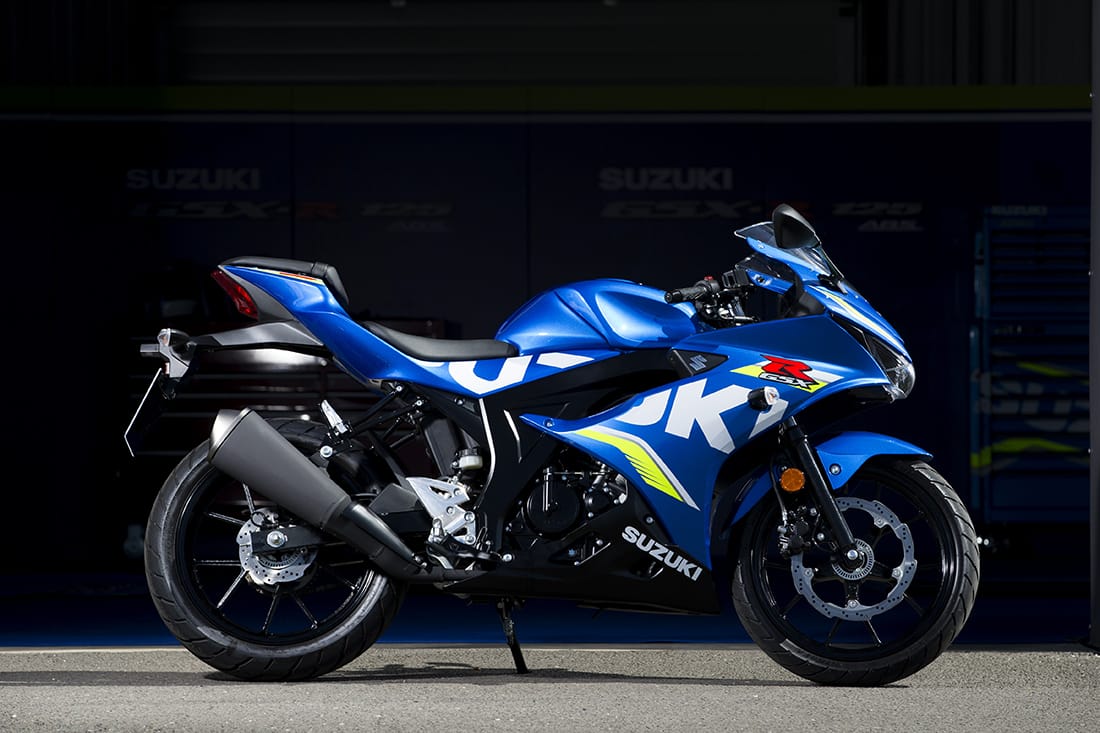
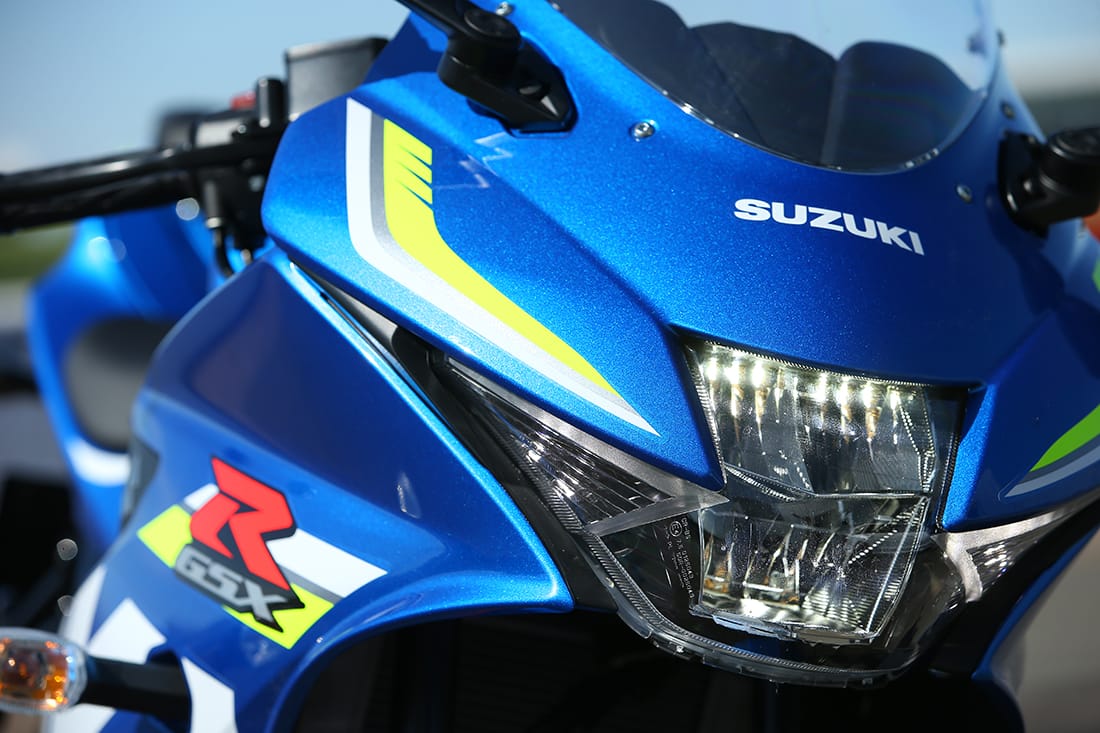
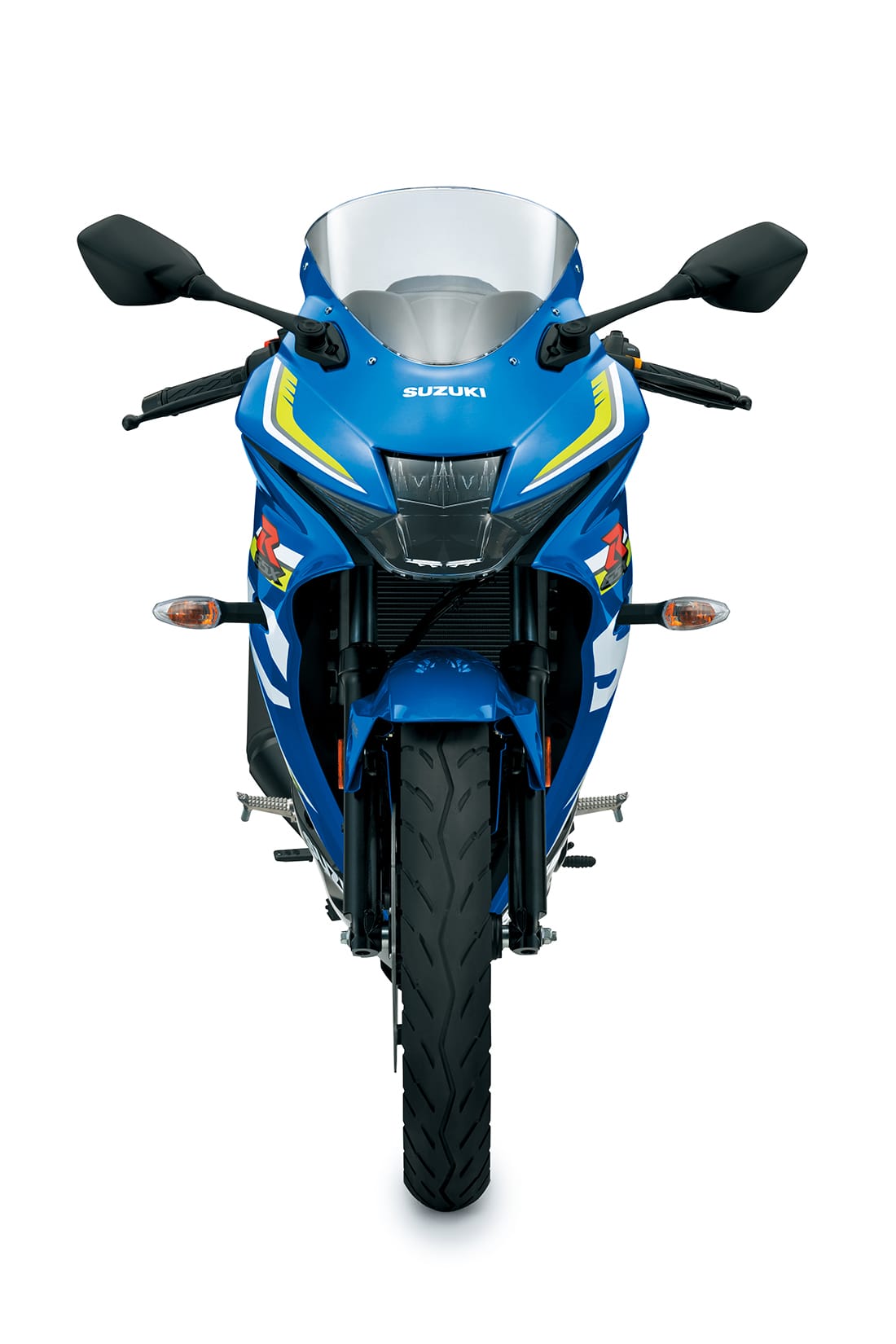
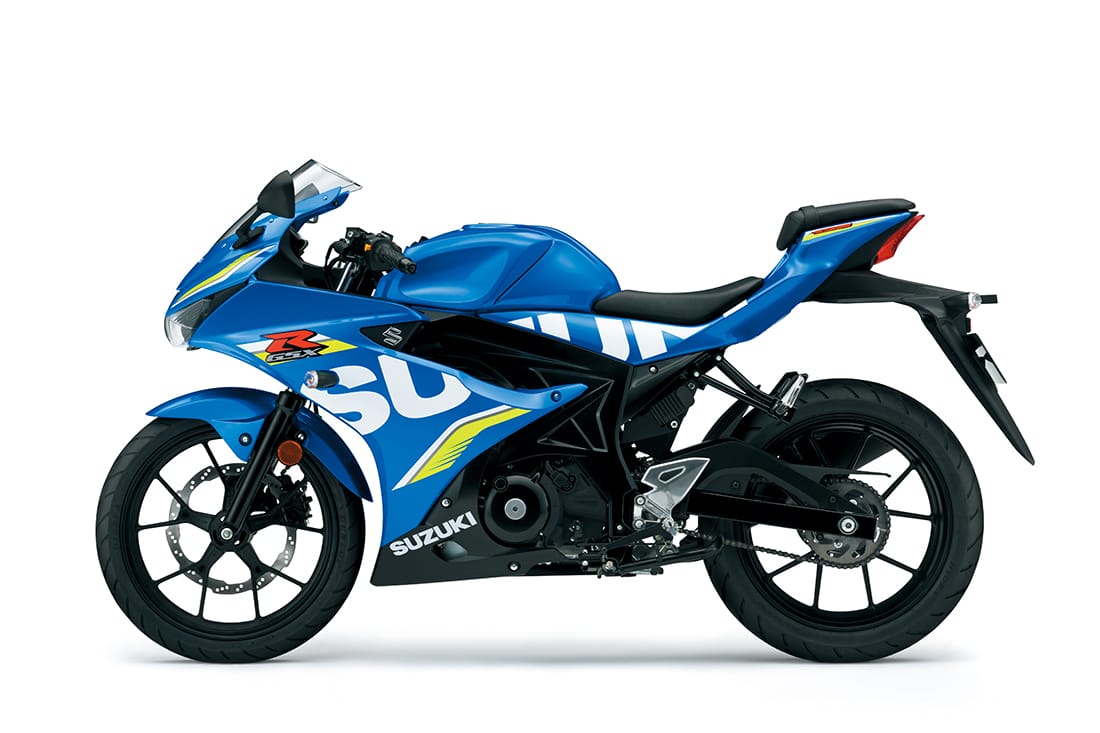
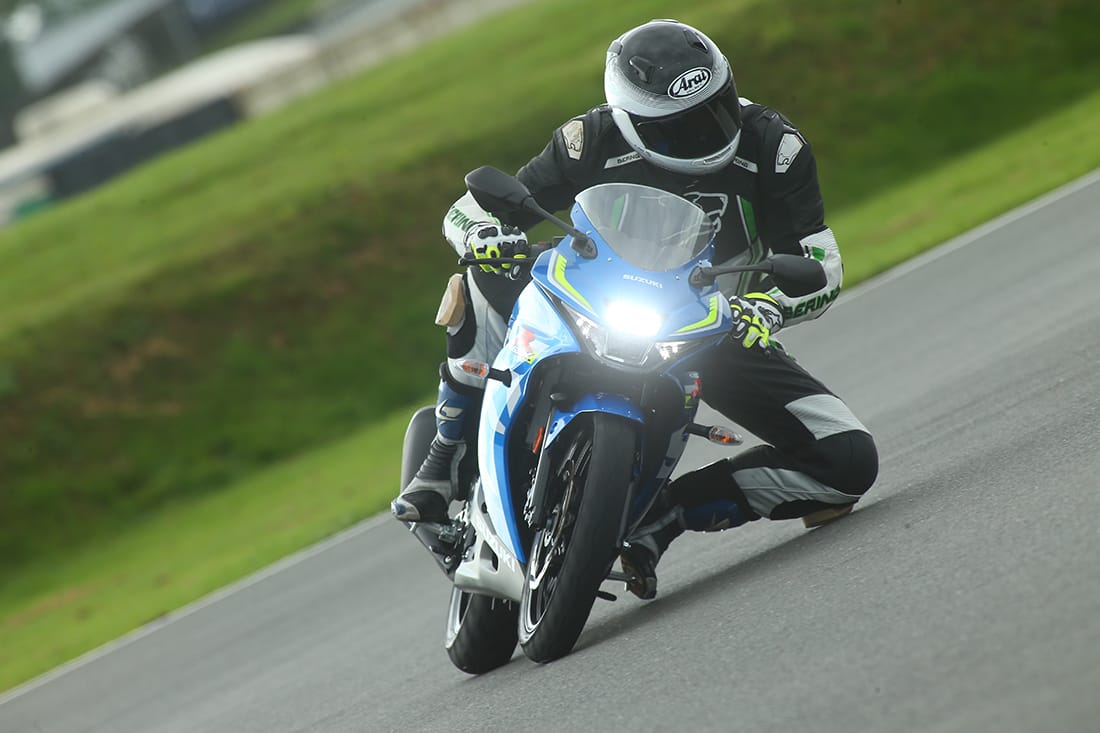
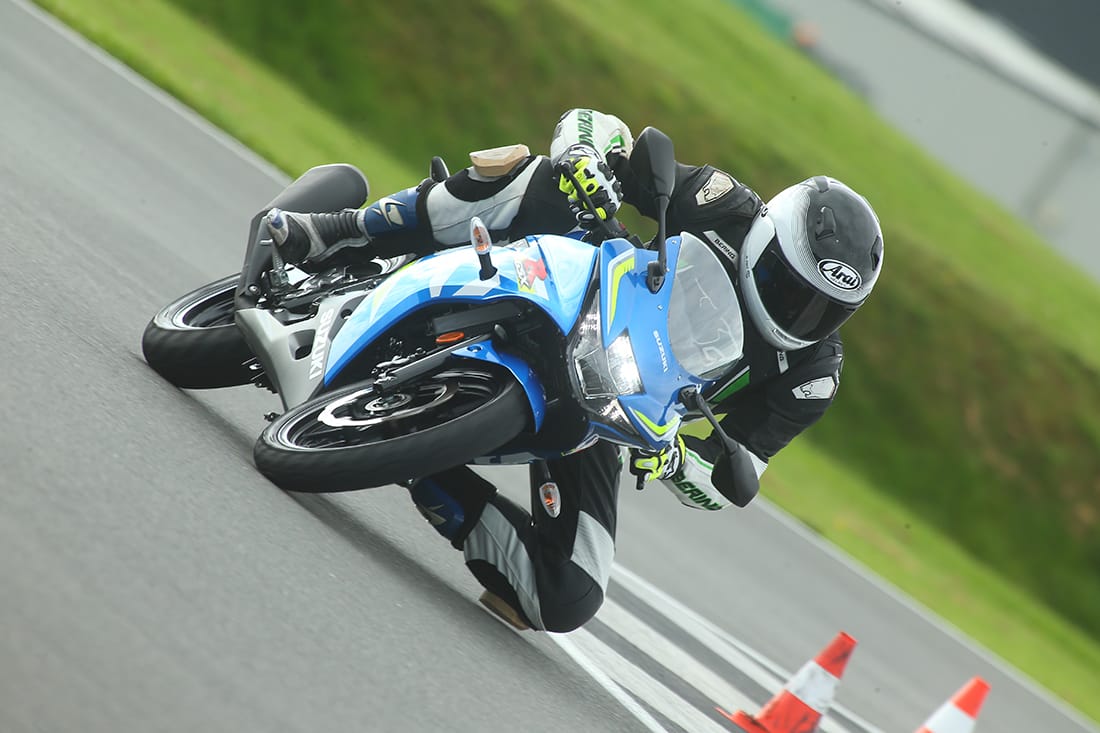
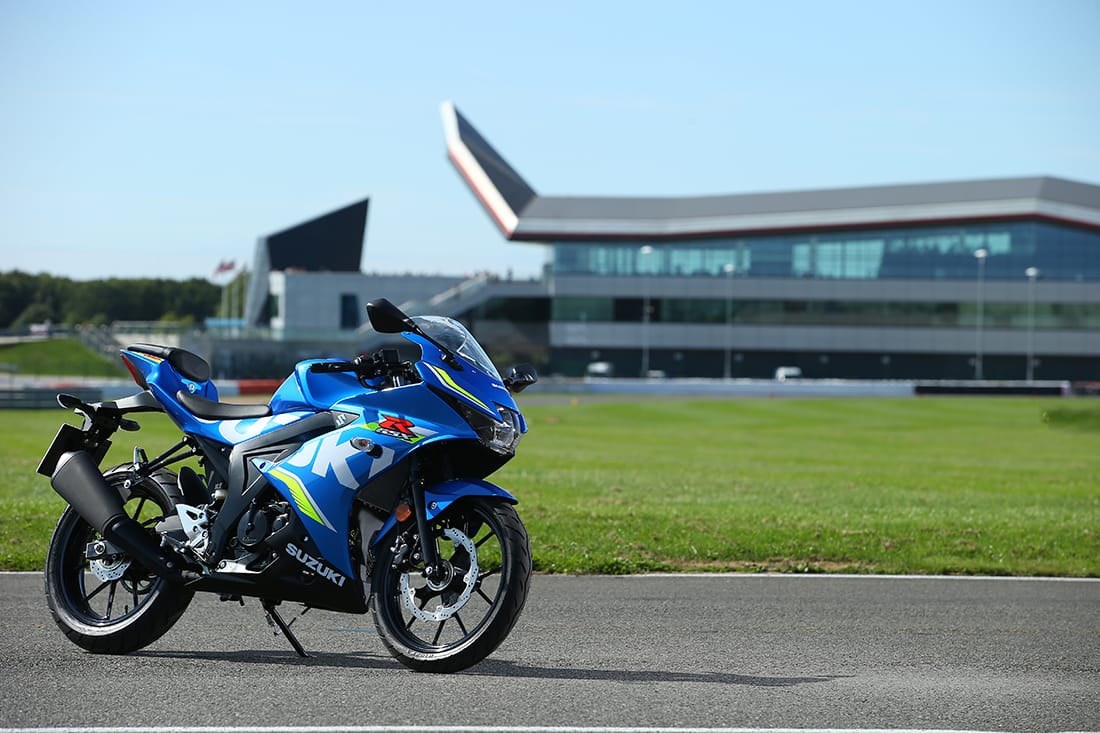
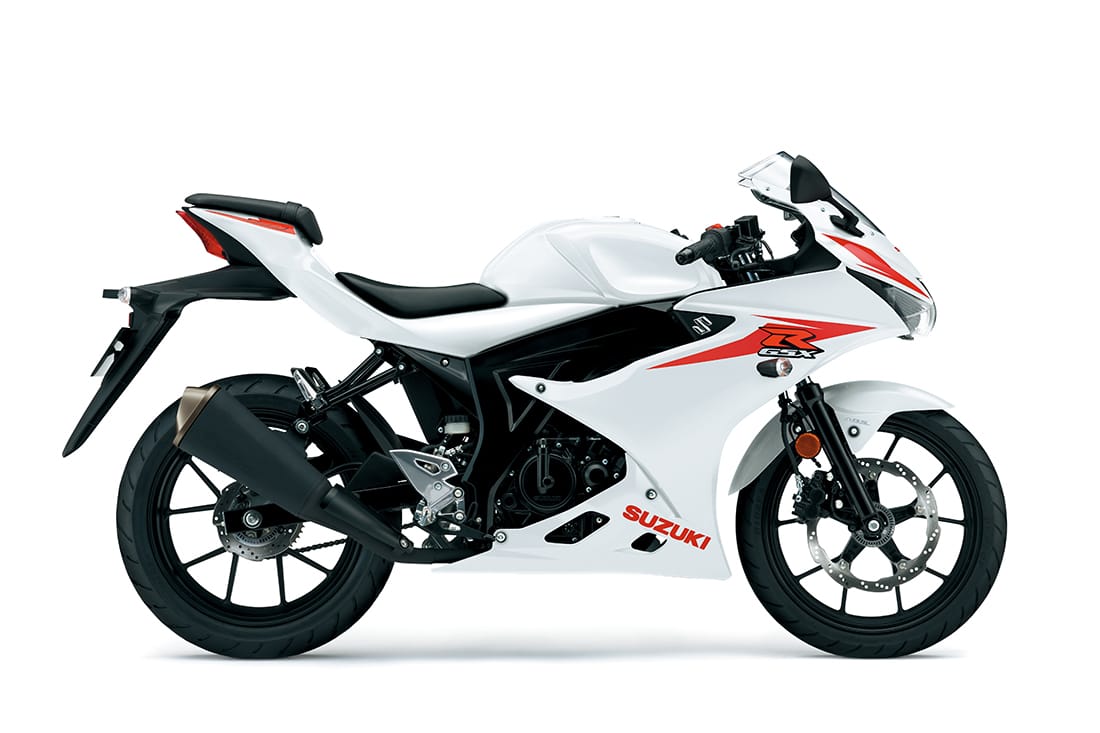
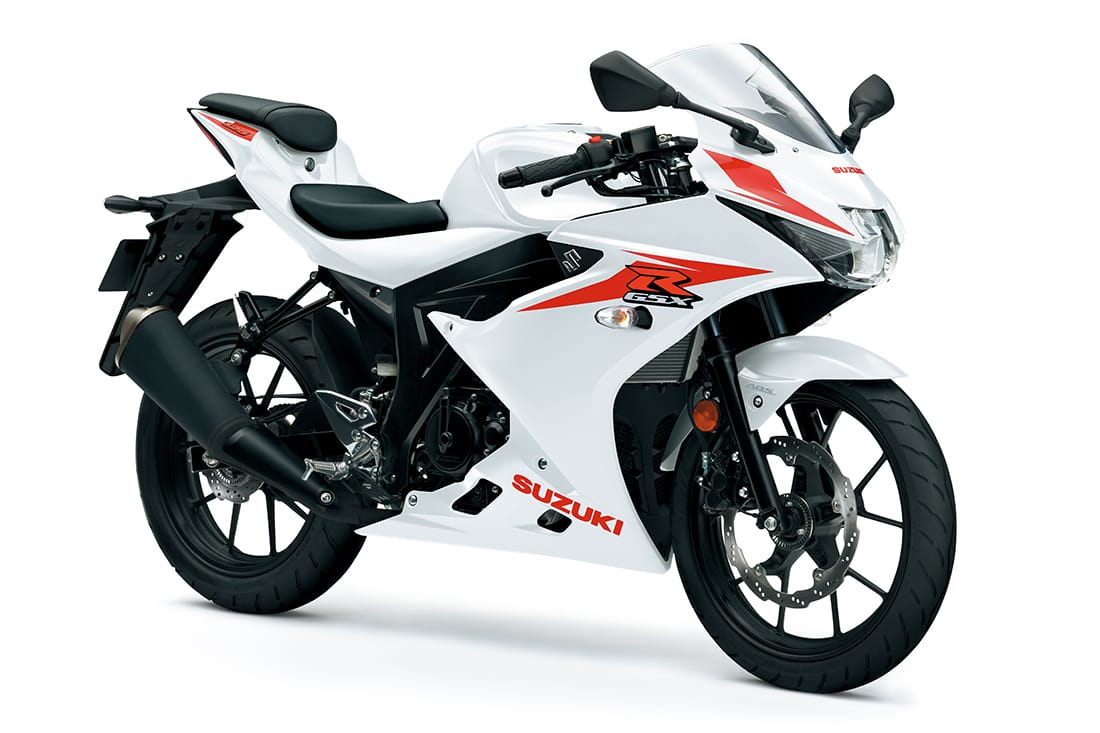
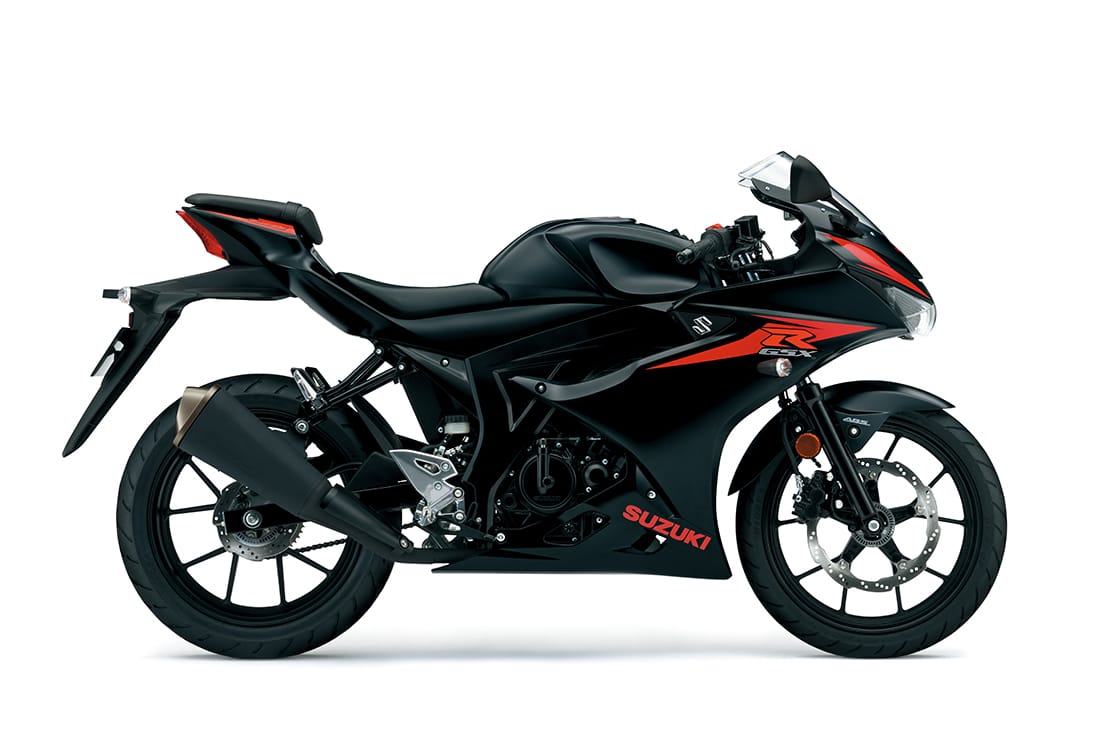
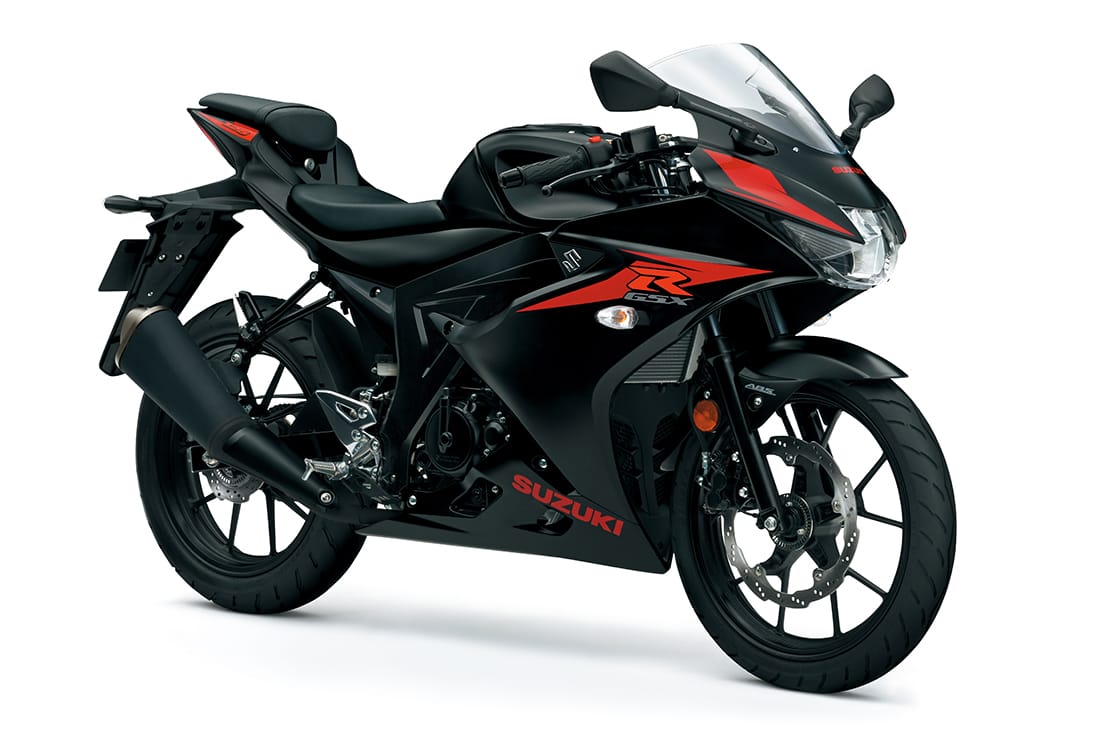
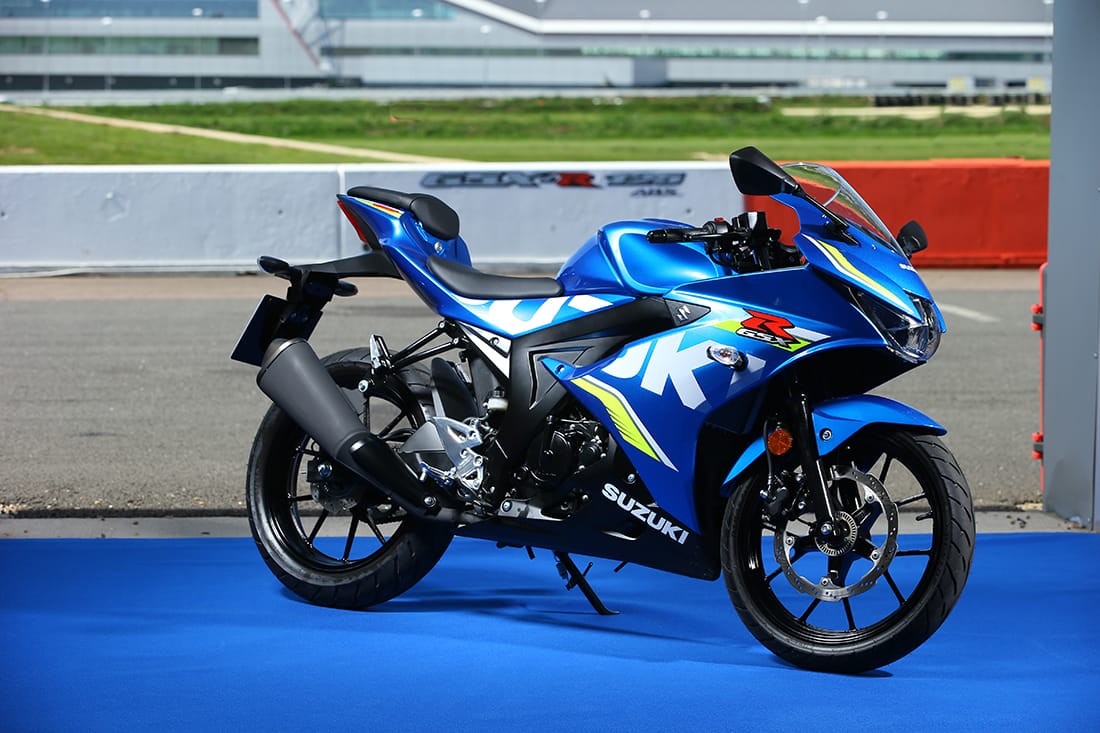 Suzuki also gave to the GSX-R 125 the kind of attention that is usually reserved for big capacity bikes. The instrument panel is fully digital and features nearly everything you would need: shift-light, gear position indicator, fuel gauge and fuel consumption, clock and oil change reminder (for track use, I would also like to have seen a water temperature indicator). Large and easy to read, that instrument panel is nearly similar to the one fitted on bigger sibling GSX-R 1000.
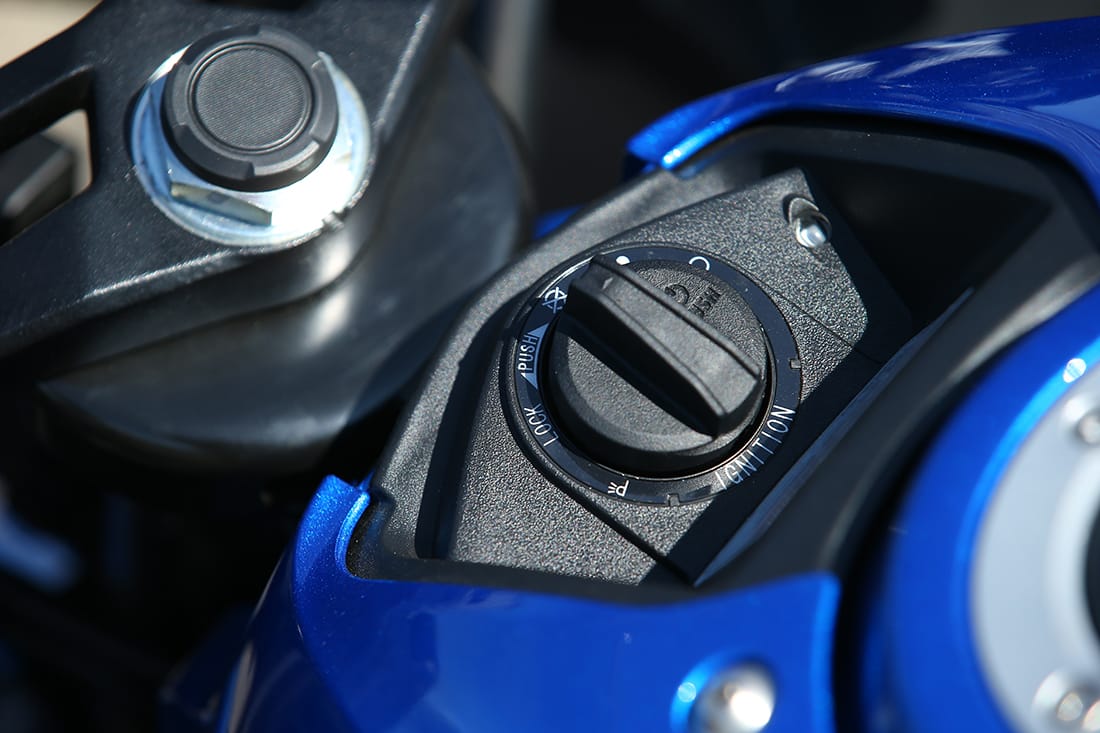
 That’s not all: like luxury BMW’s and Harley-Davidson’s, the GSX-R 125 has a keyless start. You just need to keep a remote device in your pocket and the bike can start. An easy start then, as the GSX-R is also fitted with the well-named Suzuki Easy Start System, with a one-push start button. The keyless feature is specific to the GSX-R 125 and is not fitted to the GSX-S 125. Suzuki launched this naked bike based on very similar technology at the same time (the two bikes are nearly the same, the naked has obviously no fairing and a 10 cm higher handlebar).
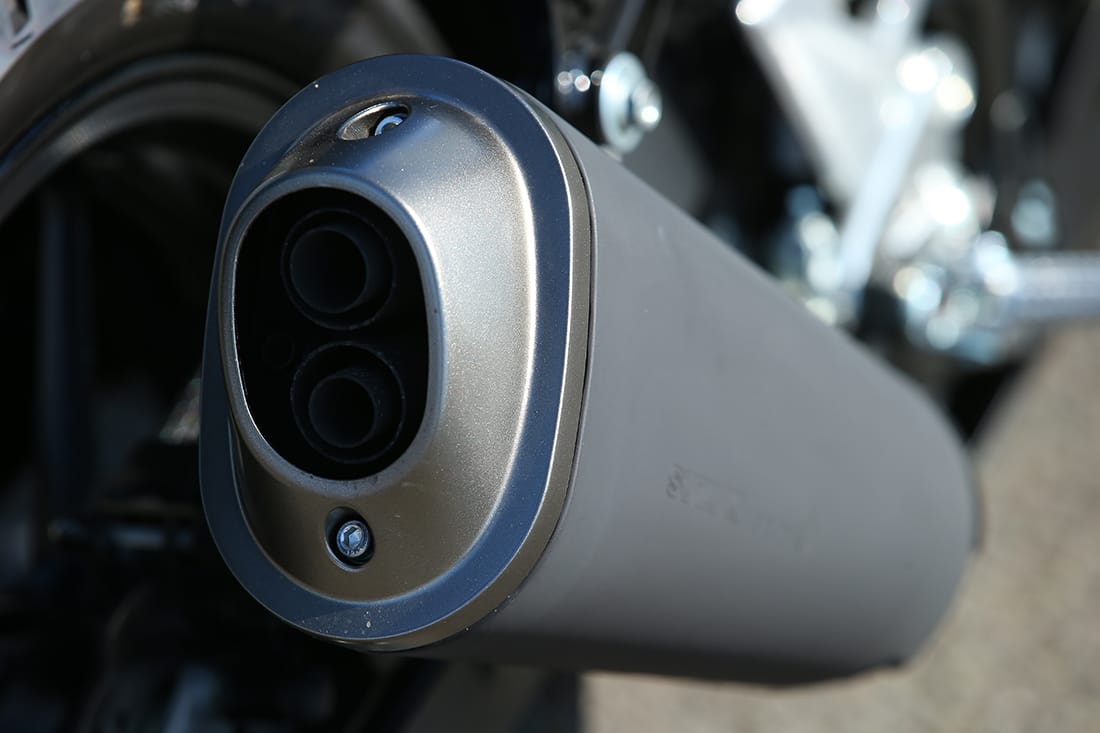
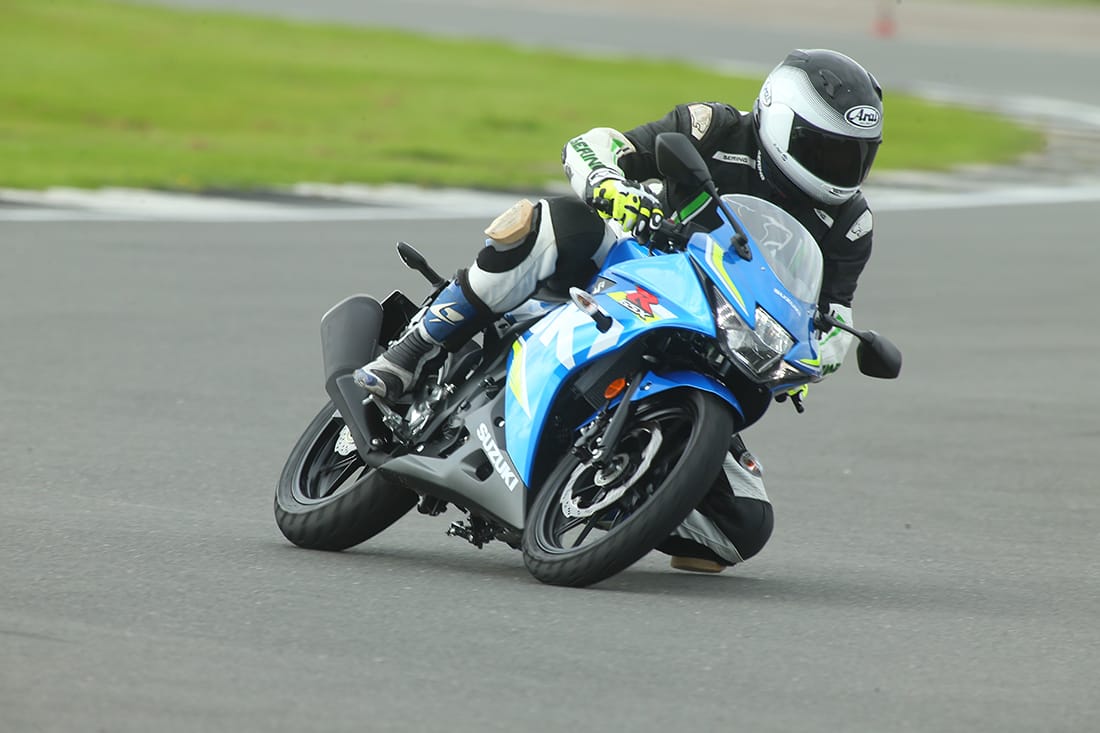
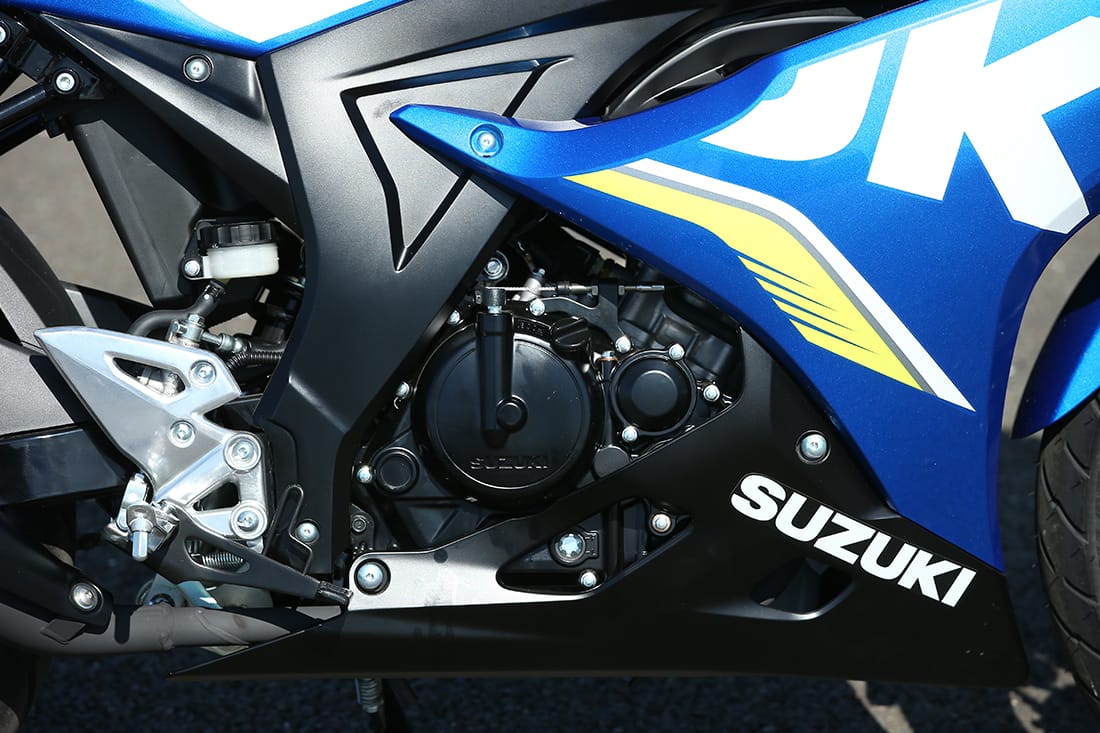 Don’t be mistaken by the bikes lateral covers: they are actually made from plastic and hide a very classic tubular steel frame. We’ll discover later if it’s fortunate or not but the GSX-R 125 is a step backward compared to its competitors here: no upside-down front fork (the KTM RC 125, Aprilia RS 125 and Yamaha YZF-R 125 has one) and a very basic steel swing arm, while, once again, the GSX-R contenders are more sophisticated. However, with 11 kW, the balance and feelings are certainly as important as Moto2 chassis! With a kerb weight of 134 kilos, the GSX-R is the lightest of its class, with an average 8 kg over its competitors. The GSX-R 125 is also rather a small bike, tiny and narrow, and the average Springbok fullback will probably feel cramped on board.
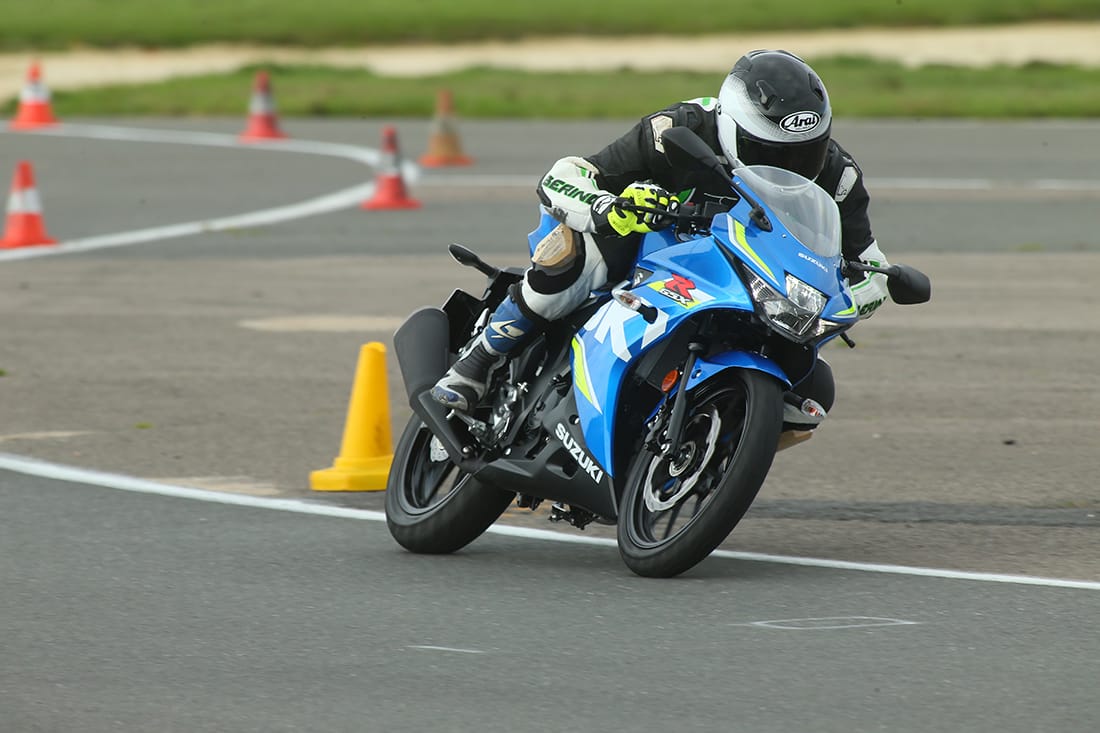 From that test, we’ve noticed two strong points and one more average:
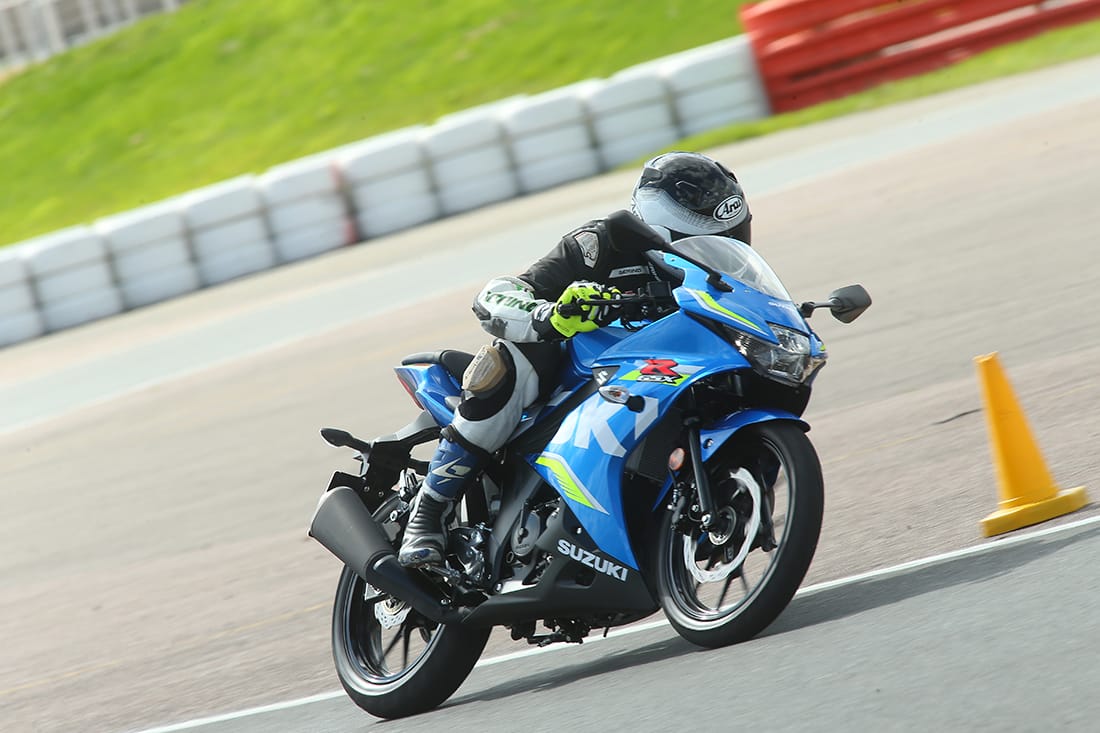
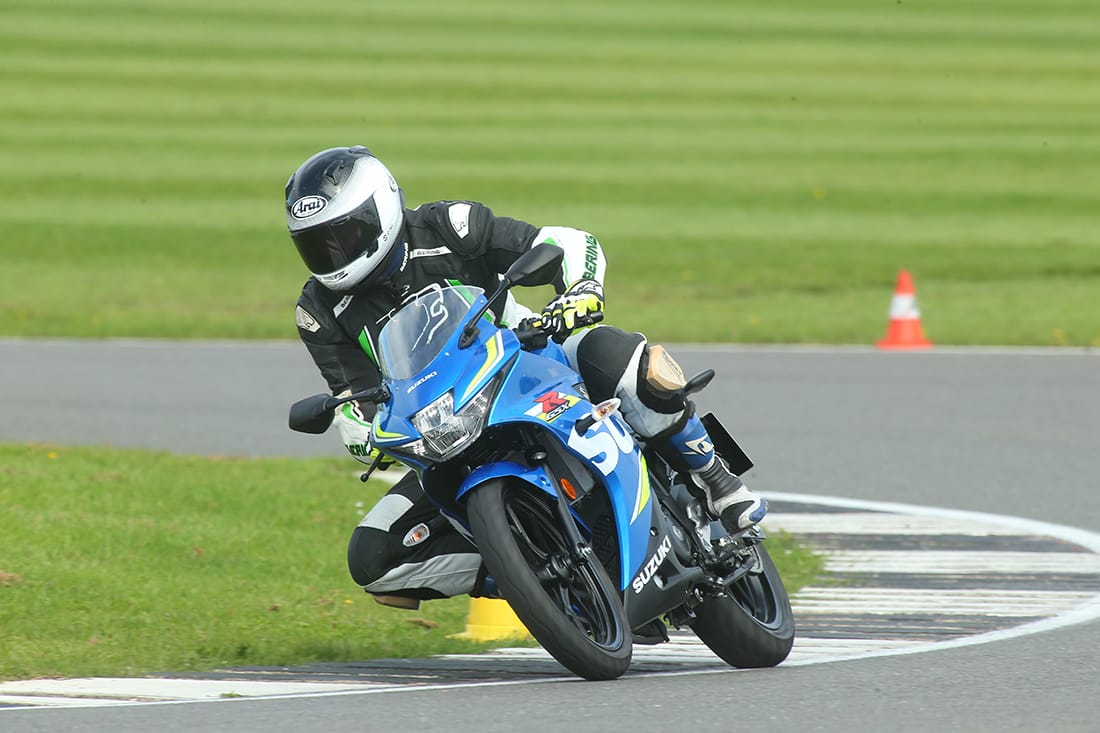
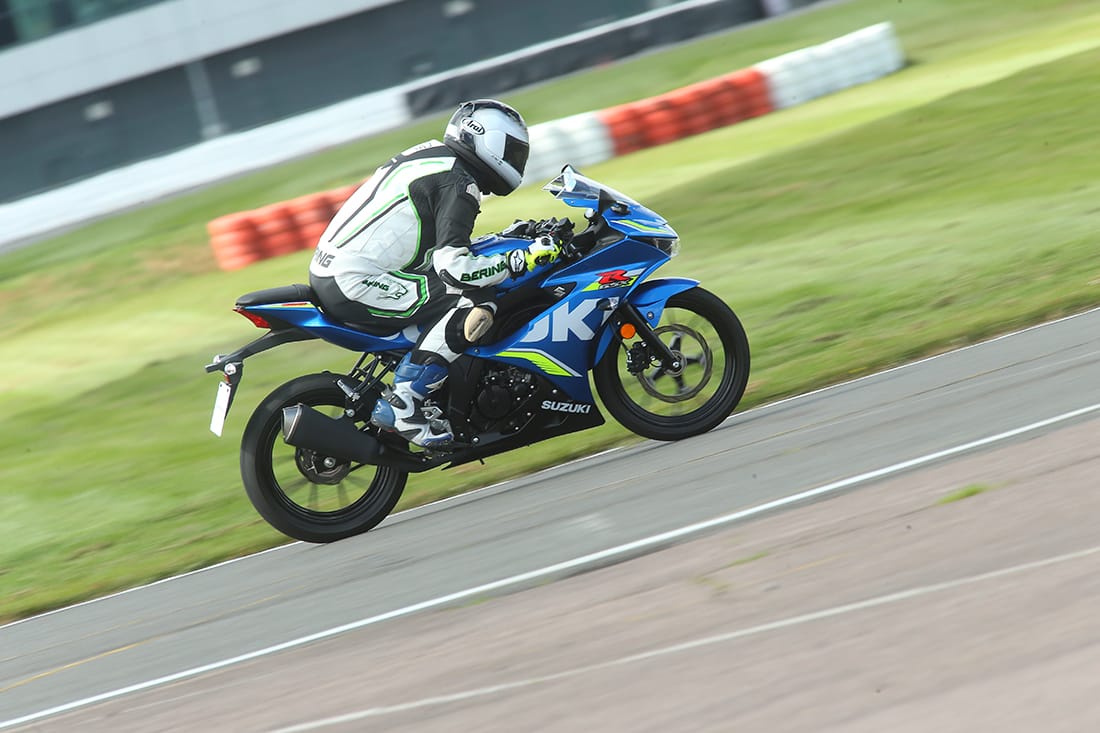 As the session goes on and you keep pushing and pushing, you start to wish for better tyres (the Dunlop D102 has average feedback and grip). In addition, you want a more solid front end, as on Stowe’s bumpier section, the GSX-R 125 had a lot of movement and did not inspire much confidence. You name it: KTM, Aprilia and Yamaha have equipped their 125 cm3 sport bikes with an upside-down front fork. Nothing major but tyres are easy to change as well as front fork oil. Please note that these comments relate to track racing and are not a real issue, if you keep the bike on the open road, which after all, is Suzuki’s intention.
 Specifications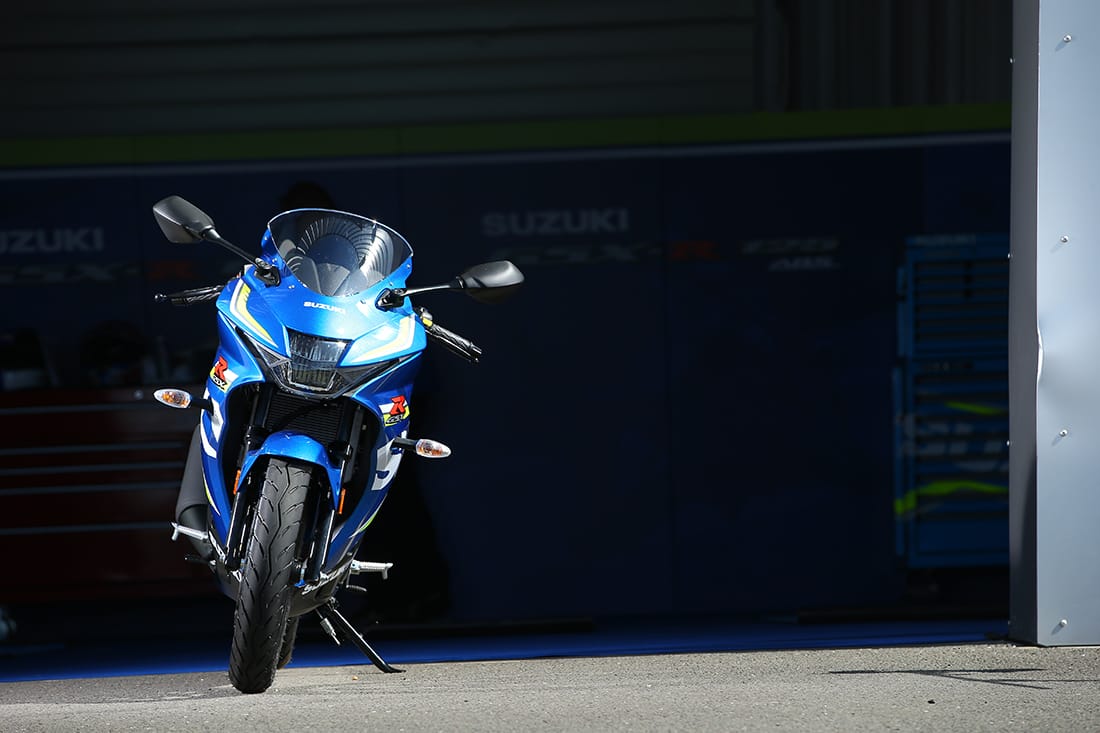
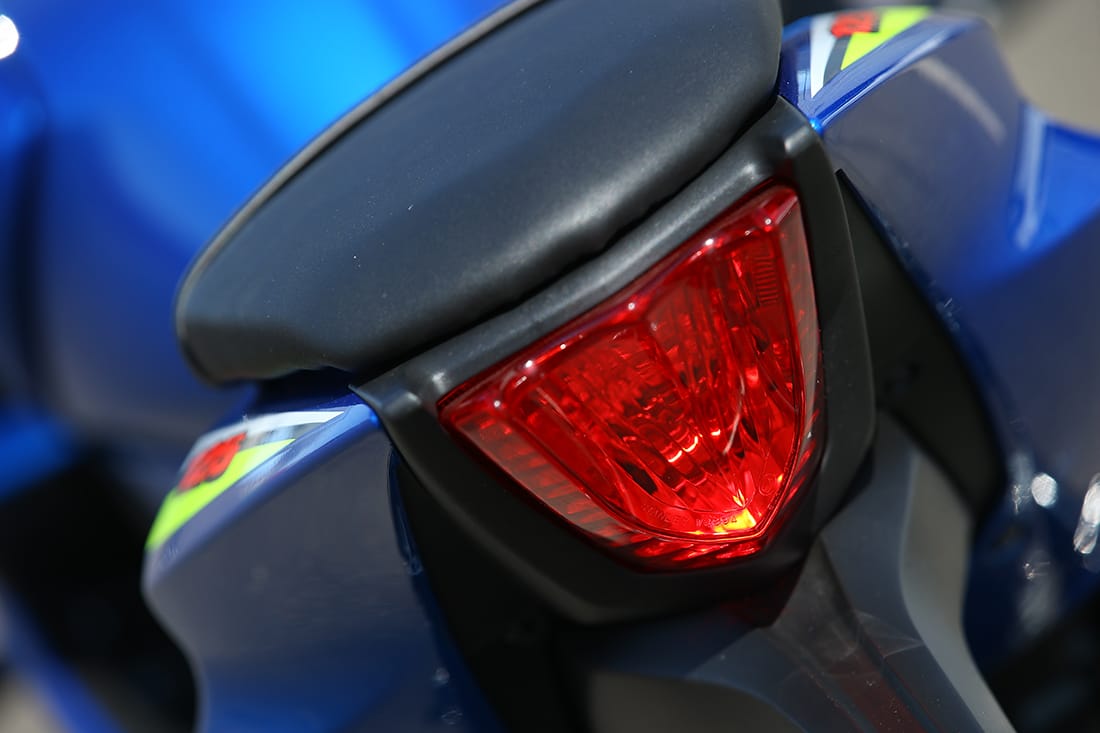
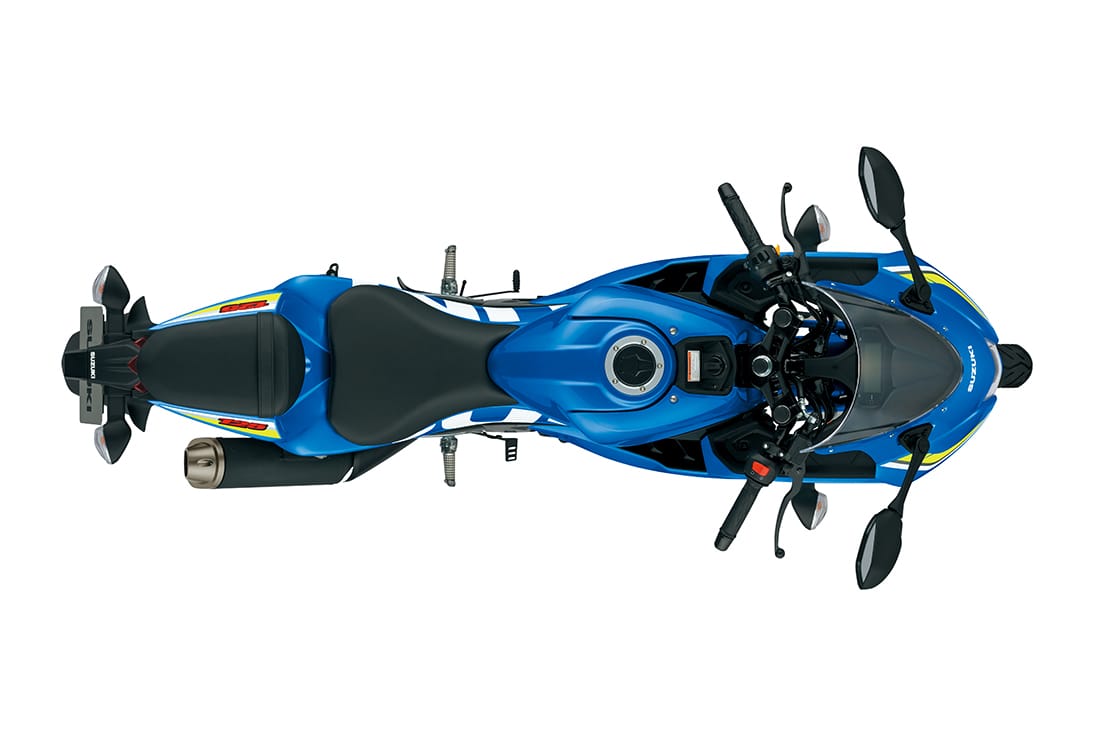
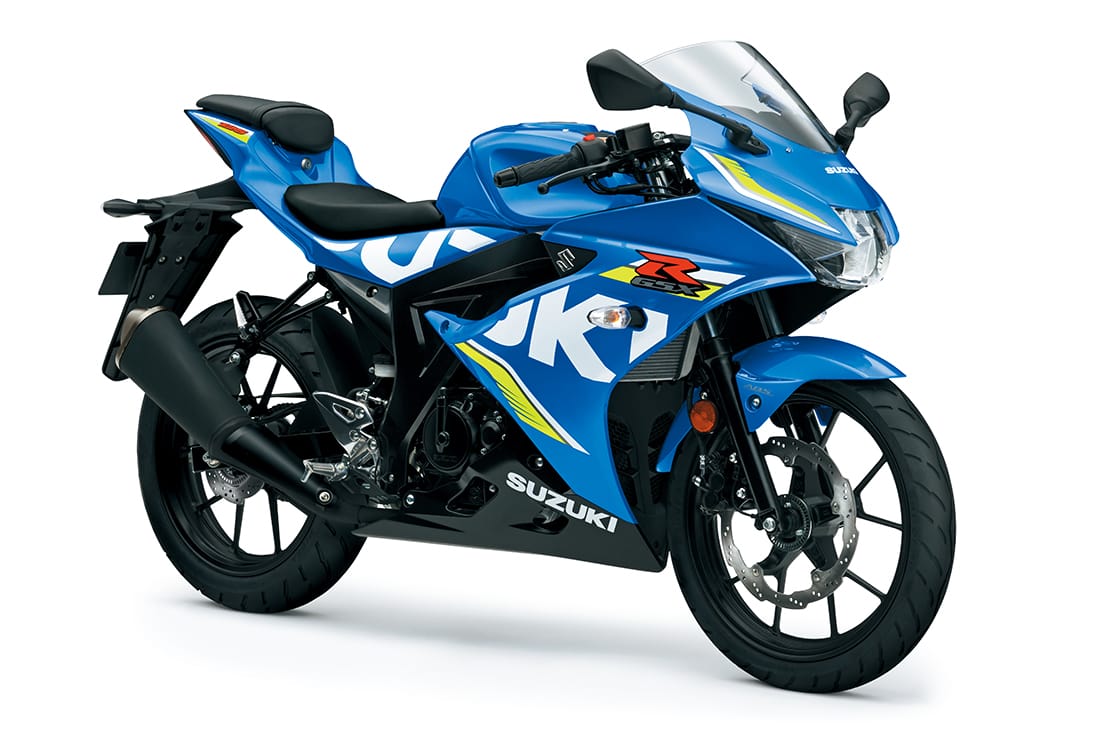
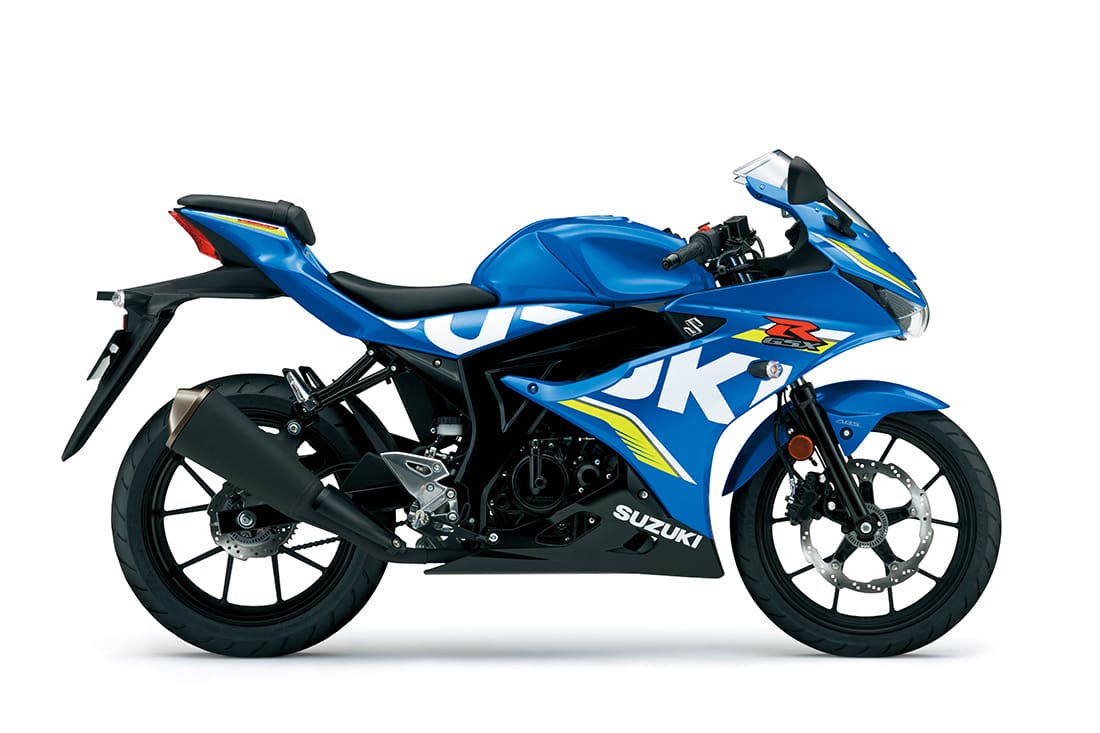
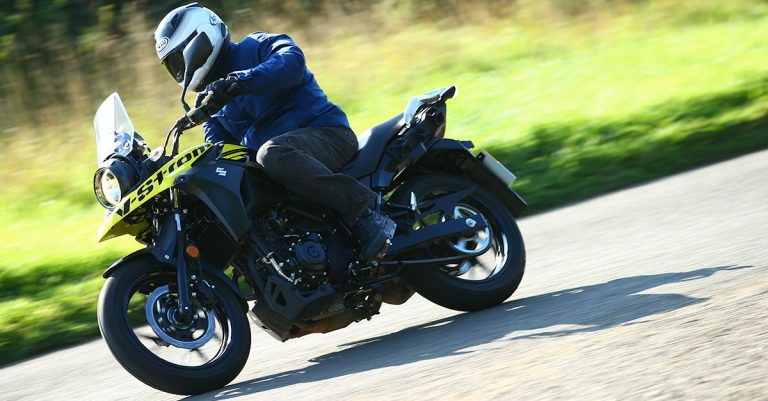
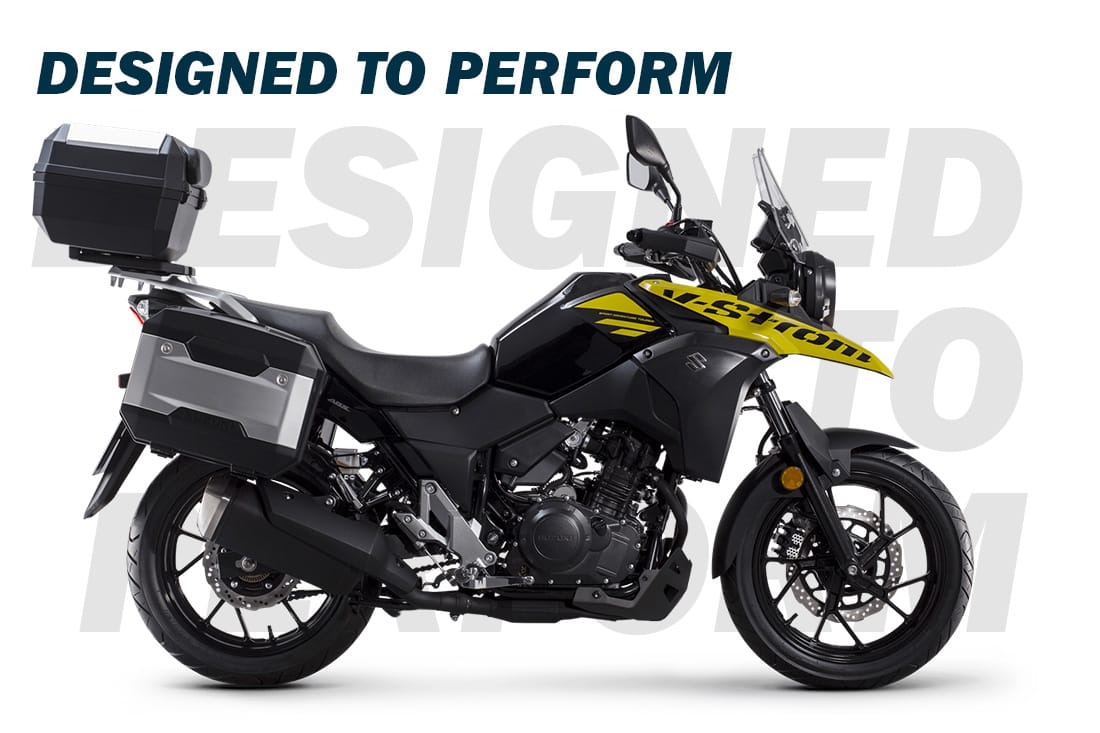
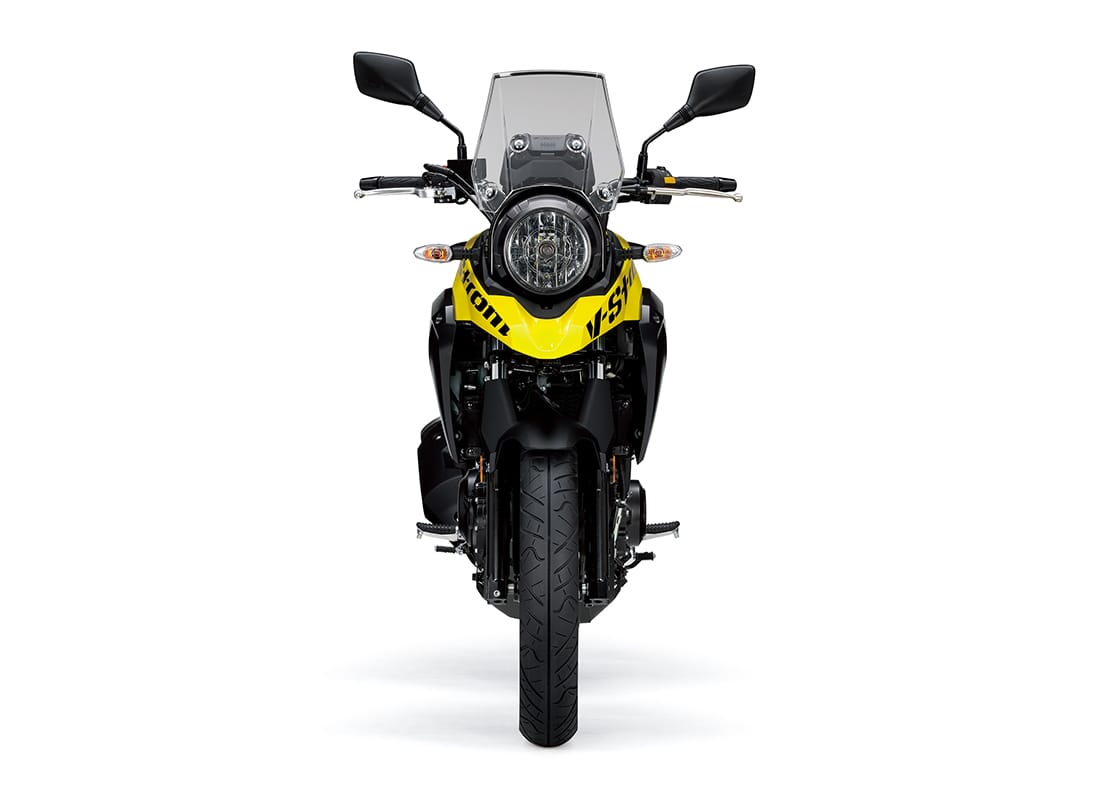
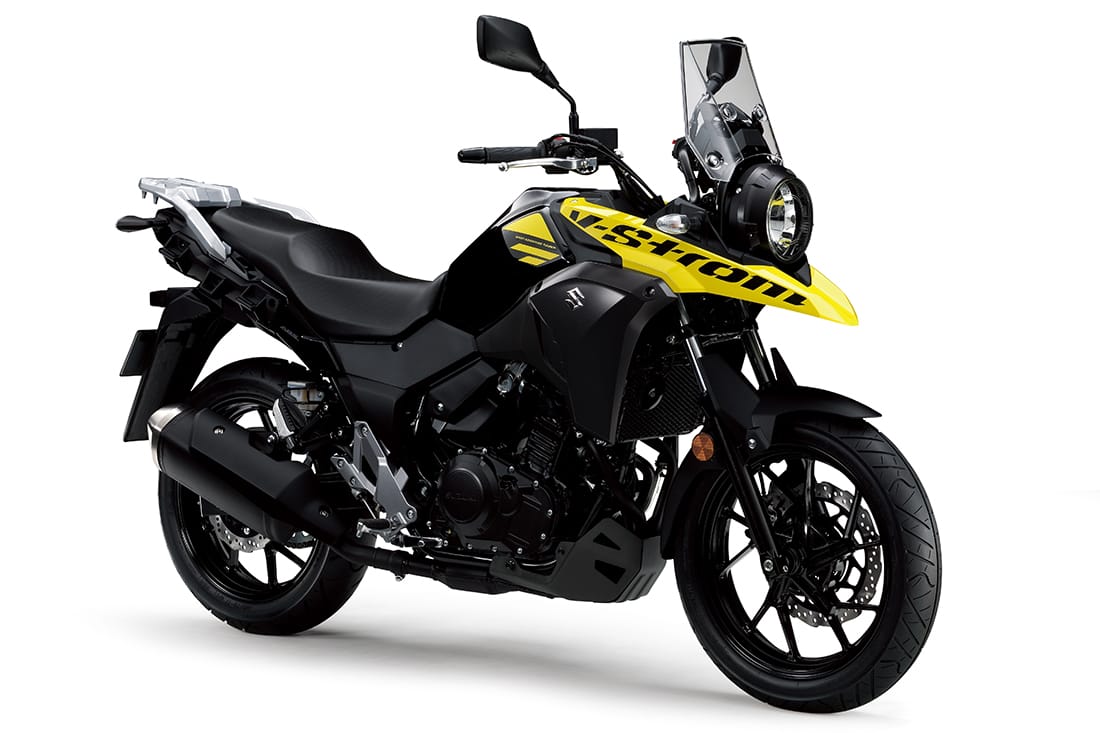
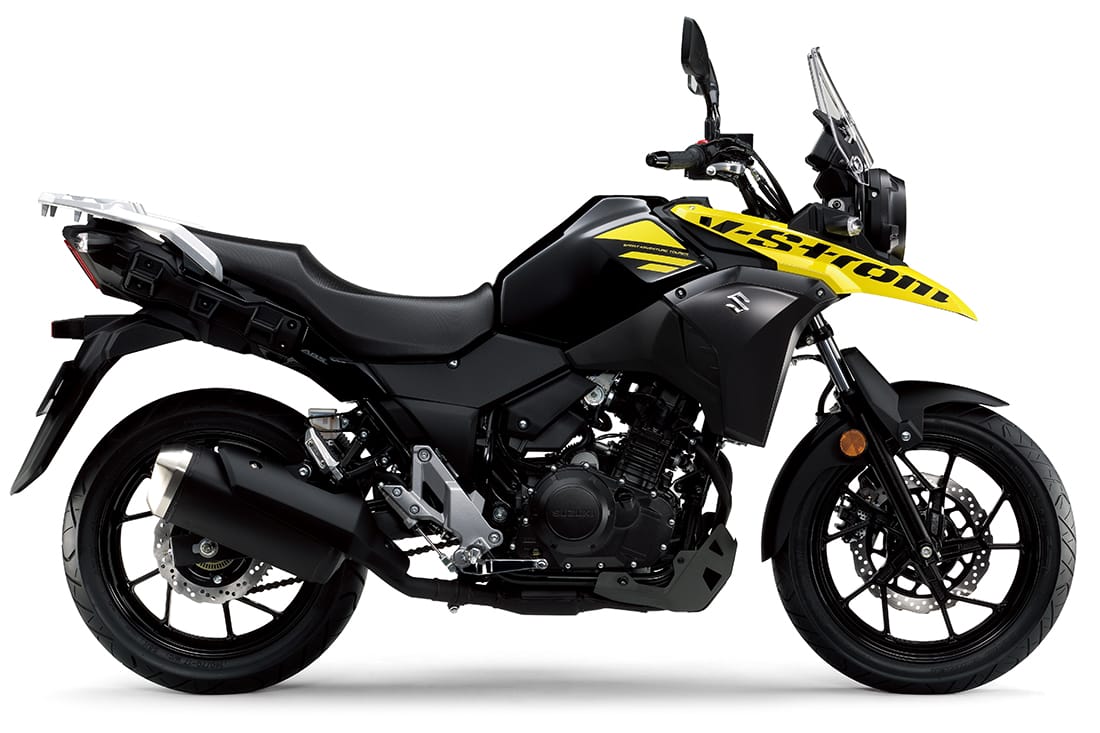
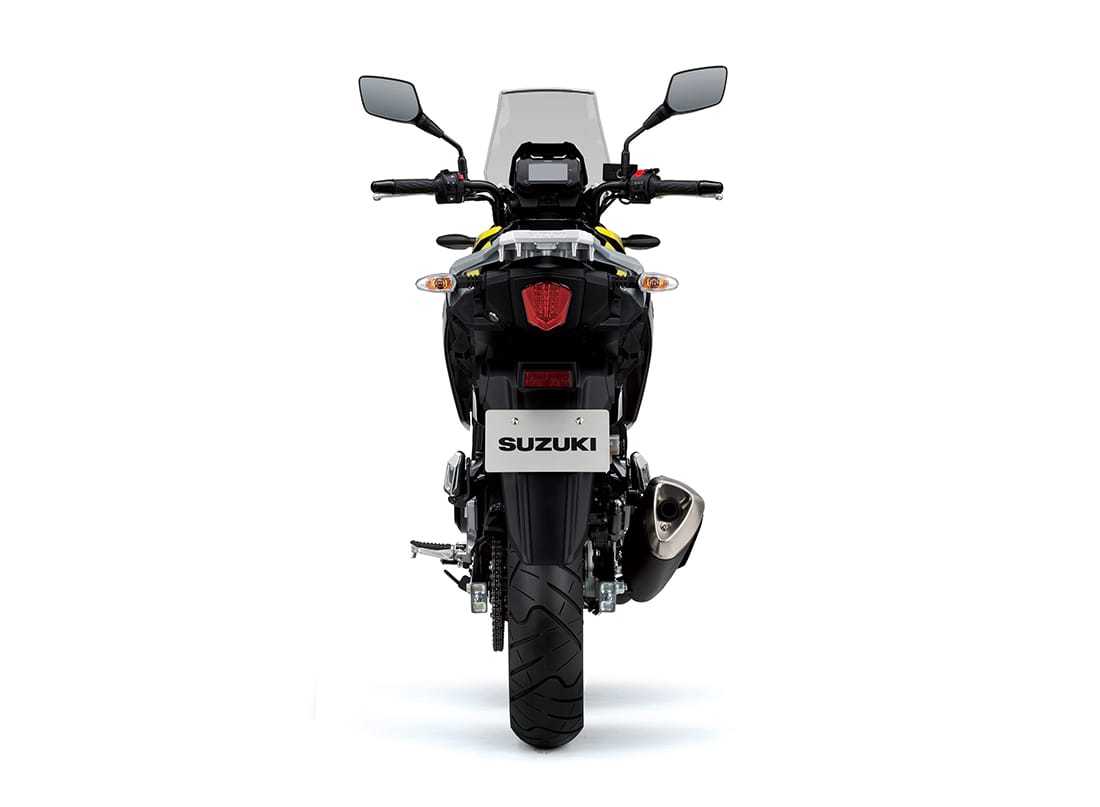
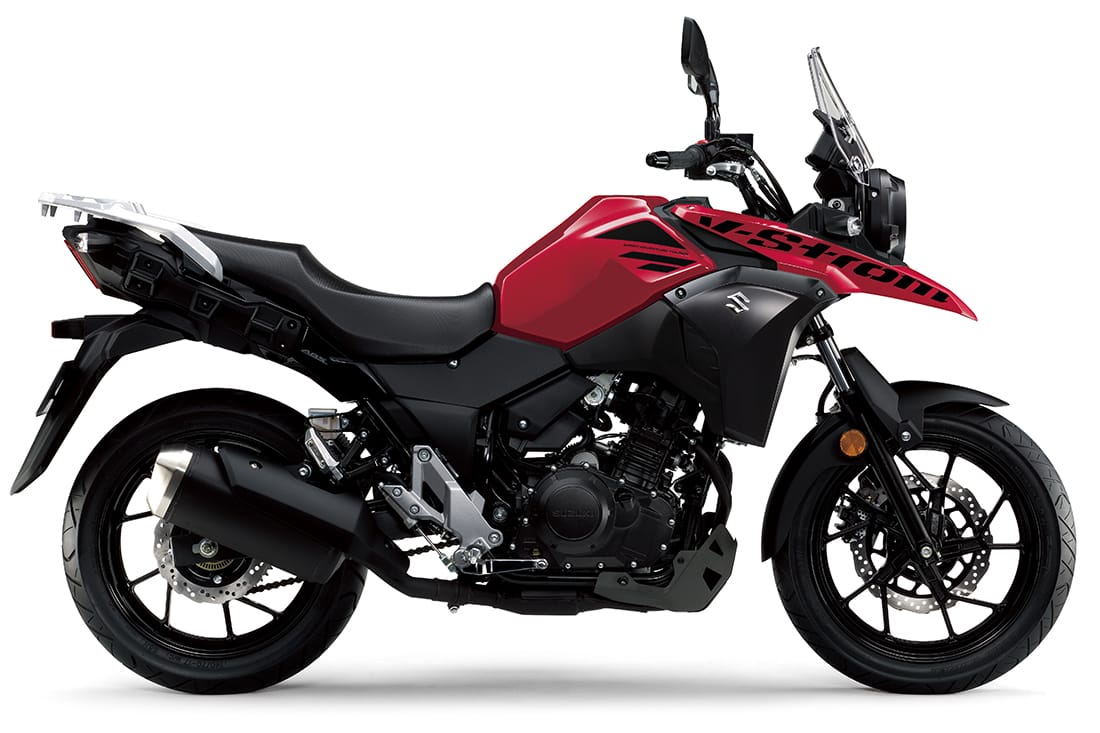
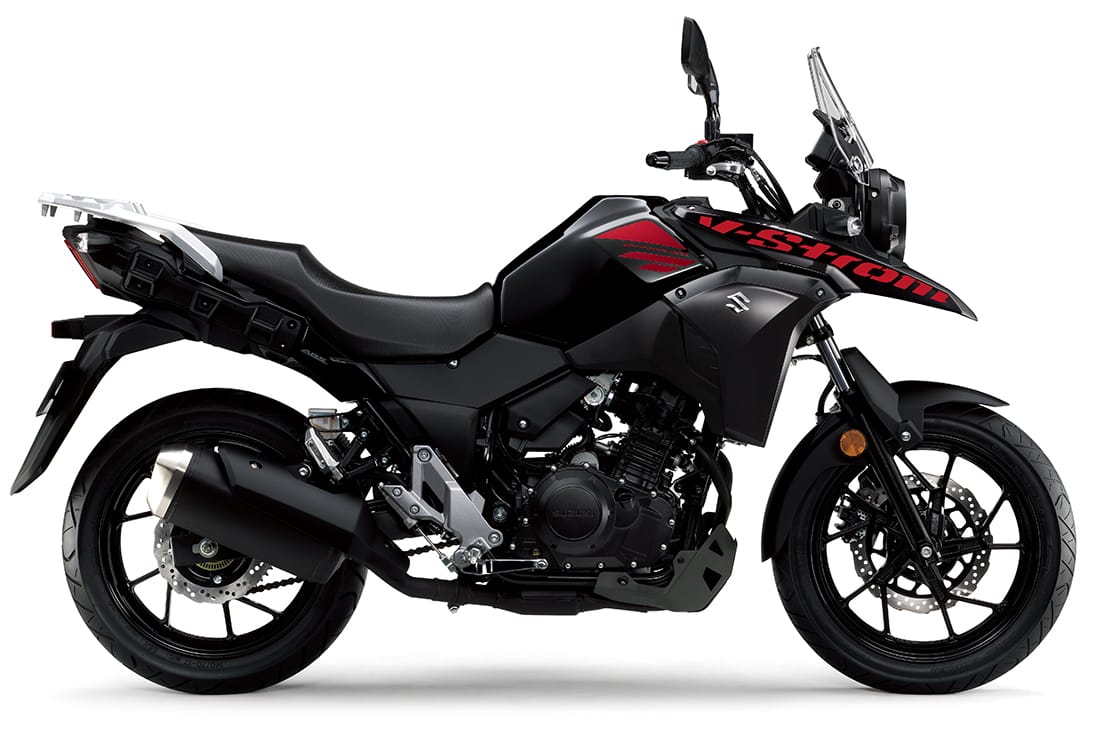
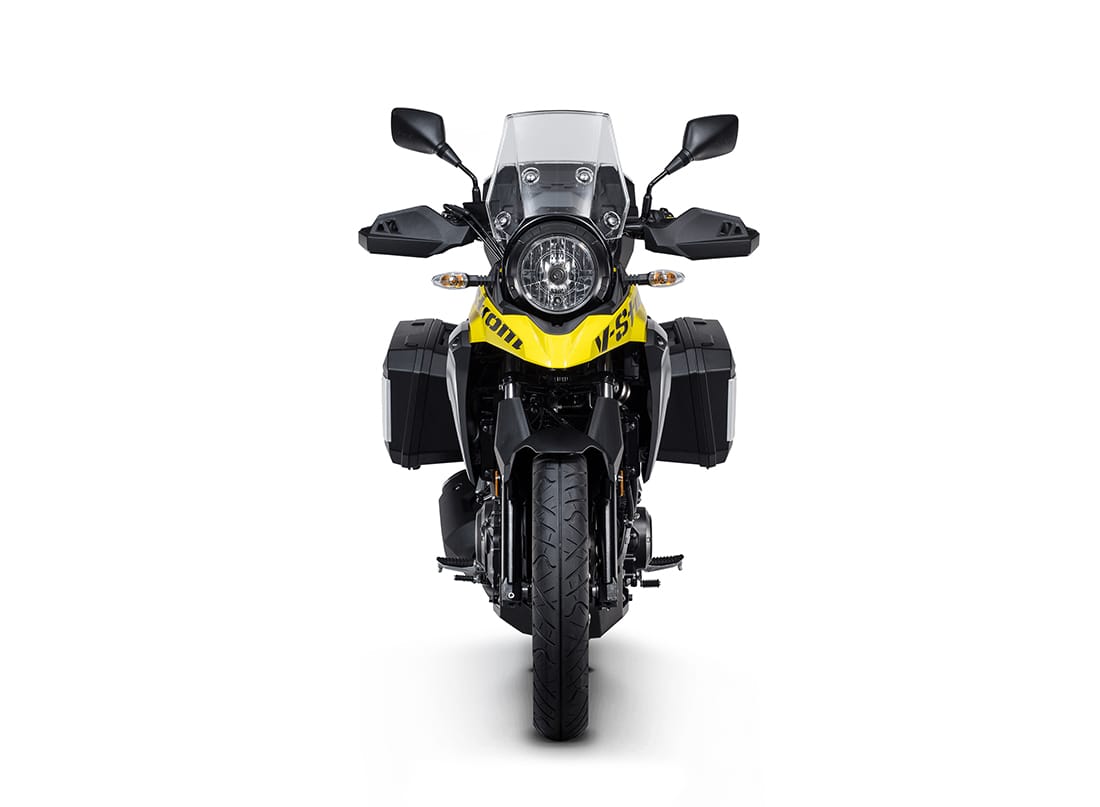
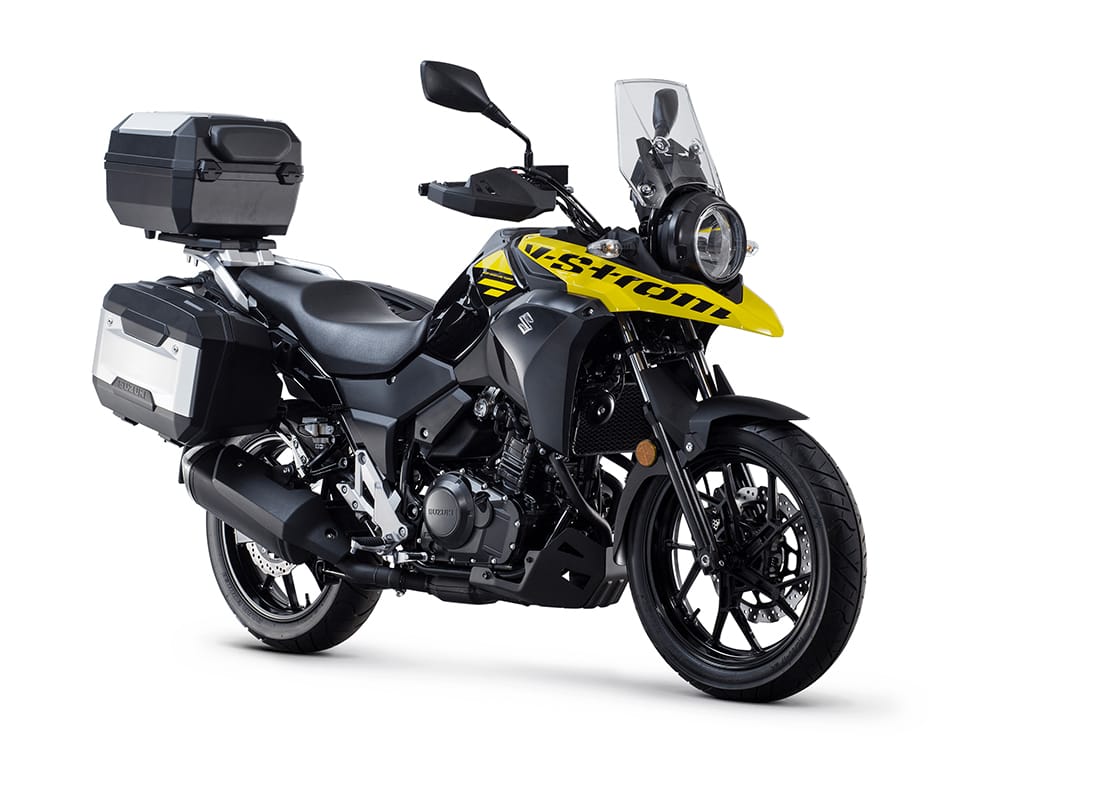
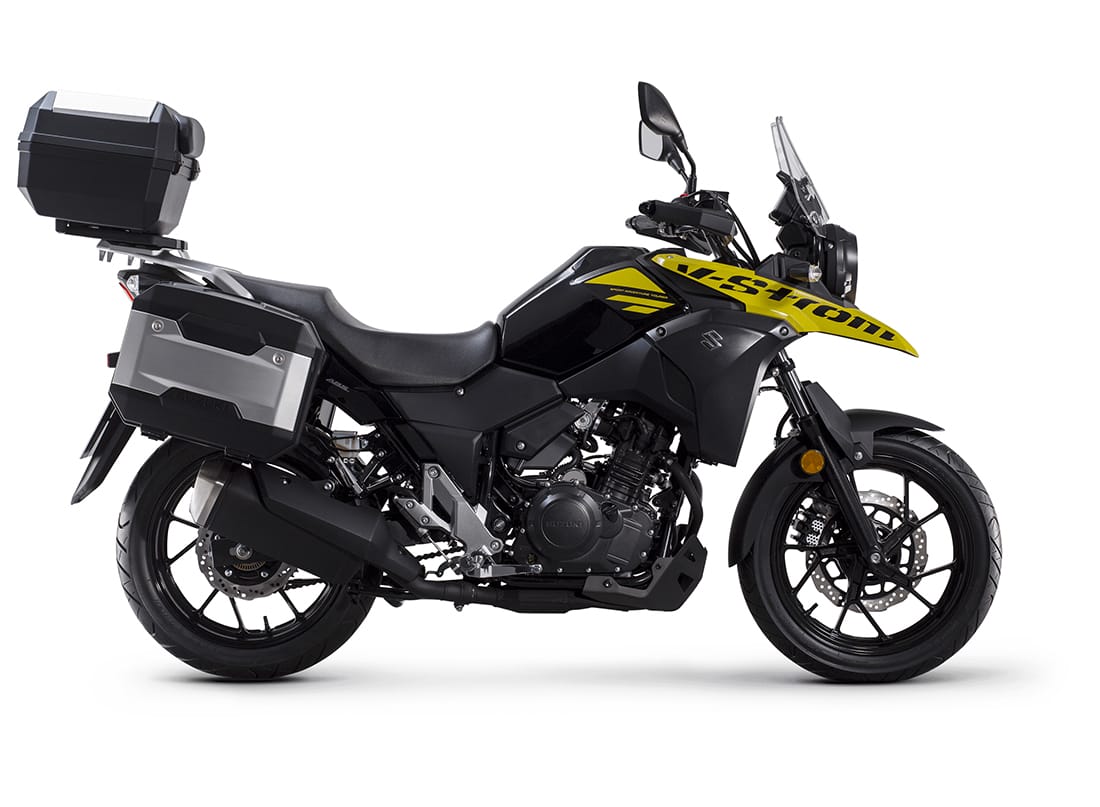
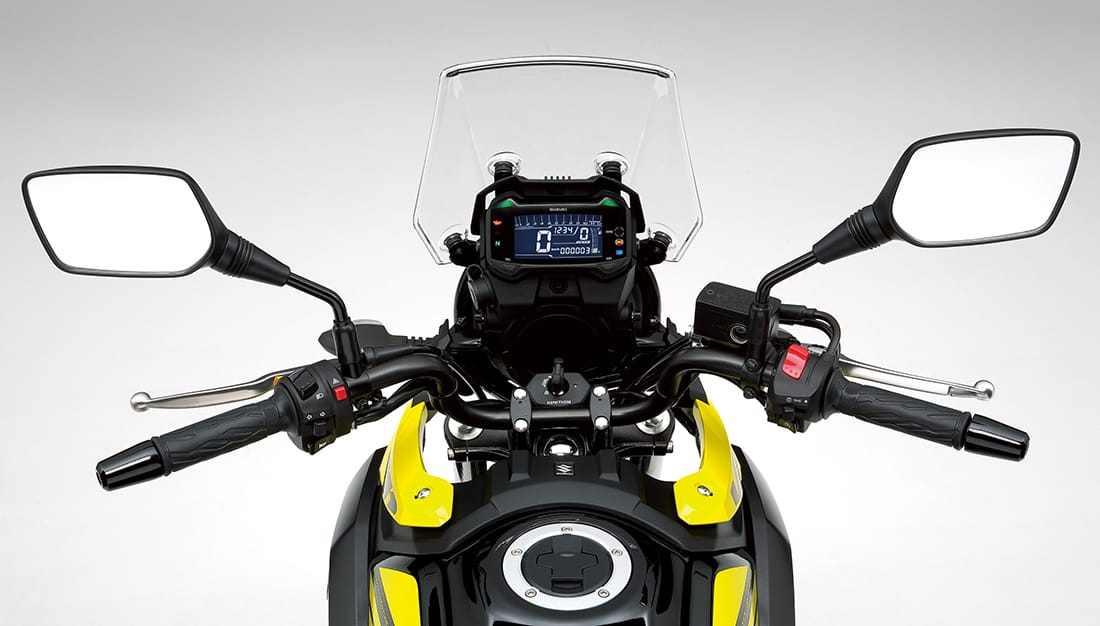
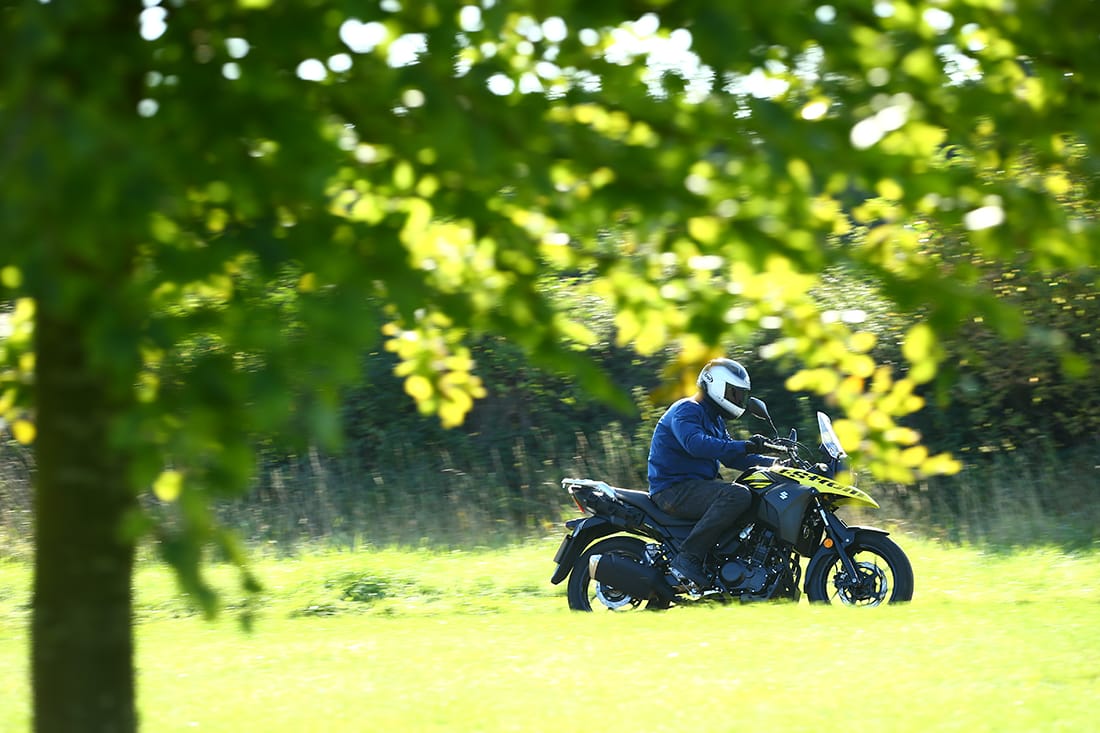
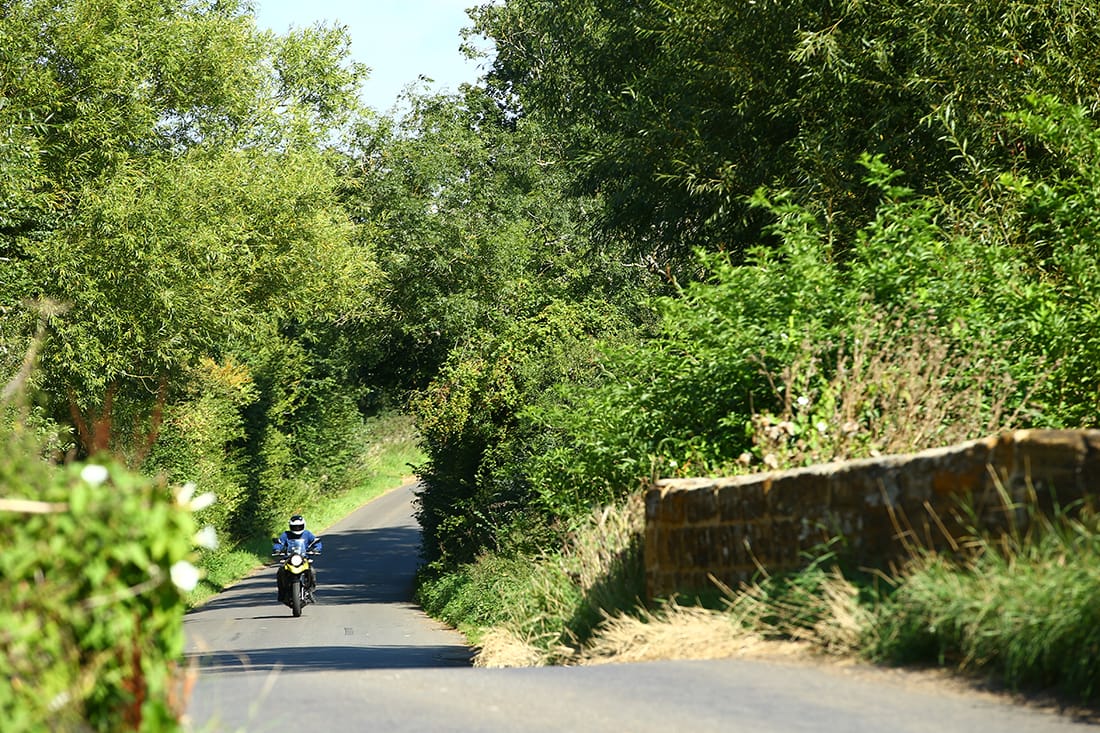
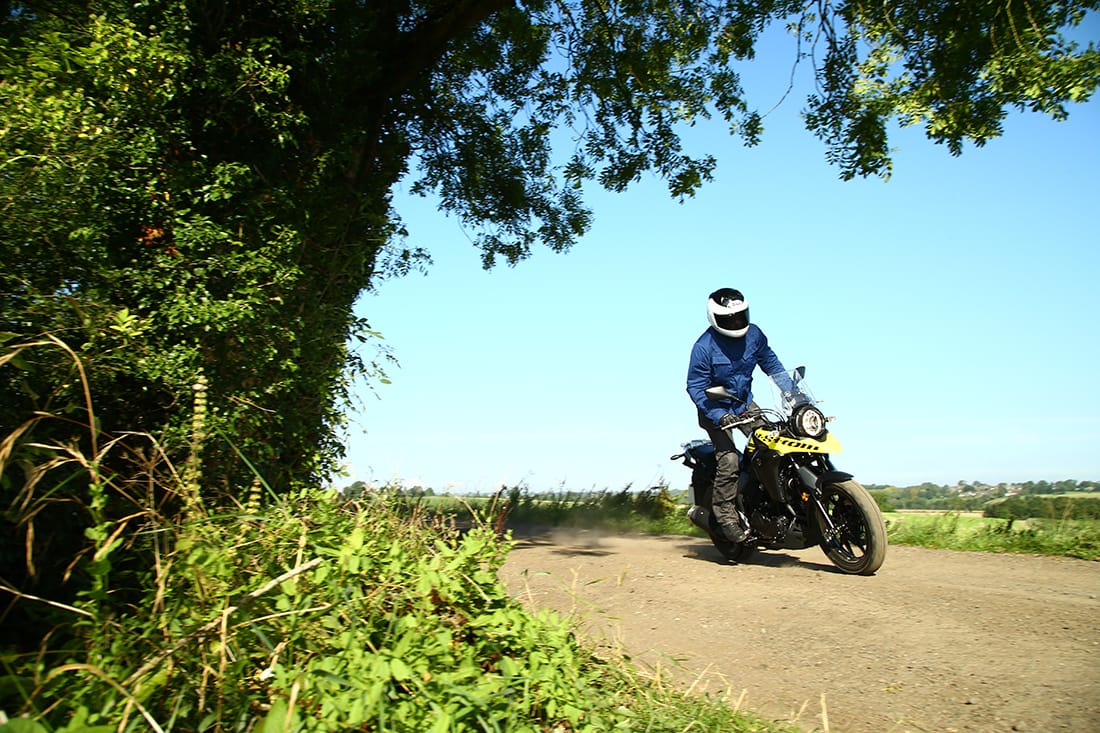
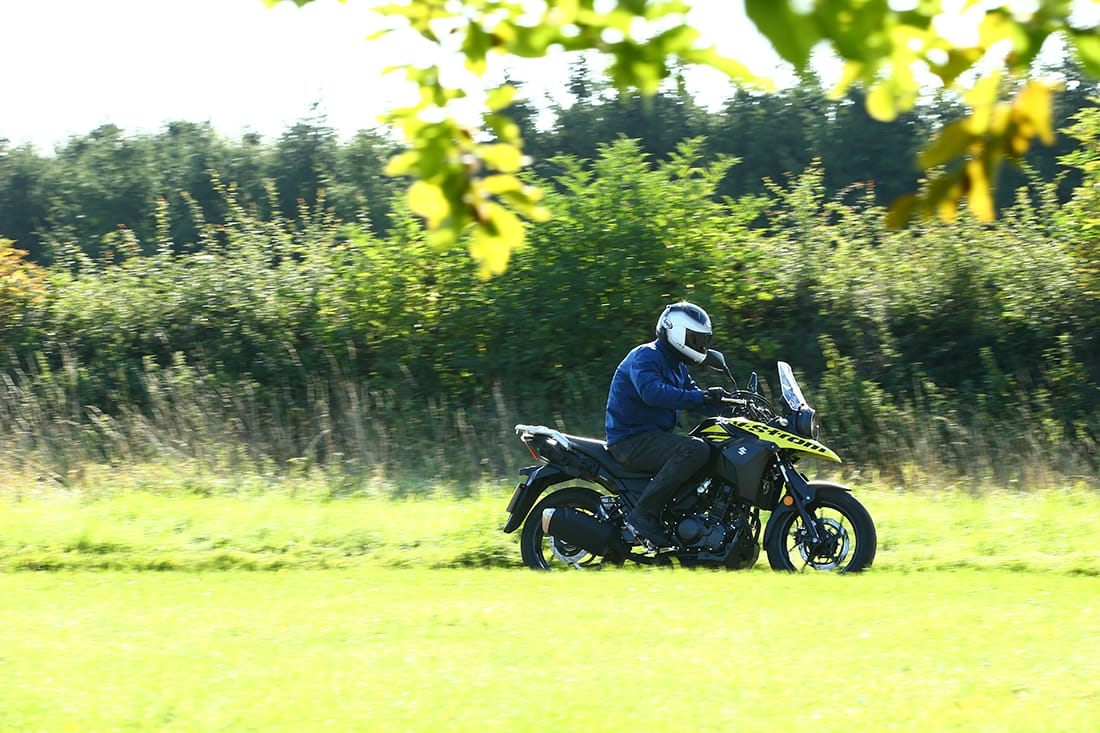
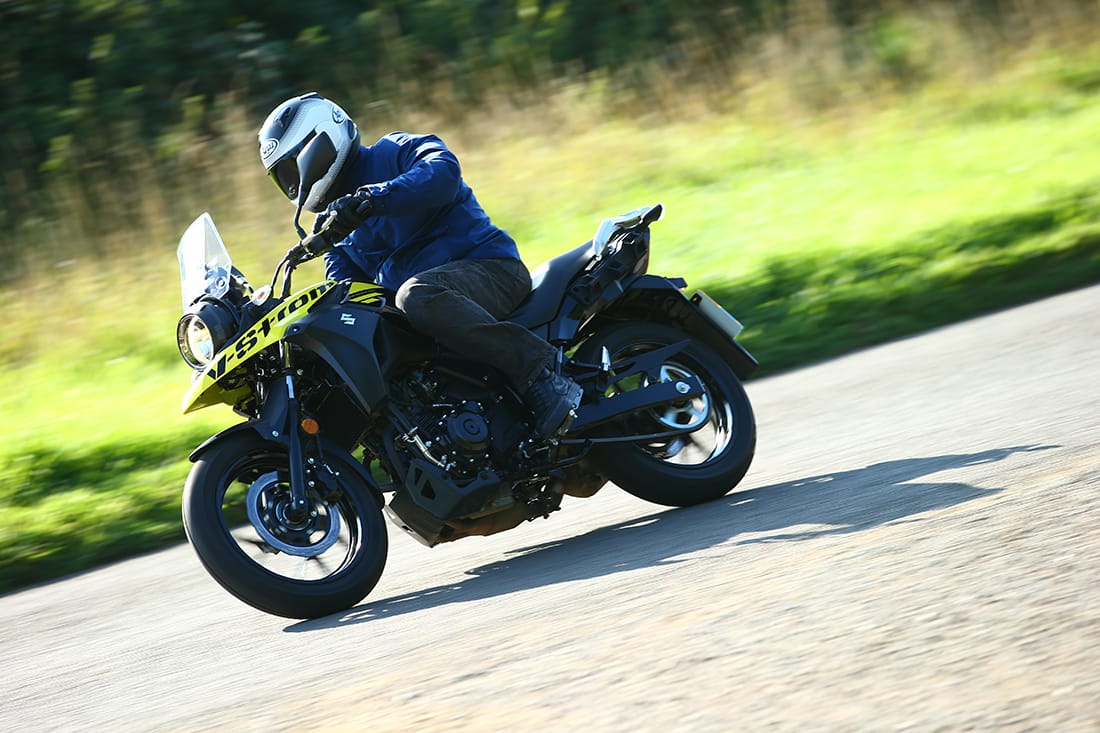
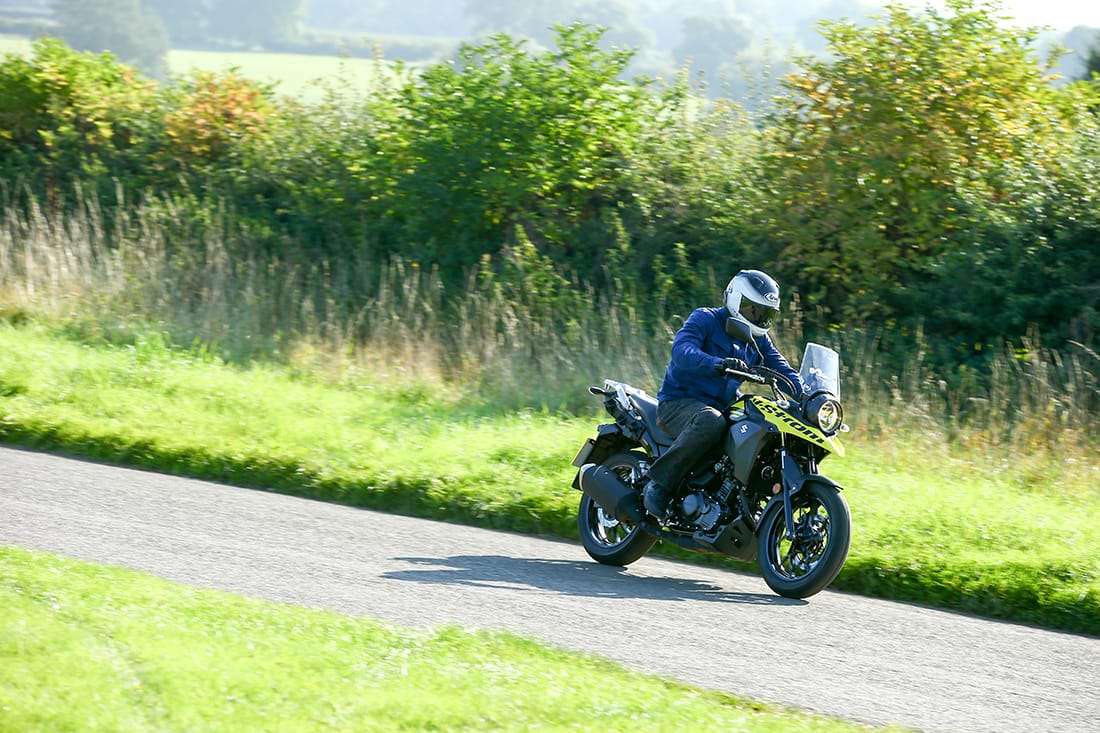
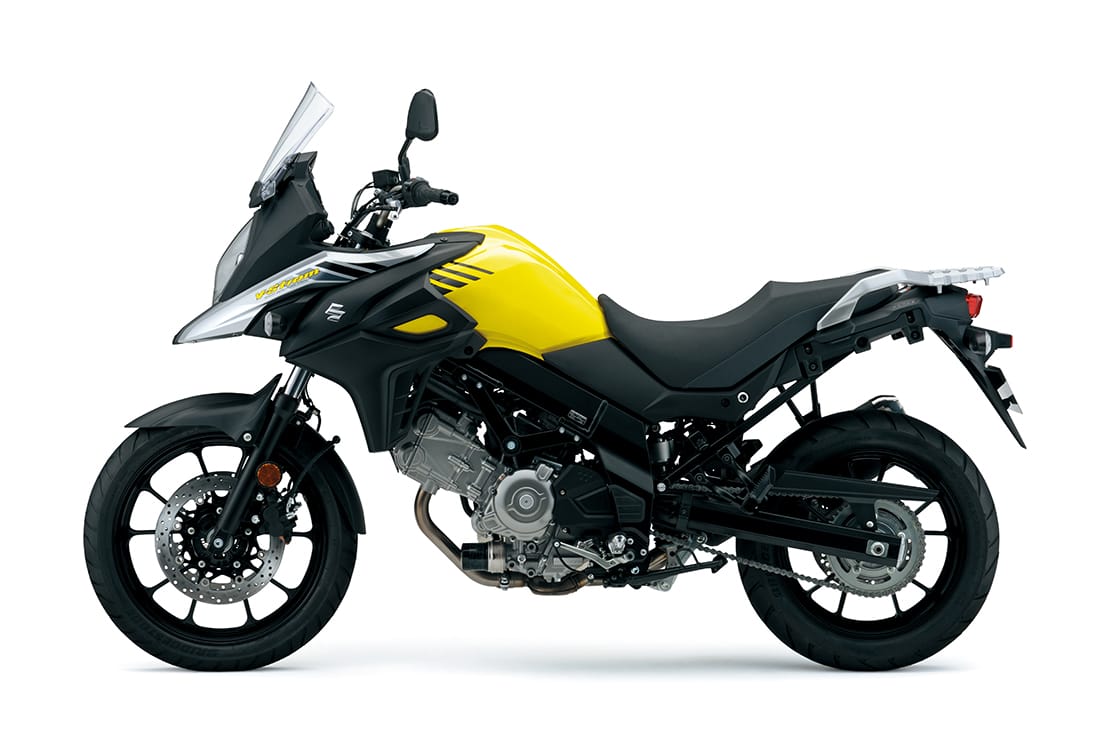
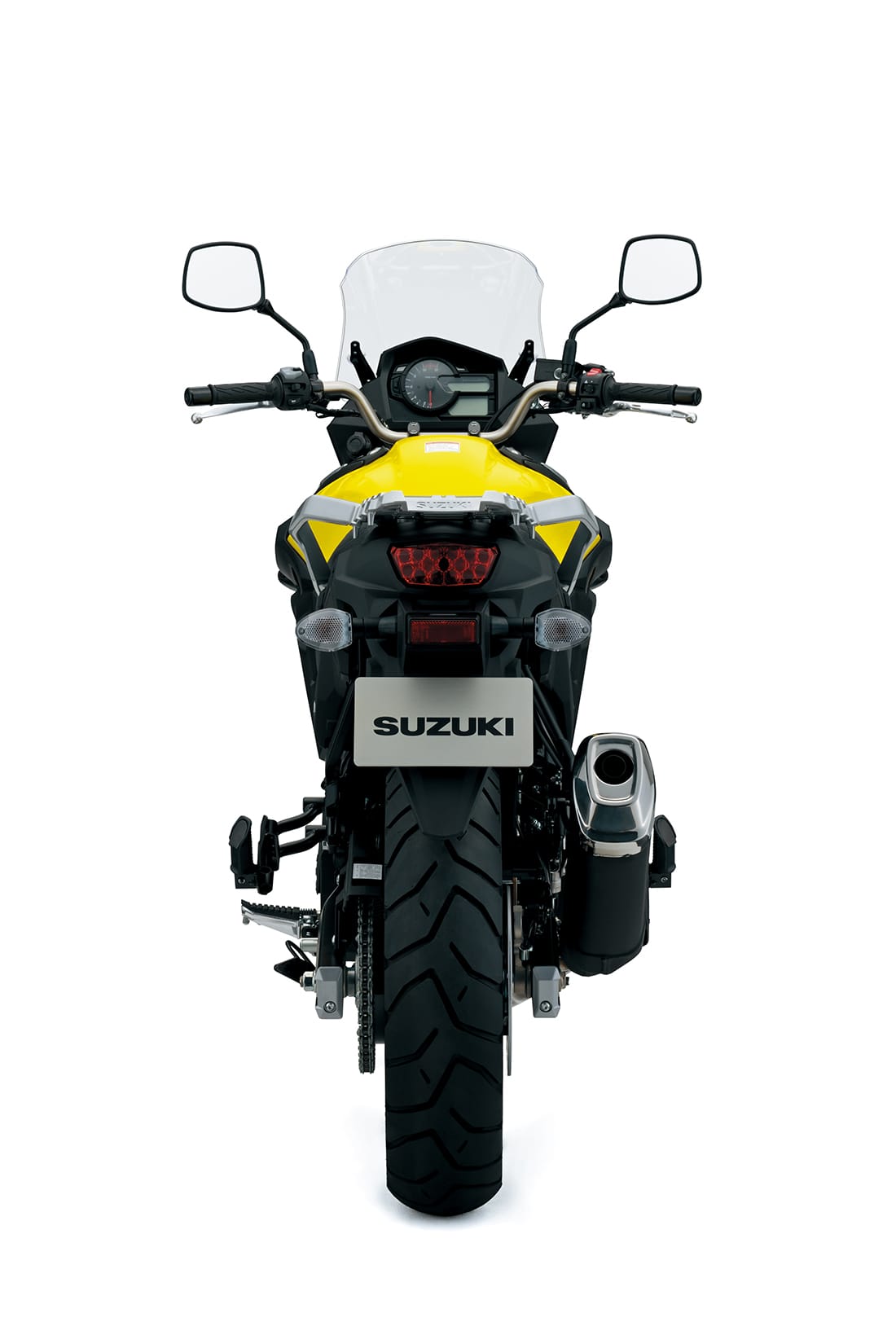
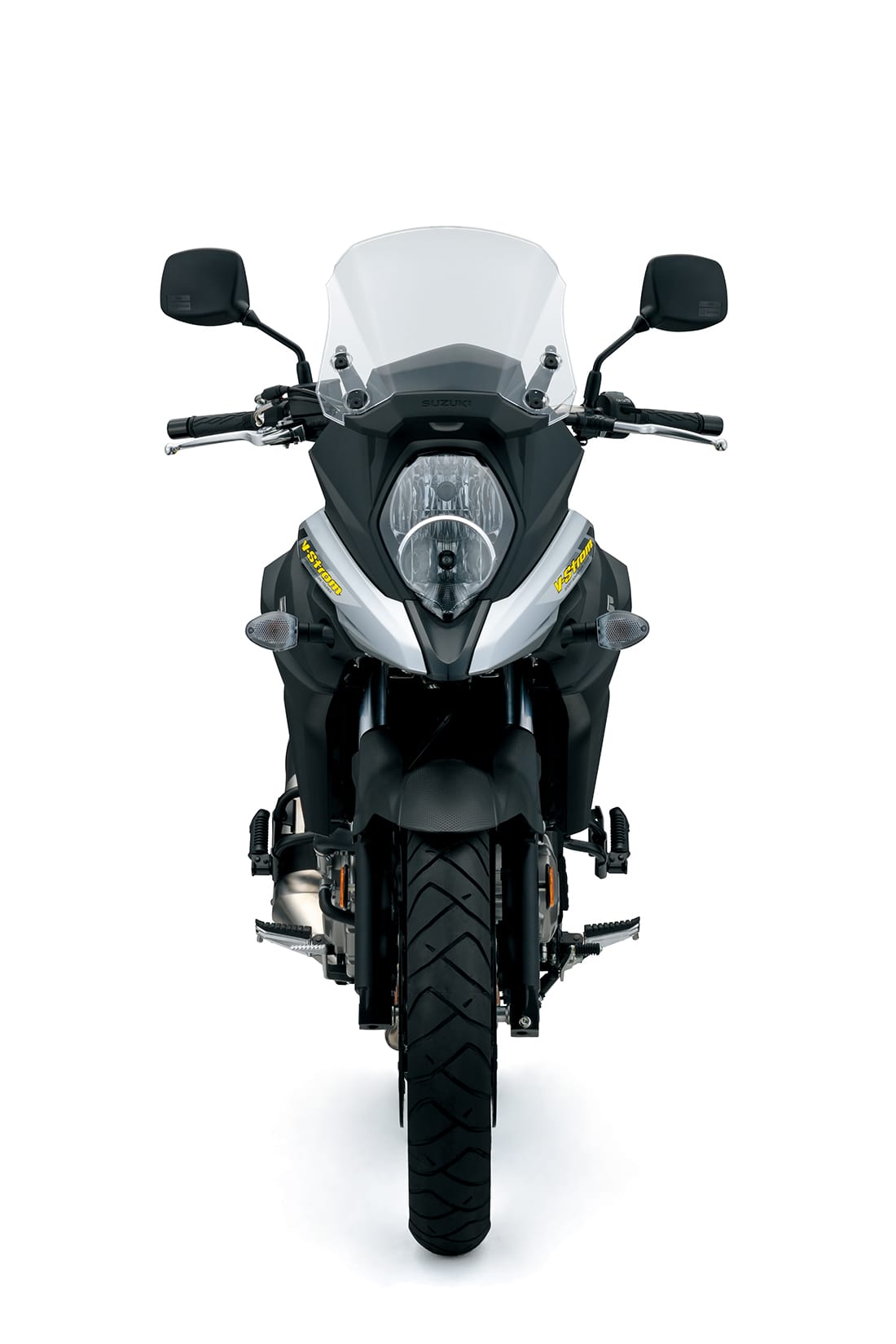
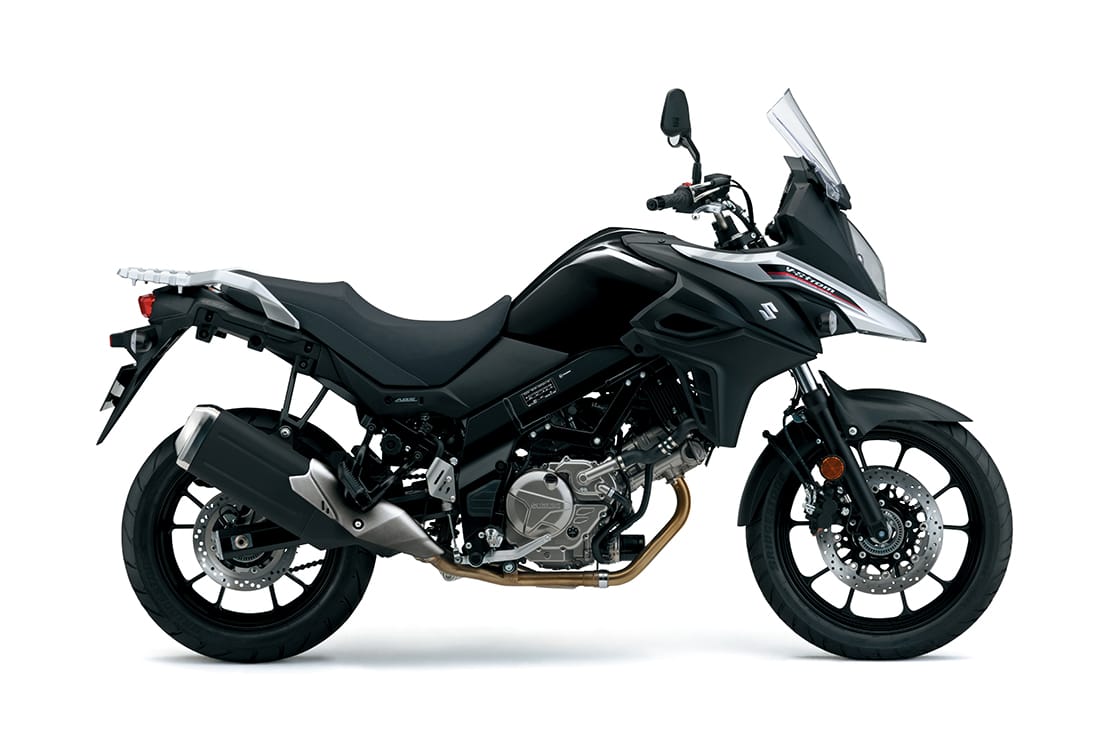
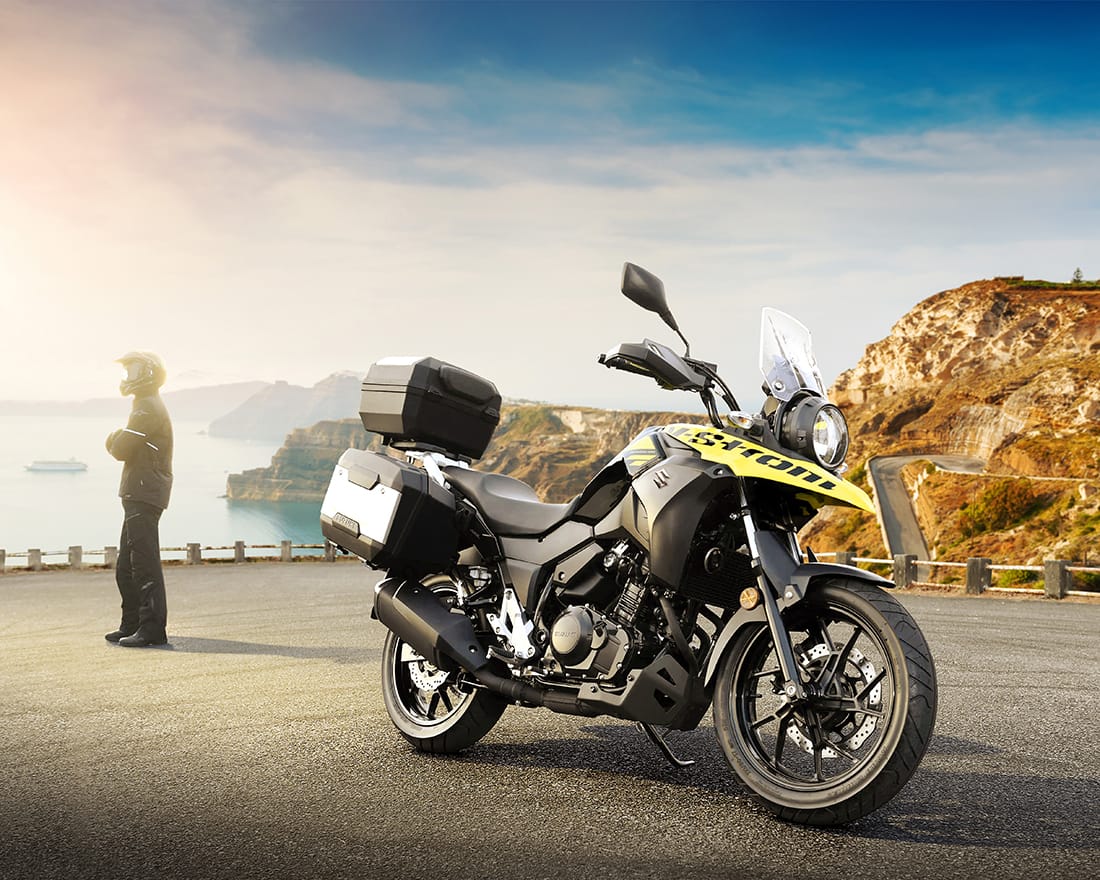 Mix the two and you have the new Suzuki V-Strom 250 (the ‘V’ is there for marketing reasons, as the new bike features the Inazuma’s parallel twin). The proportions of the bike have a certain sense of harmony and the bike features Suzuki’s off-road DNA, with the peaky front nose inherited from the DR 750 Big era and the yellow colours from the RM family. The big and very round headlight looks curious at first sight, but once you’ve stepped back, it looks the part. The windscreen is fairly tall (the bike height sits at 1295 mm).
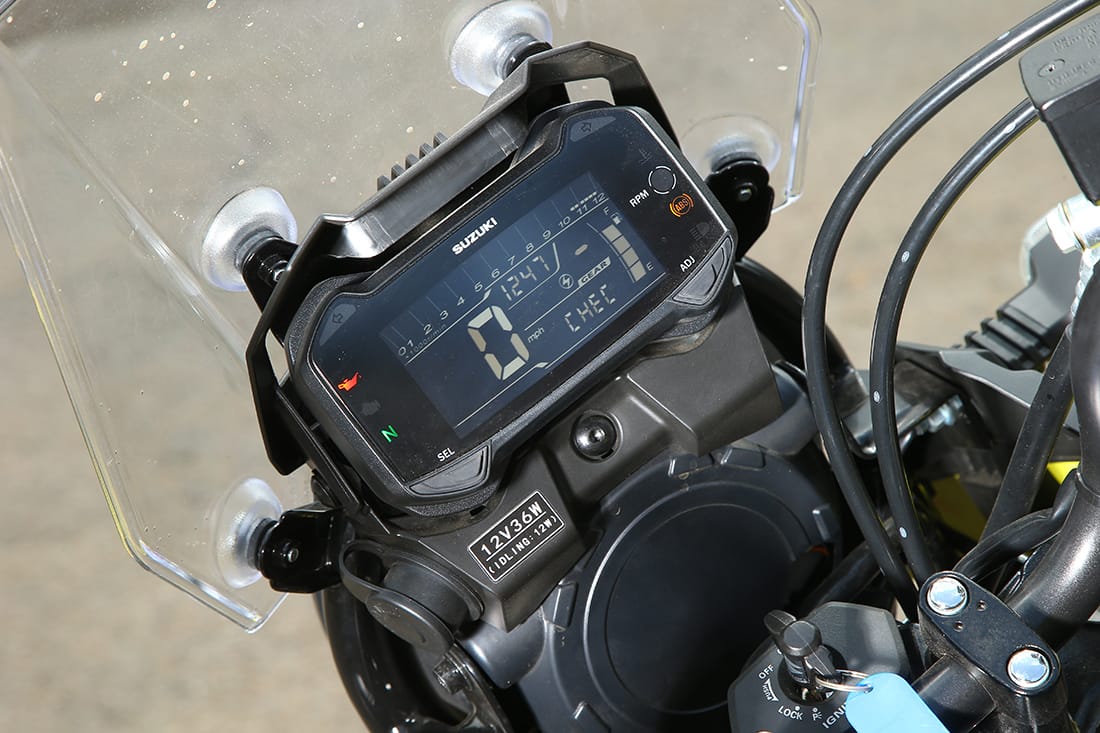 Incidentally, the display is easy to read and quite comprehensive, with the gear position, fuel gauge, fuel consumption, shift-light, clock plus oil change reminder. Being in an upright position, the windscreen offers more than decent protection and is good enough to deviate the wind from the shoulders of a tall rider.
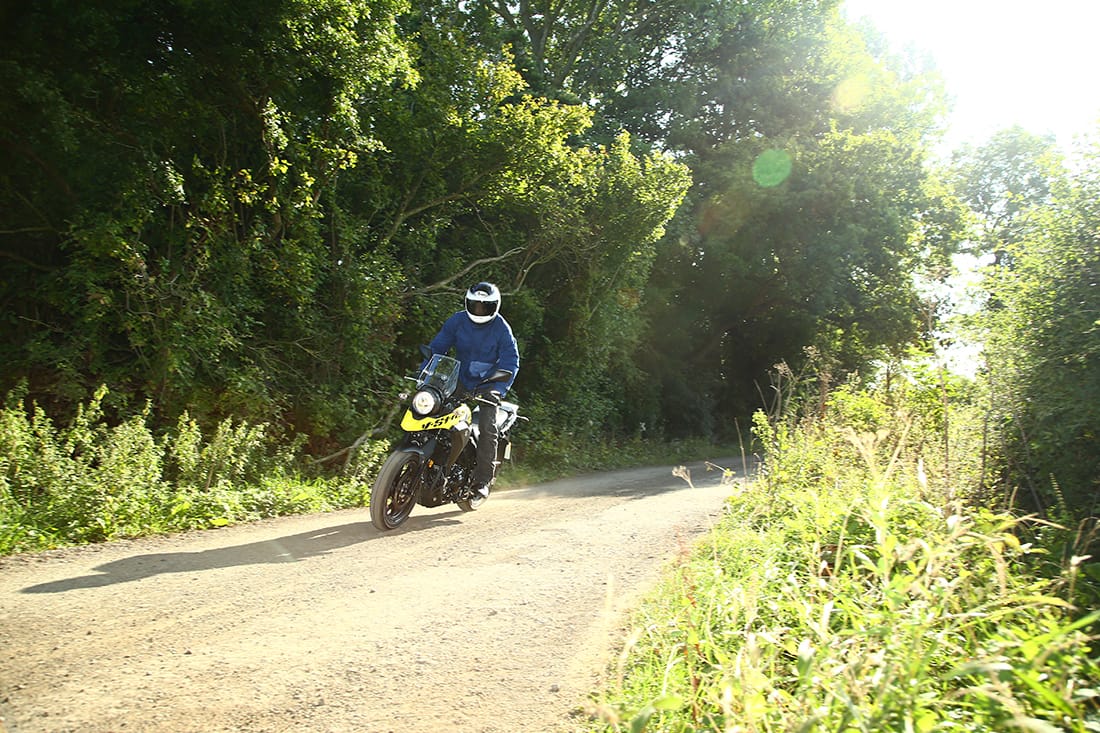 Speed is obviously not, but it can gently cruise on B-roads at 90 kph at 7000 rpm in 6th) and despite its modest capacity (248 cm3), the engine has a long stroke character (53,5 x 55,2 mm) and does not feel underpowered as the rider is always working within the torque band.
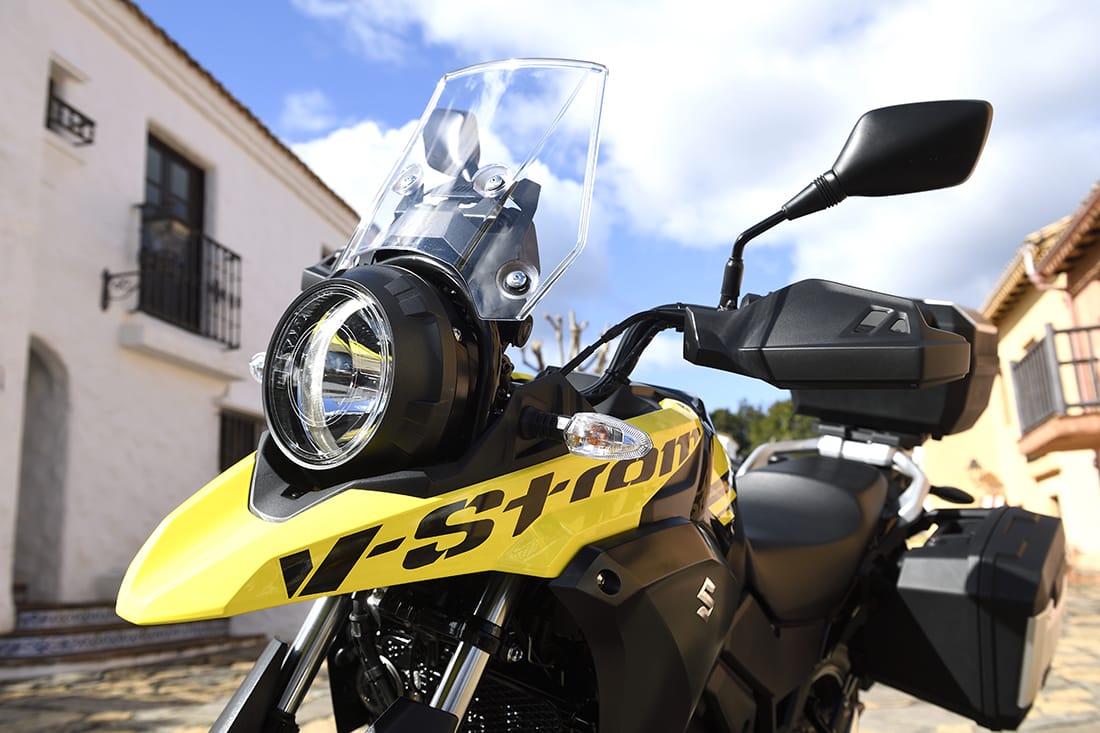 While remaining reasonably narrow, the fuel tank capacity is an impressive 17,3 litres. Suzuki claims an official 3,2 l/100 fuel consumption but during our test, which was usually at full throttle, we recorded 4 l/100. However, with a touring mindset, the fuel range should at least reach 500 kilometres – Namibia is just one fuel stop away from Johannesburg! A full week of commuting without one stop at the petrol station, is also appealing.
 Specifications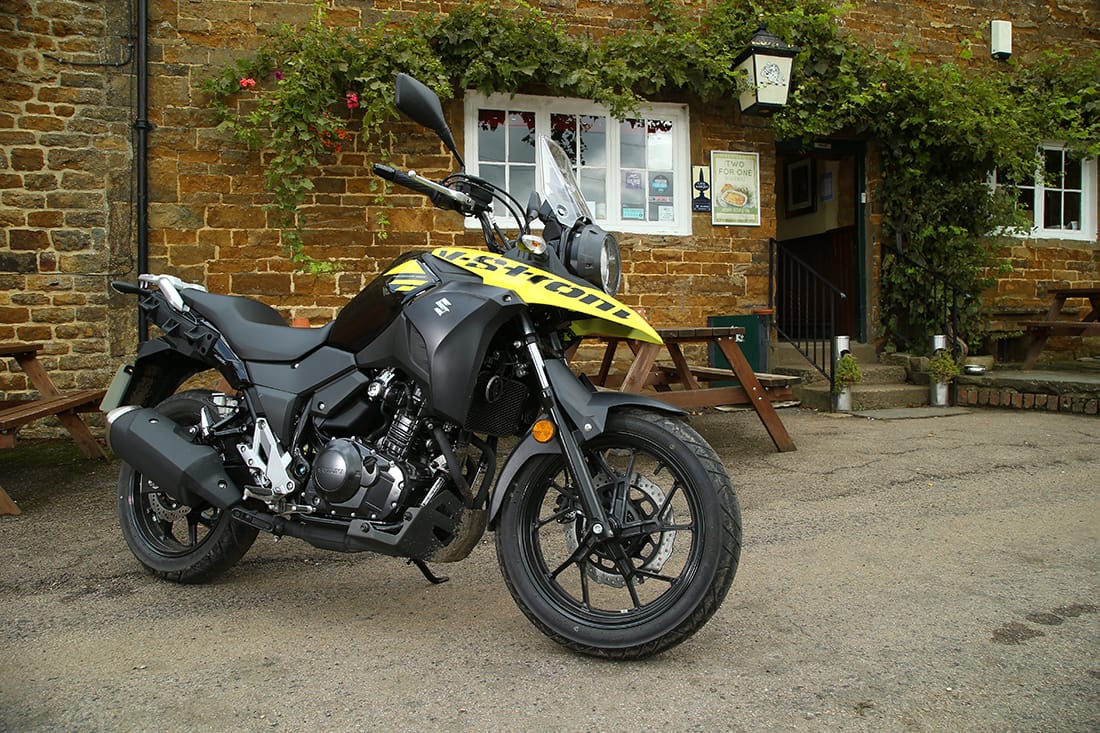
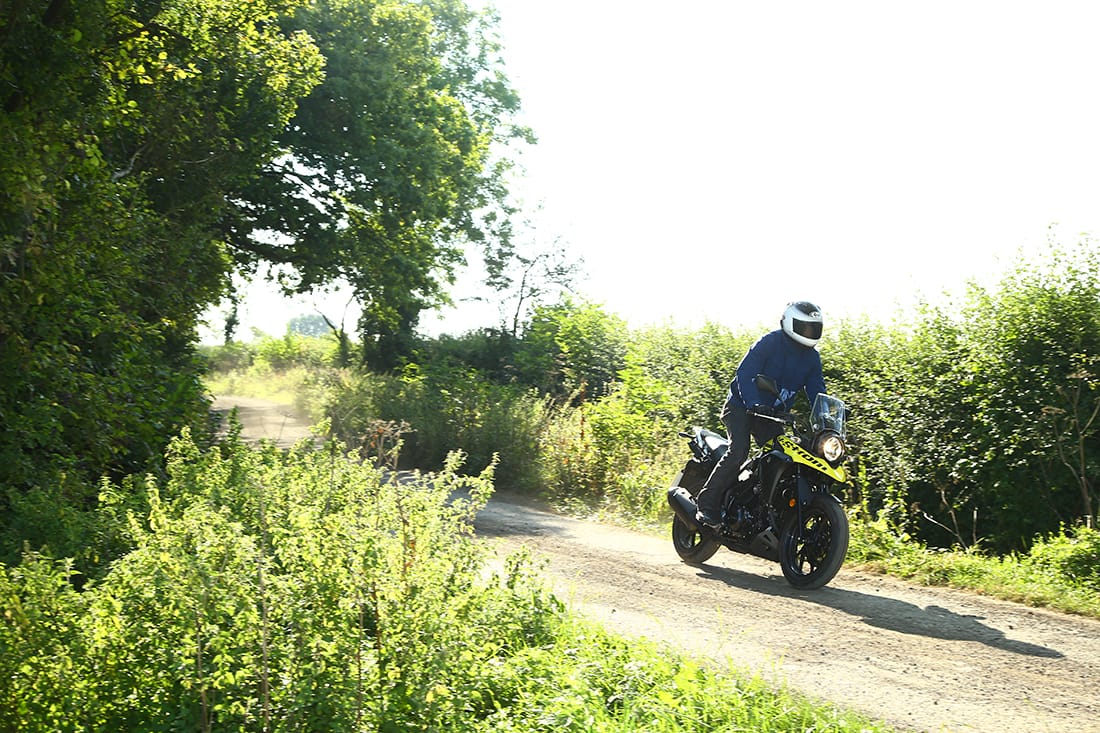
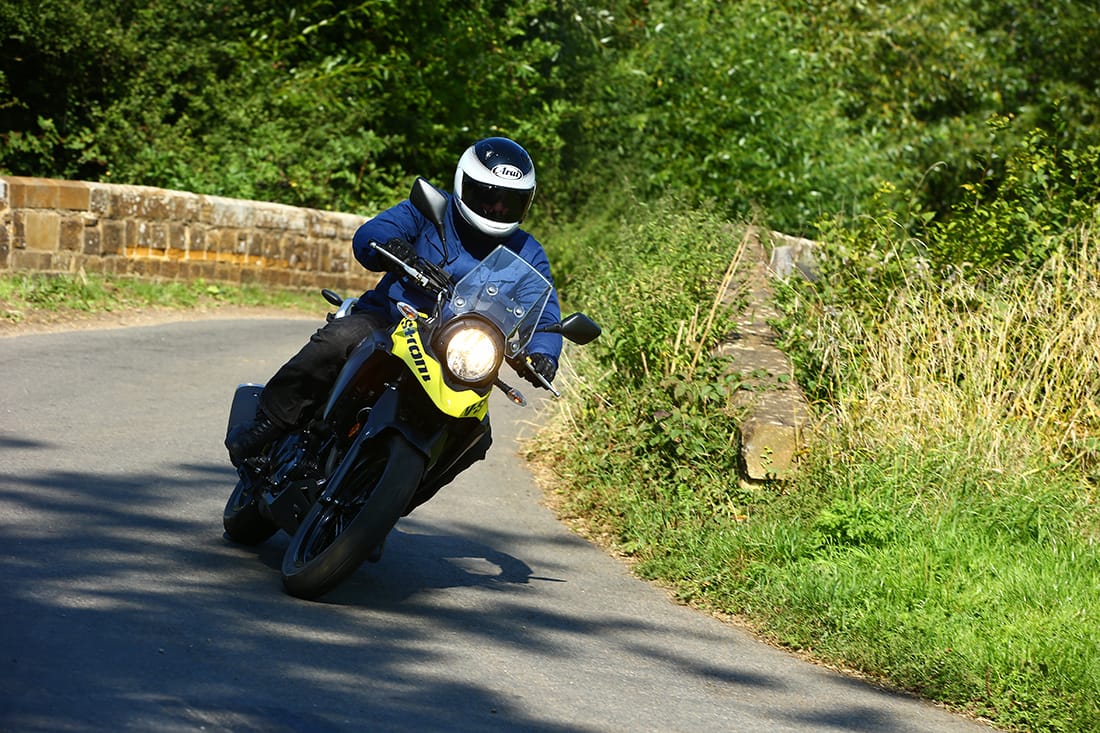
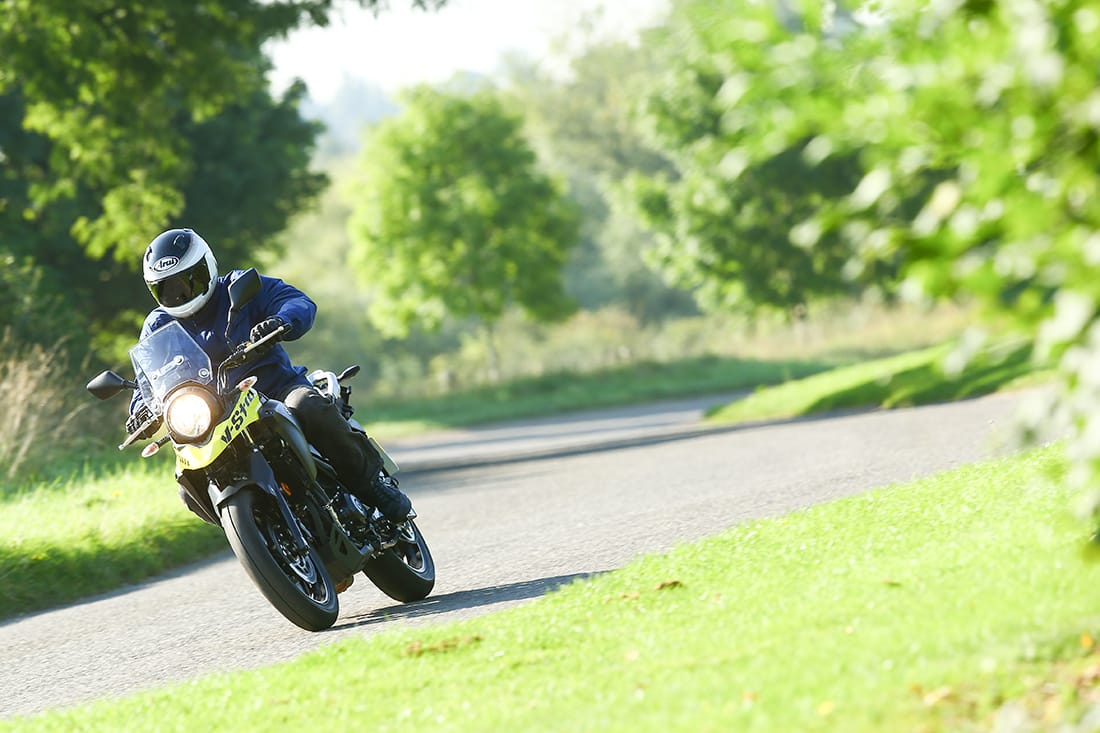
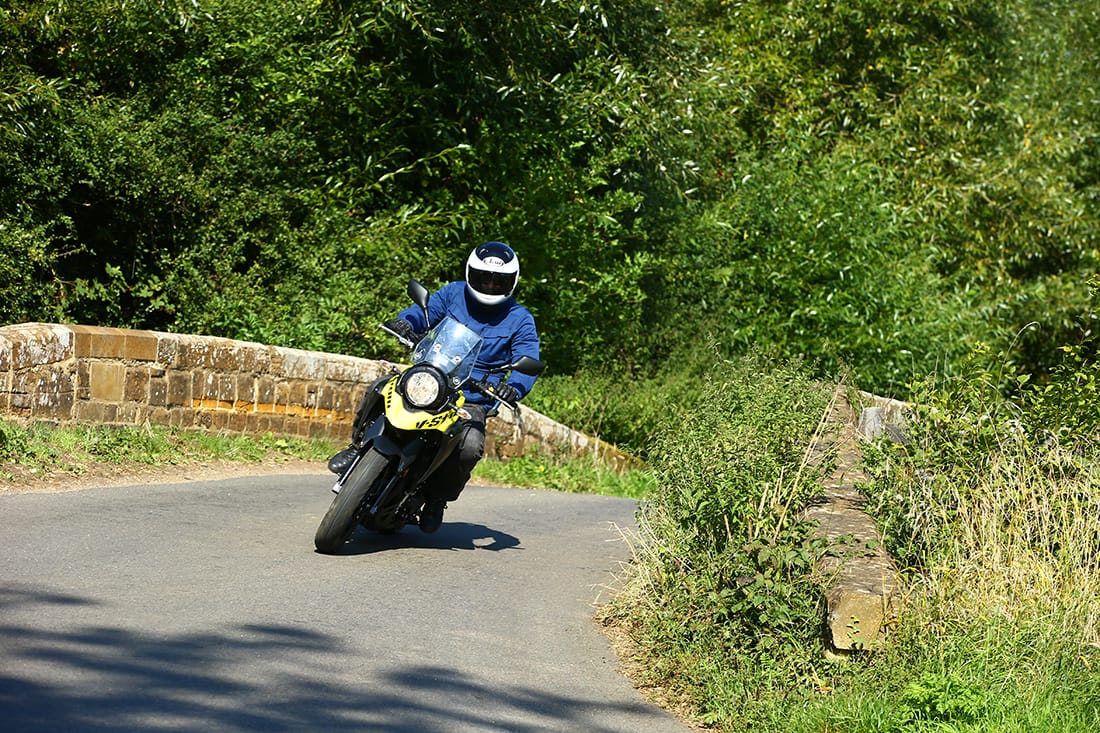
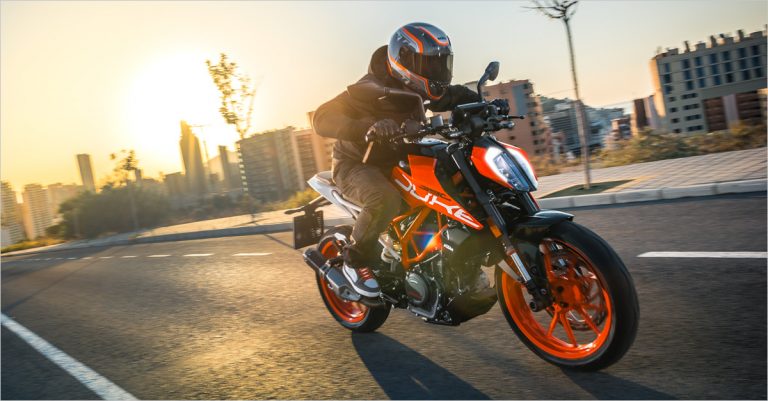
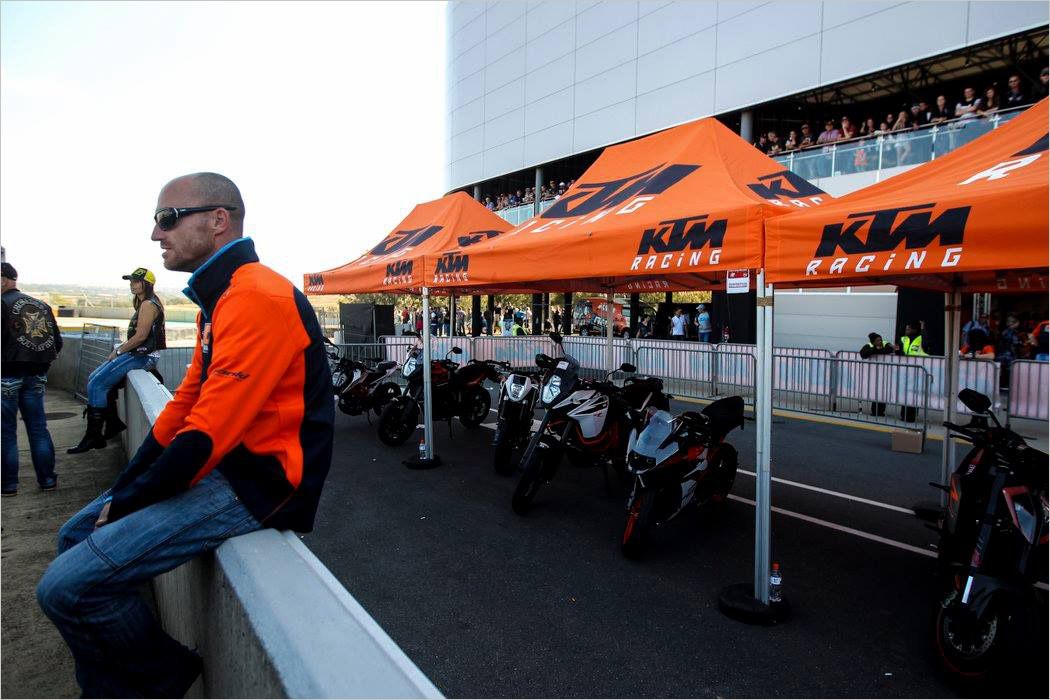
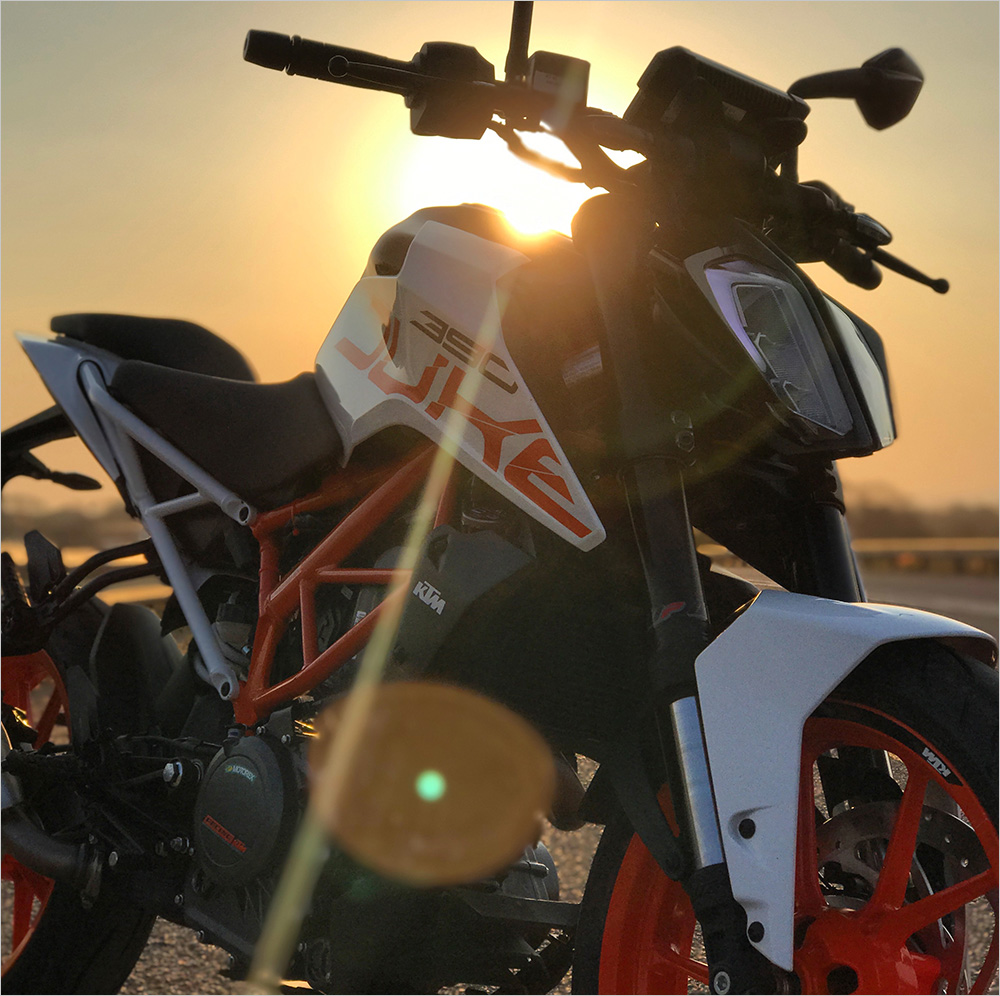 Usually, when testing bikes at the South Africa Bike Festival, you have to follow a Marshal and this can be a little annoying because the level of riders in the group is so diverse they usually move slowly round the track, which means you can’t feel the true aspects of the bike. Luckily in this case, the group I went out with was so slow that the lead Marshal waved me past. Normally you only get to ride 3 laps, but now I had nobody controlling me so, I just kept going and going and I think I must have done something like 6-8 laps before returning to the KTM stand. Apparently, the staff there had been worried about me – they thought maybe I had crashed or something but after seeing my huge grin they didn’t need much explanation as to what had happened.
 My Dad has always told me that when you are planning to buy something significant in your life, “the hunt is always better than the kill”, by which he meant, take your time and enjoy doing the research. So, in this case I did just that and in particular, I enjoyed spending time on KTM’s website using it’s
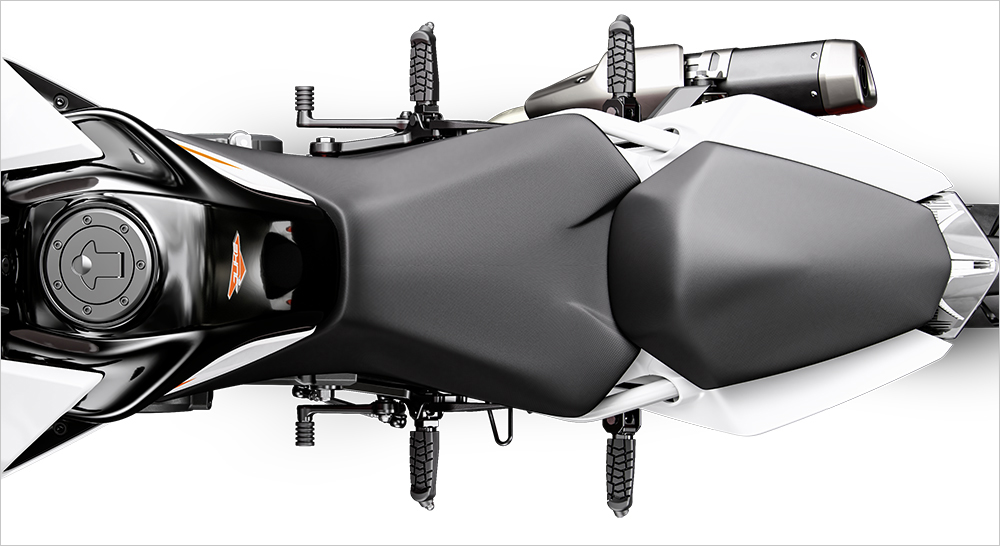
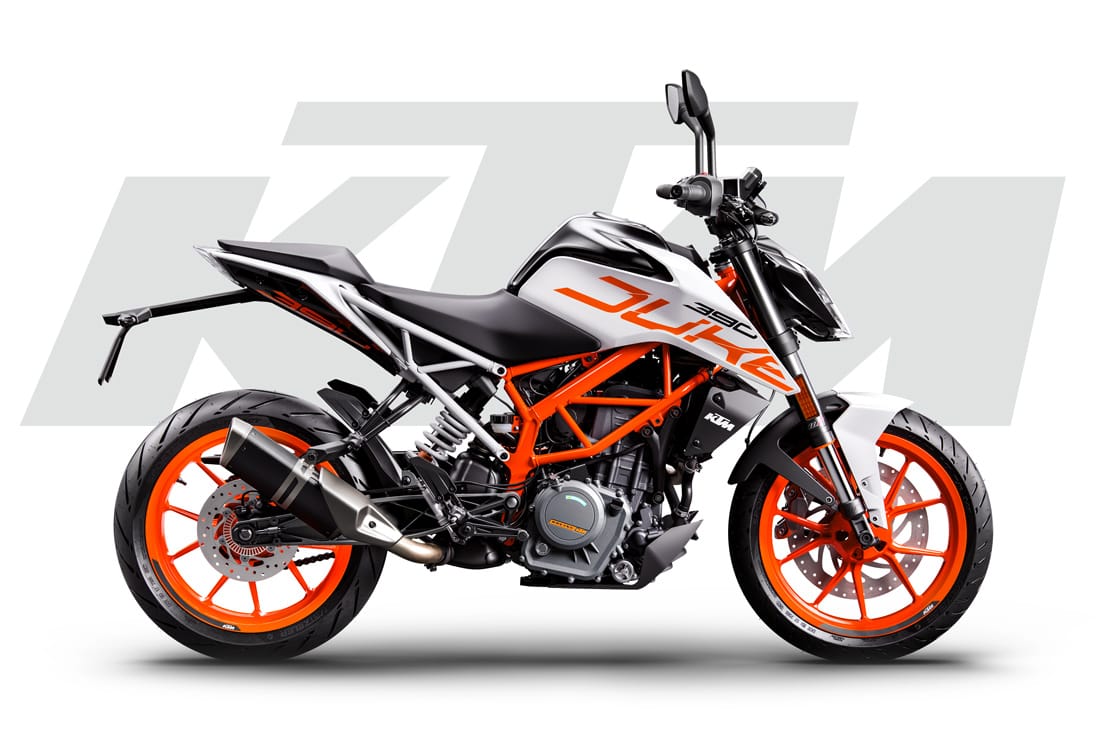
 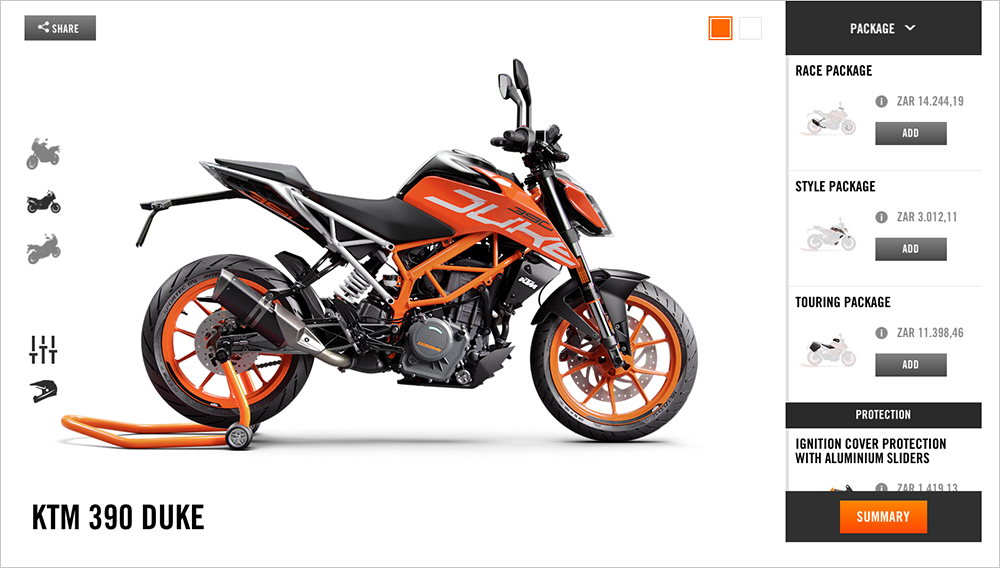 I have been riding the bike now for a few months and this is my feedback. As I mentioned earlier, the bike looks stunning! This small ‘run-around’ doesn’t look like a little bike, on the contrary, you can easily mistake this for one of its bigger siblings. The ergonomics are spot on – initially, I thought the hard seat was going to need changing to the gel version available at KTM but surprisingly, I found the wide surface area seat to be comfortable (I think it must spread your bodyweight over a bigger surface area so that you don’t get pressure on one point). I also found that you can hook on your leg very nicely when climbing off the bike.
 Riding through traffic is a blast; the bike is so nimble and cuts through the traffic with ease. The short wheel base makes the bike very easy to ride – on the highway the Duke travels comfortably at 120 kph – you don’t feel like you are ringing its neck at that speed, which it did when testing some of the other smaller capacity bike options.
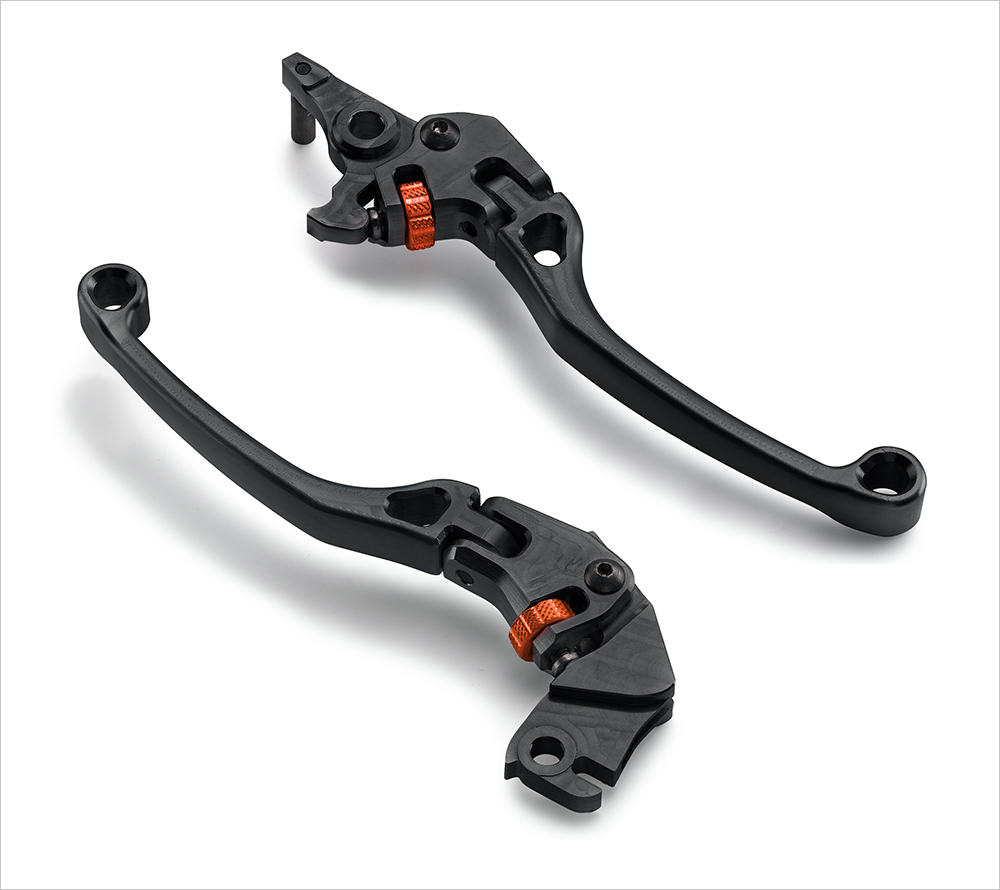
 What I don’t like about the bike: well not much here to be honest, just a little nit-picking. The clutch lever on mine feels a bit flimsy, but on KTM’s website in their powerparts section, I discovered there are upgraded versions which I’ll probably move to in due course.
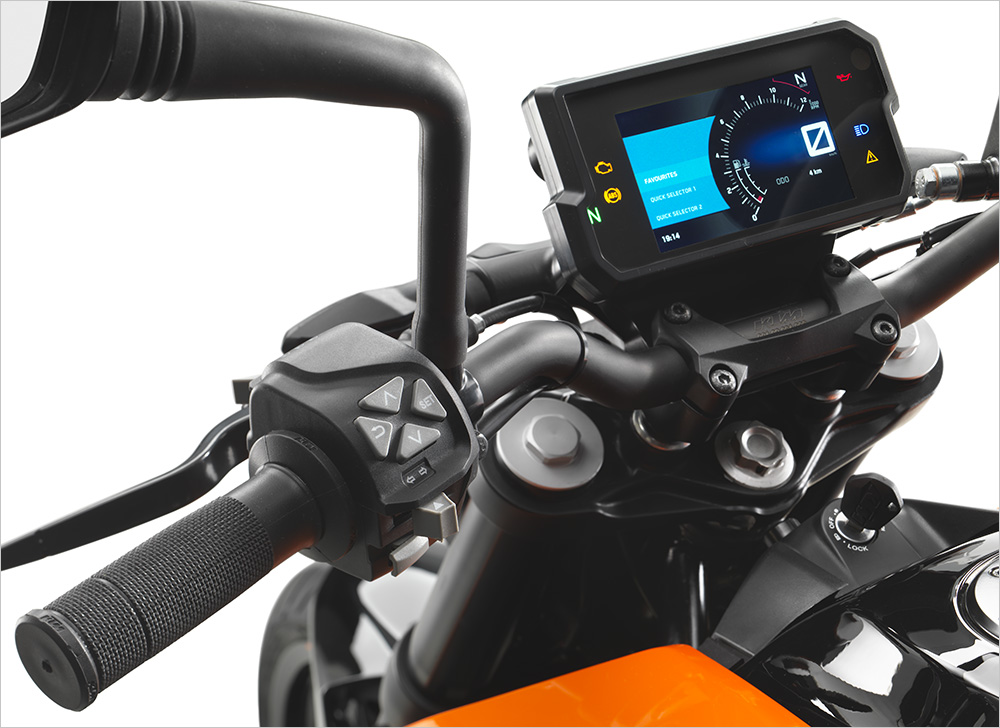
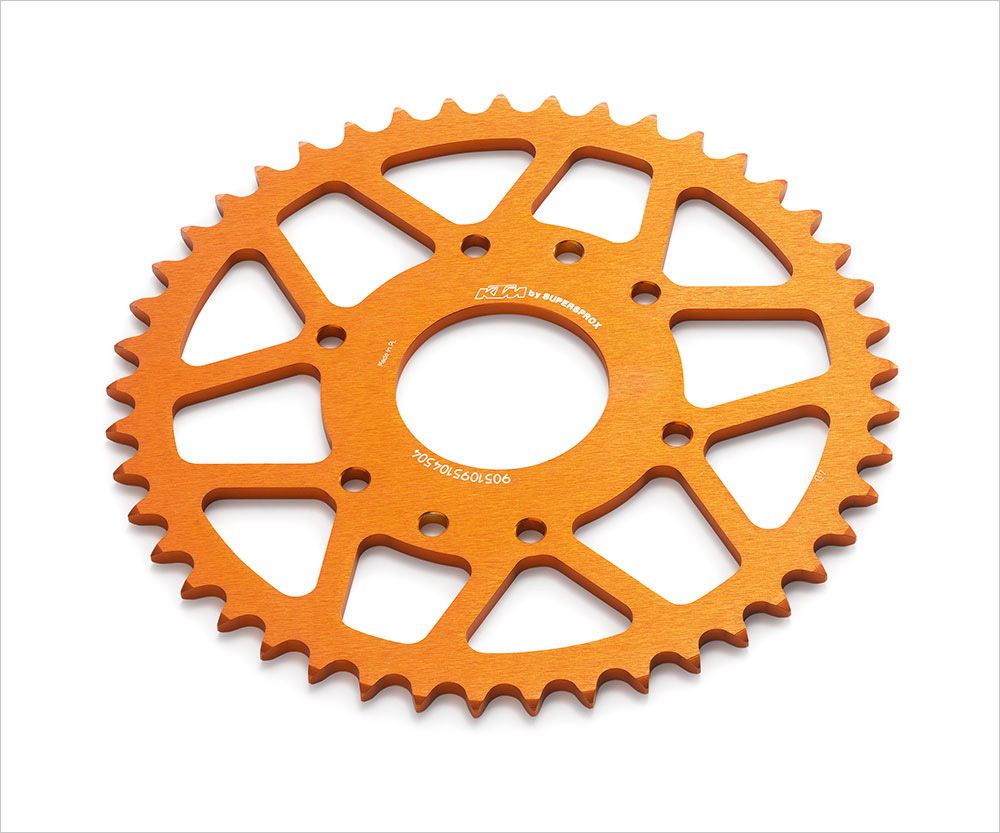
 Then there is the gearing. I often feel like I’m in mid – gear but when I check the LCD dash, I get surprised that I am actually in a much higher gear. This can be annoying sometimes, as I have found myself shifting down a couple of gears when bringing the bike to a stop. To improve this, I will fit a 42 teeth rear sprocket, which is also available from KTM. I actually think this will improve the ride on the highway, as it will effectively raise the gearing, which means the bike won’t have to work as hard.
 A few minor tweaks to the bike and for me, it will be perfectly suited for my intended usage. Overall, I am really very happy with my purchasing decision and I am sure that the 2017 KTM 390 Duke will bring me lots of happy miles with smiles!
 SPECIFICATIONS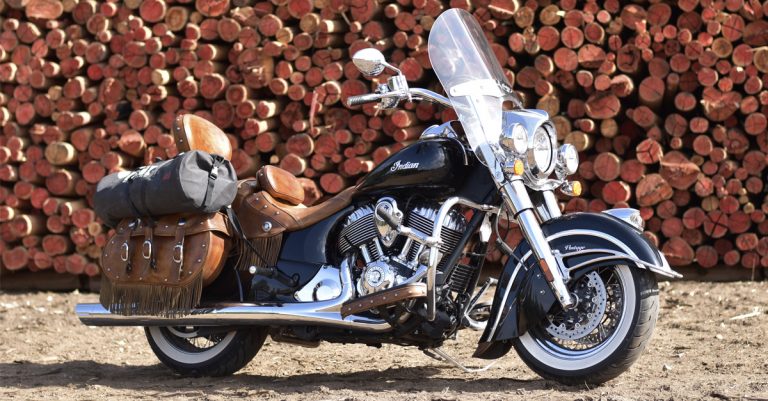
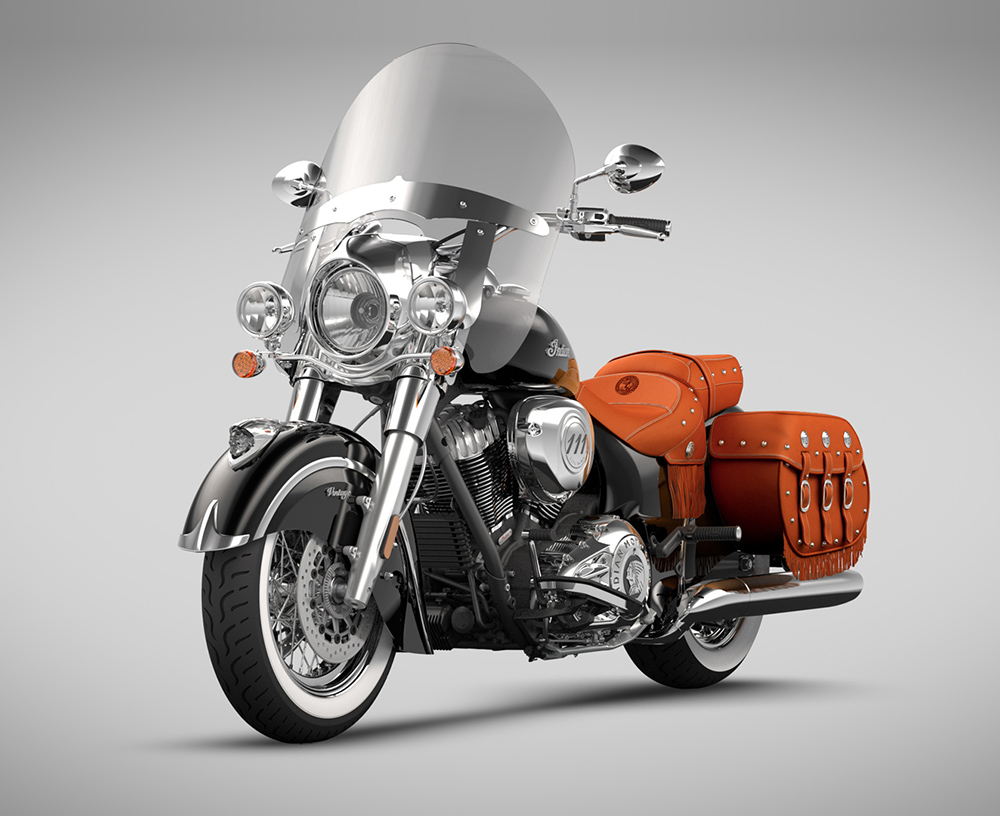 The excitement of any trip always starts with the preparation. I needed to pack my camera/video equipment, which these days, isn’t as big as you might think, plus all of our luggage (bearing in mind that my wife was travelling with me). I quickly realised that the panniers on the bike wouldn’t give me enough space, so, a quick advice call to my friend and experience adventure traveller, Dave Cilliers, was definitely needed. He hooked me up with a nifty waterproof ATG bag, which easily mounted on-top of one of the panniers. He also, rather surprisingly as it was about 28 degrees hot at the time, advised that we pack extra thermals and windbreakers, as it might just get cold in the Drakensberg region at this time of year. I thought he was crazy but non-the less, I took his advice and packed the lot.
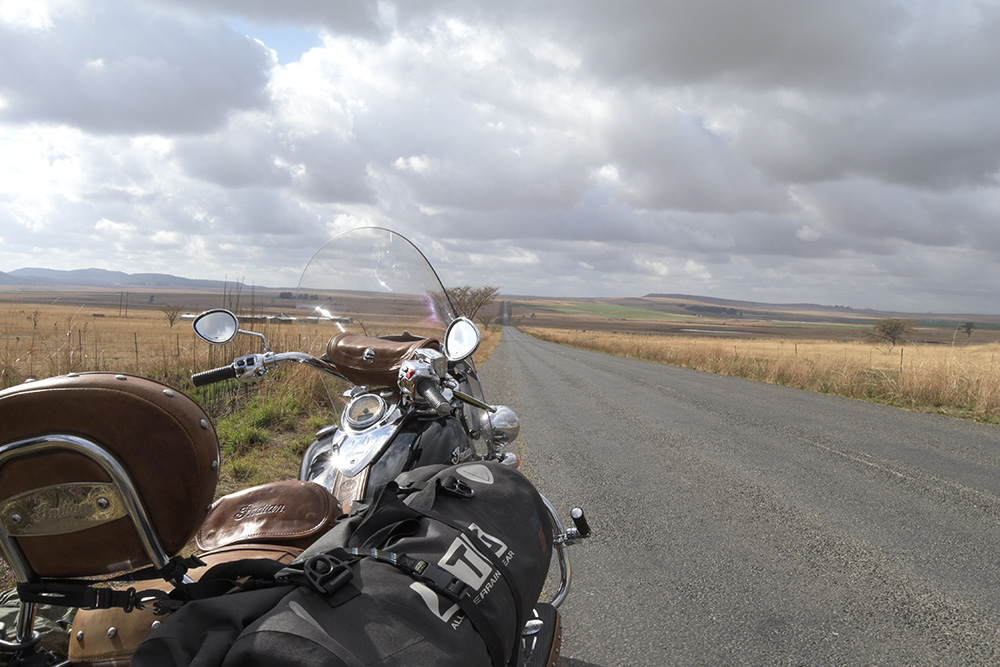 Packed and ready to go, we headed off to our first planned overnight, which was Bergville (KZN). Leaving Pretoria the weather was pleasant, but quickly changed. As we rode down through the Freestate towards Harrismith, the conditions got very, very windy but the Vintage felt very planted in these conditions and I was more than greatful for the huge screen, as this provided much protection in the gusty winds.
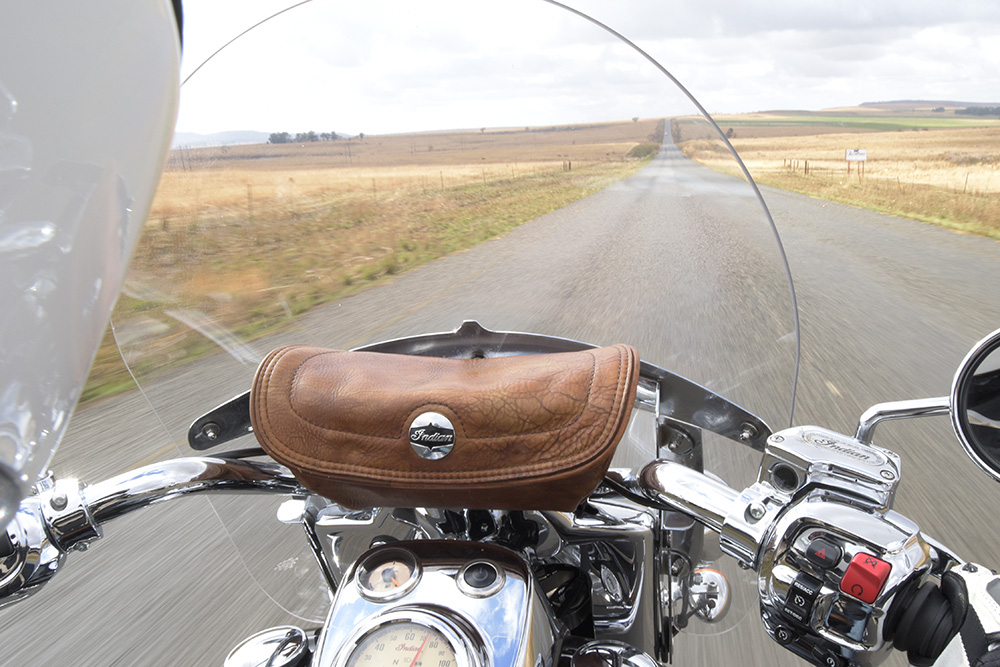 On the open road, the 1,811cc air-cooled V-twin, cruised so smoothly and effortlessly! Overtaking slow moving trucks was made easy as this huge motor puts out 161 Nm of torque at a mere 3,000 rpm – the Vintage has such a wonderful, grunty and powerful engine that never ceased to surprise me throughout the trip.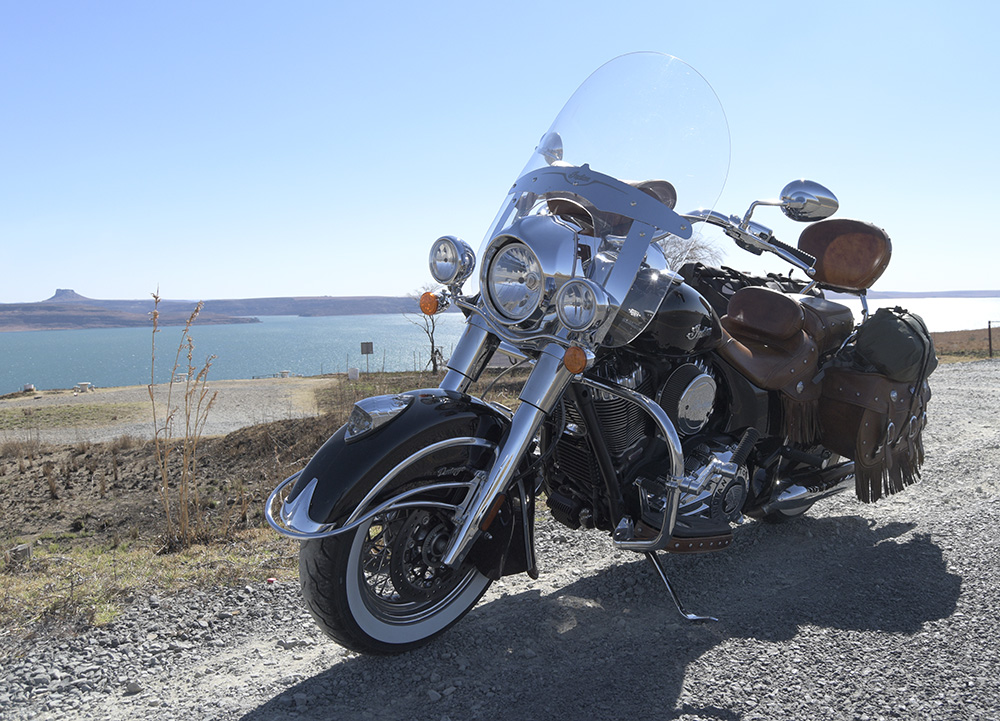
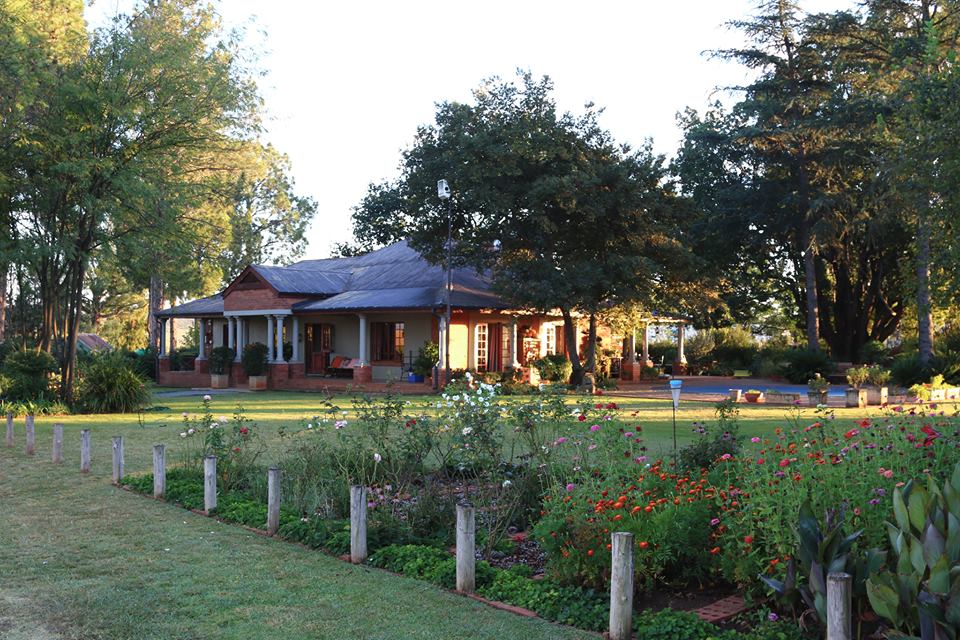
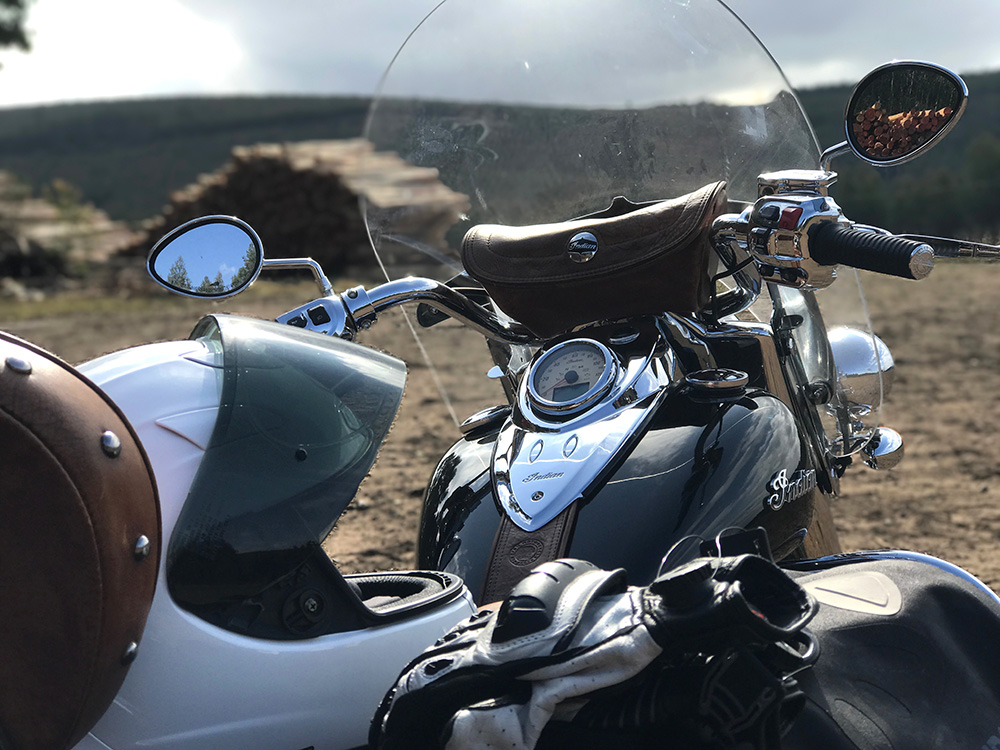
 When I know I’m going to be out of office for several days, I always make sure that I get on top of all my work and clear my desk and computer of clutter before I leave. However with me, and I am sure this happens to most of you, sods law kicks in as soon as you hit the road and some sort of crisis goes down – smart phone’s are a real pain aren’t they. I have found myself becoming more and more addicted to these devilish devices, and they can be really annoying!
 My dad once told me that the first time he ever saw a cell phone was in Sweden in the late 1980’s when he was on the road there with his Sales Agent. He asked what’s the purpose of carrying that when you can do much of your daily phone work before you leave and can always stop at ‘Road Services’ and use a pay phone, if needed. Well it’s usually very cold here was the reply and with this little beauty, I don’t have to get out of the car so often. They both agreed that that was a good enough reason for Swede’s to have them but it would never catch on in most other places!
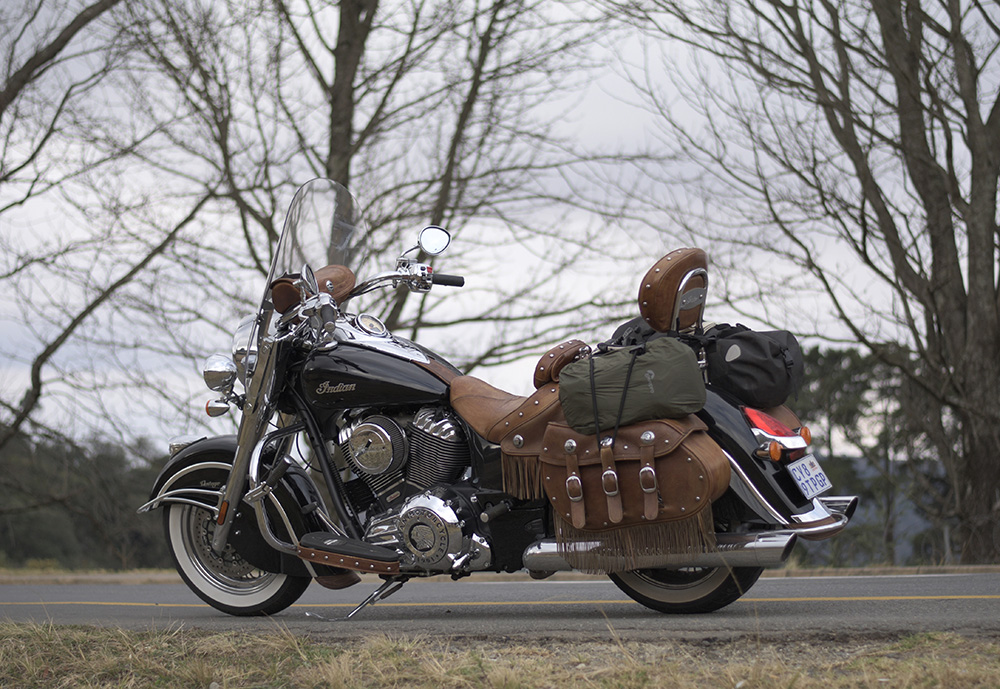 Anyway, I decided on day two to switch off the little chap! Riding the serene Indian Chief Vintage confirmed that this was the right move, with its non-complicated, authentic, old school feel and combined with the stunning roads around the Drakensberg region, it takes you back to a place that is much simpler, to a place which my friend Dave calls BC (before computers). I assure you this was a great and pleasant place to be although, I knew, it would only be very temporary.
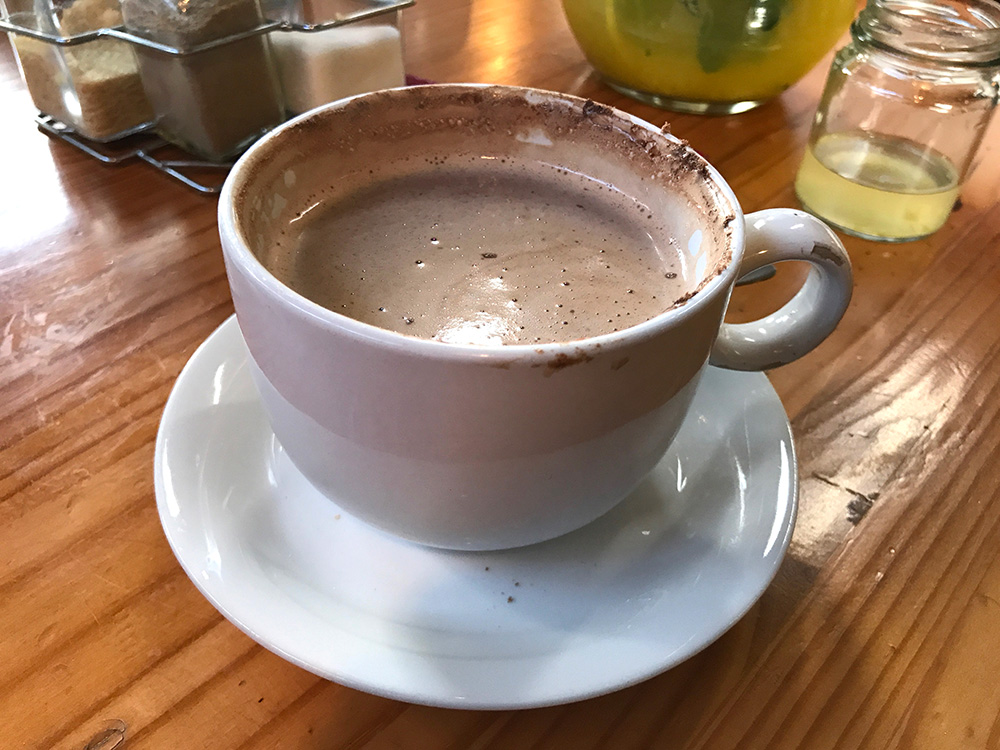
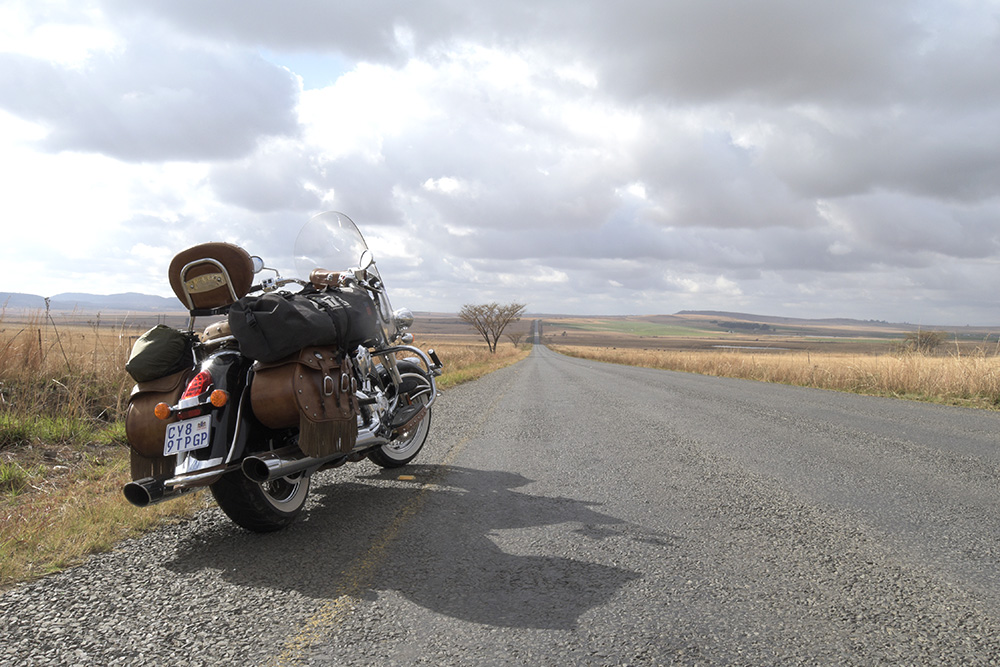 We headed out on the R517 towards Bulwer and stopped for a snack at a quaint little spot called ‘The Pickle Pot’ – great name. At this point it was FREEZING and the first thing we did was change into our thermals – thanks to Dave’s advice. There was a definite cold front in the Drakensburg’s and without the thermals, we would have been screwed. You must stop at The Pickle Pot if you are ever passing by and try their hot chocolate and famous apple pie.
 Back on the bike, we decided to take the shortest route possible down to the coast, which was a good decision as it was bloody cold riding for the rest of the day. We arrived late afternoon at the Pumula Hotel in Umzumbe, which was going to be our home for the next two days.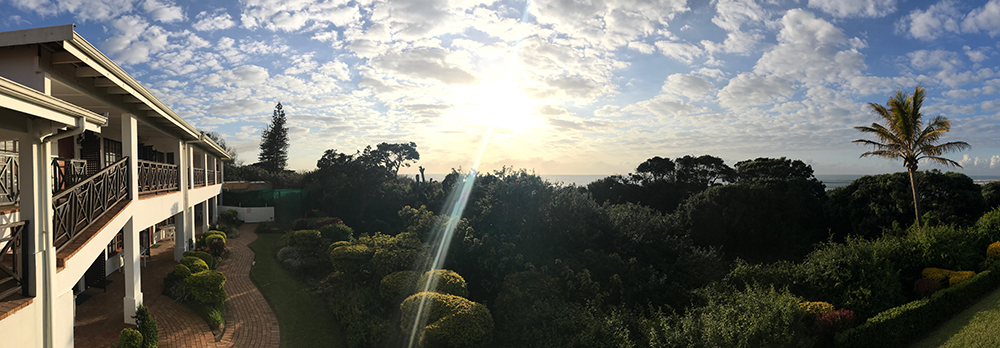
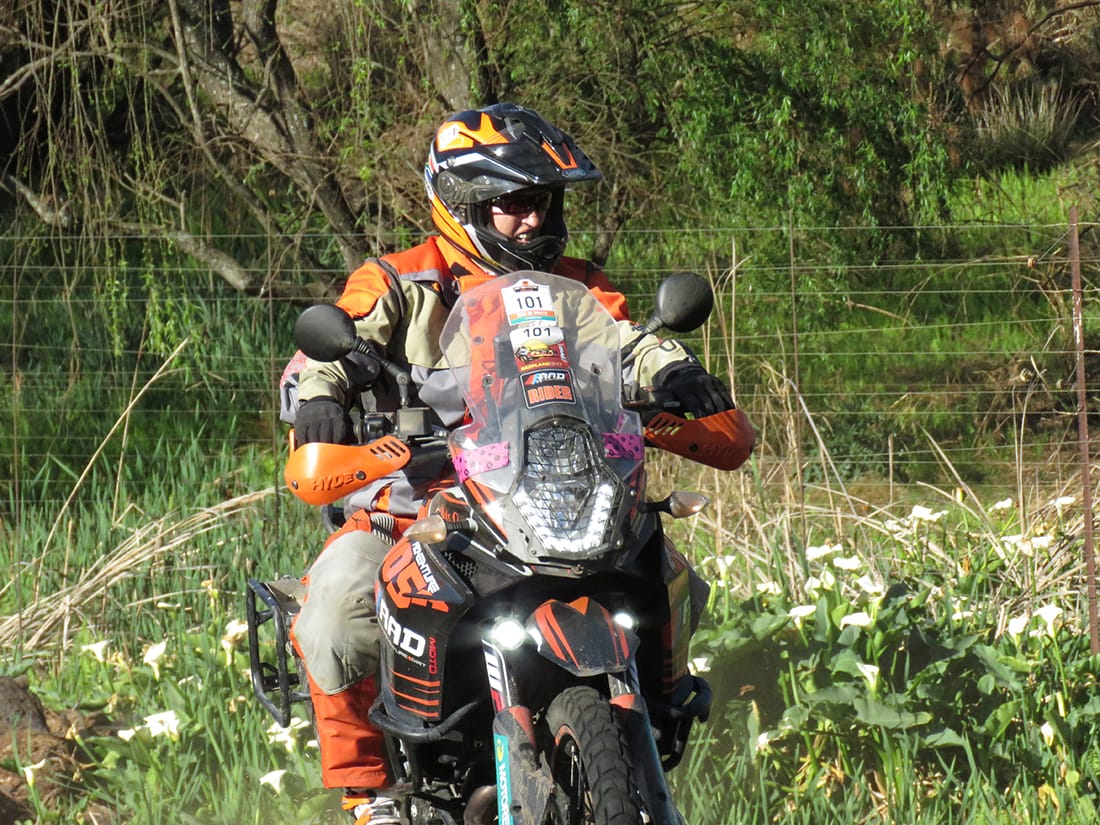
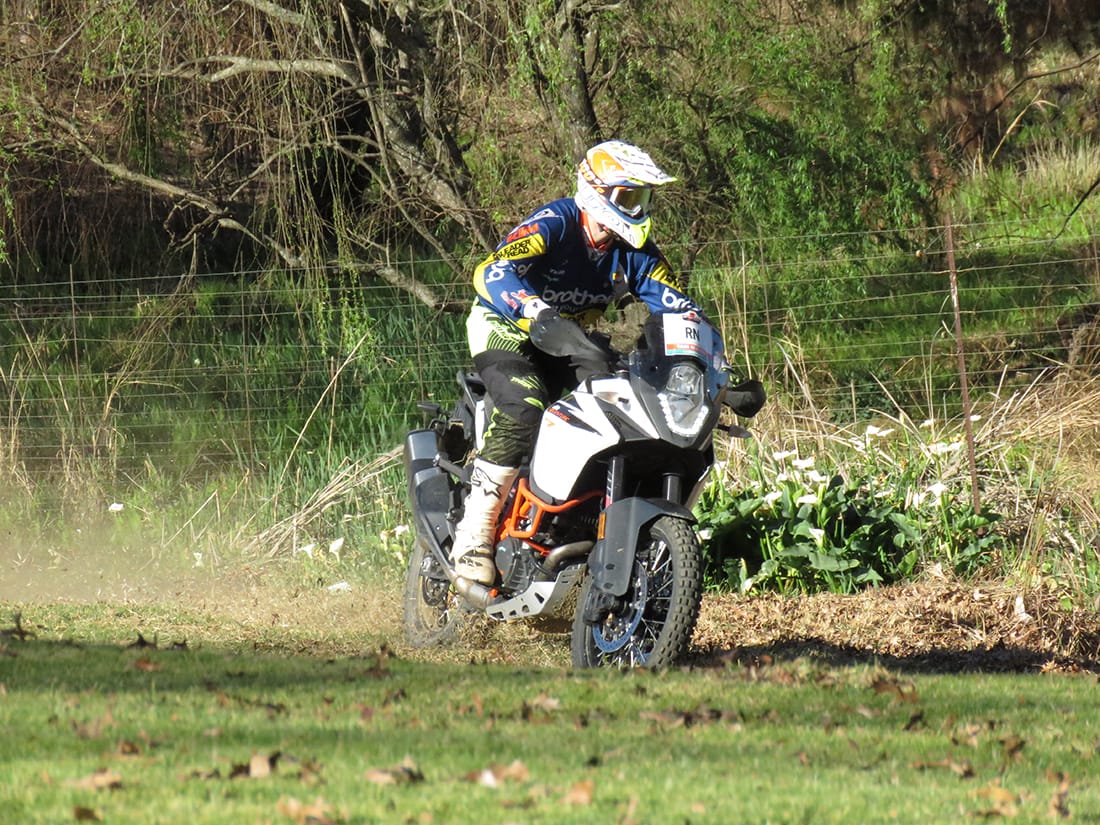
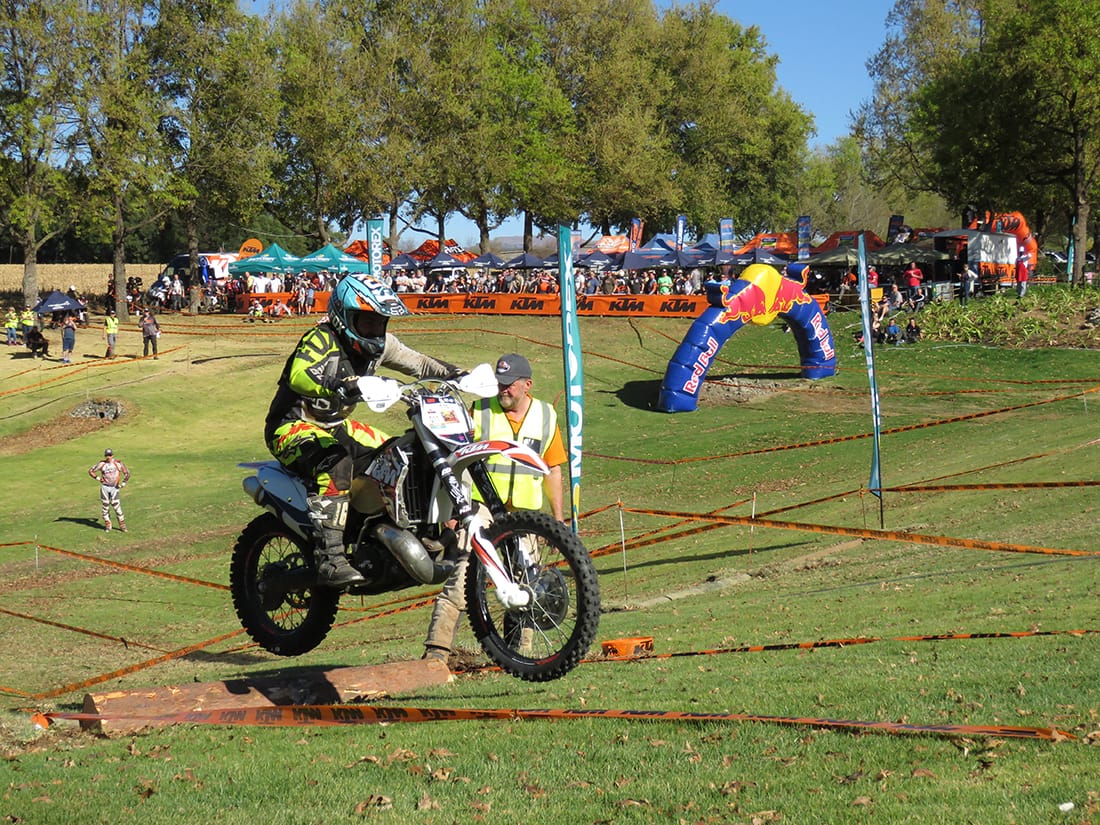
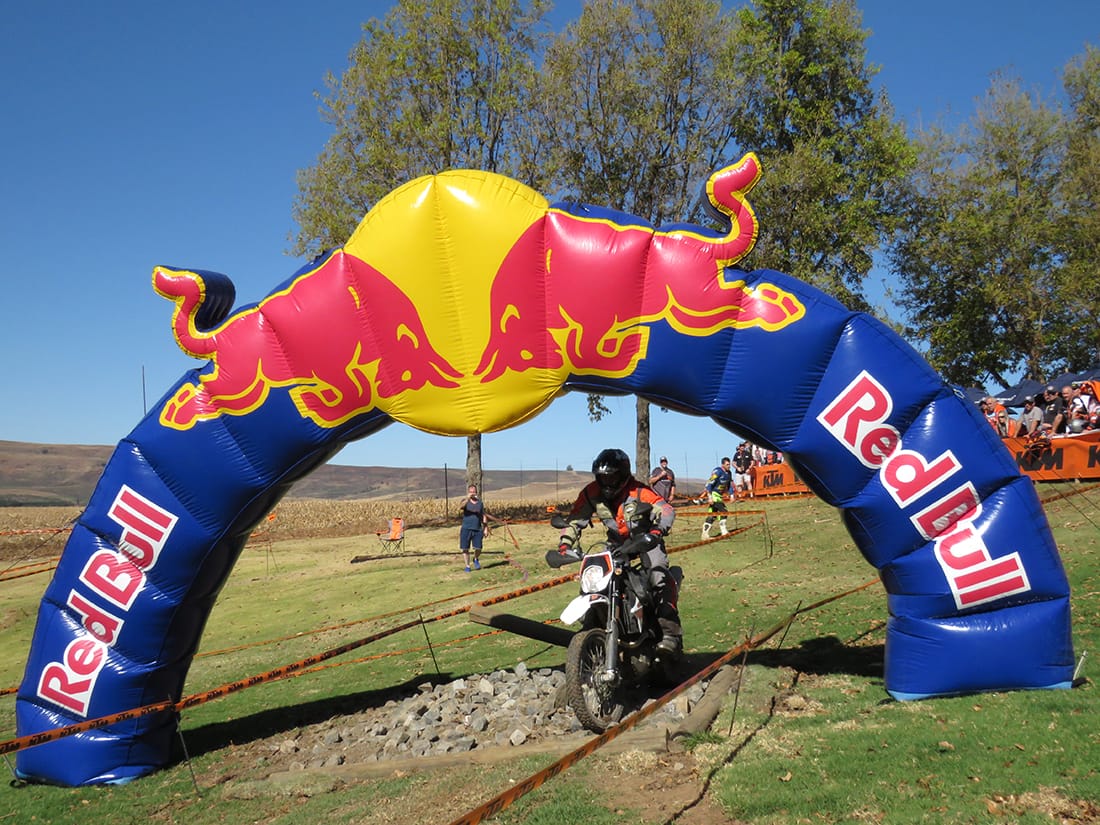
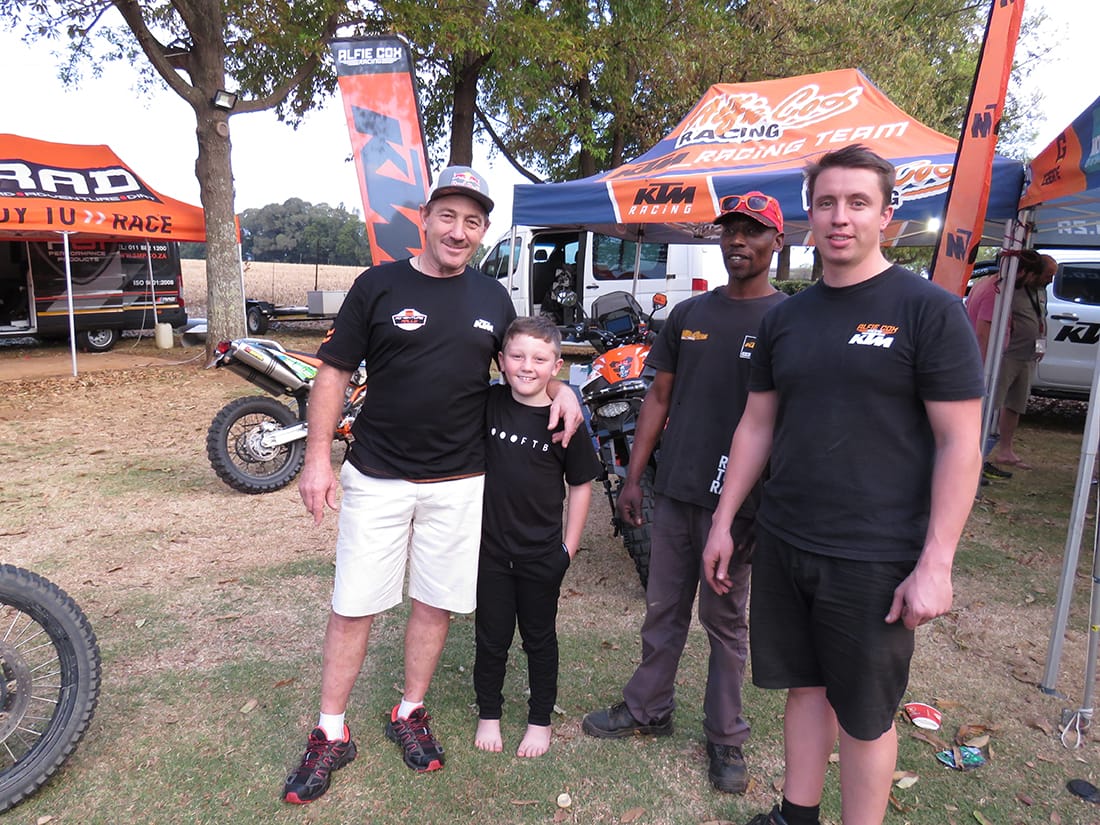
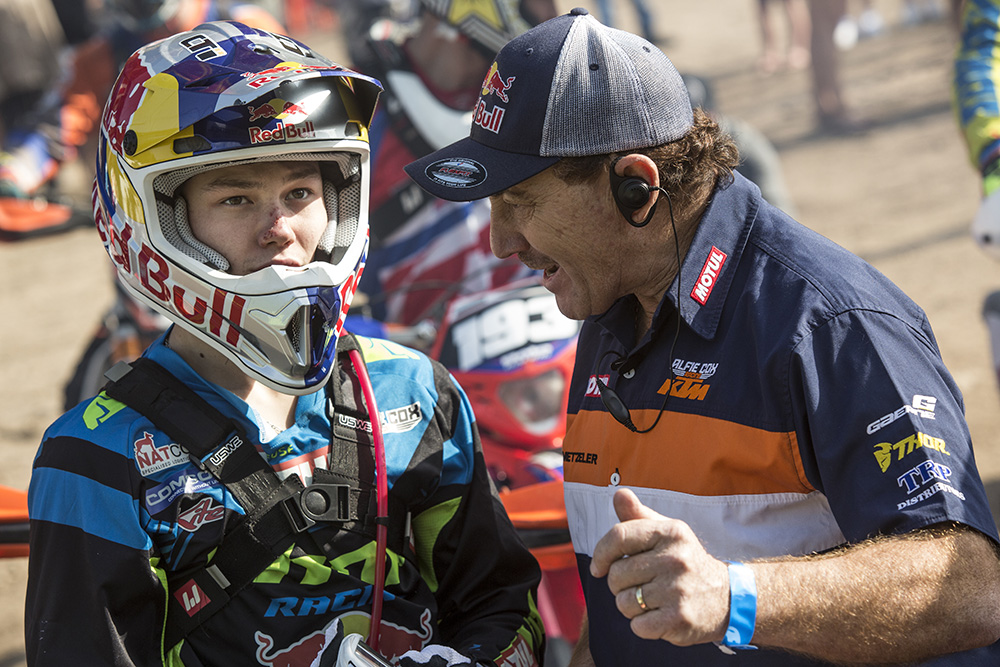
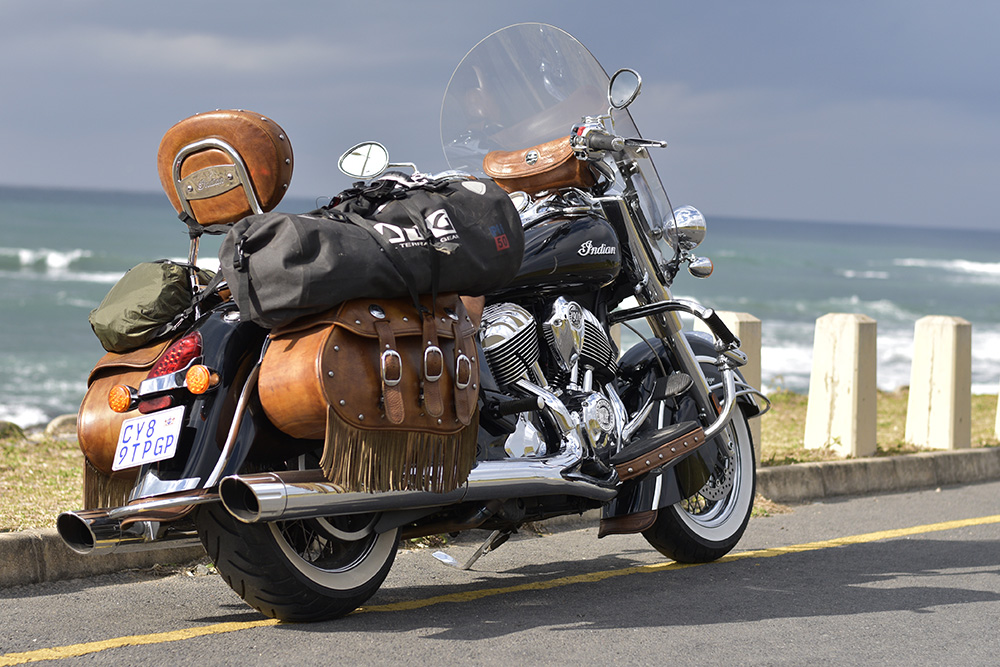 On Day 3 we attended the Alfie Cox invitational Enduro event. You can see my highlights of the event here:
  At breakfast on day 4 we contemplated our route home, now it was warm at the coast so we assumed the cold front had probably passed by the Drakensburg’s. Because we missed the Oribi Gorge Nature reserve on the way down, we decided to ride back a different route so that we wouldn’t miss it on the way back. We took the N2 road towards Kokstad and stopped at a café called ‘Leapolds Rock’ for a quick milkshake and to take in the beautiful surrounding of the Oribi Gorge region… Stunning!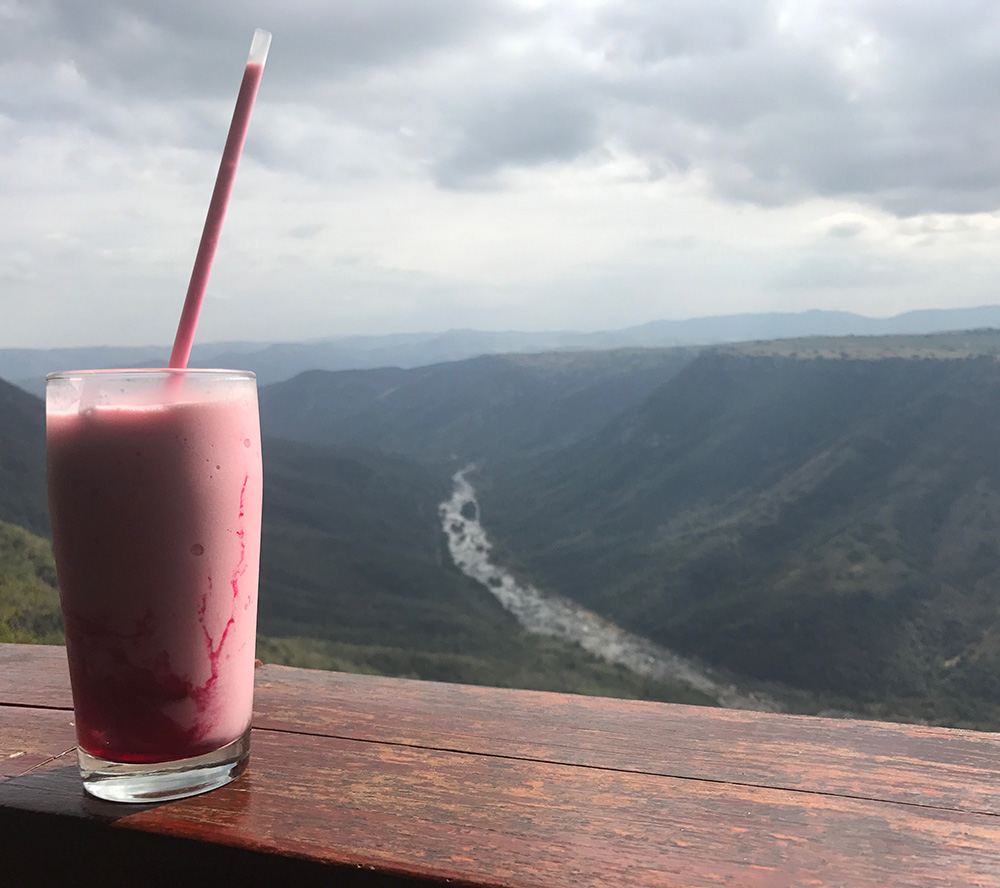
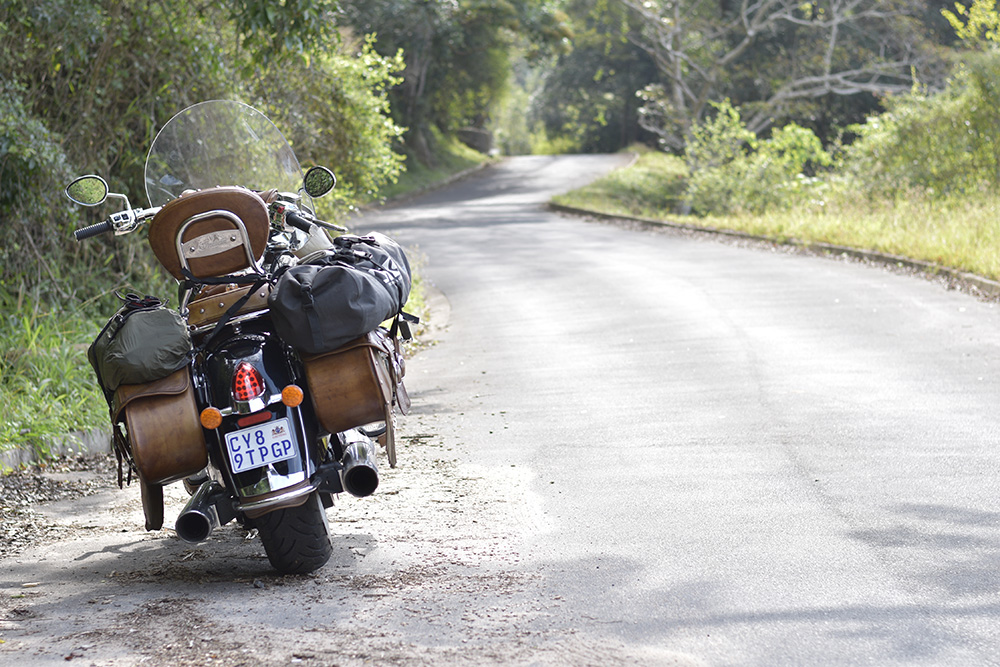 The roads from Oribli Gorge to Kokstad, albeit cold, were amazing to ride and I was surprised how enjoyable the Chief Vintage was to ride through the twisties. Stereotypically, big heavy American tourers have a reputation of not being good in corners but I had an absolute blast riding through the bends. You adapt to the style of riding required very quickly; just ride big sweeping lines and ‘roll on roll off’ the throttle and just feather the brake when necessary – beautiful.
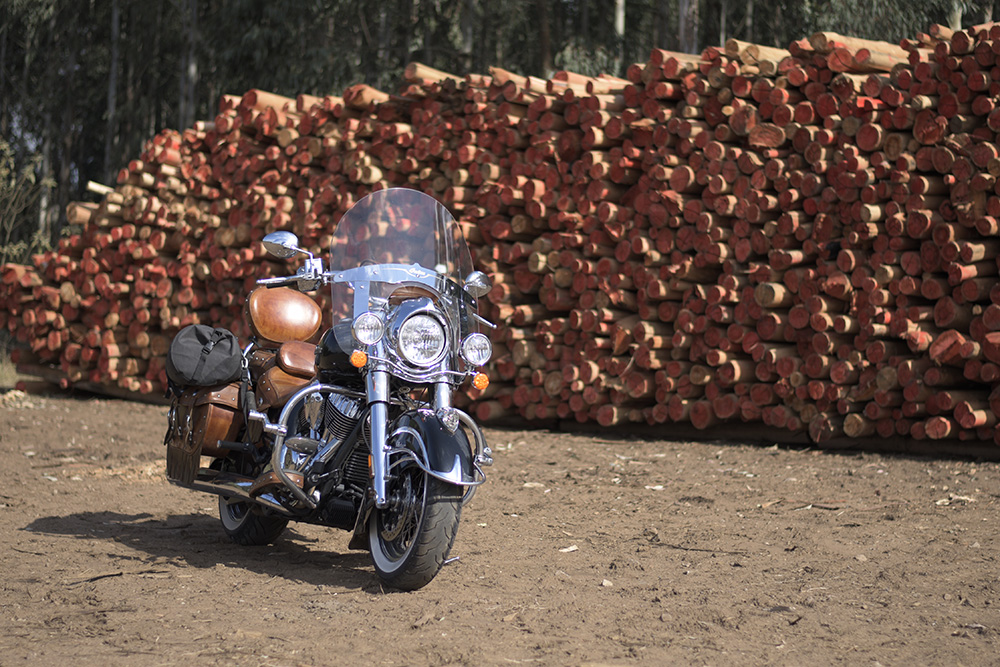 Now, as we got closer to Kokstad the weather got very cold; in fact, even colder than on the way down – ‘thermals out: thermals on’ – thanks again Dave. What I did not tell you at the start is that when I picked up the bike from Indian, they explained to me about the keyless ignition. They told me not to let the key fob get really cold, as the bike might not start. Fortunately, they did provide a secret code that I could apply if that happens but unfortunately, I had forgotten what this was. Sods law kicked in again and I quickly entered panic mode when the bike didn’t start first time at the fuel station in Kokstad. You can imagine my relief when luckily, on the second attempt, the bike powered itself up – phew!
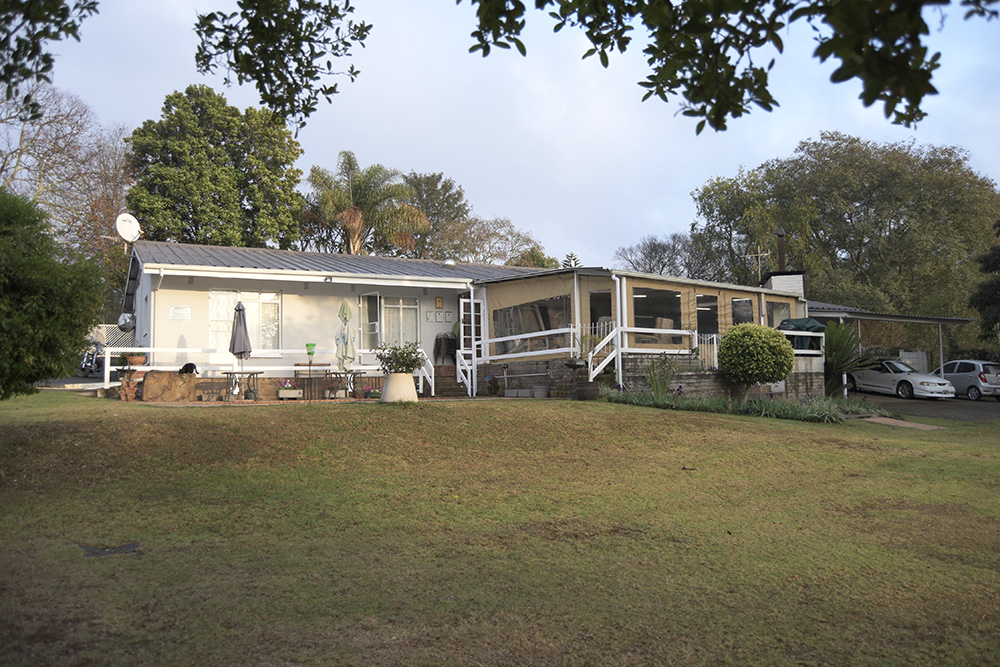
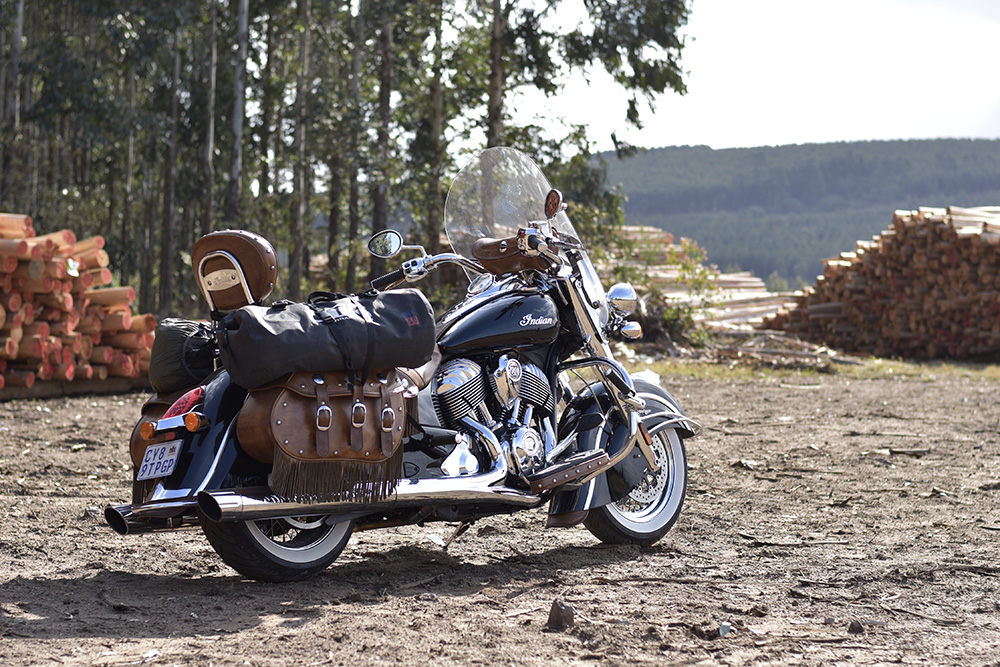 From Kokstad we carried on the R617 to Howick and for the rest of the day it was basically riding in survival mode, just trying to get to the overnighter and out of the freezing cold. At Howick we stayed at a B&B called ‘Meander Inn’, which turned out to be an absolute godsend. The people there were super nice and our stay was made really special due to their superb hospitality, great breakfast, and their clean and comfortable rooms. The next morning their garden boy leathered-down my bike in preparation for the days ride – great service, great place; I highly recommend it.
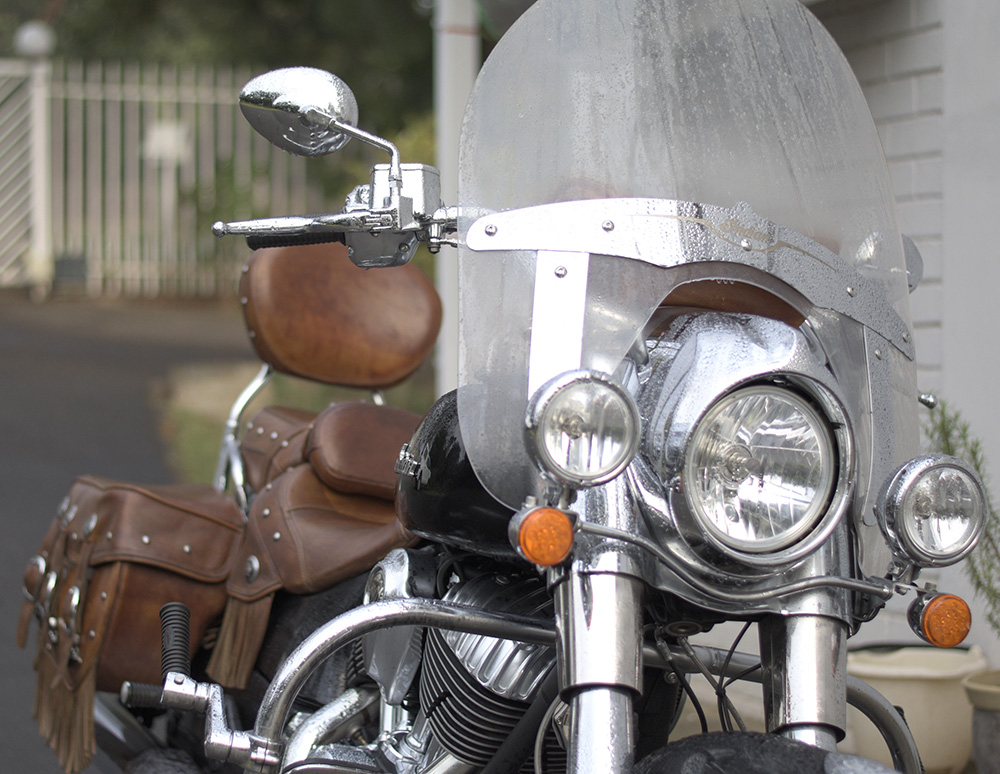
 Remember the key incident? Well, I didn’t want anymore frights, so that night I found myself nurse-maiding the key – I wrapped it in a clean sock and rested it on the heater in our room – Ah, a little touch of paranoia, I think. Which brings me to the point, why did they ever invent keyless ignitions? What was wrong with a key for the ignition?
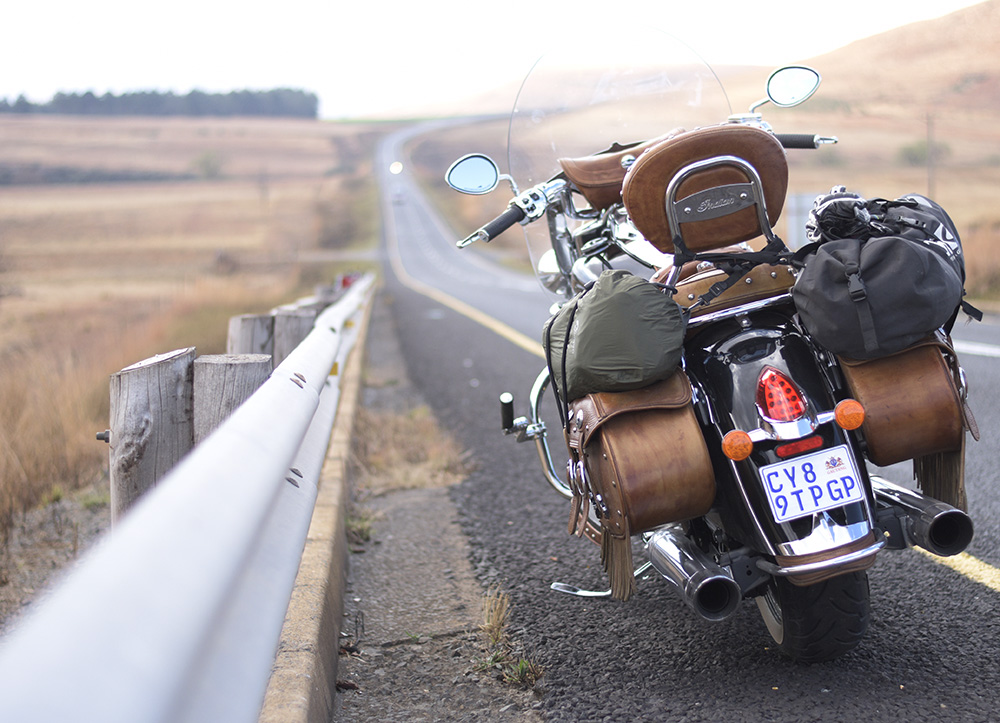
 Riding home, I quietly reflected on the trip. I found the experience to be the most purest form of motorcycle riding that I have ever done. Everytime we went to climb on the bike, there was someone there admiring it and asking lots of questions and giving compliments –the Indian Chief Vintage bike is really attractive, a great ‘head-turner’. The feedback from my wife was that she was very comfortable on it (apart from the cold) and we did cover many km’s during the trip and it was her debut as a pillion rider. You felt like a ‘King of the Road’ – I would not have swapped the bike for anything else!
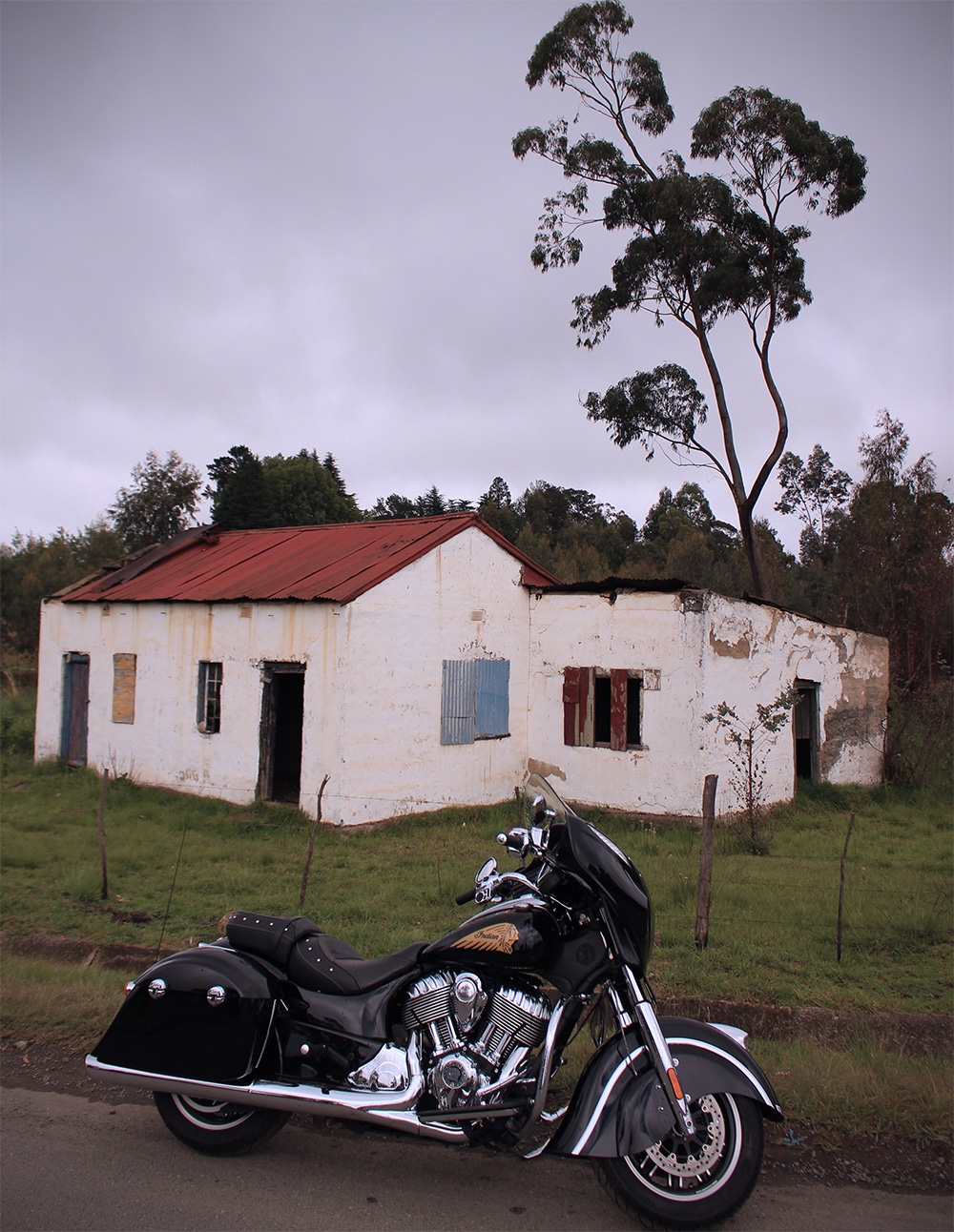
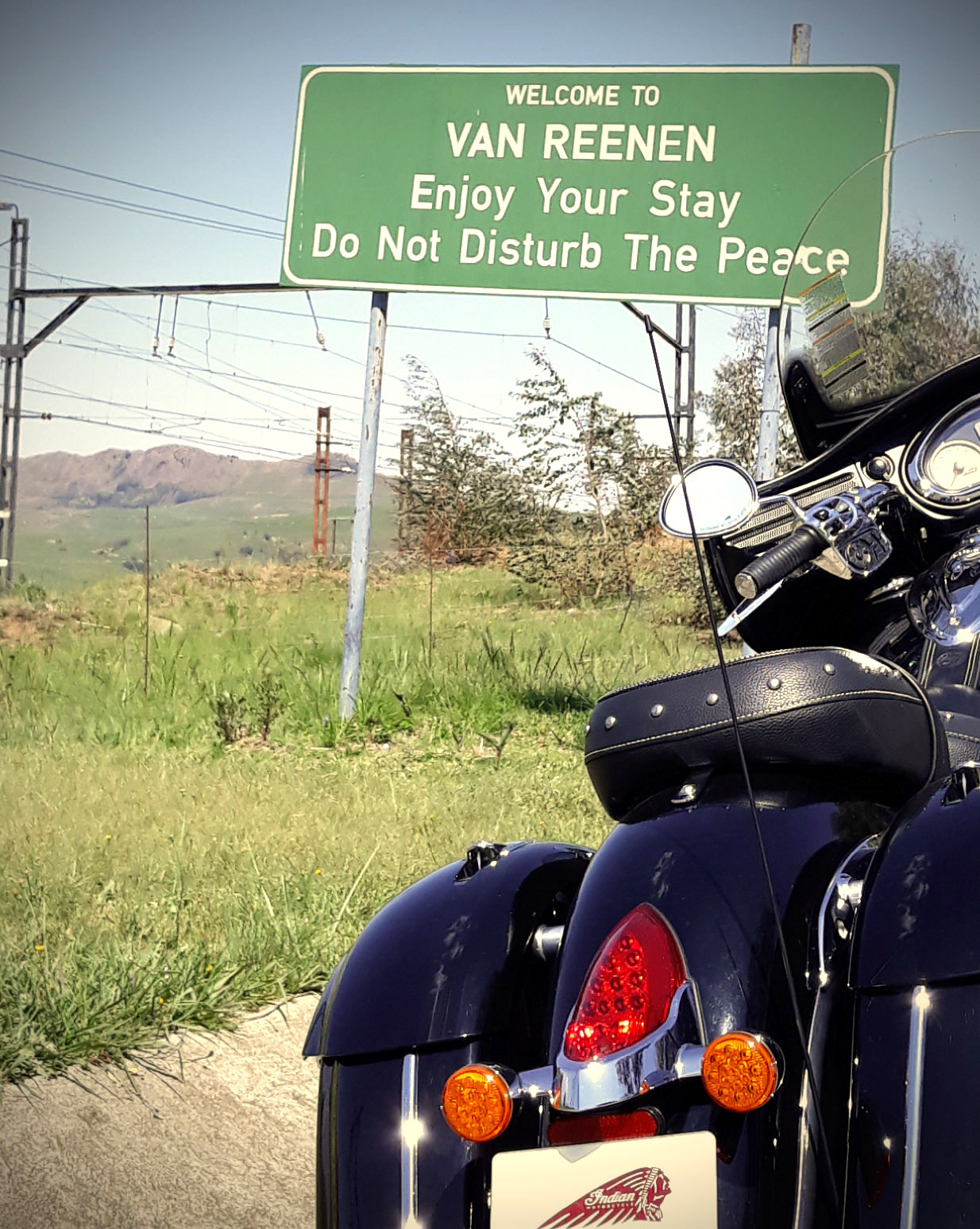
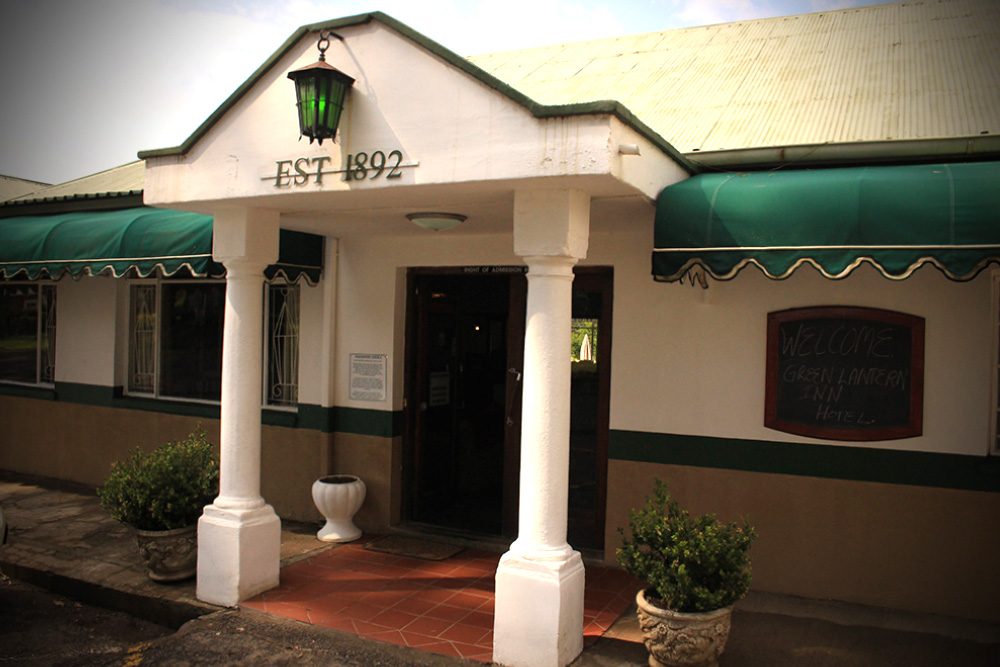
 When I returned the bike back to Indian, I found myself drooling over some of their other models, like the Springfield, for example – I have to say, many thanks to them for a brilliant experience and I can honestly say that 5 days with an Indian – I am converted!!
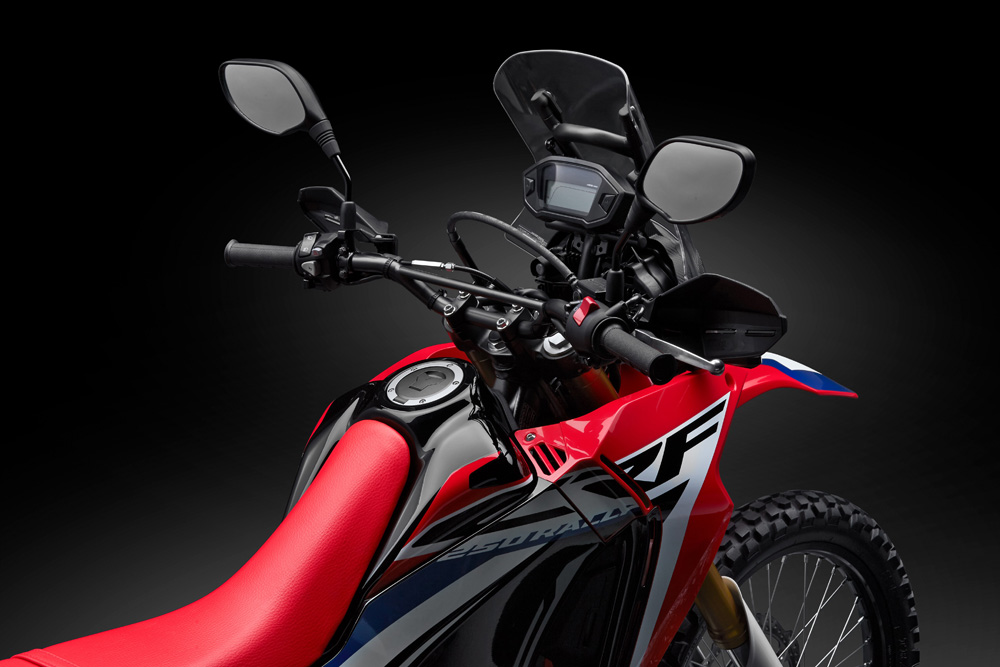
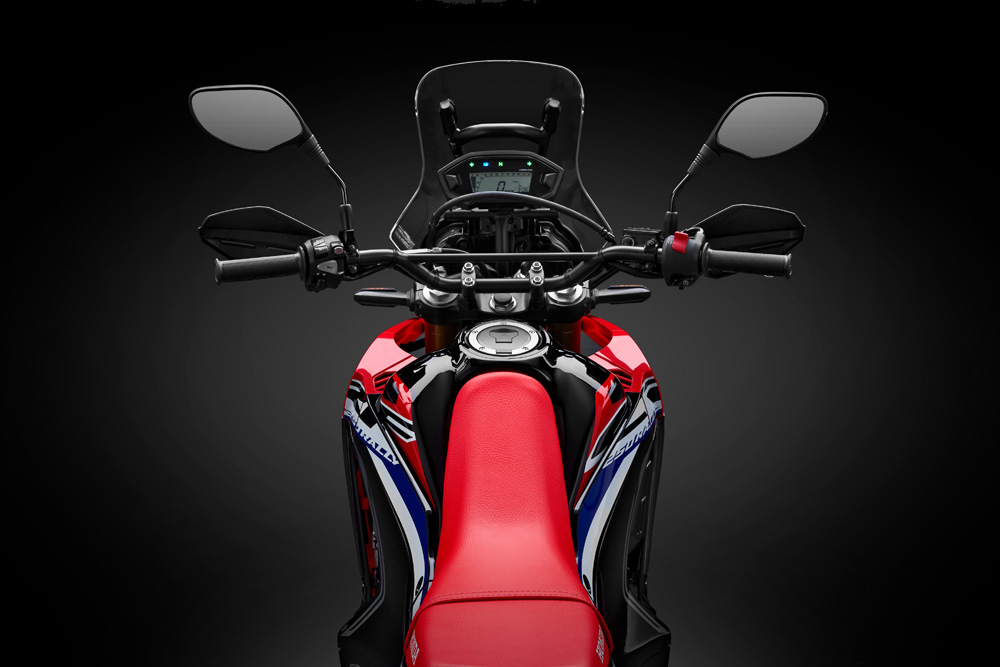
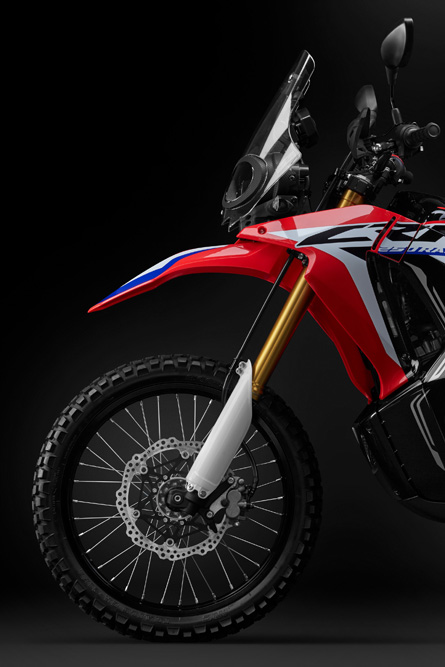
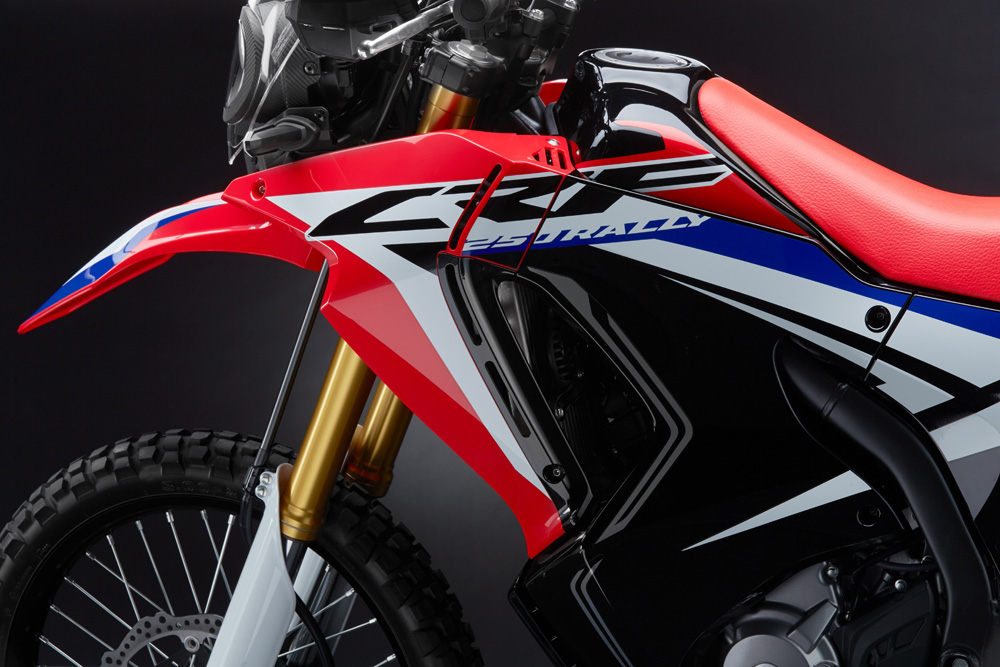
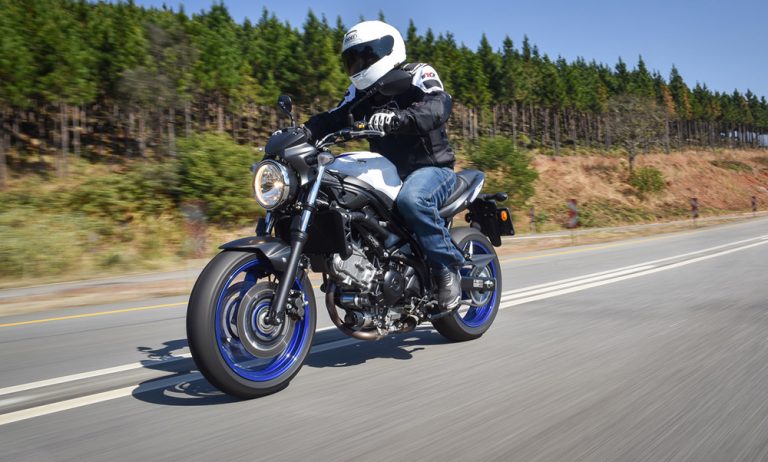
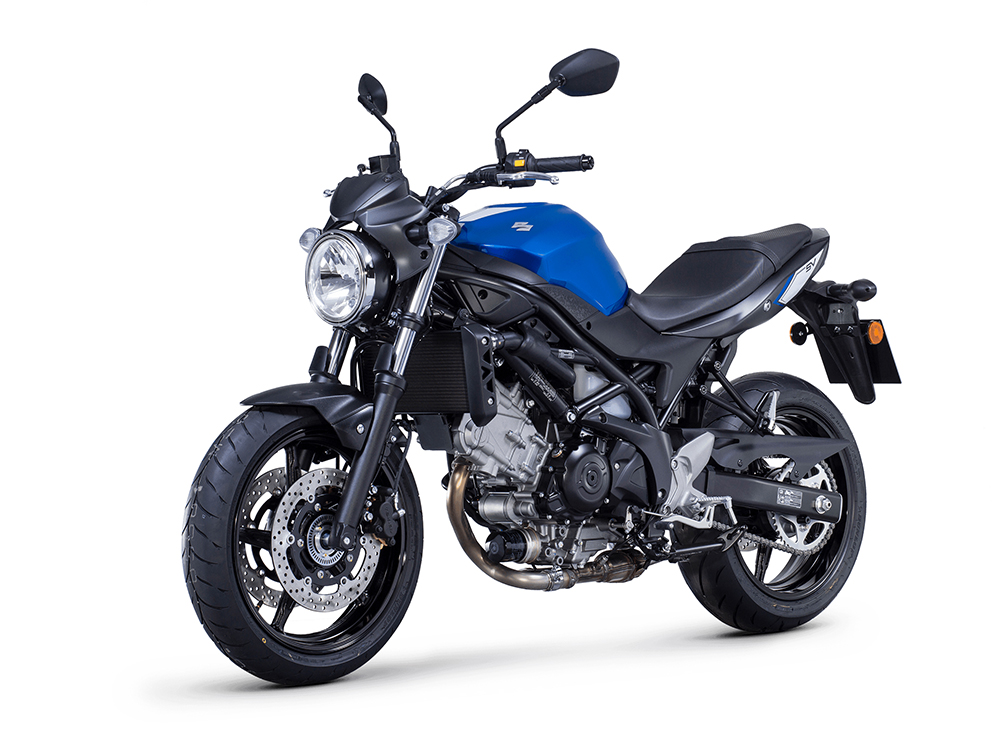 At 197kg’s weight, the Suzuki is effortless to pilot around a racetrack or anywhere else for that matter. Non-adjustable 41mm forks and a preload only rear shock, provide an admirable job of keeping the SV 650 in shape. The bike steers accurately and sticks fiercely to its chosen line. The result is a bike that is simply loads of uncomplicated fun to ride. Previous generation SV’s made favourite track tools, and I see the same thing happening here. Really discerning riders may feel the need to spoon in some fancy suspension but the standard kit is perfectly adequate for most.
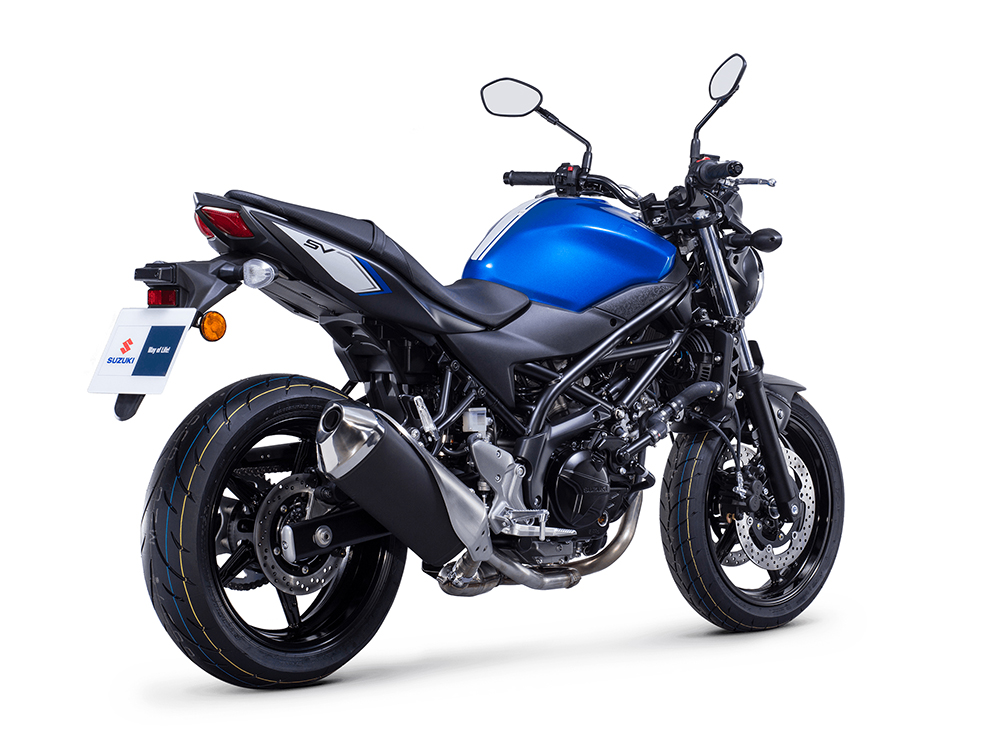 Comfort is good for long stints in the saddle thanks to spot on ergo’s. That said, your butt may take some strain as the seat is pretty damn hard. Seat height is at 785mm and the seat’s slim profile allows even the vertically challenged to perch quite comfortably. The bars have a nice spread and fall nicely to hand yet are slim enough to allow traffic filtering. Oh yes, and the six speed gearbox is like the fuelling; flawless. The LCD display is neat and gives you all the info required. Fuel level, consumption, range, temperature, clock, speedo and revs – it’s all there. The engine hangs from a trellis frame as a stressed member in a manner reminiscent of Ducati’s Monster. In fact, in typical Japanese fashion, Suzuki have fashioned a bike very much along the lines of the Monster but with a huge dose of simplicity and reliability and practicality thrown in, and at a brilliant price!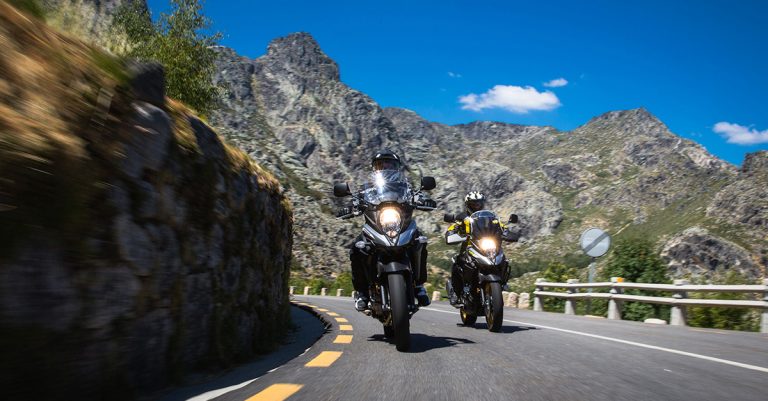
 The Suzuki DL650 has been around for an age but it has been quietly racking up the plaudits over the years, especially in the US where the slightly hysterical cacophony over the litre-plus contenders is tastefully muted in an uncharacteristically un-American manner.
 OK, all very fuzzy and warm but that was a long time ago; does the same ring true in 2017? The advances in adventure bike thinking have been fantastic and profound so the question here is really; has the DL650 kept up?
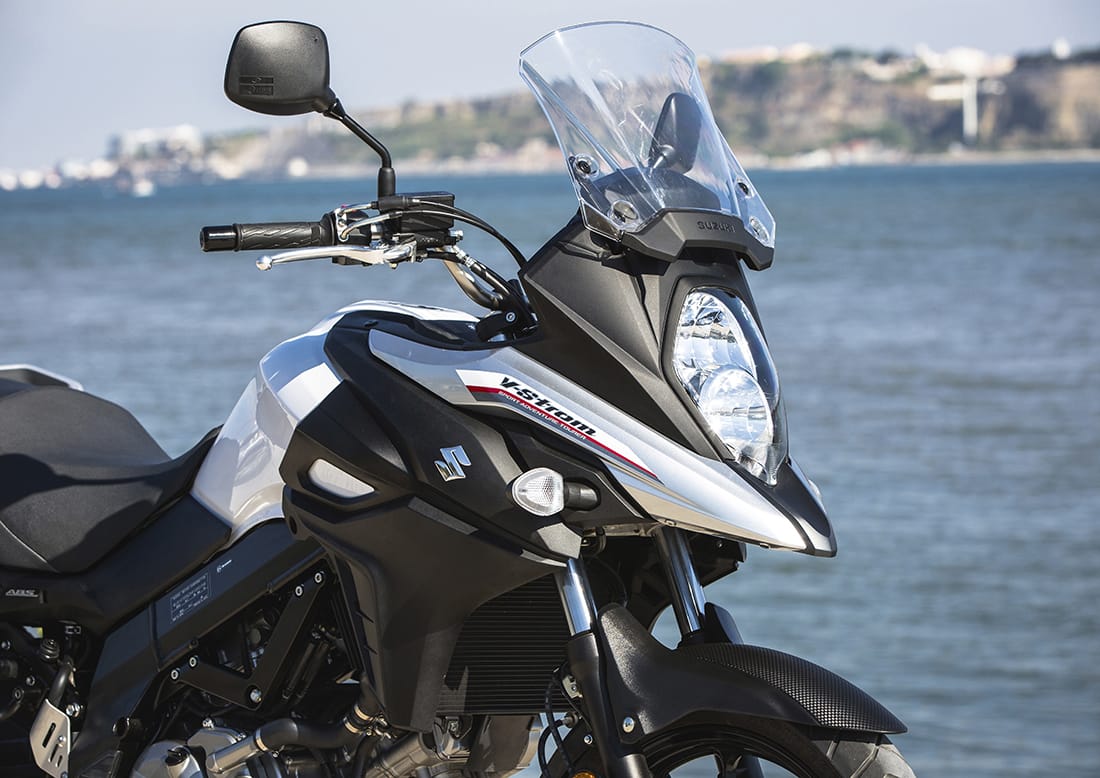
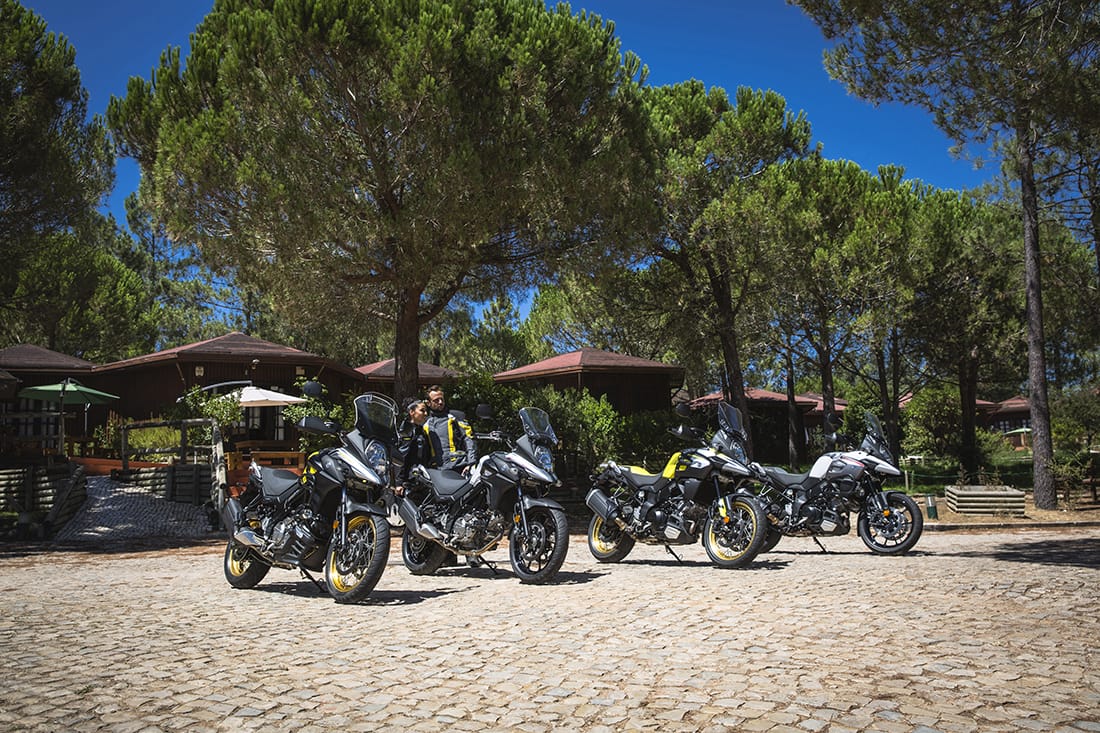
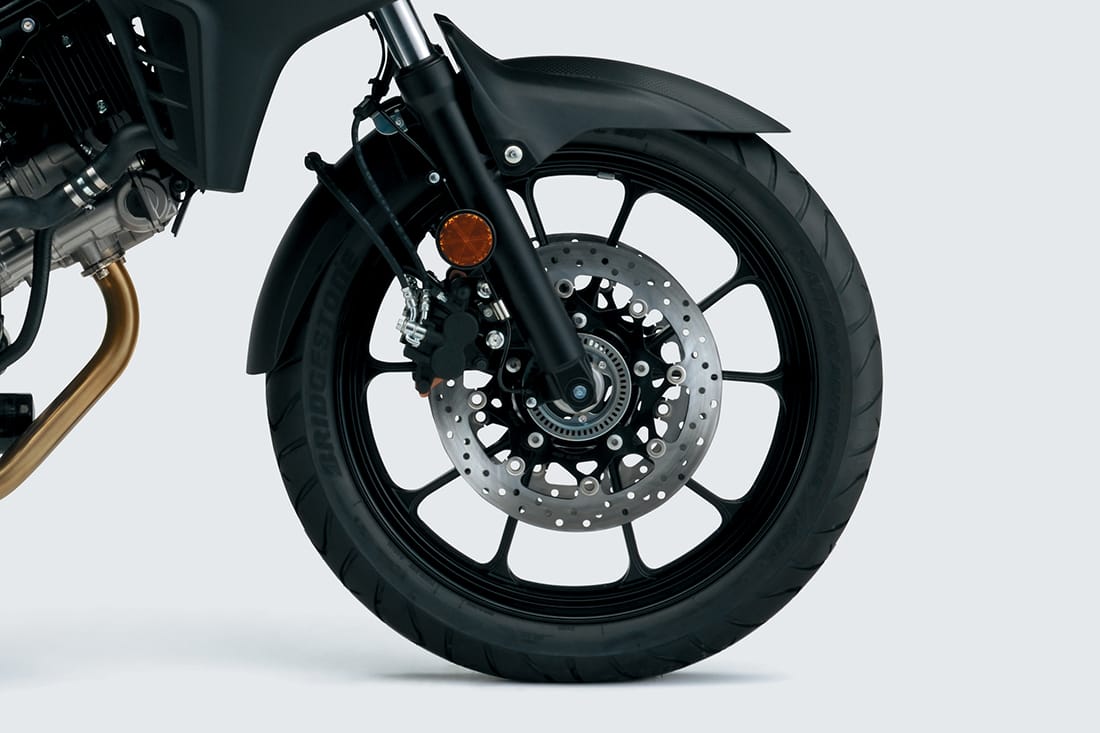
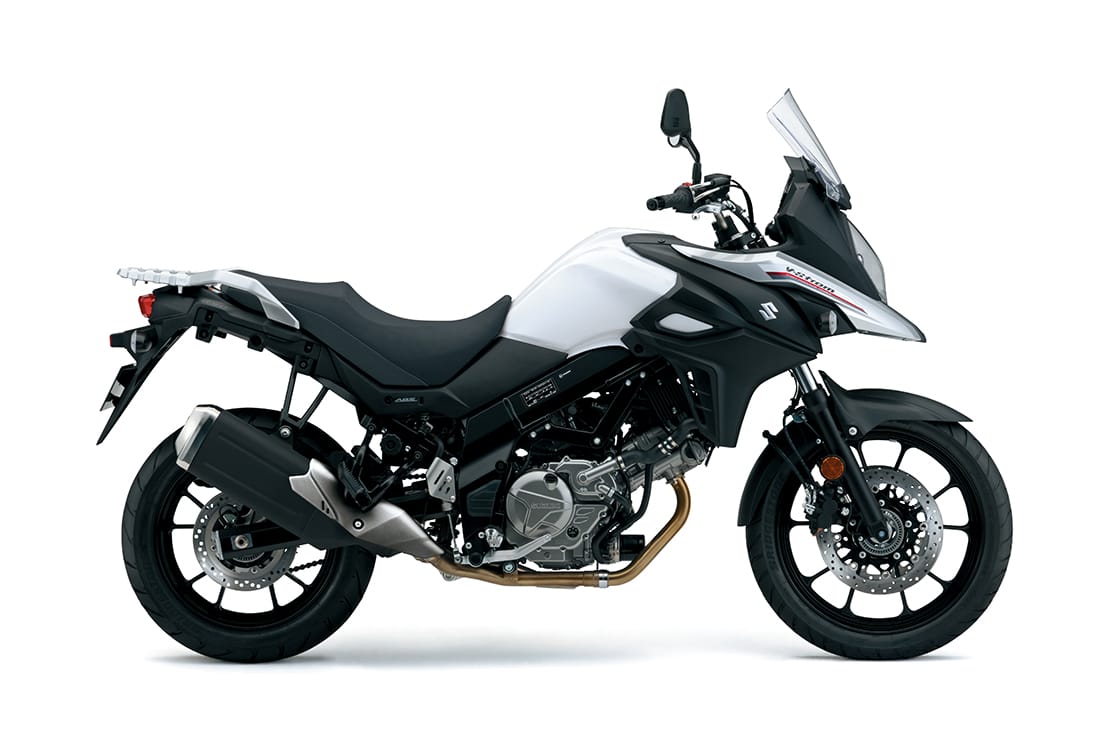
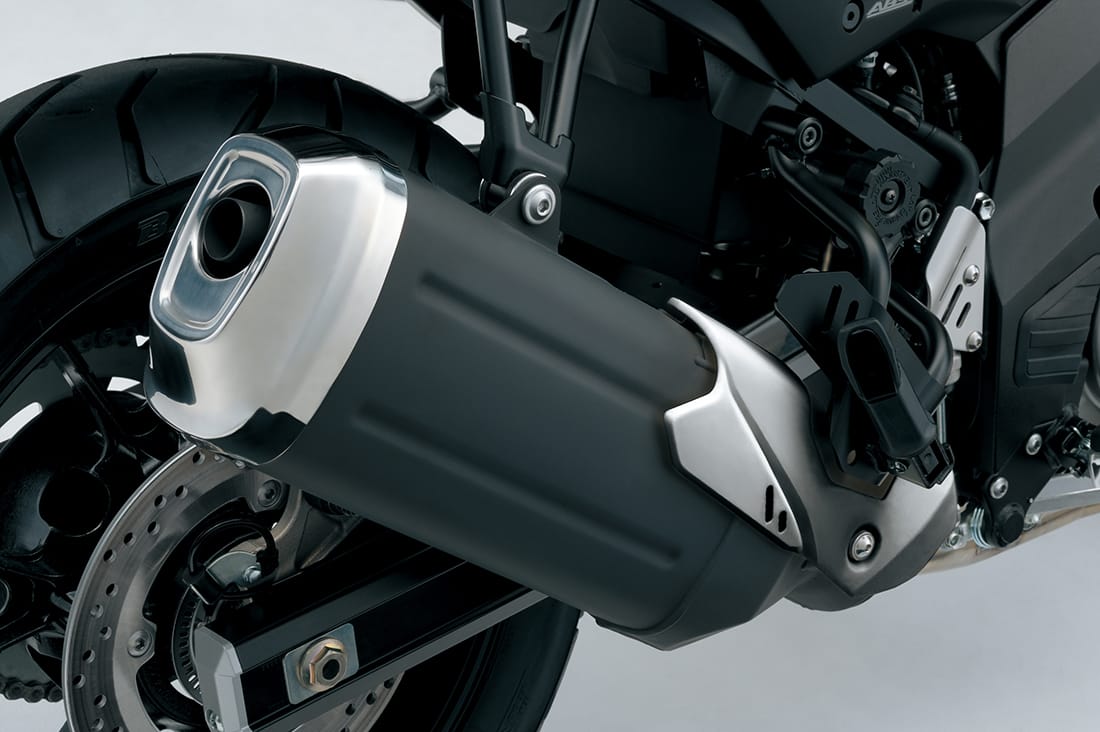 Changes over previous models are; new exhaust system, fuel injection and instruments as well as detail attention to the overall chassis. There are two models; the base and the XT, the former being road-orientated. The XT gets spoked wheels, hand guards and a lower engine cowl.
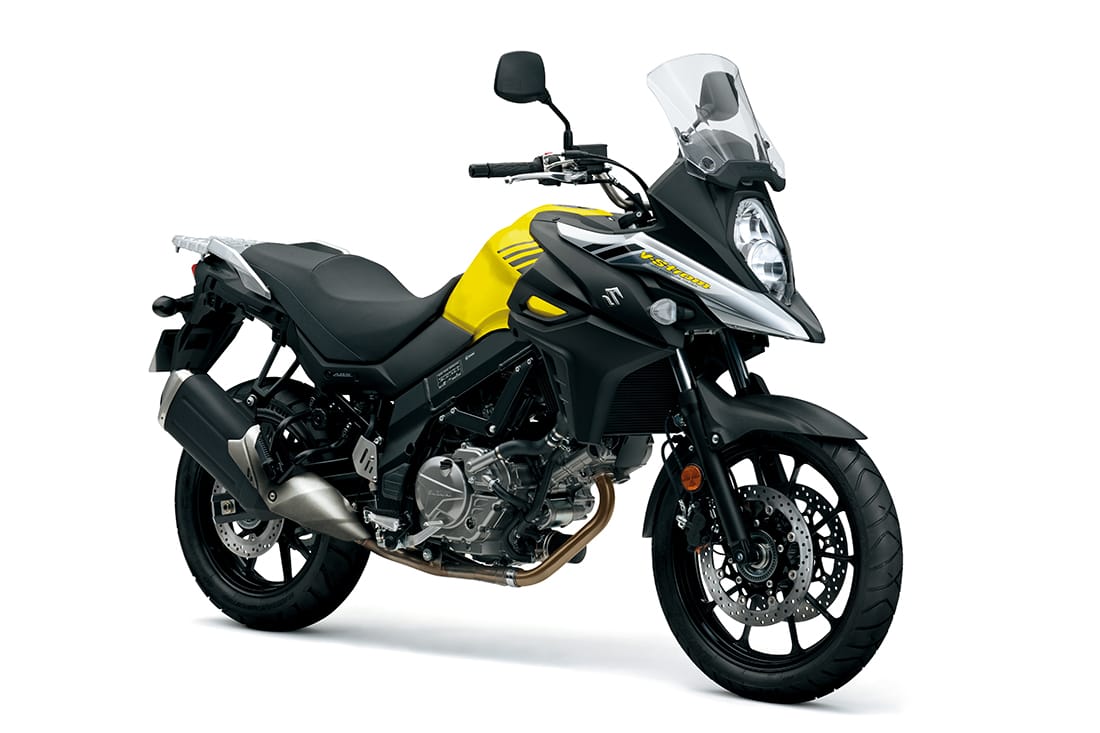
 In looks, it harks back not to earlier versions of the V-Strom, but to the DRZ800 Dakar rally bike, which was as pukka an off-road bike as you could wish to ride. However, to imagine that the latest DL650 XT has drawn deeply from the talent cup of that bike would be to misunderstand the nature of the market for mid-range adventure bikes.
 We’d have to say yes; the world will soon winkle out those bikes that are all mouth and no trousers so a measure of ability is important. Unfortunately for the Suzuki, it is playing in a hotly contested segment of the market where there are a good few bikes with a lot of ability. Not only that, but all the Suzuki’s opposition in the ‘middleweight’ category, are all at least 800cc – think Triumph, BMW, Ducati and KTM – making the DL650s job even harder.
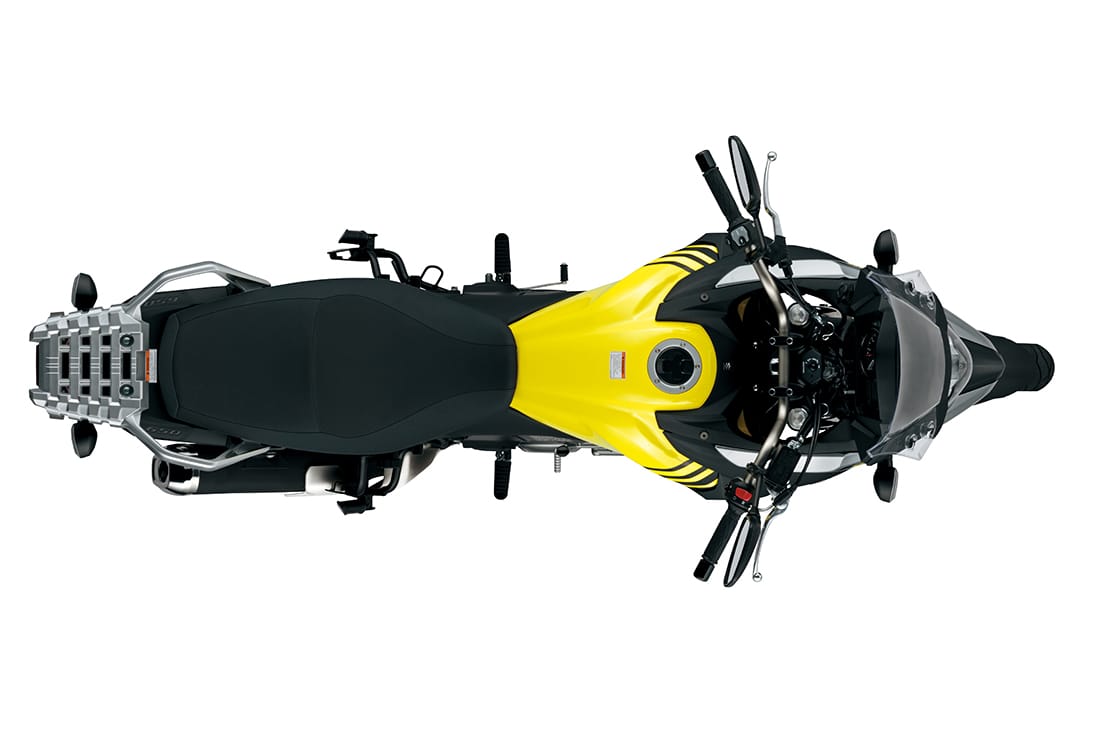 As standard, there is no cruise control or heated grips – no doubt omitted to keep costs down – but which, once experienced, are greatly missed on long journeys. The screen is adjustable but only with the use of an allen key and twenty minutes of your time. However, if I’m honest, I pretty much set the screen in one position and leave it there, no matter what bike I’m on and however easy it is to adjust.
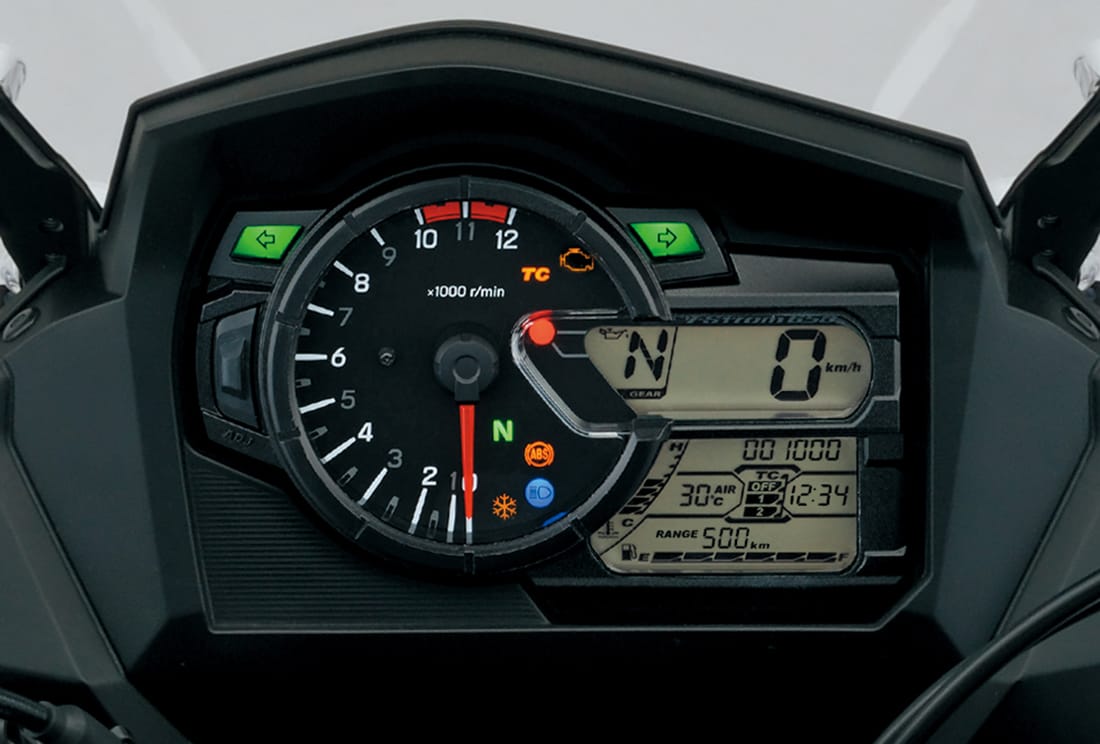 Electronics are there but not in profusion. ABS is standard, as is three-level traction control, including ‘off’. This will stay off even if the ignition is turned off and then on again – a small point but this can be useful when off-road. There is low-RPM Assist, which prevents the bike stalling when the revs get too low, again a useful feature that will prevent potentially disastrous moments off-road.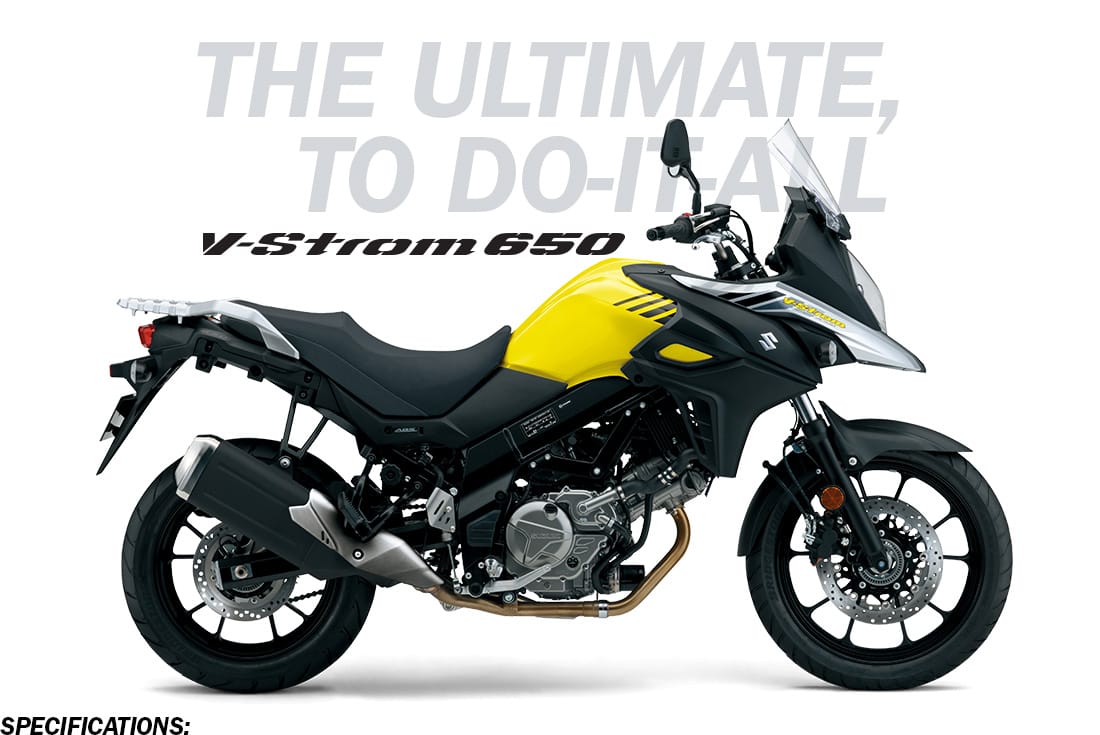
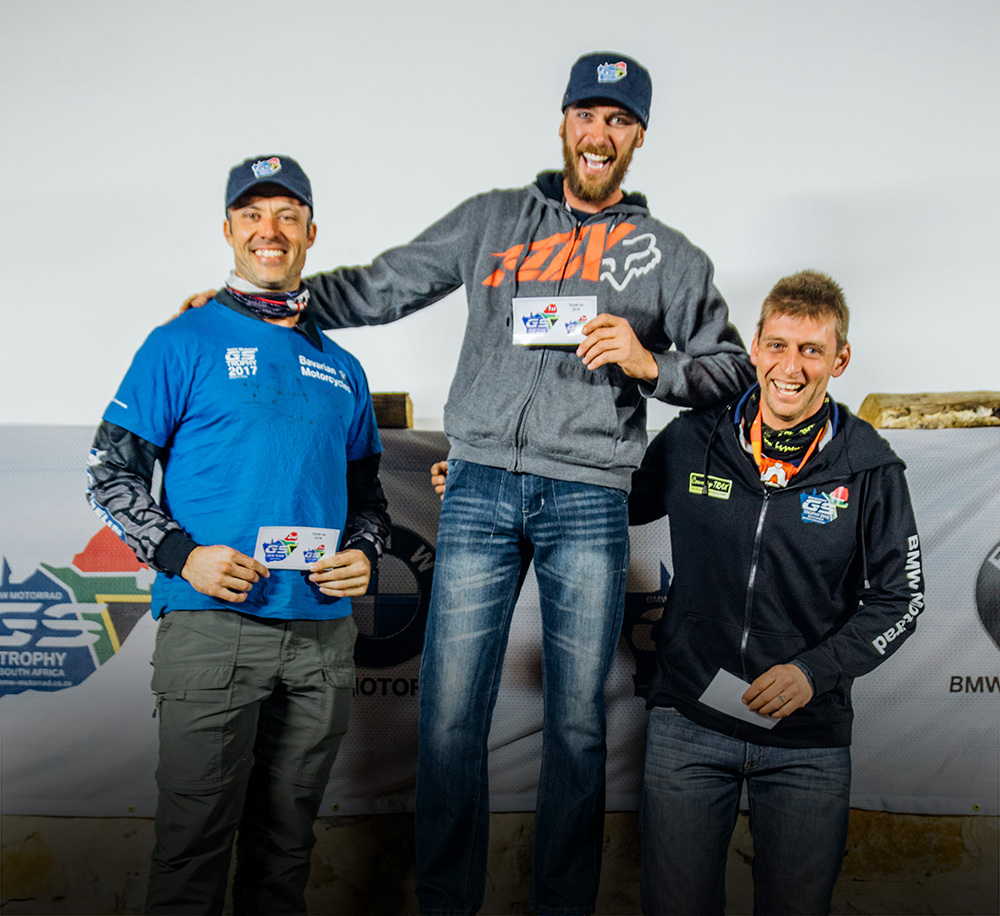 Also announced were the two women (Linda Steyn and Ezelda van Jaarsveld) who secured their place for the International GS Trophy Female Team Qualifier;
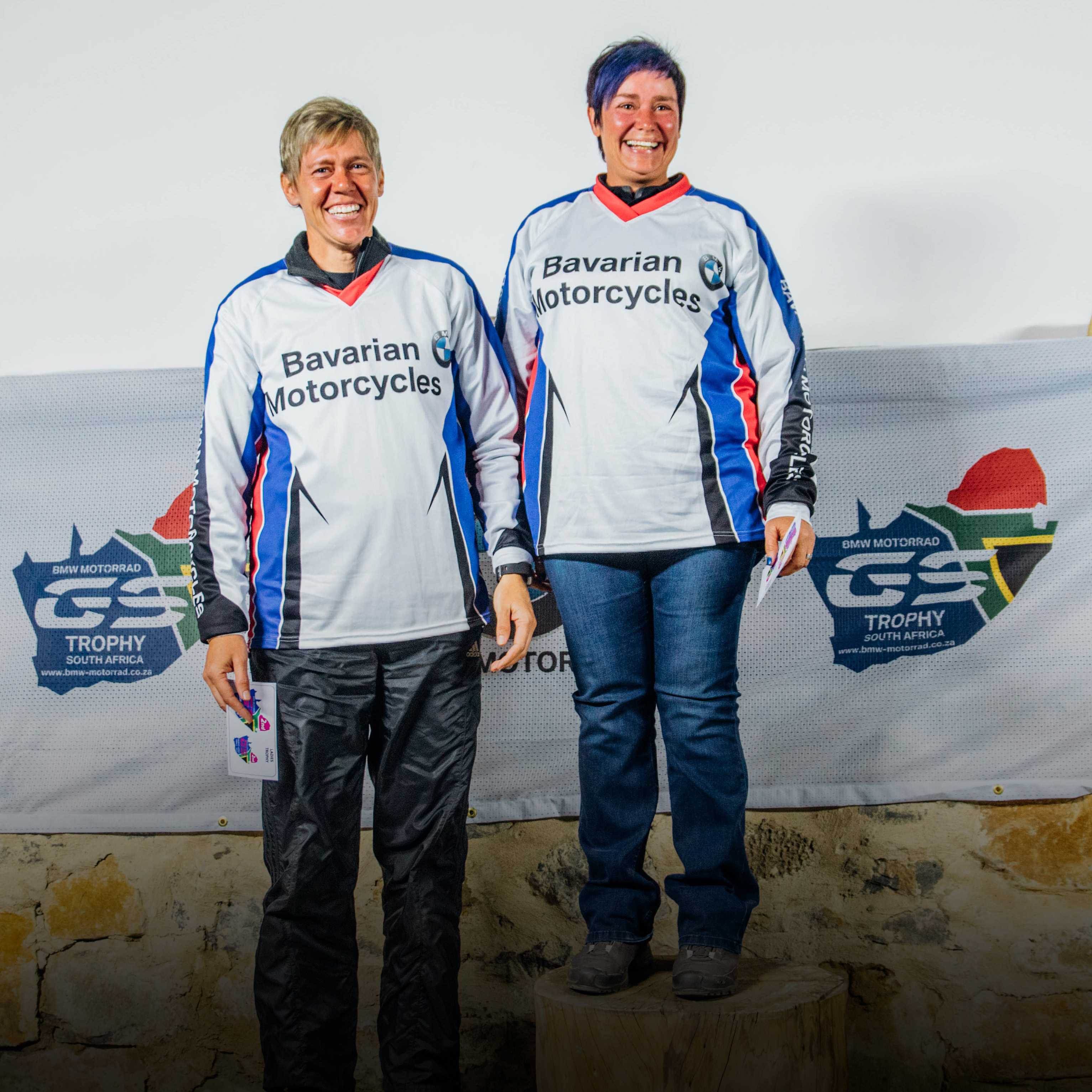 Edgar Kleinbergen says that all the participants of the National Qualifier can be proud of themselves as getting to that level of the competition shows how high their level of skill is. “South Africa offers the perfect landscape for GS riders. We are very fortunate to have such loyal, skilled and committed customers who live the spirit of GS.”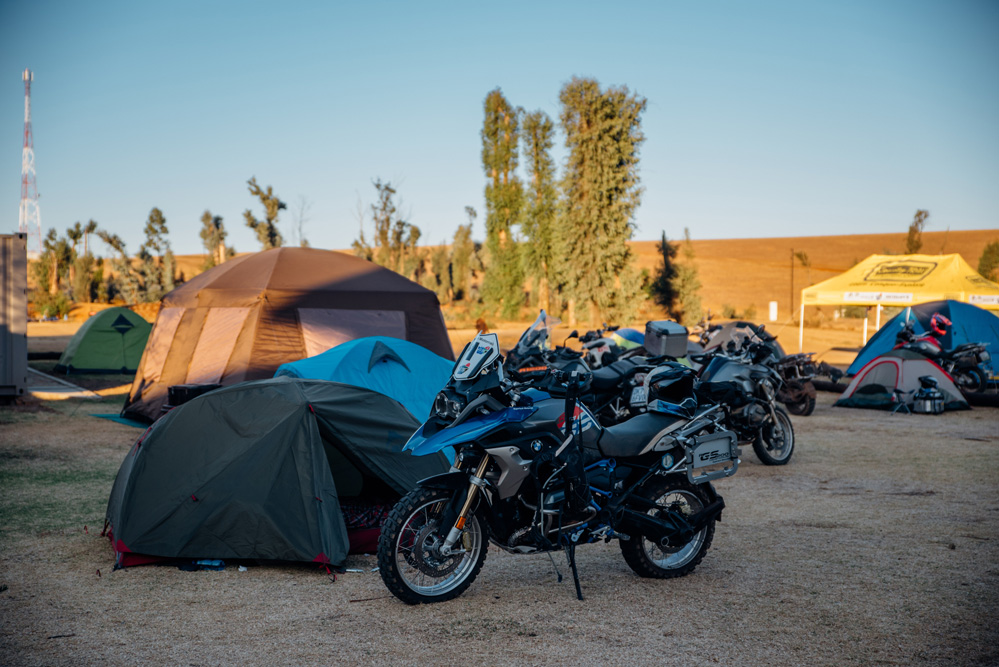
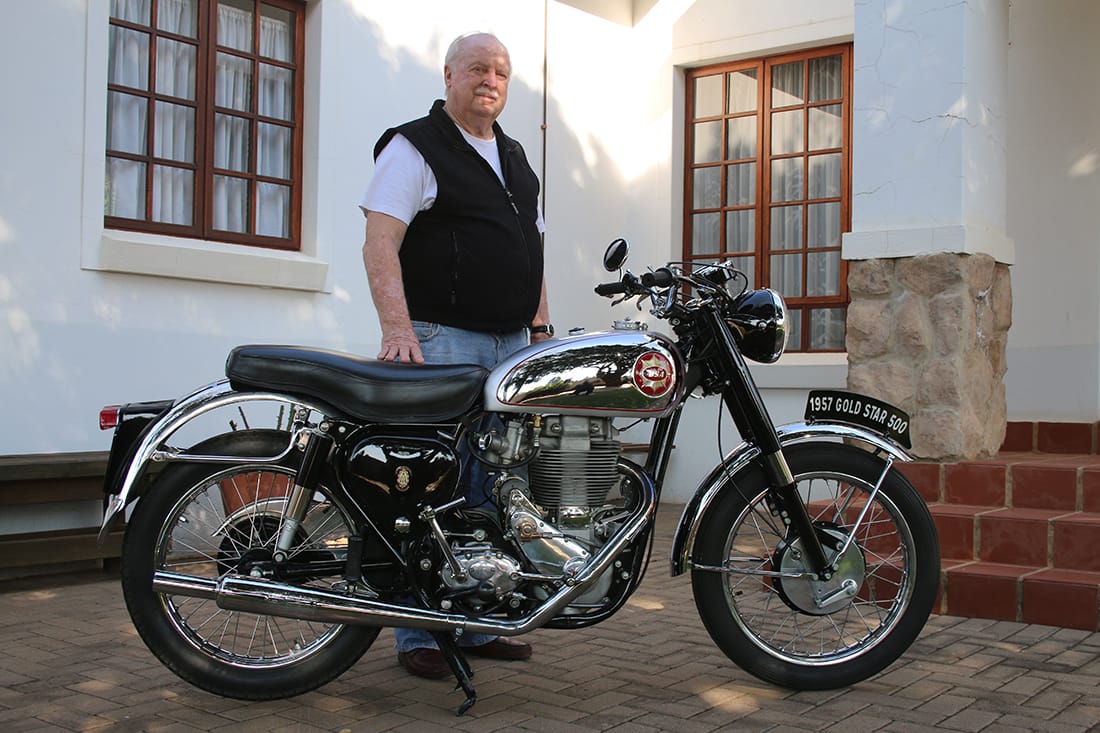
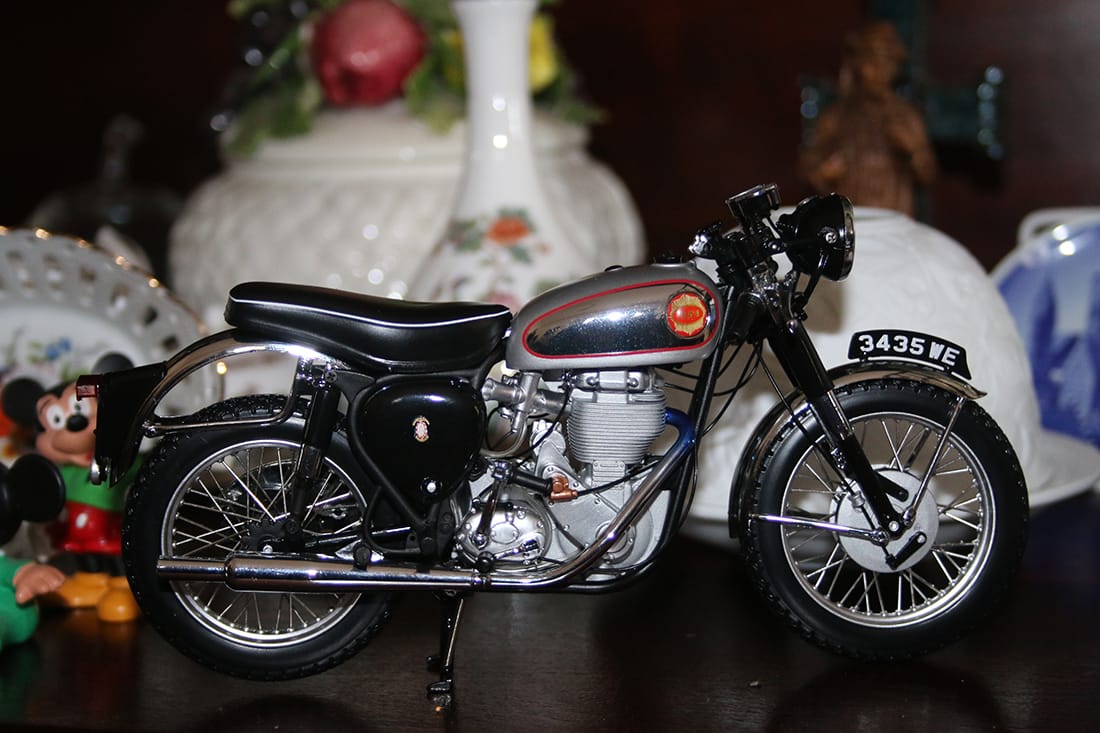
 The BSA was then sold to Bob Parry, a late friend of Mikes, who was doing his articles as a Chartered Accountant. He too used the bike to commute to work. Bob appears to have been a really keen motorcyclist. He lost half a leg in an accident on a 1956 Triumph T100, yet he rode the Gold Star till 1963, when he was again involved in a front end smash. The bike was sorely damaged and Bob was destined to never ride again.
 For 36 years the BSA gathered dust in Bob’s garage. Perhaps Bob hung on to the bike in the hope that just maybe they could ride again one day. In 1999 he relented, and Mike acquired what remained of the Goldie. Mike was just about off to his stint in France. He sold a 50% share in a 1969 Triumph Bonneville to fund the parts needed for a “bolt for bolt” restoration of the Gold Star.
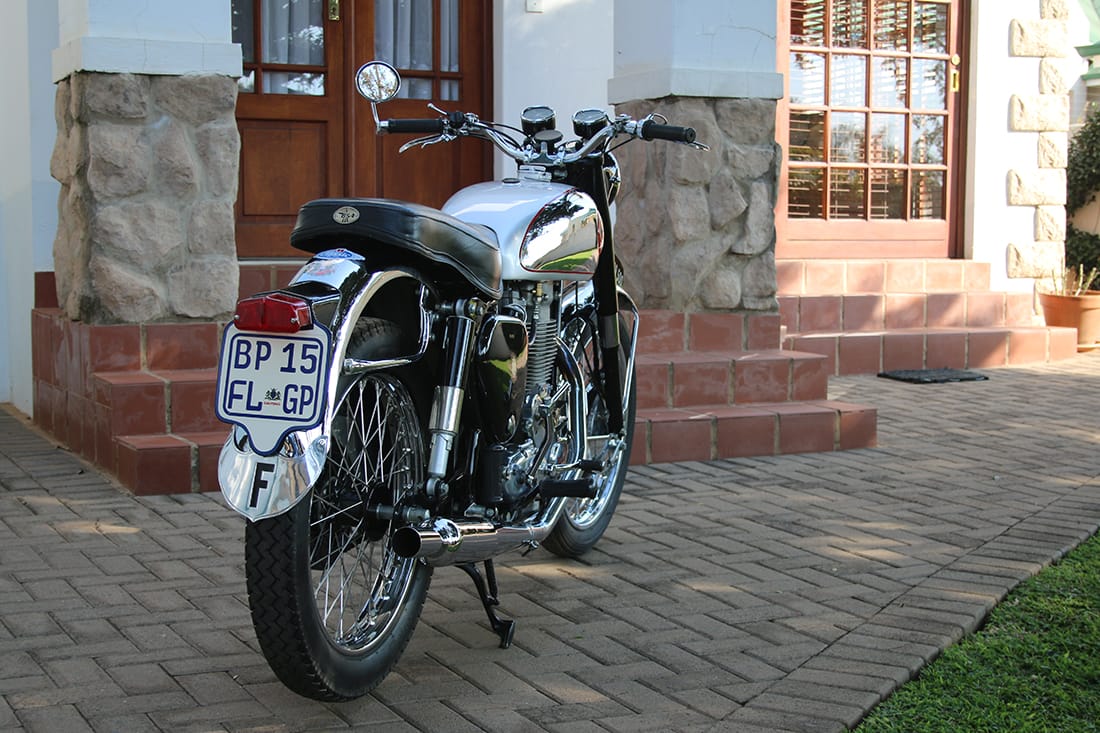
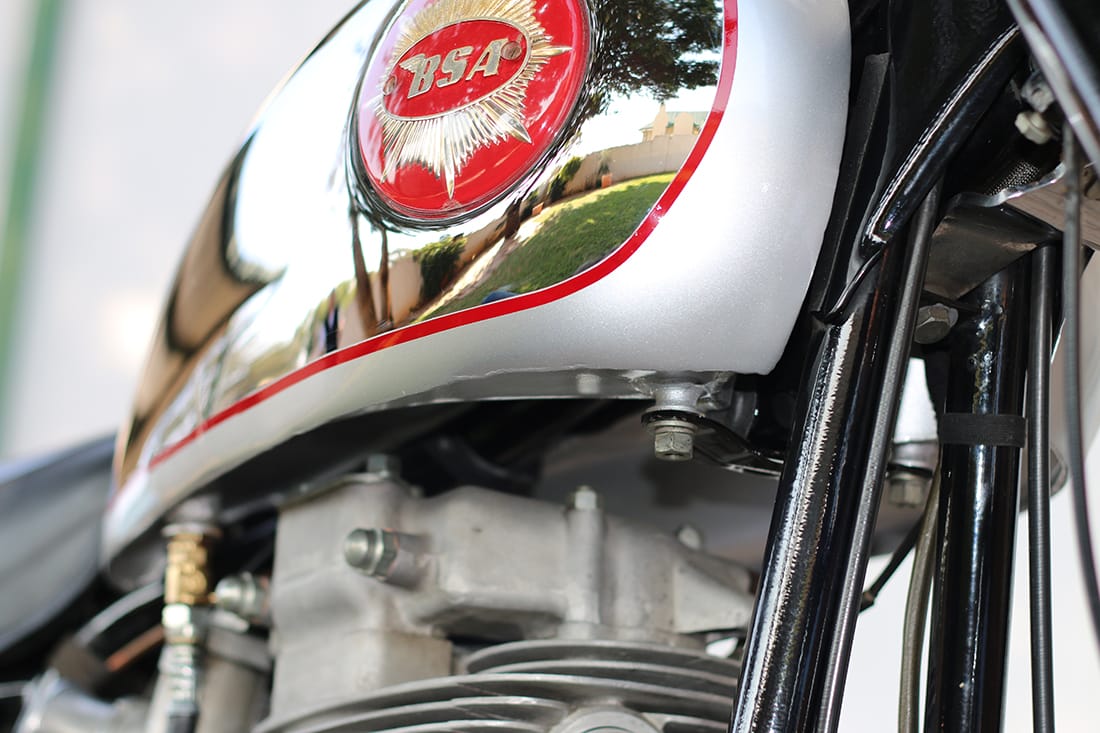 No doubt the closer proximity to England helped in the search for parts. For four long years Mike worked on the B.S.A. It had been a dream since boyhood to own a Goldie, so it was with huge satisfaction that Mike fired it up in 2003, pristinely restored. He celebrated with taking part in several classic bike rallies ,as well as a day ride to Champagne to visit the house and grave of General de Gaullle.
 I took a ride through to Cullinan to visit Mike and drool over the Goldie. He told me that he had owned a 350 Gold Star in race trim. In 1960 he rode his first race at Grand Central circuit and two race meetings in East London on the GP circuit. The bike was running a factory race tuned motor, and was imported by the local agents and campaigned by Mikes’ friend Guinness Smyth. Guinness ran the Goldie through the traps at the P.E 200 at 103 mph, officially the fastest 350 Goldie in the country.
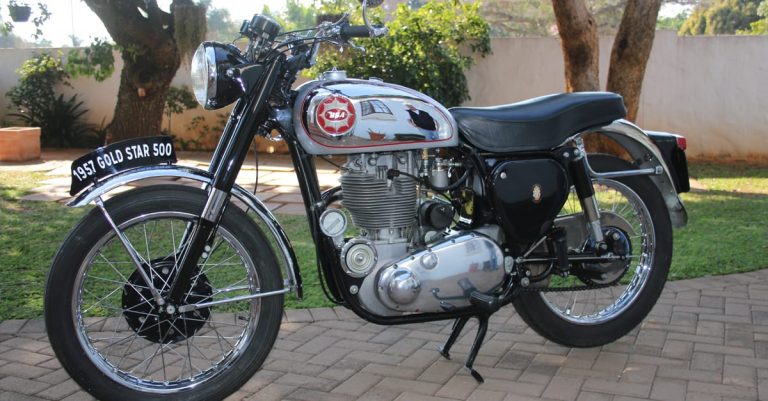
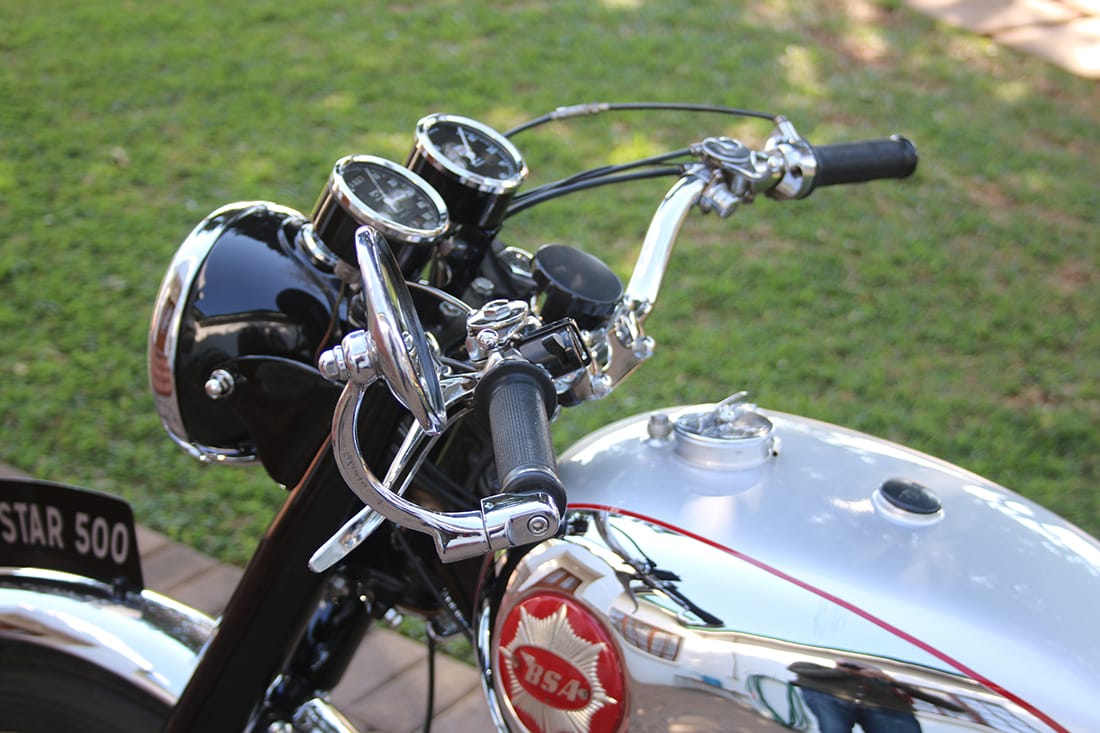
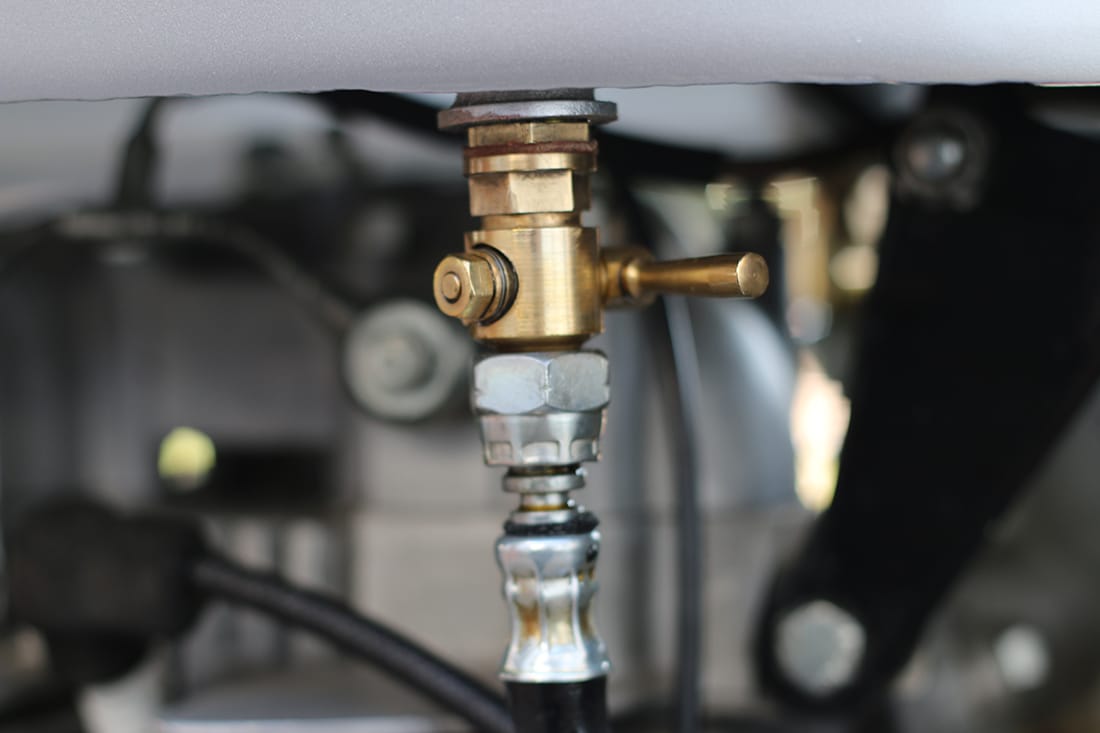
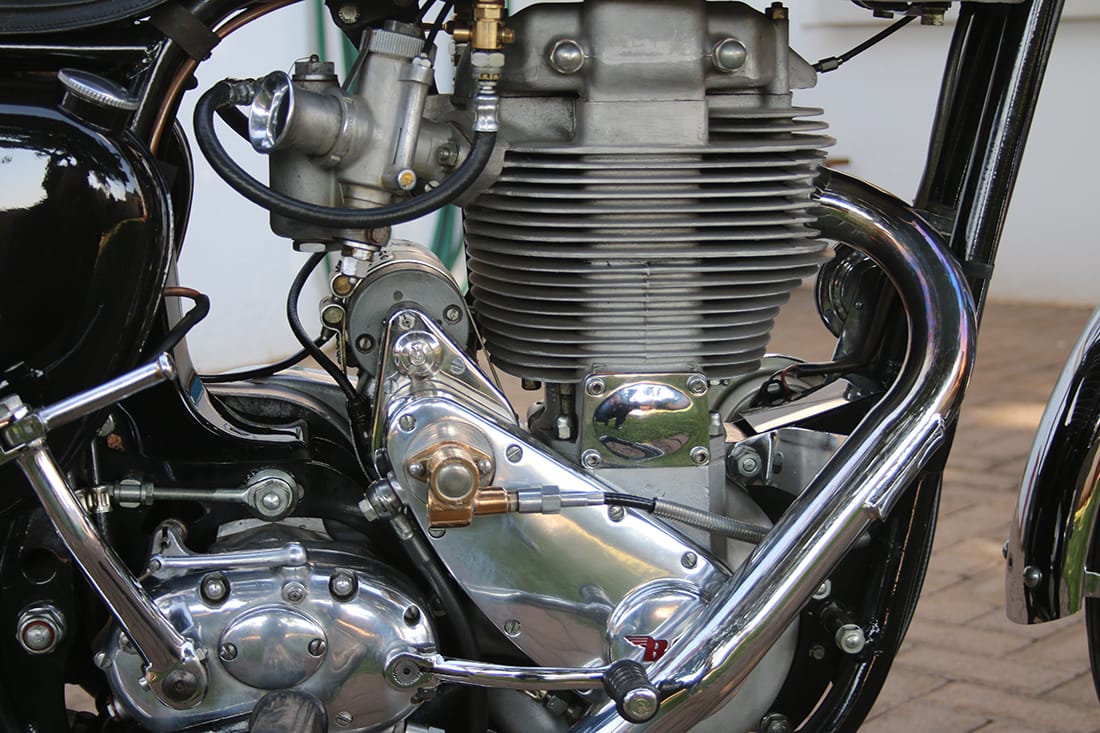 The 500 Gold Star has had a meticulous engine rebuild. There is no hint of an oil sweat, let alone a leak sullying the big single motor. The Gold Star has classic dimensions and form. To my eye it is really beautiful. The Smiths instruments, speedo, rev counter and amp meter are simple and uncluttered. The silver tank has chrome side panels sporting large BSA badges. The fuel tap is bronze, as are some other bits and bolts. The side covers are painted black with Birmingham Small Arms stickers. The bike is simply so “right” from every angle. It looks like it was intended to last 60 years, at least!
 Mike has a car project too. He is restoring a 3.8 litre Jaguar. The engine is rebuilt and ready to go back in the car. Seeing the workmanship and build integrity of the Goldie and Jaguar really gets one thinking. We really have lost something in the high tech world that we now live in. How well will the current technology age? Will we see current bikes lovingly restored 60 years from now? Who knows?
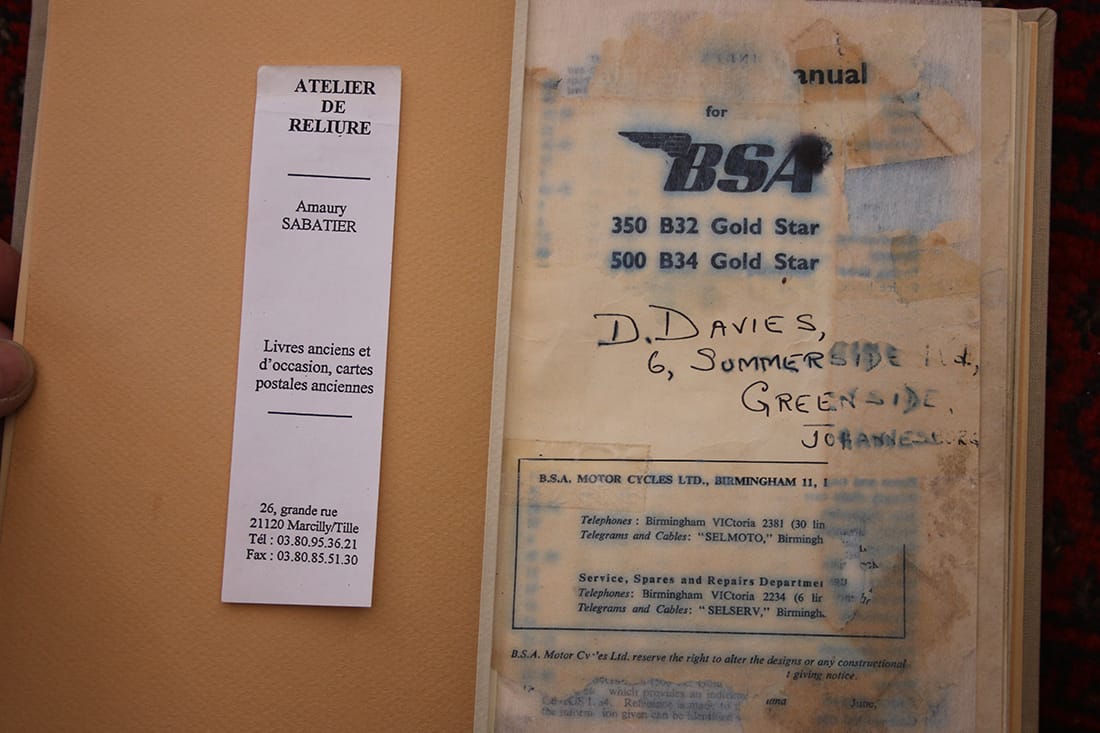
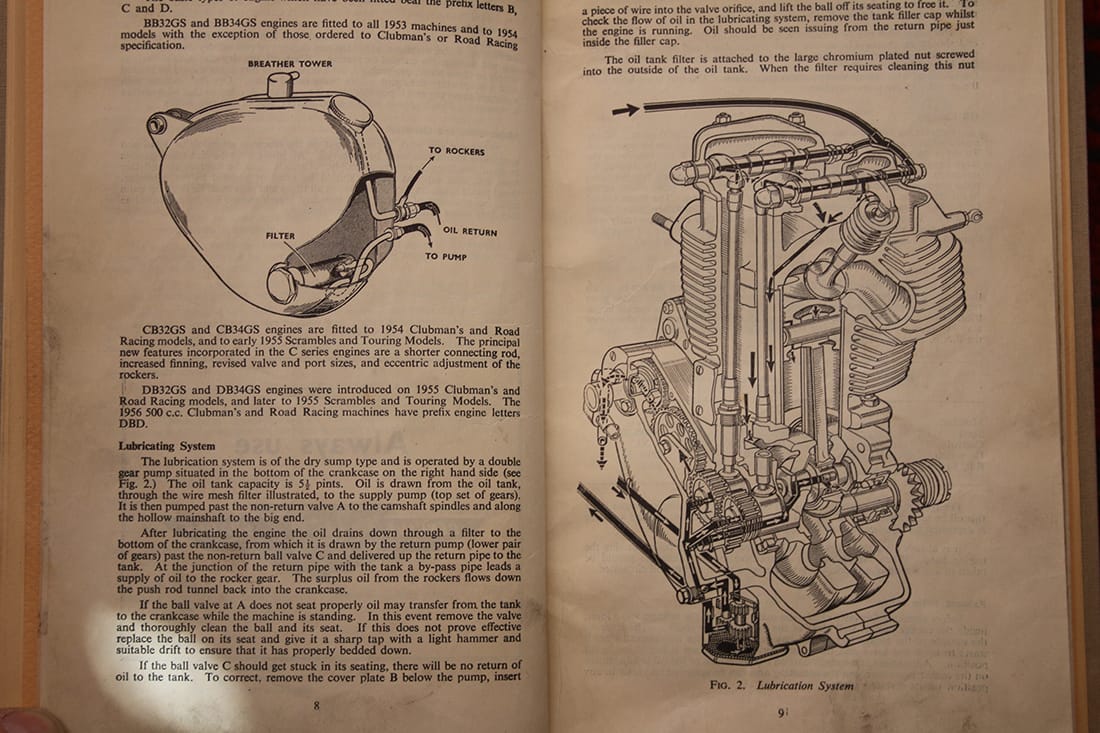
 Mike has the original service manual that came with the Gold Star. It is really comprehensive, more like a modern day workshop manual. Although, having said that, the modern version would probably be a pdf file that you access on your computer. Future generations will never experience the pleasures of gently turning the pages of a book that describes every mechanical facet of their pride and joy.
 Maybe, just maybe we will see the folly of it all, and, in the fullness of time return to a more simple way of life. Until then we will have to make do with enjoying bikes like the BSA Gold Star 500, to remind us of a time when men were men and bikes were “irons”.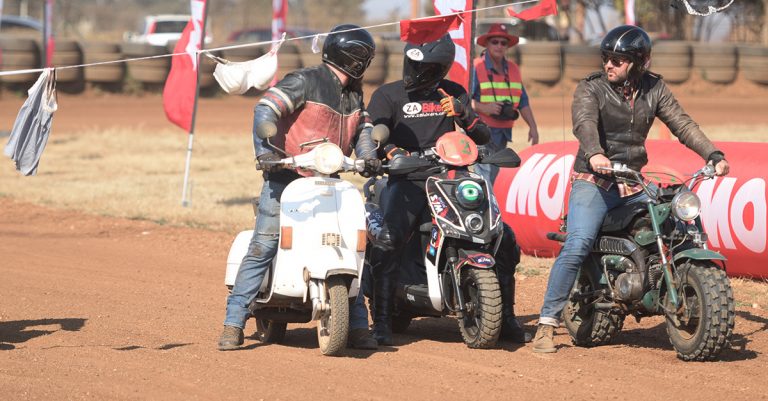
 Once a year a really mixed bag of motorcycles gather at the Walkerville showground’s for “Stof Skop”. What transpires is a classic “run what you brung“ day of dirt oval flat track racing. Various classes are formulated with no real guidelines for what bike should be in what class. Only when you line up for the start of your race do you know what you are up against.
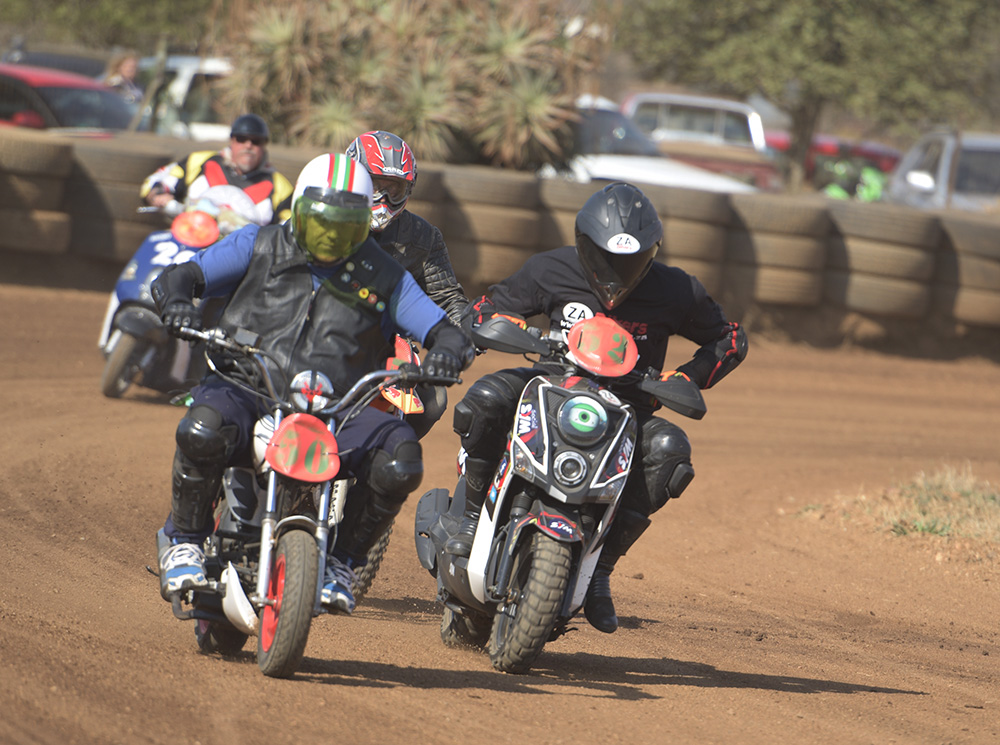
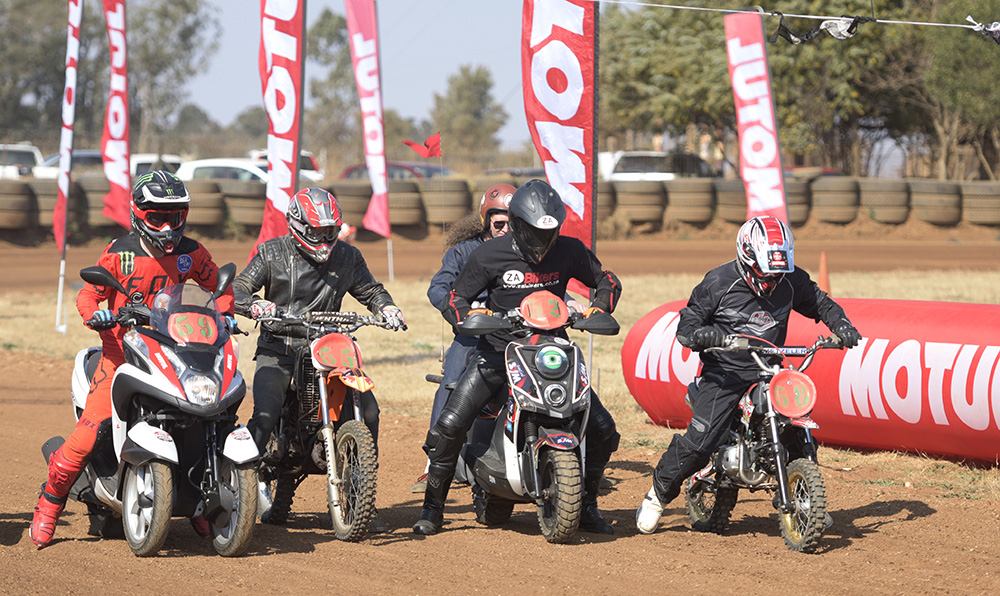 As you would probably have gathered from the title of this tale, our feisty little scooter with the heart of a lion decided to make a statement at Stof Skop. Social SYM put on his race face as he rolled to the line in the “moped madness” class. He was up against a really weird mix. A modern Yamaha 250 MX bike (moped?) and a 300 cc 3 wheeler city bike (two wheels in the front and one at the back) amongst others. Mini bikes, 80 cc two stroke moto crossers, and an old Vespa and two Suzuki Fat Cats. When the dust settled Social had seen off all comers apart from the 250 plastic and the 300 three wheeler. If the truth be told he was helped by a 4 stroke mini bike petering out on the last lap, allowing the little SYM past.
 Racing was fierce in all classes. Jason, of suspension fettling fame, on a well set up old Triumph single was for me the rider of the day. Slow off the line, he coaxed the Triumph up to speed and with an excellent display of smooth fast track riding he won all his heats. His worn leather jacket, jeans, boots and a bubble equipped open face helmet really got the nostalgia going.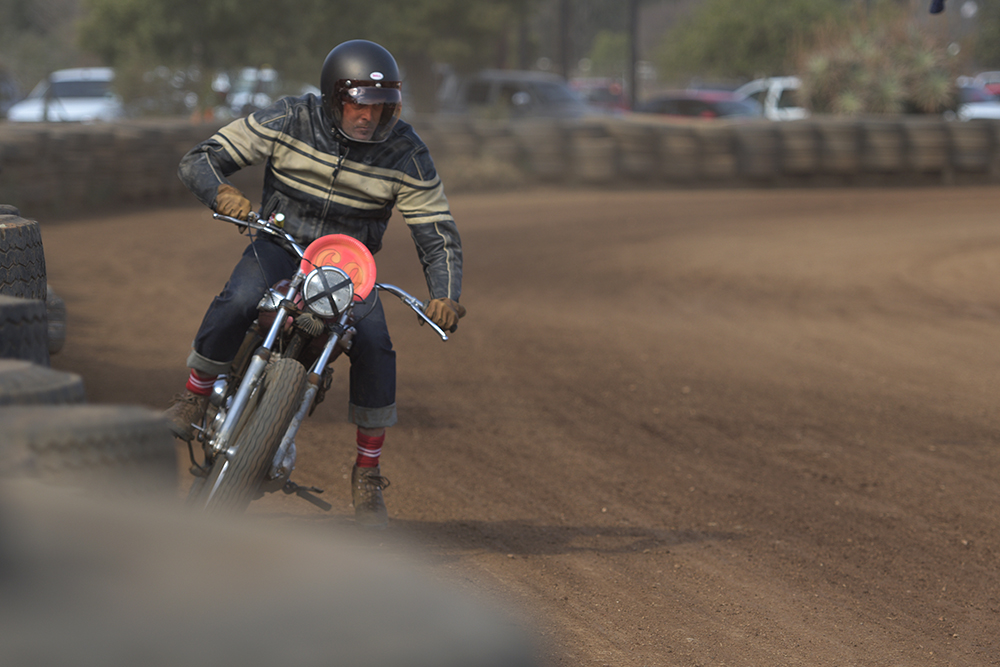
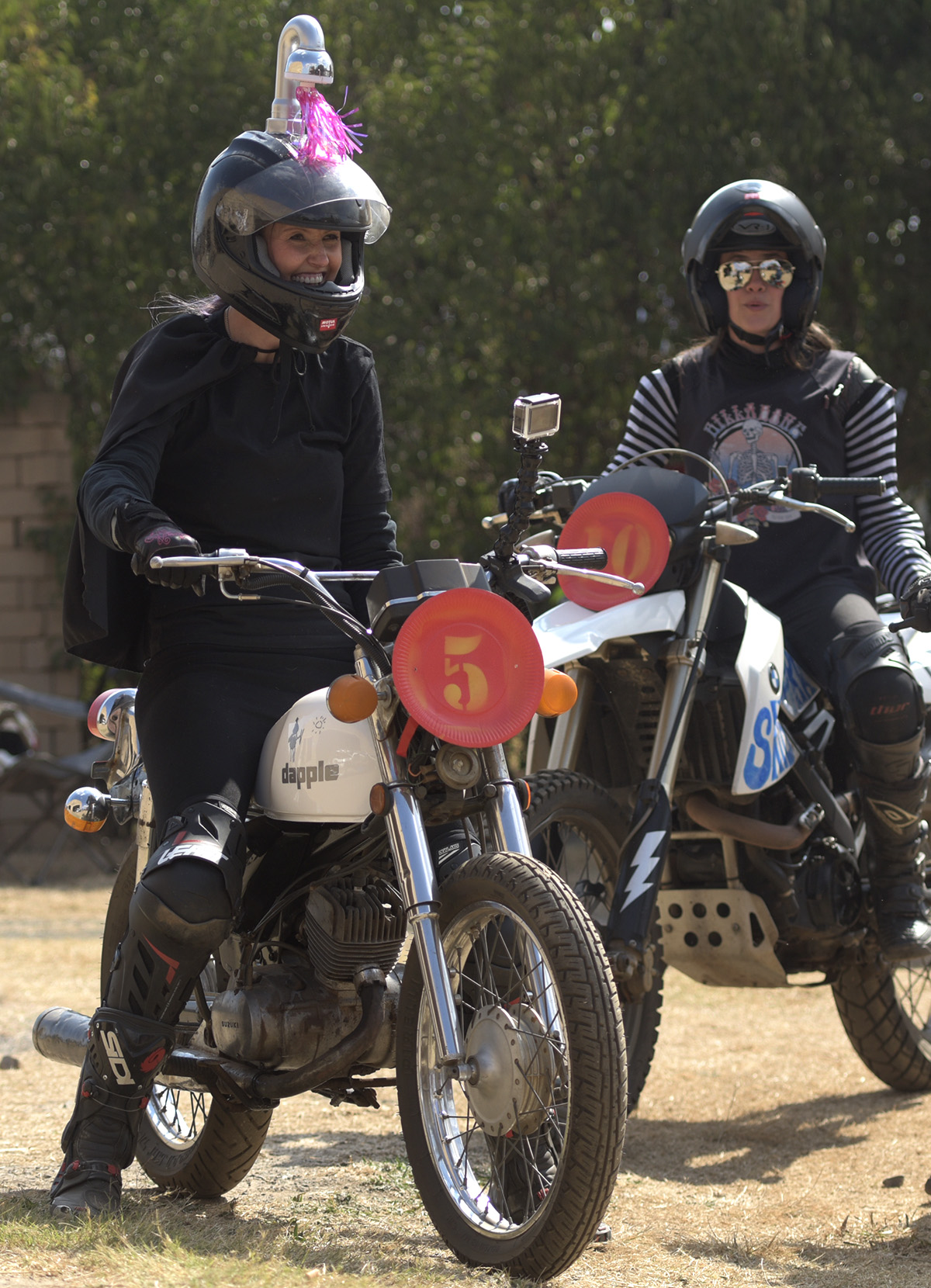
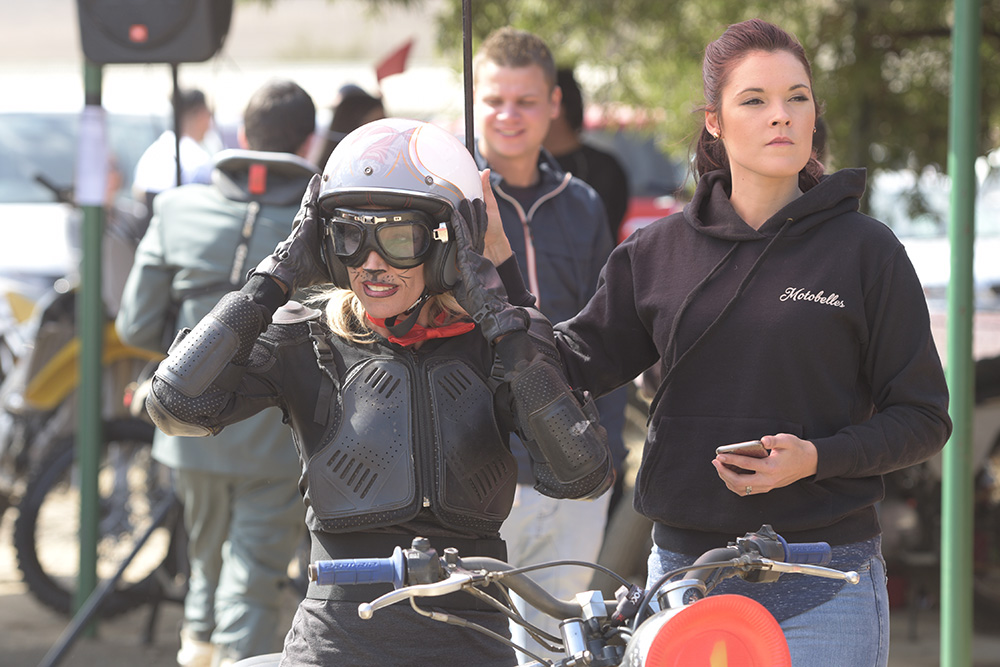 The one and only Skinny van Schalkwyk was out on “Dapple” her dirt trackified Suzuki B120! She was sporting a Zuma style shower head stuck to her helmet. Hilarious!
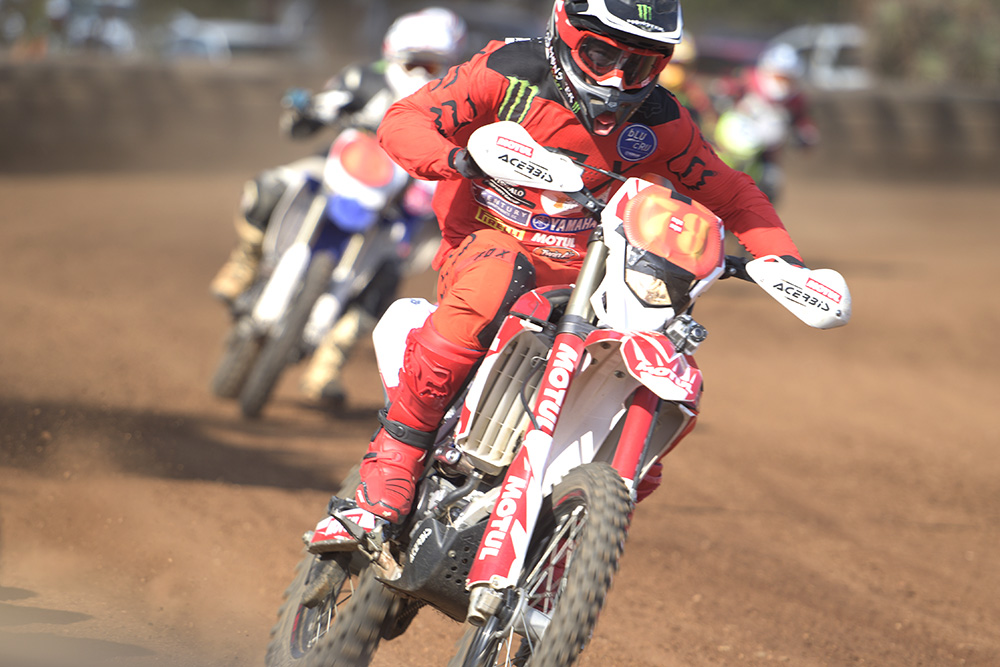
 The plastics put on a fantastic show. Motocross ace David Goosen won closely contested heats against decent opposition on his booming YZF 250 Yamaha.
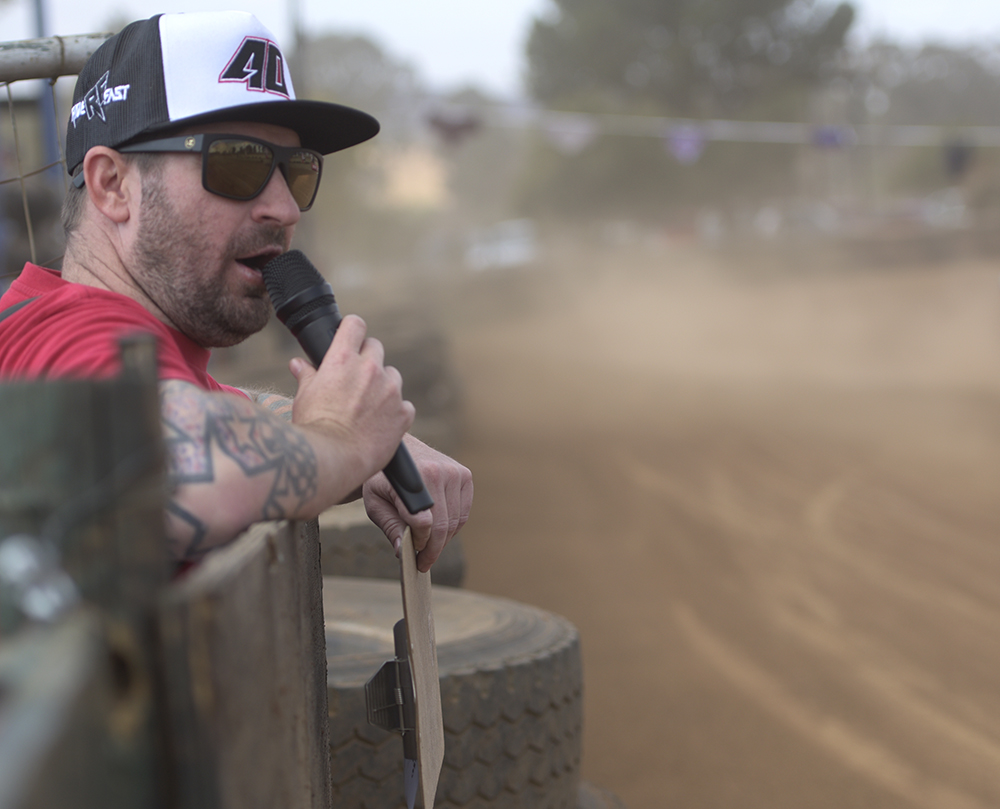
 Rob Portman kept the excitement at fever pitch as he commentated and raised crowd support.
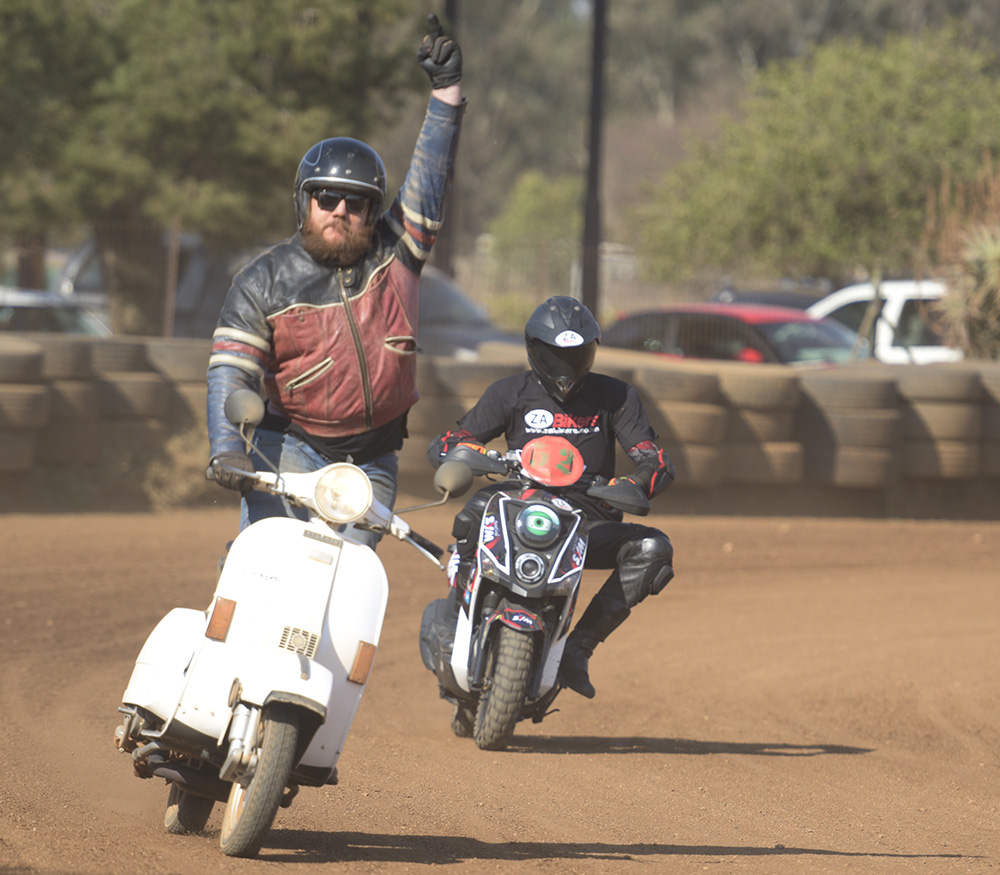
 Social SYM had his moment of glory when he gate crashed the Vespa race. Despite having the smallest engine in a field of more than a dozen scooters our little hero managed to get the hole shot and held the lead until the last corner of the last lap. A single pesky Vespa forced his way past and Social just didn’t have the oomph to re-pass the bigger displacement scoot . What a boykie!
 A massive thumbs up to Motul and Triumph and Odin power sports who supported this event. Craft beer, SBK glasses stand and live music courtesy of Triumph and all manner of yummy food and arts and crafts stuff was available and on display. Believe me, Stof Skop is not an event to be missed. The tongue in cheek yet fierce racing reminded us all what bikes are about. Pure unadulterated fun!
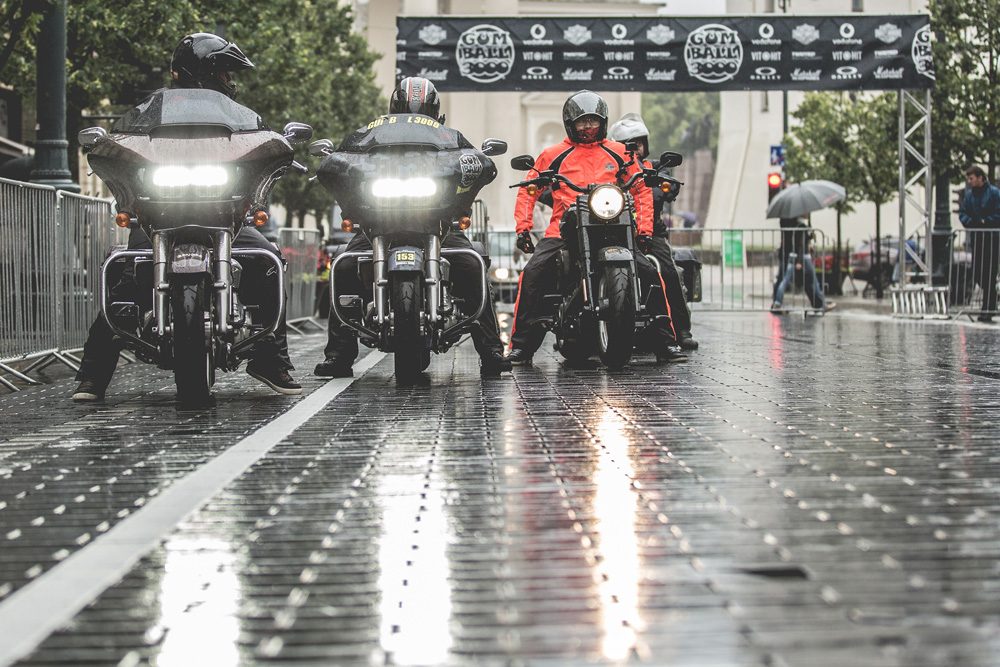
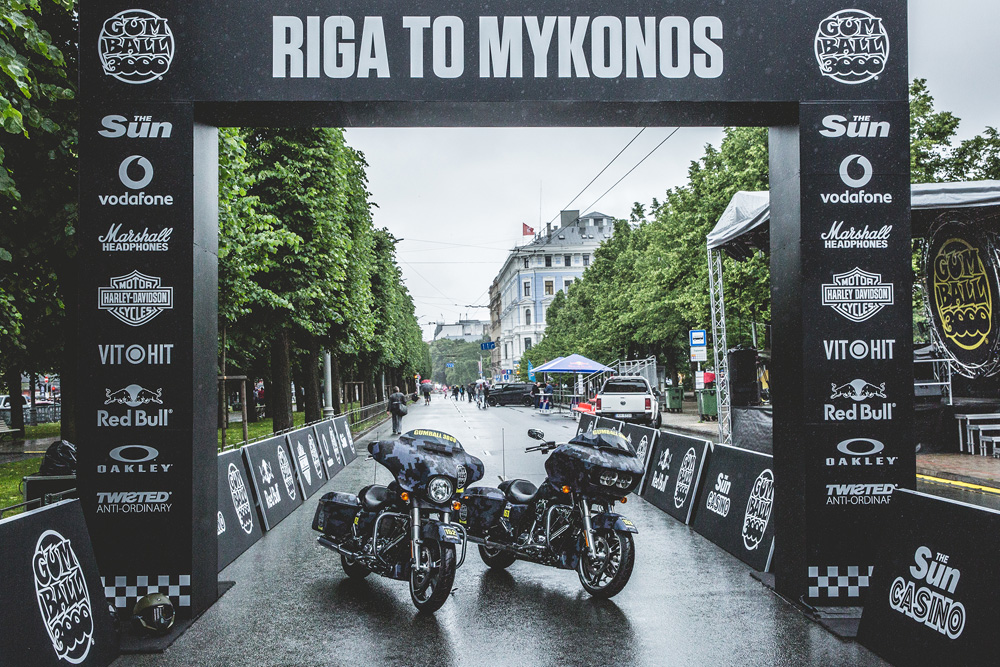
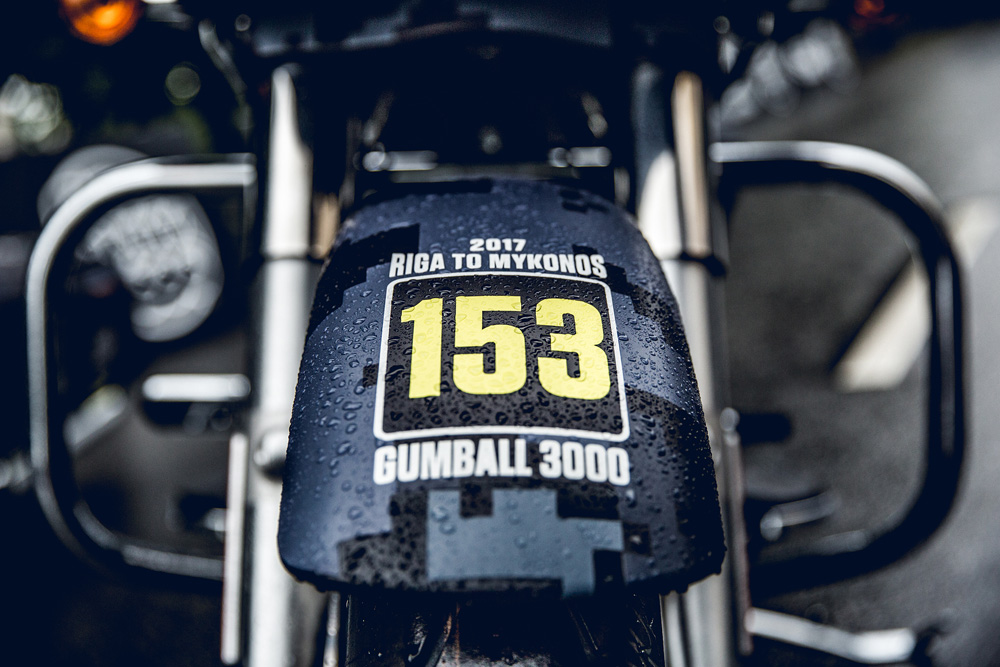 And I do mean great distances—the detailed Gumball route isn’t released until the last minute, and included close to 700km a day on average. So we attended the surprisingly tame ‘welcome drinks’ do, and turned in early.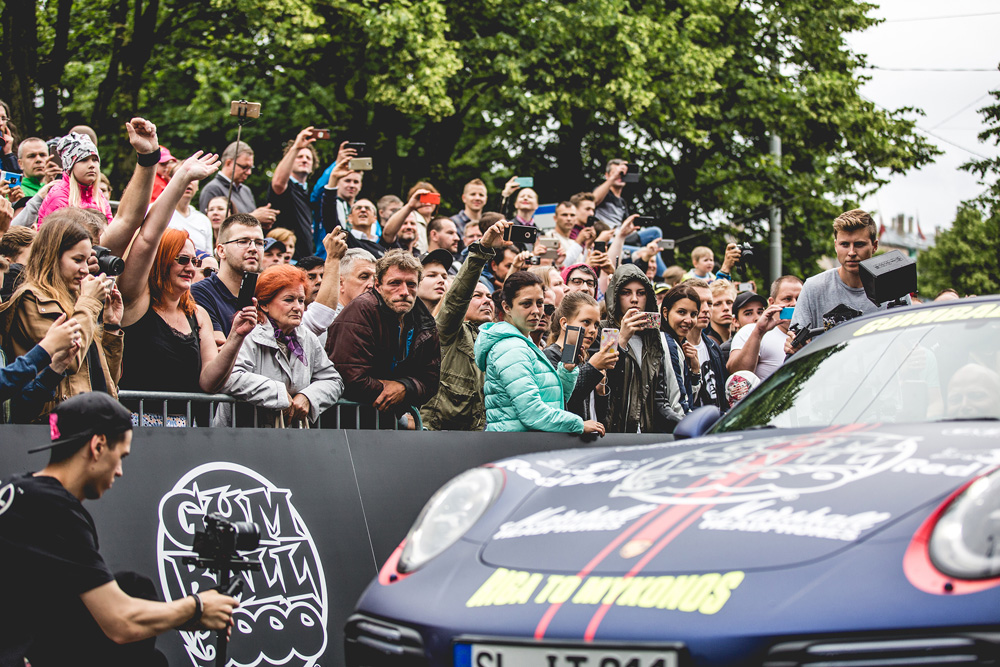
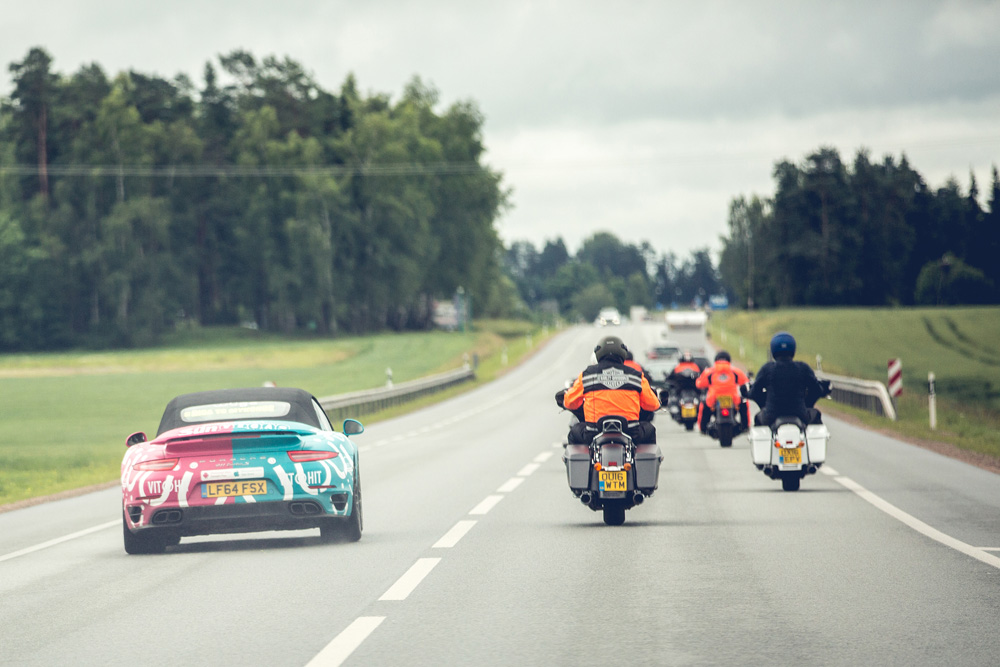
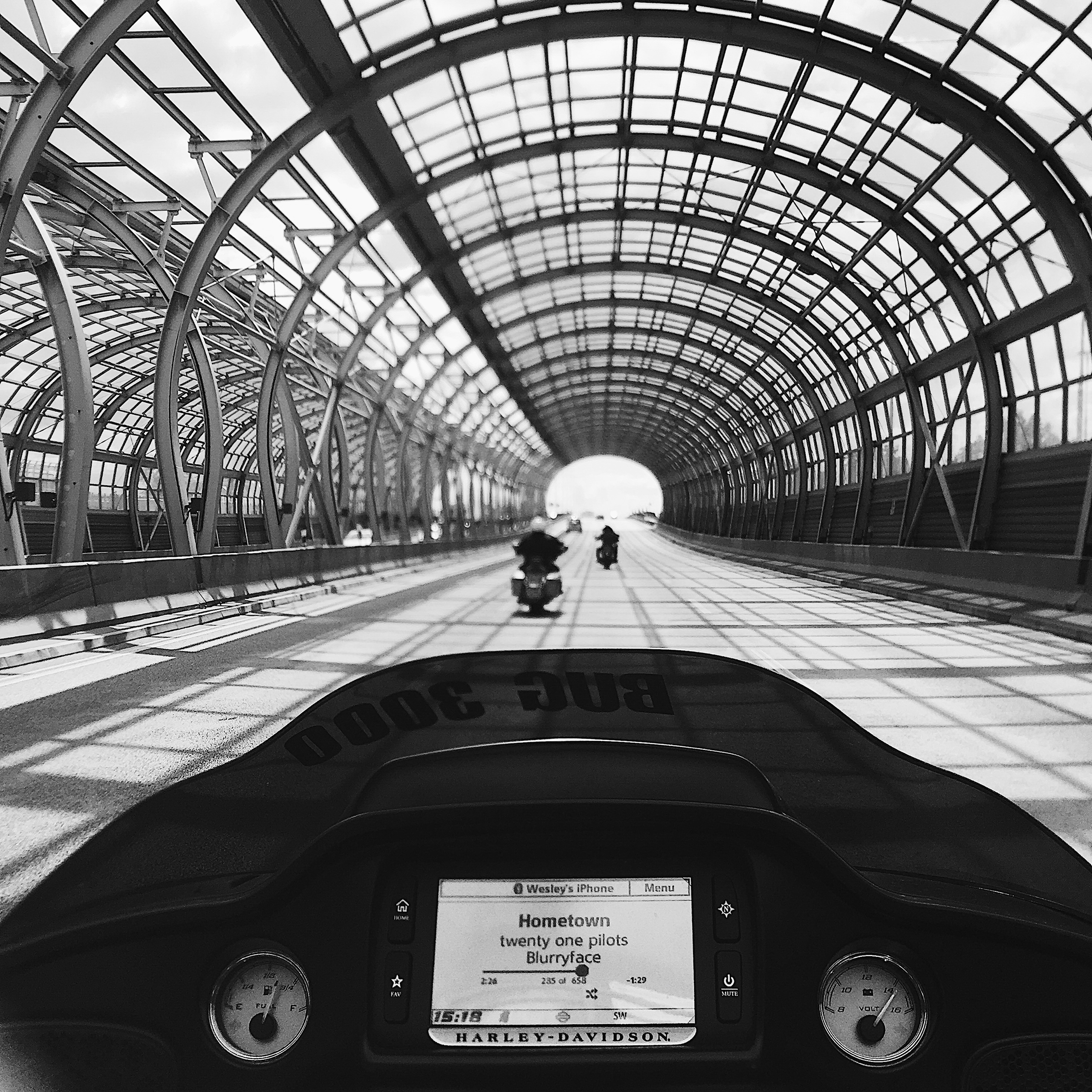
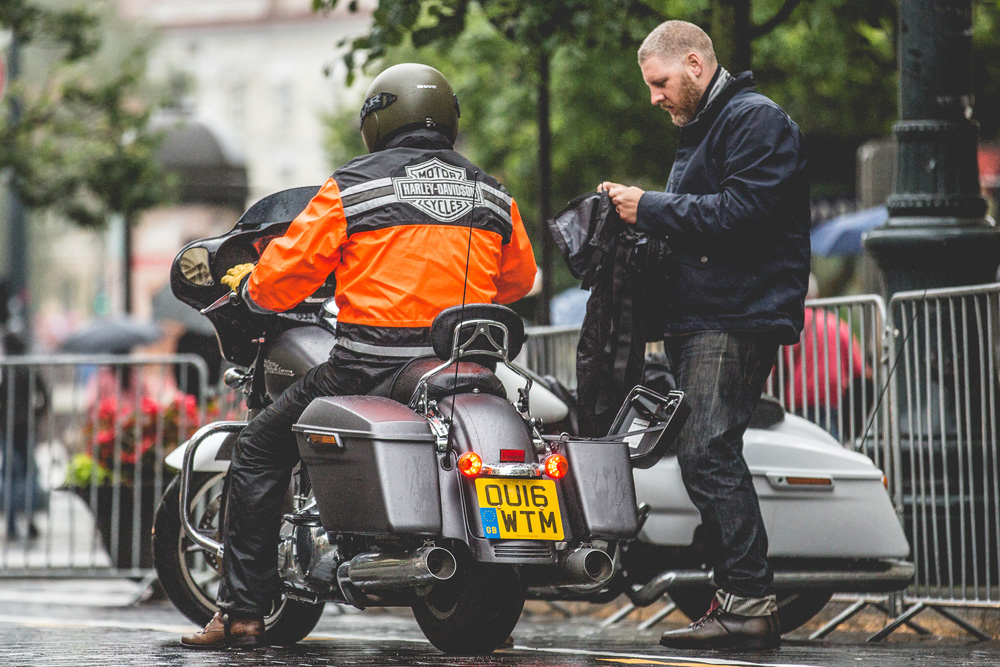 We pulled into the day’s lunch stop—the old medieval city of Vilnius—at about four. The ride had been such a blur, I hadn’t realized we’d crossed over from Latvia to Lithuania. And we were only halfway.
 Catching up with the cars the next day would mean tackling 1,200 km (745 miles) in one day. So the Harley crew made the best call ever; we officially retired from the madness of the Gumball 3000, and would spend the next few days road-tripping across Europe, with Harley’s motorcycles and credit card.
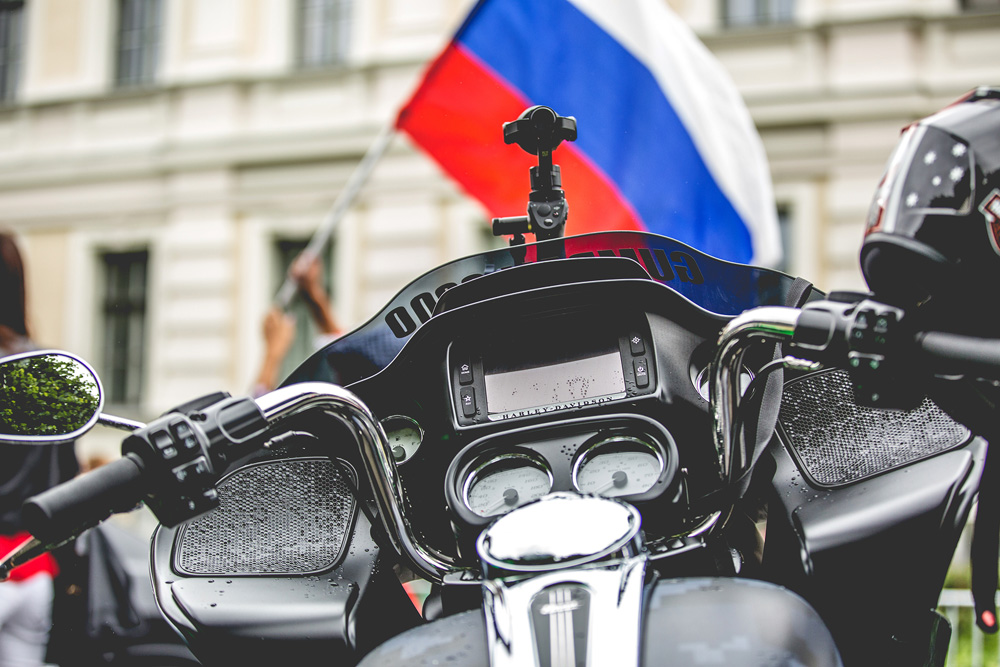
 The pressure was off and the pace of riding became more manageable. The two days it took us to get to Prague were spectacular.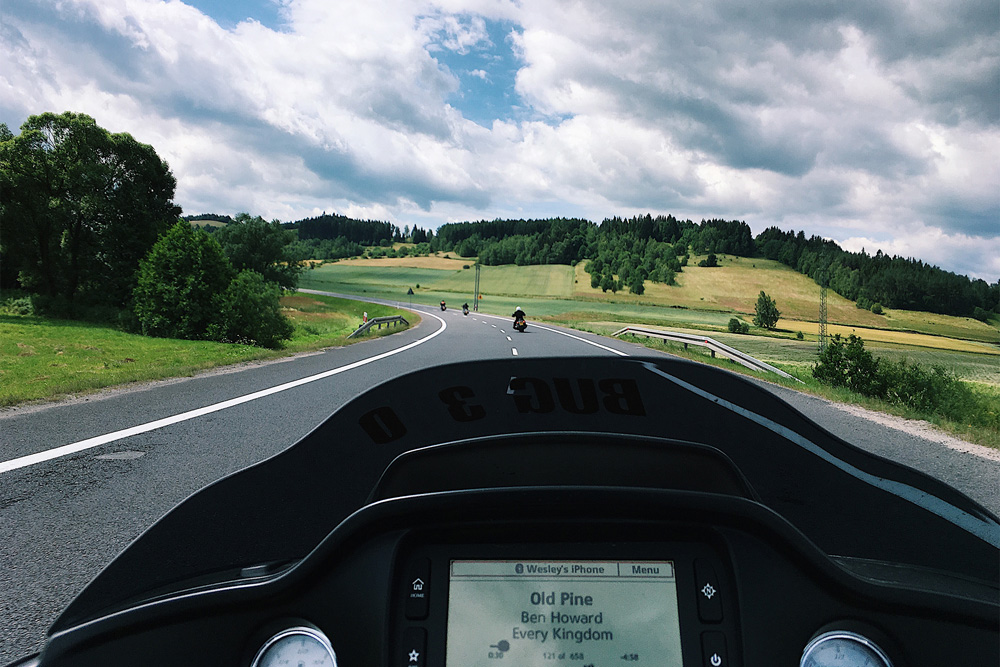
 With thanks to
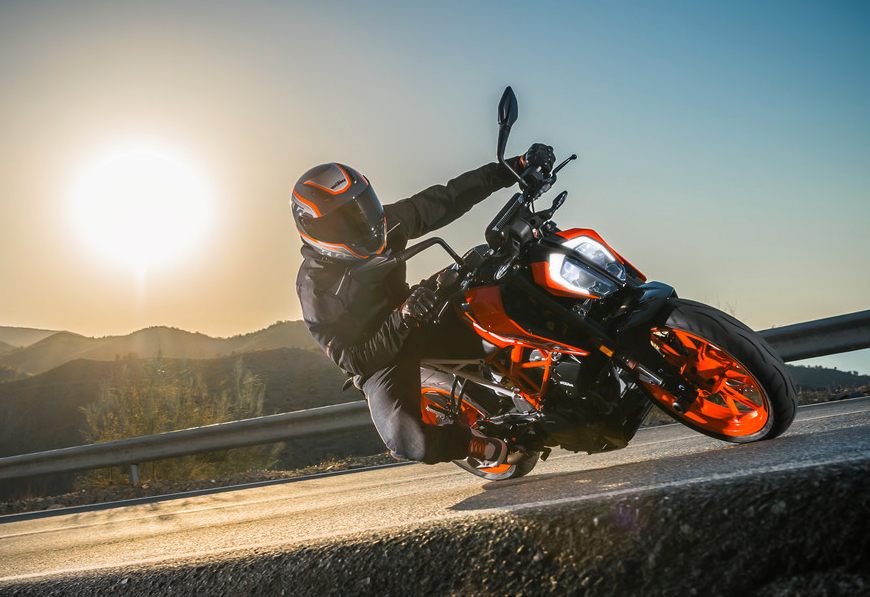
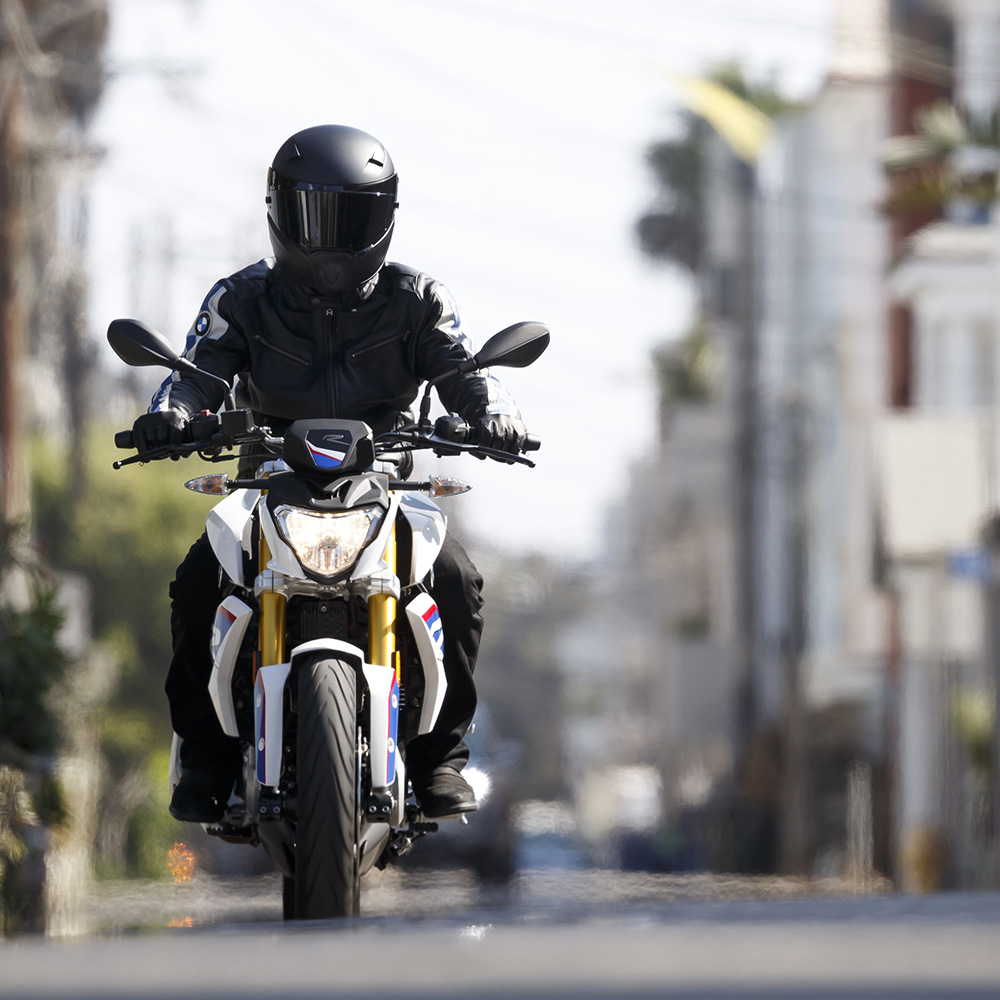
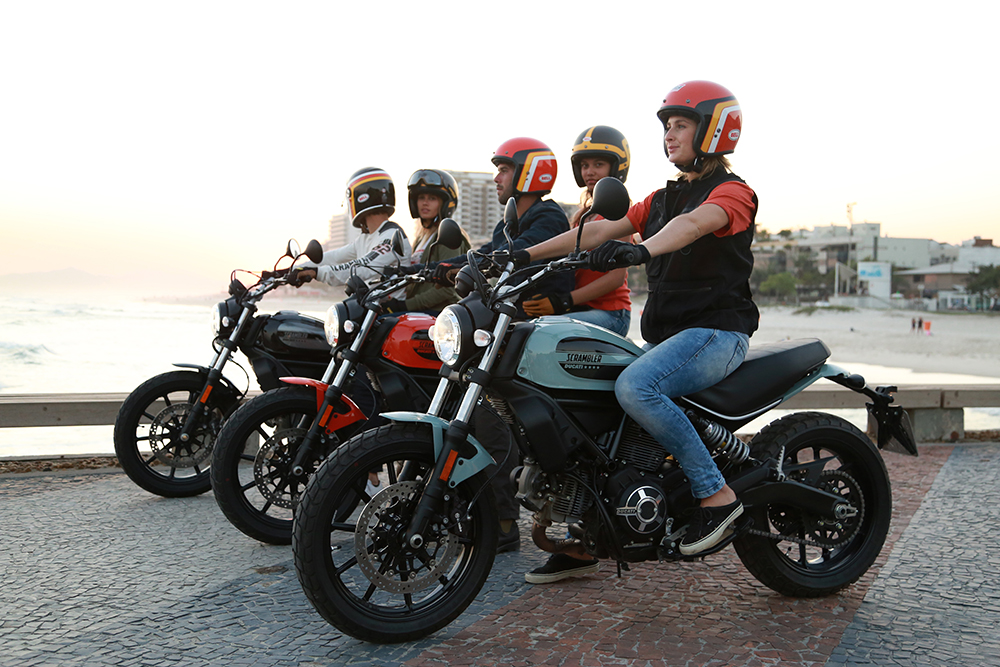
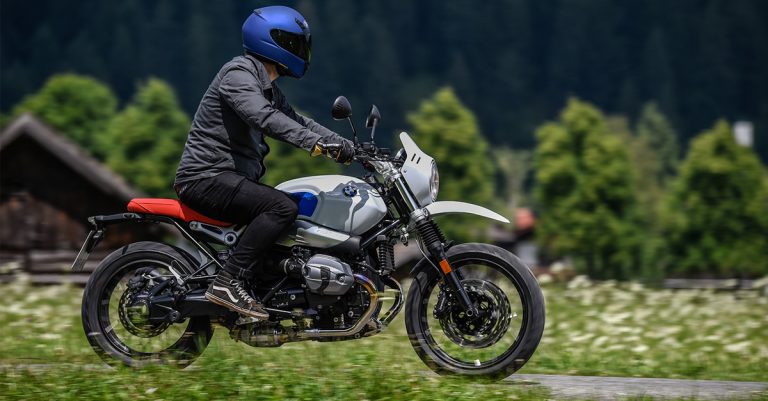
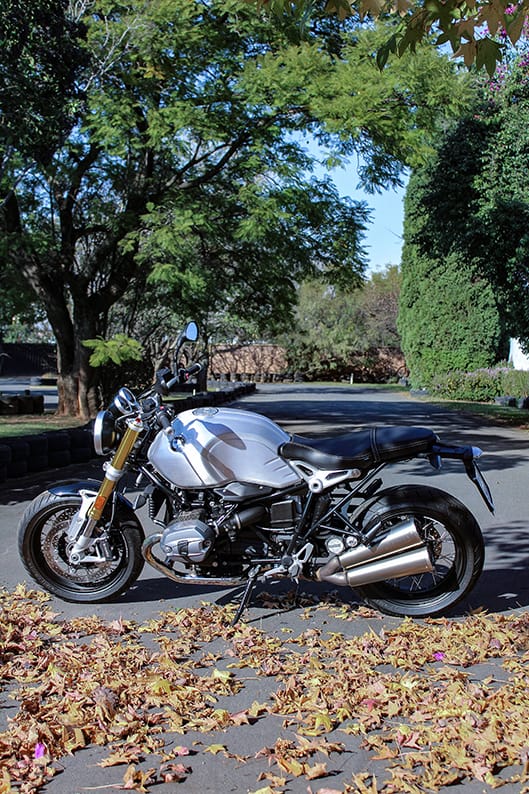
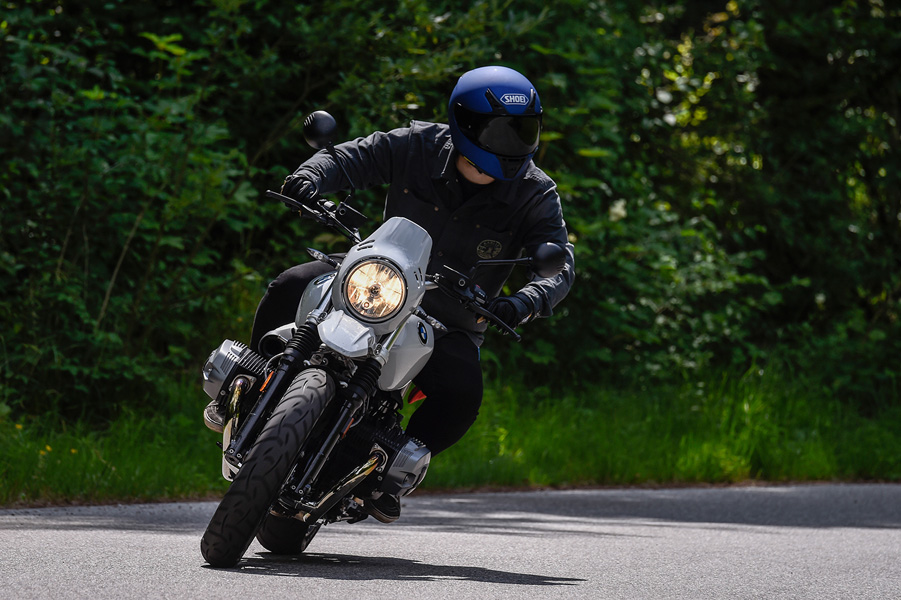 The Urban G/S is basically a dressed-up R nineT Scrambler. And that’s not a bad thing. I loved the Scrambler when I first rode it, and the Urban G/S takes all of that goodness and wraps it in an even more retro-fabulous package.
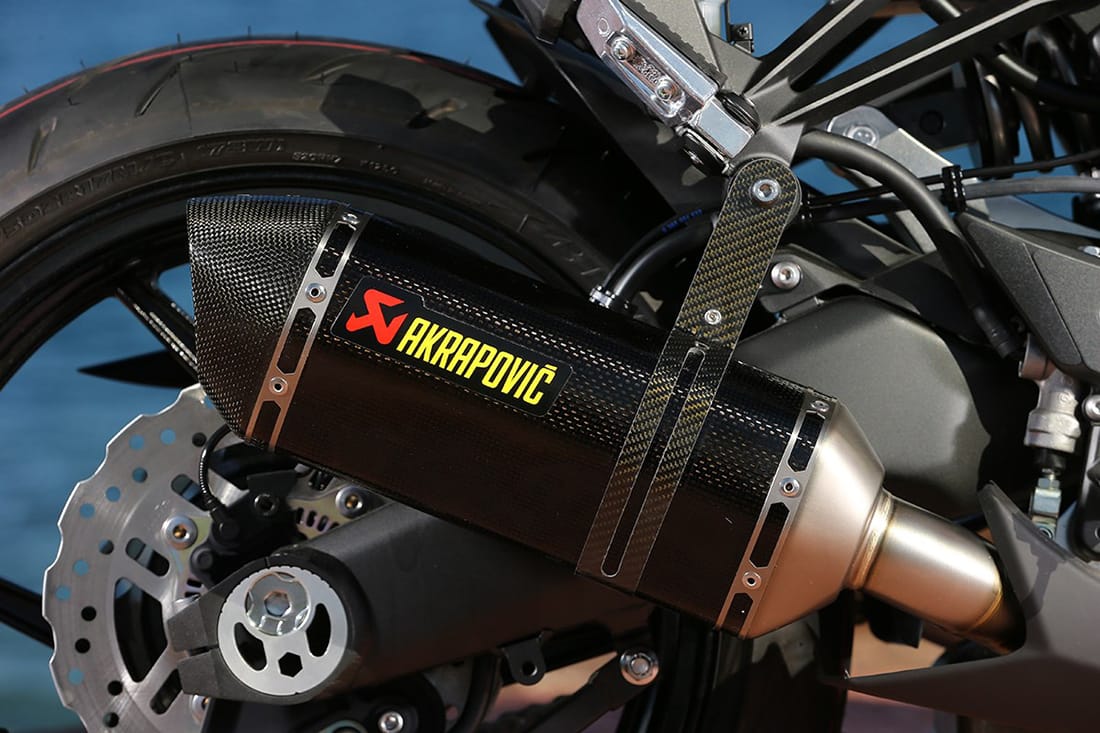
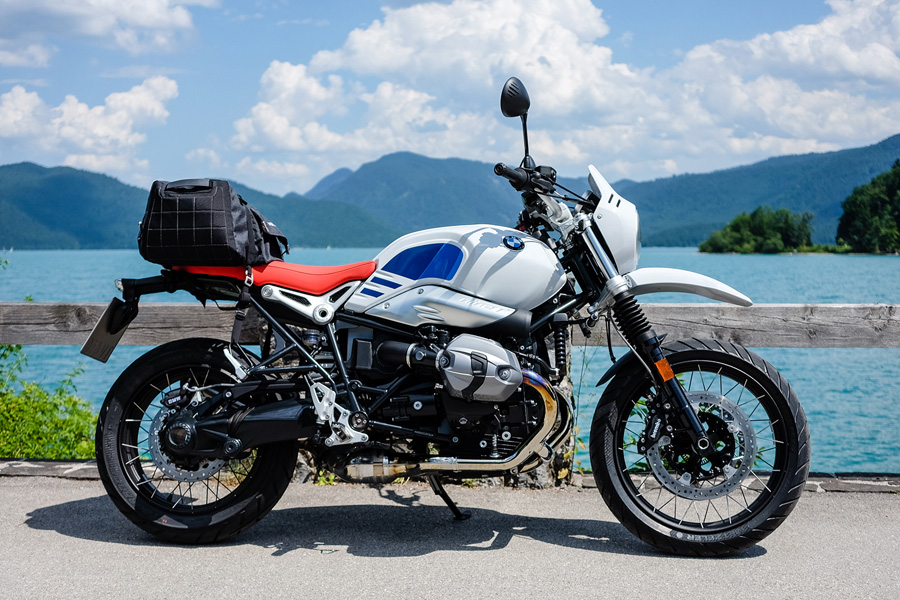 The tank is the same steel unit as the Scrambler’s, and the single speedo, bars and pegs are carried over too—making the ergonomics identical. The only other notable difference is the exhaust; instead of the Scrambler’s twin Akrapovič unit, the Urban G/S has the same unbranded silencer as the R nineT Pure and Racer models.
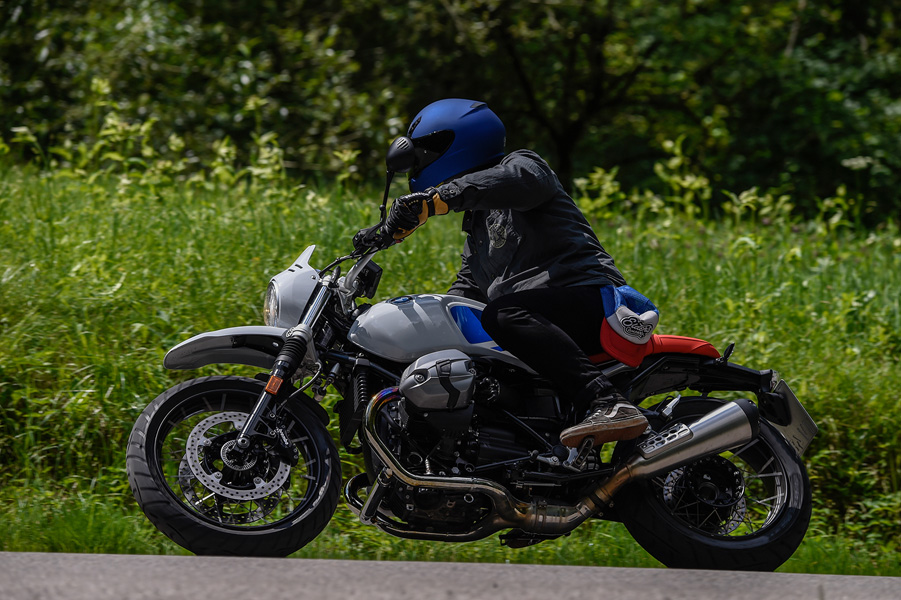 The model I was riding came with spoked wheels, heated grips and LED turn signals… but those are all optional extras. At $12,995, an Urban G/S will set you back the same amount as a Scrambler—but that’s with the standard alloy wheels, and none of the other frills. I can live without the heated grips, but the throwback enduro vibe just doesn’t quite work without spokes. Be prepared to cough up if you agree.
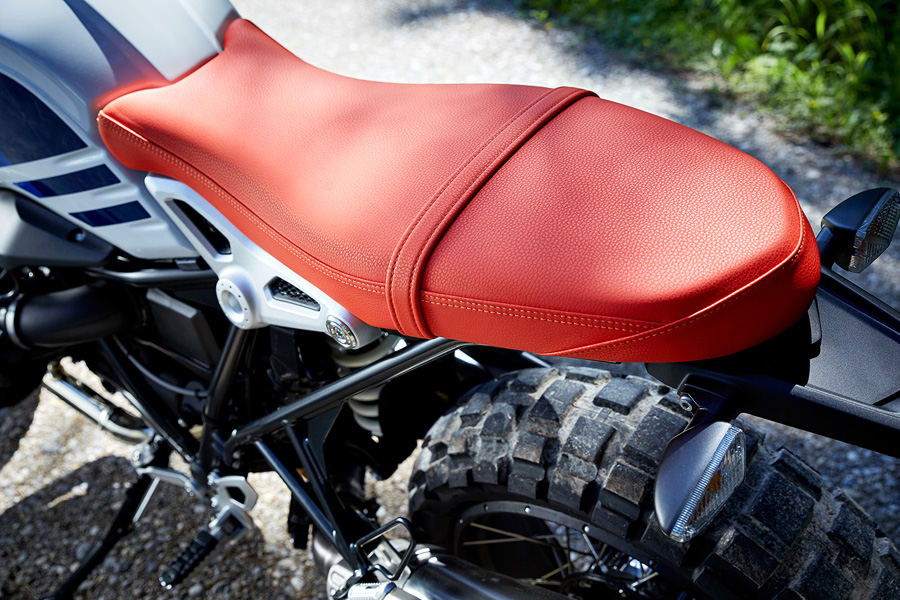 I’d have no qualms putting it through some light off-roading, but it’s refreshing that BMW aren’t pretending that this nineT is something it’s not.
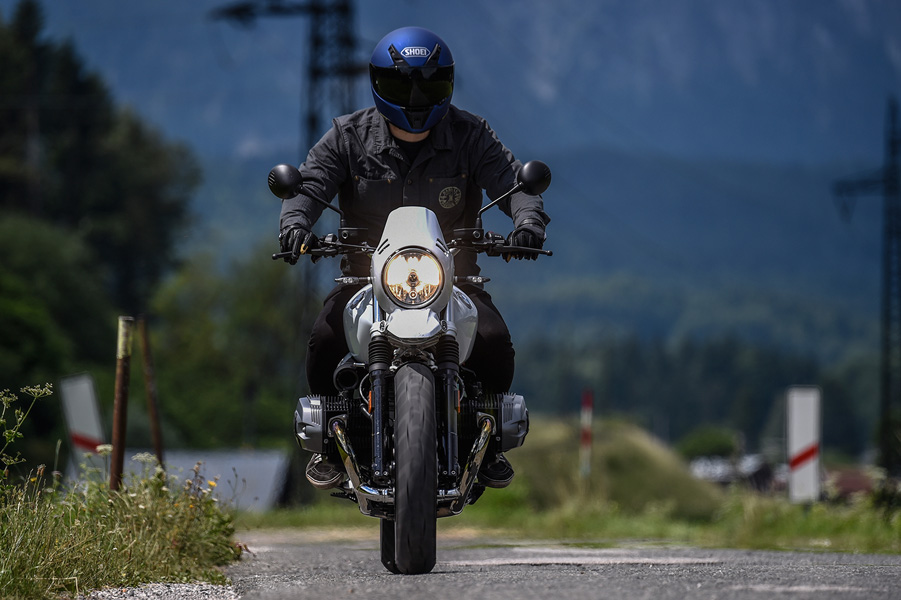 Whether urban exploring or canyon carving, the Urban G/S is a total blast. All the characteristics that I love about the air- and oil-cooled, 1,170cc boxer are present: oodles of linear torque, with just the right amount of vibration. There’s a raw feel that the newer, liquid-cooled engines just don’t have.
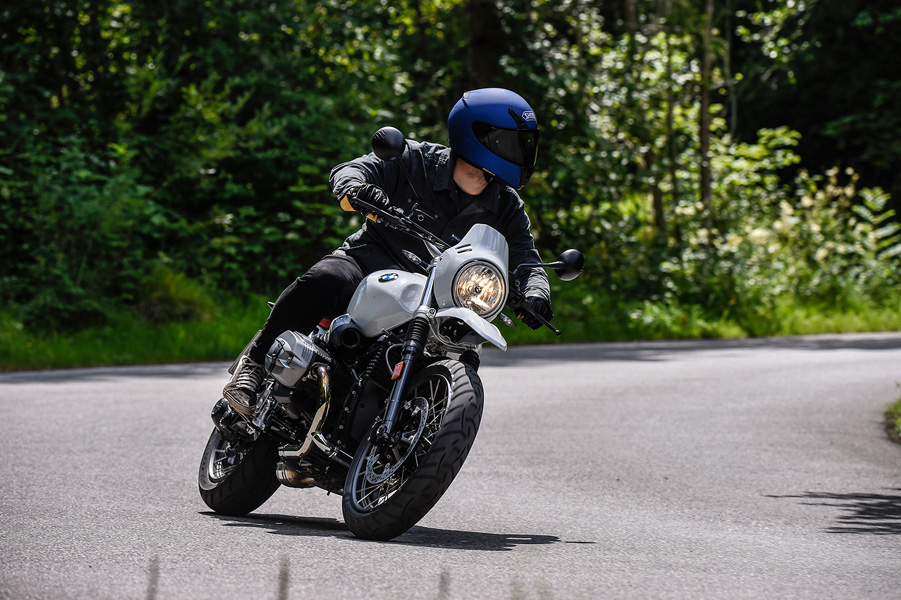 I commented previously that I found the Scrambler a more playful ride than the planted feel from the original R nineT Roadster, and that still holds true here. The Urban G/S is surprisingly light on its feet for a big boxer, and a ton of fun to flick from corner to corner on flowing Bavarian roads—especially when kitted with road-specific rubber (you can ask for Continental TKC80s, but this one had the standard Metzeler Tourances on).
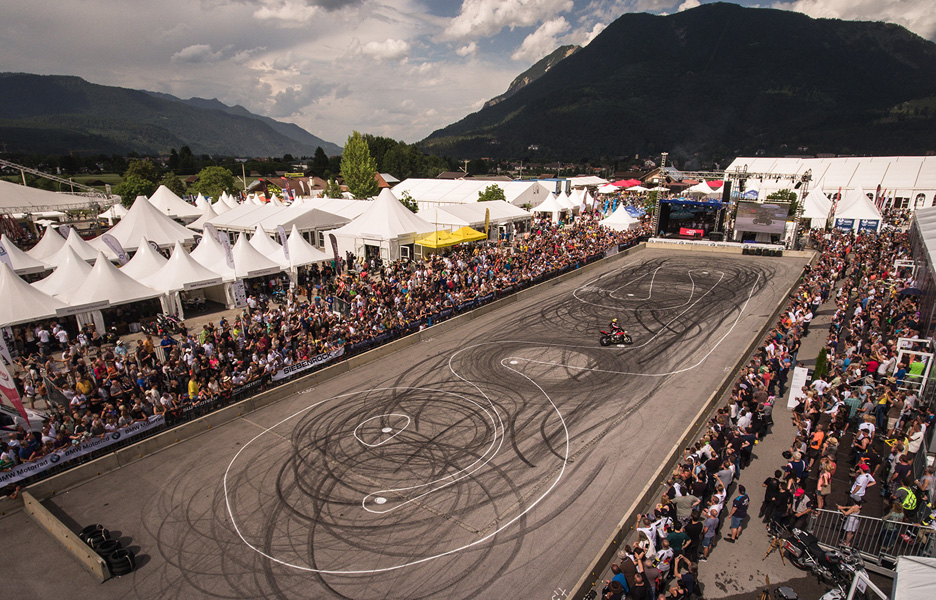 Admission to Motorrad Days is free, so the festival is always jam-packed. This year (the 17th edition) saw an estimated 40,000 fans from all over the globe come and go over the course of the weekend.
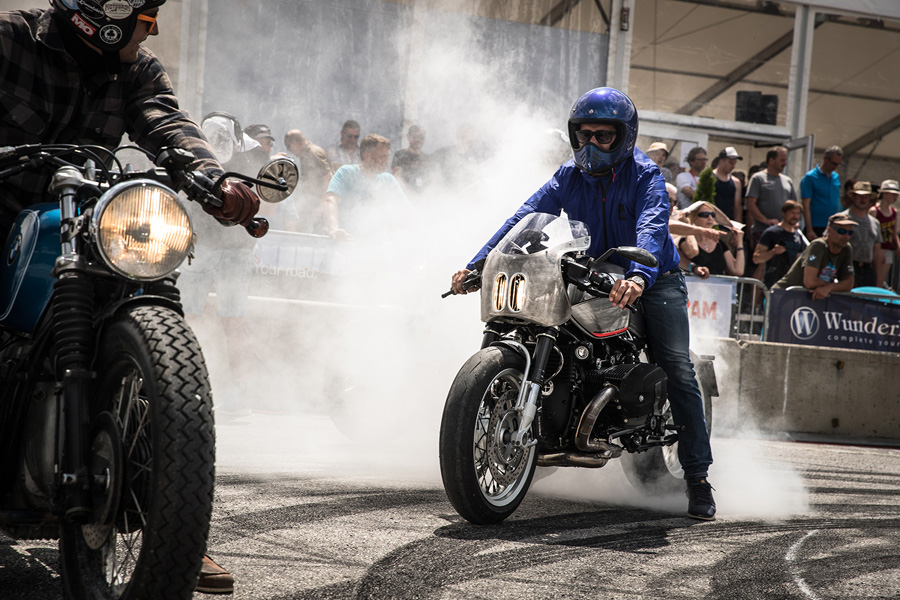 BMW also used the occasion to debut some new tech and products. One highlight was the ‘BMW Spezial’ range—gorgeous accessories for the R nineT and K-series bikes, which can be ordered from the factory (along with hand-done pin striping), or as aftermarket bolt-ons.
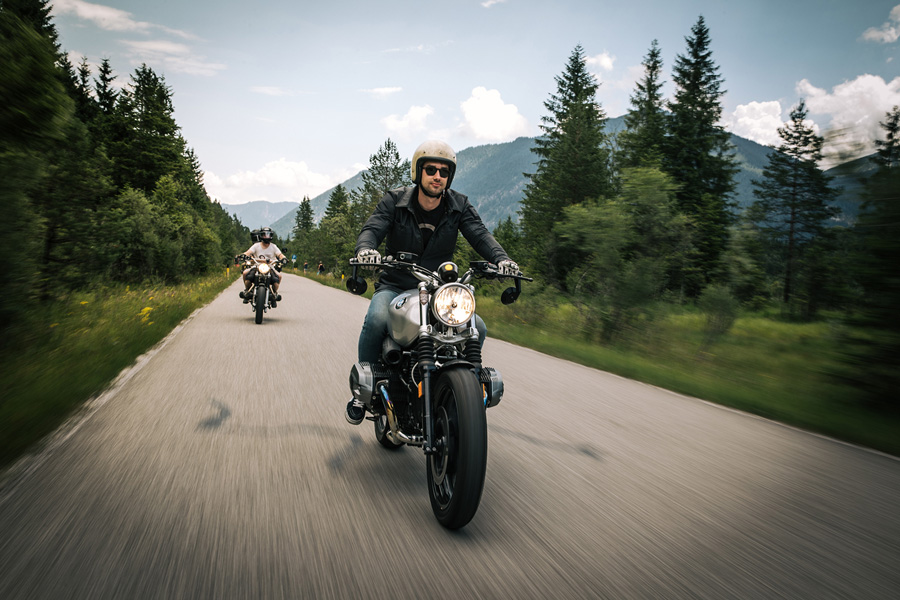 There’s a lot of universal motorcycling appeal too. For starters, Garmisch-Partenkirchen is surrounded by alpine roads—so the riding in the region is spectacular. BMW had a full test fleet on hand, and test rides, and half- and full-day tours were constantly on the go.
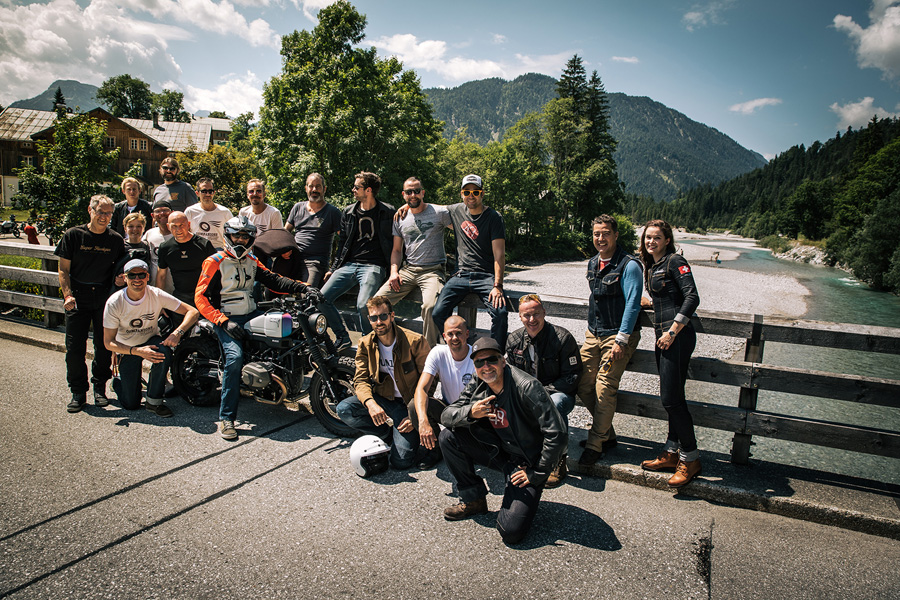
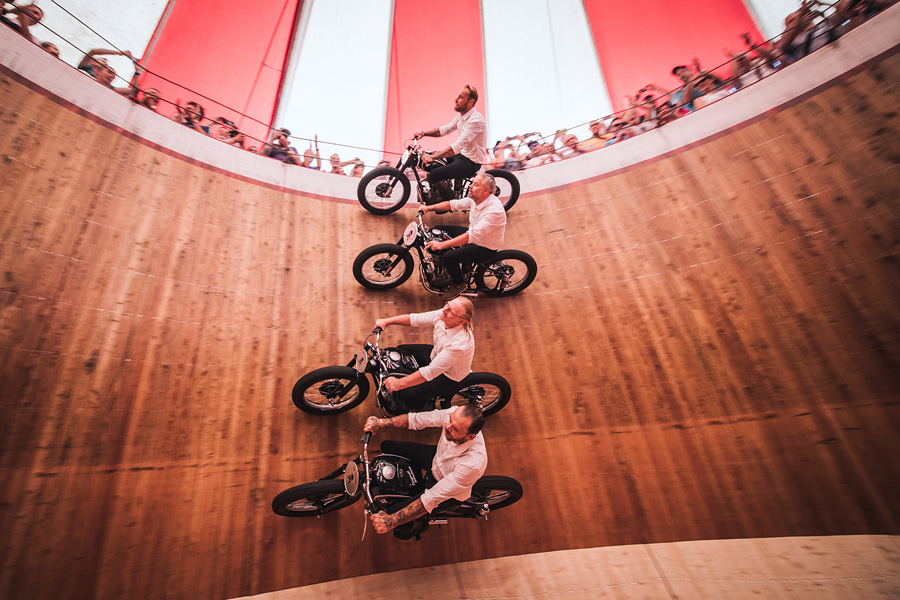 Most importantly, it was a great weekend for catching up with some of Europe’s best custom shops. As a reminder of how popular BMWs still are with customizers, a whole section of the grounds was dedicated to the scene.
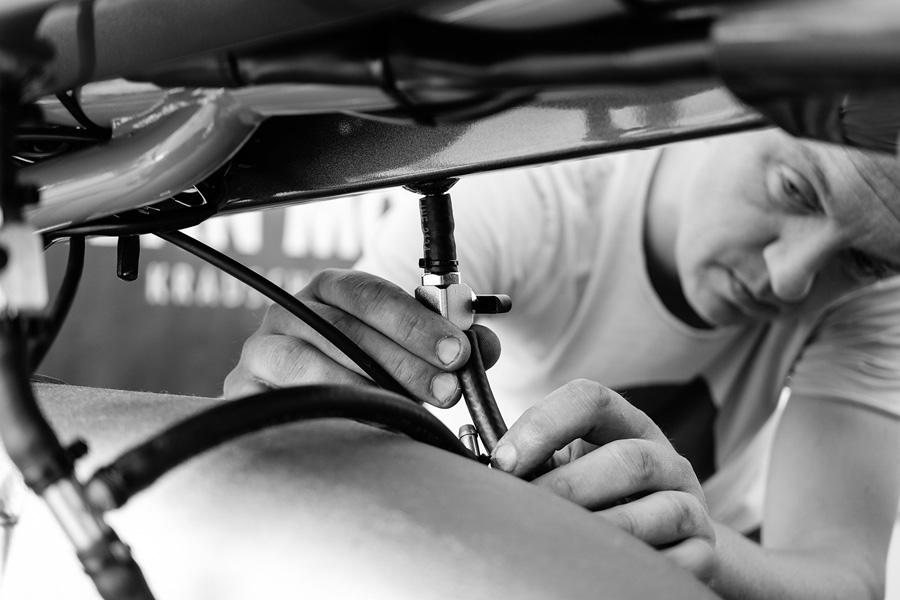 The uber-friendly Urban Motor crew was there too, piecing together a ‘live build’ over the course of the weekend. The number of random custom bikes strewn across the area was amazing—and even more so was the number of BMW staffers hanging out there…
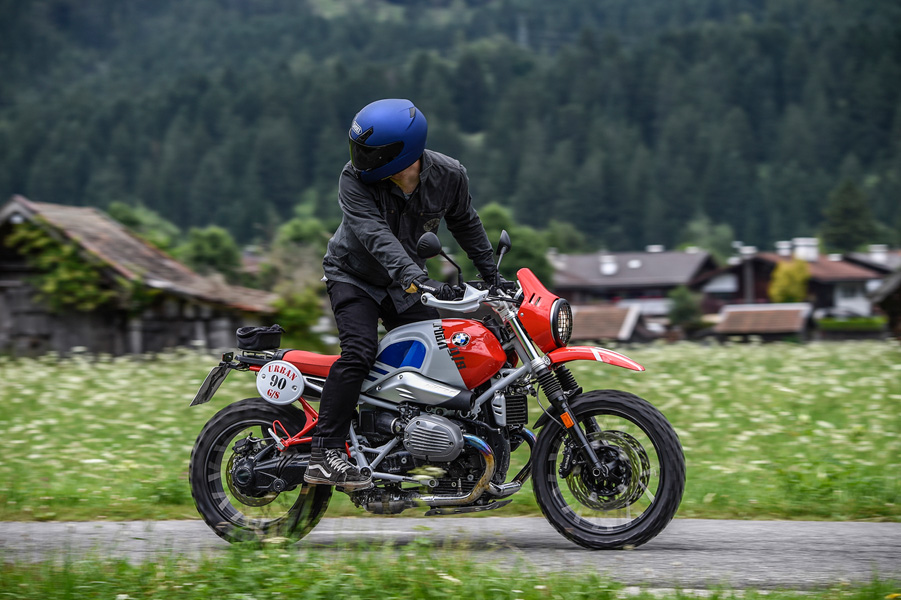
 I also had the chance to swing a leg over another special machine over the weekend—an Urban G/S with a number of prototype parts and a killer Paris-Dakar inspired livery. It’s more a collection of subtle tweaks than a proper custom build, but it shows off the nineT’s potential.
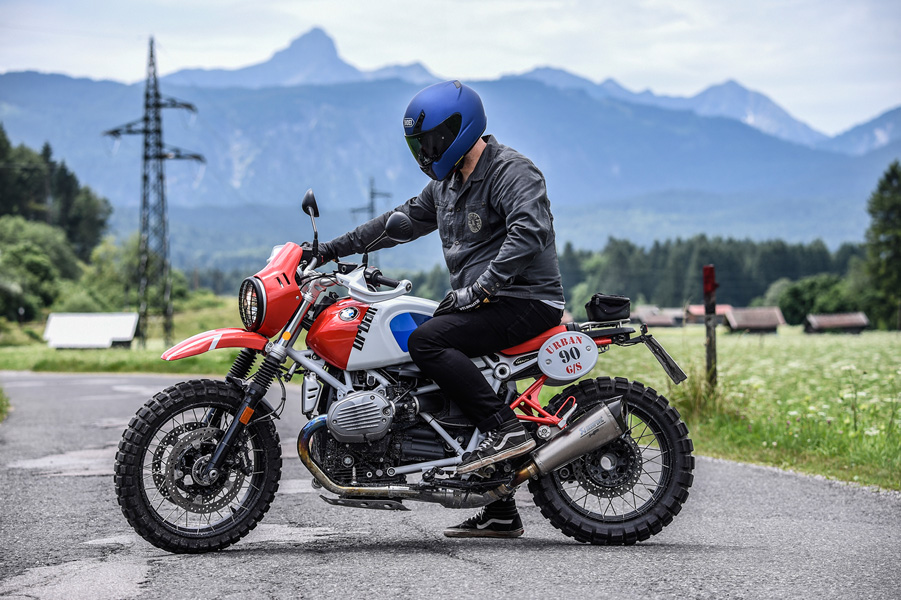
 I noticed that the ‘special’ was kitted with handlebar risers, which highlighted my only gripe with the Urban G/S (and the Scrambler). With the tank as long as it is, it’s a bit of the stretch to the bars. The risers improve the reach, and the higher bars just look ‘right.’
 And for scooting around a massive BMW party in the middle of a balmy Bavarian summer, it was just perfekt.
 This article first appeared on
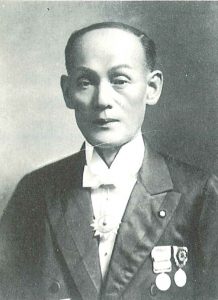 Torakusu Yamaha was born in a small rural village in Japan in 1851. Fascinated by Western technology, he qualified as a watchmaker after completing his schooling. Blessed with an enquiring mind and an exceptional ability to grasp the workings of precision instruments, he repaired the American made reed organ of the Hamamatsu Elementary school. A year later, in 1888, he slung his prototype portable organ over his shoulder on a carrying pole and trudged over the Hakone mountains. He proudly presented his creation to the music institute of Japan for evaluation but to his dismay, the organ was rejected as ‘badly tuned’, with poor sound quality.

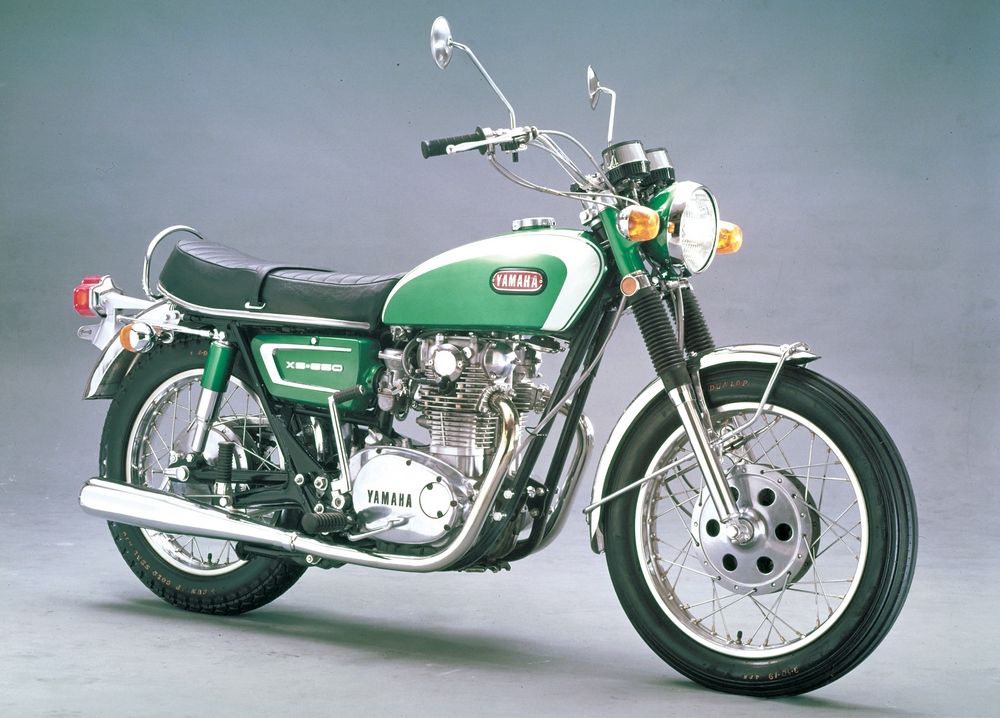
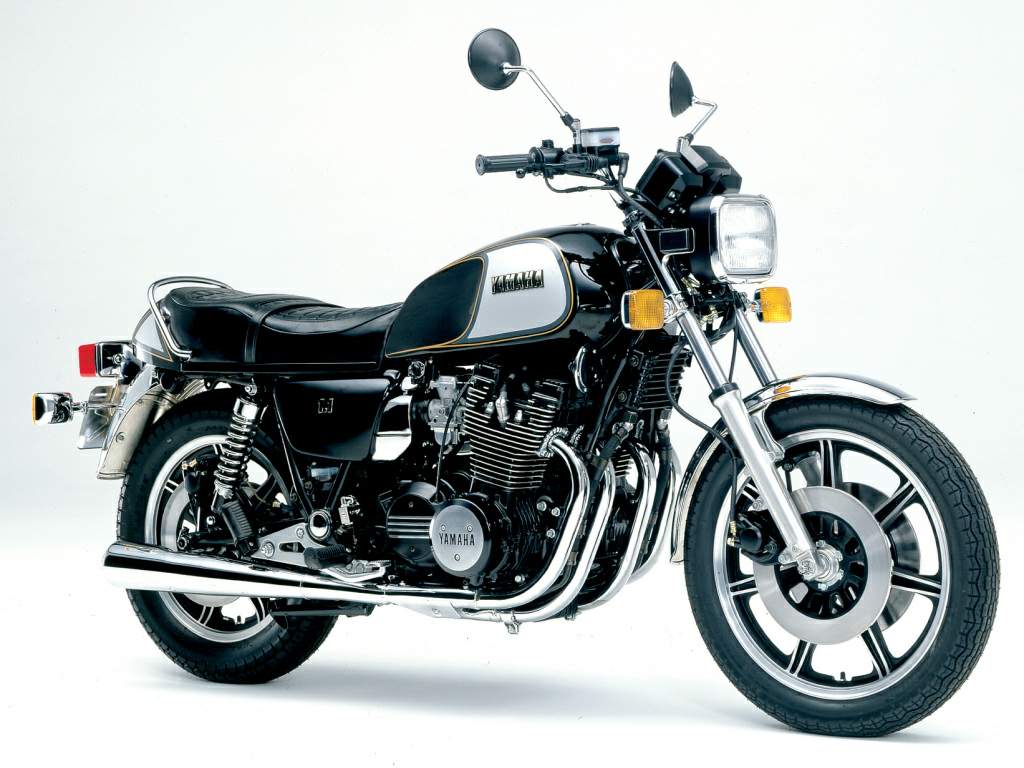
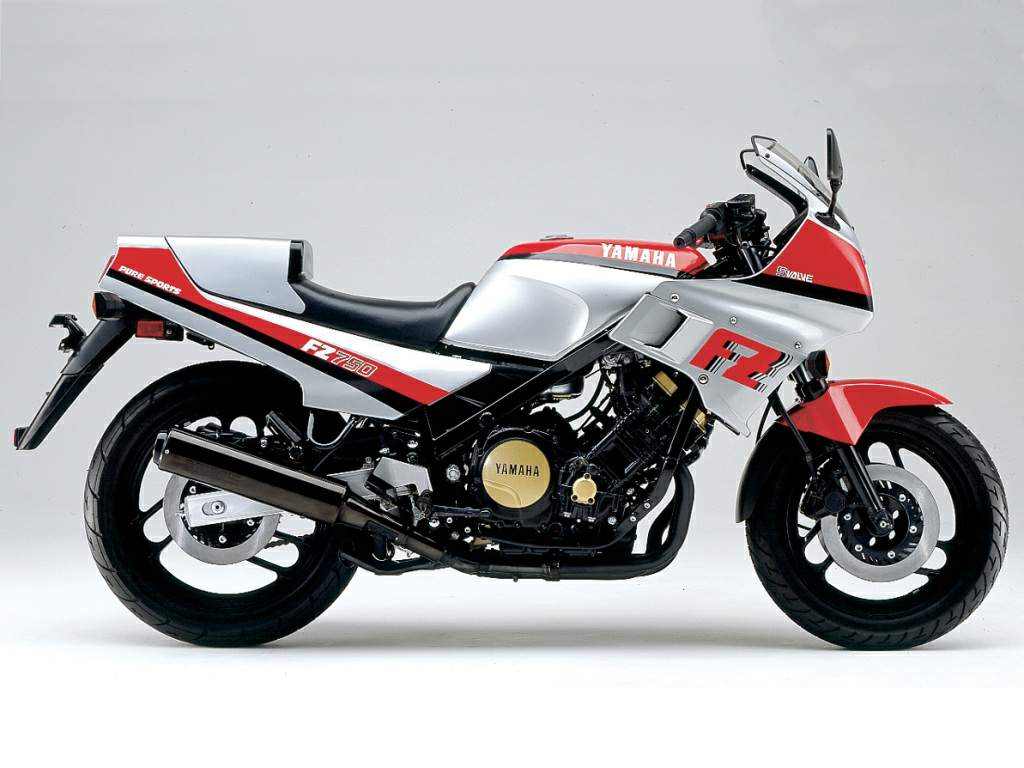
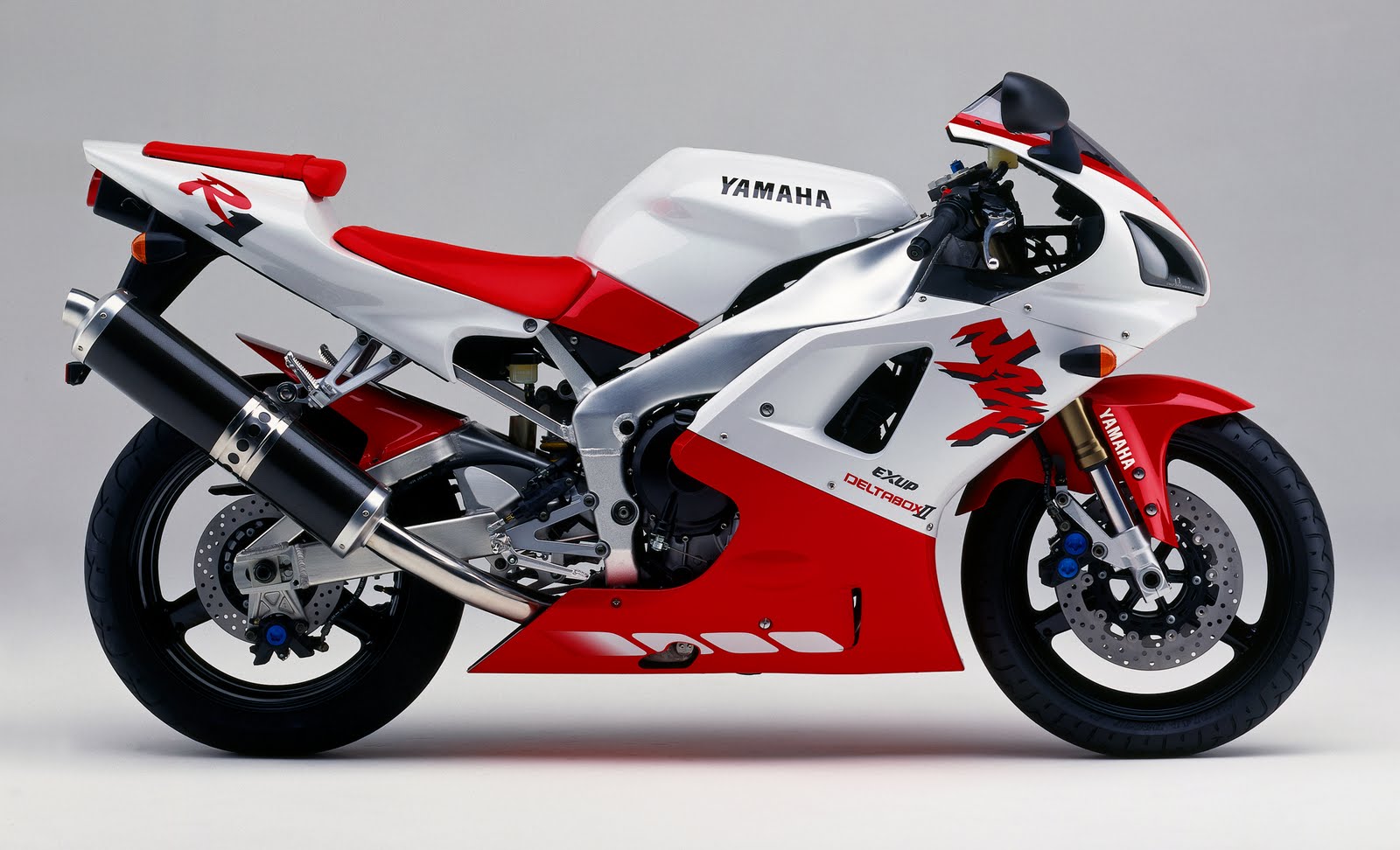
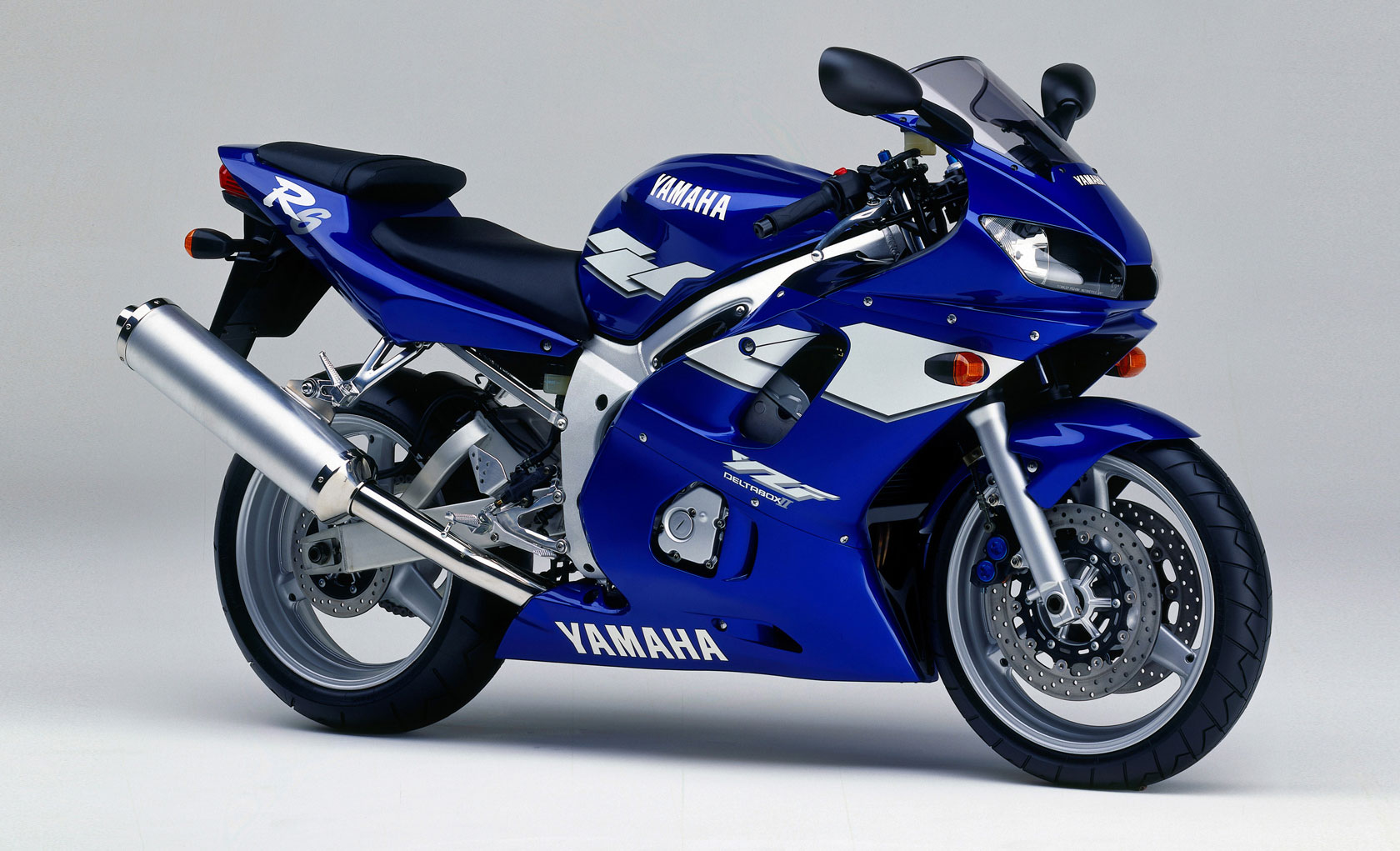
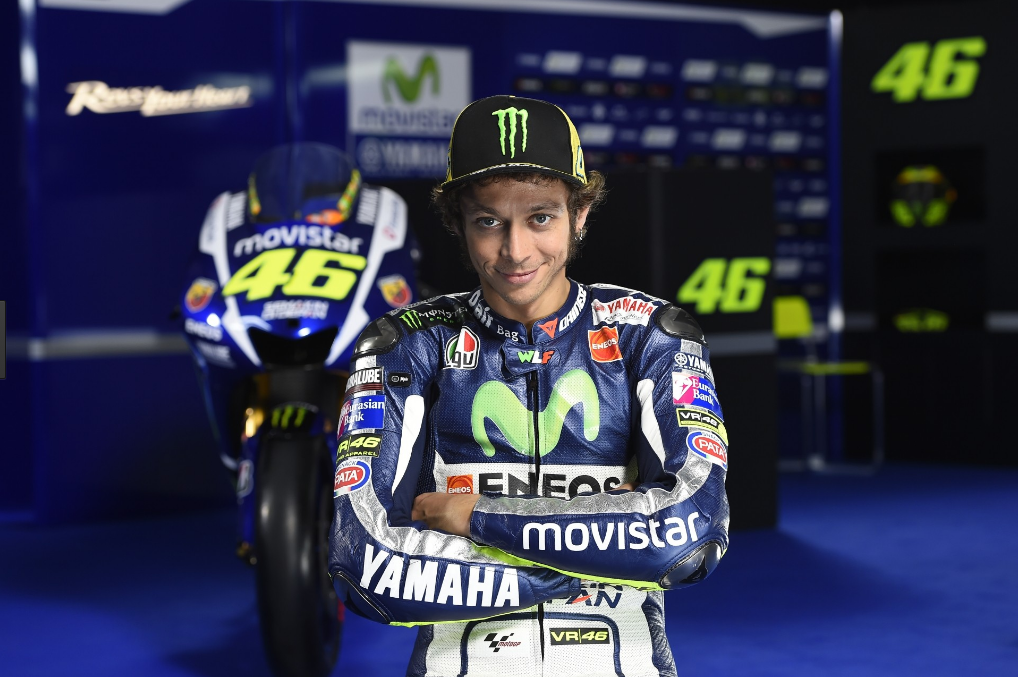
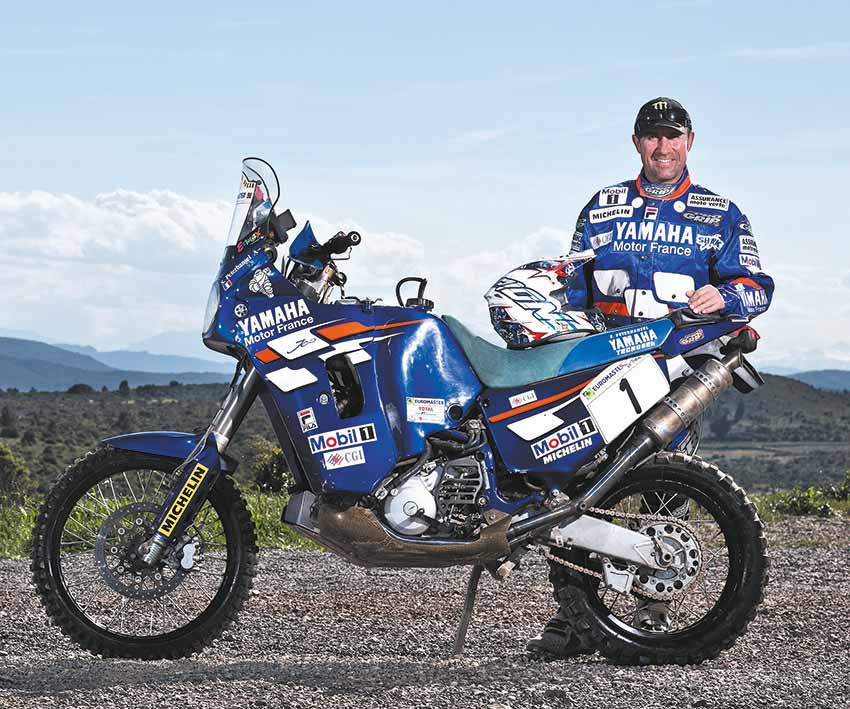
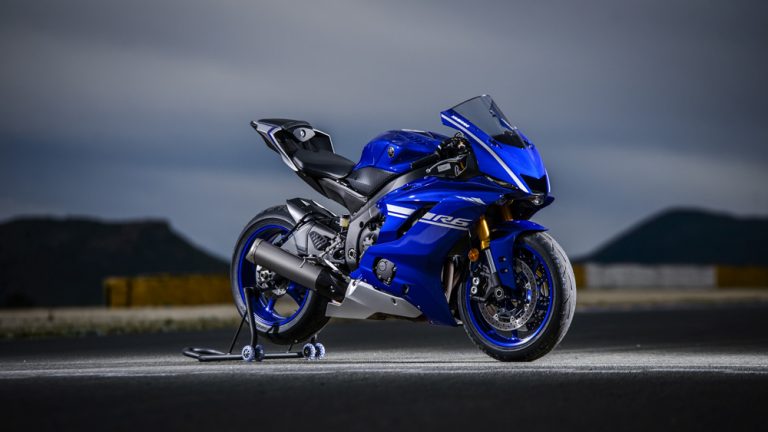
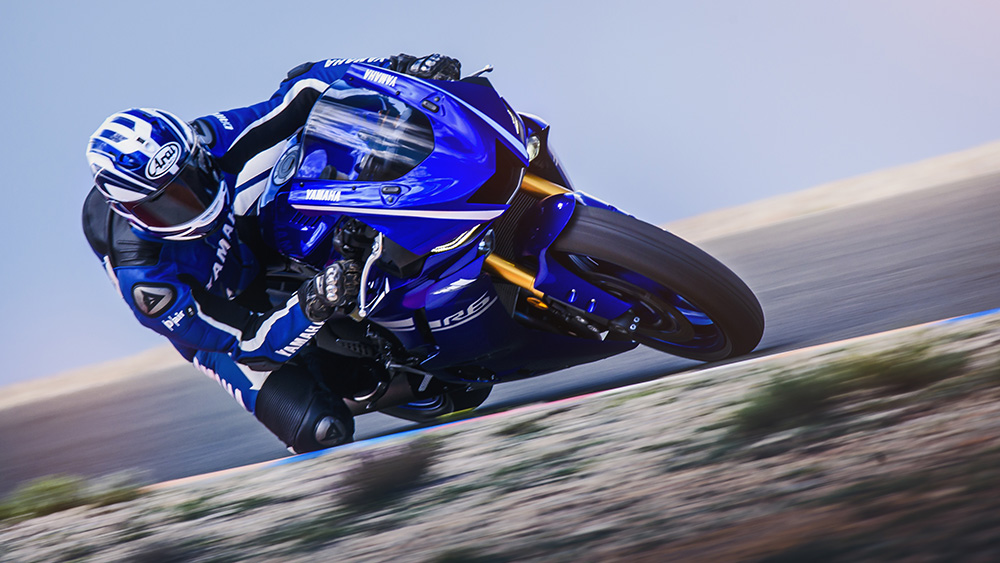 To really get a hurry up you have to take it to the R6. Focus on staying in the right gear and ride decent lines that allow you to carry good corner speed. This allows you to get good drive onto the straights where the motor really sings. Get it right and the R6 rewards like few others. You need real skill to keep it cooking, but when you even get it half right the reward is immense. Sports 600s are real riders bikes.
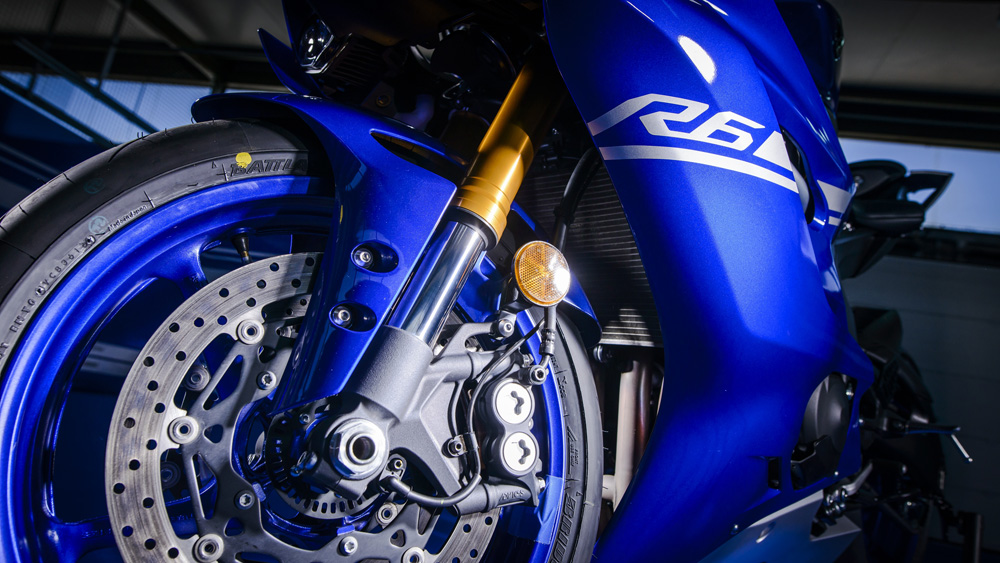 The wheels are both 17inch magnesium alloy with 120/70 up front and a 180/55 rear. Providing the drive to the rear wheel is the familiar 599cc inline 4 motor with 4 titanium valves per cylinder. The gearbox is a six speed stacked unit. A slipper clutch keeps the rear wheel honest on aggressive downshifts.
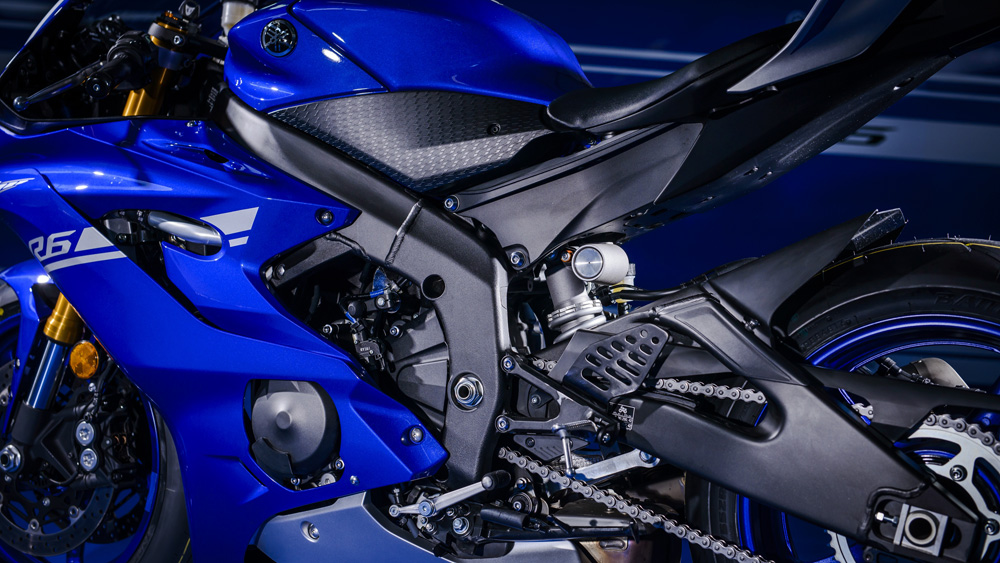 A factory data logger is available as an accessory. The R6 is wired up to suit, so it is plug and play. Engine rpm, gear position, wheel speed, throttle position, traction control intervention, lap times, the whole shooting match can all be downloaded by WiFi to your Android or Apple device. Wild!
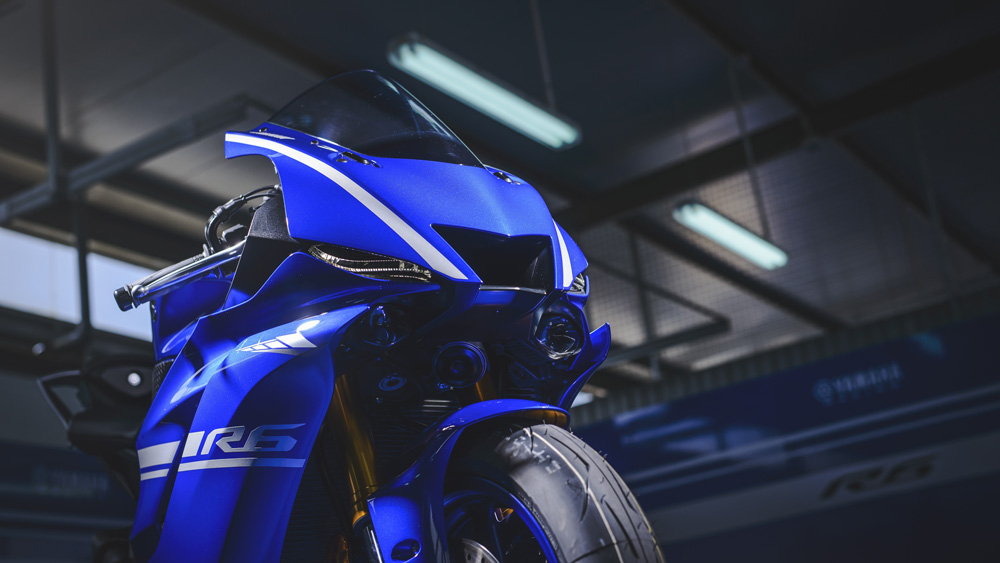 “All good then Dave”, I hear you say. So what’s the enigma? Well, you see, almost everything that makes the R6 such a track weapon makes it hard work on the road. The lack of low down torque feels like bad turbo lag on the road. Keeping the motor in the power is a thrill on the track, but a pain on the road. Talking pain, the track perfect ergos are hell on the wrists and neck around town.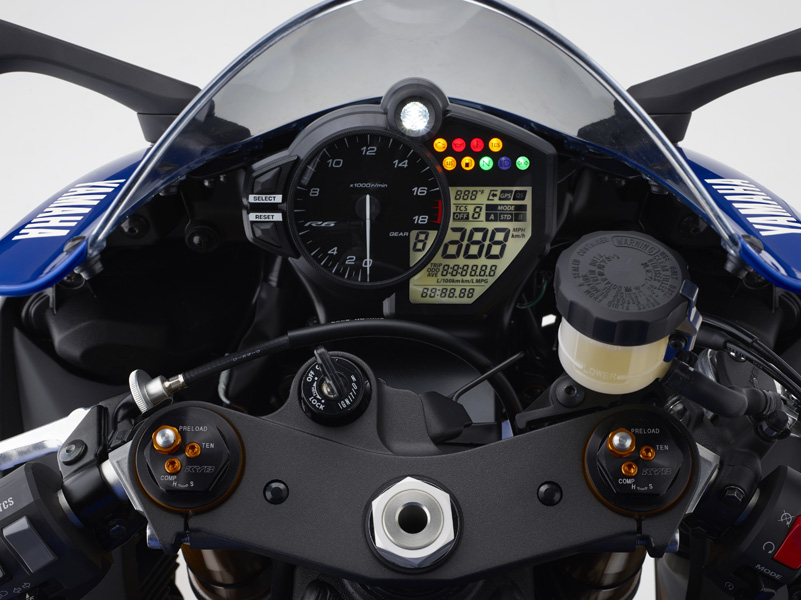
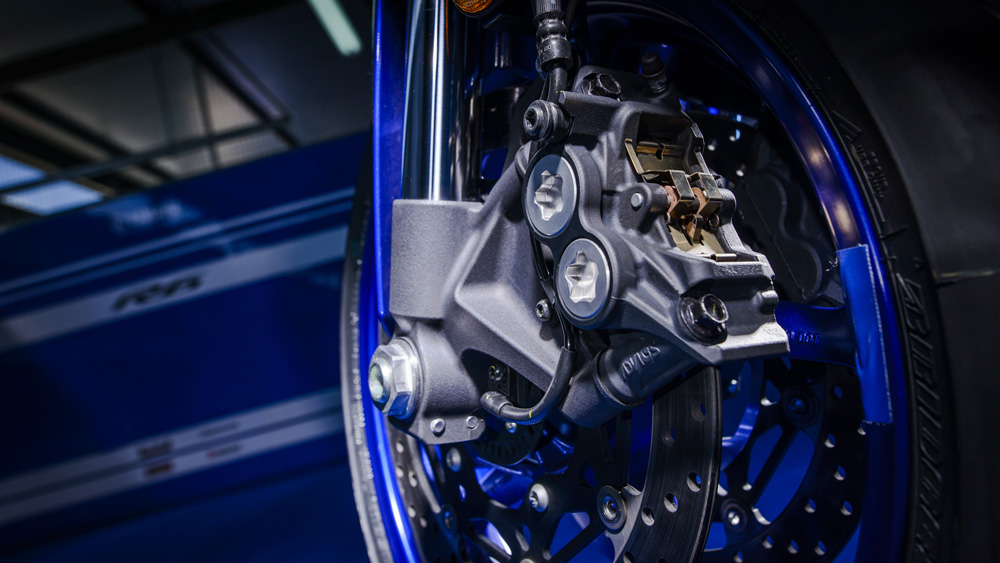
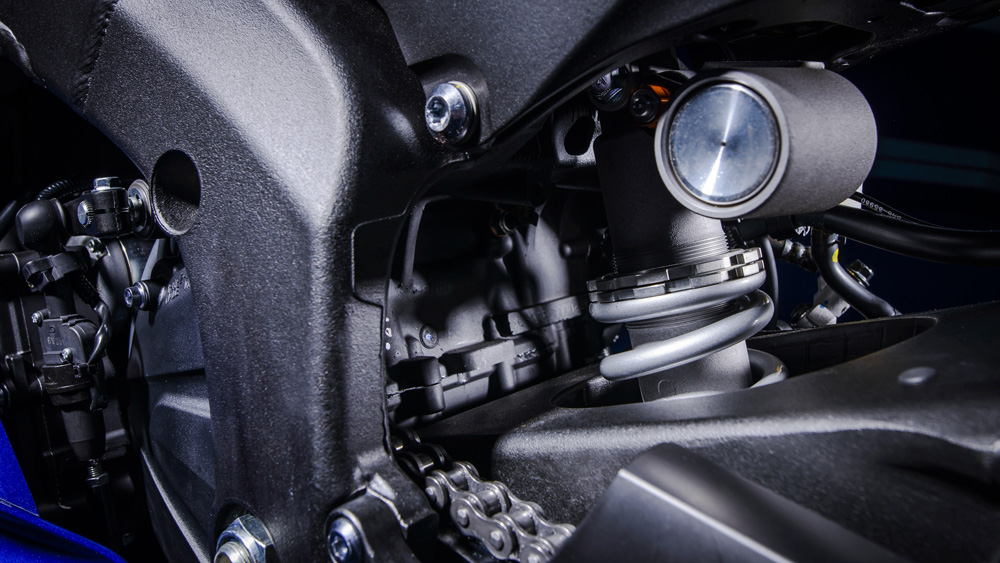
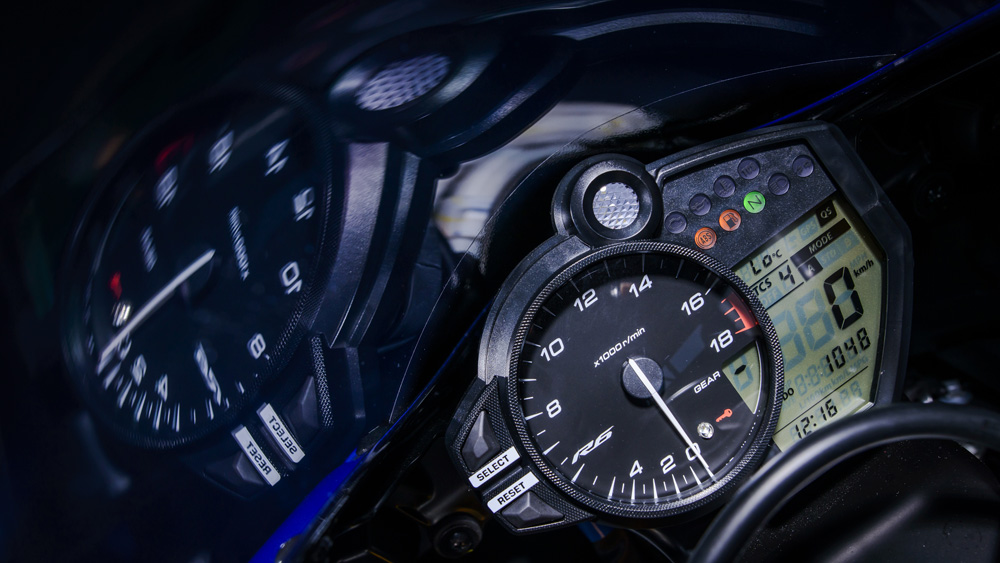
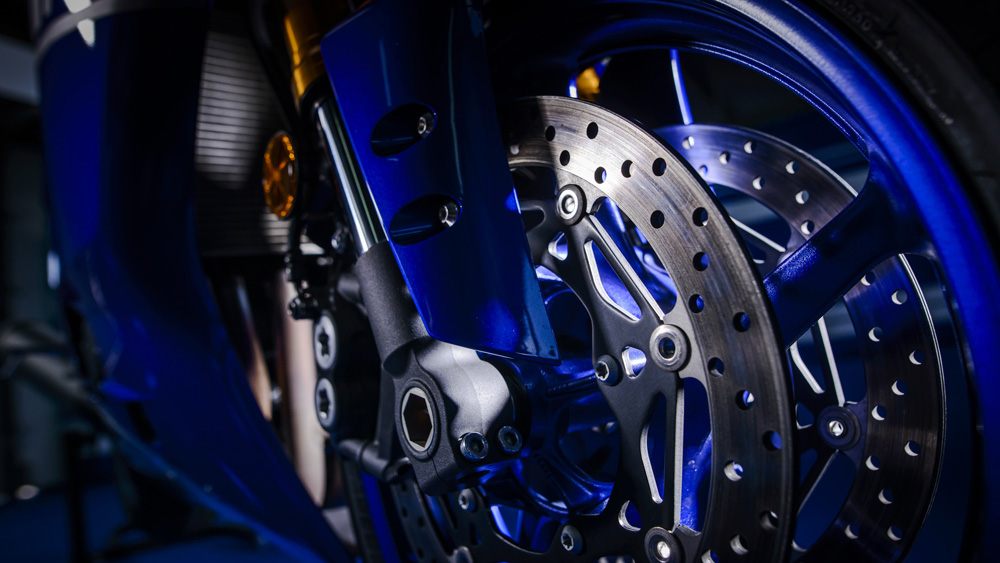
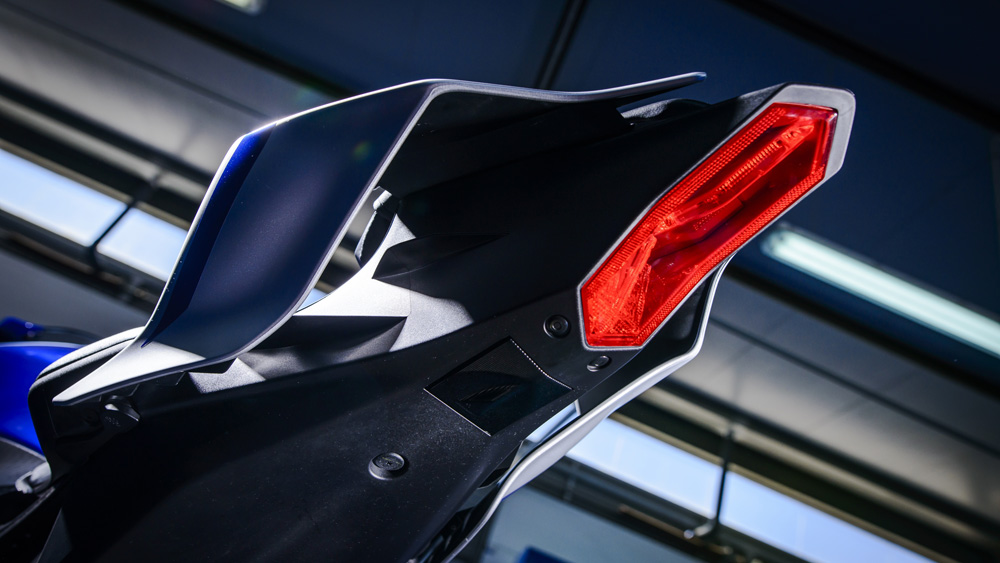
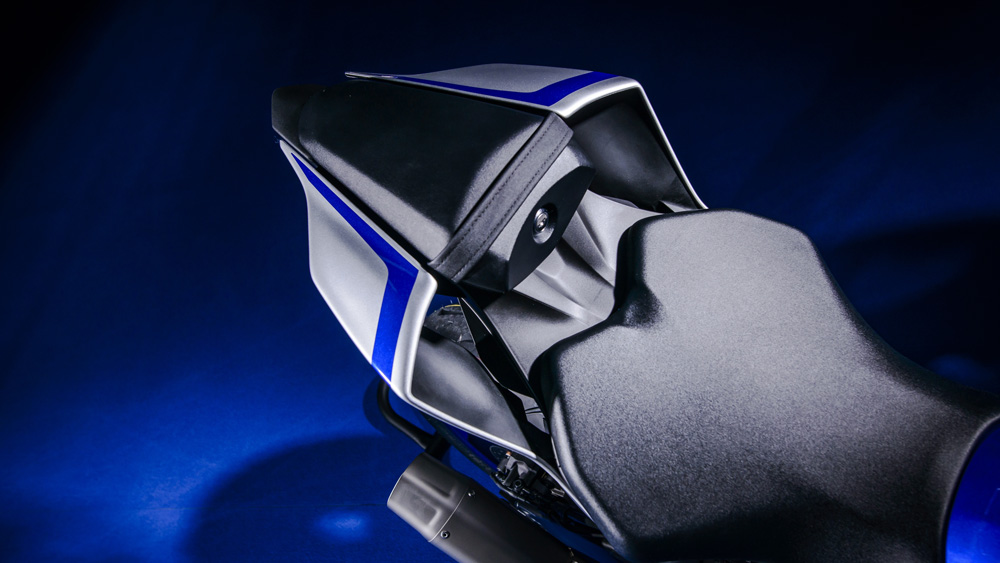
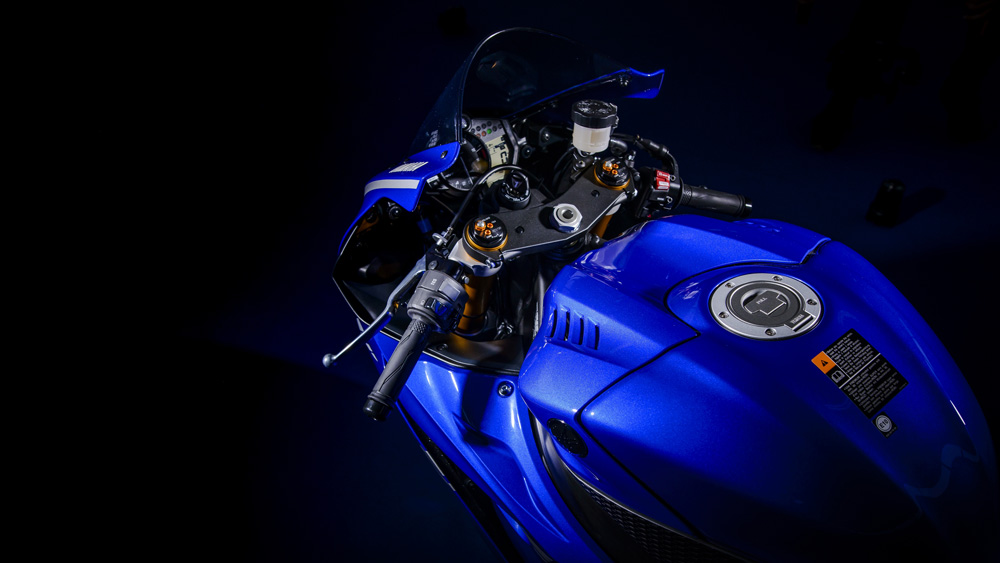
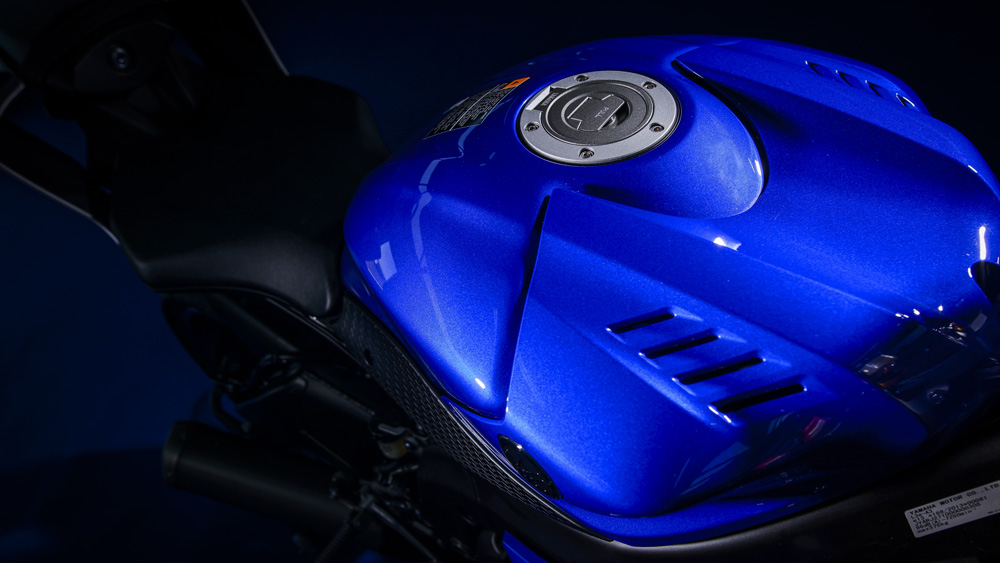
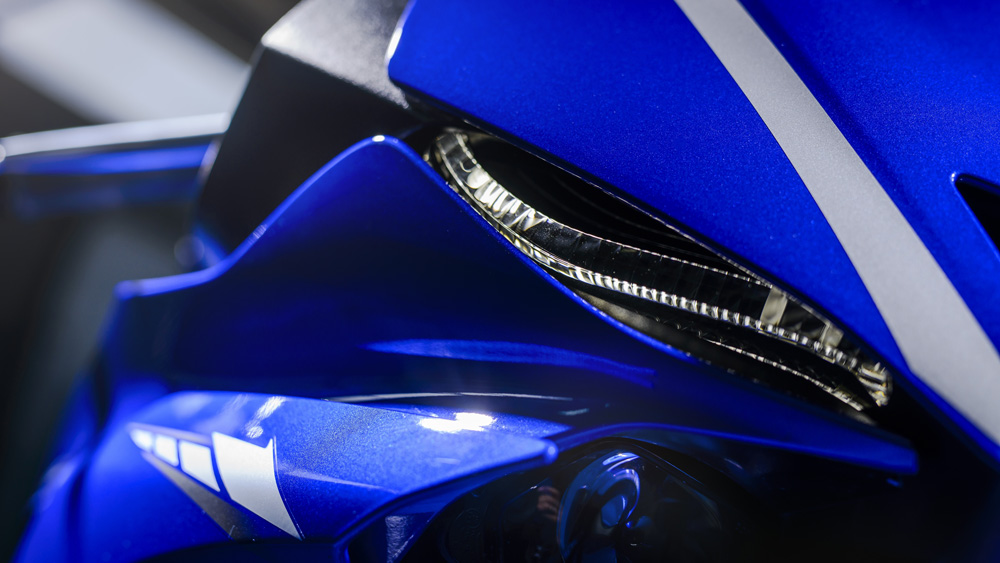
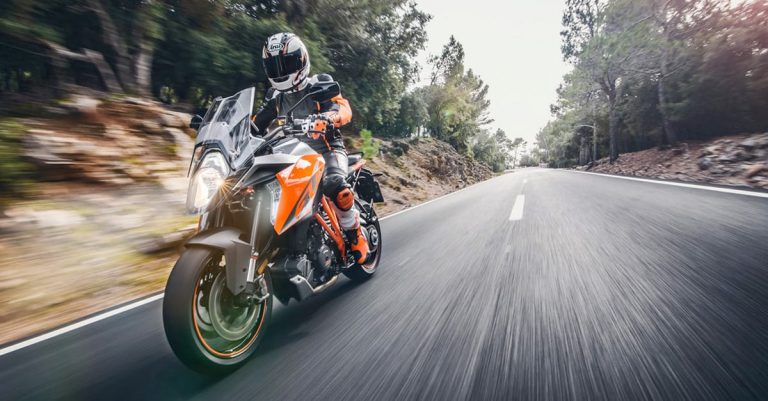
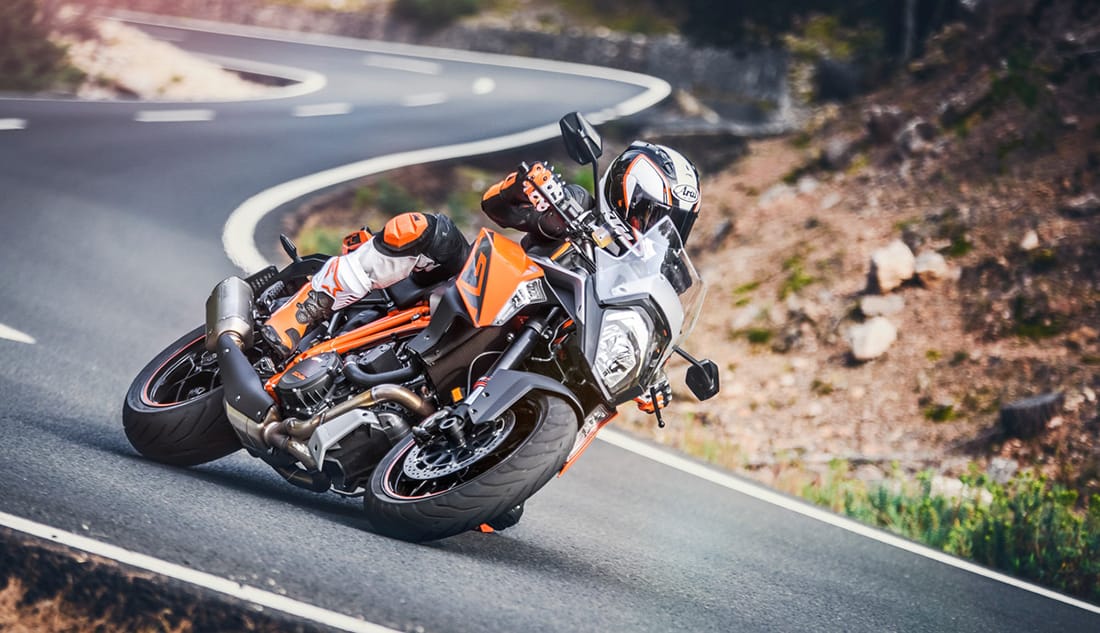 What is most striking about the bike as a whole is that it doesn’t look heavy; there’s a lot of space in the design. Compare it to something like the BMW S1000XR and it looks positively skinny and lithe. Swing a leg over it and it feels physically small, too. This isn’t an intimidatingly large bike and yet the riding position never feels cramped.
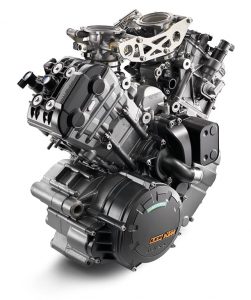 The engine continues to impress, if only because of its sheer grunt and performance. It’s not the smoothest of engines but it feels raw and alive and, while that might seem like a tiring prospect for long-distances, it smoothes out decently at cruising speeds with a steady throttle. Snap the throttle open, however, and all hell breaks loose. Not only that, but it has a throaty, growling bark of an exhaust note which is addictive.
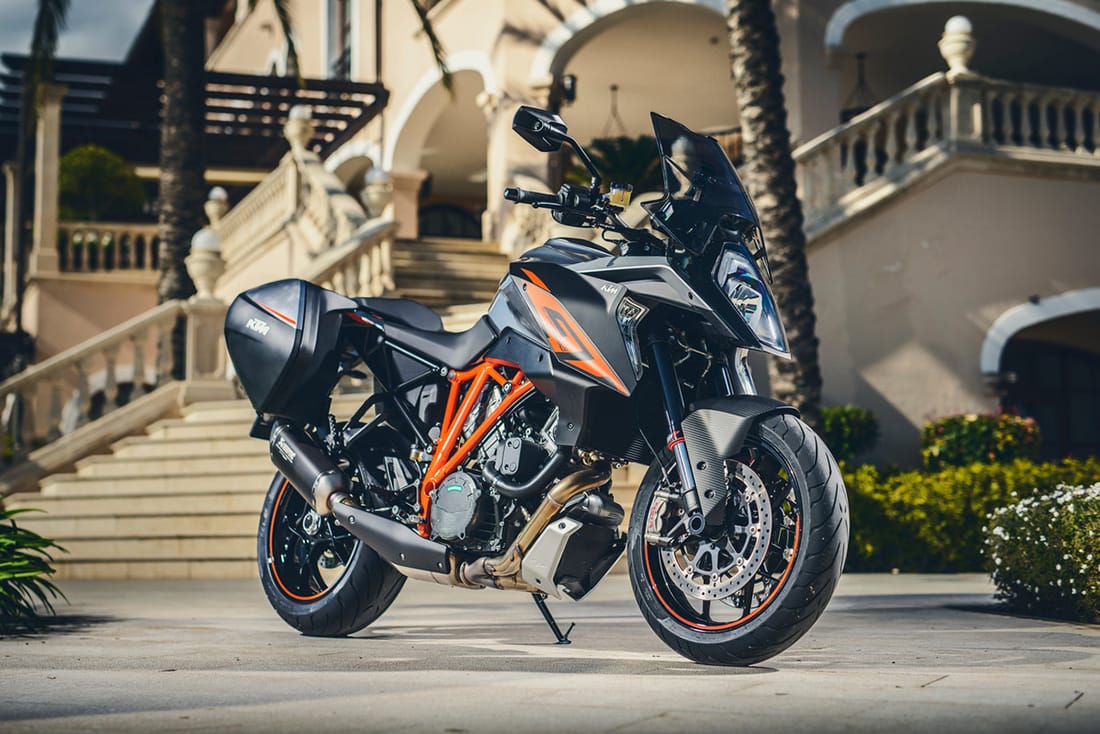 There are three settings for the damping – comfort, street and sport – and they really do make a difference. On the rough Johannesburg roads, ‘Comfort’ takes away the jarring harshness you feel in ‘Sport’ while ‘Street’ is a balance between the two.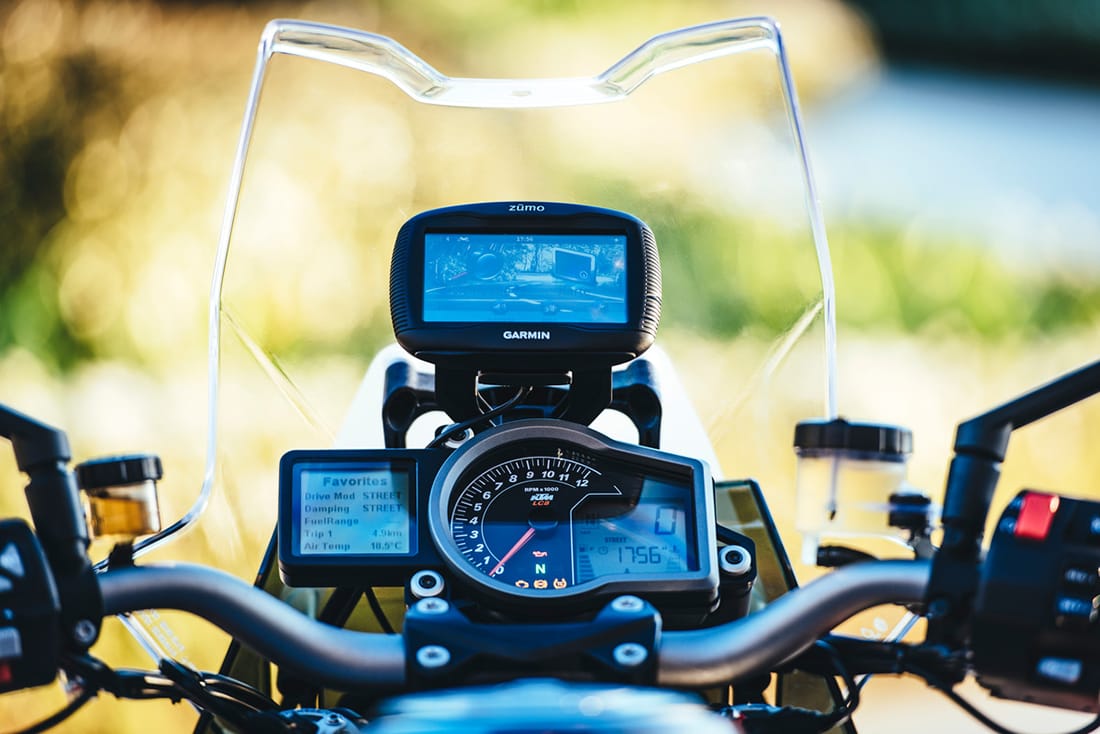
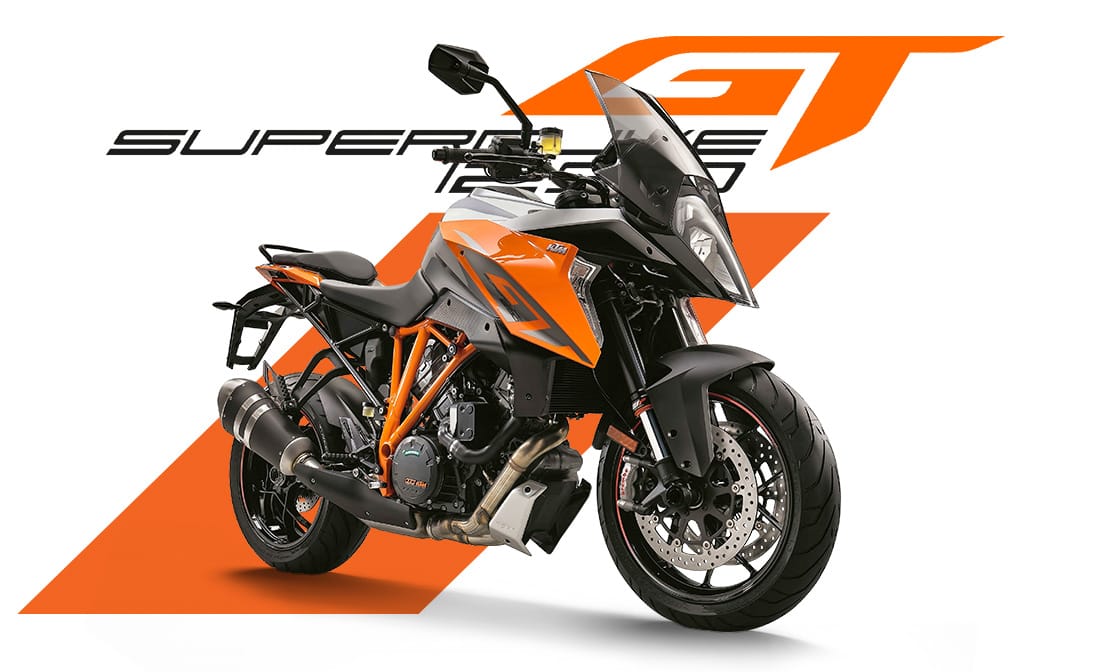
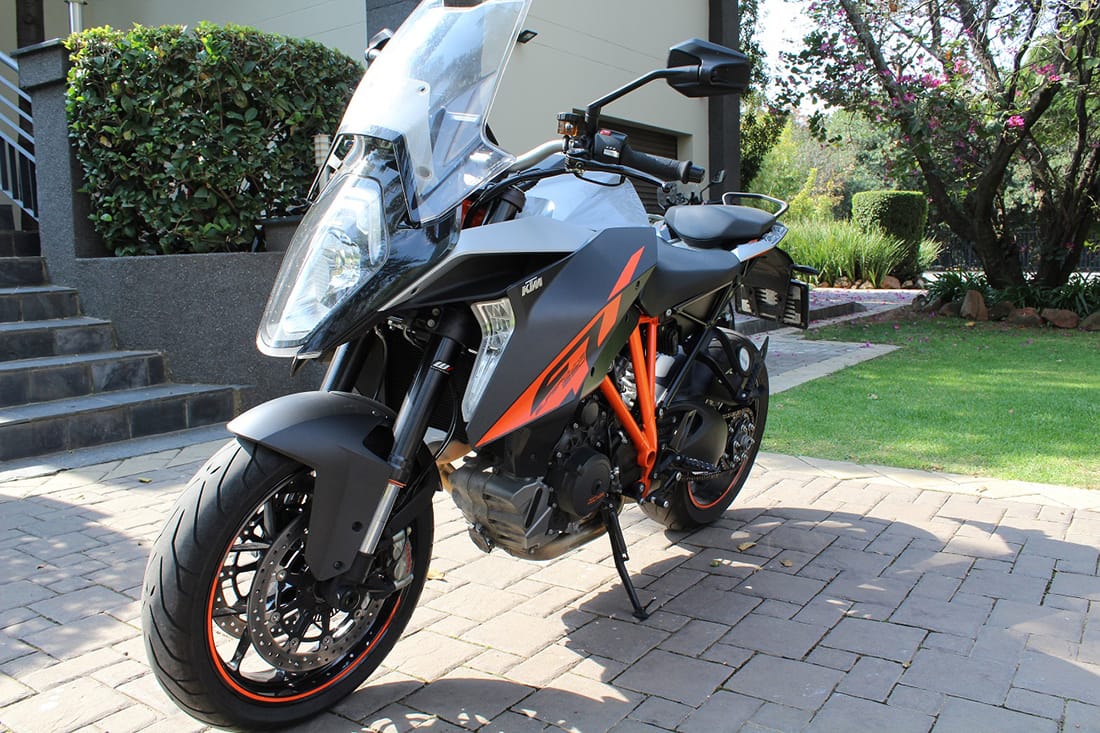
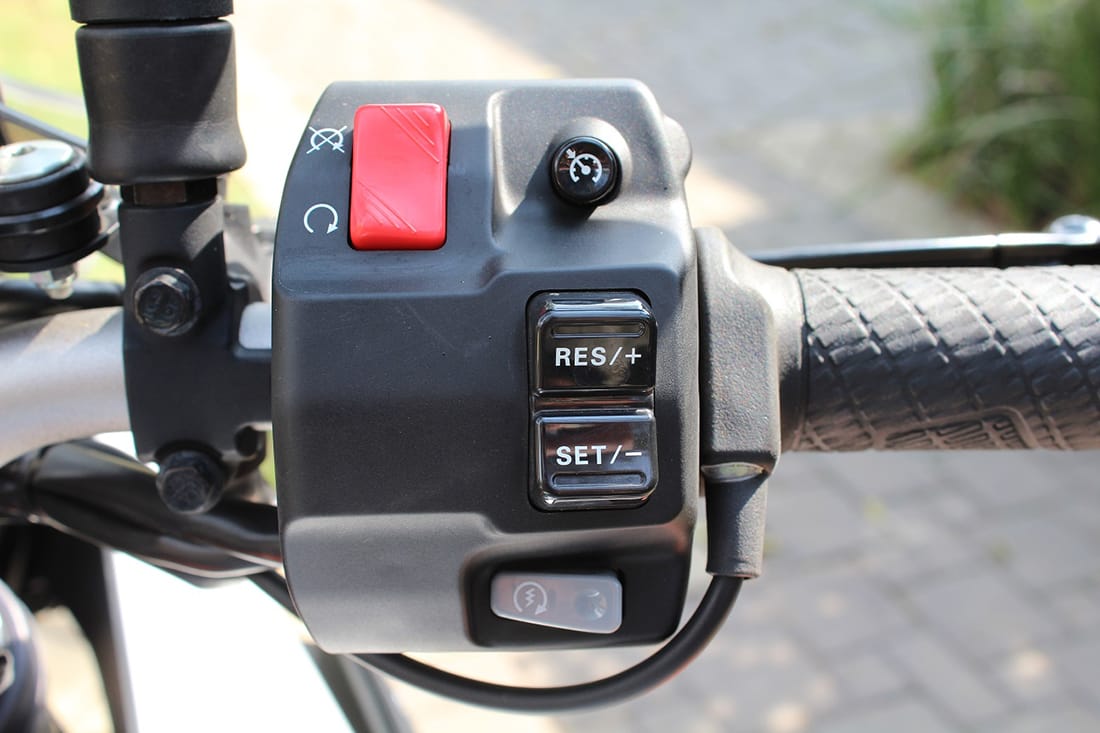
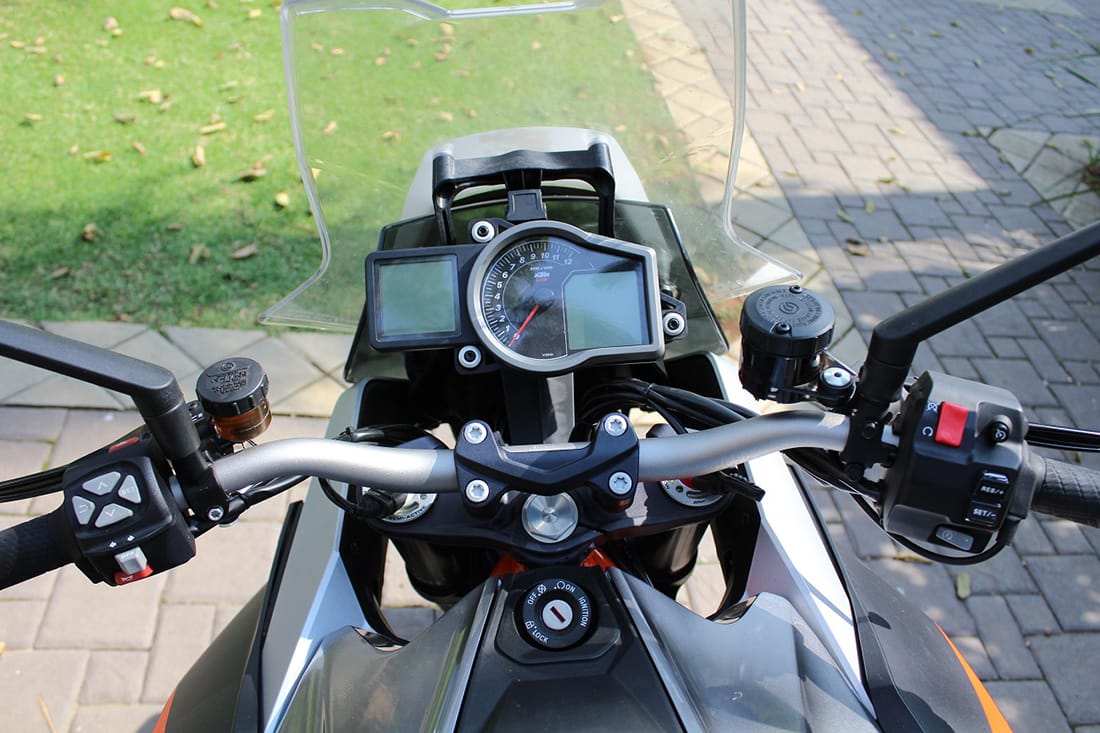
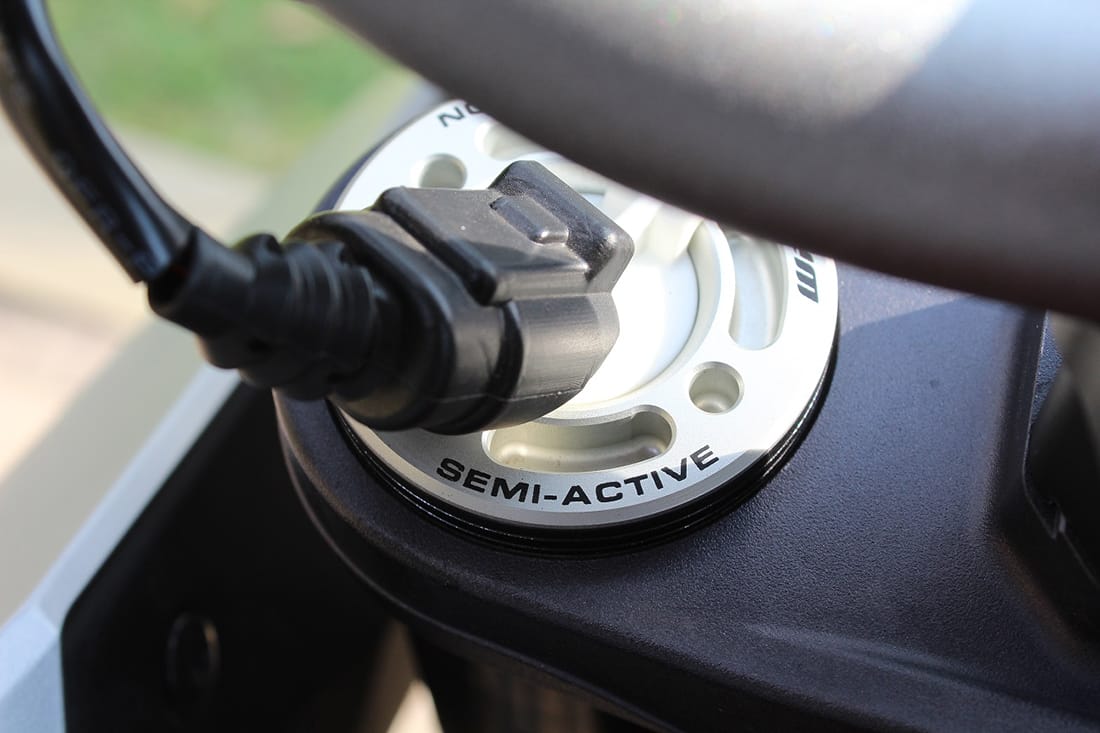
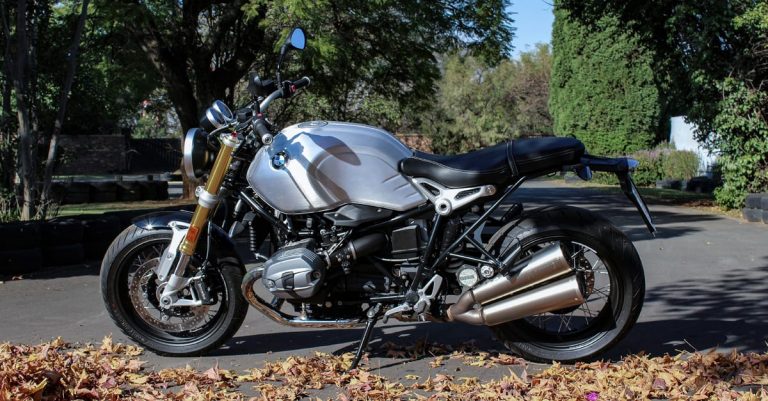
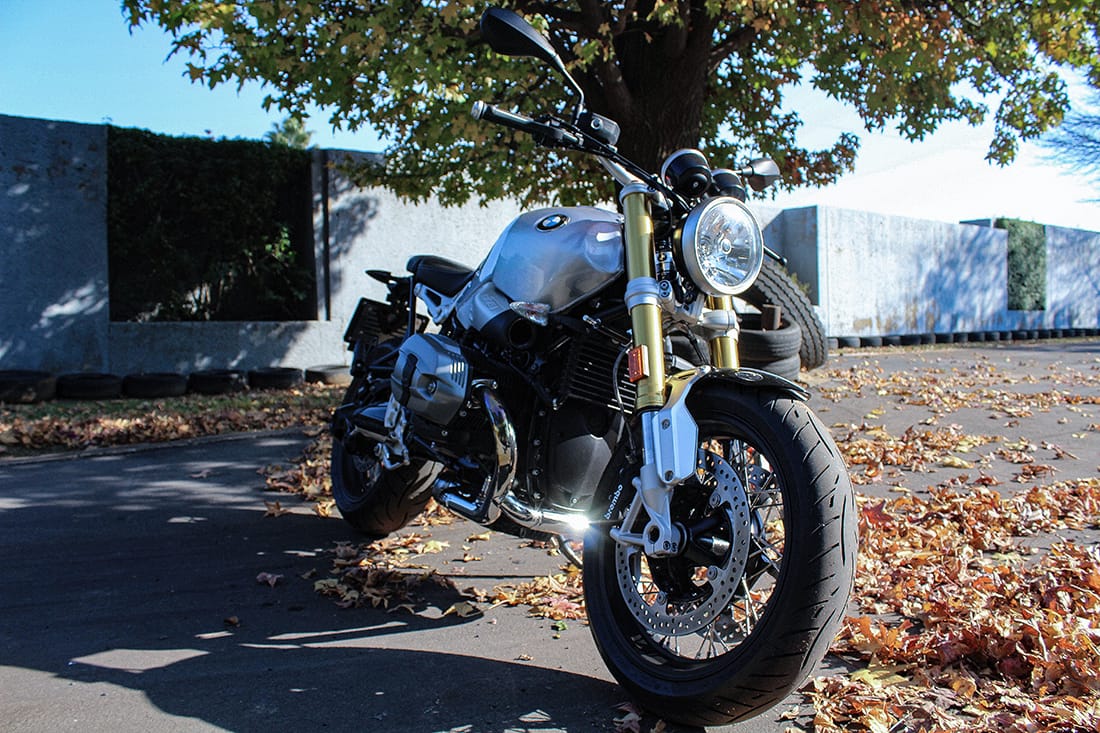 Since then, the range has expanded to the Scrambler, Cafe Racer, Urban G/S and Pure models but the original is still with us and has been refreshed for 2017.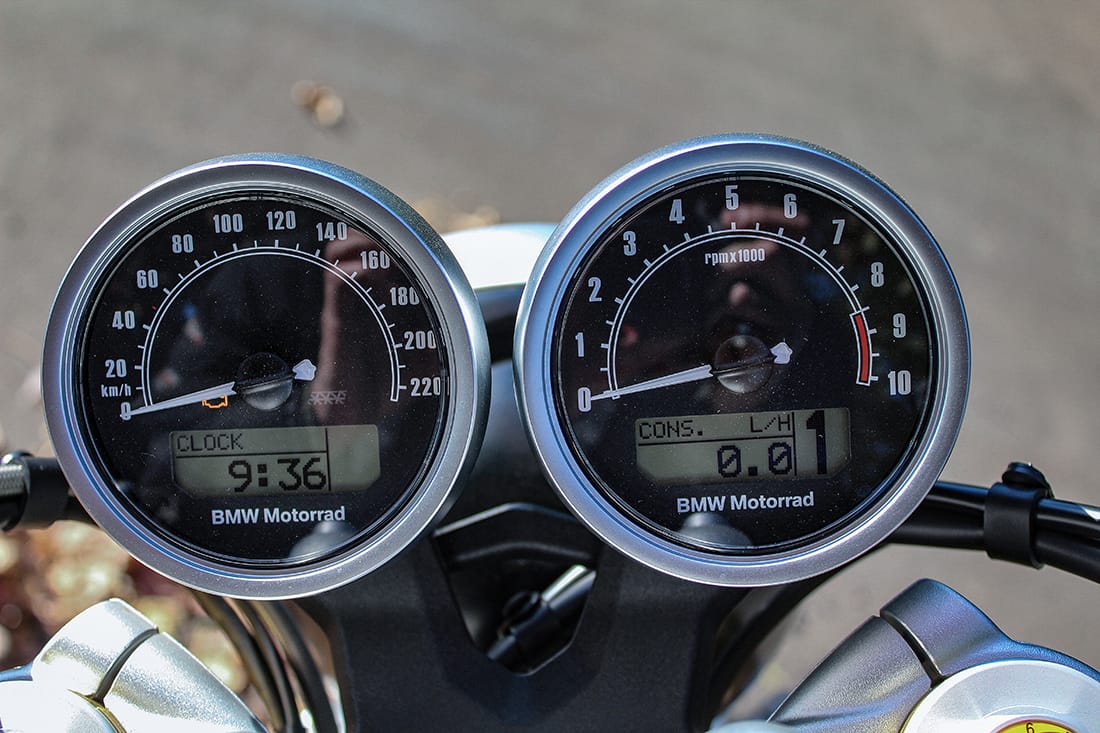
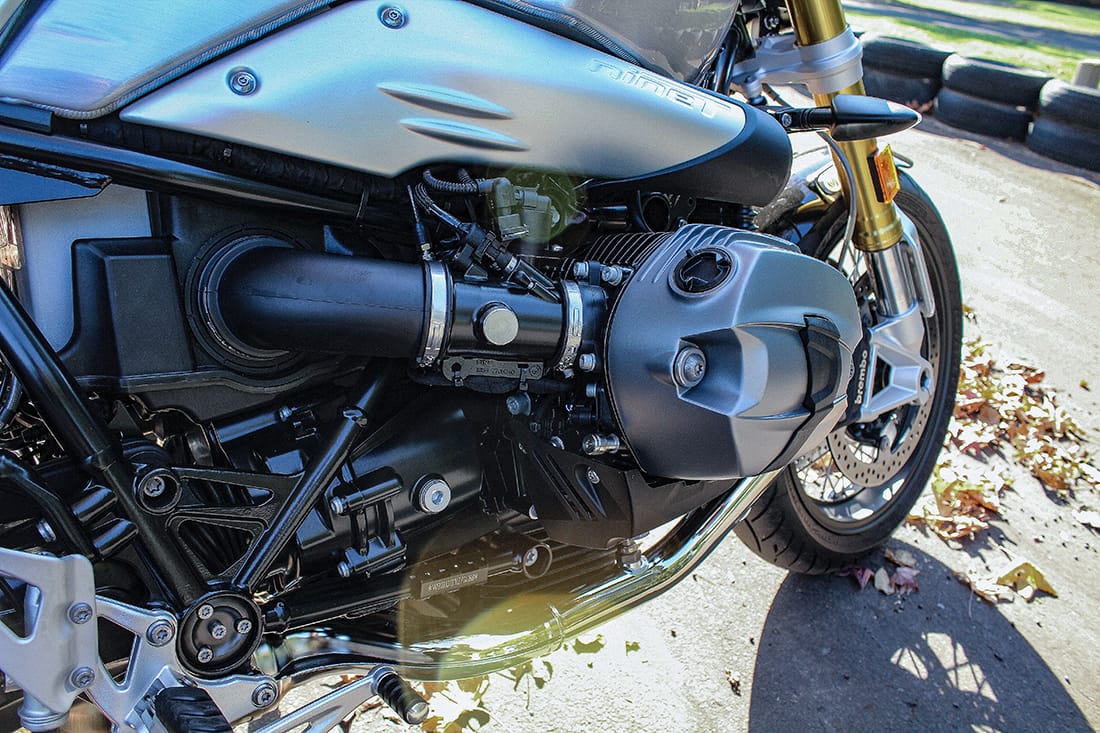 It’s always fun starting up the old air-cooled boxer twin. It rumbles into life with a not-unpleasant exhaust note and it still shimmies and shakes on tickover; it’s not a sophisticated engine. Give the throttle a blip and the whole bike lurches to one side as the torque reaction from the longitudinal crank takes over; it’s almost reassuringly BMW, reminding one of days gone by and BMW bikes that were a part of it.
 So familiar have we become to the new liquid-cooled boxer engine that has graced BMWs since 2013, with its smooth and punchy power delivery and lack of fuss that the air-cooled version seems initially to be a bit of a dud; it’s not particularly fast or punchy and only goes to show how far engines have come in a short space of time.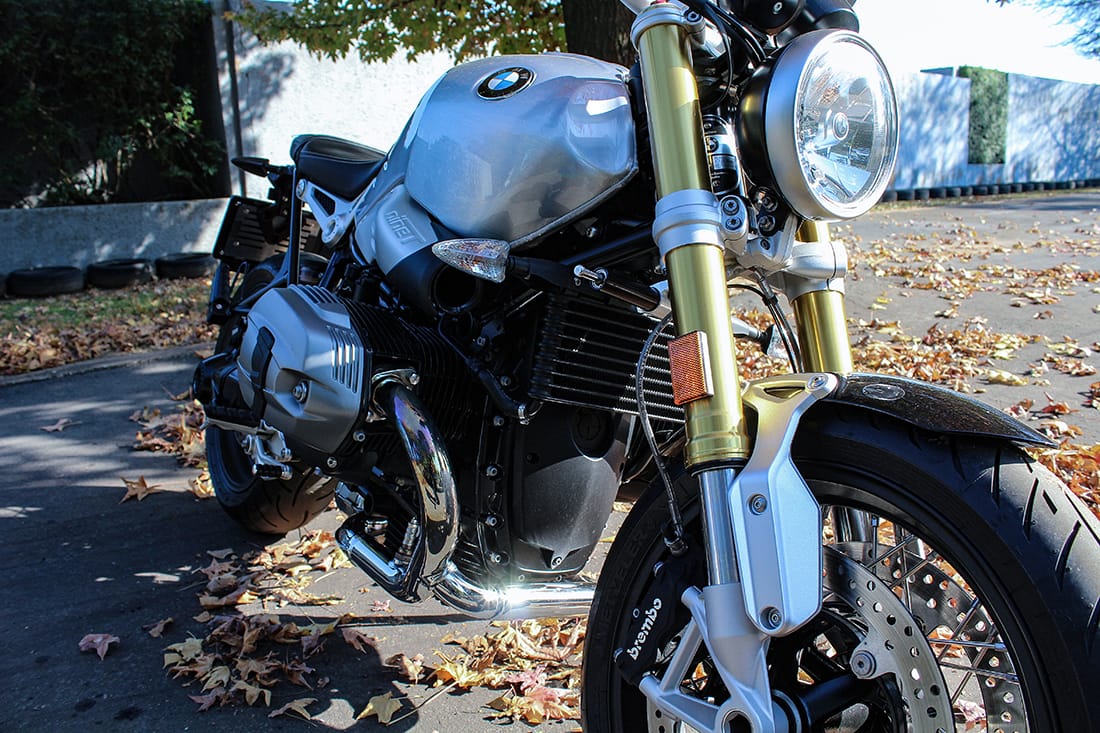
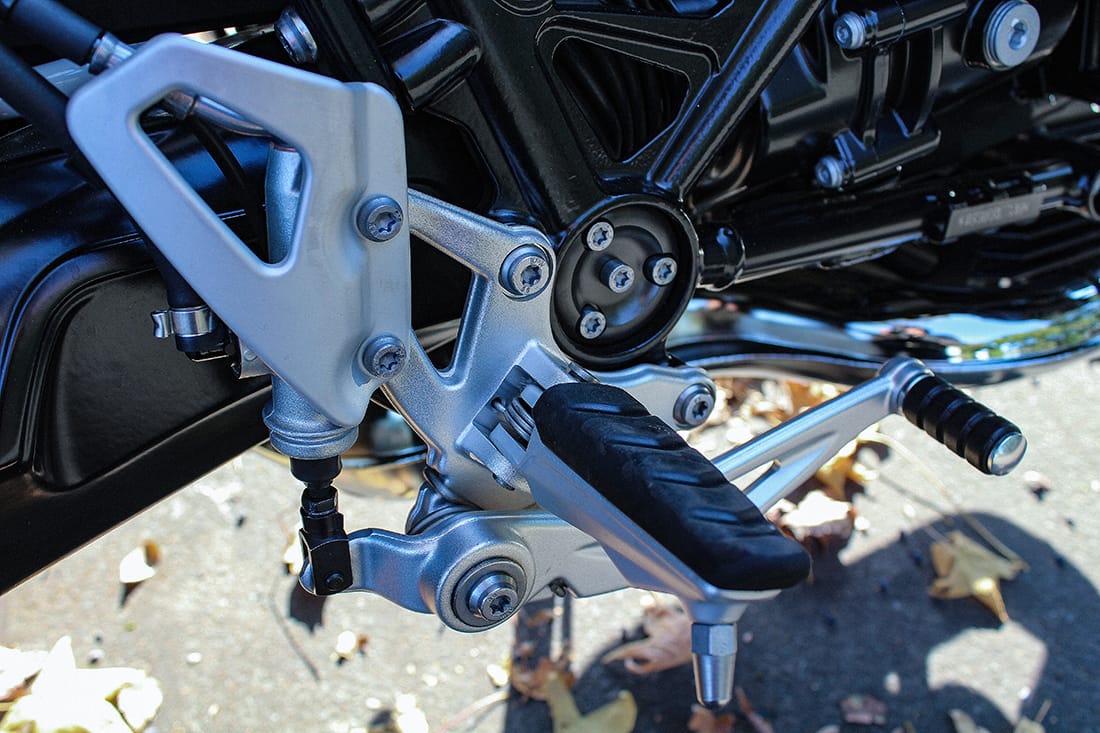
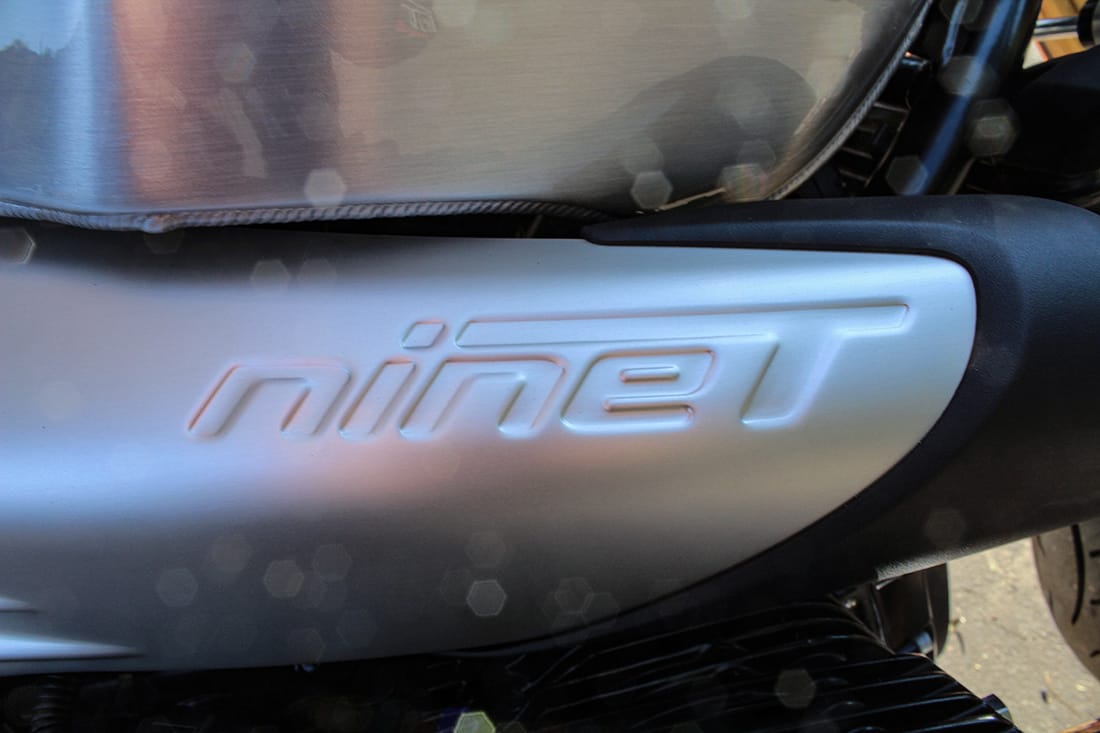
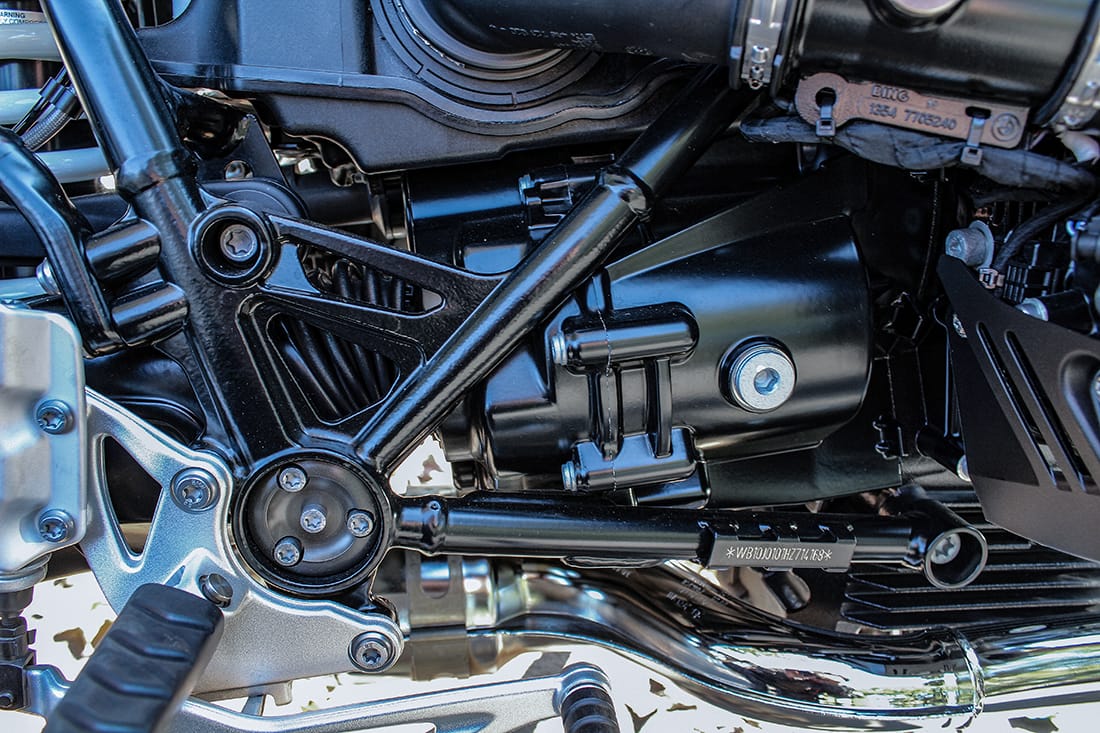
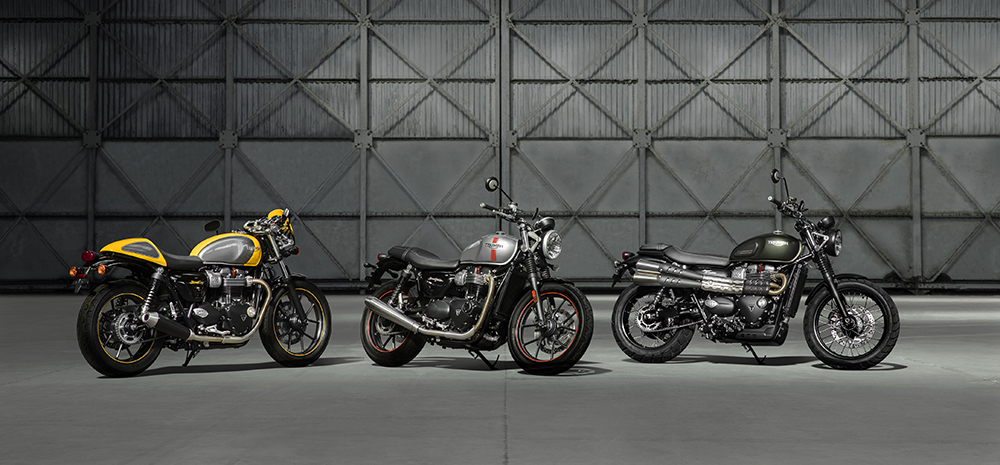 The motor is an absolute peach. Uncannily smooth and grunty, the Scrambler lunges off the line and through the gears absolutely effortlessly. The five speed box is an extremely willing accomplice. Buttery smooth and precise on both up and downshifts – it is superb. Clutch action is smooth, seamless and snatch free.
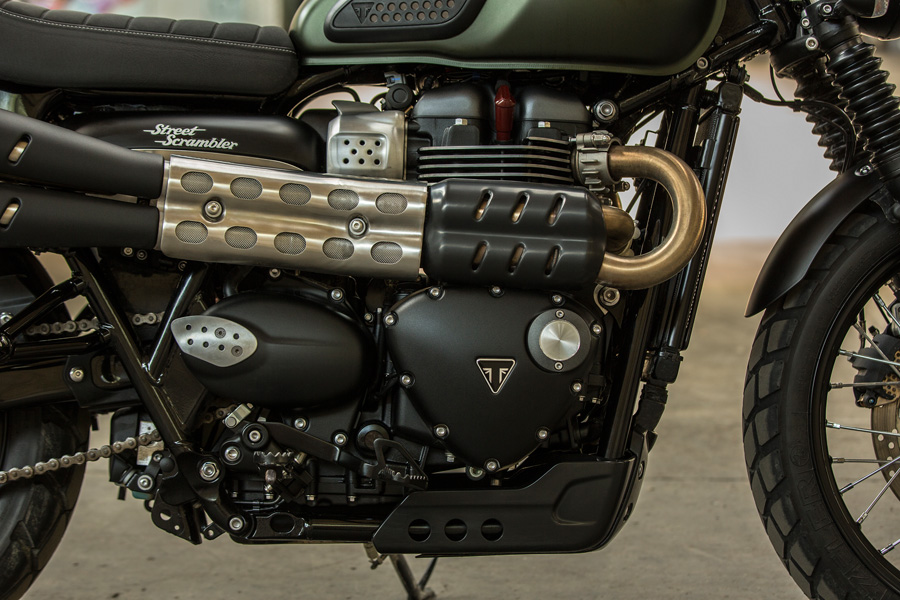 Riding this bike got me doing some serious soul searching. It is simple and refined and effortless to ride. Everything works in perfect harmony. The torquey engine feel, easy stable steering and firm, decently damped suspension and neutral riding position, is just so right! It is everything that I love about bikes. So what is the soul searching I refer to?
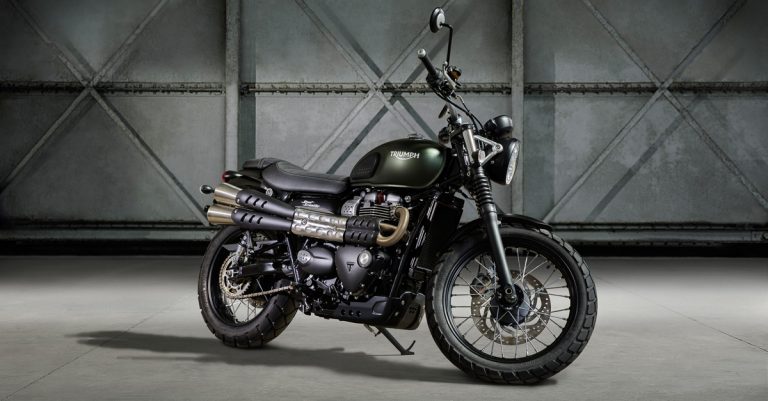
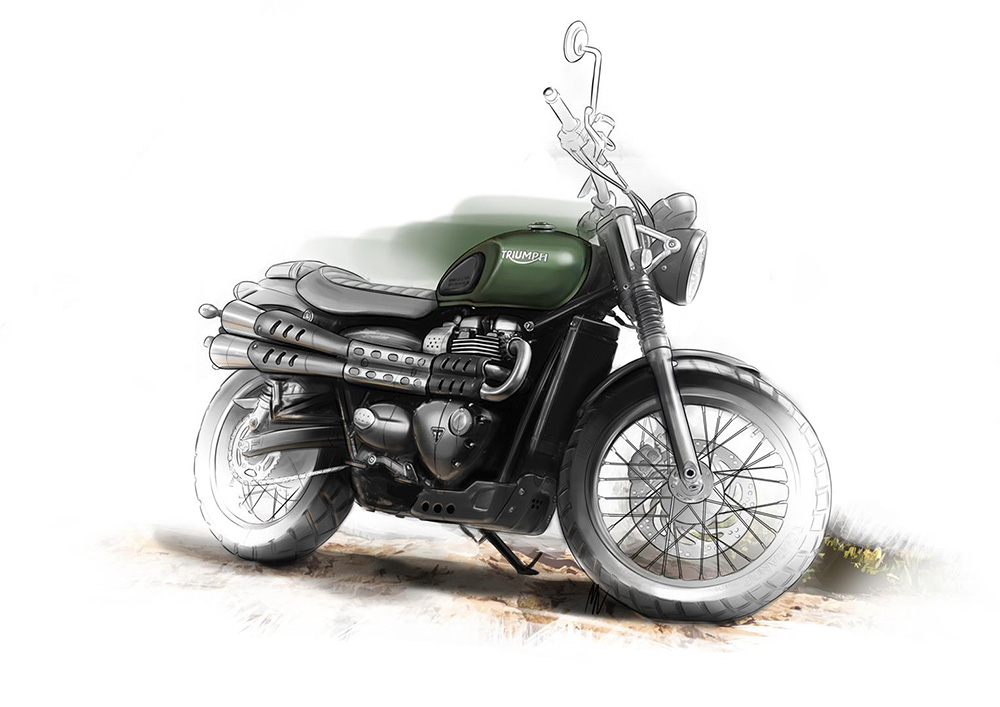
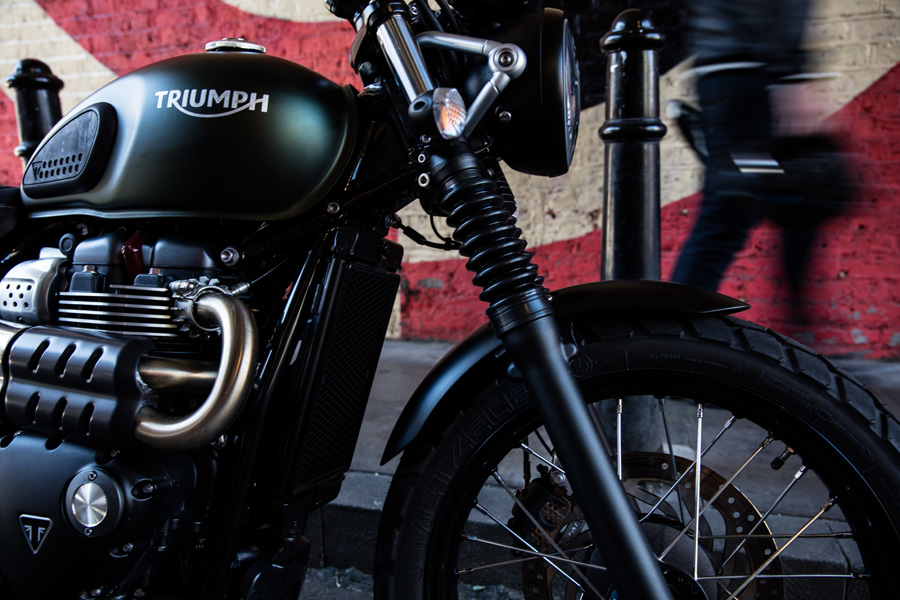
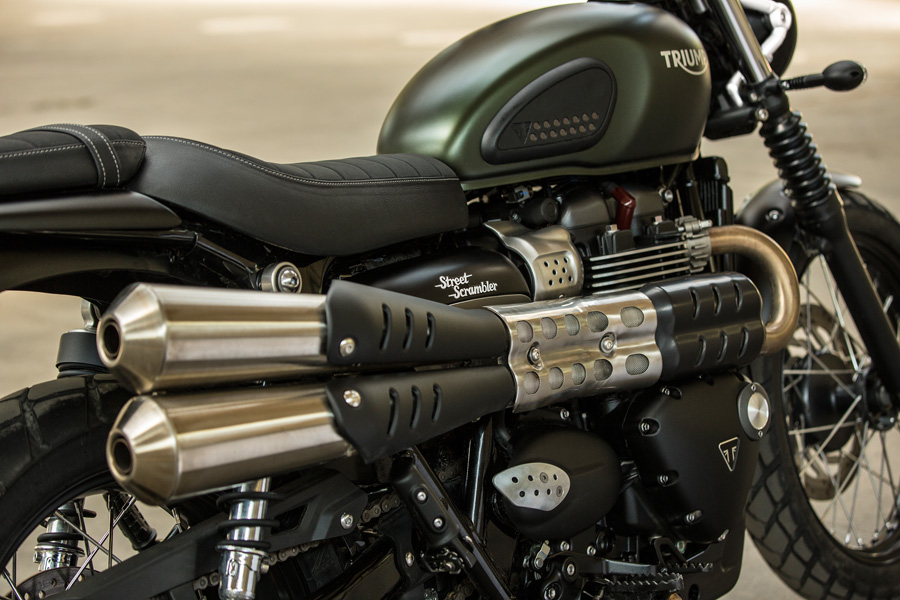 17inch rear wheel, 19inch front, adorned with a single 310mm front disc chomped on by a 2 piston Nissin caliper. Wheels are chromed spokes laced to black steel rims. A single clock rides above a black headlight mounted on aluminium brackets. The tank is truly a thing of beauty. It totally captures the spirit of the original Bonnie. Fenders are black and bobbed. Flickers are black and tidy and look like classy custom units. The taillight too is small, black and classically shaped. The red and silver paint job on the test bike is stunning. In scrambler fashion, the pipes are upswept, culminating in two reverse cone megaphone silencers stacked on the right side of the bike. Black springs on chromed twin rear shocks complete a perfect picture. To top it all, the seat has a suede finish.
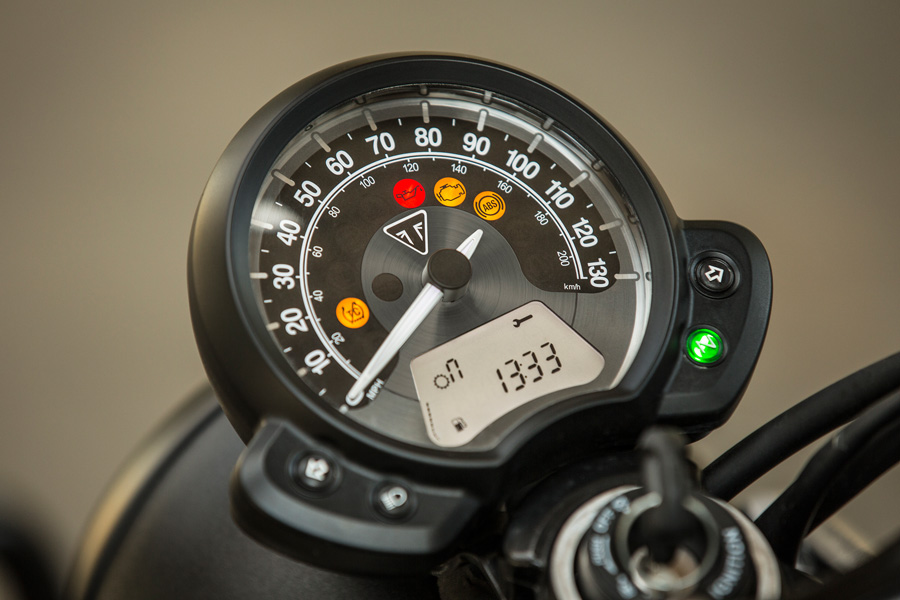
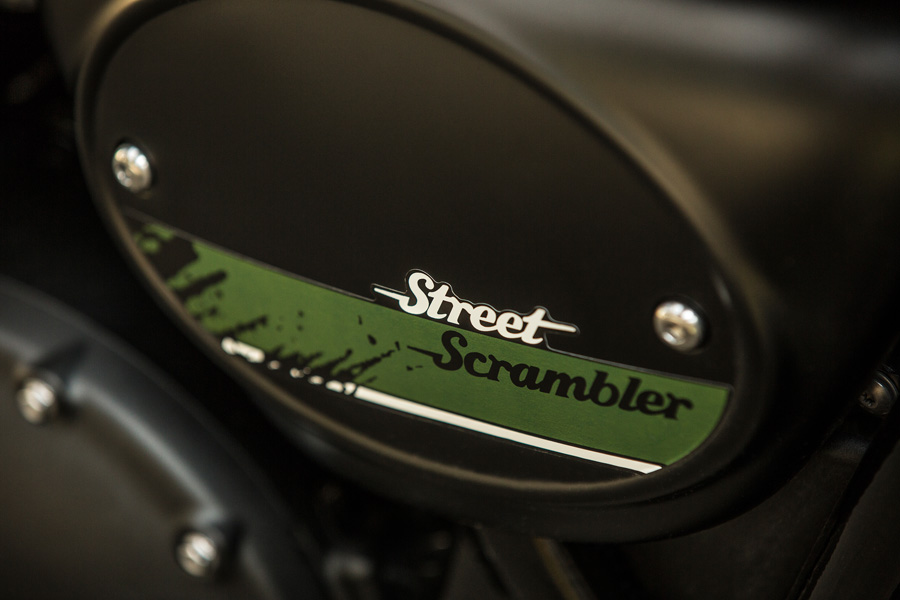
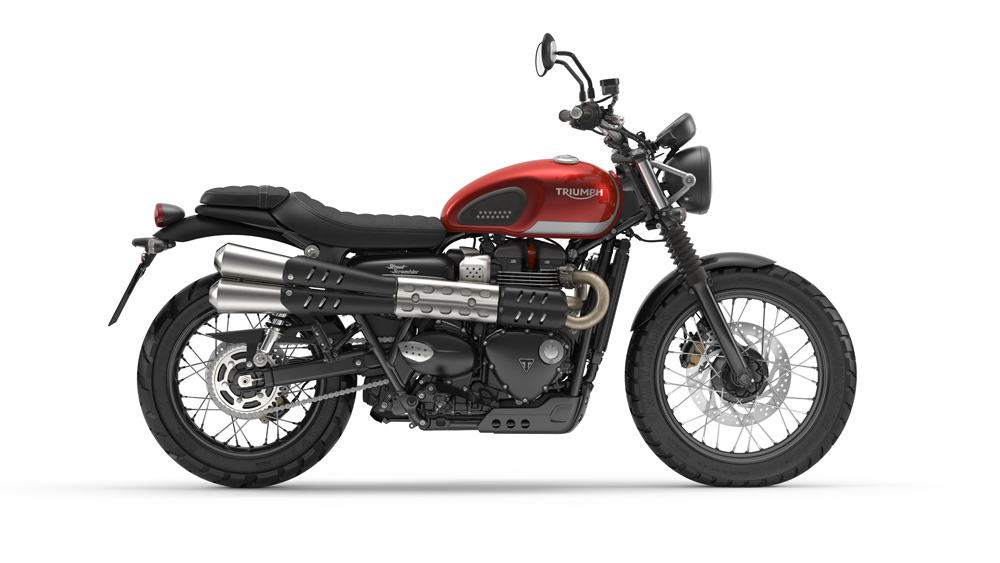 Scrambler owners get a pillion seat as well as a tidy aluminium rack. The pillion foot-pegs are easily removed if you mount the rack. Damn, the guys at Triumph have done a really complete job. The single circular speedo is analogue with a digital readout in a rectangular shape in the clock face. Pushing an “i” button on the left handlebar switch scrolls between odo, 2 x trip meters, current fuel consumption, average consumption, ABS on/off, traction control on/off, clock and very cleverly a digital rev counter. So wonderfully simple. Push the button to scroll, or hold it in to switch a function on or off or reset.
 Switch the bike on with the key mounted behind the speedo; pull the clutch and thumb the starter incorporated into the kill switch. The big twin settles into a throaty burbling idle. The seat is low, (120mm of shock travel both ends) so swinging a leg over is a cinch. Settle on the comfy seat. The bars are the perfect width, shape and height. Snick the Trumpet into gear, and off you go. Fueling and response from the ride-by-wire-throttle is perfect. If you think I’m sugar coating this, you are right! In fact, I am pouring the whole bloody tin of syrup over it. For what it is, the bike is flawless.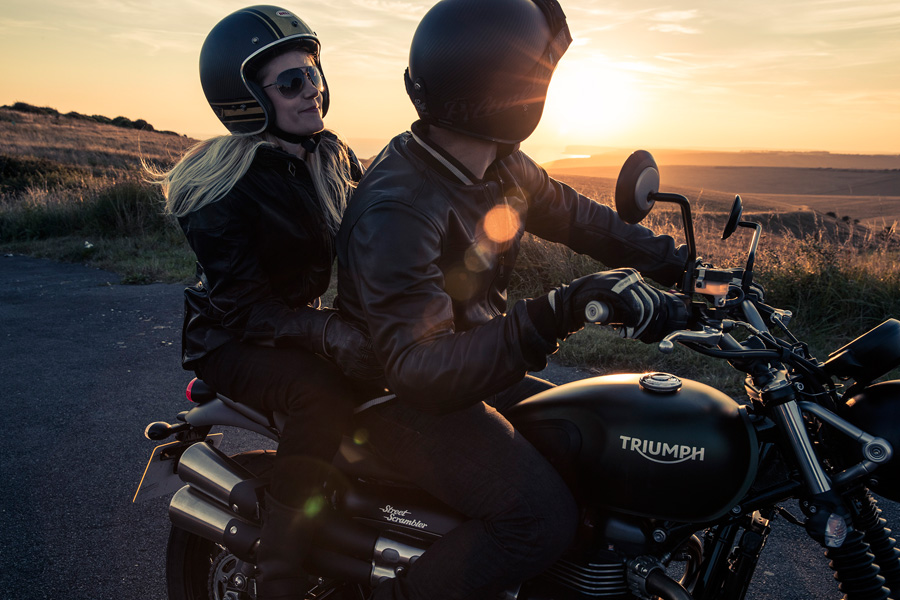
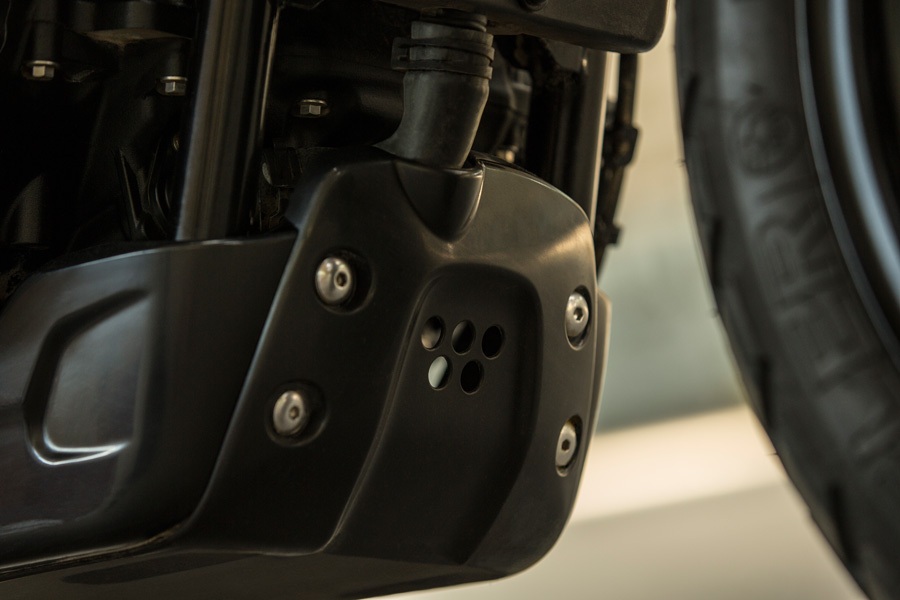
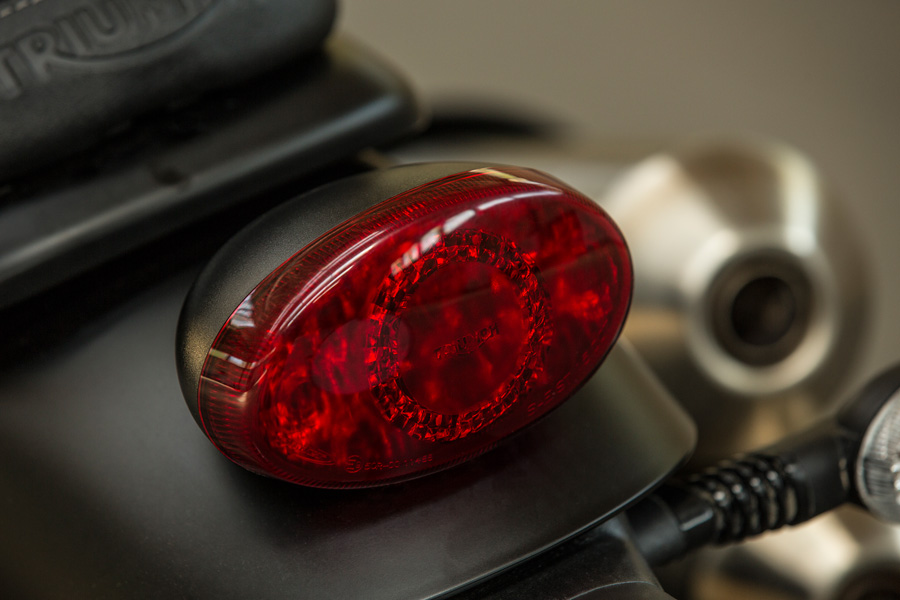
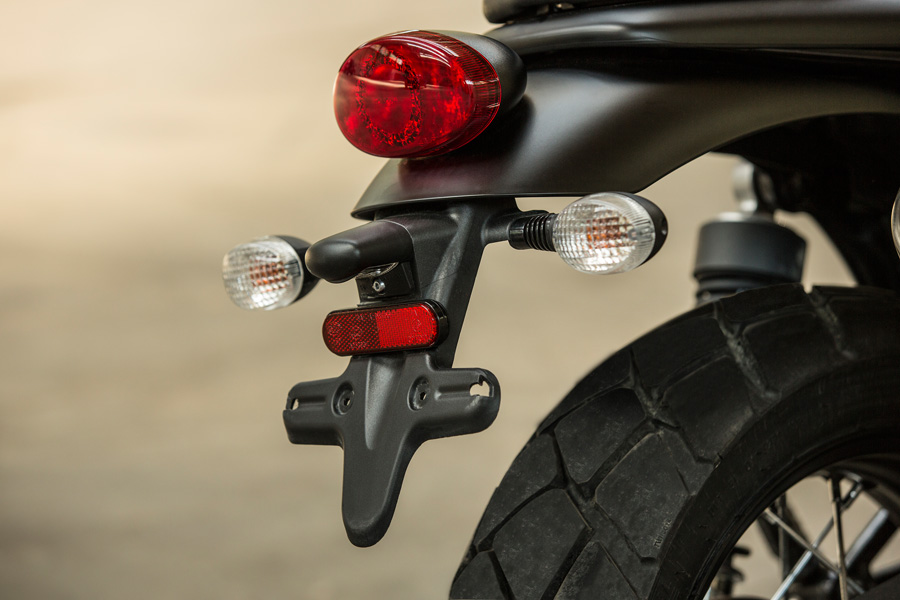
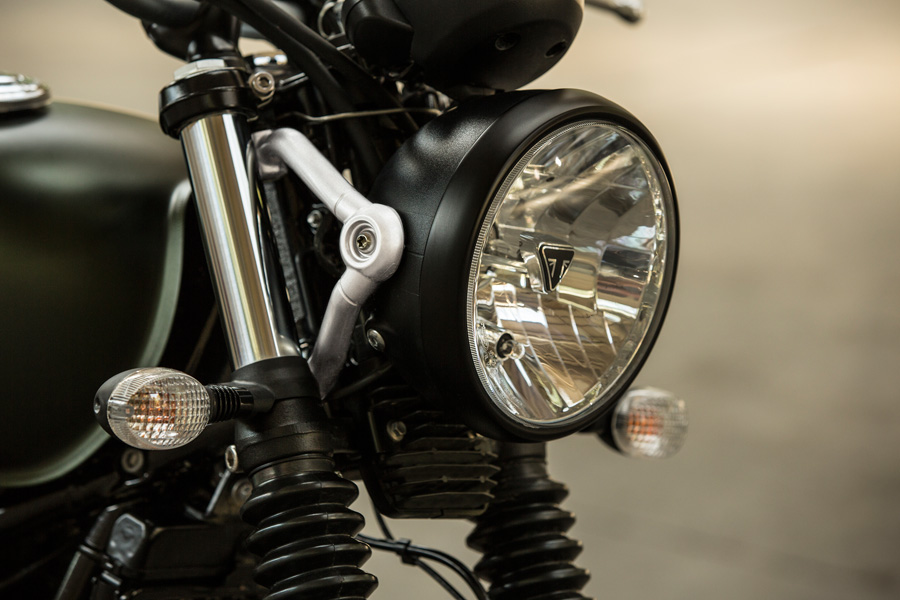
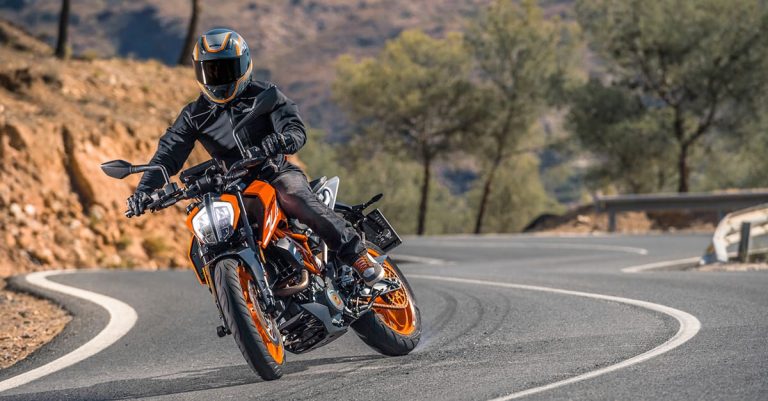
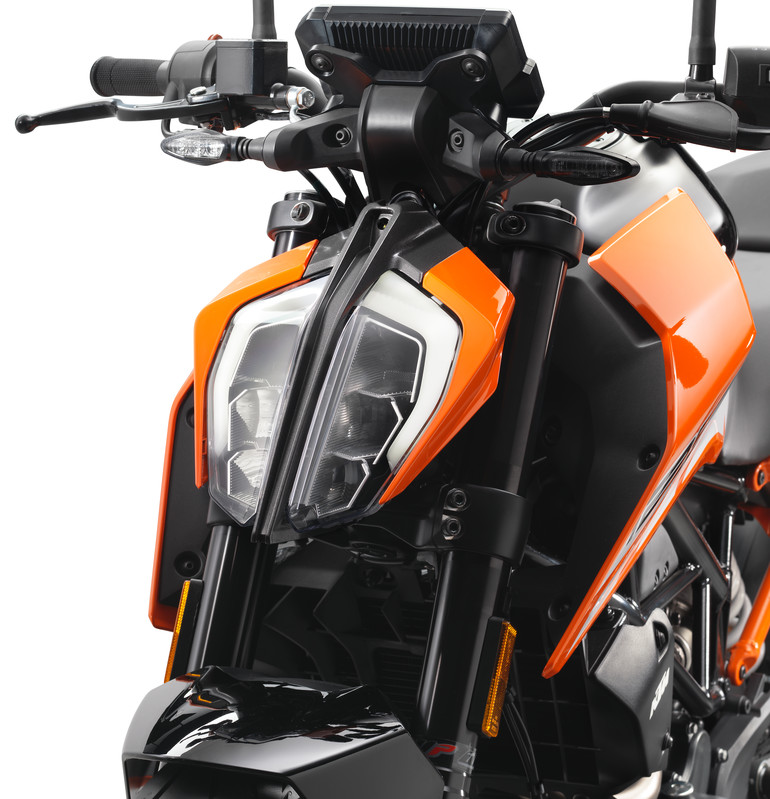
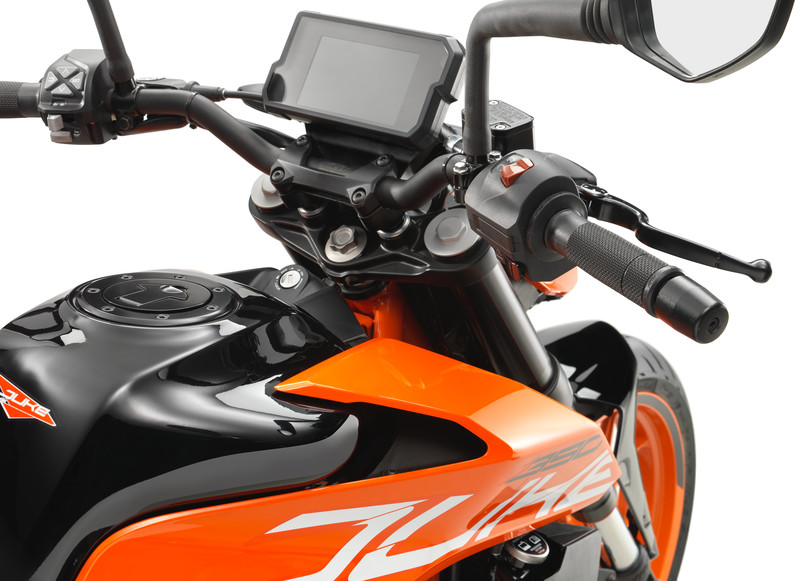
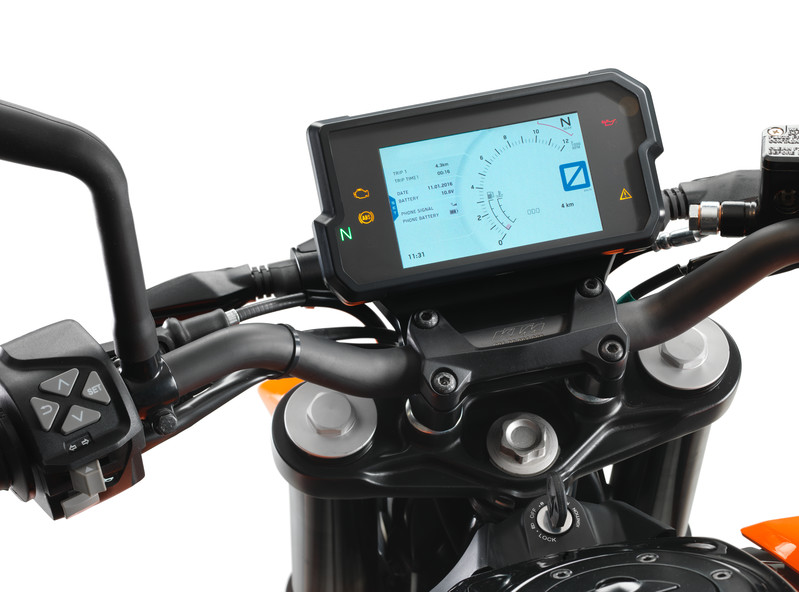
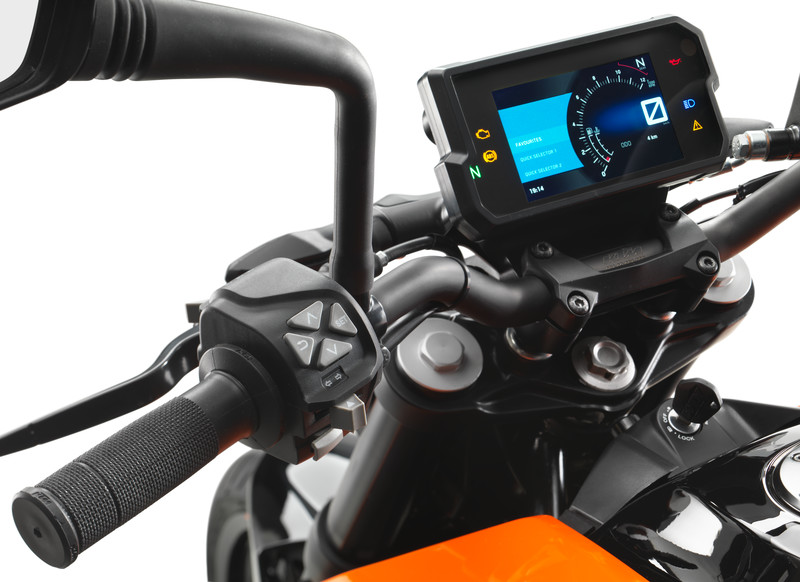
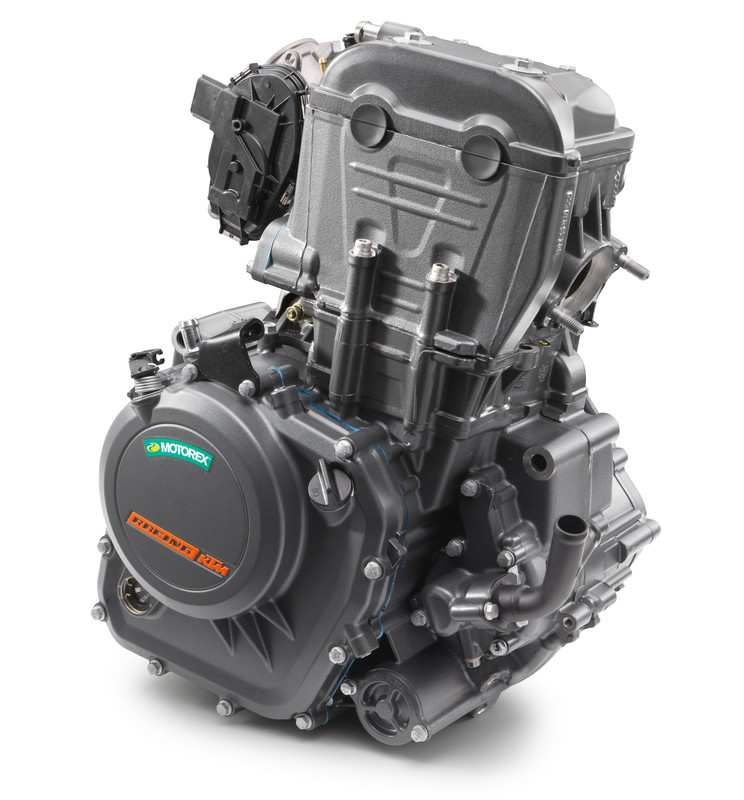
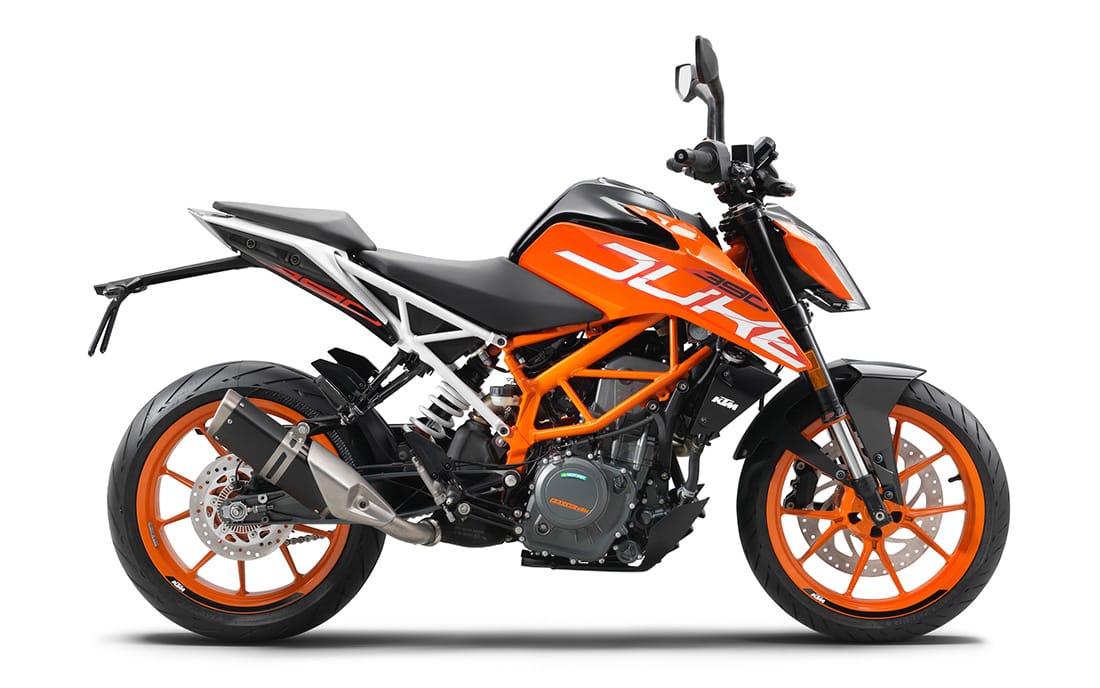
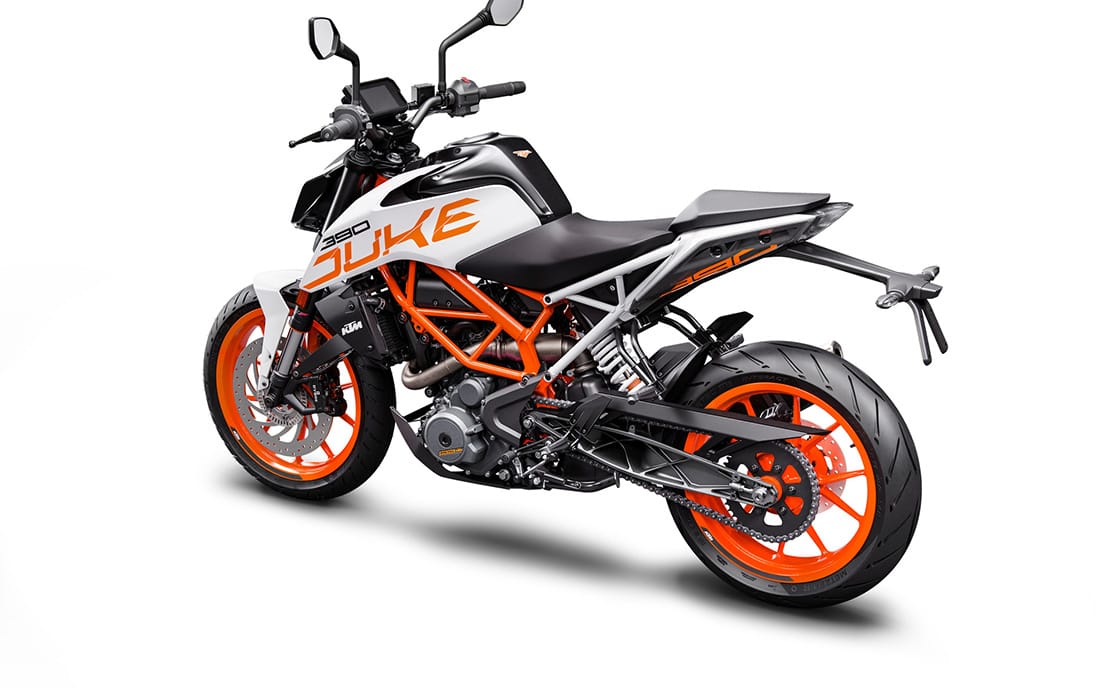
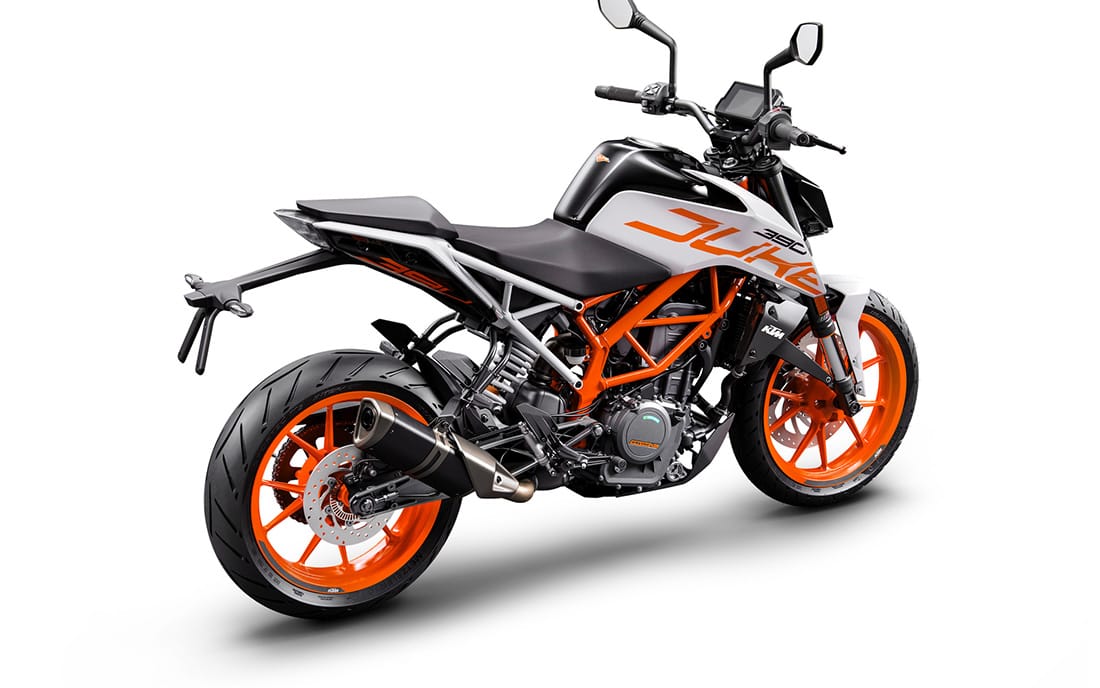
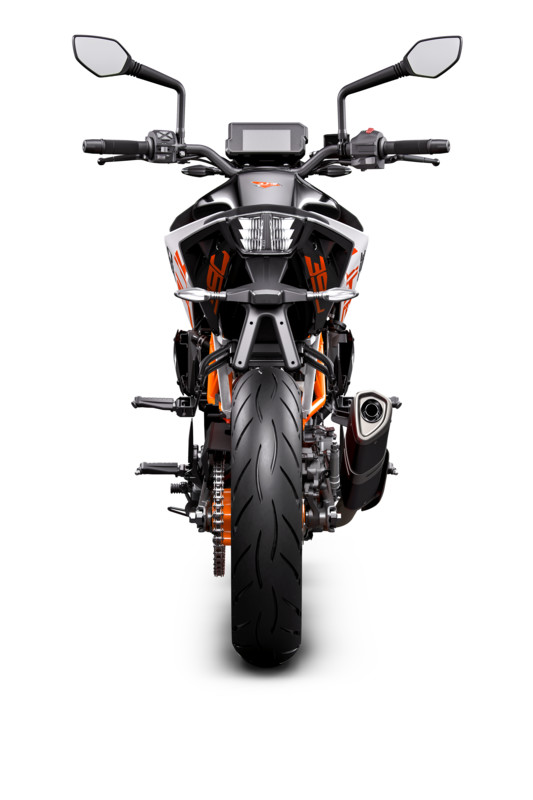
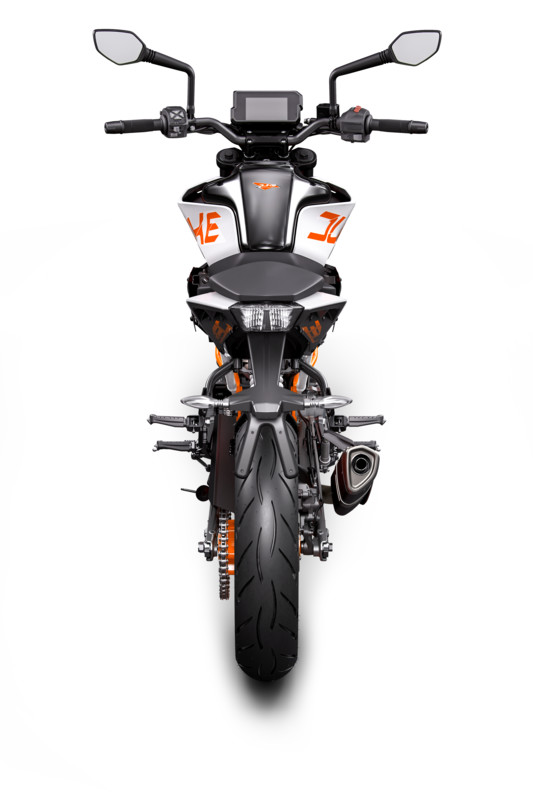
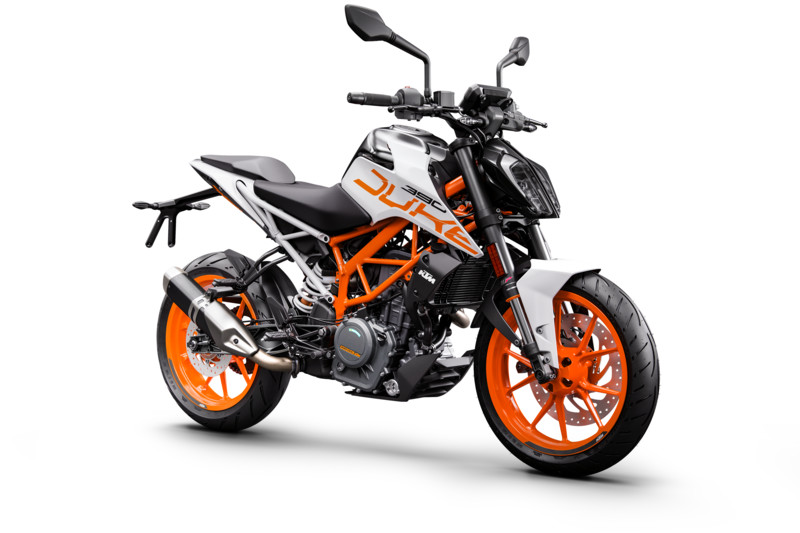
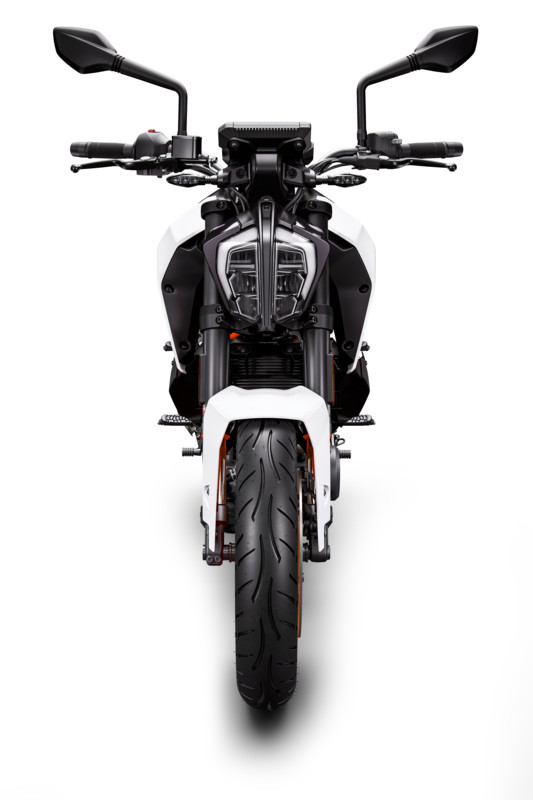
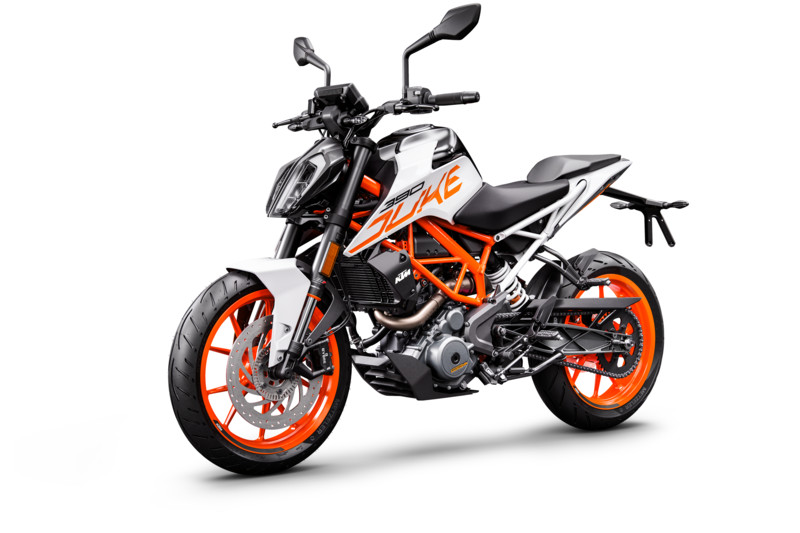
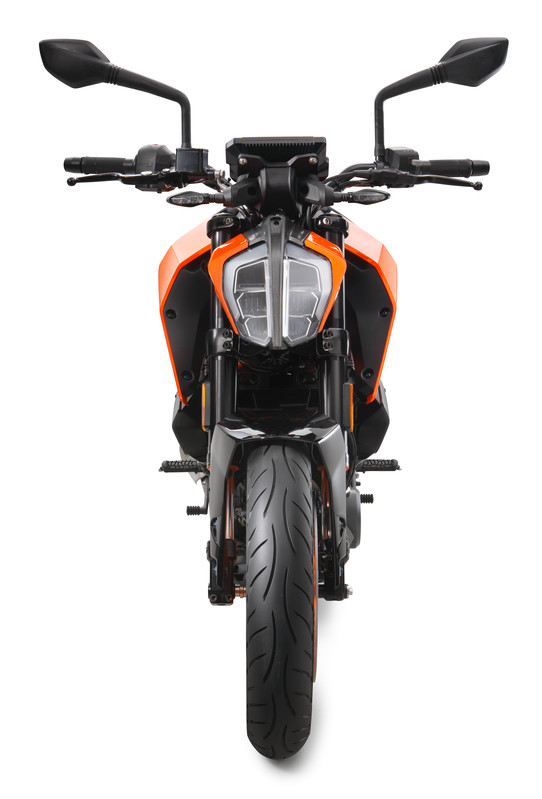
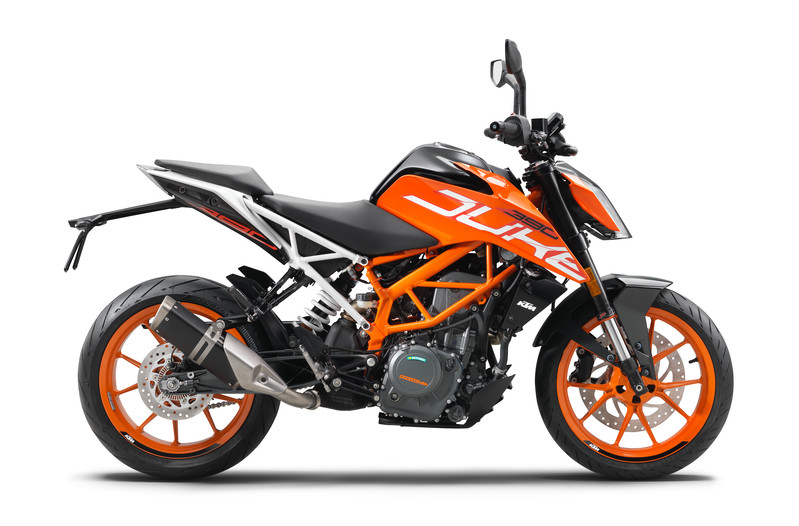
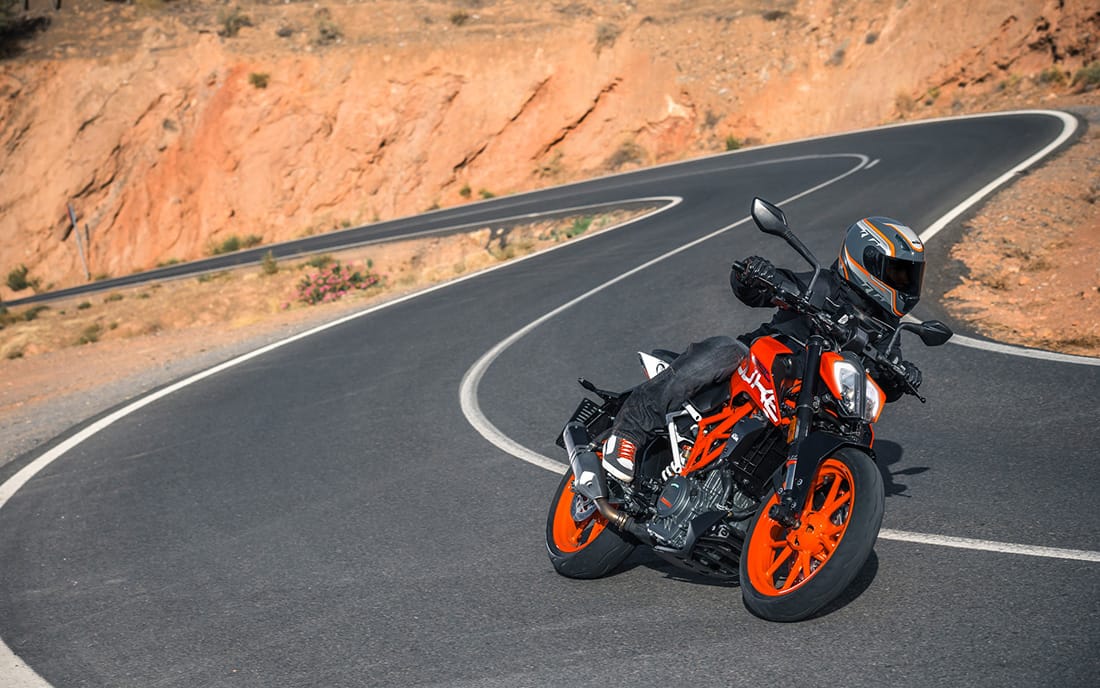
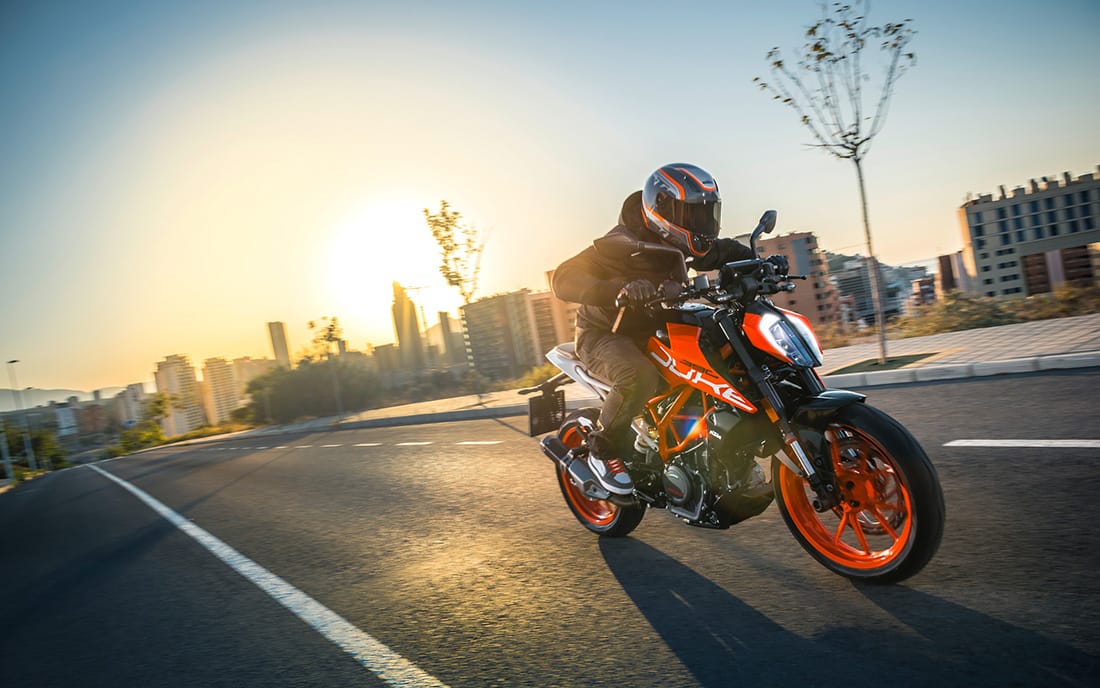
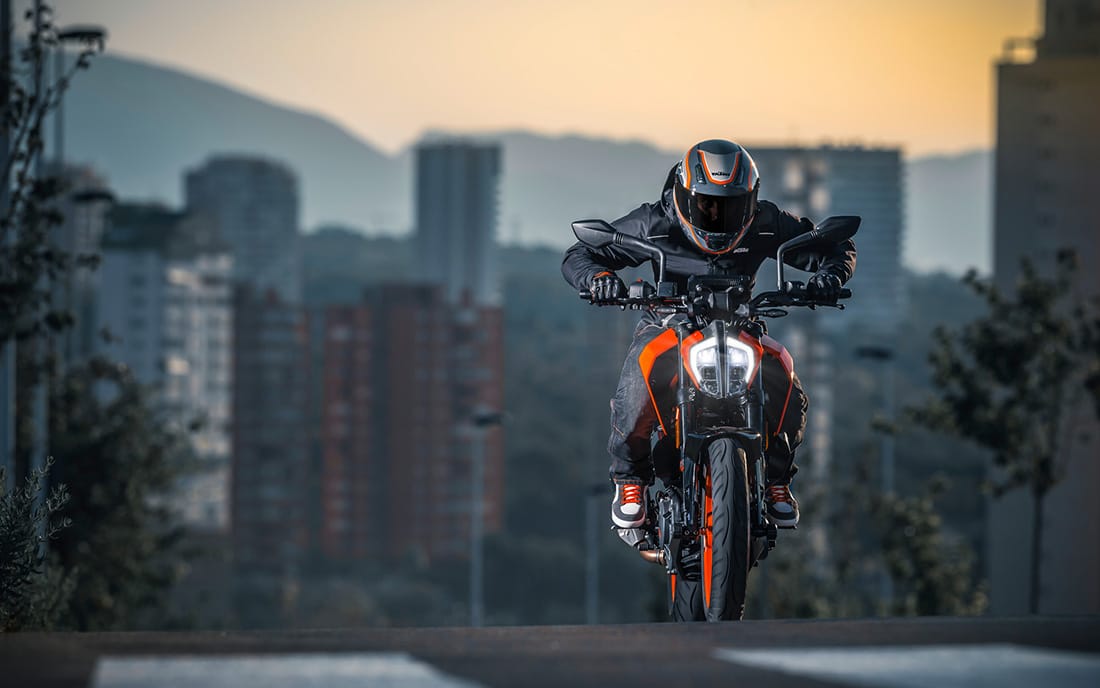
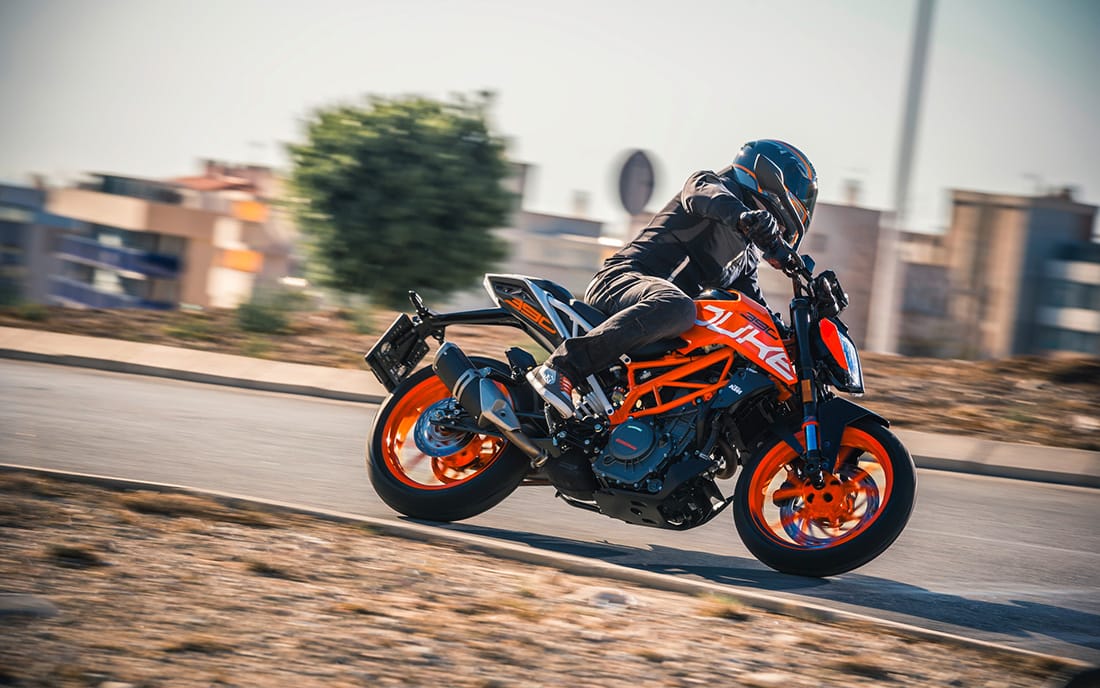
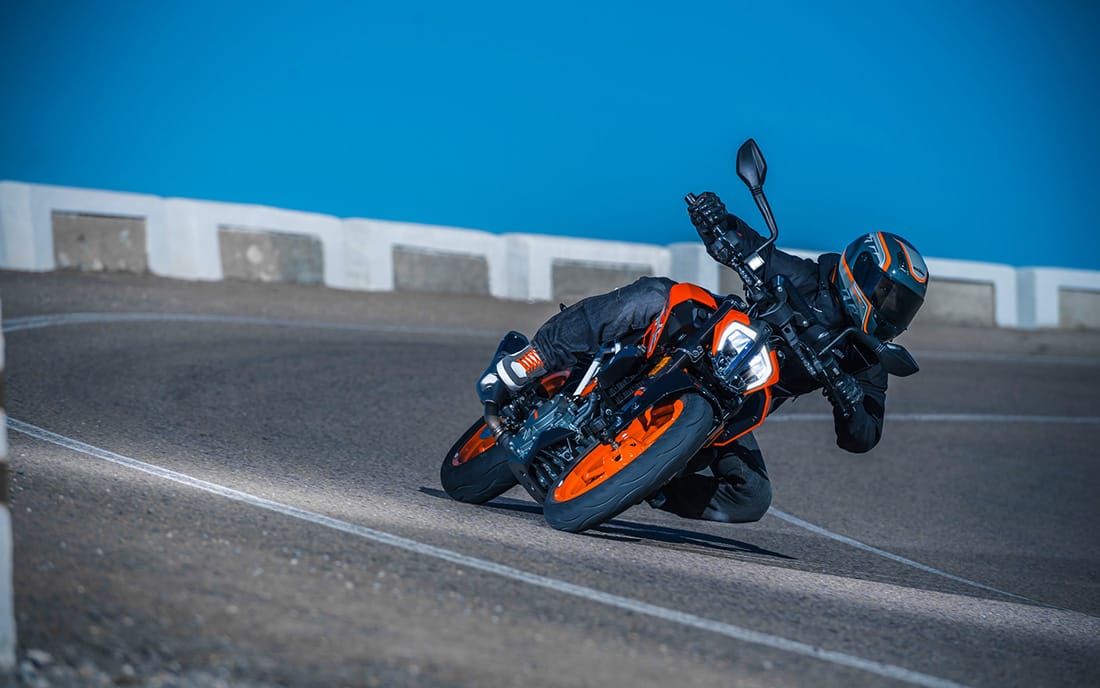
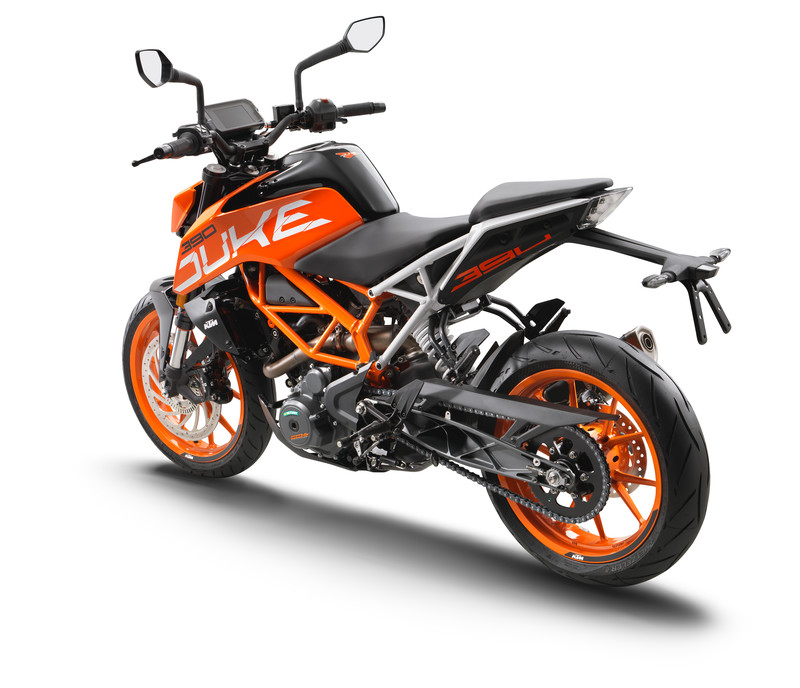
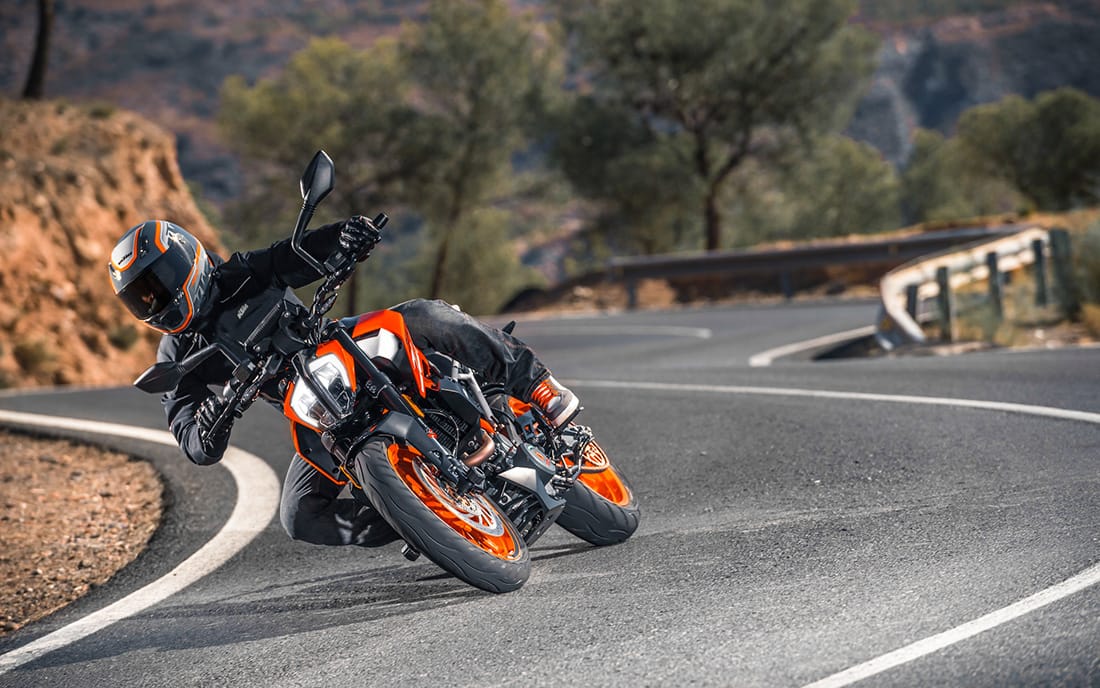
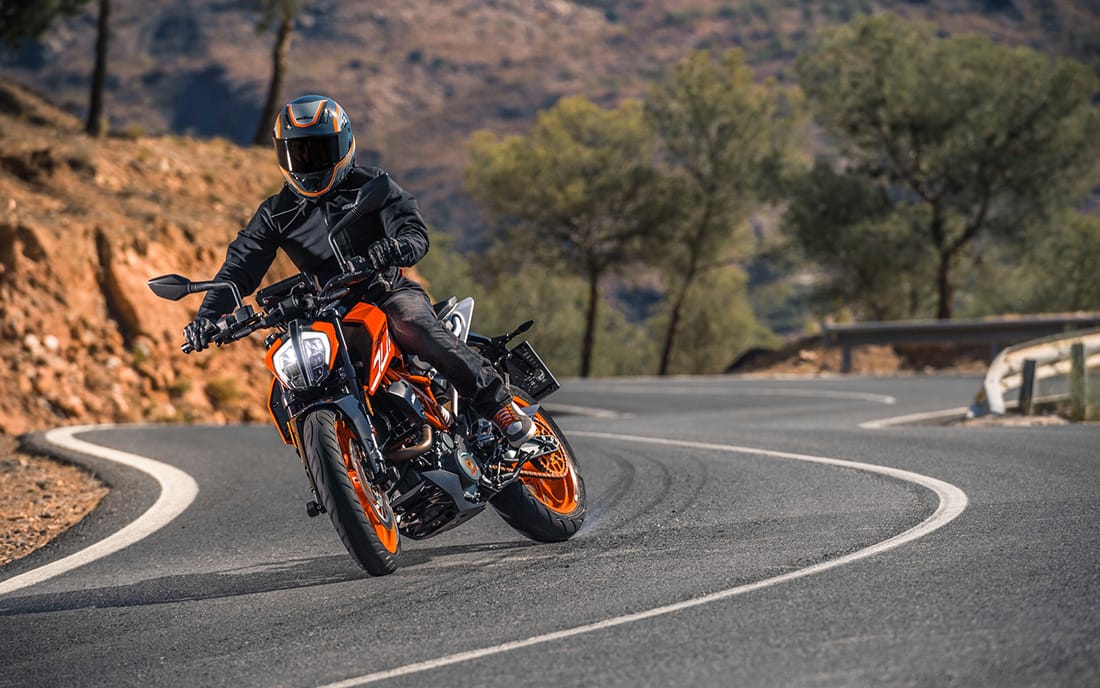
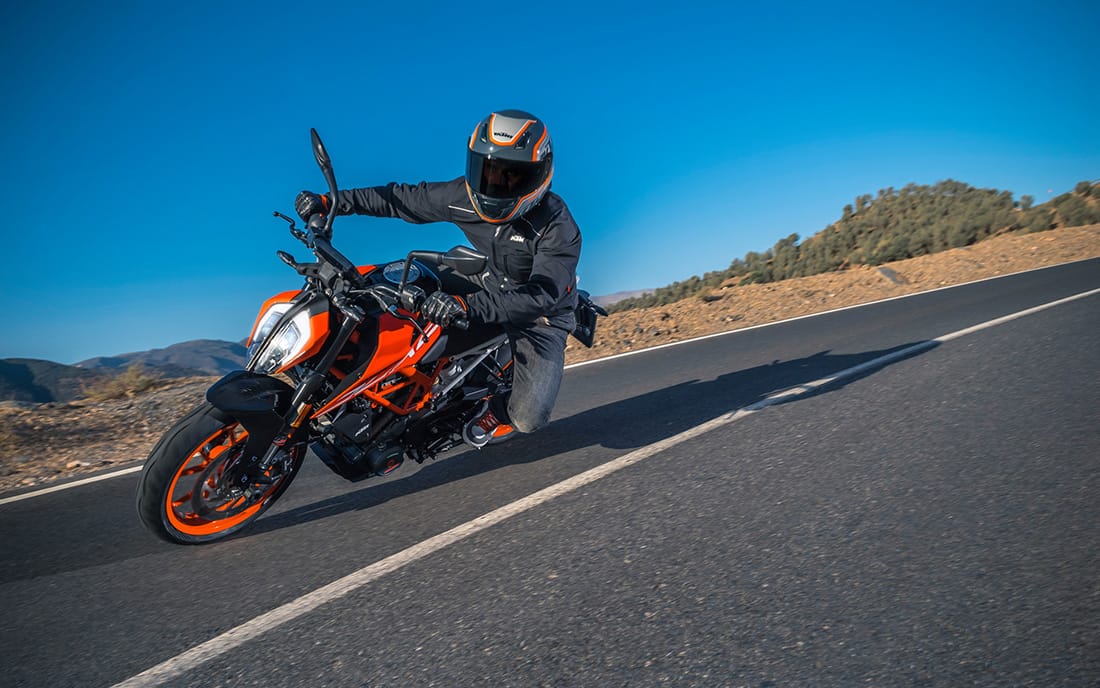
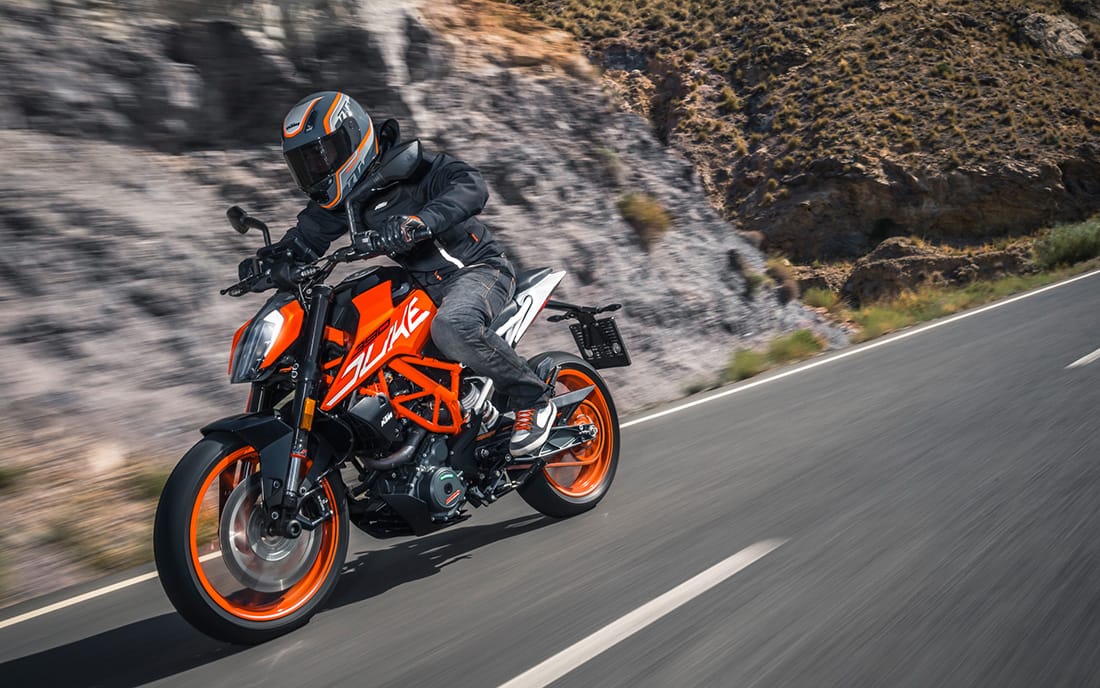
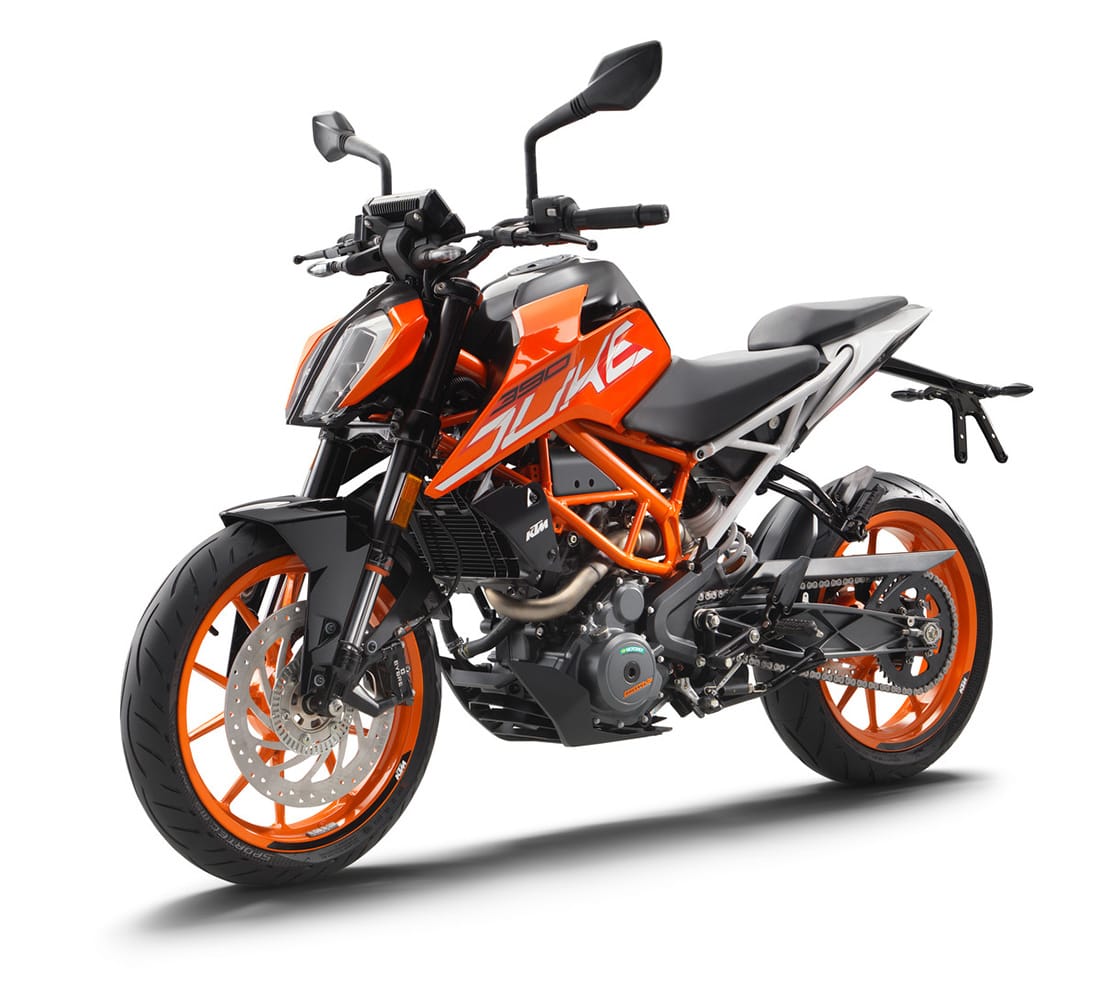 The 390 Duke has been totally restyled. It is now the spitting image of the bigger members of the Duke clan, like as in “Honey I shrunk the Duke!” It has the split LED Angry Bird headlight of its larger siblings as well as a multi colour TFT display complete with smartphone link. Ubercool!
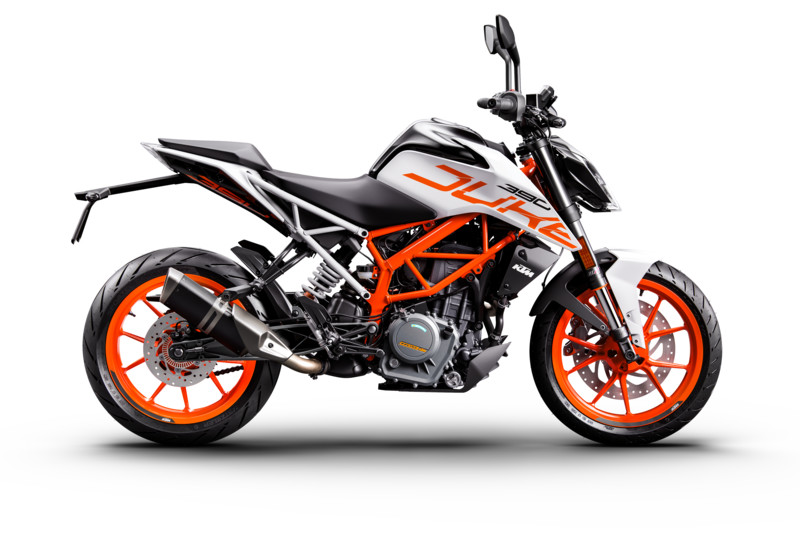
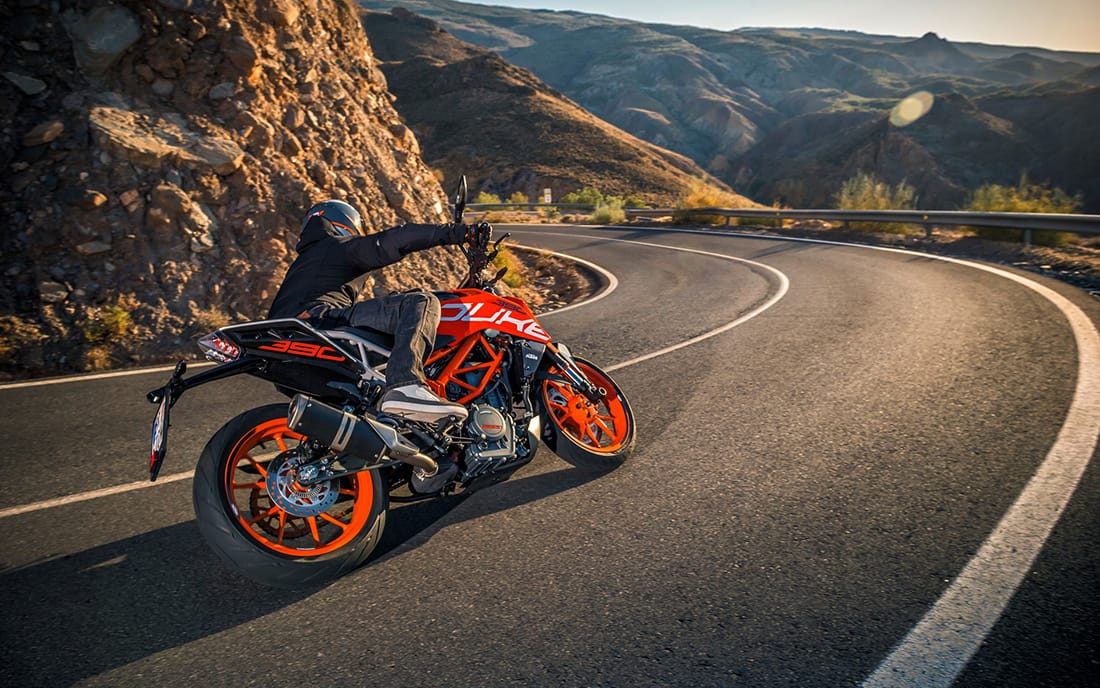
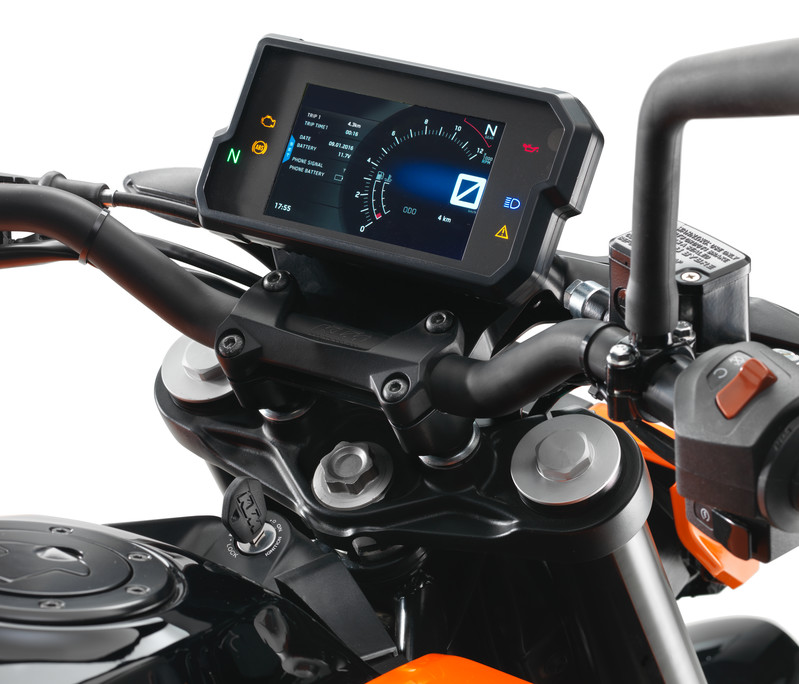 The tank has grown to 13.4 L, which when allied to decent fuel consumption, results in a decent fuel range of around 330+ kays. The seat is stepped with the rider perch wide and flat. My 6’ plus frame felt really comfortable aboard the 390. Short riders might find the front of the seat a little wide with their feet down when stopped. I had no such hassles. With its angular sharp modern look and orange frame and wheels, gunmetal motor, and white sub-frame and black and white tank and radiator shrouds, the Duke is a looker. The exhaust has a neat end can exiting on the right of the bike.
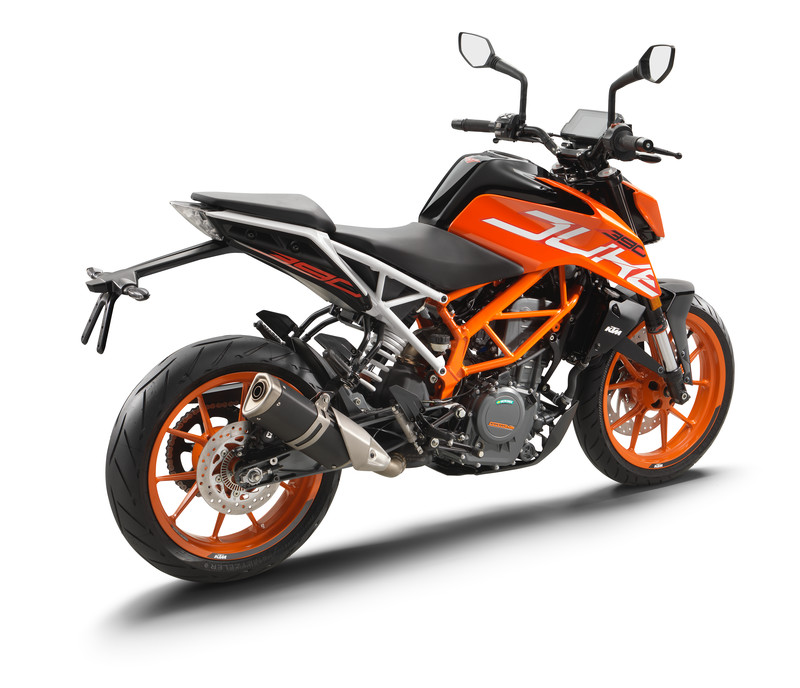 Suspension is by WP and on a bike in this class, beyond reproach. The rear shock is adjustable for preload and overall damping is good. The ABS equipped single Brembo discs, back and front, are bigger than on the old model and excellent both in feel and power.
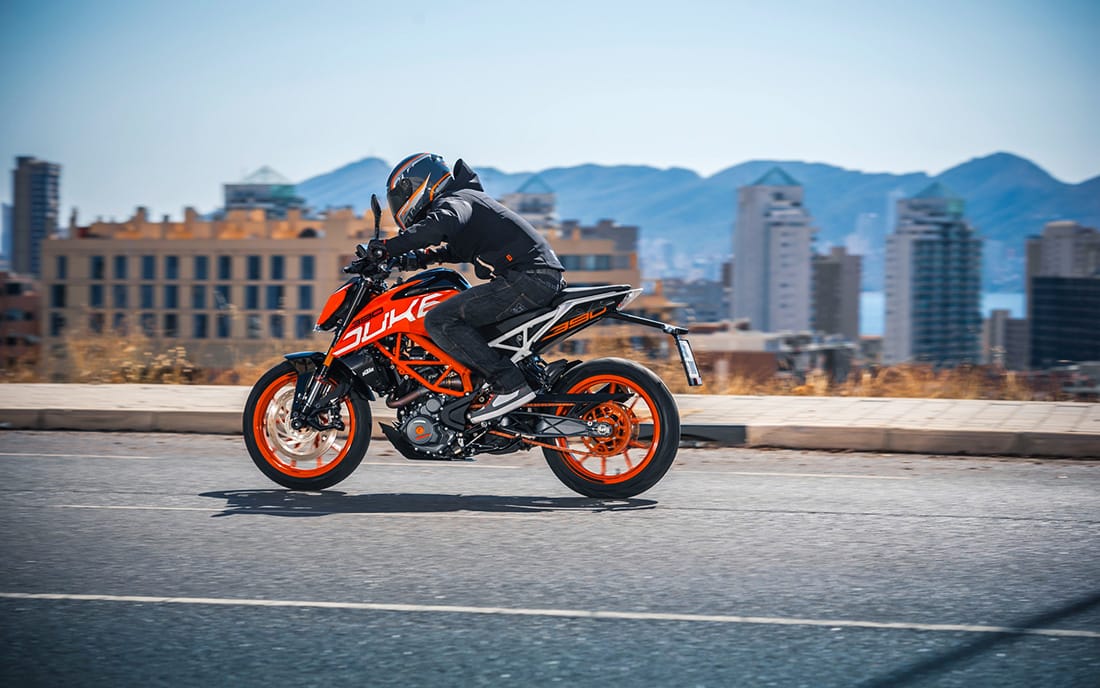
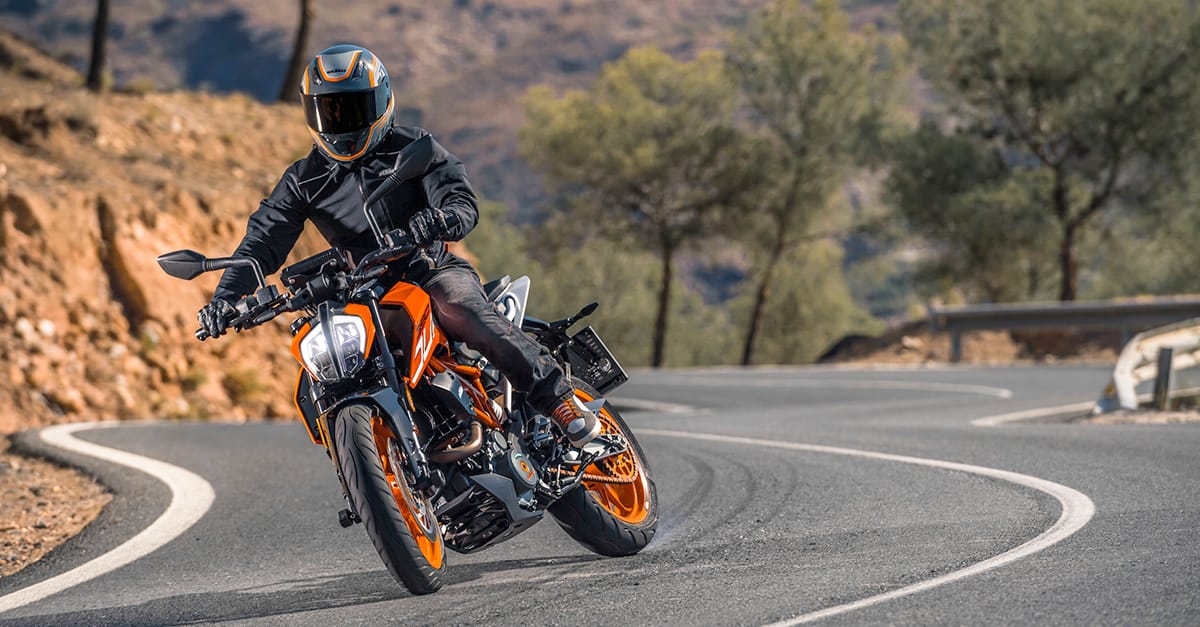
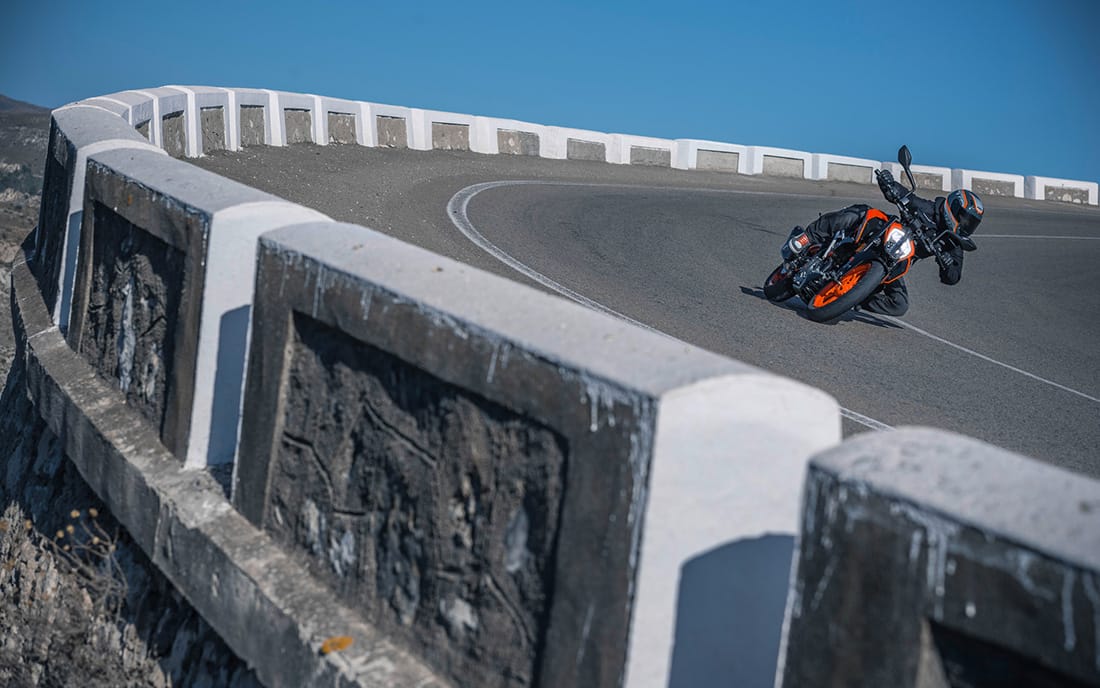
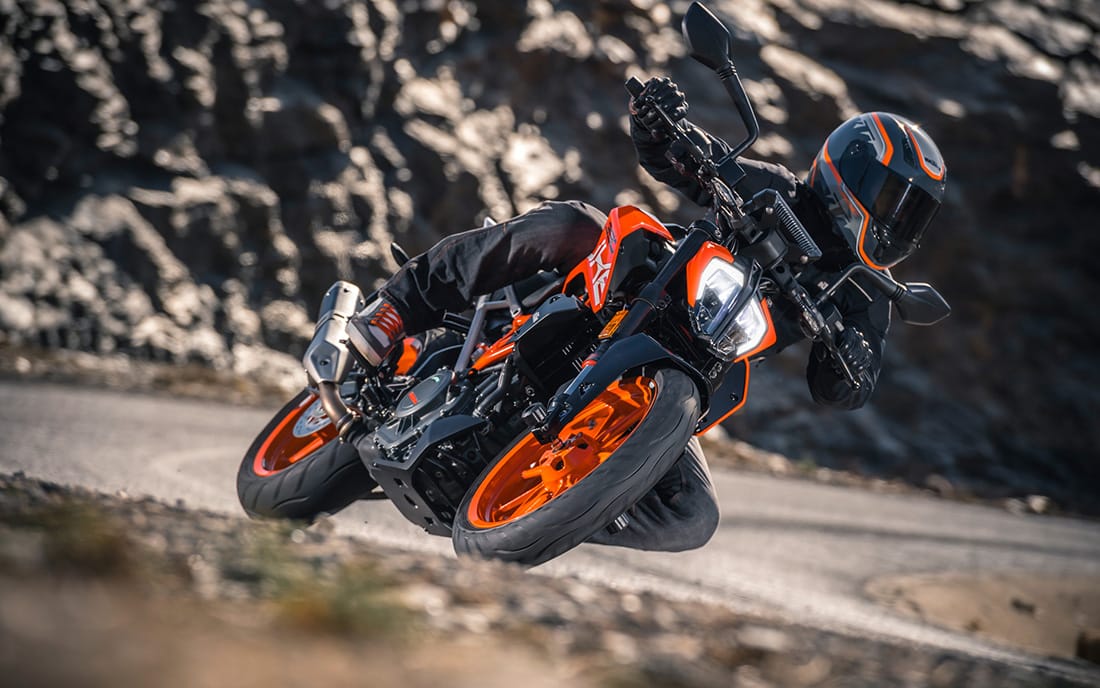 The handling is superb. Light and endowed with a short wheelbase, the little katoom turns intuitively. It is so quick steering that you think it will be nervous at high speed or through long sweeps, but no, stable and planted everywhere. This is a lovely bike!
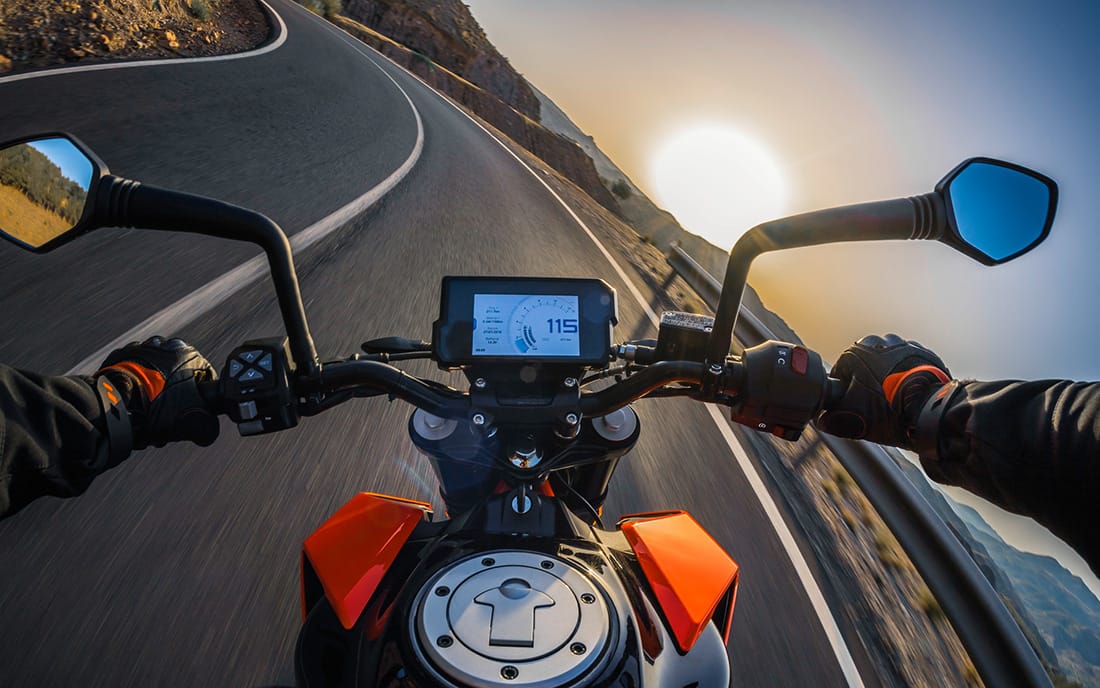 How KTM managed to upgrade this bike so significantly and keep the price at just under R70k, only they will know. What I know after spending a few days riding it is that it offers huge bang for the buck. The battle line in the lightweight class is drawn and I think they’ve used orange paint!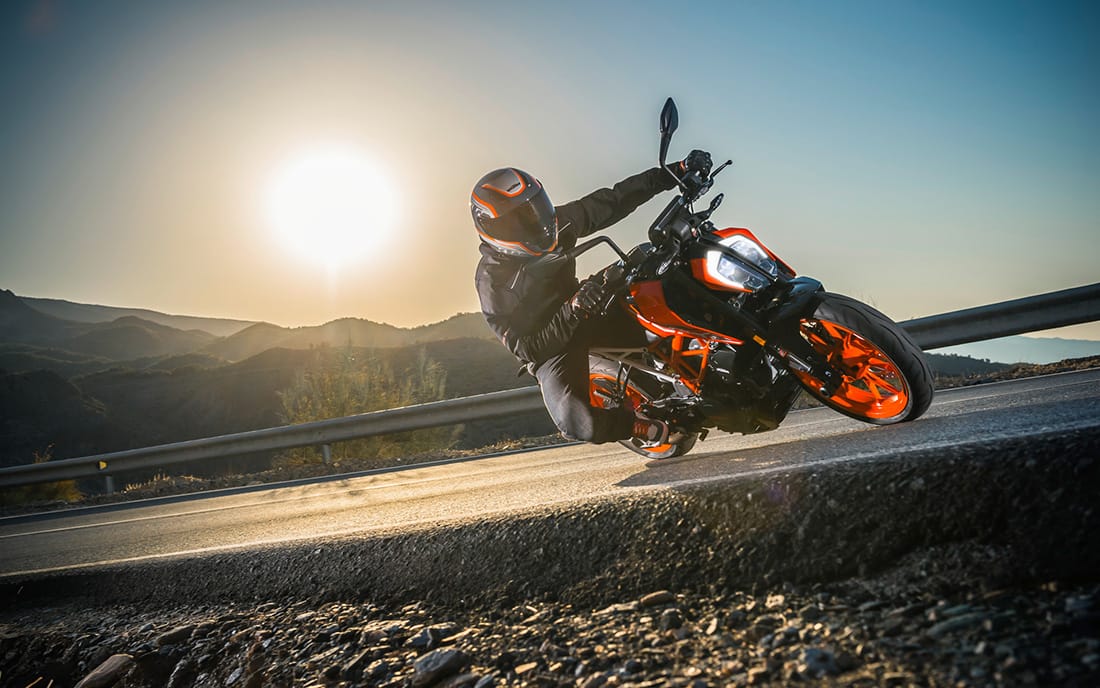
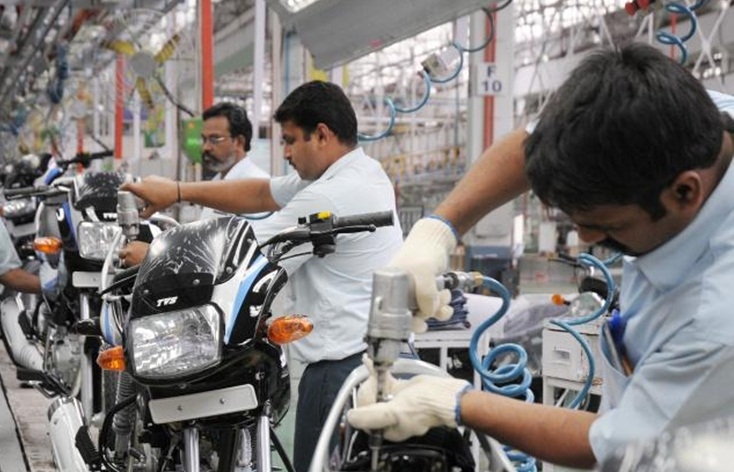 TVS’s manufacturing systems and expertise were developed over a 19 year relationship with Suzuki. They manufactured legendary bikes such as the B120, which was used extensively as a delivery motorcycle in South Africa and was known to be bulletproof.
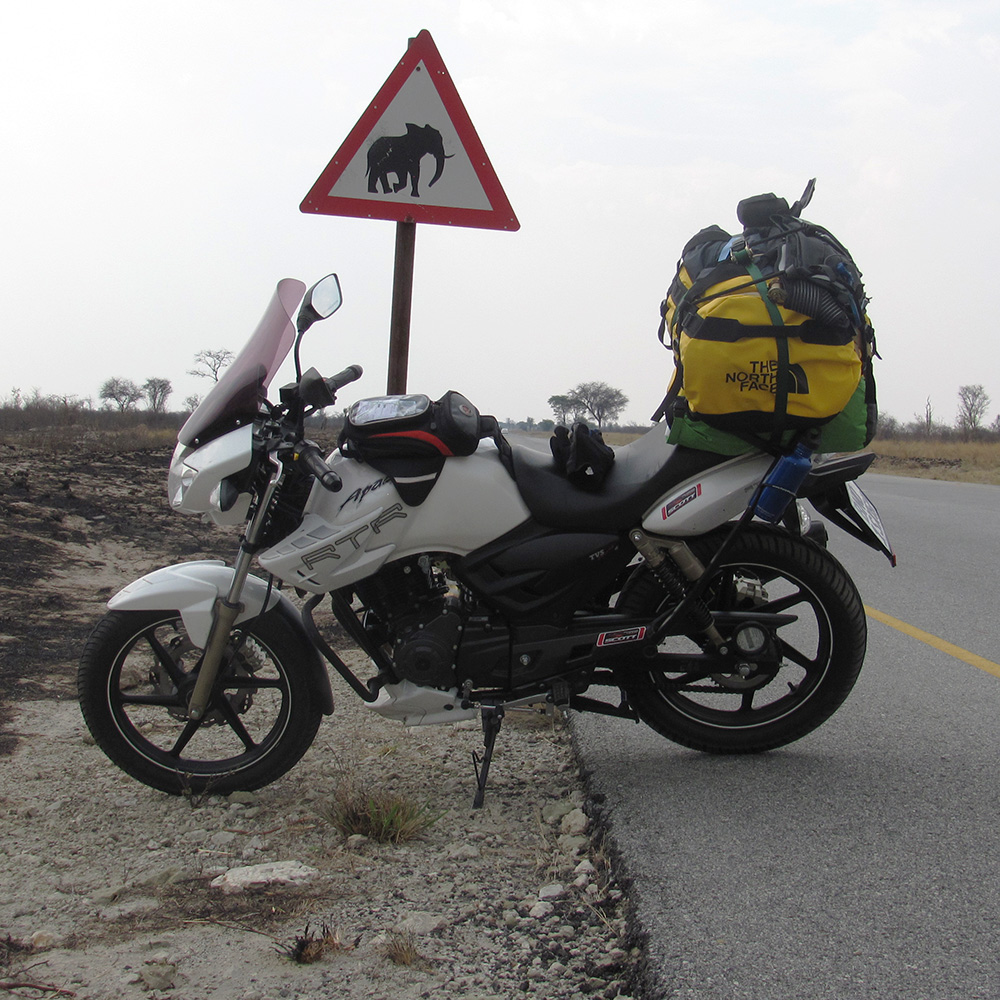 To read more about our trip click..
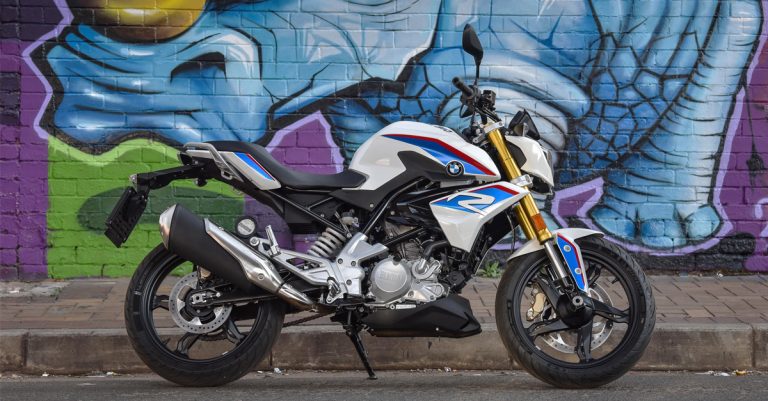
 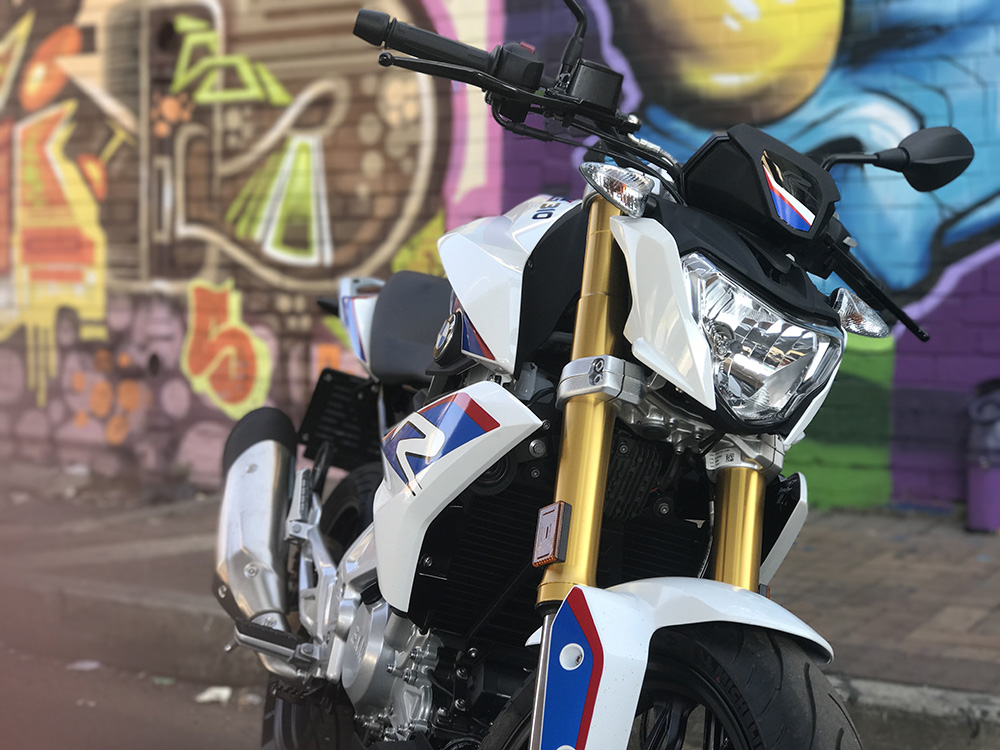 During the test we rode the G 310 R mainly in the built up urban areas of Johannesburg, which is its natural enviroment. Riding in these conditions was amazing. The bike is light and you can cut through the traffic with ease. The G 310 R reminded me why I started riding bikes in the first place.. So much fun!
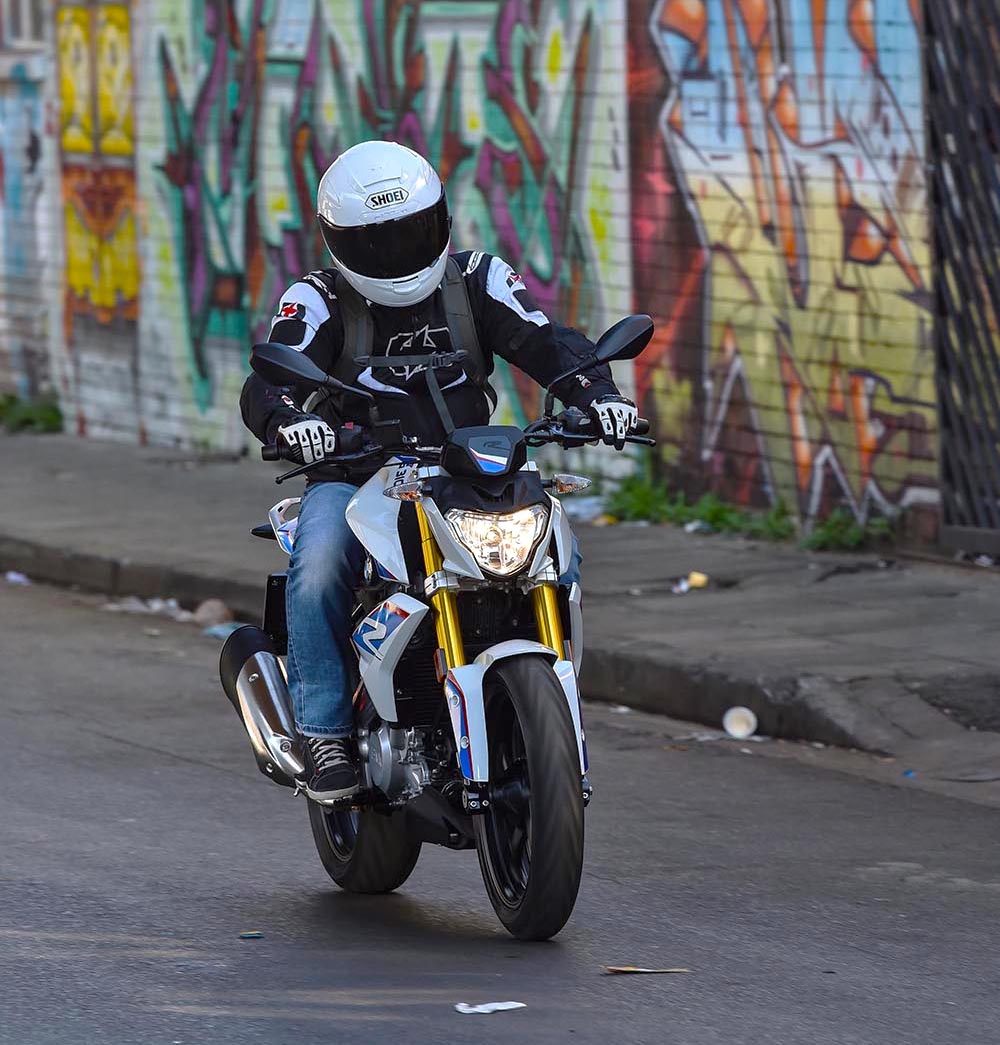 The relaxed riding position and low seat height of just 785 millimeters inspired confidence, especially for shorter riders like myself. There is a 815 millimeter seat option available for taller riders. The G 310 R is very smooth to ride and oozes quality in every way.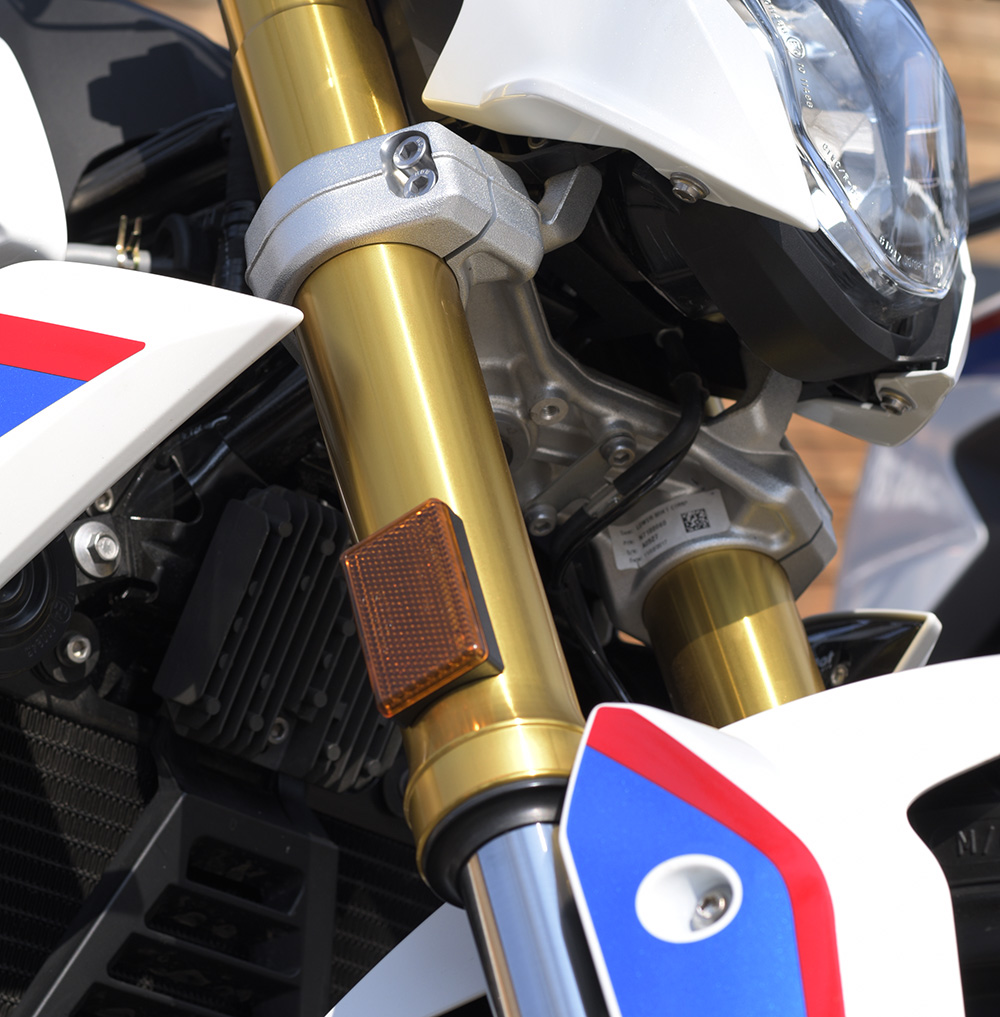
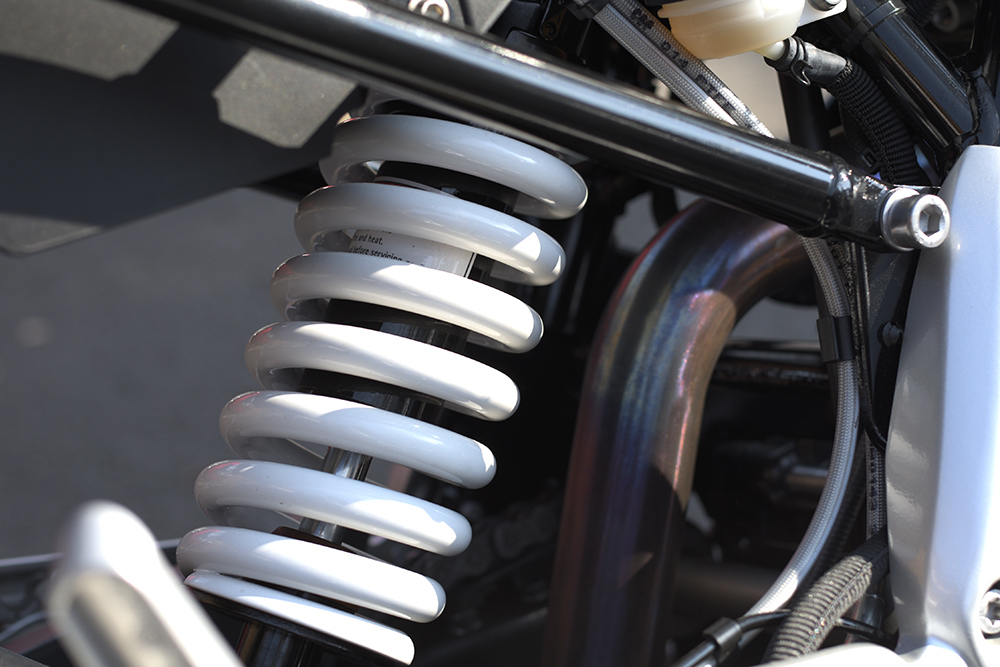 At the heart of the new G 310 R is a 313cc, liquid-cooled, single-cylinder engine with two overhead camshafts together with electronic fuel injection. It has an output of 25 kW at 9 500 rpm and a maximum torque of 28 Nm at 7 500 rpm. A very innovative feature is a backward-tilted cylinder, open-deck design with the cylinder head turned by 180 degrees, making it possible to position the intake tract at the front, viewed in the direction of travel.
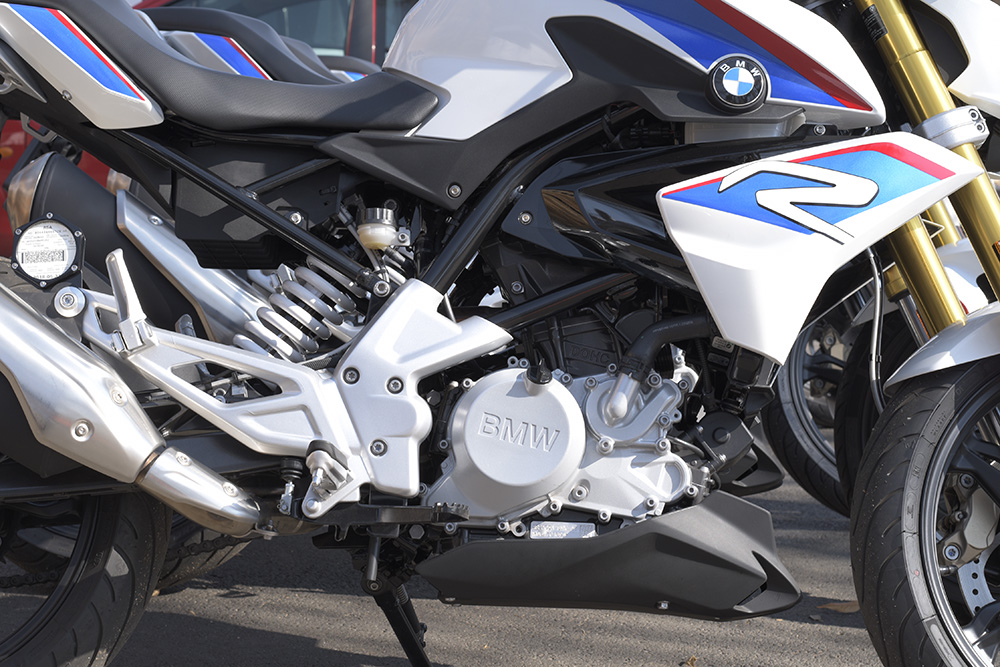 The fuel tank holds 11 litres and performance figures claim 30 km/l. This then gives you in excess of 300 km’s on a tank, potentially making it a great option as a highway commuter. I say ‘potentially’ because during the test we rode a short section of highway. Cruising at 120 kph the motor was working very hard – the rev counter was showing around 8000 rpm (the G 310 R redlines at 10 000 rpm). Ideally the bike would feel less stressed at 7500 rpm. If I was buying this bike as a highway commuter, I would seriously consider a 1 tooth larger front sprocket. In my opinion, this would improve the characteristics of the bike for highway use.
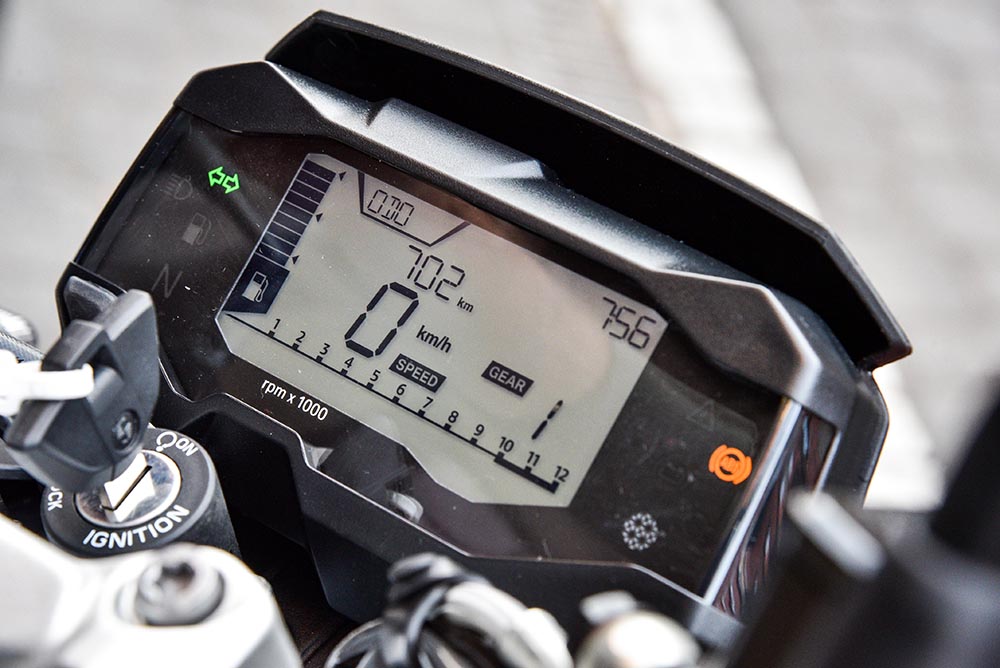
 The G 310 R has a very nice designed LCD screen, which displays fuel guage, average fuel consumption, range till empty, average speed, gear indicator, time and date – basically everything you would ever need.
 With an attractive selling price of R62 900, which comes with a 2 year standard BMW warranty and 3 year BMW roadside assistance package. Add to this an excellent country wide dealer network and then you have got a very dominant offering from BMW Motorrad.
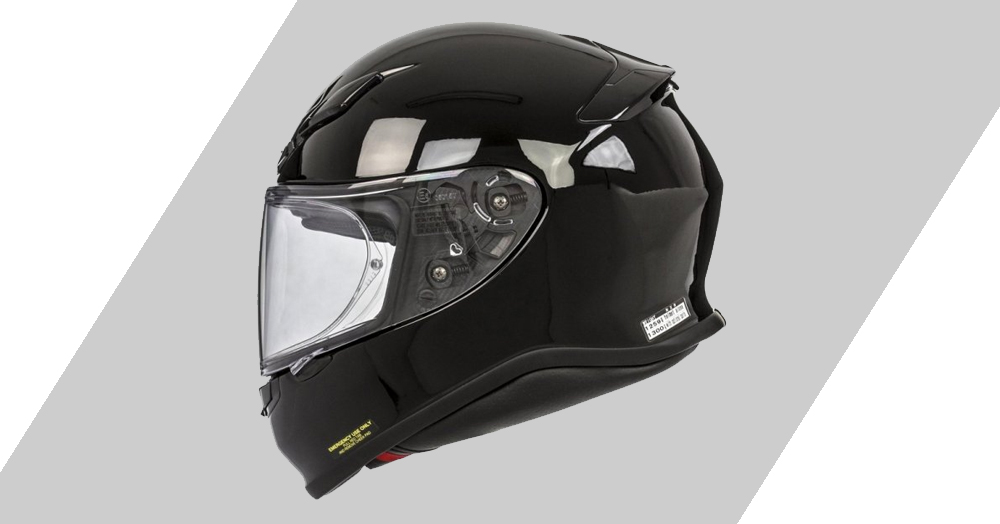
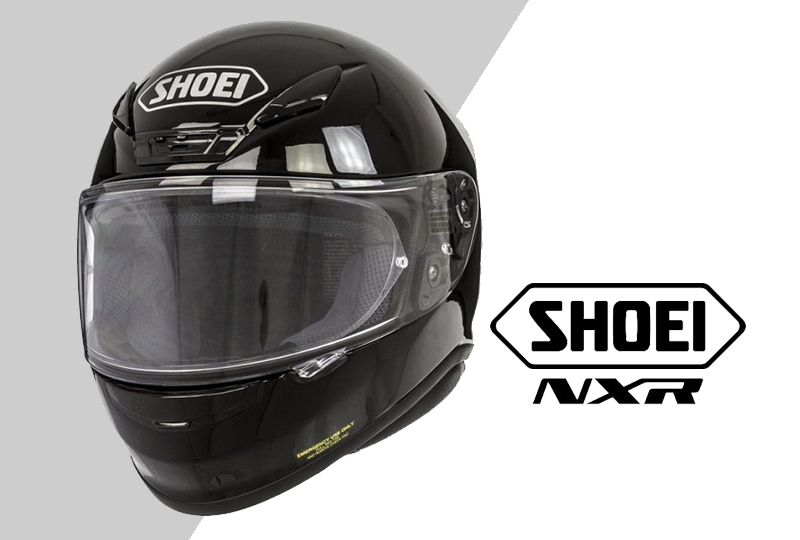
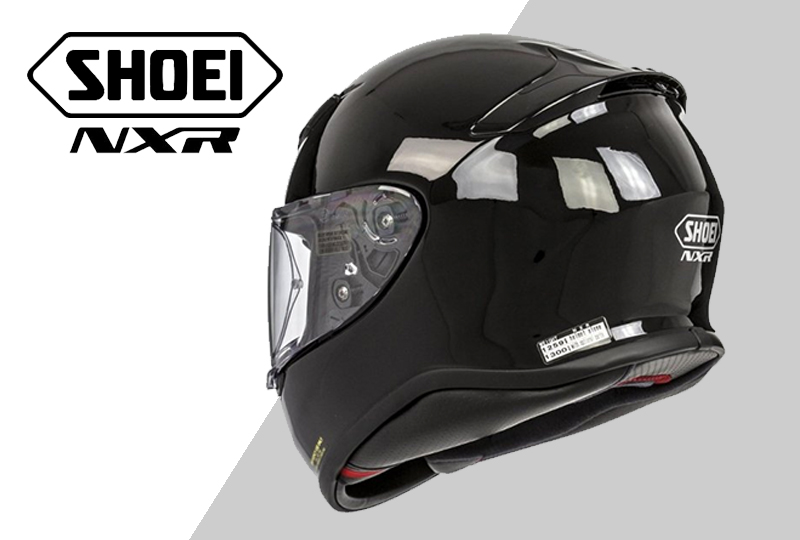 The NXR visors also have the Shoei Pinlock, anti-mist system as standard. It features a clip-on visor insert lining, which inhibits misting effectively. Also standard is a nosepiece or breathguard as well as a ‘chin curtain’, which drops noise levels even more, as well as warding off the winter chill. New on premier Shoei’s is their EQRS system, which allows easy removal of the lower lining to facilitate helmet removal in the event of an emergency.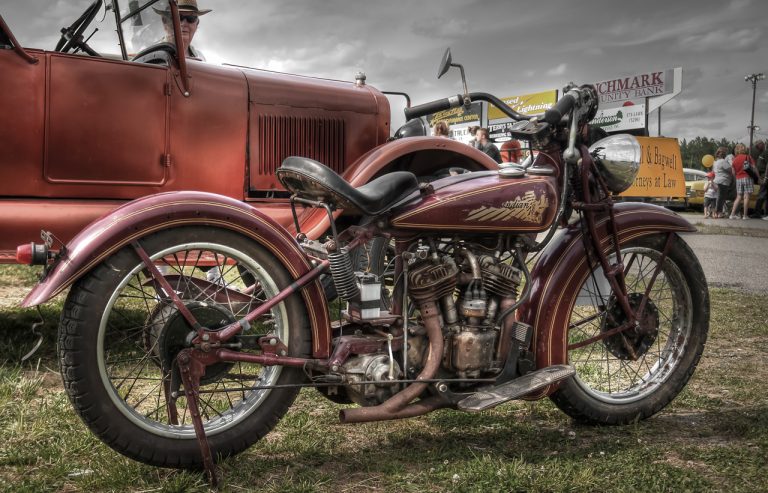
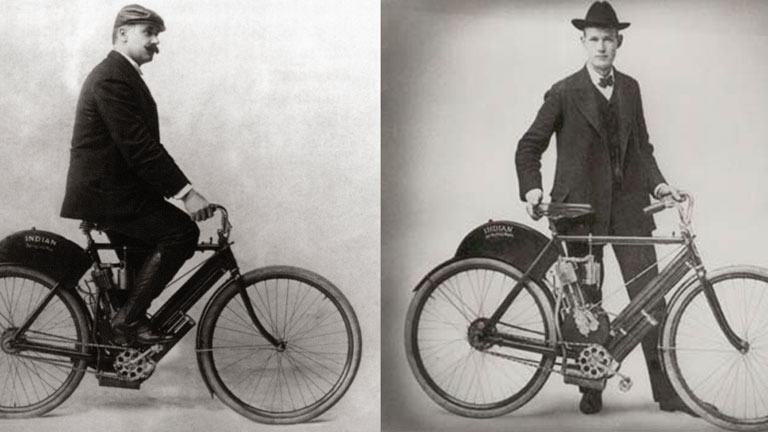 To be historically accurate, Hendee Manufacturing Company changed its name to Indian in 1928. By this time, ‘Indian’ was a household name for motorcycle enthusiasts worldwide. In 1910, Hendee Manufacturing built more motorcycles than any other manufacturers in the world. 1911 saw Indian take 1st, 2nd and 3rd places at the Isle of Man.
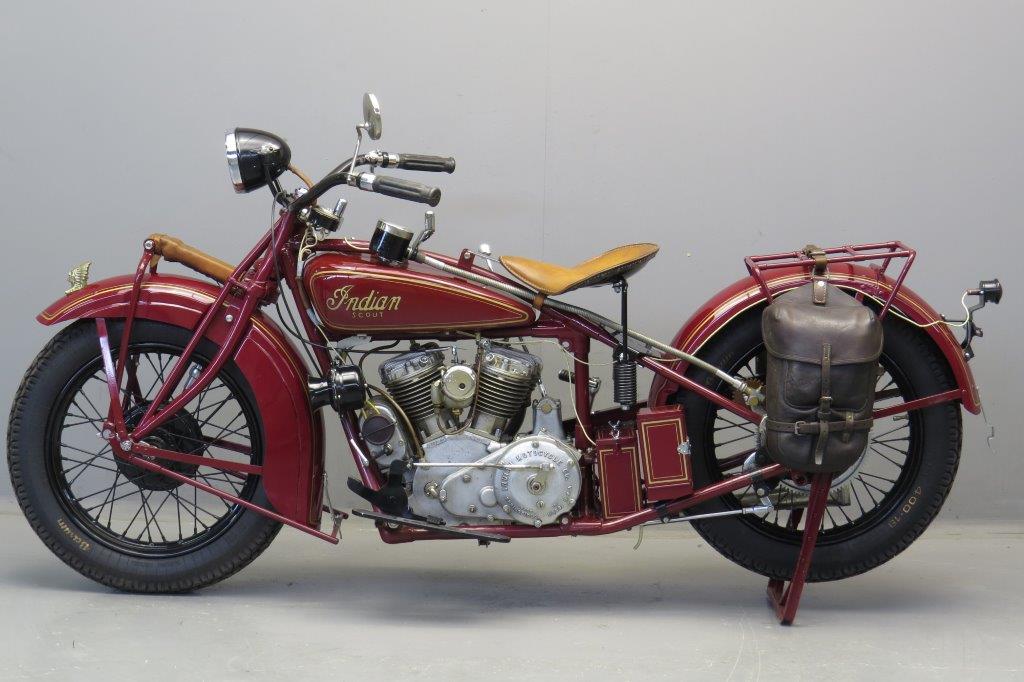 The other iconic Indian model was the Chief. Also a V-twin, the Chief had a bigger capacity engine at 1000cc, growing to an eventual 1300cc. The Chief sported the swooping, skirted fenders that were to become an Indian trademark. From 1930, Indian motorcycles sported the famous Chiefs head logo, either on the tank or as a die-cast fender emblem. The Springfield plant became affectionately known as the ‘Wigwam’.
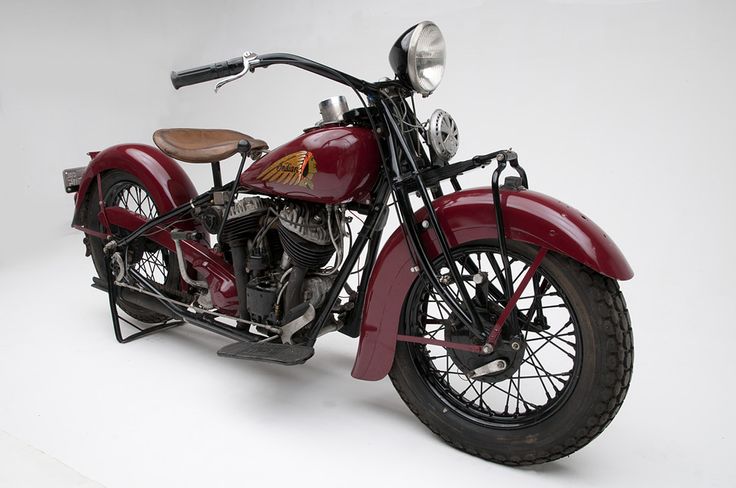 Indian sowed the seeds of their eventual demise by selling virtually their total production to the U.S. Government at the end of WW1 in 1917/18. This caused numerous Indian Dealers to fold, with negative long-term consequences. Many of these Dealers turned to Harley-Davidson, Indians arch-rival. Despite a merger with Du Pont Motors, a division of the Du Pont chemical empire in 1930, the strategic blunders resulted in the eventual bankruptcy in 1953.
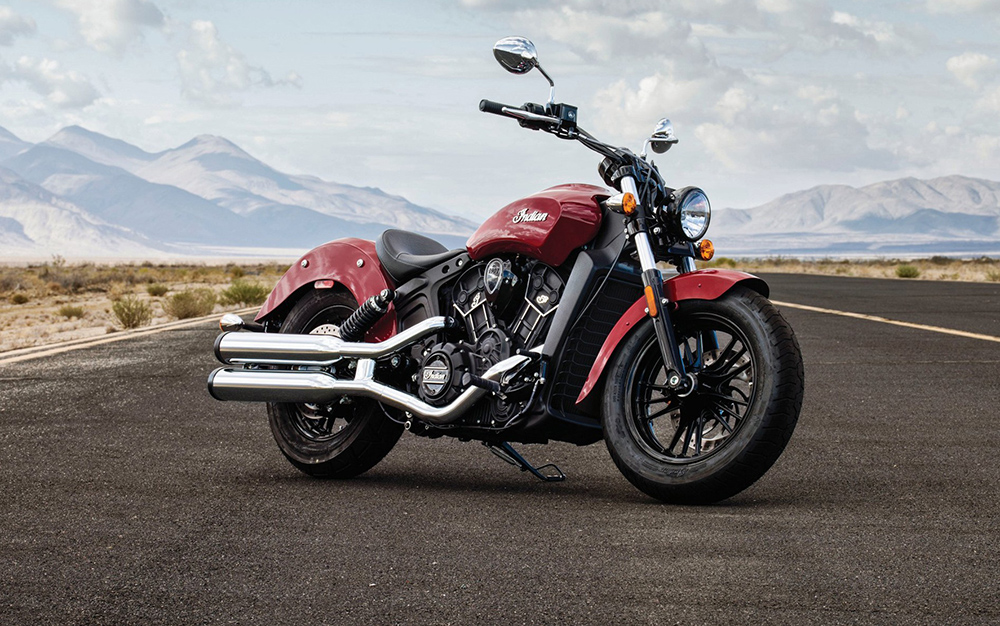 ‘Indian Chief Dark Horse’ is predictably painted various shades of black and sports the classic Chief skirted fenders and Indian head tank decal and fender emblem. The 111 cubic inch Thunder stroke V-twin pumps out a massive 161.6 Nm of torque at only 3000 rpm. A classic power cruiser of note, dripping with heritage and nostalgia, yet totally modern – Awsome!
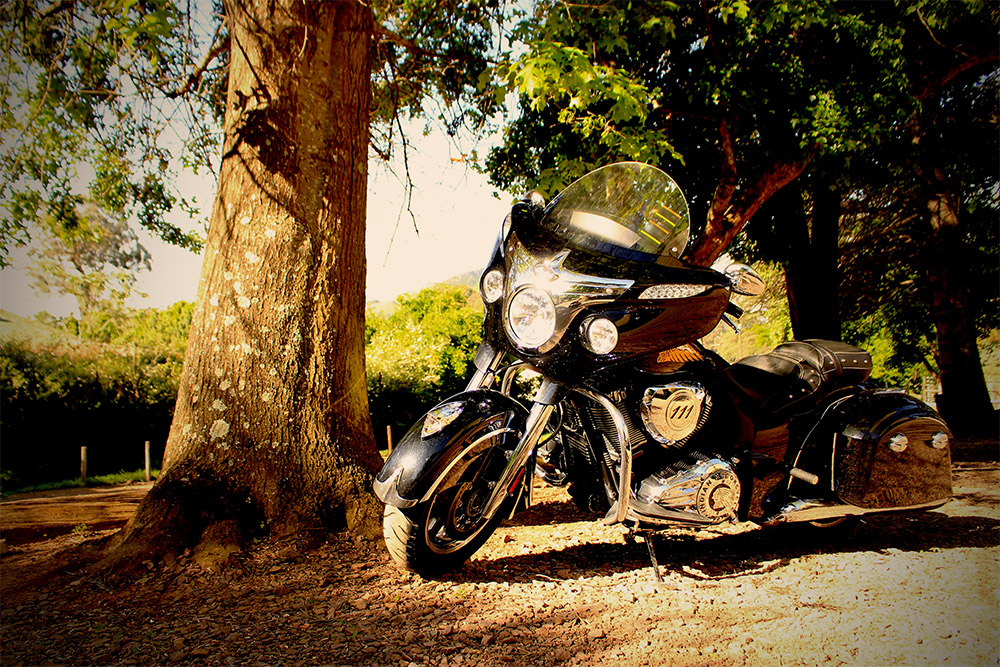
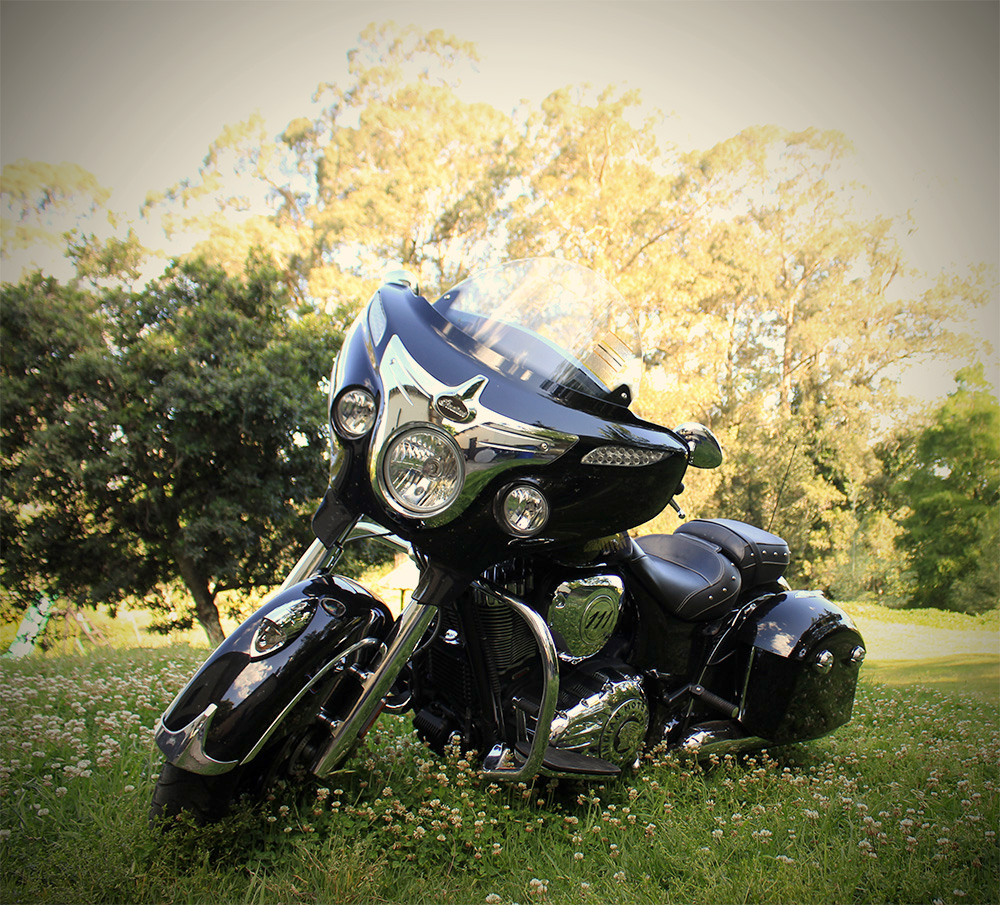
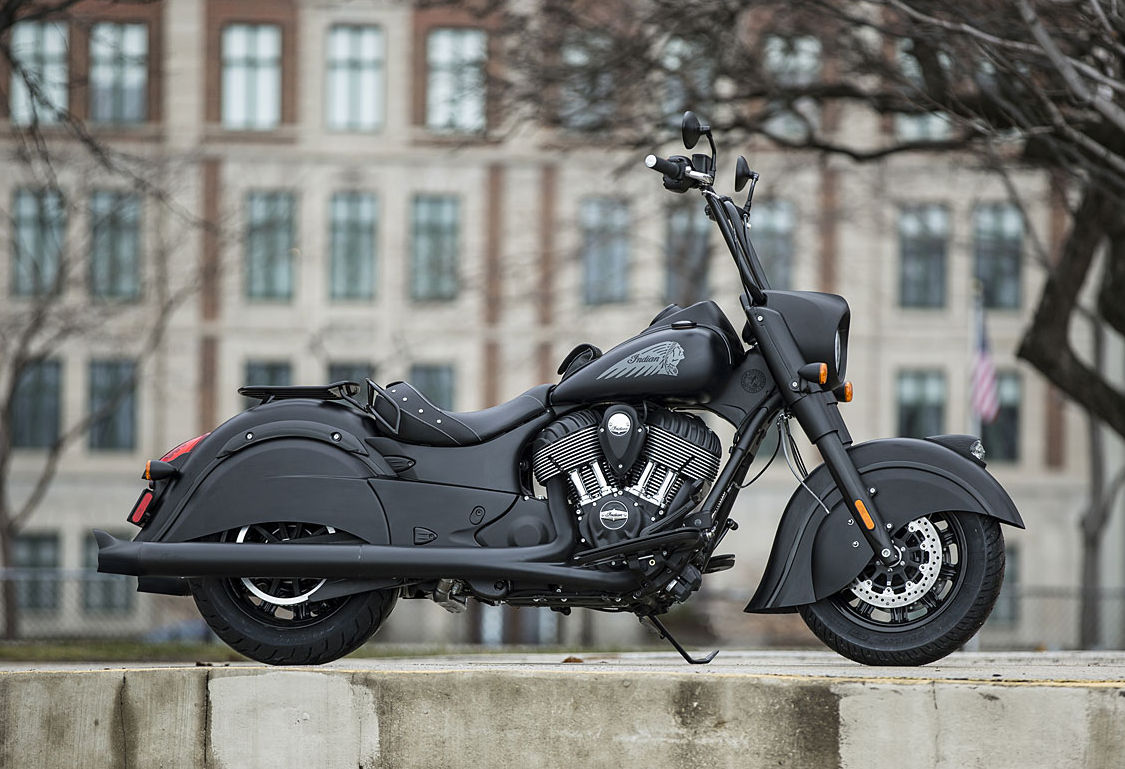 The Indian Chief Vintage is a classic ‘bagger’. Touring windshield, leather seat and saddle bags and powered by the 111cu in Thunder Stroke mill. Two-tone paint completes what is a timeless Indian picture.
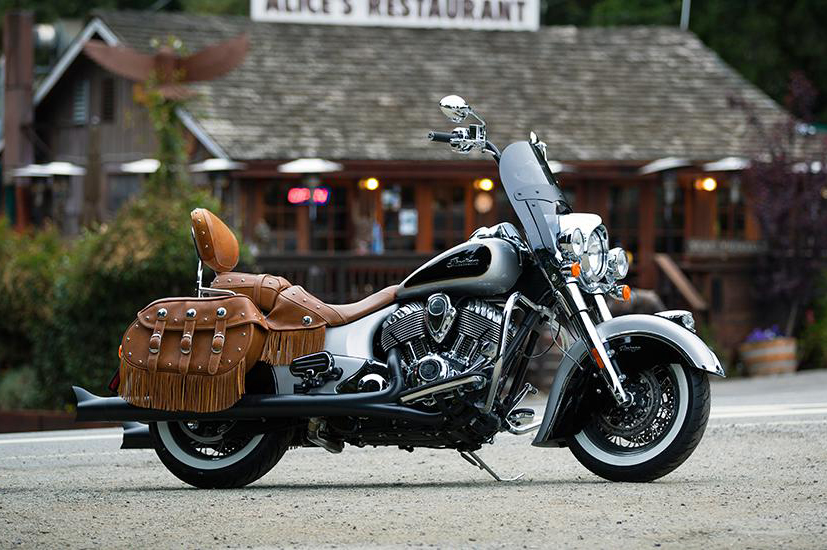 In this crazy world of constant change, I find myself hankering more and more for something classic and timeless. Something that is functionally modern yet harks back to a time when sanity prevailed; something that looks like it was built by a craftsman, not a computer; something that stirs the soul and the blood. The new Indians are all of these things and more – Truly classic Americana.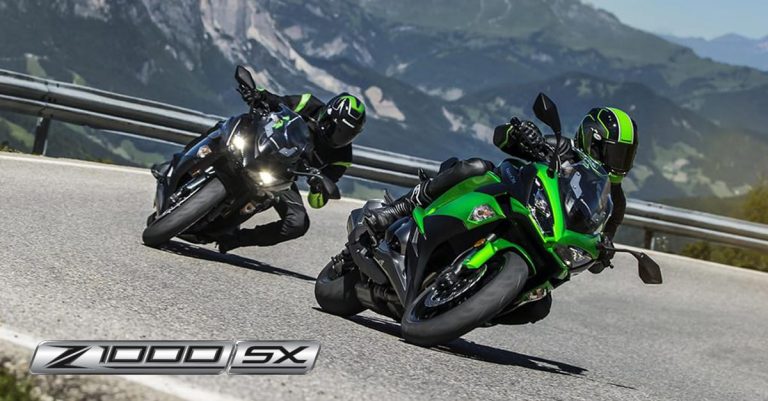
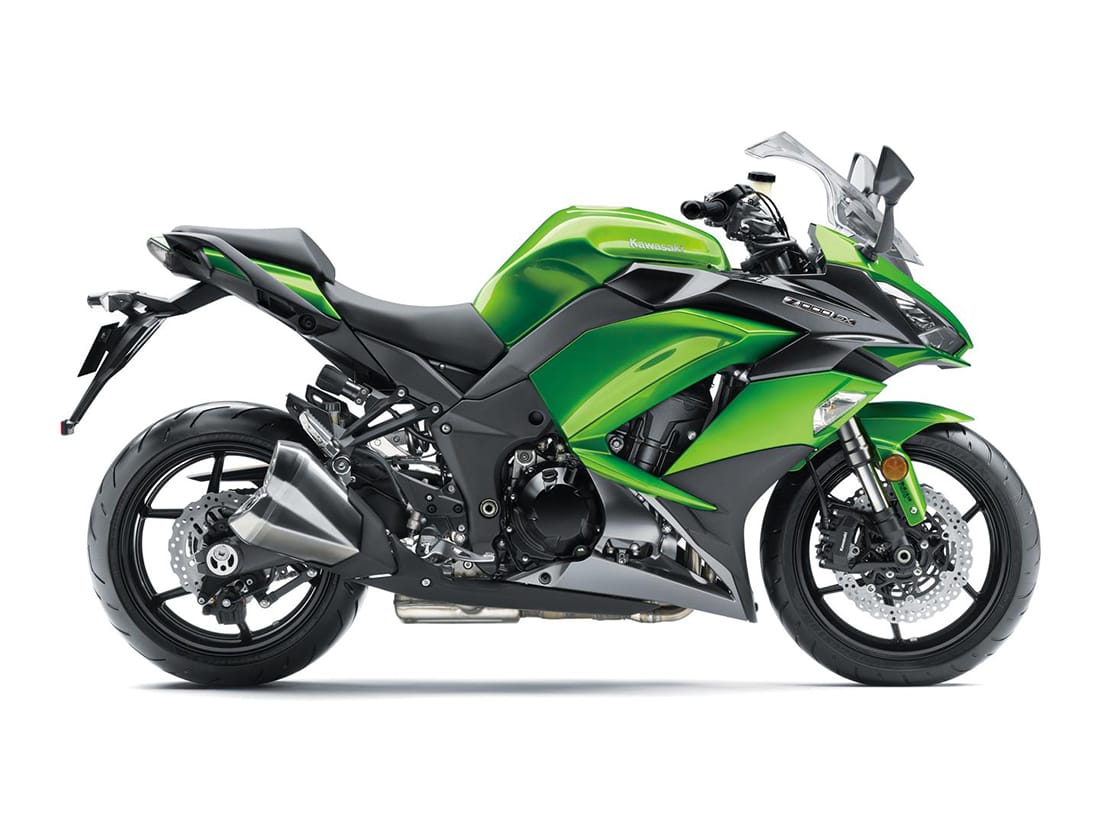
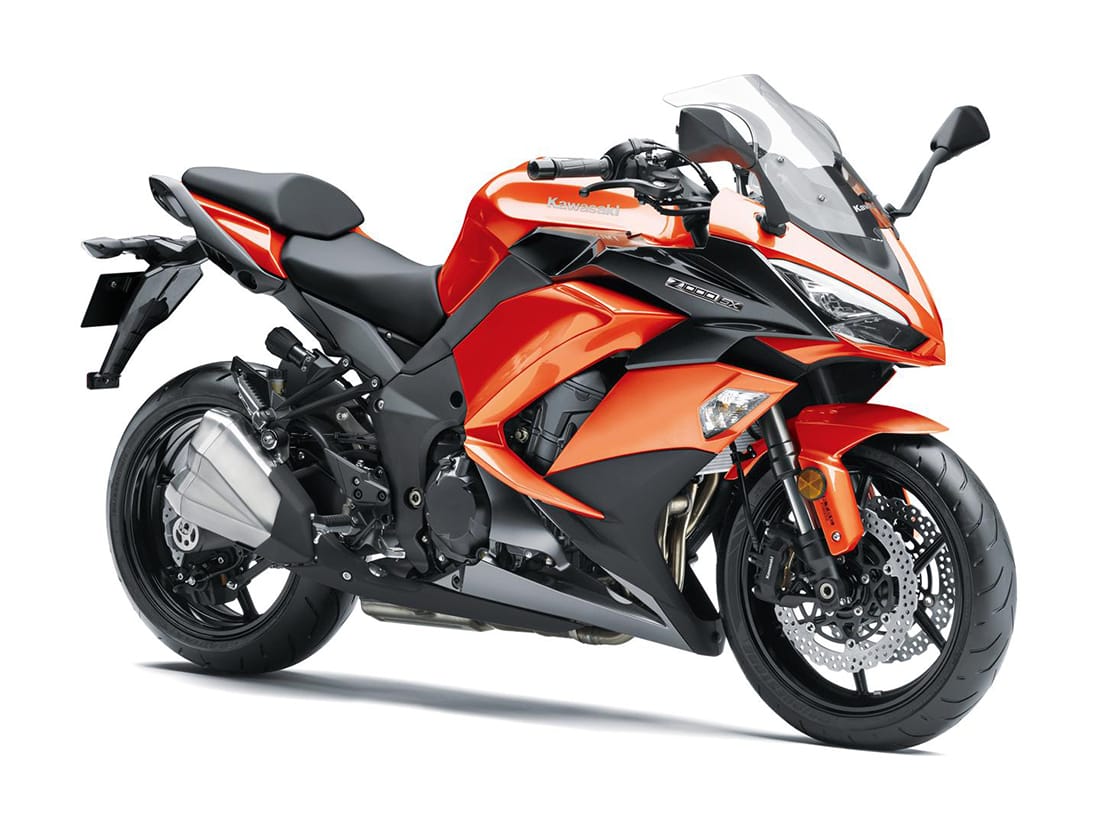
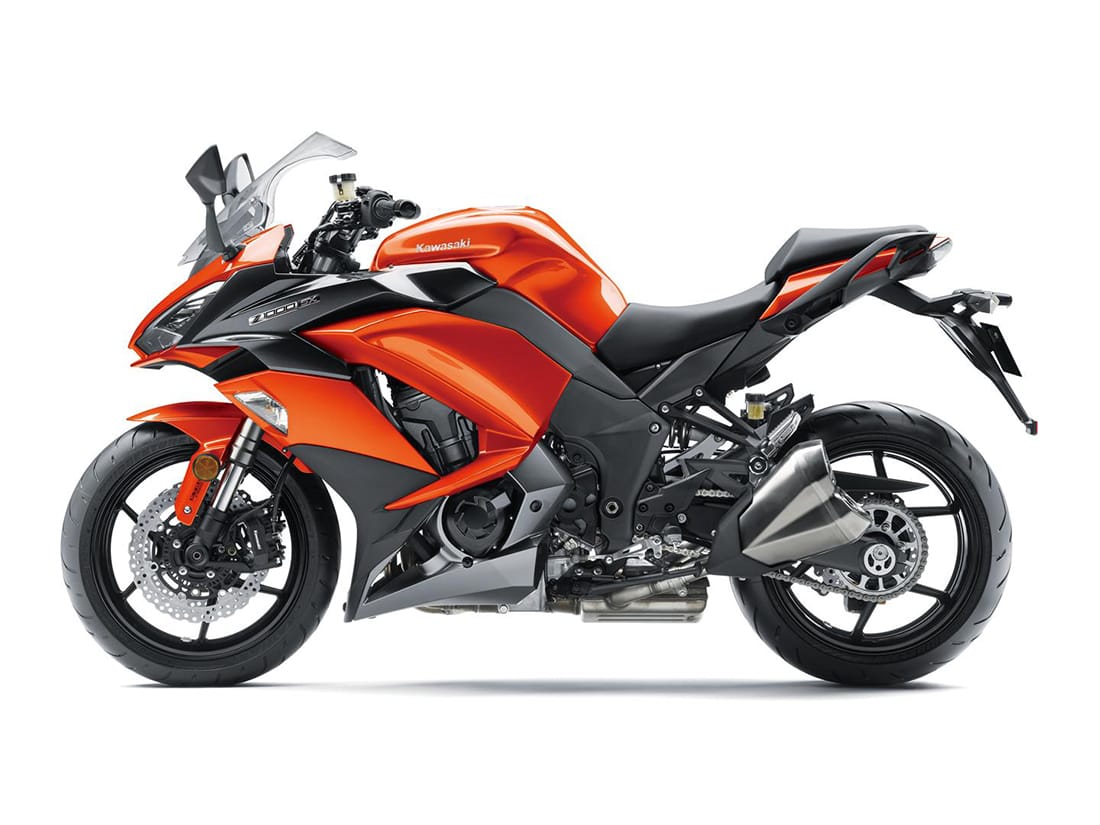
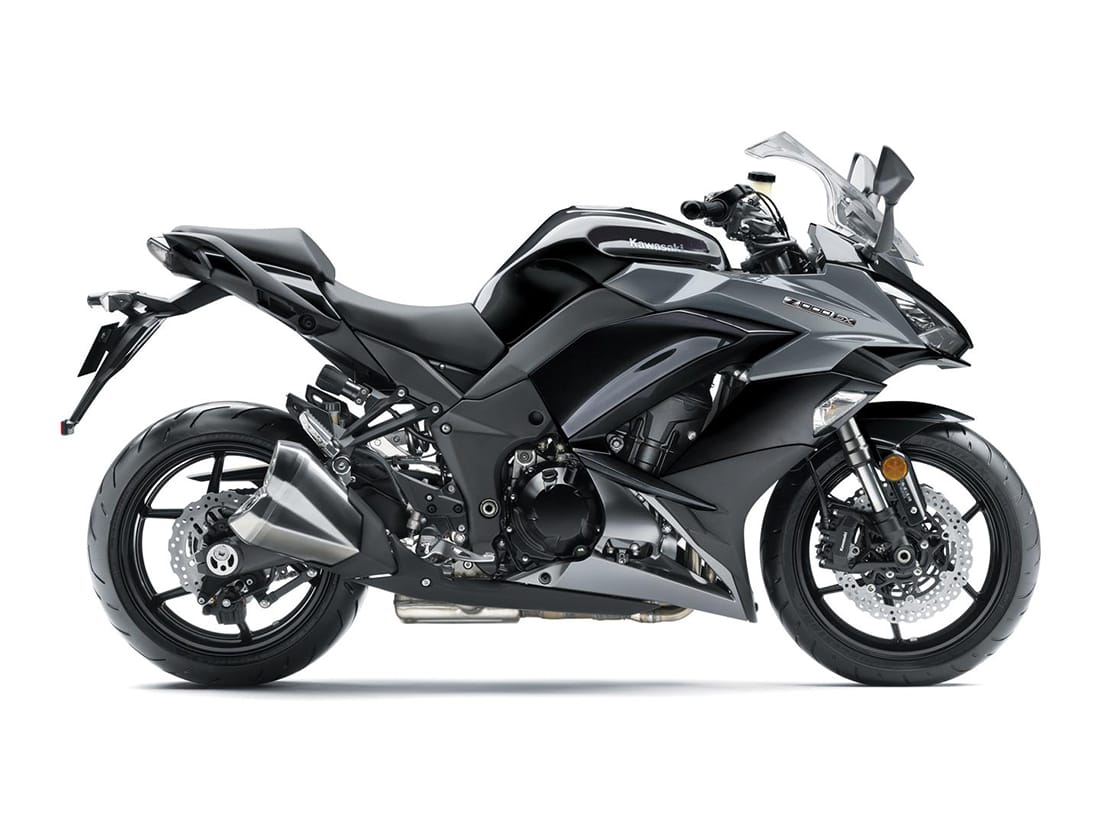
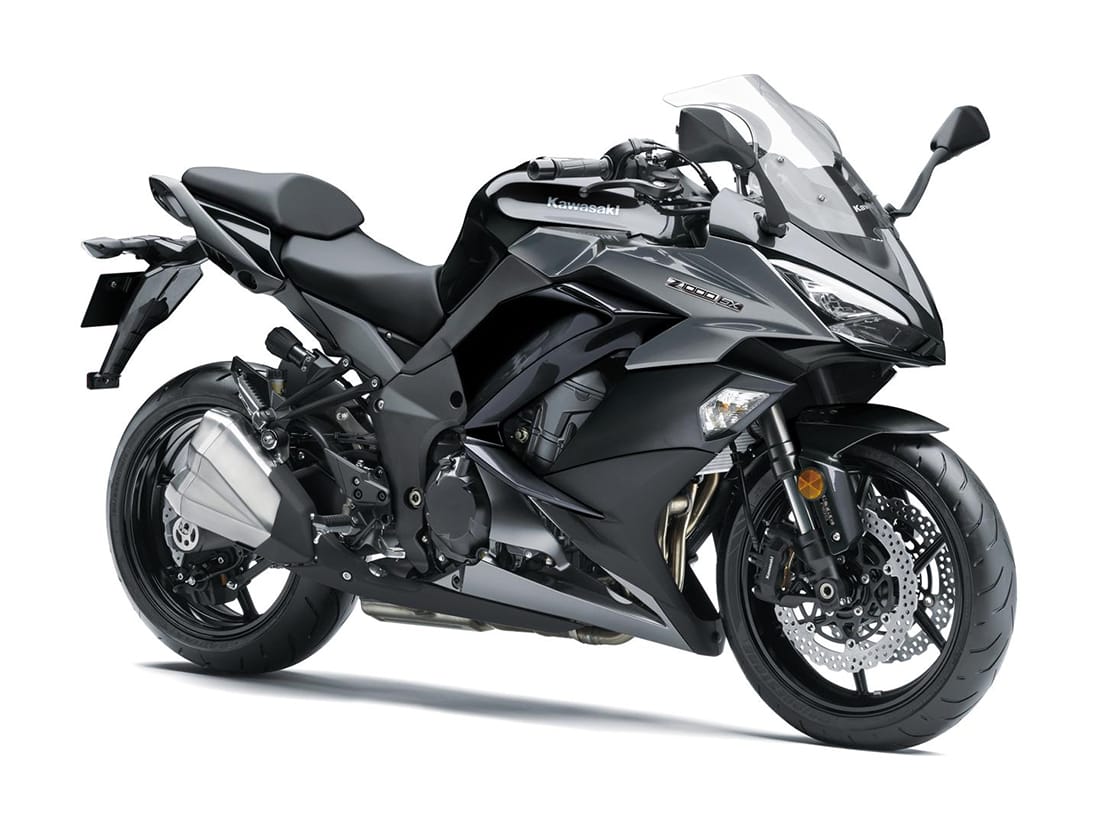
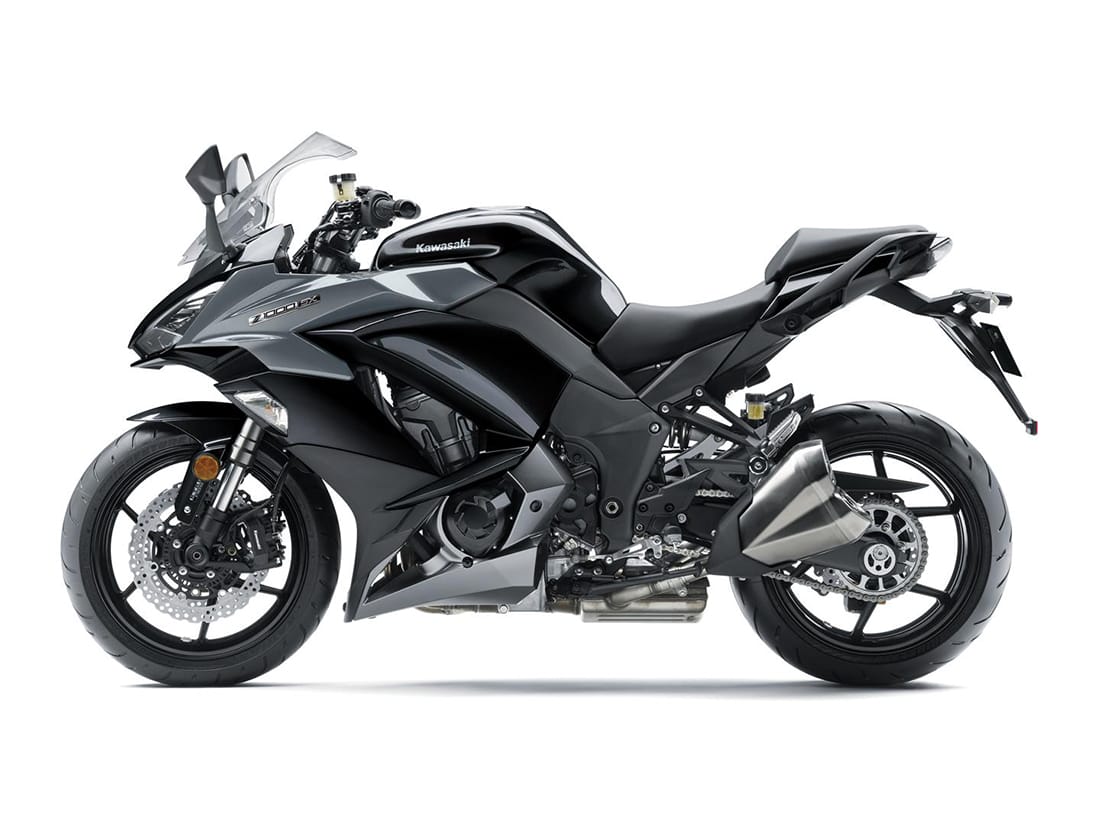
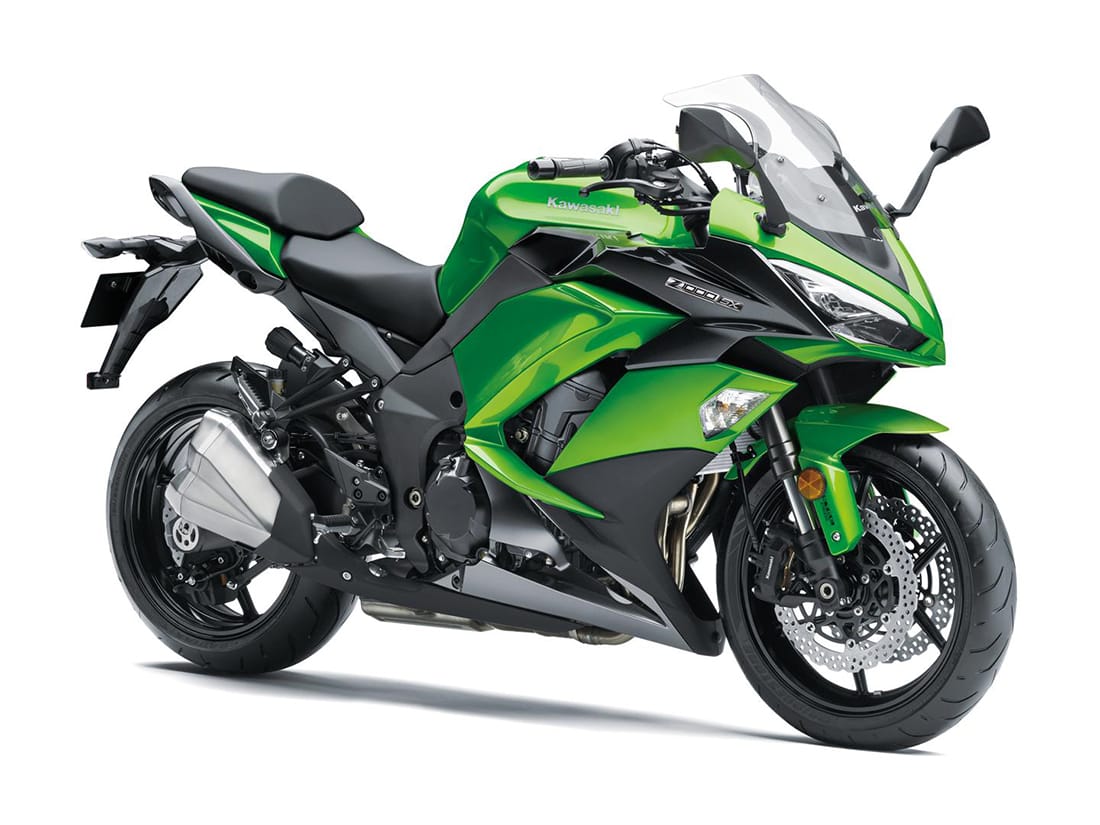
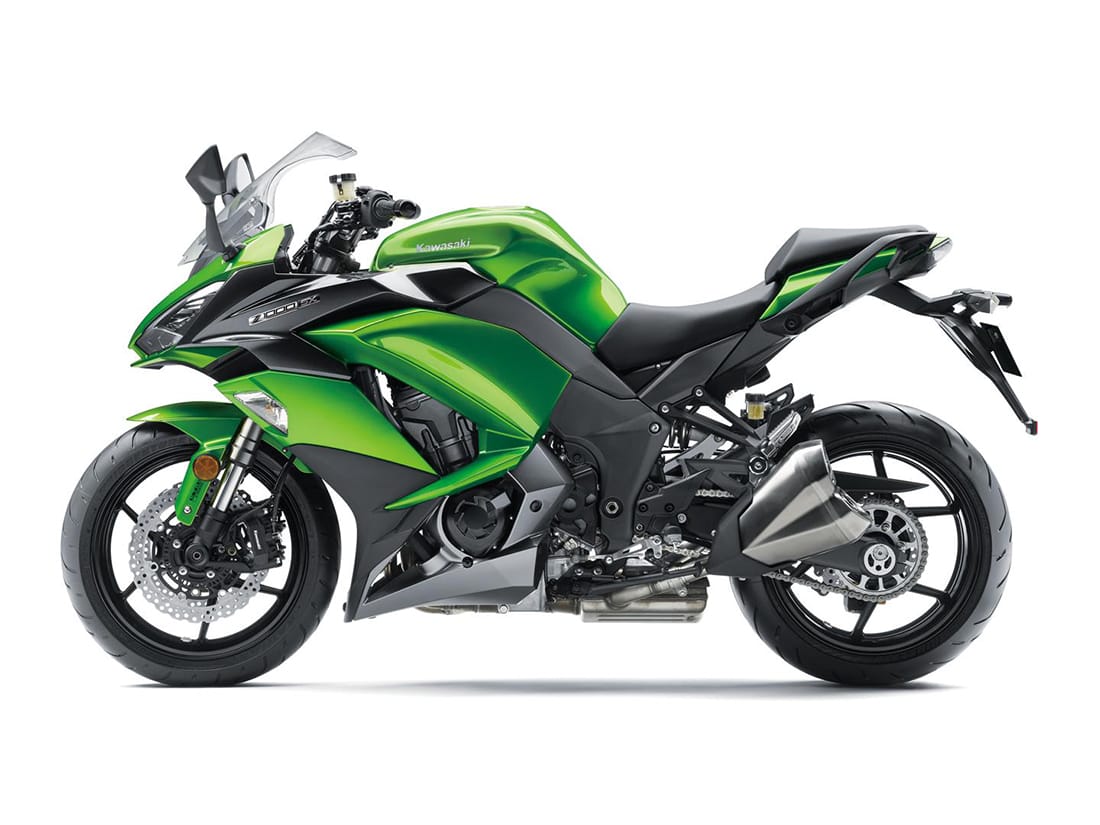
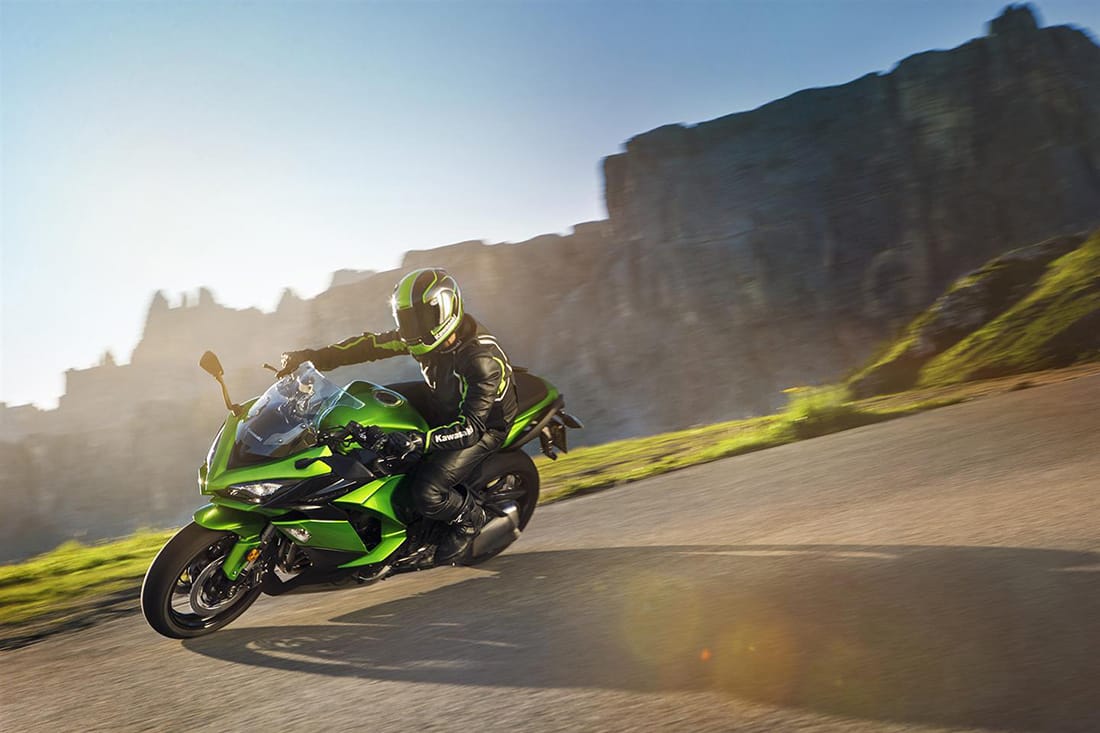
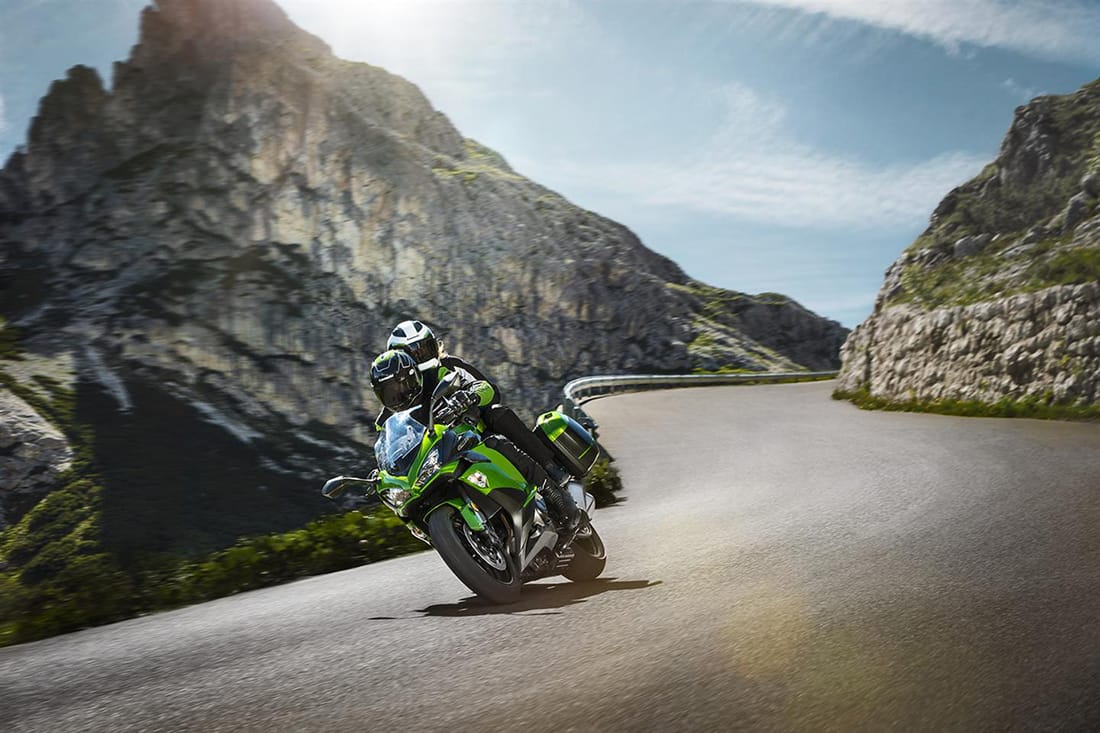
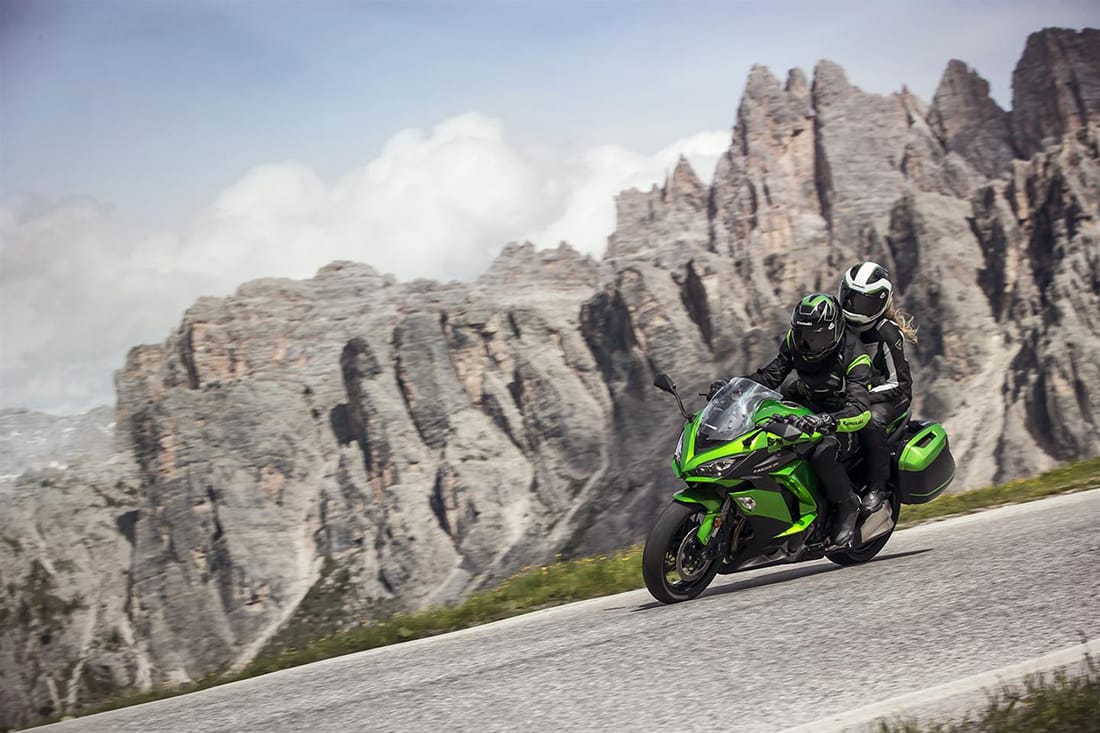
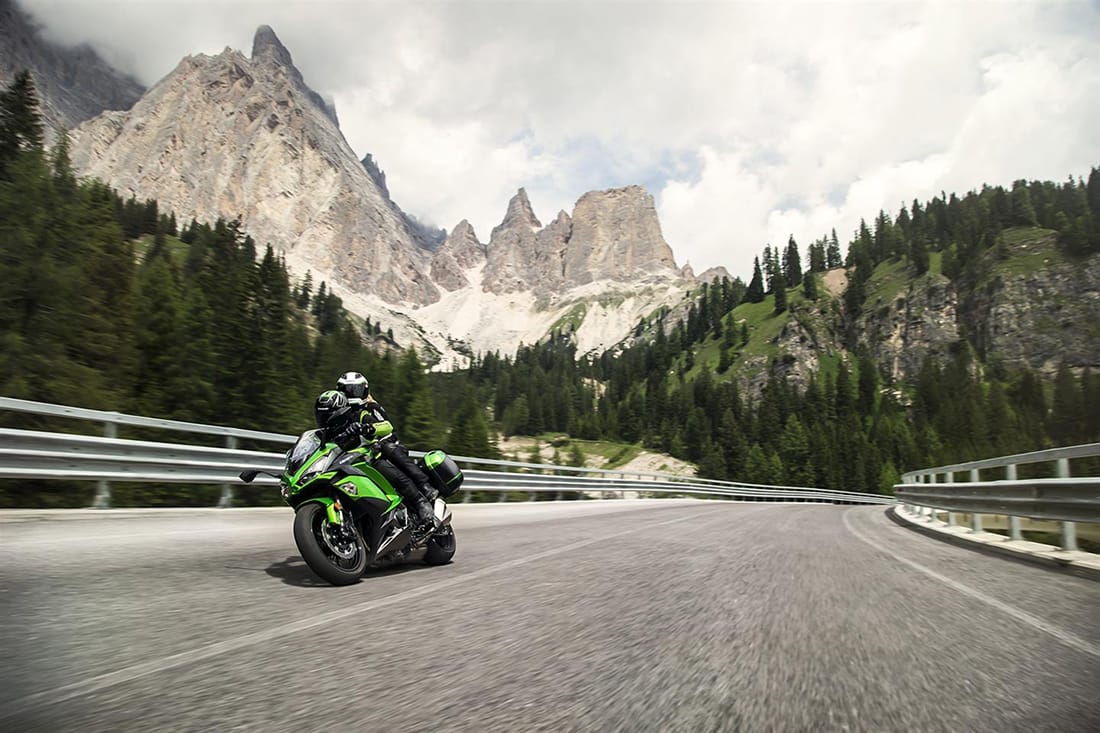
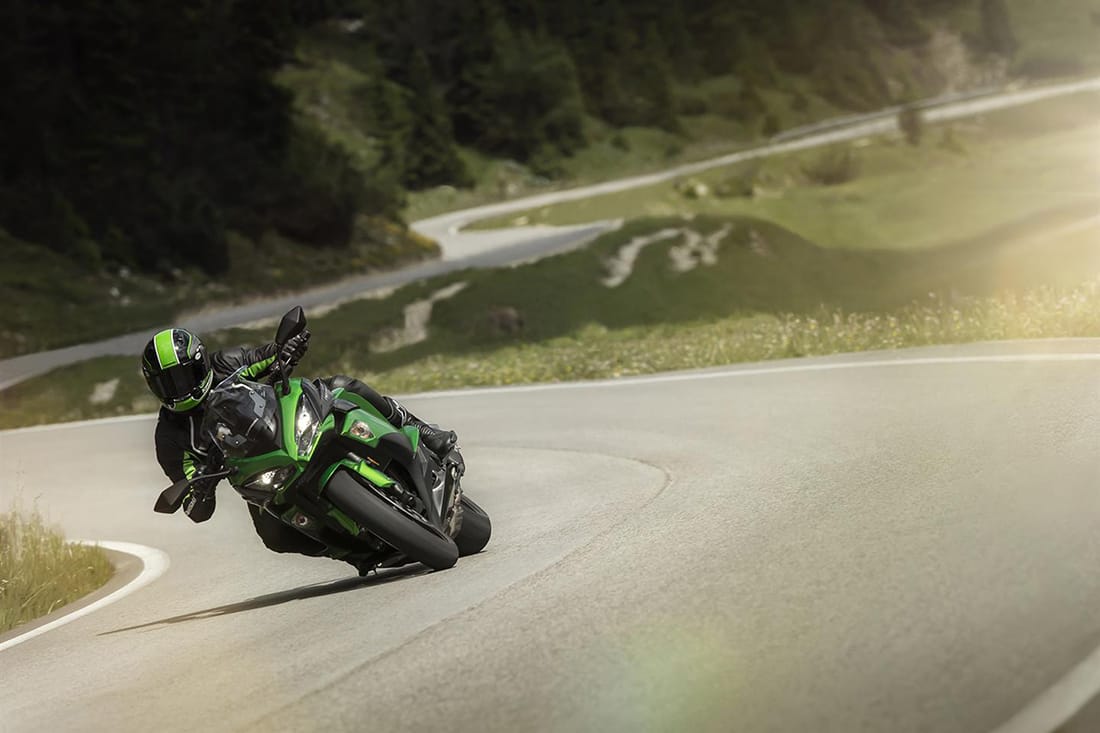
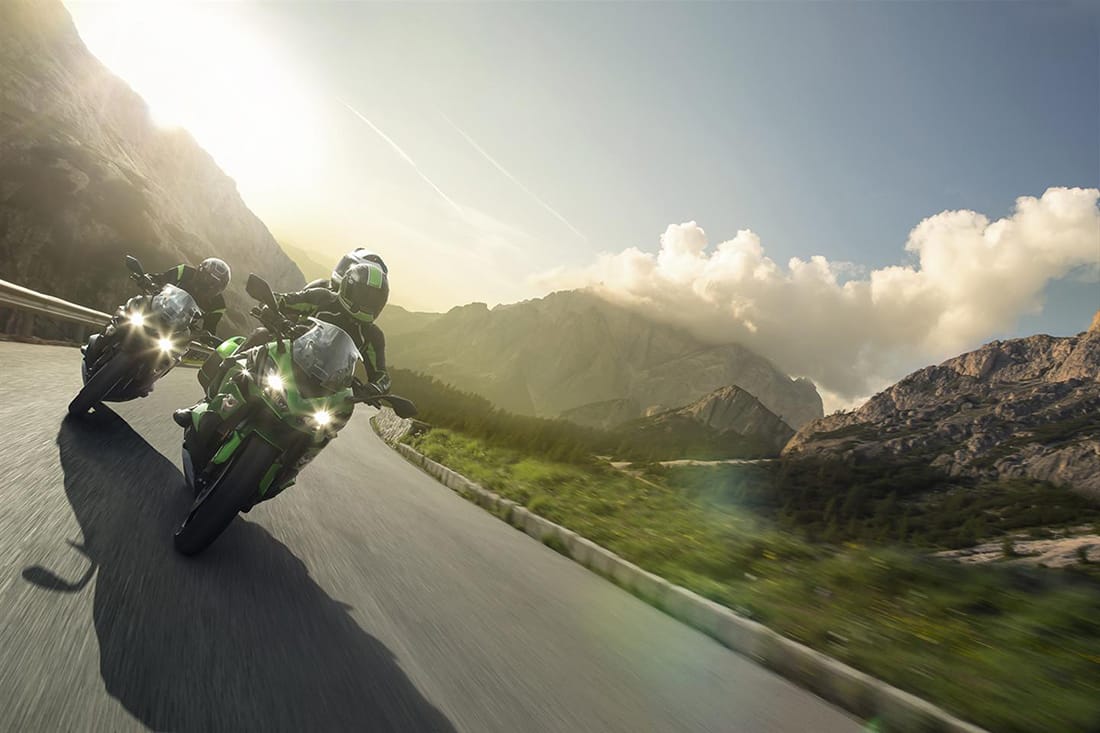
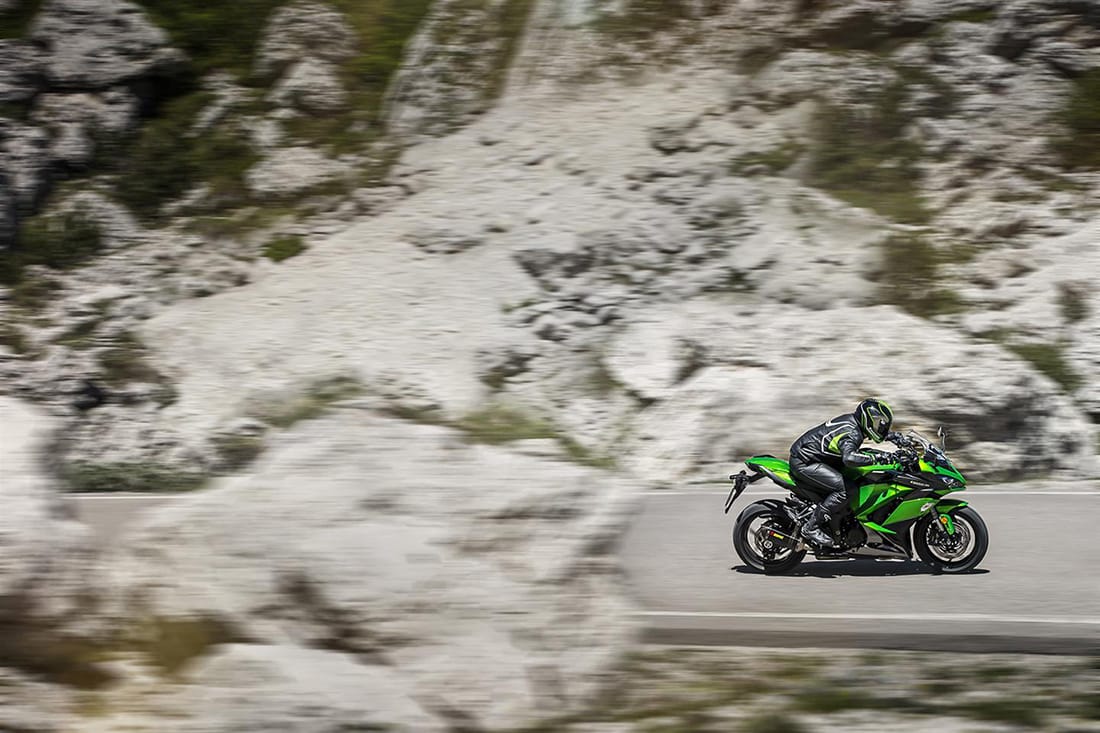
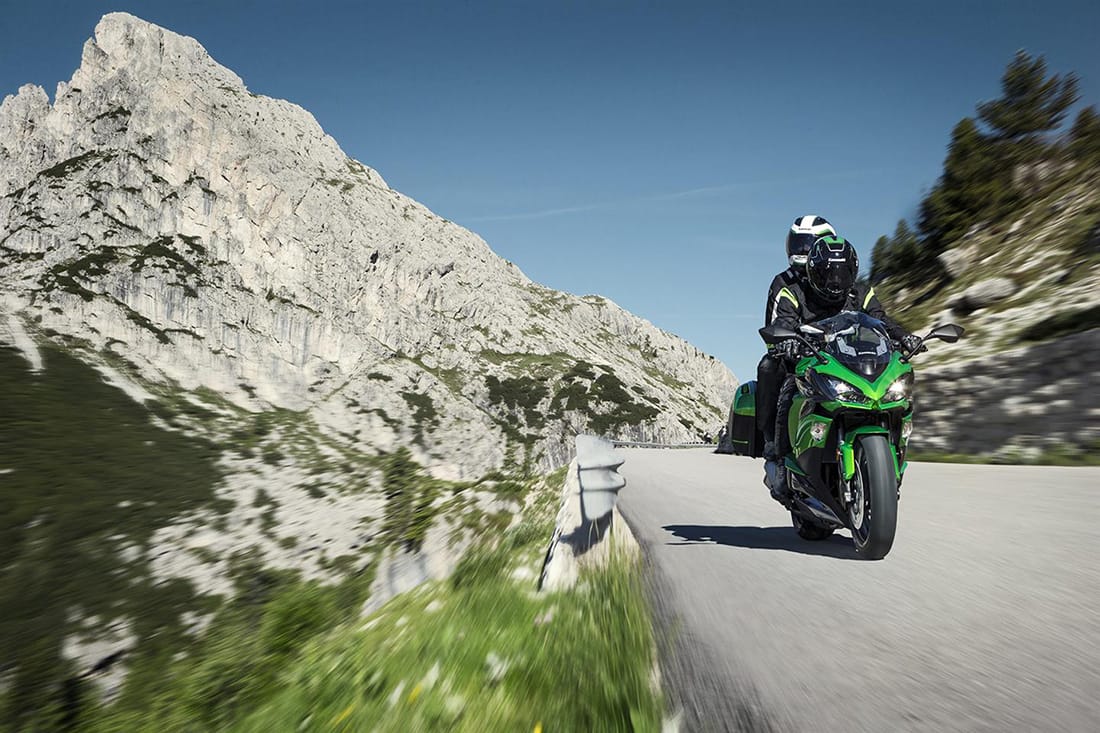
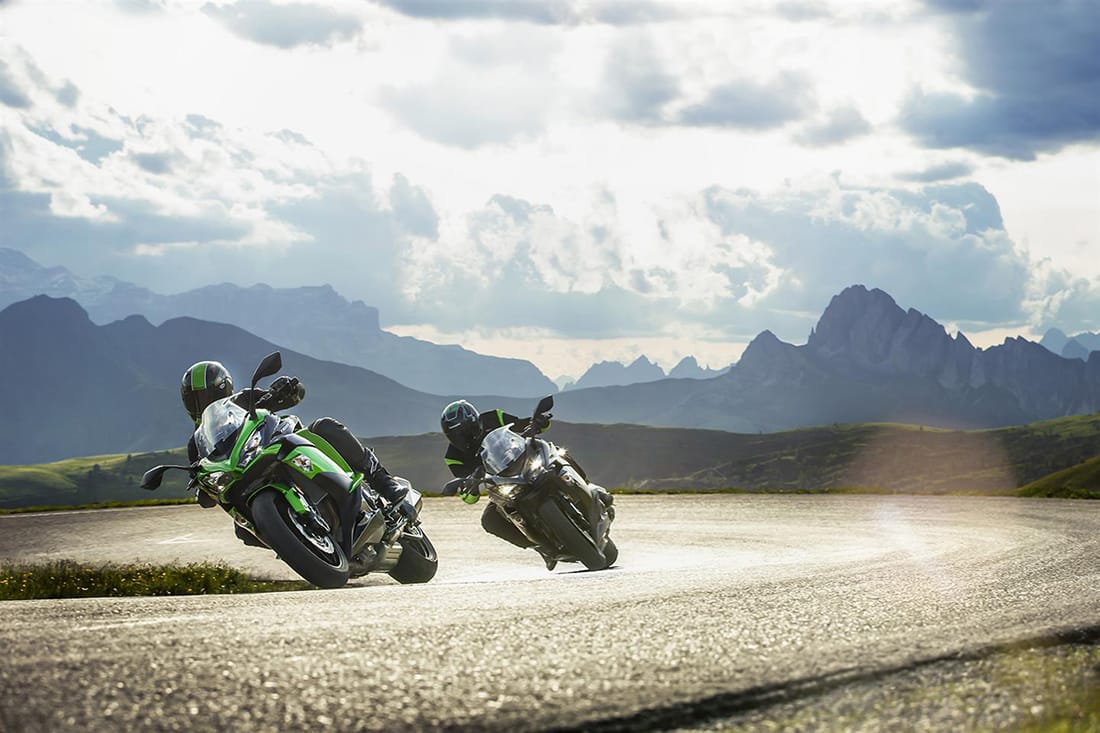
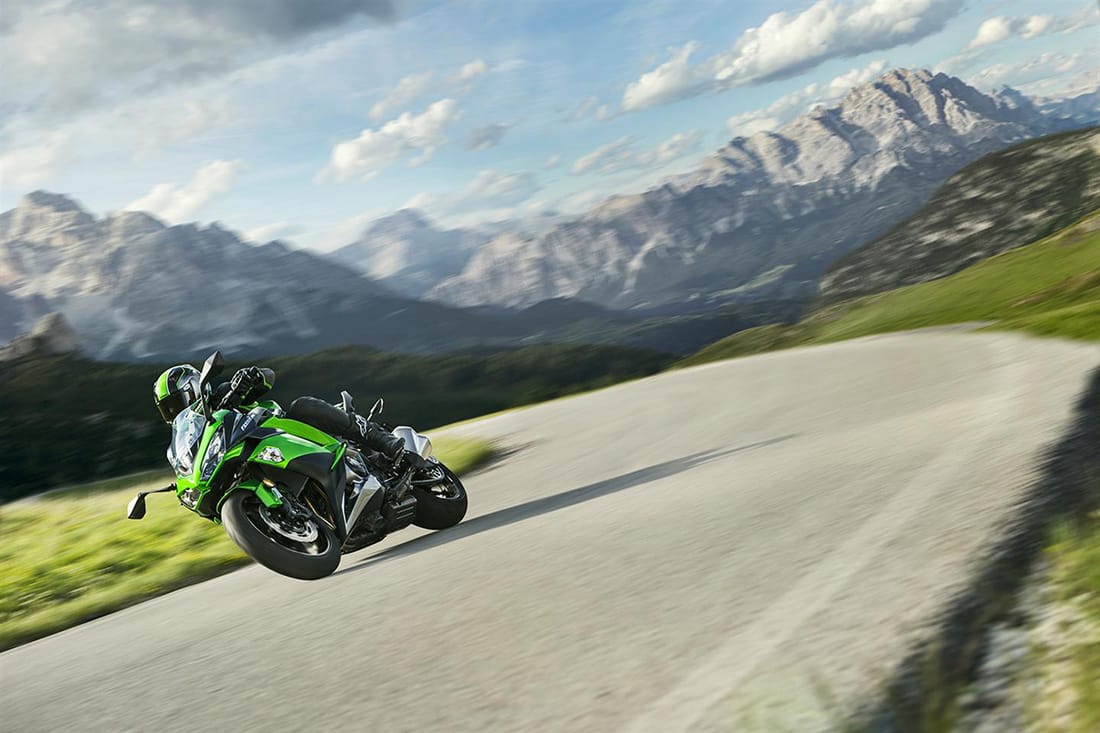
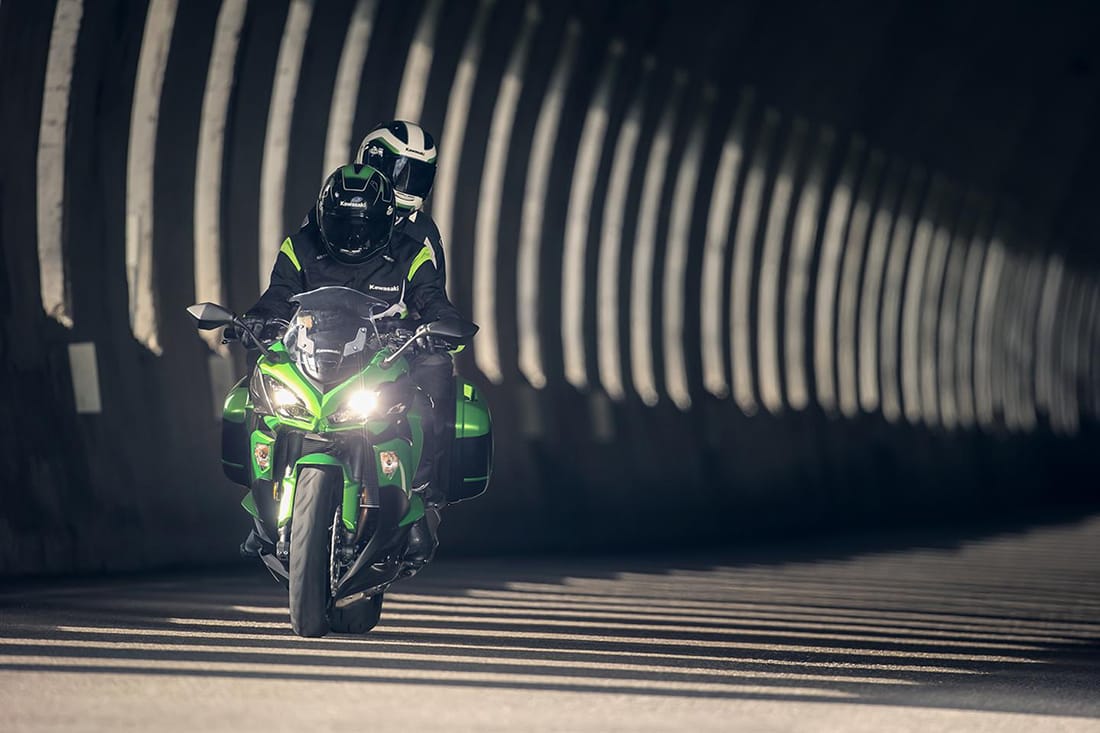
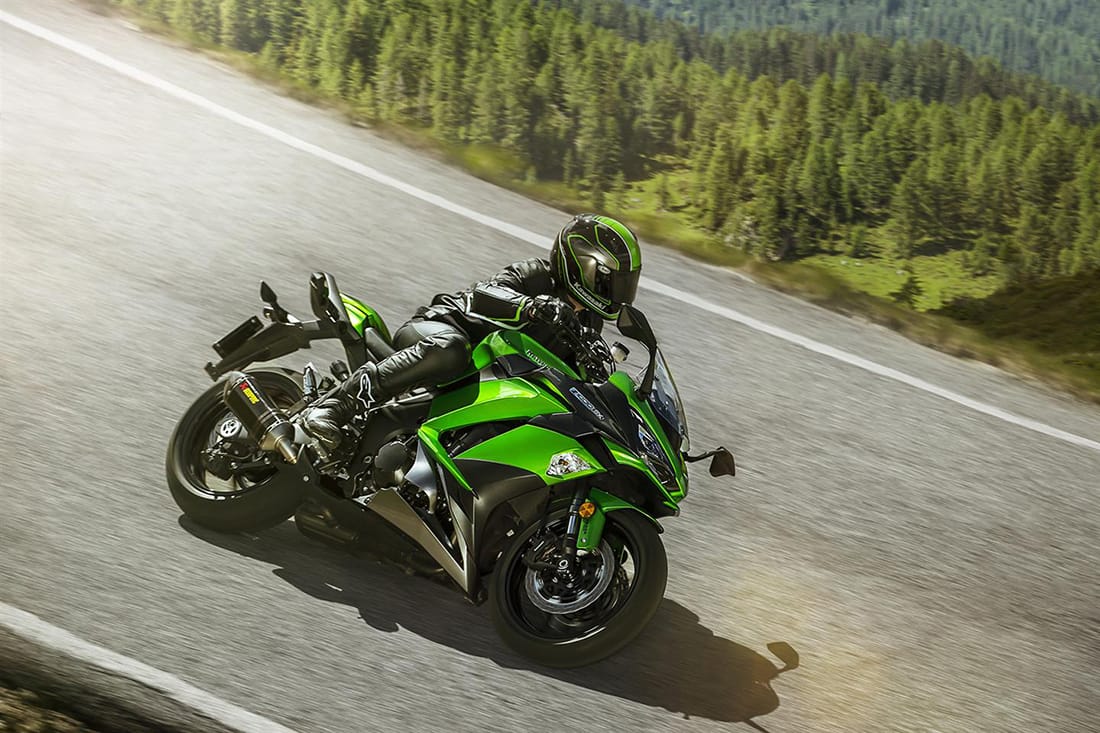
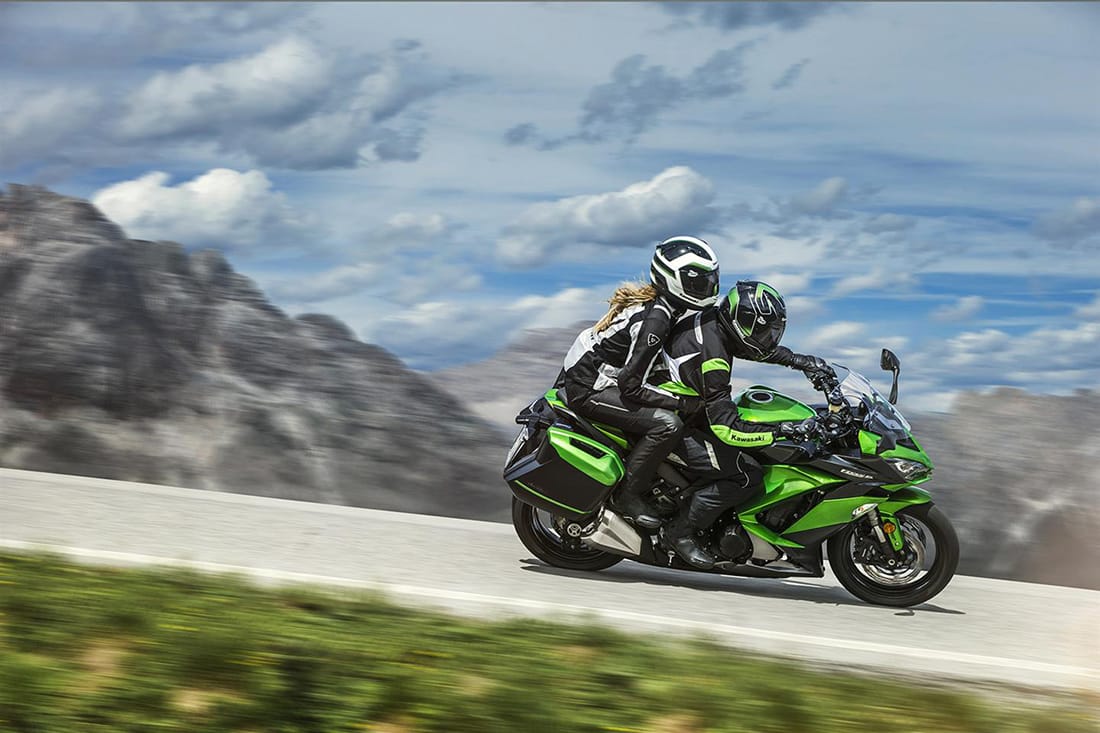
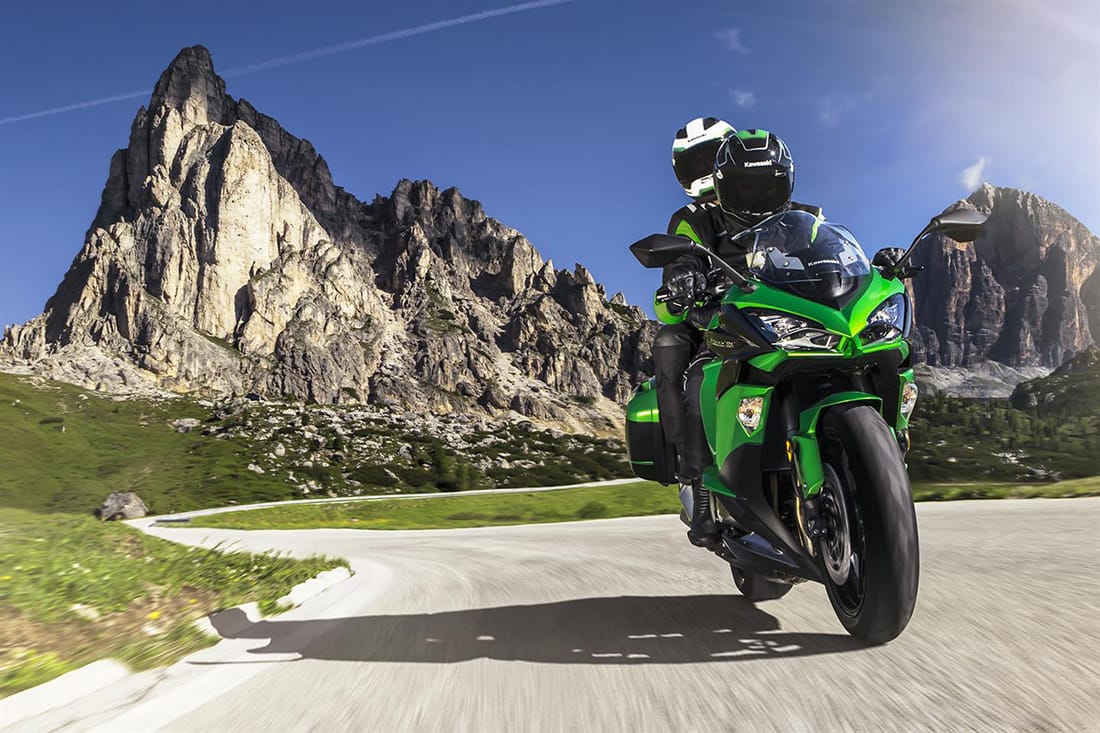
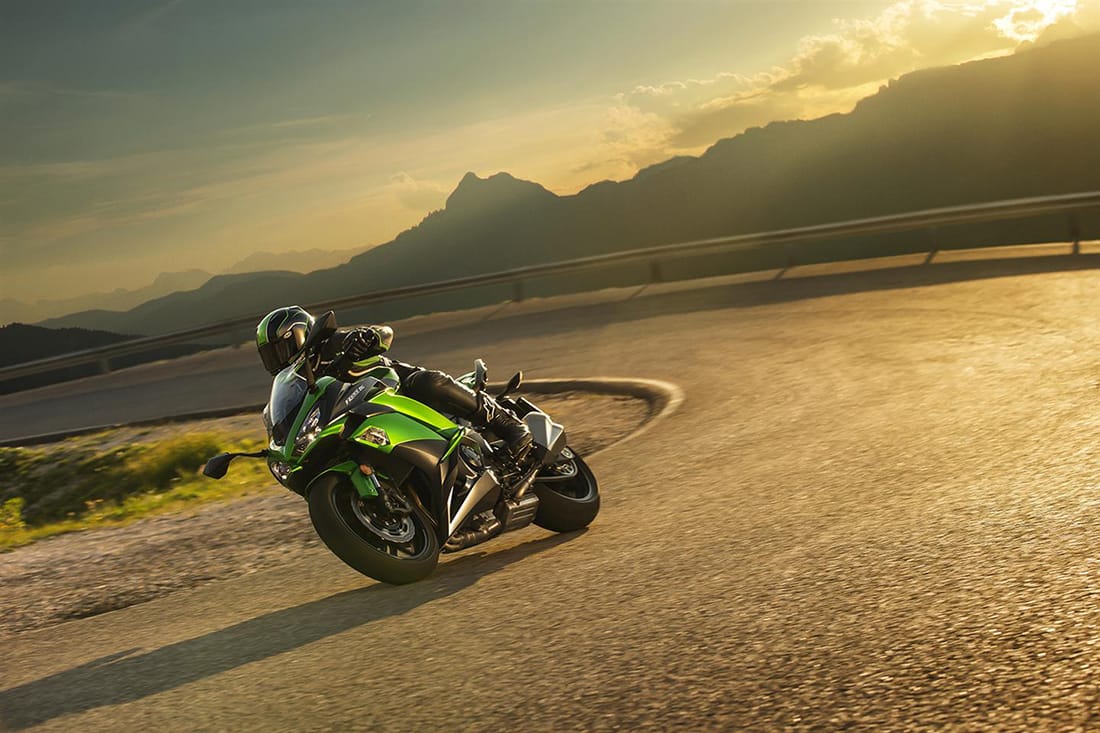 Now there is an updated Z1000SX and, for all of you fans of the previous generation who might wonder how the new can possibly be better than the old, rest assured that Kawasaki has made it so without losing anything that was great about the bike in the first place.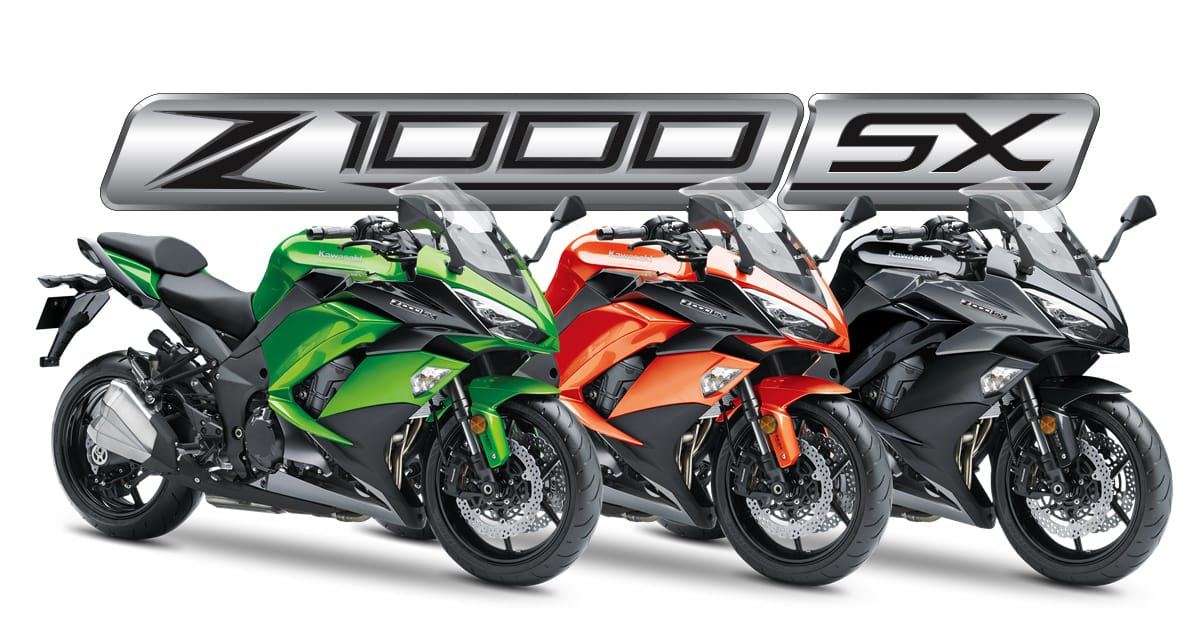
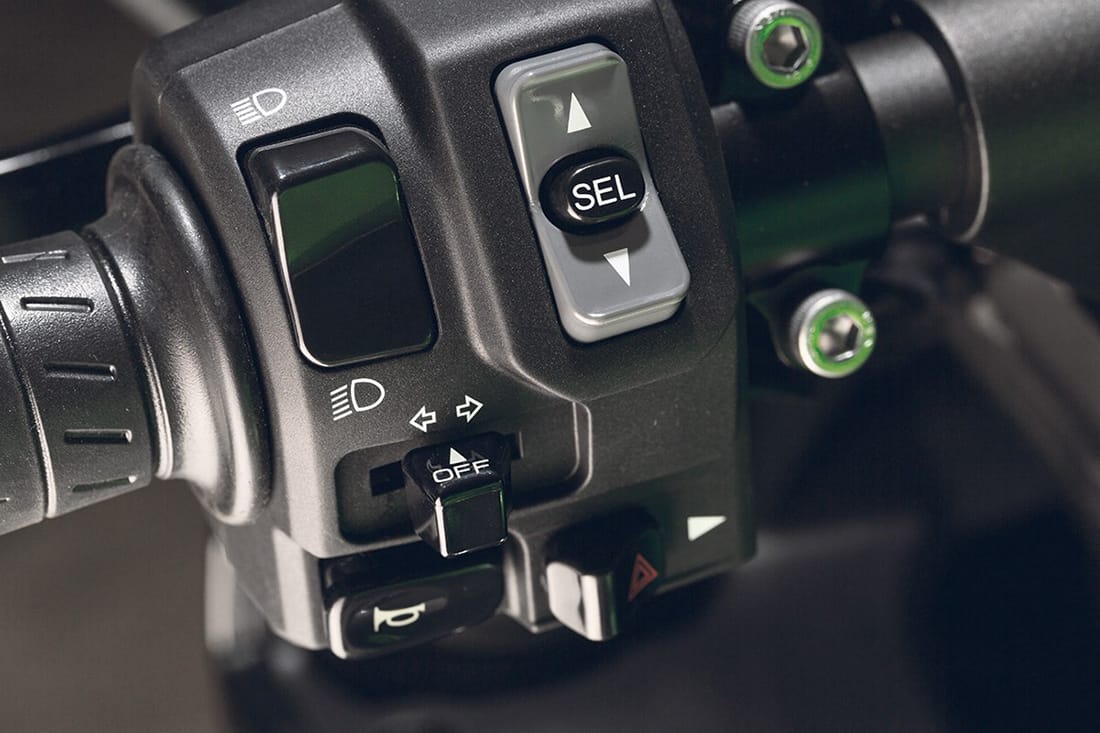 But we have to talk about the electronics at some point and it might as well be now. The previous model had traction control and ABS but the difference between then and now is night and day. For 2017 things get a lot more advanced and Kawasaki has added a six-axis IMU to provide cornering ABS and lean-sensitive traction control. In other words, the new bike does a lot of thinking for you which is where resistance to such rider-aids makes an appearance.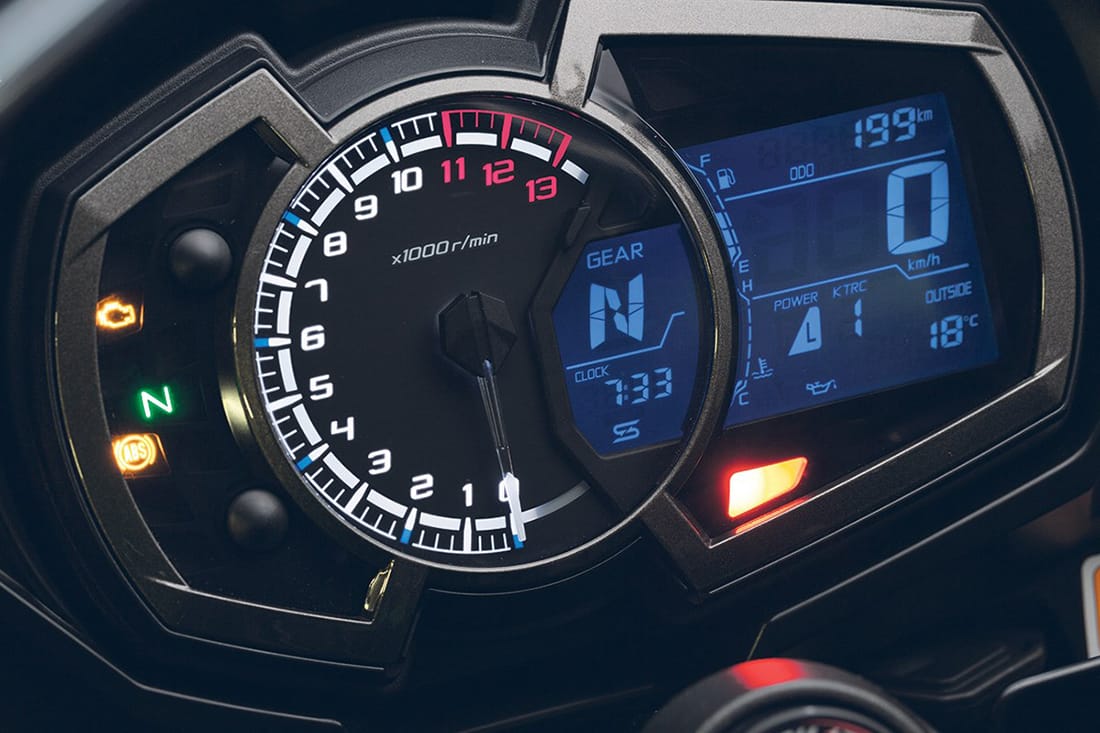
 SPECIFICATIONS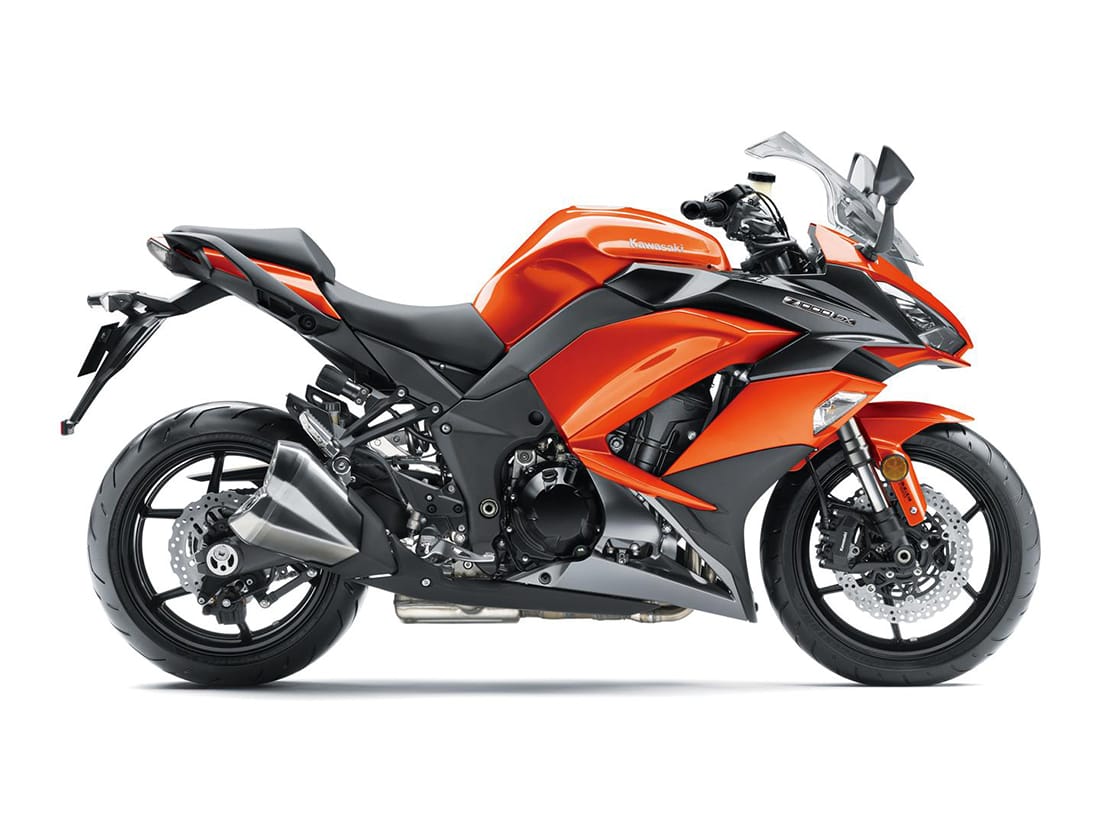
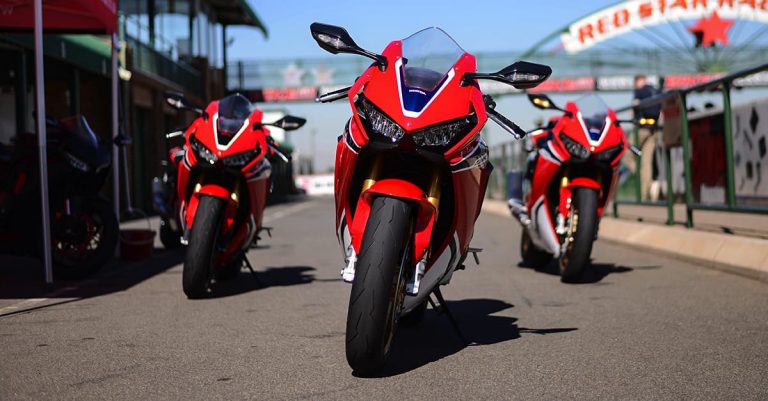
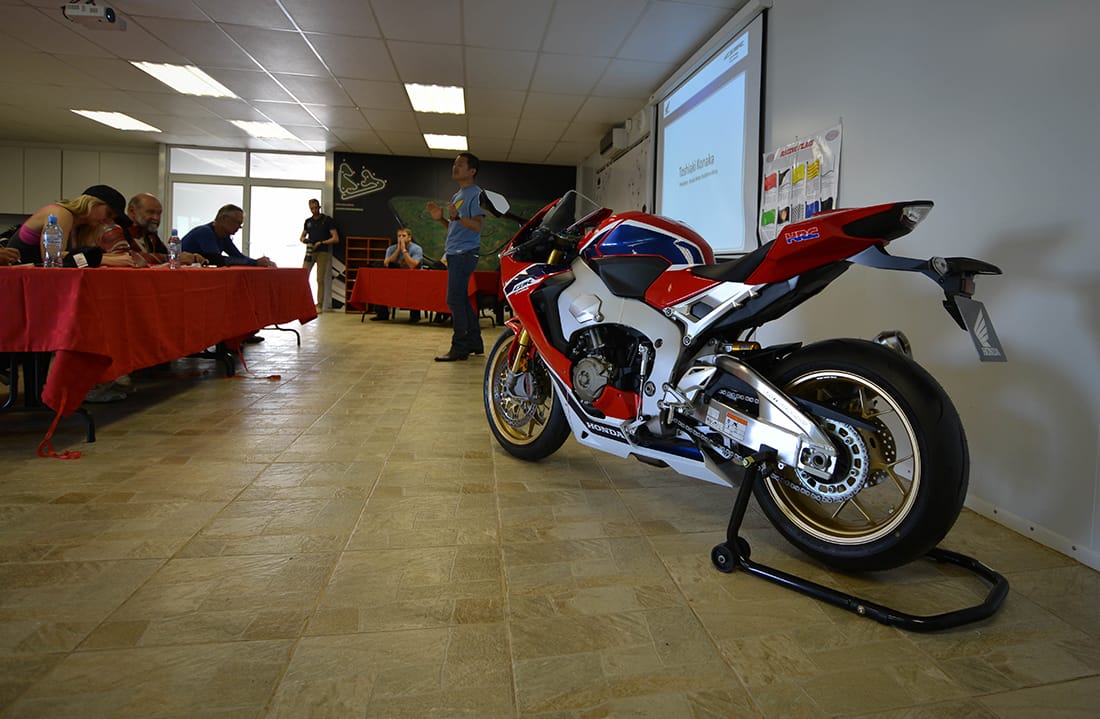 For all intents and purposes, the new ‘Blade’ is a totally new bike, sharing only 10% of its parts with the previous model. Power is up to 141kW @ 13000rpm, with 114 Nm of torque @11000 rpm. The new chassis is lighter and tighter, improving aerodynamics with a reduced frontal area. The ‘Blade’ sports a slipper ‘assist clutch’ with 17% less lever effort required. [Everyone seems to have discovered this ‘assist’ technology, as it is vogue on many new bikes. However, I have never seen or heard complaints about heavy clutch pull before, but whatever!]
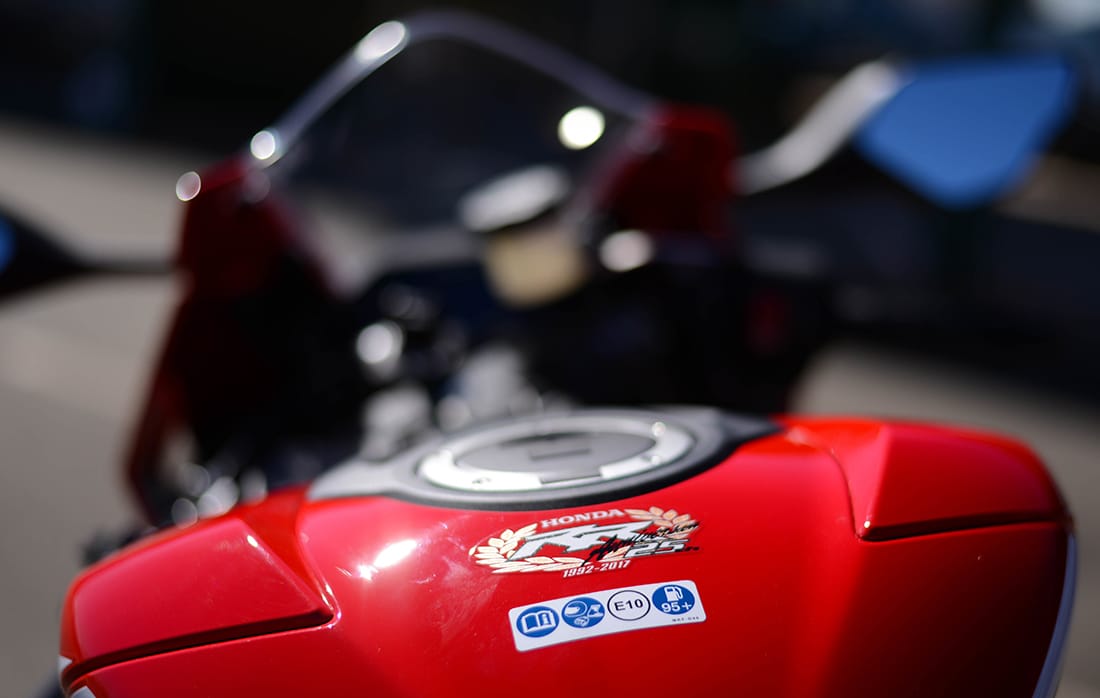 The throttle has a conventional return spring to give the rider the familiar ‘cable’ feel. Wheelie control keeps things tidy and works with the traction control. The SP comes standard with a bi-directional quickshifter, (optional on the double R).
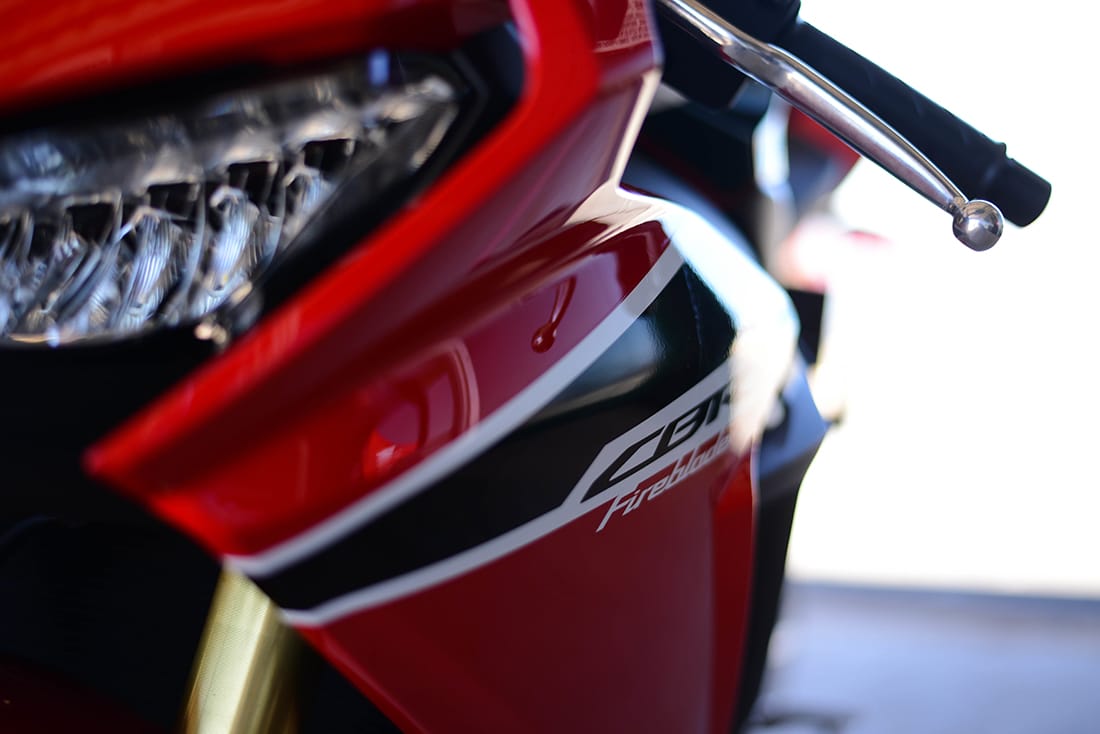
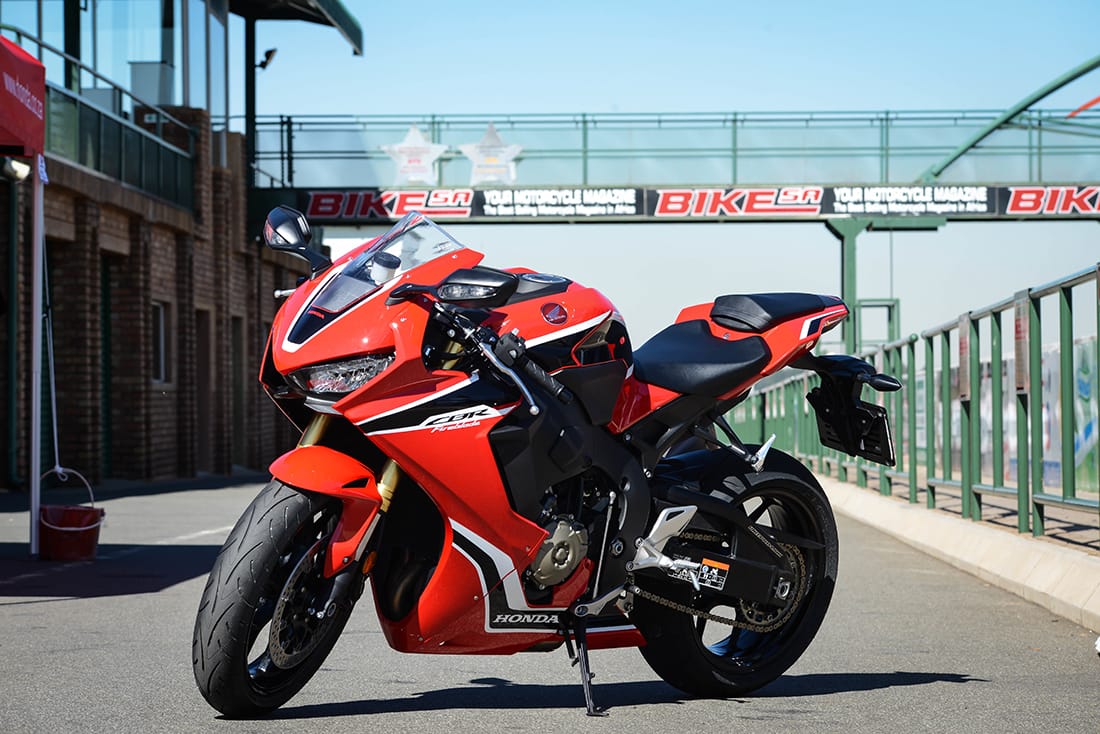
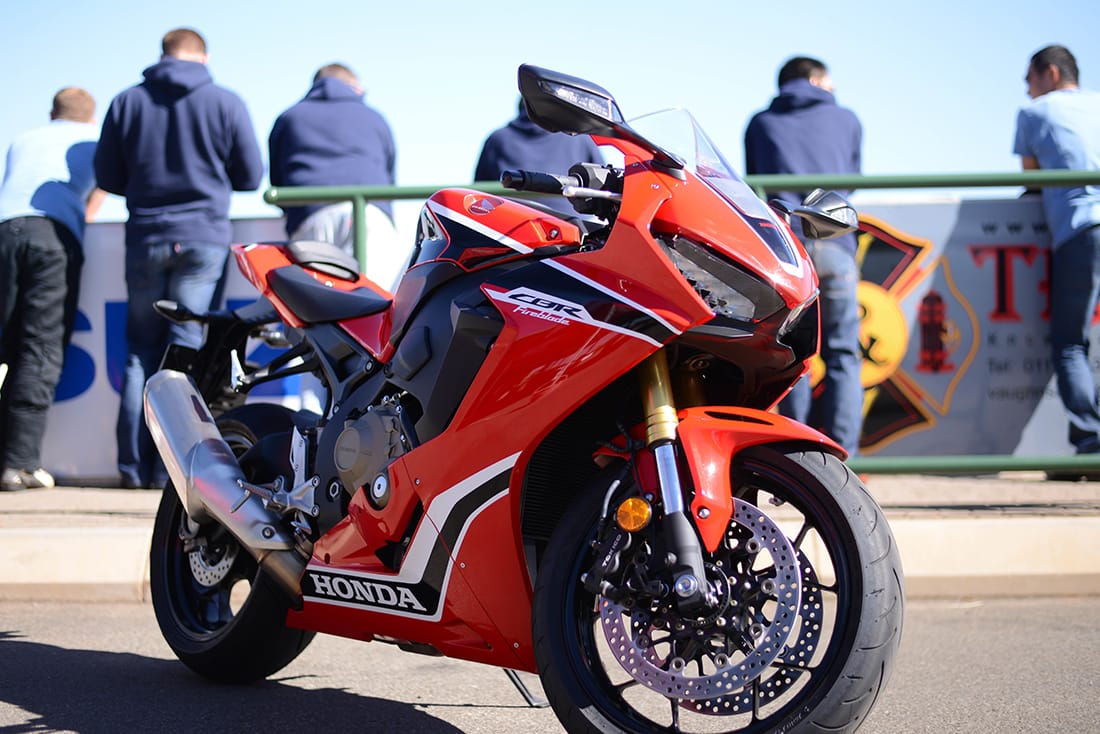
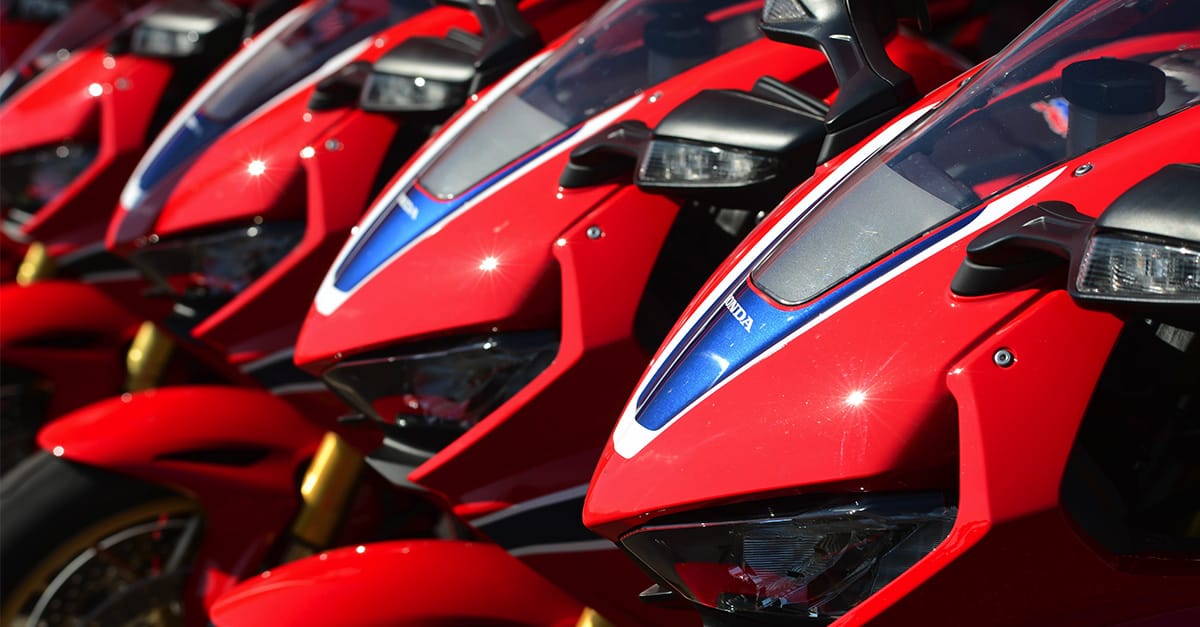 Visually, the new ‘Blade’ is truly beautiful. Sleek, small and tidy, every styling element hangs together to create a bike that is as satisfying to look at, as it is to ride. The Fireblade, from the first 1992 model, has flattered the rider’s ability but this ‘Blade’ takes that flattery to a new level. Simply stated, it puts you in control. Accelerating, turning, braking or strafing sweeps, is all achieved effortlessly. I rode the RR and really enjoyed it. Despite feeling more like a 600 size-wise, I found the riding position reasonably comfortable for my 6’2” frame. Not ‘tour-to-Cape Town’ comfortable but rather ‘breakfast run’ comfortable. At around R240,000 the RR offers fair value in this day and age.
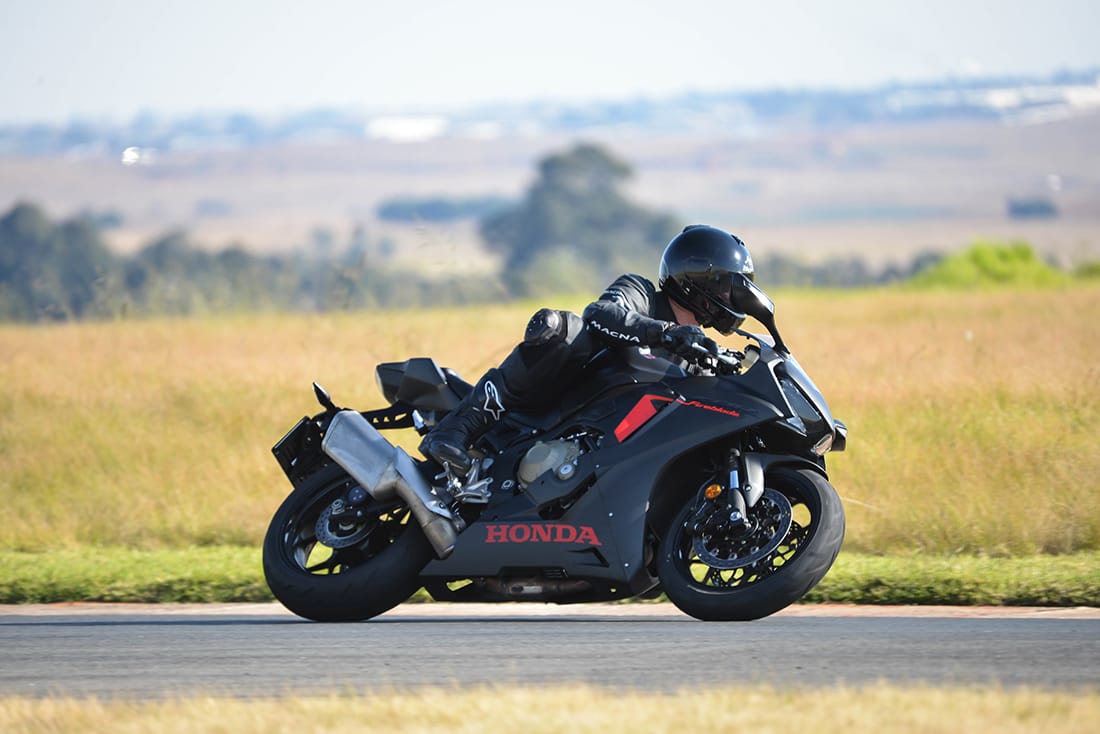 And the SP? How am I going to put this in a way that you will ‘get it’? Both SP and RR are gorgeous to look at and lovely to ride. However, if these bikes were identical twin supermodels, the SP has read and applies the Kama Sutra! Everything the RR does, the SP does better. The sheer quality of the Ohlins suspension package elevates the SP to another level. The standard quickshifter is superb. Ride only the RR, especially on the road and you will probably want one. Ride the SP on a track and you will have to have one! – the extra R60000 suddenly seems small change.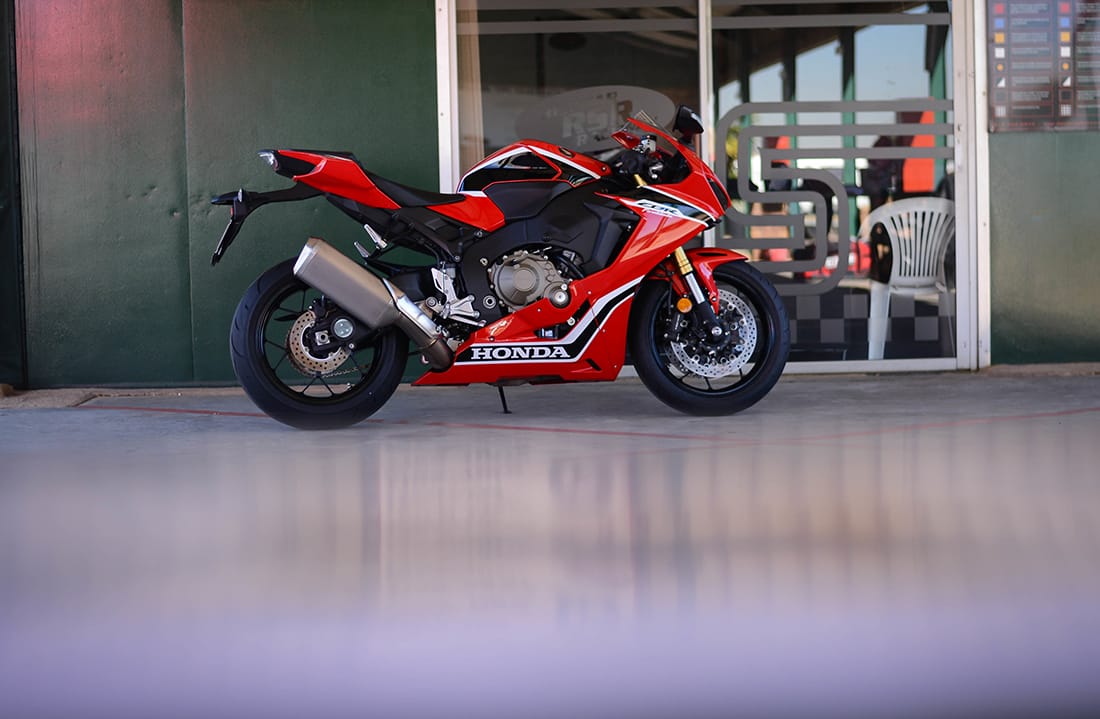
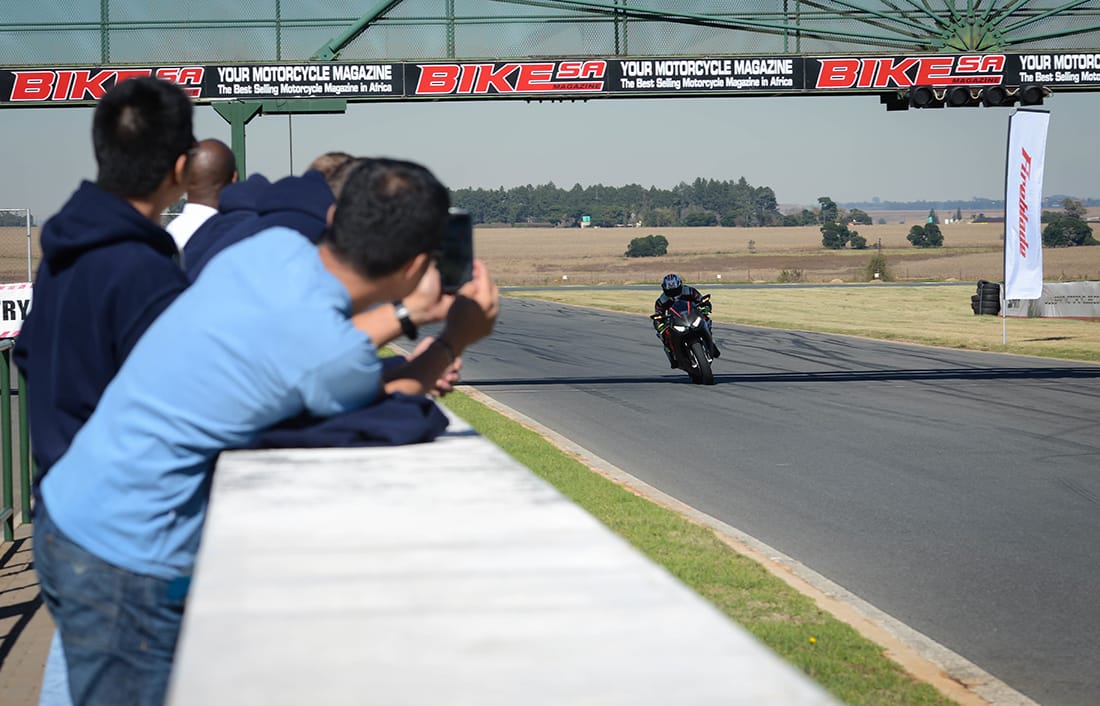
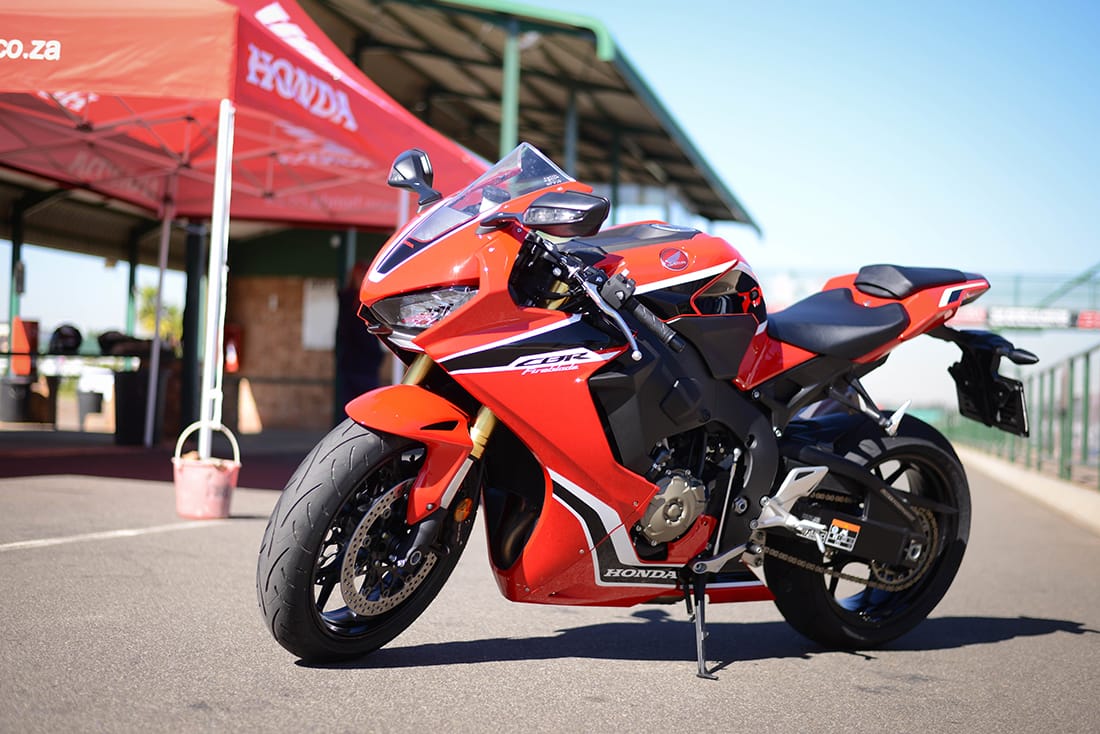
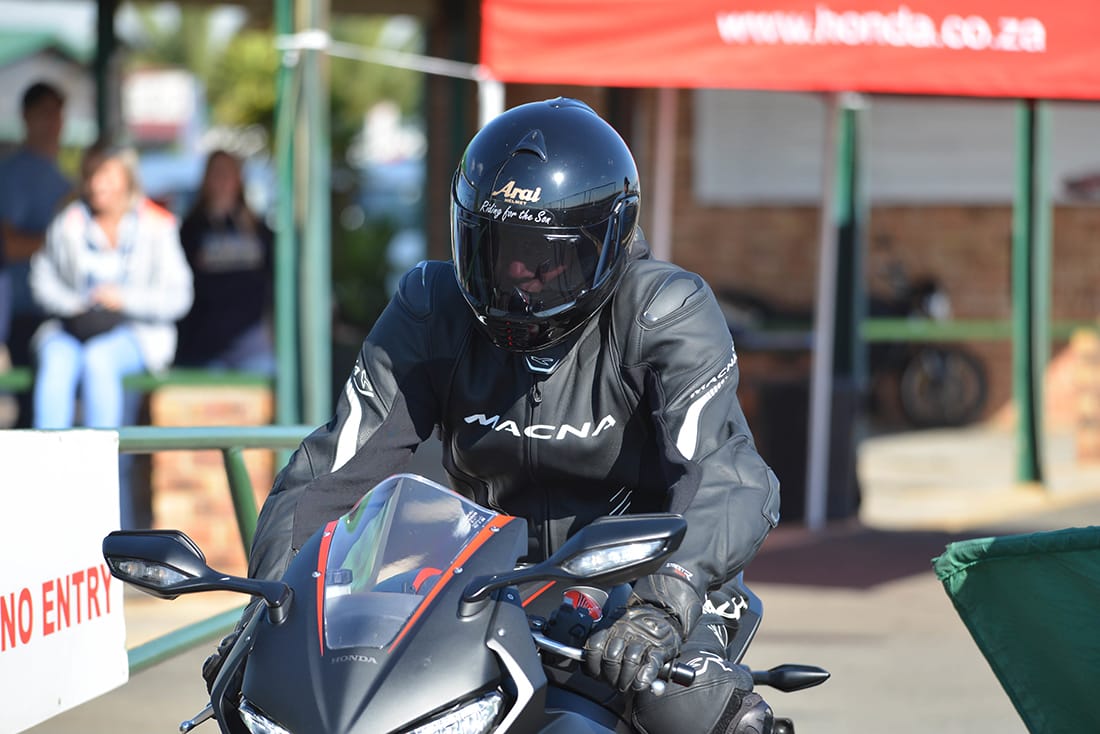
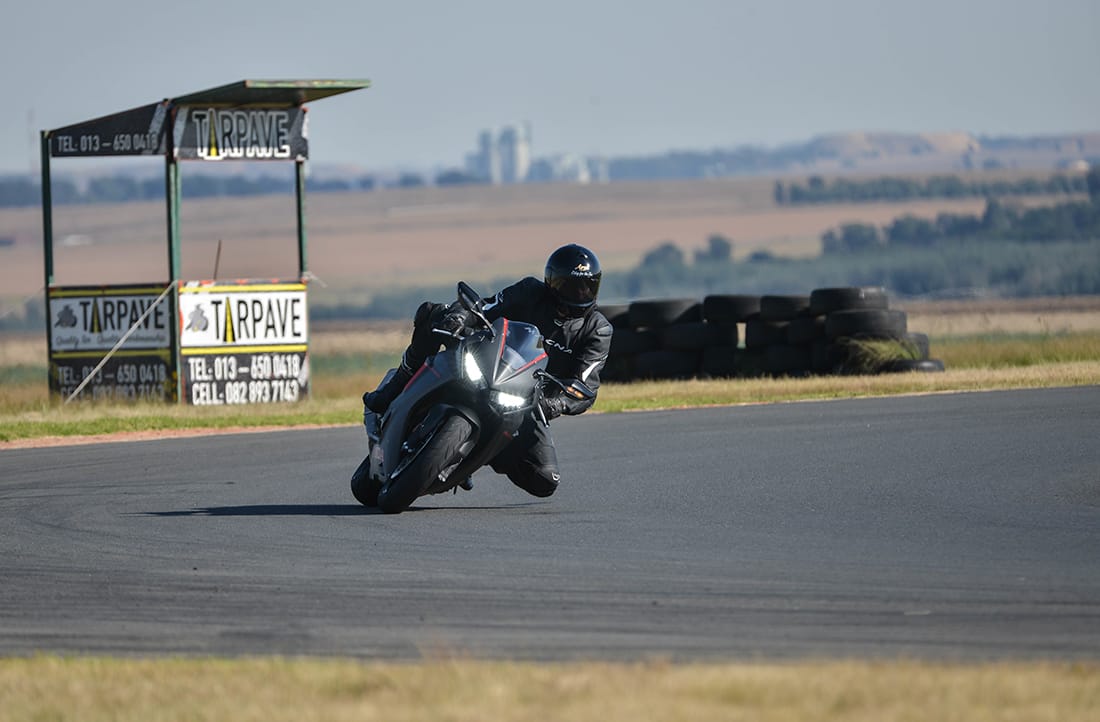
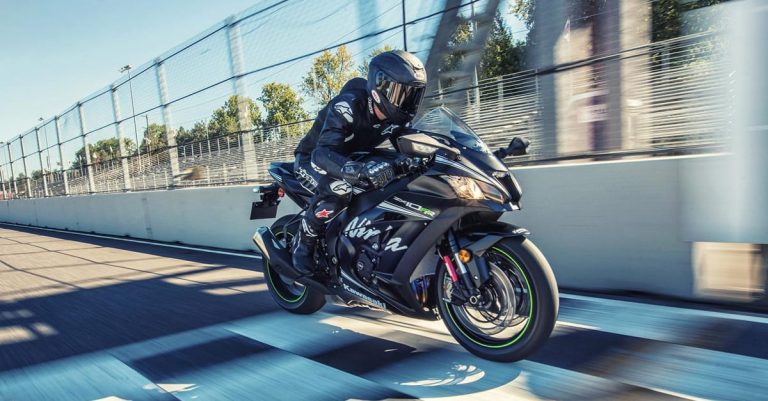
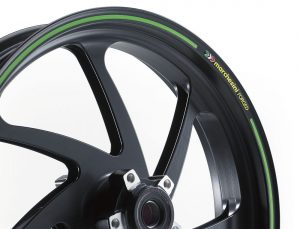 The ZX10RR is immediately recognized by its Ninja like flat black livery. The wheels, a 190/55/17 Rear and a 12/70/17 front, have the Kawasaki green accentuating pinstripe on the black Marchesini forged rims. The second “R” in the ZX10RR emblem is green as opposed to the white of the rest of the logo. The rear Showa gas-charged shock, adjustable for high and low speed damping with 114mm of travel, sports a green spring. The subtle green accents on the black bike with white “Ninja” emblems emblazoned across the fairing complete a stunning look. Only a limited number of RR’s will be built, (some say 500 and others 1000), so a degree of exclusivity is guaranteed.
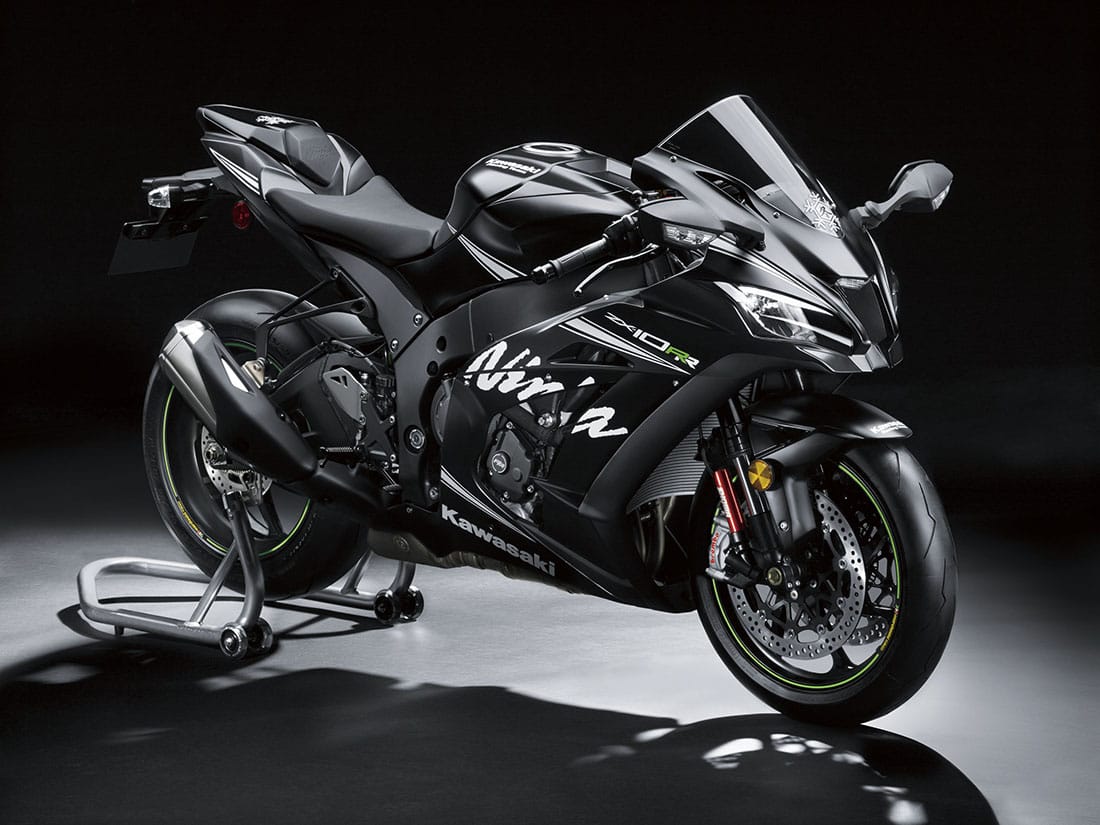 Over the years Kawasaki have built a reputation for building strong engines. With 210PS (154,4Kw) at 13,000 rpm and 113.5Nm at 11,500 the RR emphatically preserves this tradition. The cylinder head is modified over the stock ZX 10 to accept .7mm higher lift cams. Tappets have a hard and durable diamond like coating. The crank cases on the RR are also beefed up. Hit the starter button and the engine fires up instantly. The raspy growl from the neat exhaust shouts horsepower! The bike settles into a lumpy cammy idle.
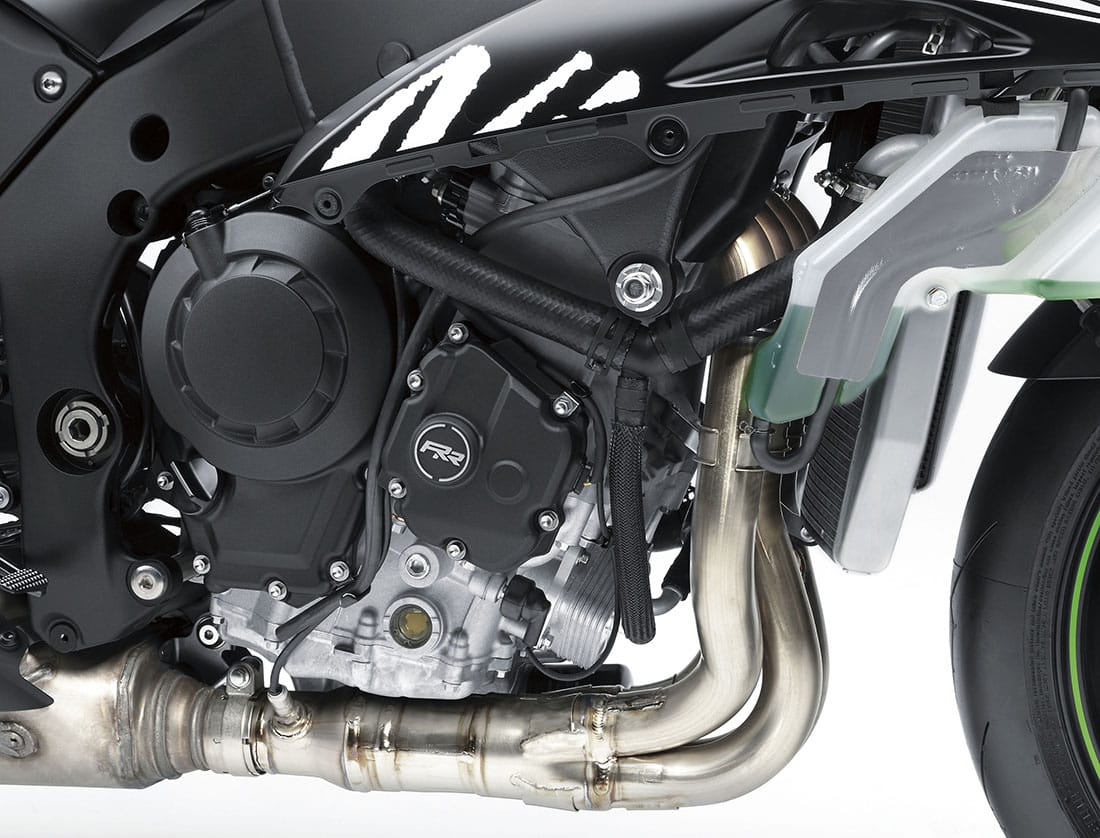 Prod the bike into gear and ease out the rather abrupt action slipper clutch and perfect fuelling squirts you off down the road. This is a wonderful engine. The six speed close ratio gearbox with bi-directional quick shifter harnesses the abundant power and torque of the motor to produce absolutely ferocious acceleration. The engine is wonderfully smooth yet has a soulful midrange urgency that is truly awesome. The exhaust emits a whip crack of glorious sound as you hook the next gear and the quick shifter works its magic. The auto blip on down shifts is equally intoxicating.
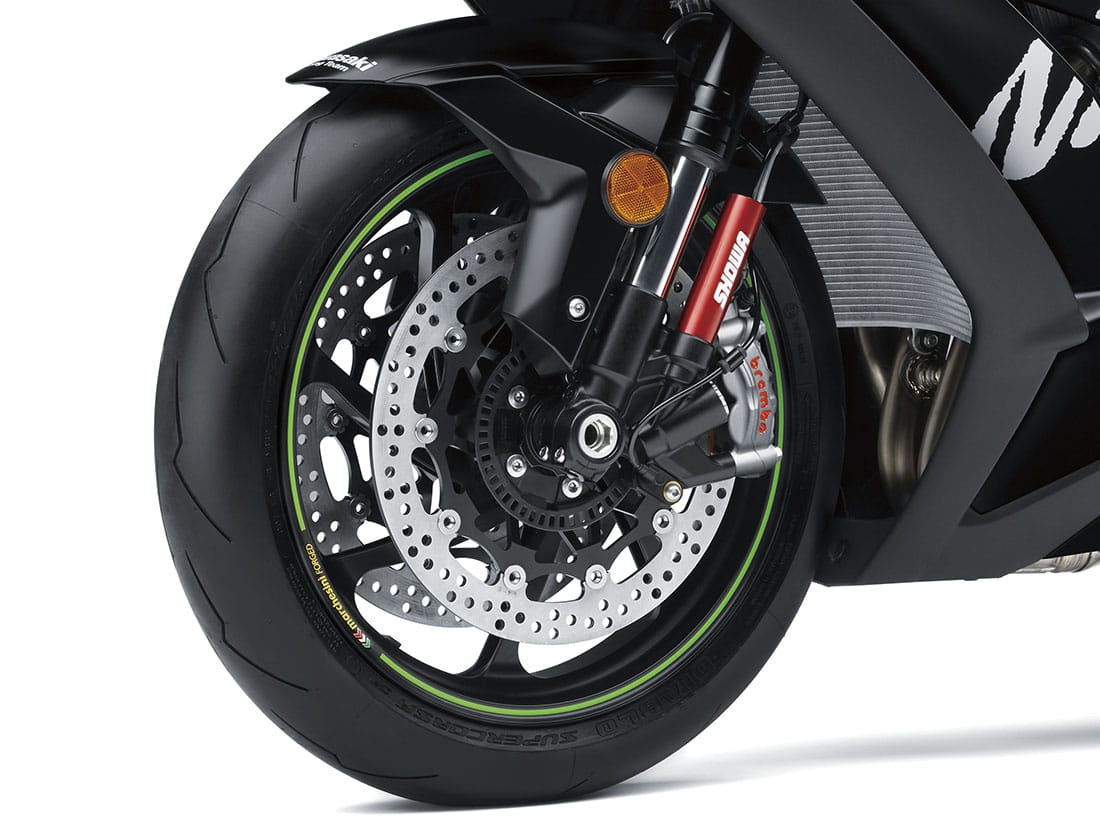 I unfortunately was not able to fit in any track time on the RR. Make no mistake the racetrack is the natural habit of the RR. Only the most dedicated sport bike pilots will be able to live with a RR as a daily ride. The riding position is full attack, and who would want to waste those fantastic Pirelli Supercorsa SP tyres on trolling through traffic. Big piston, fully adjustable Showsa forks with 120mm of travel keep the front end under control. Brembo M50 Monobloc calipers chomp on 330mm petal discs with a 220 mm rear. Needless to say the stopping power and feel is epic.
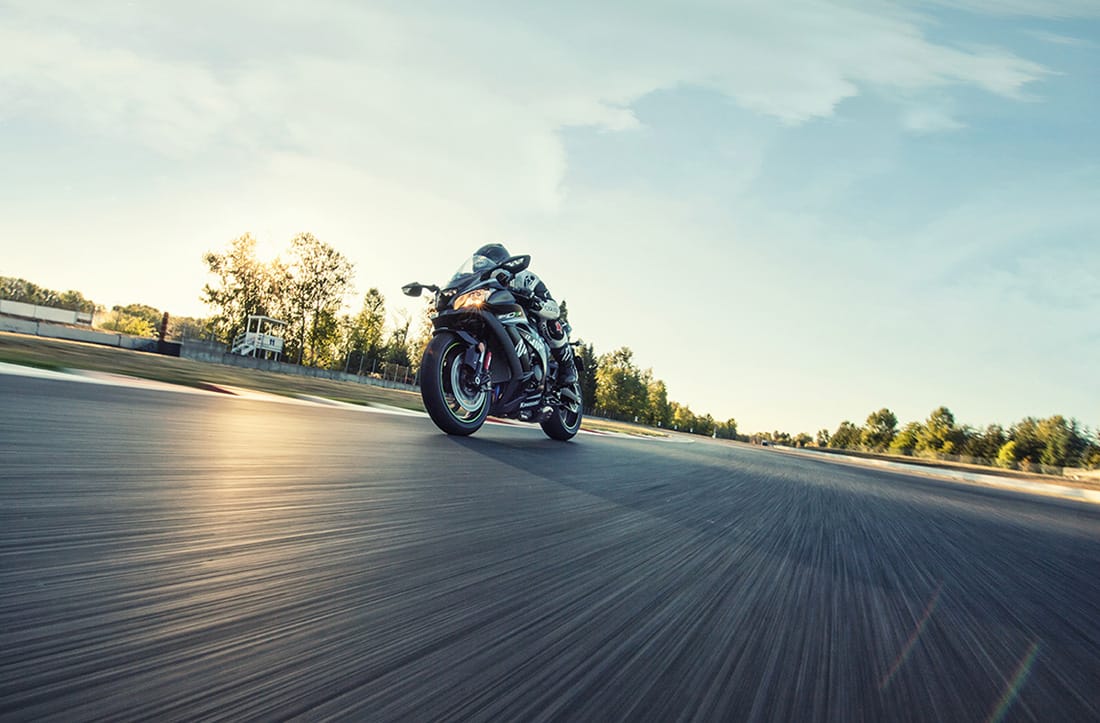 How do I sum this up? Kawasaki’s double RR is a hard-core sport bike that does the Ninja heritage proud. I would be surprised if any other bike is faster in a straight line. There may be some a trifle more nimble but when you pull the trigger in the straight I would bet on the Black winter edition Kawasaki Ninja to stamp its authority. If however, you don’t own a set of one piece race leathers with worn out knee sliders, don’t even consider buying this bike. The limited number of these iconic bikes deserve to be owned by really competent pilots. At R290, 000 consider it a steal.
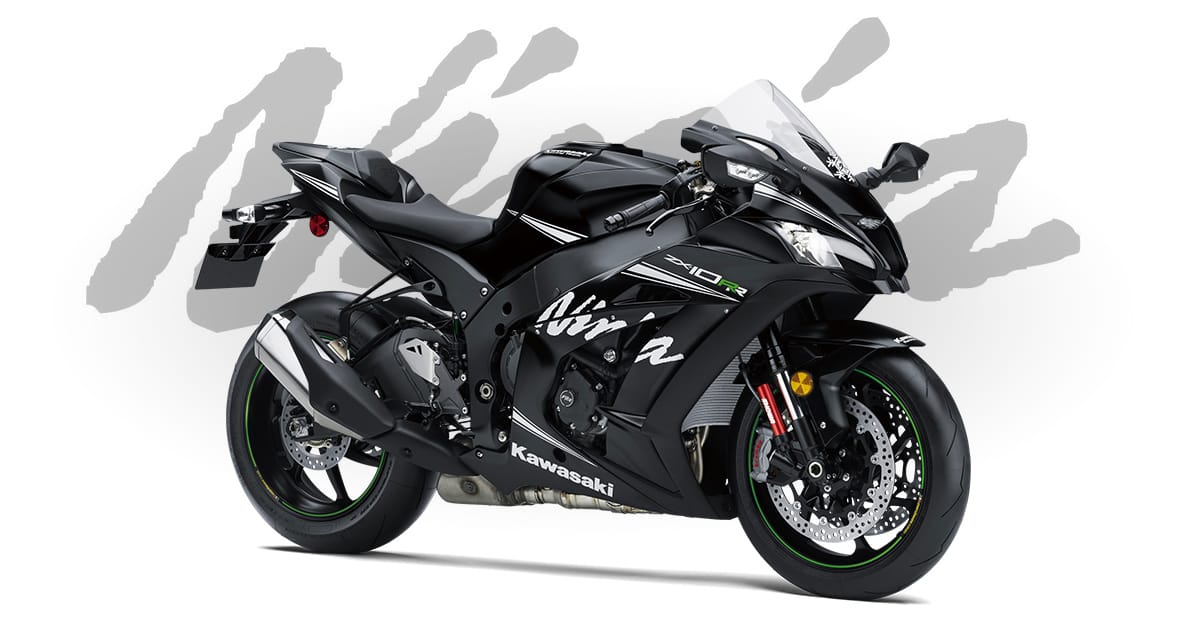 SPECIFICATIONS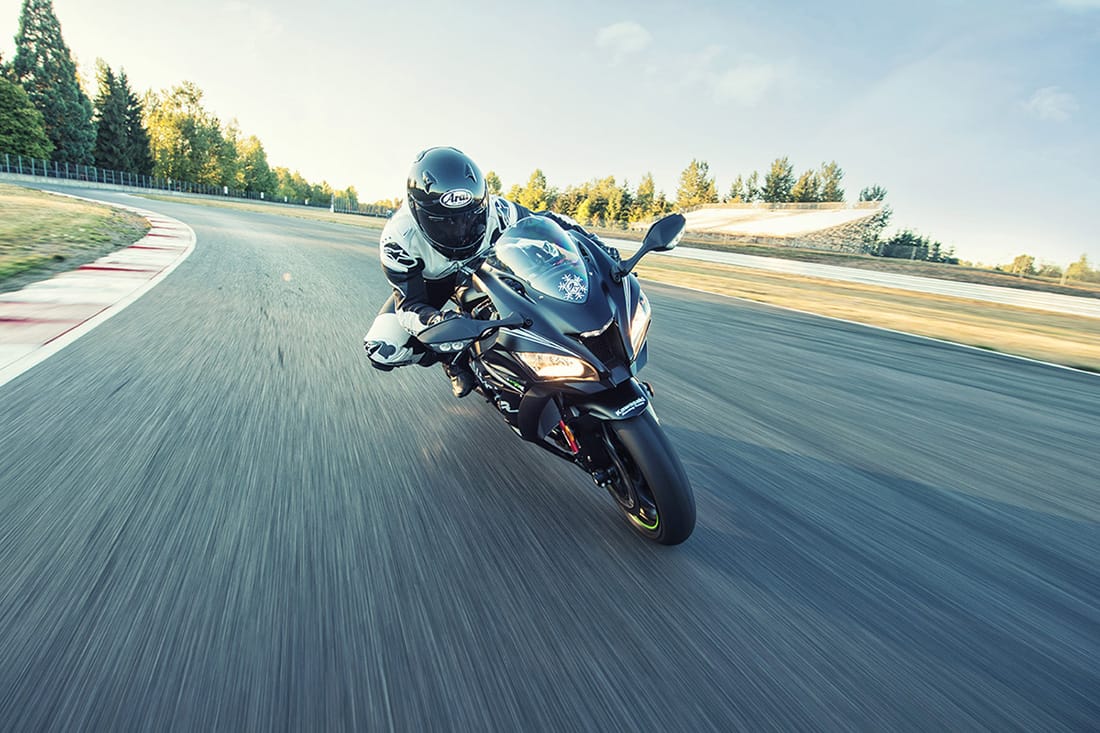
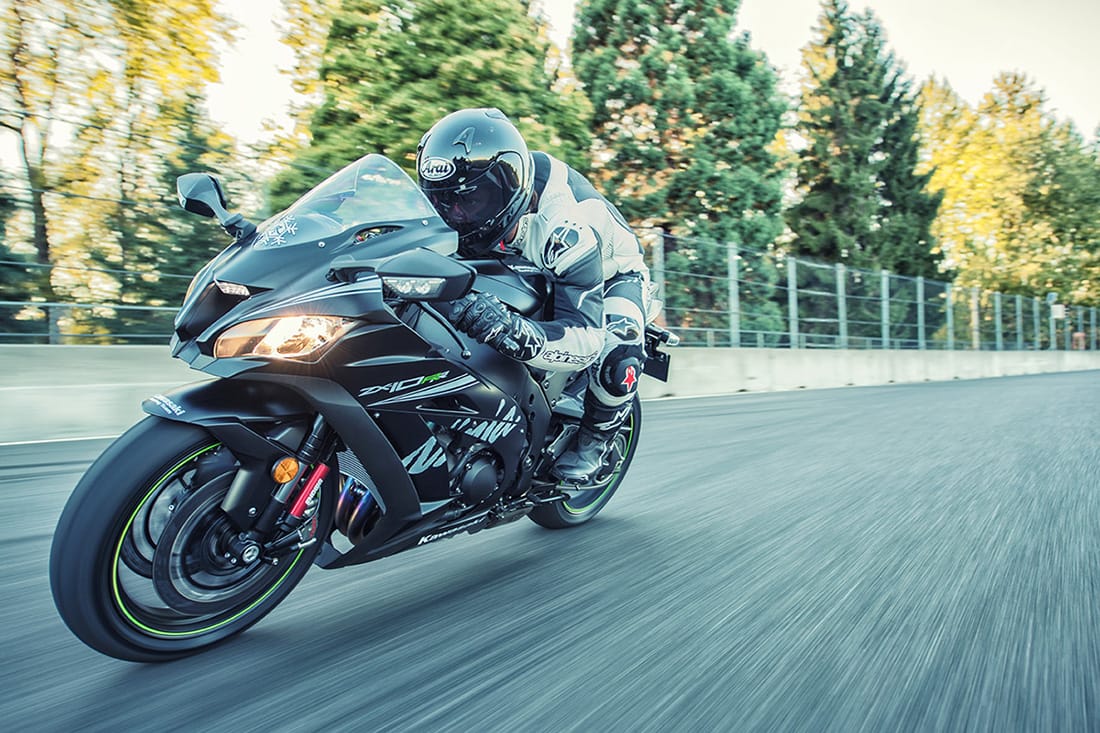
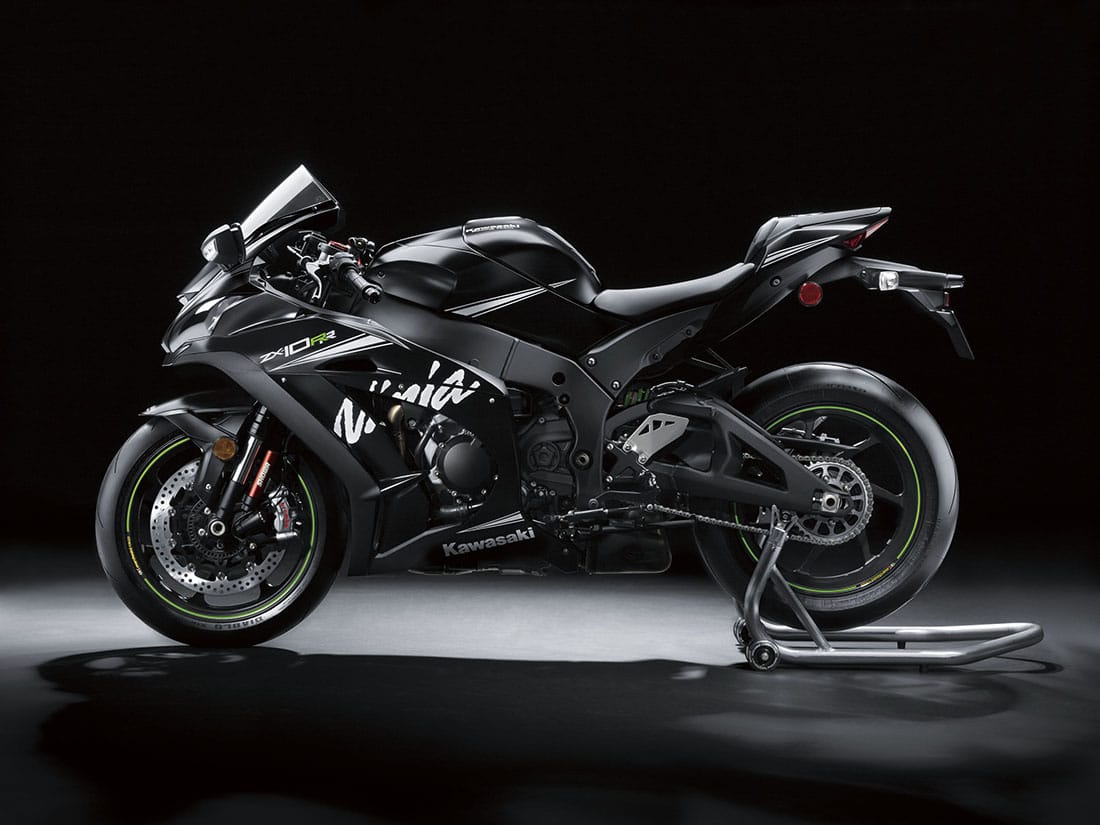
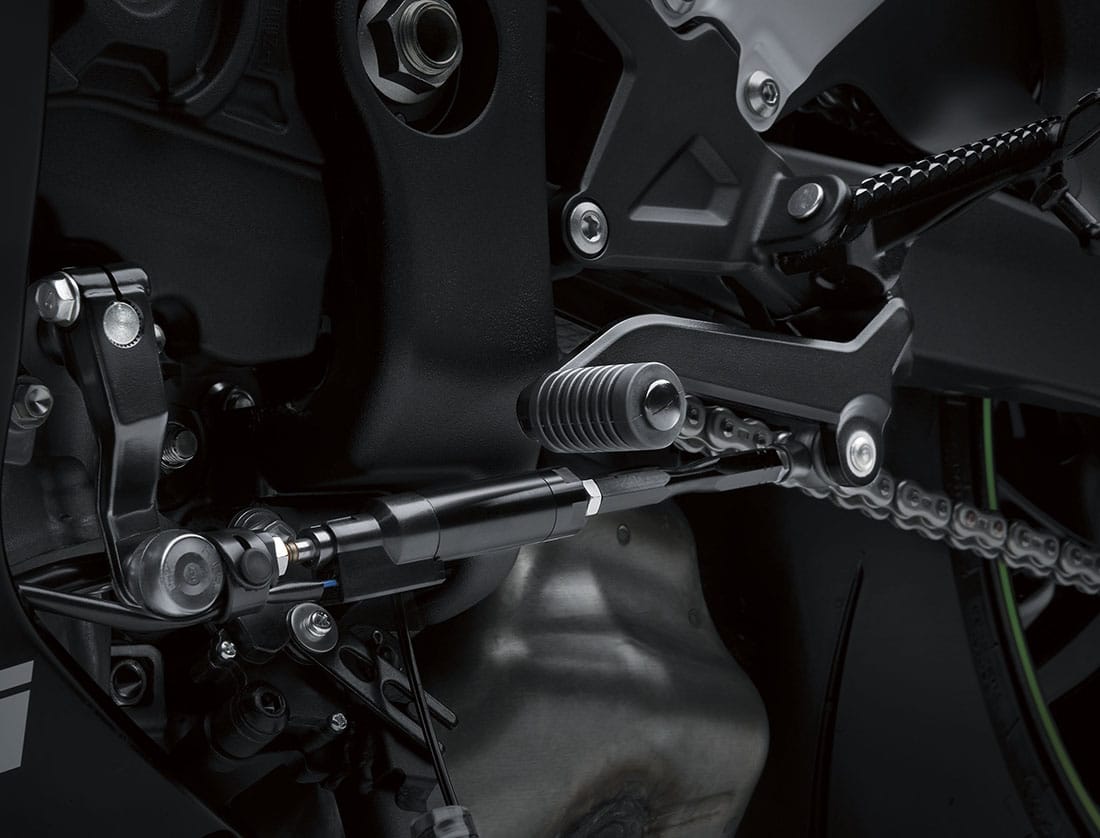
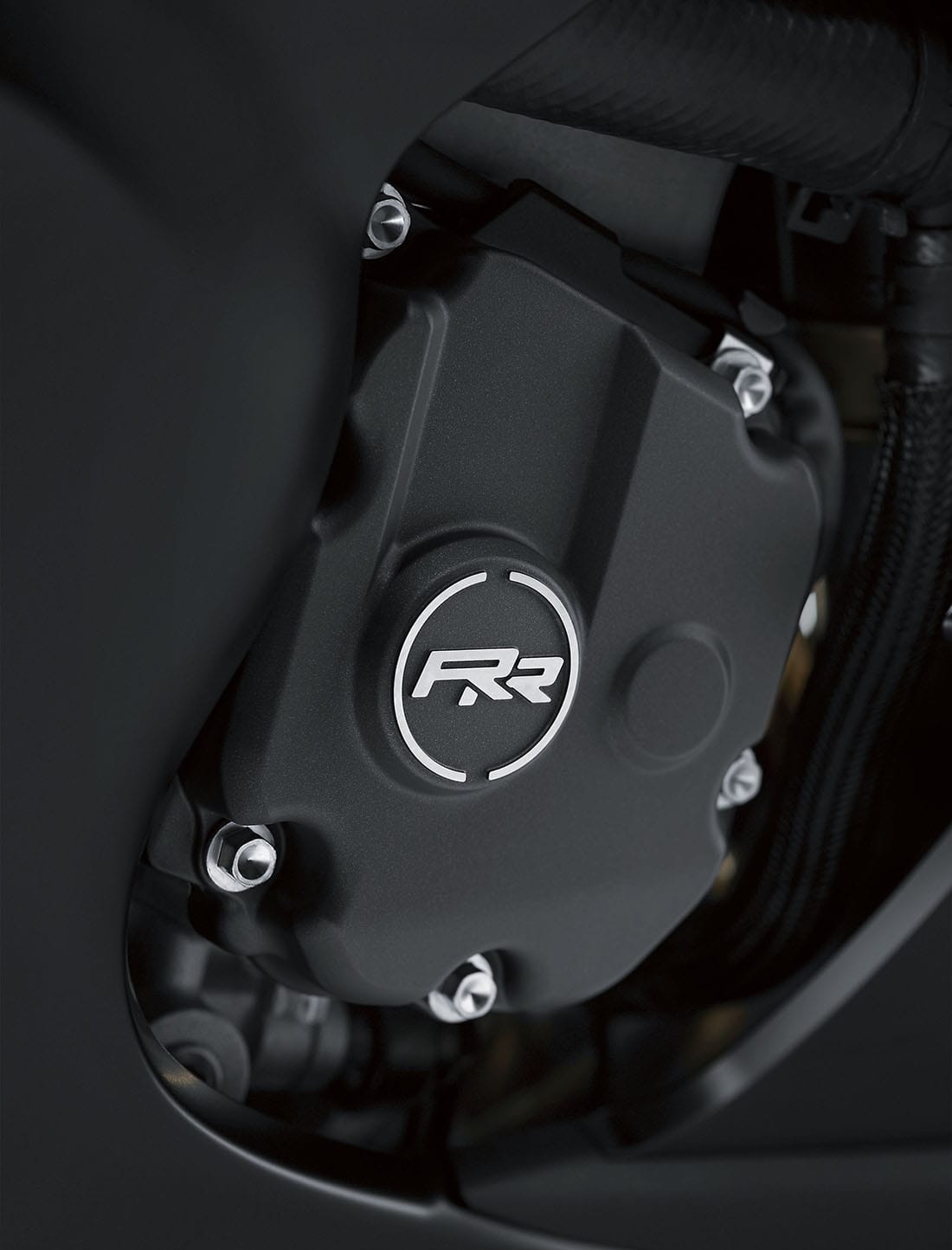
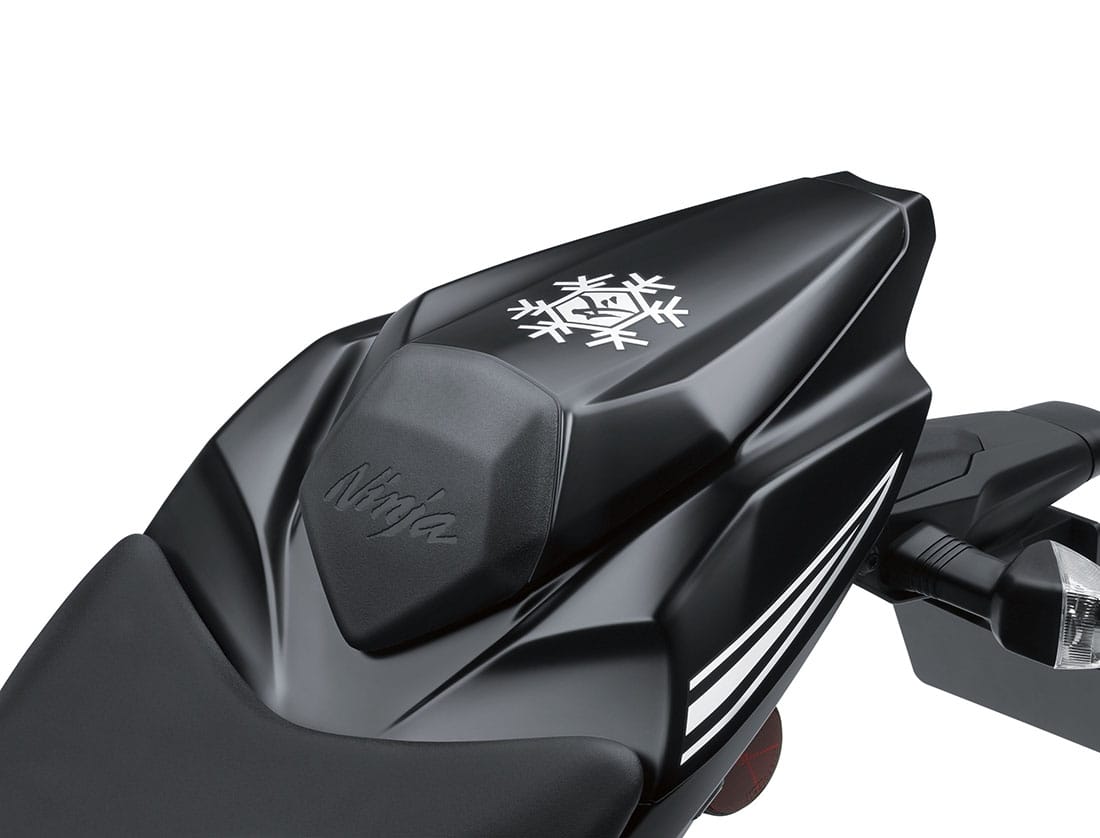
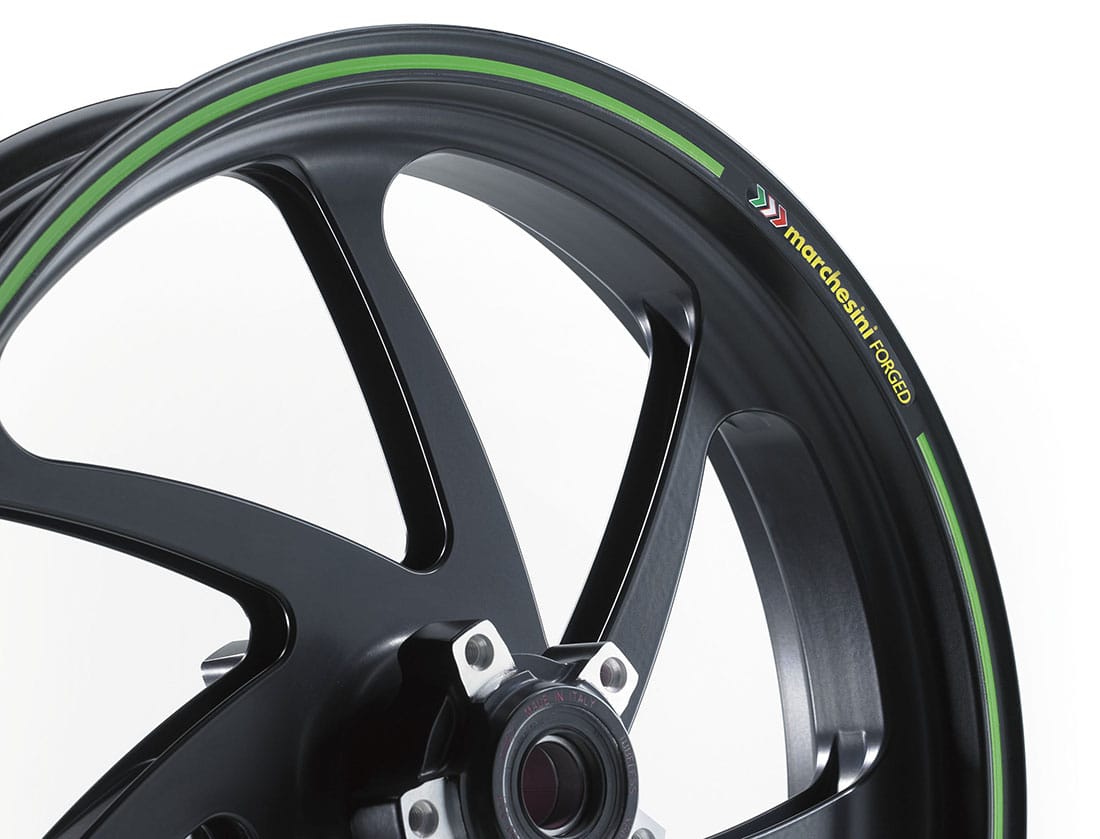
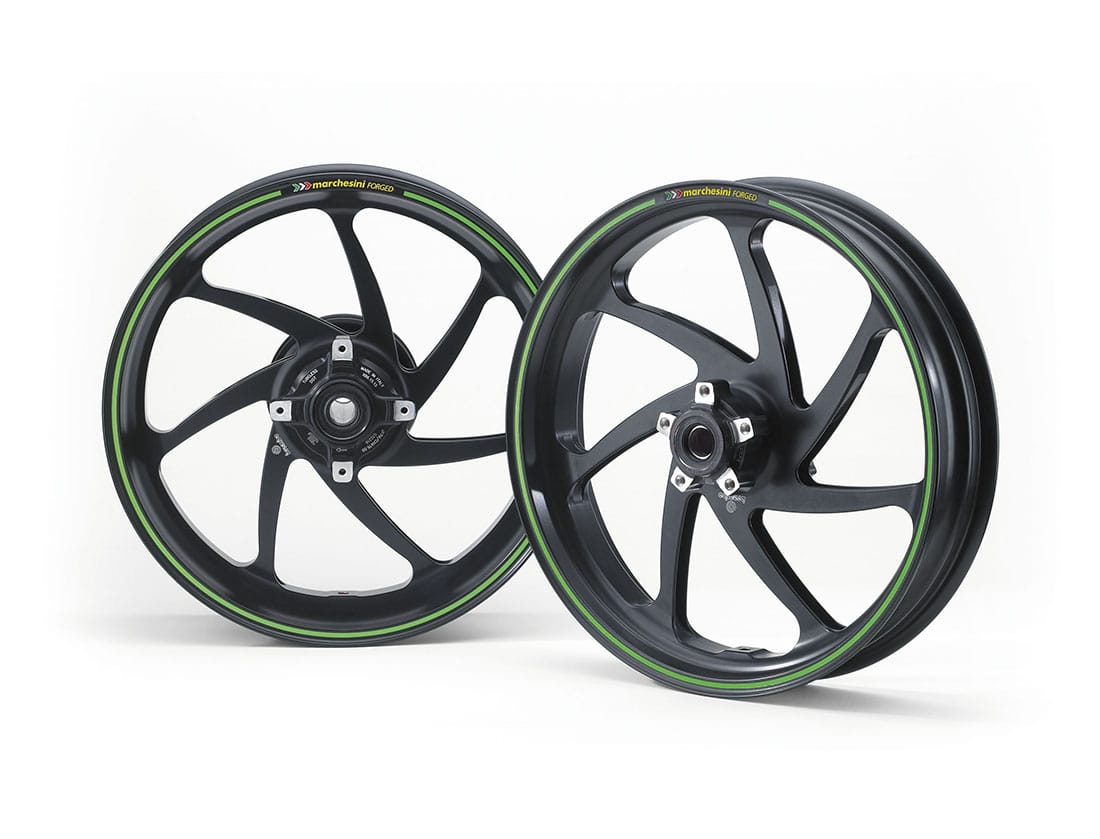
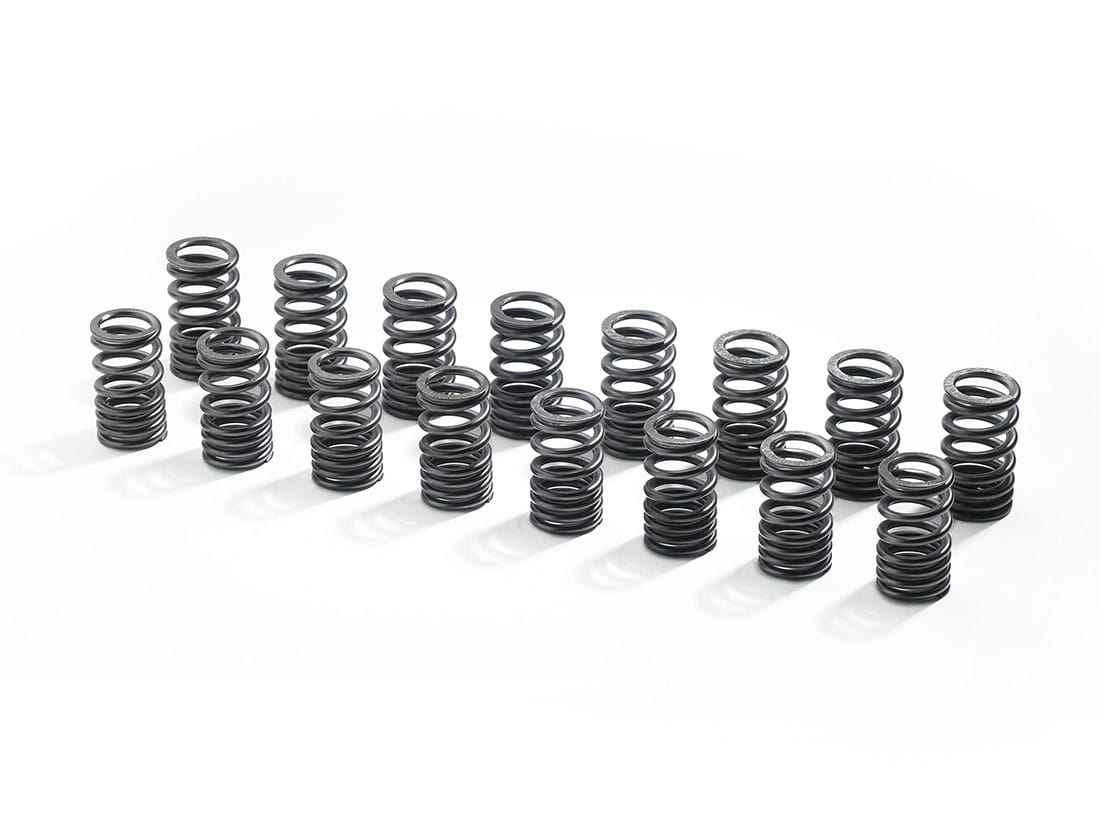
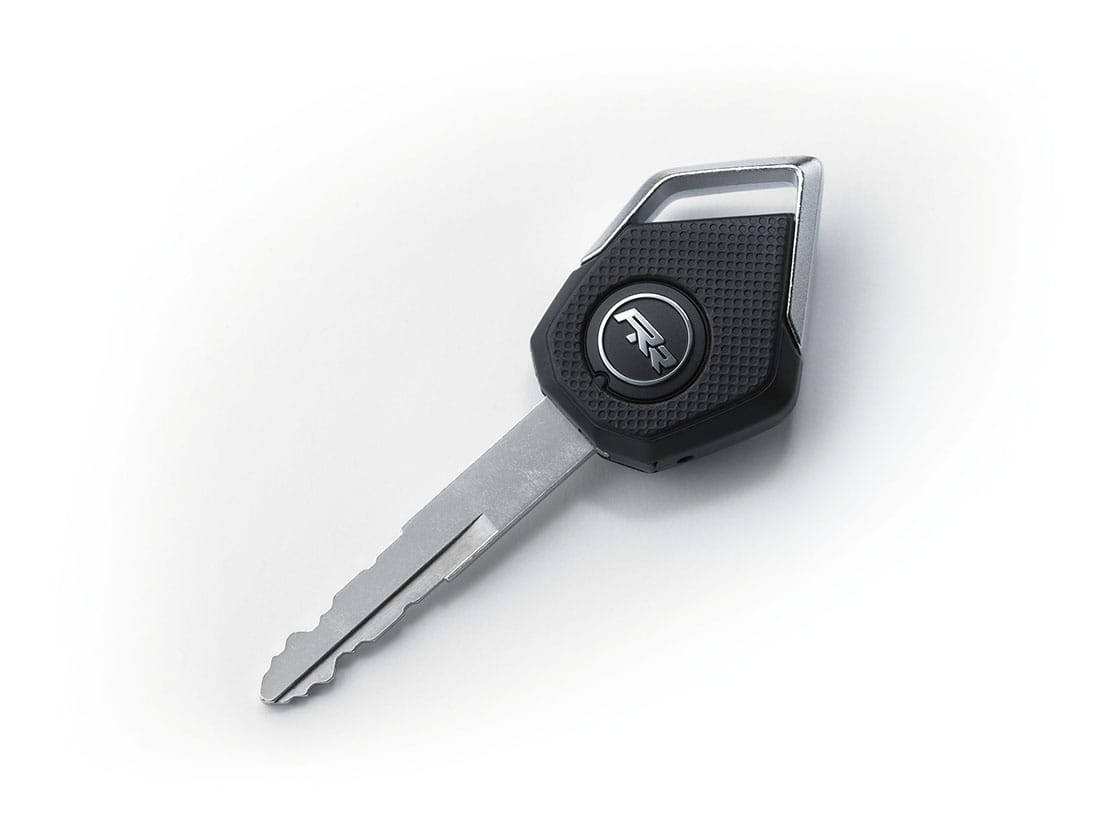
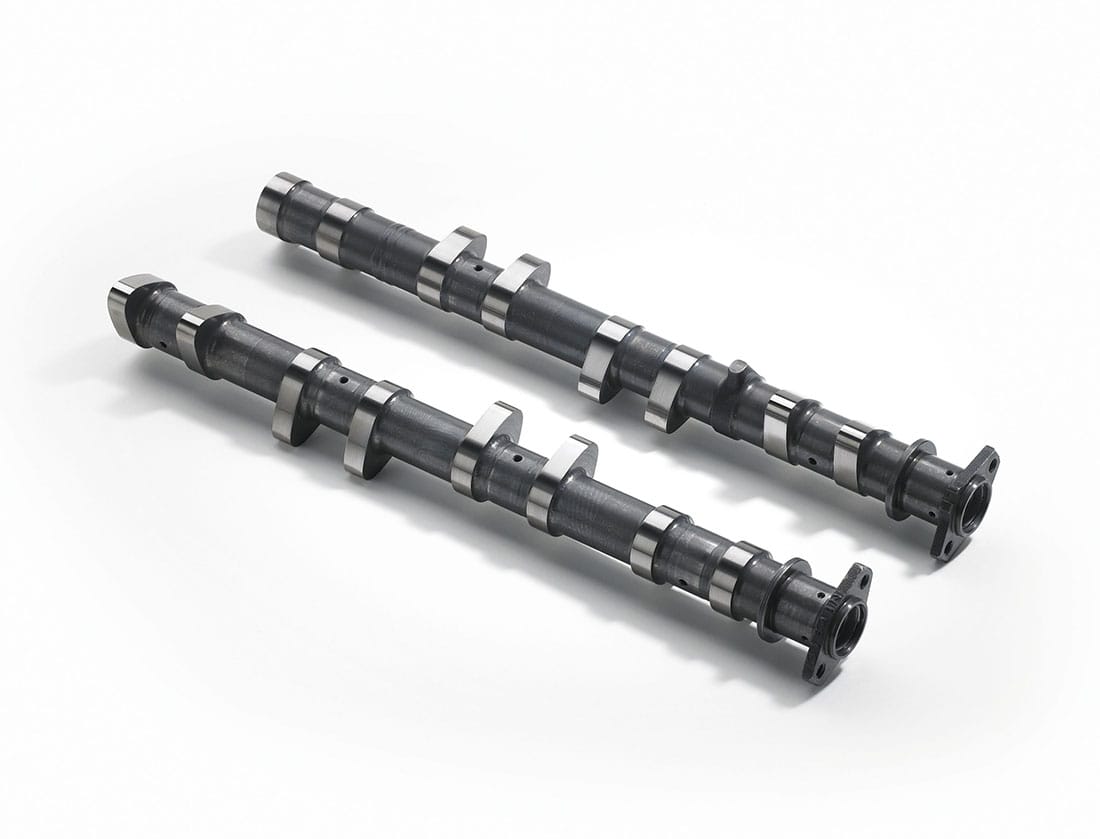
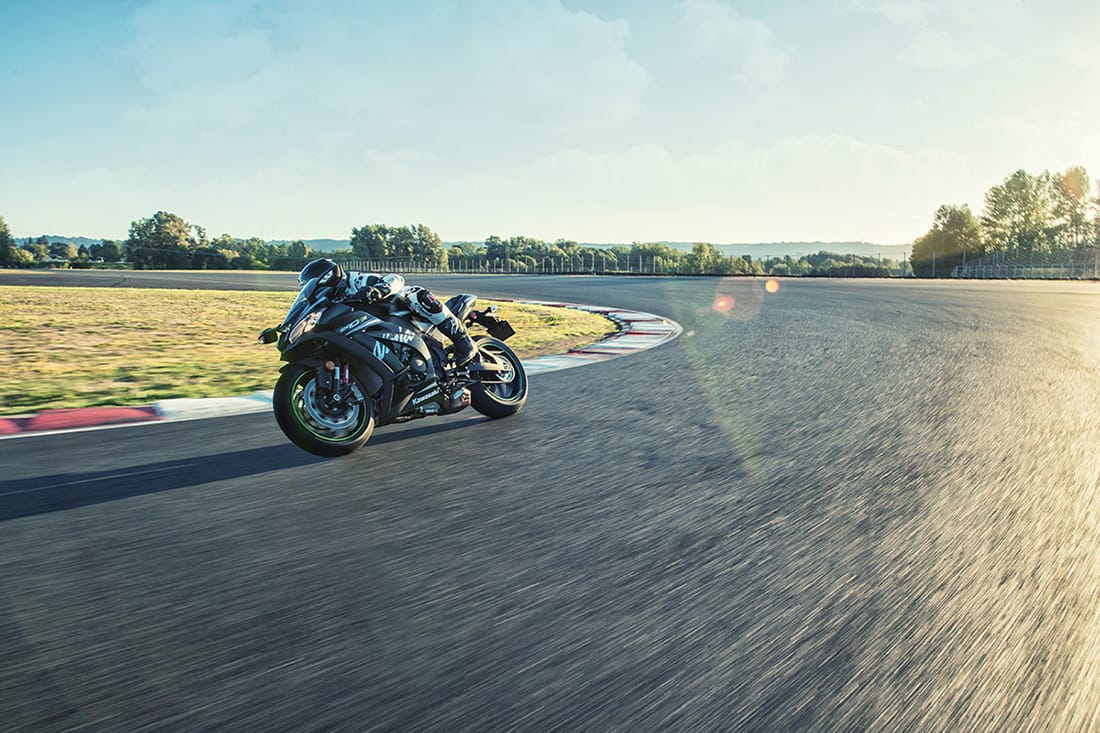
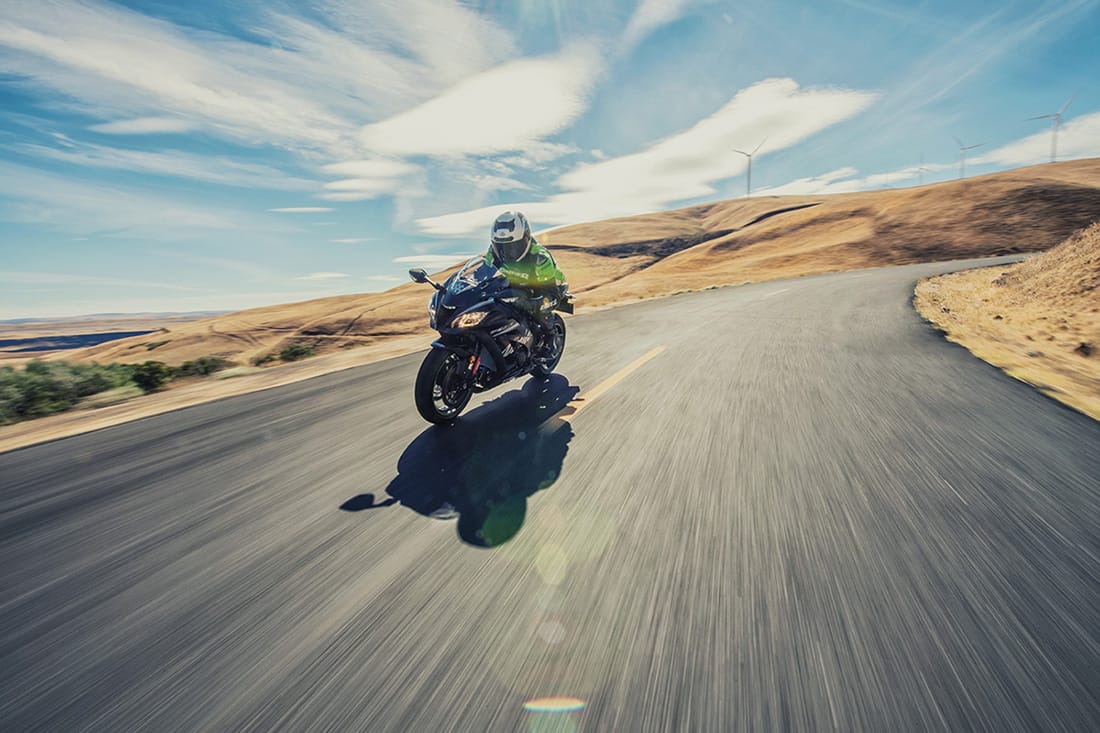
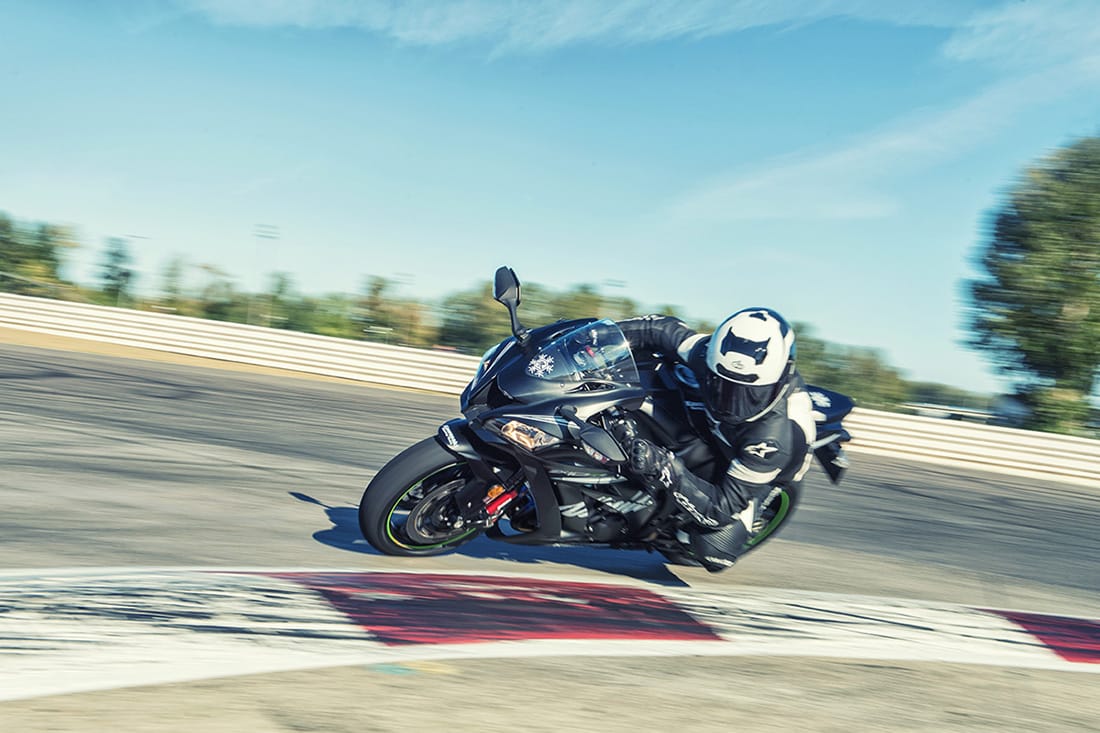
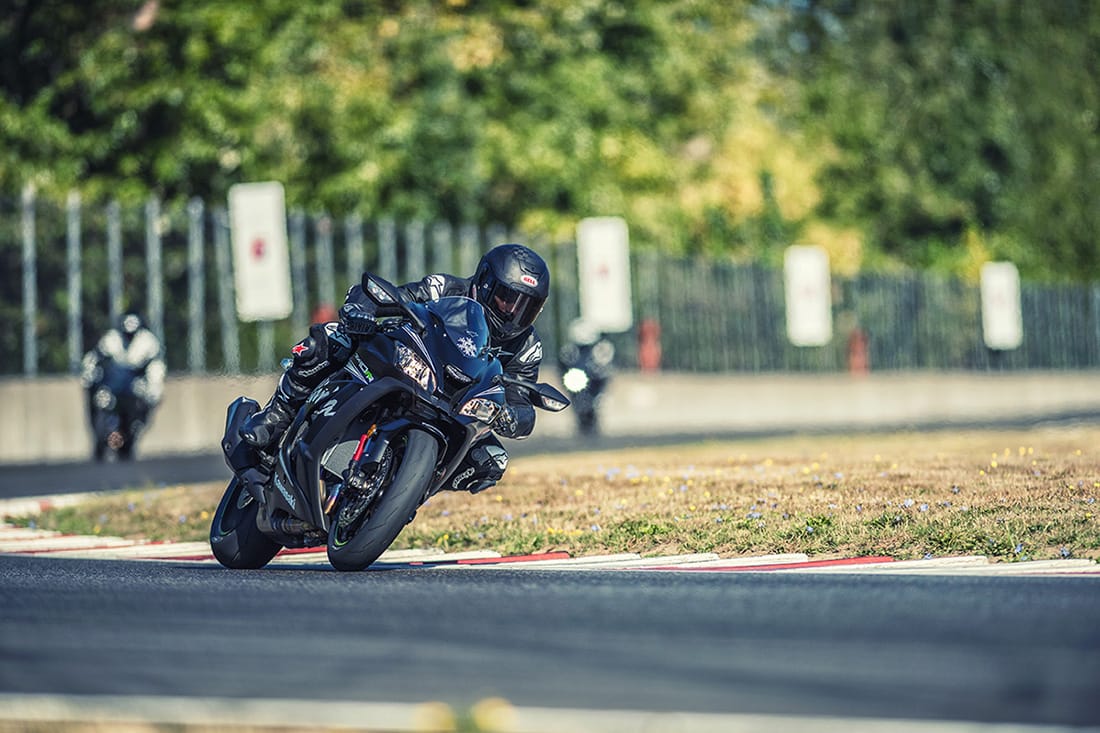
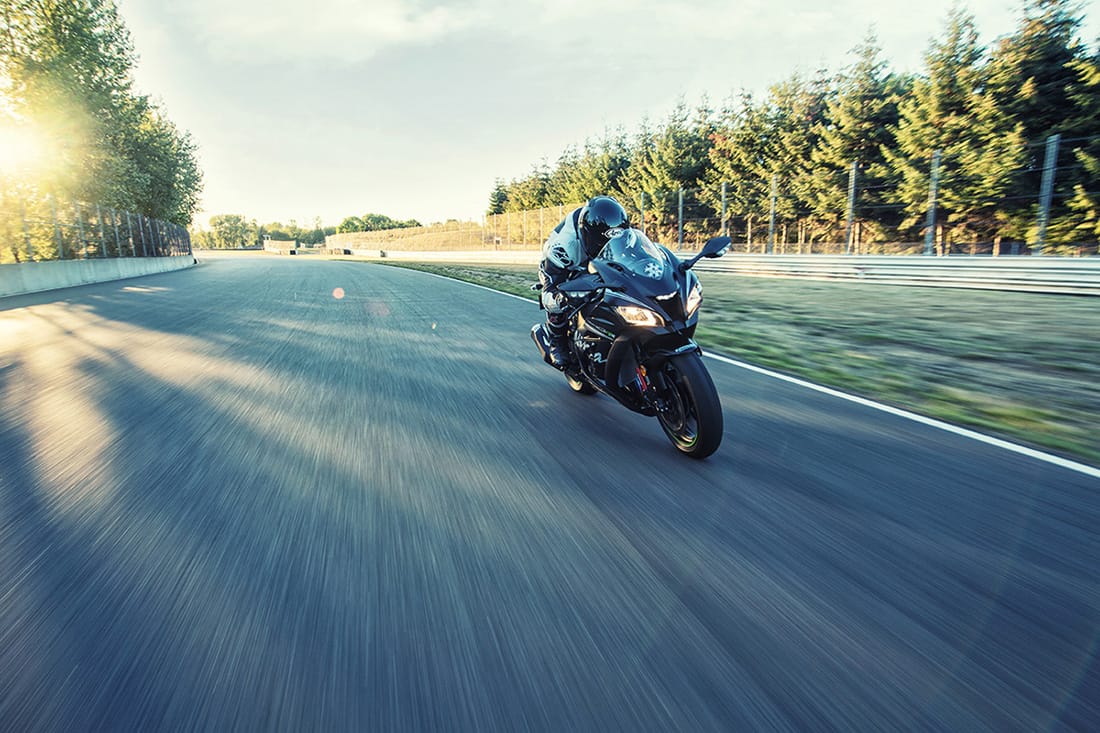
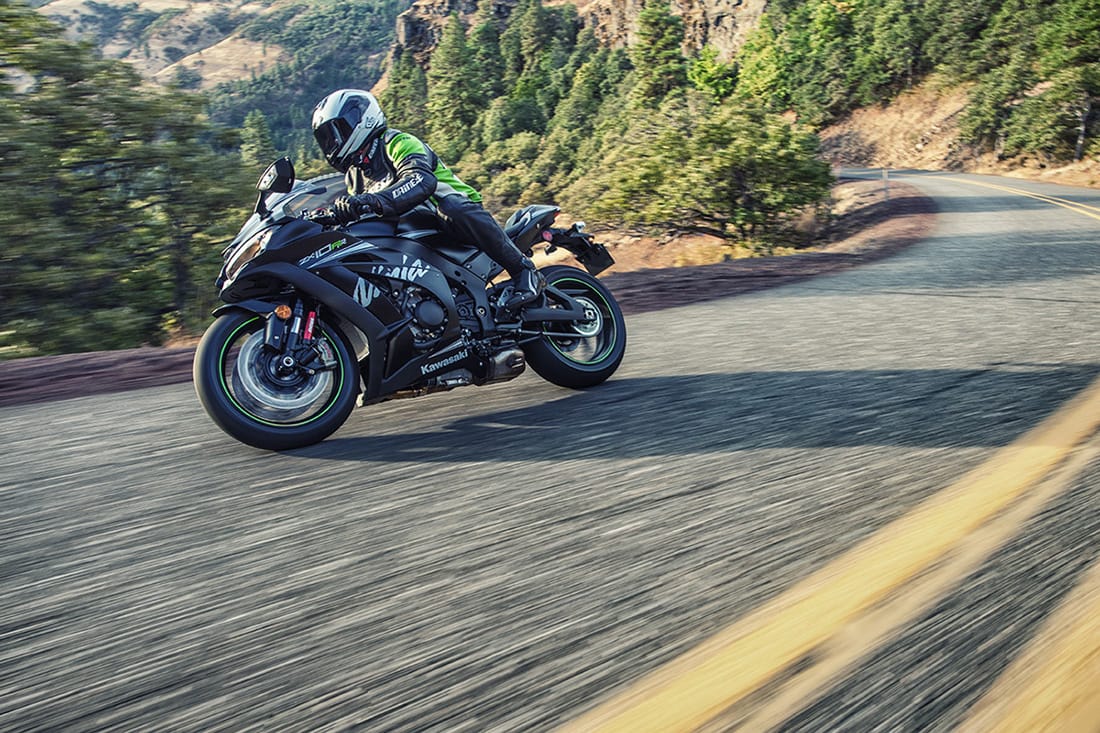
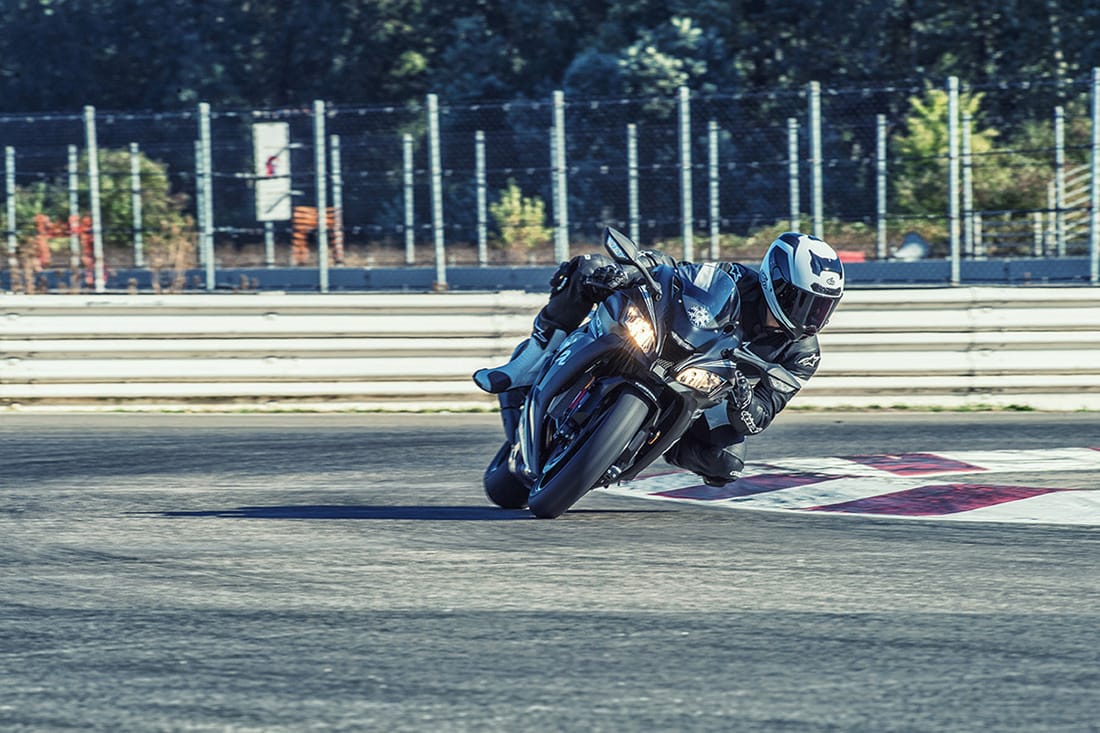
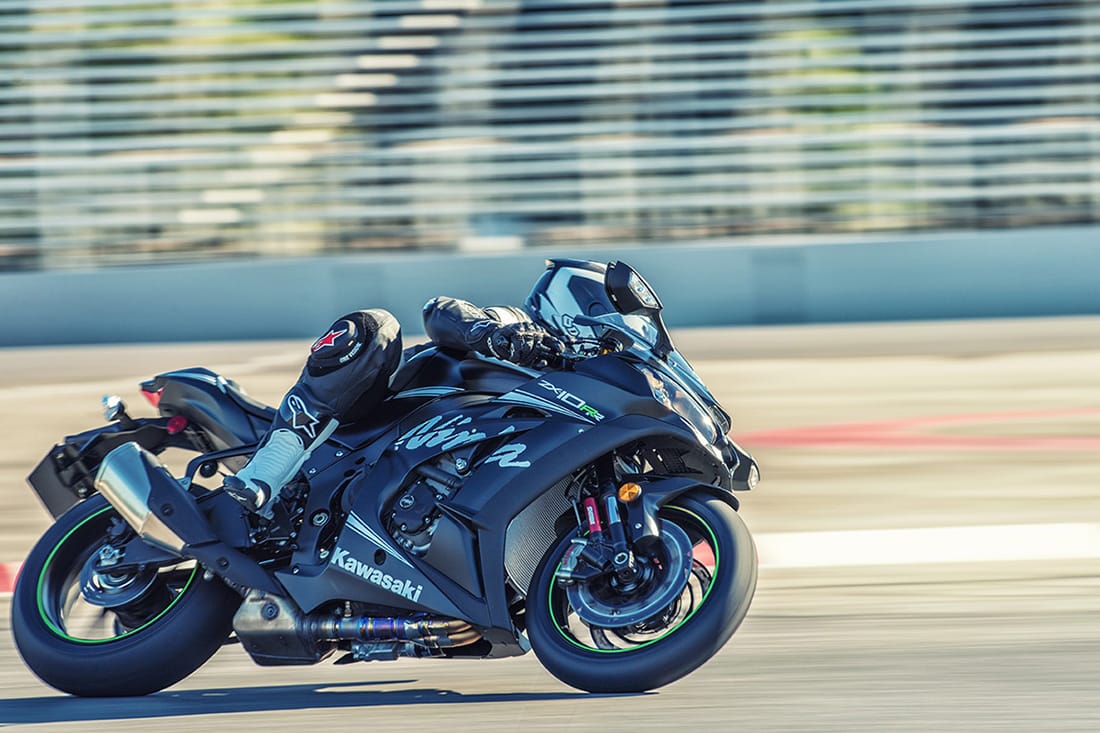
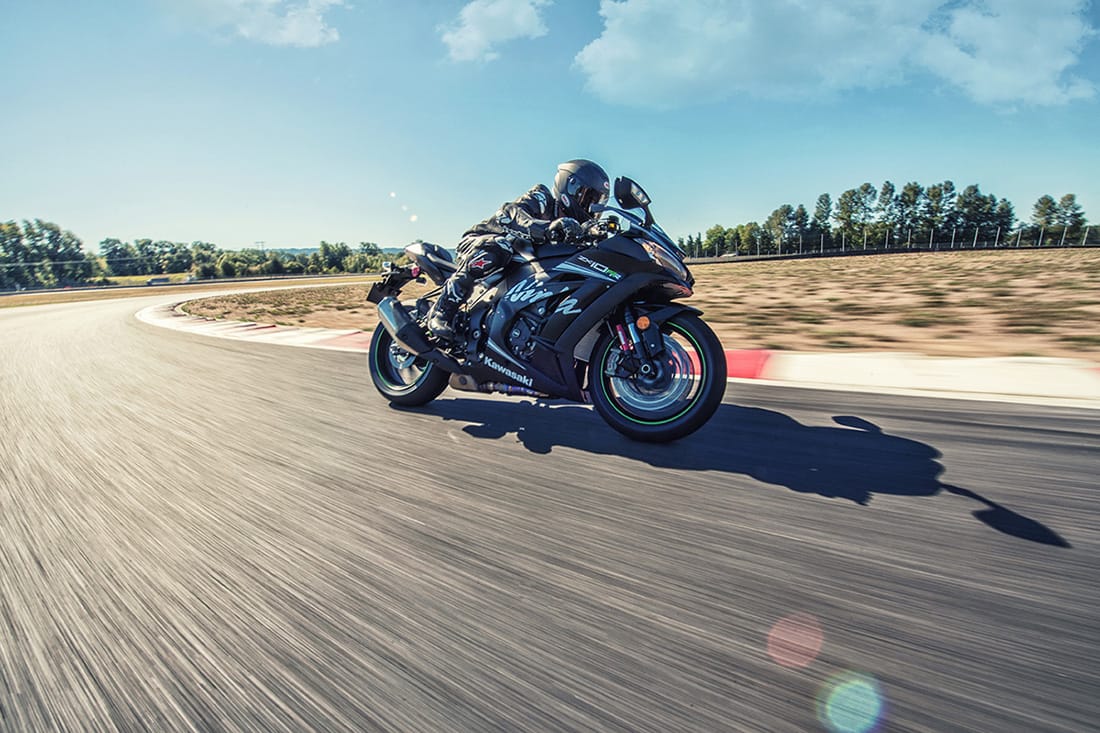
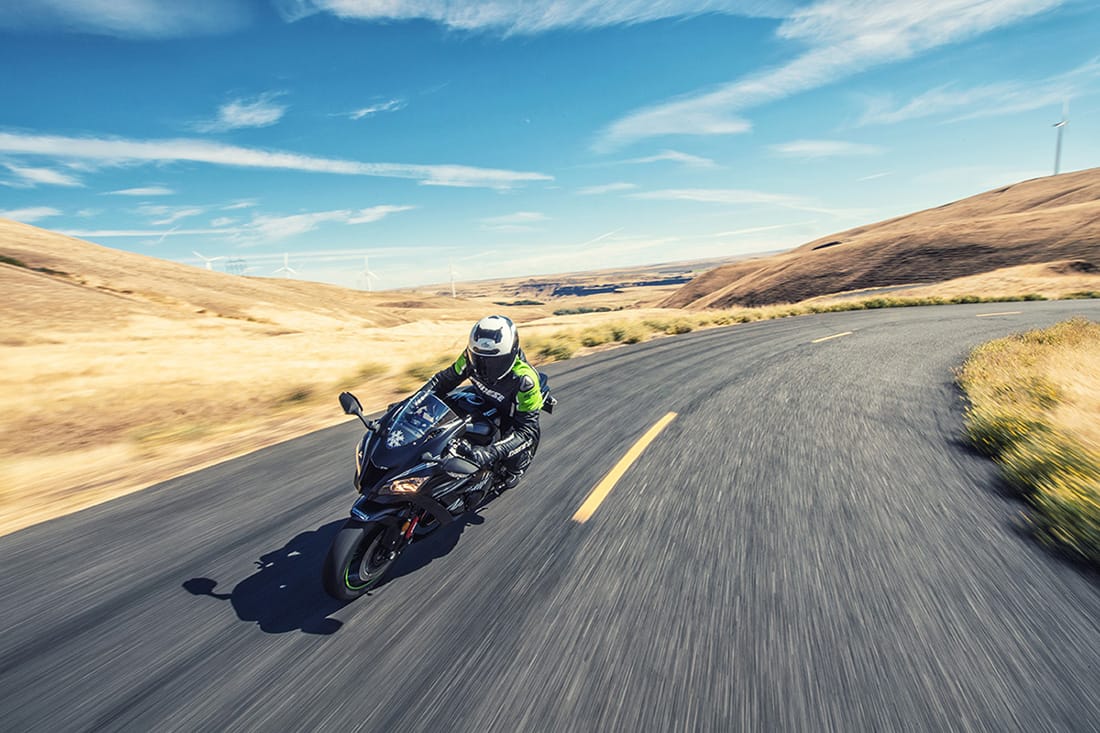
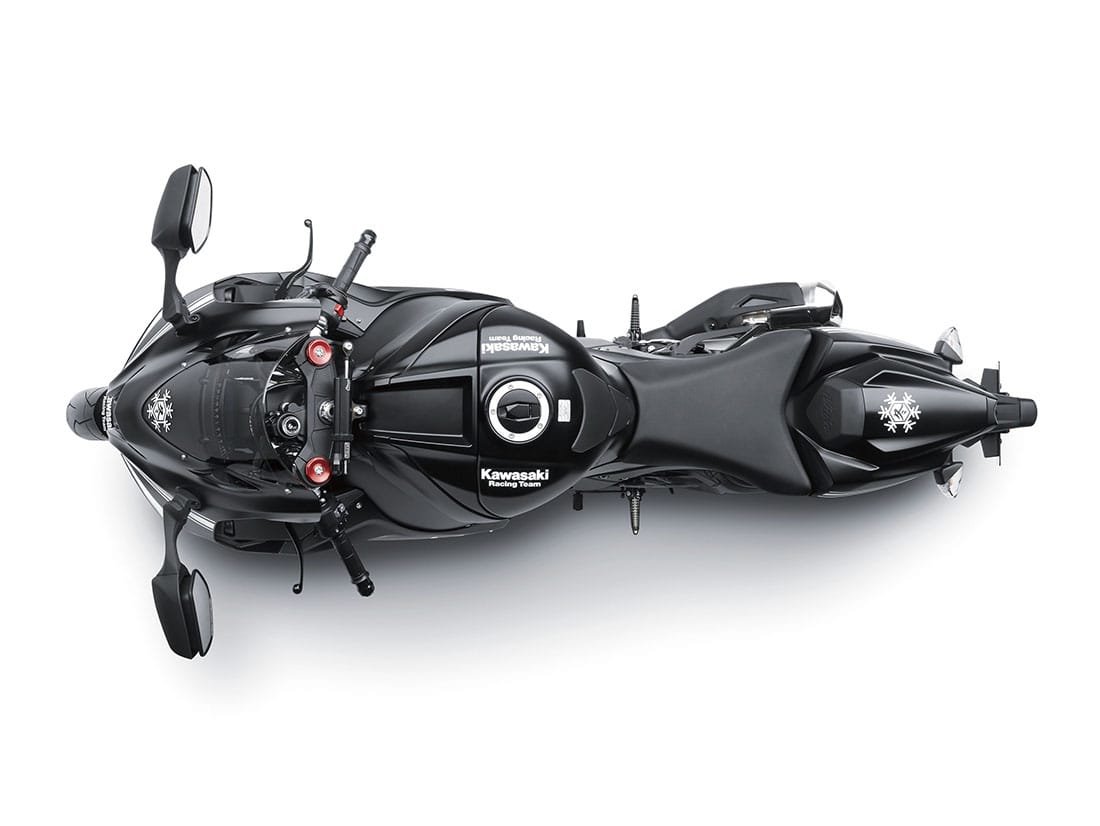
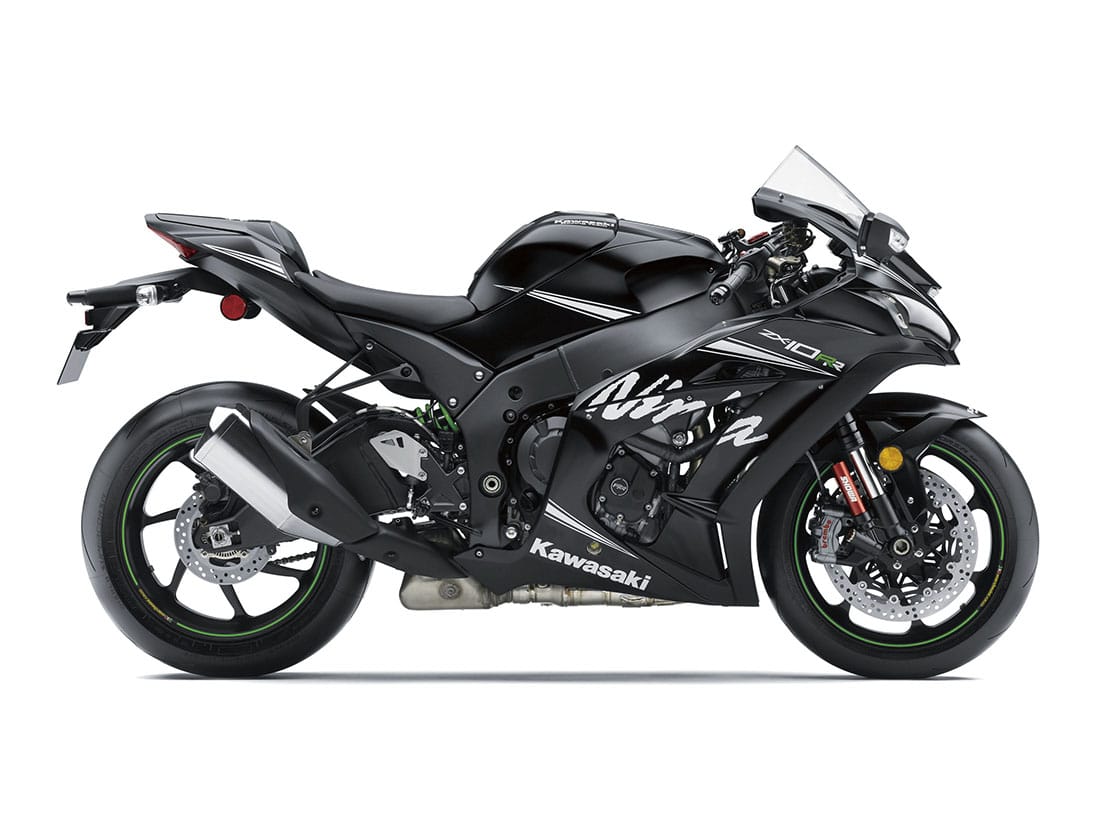
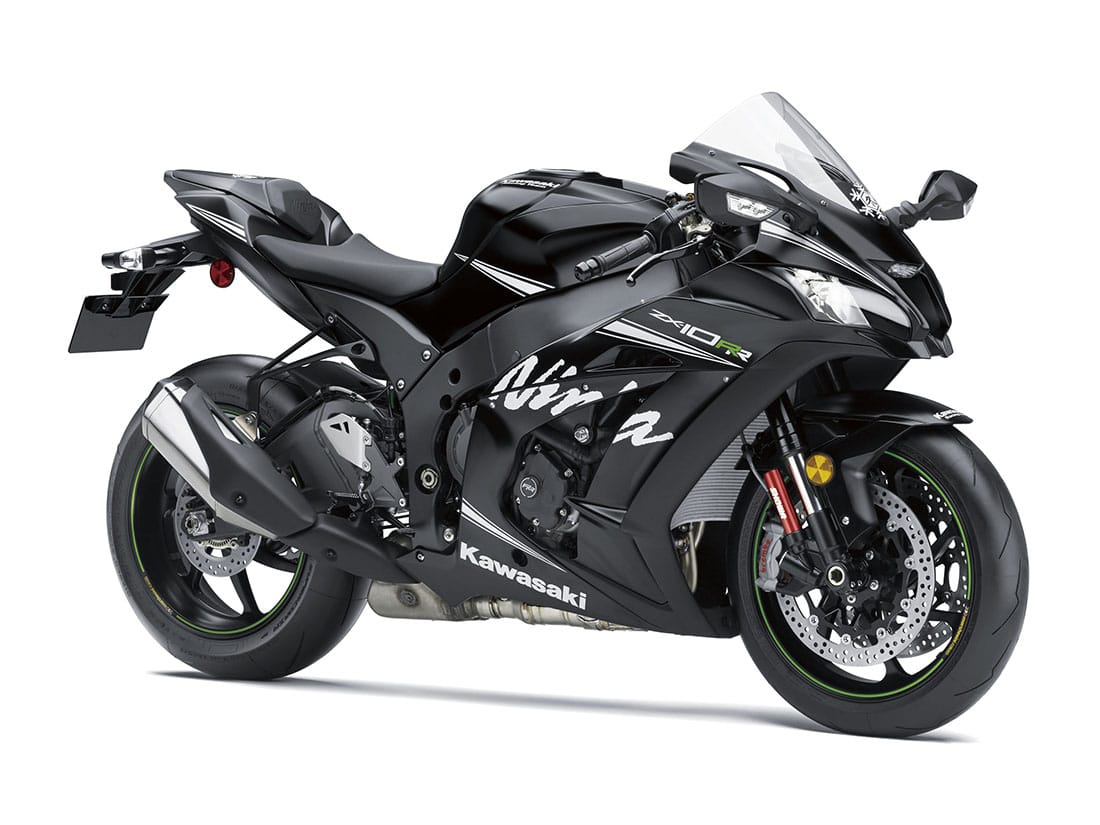
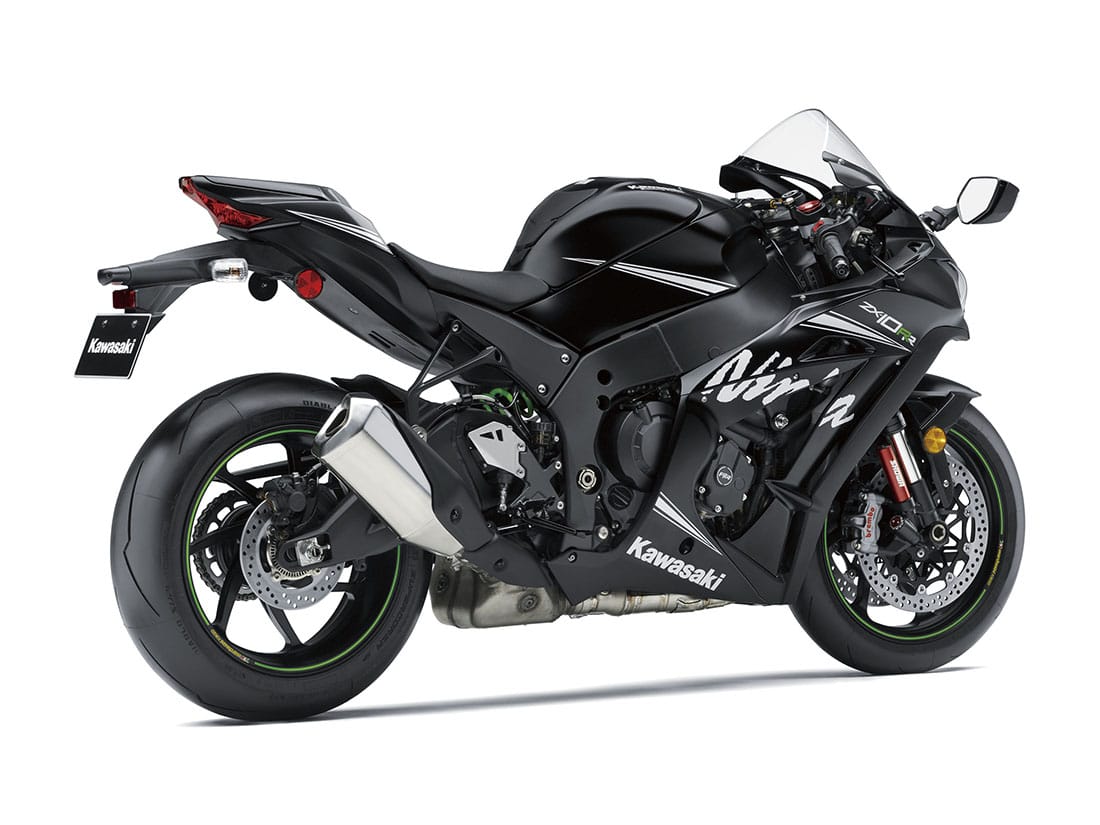
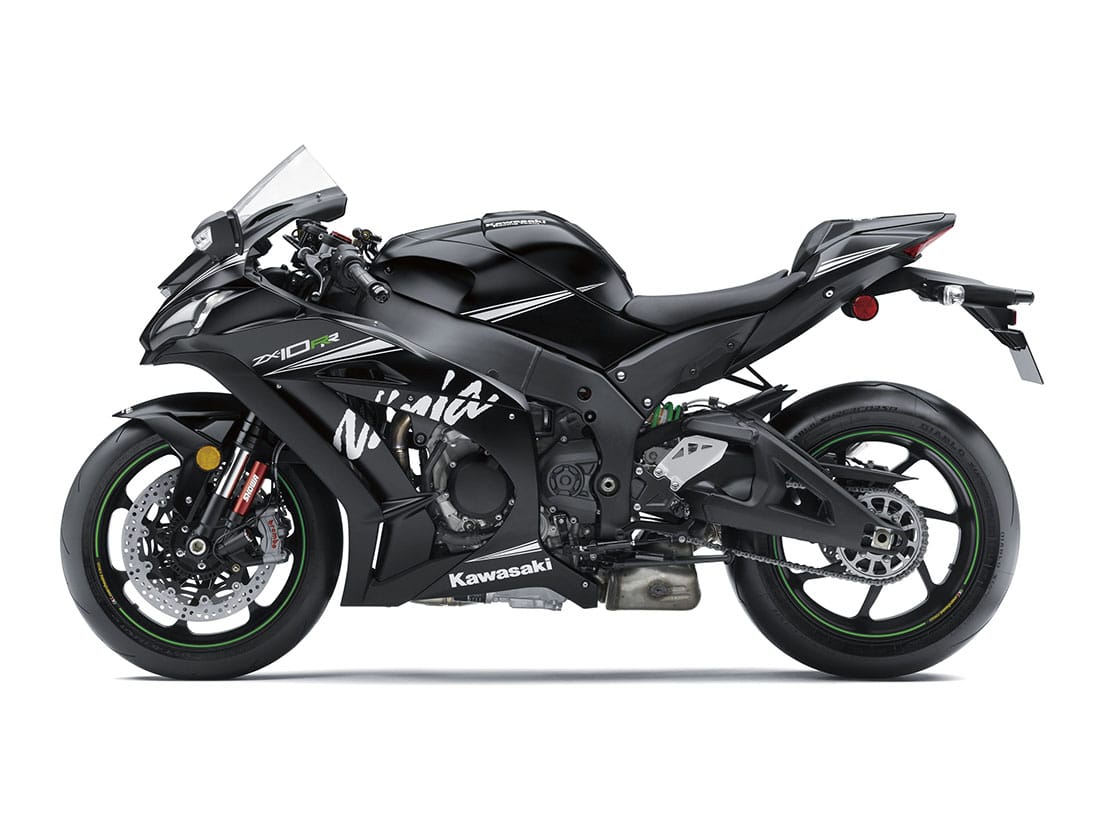
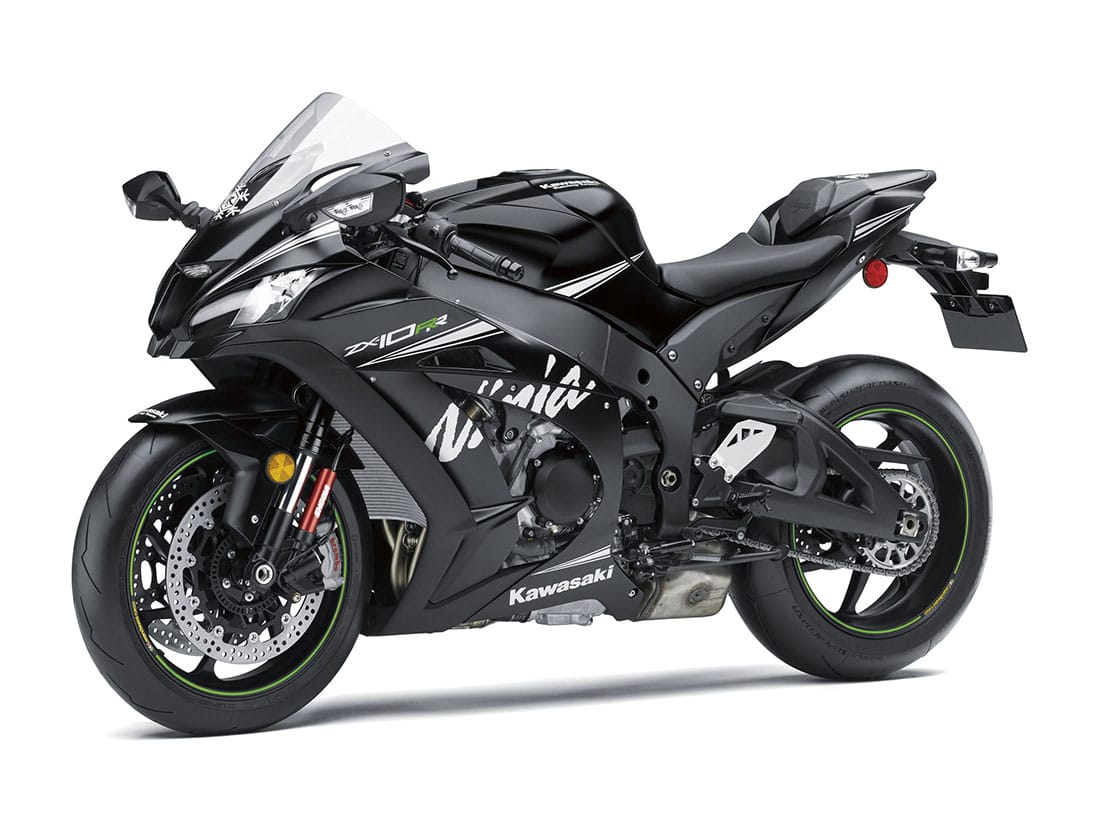
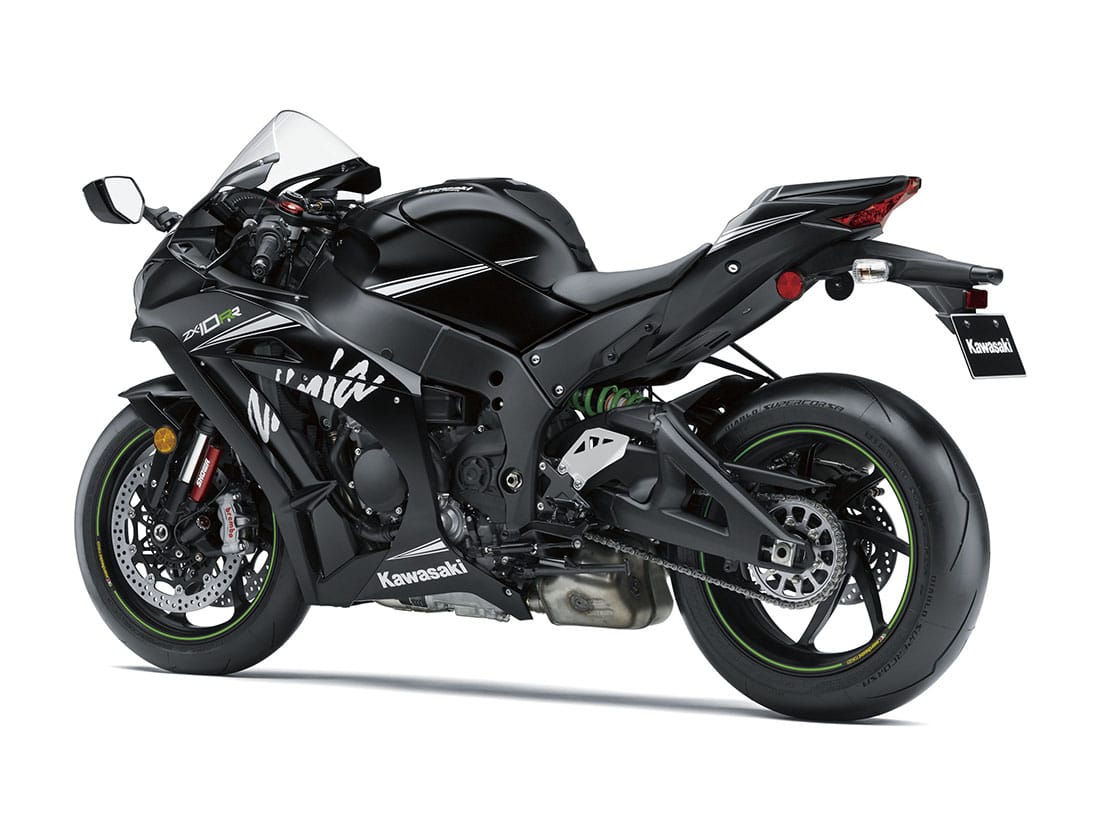
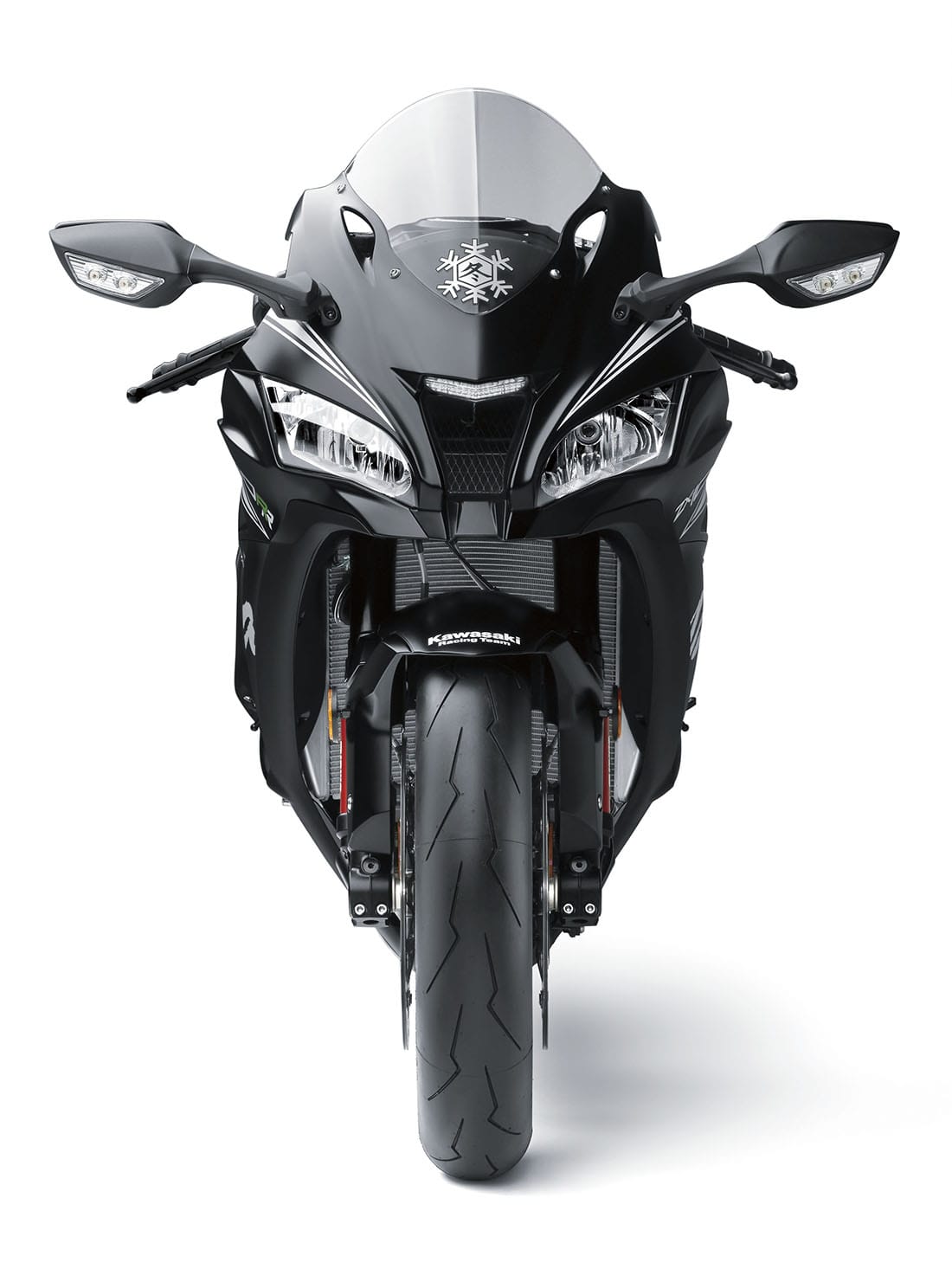
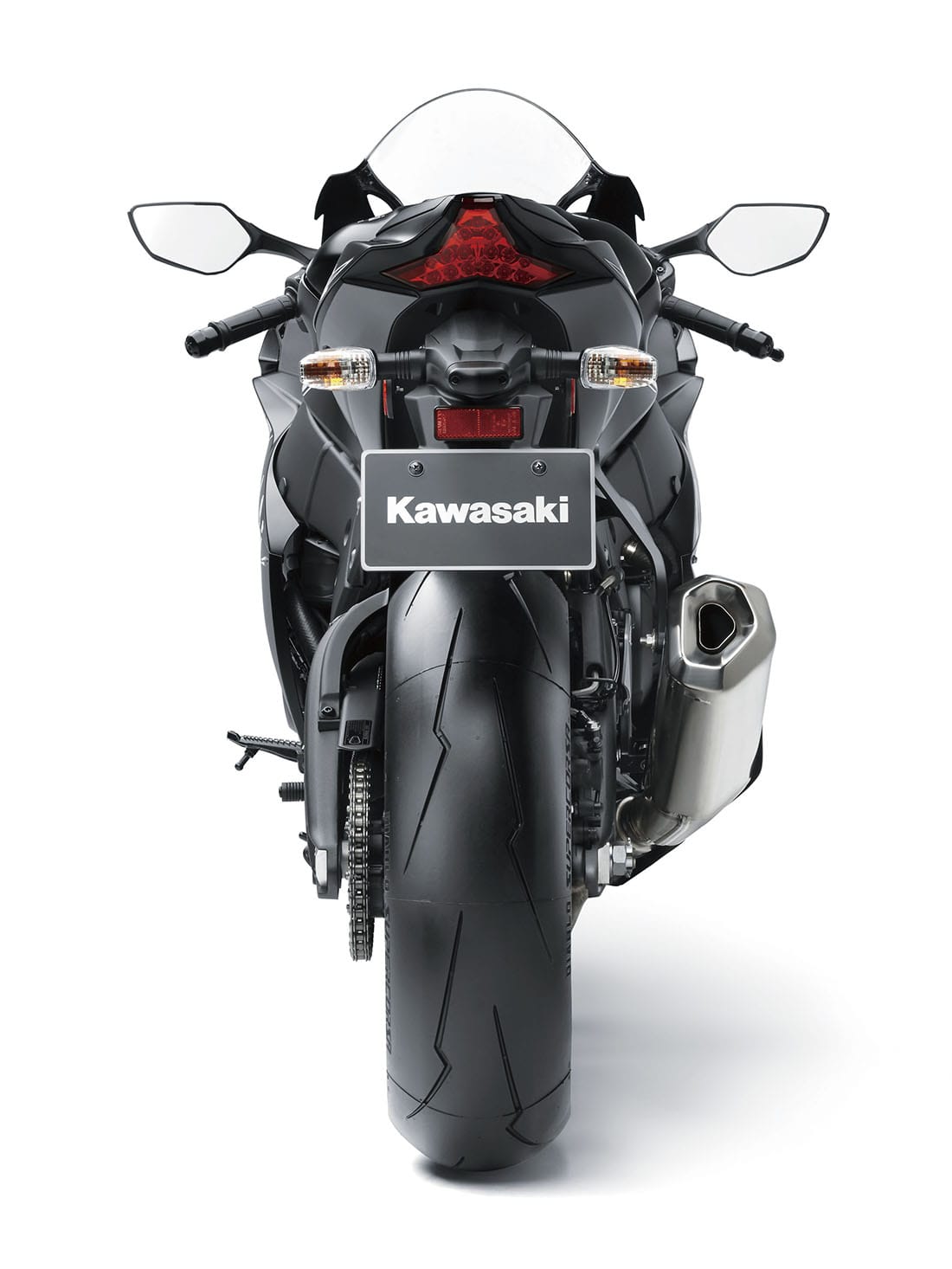
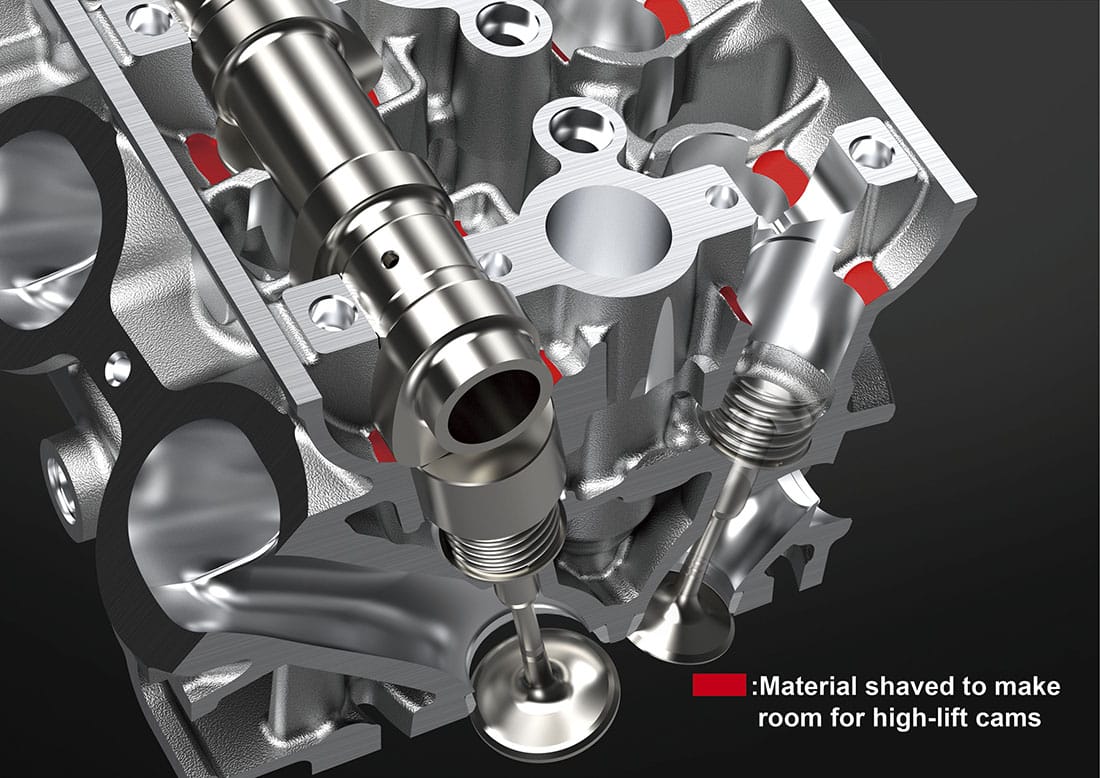
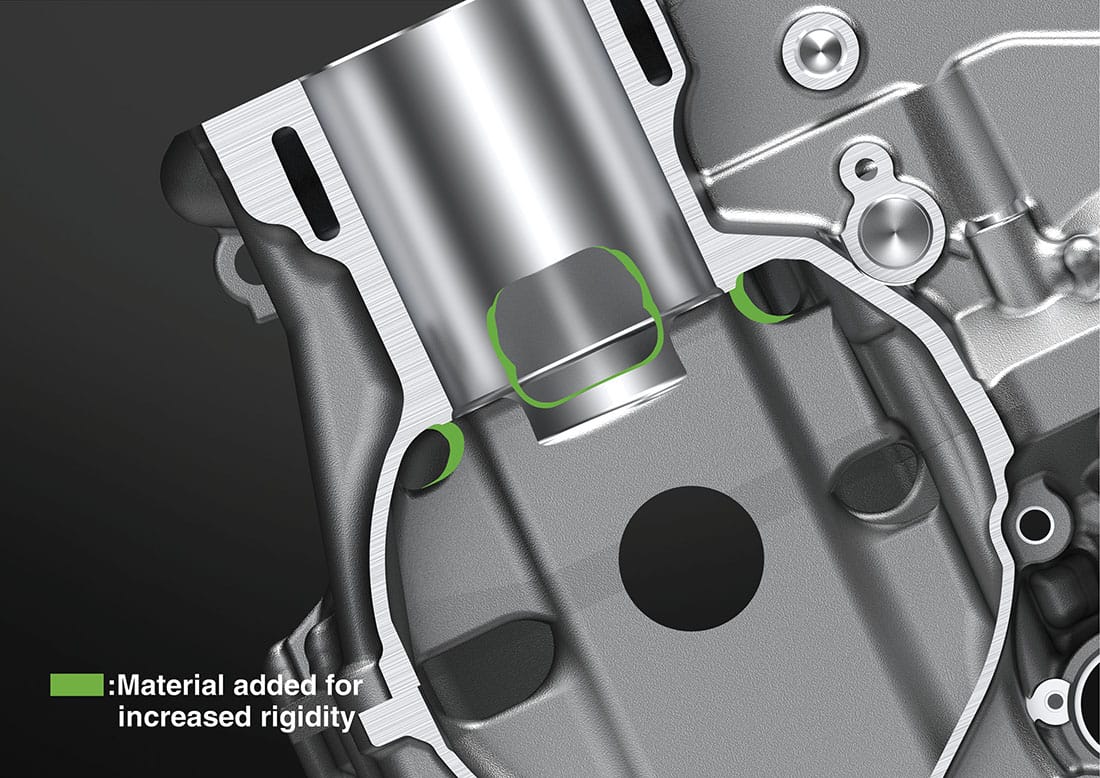
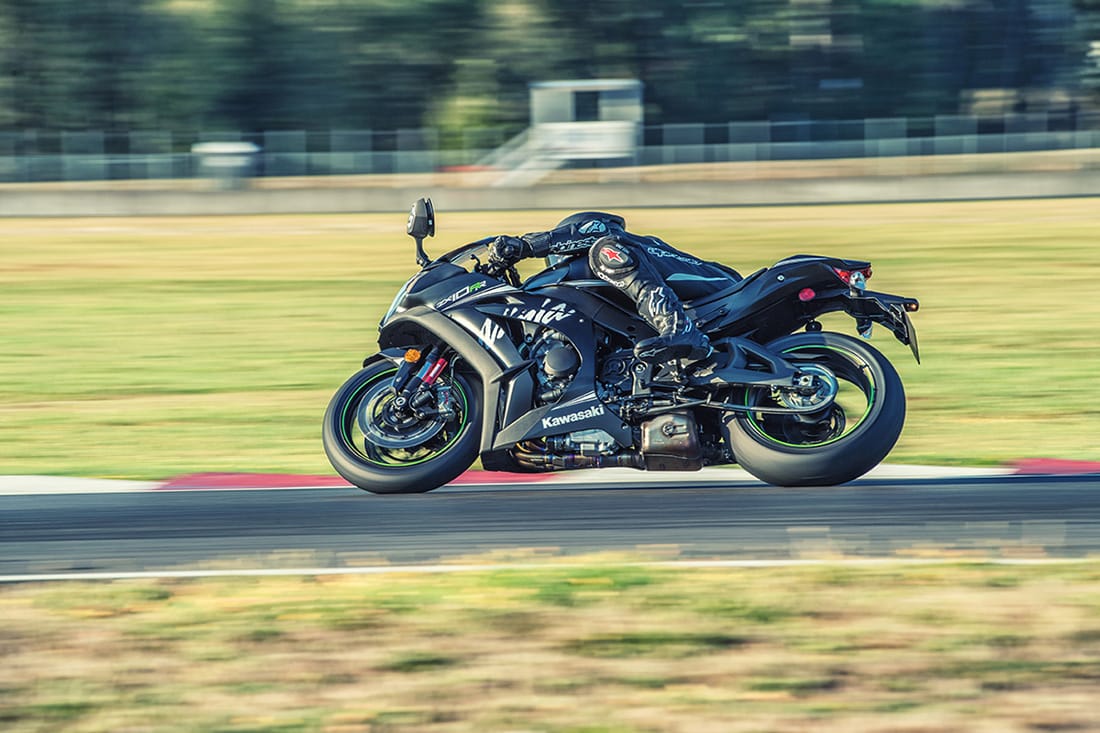
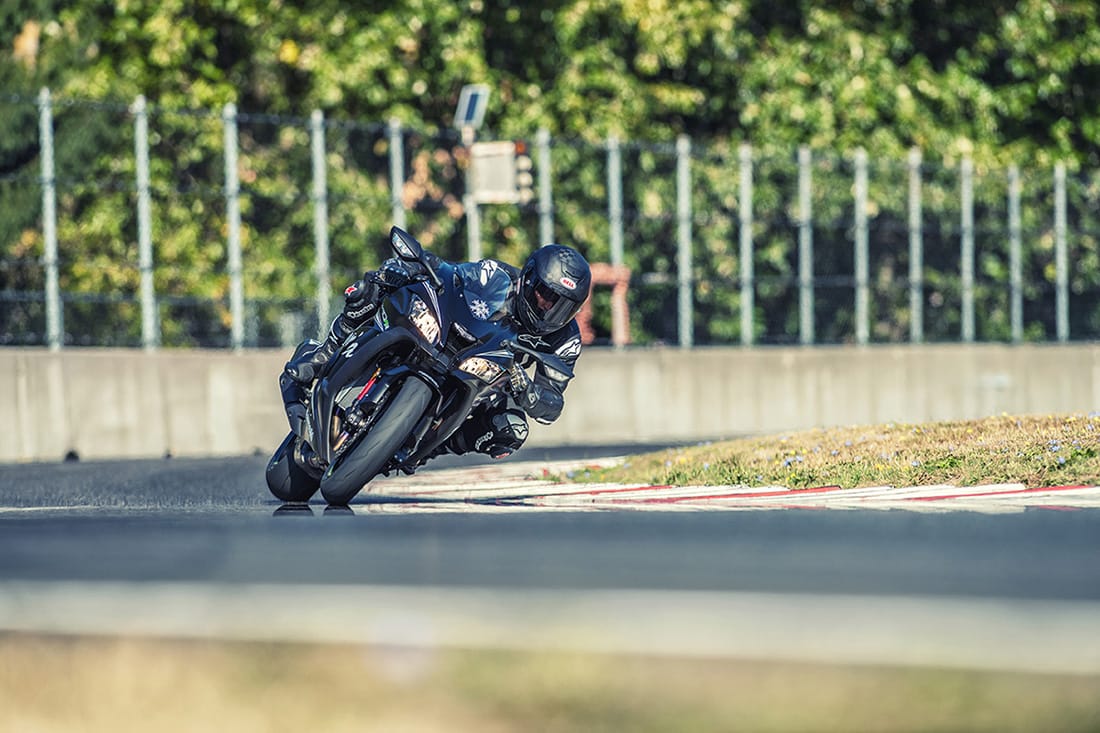
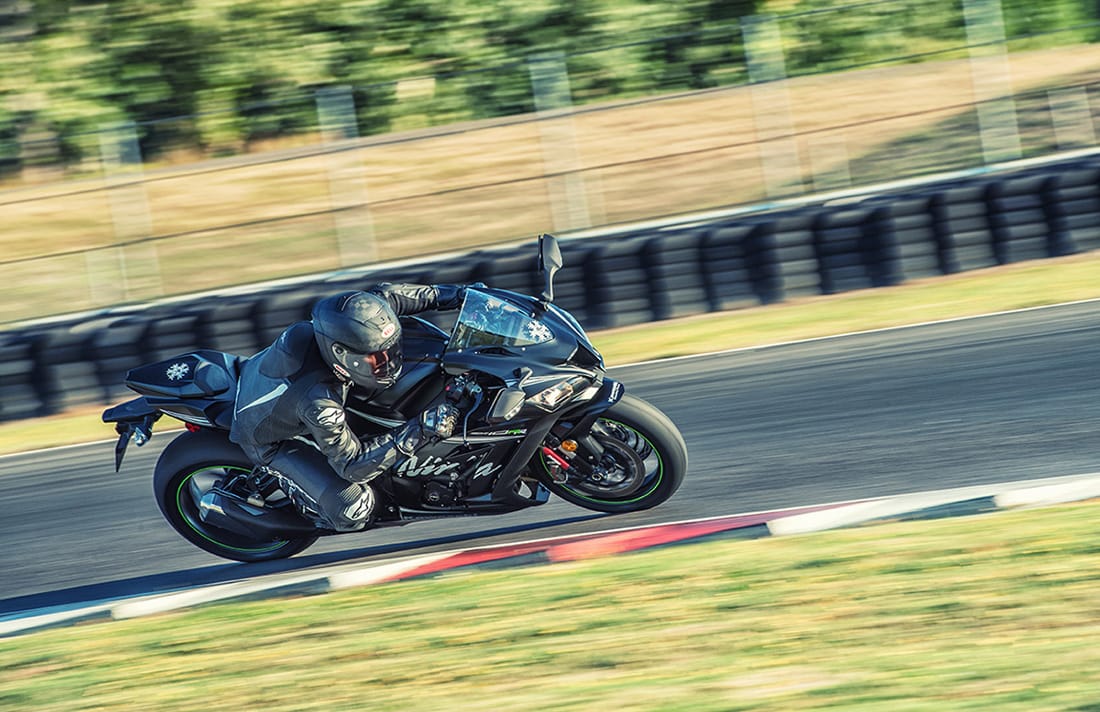
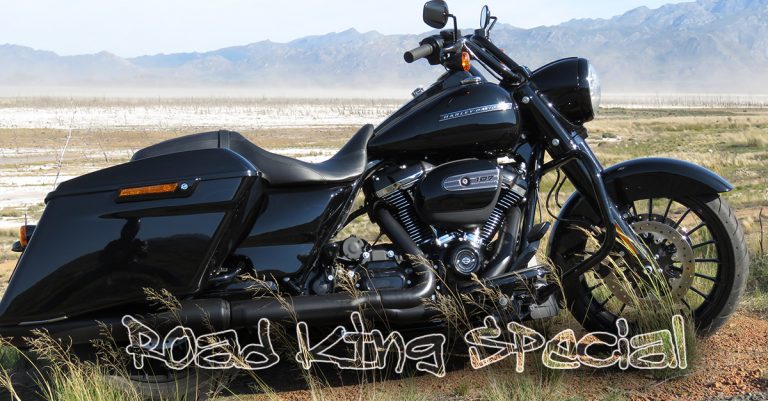
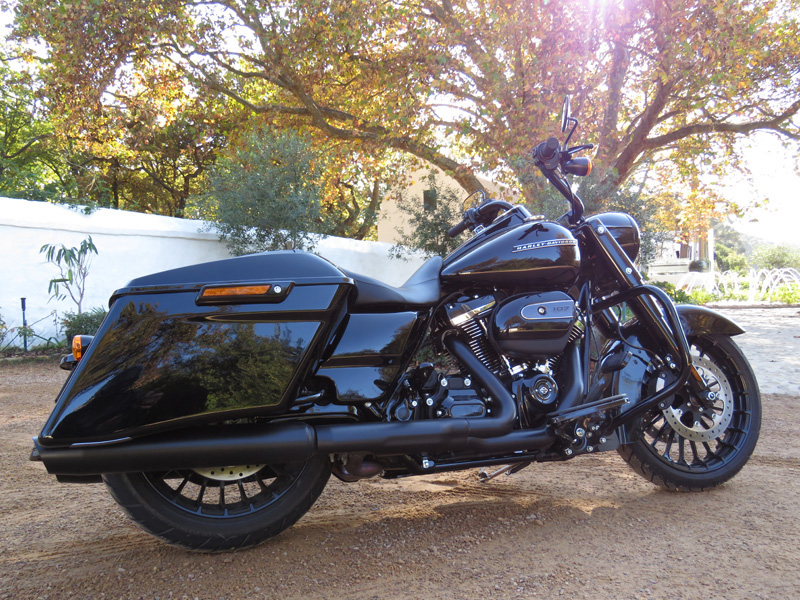 With my kit stowed in the rain and dust proof panniers, I was ready to rumble. Switch the tank mounted rotary ignition knob to on and hit the starter on the right handlebar switchgear and the big V-twin instantly comes alive. Ease the heel and toe gear lever, mounted above the left footboard, into gear and it engages with a familiar Harley thunk. This is no cruiser wannabe – This is real American iron! Ease out the exquisitely shaped clutch lever and the Road King launches on a Tsunami of creamy torque.
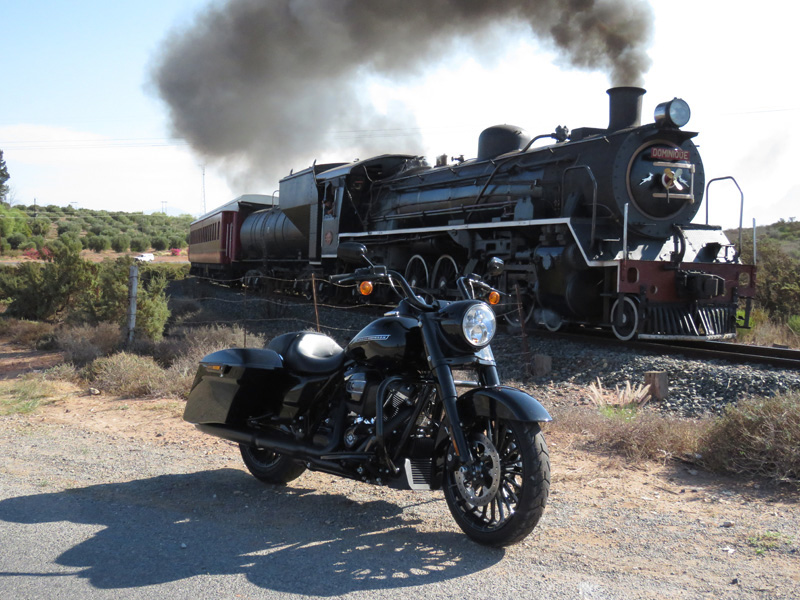 Road King is such an apt name for this bike. You don’t just sit on it, you enthrone yourself. Your butt is cupped and cosseted in the comfy cosy seat and your feet rest on the perfectly angled footboards. Your hands grasp the bars in a wide and commanding fashion as you roll through your Kingdom.
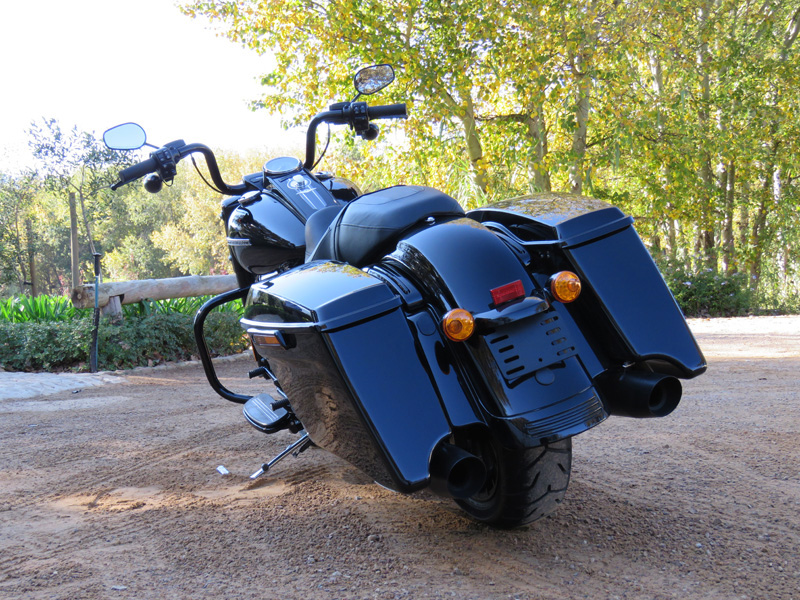 Harleys can frustrate on mountain passes. They feel really stable until at relatively easy lean angles, they start to drag hardware on the tar. This really dents cornering confidence. I was pleasantly surprised by the ‘S’. The footboards are significantly narrower than footpegs thereby giving you over 30’ of lean angle. I found myself really enjoying mountain passes as the wonderful motor punted us through the sweeps with no sparks coming off the undercarriage.
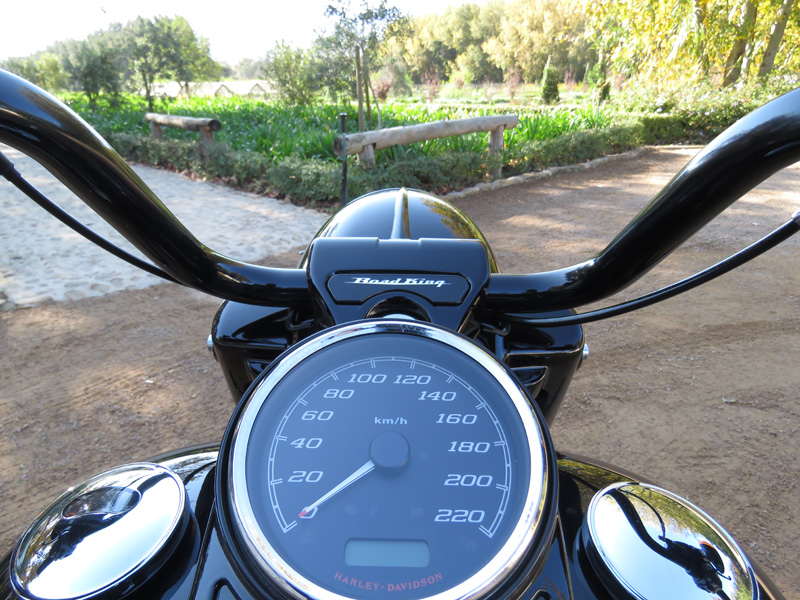 The motor is so smooth it is easy to leave it in 4th or 5th after gearing down for a bend or whatever. However, the gear and rpm display keep reminding you to go back to top gear. At a mere 3630 rpm, the Milwaukee Eight is cruising at 160 kph with absolutely no fuss or bother – apart from the windblast that is. Sustained high speed will have you developing biceps and stomach and neck muscles that make a super fifteen prop forward look puny. Alternatively, you can fit a factory aftermarket screen.
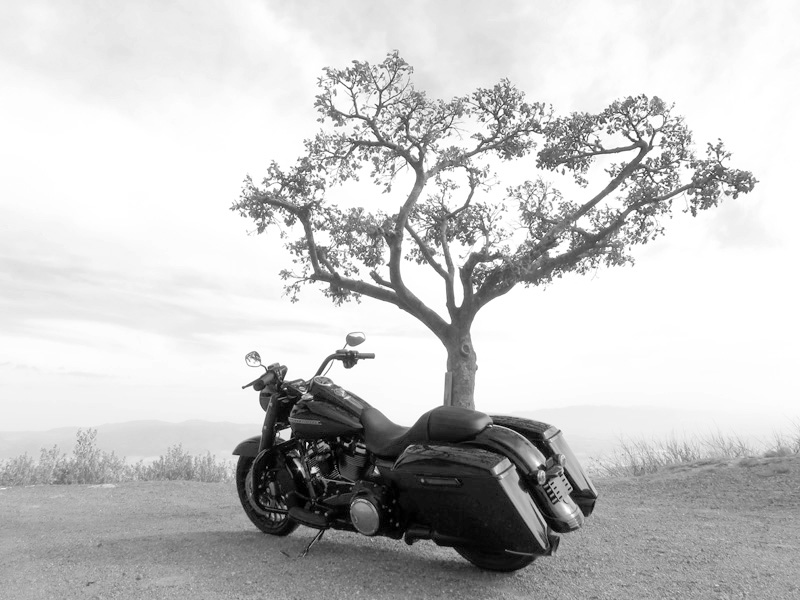 A big word of thanks and appreciation to Aidan Johnson from Harley-Davidson and Joe and his team from Tyger Valley H-D, for the privilege of reviewing this fantastic bike.
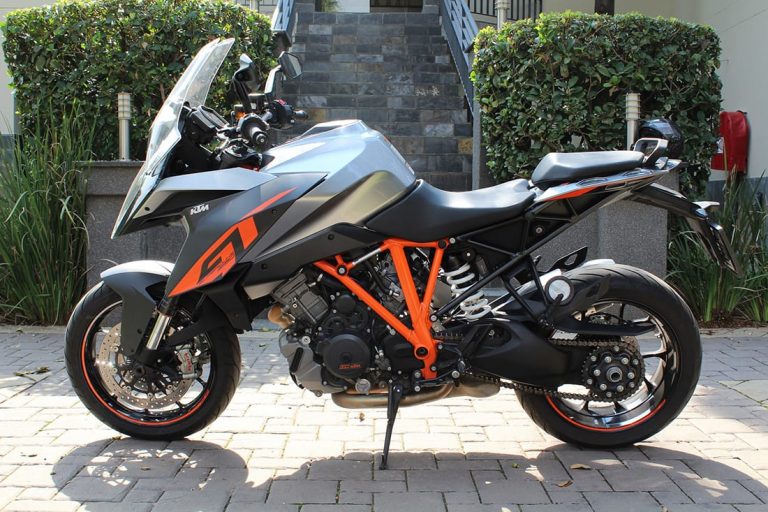
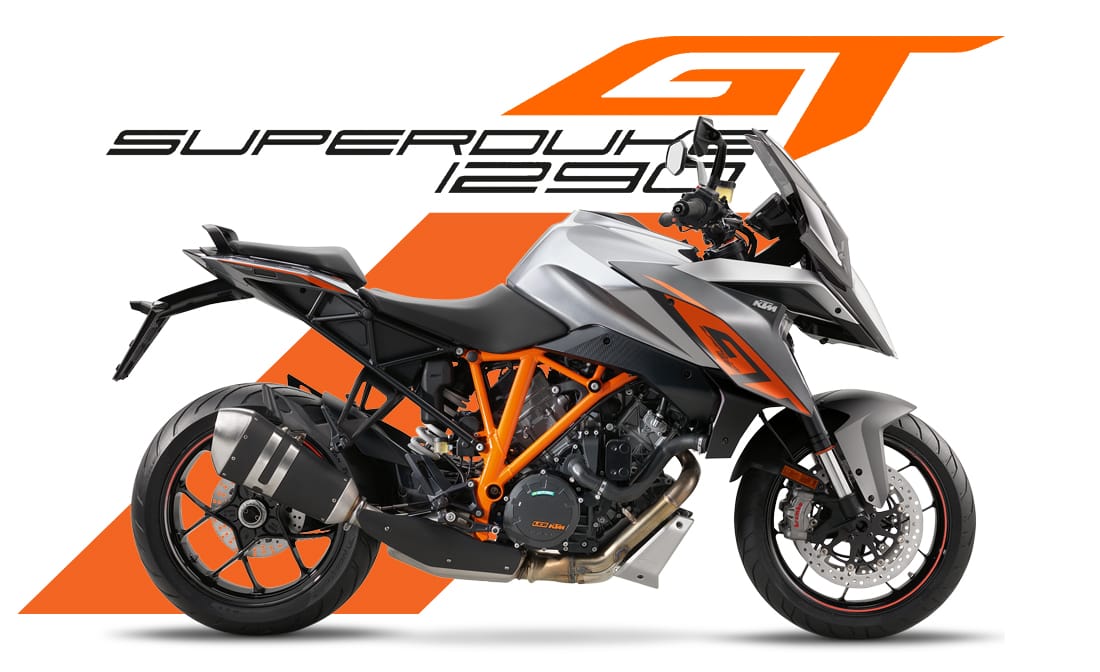 Comfort is a whole lot better than you would think looking at that thin seat cushion. The riding position is sporty but on the right side of comfort for long days in the saddle. Wind protection is good without being spectacular but there’s no buffeting. Standard equipment is very comprehensive but more about that in a later post. It’s not perfect but I don’t want to dwell on that either at the moment.
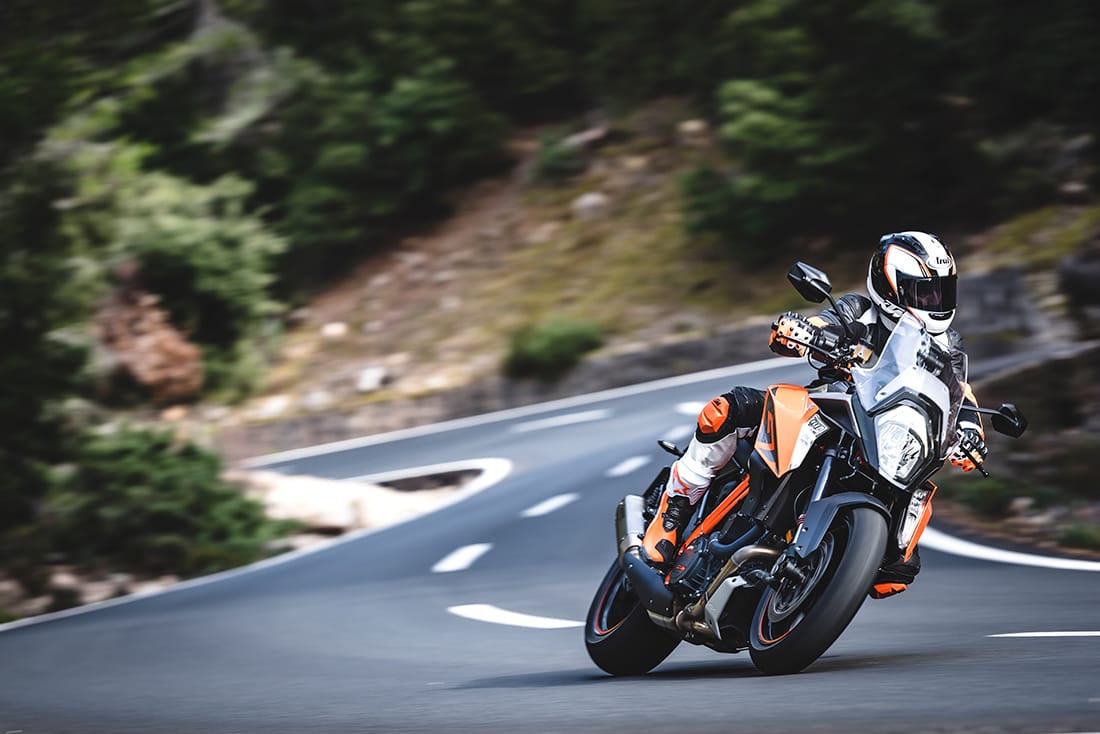 To end on, a bit of owner advice; make sure you budget for tyres. More specifically, the back tyre. This Pirelli Angel GT tyre comes as standard equipment on GTs and, as you can see if you use all the torque available – and there is a lot and you will use it all the time – this is going to happen in 8,000kms. Square and ruined! Something to consider when calculating running costs.