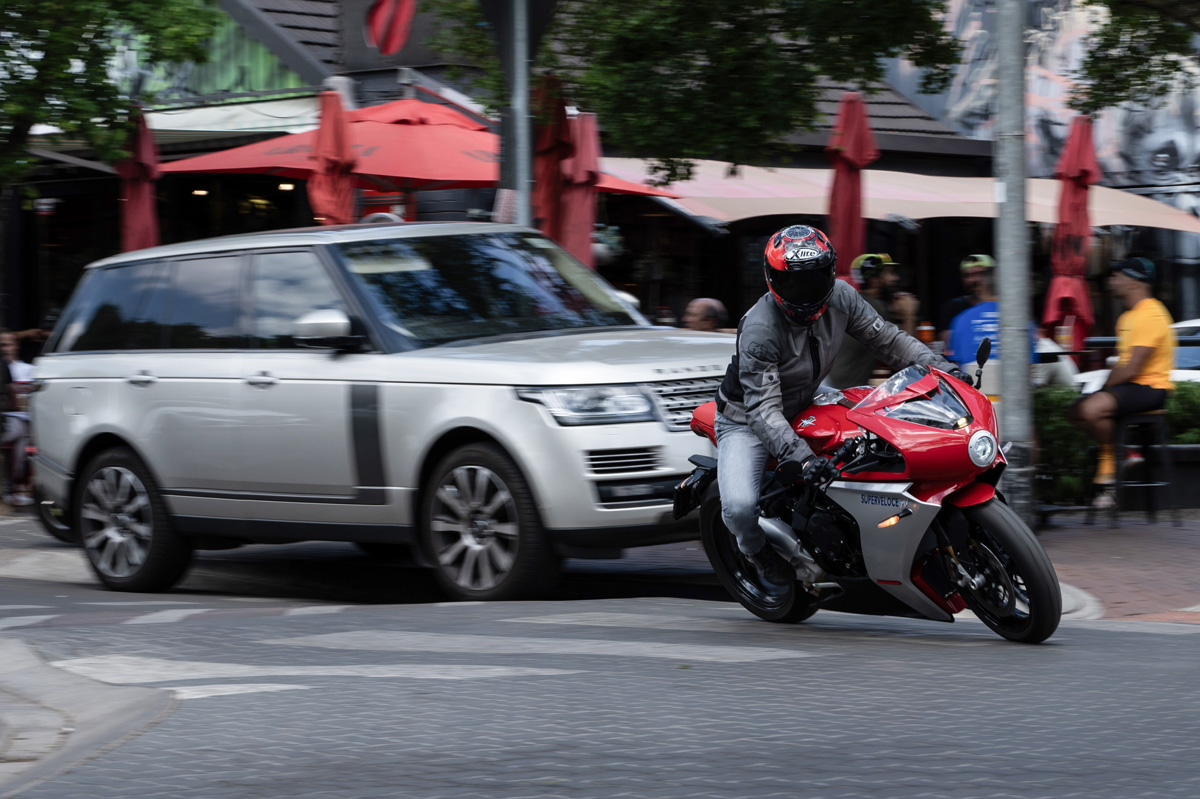
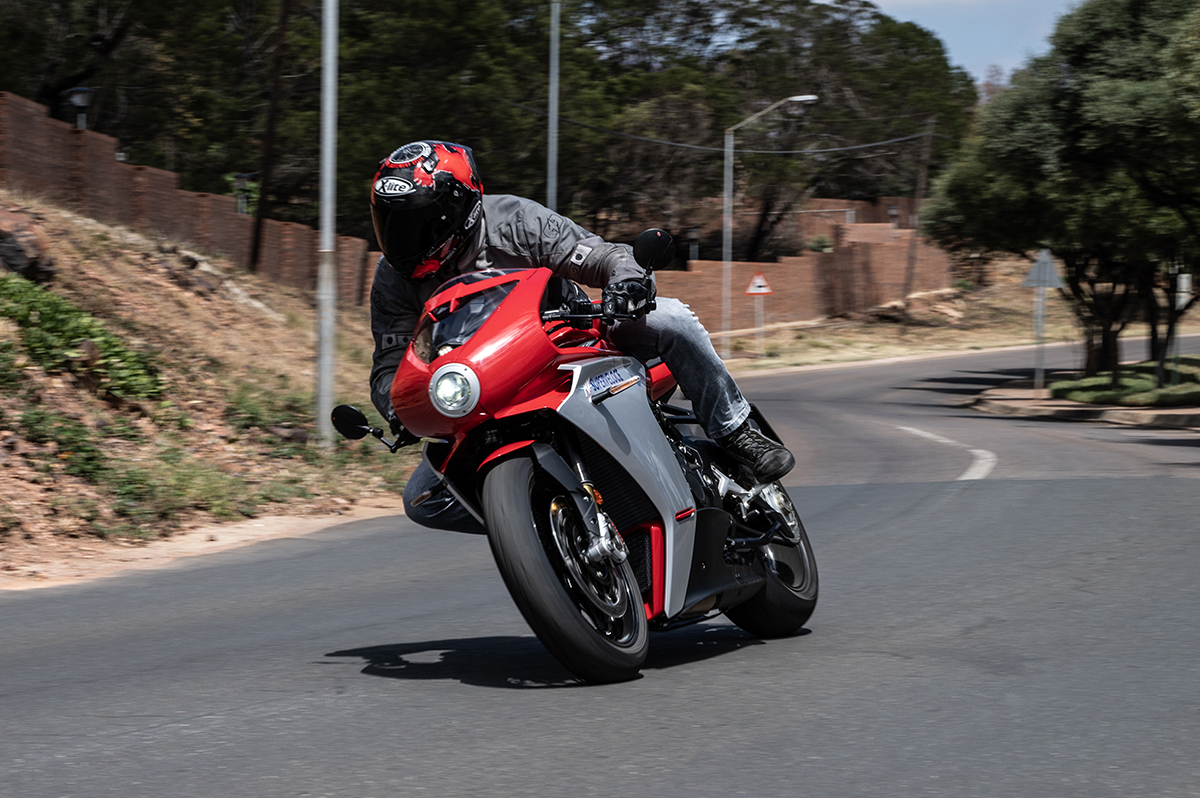
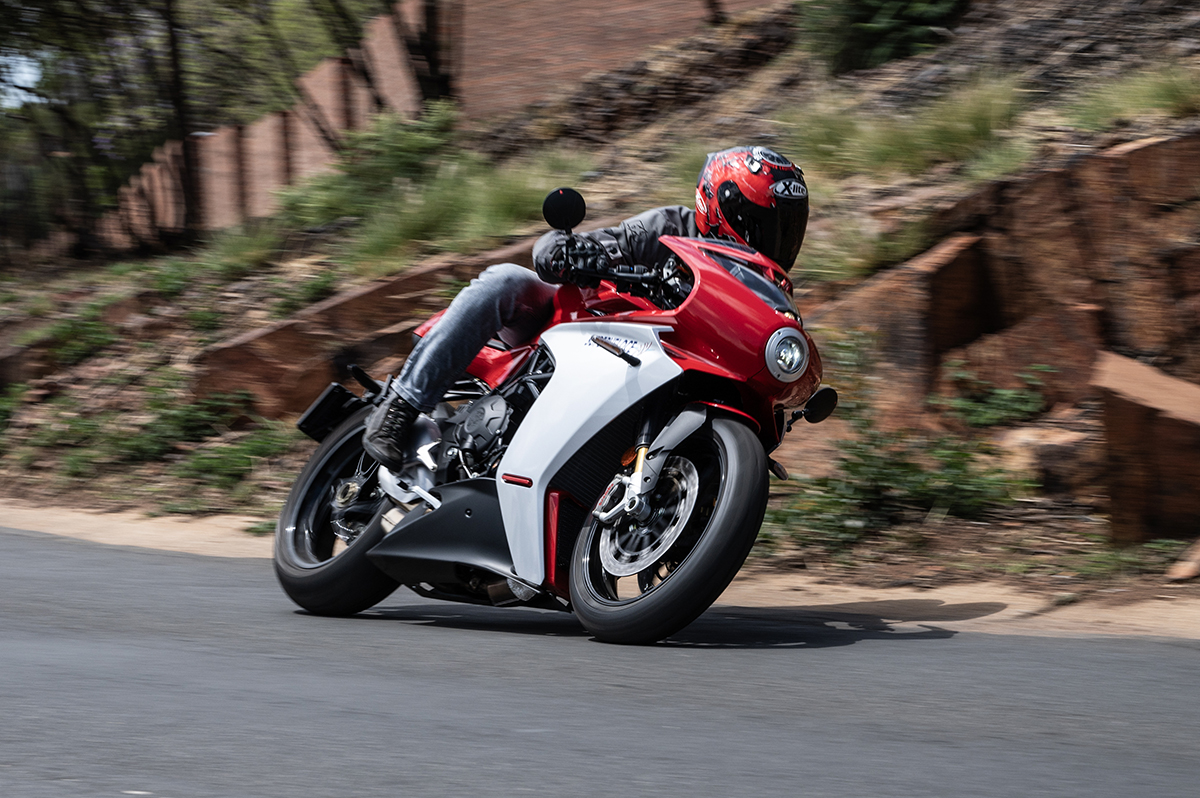
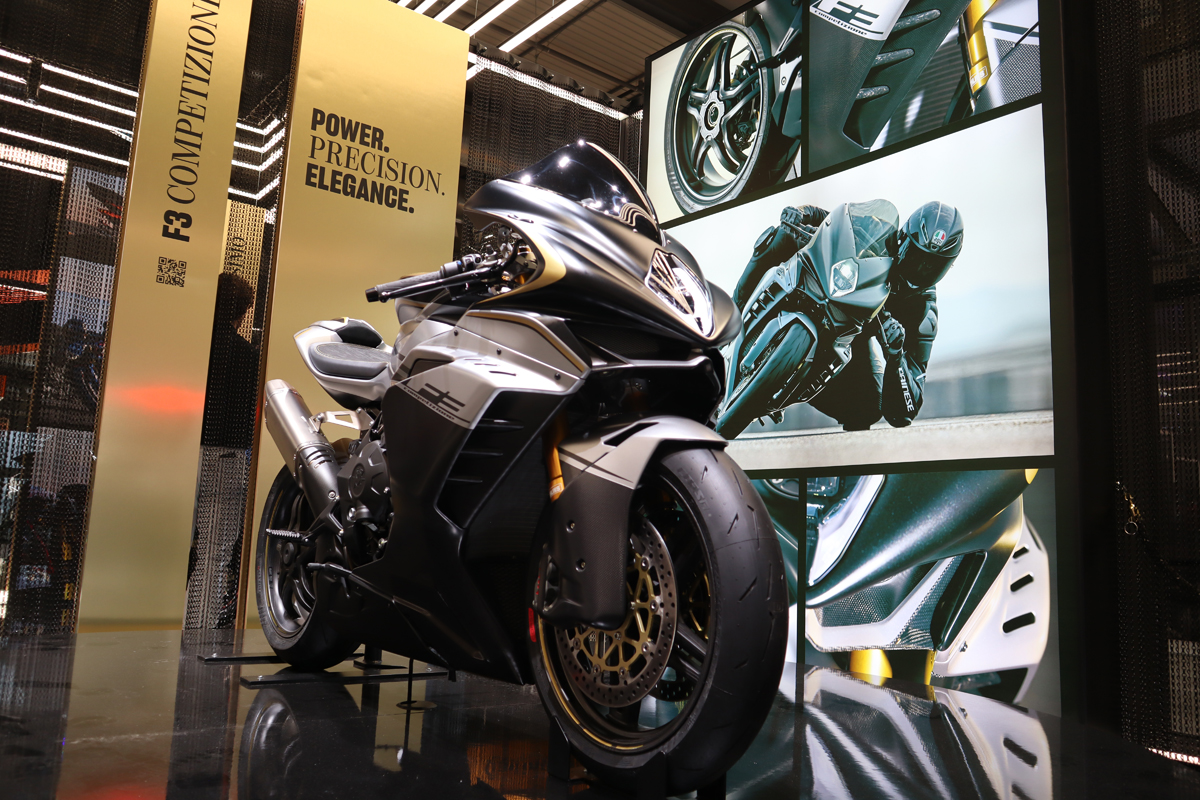
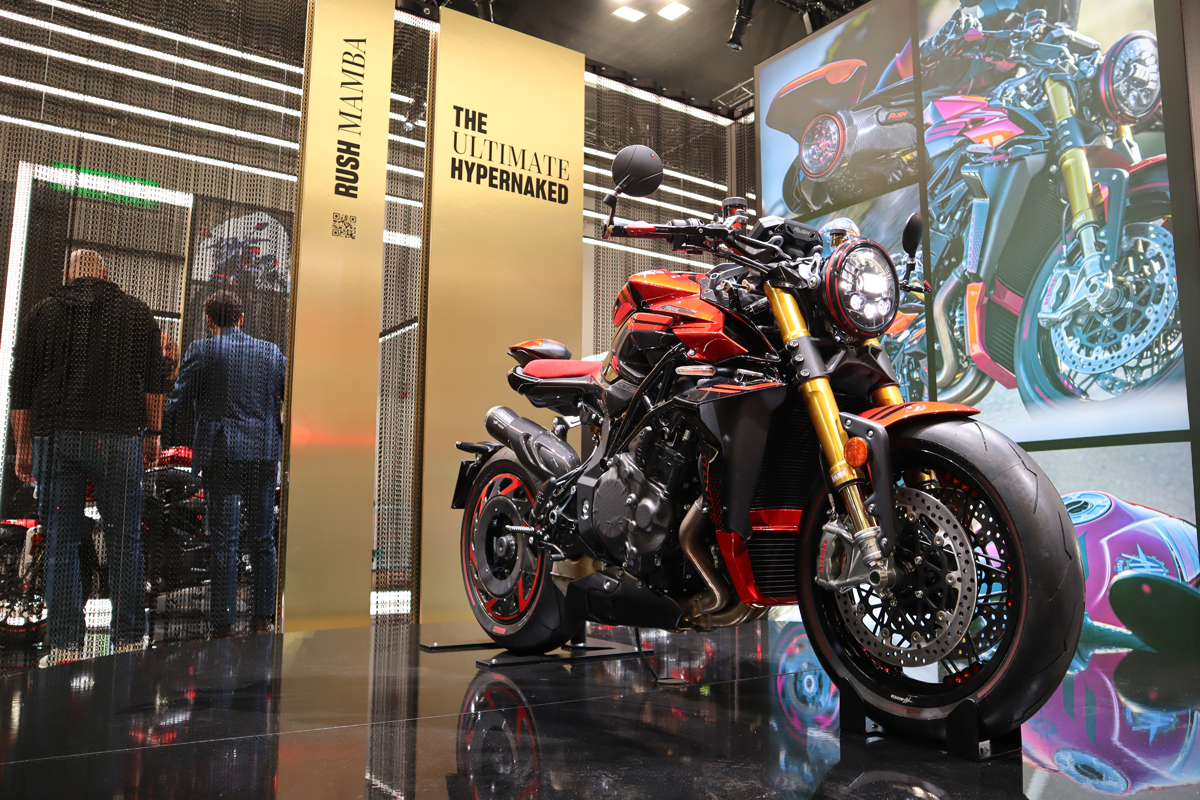
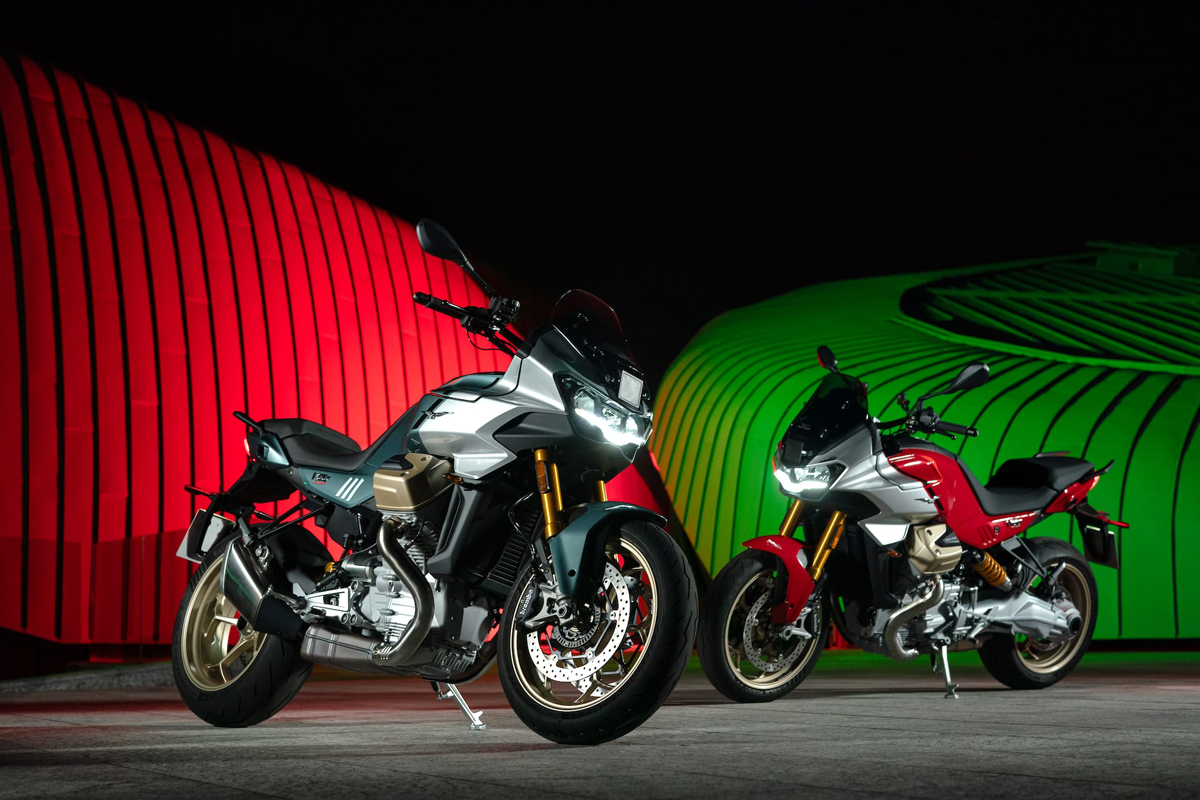
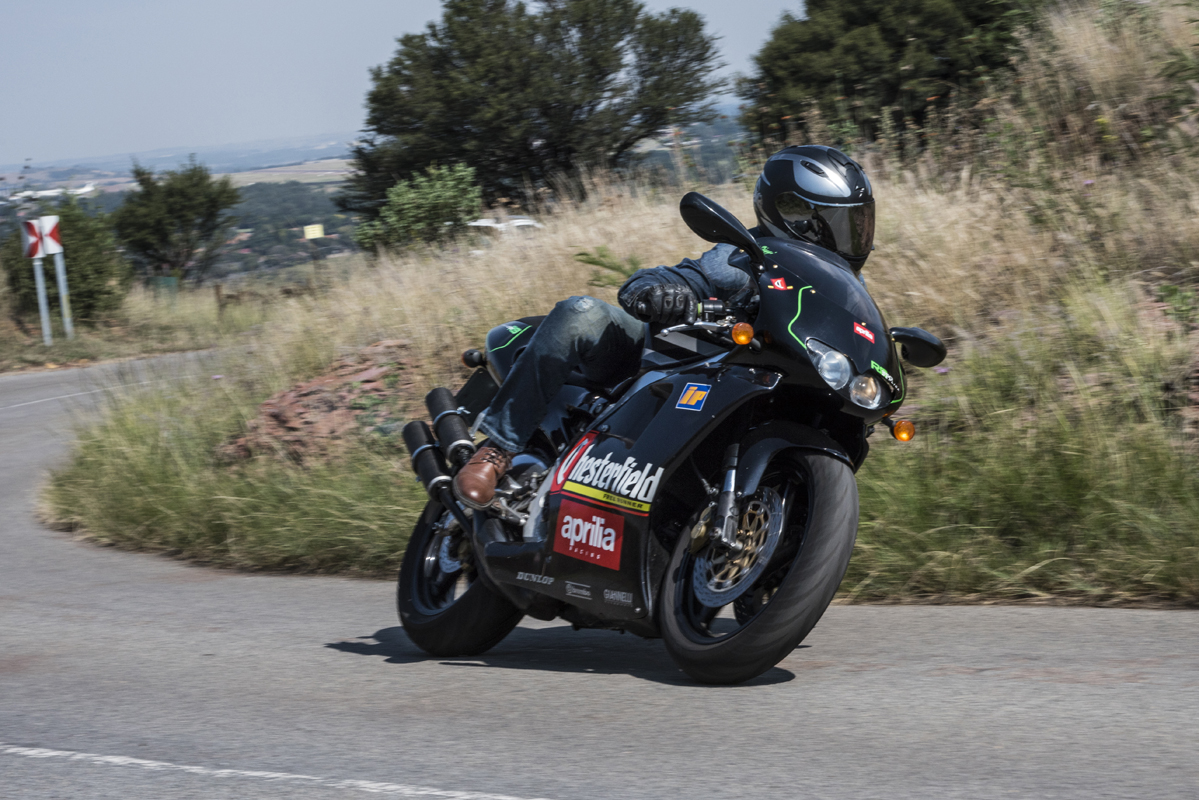
It goes without saying, but let’s just say it anyway, the most well-known food, art, roads, vehicles and motorcycle riders in the world come from Italy. The Italians know how to mix passion into their daily lives like no other nation, they’ve got it nailed. One of those long-living examples from the motherland has to be MV Agusta, a company that lives, rides and shouts out their passion for motorsport, and design and always showcases to the world what true motorcycle exotica looks and feels like.
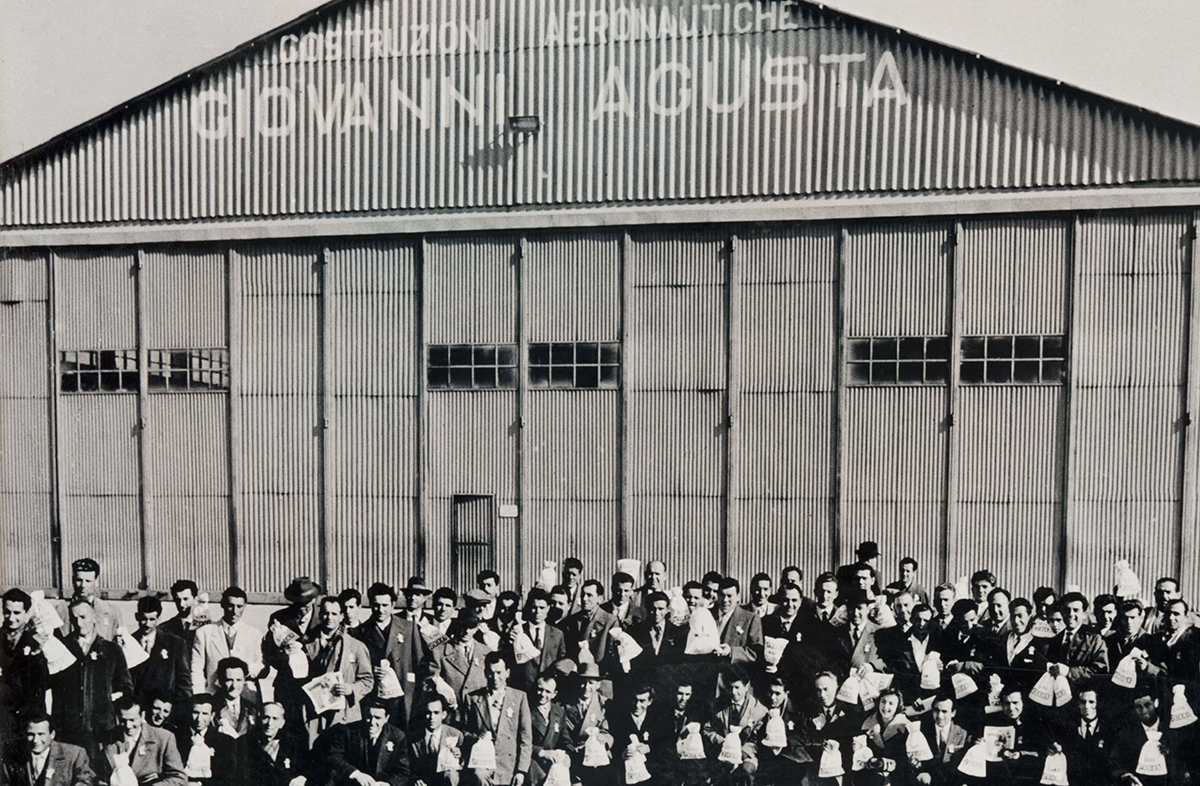
What started as Count Giovanni Agusta’s passion for aeronautics in the small town of Cascina Costa soon turned into supporting WWI and WW2 as the Italian Royal Air Force’s main servicing and manufacturer of parts. As war died down, one of Giovanni’s sons Domenico took over and decided to diversify the business and also run with his very own passion, a passion for motorcycles and racing. MV Agusta was officially born, MV being the abbreviation for “Meccaniche Verghera”, which simply means Mechanics and Verghera was the hamlet where the first MVs were made in the late 1940s.
Image source: MV Agusta
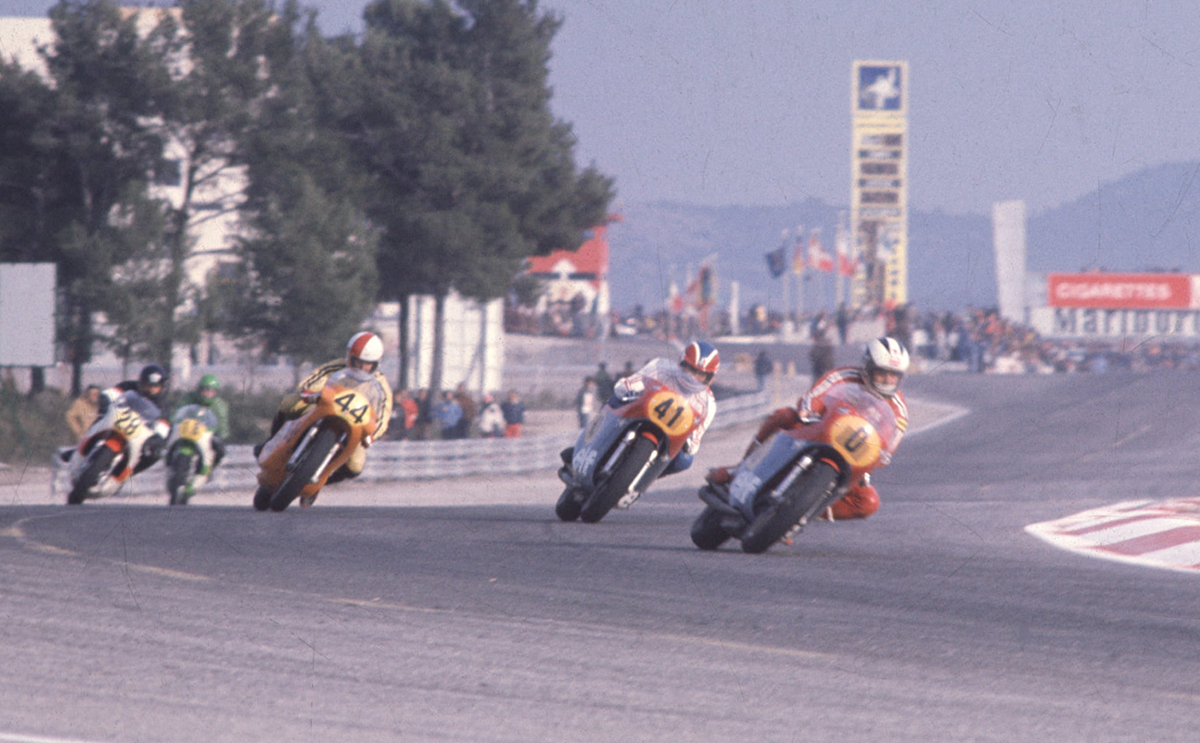
MV Agusta’s history has been marked by victories on circuits around the world. For heaven’s sake, their first motorcycle, the MV 98 Sport brought the manufacturer their first taste of victory at the hands of Franco Bertoni at Carate, Brianza. MV Agusta couldn’t have started their story any better, even if Hollywood had to write it themselves.
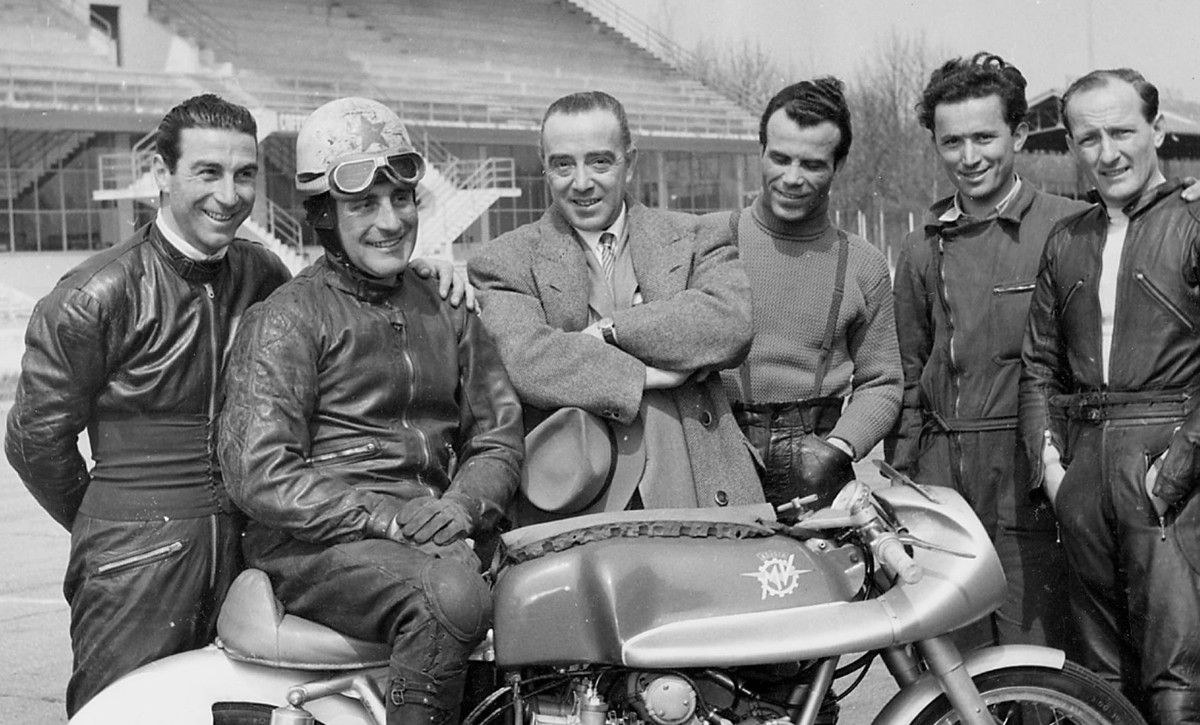
What followed was a string of victories that placed the company in the spotlight up until their last win in 1976. Throughout MV’s history, MV Agusta has been associated with some of the most successful riders in motorsport history, including MotoGP legend Giacomo Agostini, Carlo Ubbiali, Mike Hailwood, Phil Read, John Surtees, and Gary Hocking. With these acclaimed riders, MV reaped an incredible 270 Grand Prix motorcycle races, 37 World Constructors’ Championships, and 38 World Riders’ Championships.
Image source: MV Agusta
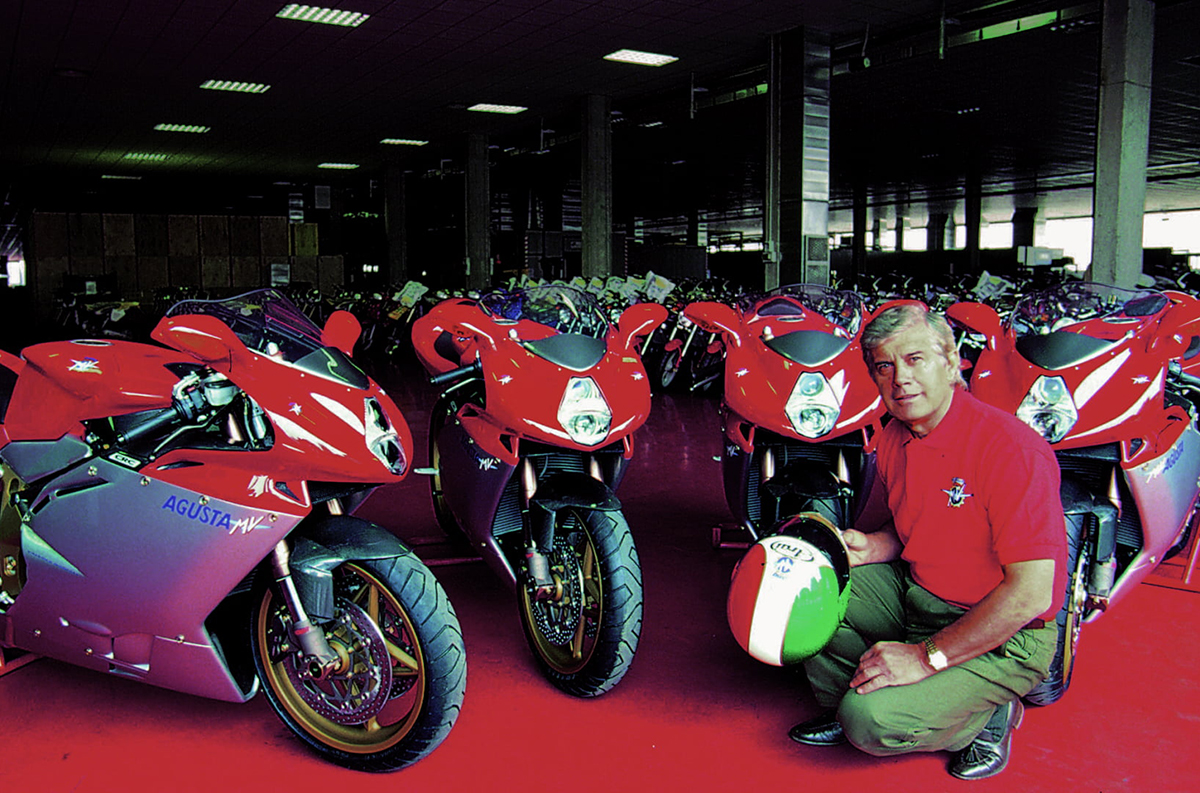
It’s more than fair to say that racing put MV Agusta on the map, but after disappearing off of the map for a couple of years, their resurrection in the early 90s thanks to Cagiva took a slightly different angle than before. Designed by Massimo Tamburini (the man behind the beautiful Ducati 916), Ferrari-derived engine development (that’s where the ‘F’ comes in) and backed by Cagiva, we are talking about the F4 750. MV made their return to the industry with the beautiful F4, not focused on racing but rather as an exotic motorcycle manufacturer building masterpieces in design with throwbacks to their glory days.
Why so much history, I thought this was a SuperVeloce review? Well, to properly understand the SuperVeloce, you need to know about these two eras of MV. Now I think the F4 takes the prize money compared to the 916 in the beauty pageant and my reason for thinking so is because almost 30 years later, the F4 parked next to the latest superbikes today still looks timeless. Remember the word timeless, we will touch on that again.
Image source: MV Agusta
Now MV didn’t completely give up on racing, but they sort of stuck to the middle-weight supersport series with their F3 675 model, which became the base of the loved F3 800. The F3 800 is a pedigree race machine that never raced but puts out an astounding power-to-weight ratio with the F3 only weighing 173 kg, delivering 150 hp out of its 798 cc triple and it’s also mated to a unique counter-rotating crankshaft. The bike is an absolute riot to ride, delivering near superbike levels of performance.
Now instead of doing what the rest of the motorcycle manufacturers do, which is detune some old superbike engines that are lying around the factory or put an underpowered naked bike motor into what they call a Neo or Cafe Racer, MV Agusta has just tailored Grandad’s old suit to fit the F3 800 and boy does it ride as good as it looks. It’s a timeless design with modern throwbacks to the past, but with a thoroughbred machine beneath the covers that will rev out to 14,000 rpm.
Photo credit: Bjorn Moreira / ZA Bikers
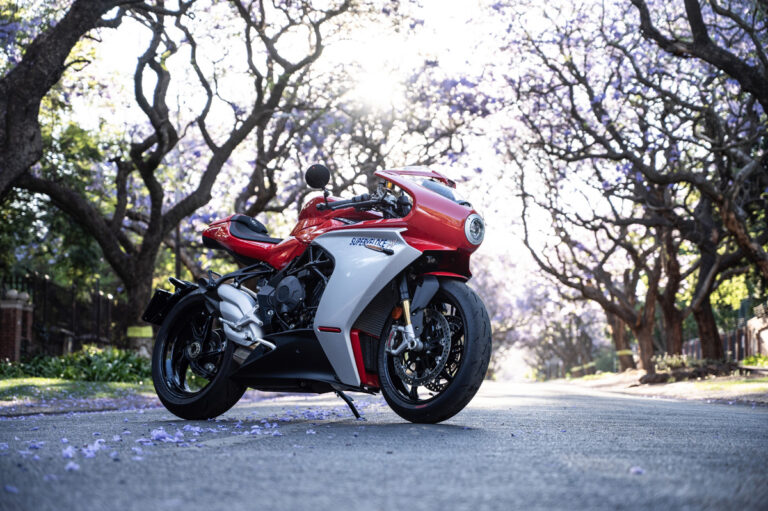
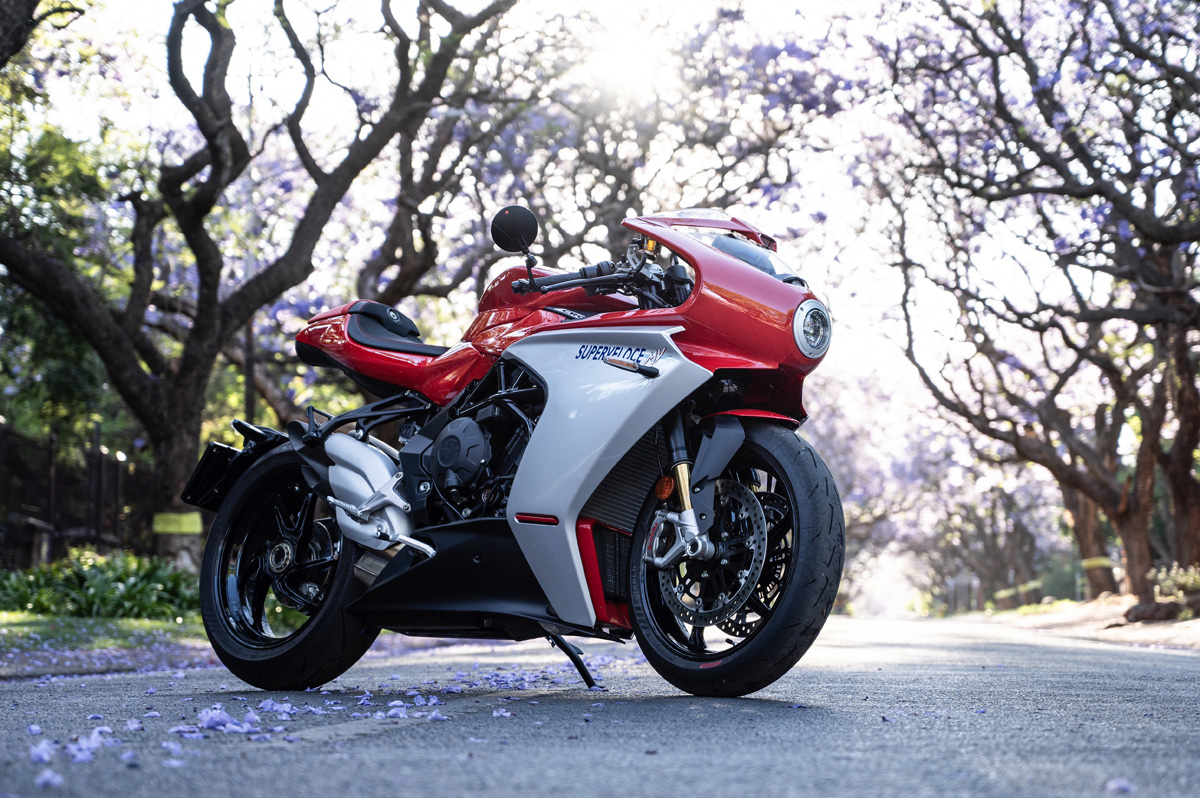
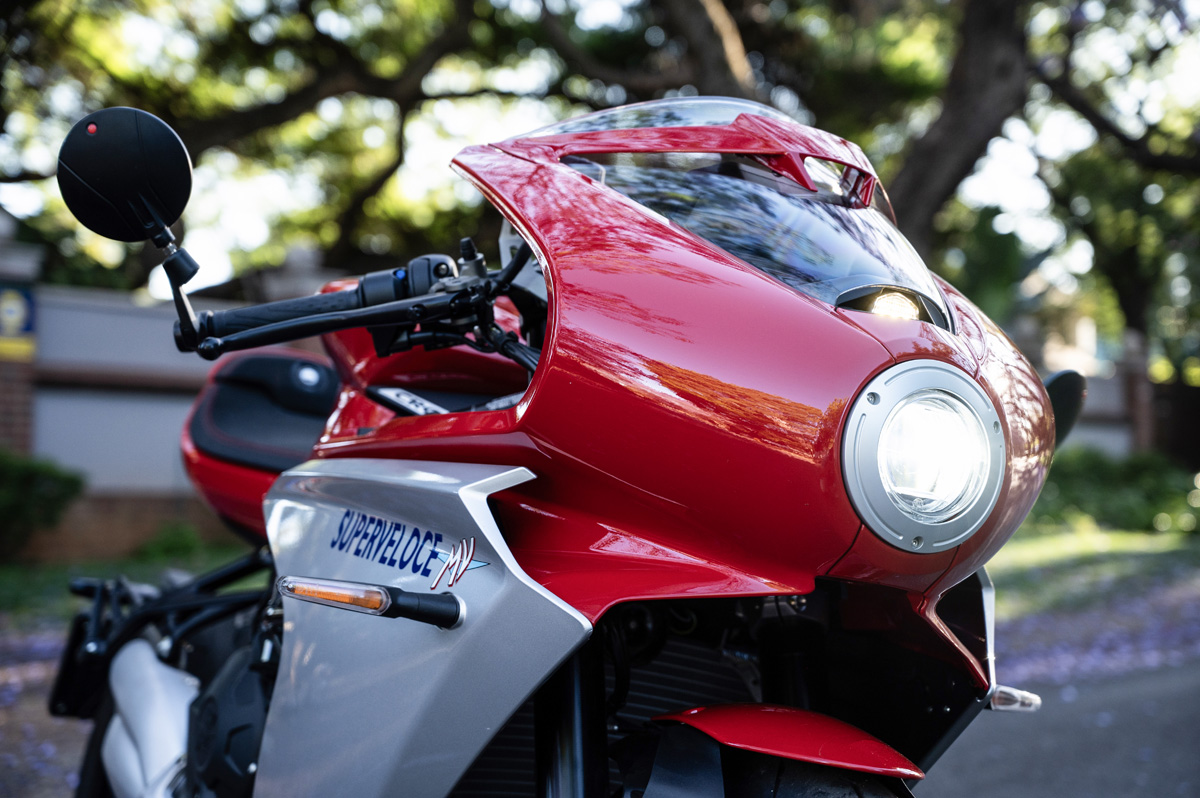
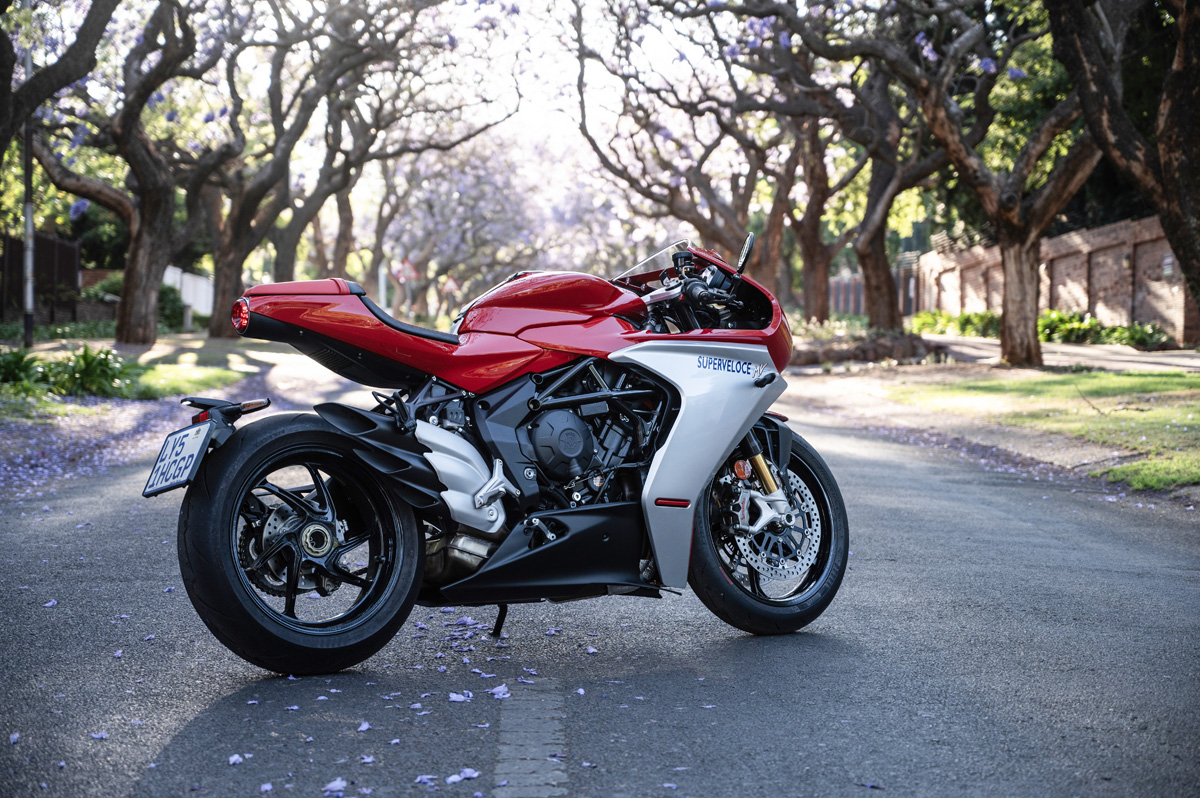
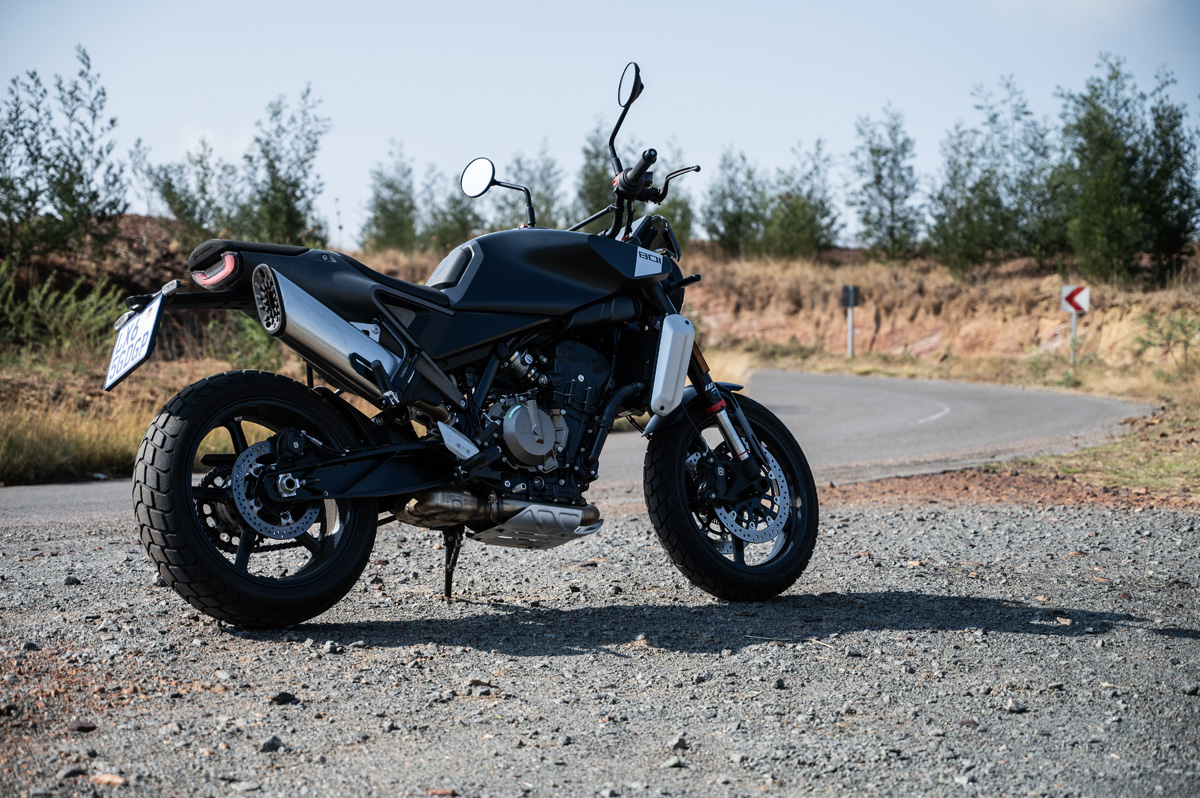
Now some would call the older fairing design on the SuperVeloce a dustbin wrap-around fairing, but I think that’s too trashy to say in the case of the SuperVeloce, I mean it looks like it travelled back in time and all that was tasteful got dragged back into the present time with it. The bike is a perfect combination of vintage racing meets modern elegant lines. The fairings for one do not have any visible fasteners which gives it a super clean and flowing look from one panel to the next.
Photo credit: Bjorn Moreira / ZA Bikers
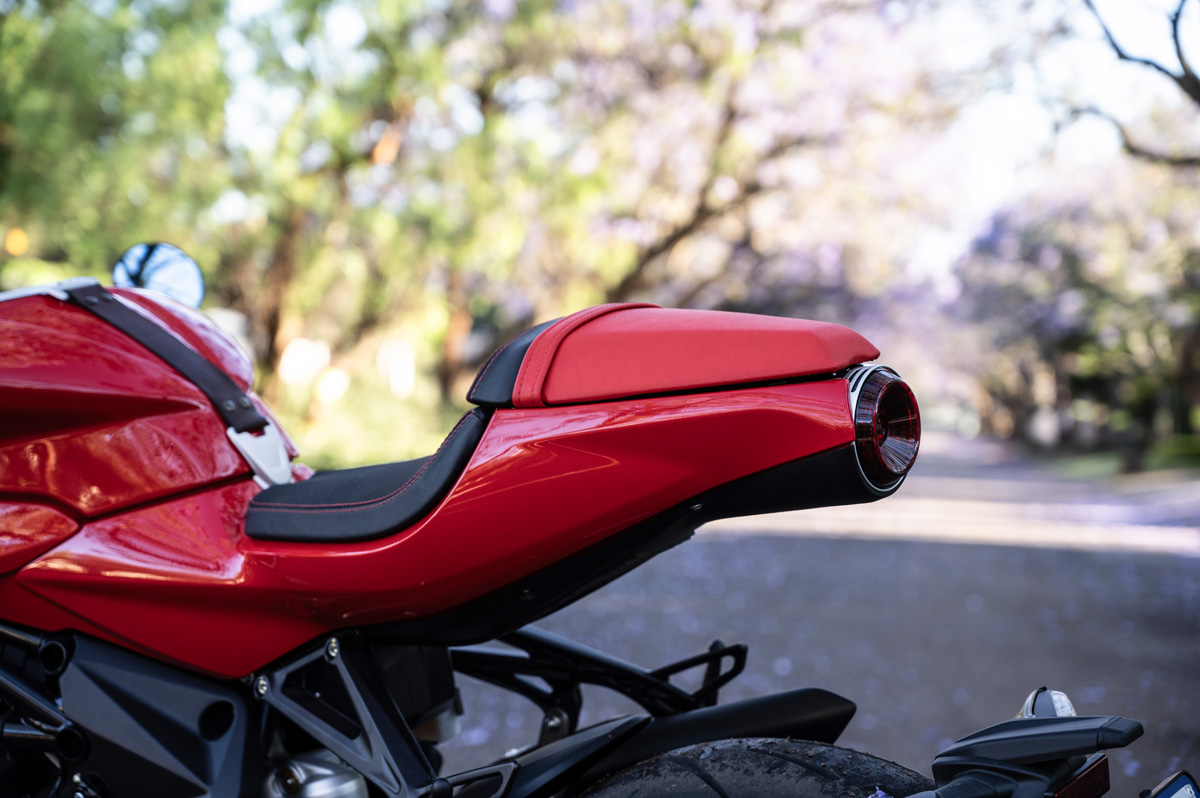
The upper fairing in particular expands from the round headlight and is profiled with a retro sense of aerodynamic efficiency. Lower down the fairing adopts a modern profile, incorporating lateral air intakes and a spoiler. The masterfully contoured F3 tank conveys a sense of lean muscularity that carries through to the other end of the bike, where the seat cowl tapers into another rounded light, a look that’s not particularly retro-nostalgic but is perfectly coordinated with the front.
Photo credit: Bjorn Moreira / ZA Bikers
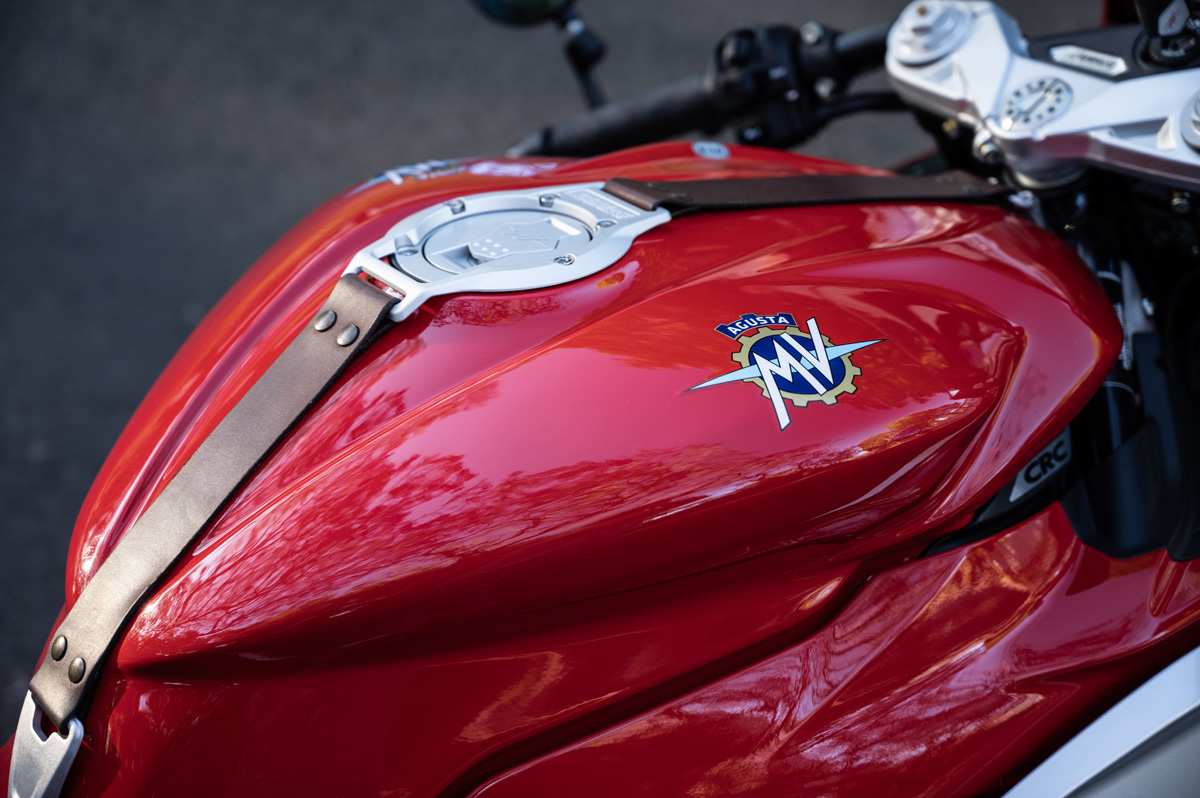
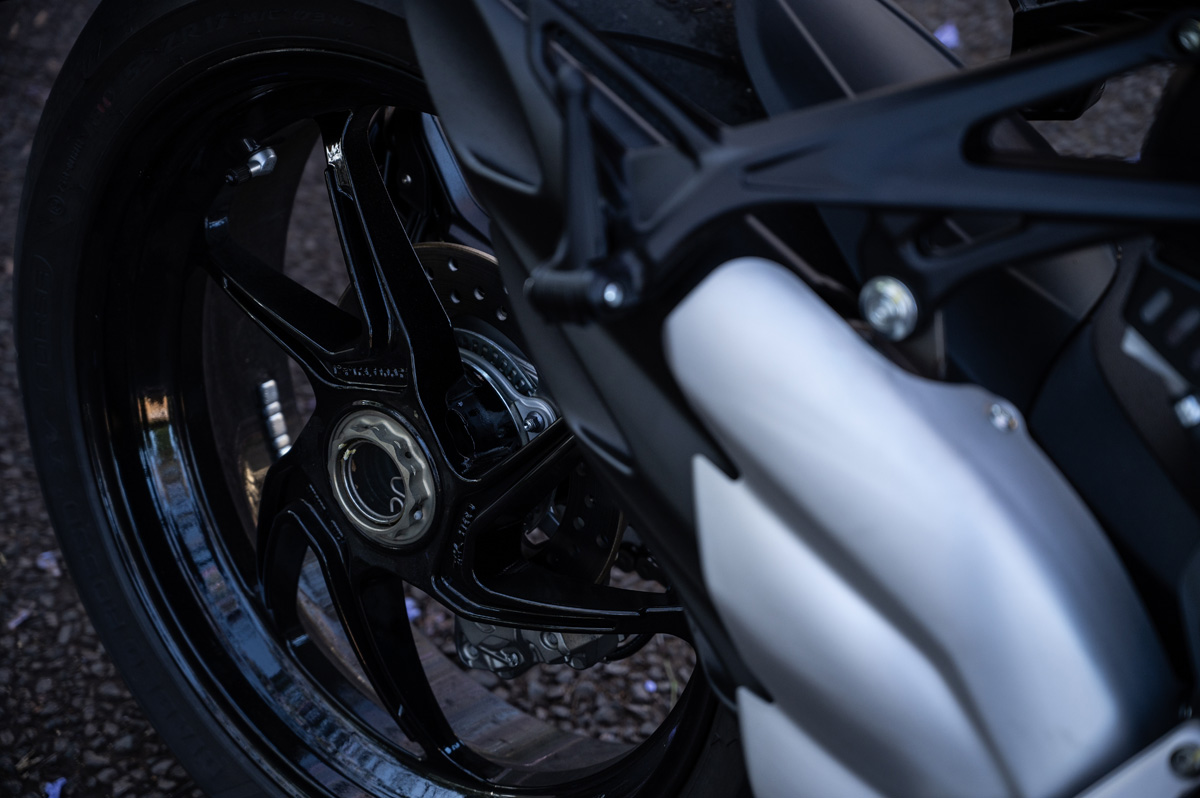
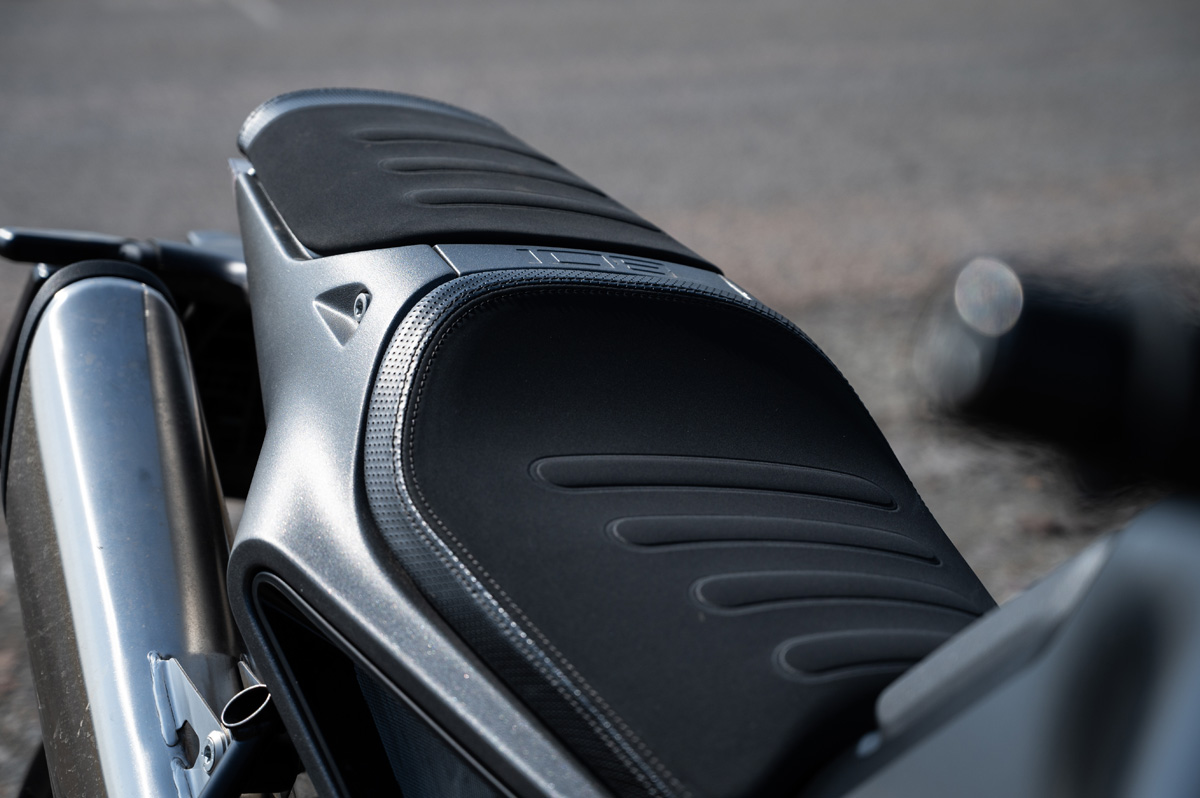
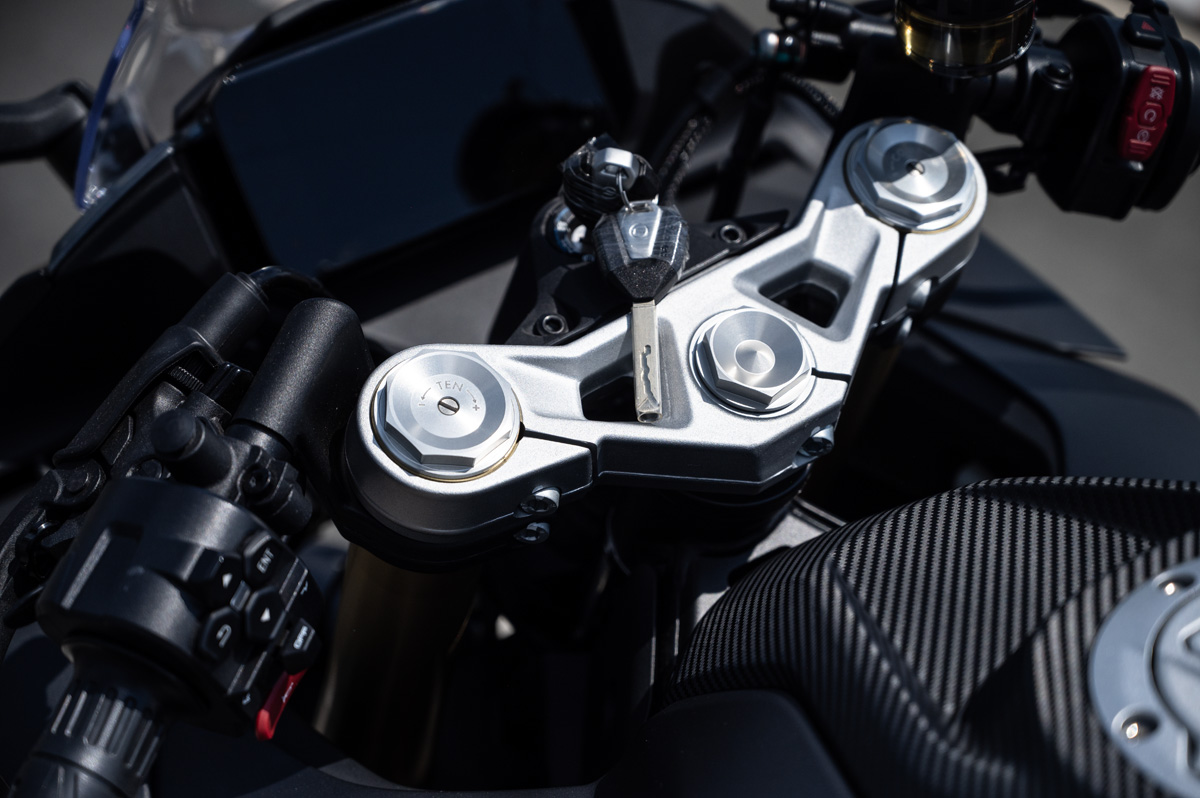
How could you not love the styling of Superveloce, I mean it’s got a senseless leather belt running down the middle of the tank, a machined triple clamp, red stitching on its seat that flows into a red pillion seat that mimics a cowl, the throwback CRC logo (Castiglioni Research Centre) near the top of the frame, but then it has a single-sided swing arm and triple side exit exhausts.
Photo credit: Bjorn Moreira / ZA Bikers
It’s just pure exotic I say, and it gets everyone’s attention. Oh, if you want to flash or make your SuperVeloce look like Agostini’s 500 Triple, Arrow also makes custom black pipes that look just like Ago’s.
Photo credit: Bjorn Moreira / ZA Bikers
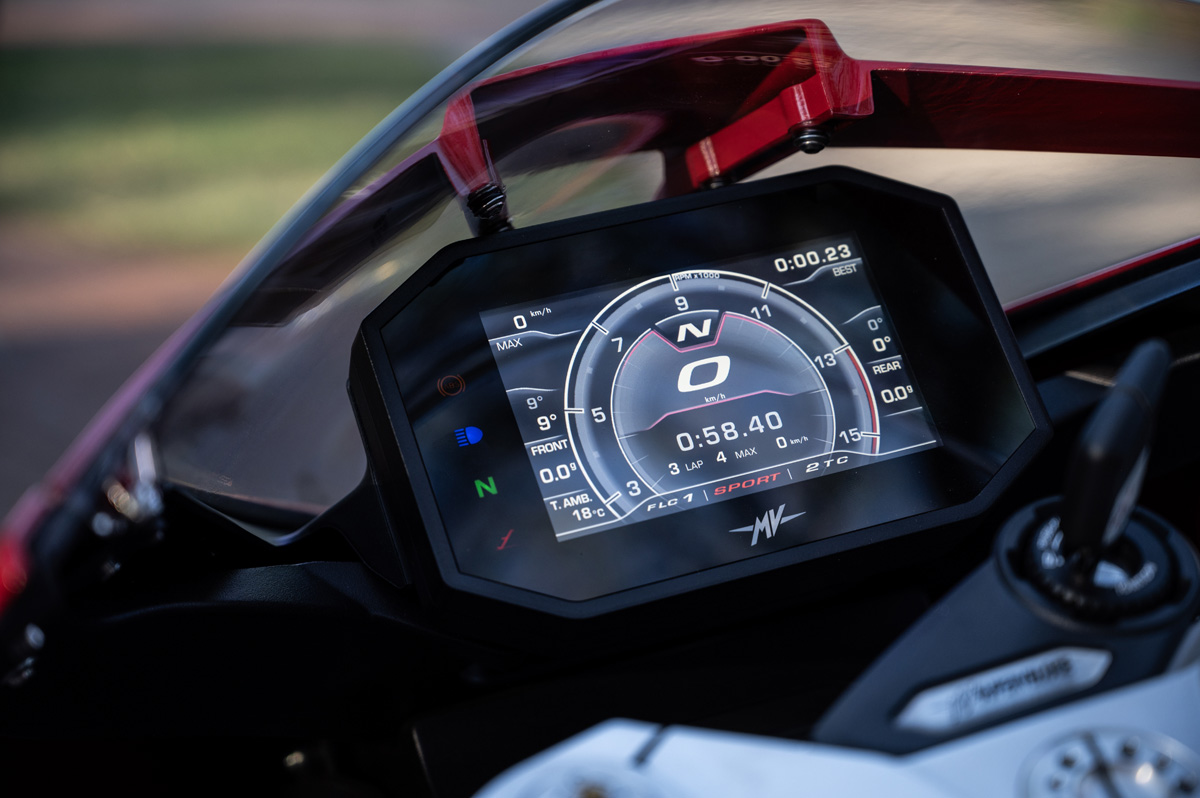
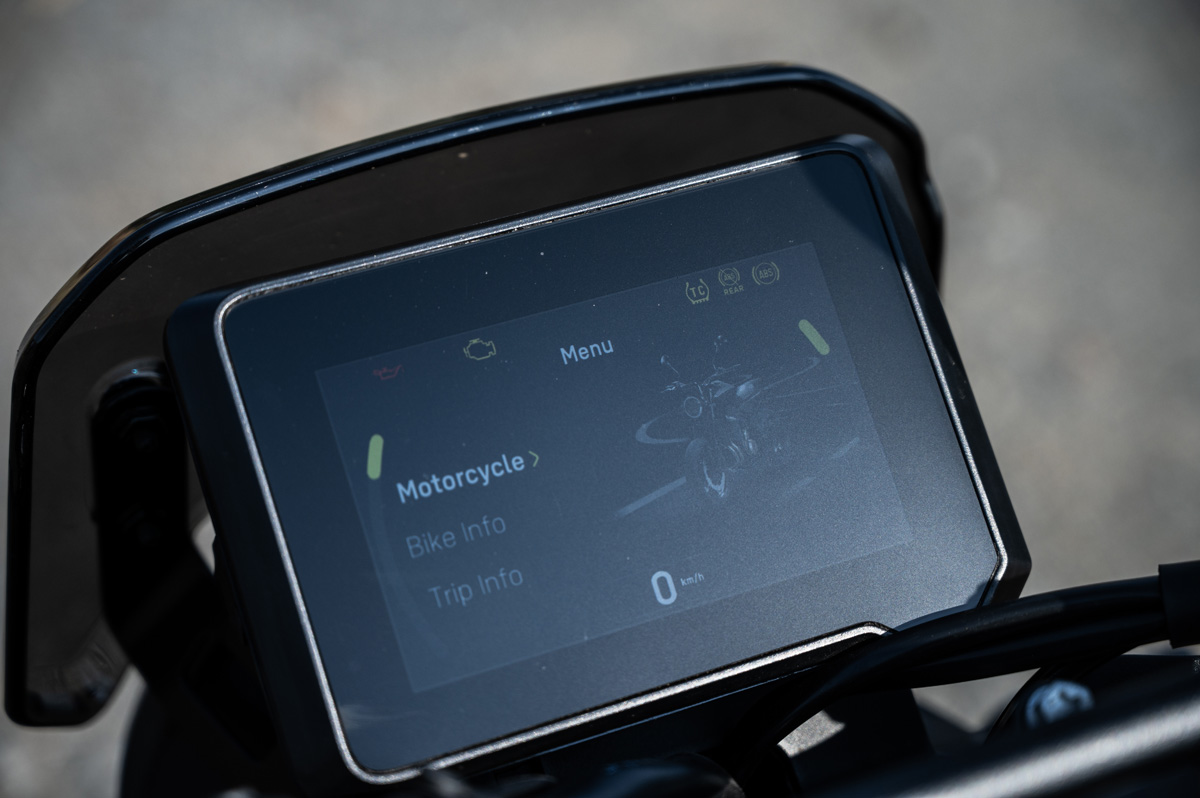
As for modern electronics, MV have thrown their latest 5-inch TFT instrumentation display with what they say is groundbreaking tech. I think MV have laid out the display in a simple way that doesn’t distract the rider from the experience, you’ve got FLC (lift control) on the left, rider mode in the centre and traction control on the right of your screen, all accessible with one button without going into different chapters within a menu. I will say, that not having a petrol gauge on a modern bike reminds me a lot of my 94 Aprilia RS 250, just without a reserve switch—the bike does have a warning light that pops on though. I guess that is part of the MV charm!
Photo credit: Bjorn Moreira / ZA Bikers
The lap time, lean angle indicators and launch control will probably never get used by the kind of clients that would be interested in the motorcycle, but again, this is a modern take on an old race machine. I would have personally gone one step further and set the background of the display to yellow, like on the original F4 750, just to be extra nostalgic or even go for a round TFT like on the older Yamaha XSR 900 or Triumph Trident 660.
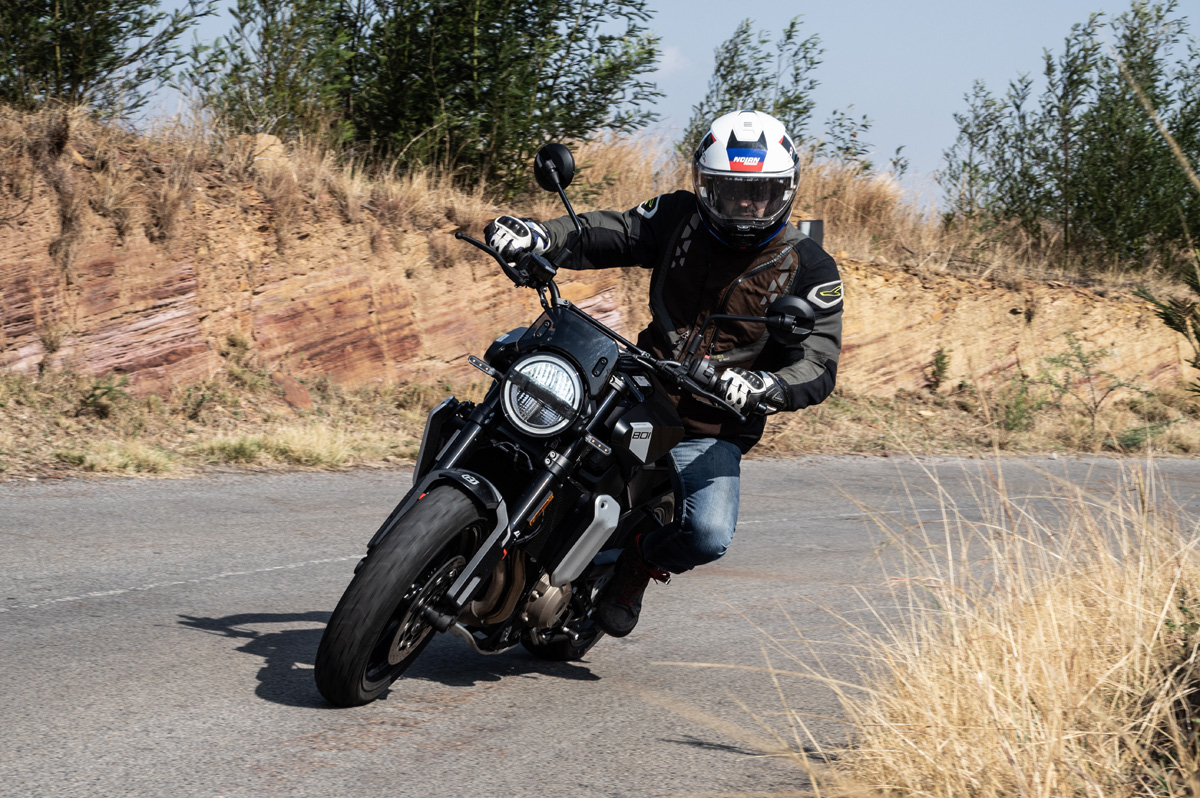
Riding the SuperVeloce is the same in ergonomics as the F3, which is very wristy and elastic leg-like, but it gives you a completely different experience because of what you see in the reflections as you ride by and as you look down at the leather running across the tank. The SuperVeloce is nosy and stiff in its handling characteristics out of the box, with some suspension setup you could get the ride setup for peacocking around town just right.
Photo credit: Meredith Potgieter / ZA Bikers
When you do eventually get out of town, you are riding pretty much the cream of the crop supersport machine and what that comes with is amazing high-speed handling, stability, brakes that work better than a pause button and standard pipes that somehow have past Euro whatever it is these day with an amazing Moto2 like scream past 10,000 rpm. Man, I love riding any of MV’s bikes that have this 798 cc triple, but the SuperVeloce takes the cake for me for the overall experience.
Photo credit: Meredith Potgieter / ZA Bikers
In the suburbs, like I said, you are riding a supersport bike so your turning circle is horrible, your wrists will get tired and you might even get a leg cramp or two which doesn’t exactly work very well when you are trying to pose. But, this is the price riders especially Italian motorcycle enthusiasts have paid and are happy to pay until the day they die, I’m one of them and I completely get it. The triple is rough under idle and is sort of like a child that is tired of shopping and wants to go home, constantly fighting in the lower rpms. That would be one of the main annoying factors, but you can ride around it by riding the clutch.
Photo credit: Meredith Potgieter / ZA Bikers
MV could have ditched the ‘Super’ in Veloce and could have given us a Veloce 800 with high clip-on handlebars, lower rear sets and a detuned 798 cc triple allowing for more torque lower in the rpm range, but everyone else already does that. MV Agusta doesn’t follow trends and I guess we see their racing background shine through the SuperVeloce in full effect and I can respect that.
Photo credit: Bjorn Moreira / ZA Bikers
So, is the SuperVeloce an offer you can’t refuse? Well, if you can afford one (around 400k) and love what MV Agusta as a brand stands for, then yes it is. You will find your local MV Agusta dealer in Alberton at Fast.KTM.
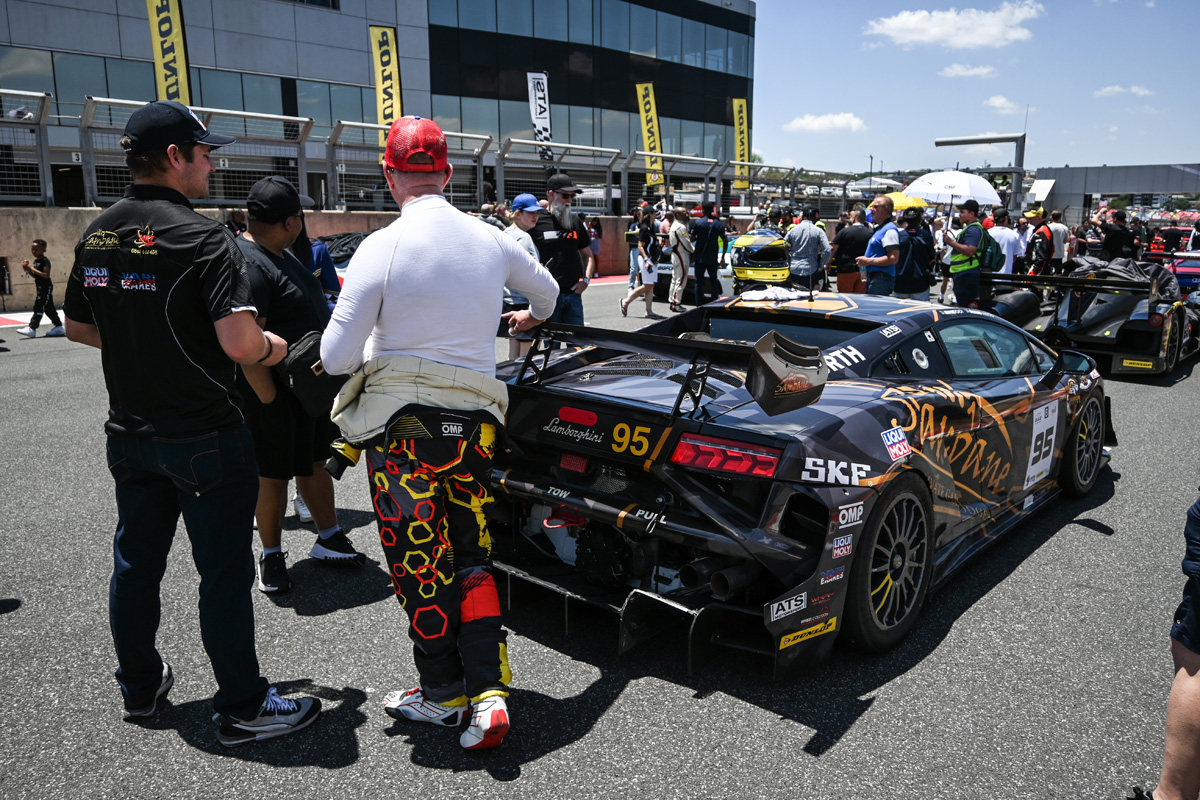
Following on from our report from the Motorsport South Africa Awards evening, which celebrated a motorsport scene in rude health in SA, comes the race report from the Kyalami 9-Hour race, which saw not only great racing across all classes but also the crowning of a new SA Endurance National Champion.
Photo credit: Bjorn Moreira / ZA Lifestyle
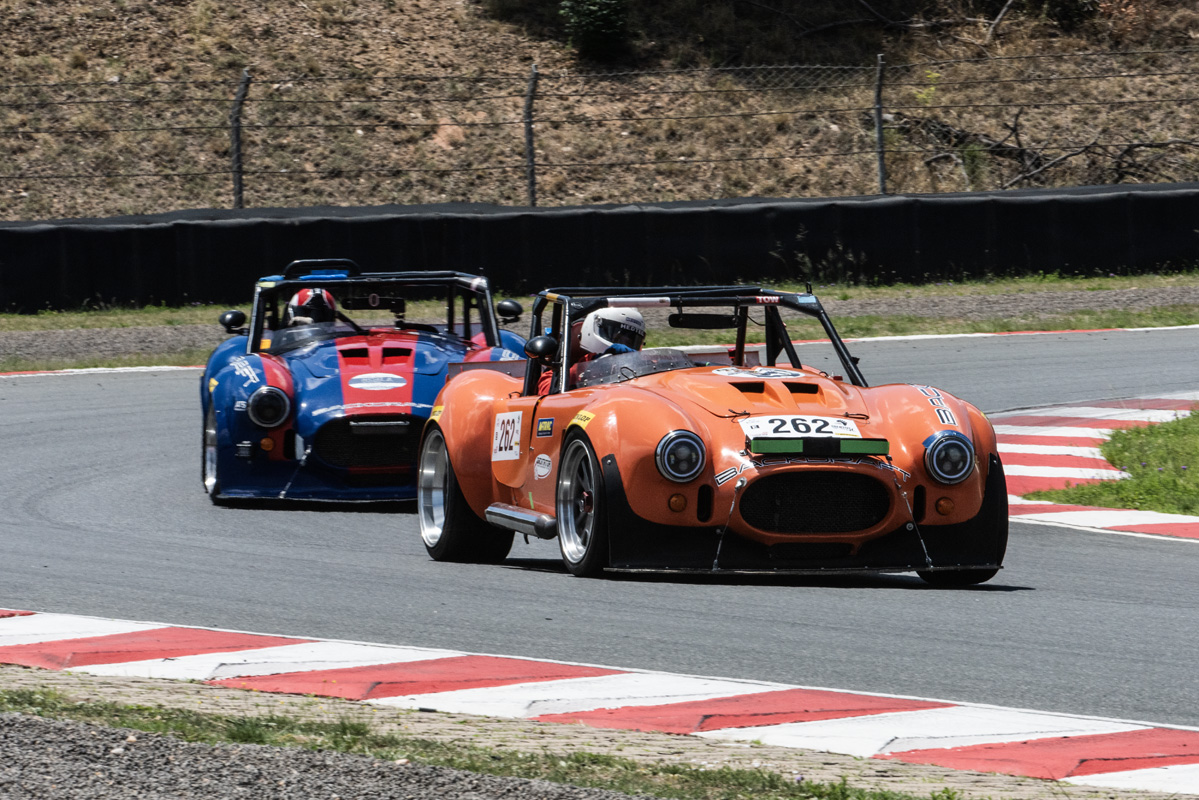
Xolile Letlaka and Stuart White sealed the title after taking victory at the Nine-Hours of Kyalami with Mikaeel Pitamber drafted in as a third driver for the season-ending double-points race. The father-and-son team of Harm and Barend Pretorius won the inaugural V8 Roadster and Index of Performance National Championships in their Team Pesty Backdraft
Roadster.
Photo credit: Bjorn Moreira / ZA Lifestyle
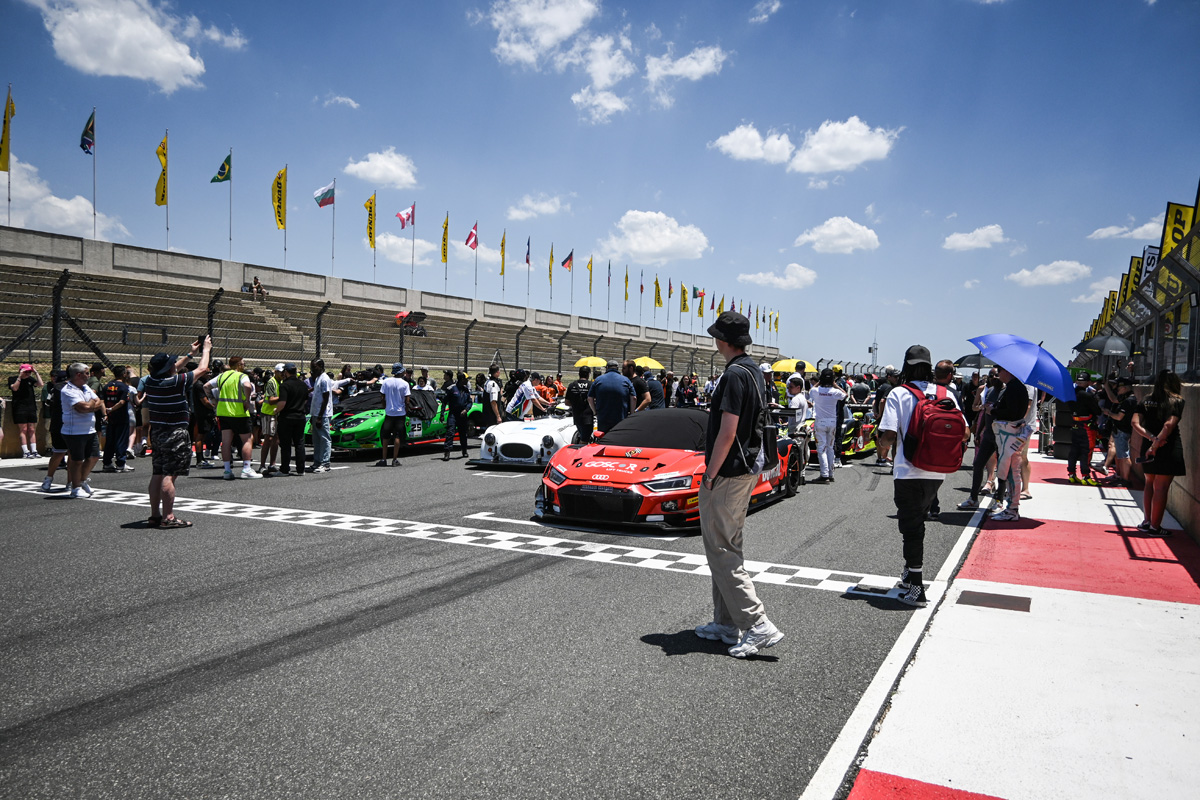
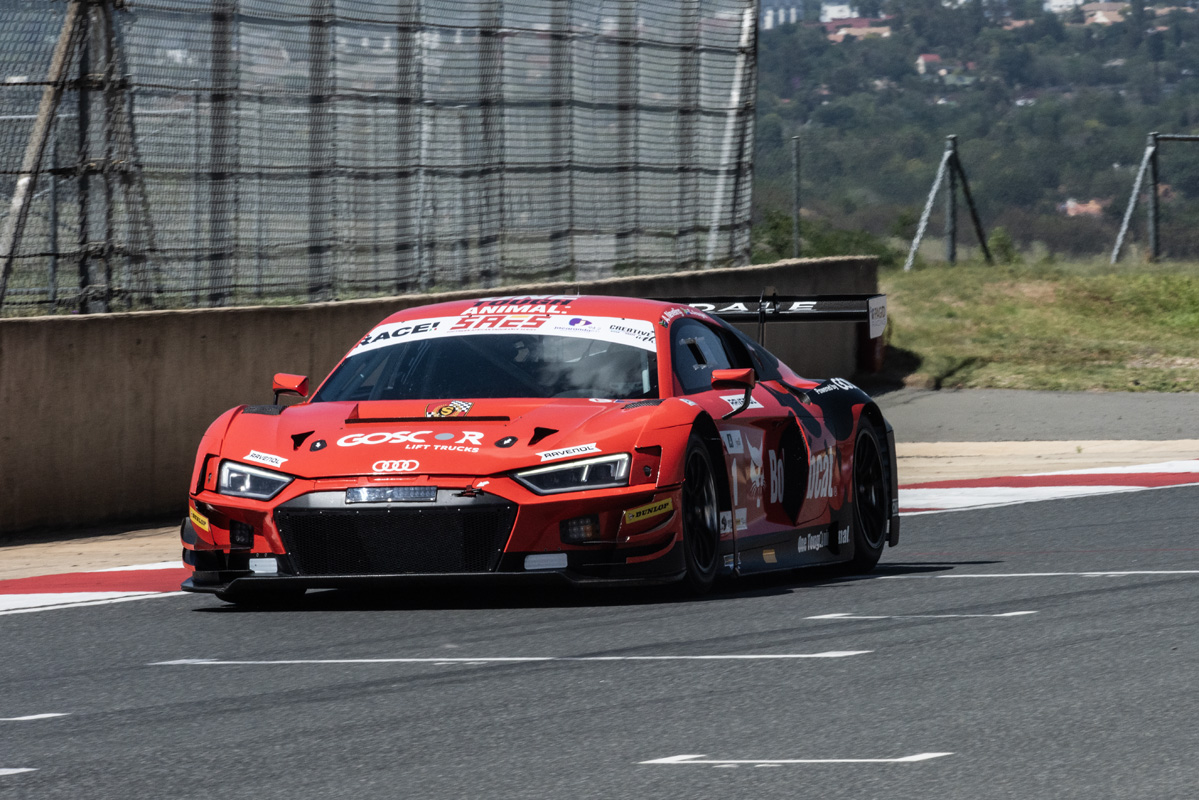
The Nine-Hours of Kyalami, proudly driven by RACE! was a frantic race from when the lights went out to unleash the 34-car grid until the chequered flag fell at 10 pm.
Photo credit: Bjorn Moreira / ZA Lifestyle
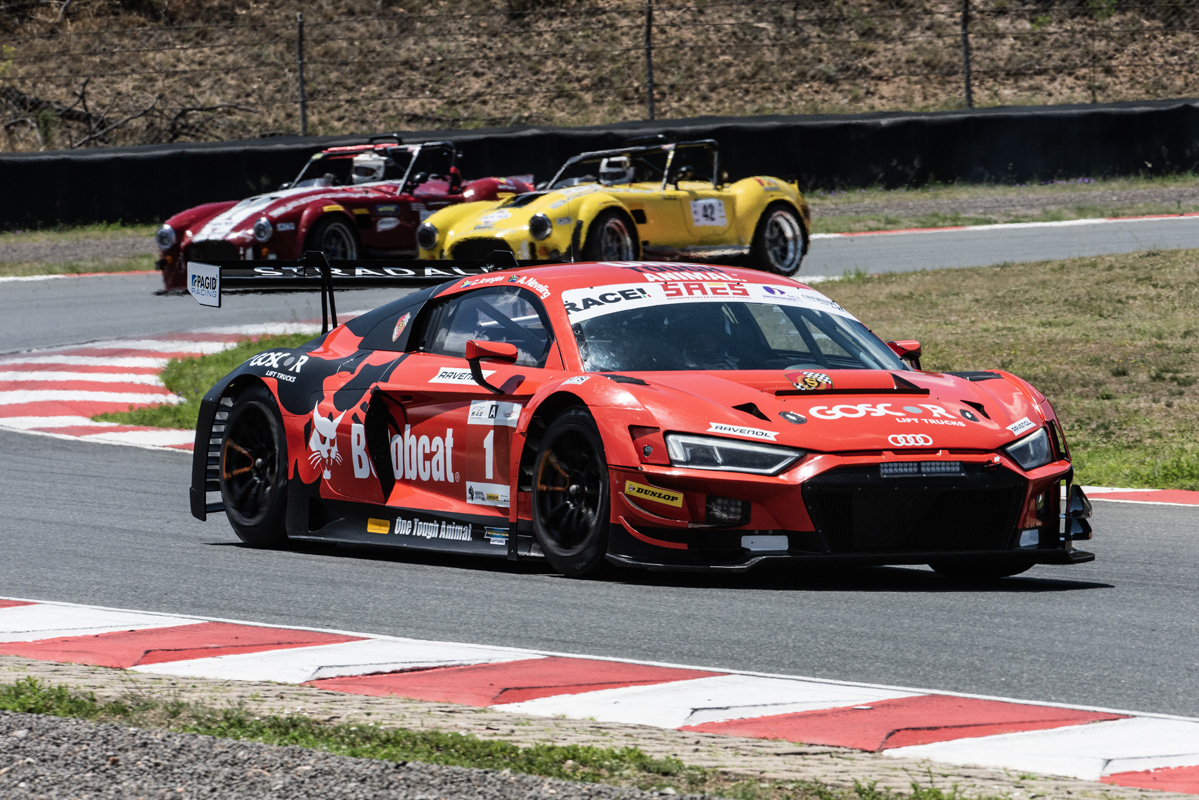
Charl Arangies, the defending SA Endurance champion sprinted into the lead in his Bobcat Audi R8 LMS GT3 until pitting on lap 36 to hand the car over to his teammate Arnold Neveling who wasted no time re-gaining the lead from the Adjust for Sleep Nova of Nick Adcock, Michael Jensen, Charl Visser and Jonathan Thomas three laps later.
Photo credit: Bjorn Moreira / ZA Lifestyle
The Nova quartet won Friday’s Three-Hours of Kyalami and fought hard for the 100 points on offer by taking the lead once more on lap 51 when the Audi pitted for fuel. Neveling did a double stint but was forced to retire from the lead on lap 126 with alternator failure, ending a thrilling cat-and-mouse three-way battle.
Photo credit: Bjorn Moreira / ZA Lifestyle
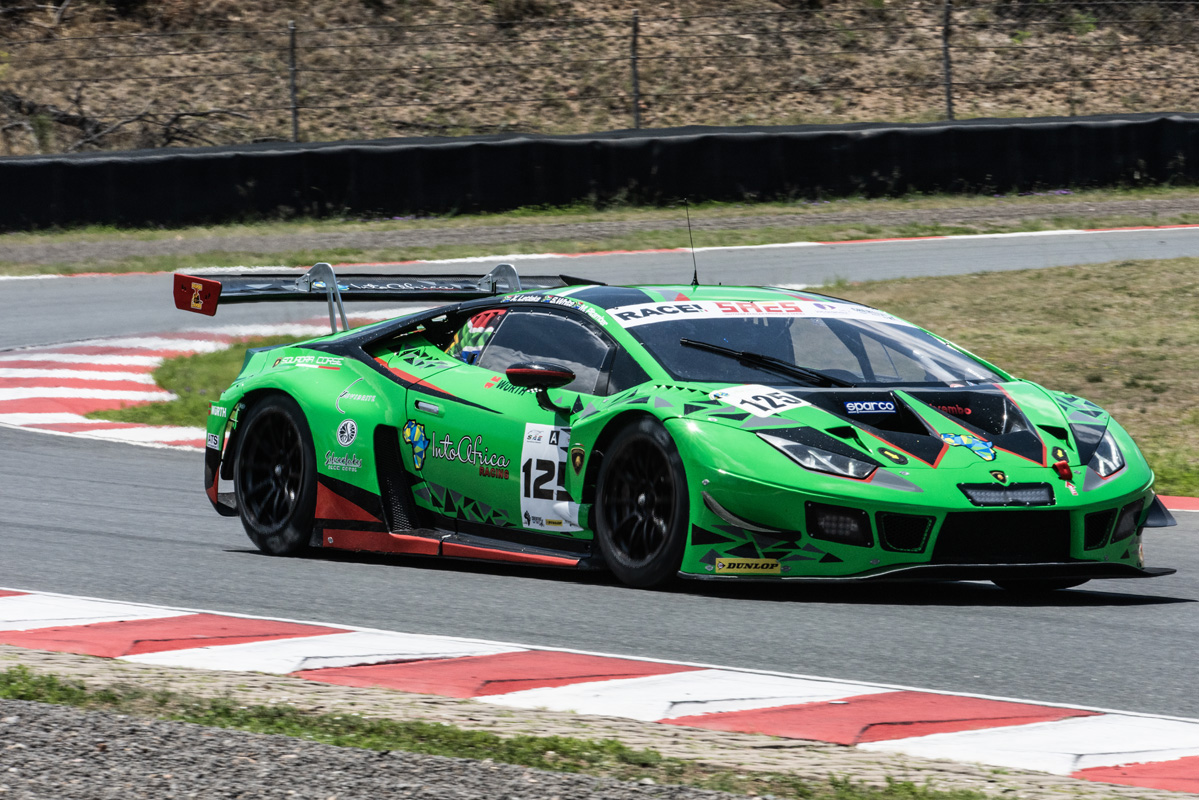
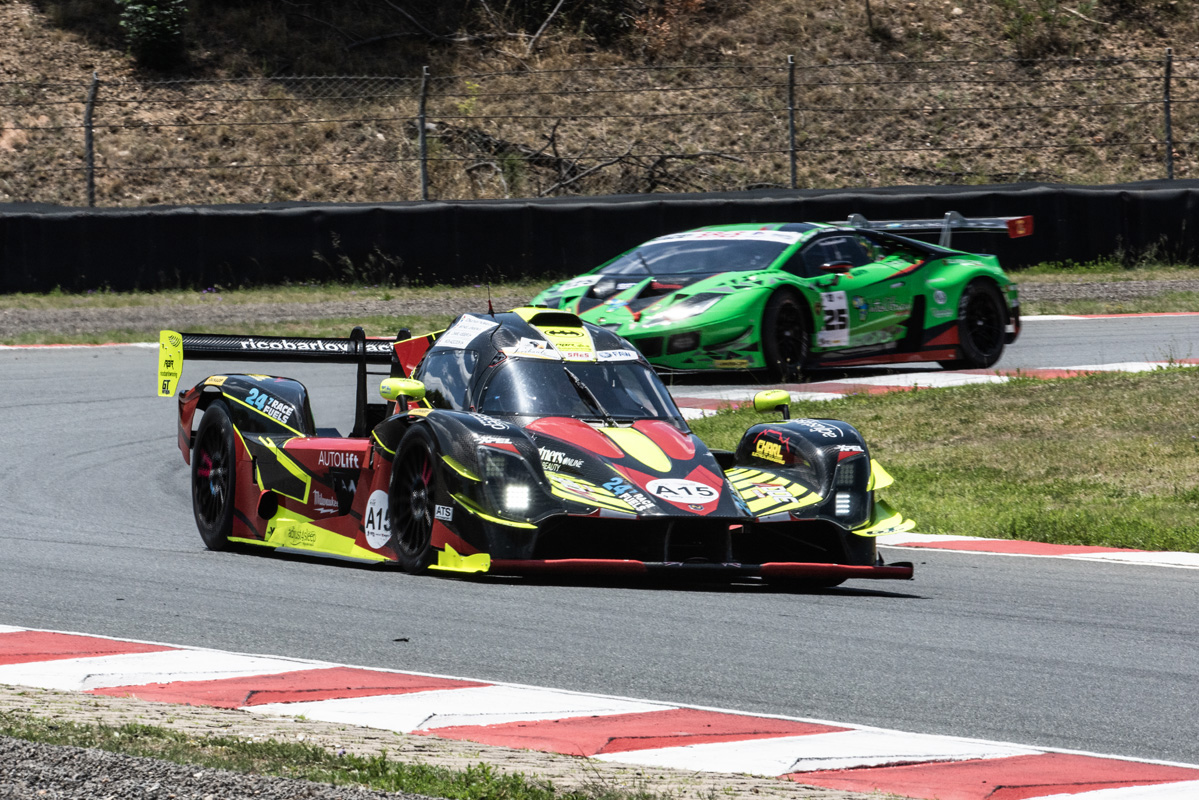
The Nova was back in the lead with the Into Africa Lamborghini moving into second position, which was sufficient for Letlaka and White to win the championship if they brought the car home. With the Audi’s demise, White took the lead and held it through their next pit stop cycle, when Letlaka took over the driving duties.
Photo credit: Bjorn Moreira / ZA Lifestyle
Thomas jumped into the Nova and rapidly reeled in the green Into Africa car, setting a new Kyalami lap record in the process and finally took the lead on lap 164. Visser drove the final stint, keeping the Nova in front. With ten minutes remaining, the Proton safety car was called out once more and while driving slowly in convoy, Visser took off a glove to wipe his eyes, an incident that drew the race officials’ attention from the on-board camera and although crossing the line in first place, a 20-second penalty was issued for the infringement, and the Nova was classified second overall.
Photo credit: Bjorn Moreira / ZA Lifestyle
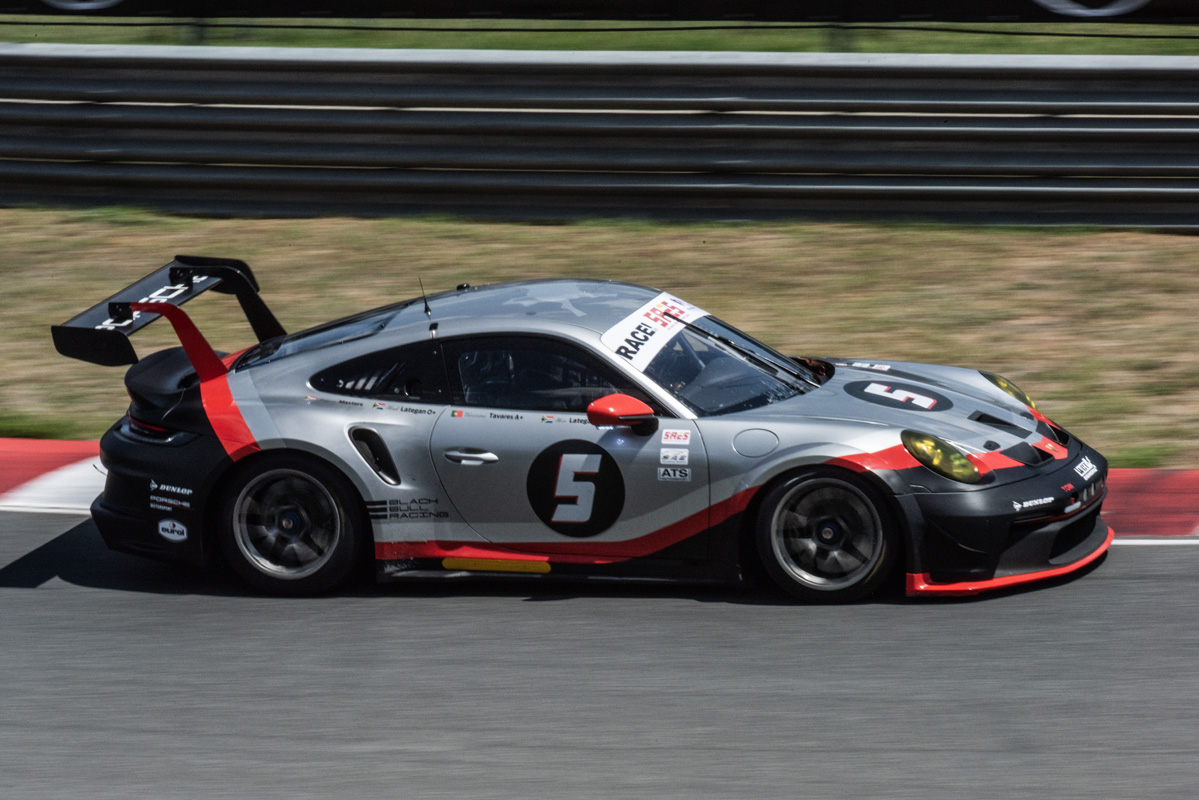
Taking third overall was the BBR Porsche 911 Cup team of Hein and Henk Lategan, Verissimo Tavares and Keagan Masters. The ultra-reliable Porsche developed a misfire and pitted just before 8 pm where the team lost seven minutes while the spark plugs were changed; the BBR team had a sufficient cushion to remain in the final podium step
which earned Hein Lategan and Tavares the overall championship runner-up position.
Photo credit: Bjorn Moreira / ZA Lifestyle
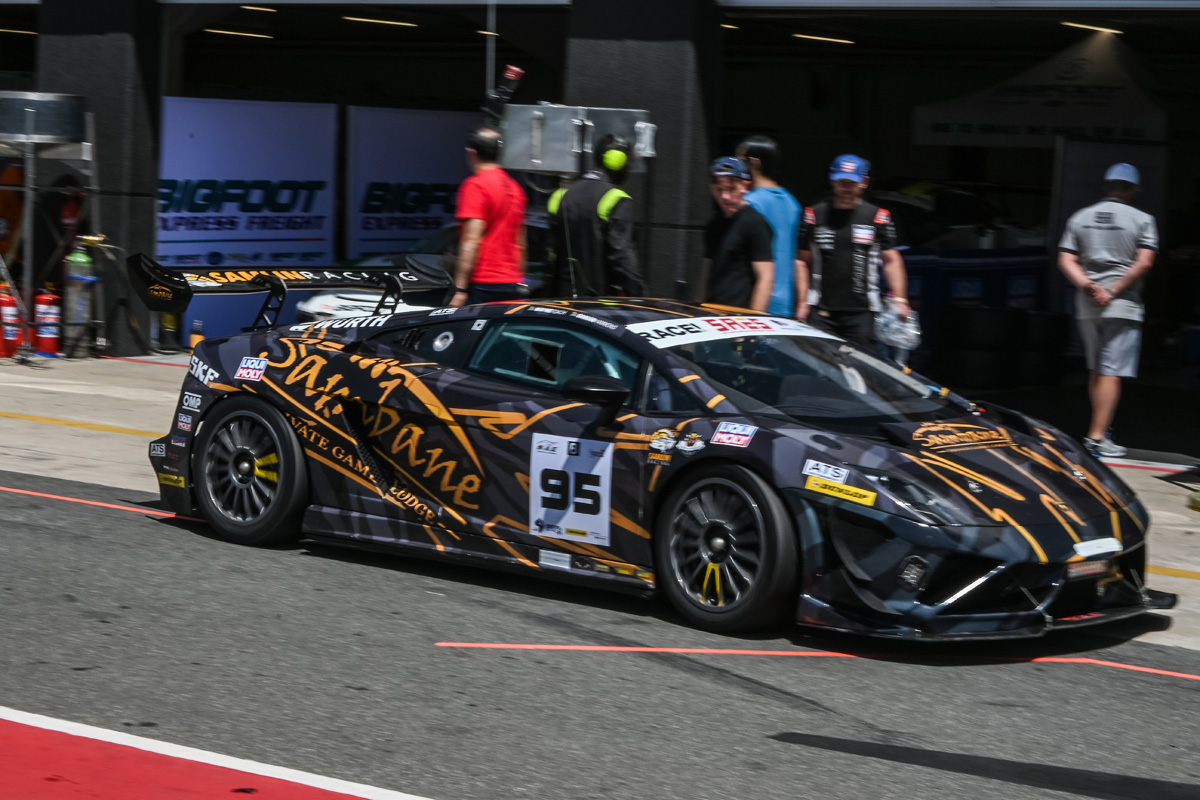
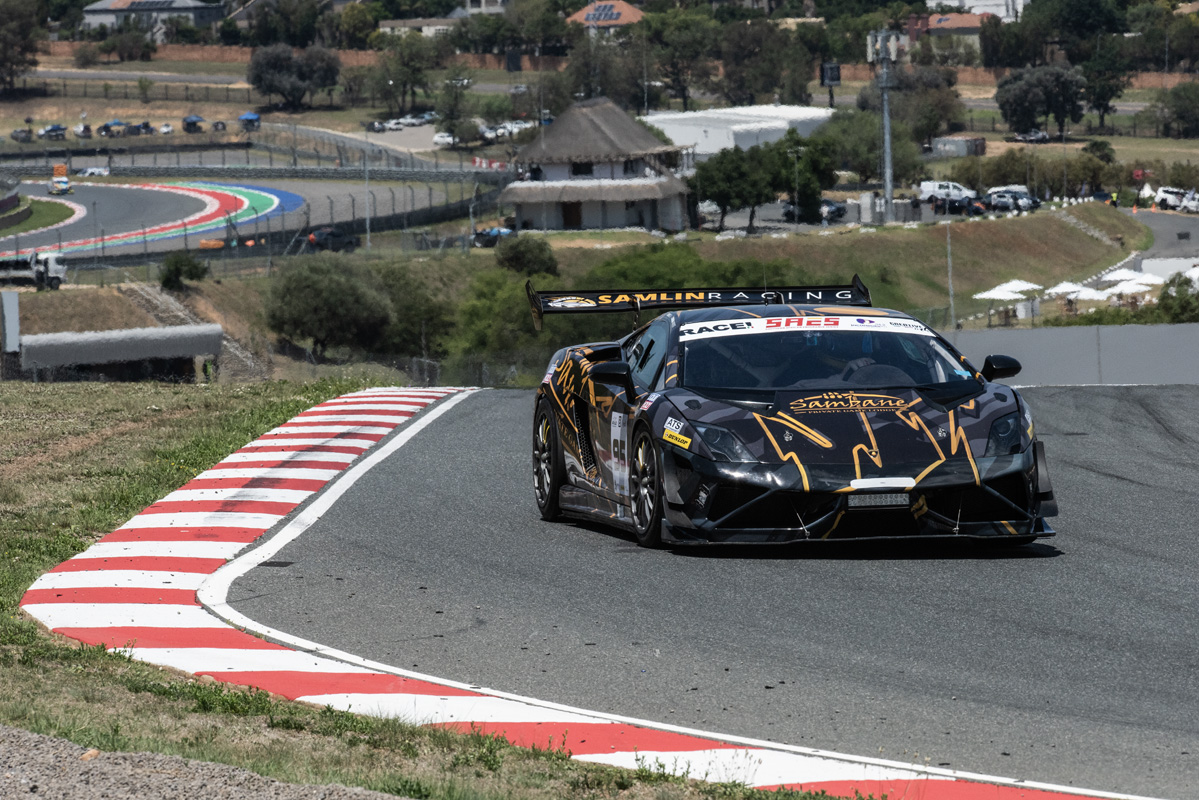
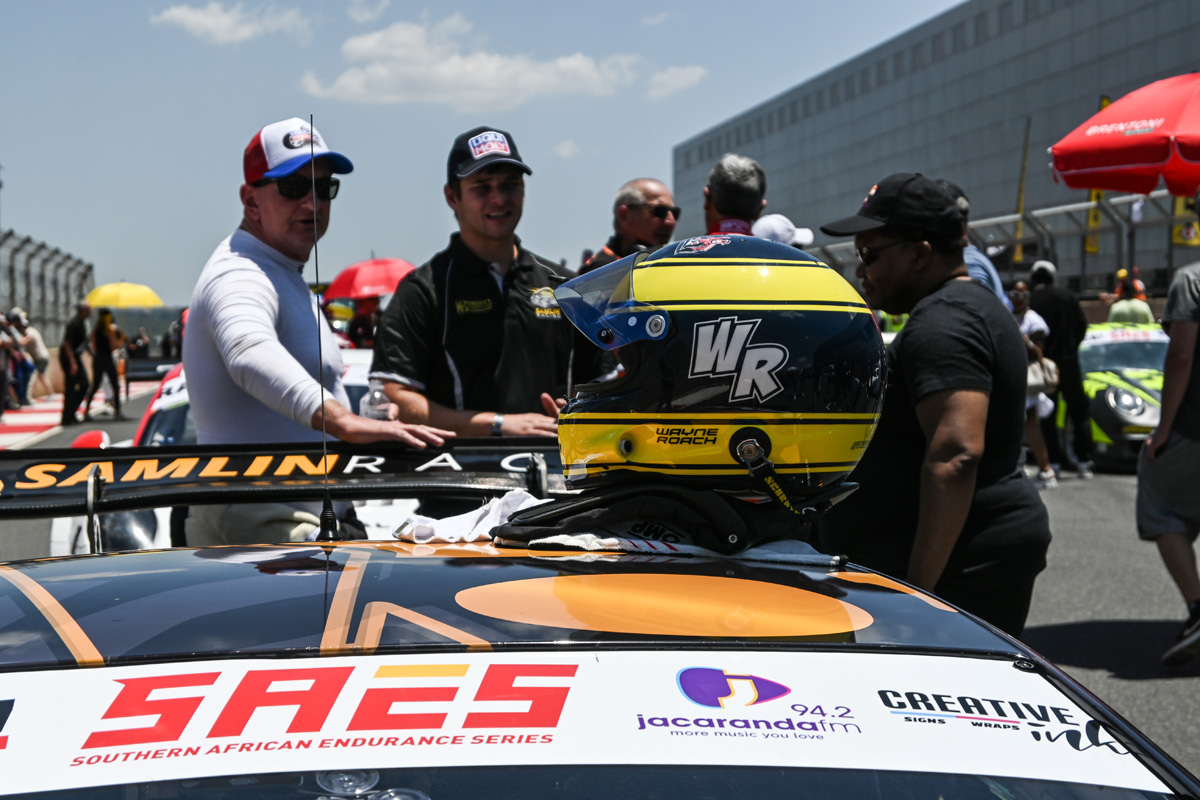
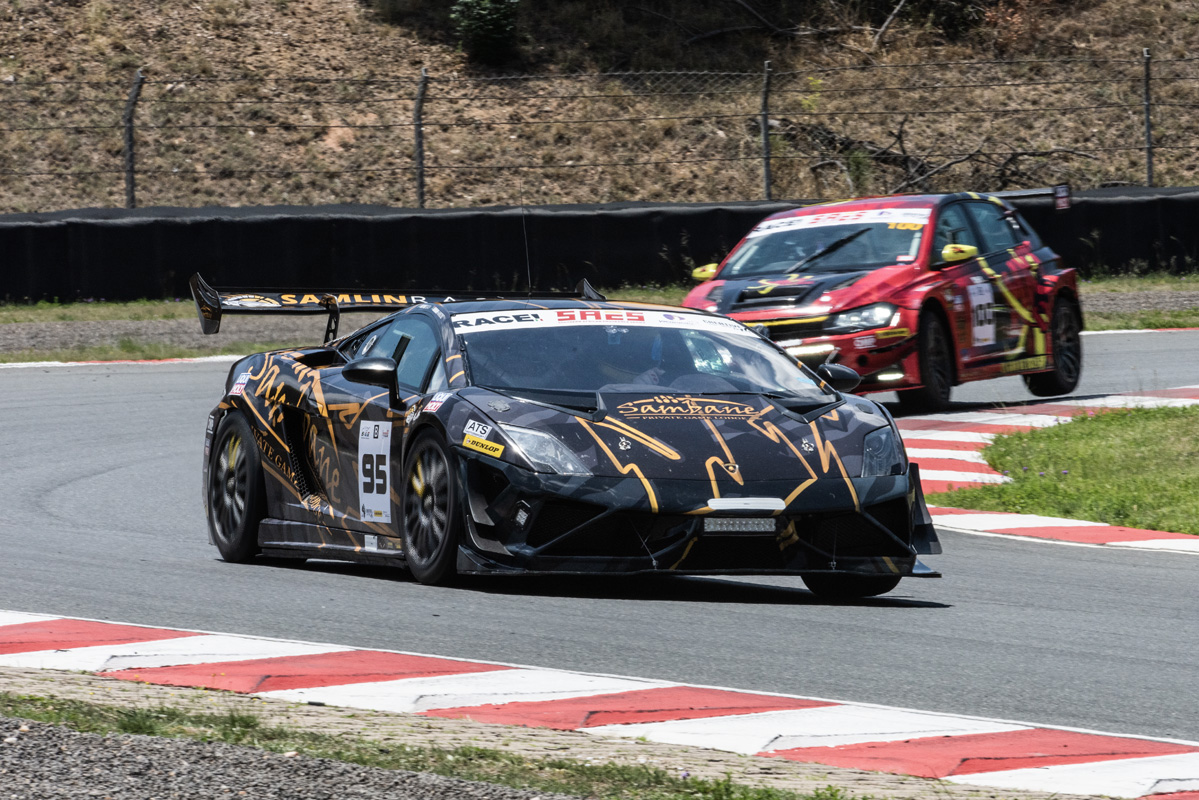
Fourth overall and winning class B was the Samlin Racing Trinity Lamborghini Gallardo Super Trofeo of Sam and Damien Hammond and Wayne Roach. The trio had an on-board jack issue which meant the car wouldn’t lift to change tyres during pit stops in the fourth hour of the race which cost them six laps as the technicians successfully worked to resolve the problem.
Photo credit: Bjorn Moreira / ZA Lifestyle
With 25 minutes remaining the Trinity Lamborghini made a splash-and-dash pit stop and had to be push-started as the car developed a starter motor issue.
Photo credit: Bjorn Moreira / ZA Lifestyle
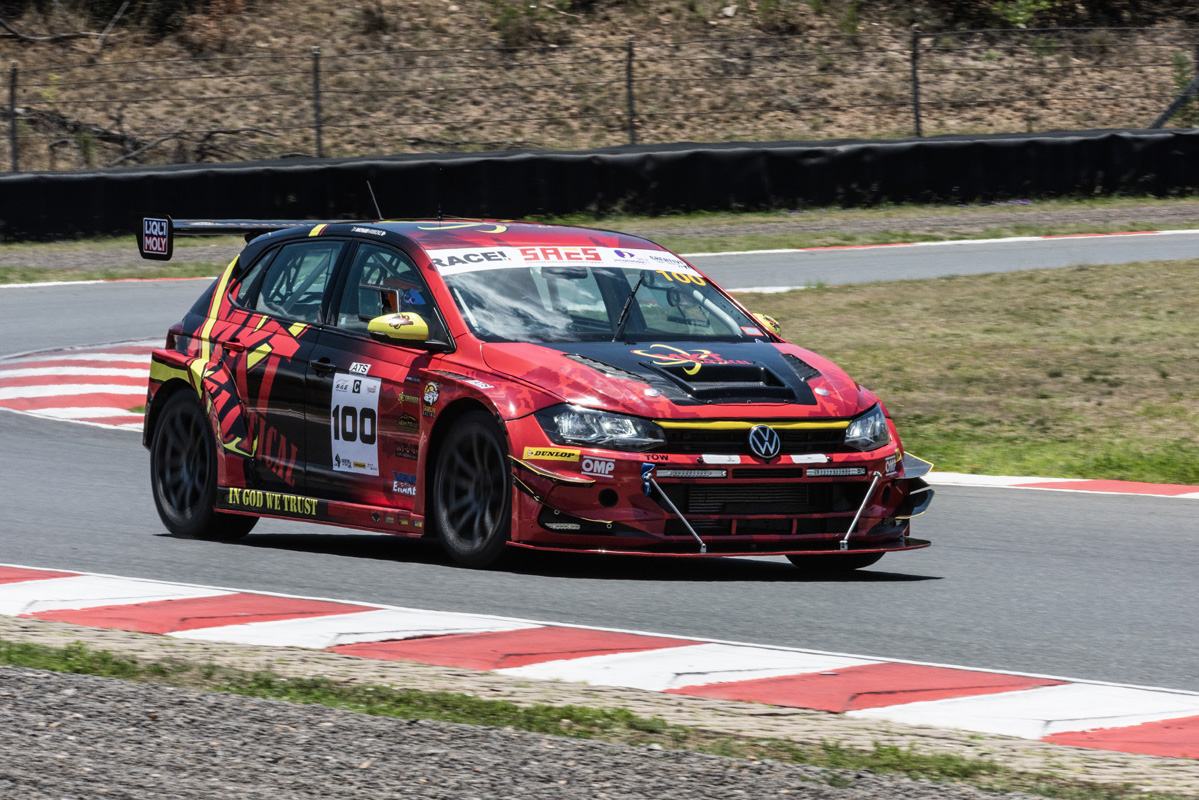
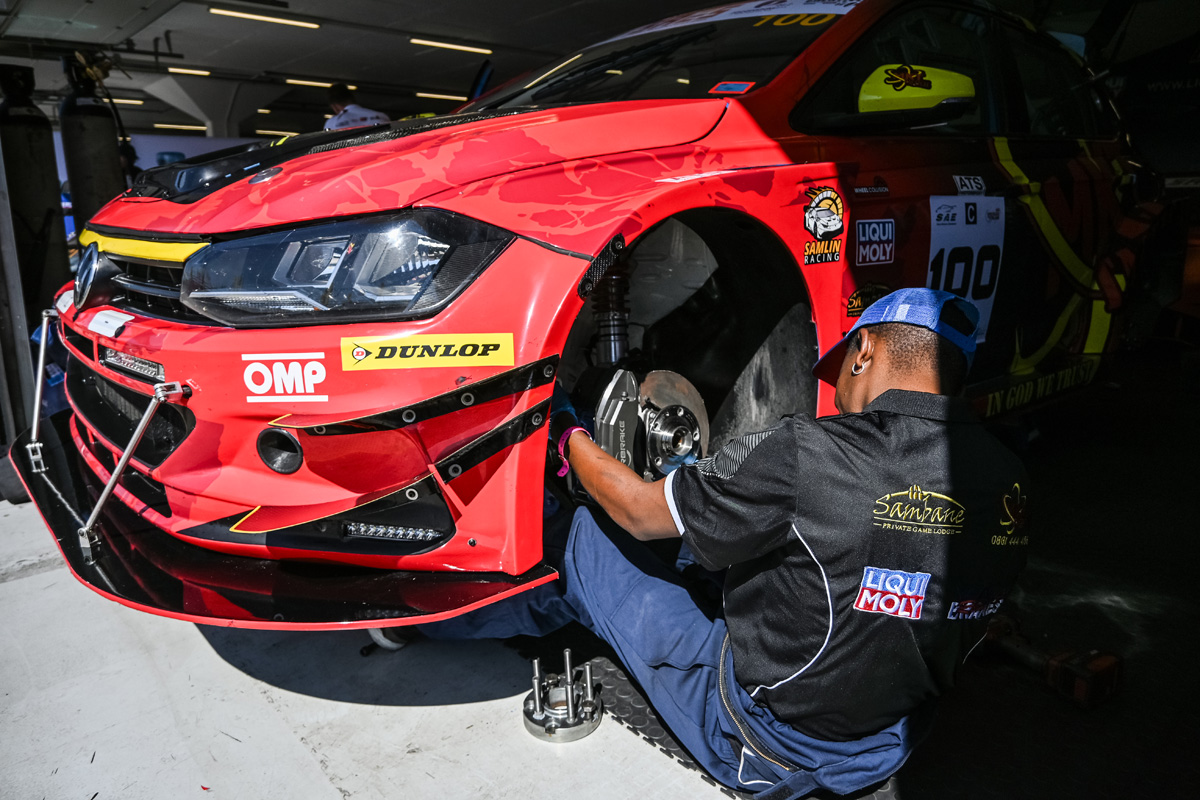
Fifth overall and the class C win went to Samlin Racing’s MKT Tactical Volkswagen Polo SupaCup which ran like clockwork except for a mid-race fuel pressure issue which was traced to a malfunctioning fuel tank breather, which meant the car was short fuelled.
Photo credit: Bjorn Moreira / ZA Lifestyle
Team Pesty, fighting for two championships, ended sixth overall and had a tense race as their Backdraft Roadster was stuck in fifth gear from hour four of the race. They were involved in a furious battle with the Team Qhubani Backdraft of Fikile Holomisa, Bapi Rubuluza and motoring journalist Setshaba Mashigo, during the opening hour before
steadily pulling away before their mechanical issue struck.
Photo credit: Bjorn Moreira / ZA Lifestyle
Liqui Moly: Supporting SA Motorsport
Motorsport has never been able to stand on its own two feet, requiring ever-increasing support from sponsors. There was a time when cars raced in their national colours but, since 1968, the quest for finance has rendered that practice largely redundant and there have been a bewildering array of graphic designs gracing – or blighting, depending on your point of view – racing cars. Some have even become design classics.
Photo credit: Bjorn Moreira / ZA Lifestyle
Of course, motor racing is a valuable shop window for companies, whether their products have anything to do with motorsport or the automotive industry, and the wise ones hang their hat in the window. Motorsport is also a crucial laboratory for the development of products; the punishment lubricants and mechanical components take during races has only benefitted the normal, everyday motorist.
Photo credit: Bjorn Moreira / ZA Lifestyle
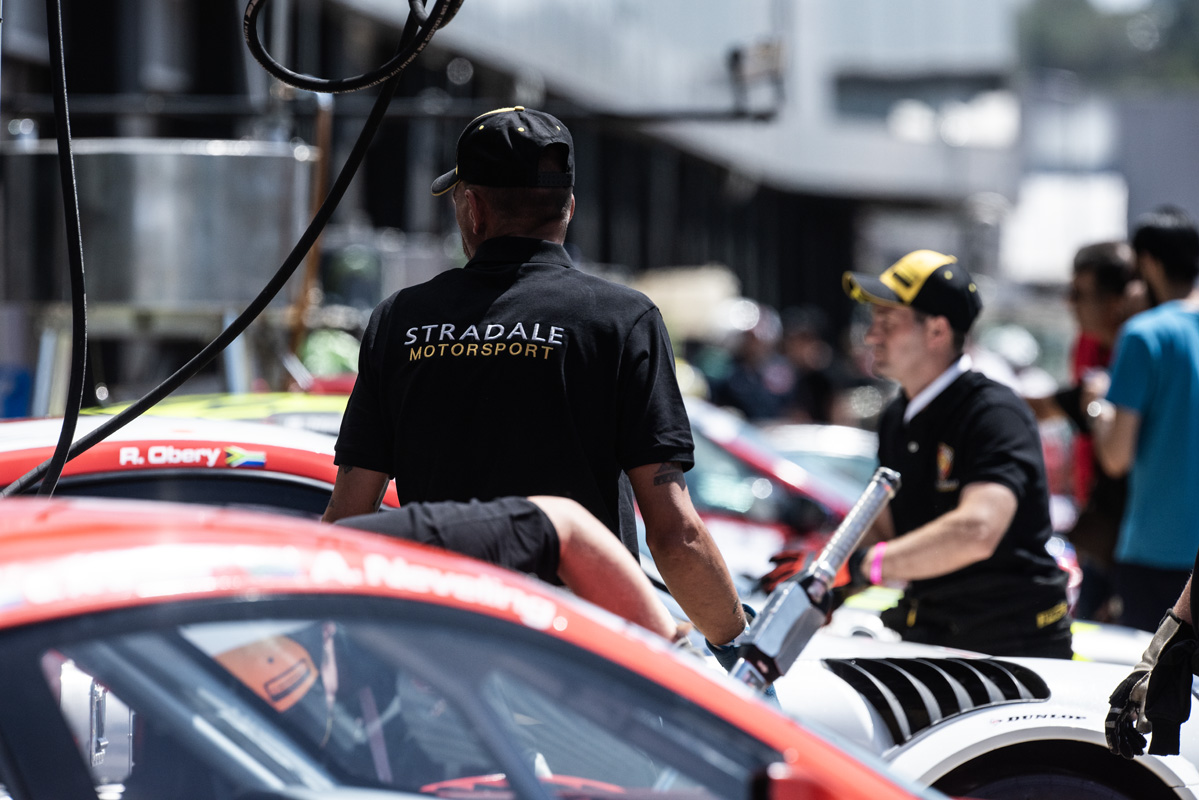
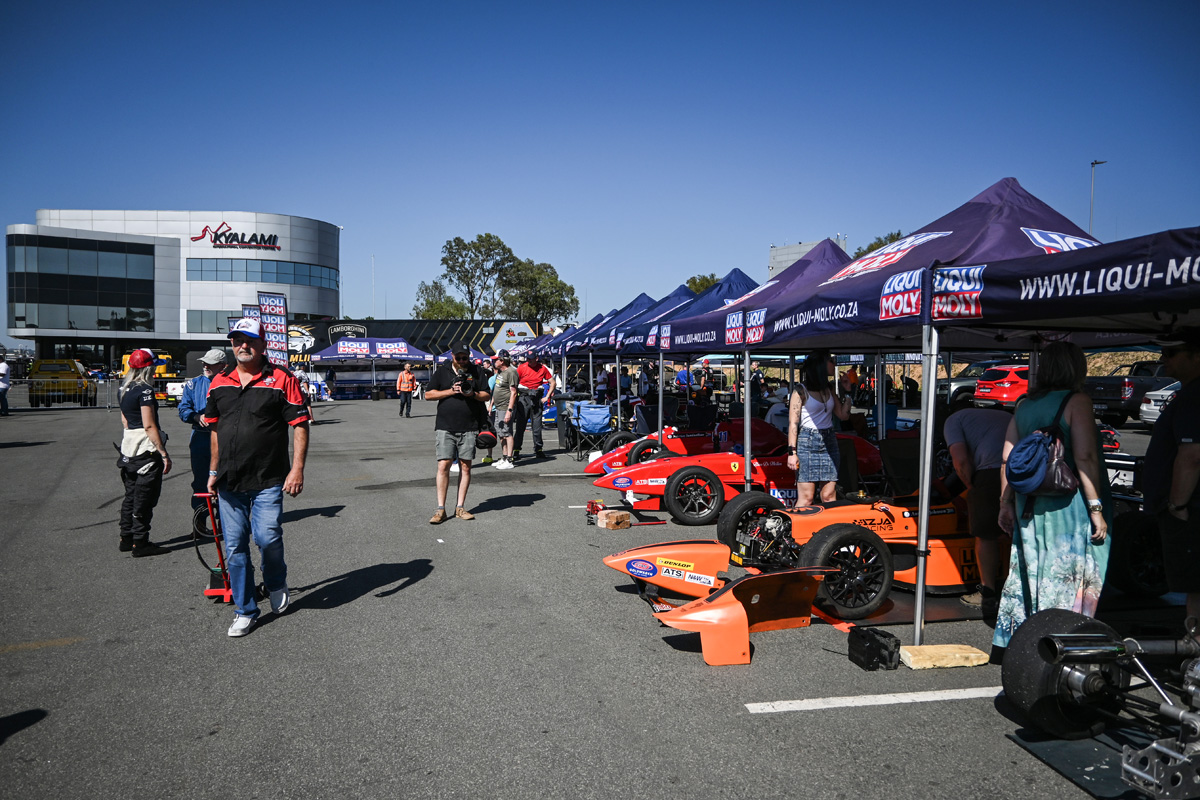
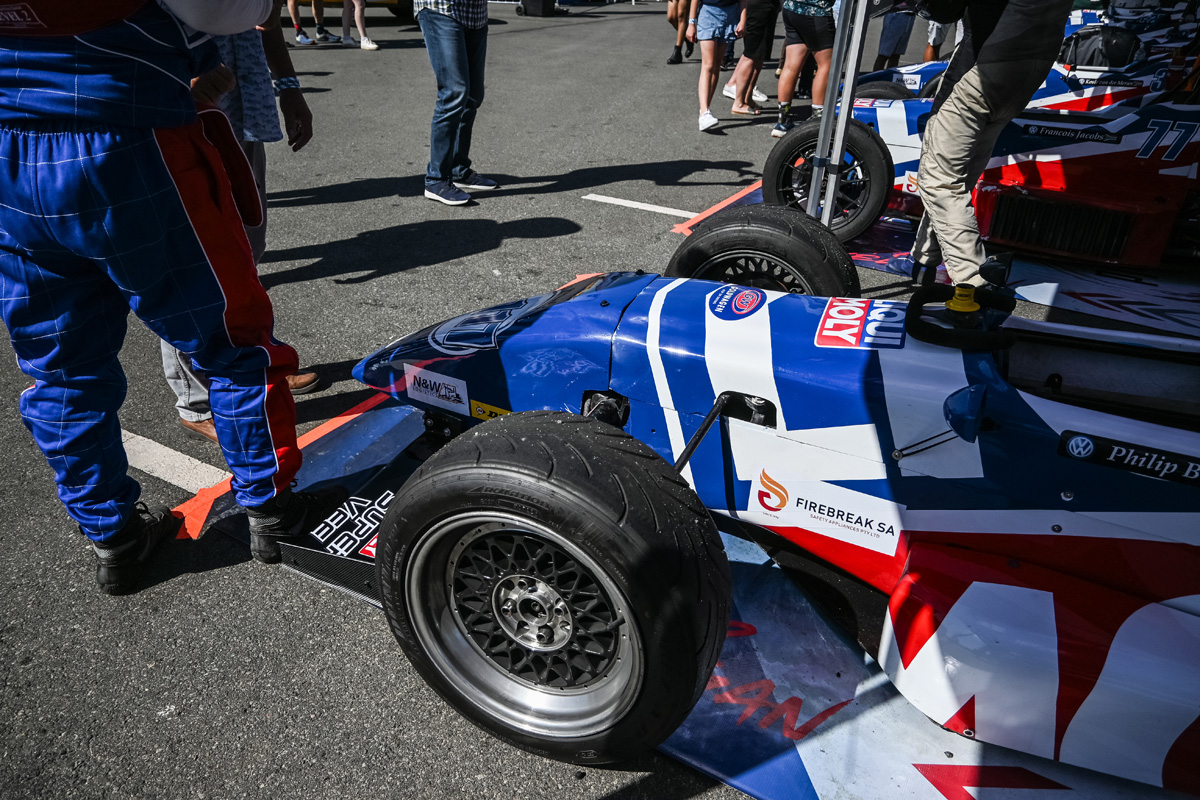
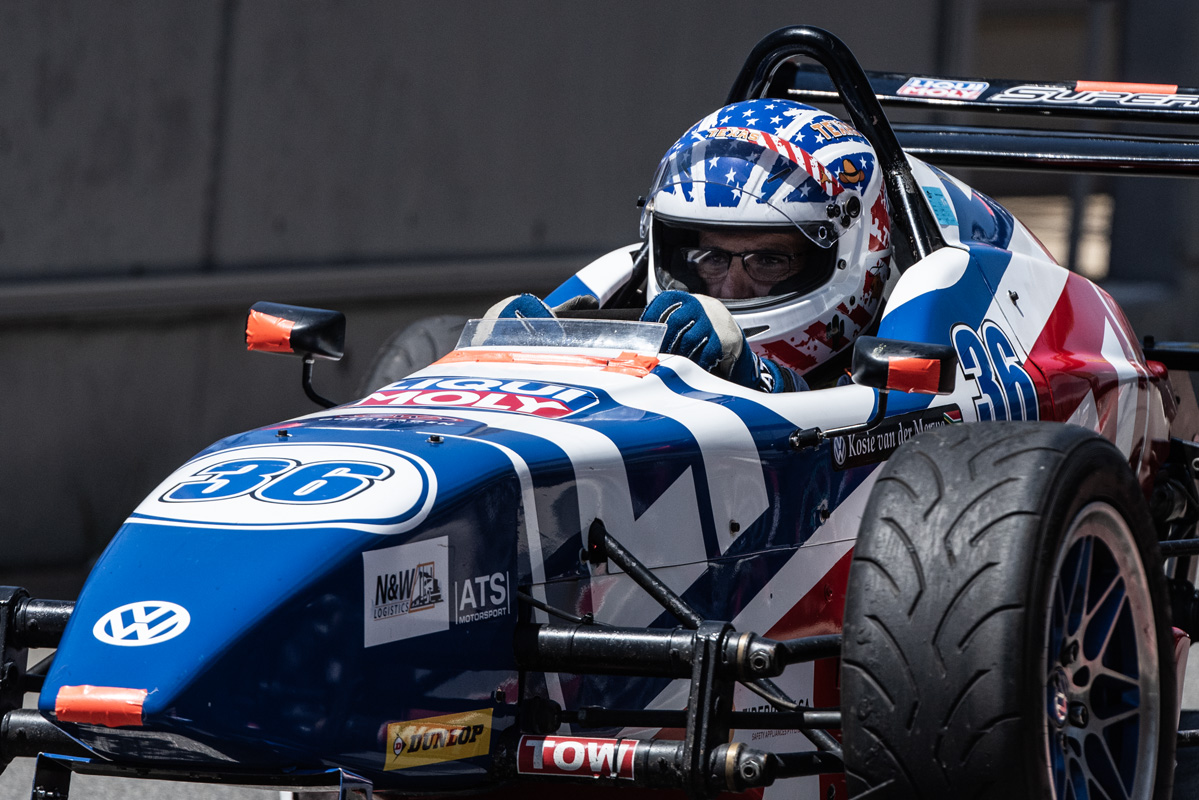
Liqui Moly has been at the forefront of South African racing for many years and the brand had a strong and unmistakeable presence at Kyalami; Liqui Moly proudly supported the SuperVee in the Single Seater event and Samlin Racing in the Endurance series who won their Class B and Class C?
Photo credit: Bjorn Moreira / ZA Lifestyle
But why spend all that money? Motorsport isn’t cheap, but there are huge benefits, both in terms of product development, support for SA racing and giving back to racing fans. Liqui Moly’s Melicia Labuschagne explained;
Photo credit: Bjorn Moreira / ZA Lifestyle
“Our sponsorship is rooted in a deep passion for motorsport. We see these events as an opportunity to connect with a dedicated community of enthusiasts, showcase the high-performance nature of our products, and support talented athletes as they pursue excellence. Motorsport aligns perfectly with our brand’s values of precision, endurance, and
innovation.
Photo credit: Bjorn Moreira / ZA Lifestyle
“The event was a resounding success, both in terms of the thrilling competition and the outstanding performances from our sponsored drivers. It’s always inspiring to see them push boundaries and demonstrate the reliability and strength that Liqui Moly stands for.
Photo credit: Bjorn Moreira / ZA Lifestyle
“We’re incredibly proud of the SuperVee event, which saw an incredible 37 cars on the grid, making it the biggest single-seater event in South Africa. The North vs. South Challenge has grown tremendously, and with its elevation to a national challenge, it’s cementing its place as a premier motorsport event. This milestone reflects not only the growing passion for motorsport in the region but also the impact of partnerships like ours in supporting this growth.”
Photo credit: Bjorn Moreira / ZA Lifestyle
Whilst there is obviously a marketing benefit to Liqui Moly’s involvement, it is clear that the involvement is driven by passion as much as profit.
Photo credit: Bjorn Moreira / ZA Lifestyle
You only have to talk to motorsport participants to understand the goodwill that Liqui Moly’s efforts have generated, not ignoring the fact that their products have helped multiple race and championship winners achieve their goals over the years.
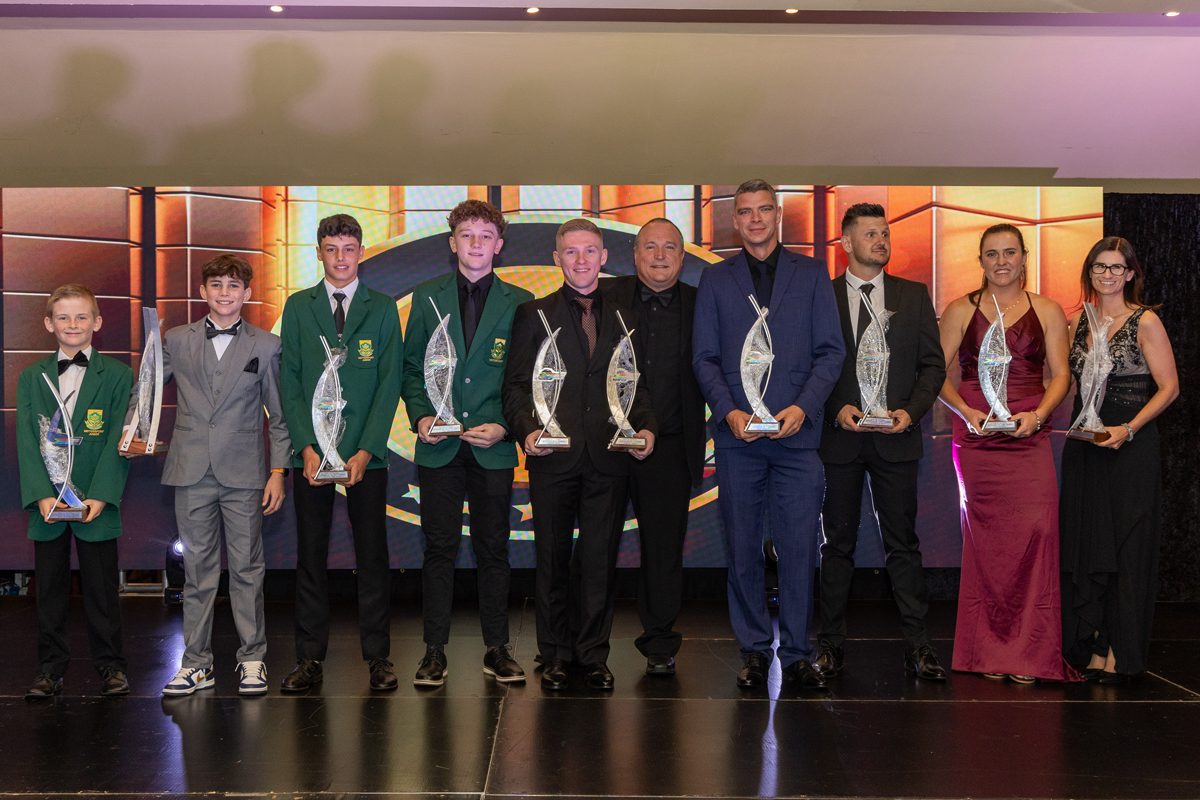
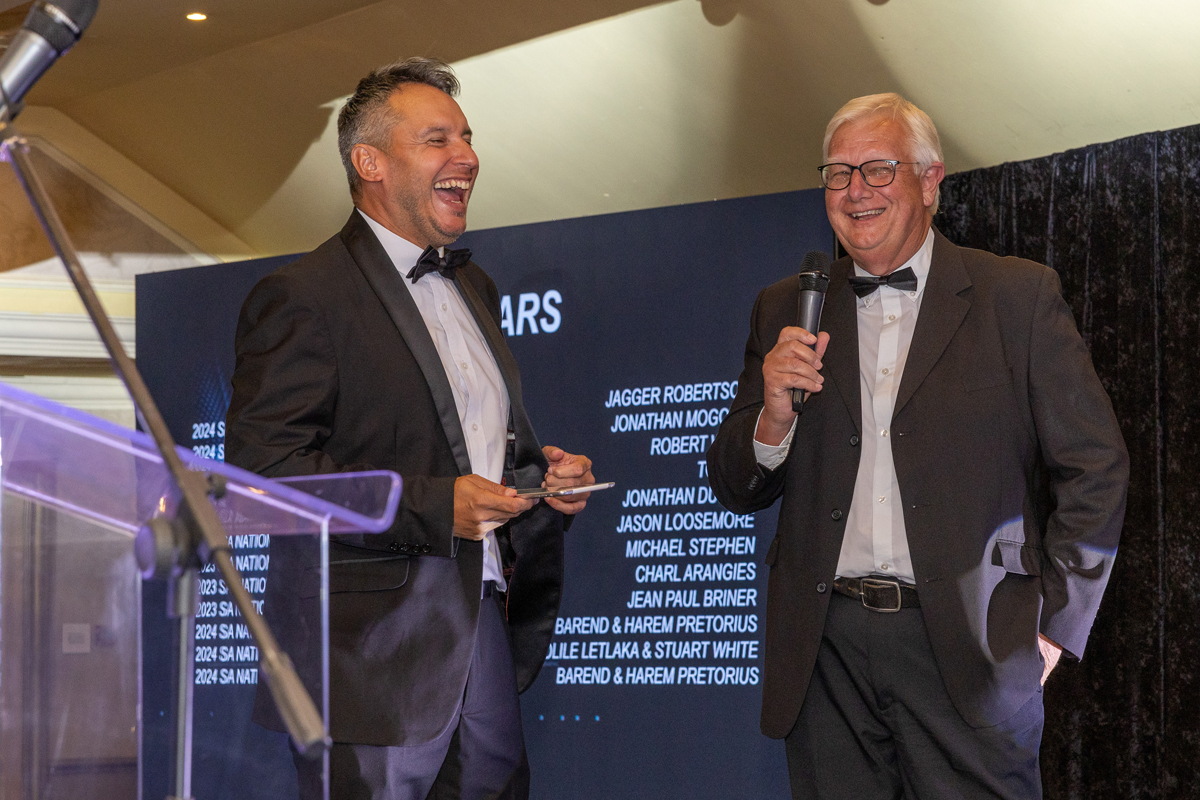
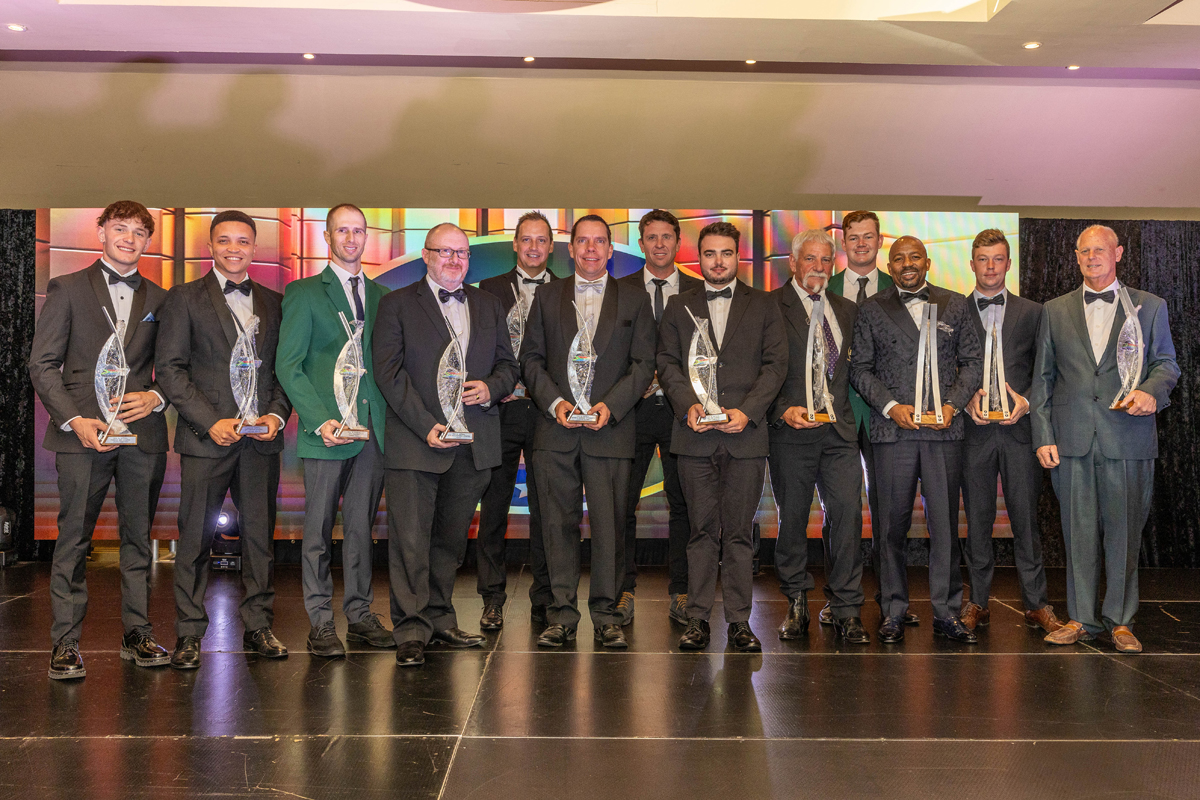
Any naysayers and armchair critics out there who like to criticise the state of South Africa motorsport, on both two and four wheels, would have done well to attend the prestigious Motorsport South Africa (MSA) Awards evening held at Emperors Palace on Sunday, 1st December.
If ever an indication was needed of the rude health of motorsport in South Africa and the success of South African drivers, riders, and manufacturers internationally, then this was it.
No one has ever said it has been easy but the awards evening was a tribute to the resilience, dedication, and passion of South Africa’s motorsport athletes, teams, and contributors.
Image source: MSA
“This evening is a celebration of the determination and drive that define our motorsport community. It brings together the veterans, newcomers, and icons who have consistently thrilled their fans throughout 2024,” said Anton Roux, Chairman of Motorsport South Africa.
“The people in this room tonight are the ones who make motorsport happen in South Africa,’ he added. “We are recognising the achievements of 55 of you—congratulations to each one. At the same time, we must acknowledge the role of parents, spouses, grandparents, coaches, technicians, and friends who supported you on your journey here. We also extend our gratitude to sponsors, including Toyota’s Glen Crompton, VW’s Mike Rowe, and KTM’s Franziska Lucka, for their invaluable contributions. It is our duty to ensure that sponsors receive excellent value for their support.”
Image source: MSA
Roux highlighted MSA’s excellent year, with 315 events held, including impressive international performances by competitors across disciplines, including two-wheels, single-seaters, rallying, and the GT series.
He noted, “It’s not just on the track where we’ve excelled. Our outgoing CEO, Adrian Scholtz, is currently serving as a steward at the inaugural FIM Intercontinental Games in Jerez, Spain. This recognition speaks to the quality of South African motorsport. Additionally, our CEO, Vic Maharaj, now serves on the FIA World Motor Sport Council, and I continue my term as a member of the FIA Senate.”
Image source: MSA
Roux also reminded the audience that the third round of the W2RC World Championship will take place near Sun City in 2025, following the Dakar Rally and Abu Dhabi events. “I cannot wait to see the likes of Nasser Al-Attiyah, Sébastien Loeb, and Stéphane Peterhansel competing on South African soil. Considering that half the cars in the Dakar are manufactured here, this event promises to be monumental.” That last point in itself is more than enough to dispel any lingering thoughts that SA is underperforming in global motorsport.
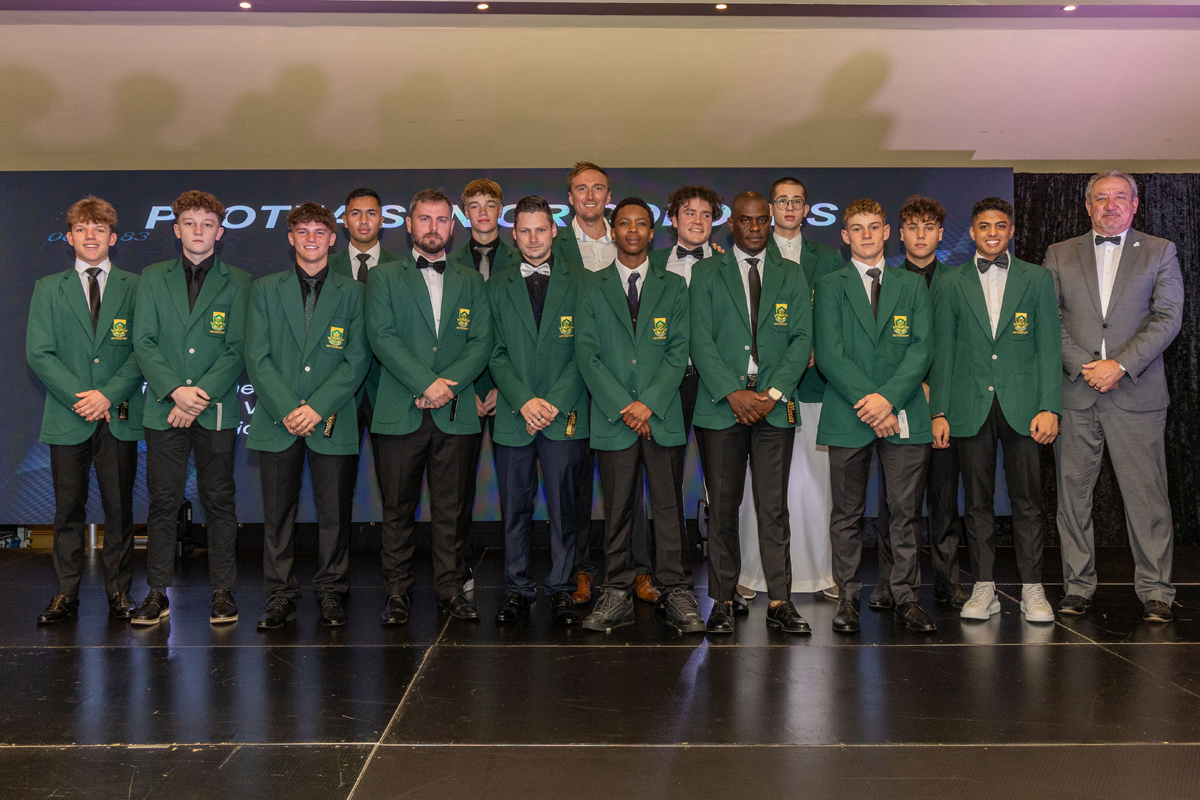
In addition to the 65 national champions being honoured across categories such as motocross, enduro, cross-country, rally, karting, rally-raid, single-seaters, and saloon cars, 30 Protea Colours were also awarded to individuals who represented South Africa on international stages, showcasing world-class talent.
Image source: MSA
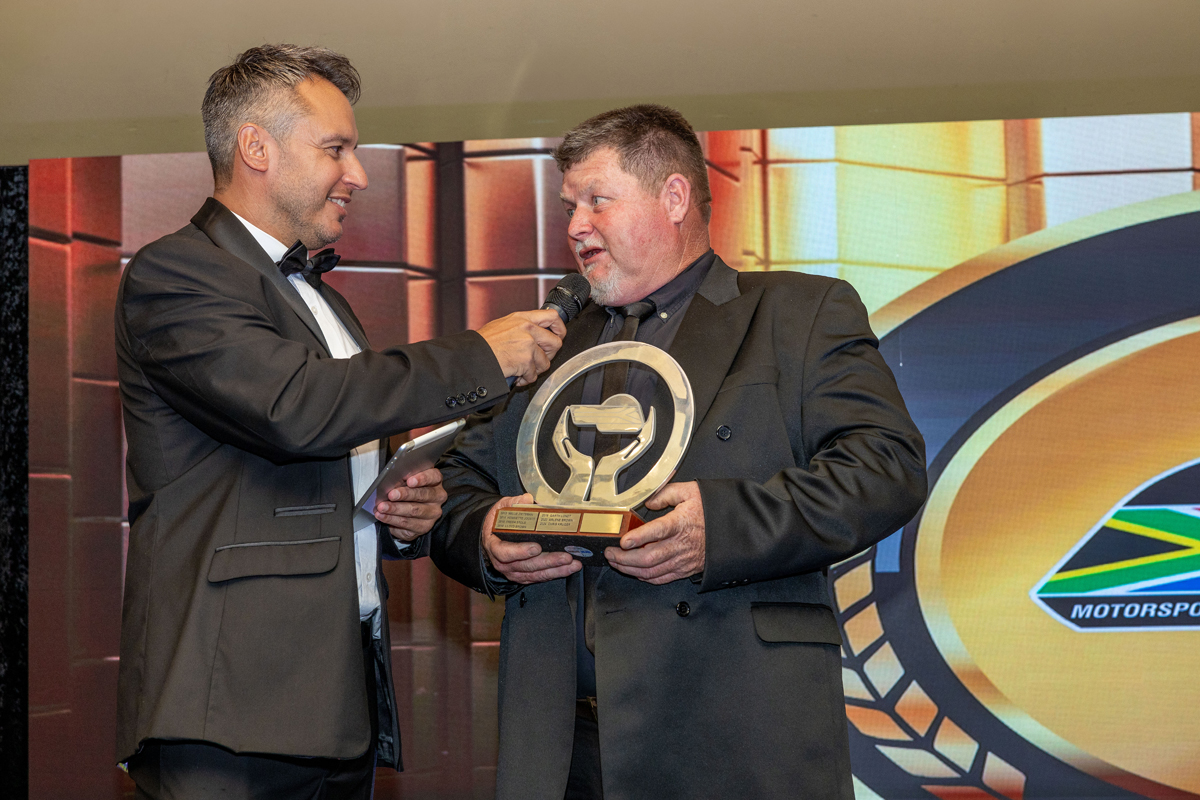
The awards ceremony also shone a spotlight on those who go above and beyond the call of duty. The MSA Special Awards recognised the contributions of individuals who help sustain and grow motorsport in South Africa, including Volunteer of the Year, awarded to Chairman of the Off-Road Marshal Unit of Southern Africa, Chris Kruger, and Photographer of the Year, awarded to independent, Andre Schoeman.
Image source: MSA
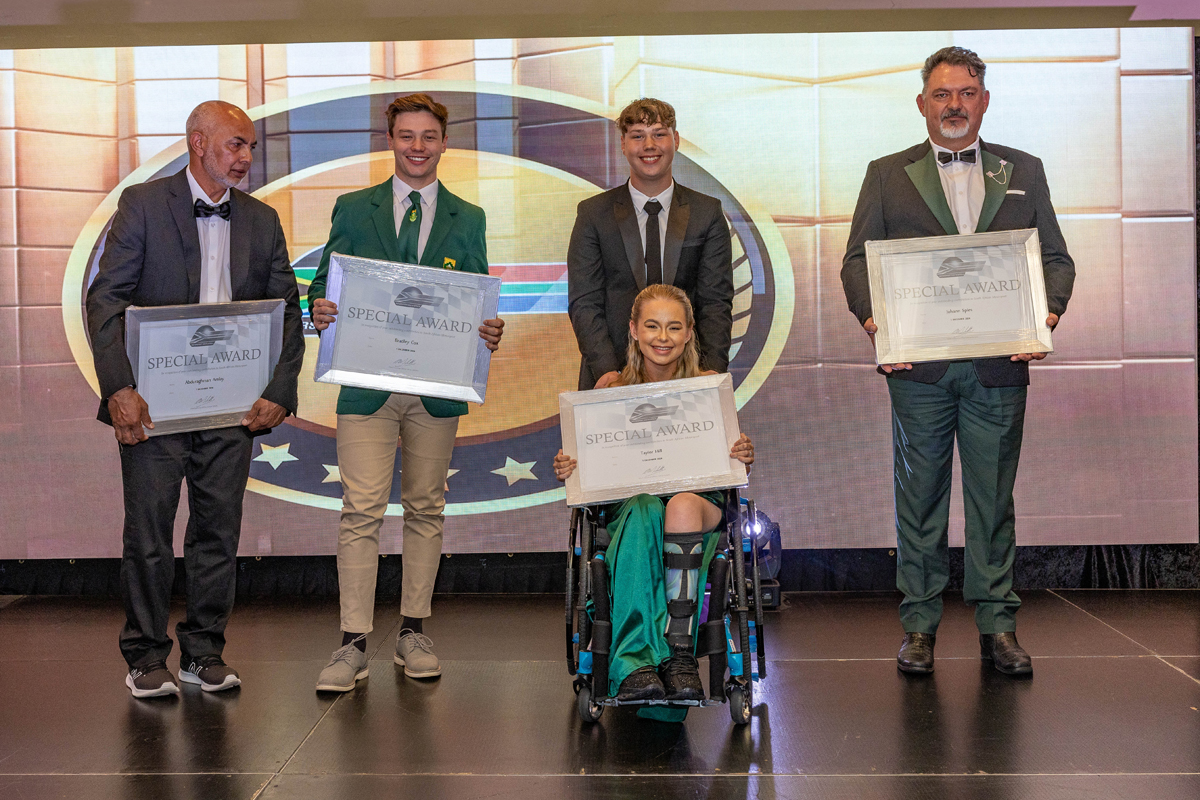
MSA’s highest form of recognition, the Golden Helmet Award, is bestowed upon individuals for exceptional achievements in, or contributions to, motorsport over several decades. “We are so proud that there were five worthy recipients of this award in 2024. In addition, five members of the South African motorsport community received MSA Special Awards for outstanding feats on the international stage or in recognition of their significant contribution to the sport,” continued Roux.
Image source: MSA
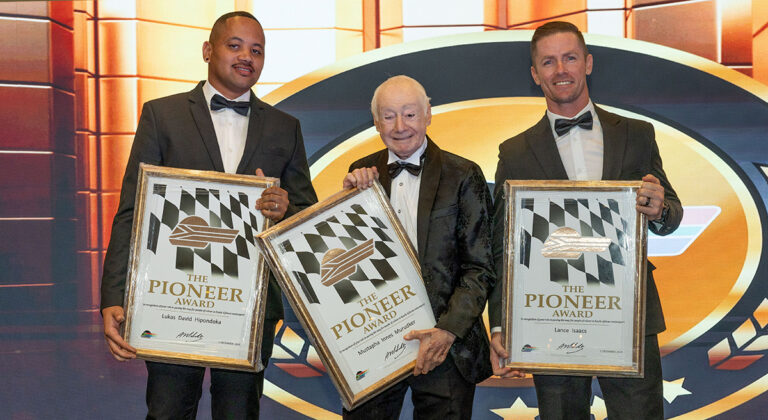
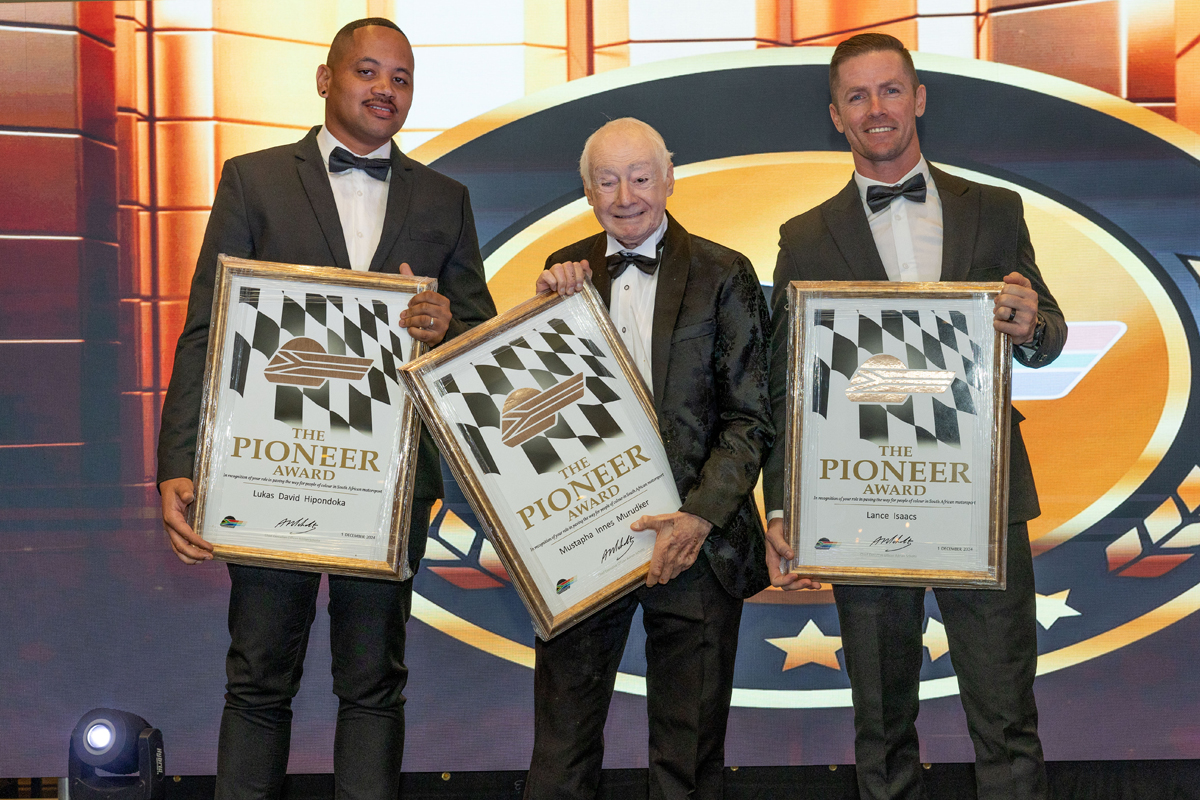
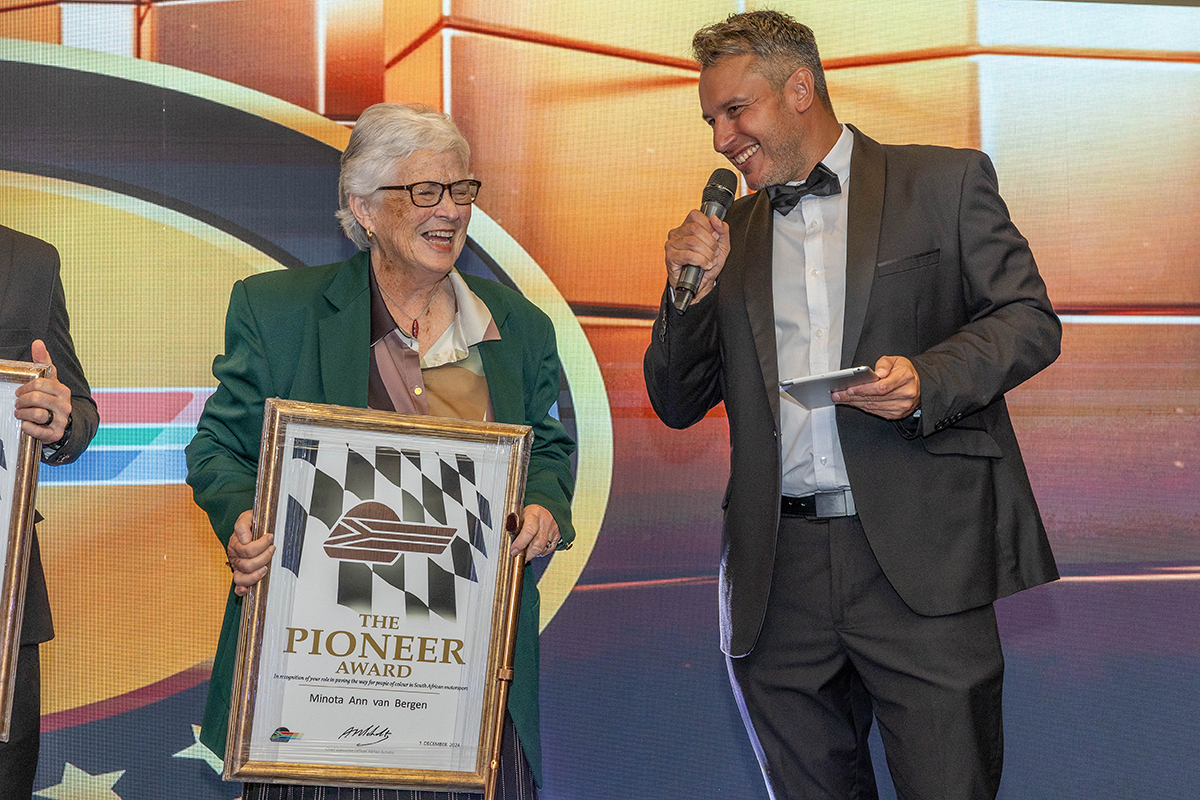
Four recipients were honoured this year in the MSA Pioneer Award, aimed at honouring competitors of colour who in the past paved the way for future generations in local motorsport, often in difficult and challenging circumstances.
The prestigious Pioneer, Special and Golden Helmet Awards honoured trailblazers and legends of the sport. Among this year’s honourees were Lukas David Hipondoka, Lance Isaacs, Mustapha Innes Murudker and Minota Ann van Bergen (Pioneer Awards), Abduraghman Amlay, Bradley Cox, Vere Hein, Taylor Hill and Johann Spies (Special Awards) and David Bland, Wayne Farmer, Jess Huggett, Derek Jacobs and Jeff Waberski (Golden Helmet Awards.)
Image source: MSA
“These specific awards highlight the incredible impact that individuals have made in shaping motorsport in South Africa, both past and present,” added Roux.
Recognising and acknowledging the generational gap and the role women are increasingly playing in motorsport, Roux paid special mention to the achievements of Minota Ann Van Bergen, who made history as a pioneer in South African motorsport, becoming the first woman to win a national rally championship in the country. To date, Minota is the only South African woman to have won both a national and international rally title outright, and she remains the sole woman to have received Springbok colours in rallying. Her achievements have paved the way for women in motorsport, proving that women can succeed in a male-dominated field on equal terms as evidenced by Taylor Hill, a 16-year-old young lady who exemplifies unwavering determination in her pursuit of becoming a professional motorsport driver. Born with a genetic condition, Charcot-Marie-Tooth disorder (CMT), a degenerative hereditary nerve disease, Taylor has followed her love for karting and overcome challenges posed by her disability. Despite using a wheelchair and lacking feeling in her legs, she remains undeterred.
Image source: MSA
“Embracing the FIA’s commitment to inclusivity, Motorsport South Africa has been inspired by the journeys of both these women,” acknowledged Roux.
“Motorsport is not just about competition; it’s about community, growth, and resilience,” said Roux. “We are proud to celebrate the achievements of 2024 and look forward to an even brighter 2025.
Image source: MSA
“To all award recipients, congratulations. Remember, you are role models and your every move will be watched by fellow competitors. In today’s digital age remember your social media posts are like a fingerprint or your DNA. What you post is there forever. One of the very first things that any promoter, sponsor or team manager will look at before they select you, is “your fingerprint”. So post responsibly and wear your blazers with pride,” Roux concluded.
The evening was a great success, the food and venue excellent and the company varied and distinguished. Most of all, however, the evening was confirmation, were any needed, that motorsport in SA is thriving and that the future looks very bright. All we can do is look forward to 2025 with great anticipation.
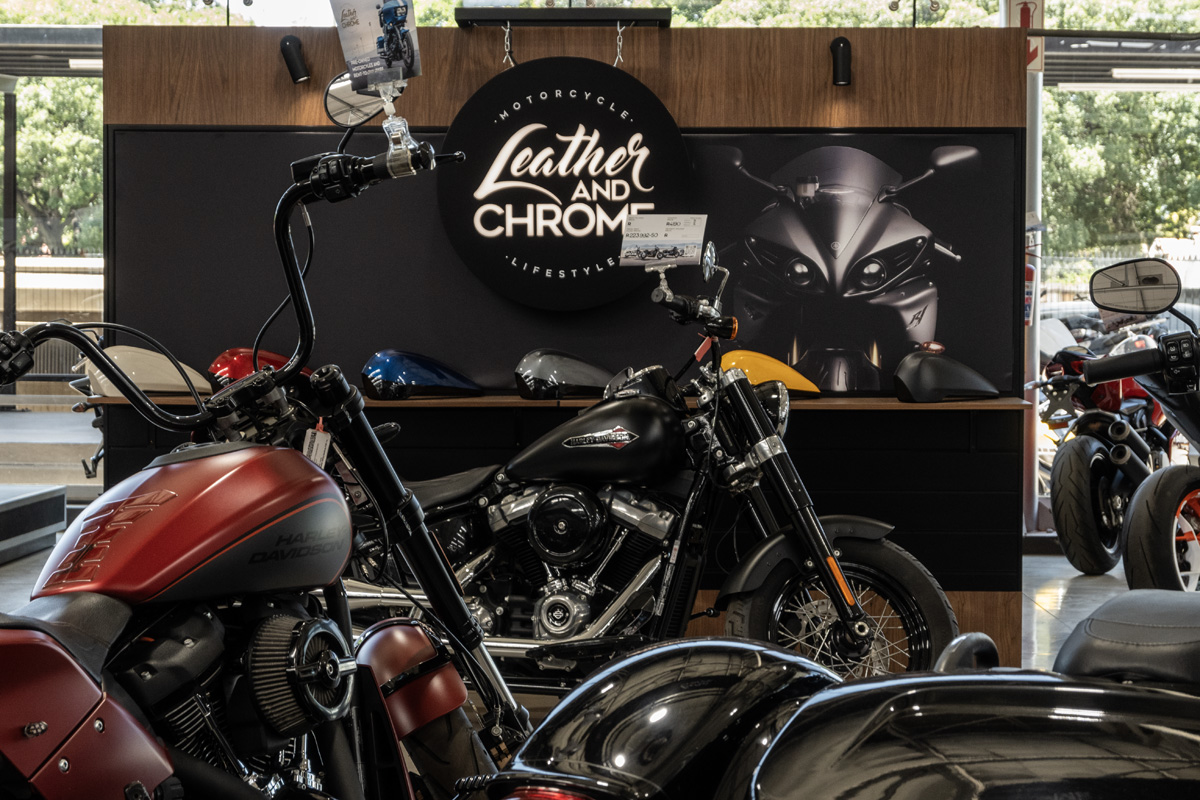
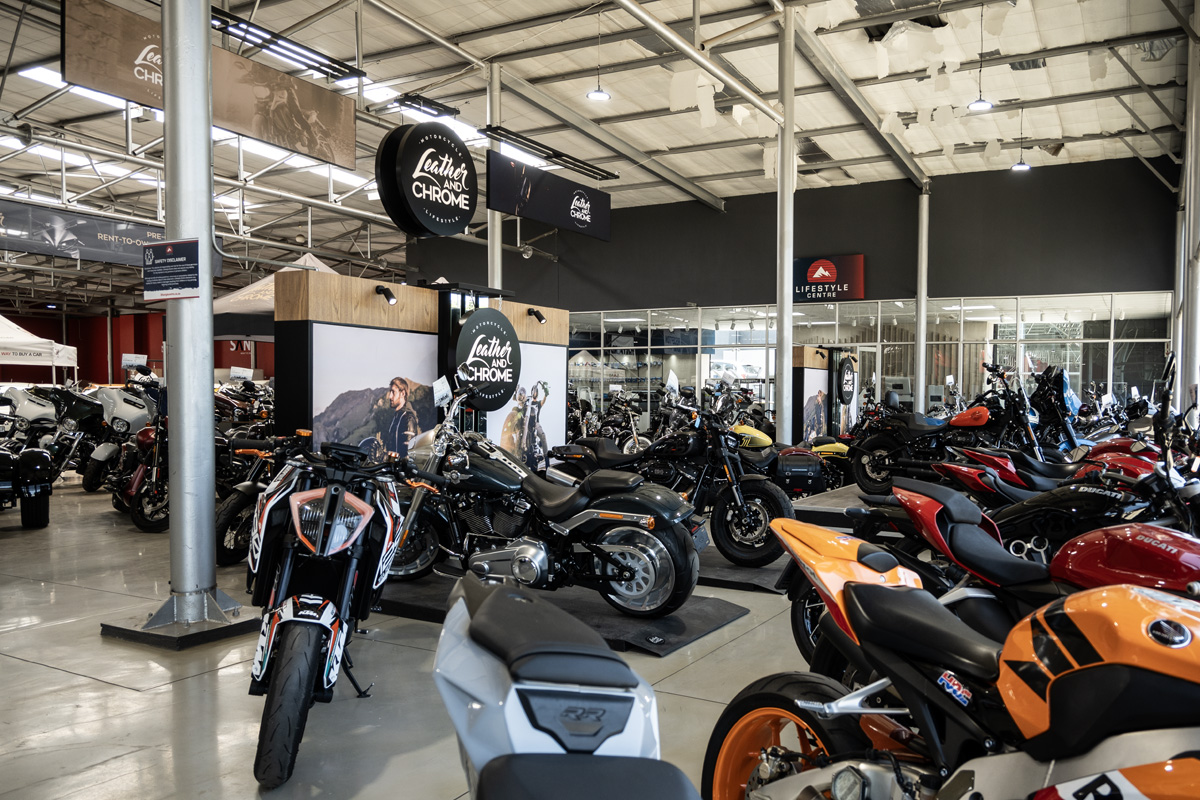
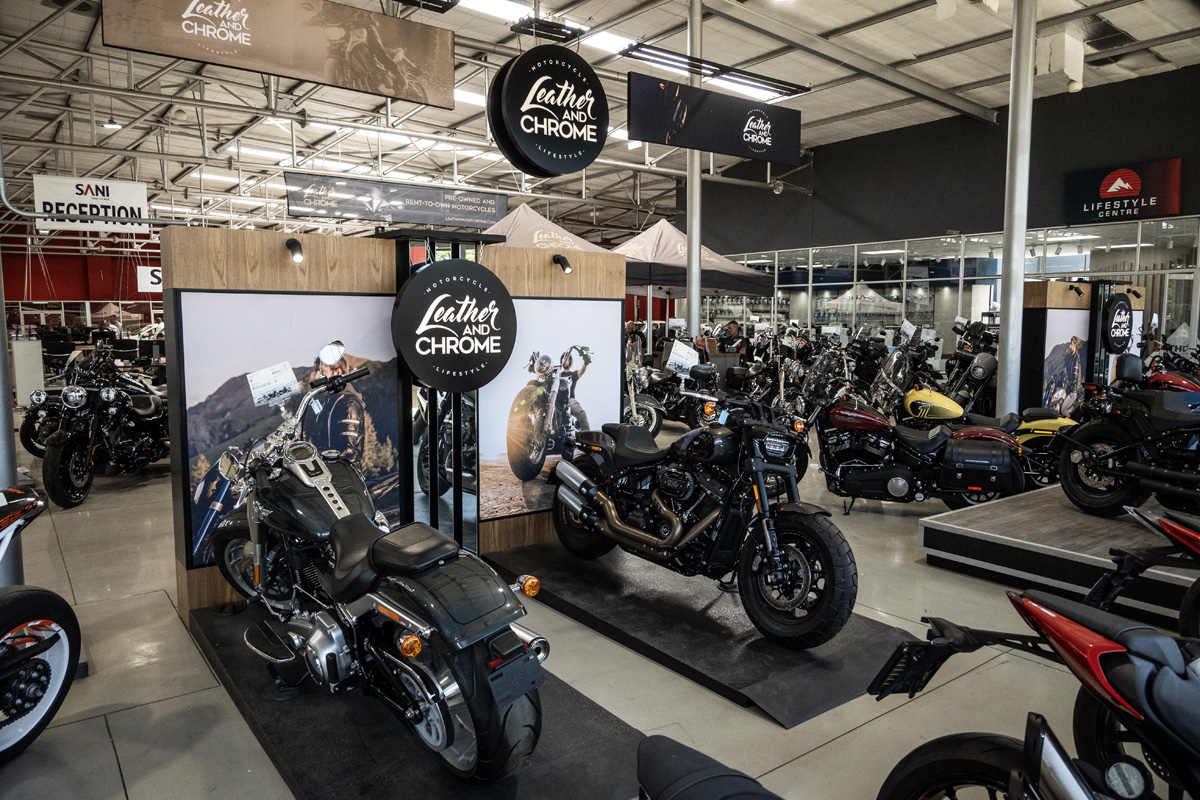
A new motorcycle dealership opening would not normally be cause for comment, but with all the negative news about the state of the motorcycle industry both at home and abroad, any new development is a welcome positive note.
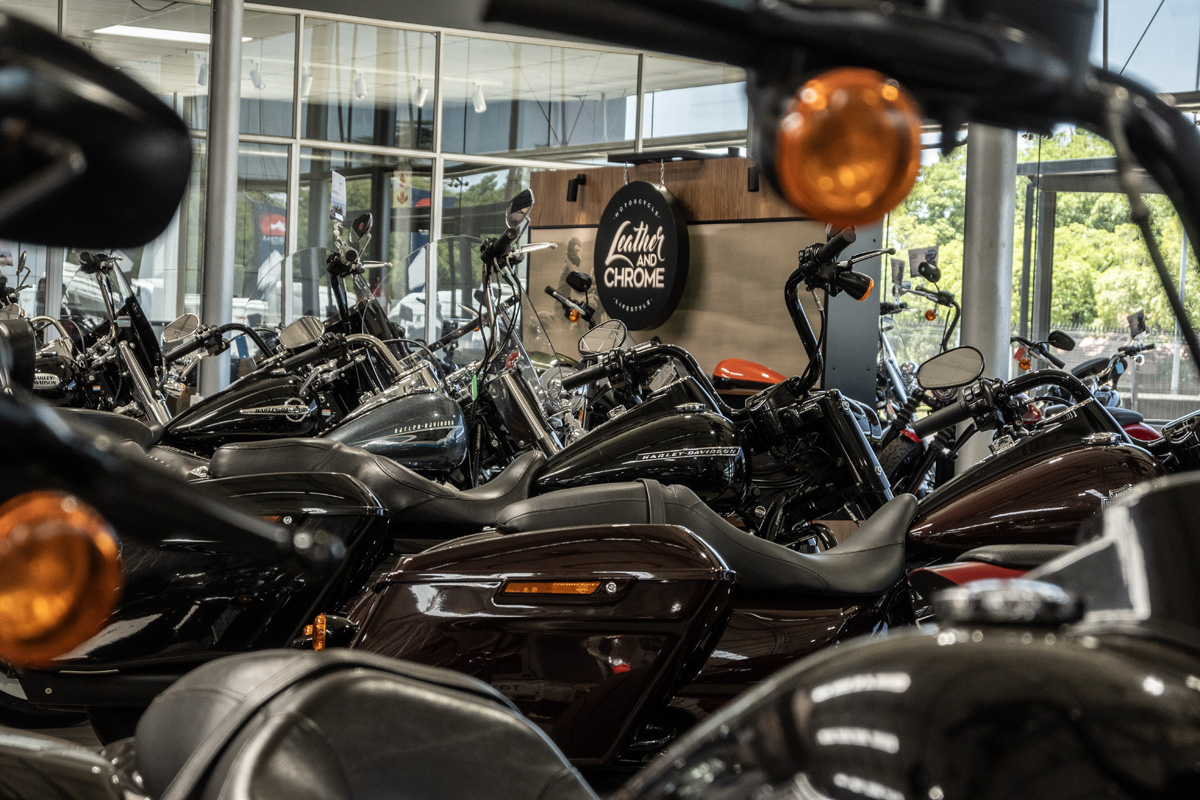
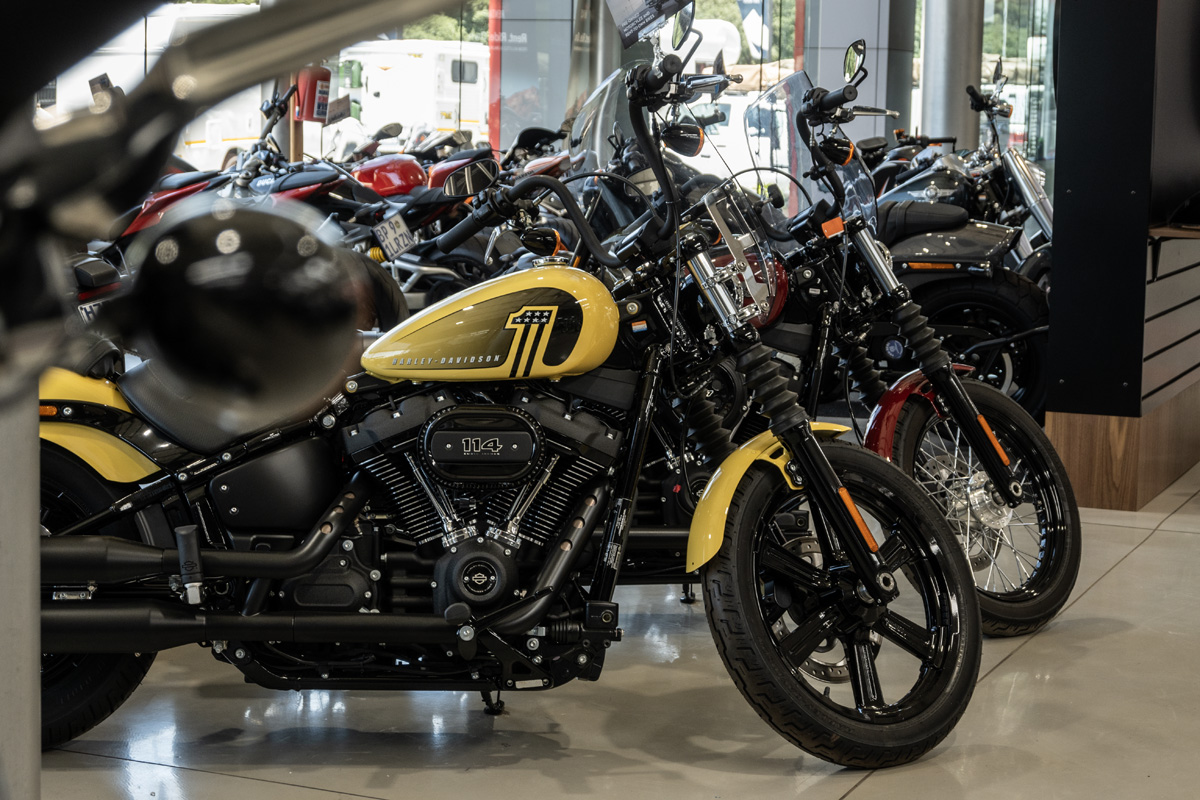
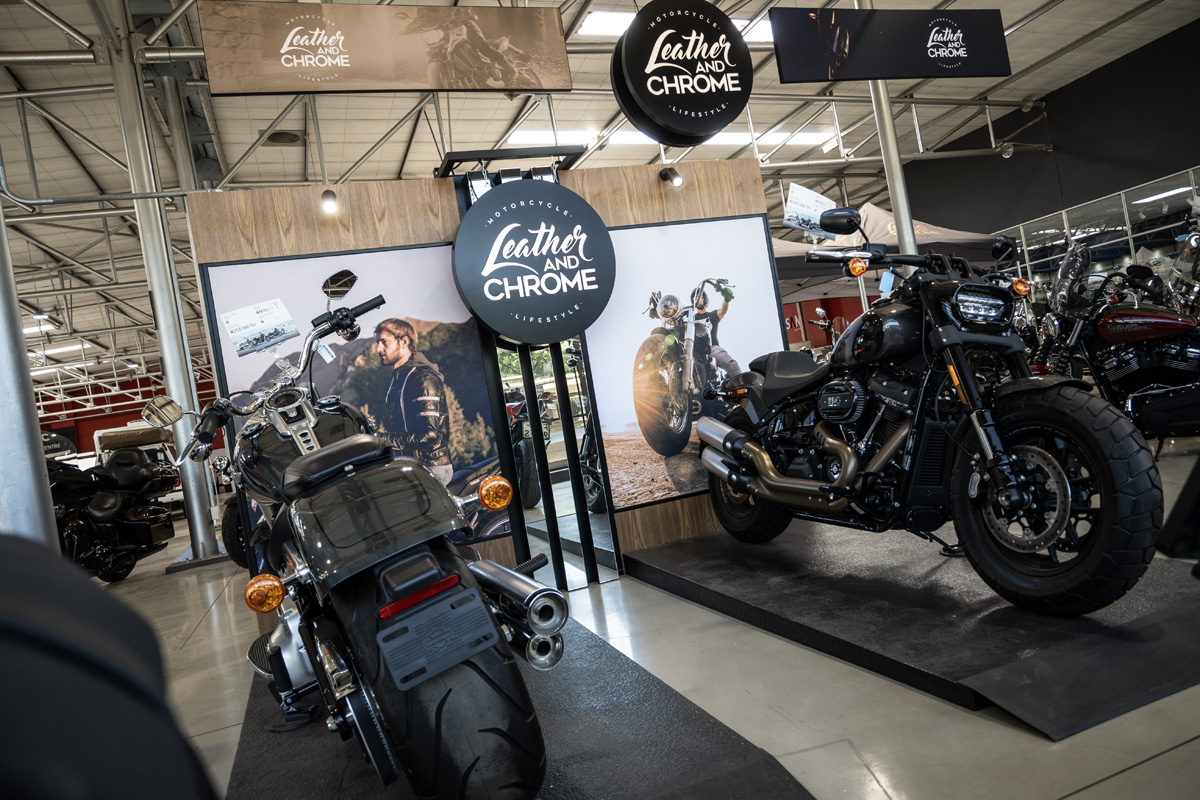
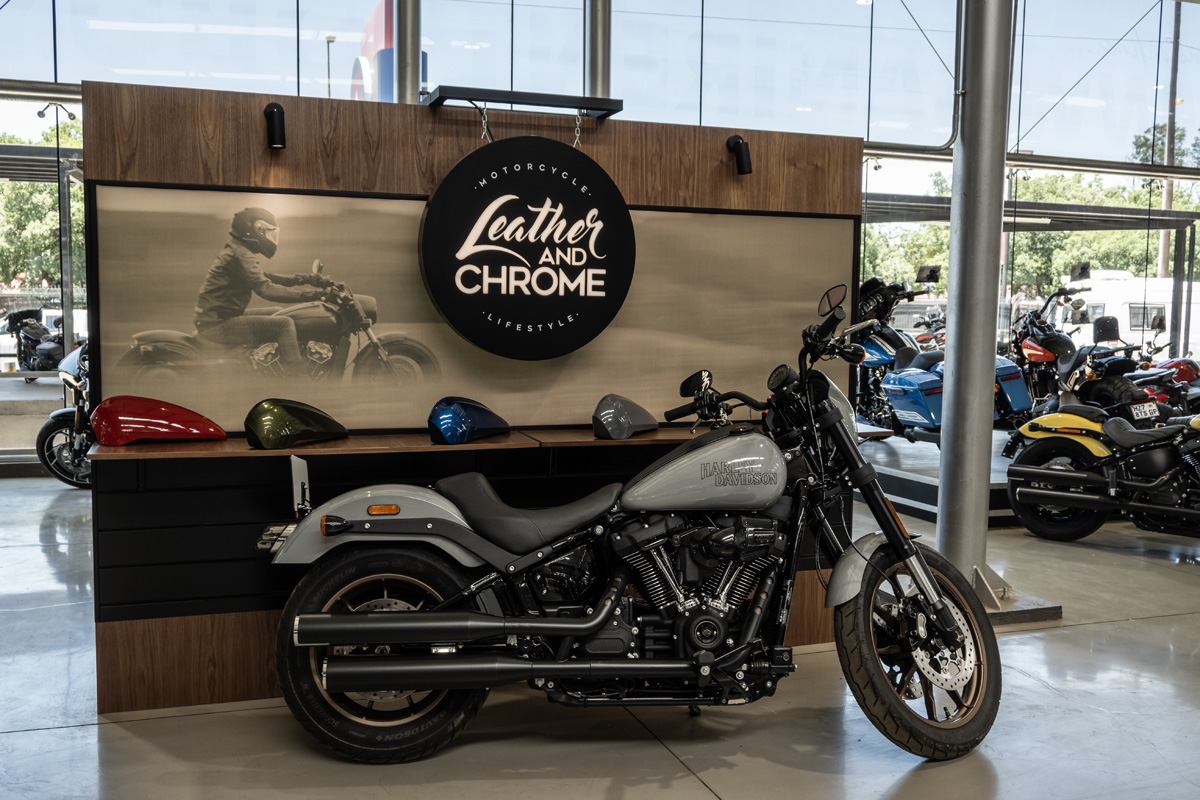
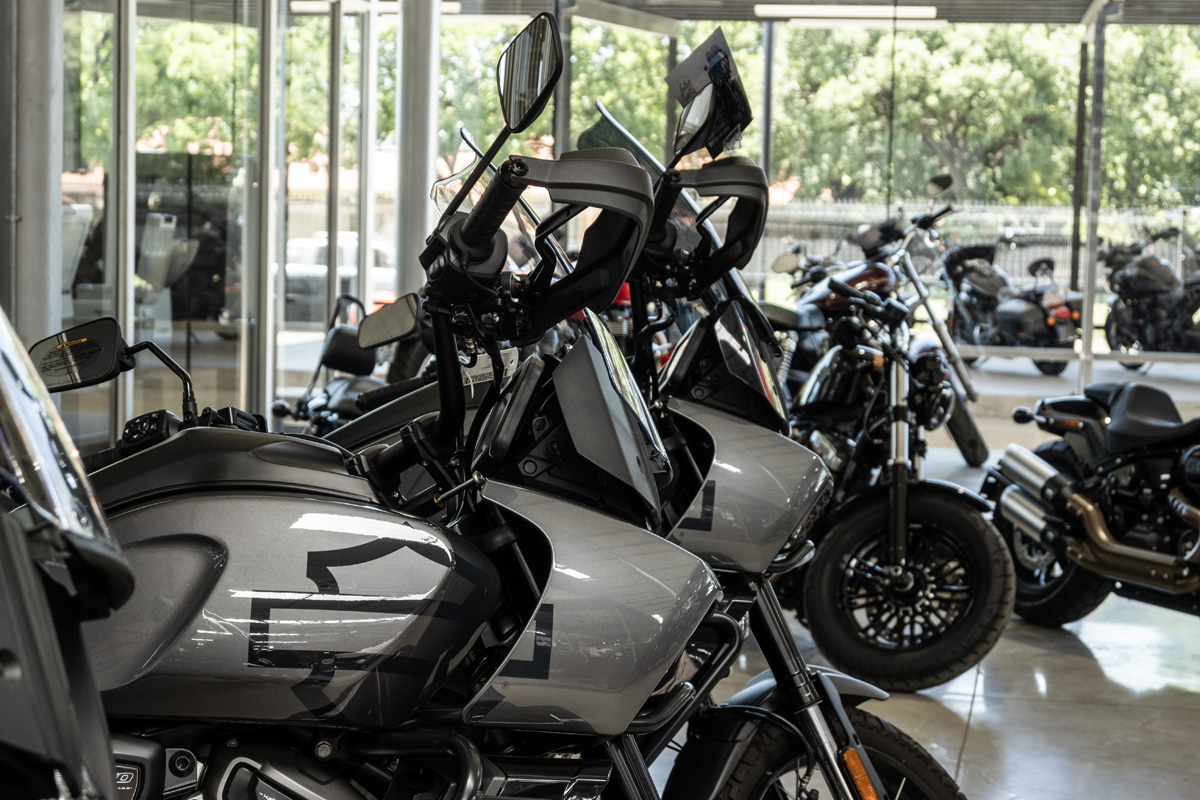
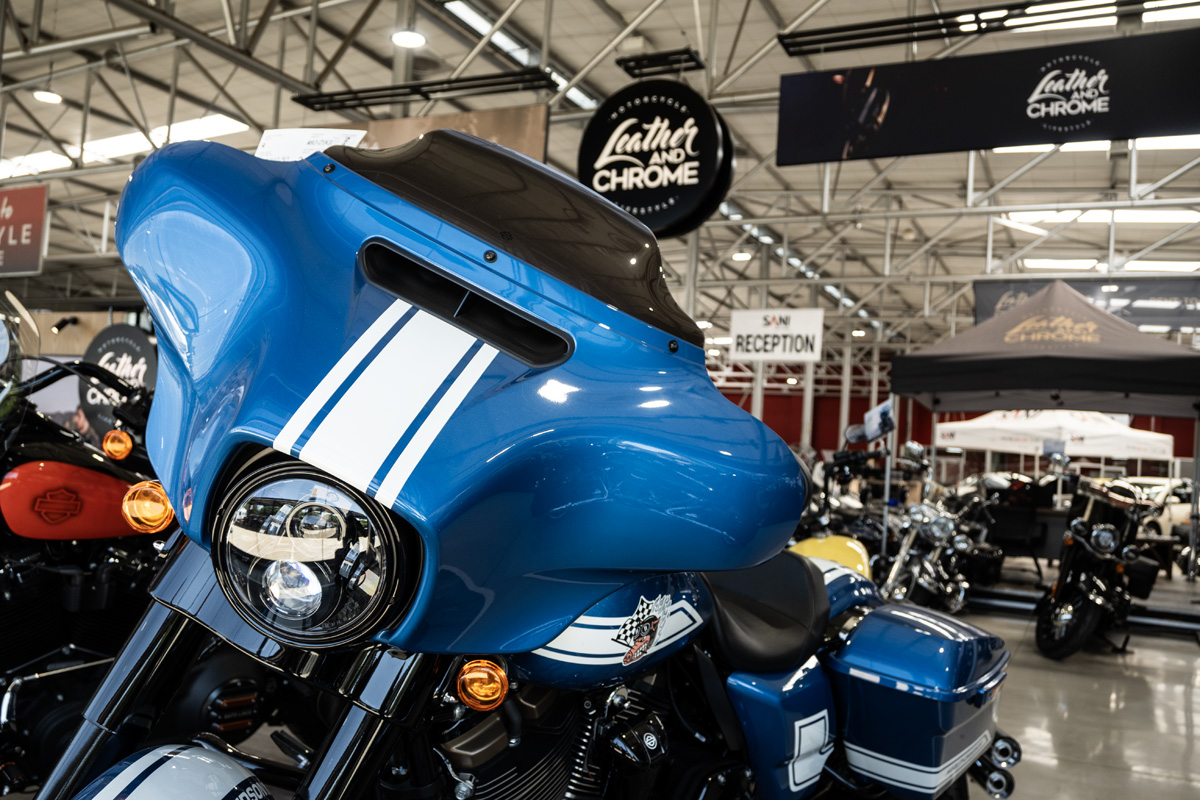
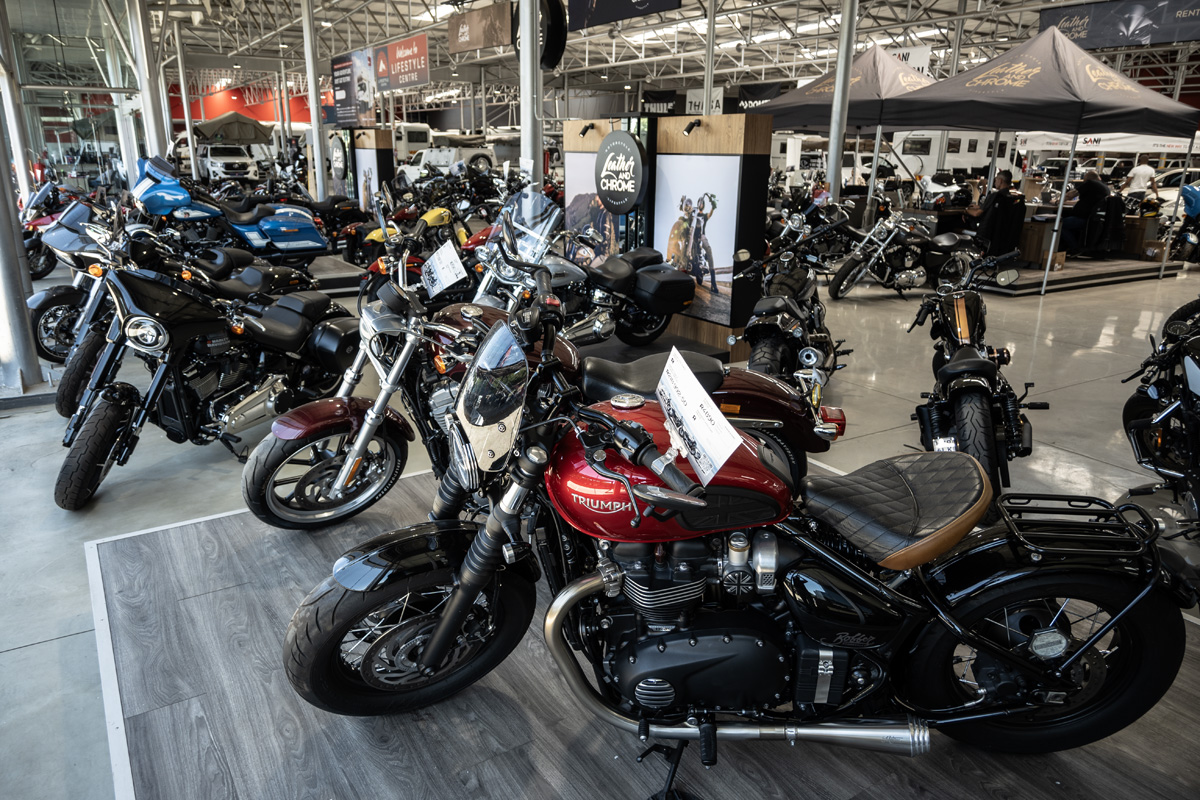
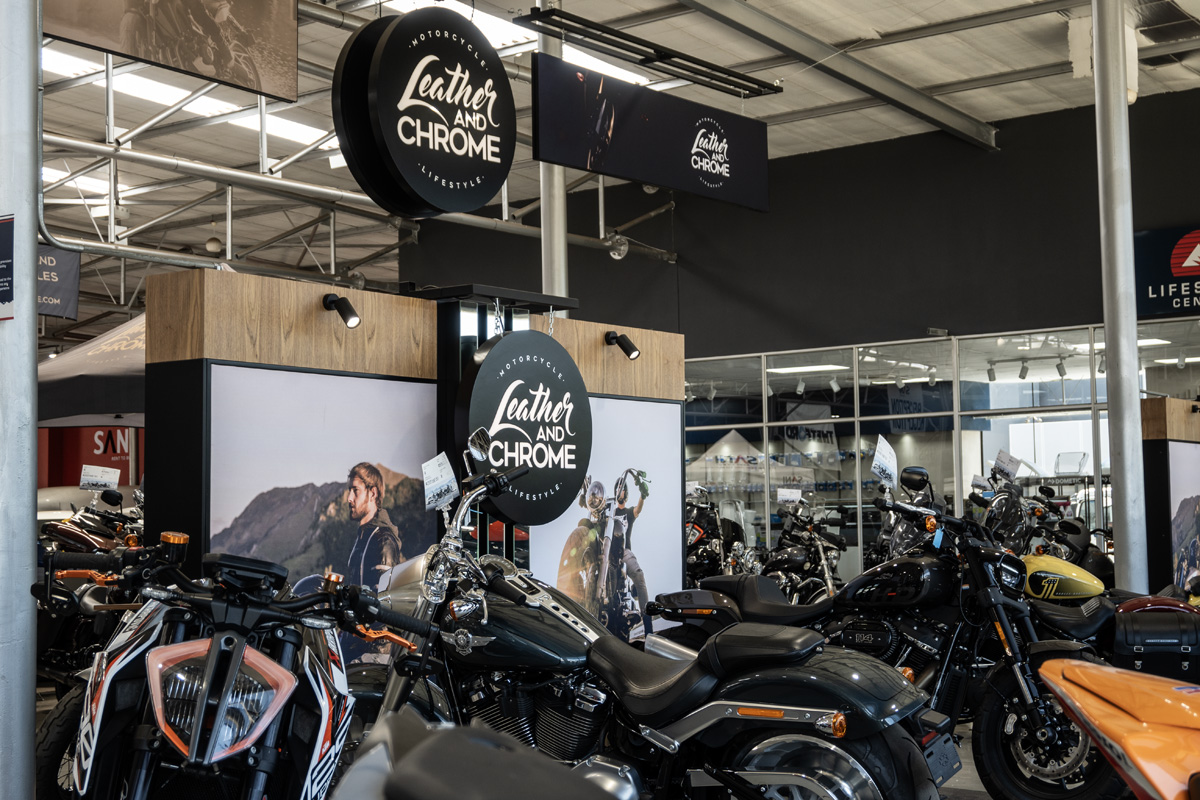
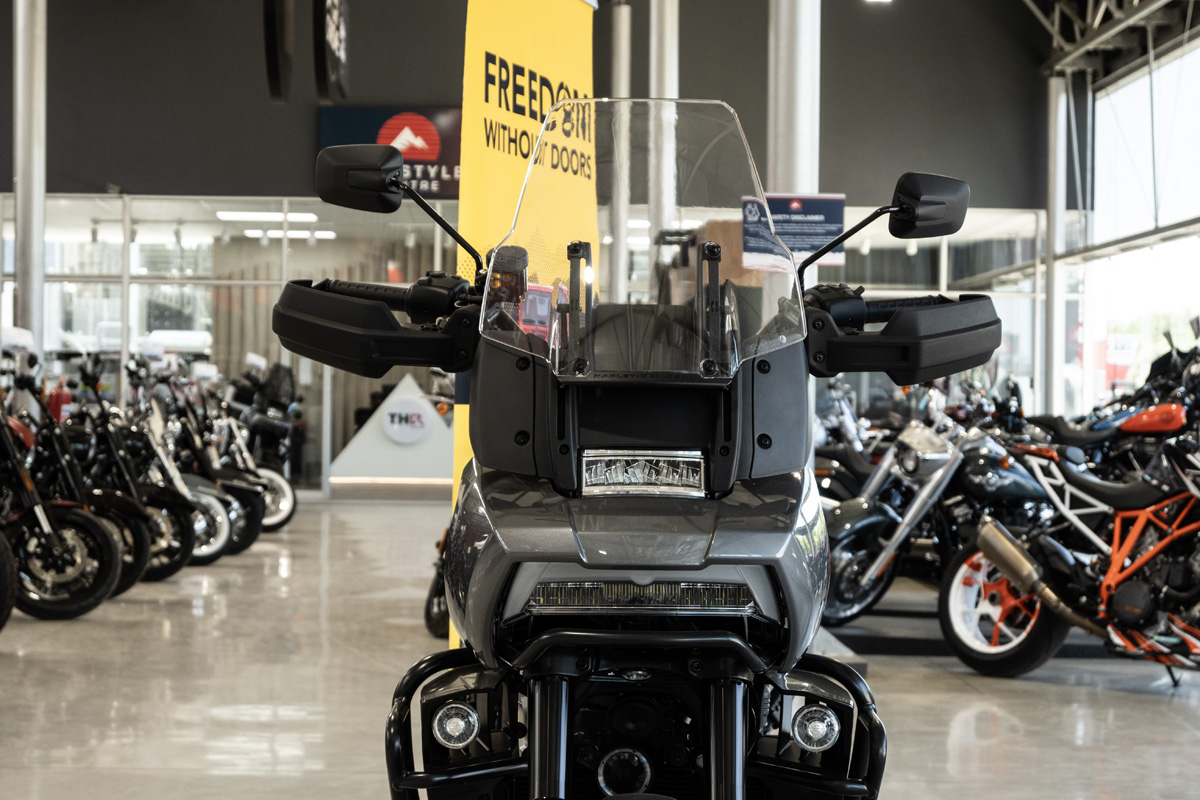
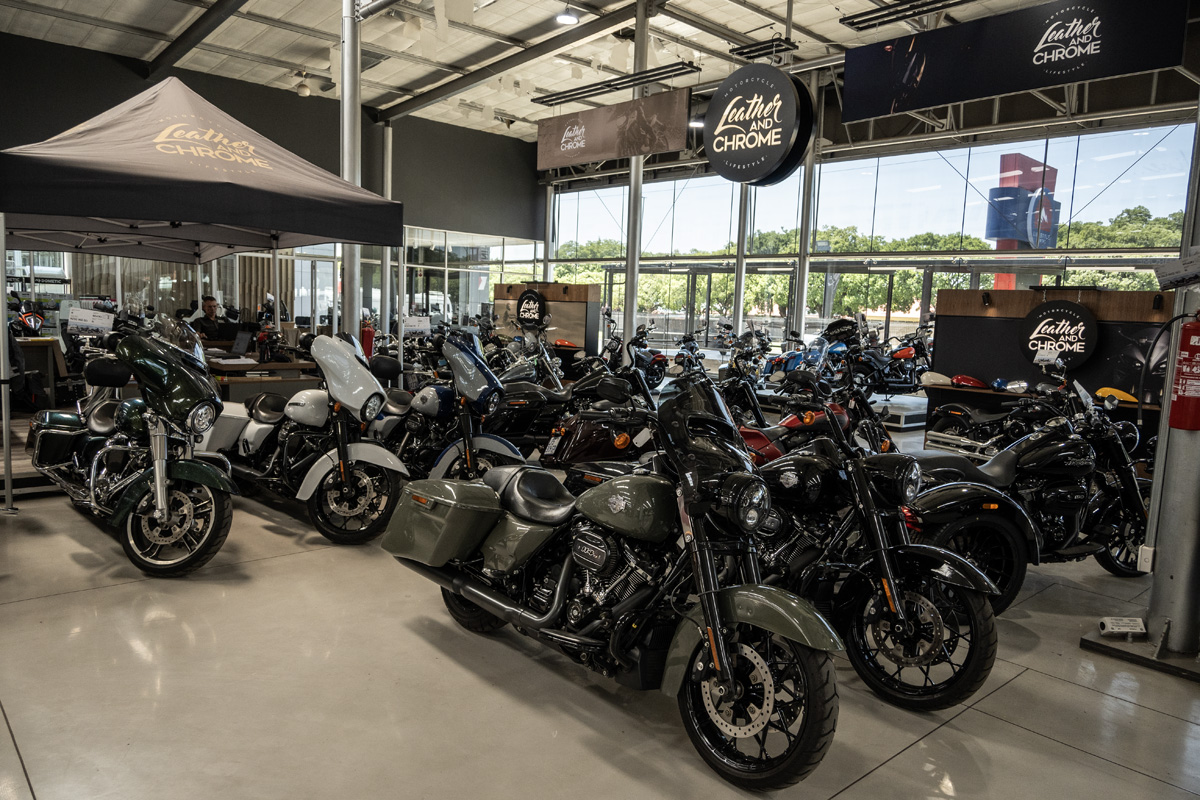
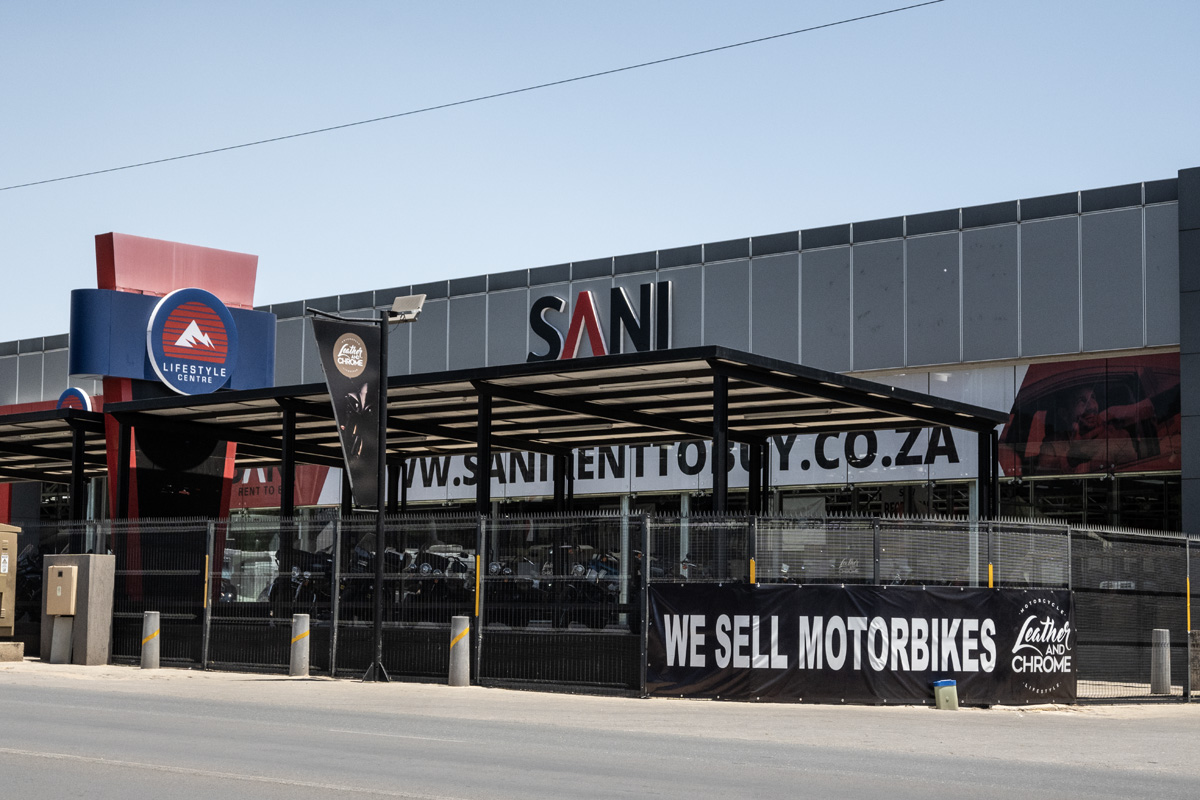
Leather & Chrome, situated at 153 North Rand Road, Bardene, Boksburg, concentrates solely on used motorcycles and, given that the owners are also the Harley-Davidson dealership owners in Cape Town and Durban, there is a large selection of Harley models, from Sportsters through to three-wheeled Tri-Glides and Pan America adventure bikes and virtually everything in between. Every motorcycle on the floor is impeccably presented and they must be some of the best examples available anywhere in SA.
Photo credit: Bjorn Moreira / ZA Bikers
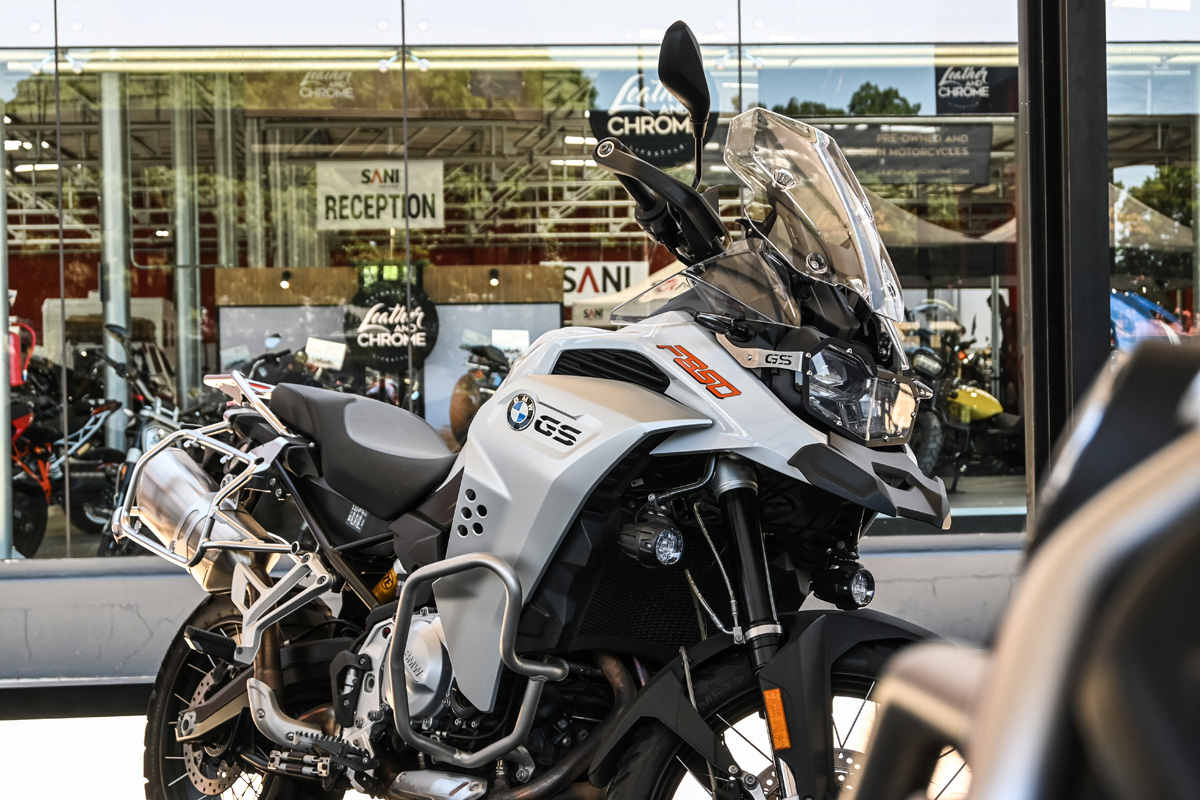
In addition to these is an ever-increasing selection of models from other manufacturers, covering every riding style, from sports bikes of every make to a rather tasty Triumph Bobber and a wide selection of BMW GS models. As with every motorcycle dealer, the stock will be continually revolving and evolving, so we’d recommend keeping an eye on the Leather and Chrome listing on ZA Bikers.
The healthy complement of BMW GS models is easily explained as the parent company in Cape Town operates a motorcycle hire business and, naturally, the iconic GS is a popular choice, even if the journey is to take place solely on tar, with not a bit of dirt in sight. Rates seem reasonable so please get in touch with Leather & Chrome for more details at: 011 611 8008.
Photo credit: Bjorn Moreira / ZA Bikers
Any dealership stands or falls on its staff and Leather & Chrome has a depth of experience that is hard to beat in any dealership in Johannesburg. Jared Vorster has over 12 years of experience with BMW in Gauteng; Clint Swart is an acknowledged Harley specialist with over 17 years of experience in the industry and Rassie Venter also has more years than he cares to admit (20-plus!) in both automotive and motorcycles. Experience such as that is not to be sniffed at.
Even as an experienced motorcyclist, walking into a dealership can be a daunting undertaking but the welcome at Leather & Chrome is immediate and warm and makes you feel right at home, which is the perfect start to the process of choosing your next two-wheeled investment.
Photo credit: Bjorn Moreira / ZA Bikers
At present, the Leather & Chrome service and maintenance workshop is being planned and configured, so there are no facilities on site, but every Harley-Davidson, BMW, KTM, Triumph, Ducati, Kawasaki, Honda, Yamaha or Suzuki that comes in that is still within its warranty period is placed into the official brand dealer network to have a full service and a thorough check before it is offered for sale. Even older bikes that are out of warranty will be given a service and checked over by a reputable and experienced motorcycle workshop. That can only be reassuring.
Leather & Chrome don’t claim to be reinventing the motorcycle dealership but, from what we have seen, they are determined to bring a very high level of professionalism to the pre-owned motorcycle market, both in terms of customer experience and the quality of the motorcycles that are being offered for sale. A visit is highly recommended for you to confirm this for yourself.
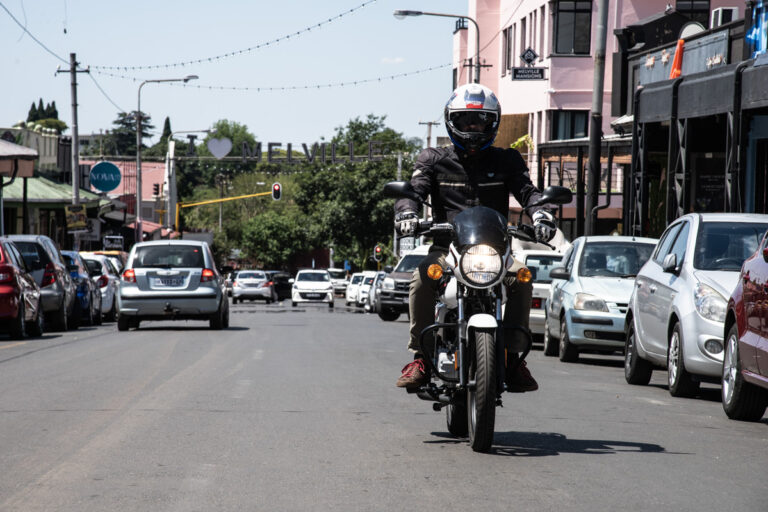
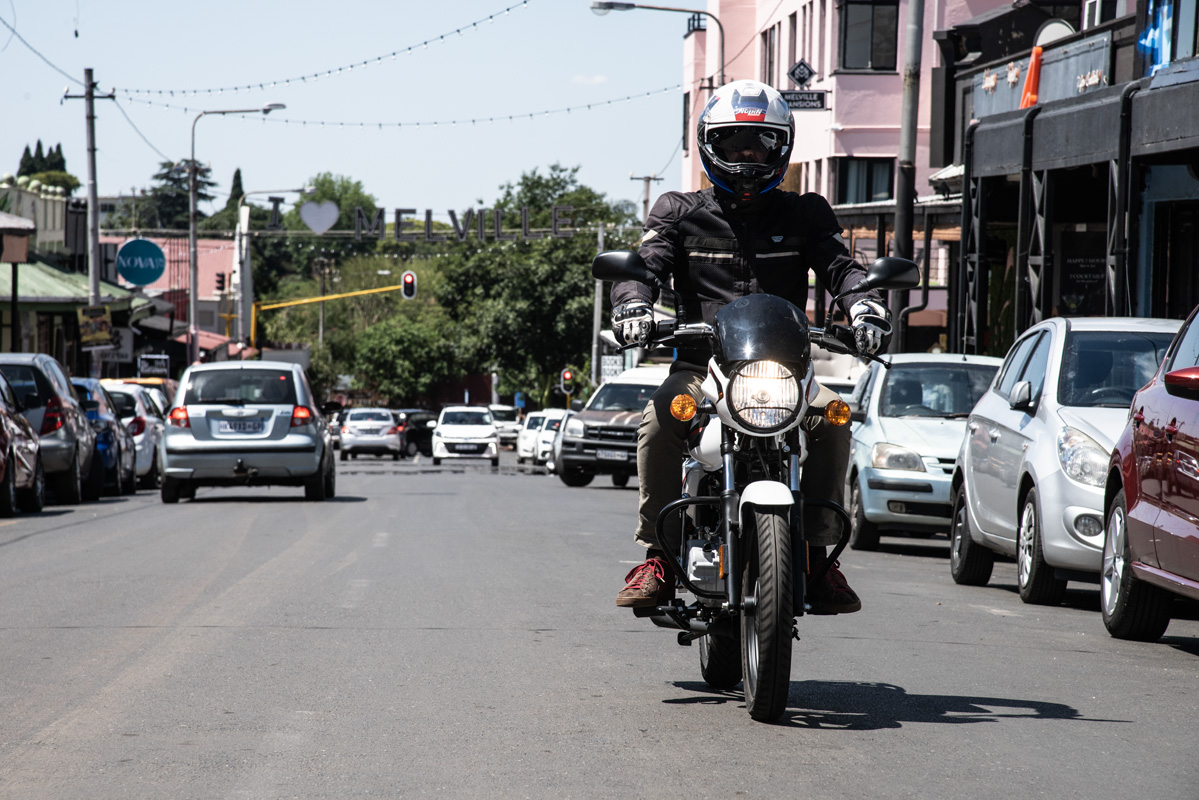
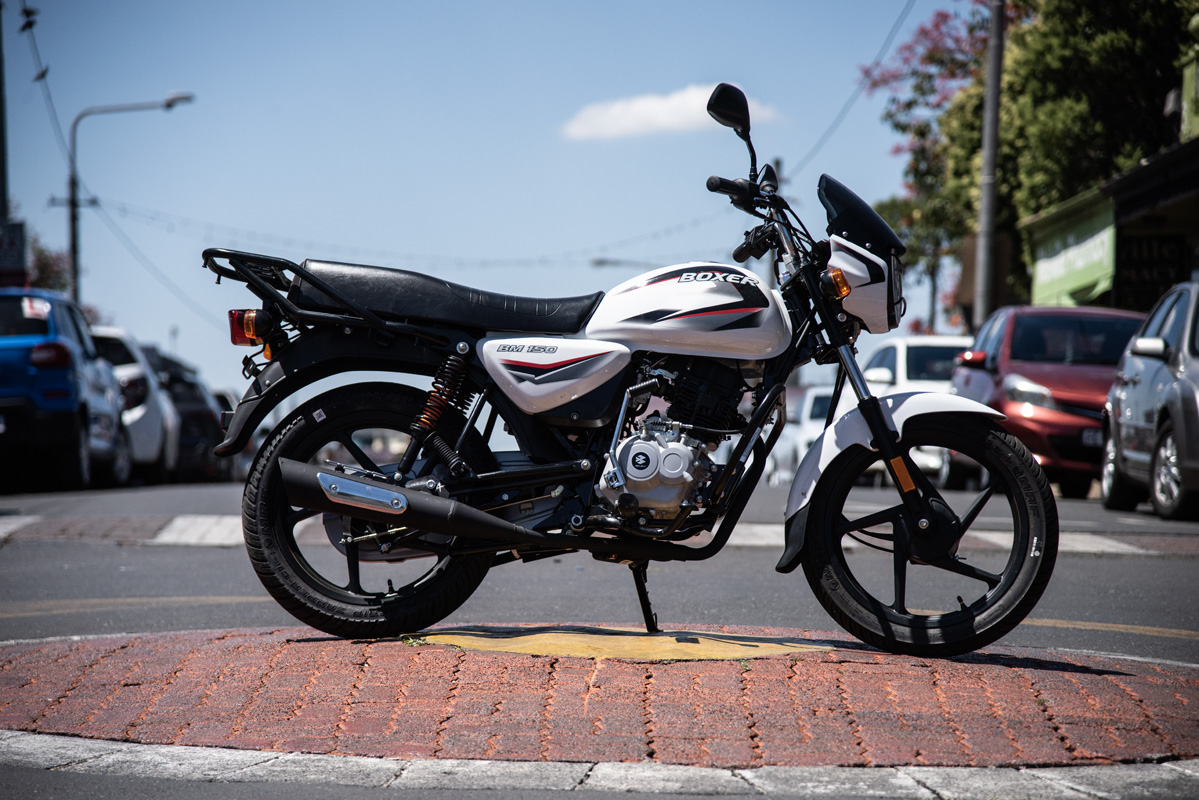
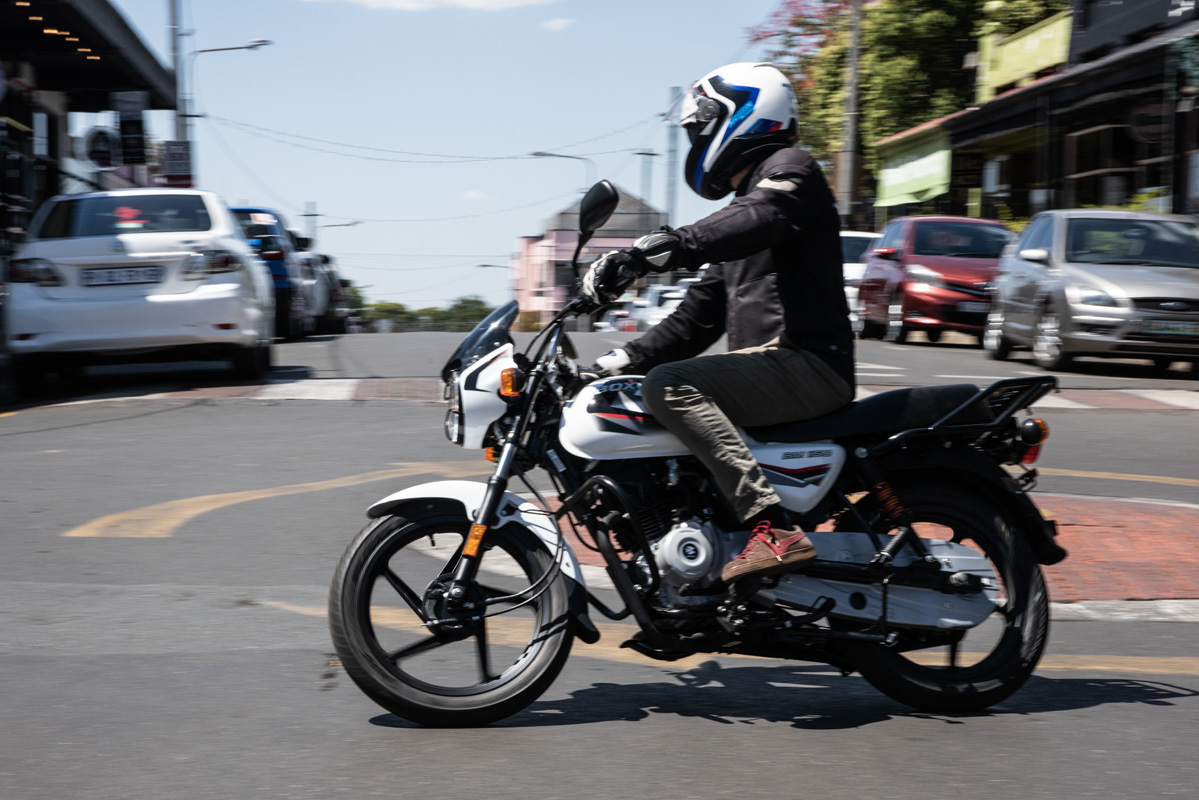
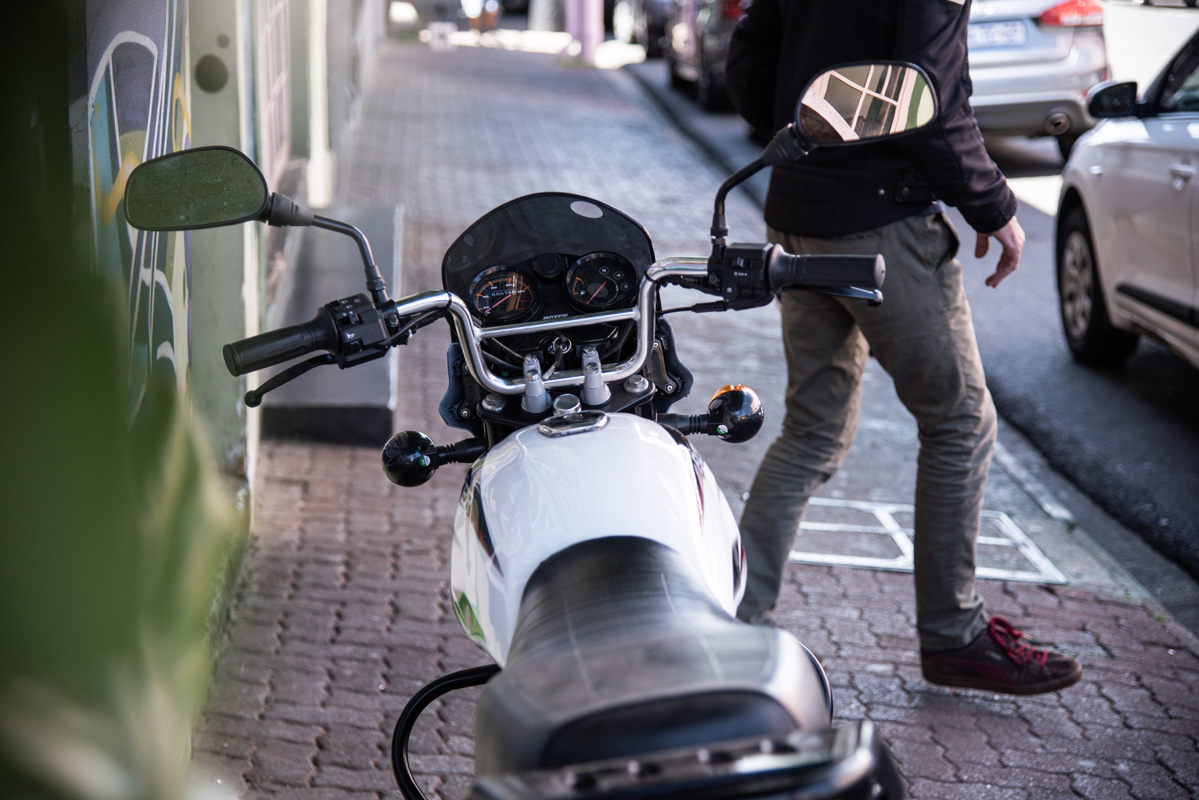
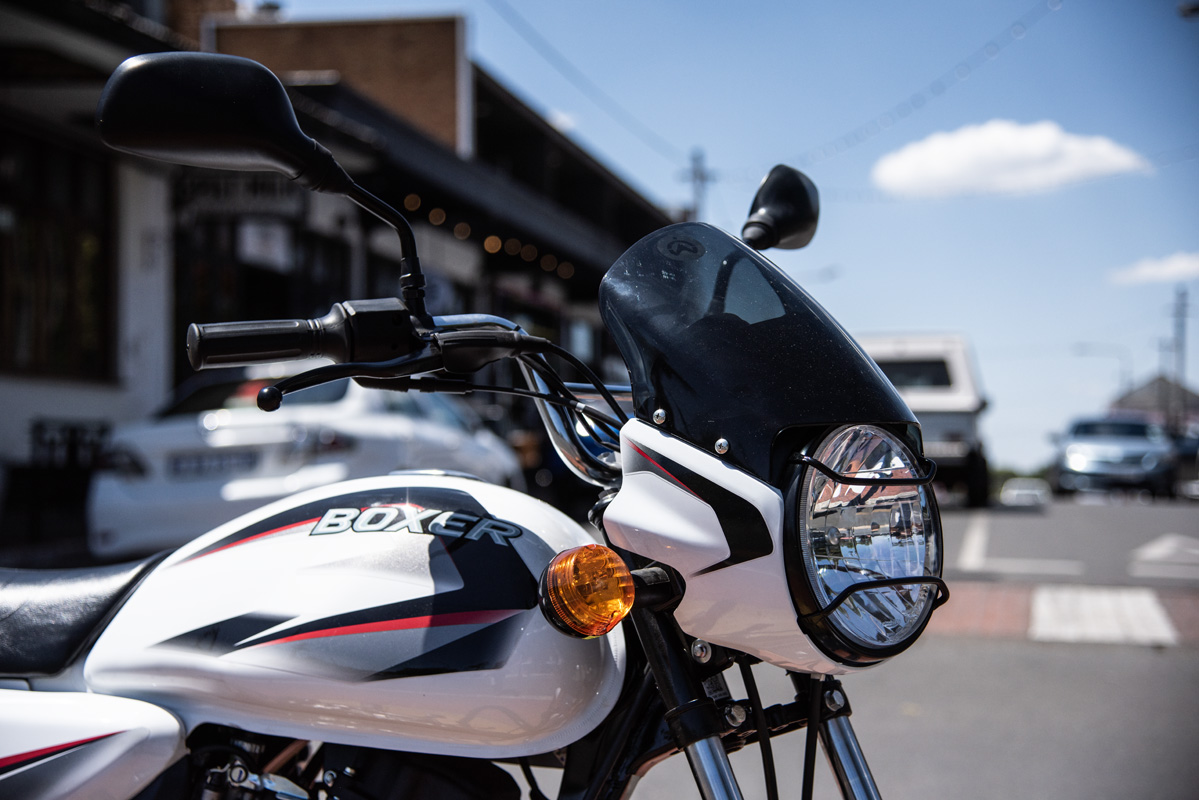
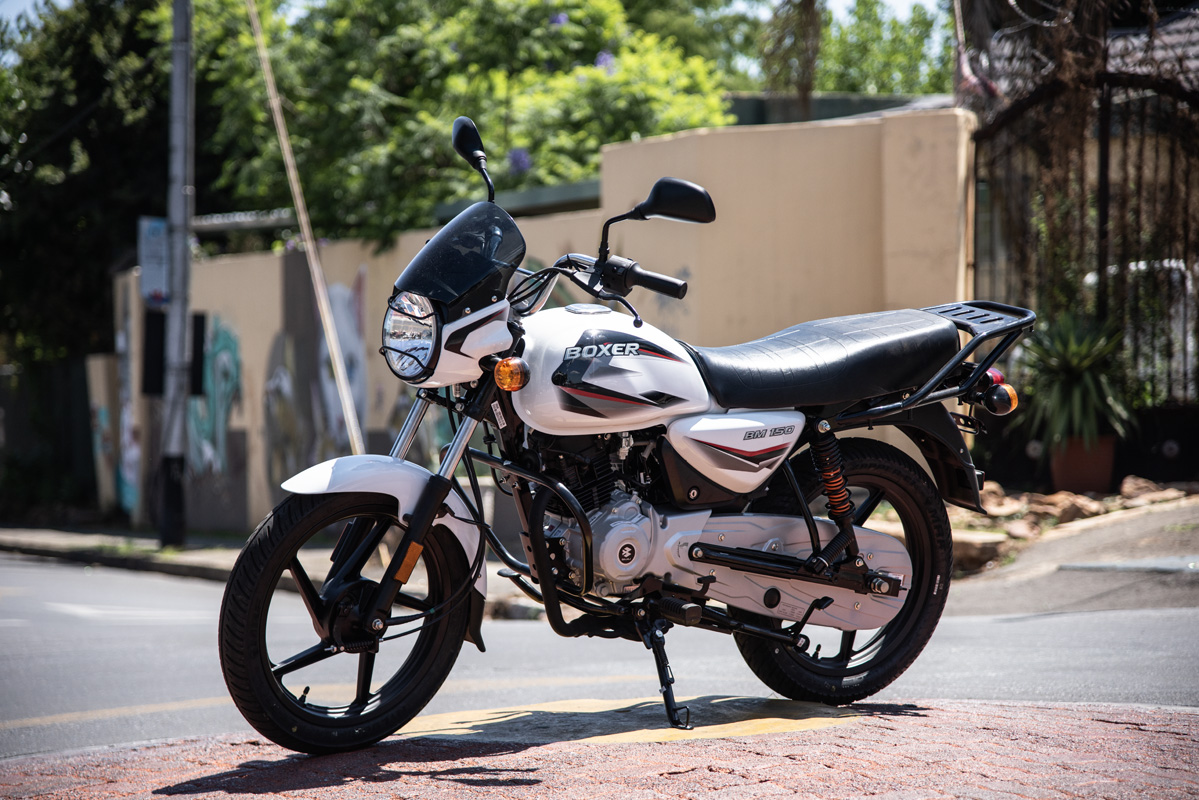
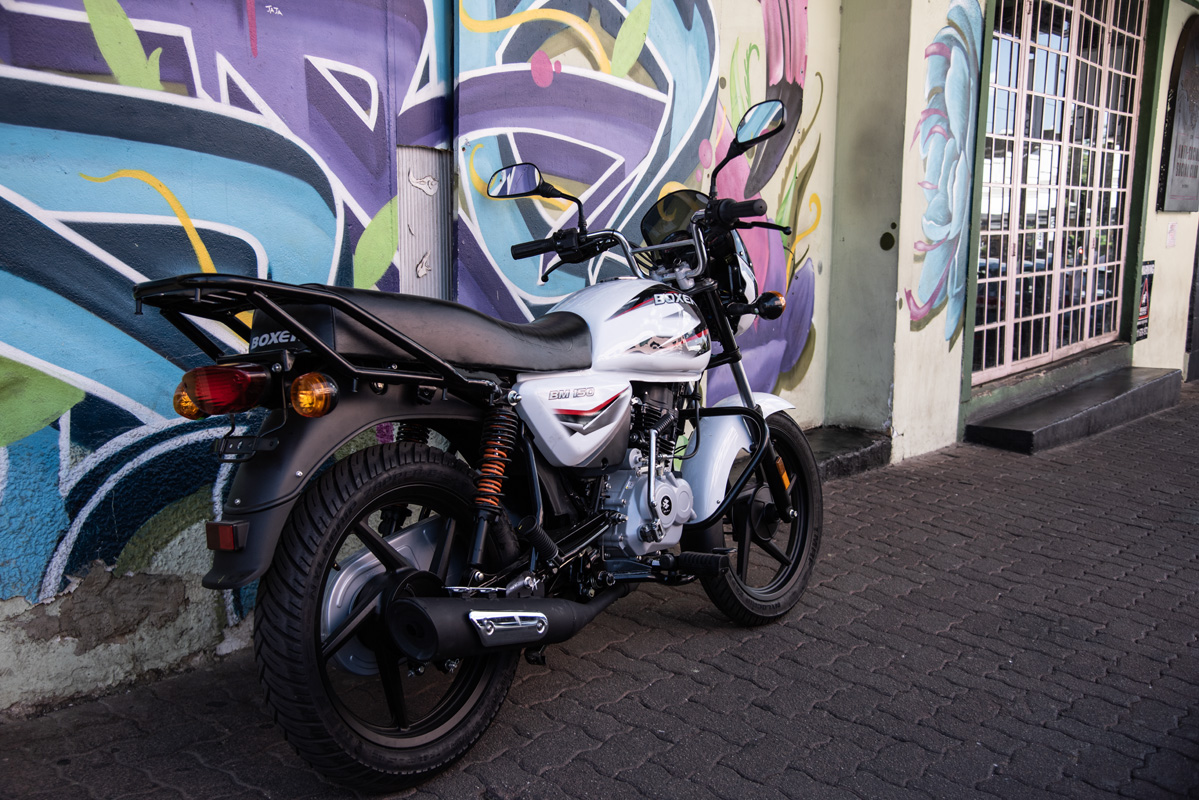
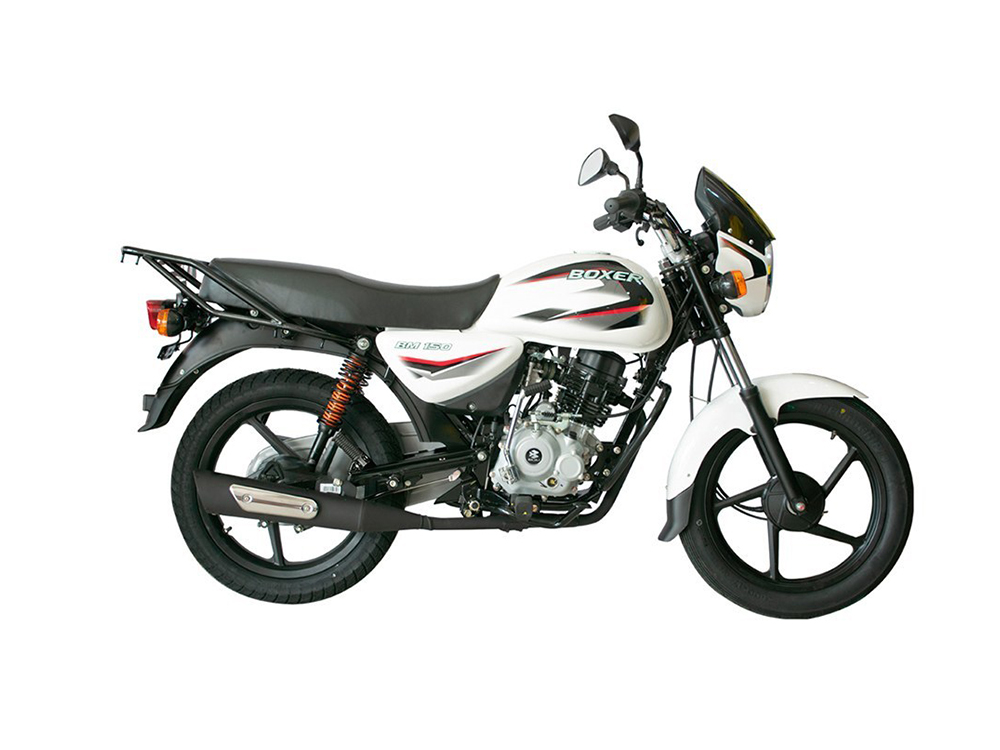
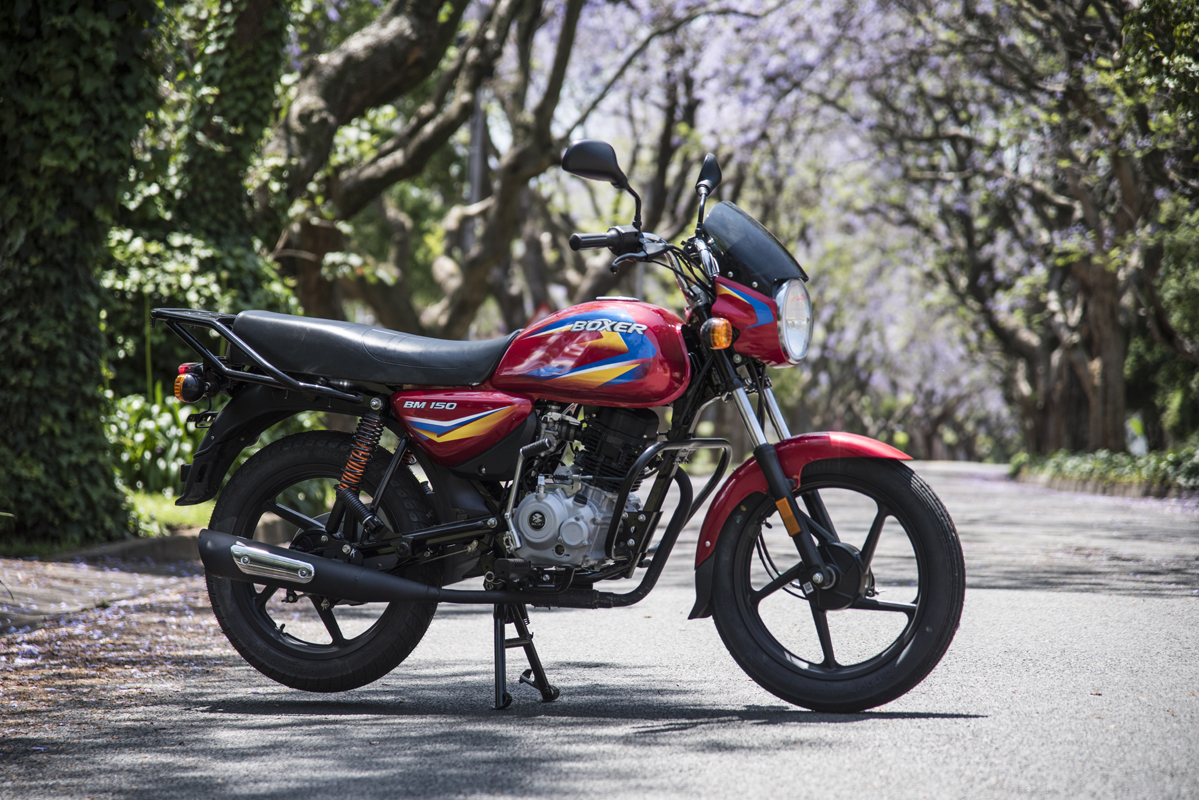
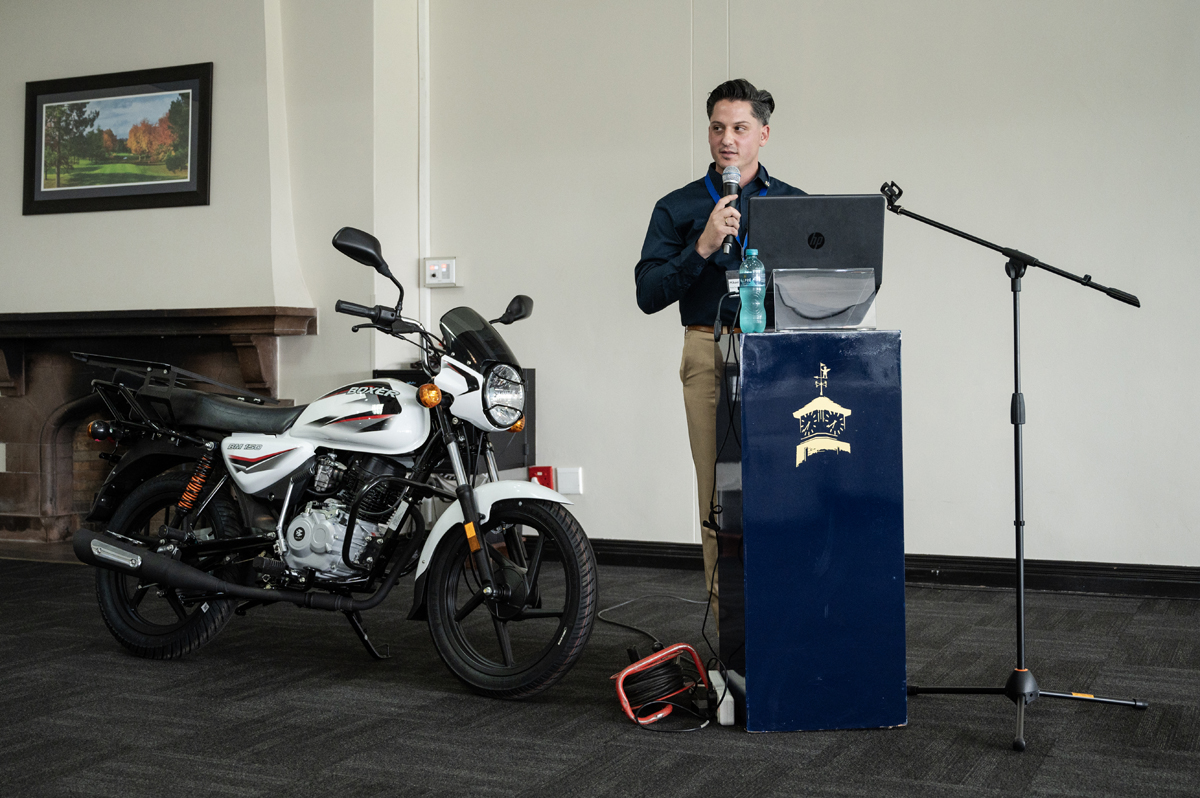
It seems as if the year is ending with a spate of so-called “delivery bikes”, the latest of which is the impressive Bajaj Boxer 150.
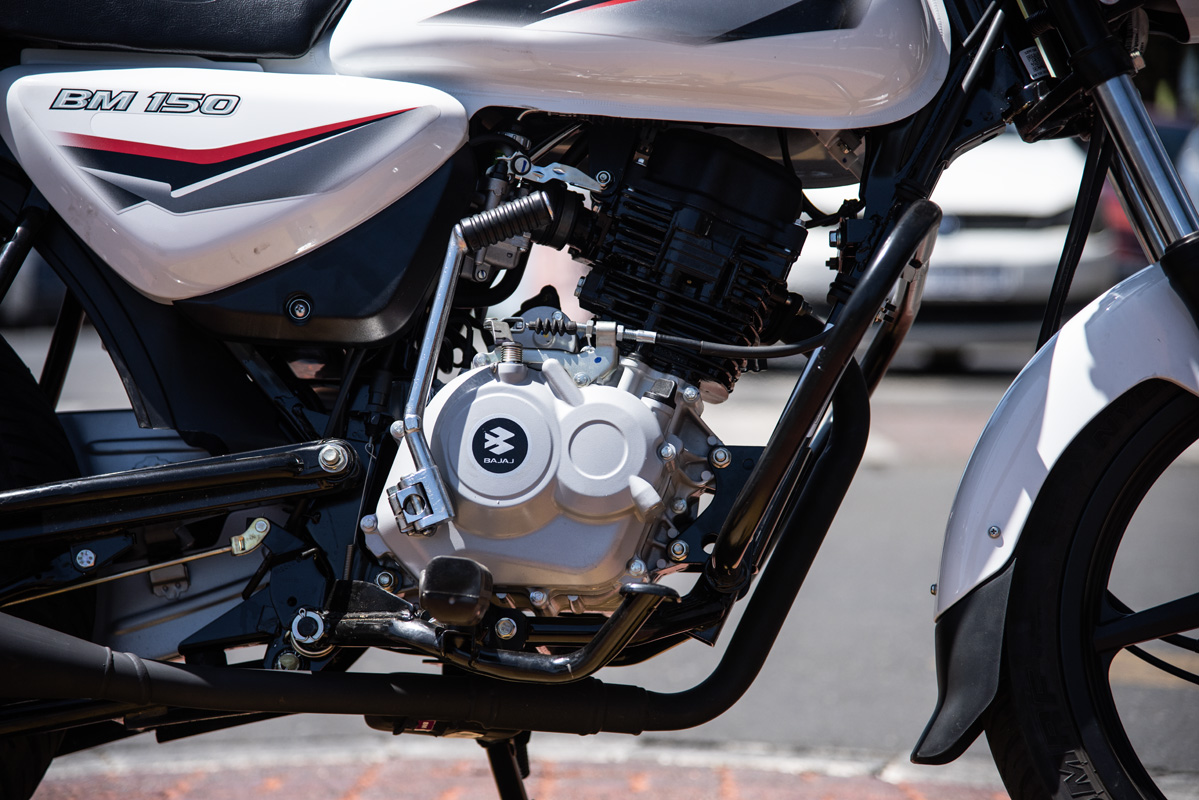
In essence, it does nothing different to the Big Boys, Heros, Lifans, Kidens or any of the other brands you see plying their trade on the streets of the cities of South Africa but in reality, it does what it does rather well, managing to feel impressively solid and extremely smooth near its top speed, thanks to the balancing shaft inside the engine.
Photo credit: Bjorn Moreira / ZA Bikers
The model delivered was brand spanking new and the engine and gearbox were noticeably tight and stiff but loosened off nicely over the next 300 km, the performance improving with every passing kilometre. There is a carburettor to mix the fuel and air but there was never a moment’s hesitation, either on starting or at any point throughout the rev range, at any speed. Fuel economy also noticeably improved as the kilometres racked up.
Drum brakes front and rear gave no heart-in-mouth moments, the riding position was comfortable and only the rather odd gear sequence of Neutral -1-2-3-4-5, clicking down for every up-change being unusual, and taking a little more concentration than is normal, although that too became second nature after a while.
Photo credit: Bjorn Moreira / ZA Bikers
So, a well-built motorcycle with decent performance, comfortable, frugal and inexpensive to buy. So far, so good, but nothing tangible that really sets it apart from its competitors.
That is until you read through the latest press release from Bajaj South Africa. Delivery bikes lead an unnaturally hard life, as evidenced by the number of severely battered examples seen every day, all of which are still gamely giving service.
Photo credit: Bjorn Moreira / ZA Bikers
In an unprecedented move, Bajaj South Africa has announced the launch of the Downtime Guarantee. This promises to empower dealers and fleet owners with an impressive support initiative. The Downtime Guarantee is a commitment to ensuring businesses stay up and running, in the event of accident damage or mechanical faults.
The guarantee states that in the event Bajaj SA is unable to supply a spare part from its defined list of critical components within 7 days, the company will take the following proactive measures:
Loan motorcycle provision: Bajaj SA will supply a loan motorcycle to the fleet owner, ensuring that their business operations remain uninterrupted and that they can continue to generate revenue from the fleet.
Financial compensation: Should a loan motorcycle be unavailable, we will offer compensation of R250 per week of downtime to the fleet owner, helping to offset potential losses resulting from spare parts unavailability.
Photo credit: Bjorn Moreira / ZA Bikers
Naturally, there are some Terms & Conditions to be understood and met:
To qualify for this offer, the motorcycle must have been maintained exclusively by an authorized dealer from the time of purchase, using only Bajaj Genuine spare parts.
Spare parts must be ordered through official dealer channels.
The Downtime Guarantee agreement must be in place between the authorized dealer and the fleet owner.
The list of critical parts will be available from your local Bajaj dealer.
Photo credit: Bjorn Moreira / ZA Bikers
Now that all sounds very staid and dusty, but it’s a significant initiative, speaking volumes not only for the confidence Bajaj has in its products but also for the Indian manufacturer’s understanding that mechanical downtime for business vehicles can be disastrous, both for the companies operating the vehicles and for the operatives who ride them day-in, day-out. This will protect everyone’s livelihoods.
The initiative could also be seen as Bajaj demonstrating huge confidence in the product and, certainly, lengthy acquaintance with the Boxer 150 demonstrated a motorcycle that has an impressive build quality, backed up with an equally impressive riding experience. If the main thrust of sales will be to the commercial sector, there is no reason why private individuals should be getting anything less than a competent and economical means of transport.
Photo credit: Bjorn Moreira / ZA Bikers
Equally reassuring is the offering of a 5-year/100,000km warranty. If that doesn’t give some indication of the confidence Bajaj has in its engineering, then I’m not sure what will convince you!
At R22,450, do you really need much more convincing?
Photo credit: Bjorn Moreira / ZA Bikers
Bajaj Boxer 150
For more information on the bike featured in this article, click the link below…
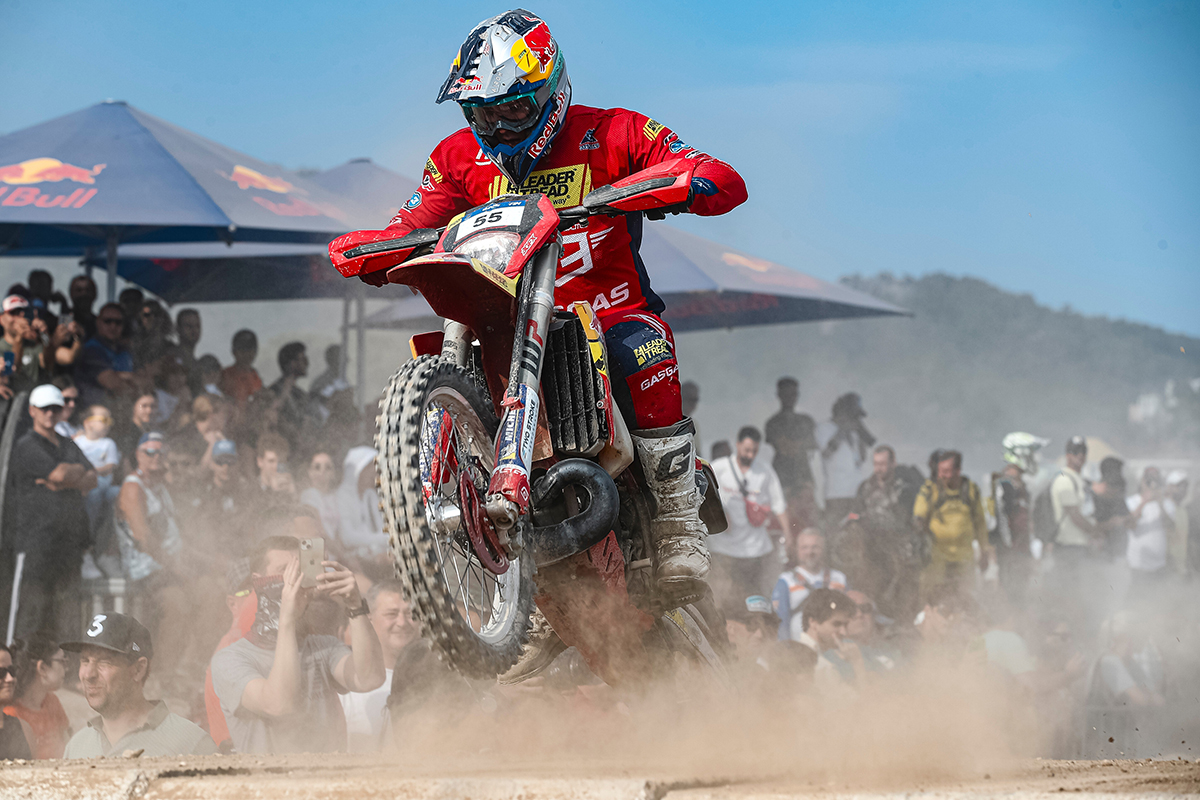
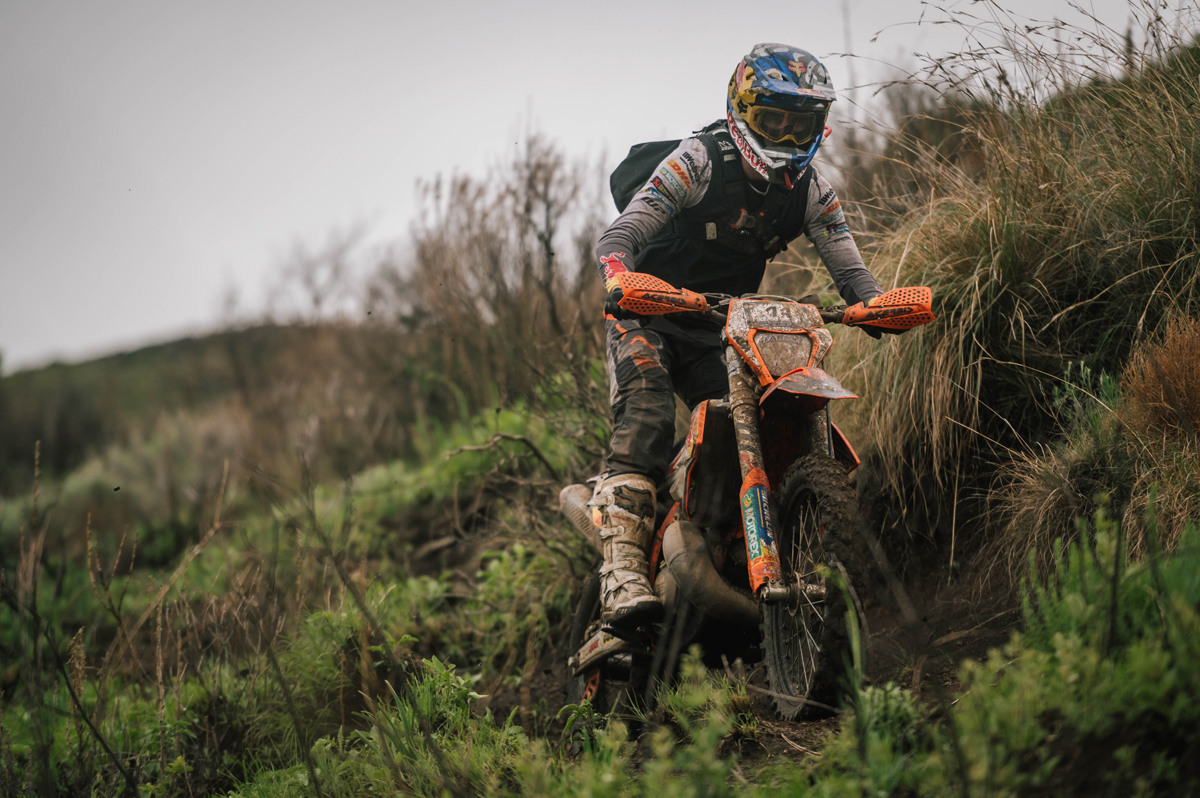
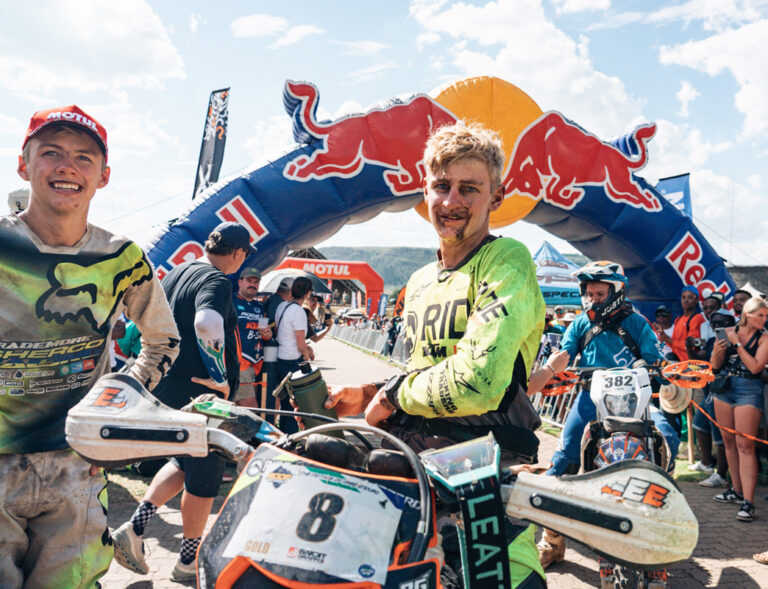
South African Hard Enduro star, Wade Young has triumphed at the 2024 Roof of Africa, claiming his ninth career victory to equal the legendary Alfie Cox’s all-time record. Young’s win, achieved on November 30 after three gruelling days of competition in Lesotho’s Maluti Mountains, reinforces his status as one of the sport’s all-time greats.
“It feels surreal to have matched Alfie’s record,” Young said after crossing the finish line. “He’s been a hero and inspiration to me throughout my career. To stand alongside him in the history books is an honour I never imagined when I first raced here at 16.”
The 28-year-old showcased unmatched endurance and technical mastery across the 350-kilometre course, which challenged riders with its unforgiving terrain and “virgin territory” sections introduced this year.
The Maluti Mountains’ rugged paths tested even the most seasoned competitors, but Young emerged victorious after fending off strong challenges in the Gold Class category.
“It’s always special to win here in Lesotho,” he added. “The mountains, the crowd, and the camaraderie among riders make this race unique. Racing in front of a home crowd really gave me that extra push to keep going when it got tough.”
Image source: RedBull
Young first made history at the Roof of Africa in 2012, becoming the youngest-ever winner at 16. Over the years, his dedication and consistency have turned him into a dominant figure, winning eight of the last twelve editions.
Reflecting on his career, Young expressed gratitude to his team and supporters. “This victory isn’t just mine. My team, my family, and everyone who believed in me played a huge part in this. Thank you to everyone who’s been part of this journey.”
With this landmark victory, Wade Young has cemented his legacy as a hard-enduro icon.
For as long as I can remember, I have dreamt of being one of those “phantoms of the desert.” Picture the hot Sahara Desert, a mirage in the distance, and the sound of a big-bore rally bike going flat out, piercing the quiet desert, a trail of dust rising up in the distance.
Have you ever thought about diving headfirst into an adventure where all you have is a paper scroll (roadbook), guiding you through thousands of kilometres over several days? The mix of thrill, terror, adrenaline, adventure, the uncertainty of arriving intact (or not), and the ultimate sense of accomplishment—it’s a unique experience that few other adventures offer in our world. Join me in this extraordinary journey, and let me guide you on how to embark on it yourself.
Image source: Willem Avenant
I have decided to finally act on my lifelong dream. Many of you who have known me for a long time will breathe a sigh of relief, as I have spoken of doing the Dakar for as long as I can remember.
The Dakar of old is a distant memory from an era of adventure long past. Gone are the days when you set off into the unknown with no support and armed with nothing but your confidence, your will to succeed, and your drive for adventure.
While still being the longest, toughest, and most gruelling motorsport race on the planet, the challenge now encompasses finding funds, gaining relevant experience, balancing work and family life, and a host of other challenges. As many Dakar competitors will attest, “doing the Dakar is the easiest part of the journey; simply getting to the start line is the true challenge.” As a lifelong Dakar hopeful, I can attest to that fact.
While researching the Dakar, I came across many people who started the journey but never finished, and in many cases, never even stood on the start podium. This was because they did not realize or necessarily understand what it would take to actually get there. I was also not able to find a clear, concise, or relatable account of how to actually get to Dakar.
Image source: Willem Avenant
My goal this year was to document my entire journey to the Dakar Rally 2025. This process included podcasts, videos, blog posts, social media posts, radio, etc., across a variety of platforms. Showing the ins and outs of “how to get to Dakar”, not just focusing on the two weeks of the race but the entire year before.
The Dakar Rally is the most expensive race in the world. If you count up all the very real expenses, just the entry is $18,000, team support and bike rental is $65,000, and airfare, protective gear, accommodation, FIM License are another $10,000. You stop counting after you reach $100,000, and you start asking yourself why you would spend so much money on a race. Surely there are better, more sane, more responsible, and more rational things to do with your money.
Here is the thing, dreams are not rational, and achieving them is never easy. Asking for help is always hard, much more so for the type of person who always wants to do everything himself and to prove that he does not need help.
Image source: Willem Avenant
Well, I need help, and I need support, and I am man enough to admit it.
I vow that I will focus every ounce of my being and ability on making this dream a reality. I want to bring you with me on my journey, not just as I surf the dunes of Saudi during the first two weeks of 2025, as you eagerly await any news from Dakar and hopefully share the special time with your kids, but I want to bring you along for the entire journey.
I want to show that achieving dreams is possible, but that it takes real hard work, effort, and A LOT of sacrifice.
I undertake to document my journey, the good, the bad, and the ugly, and to share it with you in as raw and honest way as possible with those of you who dream of going to Dakar one day, with those of you who just like a challenge, and with those of you who still believe that passion and grit can get the job done.
Image source: Willem Avenant
To show your support head over to his GoFundMe and help Willem Avenant get to the 2025 Dakar.
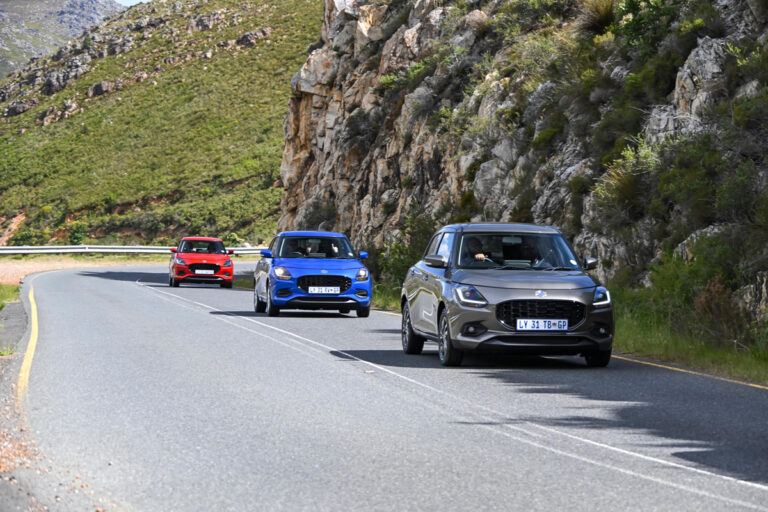
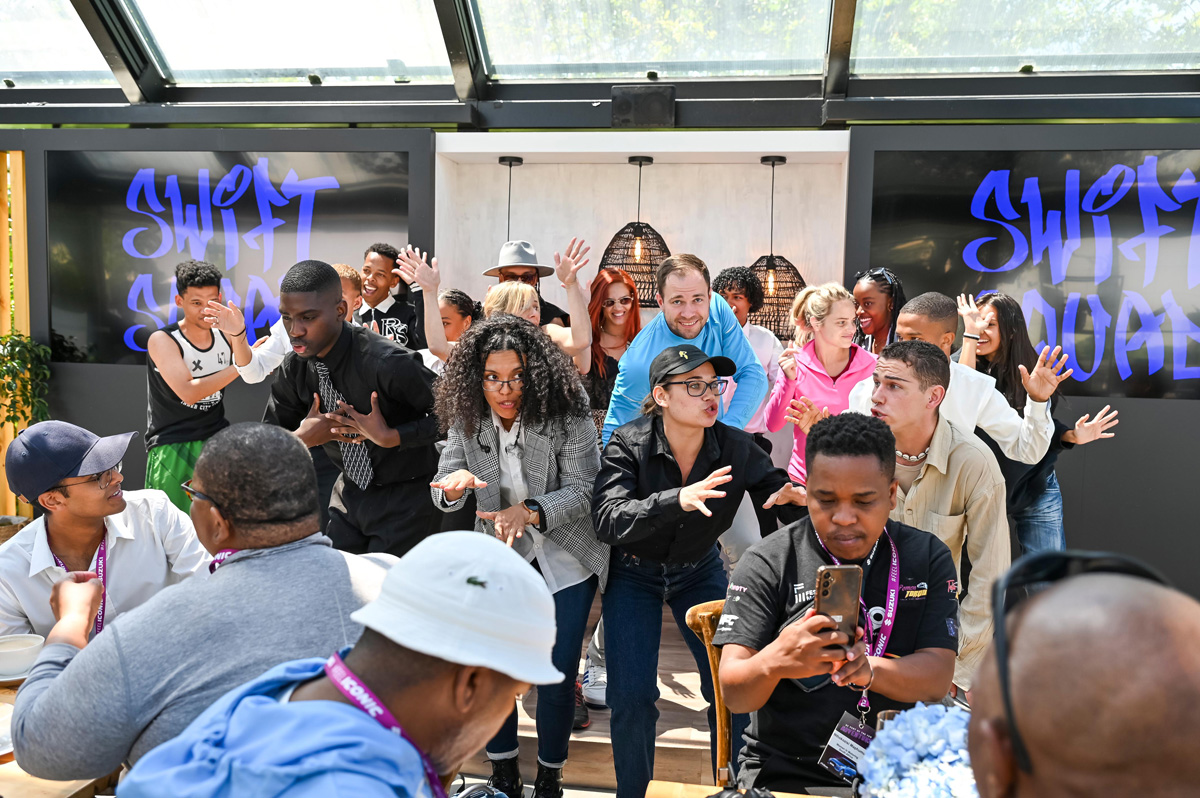
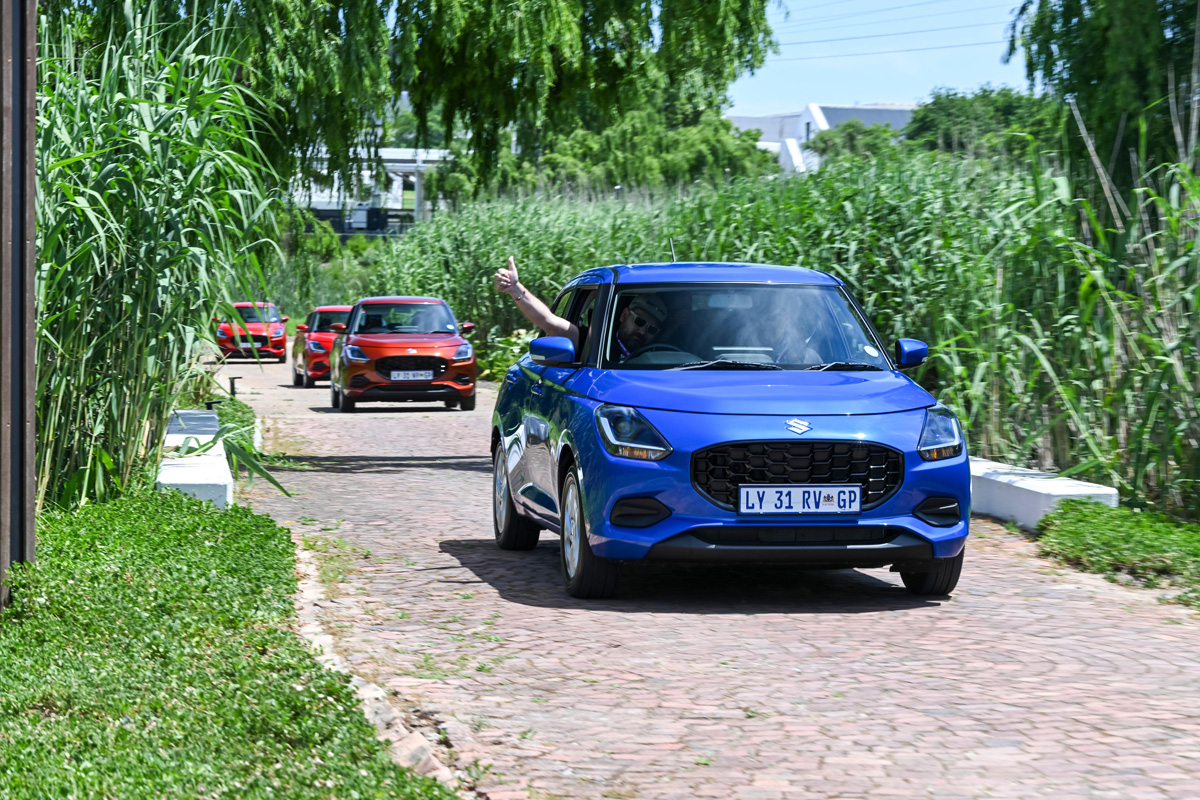
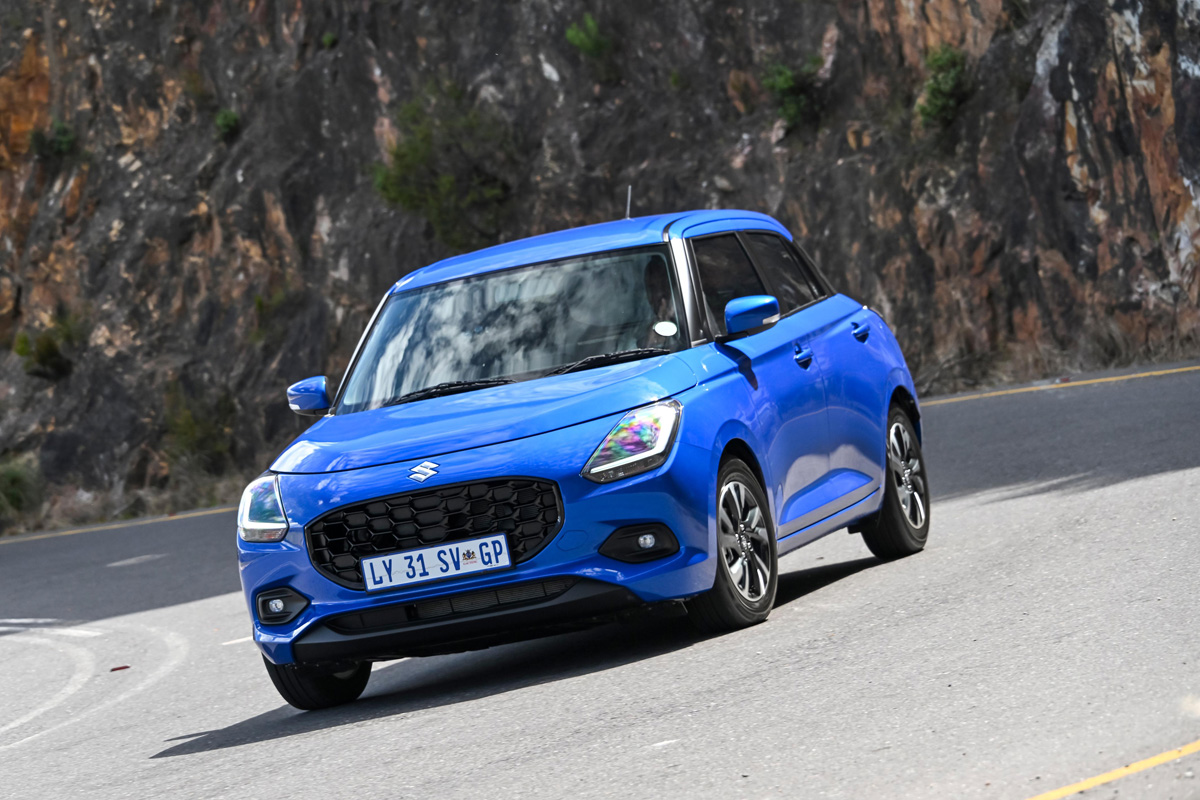
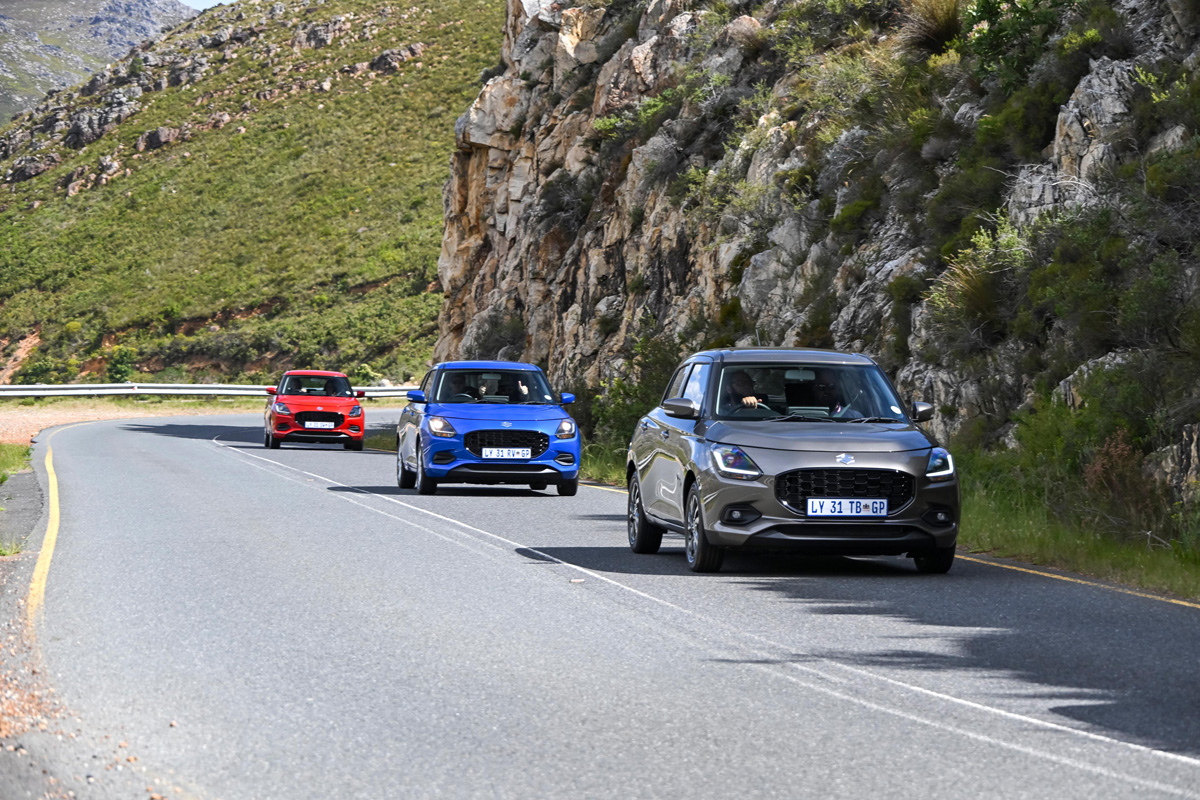
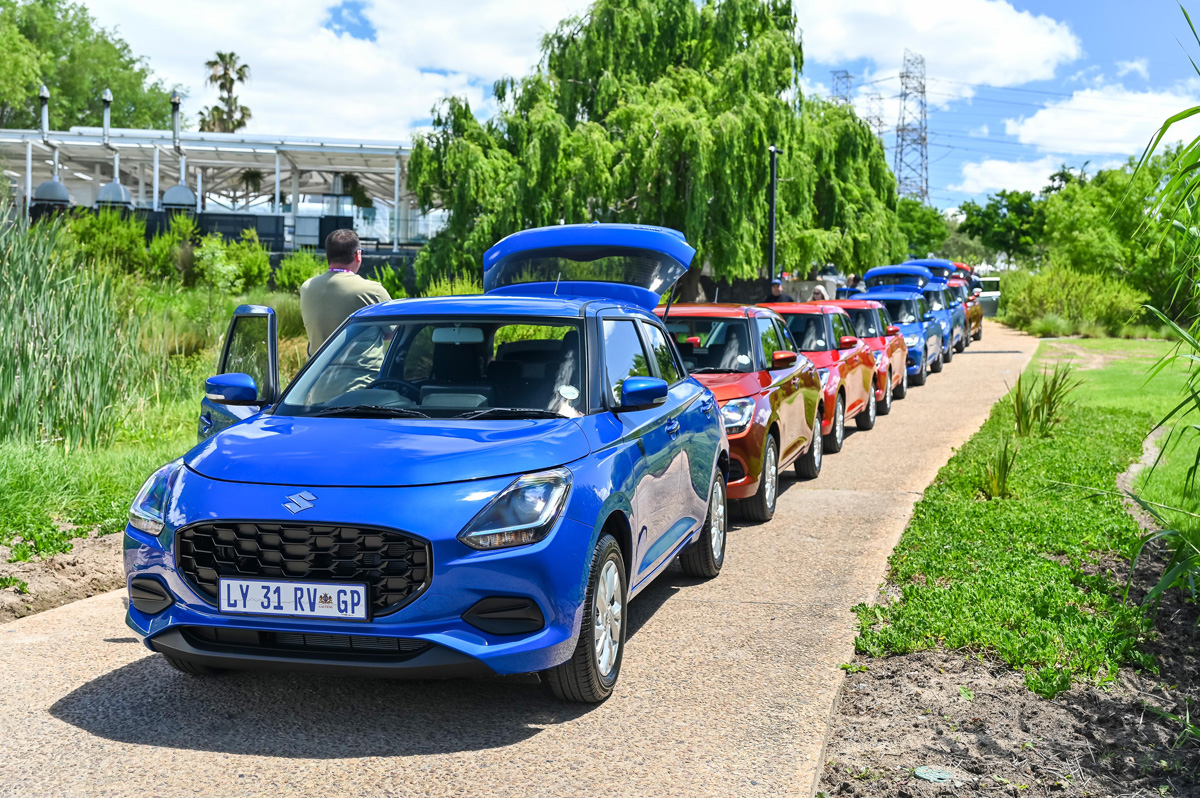
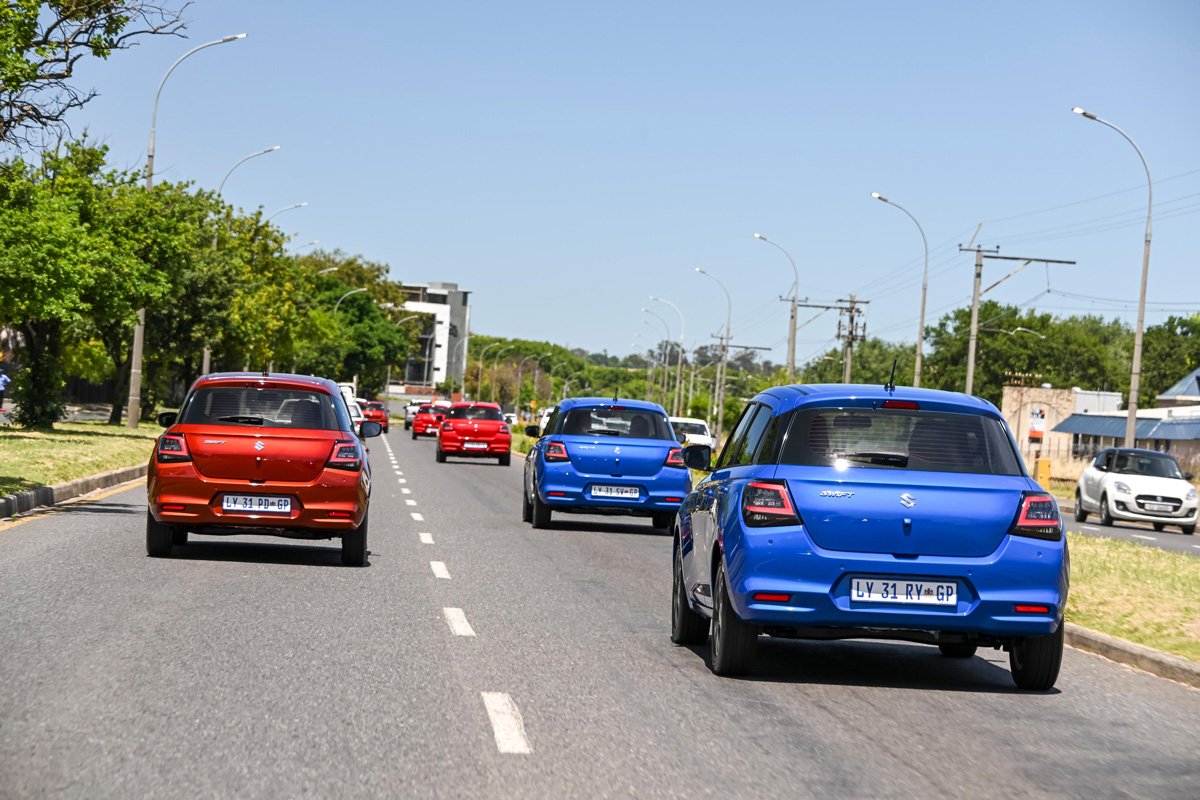
For the launch of the all-new and now fourth-generation of Suzuki’s Iconic Swift, the “Swift Squad”, in the form of the South African media, made our way down to beautiful Stellenbosch and its mountainous surroundings. Thanks to some spirited driving and navigation challenges, we had an action-packed day, and as for the rest, we got to bond with the Suzuki family over the all-new generation of Suzuki Swift.
Photo credit: Suzuki Auto SA
The Swift as we know it has been around for the last 20 years in South Africa and has helped many new drivers and young families get onto the road. Suzuki has built a solid reputation in SA and so too can be said about the Suzuki Swift. Recent sales figures have proven this with the Swift being nominated as the most popular car in the country with over 86,000 sales since its arrival and this year for the first time Suzuki has punched through the 6,000 unit a month barrier with 1,179 units being covered by the Swift.
Photo credit: Suzuki Auto SA
So, it goes without saying, that Suzuki is creaming it when it comes to sales, but you must be asking yourself; why bring in a new Swift when the outgoing model is your best seller? Well, it’s simple, Suzuki wants to get ahead of the wave and right now their goal with the new car is to offer more luxury to the entry-level B-segment market, better build quality, more tech, better fuel economy, competitive pricing and through their marketing channels Suzuki want the Swift to take on a cult-like following like their notorious Suzuki Jimny.
Photo credit: Suzuki Auto SA
If you haven’t already noticed the trending hashtags from Suzuki on just about every social media platform known to man, here’s a reminder; #FEELINGICONIC, #SWIFTSQUAD and #SWIFTING. #FEELINGICONIC has to do with the design language of the new Swift, combining all the best character traits from the last three generations of Swift. Then we see #SWIFTSQUAD and #SWIFTING representing Suzuki’s lifestyle-focused experience behind owning a new Swift. Keep an eye on these hashtags if you want to carry on teasing yourself as Suzuki strives to make the Swift the most exciting car in its segment.
Photo credit: Suzuki Auto SA
Fancy marketing aside, what has changed with the latest gen and does it deserve all the hype?
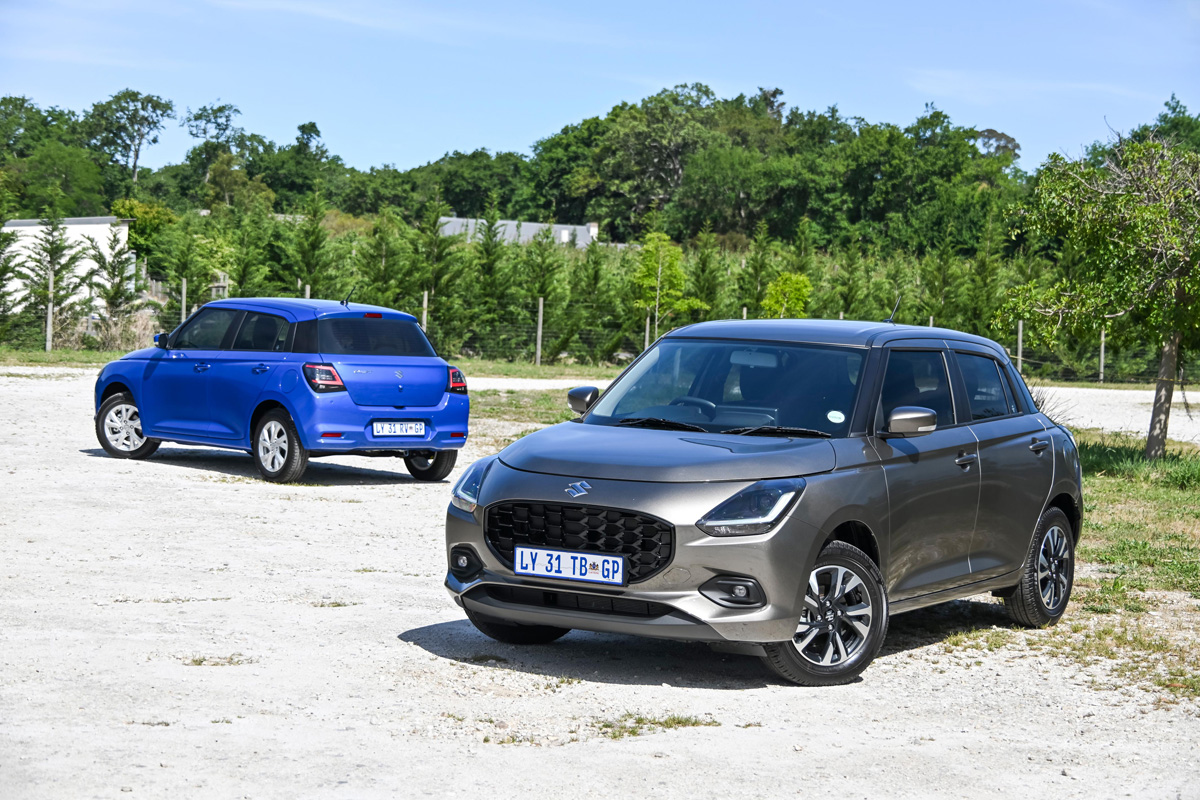
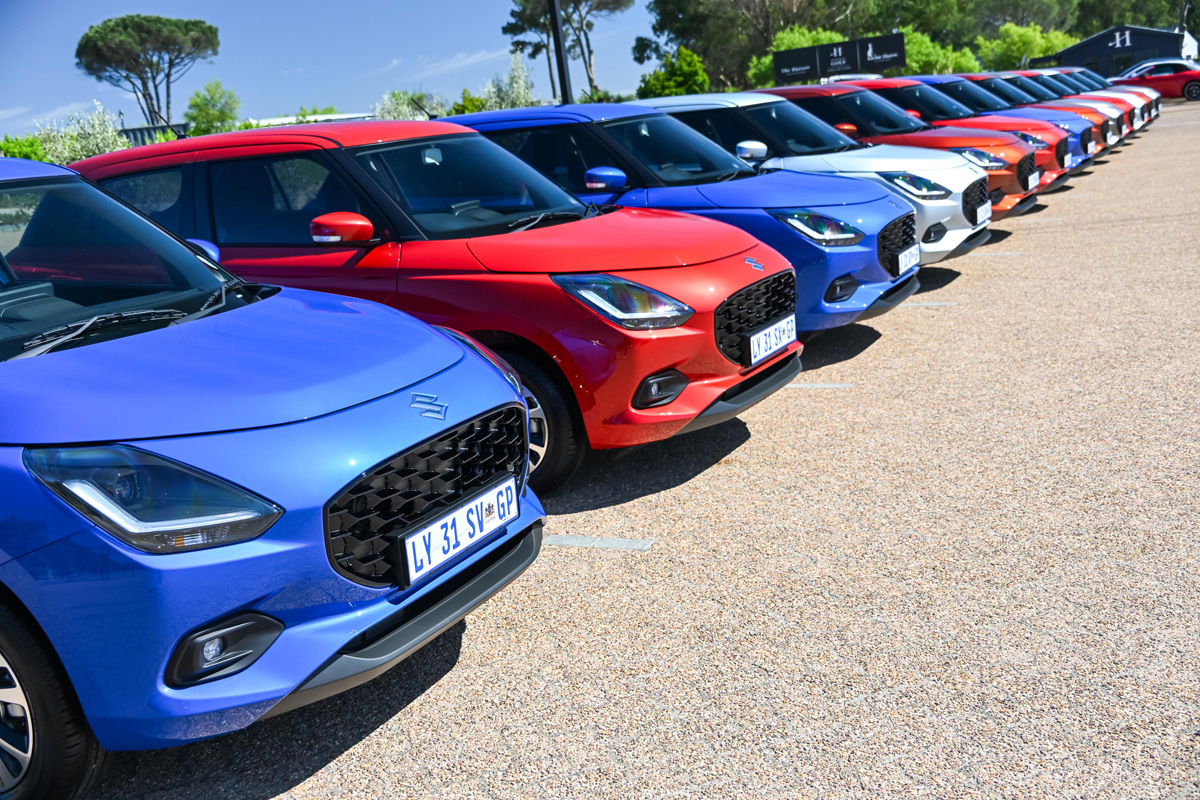
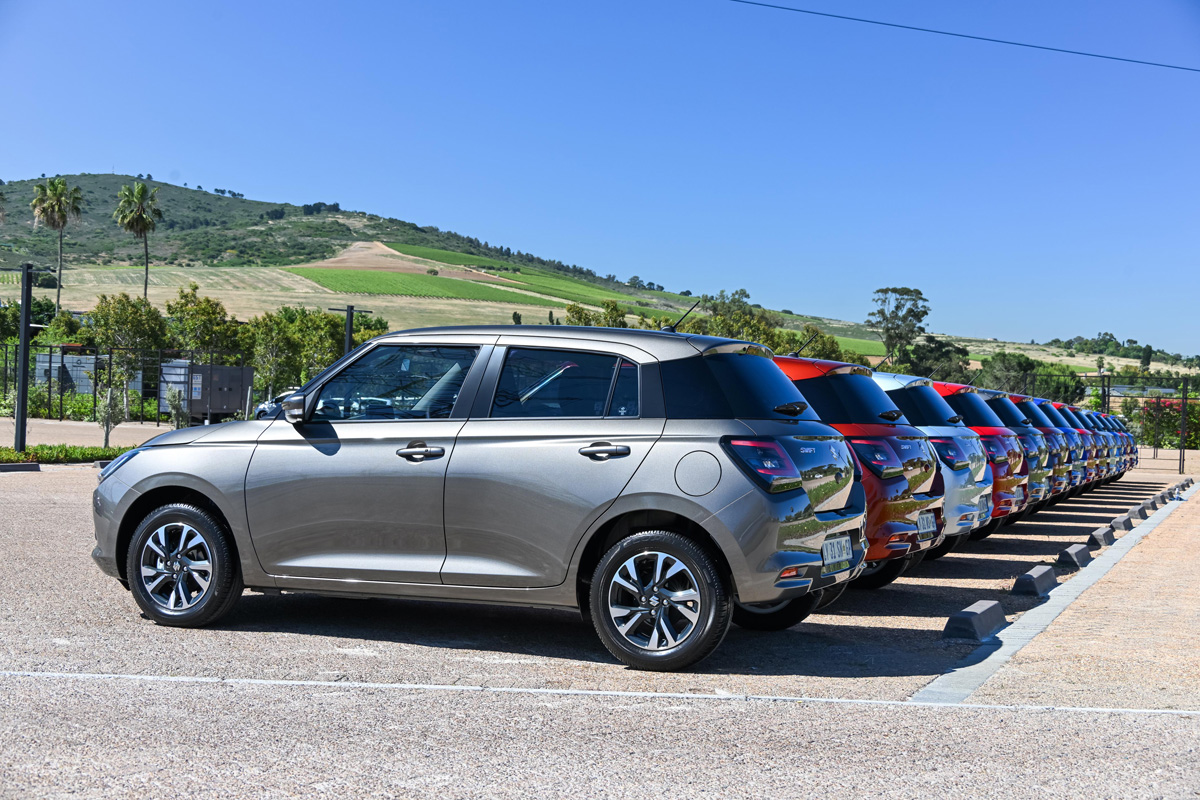
Well, just look at the new design for starters. The new styling shouts out fun, cute, and modern, although the predecessor wasn’t ageing all that fast it just didn’t stand out from the plethora of b-segment hatches if you had to ask me. The latest model stands out in its GLX trim with diamond cut 15-inch rims, blacked-out A/B-pillars, hidden rear door handles, new LED L-shaped signature lamps, 3D LED tail light clusters, wide arches, clamshell bonnet and a sculpted tailgate with an integrated hatch spoiler. Oh, and the three-layer Luster Blue paint job is just an absolute stunner to me and my favourite colour out of the lot—the orange pearl metallic and premium silver are also very classy colour options.
Photo credit: Suzuki Auto SA
Depending on what model Swift you decide on buying out of the 5 model line-up, this will change trim level and pricing. You’ve got a base GL model available only in manual, two GL+ models offering buyers a choice of manual or new CVT and lastly, you’ve got the two top-of-the-range GLX models available in manual and CVT with paddle shift. You can open the door to your Suzuki Swift for as low as R219,900 with the GL model and R284,900 for the top-of-the-range GLX CVT.
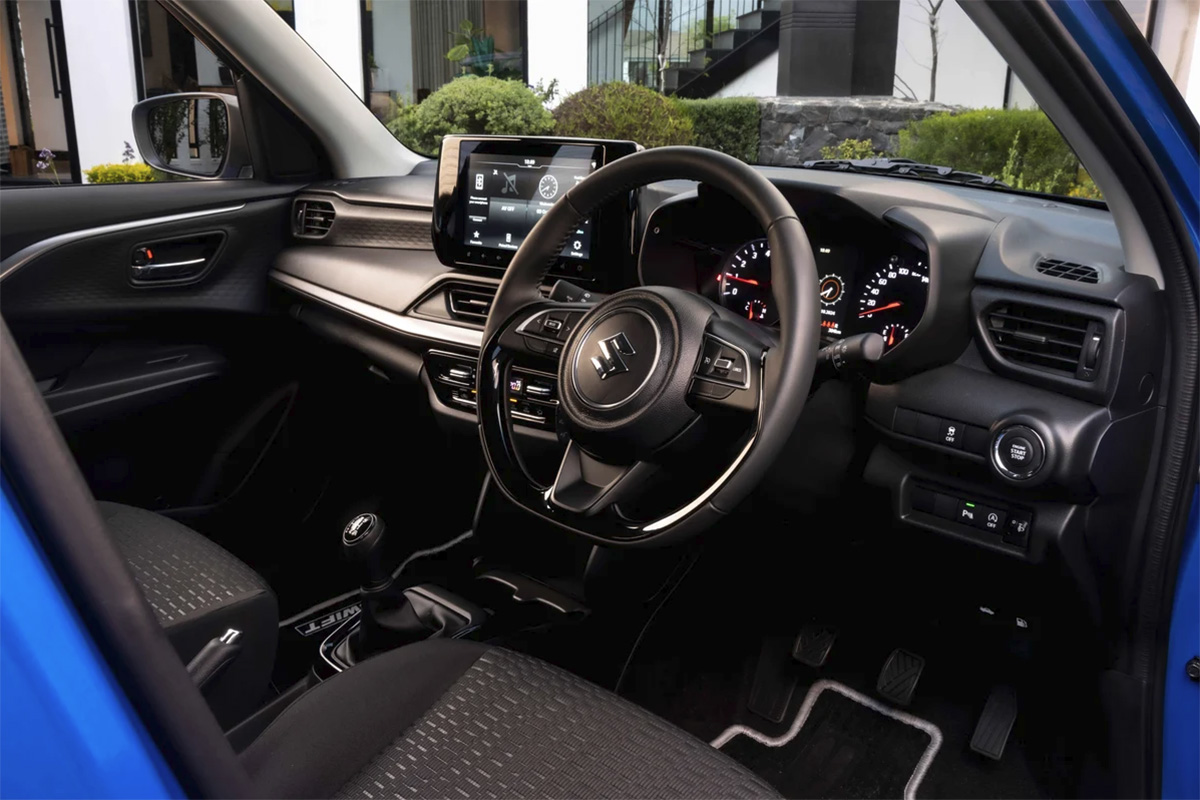
Across the models, we see a revamped interior with digital climate control, front and rear electric windows, electrically adjustable and folding side mirrors height-adjustable driver seat, six airbags, ABS brakes with EBD, Brake Assist Function, Electronic Stability Programme, rear ISOFIX anchors and all manual models come with hill hold assist. Mat Watson from carwow would give the Swift a thumbs up for bottle and snack holders as there are many.
Photo credit: Suzuki Auto
So, how do you choose between these 5 models and 3 trim levels? The GL gets you all the hardware as the rest but helps the budget out with 14-inch steel wheels with plastic covers, no fancy infotainment displays with Apple Car play and no reverse cameras. The GL+ gets you 15-inch alloy wheels, a CVT option, a seven-inch touchscreen infotainment system wired to four speakers, a rear-view camera and a multifunction steering wheel. The GLX model gets you the attractive LED head and tail lights, 15-inch diamond-cut alloy wheels, a 9-inch touchscreen, a pair of front tweeters, keyless entry with push-button start, cruise control, automatic climate control and a leather multifunction steering wheel (with paddle shifters on CVT variants).
Even with all the latest improvements and changes to the new models, Suzuki keeps their weight under a ton at 946 kg and bang for the buck value when it comes to specs vs pricing, lower than their competitors.
Photo credit: Suzuki Auto SA
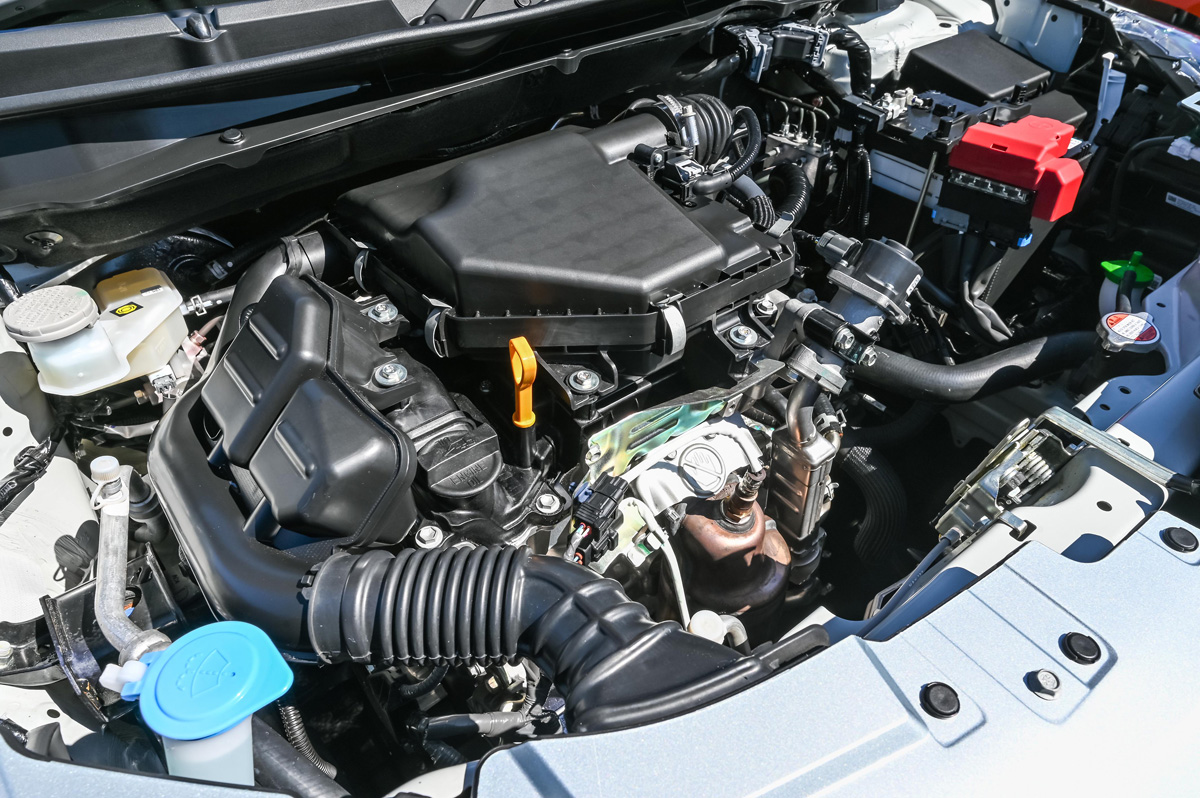
The heart of the new Swift is where we see a big change for this year, with the absence of one cylinder being a major talking point. Across the whole range, we see Suzuki’s new Z12E 1.2-litre three-cylinder petrol engine pushing out 60 kW at 5,700 rpm and 112 Nm of torque at 4,300 rpm. Suzuki’s idea with the Z12E motor was to create a more compact motor than before and offer more performance throughout the rev range.
How they’ve done this is by introducing multipoint fuel injection and four valves per cylinder. How it translated through the pedal is more engaging and the midrange feels like it has been improved. I do miss the smoother rev-happy 4-cylinder, but the 3-cylinder gives the Swift a more bubbly character as you work your way through the 5-speed gearbox.
Photo credit: Suzuki Auto SA
The Z12E is more than just a fun motor, it’s actually pretty efficient too. Suzuki claims a return combined fuel consumption figure as low as 4.4L/100 km or 22.72 km/L—an 11% improvement over its predecessor. In the mountainous Cape, we were getting roughly 5.0L/100 km in a manual, but with a more steady foot and a flatter landscape, I think drivers will get very close to the claimed figures.
Interesting fact: Depending on where you are driving in South Africa (inland or coastal) the new Swift offers running costs as low as 98c per kilometre. This is almost equivalent to riding a motorcycle, but with weather protection, three extra seats and a boot.
Photo credit: Suzuki Auto SA
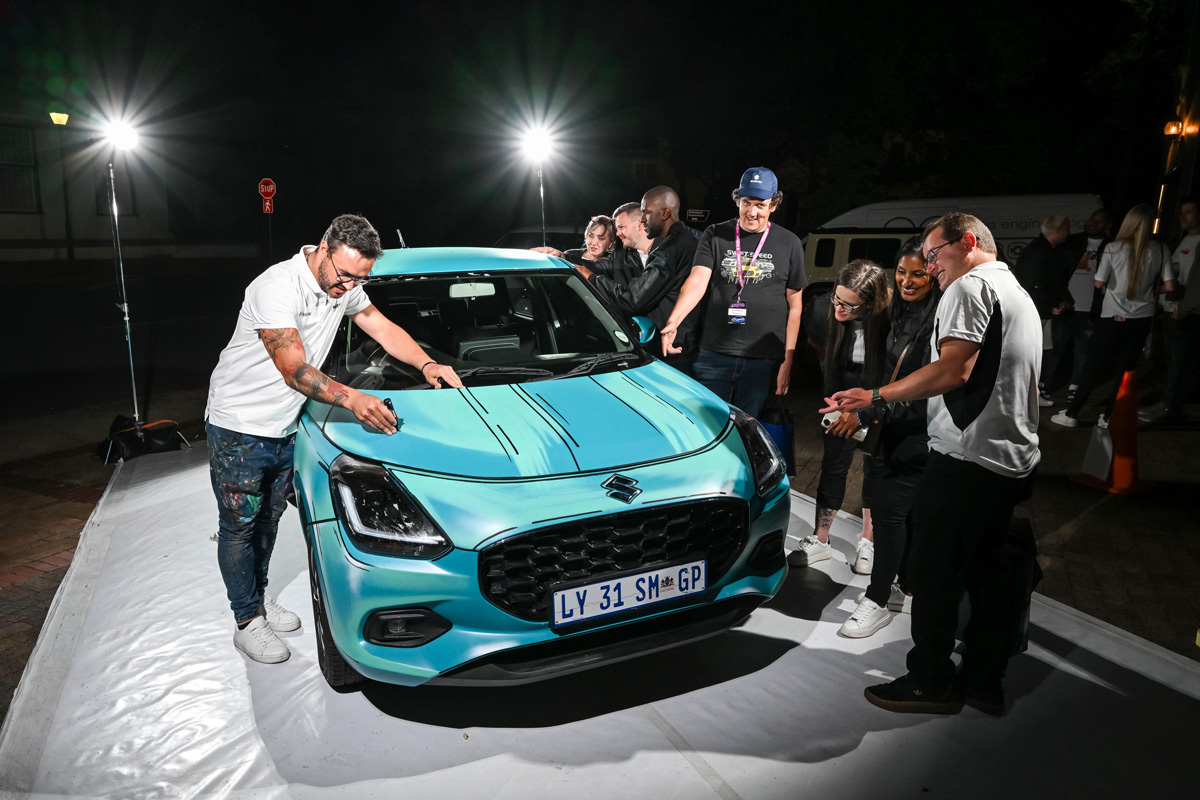
After spending the day chasing beautiful landscapes, twisty roads, good food and even a fun gymkhana challenge, we settled down at the lovely De Eetkamer restaurant in the heart of Stellenbosch to collect our thoughts while watching talented Justin from Nomad’s Gallery work his rattle can magic on a Swift.
Photo credit: Suzuki Auto SA
Overall the new Swift isn’t just good for a car built in India, or good for its price tag, but rather just good in general. It offers buyers exactly what you see on the eccentric marketing videos and in turn, it helps entry-level buyers feel like they’ve bought a premium product. It feels stable on the road like the predecessor and the interior, especially in the GLX model, just calls for a road trip. The best part about Suzuki is that they’ve got a Swift to fit all budgets and all lifestyles, so make your pick, you can’t go wrong.
Photo credit: Suzuki Auto SA
As for us at the office, we are keen on revisiting the Swift life in Gauteng and possibly testing its long legs on a road trip. So, stay tuned…
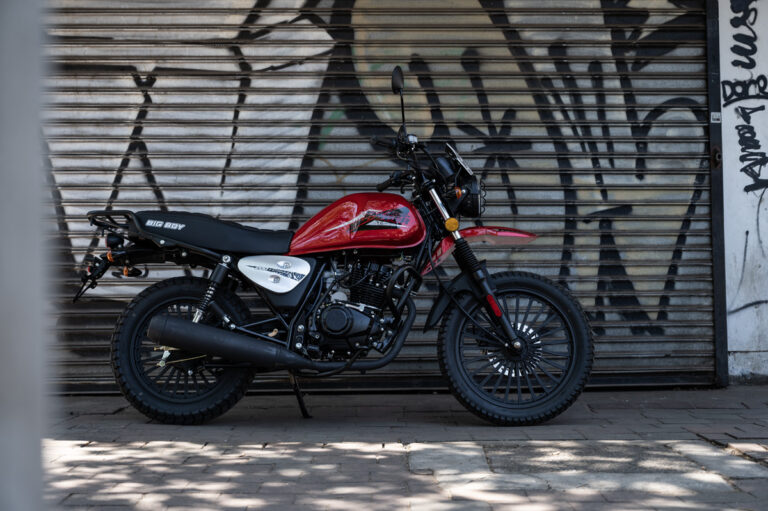
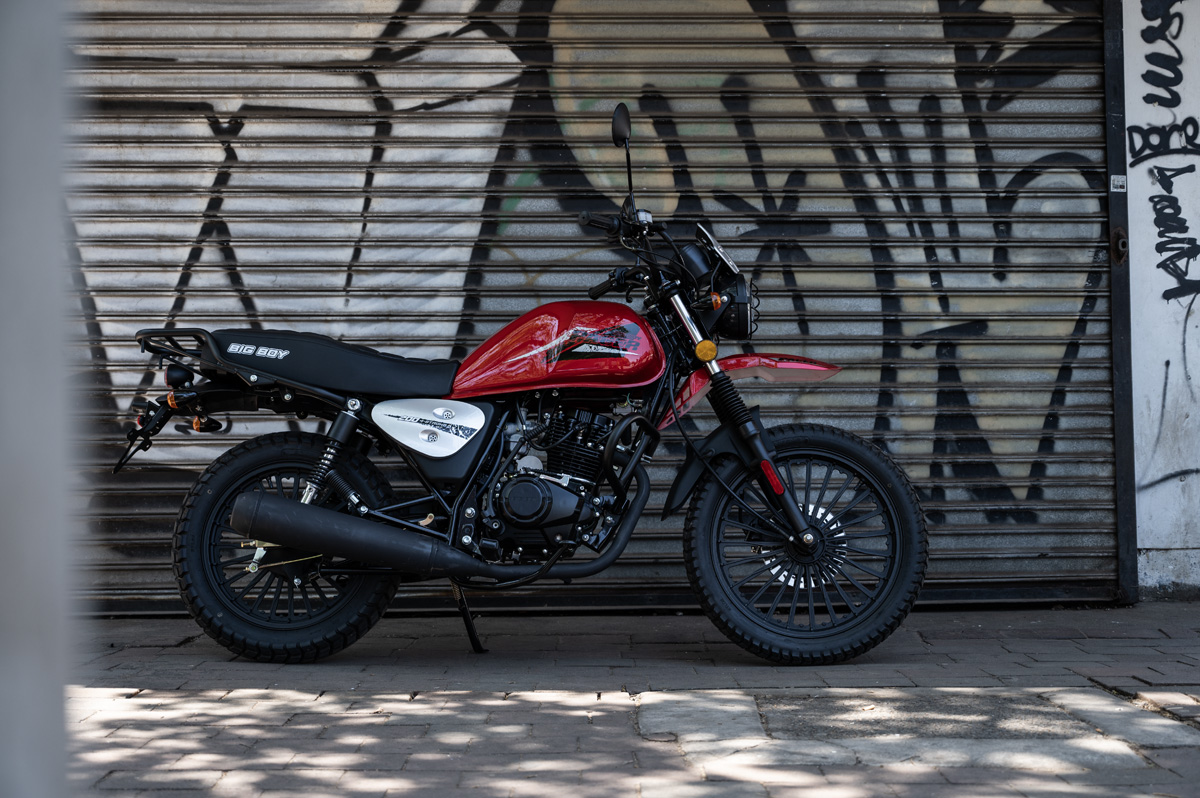
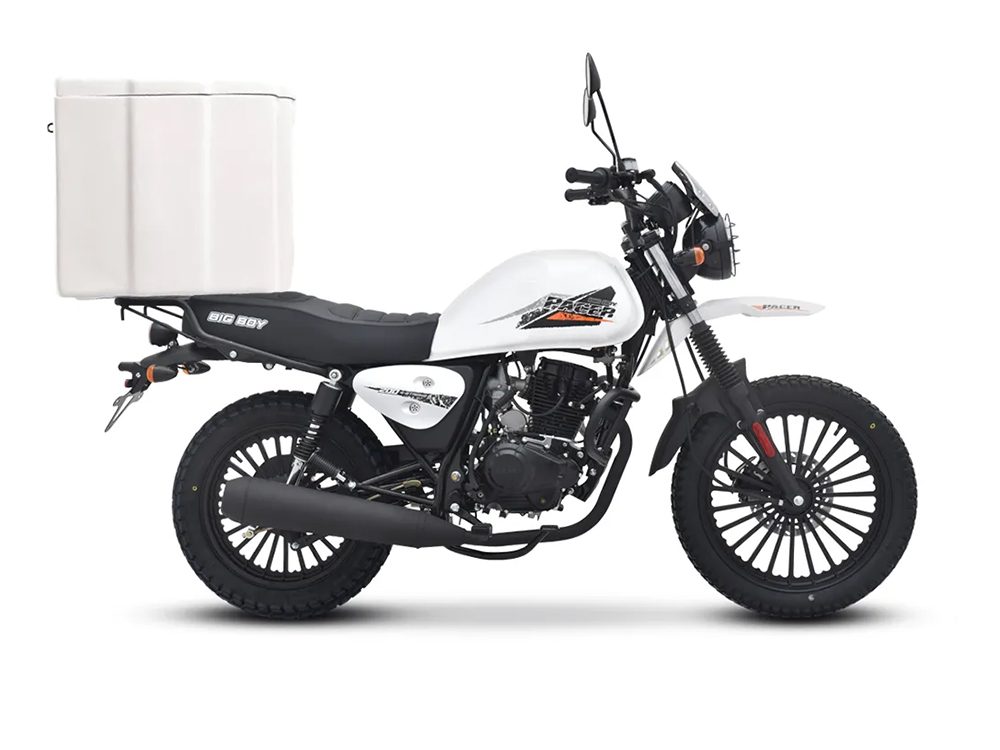
It might be fair to say that the Big Boy Velocity is one of the most popular commercial bikes in SA. You see thousands of them on the road, mini Checkers sixty60 toy delivery bikes in stores, and even our local MotoGP legend Brad Binder standing next to one in Checkers sixty60 commercials. Although it’s not a motorcycle people aspire to own, the Velocity is a workhorse of note priced competitively and built for measure.
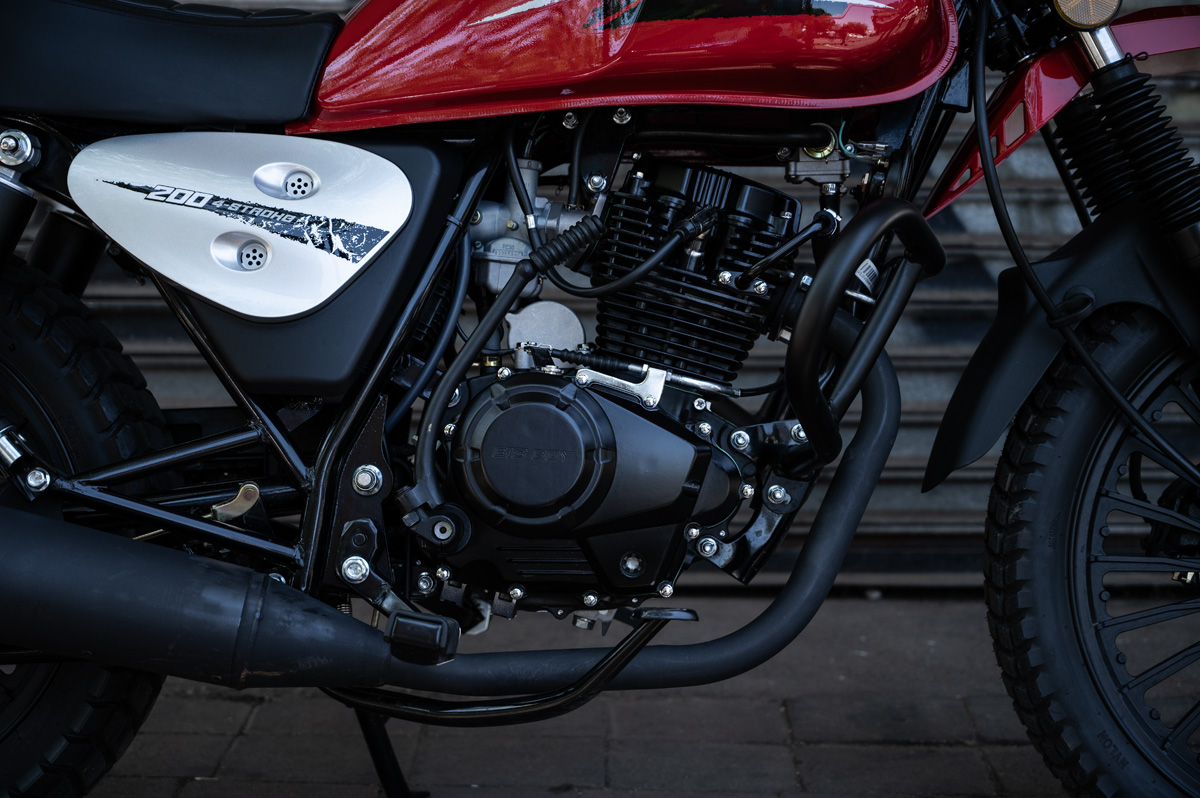
The Big Boy Pacer 200 takes some notes from the Velocity but ramps things up a little. It looks much better, feels more substantial and has a lot more performance than the Velocity 150, thanks to its 191cc, four-stroke single-cylinder engine, which pushes out 10kW and 12.5Nm of torque. Even better, fuel consumption sits at a miserly 2.3l/100km, meaning that the 18-litre tank will give around 700km range. Not bad for R400 or so.
Photo credit: Bjorn Moreira / ZA Bikers
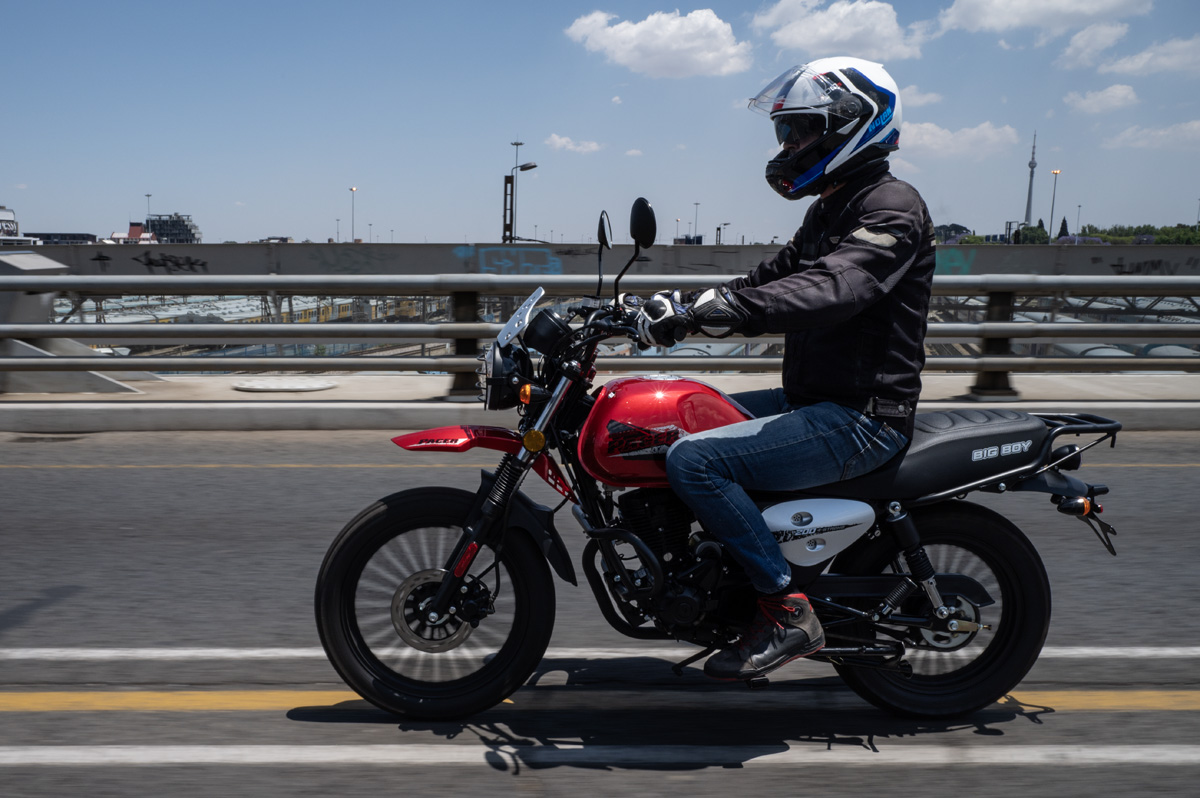
It will keep up with city traffic easily, and the engine is commendably smooth thanks to the balancer shaft lying within, while the five-speed gearbox feels sturdy enough to withstand the most ham-fisted operation. With a +/-100km/h maximum speed, it’s not so much fun on the highway but then you wouldn’t expect it to be, nor would you buy one to cover extensive highway kilometres. Around town, however, the performance is perky and the bike is nimble enough to be very useful.
Photo credit: Bjorn Moreira / ZA Bikers
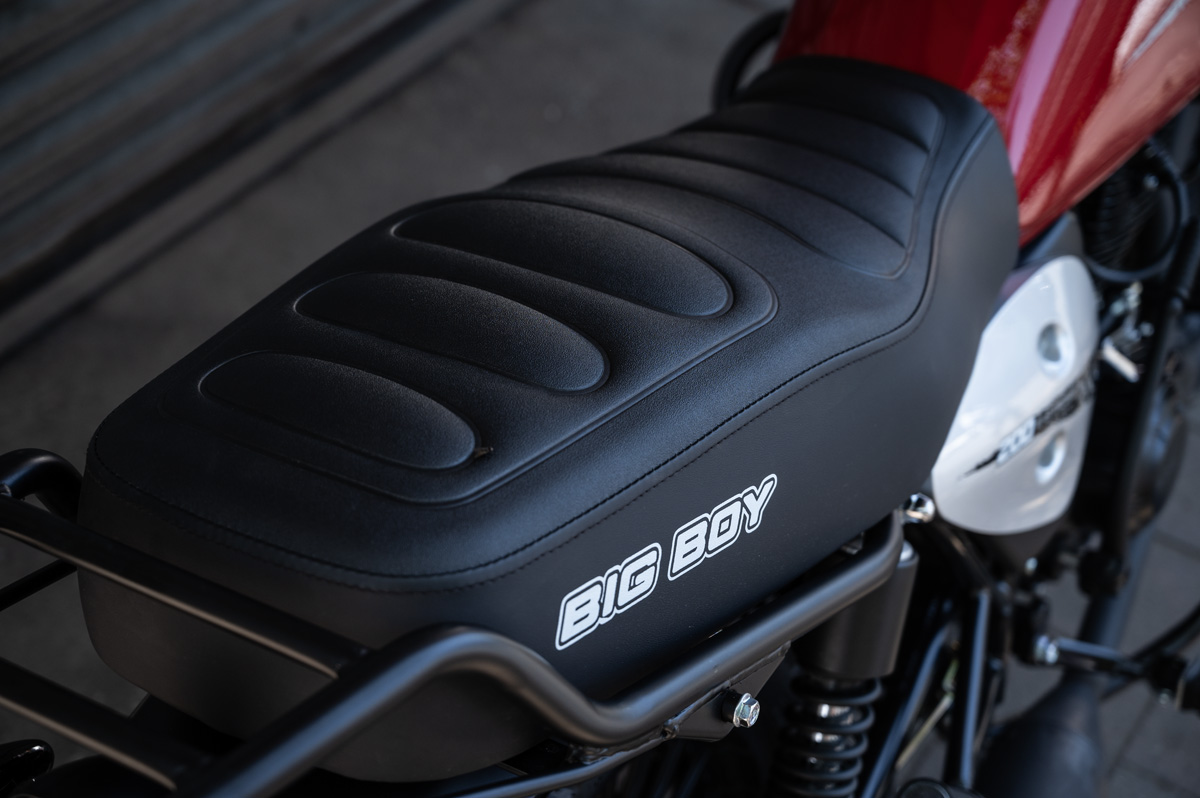
The Pacer 200 is physically small but nowhere near as small as the Velocity models; as a six-footer, it didn’t feel ridiculously cramped at all. The seat is soft, which I like, but it is slightly awkwardly shaped so that you find yourself sitting on the step between rider and pillion, meaning that your arse is constantly being forced forward. Shorter riders would have no problem but a flatter seat would help.
Photo credit: Bjorn Moreira / ZA Bikers
Suspension and brakes are basic but function adequately and it’s comforting to have a front disc brake (although not equipped with ABS).
The off-road-biased tyres, on the other hand, are not my cup of tea, although they might improve once a bit worn – the model tested was brand spanking new. If I were considering a Pacer 200 for personal use, I would change the tyres to something more street-orientated (for example Michelin City Extra), but that’s just me.
Photo credit: Bjorn Moreira / ZA Bikers
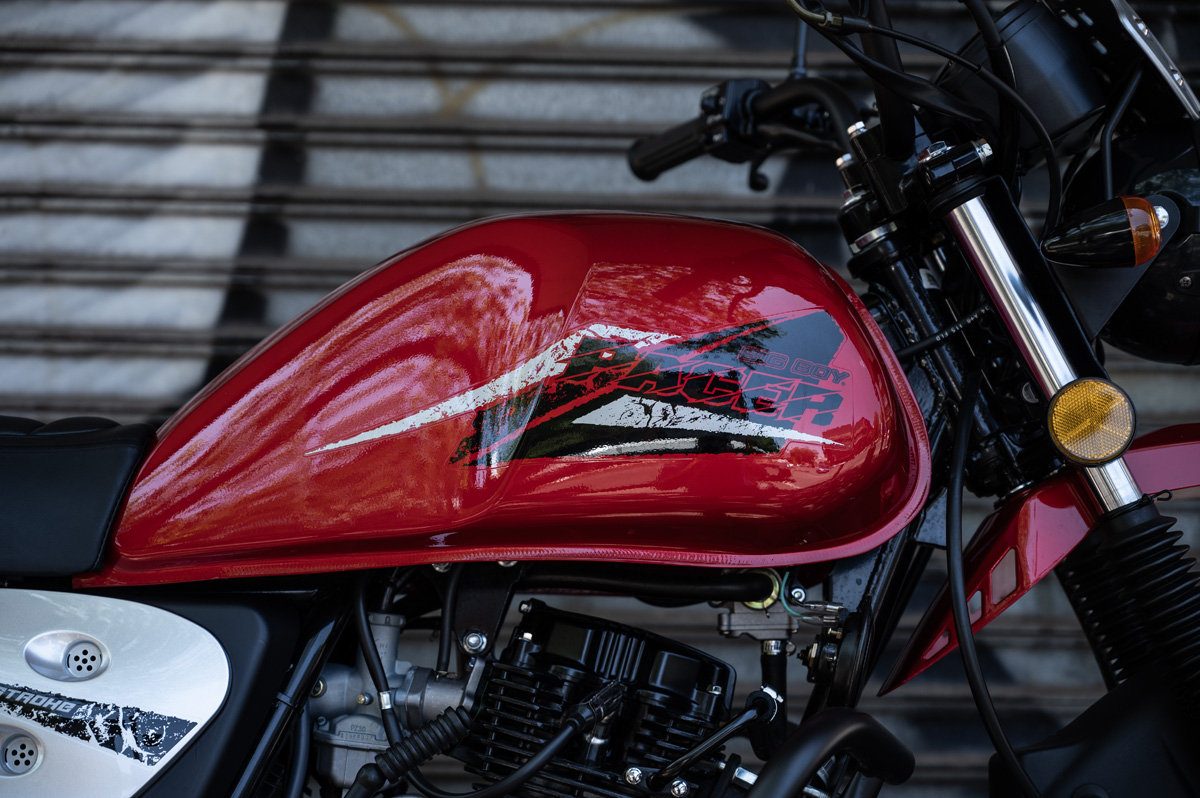
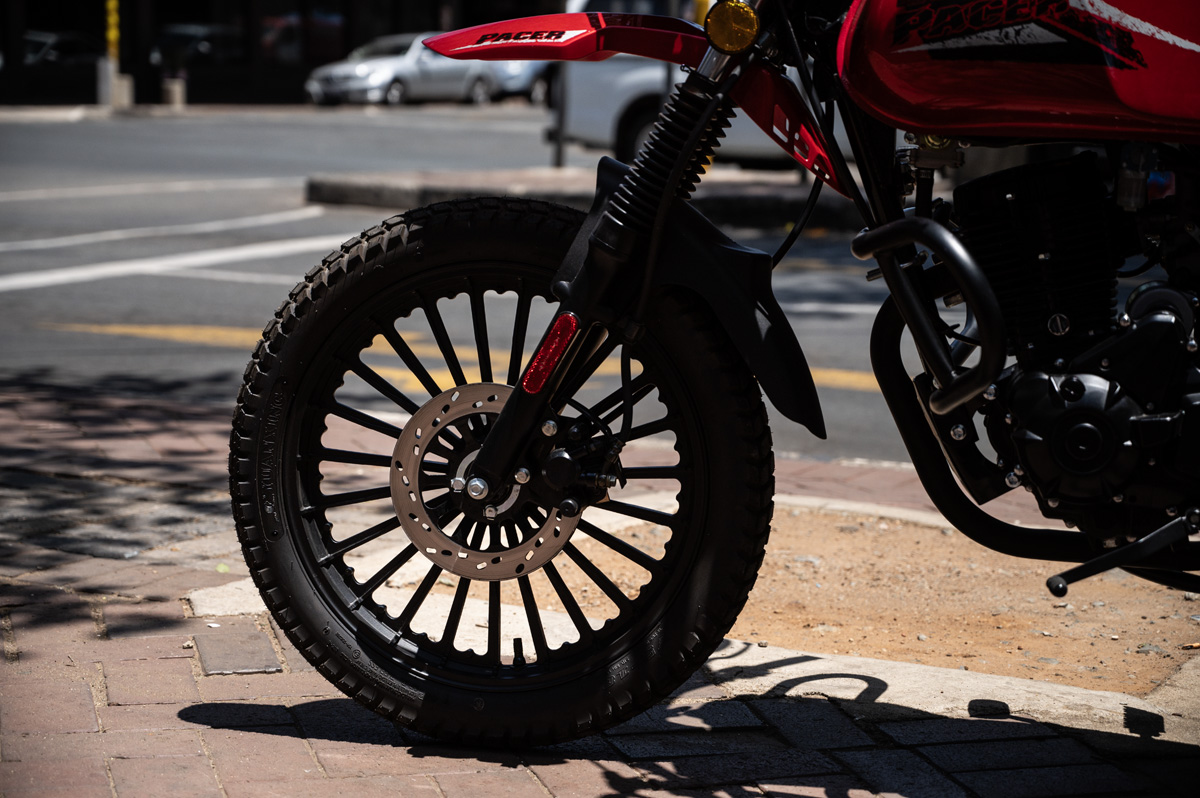
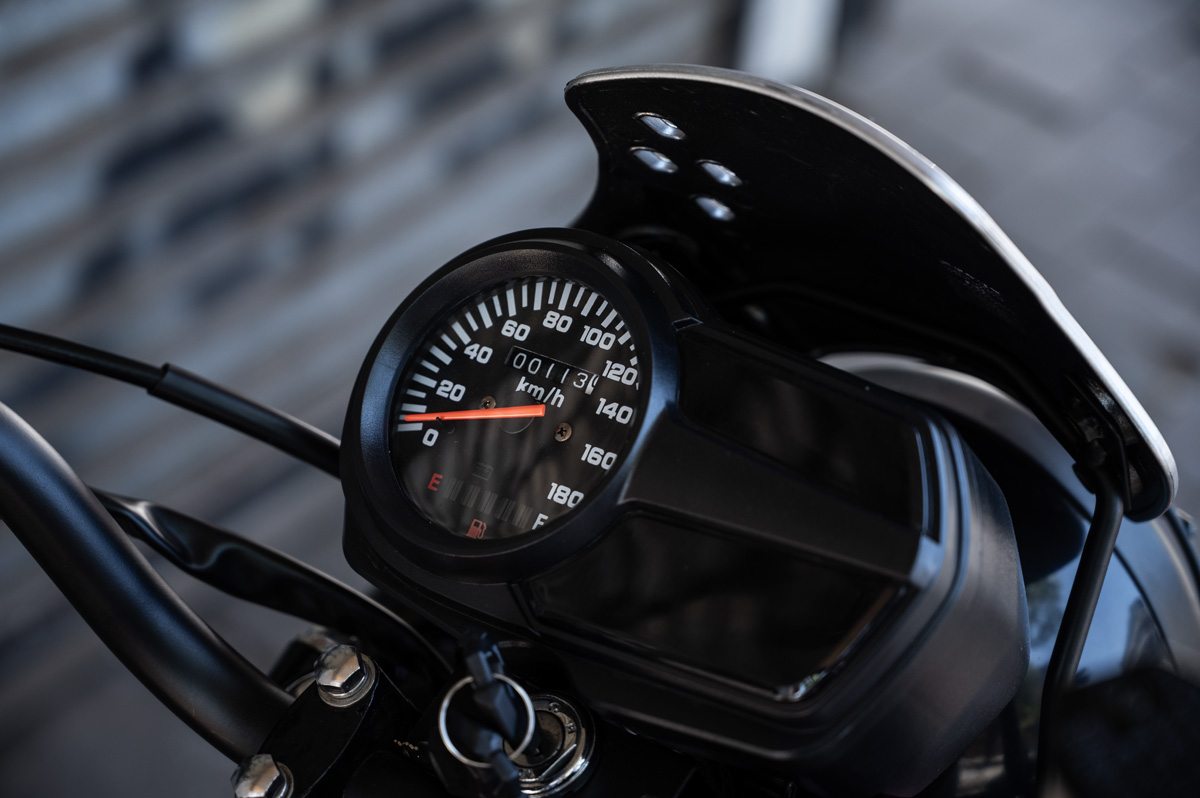
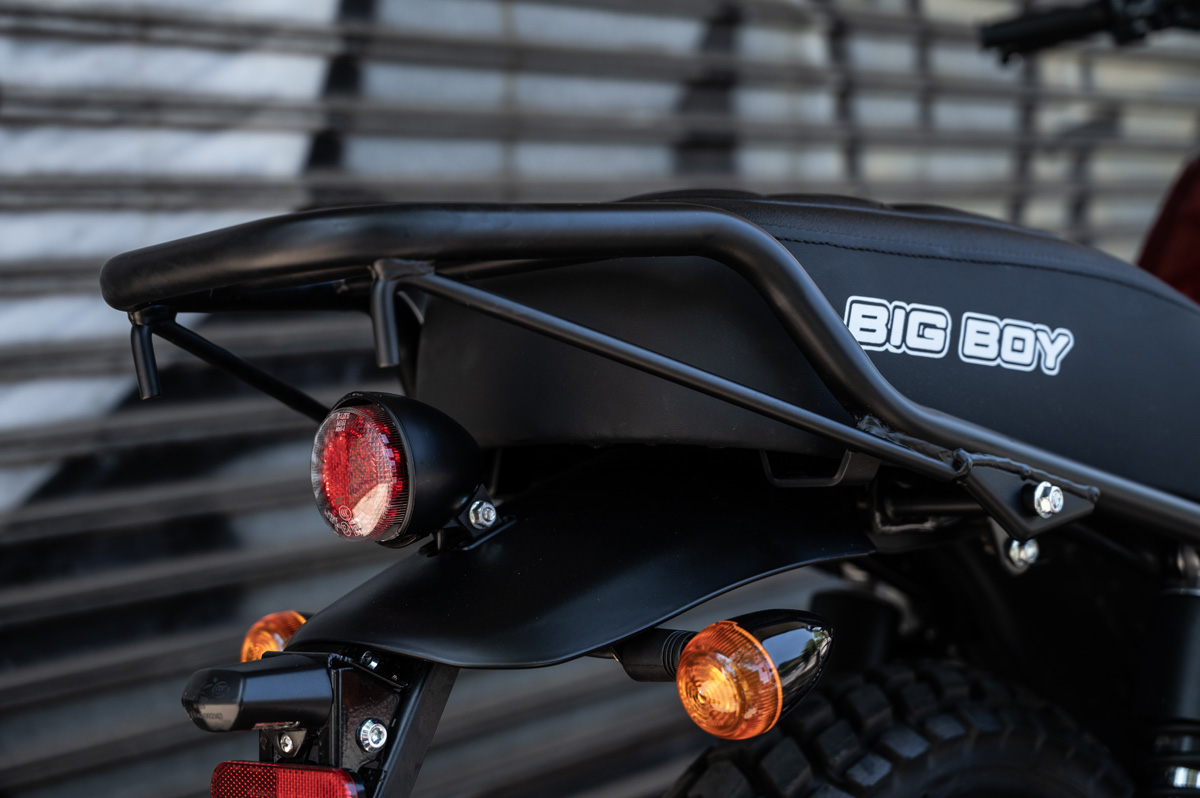
It’s not a bad-looking bike, the red paint on the tank looks good quality and there are a few nice styling touches, such as the round rear light and teardrop indicators, not to mention the multi-spoke alloy wheels, finished in black. The crash bars are a useful addition, as is the rear carry rack. The footpegs fold up and there is a kickstart as well as an electric start. The dash is simple – an analogue speedo, illuminated gear indicator and a couple of other warning lights that you don’t know are there until they come on.
The smoked plastic covers over these latter two are very dark, personally, I found that this made them difficult to read in bright sunlight, but maybe I am just nitpicking at this point. The fuel gauge set into the speedo face, although very bright is a good touch for an affordable runabout. Being fuelled by a carburettor means that there is a fuel tap with a reserve position.
Photo credit: Bjorn Moreira / ZA Bikers
Big Boy are pitching this as an on/off-road adventure bike, which is pushing it a little, although it is by no means alone in this category. As an ultra-cheap machine to throw at the scenery while being effortless to pick up after a fall, it is hard to beat as long as you’re not in a hurry.
The Big Boy Pacer 200’s main rivals (Hero Xpulse, Honda XR190L, Yamaha XT250), may have an advantage in terms of outright quality, although the performance is similar, at R50k and upwards, they are over twice the price of the Big Boy, which comes in at R22,999. As I’ve said before about these inexpensive “delivery” bikes, all of them will give long service if looked after properly and ridden with due care and attention, which many delivery bikes most certainly are not. Having said that, it’s remarkable how much abuse they seem to be able to take and still work if the state of some of them on the road is taken as evidence.
Photo credit: Bjorn Moreira / ZA Bikers
Perhaps the main selling point for the Pacer 200 is that it doesn’t necessarily look like a delivery bike. The vast majority of these bikes will be sold for delivery duties and you’ll not see many of them parked in private driveways, but the point is that you really could own one of them as a practical, frugal, short-distance means of transport.
Fleet buyers, on the other hand, would do well to appraise the Pacer 200 which offers, in my personal experience, a lot more than the Velocity models for not a lot more outlay (the Velocity 150 costs R16,799).
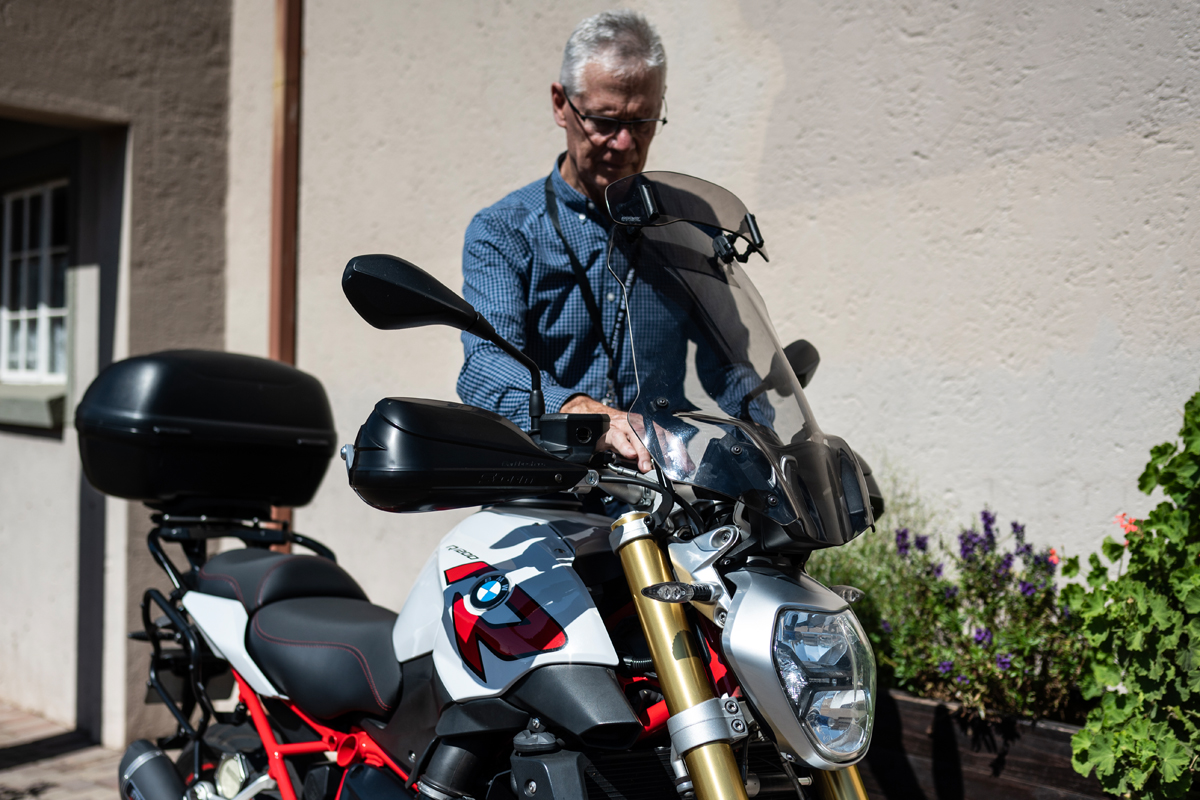
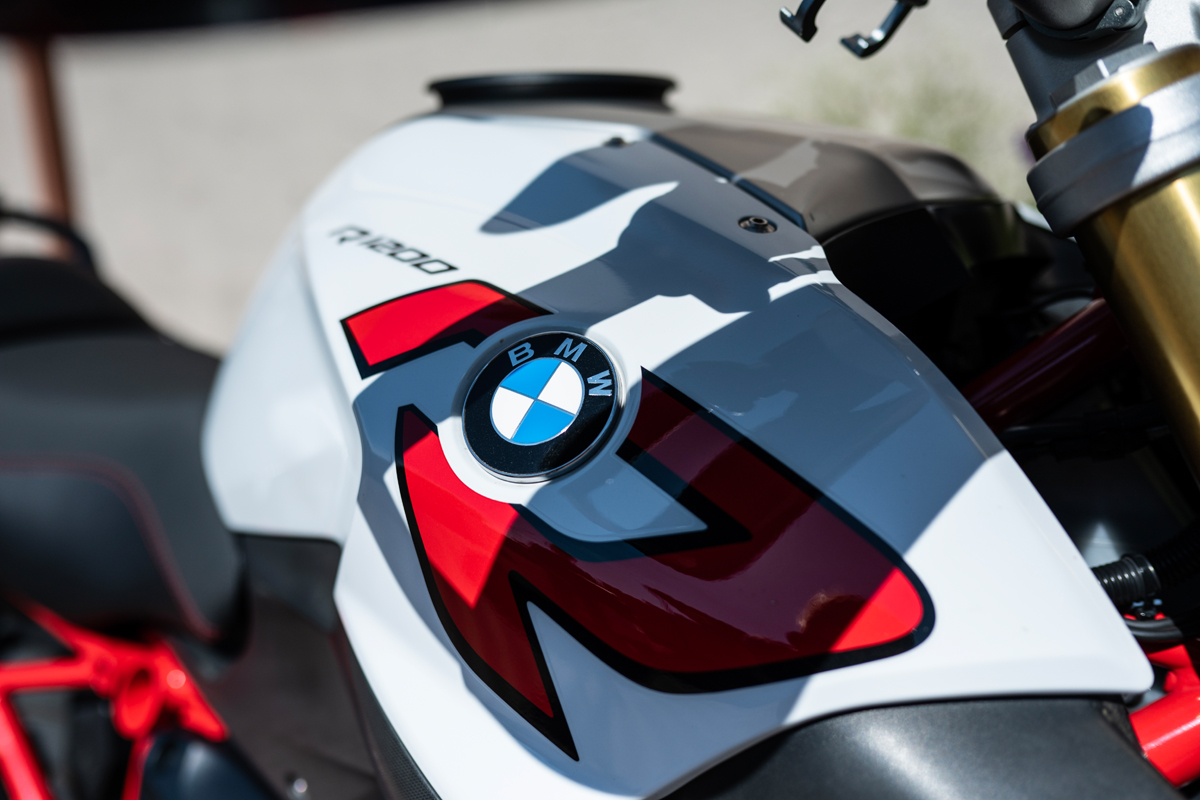
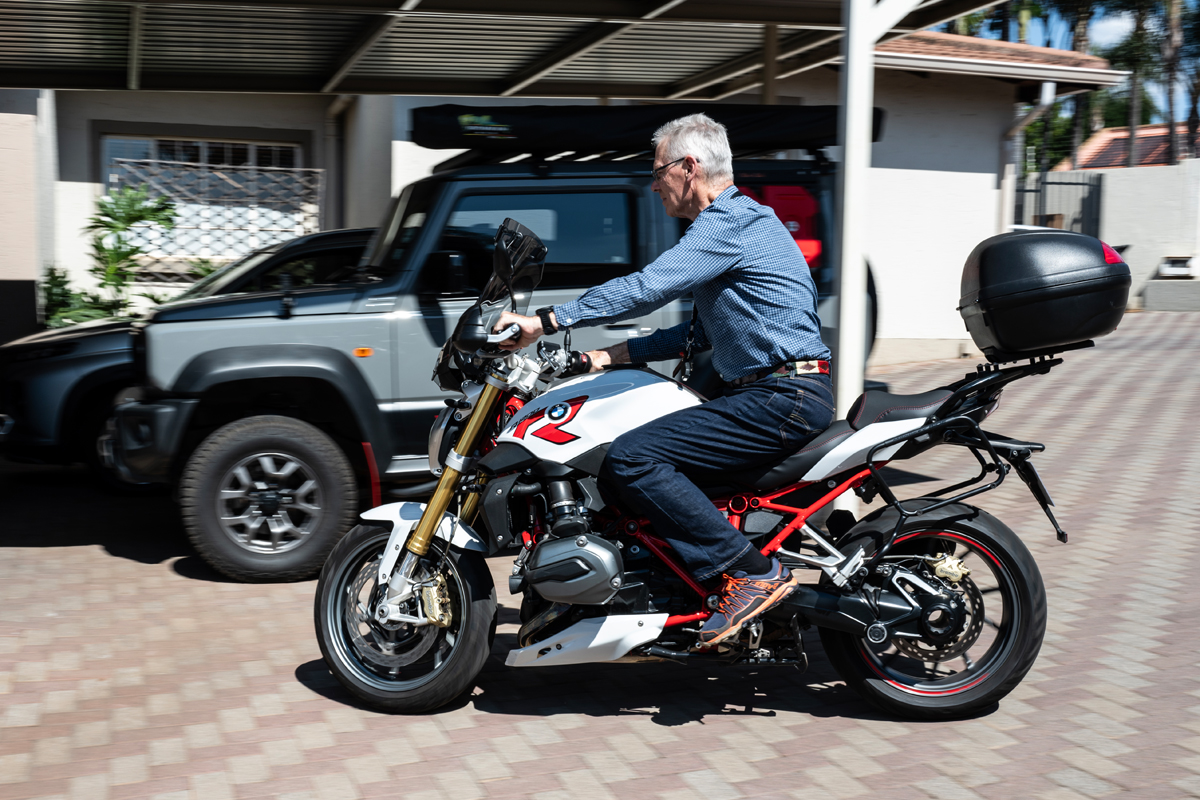
The problem that sometimes arises when you buy a motorcycle is that the bike is not always in the exact spec that you would like. I owned a BMW R 1200 R, the naked roadster that uses the LC Boxer motor that preceded the 1250 cc and now 1300 cc range. BMW use the Boxer motor across a wide range of different models and applications. As I am known to do, I sold the Bee Em and later regretted it. So I shopped around and found another one, this time in the white with red accents colour scheme which I prefer over the silver of my last one. But with it came a problem.
Photo credit: Bjorn Moreira / ZA Bikers
BMW offer this bike with various seat options. There are Low, Sport and Comfort options. I suspect that my previous R 1200 R had the comfort option, which is significantly taller than the sport option on my “new” bike. Being a bit long in the leg, I way preferred the taller seat, not for the comfort, as the sport seat was great, but for the more relaxed angle of my knees. As I intend to use the bike as my long-distance touring machine, I also looked at a “comfortable” seat for the pillion. You know the old “happy wife happy life” story. The upgrade with the factory seats was going to smack me with over R10,000, which almost had me choking on my beer. There had to be another, more affordable option.
Photo credit: Bjorn Moreira / ZA Bikers
Then it dawned on me… I would chat with Dion Korkie. Dion is a legend in the custom motorcycle seat space. He has done work for a few of my mates. Simon had him do a custom seat for his Triumph Speed Twin, and Loy got his Honda NC 700’s seat pimped for comfort. In both cases the results were spectacular! Dion has an eye for what you want and, as a rider himself, perfectly marries form and function. The end result is a seat that looks factory and enjoys enhanced comfort.
Photo credit: Bjorn Moreira / ZA Bikers
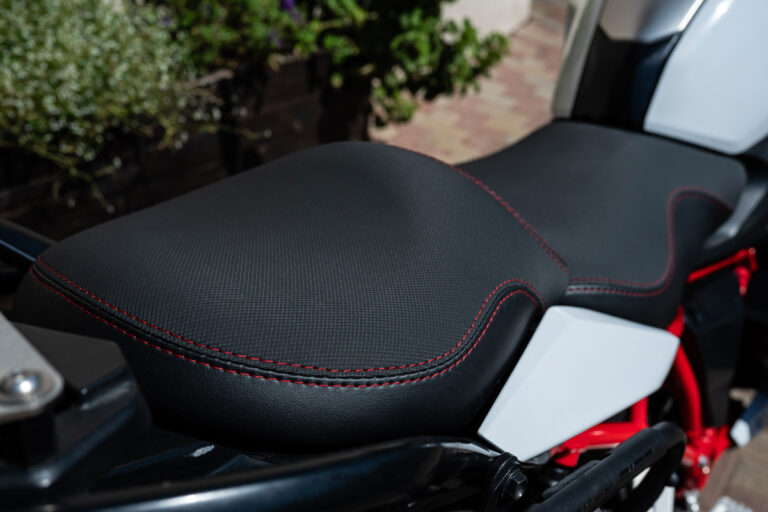
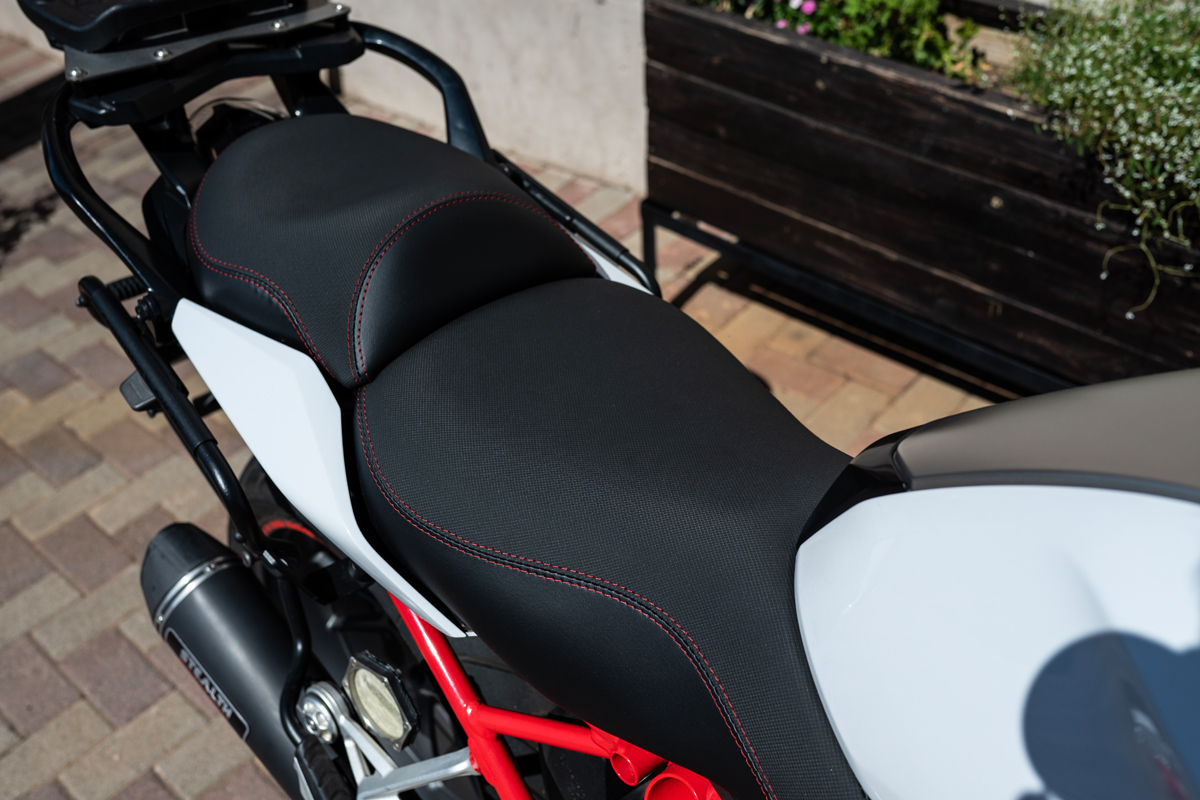
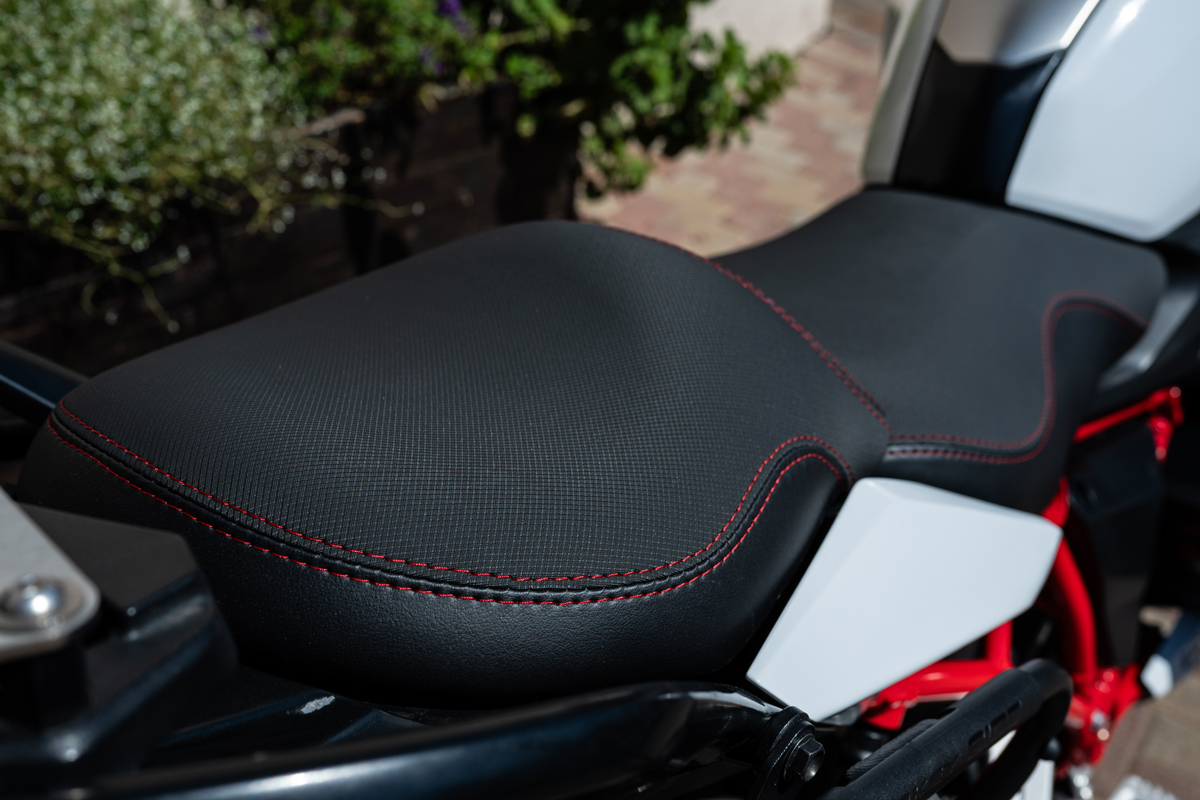
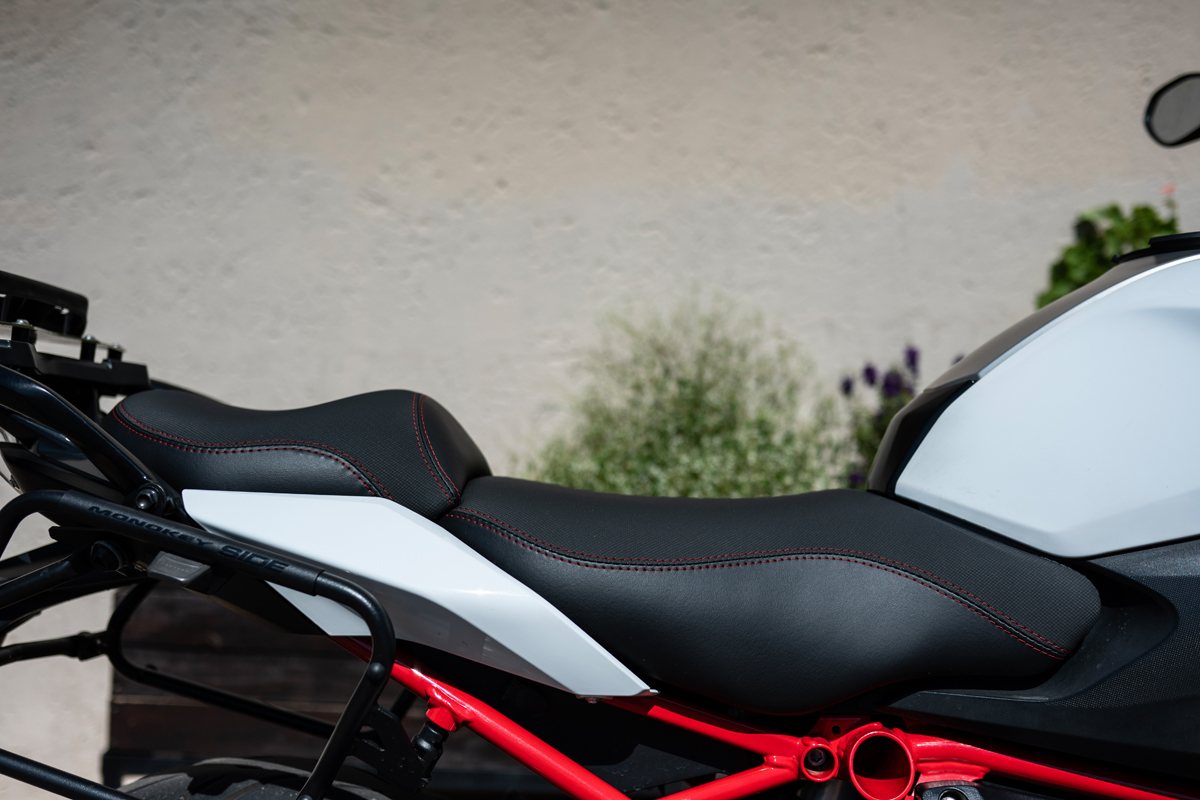
I got hold of Dion and briefed him on my requirements. I wanted the seat in plain black, but with subtle red stitching to compliment the red frame on the bike. Well, to say that the result was what I wanted is a huge understatement! He knocked it right out of the park! The materials he used are perfect. The seating surface is a classy non-slip texture, with the sides a smoother texture. The stitching is subtle and perfect, flowing from the rider’s perch perfectly into the separate and slightly higher pillion seat. The end result is a seat that looks better than the factory option and works better too. The pillion seat is subtly re-shaped to prevent the pillion from sliding forward under braking. All in all, I could not be happier with the result. Needless to say, there was also a huge saving over the BMW option.
Photo credit: Bjorn Moreira / ZA Bikers
In a world of compromise in which we find ourselves today, Dion is a shining example that you CAN have your cake and eat it! If you need a structural or comfort improvement or simply want to customize your seat, speak to Dion. You will not be disappointed. You can reach him on 082 297 8727. Either call him or WhatsApp him. Your butt will thank you!
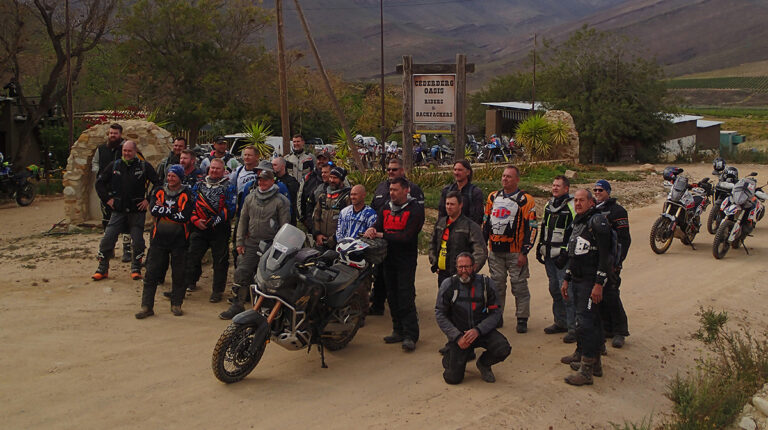
I recently got to do an epic trip with Honda and Footpeg Diaries to the Tankwa Karoo and the Cederberg, riding an HRC-colored Africa Twin Adventure Sport. The bike was a consummate distance-devouring beast. On reflection, a huge contribution to the riding comfort can also be attributed to the kit I was wearing. My adventure jacket, helmet and boots were all from Acerbis, a household name in the off-road kit for aeons (imported by Bikewise).
Photo credit: Bjorn Moreira / ZA Bikers
The chances of falling off your bike go up exponentially when you venture offroad. Wearing decent protective gear is absolutely essential. Amongst the best value-for-money offerings for quality, proven gear comes from the Italian company Acerbis. Born in 1973 from a business relationship between Franco Acerbis and American dirt plastics legend Preston Petty, Acerbis started manufacturing a range of dirt bike plastic goodies in 1975. I still use an Acerbis header tank which I bought almost 40 years ago it still works flawlessly, not leaking a drop. This prompted me to look seriously at the Acerbis kit when shopping for dirt riding adventure kit.
Photo credit: Bjorn Moreira / ZA Bikers
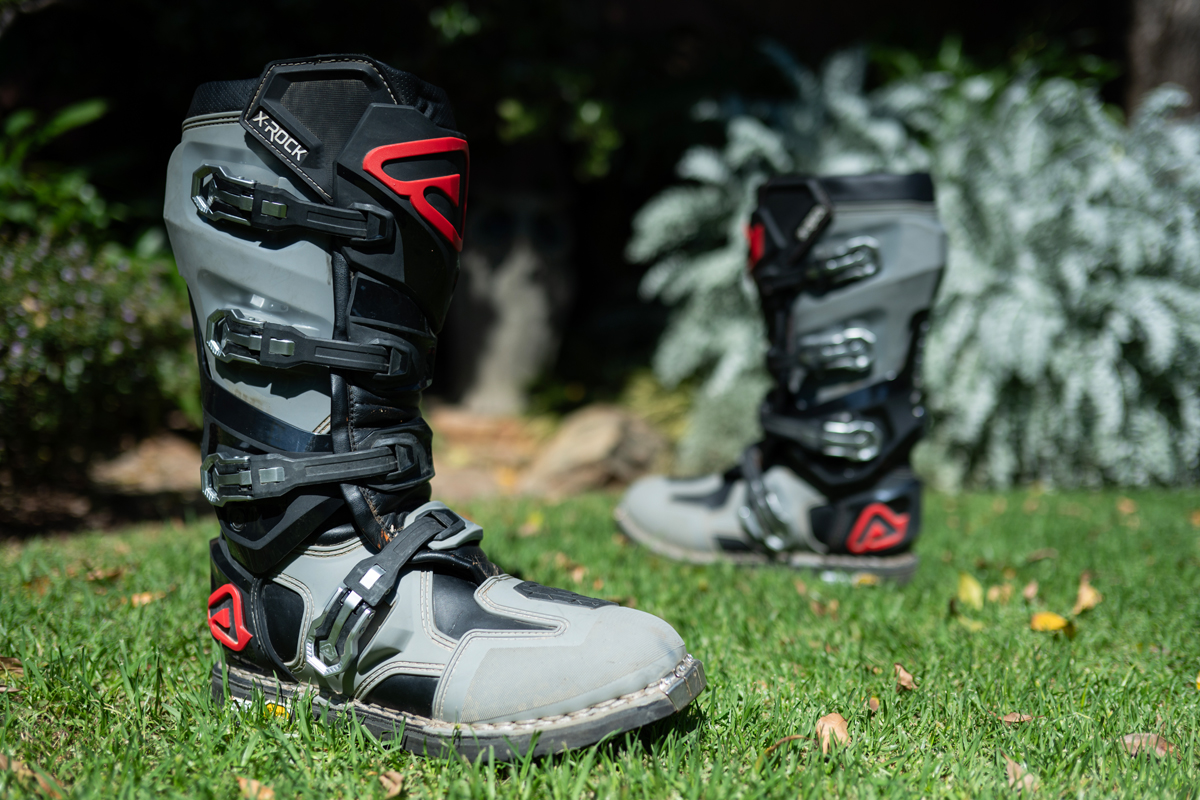
I acquired a pair of Acerbis X-ROCK motocross boots a while back. I literally wore them for 5 days for hours on end. No pair of boots that offer this level of protection deserves to be this comfortable. There is an initial couple of days of breaking-in, after which they settle down and are properly comfortable. Boots are so vital to your overall protection. Your lower legs are vulnerable in that the bike will often fall onto them, making lower leg injuries an issue if they do not have the proper protection. The X-ROCKs give you huge confidence.
Photo credit: Bjorn Moreira / ZA Bikers
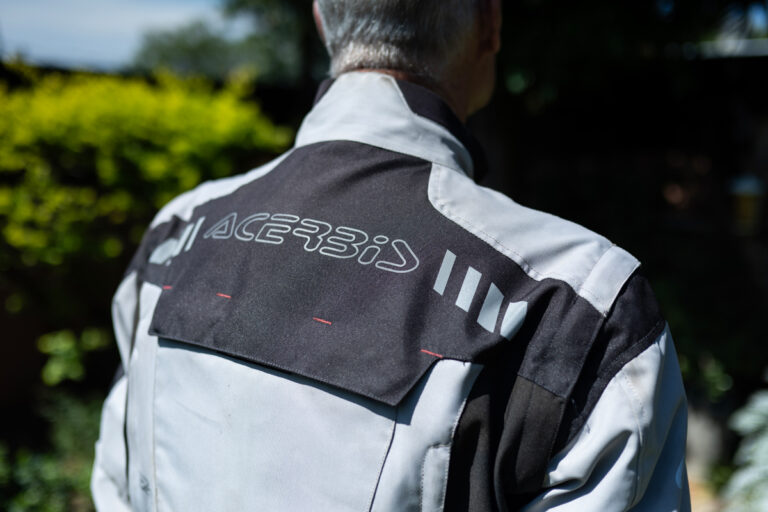
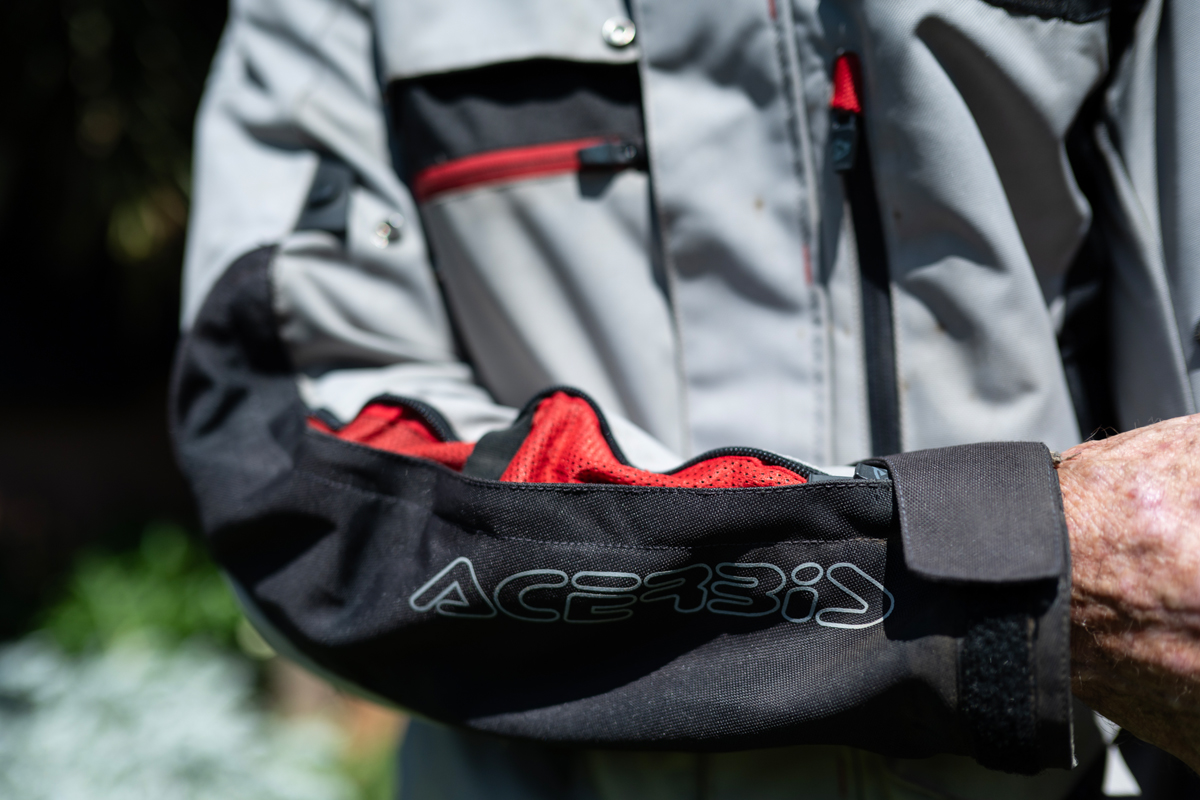
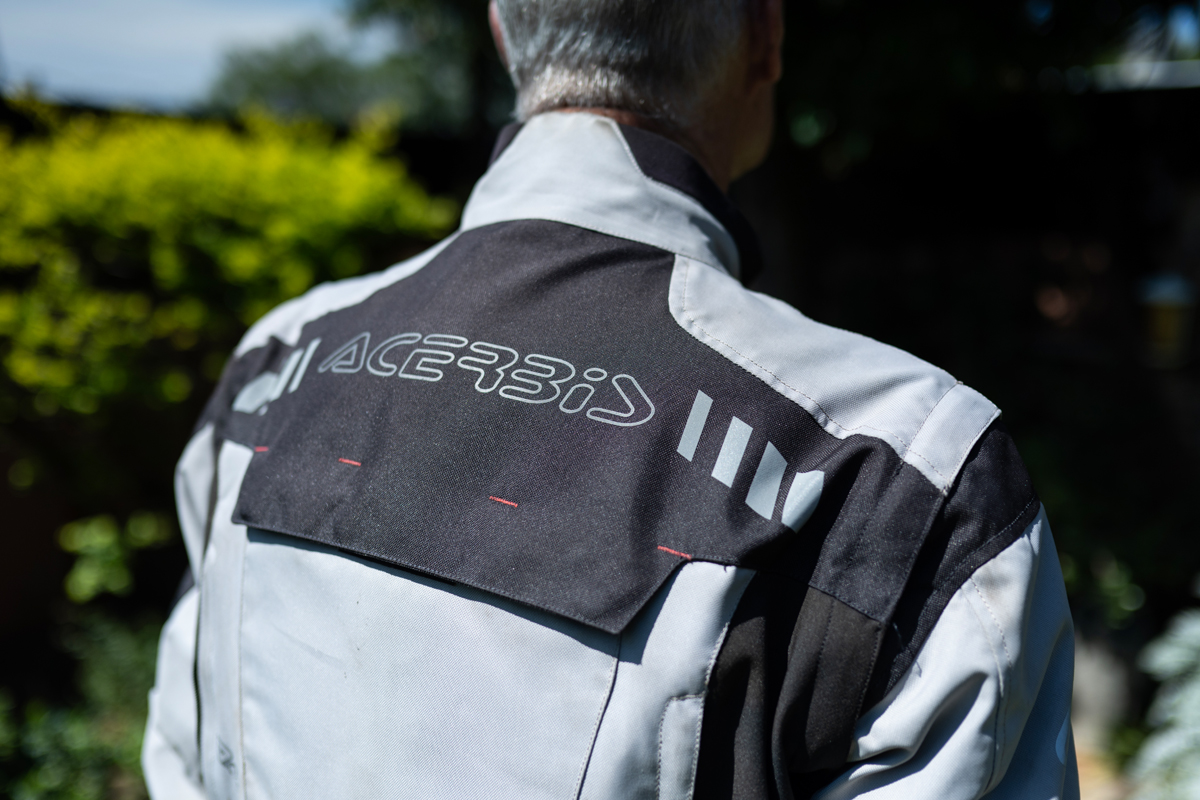
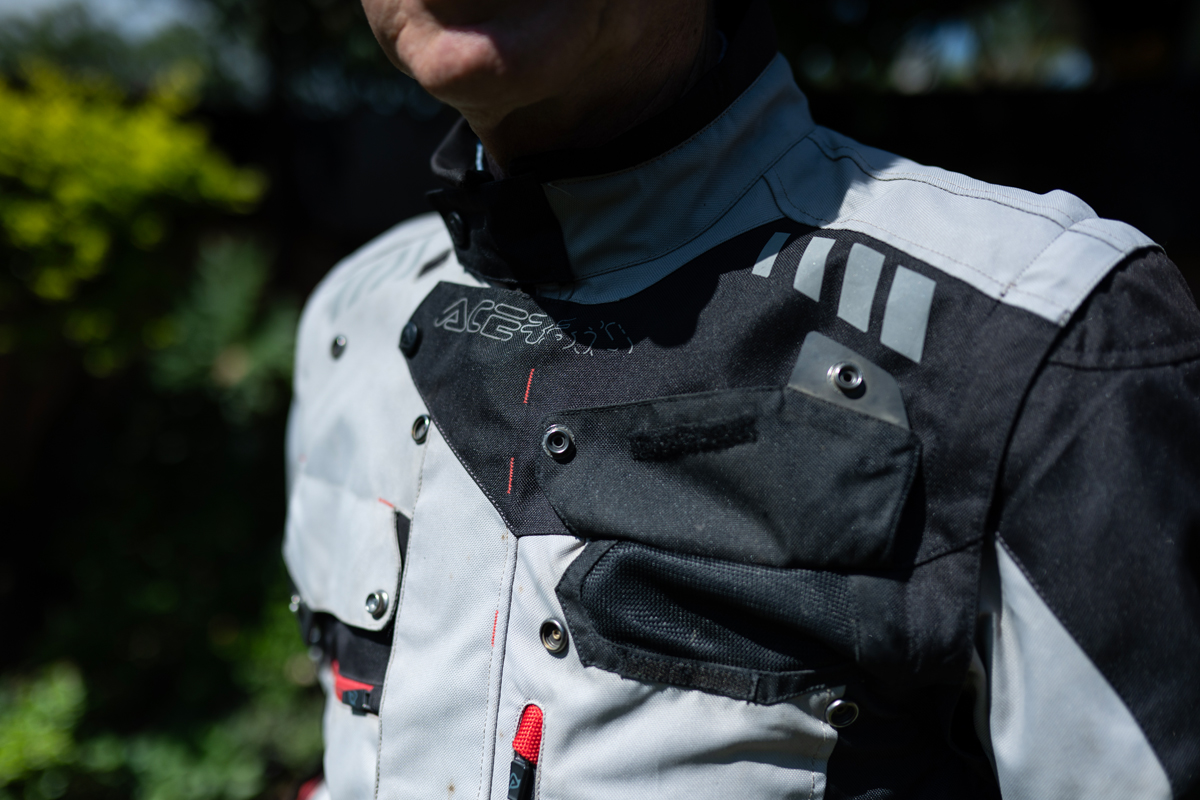
Next up is my Acerbis Adventure jacket which is now a veteran of many arduous trips in both hot and cold environments. Adventure jackets in my opinion need certain characteristics. Versatility, enough pockets, hydration options, strategically placed armour, and easy ventilation options, the Acerbis jackets tick all these boxes. There is a pocket for a hydration bladder in the back, with hanger clips for the hydration bag, as well as the necessary apertures for the tubing. It has two breast pockets and two hip pockets as well. Across the lower part of the back of the jacket is a wide pocket which is really useful. I put a splash jacket in there for cold or rain showers. The sleeves zip off which allows you to vent your armpits if you half unzip the sleeves. The sleeves also feature a zip down the length of the sleeve which allows serious airflow during hot weather to assist two breast vents to keep you comfortable. The neck features two press studs, allowing you to compensate for the thickness of clothing in cold weather without feeling strangled.
Photo credit: Bjorn Moreira / ZA Bikers
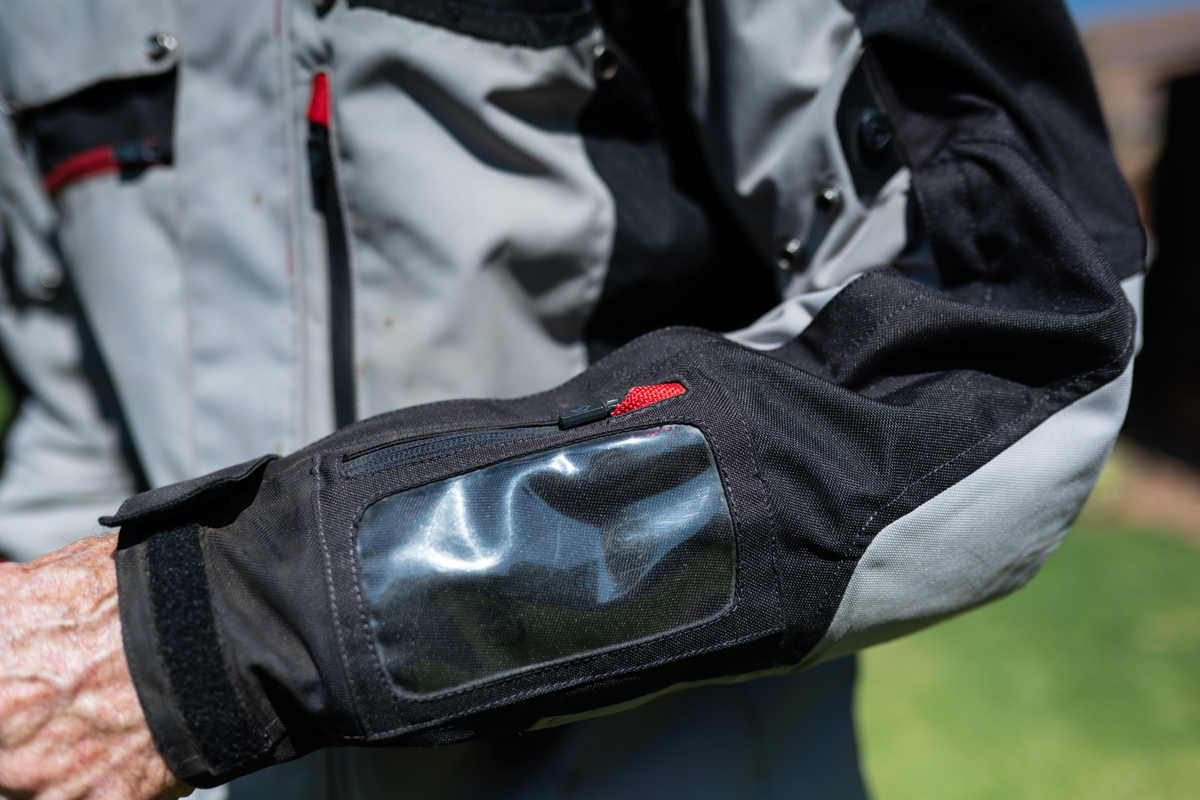
There are two removable linings for additional cold and damp weather protection. Also very handy is a zipped pocket on the left forearm with a transparent plastic window. This is ideal for easy access to a credit card for toll gates and fueling. Zips are all YKK, the best and most durable in my experience. All these features come at decent pricing. It is comforting to wear a world-renowned brand with an excellent reputation without having to sell a kidney.
Photo credit: Bjorn Moreira / ZA Bikers
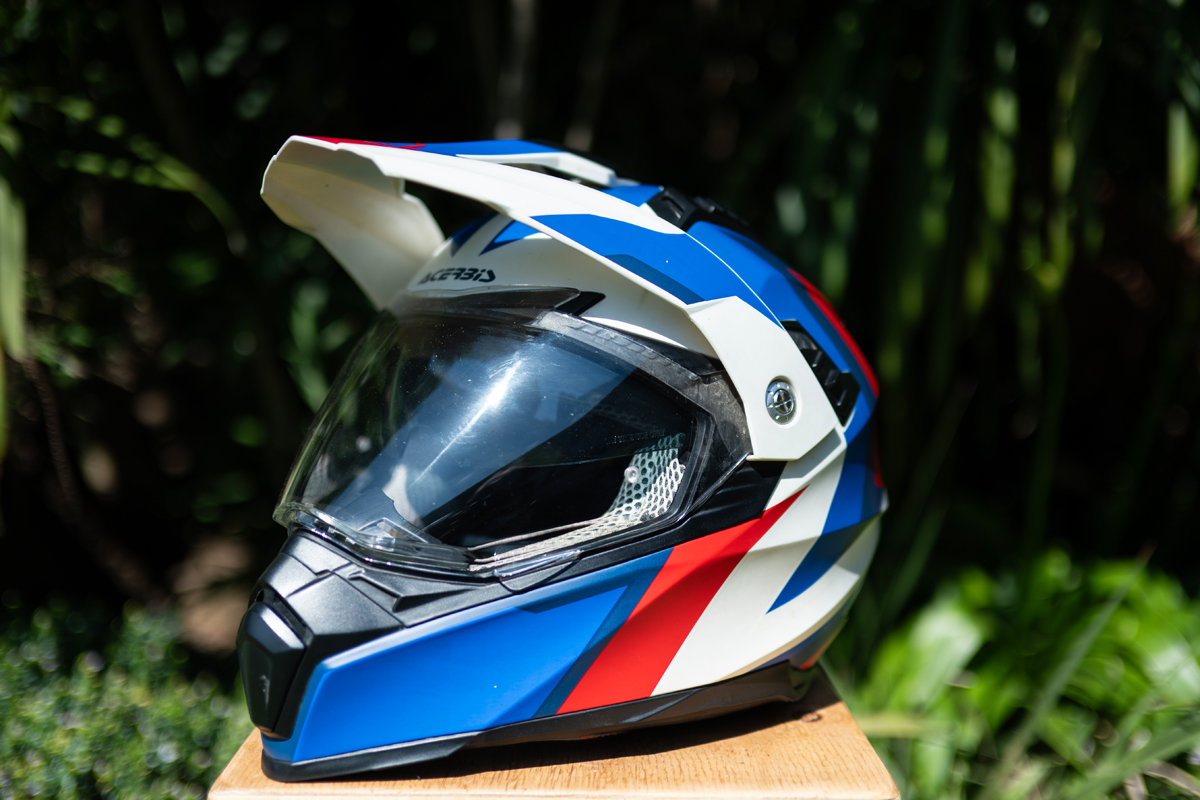
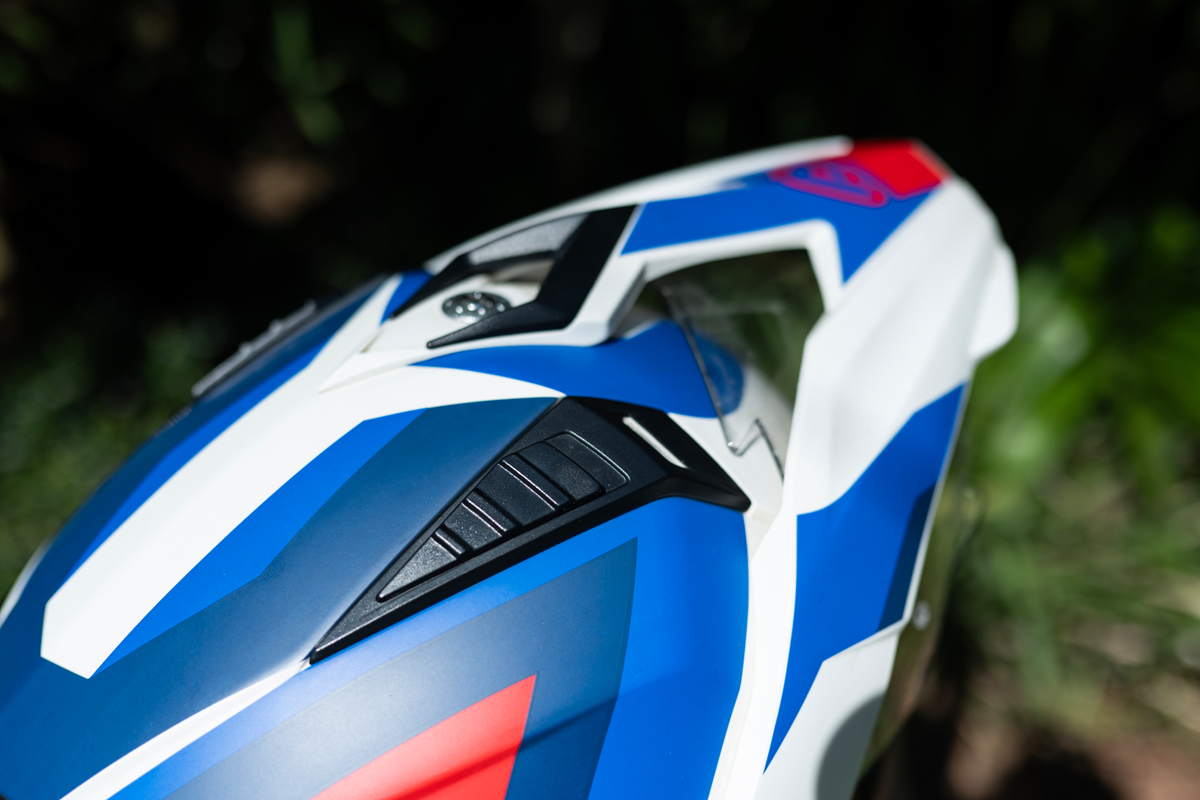
Last but not least is my Acerbis Adventure helmet. The HRC colours matched the bike perfectly, which was obviously not planned, given that I have had the helmet for over a year. Like my boots, it is seriously comfortable once settled. It features good venting and despite this, offers a really decent seal in poor weather or wind. There is a drop-down dark sun visor too. The helmet strap is fastened by a clip system which works flawlessly. Best of all, you do not pay a weight penalty despite the comprehensive specifications. This is important when you have a ten-hour day in the saddle. Your neck will thank you! The helmet is stable in the airflow too, with a well-vented peak that does not pull your head around as some adventure helmets tend to do.
Photo credit: Bjorn Moreira / ZA Bikers
So there you have it. If you are in the market for adventure riding kit you will do yourself an injustice if you don’t explore the Acerbis range. I can highly recommend it! (On that note, this kit was bought with my own hard-earned loot).
For more information have a look at the Bikewise website here – www.bikewise.co.za
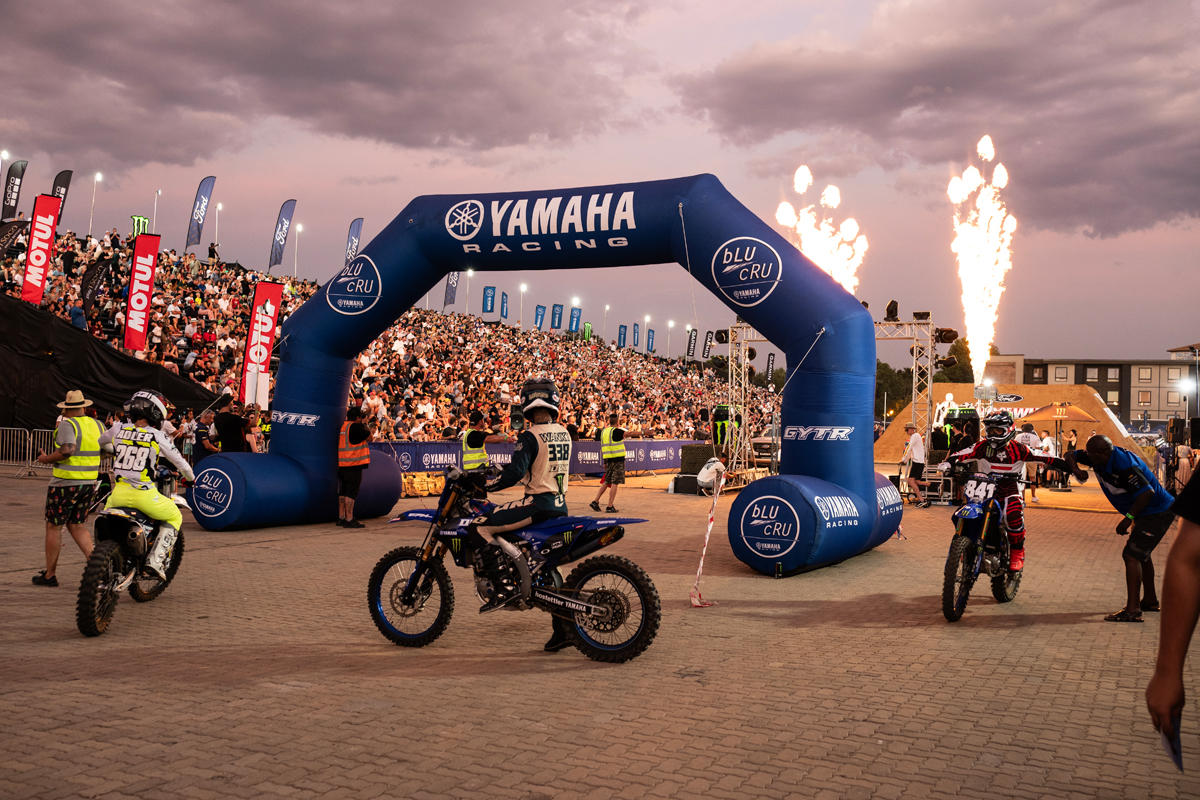
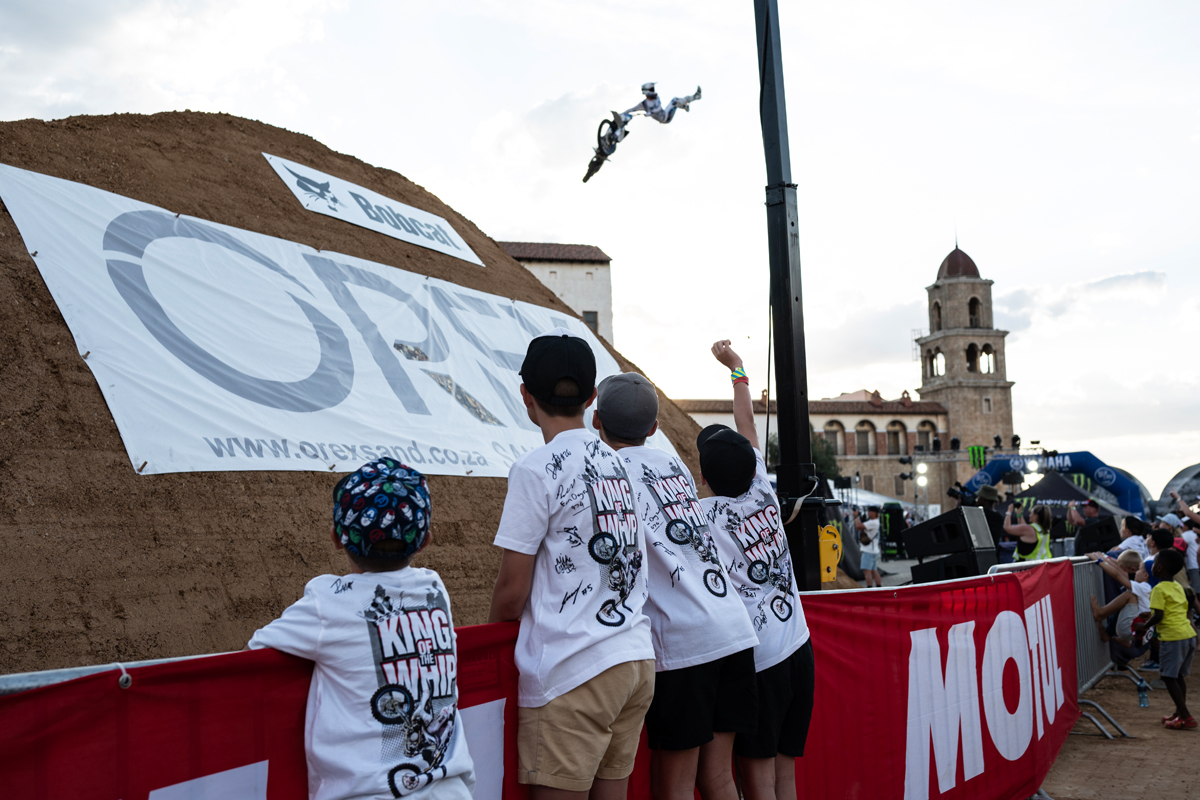
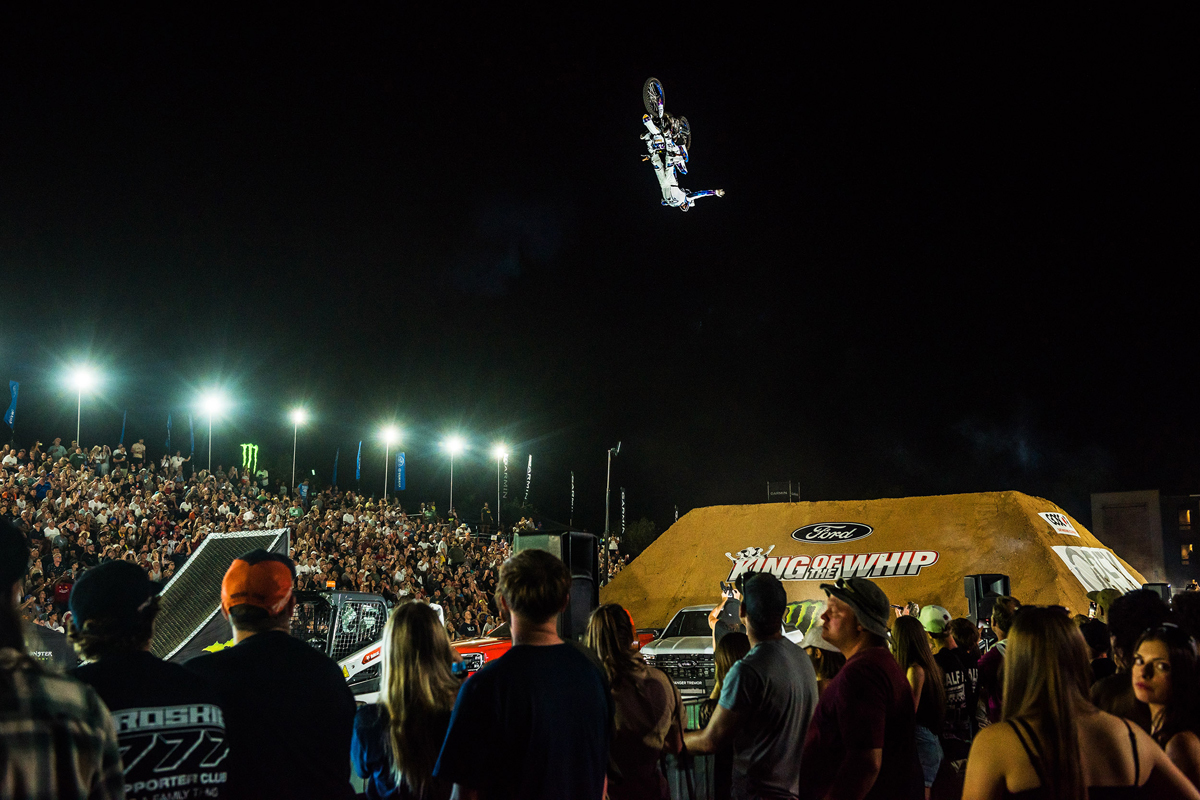
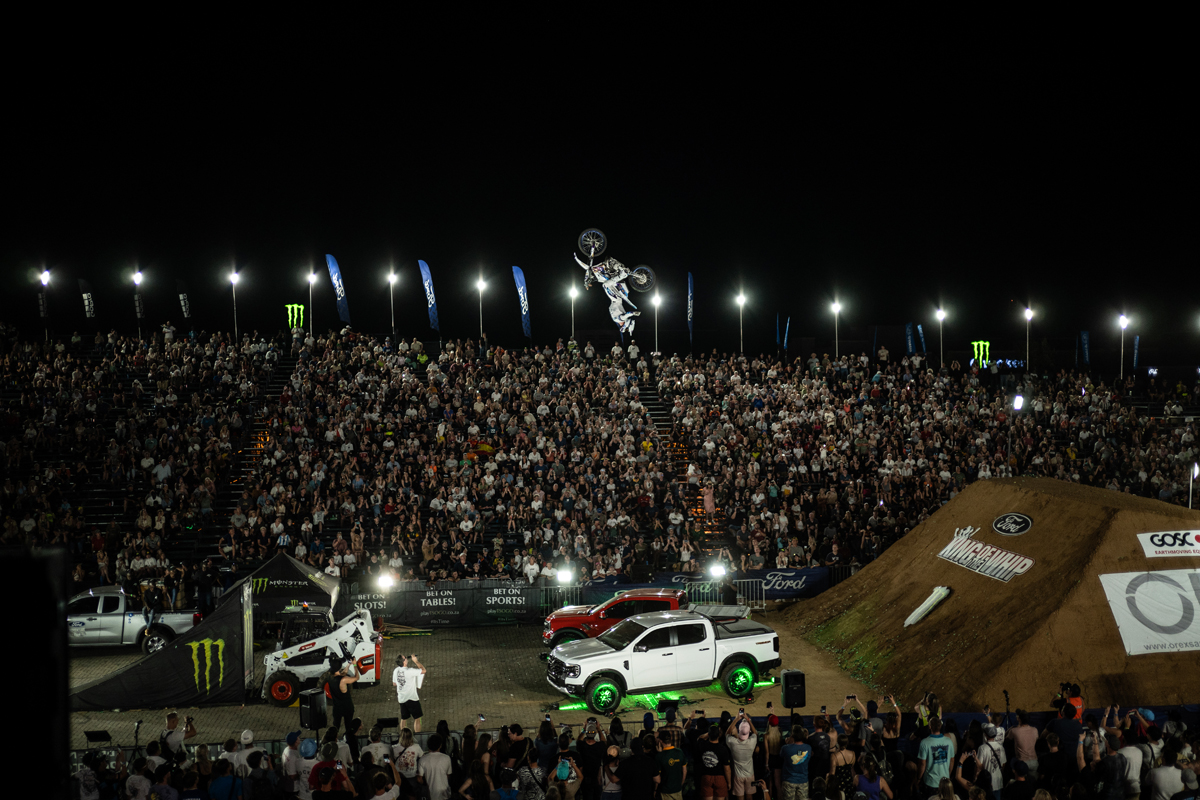
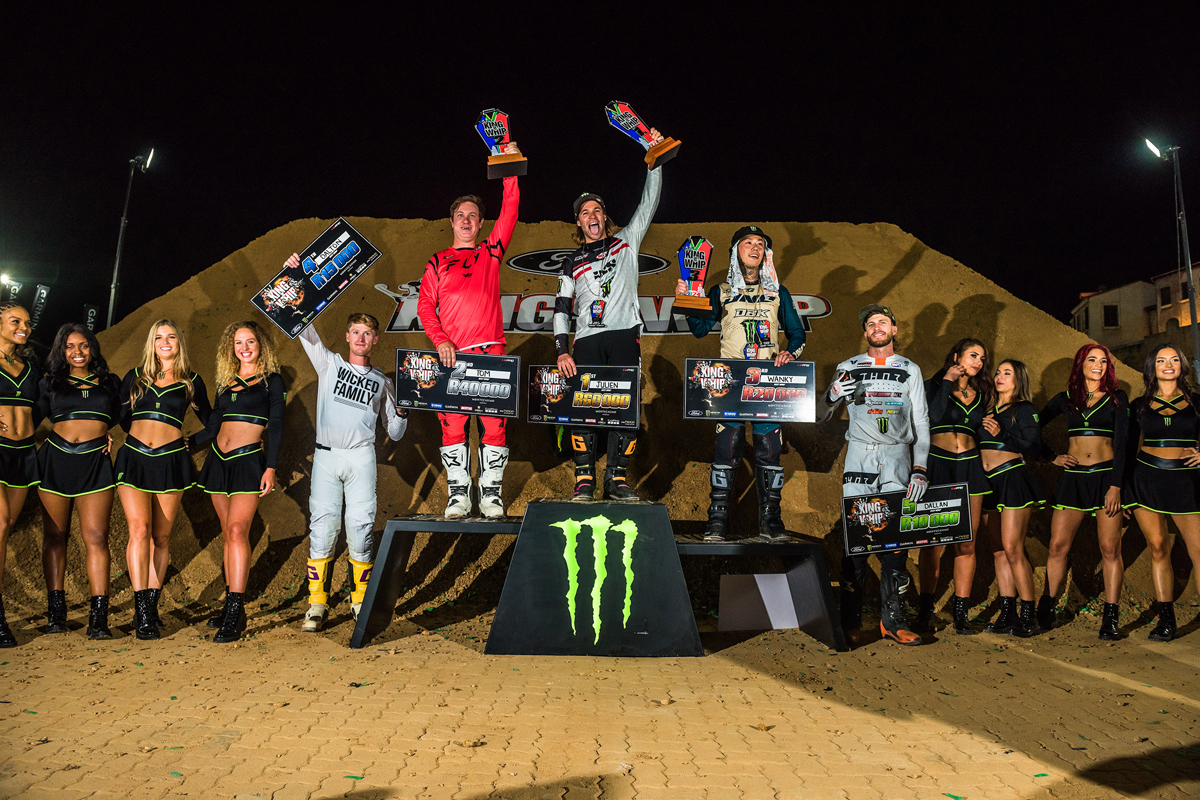
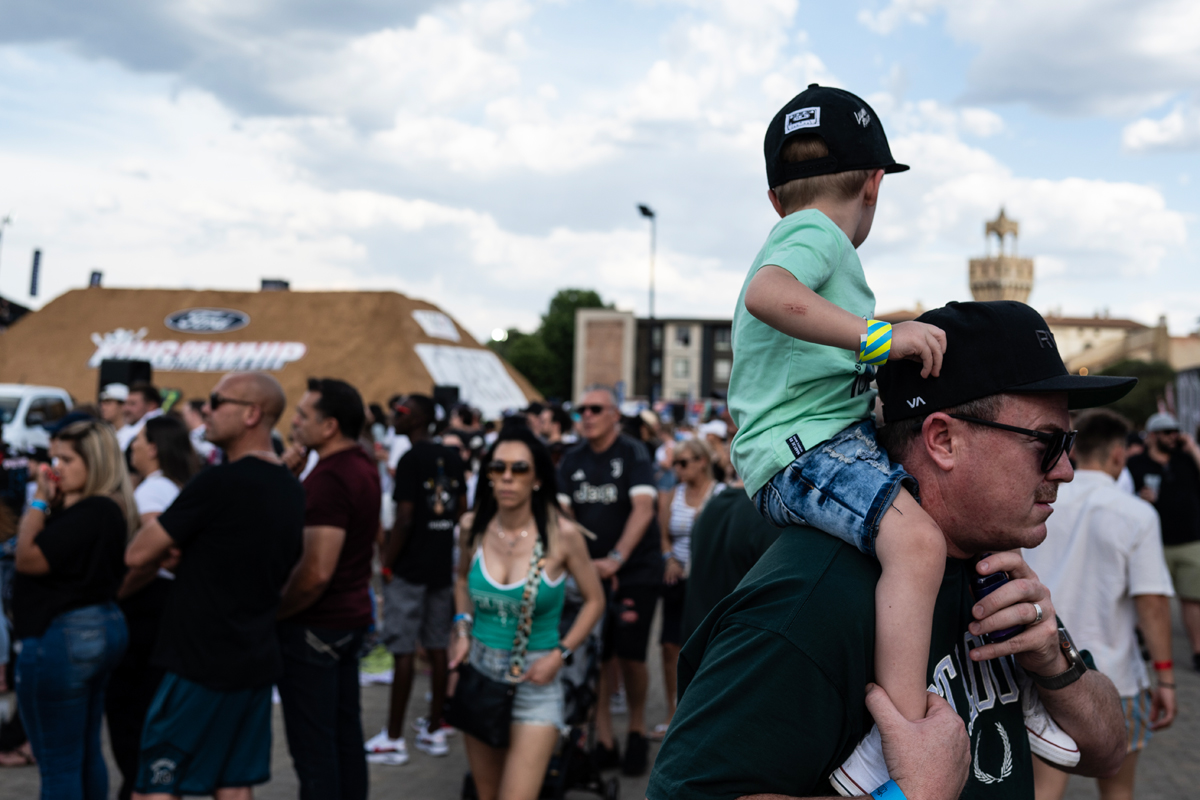
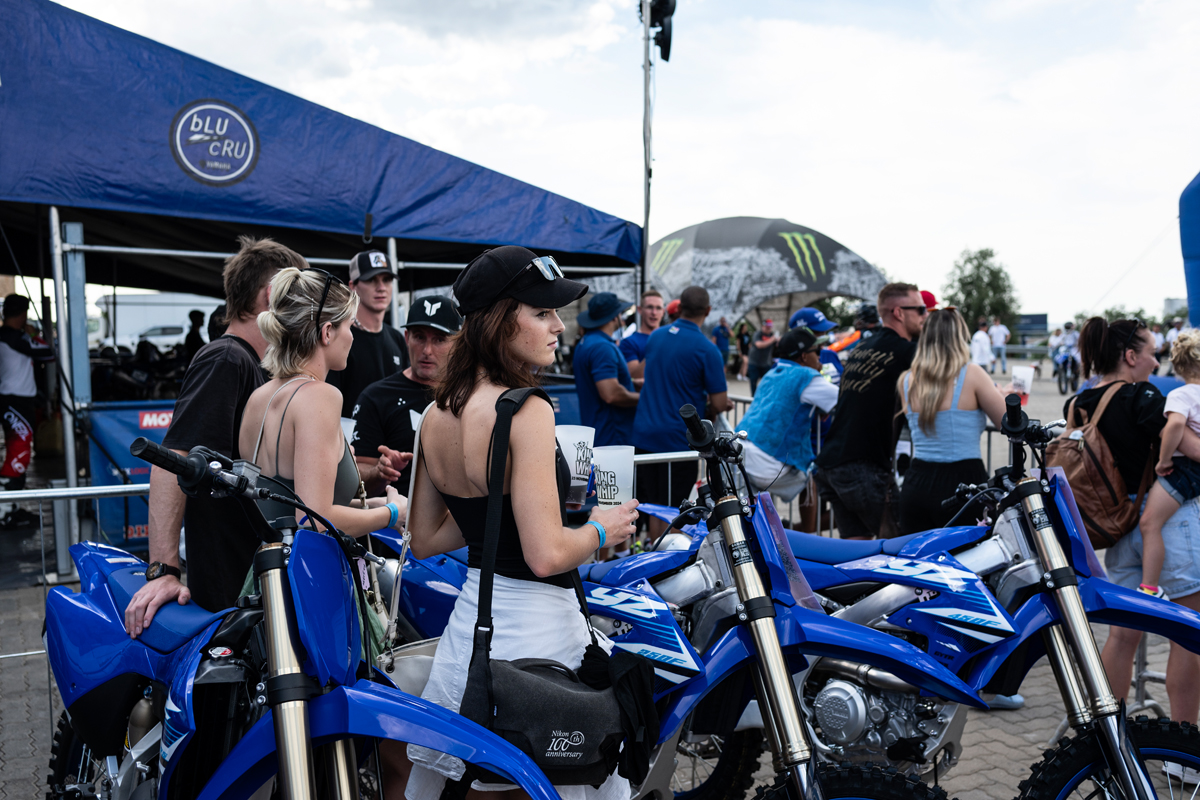
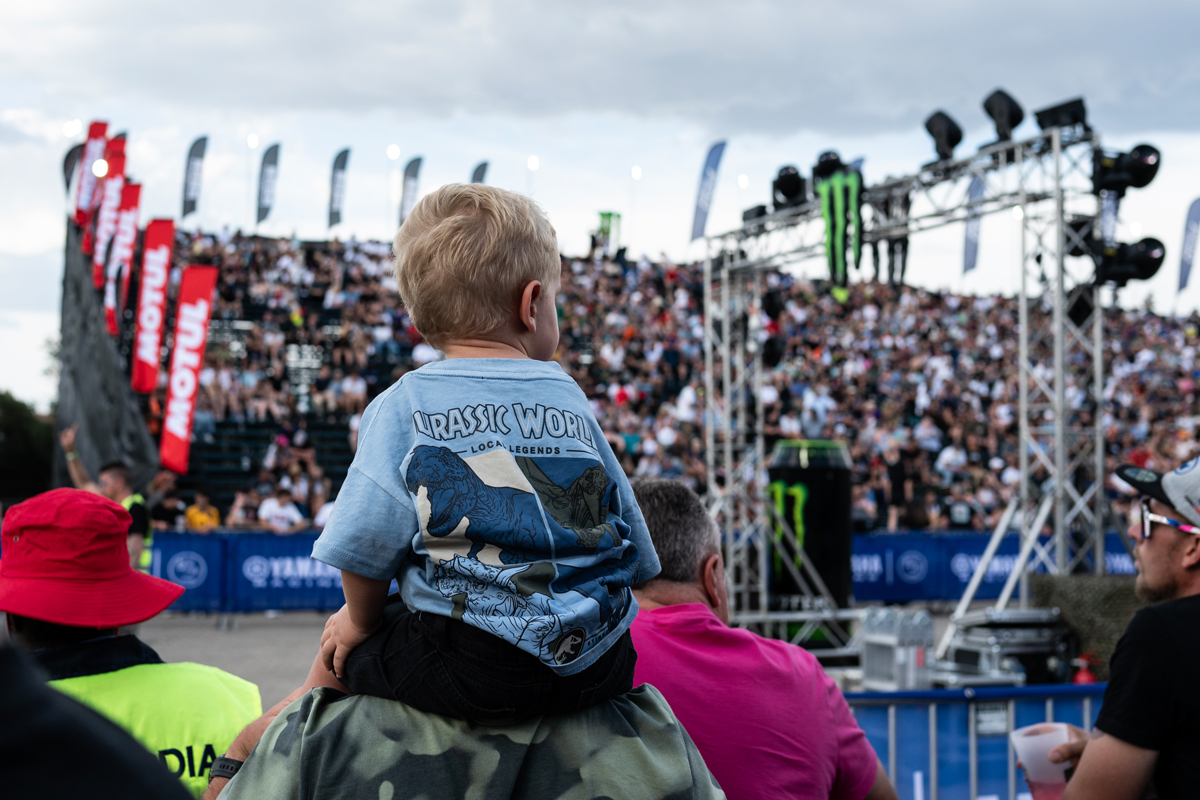
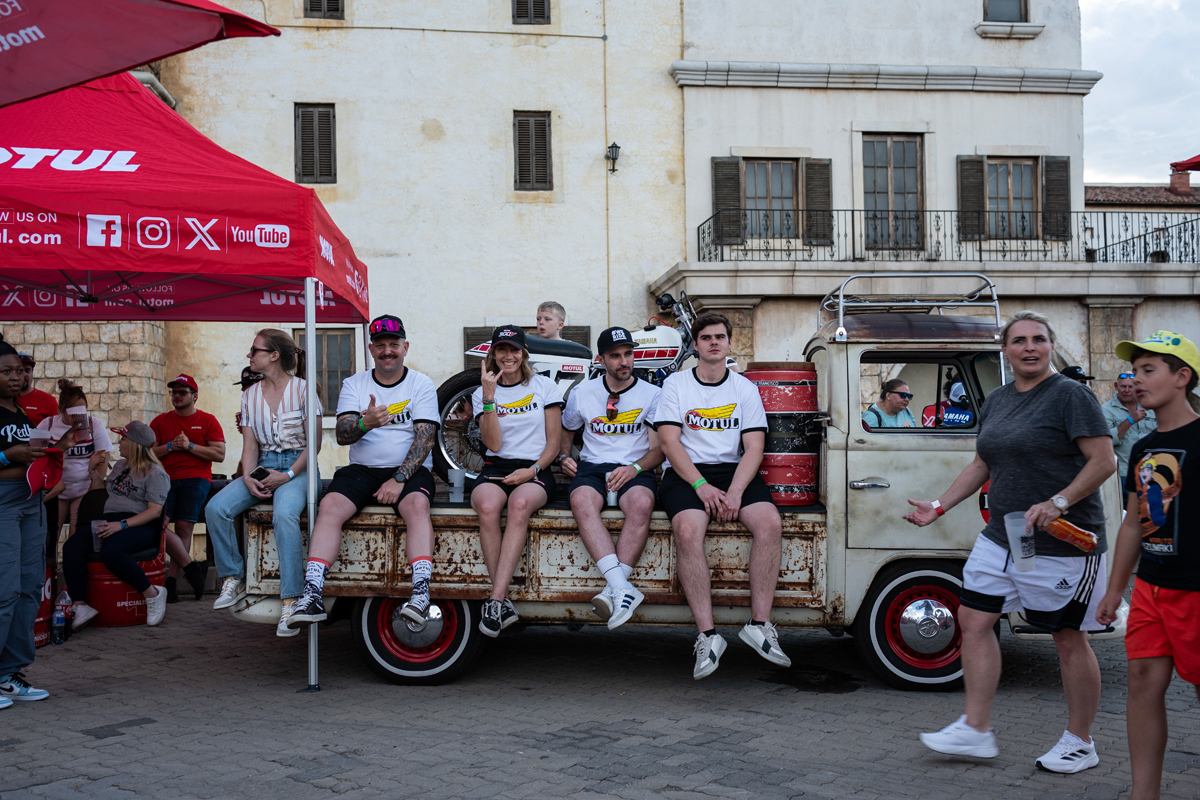
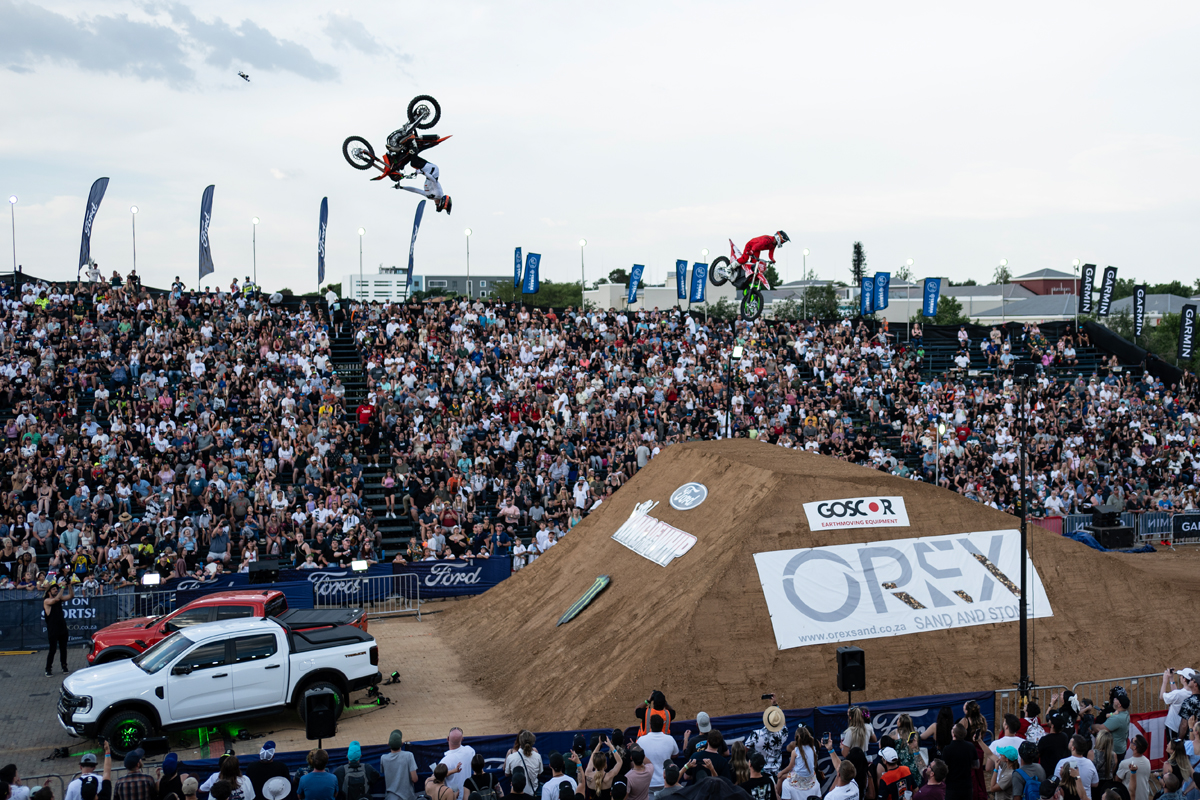
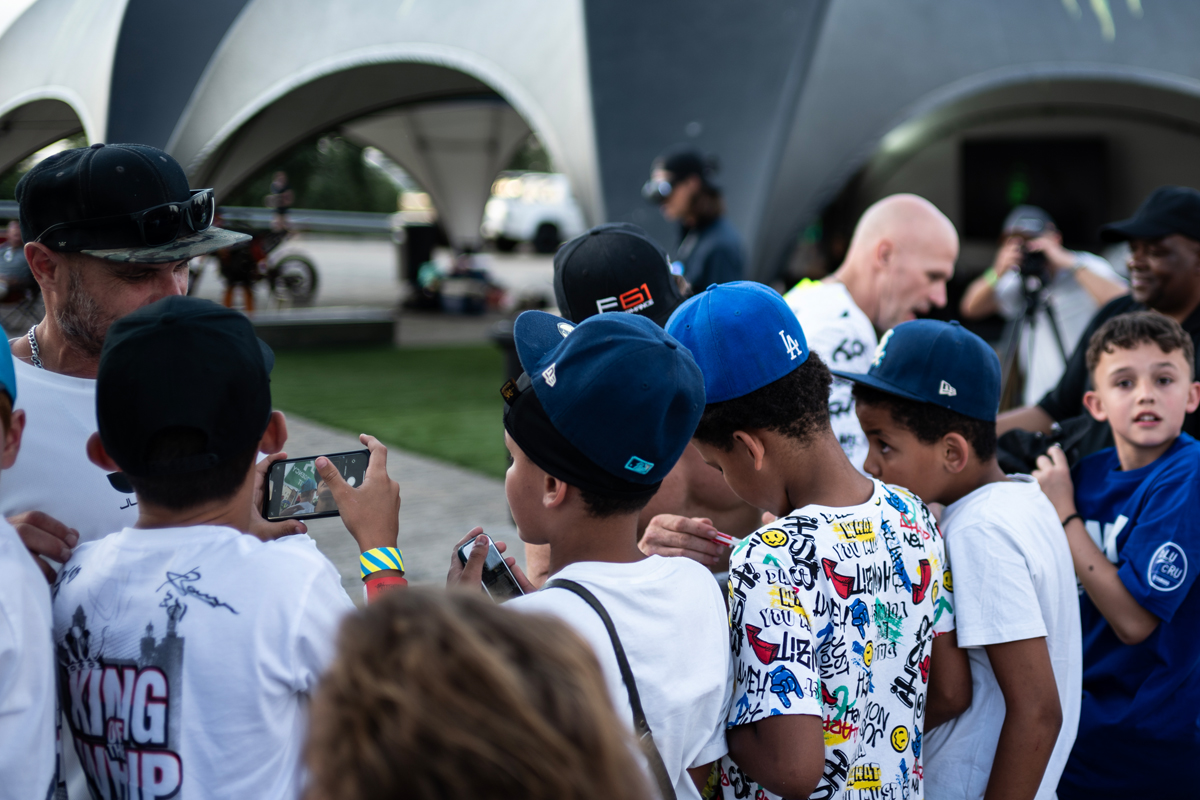
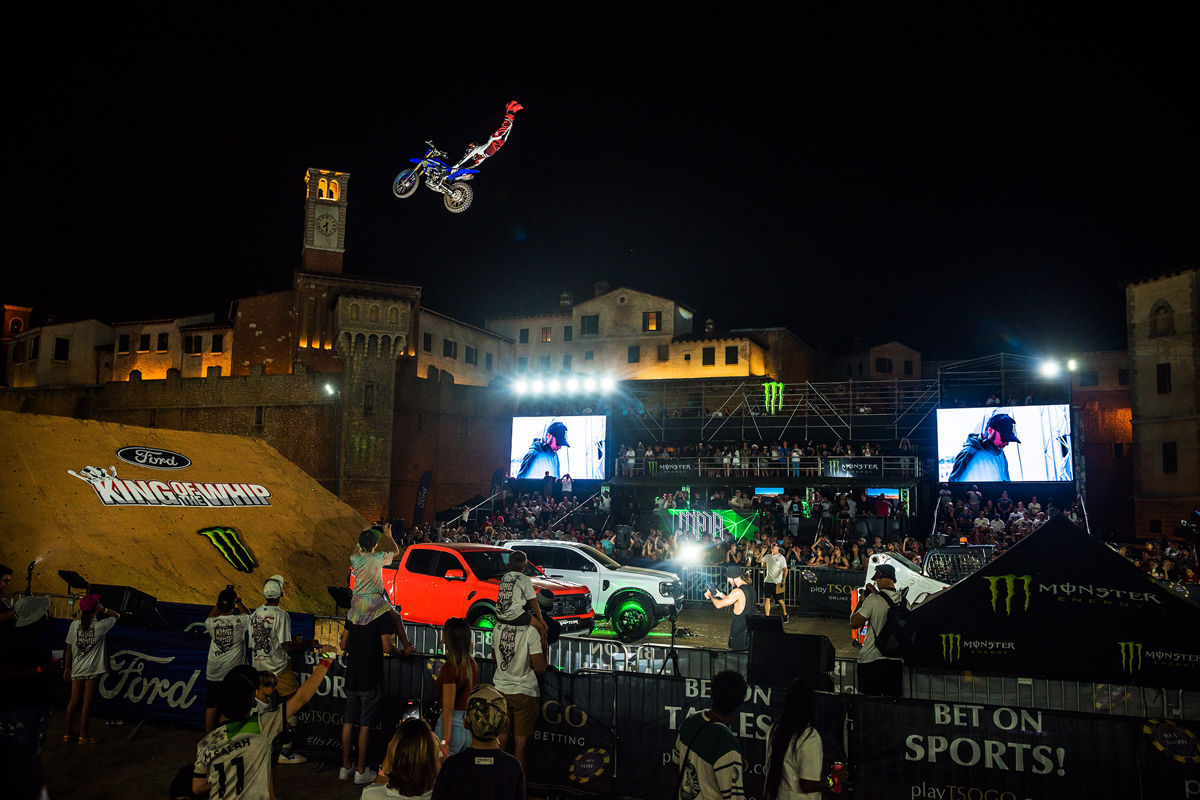
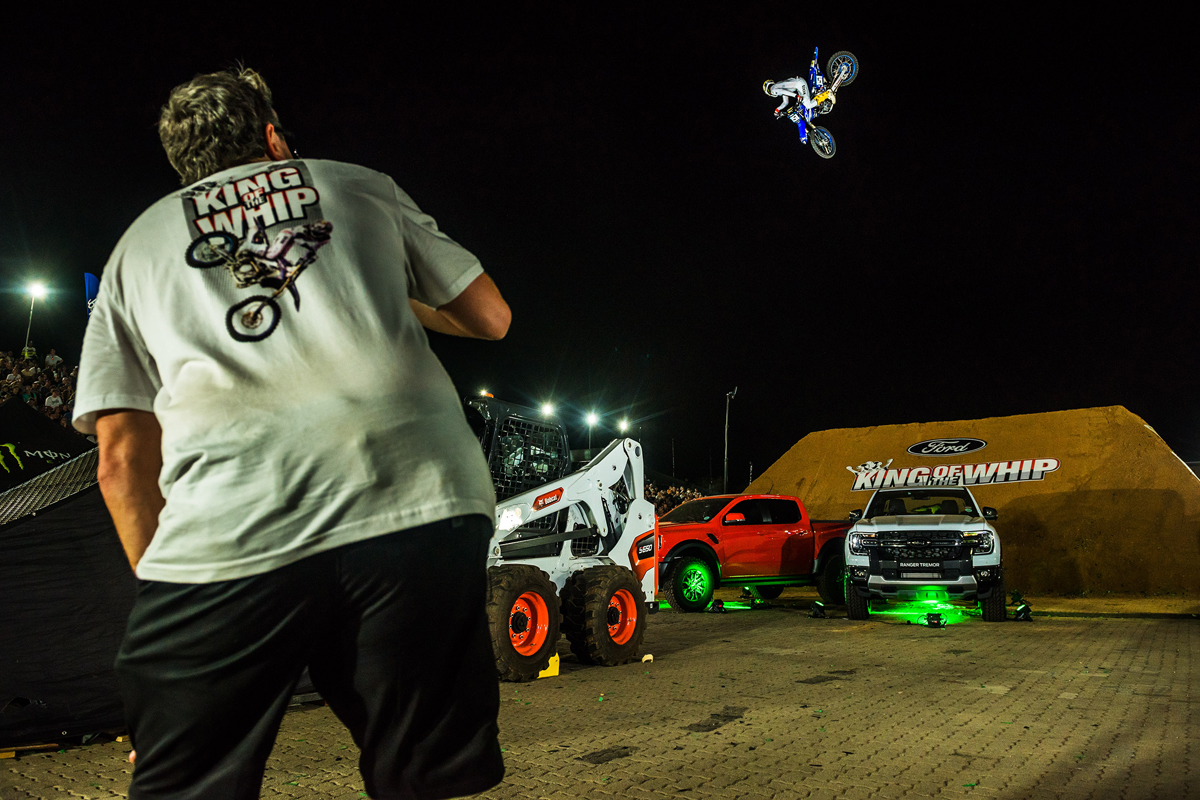
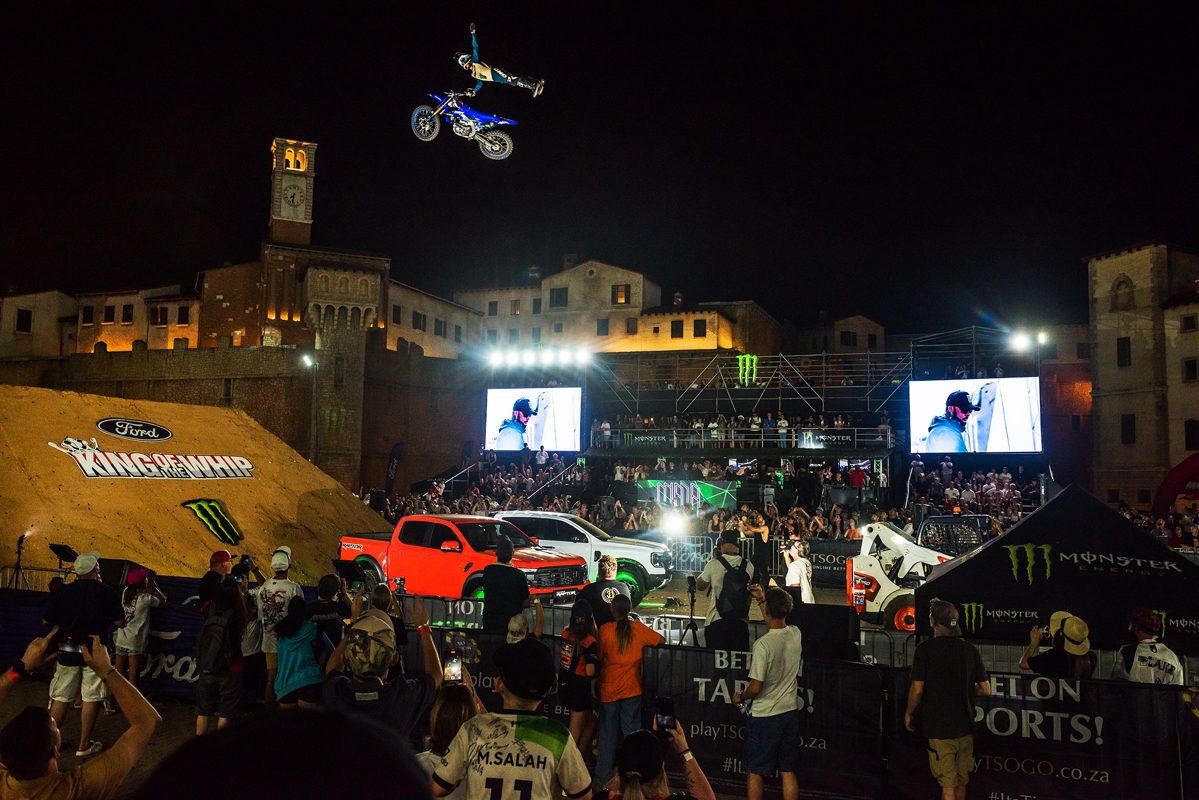
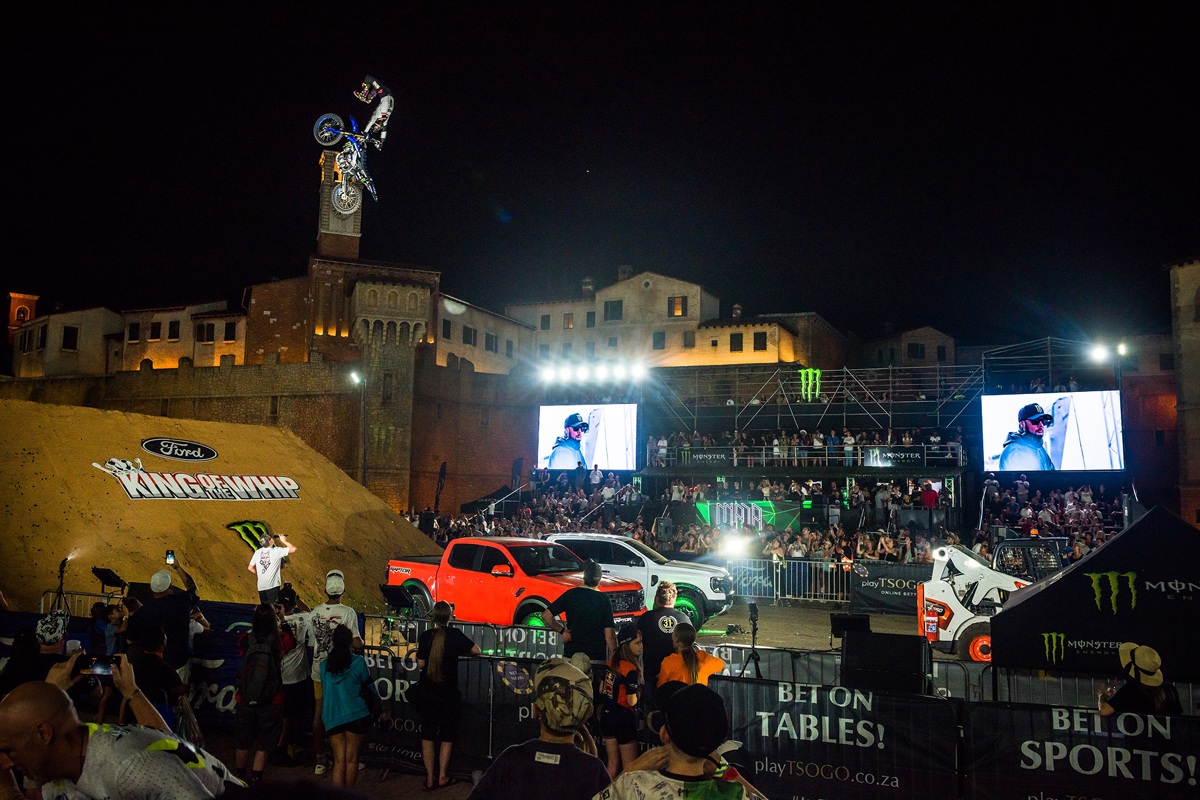
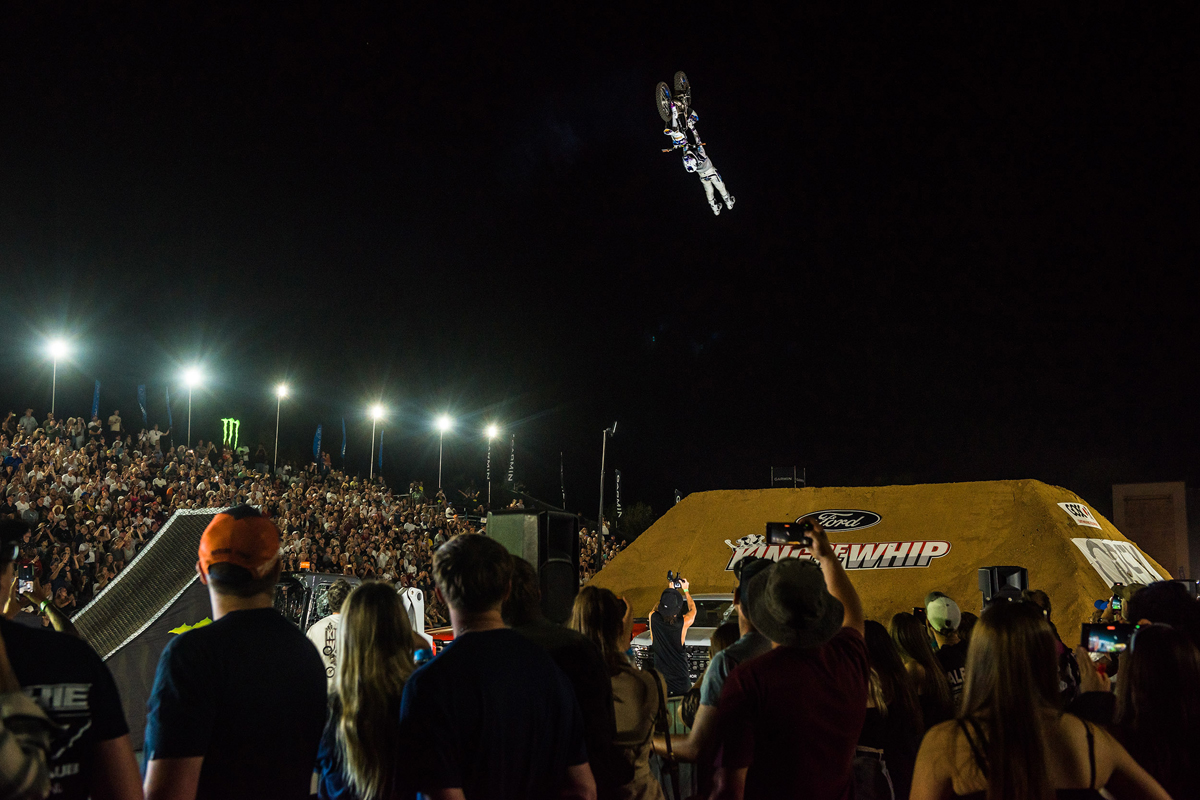
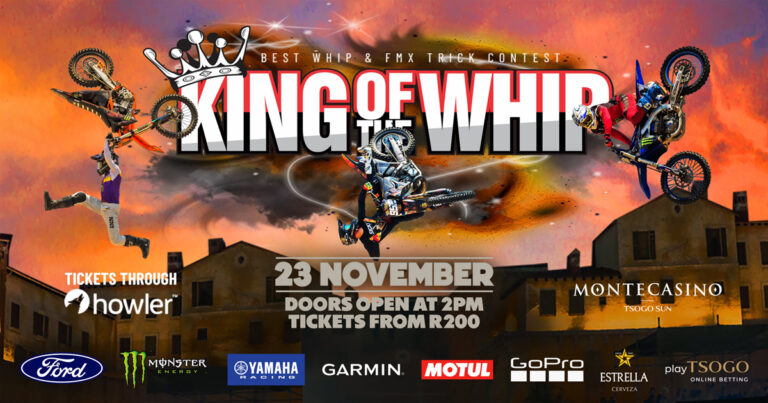
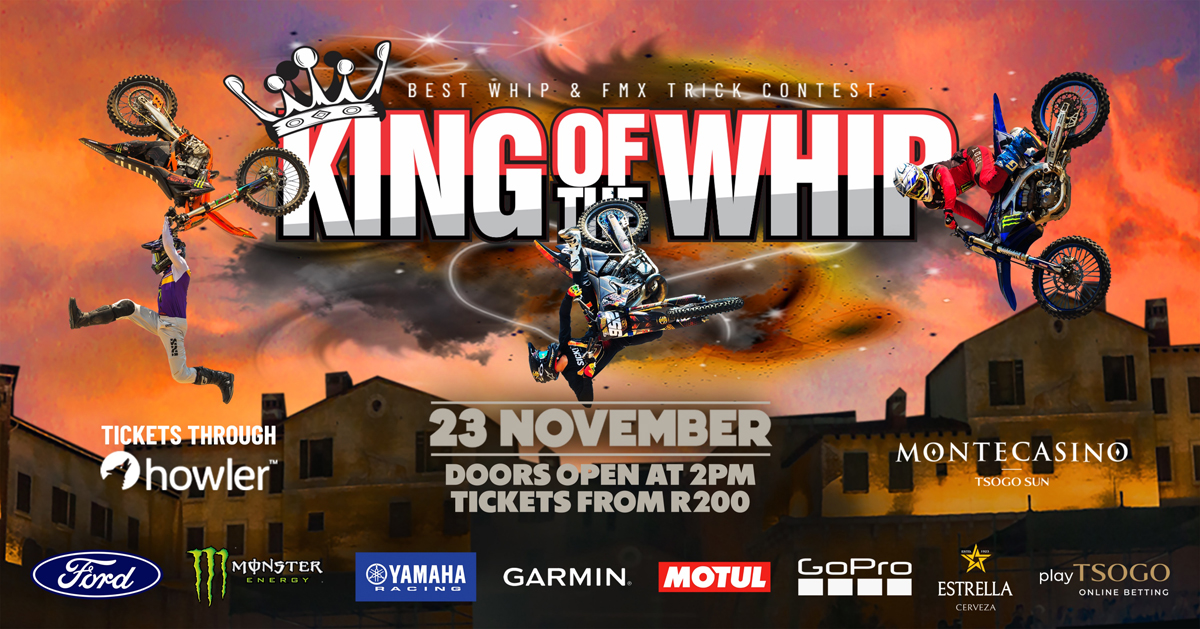
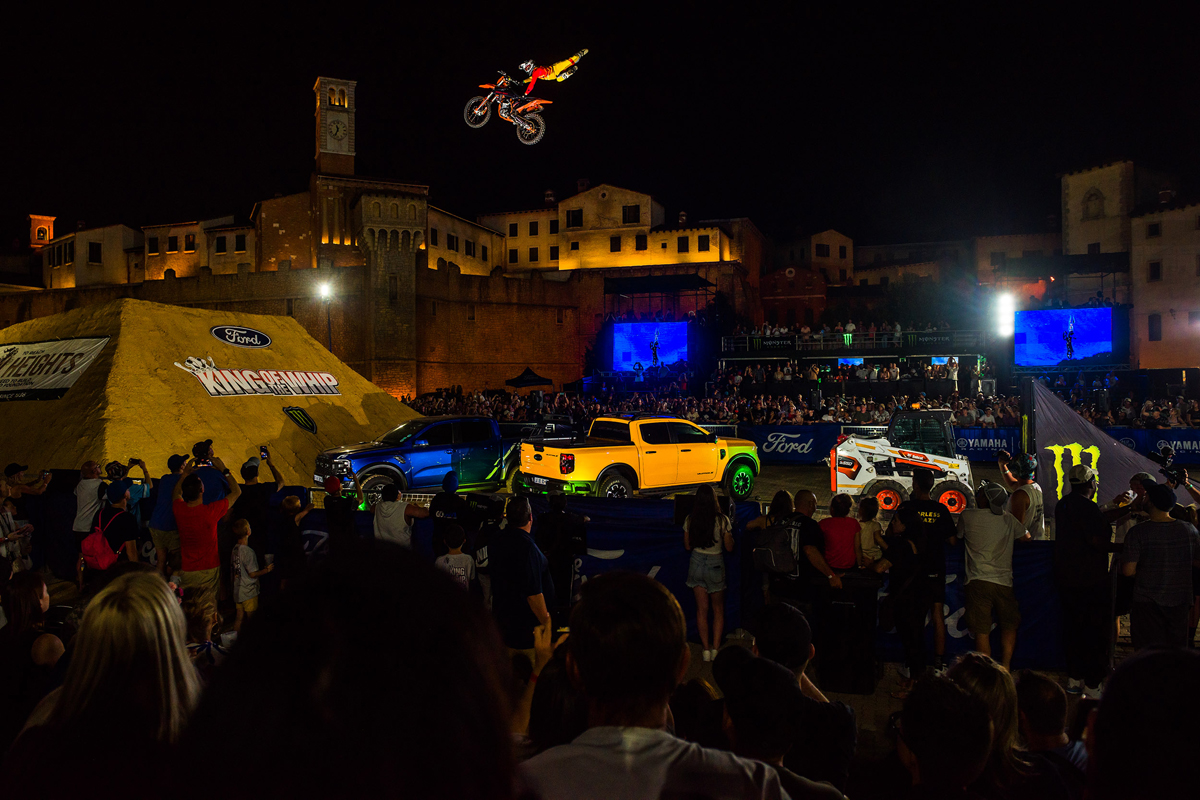
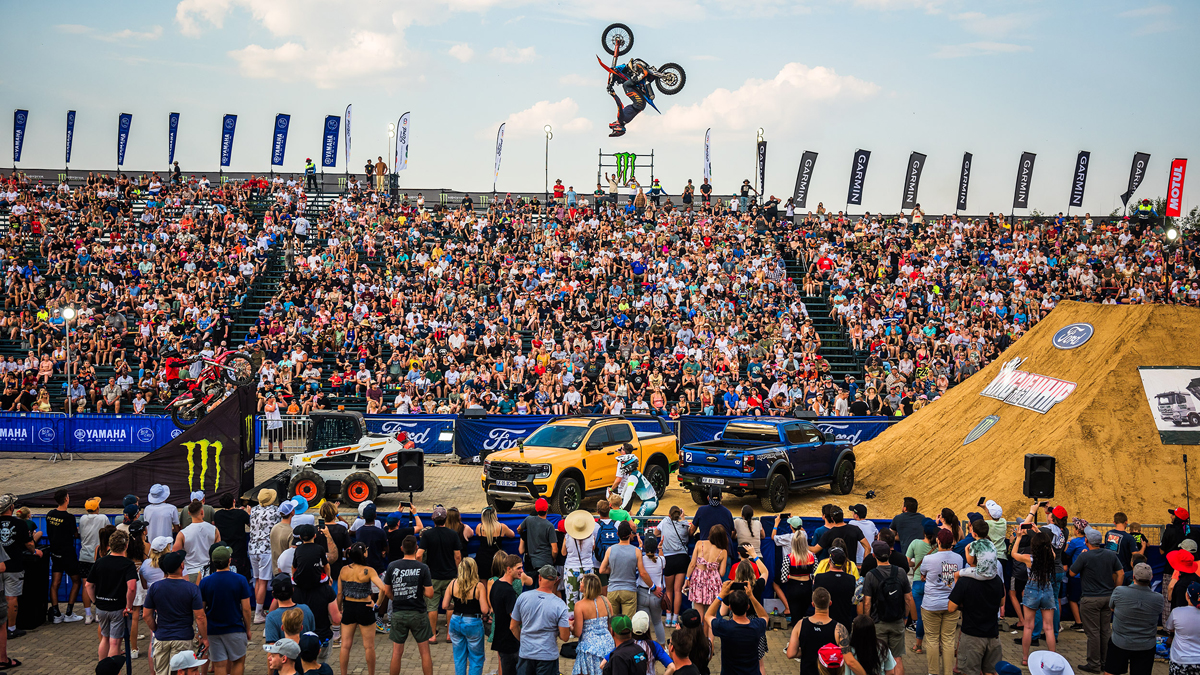
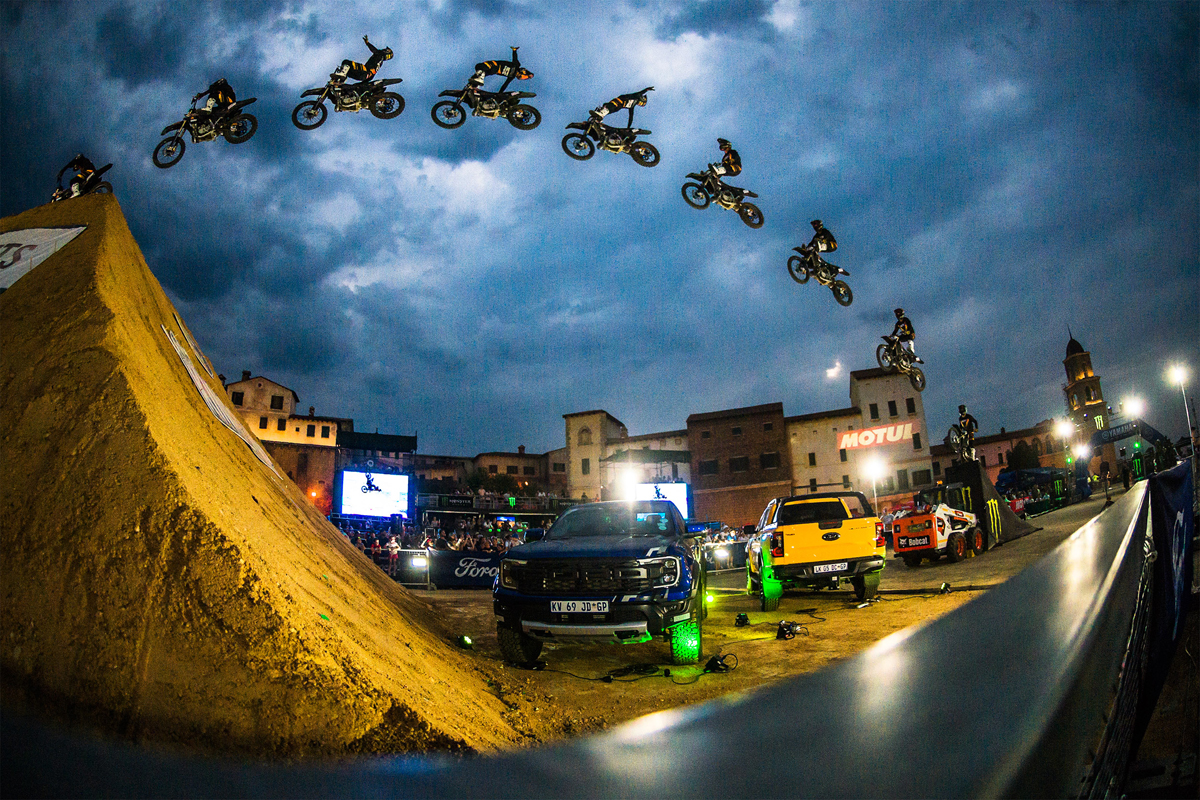
No, this has nothing to do with winning big on the tables in the casino, but rather the daredevil and death-defying stunts taking place in the outdoor arena at Montecasino on Saturday 23rd November as an international cast congregated for the King of the Whip 2024 competition.
Belgian Freestyle Motocross rider Julian Vanstippen successfully defended his King of the Whip crown, claiming his third title in a row in front of a sold-out crowd.
Photo credit: Eric Palmer
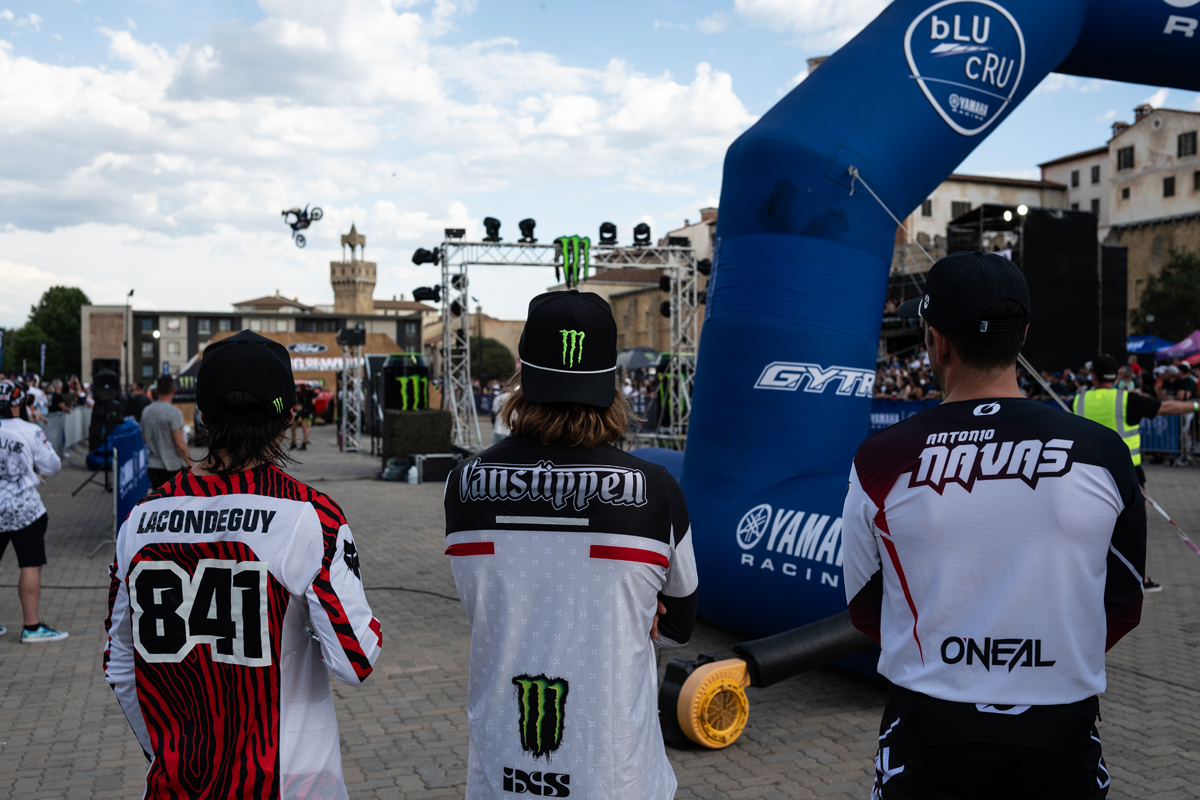
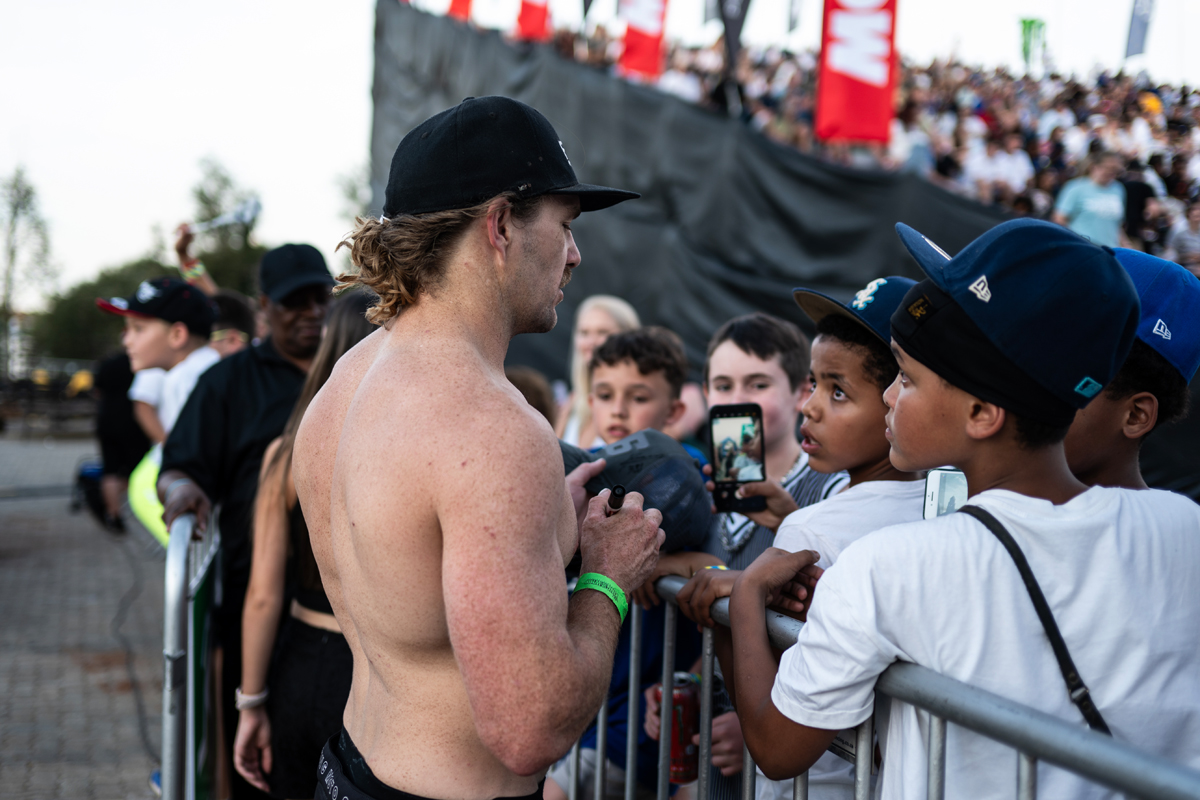
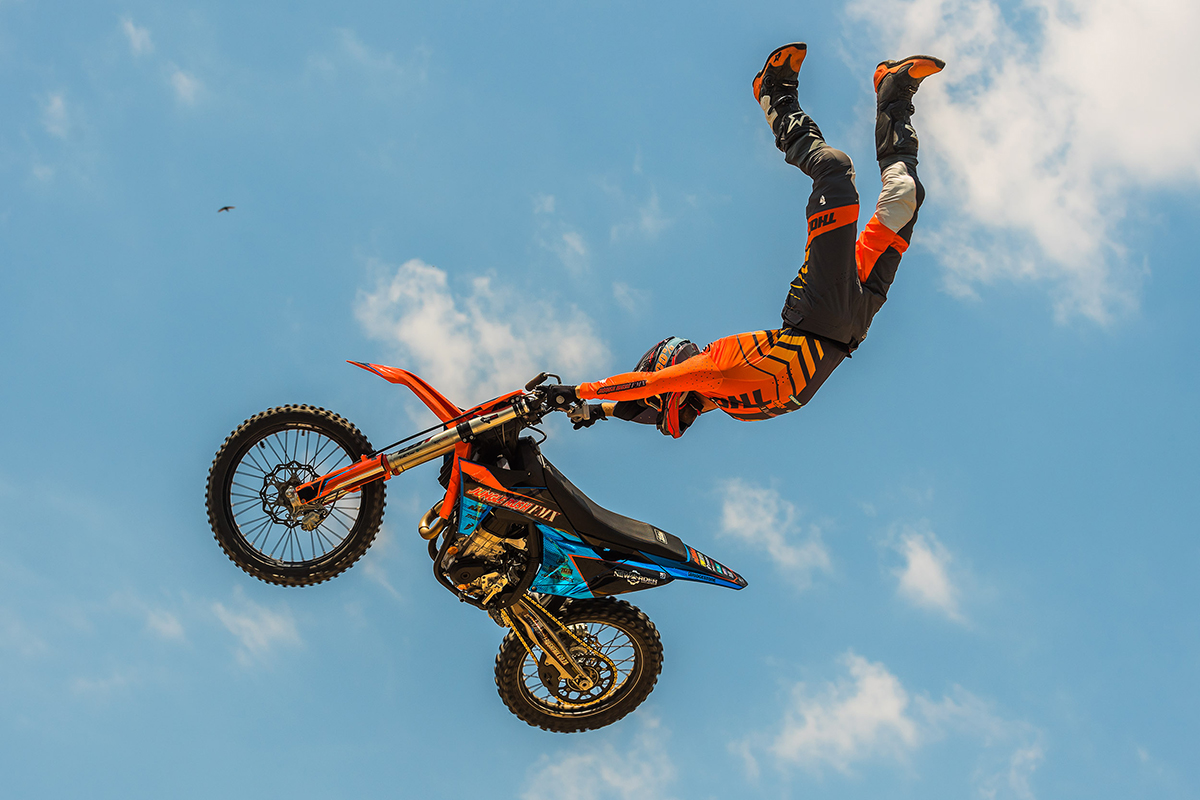
Over 20 of the best Freestyle Motocross and Motocross riders took to the ramps to compete in the Best Whip and Best Trick contests. Up for grabs was a share of the R225 000,00 cash prize and various prizes from the official event partners. The 2024 edition saw the biggest list of international riders come out to compete – Julien Vanstippen (Belgium), Tom Parsons (USA), Pat Bowden (Australia), Genki “Wanky” Watanabe (Japan), Andreu Lacondeguy (Spain), Sebastian Westberg (Finland) and Antonio Navas (Spain).
Photo credit: Bjorn Moreira / ZA Bikers
Event organiser Ryan van der Spuy, said: “Every year this event exceeds expectations. It has gone from strength to strength and is now an event with international acclaim. We’re in our third year at this venue, sold out again, and saw seven international riders competing against our local stars, our most ever, which shows the event’s growth and recognition both locally and internationally.
“There were also two firsts for this event, and the sport itself saw an official pre-event riders press conference as well as betting partner playTSOGO joining to allow fans the opportunity to bet on their favourite riders.”
Photo credit: Bjorn Moreira / ZA Bikers
The action for the Best Whip competition began with the riders going head-to-head in four qualifying rounds. Judges were on the lookout for amplitude, style, and variation when deciding which of the 15 riders would qualify for the semi-finals. Seven more riders were eliminated in the semi-finals, leaving only eight to compete in the Finals.
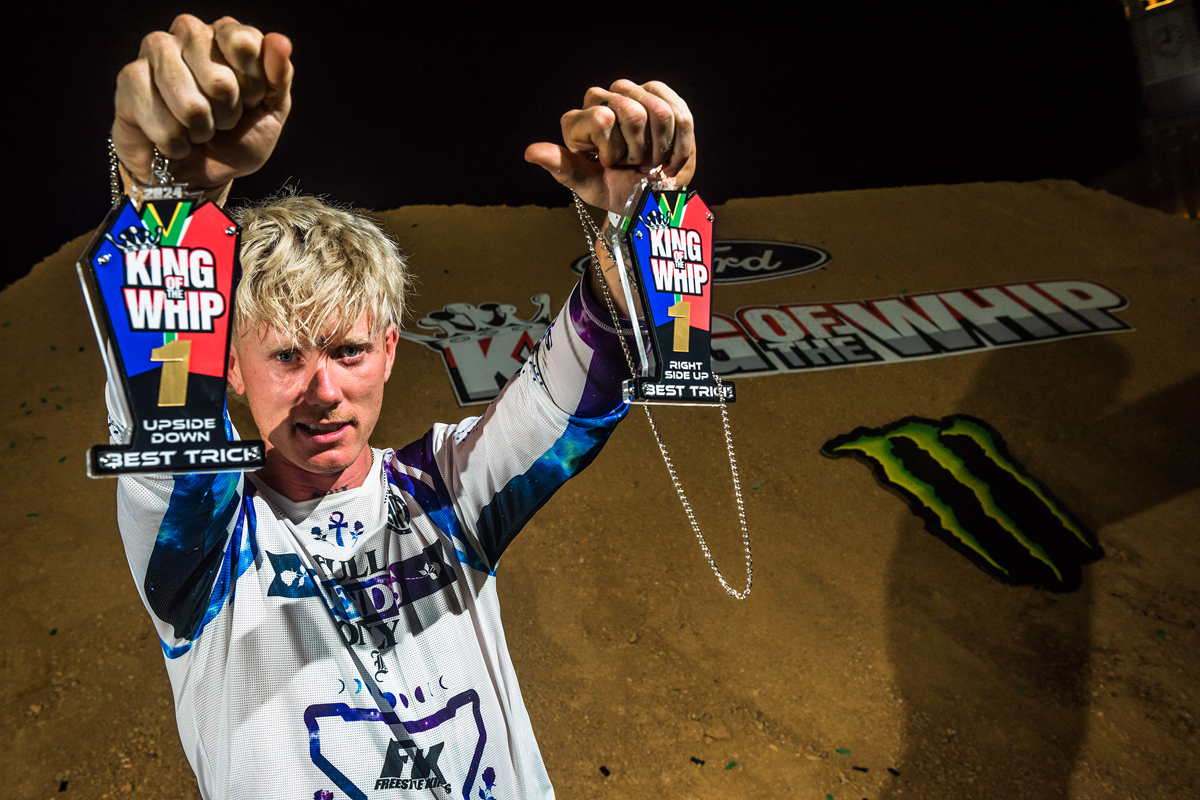
Before the King of the Whip could be crowned, FMX riders had a chance to show off their crowd-thrilling freestyle tricks in the Best Trick Right-Side-Up and Upside-Down competitions where Pat Bowden proved to be the King of the tricks.
Photo credit: Eric Palmer
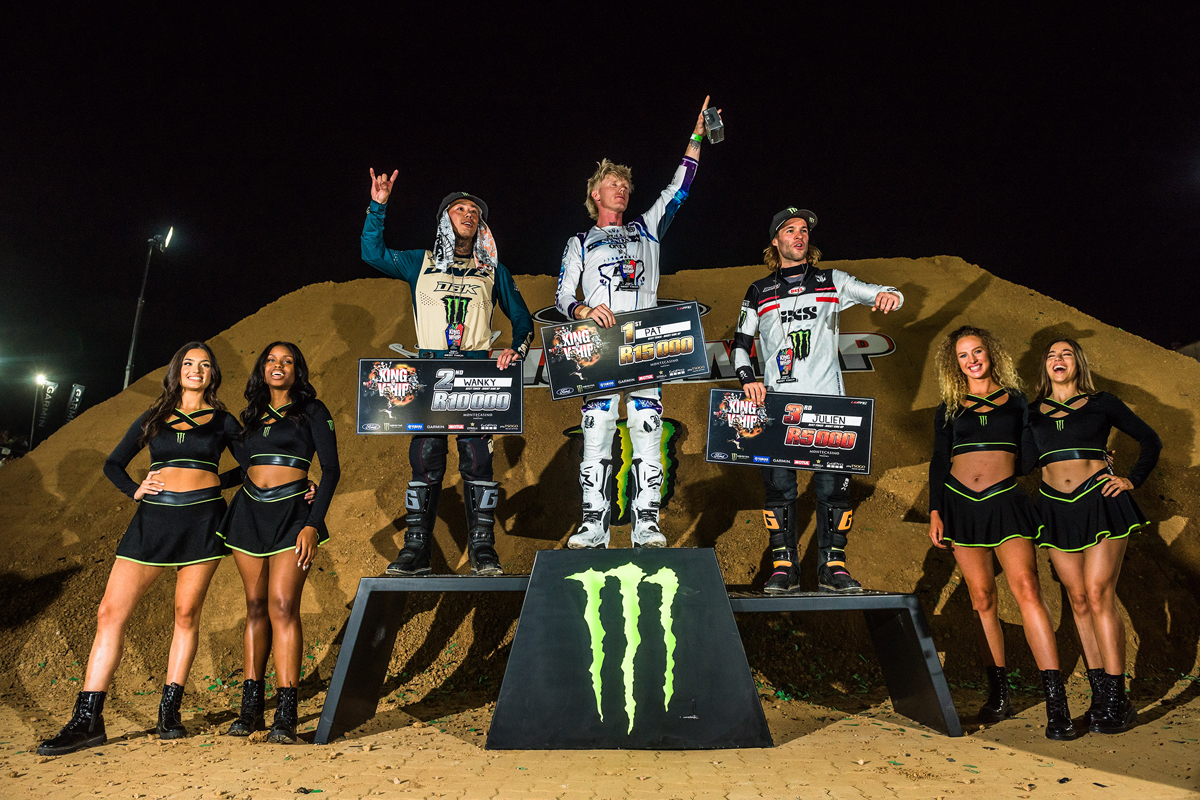
In the Best Trick Right-Side-Up competition, each rider had two chances to take to the ramps and pull off the best trick possible. Bowden claimed victory by showcasing his heart-stopping tricks like a Holy Grab to Double Heart-Attack Lookback and a Holy Grab to Rock Solid Indie. He was joined on the podium by crowd-favourite Genki Watanabe in 2nd place and Julien Vanstippen, who finished 3rd.
Photo credit: Eric Palmer
For the Best Trick Upside-Down, the riders had three jumps each to stake their claim. Not content with one first place, Bowden took the top step again to claim the title with a Backflip No Hander, Backflip Cliffhanger and a Backflip Double Grab. Rounding out the podium was Watanabe, who slotted into 2nd place and Dallan Goldman, who grabbed 3rd.
Photo credit: Bjorn Moreira / ZA Bikers
Bowden, winner of the 2024 Best Trick Right-Side-Up and Upside-Down competitions, commented: “It feels awesome as I had no expectations coming here. I didn’t even know if I would be riding until two days ago, as I broke my ankle around 10 days ago. I just taped my ankle as best I could before riding, so going home safe with two medals in the bag feels incredible.”
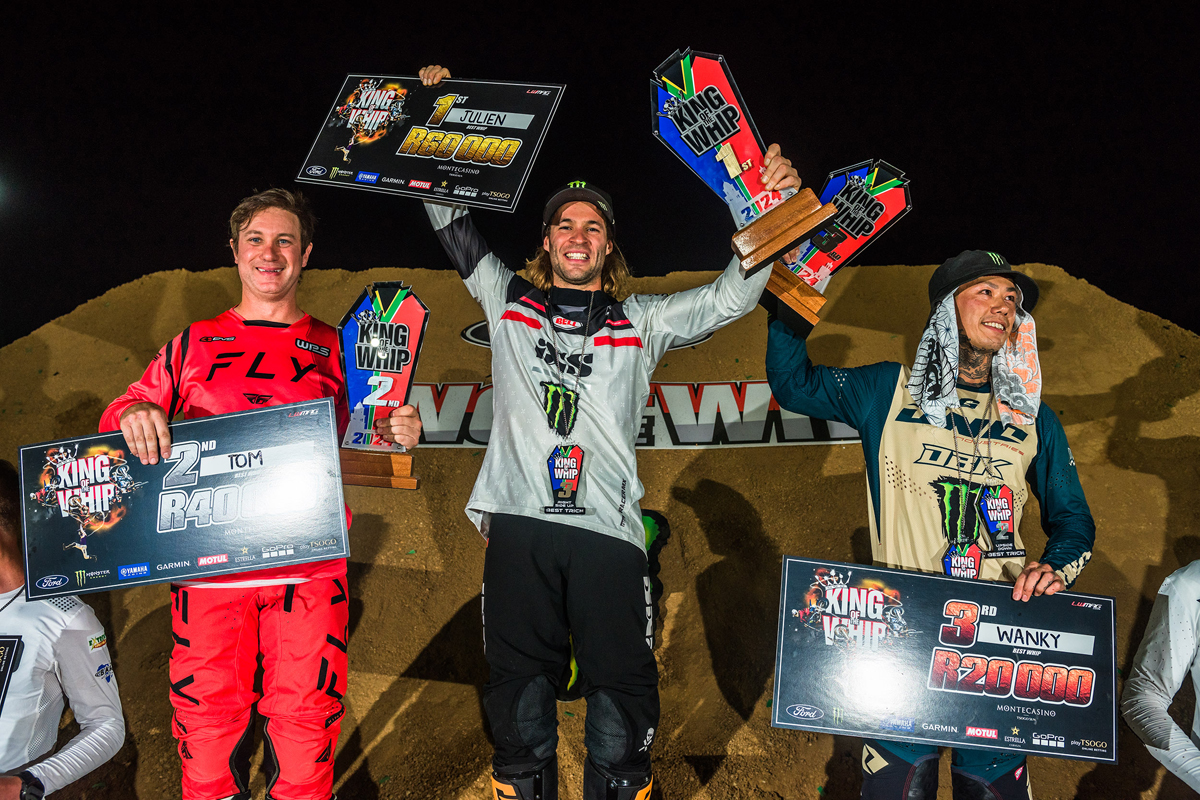
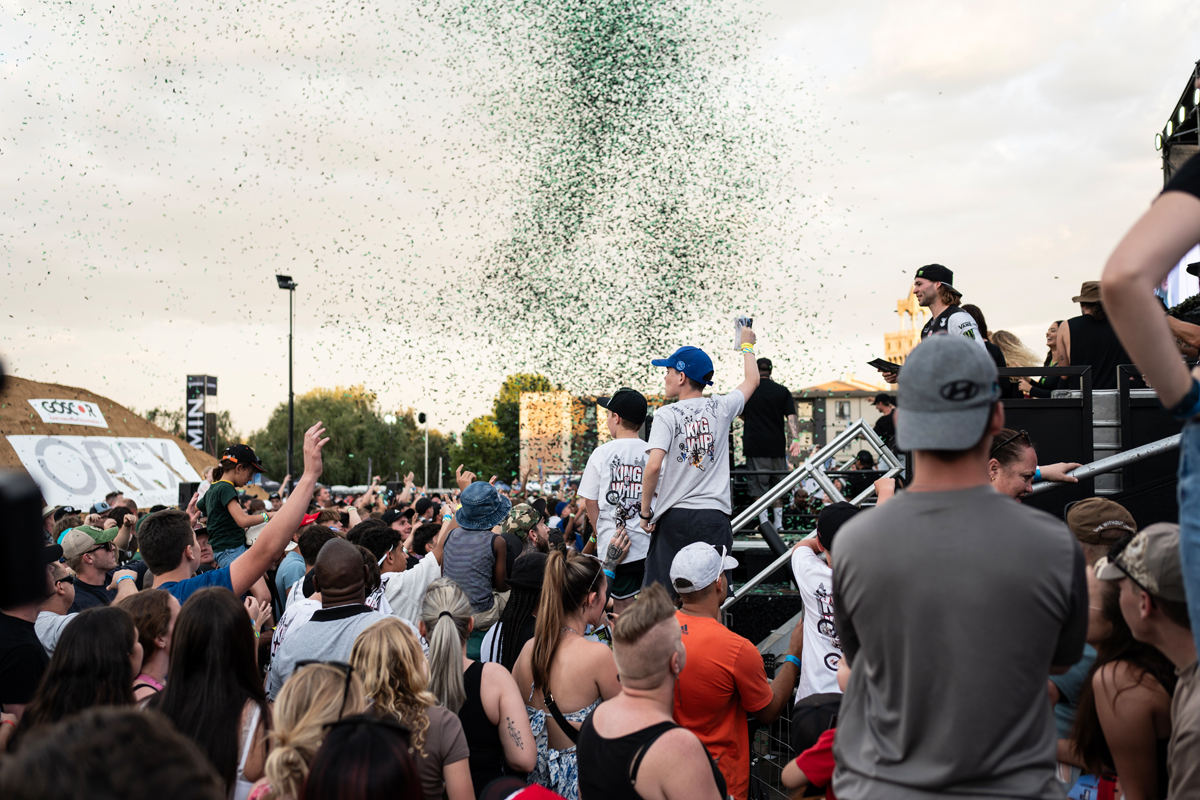
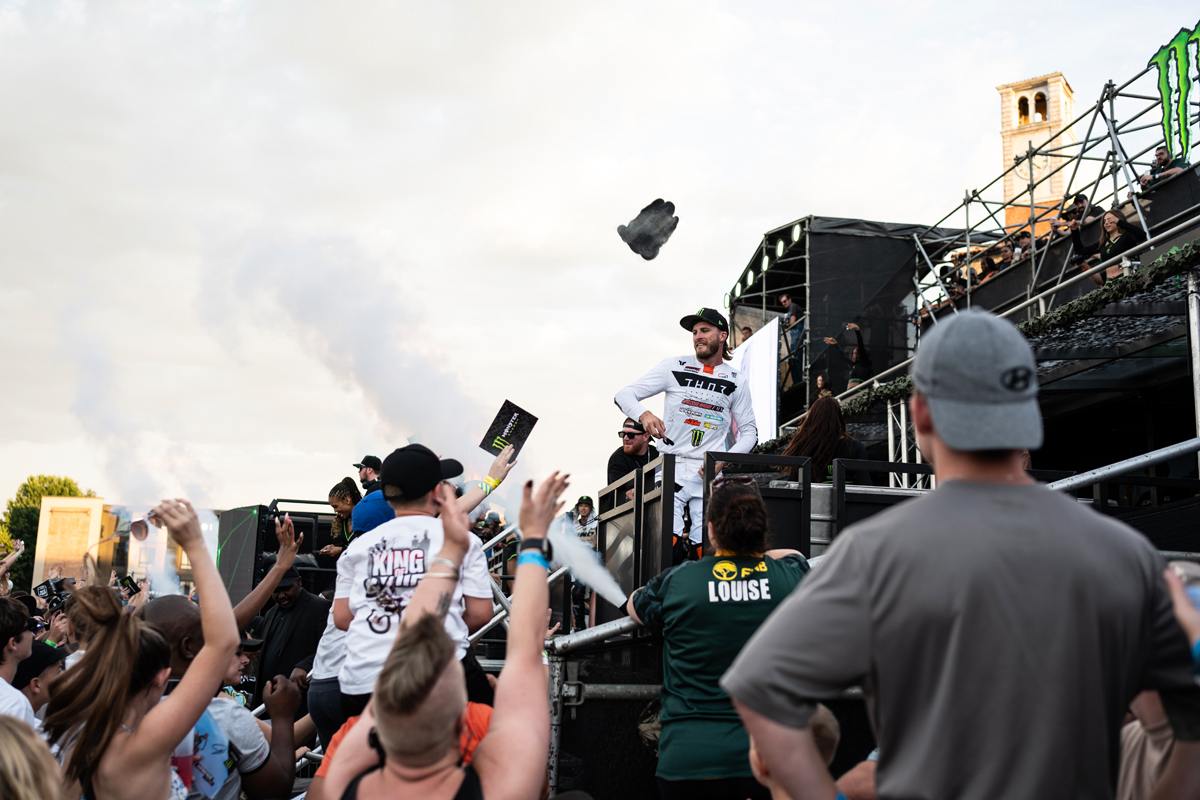
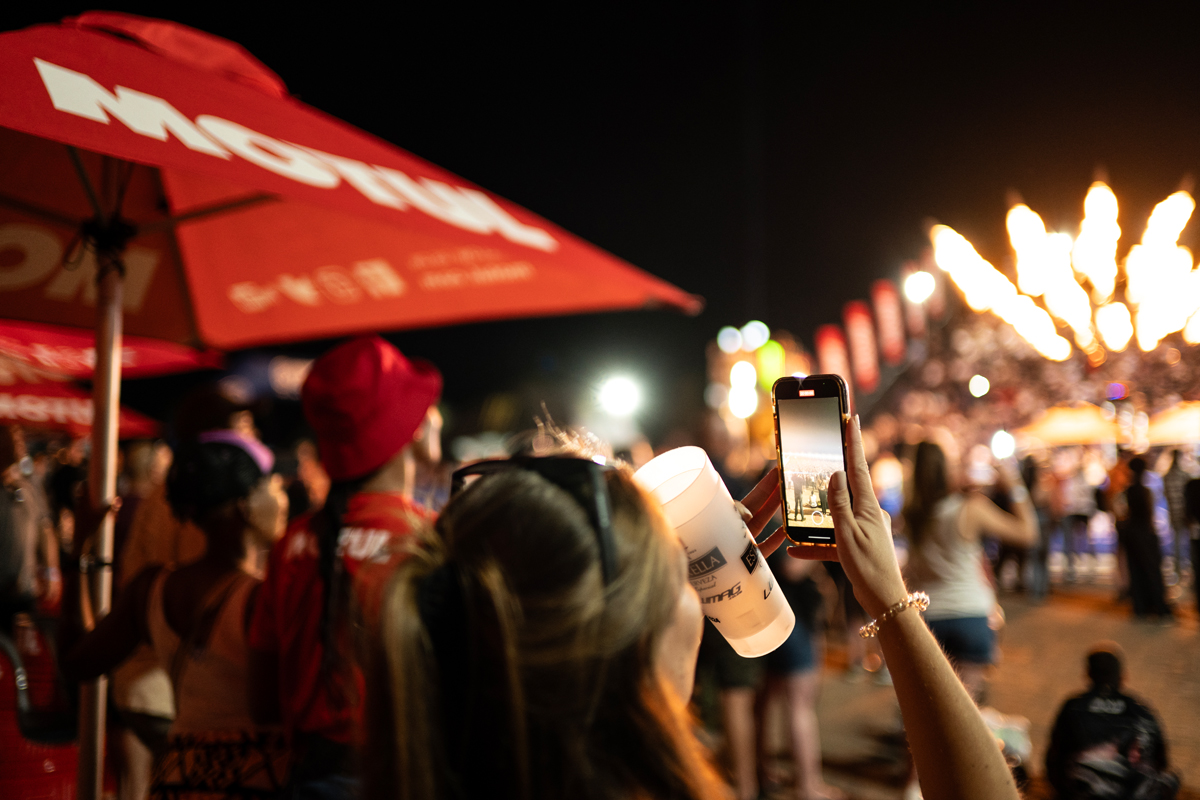
After the Best Trick contest, it was time for the evening’s premier event: The Best Whip final. As the sun set, the tempo began to ramp up, with the action only aided by a dazzling pyrotechnics display and a crowd on the edge of their seats. The Best Whip final saw the riders pull out all the stops to unseat reigning champion, Vanstippen as King of the Whip. It was a hotly contested battle between Tom Parsons, on-board the Stark Varg electric bike, and the defending champion Vanstippen. Vanstippen stepped it up a level to ultimately emerge as the 2024 winner and claim the Triple Crown. Parsons followed him in 2nd and Watanabe claimed 3rd, rounding out the top five were local riders Dalton Venter and Dallan Goldman, respectively.
Photo credit: Eric Palmer
Vanstippen, winner of the 2024 Best Whip competition, commented: “Third time in a row, baby. I’m so stoked and thankful to be back here. The crowd was insane, so claiming my third King of the Whip title in front of them was a fantastic experience. King of the Whip always puts on such a great event, and I can’t wait to be back next year battling it out with these amazing riders in front of this crowd!”
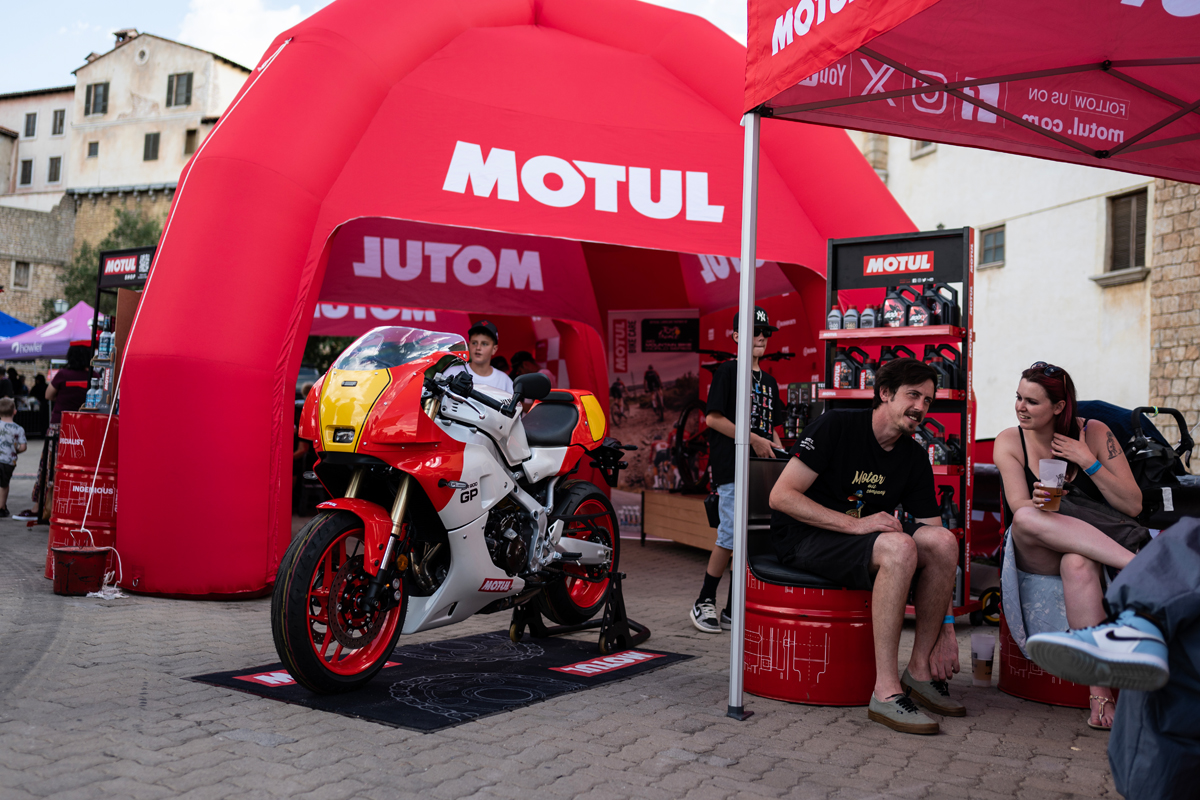
King of the Whip is presented by LW Mag in association with Ford, Monster Energy, Yamaha, Garmin, Motul, GoPro, PlayTSOGO and Estrella Cerveza.
1 of 21
KING OF THE WHIP 2024 FINAL RESULTS
Best Whip
1st Julien Vanstippen (Belgium)
2nd Tom Parsons (USA)
3rd Genki Watanabe (Japan)
4th Dalton Venter (South Africa)
5th Dallan Goldman (South Africa)
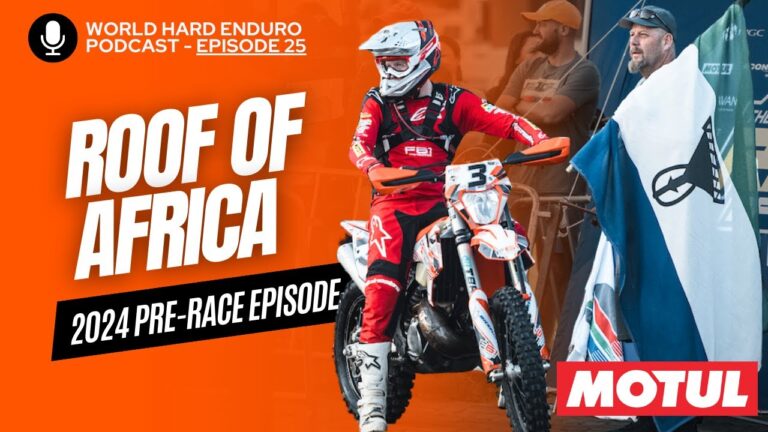
The World Hard Enduro Podcast has just released an electrifying episode that captures the essence of one of motorsport’s most challenging adventures—the 2024 Roof of Africa. Known to riders everywhere as “The Mother of Hard Enduro,” this legendary race traces its roots back to 1967 and promises an unforgettable journey through the mountain kingdom of Lesotho.
This year’s podcast episode offers an unparalleled look behind the scenes, featuring exclusive conversations with key figures in the hard enduro world. Motul’s Mercia Jansen provides insights into a decade of rider support, while Sherco Factory rider Teodor Kabakchiev shares his unique perspective as he prepares for both his African debut and first Roof challenge.
The 2024 race promises to be particularly exciting, with a revamped race layout designed to level the playing field among competitors. Listeners will get an in-depth breakdown of the brewing battle between local legends Wade Young and Brett Swanepoel, alongside the emergence of exciting young talent.
From the race’s historical context to the intricate details of the bike setup, the episode explores what makes the Roof of Africa truly special. The podcast doesn’t just preview a race – it captures the spirit and grit of an event that pushes riders to their absolute limits, racing across challenging terrain at altitudes that test even the most experienced competitors.
Whether you’re a competitor, spectator, or enduro enthusiast, this episode offers essential insights. From spectator tips to local knowledge, it provides a comprehensive guide to experiencing one of motorsport’s greatest adventures.
Tune in to uncover the stories, strategies, and passion that define the 2024 Roof of Africa.
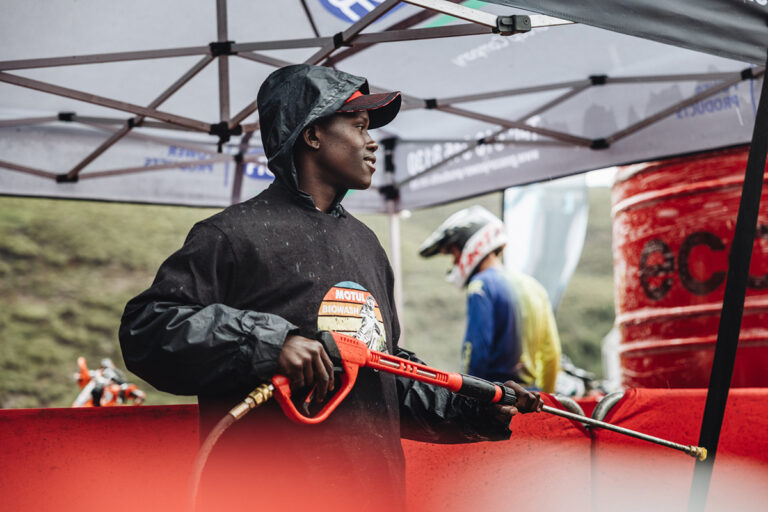
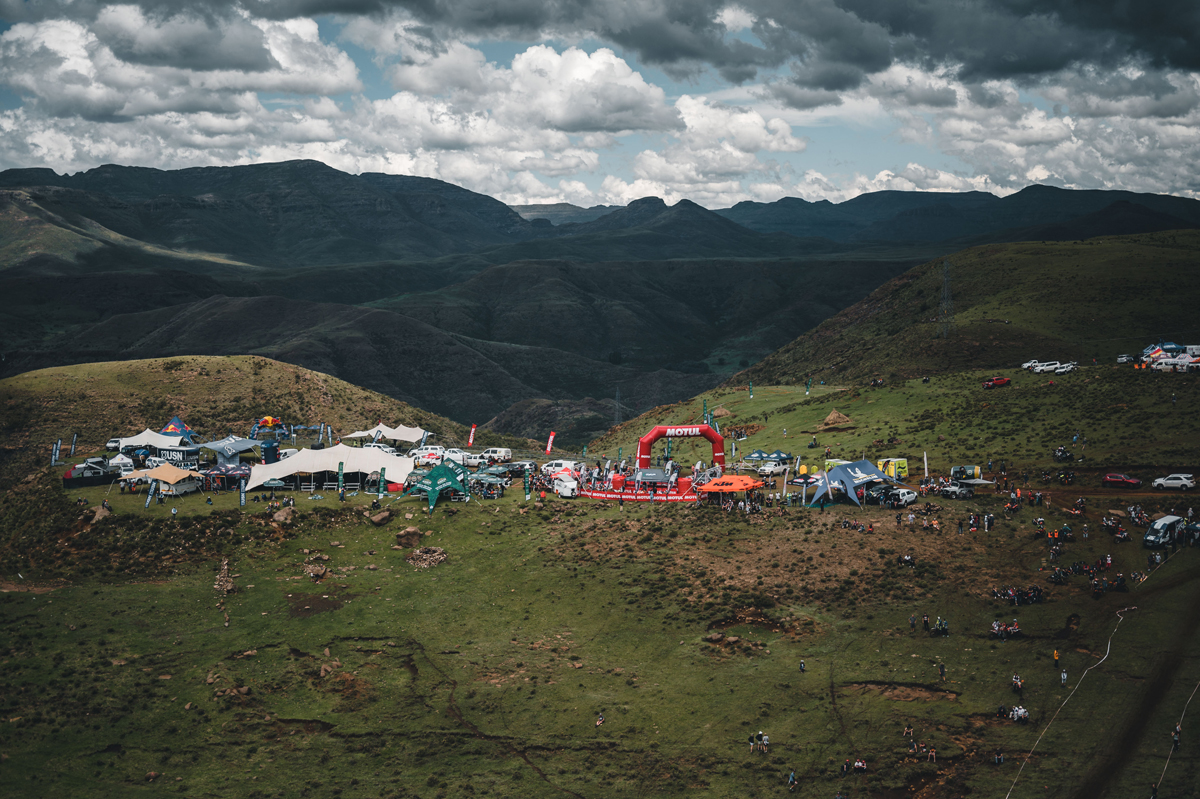
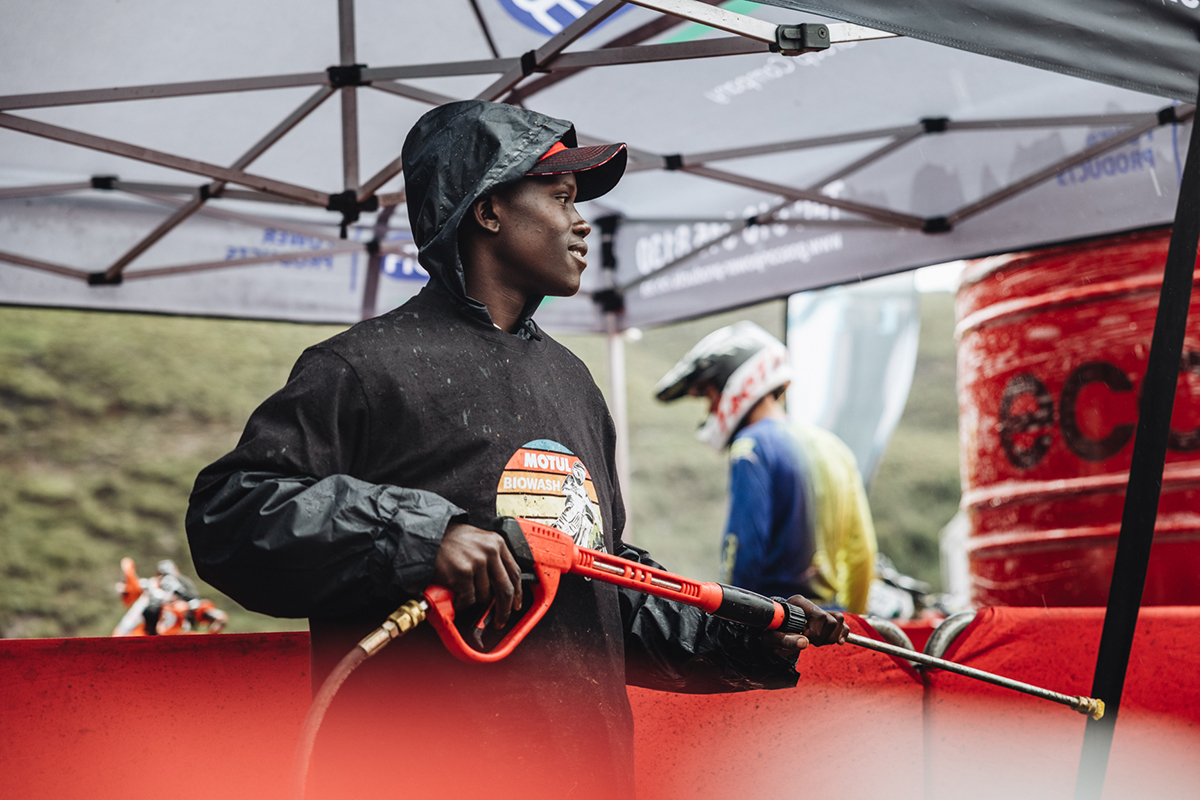
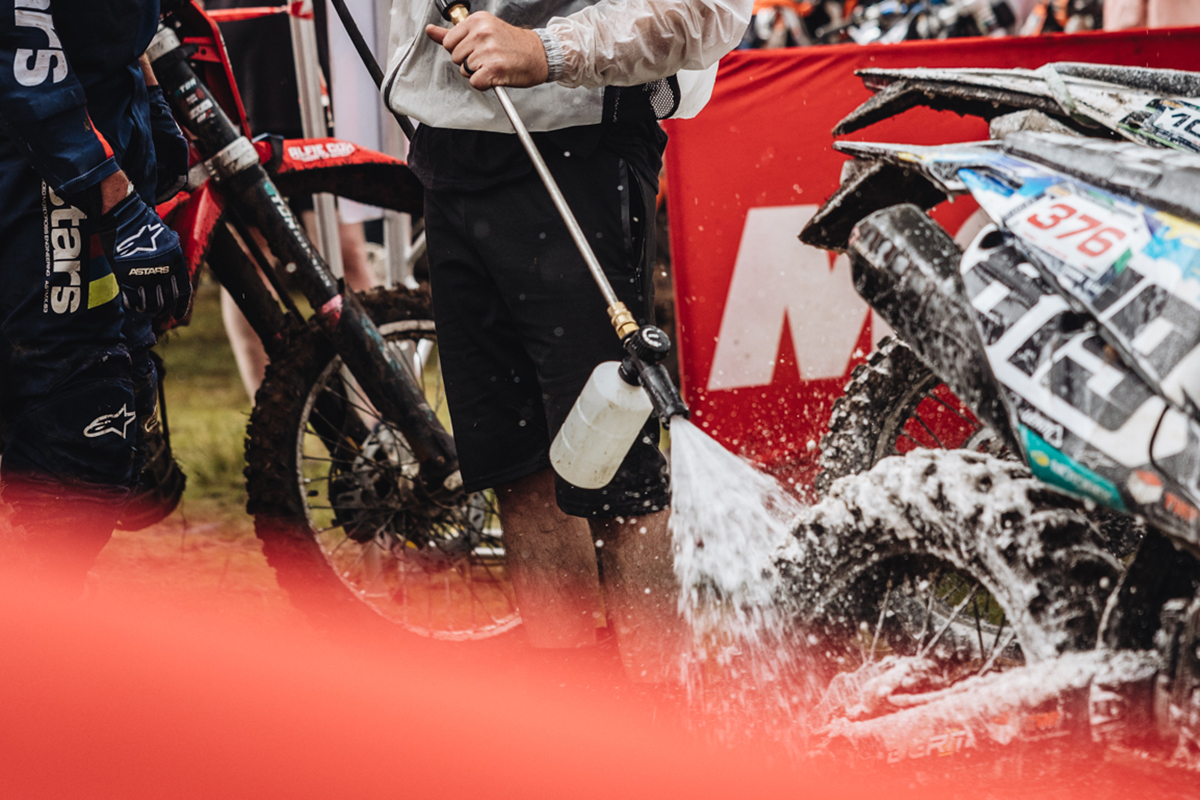
In addition to being the Official Lubricant Partner of the Roof of Africa 2024, Motul will once again make the ‘Mother of Hard Enduro’ a little easier for competitors through its Bike Wash offering.
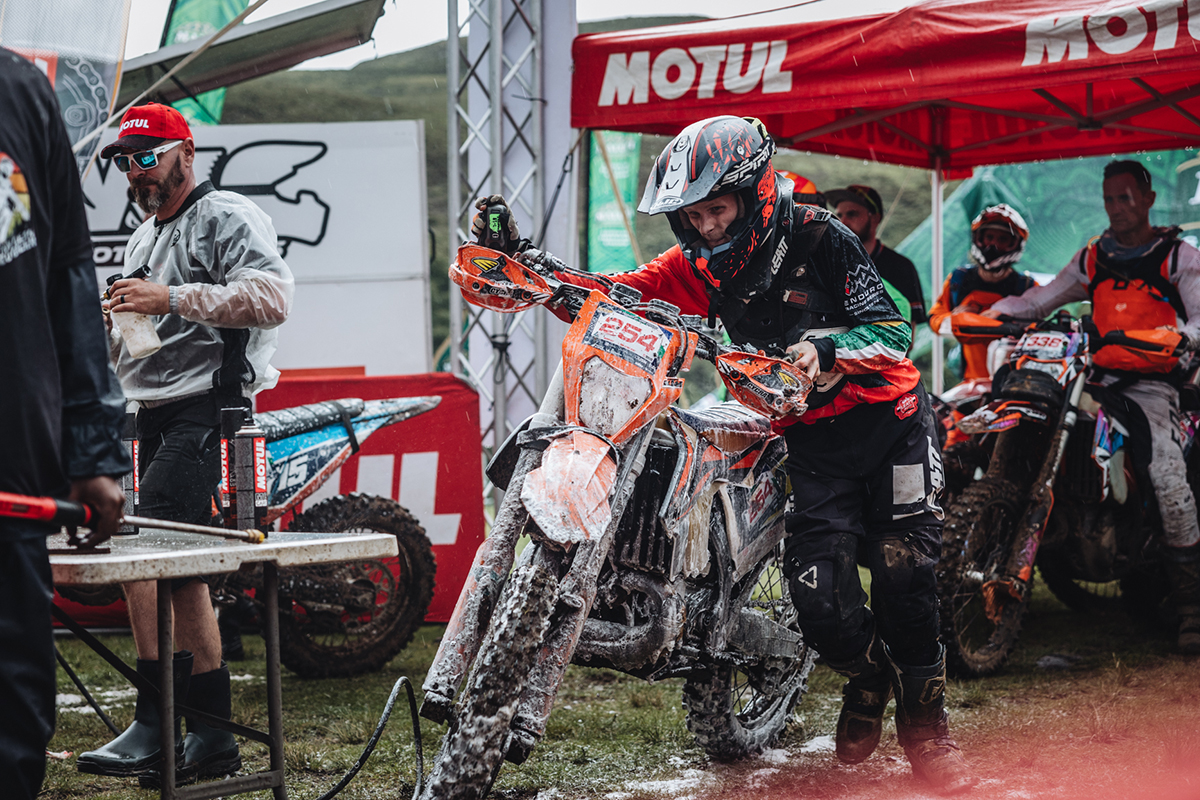
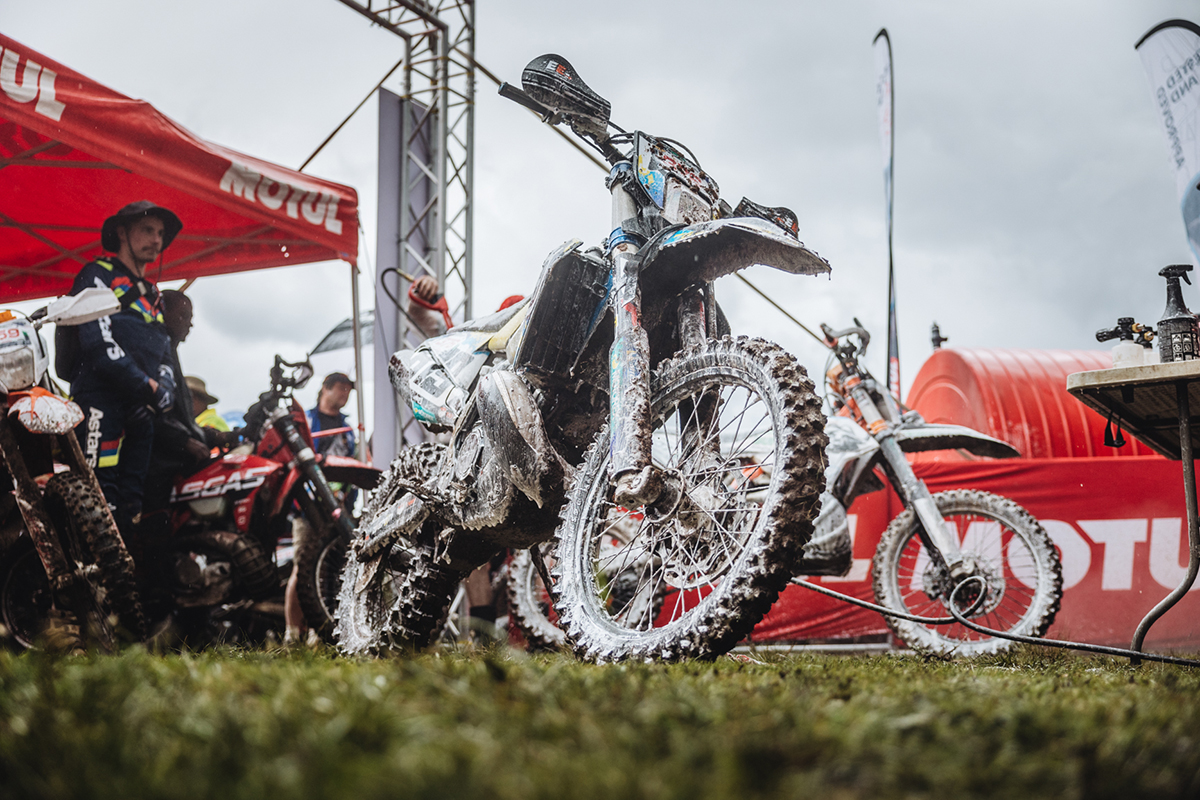
Participants in all Roof classes will no doubt have to contend with dirt and mud as they take on the challenge of Lesotho’s terrain. As all Enduro riders know, mud has an uncanny ability to get into exactly the places it’s not wanted, and this can impact the performance of even the best-prepared motorcycles. In an event as competitive as the Roof, this can make all the difference between finishing and what might have been.
Image source: ZCMC Media
For the 2024 edition of the Roof, Motul has forged a new partnership with the Industrial Supply Centre (ISC) from Port Shepstone. Owner Brett Robins will be some serious cleaning hardware in the shape of Husqvarna HB34 pressure washers. And for the tenth consecutive year, the Bike Wash will be managed by Craig Kruger and his team from Extreme Clean. Their powerful combination of expertise and enthusiasm should ensure that Roof riders can stage a clean getaway at the start of each day’s riding.
Image source: ZCMC Media
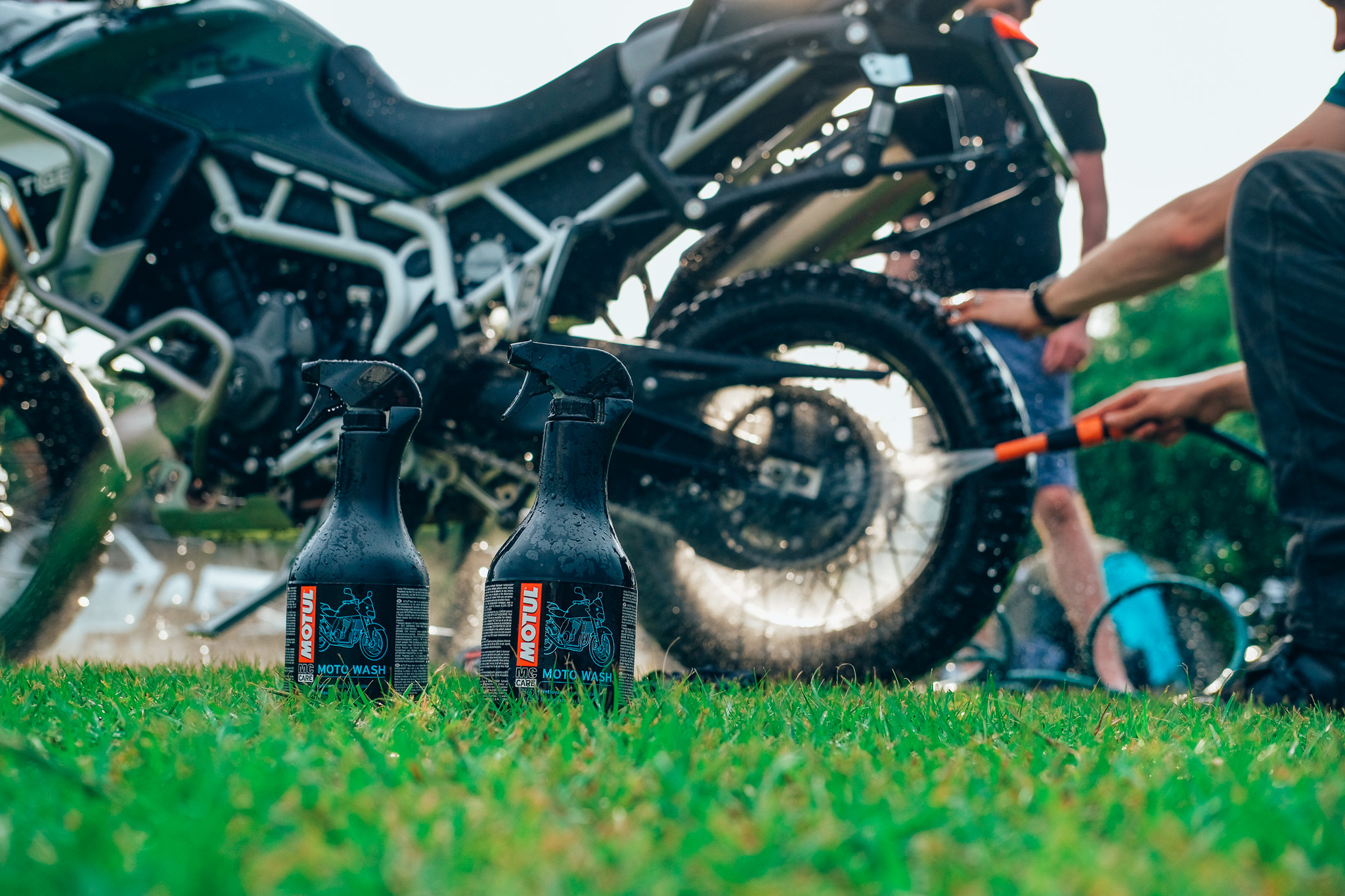
Inspired by the beauty of the iconic Maloti Mountains and aligned with Motul’s “Protecting our Playground” ethos, this year’s Bike Wash will once again strongly emphasise sustainability. The team will be utilising the Biodegradable Motul Moto Wash from their MC Care range, a powerful cleaner and degreaser suitable for cleaning all types of motorcycles, whilst still being gentle on the environment.
Image source: ZCMC Media
The positive impact of the Motul Bike Wash will be felt long after the mud has settled following this year’s Roof. That’s thanks to a community initiative from EcoTanks (Gqeberha) and CashBuild Lesotho which will see the tanks supplied for the Bike Wash repurposed for use at schools and community centres.
“We’re excited to play our part in the legendary Roof of Africa and we’re confident that by blasting away the mud from competitors’ motorcycles, we can make this event even more enjoyable for all participants,” commented Brett Robins of ISC.
Image source: ZCMC Media
“After 10 years, the Extreme Clean team has become a fixture at the Roof of Africa, and we can’t wait to get our hands dirty this year,” commented Craig Kruger. “We look forward to working with Motul once again, and collaborating with new partners to offer an even better service to Roof riders,” he added.
“In many ways, our Bike Wash offering sums up Motul’s commitment to the Roof of Africa,” explained Mercia Jansen, Motul General Manager for Southern and Eastern Africa. “We’re celebrating 10 years of giving back to the riders while demonstrating just what our products can do in these extreme conditions. Our range of innovative, sustainable products that empower motorcycle riders to fulfil their potential, underscores Motul’s enduring support for motorsport,” she added.
Image source: ZCMC Media
Last but not least, this year’s Roof of Africa will include a FAST Adventure Ride, with fans already signed up to ride alongside the route to cheer for their favourite competitors. Motul has partnered with FAST to supply their superior products free of charge. These will be carried in a support vehicle that will offer a “roaming bivouac service” (just like in the Dakar Rally) for participants in the FAST Adventure Ride. Products from Motul’s MC Care Range will include Motul’s chain lube, oils, lubricants and coolant.
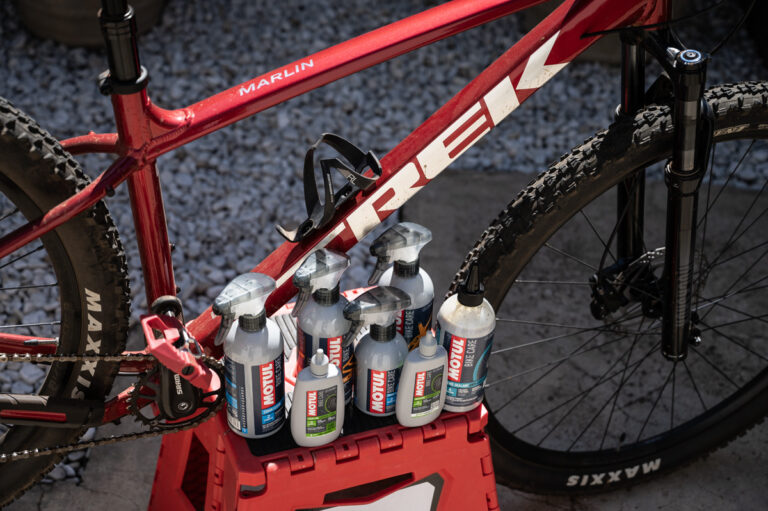
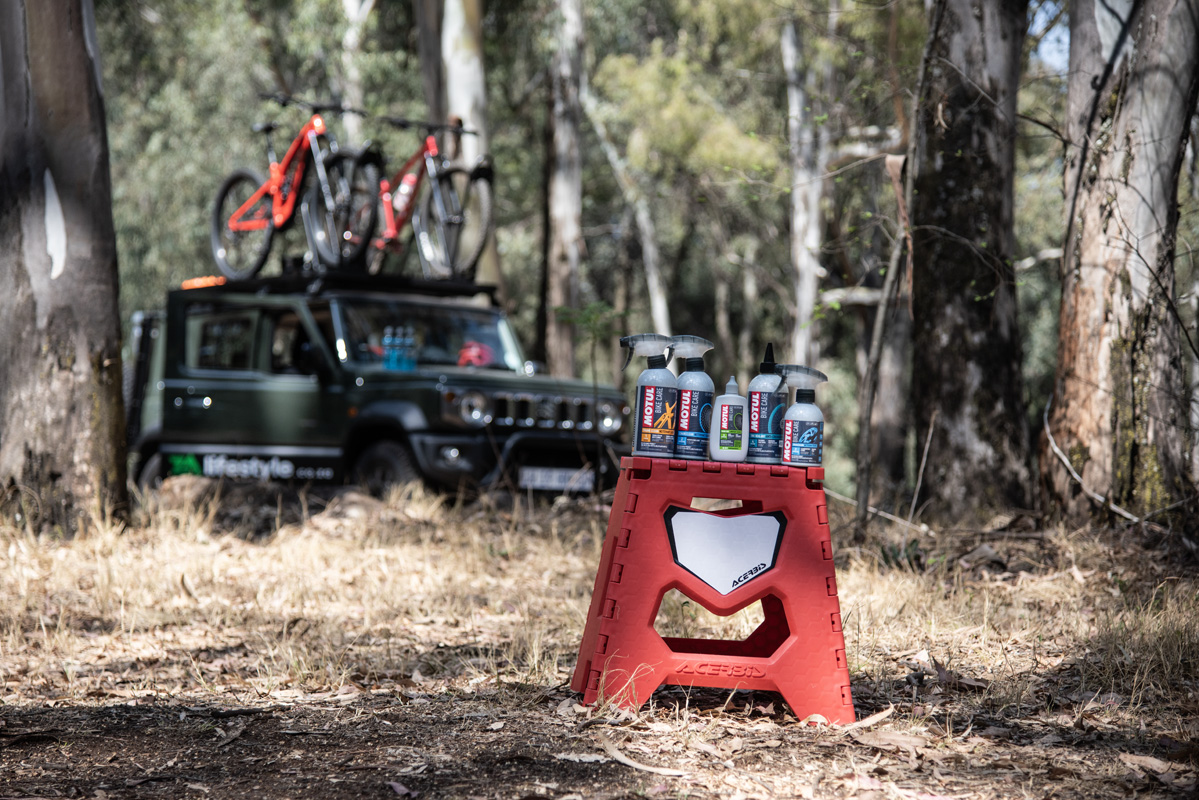
Given that Lesotho is also the perfect setting for mountain biking, the fact that Motul will be displaying their newly launched eco-friendly bicycle range, Motul Bike Care, is sure to be of interest to Roof competitors and spectators – not to mention Motul’s plans for a series of fun promotional activities.
Image source: ZCMC Media
For all the latest Roof news and views in the run-up to the event, visit: theroofofafrica.com
To learn more about Motul’s product range and commitment to motorsports, visit www.motul.com
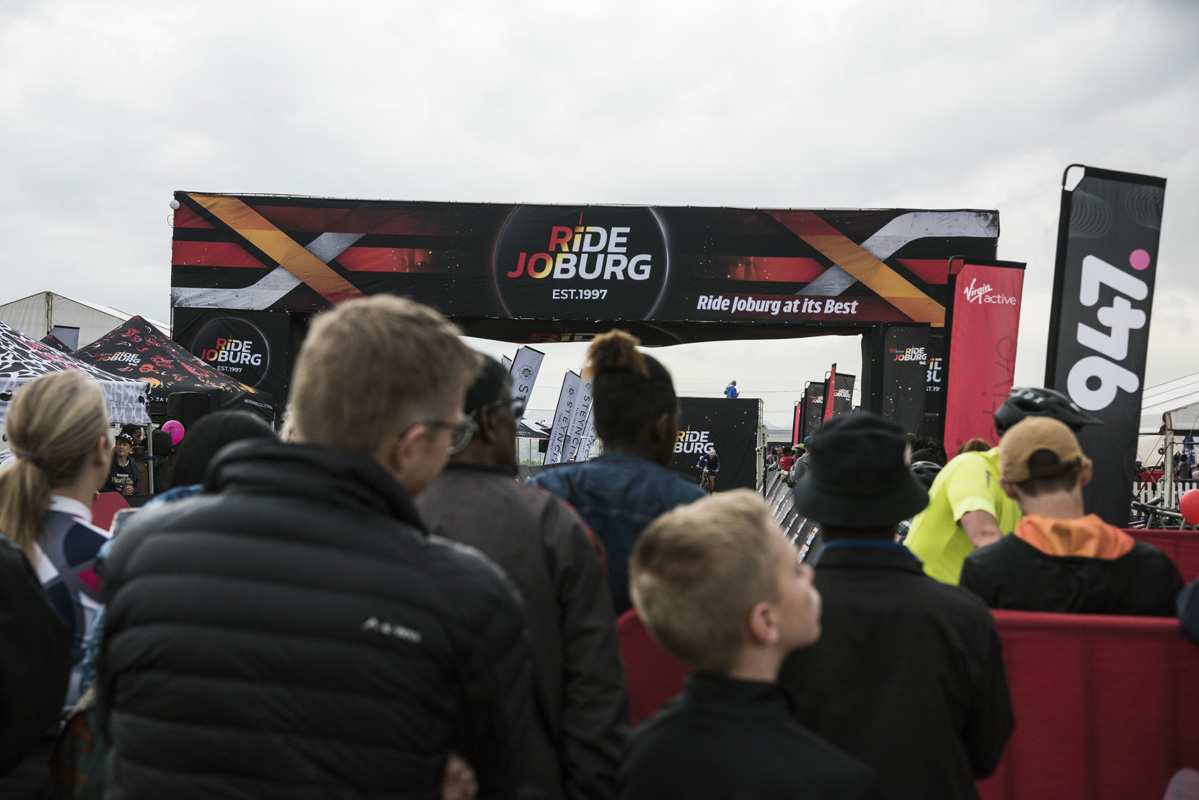
The iconic annual Virgin Active Ride Joburg challenge, hosted by the City of Johannesburg, took place over the weekend of November 11th and was another hugely successful event. 2024 was the 26th running of the event.
Photo credit: Bjorn Moreira / ZA Bikers
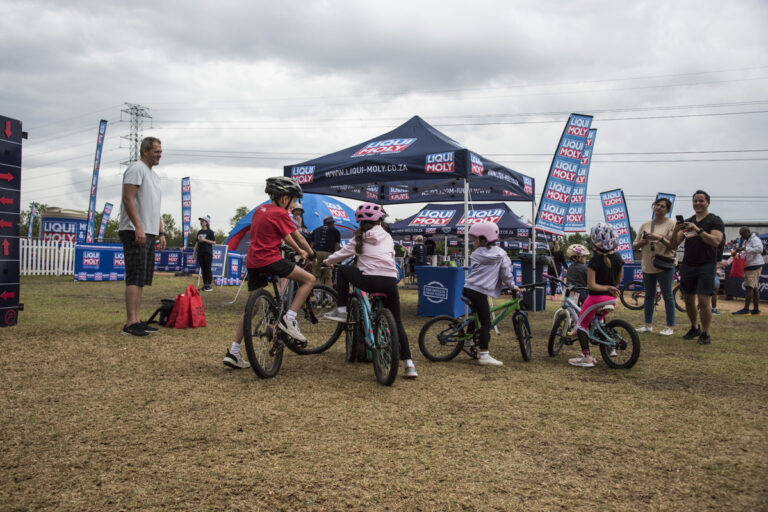
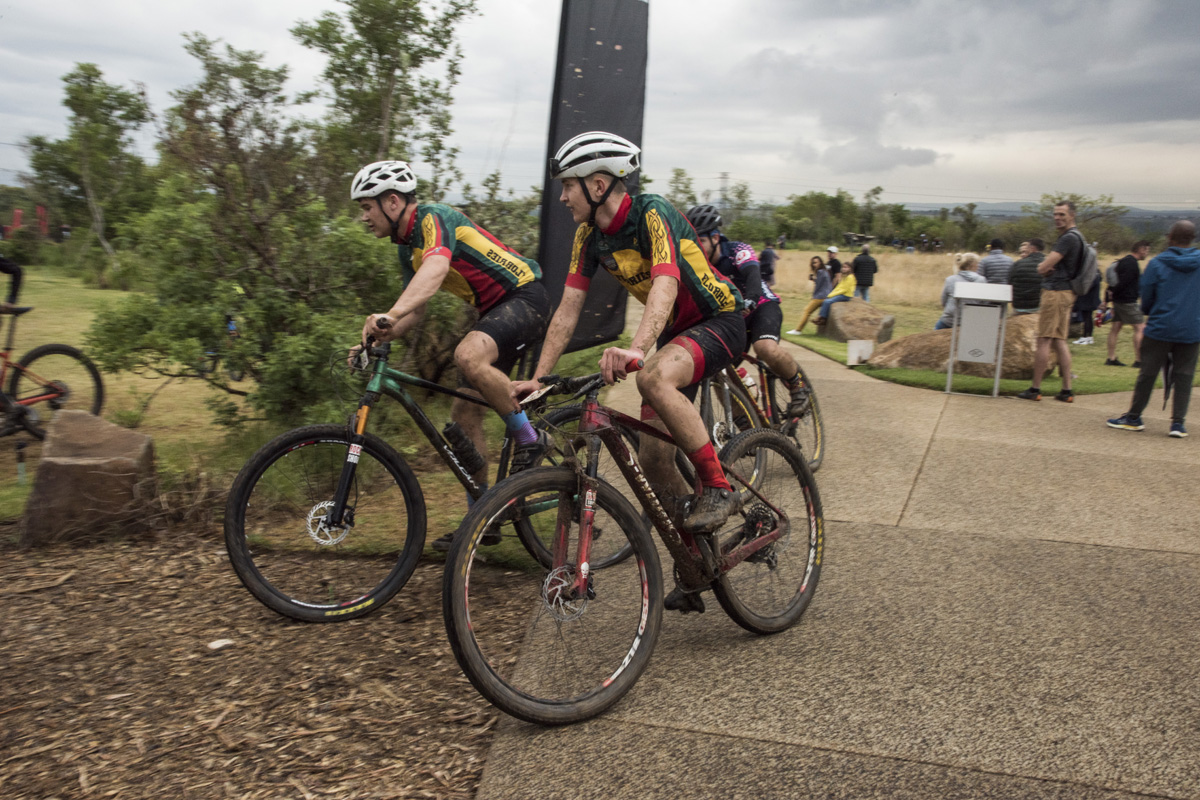
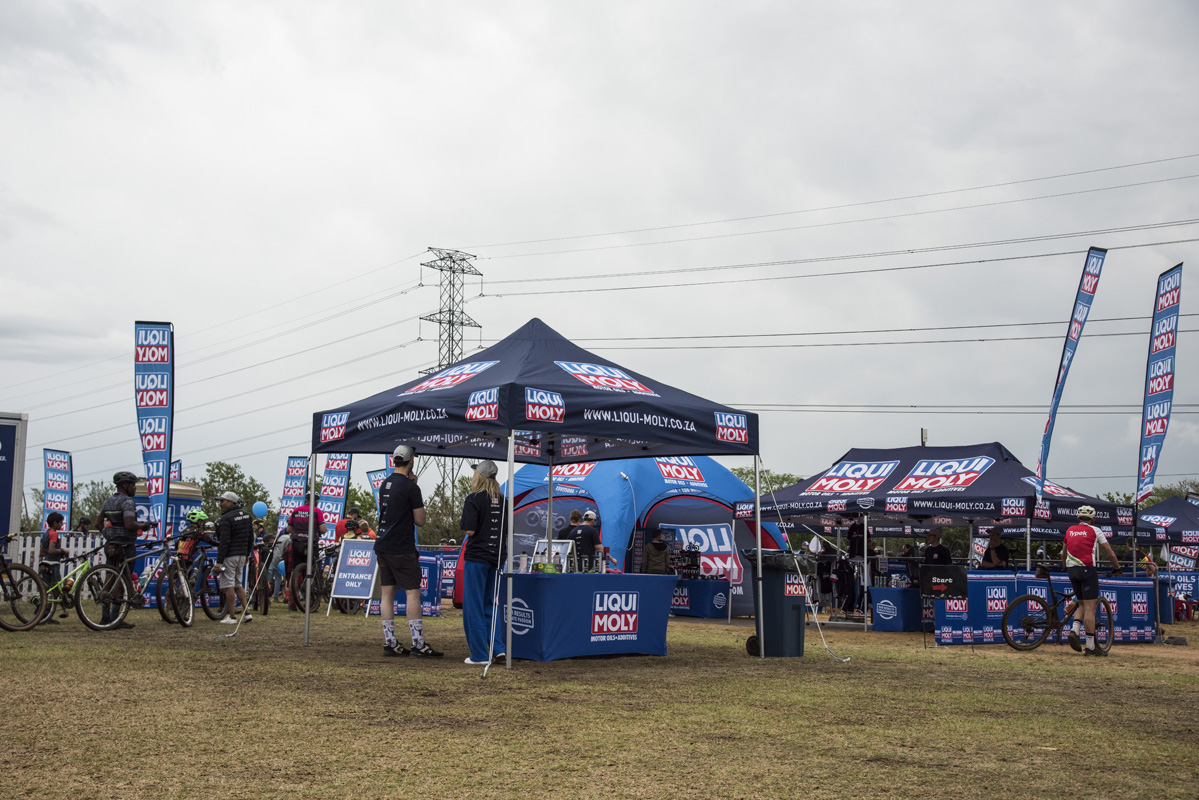
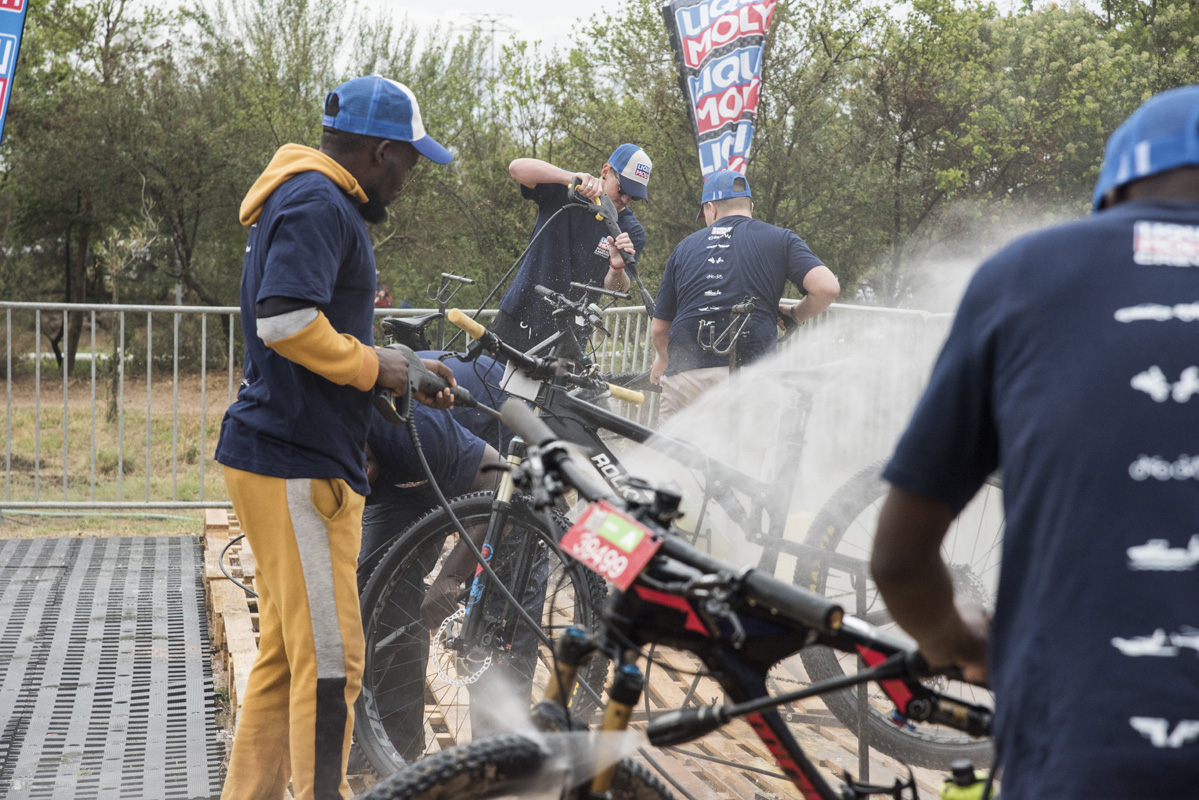
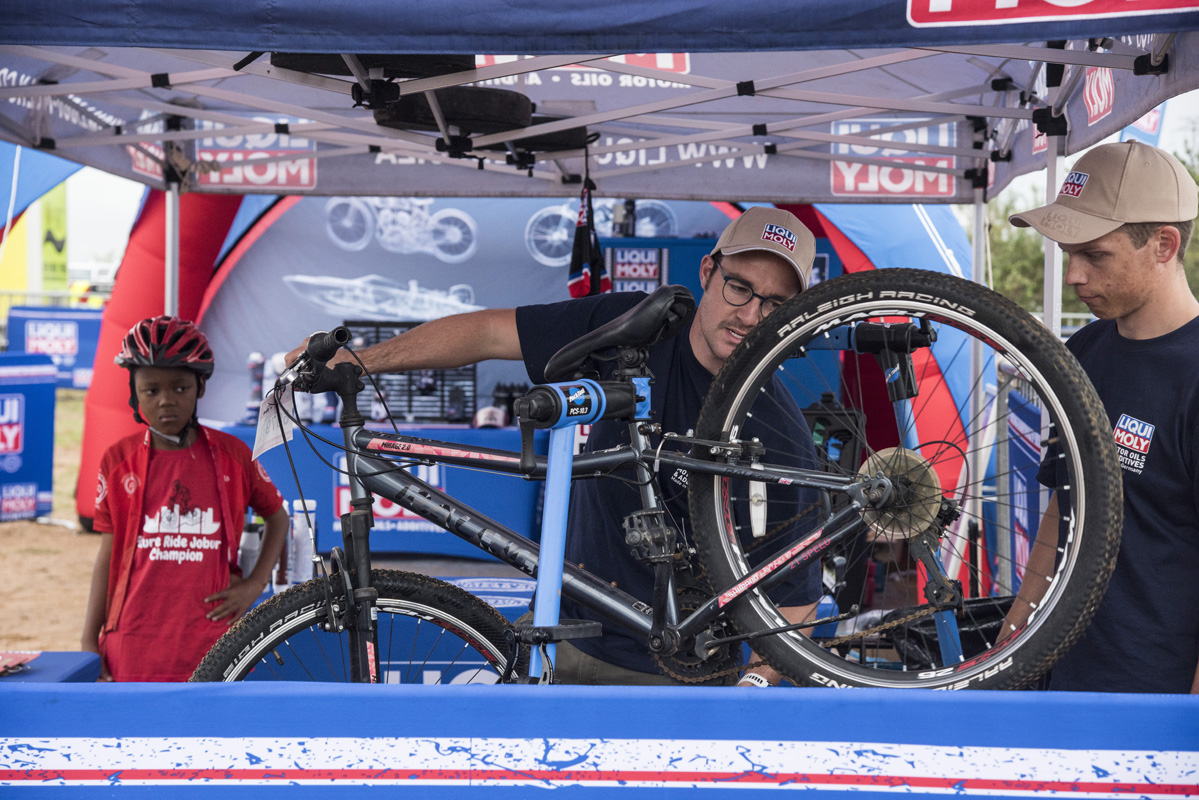
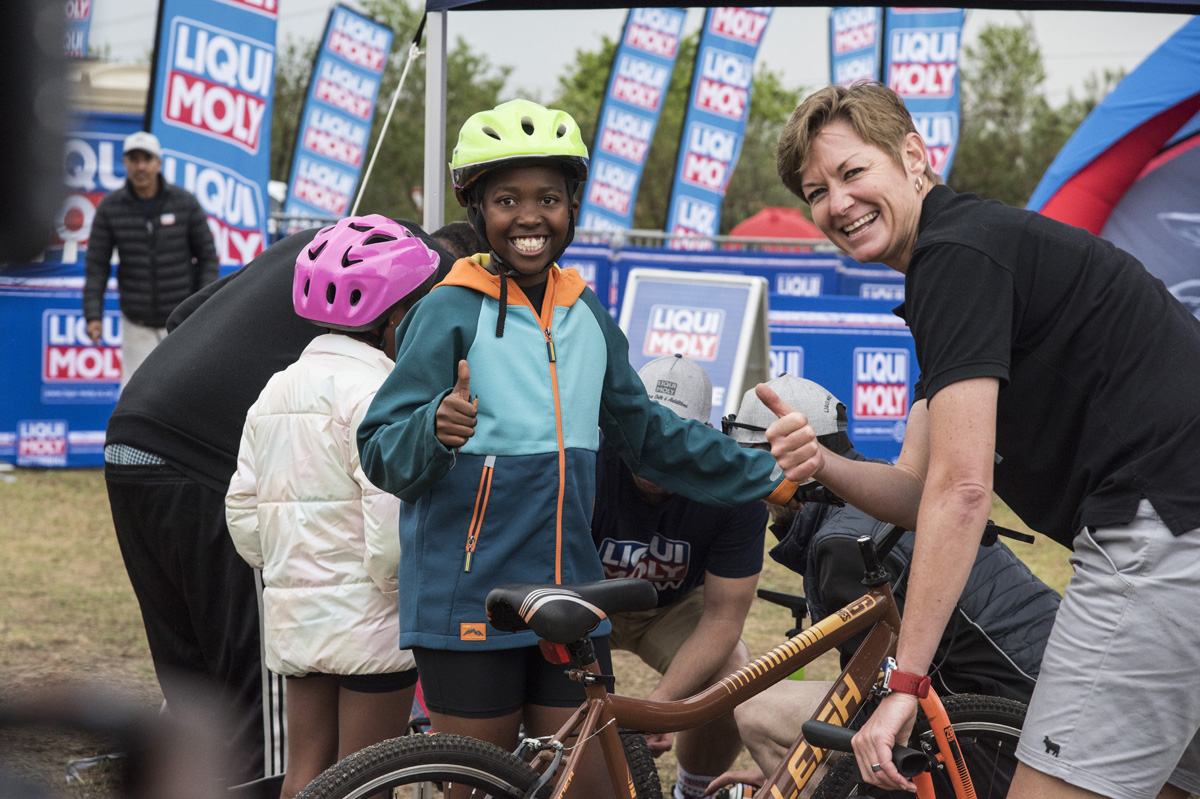
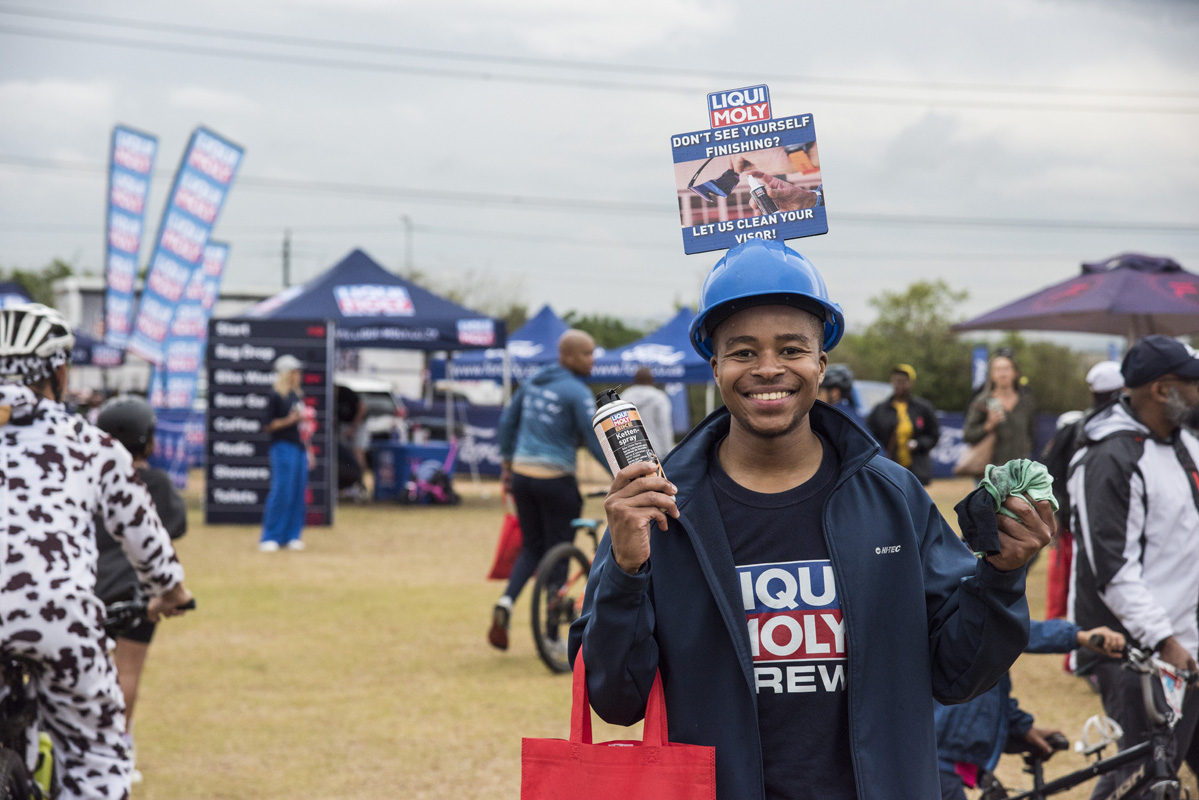
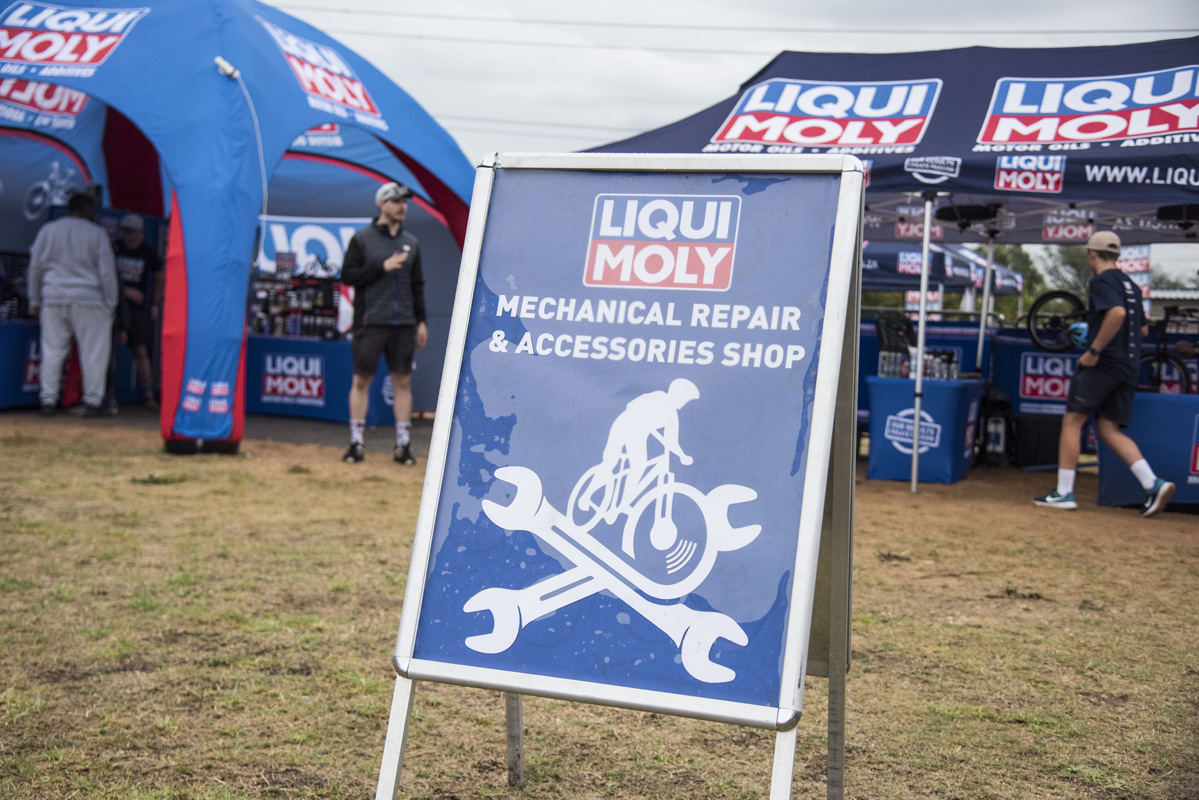
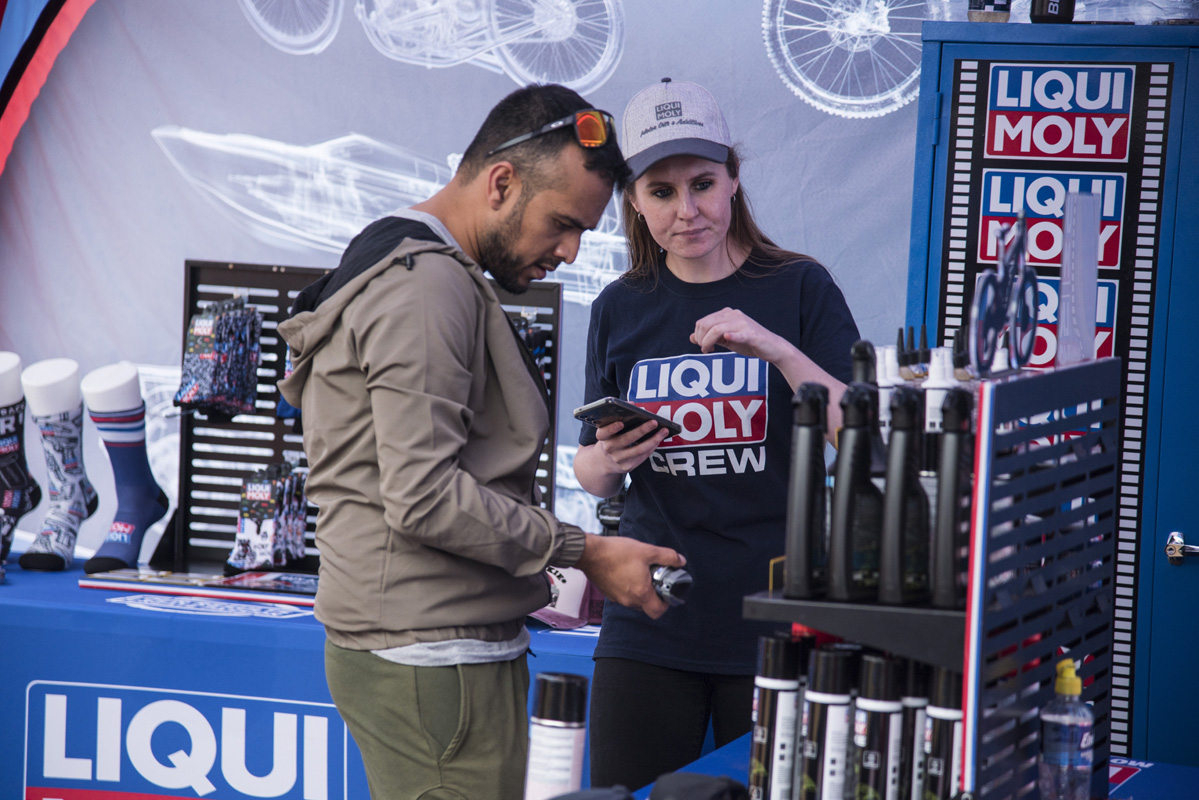
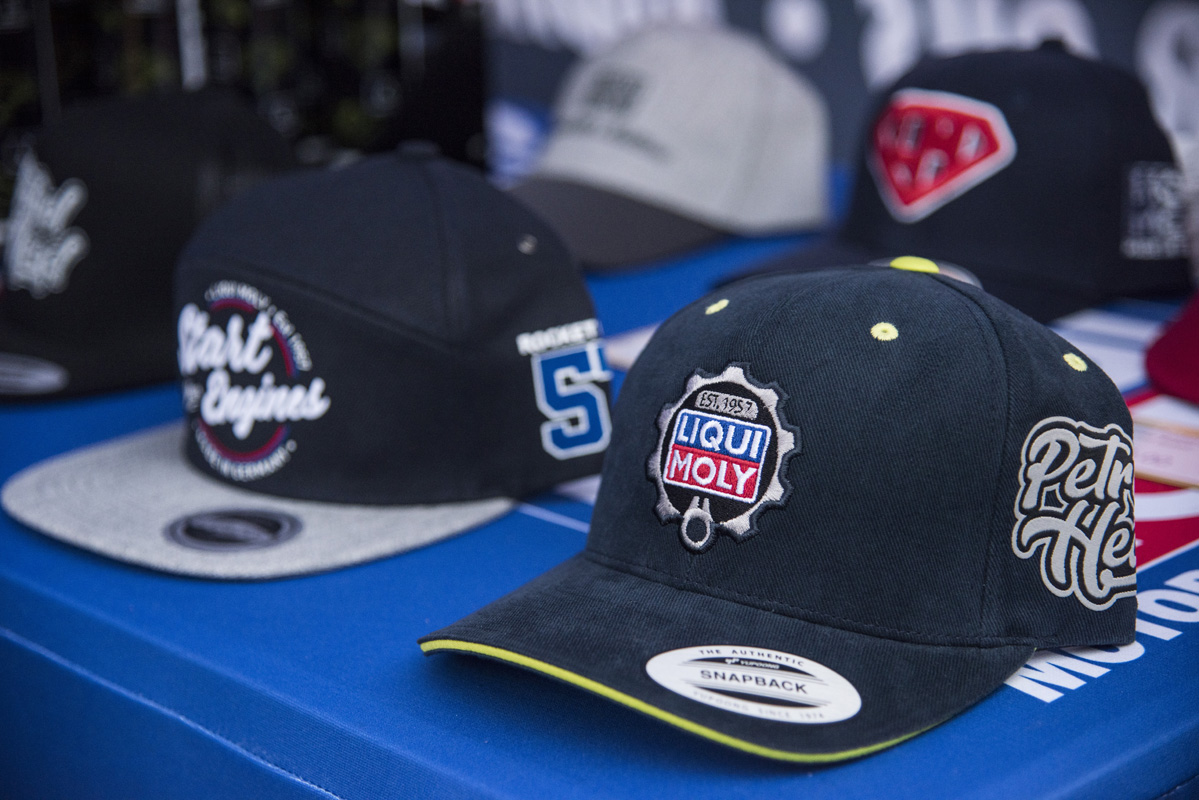
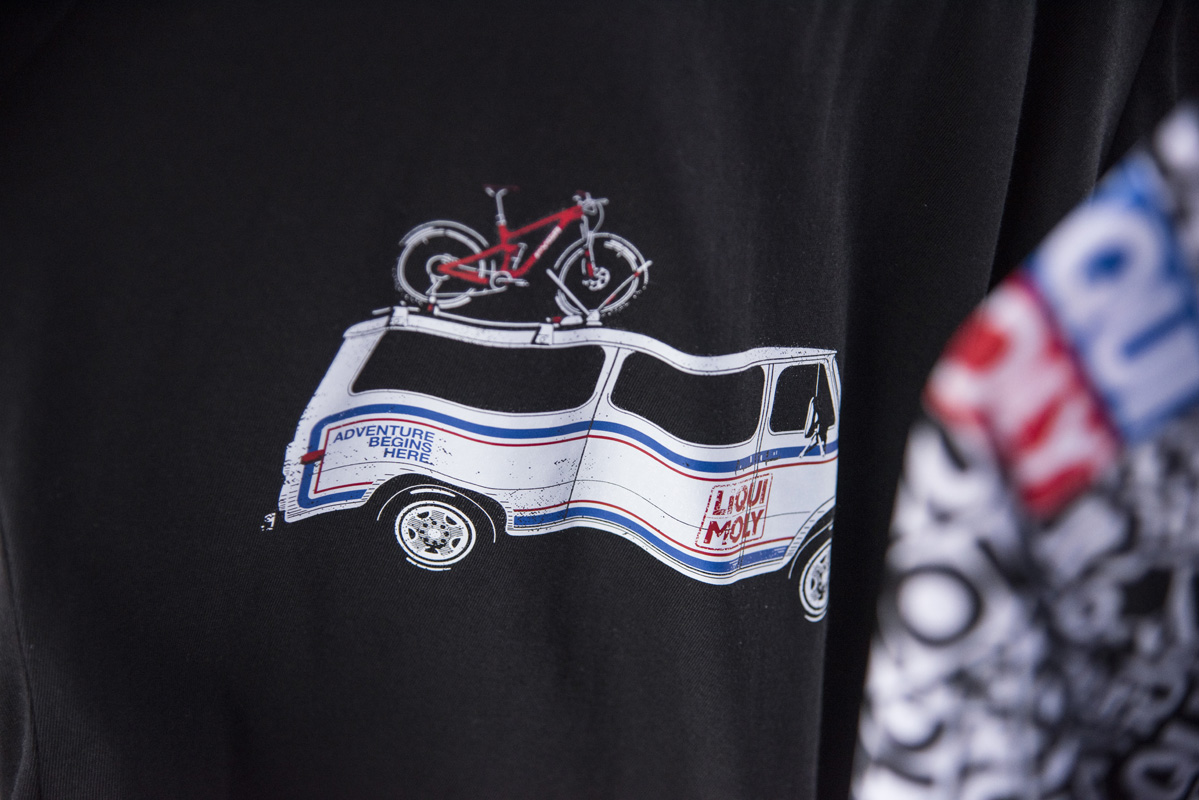
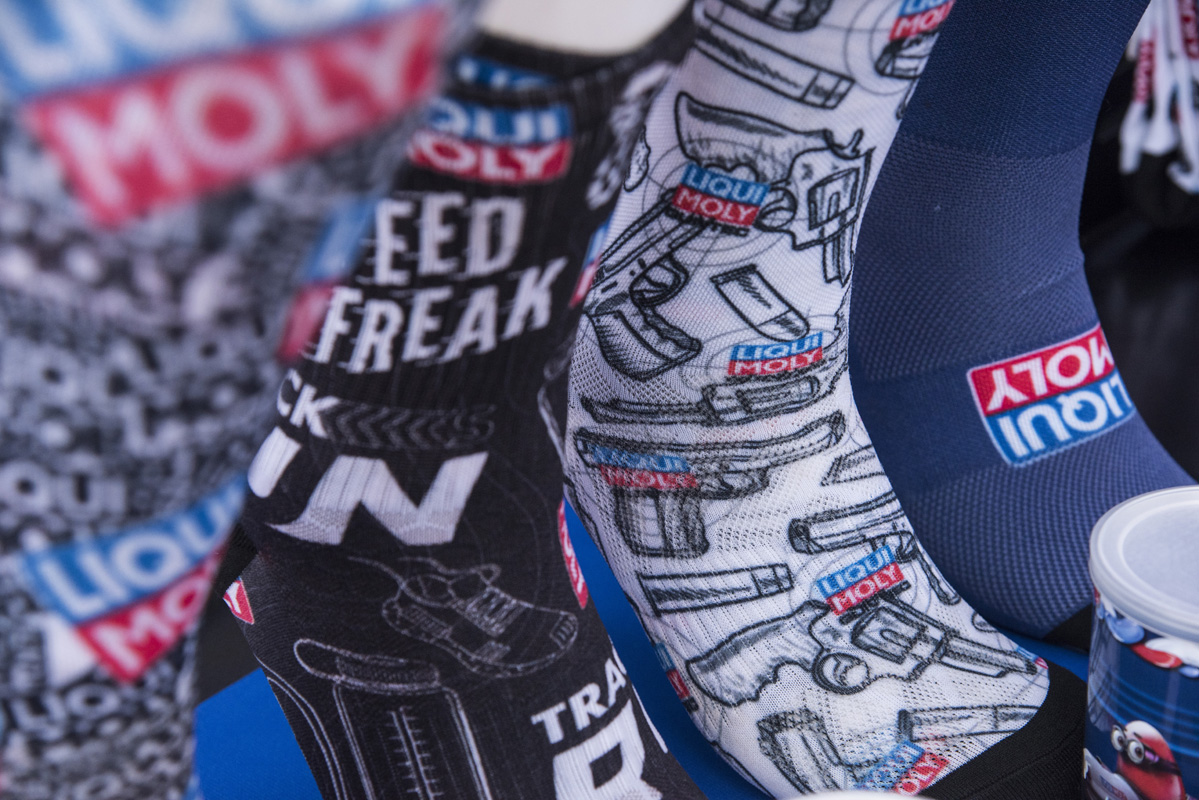
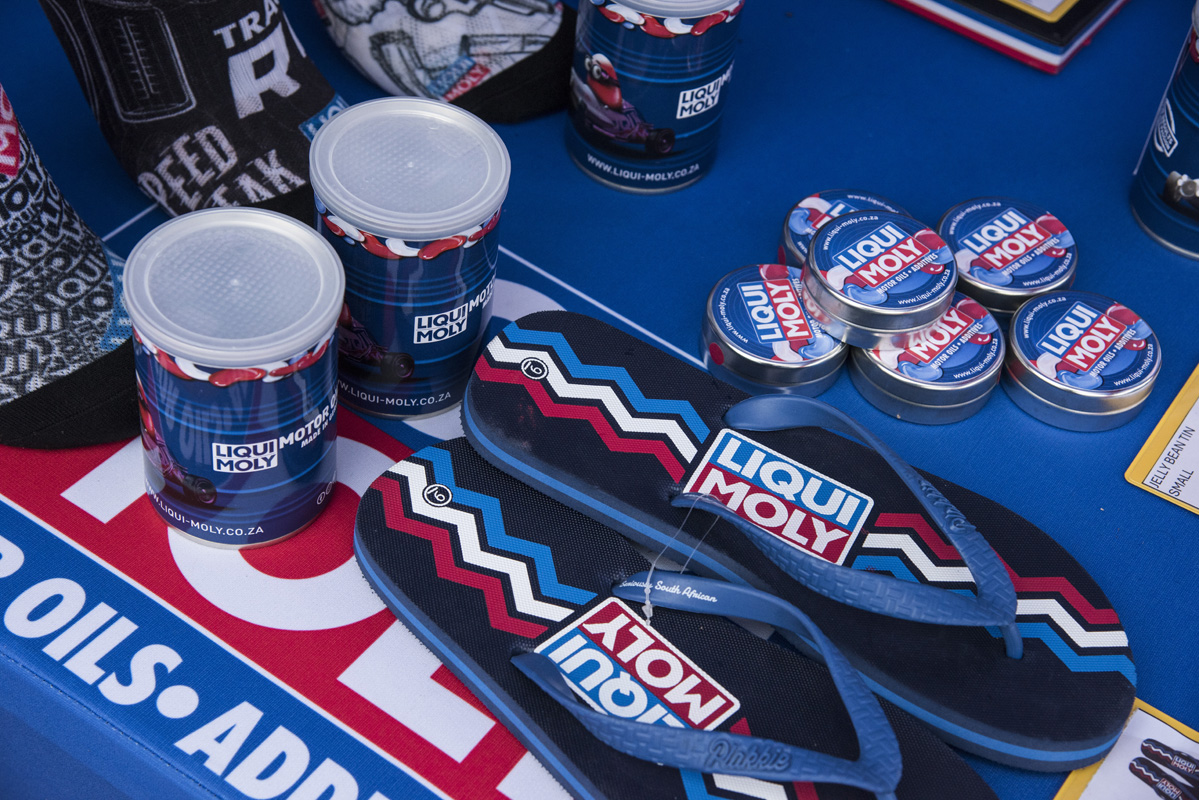
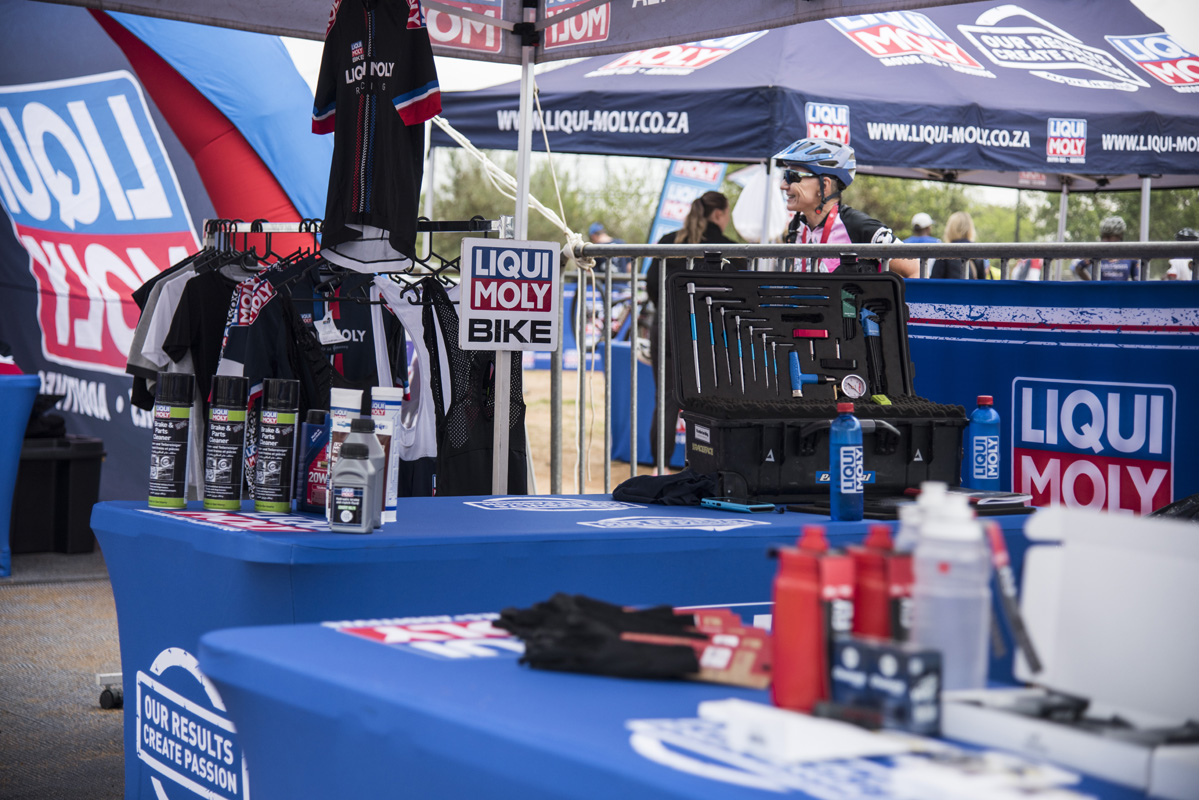
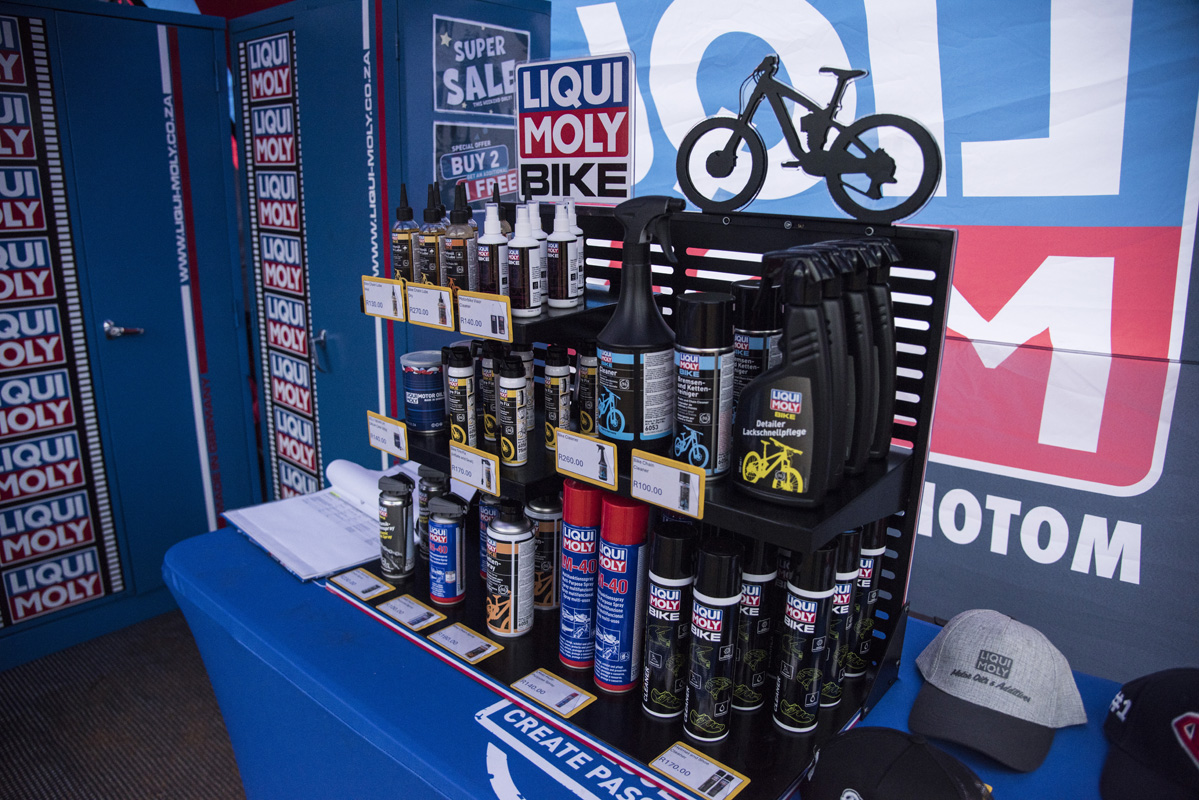
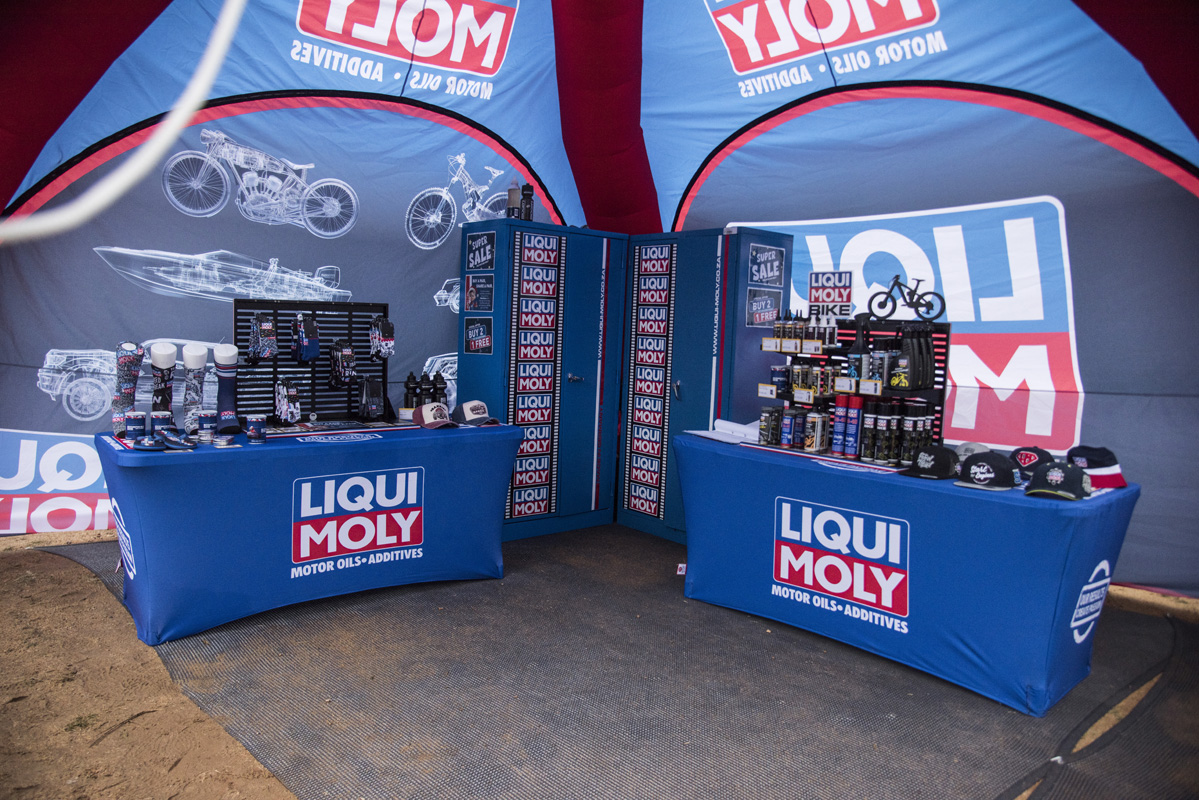
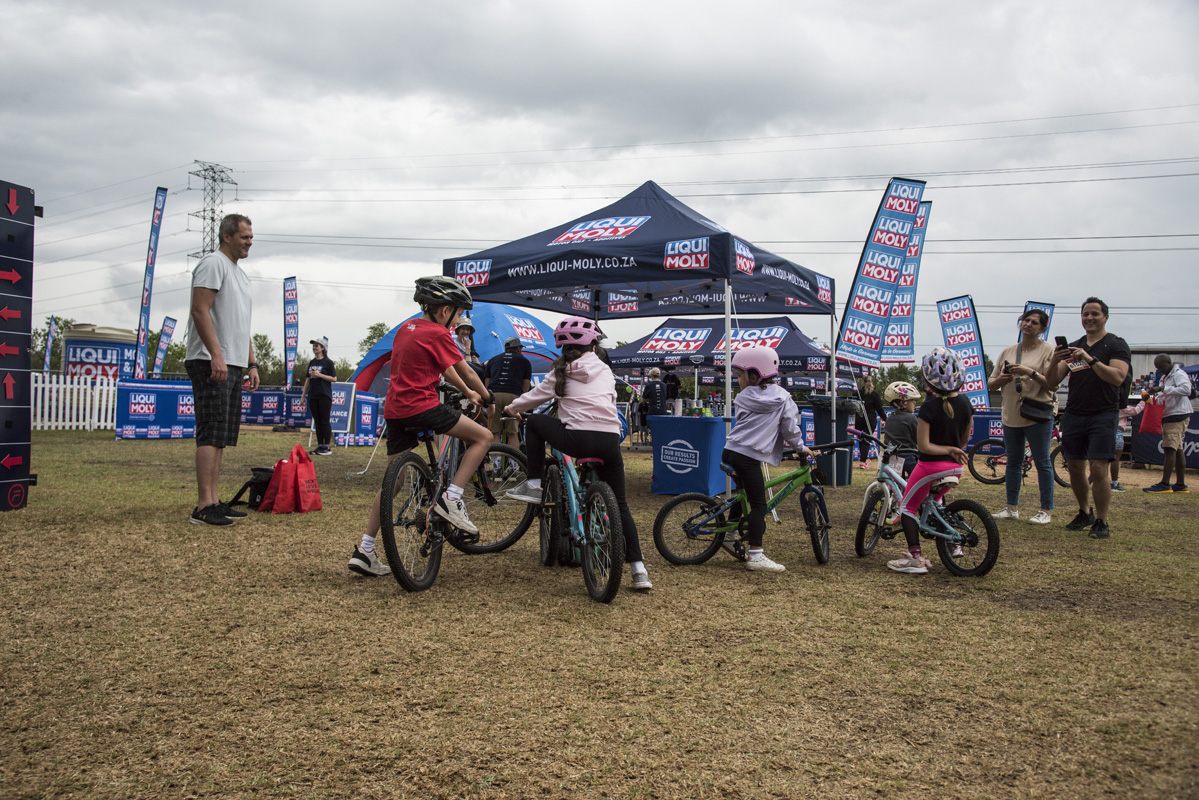
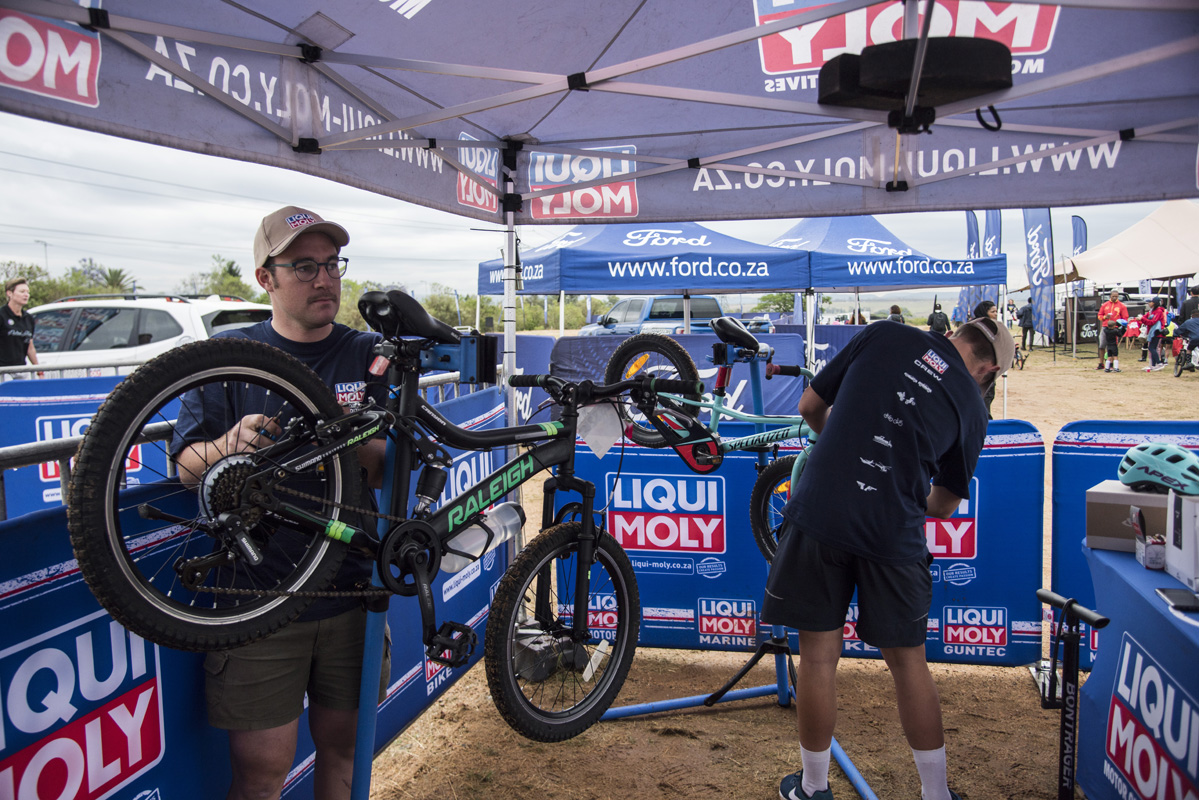
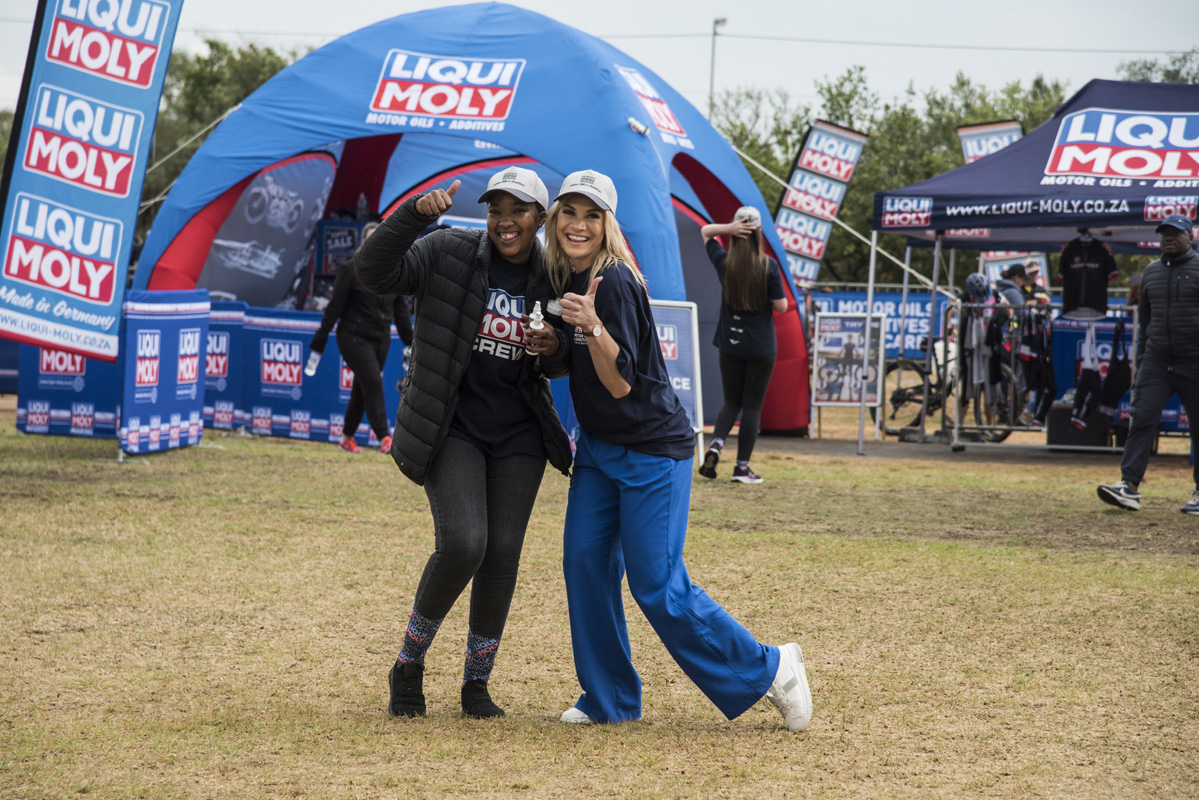
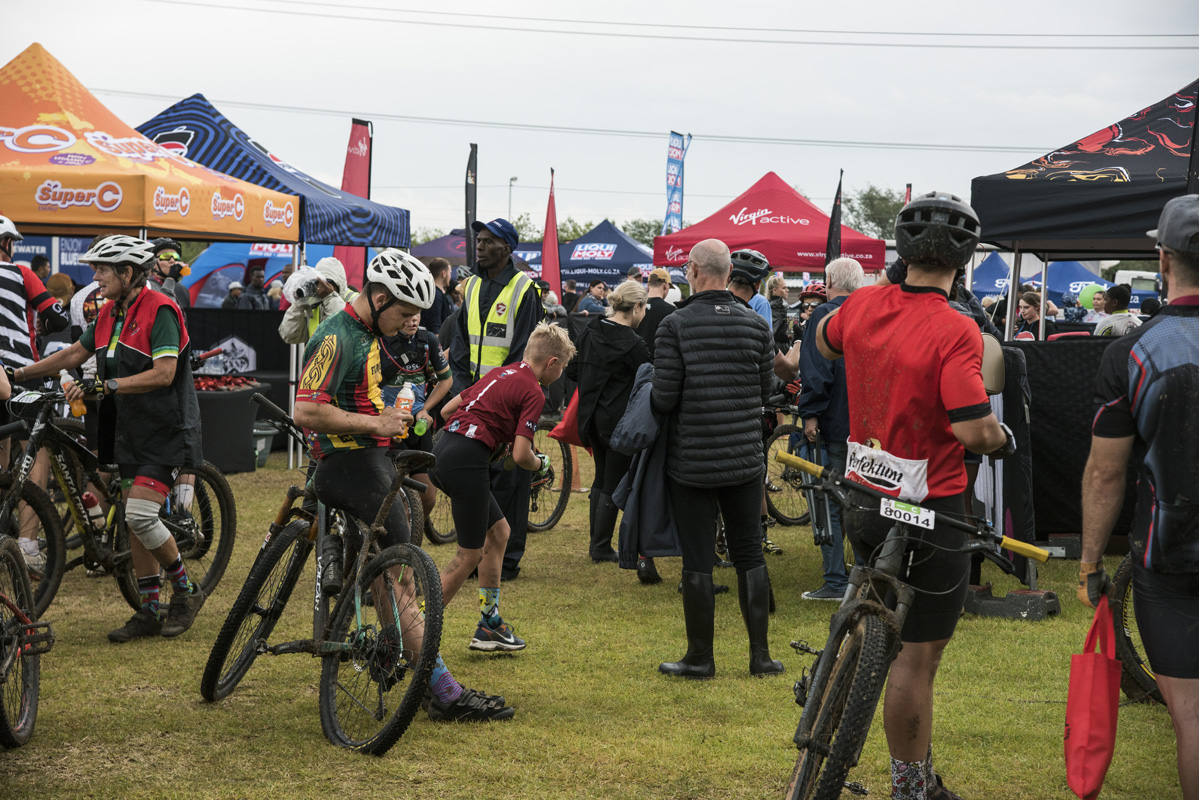
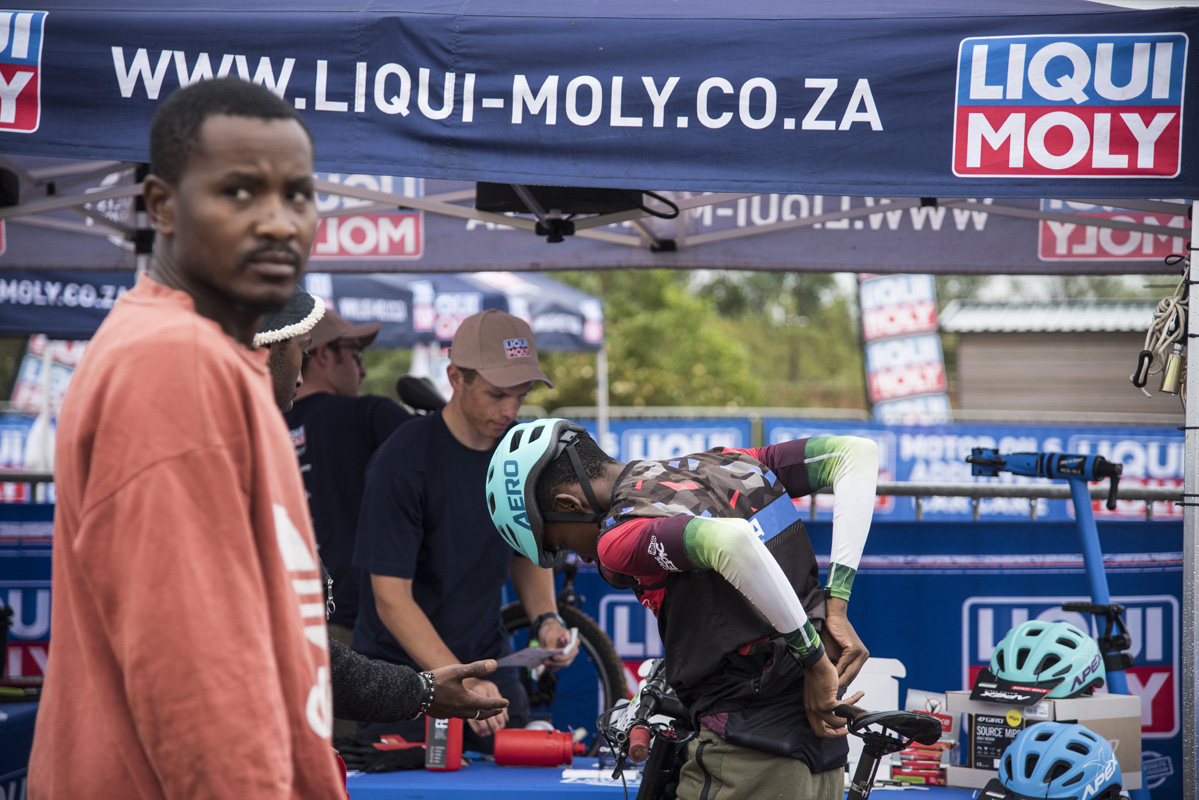
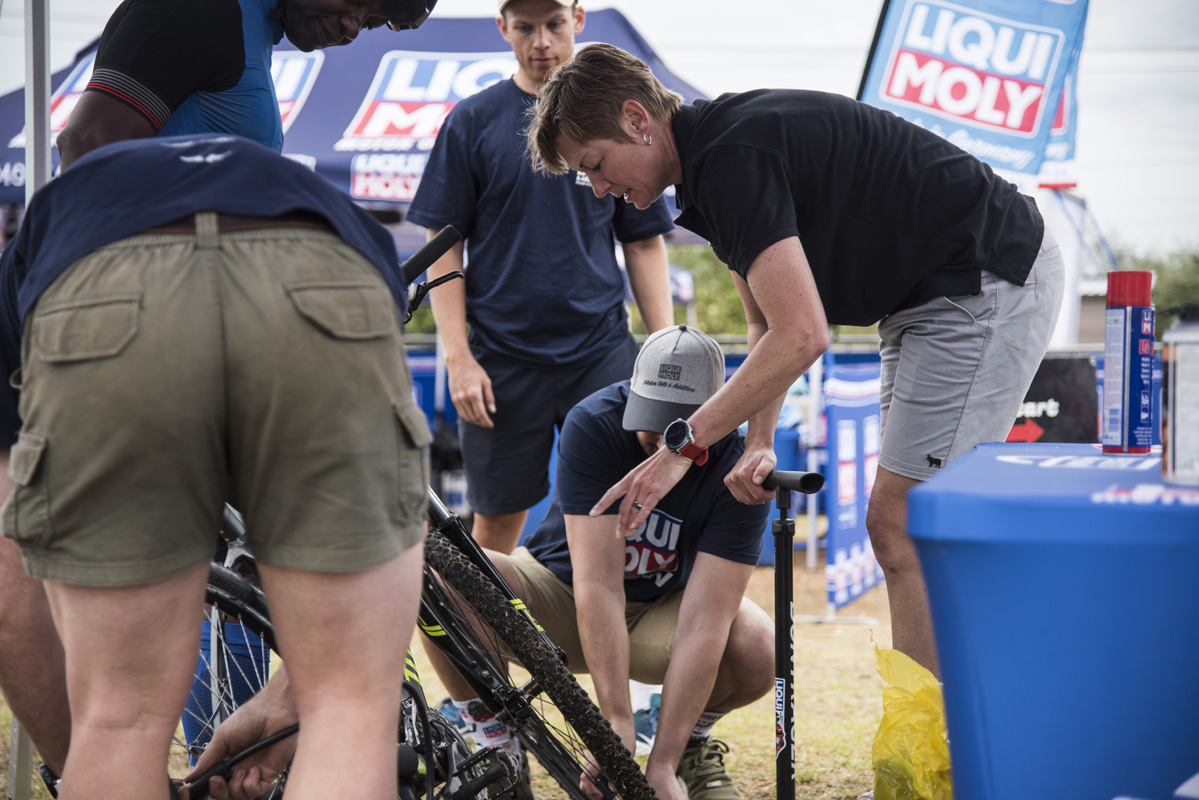
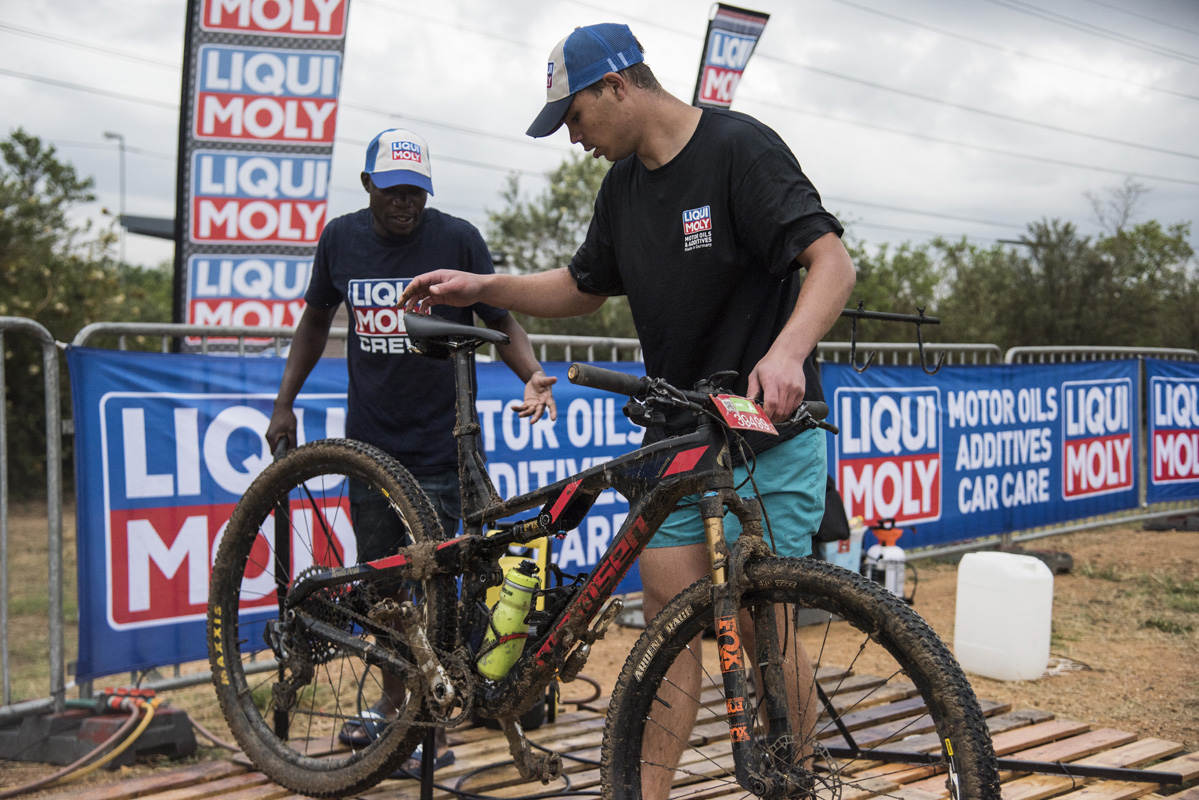
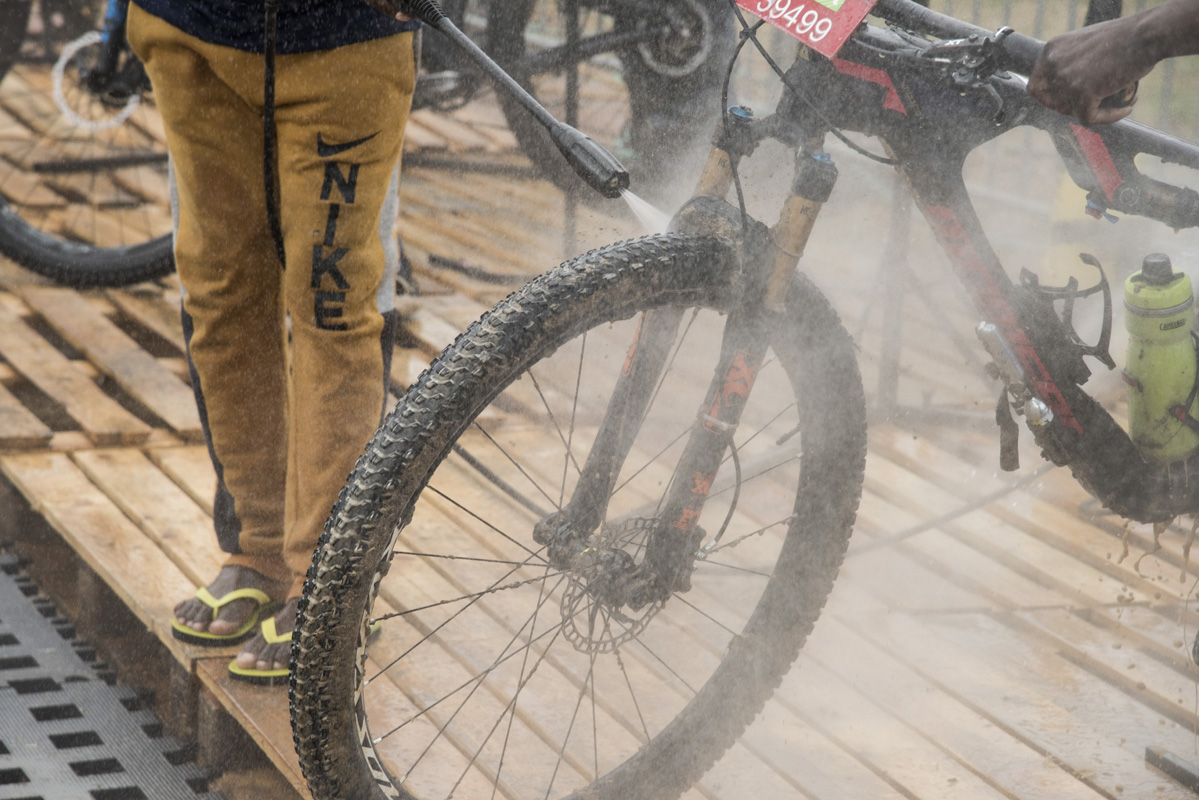
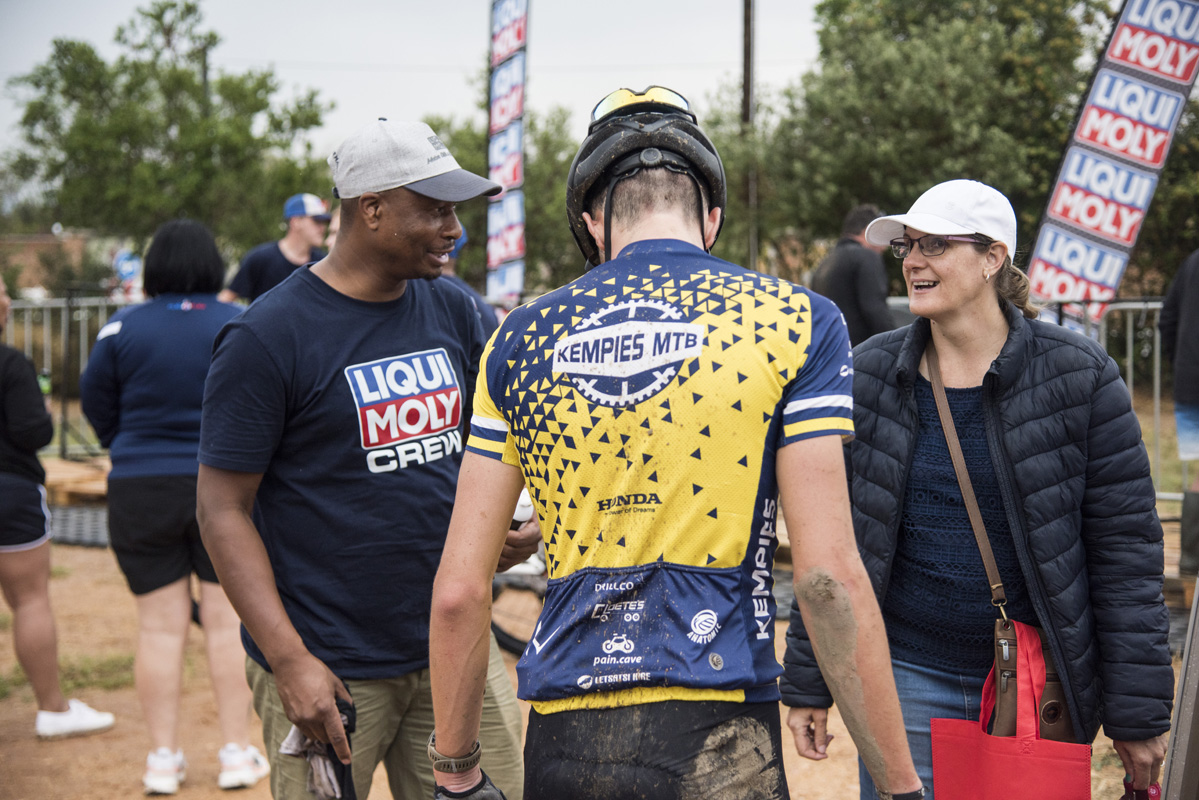
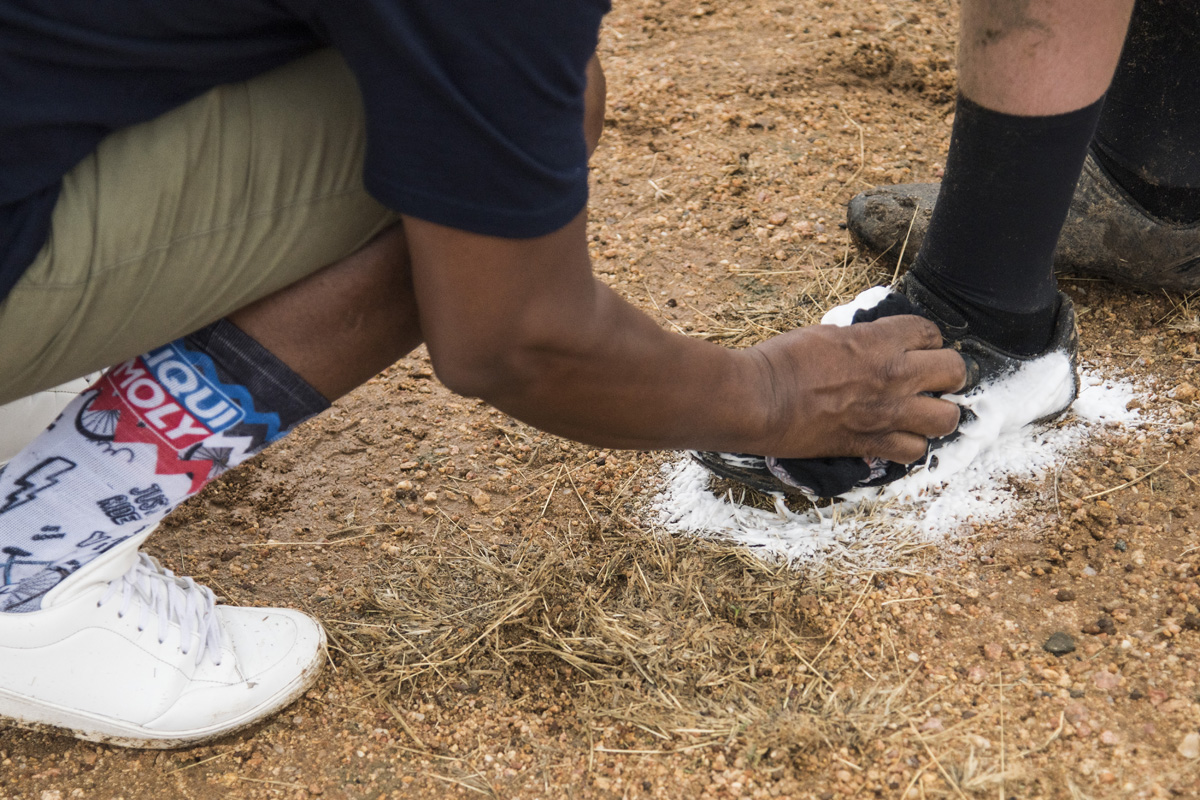
This year we attended the Virgin Active Ride Joburg MTB events leading up to the road race to show our support and see a few industry leaders at work. At this year’s MTB challenge, Liqui Moly South Africa was the lubricant sponsor and set up an impressive bicycle maintenance workshop, wash bay, accessory, and fan wear outlet.
Photo credit: Bjorn Moreira / ZA Bikers
Liqui Moly helped many cyclists prepare to conquer the incredible network of mountain bike trails within Steyn City’s exclusive walls! Steyn City offered cyclists a choice of three routes with different difficulty and distance levels: a 10 km, 25 km, or 50 km route.
Photo credit: Bjorn Moreira / ZA Bikers
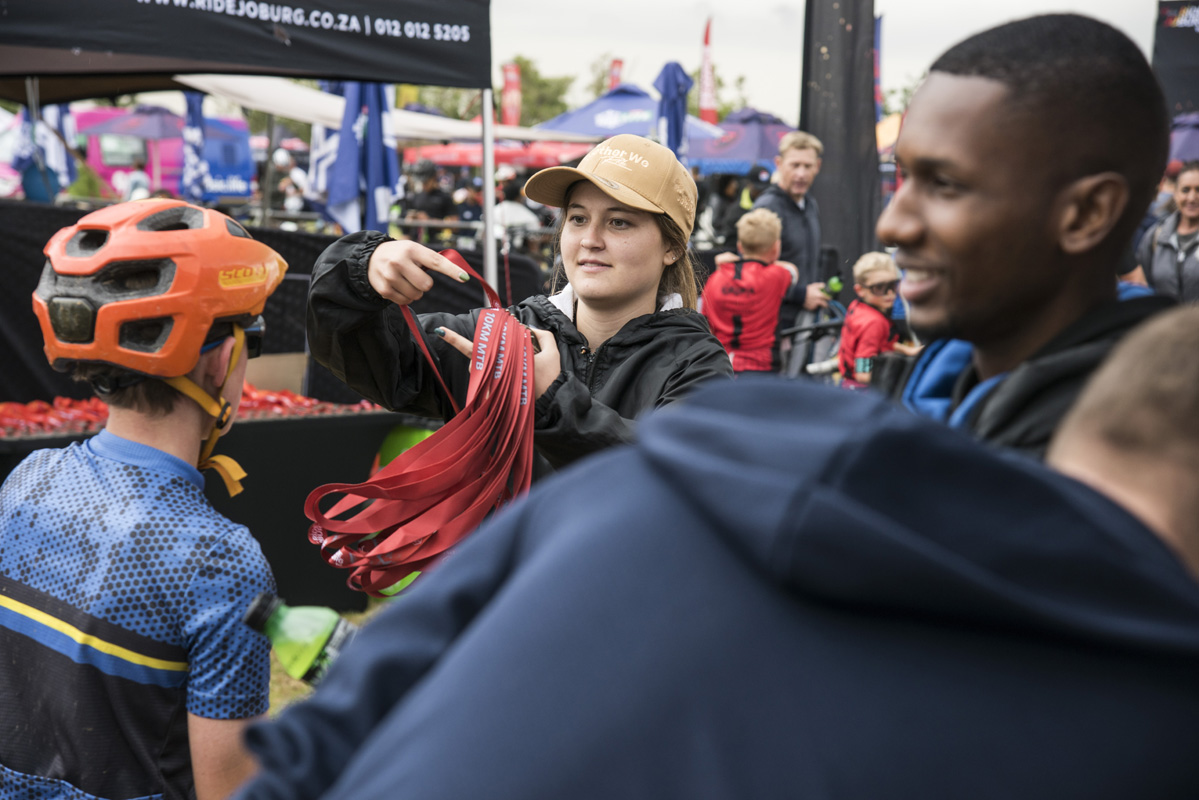
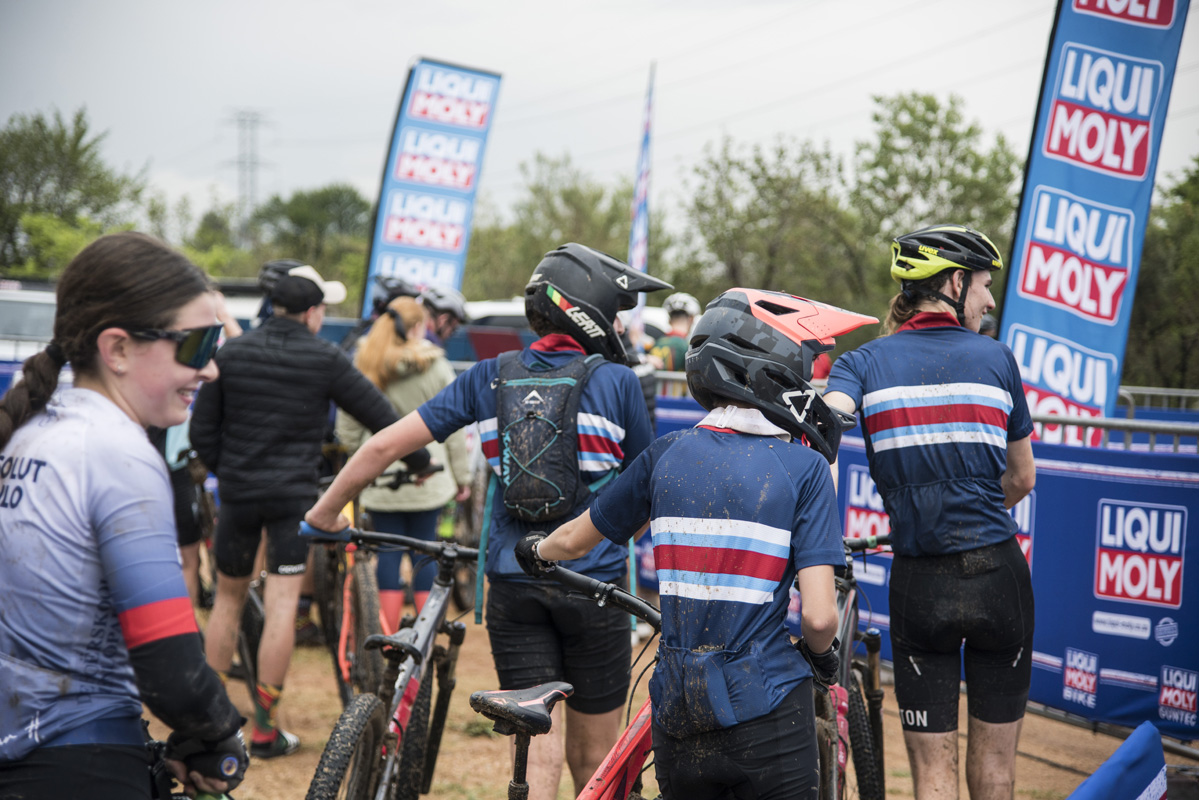
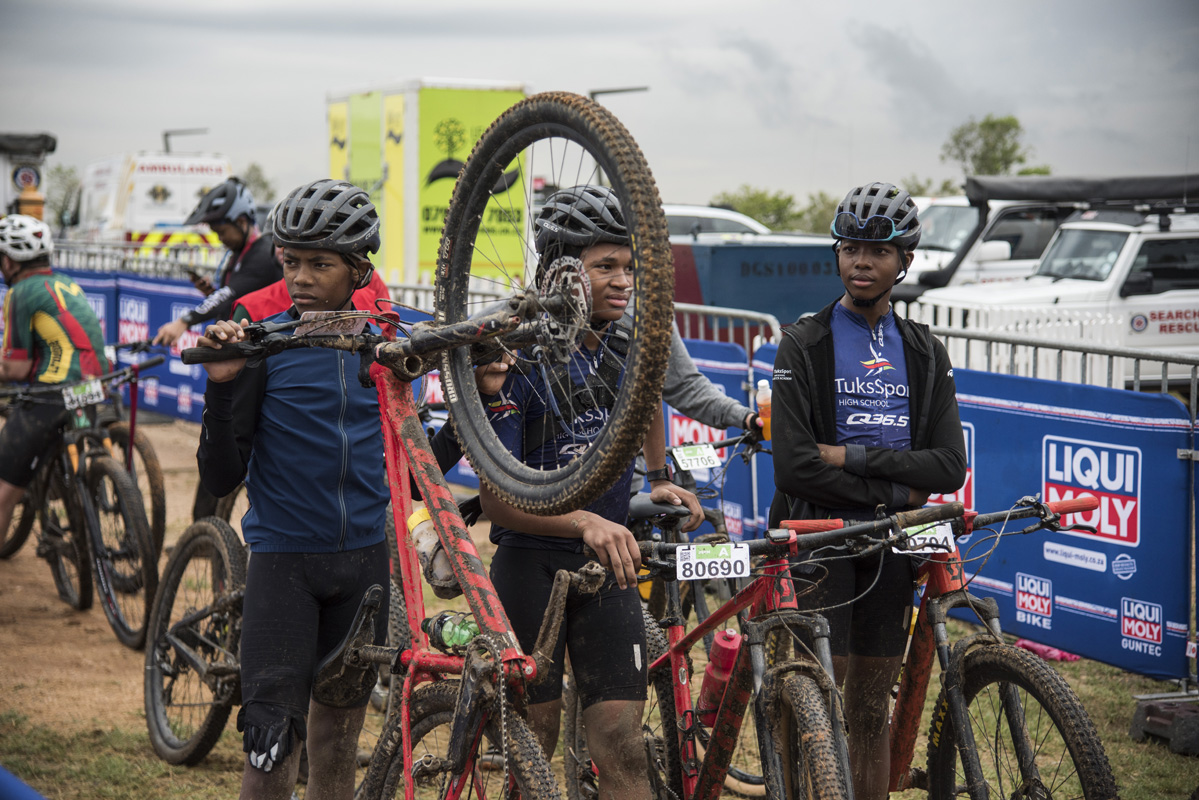
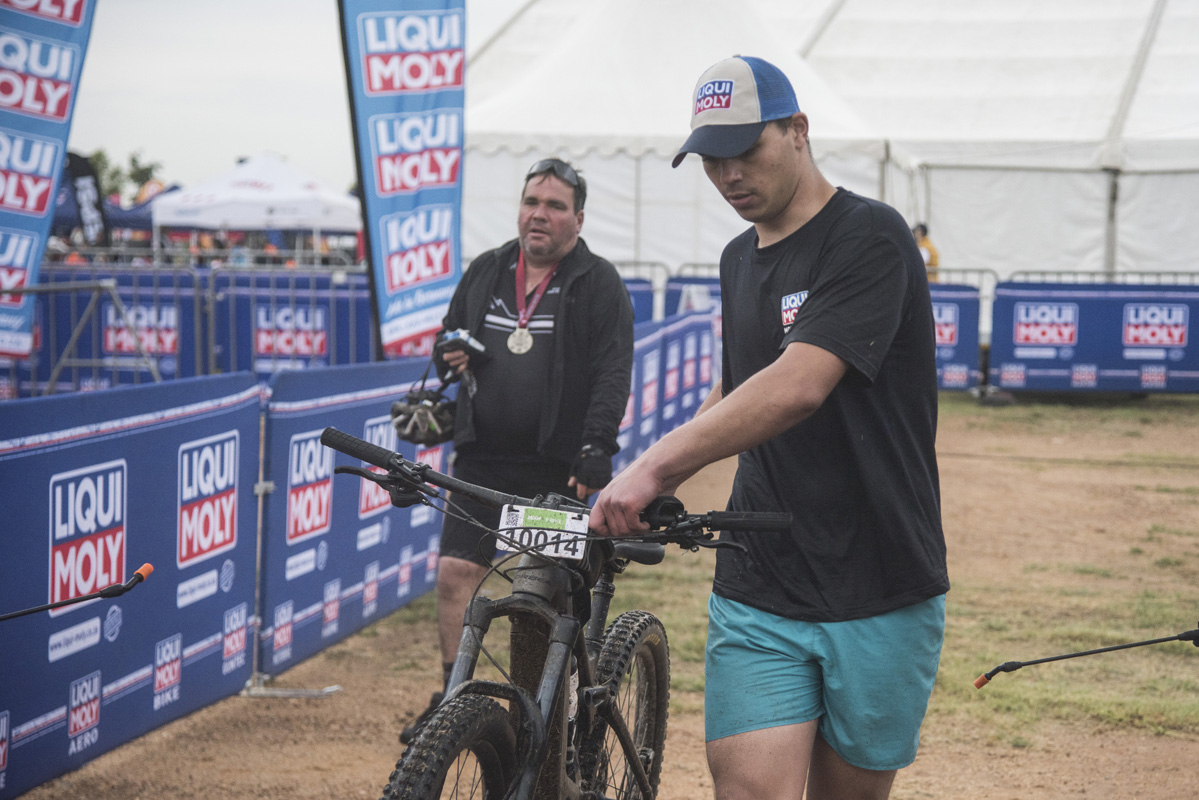
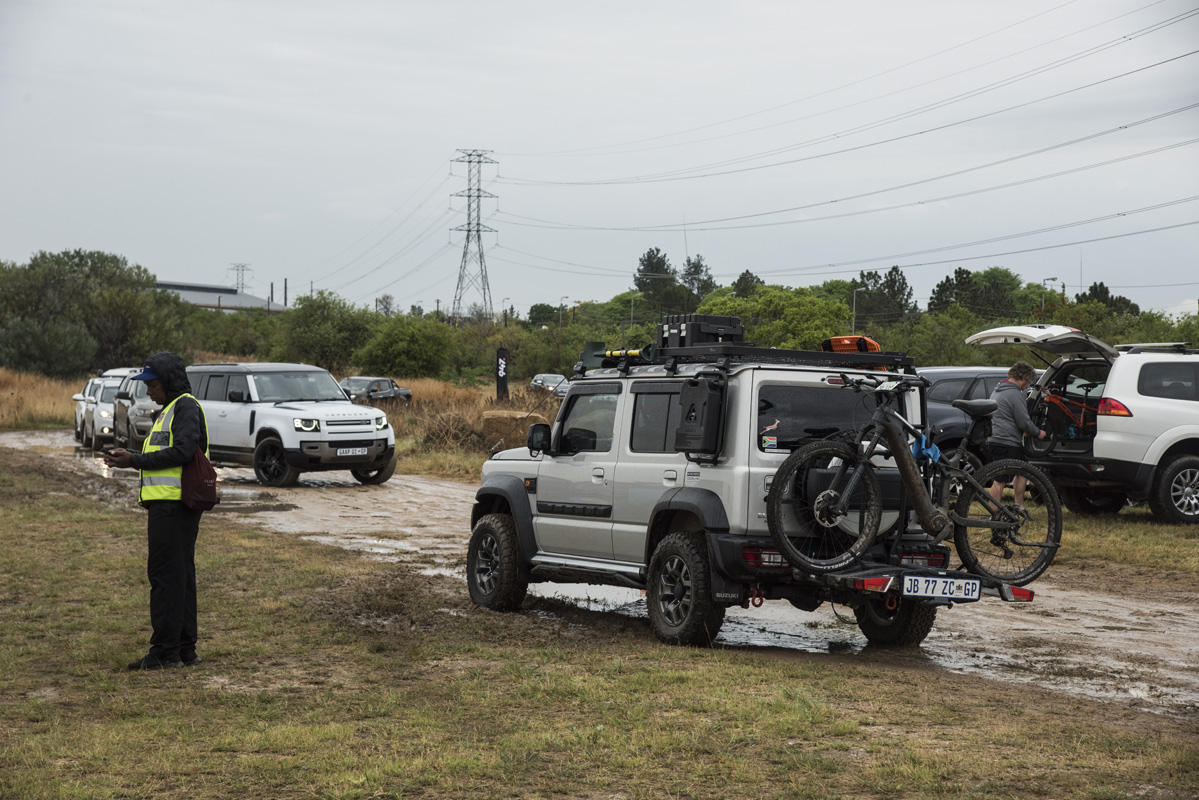
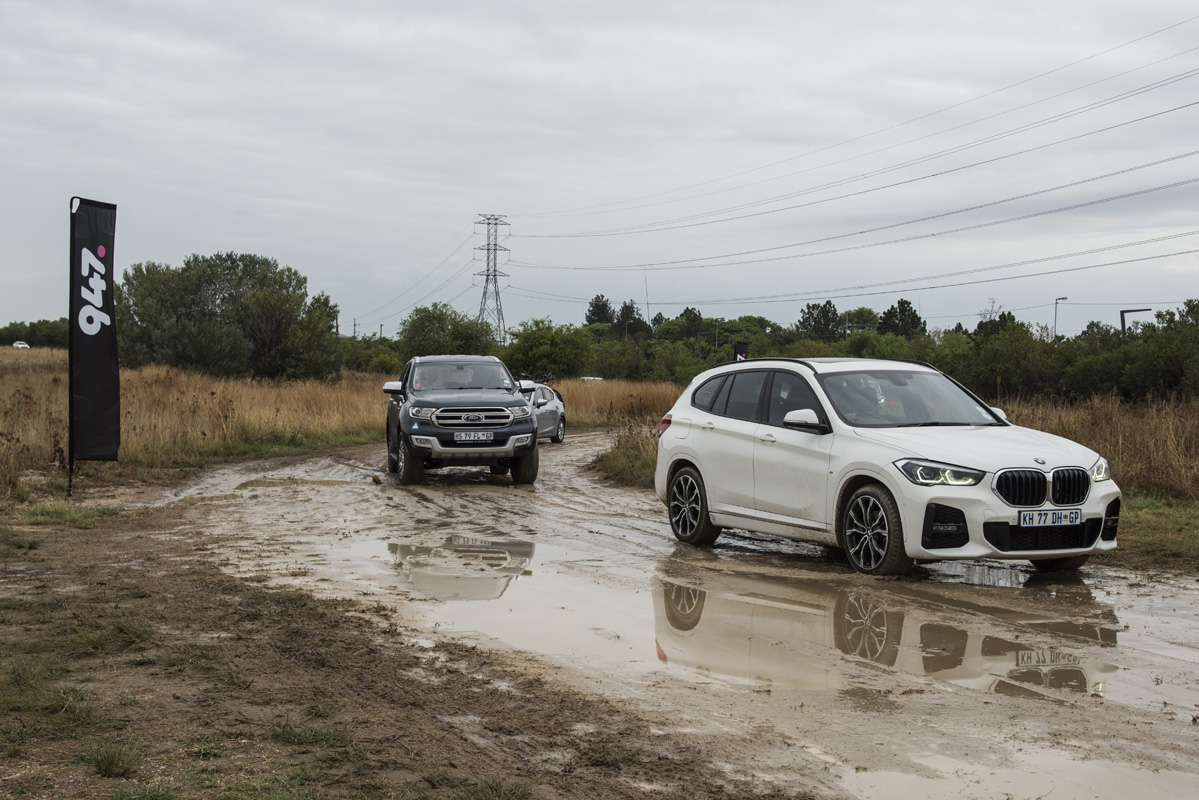
The hidden Gem that is Steyn City was almost washed out on Saturday as heavy rains made it tough on all the competitors and for Liqui Moly, as the mud-caked riders and bicycles returned to base. After collecting medals, a large queue began at the entrance of Liqui Moly’s massive setup, both riders and bicycles requiring a lot of cleaning!
Photo credit: Bjorn Moreira / ZA Bikers
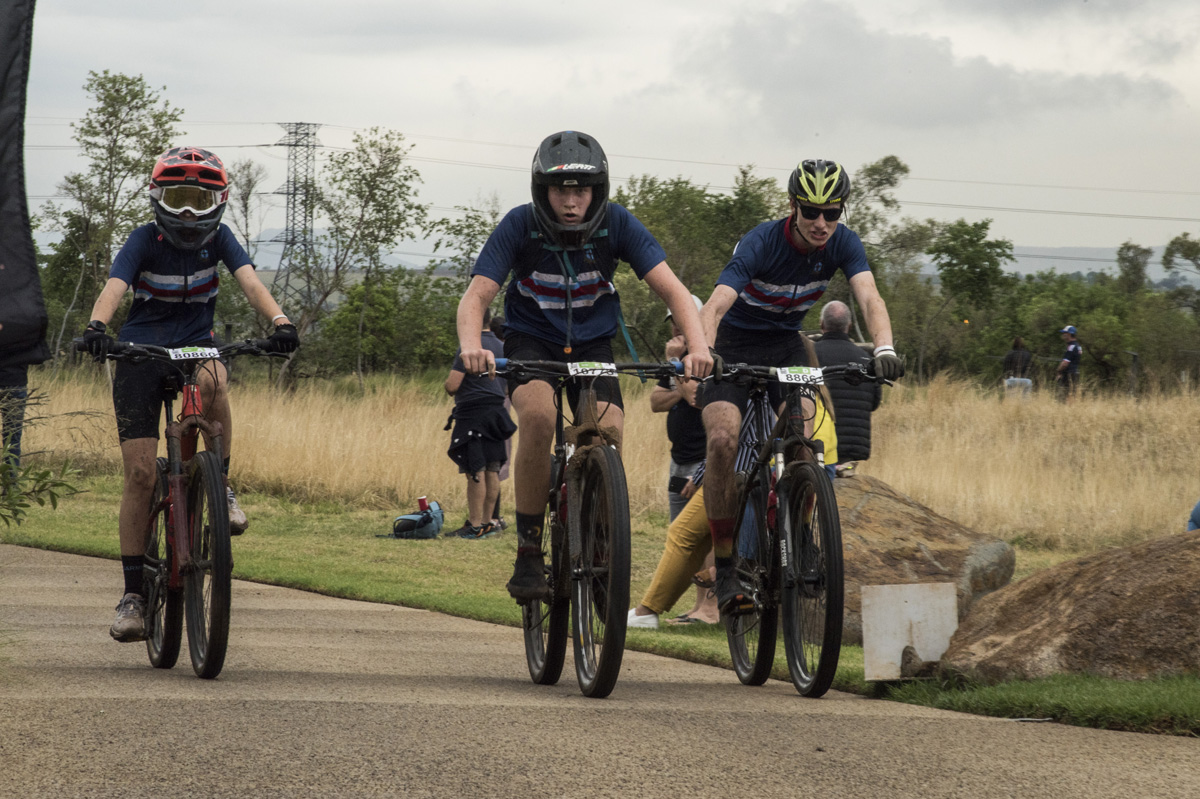
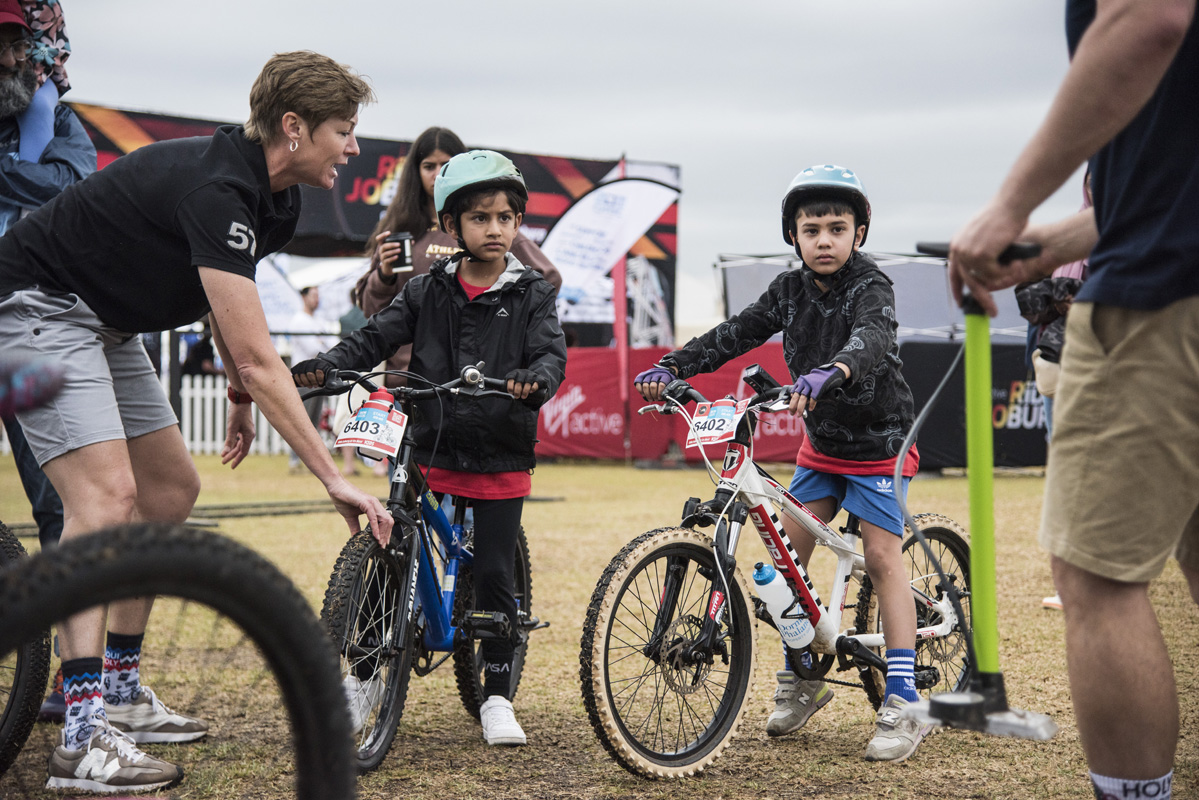
The event has always been a great family day, with lots of kids taking part on Saturday and the serious seeded riders taking part in the 25 and 50-km races on Sunday.
Photo credit: Bjorn Moreira / ZA Bikers
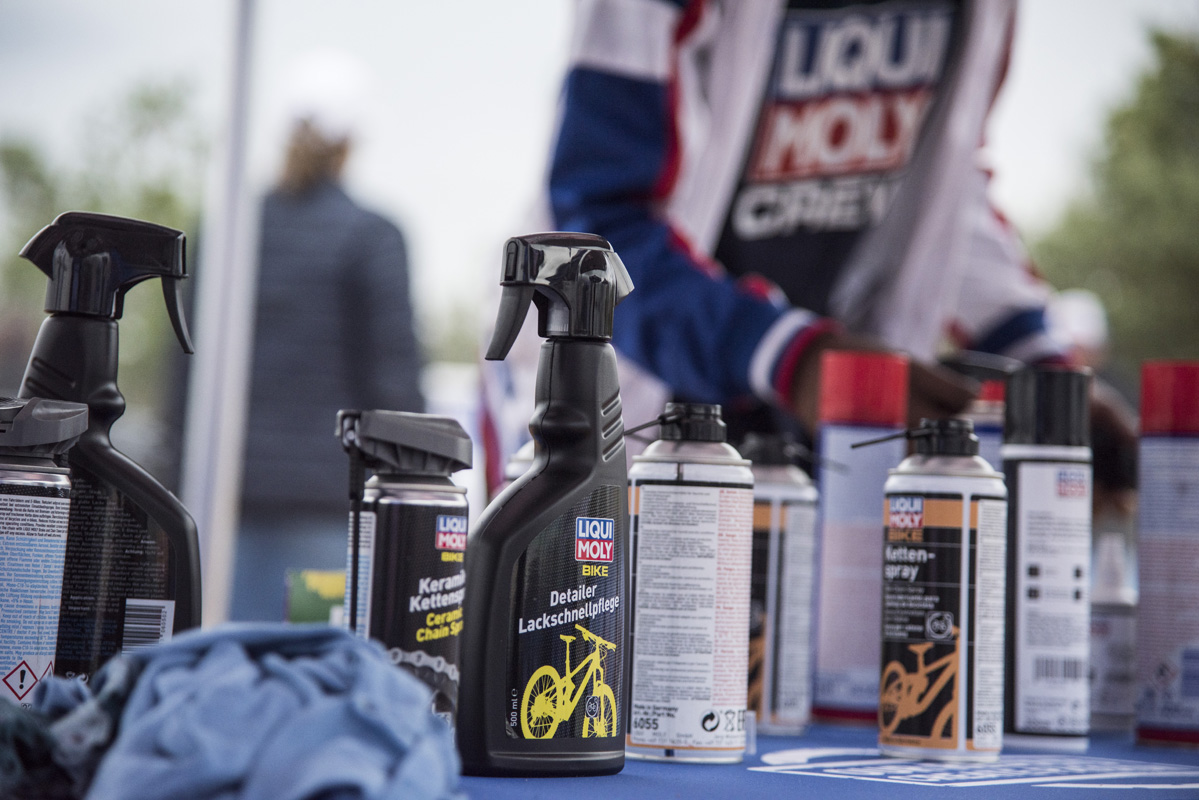
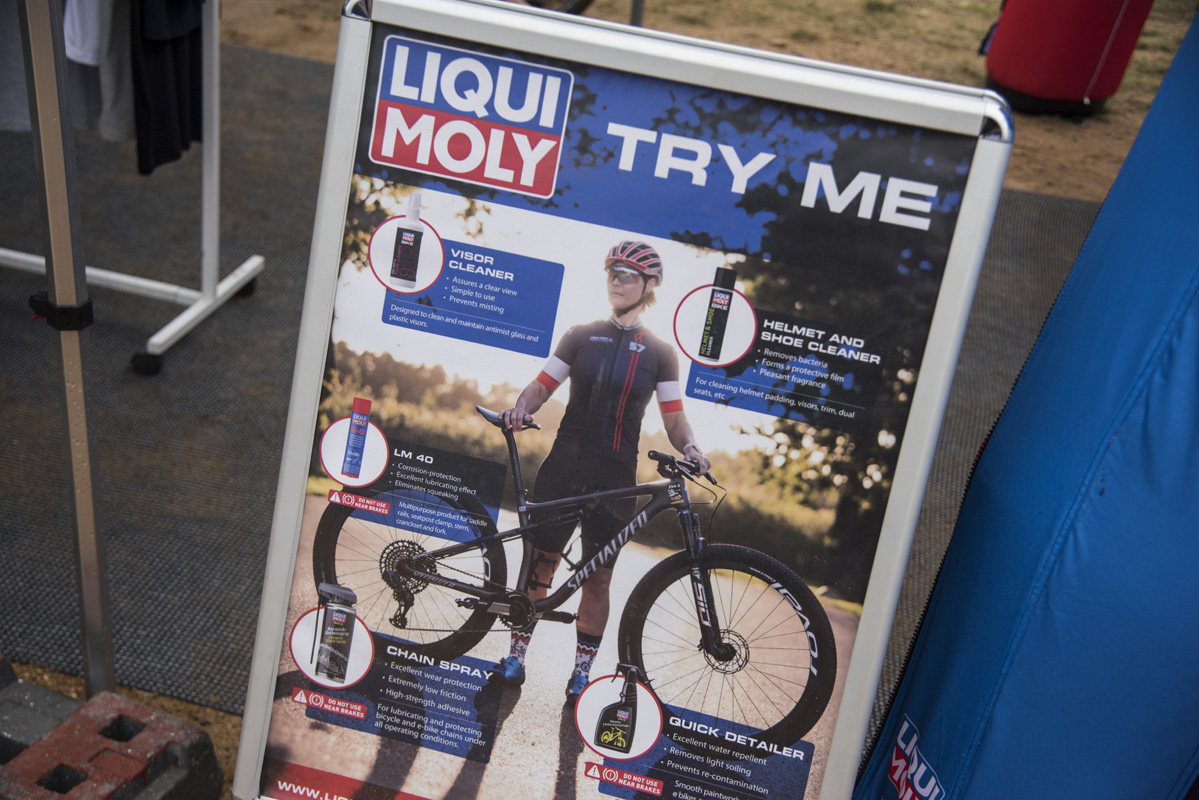
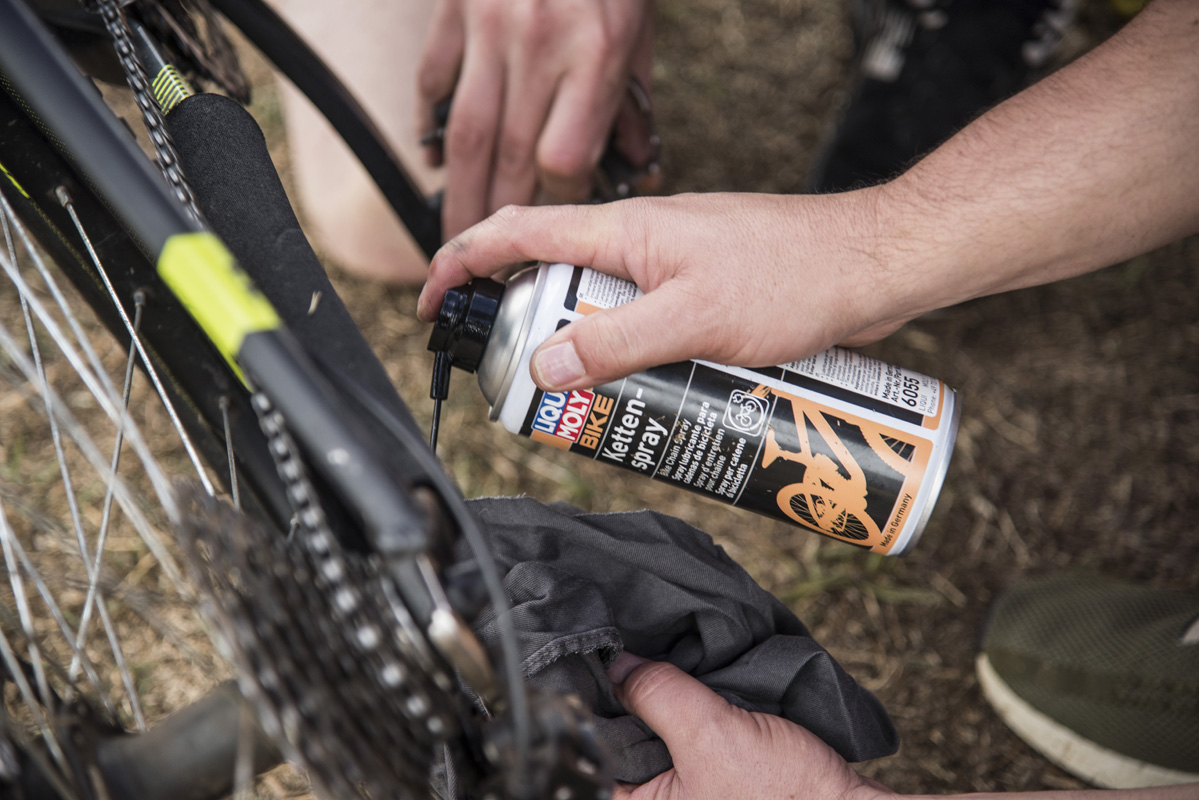
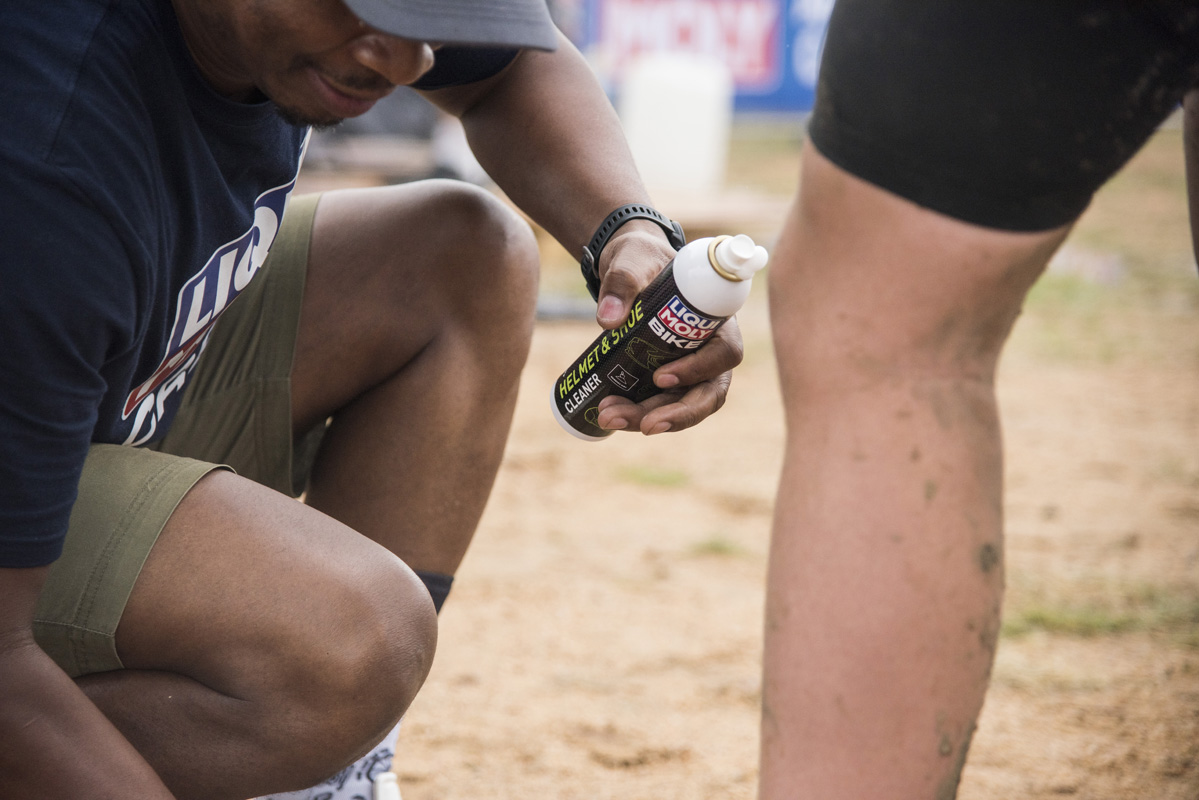
Liqui Moly really pulled out all the stops in their support of the event, showcasing their full bicycle product range, which even includes products to clean and care for muddy shoes and helmets.
Photo credit: Bjorn Moreira / ZA Bikers
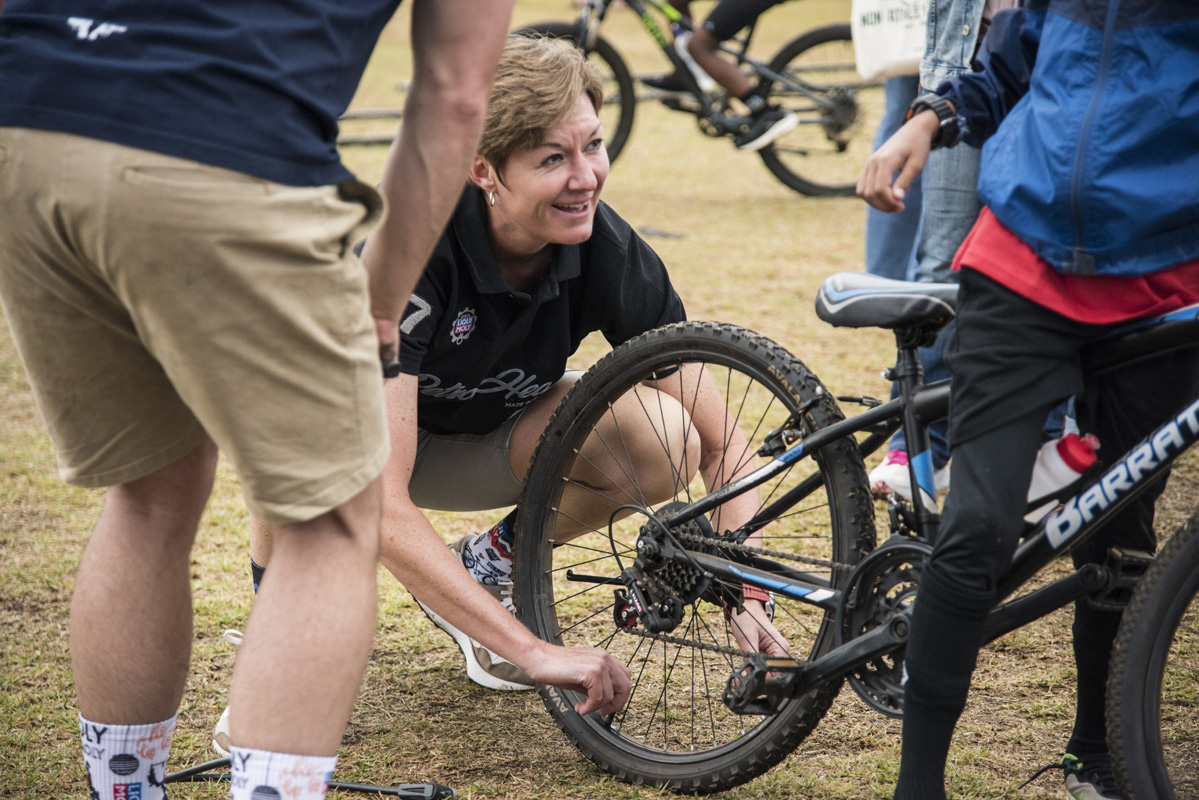
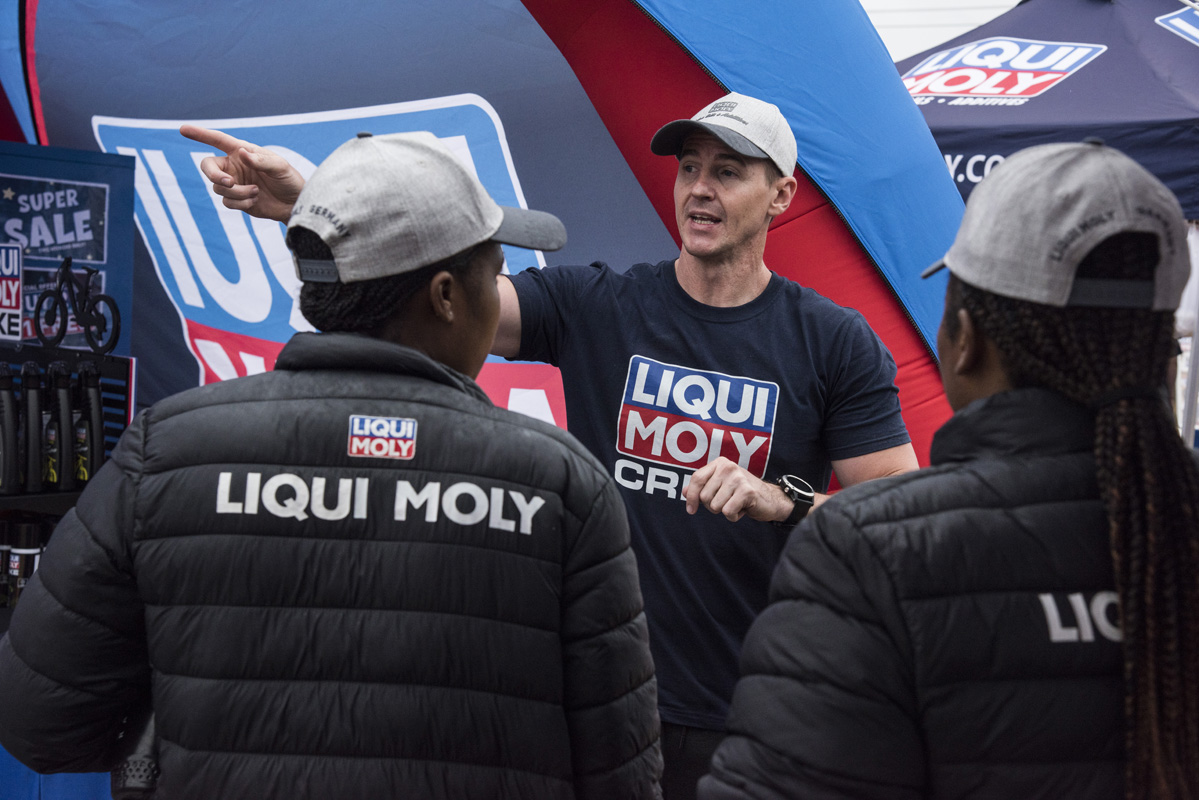
It was a true team effort by Liqui Moly, the service crew being made up of seemingly everyone who works for this vibrant company, from marketing, sales, workshop, and so on.
Photo credit: Bjorn Moreira / ZA Bikers
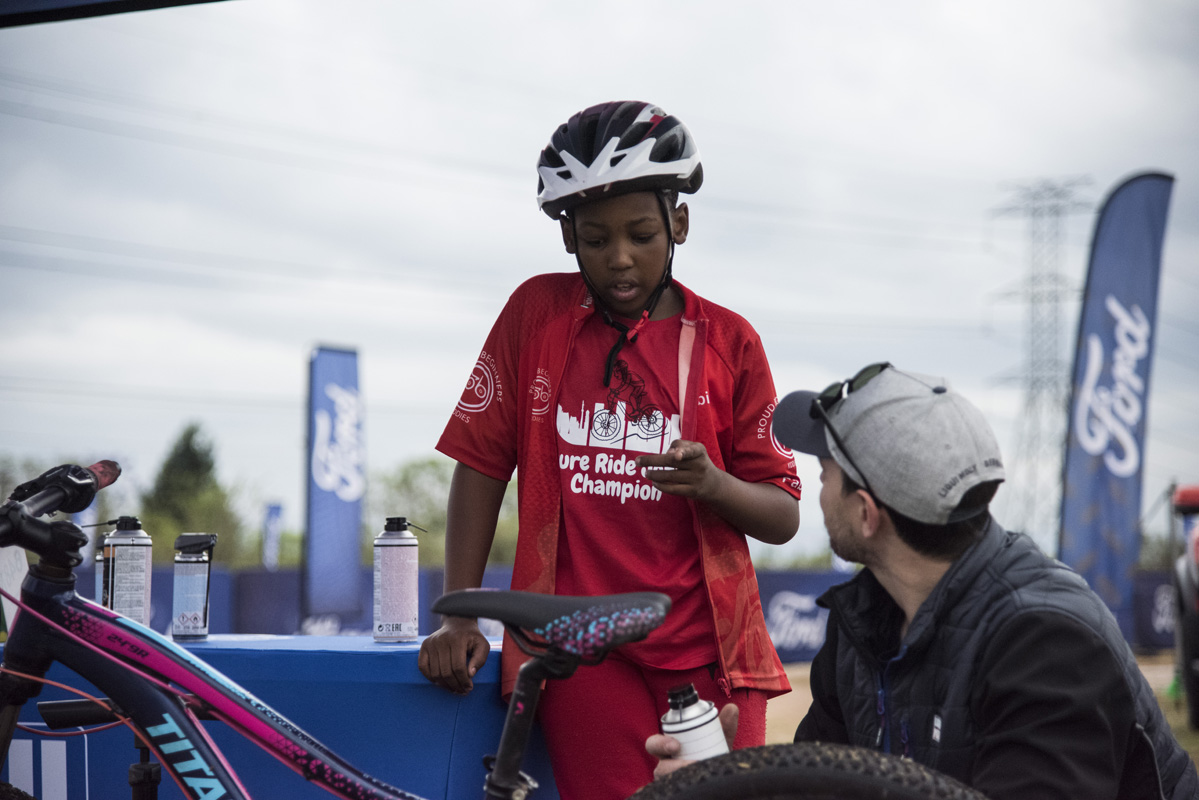
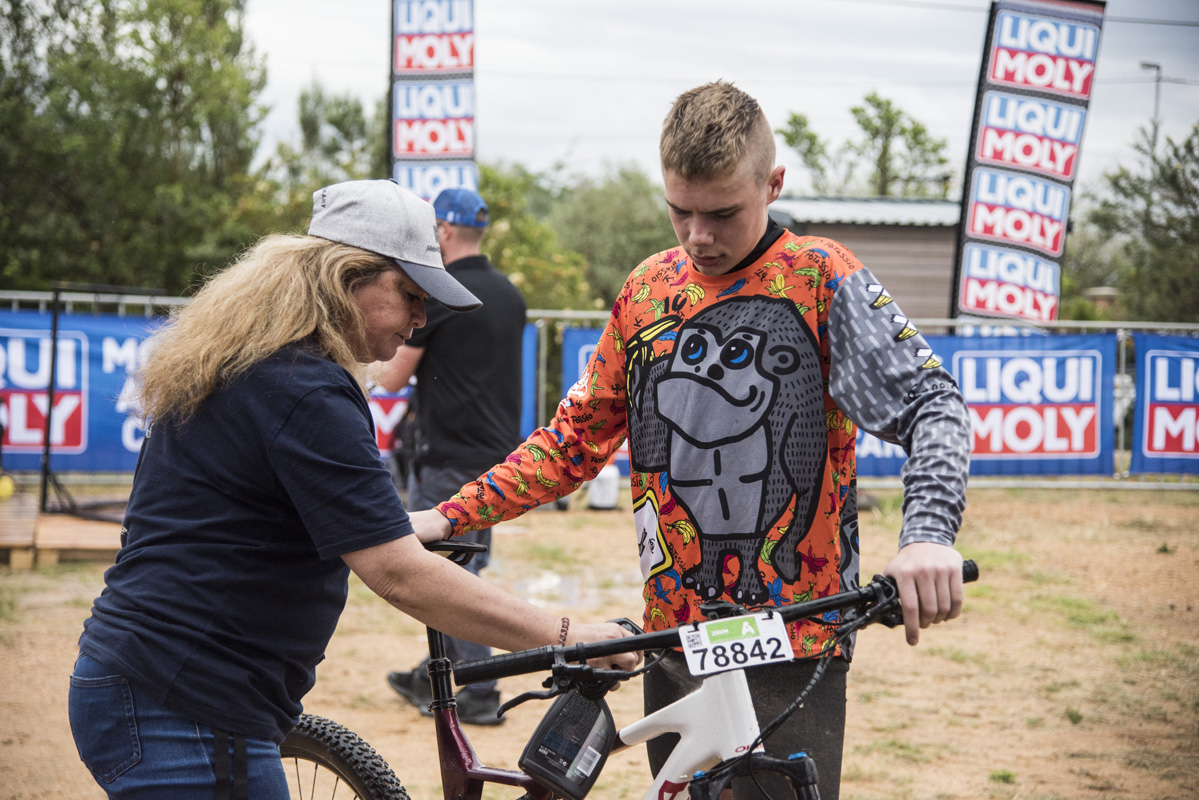
Everyone got their hands dirty trying to help the kids prep, service and maintain their bicycles. Melicia Labuschagne (Managing Director Liqui Moly SA) was running up and down making sure everything was running smoothly, especially because the heavy rains made conditions difficult.
Photo credit: Bjorn Moreira / ZA Bikers
Liqui Moly is not new to the bicycling market but they continue to work incredibly hard to support events such as this, showcasing the extensive range of products available to SA cyclists. Liqui Moly’s support is vital to the survival and success of many events, Managing Director Melicia Labuschagne not only works hard to ensure things run smoothly but also takes part as a competitor. It’s this hands-on approach that makes Liqui Moly such a respected force in South Africa.
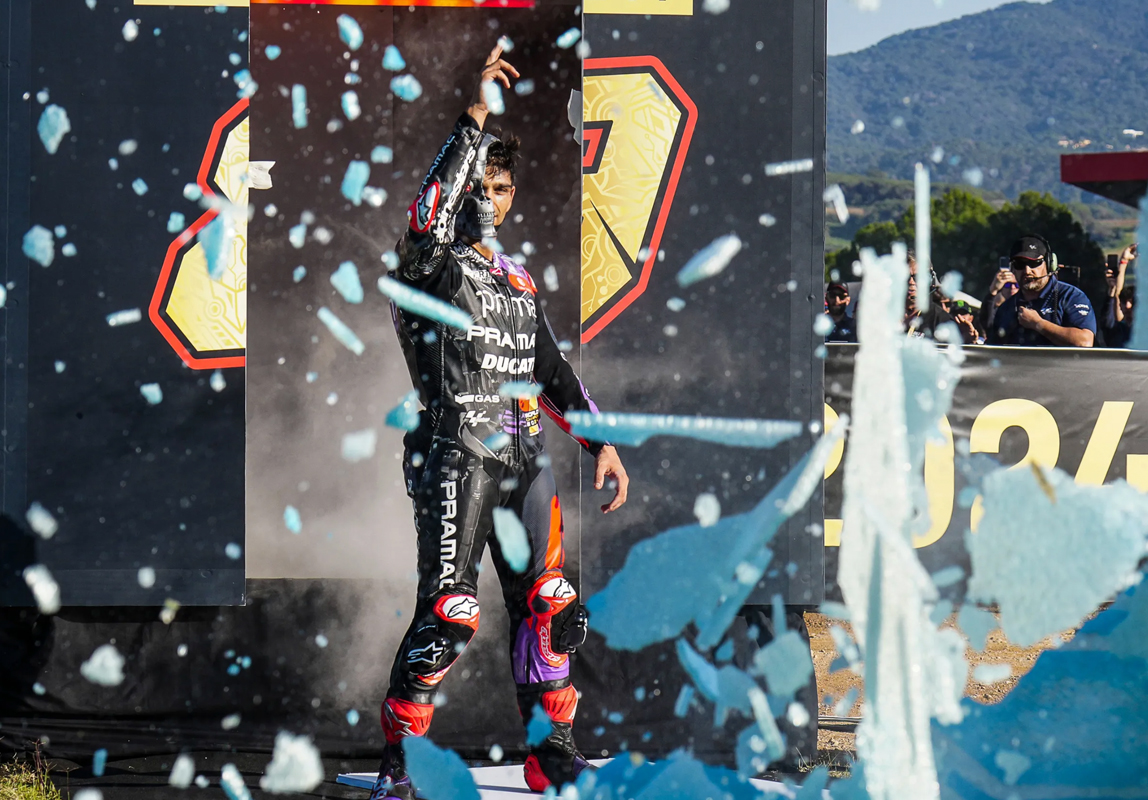
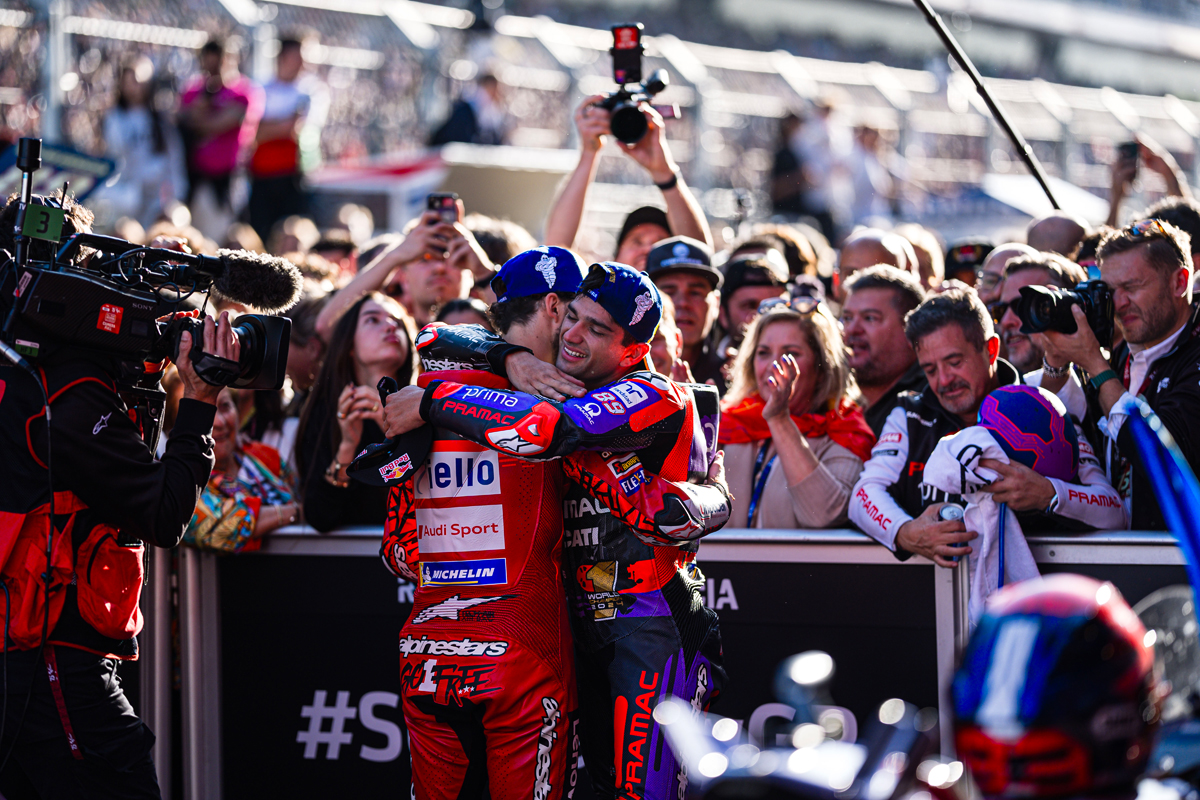
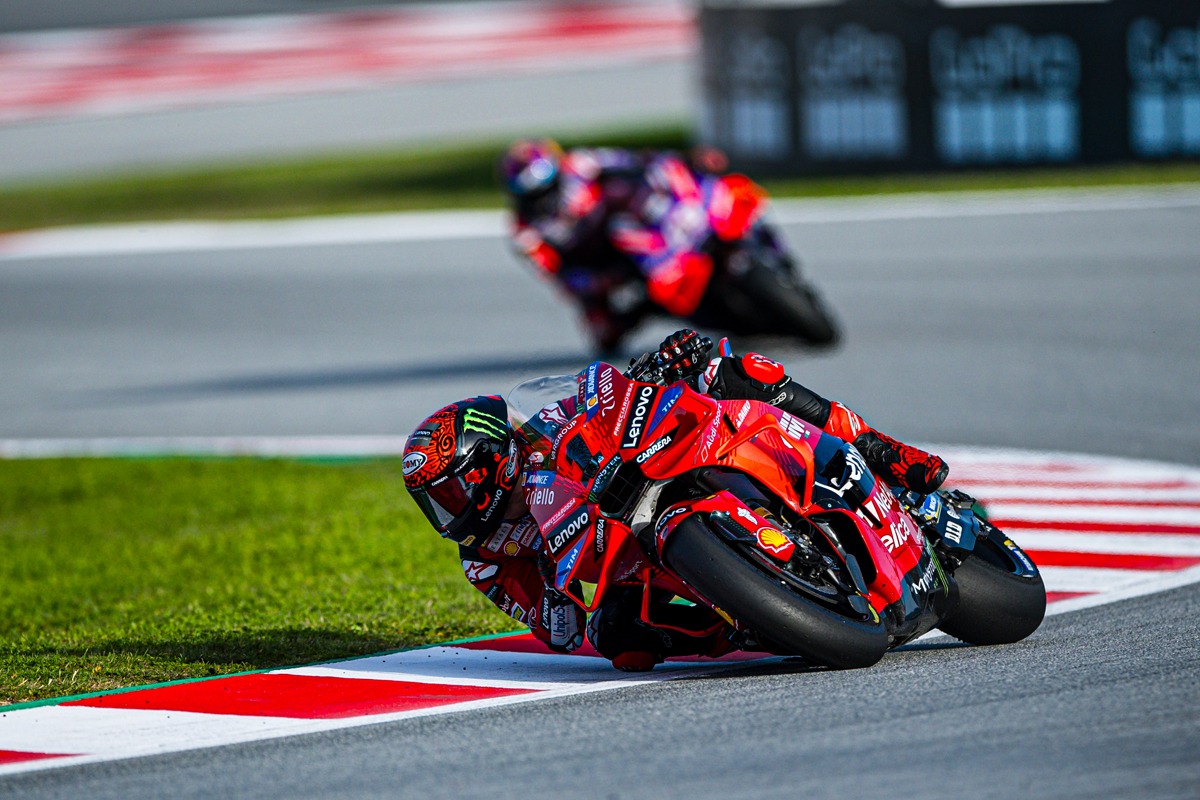
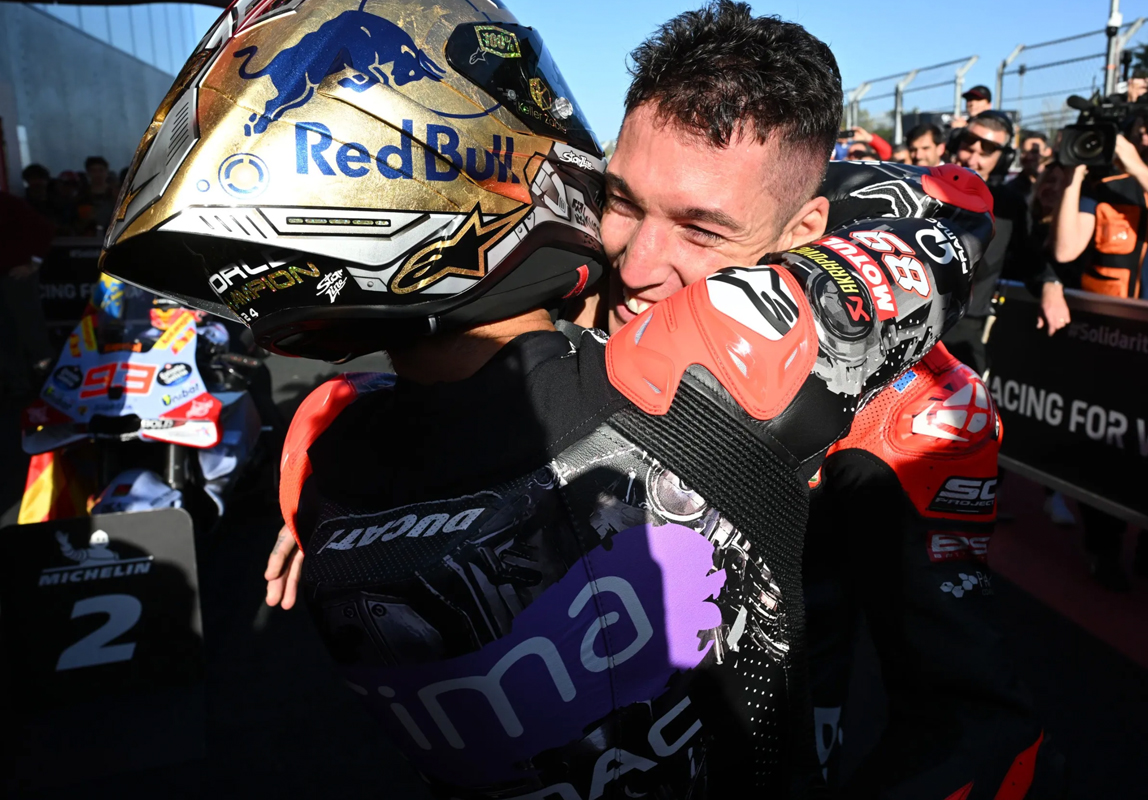
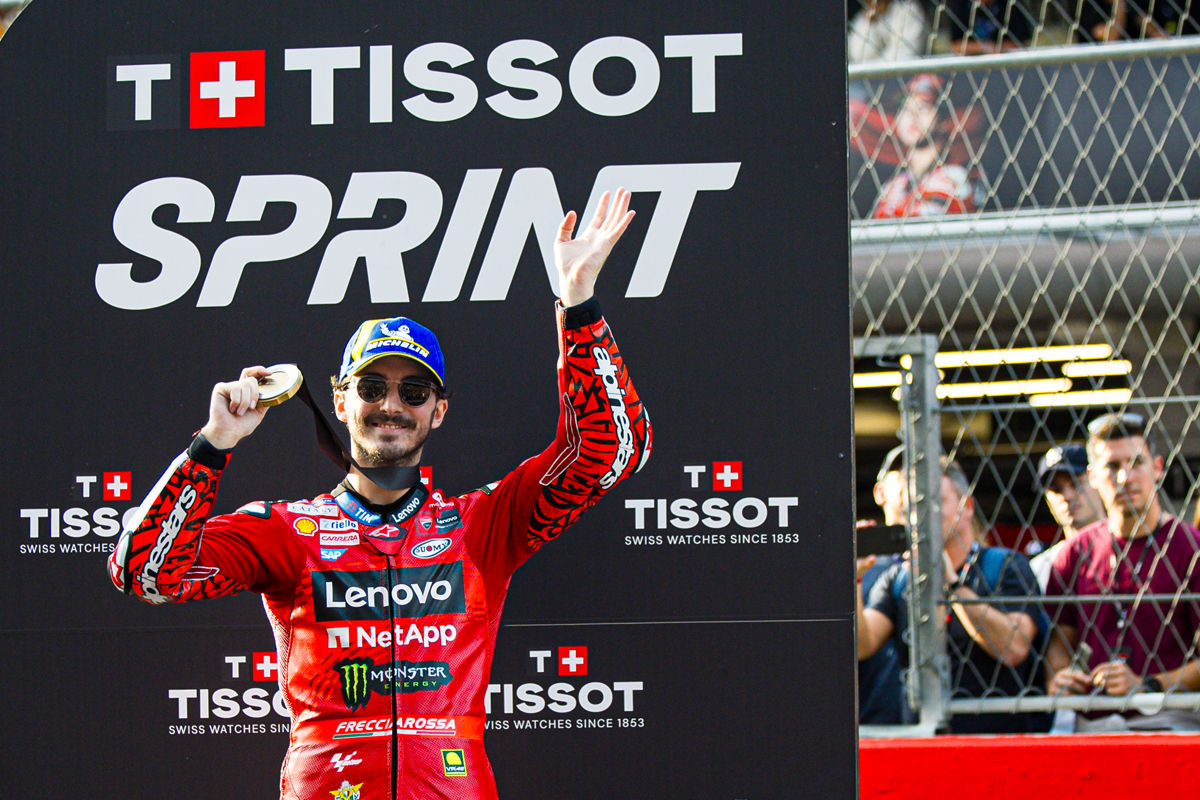
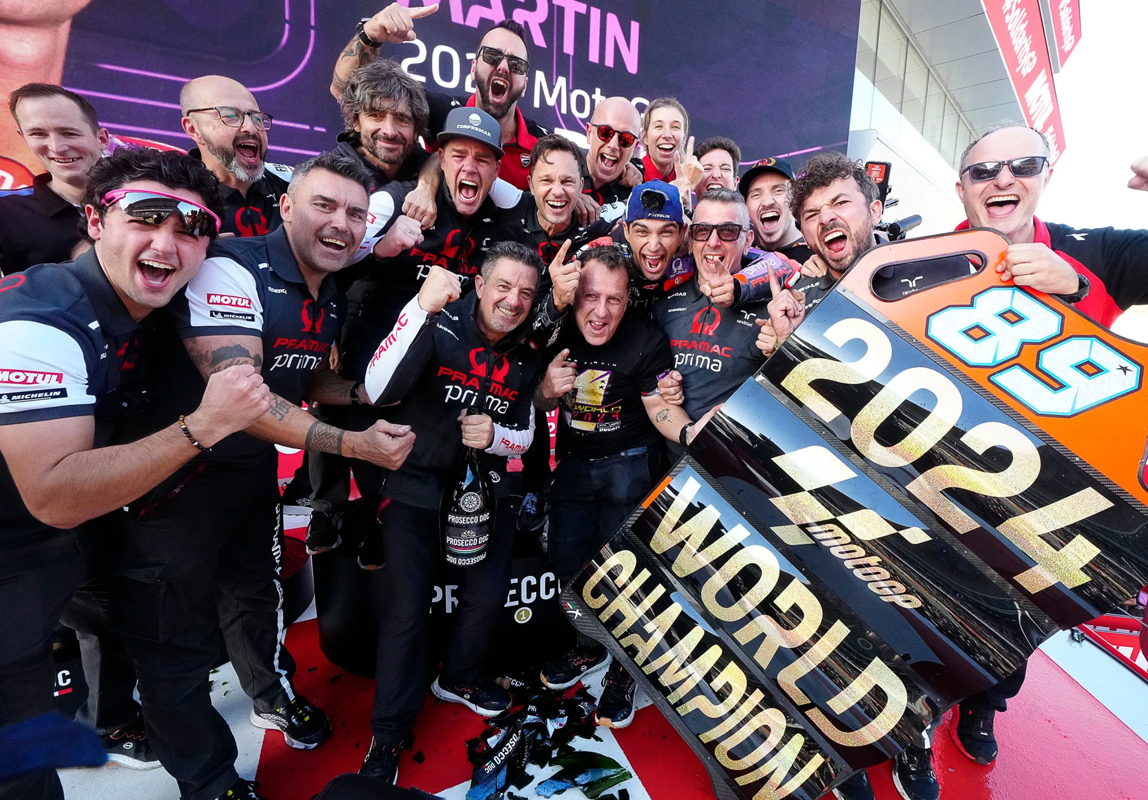
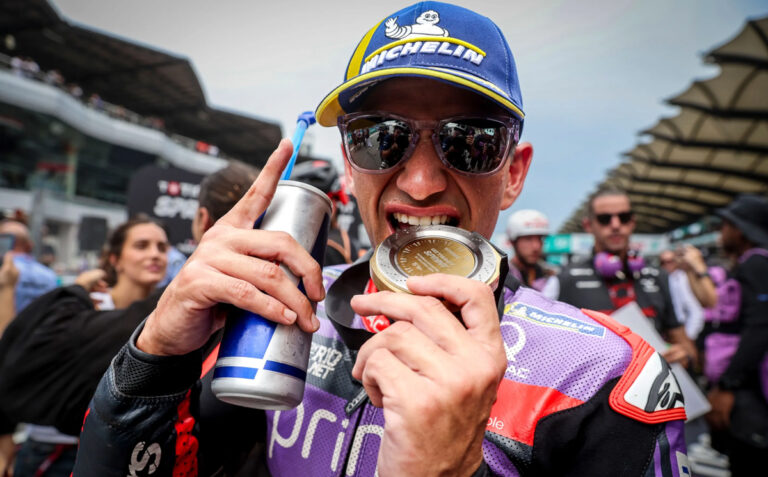
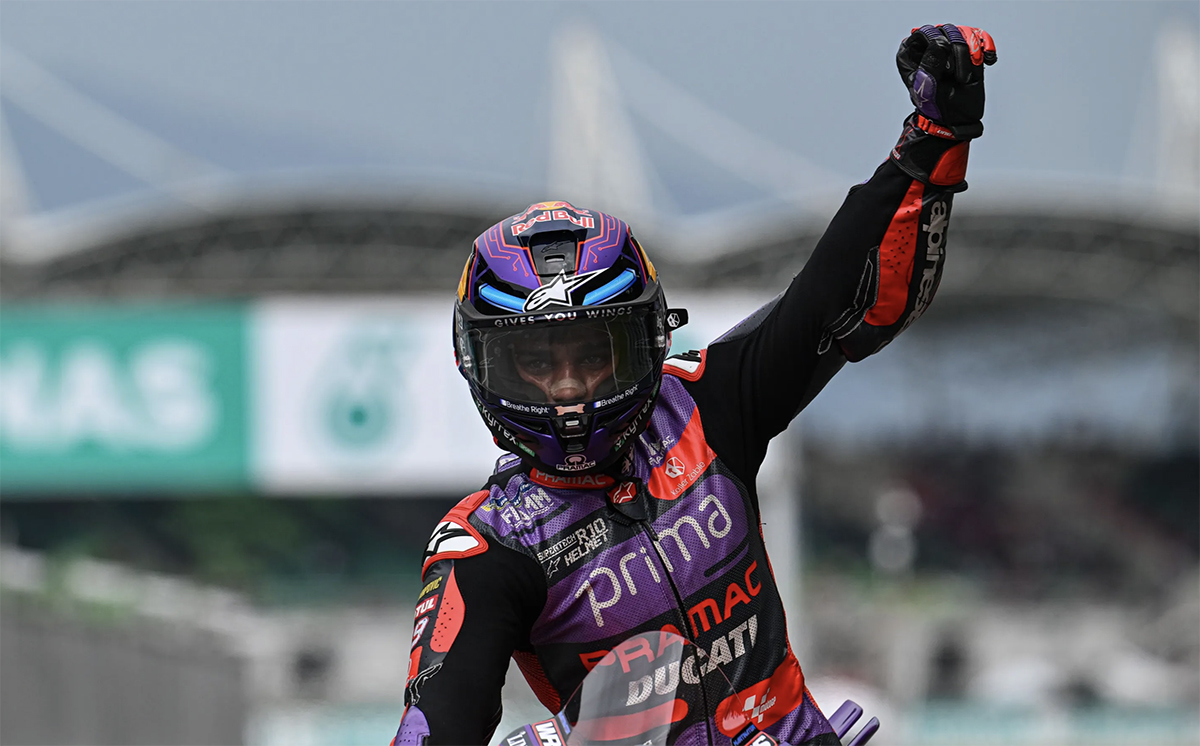
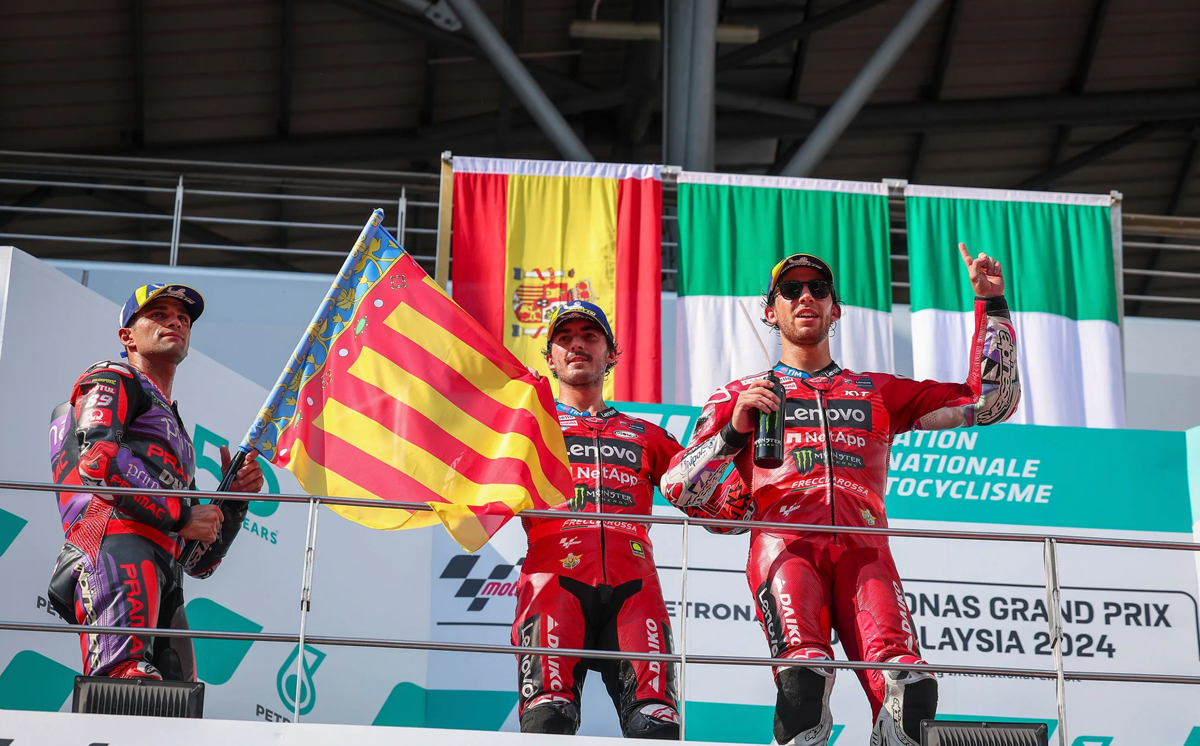
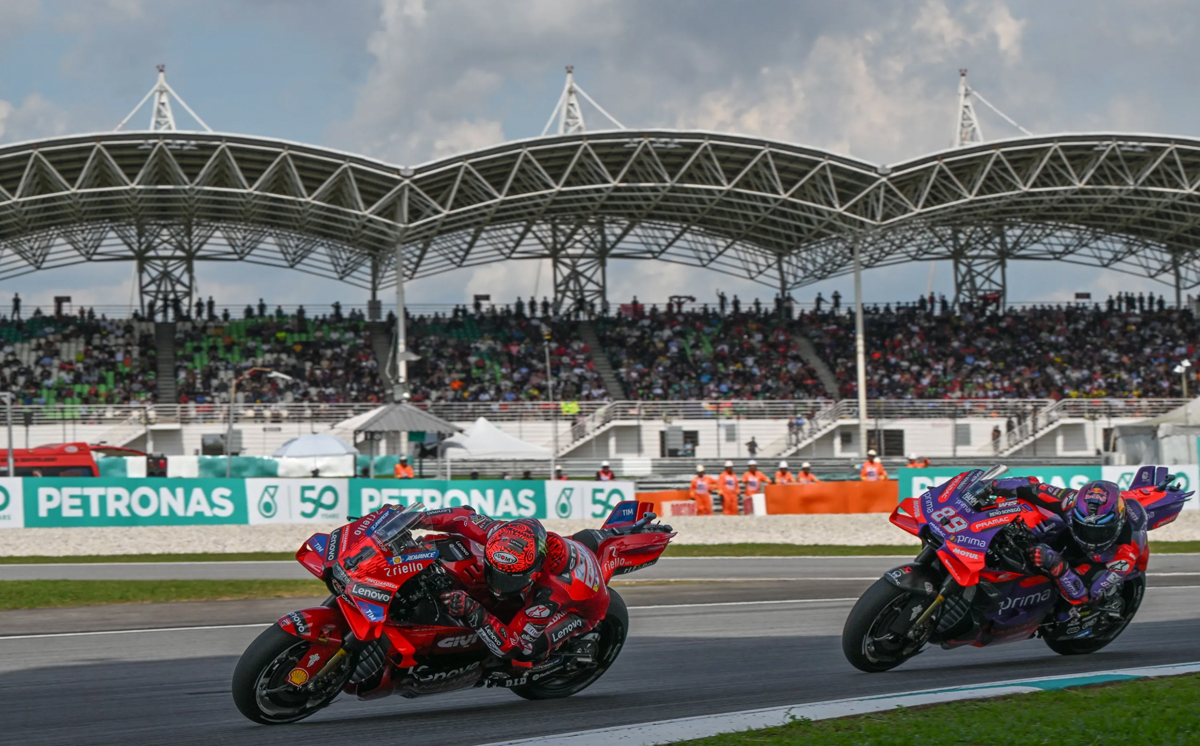
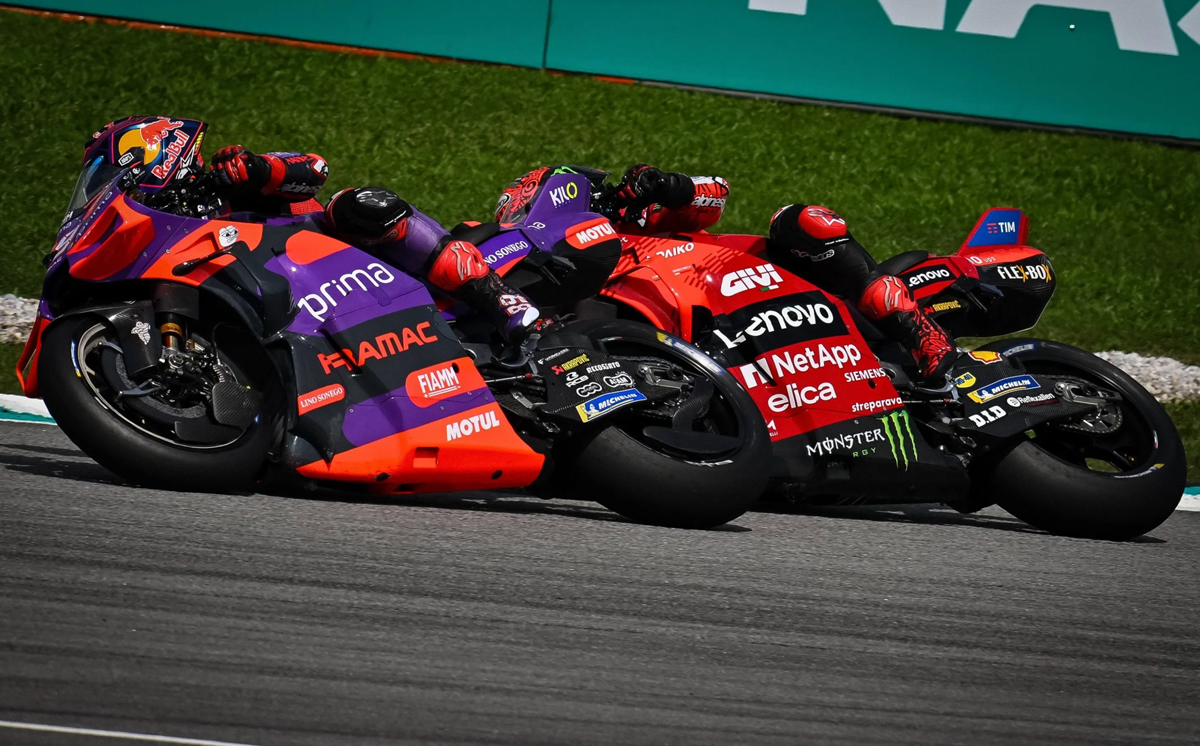
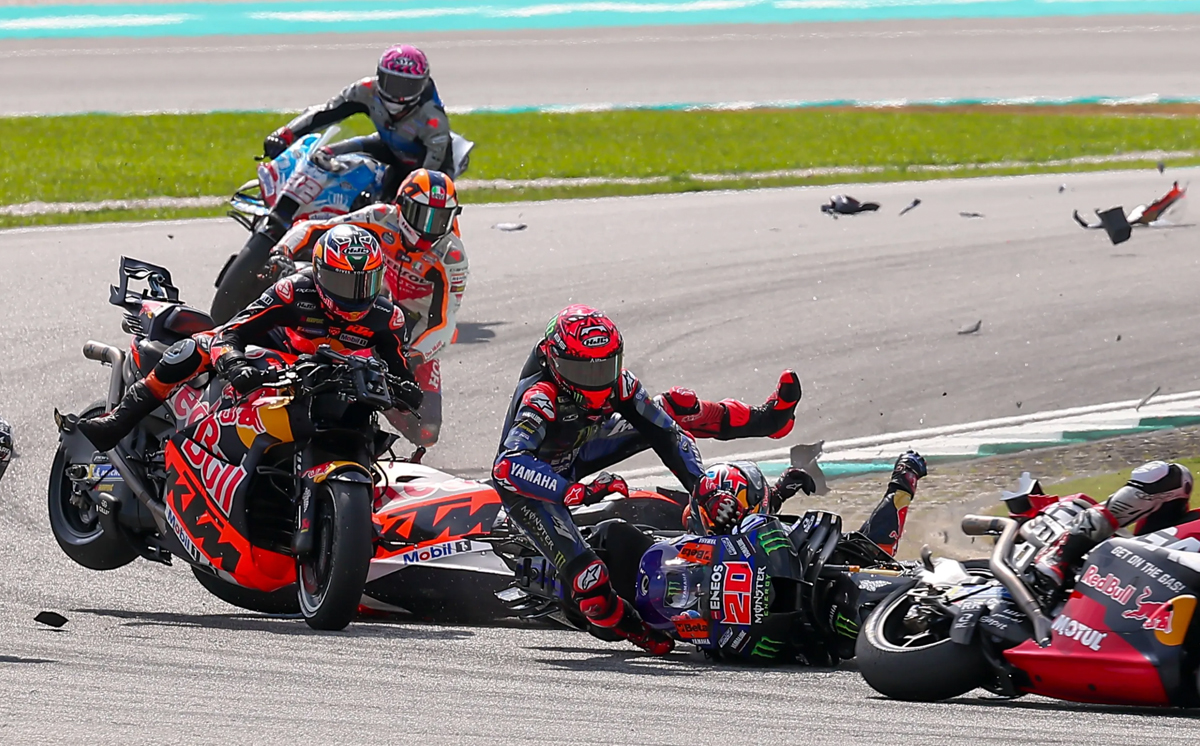
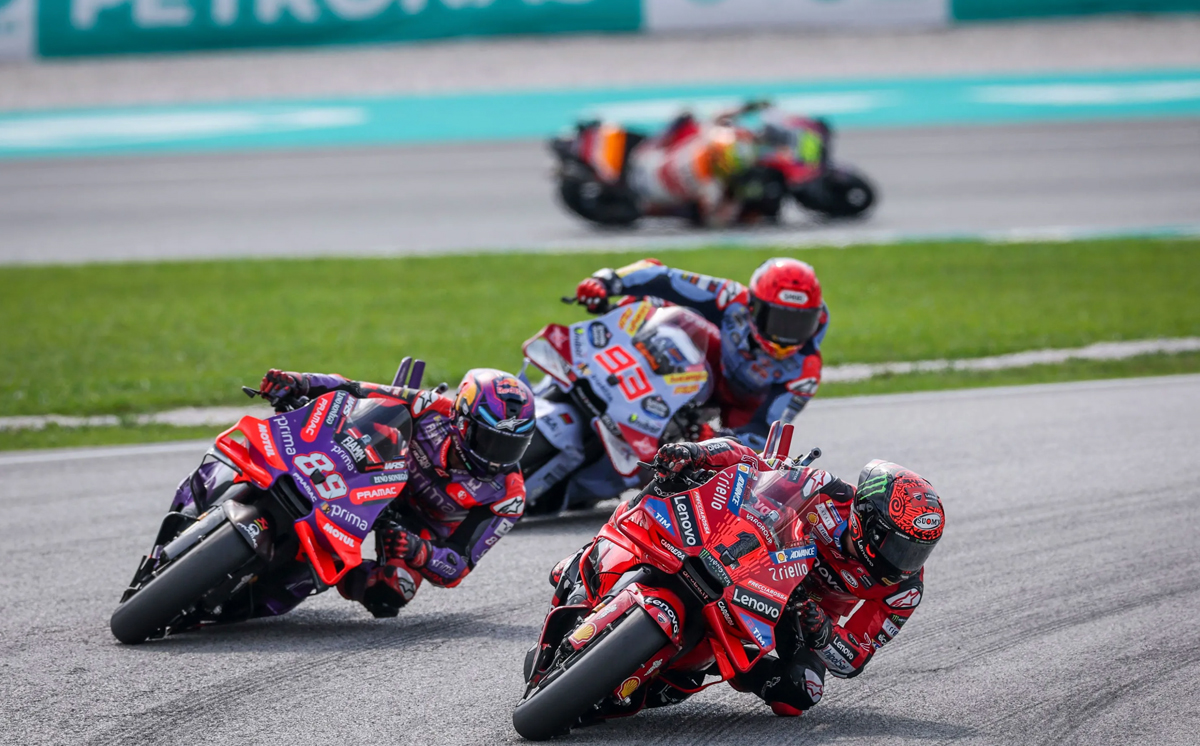
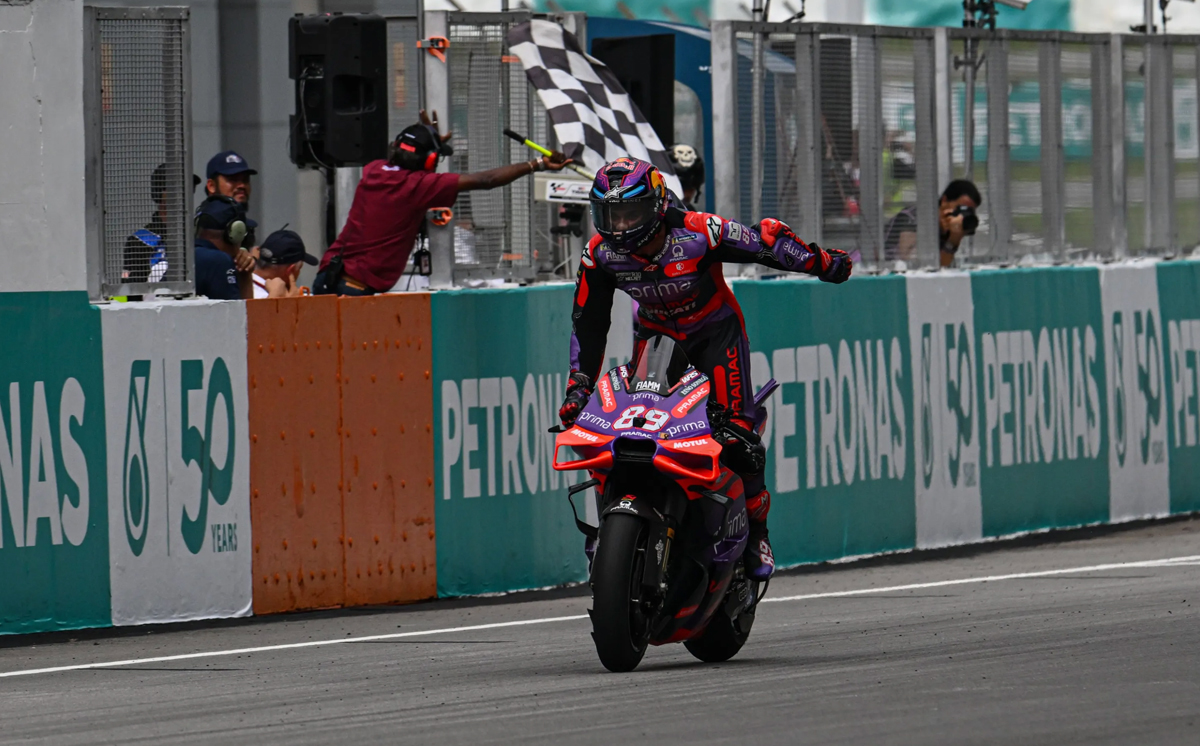
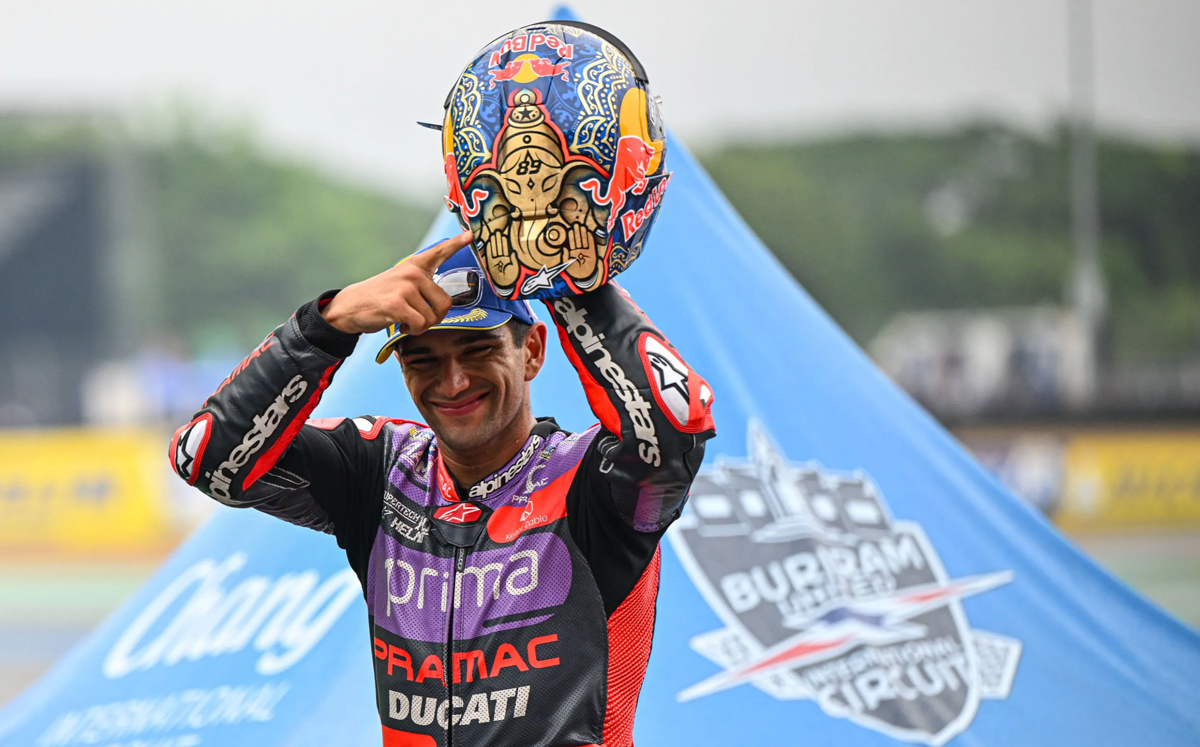
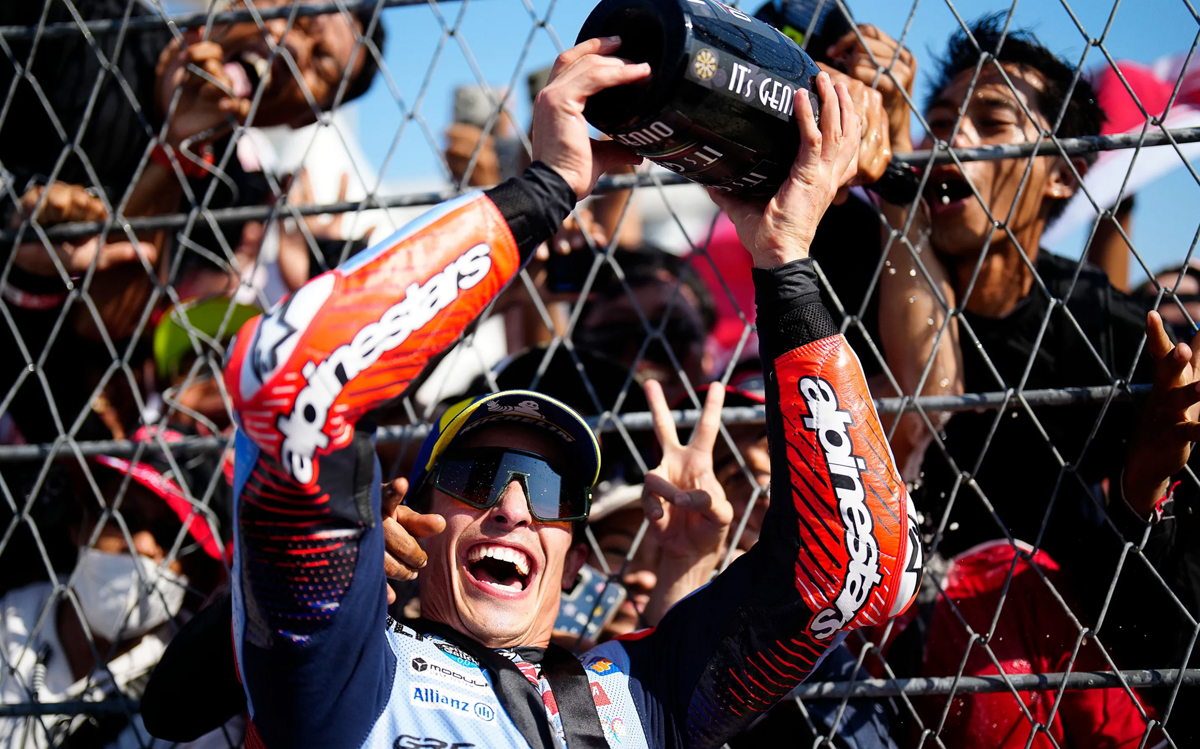
To finish first, first, you have to finish. One of the most hackneyed phrases in any sport but one that perfectly sums up the 2024 MotoGP season. Francesco Bagnaia won 11 Grand Prix races – 18 races overall, if you count the Sprint victories – but Jorge Martin, the champion, made consistency count; when Bagnaia failed to finish – too many times by crashing out completely (eight times) and not simply finishing down the points – Martin made the most of it and, when Bagnaia did finish ahead, Martin was right there behind him to minimise the damage. Martin also only crashed out four times and scored 16 second-place finishes. That’s consistency.
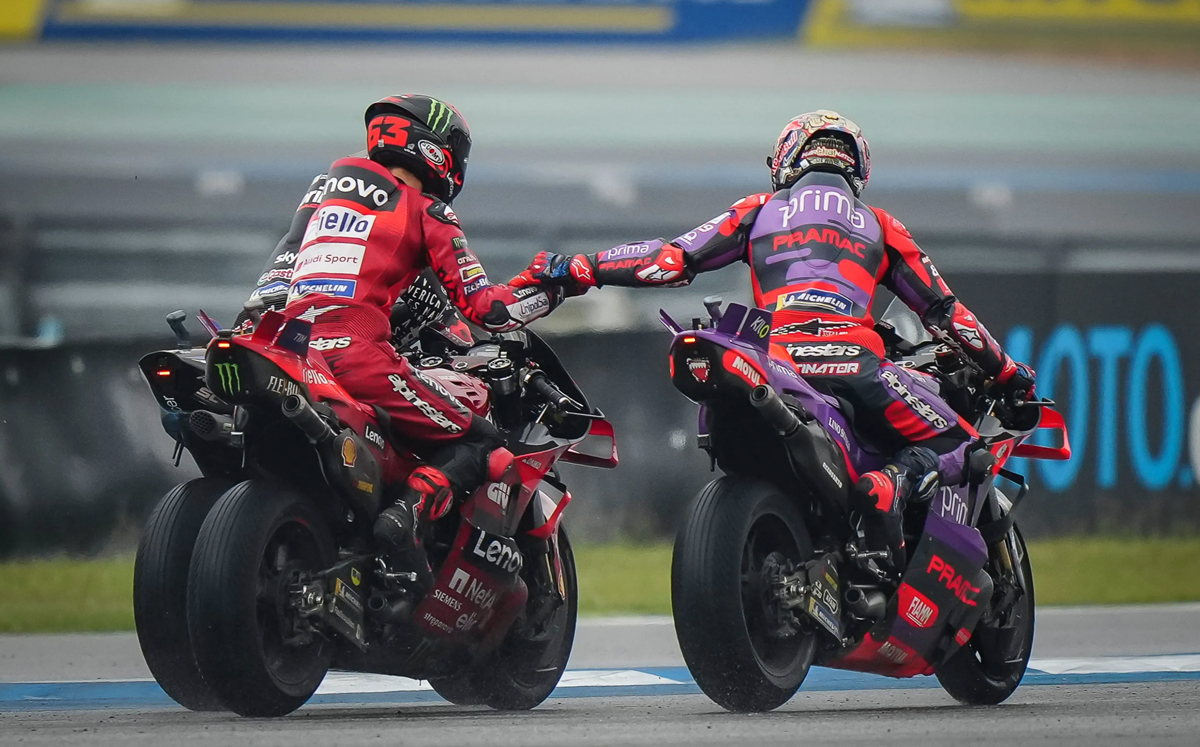
In any season finale that goes to the wire, there is always a tinge of sadness for the loser that travels alongside the euphoria for the winner. When a contest is so close, no one deserves to lose. In 2024, this was even more so due to the protagonists conducting themselves in what could possibly be the most gentlemanly and sportsmanlike manner ever witnessed in top-flight motorcycle sport, both on- and off-track. They both were almost too nice to lose out in the final reckoning!
Image source: Ducati
Some observers lament the lack of antagonism between protagonists—Rossi and Gibernau, Rossi and Biaggi, Rossi and Lorenzo/Marquez, to name the obvious ones—claiming it makes the battle all the more exciting. But hasn’t this season proven that the exact opposite can be true? That witnessing clean and respectful racing can be just as tense and often brilliant?
Bagnaia did everything expected of him as reigning champion, becoming one of only five riders to have won 11 or more Grands Prix in a season, following Agostini, Doohan, Rossi and Marc Marquez. That’s exalted company. He has been an exemplary champion, preferring to do his talking on the track and not off it. No one would have begrudged him a third title.
Image source: Ducati
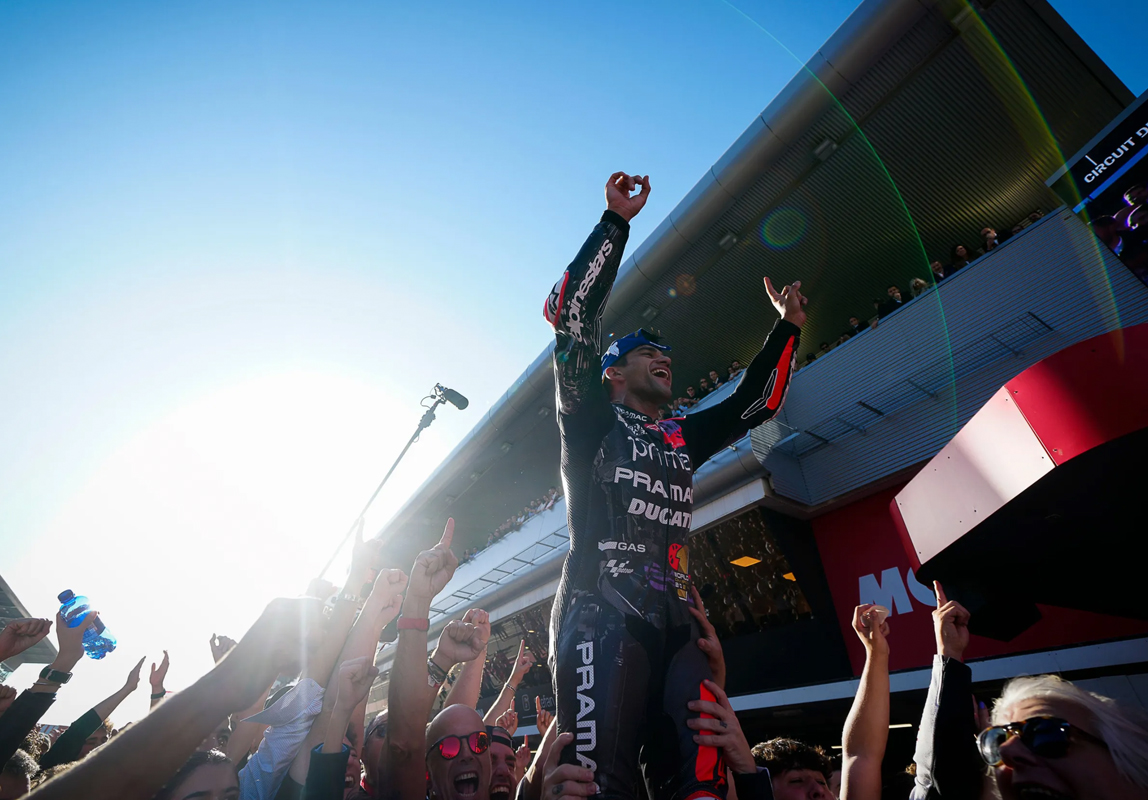
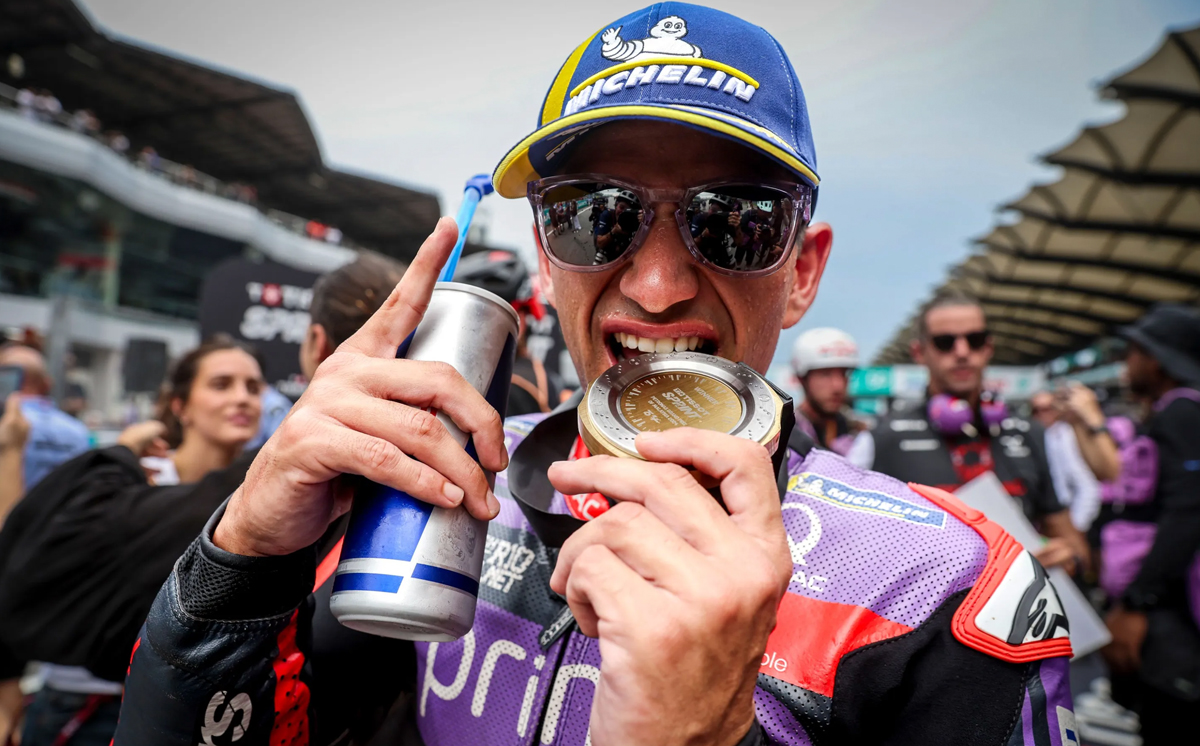
But the sport is all the better for having a new first-time champion, one who unequivocally deserves the title. Consistency is never sexy, but it is effective, especially when the rider is as exciting to watch as Martin.
Jorge Martin’s performances this year have been matched only by his own humility and refusal to be dragged into mud-slinging in the face of Ducati’s reticence to promote him to the factory squad for the second year running. Ducati’s loss is Aprilia’s gain. Let’s just hope it’s also Martin’s gain…
Image source: MotoGP
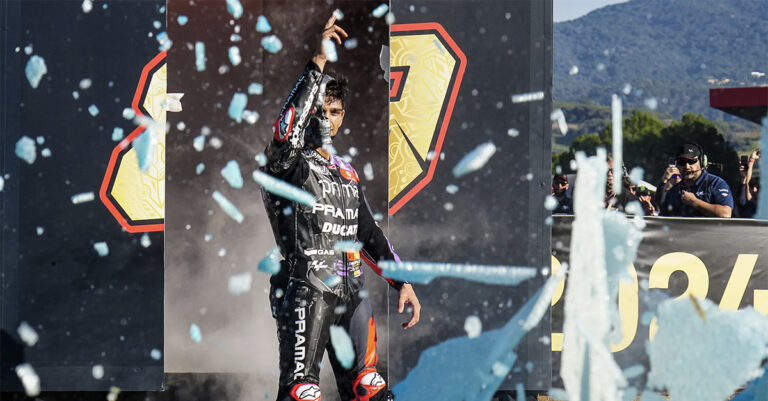
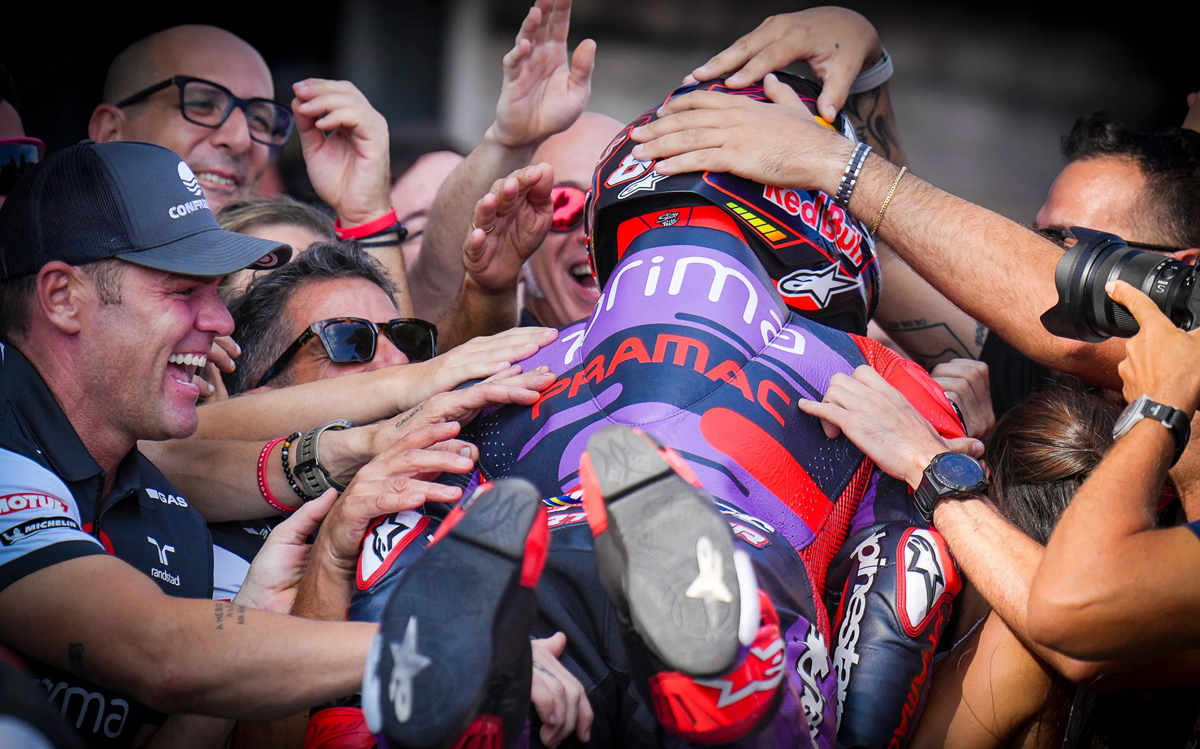
What’s just as good as the rider’s title is that Martin has given the Pramac team the distinction of being the first satellite team to win the title in the modern, four-stroke MotoGP era. Just imagine if the team’s jump to Yamaha machinery in 2025 coincides with the latter getting its act together and becoming a force in MotoGP once again. The championship-winning experience Pramac has gained in 2024 is worth more than all the sponsorship dollars and the team could pull off another masterclass if Yamaha can give the team the equipment…!
Bagnaia showed his two consecutive last-gasp championships were no fluke by doing everything he had to do and dominating the final weekend of the 2024 season; pole position, Sprint victory and Main race victory, where too often this season he has fallen short in one or the other. In light of the pressure he was facing, including the mentally devastating possibility of the title slipping out of his grasp, it was his greatest race weekend of the year. He could have done no more and could only rely on Martin making the fatal mistake under pressure.
Image source: Ducati
Martin didn’t make that mistake. Yes, he was helped by having a 24-point buffer leading into the final round, but he also did what was necessary this weekend and didn’t put a foot wrong, even though there was potentially more pressure on him.
Looking at it that way, and considering the achievements of both riders, to choose a loser seems unfair.
Martin is a worthy world champion; let’s make no mistake about that, for all the talk of sportsmanship. He has been devastatingly fast all year, both aggressive and fair in his race tactics. He put behind him the disappointment of last year completely and believed in his own ability. There was also an enhanced vision of what it takes to win the championship and, when he had to, this year he played the percentage game and took the points.
Image source: MotoGP
It’s not that he ever held back, it’s just that it never looked like he was doing that. He always looked spectacular and, watching him, you could never be certain that disaster was far away. But somehow, he got away with it more often than not. He always looked fast.
That’s the difference between Martin and Bagnaia. When Bagnaia crashed, it was a complete surprise because he was always so smooth and unruffled and never looked as if he was going that fast. He is the two-wheeled equivalent of Alain Prost; a mobile computer that doesn’t look as if he’s going very fast until you look at the time sheets or the gap he has built to his competitors. Bagnaia might not get the pulse racing on track as much as Martin, Espargaro or Binder, but there’s an argument that says he’s the most complete racer on the grid, capable of pulling out pivotal performances when he needs to. Of course, he might not have to pull off those performances if he avoided the mistakes…
Image source: Ducati
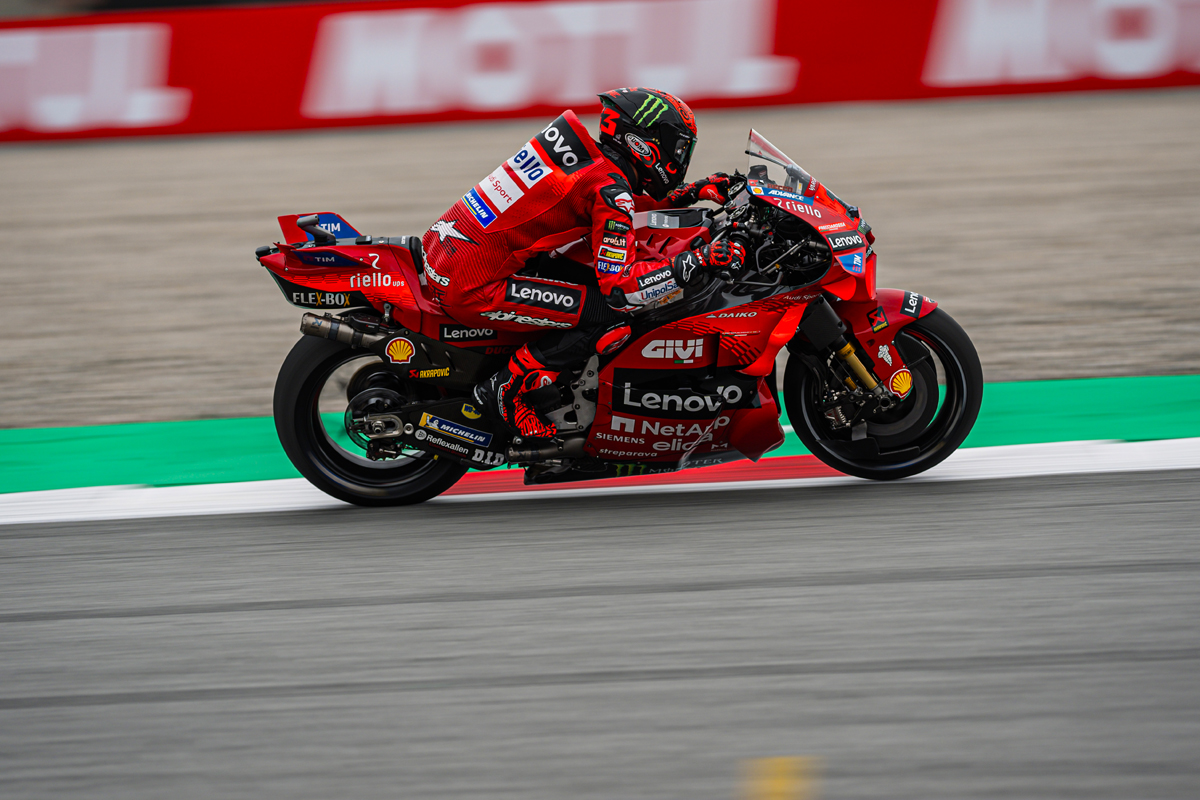
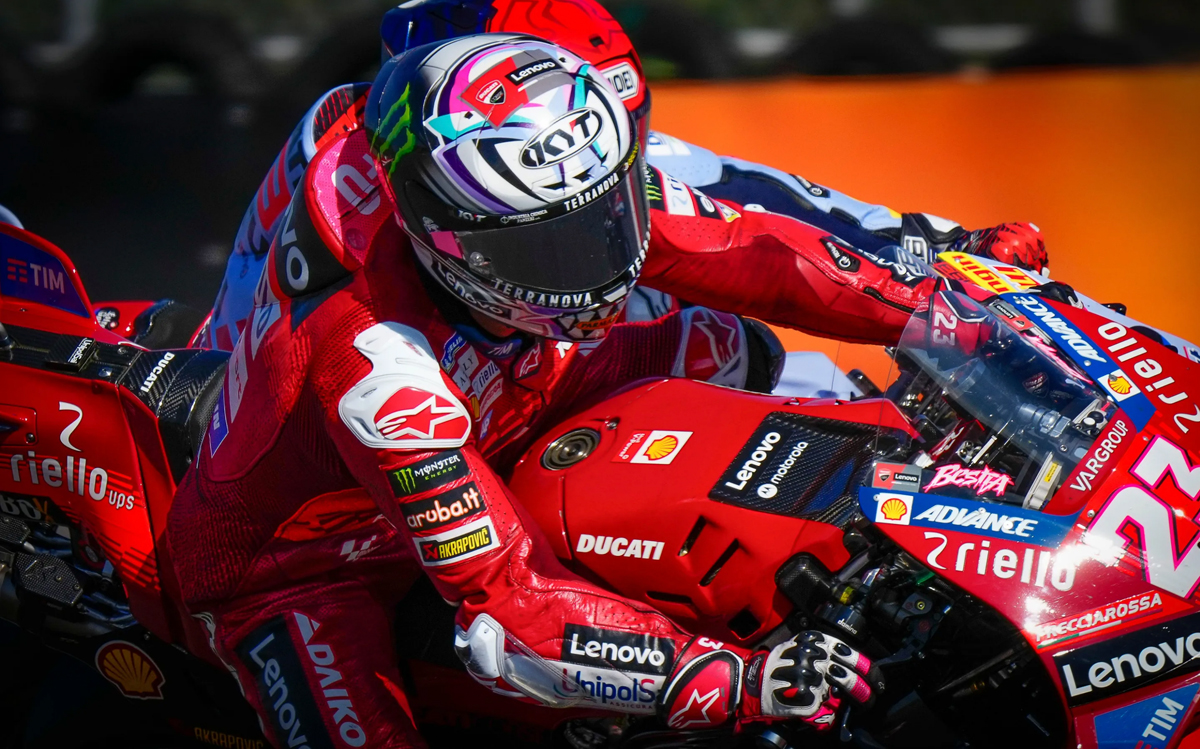
The superiority of the Ducati GP24 was a huge factor in the title race. Many will criticise the championship because of the number of Ducatis on the grid but is that Ducati’s fault? If you’re given an advantage, you take it and, let’s face it, the advantage would have been nothing if the bike itself hadn’t been up to the challenge. The GP23 and GP24 have been the class of the field for two years and we’re witnessing a new era of MotoGP, just as we had the MV Agusta years, the Suzuki years, the Honda years and the Yamaha years, so let’s appreciate that. In a few years, it will be another manufacturer; it just so happens that this is Ducati’s time and we should enjoy it as such.
A better way of looking at it is to realise what Ducati’s dominance will do to spur Honda, Yamaha, KTM and Aprilia onto greater things. Imagine a grid with five manufacturers with a real chance of a win, not just through luck or a confluence of circumstances and a rider who rolls the dice (Binder, Austria, rain, anyone?).
Image source: KTM
There’s another measure to the GP24’s dominance; Martin, a rider with a very distinct style, can race toe-to-toe and beat a rider with a completely different style on the same machine. Think about it; eight riders on Ducatis this year and last, all with their own style of riding and all able to win. When did any manufacturer have that level of dominance, with two riders who were more than capable of beating each other? Rossi and Lorenzo on the Yamaha? Agostini and Hailwood on the MV Agusta? There haven’t been too many pairings and now we’re talking about one manufacturer with eight potential winners. That shows just how far Ducati has come.
Or how far the Japanese have sunk! When last was Honda barely mentioned in Grand Prix racing? Between 1968 and the early 1980s, when Honda wasn’t participating in Grand Prix racing at all, that’s when.
Image source: Honda
In 2024, Honda couldn’t buy a headline in any of the press, unless it was regarding Joan Mir not finishing a race yet again, or the fact that Luca Marini hadn’t scored a single point quite yet.
It’s not that Ducati have moved the goalposts so far beyond Honda’s reach, more that Honda has gone so wrong. In the normal scheme of things, Ducati might be the fastest, but Honda would be able to keep up and challenge to a certain extent.
Image source: Honda
Something, however, has gone terribly wrong at Honda this year (and last year, and the one before that…) Being slow is one thing, but trying to kill its rider at every opportunity is another, which is exactly what the latest RC213V has consistently tried to do. To suggest that it has taken Honda so long to rid itself and its motorcycle of the influence of Marc Marquez is ridiculous. You don’t forget how to build a racing motorcycle that quickly. Having said that, maybe the team has lacked a rider who has a domineering influence and who has driven development within the team, a role which has either been denied to Mir and Marini, or which they are incapable of assuming.
Much the same can be said of Yamaha, although Fabio Quartararo has produced some unbelievable performances in 2024, even if the final results have lacked the same sparkle. Much has been made of Pramac’s defection to Yamaha; two more bikes on the grid, double the feedback and development potential, which everyone is convinced is the golden ticket for success, given Ducati’s position at the present time.
Image source: Yamaha
What that ignores is that Honda, KTM and Aprilia all have four bikes on the grid and it hasn’t done them much good this year, has it?
There’s been a lot of noise about Yamaha’s move to a V4 in place of the inline four-cylinder engine. Only time will tell if the noise is more than the mere gnashing of gear teeth, with no visible improvement in performance. As with Honda, Yamaha has not forgotten how to build an effective racing motorcycle and will do so again.
And then we get to Aprilia and KTM. Unfulfilled promises might be the kindest way of describing their years. Aprilia’s Maverick Viñales scored a remarkable treble in Austin – pole, Sprint and Main victories – but, apart from that, there were only five other podiums for him and one Sprint victory and three other podiums for Aleix Espargaro. Certainly not what we were expecting after 2023.
Image source: Aprilia
The honest appraisal for KTM is that without Pedro Acosta and his nine podiums – three in Main races – it would have been a dire season, with Binder scoring only two podiums in the opening race and Jack Miller none at all. Dani Pedrosa scored a remarkable podium in the French Sprint race as a wild card entry but 2024 was a season to forget for the Austrian outfit. About the only positive was Acosta’s performance in his rookie year but it will depend on KTM’s ability to give him the bike he needs in 2025 if his talent is not to be squandered.
Image source: GASGAS Tech 3
And that brings an end to the 2024 season. Whether you think the right rider won the title depends on where your loyalty lies but we should rejoice in the fact that the title race went down to the last corner of the last lap of the last race, even if we were only waiting for a mistake from the champion-elect right up to that moment.
The protagonists will likely be different in 2025; well, one at least – Marc Marquez – while it would be a fool who would rule out Bagnaia and, if Ducati loses two bikes on the grid in 2025, then that still means three up-to-date GP25s and three GP24s. That’s a formidable armoury. Of course, we’ll all wish for Honda, Yamaha, KTM and Aprilia to up their game and close the gap but we might have to wait for that until the new rules come in, in 2027.
Image source: MotoGP
2025 starts two days after the final Grand Prix weekend, with a test in Barcelona. Marquez on a Ducati GP25, Martin on an Aprilia, Acosta on a factory KTM. Next year is shaping up nicely already.
With all the fuss and attention around adventure bikes in South Africa – much of it justified, it has to be said, thanks to their all-round practicality, excellent dynamics and performance – it’s easy to forget that a motorcycle can exist to simply be entertaining and fun to ride, with no alternative higher purpose.
In Europe, riding conditions and general availability of off-road riding opportunities mean that motorcycles other than adventure bikes are just as, if not more, prominent in the sales figures. This is reflected in the number of naked models that are available and also hugely popular.
Photo credit: Bjorn Moreira / ZA Bikers
Husqvarna, originally a Swedish manufacturer, which, for several years, has been part of the Pierer Mobility stable that encompasses KTM and GasGas, has undergone a radical change in the products offered. For so long a specialist in enduro and MX motorcycles, Husqvarna has not only entered the adventure bike market with the Norden 901 but also the naked sports bike market with the ultra-modern-styled Svartpilen and Vitpilen, two models that properly established a new design language.
As is the norm with motorcycles today, the 2018 Svartpilen/Vitpilen theme was due for an upgrade and, in the form of the Svartpilen 801, it has arrived. If, at first, there might be a sense of disappointment that the design language has been diluted to the point of slight anonymity, there can be no doubt that the riding experience has survived undiluted. Which, let’s face it, is the whole point of the exercise in the first place!
Photo credit: Bjorn Moreira / ZA Bikers
The biggest change is in the engine. The Svartpilen 701 was powered by the 692cc, 75bhp, single-cylinder engine from the KTM 690 range, whereas the Svartpilen 801 utilises the 799cc, 104bhp parallel twin-cylinder engine from the 2018 KTM 790 Duke, housed in a new tubular steel chassis, with calmer steering geometry, fully-adjustable WP suspension and a host of electronic rider aids. If the new model loses some of the uncompromising – but still playful – aggressiveness of the Svartpilen 701, then it more than makes up for it with a new-found sense of performance and sportiness.
Photo credit: Bjorn Moreira / ZA Bikers
I’m not going to even comment on the price, which is R206,699, because I’m sure we’re all bored of talking in incredulous tones about the cost of motorcycles these days. We really have to adjust our thinking and accept that they are no longer inexpensive; not that they ever were but the psychological barrier of a relatively ‘ordinary’ bike costing more than R200,000 is hard to overcome.
What might seem a little incongruous is the standard fitment of Pirelli MT60 RS dual-purpose tyres, which have an 80/20 road/off-road bias; quite why anyone would contemplate taking this bike off-road is not entirely clear but thankfully the tyres have more than enough grip for road riding and, to be honest, they do look brilliantly chunky and purposeful.
Photo credit: Bjorn Moreira / ZA Bikers
As a riding machine, the 801 is sublime; the chassis and suspension are brilliantly executed, the latter offering a plush ride without ever feeling like it’s losing control when pushed, and the springing is on the soft side, which enhances the feeling of quality. Naturally, the suspension is WP, fully adjustable, while the braking is handled by J. Juan, Brembo’s Spanish subsidiary. No complaints in that department at all.
Photo credit: Bjorn Moreira / ZA Bikers
The riding position tips the rider slightly forward but not to extremes and there is plenty of space, even for taller riders. The seat is a typical KTM offering, being flat, wide and reasonably comfortable, although you will want to take a break every hour and a half to get some feeling back into your backside.
Photo credit: Bjorn Moreira / ZA Bikers
It would be tempting to assume that the Svartpilen 801 is merely a KTM 790 Duke in different clothes but, having ridden the two bikes back-to-back, thanks to a friend who owns a 790 Duke, the Husqvarna somehow feels a little less manic and edgy. Don’t worry, it will still bring out the hooligan in you and cater for that side of your personality perfectly, it just does it in a slightly more civilised manner.
The engine is familiar to anyone who has ridden the 790 Duke and there is nothing you can criticise. 105bhp pushing along 181kg (wet) will always produce fireworks but it’s not peaky, nor does it have a violent delivery; there’s a linear spread of power and it is linked to a smooth and benign throttle. Fans of the old Svartpilen 701 might lament the loss of the single-cylinder engine and, compared to that, the parallel-twin engine in the 801 has lost a bit of character, but the performance has improved, just as the vibrations have reduced.
Photo credit: Bjorn Moreira / ZA Bikers
The electronics are extensive, with variables for ABS and traction control and there’s even a Supermoto mode for the ABS, that turns off the ABS at the rear, allowing the show-off rider to skid the rear wheel at will; it’s great fun but not great for rear tyre life! The bi-directional quick-shifter is brilliant, with a solid-feeling click to each change, the ABS and TC are lean-sensitive and there is, of course, the ubiquitous full-colour TFT dash as an interface for adjustments as well as riding information.
Photo credit: Bjorn Moreira / ZA Bikers
The Svartpilen 801 isn’t really a direct replacement for the 701, as it smoothed out some of the rough edges of the previous machine and turned into something a bit more civilised, if not slower or less dynamic. It’s as if it has grown up a little, which is no bad thing. Personally, I would have liked the styling to have been as ground-breaking as the original but perhaps it’s more a case of being used to the styling after six years of seeing them on the road. Maybe it would look more distinctive in another colour but it’s available in any colour you want, as long as it’s black…! All very stealthy, and I’m certain that no one will agree with me!
If I had to sum the Svartpilen up in one word, it would have to be “fun”. There was never a moment when it didn’t thrill and entertain, never a moment when I wanted more power or better handling and braking, never an opportunity missed to ride it, even if the journey was merely a couple of kilometres. If my day-to-day riding – including weekends – was limited to the urban jungle, the arguments for the 801 would be hard to resist.
Photo credit: Bjorn Moreira / ZA Bikers
Husqvarna 801 Svartpilen
For more information on the bike featured in this article, click on the link below…
We’ve had our 5-door Jimny now for a few months, and as you’ve seen, we’ve added several Suzuki ‘approved’ accessories to make the already versatile Jimny even more practical.
Just to recap, we’ve…
Installed Protection Parts from the Suzuki OEM parts catalogue
Fitted a set of ‘all-terrain’ Grabber AT3s from General Tire
Locally made Seat Covers and Interior Protection from Takla Products
Roof Rack and Ladder from Proudly South African company Front Runner
1 of 9
Continuing with Front Runner, having had the roof rack installed, this not only gives the Jimny a ‘rugged’ look but with a few basic tie-down ring mounting points, strapping larger items onto the roof, such as ladders for example, has made the Jimny so much more practical than in its standard trim.
But why stop there? Front Runner offers an array of adventure accessories from; a range of sports carriers, and a huge selection of camping and expedition accessories including many storage solution options.
So as part of our ongoing Jimny blog, we’ll be testing several of these roof rack accessories, starting with two Pro Bike Carries, Cargo Boxes and Bracket Mounts, a set of Recovery Devices and a Mounting Kit—time to pimp our rack!
Front Runner Pro Bike Carrier
First up is Front Runner’s Pro Bike Carrier, which is constructed with the same weather-resistant stainless steel and powder coating as the Front Runner racks and mounting systems.
Photo credit: Bjorn Moreira / ZA Lifestyle
As we do regular bicycle features at ZA Lifestyle, we opted for two of these bike carriers to be fitted to our rack.
The selling points for us are that firstly; no front wheel removal is necessary, which just makes things simpler when loading, and secondly the carrier is adjustable to most wheel diameters including road bikes, MTB and fat bikes with tyre widths ranging from 18mm/0.7″ up to 132mm/5.2″ (including e-MTBs), which is vital to us as it gives us flexibility when collecting different bike types from clients.
Photo credit: Bjorn Moreira / ZA Lifestyle
The installation process was quick and easy, taking approximately 30 minutes in total, we laid things out in a way that we could still put other accessories on—maximising the versatility potential of the rack.
To load a bike, simply remove the fixing bracket, lift the top wheel holder into position and lift the bicycle into place. Then Loosen the knob to lift the bottom wheel holder so it touches the tyre and then adjust the knob to fix the front wheel firmly into position.
Photo credit: Bjorn Moreira / ZA Lifestyle
Finally, the rear wheel sits into a wheel holder and is tightly secured using a rachet-type fixing mount. Voila! It’s that straightforward…
Photo credit: Bjorn Moreira / ZA Lifestyle
We’ve tested the rack with both an entry-level hardtail MTB and a high-end e-MTB, both bikes were loaded on/off with ease and what’s nice is that the carrier folds flat and secures onto your rack when not in use.
These durable brackets will hold your cargo boxes securely in place through any terrain and are designed to work with Front Runner Roof Racks. They are lockable and offer versatile placement anywhere on your roof rack. We found them to be particularly handy for storing our dirty MTB kit after our ride—a superb storage solution from Front Runner.
Pro tip – having the boxes mounted between the bike carriers is great in that they act as seats when you are mounting/dismounting the bikes.
Photo credit: Bjorn Moreira / ZA Lifestyle
MaxTrax Recovery Devices and Mounting Kit
Finally, as often is the case when out-capturing content for our platform, the journey takes us to some weird and wonderful places that are often off the beaten track, which inevitably puts us at risk of getting stuck.
With a little room left at the rear of our rack, we decided a little ‘peacocking’ was in order so we fitted a set of ‘Orange’ MaxTrax Recovery Devices which mount very neatly using Front Runner’s Recovery Device Mounting Kit.
Better safe than sorry—oh, and they look super cool too.
Photo credit: Bjorn Moreira / ZA Lifestyle
With the December holidays fast approaching, we’ll be testing a few more adventure goodies from Front Runner so stay tuned…
The end of the year is the time when families are busy planning their summer holidays, working out how much essential luggage can be fitted into the car and still leave room for the family!
Thule, the Swedish manufacturer of premium vehicle accessories, has a huge range of solutions to deal with any cargo-carrying requirements, be it for luggage, bicycles, sports equipment or pets, in the safest and most secure way possible.
Image source: Thule
The use of a rooftop cargo carrier allows motorists to easily add an additional 610 litres of packing space to most vehicles sold in South Africa. The required roof bars also allow for the carrying of other items such as canoes or bicycles up top and alongside the rooftop cargo carrier. Thule’s rooftop cargo carriers range in size from 360 to 610 litres and are lockable both onto the roof bars while also featuring lockable lids for safe transportation of luggage.
How much is 610 litres? Well, the boot of the average-sized family vehicle is around 350 litres, so Thule’s rooftop cargo carriers allow you to more than double the luggage carrying capacity of your car.
Image source: Thule
Rooftop cargo carriers are also great for large-volume items that would otherwise occupy most of the boot space, such as strollers, golf clubs and diving gear.
Using a rooftop cargo carrier allows motorists to expand their cargo-carrying ability while freeing up the towbar for other duties such as towing a caravan or the fitting of a towbar-mounted bicycle carrier.
In addition to maximising usefulness, Thule’s designers have also focused on aerodynamics which delivers rooftop cargo carriers that minimise wind resistance and ensure a fuel-efficient journey.
Image source: Thule
Thule are well known for its bicycle carrying solutions and this range includes roof, boot, load bin and tow bar mounted bicycle carrying solutions. Thule’s bicycle carriers are designed to safely and securely carry bicycles while eliminating any chance of damage to bicycles or vehicles.
Towbar-mounted bicycle carriers are a great option as they are easy to load and allow you to keep an eye on your bicycle via the rear-view mirror.
The Thule Epos is the Swedish brand’s latest towbar-mounted offering and is designed to ensure the maximum safety of all types of bikes while being easy to use in all areas of operation.
Image source: Thule
The biggest innovation of the Epos is the way in which bikes are attached to the carrier. Instead of a claw-style holder attached to an integrated rear frame, the Epos utilises an innovative telescopic bike attachment system. Patented telescopic arms with a pivoting cradle, along with steel reinforced straps mounted to the base of the rack can be adjusted to allow for simple attachment anywhere on the frame or rear wheel, offering numerous attachment options. This eliminates the need to thread attachments through frames of the bicycles loaded alongside and allows up to three bikes to be loaded in any order, eliminating the need for last on first off. All types of frames and geometries are supported including e-bikes, mountain bikes, gravel bikes and even bikes fitted with fenders or racks. A generous 25cm distance between the bikes reduces the risk of bike-to-bike contact.
Image source: Thule
A load capacity of 30kg per bike as well as extra-long wheel holders, enables the easy transportation of bikes with slacker head angles, chunkier tyres and longer wheelbases up to 1350mm. Even the ratcheting pump buckles have been redesigned for easier fastening of tyres up to 50mm.
Transport pets safely with the Thule Allax
Thule recently launched their range of Allax dog crates in South Africa, allowing dog owners to travel with their canine family members safely and securely inside the vehicle.
This innovative dog-carrying solution prioritises safety and comfort. Extensive crash testing resulted in the incorporation of an innovative crumple zone that provides superior protection for both passengers and the occupants of the crate.
Image source: Thule
The Allax boasts several innovative features including rounded edges that ensure a perfect fit for both the car and the dog as well as adjustability, a gas strut, a lockable door and a window for improved visibility of the outside world from the safety of the crate.
The Thule Allax is the perfect way to travel safely, easily and conveniently with your dog and is available in ten different sizes.
The Thule Caprock is a platform for adventure
The Thule Caprock is a platform-style roof rack designed for use on larger off-road vehicles by creating a foundation for everyday work or leisure adventures and offers a modular design that supports a variety of gear and mounting types, supplied by Thule or third-party suppliers while being easy to load and unload.
Image source: Thule
All of Thule’s vehicle-mounted products are backed by a five-year warranty, but Thule also understands that products can get damaged through wear and tear or loss of small items and parts.
Thule South Africa carries a wide variety of spare parts to ensure that products sold remain safe, and functional and operate as they were designed for many years both through their warranty programme and to purchase. This offering includes items such as keys, locks, a wide variety of rubber parts, straps, knobs, and attachments as well as clamps, nuts and bolts of various sizes, which ensures sustainability and value for money by facilitating an extremely long product lifespan.
Image source: Thule
Make your holiday journey as safe and enjoyable as possible for the whole family this year with Thule.
It’s fair to say that e-bikes started their life in the bicycle community much like the Toyota Prius did in the car community, hated by most. The performance-driven and competition-driven cyclists still cannot wrap their heads around how one could simply put in zero training and then go for a simple smell-the-roses-paced cycle without a heart rate monitor or fitness app to track their calorie deficit. E-cyclists are out for fun and to escape their busy lives, the last thing on their mind is doing fitness app admin on their weekend off.
Unlike the Prius, though, e-bikes make sense. Their hybrid drive train allows for enough range for the average Joe to enjoy a trail, more than enough assistance from the electric motor to do what they thought impossible and the painful charging times are palatable, as most South Africans won’t be commuting but rather riding once or twice a week at a local trail. For the unfit and the leisure cyclist, the run of the mil e-bike makes total sense and even more so as the technology gets more advanced and pricing starts to drop. You can get yourself onto an entry-level hardtail e-bike for under 30k these days, to get the same kind of performance you would have to spend double that for a lighter carbon fibre XC bike and then put in the hours of training to get anywhere near one on an outride.
Photo credit: Meredith Potgieter / ZA Lifestyle
But, for the performance-driven cyclists e-bikes are too heavy, noisy, cheaply specced and even in ECO or the least assisted mode, too powerful to get any gains out of your pedal. Just like the petrolheads say, “not as engaging as the good old manual stuff”. However, top bicycle brands like Trek have been listening to their more purist-based customers and have built something special, we are talking about the Trek Fuel EXe.
Unlike the first gen of e-mtbs, where manufacturers were looking to build more and more powerful bikes, today we see companies looking to recreate the feeling of conventional mountain bikes, with a playful edge and natural handling, while also adding a little extra boost.
Photo credit: Bjorn Moreira / ZA Lifestyle
For those of you who have come to know Trek in SA, you should know them as a brand that listens, not only to the UCI faithful but to the weekend warrior and enthusiast, the kind of cyclist that wants a bike to work well, have good features available from standard, great build quality, good service and of course not break the bank.
What is a Fuel EXe? Trek’s more trail-oriented bikes have always been their Fuel EX range, so what Trek has done is take their award-winning “Jack of all trails, master of fun” and drop in the newly invented TQ-HPR50 power train to birth the Fuel EXe range of e-mtbs. I know, it couldn’t have been that easy, but without getting too nerdy, that’s exactly what they’ve done.
Photo credit: Bjorn Moreira / ZA Lifestyle
The Fuel EXe 9.7 that we had on test features 29-inch wheels and gets a touch more travel with a 150 mm Fox Rhythm 36 fork and 140 mm of rear wheel travel courtesy of the Fox Performance Float X rear shock. We also see the typical Trek Bontrager treatment from the rims, tyres, skewers, saddle, grips, handlebars and stem. The EXe 9.7 is one of Trek’s lower-specced carbon frames out of the 7 bike lineup and offers in my opinion the best bang for the buck, but you also get two more affordable Aluminium models: Fuel Exe 8 XT and the Fuel Exe 5.
Photo credit: Bjorn Moreira / ZA Lifestyle
Before taking a closer look at the motor, we see a combination of Shimano parts forming the drivetrain: a 12-speed Shimano SLX M7100 cassette and SLX M7100 shifter, a Shimano XT M8100 derailleur paired to the E*thirteen E*spec Plus crank, crank arms, and 32T chainring. Whilst not being the most specced-out groupset, you have to trust that Trek has made this choice for longevity and to meet a competitive price point. If you are looking for XTR or the latest SRAM components, you’ll have to almost double your budget.
Photo credit: Bjorn Moreira / ZA Lifestyle
The Fuel EXe is a Fuel EX at heart, but with most of its wow factor and innovation coming from its TQ-HPR50 motor. So, what’s the big fuss? Trek’s idea behind creating this ‘hybrid’ was to bridge the gap between a full-on e-mtb, like their Rail and their conventional EX trail bike. Helping them get this right is mainly thanks to the clever motor design which has three things going for it and that’s the motor being compact, light and quiet.
Photo credit: Bjorn Moreira / ZA Lifestyle
Having won a few innovation awards across many publications at its release date, let’s see if I can explain why the TQ-HPR50 is the new era of e-mtb. Compared to your conventional e-bike motor that runs off of toothed gears and belt drives the HPR50, short for harmonic pin ring transmission works similarly to a rotary motor but is more refined. Internally, there are three concentric precision pieces, an elliptical wave generator, an inner flex spline and a circular spline, that come together to propel you forward, while remaining small and lightweight. Nerdy I know, but have a closer look at the TQ Drives video to understand more.
The TQ-HPR50 was designed to make electric mountain biking smoother, more compact and quieter for both the environment and rider—e-bikes can be annoyingly noisy with the high-frequency noise coming from the motor. So, this motor design, in turn, means you’ve got 50 Nm on tap, as opposed to 90 Nm, but the trade-off is a slimmer-looking frame design and a smaller TQ 360Wh battery which in my experience also charges much quicker (2-3 hours). What I find impressive is that the motor only ways 1.85 kg and the battery weighs in at 1.83 kg, with an extra 3.68 kg the EXe weighs approximately 19.33 kg which is just 3.42 kg heavier than a standard Fuel EX 8 XT Gen 6 (15.91 kg).
Photo credit: Meredith Potgieter / ZA Lifestyle
How does it ride? Well, when I had the test bike I planned four different routes to test the EXe’s different attributes. So, I did a flat Red Barn cycle, a fast-flowing Wolwespruit, a long out ride at Hennops and a very surprising rocky technical climb route at Klapperkop nature reserve. The EXe was a pleasure at Wolwespruit on the technical dismounts and likewise at Klapperkop’s technical climbs. The bike feels as natural as an e-mtb can get, and on eco mode, it almost still felt like a challenging ride but with a progressive increase in boost on the technical climbs. Don’t get me wrong, as natural as it felt, it’s a beast when it comes to technical climbs.
Unlike the seriously powerful e-bikes, the EXe builds a lot of traction on the climbs and it almost feels like the motor is completely disengaged on the descent, so handling feels just as natural through the corners and in the air. I managed to tag along with some seriously fast riders at Wolwespruit and the only thing that held me back was the tyres. With something a bit more enduro-focused on the front, you can ride like a slop-style specialist. If that’s your jam…
Photo credit: Meredith Potgieter / ZA Lifestyle
On the flat and long rocky terrain, the EXe feels very similar to a normal bike once you accelerate out of the corners. The motor kicks into life with your pedal stroke and tapers off beautifully when you need it to. You do however feel the extra weight on the flat bits, when I hit the 30 km mark at Hennops and range anxiety kicked in, I rode the rest of the ride in eco and after a seriously fast ride, I could feel the last 10 km kick me in the ass. Yes, you can still get fatigued on an e-mtb, especially when riding into a headwind on a long straight incline and probably a bit unfit like me too.
For the cyclist that wants to do technical and fast trails, the EXe is a fantastic option in my opinion, if you were to do longer flatter trails I would probably consider looking at something else. The only reason why I’d say consider something else is because of the geometry, slow rolling resistance and lack of range. 40 km with the 360Wh battery is doable when switching between eco and the mid setting and there are roomers about a bigger 500Wh battery being available.
Photo credit: Bjorn Moreira / ZA Lifestyle
The Fuel EXe is supposed to be an adrenaline rush ride with awesome traction and climbing assistance. Is the Exe an EX on Steroids? My answer would have to be no, the EXe is definitely a bridge between a full-on e-bike and a conventional trail bike. I’ve ridden plenty of e-bikes over the last few years and to be honest, the EXe range is probably at this very moment in time my favourite out of the lot and has seriously made me consider even jumping across.
For more information on the Trek Fuel EXe range visit – www.trekbikes.com
I was very privileged to visit the EICMA Motorcycle and Accessory expo in Milan Italy as a guest of the Italian Trade Agency. Held at the Rho Fieramilano Expo Centre, it is on a scale that is mind-boggling to the uninitiated. I landed in Milan at 5:30 AM on Tuesday 5th November and got shuttled to my hotel. A quick freshen up and I was on the bus to the Expo venue at 8:15 AM. To call the Fiera Milano Exhibition Centre impressive would be a radical understatement! It is as state-of-the-art as you will find anywhere, and a glorious testimony to Italian architectural and engineering prowess. It is a huge facility covering 330,000 sq. metres and is powered totally by renewable energy. Hats off to the Italian Trade Agency for promoting the exceptional Italian manufacturing and design prowess in this fashion. This was the 81st Edition of this unparalleled and iconic event showcasing “The Contribution of Powered Two-Wheelers to Sustainable Urban Mobility”.
Photo credit: Dave Cilliers / ZA Bikers
The event runs from the 5th to the 10th of November and attracts people from the motorcycle industry from all over the globe. The first two days are reserved for press and industry buyers and dealers, and the amount of people visiting is significant. The last day of my visit was open to all and sundry and I can categorically state that I have never before seen so many people in one place at one time. Trying to get around requires huge patience. If any of you think for even a moment that the Chinese influence on the world of motorcycling is not serious or likely to be short-lived, think again! The Chinese manufacturing presence at EICMA was a veritable Asian Invasion.
Photo credit: Dave Cilliers / ZA Bikers
All the big industry players were there, as well as the who’s who of accessory manufacturers. The biggest stand of all was Honda. They not only had their range of bikes on display but also an amazing concept bike which was truly intriguing. It featured a “Compressor V3 engine” in a single-sided swingarm sport chassis. The motor is essentially a parallel twin which constitutes the forward part of the 75-degree V, with a third cylinder facing rearwards. The compressor is an electric turbo-shaped pump which pressurises the airbox. The motor is incredibly slim. It barely sticks out from behind the front wheel when viewed from the front. I don’t have details on displacement but it appears to be 600 cc plus. What will it sound like I wonder? I hope it makes it to production.
Photo credit: Dave Cilliers / ZA Bikers
The other Honda that I found interesting was the funky 750 ADV-X Adventure Scooter. It uses NC running gear and sports a DCT gearbox. It has been a massive success in Europe and I get why. It has a tall stance for dirt but carries its weight low. It also has footpegs in the normal place but offers scooter-type floorboards which allows a variety of foot positions. Equipped with cruise control and good wind protection, with an adjustable screen, it will be a kick-ass tourer. A couple of years back a fellow entered one in an Adventure bike enduro event and won overall. Unlike the NC, it has burly USD front forks. This thing could elicit a cult following of note if marketed cleverly! It sells for around 7,500 Euros or about R150,000…Honda, I want one!
Photo credit: Dave Cilliers / ZA Bikers
There are many models that we don’t get in SA and a few that we will probably get, like the CB1000 Hornet which looks really cool. By and large the other changes to the Honda lineup are evolutionary rather than revolutionary. The CRF300 Rally looks great in HRC colours and has minor suspension tweaks. The Trans Alp has dual headlights, making it a bit more distinctive. There was a CBR650R featuring the new e-clutch as well as their new Honda GB350S which will now be available in Europe and not only in the East. I like its retro look and vibe, but I think the 20-odd horsepower is rather underwhelming. With its Indian-built opposition offering 400 ccs and double the power it would only be appealing at a huge price discount.
Photo credit: Dave Cilliers / ZA Bikers
Kawasaki featured their current range with the capacity of their current 1000s in touring guise bumped to 1100 cc. The other really interesting teaser was the 21’ front wheel of what is ostensibly a new KLE500 poking out of a box and possibly featuring the engine from the Ninja 500. How the bike is specced remains to be seen. The hard chargers want a lightweight Rally replica, however, I believe it is more likely going to compete with Honda’s NX500 and appeal to a wider audience. Kawasaki really needs an Adventure bike given their decent dirt bike range, and the middleweight range is where the biggest volumes are likely to be.
Photo credit: Dave Cilliers / ZA Bikers
Electric-powered vehicles were in abundance, a testament to manufacturers bending to legislative pressure. Having grown up in the ICE (Internal Combustion Engine) age, I cannot say that it excites me at all, but it is what it is. The next environmental issue will be trying to dispose of myriads of toxic batteries, but that too is a discussion for another day. The Chinese are leading this charge with electric-powered two and three-wheelers of every description. Bicycles, motorcycles, three-wheelers, you name it, all with electric motors. They all look very cool and I see an application for e-bikes for recreational use where the range is not such an issue, but in South Africa with our bigger distances, range anxiety will be ever-present.
Photo credit: Dave Cilliers / ZA Bikers
Yamaha had their new MT-09 and Tracer on display and for me, the jury is still out on the new styling. A truly fine motorcycle, but what were they thinking? The retro GP version is another story though. As beautiful as the MT-09 is ugly. They certainly are getting good mileage out of their CP2 and CP3 engines across a number of models. The MT-07 is not as hard on the eye and has significantly upgraded specs. The new R-9 is an absolute cracker. A real-world powered proper sportbike, which is stunning looking to boot.
Photo credit: Dave Cilliers / ZA Bikers
Suzuki unveiled a bike that excited me a lot. Their new DRZ-4S is a euro 5 compliant version of their epic DR-Z400 dually. This one is fuel-injected and still sports a 5-speed gearbox. It weighs just over 150 kg with proper suspension with 11” travel. This is just what you need when you are tired of trying to muscle a bloated big adventure bike down a gnarly trail. Critics will say it is underpowered and perhaps too heavy, yet it enjoys brilliant, reliable real-world performance without requiring an oil change every 10 hours. Hopefully, the price in SA will make sense. There is a Motard version (DR-Z4SM) too. Looking at the Suzuki range of bikes there is a lot to like. They use their magnificent 1000 cc four-cylinder to good effect across a range of real-world bikes. Similarly, they are utilizing the brilliant smooth and torquey 800 cc twin in a stunning range of fine practical bikes from the DL Adventure bike to the naked roadster. This creates an economy of scale which makes for decent pricing.
Photo credit: Dave Cilliers / ZA Bikers
The BMW Motorrad stand was permanently swamped, showcasing the popularity that this brand enjoys. Pride of place was their new R 1300 GS Adventure, with its lab-sided high-tech industrial look. It is huge! With optional bags that strap to the side of the body, it looks wider than my Suzuki Jimny! As always, it will be a fine motorcycle which the BMW faithful will no doubt buy in droves, despite its eye-watering price. The whole display reeked of class, from their Tourers to the S 1000 RR sports weapons and the GSs. Their “concept” GS 450 created quite a stir. It features a 450 cc parallel-twin powering a bike with a 17” rear and 19” front wheel. Again, I can already hear the derisive howls from the dirt donks who demand 18” and 21” wheels on any bike with dirt road aspirations. Let me remind you that the spirit of GS is “All Roads”. The proposed wheel size fits this brief perfectly.
Photo credit: Dave Cilliers / ZA Bikers
Ducati had their race bikes on centre stage, from the Moto-e bike which weighs 235 kg, to Pecco’s MotoGP weapon with ‘over 260 HP’ at 157 kg, and Bulega’s WSB Panigale with 235 hp at 167 kg. The bikes on display are as functionally superb as always with the added “form” for which all Italian vehicles, be they with two wheels or four, are famous. They are making good use of the V4 motors across a range of Multistrada and the magnificent Panigale. The Scrambler range have had a styling and feature refresh with TFT displays and the like. New to their stand are their dirt bikes which have enjoyed significant race success already in Italy, as well as a new V2 Panigale with significantly less power, but lighter than the previous model. Again, emphasis on rideable bikes rather than spec sheet wonders which, in reality, are way beyond the skill set of most.
Photo credit: Dave Cilliers / ZA Bikers
Aprilia and Moto Guzzi were well represented on an expansive stand featuring their range of bikes. Biggies for me were Aprilia’s 450 Tuareg, RS 660 Factory and the good-looking Moto Guzzi Stelvio. Aprilia had male models, you know those kind of fellows that look so smooth that they can slide uphill, adorning their bikes, all dressed in Aprilia riding kit. The Italians just have such a way of presenting stuff in an amazing and alluring way.
Photo credit: Dave Cilliers / ZA Bikers
The Vespa stand was absolutely stunning, complimenting the understated simplistic and classic design of their scooters. It was decorated in classic pastel shades that complimented the scooters on display to perfection. Absolute class! So apt to have this kind of display in the fashion capital of the world. They are as much fashion icons as they are practical and efficient forms of urban mobility.
Photo credit: Dave Cilliers / ZA Bikers
Chinese manufacturers Kove, Voge, Zontes and CF Moto have served notice that they have the design and manufacturing prowess to take on the best in the world. Their range of bikes is really impressive, featuring world-class power from thoroughly modern motors. The overall fit and finish of the bikes are decent too. They will be a thorn in the flesh of the established players in time to come for sure. CF Moto and Kove in particular, have already proven their bikes to be competitive at a really high level. Both had stands with impressive displays of their bikes. CF Moto showed a prototype 1000 cc V-4 motor which is claimed to produce over 200 horsepower, so it would seem that they have aspirations to take on the big guns. They feature both sports bikes and adventure bikes with impressive specs. The bikes are all a great value proposition.
Photo credit: Dave Cilliers / ZA Bikers
Indian giant Hero made much of their new World Rally Champion, Botswana national Ross Branch. There was a giant robotic sculpturing machine chiselling a huge block of Styrofoam into a statue of Ross hitting a berm on his rally bike. A bike of interest in the South African context was the new 210 cc liquid-cooled X-Pulse. It looks lean, mean and purposeful. The weight is quoted as 173 kg which is rather heavy for a 210 cc bike. Can’t wait to try one of those. It offers a sort of street-legal CRF230 equivalent, so you can commute in the week and smash the trails on the weekend. It will make a great all-road Tiddler Tourer. Their off-road experience is starting to show with their new offerings. Ross’s Rally 450 was on display in all its glory! They had him autographing photos for his myriads of fans.
Photo credit: Dave Cilliers / ZA Bikers
The other Indian brand enjoying enduring success is Royal Enfield. They are not quite there in the styling department in my humble opinion, but there is no question that their recent offerings offer good value and solid engineering. A bike that would be brilliant in the SA context is the 450 Himalayan. Tough and capable, and now with decent suspension and power, it would be a brilliant adventure option. The new Bear 650 Scrambler looks rather nice too. I believe that someone in Cape Town is importing some REs but I’m not sure who.
Photo credit: Dave Cilliers / ZA Bikers
I bumped into our very own Saffers Stuart and Kyle from Suzuki SA, as well as the KTM crew of Riaan Neveling, Gareth Davidson and Dieter Engelbrecht. It is brilliant to see our boys playing such an integral part in the KTM global setup. Had to cut my tour of the KTM stand short with Riaan as he had to meet Brad Binder who popped in to endorse the stunning new KTM 990 RC and RC R launched at the show. Also launched, and an addition to the already comprehensive 390 range, was a new KTM 390 Adventure R. This will undoubtedly be a weapon in the dirt with WP Apex suspension and 18” rear and 21” front wheels. Distance work will be a pleasure with the “Rally tower” wind protection and Cruise Control. This may just be the off-road option many have been looking for. The 1390 Adventure S is a distance-eating machine with all-road ability. The new models bode well for KTM, reaffirming their “Ready to Race” mantra.
Photo credit: Dave Cilliers / ZA Bikers
Triumph appears to be going from strength to strength too. Of particular interest to me was the new 850 Tiger Sport. With 17” wheels, it promises to continue the Triumph tradition of decent handling bikes. Their new dirt bikes look very impressive too. They have such a good range of models with the dirt-worthy Tiger 900s and 1200s, as well as their iconic Bonneville range. The new 400s have been a runaway success too. Their stand was inundated with visitors, just showing the solid mark they continue to make on the motorcycle scene.
Photo credit: Dave Cilliers / ZA Bikers
The accessory manufacturers were there in force, just showing how spoilt for choice the European motorcyclist is. The likes of GIVI, SW-Motech, Wunderlich, Oxford, Dainese, Forma, Sidi, IXS and many other household brands were all in attendance. Helmet manufacturers like Arai, HJC, Shoei, Premier, Scorpion, AGV, Acerbis and the like had impressive displays of their ranges. There are a number of companies making bespoke components for bikes. In fact, it is impossible to consider who was missing at EICMA. It is as if everyone who is anyone in the motorcycle industry was represented there. The Chinese influence extends from manufacturers of bespoke accessories to the aforementioned motorcycle manufacturers all trying to get a slice of the lucrative European market.
Photo credit: Dave Cilliers / ZA Bikers
It was great to rub shoulders and chat with industry players from all over the world. In the South African context, I met Harry Pienaar from Bike Gear in Gqeberha, a predominantly online accessories company that I have dealt with for many years. Harry was very busy with meetings with industry players to see what would benefit SA motorcyclists. A vastly experienced, yet humble rider who has toured with motorcycles all over the world, Harry knows what works from personal experience. SW-Motech’s range of quality products has been a staple for Bike Gear for yonks. It was also a pleasure to meet members of the worldwide motorcycling press, notably Sean Finley, Co-Owner and GM of CycleNews in the USA. We stayed in the same hotel, and as is the way with lifelong motorcycle enthusiasts, chatted up a storm. Chewing the fat with the world’s biking brotherhood never ceases to amaze me. Dr Manan Chaturvedi from xBHP in India sat next to me at the Gala dinner, and despite our diverse backgrounds, we found that we had so much in common when it came to bikes. Of such chance meetings lifelong friendships can be born.
Photo credit: Dave Cilliers / ZA Bikers
EICMA is an incredible initiative that, over the years, has grown from strength to strength. It has put Italy in the world’s motorcycling spotlight and is a bucket list event for a motorcycling “lifer” like myself. I cannot think of a better way to promote Italy and all it has to offer to motorcycling. A huge shout out to the Italian Trade Agency for inviting ZA Bikers to this brilliant event. EICMA is some of the glue that binds the world of motorcycling together. Long may it continue!
Five letters, two colours, French in origin and deep roots in international racing competitions such as the Dakar Rally, the 24 Hours of Le Mans and MotoGP, we’re talking about MOTUL. Motul needs no introduction unless you’ve been sleeping under a rock for the last 170 years. We know Motul from the motoring industry and have witnessed the brand set new industry benchmarks with its many innovations and diversify with the modern world and all its constantly changing factors.
We South Africans have had our hands on Motul’s products since the 1980s, and have come to know the brand through seeing them win numerous local road and off-road championships, sponsoring amazing events like King of Whip, Dirt Bike Festival, Roof of Africa, Stofskop, SupaDrift Series and many more. Besides being very active at events in SA and being a global leader regarding “firsts” in the oil and lubricant industry, Motul is always trying to improve, go greener, and expand its expertise.
Image source: UCI
This year saw Motul expand their product offering into the bicycle segment and right from the word go they have made big inroads. Motul want to be on the podium wherever they go and to get there, they partner with the best for ultimate brand exposure and testing. Who have Motul partnered with this time? Well, they are now the official product for two of the most well-known bicycle races on the planet. We are talking about Motul becoming the official product of the Tour de France and the UCI Mountain Bike World Series. Just like they’ve done in the Motoring and Marine industries, Motul is now a top-performing brand in the bicycle segment and is currently being used by the best athletes in the industry.
Motul’s Bike Care range made its appearance in SA early in the year and has since rapidly made its way into Bicycle stores across South Africa. With ZA Lifestyle expanding into the bicycle market and now having partnered with Trek Bicycles South Africa we decided to get our hands on Motul’s latest range of maintenance and care products to use on our mountain, e-bike and road test bikes.
Photo credit: Meredith Potgieter / ZA Bikers
This year’s range comes presented in clear bottles with colourful graphics that aren’t only stylish in design, but well detailed with information on what the product is used for, how to use the product, pro tips and even infographics for the non-readers.
I haven’t seen anything so well laid out like this before, even someone with zero experience in maintenance can pick up a bottle and know exactly when and how to use the product—whether you are starting, finishing a race or making a quick maintenance repair before heading back out, this is where the designing of these products simplify your life. Less thinking more riding!
Photo credit: Simon Morton / ZA Bikers
Fantastic presentation aside, Motul’s main focus on this new range is to of course help you maintain your bicycle, but also to further focus on going green. This 7-bottle lineup is biodegradable in its formulas and the bottles themselves are made out of 100% recycled materials.
Photo credit: Bjorn Moreira / ZA Bikers
So, what do we have? Motul has equipped us with; Frame Clean, Dry Clean, Chain Clean, Brake Clean, Chain Lube Dry, Chain Lube Wet and Tubeless Tire Sealant. Their range equips cyclists with cleaners, lubes and sealant—all one needs for a quick ‘ready set go’.
The way I like to get the process started after a ride is to start with a rinse before leading into the cleaning of the drivetrain, cleaning of pads and rotors and then checking for slow punctures so that I don’t get any surprises before the next ride. So, Chain Clean, Brake Clean and sometimes Tubeless Tire Sealant is what gets taken off of the garage shelf first. I prefer getting all the dirty and grimy jobs out of the way first so cleaning the rest of the bike becomes more of a relaxing and enjoyable experience.
Photo credit: Bjorn Moreira / ZA Bikers
The drive train can be tedious to clean depending on the conditions of the trails and in my case it rained the day before so mud was just about everywhere. A toothbrush, Motul’s water-based Chain Clean and a dry cloth take care of the job before lubing up with Motul’s Chain Lube Wet for more rained-out trails.
Photo credit: Bjorn Moreira / ZA Bikers
As mentioned we experienced a lot of rain around the time of testing so we opted for Chain Lube Wet over the Chain Lube Dry for this feature as it suited the conditions best. Motul’s Chain Lube Wet went with us on five different muddy rides in the span of two weeks and did exactly what the bottle said it would—lubricate and keep corrosion at bay. Make sure you shake the bottle and apply enough on the chain links.
Photo credit: Bjorn Moreira / ZA Bikers
If you don’t want to have to aim for the bushes on a ride then a good brake clean with Motul Brake Clean is a good idea. If you just want to get rid of a squeal then apply it to the rotor and scrub with a cloth. If muddy like my ride, clean the rotor but go one step further and take the wheel off so you can get into the pads and caliper.
Photo credit: Bjorn Moreira / ZA Bikers
A quick evaluation of the tyres will indicate whether they need sealant. In our case for featuring the product, we unscrewed the valve, poured in Motul Tubeless Tire Sealant and gave the Maxxis a few rotations whilst pumping them up—a quick and easy job!
Photo credit: Bjorn Moreira / ZA Bikers
For those that do a lot of riding, you’ll probably go through a set of tyres before needing to replace any sealant, for those that ride a handful of times a year, it’s safer to replace the sealant every 5 to 9 months. For small to medium punctures that you typically get on a trail, Motul Tubeless Tire Sealant helps you get to the end of the trail.
Photo credit: Bjorn Moreira / ZA Bikers
Motul Frame Clean is there for those muddy and dirty rides, it’s supposed to be applied to an already wet bicycle. So, out with the pressure washer or normal hose pipe, get most of the muck off and then start applying the product just about everywhere before leaving it to sit for 5 to 10 minutes.
Photo credit: Bjorn Moreira / ZA Bikers
In that short period, Motul Frame Clean starts to dissolve all the dirt and muck with its foaming adhesive formula. A wet sponge and a rinse uncovers a clean bicycle frame or in our case a clean Trek.
Photo credit: Bjorn Moreira / ZA Bikers
One of my favourite products from Motul’s motorcycle lineup of maintenance and care products has to be the Shine & Go spray, a product that keeps my road bike always looking like it came out of the showroom floor. Now Motul have a similar product for bicycles called Motul Dry Clean.
Photo credit: Bjorn Moreira / ZA Bikers
For a road cyclist, this is all you’d ever need to keep your bicycle clean and for the MTB rider that rides those dried-out trails, this will also work a treat. The product is rinse-less and all you need to go with it is a microfiber to wipe off the residue.
Photo credit: Bjorn Moreira / ZA Bikers
If you are interested in Motul’s Bike Care Range you can find your nearest Motul Bike Care stockist by visiting the Rush Sports website.
For more information about Motul’s full product range, visit the Motul ZA website.
Sherco and Motul both have deep and enduring connections to the Roof of Africa, and they will be renewing their association with the ‘Mother of Hard Enduro’ for the 2024 edition of the world’s oldest Hard Enduro race, which will take place from 28–30 November 2024 in Lesotho’s iconic Maloti Mountains.
While the legend of the Roof will be familiar to Hard Enduro fans and riders across southern Africa and beyond, much of the challenging terrain to be covered in this year’s Roof won’t be. That’s because a large portion of the 2024 event will be taking place on “virgin territory” – sections of the Maloti Mountains that have either never been traversed, or not included in the Roof route for many years. The organisers aim to ensure a level playing field for both Roof veterans and first-time riders.
Image source: Motul
Mindful of the challenge that the Roof of Africa represents and determined to repeat the dominance that they achieved in 2023 (including winning the coveted Manufacturer’s Title), Sherco powered by Motul have assembled a formidable team across the top three Roof classes, with a thrilling combination of experience and raw talent.
In the Gold Class, all three Sherco Powered by Motul riders will be competing on the new 2025 Sherco 300 SE Factory Edition. Sherco Factory Team rider Teodor Kabakchiev (Bulgaria) will be hoping to replicate his podium positions at major international Enduro events as he takes on the Roof for the first time. The 2020 Junior SuperEnduro World Champion achieved a third consecutive podium at Red Bull Romaniacs earlier this year, with a second-placed finish. He will be joined by Roof veteran Brett Swanepoel (Trademore Sherco), who already has nine Roof finishes under his belt. In 2023, he came agonisingly close to an overall victory but was denied the top step by a series of misfortunes, however he still managed an impressive 3rd place overall. This year, he will be aiming to go one better, as he has stated that this year’s Roof will be all about redemption – and winning. Teammate and fellow South African Daniel Peckham (Trademore Sherco) has, meanwhile, graduated to the Gold Class following a strong Silver Class ride in 2023, when he finished second.
Image source: Motul
Turning to the Silver Class, Trademore Sherco powered by Motul will be represented by Branden Swanepoel who came twelfth in this class in 2023 and will be competing in the Roof on the back of gaining international exposure at the Sea to Sky Race in the Kemer region of Turkey this October. His fellow Silver Class rider, 16-year-old Damon Garrell, is a Roof rookie from Eswatini who has been making his mark in the High School Class of the National Enduro Championship and National Off-Road Championships, including achieving a second-place finish in the KZN Regional Enduro event. He is the newest member of the Trademore Sherco team and his dad, Craig, is also the Motul distributor in Eswatini.
Rounding out the Trademore Sherco Powered by Motul presence in this year’s Roof, South African Terri-Lyn Hodge will compete in the Bronze Class. Last year’s highest-placed female rider, her role in the team encompasses more than riding. She is also a professional fitness trainer and keeps the riders and support crew in shape with regular classes and workouts.
Image source: Motul
“We’re excited by the prospect of adding a new chapter to the epic history of Sherco at the Roof of Africa,” commented Ben du Toit, Sherco South Africa. “We’re confident that we’ve put together a great team of riders to add to the legend, and we can’t wait to see them conquer the new routes at this year’s event,” he added.
In addition to being the Official Lubricant Sponsor for the Roof, Motul’s ongoing 360° global partnership with Sherco continues to go from strength to strength. This unique collaboration involves Motul products being used at every stage of the production of each Sherco motorcycle, including for the ‘first fill’ and initial service. In addition, Motul’s groundbreaking MotulTech industrial lubricants ensure the smooth running of Sherco’s manufacturing facilities.
Image source: Motul
“Motul is proud to continue our association with the Roof of Africa and the Sherco Factory Team. We look forward to seeing how the Sherco Powered by Motul riders and motorcycles perform at this year’s event and with Motul products available to all Roof participants, this is a great chance to put them through the ultimate test,” explained Mercia Jansen, General Manager for Motul Southern and Eastern Africa.
The annual EICMA motorcycle show is taking place in Milan, Italy, as this is being written but, as all the manufacturers present presented their latest models and innovations at the press day preceding the public days, it is timely to have a look at the highlights.
In terms of completely new models, it appears to be a bit of a quiet year but that’s not to say that there haven’t been some interesting reveals. Perhaps the most interesting isn’t a complete motorcycle at all, but rather an engine. Honda showcased a brand new three-cylinder, four-stroke engine, a V3 no less, with an electric compressor to force as much air as possible into the combustion chambers.
Image source: Honda
The engine has two forward cylinders and one rear cylinder, set at a 75° angle and is liquid-cooled. There are a couple of advantages to using an electric compressor; the first is that driving the compressor will not drain power from the engine, as in traditional supercharger installations. The second is that, not relying on exhaust pressure to turn the turbine, means that it can be mounted in the most advantageous position and not in line with the exhaust.
Image source: Honda
Honda has given no indication of displacement, nor what bike it may appear in, but the company has said that it is likely that we will see it in the market in 2026. Honda also showed an updated XL750 Transalp model, with cosmetic and tech updates.
Image source: Honda
Another significant brand-new model comes from BMW and is a 450cc adventure bike, featuring a parallel twin engine. Named the Concept F450 GS, it is clearly aimed at filling the gap between the G310 GS and the F800/900 GS models. The engine pushes out a healthy 48 horsepower and, although BMW is not giving much away in terms of specification, it will have fully-adjustable USD forks, 19/17” simple ‘spoked wheels and weighs 175kg.
Image source: BMW Motorrad
Pictures show it to look much more purposeful than the G310 GS – much closer to the F800/900/R1300 GS models and you’d have to say that it looks suitably rugged and chunky. Expect the electronics to be top-notch.
Image source: BMW Motorrad
It is, of course, a concept for now, but BMW has stated that the production version will lose little of the visual appeal of the concept.
Image source: BMW Motorrad
Ducati has revealed a brand new Panigale V2, dispelling fears that the V-Twin engine has had its day in a Ducati sport bike. The engine is all-new, developing 120 horsepower and the whole bike weighs in at an incredibly light 176kg. The base V2 uses Marzocchi forks and a Kayaba rear shock, while the V2 S will be equipped with Ohlins suspension front and back.
Image source: Ducati
Accompanying the V2, Ducati also revealed new Streetfighter V2 and V2S models. Sharing the brand-new V-Twin engine of the Panigale V2, which is a 90°, 890cc unit, with variable valve timing and delivering a similar 120 horsepower to the Panigale models. The cylinder heads feature conventional springs to close the valves, desmodromic actuation having been dropped to reduce both production and maintenance costs. Suspension is similar to the Panigale V2 and V2S.
Image source: Ducati
Surprising news from Suzuki South Africa is that they will be importing the new DR-Z4S and DR-Z4SM, the first time in several years that Suzuki SA has chosen to play in this field in the home market.
Image source: Suzuki
The ‘S’ model is a dual sport, while the ‘M’ is a Supermoto model. Both models feature a brand-new steel frame and KYB suspension. The engine is a single-cylinder with double overhead camshafts, delivering 38 horsepower and 37Nm of torque. Overall weight is around 150kg.
Image source: Suzuki
KTM has returned to EICMA after a few years’ absence and has chosen the event to reveal several new models, not least of which is the 1390 Super Duke GT, as insane a touring bike as you could ever wish
for.
Image source: KTM
Taking the basic 1390 Super Duke platform, the GT is created by adding a fairing and screen, provision for fitting luggage and tweaking the suspension to give a much more relaxed ride, if Comfort mode is selected. For those who want to carve up the canyons two-up with a full load of luggage, everything can be firmed up at the press of a switch, the semi-active suspension coping with changing road and riding conditions. The ergonomics have been updated to combine both comfort and room to position the body for sports riding. The electronics package remains as comprehensive as ever, complete with adaptive cruise control via the front-facing radar.
Image source: KTM
Other news from KTM includes the 390 Adventure R, 390 SMC R Supermoto and 390 Enduro R models. All use the latest version of the 399cc LC4c parallel twin engine, housed in a new steel tube frame, suspended by adjustable WP suspension and stopped by ByBre callipers.
Image source: KTM
The Adventure R and Enduro R get a 21” front wheel and 18” rear, while the SMC R has 17” wheels front and back. Expect a decent suite of electronics, including lean-sensitive traction control and a Supermoto mode, turning off the ABS at the rear wheel.
Image source: KTM
Elsewhere in the 2025 KTM line-up are the 1390 Adventure S and R models and 990 RC R, complete with a 990 RC R Track version. Despite slightly bleak forecasts from KTM in recent months, it doesn’t appear to have impacted new model development.
Image source: KTM
Recently, ZA Bikers was impressed with the range of CFMoto models that would be appearing in dealers across the country from this point onwards. Expect the new 675SR-R to be added to the line-up in due course.
Image source: CFMoto
Powered by a 675cc triple-cylinder engine, pushing out 95 horsepower at 11,000 rpm and 70Nm at 8,250 rpm. Fully adjustable KYB suspension attaches to a tubular steel frame, J.Juan brakes are fitted and it weighs 198kg. If the models tested at the recent press demo day are anything to go by, the latest addition to the range should be able to go head-to-head with rivals on a level playing field, including quality, the only difference being the much lower price.
Image source: CFMoto
There is a lot more mouth-watering machinery to see but, sadly, we’ll not see any of it in South Africa, including updated Aprilia Tuono V4 naked and Tuareg adventure models, an all-electric Royal Enfield, a Moto Morini 3.5, Moto Guzzi V100 Mandello updates and some funky-looking Fantic models.
Image source: Moto Guzzi
If you’ve never been, the EICMA show has to be on the bucket list for any motorcycle enthusiast. The sheer scale of the show is mind-boggling and you’ll come across brand names you’ve never heard of, both motorcycle and every type of accessory brand.
If there’s one thing the off-road/adventure community knows how to do well, it is to plan, organise and attend some epic riding events. The levels of enthusiasm for such events stretches all the way from the kitchen staff preparing sustenance for the participants through to the men and women who spend days and weeks working out and scouting the routes, not forgetting those who make the event a success by attending and
taking part.
Image source: Rallye Raid
Over the weekend of the 18-22 October, ADA Outdoor Centre played host to Rallye Raid Harties, two days and two nights of adventure bike riding, and is open to both plastic bikes and adventure models.
Image source: Rallye Raid
Heine Engelbrecht and the team at ADA put on a great show and new routes were explored around the Cradle of Humankind, made possible by farm access generously granted by the farm owners.
Image source: Rallye Raid
Day one featured routes around Magaliesburg, while day two took in routes around Segwati Trails. On both days, riders were able to ride routes never before been available to motorbikes, bringing something genuinely new to the event.
As usual, the motorcycle industry of South Africa came to the party, with Yamaha South Africa being a notable supporter, having a prominent presence at ADA and offering support to Yamaha riders who were taking part.
Image source: Rallye Raid
Anyone interested in participating in the next Rallye Raid event can visit www.rallyeraid.co.za. The Rallye Raid team will be taking you to the Hogsback from the 6th to the 9th of March 2025.
With thoughts of the devastation in Valencia, Spain, and the uncertainty over running the season finale there, uppermost in everyone’s mind, there was still a MotoGP race to be run, a championship to be decided.
There was a lot of talk about Valencia and there was really no doubt in anyone’s mind that to race there would be completely inappropriate, the circuit infrastructure needing much work, diverting essential resources from a city that had suffered such loss. That there would be a huge blow to the local economy should the race not take place was acknowledged but, rightly, it was never a consideration in the face of the scale of human tragedy.
Image source: MotoGP
With ten Spanish riders on the grid, not to mention MotoGP rights holders Dorna being a Spanish-based company, there was a lot of sympathy for Valencia in the paddock and many riders felt strongly about the issue, not least of whom was Pecco Bagnaia, who stated bluntly that he would not race there, should the event go ahead, even if it meant handing the championship title on a plate to Jorge Martin.
Spain has, of course, been massively influential in Grand Prix motorcycle racing for so many years; the country’s rider development programme has dominated grids across the board for years; the previously dominant rider was Spanish – and the two before that, for that matter (Lorenzo and Pedrosa.) The longest-serving sponsor – Repsol – is Spanish and, even though the country has maybe more than its fair share of Grand Prix races each season, it is fitting that the finale is held on Spanish soil; even more so if the title is to be decided there, as it has been on many occasions.
Image source: MotoGP
The championship really does deserve a season finale after such a nail-biting season and, if it can’t be at Valencia, then other tracks have been rumoured to be able to step in at the eleventh hour, including Qatar, Portimao, Barcelona, Jerez or even holding back-to-back races in Sepang. As we were about to publish this story, Barcelona has been confirmed as the venue for the season finale, over the same weekend as the Valencia race was supposed to happen – 15th to 17th November—although there have been severe weather warnings in that region of Spain.
Back to Malaysia, qualifying was electrifying. Binder and, remarkably, Johan Zarco’s Honda, made it through to Q2, joining the equally impressive Yamaha pair of Quartararo and Alex Rins, the other KTM of Jack Miller and a lone Aprilia against the massed hordes of Ducatis. Not only did Martin and Bagnaia head the timesheets, but they also decimated the rest of the field. Martin struck first with a lap 0.9 seconds inside the existing lap record which made everyone sit up and blink hard. Then, incredibly, Bagnaia wiped a further 0.25 seconds off that to take pole position, 1.15 seconds faster than last year! Alex Marquez in third, was almost a second behind Martin! If there was any doubt that this year’s title race was a two-horse affair, then surely that dispelled it?
Image source: MotoGP
Martin made the better start and led through the first lap. Predictably, behind Bagnaia, who was harrying Martin, sat Marc Marquez, like an annoying fly that just won’t give up buzzing around your head. What will he be able to do on an up-to-date Ducati in 2025?
Martin is, of course, the Sprint race specialist, having won 16 of them since the format began last year, while Bagnaia didn’t win a Sprint race between Austria 2023 and Mugello in June 2024. He has amassed six Sprint wins to Martin’s seven in 2024, but Martin’s consistency has been better – he has taken 164 points from Sprint races to Bagnaia’s 116 points. Bagnaia has been more of a Sunday specialist – ten Main race wins to Martin’s three in 2024 but, each time, Martin has been there or thereabouts to limit the damage.
Image source: MotoGP
If Bagnaia couldn’t get past Martin in the Malaysia Sprint, then he had to finish right behind him to have any chance of retaining his title. As has happened far too often for him in 2024, however, that hope was thrown to the wind when he slid ignominiously out on lap three, luckily at a slow-speed corner, with no damage to the rider. Martin sailed serenely on to win, opening up his lead to 29 points, with just 62 on offer in the remaining three starts. It isn’t unthinkable that Martin could fail to finish all of those and Bagnaia take enough points to overhaul that lead, but you’d have to say it’s unlikely.
As if to confirm that point, Bagnaia duly won on Sunday and Martin settled for an easy second place, to lead the championship by 24 points with only a maximum of 37 on the table. However, to distil Sunday’s race to that bare statistic would be to ignore the manner in which Bagnaia and Martin fought for it tooth and nail in the opening laps.
Image source: MotoGP
Before that happened, however, there was the horrific crash involving Miller, Binder and Quartararo. The race was stopped to allow doctors to attend to a motionless Miller, and slow-mo footage showed Miller’s head making contact with someone’s rear wheel before Mir ran over his legs. The feeling of complete relief when Miller was later shown walking back to the KTM garage seemingly unaffected was palpable. Binder made the restart but pulled into the pits after the warm-up lap, with too much pain in his shoulder. It was a lucky escape for everyone involved.
Image source: MotoGP
The restart was similar to the first, Bagnaia holding the lead into the first turn but, if we thought that Martin would settle for second place, we were to be happily misguided; for the next three laps, we were witness to a fight, the intensity of which we rarely see at the beginning of a season, let alone at the penultimate race, between the two championship contenders. I counted 14 changes of lead in those three laps, some of them fleeting, but all genuine position changes. It was mesmerising and, importantly, clean, with a huge amount of trust and respect between the two protagonists.
Bagnaia prevailed and, from that point, had the upper hand over Martin, with Marquez playing a lone hand in third. Such is the nature of MotoGP riders, however, that Martin never relaxed for one second, even as Bagnaia pulled away to open a gap of two seconds, a tactic that was sensible as Bagnaia was running the soft front tyre which might drop off a cliff in terms of grip at the end of the race, while Martin was running the longer-lasting medium front.
Image source: MotoGP
At one point, it looked as if that might be happening as Martin suddenly closed the gap by half a second, but a couple of close calls forced him to choose discretion over valour, a decision that was made easier by Marquez crashing out of third, leaving Enea Bastannini too far behind in third to pose any real threat to Martin.
And that’s how it finished, Bagnaia closed the points gap to 24 and all the pressure on him heading into the final round. All Martin needs to do is follow him around – not even directly behind – to take the number one plate to Aprilia in 2025. Of course, that isn’t how Martin will play it – who doesn’t want to win the title from the top step of the podium? – but you have to think that he might temper his customary speed and aggression when the ultimate goal is within his grasp, the cup of joy so easily dashed from lips at the last moment. Having said that, Martin revealed after the race that when he relaxes too much in races, he makes mistakes; much better to keep it at full chat to maintain concentration.
Image source: MotoGP
It’s not easy for us watching but the final race will be nothing if not exciting, a fitting end to a spectacular season.
I cannot tell a lie; I had a moment of “what are you doing Dave” reflection when I accepted Honda bossman Riaan Fourie’s invitation to ride a 2024 Africa Twin Adventure Sport DCT on Sidetracked with Honda’s event. Now here’s the thing. I am a seriously average adventure bike rider, so I tend to pick my fights carefully. When I heard about Footpeg Diaries involvement my bowels turned to water. Those guys do things on Adventure bikes that I normally warn people about! I have heard about the Tankwa, which is typical gravel travel, so that would be cool but the Cederberg, now that could be a different story. I had a taste of it a few years ago and had to abort the mission riding the 4×4 track beyond Wupperthal, after my mate capsized with his KLR, doing himself an injury. Riding a 253kg bike on that goat track could be hectic! Well, rather live one day as a lion than a lifetime as a sheep, they say…
The Gauteng contingent met up at ‘Die Padstal’ in Pretoria. We would connect with the Cape boys en route, either in Loxton or at Cederberg Oasis. My Twin was resplendent in red, white and blue HRC colours. It is a serious looker! I surveyed the bikes as one does. BMW 1250 GS Adventure, KTM 790s, Yamaha T7s, more Africa Twins, an F 800 GS and a well-used KTM 890 R RALLY. No pressure Dave, no pressure! Footpeg Diaries goody bags dished out, coffee and breakfast buns quaffed, and briefing completed, we got underway just before 9:00 AM.
Photo credit: Dave Cilliers / ZA Bikers
Our route took us past Potchefstroom, Viljoenskroon, and Bothaville to Hoopstad where we stopped at Tau restaurant for lunch. Zulu, a friend of the Diaries boys met us there. He had planned to do the trip then got sidelined by a shoulder injury. He farms in the area. When it came time to pay there was “no charge” as Zulu had picked up the tab for the whole crew. What a splendid and generous gesture. Biking Boys are a unique brotherhood indeed! After lunch, we proceeded through Hertzogville and Boshoff to ride the first dirt of the day, 40k’s or so before our overnight stop in Kimberley. With the dirt came the first drama of the day. I chose to ride near the back to get a feel for the big Twin on dirt. It was shod with Motoz knobblies for the occasion.
There is a period of adjustment when you haven’t ridden dirt for a while. The bike wiggles and dances across the ever-changing dirt surface. It goes from planted on hard-pack gravel to wiggly on patches of surface sand. As you develop a feel for it you start to relax and ease your death grip on the bars. Bikes have a natural tendency to run straight so you need to let it squirm and wiggle. Easier said than done I must say! Riaan from Honda hates dust so he makes it rather than eats it! He was a consistent front-runner throughout the trip. Adrian Storm on his KTM 890 Rally was clearly in his natural element, as he too was off like a sweaty sock. I rounded a long bend to see a KTM 790 on its side in the dirt and its rider Hein, sitting next to it looking bemused. We stopped and helped him pick up the bike and he was soon on his way again, albeit rather cautiously.
Photo credit: Dave Cilliers / ZA Bikers
I was finding some kind of dirt mojo and going along quite nicely when I saw carnage ahead. Schalk’s Adventure Sport had got away from him, and he crashed heavily. He was somewhat the worse for wear. Neither he nor his Twin would play any further part in the tour. We loaded his bike on the backup vehicle trailer and summoned an ambulance from Kimberley to take Schalk to the hospital. The Footpeg Diaries crew were decisive and calm, clearly not their first movie of this kind. They saw Schalk safely into the hospital, chatted to his family, reassured them that he was OK, and got Adrian to lead us to our overnight stop where they joined up with us later. Schalk’s wrist and shoulder were damaged and would need some fixing. Hein had a sore hip but was otherwise unscathed. Score 2 to the Sandmonster. After a slightly subdued evening, it was off to bed. Day two would take us to Loxton via Luckhoff, Vanderkloof Dam, Phillipstown, De Aar, Britstown and Vosburg. Or so we thought. The Sandmonster had other plans and would rear his wicked head again.
We lashed a breakfast and got going. The karoo was beckoning. We turned onto a reasonable dirt road to Luckoff after about 100k’s of tar. The racing snakes, allergic to dust, were gone. The rest of us followed at a slightly more sedate pace, trying to keep a dust gap apart. Rounding a long right-hand bend about 20k’s from Luckhoff, I again came across Hein lying in the road next to his Katoom. He had been riding carefully after his tumble the previous day. I can’t say for sure what happened, but I suspect he may have hit some slight stutter bumps as he exited the bend. At speed he would probably hardly have noticed them but at his more sedate pace, they may have got a tank slapper going. He unfortunately fell badly and had a bad break to the bone above his elbow. His bike was loaded, and he was taken in the backup bakkie to the clinic in Luckhoff from where he was ferried by ambulance to Kimberley.
Photo credit: Dave Cilliers / ZA Bikers
So much time had been spent that the decision was made to ride tar to Loxton, stopping for pics at the Vanderkloof Dam and a quick bite at the KFC in De Aar. We rolled into Loxton in the late afternoon. Some of the Cape contingent were already there. GS Adventure mounted Dirk, a top-class fellow from Graaff-Reinet, Kalla on his thundering V-Strom and Skippie, a lanky teacher from Oudtshoorn, on his Honda XRV 750 Africa Twin. I looked up as he arrived, having heard the unmistakable V-Twin rumble from his laser exhaust, which was reminiscent of an identical bike that I owned in the early 2000s. He and ‘Zorro’ have over 60,000k’s of dirt under the belt. He rides the beautiful old black and gold Honda fast and smooth, with a familiarity that comes from years of back-road bonding. It had me wondering whether we have, in real terms, made much, or any real progress. My 2024 ride needs any number of fettles to settings via an array of electronic gadgetry before you can set off, in the hope that it is now “right”. The XRV 750, with its basic twenty-year-old “get on and ride” setup just works! Manufacturers now cater to a market that demands gadgets and gimmicks, with enough electronics to choke a mule. What it has done is hoist the price of modern bikes exponentially, but to what real advantage?
Photo credit: Dave Cilliers / ZA Bikers
We kuiered at ‘The Windpomp’, owned by Pierre’s older brother. What a lovely spot. The brandy specials went down like mother’s milk, and we dined on some of the best pizzas, pulled lamb bedecked nogal, I have ever tasted. We were probably all rattled by the misfortune suffered by two of our own and needed to let our hair down a bit. I notice that some of my photos of the evening are a little blurry, I can’t think why. We slept in local guesthouses. A number of us ended up in Deon Meyer, of BMW and crime writer fame’s house. What a delightful place. Sitting on his front stoep sipping on coffee and gazing across the karoo had me thinking of that poem ‘The Veld’, by Percival Gibbon – “Cast the window wider, sonny, let me see the veldt, rolling grandly to the sunset, where the mountains melt, with the sharp horizon round it, like a silver belt”. The third verse sums it up – “There’s a balm for crippled spirits in the open view, running from your very footsteps out into the blue; like a wagon track to heaven, straight ‘twixt God and you”.
Photo credit: Dave Cilliers / ZA Bikers
Tankwa! The very name conjures up visions of vast open spaces! We ate breakfast, fuelled up and rode straight out of Loxton onto the dirt. The next stop is Sutherland, renowned for being the coldest spot in our fairland. The road was decent, albeit corrugated and, towards its end rather bumpy. The views were stunning. From Loxton, we descended the tar road through some sweeps which had me wondering about the traction of my Motoz knobblies. They surprised me. Just before the road straightened out, we stopped at the iconic ‘Tjol se Gat’ pub. Tjol looks for all the world like a real-world elf, with a long snow-white beard and tufts of white hair sticking out from under his cap. A lovely dude. Eleven years ago, he and his wife moved into what was the original Toll house on the pass and turned it into a pub. On the opposite side of the road, he has established a neat campsite in the lee of the mountain. A quick drink and we were on our way, turning onto the dirt after about 20k’s. Next stop, Tankwa Padstal.
Photo credit: Dave Cilliers / ZA Bikers
This was karoo cruising at its best. The road undulates and sweeps through the spectacular Tankwa, with some tight twists and turns and steep descents and ascents in places. You are so absorbed by the ride that it feels as if you arrive at the Padstal in no time at all. What a cool place. It almost has a Mad Max vibe with its eclectic furnishings and ornamentation. The rest of the Sidetracked with Honda crew were waiting for us there, having ridden up from Cape Town. After a brief sojourn, we got back on the bikes and rode over the delightful Katbakkies Pass, then hooked a right for a stunning 40k’s of dirt over the mountain to Cederberg Oasis, our base for the next 2 nights. Cederberg Oasis is a very pleasant spot, basic but comfortable with a backpacker’s vibe that endears it to nature lovers. I love the honesty bar. You open a file for yourself, record what you take, and settle up before you leave. Pleasantly weary from the day’s dirt riding, we downed burgers and chips, sipped on a couple of cold ones, then showered and hit the hay.
Photo credit: Dave Cilliers / ZA Bikers
The next day we were a full contingent at last to ride the Cederberg. For those of you who haven’t been to the Cederberg yet just go! The profusion of craggy rocky mountain outcrops is breathtaking. Photos truly don’t do justice to the spectacular views. We stopped at the Matjies Rivier nature reserve to view the amazing cave formation and take in the views. On the ride in, the Sandmonster struck again, scuttling a GS and an Africa Twin who tried to avoid riding over the Beemer. Gadget on the AT got a proper ding on the ankle, but otherwise, all was well. It was not going to be the last appearance of the Sandmonster however. Back on the bikes we rode into Clanwilliam for fuel and snacks.
Photo credit: Dave Cilliers / ZA Bikers
Fuelled and filled, we rode out of town over a great tar road pass to the turnoff to the town of Wupperthal, established by two German missionaries in 1830. On the 31st December 2018, a wildfire swept through the town causing widespread devastation, leaving only the church and a few houses standing. Over 200 people were left homeless. The road to Wupperthal is also rougher than I experienced when I rode it about ten years ago. From Wupperthal we rode the 4×4 route over the mountain to the little town of Eselbank, stopping en-route to take a dip in a waterfall and braai some wors for a boerewors roll lunch. However, I digress. This route would expose us to, and I quote, “100 metres of sand”, which they said, “you can just paddle through”. The first part is a very steep concrete track winding up and over some rocks, and then sections are interspersed with some of the aforementioned sandy sections.
Photo credit: Dave Cilliers / ZA Bikers
The Sandmonster was licking his slavering chops! A T7 bit the dust, followed by a GS and then it was kind of open season for the Sandmonster. I was really fortunate in that I ran off the track on the rocky section, luckily without mishap. In gathering my composure, I realised that I was looking just in front of the bike to thread my way up the track. Rookie error! I then made a concerted effort to stand up, look up at the other side of the obstacle, and open up. Game changer. I showed the finger to the Sandmonster, and later in the ride, when we encountered beds of pigeon egg-sized rocks, I did the same to good effect. I managed to end the day unscathed. A special experience was to hand out pre-packed goodie bags to the kids and residents of Eselbank who have tolerated droves of adventurers trundling through their town. The Footpeg Diaries boys thought that it was payback time. Good job guys!
Photo credit: Dave Cilliers / ZA Bikers
A really good time was had by all, and after a shower and cold bevvie we gathered for dinner and our end of Sidetracked with Honda in the Cederberg round-up. Strafdoppe were dealt out with gay abandon, with Pierre, ably assisted by Fanie, making the Jagermeister flow like water as the judgement was passed and punishment meted out. This brought an amazing event to a close. Hats off to the Footpeg Diaries crew. Injured riders became their priority until they were certain everything was under control. Only then would their focus change. Adrian Storm on his Katoom Rally was always willing and able to stand in the gap, taking the lead seamlessly. Friendships were forged and old friendships renewed. Arriving at Cederberg Oasis, I saw my old mate PM with whom I rode the ‘Parys to De Aar’ Adventure rally back in 2013. He rides a KTM 890 R which he pedals with alacrity. Another one of those fellows who often rides in the dirt makes smooth and fast look easy. Other guys of that ilk are Paul and Danie on their T7s, and Andrew, an Aerospace engineer and Honda brand ambassador from Cape Town. As I mentioned earlier, Skippie on his XRV 750 is poetry in motion. Riding behind him and observing his calm unflustered riding is a joy to behold. There was a fellow from Cape Town doing things on Honda’s Trans Alp that would make you think it is the best adventure bike on the planet. I think he has some kind of media affiliation. He railed berms, powered through sand as if it wasn’t there and flowed through the bends like smooth magic.
Photo credit: Dave Cilliers / ZA Bikers
Riaan, Glen (of Dirt and Trail fame) and I decided that we would start heading homewards the next day, planning to overnight in Nieu Bethesda and then belt it home on the Monday. The rest of the Footpeg crew were off to Merweville, and then on to Nieu-Bethesda a day later. After a quick breakfast, we said our thanks and goodbyes to the Footpeg bunch and our Cape cronies and got on our way, retracing the spectacular road by which we had entered the Cederberg and then on to Ceres. To get on the Graaff-Reinet road we cruised through the awe-inspiring Meirings poort then sped north to Graaff-Reinet. A brutal sidewind battered us without respite, and as we departed town it started to rain steadily. The descent into Nie-Bethesda was hairy, with a wet road and limited visibility, a combination of damp and cold. We were very grateful to pull up to our guesthouse, ‘The cow jumped over the moon’, and get out of wet clothes and into a warm shower. The facilities are real “home from home”, so we settled into our individual suites for a warm and comfy evening.
Photo credit: Dave Cilliers / ZA Bikers
Our last day dawned with the promise of more rain, so we got going and ran hard over Lootsberg Pass to Middelburg, then Carlton Heights, Noupoort, and on to Colesburg for a Wimpy brekkie. It was another windy day. With the bikes topped up we sped to Bloemfontein. The wind was playing havoc with our fuel consumption, so we fuelled and rode on. At the Verkeerdevlei toll plaza, we hit the first real rain. It increased in intensity as we neared Ventersburg and then turned absolutely bizarre. The wind was so hectic it uprooted a huge National Road sign and flung it into the road, blocking one complete lane. All the while the rain was now a complete white-out with trucks crawling along at snail’s pace with their hazards flashing. At this point, I was leading and had to concentrate so hard to stay alive that I lost touch with Riaan and Glen, who wisely pulled into the Shell garage to wait out the storm. Unaware that they had stopped, I soldiered on, encountering hail falling out of a puce-coloured sky with swirls of mist. It was genuinely an apocalyptic scene. I then thought that gravel had washed across the road, feeling a crunch under my wheels. It was a shock to realise that I was riding through hail that covered the road like snow. All the while the wind slammed into the bike throwing me all over the road.
With shattered nerves, I tried to drive in the tracks of trucks or cars that had made a path through the hail bed. Eventually to my huge relief the hail path cleared, and the rain stopped but as the old advert says, “that was not all”. For the run into Kroonstad, the wind picked up to an even more ferocious intensity, blowing dust and sand across the road off the still unploughed lands. This carried on for at least 40k’s or more until at last some vegetation held the sand in check and I only had to contend with the wind. I rolled into Jo’burg at 4 o’clock rush hour, which is a sh*t storm of its own. After the freedom and tranquillity of the Tankwa, this was a rude welcome back to the Big Smoke. I trundled through the traffic to my home in Pretoria, pulling up to my gate at 4:30 PM, feeling somewhat spent. Without a doubt the most hectic day in the saddle that I have ever endured!
Photo credit: Dave Cilliers / ZA Bikers
What about the big Honda Africa Twin Adventure Sport? It wears the days of dust and grime from roads less travelled with pride. It coped with everything I and nature could throw at it and never missed a beat. It remained a stable platform in extreme weather that I had never before experienced. The DCT performed seamlessly, delivering in every situation. It takes some getting used to in order to find the best electronic settings, but once done it performs well. It remains unnecessarily complicated, and the biggest improvement Honda could make would be to re-think the electronic interface. It is slow to respond to input as if it has too many electronic functions and not enough RAM to drive it. It will keep the PlayStation generation busy for days trying to figure it all out. Build me one with the functionality and simplicity of Skippie’s XRV 750 and I will place an order. Oh, and give it a main stand.
The comfort and wind protection are good, with decent adjustability on the windshield. The motor is beautiful. It lacks the punch of a big GS but has more than adequate real-world shove. At no time in almost 3,500k’s did I feel at a loss for go. A prod or two on the handlebar paddle shifter and it lifts its skirts and goes. In the dirt, it hooks up very well. To rear wheel steer, you need to drop a gear and whack it, whereupon it responds beautifully with a perfectly linear response of smooth power. Riaan helped me to set the bike up as I preferred it in User 1. I then only had to zero the traction and wheelie control after they reset when the bike was switched off and on. For short stops, I would kill the motor with the kill switch so that it would hold the settings. I am also not a fan of electronic suspension as it does not remain consistent in all modes. Having said that, once set up in User 1 it was way better.
Photo credit: Dave Cilliers / ZA Bikers
We probably took these bikes beyond their typical all-road travel touring design parameters. I think the design engineers would have choked on their Saki if they saw what we put them through. Typical of Honda design excellence they coped well with everything we threw at them. Their stability, despite not being equipped with steering dampers, is exemplary. In my opinion, the 19-inch front wheel has not hurt the offroad ability but rather enhanced the tar road ability. All in all, another great Adventure option from the big H! To Riaan and Honda SA, thank you for entrusting me with this magnificent bike on an epic ride. To Pierre, Fanie and the Footpeg Diaries crew, you guys rock!
We petrolheads love our motorcycles, we really do. We all have that “one” bike that sparked our strong bond with these overly engineered hunks of metal. Our love for these machines sometimes surpasses the human connections we have made, they get us through tough times and help us enjoy the good times—’throttle therapy’, as I like to call it. Mine was my dad’s 2003 Honda Africa Twin XRV750 RD07, a road-going mirror image of the legend that ruled the stages of the Pairs-Dakar Rally.
Photo credit: Julio Moreira / ZA Bikers
It’s crazy to think that a simple low-compression 743 cc V-Twin powered motorcycle pushing out just under 60 hp and weighing in at 230 kg could rule the desert, but it did. Yes, the real Dakar bikes were stripped down, tuned up and had proper suspension with massive ground clearance, but they weren’t all that groundbreaking compared to the road-going models. What Honda had in their back pocket at the beginning of their Dakar success was a more powerful and roomier motorcycle compared to the competition, but in its later years when the rest caught up, Honda proved that its reliable package could also win races.
Photo credit: Julio Moreira / ZA Bikers
Honda’s trusty RD07 has been in our family since 2005 when a farmer decided to trade in his XR500R for the new at the time XRV750. He soon found out that it was too heavy to be given farm duties and put his ego aside for someone else to give the XRV750 a proper adventurer’s life. So at two years old my dad picked up the bike with 3,000 km on the clock from Honda Wing Menlyn and went adventuring the very next day from Pretoria to our home in Knysna, hitting every back road he could find.
Photo credit: Julio Moreira / ZA Bikers
Now 21 years later, the Africa Twin has gone on countless adventures across the country, helped my teenage self pass my motorbike license, got me to my first year of college and my first year at ZA Bikers and now the Africa Twin has passed the 100,000 km mark. Like us humans, as we age we become more health conscious and have to take preventative measures to stop all the bad habits that we formed as youngsters to live a longer and healthier life. The same has to be done with our motorcycles, as tolerances decrease and as high mileage sets in mechanical fatigue.
Photo credit: Bjorn Moreira / ZA Bikers
Luckily for us Honda built a bulletproof motor for this era of Africa Twin, forums show owners reliably getting over 200,000 km and high mileage champions hitting over 500,000 km with preventative maintenance done out of mechanical sympathy rather than out of failure. It’s fair to say that the XRV750 fits into the same ‘hard-as-nails’ category as Chuck Noris and the Nokia 3310.
Photo credit: Bjorn Moreira / ZA Bikers
However, our Africa Twin has since been retired from daily use, and now barely gets ridden. This is where problems start to creep in, so to give the old girl a prolonged life and to keep the fuel system and carburettors unclogged we’ve been using Motul’s Boost and Clean.
Photo credit: Bjorn Moreira / ZA Bikers
I’m no stranger to using Motul Boost and Clean, for the past few years I’ve used the product in my 1994 Aprilia RS250 2-stroke and I’ve noticed a significant improvement in starting the bike and out of the blocks performance. This is what led me to want to use the product on the Honda. The Aprilia has always had more attention and plenty of money thrown at it over the years, but the Honda hasn’t had any money thrown at it, not even a valve clearance.
Photo credit: Meredith Potgieter / ZA Bikers
So, what does this bottle of Boost and Clean do? This stuff is like Popeye’s spinach, it boosts the octane rating of the petrol and helps clean carburettors, injectors, valves, transfer ports and combustion chambers. In the Honda’s case where it’s laid up on its centre stand and simply not used for a while, Boost and Clean prevents fuel residue build-up, which can lead to all sorts of problems when you come to start it after a few months.
Boost and Clean also works on modern fuel-injected motorcycles and both two-stroke and four-stroke.
Photo credit: Bjorn Moreira / ZA Bikers
How much should you use? Motul recommends you put in a bottle every two full tanks of fuel. It doesn’t matter how many litres your tank holds: Motul states that a 200 ml bottle is good for 20 litres but no harm will come to your engine if you put a whole bottle into a 12-litre tank. Of course, you have to work out for yourself if it is worth adding to the cost of filling up by adding a bottle every second time but apart from the short-term benefits of enhanced performance, what has to be remembered is the long-term benefits of keeping your fuel system in good order.
My reason for using Motul’s Boost and Clean has nothing to do with enhancing performance, but rather to keep and maintain the original performance going into the future. It is definitely a product I now use almost religiously and it’s a product that I can highly recommend to anyone who has an older motorcycle or one that stays in storage for months on end.
Photo credit: Julio Moreira / ZA Bikers
In my opinion, if you have a motorcycle in your life that you care about and don’t get to ride ever so often, give it the attention it deserves with Motul Boost and Clean.
You can find Motul Boost and Clean at any dealer who stocks Motul products.
Since 2015, Bonafide Moto Co has been hosting their annual motorcycle festival & summer camp called the Sabie Bubble Run. It’s a 5-day motorcycle event that starts in Johannesburg where the group ride starts at Triumph Motorcycles in Johannesburg and takes you to Sabie River Camp where you’ll spend the next 4 nights there riding each day.
“We’ve always had people say it’s such a great way to end the year. The riding out in Mpumulanga is so good and we find it’s been a great way for riders to connect with others and just kick back in the evenings,” said Joe Fleming owner of Bonafide Moto Co.
Image source: Bonafide Moto Co
At the Sabie Bubble Run, the event is open to all brands and models of bikes as each day there will be recommended tar and off-road rides available. Each off-road ride will have a ride leader, sweep and technician on hand to assist with any issues.
The rides usually return to Sabie River Camp mid-afternoon where riders can then enjoy some downtime. There is a dining hall setup at the Bubble Run where “The Woodsman” caters to hearty meals for both breakfast and dinner family-style meals.
Image source: Bonafide Moto Co
“Having food served at camp has been a great way to avoid having to go into town for meals, have riders coming back late and makes for a great way for riders to connect with others.”
Event Highlights Include:
Off-road and tar-focused outrides: Explore the beauty of Mpumalanga on guided or recommended motorcycle routes tailored for all skill levels. Expect a journey filled with stunning vistas, open roads, great lunch spots and an opportunity to connect with new friends.
Various Accommodations: With multiple accommodation options, there are tickets for everyone’s budget at The Bubble Run. Choose from camping (bring your own tent), to glamping (stretcher, tent, mattress & sleeping bag included) and even various chalet options to keep you out of the Sabie rains!
Test Rides: We’ll have a range of Triumph motorcycles for you to test ride at The Bubble Run.
Triumph Workshop: Minor repairs and challenges always come up on rides so we’ll have a dedicated workshop at The Bubble Run to assist you with whatever mechanical issues you might run into.
Motul Bike Wash & Products: Our friends from Motul will be there with their bike wash station and the full range of MC Care Products for you to use each day to make sure your bike is in tip-top shape!
Motul Moto Games: This is always a highlight of the weekend! Test your skills and humility at the one-and-only Motul Moto Games where all riders are encouraged to participate.
Family-style breakfast & dinner included: At The Bubble Run you won’t have to worry about heading into town or paying bills for breakfast & dinner. Our friends at The Woodsman cater breakfast & dinner at camp where we have a chow/dining hall setup for meals. This makes it easy to kick back in the evenings without having to ride into town for dinner & drinks. We’ve got a full bar at camp too!
1 of 12
For more info on The Bubble Run or to book your ticket head to www.bonafidemotoco.com Tickets are limited by accommodation. Don’t miss out on this great event!
Shoei is one of the most respected helmet manufacturers in the world. Their products combine the latest design and construction technology and encompass the most up-to-date safety features. No wonder that Shoei is chosen by some of the world’s best riders in all forms of motor and motorcycle sports.
Distributed in South Africa by AMP, you now have the chance to win a top-of-the-range Shoei X-SPR Pro helmet.
Images source: Shoei
All you have to do to qualify is spend R1000 or more on Shoei products, including Sena communications systems, helmets, spares and visors, either in-store or online, and you’re eligible to enter.
All you have to do to qualify is spend R1000 or more on Shoei products, including Shoei-related Sena communications systems, Shoei helmets, spares and visors, either in-store or online, at select Shoei dealers and you’re eligible to enter.
The X-SPR Pro helmet is the ultimate in race-derived helmet technology. The ventilation system features seven closable ventilation inlets, which aid the active cooling inside the helmet, including directing airflow to the lower part of the helmet and not just over the scalp.
Images source: Shoei
The exterior of the helmet has been designed with equal care, with great attention paid to aerodynamic properties, giving a 3% reduction of drag and lift while enhancing stability. Even the visor mounting has been aerodynamically optimised. The visor is Pinlock-equipped and the interior padding can be configured so it can be tailored to the exact contours of the rider’s head. The helmet has even been prepared for a hydration system, essential in long-distance races.
In short, this is a helmet that will increase a rider’s safety and, therefore, performance. Can you afford to miss out on the opportunity to win one?
Boy, that was nerve-racking! Wet races are often a case of “last-man-standing”, which is fine when there’s not a championship on the line, but when the two main protagonists are battling it out at the front end, every point counts. Then you’re watching proceedings through slitted eyes, just waiting for one or the other to throw it all away.
As it was, it was Marc Marquez who blinked first and actually did Jorge Martin a favour by gifting him valuable points; Martin was unlikely to catch Marquez for second place but Marquez falling off meant that Bagnaia out front only gained five points on Martin, the gap now being 17 points heading into the last two races. Marquez did the same for Martin at the last race by beating both Martin and Bagnaia into second and third place respectively. If Martin can’t win, then he wants Marquez to take places away from Bagnaia as much as possible.
Image source: MotoGP
The Thai Main race was largely uneventful, but the nerves were highly strung all the same. Martin made a blinding getaway to lead into the first corner and even pulled out almost a second on Bagnaia. But then it all went horribly wrong as Martin ran wide and let both Bagnaia and Marquez through.
For a while, Marquez really pushed Bagnaia and Martin wasn’t able to match their pace, his confidence obviously knocked. Marquez tried for the lead but couldn’t make it stick and then he lost the front and, despite his efforts to save it using his knee, the kerb put paid to that effort and he was down. It was slow speed and he remounted to finish in the points but that was his championship challenge over; after Bagnaia’s victory and Martin’s second place, only those two riders remained in contention for the title.
Image source: MotoGP
The KTMs made a good showing, both Miller and Binder going well, Miller actually occupying a podium position for a while, the conditions negating some of the advantages the Ducatis have. Binder was close behind in fourth but they reckoned without Pedro Acosta who got by Binder and then, on the penultimate lap, toughed it out with Miller for a few corners before prevailing to take the final podium place. Miller’s woes weren’t over as he lost fourth place to DiGiannantonio on the last lap.
If KTM can give him the bike he wants, then Acosta has to be reckoned a championship challenger in 2025; for all his crashes in 2024 – including one in the Thailand Sprint race – he has consistently been the rider to get the best out of the KTM and take the fight to Ducati. If he’s crashed a lot, then it’s because he has been overriding the KTM in order to stay in touch.
Image source: GASGAS Tech 3
Is a move to a factory team a guarantee of success? There have been many examples over the years of a rider getting onto factory equipment after showing promise on a satellite bike, only to fail miserably when promoted. Somehow, I can’t see Acosta being one of those. And let’s not forget that Binder might well benefit from Acosta’s input. Jack Miller is no slouch at testing and development; he has borne the brunt of race weekend development of the RC16 this year, which has compromised his results on more than one occasion. Acosta, however, might just be that one-in-a-million chance of the right rider on the right bike at the right time. If the development direction suits Binder, then he can challenge as well.
The opposite is also true – that the bike won’t suit Acosta and he’ll spend a year mired in the midfield, at best. But can you really see that happening? I can’t. Is it realistic to think that he might have already had a hand in the configuration of the 2025 machine? KTM has staked a lot on Acosta so it would make sense to maximise his potential.
Image source: GASGAS Tech 3
In Australia, we had the top six Main race positions filled by Ducati, the first time for a single manufacturer since 1997. The Sprint race doesn’t count towards official statistics but the Thailand Sprint race finishing order had Ducatis in the top eight positions. Whichever way you view that, positively or negatively, you have to admit that it’s a bloody impressive achievement that’s never been seen in either 500cc or MotoGP racing. A changing of the guard is always expected but the way that Ducati has swept aside both Honda and Yamaha in such a dominant manner and largely dismissed Aprilia and KTM is incredible. Ducati will be beaten at some point in the future, perhaps in 2027 when the new rules come in, but it’s hard to see Honda, Yamaha, Aprilia or KTM getting their acts together in time to beat Ducati consistently as long as the current rules are in force.
The dominance this year has been total. Seventeen out of eighteen Main race victories so far; Bagnaia has nine, Marquez four, Martin three, Bastiannini two and Viñales one. Of 54 Main race podiums, Ducati has taken 47, Acosta has five, Binder and Viñales one apiece. Martin has scored 28 podiums, and it is that consistency that has put him where he is – not ahead enough to relax, but ahead all the same.
Image source: MotoGP
To win the title, if Bagnaia wins all four remaining races (two Sprint and two Main races) Martin has to simply finish second each time. Bagnaia would net 74 points and Martin 58, giving Martin the title by one point when taking his 17-point advantage at the time of writing. If it’s a points tie, Bagnaia would take the title thanks to his Main race win tally. Whichever way you slice it, it’s going down to the wire, unless Bagnaia crashes out of both races in Malaysia and Martin can inflict damage by finishing on the podium in both races. Not likely, you’d have to say, but then both protagonists have had their fair share of crashes at inopportune moments this year.
A glimpse into the mind of a MotoGP rider was given by Martin after the Sprint race, in which he finished second, ahead of Bagnaia but behind Bastiannini. He kept flirting with track limits, clearly going too wide on two occasions; a third would mean a long-lap penalty. Martin knew exactly what he could get away with and used that to his advantage. What appeared to be a third infringement was deemed not to be so by race direction as the sensors had not been triggered but that was surely more by luck than judgement. In any case, Martin had used the rules to his advantage, flirting with danger while wrestling a 300bhp monster as fast as it could possibly go – and faster than it wanted to go on occasions.
Image source: MotoGP
Another race weekend this weekend, the penultimate round. Then it’s two weeks to the season finale at Valencia. Can your nerves stand it? Not sure mine can!
KTM South Africa’s Orange Day makes its annual appearance for the third consecutive run this year. After enjoying the last two gatherings, we’ve made sure to schedule this petroholic day into our yearly calendar. This year saw the orange boys and girls at head office along with many of the Gauteng-based KTM dealers organised their own unique routes to the tight and twisty Formula-K race circuit in Benoni for a full day of tyre screeching and clutch-popping action.
Photo credit: Bjorn Moreira / ZA Bikers
Formula-K welcomed what seemed like 100 odd KTM motorcycles and riders throughout the day. Orange Day kept riders busy from as early as 8:00 a.m. with an enduro loop, on-track riding, demo rides on the 390, 990 and 1390 Dukes as well as the exciting 450 SMR, the little ones were also spoiled with a mini track lined up with demo KTM E-bikes, a wheelie machine, the restaurant kept appetites in check and the MotoGP fed the soul with some awesome shoulder to shoulder racing.
Photo credit: Bjorn Moreira / ZA Bikers
In South Africa, the brand name KTM has an association or stigma of being a hardcore off-road motorcycle and adventure bike-focused brand, but KTM also has a massive road bike client base that longs to be included in road-biased events. So, it was great to see so many Dukes in one place at a road bike-focused event and even more awesome to see them having fun on the track, scrapping footpegs and hanging 12 o’clock wheelies down the main and back straight away. It goes to show that KTM values all of their clients, from the long open road adventurer to the hard enduro, cross country, mx, street and track riders—if you ride with the brand they ride with you.
Photo credit: Bjorn Moreira / ZA Bikers
Orange Day is just KTM’s way of saying family day. Seeing the smiles, and the people huddling around the bikes and hanging on the pitlane wall reminded me of why I bought my first KTM. There’s just something about the Austrian brand and the people that buy into it, we all become one giant unorthodox kind of family. With KTM there are no office doors, you get to ride and chat with the dealer principal, CEO, marketing manager, workshop manager and just about everyone else in the team. The KTM group are an awesome bunch of people we as media, customers and dealers love spending time with.
1 of 32
With a third successful Orange Day completed we would love to see more of these events in the future and possibly an Orange Weekend (please KTM).
The Nedbank Desert Dash is a truly special mountain bike race. Held in early December, riders depart Windhoek at lunchtime on a Friday on the Khomas Hochland route to Swakopmund. A 400k ride through Namibia’s desert landscape. This is not a stage race but is ridden continuously from start to finish. You can do this race solo, or as a member of a two- or four-man team. Either way, you are going to be riding your mountain bike for hours in the dark. Not only do you need the mental fortitude, but you also need to be sure that your kit is up to it. Adequate lighting is vital, as is sorting your nutrition to keep your ‘engine’ running. It can be very unnerving to ride on uncharted roads in the dead of night.
Nico Sterk, Coach and principal of the Centurion-based Sterk Span Coaching Academy is a multiple podium finisher of this gruelling event in the two-man category. He takes members of Sterkspan who are doing the Desert Dash, or any Academy members up for a mountain bike adventure, to Lindani, a guest farm in the Melkrivier area of the Waterberg for night simulation training in early October. My son Dave and I went along to set up some support stations along the way to bring some cheer and desperately needed sustenance to the athletes. The guys do a 166k loop through some stunningly scenic dirt roads in the Waterberg.
Photo credit: Dave Cilliers / ZA Bikers
Having done a bit of endurance sport over the years, both running and cycling, I love the involvement with young folk, and some not so young, who have chosen a healthy and positive lifestyle. Dave is nursing an injury so is not doing ‘Dash’ himself this year, but being a team player, was keen to support his fellow athletes in their training endeavours. The second attraction was getting out of the city and into the bush. Salve for the soul! Thirdly, (as if we need any more reason) I was keen to do a mini camping road trip with my recently acquired Suzuki Jimny 3-door. Regular readers of ZA Bikers/ZA Lifestyle will be familiar with this little beast. I have done some tweaks with my camping kit which I was keen to field test.
Photo credit: Dave Cilliers / ZA Bikers
We left for Lindani, a superb game and guest farm, on late Friday morning and stopped at the Vaalwater Hotel for the obligatory “welcome weekend” cold bevvie and a quick lunch, then it was on to Lindani to set up camp. The weather was stunning, pretty much like baby bear’s porridge, neither too hot nor too cold. The campsite at Lindani is lovely. It is in the lee of a scenic long rocky outcrop, with some shade trees and superb and spotlessly clean ablutions. We were the sole occupants, so had it all to ourselves.
Our camp went up in no time. Dave had his trusty Oz Tent off his Mitsubishi Pajero Sport and, together with his significant other, Lisa, had it up in minutes. I was itching to test the latest addition to my Jimny, an Ironman 4×4 270-degree awning. The awning deploys in seconds. Unzip the bag, walk the awning around the back of the car and attach it to the roof rack with the adjustable hooked strap provided, and voila, you have 270-degree shelter and shade. All that remains is to adjust the support poles for height and it is all done. The beauty of the support poles which are of the twist and set variety is that you can attach the optional sides to enclose the awning for privacy or additional shelter. Score!
Photo credit: Dave Cilliers / ZA Bikers
The other bit of Ironman 4×4 kit that I was testing for the first time was one of their superb heavy-duty rooftop bags. I bought the 200-litre bag which is totally water and dustproof. All my bedding and groundsheet fitted with room to spare. The bags, available in various sizes, have their own adjustable straps with which to affix them to your roof rack. My plan with the Jimny is minimum weight and minimum drag. With the bag properly cinched down, it creates a properly aerodynamic bullet shape, “formed by the wind” as such. Ideal for your light but bulky stuff such as bedding. This is going to replace the heavier and less aero Thule pod which did sterling duty on my Suzuki Grand Vitara. Ironman kit is “forged in fire” so to speak. Clearly, it is properly thought through as the solution to a particular problem. Built by 4×4 enthusiasts for 4×4 enthusiasts. My 200-litre cigar-shaped bag performed as I had hoped. Superb!
Photo credit: Dave Cilliers / ZA Bikers
After spreading my groundsheet, I deployed my “instant” Oz tent. Literally, take it out of the bag and let it loose to erect itself. Amazing. A couple of tent pegs and there you have it, instant tent. Great for an overnighter or two, especially in mild weather. The provisos that I have for camping are to be dry if it rains, be warm if it’s cold, and sleep comfortably. Enter the mattress debate. With a Jimny, size matters. I have slept well on First Ascent’s self-inflating mattresses which roll up into a reasonable size. Roll it out, open the valves and let it self-inflate, puff a few breaths for your preferred firmness and you are good to go. Ground irregularities are negated, and hip pain is banished. The latest version, which I have just acquired, has an improved inflation valve which is a huge improvement and works a treat. I rolled out my First Ascent sleeping bag which has served me incredibly well for over twenty years and my bed was sorted. When it comes to choosing your camping equipment it pays to buy decent kit. First Ascent Gear has been a game-changer for me. I have a tent, bought in the ’80s, which I still use, technical clothing and the sleeping kit, all of which have been an absolute pleasure. For pillows, I use an inflatable pillow for height and a memory foam chap for comfort.
Photo credit: Dave Cilliers / ZA Bikers
With accommodation sorted, it was time to construct a “bushveld TV” and get supper going. In the interest of chilling, we had brought a pre-cooked Foodworks mutton curry. We got some rice on the go as the sun sank behind the rocky ridge, bidding the day adieu and bathing us in that unique bushveld glow which heralds in another memorable evening around a flickering hardekool fire. We shot the breeze, sipping on a fine red as our dinner warmed. Fed and content we chatted and simply soaked in the incredible bushveld ambience before showering and retiring to our tents. The next day was going to be a very long one, so we needed to be bright-eyed and bushy-tailed.
Photo credit: Dave Cilliers / ZA Bikers
Coffee is the drink of champions. I flipped out the brilliant Alucab back door shelf table on the Jimny and got some water boiling in no time. Another addition which is totally unobtrusive yet so effective. Sitting on a camp chair with a steaming mug, dipping a Woolies carrot and Pecan nut rusk, the Lindani campsite was simply a wonderful place to be. The rising sun was bringing the rocks into relief with that typical photographer’s golden hour glow. The night was pleasantly cool, but the sun was showing serious intent as it banished any remnant of cold. Today was going to be a goodie!
Photo credit: Dave Cilliers / ZA Bikers
The athletes set out on their ride at lunchtime. We drove on ahead to set up a water station at 60k in, and when all had passed and had their stocks replenished, we carried on to the 130k mark. It was late afternoon when we got there, and we were joined by Paul and Yolande Cordes who had driven out to support the Sterk Span effort. Paul owns a bicycle shop in Centurion and has an illustrious mountain bike history with Yolande. They won the mixed category of the Absa Cape Epic, considered by many as the Tour de France of mountain bikes, twice. Yolande represented SA at the Olympics and raced professionally with Team Qhubeka NextHash. It is humbling when riders with that sort of pedigree come and serve fellow athletes on an endurance training outing. Special people. We had a great time chatting and sipping on the odd “vuil coke” while waiting for the riders to arrive.
Photo credit: Dave Cilliers / ZA Bikers
Once again, the Waterberg wove its magical sunset spell on us as we waited for the athletes to come through. It got properly cold as midnight approached and we moved ever closer to the fire we had built to provide some cheer for the physically and mentally spent athletes. We did our best to build their strength for the 36k run to the finish. It was after 2 AM before we too crawled into our welcome beds, having driven the dirt road back in the dead of night, using our lights to illuminate the way for some athletes whose lights failed them. A massive shout-out to Alucab’s brilliant (literally) Bonnet Light Brackets and Hardkorr auxiliary spots fitted to my Jimny. Those little suckers turn night into day, giving a wonderful spread of light. It is essential when traversing the bushveld at night to see any animals that may be threatening to cross your path with potentially disastrous consequences. They are top-notch.
Photo credit: ZA Lifestyle
The next day, with typical “back to the city” remorse, we packed up and drove back to Vaalwater for a pleasant breakfast at the Zeederberg Centre before ambling back to the big smoke. The Jimny acquitted itself superbly, coming into its own on the dirt, and the camping was all the more pleasurable thanks to First Ascent, Alucab and Ironman 4×4.
It has been one full year since the 2023 Flagship Ride that saw us travel the scenic Western Cape Province, and it was finally that time of the year again — it’s time for the 2024 Flagship Ride! Originally the plan was to visit the hot and humid province of KZN, but a few unexpected things took place that altered this year’s geographical location. We would now be heading to the even hotter Royal Bafokeng Nation in the North West.
The organizers of Cancervive were approached with a sense of desperation by a doctor who found the cancer stats in the area alarming with it only being 1% of the population. Some of you may think this is great news, but it’s quite the opposite. Based on general cancer stats it would be impossible for only 1% of cancer to be present which would mean two things; either people are not aware that they are dying of cancer or they are too frightened to speak up about it. Of course, this is exactly what the organization Cancervive is all about, so Royal Bafokeng Nation it was then…
Photo credit: Meredith Potgieter / Cancervive
This year the theme of the ride was Rooted In Resilience, reflecting the challenges they had to encounter to make the ride through the ‘RBN’ a success. For those who don’t know, ‘RBN’ is the homeland of the Bafokeng people, a Setswana-speaking traditional community, ruled by Kgosi Leruo Molotlegi. Over the course of our 8-day journey, we would travel through the various villages spreading awareness and education around cancer.
We started our trip at Menlyn Maine in Pretoria, with excitement for the ride beaming as everyone arrived at the Capital Hotel. It was hugging all around as some of us hadn’t seen each other since last year’s ride. After the greetings and our introduction meeting, we headed down to the statue situated in front of Lucky Bread Co. where we saw vibrant Cancervive-inspired paint and brushes setup. We had the honour of repainting the statue in the famous pink, purple and blue colours! Of course, these activities are always filled with laughter as the Cancervivers jokingly embarked on transforming the statue into a colourful art piece. They would all write their name across the surface the next morning before we set off on this all-too-new journey.
Photo credit: Meredith Potgieter / Cancervive
It’s true that we would not be going anywhere if it wasn’t for the invaluable sponsor which is Suzuki. Not only is it their second year as the transport sponsor, but they have upped their game by adding two 5-door Jimnys to the fleet! Once again, a huge thanks to the team for your unwavering support.
After a MySpar activation in the morning, the bikes and cars were lined up and ready to go with family and friends gathered around to wish everyone a safe trip. The next 7-days would consist of EduShows, activation, care sessions and the launch of the latest addition to the Cancervive awareness initiative. Due to the huge lack of knowledge about cancer, we knew that we would be facing crowds that might not receive the message that we spread, however, we also knew that it was the perfect opportunity to make the greatest impact.
Photo credit: Meredith Potgieter / Cancervive
So, we were off, making our way to our first stop — Dr George Mukhari Hospital. Creating hope and offering support to cancer patients is at the heart of every Cancervivor, and it’s no different in 2024. We had 175 oncology patients to see, and with the donations from Astral Cares & Goldi Chicken, we were able to give each and every one of them a gift as we provided space for them to connect with people who have been fighting similar battles. Something that will never change is the realization of how important it is to celebrate life and the impact that we can have on one another.
Photo credit: Meredith Potgieter / Cancervive
After arriving at Kedar Lodge we had a small break before attending an educational evening of the history, traditions and protocols presented by the history and culture specialist of the Royal Bafokeng Nation. It was important for us to have insight into these factors before heading into the communities in order to ensure that we would maximise the effect of our approach in this uncharted territory.
Our largest event of the trip would be the community event at Luca Sports Facility where we would educate the members of ‘RBN’ on the importance of early detection and how it can save lives, as well as debunk the myths and stigmas around cancer which is so evident in many communities. This would also be the official launch of Thuto, South Africa’s first cancer chatbot. “Thuto” means education and this chatbot will provide millions of individuals the opportunity to have cancer awareness and education at their fingertips. I believe this will be the ultimate platform to get information to people that we would otherwise never reach. While at the stadium the local dancers also showcased their traditional dancing routines.
Photo credit: Meredith Potgieter / Cancervive
Last year we visited all the wine and apple farms, this year it would be the mines. Since miners head down the shafts as early as 6:00 AM we needed to reach them before that happens resulting in us hopping on the bikes and in the cars at 4:00 AM sharp! The things we do to ensure that we reach people from all walks of life… Two days straight was tough and it certainly highlighted the theme of being rooted in resilience. It was an incredible experience to see how uneducated yet curious the people were which only added to the notion of how important it was for us to visit this area.
Photo credit: Meredith Potgieter / Cancervive
Apart from the mines we also visited various schools, community centres and hospitals ensuring that we made the greatest impact with every EduShow and care session we did, including educating health care workers. One community project that stood out to me was the “Oros & Paint” session at the Godisanang Youth Centre which focuses on providing support and care for orphaned children. These individuals work tirelessly to ensure that the children have a bright future ahead of them, and we had the privilege of spending an afternoon with them as they expressed their creativity through painting.
Photo credit: Meredith Potgieter / Cancervive
It’s no secret that the flagship ride takes its toll on every Cancervive member, not only physically but emotionally as well. It remains important to sit down, become quiet and create space for your own emotions. This brings us to the reflecting ceremony. Part of the ‘RBN’ traditions is public meetings which are called “kgotla” in which members will sit in a big circle as they discuss matters of the community. In honour of the tradition, we too assembled in a circle as we took the time to reflect on the ride and wrote down any emotions or thoughts that might have built up throughout the trip. We were asked to write a letter to ourselves and to dedicate a lily to a loved one.
Photo credit: Meredith Potgieter / Cancervive
After our reflection ceremony, we gathered and drove down in a convey to one of the local wetlands found on the Kedar Lodge Game Farm where we were each given a lily to plant. With the sun setting on the horizon, it created a warm orange glow over the valley. I looked around, watching everyone planting the lilies; each dedicated to someone they have lost. There was both laughter and tears combined as people moved through the emotions connected to the healing process. It amazes me every time how these beautiful people, regardless of the difficulties that they face throughout the year, show up and dedicate their lives to make a difference.
Photo credit: Meredith Potgieter / Cancervive
It certainly was a tough ride, but in the end, everyone remembered what they were there for and showed unwavering resilience; pushing through the long hot days and challenges we faced. We reached 15,530 people over the 8 days, and Thuto has already had 872 in-depth engagements, which include 168 cancer-related questions. Not only am I proud of every Cancervivor, but I am also proud to be part of being the difference we want to see.
I look forward to what the 2025 Flagship Ride has in store and where it will take us next. May everyone involved in Cancervive continue to take the resilience you showed into this next year as you set out to change lives.
1 of 67
For more information, visit Cancervive. To access Thuto, save this number: 010 442 5324 and WhatsApp “Hi.”
Were any confirmation of Ducati’s dominance in 2024 needed, then how about filling the top six places in the Main race at Philip Island (not forgetting the top five places in the Sprint race)? The last time a single manufacturer achieved a top-six lockout was at the 1997 French Grand Prix when races were run to 500cc rules, Mick Doohan taking top honours, followed by Checa, Okada, Crivillé, Aoki and Barros, all riding Hondas.
Such dominance by a rider or manufacturer might suggest boring racing, and that might be true at any track other than Philip Island, which invariably delivers excitement in spades. If the 2024 race wasn’t an instant classic, then it was far from boring, with winner Marc Marquez and runner-up Jorge Martin making sure of that.
Image source: MotoGP
The teams arrived at Philip Island facing the relatively unknown factor of track surface condition. The circuit has been resurfaced since last year, and no one, not least Michelin, knew what to expect in terms of tyre life. As a result, Michelin brought three rear tyre options instead of the usual two, with the medium and hard featuring a heat-resistant reinforced construction.
So, the riders had to navigate the intricacies of assessing each tyre to find the most suitable – and durable – and brave high winds and rain-spoiling practice sessions. Oh, and there was also wildlife to consider, Jack Miller hitting a rabbit in qualifying and a seagull in the Sprint race. All this on one of the fastest, most challenging race tracks on the calendar! Still think these guys don’t earn their money?
Image source: KTM
In reality, both Sprint and Main races were all about Martin and Marquez, with Bagnaia and Bastiannini playing supporting roles. Martin led every lap of the Sprint race, while Marquez dropped to eighth before charging back up to second. Bagnaia dropped to fourth after running second and Bastiannini took third.
But the real drama was happening further back. Viñales used the slipstream to slingshot past Bezzecchi, only for the latter to get caught out by Viñales’ slipstream under braking, slamming into the Aprilia and taking them both out at very high speed, happily without serious injury to either. It was reminiscent of the Zarco/Marquez incident at the same corner a few years ago and no less scary.
Image source: MotoGP
At the start of the Main race, Marquez caused a fright when his rear tyre lit up at the start, thanks to a visor tear-off lodging under his rear tyre on the grid, robbing him of any acceleration and causing him to snake around helplessly before he got going, exiting the first corner in 13th, but passing seven riders in the short run to turn two! Again, Martin looked imperious at the front and we could have been forgiven for assuming that this was going to be a repeat of the Sprint. It looked as if someone had forgotten to tell Marc Marquez, however, who crept inexorably towards the front over the next few laps, after letting his rear tyre’s temperature settle down.
Binder was going well in fourth but fell victim to Marquez, whereafter he would be relegated to playing best-of-the-rest and finally finishing seventh, first non-Ducati home.
Image source: KTM
But it was up front that all the interest lay. Despite riding a year-old Ducati GP23, Marc Marquez was setting the timing sheets alight and closing on Bagnaia who, in turn, was closing on Martin and actually got past, prompting fears that Martin was suffering tyre degradation problems as he did so disastrously last year at the same track.
But Bagnaia’s move was quickly rebuffed and would be the last in a forward direction he would make for the rest of the afternoon, quickly losing the lead to Martin and second place to Marquez in short order. He’d keep third to the flag but still lose points for the second race in a row to Martin.
Image source: Ducati
For now, all eyes were on Martin and Marquez. Marquez was close but it felt as if Martin had the measure of him; after all, he was on a current Ducati GP24 so what business did Marquez have beating him? Also consider that taking Martin out in a do-or-die attempt to overtake would not make Marquez the most popular rider in anyone’s eyes, apart maybe from Bagnaia – his teammate next year, don’t forget.
Finally, with a couple of laps to go, Marquez made a move stick and started to pull away – or was Martin playing the percentage game and settling for second, knowing that Bagnaia was behind him and no threat? It doesn’t matter, but it was a sensational win for Marquez, on a track that rewards performance, in which the GP23 is lacking over the GP24.
Image source: MotoGP
Incredibly, this year’s total race time was nearly 52 seconds faster than last year’s; that’s 1.9 seconds per lap faster! All that is down to the rear tyre which is giving so much grip, it’s punishing the front tyre. Martin found this out to his cost as he used up his front tyre very quickly, which is why Bagnaia and Marquez were able to catch him around half distance.
Bagnaia has an incredible feel for the front end of his Ducati but the windy conditions were playing havoc with the aero of his bike and he too was using up his front tyre at an alarming rate as he tried to get the GP24 turned into the oh-so-fast corners that make up this track. When he tried to compensate by using the rear tyre to turn the bike, he destroyed that as well, which is why he was never really in contention for the victory and would finish ten seconds behind Marquez at the flag.
Image source: Ducati
Marquez’ victory was largely due to his mastery of changing conditions – which includes a wearing front tyre – as much to outright pace. Even though his front tyre was likely as shot as Martin’s, he just relishes a lack of grip and is seemingly fearless when riding on the ragged edge. His third victory this season, on a bike that no one else seems to be able to do anything with, must have Bagnaia wondering what he’s going to be up against when Marquez is his teammate in 2025.
We know that Bagnaia isn’t afraid to get his elbows out when the occasion calls for it, but will he be prepared to do it every single race of the year? Marquez is no respecter of reputation when there is the chance of a victory, and, on equal machinery, his teammate is going to feel the heat the most.
Image source: Ducati
Mathematically, Marquez could win the championship in 2024, being 79 points behind Martin, with six races remaining (three sprints and three main races) and 111 points up for grabs but let’s be honest, the title fight is between Martin and Bagnaia and, given both their finishing/winning/crashing records this year, there’s no way I’m sticking my neck out and calling it. And neither should you; three race weekends to go so let’s just enjoy them for what they are and let the championship take care of itself.
It’s fair to say that Octoberfest has become one of BMW Motorrad Centurion’s most attended and loved events over the years and has since found a permanent place on Motorrad Centurion’s yearly calendar as an annual must-visit event. This year’s Octoberfest took place on the 19th of October, this past Saturday and it was a belter as usual. Plenty of two-wheeled nirvana welcomed the public to a petrol head haven thanks to great food, aftermarket accessories, test rides and so much more.
Photo credit: Bjorn Moreira / ZA Bikers
I must say, since moving to their new home in 2021, BMW Motorrad Centurion has kept new and old clients updated with all things BMW and has set up a premise that we as petrol heads feel right at home at. Fresh coffee, great food, a barber and plenty of company to chat about all things Bavarian—a motorcycle dealer we always find ourselves visiting, even if it’s just for a breakfast bun and a coffee.
Photo credit: Bjorn Moreira / ZA Bikers
Riding in we started our day at the food truck and worked our way to Iron Odyssey which specialises in detailing motorcycles, if you love your motorcycle you have to book it in for a spar day with these guys. We also saw another company called Ink Monkey which showcased their skills in wrapping vehicles but also explained how it can help protect and personalise your ride. Concerning personalising your ride, 300 Plus are known for it and the bikes they had on show were exceptional with tons of carbon fibre, blinged-out anodised parts and premium bolt-on aftermarket components.
Photo credit: Bjorn Moreira / ZA Bikers
Adventure boffs and newbies had Country Trax rider training on hand which got talking about the various training courses they hold throughout the year. Our good friends from Vykon Exhausts were there showcasing their new designs, performance gains and of course the phenomenal sound to be unlocked by fitting their full system and slip-on exhausts.
Photo credit: Bjorn Moreira / ZA Bikers
Touratech SA had a fully-equipped BMW R 1300 GS on display which looked like the blue-eyed teacher’s favourite with all the goodies one could dream of. Last but not least, Fly-To-Ride bike tours were making most of the adventurers drool over trips they have done and have available in the coming months.
Photo credit: Bjorn Moreira / ZA Bikers
The rest of the morning was spent eating, chatting motorcycles and test-riding BMWs and Clint’s Scoots Vespas, Lambrettas and Italjets. Octoberfest is one event you should always keep scheduled for next year, but the second prize is just pulling through to the BMW Motorrad Centurion store and enjoying the great vibe, friendly staff and top-notch service.
The Indian motorcycle manufacturing industry is staggeringly big, almost beyond comprehension; the industry sells over 18 million motorcycles a year in India alone, never mind what it exports. To put that into context, total annual motorcycle sales in South Africa – let’s say 30,000 of all types – equates to the number of motorcycles and three-wheelers made by Indian manufacturers every few minutes of every day!
Photo credit: Bjorn Moreira / ZA Bikers
What differentiates the Indian motorcycle manufacturers from its Asian counterparts is that they have found a way to match Chinese motorcycle manufacturer’s pricing while building motorcycles to Japanese quality standards; this goes a long way to explaining why Indian-built motorcycles are so popular around the world.
Photo credit: Bjorn Moreira / ZA Bikers
Bajaj is one of those motorcycle manufacturers (among many other diverse products) and it tells you something when a production of over 7 million motorcycles annually puts it fourth on the list of the largest two-and three-wheeler manufacturers in the world!
Photo credit: Bjorn Moreira / ZA Bikers
Bajaj was founded in 1926 by Jamnalal Bajaj and the company is still today run by the Bajaj family. On the motorcycle side, Bajaj is the largest exporter of two- and three-wheeler vehicles to more than 90 countries and South Africa is one of them.
Photo credit: Bjorn Moreira / ZA Bikers
The Indian market being what it is, the vast majority of motorcycles produced are small-displacement models and, in SA, you’ll have come across thousands of them if you use any form of online ordering for food, takeaways and other deliveries. The Bajaj Boxer motorcycle is extremely popular among delivery fleet buyers and the diminutive yellow four-wheeled Qute seen with increasing frequency on the streets of our major cities, provides ultra-cheap and efficient transport as an alternative to Uber (Bolt).
Photo credit: Bjorn Moreira / ZA Bikers
Bajaj South Africa is targeting aggressive growth in the local market, which is timely as money is generally in short supply for many families across the social spectrum. When a practical and reliable workhorse of a motorcycle can be bought for the price of a set of tyres for some cars and costs mere cents to run, all of a sudden, the country can get back on its wheels and be mobile, never mind the number of small businesses that can benefit from such transport.
Photo credit: Bjorn Moreira / ZA Bikers
Bajaj South Africa has configured the vehicles it imports specifically for the SA market and riding conditions and, with millions of Bajaj Boxers produced every year, there has been ample time to detect and rectify any issues – either current or potential – so that what you are buying is very likely as good as a motorcycle can get in terms of reliability and longevity if looked after.
Naturally, Bajaj South Africa carries a full stock of all spares so that vehicles can be quickly repaired and got back onto the road, limiting the financial penalties.
1 of 31
Listening to the presentation at the recent dealer conference, it was clear that Bajaj is a brand that will reward careful observation in the South African small motorcycle and general urban transport market, because its local ambition is very high and the product is generally excellent.
Keen followers of the Moto3 championship can’t fail to be aware of the CFMoto name, the manufacturer’s rider David Alonso having just won the championship title in Japan, with four rounds still to run.
But what, beyond CFMoto being a Chinese motorcycle manufacturer with ties to KTM and competing in Moto3, does the average South African know about this brand, other than its current and wide range of side-by-side and ATV practical four-wheelers?
Image source: CFMOTO Racing
You might be interested to know that CFMoto is by no means a new company, celebrating its 35-year anniversary in 2024. In line with all Chinese automotive and motorcycling marques, it’s time we put away preconceived prejudices and reappraise the merits of the products because, quietly and very quickly, the Chinese are building vehicles that are increasingly fully capable of challenging the established European, American and Japanese manufacturers.
This was brought home very clearly thanks to a day spent in the company with the full range of CFMoto models at the Formula K circuit in Benoni. To say that we left very impressed would be a shameful understatement.
Photo credit: Bjorn Moreira / ZA Bikers
The day was as much for the brand’s new dealer network as it was for media but no less instructive for all that. An opening presentation left us in no doubt that CFMoto South Africa has keen and experienced dealers ready to commence operations, not to mention the fact that CFMoto SA has expert management and sufficiently deep pockets to hit the ground running with a full and comprehensive range of extremely competitively-priced models.
Photo credit: Bjorn Moreira / ZA Bikers
The proof of the pudding, of course, comes with the tasting and the real meat of the day – riding the bikes – got going without unnecessary delay. On offer were eight different models, out of a total of ten models in the range, ranging from the naked 300 NK to the 800 MT Explore adventure model, via various 450 and 700 models.
Photo credit: Bjorn Moreira / ZA Bikers
Right away, let’s state unequivocally that all preconceptions about Chinese motorcycles need to be laid aside in the case of CFMoto; in front of us was a line-up of good-looking, modern, well-built and well-equipped motorcycles. There were none of the rough edges that were a characteristic of previous generations of motorcycles from this country, while suspension, braking and electronic components are from respected experts in their fields – KYB, J Juan (Brembo’s Spanish arm) and Bosch.
Photo credit: Bjorn Moreira / ZA Bikers
Of course, anything can be made to look attractive on the surface; it’s what lies underneath that is important; engine and chassis architecture and that indefinable quality known as rider satisfaction, which is a product of performance, handling, comfort and the overall feeling of quality. To that, you might easily add price, which is becoming increasingly important in today’s economic climate.
I’ll stop short of offering an in-depth appraisal of each model, simply because we had insufficient time on each one and because, as excellent and impressive a venue as it is, Formula K’s extremely tight and twisty layout is not the ideal place to fully appreciate the qualities of performance, ride and handling of large-displacement road and adventure bikes.
Photo credit: Bjorn Moreira / ZA Bikers
Suffice to say – and we’ll have to confirm this later on this year or early next year, when we can get our hands on test models for a week or more at a time – that there was not one model that disappointed. Naturally, the 300cc and 450cc models were more at home here than the 700cc and 800cc models but, in truth, the day was enough to understand that all the models possess some impressive qualities, about which it will be very interesting to learn more in due course.
I couldn’t let this opportunity pass, however, without singing the praises of one particular model that not only really impressed me but which deserves to properly shake up the adventure market and this was the 450 MT.
Photo credit: Bjorn Moreira / ZA Bikers
Looking not dissimilar to the Yamaha T7, this R124,999 machine features a 449cc parallel twin engine, pushing out 43.5 horsepower and 44Nm of torque. Ground clearance is 220mm, there’s a 21” front wheel, a roomy, comfortable and natural riding position, a 17.5-litre tank, good comfort, excellent performance and handling, a clear TFT dash and simple-to-operate electronics provided, as mentioned, by Bosch. The KYB suspension felt well dialled-in and, in short, there was nothing I could see that would prevent this model becoming an important model in the low-to-middleweight adventure category.
Photo credit: Bjorn Moreira / ZA Bikers
CFMoto clearly has no qualms about going head-to-head with KTM (with which company CFMoto has a close working relationship) and its 390 Adventure or BMW and the G310 GS and, while I would hesitate to say the CFMoto has them both licked, on initial and brief acquaintance it is clearly as good as either of them. It would be instructive to conduct a head-to-head test with all three of them.
Photo credit: Bjorn Moreira / ZA Bikers
Similarly, ZA Bikers’ photographer Bjorn Moreira was very taken with the sporting 450 SR S, which uses the same engine as the 450 MT but re-tuned for a bit more power and a bit less torque, which he hustled around the track at a very impressive rate, with no drama or ever feeling as if the bike was out of its depth.
Photo credit: Bjorn Moreira / ZA Bikers
The two 300cc models proved to be equally as competent in these circumstances and promise to be just as much fun on the open road, but I would like to reserve judgement on the 700cc and 800cc models until they can be ridden under more suitable conditions. However, I can say that, on brief acquaintance, they gave the impression of being just as impressive as their smaller-engined stablemates in every measurable parameter, including price.
Photo credit: Bjorn Moreira / ZA Bikers
It will be later this year/early 2025 when CFMoto is fully operational in terms of the dealer network but let me state right here and now that this ‘new’ brand to South Africa that has to be taken very seriously and is deserving of your full attention. Whatever lingering prejudices you have about Chinese motorcycles will have to be properly reassessed and, hopefully, put to rest once and for all.
The European, American and Japanese manufacturers have every right to be concerned!
1 of 25
For more information, head to www.cfmoto.co.za, although please note that there are few details on the two-wheeled range as yet.
I subscribe to the school of thought that says, ‘I don’t want to arrive in heaven with this perfectly preserved body, but rather slide in sideways shouting “Whoo, what a ride!”’. ZA Bikers, and more recently ZA Lifestyle have done much to help me fulfil that wish. Just over 10 years ago the idea of starting an online motorcycling entity was birthed.
In 2014 there were literally no online motorcycling platforms in South Africa. At best there were the odd social media clips that got posted online in support of articles in magazines. Our conviction was that there would come a time when ‘digital publications’ would become the norm. We were competing with long-established motorcycle magazines who found our idea amusing at best, but certainly never considered us a threat. Fast forward ten years and our beliefs have been totally vindicated.
Photo credit: ZA Bikers
Visionaries in the motorcycle industry bought into our vision and supported us. The rest is history. By God’s grace, we have grown from strength to strength with an ever-growing consistent following which eclipses the readership of any of the magazines in their heyday by a huge margin. The longest-standing magazines of a decade ago are no more. The internet is quite simply what drives the modern media world. Looking back on some of our experiences highlights what an amazing journey it has been! When Simon asked me to reflect on our journey, I browsed our archives to refresh my memory (One of the advantages of a digital platform).
Photo credit: ZA Bikers
Perhaps a good place to begin is to give you a glimpse of where the fun began for me as a motorcycling newbie around 55 years ago when the internet was not even a consideration. ‘Damn! Was my face red!’ is a blog that tells what happened to me when ego and reality collided. The lifetime of motorcycling that has followed has been life-defining. That too is best explained in ‘A motorcycling journey through life’. This will help you to understand the mindset of a serial biker.
Photo credit: ZA Bikers
Highlights must be attending overseas International launches and events, as well as our local epic trips to our surrounding countries. Riding Harleys from Marseilles to St. Tropez and back, as well as at a Harley world media event in Croatia, which culminated in riding Harley flat-trackers under the guidance of World Superbike star Rueben Xaus, was unforgettable.
Exploring the phenomenal Spanish countryside around Almeria at the world launch of BMW’s F 900 R, XR and revamped S 1000 XR, was truly amazing. The Spanish roads were clearly built with motorcyclists in mind, undulating a sweeping in a manner that makes for hours of high-speed motorcycling frivolity.
Photo credit: ZA Bikers
Most recently, attending World Ducati Week at the Misano Moto GP circuit and visiting the Ducati factory museum in Bologna was also unforgettable.
One of the standout projects we’ve been involved with over the years was when our good friend Riaan Neveling, who back in 2016 was the Marketing Manager for KTM South Africa, asked us if we could help put together a Dakar fund-raising campaign for a guy named Joey Evens “Para-to Dakar”. Joey had overcome a horrific motorcycle accident a decade earlier that had left him paraplegic, and his lifelong dream was to finish a Dakar Rally (we all know how that story unfolded). Being involved in this project right from the beginning and being able to say that we ‘made a difference’ is one of our proudest moments at ZA Bikers.
Similarly, our involvement with the Cancervive organisation has been a journey that has enriched our lives in so many different ways. Over the years we’ve developed a strong bond with our soulful sisters at Cancervive. I had the pleasure of joining the 2018 ride in Capetown and its surroundings which was spectacular!
Then, filming Blindman Jacob Kruger as he rode his motorcycle around Redstar Raceway—aided by his lifelong friend—was truly inspiring and a memory that we will never forget. Still to this day, Simon our Online Editor receives annual birthday wishes from Jacob, which shows how tightly-knit the biking community is here in South Africa.
‘Living the ZA Lifestyle’ documents my first trip to Botswana in a Suzuki SJ410 back in the 80s, which was wild, literally and figuratively! With the advent of ZA Lifestyle, we have opened the door to so many more of these overland adventures where we get to take our families to the out-of-the-way places that we have discovered by bike.
Who knows what the next ten years will bring? Our expanded offering opens so many avenues of adventure that we are drooling with anticipation! With many new friends that we are partnering with to market their wares, we are so excited by what the future holds.
Photo credit: ZA LIfestyle
Maybe a quote that I used at the end of one of my blogs, with slight paraphrasing, would best sum up where we are at. “When it comes time to die, be not like those whose hearts are filled with fear of death, so that when their time comes, they weep and pray for a little more time to live their lives over in a different way. Live your life to the full, so that you can sing your death song like a hero going home”. – Chief Tecumseh.
The middleweight adventure/scrambler class of motorcycles is getting ever more hotly contested and, in recognition of the competition, Honda has revamped its CB500X, giving it a new name along the way.
Now called the NX500, there is a raft of updates and changes. While the engine remains the same 471cc parallel twin, developing 35kW and 43Nm, it now has 3kg less to propel, thanks in part to lighter wheels, while the suspension – Showa SFF-BP forks and rear shock have been recalibrated to allow for the lighter weight.
The CB500X, originally launched in 2013, injected crossover adventure style to Honda’s fun-focussed twin-cylinder ‘light middleweight’. Right from the start it was a motorcycle that, without fanfare, quietly got on with the job of being supremely competent and adaptable.
Right from the outset, the CB500X was designed to be simple to operate, comfortable and with a good turn of performance without being excessive, allied to traditional Honda qualities of intelligent design and unparalleled construction and coupled with distinctive adventure styling.
For 2024/2025, Honda’s equation for this bike is improving, but not changing in its essence. The name is new, however. The NX500 is carving out its own identity, with aggressively redesigned styling, premium technology and a variety of detail upgrades that are sure to continue its journey into the hearts and minds of South African riders.
The slipper clutch-equipped twin-cylinder engine benefits from the addition of Honda Selectable Torque Control (HSTC) as well as ECU updates to improve acceleration.
Image source: Honda
A new LED headlight design maintains beam penetration but throws out wider light distribution for increased visibility when riding – and cornering – at night. It’s matched to a new LED taillight. All other lighting is also LED.
There’s a brand new, 5-inch full-colour TFT screen inherited from the XL750 Transalp, navigated by a simplified, easy-to-use, backlit 4-way toggle-switch on the left handlebar.
Image source: Honda
A slim seat profile allows for free movement around the machine and aids easy ground reach and, to help manoeuvrability, the steering angle is 38° from centred to full lock.
Wheelbase is 1,445mm with rake and trail of 27.5°/108mm and front/rear bias percentage of 48.7/51.3. Kerb weight is 196kg – 3kg lighter than the CB500X.
Showa 41mm Separate Function Fork Big Piston (SFF-BP) USD forks divide the functions – Big Piston pressure separation damper in one leg, spring mechanism in the other. They feature 135mm axle travel (150mm cushion stroke) and have new spring rate and damping settings to improve reaction and feel for both road and off-road riding.
Image source: Honda
Completely new are the cast aluminium wheels. Going from a conventional Y-shaped 7-spoke design to a Y-shaped 5-spoke saves 800g front and 700g rear. This reduction of unsprung weight works with the revised suspension settings to improve handling and feel in all situations. The 19-inch front is matched to a 17-inch rear; trail-pattern tyres are sized 110/80-R19 and 160/60-R17.
Dual 296mm front discs are worked by Nissin axial mount, and two-piston calipers; the rear 240mm disc is a single-piston caliper.
The Honda NX500 is available in the following colours; Grand Prix Red, Darkness Black, and White. The price has been announced at R124 799.00 (incl. VAT).
Image source: Honda
For more information, contact your local Honda dealer or visit www.honda.co.za
BMW Motorrad Centurion, possibly better known to enthusiasts as Bavarian BMW, will again be hosting its annual Octoberfest on Saturday, October 19th, and it promises to be bigger and better than ever before.
As if the showroom isn’t perfect for a Saturday morning ride-out destination in itself, there will be plenty of attractions for visitors to create a memorable morning.
For those wanting to attend by car, there will be ample secure parking over the road from the showroom so there will be no worries on that front.
Photo credit: Bjorn Moreira / ZA Bikers
Street Bite food truck will be there in addition to the cafe inside the venue, which will be serving coffee and drinks and light snacks.
Iron Odyssey will be present, showcasing its vehicle detailing expertise, while Ink Monkey will show you what they can do to your car or bike with its wrapping skills.
Country Trax rider training will be on hand to talk about the various training courses they hold throughout the course of the year, Vykon exhausts and Touratech will have fully-equipped BMWs on display and Fly-To-Ride bike tours will be calling in. EG Evolved will appeal to all the men who haven’t grown up yet with its range of car and bike simulator rigs.
Photo credit: Bjorn Moreira / ZA Bikers
Open from 08:30 to 13:00, everyone is welcome, whether you are a BMW owner or not; Bavarian’s enthusiastic sales team will be on hand to get you onto the BMW of your choice. And don’t forget Clint’s Scoots, purveyors of all things Vespa, Lambretta and Italjet, in the main building as well.
For more information, please contact BMW Motorrad Centurion on 012 643 1680. If previous years are anything to go by, this will be one of the friendliest events of the motorcycling year and the perfect way to spend a Saturday morning.
The Red Bull KTM Team capped off an unforgettable 2024 National Motocross season at the newly opened Terra Topia Track in blazing style, both from the heat of the day and the scorching performances on the track. With Cameron Durow already having secured the MX1 and MX2 National titles after a stunning round 6, the team added another championship to their collection as rising star Trey Cox claimed the High School class title. Luke Grundy also closed out his rookie season in MX2 with a well-earned second-place podium finish.
Image source: ZCMC Media
For youngster Trey Cox, the day was one for the books. After a challenging 2023 season, where shoulder injuries kept him off the bike for the majority of the year, Cox bounced back in spectacular fashion to take the National High School Championship. Cox’s consistency throughout the day, finishing 3-1 in heats 1 and 2, secured his victory. Ecstatic about his performance, Cox shared his thoughts on the hard work it took to get there, “We train six days a week, on and off the bike. We put our lives into this and sacrifice a lot, so it’s an incredible feeling to see it pay off! I locked up the championship in the first moto, and I couldn’t have asked for a better day. Thank you to everyone who supports me – it’s been an incredible journey, and I can’t wait for more!” Cox also tested his mettle in the MX2 class with his KTM 250 SX-F, finishing 6-7 for the day.
Image source: ZCMC Media
Luke Grundy, in his rookie season in MX2, put in a determined ride, securing 2-2 finishes on the day. His fierce battle with teammate Cameron Durow in the second heat kept fans on the edge of their seats. After putting the hammer down, Grundy narrowly missed claiming his first national victory but walked away proud of his performance. Reflecting on the day, he said, “It ended well, to say the least. I finished second in the first heat but knew I had more in me. I gave it my all in the second heat and just missed the win. I’ll work super hard in the off-season and come back swinging next year to try and claim that MX2 championship.” Grundy testing out the MX1 class as well, found inspiration by scouting for extra lines, which helped him throughout the race in MX2.
Image source: ZCMC Media
Already crowned champion, Cameron Durow wrapped up the perfect season in the MX2 class and came close to doing the same in MX1. Speaking about his performance, Durow said: “I wrapped up my perfect season in MX2, and I couldn’t be happier. I just missed a perfect finish in MX1 in heat two after making a small mistake, but I’m still thrilled to walk away with both championships.”
Image source: ZCMC Media
It was a sea of orange at Terra Topia as KTM also claimed the prestigious Manufacturers Award. Team manager Kerim Fitz-Gerald was beaming with pride as he commented on the team’s success, “What a day for the team! To walk away with multiple championships and the Manufacturers Award is incredible. The riders gave it everything they had out there, and it’s always rewarding to see their hard work pay off. We couldn’t ask for a better way to close the season. We’re already excited to keep pushing the limits next year. A massive thank you to everyone who’s been behind us throughout this journey.”
Image source: ZCMC Media
The Red Bull KTM team is already looking ahead to next season, ready to keep flying the orange flag high with the same dedication and intensity.
The final round of the 2024 National Motocross Championship at Terra Topia brought scorching temperatures and fierce competition. Representing Husqvarna Racing solo, Barend du Toit faced the heat head-on as he completed his first season in the MX2 class. Despite the rollercoaster year, du Toit delivered a solid performance, rounding off the podium in the second heat and finishing 5th overall for the day.
The blazing conditions didn’t slow Barend du Toit down, as he battled through the heat with determination. Starting his day with 4th place in qualifying, du Toit showed promise from the get-go. His first heat saw him fighting hard, making several key overtakes at the start, but a crash due to pushing too hard resulted in a few mistakes. Despite this setback, he came back stronger in the second heat, securing 3rd place and rounding off his MX2 season on a positive note.
Image source: ZCMC Media
Commenting on his performance, du Toit reflected, “The day started off quite good; I finished fourth in qualifying, and the first heat felt good. I passed a few guys early on but had a crash from rushing it a bit and made a few small mistakes after that. But I brought it back for the second heat and managed to round off the podium. I went 6-3 and finished 5th overall for the day. We’ll make some improvements for next year and come back swinging.”
In the midst of the scorching temperatures, du Toit also took a refreshing ice bath at the track to cool down between heats, a much-needed respite in the blistering conditions.
Image source: ZCMC Media
Despite Davin Cocker being unable to race due to a knee injury, Husqvarna Racing’s spirit remained strong, with du Toit flying the flag for the team at the championship finale.
Team manager Kerim Fitz-Gerald was proud of du Toit’s efforts, saying, “Barend really stepped up today, and his effort was impressive. He put in the work on his fitness, and it showed. Racing solo isn’t easy, but he managed it well and secured a solid finish. This season has had its ups and downs, but ending on a strong note gives us something to build on. We’re looking forward to the off-season to refine our approach and come back with renewed energy next year!”
Image source: ZCMC Media
As the 2024 season draws to a close, Husqvarna Racing is already looking ahead to next year with plans to build on this year’s learnings and come back stronger.
Get ready for the greatest show on two wheels. Fresh off a 13-stop tour of Australia and New Zealand, Freestyle Kings LIVE has been lauded as the greatest show of audacious stunts on two wheels and is heading to South Africa for the first time this November, scheduled for Johannesburg, Pretoria and Cape Town.
A Partnership between TEG and Showtime Management, one of South Africa’s leading Promoters will see international freestyle motocross and BMX return to South Africa for the first time since 2017. Expect double back flips, front flips, crashes and multiple world-first tricks.
Brought to you in association with SuperSport and regional radio stations Jacaranda FM in Gauteng and Cape Town’s Smile 90.4FM, Freestyle Kings LIVE makes its local debut at Wanderer’s Stadium, Johannesburg on Saturday, 2 November at 6 pm followed by a 3 pm event on Sunday, 3 November at Loftus Versveld and ending at DHL Stadium in Cape Town on 9 November at 6 pm. Tickets are available at showtime.co.za, freestylekings.com and ticketmaster.co.za the official exclusive Freestyle Kings LIVE SA ticketing agent. No unaccompanied minors and every person, irrespective of age must have a show ticket.
Image source: Freestyle Kings
Only available at limited capacity, for an up close and personal look at the largest ramps in action sports, and the opportunity to meet the best riders on the planet, along with a photo and signature opportunity before the show, purchase a VIP ticket upsell at check out. The VIP ticket, costing R1000 each is in addition to the show ticket and is sold separately, but only if a show ticket has been purchased. This will sell out. VIP meet & greet add-on tickets are also available, where you will get your chance to meet with the world’s best riders up close and personal. You’ll score yourself a meet and greet and a chance to walk around the freestyle course before the event starts.
“Showtime Management successfully brought Monster Jam to South Africa on two occasions, and we are excited to continue bringing family-friendly motorised events such as the Freestyle Kings to this country,” says Tony Feldman, Showtime Management. “The jaw-dropping performances by the gravity-defying Kings of FMX and BMX will have lovers of motocross, motorsport enthusiasts and adrenaline junkies on the edge of their seats.”
Image source: Freestyle Kings
TEG Group CEO Geoff Jones said: “We are excited to bring this phenomenal high-octane show that just sold out in Australia and New Zealand, to one of the world’s top adventure sporting countries, South Africa! Our South African fans are set to witness the very best in family-friendly entertainment and an adrenaline-inducing live-action motocross experience!”
Freestyle Kings Promoter and former professional FMXer Josh Hannah said, “South Africa has long been known as the home of action sports, with the craziest fans on the planet. When I started the Freestyle Kings Tour in 2021, it was always a goal of mine to take it to South Africa, and now it’s happening, I cannot wait to entertain South African fans with the biggest and best action sports shows that is taking FMX and BMX to new heights”.
The Tour will be headlined by International riders Ronnie Mac from the US, the modern-day Evel Knievel, Australia’s Robbie Maddison, as well as FMX World Champions Rob Adelberg and Pat Bowden, who will all be touring South Africa for the first time.
Image source: Freestyle Kings
South Africa has long been a favourite destination for action sports athletes, who constantly chase adrenaline hits on and off the track, with Robbie Maddison saying “Getting a chance to go to South Africa and bring the best action sports stars on the planet, we cannot wait to show South Africa what Freestyle Kings Live is all about. But I also can’t wait to finally explore South Africa and find some good times away from the dirt bikes”.
Not content on bringing the best talent from Australia and the US, the Freestyle Kings Tour will also have a South African flavour to it, with Dallan Goldman from Johannesburg also joining the Freestyle Kings Tour.
“I’ve been so lucky, my dirt bike has taken me all over the world over my 15-year career, but there is no better crowd to perform in front of than the South Africans. They are crazy for BMX and FMX, and they haven’t had a chance to see an international touring act in a long time. Freestyle Kings is coming in hot”, Goldman said. “Freestyle Kings is a two-hour, non-stop night of thrills and spills for the whole family. We will sell you the whole seat, but you only need the edge,” said the SA rider.
Image source: Freestyle Kings
Witness world-dominating tricks in the all-EPIC, all-new choreographed Freestyle Kings show! This all-ages, family fun, action-packed two-hour show is not to be missed! Book today at www.showtime.co.za or www.ticketmaster.co.za.
Following two successful and sold-out events at Montecasino, SA’s premier Freestyle Motocross contest returns for another thrilling event this November. Witness South Africa’s best take on the world’s best Motocross and Freestyle Motocross riders as they battle it out in the King of the Whip – Best Whip and FMX Best Trick contests on 23 November 2024 at Montecasino.
The adrenaline-fuelled Action Sports event is presented by LW Mag in association with Ford, Monster Energy, Yamaha, Garmin, Motul, GoPro, Estrella Cerveza and PlayTSOGO.
Doors open at 2 pm with fans being offered the opportunity to meet their favourite riders during the “Pit Walk” that will run until 3:30 pm. Proceedings are then set to kick off at 4 pm and continue into the evening with the final showdown taking place under the night skies and flashes of pyrotechnics.
Photo credit: Eric Palmer
Riders scoring enough points through the Best Whip qualifying rounds will advance to the semi-finals and finals. Judges will be taking style, amplitude and variation into account when allocating scores. The FMX Best Trick contests are set to take place before the Best Whip finals, featuring both right-side up and up-side down trick categories. Riders will be competing for their share of the R250 000.00 cash prize purse, along with various prizes from the official event partners.
Four-time X-Games medallist, Julien Vanstippen (Belgium) will be back to defend his title for the second time, with the hopes of scoring the prestigious three-peat. Local Freestyle Motocross star Dallan Goldman will be looking to continue his record of podiuming at every King of the Whip event to date. The event’s top Motocross rider Jesse Wright will also be in the mix and is hungry for the win.
Photo credit: Eric Palmer
Both the local and international competing riders list will be revealed soon, giving KOTW fans the chance to bet on their favourites.
Monster Energy’s internationally endorsed DJ MA1A will be on the Monster Energy rig decks ensuring next-level vibes and entrainment value. Also, making his way back to South Africa is renowned FMX event host, Steve Sommerfeld who will be on the mic and keeping everyone informed throughout the day.
Photo credit: Eric Palmer
King of the Whip organiser, Ryan van der Spuy says, “It’s incredible to see the beast of an event that King of the Whip has evolved into, attracting huge interest not only locally but internationally too. Following two sold-out events, we are excited to bring fans an elevated and unforgettable experience. We’re in for a treat this year!”
Inviting everyone, families, and friends, to join in witnessing this highly anticipated, action-packed event. Tickets are available for R200 (standing) and R320 (grandstand seating) at Howler.co.za. Food and beverages will be on sale at the event.
Photo credit: Eric Palmer
King of the Whip event details:
Date: 23 November 2024 Time: 2pm onwards Venue:Montecasino – Montecasino Boulevard (Cnr William Nicol and Witkoppen)
Fourways, Sandton, Johannesburg
Tickets available from R200: www.howler.co.za
Botswana’s Ross Branch, representing Hero Motosports Team Rally powered by Motul, has become the first rider from Africa to win the World Rally Raid Championship (W2RC).
Image source: Motul
Ross cemented his win on African soil – after his earlier successes this season (including his second place at the 2024 Dakar Rally), he only needed to complete the final stage of this month’s Rallye du Maroc to be crowned 2024 W2RC Champion.
As a result of his success, Africa has a new World Rally Raid Champion. Riding a Hero 450, Ross helped Hero Motosports Team Rally become the first (and to date, only) Indian team to achieve a podium finish at the Dakar Rally, where he completed the gruelling event only 11 minutes behind eventual winner Ricky Brabec (Monster Energy Honda powered by Motul).
Image source: Motul
The Dakar was the opening event for the 2024 World Rally Raid Championship so it’s entirely fitting that Ross ended the season as World Champion, having begun it on the podium in Saudi Arabia.
This initial success laid the foundation for a season of consistently strong performances from Ross. The superb reliability of his Hero 450 motorcycle and the support of partners including Motul, plus Ross’ dedication and passion, have been the most significant factors contributing to this historic achievement.
Image source: Motul
Branch started racing at the age of 4, and can now add the title of World Champion to his Dakar podium, two Dakar stage wins and seven victories in his home Rally Raid event, the Botswana 1000 Desert Race. His first World Championship win came in Kazakhstan in 2021, and his love of the adventure side of rally racing has now seen Ross reach the pinnacle of Rally Raid competition.
His passion is shared by his fellow riders in Hero Motosports Team Rally. Founded in 2016 and based in Jaipur, India, the team symbolises the global nature of Rally Raid racing, and the fact that Africa now has its first World Champion in this demanding discipline speaks to the worldwide appeal of this most demanding discipline.
BMW has been plugging its mid-size adventure bikes for a good few years now and it would be fair to say that they have always played second fiddle to the R 1200 and R 1250 GSs in the public’s perception. It’s not that they were inferior products but the mantra, in SA at least, has always been ‘bigger is better’, even if the owners had neither the skill nor inclination to use all the ability of the large BMW adventure bikes.
The original 2008 F 800 GS was improved hugely by the adoption of a new parallel twin engine in 2018, with offset crankpins, giving a 270° firing order compared to the 360° crank of the original. This change gave the engine so much more character and power delivery more akin to a V-Twin.
Photo credit: Bjorn Moreira / ZA Bikers
But, from the beginning, the F-series of BMW parallel twin-engined adventure bikes were convincing arguments that bigger was certainly not always better when it came to serious off-road ability, while comfort and wind protection has never been an issue.
Fast forward to 2024 and the F-series has been updated yet again, with the adoption of the 895cc parallel twin engine as found in the F 900 R/XR. The steel tube chassis is all-new, there’s more power and less weight, coupled with typical BMW attention to detail, good comfort and wind protection and excellent electronic systems.
Photo credit: Bjorn Moreira / ZA Bikers
There will still be those who will argue that a 246kg (wet), 104bhp adventure bike is still too large but, in reality, it feels commendably compact, if not exactly small. It’s still a bona fide GS, so you need have no worries on that score, just a bit smaller and more manageable than its boxer-engined stablemates.
There’s a lot of competition in this segment, much of it very good and worthy competitors for your money. Really, what it comes down to is what badge you want on your petrol tank. The likes of the Honda Africa Twin and Transalp, Husqvarna Norden 901, KTM 890 Adventure, Suzuki V-Strom 800 DE, Triumph Tiger 900 Rally Pro and not forgetting the very off-road-focussed Yamaha T7.
Photo credit: Bjorn Moreira / ZA Bikers
What the F 900 GS Adventure has in common with the previous F 850 GS is excellent comfort and near-perfect road manners, albeit in a rather neutral manner; if you’re expecting fireworks, then you’ll be disappointed but, then again, that’s exactly what many riders want – or don’t want, in terms of butt-clenching dynamics.
Even with the 21” front wheel, the steering feels neutral and the bike is stable and inspires confidence when cornering, something it has in common with all GS models, irrespective of the engine size. The best you could say about the handling is its predictability, although that leads to a sense that the rider is slightly detached from what the bike is doing. It’s perfectly competent but just not terribly exciting.
Photo credit: Bjorn Moreira / ZA Bikers
Even though the non-Adventure F 900 GS model has lost 14kg over the previous F 850 GS, the 2024 F 900 GS Adventure is little changed, weight-wise, from the 2021 F 850 GS Adventure (I know, confusing, right?) but there is a 14bhp power-hike so it should feel faster and it probably is but it’s so well behaved and the power delivery so linear and without fuss that it doesn’t feel that fast, until you look at the speedo. Perhaps the word is, benign?
Generally, you’ll have no issues with the build quality but it’s getting more and more noticeable how much plastic is being used on the modern BMW. The shrouds around the tank, and forming part of the fairing, protecting the rider, feels a bit flimsy and not at all as if it would survive much of a spill to look rather second-hand.
Photo credit: Bjorn Moreira / ZA Bikers
There are absolutely no complaints about the switchgear, which remains some of the clearest and easiest-to-use in the segment and, no matter your thoughts about the inexorable rise of the TFT dash, that on the F 900 GS Adventure is clear and well laid out.
Photo credit: Bjorn Moreira / ZA Bikers
As with all BMWs, there’s a big difference between the basic F 900 GS Adventure and the one with all the extras you might need. The basic price is in the region of R250,000. If you want; cruise control, keyless ride, preparation for navigation systems, luggage holder, centre stand, LED auxiliary lights, Pro riding modes, quick-shifter and Dynamic ESA (electronic suspension adjustment), these are all bundled under the Ride Pro pack, which will add another R43,700 to the price.
And then, of course, you’ll have to add luggage – panniers and top box – which could easily add another R20,000. There are lots of other official BMW options to choose from so it will be easy to push the price over R300,000 and it doesn’t matter which way you look at that, it’s a lot of money.
Photo credit: Bjorn Moreira / ZA Bikers
And this is where the questions come in. With a lot of [very lightly] used adventure bikes on the market, often with luggage and other options thrown in, why would you buy new, especially if you can save hundreds of thousands of Rands? I would put it out there that there is not a lot of difference between the ability of a ten-year-old F-series adventure bike and the 2024 F 900 GS Adventure, no matter that you tell yourself your ability really needs the latest and greatest with all their technological advances.
Another question the F 900 GS poses, in line with all its direct rivals, is why would you want to buy anything bigger and even more expensive? Does the R 1300 GS really have that much more ability than the F 900 GS?
Photo credit: Bjorn Moreira / ZA Bikers
Longevity is another question; I mentioned earlier that the F 900 GS Adventure feels more plasticky than earlier models, especially around the tank/fairing construction. How well will this stand up to a crash or, at the least, how will it stand up to being really put through its paces off-road, along properly rough trails that will shake out the rider’s fillings? All that plastic is going to start rattling and squeaking at some point.
That all sounds rather negative, but they are relevant questions, especially those around cost, as more and more of us feel the pinch in the current economic climate.
Photo credit: Bjorn Moreira / ZA Bikers
The BMW F 900 GS Adventure isn’t a small bike, although it wears its size well and, with low-seat options, it would be perfectly manageable by shorter riders. It’s beautifully balanced, the engine has punch, character and smoothness to recommend it, and it’s comfortable and well-equipped.
Photo credit: Bjorn Moreira / ZA Bikers
Styling-wise, it isn’t terribly successful to my eyes; it looks as if different elements were designed by different teams, none of whom spoke to each other during the design process but I accept that this is a subjective topic. In an ideal world, it would be ability that would be the defining factor of any bike but, inevitably, looks come into the equation as being of equal importance.
On no front does the F 900 GS Adventure fall short against any of its rivals, but neither does it do anything measurably better than those same rivals. It really does come down to which badge you want on the tank and how much you are prepared to pay.
Yamaha is bucking the trend of motorcycle manufacturers by remaining faithful to the concept of Supersport models, with the announcement of the brand new R9 which, as you may have guessed, is the MT-09 in sports kit.
While not as extreme as past 600cc Supersport models, Yamaha’s brand new R9 is still an admission that the company is not done with the sports bike just yet, even as sales of litre-superbikes have fallen off a cliff and the 600cc Supersport class has all but become moribund.
Image source: Yamaha
The new R9 takes proven race-derived technology and combines it with the critically-acclaimed three-cylinder engine platform which has done much to revitalise Yamaha’s fortunes in recent years.
The new R9 promises to bring a new level of approachable user-friendliness to the class while losing none of the sophisticated componentry you’d expect from a model that has the R1 as a stablemate.
Image source: Yamaha
The CP3 engine remains familiar in terms of engineering and power, but ignition timing and fuel mapping have been optimised for the track. Similarly, the Deltabox chassis is as found on the MT-09 but has been tuned for sports performance at low and high loads. Interestingly, at 9.7kg, the frame is the lightest ever for a Yamaha Supersport model.
No sports bike worth its salt leaves the factory without wings these days and the R9 is no different. The front fairing has been designed after extensive wind tunnel development and the vestigial wings under the lights reduce front-end lift under hard acceleration.
Image source: Yamaha
Brembo provides 320mm front discs which are clamped by Brembo Stytlema calipers. The system runs stainless steel-braided hoses and a Brembo radial master cylinder.
Suspension is fully adjustable KYB front and rear, the front forks featuring separate adjustment for rebound and compression damping on the left and right fork tubes.
Image source: Yamaha
There are three riding modes – Sport, Street and Rain – and two rider-customisable modes, alongside no less than four track modes. The electronics package also encompasses lean-sensitive Traction Control, Slide Control and ABS, launch control and anti-wheelie control. There are also two levels of engine braking control and something called Back Slip Regulator, which controls engine torque fed to the rear wheel. A Quickshifter is fitted and you can log riding data through the Y-Trac app. The interface for controlling all this is a 5” TFT dash which, naturally, is fully customisable.
There’s been no word as yet on when we’ll be likely to see the R9 in showrooms but, given that the EICMA show is about to happen in Milan in November, we can likely expect to be seeing it sometime in the first or second quarter of 2025.
AutoX may not be a name on the lips of the average man on the street, but there is hardly anyone who drives a car or motorcycle in SA that does not use their products. If you have a Willard, Sabat or Varta battery powering your car you have AutoX to thank for it. We were privileged to join some of their dealers for a quick walk-through of their Elandsfontein warehouse. It was mind-boggling to see so many batteries in one place. They move between 10,000 to 12,000 batteries a day to all parts of Southern Africa. It doesn’t end there. AutoX works tirelessly to create a greener and more sustainable future by advancing battery technology.
We gathered primarily to attend a presentation by Autocycle Centre, an AutoX subsidiary company which has been servicing the South African motorcycle industry since 1968. They distribute a variety of motorcycle consumables and helmet brands like NEXX, HJC, MT and VR1. Michelin tyres, Regina chains, Premier brake components and Elf Motor oil are some of the other premier brands with which they serve the SA market.
Photo credit: Bjorn Moreira / ZA Bikers
The focus of the evening was to put the spotlight on another of their long-standing premier brands, Circuit Equipment, a major player in the motorcycle accessory business since 1984. Anyone who has ever slung a leg over a dirtbike or motocrosser will be familiar with their range of products, specifically handguards, disc guards, handgrips, bar pads, chest protectors, MX stands and an array of ‘plastics’, some of which are original equipment on TM motorcycles as well as some Hondas built at their Brazilian plant.
Photo credit: Bjorn Moreira / ZA Bikers
Circuit have built a reputation for innovation, design excellence and quality. All their products are manufactured with state-of-the-art machinery in their own facilities worldwide. They are totally invested in two-wheeled motorsports with some major international sponsorships, allowing them to test and improve their products in the crucible of competition. Marc Reiner, three times World Supermoto champion, and Kas Van Hamond, the 65cc World Champion are a couple of their sponsored athletes.
Circuit is also extremely well represented in AMA Supercross. Listening to Circuit’s Barcelona-based representative Enrico expand on their approach to the motorcycle industry gave one the impression of a company that is totally committed, passionate, and invested in what they do. Their range is constantly expanding to now include numerous roadbike products too. Interesting and enlightening to have a heads-up on this impressive product range brought to us locally by AutoX.
Photo credit: Bjorn Moreira / ZA Bikers
To end off the evening we had Michelin remind us of the heritage of this phenomenal brand and why their tyres should always be high up on your list when shopping for new rubber for your bike. All in all, it was an interesting and informative evening with AutoX. A special shout-out to Ryan Robertson and the AutoX Auto team. Good job guys!
Now I really think I’m living in some kind of fantasy land. I can do no better than quote from a story in crash.net, regarding how close Marc Marquez was to losing third place in Sunday’s Main race to Enea Bastiannini on the last lap; Marc Marquez finished third in the Main race but, post-race, it was revealed that he was just 0.036 seconds away from losing that podium to Enea Bastianini.
The story in crash.net says this “The Gresini rider Marc Marquez fended off Ducati’s Bastianini in the second half of the race and kept him just out of striking distance to the chequered flag. The gap between the pair at the finish was 0.536s, but Marquez was actually just 0.036s away from having to give the position to Bastianini.
Image source: MotoGP
“Marquez just exceeded track limits at Turn 4 on the final lap while heading Bastianini in their battle for third. On final laps, if a rider exceeds track limits by running onto green-painted areas they are ordered to drop a position if they have not been able to show a clear disadvantage for going off track. This applies when a place is being closely contested. But the guidelines for this also stipulate that the drop of a position will only happen if the rider who has exceeded track limits is 0.5s or under ahead of the competitor behind them.”
This is an excerpt and you can read the whole article here: www.crash.net
But my point is this; what the actual ****? It’s almost like, ‘It’s a rule until it’s not a rule.’ But what are the rules and how is even the most ardent and knowledgeable student of MotoGP ever going to understand all the labyrinthine rules, if they only appear when an incident dictates? As far as we knew, Marquez ran wide which means a penalty, right? Apparently not.
Image source: MotoGP
It feels as if they’re making the rules up as they go along. Of course, they’re not; they’ve all been written before the event, and every eventuality is taken into account when drafting them, but the way they handle these situations gives lie to that assumption. In any case, who can conceivably foresee every possible permutation? But it’s this lack of clarity that’s making a mockery of MotoGP at the moment.
Then there’s the lack of consistency. When Jack Miller skittled out three other riders when he crashed a week ago in Indonesia, it was deemed a racing incident. When Alex Marquez did the same to Joan Mir this weekend, he was given a long-lap penalty for Australia. What was the difference between the two incidents, yet one has no consequence and the other gains a penalty?
Image source: MotoGP
Neither the Sprint nor the Main races were vintage MotoGP, with even Marc Marquez calling Sunday’s race “boring”, albeit a tactical race, as he fought hard to keep Bastiannini behind him and retain the final podium position, just as Bagnaia and Martin were clearly playing a tyre-preservation game at the front. If we were hoping for a proper, tooth-and-nail fight for the lead, we were to be disappointed, Martin only getting to within a few tenths of a second – and frequently a lot more – of Bagnaia. Exciting it was not.
Image source: MotoGP
The main talking point of the weekend was, of course, Pedro Acosta’s pole position and then his crashes in both races, which took him out of first and second places in the Sprint and Main races respectively. Detractors will like to point to his rookie status for the mistakes but that’s nonsense. He’s a double world champion, in Moto3 and Moto2, used to leading and winning races (and championships), and he’s shown this year that he can handle a MotoGP bike with the best of them. And, let’s face it, he’s not the only one to crash out of the lead of a race in 2024. No, it was simply miscalculation and mistakes on his part that caused the crashes, not lack of experience.
Image source: GASGAS Tech 3
It’s easy to forget that Acosta is a rookie, such was his brilliant introduction to the MotoGP class at the beginning of this season; podiums in his second and third races speak for themselves. More importantly, there have also been 22 crashes, the most of any rider on the grid, and these will inevitably have dented his confidence, but this is natural as he finds the limits and the overall trend has been up, in terms of speed. While his two crashes while running at the sharp end of the Motegi race will have been devastating, at least he knows why he crashed and that is half the battle. At least he escaped injury-free and lives to fight another day.
Let’s not forget that there was another shooting-star rider in the 2000s who crashed a lot in his rookie season, overriding his satellite Honda trying to keep up with the dominant Yamahas and factory Hondas, before going on to win the championship on the Ducati. His name? Casey Stoner.
Image source: GASGAS Tech 3
Acosta’s crashes took the pressure off Bagnaia, who was able to win both races, although Martin was able to limit the damage by at least finishing both races, in fourth and second. That means he keeps his lead in the championship, with four races to go.
You have to feel for Brad Binder, who really seems to be getting the thin end of KTM reliability at the moment. In Indonesia, it was a problem with the rear brake that prevented him from setting a good qualifying time, effectively ruining his race before it started.
Image source: KTM
In Japan, it was electronic gremlins that caused him to retire from the Sprint race after a few laps, which must have been galling after qualifying fifth and running third. In the Main race, he also ran third for a while, before eventually finishing sixth, a good 18 seconds behind the final podium position. That the current GP16 can run at the front was shown by Acosta and, indeed, Binder’s practice performance in Japan, but neither Binder nor Miller seem to be able to run consistently at the front of races and I don’t think it’s simply because the Ducatis are too strong although, of course, they are just that.
Image source: KTM
Now KTM has brought Aki Ajo into the team manager role, replacing Francesco Guidotti which could either destabilise the team or re-energise it. Only time will tell which one it will be. Of course, Acosta will be Binder’s teammate in 2025 and, if he starts showing Binder the way, beating him consistently and perhaps winning races on the same bike that neither Binder nor Miller have been able to win on, then Binder will have questions to answer. Of course, it could be that Acosta pushes the bike’s development in the right direction and Binder might well benefit from that.
Image source: KTM
One team that has completely dropped off the radar is Aprilia. Yes, Maverick Viñales qualified an impressive third but dropped to 11th in the Sprint and 10th in the Main race at the start and never featured from the point on, while Aleix Espargaro was completely anonymous in both races. What has happened to Aprilia? The performance has dropped off a cliff and, while both current Aprilia riders won’t really care, as they will both leave the team at the end of the season, Jorge Martin must be casting nervous glances in that direction, for that is where he is headed in 2025.
Image source: KTM
Yamaha continues to shoot themselves in the foot. Fabio Quartararo had a miserable race with a rear tyre that felt like it was a used tyre right from the beginning, so little grip he had. What was even worse, however, was that for the second time in three races, he ran out of fuel at the last corner and had to coast over the line, losing positions in the process. If we didn’t know better, it would be tempting to think that the team was being run by complete rookies.
Image source: MotoGP
The most worrying thing for MotoGP in general, however, is that the racing is largely pretty boring and has been for a good few races this season, with riders unable to follow closely due to aerodynamic wash from the bikes in front, and ride-height devices giving all the top runners no advantage on acceleration out of corners. Braking distances have already been slashed with carbon brakes and now the aero is playing havoc with that as well.
Michelin has a new front tyre coming but it won’t be ready until 2026. The new aero and ride-height rules – and the new engine-size rules – come in for 2027. Does that mean we’re going to have to put up with sub-par racing for at least another season?
Image source: Ducati
In the meantime, it’s Philip Island, Australia, next and the circuit has been re-surfaced so it’s a bit of an unknown quantity as far as tyre performance and wear is concerned. But it’s such a spectacular circuit that it really deserves to be a good race. Whether we get that is another matter.