


Commercialism in motorsport may be nothing new, but when business and entertainment concerns gain precedence over sport, then are we really on the right track?
Since Liberty Media took a large stake in MotoGP, leading it to control both of the world’s premier motorsport entities – Formula 1 and MotoGP – much has been made of its desire to expand MotoGP, both into new territories and to new audiences, as well as giving the race attendees ever-fuller timetables on race weekends.
All well and good, but these expansions come at a cost. Not necessarily a monetary cost (although a longer season does have cost implications), but the human cost, both of the riders and team personnel.
If we look back fifty, sixty, seventy years ago, riders would nearly always take part in two or more classes of racing every Grand Prix weekend (of which there might only be nine in a year) and, more often than not, race in national or even local races in between. This was for no other reason than making their chosen profession financially viable, for huge salaries were unknown, with even the top riders of their day getting a pittance in comparison to today’s riders, and prize money was the pinnacle of the earning potential, with maybe a few quid in bonuses from oil and tyre companies if you won.
Today, riders ride one class and one class only; there’s no time for anything else and, even if there were, they would probably be banned from taking part for fear of injury. That’s not a problem, really, because the remuneration is off the charts, from salaries, sponsorship and performance bonuses.
But the riders are still only human, and such is the pressure to perform that every waking moment is taken up building and maintaining fitness or, on race weekends, riding or debriefing with your team and sweating over every last detail of bike set-up and strategy. Which is why this manic desire to increase the spectacle for paying customers on race weekends could do more harm than good, if it’s not handled with care.
Such is the performance of the modern MotoGP bike that they require huge amounts of strength, fitness and commitment to ride anywhere near their potential. The slightest mistake at the speeds at which they travel can result in injury, and it doesn’t have to be a big injury to derail a rider’s championship hopes. So, any increase in track time has to be carefully considered from all angles.
The 2027 MotoGP weekend format
The introduction of the Sprint race format was great for us viewers, but doubled the workload for the riders – for only half the points! Now, Dorna and Liberty have announced further changes for race weekends from 2027 onwards, and there were some dissenting voices among the riders.
In short, it was announced that there will be separate qualifying for both Sprint and Grand Prix races, which in turn necessitated a reshuffle of other practice and warm-up sessions throughout the weekend. This is how a race weekend will look:
Friday:
- Free Practice 1 – 45 minutes (same as it is currently)
- Free Practice 2 – 30 minutes (currently one hour, with top ten riders heading straight for Q2)
- Sprint Qualifying – 15 minutes, every rider taking part, irrespective of practice times.
Saturday:
- Free Practice 3 – 20 minutes
- Grand Prix Q1 – 15 minutes, all riders
- Grand Prix Q2 – 15 minutes, top 12 from Q1 to take part
- Sprint Race
Sunday:
- Loss of ten-minute warm-up
- Grand Prix, with an added ten minutes of sighting laps allowed, but must pass through the pit lane
How Dorna answers the riders’ concerns
This elicited some complaints from riders, notably Marc Marquez and Pedro Acosta, regarding rider safety, increased qualifying pressure, and the amount of rider consultation that took place. But then Carlos Ezpeleta, CEO of Dorna, stepped in to clarify a few things and, all of a sudden, it didn’t look quite so bleak from a rider’s perspective, and actually makes it a lot fairer, as a bad qualifying for whatever reason doesn’t ruin your whole weekend.
“We were approached by the teams in Misano about a revised schedule,” Ezpeleta said. “Basically, just to put some context, under the new 2027 regulations, the manufacturers had already asked for a number of changes, which were aimed at reducing the amount of track time. And that opened the question as to whether the current format is the best. “The proposal came from the teams themselves, and there were several iterations in which the target was to maintain, or not to increase, the level of risk versus today, and get a better output for the fans, media partners, and everybody else.”
Despite adding a Sprint qualifying session on Friday and putting all riders into Grand Prix Q1, rather than the top 12 from practice, Ezpeleta insists the number of high-risk time attacks should not increase. The main consideration will be tighter restrictions on new (Pirelli) tyres during qualifying, and maybe Dorna could have done a better job of getting that across to the riders.
“Speaking to Michelin, they confirmed 80% of the riders do two time attacks on Friday afternoon now. Then twelve riders do two time attacks in Q1; two of them go to Q2, where another twelve riders do another two time attacks for Q2.” But for 2027, “There’s going to be a big limitation on the number of tyres that the riders are able to use in those qualification sessions.”
Ezpeleta thinks that having only one set of new tyres available for each qualifying session will encourage riders to leave a greater safety margin.
“When you’re limited in the number of tyres, you should be pushing less in qualifying because if you make a mistake, you’re starting from the back. “Versus now, where the riders are able to use so many tyres that crashing is, I don’t want to say for free, but you have more of a second chance, which you won’t have in the future. But we don’t feel at all that we’re jeopardising the riders’ safety, because again, they’re already doing the same amount of time attacks.”
“Again, it’s a bit like the comment around having all the riders in a 15-minute session; it’s already happening on Friday afternoons in the final ten minutes, so it’s not really a point. There’s a feeling in the paddock that if you haven’t made it to Q2 on Friday afternoon, your weekend is jeopardised. For a lot of them, it feels like it’s done if you’re not in Q2. So separating the grids allows them to have two opportunities and not be that much under stress on Friday afternoon – together with reducing the amount of track time that the riders have and not increasing the number of time attacks.”
Looked at like that, it seems as if the risk/reward ratio will stay the same, given the amount of time attacks each rider completes during practice.
There was a small addition to this when it was announced that riders who missed or cut short fan-interaction events would face a monetary fine, rising to possible sporting fines for repeat offenders. This is in response to Marc Marquez missing a go-kart race in Japan and, to be honest, is completely over-the-top and pathetic; we’re not talking about school kids here, but professional athletes who are fighting for championships, with enough demand on their time on race weekends without becoming circus clowns. Yes, the paying public has paid a lot to be there, but they’re getting a lot of entertainment already.
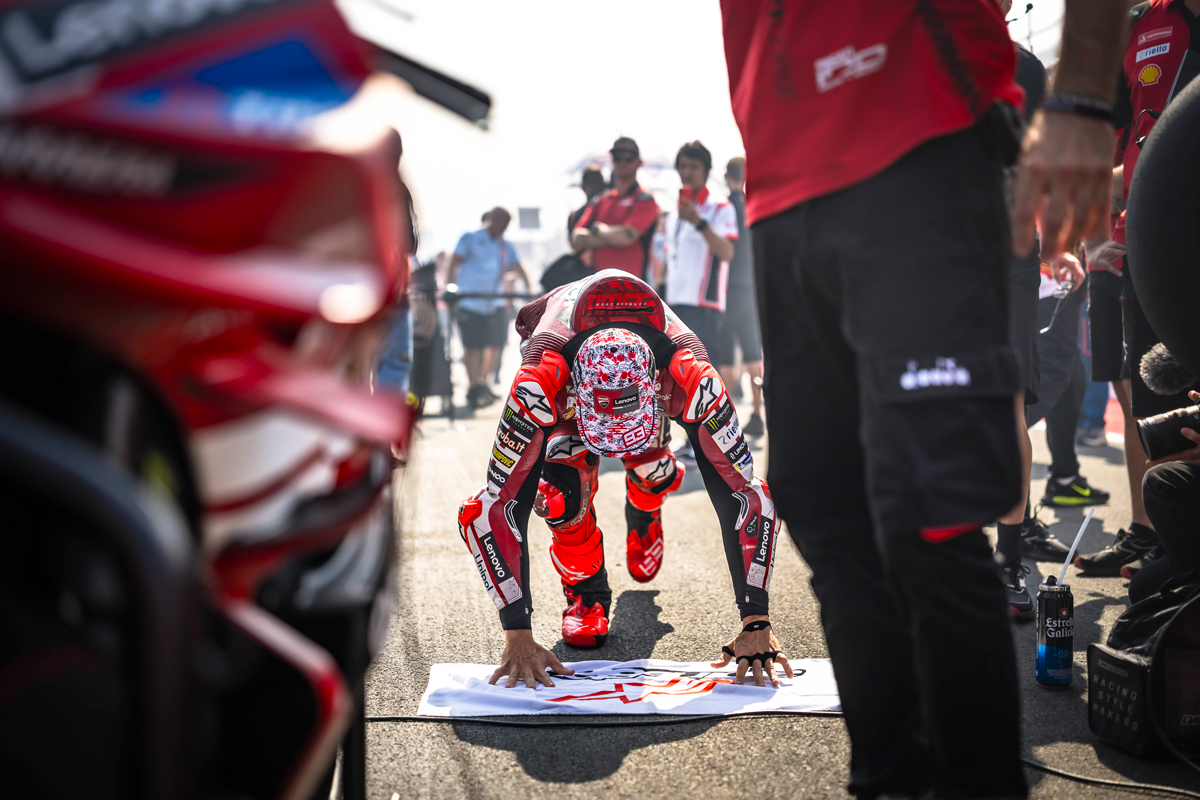
Marquez leaves Indonesia with the championship lead
Anyway, we’ve just had a race weekend and what a weekend it was. Don’t forget that Indonesia is a track where Marc Marquez has never finished a race, let alone won, so you could forgive Aprilia and its riders for thinking that here would be a chance for the factory riders to increase a lead – or play catch up – to the leaders in the title race. Therefore, for Marc Marquez to leave Indonesia with exactly the same two-point deficit to Jorge Martin that he arrived with was huge for both himself and the championship spectacle.
The Sprint race was one of the strangest in quite a while. The Aprilias had looked ominously threatening in qualifying, Raul Fernandez taking pole, with Bezzecchi and DiGiannantonio alongside and, even though Marquez was in fourth, it was assumed he would play no real part in the race. Ha! Fat chance!
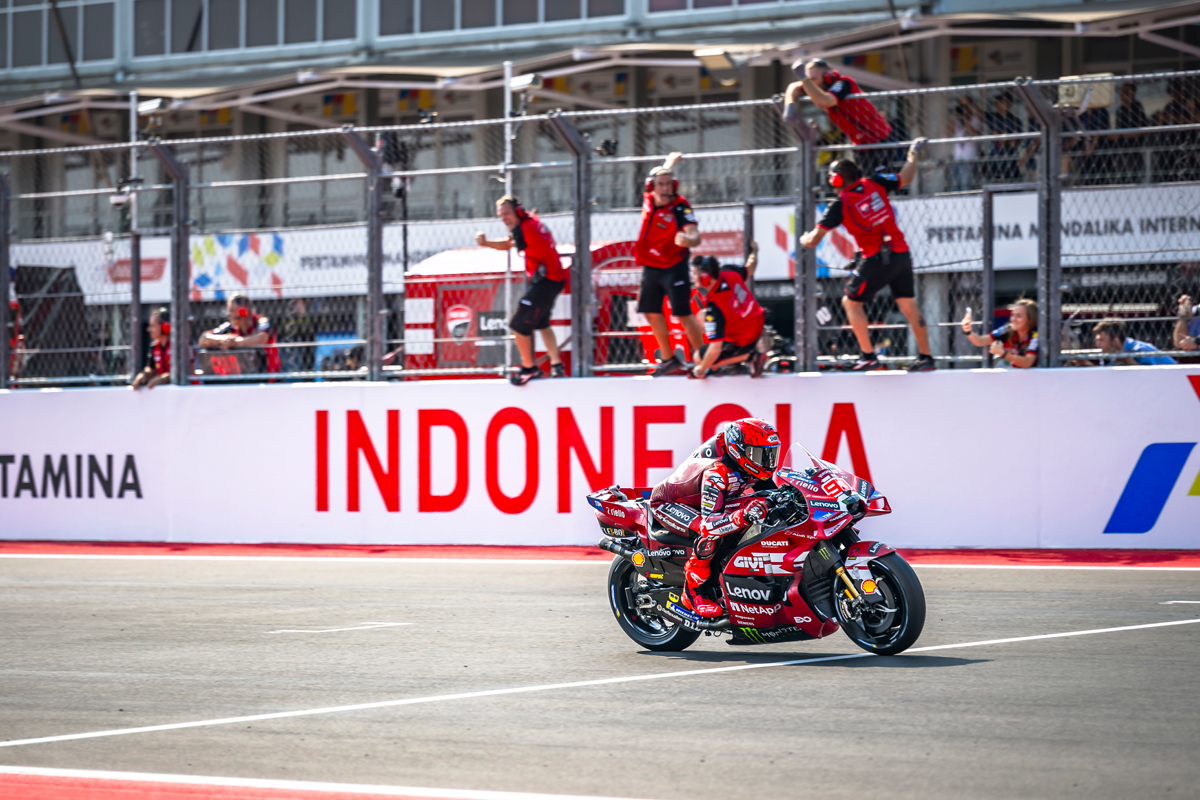
The first corner incident eliminated pole-sitter Fernandez and title-hopeful Bezzecchi and left Martin and Marquez to slug it out at the front. Martin led convincingly, opening out a gap of 1.6 seconds on Marquez after five laps, only for the cameras to suddenly show Martin behind Marquez. It seems that the dreaded tyre pressure rule had robbed us of another great race, as Martin’s starting pressure gamble had been stymied by having no bikes ahead of him from the first corner. It then went from bad to worse for Martin as he lost a narrow fight for second between himself, Ogura and Fernandez, eventually finishing fourth and ceding the title lead to Marquez.
Pedro Acosta fell foul of the tyre pressure rule in the Grand Prix, as did Marc Marquez, the pair of them allowing each other past in an attempt to keep their tyres within the correct range for the correct amount of time. How ridiculous is it that, in this day and age, it is not possible to make a tyre that can withstand high temperatures and low pressure without tearing itself to shreds? Or, at least, for Michelin to be sufficiently nervous that it would do that? It was possible not long ago to make a tyre that could run at any pressure for a full race, but all of a sudden, it’s not. Why? Martin and, particularly, Acosta, were right to be pissed off about it. As were we!
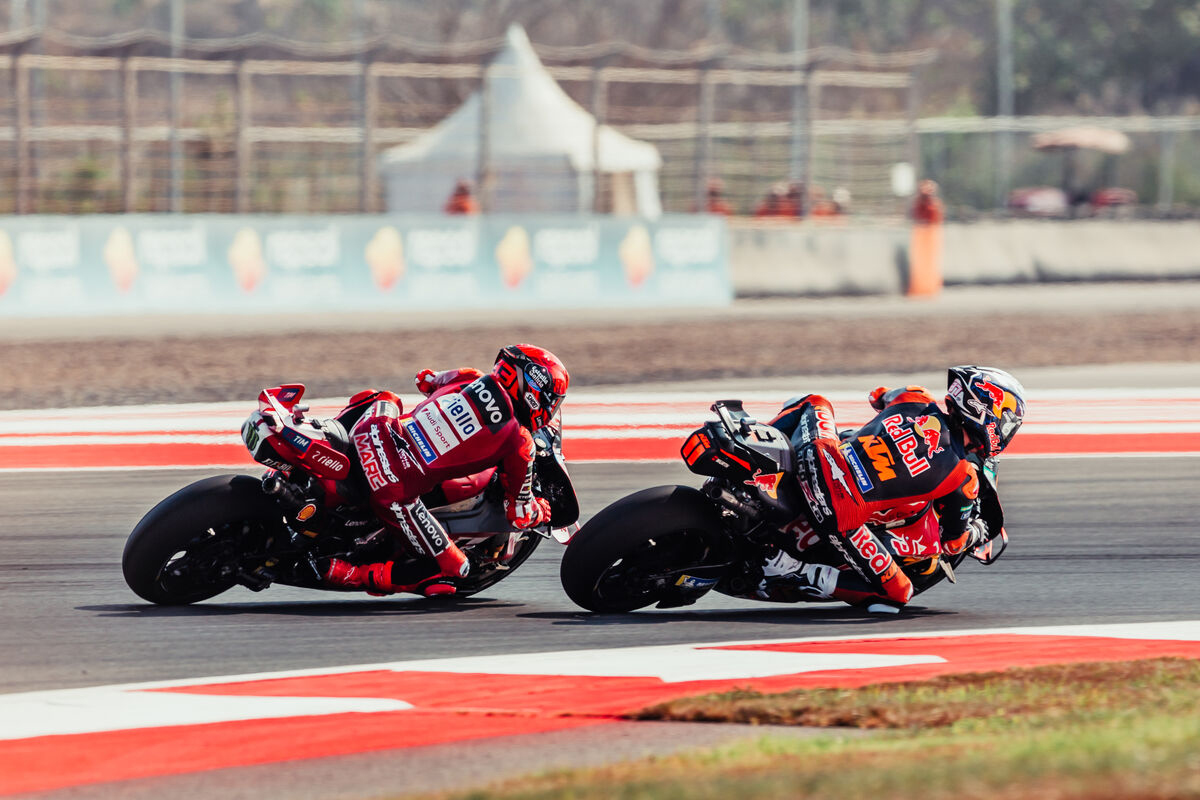
What was perhaps more disturbing was Trackhouse Aprilia’s Davide Brivio laying the blame for the incident at Marquez’ door, saying it was too aggressive at too early a stage in the race. Maybe he said it without too much study of the footage, in which case he would surely agree that it was an unfortunate series of reflex reactions that caused the accident, although Marquez was aggressive in putting himself in that position in the first place. But to expect these guys to play it safe at any point in the race, let alone the start, in times when it is difficult enough to overtake once the race has settled down, so gaining an early advantage is essential, is to completely misunderstand the psychology of the rider, which is surprising, given Brivio’s experience.
Whatever your view, Marquez finished the Sprint race a brilliant first, taking the lead in the championship for the first time in 2026 as well. If that’s not ominous for Marquez’ rivals, then I don’t know what is!
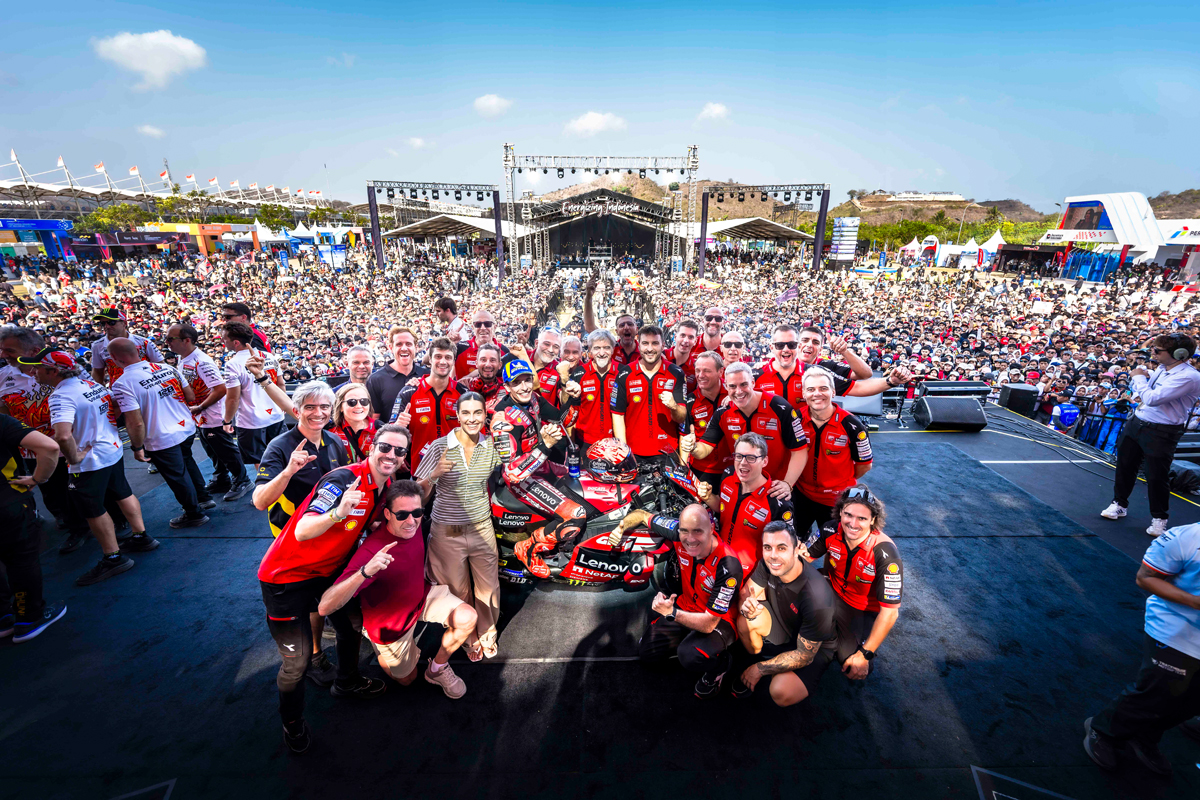
In the Grand Prix, Marquez could do nothing about the Aprilias, which managed to avoid a repeat first-corner incident, and could only scrape it out with Acosta, eventually finishing sixth, while Aprilias filled the top four places for the first time, Marco Bezzecchi winning his first race since May and putting himself right back in title contention, only 46 points behind leader Martin. An injured Raul Fernandez was second, Martin was third and Ai Ogura fourth, none of which will have done Aprilia’s title hopes any harm. In both constructors’ and riders’ championships, it really is all still to play for, and we’re at Philip Island next; all the riders love it and different parts of the track suit different bikes, so it should be close at the front. It’s also the last time for the foreseeable future that MotoGP will race there, so this really is one to not miss.
Jorge Martin will really start feeling the pressure now. Marc Marquez never finishing a race in Indonesia; Michelin supplying the stiffer carcass rear tyre here that the Ducati doesn’t like; the Aprilias clearly a step ahead of the Ducati’s all weekend; Marquez coming out of the weekend only two points behind; Martin should have made hay at Marquez’ expense but to come out exactly as he went in has to have him thinking, “what do I have to do to beat this guy?”
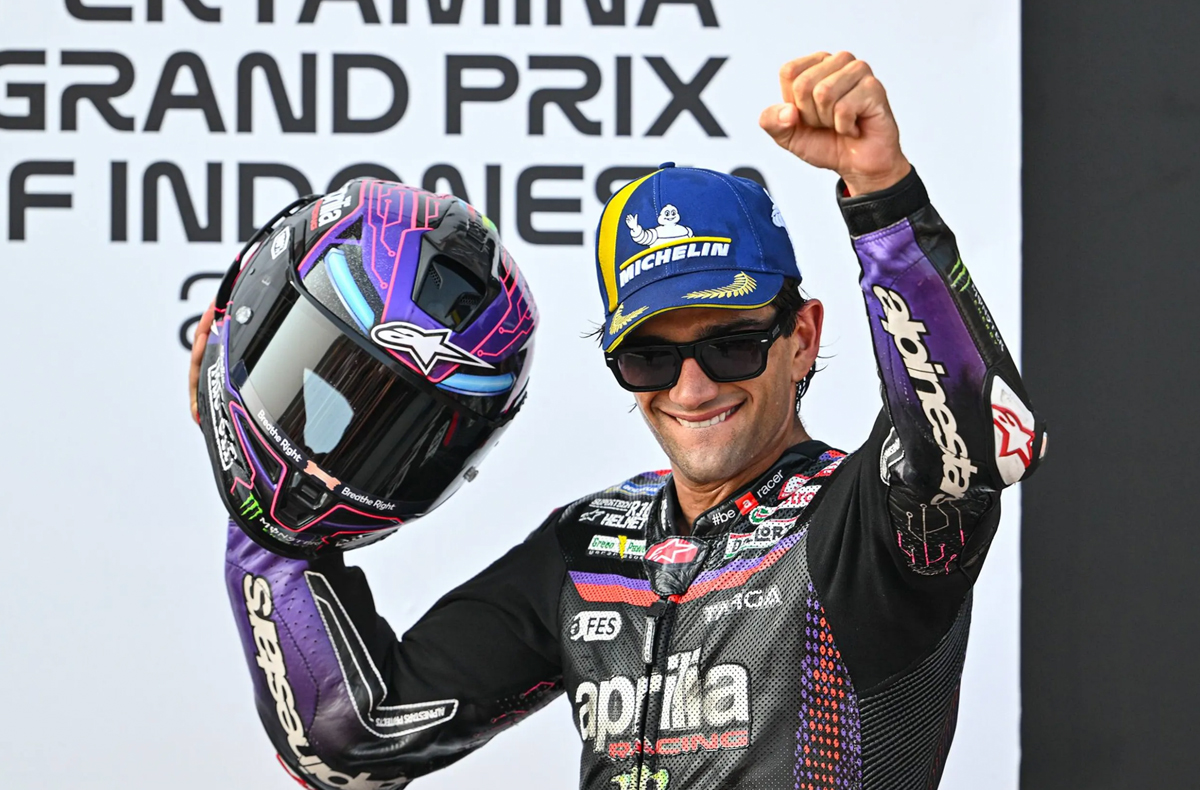
Similarly, Aprilia now has the knotty problem of when to apply team orders in favour of Martin or Bezzecchi? The manufacturer is potentially about to win its first titles, so can it afford sentimentality in favour of Bezzecchi or must it be hard-headed and back Martin? Questions, questions; some answers coming in two weeks.