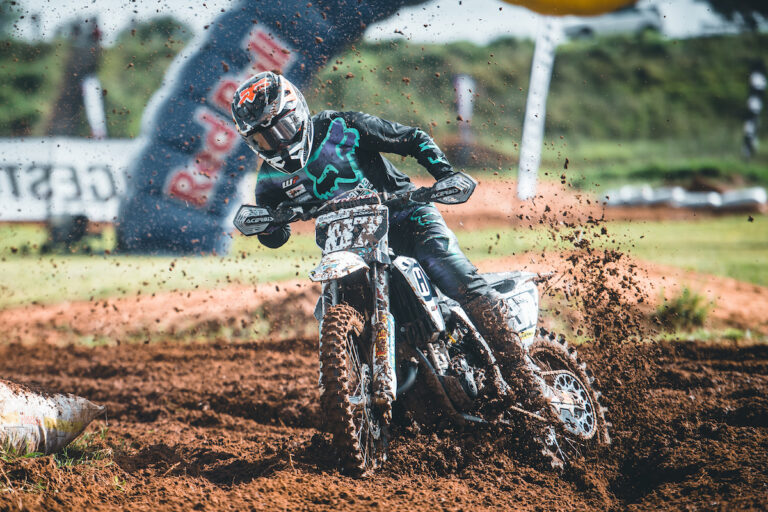
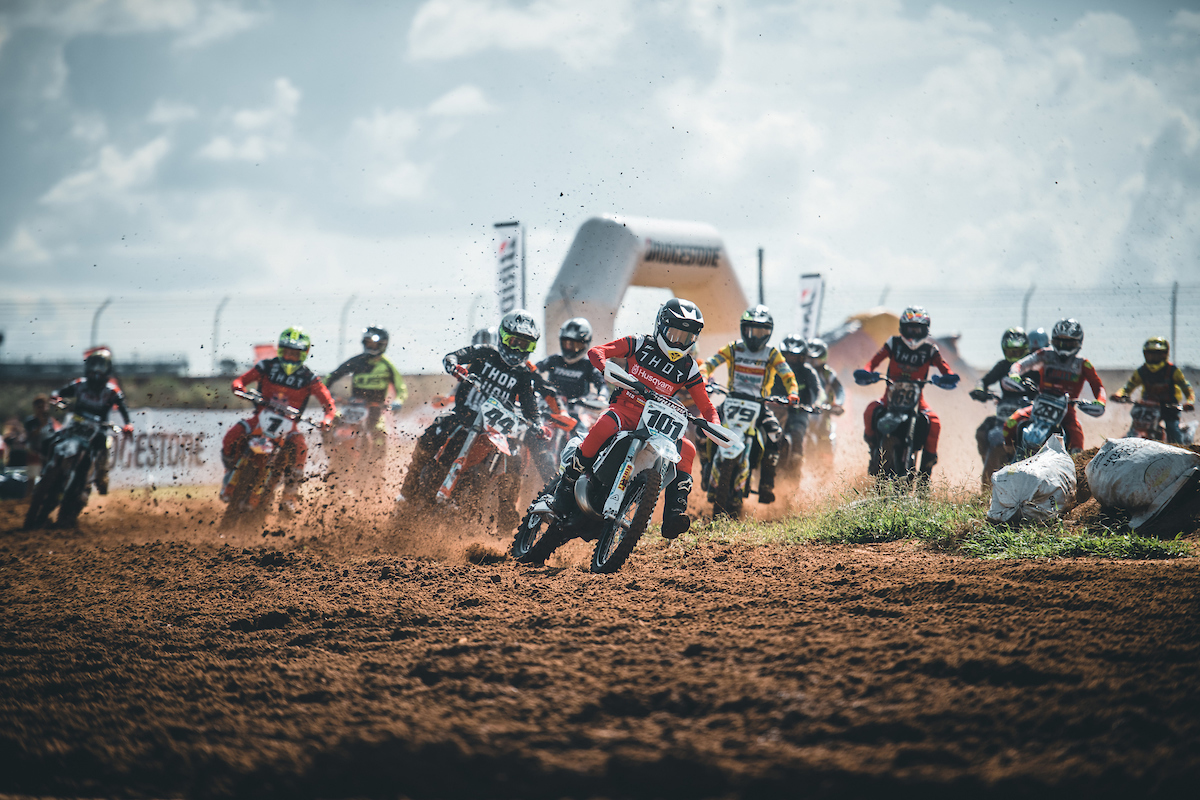
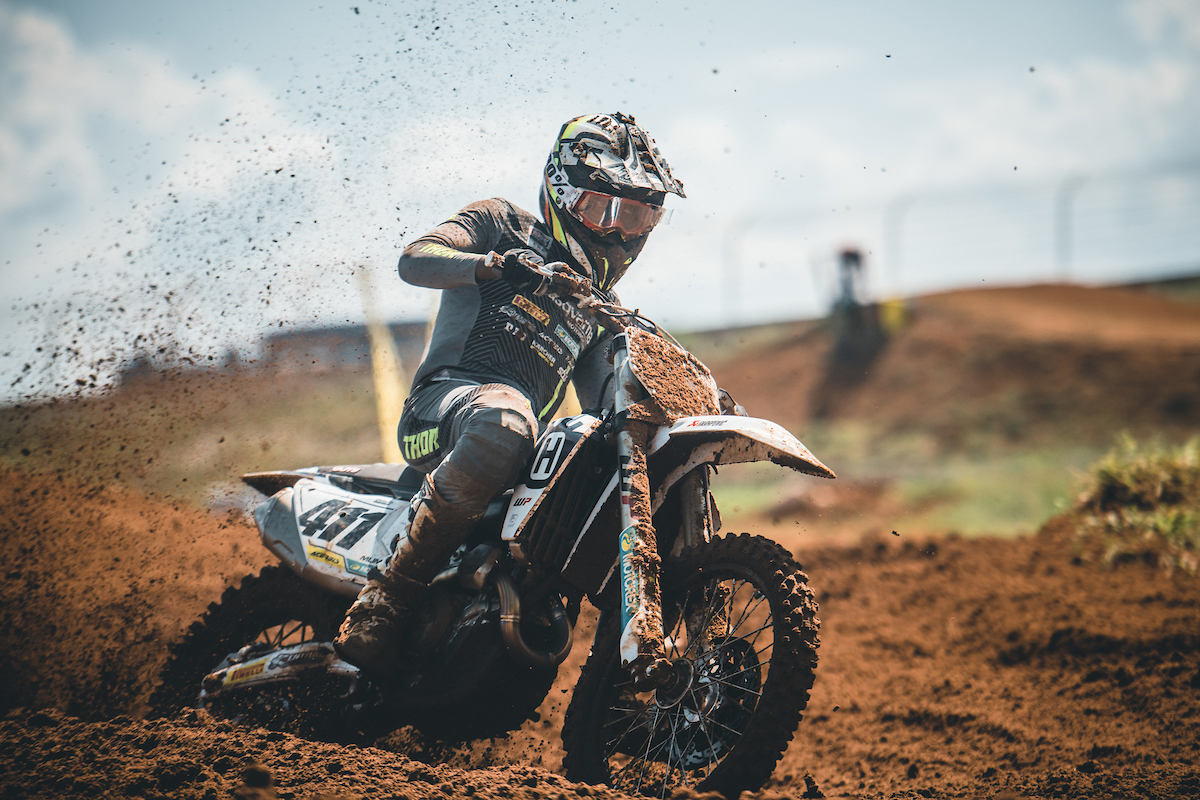
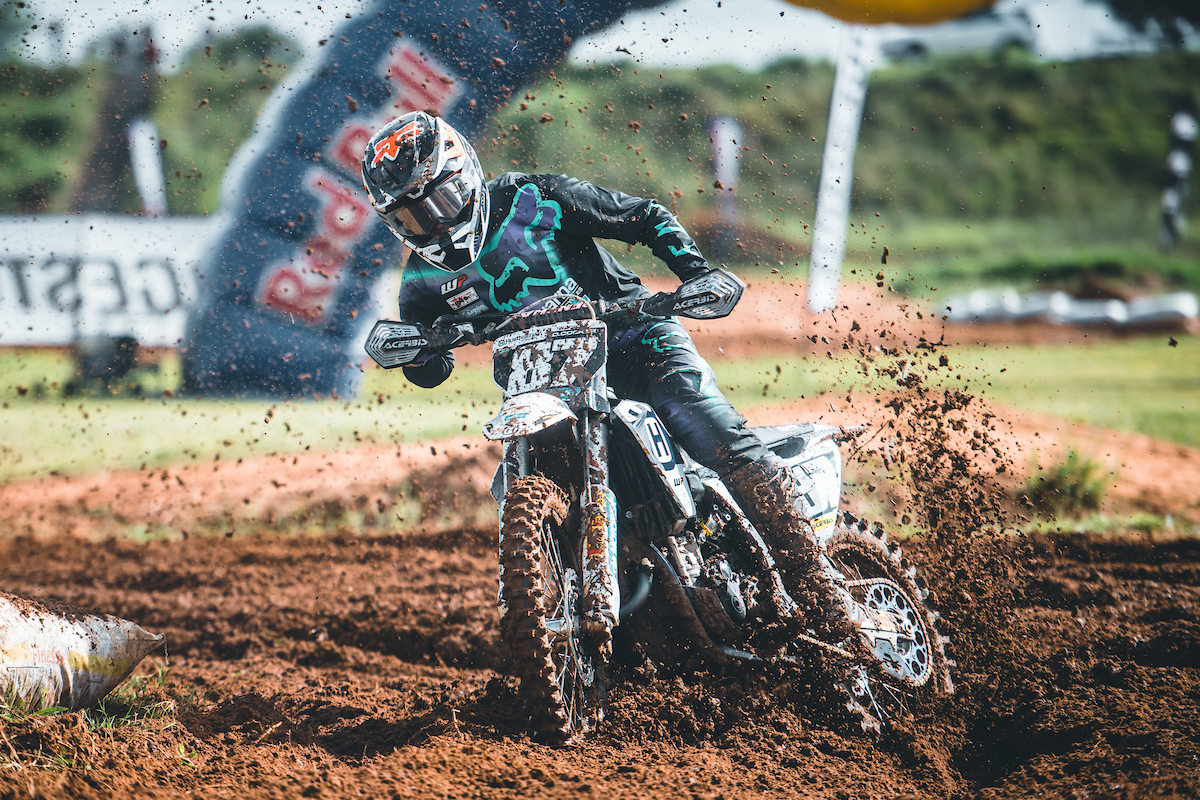
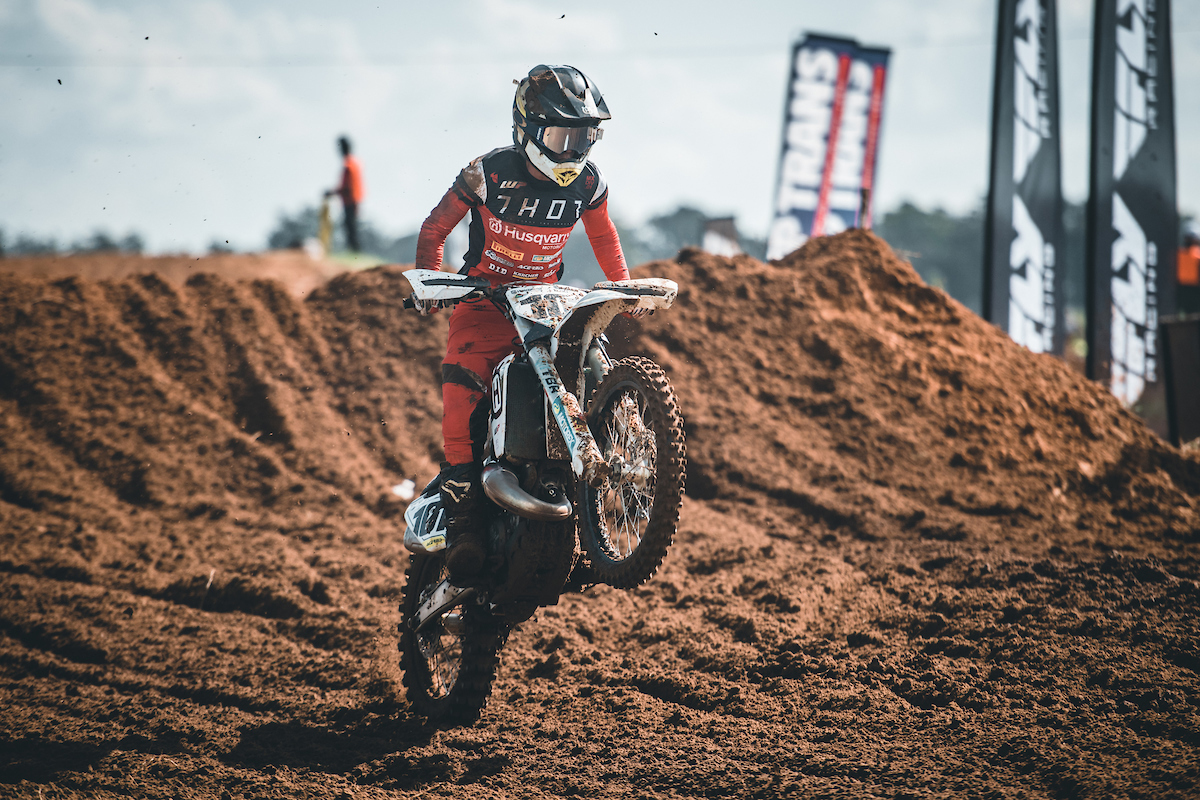
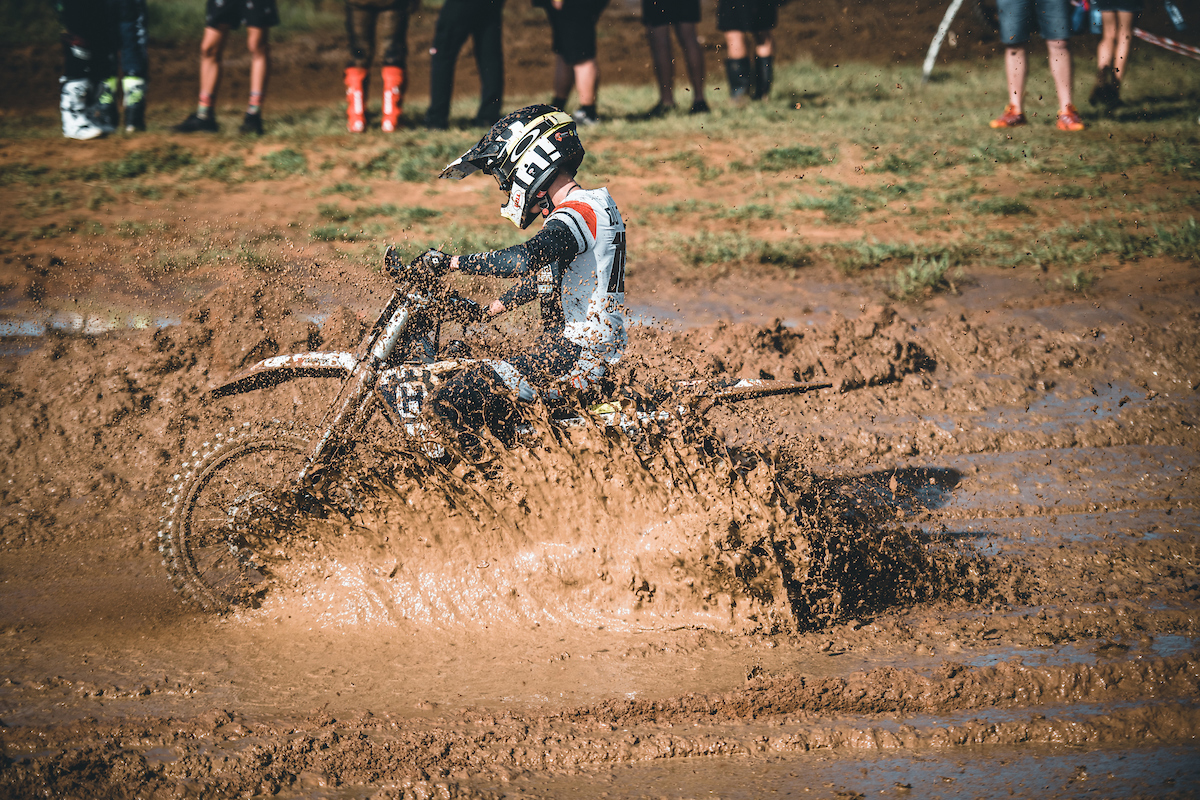
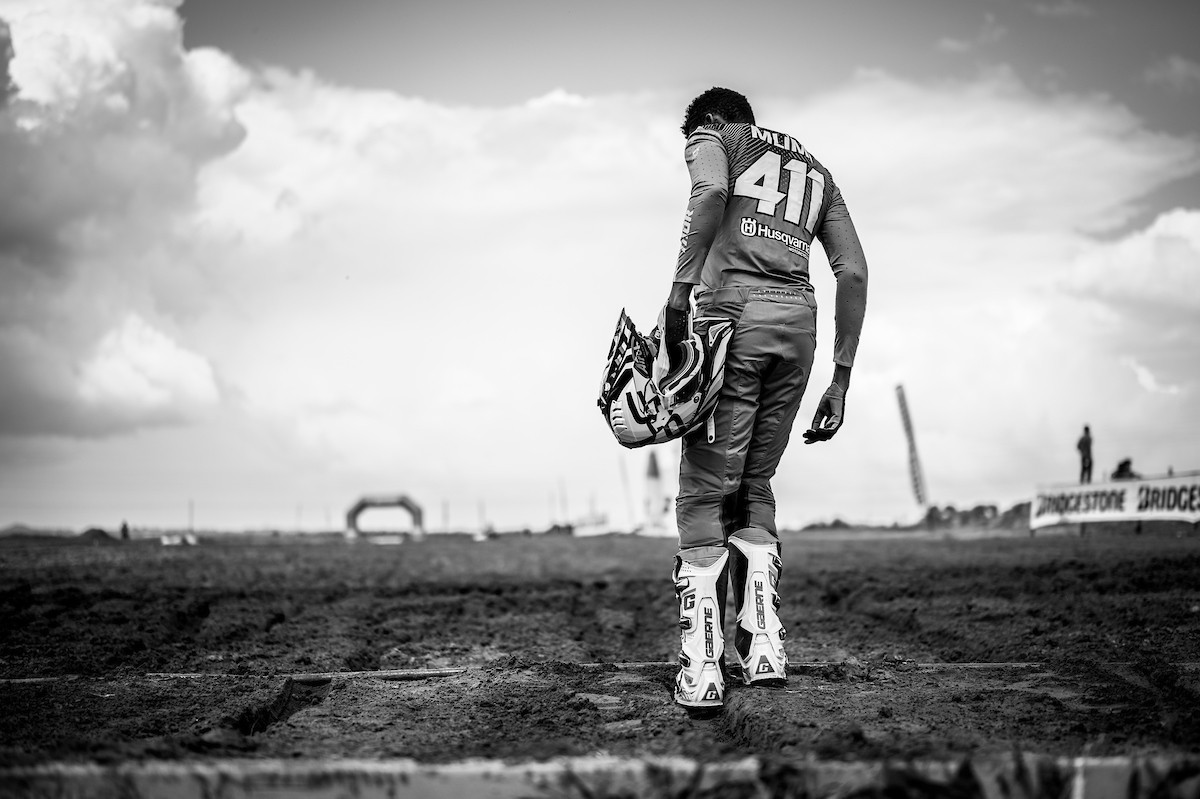
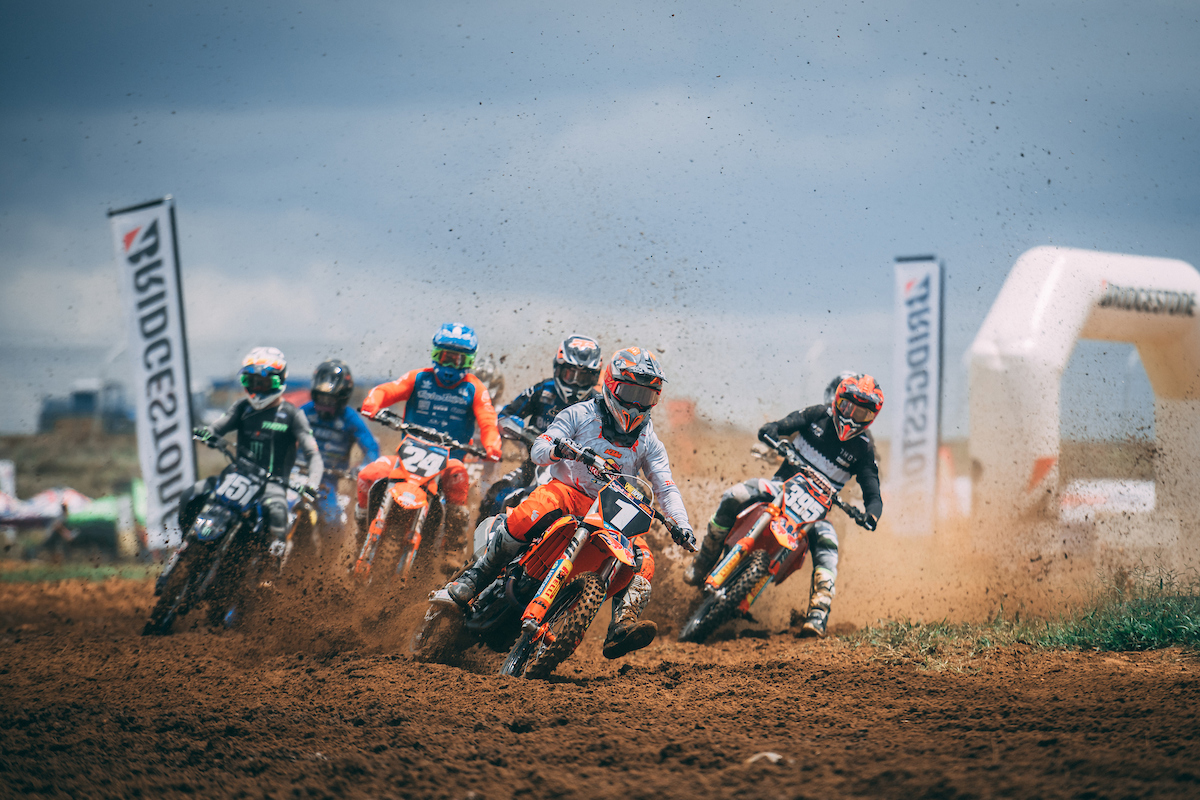
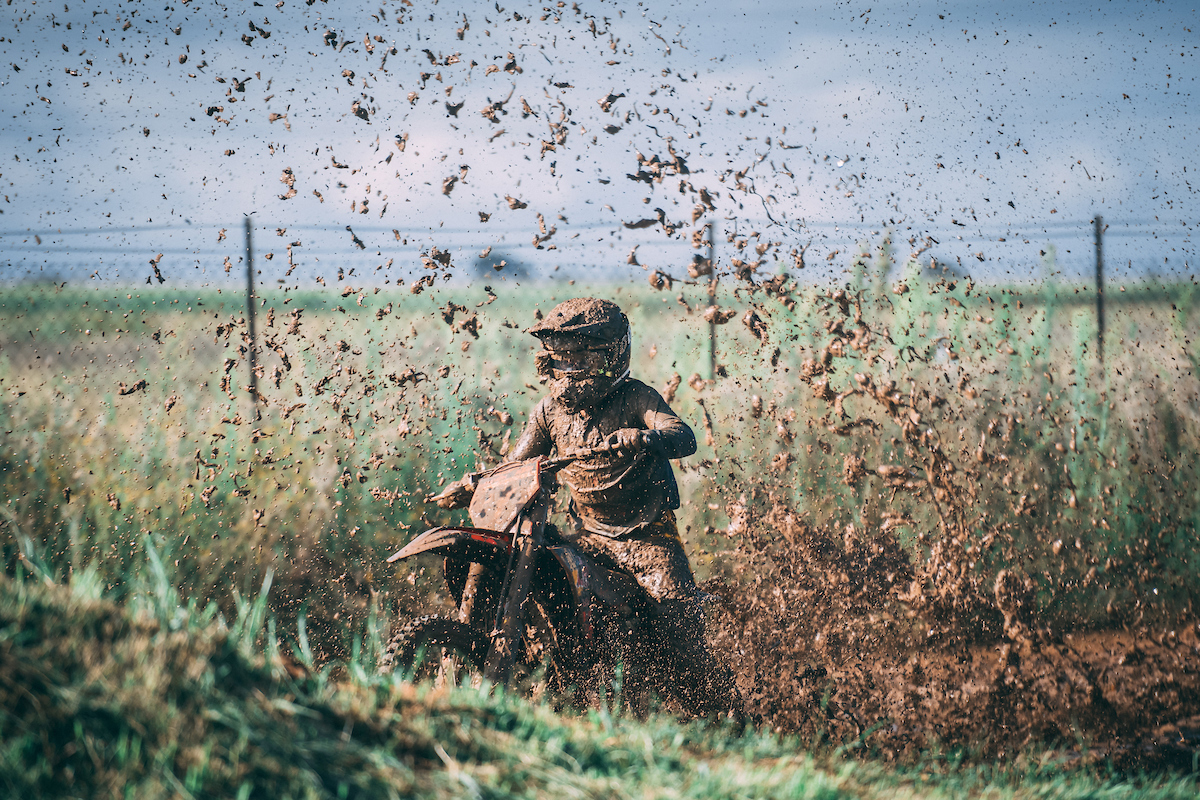
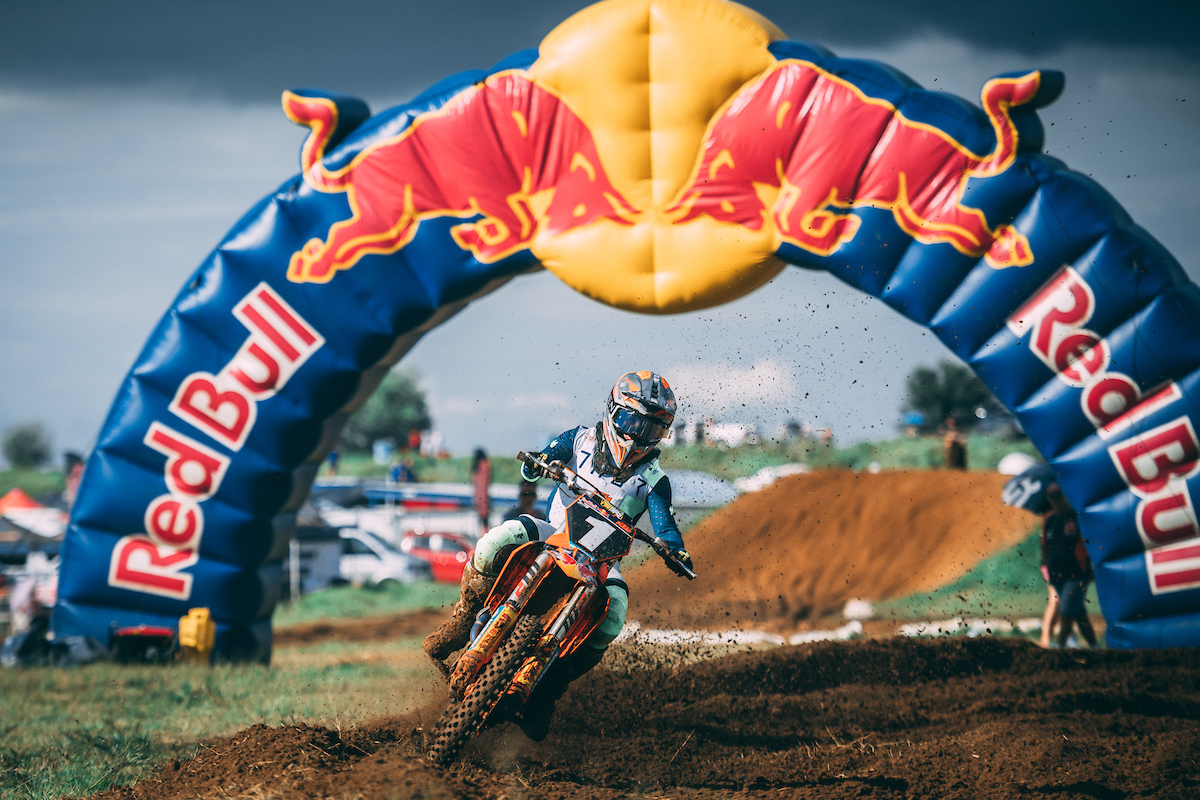
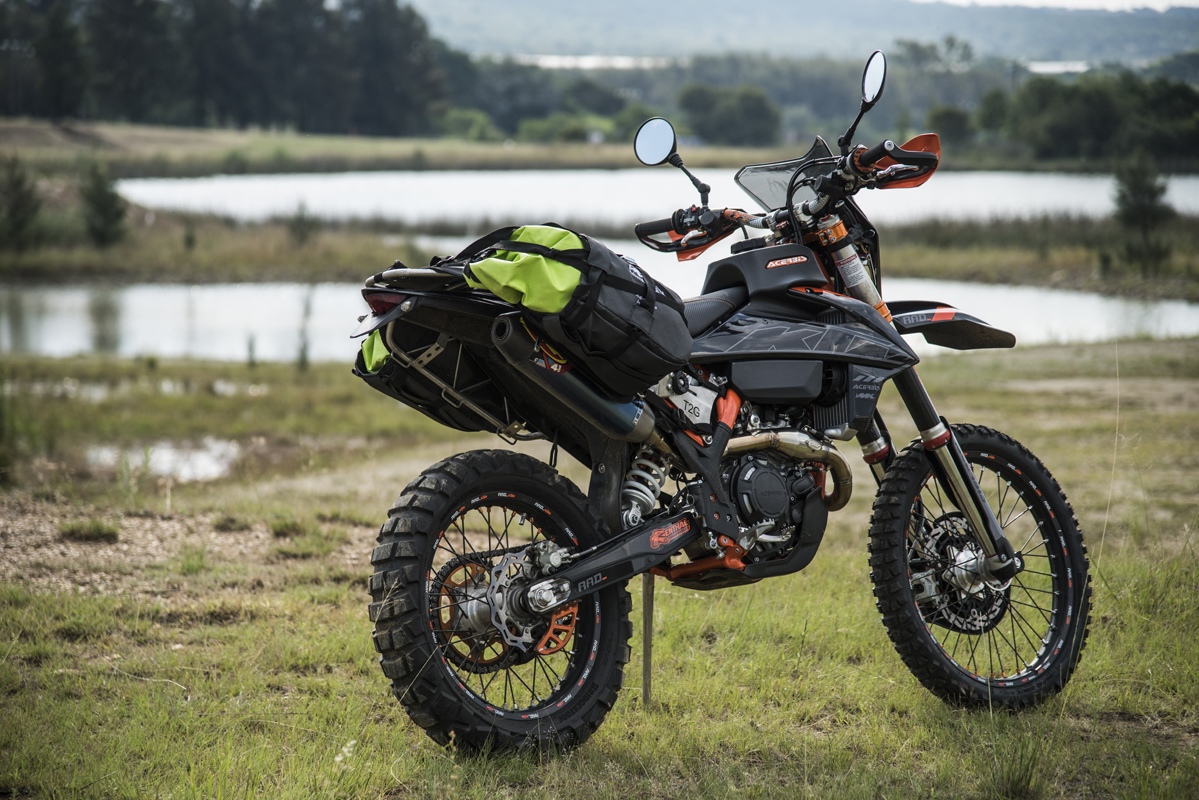
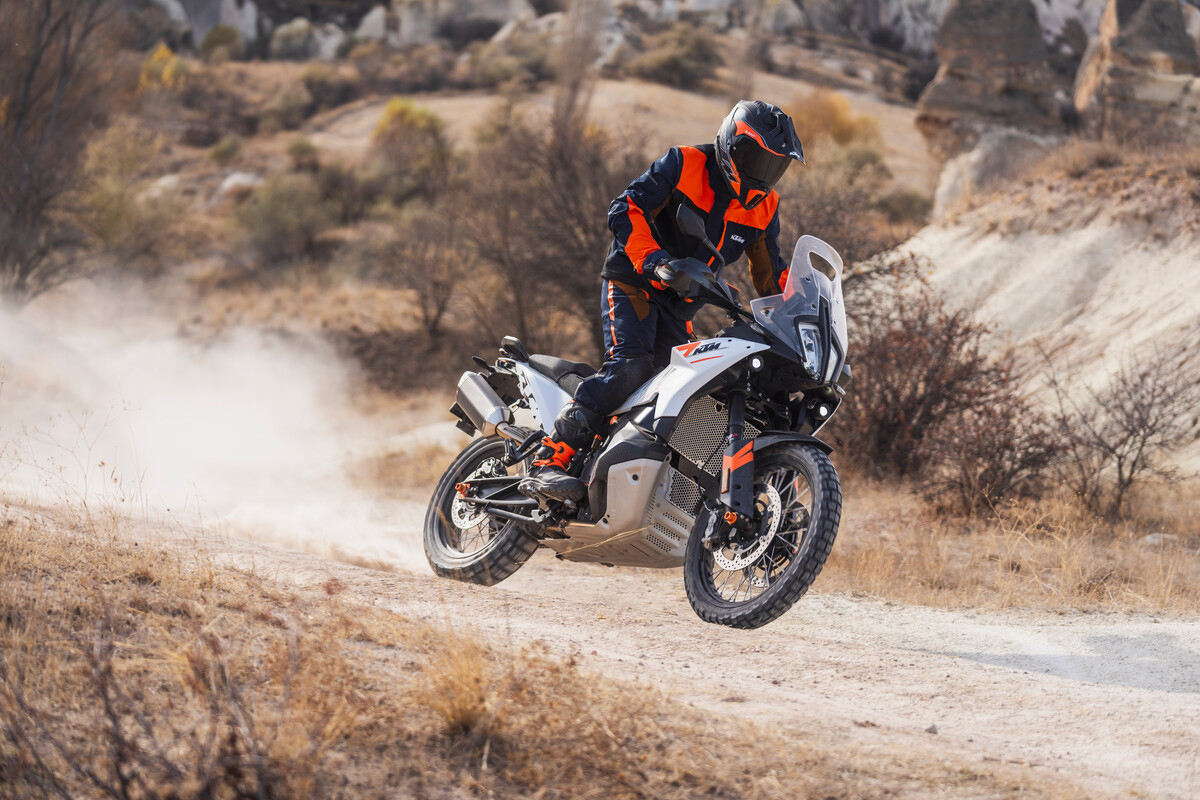
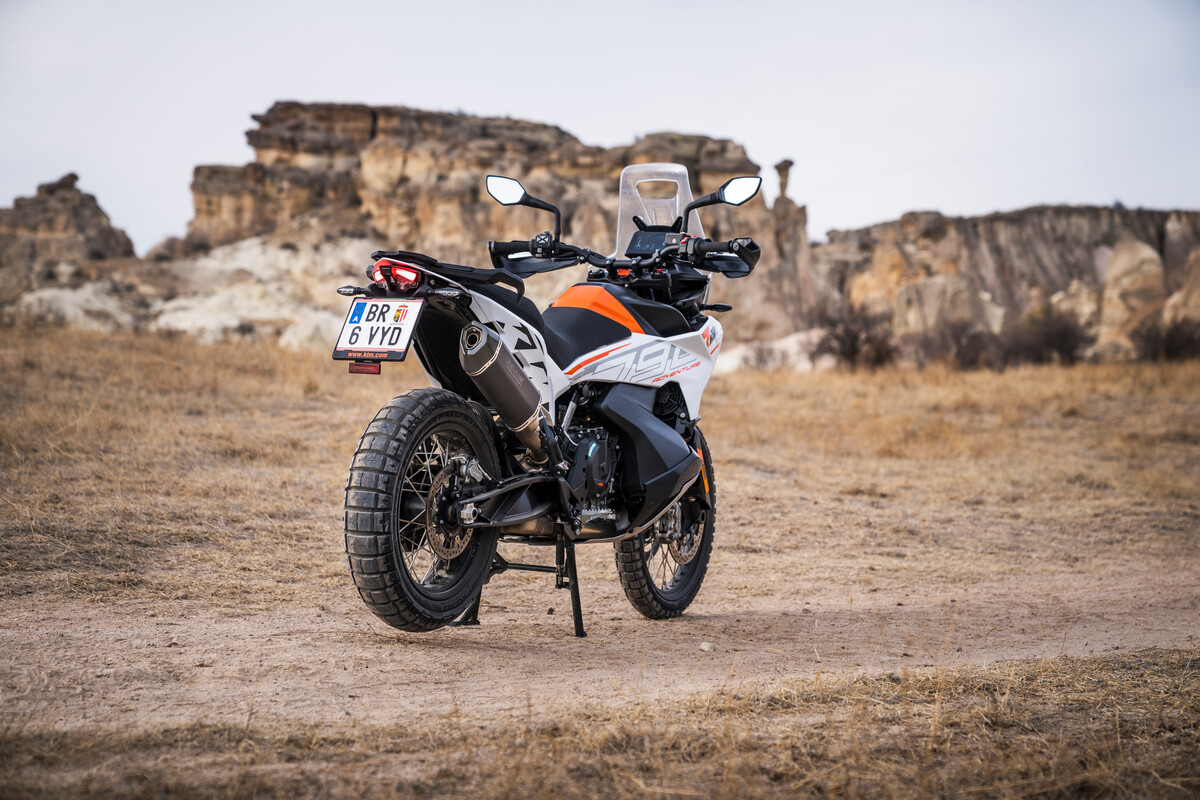
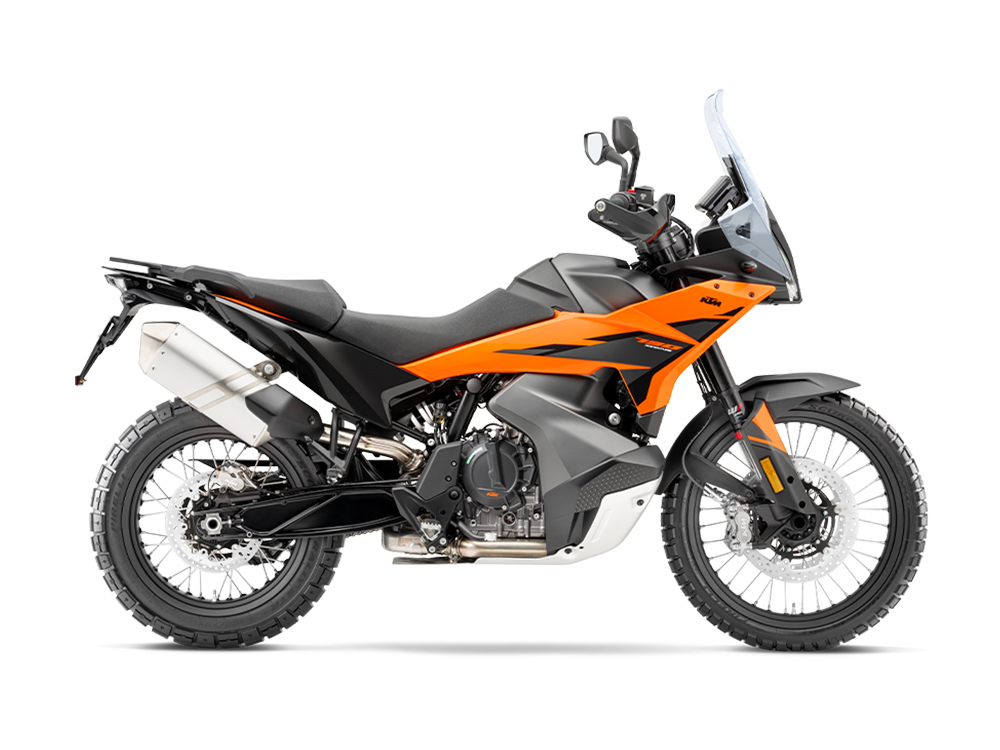
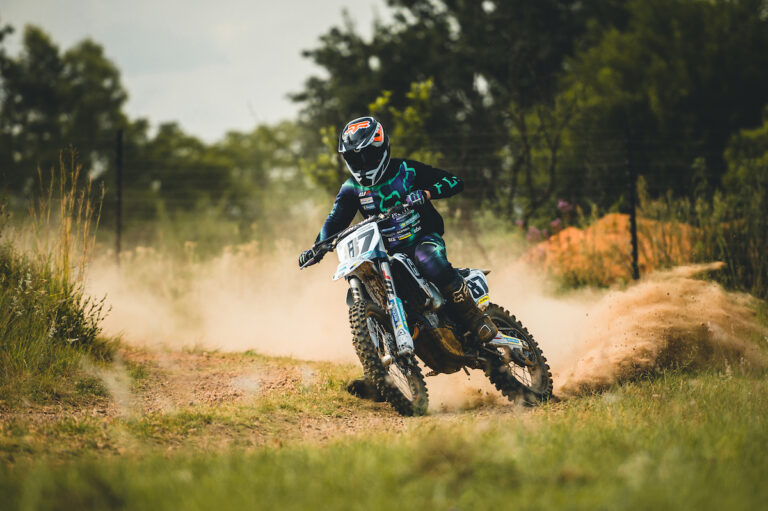
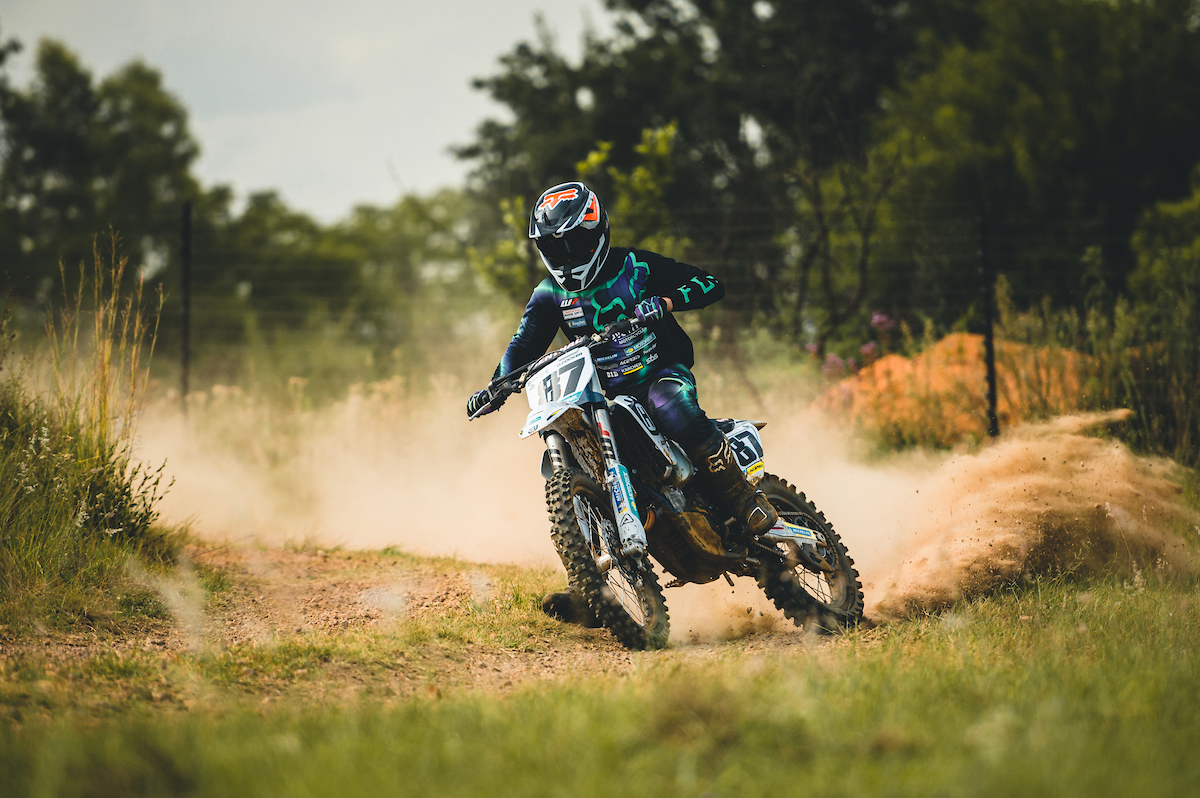
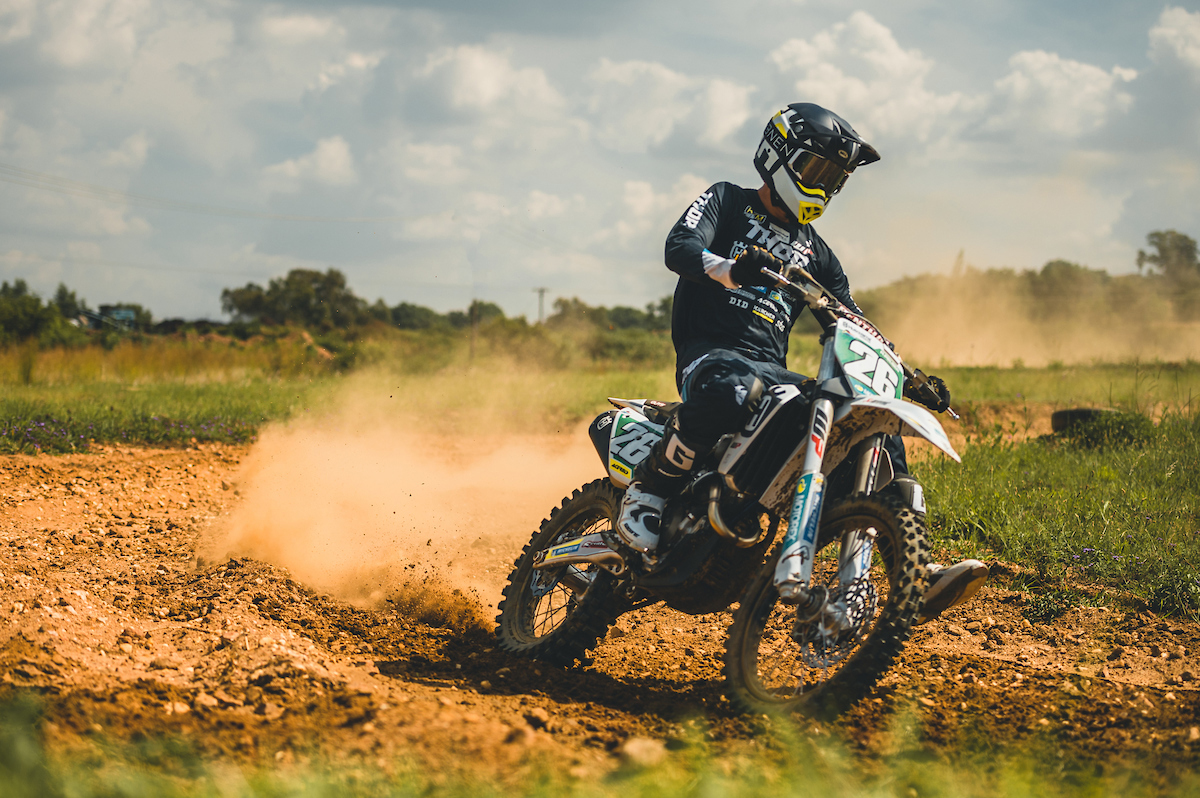
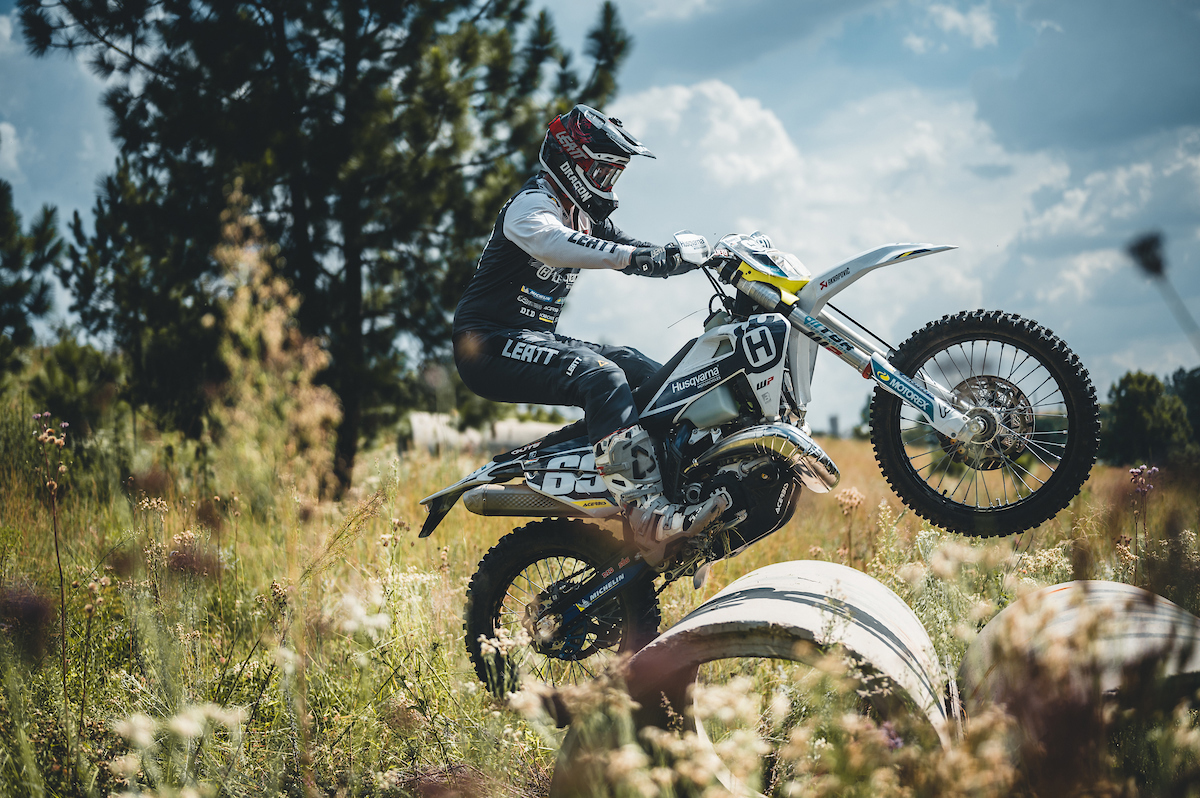
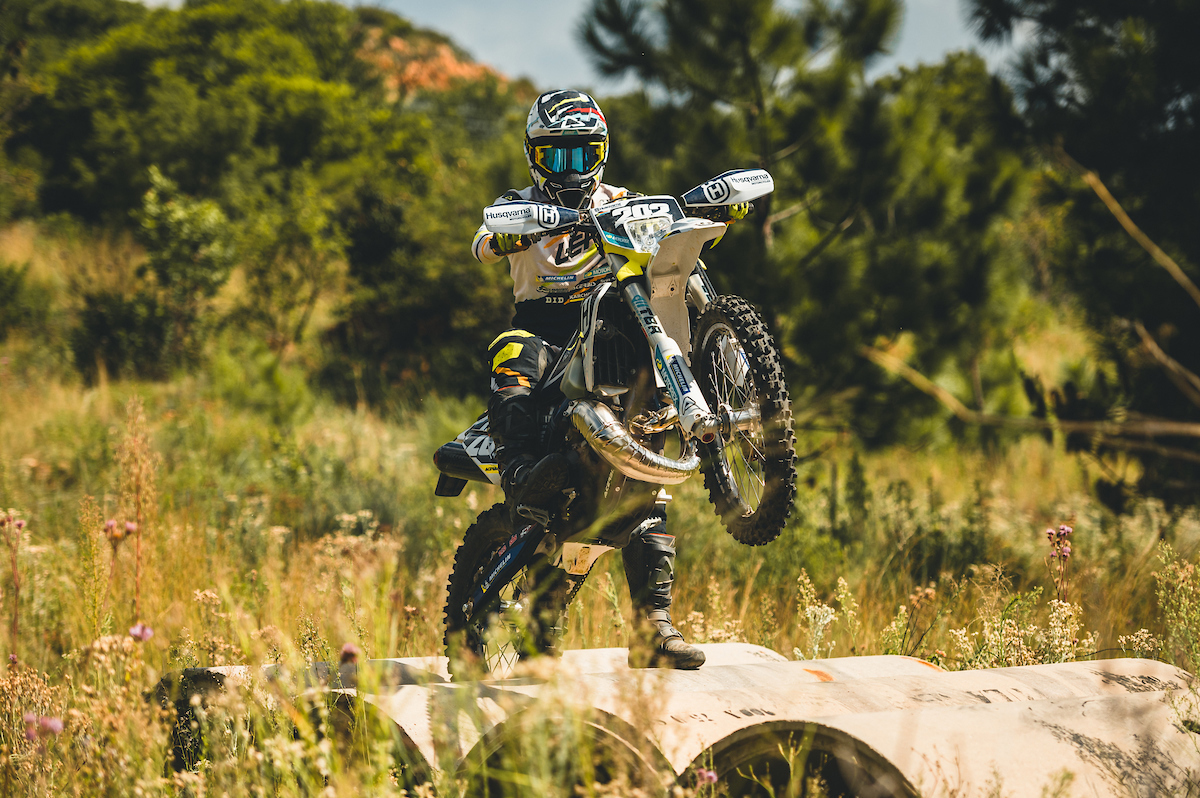
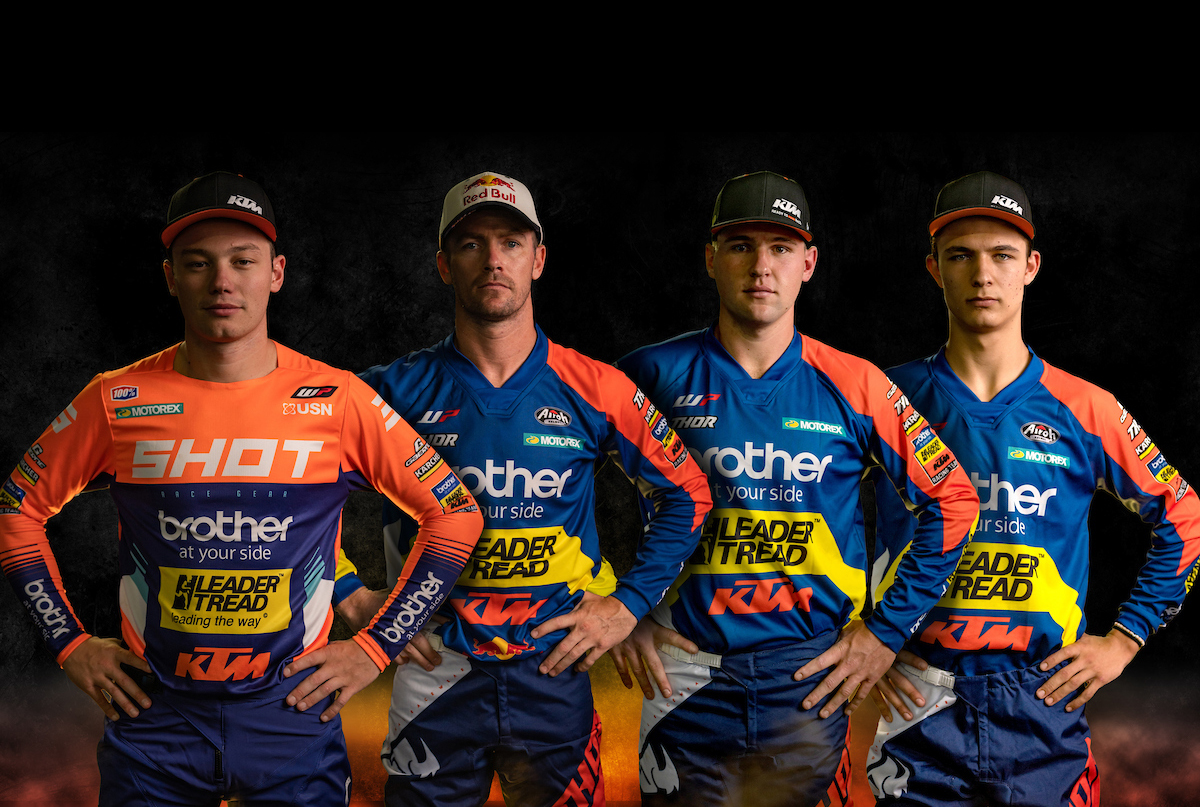
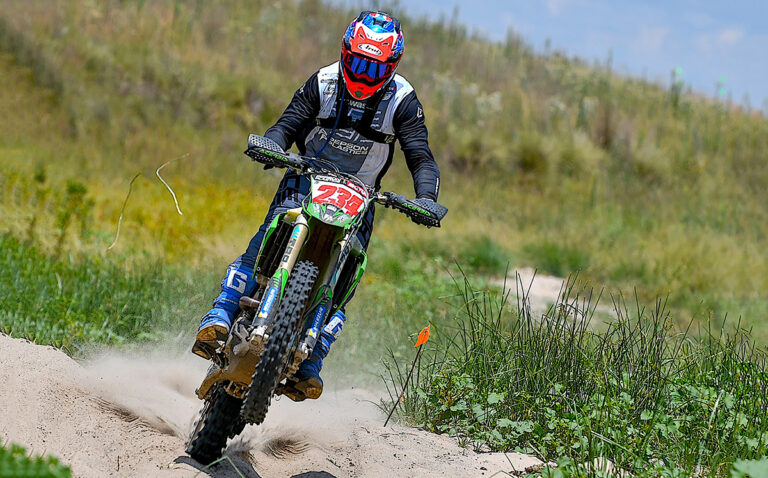
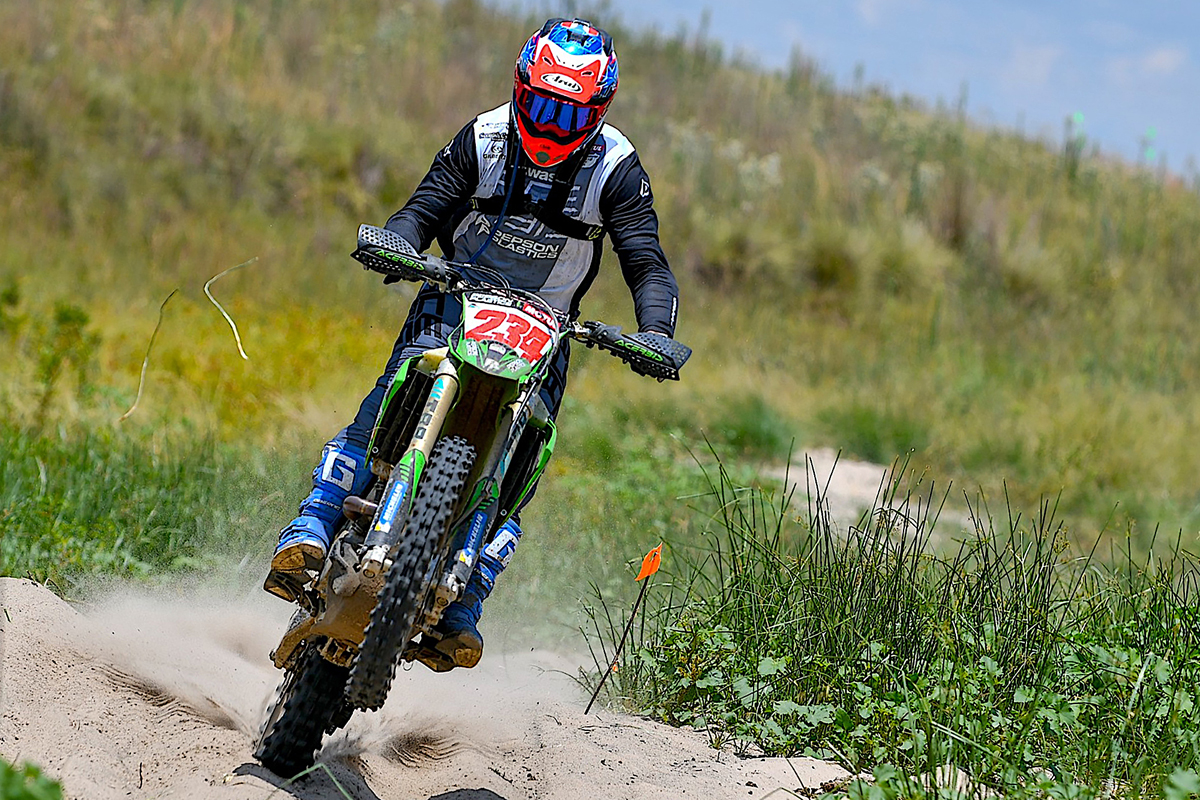
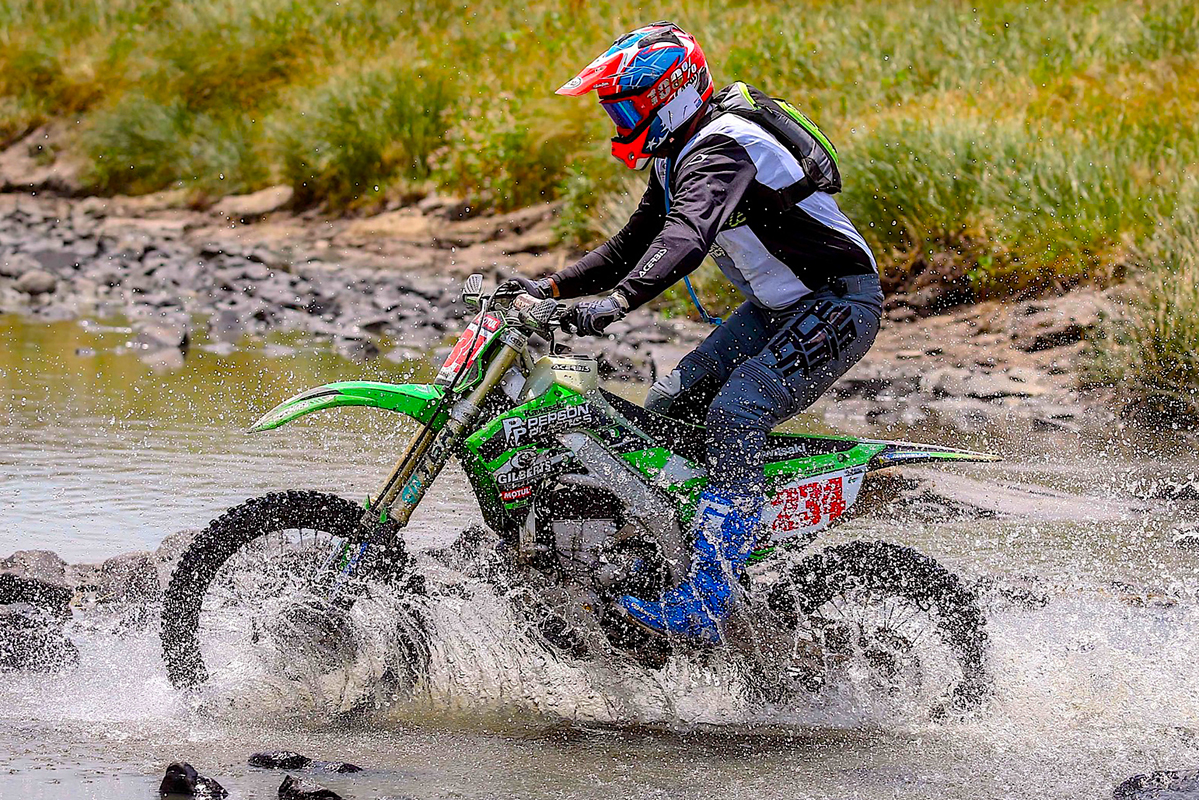
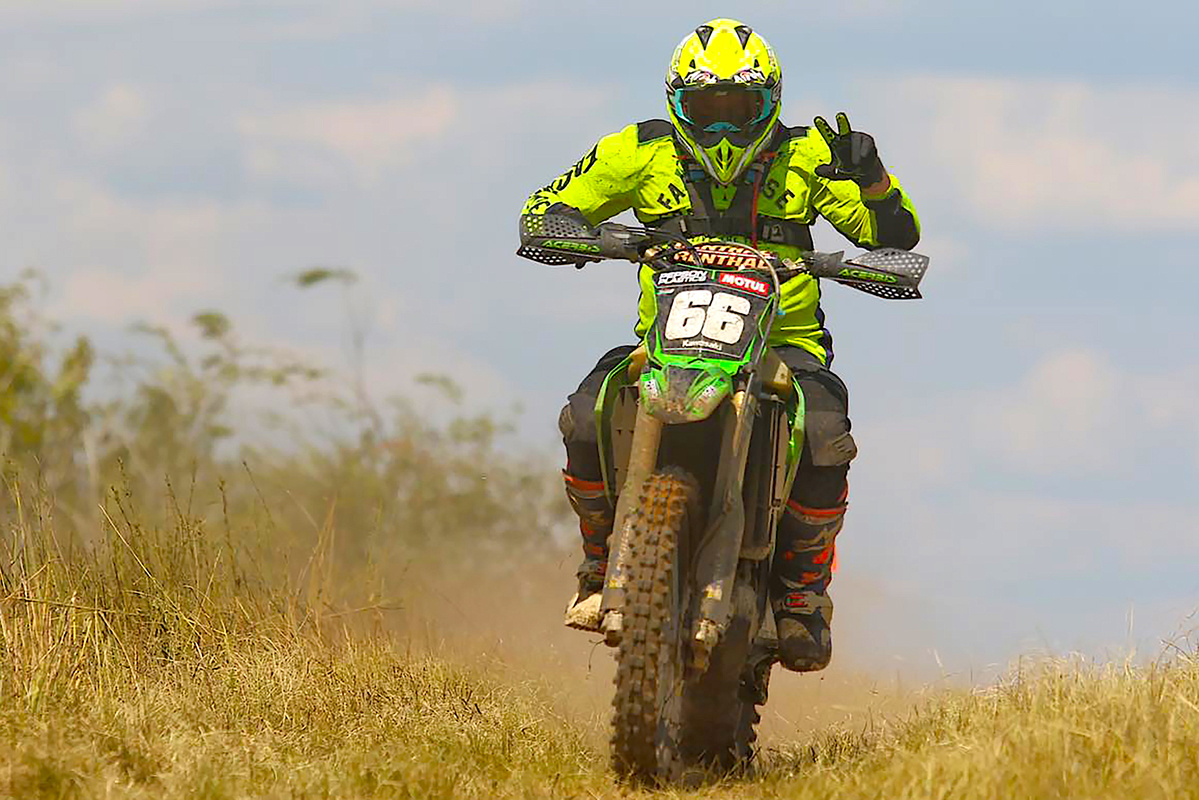
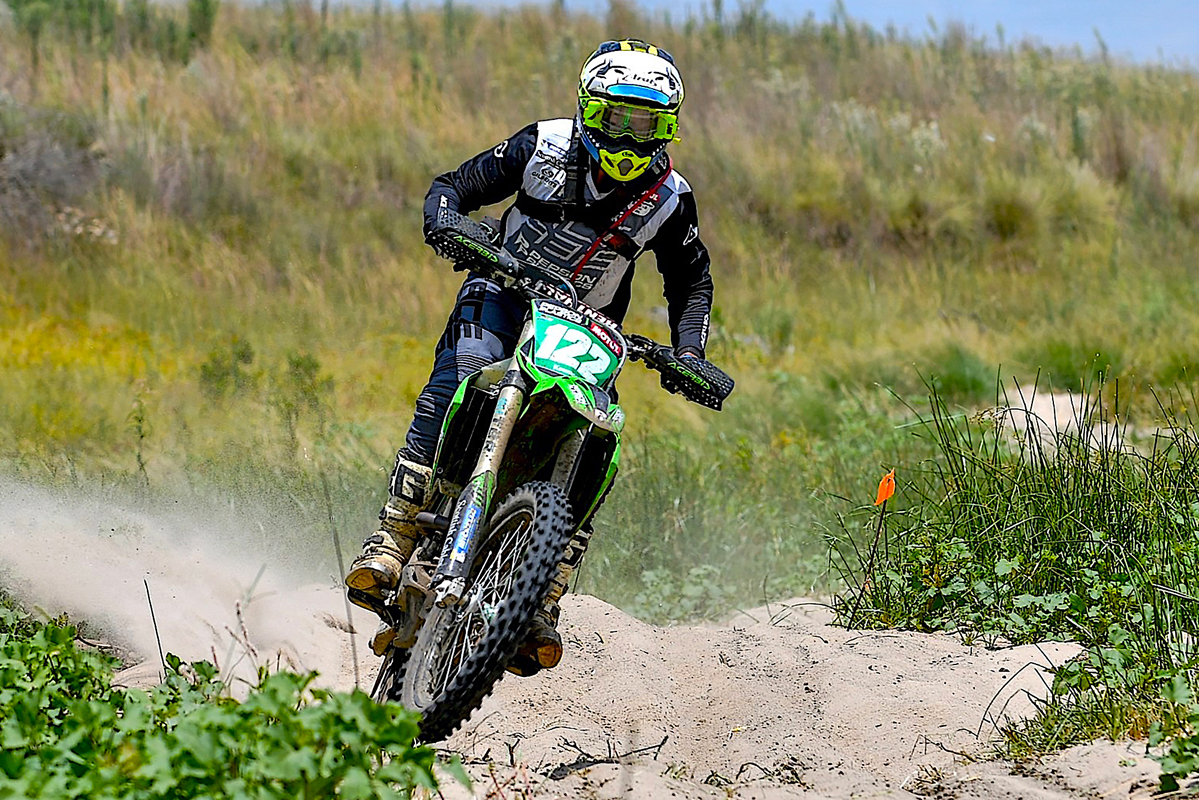
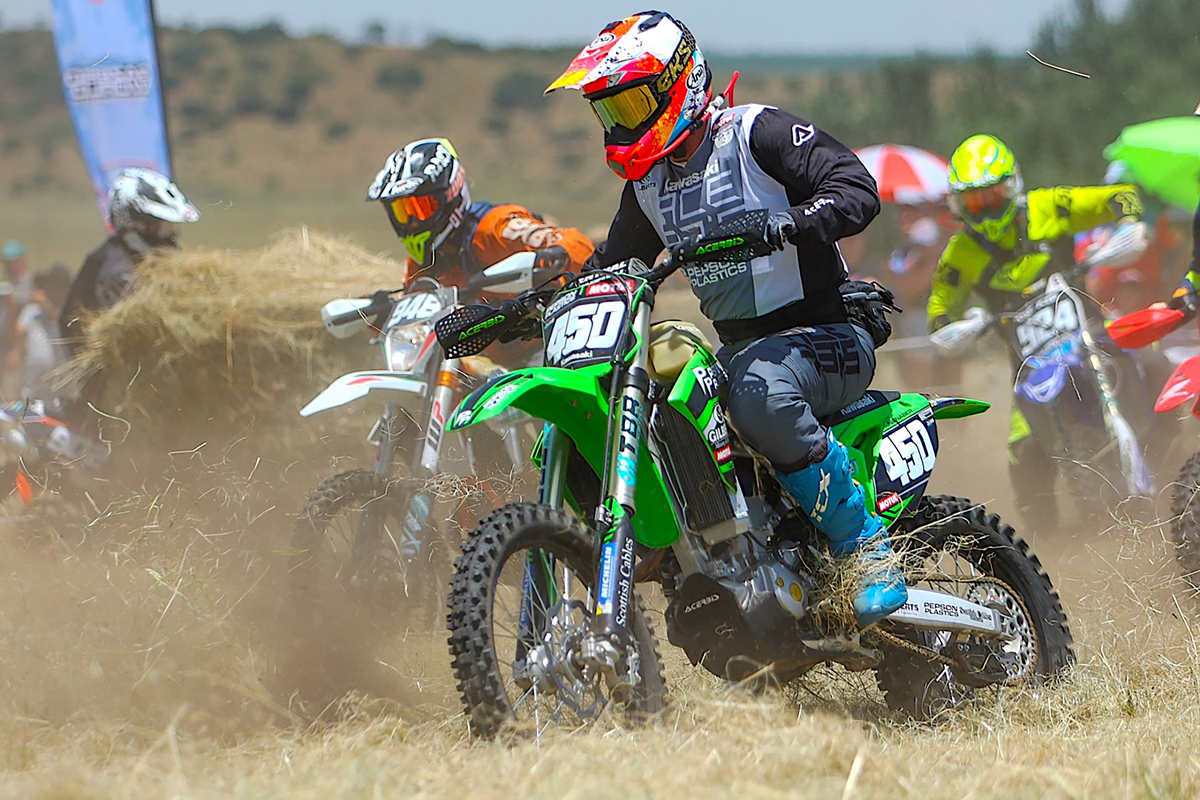
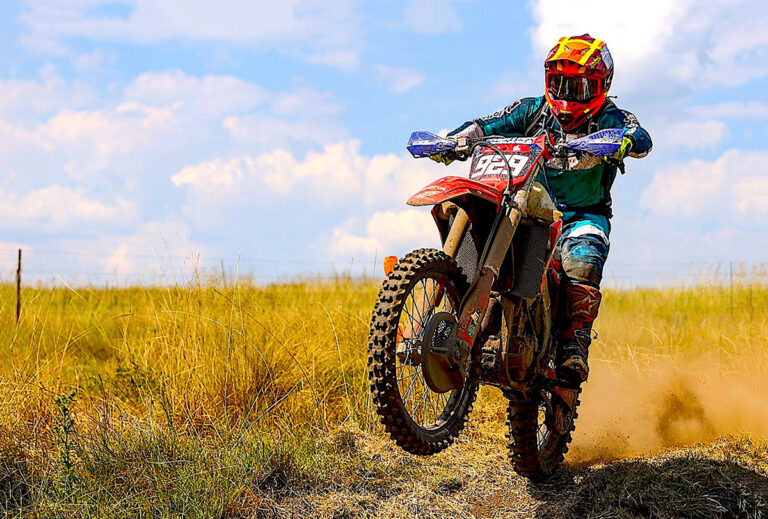
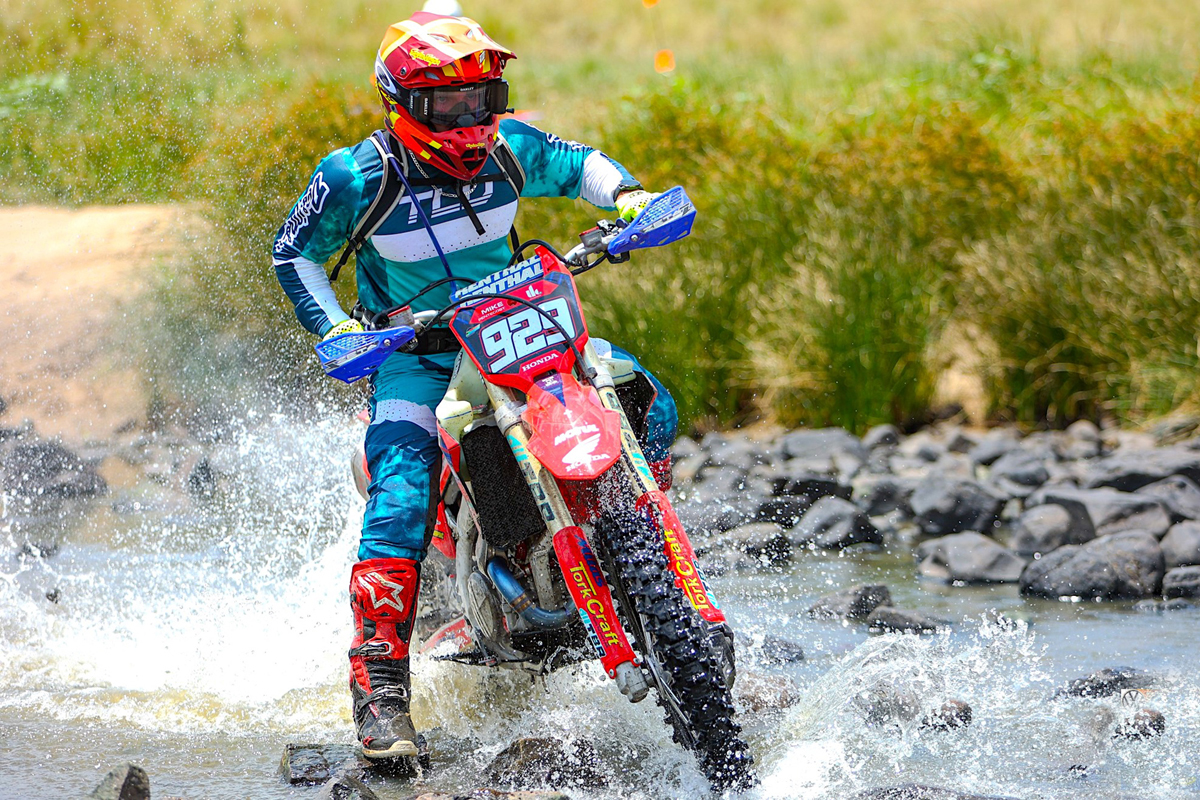
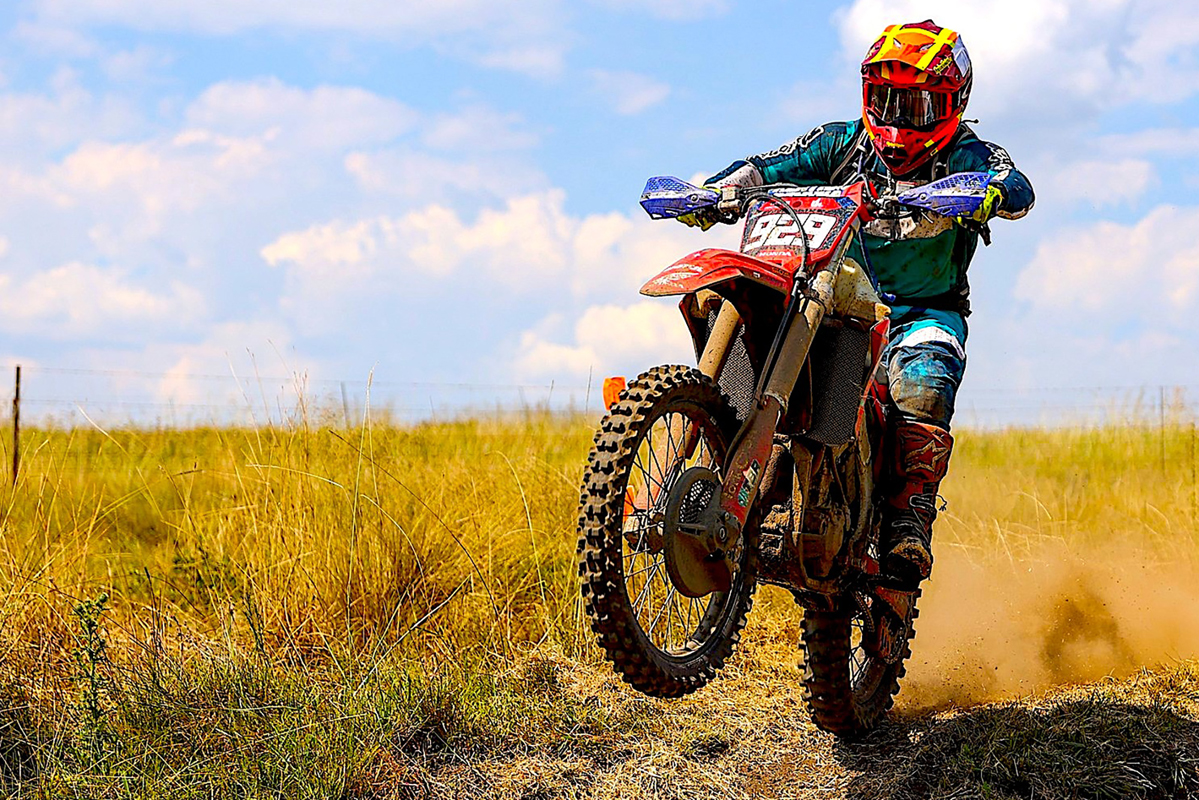
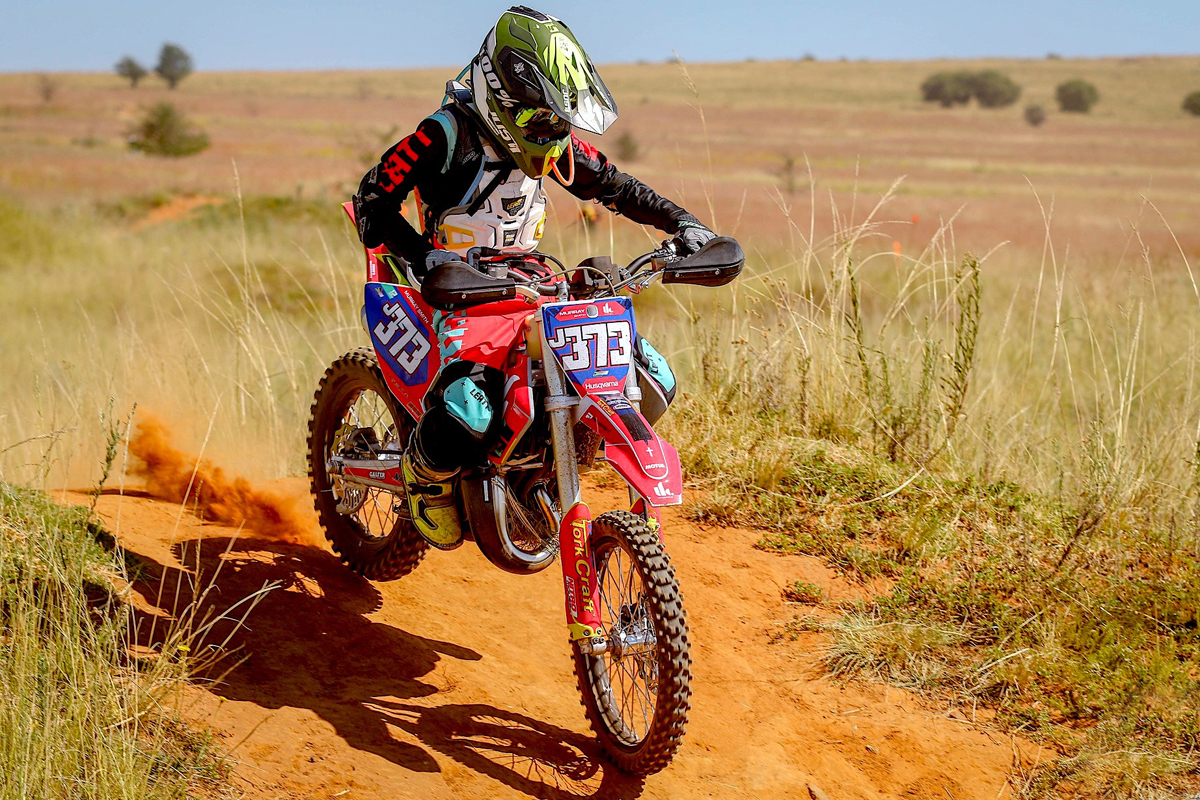
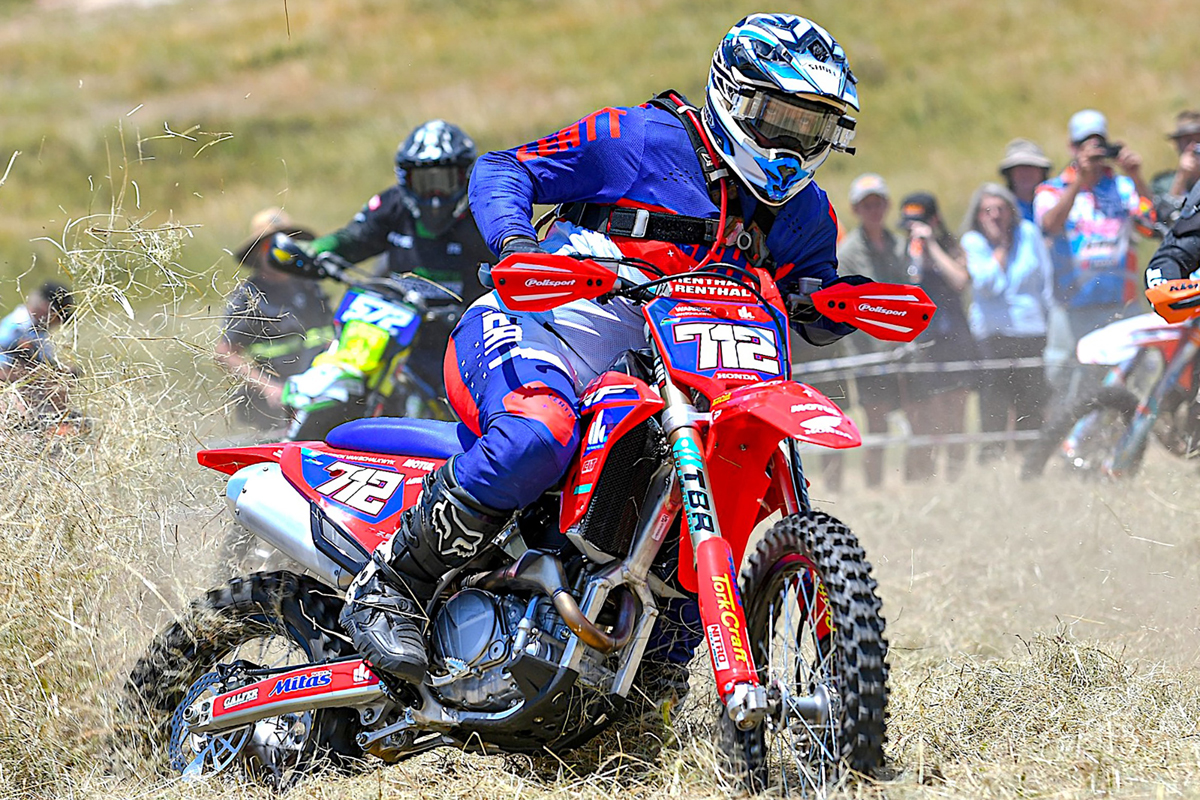
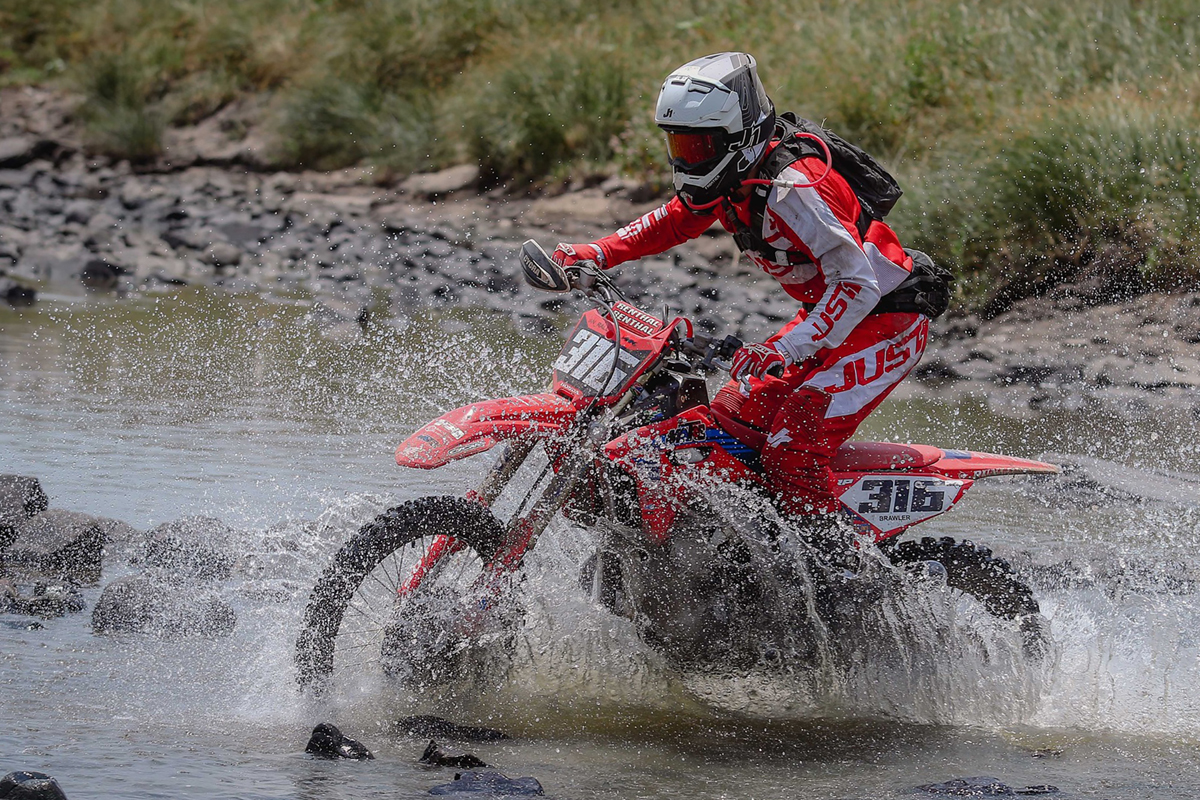
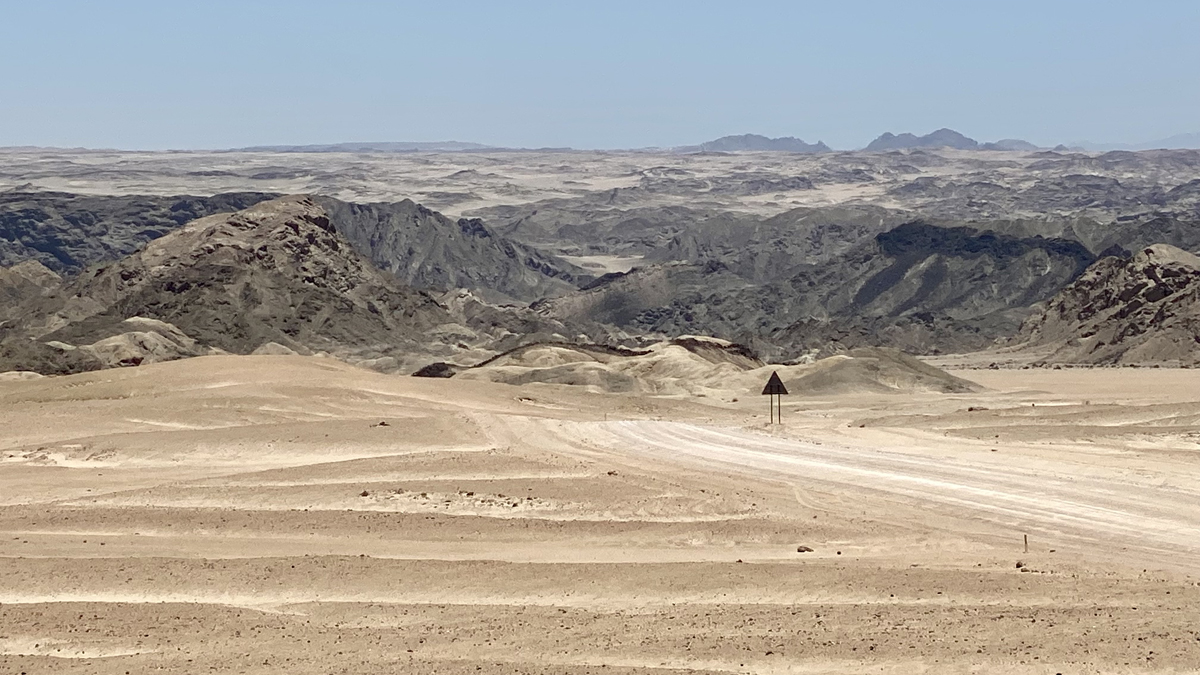
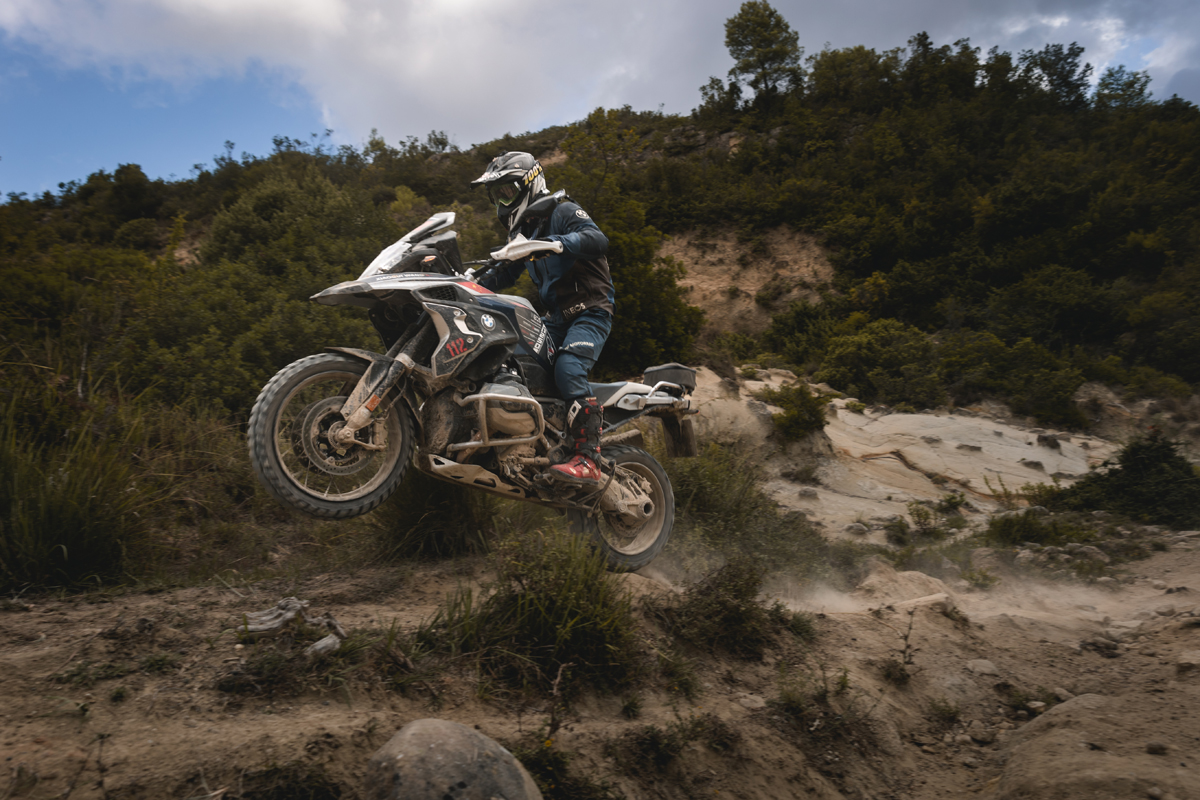
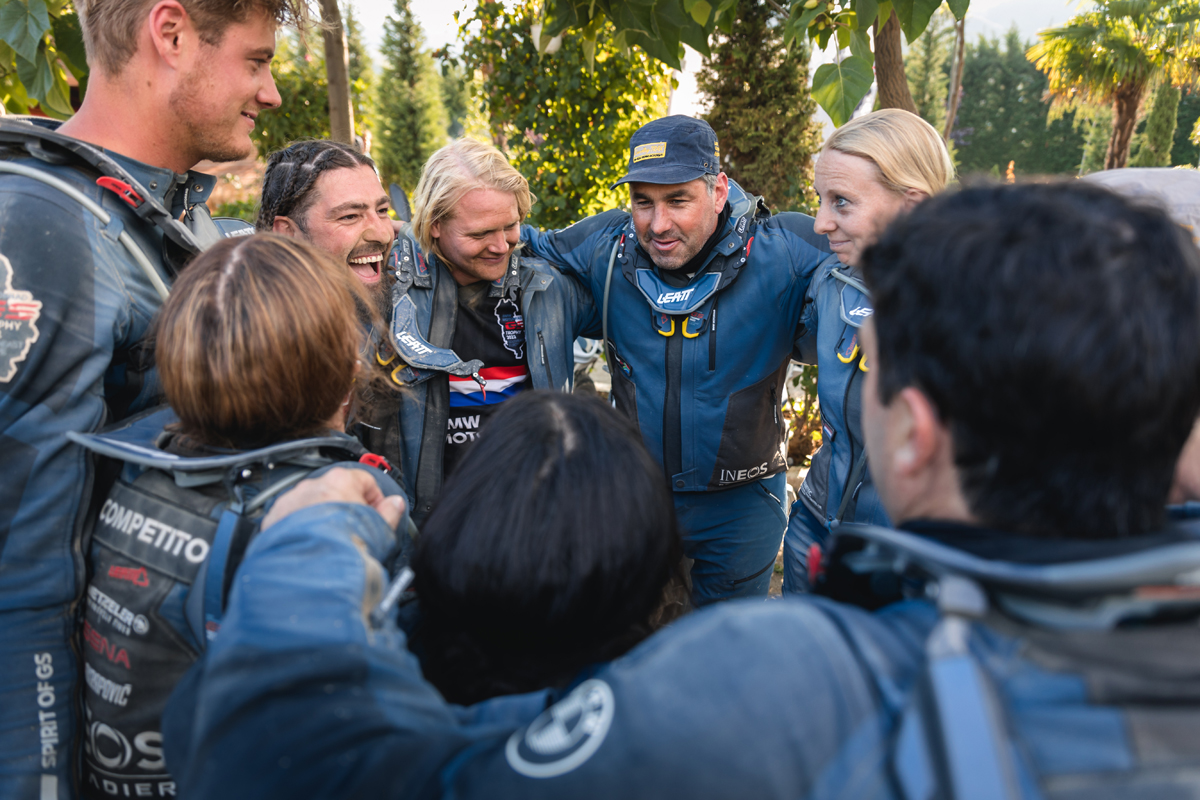
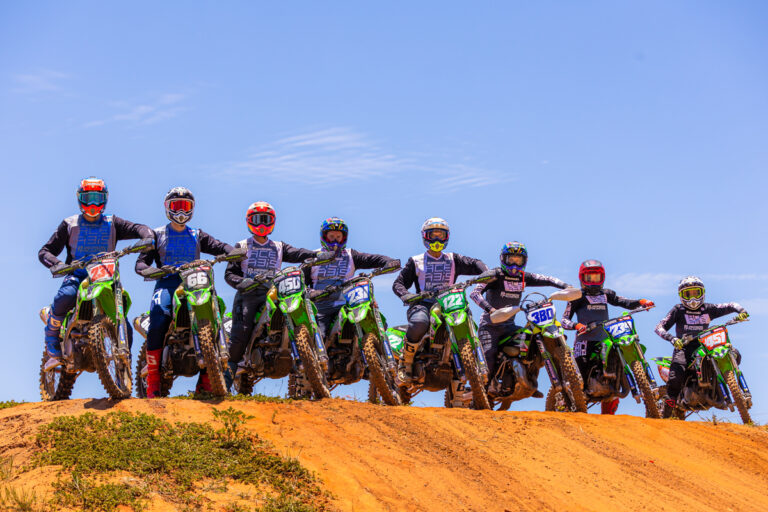
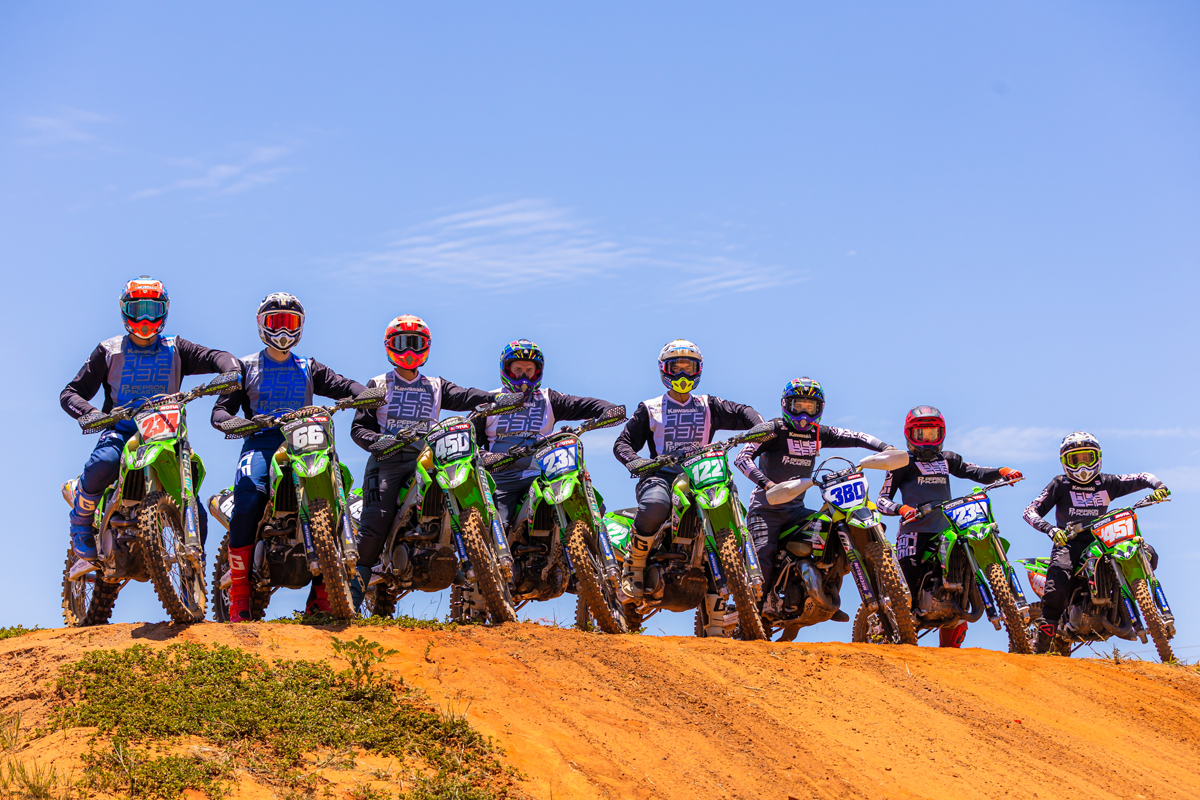
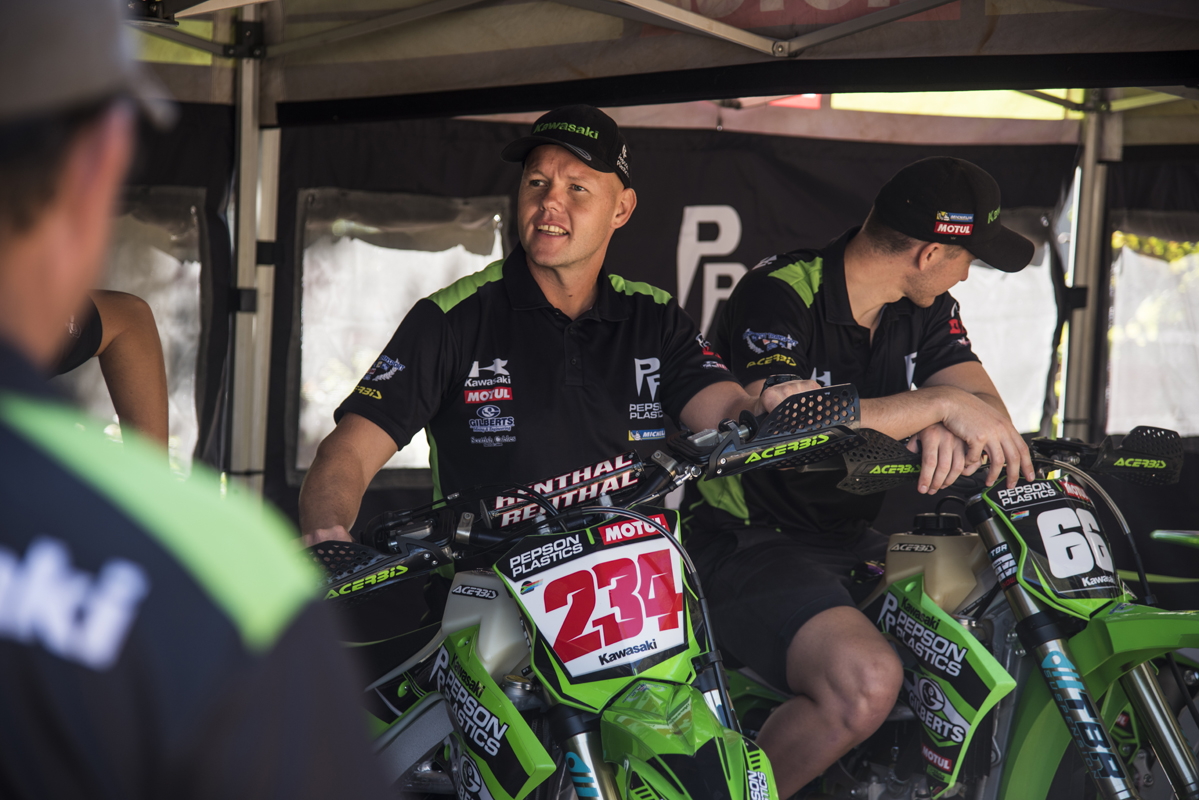
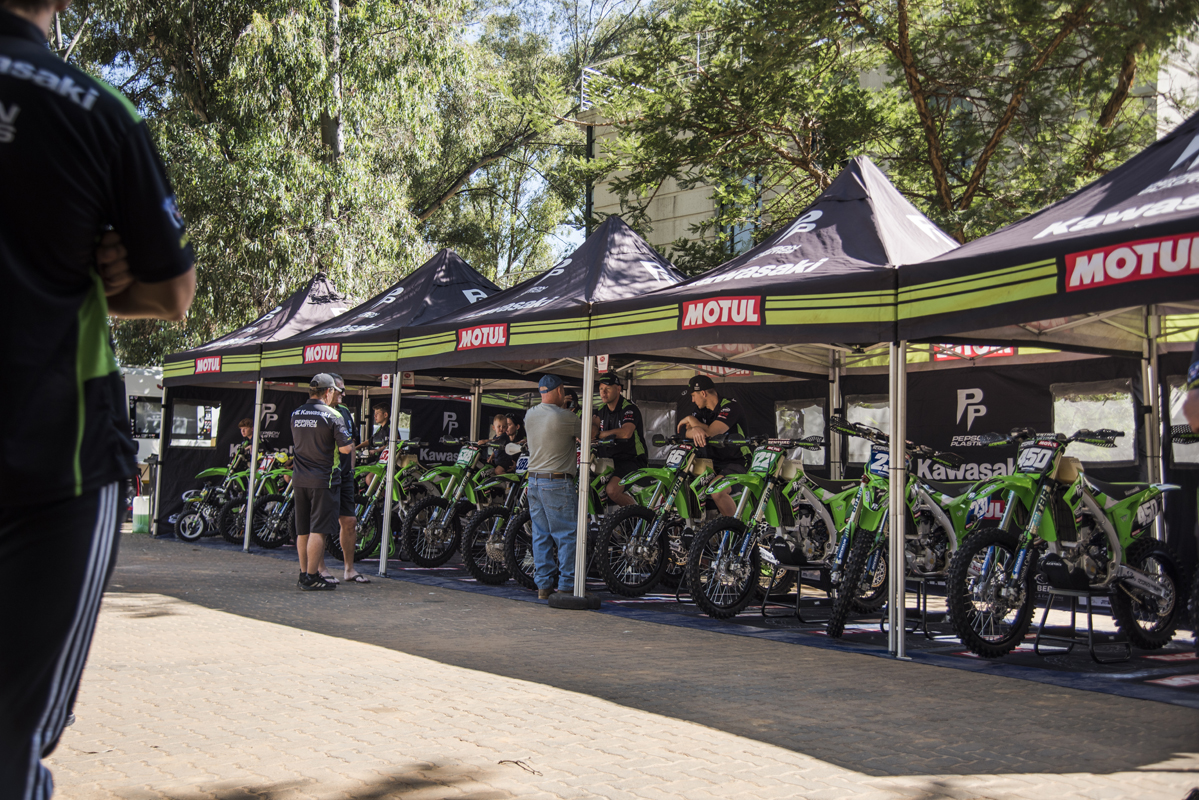
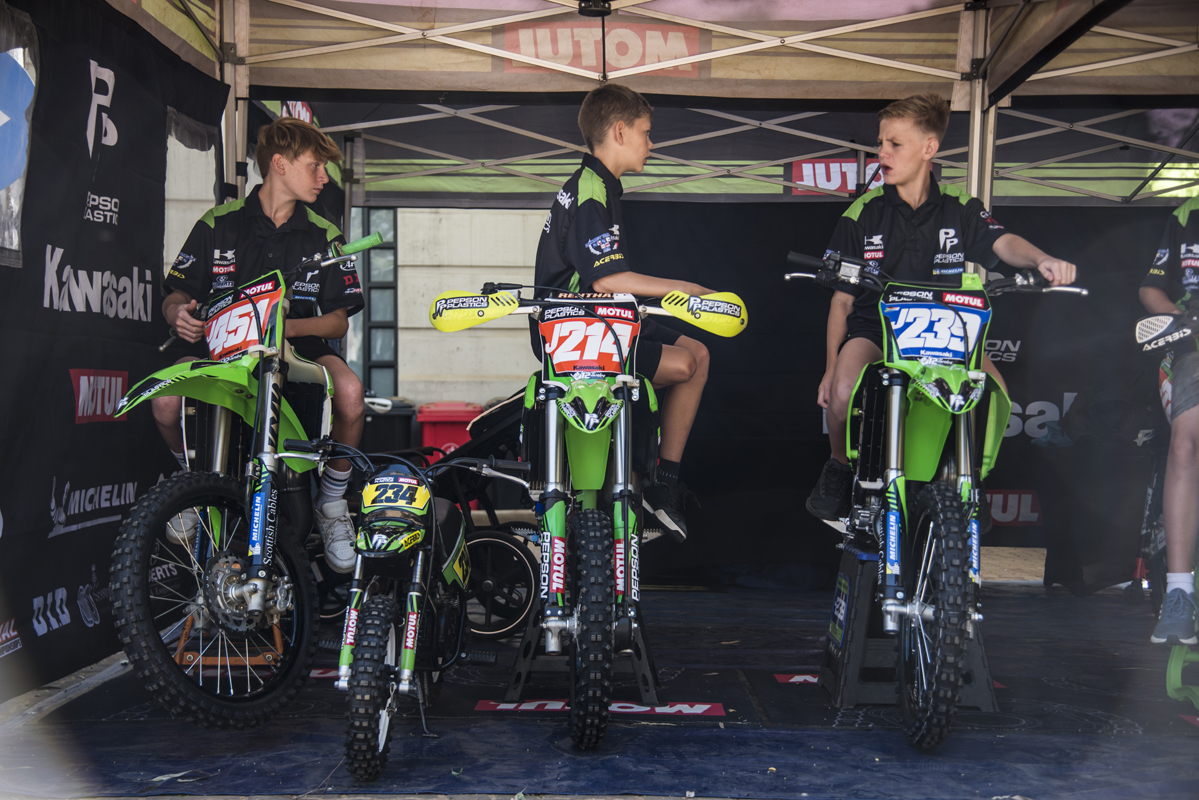
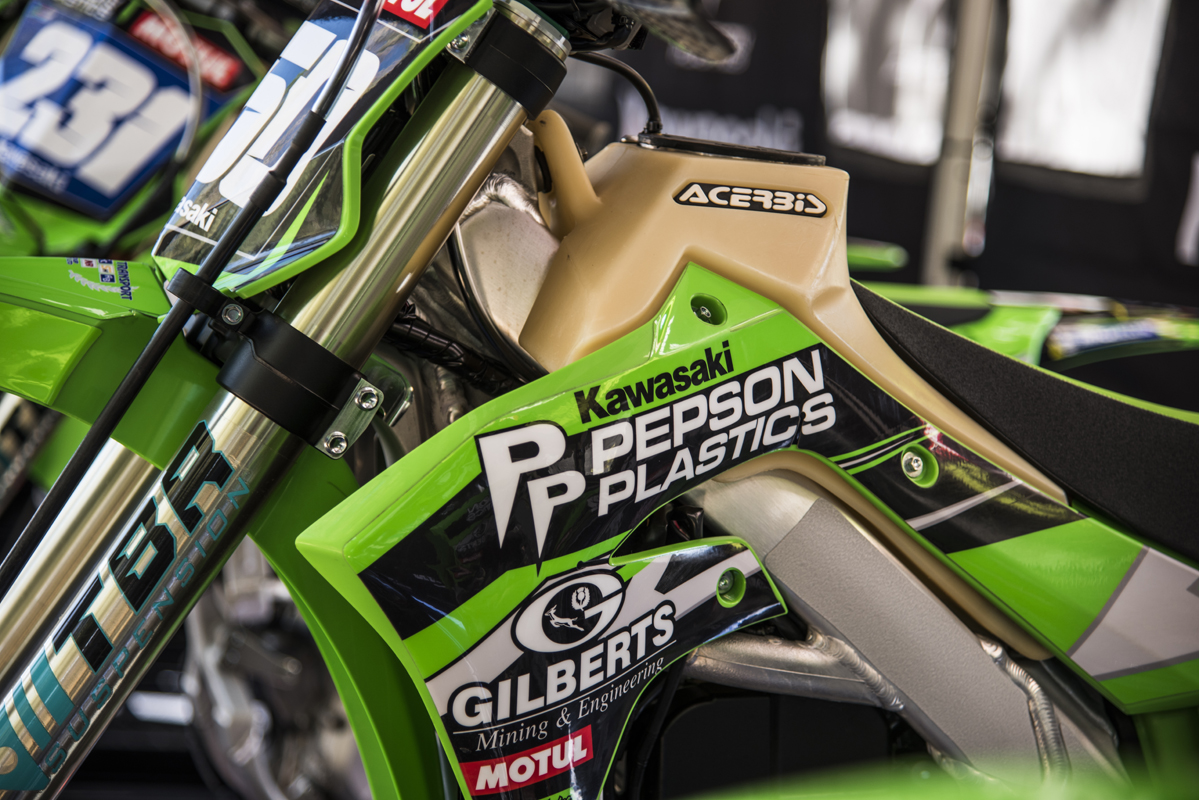
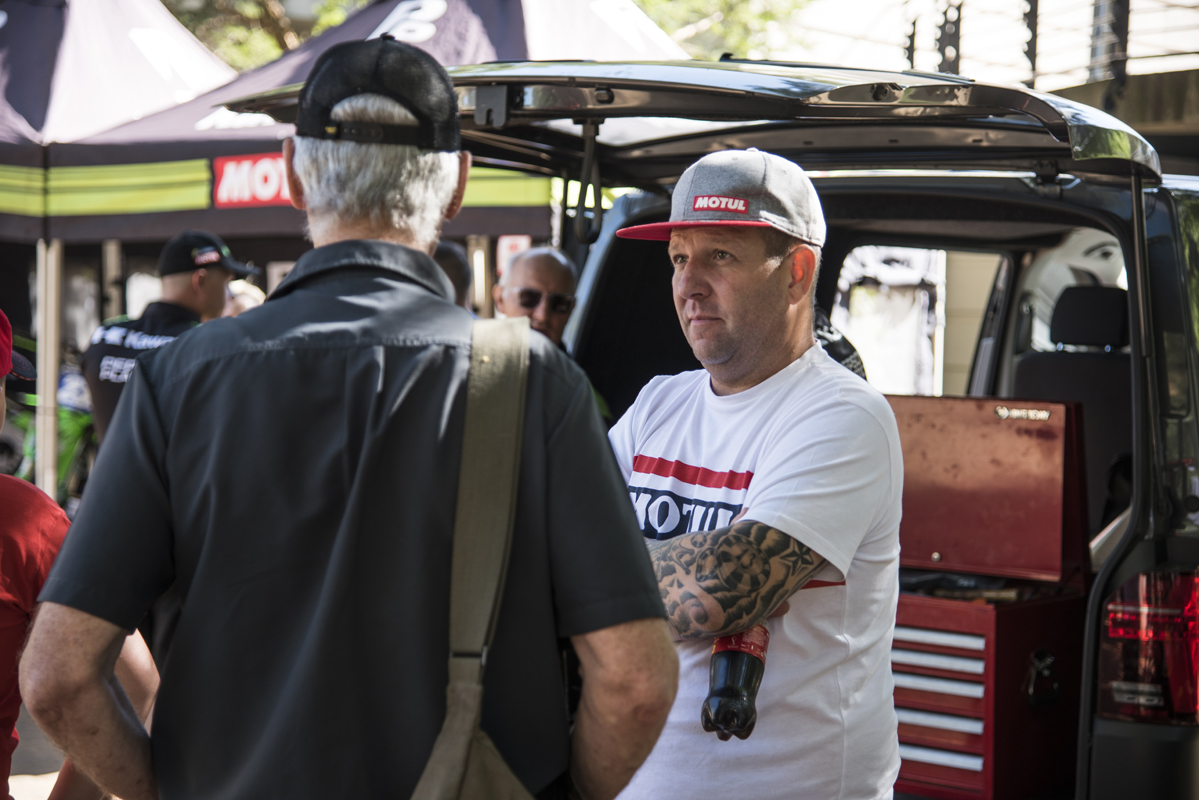
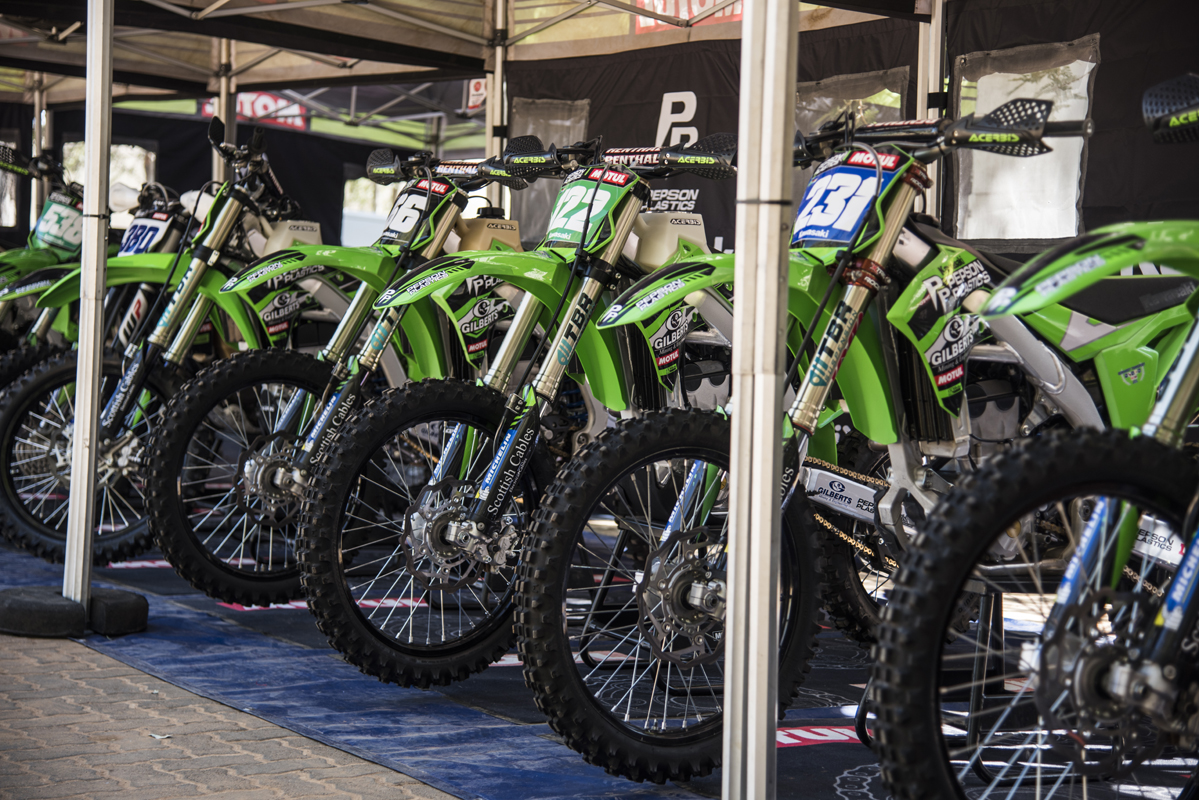
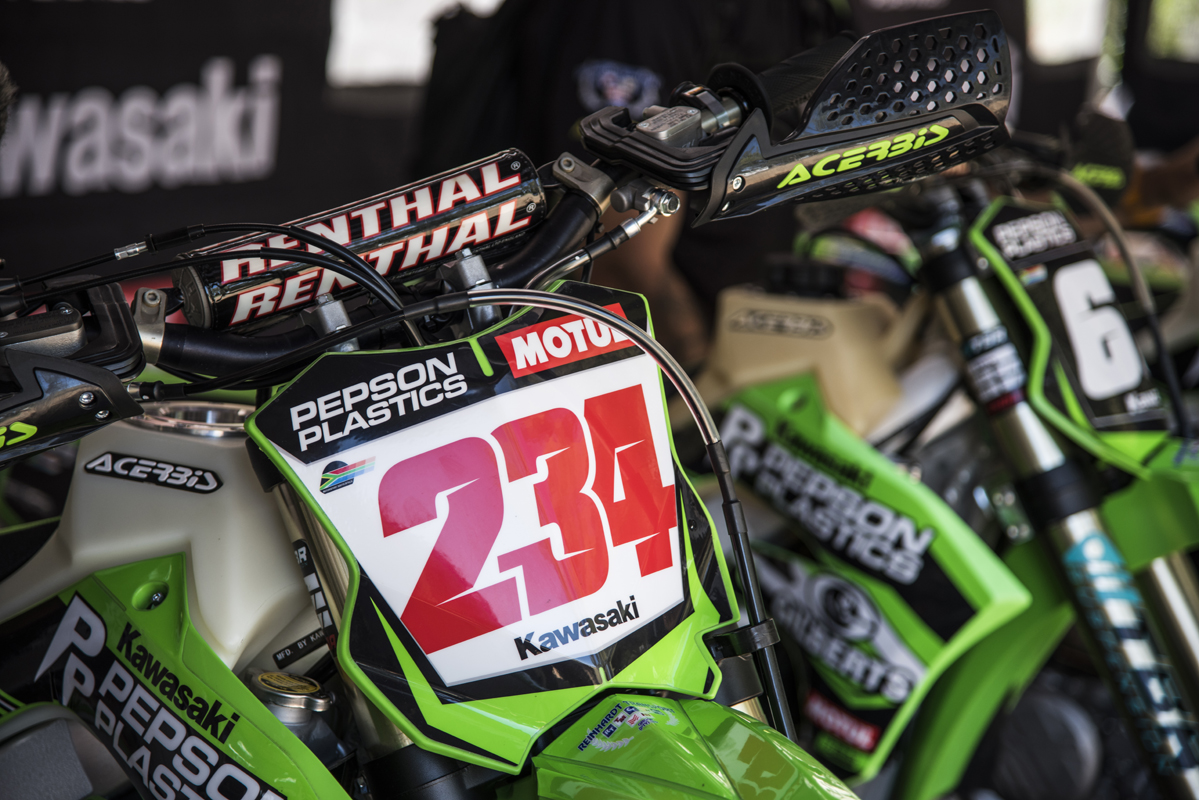
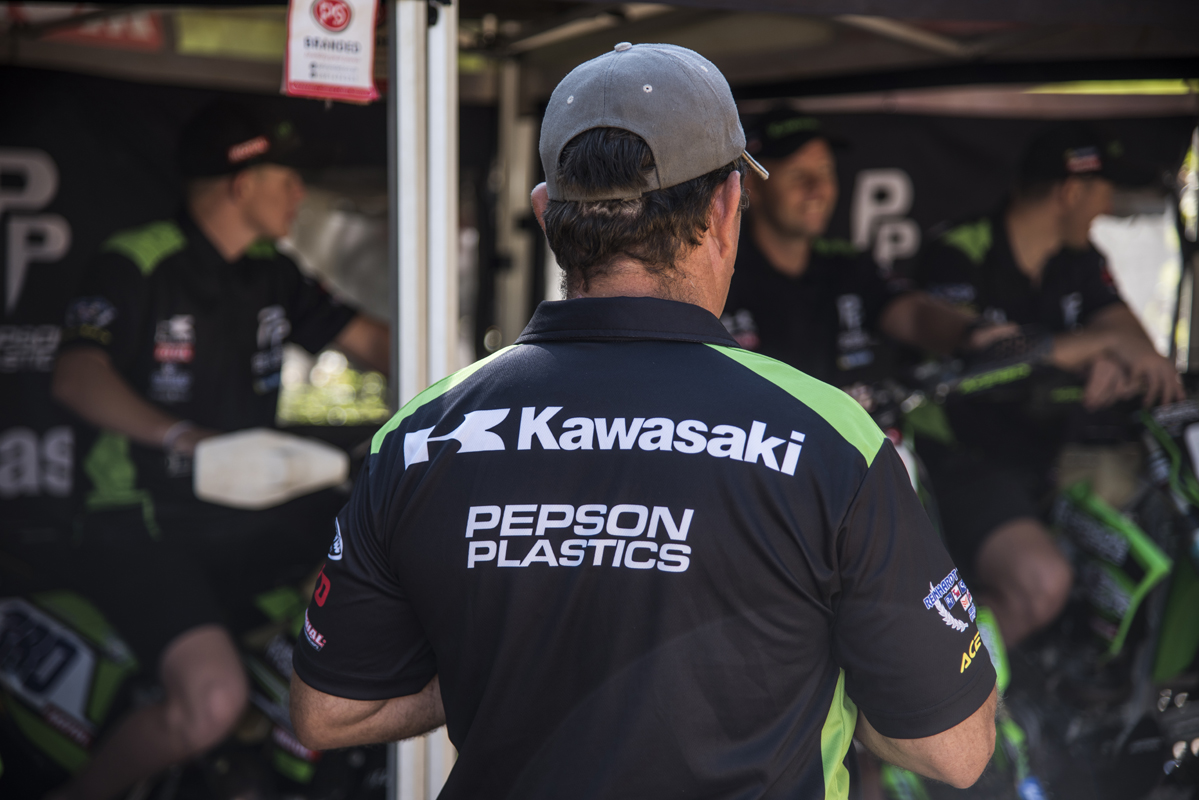
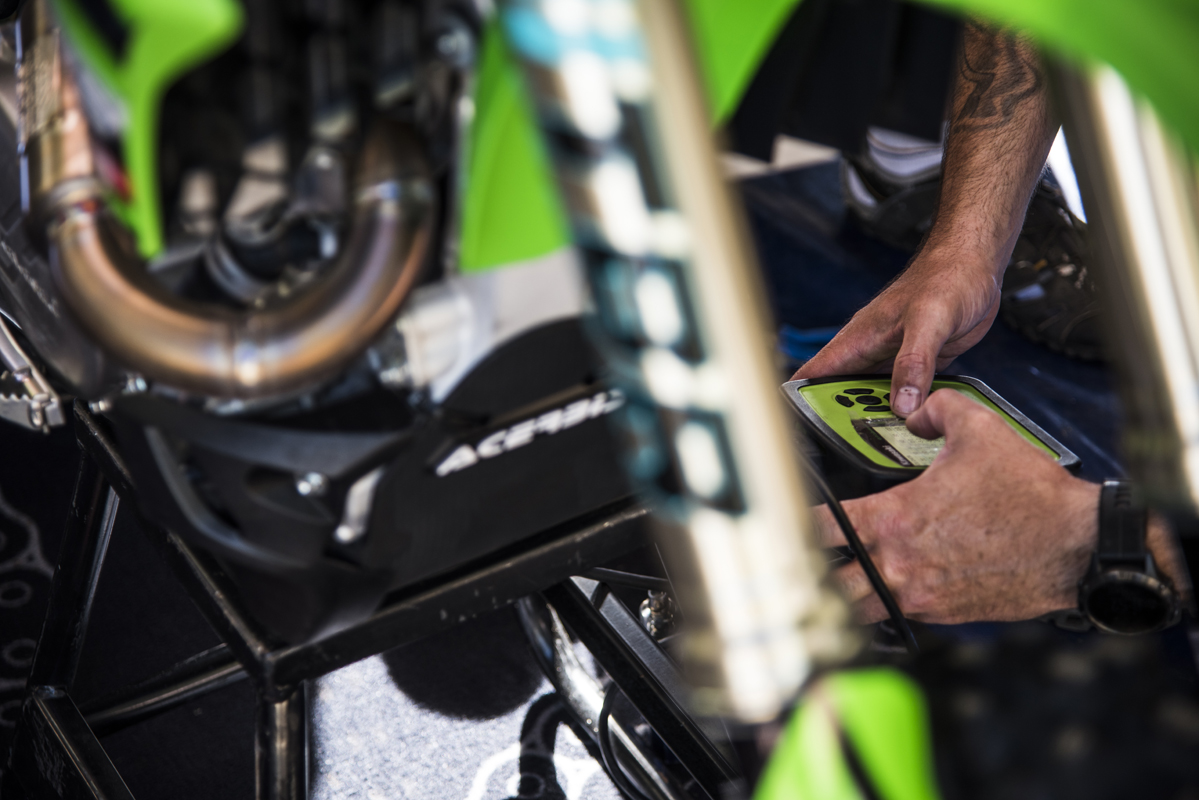
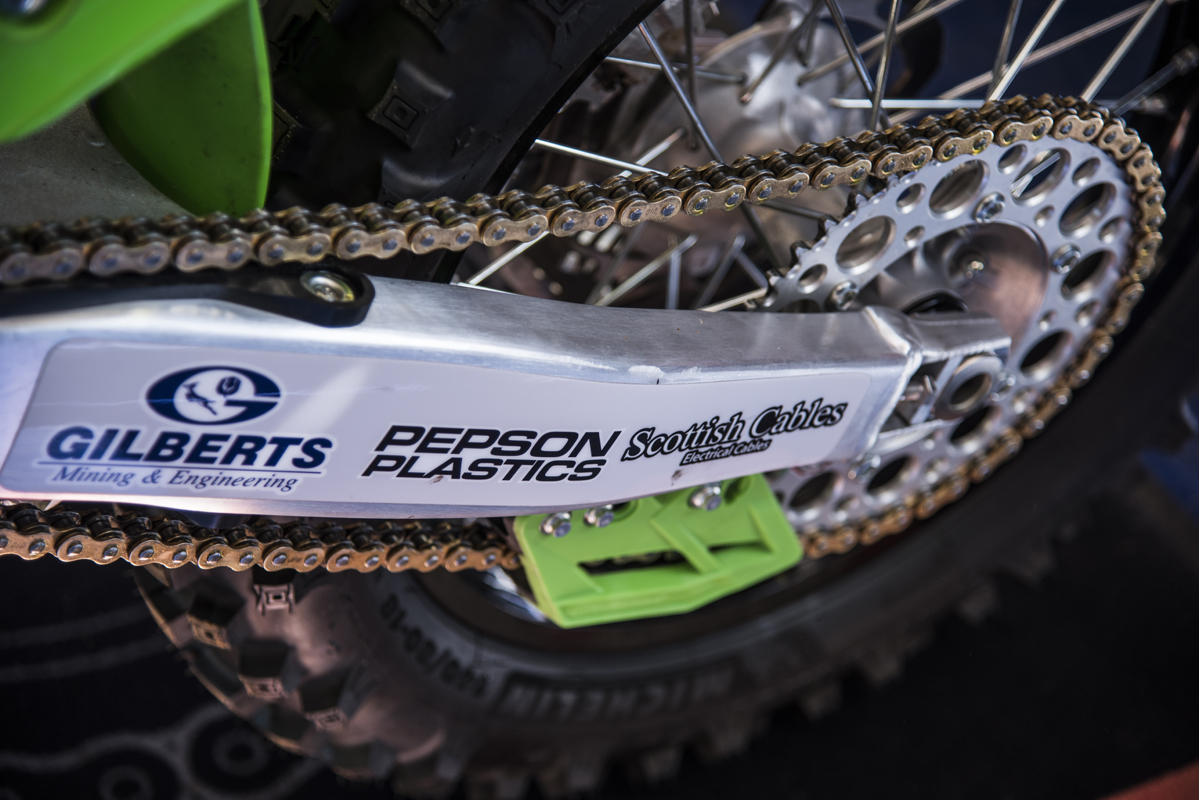
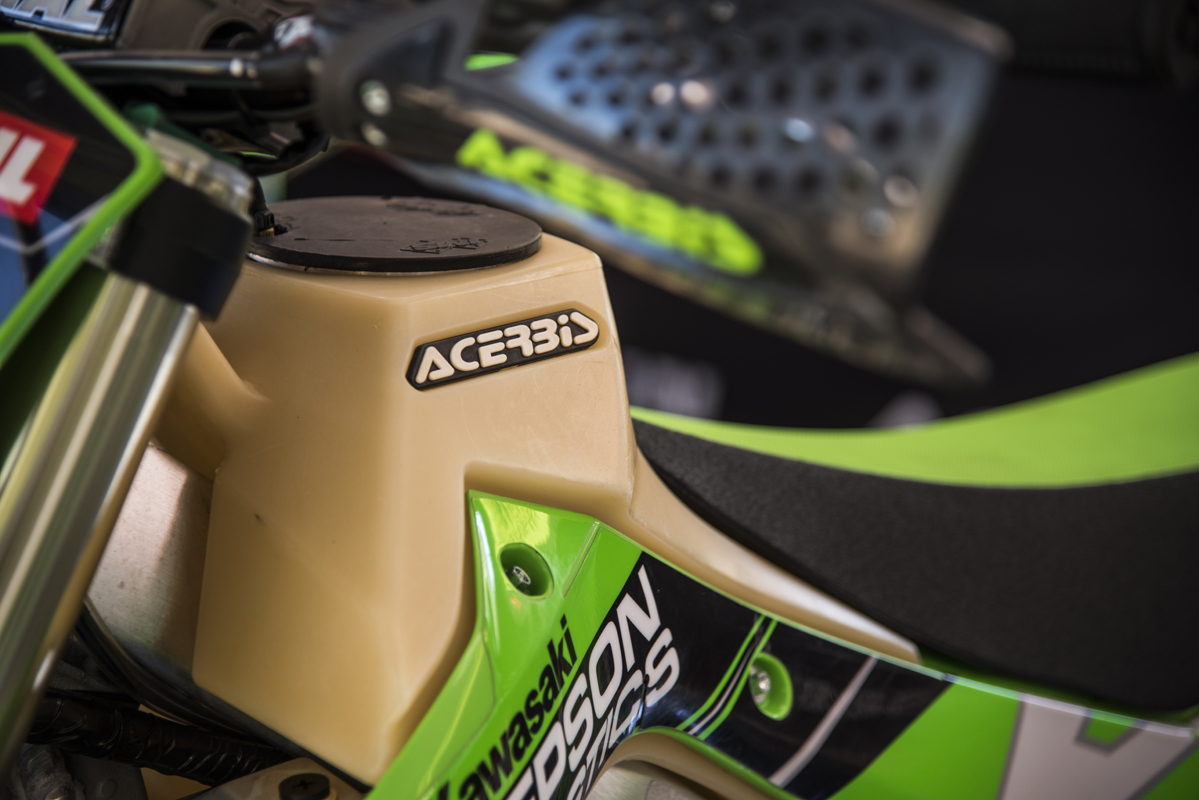
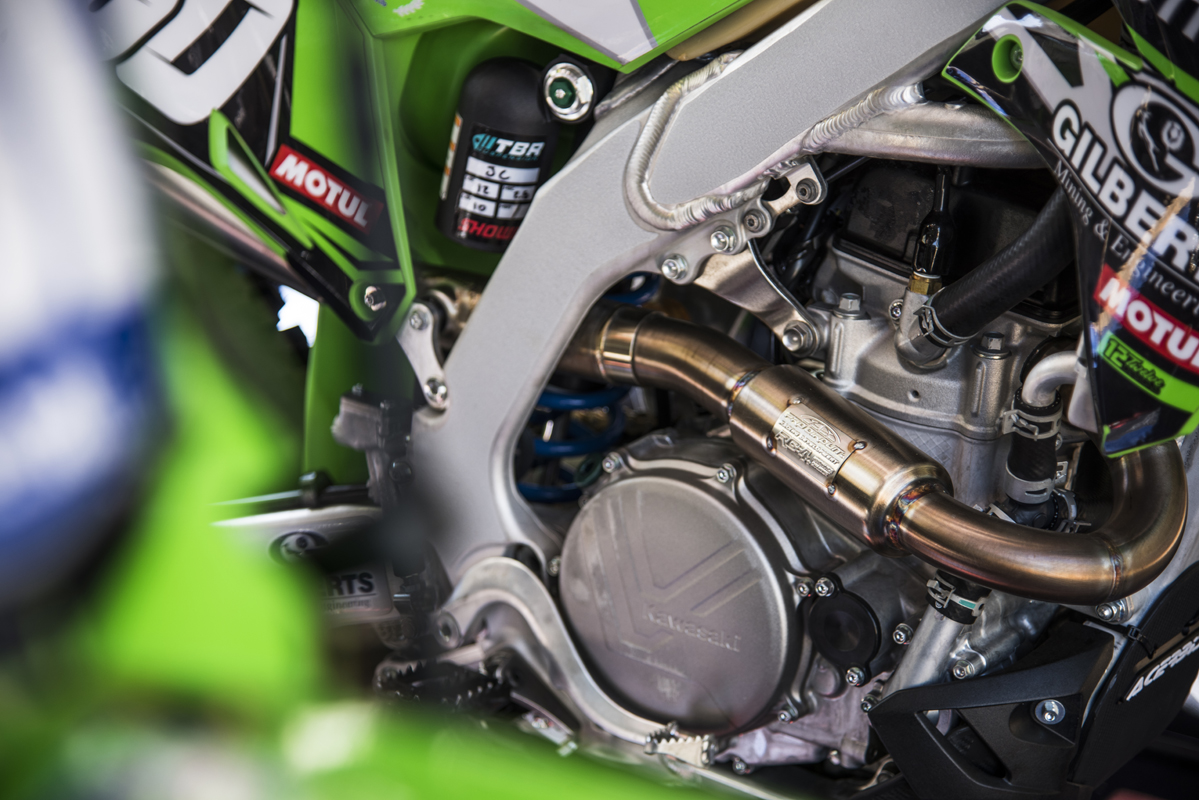
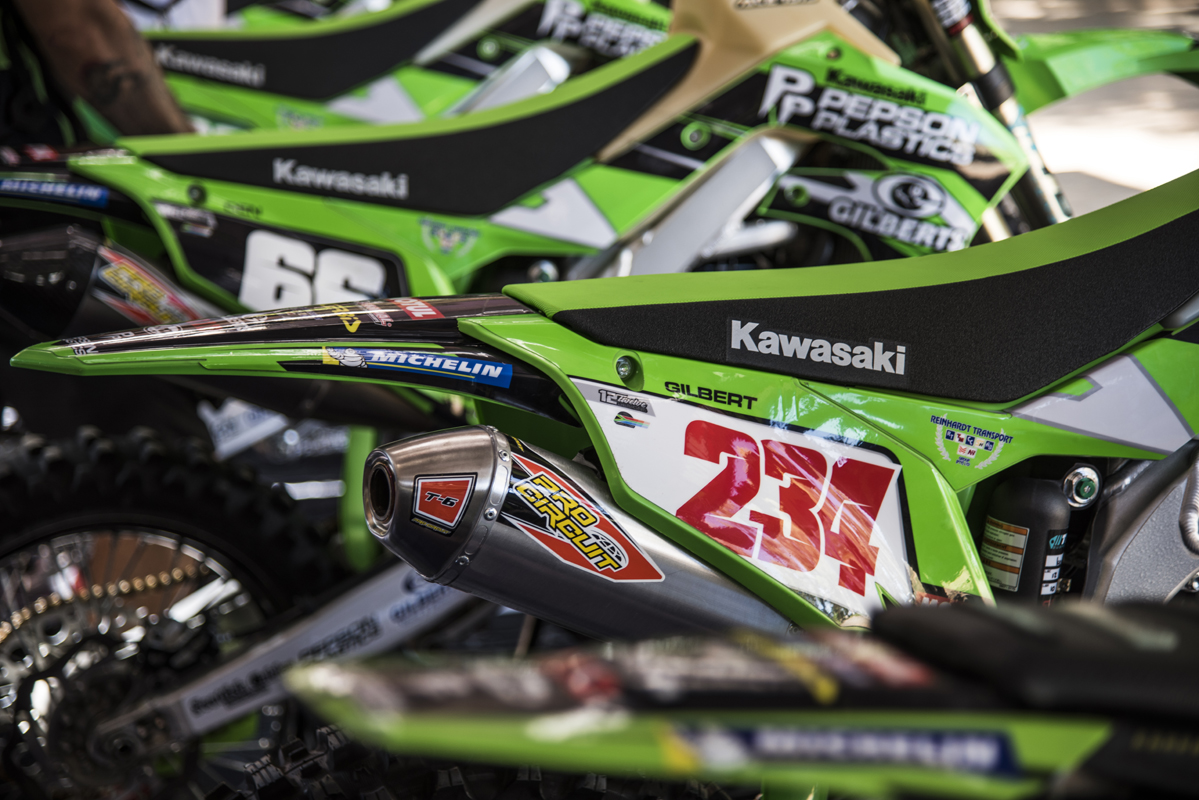
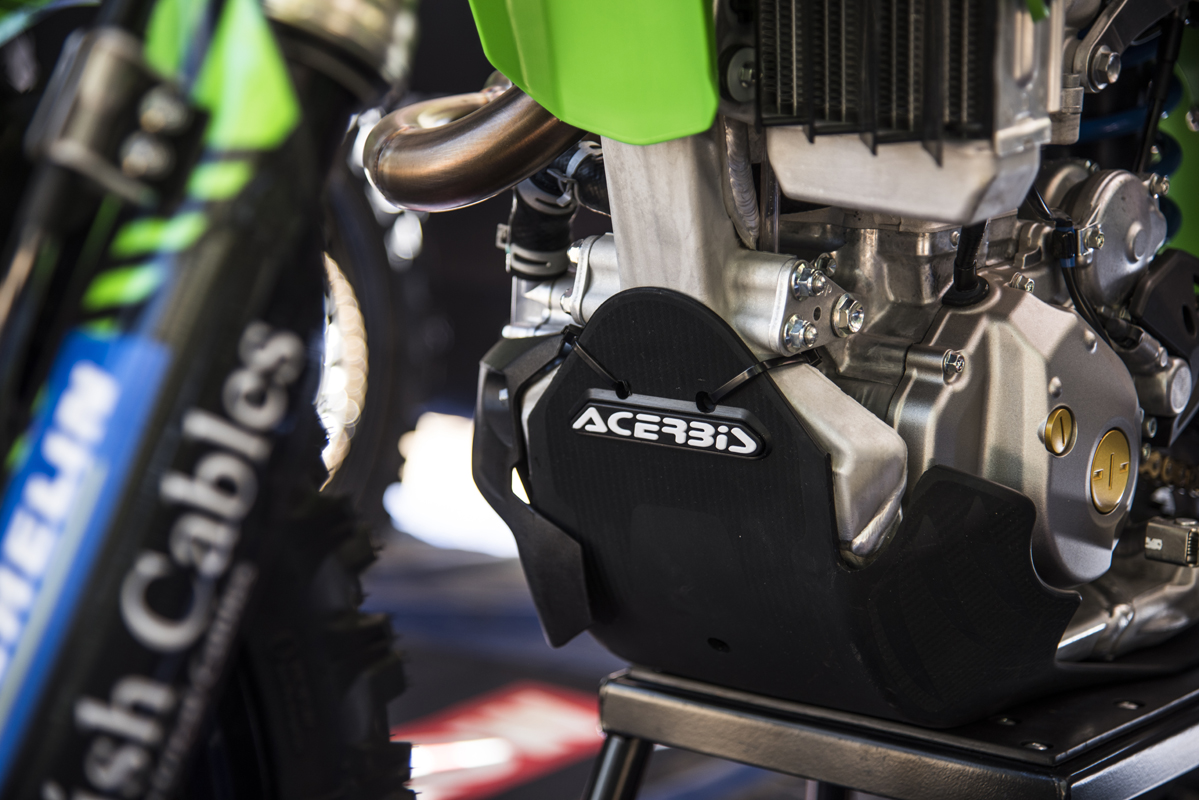
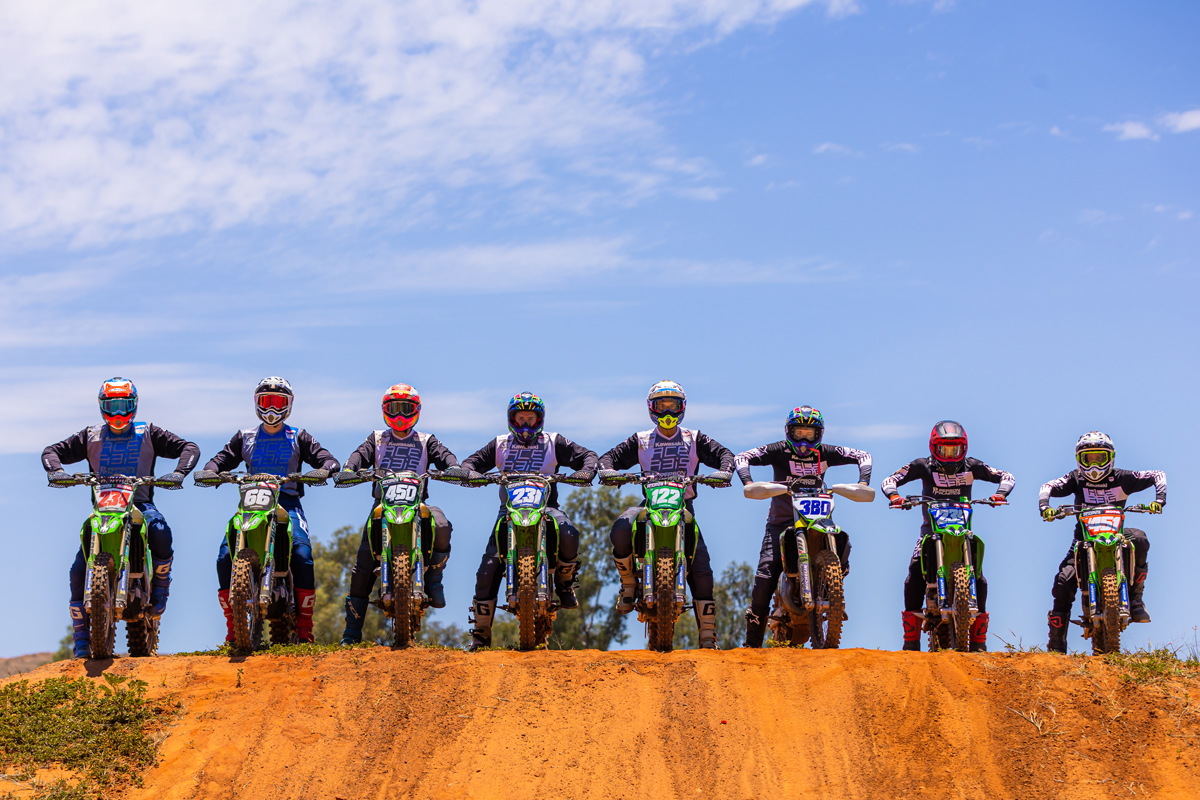
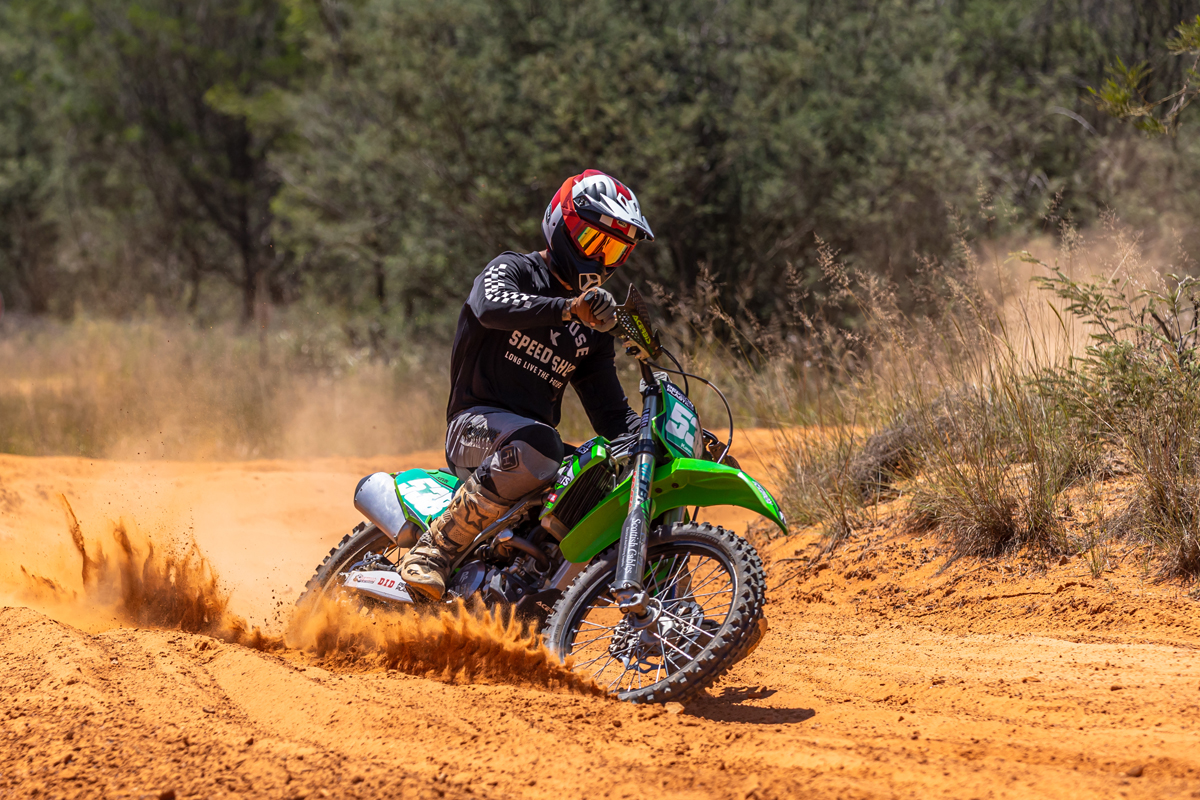
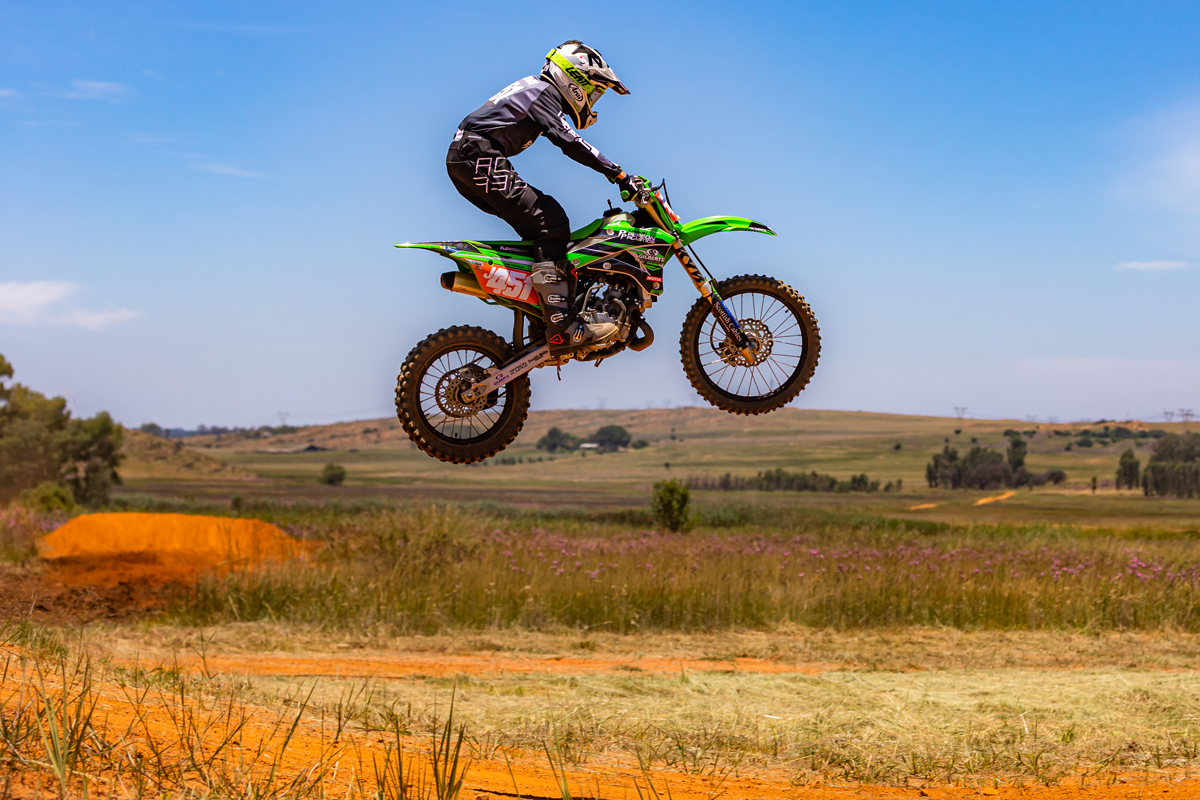
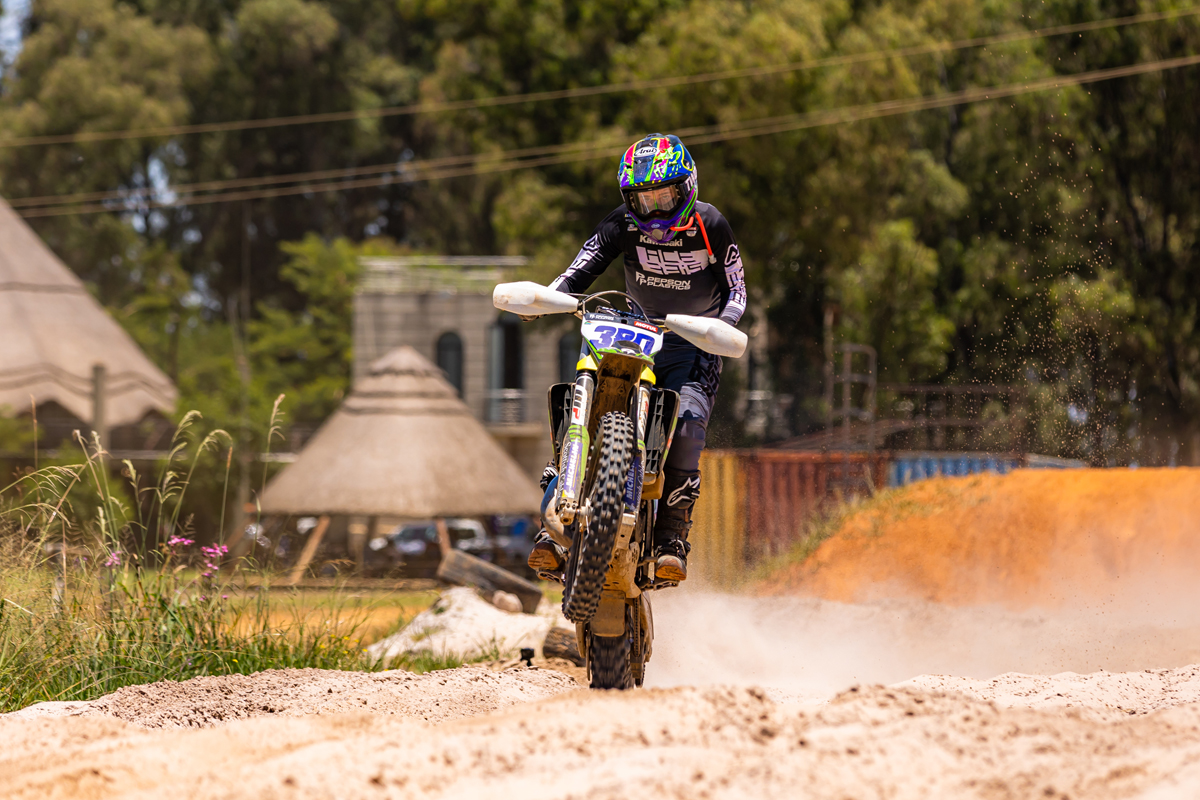
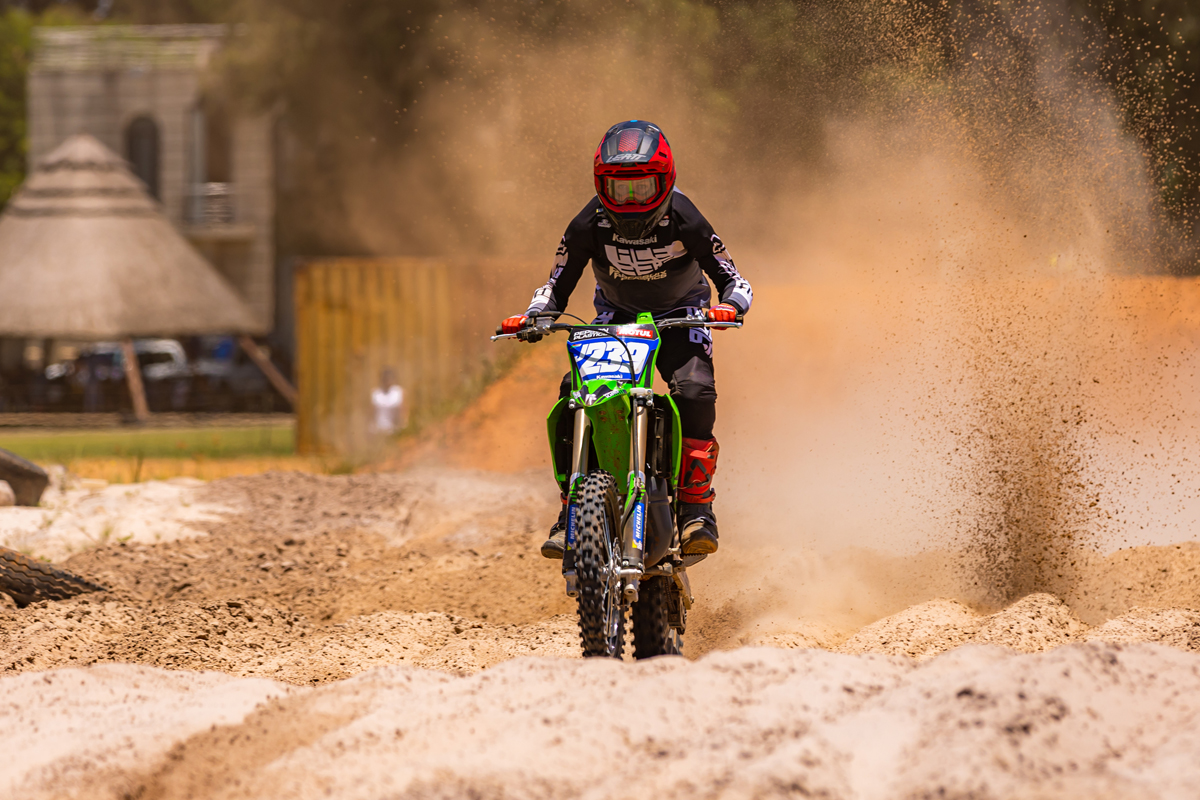
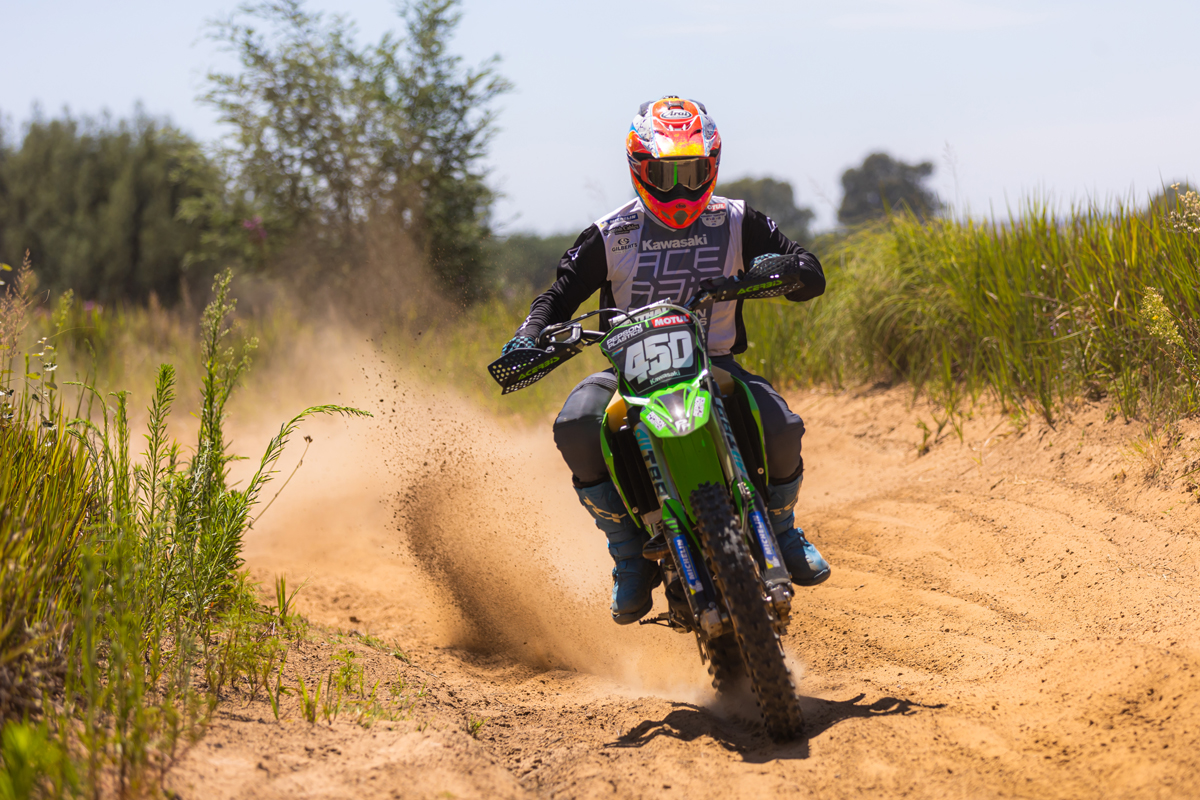
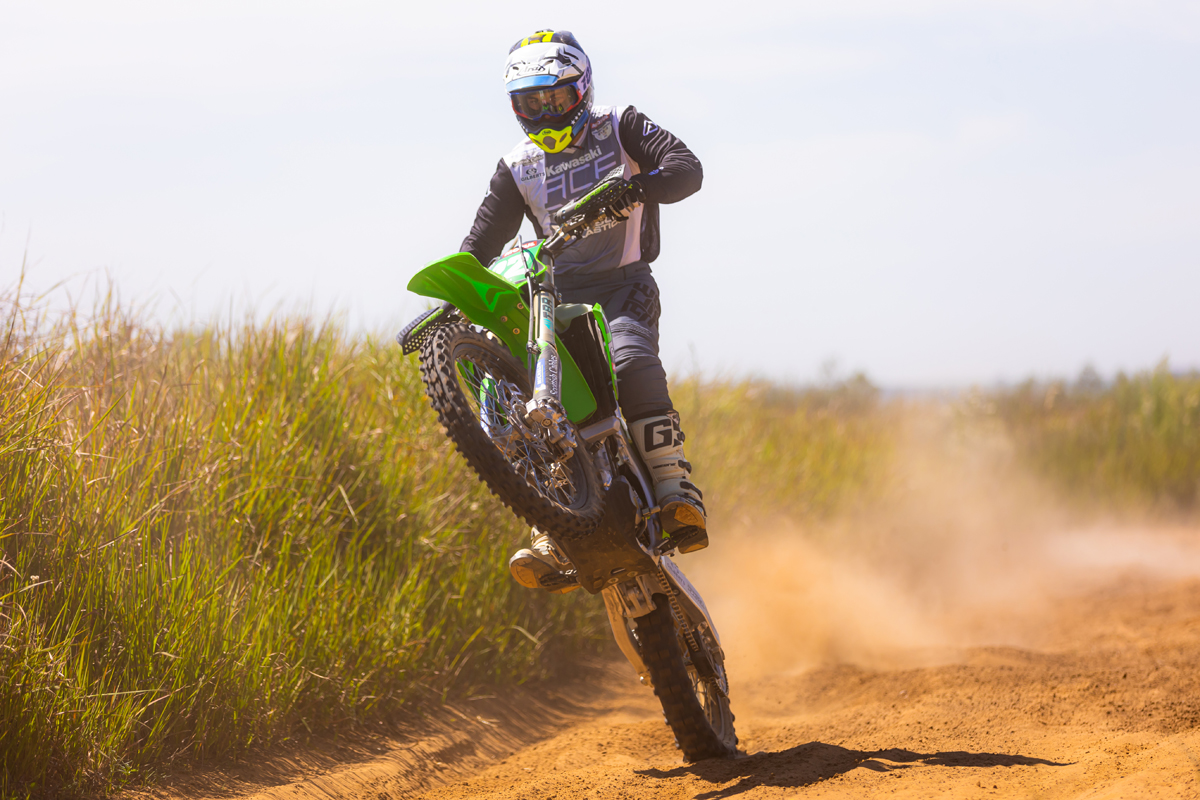
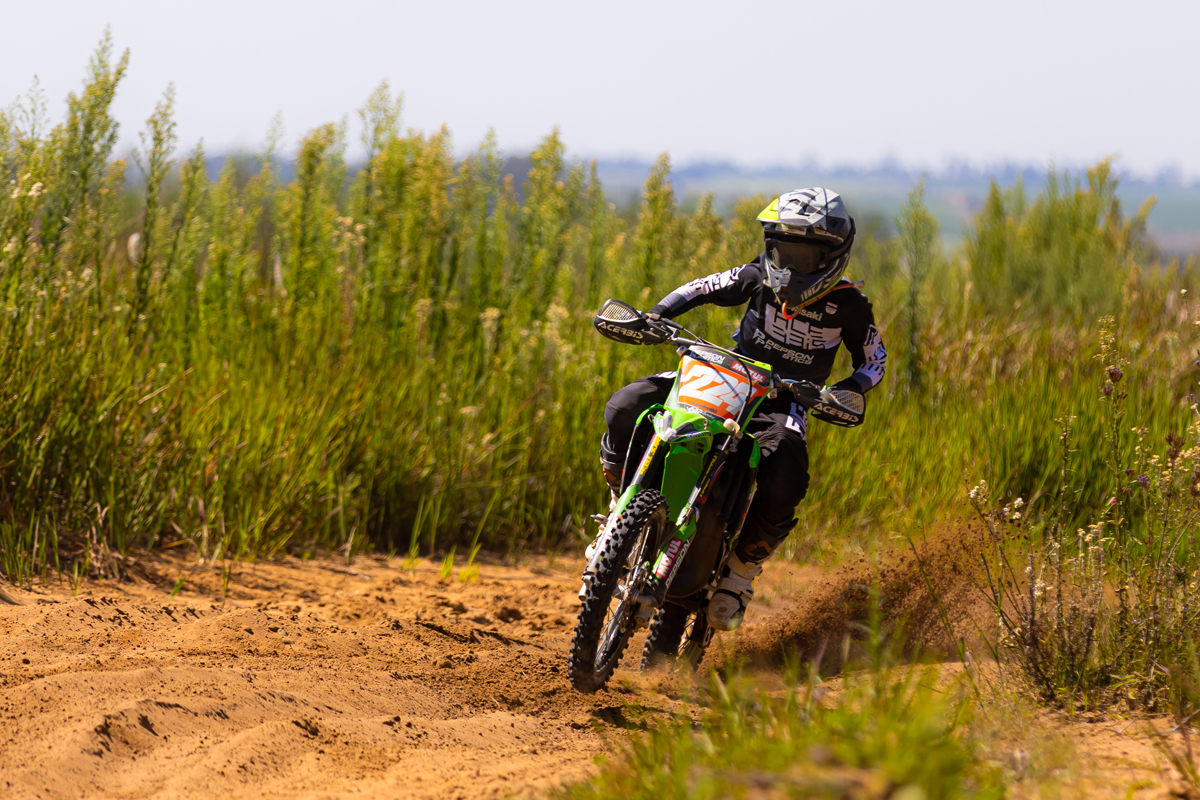
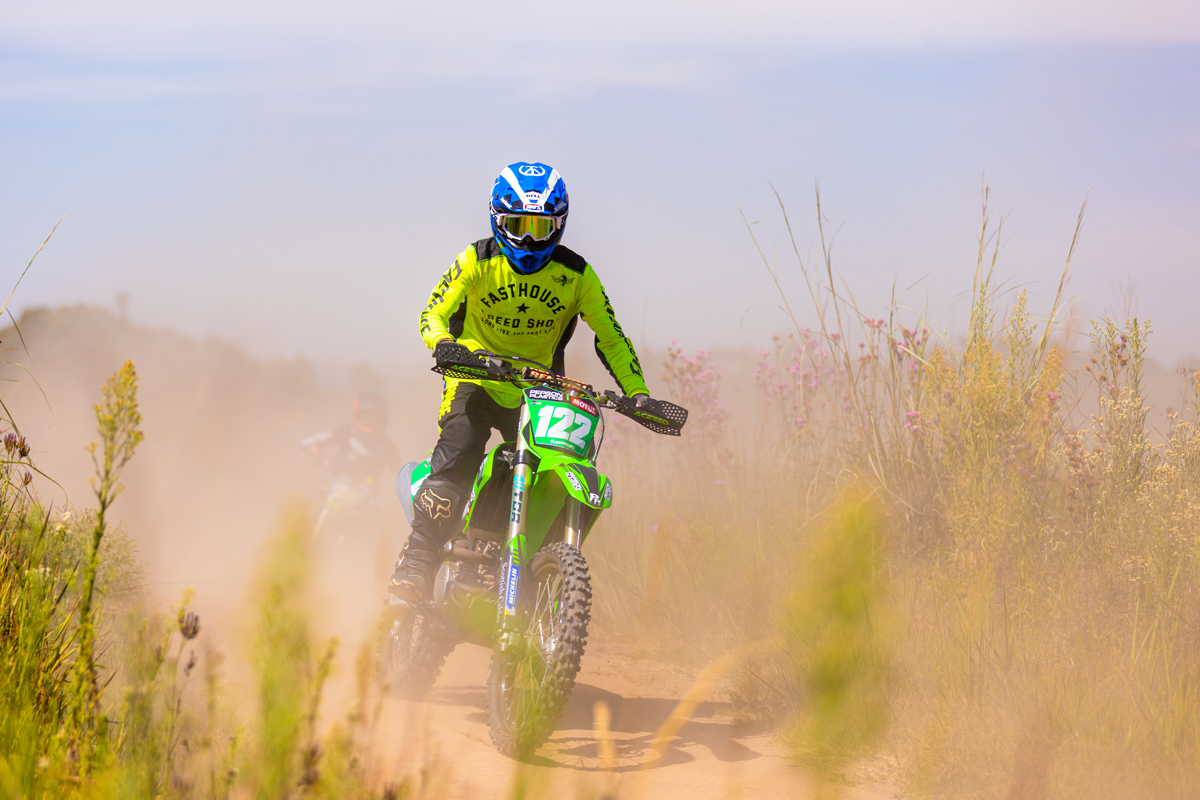
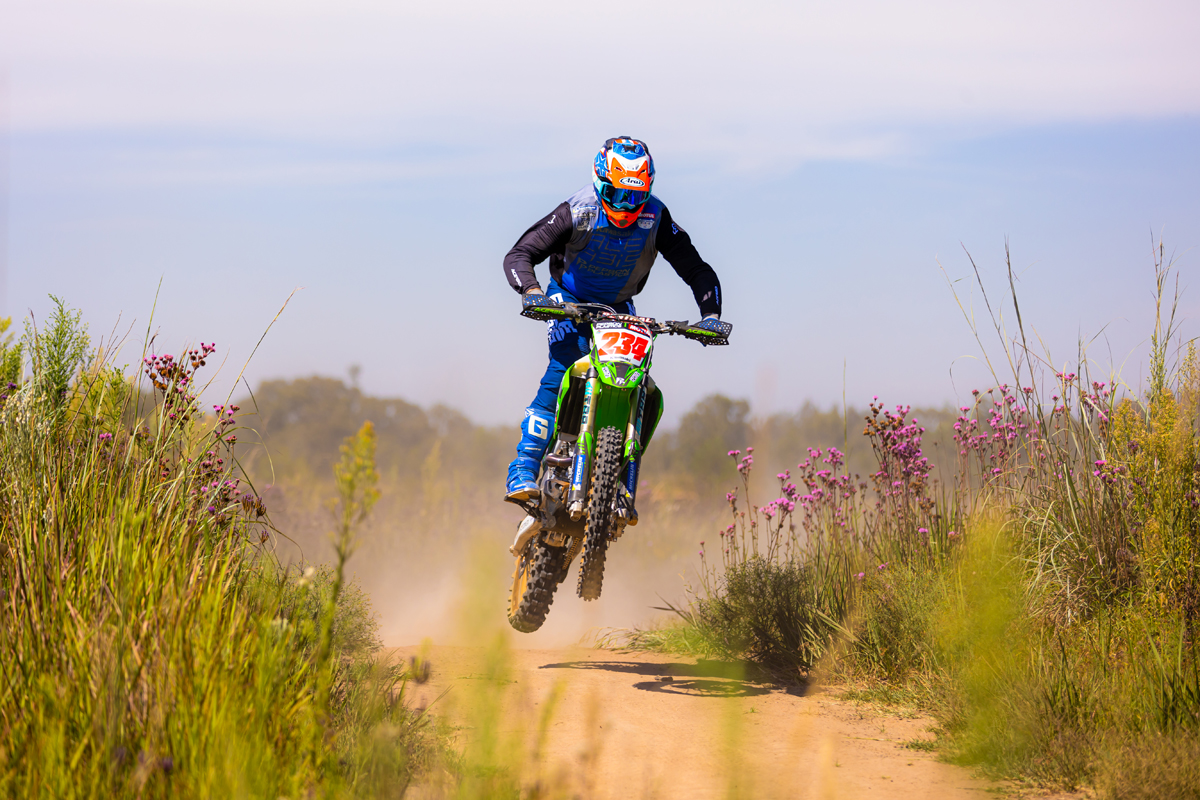
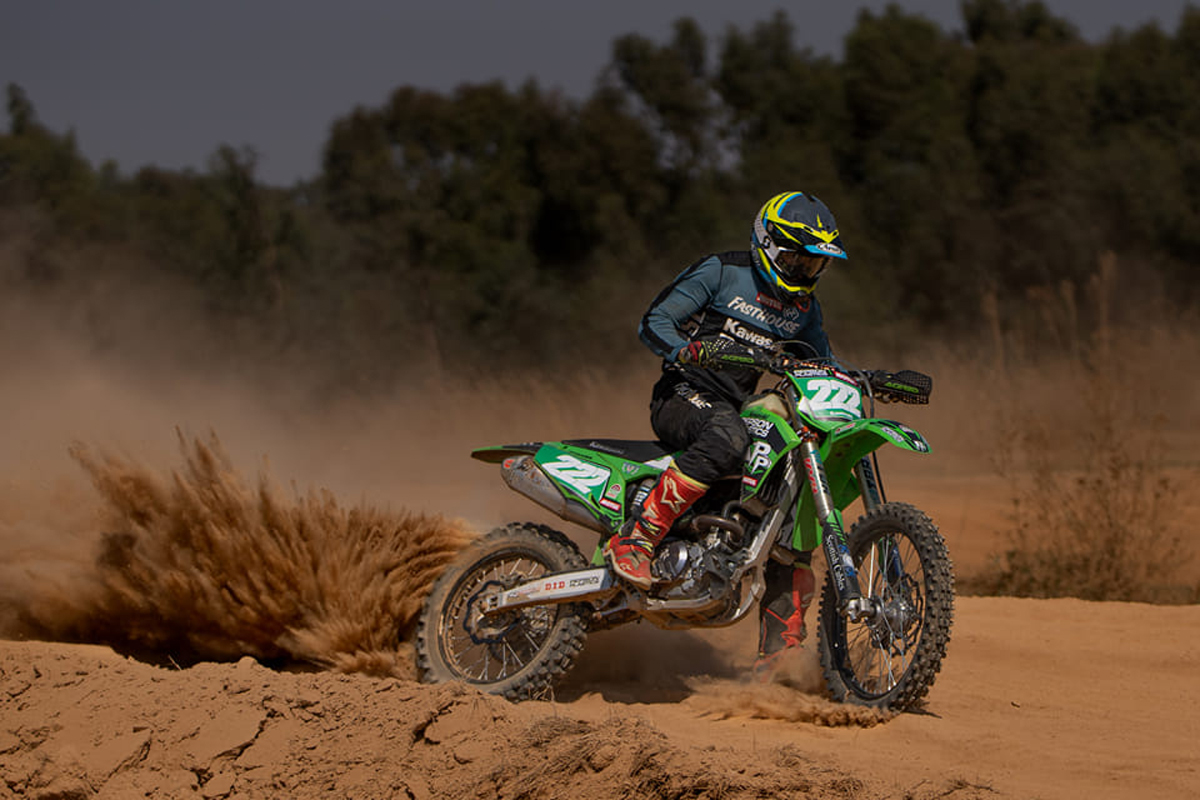
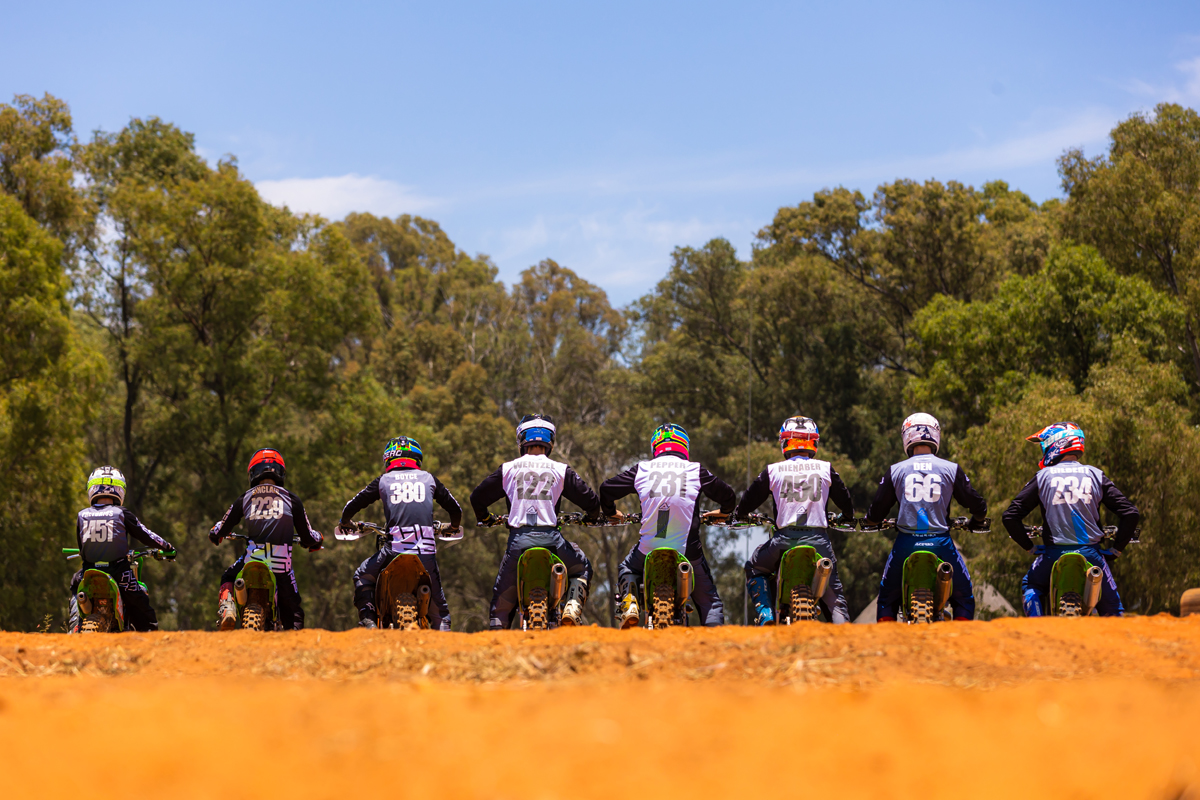
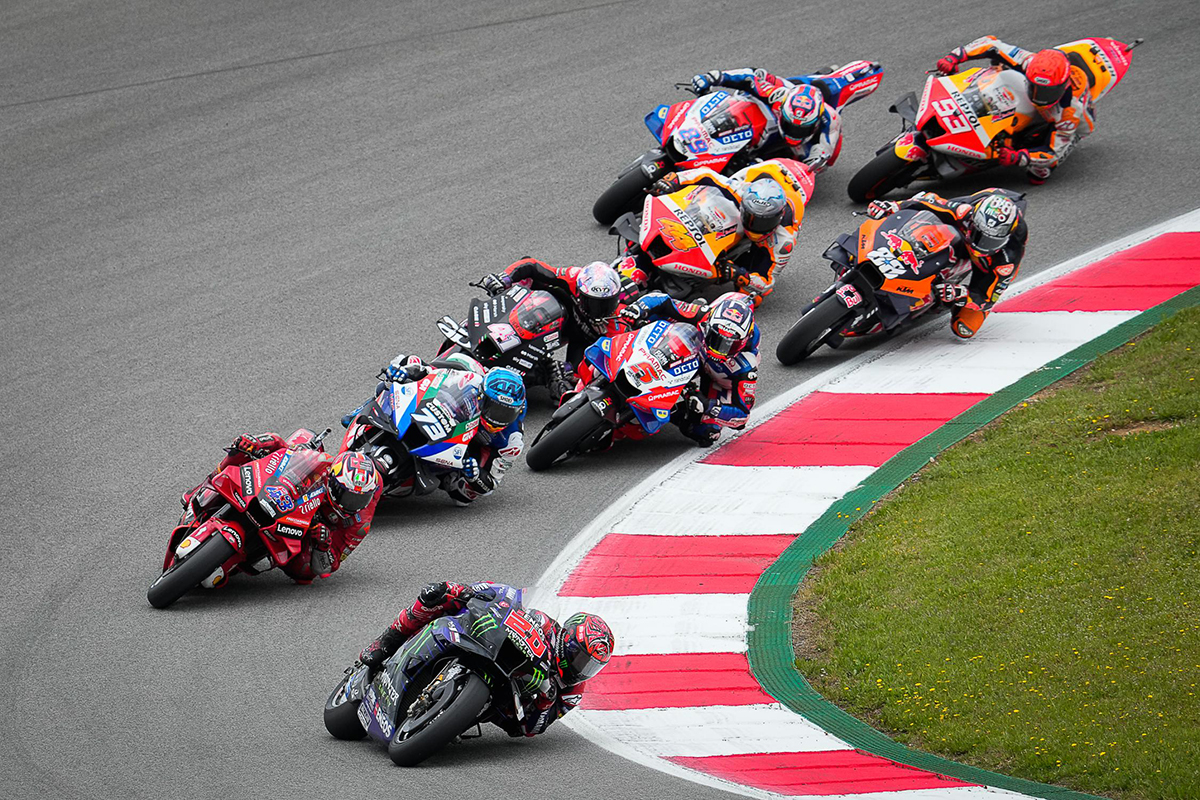
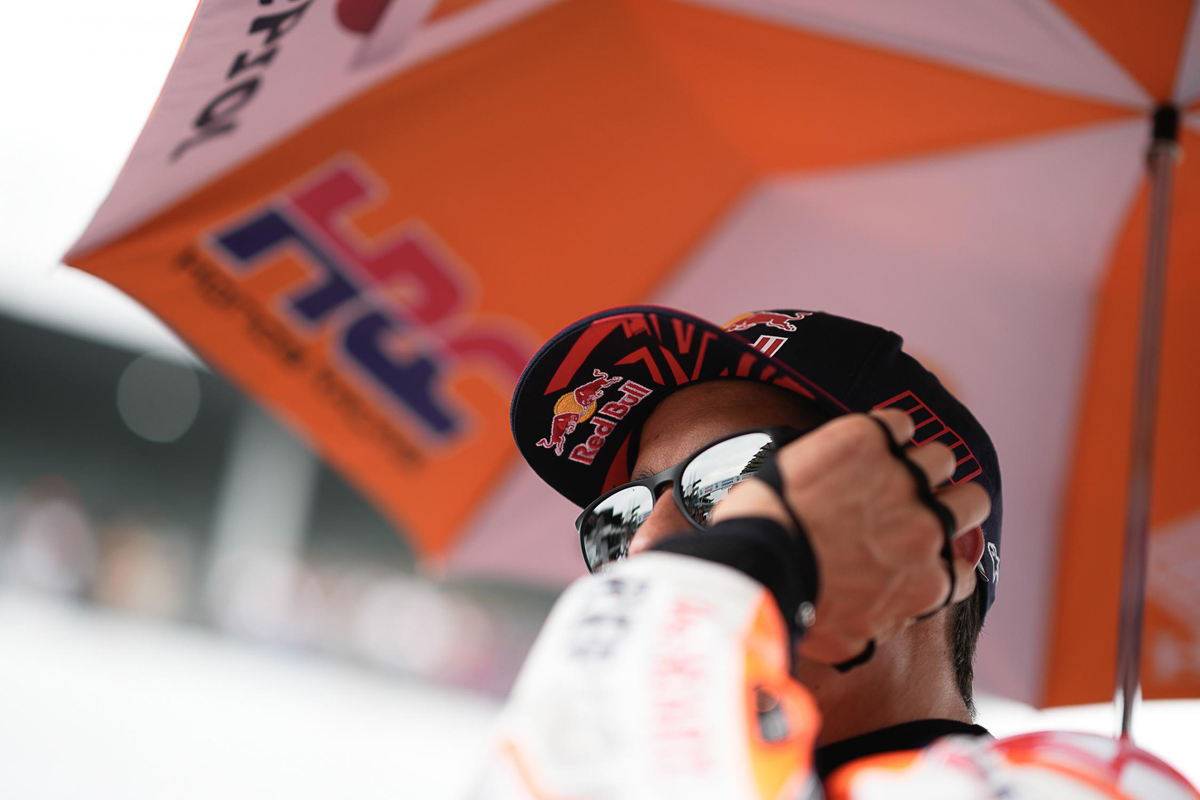
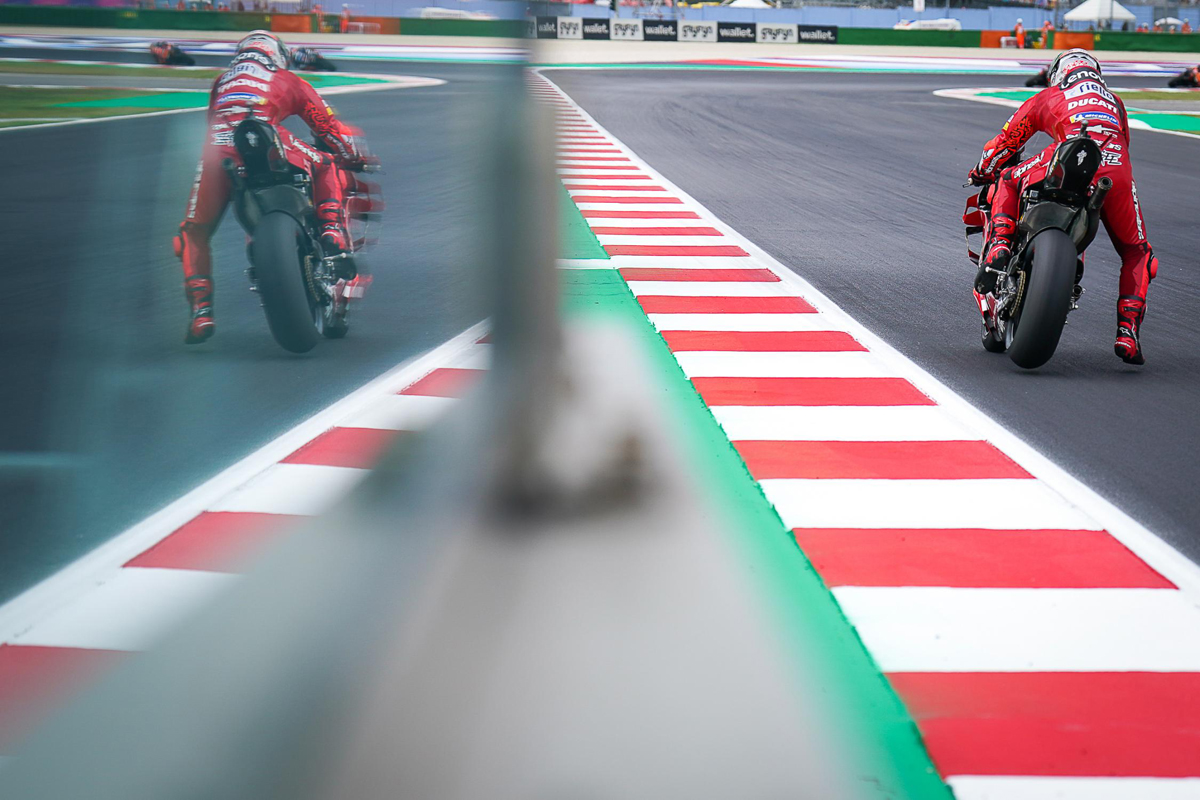
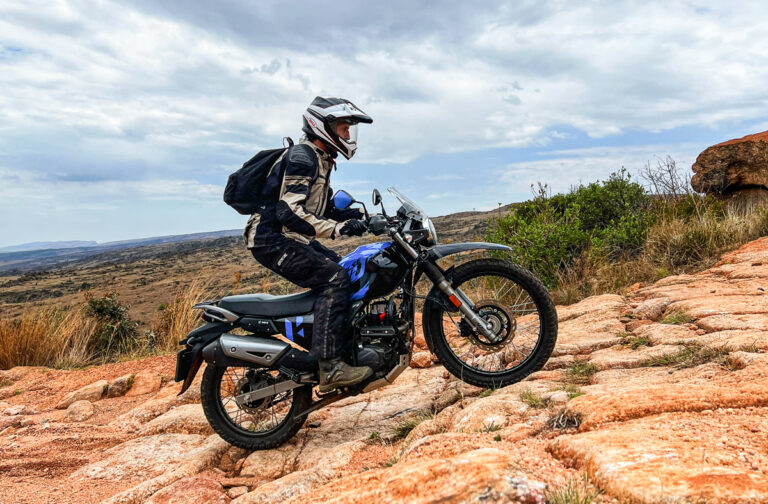
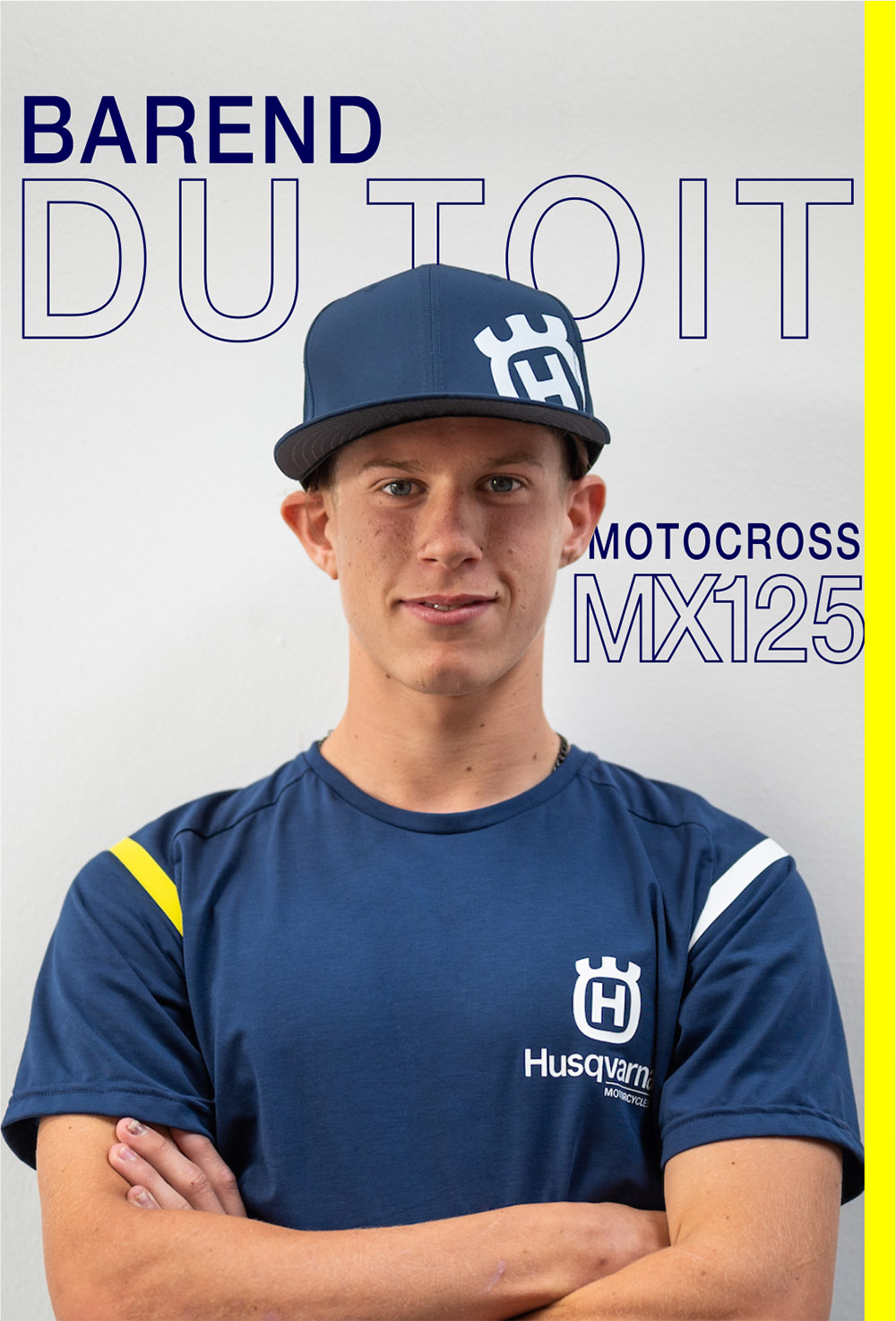
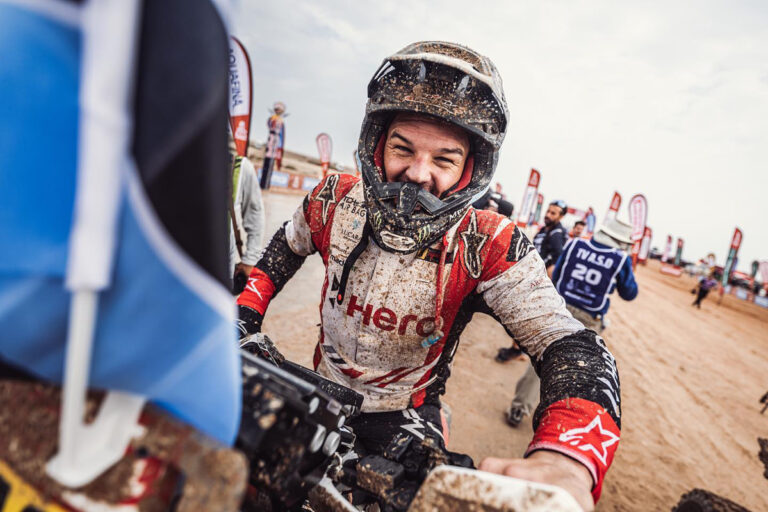
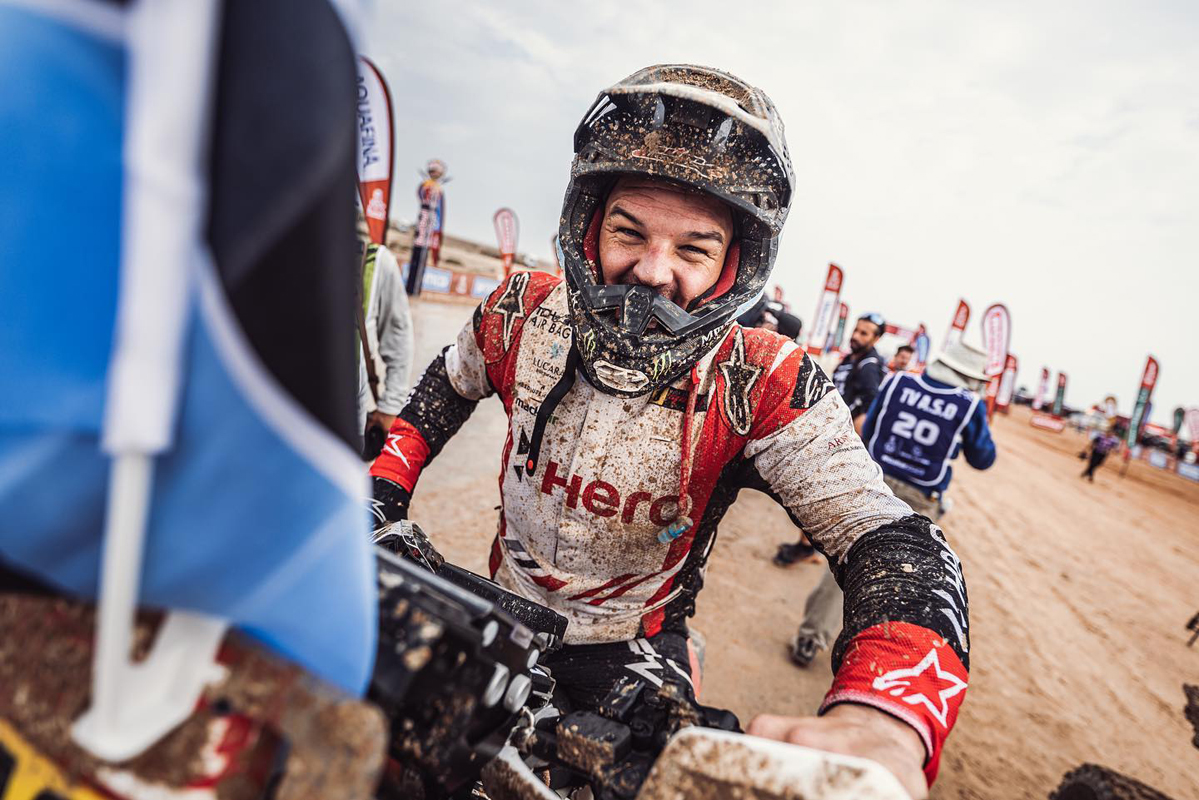
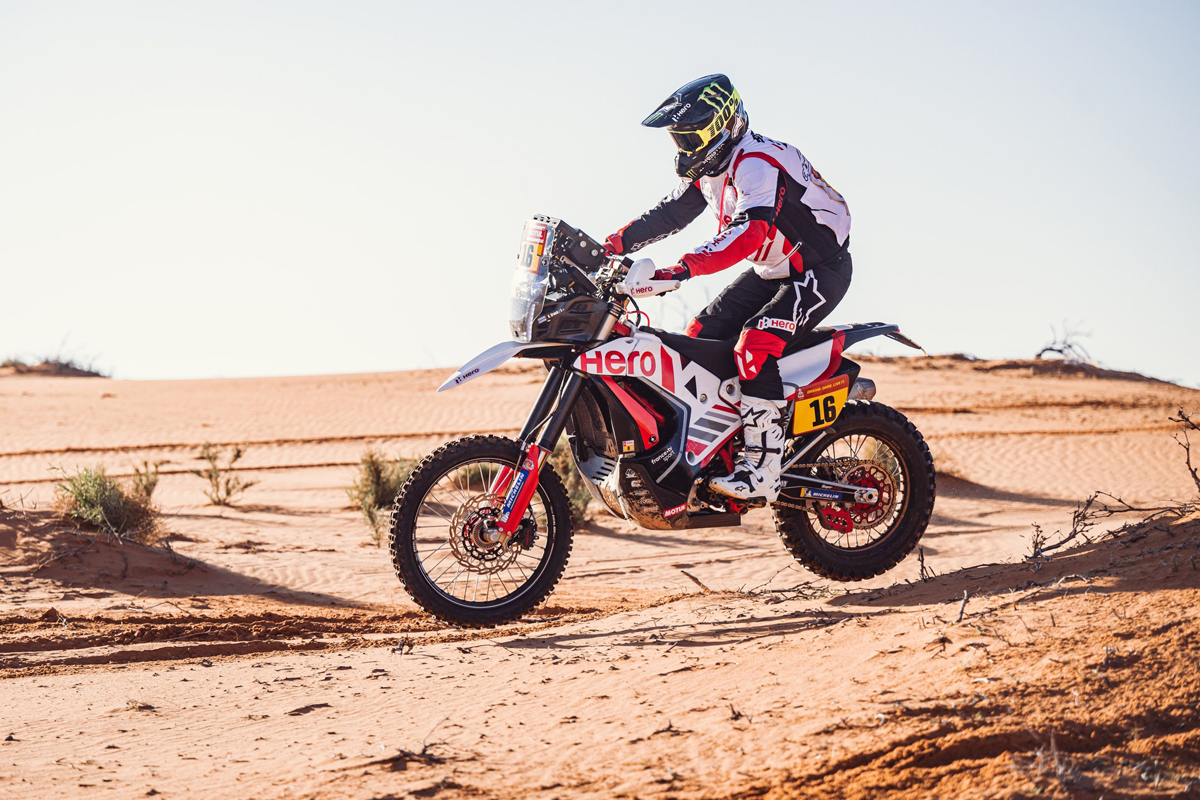
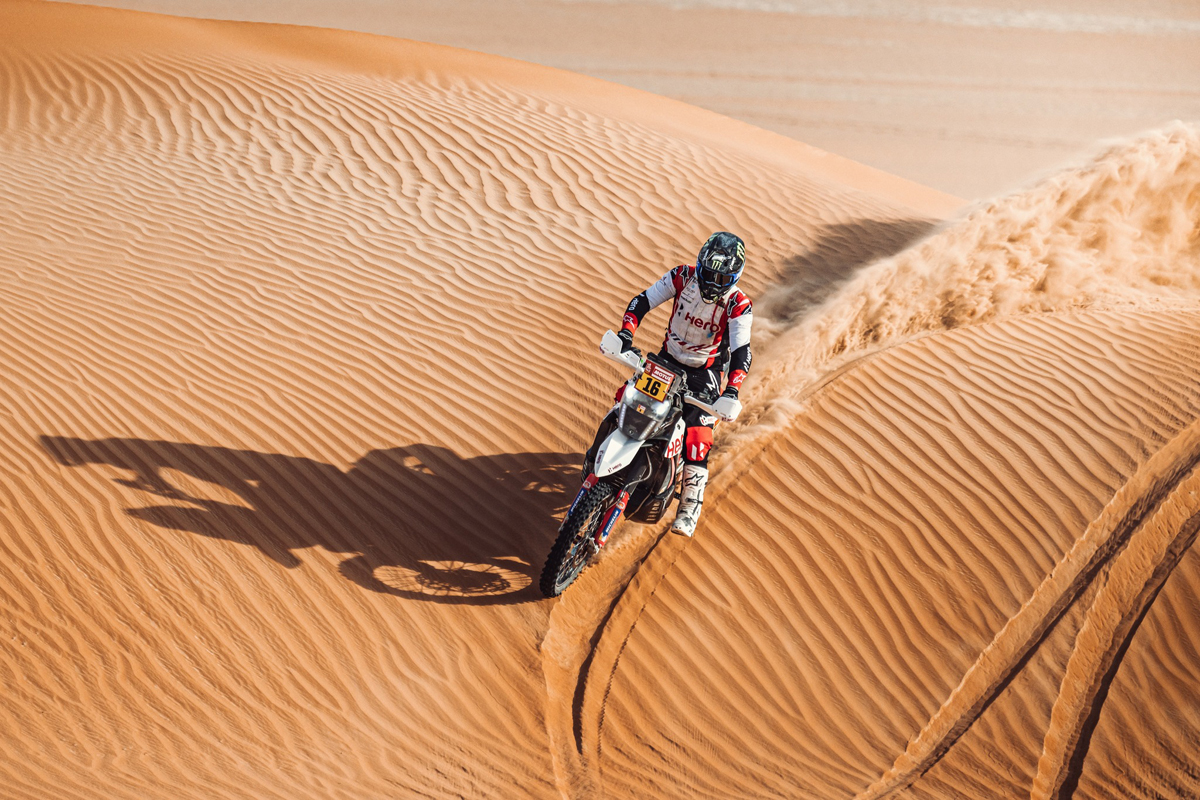
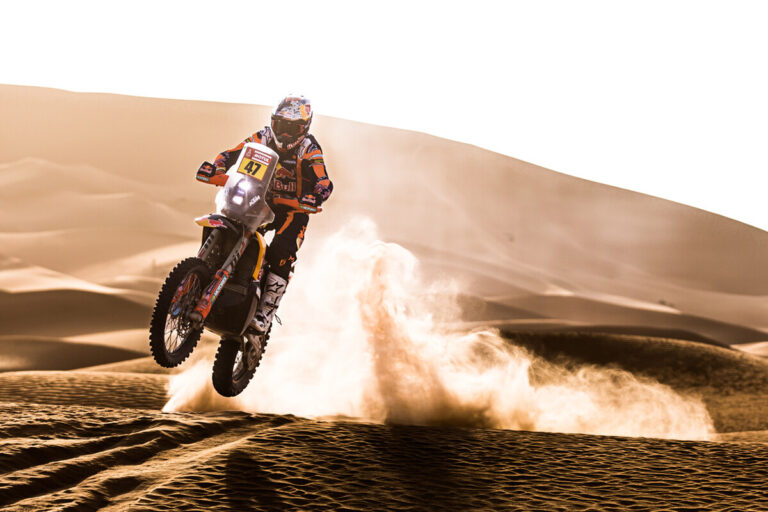
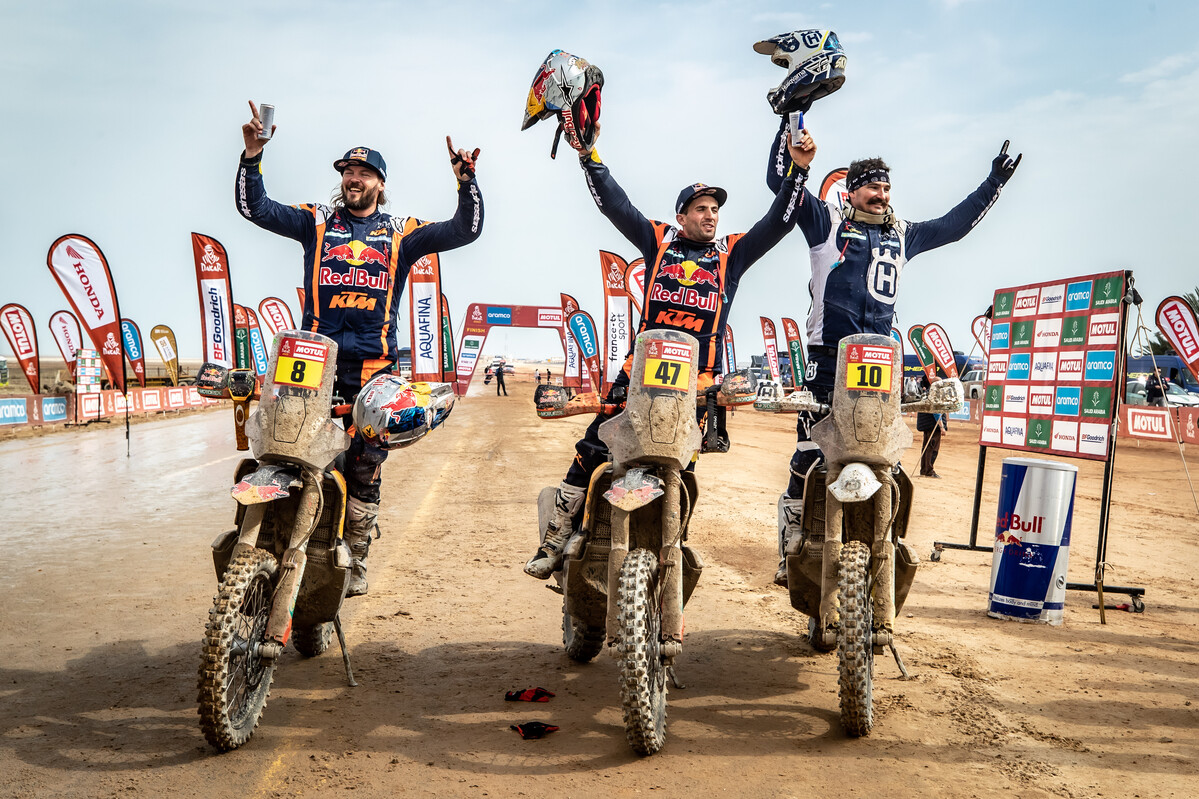
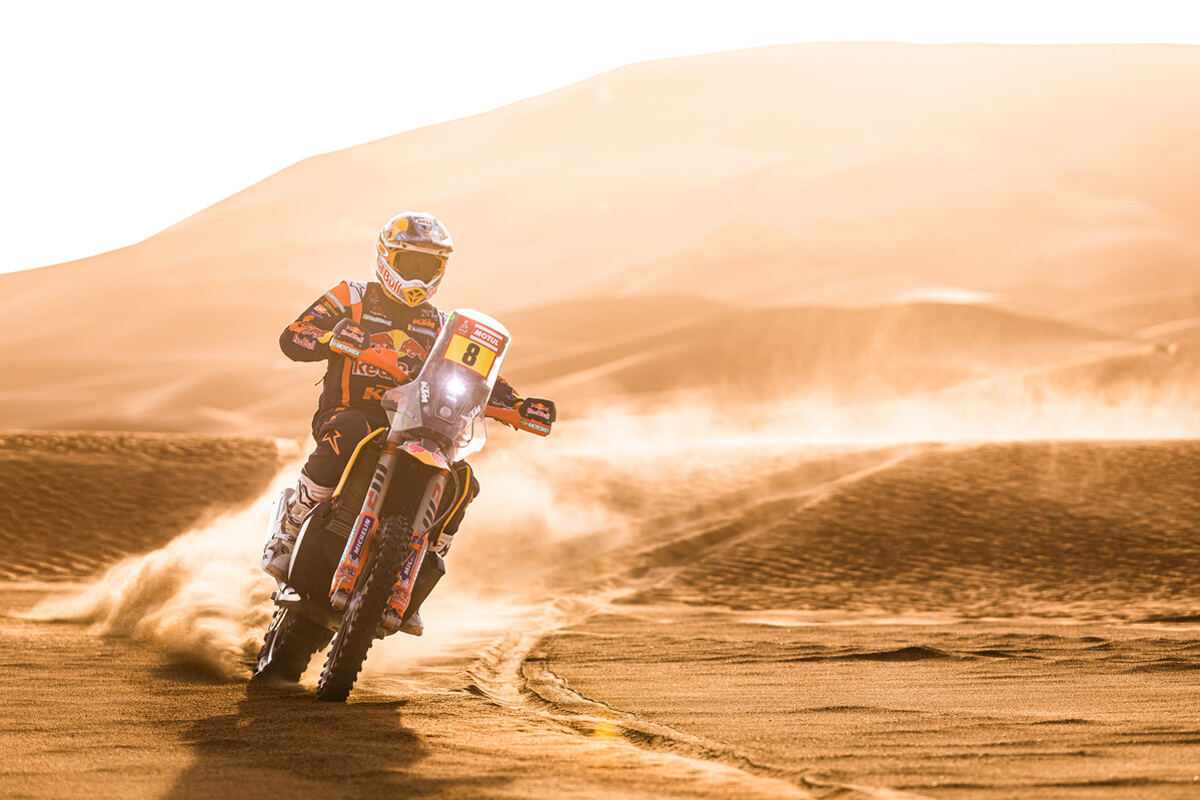
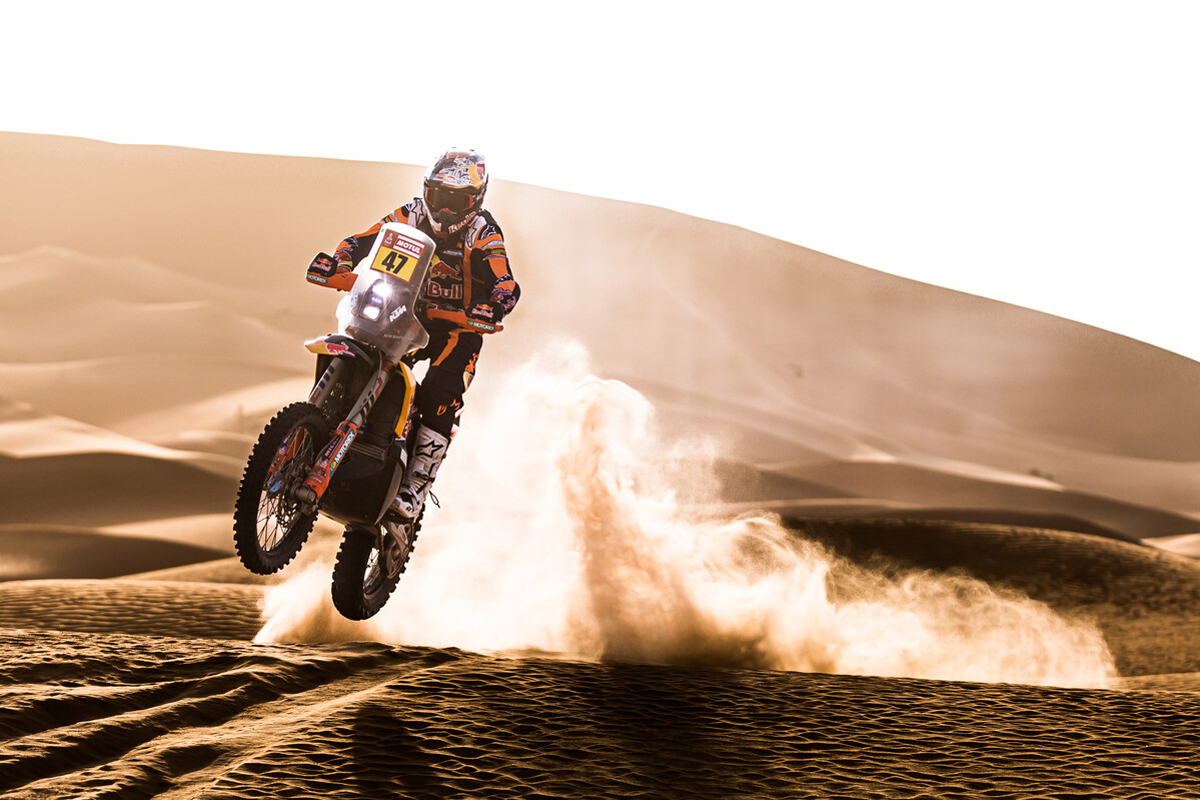
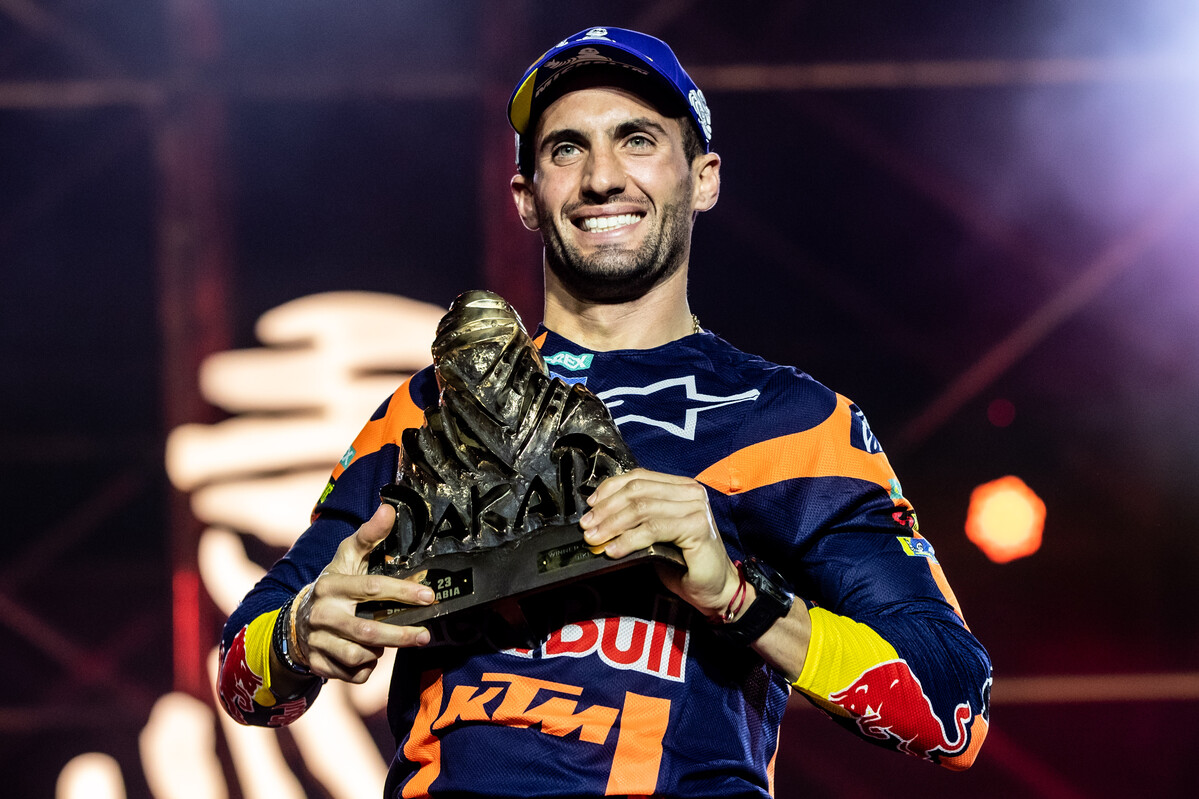
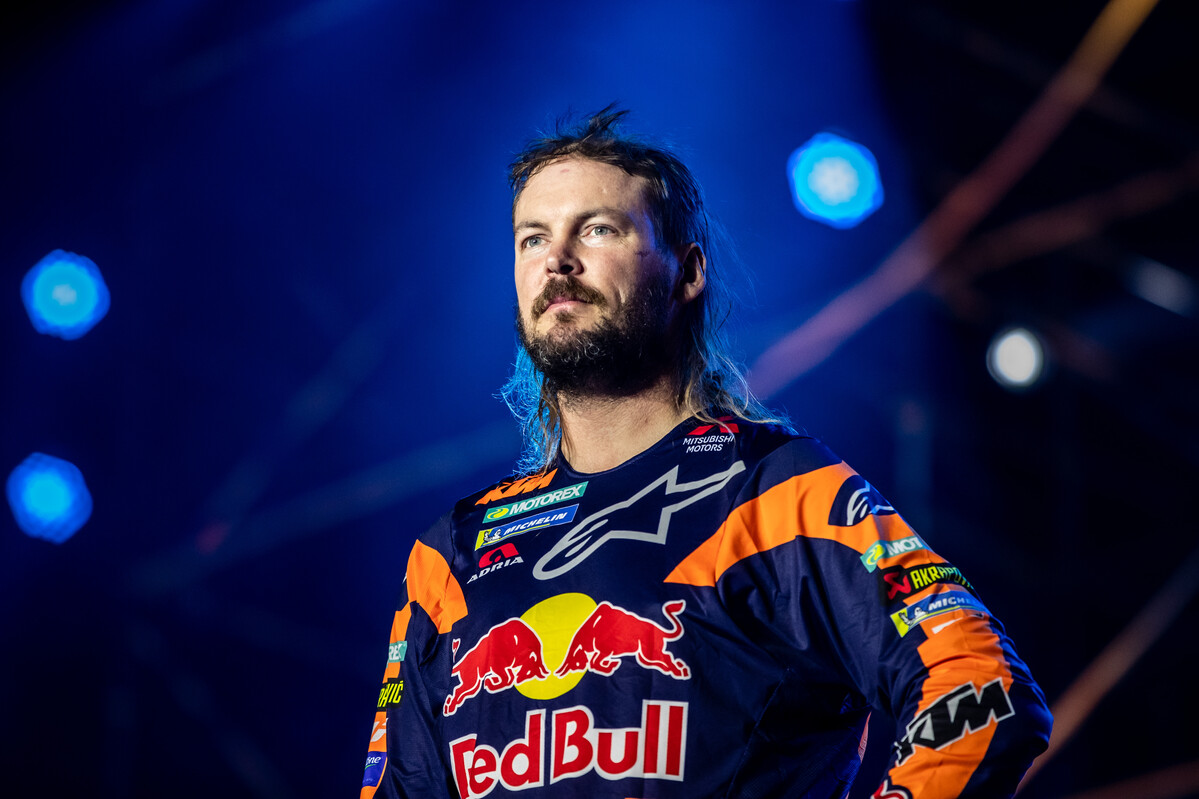
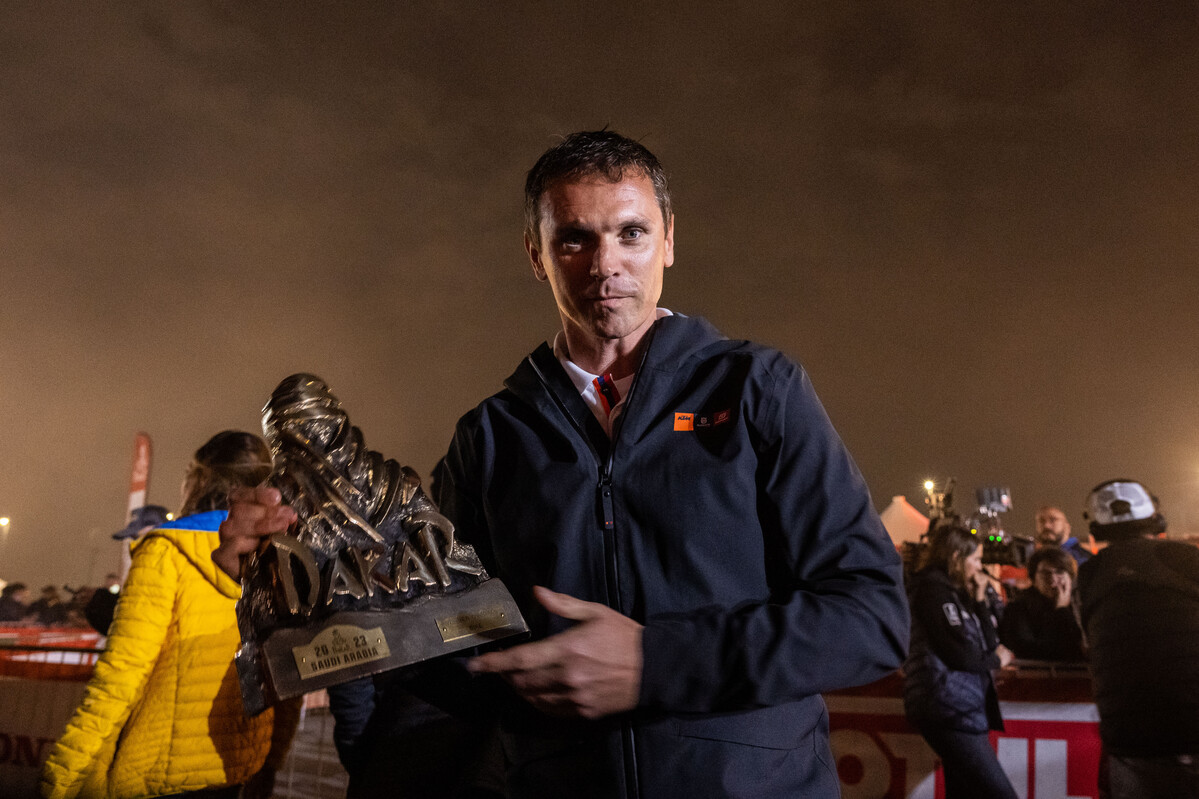
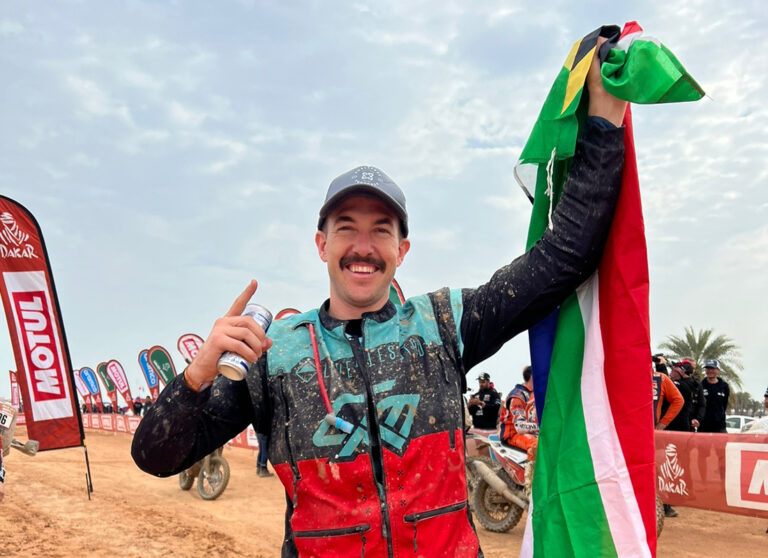
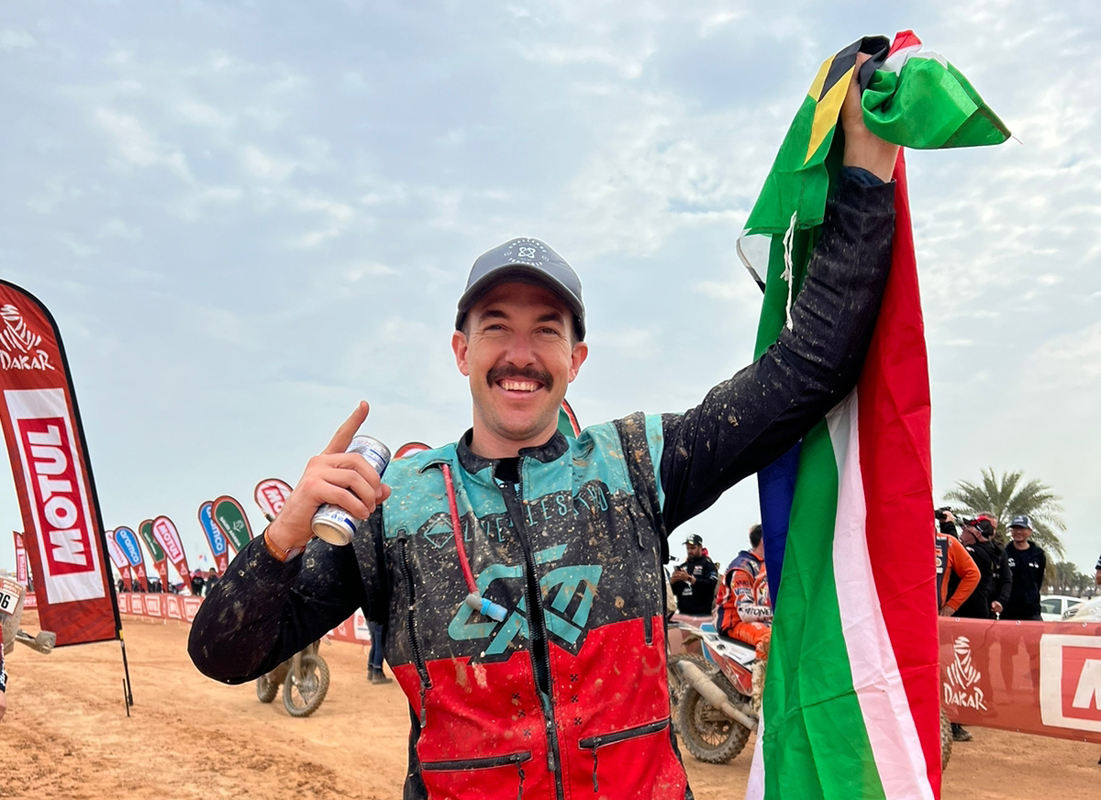
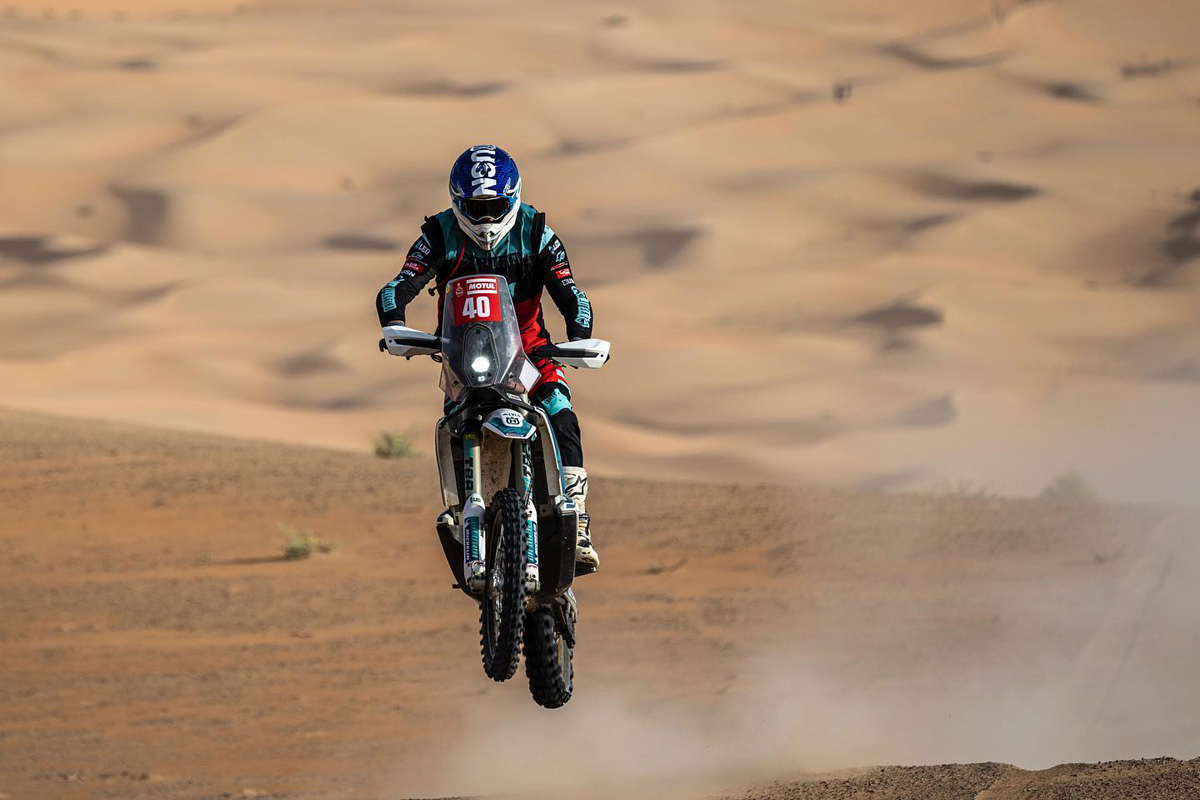
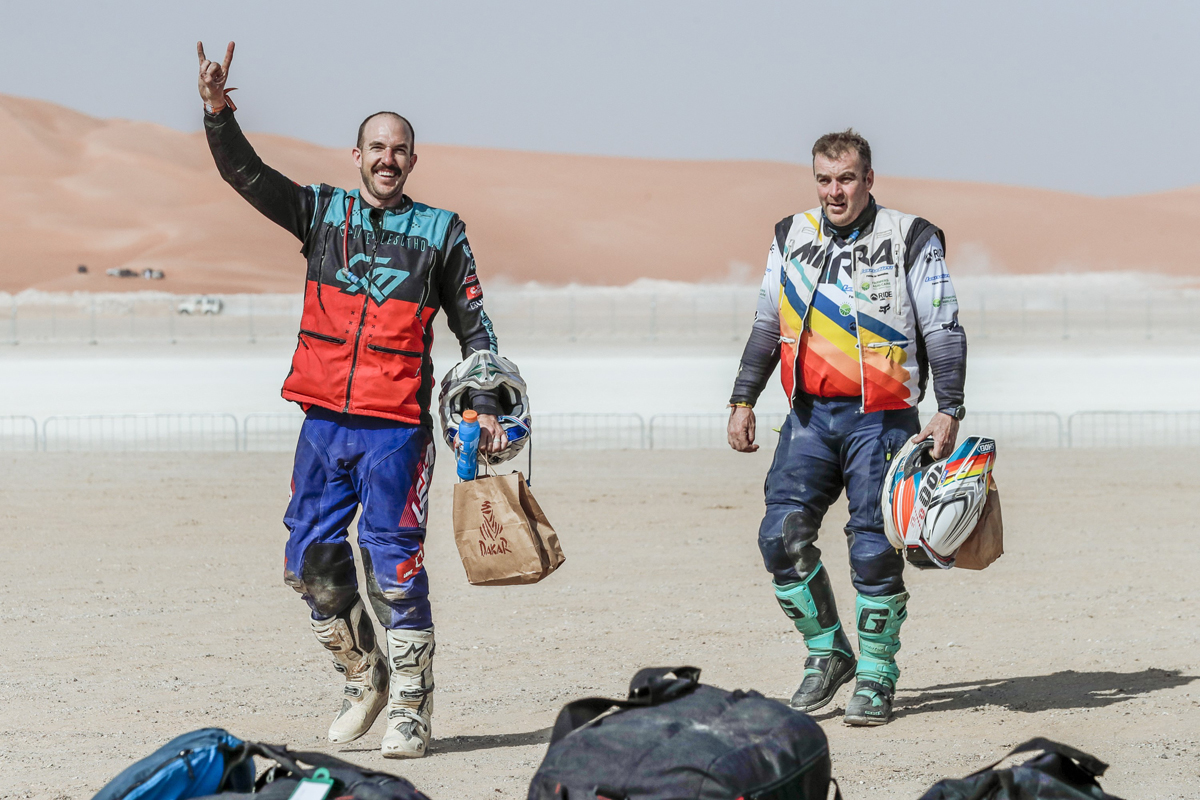
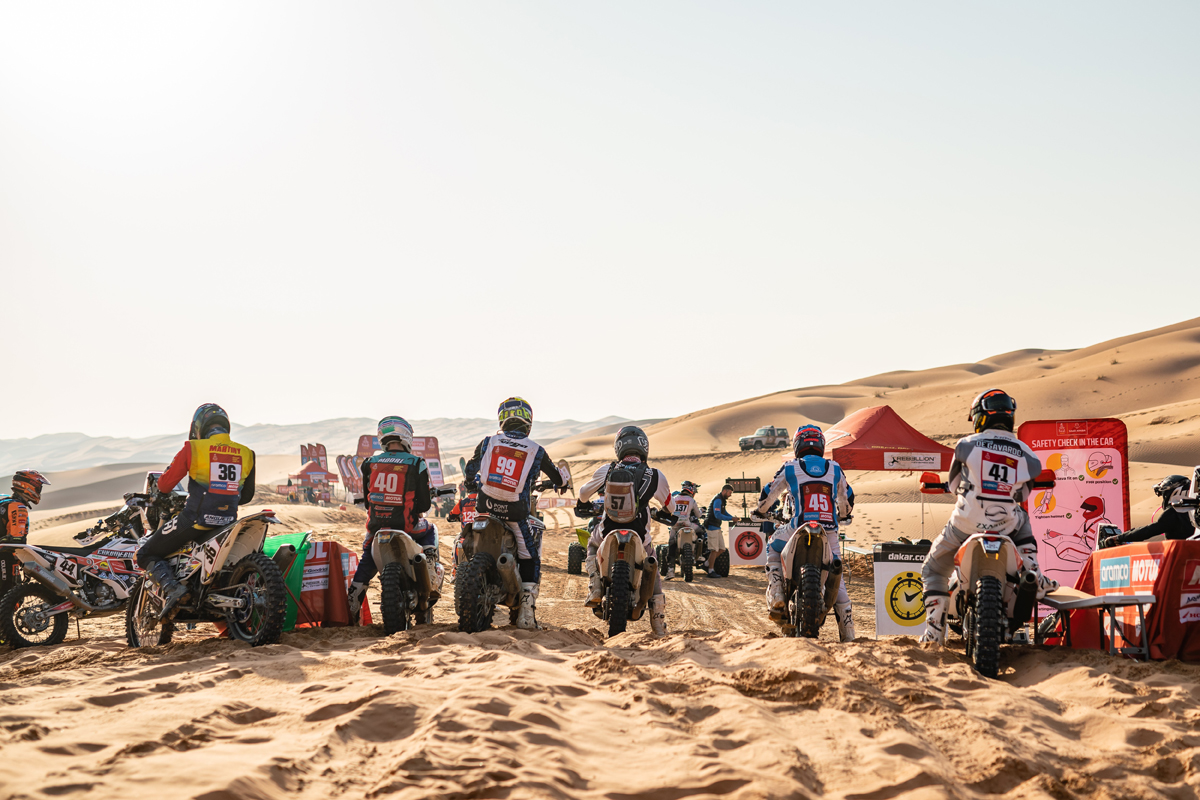
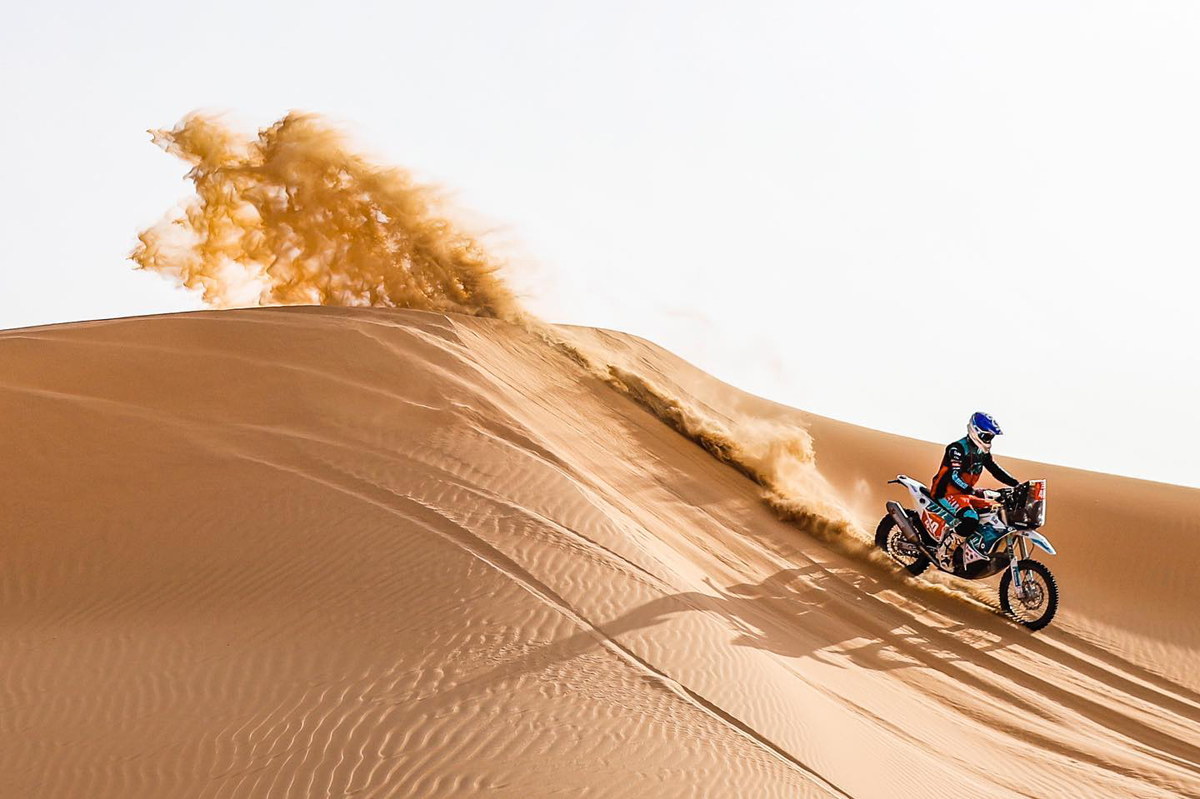
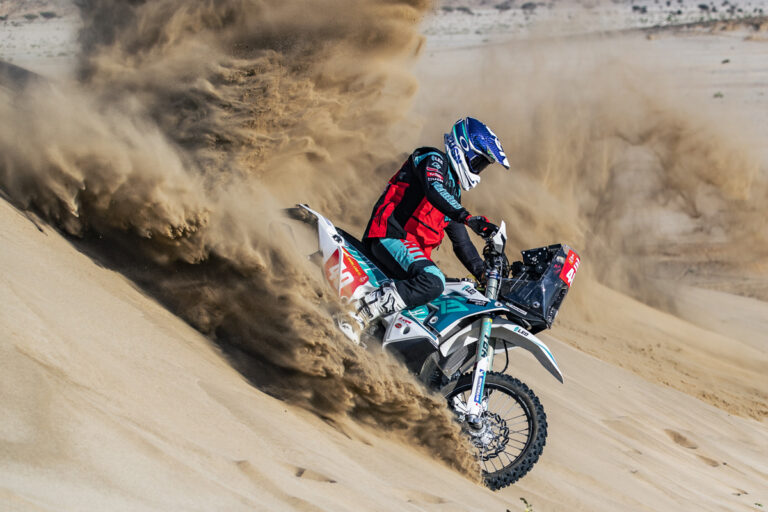
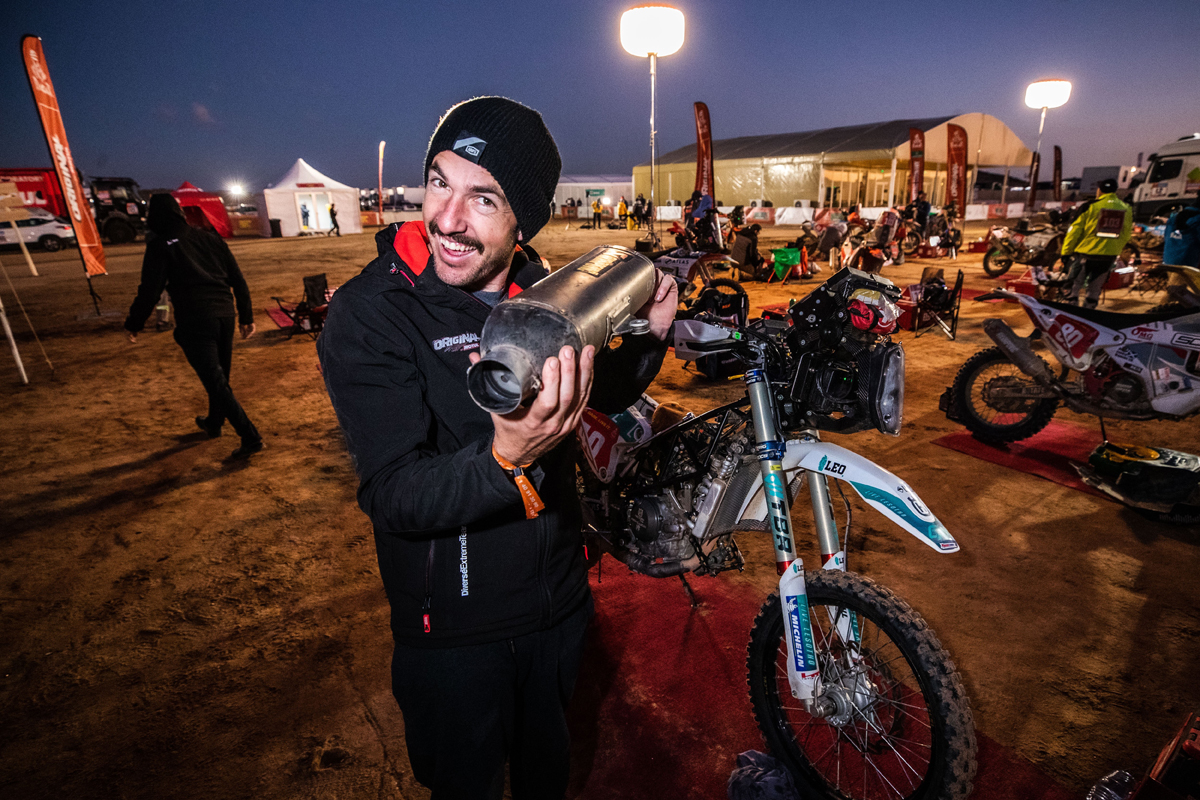
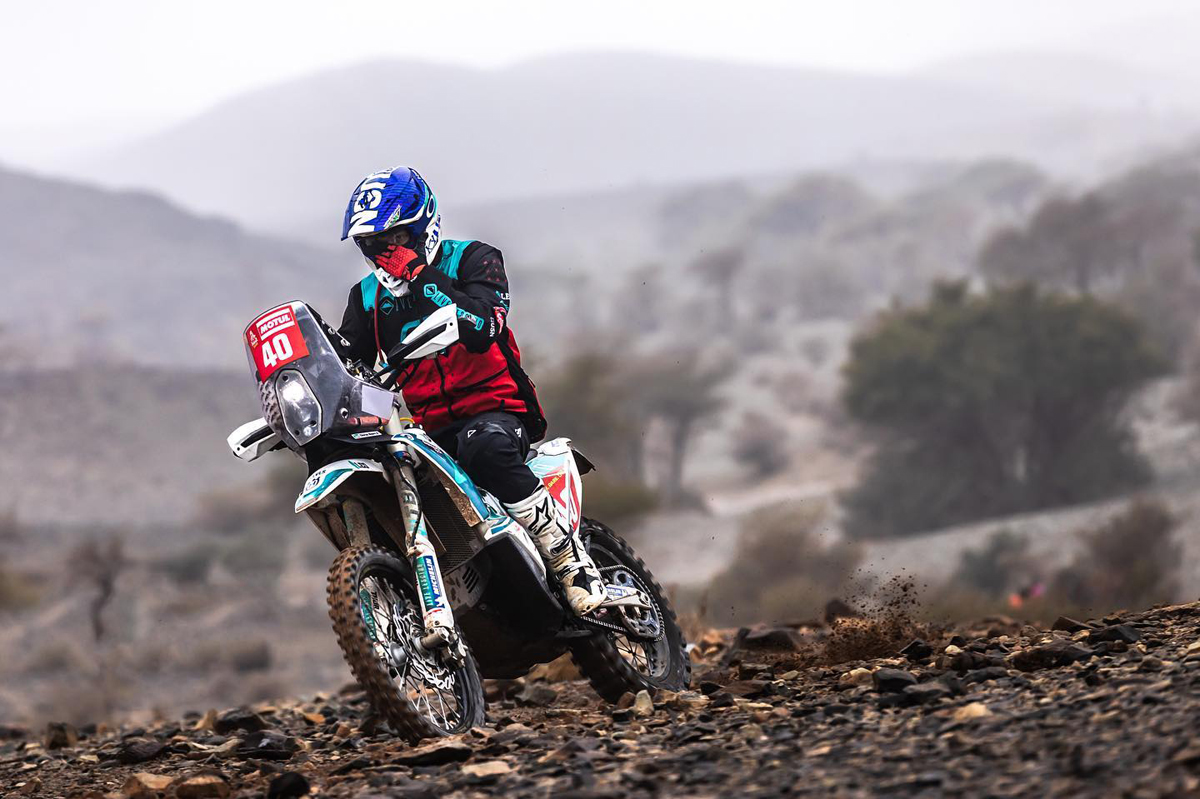
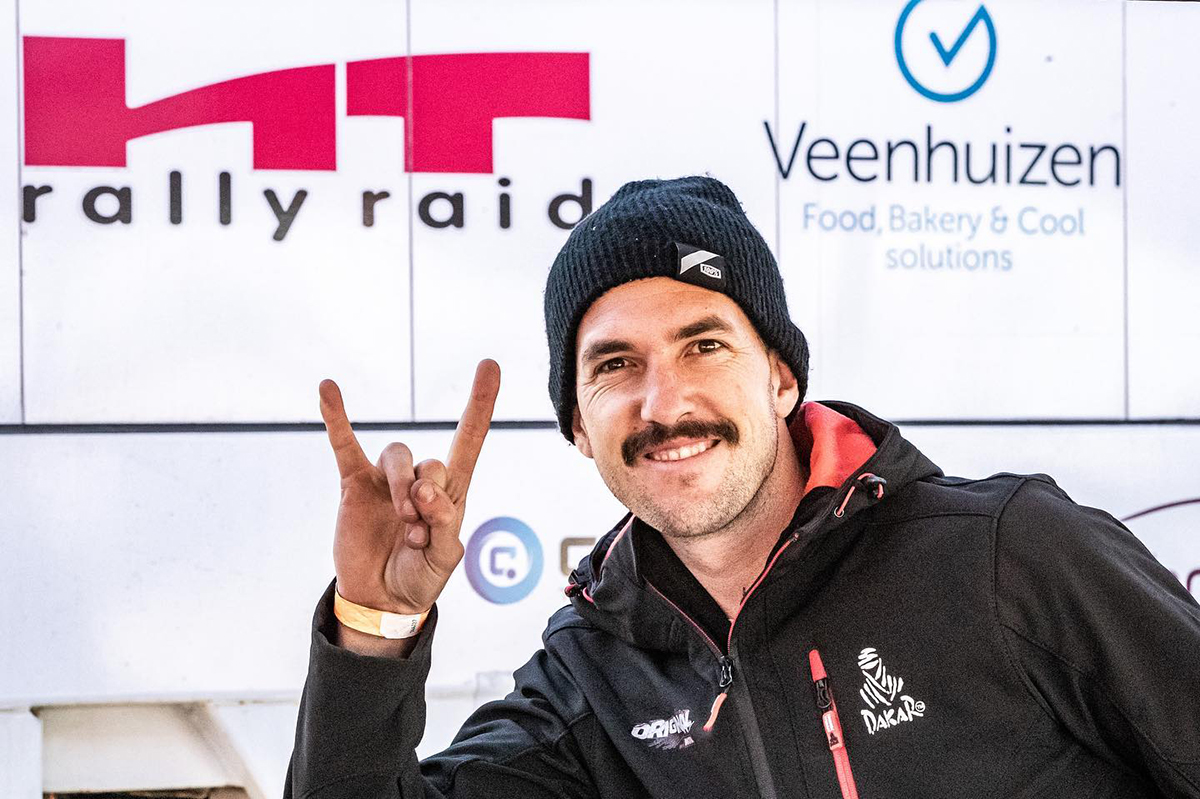
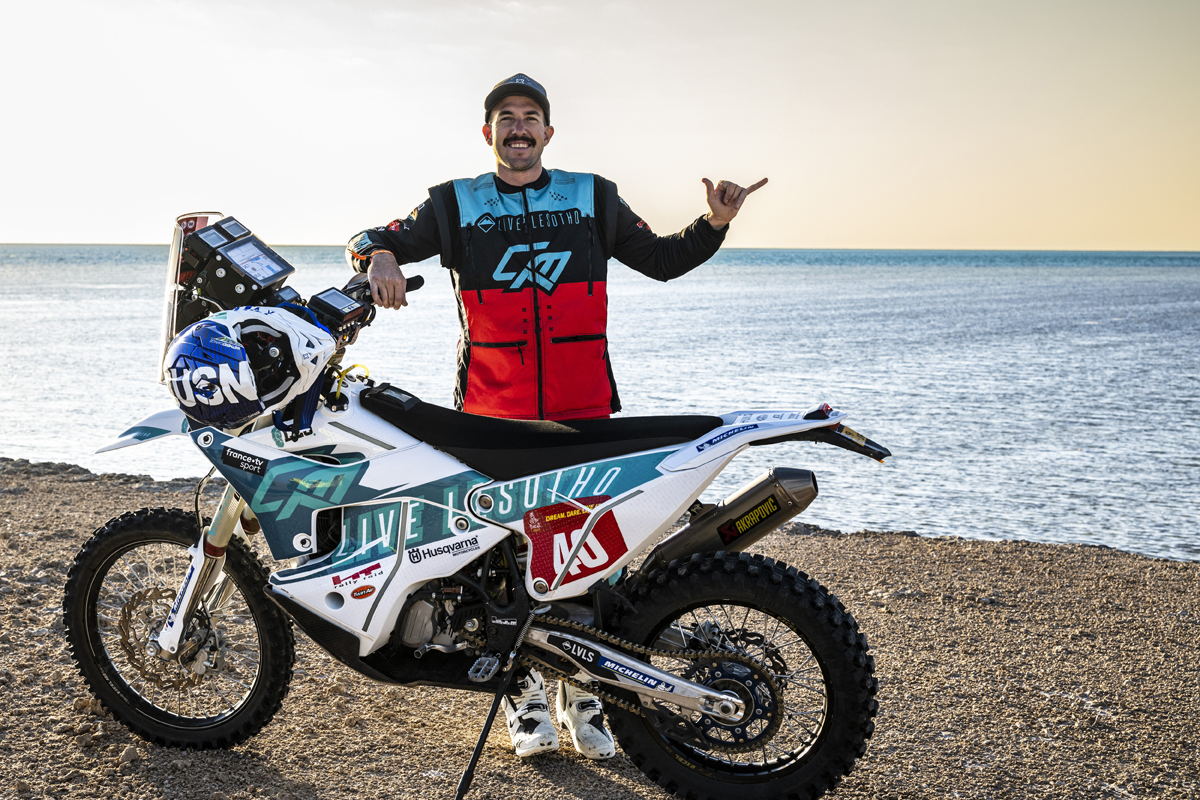
The familiar blue and white of Husqvarna Racing showed some promise at the soaking-wet season opener in Welkom this weekend. The trio of Josh Mlimi, Davin Cocker and, a newcomer to the squad, Barend du Toit had a wet welcome to the 2023 Motocross National Championship season.
Image source: ZCMC Media
Mlimi who was quite happy to have the first race of the season out the way after wading his way back into competitive racing last season is slowly coming to grips with his FC450 Husqvarna machine. “I’m super happy to be back racing again and especially walking away from a brutal race, both healthy and safe is awesome,” a relieved Mlimi said. The track was described as brutal by Mlimi who made a few mistakes seeing him hit the deck in each of the races. “I know I could have done better but the season is still long and full of promise” he continued.
Image source: ZCMC Media
Cocker found it hard to pass in the single rutted track as a result of the muddy conditions but enjoyed the battle out there. “I really didn’t expect the mud to be that bad, I felt comfortable and ran some decent times but made too many mistakes in the end,” he said.
Image source: ZCMC Media
The new addition to the team du Toit realised a dream of his by starting for the Husqvarna Racing team. “I had a blast and really just tried to soak it in that I was actually racing for the team, I learnt a lot and cannot wait for the next round in Cape Town,” the youngster said.
Image source: ZCMC Media
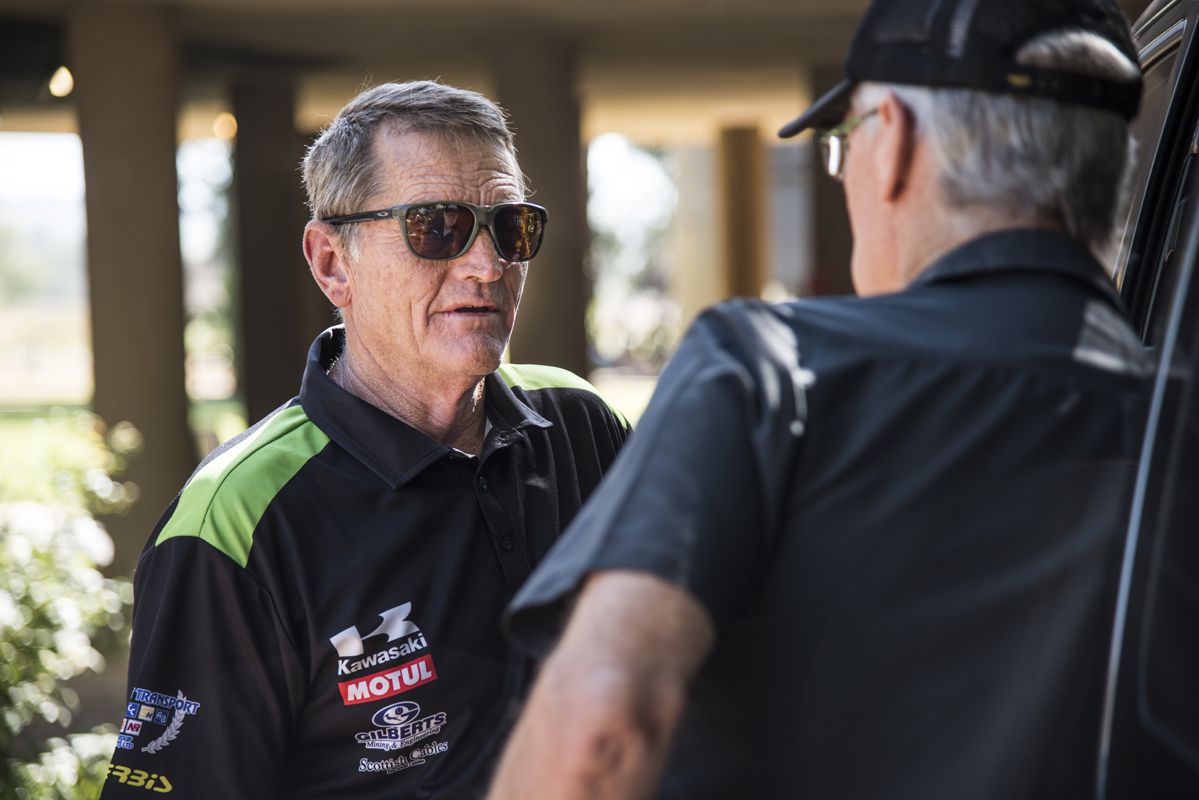
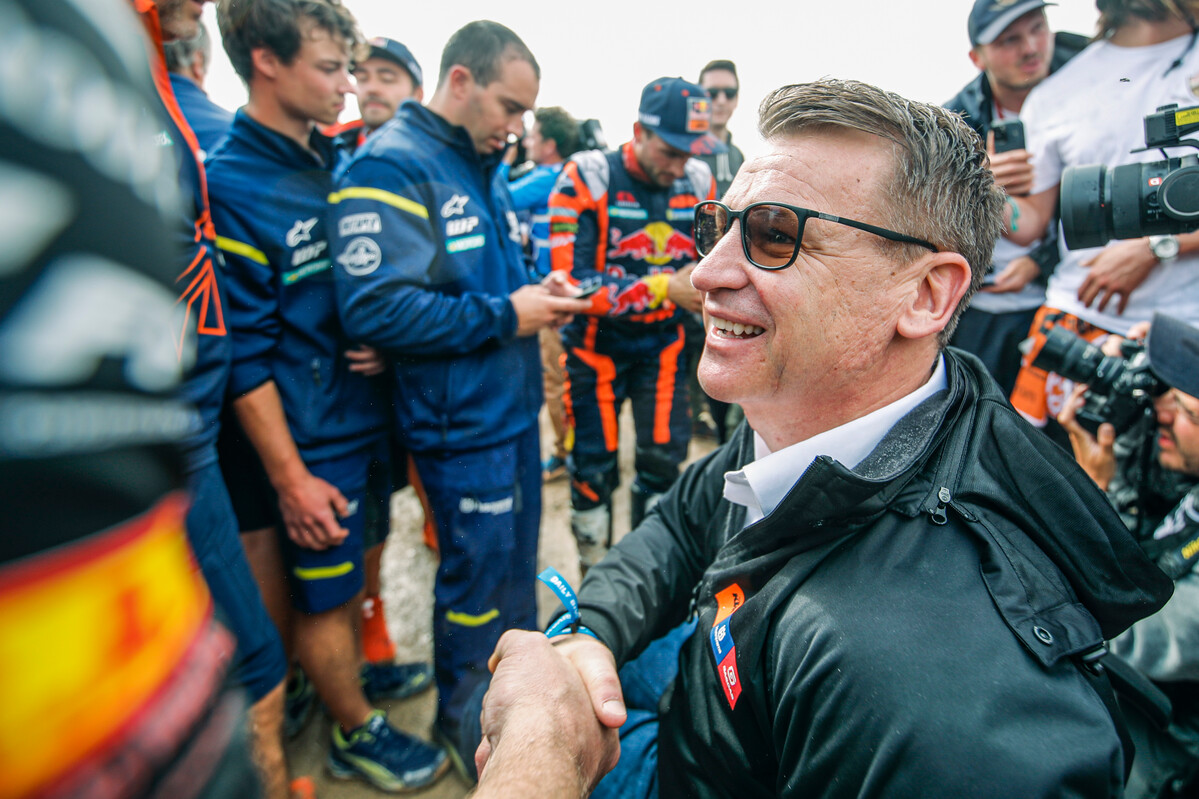
Husqvarna South Africa’s Grant Frerichs said the team showed promise speed-wise and said that the team was held back by some small errors. “I am happy with the riding of the 3 athletes under the Husqvarna pit. All three riders still showed some promising speed but were hampered by mistakes. We will go back to the drawing board and eliminate the mistakes to ensure we come out swinging at round 2” Frerichs said in closing.
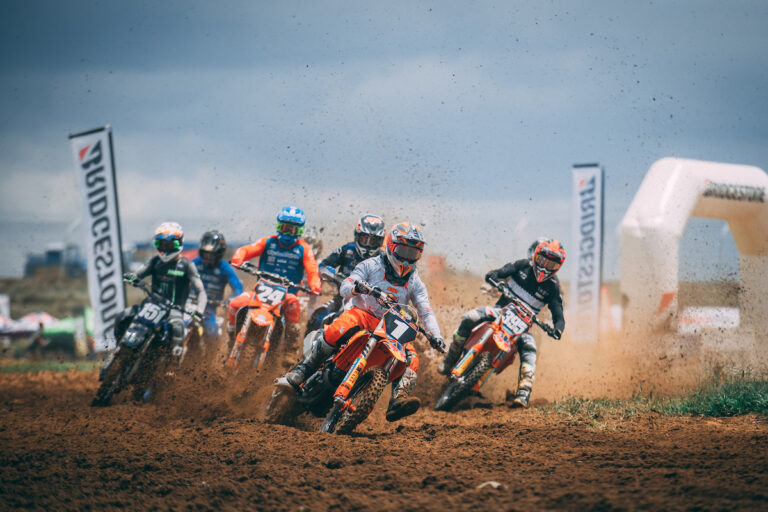
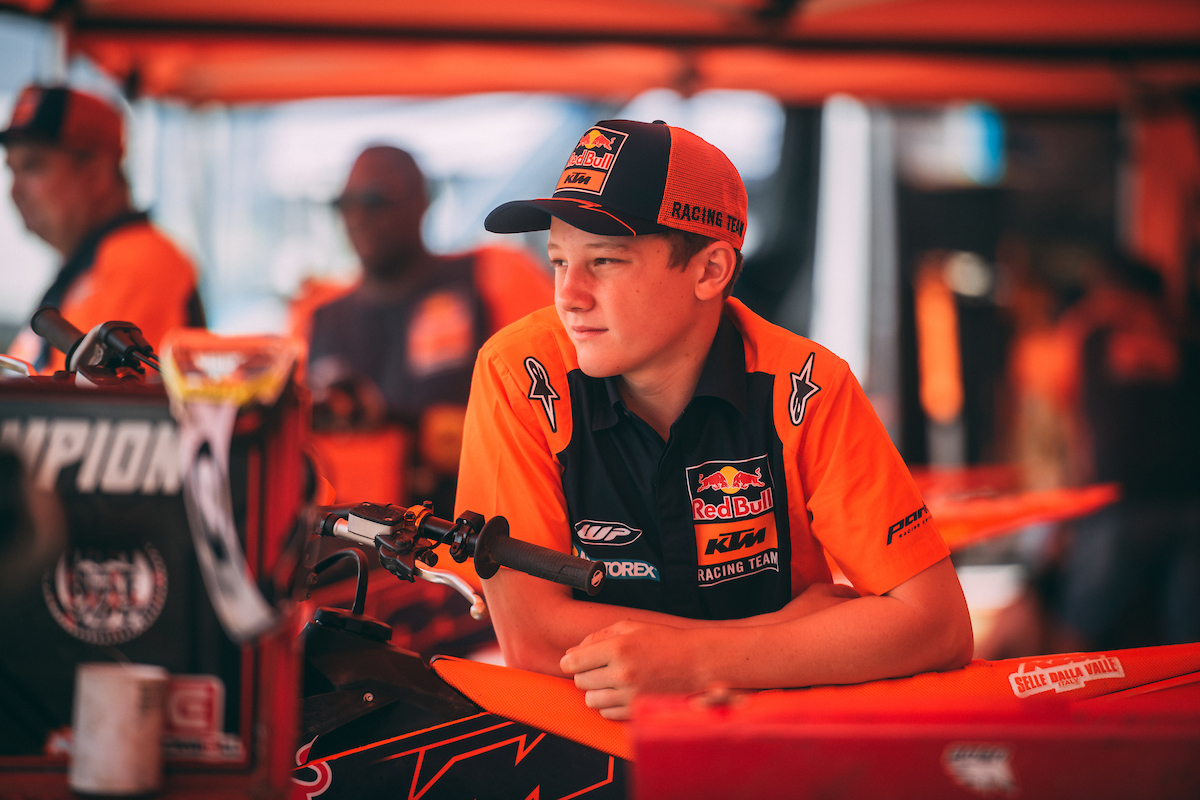
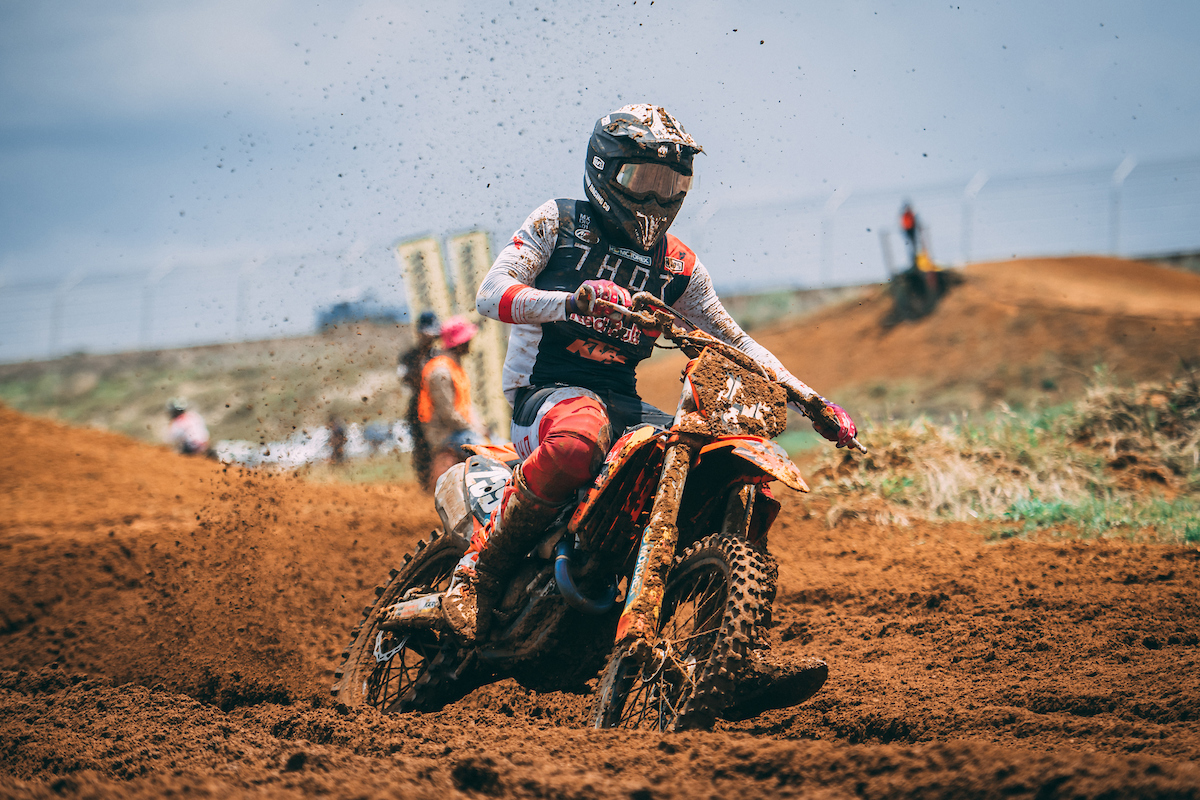
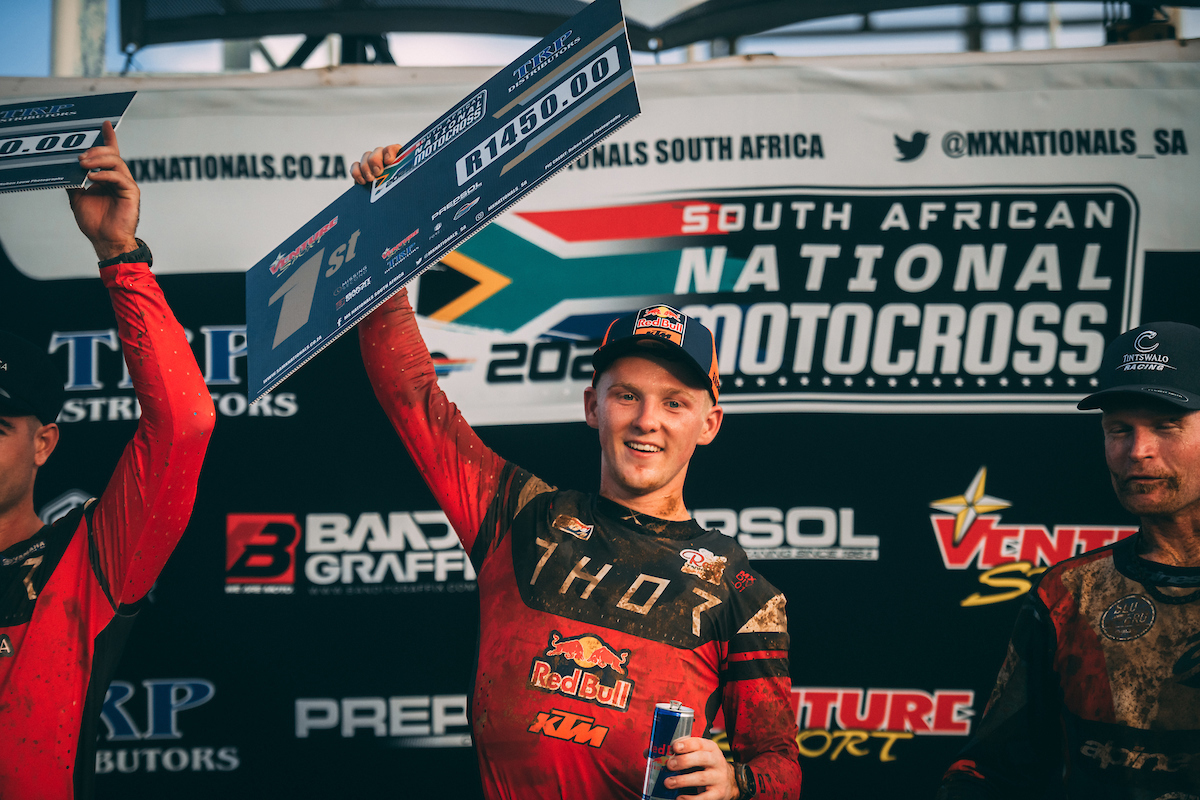
The first race of the season saw the fresh Red Bull KTM team kick off the season with some inspired championship wins. The first round of the National Motocross Championship took place at the familiar Phakisa MX track just outside the capital Welkom. KTM South Africa’s Grant Frerichs summed it up by saying “The Red Bull KTM boys really kicked off the new season with a bang and put on a superb show picking right up where we left off in 2022.” “We are already looking forward to rounds 2 and 3 with the doubleheader taking place in Cape Town with some red plates on the start in all our classes” he mused.
Image source: ZCMC Media
Young Trey Cox had a round he’d rather forget even though he came off what felt like a really good off-season he said. “I got so excited when I heard it was going to be muddy,” he said. “I qualified P5 and was off to a very average start in the first moto but on the very first jump I collided with another rider and went down hard on my shoulder” Cox lamented. The result was a dislocated shoulder and the end of his outing and shifts the focus a couple of rounds ahead to his hometown race in Pietermaritzburg where he is sure to bounce back.
Image source: ZCMC Media
Jono Mlimi had some fun in the testing conditions and it showed in his results picking up 3rd overall. “Welkom has always been good to me and I enjoy the track, it was way different in the wet though with some deep lines and bumps throughout,” he said. “You can’t help but have some fun in these conditions and really had to show some bike skills, that said I had two silly falls that cost me the chance at the top step but we fight on” he added.
Image source: ZCMC Media
“The off-season was spent in the trenches”, said a visibly enthused Cameron Durow after really putting in the hard yards work. Durrow who has also been prepping for an international stint set the soaked stage alight with a flawless performance in both classes. “I really enjoyed the track even though it was drenched, qualifying was solid, I managed holeshots in both MX2 motos and managed the race from there by staying cool and calm to take wins in both and the overall” he recalled. He went on to say “MX1 I really made life harder with two bad starts fighting back from 8th at one point in Moto1, but I managed to claw it back each time and take the win in both motos to take the overall in MX1 as well,” he said smilingly.
Image source: ZCMC Media
In the High School class, it was Luke Grundy who sone for the orange outfit. “I learnt a lot out there and I’m happy with how I rode,” Grundy said. “I loved the mud and getting a 1-1 in Welkom on my 2023 KTM 125 made it a real special weekend” he added.
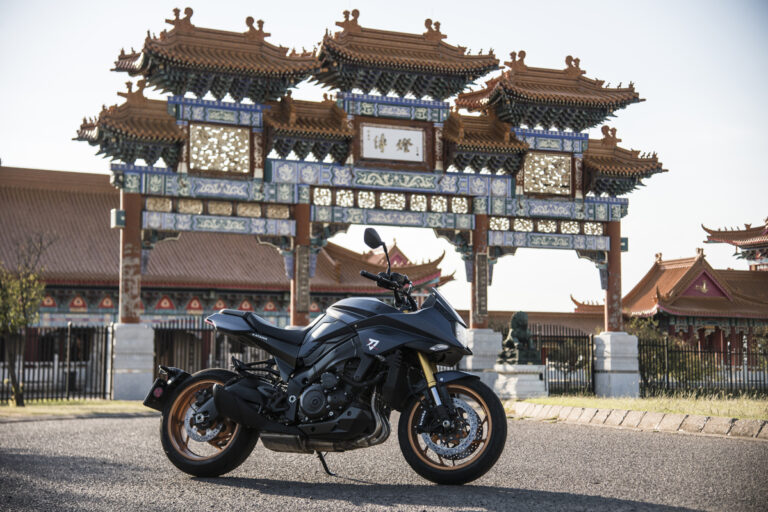
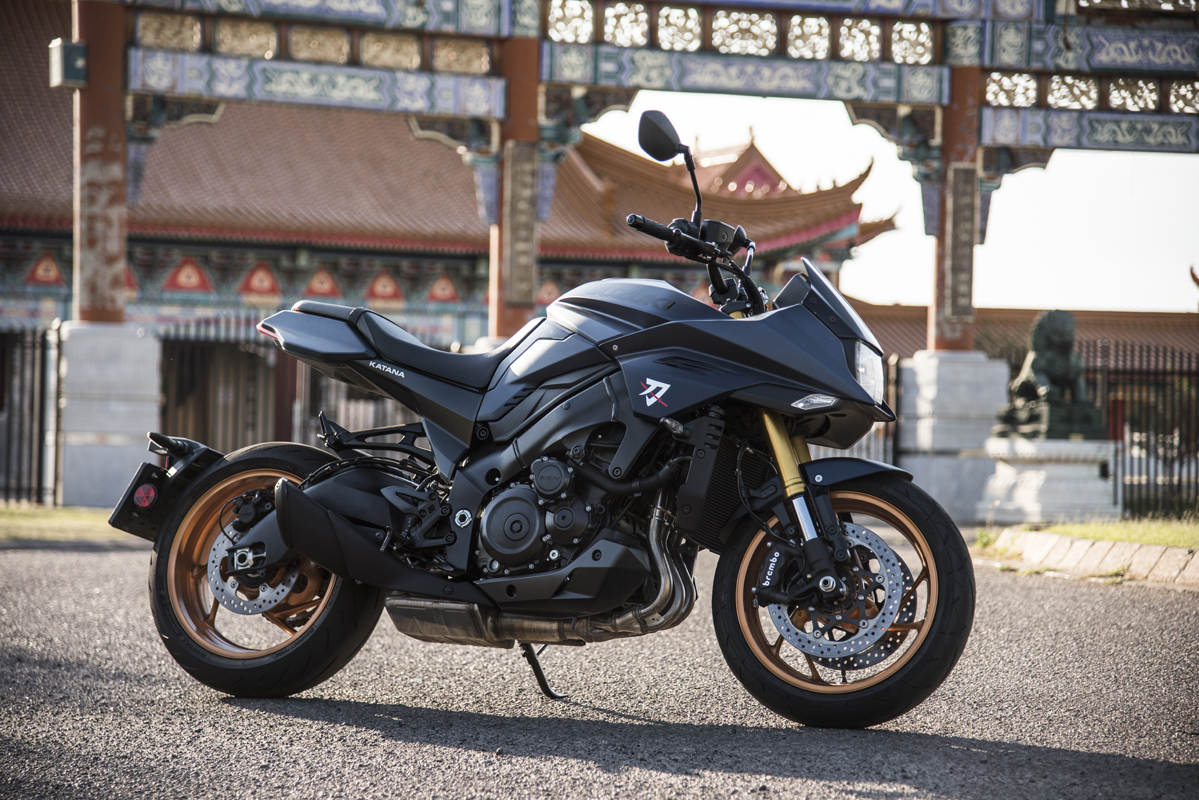
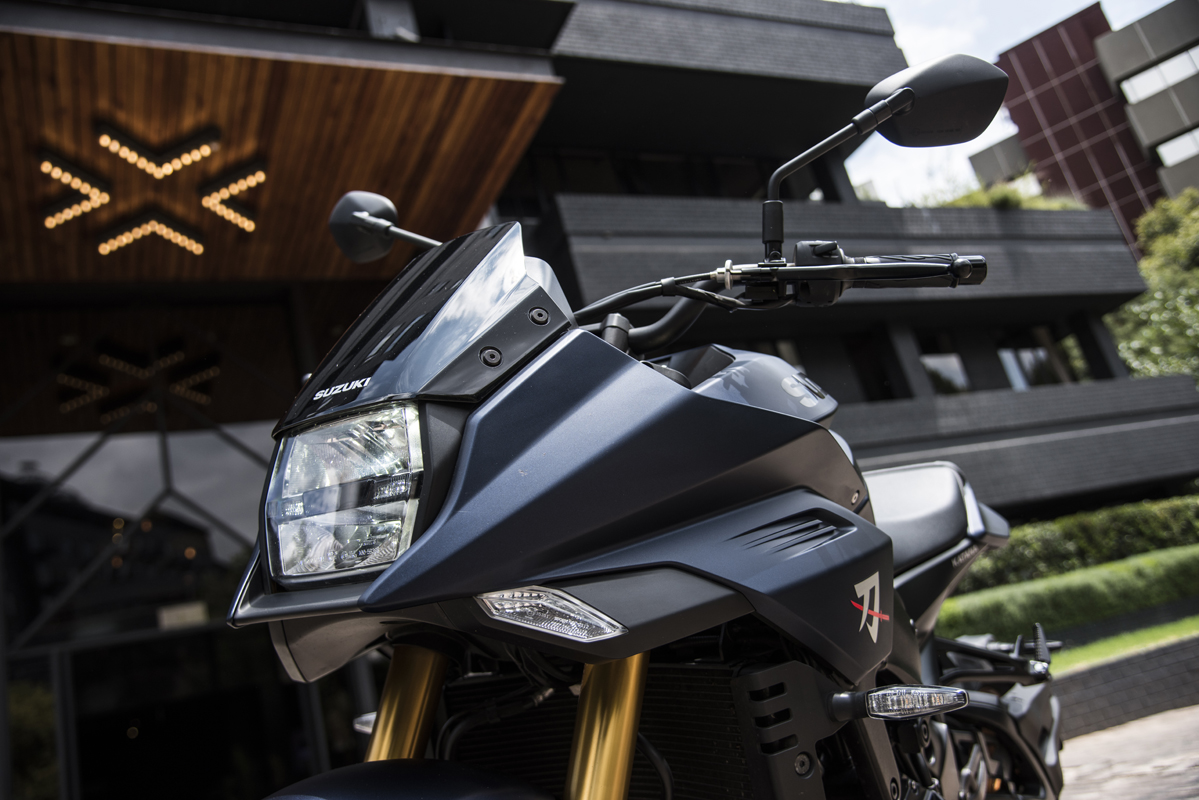
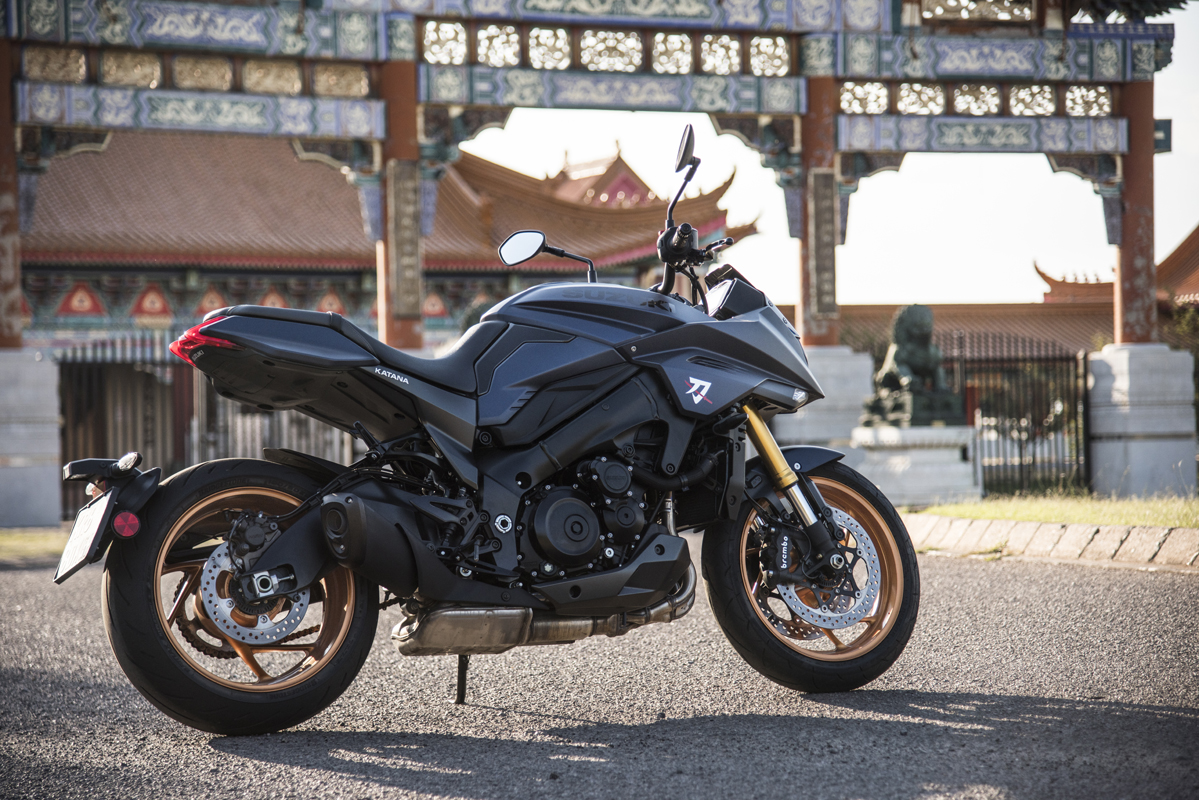
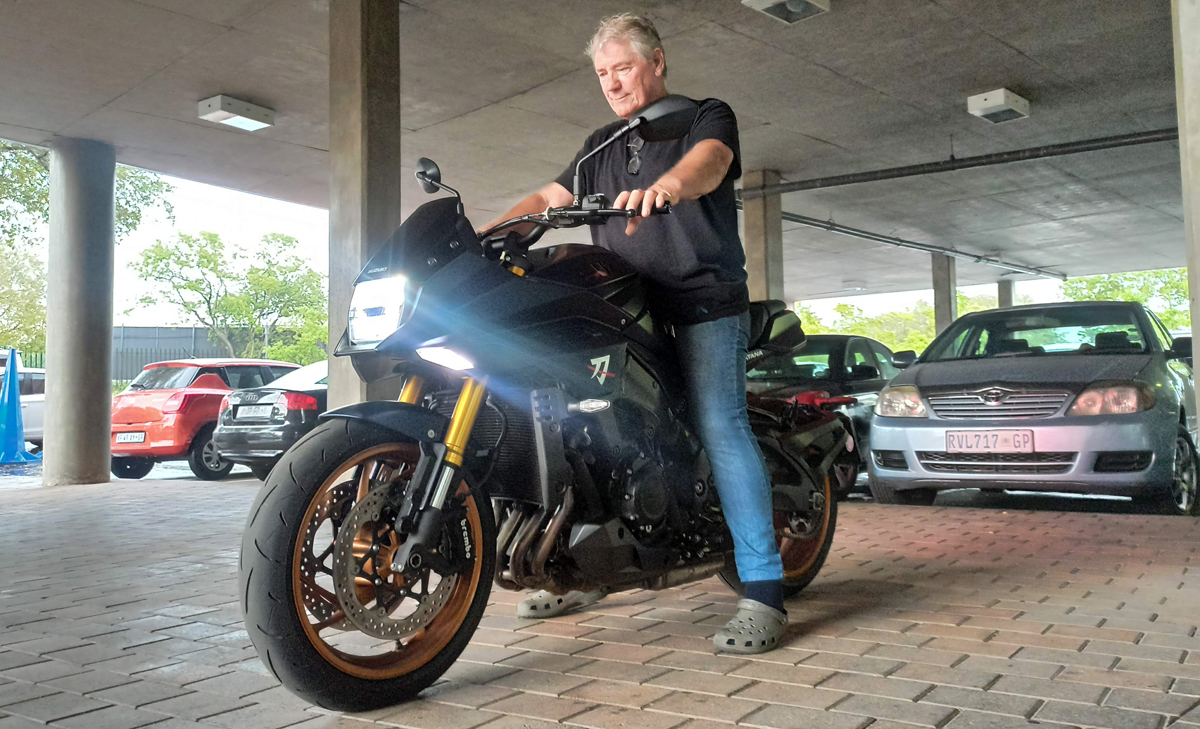
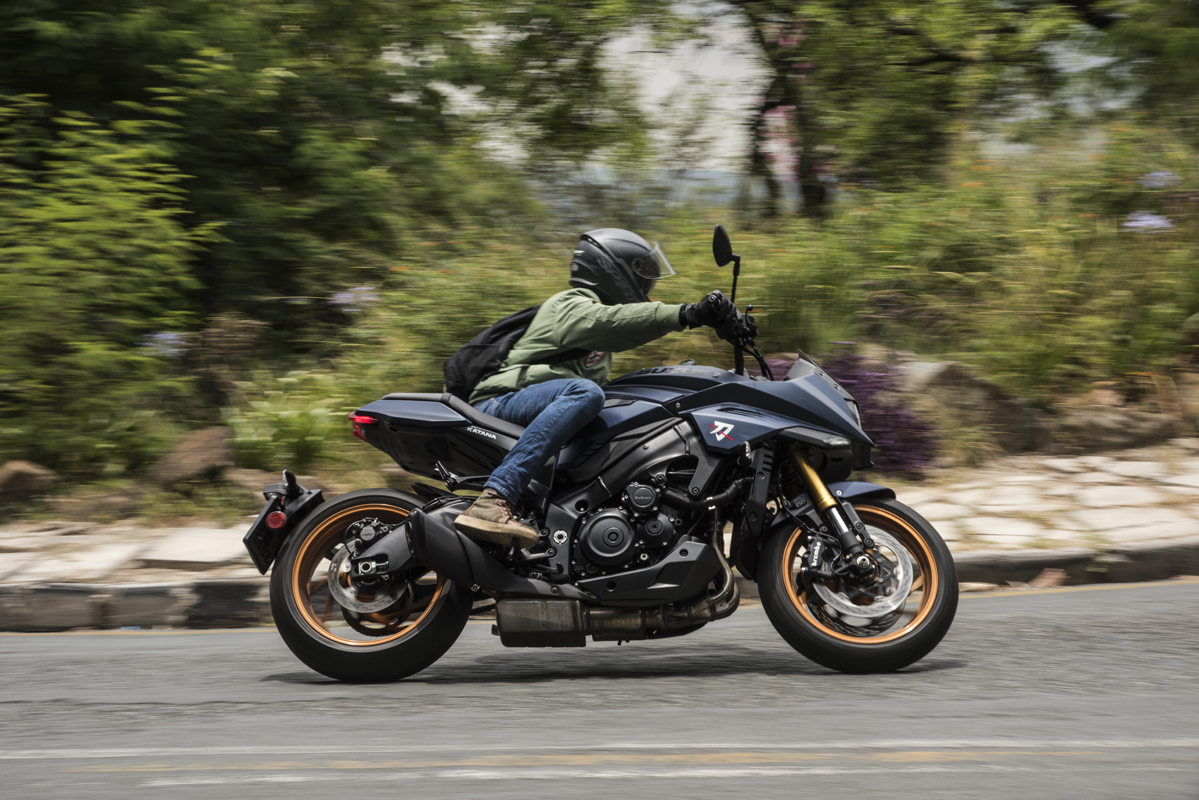
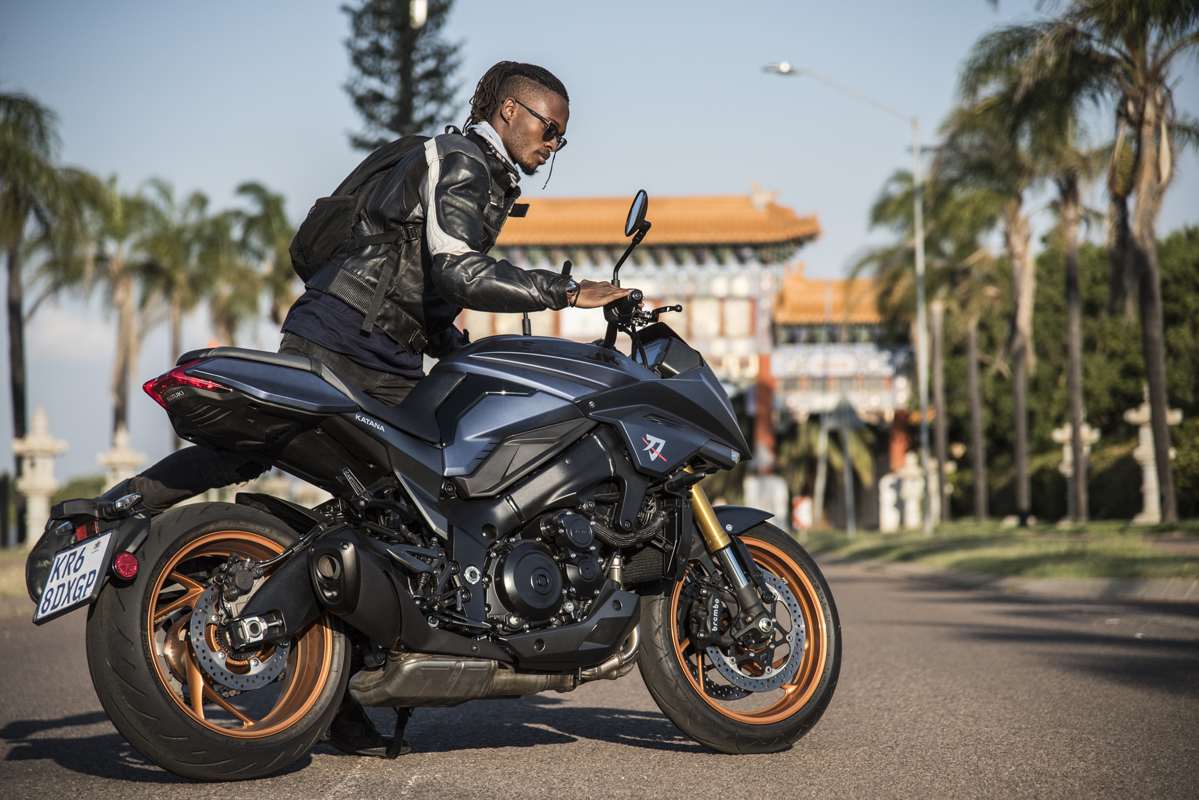
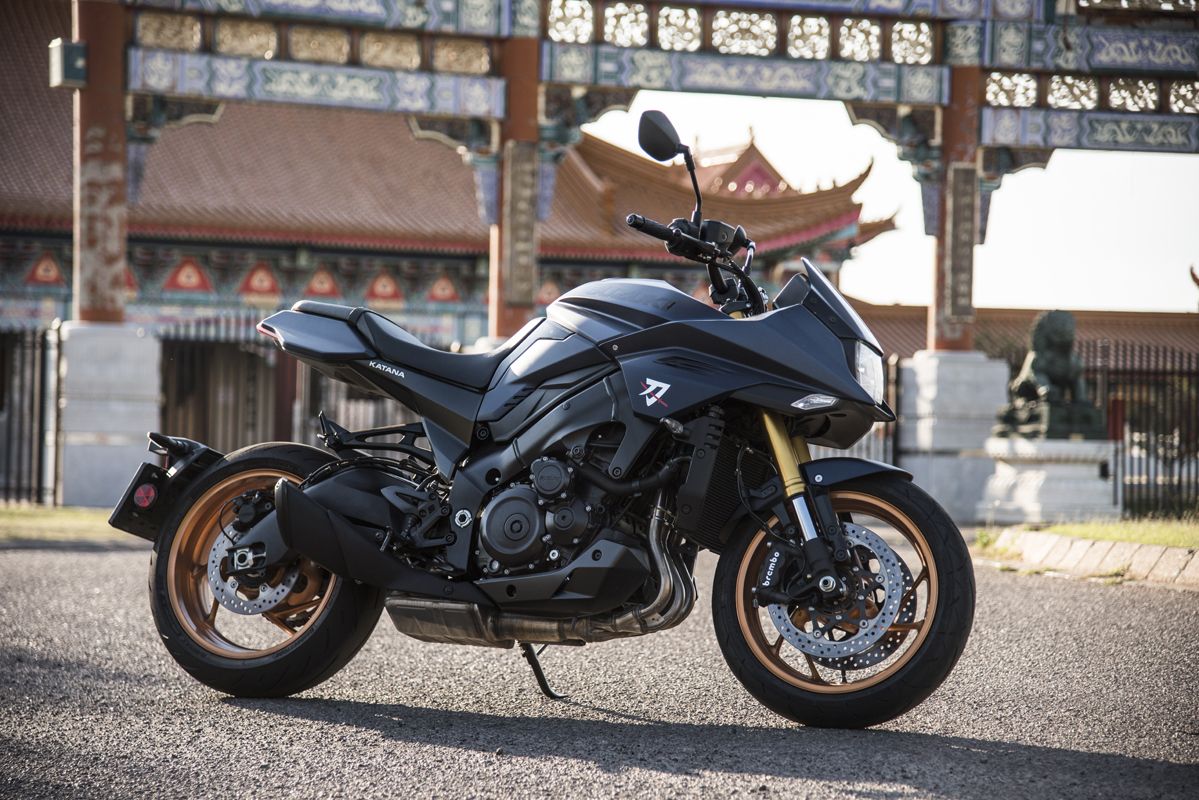
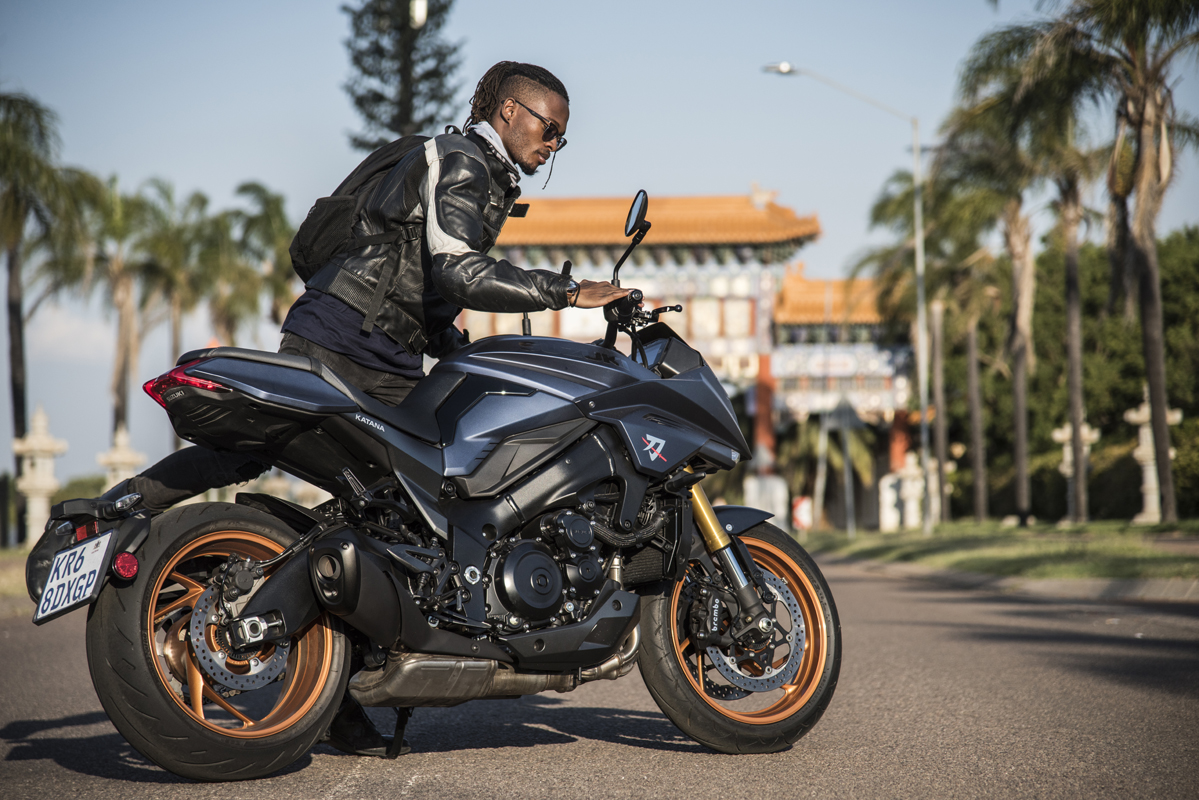
Where does one even begin…? To articulate into mere mortal words, what it is like to have under you, a modern reimagined legend of the old days past. The strikingly edgy Suzuki Katana. An unapologetic legend in its own right.
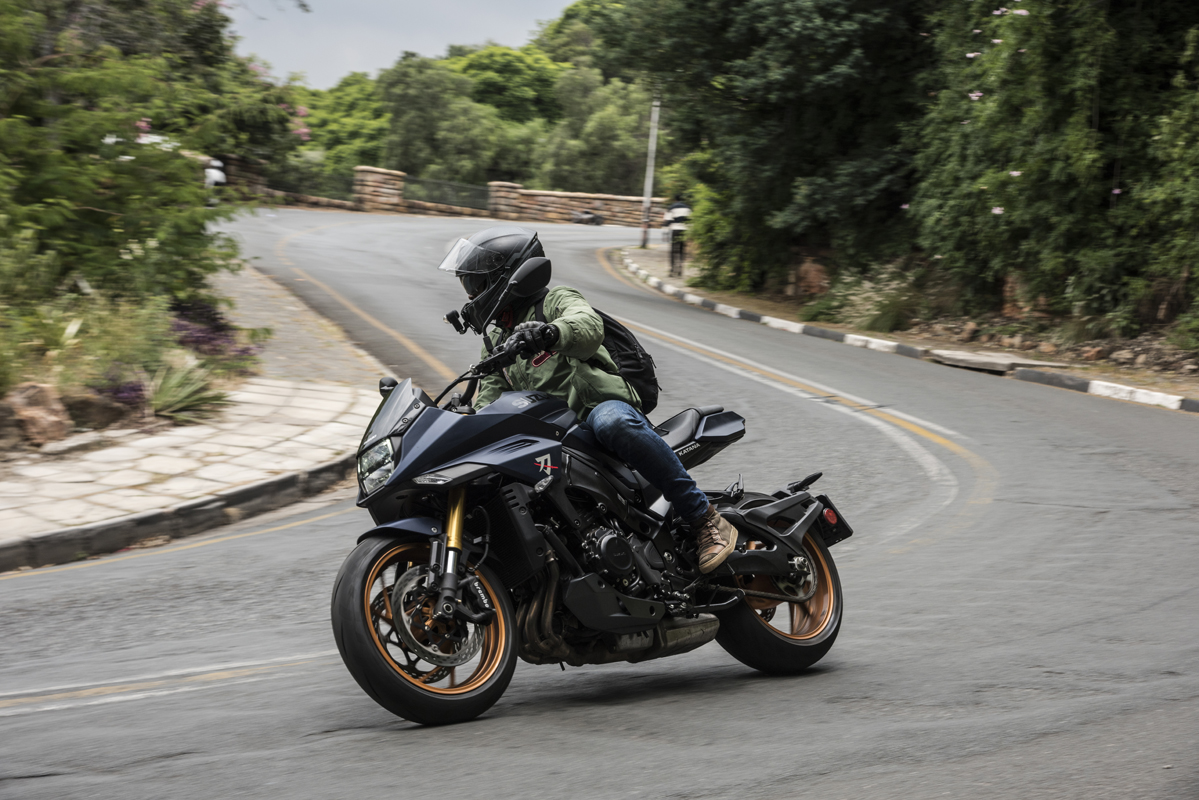
I was privileged enough to have the Suzuki Katana in my care for a week. Sufficient time to experience true riding bliss and pleasure, and yet too much time for any rider not to fall head over heels in love with this sports naked phenomenon. From the onset, it was an ideal bike to have used throughout the 7th Annual Africa Ubuntu 2023 Run.
Photo credit: Bjorn Moreira / ZA Bikers
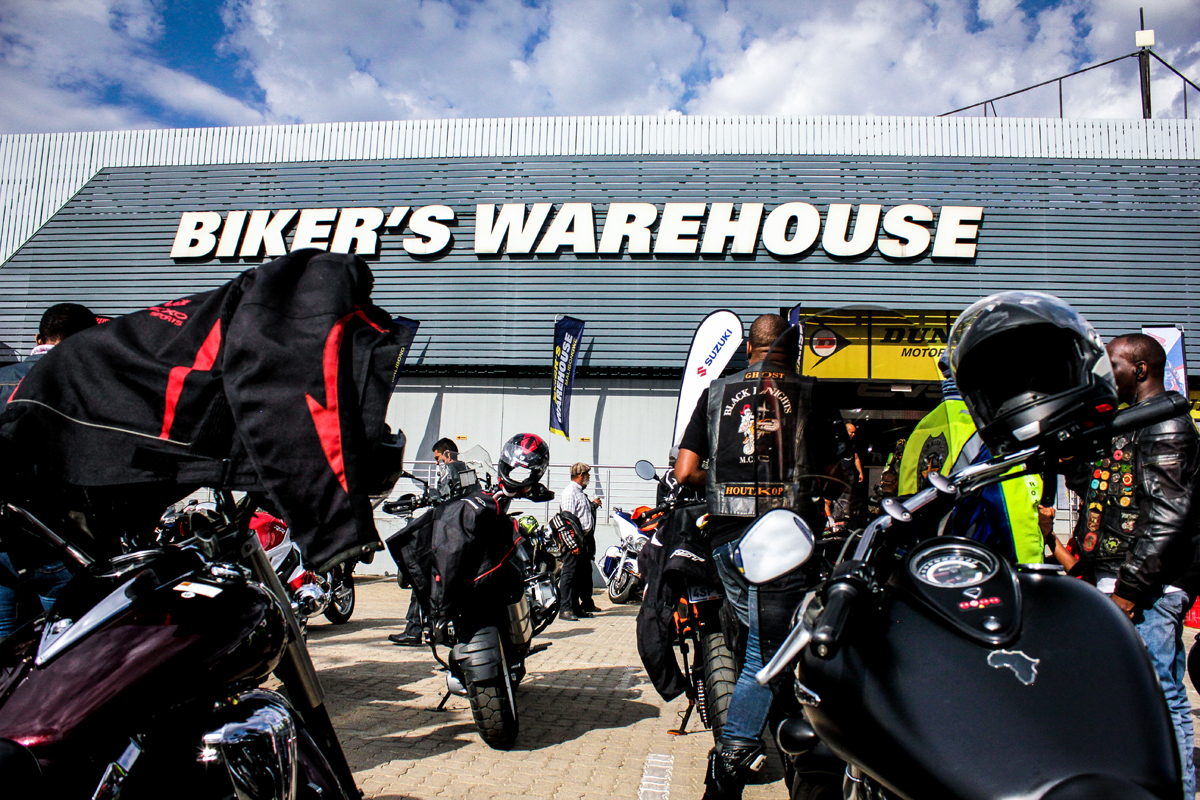
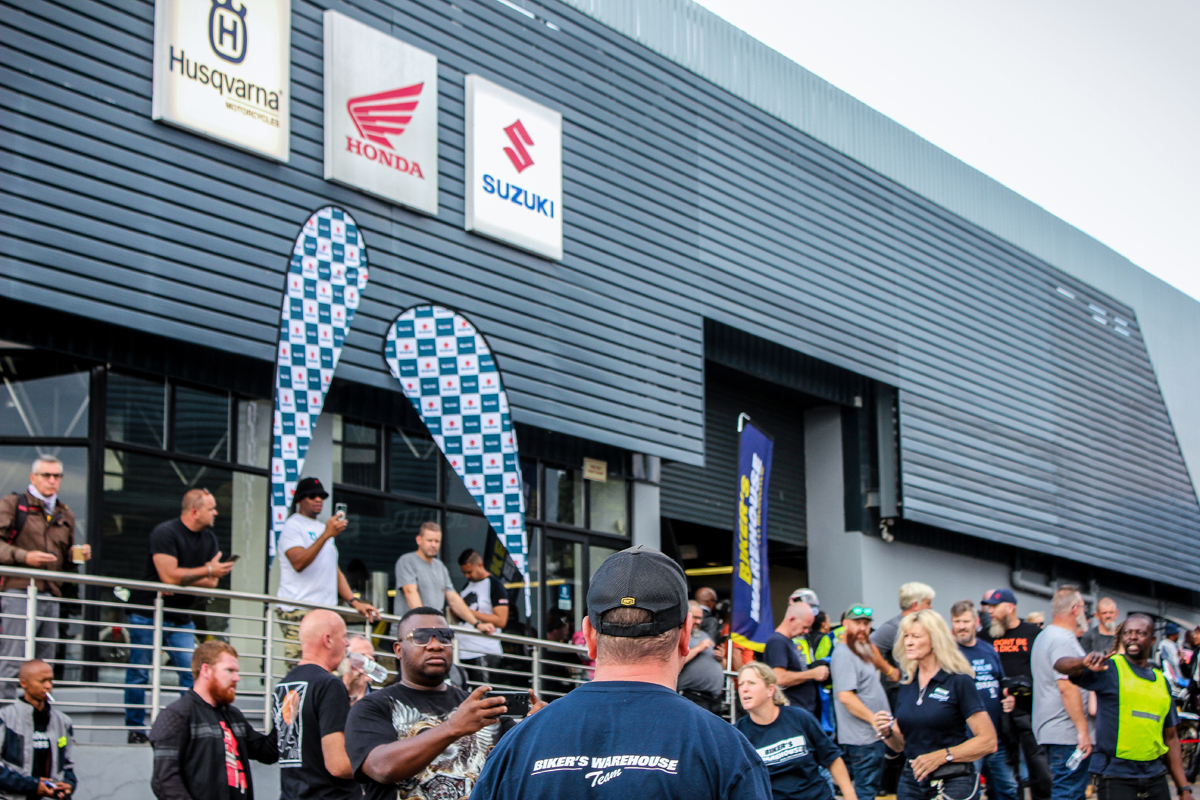
One thing I certainly observed from the Run, was the constant turning of heads in my direction as we eased on into the Biker’s Warehouse parking lot. I knew beforehand that the Katana carried more than just its 1000cc 110kW engine and a plethora of exceptional modern features, it housed something more, something grander, a history to it that I was hellbent to uncover.
Photo credit: Bjorn Moreira / ZA Bikers
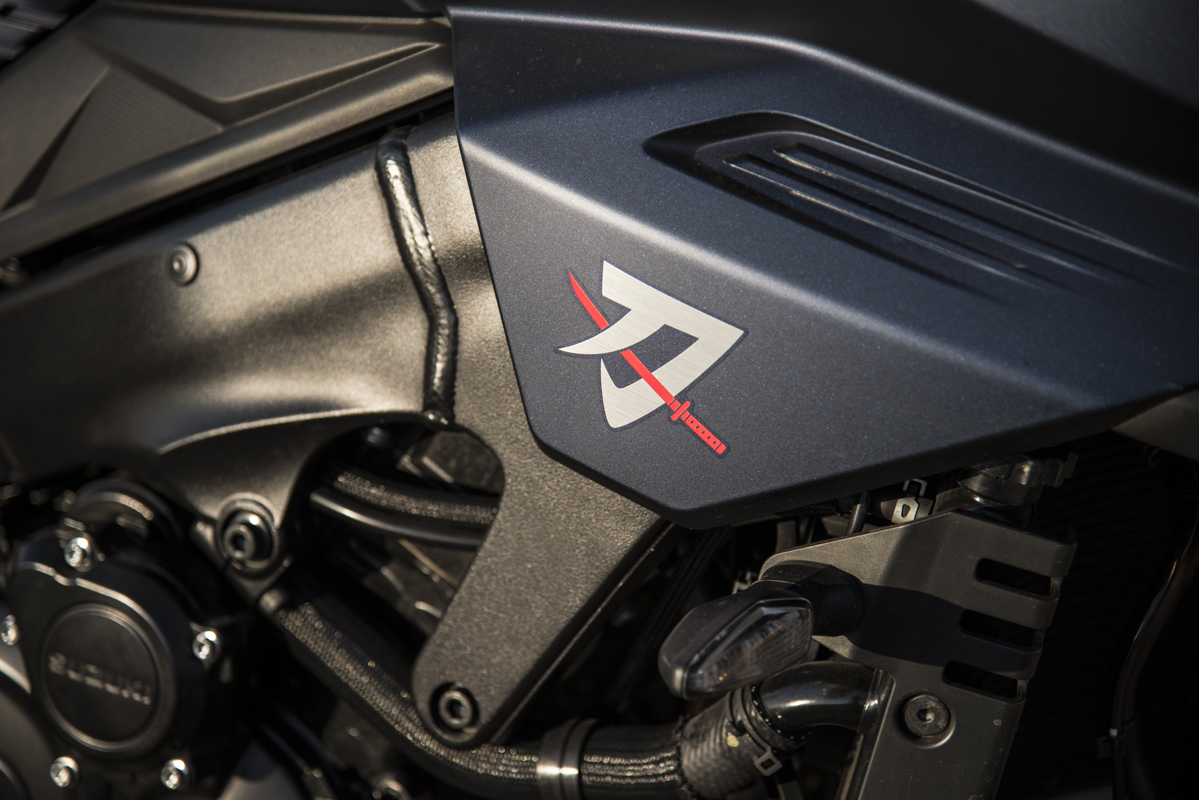
A name functions not only to identify, but to go as far as to signify character and individuality. Suzuki assigning the “Katana” name was no mistake. The Katana is a Japanese sword that is characterized by a single-edge curved blade with a long grip, ideal for a firmer double-handed hold.
Photo credit: Bjorn Moreira / ZA Bikers
The Japanese warrior class evolved from just having swords as class symbols, and with the birth of the Katana, the sword doubled up as a weapon too. How fitting…how we, as modern-day riders have evolved to be graciously equipped with mighty weapons of finely engineered motorbike masterpieces. The Katana is no exception, rather, it is the benchmark.
Photo credit: Bjorn Moreira / ZA Bikers
I was fortunate enough to bear witness to the sheer nostalgic effect the Katana had on a particular passing gentleman. Whilst waiting out the rain, out the corner of my eye, I watched as a 68-year-old man’s eyes lit up like a child being handed over their favourite lollipop as he came within close proximity of the sleek matte midnight blue Katana. Having owned the initial Katana himself, it’s as if every glance across its sharp Japanese aesthetic design, struck forth memory after memory of each ride taken. This was the most memorable, unscripted and candid rider-to-rider moment I have ever experienced. A moment reminiscent of a grandfather revealing the endless tales of past escapades.
Photo credit: Thabang Khatide / ZA Bikers
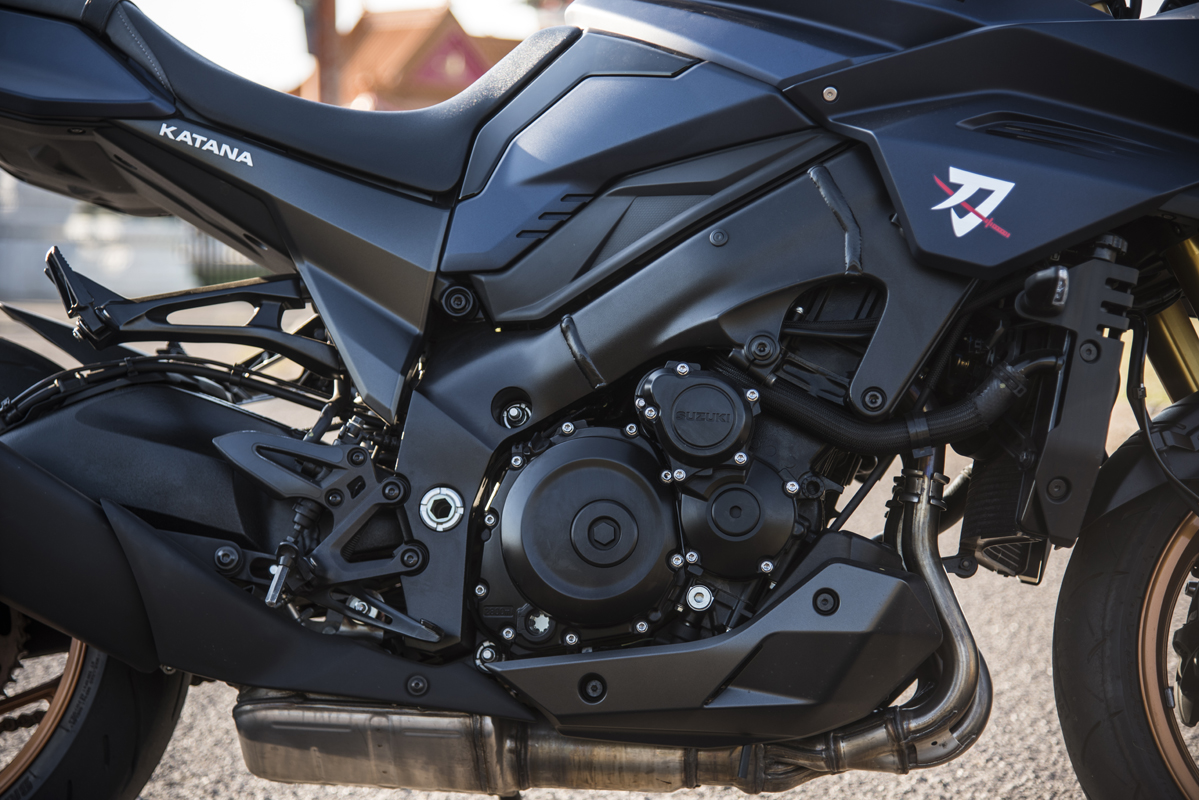
I heard straight from the horse’s mouth, what a true soul catcher the 1981 Katana was. And now, in a design that pays homage to the GSX1100S Katana and featuring one of the most praised engines from Suzuki, the K5 GSX-R 1000cc motor, Suzuki has introduced their latest iteration of the well-acclaimed Katana.
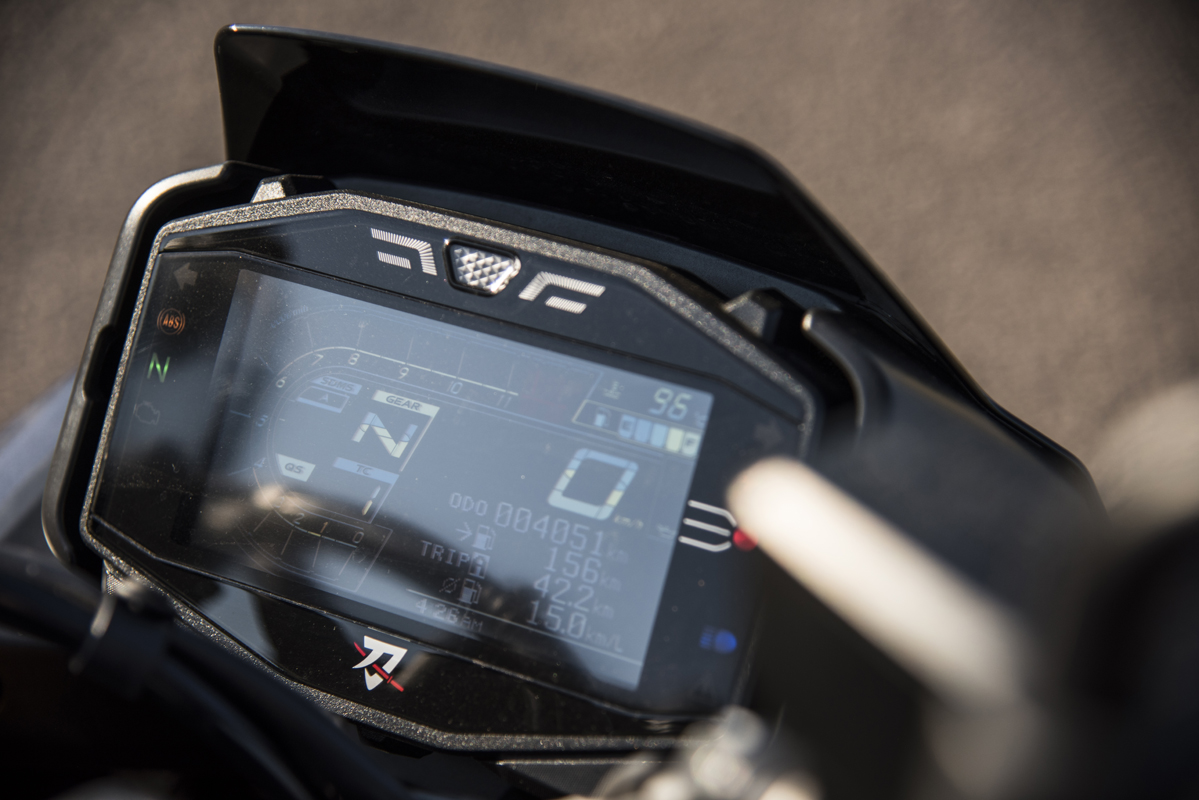
The new Katana is fitted with a neat digital dash with figures pertaining to gear selection, trip meter, fuel indicator and consumption as well as range. It has 3 levels of traction control, allowing you to adjust the throttle response to your riding palette. Additionally, the ECU works seamlessly with Suzuki’s Low RPM Assist and Easy Start features.
Photo credit: Bjorn Moreira / ZA Bikers
Whether it was in town or on highway trips, riding comfort scored high in my books. When it comes to its conservative 12L fuel tank, “legend” has it that one should be able to get a 230+km range out. Fortunately or unfortunately, I am one-of-a-kind. I mean, put yourself in my leather boots for a second. Under you, the iconic Katana with the esteemed inline-four engine that dominated the 05-08 GSX-R1000 era, producing 150hp released smoothly through Suzuki’s advanced throttle control system. Add on the comfortable and optimised riding position, and it becomes the making of a fast and fun riding pleasure experience.
Photo credit: Bjorn Moreira / ZA Bikers
Agility and manoeuvrability are meals all served with absolute splendour at no further expense thanks to a compact lightweight chassis. Whether it be a quick short or windier ride, the Suzuki Katana is equipped with a convenient Clutch Assist System (SCAS) which essentially acts as a slipper clutch on the downshifts.
Photo credit: Bjorn Moreira / ZA Bikers
The 2023 Suzuki Katana not only stays true and consistent to the original bike, with top-quality perfectionist-like Japanese design and refined craftsmanship but has also been able to successfully usher in a new era of exciting modern-day technology, incorporated ever so innovatively and conveniently into their bikes. All mentioned elements come together harmoniously to serve the masses with absolute pleasure riding experiences through and through.
As the “bonfire’’ dissipates and the last tale slips through the aged lips of my long lost rider grandfather, he summed it all into one simple phrase, “I have lived a good and exciting life”. At this point, time had stood still, I even forgot about the rain. At this moment right here, I knew to be fully present and take it all in. As we bid farewell in a cheerful embrace, he walked away with that exact same twinkle in his lived eyes, I knew then, what riding truly does for the spirit as one ages. The Suzuki Katana was undoubtedly a catalyst for such fulfilment.
Photo credit: Bjorn Moreira / ZA Bikers
Suzuki KATANA
For more information on the bike featured in this article, click on the link below…
When BMW launched the R 18 cruiser, the German company continued further down the path it started with the R nineT, which was to provide a blank canvas for customizers to create their own motorcycling visions. With the R 18, Californian Roland Sands showed the world what was possible and many other custom builders showed off their creativity using the low-slung model as a base.
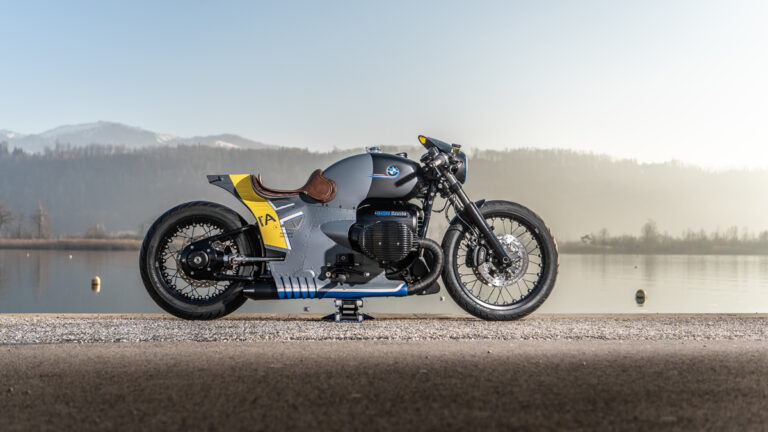
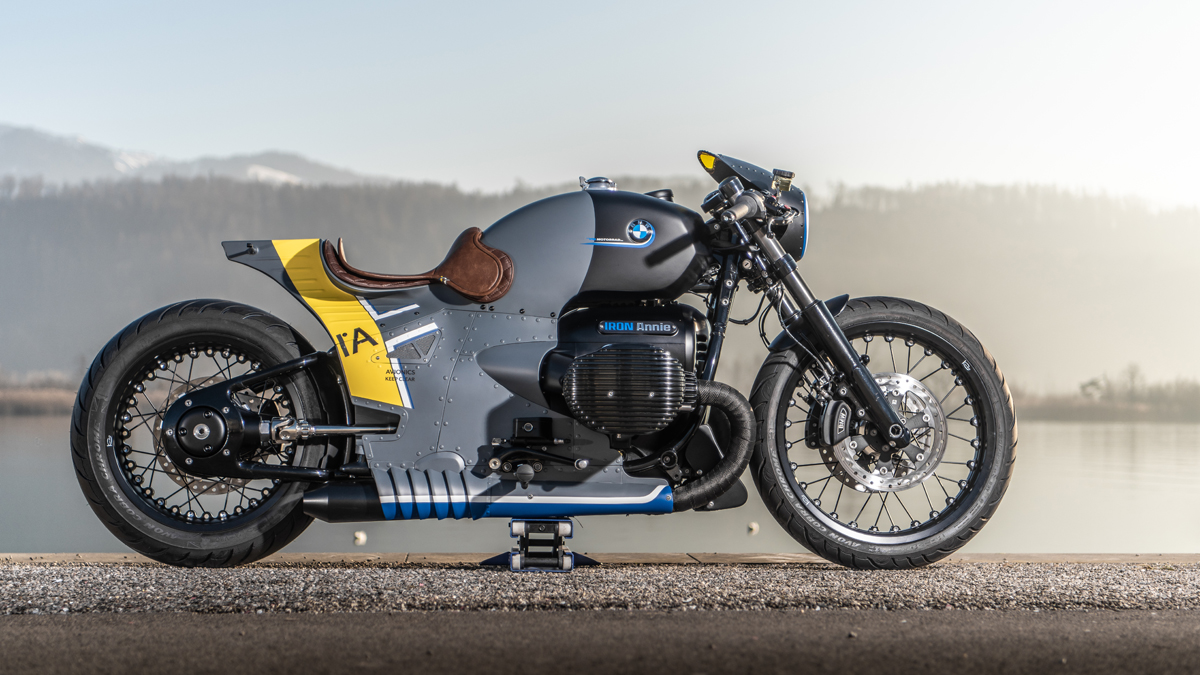
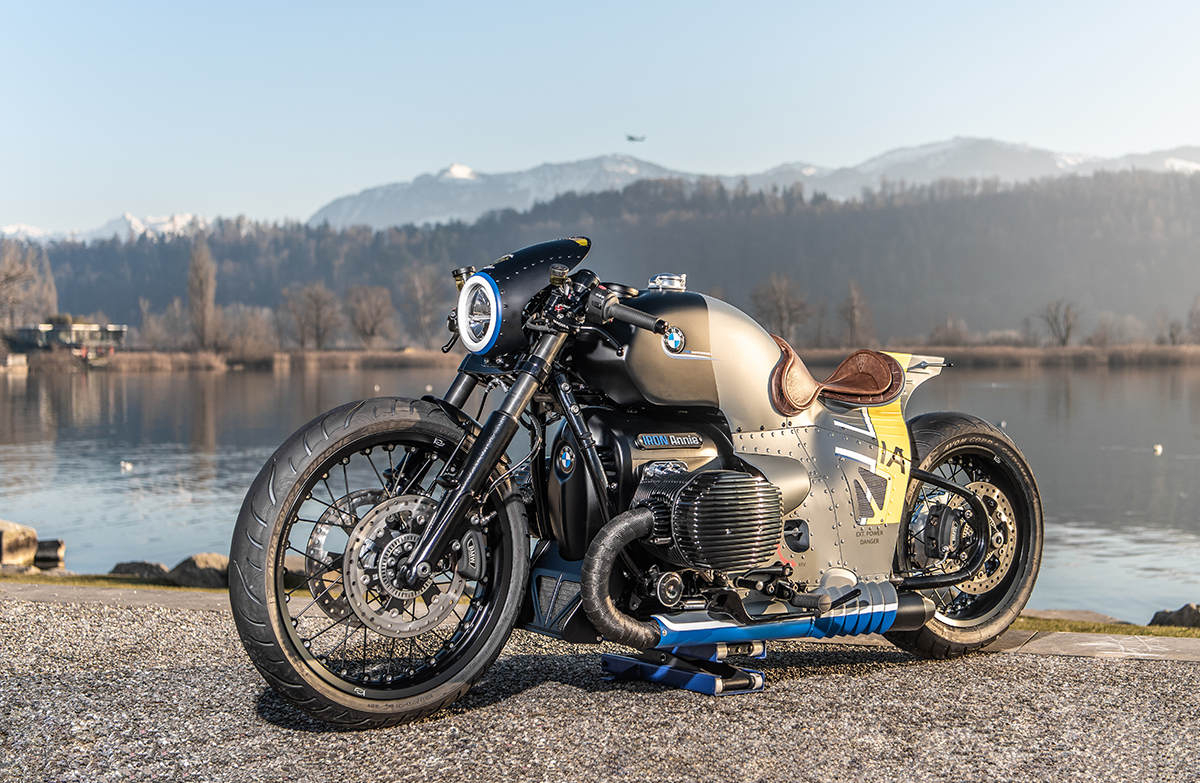
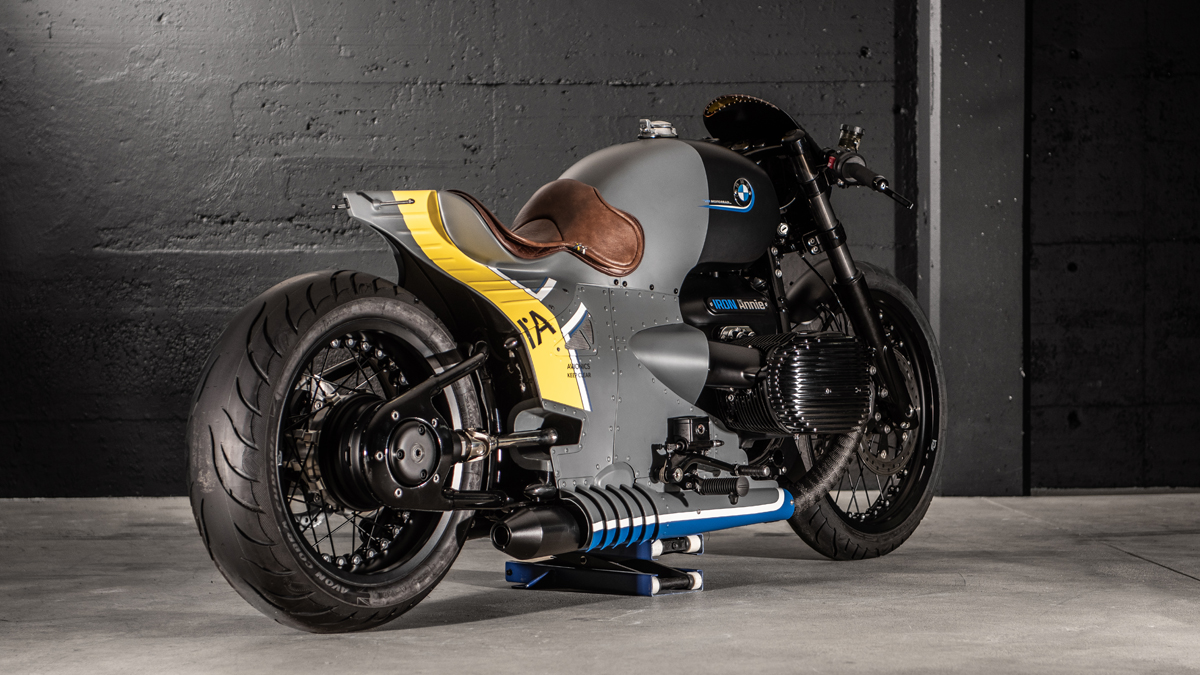
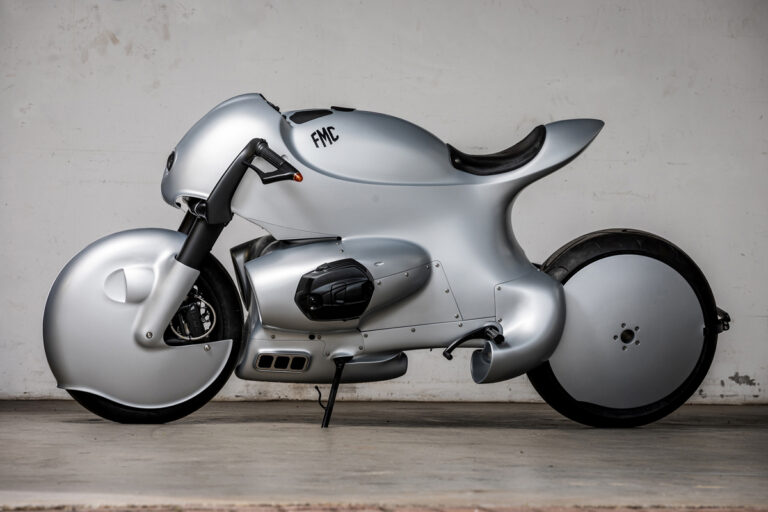
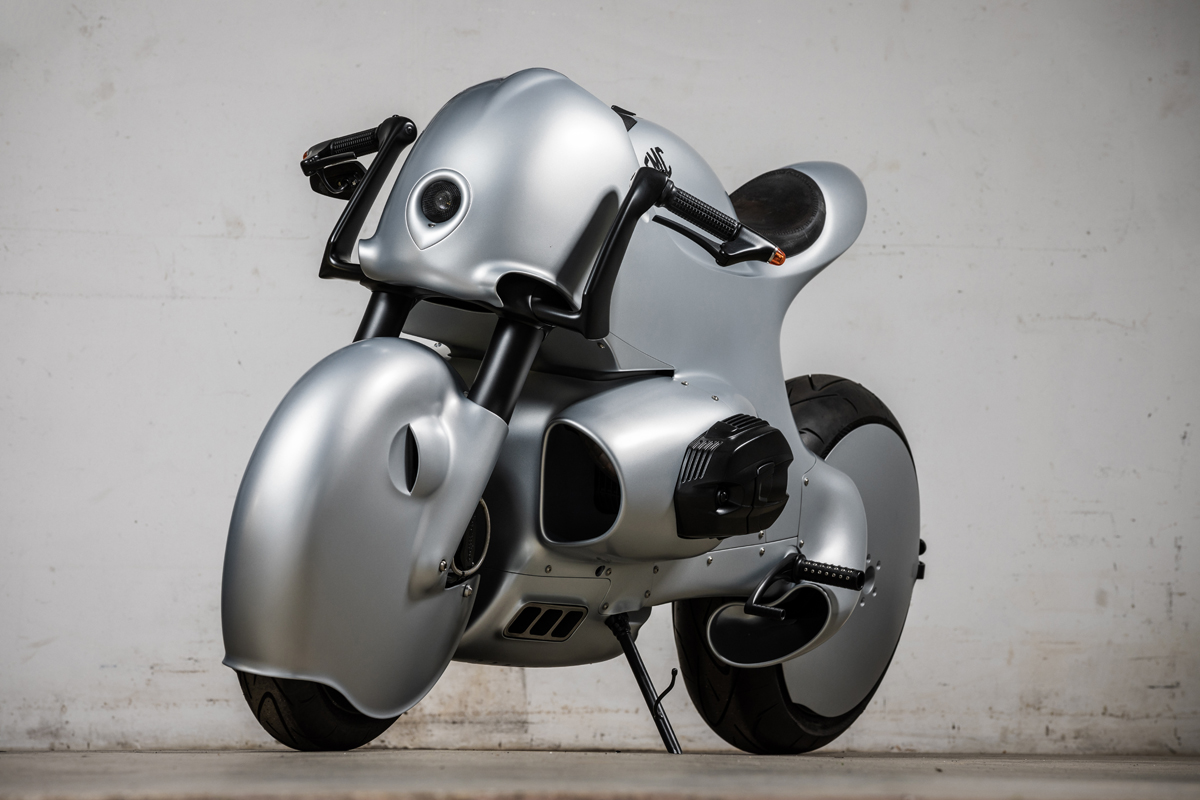
Now it is the turn of BMW partner VTR Motorrad AG & VTR Customs in Schmerikon, Switzerland, to create a very special customised version of the BMW R 18 – the R 18 IRON ANNIE.
Image source: BMW
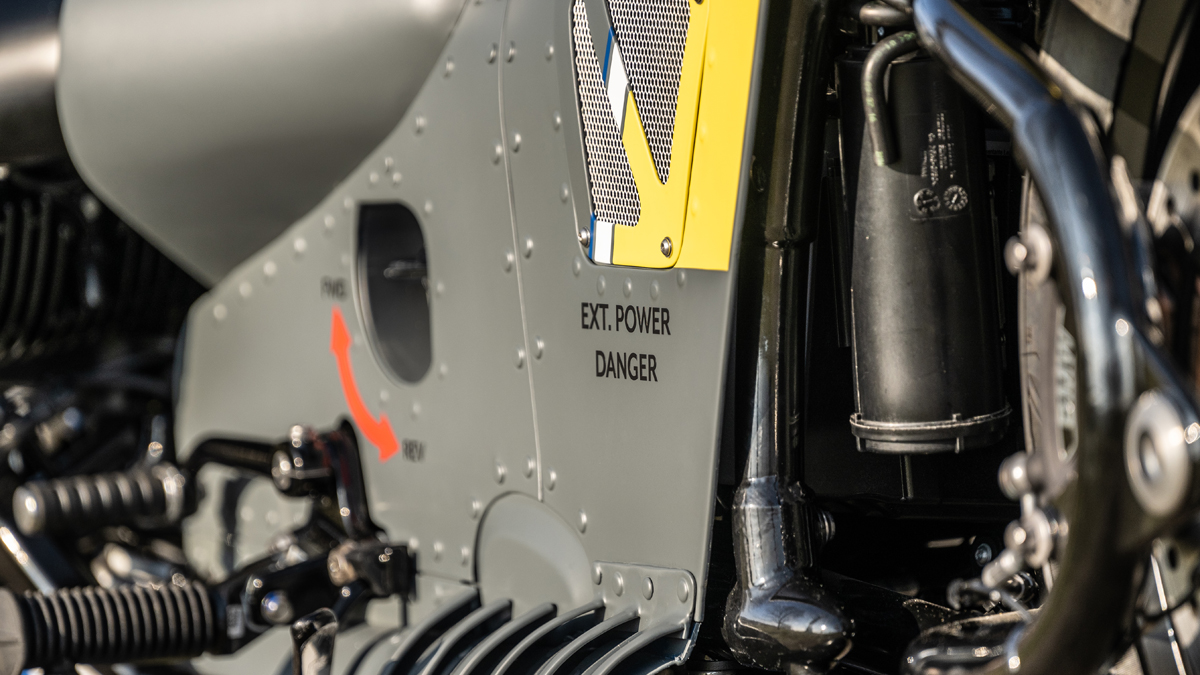
The build takes its inspiration from the Junkers Ju 52, the legendary three-engine commercial and transport aircraft from the 1930s. One particular Ju 52, with the aircraft registration D-AQUI in the Lufthansa colour scheme grey-black from 1936 became particularly well-known worldwide. During its time in the USA from 1970 to 1984 under the American aircraft registration N52JU, it was christened “IRON ANNIE” for short by its then owner Martin Caidin.
Image source: BMW
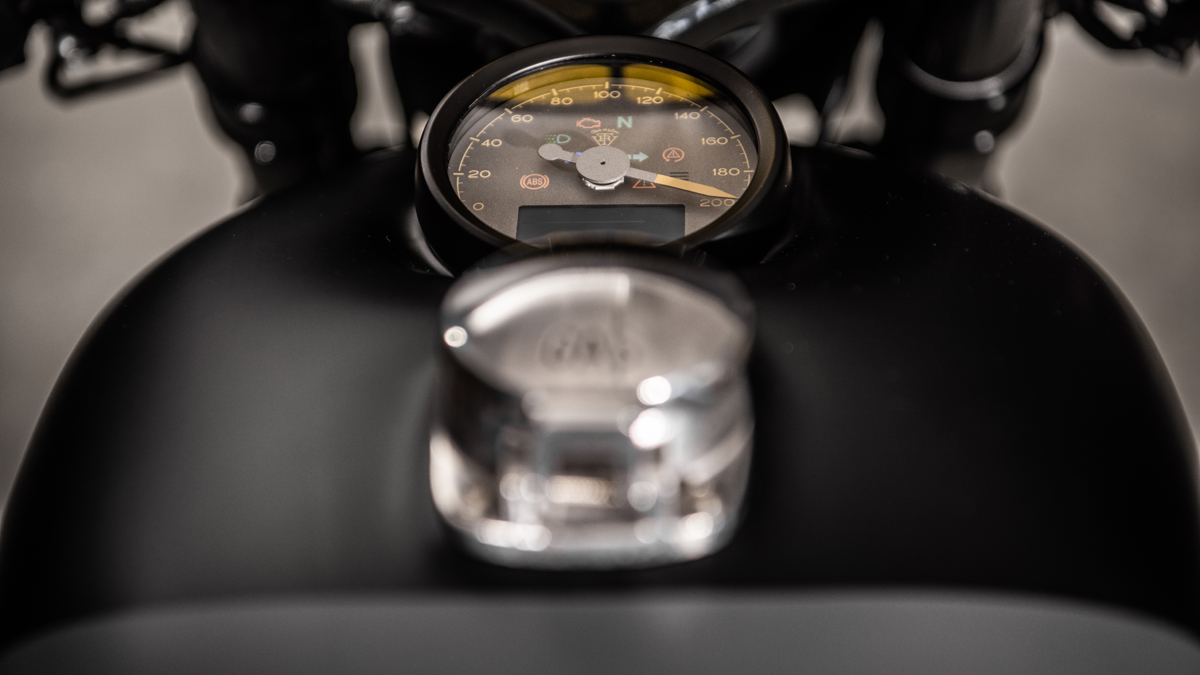
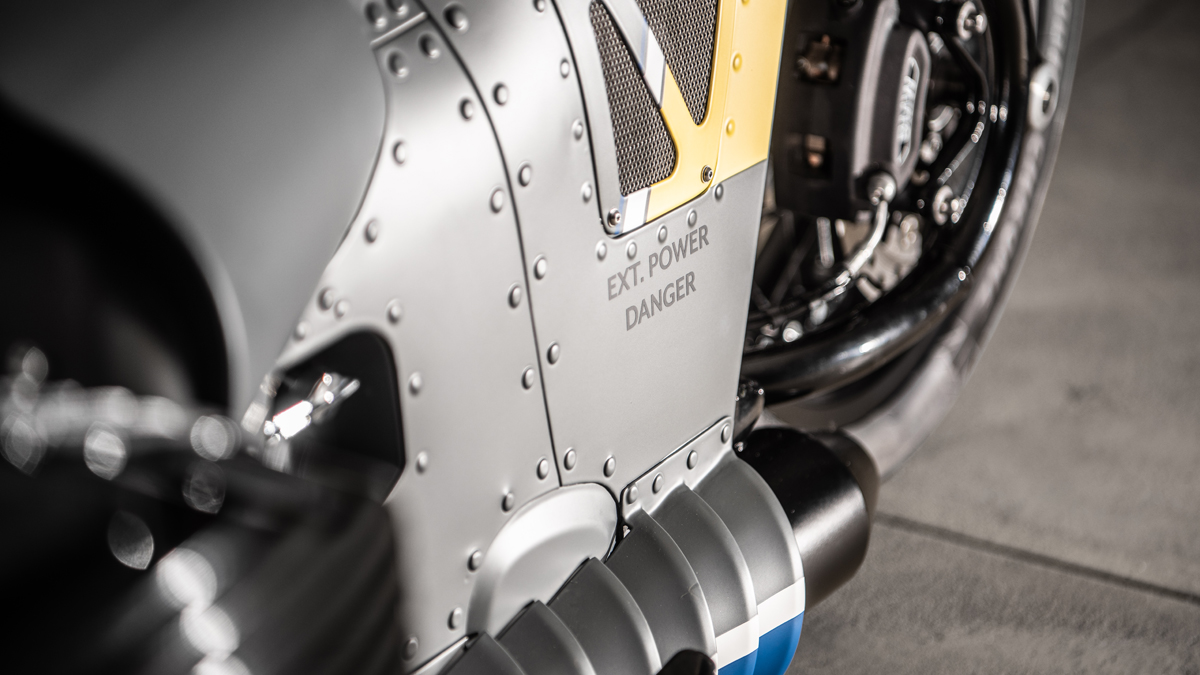
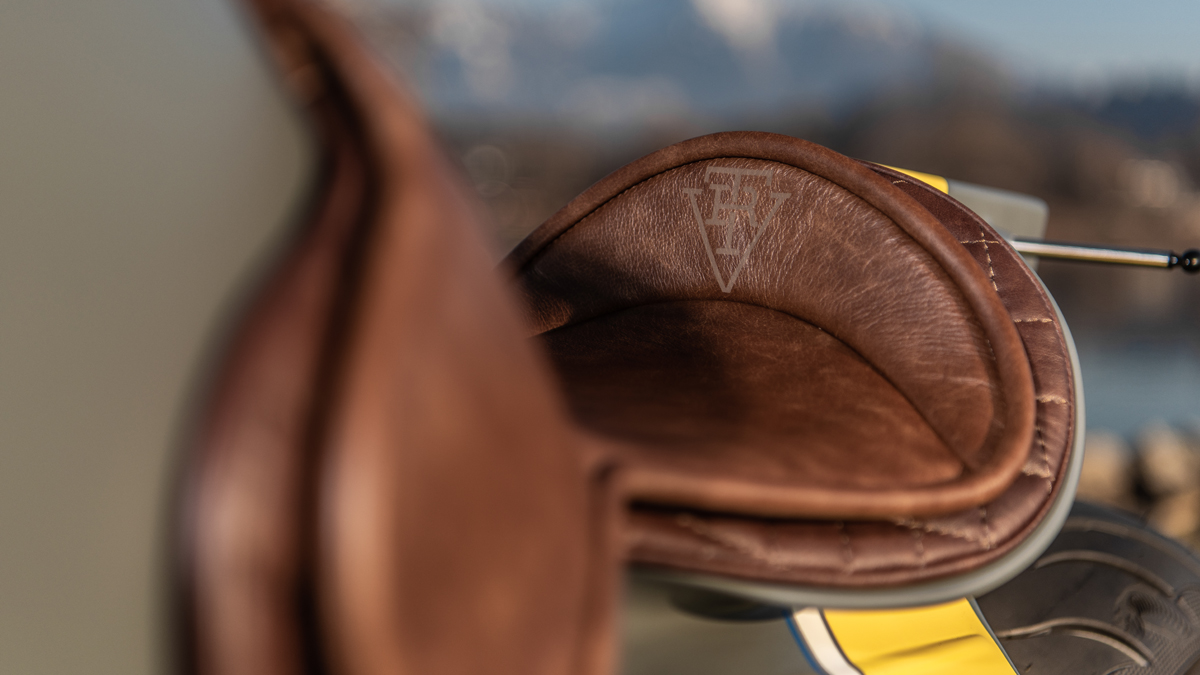
As you would expect, there are a lot of aviation-style elements incorporated into the design, for example, the dial of the speedometer integrated into the tank, which is intended to be reminiscent of old cockpit instruments, and access panels with quick-release fasteners, as found on many aircraft. And of course, the builders had to borrow from the Ju 52 the characteristic corrugated aluminium planking. At the same time, the seat was to be reminiscent of a riding saddle and, of course, only the “IRON ANNIE” colour scheme in grey and black was to be used for the paintwork.
Image source: BMW
The cockpit trim was pulled back as narrow and flat as possible to emphasise the streamlined shape. The 7 cm shorter fork and a height-adjustable Wilbers shock absorber emphasise the crouched stance of the motorcycle. “To make the bike look smaller and give it a more filigree appearance between the wheels, we had large 18 and 21-inch wheels made by Kineo,” adds Daniel Weidmann, Owner & Managing Director of VTR Motorrad & VTR Customs.
As a further technical feature, racing-style HC3 pumps from Magura were fitted in place of the standard R 18 brake and clutch fittings. The dial of the customised speedometer also received a hand specially made by watchmaker Zeitzone Zurich.
Image source: BMW
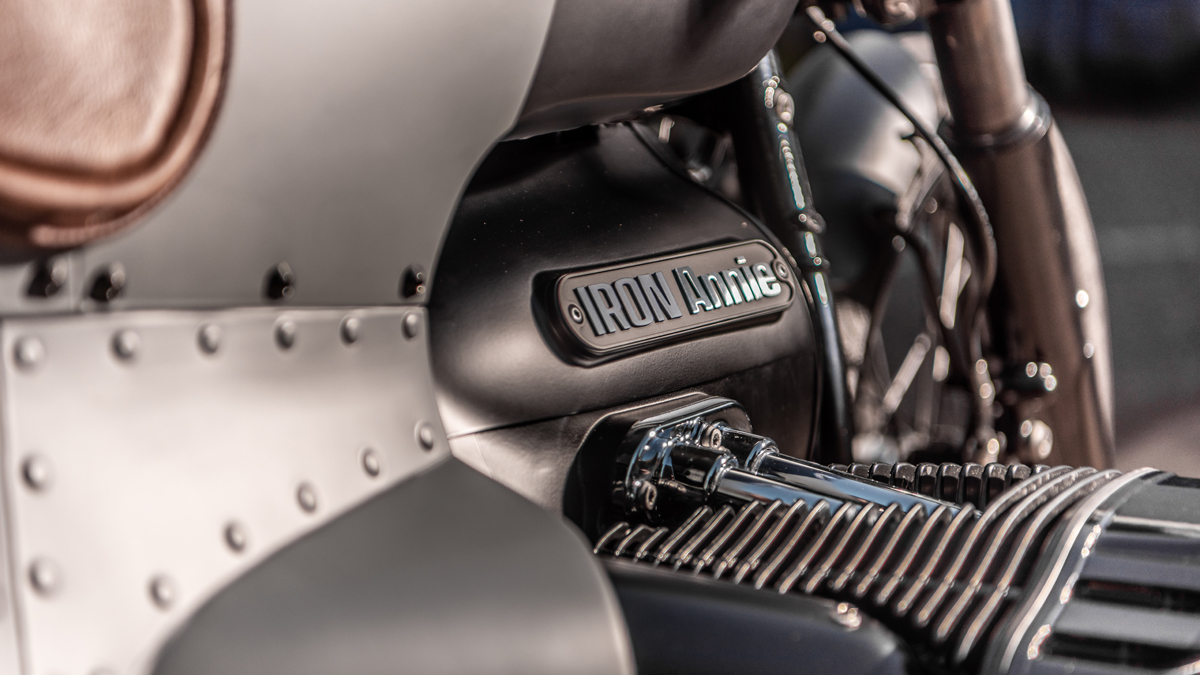
“One of the big challenges with the R 18 IRON ANNIE was the replica cooling fins in the area of the rear silencers. Shaping these parts into parallel and beautiful radii and at the same time still fastening them harmoniously took a number of attempts,” says Daniel Weidmann about the aluminium sheet metal work.
Image source: BMW
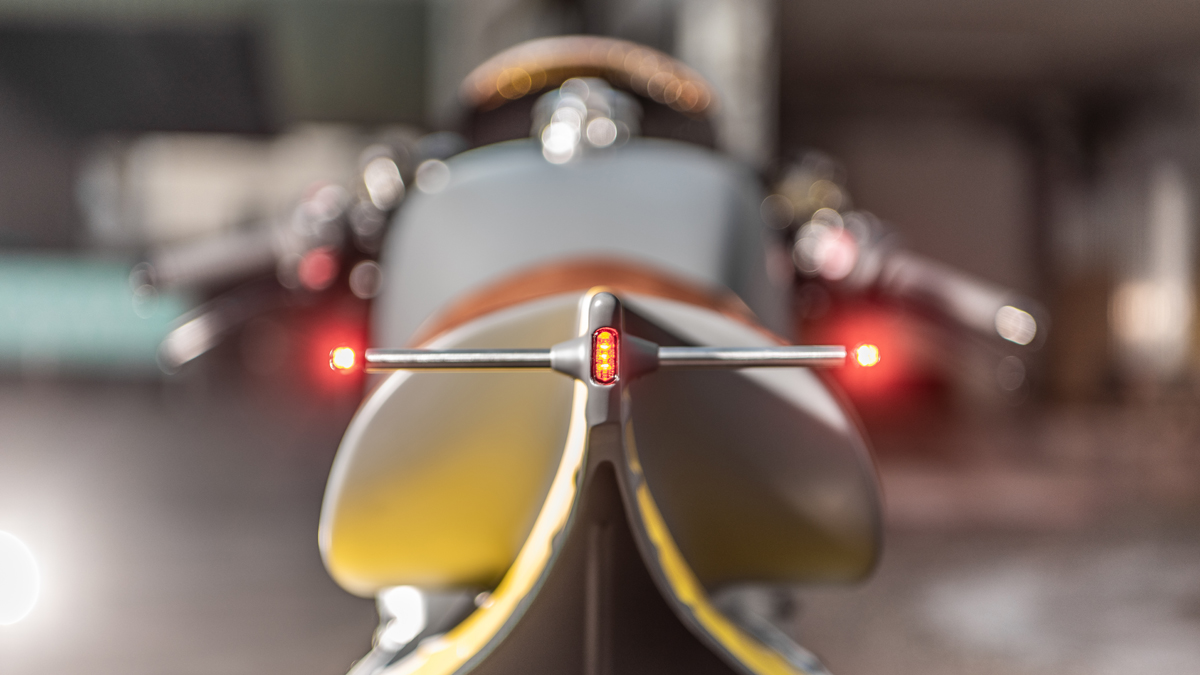
This consumed countless hours of work, as the fuel tank, the tail with the suggested tail fin of an aeroplane, the side panels and the cockpit were artfully hand-formed from aluminium sheet. Reminiscences of traditional metal aircraft construction are also provided by the numerous lens-head rivets.
Image source: BMW
“What almost pained us a little when we saw all the handmade, bright aluminium sheets shimmering and shining was that they would have to be painted. However, we are extremely satisfied with the result because the R 18 IRON ANNIE differs even more clearly from our well-known SPITFIRE, which is also designed in aviation style,” Daniel Weidmann continued.
Image source: BMW
Any custom build is a very personal vision and, as the old saying goes, “beauty is in the eye of the beholder.” With so many custom creations based around the R 18 having been built, only you can decide if the R 18 IRON ANNIE is to your own personal taste. One thing is certain, however: it certainly is striking and is a brilliant example of the custom builder’s art.
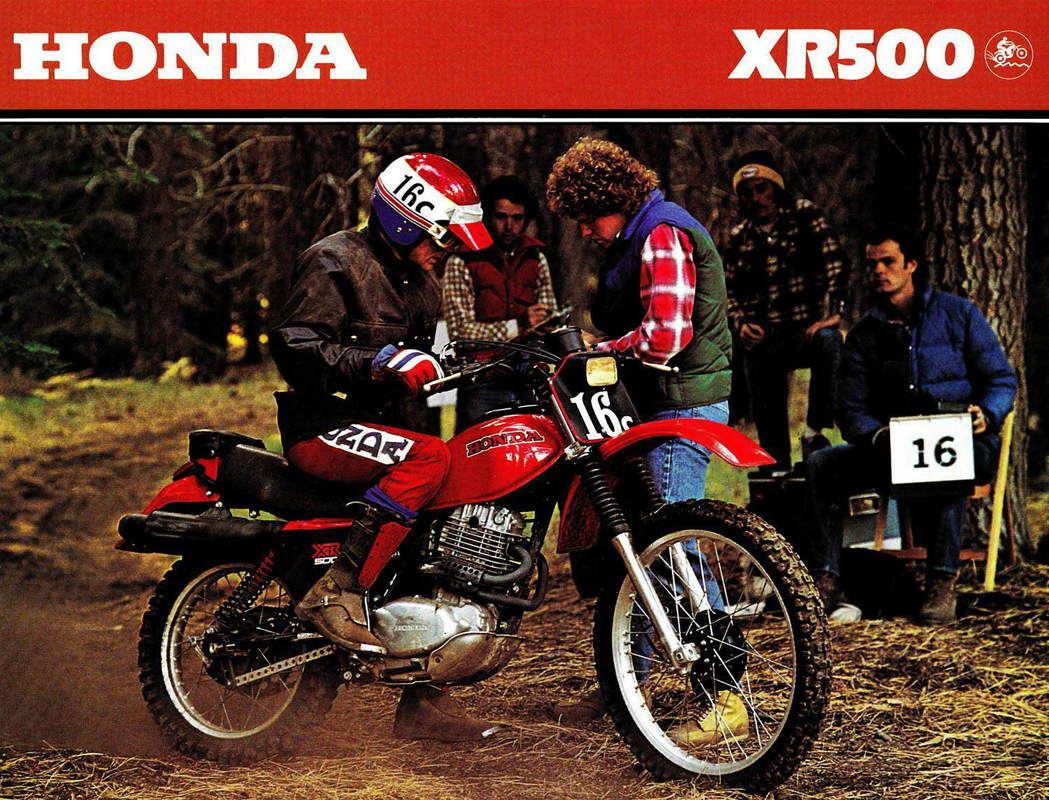
Over the years the ever-so-popular adventure bike market has grown in all directions, in technology, safety, engine capacity and most noticeably, weight. What most riders forget or do not know, is that the origins of the adventure motorcycles were based on dirt bikes—mud slingers that just met the minimum requirements by law to pass roadworthy. So, what happened? Well, to put it in layman’s terms, the word “adventure” took up a whole new meaning, drifting away from the hard-core skilled riding to gravel travel. This meant bikes like your Honda XR 500 and Yamaha XT 500 would later be replaced by BMW’s R 80 G/S, weighing 186kg compared to the Honda’s 123 kg and carrying 19.5 litres of fuel versus your 12 litres in the Honda and 8.8 in your Yamaha.
Image source: Honda
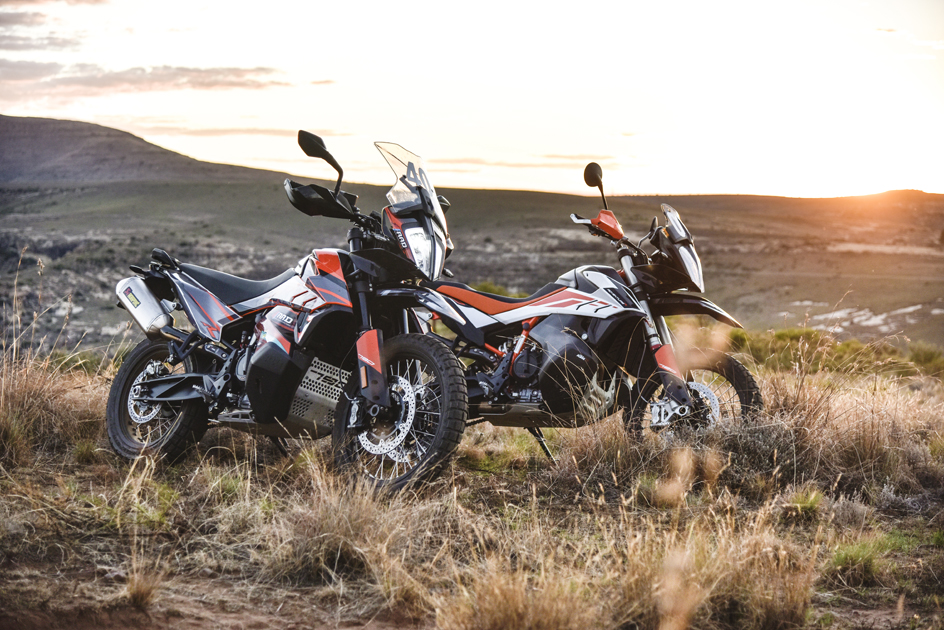
Fast forward to today and many manufacturers, if not almost all of the top dogs, have got a heavyweight and middleweight adventure motorcycle in their line-up. What most manufacturers have come to realise, is that the original adventure bike formula needed to change, thus the middleweight and lightweight adventures were introduced. With middleweights being introduced into the market, we started to see a shift. Riders began to understand how much more they could see on the gravel path, how much easier it was to get there and how much more fun there was to be had on a lighter bike.
Photo credit: Bjorn Moreira / ZA Bikers
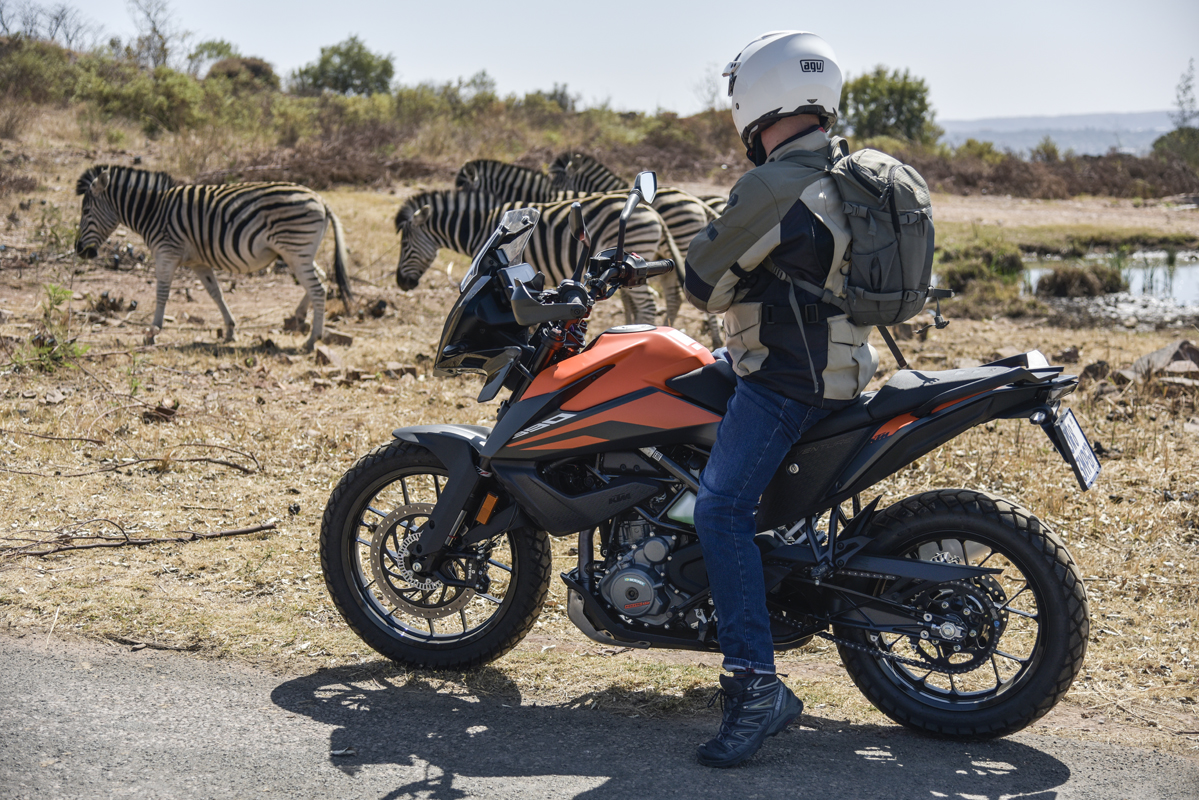
With a teaspoon of light-ish adventure travel down the throat, we are starting to see a shift once again. Your heavyweight adventure bikes have started taking up the touring bike role and light off-road travel. For those who have tasted true adventure, they are either downscaling to the middle class or keeping the big bike and buying a lightweight adventure. You can’t be serious? Indeed, we are seeing older and young generations moving towards the lightweight adventure bike, either for a more dirt-worthy ride or a more manageable means to get to the end destination.
Photo credit: Bjorn Moreira / ZA Bikers
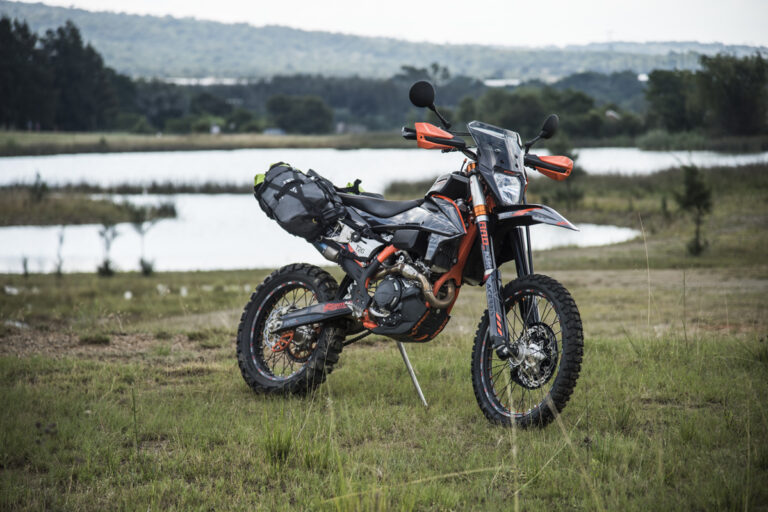
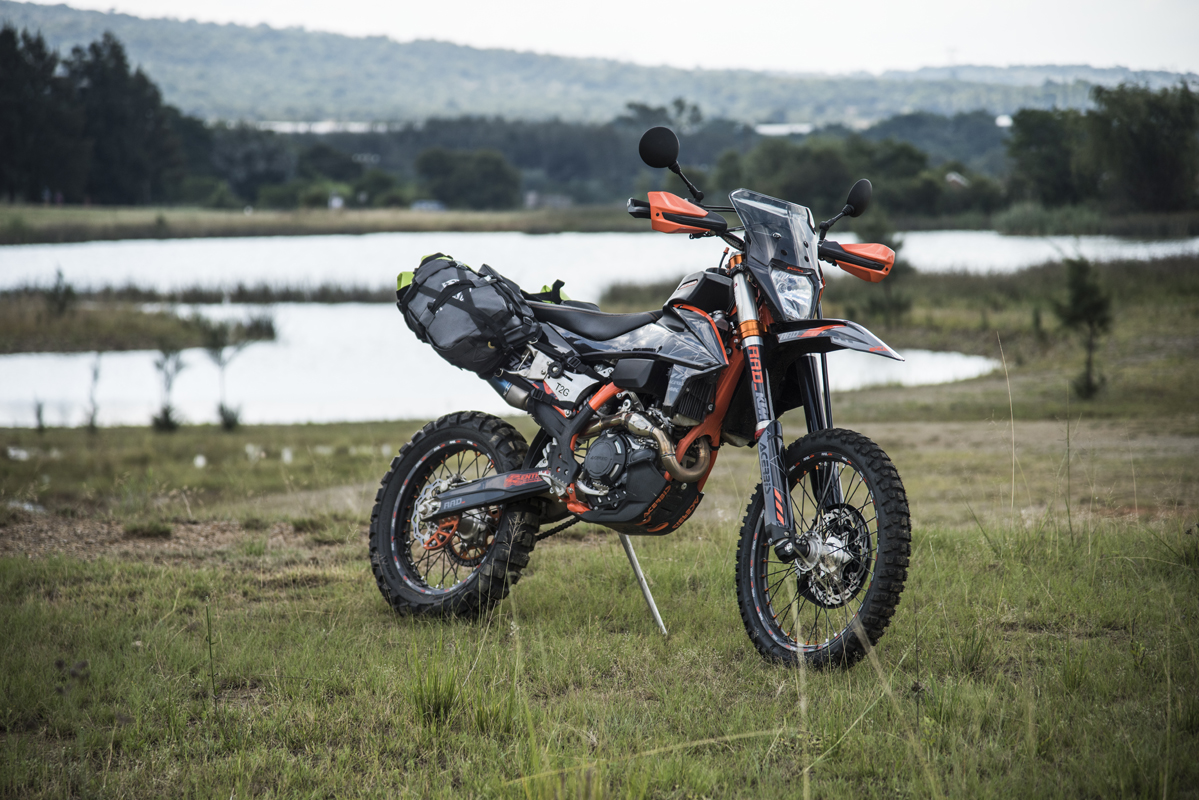
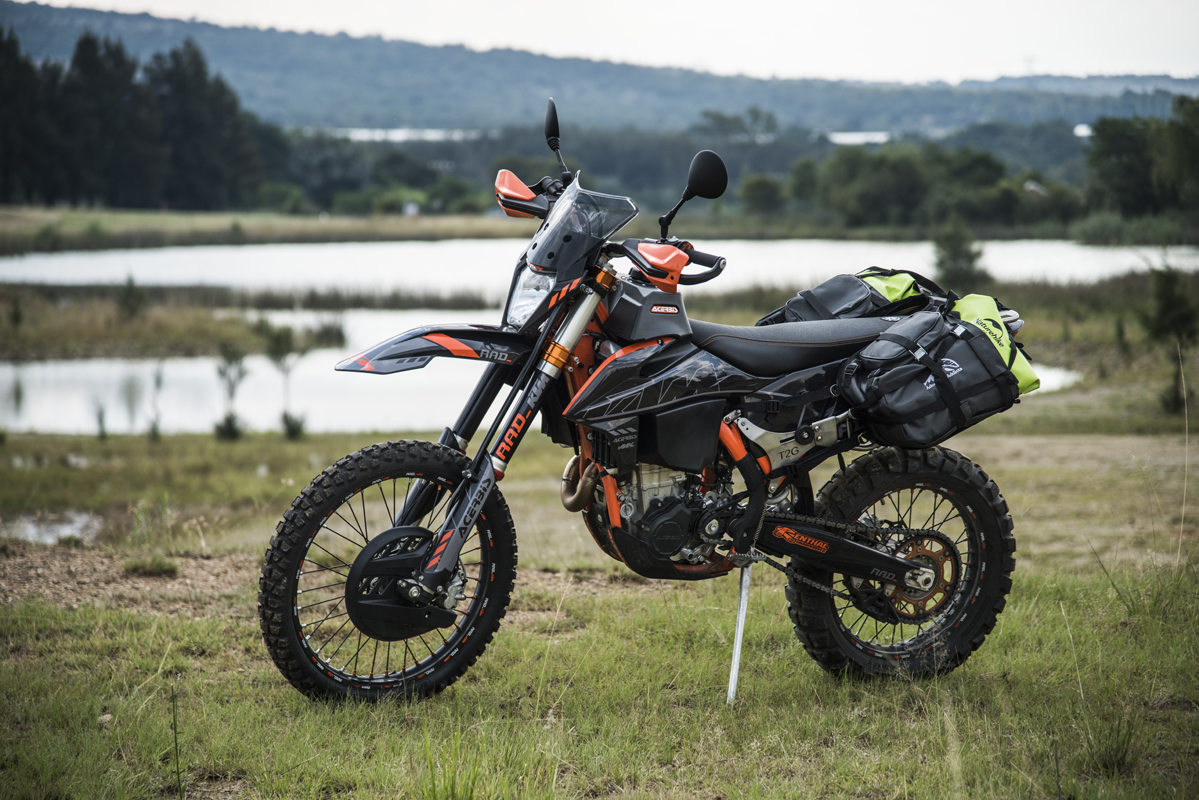
So, what is a lightweight adventure bike in this modern world, is it your bare-bone XR, XT kind of bike or is it the road bike chassis adapted motorcycle, like your KTM 390 Adventure, Honda CB500X and BMW 310 GS? Miguel Lage (Dealer Principal at RAD_KTM) along with a whole plethora of adventure riders seem to think it’s a KTM 500 EXC-F. With two work colleagues already having been convinced by RAD_KTM’s creations, I thought I’d take a ride to find out for myself…
Photo credit: Bjorn Moreira / ZA Bikers
The 500 EXC-F has been the go-to for rally riders, world travellers, desert racers and now the adventurer. This special EXC has been around since 2012 and just like a fine wine it has gotten better over time, and for 2023 we see major updates making their way from the latest MX models. Yet, the 500 stays true to its simple nature and does away with any rider modes or gizmos, aside from an optional TC and map switch. This is the blank canvas that RAD_KTM start their work on and just like the 500, for the last few years, RAD has been developing and testing all of the upgrades to make the 500 EXC-F that much more capable of adventure.
Photo credit: Bjorn Moreira / ZA Bikers
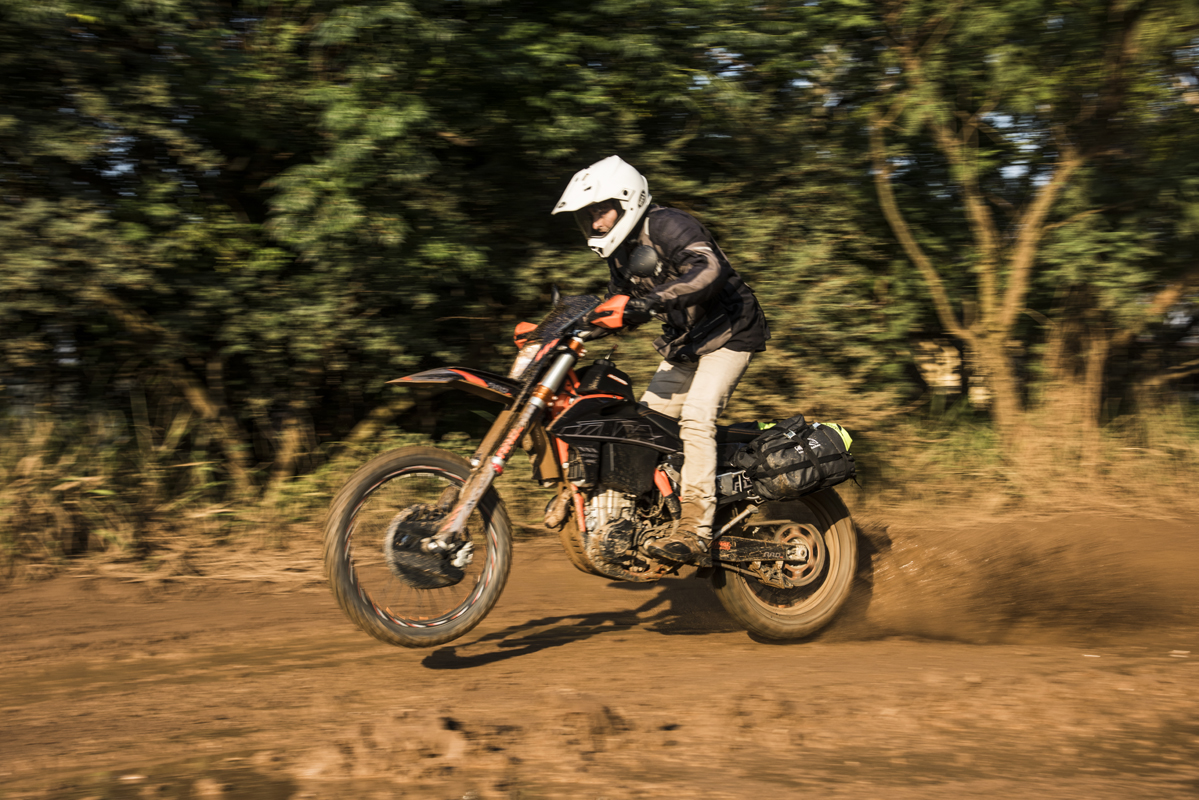
With my adventure kit on and a host of local d-roads at my disposal, I set off to find out what makes the RAD_KTM adapted 500 EXC-F the adventurers’ dream. My first proper day on the 500 saw me travel 150 km of 90 per cent dirt, starting from home, down the tarry stuff towards Graham Road past Silverlakes and right onto my favourite d-road that winds its way over the mountain towards Rosemary Hill, just before you turn onto Boschkop road. This route allowed me to ride up some rocky technical single trail before connecting to the dirt highway that passes Hazeldean Trails and Rosemary Hill. It’s also worth mentioning that we had torrential rain that whole week, so we were dust-free but given slushy mud in return.
Photo credit: Meredith Potgieter / ZA Bikers
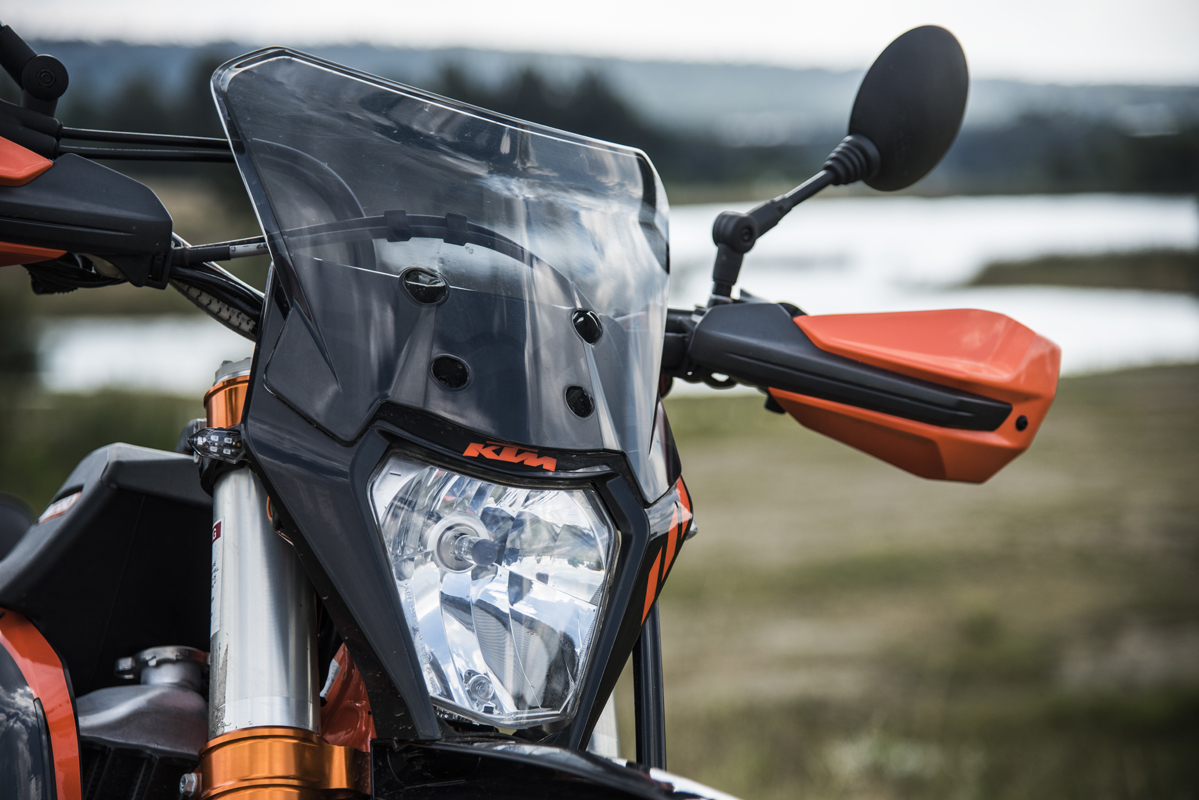
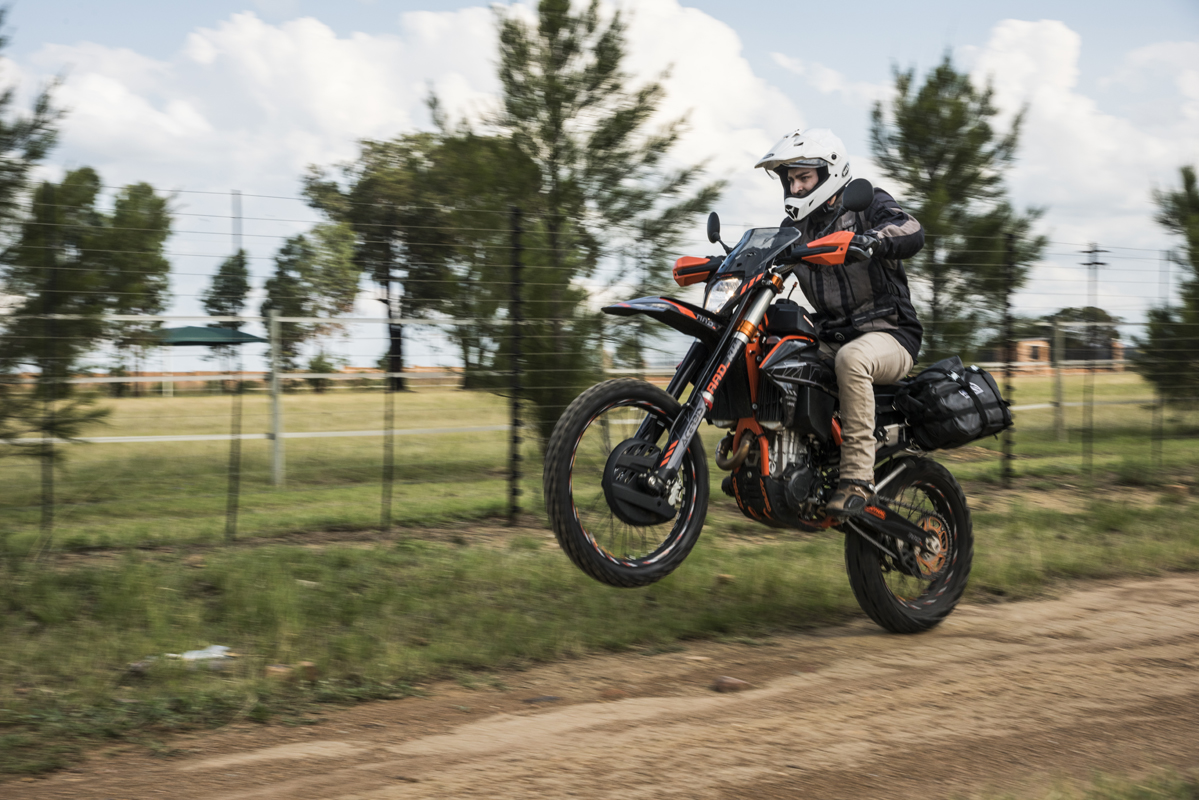
With a short water break, I sat on a rock and took in all of what the RAD team had done. What first appears to the eye is how the EXC still looks like an EXC, meaning no rally-styled tower and no rear fuel tanks to mess with the weight or look of the machine. Instead, RAD has focused on the finer details of this particular build that keeps the bike light but enhances the already factory-ready package.
Photo credit: Bjorn Moreira / ZA Bikers
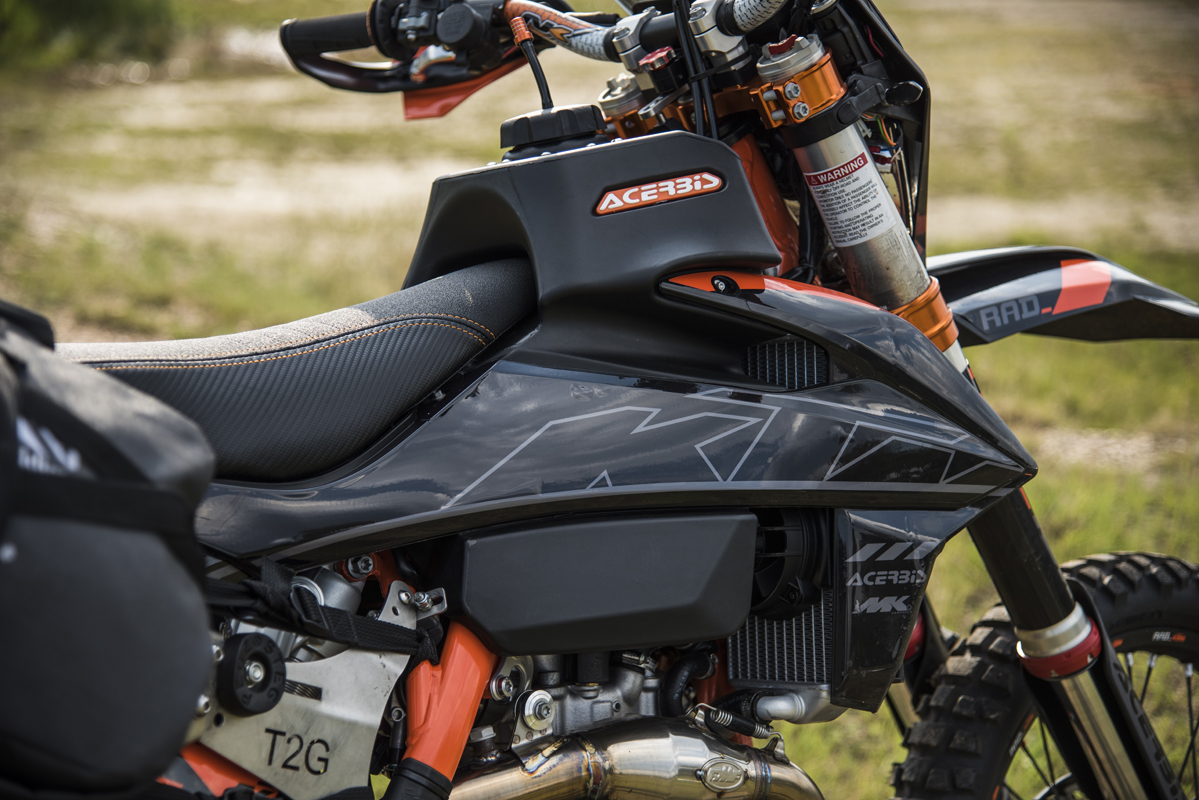
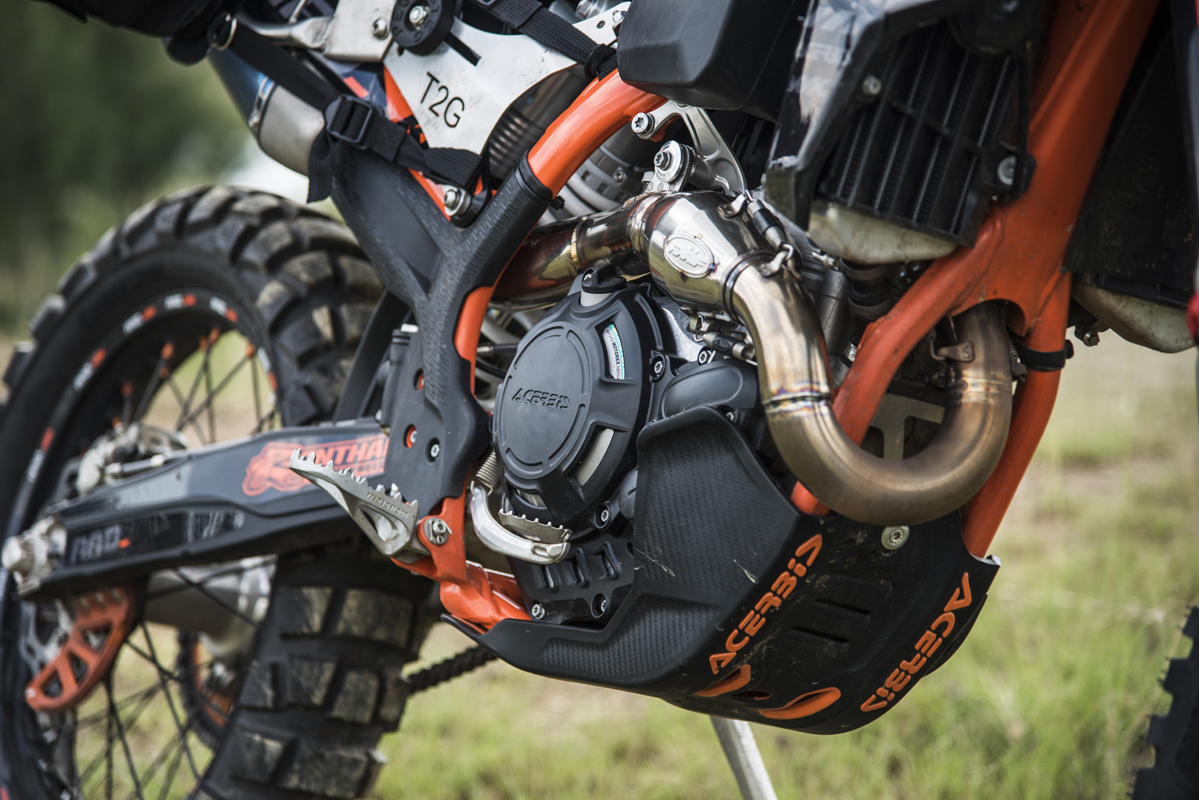
The eye then wanders towards all the Acerbis aftermarket parts, starting at the top with the 15 L tank which replaces the standard 9.2 L engine covers and skid plate. The Acerbis parts further enhance the look, adding to the factory-fitted protection, and the fuel tank takes the 500 into a new world of range—especially if you can get 20 km/L on a good day.
Photo credit: Bjorn Moreira / ZA Bikers
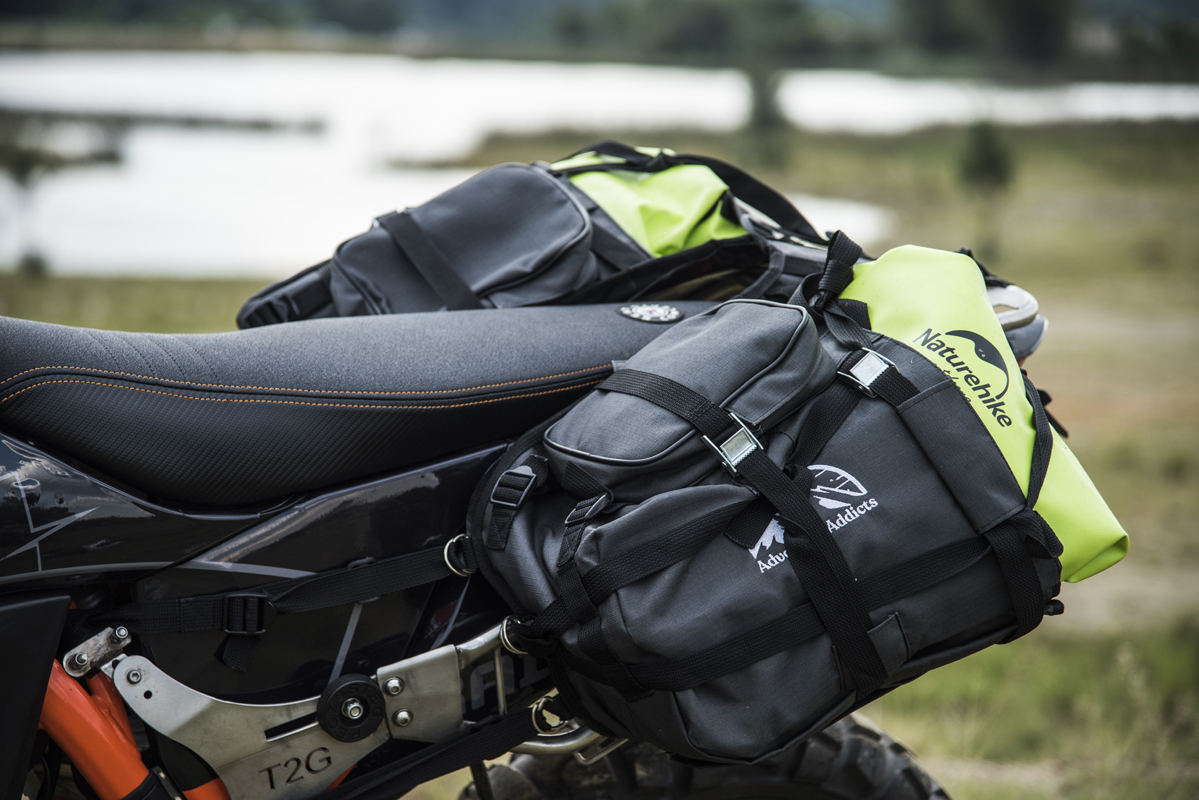
We see some local accessories also being selected by RAD, like the Adventure Addicts soft luggage frame assembly and a Seat Concepts comfort seat. As far as functional accessories go we also have a 7-way steering stabilizer, fly screen, front disc protector, both a USB charge port and a 12V power outlet. These are just a few key upgrades that stand out from the flood of extras put onto this RAD_KTM machine. What must be said, is that a customer can sit down with the team and make a selection from the RAD menu, which we will touch on shortly.
Photo credit: Bjorn Moreira / ZA Bikers
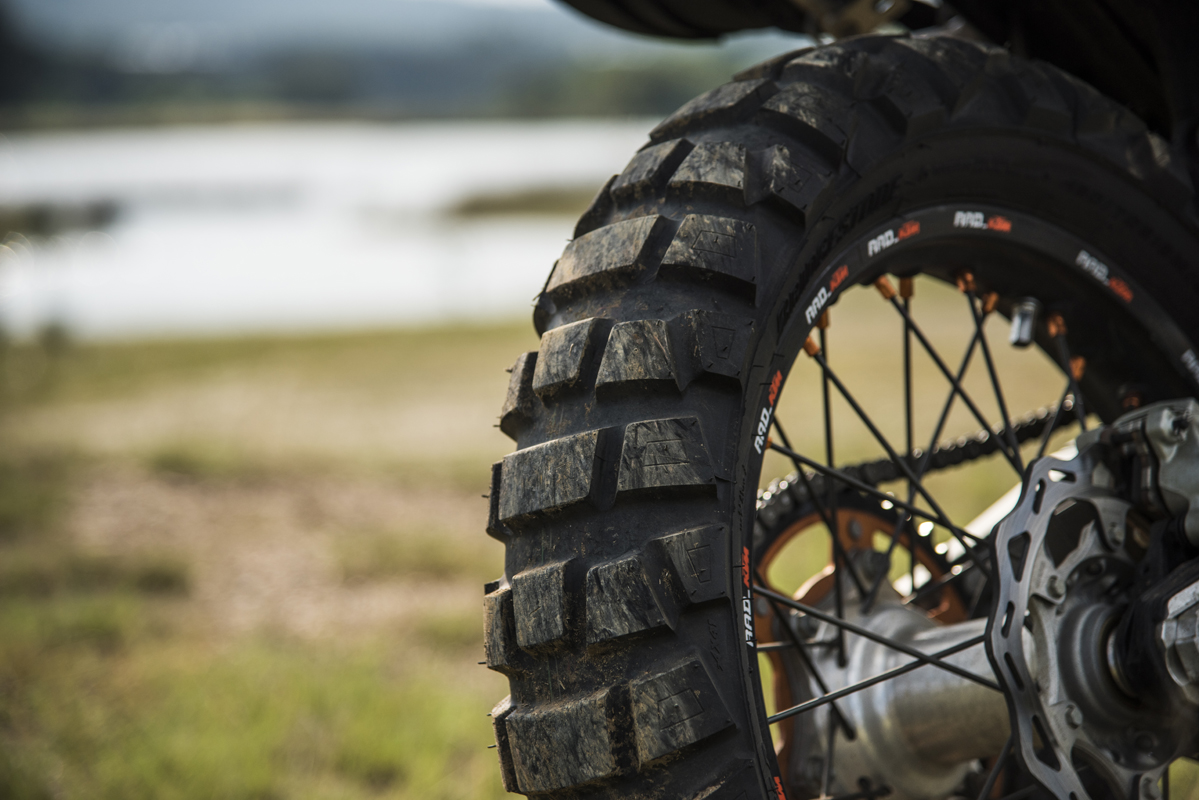
With my water break over, I blasted through some muddy trails, connected with Mooiplaas road and opened up the 500 on a well know train line route called Spoorweg. It was here where I got to see how comfortable the 500 sits at speed, seeing the adjusted 14-48 sprocket allowing the bike to hum at 120 km/h and comfortably accelerate up to 160 km/h. I have to say, the Bridgestone Battlax Adventurecross AX41 tyres were the perfect combo in my opinion, along with the steering stabilizer for this type of terrain. Along with this came a well-damped WP suspension, providing enough grip and travel on the trails and on the rain-drenched tar.
Photo credit: Bjorn Moreira / ZA Bikers
For the rider who needs to spend a little more time on the black stuff, RAD do recommend their 14-45 sprocket conversion which allows the bike to cruise comfortably at 140 km/h and almost reach the 200 km/h mark for you crazy desert riders. Another thing that becomes apparent is how the 500 still feels like a fire-breathing EXC-F! The bike is still light enough to ride like a plastic, and comfortable enough for the long haul thanks to the well-damped suspension and seat. It really does feel like the jack of all trades and the master of fun—a bike you could still take part in an enduro or cross-country race and ride back home on.
Photo credit: Meredith Potgieter / ZA Bikers
Here’s the biggie! A lot of you share concerns about the service intervals which are essentially on a race-built motor. My answer to this is to just read or see what Aaron Steinmaan has done on his personal KTM 500 EXC-F. This legend spent three years and 140,000 km riding around the world. He started off babying the bike as he says, with 1500 km oil services and progressed to 3000 km intervals before only opening the motor at 870hrs/67,000 km. What Miguel recommends is sticking to a 30hr service interval, but at the same time, it all depends on how hard and where you ride.
So, what is one of these creations going to set you back? There are a host of factors, but let’s start with the first obstacle. You could opt for a standard 500 EXC-F which will cost you R161,999 or you could opt for the SIX DAYS version for an extra 10k which gets you a few bling orange bits up front. The kit that makes the EXC-F truly adventure worth comprises a: 15 L tank, engine covers, skid plate, seat, steering damper and soft luggage frame assembly. This will set you back 42K in addition to the price of the motorcycle. RAD also offers a 20k trade assistance on the current 2023 models for all these upgrades for added value.
Photo credit: Bjorn Moreira / ZA Bikers
At the end of the day, the 500 EXC-F which pays tribute to the adventure bikes of old, has been taken to new heights thanks to RAD_KTM. The phenomenal off-road capability of this bike will broaden the landscapes of all adventure motorcyclists, leaving you with zero excuses not to ride. So, pay RAD a visit, speak to Miguel or the RAD team and they will take you through the steps of building your dream adventure bike, built to your particular specifications. A converted 500 EXC-F lover… that’s me!
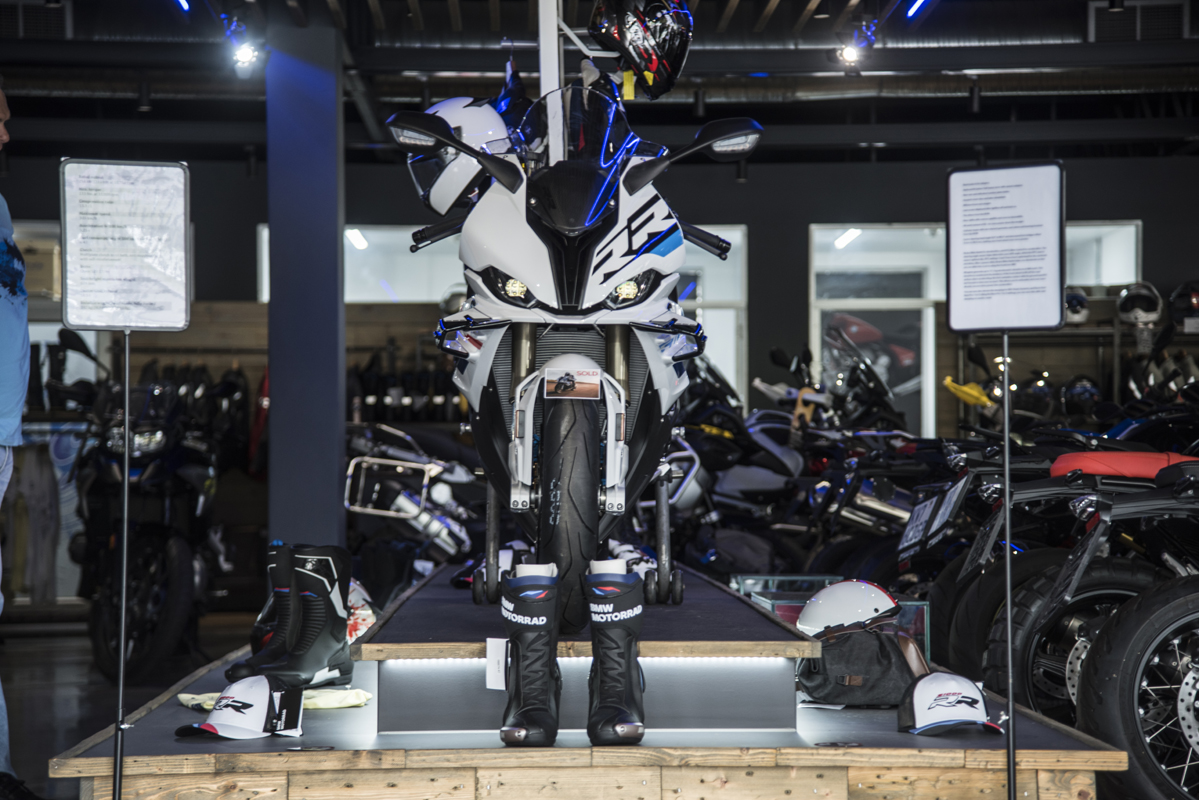
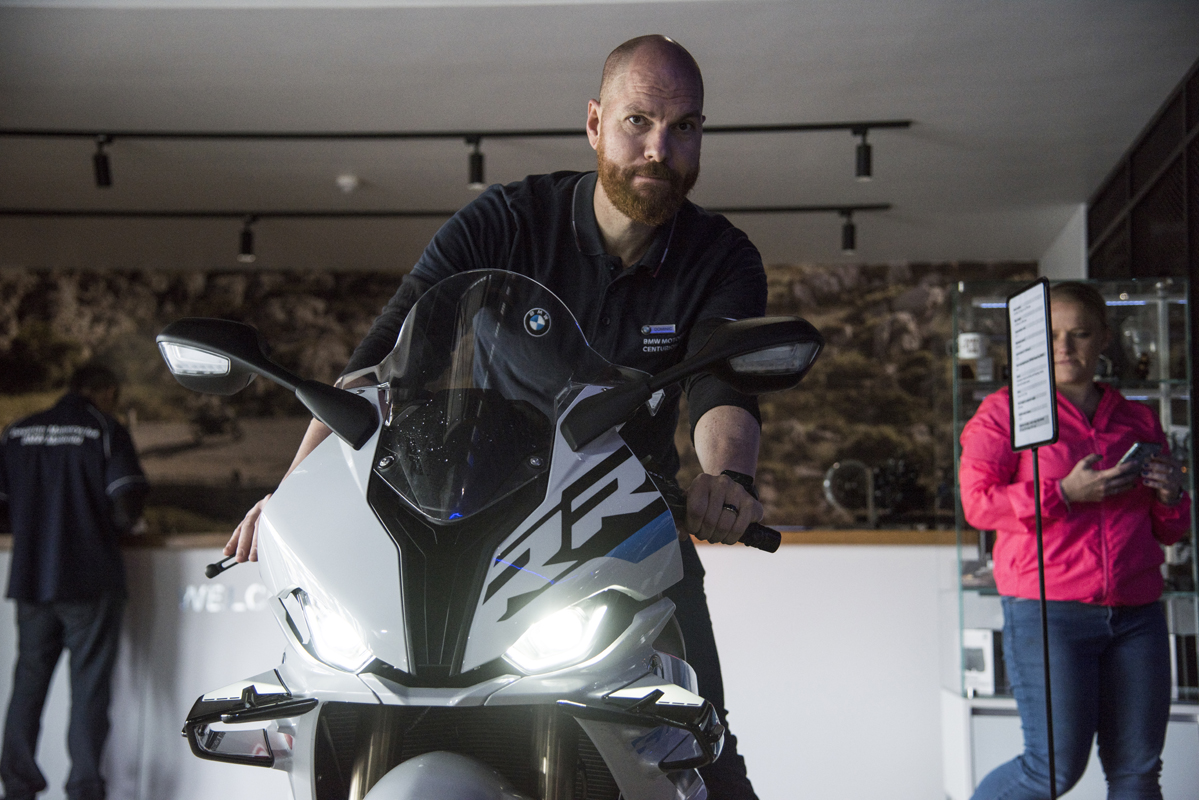
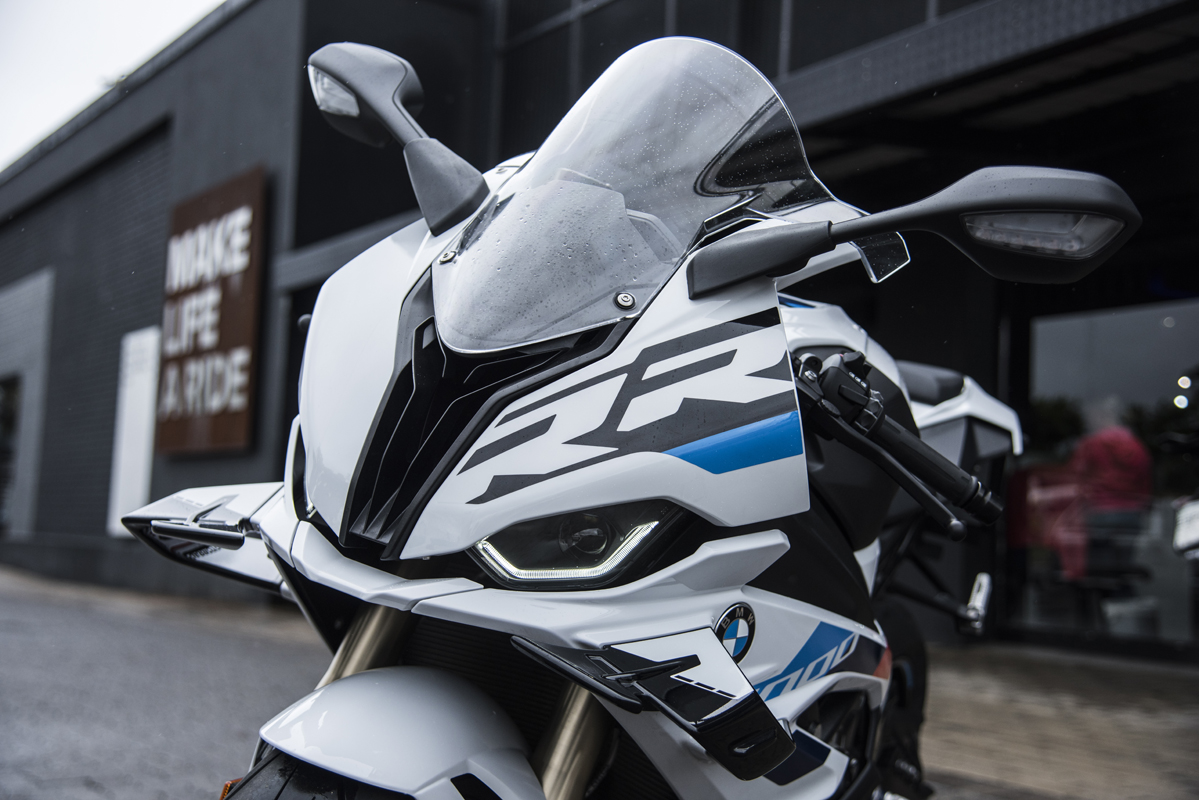
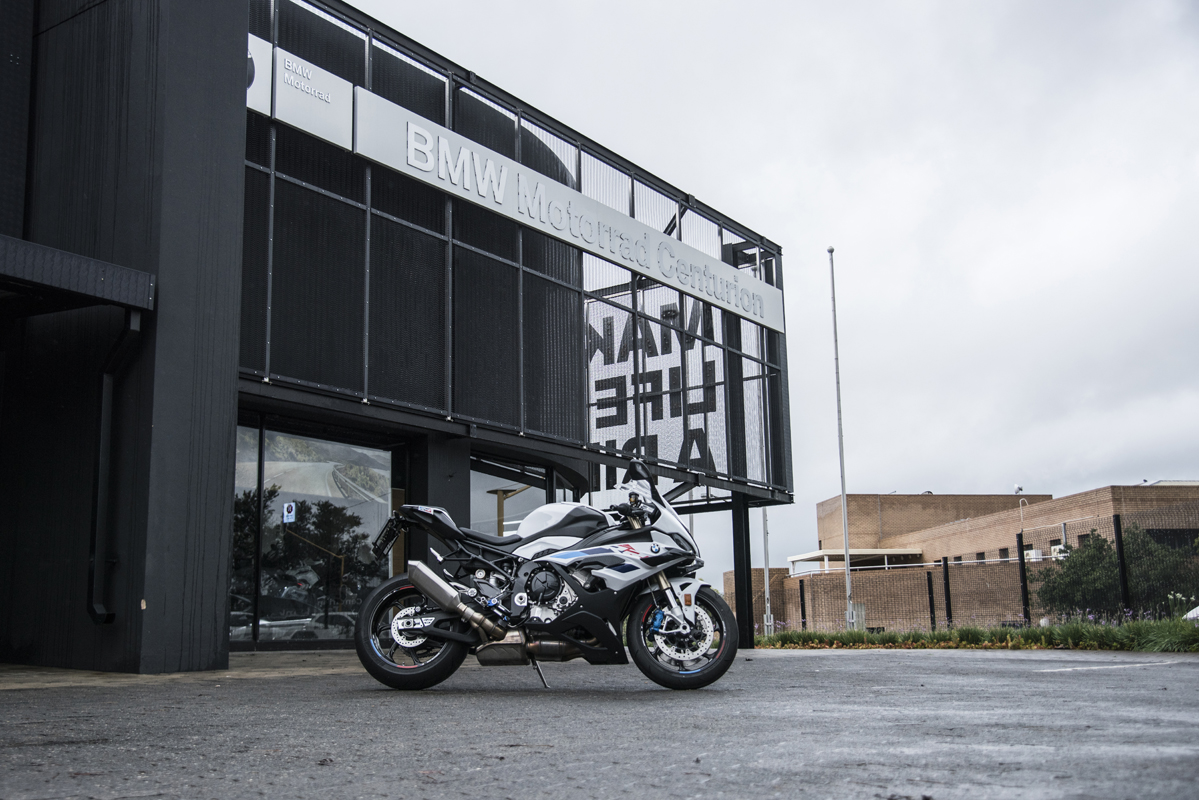
It seems that reports of the death of the superbike have been greatly exaggerated! While the class is suffering a rapid and seemingly inevitable decline in South Africa, that has not stopped BMW Motorrad from making a big splash about the arrival of the 2023 S 1000 RR.
And what a glimpse! The new model is simply stunning and somehow manages to make last year’s model look completely out of date.
The news that the engine remains largely unchanged should not deter anyone, although to satisfy the bar braggers, there is a little more power, even though, when you have 205 horsepower (151 kW) and 83 foot-pounds of torque (113 Nm), there aren’t too many arguments in favour of needing more! But more there is: three more horsepower!
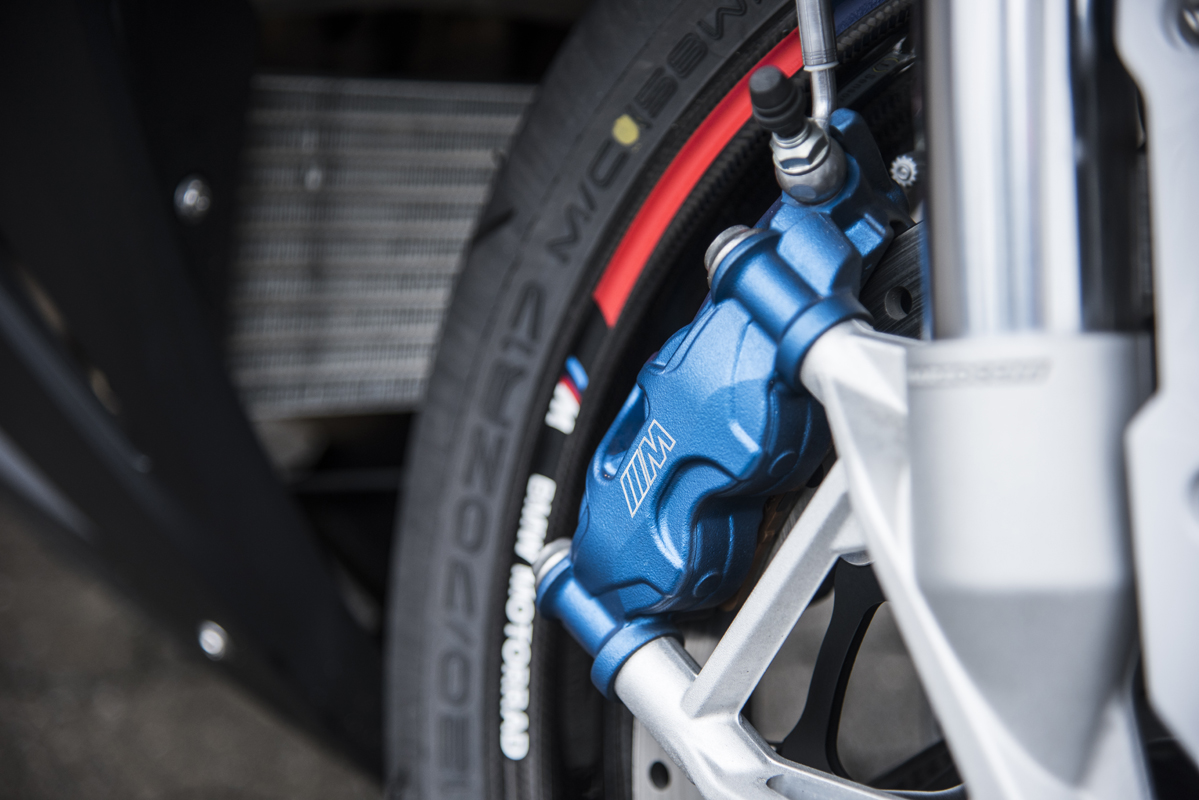
What BMW has also done is make enhancements to the chassis, suspension, aerodynamics and electronics. These are the salient points of the upgrades:
Photo credit: Bjorn Moreira / ZA Bikers
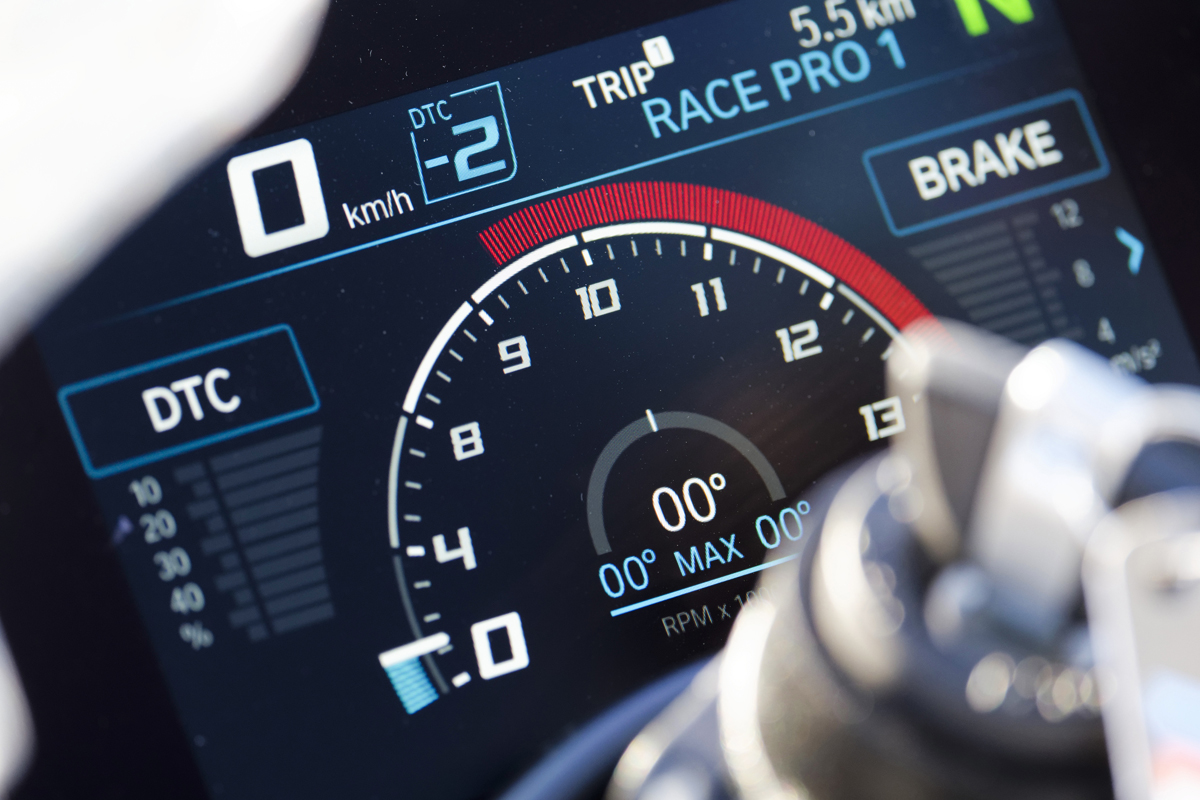
Dynamic Traction Control DTC with new Slide Control function using a steering angle sensor.
The new feature of Dynamic Traction Control DTC is the Slide Control function. It allows the rider to select two preset drift angles for the traction control system when accelerating out of bends. Technically, this is achieved using a steering angle sensor. Up to the respective leaning angle, the traction control system allows slippage at the rear wheel when accelerating out of a bend, thus enabling rear wheel drift. When the preset steering angle value is reached, traction control intervenes, reduces slip and stabilises the motorcycle.
Photo credit: BMW Motorrad
Advanced “Flex Frame” and newly defined chassis and suspension geometry.
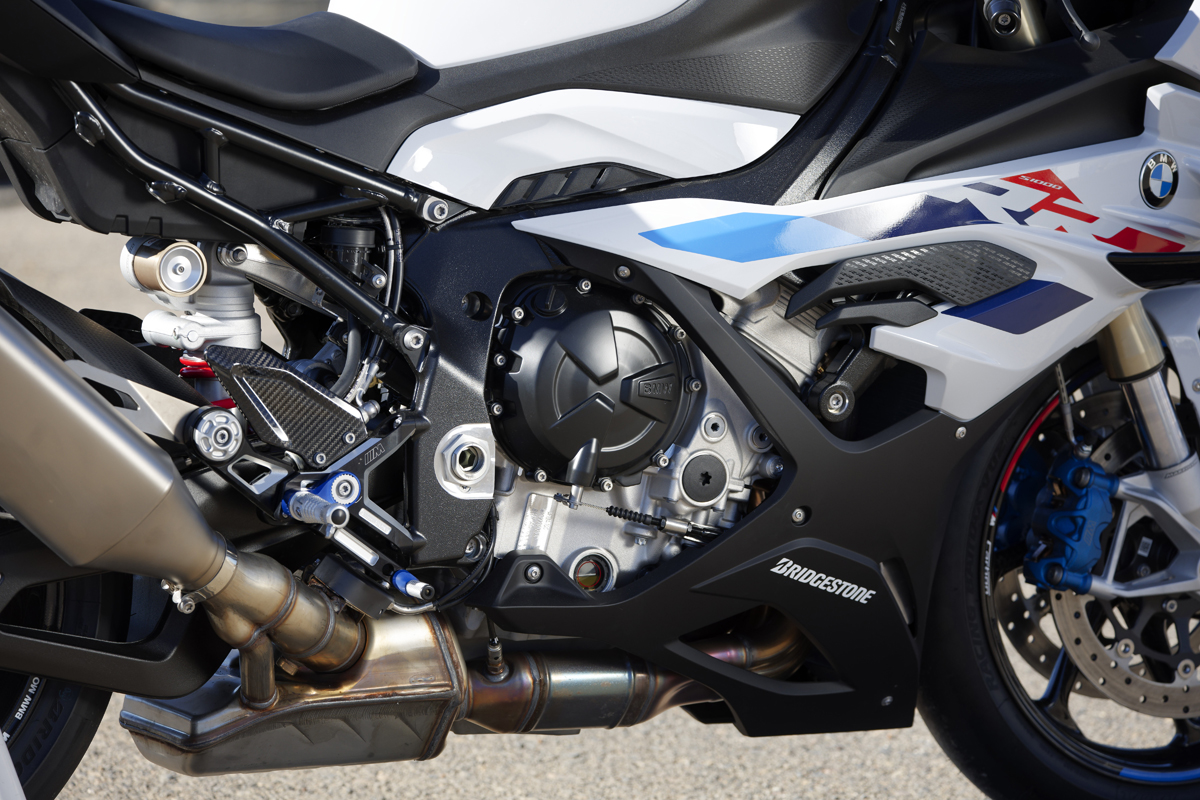
The heart of the chassis of the new RR is still the aluminium bridge frame, which is a welded construction of four gravity die-cast elements and integrates the engine, which is inclined forward by 32 degrees as before, as a supporting element. With the aim of optimising flexibility laterally, the main frame of the new RR was given several openings in the side areas. The focus was also on further increasing riding precision when developing the new chassis of the RR. The steering head angle has been flattened out by 0.5° and the offset of the triple clamps reduced by 3 mm. The new chassis geometry is accompanied not only by even better riding precision, but also by increased accuracy and clearer feedback from the front wheel.
Photo credit: BMW Motorrad
ABS Pro with new Brake Slide Assist and ABS Pro “Slick” setting functions.
The new Brake Slide Assist function is an important and very helpful innovation for race track riders. As in the new DTC Slide Control function, this new system is also based on steering angle sensors and allows the rider to set a specific drift angle for so-called braking drifts while sliding into corners at a maintained speed.
Photo credit: Bjorn Moreira / ZA Bikers
Winglets – redesigned front and rear sections
As with the M RR, winglets on the new RR now ensure the best possible contact of the front wheel with the road – especially when accelerating. They generate aerodynamic downforce and thus additional load on the wheels. The advantages are that the bike’s tendency to do a wheelie is reduced, you can brake later and cornering stability is increased.
Photo credit: Bjorn Moreira / ZA Bikers
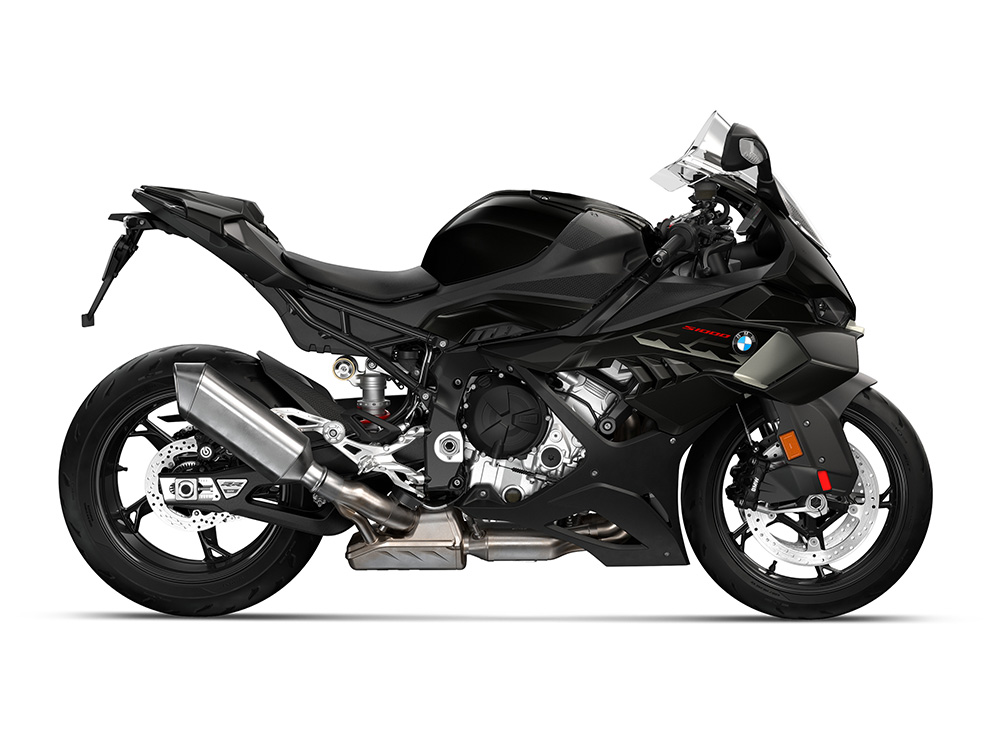
There are three new colour schemes Black Storm (metallic), Passion in Racing Red (non-metallic) and the racing-oriented Light White/M Motorsport (non-metallic).
Talking to the staff at BMW Sandton, it seems the price range for the BMW S 1000 RR will be from R360,000 up to about R460,000. For more details, contact your local BMW Motorrad dealer here.
Photo credit: Bjorn Moreira / ZA Bikers
2023 BMW S 1000 RR
For more information on the bike featured in this article, click on the link below…
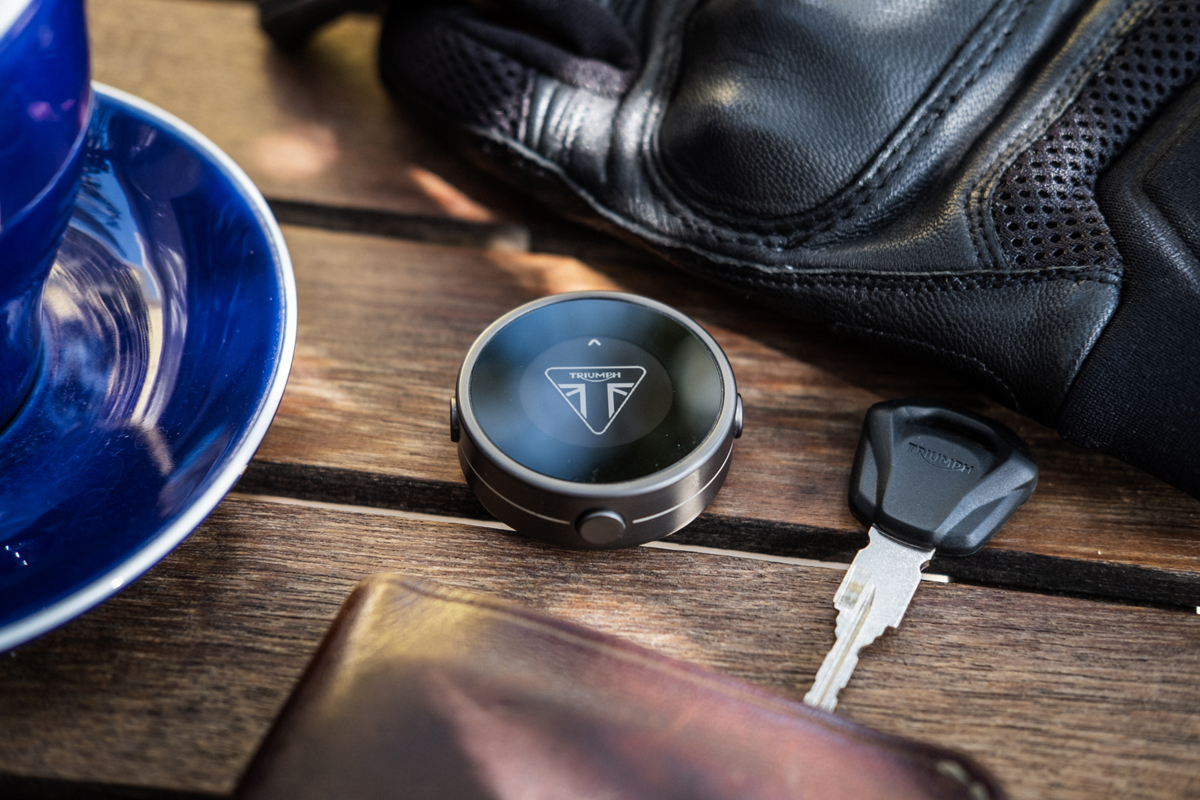
When my mate Corrie Moolman phoned me and told me he had some kit that he wanted me to test, I was quite intrigued. When we met over a coffee and he handed me a small box containing the Beeline Moto Navigation Device I chuckled inwardly. Let me explain. I am the world’s original BC fellow! (Before Computers). I endeavour to stay pretty much in an analogue world. I have generally found that what computer geeks and I find as ‘intuitive’ are very different things. My previous experience with GPS devices has not really altered my view. Both the Garmin and TomTom devices that I have used have left me unconvinced.
Photo credit: ZA Bikers
In fairness, I must say that “intuitive” to me means being able to suss it out with minimal study. I accept that complex route planning will require some training and I’m cool with that. What gets my goat, is when I want to simply type in an address and hit GO, the device cannot find the particular place I want to go. Over and above that, the typing process on my Garmin required moving between screens to get to all the letters of the alphabet. Google Maps was a revelation to me. It seldom fails to find the address that you type in and mapping the route is super cool. The little blue line gives a clear indication of the route. It relegated my two GPS devices to my bottom drawer.
Enter the Beeline Moto Navigation Device.
Photo credit: ZA Bikers
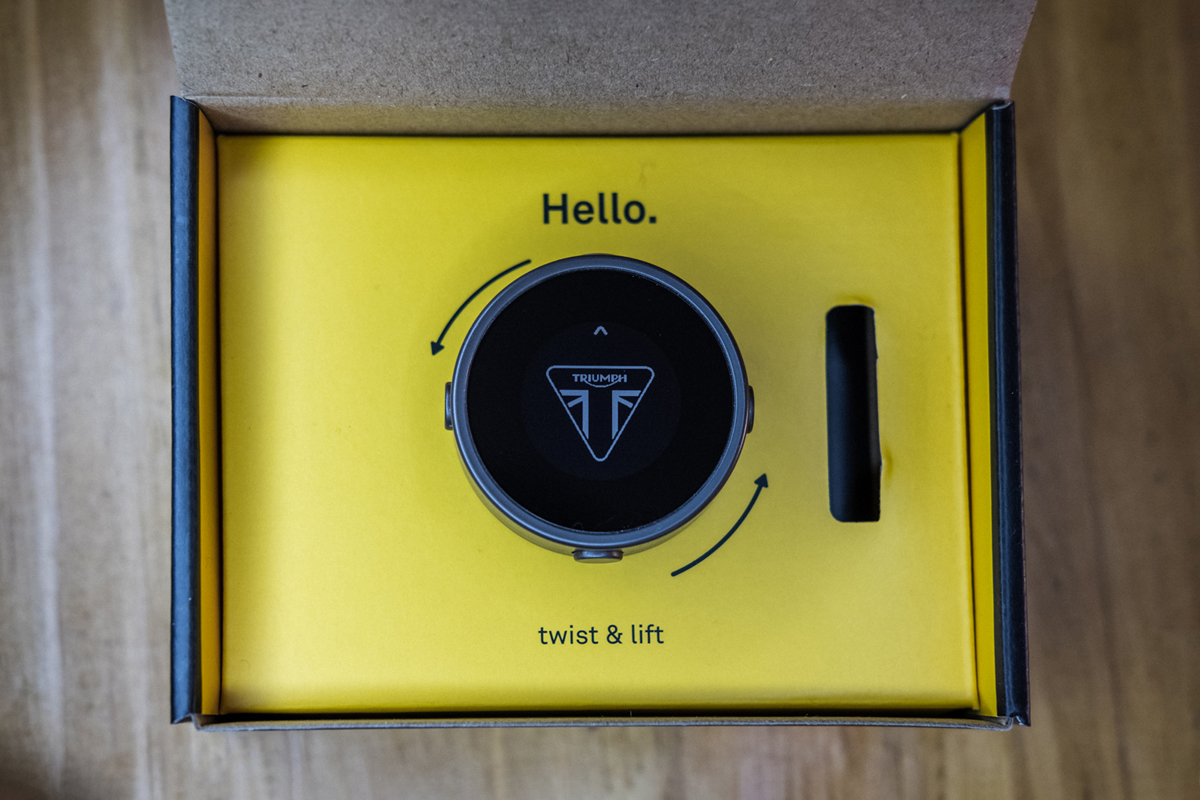
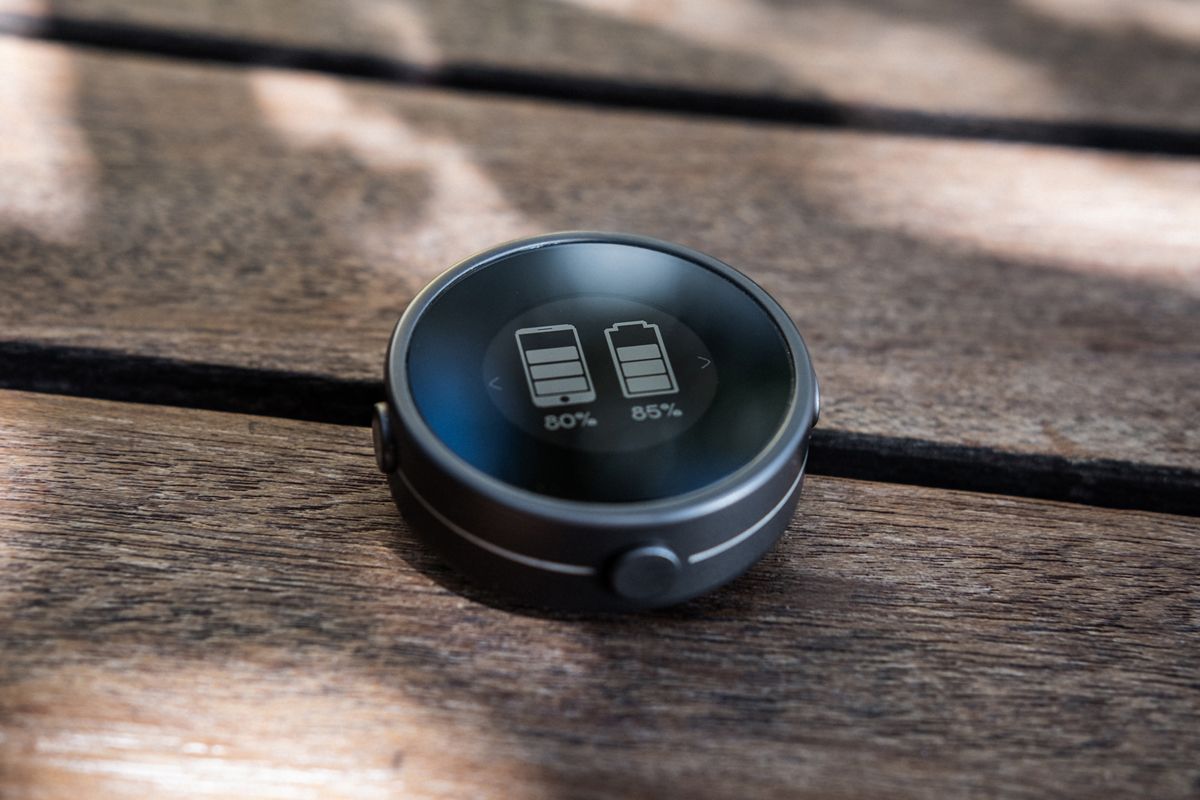
At first glance, it is almost so insignificant that you tend to be almost dismissive. It is small (5 cm in diameter) and round. It is very neat though. I read through the start-up instructions and just did as it told me. In no time I had loaded the Beeline App on my Android smartphone and charged up the device itself, which was fully charged in about an hour. The Beeline comes with two mounting options. There is a 3M stick-on mount that can permanently attach to a flat part of your bike where it will be clearly visible when you ride.
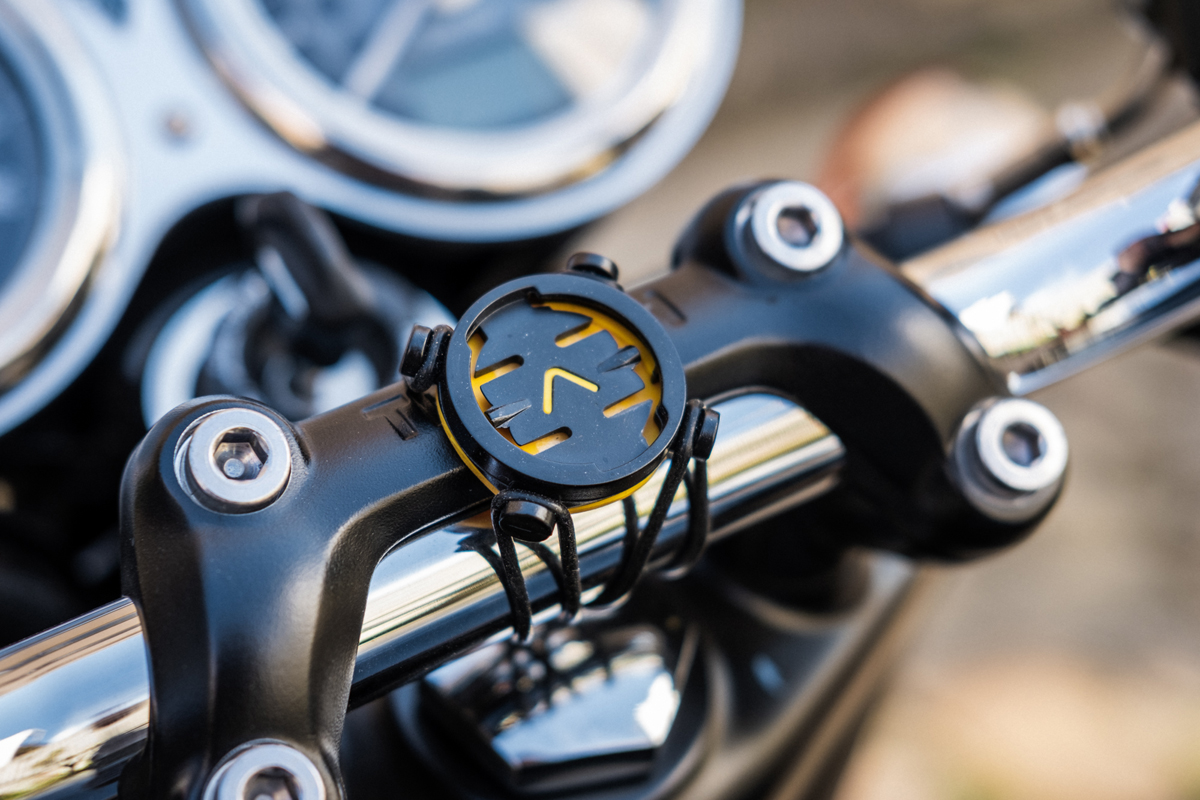
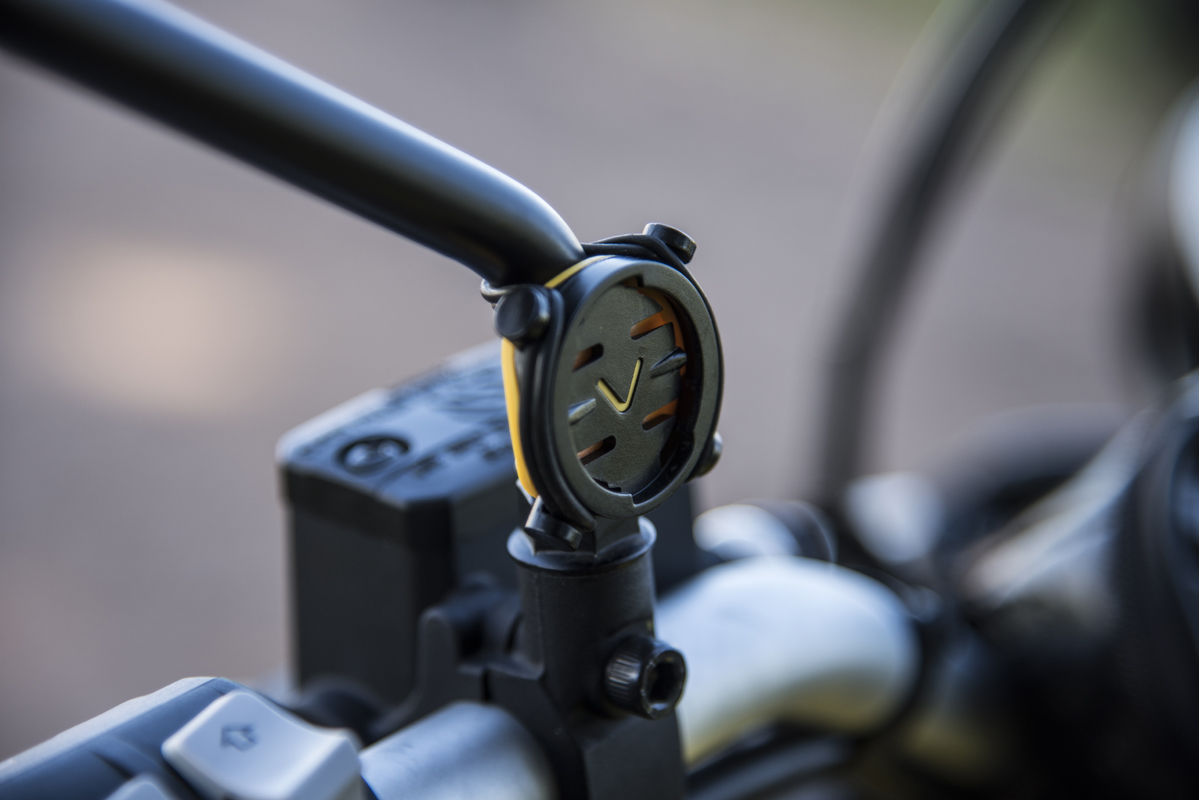
Alternatively, if you have more than one bike, you can use the mount that fits effortlessly to either handlebars or slimmer bars like a GPS mount or mirror stem. It uses silicon rubber bands of various lengths to attach to your preferred mounting spot. The beauty of this method is that it seems impervious to vibration, bumps or whatever. The mount is essentially a docking station to which the SatNav attaches or detaches with a mere twist. The charger works the same way. It is thus easy, once reaching your destination, to just twist it from the mount and stick it in your pocket.
Photo credit: ZA Bikers
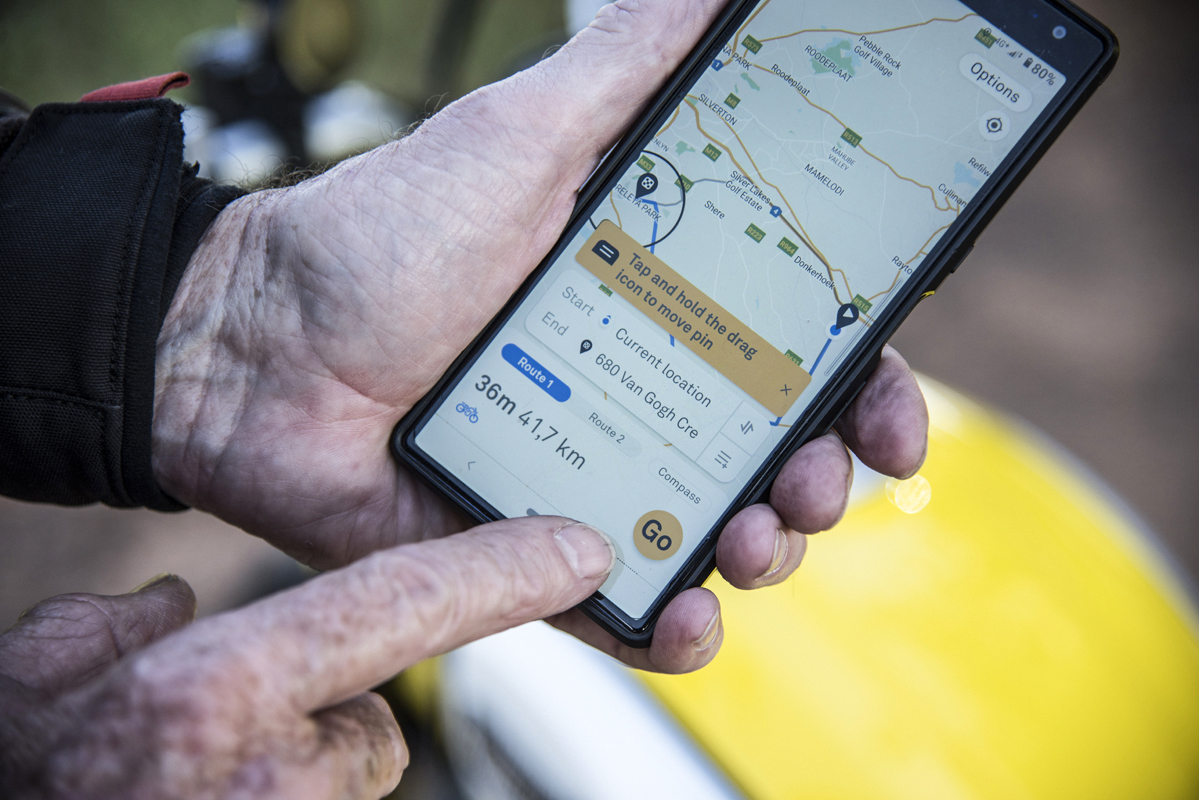
So how does it work? You download the Beeline App and pair it to your phone using Bluetooth. Guys, I did it! It’s that easy. The App utilises Google Maps accessed via your phone. You open the Beeline App, hit the Plan Ride icon, enter the address, which it always seems to find and with your device itself switched on just press the GO icon.
Photo credit: ZA Bikers
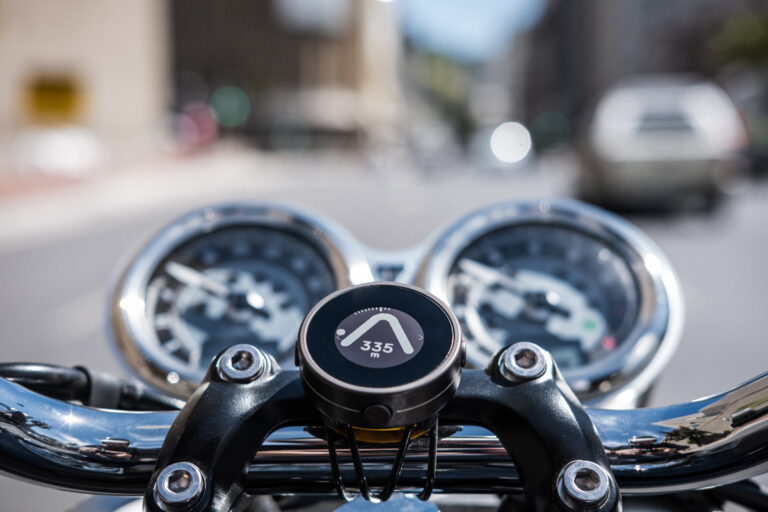
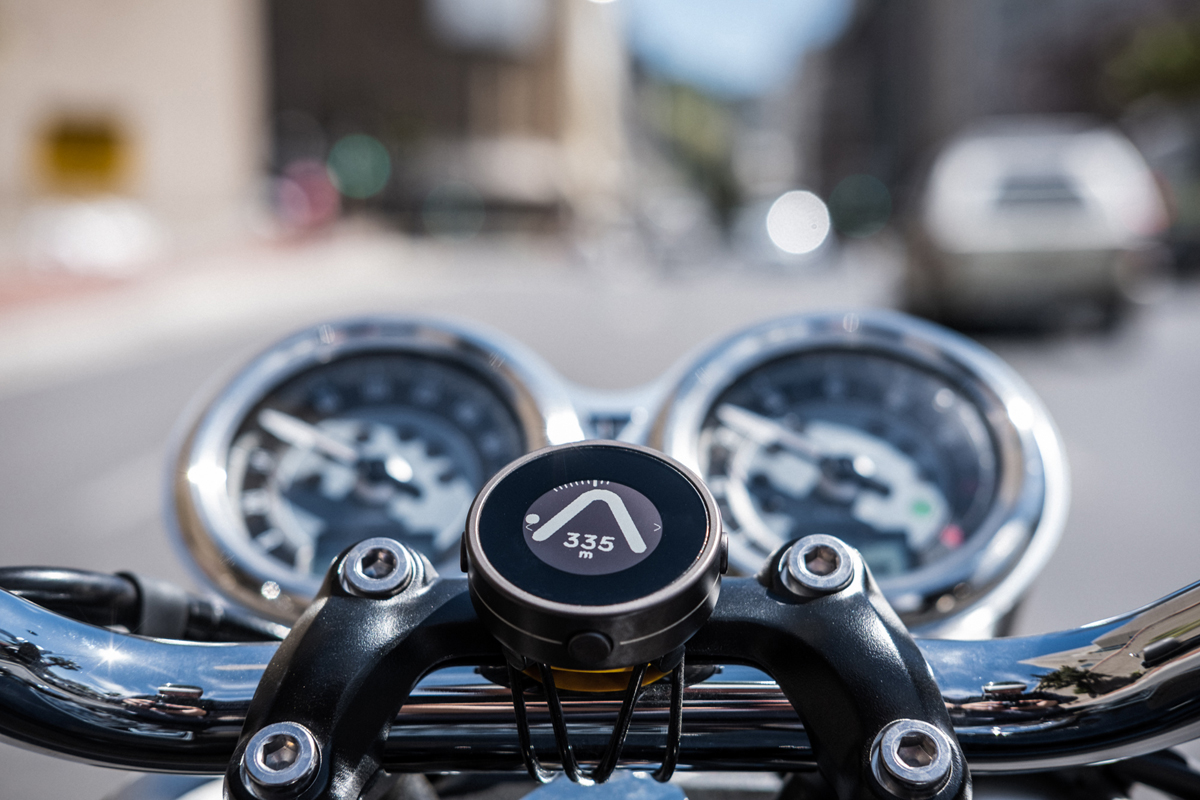
The screen on the device shows an arrowhead with a dot on its perimeter. The arrow indicates the direction you should ride and the dot moves to the side of the arrow that you will turn to next.
Photo credit: ZA Bikers
The distance to the change of direction appears in K’s or Metres at the bottom of the screen and in the middle of the screen, it shows the type of intersection. Circle, onramp or whatever. As you get to the change in direction the arrowhead swings in that direction. It sometimes waits till the last moment to indicate with the arrow but if you pay attention to the distance it is soon intuitive to follow the arrow seamlessly.
The white-on-black display, which is lit at night is legible in all light conditions. I find that because it is ‘turn by turn’, you spend less time trying to suss out the route as with Google Maps and learn to trust and obey the arrow. Dare I say it… I am hooked! It just goes to show that if properly harnessed technology can make our lives less complicated and not the converse. Because I move the unit between bikes I use the mirror stalk as the mounting point making it very easy to follow without distracting my attention from the road for more than a millisecond.
Photo credit: ZA Bikers
Your smartphone remains safe and secure in your pocket. When you get to your destination you just terminate the ride on the app and stick the unit in your pocket when you park the bike. Done! easy peasy! On the top of the display is a journey progress indicator, showing how far you are relative to when you set out.
You can also put in waypoints as you plan your ride and import or export from or to other Beeline devices. Brilliant for group rides or sharing routes. This is done by downloading and sending a GPX file. Battery life is excellent, lasting for around 30 riding hours. Standby time does not erode much battery life either. So essentially what you get with the Beeline Moto is a neat little device that is shockproof, waterproof, small and lightweight, easy to mount and has great battery life. Believe me, if I say it is easy to use, then ANYONE can use it!
Photo credit: ZA Bikers
It is available in three finishes. Basic Black @ R4 350 Incl, Moto Metal Edition in Gunmetal Grey @ R5 125 Incl and Moto Metal Edition Silver @ R5 125 Incl. The metal finishes will look super cool on a modern classic. So, does it get a thumbs up from me? Absobloodylutely!, I want one…the plain Jane basic chap will do me just fine thanks. For its ease of use and functionality, it is an absolute bargain when you look at the crazy prices of bike GPS these days.
It seems that, for 2023, things are staying pretty much the same at KTM, with no major updates of existing models which is no surprise as how do you improve on the already near-perfect?
Having said that, there are one or two pieces of news that have come through that will be of interest to South African motorcyclists.
Image source: KTM
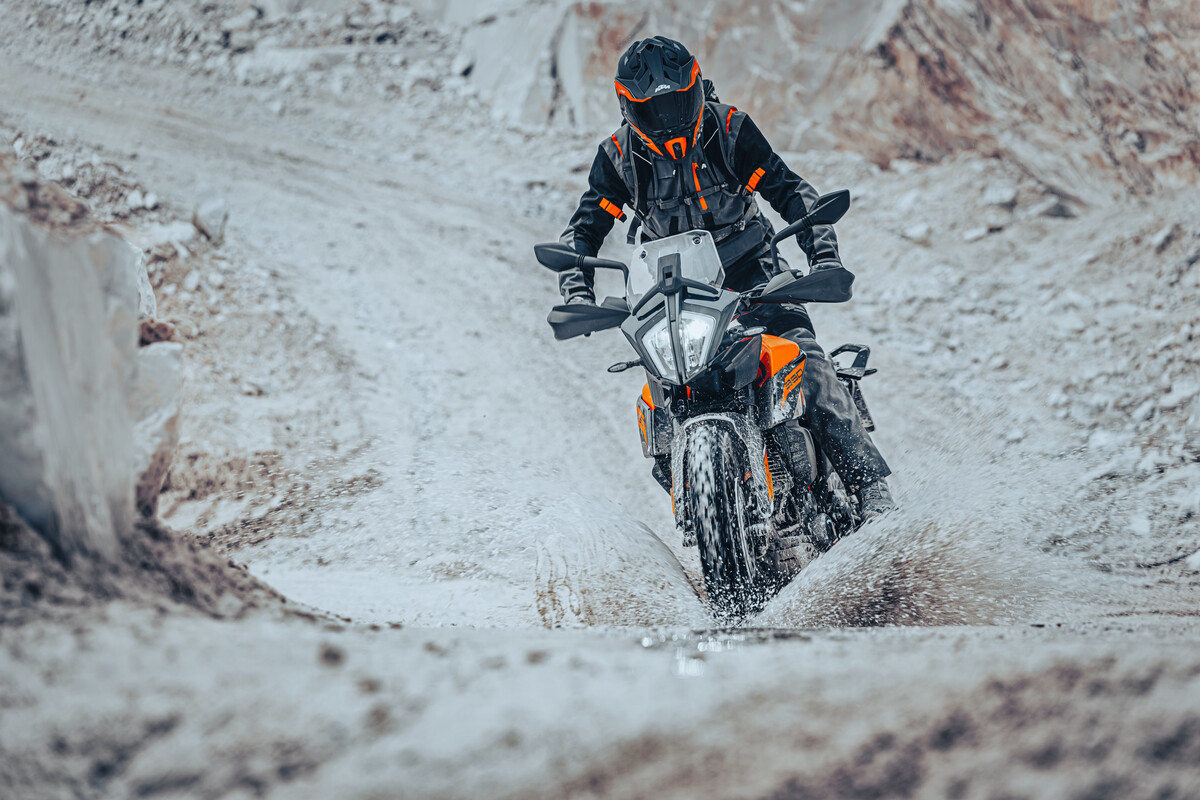
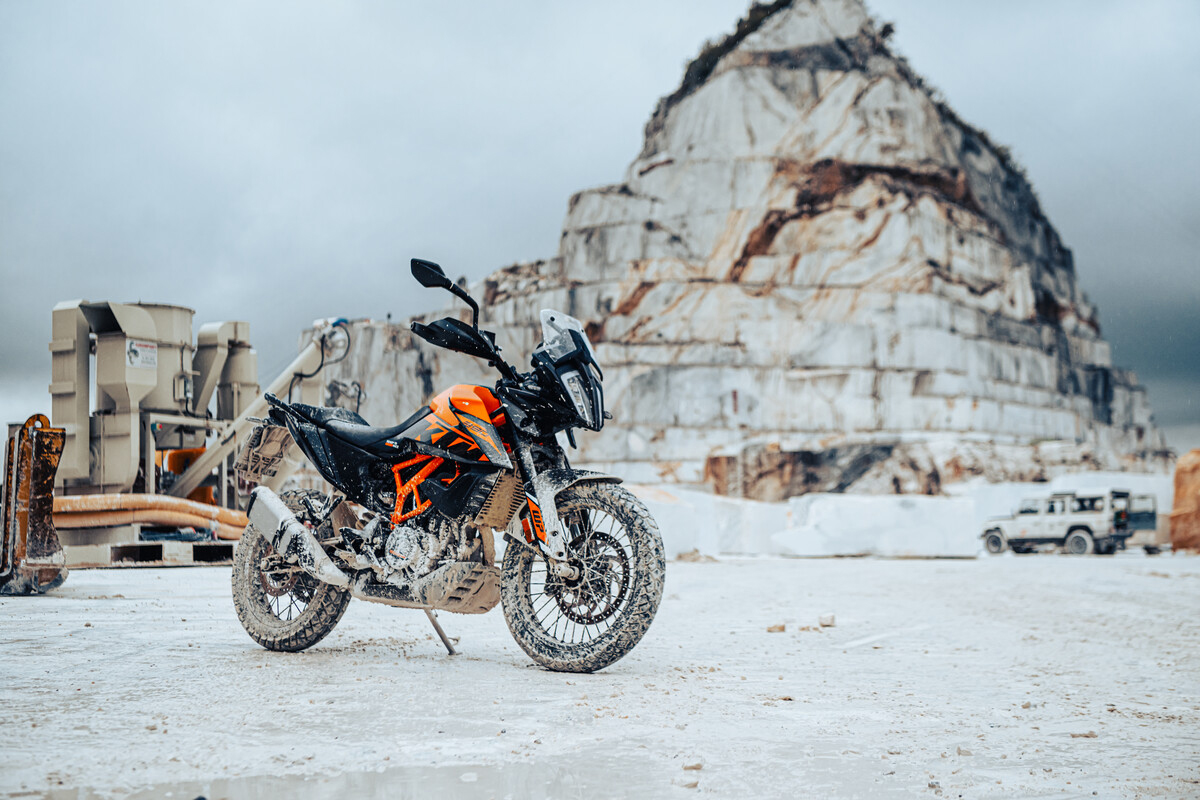
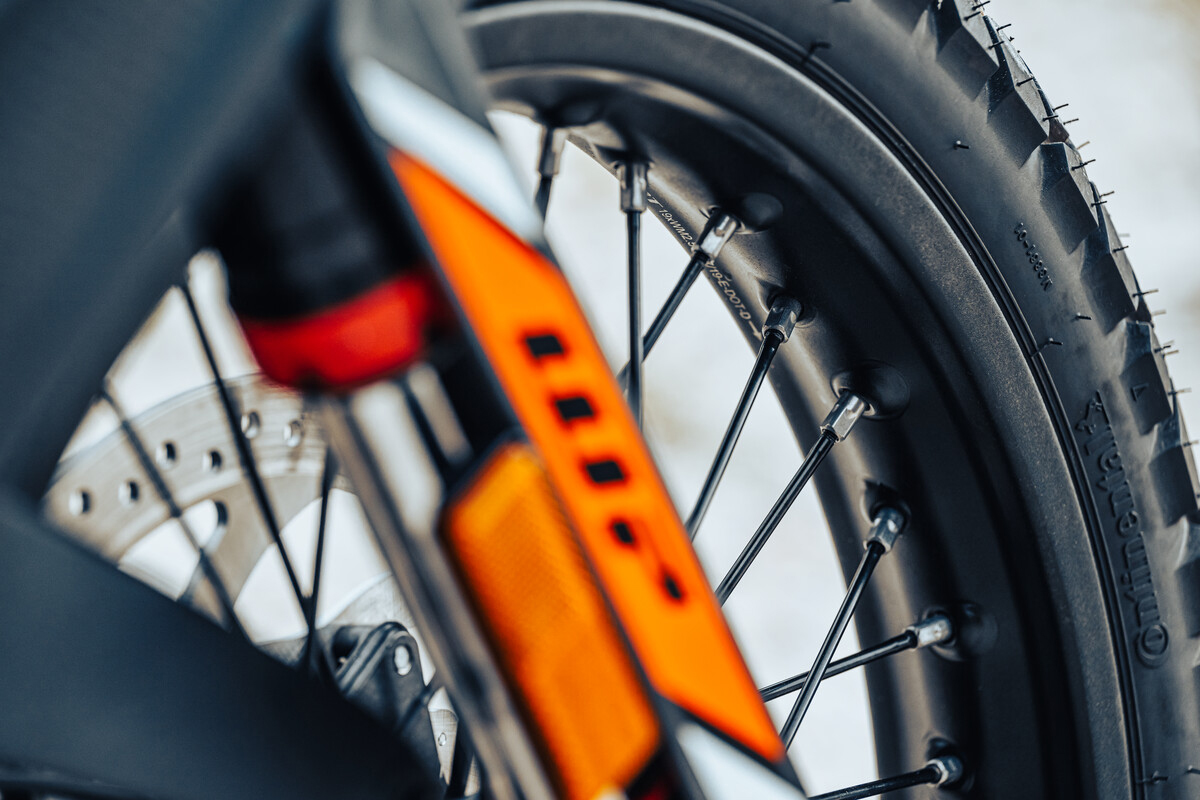
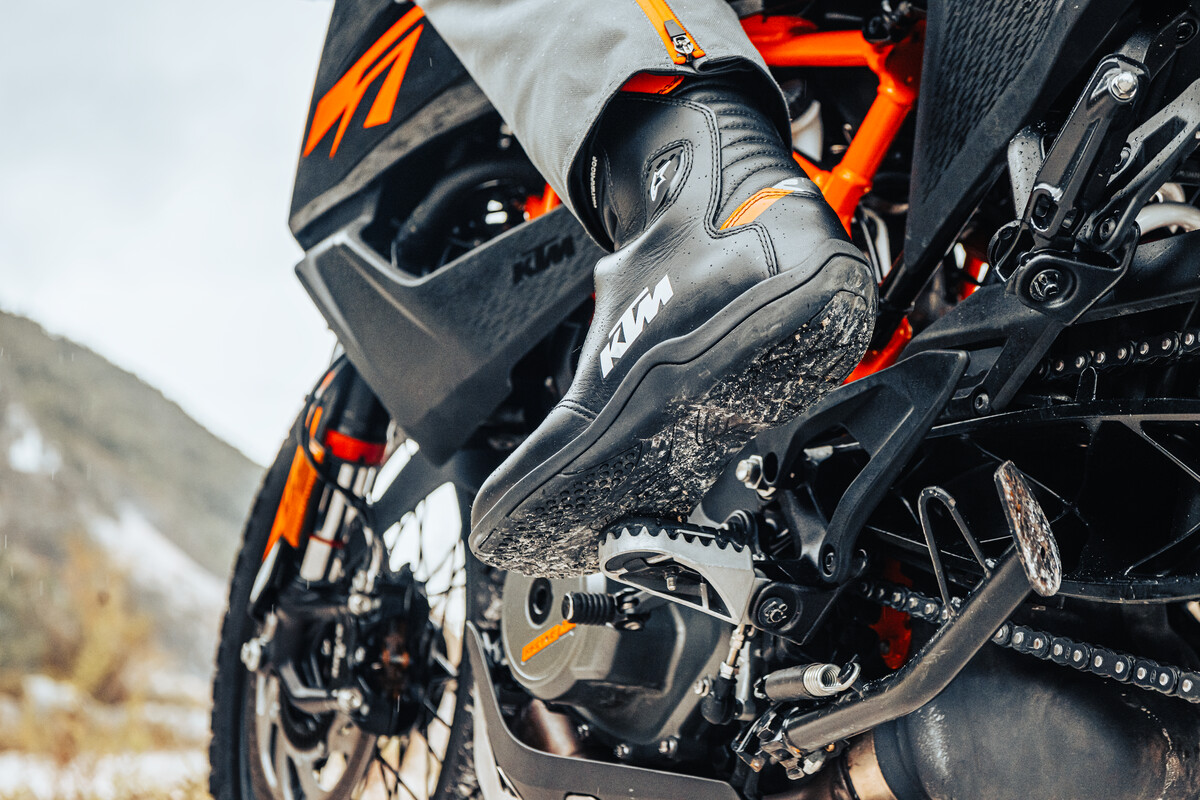
The first concerns the fantastic little 390 Adventure, a bike that punches way above its weight and further strengthens the argument against large and heavy adventure bikes. When launched, it was equipped with cast alloy rims which many adventure riders will happily tell you, are inferior to spoked rims for serious off-road work.
Image source: KTM
KTM has obviously been listening as the 2023 390 Adventure is now available with spoked rims, making it just that little bit more practical off-road. Alloy rims are great but, hit a rock and there is the chance that the rim can crack or chip, making further progress difficult, to say the least. A steel rim will bend and can be bent back with little risk of cracking, while with spokes there is just a lot more give in the wheel as a whole.
Image source: KTM
The KTM 390 Adventure with spoked rims will cost R123,99 and the alloy wheel version is still available for R114,999.
A surprising – and welcome – piece of news is the return of the 790 Adventure. Quite where this fits into the range with the presence of the 890 Adventure is not clear but KTM has obviously been listening once again and has determined that a gap in the range had appeared when the 790 was quietly dropped. Perhaps customer demand was high enough to justify bringing it back?
Image source: KTM
The bike differs very little from the 890 Adventure, which will make it a formidable off-road tool in any hands. Where there is a big change – a most welcome change for many customers – is in the asking price for the 790 Adventure. Would you believe that KTM is pitching it at a frankly unbelievable R53,000 less than the base 890 Adventure? As far as we can make out, there is little or no difference in the electronics package and the engine loses a marginal amount of peak horsepower – 70 kW down from 78 kW.
Image source: KTM
This is a huge move for KTM and an acknowledgement that they recognise that people just don’t have as much money swilling around as before.
The Husqvarna Racing teams are looking to make waves in 2023 across the 3 disciplines of racing.
Barend Du Toit joins the team to compete in the volatile MX125 class onboard the brand-new TC125. Joining him on the Motocross front is Davin Cocker who will once again compete in the MX2 class and looks to add to his podium finish from 2022 before he sustained a season-ending injury. Last but certainly not least is Josh Mlimi who will take on the MX1 class onboard his FC450.
Image source: Husqvarna
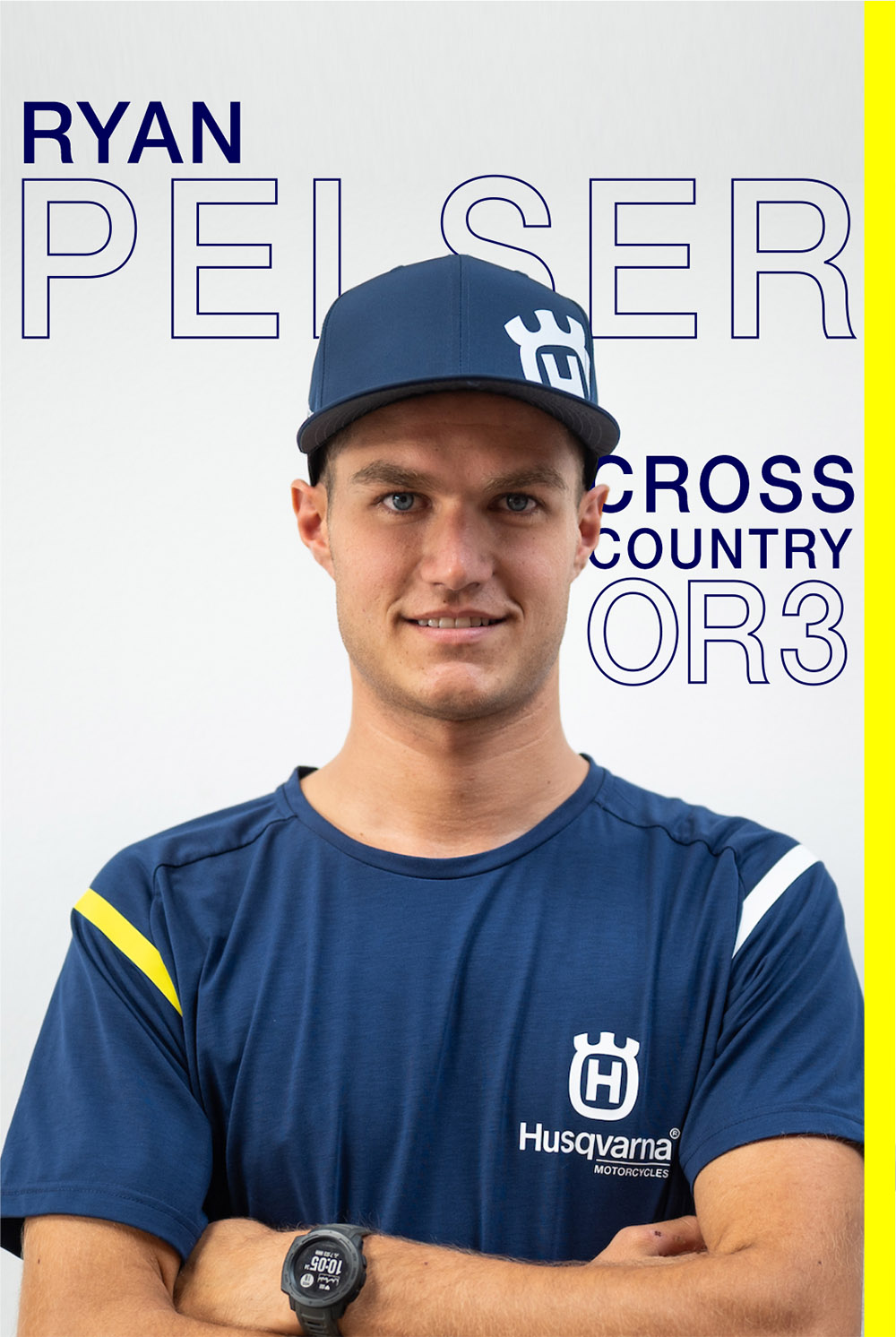
The Cross Country team also sees Ryan Pelser joining the stables who will take part in the OR3 class, after finishing in the runner-up spot last year. Ryan looks to improve his position and compete for Championship Honours. Team veteran, Davin Cocker has moved up to the OR2 class to put him into a position to fight for overall wins as well as class glory.
Image source: Husqvarna
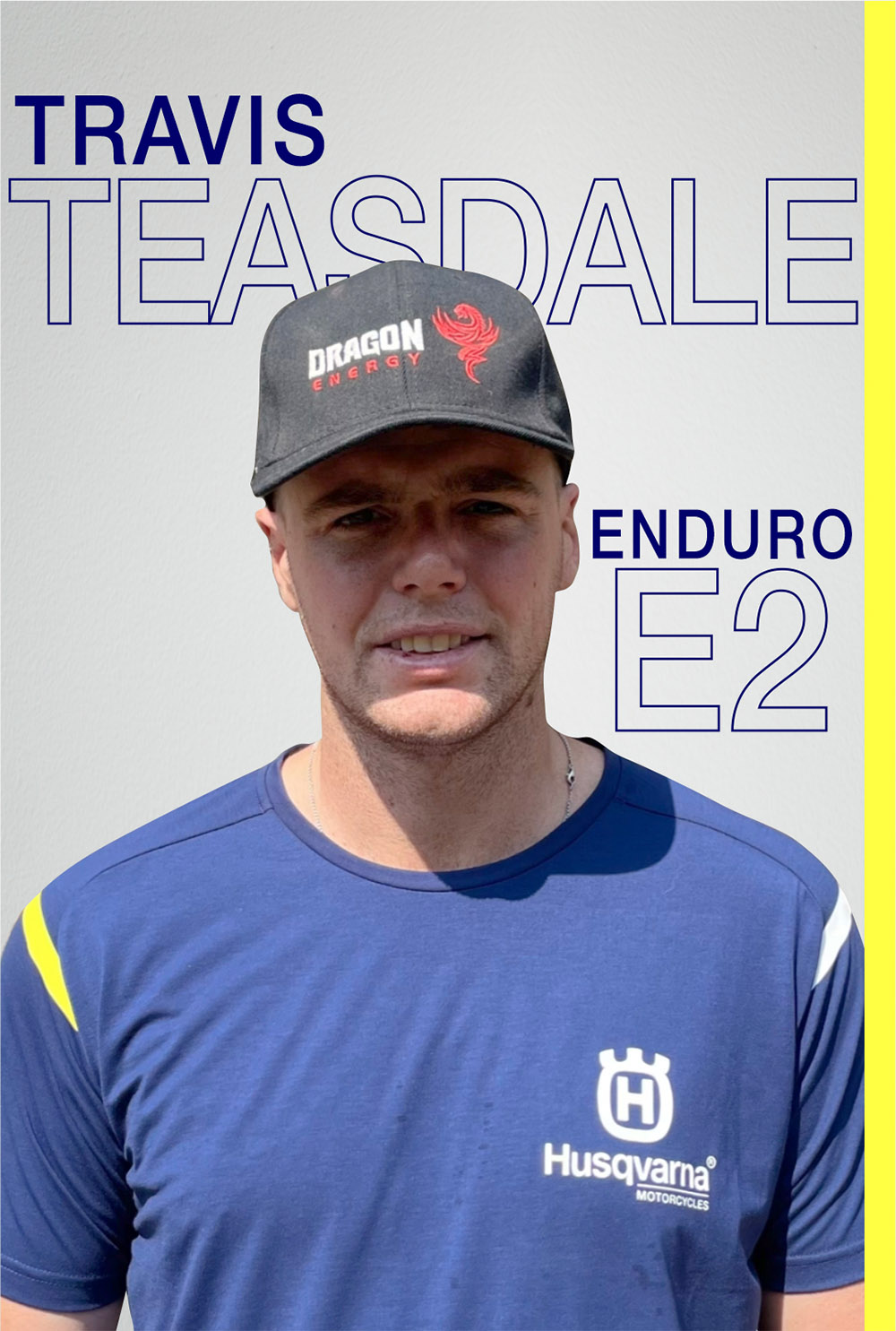
Travis Teasdale, a well-known name in racing, has joined the Husqvarna Enduro team onboard his TE300 and will take up the challenge in the E2 National Enduro and Extreme Enduro championship. Joining him on the Enduro scene is young gun Heinrich Aust. The likeable youngster has returned from injury and is hungry to get back to his winning ways of the past and prove himself in the ever-competitive Enduro championship.
Image source: Husqvarna
Team manager, Grant Frerichs, was struggling to keep his smile back when commenting on the team for the year’s challenge ahead. “We have made some vital changes in the team for this year and the excitement from the new athletes has added to the enthusiasm of the other riders. We are going racing with championship competitors across the board and I look forward to lots of success in 2023 with the Husqvarna racing squad.”
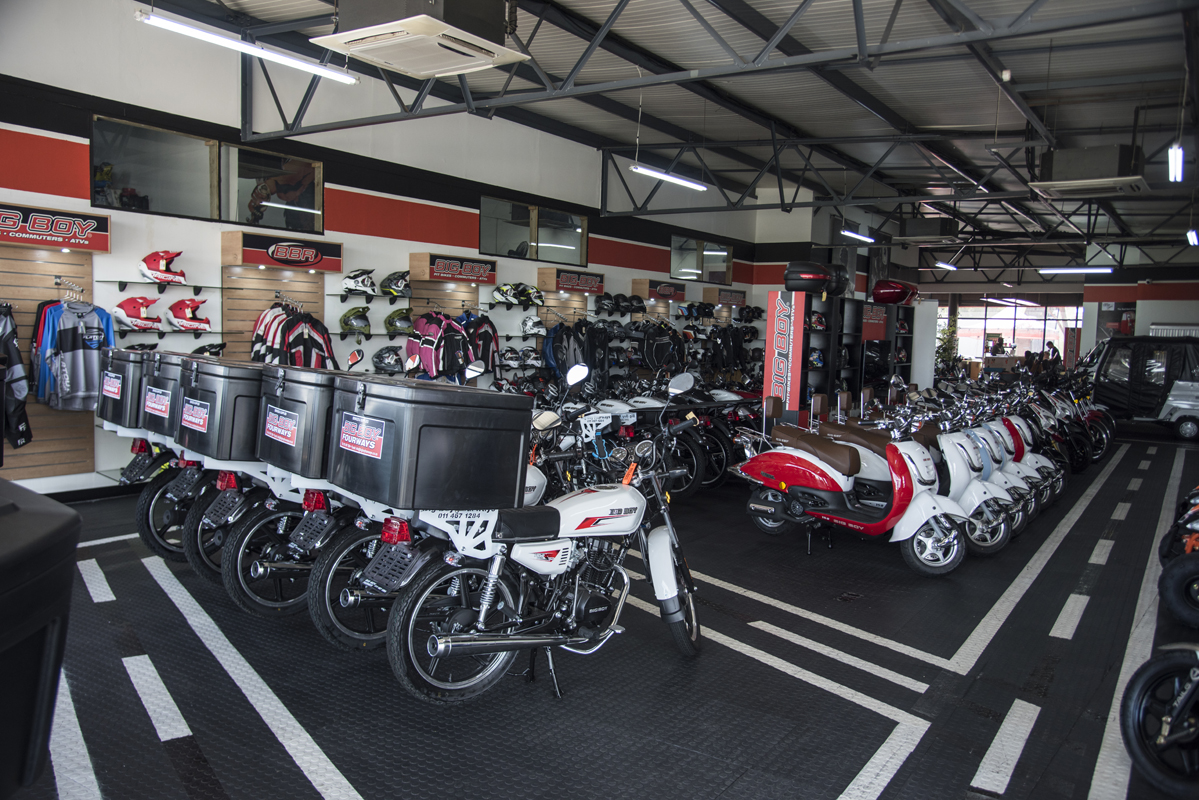
Big Boy Fourways started their journey during the tail end of 2011, with what started off as a steady canter then turned into a gallop. Those days saw Big Boy enter the pit bike craze, bringing forth a whole new era of young riders into the dirt scene and likewise with their urban scoot, the Big Boy Revival. What became apparent to Conrad (owner of Big Boy Fourways) was that he didn’t struggle to get wheels off his floor and this is what led him to focus heavily on servicing his client’s needs and machinery.
Photo credit: Bjorn Moreira / ZA Bikers
After sticking to their working formula of getting bikes on the road and keeping them on the road, 2016 crawled in. 2016 was perhaps the most significant turning point for BB Fourways with the likes of Uber Eats and Mr Delivery popping onto the scene. With the anchor out of the water and a winning formula in hand, BB Fourways raised their sails and have never turned back.
Photo credit: Bjorn Moreira / ZA Bikers
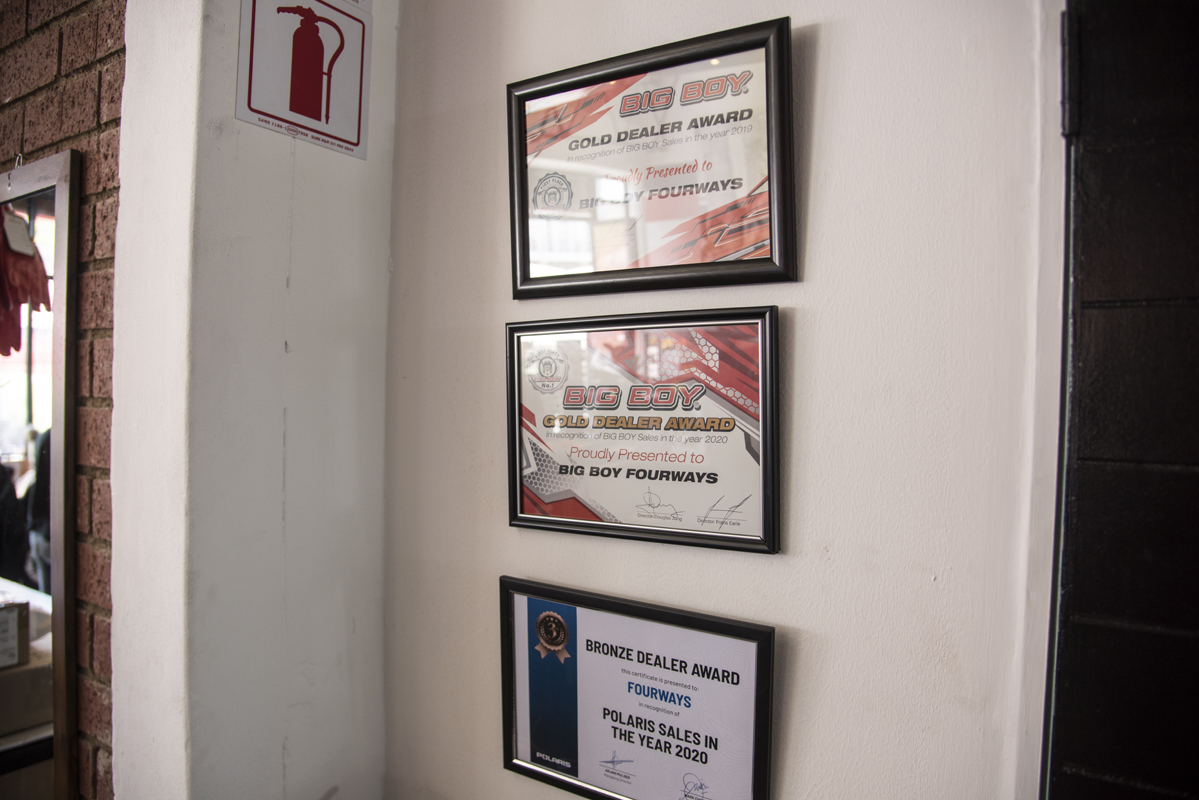
With numerous awards spread out across its walls, that same humble dealership from back in the day takes pride in what they do and it’s because of this passion that they are so well recognised, not only in Johannesburg but in the whole Gauteng region. If you are ever in JHB and you spot a delivery rider, nine times out of ten there will be a Big Boy Fourways sticker on the back of their top box. I’m not joking, they average 120 motorcycles a month, not a year, a month.
Photo credit: Bjorn Moreira / ZA Bikers
So, what has become of Big Boy Fourways in 2023? Twelve years down the line sees the dealership relocate into a new stunning premise in the same business park as before, but with a more visible presence from the main road and a bigger showroom. One always needs to adapt to the constantly changing markets and BB Fourways has done so by adding additional brands to its megastore.
Photo credit: Bjorn Moreira / ZA Bikers
Yes, they have their foot in the agricultural market with both Linhai and the American juggernaut, Polaris—BB Fourways has a bronze dealer award for Polaris. The commercial and alternative transport segment is covered by Atul (Tuk-Tuk), Jonway and Gomoto. And lastly, when it comes to road-going leisure rides, they’ve got Voge motorcycles.
So, there you have it, an impressive mega store run the right way. If you don’t want to take my word for it, have a read of their four-star google reviews.
The KTM racing teams are set to continue their winning ways from 2022 with many familiar faces returning to the Ready To Race stables again in 2023!
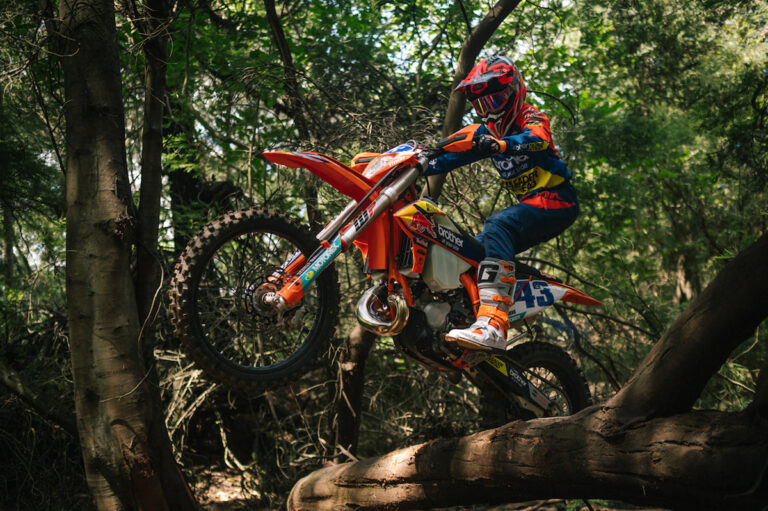
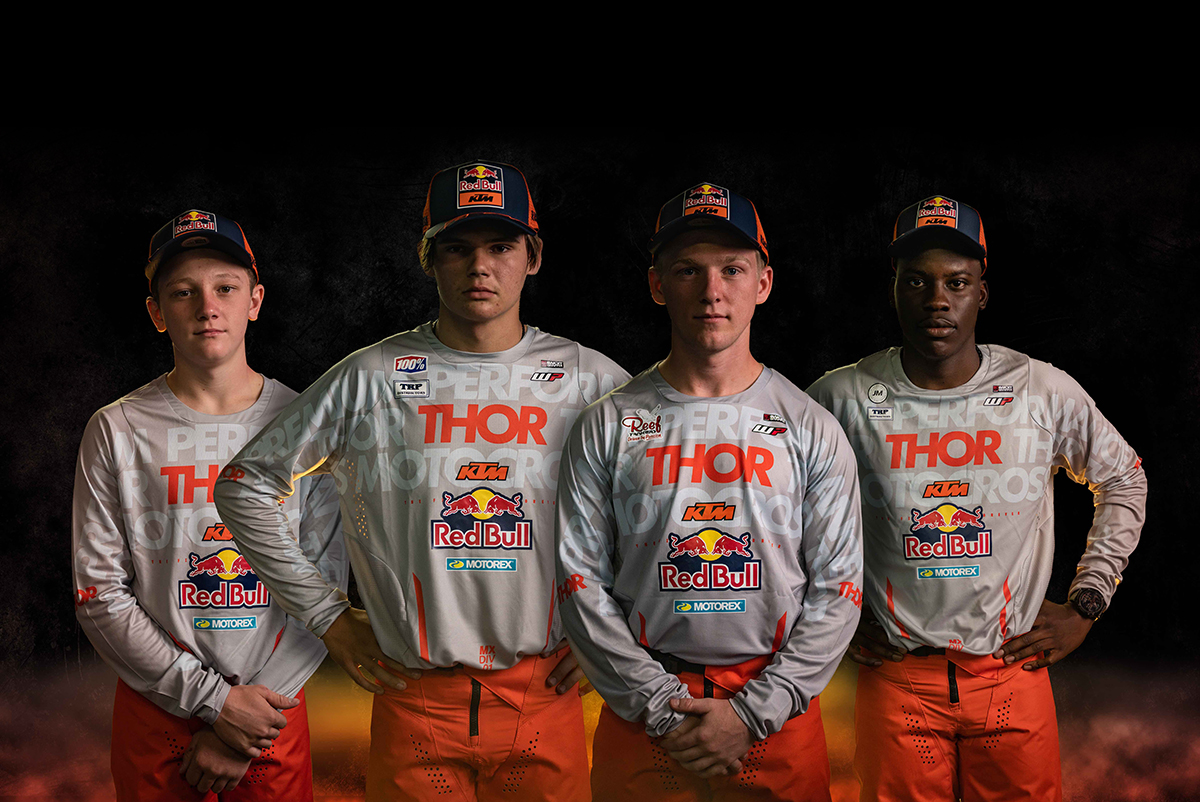
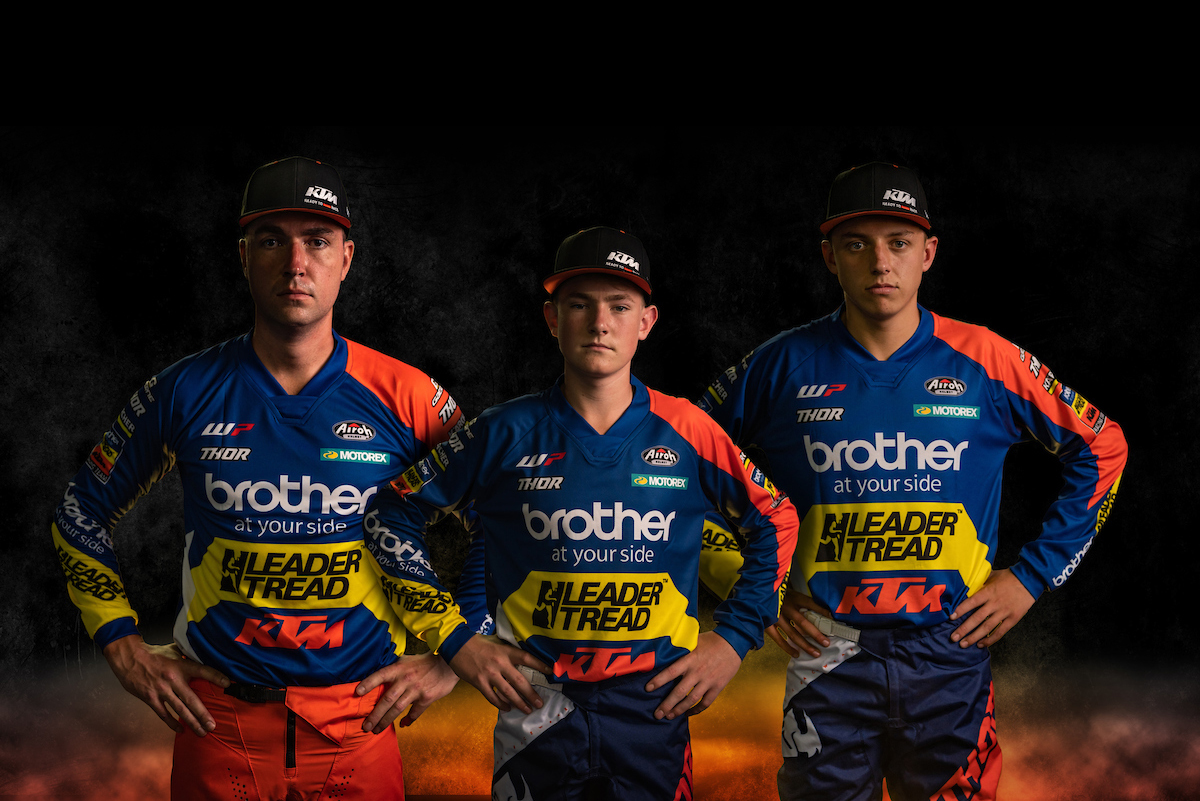
The Red Bull KTM team consists of 4 familiar faces and will field two number 1 machines in the form of Luke Grundy in the MX125 class and Cameron Durow in the MX2 class. Durow is the stand-alone MX1 rider and after his runner-up finish last year in the championship he is definitely the person to beat in both these classes. Joining Grundy in the MX125 class will be last year’s MX 85 National Champion, Trey Cox who looks to wet his feet and prove his worth in the highly competitive 2-stroke 125cc class. Jonothan Mlimi rounds off the team in the MX2 class, returning to the class after his maiden outing last year. Mlimi is hungry to get back to his winning ways of the past and add to his, already impressive, championship tally on his 250 SX-F.
Image source: KTM
The Brother Leader Tread KTM Cross Country team remains unchanged in the rider line-up but will field Kerim Fitz-Gerald in the seniors class for the first time. Matthew Wilson will return to defend his 2022 Championship in the OR3 class while Scott Heygate fights for his first championship in the OR2 class. Bradley Cox heads up the OR1 class and looks to regain his number 1 plate again in 2023.
Image source: KTM
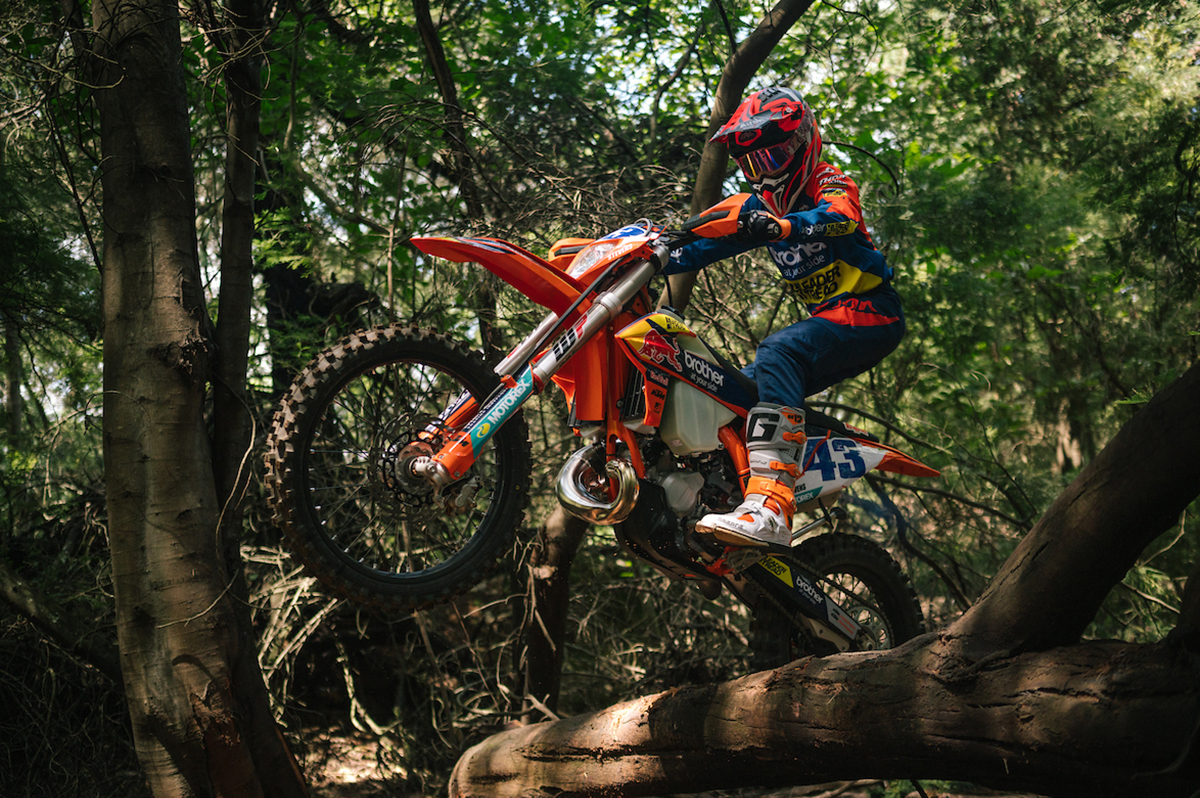
The Brother Leader Tread KTM Enduro team has had an injection of new blood in the form of Dylan Jones in the E1 class. William Slater will return to the team, after a successful first outing for the team at the 2022 Roof of Africa. Although the youngest on the team, Matthew Stevens is the longest-standing member and steps up onto the 150 EXC this year to compete in the high school class.
Image source: KTM
Grant Frerichs, the team manager, commented, “We are looking forward to another great year of racing with the team. We have competitive riders across all the racing facets and the vibe across the entire team is unrivalled. We kick off the season next weekend with the first round of Motocross and we are definitely ‘Ready to Race’!
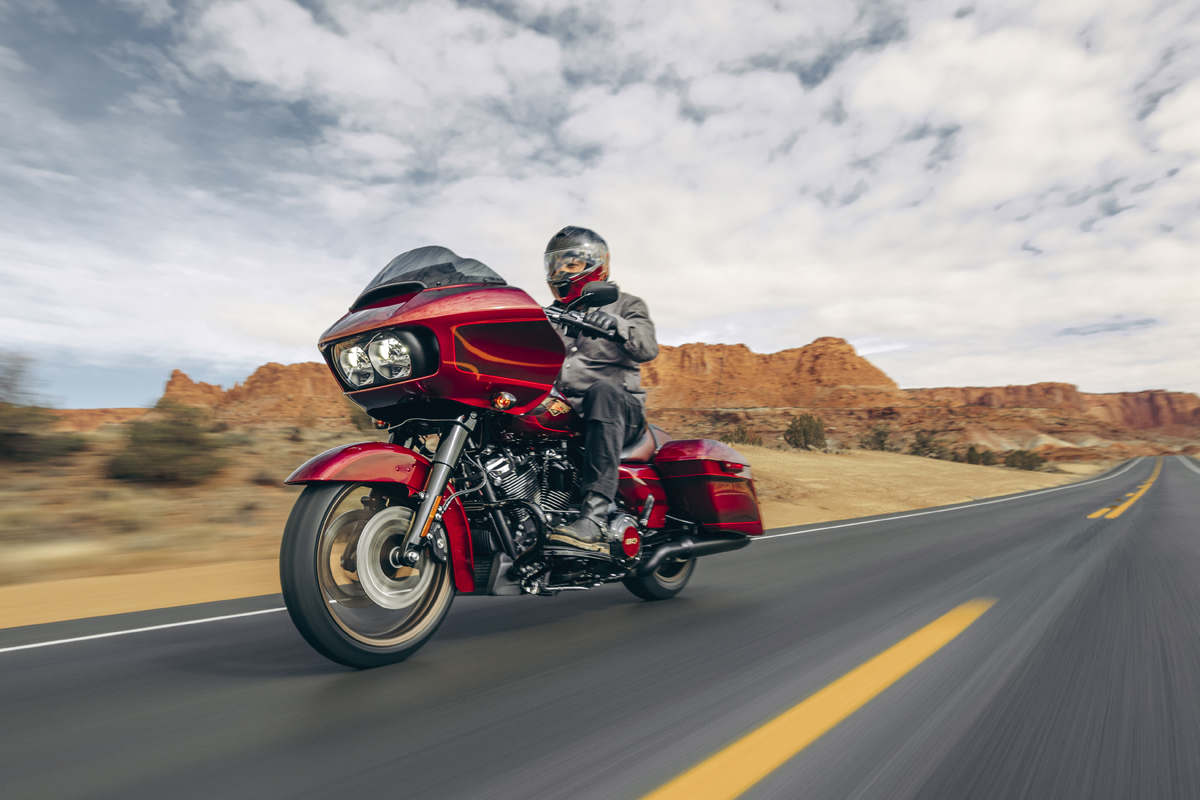
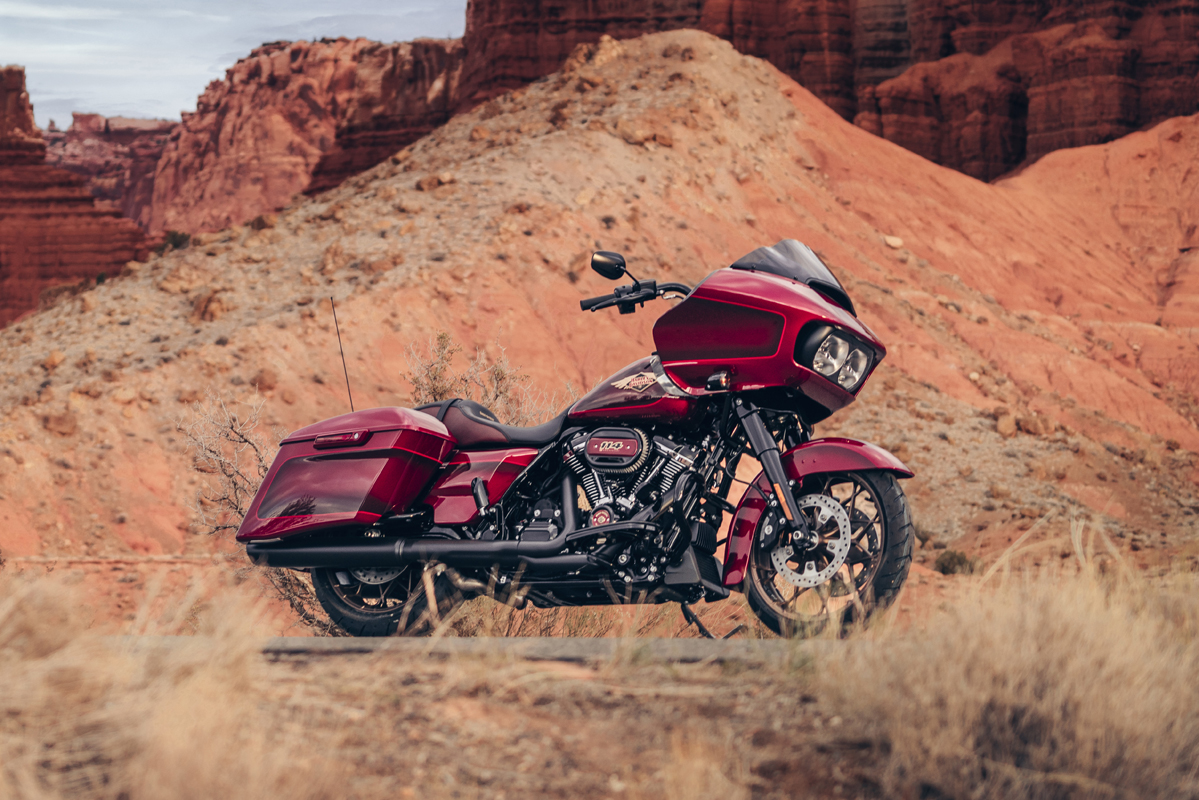
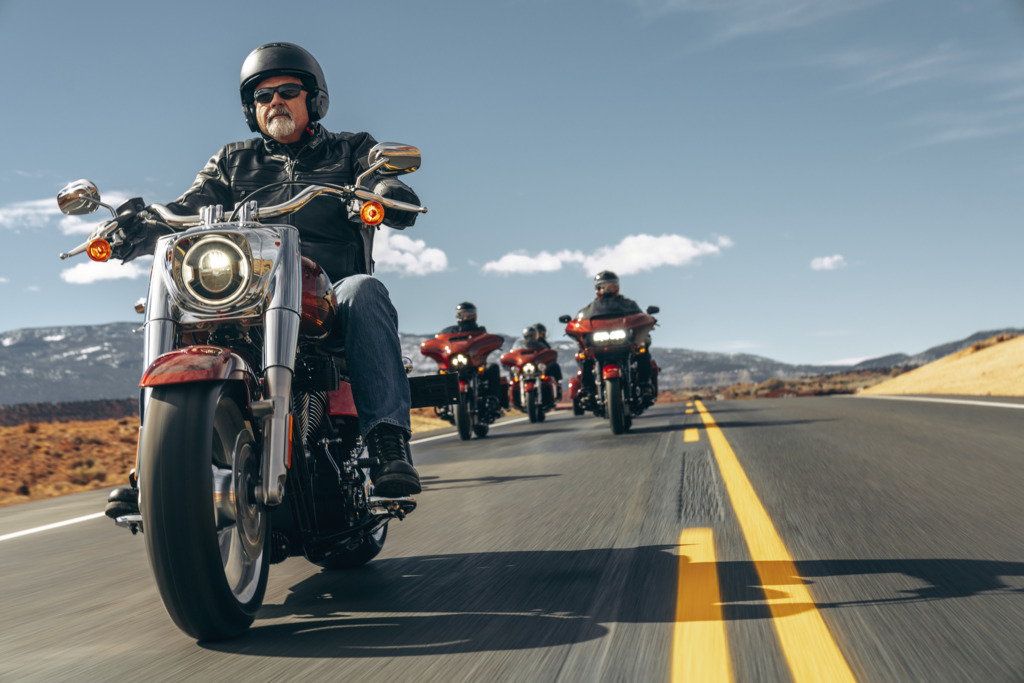
Every five years, Harley-Davidson celebrates another half-decade in business with a slew of special anniversary models. For their 120th birthday, they’re painting the town red with a series of commemorative paint jobs—and adding a few new models to the mix.
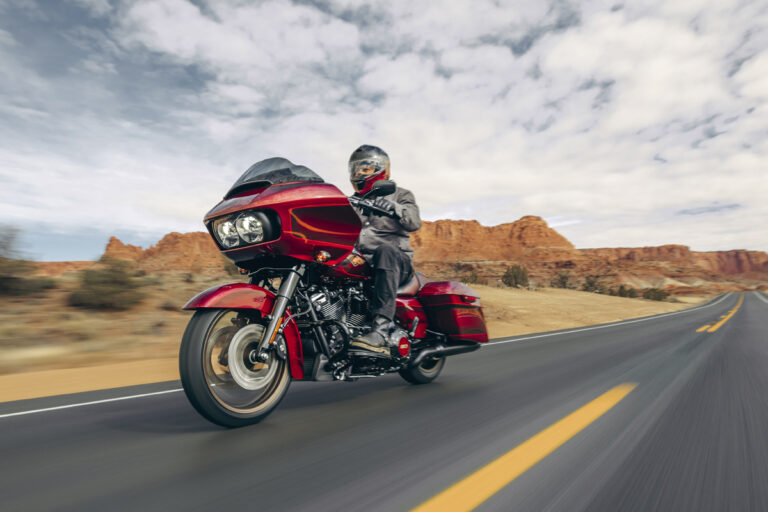
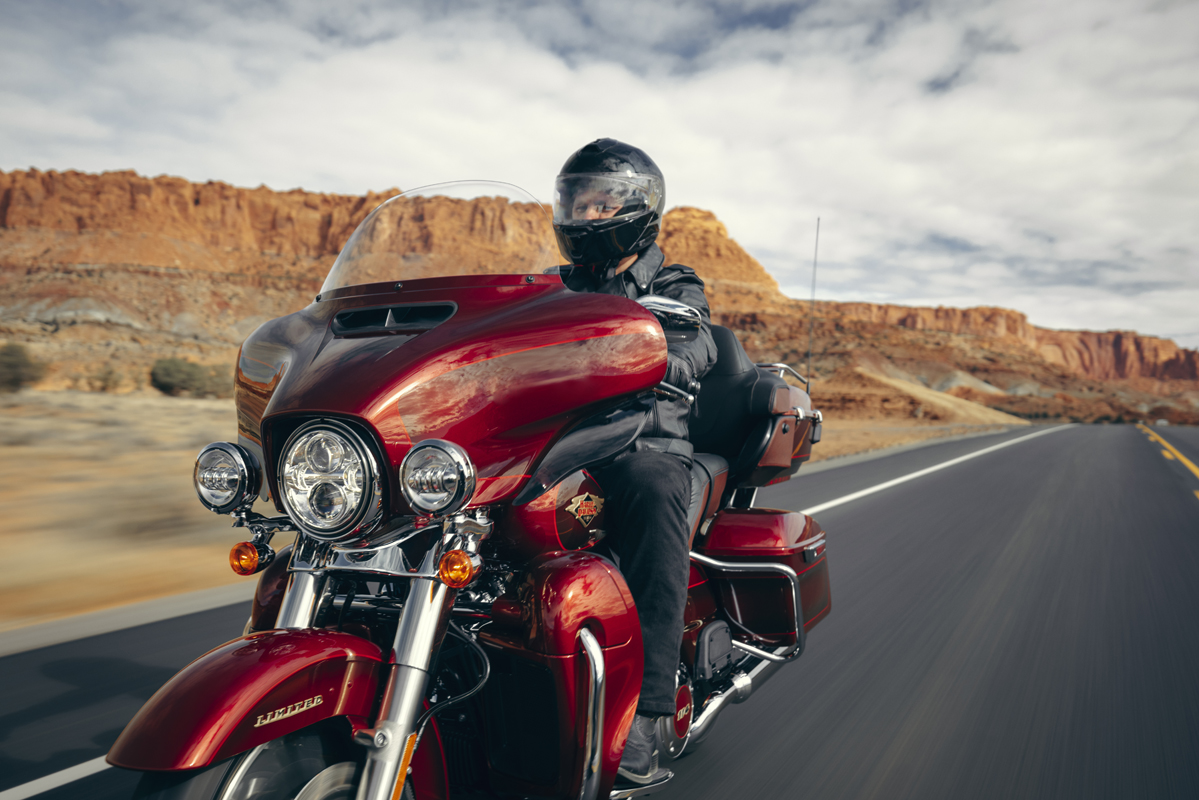
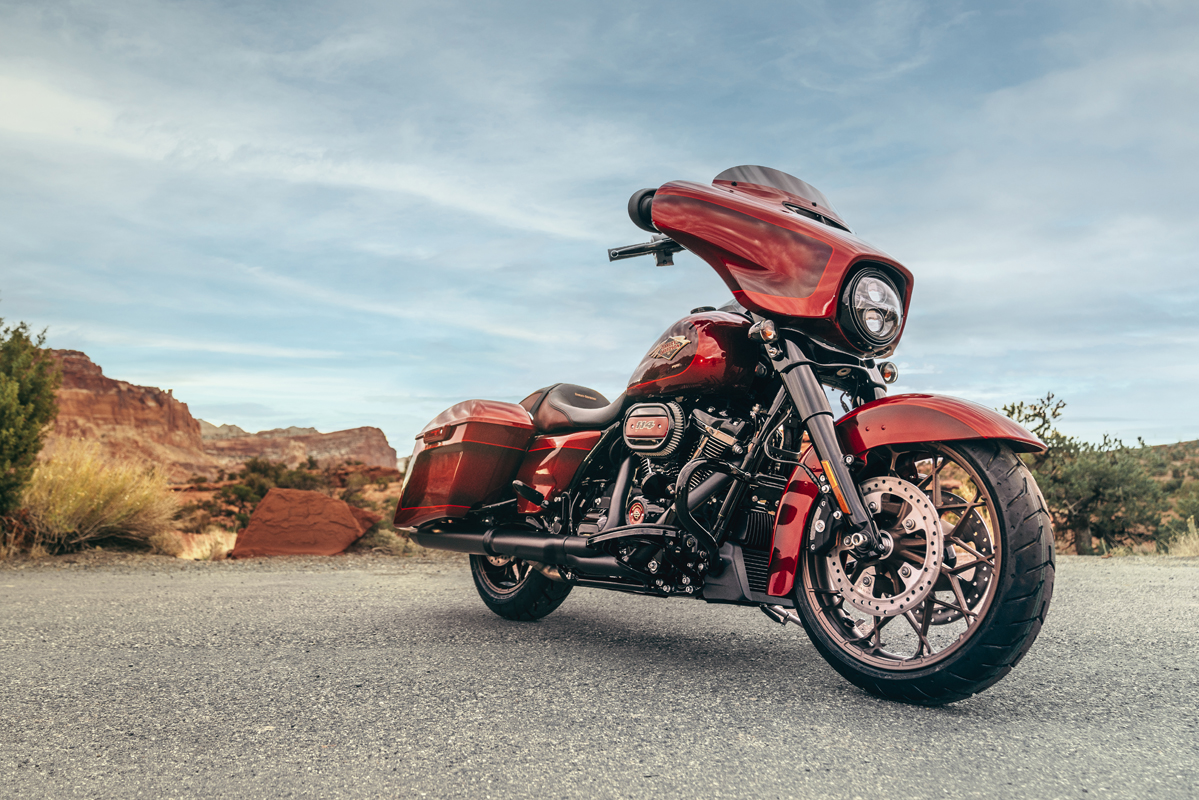
Leading the charge for the anniversary editions is the ultra-exclusive Harley-Davidson CVO Road Glide Limited Anniversary model. If you don’t speak Harley, CVO stands for ‘Custom Vehicle Operations.’ CVO models are based on existing models—but with every last bell and whistle imaginable fitted as standard.
Image source: Harley-Davidson
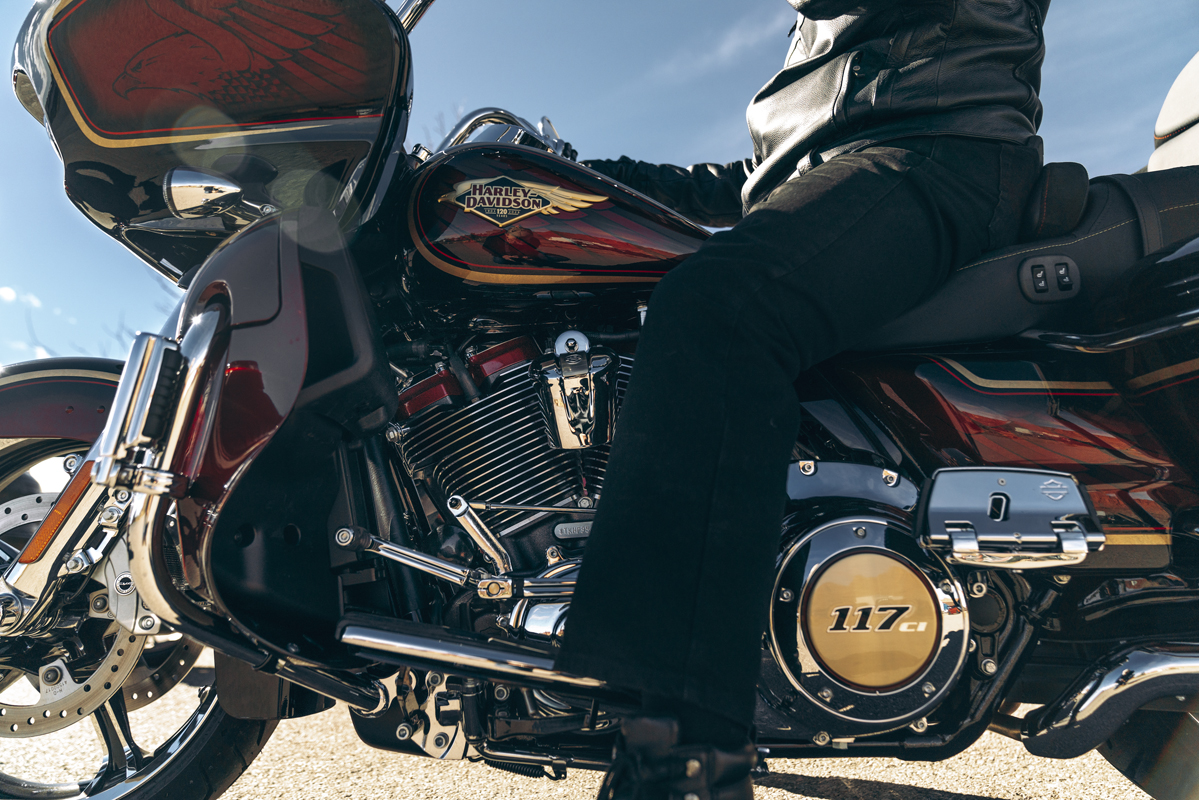
The CVO Road Glide Limited Anniversary gets The Motor Co.’s punchy, 166 Nm Milwaukee-Eight 117 power plant, along with a full suite of electronic rider aids like cornering ABS and traction control, hill hold control and tyre pressure monitoring.
Image source: Harley-Davidson
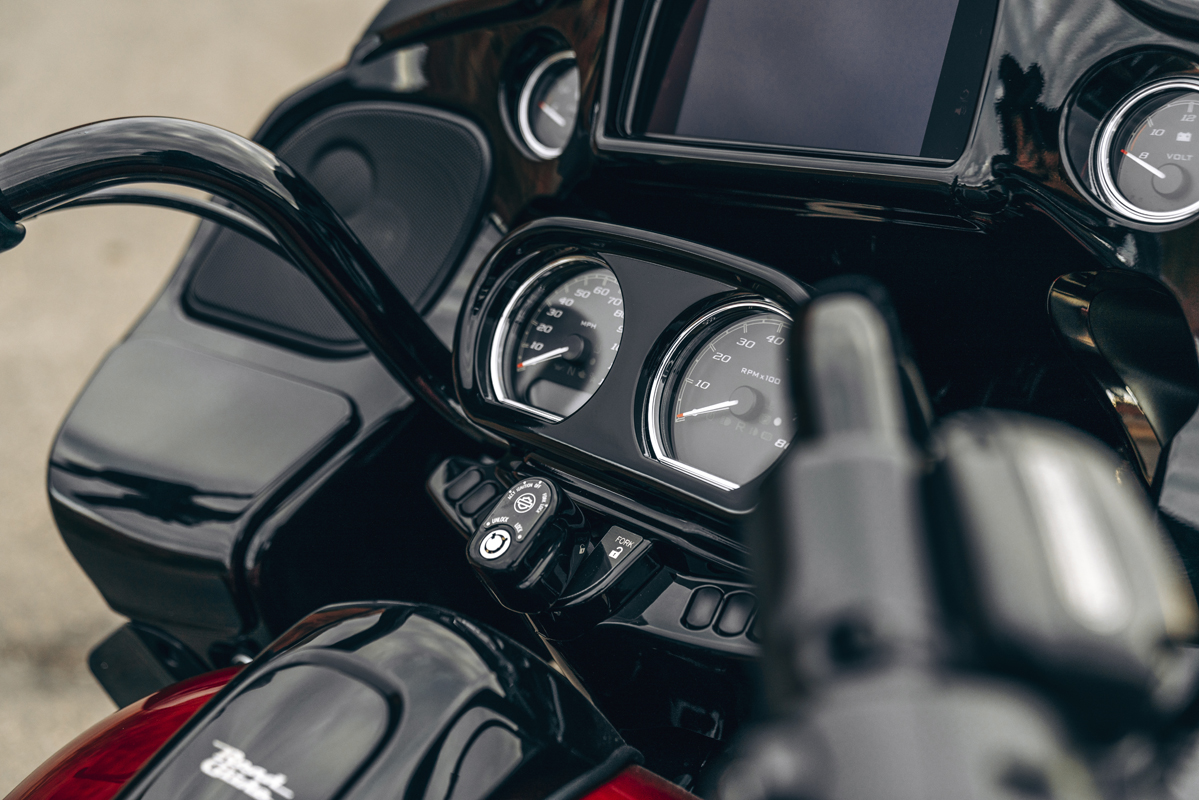
It’s also packing Harley’s proprietary Boom Box GTS infotainment system, with a full-colour TFT display and Rockford Fosgate speakers. A rider backrest, fully kitted top box, crash bars and auxiliary speakers; if Harley offers it, the CVO Road Glide has it.
Image source: Harley-Davidson
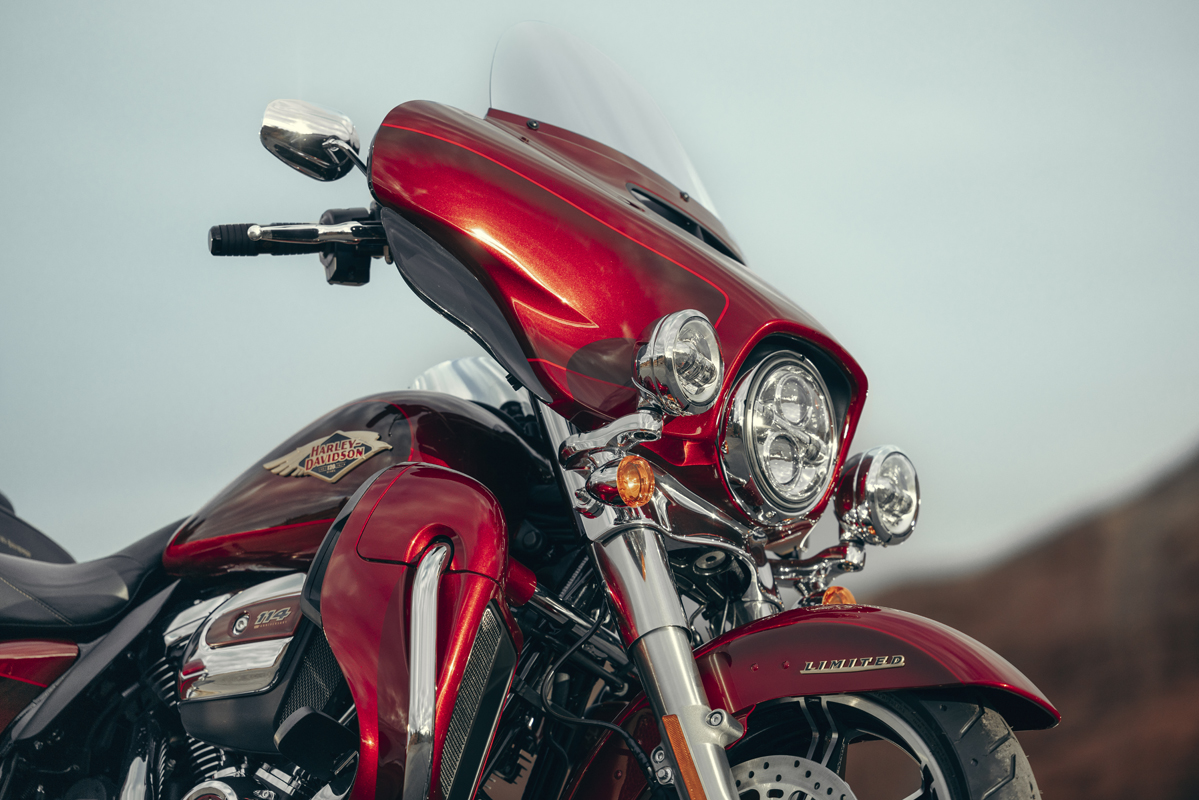
Limited to 1,500 numbered units, the CVO Road Glide Limited Anniversary is wrapped in Harley’s 2023 120th anniversary livery. It’s an intoxicating mix of various shades of red and black, punctuated by bright red pinstripes and hand-applied gold details. Look closely, and you’ll see a ghosted eagle motif spread across the fairing and tank; a design that’s echoed in the gold eagle wing-style tank badges.
Image source: Harley-Davidson
Harley-Davidson have six other limited edition 120th anniversary models lined up, all wearing a slightly altered version of the CVO Road Glide Limited Anniversary livery. The emphasis shifts from gold to red here, with red inserts on the bikes’ air filters and engine covers, and red panels on their seats.
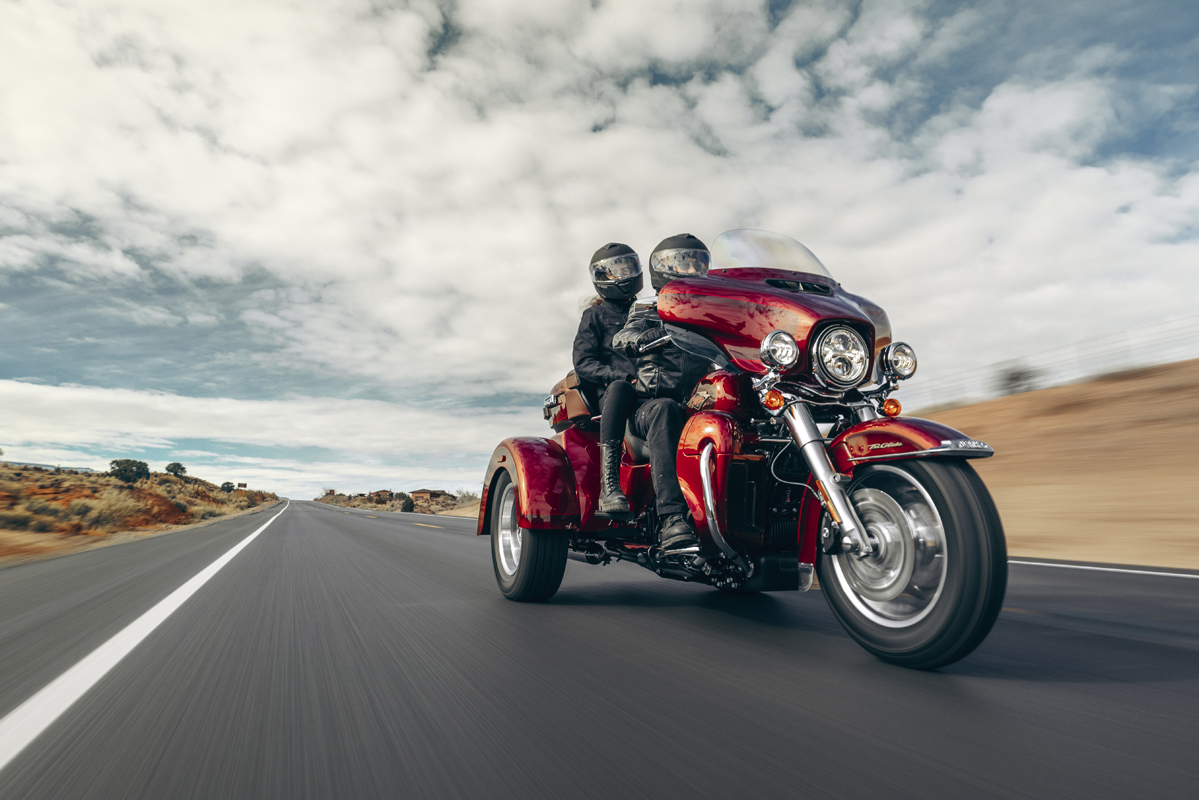
The commemorative model list includes the Ultra Limited Anniversary (1,300 units), Tri Glide Ultra Anniversary (1,100 units) Street Glide Special Anniversary (1,600 units), Road Glide Special Anniversary (1,600 units), Fat Boy 114 Anniversary (3,000 units) and Heritage Classic 114 Anniversary (1,700 units).
1 of 8
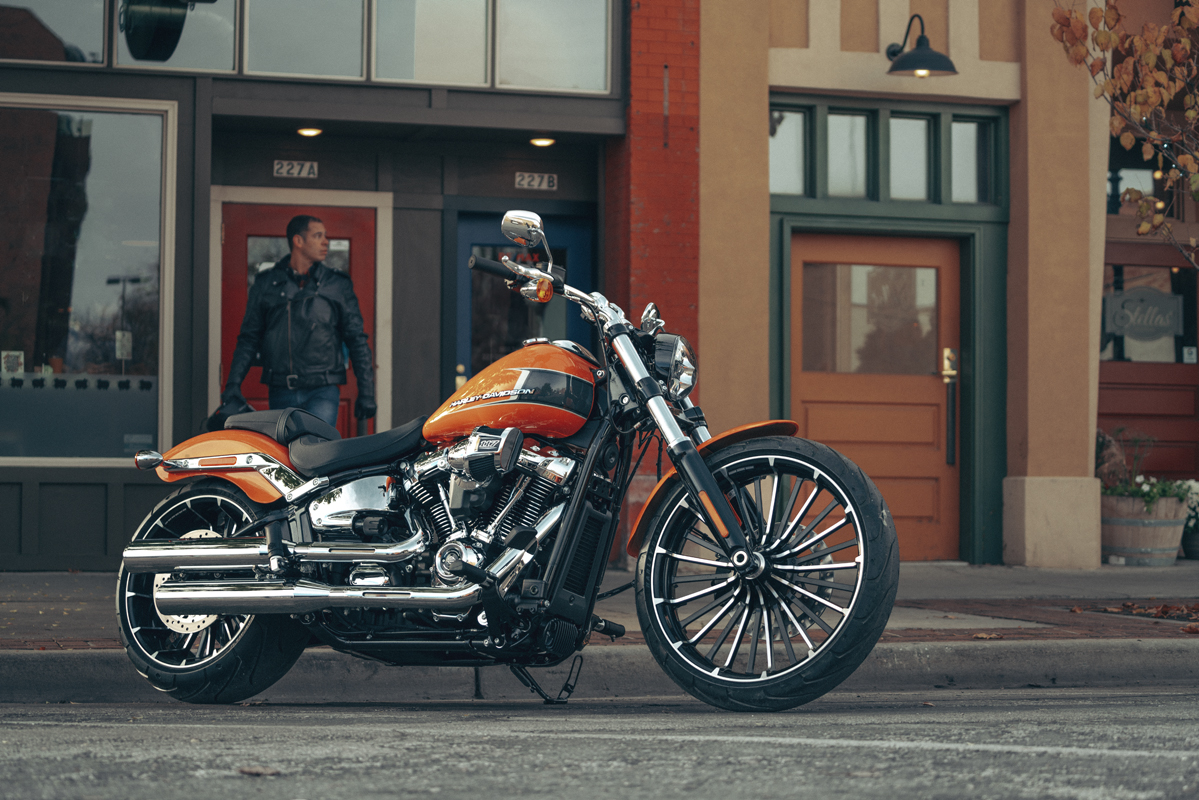
In addition to their 120th-anniversary quiver, Harley-Davidson has announced three more model updates. The first is good news for fans of the marque’s defunct muscle cruiser, the Breakout; it’s back, and a lot more badass.
The 2023 Breakout features the same long and lean, chopper-esque styling that its fans love, but it’s now a whole lot meatier, thanks to its new Milwaukee-Eight 117 drivetrain. It also sports new wheels, a bigger fuel tank, higher handlebars and a smorgasbord of chrome accents.
Image source: Harley-Davidson
It’s flashy—but also sort of to the point—which has always been the Breakout’s charm.
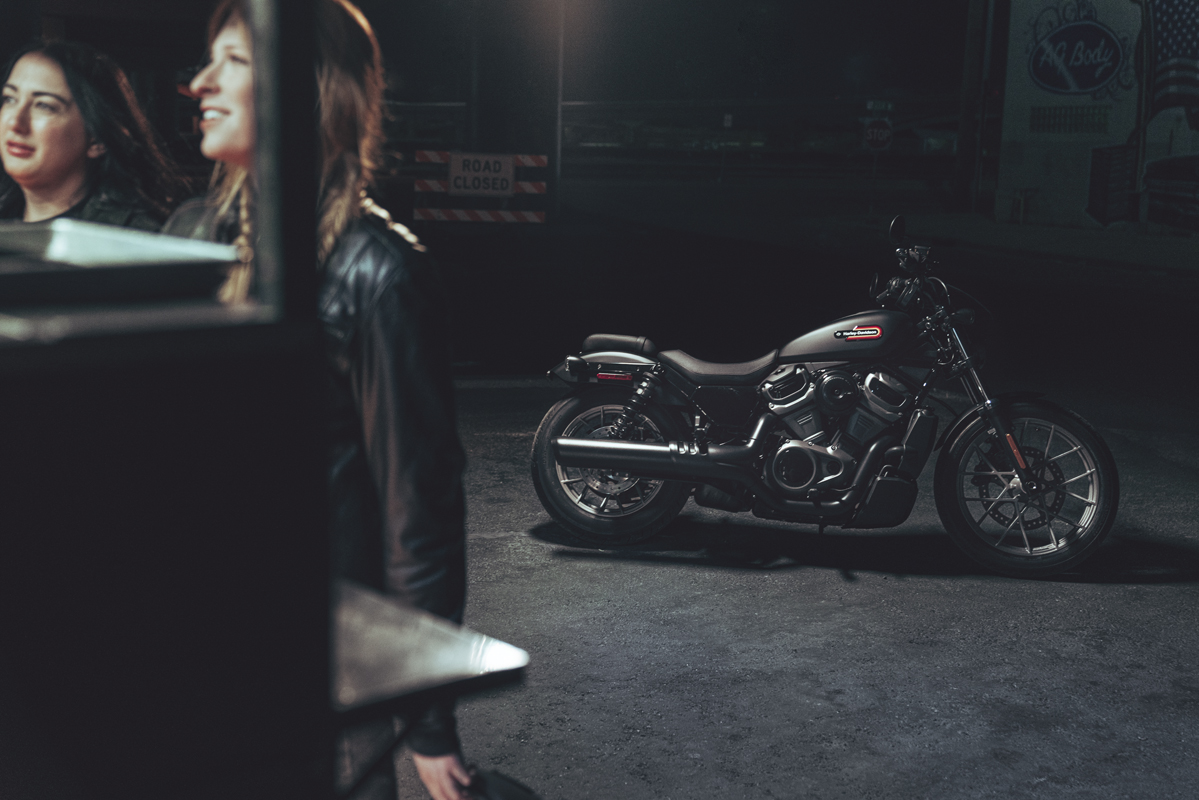
Next up, H-D adds another model to their next-generation Sportster range with the Nightster Special. It’s effectively a dressed-up version of the existing Nightster, which uses Harley’s new Revolution Max 975T liquid-cooled V-Twin engine.
Image source: Harley-Davidson
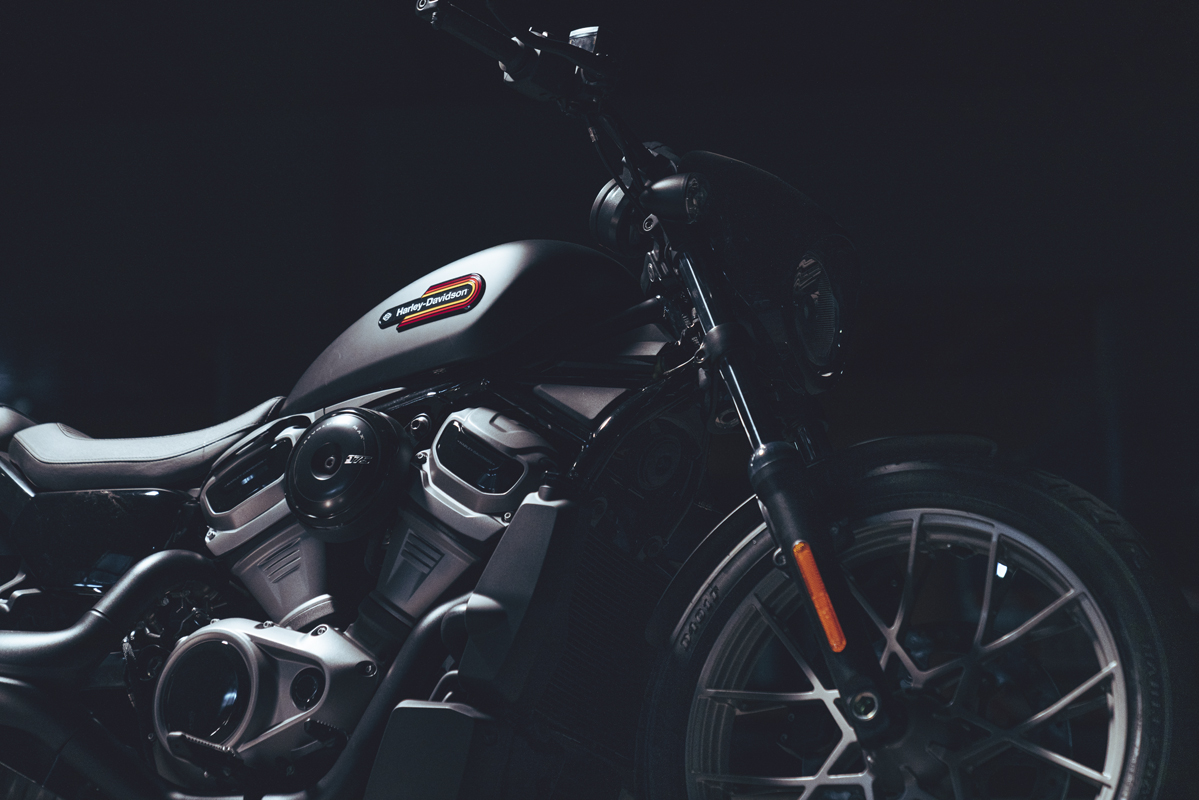
The Nightster Special adds a passenger seat and pegs to the base model’s solo setup, along with revised risers and bars for a less aggressive riding position. A round 4” TFT display sits up front, complete with Bluetooth functionality and selectable rider modes.
The Nightster Special also gets its own cast aluminium wheel design, with a tyre pressure monitoring system. Brembo brakes, ABS and traction control, cruise control, LED lighting and a USB charge port are all standard equipment.
Image source: Harley-Davidson
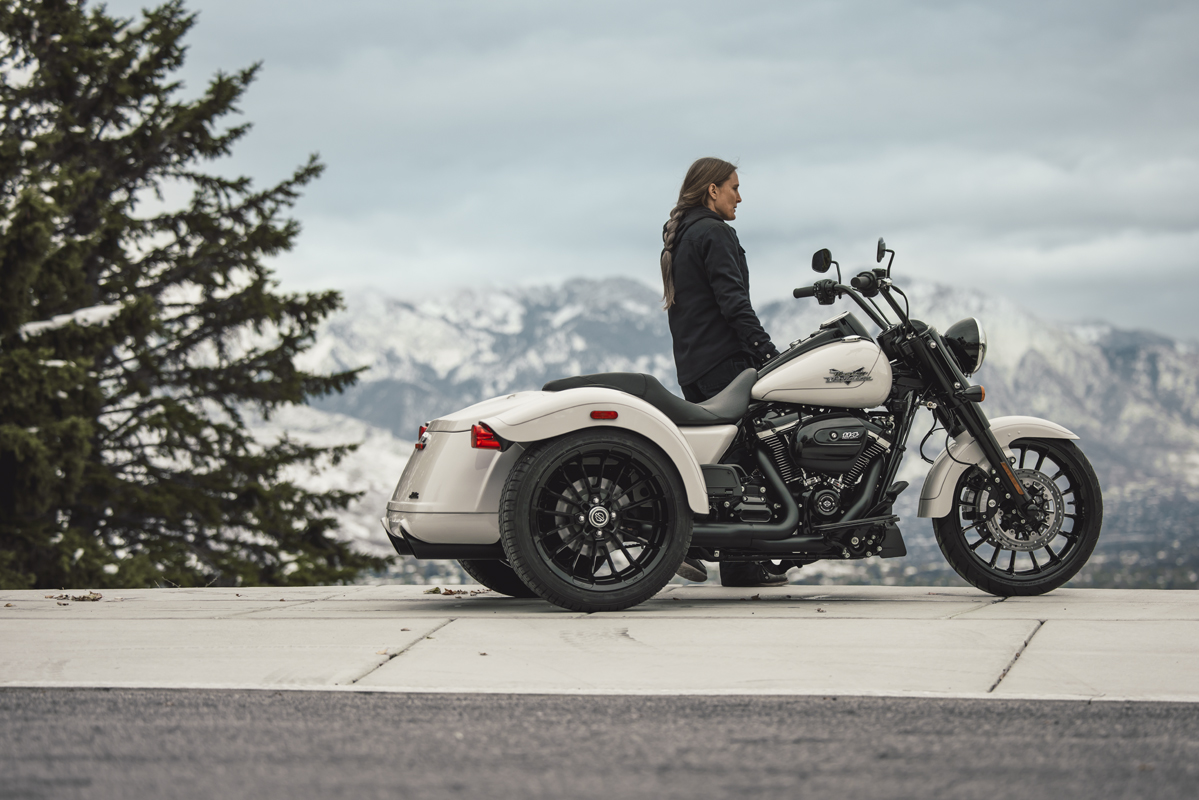
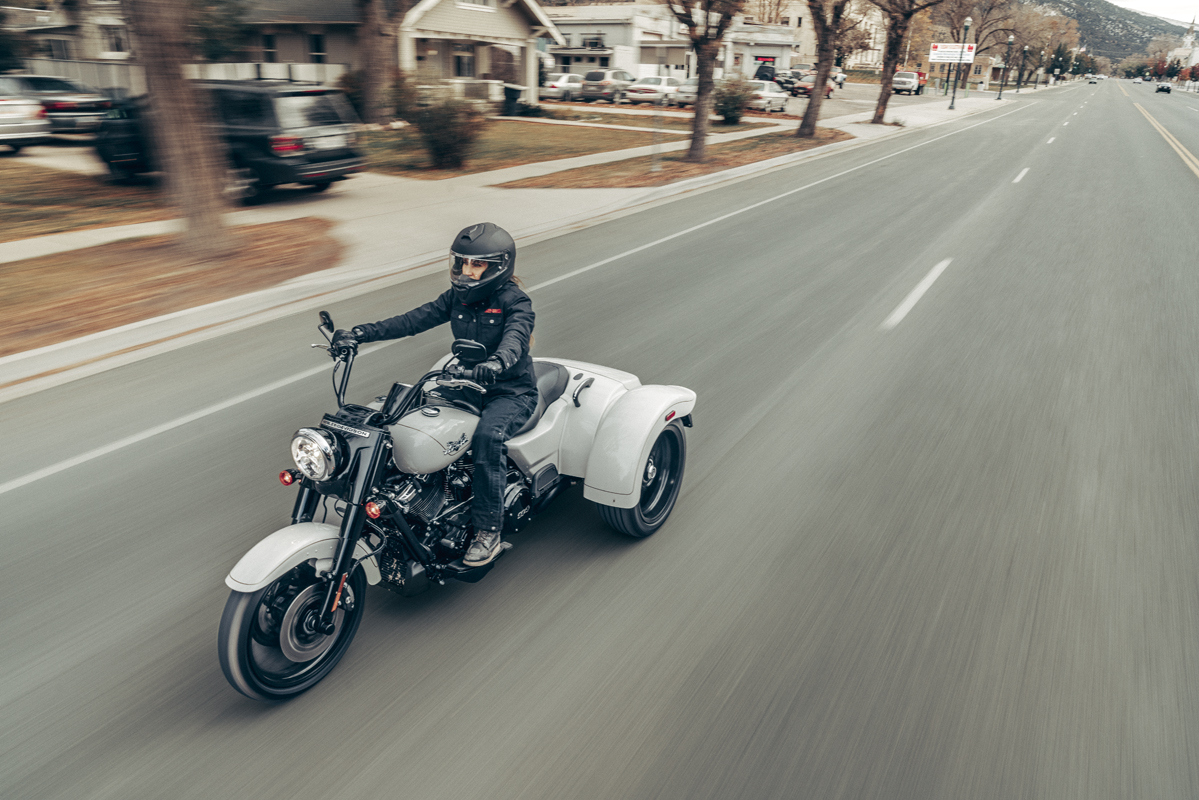
Moving to trikes, H-D have restyled their Freewheeler model for 2023. Powered by a Milwaukee-Eight 114 engine, it’s had all its chromed bits swapped out for blacked-out bits. It’s also traded its 18” rear wheels for a pair of 15” hoops, which are tucked under a pair of bobtailed mudguards. Matched up to mini-ape bars up front, the overall aesthetic is something between a bobber and a hot rod—and somehow, it works.
Image source: Harley-Davidson
The Freewheeler also features a weather-proof ‘boot’ at the back, dual mufflers with slash-down tips, an electric reverse gear, and a full set of trike-specific electronic rider aids. Harley are also rolling out a bunch of electronic aids to existing models this year. The Fat Boy, Fat Bob, Breakout and Low Rider S will all get cruise control as standard, while an optional (and switchable) traction control system will be available for the Breakout, Low Rider S and Low Rider ST.
Image source: Harley-Davidson
And if you’re not in the market for a new motorcycle, fret not. Harley will naturally be rolling out some anniversary-specific apparel too… so you can at least look the part.
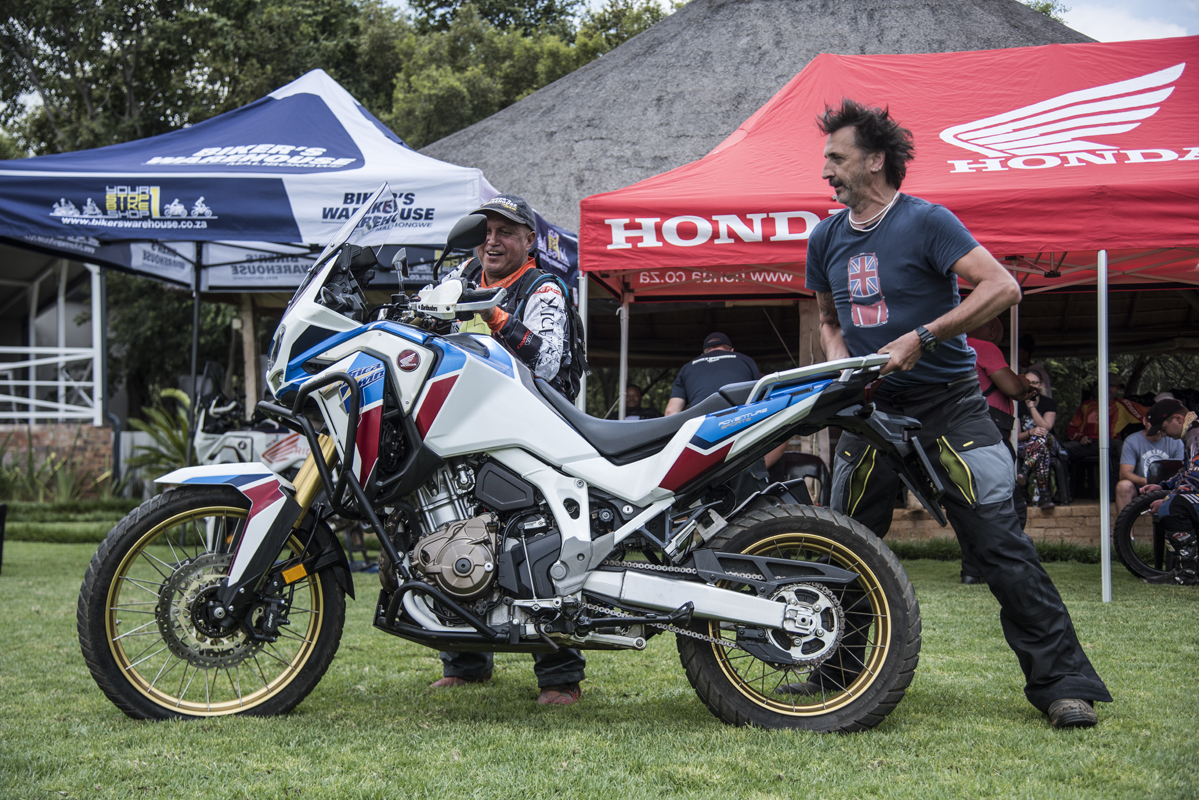
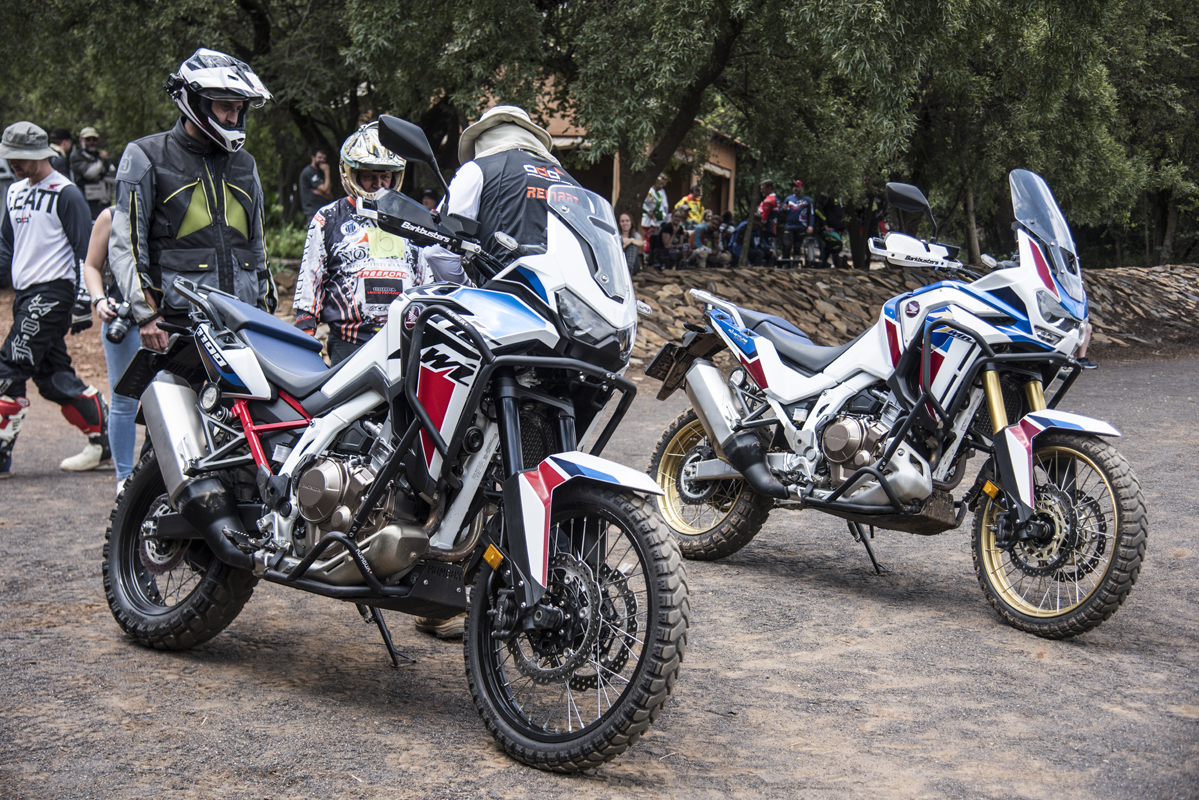
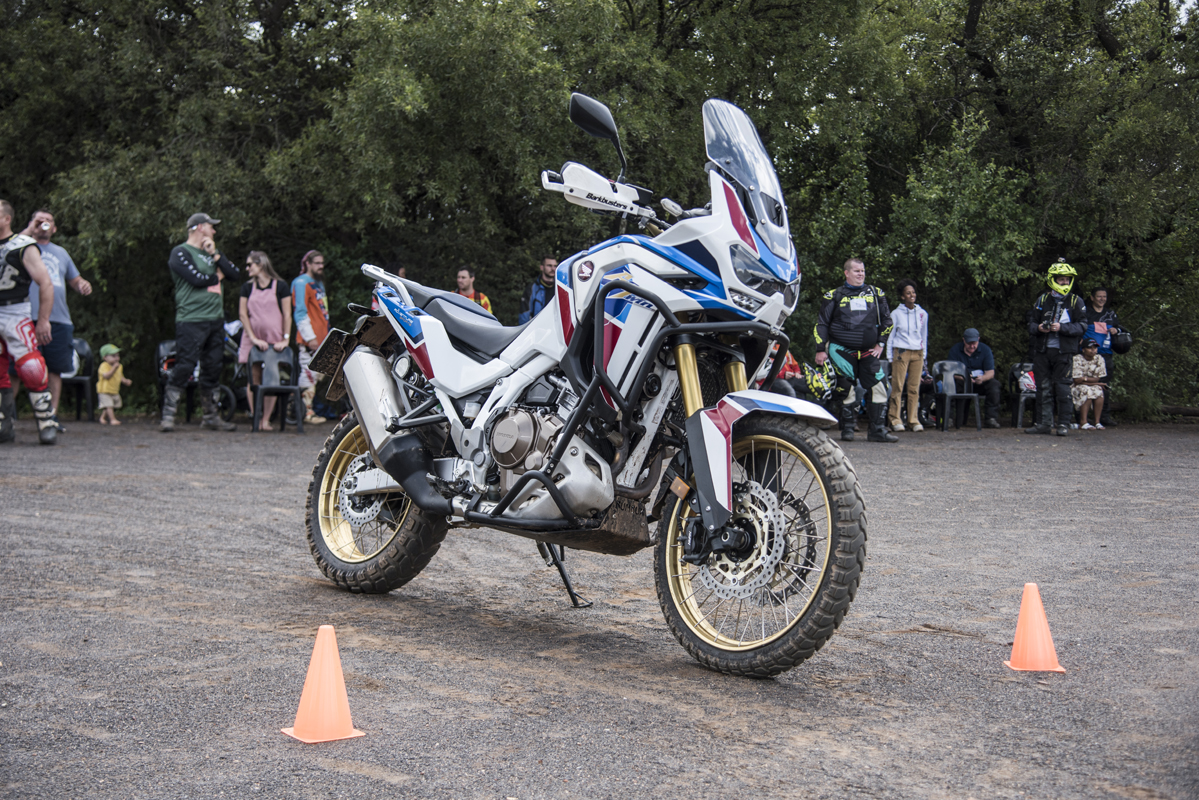
By now, Honda hopes that you have all heard of the Quest True Adventure event. While the event has been a dark horse in terms of exposure in previous years, Honda is determined to rectify that in 2023. To that end, over the past few months, the Quest road show has been making its way around South Africa, visiting Honda dealers with a fleet of Africa Twin adventure bikes, inviting anyone to come along and try out the bike and find out more about the event, entries to which are open to anyone, irrespective of their adventure riding experience.
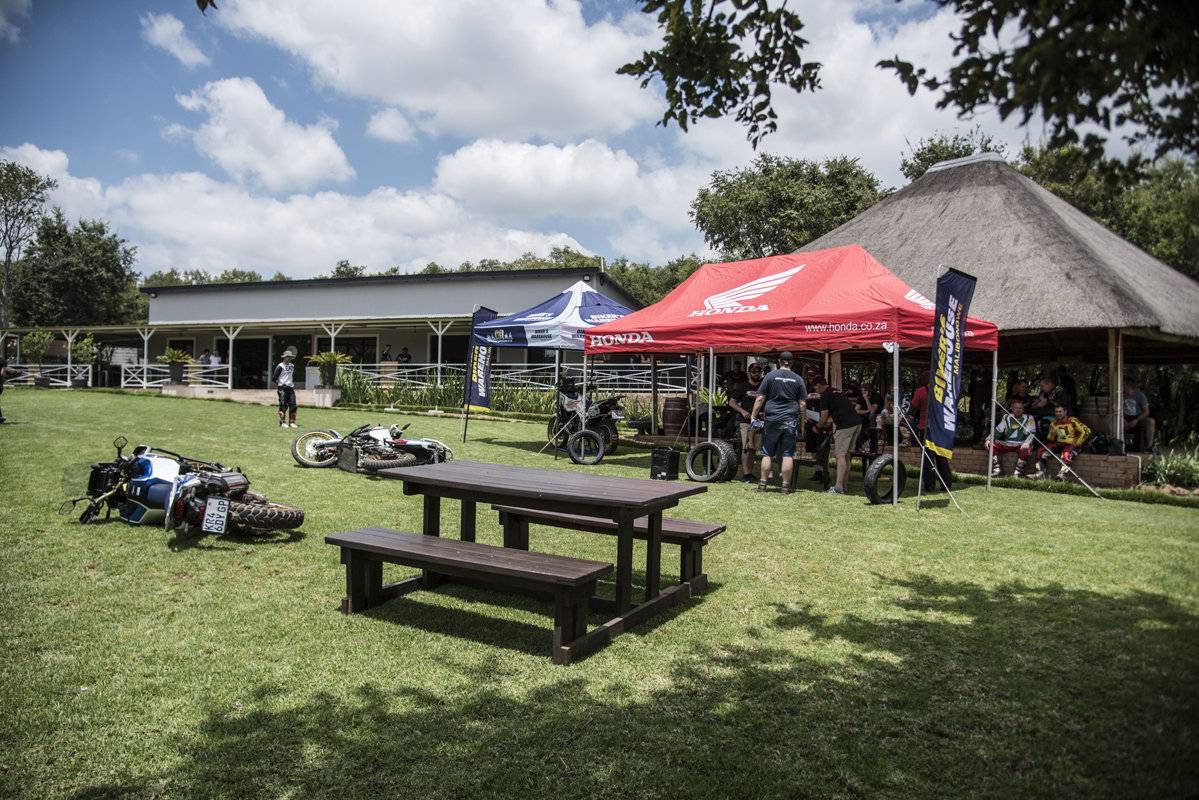
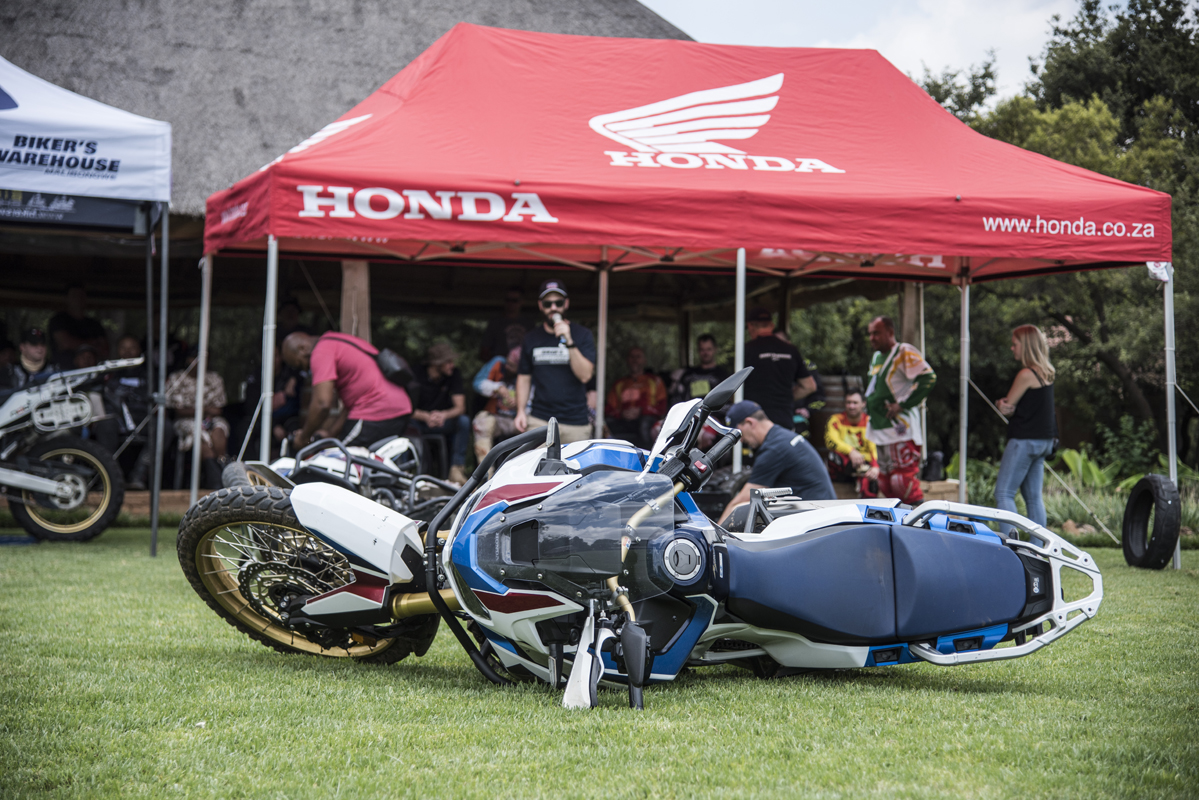
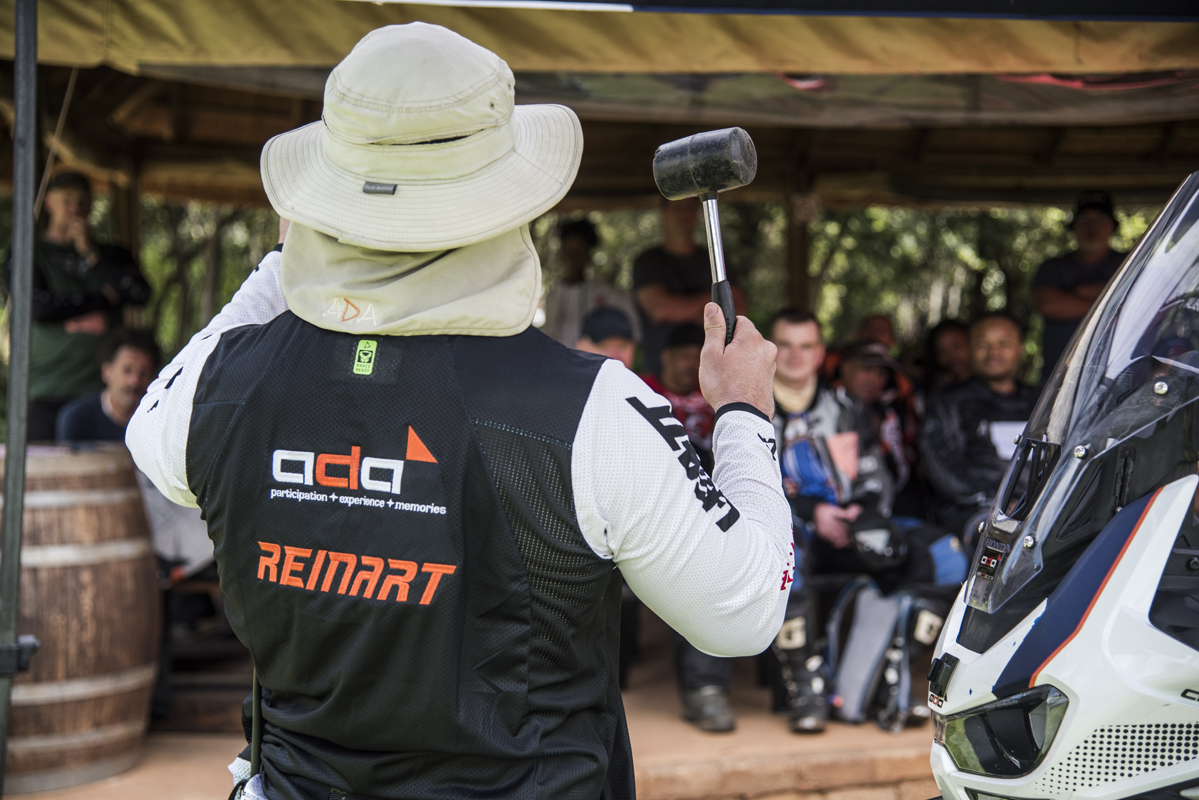
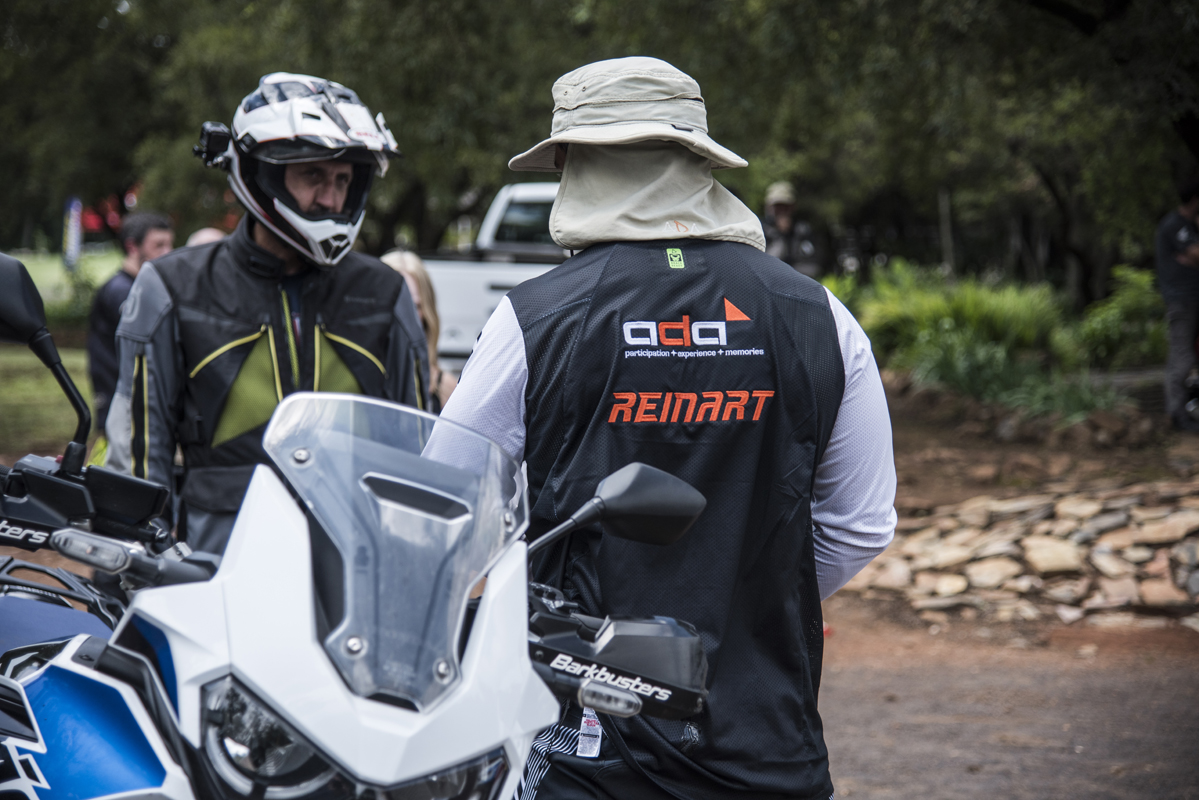
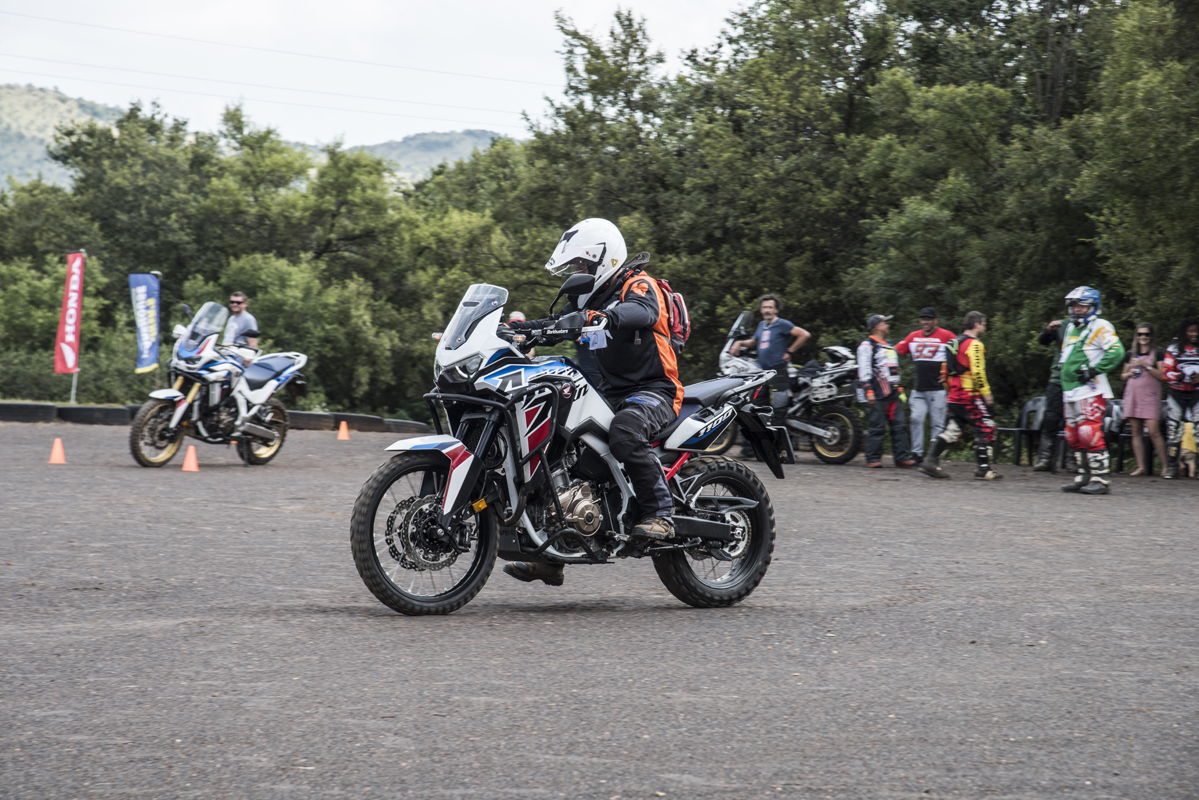
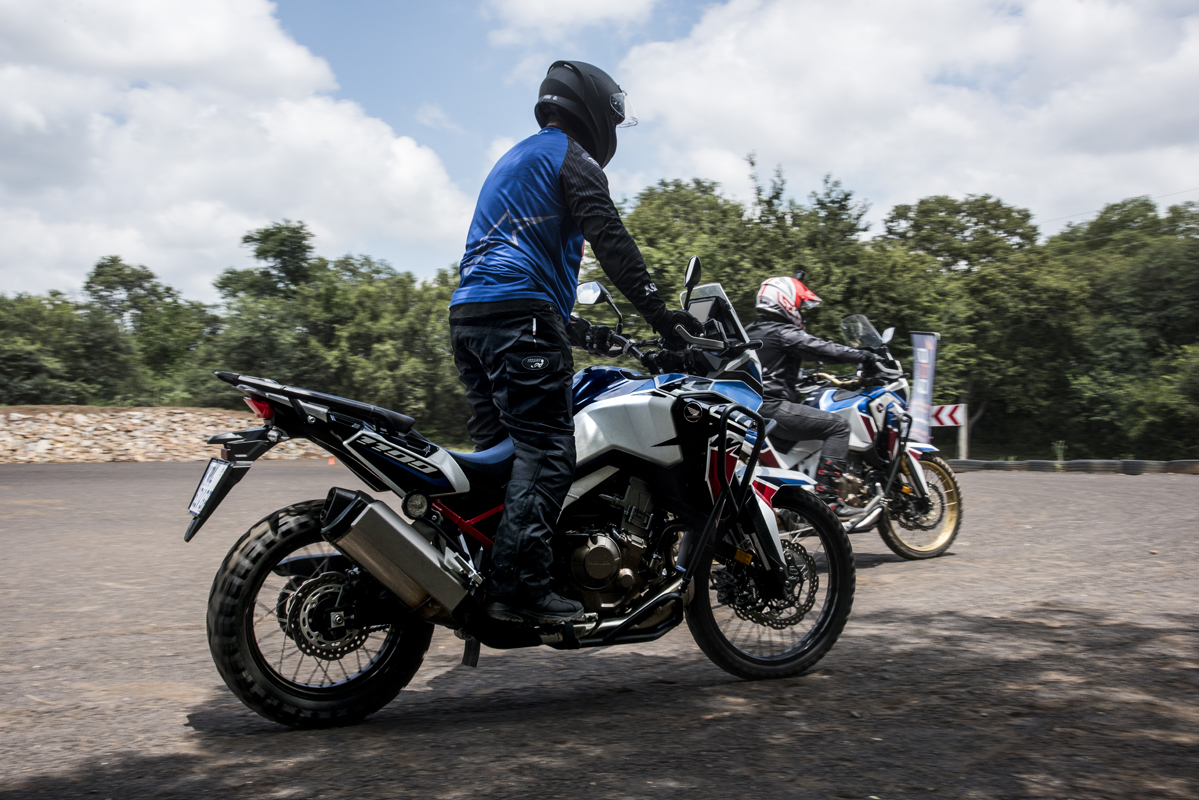
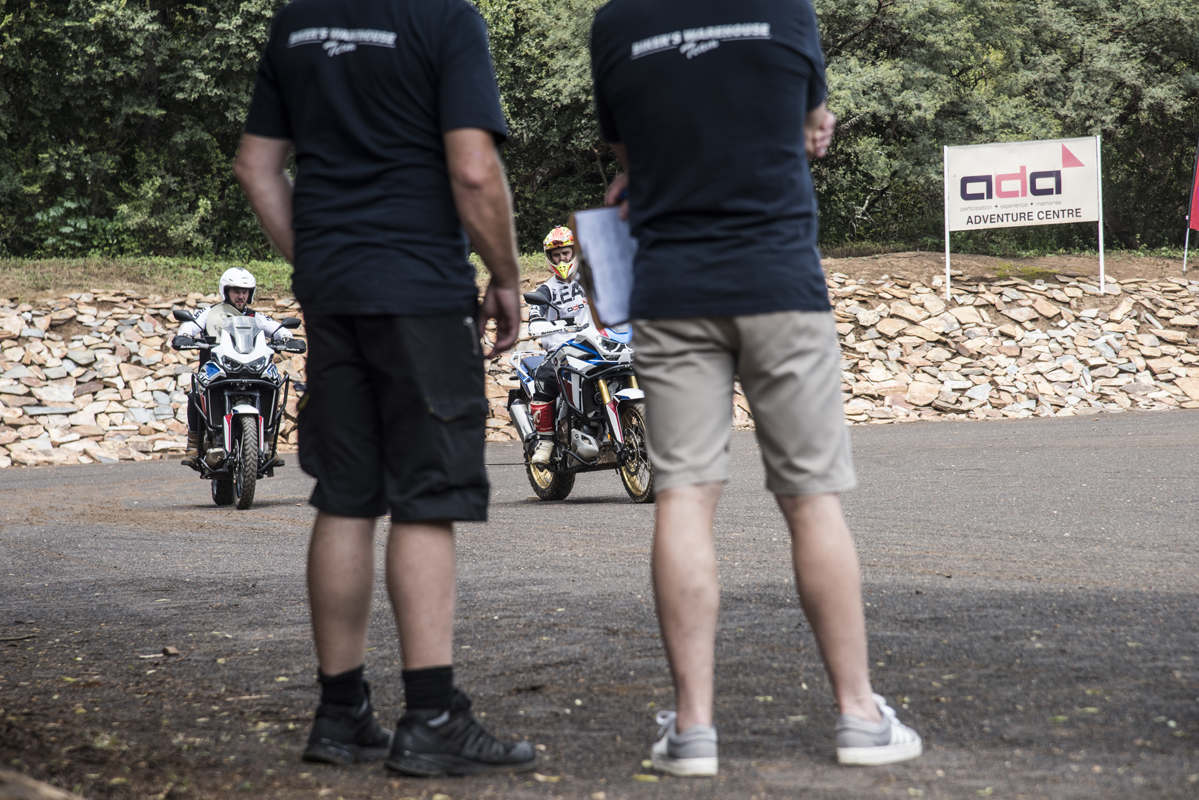
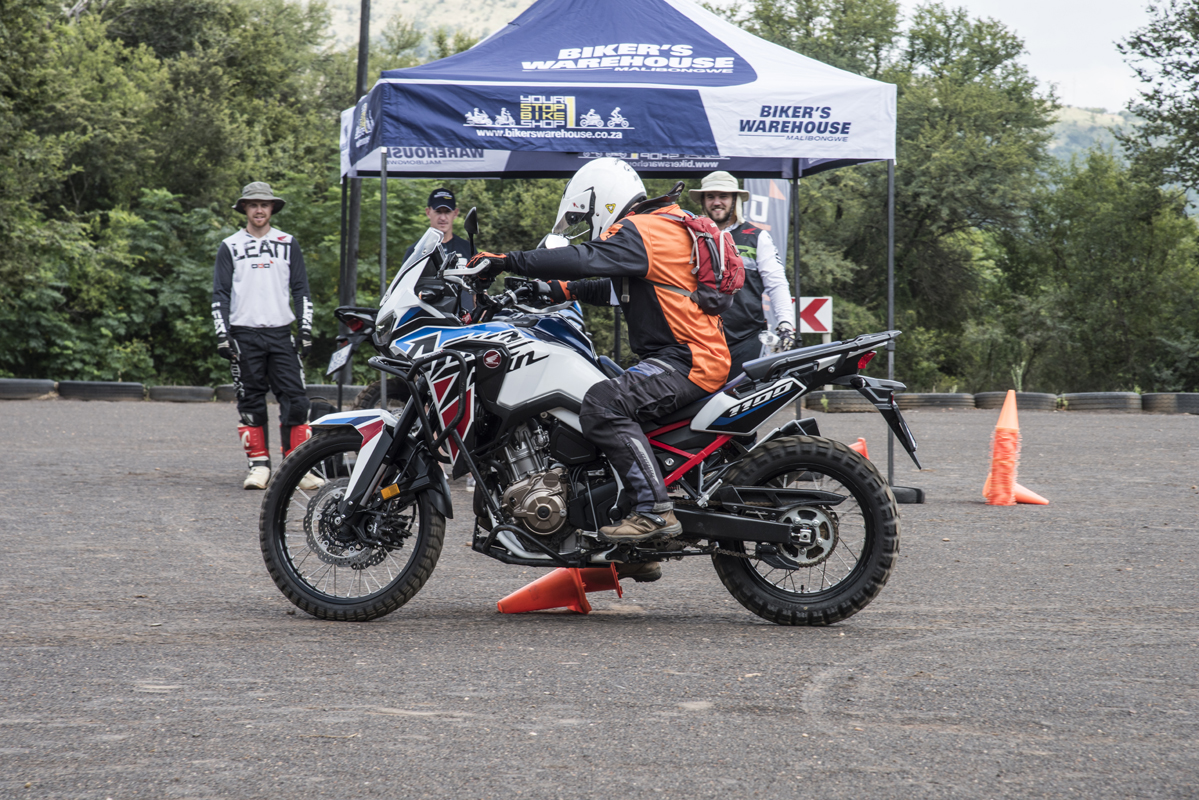
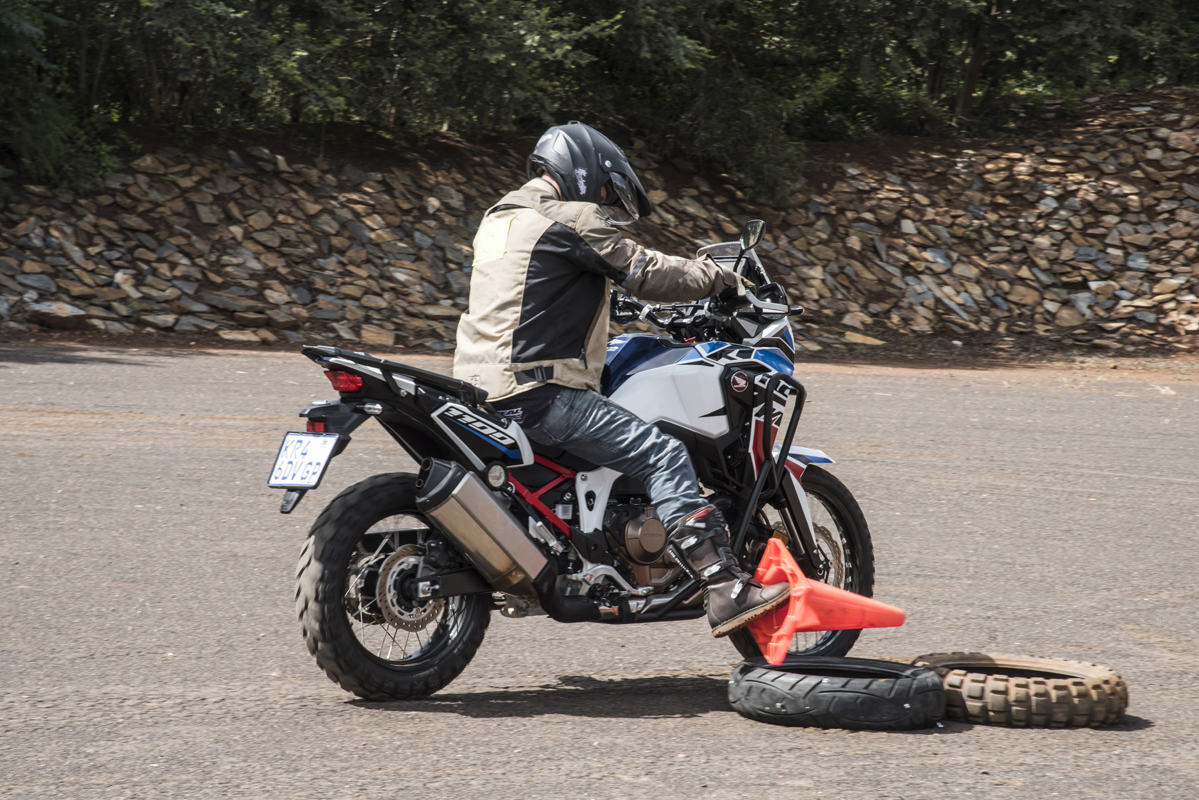
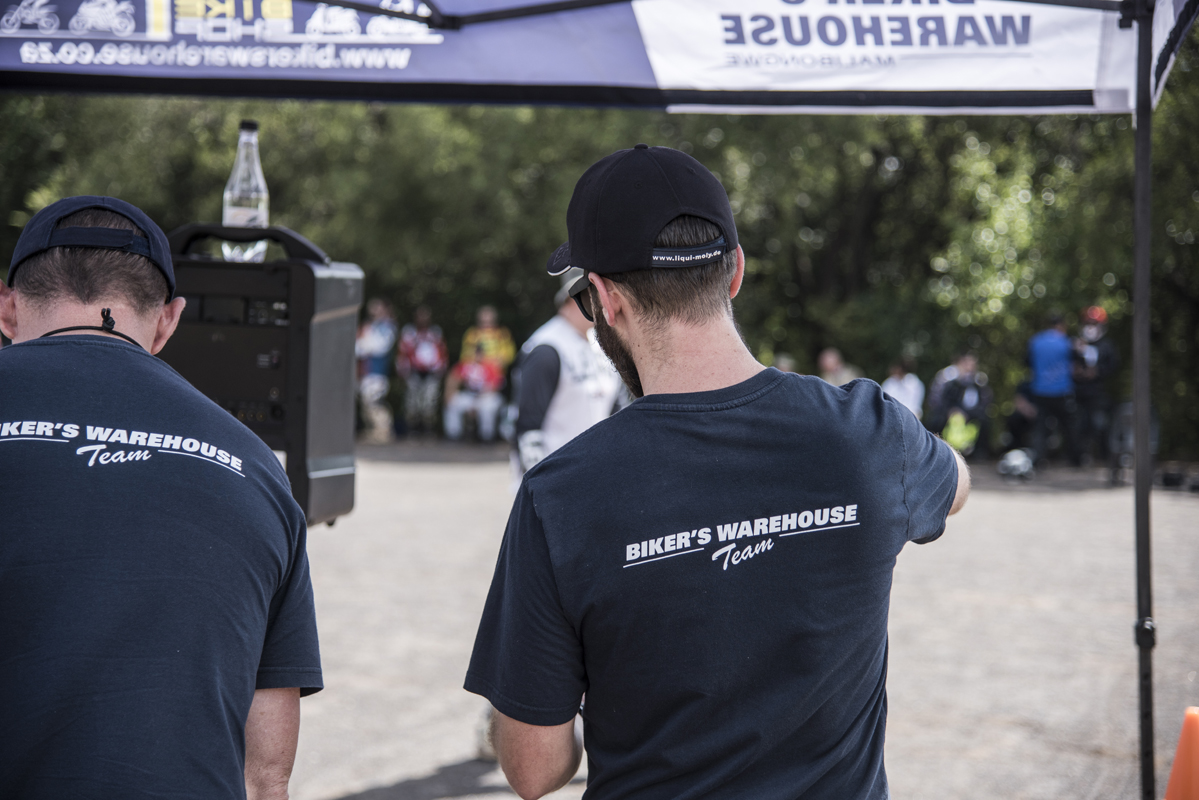
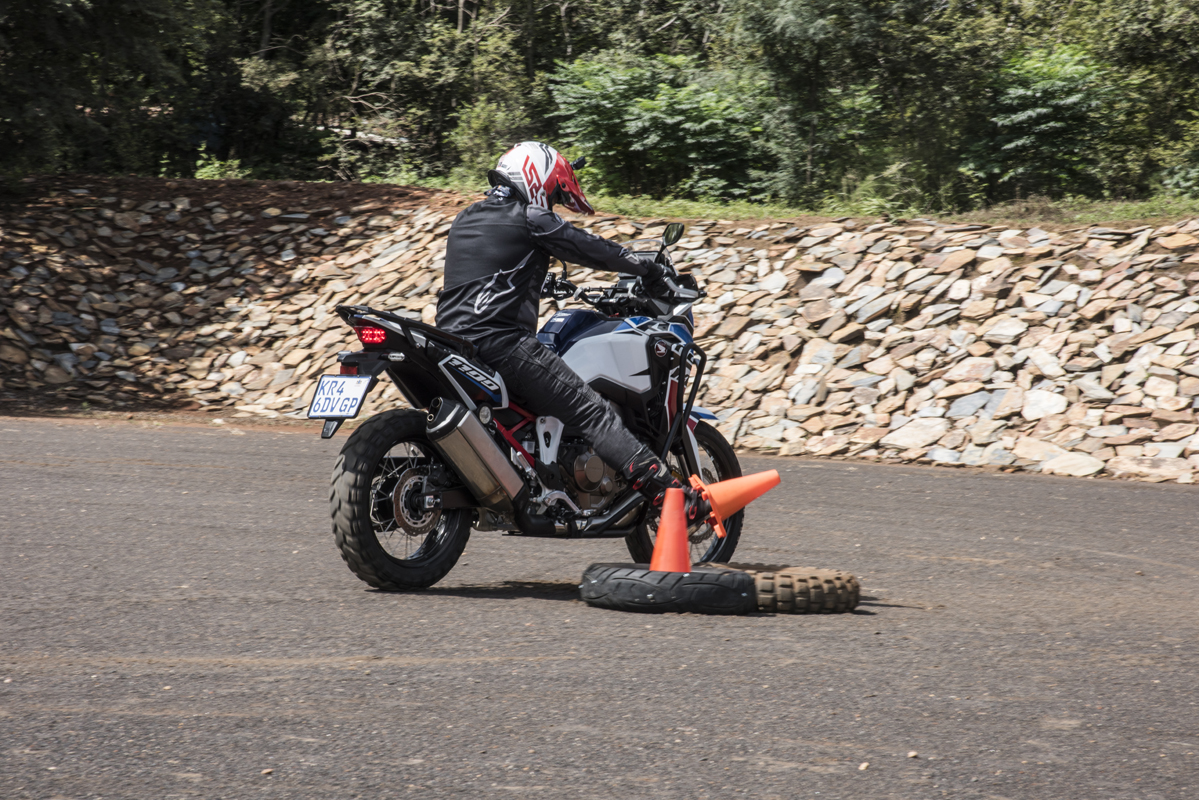
Further to this initiative, Biker’s Warehouse, itself a Honda dealer, organised a Mini Quest event at the A.D.A. training facility near Hartebeespoort recently. To understand what this entailed, an understanding of the Quest event itself is required.
Photo credit: Bjorn Moreira / ZA Bikers
The Honda Quest is not a race, even though teams of two riders compete together against other teams. It is more of a challenge, not only for the bike but of the participants. It’s not how many times you fall, but how many times you pick yourself up again: how you handle the pressure: how many times you will put others before yourself: how much empathy you have for your surroundings, of the culture of this amazing country, its people and nature. Of course, it is also a test of skill, endurance, mechanical sympathy and knowledge and riding ability but, over everything else, it is a test of teamwork.
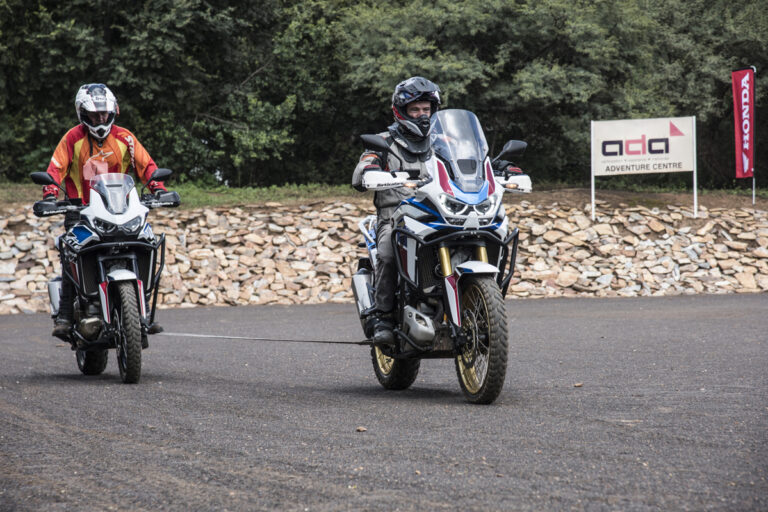
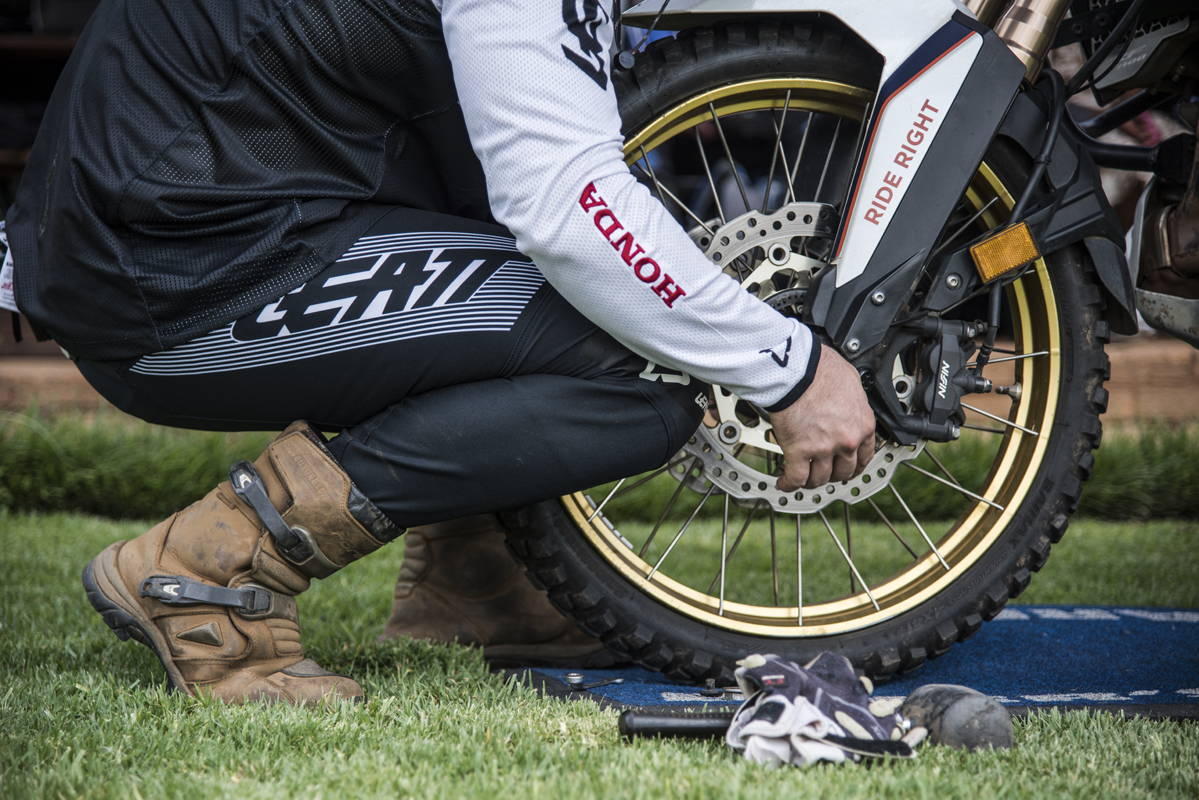
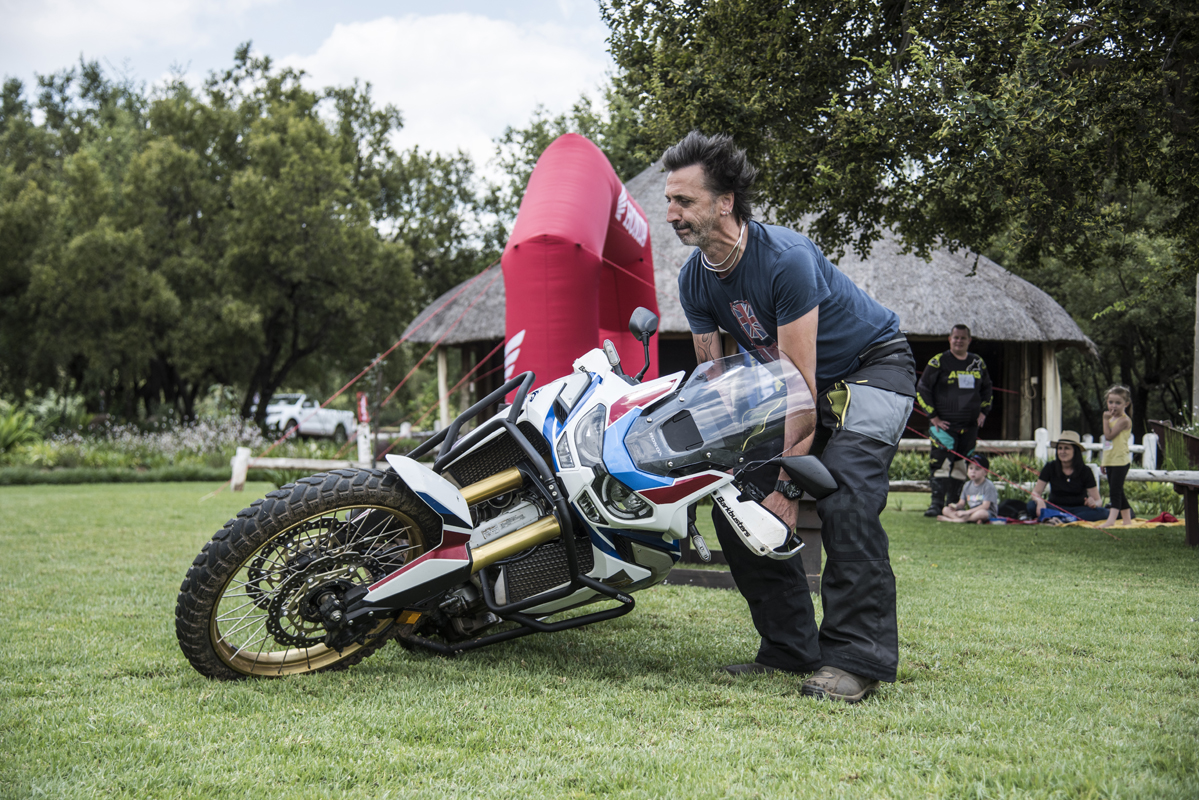
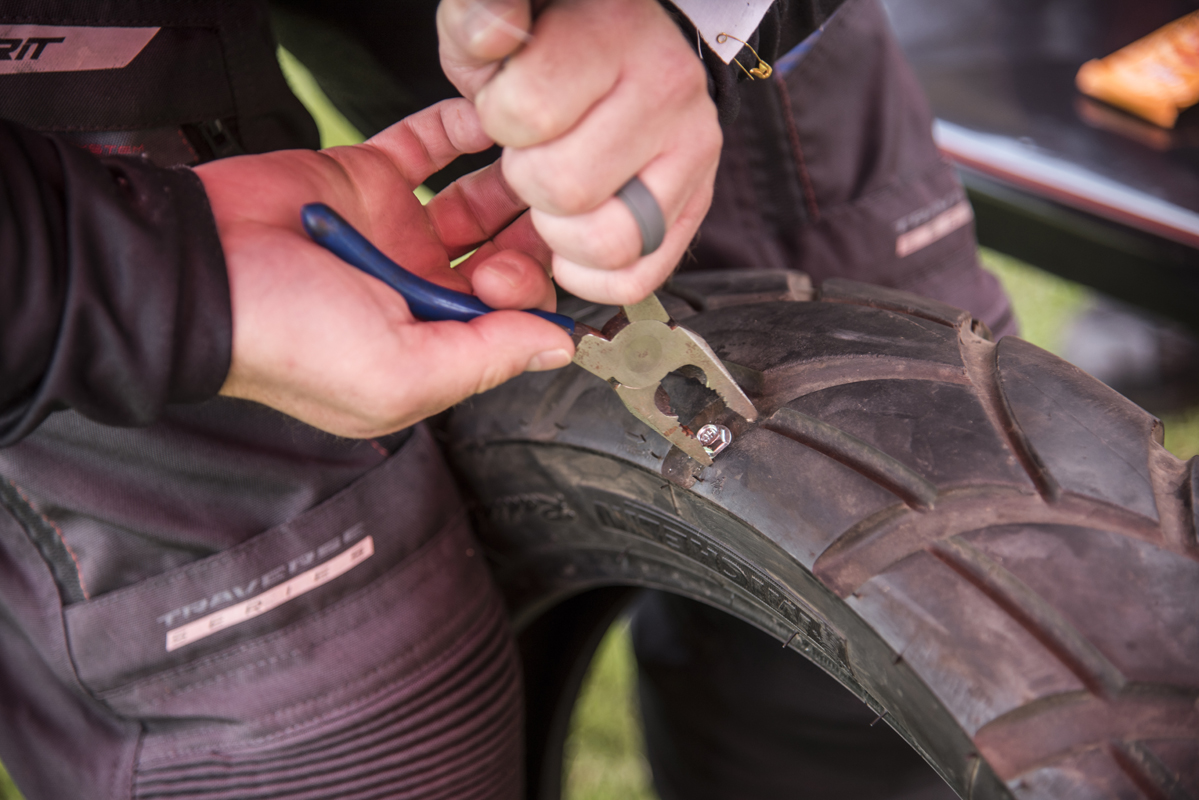
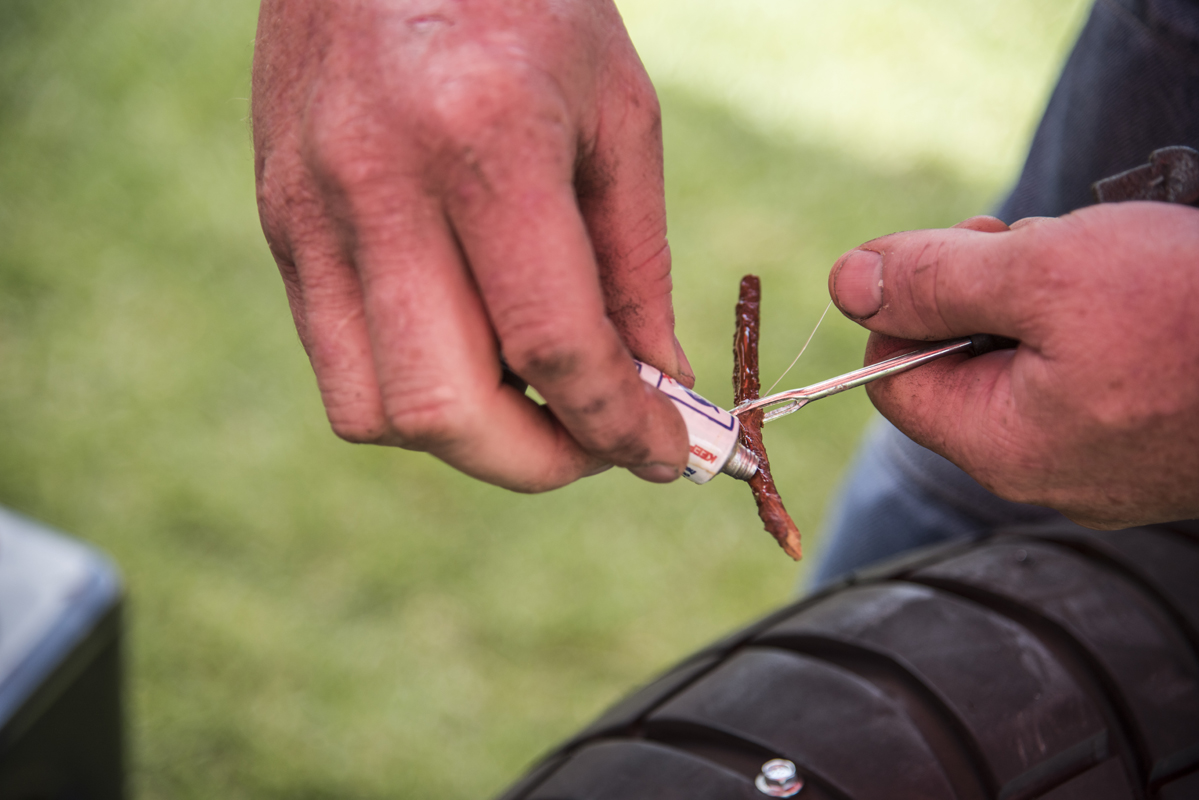
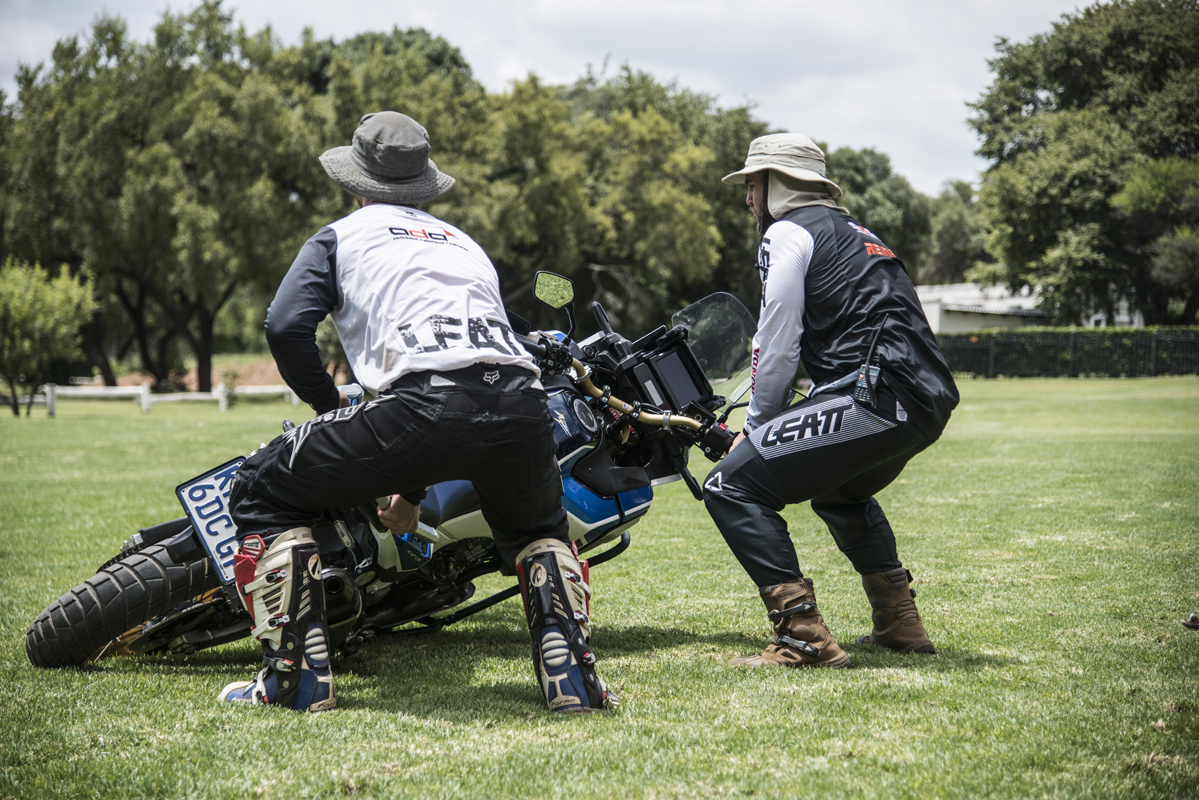
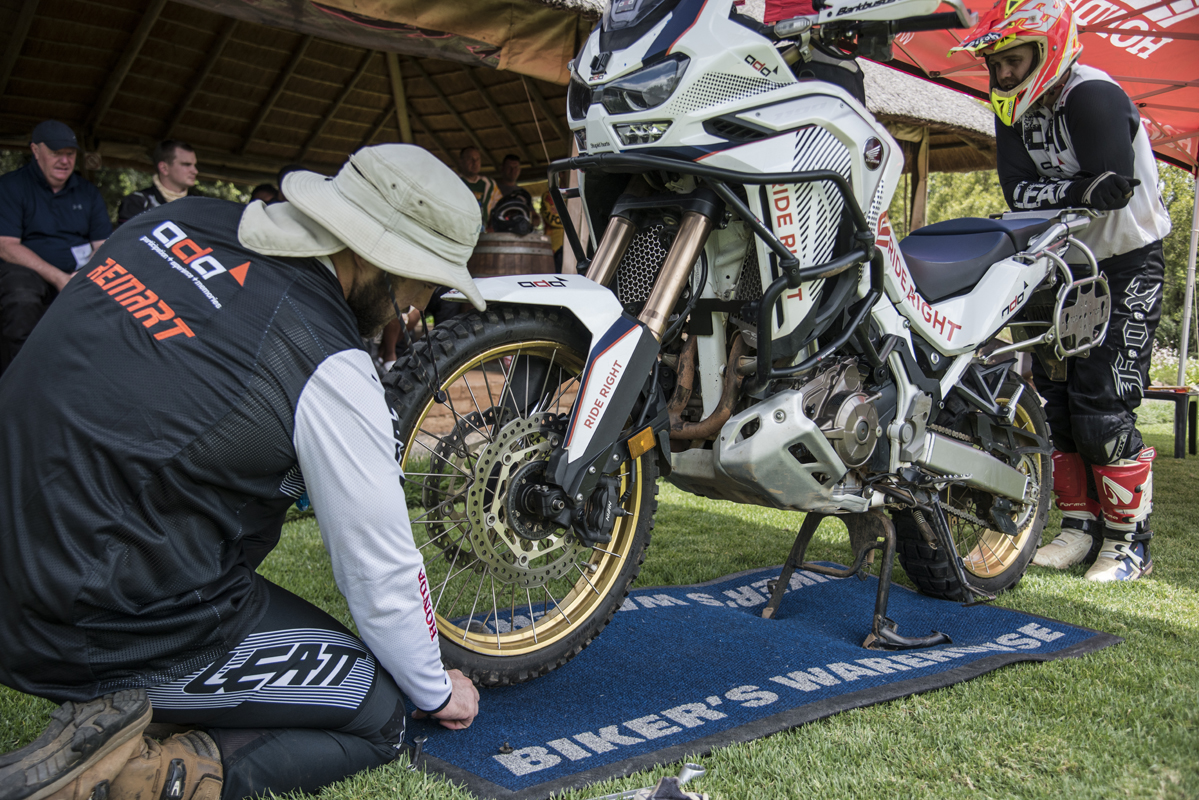
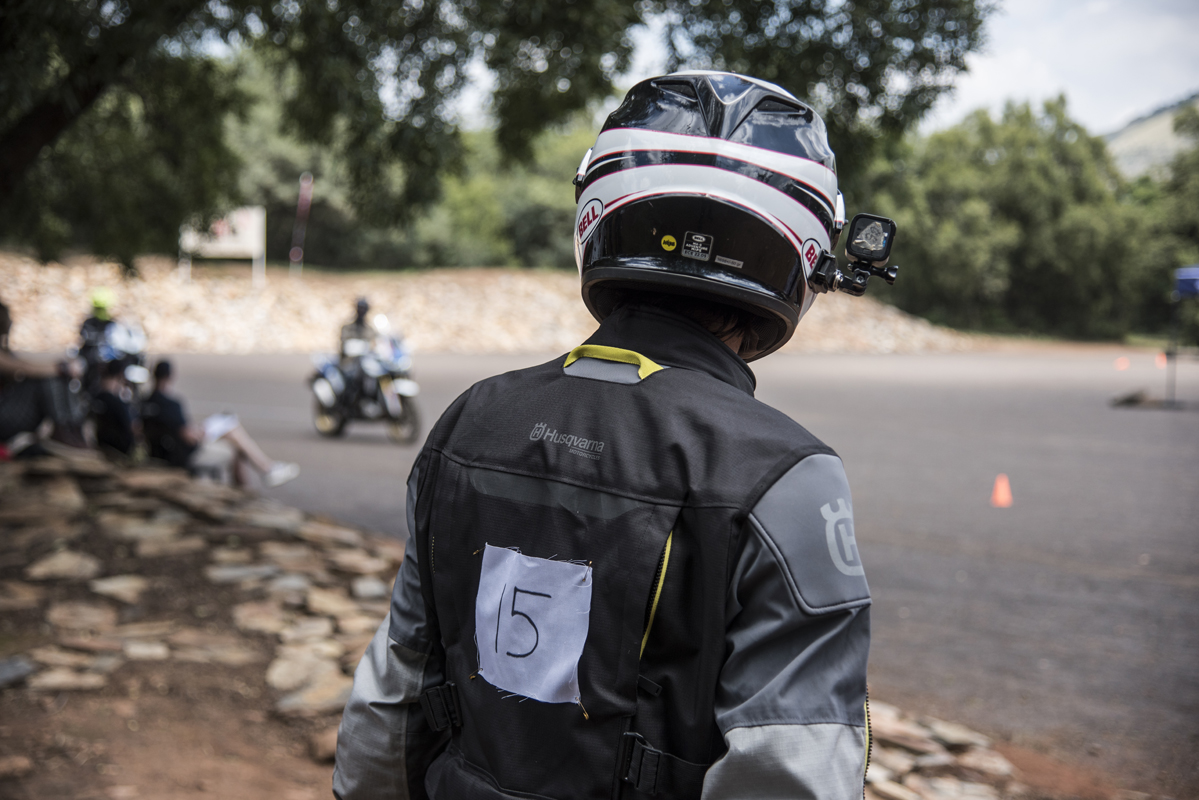
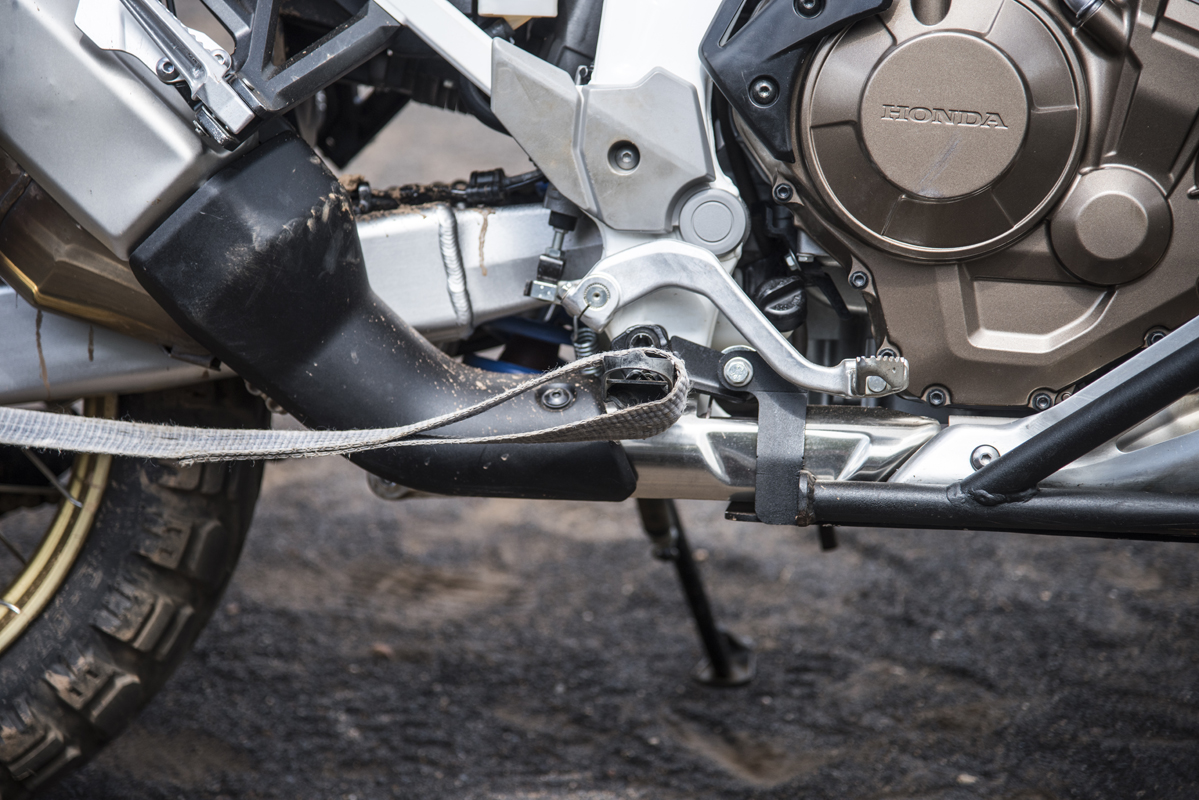
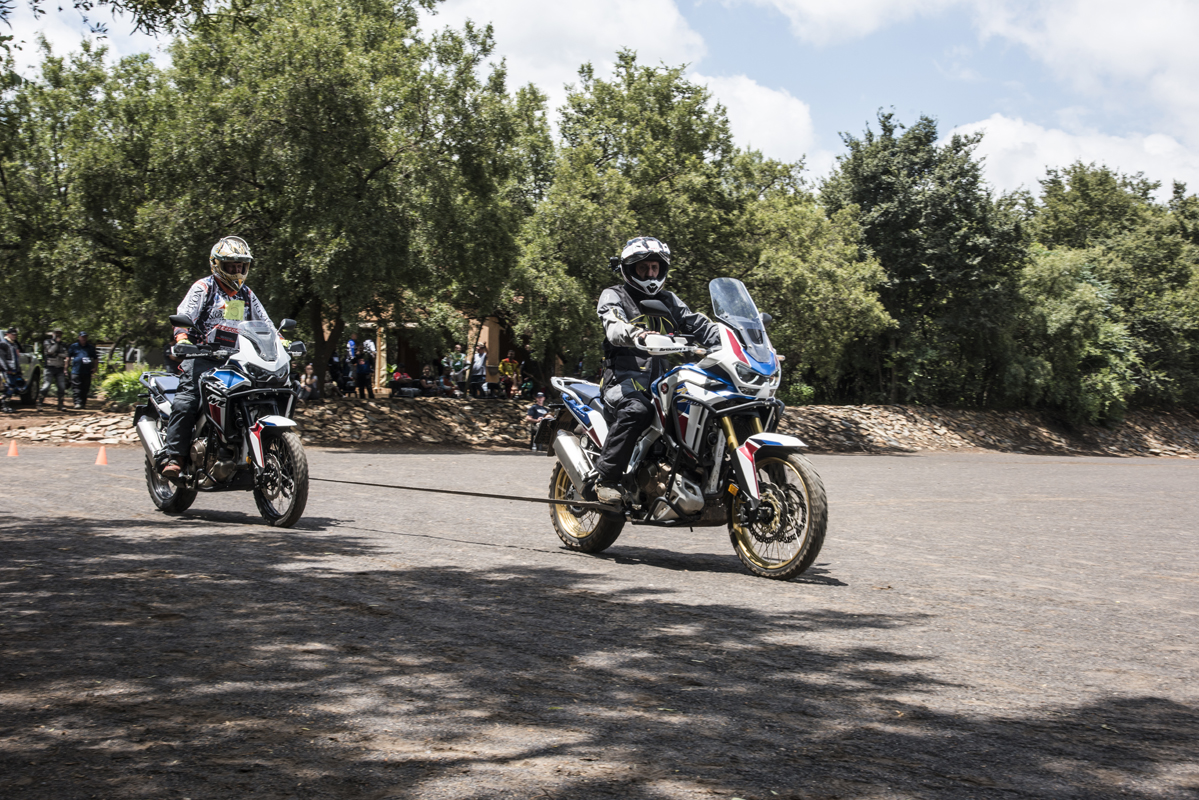
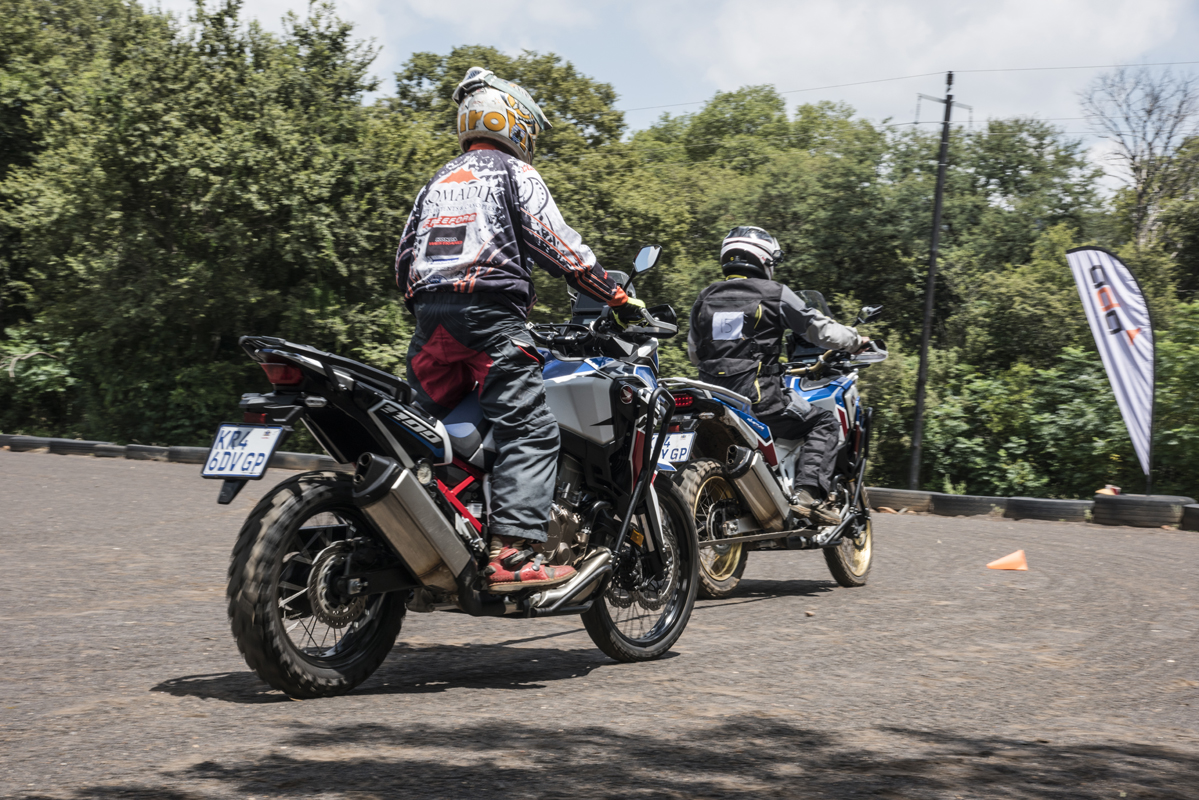
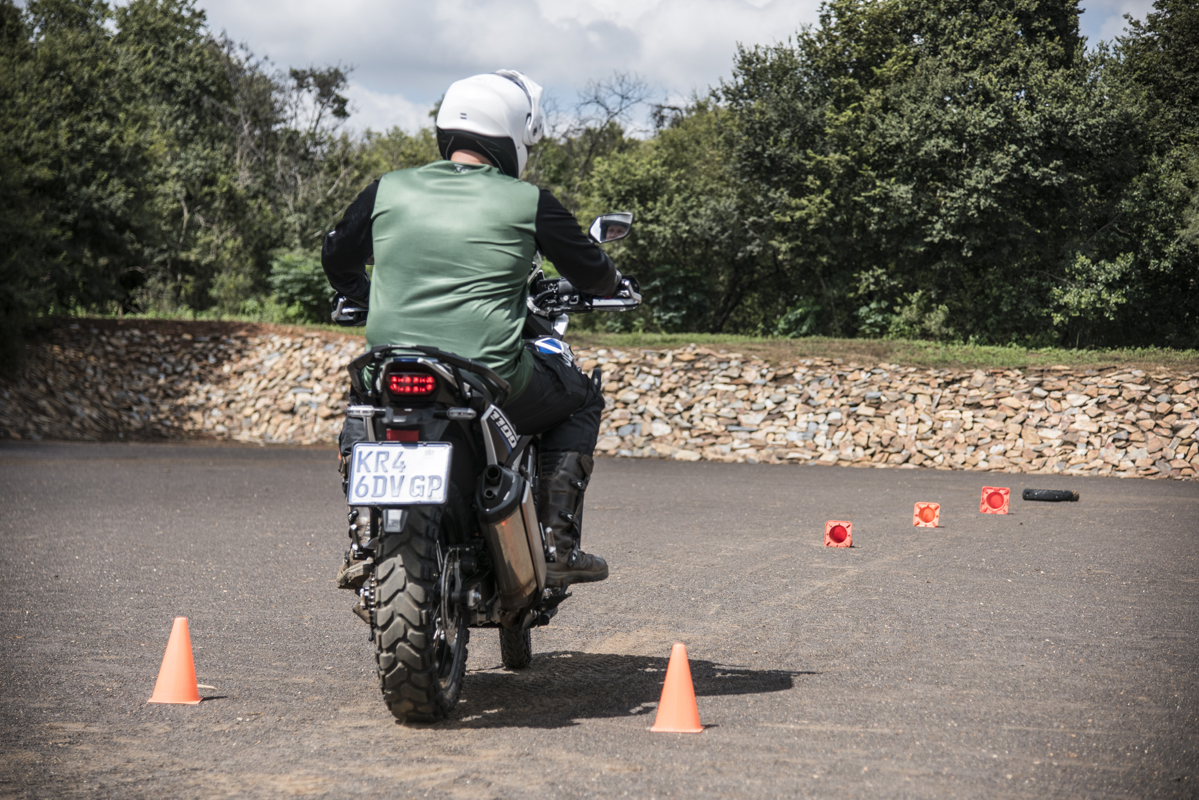
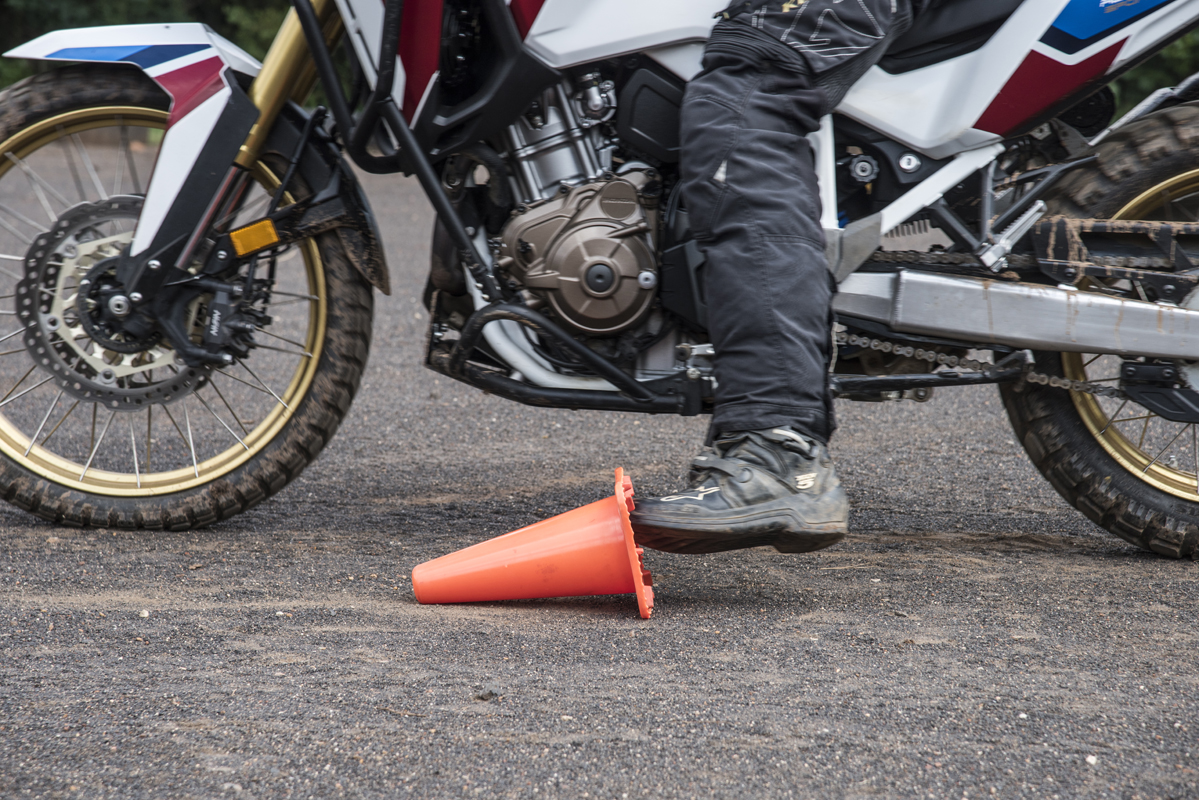
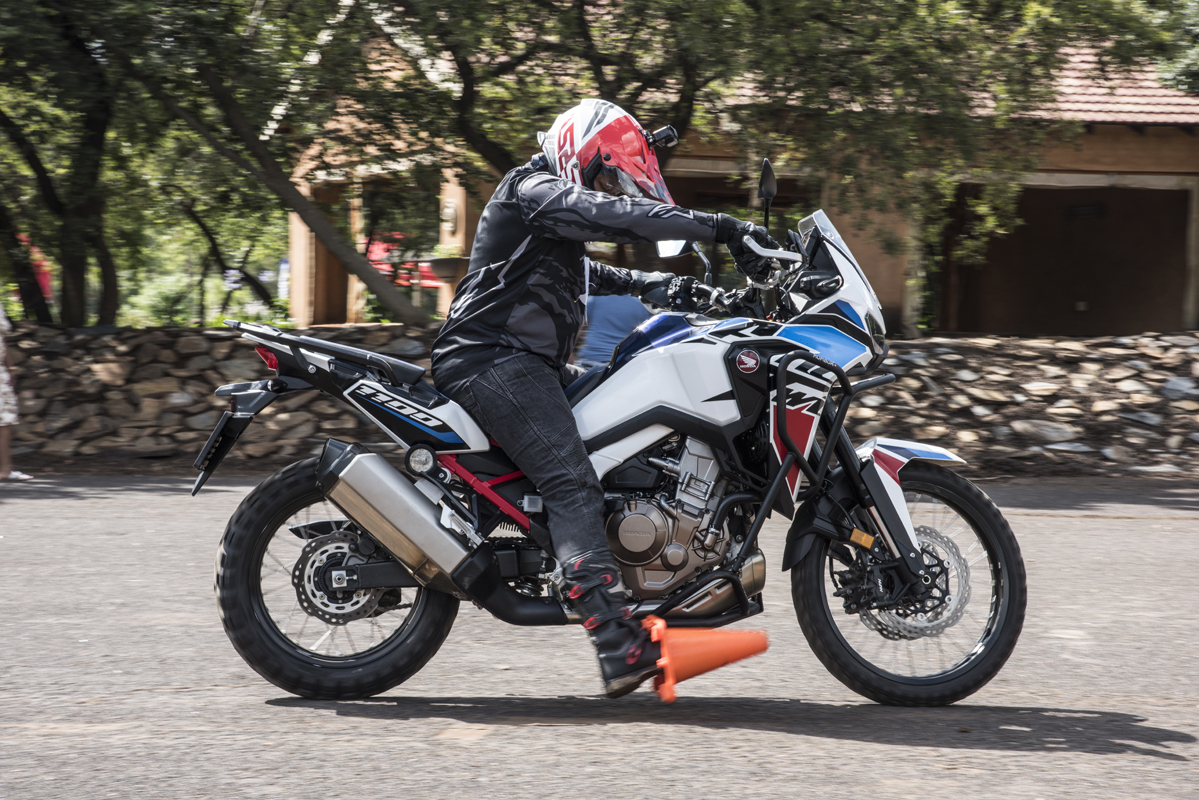
With this in mind, various challenges had been set up at A.D.A. and a fleet of Africa Twins was supplied on which to complete them. Paired off into teams, the participants had to complete the following tasks: pushing the bike around a pre-determined course (not as easy as it sounds): riding along a tight trail through woodland, counting hidden cones along the way: picking up cones with your feet and placing them in a receptacle: towing your teammate around a coned course: removing and replacing a front wheel: picking up two bikes (two picking up one bike and then one picking up the other bike) and removing a screw from a tyre and plugging the hole successfully.
Photo credit: Bjorn Moreira / ZA Bikers
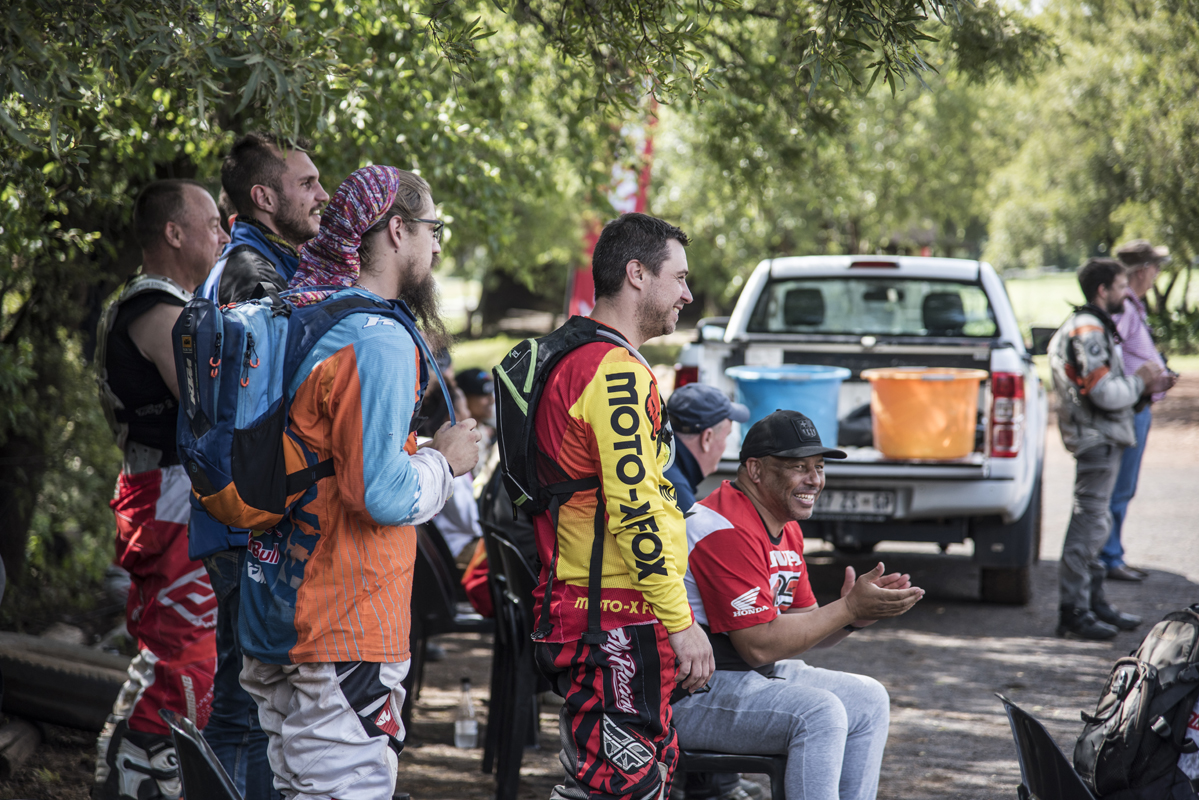
All sounds simple, doesn’t it? Yes, some of the tasks were easier than others but all required a level of skill that you either possessed or had to learn quickly. Most of all, however, it was fun with a capital F. We all got to know new people, laughing with them and cheering them on. And that is the key to the Quest: as much as it showcases the abilities of the Honda Africa Twin, the Quest is about people. We’re all from different walks of life, have different issues to deal with but, at the end of the day, we all share a love of motorcycling and there is a strong sense of community. The perfect Honda Quest participant is someone who is confident in him- or herself but just as ready to recognise faults and work on them, open to new experiences and influences, ready to push the boundaries, ready to help others and be grateful for everything we have in this incredible country we call home.
Photo credit: Bjorn Moreira / ZA Bikers
In the half-day the Mini Quest took up, we experienced but a fraction of what the full Quest entails but there was not one of us who left there without hoping that we might be one of the lucky few who get through to the final selection of participants.
The Honda Quest is open to anyone to enter. You don’t need your own bike – Honda supplies Africa Twins for every participant – just your own protective riding kit. All you have to do is look out for the notification on the Honda SA Facebook page that entries are open. You’ll have to write a short justification as to why you should be considered and answer a few questions. 200 entrants will be selected and will attend regional qualifying events. From there, 28 entrants will be selected to attend a three-day boot camp which will whittle the number down to fourteen finalists who will go on to take part in the ten-day Quest event in October.
Photo credit: Bjorn Moreira / ZA Bikers
To give you further insight into the qualities required, I can do no better than to quote from the Quest website – regarding the 2021 Boot Camp qualifier:
“The selection panel had the arduous task of eliminating 14 of the 28 hopeful semi-finalists by conducting theoretical and practical tests that varied from adventure-related general knowledge questionnaires to African geography quizzes. The semi-finalists were also asked to perform various practical and mechanical tasks with the added pressure of time limits per task.
Photo credit: Bjorn Moreira / ZA Bikers
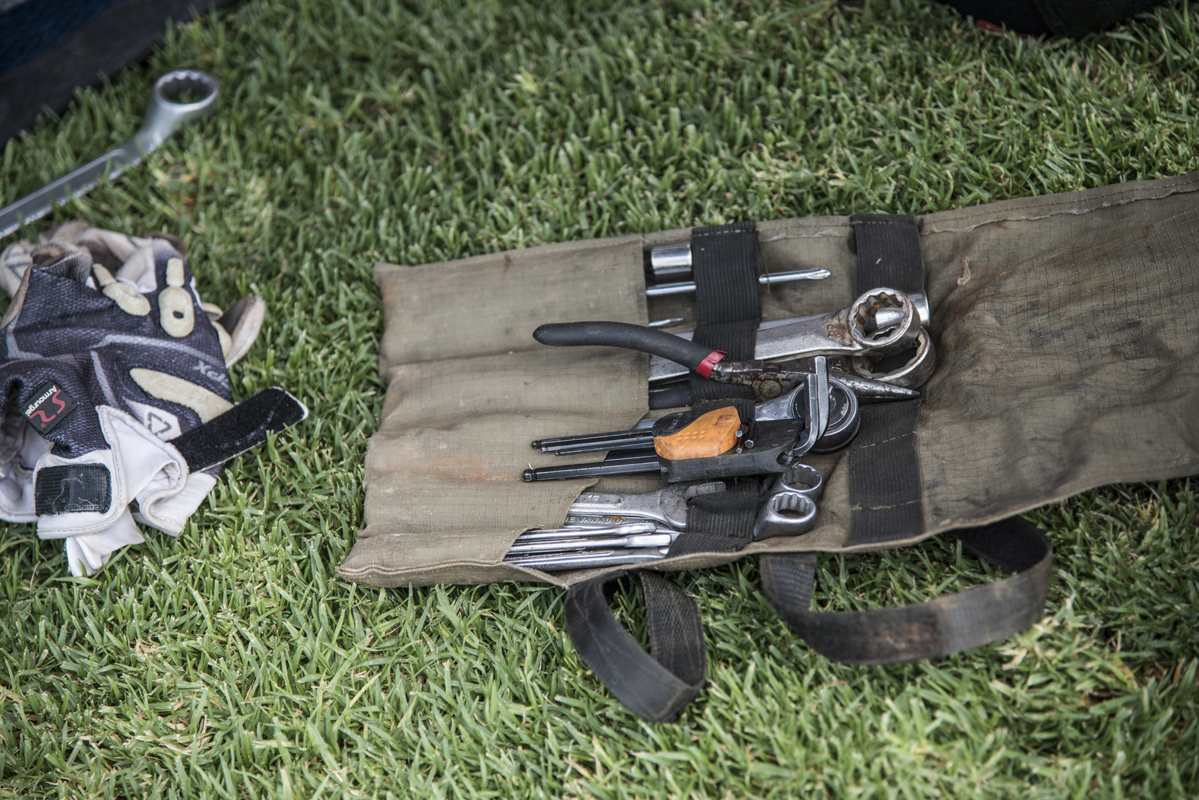
“The individual tasks also included the assembly of adventure essential accessories to the CRF1100 Africa Twins, one of the finest adventure motorcycles, and the bike they will be using to compete in the Honda Quest 2021 competition. Additional tasks over the 3 days included the assembly of a camp, motorcycle maintenance, tyre and tube repairs among others.
“The selection panel were constantly on the lookout for individuals who demonstrated the competitive spirit and determination to complete the necessary tasks that would stand them in contention to compete in the final of Honda Quest 2021. Individual interviews were also conducted with each of the 28 semi-finalists which gave the panel insight into the behavioural responses of each semi-finalist.”
Photo credit: Bjorn Moreira / ZA Bikers
As you see, riding is almost the least of the challenge and it is this that makes the Quest unique. It is the most comprehensive test of adventure riders yet devised and, should you be one of the lucky ones, you will experience an adventure beyond your wildest dreams and which will only serve to increase your hunger for adventure.
I don’t know if any of you, like me, felt just a little short-changed after the December break. It came at the end of, to quote the dear departed Queen, an ‘Annus Horribilis’. A crappy year where the only positive thing we saw was the end of Covid and its madness. Travelling at this time of year is a toss-up at best. The weather is almost guaranteed to be lousy. Too hot, too wet and too humid.
As if that wasn’t enough to contend with, the KZN sea and beaches, in the main, were infested with turds. The fairest Cape is an option, but the current fuel prices punish you and then you still have to contend with the rest of SA who also thought the Cape was a good call for their holiday. I am probably just grumpy because I just didn’t get adequate saddle time over the break. I needed to correct that desperately.
Photo credit: Dave Cilliers
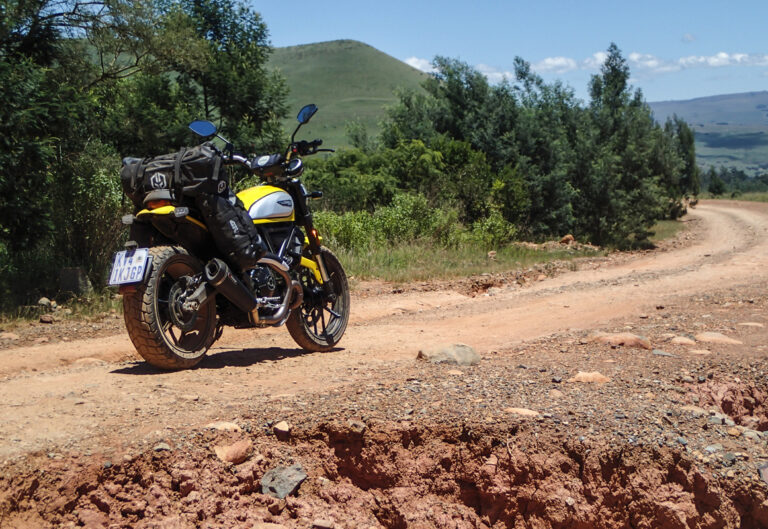
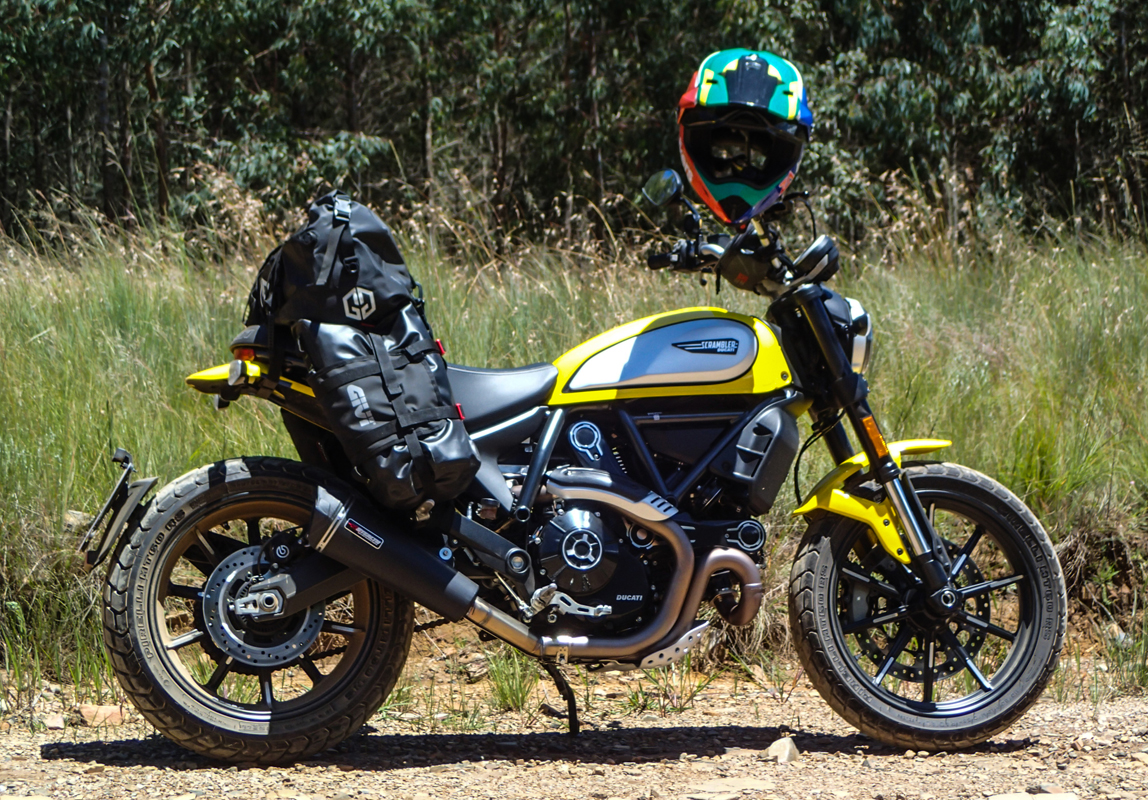
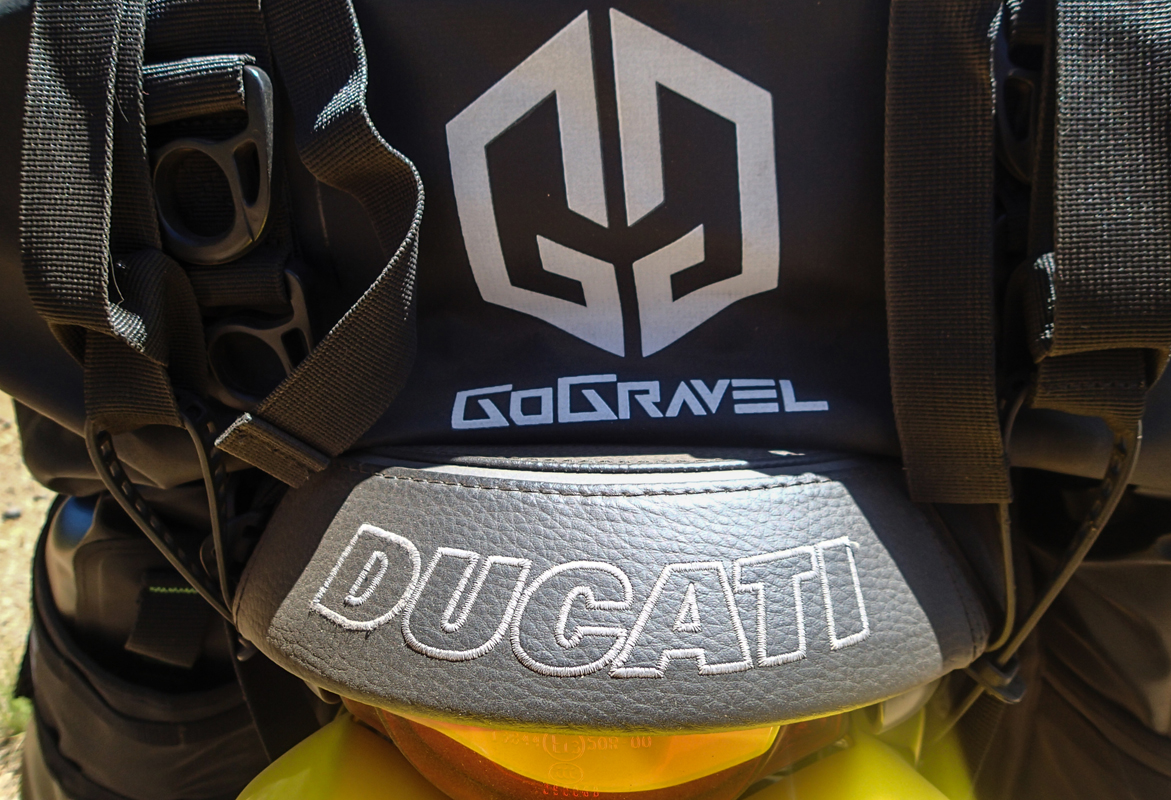
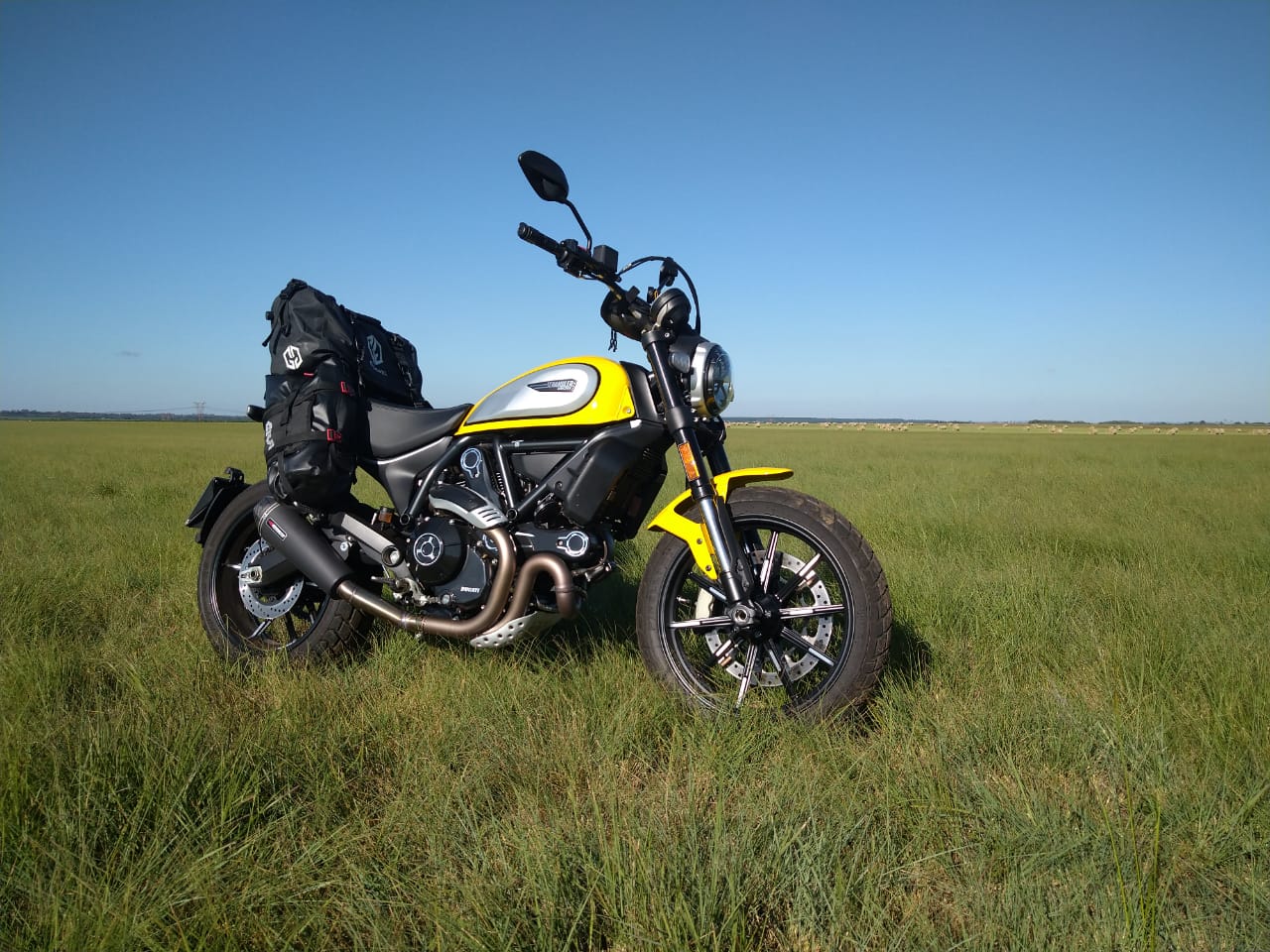
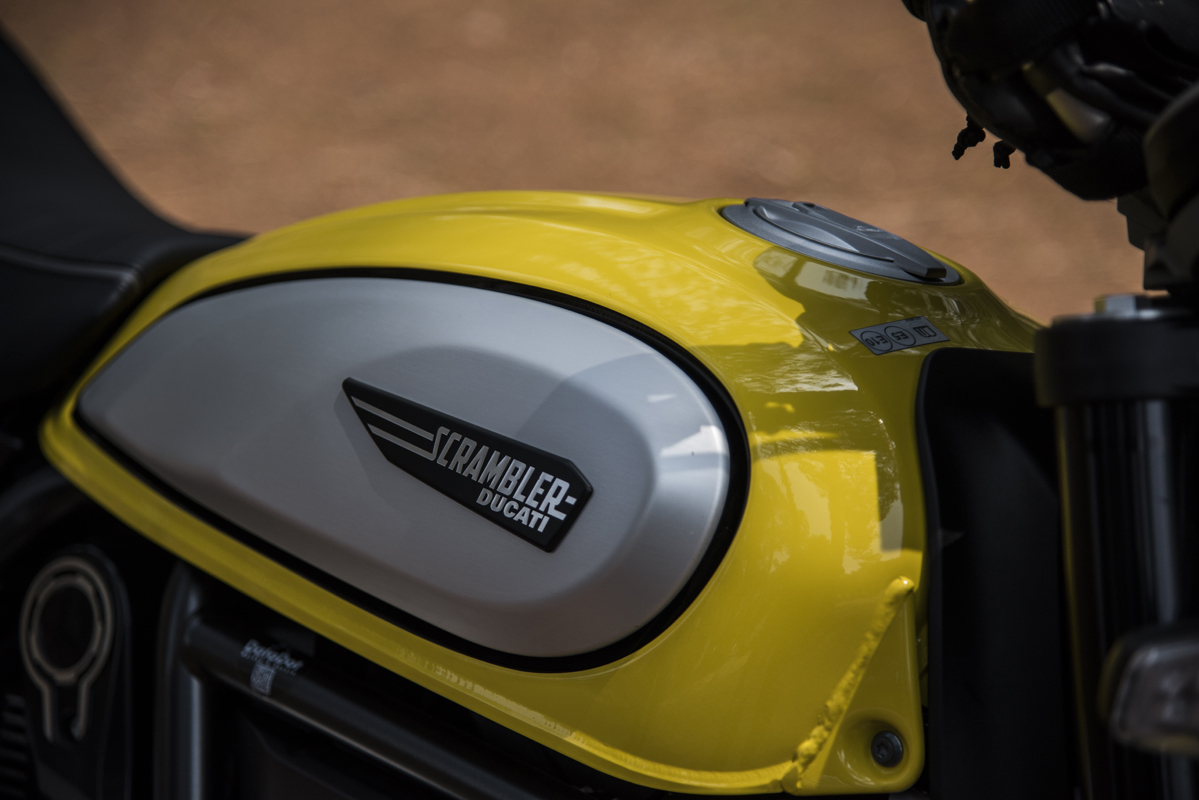
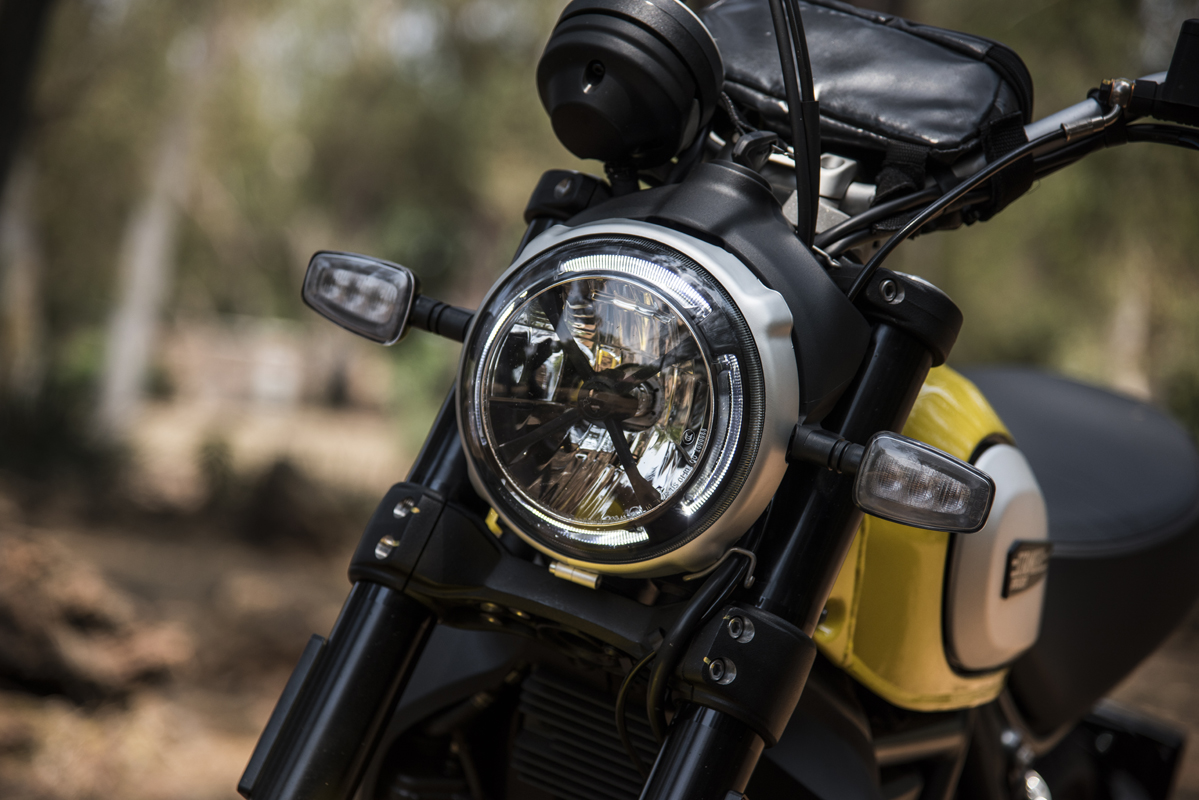
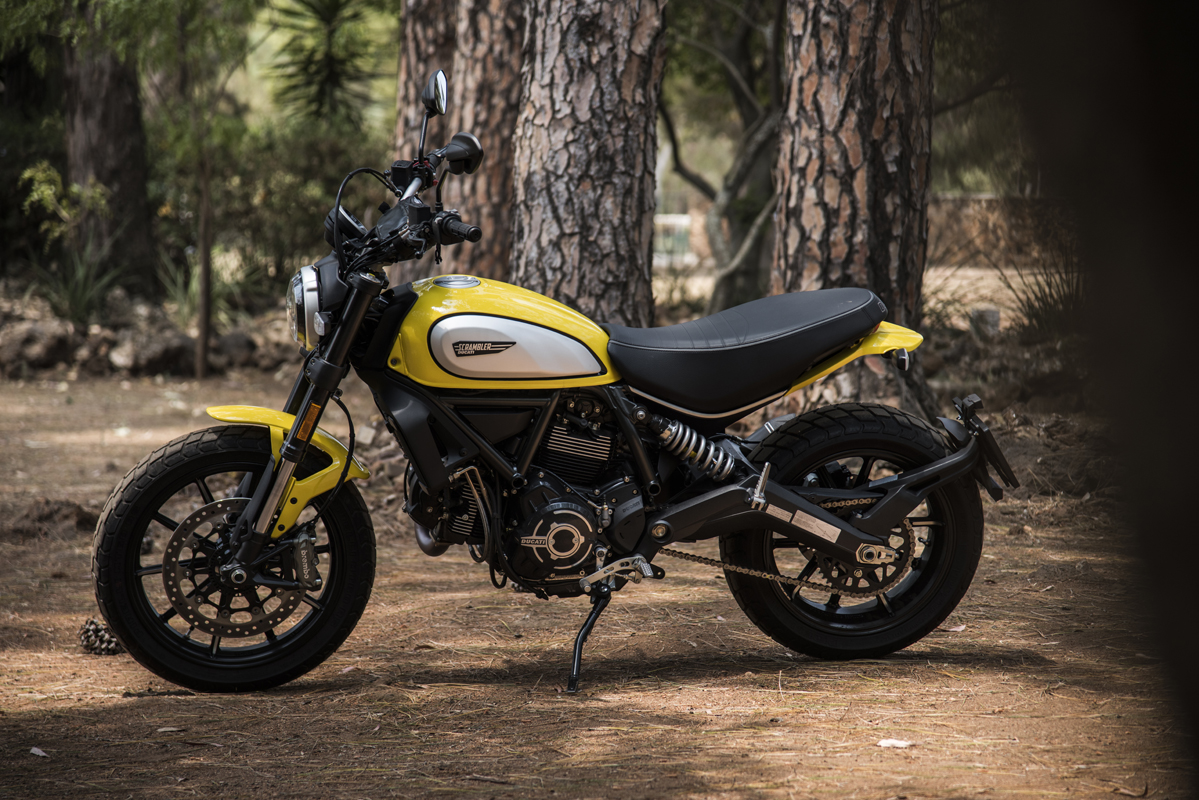
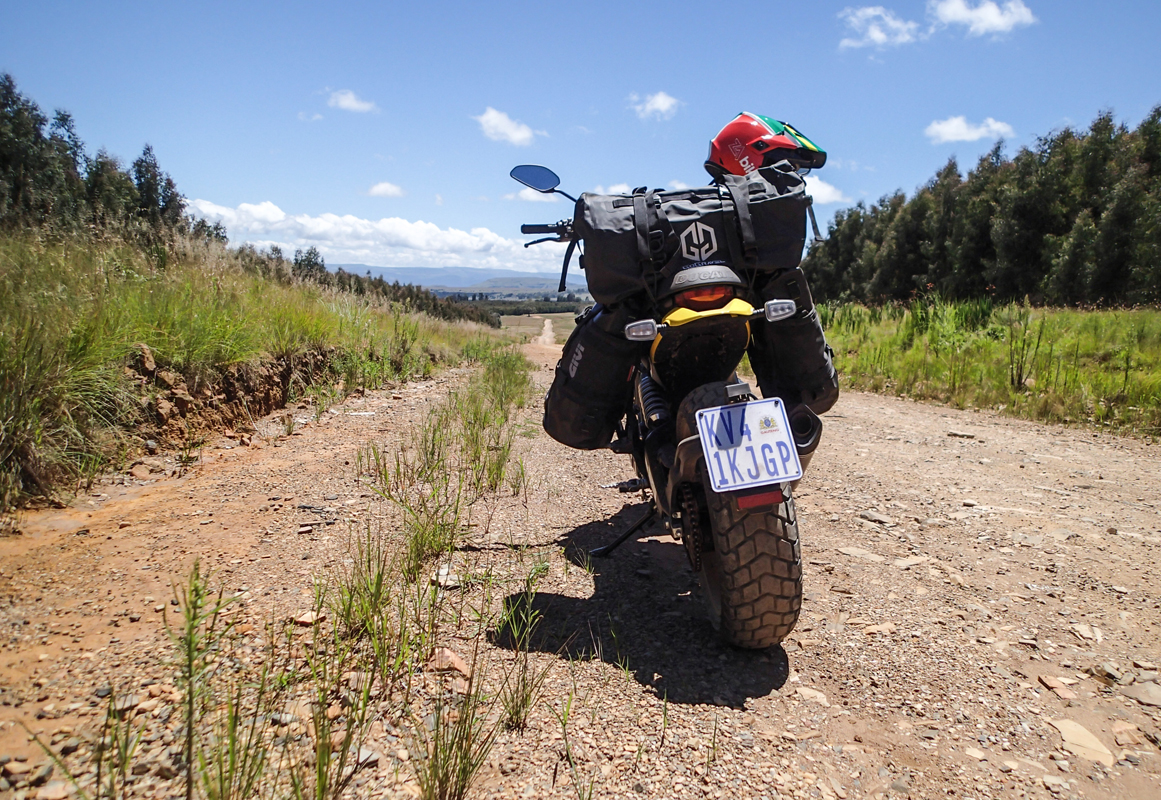
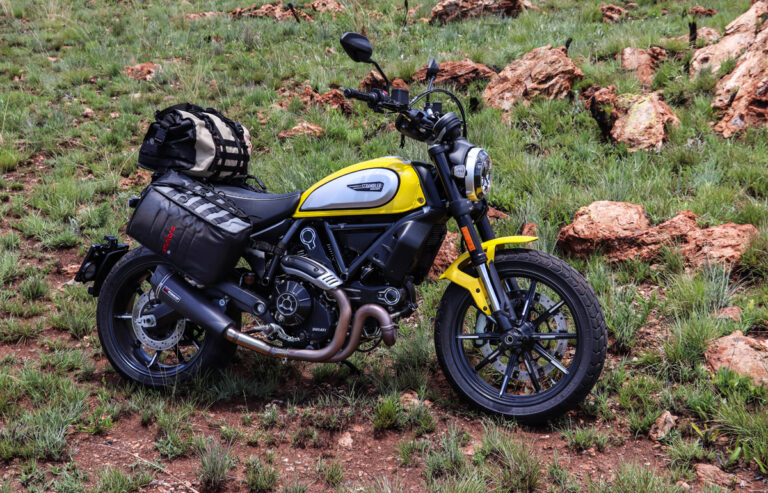
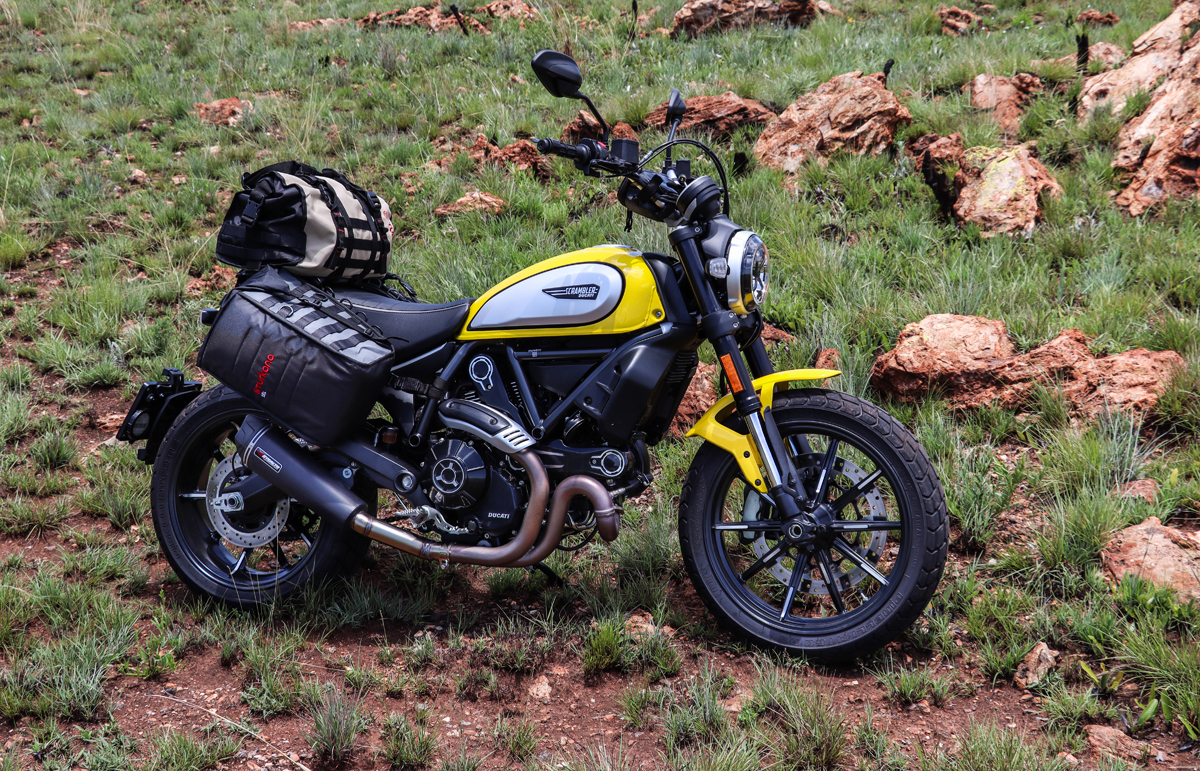
We recently had a spell of magnificent weather. Those big blue sky days with hot, but not humid, weather. This came after weeks of unpredictable, stormy, humid and in many cases gloomy days. On these bright sunny days, with no chance of rain, the Gypsy in my soul becomes impossible to resist. With no fixed plan, other than to ride and then ride some more, I packed my tent (to keep my options as wide open as possible) and essential kit for an overnighter on my Scrambler Ducati Icon. A quick shout out here to Givi for their Canyon soft luggage as well as Go Gravel for their utterly brilliant waterproof stuff bag. The two systems work brilliantly together, especially if your plan is to traverse some dirt roads.
I rode out of Pretoria at around 7:00 AM on a bright and sunny day with not a cloud in the sky. I knew it would get hot later on, but we would deal with that when it happened. In true desert sled tradition I wore riding jeans, a T-Shirt and my 40-year-old IXS leather jacket which is lined but not padded. What an amazing piece of kit that has been. It is the top half of a two-piece set of leathers which have served me flawlessly over literally millions of kilometres.
Photo credit: ZA Bikers
My feet were shod with Icon ankle boots which fit the Scrambler mould perfectly with their old-school rugged construction. Feeling as minimalist as my bike, I breathed in the still-cool morning air and felt the everyday stress and strain of modern living start to ebb away. This was going to be a good day!
Riding out through the plots towards the road east that runs past Bronkhorstspruit dam, I took in the magnificent green and verdant countryside and felt compelled to capture the image of the Scrambler parked in a huge recently mowed field. That done, I cruised east. I say “cruise” because that is literally how I was riding. On a naked bike, you do not have to blast down the road to feel that you are in motion. Anything over 115 km/h is satisfying if you are riding for the sheer joy of being one with your motorcycle on a beautiful day. The Icon is such a joy to ride in this fashion. The easygoing nature of the 800cc 90-degree L-Twin is engaging as it emits a throaty burble from the liberated pipe. Turning a relaxed 4,500 rpm I scooted blissfully along.
Photo credit: Dave Cilliers
It was one of those rides where time almost stood still while the k’s sped by. Before I knew it I was rolling into Milly’s for a Steers burger brekkie and fuel top-up. There were 5 busloads of ANC members in all their party regalia en route to somewhere. Watching these guys’ antics as I scoffed my burger, I wondered how, with the ANC’s shocking track record after almost 30 years at the helm, any thinking man or woman could possibly vote for them with any hope of a better future.
Photo credit: ZA Bikers
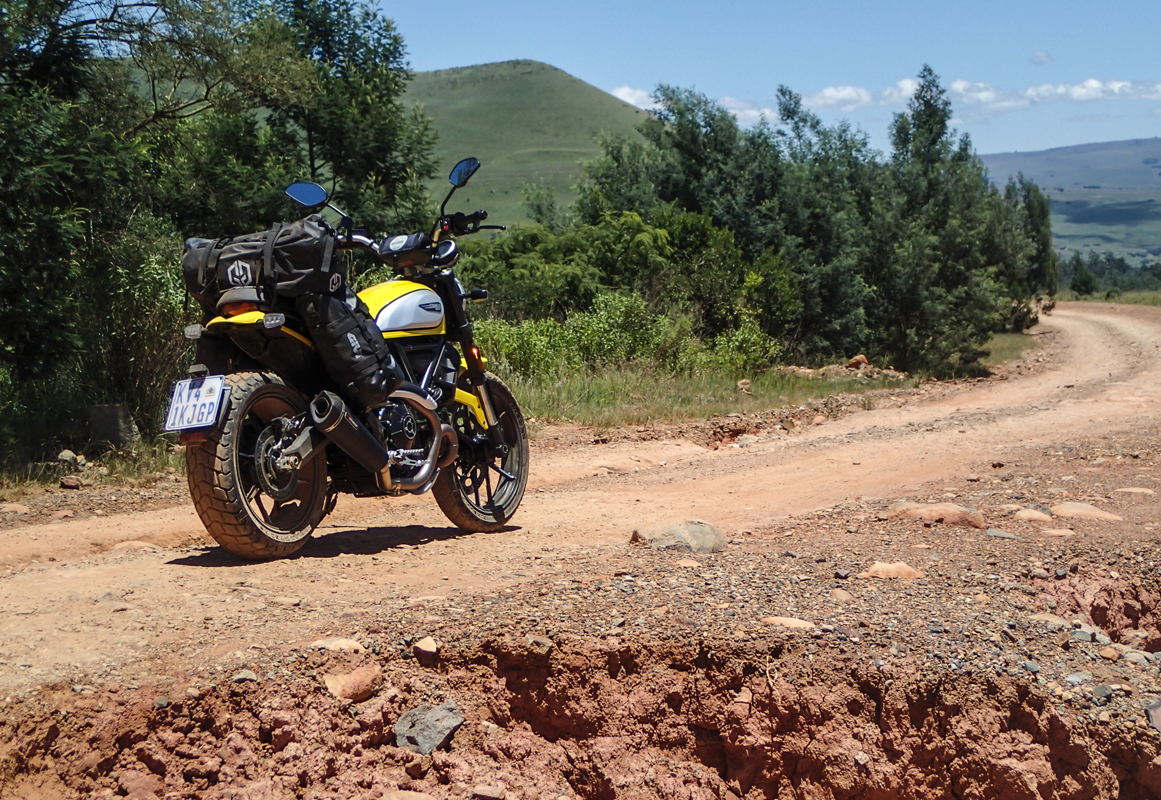
I soon dismissed such wonderings given that I was so enjoying wandering of a different kind. Fuelled and fed, I hung a right through Machadodorp and exited on the road to Barberton. About 10 odd k’s down this road a tar road turns off to the left. I followed this road until I saw a dirt track running off of it to the left with a “Tranquilitas Guest Farm” sign. Hooking a left, I got to experience the Icon on the dirt.
I had ridden this road in the past when it was in vastly better nick. It seems that traffic volumes are very low, so with high rain volumes, it has deteriorated into a bit of a goat track. Great for Scrambling though. With some deep erosion ruts, you need to pay attention as the road meanders through grassland and a bit of acacia forest. I stopped for a couple of photos and just revelled in the solitude and splendour of the countryside. I was also pleased to see that my luggage was staying put and needed no repositioning or fastening (always a good idea to check your luggage after your first few k’s of gnarly dirt).
Photo credit: Dave Cilliers
I was reminded of a trip many years ago with a buddy to Botswana, where he was slack with checking his luggage and ended up trailing a plume of smoke as his exhaust came into contact with his luggage and set fire to his blow-up mattress. It was very funny watching him abandon ship and then try to separate his burning luggage from his bike. All ended well apart from the fact that his sleeping comfort was history. The smoke smell on his clothing was also rather offensive!
I really enjoyed riding the Scrambler on the gnarly track and all too soon I was ambling into Waterval Boven at the end of the dirt. Back on tar, I proceeded east and through the tunnel then down the magnificent Eland’s River valley. The tar is super smooth and snakes through long sweeps that are brilliant to ride. Once again the inherent handling qualities that seem to be built into every bike that exits the Bologna factory came to the fore. I smelt Ngodwana sawmills before I saw them. This is the thing with bike travel. You are so part of the countryside that you are traversing. By now it was getting properly hot, but the joy of a naked bike is that you get the full benefit of the breeze that you are creating. Dropping the zip slightly and loosening the cuffs on my jacket had the desired cooling effect.
Photo credit: ZA Bikers
Idling into Ngodwana I turned right towards Kaapschehoop. The road up the hill is somewhat bumpy in contrast to the awesomely smooth Elands Valley road but it becomes really pleasant as the temperature drops faster than a bride’s nighty. You go from Lowveld heat to Kaapschehoop at an 8-degree cooler environment.
My dirt rambling had generated a proper thirst so I proceeded directly to ‘the office’. The epic little pub called “Nagkantoor” that is, which is located in the “bo-dorp”. An ice-cold beverage went down like a homesick mole. My buddy Brian and his chum Martin arrived after breakfast in Sabie and joined me at the office. They confirmed that the Lowveld was indeed cooking and that Kaapschehoop was the place to be.
Photo credit: Dave Cilliers
Nagkantoor is run by De Wet Potgieter, a freelance journalist and author, who has published a number of books on controversial subjects encompassing SA’s recent past. An extremely likeable fellow and a great host he is too. The photos that adorn the walls of the pub tell many a story and are a pictorial history of some memorable SA events. Whiling away time in this environment on a sunny day after an epic ride is indeed pleasant, to say the least. A trio of the wild horses that are one of these villages’ claims to fame ambled past in search of anyone willing to give them a treat. A caramel pancake and another cold one (a man can’t stand on one leg you know) made for a great time shooting the breeze with mates.
Brian and Martin retired for a quick 40 winks after which I joined them for a coffee. Although geared to sleep over somewhere, I came to the realization that what I was really craving was more of a riding fix. I duly bade them farewell, mounted the Scrambler and at 3:30 in the afternoon, I headed for home.
Photo credit: ZA Bikers
On the ride down the sun had risen to meet me and now was hauling off, following its inexorable path to the west. I sped up the valley and then spilt onto the plateau, chasing the sun. I have noticed that riding east you invariably have a headwind, which, even if it nor really huffing, becomes evident in your fuel consumption. Now I had the converse. I could rumble along at 125 with absolutely no strain on the body and the Icon sipping 95 octane at 24 k’s to a litre.
Photo credit: Dave Cilliers
At 6:30 PM on the dot, I rolled up to my gate. What a privilege it is to own a bike with which you can ride far and wide across our beautiful land. A day in the saddle completely reset my mood meter. It is days like this that stick in the memory and completes the incredible tapestry of life. I did nothing extraordinary. I did not race across the dirt or try and tear up the twisty tarmac. I simply got out there in perfect weather and rode my bike with a spring in my step and perfect peace in my soul. I would duplicate that on any day in the right set of circumstances. So, just get out there and ride your bikes with no agenda other than for the sheer joy of it all, letting your worries and woes fade, for that day at least, into obscurity.
Ducati Scrambler Icon
For more information on the bike featured in this article, click on the link below…
A friend of mine and I decided to get away for a weekend, as December was so busy for him that he hardly rode his motorcycle. I heard via Dave Cilliers about self-catering accommodation in Kaapsehoop which sounded perfect. The owner of the house passed away a few months ago, and while the family is deciding what to do with the property, it was made available for visitors.
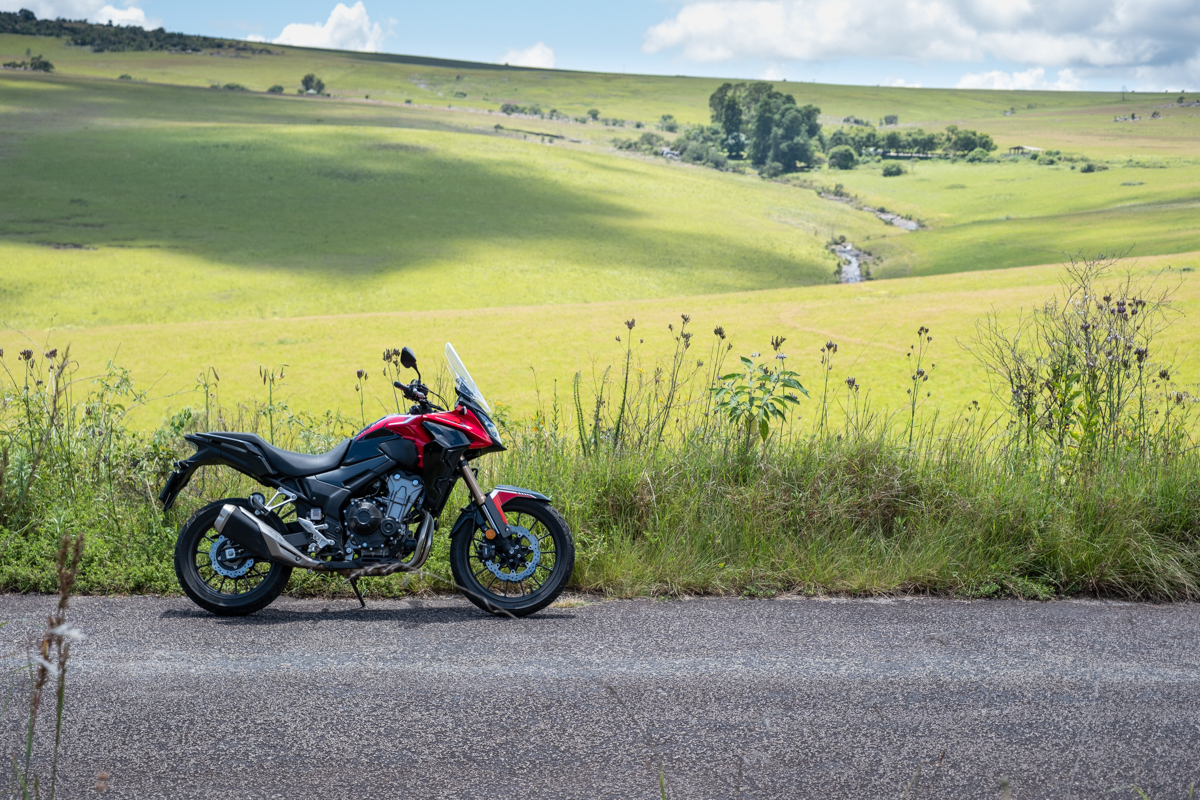
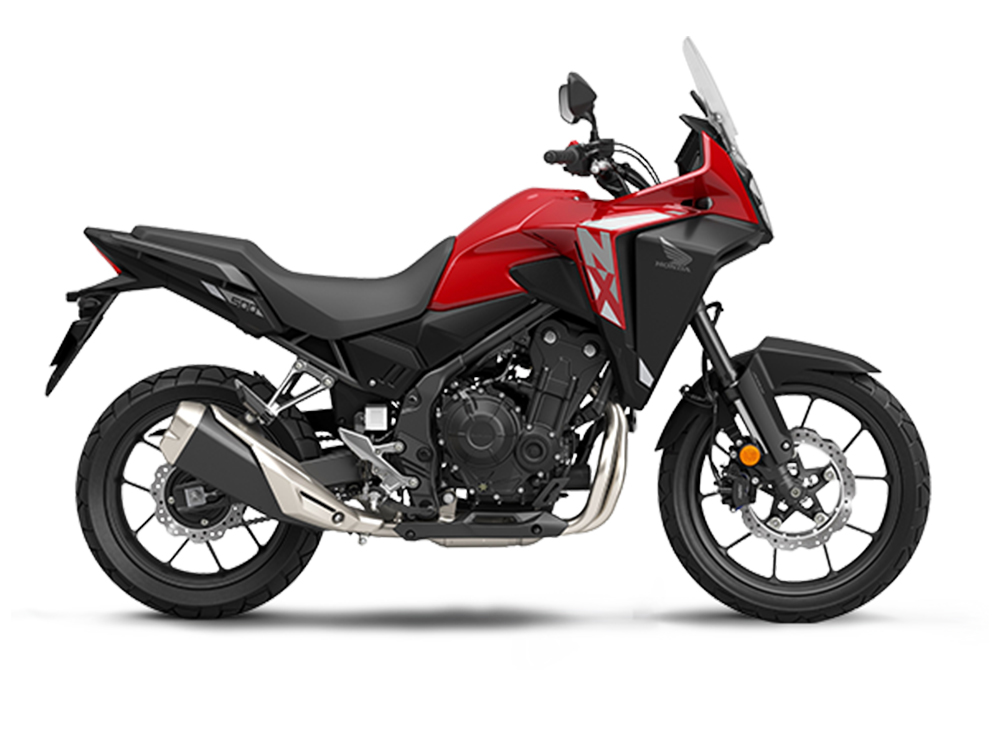
I was planning to go with my Ducati Supersport 950, but then Honda delivered the new CB500X the day before we left and that got me thinking: why are we so obsessed with buying the top-of-the-range, most expensive machines, when all we actually need is something like this little Honda? And moreover, how many people are not riding motorcycles, purely because they cannot justify the massive outlay for a big adventure bike? So let me try and make a case for the CB500X.
Photo credit: Brian Cheyne
Affordability
At R120 000, the CB500X is priced very aggressively to take on other smaller capacity bikes like the BMW G 310 GS and KTM 390 Adventure. Now, this might not be a hotly contested sector just yet, but as top-end motorcycles are getting more and more expensive, more people might see this as an affordable entry into the adventure market.
Practicality
Honda only recently released this particular model in South Africa, but it has been available in Europe for a long time. This means that they have ample OEM accessories already developed for the CB500X. From crash bars to full luggage systems, you can specify your CB500X to your heart’s content.
Photo credit: Brian Cheyne
Off-road manners
On the launch of the CB500X last year, Honda took us on a really gnarly, muddy route. Even with the road-biased tyres, all the bikes came through the route unscathed. And I, for one, can testify that negotiating that route without a tip over was largely down to the bike being low and light and not my superior off-road skills. What this proved is that the bike can take you literally anywhere, although I doubt buyers of this category of bike will be hard enduro riders. This bike can tackle the odd gravel road, even if it has a few ruts in it. I have heard people mumbling that it should have had spoked wheels, but if I’m honest, if you require spoked wheels for where you are going, this is probably not the bike for you.
Photo credit: Beam Productions
On-road manners
As we have already experienced its off-road capabilities, the trip to Kaapsehoop was an ideal opportunity to find out what it will be like on a long journey. The bike lacks a luggage rack at the back and you have to make do with the passenger grab handles to tie things down. I am sure there is a luggage rack in the parts catalogue, but the test bike was not fitted with it. I strapped a bag on with clothes for two nights and set off in the searing heat that Pretoria dished up. The Honda is supremely comfortable, even with a rider of my height. We hit the N4 at a very gentle pace as there were quite a few speed traps lurking.
Photo credit: Beam Productions
At Waterval-Boven we visited the old NZASM-tunnel and by the time we got to Milly’s, I decided to fill up. With our gentle riding, the bike returned a respectable 33 km to the litre. From there we wound our way up to Kaapsehoop. The CB500X is such a rewarding bike to ride fast. And by fast, I don’t mean superbike fast. Just fast enough to be a lot of fun. The suspension is sorted and it smoothed out any minor imperfections in the road.
Photo credit: Brian Cheyne
As we pulled into Kaapsehoop, we recced a place to have dinner, consulted the load-shedding schedule, and checked into our overnight accommodation. Being free of the bulky bag, we headed back out and rode around to get some photos and see if we could spot the horses that this town is famous for.
The next morning, we set off very early and headed back to the N4 to get to the R539 that leads to Sabie. This short little pass was a delight on the CB. The bike just felt confident in any corner at any speed. We had a quick breakfast in Sabie and headed to Pilgrim’s Rest. Although the town is neat and well-kept, it seems to lack the atmosphere that it had. The Joubert bridge at the edge of town is a national monument, but nowadays it only serves as a bridge over a river, rather than being appreciated for what it is.
Photo credit: Brian Cheyne
We rode back the way we came and as I filled up at Ngodwana, the fuel consumption dropped to 28.6 km/L. Not bad considering that our trip involved some enthusiastic riding. For lunch, we met up with Dave Cilliers at Die Nagkantoor in Kaapsehoop for a quick catch-up. The town itself is well worth a visit if you have not been yet. But make a weekend of it, as there is just so much to explore. For the more adventurous there are a few nice hiking trails.
Photo credit: Brian Cheyne
As we packed up the bikes on Sunday, I realised that the Honda CB500X is really all you will ever need for a gentle adventure ride. Also, it is the ideal companion if you are new to adventure riding and you are not quite comfortable with the larger adventure bikes. With that said, I urge you to go and take the Honda for a test-ride. It really is a fantastic bike that ticks all the right boxes.
Photo credit: Brian Cheyne
Honda CB500X
For more information on the bike featured in this article, click on the link below…
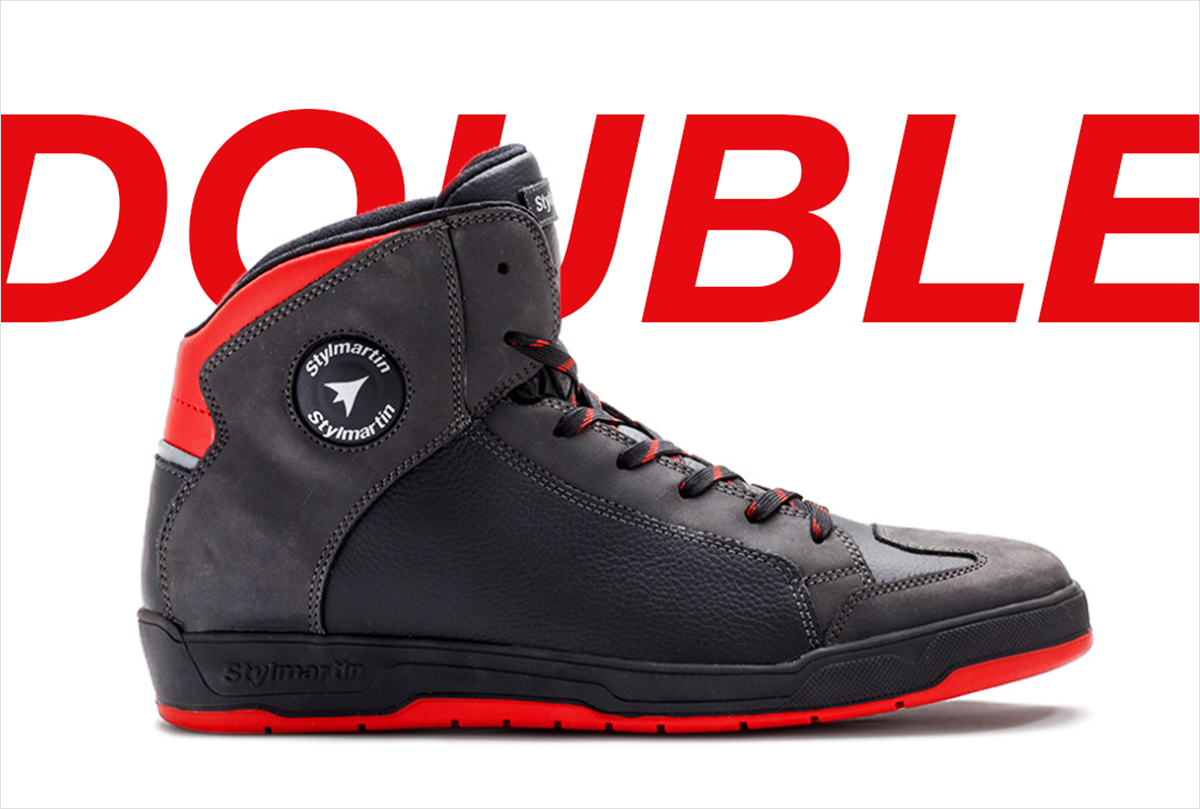
I’ve written about Stylmartin motorcycle boots before in these pages – you can find the story here – but, having just worn a new pair over the course of my 3,000 km summer holiday ride, it is appropriate to write another review. In this case, it is an easy task as the Double WP boots I was wearing are some of the most comfortable boots I have ever worn.
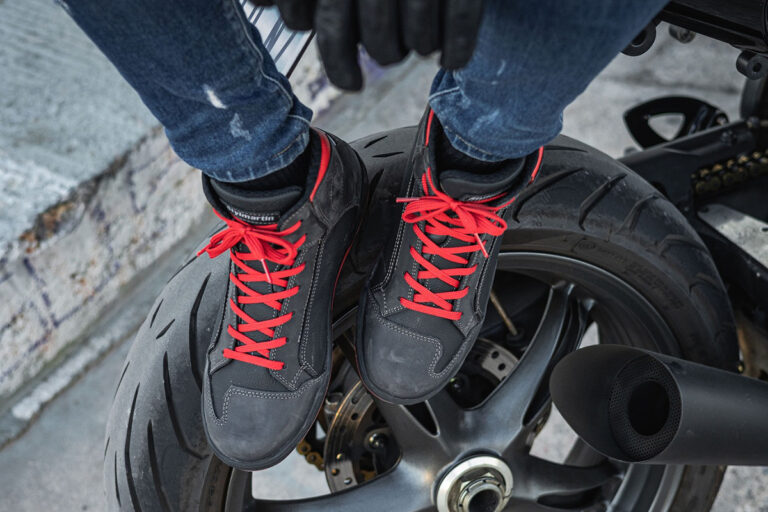
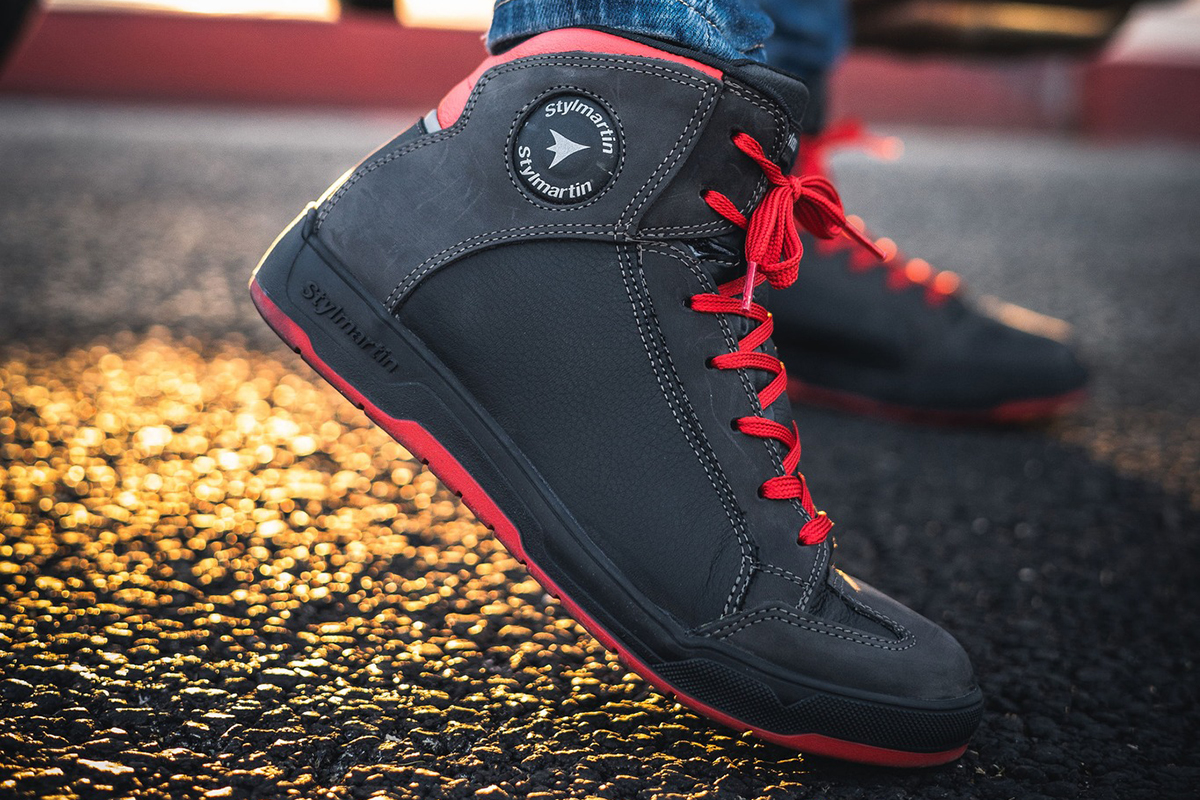
The Double WP (strange name!) boot is a full-grain leather ankle boot, which is both waterproof and fully breathable, has hard inserts at the ankle bones and a flat rubber sole. It is a particularly attractive boot and it even comes with two sets of laces – one red and one black, depending on whether you feel like being flashy or understated. There are red accents on the sole and at the back of the boot which help to break up the expanse of black.
Image source: Stylmartin
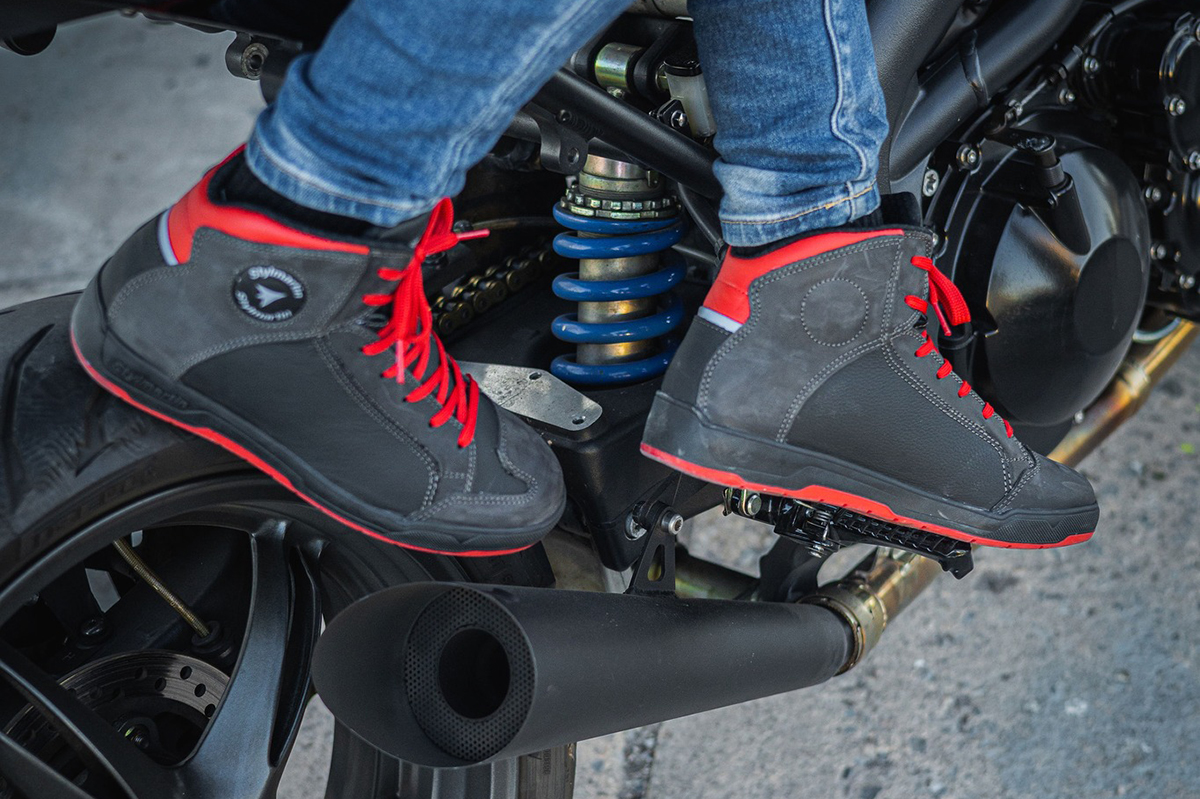
I find them particularly stylish which is all well and good but that doesn’t matter if they are uncomfortable. Well, having worn them for three ten-hour-plus days in the saddle on my recent trip from Johannesburg to the Western Cape coast and back, I can honestly say that the last thing I thought about was my feet. My back, arse, shoulders, hands, knees, neck: yes. But my feet: not once.
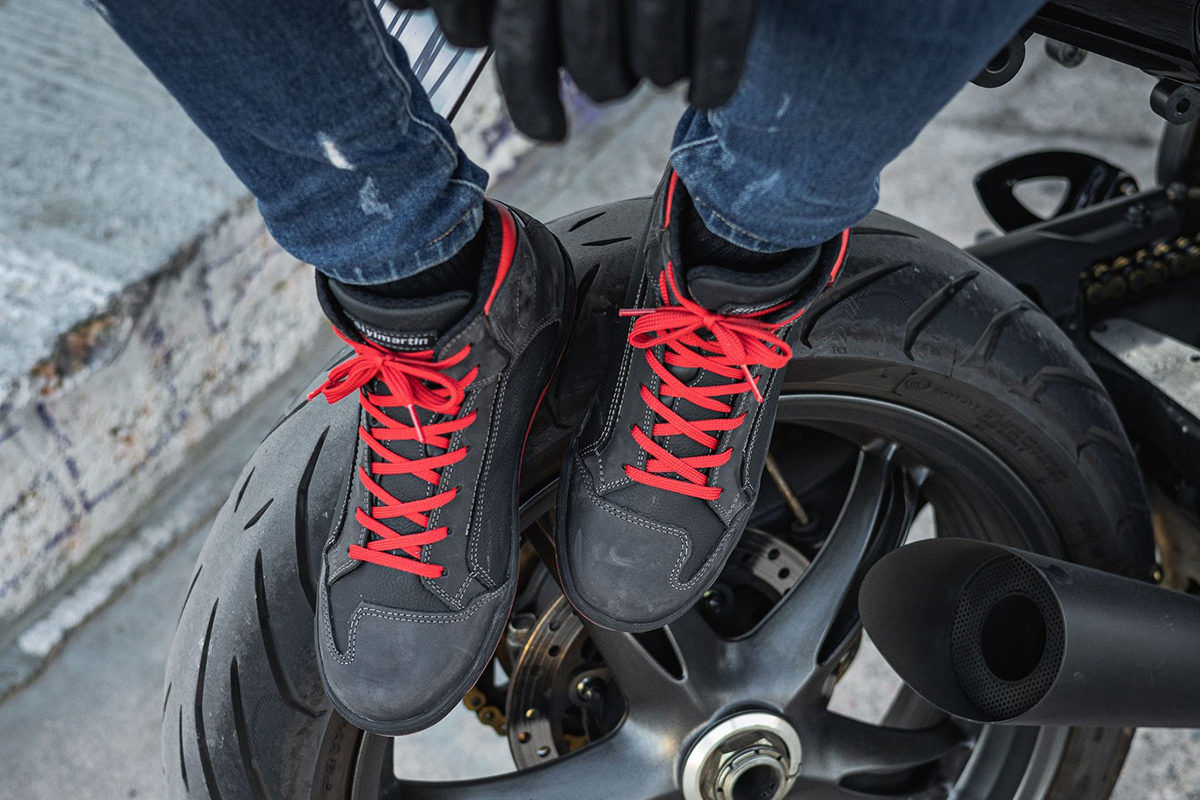
Yes, if you stop to walk around in 30° heat, then they can get very hot inside but, thanks to the breathability, not particularly sweaty. In colder conditions, walking around in them is no problem as they feel very much like a normal hightop sneaker. The important thing is that, in terms of passive safety, the Double WP boot is perfect as you simply don’t think about your feet once when you are riding.
Image source: Stylmartin
I found the fit perfect for my feet: not too tight in terms of width and roomy around the toes. Of course, choosing the right size is essential (duh!) but I have often found that some boot styles, despite being the right size, just don’t ‘fit’ my feet. No such problems here.
Given the design, these are urban riding boots, although they coped on the off-road sections of the ride. That isn’t their natural habitat and, certainly, they lack the ankle protection that dedicated off-road boots give but for occasional off-road rides, they are fine, the waterproof capability working extremely well. Being leather, they clean off easily.
Image source: Stylmartin
The Double WP boot retails for R3,695.
Stylmartin Double WP
For more information on the product featured in this article, click on the link below…
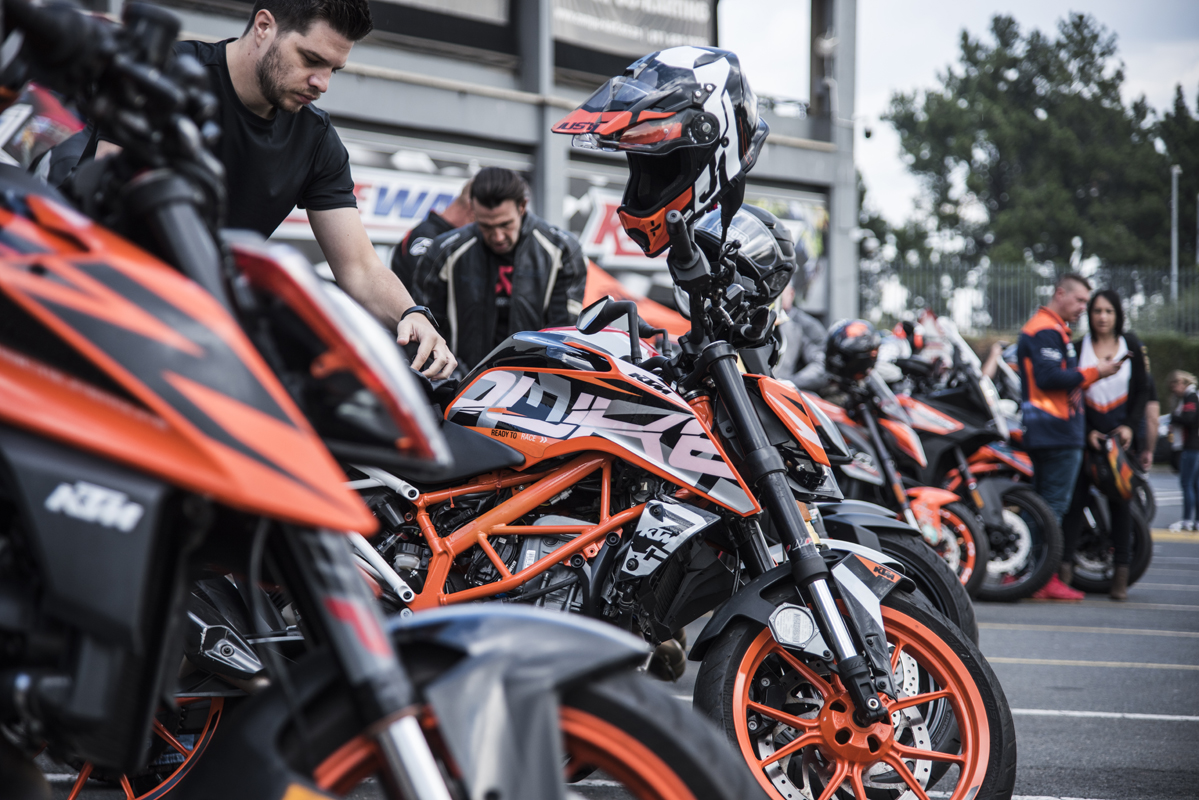
KTM is arguably one of the top lifestyle motorcycle brands in SA, offering riders all things fun and pleasurable in almost every motorcycling category. What this means, is that riders are spoiled for choice when faced with the decision of where and what they are riding that particular weekend or weekday—most will have more than one orange steed in their garage to choose from. With an array of KTM dealers spread across the country, sharing their passion and driving their own events, it’s so easy to find an orange group to ride with.
Photo credit: Bjorn Moreira / ZA Bikers
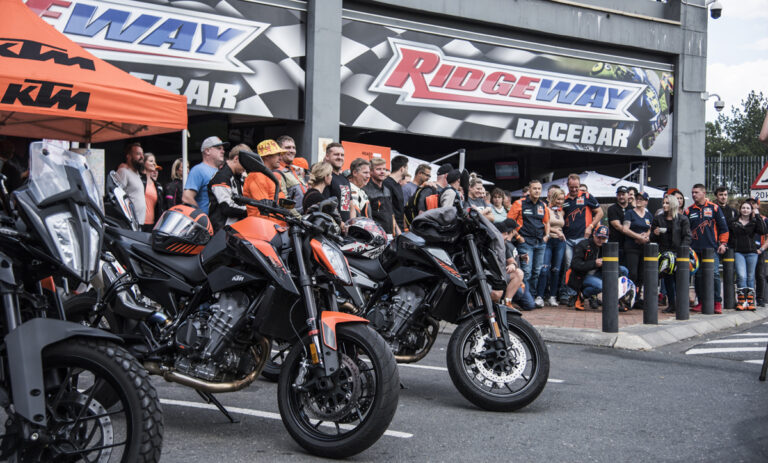
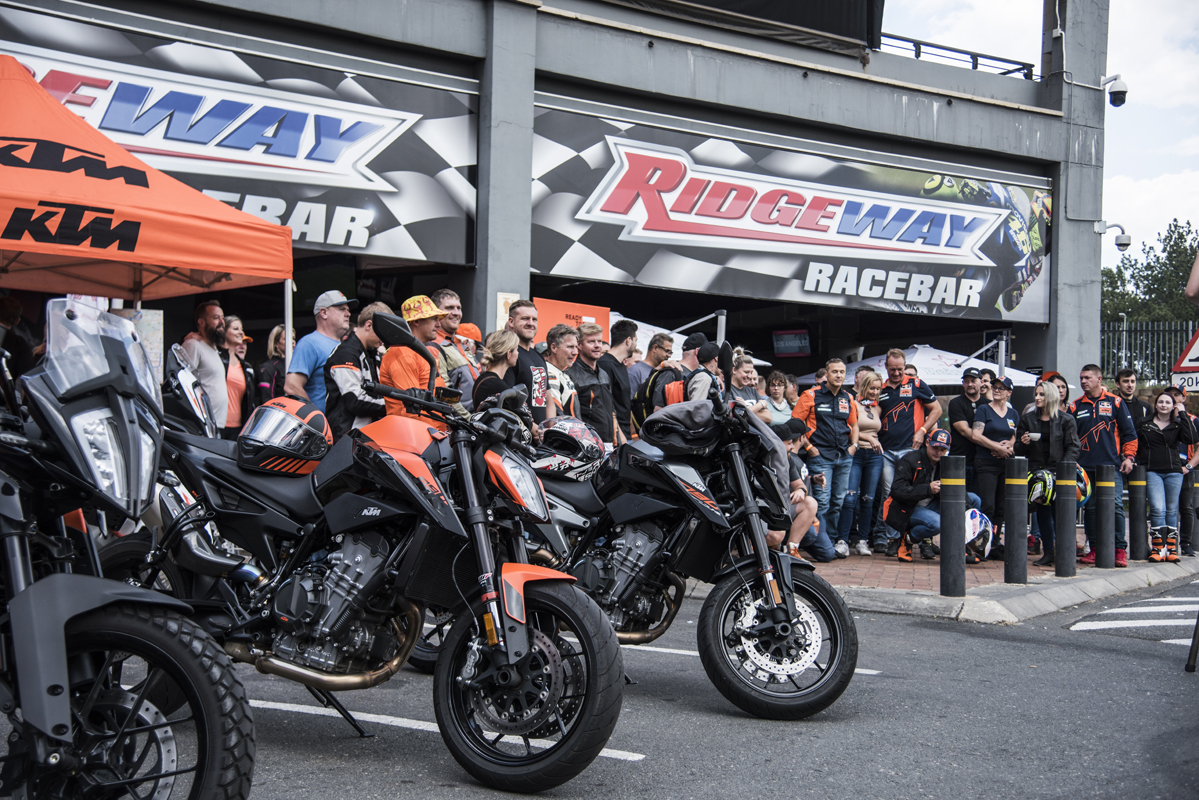
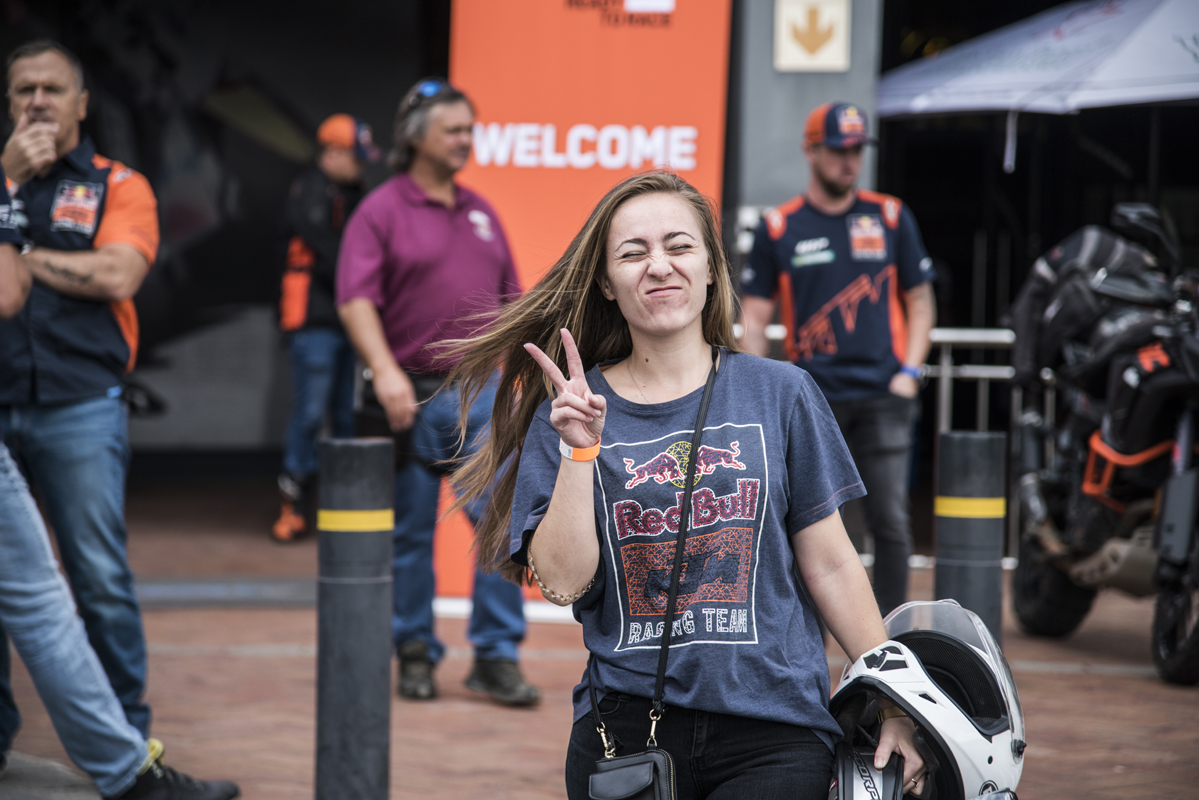
With orange blood flowing through their veins and with the craving to ride already set within their DNA, KTM South Africa organised an event for their loyal customers and supporters called “Orange Day”. This particular orange day was catered for their street riders, no not just for the ‘Dukester’, but for all who love the grippy stuff called tar.
Photo credit: Bjorn Moreira / ZA Bikers
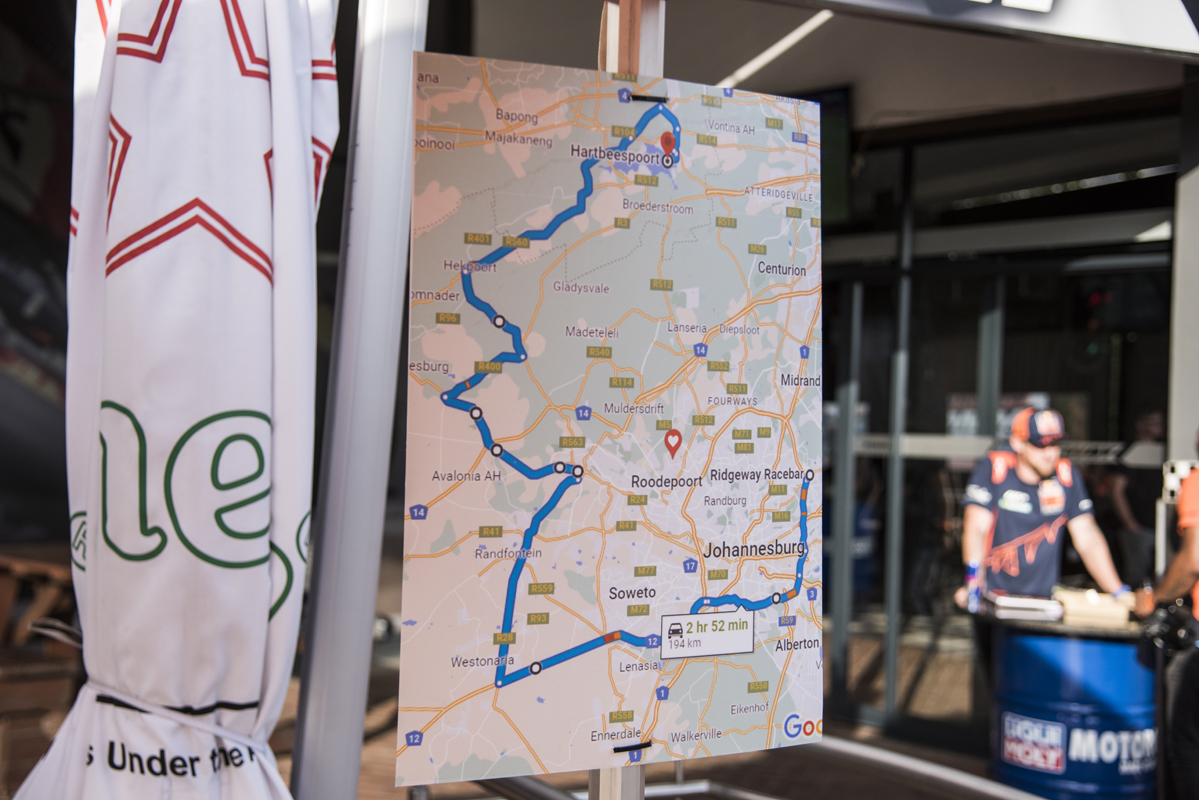
Customers, dealers and families started arriving at Ridgeway bar, the meetup point at 7:00 this past Sunday morning, and we were met with a typically warm V-twin, Parallel-twin and big bore thumper welcome. Everyone soon loosened up, thanks to some warm cups of coffee, good old bike talk and a family type of bond for all things orange. KTM also dangled the carrot when they said, “the first 100 riders to arrive at the starting point get a free drink and meal pass.”
Photo credit: Bjorn Moreira / ZA Bikers
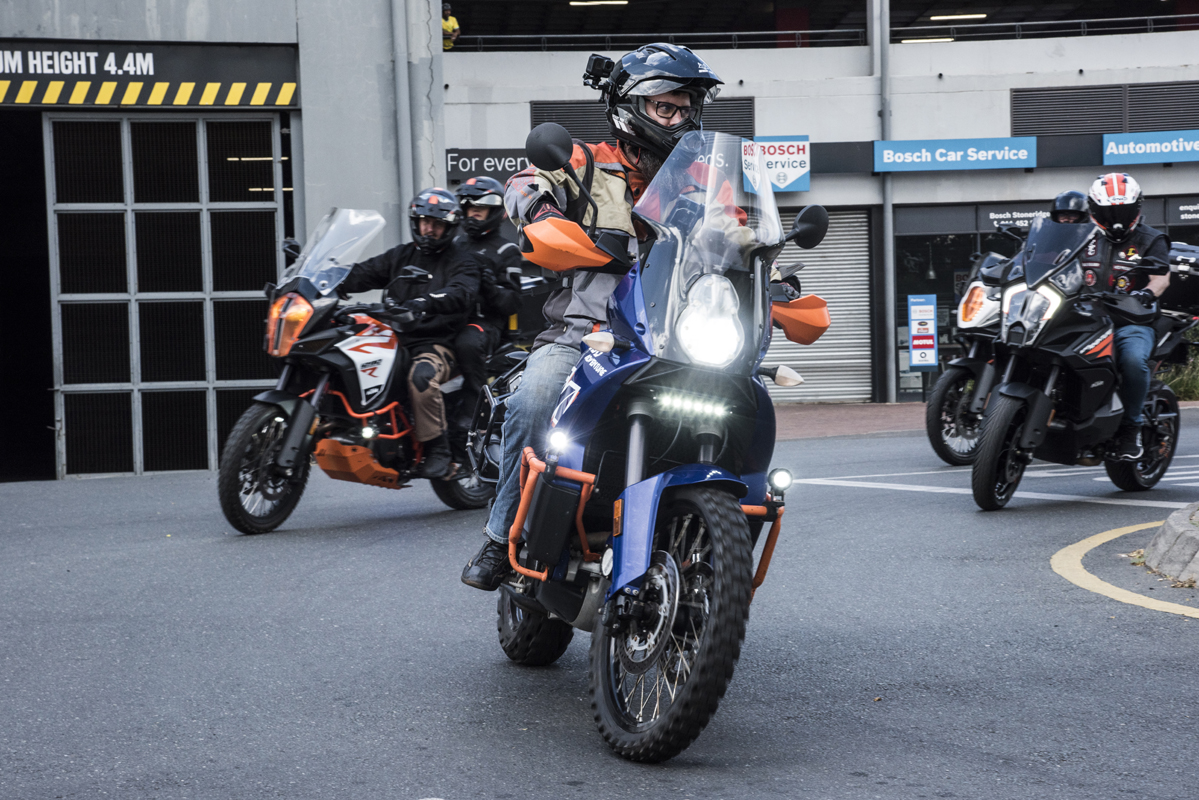
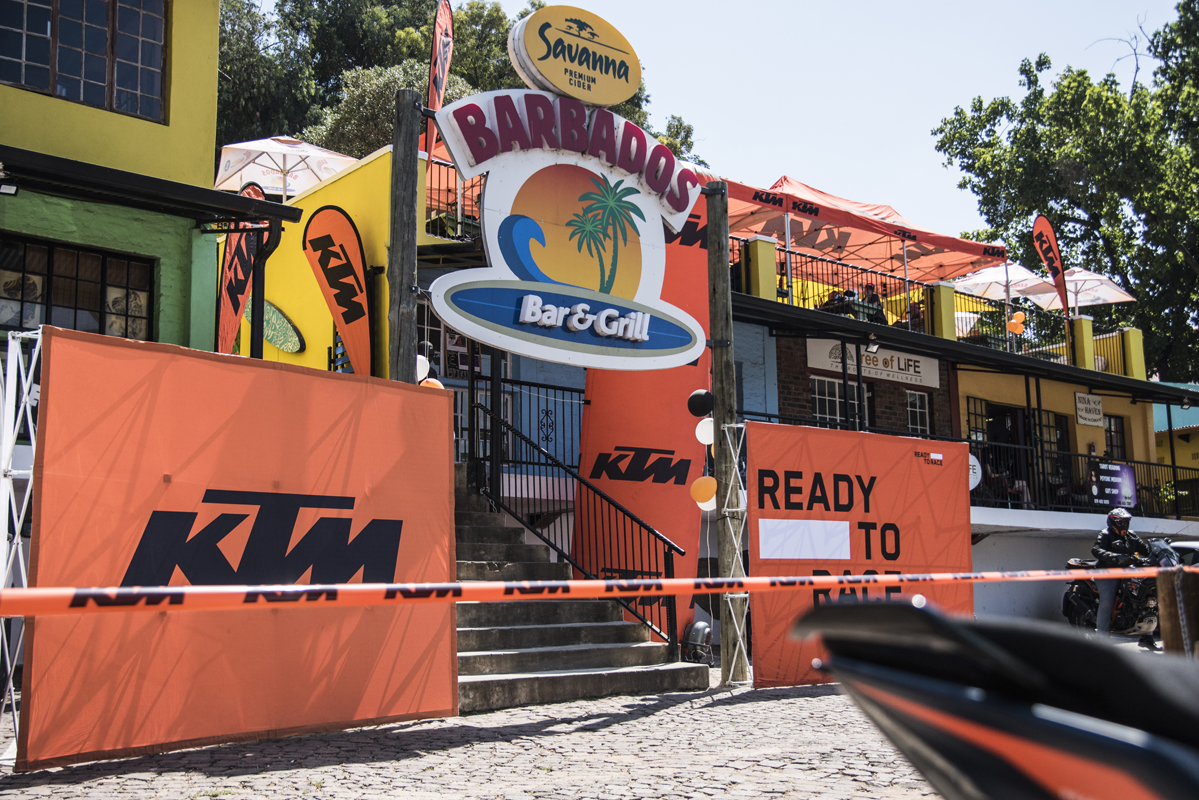
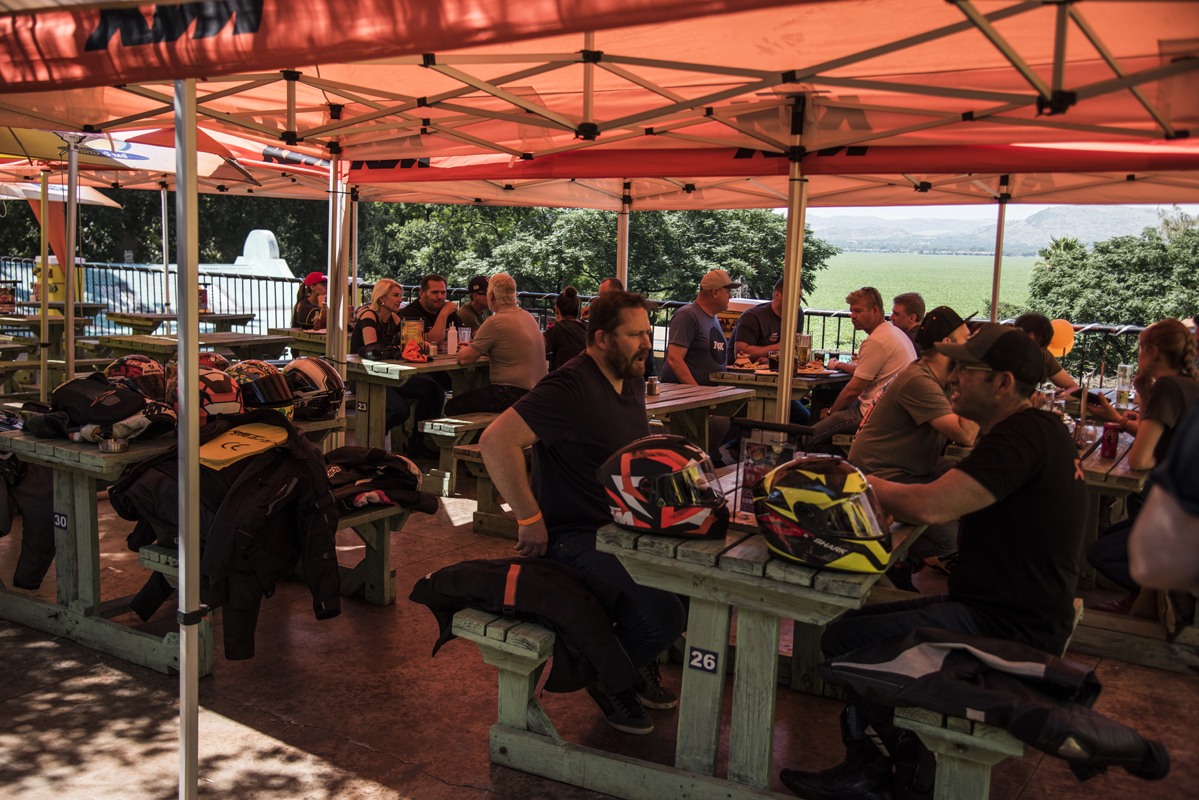
With 100 odd KTMs parked outside, our mugs drained of their caffeinated substance and a quick look at the route map that KTM plotted for us, we were on our way to Barbados bar in Hartebeesport. Before you ask, no there was no mass ride at 80 km/h on the highway to the end location. KTM don’t believe in cues, hence the map.
Photo credit: Bjorn Moreira / ZA Bikers
The riders had free will to decide on how they’d end up at the final destination, most headed out with their close riding mates and others rode with their local KTM dealer group. Some fun and games were also had on the way there, in typical KTM fashion and some riders may have even added a few km to the map—this is all part of riding bikes.
Photo credit: Meredith Potgieter / ZA Bikers
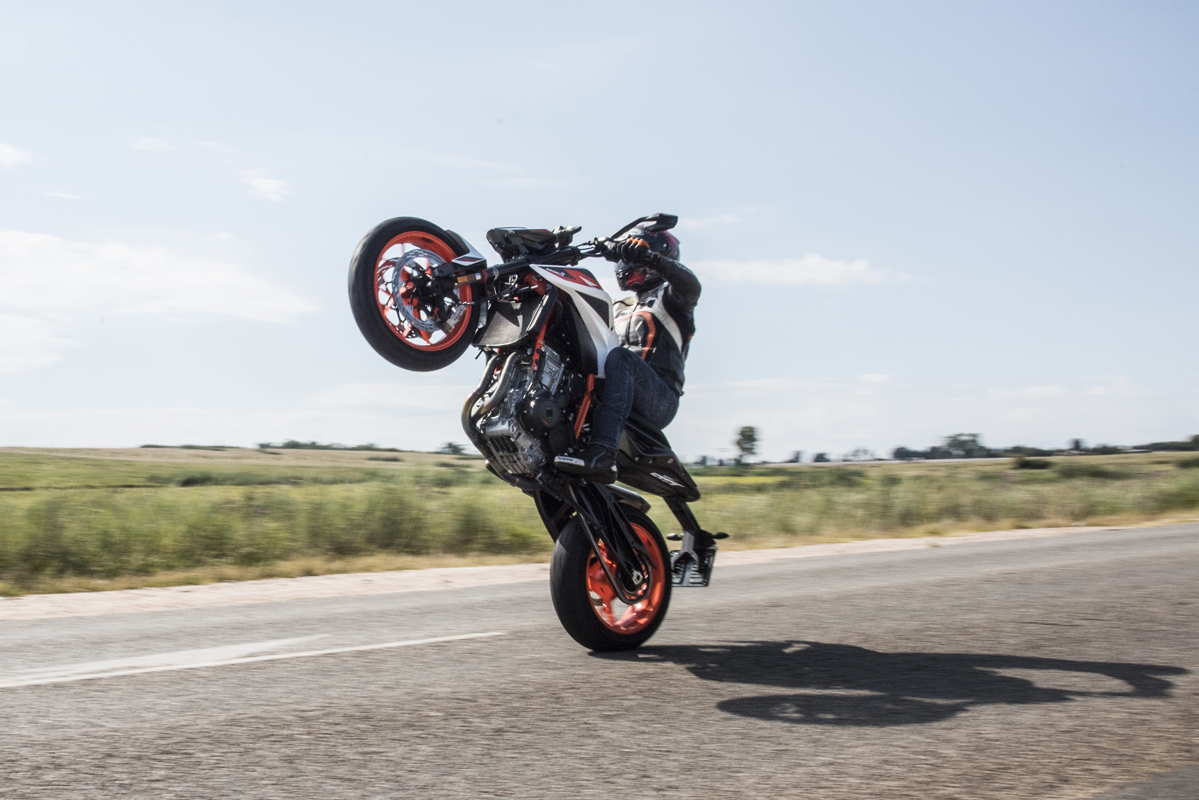
We slotted in behind Thomas Tonking from KTM Centurion, who led our 20-odd rider group through urban sprawl and open B-roads before crossing the iconic Hartbeespoort Dam Wall. With torque-rich motors almost naturally lofting the front wheels past 10:30 and angry exhausts bouncing their soundtrack off the valley’s walls; this was the signal for the chief at Barbados to flip our burger patties onto the grill.
Photo credit: Meredith Potgieter / ZA Bikers
It’s days like these when you’re surrounded by beautiful views, good food and like-minded motorcyclists that you really appreciate riding and life as a whole. We at ZA Bikers are really impressed to see brands like KTM that focus on bringing customers into the brand and building long-lasting relationships. With one successful “Orange Day” completed we would love to see more of these events in the future and possibly an “Orange Weekend”.
Photo credit: Bjorn Moreira / ZA Bikers
So, if you find yourself twiddling your fingertips and don’t know where to ride, keep an eye on our Biking Events calendar as we try to update you on all the local rides and events that are taking place throughout the year.
The 7th Annual Africa Ubuntu Run took place this past weekend. This prestigious event takes place every year on the last Sunday of January.
The term “Ubuntu” is formally defined as: a quality that includes essential human virtues of compassion and humanity. In layman’s terms, from isiXhosa it is translated as “I am because we are”. It is a term that embraces humanity towards others, encompassing solidarity and unity amongst all peoples irrespective of race, gender, age or religion.
Photo credit: Thabang Khatide
This is brought full circle by the Africa Ubuntu Run. It is a mass multinational celebration of brotherhood, respect, honour, and racial and cultural diversity amongst the many biking communities. Over the years this grand event has garnered support and popularity from not only the bikers, but also with motorcycling agencies, associations, brands, clubs, non-organized biking affiliates and governmental agencies coming on board and contributing to the success of this annual event.
With this event taking place not only across the 9 South African provinces, but the Ubuntu run has also attracted participating countries (over 10 and counting) from as near as Swaziland, Mozambique, Lesotho and as far as Nigeria, Morocco and Egypt.
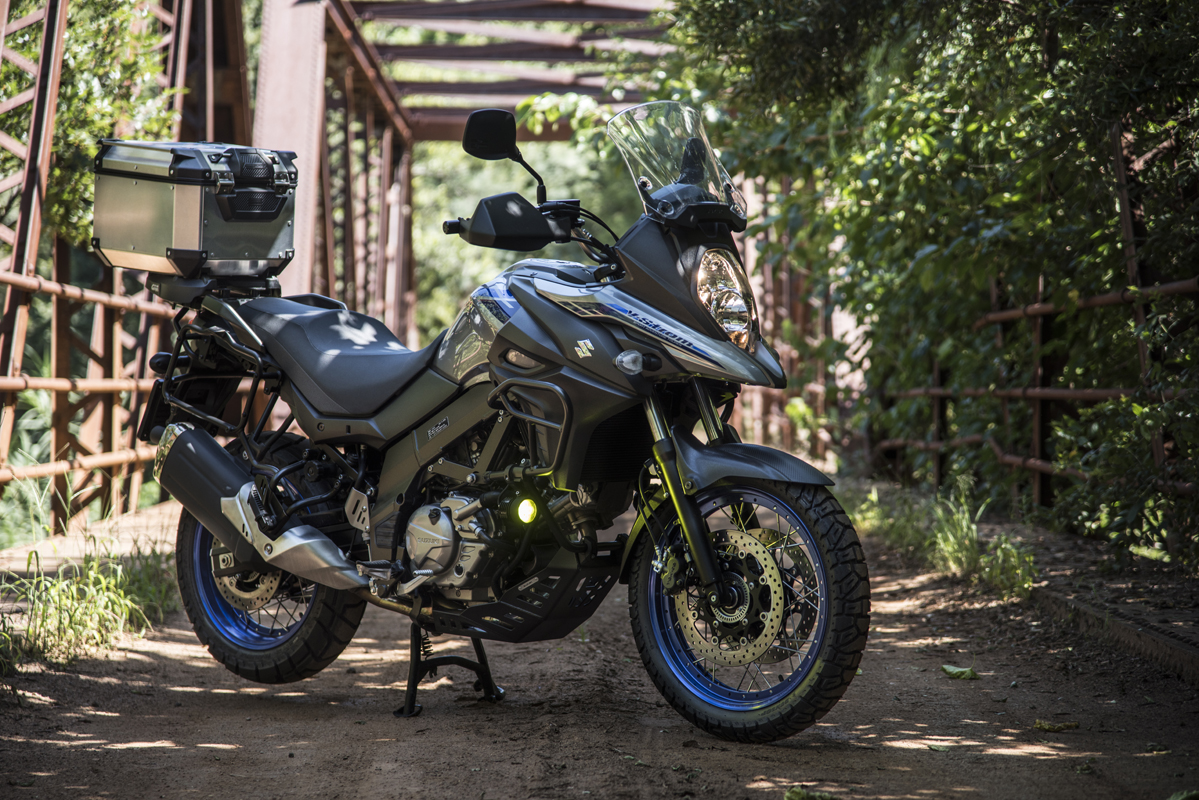
Having woken up Sunday morning with clear blue skies above, I headed off to Bikers Warehouse in Randburg which served as a meet-up point for the Gauteng riders. I was accompanied by the sleek 2022 Suzuki Katana in the new darker-toned metallic matte stellar blue. A fitting riding companion, swift and easily manoeuvrable through the City of Tshwane and maintaining a comfortable highway cruising speed with minimal wind drag.
Photo credit: Bjorn Moreira / ZA Bikers
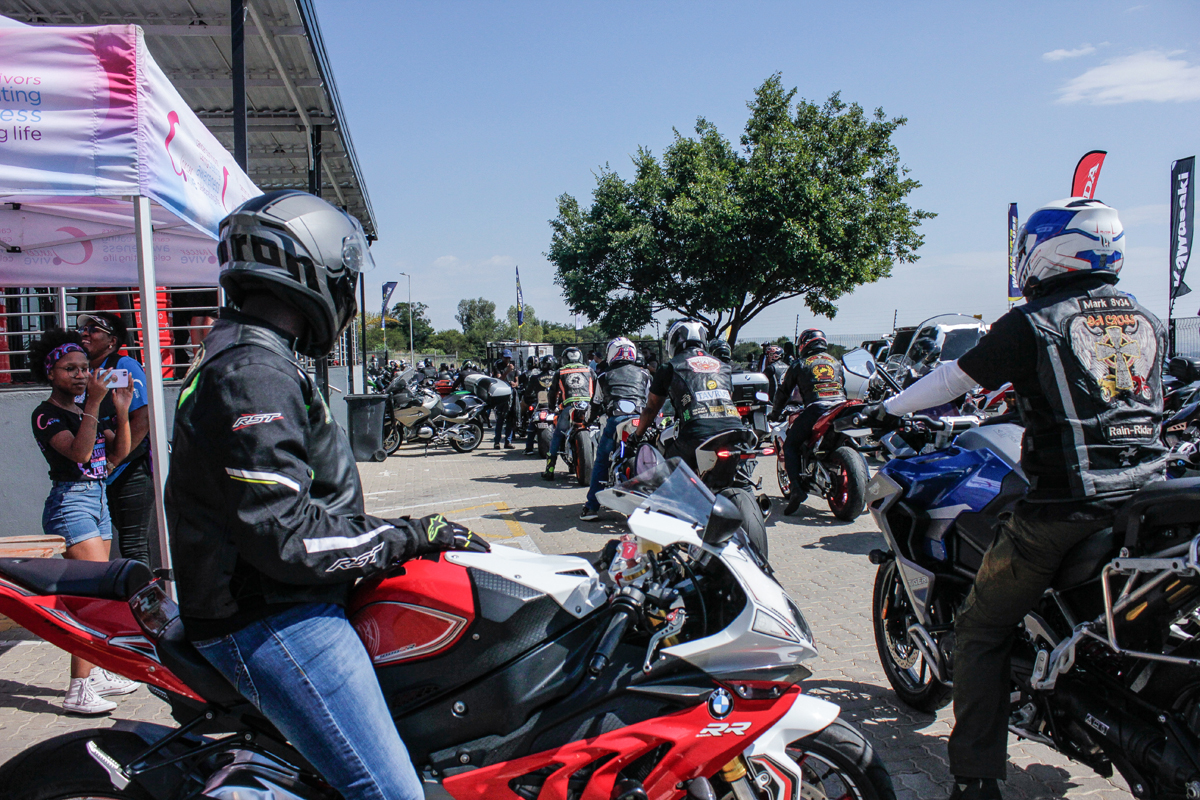
The call-out was 08:00 for 09:00, supplying enough time for the arrival of bikers from all over the province. The bikers most certainly did not disappoint, arriving in numbers. Out came the sports bikes, superbikes, cruisers, adventure bikes and the odd scooter here and there, not forgetting the plethora of riding clubs making their grand entrances, most notably the M109R club.
In the true “spirit of Ubuntu”, it was beautiful witnessing first-hand the unity and sheer cultural diversity present. The young and the mature. The vastly experienced and the new riders. Everyone present personified the “spirit of Ubuntu”. Smiles and laughter, cheers and greetings, revs and nods, waves and winks made up the gloves we all wore.
Photo credit: Thabang Khatide
After an important safety briefing, the marshals and the Traffic Police Department departed ahead of those gathered, to ensure safe passage from Biker’s Warehouse right up to Slotjhile Pub and Shisanyama in Tembisa.
With the necessary addresses having been made, in minutes, legs were swung over and engines ignited. The Katana came to life at a touch, thanks to Suzuki’s Easy Start System. It was time to hit the open road. There’s nothing like a highway “shutdown” with various bikes to your left and right, this was certainly a spectacle for the patient on-lookers waving from the seats of their cars and those capturing the occasion on their smartphones. How ironic, even the non-riding spectators ended up uniting, in celebration of the Africa Ubuntu Run.
Photo credit: Bjorn Moreira / ZA Bikers
Upon arrival at Slotjhile Pub and Shisanyama, there could not have been a better location to house an occasion of this magnitude. A beautiful venue, with ample parking space and a calming dam situated just a few metres away.
Photo credit: Thabang Khatide
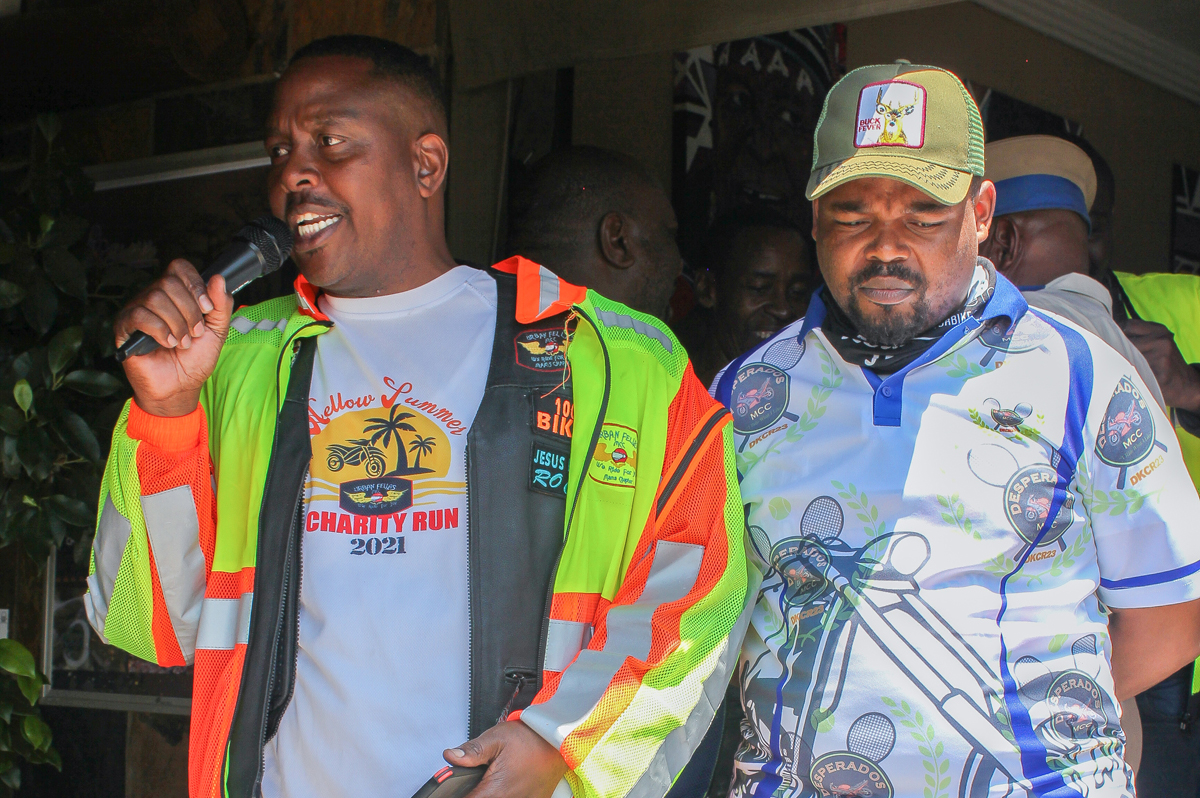
As we embraced some downtime after an exceptionally well-guided ride from the meet-up point. We tuned in, to the present speakers. I had a quick word with two members of the National Gauteng organising committee.
“As this was the 7th Annual Africa Ubuntu Run, we have had an amazingly positive response from not only the bikers, but mainly the sponsors, stakeholders, biking councils, and other partnering entities. A special thanks to Bikers Warehouse and Honda for their crucial organisational involvement in this year’s event. Additionally, an extended word of thanks to the Gauteng Department of Community Safety and the National Traffic Police. It has been a successful event and turnout, we hope to continue to grow and not only maintain current relationships with stakeholders but to build further connections to scale this event even further, with a vision to have even more bikers come together.” – Mathule Motswiane (Thules)
Photo credit: Thabang Khatide
“The main agenda and objective of this event was not only observed but also realised. Next year, we certainly aim to go bigger and better than before. With earlier marketing strategies implemented, we will reach our desired goal of increased social cohesion amongst even more bikers than we have had in the past. We graciously thank our organisers, riding and Traffic Department marshals, the Gauteng Department of Community Safety and all our stakeholders for consistently playing their part in the successful annual run of this event. Last but not least, a big thank you to Slotjhile Pub and Shisanyama for hosting us.” – Thato Makgari (Voodoo)
All in all, from start to finish, it was a well-run, well-organised and successful 7th Annual Africa Ubuntu Run. They say, “Four wheels move the body, Two wheels move the soul.” I guess, it’s not a coincidence that it is termed the “spirit of Ubuntu”. As bikers, we are connected and unified deeper than what the average person will ever understand or comprehend. Let the “spirit of Ubuntu” not only stem from us, but continue to reside in us.
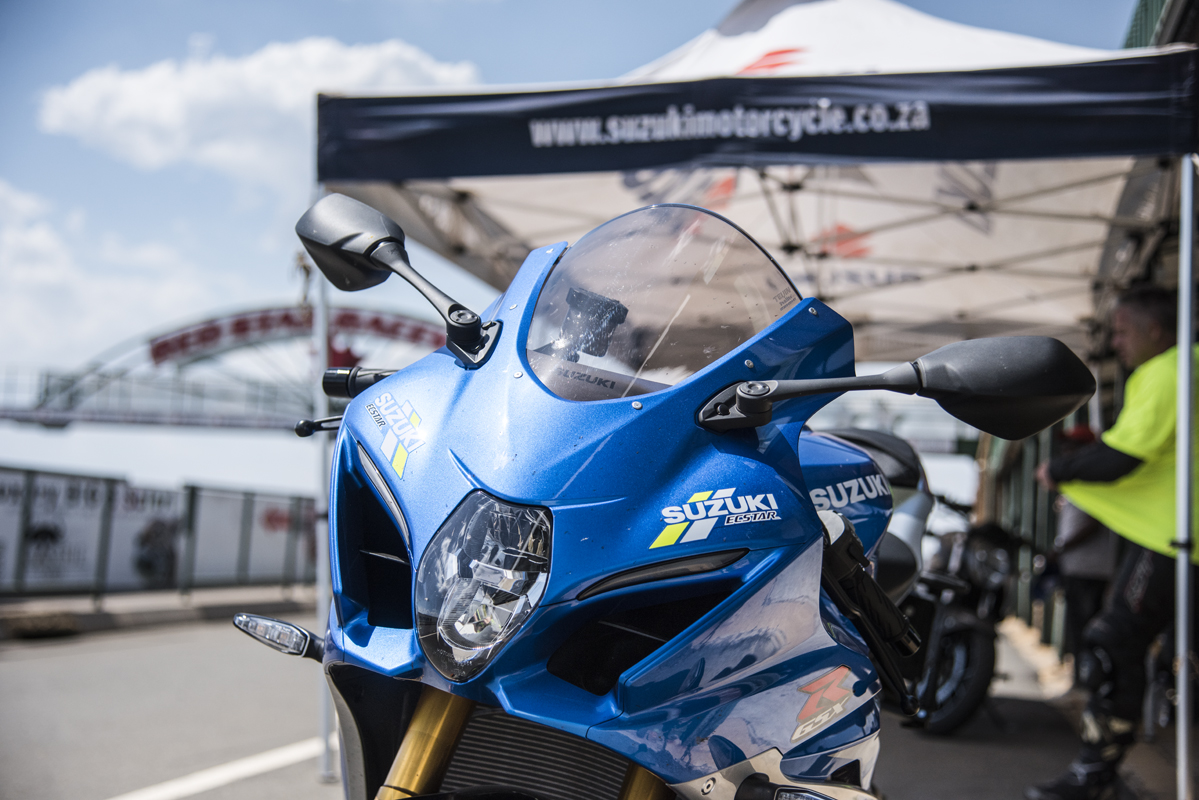
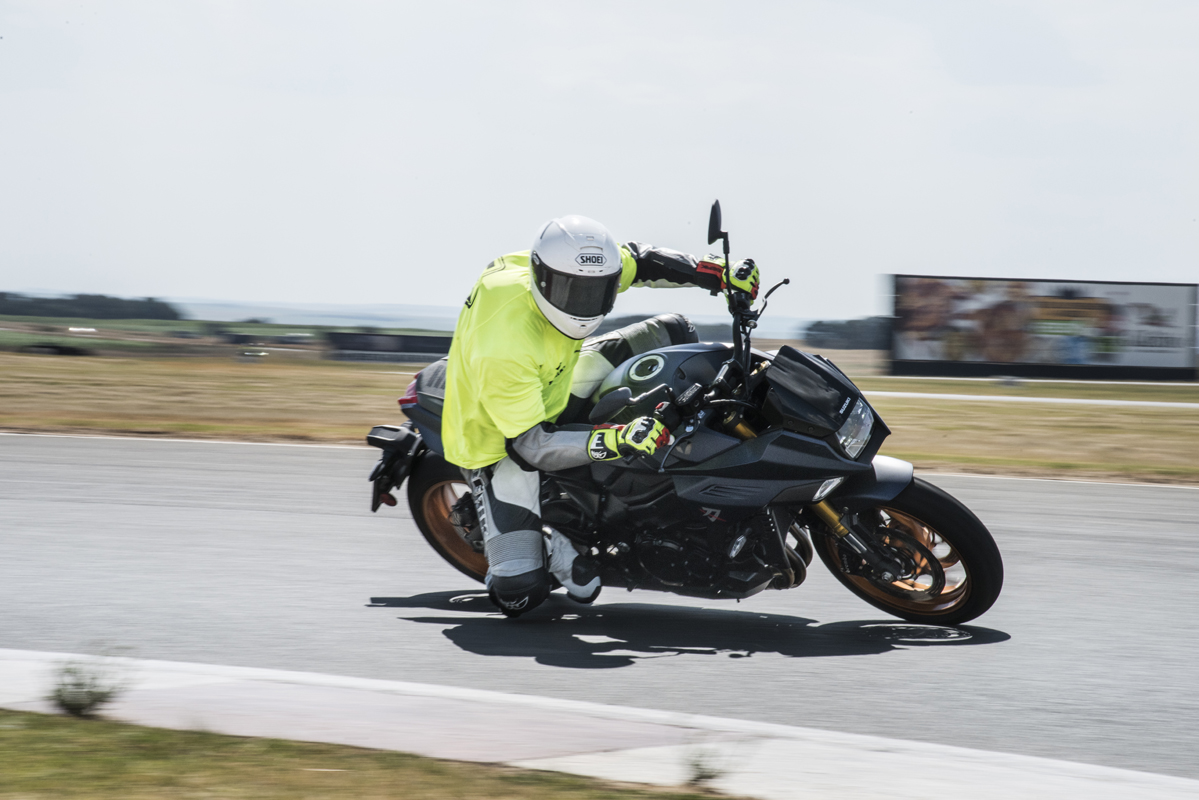
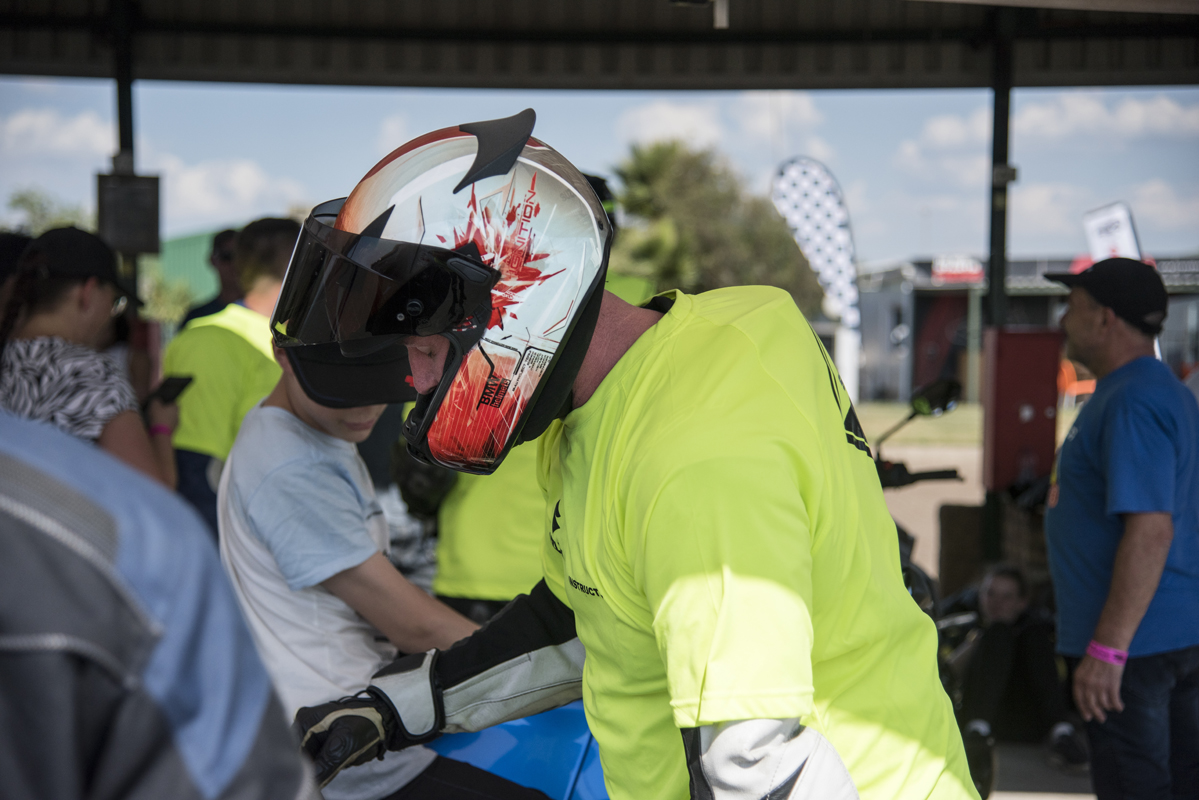
The day you first saw a motorcycle is the day you probably pictured yourself riding one. After this, a whole load of infatuation and research goes into becoming a motorcyclist. What probably skips the minds of most who are set on the finish line rather than the race is getting the correct motorcycle training.
This is where Suzuki’s rider safety day comes into the picture…
Photo credit: Bjorn Moreira / ZA Bikers
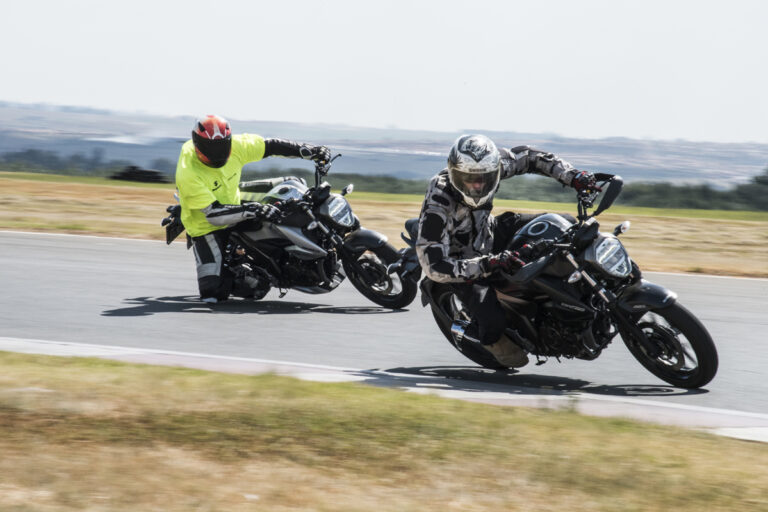
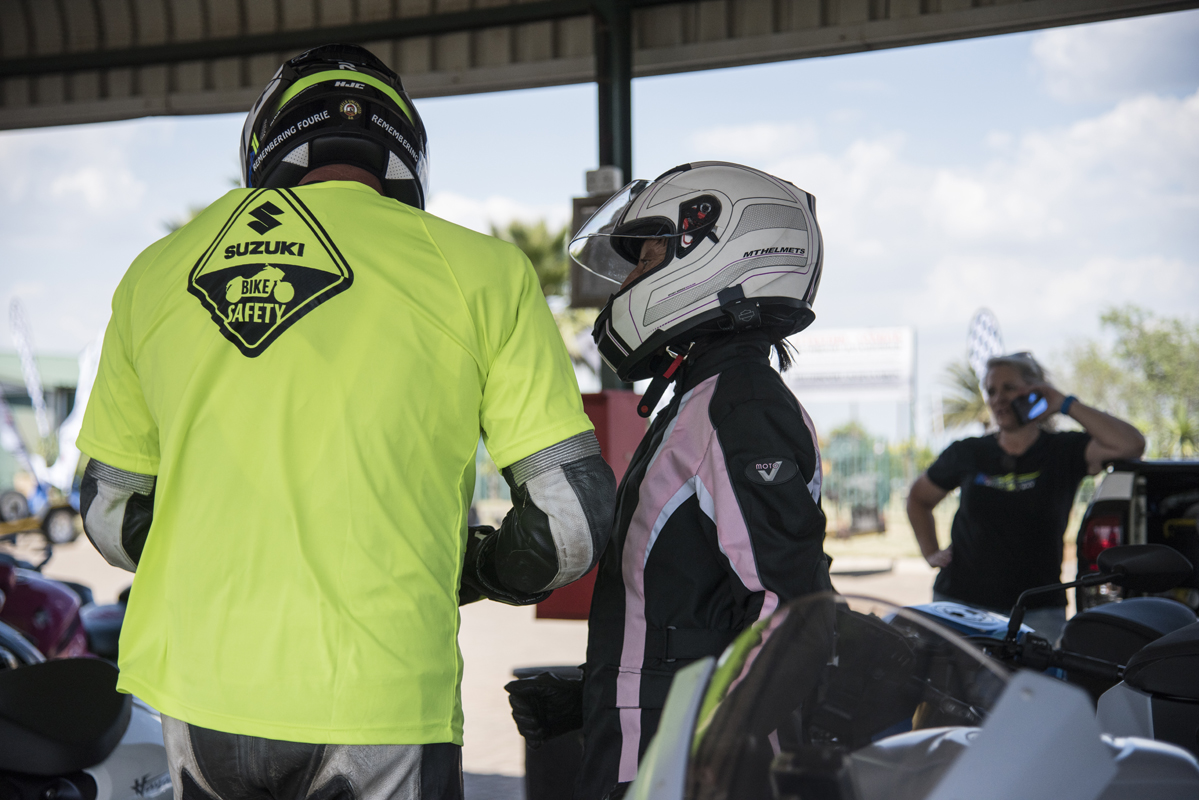
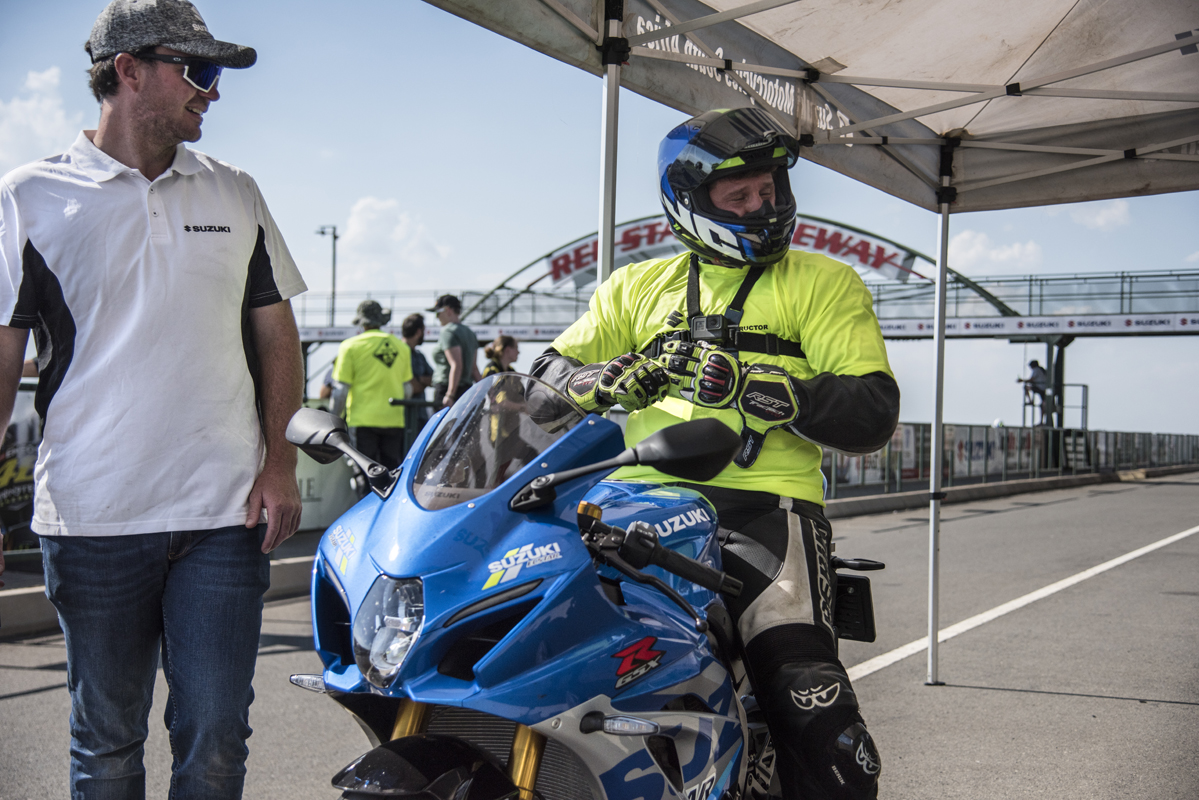
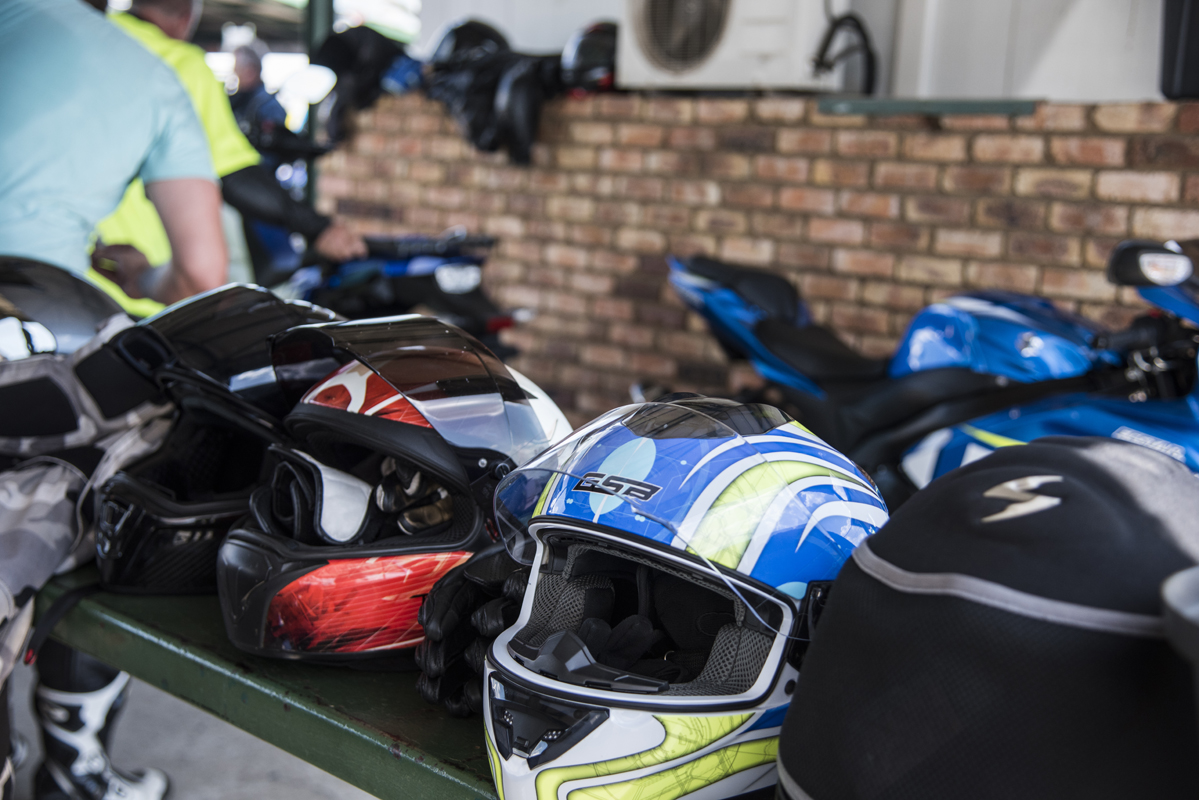
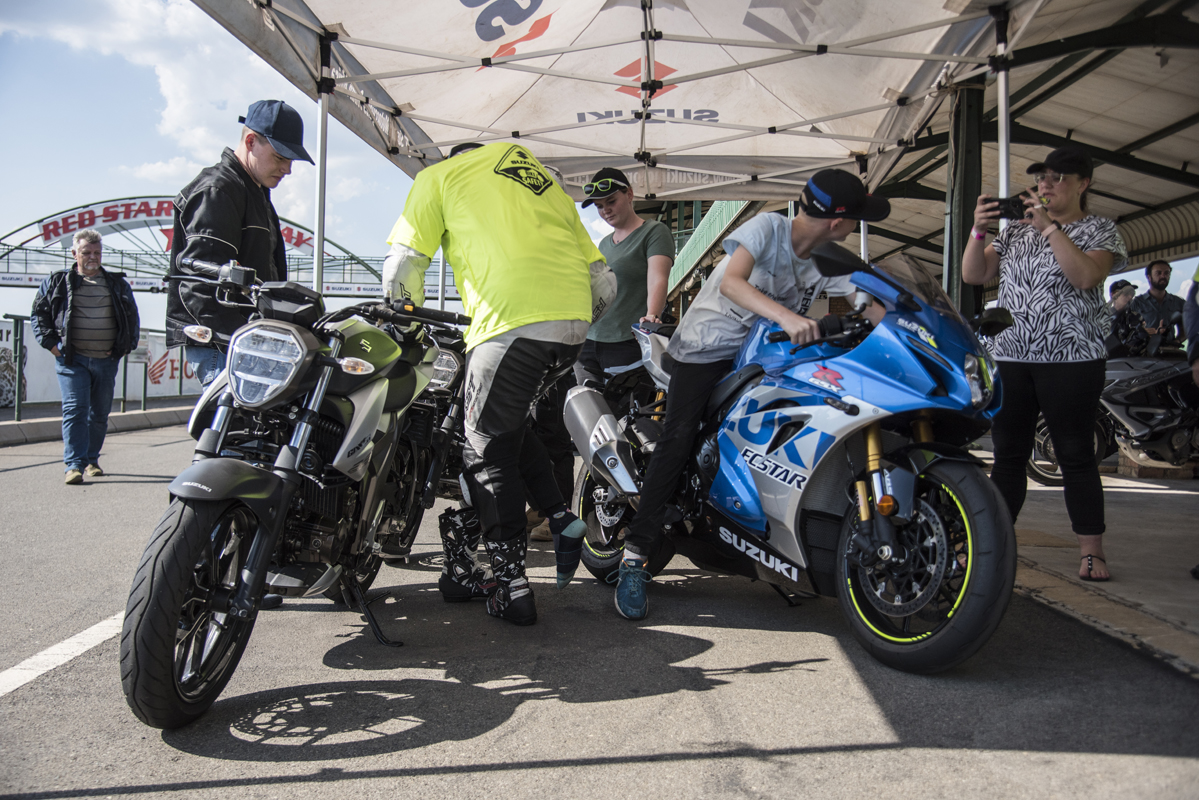
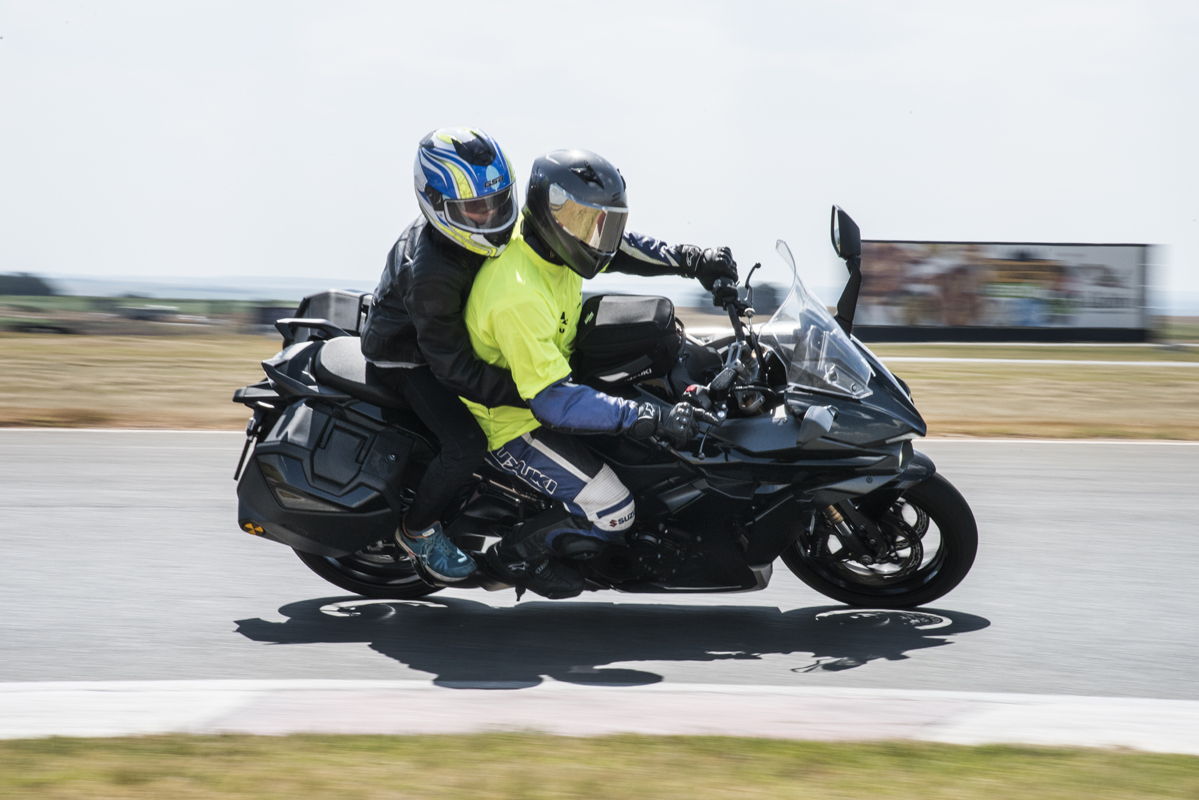
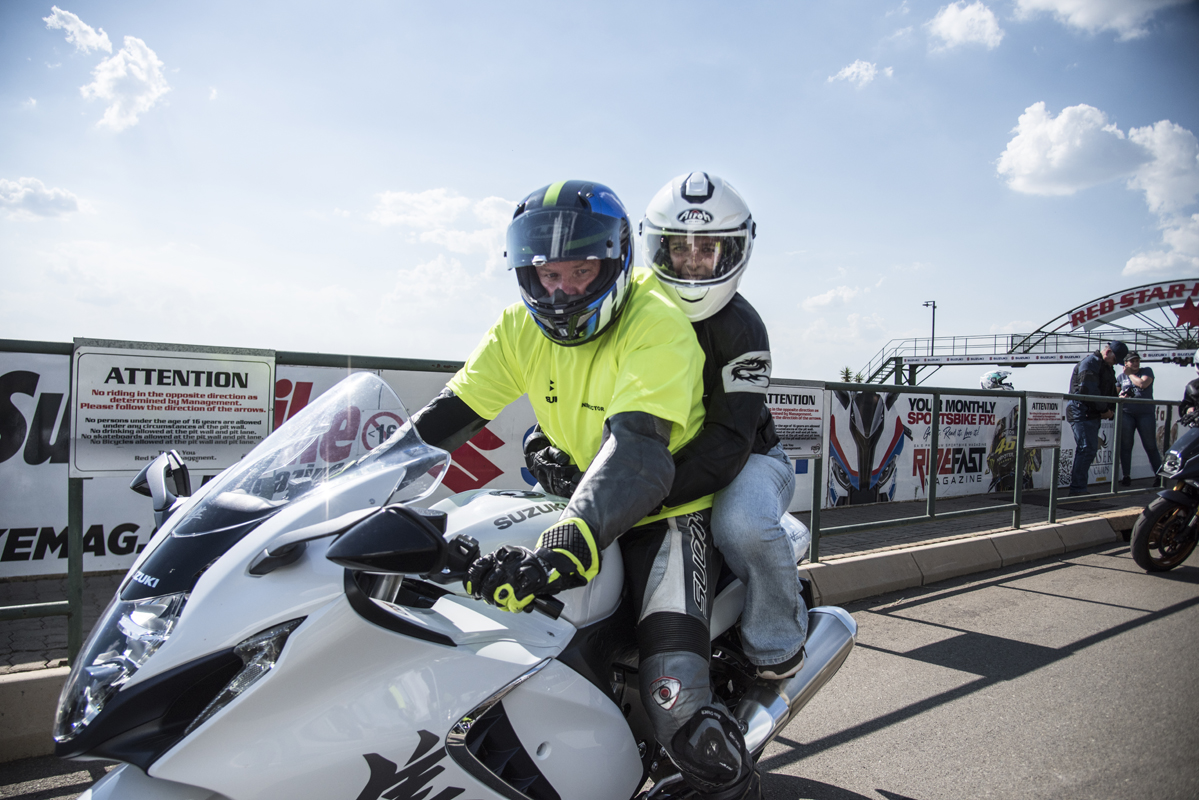
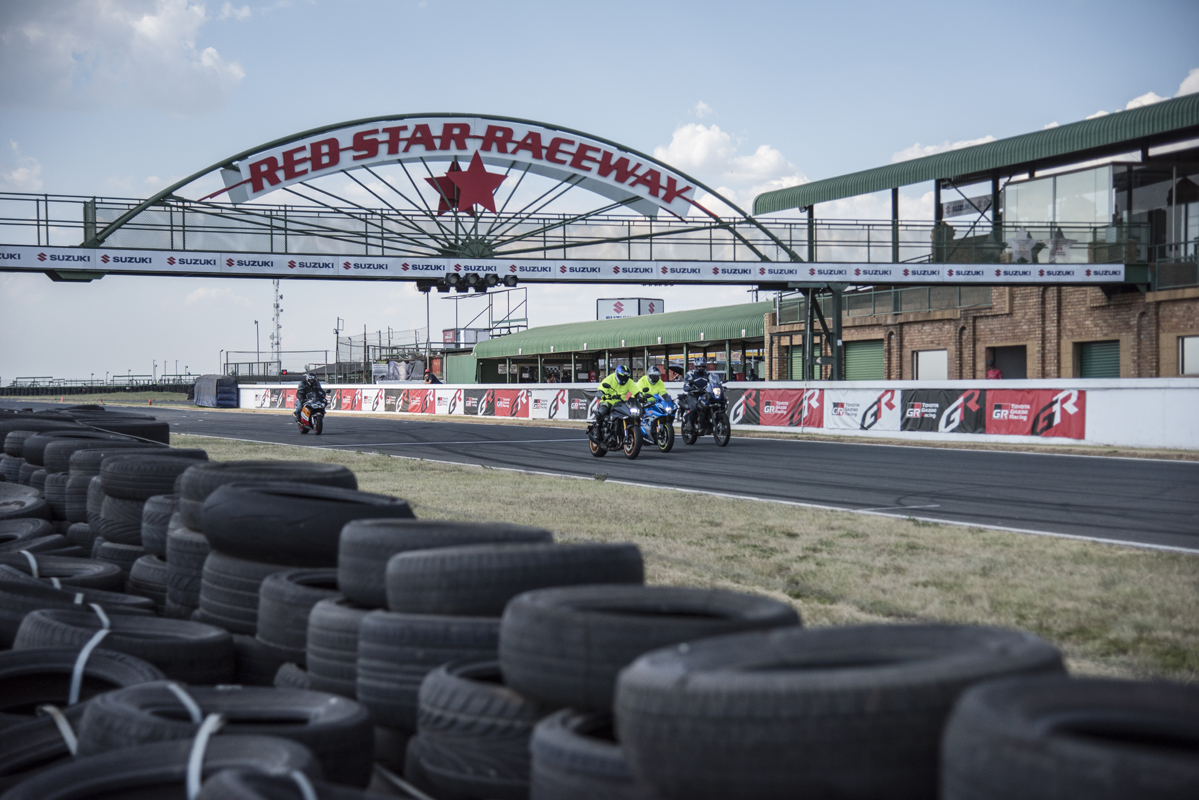
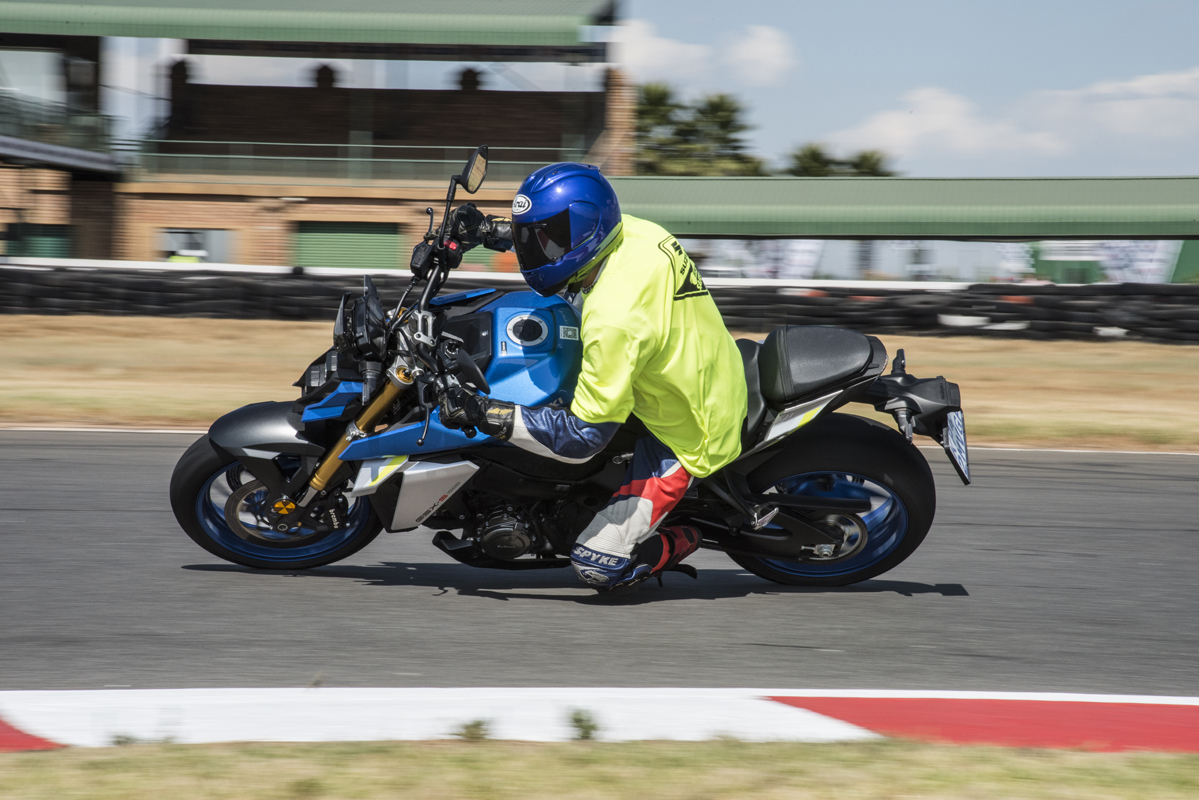
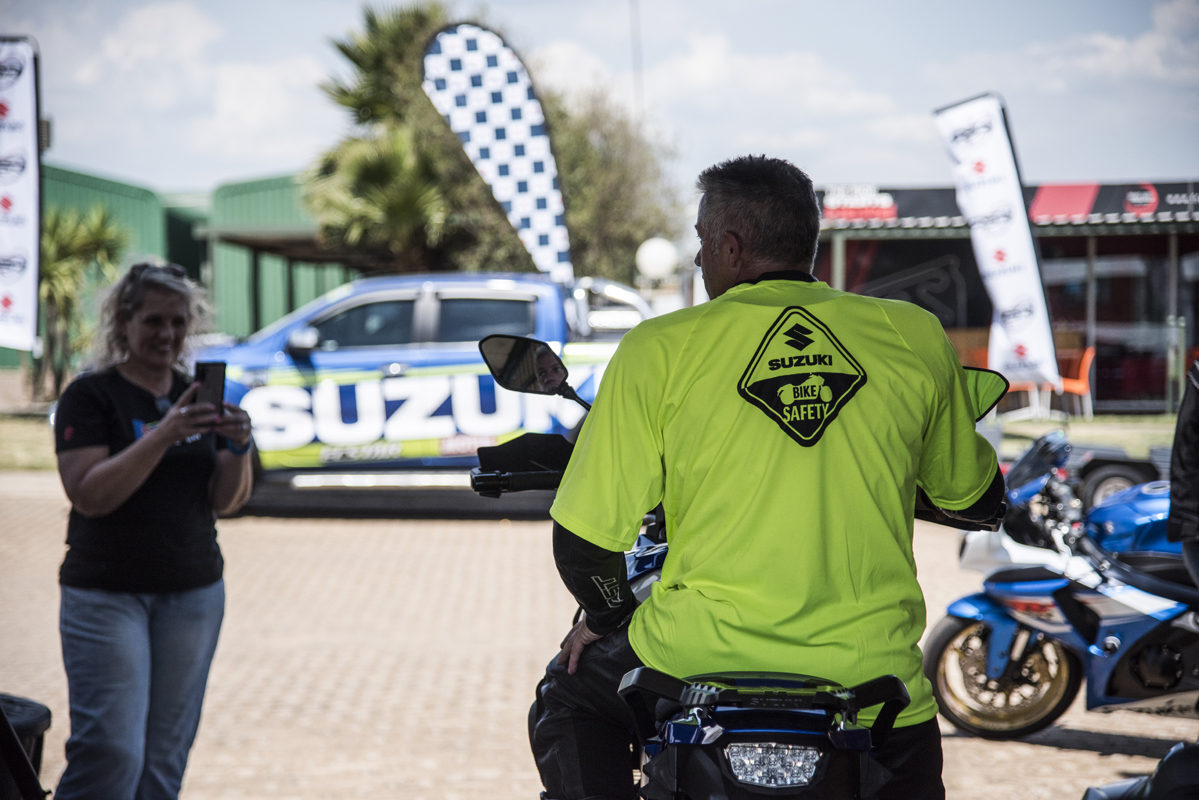
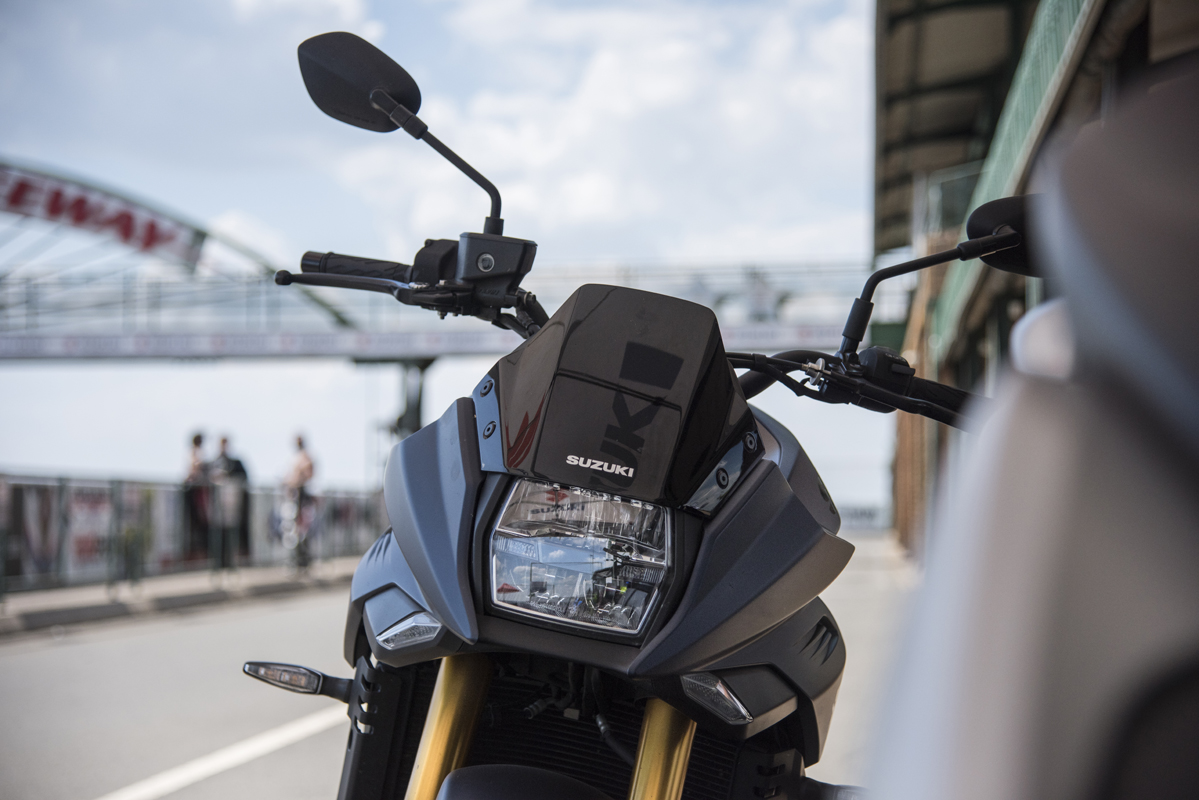
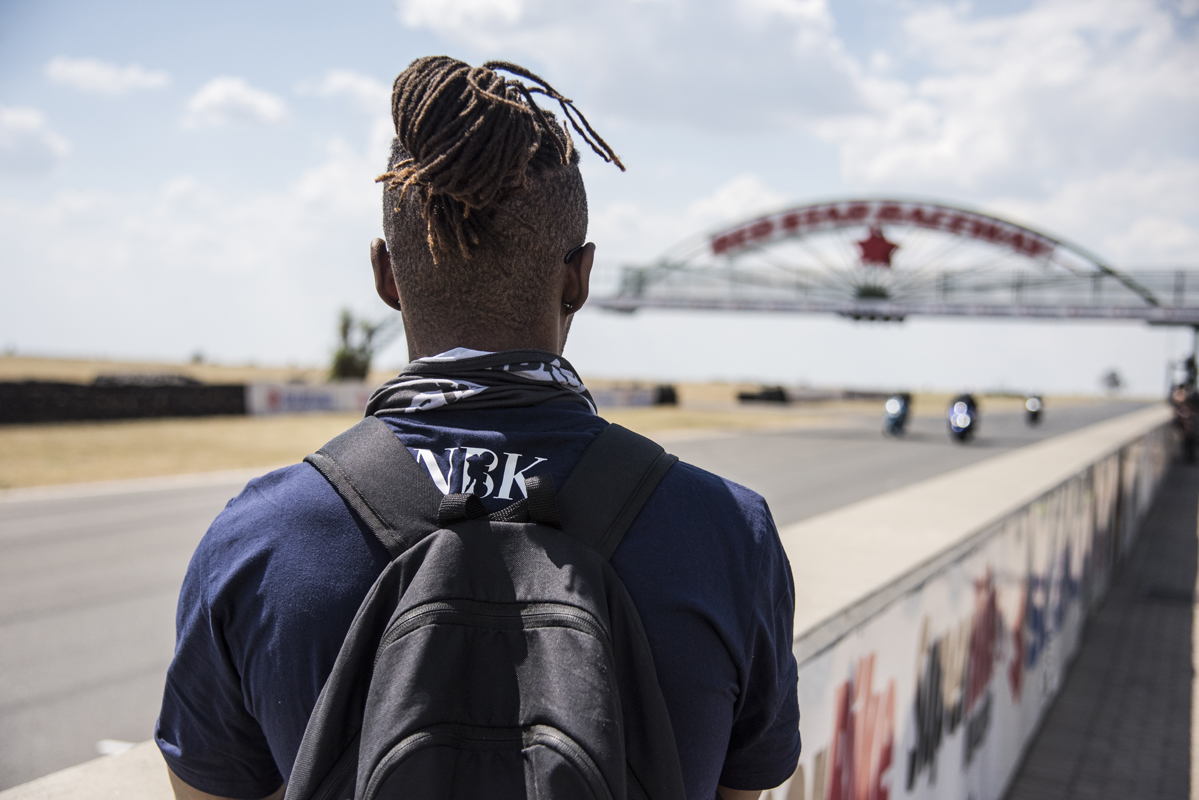
Suzuki is pretty clear that this is not a track day, but rather a day aimed towards learning to ride your motorcycle safely and effectively, with Red Star Raceway providing a safe environment for you to do so. It is so crucial that you learn the correct way from the beginning, as the wrong experience can have a lasting and negative effect on you as a rider—that’s not good for those who are riding or driving around you either.
Registration kicked off at 7:30 and butts were in the classroom chairs by 9:00. With the classroom session covering safety aspects such as line choice, cornering techniques, braking and general road safety awareness, riders then move onto the track. Once in the pits, the Suzuki instructors will place you in your respective classes running from B-D.
Photo credit: Bjorn Moreira / ZA Bikers
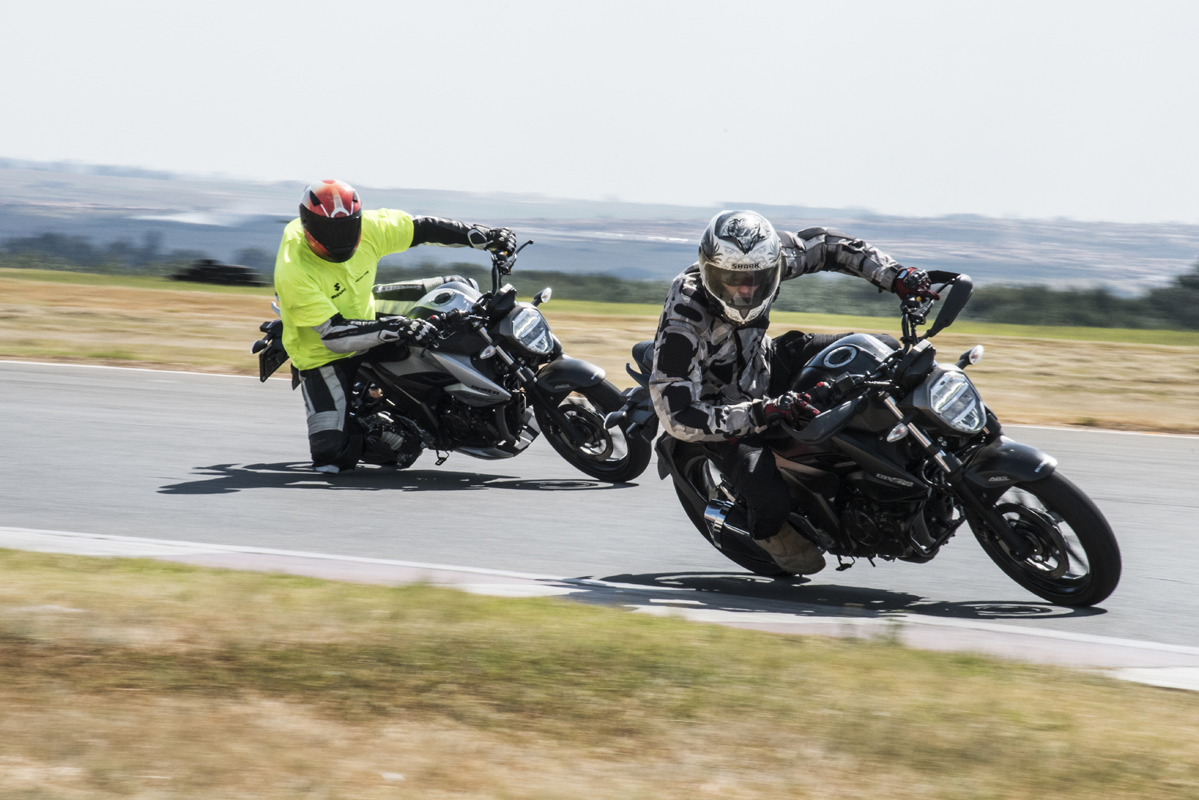
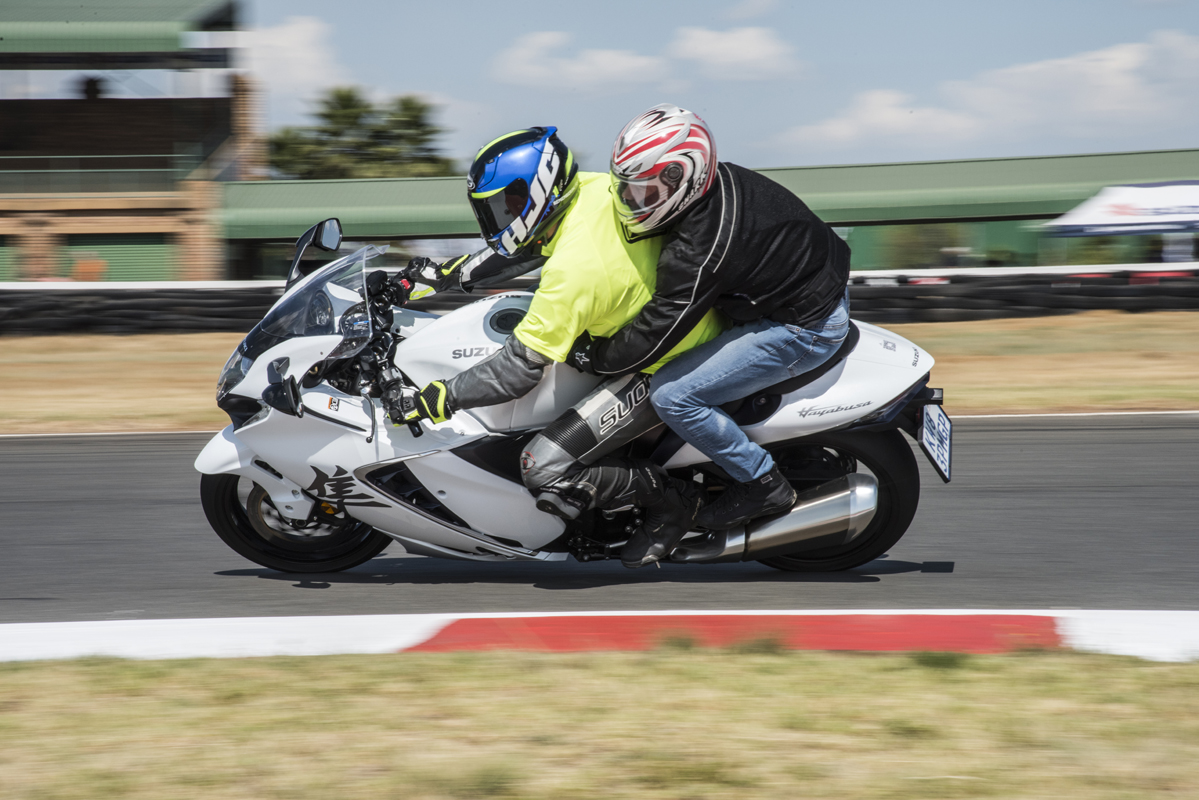
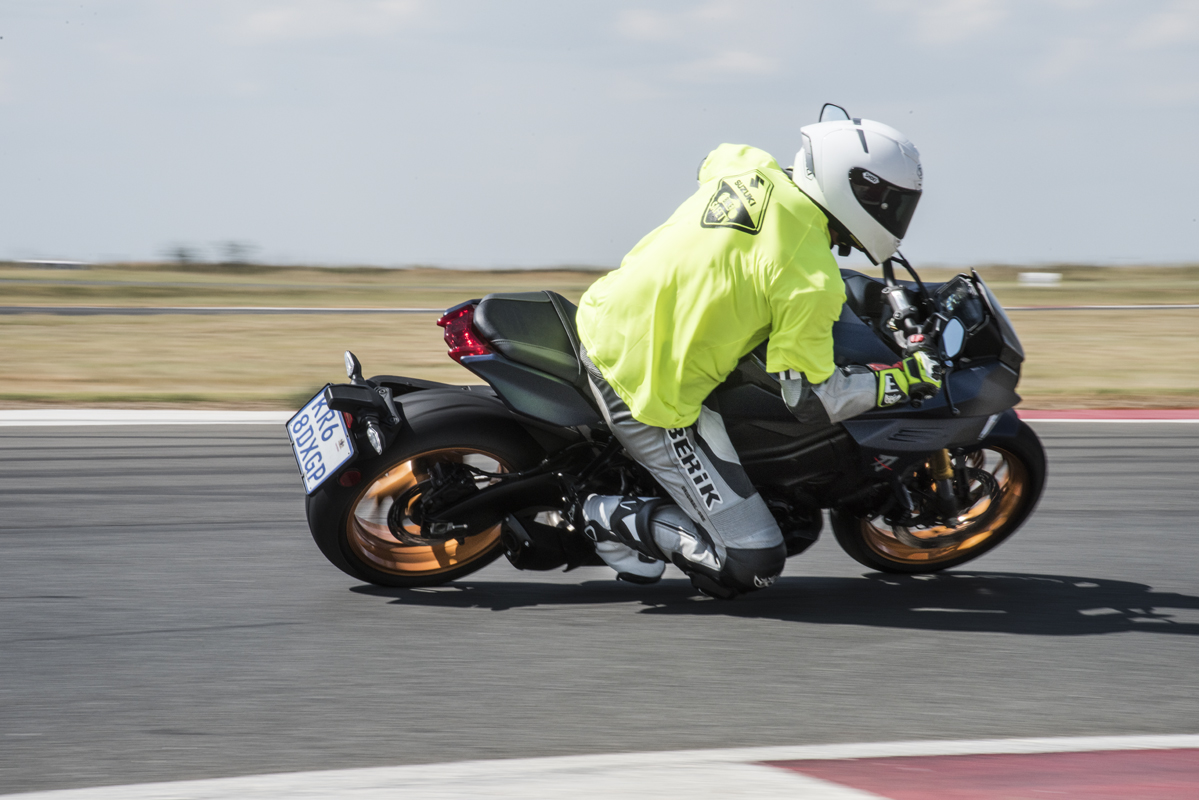
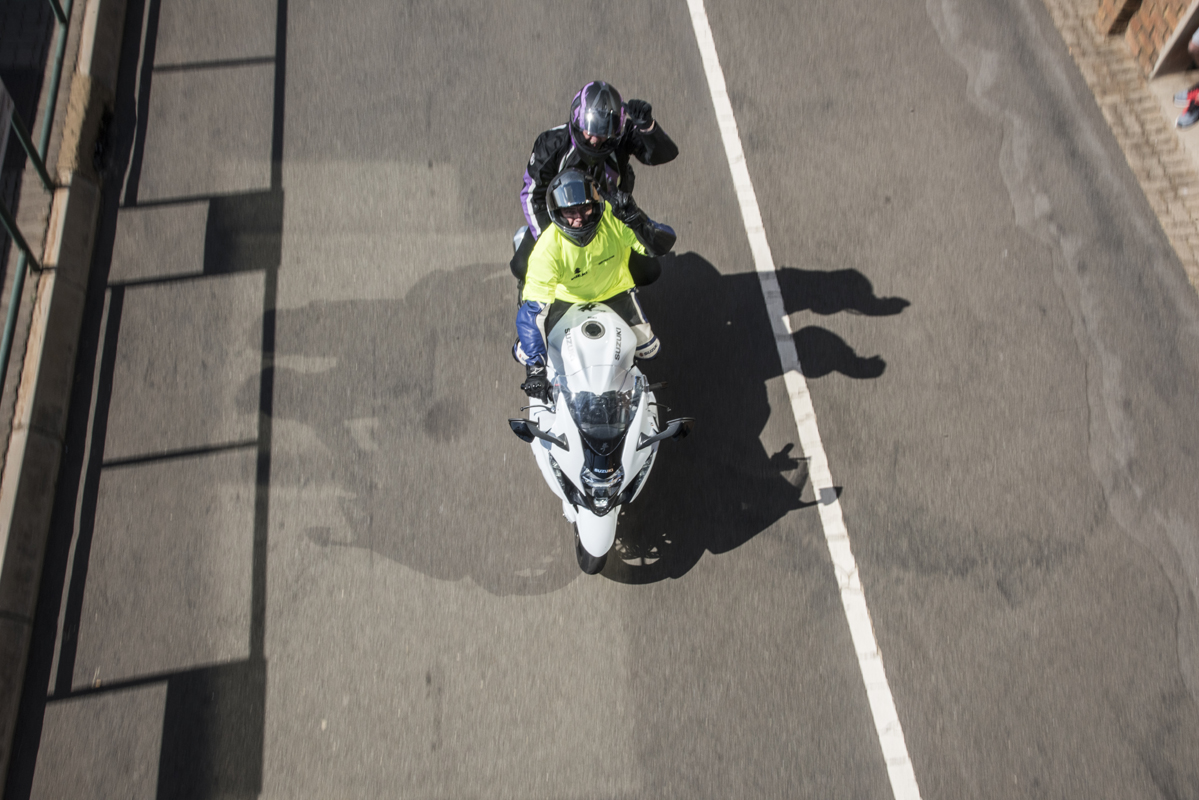
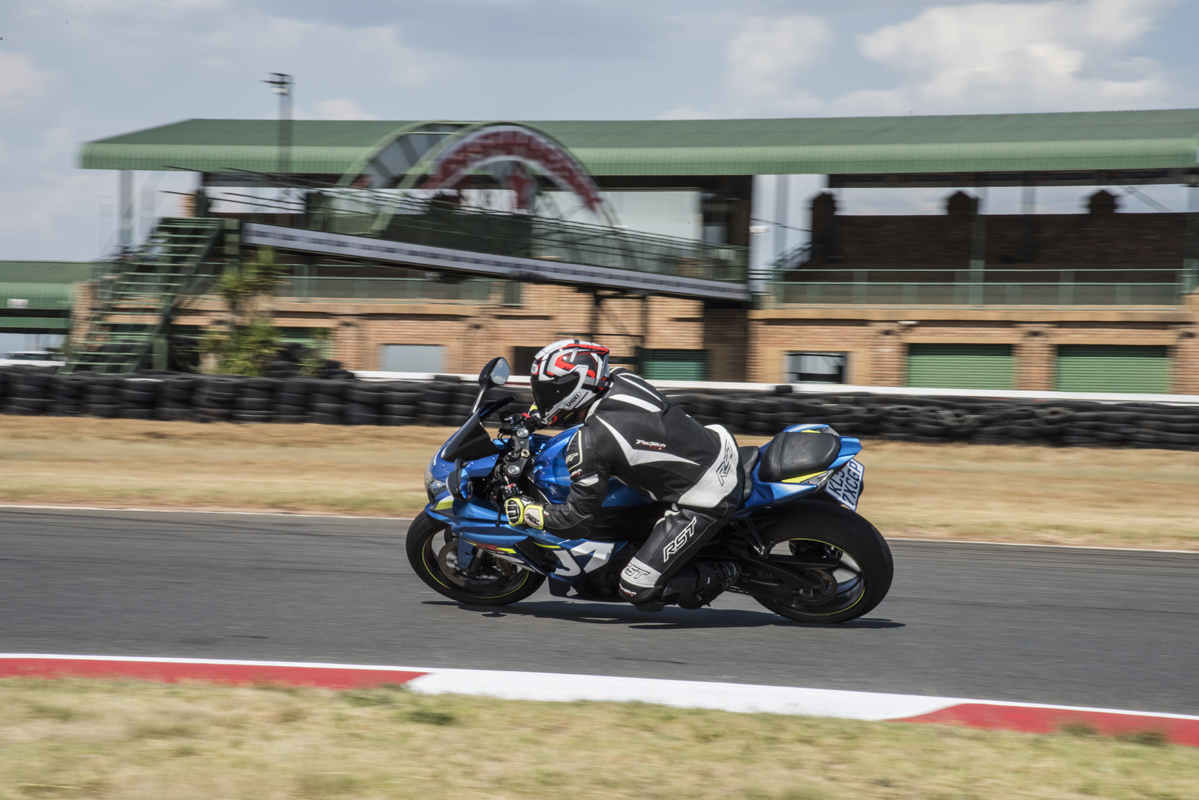
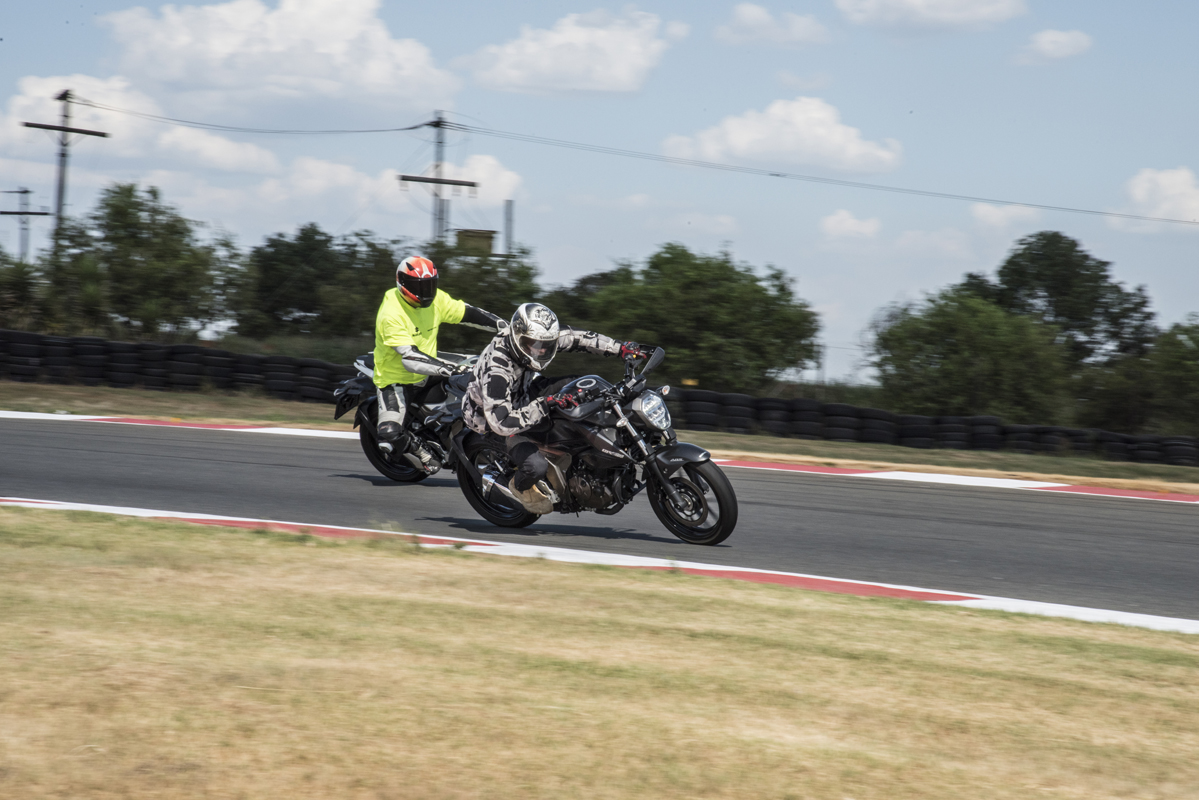
Once on track, the Suzuki riding instructors lead the riders around the circuit, whereby they get shown the correct lines and braking points. After a few laps, the instructors then slide behind the riders to evaluate their progression, after which they are able to show the riders how to better their techniques. If you do not have a motorcycle, you can also learn as a pillion or on one of Suzuki’s demo units.
At the end of the day, you will thank yourself for the experience and even if you have been riding and feel like a refresher course, Suzuki’s Rider Safety Day will be the perfect stepping stone or step back into motorcycling. The course costs R300, includes lunch and a portion of the funds gets donated to the SA guide dogs association.
For more events like these, keep an eye on our Biking Events calendar. Or check Suzuki SA’s Facebook page.
Since time began mankind has had a need to stash stuff. Everything had to be carried on the body. Belts and over-shoulder slings over time gave rise to haversacks and such. Being what we are, we never stopped there. The nature of man is never to quite get when enough is enough, but rather to end up wallowing in his excess. Witness the top of the range camping caravans and trailers that people haul behind their huge (they have to be to pull those rigs) 4x4s. Us bikers are a different bunch, however. We just don’t have the luxury of a lot of space. Forget for a moment those dudes in the States who haul campers behind their behemoth Harleys and Goldwings and think more about Adventure bikers. Guys and girls who venture off the beaten track, and intend to rough it, but do need some essential kit to make the journey less rigorous, as well as to haul some essential tools and spares.
Photo source: Turkana Gear
Such a guy and girl are Michnus and Elsebie Olivier who got ‘gatvol’ of the corporate grind, sold a lot of their ‘stuff’, bought a couple of Suzuki DR650s and set off travelling far and wide. Follow PikiPiki Overland on Facebook and prepare to be enthralled by their experiences travelling remote parts of South America. Why am I telling you this? Because like anyone preparing to do this kind of travelling, they did a bucket load of research. What bike, what kit, what luggage system, what, what, what. They had more questions than answers. Names like GIVI, Oxford, Kriega, Tusk, Enduristan….the list goes on and on. They dipped their toes in that bottomless pool and started travelling. They say that necessity is the mother of invention, and for Michnus and Elsebie it really was.
Photo credit: PikkiPikki Overland
To keep the bikes as light and uncomplicated as possible they went with rackless systems. Over time, everything they tried came up a bit short. Often outrageously expensive, it could not always fit just right and didn’t always survive the rigours of serious offroad adventuring. I haven’t asked them exactly, but I suspect that while gazing into a campfire after a hard day made harder by struggling with a failing luggage system, they had an epiphany. Stuff this, we going to consider all we’ve learned and make our own sh*t! Enter Turkana Adventure kit. Possibly the roughest, toughest and most badass rackless soft luggage on the market.
Photo credit: Dave Cilliers / ZA Bikers
I contacted Michnus after shooting the breeze with him and Elsebie at Triumph where we were loitering with intent. I recently acquired a Scrambler Ducati. I plan on doing some silly trips with it, which the manufacturers of this fine steed didn’t necessarily have in mind when they designed it. As a minimalistic beast, I don’t see my way clear to putting luggage ‘scaffolding’ on it. When I laid my eyes on the Turkana MadMule Rackless Luggage I knew it was just the ticket. Michnus had a set delivered to me and I set about fitting it after reading the instructions.
Let me say at this point that the instructions, both written and available on Turkana Gear’s YouTube, made understanding how to proceed loads easier. Just handling the luggage makes you realize that this is next level.
The fabrics used, the double stitching and reinforcement, everything about them is super strong and durable. I used to think that only cockroaches and Kawasaki KLRs would survive the Apocalypse, but now I know that the KLR will be sporting Turkana luggage! Every aspect of the luggage screams ROBUST. Load is spread over wide reinforced areas, thereby reducing the chance of tears and failure to an absolute minimum (I wanted to say ‘to zero’, but life has taught me that some people will break their own fingers in their bums, given half a chance).
Be patient and fit the luggage properly. It is adjustable to achieve the exact angle suitable for your particular bike. Then there is a real ‘belts and braces’ approach. You can boppa this stuff on your bike properly! Once done, you have great peace of mind, it won’t shift, burn through on your exhaust, or whatever. The bags I have are the 15L chaps which sit astride the back seat, complimented by a 40L duffel bag that mounts onto the seat proper. Straps and “D” loops abound, as well as strips attached to the bags which allow loose ends to be properly secured. Nothing flaps around once properly installed.
Photo credit: Dave Cilliers / ZA Bikers
The strips also allow smaller, modular bags, to be attached to the large bags for oddments requiring easy access. By ‘STRIPS’ I mean strapping sown at regular intervals to virtually integrate into the side of the bags. Think for a moment of the integrated ‘bones’ that ladies had in their corsets back in the distant past. These integrated strips would give shape to the garment. The fiendishly clever Turkana design utilises these to mount the bags to the adjustable base which fits over the seat. It means that the bags attach via a myriad of points, virtually making them one with the base.
Photo source: Turkana Gear
Spread the load and negate tears. The bags sport roll tops and come with water and dustproof inners. This is cool because not only do they keep your kit clean and dry but you don’t have to take all the kit off when overnighting.
If you are in the market for arguably the best, most adjustable, toughest rackless soft luggage on the Globe, then I think you need to get yourself some of this kit. It is designed for SERIOUS use. Round The World trip in the offing, or just a weekend trip to Tankwa? Your Turkana MadMules will serve you well. Use them on all your bikes too. My mate, Brian Cheyne, popped them on his Ducati 950SS for a Lowveld ride recently.
Photo credit: Dave Cilliers / ZA Bikers
Just decide who you are going to leave them to when you depart the planet, because I am convinced they will outlast you! For prices and options (and sage advice), I would suggest that you contact Turkana directly.
MadMules Rackless Luggage
For more information on the product featured in this article, click on the link below…
While the move to replace internal combustion engines (ICE) with electricity is a topic that’s not going to go away, it is guaranteed to promote argument whenever the point is raised. Frankly, the numbers just don’t add up and, while I know that the development of battery and charging technology will increase exponentially as deadlines for phasing out of ICE-powered vehicles gets nearer, it’s hard to see how it will ever be practicable.
Putting in place charging points for every electric vehicle will be such a massive undertaking, not only in cities but also in outlying areas. Also, it’s all very well talking about electrification in first world countries but how on earth is it going to be affected in third world countries? We can’t even keep lights on at home so what chance is there of making sure there is enough electricity for charging our cars and motorcycles, let alone all the trucks that keep the economy afloat? The level of investment will be difficult enough for the likes of America and Europe: what chance does Africa have?
Image source: MotoGP
It’s not even as if Europe has excess electricity-generating capacity. I have it on good authority that France will be subjected to electricity outages in the coming years as planned maintenance of power stations comes into force. With a large amount of its electricity coming from nuclear power stations, maintenance isn’t a couple of weeks, it’s years: how does that tie in with an increasing number of electric vehicles?
Of course, one of the big questions for motorsport fans is how electrification will affect the sports we love, be it on two wheels or four. Formula E and MotoE have been running for a few years and are mildly interesting, although it is noticeable that very little TV coverage is given to MotoE, at least here in SA. Watching electric bikes on TV is less painful than watching trackside as the lack of noise will be drowned out by garrulous commentators, much as the noise of deafening ICE MotoGP bikes is. But will tens – or hundreds – of thousands of race-goers be able to maintain their interest as a field of race bikes whispers past them in the main feature races?
Image source: MotoGP
It is hard to find any dissenting voices about electrification from the industry itself but one leader who has jumped onto the soap box is Pit Beirer, director of motorsports at KTM. He has gone public with his views that electrification is certainly not the ‘near future’ of any motorcycle over 125 cc and neither is hybrid technology, either.
One of the barriers to adopting electrifying motorcycles is the weight and range of current battery technology and, while KTM has experience with it in its range of Freeride off-road bikes, that is more of a novelty rather than a viable alternative to the ICE.
Image source: KTM
“We don’t see that the technology is on the table at the moment to transfer mass production bikes into something like battery (powered) motorcycles,” Beirer said.
“We have a clear commitment to replace smaller engines, like 65 cc kids bikes or less than 100 cc for urban mobility or around cities with scooters – we see all of this segment as making sense to do it with a battery.
Image source: MotoGP
“Everything else, and for what we call a full-size motorcycle from 125 cc upwards, we see still the combustion engine as the solution in the near future.”
The move – or should we say, the rush – to electrification seems to be sure to wipe out 140 years of development of the ICE, with surely much more left in the development pot, especially if we consider the use of non-fossil synthetic fuels, which MotoGP will fully adopt by 2027, with a target of 40% by 2024. Beirer sees battery power as a stop-gap measure while synthetic fuels are developed.
Image source: MotoGP
“You all know we are pushing like crazy – together with the fuel industry – to get as quickly as possible this sustainable fuel into the (MotoGP) bikes,” he explained.
“Then if you look at a modern motorcycle that is produced with a lot of high-value raw materials… our MotoGP bike is made with 91% recyclable material. You have steel, aluminium and titanium. All raw materials that can and will be reused at the end of the life cycle.
“And if you then fire up the whole project in a short period from now with 20-21 litres of (100%) sustainable fuel, we see the package of the (MotoGP) bike together with the fuel as ready for the future and that’s what we want to stick to.”
Image source: MotoGP
Nor is Beirer a fan of hybrid technology, which has had a huge impact on four-wheeled Grand Prix racing, stating it has no place in MotoGP.
“With any hybrid then you start to produce batteries, which you have to dig from the ground and take out (elements) that are not available in high quantity and not good for the environment.
“So I feel battery is maybe a transition period (until) there is some future technology that is not ready at the moment for the mass market.”
Image source: MotoGP
What he doesn’t talk about is the added weight and packaging problems of these batteries and attendant technology: difficult enough in a car, so what would it be like on a bike?
KTM has never been a manufacturer to follow the herd and abandon engine technology without due process. Look at the way it has persisted with two-stroke technology after the Japanese abandoned it, countering the emissions problem by developing fuel injection technology.
Image source: MotoGP
It just feels as if there has not been enough time and thought given to electrification: it seems to be a knee-jerk reaction to environmental problems: a reaction that creates more problems – or, at least, alternative problems – than it is solving.
Of course, adapting the ICEs in racing motorcycles to run on synthetic fuel is only a minute element of the carbon footprint of the MotoGP championship – of any racing championship, for that matter. Consider the environmental impact of transporting hundreds of tons of equipment and hundreds of team personnel around the world. Using 21 litres of fuel per bike, per race, isn’t the big issue here: developing new technology that will enable the ICE to continue on its hard-won development curve and not throw away all that expertise and knowledge, is.
The Triumph Speed Triple’s most distinguishing feature is its twin bug-eyed headlights; its second is its twin-spar aluminium frame. Ironically, neither of these were a thing on this iconic streetfighter’s initial release.
When the Speed Triple hit the scene way back in 1994, it had a single headlight and blocky bodywork that hid that now-unmissable frame. Triumph soon redesigned it with sculpted bodywork that exposed more of the frame—and a dual headlight design that would go on to polarise opinion for decades to come.
Photo source: Triumph UK
Some pundits hated the two chromed headlights poking out the front of the Speed Triple, others loved the bike’s unapologetic aesthetic. When Triumph finally ditched the twin round headlight design for a twin angled headlight design, opinionists were split into three camps. You either loved the sharper look, hated it because the round lights were some sort of sacred signature, or wished that Triumph would finally just put a regular headlight on there.
The Speed Triple has evolved over the years, but traces of its early DNA remain. And it doesn’t give a continental whether you like it or not either. That’s because it’s a thoroughbred hooligan; punk rock on two wheels. And nowhere is this more evident, than in the smorgasbord of colours it’s come in over the years.
Photo credit: Wesley Reyneke / ZA Bikers
Right now, you can get the 2023 Triumph Speed Triple RS in black, silver, or the colour pictured here: Baja Orange. It’s a matt paint job that pops like heck in the sun, and it demands attention. Which means some people probably won’t like it.
Layered onto the orange base is a graphics kit that’s sharp and minimal. Most prominent is the ‘RS’ motif on either side of the tank—executed in a light grey, it can go from bold to almost ghosted, depending on how the light hits it. This particular demo model gets an extra little lick of orange, courtesy of a neat, colour-matched fly screen.
Photo credit: Wesley Reyneke / ZA Bikers
It’s not the first time the Speed Triple’s been wrapped in orange. It was a colour option on the very first model and has popped up from time to time in Triumph’s catalogues. They’ve also drenched the rowdy streetfighter in red, yellow, blue, purple and bright green over the years. Scour the archives, and you might even find Triumph’s rare Nuclear Red hue—which is pretty much pink.
Sure, you can snag a Speed Triple, old or new, in black, white, grey and silver… but why? The bike’s aggressive stance, svelte layout and bug-eyed lights beg for something that’ll sear retinas. Nay, they deserve it.
Photo credit: Wesley Reyneke / ZA Bikers
Of course, there’s also the fact that the current-generation Speed Triple 1200 RS is absolutely bonkers to ride. The 1,160 cc inline triple punches out 177.5 hp and 125 Nm, with a power band that’s broad and usable. With a six-speed box, a quick-shifter, multiple rider modes and a somewhat sanitised exhaust system (thanks, Europe), there’s an unavoidable air of refinement—but it’s done little to quell the Speed Triple’s hooligan nature.
Photo credit: Wesley Reyneke / ZA Bikers
There’s a reason that that Triumph triple-cylinder mill has legions of fans. It loves to be spooled up, rewarding a heavy hand with arm-stretching torque and an antagonistic howl.
It offers up more riding comfort than its younger sibling, the Street Triple 765, but with a smaller weight penalty than it used to have. At 198 kilos wet, and equipped with fully adjustable Öhlins suspension and responsive Brembo brakes, it’s hella nimble.
Photo credit: Wesley Reyneke / ZA Bikers
It corners intuitively, holds its line like it’s on rails, and has enough modulation in the brakes and throttle that, once you find your groove, you can go really fast on it. The more you manhandle it, the more fun it gets.
I had only two gripes when I first rode this iteration of the Speed Triple 18 months ago—the gear shifter was a little sticky getting into neutral, and upshifts on the quick-shifter had to be precisely timed. Triumph has clearly done some homework because the shifter is now far more forgiving in both scenarios.
Photo credit: Wesley Reyneke / ZA Bikers
All this to say; the Triumph Speed Triple 1200 RS is one of my favourite new motorcycles. And if I had to park one in my garage, it’d likely be orange. Because if you’re going to buy a bike that’s about as subtle as an Elon Musk tweet, you might as well pick a livery to match.
All Triumph has to do now, is bring green back to the catalogue. Or, better yet, Nuclear Red.
Pepson Plastics Factory Kawasaki Racing with Motul, Gilbert Mining, Scottish Cables, Michelin, Acerbis, Renthal, DID and Arai, got its 2023 Cross Country Racing season off to a golden start at the GXCC Gauteng championship opener at Lekoa Lodge Saturday. The team delivered two wins and two-second places in an impressive outing in the Villiers, Free State race.
South African Seniors’ champion Kenny Gilbert remains unbeaten for over a year now since he first swung a leg over his Pepson Plastics Factory KX 450 X. Kenny dominated the Senior race with a handy ninth overall among the best of the young guns after another faultless ride in the sandy, rocky Free State terrain.
Image source: Motorsport Media
Former motocrosser and Kawasaki ZX9 Masters circuit series regular, Brian Bontekoning made a fine GXCC Cross Country debut with a maiden Veterans class victory aboard his Pepson Plastics Factory Kawasaki. He was backed up by team boss Iain Pepper, who rode home fifth in the class for the oldest riders in Cross Country racing.
Image source: Motorsport Media
Pepson Plastics Factory Kawasaki Racing also had a very good day at the other end of the age spectrum. Young Jake Pretorius rode home second in the under-13 85cc Juniors. He was not the only team rider to strike silver, as Jaycee Nienaber rode his KX 450 X home a fine fifth overall and second in open class OR1 Pro. OR1 teammate Taki Bogiages was tenth.
Another young gun, Wian Wentzel stepped up to OR3 with a fine debut fourth in the ultra-competitive 250cc class. Two of Pepson Plastics Factory Kawasaki Racing’s amateur riders, Kevin Sanders came home seventh, and circuit car racer Keegan Campos was 10th in OR3 Pro-Am.
Image source: Motorsport Media
“That was a positive start to the new season,” Pepson Plastics Factory Kawasaki Racing team principal Iain Pepper confirmed. “Kenny continued his winning streak, Brian arrived with a bang, and Jake, Jaycee and Wian delivered great results. “The rest of us enjoyed a mixed day everyone got home safe and we all had a ball.
“Now the preparations start for the first National at Rhino Park on the 4th of March – bring it on!”
Franchise Co Sleepover Tork Craft Honda Racing enjoyed a spectacular start to its 2023 Cross Country Motorcycle season at the opening round of the GXCC Gauteng Championship at Lekoa Lodge on Saturday.
Not only did double champion Mike Pentecost celebrate his first race on a Red Rocket Honda with a dominant overall win, but the team delivered no less than six podium finishes in the Villiers, Free State race. Pentecost’s victory was also Honda’s first overall Cross Country Motorcycle victory in South Africa in the modern era.
Image source: Motorsport Media
Mike Pentecost quite literally obliterated the opposition, with an eight-minute overall victory aboard his open class 450cc OR1 Pro Franchise Co Sleepover Tork Craft Honda CRF 450 RX. Teammate Hayden Louw added to the big class jubilation with sixth in OR1 Pro on his similar machine.
Franchise Co Sleepover Tork Craft Honda also had a splendid outing in the Junior classes. where Murray Smith led Jaden Els home to a fine Honda Racing 1-2 in 85cc Senior. 85cc Junior teammate Liam Scheepers meanwhile kept the baby class podium red with a fine third in 85 cc Juniors.
Image source: Motorsport Media
It was a good day for Franchise Co Sleepover Tork Craft Honda Racing on the other side of the age divide too. Wynand Delport ended second in the Senior class, while the ever-spectacular Warrick van Schalkwyk came home fourth in Masters.
The team also had a positive outing in OR3 Pro. Tyron Beverley steamed home seventh overall and third in the 250cc class aboard his Franchise Co Sleepover Tork Craft Honda CRF 250 RX. Teammate Haydn Cole backed Beverly up with a solid sixth in OR3 Pro riding a similar machine.
Image source: Motorsport Media
“That was a splendid way to start the new racing season,” Franchise Co Sleepover Tork Craft Honda team boss Harry Grobler concluded. “Mike was unstoppable today and quite appropriately brought us Honda’s first overall Cross Country Motorcycle race win in South Africa, in as long as most of us can remember!
“The rest of the team shone too, not least our stars of tomorrow, Murray, Jaden, and Liam, as well as Wynand and Tyron. “We have now won the big class in Nationals, and overall in the GXCC. “Join the dots and you will see what we are after next. “Our first opportunity of that comes at the opening National at Rhino Park in Pretoria on 4 March. “Let’s do this!”
The bi-annual BMW Motorrad GS Trophy, which has rather become South African property in recent years, with four consecutive overall victories in the men’s class and an overall victory in the women’s class in 2022, will return to Africa in 2024, Namibia having been announced as the venue for the eighth running of the event.
Leading up to 2024 will be 15 national qualifying rounds and one international qualifying round, to choose the 22 teams that will compete. Of the 22 teams, six will be all-female teams.
Image source: BMW Motorrad
By choosing Namibia, the event organisers have sought to offer conditions as different to those encountered in Albania in 2022 as possible. Dr Ralf Rodepeter, Head of Brand Management BMW Motorrad, explained: “After Tunisia, South Africa, Patagonia, Canada, Thailand, Mongolia, New Zealand and most recently Albania, BMW Motorrad was again on the look-out for perfect GS terrain – and found it in the beautiful country of Namibia. Countless off-road kilometres with challenging route profiles passing through marvellous landscapes with fascinating flora and fauna once again ensure an exciting GS Trophy.”
Image source: BMW Motorrad
The BMW Motorrad International GS Trophy is an event that celebrates the spirit of the BMW Motorrad GS models. Namibia 2024 will be the ninth edition of the event. Previous editions were held in South Eastern Europe (Albania) in 2022, Oceania (New Zealand) in 2020, Central Asia (Mongolia) in 2018, Southeast Asia (Thailand) in 2016, North America (Canada) in 2014, South America (Chile, Argentina) in 2012, South Africa (South Africa, Swaziland, Mozambique) in 2010 and North Africa (Tunisia) in 2008.
Image source: BMW Motorrad
The BMW Motorrad International GS Trophy is not a race: it is a team competition in which an international contingent of off-road enthusiasts compete against each other in various special tests. Not all of these involve just motorcycling: skills and teamwork are essential, too. Since competitors are together for a lot of the time, also spending the night in bivouacs, this is an adventure that promotes a sense of togetherness, too. People, cultures and motorcyclists from all over the world come together, and it is not uncommon for friendships to be made for life.
Image source: BMW Motorrad
Based on the experience of past GS Trophy events, the most successful teams are ultimately those that demonstrate solid preparation, excellent teamwork and riding ability, while at the same time having a lot of fun and experiencing wonderful international camaraderie.
Some of the Pepson Plastics Factory Kawasaki Racing team members at the launch at Legends MX in Joburg, by Kevin Sanders Disruptive Intent
We cruised to Rhino Park recently to touch base with the members of the Pepson Plastics Factory Kawasaki Racing team line-up for 2023. Chatting with team boss and rider Iain Pepper, himself a stalwart and stellar performer in SA car motorsport. Iain understands that a happy team on the right machinery will often translate to Championship Trophies. Having said that, he is building a racing family where winning is the goal, but it is not the Be-all and End-all. The change, a couple of years ago from Husqvarna to Kawasaki, has turned out well, with four Championships on the shelf.
Photo credit: Bjorn Moreira / ZA Bikers
New for 2023 is the move from the 2022 SA National High School Champion, Wian Wentzel, to the 250cc OR3 Class. That should put a talented cat amongst them pigeons! He will be campaigning a lone KX250X. His initial impressions of the Green Machine are pretty positive, so watch that space. Kenny Gilbert, the vastly experienced speedster and National Seniors Champion will campaign a KX450X. Joining him, on a KX250X, is a fellow perhaps better known for his car circuit racing exploits and tuning skills, Lee Thompson.
Photo credit: Bjorn Moreira / ZA Bikers
Also on a KX450X for another season is Jaycee Nienaber, again with Wade Den as teammate. Motul Tech Maestro, Taki Bogiages, is stepping up a class to also wrestle the potent KX450X, which I have on good authority he has been spending some quality time on.
Photo credit: Bjorn Moreira / ZA Bikers
Looking to the future, Iain and his team continue to invest in the Junior Class. Nathan Sinclair, Jake Pretorius and brothers Clayton and Dylan Human will be contesting 85cc Juniors. Jayden Boyce will compete in GXCC races. The team ethos is “race to win, but make sure you have fun doing it”.
Photo credit: Bjorn Moreira / ZA Bikers
If anyone understands the importance of sponsors it is a seasoned motorsports campaigner like Iain. The Pepson Plastics Factory Kawasaki Racing team is no different. Backing the team are obviously title sponsors Pepson Plastics and Kawasaki SA, but also making significant contributions to the team effort are Gilbert Mining & Engineering, Reinhardt Transport (Pty) Ltd, Acerbis (whose products were evident on many of the bikes), Motul South Africa, with their spectacular lubricants and bike care products, DID, Arai, Renthal, Michelin, TBR Suspension and Scottish Cables. All quality contributors to a quality team.
Photo credit: Bjorn Moreira / ZA Bikers
Racing is a cruel mistress. As we look to the year ahead, last year’s results are now history and it all needs to happen all over again. But then again, that is what keeps bringing us back, both as racers and spectators. Who will triumph in 2023? Only time will tell, but the Pepson Plastics Kawasaki Factory Racing team are certainly not going to rest on their Laurels. Let the games begin!
1 of 25
Pepson Plastics Factory Kawasaki Racing – 2023 Team:
I’m sure there is more than one, but a Facebook group I follow performs a countdown to the new MotoGP racing season every year, using riders’ race numbers to illustrate the countdown. As I write this, I see we are on 60 days to the start of the season, marked by images of Julian Simon and Michael van der Mark, who both run as number 60.
The post New Year off-season is always marked by a distinct lack of news around either MotoGP or World Superbikes and it is interesting to see what the racing websites find to keep their pages full. Sadly most of it is completely banal and you just know that they are really scratching to think of anything to write about. A bit like this particular column, actually…
Image source: MotoGP
I mean, you know things are slow when the best they can come up with is who will be wearing what helmet in 2023! Yes, I know that for the helmet manufacturers, who are investing an awful lot of money to attract the big hitters in racing to the fold, this is big news but, really, does anyone else actually care? Modern helmets are a nightmare of gaudy designs and you are lucky if you can actually discern the manufacturer’s name. It’s difficult to tell one helmet from another, actually.
Whatever happened to a bit of class and style in helmet design? Simple, classy and instantly recognisable. Why does no one do that any more? Leathers are plastered with sponsor logos, but helmets are generally sparsely populated with sponsor logos so there is a blank canvas to be filled. What do we get instead? Bottom-of-the-design-class graphics that are just hideous. Go back through racing history – on two wheels and four – and it is littered with basic, stylish and, most importantly, memorable helmet designs. Why haven’t the marketers thought of that one?
Image source: MotoGP
Show me any modern riders’ helmet and, ten times out of ten, I’ll fail to recognise it. Show me Hailwood’s, Bill Ivy’s, Phil Read’s, Jackie Stewart’s, and Senna’s, and I know immediately who you’re talking about. It’s not rocket science. Or maybe it is…
The other ‘big’ story is “will Bagnaia wear the Number 1 plate or his regular race number” (can’t even remember that, actually. Is it age?). This, of course, has given the press huge pleasure as now they can trot out the statistics: who last won the title and took the Number 1 plate and what are the statistics regarding who went on to win the title again wearing it. (In case you don’t know, Casey Stoner was the last rider who chose the Number 1 plate for the 2008 season. He didn’t win the title that season…)
Image source: MotoGP
The point of all this preamble is that news is slow at this time of year. Don’t worry: I feel your pain as well. The period between the last race of the season and the first race of the next is like being cast adrift in a small boat, bobbing aimlessly along, with nowhere to go and no idea how you’re going to get through it. It will only be in March that we will finally get a glimpse of land again.
Not all the coverage of the off-season has been trite, however. There is a lot of speculation around the coming season but even that tends to be of the negative type: how slow will Yamaha be? How dire is Honda’s position? Should MotoGP be renamed MotoDucati or MotoV4? You know: really important stuff.
Image source: MotoGP
Actually, that last topic is rather relevant. In 2023, there will be merely two bikes with an inline four-cylinder engine and they are, of course, the Yamahas of Quartararo and Morbidelli. How long until they bow to the inevitable and also turn to a V4 configuration? There has been an inline-four on the grid (but not continuously) since 1950 (Gilera) but, if Yamaha’s 2023 version of the M1 isn’t a success then Yamaha will surely give in and build a V4.
But why? What is wrong with an inline-four? Well, nothing actually. If anything an inline four with its long crankshaft creates a more stable motorcycle due to the crank’s rotation but a V4’s shorter and stiffer crankshaft allows more RPM and, therefore, more power. More power equals more speed: more power equals better cornering because the bikes can run more downforce giving better braking, more cornering grip and fewer wheelies on the exit. More power overcomes the drag penalty on the straights from running more downforce.
Image source: MotoGP
Two Yamahas against 20 Ducatis? It would be a brave person who put money on Quartararo or Morbidelli winning the championship this year. In the same vein, who will be betting on Honda? Without talisman Marquez, HRC has got things terribly wrong since 2020.
2022 might not have been the first time that Honda finished last in the constructors’ world championship – that happened also in 1979, ’80 and ’81 as the company struggled with the oval-pistoned NR500 – but it will still have hurt like hell. The root of Honda’s problem, other than losing Marquez, has been the super grippy Michelin rear slick which has highlighted the imbalance in grip between the front and rear of the bike, which has made it incredibly difficult to find any balance at all.
Image source: MotoGP
“The bike doesn’t turn, there’s no grip, so no acceleration…” said Marquez. Not the best of situations, for sure. The riders are having to fight the bike every inch of the way to drag the performance out of it so, naturally, mistakes are more frequent and mistakes lead to crashes.
Of course, all this has started rumours that Marquez would be looking at a Ducati ride in the future, in order to continue his winning ways. However, Ducati is saying that that is unlikely, preferring to bring up the younger riders it already has on the books. With Jorge Martin, Marco Bezzecchi and Luca Marini, Ducati has plenty of talent waiting in the wings – very fast talent: they are Ducati’s future, not Marquez. Of course, never say never and all that, but it is unlikely. That means Marquez has to remain fit enough to help develop the next HRC motorcycles and that is being put in jeopardy by the latest HRC bike being so difficult to ride and easier to crash.
Image source: MotoGP
Elsewhere, what do we have to look forward to? Jack Miller on a KTM, alongside Brad Binder: Miguel Oliveira on an Aprilia: Joan Mir on a Honda: Enea Bastianini alongside Bagnaia on the factory Ducati (now, that could produce fireworks: if they take points off each other consistently, expect another rider and team to sneak through and snatch the title away from them). All of those changes will be fascinating to watch.
And then there are the questions: can Aprilia continue its upward trajectory? Will Ducati swallow the championship through the sheer weight of numbers? Will Honda pull it together in time and give Marquez and Mir a bike they can win with? Will the Yamaha remain recalcitrant? Can KTM put together a consistent attack on the title?
Image source: MotoGP
The only thing we have to worry about is the increasing reliance on aerodynamic add-ons. Some riders like them – Cal Crutchlow, in particular, has been vocal about his appreciation of them – but there is no doubt that it is harming close racing and will only get worse.
And then, there are the sprint races on Saturday, replacing FP4. There will be a 30-minute FP3 session, qualifying and a half-distance sprint race, all on the Saturday at every venue. The sprint race will have nothing to do with setting the grid for Sunday, that being set by qualifying. Half points will be awarded for the sprint race.
Image source: MotoGP
It’s rather difficult to see the point behind the sprint races and even the riders are questioning the wisdom of more track time racing, which obviously increases the chance of a crash and injury, putting the championship in doubt. Dorna is resolute that the Sprint Races will happen, however, so that is that. From a fan point of view, it means more on-track action, which we’ll all love but not if our personal favourite bites the dust and is out for the main race.
So, sixty days to go: a long time but also just around the corner.
If you were planning a long trip on a motorcycle, which motorcycle would you choose, if you were in the enviable position of being able to choose any motorcycle you would like? Naturally, thoughts would turn to a dedicated touring bike if you were certain that every road you rode was going to be tarred. South Africa presents a different scenario, however, where many really interesting roads are dirt. In this case, an adventure bike is called for: a bike that can handle any surface thrown under its wheels and handle them all with equal ability.
So, adventure bike it is. The choice has been narrowed but, with the proliferation of adventure bikes on the market, there is still a decision to be made, not only in what brand to choose but what size. Every manufacturer worth its salt offers an adventure bike: most offer more with different engine displacements and physical sizes.
So, if we assume the ability to choose the bike on which you would undertake an adventure into the heart of South Africa, which would it be? BMW? Triumph? Ducati? KTM? Husqvarna? Yamaha? Honda? You can pretty much pick your favourite brand and go from there.
Image Source: Google
But, where is the challenge in that? Where is the adventure? OK, so not everyone wants their ride to be a challenge and, as for ‘adventure’, I know that not every rider wants too much of that, either: plump for the soft life, full of comfort and excess power; rest securely in the knowledge that you will get there and back with the minimum of fuss or concern for the machine.
If you’re travelling a long way, you want something with a larger engine, to cover distances at speed and with ease. But, what if you don’t want to whistle past all the amazing scenery, and rush through all the small towns leaving nothing but a dust cloud in your wake and maybe an empty bottle at the local pub? What if you want the journey to be the experience, not the destination? What’s the point of all that vastness of landscape if you’re going too fast to appreciate it?
Photo credit: ZA Bikers
Such thoughts dictated the choice of mount for my own particular odyssey: that and a bloody-mindedness that told me to shy away from the easy route. There are quite a few small adventure bikes on the market, from the likes of BMW, KTM, Kawasaki and so on. Somehow, however, you just expect them to go the distance, because of their parentage: they really shouldn’t break.
There is another, not-so-obvious choice, however. What if I told you there was a motorcycle manufacturer that sells more motorcycles than the second, third and fourth-placed two-wheeler companies put together but does that in one country?
Hero MotoCorp is one of the largest two-wheeler manufacturers in the world. Since the company’s inception – in partnership with Honda – in 1984, nearly 100 million Hero motorcycles and scooters have been produced and annual sales in the past ten years have been anywhere between six and eight million motorcycles. And this is almost solely in India, don’t forget!
Photo credit: Hero Motorcorp
The Hero brand has recently been introduced into South Africa by the Fire it Up! group. While it is tempting to look at it as just another ‘cheap’ brand on the market, it has to be clearly understood that the Xpulse 200 that I rode is in no way a ‘cheap’ motorcycle. Inexpensive to buy and run, certainly, but not ‘cheap’ in the way we understand the term, as in ‘cheap and nasty’. Once you’ve read this account of my time with the bike, I hope you’ll come to understand what I am talking about.
So, there you have it: the cat’s out of the bag. Spurning all the easy options, I chose, for my mount on this epic voyage of discovery, not a thundering litre-plus behemoth but a diminutive Hero XPulse 200: 18 horsepower and 17 Nm of torque wrapped up in an off-road capable motorcycle, weighing in at 153 kg with a full tank of fuel. Hardly the stuff that epic adventures are made of. Or are they?
Photo credit: ZA Bikers
Given that my initial intentions were to ride towards the middle of nowhere and see if I could find it, my decision might seem a little odd but, as I have said, the journey was the adventure, not the destination: I couldn’t rush to get there, because where was I going? With no destination, I could concentrate on where I was. And that was the whole point behind choosing the Hero: I simply couldn’t decide to pile on the kilometres. Going nowhere slowly was the only option.
Also, there was a desire inside to see if a bike such as the Hero could complete such a journey. Many were the doubters, the cynics and the downright rude but the fact that I am here to tell the tale tells its own tale.
There is something liberating about setting off with no particular destination in mind. On the first day, I had only one goal: to get out of Gauteng and head for Bloemfontein, that city being chosen as the jumping-off point for the adventure, The route of Jo’burg, Vereeniging, Koppies, Kroonstad, Welkom, Virginia, Theunissen (where I paused to take a photo alongside the steam locomotive that serves as sentry to the small town.
Photo credit: Harry Fisher
What tales of travel and mighty effort would it be able to tell, was it able to, and what a sad end for a once magnificent, living, breathing piece of machinery), Brandfort and Bloem were as uninspiring as the names suggest, the countryside I passed through was exactly the same.
The roads were generally in good condition, apart from the stretch between Koppies and Kroonstad, on the R82, which was more pothole than road. It may have been straight as a die, but my course was anything but as I slalomed along its length. It runs for many kilometres alongside a double railway line and, if ever there was an indictment of the state of this nation, it was the broken road and the rusted, unused railway tracks that stretched into the distance, no train had passed over these metals for a very long time and, in all likelihood, never would again.
Photo credit: Harry Fisher
The Hero took this leg of the journey, the long, boring stretches of road through unspectacular scenery, in its stride. Cruising speed was around 100-110 km/h, not nearly enough to dispatch the distance without getting mightily bored but this was the first day and anticipation of what was to come made it bearable.
The city of Bloemfontein was utterly forgettable, seemingly not yet woken up from the Christmas period. Aloe Guest Rooms proved to be a smart and comfortable (and inexpensive) place to spend the night, with hosts Michael and Debs welcoming and hospitable. I spent part of the evening with their son’s boa constrictor draped around my neck as we chatted over a beer or two, which was disconcerting but ultimately uneventful.
Dawn on the second day brought the anticipation for the day ahead. I headed out of Bloem towards De Aar and then speared off towards Bethulie and Gariep Dam. Turning south towards Venterstad, I then speared off onto dirt roads to wind my way down to Middelburg by a very indirect route but wasn’t this exactly what I had set out to do? Go wherever the road took me?
Photo credit: Harry Fisher
By now I was fully appraised of the strengths of the Hero. This was very easy: it simply wasn’t going to let me down. Highway, minor road, tar or dirt, it was an amazing companion. Nothing rattled, nothing came loose, no matter the punishment the road meted out. The suspension might be basic, as you would expect, but it never felt out of its depth no matter the surface. Once I had gotten used to the fact that 100 km/h was my speed, it would hold that for kilometre after kilometre, sipping at fuel as it went. The seat was remarkably comfortable – dare I say more comfortable than many larger and vastly more expensive adventure bikes. Putting in a ten-hour day on a bike will bring out any shortcomings in the comfort of any bike and the Hero just didn’t have any – for me, at least.
Photo credit: ZA Bikers
By this point in the journey, I had a strange desire to see the sea and to meet up with the family, who were already swimming in it. Fair enough, I thought, but I wasn’t going to head there directly. Looking at the map, I saw that the Swartberg region wasn’t too far away and previous experience had told me that there was some amazing riding to be had.
Thus, from Middelburg, wheels were turned towards Graaff Reinet along the drudgery that is the N9 highway. I had promised myself that highways would form little or no part of my journey, that they were contrary to the premise of the journey, but I also accepted that, if they had to happen, I wouldn’t beat myself up. In actual fact, this particular stretch of highway is endlessly scenic, taking in the Lootsberg and Naudeberg passes and crossing vast tracts of the fringes of the Karoo Desert.
Photo credit: Harry Fisher
It was on this leg of the journey that I experienced the first twinges of range anxiety. The 13-litre tank on the Hero is normally good for about 300 km and I made a point of always filling the tank whenever I stopped if only to avoid such situations of anxiety in the middle of nowhere. Normally that worked but for some reason I forgot to do so in Middelburg after riding from Bloem, being lulled into a false sense of security by the fuel gauge that still read three-quarters full. Of course, twenty kilometres outside Middelburg, the digital fuel gauge read half-full but, with around 100 km to go to Graaff Reinet, I figured I would be OK.
However, cruising at full throttle at 110 km/h on the Hero uses more fuel than traversing the country on dirt roads with the result that the last 40 km into GR were taken at ever-lower speeds, eking out the remaining fuel with no desire to be stranded by the roadside. The last segment of the fuel gauge was flashing as, with relief, the indomitable Hero rolled into GR where we both slaked our thirsts.
The plan from here was to ride to Aberdeen and then cut across the country toward Beaufort West, which would be the overnight stop and a useful jumping-off point towards Prince Albert and the Swartberg Pass. From Aberdeen, the R61 forms a gentle curve across the Karoo to Beaufort West. It had been a glorious day, weather-wise, and as the clock ticked over 4 pm and I left Aberdeen, the sun was beginning to lower itself, casting ever longer shadows across the vast landscape.
Photo source: ZA Bikers
Nearing the end of a long day in the saddle, the prospect of another 140 km and nearly two hours of riding before engine stop didn’t exactly fill me with joy but the scenery was so beautiful, the wind so warm (and at my back, making things more bearable) and the horizon so vast, I really couldn’t find any complaints that would last more than a few minutes. Wasn’t the whole point of this trip to go nowhere slowly? To take notice of what I was passing through? To stop as often as possible to take it all in?
Ah, but there is something special about pulling over and shutting off the engine in the middle of nowhere. After the constant rush of air and the sound of the engine in your ears for hour after hour, stopping is an amazing sensation. The silence is completely enveloping: a silence as vast as the landscape. The peacefulness stops you in your tracks. So what if stopping delayed my arrival in Beaufort West? I had a tent with me. And a sleeping bag. If need be I could sleep under the stars.
Photo credit: Harry Fisher
But every time I would give in and get on my way again, only to stop as the next rise was breasted and the landscape once again opened up before me in all its glorious emptiness. Part of me didn’t want this moment to pass but another part of me wanted to reach civilisation. And so, at 6:30 pm, I rolled into the X-Adventure campsite just outside Beaufort West and switched off the engine after a twelve-hour day in the saddle. Another favourite moment on any journey, the moment you know you’ve done it, the satisfaction, the relief and the sense of achievement. Put up the tent, light a fire, cook a lamb chop, have a smoke, drink a beer, watch the stars come out, and sleep like a log. Job done.
Photo source: ZA Bikers
Up and away early, continuing south on the N1 to Kruidfontein, where I turned off onto dirt to get to Prince Albert, a very pretty town and the gateway to the Swartberg. The start of the Swartberg Pass lies just outside the town and, as my wheels turned onto it, the premonition of a great day’s riding ahead came to me.
Initially, the pass winds its way through a narrow gorge, hemmed in by towering walls of layered rock formations created over millions of years. The sun is shining but often you find yourself in deep shadow, the sun kissing only the upper reaches of the walls. Narrow and winding, the road climbs steeply and is mildly challenging but the Hero showed no signs of being out of its depth. If anything, riding a bike with a minimum of power prevents anything ever coming at you too quickly so there are never any moments of mild panic and plenty of time to take in the views.
Photo credit: Harry Fisher
I meet no one on the way up but, at the top, meet a couple of cars and three fellow motorcyclists on large KTMs. We chat and at no point do I wish I was on one of their machines. The Hero matches my own skill level and plugs on without complaint. Over the top and the Swartberge valley reveals itself far below, bathed in sunshine and a patchwork of different shades of green. By now I am fully in the groove and fall down into the valley in a series of breathtaking sweeps, shedding height with every metre of forward travel.
At the bottom, I turned left towards Cango Caves, the tarred road meandering its way through lush fields, warming in the sunshine. Past the entrance to the Cango Caves, I turn off-road once again to make my way to De Rust. I really don’t want this to come to an end. The warm sunshine, blue skies and easy pace that the Hero dictates suits my mood. From De Rust, I take the direct route to Uniondale along the R341 which like all the roads in this region, twists and turns through some incredible scenery. It’s still early and I am in no rush, by now having come to love the enforced limit to top speed. How much more I am seeing! How I enjoy stopping often to take it all in, deeply conscious that I am due nowhere at any time so, where is the hurry?
Uniondale arrives at last and, with it, the prospect of the Prince Alfred pass to Plettenberg Bay. Top up with fuel – both myself and the Hero – and we’re off, heading first to Aventuur, the road is yet another highlight in a trip full of them before the surface turns to dirt and we’re back into serious riding.
Photo credit: Harry Fisher
What an experience the Prince Alfred Pass is. Up and down, tight and twisty and then open and flowing: sandy, rocky, muddy in places, heart-stopping in others, never anything less than beautiful, often imposing and intimidating but never dull. The little Hero takes it all in its stride, confidence-inspiring and always willing. We stop for a beer at Angie’s G-Spot, a lovely bar and restaurant nestling in a little valley about halfway between Uniondale and Plett. There are dozens of bikes parked up – this is obviously a popular destination for a weekend ride – and the Hero and I immediately make friends as is only possible when two wheels are the mode of transport.
Photo credit: Harry Fisher
The Prince Alfred Pass will take you to either Knysna or Plettenberg Bay, the road splitting about 15 kilometres after Angie’s place. The road opens up here but it’s still dirt and it dips and dives through the wide valley before climbing up once again for one last breathtaking vista before dropping steadily down to the N2 just outside Plett. Any sadness that the day’s ride is coming to an end tempered by the fact that I am about to reunite with the family.
Photo credit: Harry Fisher
This wasn’t how I saw the journey unfolding and the whole point of the trip has altered since I left Johannesburg. But isn’t that the whole point of freedom, to choose how you shape your journey? I set out to find solitude but realised that what I really wanted was to spend time with loved ones: I had a dose of solitude and now I was ready for company.
The next few days passed in a haze of sun, sea, sand, food, good company and a sense of deep gratitude: gratitude for a life that has enabled me to experience and appreciate so much and bathe in the love of a family. But the memories of what I had ridden through were still very clear in my mind and I was eager to continue the journey, even if my wheels would be pointing towards home and the commencement of another year of, well, who knows what?
Photo source: ZA Bikers
It was easy to delay departure for a day as the weather was foul: raining buckets and cold. The next day was dry but cloudy and the Hero and I could once again hit the road. Now, the journey towards home is much different to the journey away from home. Very quickly, a sense of ‘let’s just get there’ takes over, especially if there is a deadline to meet. It’s almost as if there is a sense of ‘the fun is over, time to get back to reality.’ But there was still the Prince Alfred Pass to do in the opposite direction and, despite the rain having made things, er… interesting, should we say? it was just as good the second time around.
Uniondale appeared and, despite the urge to simply meander my way back, I was in a different frame of mind this time. I knew it was going to be a two-day trip but I just wanted to get it over with and it was at this point that, for the one and only time, I wished I had something a little faster to ride, for sitting on the highway for hours on end is not what the Hero was built for. Don’t get me wrong, this amazing bike sat for hours on end at full throttle and very near the red line without complaint, sipping at fuel and remaining comfortable. It simply would not break or give up. But I couldn’t help reflecting that another ten or fifteen horsepower and another ten clicks of torque would turn the Hero into a bike eminently suitable for South African riding conditions.
And so the kilometres passed under our wheels. Willowmore for a delicious breakfast, Graaff Reinet for fuel, Colesburg for lunch and towards Bloemfontein as the shadows lengthened. Hours and hours of deathly dull highway leavened only by the humbling vastness of the landscape, beautiful under the flawless blue of the sky.
Photo credit: Harry Fisher
I considered pushing on into the night and reaching Johannesburg but wiser counsel prevailed and, with Bloem apparently completely full in terms of accommodation, I finally turned the bike off forty kilometres shy of that city and took a chalet at Tom’s Place Resort. Simple and inexpensive, it had a bath and a bed, cold beer and food: all the ingredients for contentment.
The last 400 kilometres to home were almost a stretch too far but, as with the outward journey, there was the satisfaction of the destination – in this case, home – to look forward to. Also, there was a sense of achievement and confounding the naysayers by undertaking a 3,000 km trip on a 200cc Hero, costing R49,000 brand new, and coming out on top. Had I proven anything other than my own possibly misguided desire to not take the conventional path? I’ll freely admit there were times when I wished I was riding something larger but these were far outweighed by the times when I realised I had made the right decision and I was on exactly the right bike for what I wanted and needed to achieve.
The last 100 kilometres via Vereeniging were covered with some trepidation. There was no reason to believe the Hero would let me down but the mind plays tricks when the finishing line is in sight and the seemingly impossible (or, rather, improbable) has very nearly been proven to be possible. I had no need to worry, the last few kilometres past Jo’burg CBD on the double-decker highway and winding down through Houghton were accompanied by waves of relief and a perhaps misguided sense of achievement. Would anyone else have been mad enough to do this? Does it really matter?
Photo source: ZA Bikers
The stamina of the Hero constantly amazed me. It used no oil whatsoever, nothing came loose, it proved to be comfortable, reliable – bulletproof, even – frugal (for the record, I spent R1,700 on petrol) and never not surprising in its willingness to simply carry on long after the rider considered giving up.
As an adventure bike, it was excellent and, if the suspension is relatively unsophisticated, it was more than good enough for the available performance. The crash bars, sump and hand guards and oil cooler were all reassuring presences but the most comforting thing was the fact that, had I dropped it, the relative lack of speed would likely limit damage and it would be easy to pick up without doing myself an injury.
The big question, of course, is whether I would do it all again, knowing what I now know. That’s difficult, with the memories still fresh in my mind. On the whole, I rather think I would, but I would like a few more horses and torques to make 120-130 km/h cruising possible. I spoke to Hero South Africa about this and, strictly off the record, it appears that they have been talking to Hero India about just this, pointing out the relative differences in riding conditions between here and India. Perhaps this might prompt a slightly larger engine? If that happens and the price and reliability remain unaffected, then any arguments against considering a Hero as your next adventure bike simply melt away.
Photo credit: Harry Fisher
As always, I sit here writing this wishing I was back out there on the road, with nowhere in particular to go and no rush to get there. But I get the feeling that the memories of this particular trip will take a long time to fade, lasting long enough to make me hungry for the next time I turn whatever wheels I may have in the garage towards the horizon in search of adventure, companionship, solitude or simply some wide open space in which to pull over and enjoy the silence.
My thanks to Hero South Africa for entrusting me with the XPulse 200 despite having no idea what it was to be subjected to. To be fair, even I had no idea but it survived and I can’t be anything but impressed.
Hero XPulse 200
For more information on the bike featured in this article, click on the link below…
Shooting the breeze with Ducati’s Jos Matthysen and chatting bikes in general, he made the comment that all the mainline manufacturers “build good bikes”. And it is indeed so. Having ridden the latest and greatest since 2014 and owned a fair number of them, I totally concur. The Ducati DesertX is also a good bike, perhaps a truly excellent bike, but it is a ‘special’ bike too. Let me elaborate. Ducati is arguably building bikes with cutting-edge technology which is the equal of any other and perhaps better than most. They lead the charge in the ultimate expression of bike tech, MotoGP. It stands to reason then, that if they set their minds to building any genre of bike, they have the savvy to make it class-leading.
Photo credit: Bjorn Moreira / ZA Bikers
Now if you take that ability and infuse it with a huge dollop of Italian passion, then whip in some legendary Italian flair and styling and you have the recipe for something ‘special’. And so it is with their new DesertX. If any of you remember the Cagiva Dakar racer campaigned by Edi Oriole back in 1990 then you will totally get the DesertX’s styling cues. The 1990 Dakar-winning Cagiva Elefant, is the total inspiration for the Desert X. Remember that in 1990 Ducati was owned by Cagiva! The motor was the familiar Ducati 900 V-Twin that powered the first-generation M900 Monster. White with red Lucky Strike livery, the bike was an incredible, purpose-built machine.
Paris Le Cap 1992, controversial edition, Edi Orioli on Cagiva Elefant ranks in 7th position overall / Image source Dakar
The Ducati DesertX is a modern take on that iconic Dakar-winning bike. The looks and styling pay homage to all that wonderful motorcycling history. Its talents are forged in the same crucible of fierce competition that still enthrals us to this day. So it should come as no surprise that this bike works as well as it does. It has a super talented Grand Pappy. I was gobsmacked when Jos handed me the keys to a brand-spanking new DesertX and said, “Dave, bring it back tomorrow and tell me what you think”. Struggling to get my helmet on over the smile that was trying to circumvent my face, I uttered a profuse “thank you” and was off like the proverbial sweaty sock. What a privilege to be the first person in SA, other than those blessed individuals who have bought the first batch, to sling a leg over a DesertX!
Photo credit: Bjorn Moreira / ZA Bikers
I am familiar with the tried and tested liquid-cooled 937cc Testastretta L-Twin desmo motor that powers a number of Ducati models. I enjoyed its power and torque immensely in my 950 Super Sport. With the lower gearing in this application, it has big shove right off the bottom. With literally 0 K’s on the clock when I rode away from World of Motorcycles, I short-shifted through the 6-speed gearbox.
Photo credit: Bjorn Moreira / ZA Bikers
Turning onto the highway I familiarised myself with the X. At 6’3” I felt instantly at home with what are for me, perfect ergonomics. The handlebar bend and width are perfect and the stretch to the bars in relation to the pegs and seat is spot on. Seated or standing is for me, perfect. The seat is firm, initially feeling too firm, but riding for a couple of hours the next day I found it to have a firm memory foam which was quite cosseting to the old butt.
Photo credit: Bjorn Moreira / ZA Bikers
The motor has perhaps found, in the DesertX, its best application. Old Edi would have really smoked them with this beast! At 5,000 rpm the X is running at 112 km/h, which translates to a top whack of 224 km/h on the redline. The Dakar-winning Cagiva was good for 180, so there you go Dakar wannabees, how do you like them apples? 135 km/h would be my open road distance destroying speed, as this has you running at a punchy and super smooth 6,000 rpm. You are still a full 4,000 rpm from the redline. The pickup, opening the throttle further at this speed, is potent.
The screen is not adjustable but worked very well, taking all the windblast from my body without excessive wind noise in my helmet. I would rather do push-ups on a penknife than mess with those iconic Dakar looks by fitting another screen. Buy earplugs and suck it up cupcake.
Photo credit: Bjorn Moreira / ZA Bikers
Chassis wise the X has it all. Steel trellis frame, fully adjustable Kayaba suspension with 46 mm front forks with 230 mm of firmly damped travel. The alloy swingarm gives 220 mm of travel. A 90/90×21 front wheel is perfectly suited to the 150/70×18 rear. Pirelli Scorpion Rally STRs are standard fitment. The bike feels immensely stable, which in turn translates to rider confidence. Bumpy tar, or the little bit of gravel that I subjected the bike to, could do nothing to ruffle its poise. Surely it was not all down to the standard steering damper?
Photo credit: Bjorn Moreira / ZA Bikers
Further investigation revealed a 27.6-degree rake allied to a 1607 mm wheelbase. By way of comparison, the KTM 890 R, has a rake of 26.3 degrees and a wheelbase of 1529 mm. The more relaxed numbers on the Ducati translate to incredible stability, yet do not make it ponderous or slow steering. Flip, those Ities can build stuff right! This bike should punish deep sand like few others. The DesertX name is clearly meant to mean something!
Photo credit: Bjorn Moreira / ZA Bikers
Brakes are Brembo monoblocks with 4 pistons mounted radially, chomping on 2×320 mm discs. The back wheel has a 265 mm disc with a 2-piston Brembo calliper. Braking is faultless. Fully fuelled, the Desert X weighs 223 kg. Pretty much in line with its middleweight competition. The tank contributes 21 kg of that weight given its 21L capacity. There are optional factory auxiliary fuel cells which fit on the back of the frame as with Edi’s Dakar Cagiva, which carry an extra 8 litres. Probably not necessary, but cool to have. Instrumentation is a 5,5” TFT display mounted vertically, like a Rally roadbook, which gives you absolutely all the info you require in a clear and legible fashion. Form and function in perfect harmony.
Photo credit: Bjorn Moreira / ZA Bikers
Ducati endow the X with all the tech mod cons and then some. Cruise control is standard. Ride modes, power modes, wheelie control, engine brake control, quick shifter, USB socket as well as a 12 v socket, the lot! And self-cancelling indicators. When you harness all this tech in a package that is all so very intuitive, it just has to translate into a good riding experience, and it does! Easing the DesertX away from the line on the smooth slipper clutch and then accelerating through the gears hooking the quick-shifter, with the chassis taught and controlled, will never become tiresome. Doing some tight, foot-up turns, in search of my next photo on narrow dirt roads, the DesertX displayed no top-heaviness and boasts a reasonably tight turning circle.
Photo credit: Bjorn Moreira / ZA Bikers
I made the comment on a post concerning my 950 SS that every time I rode the bike there was a sense of occasion. The X gives me the same feeling. Having spent a mere 250 k’s with the Ducati DesertX I can in no way comment with authority on its all-round prowess, but respected journalists worldwide who have thoroughly put it through its paces, have raved about it. I personally know of a prominent ex-national level enduro rider who bought one for dirt hooning and subsequently sold his KTM 890 R, as he felt that the X was all the adventure bike that he needs. Fair praise from one who knows!
Photo credit: Bjorn Moreira / ZA Bikers
If the rumours about no more petrol-powered bikes after 2030 have even a modicum of truth, the Ducati DesertX may just be the one bike to buy. It is a superb performer on the street, and possibly even better offroad. It will stand as a reminder of the iconic ’90s when men were men and bikes were proper! When the world was happy to advertise cigarette brands on racing machines, confident that people were savvy enough to decide for themselves as to whether they would indulge or not. Today we have spawned a highly confused generation, God help us!
When my riding days are over, thanks to brain-dead bureaucrats, I will be happy to park my DesertX in my lounge and just savour its beauty and all-round awesomeness and reminisce about those wonderful days that were. To be able to buy this much heritage in an exotic bike that is so functionally superb, for a mere R271,000, [while stocks last] is an absolute steal! The Ducati DesertX is a truly special bike indeed!
Photo credit: Bjorn Moreira / ZA Bikers
Ducati DesertX
For more information on the bike that we tested in this article, click on the link below…
By all accounts, the Ducati DesertX is selling like hotcakes. And why wouldn’t it? It’s a modern classic that’s also a capable adventure bike and a Ducati. So it scores high on looks, ability and Italian exoticness.
Its liquid-cooled 937 cc Testastretta engine makes 110 hp and 92 Nm, and its 21F/18R wheel combo and long-travel suspension keep it planted when the going gets rough. But while all reports point to the DesertX sporting an impressive level of off-road capability, its looks are arguably its biggest selling point.
Image source: Ducati
It’s a delightfully minimalistic motorcycle, with numerous design touches that recall the big Dakar race bikes of old. From its tall front end to its generous camel tank and vintage enduro-style fender, every detail is pitch-perfect.
Add to that the twin headlights, and the simple white livery that it debuted in, and it’s one ‘Lucky Adventurer’ decal away from being a modern-day Cagiva Elefant. (In fact, I’d bet good money that Ducati would have named it the Elefant if they owned the rights to the name.)
Image source: Ducati
The question is whether the DesertX would look as good in any other colour. And the answer is heck yeah.
Ducati has just thrown the wraps off a second look for the DesertX. Dubbed ‘RR22,’ it’s a predominantly black scheme with frenetic grey and red graphics, and a matching hit of red on the seat. And although inspiration came from a strange source, it looks wild—with a modern vibe that counterbalances the white scheme’s classic roots.
The RR22 livery will feel familiar to anyone that follows the Dakar Rally. It’s the same look that the Audi RS Q e-Tron wore in last year’s running of the iconic rally raid. And it’s the same design as the DesertX that Danilo Petrucci rode at the bike’s original unveiling (so even if you can’t ride like Petrux, at least you can cop his style).
Image source: Ducati
Why is a factory issue Ducati motorcycle wearing the same paint as a hybrid rally race car? It could be because both have their roots in desert racing, or because Ducati is owned by Lamborghini, who, in turn, is owned by Audi. It’s a stretch, no doubt… but either way, there’s no denying the DesertX looks good in the RS Q e-Tron’s clothes.
The RR22 option is only coming to European dealerships for now—but with any luck, it’ll reach our shores eventually. If it does, would you take the DesertX in black or white… or hold out for Ducati to release it in red?
2022 marked a, somewhat, frustrating year for the Husqvarna racing team as they were faced with turmoil throughout the year as the team was plagued with injuries and even a forced retirement from the sport entirely in the form of David Goosen. Nevertheless, the team diversified and conquered. With the help of heroic efforts from fill-in riders and the remaining members, there were still fantastic results throughout the season.
To bring stability to the team across the 3 facets of racing, Husqvarna racing has acquired the services of 3 extremely capable riders.
Image source: Husqvarna
Travis Teasdale is no stranger to the Enduro scene in South Africa and brings with him, years of international experience as he looks to tackle the Enduro and Extreme Enduro series onboard his Husqvarna te300 in 2023. Travis has proven his outright speed and phenomenal endurance time and time again and will look at dominance in the E2 and gold classes.
Image source: Husqvarna
Ryan Pelser will contest the OR3 cross country championship for the team onboard the; championship proven, fc250 and commented, “It truly is a dream come true to end up on a factory team and I look forward to a year of top results and lots of wins.”
Last, but certainly not least, the motocross team will field Barend Du Toit on the completely new tc125. Barend oozes talent and speed and is bound to be a front-runner again in the mx125 class this year.
Image source: Husqvarna
Grant Frerichs, the KTM group motorsports manager, gleamed with excitement and commented, “2023 is an extremely exciting time for the team as we welcome new riders in each discipline of racing. We have a team filled with passion, determination, and raw talent and that is a combination which will give us the ability to fight for race wins every time we line up for a race.”
The Dakar Rally has come to an end for another year and, for Hero at least, there will be mixed feelings. For the second year in a row, the Indian newcomer to the sport recorded stage wins while teammate Franco Cami finished the rally in the top ten, both incredible achievements for a fledgeling team.
Against that will be the disappointment of human error, that saw both Branch and second teammate Stefan Buhler run out of fuel due to a consumption calculation error. This caused a five-hour delay for the pair which put them well out of the running for a podium finish overall but the commitment and potential of the team were emphasised when Branch went on to take two out of three stage wins.
Image source: Hero MotoSports
Third teammate Sebastian Rodrigues, unfortunately, crashed on Stage Four and broke a femur, bringing an early end to his Dakar.
Hero has to take heart in that none of their motorcycles suffered any form of mechanical failure, which in itself is an astonishing feat for such an inexperienced team and manufacturer. The Hero 450RR is prepared and run in Germany by Hero Motorsports Team, comprising German and Italian personnel. The 450RR is built entirely by Hero Motocorp and it is certain that lessons learned in the Dakar will be incorporated into Hero’s products such as the XPulse 200, which is already making a big impression in South Africa.
Image source: Hero MotoSports
With at least three new models expected in South Africa during 2023, the future for the Hero brand in this country is looking bright. In 2024, Hero South Africa will be sending one lucky XPulse customer and the top-performing Hero dealer to the 2024 edition of the Dakar Rally.
Ducati, among all the major motorcycle manufacturers, has remained strangely silent on the whole issue of electrification of motorcycling, which is why it was all the more surprising when it was announced that the Bologna-based company had won the contract to supply motorcycles and associated technology to the MotoE championship in place of previous supplier Energica, starting in this, the 2023 season.
Well, the season is almost upon us and the latest news to come out of the Borgo Panigale factory is that production has commenced on the 23 ‘V21L’ motorcycles Ducati will supply: 18 race bikes and five spares.
Image source: Ducati
This is an important development for Ducati and the project’s aims are to develop skills for the future, experimenting with technological solutions and working to ensure that everything developed in this area can be transferred to the development of electric road motorcycles. This is the first indication that Ducati is seriously contemplating an electric future.
The V21L has taken a year to develop, with Michele Pirro, Alex de Angelis and Chaz Davies performing the bulk of the track testing and development. The first opportunity that the MotoE teams and riders will have to test the new machinery will be on the 6th, 7th and 8th of March at the first official test at Jerez, followed by a further three days at the beginning of April in Barcelona.
The first MotoE championship race will take place at the French Grand Prix on Saturday, 13th May, the first of eight rounds comprising the season, with two races at each round, both on a Saturday.
It remains to be seen whether television channels will start to feature the MotoE races in their broadcast schedules, a move that one feels Dorna would be keen to encourage to boost interest in what many are saying is the future of the sport.
I don’t think it would be too far off the mark for me to claim to have more experience on TVS Apache motorcycles than anyone else in South Africa. It all started with the ‘Apache Indians Raid Victoria Falls’ in 2011 which was followed by the ‘Delta Dawdle’ a couple of years later. I led a band of ‘Apacheans’ on two epic unsupported tours through Botswana, down the Caprivi, as well as to Victoria Falls and back down through Zims. The reliability, comfort and fuel economy of the Apaches blew us all away.
Traversing the Okavango Delta
With ETG bringing a whole range of TVS motorcycles into SA, I couldn’t wait to lay my hands on the latest version of the Apache, the RTR200 – 4V. WOW! It is a very different beastie indeed.
Let’s address the elephant in the room. Quality. There has, in recent years, been an explosion of small cc bikes entering the SA market on the back of extortionate fuel prices. Most of these have been of Chinese origin. Cheap and cheerful may be a kind way of describing them. It is not uncommon to see the same bike being sold by at least three different brands. It has you wondering just who to appeal to if something serious goes wrong with your bike.
Photo credit: Bjorn Moreira / ZA Bikers
What the Indian-built bikes bring to the market is something very different. Having visited India and the TVS factory in Hosur in particular, I was struck by the intense passion and pride with which these bikes are designed and built. Little wonder then that BMW Motorrad saw fit to have their 310cc bikes built by TVS in a successful joint venture. TVS has established a brand which is synonymous with quality and reliability, generating tremendous peace of mind for potential customers.
Visiting TVS Head Office India in 2012
TVS have campaigned very successfully in the 200cc class in road racing in India for just on 38 years. Much of what they have learned in the harsh cauldron of competition has found its way into the Apache. The latest version is testimony to that. The engine is an oversquare 197,75cc 4-stroke single with an overhead camshaft and 4-valves. It is air/oil-cooled, sporting a decent-sized oil cooler in its nose. Power is a respectable 20,82 PS @ 9000 rpm and 17,25 Nm of torque @ 7500 rpm, driving through a slick 5-speed gearbox.
Photo credit: Bjorn Moreira / ZA Bikers
The chassis is where the RTR200 shines. Showa forks which are adjustable for preload grace the front, with a preload adjustable mono-shock controlling rear wheel movement. The steel frame is taught and this all combines to really decent handling, clearly a benefit of the racing heritage. The ride is firm yet supple and controlled, totally at odds with what you would expect from a bike in this segment and price point.
Brakes are by discs on both wheels and, whilst requiring firm lever pressure, provide decent linear stopping power with no grabbiness. Wheels are tubeless alloy mags (great for plug, pump and play roadside puncture repairs) with a 90/90×17 up front and a 130/70×17 on the back. Seat height is accessible to all at 800 mm. Speaking of the seat, the foam density is superb, providing genuine all-day comfort.
Photo credit: Bjorn Moreira / ZA Bikers
The RTR is equipped with both a side and main stand, which makes cleaning and chain maintenance a doddle. The side stand could be a bit longer though, with the bike leaning over at a serious angle when employed. It certainly won’t fall off the side stand in a stiff breeze! Function is essential, but it becomes all the more appealing when the ‘form’ is attractive too. The TVS Apache RTR200 4-V is a serious looker!
The test bike was a shiny black with red highlighting, featuring lovely Apache raised mustang logos on the tank. This is all packaged in totally modern lines complemented by LED lighting and daytime running lights. The exhaust is interesting in that it is black and slim with an expansion box attached to the underside, negating the need for the typical box underneath the bike which robs ground clearance. It emits a surprisingly fruity burble on start-up.
Photo credit: Bjorn Moreira / ZA Bikers
Instrumentation is comprehensive, with all the typical info you need to know displayed in an attractive digital display. Allied to that is TVS’s Connect, an app by which you can access turn-by-turn navigation operating via blue tooth to your phone. There is even a lean angle readout with which to claim bragging rights. Got to appeal to the Playstation Generation after all. Taking all of this in and familiarising myself with the new Apache got me really looking forward to the ride.
Image source: TVS Motor
Turn the key and the dash tells you to Gear Up and welcomes you as an Apachean, this all before you press the start button. An immediate difference to my ‘old’ 180 Apache is the lack of a kick start as well as the immediacy with which the RTR200 fires up and settles into a remarkably steady idle, all courtesy no doubt to the new fuel injection. You have three rider modes to choose from. Sport, Urban and Rain. Having experienced India first-hand, as well as seen the effects of the monsoon on the roads, these modes are not as gimmicky as you might think. Urban limits your top end to just over 105 km/h, so Sport is the obvious choice for SA. Fuelling is faultless in all modes.
Photo credit: Bjorn Moreira / ZA Bikers
The brake and clutch levers are both adjustable, so fitting the RTR to you is a doddle. The bars fall comfortably to hand with the rider in a slight forward lean but without excessive weight on your wrists. Legs fit snugly into the recesses in the tank and the pegs are mildly rear-set into what is a sporty yet comfortable riding position. The rearview mirrors give you a decent view of the traffic behind you and remain clear at all speeds. I literally pulled away and knew I was going to enjoy this little Apache. The motor is smooth, torquey and willing. Allied to the slick gearbox it makes for decent progress. It is no problem at all to dispatch typical city traffic. The slim dimensions and nimble handling allow you to filter with ease.
Photo credit: Bjorn Moreira / ZA Bikers
It is not uncommon to see a family of four on an Apache in India. Highway speeds in India are also significantly lower than in SA due to sheer traffic volumes. In that scenario, a five-speed gearbox is just fine as you will seldom need to cruise faster than 100 km/h, at which speed the TVS is totally chilled with a few thousand revs in reserve. In SA we need to travel a bit faster. I went up one tooth on the front sprocket of my 180 and found that it performed better all round. 4th became a better overtaking gear and fifth was more relaxed, cruising with ease at 110 km/h. Long hills saw the 180 shedding speed, dropping from 120 odd to around 110 by the crest of the hill. Riding the same hill on the 200 was a totally different ballgame, with the RTR running all the way to the top at 129 km/h.
With the torque peak coming at 7500 rpm, you are actually revving out of the torque. A tooth bigger on the front would drop you smack back into the maximum torque and give you a higher cruising speed which is ideal. I believe that the already outstanding economy would get even better too. Coming back from Jo’Burg I hit a monster storm. In my endeavours to outrun the rain I tucked in and gave the little RTR its head. I was gobsmacked to see that the top speed logger showed that I had nudged 148 km/h. It must have been revving into the red. I was too unnerved to repeat the run to see exactly what it was revving. The bike was so smooth and composed that it didn’t feel strained at all.
Photo credit: Bjorn Moreira / ZA Bikers
Generally, the TVS ran the highway with ease. I, for the reasons mentioned above as well as for sheer mechanical sympathy, would definitely recommend a tooth bigger on the front sprocket. A R200 mod that will transform the bike for SA conditions (watch this space for more on this). Despite this sort of robust riding, as well as thoroughly putting the excellent handling repeatedly to the test, the RTR200 returned 33 km/L, which translates to 400 k’s on the 12-litre tank. Looking at independent Indian tests of the RTR, I saw figures of 47 km/L in the city and 49,81 km/L in the country. I have no doubt that I could improve massively on fuel consumption with more ‘normal’ town and around riding.
The TVS Apache RTR200 4-V is considered the segment leader in India, and for good reason. It is a thoroughly modern, refined, comprehensively equipped, comfortable and sweet handling package which in many ways punches way above its weight. I actually gifted a friend of mine my Apache 180 as he was going through some very hard times and I was trying to lighten his load. The RTR200 made me realise how much I have missed an Apache in my life. It is quite possibly the urban dweller’s best friend. I definitely see an Apache RTR200 4-V in my future. The allure of another Delta Dawdle on this brilliant little motorcycle is just too hard to resist.
Photo credit: Bjorn Moreira / ZA Bikers
At R41,999 (while stocks last, as they say in the classics) it is an absolute bargain. Become an Apachean and thumb your nose at the fuel prices. Your fuel saving will literally buy the bike for you.
Red Bull KTM Factory Racing’s Kevin Benavides has won the 2023 Dakar Rally! At the end of what has been a hugely successful race for the team, Benavides led home a KTM one-two with Toby Price securing second place, just 44 seconds behind his teammate. The result marks KTM’s 19th victory at the iconic rally-raid event.
Taking the win on the 13th and penultimate stage yesterday, Kevin Benavides closed down the gap to provisional rally leader Toby Price to just 12 seconds. And with the start order reversed for the final day of racing from Al Hofuf to Dammam, the two KTM 450 RALLY racers would set off right from the back – Benavides leaving three minutes ahead of his teammate.
Image source: KTM
Although the final timed special had been regarded as a relatively simple sprint to the finish, the 136 kilometres of gravel tracks, sand, and dry lake beds threw up a considerable challenge to all riders. However, it was Benavides who piled on the speed and mastered the terrain to take his second consecutive stage win of the event, and more importantly, the overall rally victory.
Kevin’s journey through the 14-stage race has been one of outstanding consistency. Even though the Argentinian didn’t pick up one single second in bonus time for opening any stages, he finished inside the top 10 every day for the whole two weeks of racing. It was this skilful and calculated approach to the event that earned him his second career Dakar Rally victory.
Image source: KTM
The result makes it two Dakar titles for Benavides – 2021 and 2023 – and marks KTM’s 19th win at the Dakar.
Kevin Benavides: “It’s been an amazing day! I just focused on every kilometre from the first to the last. I didn’t think about the position or the result I just gave my 100 per cent over the whole stage and tried to enjoy the day. The special was really fast and tricky, and so muddy – thankfully I didn’t make any big mistakes, but it would have been easy to have an issue out there today. I have worked so hard for this. This year’s rally has been one of the closest ever and there wasn’t a single day where you could afford to ease off. I couldn’t have done it without the support of my team, and all my family and friends. It’s going to take a little while to sink in, I can’t describe this feeling right now.”
Image source: KTM
Leading the standings going into the 14th and final stage of the race by just 12 seconds, Toby Price was the last rider to enter the special. Aiming to chase down Benavides who had set off three minutes ahead of him, Toby got his head down and gave his all right from the start. A couple of issues early in the stage cost the Aussie the valuable seconds he needed to stay in front, and despite clawing back close to one minute on the latter half of the special, it wasn’t quite enough to overhaul the flying Benavides.
Toby has produced an incredible performance over the course of the two-week race. Securing no fewer than 10 top-five stage results, and a win on the event’s opening prologue, the two-time Dakar champion was undoubtedly the man to beat throughout the rally. Missing out by less than one minute after more than 44 hours of racing is of course frustrating, but knowing he gave his absolute all every single day, Toby is happy with how he rode and with the hard-fought runner-up result he’s secured at the world’s toughest rally-raid.
Toby Price: “So, so close. Yeah, a great job from Kevin, he did really well today. I knew it was going to be tight, and of course, I pushed right from the start all through the stage. I just missed three waypoints by virtually meters, and it dropped me back. Obviously, the goal is to win, and it’s frustrating to miss out by such a narrow margin. But I’m fit, healthy, and I’m going home with a trophy, so that’s the most important thing. I’m ready for another one next year.”
Image source: KTM
After a heavy crash on stage two where he injured his wrist, Matthias Walkner demonstrated his grit and drive by continuing with the rally. As his condition improved, the Austrian was able to deliver stronger and stronger stage results as the race went on. At the close of stage 12, Matthias had moved back up to a highly commendable ninth overall. Unfortunately, disaster struck on the penultimate stage 13 of the event where a heavy crash off the top of a dune left Walkner with considerable back pain. Thankfully, after being airlifted to hospital for further checks, the 2018 Dakar winner was found to not have broken any bones or suffered any serious injury. We wish Matthias all the best for a speedy recovery.
Norbert Stadlbauer – Rally Team Manager: “It’s been an incredible Dakar – one of the toughest in history and definitely the closest! It’s been such a close battle inside the Red Bull KTM team with Toby and Kevin separated by just 12 seconds going into the final day today. Thankfully, the performances of both riders gave KTM a one-two in the race, with Kevin earning his second win and the 19th for KTM. Of course, you can’t have two winners, but Toby claiming second place is still an incredible achievement and down to the hard work he has put in over the two weeks. The team have also done an amazing job, not just at the event, but also over the whole of the past year building up to this race. Now it’s time to celebrate before we look ahead to the next race in the season.”
Image source: KTM
Pit Beirer, KTM Motorsports Director: “Beside the riders, I’m maybe the happiest man on the planet right now. It’s amazing after this long journey and this tough race, to have only 12 seconds separating the two guys coming into this final day. And then for them to push so hard over the stage and reach the finish line safely and in first and second is incredible. After around 5,000 kilometres and over 40 hours of racing, to have them so close is unheard of, and the whole team did an amazing job to get them here in this position. What it came down to was basically a motocross race for 130 kilometres. Both riders did an amazing job, and even though you can only have one winner, I’m hugely proud of them both, as the pressure was really on today. KTM now have 19 wins at the toughest offroad race in the world, but we won’t stop there. We’re already looking forward to this season and then the 2024 Dakar next year.”
Our Suzuki DL650 V-Strom remains a firm favourite in the ZA Bikers stable with its wide array of talents. Suzuki seems to have a knack for building relevant real-world bikes. The New V-Strom 800 launched at EICMA looks to be exactly such a bike, with specifications which hint at excellent all-around ability.
To equip our DL650 with even more usability we fitted a Givi alloy top box. Top boxes add massively to the convenience of bikes that are used for daily duty, allowing you to stash the odds and sods you need to carry with you and give you lockability.
Photo credit: Bjorn Moreira / ZA Bikers
GIVI is a quality product that never disappoints. They re-invest a huge amount of their profits into developing relevant market-leading products. The clever design and durability are apparent even at first glance. Everything is accurately manufactured and superbly finished, inspiring confidence. The Alloy top box also really looks the part on an Adventure bike, enhancing the looks of our handsome ‘Strom.
Photo credit: Bjorn Moreira / ZA Bikers
The other mod which has also enhanced the all-around ability of our DL650 entailed spooning on a set of Dunlop Trailmax Mission tyres. They are rated as 50/50 tyres. That can be interpreted in two ways. The first is that they are half as good as road tyres on tar and half as good as knobblies on the dirt, or that they will give you enhanced off-road ability without compromising your tar road performance by too much.
Photo credit: Bjorn Moreira / ZA Bikers
The second interpretation certainly holds true. So in reality they are more 80/20 tyres in that they give you 80% of the performance that dedicated tyres would give you in each area. You need to be a real hard charger on the tar to feel in any way compromised. Similarly, they will give you vastly better dirt road performance than the really road-biased original rubber. In other words, they will satisfy 90% of users who will find them great for all-around use.
When a company like Dunlop decide to do something you can be sure it will be proper. The Dunlop Fort tyres that we fitted back in the ’70s if we were planning a rough trip were arguably one of the first Adventure tyres on the market. They never really played much in that space for years, so the Trailmax Missions were received with wide interest and acclaim. A vast amount of research and development went into these tyres. The front and rear tyres are subjected to different forces and as such a set of ‘Missions’ sport different tread patterns fore-and-aft.
Photo credit: Bjorn Moreira / ZA Bikers
Wraparound sidewall lugs are claimed to increase durability and help the tyre track straight through mud and sand as well as enhance their ability to climb out of ruts. The front tyre has “hollowed out” blocks for a more excellent grip as well as “staggered step” technology. As one block wears away it exposes another sharp-edged block for decent traction. 30 prototype patterns were assessed and tested over an intense 12-month period before the final patterns emerged.
Photo credit: Bjorn Moreira / ZA Bikers
The feedback is tyres that exhibit no “groove wobble” and are stable at speed. The grip is decent in wet and dry when used sensibly. Firm, thicker side walls make them more puncture resistant and also enhance high-speed stability. Dirt performance is surprisingly good, hooking up well and providing front-end feedback. Oh yes, they look frikken’ cool too! All of this is achieved without being noisy on pavement, something that can make 50/50 tyres almost impossible to live with.
So there you have it. Our trusty ‘Strom powers on with even more all-around ability and simply continue to satisfy on all fronts. What more could you ask of any bike?
If the global pandemic did one thing, it accelerated the rush to online shopping for many businesses that previously wouldn’t have considered such a move.
We might all now be mobile and free to move around, but the online shopping concept is here to stay and one manufacturer that has fully embraced it is Yamaha SA.
But don’t think they are solely for purchasing accessories, apparel or any other products these stores carry. Not only are you able to purchase any motorcycle in the Yamaha line-up, but also products from the entire Yamaha product catalogue, which includes boats, bikes, WaveRunners and outboard motors, all from the comfort of your own home.
For more information, head to www.linexyamaha.co.za, select your store of choice and start shopping.
Charan Moore crosses the finish line of the final stage and wins the Original by Motul class / Image source Motul
31-year-old Charan Moore (bib number 40, riding for HT RALLY RAID HUSQVARNA RACING) returned to the dunes and wadis of Saudi Arabia with one goal: to win the Original by Motul class in what was only his second Dakar Rally. The fact that he succeeded despite almost impossible weather conditions, was a testament to his dedication, and the skills he has honed on the equally challenging gravel plains of Namibia and in Lesotho’s Maluti Mountains (where he is the Race Director for the Roof of Africa).
After a rollercoaster of two weeks which contained everything that makes the Dakar both magical and immensely tough, Charan emerged victorious. His ultimate winning margin of 20:01 belies the challenges he’s faced during the event. The combination of mechanical issues, injury and flu made this Dakar even more difficult. Charan twice built up a substantial lead over his nearest rivals, only to see it whittled away by a determined field of experienced and committed riders in what was previously known as the Malle Moto class.
Competing in the Original by Motul class tests not just riding ability, but also a competitor’s mechanical competence, organisational abilities, and capacity to perform mentally and physically in the face of extreme and cumulative fatigue.
Charan Moore out on the Dakar route competing in the Original by Motul class / Image source Motul
Just like everyone he was up against, Charan was essentially on his own. Other than world-class lubricants and oils supplied by event sponsor Motul, he had no support: he was responsible for carrying out all the maintenance on his bike, including running repairs made necessary by rocks, sand and overheating. The reward for completing each stage and working on his own bike was a too-short night’s rest in a tent on the floor.
While 2022’s Dakar had been criticised in some quarters for being uncharacteristically easy, this year’s event was anything but. Saudi Arabia is not a country that you would typically associate with heavy rains and flooding, but this year’s Stage 7 was cancelled due to extreme weather conditions.
By this point, Charan had rebuilt his lead over his friend and sometimes riding companion, Dakar veteran Javi Vega, the Spanish rider who pushed him hard all the way. Charan had recovered from his bout of flu, but further challenges were just around the next sand dune.
Charan Moore and fellow South African Stuart Gregory / Image source Motul
In the second half of the Dakar, disaster struck. A faulty gearbox necessitated an engine change that cost Charan 5 hours of mechanical hard work – and a 15-minute penalty. Radiator issues for Moore on Stage 11 saw Javi Vega reclaim the lead he had last held after Stage 5, and set the scene for a nail-biting climax.
On the penultimate stage, it was Vega’s turn to suffer, and Moore ended the day with a 17-minute lead. The final stage is typically a procession, but overnight downpours and hail meant that conditions were extremely wet and muddy with many bikes getting stuck. This last hurdle meant that Charan could not be certain of victory until the very end. Charan not only won the Original by Motul category, but came 28th overall in motorcycles and 12th in the Rally 2 Class, an awe-inspiring performance by anyone’s standards.
Bikes at the start of stage 11 of the Dakar 2023, Charan Moore (40) competing in the Original by Motul class / Image source Motul
“This year’s Dakar has been a real rollercoaster, physically and emotionally. I wanted to build on my 4th place in Original by Motul and 34th placer overall from last year, and I have done it!” commented a delighted Moore at the finish line. “It’s an honour to have won a trophy of this calibre, and I’m proud to say that I’ve left nothing in the tank,” he added.
Charan confirmed that after a well-earned rest, he’ll be heading home to start planning this year’s edition of the “Mother of Hard Enduro” – the Roof of Africa 2023.
“On behalf of the entire Motul family, I’d like to give my warmest congratulations to Charan Moore on his epic achievement in winning the Original by Motul class,” commented Mercia Jansen, Motul Area Manager for Southern and Eastern Africa. “He showed the determination, passion and dedication that we value so highly as a company, and his feedback will help us further improve our high-performance products. We look forward to continuing our partnership with Charan and to many more successes in the future,” she added.
Charan Moore wins the Original by Motul class in this year’s Dakar Rally / Image source Motul
To find out where all our riders and teams have placed go to The Southern African Dakar Group on Facebook and Instagram. You can also follow Charan Moore on Facebook and Instagram for his personal take on his Dakar Adventure.
Proudly South African and raising the flag high at the start of this year’s Dakar Rally, Charan Moore / Image source: Motul
Charan Moore is no stranger to challenging terrain and the thrill of extreme Enduro racing. As the founder of Live Lesotho and Race Director of the iconic Roof of Africa event, he has a great deal of experience in putting some of the world’s best riders through their paces.
Having temporarily exchanged the Maluti Mountains of Lesotho for the deserts of Saudi Arabia, Charan is currently taking part in his second Dakar Rally. He took some time out from making running repairs to his rally bike in the bivouac to answer our questions. Moore is taking part in the toughest of all the categories, Original by Motul, where riders must compete without the benefit of a support team.
Riders in the Original by Motul class need to maintain their own bikes, as Charan Moore does here / Image source: Motul
Monday, 09 January 2023 is an official rest day, with 8 stages already completed and 6 still to complete. At this approximate halfway point, Charan is in first place in the category, with a lead of 15’ 26” over second-placed Javi Vega (Pont Grup Yamaha).
Moore (bib number 40, riding for HT RALLY RAID HUSQVARNA RACING) actually extended his lead by winning Sunday’s Stage 8 from Al Duwadimi to the Saudi Arabian capital, Riyadh.
Q&A with Charan Moore
Question: They said they were going to make this year’s edition tougher, and they have! What are the main elements that you feel have made Dakar 2023 so much harder?
Charan Moore: Yes, the organisers have made the Dakar much tougher this year, and the first week was hectic. Compared to the 2022 race, the stages are much longer, and there are also long liaison sections to contend with.
Last year, most stages were 300km or less in length; this year, we’ve already had five stages that were each over 400km. This means more of every kind of terrain, from sand dunes to camel grass to rocky riverbeds.
Fighting his way through the dunes / Image source: Motul
The weather has also been terrible – cold, rainy and wet – so the whole event has been more intense and “in your face”. The frequent changes mean you have to be adaptable as otherwise you could easily be thrown out of your rhythm and routine.
Arriving in cities at the end of some stages and dealing with traffic on a rainy night after a long day in the saddle is just part of what makes this one of the toughest races in the world.
Question: You come into this as both a competitor as well as a race organiser – what has impressed you so far this year about the organisation of the event? Also, with regards to the calls that have been made, are there areas you would have maybe treated differently?
CM: I’ve been impressed by the number of people involved in organising the Dakar – ASO has a core team of around 300 staff, plus up to 3 000 workers. They’ve all been really competent, and the decision-making has involved considering a lot of viewpoints, including our opinions as riders. The riders’ representative has been regularly engaging with us and then sharing our feedback.
Amazing scenery as participants make their way to the finish each day / Image source: Motul SA
The organisers have made some good calls both for safety reasons, and to maintain Dakar’s reputation as the ultimate Rally Raid challenge. During last year’s event, there was a perception that the course was too easy – that’s certainly not the case this year. In fact, even Dakar veterans are saying that this is one of the toughest Rally Raid events in years!
The greatest logistical challenge has definitely been the weather – this amount of rain is unusual here in Saudi Arabia, and it quickly pools up in low-lying areas, creating a bit of havoc. The organisers have a great set-up for moving the bivouac to a new location, if necessary, which definitely helps.
Question: A two-week event like this is an assault on your physical, mental and emotional well-being – any secrets to share on how you cope with it all?
CM: The easiest way to cope is by having the right mindset. For me, that means always having a smile on my face, being the best possible version of myself and embracing all the difficulties and changes that this year’s Dakar has involved.
I’ve had moments where I’ve felt down and out, but then I just need to remind myself why I’m here. I’m doing this for all the people who can’t be here, and for the army of people back home who are behind me and sharing their regular support. I know I’ve got what it takes to deal with any situation, so bring it on!
Charan Moore keeps his smile through all the challenges and changes that this Dakar has thrown at the participants / Image source: Motul SA
Question: You’re entered…and are leading…the most difficult class in the race, the Original by Motul category by 15 minutes over Javi Vega going into the rest day, the lead has changed a couple of times this week and it’s turning into a really good dice. Do you spend any time together, either out on the course or afterwards in the bivouac?
CM: Over the first 3 stages I was able to establish a good lead but having a fuel pump issue on Stage 4 meant that I lost a lot of time syphoning fuel. Overall, I’m trying not to push too hard, and I feel that I’ve got a lot left in the tank to gain more time if I need to.
Javi is a cool dude and a real character. We’ve been riding together a lot and hanging out in the refuelling zones. Of course, we’re competing against each other, but the camaraderie in the Original by Motul category makes us all feel like family.
Image source: Motul SA
Question: As part of the rules of the class you are doing your own maintenance and servicing after each stage, are you changing your set-up as well, maybe suspension clicks or riding position or do you stick to one formula for each stage?
CM: I did a lot of testing in advance to work out the best suspension settings and rider position, so I’ve not been changing too much during the actual race. My main priority each day is making sure that the bike works, so it’s more about fixing than tweaking. I already feel really good on the bike, so I’ve been concentrating each evening on making sure that everything is 100% ready for the next day.
Question: You’re receiving so much support and encouragement from so many quarters; it must make a big difference to your morale, particularly on the tough days?
CM: I’m very conscious that while I’m just one person in the race, there are a great many people behind me watching the results, sending me messages of support and following my story. The Dakar Rally has a huge impact on people and helps them escape from the mundanity of everyday life. It’s great to have this level of support and competing in the Dakar is much easier when you know you have a whole country of passionate enthusiasts behind you.
Image source Motul
The 2023 Dakar Rally has now resumed and concludes on Sunday, 15 January in the Gulf coast city of Dammam, after crossing the notorious Empty Quarter.
“Although there is a lot of riding still to come, we’d like to congratulate Charan Moore on his achievements in the Original by Motul class at this year’s Dakar Rally,” commented Mercia Jansen, Motul Area Manager for Southern and Eastern Africa. “The Original by Motul class is very much aligned with our core Motul values – to succeed in this class, you need perseverance, tenacity, passion and camaraderie or brotherliness. We’re particularly proud that a South African and Motul partner, is in the lead at the halfway stage,” she added.
As part of Motul’s commitment to supporting motorsports, the global brand is a main partner of the Dakar Rally. The presence of the Motul Lab offers competitor support and oil analysis to keep them running.
Motul products are also available for all the Original by Motul riders. Motul also sponsors drivers, riders and teams as a way of testing their products in the most demanding circumstances.
Charan Moore from Live Lesotho and Roof of Africa Race Director, leading the Original by Motul class of Dakar 2023 / Image source: Motul SA
Motul South Africa has partnered with the Southern Africa Dakar Group to offer all the enthusiasts and fans a chance to win much sought-after Motul merchandise. To stay up to date and get the inside scoop on all the Southern African participants at this year’s Dakar, follow The Southern African Dakar Group on Facebook and Instagram.
You can also follow Charan Moore on Facebook and Instagram for his personal take on his Dakar Adventure. To learn more about Motul’s product range and commitment to motorsports, visit – www.motul.com
Given that our tyres are responsible for making the final connection between your vehicle and the road, we should pay serious attention to their wellbeing. In the crazy-paced world that we live in, this vital aspect of vehicle maintenance is often neglected. I say ‘vehicle’ because the principles are the same for both four and two-wheelers. When we had our first proper foray onto the dirt with our Jimny sporting its General Grabber AT3 tyres, we were very impressed with the all-round performance of the Generals.
Photo credit: Bjorn Moreira / ZA Bikers
Chatting with Ryan Visagie from General Tire SA after the trip, he asked us some questions about tyre pressures etc that we could not answer, and this really got us thinking.
He sent us a short information video to elaborate.
So, to sum up…the demands placed on tyres on modern vehicles with their advanced dynamic ability are huge. When you don’t pay proper attention to tyre pressures you not only compromise performance you often put your life on the line. This is true for cars, but especially for bikes, where if stability is compromised a mishap is highly likely. Tyre pressure maintenance is an absolutely essential part of vehicle maintenance that should be performed weekly without fail. Just a quickie – when last did you check the tyre pressure on your car and bike, or worse, on your wife’s car? Gotcha!
I put my newfound tyre info to the test during our December family holiday. We took the Jimny down to the Wild Coast, we decided to take the road less travelled driving down via some of the scenic dirt roads skirting the Berg (Lower Loteni) and then one particular stunning dirt road between Port St Johns and Coffee Bay.
Photo credit: Simon Morton / ZA Bikers
Armed with an accurate tyre pressure gauge and a portable mini compressor, I diligently inflated and deflated my tyres according to the terrain we were traversing. The results in enhanced comfort and dynamic performance were nothing short of spectacular.
Photo credit: Simon Morton / ZA Bikers
Driving out of Jo’burg with a reasonably laden car, required harder tyre pressures. Obviously, this will depend on your particular vehicle and load. Typically your Owners Handbook will give the recommended pressures. Most vehicles display the pressures with a sticker on the driver’s door frame making for quick reference.
Care should be taken not to overinflate your tyres. This increases centre wear and reduces traction significantly. On irregular surfaces it can cause your tyres to skitter over, rather than ride the road surface, compromising overall stability.
Photo credit: Simon Morton / ZA Bikers
Consider that your tyres are your suspension’s first line of defence. Overinflating your tyres can result in uneven wear too. Conversely, tyres should be deflated significantly for off-road duty. With more give in the tyres, the ride comfort improves significantly over corrugations and road imperfections.
Traction also improves significantly as the footprint lengthens. Be aware that the greater tyre flex builds up heat which can damage the tyre if you neglect to re-inflate the tyre when you get back on tar and speed up again.
Photo credit: Simon Morton / ZA Bikers
One should also be careful not to deflate the tyres too much. This causes the sidewalls to bulge which makes them vulnerable to damage from sharp stones and the like.
What we are essentially saying is that we need a high level of awareness when it comes to our tyres. Running the correct pressures will not only maximise the performance of your vehicle, but it will give better tyre life and general safety too.
Hero and their motorcycle range have been making waves in the South African motorcycle market since their arrival. These days it’s not unusual to see a pair of Xpulse 200 adventures on the back of a bakkie heading to some trails on a weekend or even the Uber Eats guy knocking at your door on an Eco 150. It’s clear to see that Hero South Africa have penetrated both the urban and small cc adventure market.
Now one of Hero’s most popular models has been their all roads Xpulse 200, surprising many riders with its all-round performance and frugality at the petrol pumps. It’s not unusual to see a dual sport or adventure bike do well in South Africa, however, with a lot of praise going towards the Xpulse we almost forget that the Xpulse has an on-road sibling called the Xpulse 200T.
Photo credit: Bjorn Moreira / ZA Bikers
Most of us South Africans own some form of off-road vehicle almost as a habit, with the idea of someday heading off-road for that family camping trip or dream 4×4 dirt holiday. Unfortunately, when money is tight you can’t afford to have a vehicle that complicates your daily needs in order to fulfil one’s wishes, only every blue moon. This is the decision we money-strapped and maybe more mindful daily commuters face when purchasing a daily ride. Now, this is when the Xpulse 200T comes into the equation.
This year sees the Xpulse 200T enter the urban sprawl with some refinements, making it a more attractive proposition in the commuter bike market. The T gets an improved neo-classic look thanks to its new liveries and offers riders neo amenities like LED lighting, single-channel ABS, USB charge station, LCD display (that has onboard navigation), fuel injection and now an oil cooler.
Photo credit: Bjorn Moreira / ZA Bikers
For me, it’s the small details that paint the picture in the 200T’s favour. Let me explain. The Xpulse comes standard with a fly screen, fork boots, crash bars, wavy discs, pillion grab handle, centre stand and Pirelli C.T tyres. These details don’t only put the Xpulse high on the shopping list, but reveal how Hero have made sure that the daily commuter is completely sort after.
The heart of the Xpulse is a newly updated 200cc single-cylinder fuel injection 2-valve motor, which has increased the performance from 13.5 kW to 14 kW and from 17 Nm to 17.8 Nm. These figures don’t sound like much but Hero has focused on making the motor smoother, more flexible in its power delivery and even more fuel efficient. What this translates to on the road is a torque-rich motor that likes to be short-shifted through its lower rpm range—you could chug along in 5th at 40 km/h if you really wanted to.
Photo credit: Bjorn Moreira / ZA Bikers
Once speeds start to climb the Xpulse sits most comfortably at around 100 km/h, without feeling in any way stressed. Compared to the predecessor the latest 200T is significantly less vibey than before, with rubber foot pegs and a softer seat adding to the overall comfort. With low city speeds ridden on the test, a commuter should see high 2s to low 3s when it comes to litres per kilometre and with a 13L tank that gives you plenty of commuting freedom.
When it comes to handling, the Xpulse 200T behaves really well on our slick city streets with a well-damped suspension. I honestly wasn’t expecting the 200T to handle much better than the Xpulse 200 Fi, but I was completely wrong. The 200T is way more competent and stable in its shoes and it actually makes for quite an enjoyable ride around town. For one the suspension is stiffer with much less rebound damping, giving the 200T a more planted feel through the corners.
Photo credit: Bjorn Moreira / ZA Bikers
With the added confidence coming from the stiffer setup and Pirelli tyres, you then feel how it has transformed the braking characteristics of this little Hero too. Although single-channel ABS (only upfront), the 200T’s braking is progressive and not overpowering for the size of the bike. I actually prefer not having ABS on the rear as it gives me more control over the bike in some situations.
At R45,999, the Xpulse 200T offers fantastic value and has very little competition within its class thanks to the number of features and hardware it offers as standard. Hero has truly packaged a lot of bike within the Xpulse and offer their buyers a 5-year/100,000 km warranty. With the current fuel prices, and with mindsets slowly starting to focus on daily needs, the Hero Xpulse 200T should be an inner-city commuter’s top pick.
Photo credit: Bjorn Moreira / ZA Bikers
Hero XPulse 200T
For more information on the bike featured in this article, click on the link below…
If you met Wayne Buys, you wouldn’t peg him as someone who’s just won R250,000 in a custom bike build-off. Hailing from Pietermaritzburg, and currently living in Gqeberha, he has an unassuming nature that belies the depth of his skill, talent and imagination. But when you look at the show-winning BMW R nineT that he built, you fast realise that his nickname, FabMan, is well deserved.
Dubbed ‘Storm,’ this aircraft-inspired nineT looks like it rolled straight out of a science fiction movie. It’s also impossibly smooth, like it was designed in CAD and moulded out of carbon fibre. But Wayne did neither; instead, he shaped every inch of this custom BMW out of aluminium by hand, using an English wheel he built himself.
Photo credit: FabMan
Wayne originally apprenticed as a millwright, and eventually found himself living in Canada for 15 years. Upon his return to our sunny shores, the company he was working for shut down, and he suddenly had time on his hands.
A lifelong motorcycle fanatic, Wayne found himself with a renewed interest in custom motorcycles—and specifically the Japanese scene. Enamoured with a BMW R nineT built by the Japanese superstar shop, Cherry’s Company, he set out to replicate the style in his home garage, with a BMW R1200S as a base.
Photo credit: Andy Lund
The learning curve was steep. Thanks to his career, Wayne could TIG weld and fabricate just about anything, but the dark art of metal shaping was new territory. Through copious amounts of trial and error, he eventually figured it out—and now, ten years later, he’s built a new business as a custom bike builder and parts fabricator.
“I don’t use CAD or do any hand drawings— just form ideas in my head of what I want to incorporate,” Wayne tells us. “For me, the journey of the build is equally as rewarding as the final product. Though the hand cannot match the intricacies produced by a CNC machine, given free rein, I will always choose to jump on a band saw or milling machine to rough out parts, then dress them up with a file and grinder.”
Photo credit: Andy Lund
Wayne’s award-winning nineT is the culmination of that decade of bike-building experience. The obvious visual hit is the hand-shaped aluminium bodywork that envelopes it. (Reminder: Wayne built all of that freeform, with not so much as a sketch to guide him.)
Every angle reveals a new detail. Cutouts on the front wheel enclosure provide access to the brakes, while side pods direct air to the BMW’s boxer motor’s cylinder heads. The bike’s final drive is cleverly shrouded too—tight enough to look cohesive, but with enough clearance to allow movement.
Photo credit: FabMan
A series of Allen head fasteners connect the various panels to each other, while creating the illusion of rivets on aircraft. Multiple vents allow air to flow ‘through’ the bike, along with a couple of strategically place fans. As for that scoop in front of the rear wheel, that’s there to direct air to the relocated oil cooler.
Some of Wayne’s best work on the nineT, however, is only noticeable when you get very close to the bike (or it’s completely hidden). Take the exhaust for example, which exits via a boxy muffler integrated into the belly of the bodywork. And the fuel tank; an aluminium reservoir under the outer shell, connected via a locking ring.
Photo credit: FabMan
The rider’s view is equally impressive. Wayne built an impressive dashboard, fitted with an Acewell speedo and push buttons to perform the most crucial functions. He added a keyless ignition too, and did a considerable amount of wiring work under the hood to repackage everything.
The handlebars are also handmade, and are hollow so that wiring and cabling can run inside of them. Reverse levers use cables to actuate the brake and clutch master cylinders, which now hide under the bodywork.
Photo credit: FabMan
It took Wayne eight months to build Storm, and he did everything himself, save for one detail—Dolf at Auto Trust was responsible for the elegant matte silver paint job.
Hosted by BMW Motorrad and The House of Machines, the Lighting Bolt show saw Storm stacked up against some stiff competition—including a stunning bobber from the last event’s winner, Marnitz Venter, and a radical Harley Sportster from Cape Town local, Alex Stoos. The judging panel included Bike EXIF editor Wes Reyneke, Revival Cycles’ Alan Stulberg, House of Machines founder Paul van der Spuy, and the head of BMW Motorrad International, Dr Markus Schramm.
Photo credit: Andy Lund
Each bike had to complete a riding challenge, before being judged on its creativity, originality, overall design, and the quality of its fabrication, paint and trim. In the end, Storm ticked all those boxes… and Wayne walked away victorious.
To keep up to date with Wayne’s latest builds visit – www.fabman.co.za
It’s that time of the year again. Boney M and Mariah Carey Christmas hits fill the halls of bustling malls, while the last-minute Christmas shopping rush rapidly approaches fever pitch.
If you’re wondering what to get us for Christmas, look no further than this list. We’ve looked back on 2022 and picked five bikes that we’d love to park in our garage. Each one meets a specific need, and each one piqued our interest when it hit the scene this year.
Read on, and let us know what you’d like to find under the tree this festive season.
For cruising: The Harley-Davidson Low Rider El Diablo
Image source: Harley Davidson
We’re kicking off our list with a motorcycle that only comes in one very festive colour. It’s the Harley-Davidson Low Rider El Diablo, and it’s extremely rad.
El Diablo is a limited edition, we’re-only-going-to-build-it-once Harley Softail. It’s limited to 1,500 numbered units, and only comes in this totally insane livery, inspired by the 1983 Harley-Davidson FXRT. Layered with bright red, ‘sunglo’ red, dark red, dark red pearl and gold striping, each El Diablo is hand-painted by the same shop that does Harley’s CVO models.
Image source: Harley Davidson
Sure, El Diablo is effectively a Harley-Davidson Low Rider ST with a fancy paint job (and a Rockford Fosgate sound system)… but so what? The Low Rider ST is a pretty sweet bike itself, powered by Harley’s Milwaukee Eight power plant. And this isn’t the 104 ci or 114 ci variant either—the Low Rider ST and El Diablo get the monstrous 117 ci version of this modern V-twin.
Image source: Harley Davidson
It’s a retina-searing homage to the 1980s So Cal custom scene, and one of the best-looking cruisers on the market. Add to that an extra hit of performance, and what’s not to love?
For adventure: The Honda CB500X
Image source: Honda
It’s an excellent time to be an adventure rider. The scene is jam-packed with full-sized, full-spec adventure bikes for munching miles over any sort of terrain. But it’s the mid-sized market that really has us excited right now.
Mid-sized dual sports make a whole ton of sense. They’re cheaper to buy and less intimidating to ride than big rigs—but in most cases, just as much fun. And our pick of the middleweight crop right now is the Honda CB500X.
Image source: Honda
The Honda CB500X has been out for a couple of years now, but Honda have just treated it to a significant refresh. And, for the first time, it’s now available in South Africa.
The CB500X will currently set you back a paltry R119,999—less than half the price of the current Africa Twin, which is why it’s affectionately known as the ‘Halfrica Twin.’ That gets you an adequate amount of suspension, an adequate ride height, adequately large wheels and an adequate amount of power from the 471 cc parallel-twin engine.
Photo credit: Beam Productions
So while it’s not going to set the street (or trails) ablaze, it ticks a lot of boxes. Which is why we’re willing to bet that ours isn’t the only Christmas list it’s on.
For twisties: The Triumph Speed Triple 1200 RR
Image source: Triumph
Imagine your favourite mountain pass. Now imagine traversing it on a 177.5 hp triple that not only sounds and looks great but handles sublimely.
On paper, the Triumph Speed Triple 1200 RR is a bit like the answer to a question no one asked. The Speed Triple 1200 RS that it’s based on is already more than capable—and arguably a whole lot more comfortable. Why would you add clip-ons and a pseudo-café racer-style fairing to it?
Photo credit: Devin Paisley
Get it out on the road though, and the Speed Triple 1200 RR starts to make a whole lotta sense. While its sportbike-like riding position might rule it out as a long-distance machine or daily runner for most riders, it’s an undeniably brilliant corner slayer.
Before you’ve finished plotting the next corner’s approach and exit, the 1200 RR has already pitched into it, gripped an invisible set of tracks and railed its way through. It helps that the RR’s equipped with a semi-active electronically adjustable Öhlins suspension package, of course.
Image source: Triumph
Supermotard enthusiasts will bellow that nothing beats a motard in corners, while superbikers will champion their preferred make and model of superbike as the ultimate tool for twisties… and neither of them is technically wrong. But once you’ve ridden the Triumph Speed Triple 1200 RR, it dawns on you that there’s nothing else quite like it.
For touring: The BMW R 1250 RS
Image source: BMW
You heard it here first: sports tourers are the future. They offer a measure of the fun of superbikes, but without the back pains. And they can cover great distances with ease, sans the bulk of ‘pure’ touring bikes.
Our pick of the bunch is the BMW R 1250 RS. Slap a pair of hard cases on it, and we’d happily take it around the country… twice. It’s quick, stable, comfortable as heck, and handles great.
Image source: BMW
In fact, it’s one of the most underrated bikes around. The ‘ShiftCam’ boxer motor spools up enthusiastically, with ample torque and power on hand throughout the rev range. That’s why the R 1250 RS only received mild updates this year, mostly with its electronics package. Yes, it’s that good.
Image source: BMW
It hides a neat little trick in its cockpit too. As an aftermarket accessory, BMW offers a kit to swap the clip-ons for street bike bars with a little more rise. Good news for those of us that aren’t as spritely as we used to be.
For bread and milk runs: The Italjet Dragster
Photo credit: Brian Cheyne
Nothing beats a scooter for running errands. And no scooter is quite as attention-grabbing as the Italjet Dragster.
Admittedly, the Dragster is hardly the ideal grocery-getter. The passenger seat is laughable, the under-seat storage holds little more than your phone and wallet, and there’s no convenient shopping bag hook up front. But we’ll compensate with a backpack because the Dragster looks completely bonkers.
Photo credit: Brian Cheyne
It wears less bodywork than most scooters, putting its elegant trellis frame and aluminium junctions on full display. Its quirky ‘independent steering system’ not only looks radical but reportedly performs well too. And its 12” front and 13” rear wheels look like they were modelled after an Italian sports car.
Photo credit: Brian Cheyne
The 125 cc version of the Italjet Dragster lacks a little poke, but there’s a 200 cc (technically 181 cc) version out now that’ll do just fine. Weighing just 125 kilos, it’s good for 17.5 hp and 15.5 Nm, with a claimed top speed of 125 km/h. So it’s zippy enough to get up to mischief on.
We’ll take it in red and white (in the spirit of Christmas, of course), thank you very much.
My history with TVS motorcycles is well documented in the two Tiddler Tours we did with 160 and 180cc Apaches. The first dated back to 2011 when we took some Apaches through Botswana and Zimbabwe, visiting Victoria Falls [read the article here]. The second, a year or so later involved more bikes in a trip around the Okavango Delta, along the Caprivi Strip and back to Botswana and home [read the article here]. Both trips were unsupported and we carried everything we needed, camping as we went, on the plucky Apaches. The incredible economy and perfect reliability of all the bikes despite the harshest conditions made me a firm believer in the brand.
It came as no surprise when BMW partnered with TVS in their G 310 R and G 310 GS projects. I have also been fortunate to visit the TVS factory in Hosur outside Bangalore, where I witnessed the pride and commitment to quality that goes into every TVS product. TVS is currently the fifth-largest manufacturer of motorcycles on the planet. Indian brands are becoming a force to be reckoned with in world motorcycling, growing at a pace that defies belief. TVS is one of the brands leading that charge.
Photo credit: Bjorn Moreira / ZA Bikers
TVS is now being re-introduced to South Africa by an importer with significant financial muscle. We will see a broader swathe of the TVS range. I got the opportunity to be the first journalist to review their flagship road bike. The TVS Apache 310 RR.
When I collected the bike from one of the first dealers to be appointed, Speed Hut (TVS Fourways) located in the Pineslopes Centre behind Monte Casino, I literally stood back and feasted my eyes on what can only be termed a magnificently styled bike. As the RR in the name suggests, this is a 310cc little Sports weapon. Well, 312,2cc’s if we really want to be precise. The motor is the familiar unit utilised by BMW in their 310cc range, with Bosch Fuel Injection utilising a fly-by-wire throttle.
Photo credit: Bjorn Moreira / ZA Bikers
Let’s talk about the engine. I say in my header to this review that this bike, in my view, represents a shot across the bow of other bike manufacturers. The motor design is one of my reasons for making a statement that may be considered by some as somewhat outrageous. The motor is a 312,2cc liquid-cooled DOHC single. It features hollow cams (to keep the valve train light) and a hydraulic cam chain tensioner. But then it gets particularly clever.
TVS have turned the cylinder head around, so the inlet faces forward and the exhaust backwards. The advantage is that the air flows directly into the inlet for a Ram effect, pressurising the air box. The exhaust does not have to make a U-turn to exit out the back of the bike as it is already pointing backwards. The end result is a more efficient flow, resulting in more power. A liquid-cooled oil cooler also keeps engine temperature down when the little mill is singing its high rev song. The bore and stroke is massively ‘over-square’ at 80 mm x 62,1 mm. The short stroke allows the engine to rev freely without generating dangerous piston speeds.
Photo credit: Bjorn Moreira / ZA Bikers
The motor is indicative of the engineering excellence that is becoming a feature of TVS design. Power is 25 Kw @ 9,700 rpm, with Torque at 27,3 Nm @ 7700. This is channelled through a slick and accurate 6-speed box via a slipper clutch. Bolted into a trellis steel frame with 140 mm of front wheel travel via non-adjustable KYB 41 mm USD cartridge forks. Back wheel travel is 131 mm, also via a KYB shock with preload adjustment only. Observant folk will recognise the 17-inch wheels as identical to those 5-spoke mags on the 310 Beemers. Properly pretty they are too.
Tyres are 110/70×17 in front with a 150/60×17 in the rear. To show their intent with the bike, TVS have superb Michelin Road 5’s spooned onto the bike. Brakes are discs at both ends featuring braided hoses and Brembo’s Indian brand Bybre, callipers. Braking is progressive, with decent feel. Dual Channel ABS is standard. The fuel tank is 11-litres and gives decent range thanks to an economy of around 30 km/L at commuting speeds.
Photo credit: Bjorn Moreira / ZA Bikers
Instrumentation is via what TVS call their Smart Connect Multi-Function race computer. Longitudinally mounted in the cockpit, it tells you all you need to know about the bike’s vitals, as well as trip info, fuel consumption and engine modes. The three engine modes start off with Urban, with linear power delivery, Rain, with a softer torque response, Sport, with full power and torque as well as Track, which is virtually a Data Logger with lean angles, acceleration and deceleration and engine rpm data displayed graphically. In Track, the dash is dominated by a large tachometer and clear digital speed indicator. A Satnav and ‘phone app gives connectivity for those that want it, as well as a ‘Ride Planner’, with distances, ETA etc.
Photo credit: Bjorn Moreira / ZA Bikers
So, by now you need to get the picture that this is a totally engineered, seriously impressive modern motorcycle, with all the bells and whistles and then some. Nothing is tacky or kitchy but really well executed. The kind of displays and features that you would expect, and that would not be out of place, on a bike four times the price of the 310 RR. It is the styling and bodywork that makes a first favourable impression on you. You start to realize what level of competence is on display from an Indian manufacturer. If and when they start to build bigger cc motorcycles, the other manufacturers better take note. They will be a force to be reckoned with, especially when you consider the inexpensive skilled labour in India which allows quality bikes to be built at decent price points.
I went on a KTM Breakfast run to Magaliesburg on the bike. Even the most hardcore “Ready to Race” KTM enthusiast commented most favourably on the truly beautiful TVS. Finished in red with a white stripe down its length, it looks for all the world like something that only the Italians could build. TVS put it so well when they say “Design is not simply art, it is the elegance of function”. This bike is elegant function indeed!
Photo credit: Bjorn Moreira / ZA Bikers
When I picked up the TVS I rode back to Pretoria. As I got to grips and familiarised myself with the bike, I found the ergos comfortable for my 6’2” frame. The bars are not too low and the pegs are perfectly and intuitively positioned in their rear-set position. Friday traffic in Jo’Burg is a pain, but the lithe RR slipped through the snarl-up with ease. All the controls work smoothly and seamlessly, allowing you to focus on the road.
The first gear requires a touch of clutch slip to get you rolling and to allow the torque to kick in, then it is plain sailing. As you get familiar with the power characteristics of the bike you start to revel in its ‘planted-ness’ and flickability. 170 kgs never was this easy to toss about. The non-adjustable suspension is perfectly set up. It is firm yet impressively supple over bad surfaces. I have ridden bikes with adjustable suspension costing many multiples of this bike with less accomplished ride quality.
Photo credit: Bjorn Moreira / ZA Bikers
Once on the highway, I settled into what felt to be a relaxed 125 kph, only to find the little TVS nudging 140 if I wasn’t paying particular attention. I got reminded again why smaller lighter bikes are so much fun. The beauty of the 310 RR is that it isn’t compromised by inferior build quality or components. Everything feels proper and works well. I spent the whole of Saturday hooning around and getting a feel for the bike.
Sitting at a Hazelwood pavement Cafe’ devouring Gelato, I did what we motorcyclists have done since the first engine was slotted in a frame. I just sat and ogled the bike. It is spectacular looking. Inspired by the shark, the designers sought to build something that resembled the functional lines of an Apex Predator. I found out the next day that they have succeeded superbly.
Photo credit: Bjorn Moreira / ZA Bikers
I was back on the highway to Jo’Burg at 7 a.m. the next day to join RAD KTM on an end-of-year breakfast run. Just for giggles (and because I didn’t want to get off of it), I decided to go with the TVS rather than one of my ‘big bikes’. We made our way out of town onto the Hennops road which undulates and sweeps through the koppies to Hartebeespoort dam. Obviously outgunned on sheer straight-line speed by bikes with engines double or triple the cc, the little RR could be run down that road flat out.
The chassis, suspension and brilliant Michelin rubber work together to inspire confidence that allowed me to keep the bike pinned whilst the more powerful bikes became a hand full. Much of what they gained on the uphills and straights, I could pull back in on the sweeping bends. A different kind of Apex Predator indeed! Keeping them in sight was way more fulfilling and fun on the brilliant little TVS than it could ever have been on a big bike. The Apache 310 runs on to the rev limiter in sixth gear at an indicated 173 kph. (Don’t ask me how I know…).
Photo credit: Bjorn Moreira / ZA Bikers
After breakfast, I needed to get back for another engagement, so I rode back on my own. This is when the TVS really rocked. Riding the back roads, it ran up Hekpoort, strafing slower traffic effortlessly. Riding briskly and without hammering the bike, I could maintain a swift and satisfying 135-odd kph, all the while totally engaged in piloting the bike across the countryside. “Engaging” sums up what riding a smaller slower bike relatively fast is all about. I would revel in this bike on any mountain pass, the tighter the better. On a road where horsepower and weight become a liability, the TVS is in its element. Damn, a one-make race series on these bikes would be indescribable fun, and affordable! On that note, TVS make a Dynamic Kit for the bike with aggressive clip-on bars, raised rear-set race pegs and even race graphics emulating the TVS race bikes that are campaigned in India by TVS.
Photo credit: Bjorn Moreira / ZA Bikers
Now here is the thing. The economy is punishing us. Big Sports bikes are becoming the preserve of the really well-heeled. Consider also, if you will, which MotoGP class is the most enjoyable for the riders? It has to be Moto3. Small, agile bikes that showcase their rider’s skill rather than the engineering excellence of the manufacturer. We saw this year that to win MotoGP you had to be on a Ducati. In Moto 3 by comparison, the young gladiators traded blows on an equal footing, making for an unparalleled spectacle.
Why don’t you fellows scaring yourselves silly at hyper speed every weekend on the breakfast run on your crotch rockets shell out and buy yourself an RR? Keep the heavy weaponry for “ET” (Eastern Transvaal) and the distance trips. Commute in the week on your TVS, saving a bomb, then match your riding skills at sane speeds on the weekends. You may just rediscover the joys of slow bikes ridden fast. Dynamically, economically and stylistically, the TVS 310 RR is at the top of the list of contenders, a wonderful example of how less can indeed be more. All this fun is to be had for only R79,999, backed by a two-year unlimited mileage warranty.
Photo credit: Bjorn Moreira / ZA Bikers
As TVS is looking to expand and establish their nationwide dealer network, they are inviting interested parties to make contact via e-mail to: [email protected]. With bikes like the Apache 310 RR, Apache 200 and 125, as well as their bulletproof commercial units and Scooters, this is a significant business opportunity.
If I may borrow and adapt the oft-misquoted words of Mark Twain, the reports of Indian Motorcycles’ death in the South African market have been greatly exaggerated. How do I know? Because I have just returned from riding seven of the 2023 models at the invitation of Tuning Fork (Pty) Ltd in Johannesburg.
If that sounds a little confusing, then an explanation is required. Previously, Cardinals Motor Group was responsible for the presence of first Victory and then Indian Motorcycle in South Africa. This was a very important development in the cruiser segment of the market, for there was an alternative to the dominant Harley-Davidson presence: customers finally had a choice if an American cruiser was what they needed in their lives.
Photo credit: BEAM Productions
Then came the worrying news that Cardinals was giving up the import licence, an understandable move in the economic circumstances. However, as it turned out, Tuning Fork (Pty) Ltd was ready to step into the breach and the transition was smoothly made. A year later and the first consignment of new models has landed and Indian Motorcycle South Africa is open for business once again.
It is a deeply impressive line-up, not only for the quality of the motorcycles but also for the way that “Indian” has quickly established itself as a viable alternative to that other American manufacturer. Not for Indian a long and protracted getting-up-to-speed process: they’ve dived in at the deep end and started swimming straight away. Looked at with a cold, calculating eye, there is nothing Harley-Davidson does that Indian doesn’t do just as well and, in some cases – and depending on personal preference – better.
Photo credit: BEAM Productions
While Victory utilised a thoroughly modern design language, that of Indian is unashamedly retro, which is, of course, a large part of its appeal in today’s market. That’s not to say there’s anything old-fashioned about the quality or performance.
The majority of the models are in the traditional American cruiser idiom, whether it be the Scout, Chief, Chieftain, Springfield, Roadmaster or Challenger lines. But then Indian threw us a curveball back in 2019 when it gave us the FTR1200 flat-track-inspired model. That particular model was a great example of what Americans can achieve when they think out of the box and is simply a really interesting alternative to all the other naked sports bikes on the market.
Photo credit: BEAM Productions
It might sound lazy to simply say that all the models ridden over the course of two days are brilliant but, really, one would have to get really nit-picky to come up with any reasonably pertinent criticism. The Scout models all have smooth, punchy performance courtesy of the liquid-cooled V-Twin 1200cc engine allied to a chassis that doesn’t behave as a long, low-slung junior cruiser should.
The larger Chief and Chieftain models are powered by air-cooled 116cu.in (1,900cc) V-Twin Thunderstroke engines that possess typically mountainous amounts of torque but are still uncannily smooth. Again, the chassis dynamics are not those of a heavy American cruiser.
Photo credit: BEAM Productions
Then, there’s the Challenger, Indian’s newest model. Again, typically American: large, supremely comfortable, epically equipped, effortless performance from the liquid-cooled PowerPlus 1,768cc V-Twin engine, which develops 122bhp and 178Nm of torque, a motorcycle upon which to cross continents.
Photo credit: BEAM Productions
And the FTR1200? It’s been ridden before when it first arrived in South Africa, but it’s still so surprising when you get back on it. Taut, hard suspension, wonderful chassis, Brembo brakes, great soundtrack, strong performance and unexpected comfort. It would be a blast on the track but is supremely entertaining on the road.
Across the whole range, the quality, attention to detail, fit and finish are second-to-none. If you want chrome, it’s there: if you don’t, you can opt for the Dark Horse models. There is barely a jarring note on any of the bikes.
Photo credit: BEAM Productions
Currently, there are two dealerships: Indian Motorcycle Sandton in Johannesburg and Indian Motorcycle Lynnwood in Pretoria. Both stores carry a comprehensive range of accessories and apparel as well as a full range of motorcycles. More dealerships are planned for the future but, right now, it is a period of consolidation and re-establishing the brand in the SA market.
Indian deserves to succeed because the products are just so good. The only thing I can say is to do yourself a favour and test-ride an Indian: only then will you fully appreciate them.
Photo credit: BEAM Productions
Keep an eye on ZA Bikers for more in-depth road tests of all the models in the months to come.
Indian Motorcycle Range
For more information on the bikes featured in this article, click on the links below…
Motorcyclists are a simple breed of human, give us an open day and we’ll be riding our bikes with our mates. However, sometimes our riding group and close friends get tied up with the works of life, leaving us with a solo and less than social ride at the end of our throttle cables—other times we are just not sure where to ride. Thankfully, we have lifestyle brands like KTM who open their doors and relight our fires to ride with loads of weekend riding activities.
Photo credit: Bjorn Moreira / ZA Bikers
With the laptop flipped open and sweet Google at my fingertips, I paid a visit to RAD_KTM’s events section on their website and found a weekend ride I could join. The Social Sunday Breakfast Run…
Photo credit: Bjorn Moreira / ZA Bikers
With registration out of the way, we all suited up early this past Sunday for an 08:00 a.m. departure from RAD in Rivonia. Warm cups of coffee and water, a mixture of 20-odd rumbling twins, a host of smiles and good old bike talk were all in the air before hitting the road. All bike brands were welcomed on the ride out as all walks of life are always welcome to experience what the KTM lifestyle has to offer—it won’t take long to become the converted. RAD also had a selection of demos available on the day, ready for the riders that pre-booked.
Photo credit: Bjorn Moreira / ZA Bikers
A quick riders briefing was given and on the road, we were, following the RAD_Moto crew out to Magaliesburg—arguably, one of the best areas for riding in Gauteng. After a scenic 100 km loop on some stunning B-roads, we found ourselves at Black Horse Brewery, perfectly situated on the edge of the Magalies River for breakfast.
Photo credit: Bjorn Moreira / ZA Bikers
It’s during days and on rides like these when you’re surrounded by beautiful views, good food and like-minded motorcyclists that you really appreciate riding motorcycles. We at ZA Bikers are really impressed to see motorcycle dealers like RAD focusing on bringing customers into the brand and building long-lasting relationships.
Certain claims don’t demand to be explained once stated. For example, the fact that Yamaha Distributors South Africa is and will always be the home of innovation. Their formula has long been held by two pillars which are no secret to those whose hearts they continue to rev. Firstly, they keep their customers on the move be it on the road or on water. Two, they move with the times!
The reputable distributor of everything motor and marine has proven this once again with their recent announcement. They have officially launched an expanded full-service e-commerce platform for their company-owned retail outlets that will allow their existing and new customers to get their hands on the Yamaha marine and motorcycle product catalogue together with various other brands, such as Kymco, online.
Image source: Yamaha
You read that right, customers can now purchase everything on offer on the websites with just a click. From both new and used motorcycle and marine products to accessories and apparel.
The expanded e-commerce platform is an extension of the company’s initial online store which was launched in 2021. While it afforded customers the convenience they needed, the store had limitations as it only offered a variety of motor and marine accessories and apparel products.
Image source: Yamaha
Having identified the demand for even more convenient ways of shopping along with the success rate of the original site, the next best thing for Yamaha Distributors SA to do was to get with the times by availing their entire product listing online so shoppers can do their thing with ease.
This is an exciting milestone for the brand as the site currently stands as the first of its kind in South Africa, further positioning the business as a leader in innovation in both its product offerings as well as the way it markets them. And we say this because where else can you shop for a bike, a boat and some goggles online without switching websites in SA? Exactly!
Image source: Yamaha
The platform is implemented across all three existing dealerships owned by the authorised distributor of Yamaha products, Tuning Fork (Pty) Ltd (trading as Yamaha South Africa). These dealerships are Linex Yamaha Randburg, Linex Yamaha Lynnwood as well as World of Yamaha, all located in the Gauteng province.
The origin of all these three stores began when Linex Yamaha Randburg opened its doors for the first time in 1977. Attracted by its status as the top-rated Yamaha Motorcycle dealer, Tuning Fork purchased Linex Yamaha Randburg in 2018 and has since expanded its retail territory to various locations including online!
Photo credit: Bjorn Moreira / ZA Bikers
Jessica Jooste, Marketing General Manager at Yamaha had this to say about the new upgrades on the e-commerce platform:
“We are excited to see years’ worth of strategy and hard work culminate in an amazing finished product allowing customers to not only browse but purchase lifestyle-orientated products, from multiple brands, online. It has always been our aim to bring our product range closer to our existing and new markets.”
The platform holds an extensive range of products. From bikes and boats all the way to accessories. Get clicking…sign up to shop all the Yamaha products on your wish list!
30 Freestyle Motocross and Motocross riders from all over the country competed in the Best Whip and Best Trick competitions. Montecasino’s venue was sold out, with 5,000 stoked spectators enjoying the wild show of riders throwing massive whips.
“This event started as a small event five years ago at a quarry,” said event organiser Ryan Van Der Spuy. “It has been incredible to see the event grow into what it now is and to witness the excitement from both the riders and spectators.”
Photo credit: Eric Palmer
It was high action from the outset, with each rider going bigger and more extreme with each attempt through the earlier rounds. With judges taking style, amplitude and variation into account, 14 riders qualified through to the semi-finals that would see them battle it out for a Top 8 spot to advance to the final. As the sun started going down and the lighting started filling up the Montecasino events arena, it was time for the big tricks.
In the FMX Best Trick contests, Dallan Goldman took the Right-Side-Up win and the R10,000 first prize with his 1-Hand 9 O’Clock Nic Indi (Airplane Indy), followed by Julien Vanstippen’s Holygrab to Double Hart Attack in 2nd and Michael Oyston’s Dead Body Indy in 3rd. And, in the Upside-Down segment, Julien Vanstippen took the win and the R20,000 first prize with his huge Ruler Indy Backflip ahead of Dallan Goldman with a Backflip Indy in 2nd.
Photo credit: Eric Palmer
“Having an event like King of the Whip in South Africa is exactly what this country and sport needs,” said Goldman. “Ryan Van Der Spuy has done an awesome job setting this venue up and ensuring that all the riders are here. I just see King of The Whip getting bigger and bigger, and I wouldn’t be surprised if we start selling out some stadiums soon. The potential for this event is massive.”
Then it was time for the big whips in the Best Whip contest final that saw Jesse Wright, Dallan Goldman, Dirco van der Westhuizen, Matt van Galen, Dalton Venter, Ricky Raaff, Ryan Adler and Julien Vanstippen take to the air. With each rider pushing hard, and the crowds roaring in excitement on each jump. Some of the inverted jumps were hard to believe, but the riders recovered from what looked like some impossibly tweaked whips to land safely and successfully.
Photo credit: Eric Palmer
The Best Whip event, the premier division of the evening, was won by the current X-Games Best Whip gold medallist, Belgium’s Julien Vanstippen who showcases some of the biggest whips the world has ever seen. Dallan Goldman, who has podiumed at every King of the Whip event, was runner-up, and Jesse Wright’s ability to whip big both ways saw him claim 3rd.
“Everyone was riding so good, so it was hard to do better than them, but yeah, good times for all,” said a jubilant Vanstippen. “For sure, I will come back for this event. I think more people will want to get involved in this event, train harder, and see bigger whips in the future. So next time we will come for a month and then go down to Cape Town to party. Let’s go!”
I am fortunate to get to ride the latest and most excellent bikes to hit our shores. The problem is I can’t just leave it there. From time to time I smash my piggy bank and put my hard-earned loot on the line. Having sold my brilliant BMW 1200 GS Adventure after a shoulder injury, I needed a lighter replacement. A few bikes made my shortlist.
I wanted a bike that, like my GS Adventure, was suitable for smashing long distances, two up, in comfort. I also wanted that bike to be competent both on tar and dirt. Value for money was the third criterion. My needs immediately excluded the Yamaha T7 and Aprilia Taureg, both great machines, but too small for two-up distance travel. BMW’s 850 GS is a solid option, but a bit long in the tooth. Ultimately it came down to a two-bike shortlist: the Honda CRF1100L Africa Twin and the Triumph Tiger 900 Rally Pro. Specifications are one thing, but given that I will spend hours on the bike it must be good to ride too.
Photo credit: Dave Cilliers
Both contenders offer a fantastic riding experience. The Honda with its torquey twin never fails to satisfy. The Rally Pro, with its growling cross-plane big-bang motor, is similarly engaging. So, what swayed me in favour of the Triumph? Quite simply, the Rally Pro offers absolutely astounding value for money. When I started looking into the standard spec of the two bikes the Honda started looking pale by comparison. At this point, let me say that I have, and always have had, a soft spot for Big Red. The build quality and reliability of Honda motorcycles are the stuff that legends are made of, however, over the years I have matured into an unbiased rider with an appreciation for fine motorcycles, full stop. So what features tipped the scales in favour of the Triumph?
Let me list the features that come standard on the Rally Pro which the Honda does not have. You may not rate all these features but bear in mind that you would have already saved R11,000 on the purchase price of the Triumph versus the Honda. Tubeless Akront rims, tyre pressure monitors, spots/riding lights, main stand, heated grips, heated seats, wind deflecting hand protectors, quick-shifter, adjustable windscreen, lower engine protection bars and two power points plus a USB charging point. Damn! That is a helluva goody bag of pimped parts!
Photo credit: Dave Cilliers
Add to that Brembo Stylema brakes, a bigger 20-litre fuel tank, and 10 mm more suspension travel back and front (Both bikes have Showa suspension). The real kicker for me was the tubeless tyres and the main stand. Changing tubes down a dirt track is simply not on my bucket list of things to do! I will take the plug-and-play convenience of tubeless rims any old day. Having said that, I don’t ride my Adventure bikes where you should go with plastic. Baviaans is as wild as I choose to go. The Honda has the edge on power and torque, but both bikes have more than enough go to satisfy. So, Triumph made the cut at the end of the deliberations. With 7,000 k’s on the clock, I can tell you a bit about Triumph ownership.
I bought my bike from my nearest dealer, Triumph in Hatfield, Pretoria. I have bought a few bikes over the years from Paul Kersten and have consistently enjoyed great professional service. I have also known Damian, the Dealer Principal, for years, so it was like visiting old buds for my new bike. It was a really great buying experience from a smart and attractive dealership. Oh yes, lest I forget, Damian is a Barista of note, the coffee is always top drawer.
Photo credit: Dave Cilliers
I have enjoyed the Rally Pro from day one. I fitted a GIVI top box and GIVI panniers for touring convenience when Irene keeps me company. What we needed was a proper long trip for me to bond properly with the bike, and to see how the Triumph stacked up against my GIVI-equipped BMW R 1200 R, as our two-up touring bike of choice.
I have been overdue a visit to a good mate in Cape Town, so when BMW’s Lightning Bolt event at House of Machines was imminent I decided that this was a reason for a road trip. I chatted to Danie at BMW about a loan R 1250 RT, BMW’s Uber Tourer, as ideally, I wanted to tell an all-BMW story. As our departure date came closer, and with no word from BMW, I decided it was an excellent opportunity to test the Tiger properly in a touring role.
Photo credit: Dave Cilliers
Irene suggested that we fly down, but I quickly reminded her that we are ZA Bikers! “No sweat”, she retorted, ”I’m up for it”. So it was that at 5 a.m. on a Thursday morning, we headed south out of Pretoria. We had a big day in the saddle planned. It was make-or-break for the Rally Pro two-up comfort test.
We were blessed with cool crisp weather as we sped south. With the cruise control set at 135 km/h, the Tiger growled along happily, devouring distance effortlessly. Bloemfontein and breakfast, then coffee in Colesburg and the Tiger was unfazed and we both still felt fresh. Our destination for the night was Victoria Bay, just outside George, where we stayed with an old friend and fellow biker Ian Wesson at his Guesthouse, Pier Plesier. I have categorically never experienced such an unimpeded sea view! Truly spectacular!
Photo credit: Dave Cilliers
1264.5 k’s at an average of 113 km/h in 11.08 hours. What a day. Our route was through Graaff-Reinet and down the Langkloof, then down the magnificent Outeniqua Pass and into George. At one of four stop ‘n goes in the Free State, we passed 49 trucks nose to tail. Try that in your four-wheeled shopping basket! Tap down twice on the brilliant quick-shifter and let the Tiger off the leash. Bye-bye trucks. Irene was gobsmacked by the comfort of the Triumph, stating categorically that it was the most comfortable she has ever been on a bike.
The seat density is obviously spot on, but the kicker is the brilliant supple suspension. I dialled in preload to compensate for the two up and pannier loads, and then added a bit of rebound. The bike was incredibly comfortable and composed over all surfaces, as well as when enthusiastically strafing the mountain passes. You would never say that the Rally Pro runs a 21” front wheel. It steers with an accuracy that is amazing.
A planned fuel stop went awry, with empty pumps, so it was a bit of an economy run down a cold, at 12-degrees, Outeniqua pass. We rolled into George with zero fuel range indicated on the TFT display for over 20 k’s. Filling up showed that we still had 1,5 litres in the tank, despite 380 k’s on the trip meter. Dinner and a bottle of red was just the reward for a great day’s riding. Both Irene and I were smitten by our splendid Tiger. We relished the idea of cruising what was now a short hop to the fairest Cape of them all, down the scenic N2.
Photo credit: Dave Cilliers
The splendid weather continued as we rolled out of George on Friday after a memorable stay at Pier Plesier. If you plan to travel to that area, try an overnight with Ian. You will be blown away! The comfort and setting are truly unparalleled. Our first stop was for breakfast at a wonderful farm stall just before Riversdal. A group of German Tourists on Harleys were nearing the end of a memorable SA tour. Chatting with them reminded me of what a splendid scenic country we live in.
The Western Cape leads the charge by a country mile when it comes to touring in SA. Superb, well-kept roads, clean and tidy towns and spectacularly beautiful scenery. Oh Lord, why can’t the rest of our land be like this? Forget the politics people. Vote for who gets the job done! Period. The Cape prospers while the rest of the country decays. Being on the N2, we did a quick detour through Gordon’s Bay along what must be one of the best drives on the planet. The fynbos bedecked mountain on your left as the road snakes and meanders along a pristine coastline. We stopped for our customary Flat White at Curbside Coffee’s roadside trailer and just soaked in the view. It was a good day to be in the Cape on a motorcycle.
Photo credit: Dave Cilliers
We cruised into Cape Town at lunchtime and rode straight to House of Machines on Shortmarket Street in the city centre. What a cool and funky vibe. Cape Town sports some truly “interesting” people. Sitting and sipping on a cold one and watching the “show” is endlessly entertaining. We still had to get to my buddy in Kalk Bay so we were grateful to be on the Tiger as we negotiated the Cape Town traffic.
That Mountain with the flat top is ever so beautiful, but it played havoc with the poor town planners who had to lay out the network of roads. No sweat, you don’t want to live in CT (or anywhere else, for that matter) without owning a bike. Traversing Boyes Drive above Muizenburg with its magnificent sea views, we again revelled in the scenic splendour of it all. Catching up with Peter as we dined on a superb curry, washed down by the red that the Cape is renowned for, made for a marvellous evening to cap a splendid day.
Photo credit: Dave Cilliers
The Lightening Bolt event kicked off at lunchtime on Saturday, so we could take our time, visiting the Waterfront for a Gelato before meandering into town to ogle the custom bikes on display at House of Machines. What followed was a great day and evening of bikes, music and refreshments.
BMW’s two events in conjunction with House of Machines, Head for the Hills at the splendid ADA facility in Hartebeespoort, and Lightning Bolt in the Mother City, have been great successes and hopefully will be repeated in the future. It is certainly something to diarise and not miss if possible. We rode back to Kalk Bay in the early evening. Cape Town was putting her best weather foot forward for us. Dinner at the Kalk Bay harbour capped another pearler of a day.
Photo credit: Dave Cilliers
Sunday was another absolutely perfect weather Cape day. We cruised the Peninsula, stopping for breakfast in Simonstown before following the Argus cycle route past Smitswinkel, Scarborough, Kommetjie and over the incomparable Chapman’s Peak. It is a must for every motorcyclist visiting the Cape. If the weather plays ball you will experience one of the best days out and about ever.
Unfortunately, all good things come to an end, so Irene and I sadly said our goodbyes on Monday and got the Triumph growling along the N1. In the interest of time, we endured the shortest route home. We overnighted in Colesburg after a pleasant enough ride through the Karoo, which has a charm of its own. Its endless vistas make you feel small and insignificant. We stopped after Laingsburg for photos at an old Boer War blockhouse. Built to guard a railway bridge against marauding Boer commandos, it must have been a shock to the system of the British troops stationed there. Sadly some brain donor with no sense of the significance of our country’s history has seen fit to deface it with graffiti…we live in sad times indeed!
Photo credit: Dave Cilliers
After the days we had smashed on the Rally Pro it was a short hop home. The traffic build-up at the stop ‘n goes was light, so they didn’t impede our progress much as we set the cruise control to 150 km/h and the Tiger revelled in the crisp and cool morning air. The t-plane crank and odd firing order makes the bike a bit more gruff than the silky 800 that it replaced. The plus is that it feels less “busy” than the previous motor. The low-frequency vibes felt through the bars are not intrusive, but rather compliment the character of what is truly a special bike.
We rolled into Pretoria before lunch after a memorable trip. The Triumph Tiger Rally Pro was put to the touring test properly and delivered over and above expectations. Washing the bike as I do after a trip, I was reminded of the amount of thought and design detail that makes the current crop of Triumph bikes so special. The main stand cross brace takes the strain from stones flung off the front tyre and becomes pitted and even rusty as the paint is sandblasted off. Typical of the Triumph attention to detail, there is a sleeve of rubber encasing the stay. When the small details have been addressed like that, it gives me total piece of mind in terms of how the rest of the bike is designed and screwed together.
Photo credit: Dave Cilliers
The Tiger is an absolutely perfect blend of road function and off-road ability. It has a spread of talents that make it deeply satisfying in either role. 3,374 k’s later, at an average of 106 km/h and after 31,45 hours in the saddle, Triumph, take a bow! I am one very happy and satisfied owner! And Irene? She loved her time on the Pro. As they say, happy wife happy life!
Just a final word and shout out to GIVI. My Tiger has GIVI Trekker 33 panniers fitted. Typical of GIVI products, they work superbly. They fit securely and provide peace of mind that your kit will stay dry and clean irrespective of where you ride. They have an added feature in that you can open the top of the pannier without having to open the whole side and have the kit fall out. Between them and my GIVI top box, it was effortless to pack all my kit.
The top box has an elasticised cargo net over the top which is handy for rain suits or the like. The pannier brackets are cool for securing my soft luggage when doing off-road trips. The right bike and the right kit make for great road-tripping! Bring on December when I plan to introduce the Tiger to Botswana. I can’t wait.