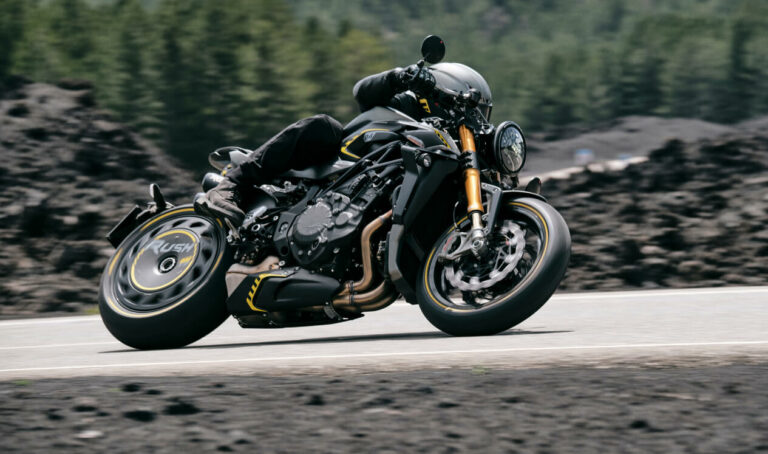
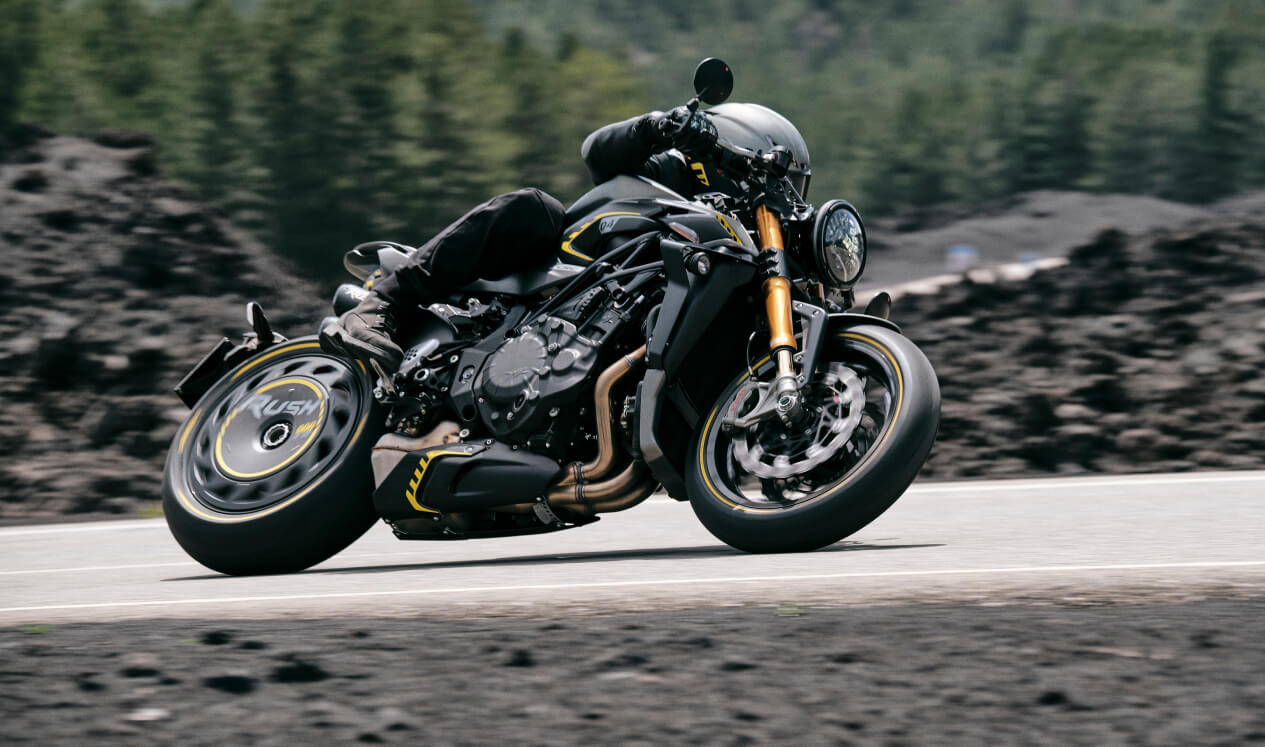
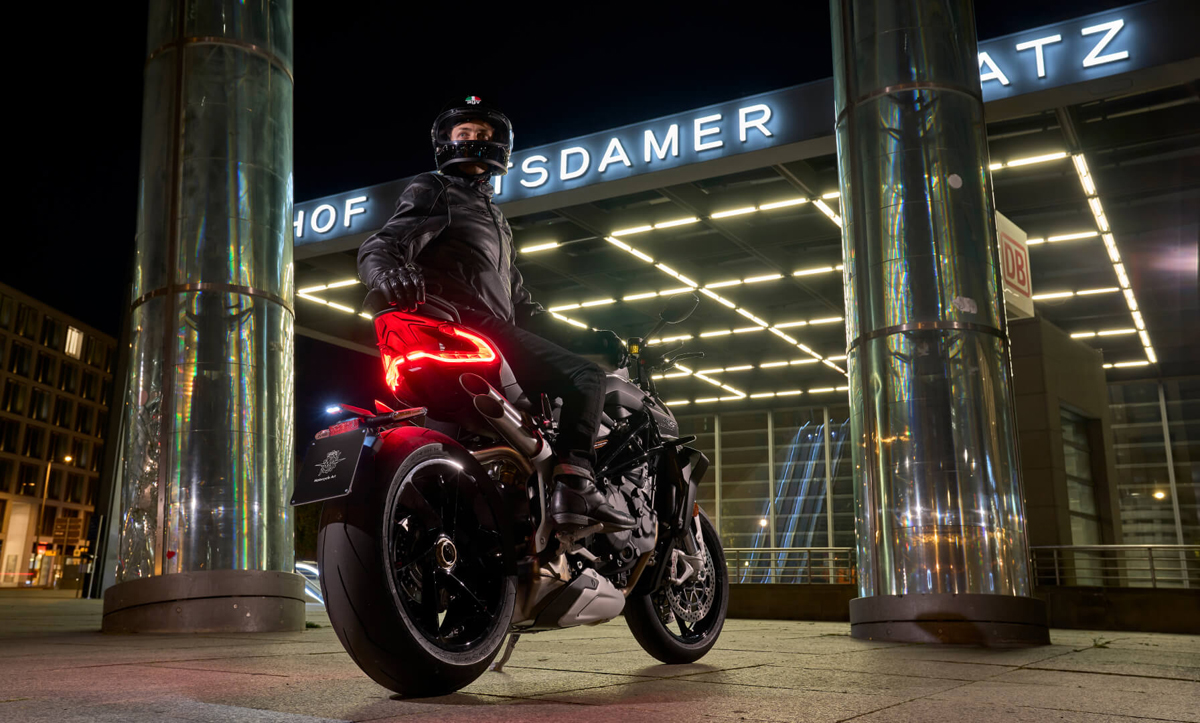
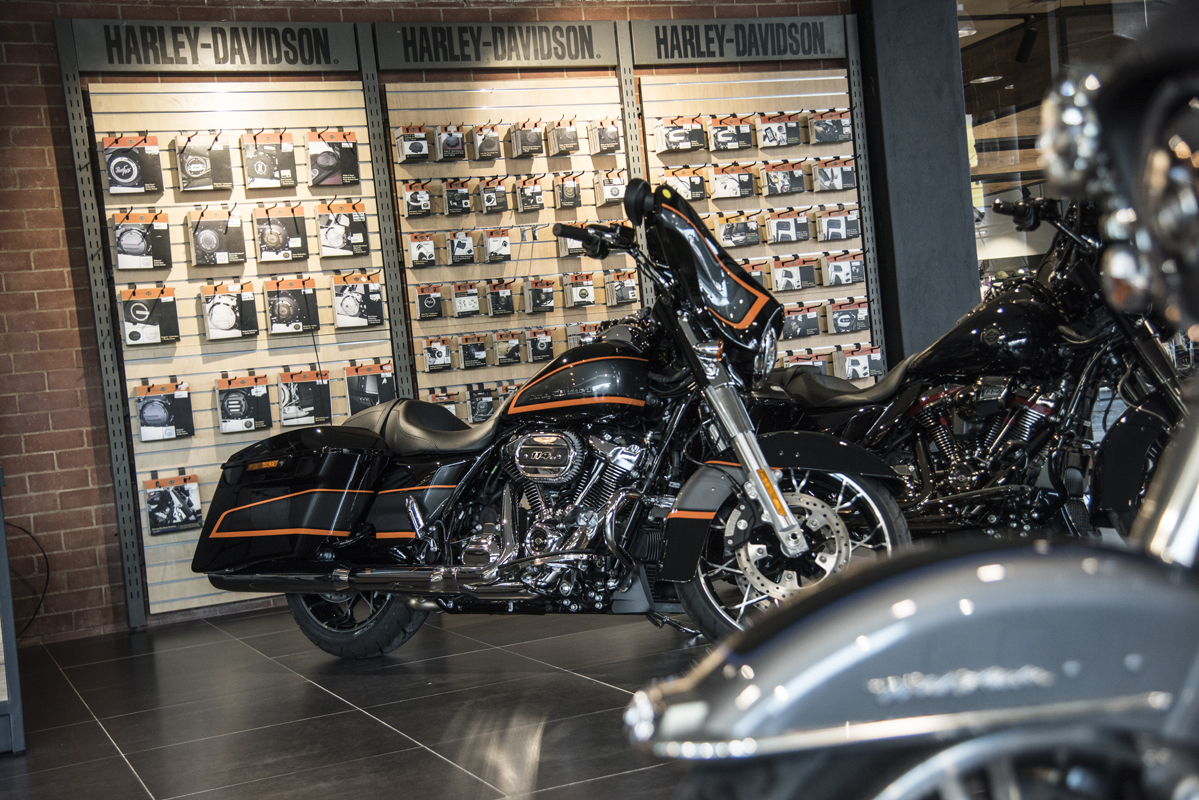
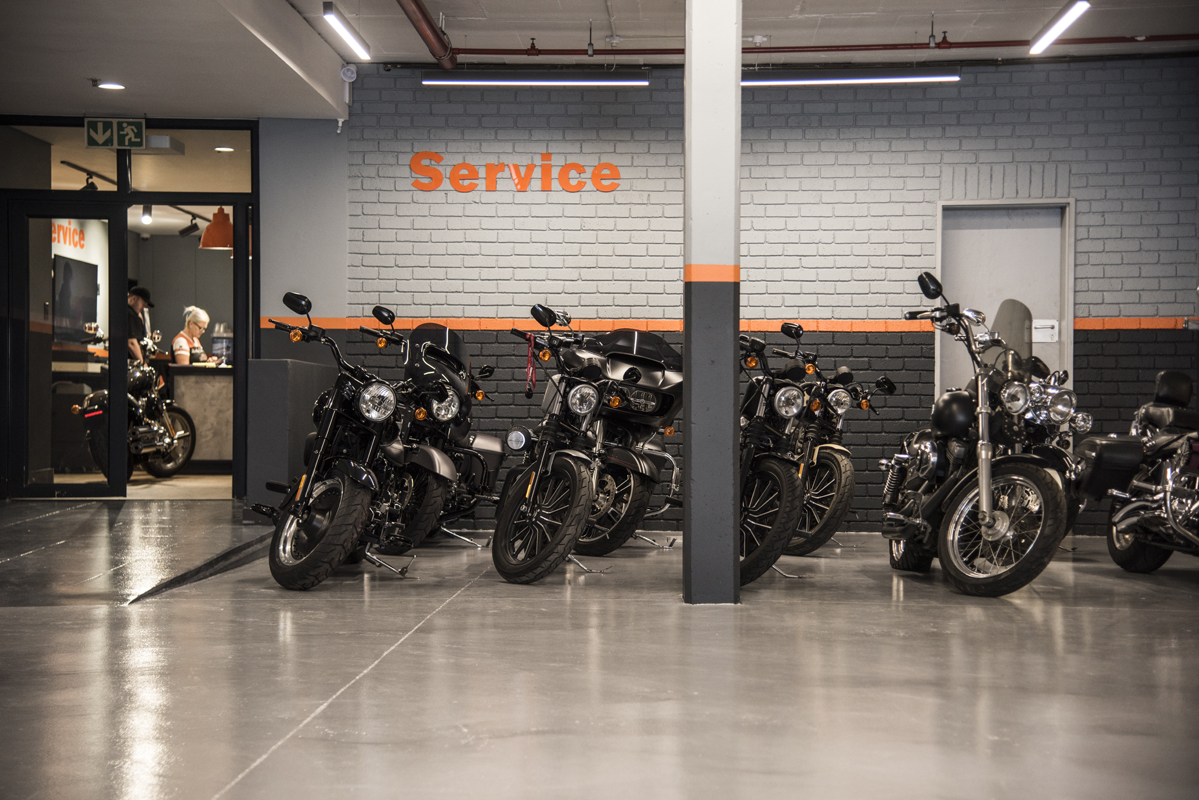
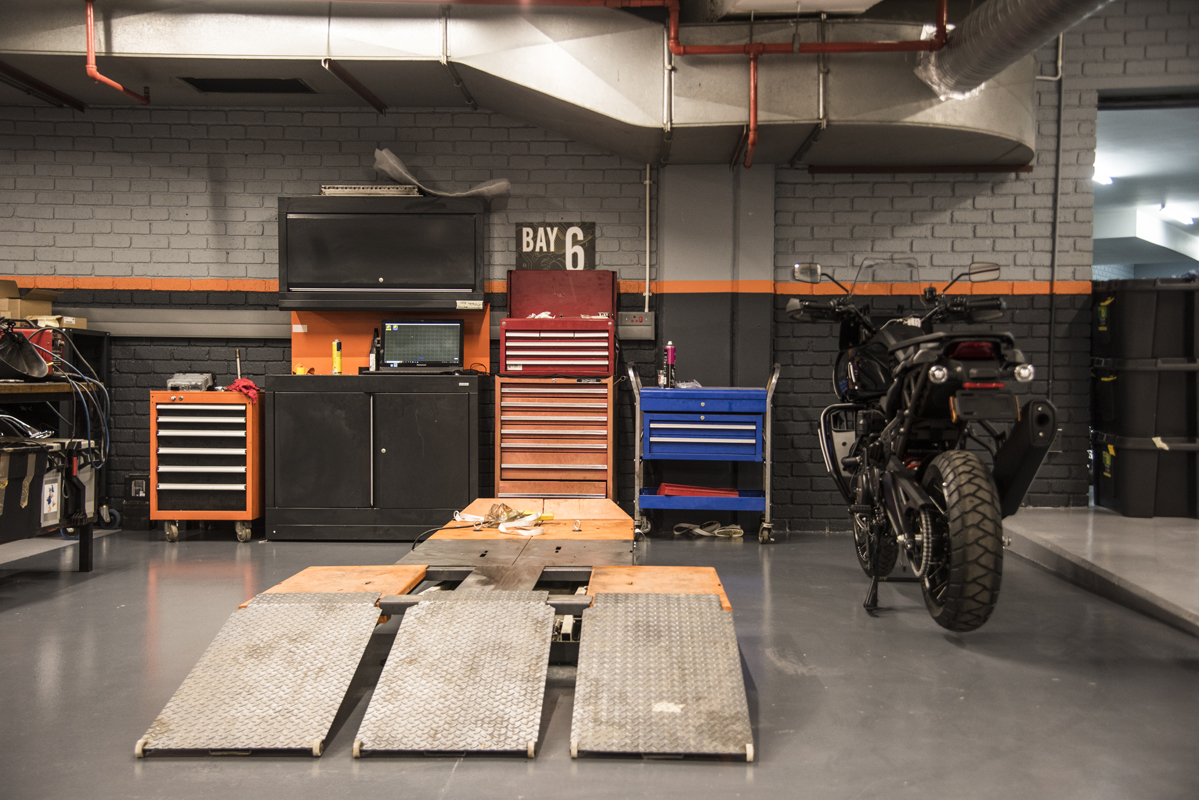
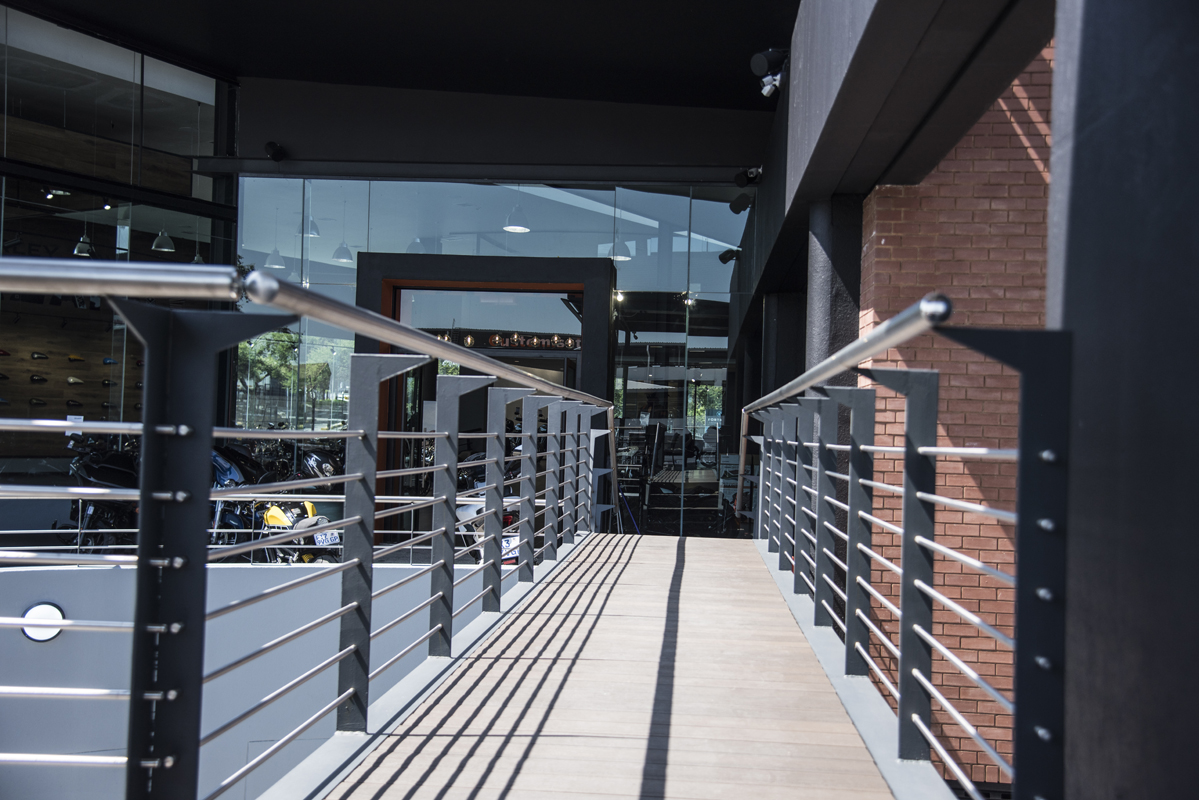
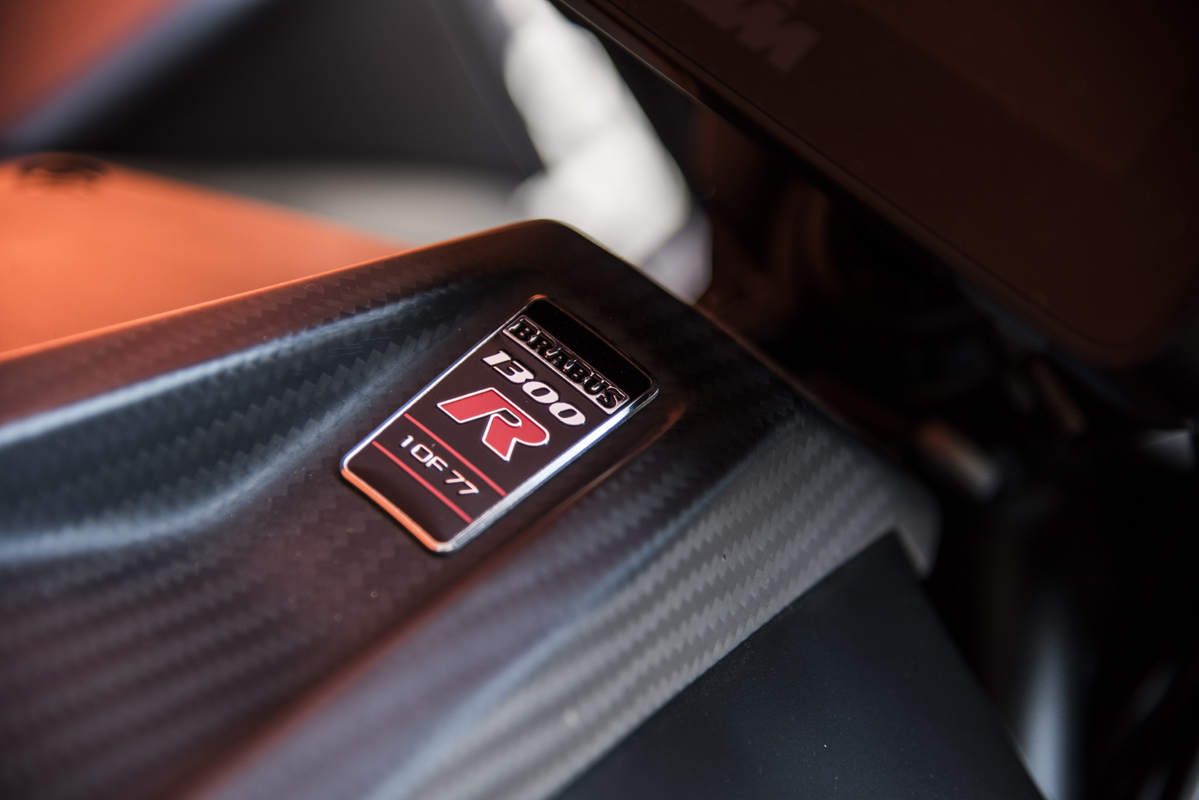
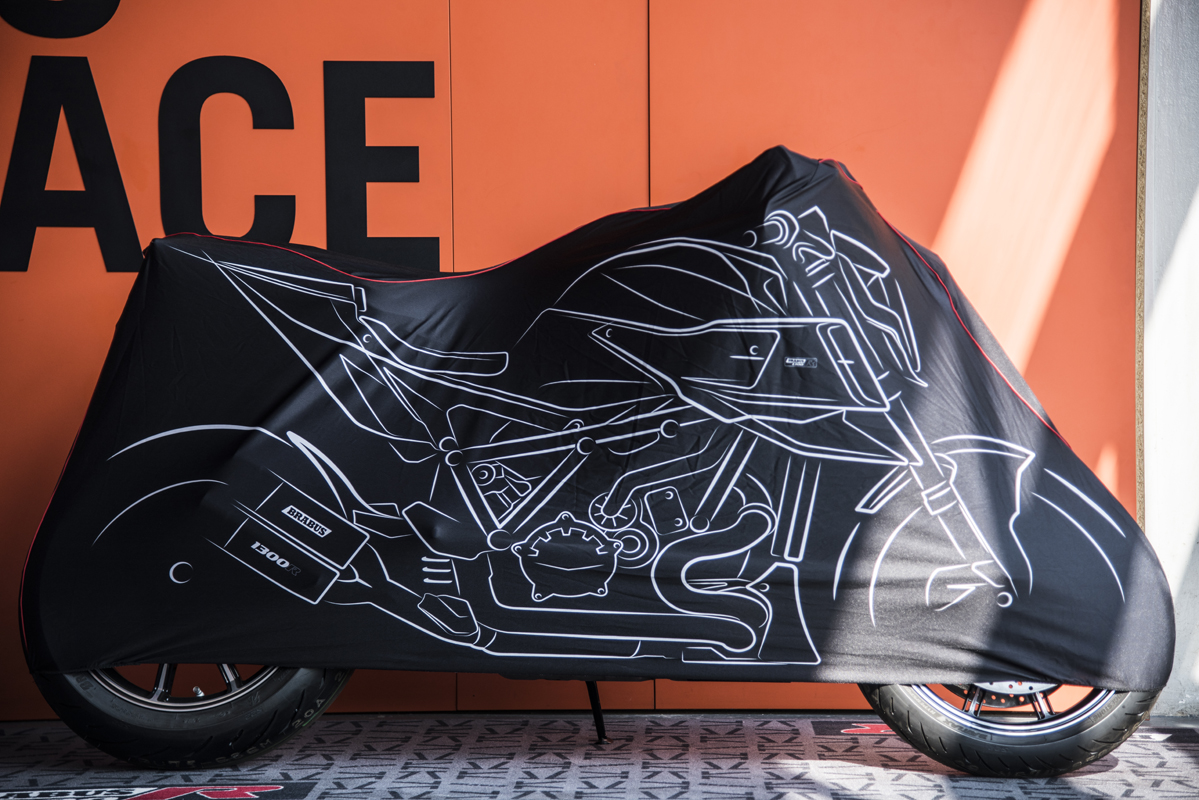
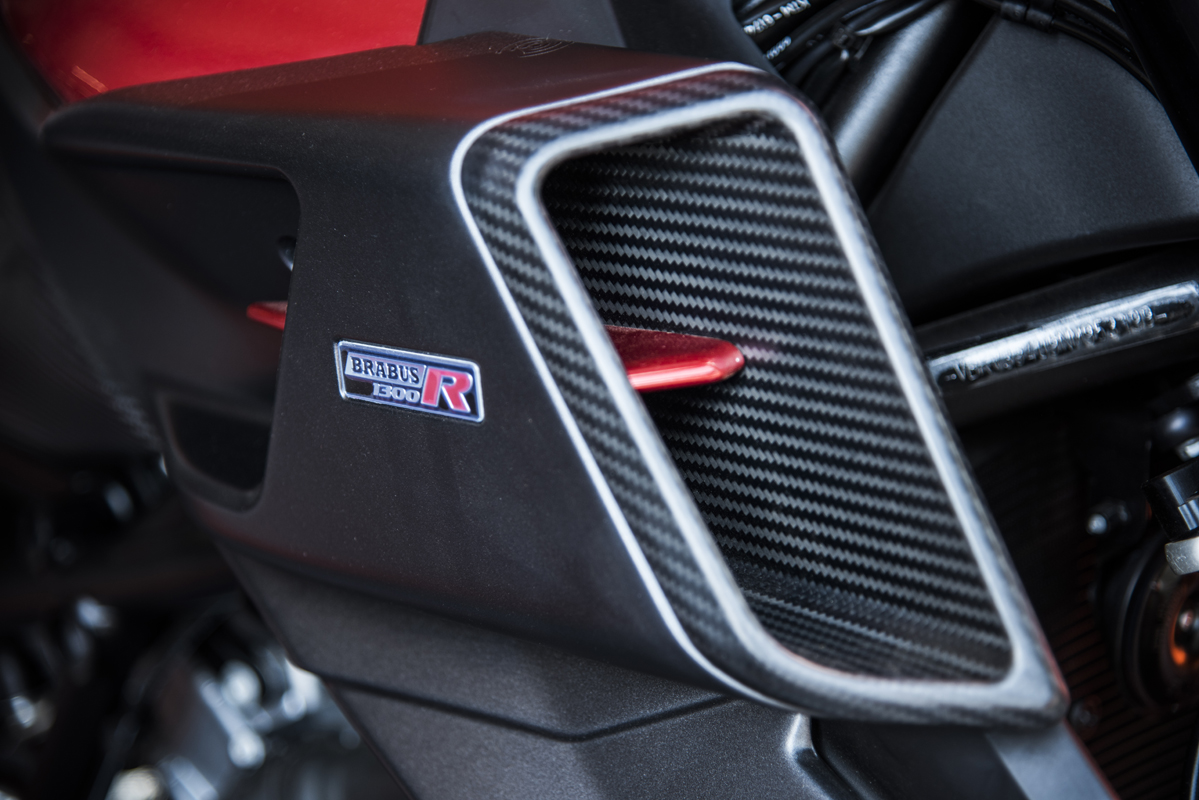
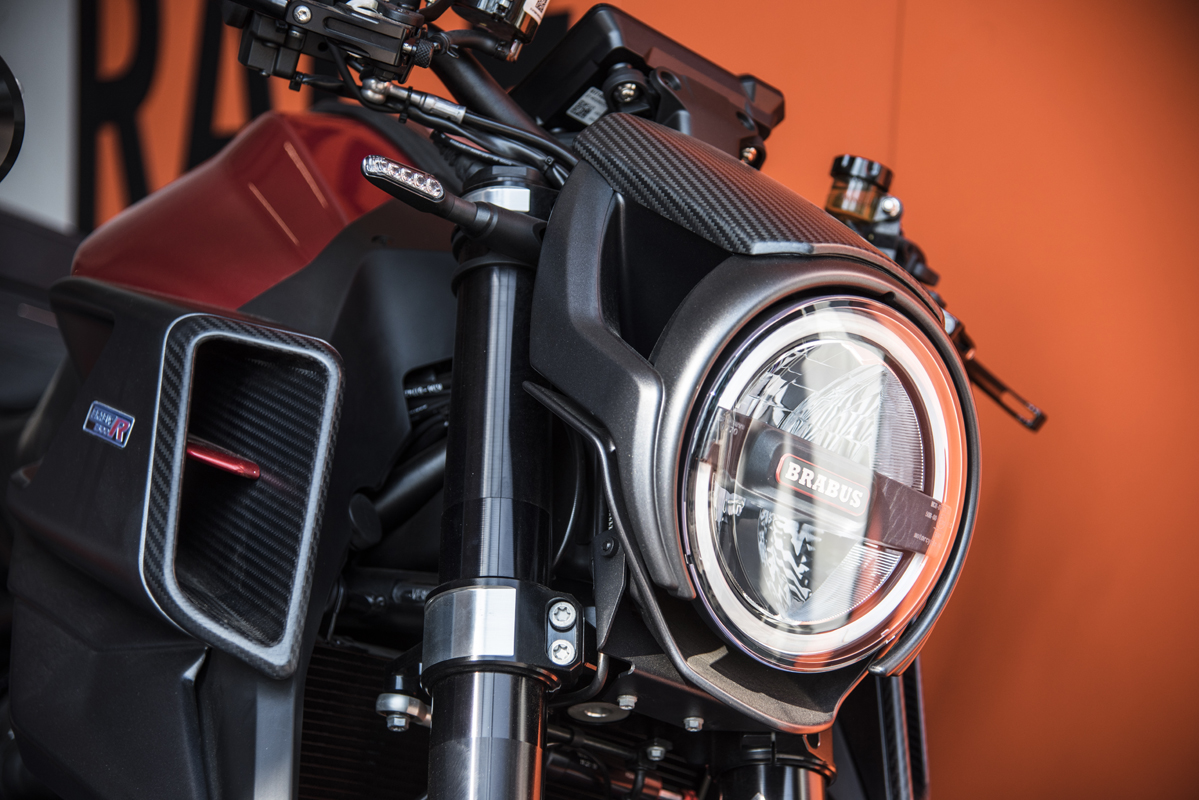
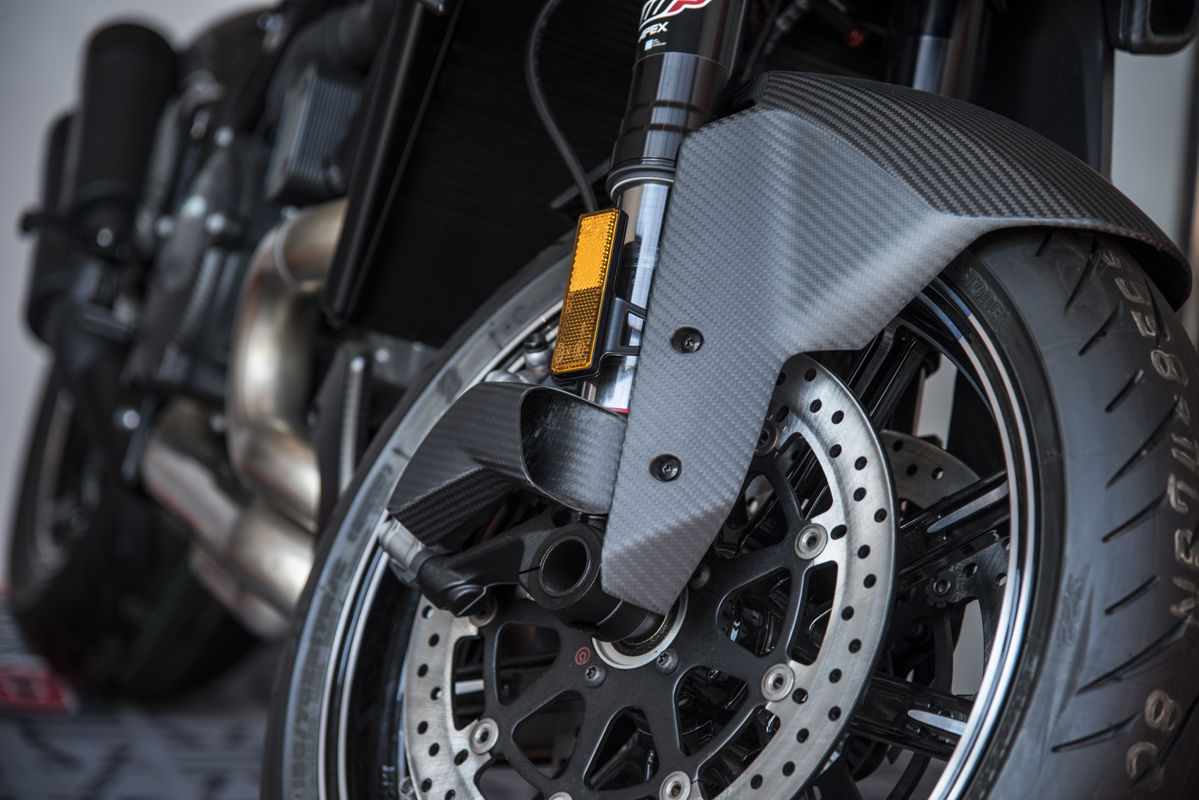
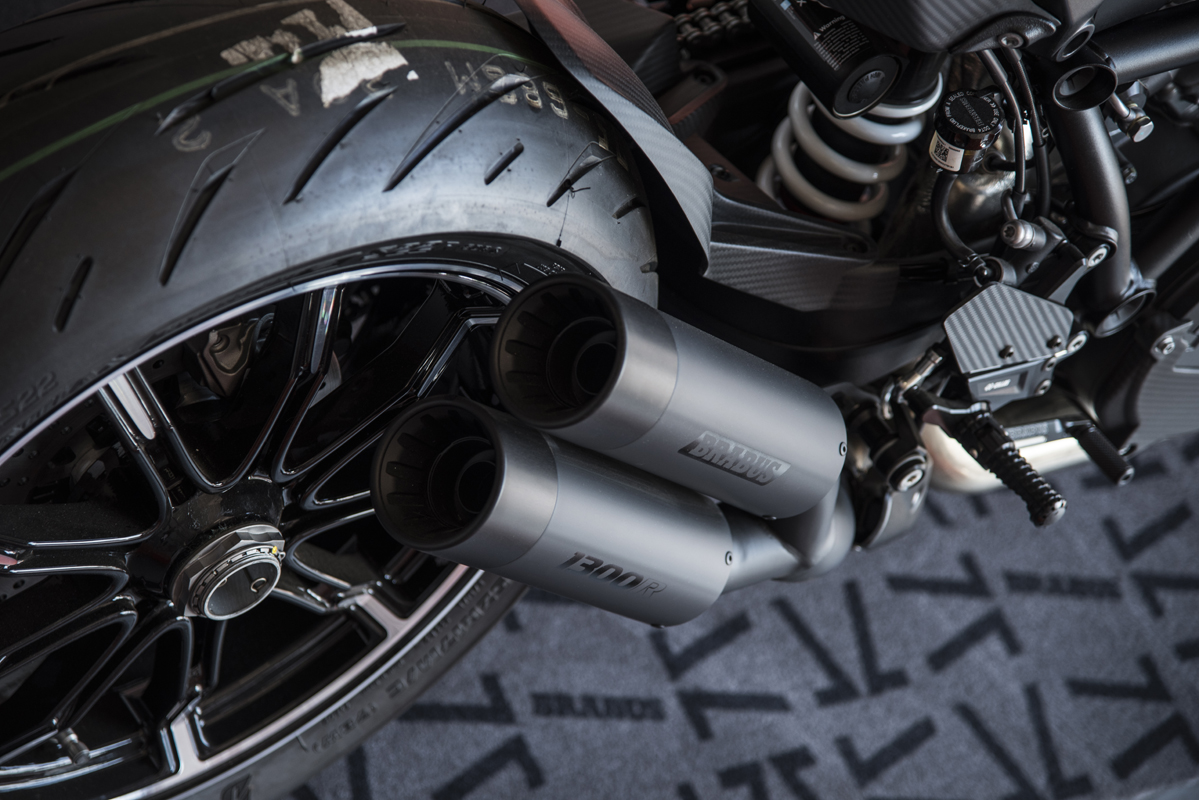
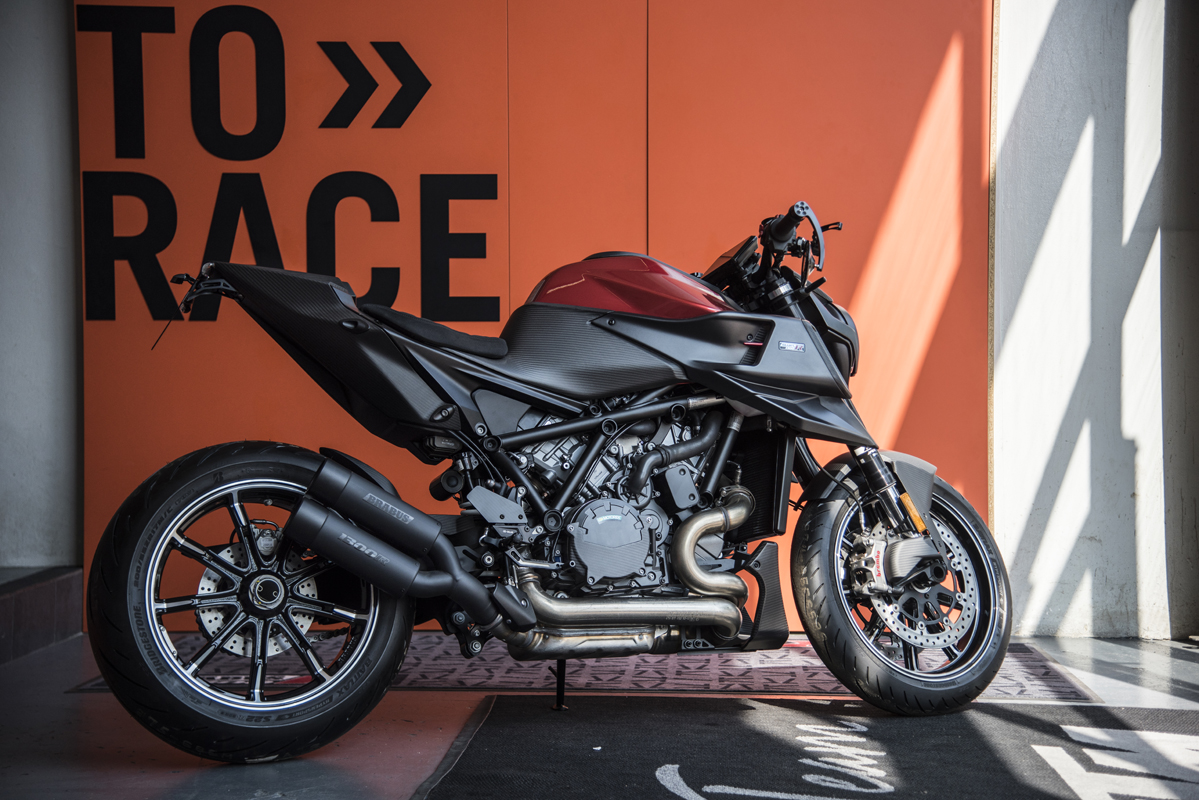
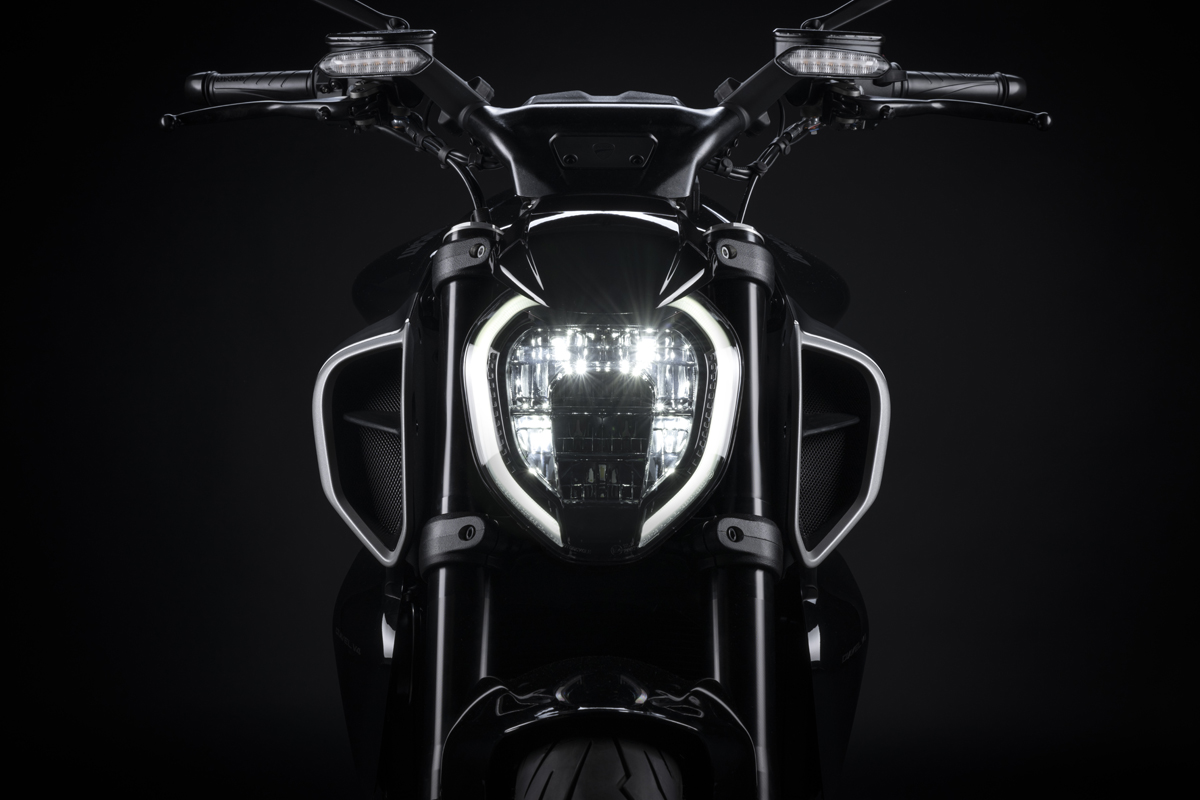
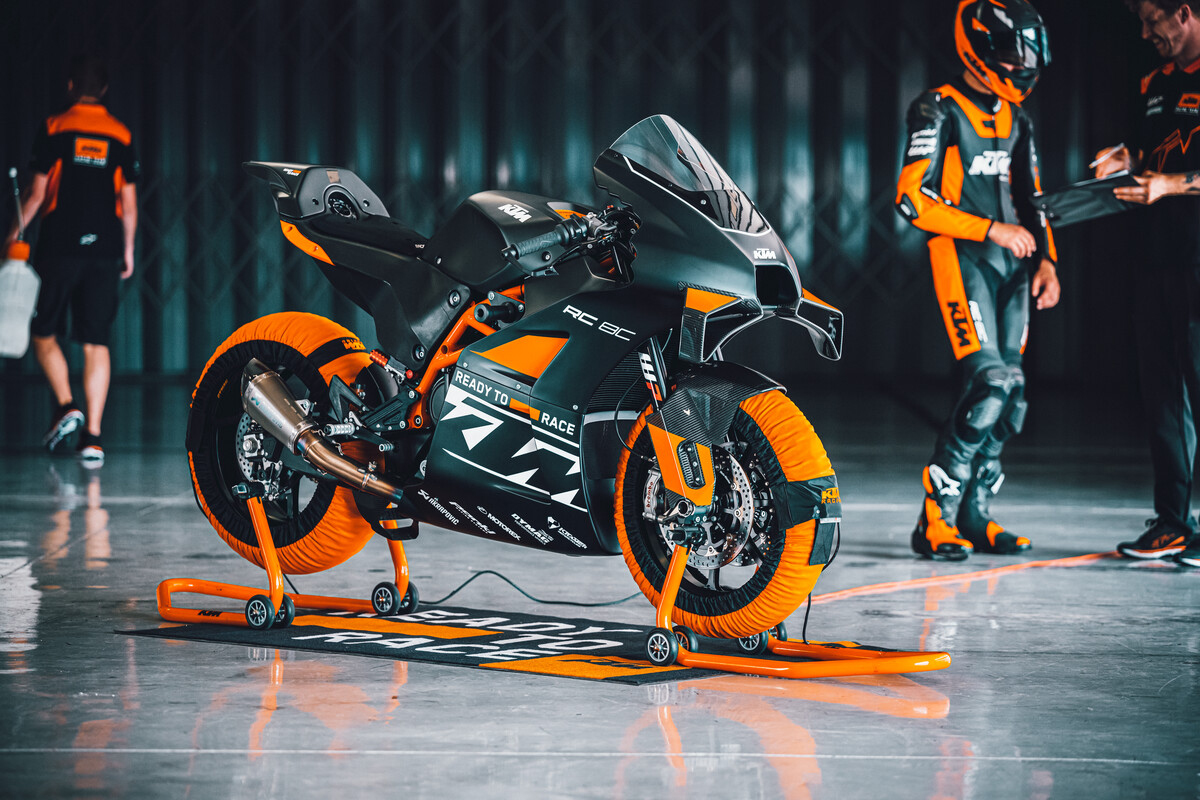
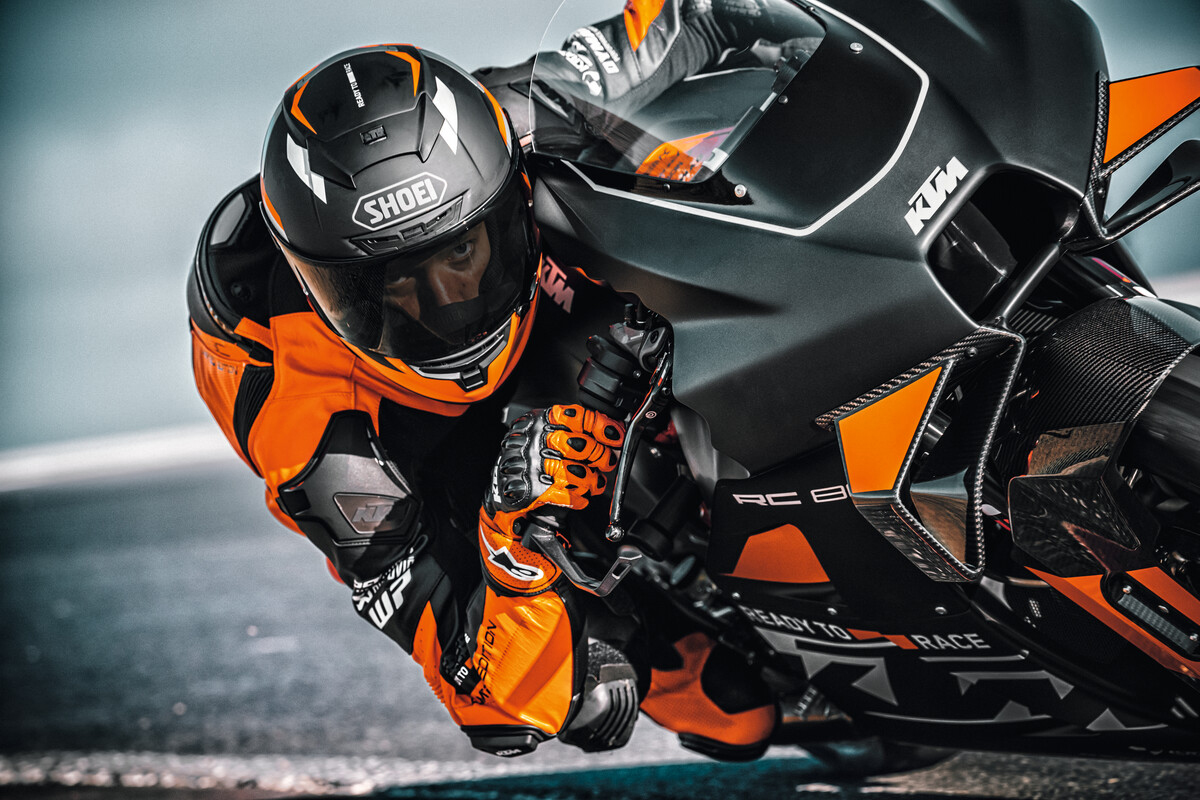
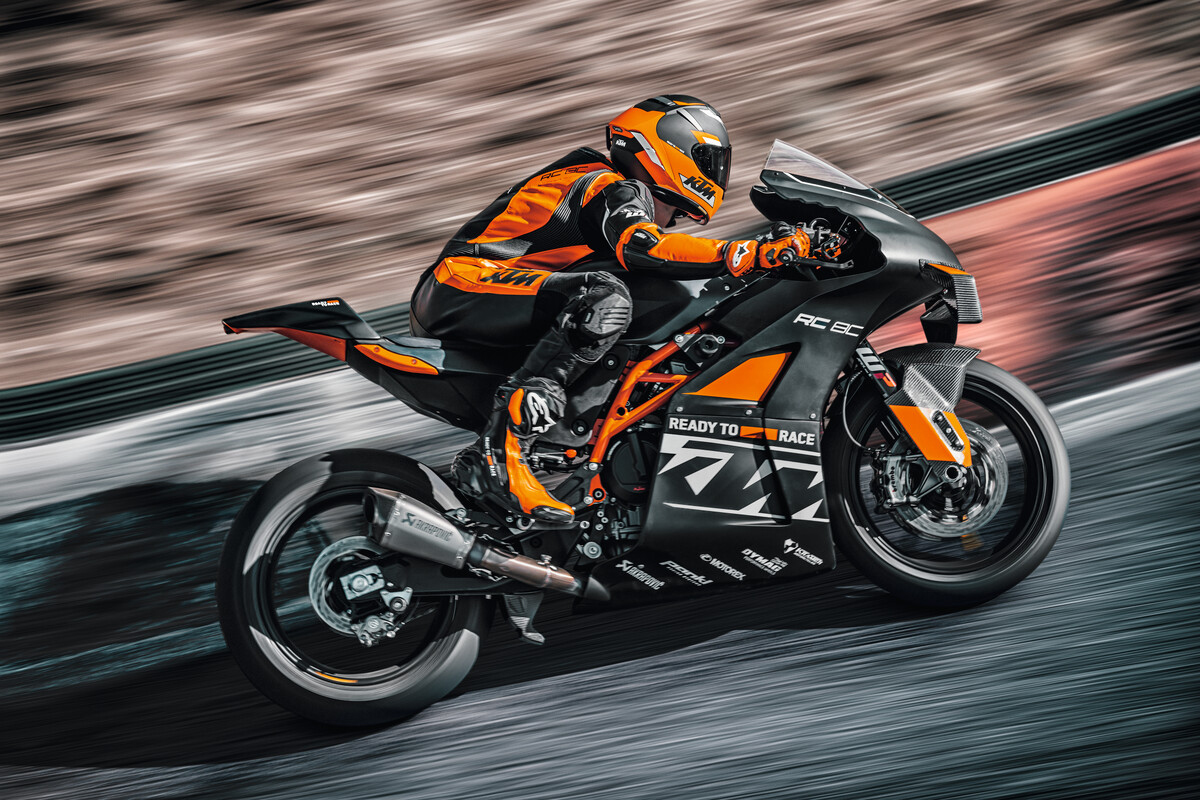
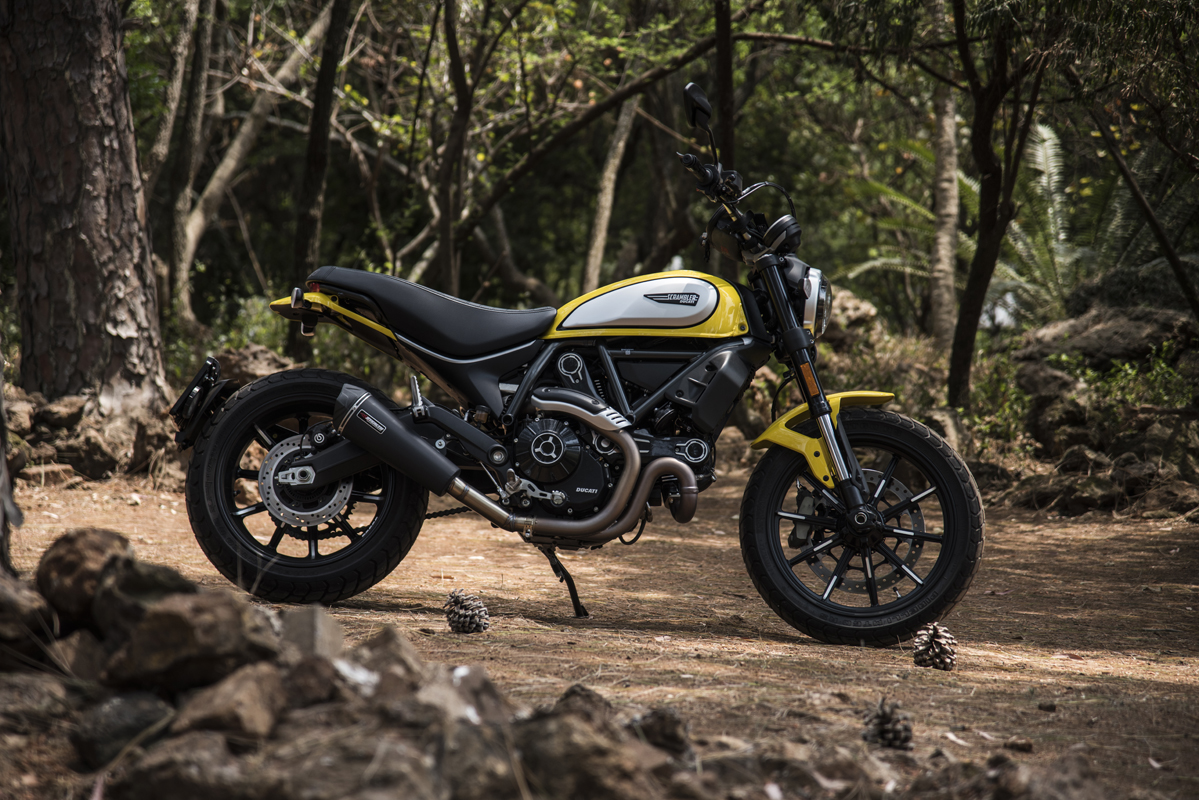
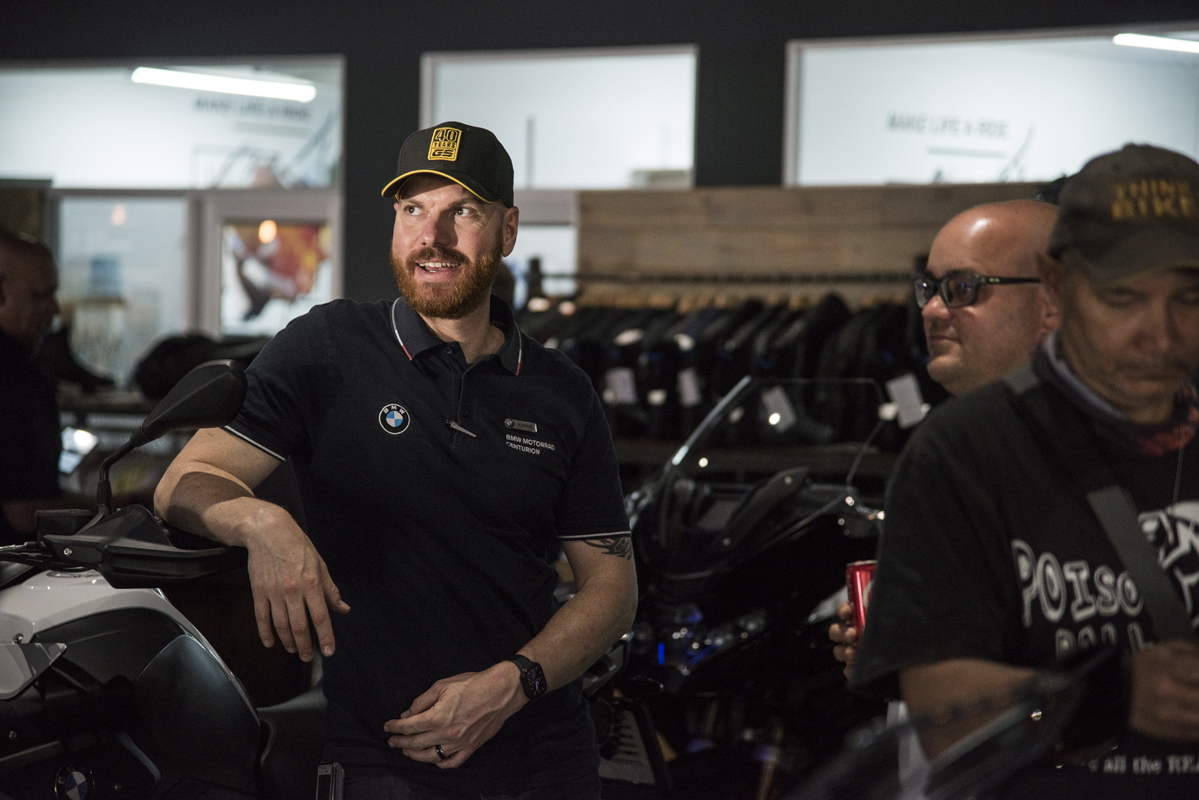
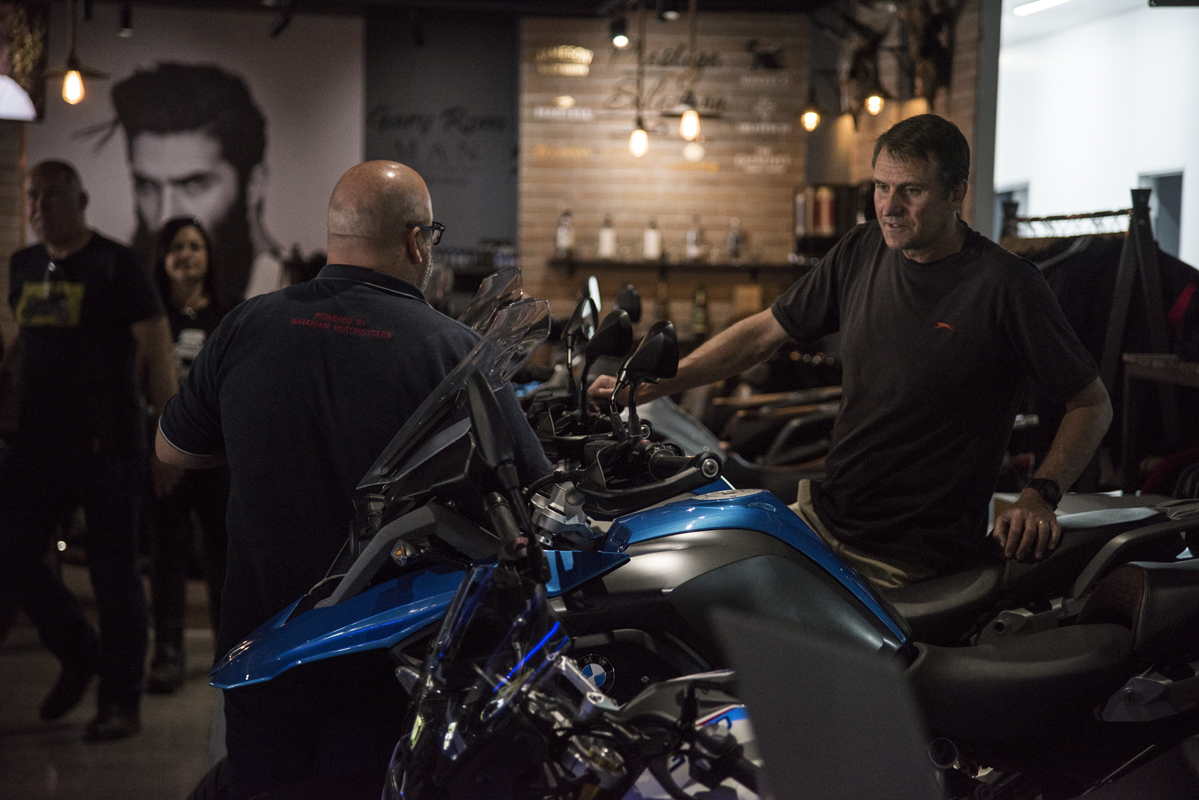
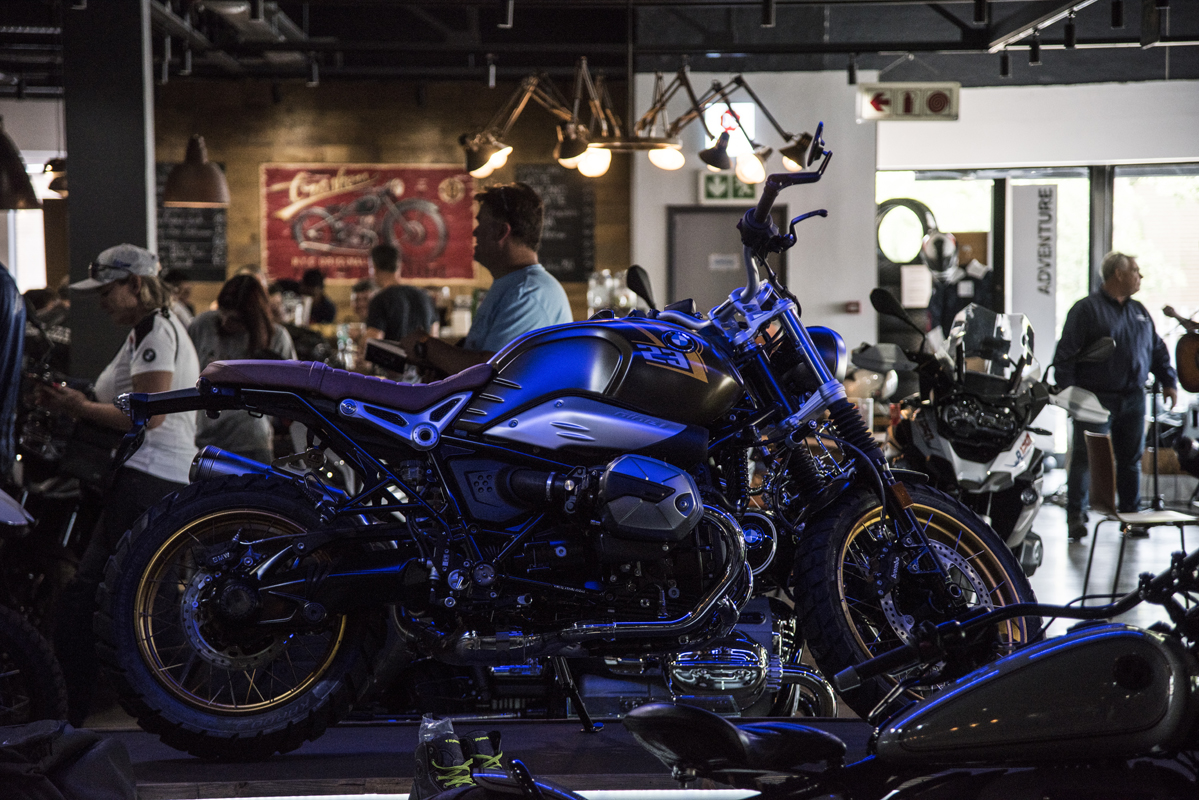
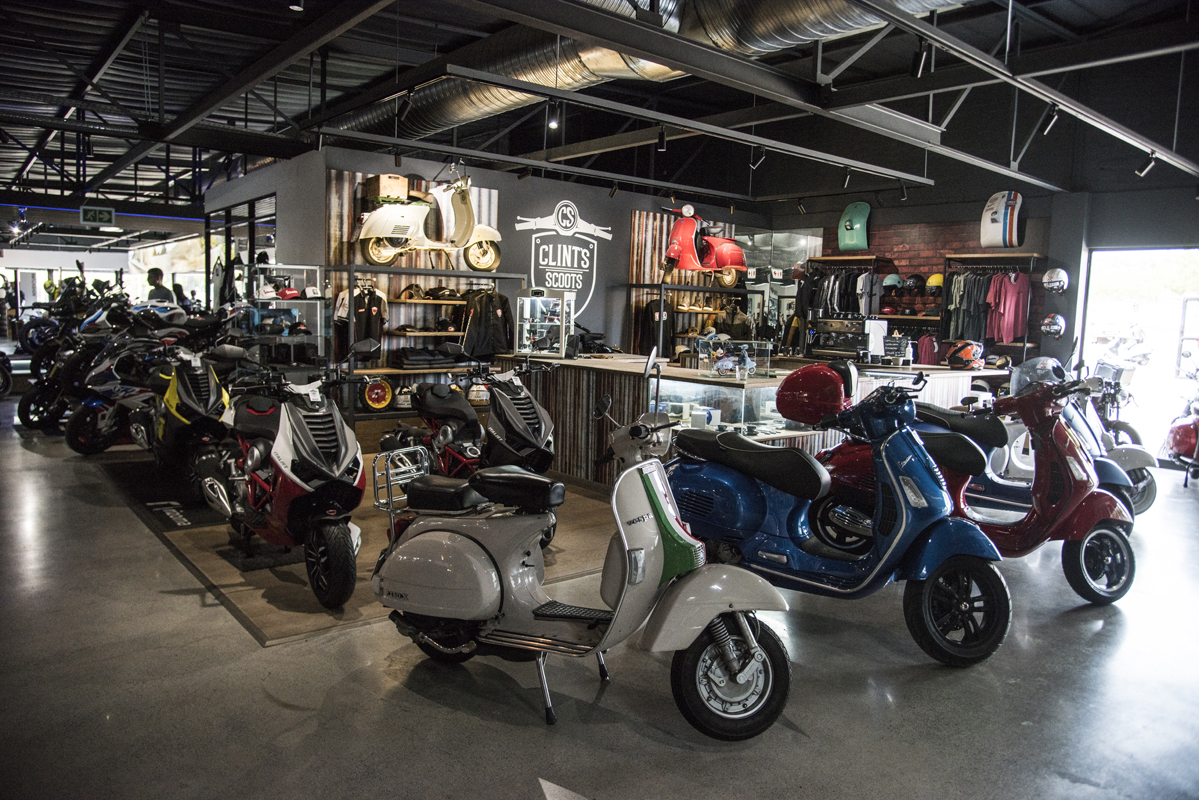
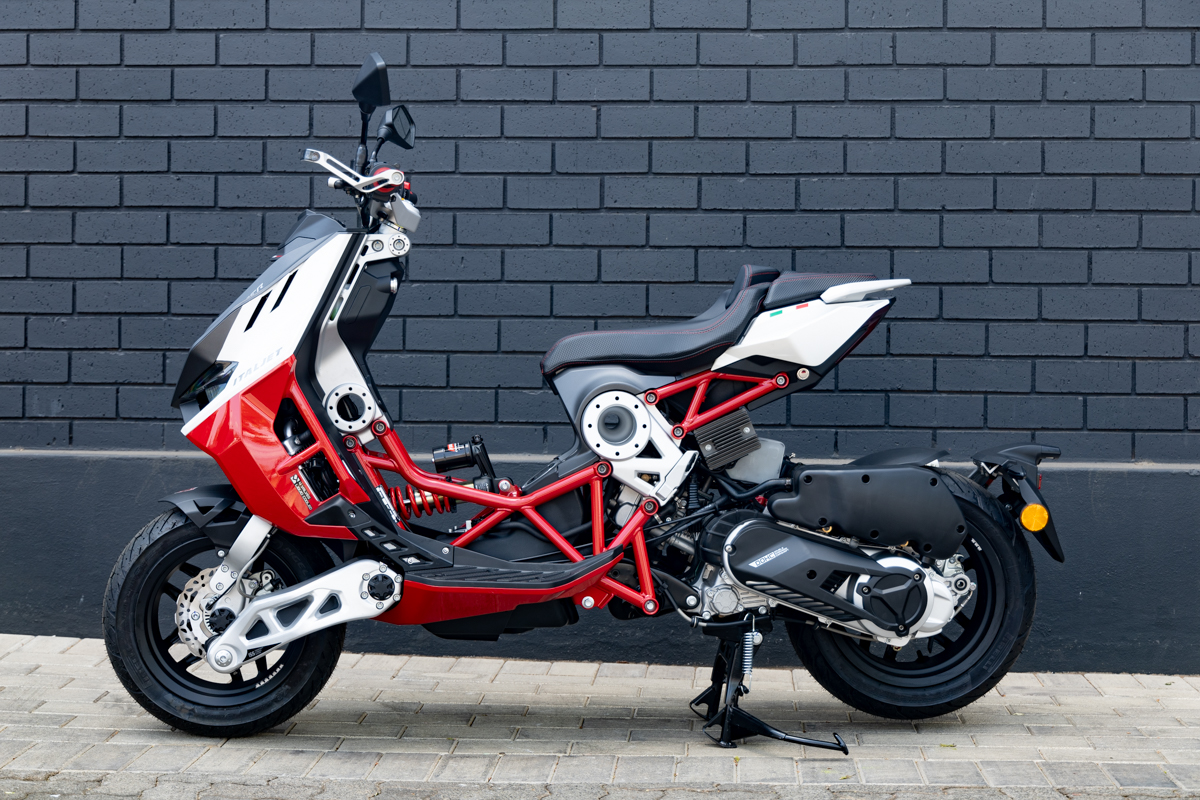
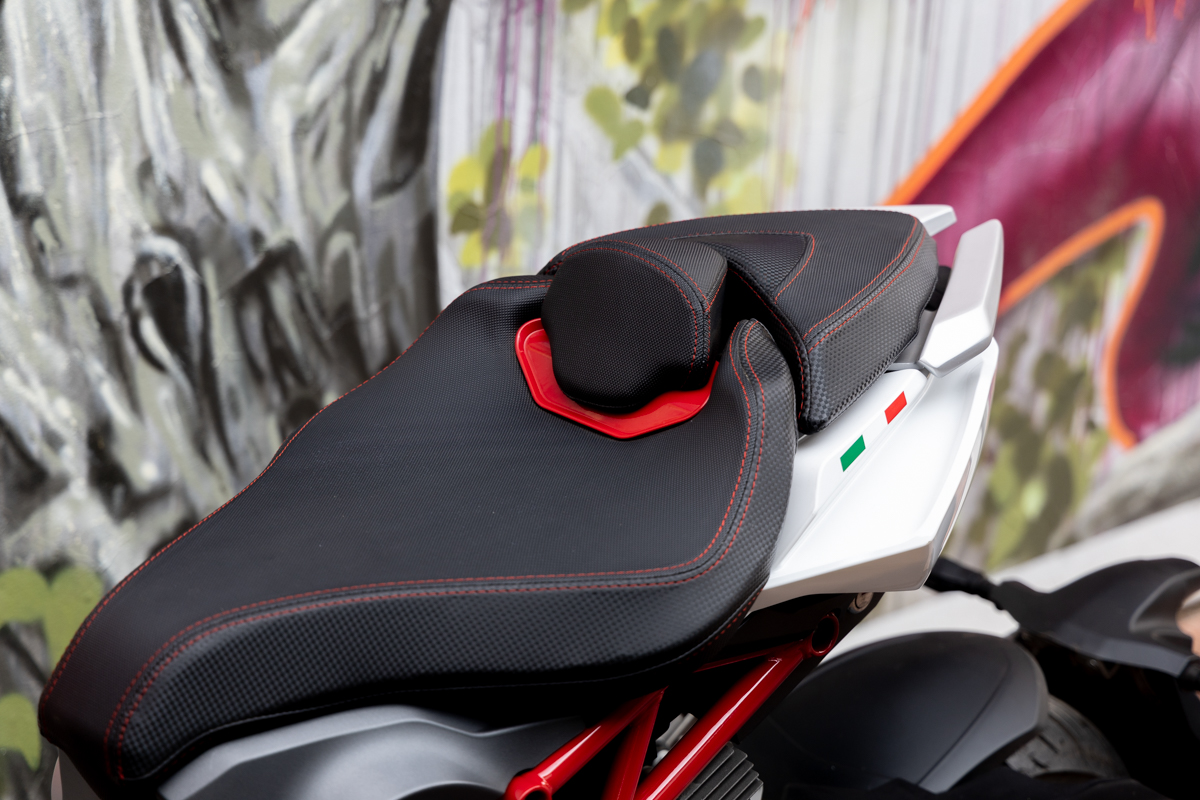
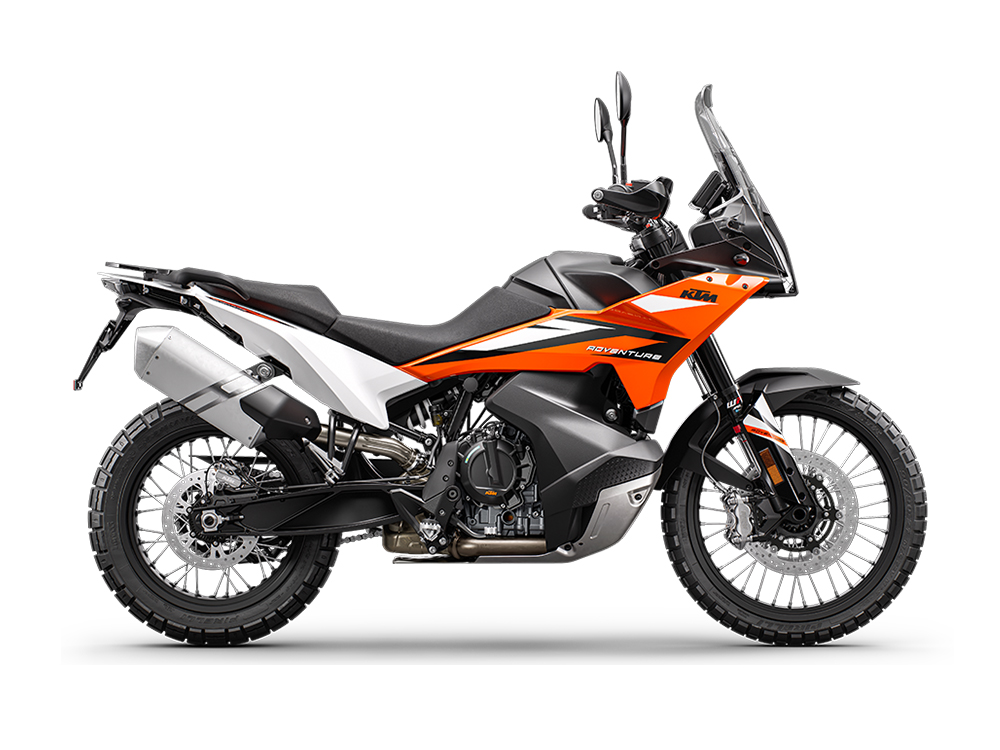
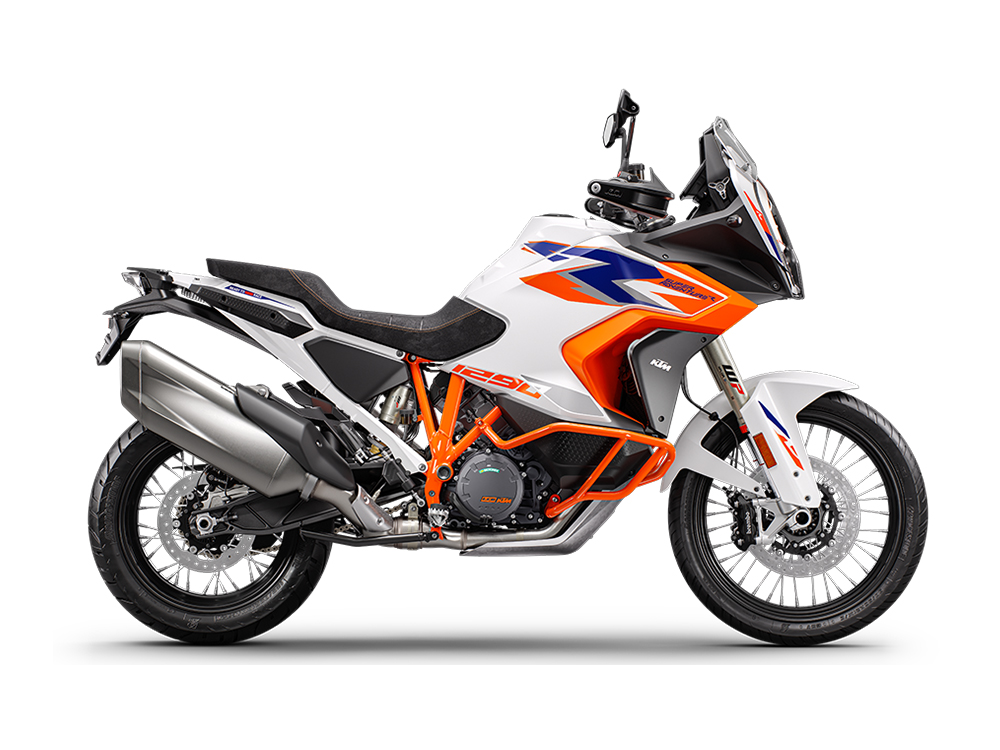
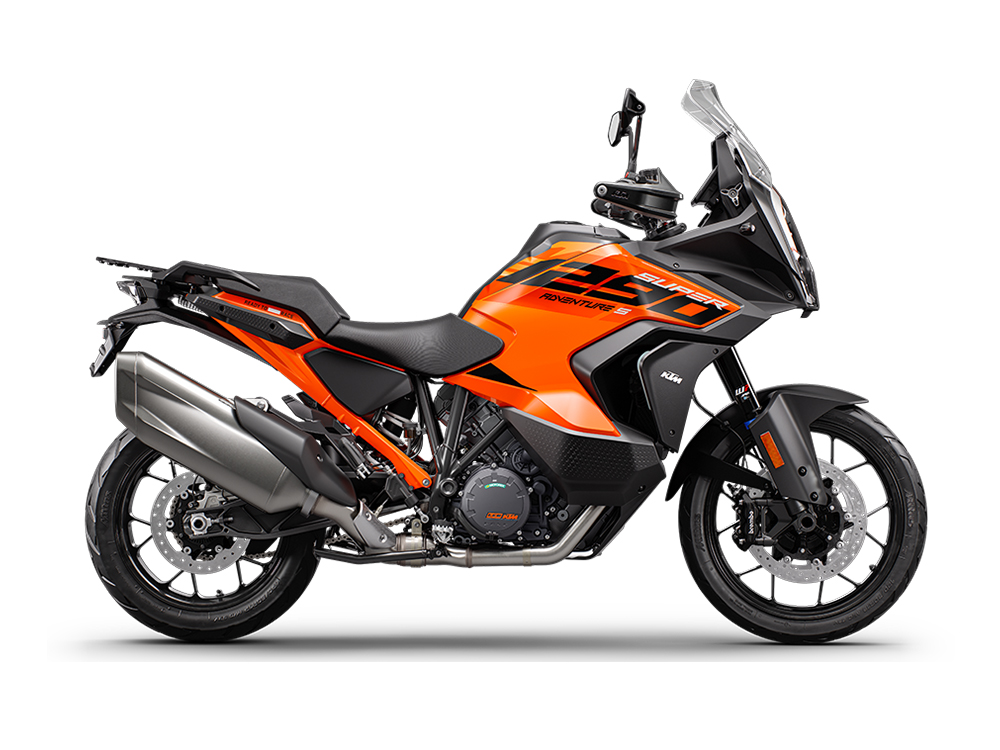
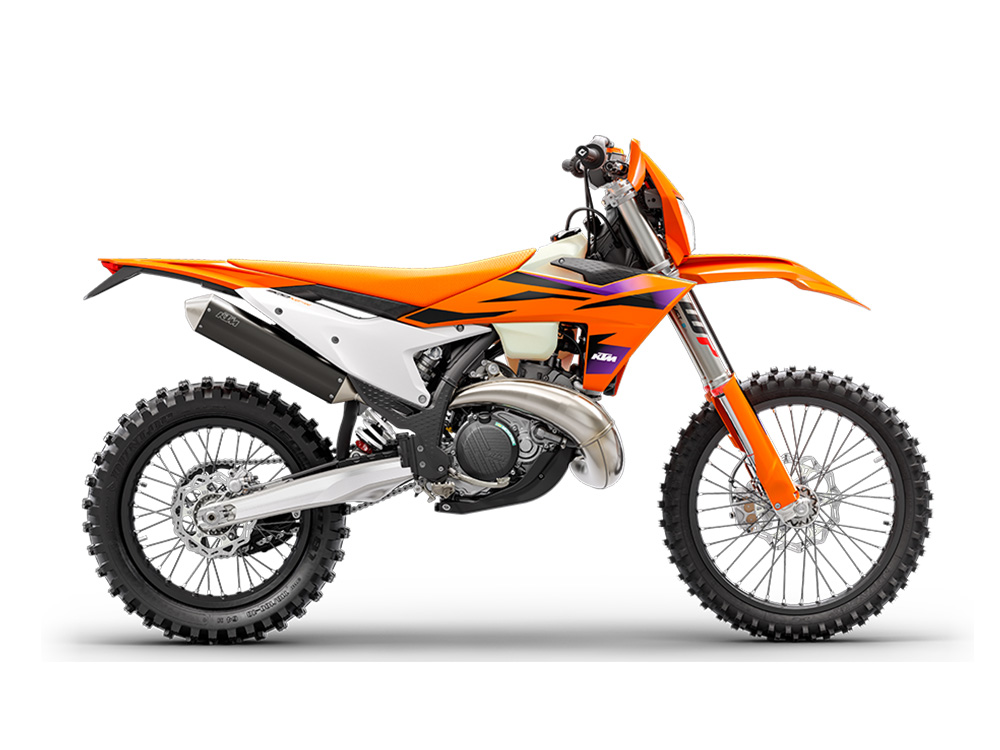
If the recent EICMA motorcycle show in Milan, Italy, is anything to go by, then fans of MV Agusta have a lot to look forward to in 2023, including the incredible new Lucky Explorer 5.5 and 9.5 adventure bikes and the SuperVeloce Series Oro.
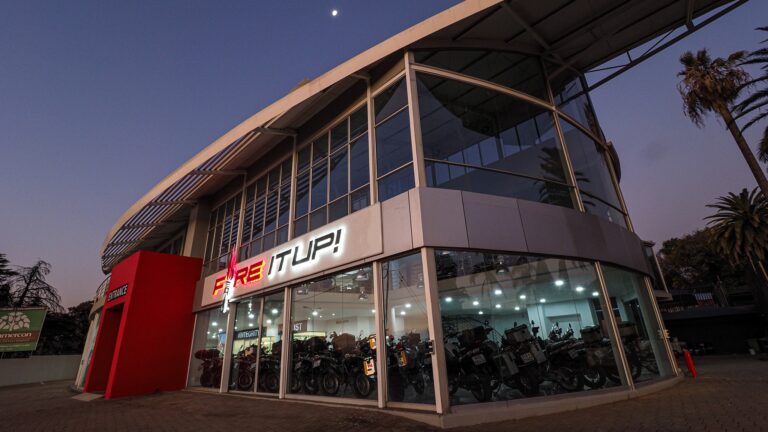
But that still leaves the rest of 2022 to get through and what better way of doing that than by rewarding yourself for a year’s hard work than with one of these Blow-Out Specials! from MV Agusta South Africa, both in Johannesburg and Cape Town.
All offers are while stocks last (starting on Black Friday), trade-ins are welcome and excellent finance packages are available.
Image source: MV Agusta
Here is the full listing of demo 2021 and 2022 and brand new 2022 models available under this offer:
MV Agusta Dragster Rosso (MY22 New Spec)
Was R299 900 Now R199 900
MV Agusta Brutale Rosso (MY22)
Was R299 900 Now R199 900
MV Agusta Dragster RR (MY21 Demo)
Was R249 900 Now R199 900
MV Agusta Dragster RC SCS Limited (MY22)
Was R399 900 Now R349 900
MV Agusta Turismo Veloce Lusso SCS (MY22 Full Spec)
Was R399 900 Now R299 900
MV Agusta F3 Rosso (MY22 Demo New Spec)
Was R249 900 Now R199 900
Agusta F3 800 RR carbon (MY22)
Was R399 900 Now R399 900 (includes Race Kit worth R85 000)
MV Agusta Brutale 1000 RR (MY22 Demo)
Was R599 900 Now R399 900 (includes an MV Agusta e-bike worth R80 000)
MV Agusta Brutale 1000 RR (MY22)
Was R599 900 Now R499 900
MV Agusta Brutale 1000 RS (MY22 Demo Silver)
Was R459 900 Now R379 900
MV Agusta Brutale 1000 RS (MY22)
Was R499 900 Now R399 900
MV Agusta SuperVeloce (MY22 New Spec Yellow)
Was R399 900 Now R299 900
MV Agusta Turismo veloce Rosso (MY22)
Was R329 900 Now R259 900
MV Agusta RUSH 1 of 300 (MY22)
R899 900 – Now includes the following extras worth R100k (MV Agusta E-Bike ‘RC’ valued at R99 900 and MV Agusta Original Dainese Jacket valued at R6999)
MV Agusta Nürburgring 1 of 200, the only example in SA (MY22)
R799 900 – Now includes the following extras worth R100k (MV Agusta E-Bike ‘RC’ valued at R99 900 and MV Agusta Original Dainese Jacket valued at R6999)
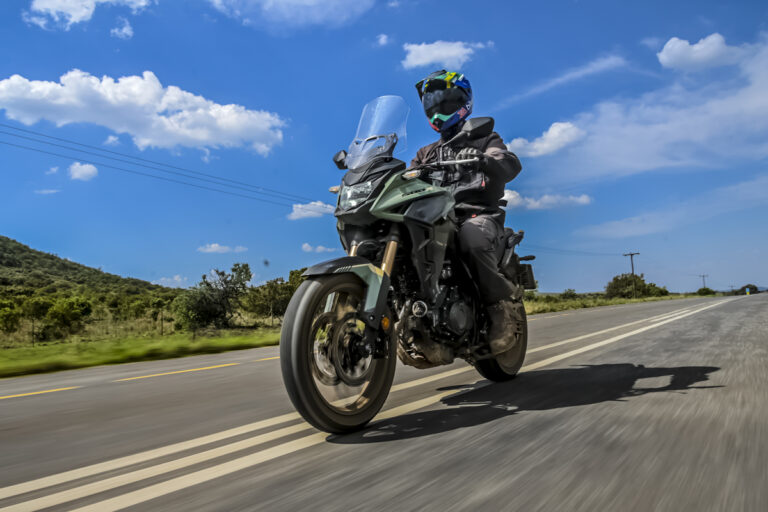
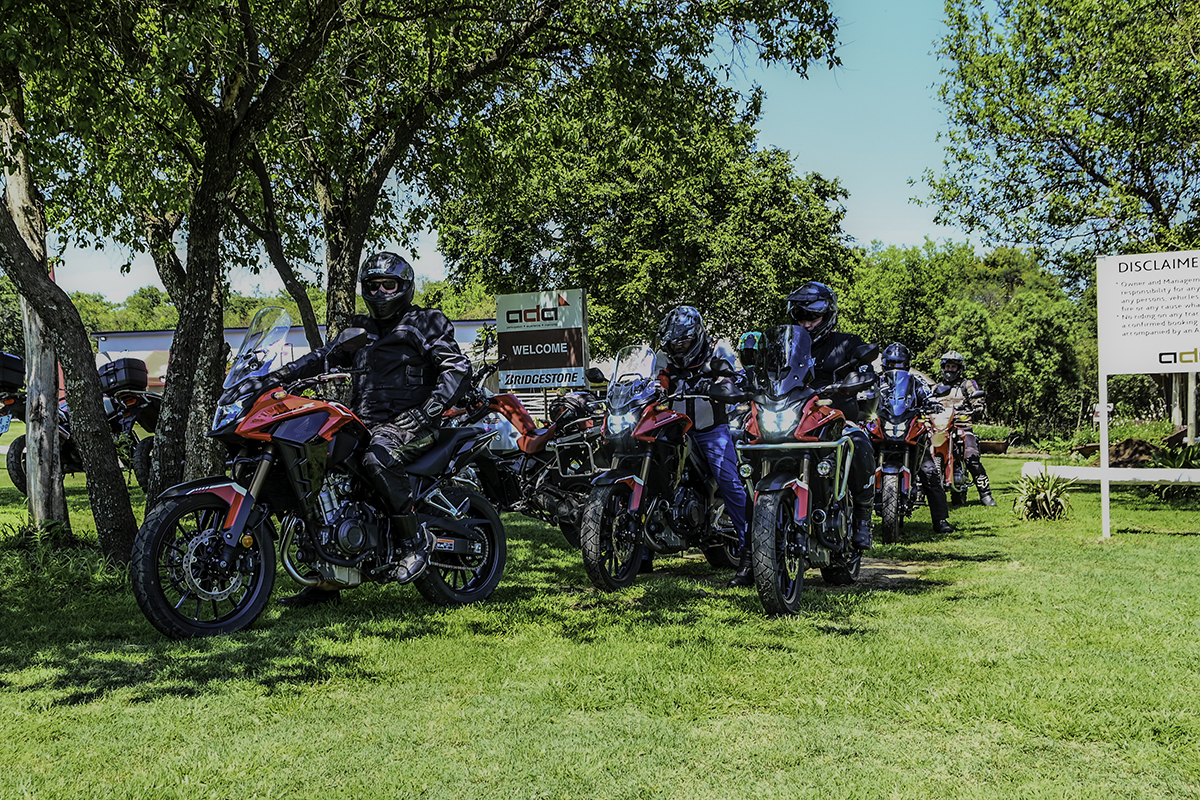
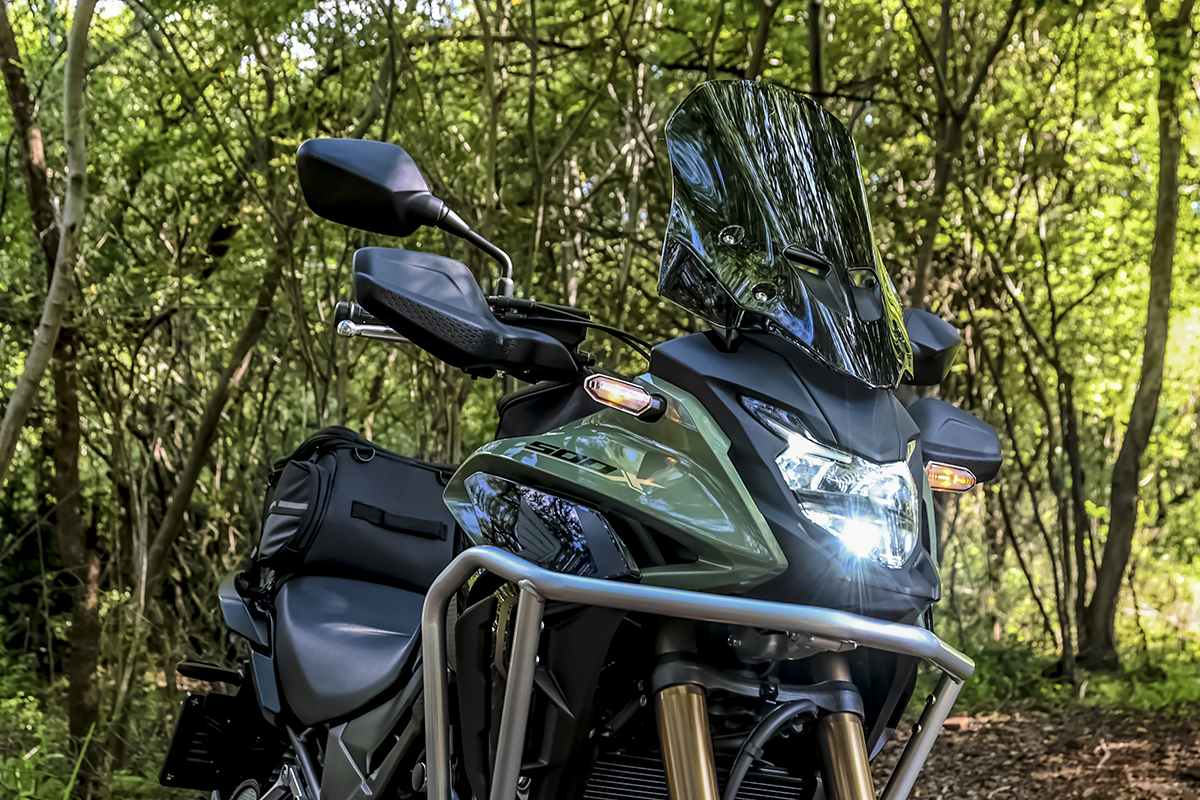
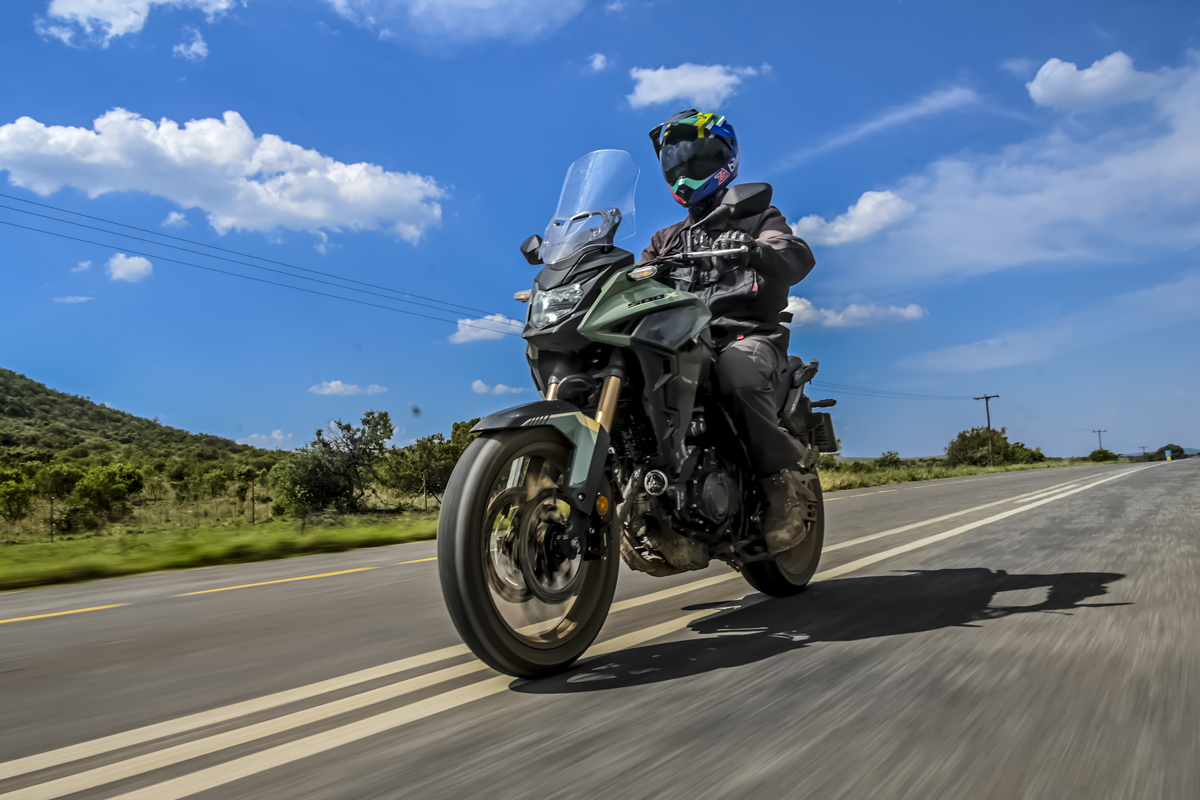
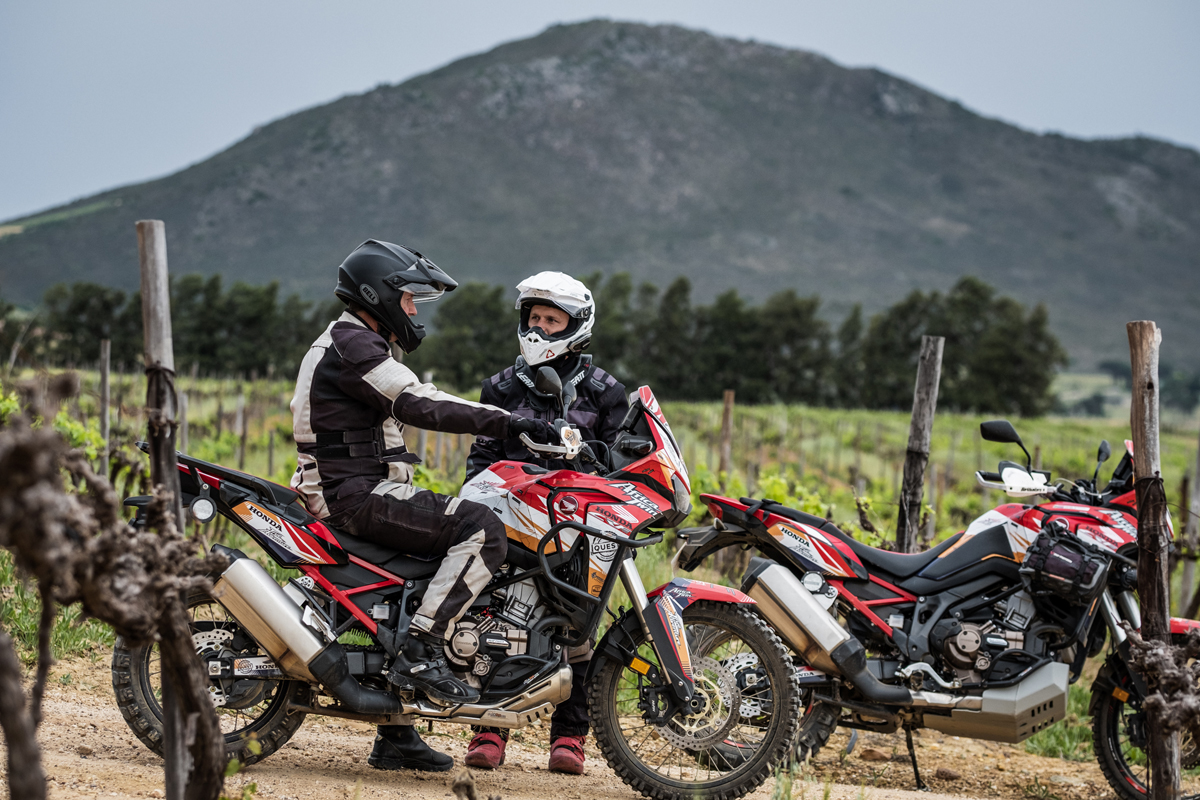
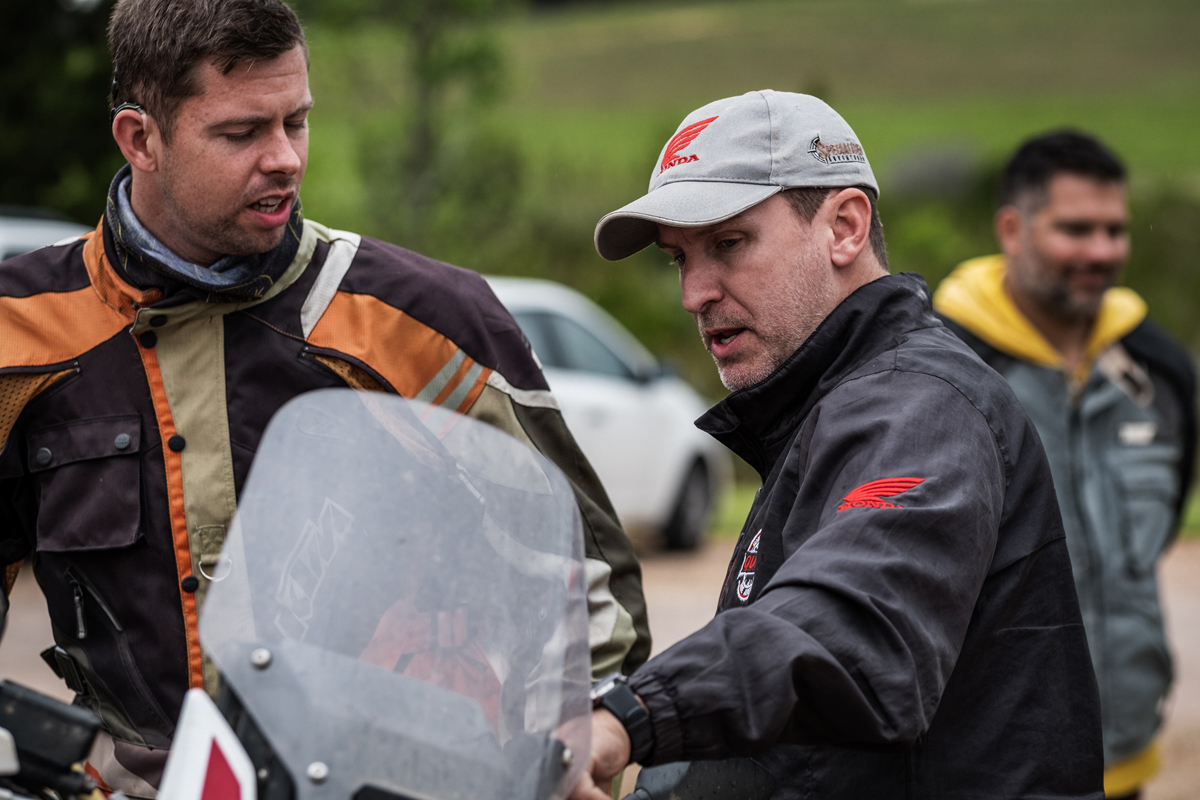
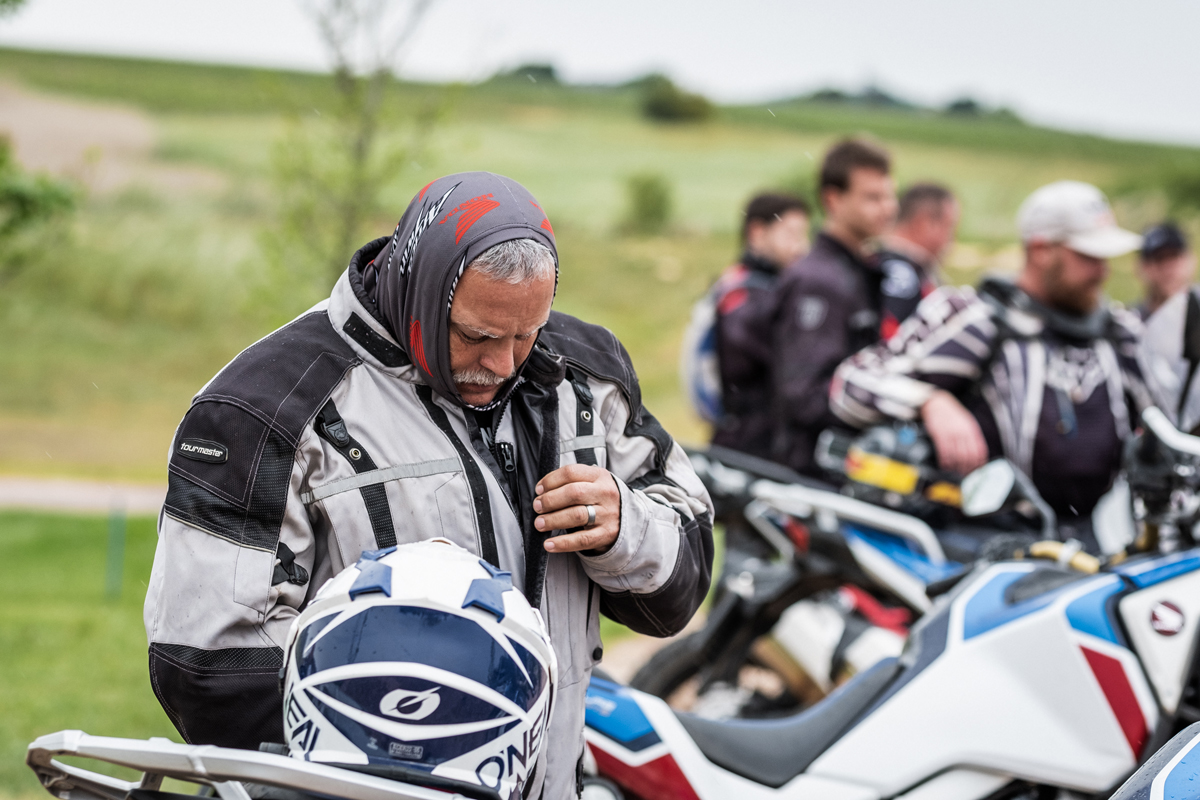
We got to sample Honda’s CB500X when members of the motorcycle media and other ‘influencers’ were invited to ADA’s excellent facility for a day on the new bikes. I believe that this bike is particularly relevant at this time, given the dire economical times that we are facing. Bikes have, in the main, become overpowered, overpriced, complicated, large and heavy. Many riders are looking at ways to downsize without too much of a compromise. Honda may well have come up with a viable solution alternative.
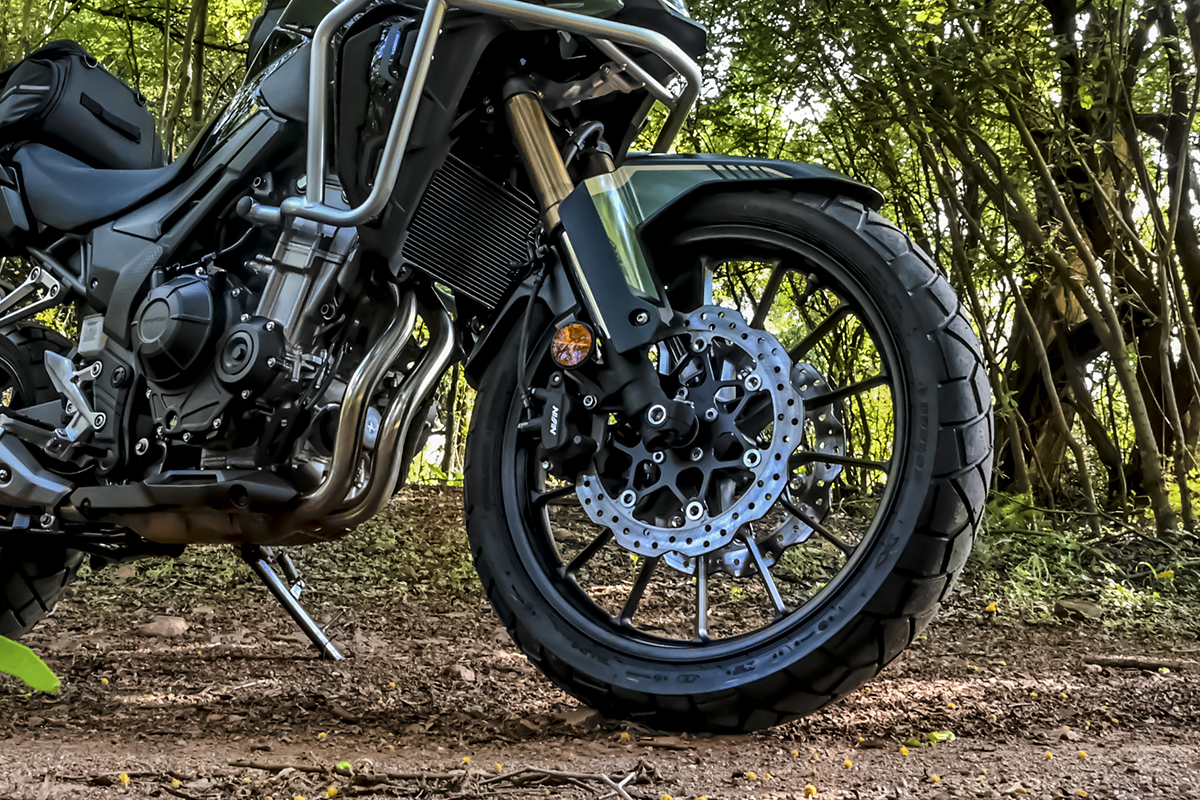
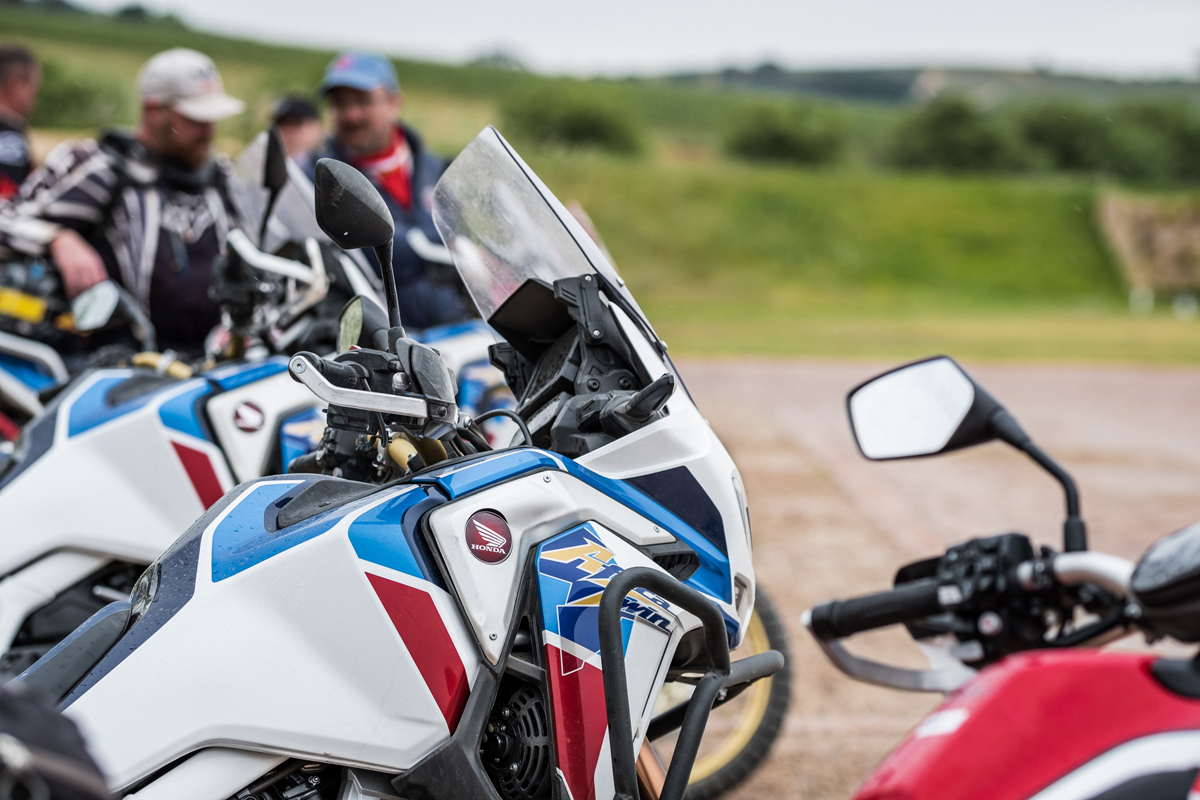
Honda’s CB500X is not a new model in the sense that it has been available in other markets since as far back as 2013. Having said that, it received major upgrades early this year which significantly improved what was already a popular motorcycle in Europe. The CB received 41 mm Showa SFF-BP big piston USD forks and another disc up front. Given modern brake efficiency, I am not sure if that was really necessary, given that their heavier NC750 makes do with a single disc. Be that as it may, double discs always provide reassuring stopping power.
Photo credit: Beam Productions
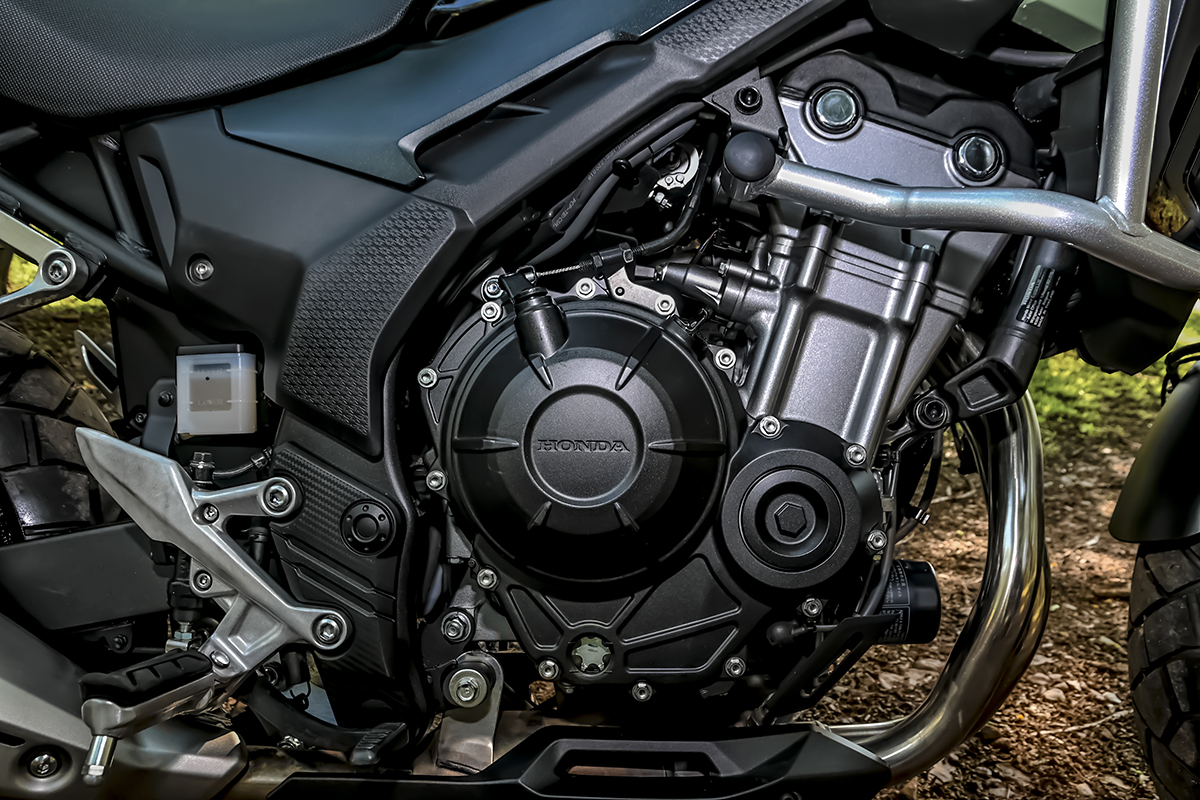
The CB500X has an absolutely tried and tested motor. Variants of the parallel twin have been used in Honda models for yonks, with typical Honda reliability. It produces a stout 39 Kw @ 8600 rpm and 43 Nm of torque @ 6500 rpm. Power feeds through a light-action slipper clutch. The gearbox is a 6-speeder and shifts are light and accurate. As aforementioned, it has 296 mm dual discs up front complimented by the usual smaller single rear, with 2-channel ABS. Wheels are handsome mags with a 160/60×17 rear and a 110/80×19 on the front, perfectly suited to its all-road purpose, with the advantage of plug-and-pump tubeless tyres.
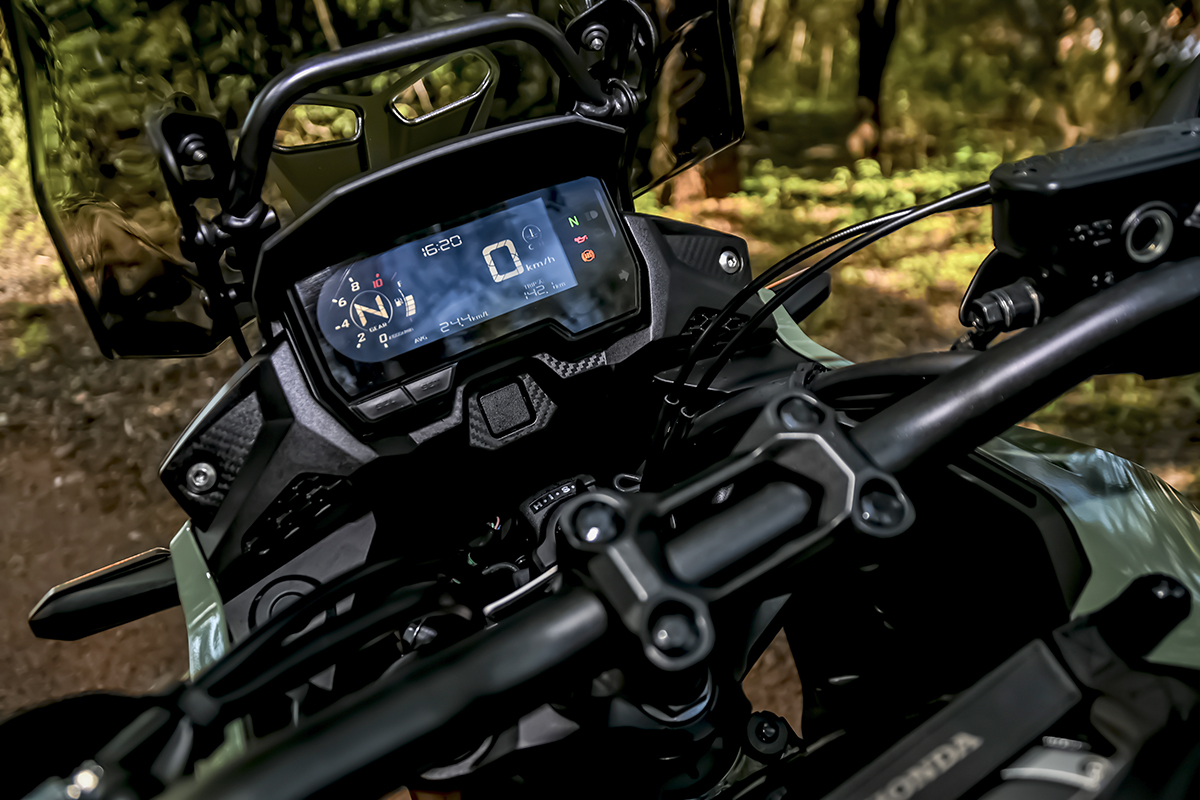
Despite a reasonable 830 mm seat height, the 500 X still manages a decent 181 mm of ground clearance. Instrumentation is via a neat and functional LCD display which is adjustable for brightness.
Photo credit: Beam Productions
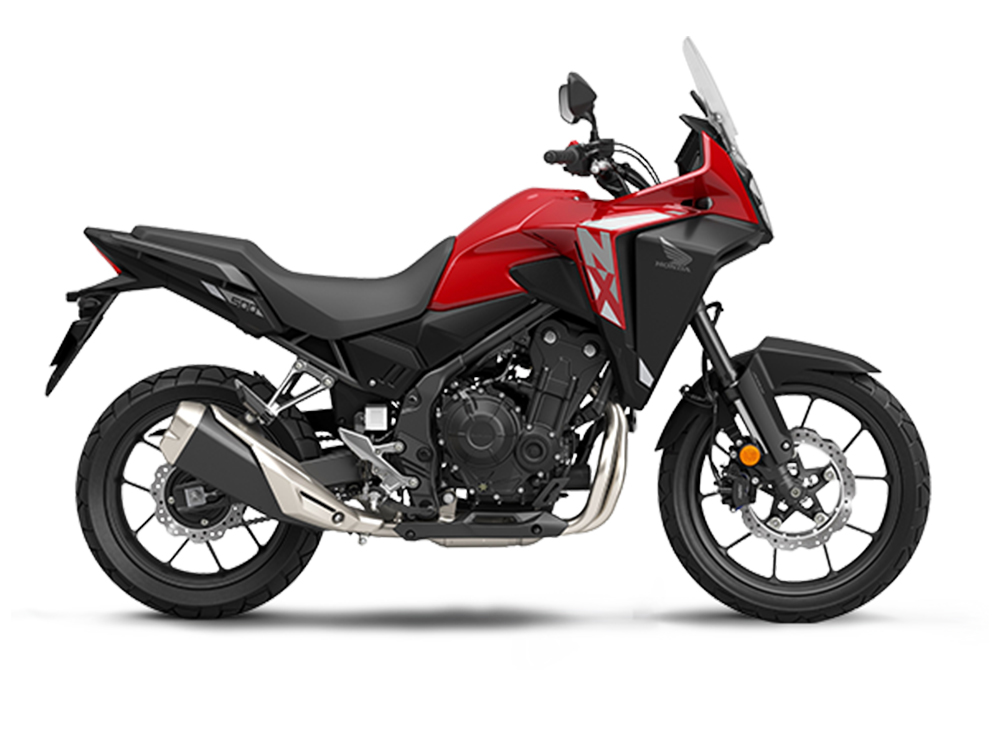
Styling is typical Honda beaky adventure bike, (think Crosstourer 1200) and with the 17,7-litre tank topped up, the bike tips the scales at a reasonable 199 kg. I say reasonable because I am of the opinion that modern bikes should be significantly lighter. The grandpappy of adventure bikes, the BMW R80 GS, weighed in at 186 kg, fully fuelled! Get my drift? The CB has LED lights all around and is undoubtedly a handsome beast.
Photo credit: Beam Productions
It is not a small bike and as such feels substantial without feeling frumpish. Taller, larger riders will have no trouble getting comfortable. The seat is well-shaped and has decent density foam, so smashing long days in the saddle should not be too painful. The colours are a red/black combo which looks spiffy and Pearl organic green/black which looks almost more spiffy!
Photo credit: Beam Productions
Ok, so now you got an idea of the standard package. Honda have quite a comprehensive accessories package to complement the bike. Very different to when the Africa Twin CRF1000 was launched. We waited for ages for goodies for that bike. Because the CB500X has been available offshore for ages, there is a cottage industry which has sprung up around accessorising this bike. From on-road commuter/tourer to a full-on Rally Raid setup. It is a great platform from which to “roll your own”.
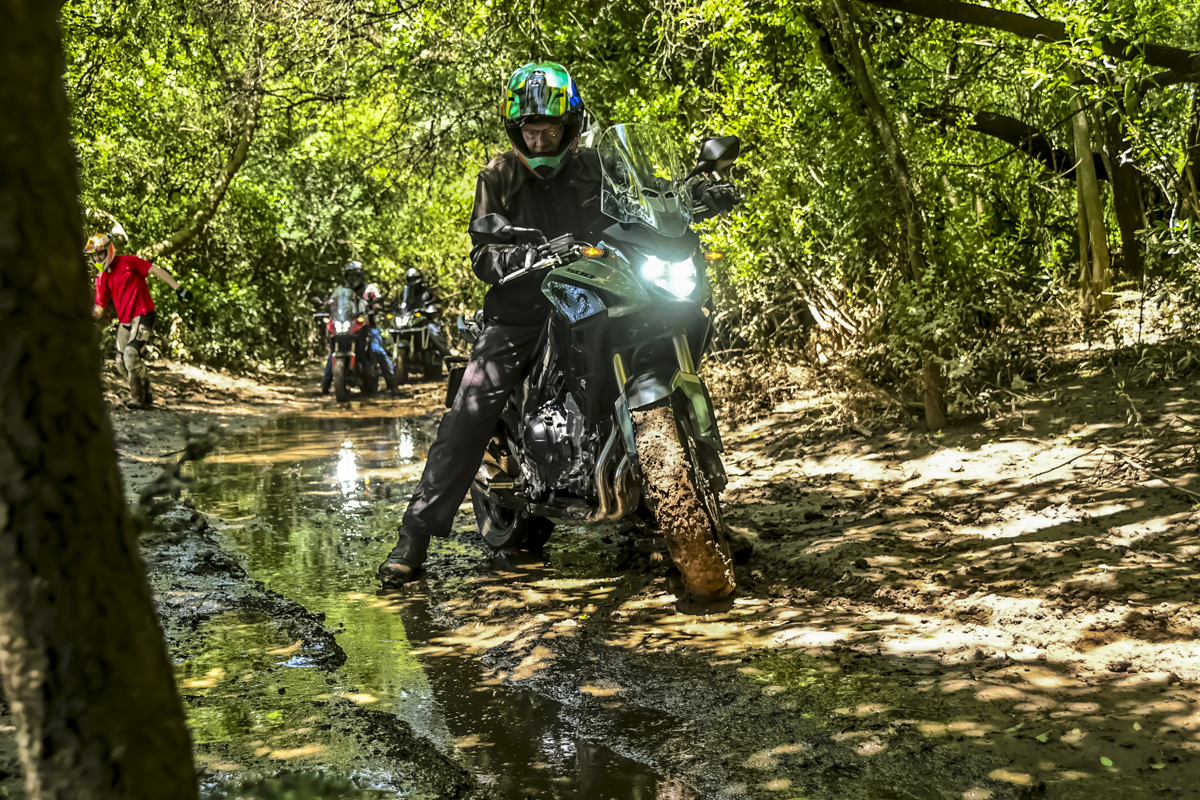
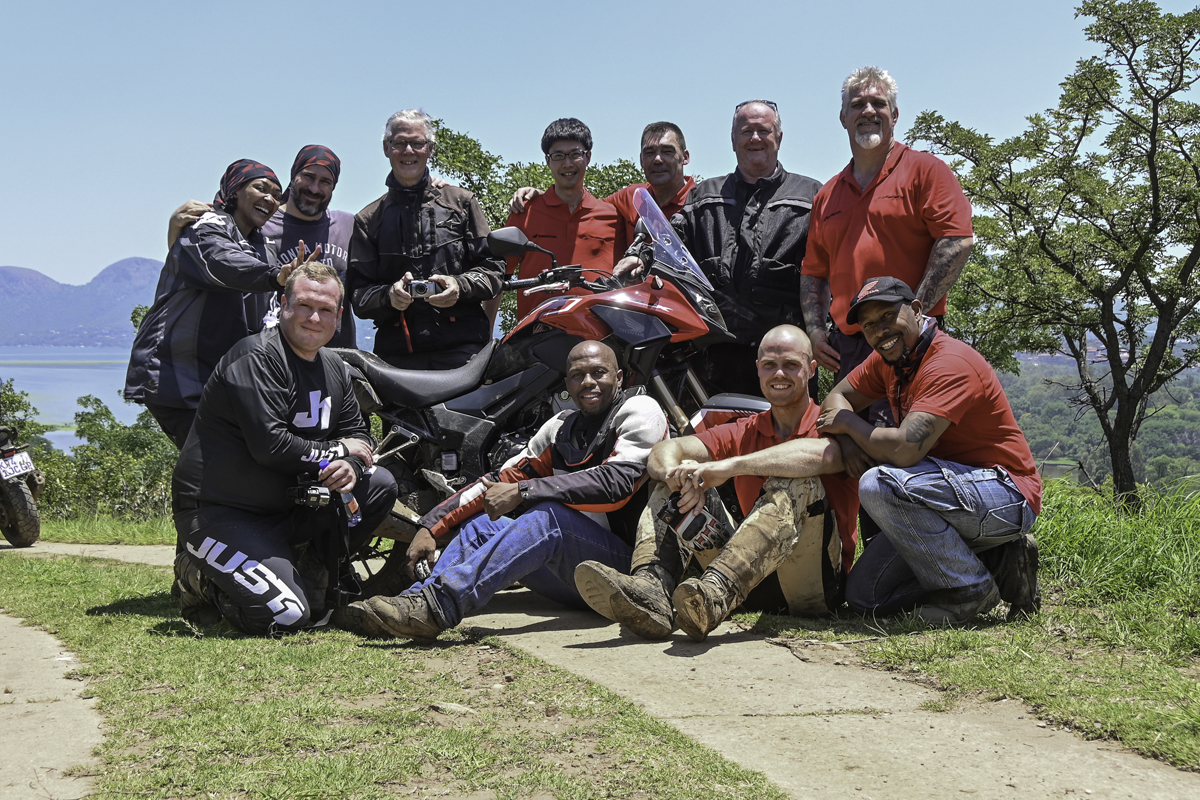
The team at Honda SA know the psyche of SA riders all too well. We take unlikely bikes and put them through the wringer off-road, all in the name of adventure. With a CRF1000L in the lead, and shepherded by a CRF250L and a CRF250 Rally we sallied forth. After the torrential rain of the previous week, sections of the “tweespoor” trail we rode had been transformed into stinky glutinous mud by the first rotation of riders. Watching the Africa Twin trying to find traction and crabbing sideways, I was thankful for less power and weight and a lower seat height. A huge benefit for the CB500X right there!
Photo credit: Beam Productions
Once we had slipped and slithered our way through the quagmire, we were faced with a steep rutted and rocky climb. The X has surprising torque just off idle and there was zero tendencies to stall as we bobbed and weaved up the broken incline. Throttle response in first is a trifle abrupt but easily modulated with the smooth clutch. Overall, the gear ratios are nigh perfect.
A big shout-out to the standard suspension. The front fork has no adjustment but is supple and gives great feedback and control. At no point did it bottom under my 83 kg load. The back shock did bottom lightly when I hit some dips with enthusiasm, however, upon inspection, I found it was only on its second step of preload, with another three stiffer settings. Dialling in more preload would have sorted the bottoming for sure! Anyone short of a crazy hard charger will have any need to spend money on suspension upgrades.
Photo credit: Beam Productions
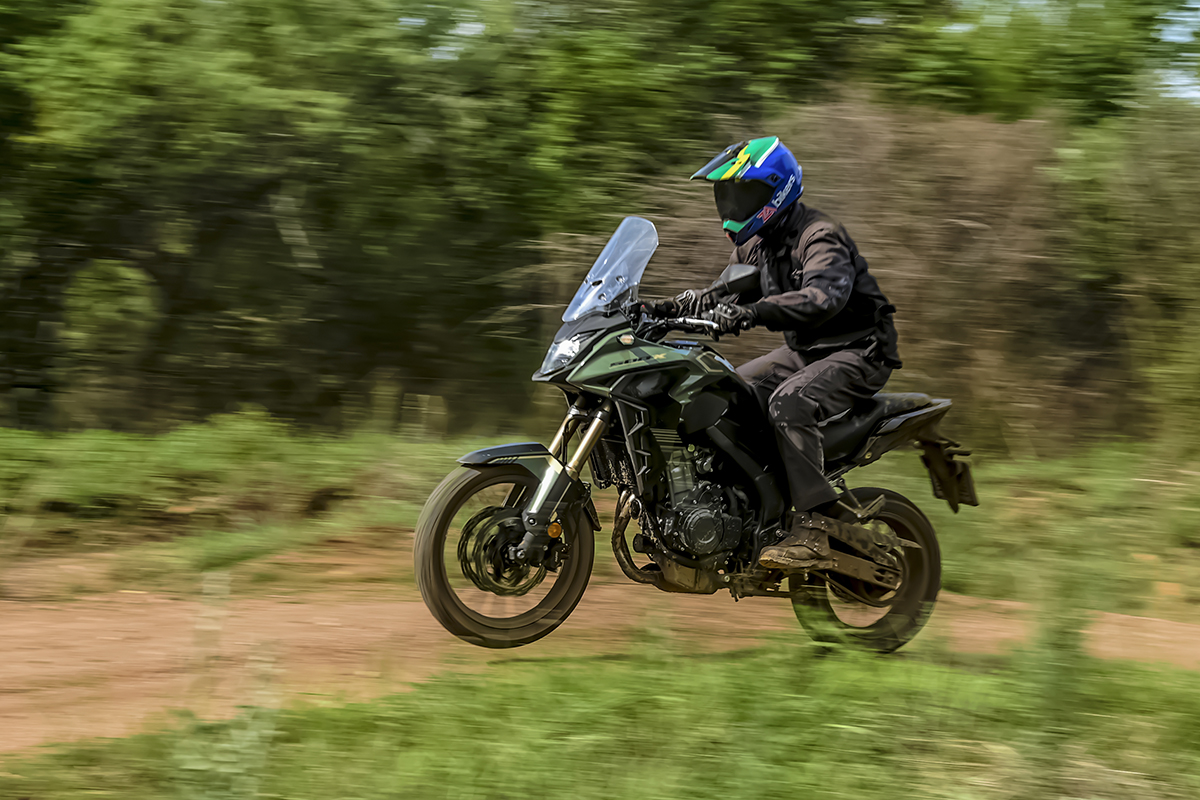
The rubber on the footpegs became super slippery when given the mud treatment, so off-road chaps will be a must if you are likely to take your X into the dirt regularly. A bash plate and radiator guard as well as bark busters would also be well advised. Why am I telling you this? Because the CB500X is a blast to ride down a dirt road and surprisingly capable. The motor has enough oomph without spinning up with every application of the throttle. The result is good forward motion with a minimum of fuss.
Both tar and dirt road handling is stable and confidence-inspiring. Riding behind Mojaki Rammoneng, the winner with Claude Deyzel of the 2018 Honda Quest, I was impressed with how smoothly he rode. We rode a rutted dirt road with rock lurkers and occasional treacherous patches. It was such a patch that provided a serious spectacle. Mojaki hit the soft spot at pace and had his bike do its damnedest to swap ends. Testimony to both bike and rider that they saved that one!
Photo credit: Beam Productions
At 6000 rpm the CB is hauling along at 125 km/h, with still 2500 rpm in hand. It is incredibly light on fuel at this speed, giving around 30 km/L. This translates to a range of over 500 k’s on a tank. Buy one of these and the fuel saving over your 4-wheel shopping basket will pay for the bike, not to mention the hour less time that you will spend stuck in load-shedding traffic snarl-ups. At R119,900, the Honda CB500X represents a lot of bike for the money.
Some may argue that their NC750 doesn’t cost a helluva lot more, but the fact is you then really don’t have anywhere near the dirt road ability of this bike. KTM’s 390 Adventure plays in the same space with similar performance, however, it lacks the all-around polish of the twin-cylinder Honda. Both the KTM and BMW G 310 GS need to cost significantly less to be considered alternatives. The all-around package, coupled with the legendary Honda reliability, and the real-world capability that we experienced on this launch, may just find Honda with a big winner on their hands.
Photo credit: Beam Productions
Honda CB500X
For more information on the bike featured in this article, click on the link below…
So, on a Sho’t Left recently to the Republic of the Western Cape. My better half and I spent a very restful week at an Air BnB in Simondium – “where?” you may mutter…well, if you draw a triangle linking Franschhoek, Stellenbosch and Paarl, it lies pretty much in the centre of that triangle, surrounded by mountains and wine farms – does it get better than that? The short answer is a resounding “yes”, as nestled between a number of wine farms and on the L’Ormarins estate is the Franschhoek Motor Museum, steeped in SA’s recent history, it is the relocated contents of the erstwhile Heidelberg Museum, which was opened in 1974 by Dr Anton Rupert and closed in 2004 by its then owners, British American Tobacco as it wasn’t part of the core business…duh, who would have thought…
Enter stage left, Johann Rupert, son of the good Doctor who, wanting to keep the legacy alive bought the entire museum contents and relocated it to Franschhoek in 2004 opening the current display venue in 2007.
Photo credit: Russell Heins
Now it has to be said, Samantha (the better half) is very far from a petrolhead but agreed to ‘take one for the team’ and join me, so we booked a slot online; (you can’t just pitch up like a normal museum – and that starts to set the scene for the differentiation between the FMM and other transport orientated museums I have visited).
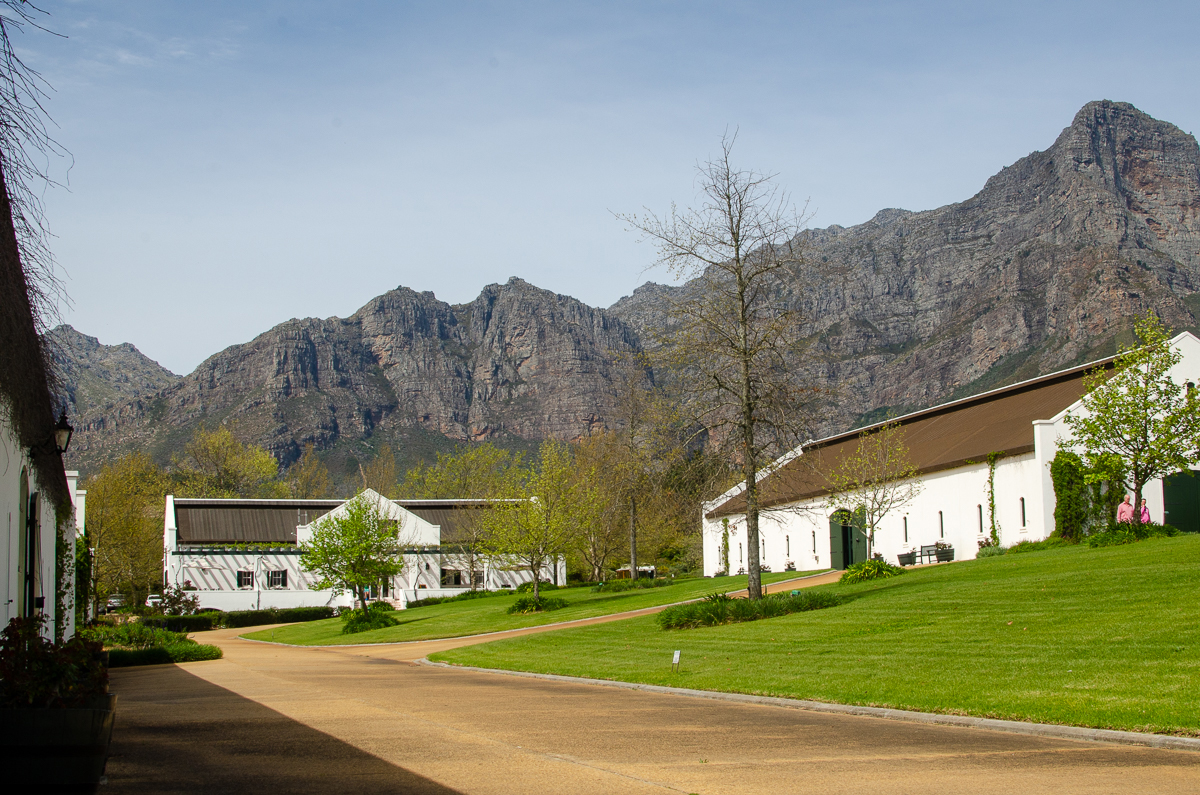
At the appointed hour we arrived at the boom gate and were welcomed by the security guards, characters in their own right who permitted us entry into the pristine grounds of the L’Ormarins Wine Estate, with its manicured lawns and gardens, set against the stunning backdrop of the Drakenstein Mountains.
Photo credit: Russell Heins
The collection itself is absolutely beautifully maintained with not a speck of dust evident anywhere in the four climate-controlled halls and comprises in total around 220 vehicles, of which around 80 are on display at any given time, thereby encouraging repeat visits, I guess! Hall A starts with an 1898 Beeston Motor Tricycle and Hall C chronologically ends with a 2016 Chevrolet Br’Ute modified Corsa bakkie, whilst Hall D just takes it to a whole different level…
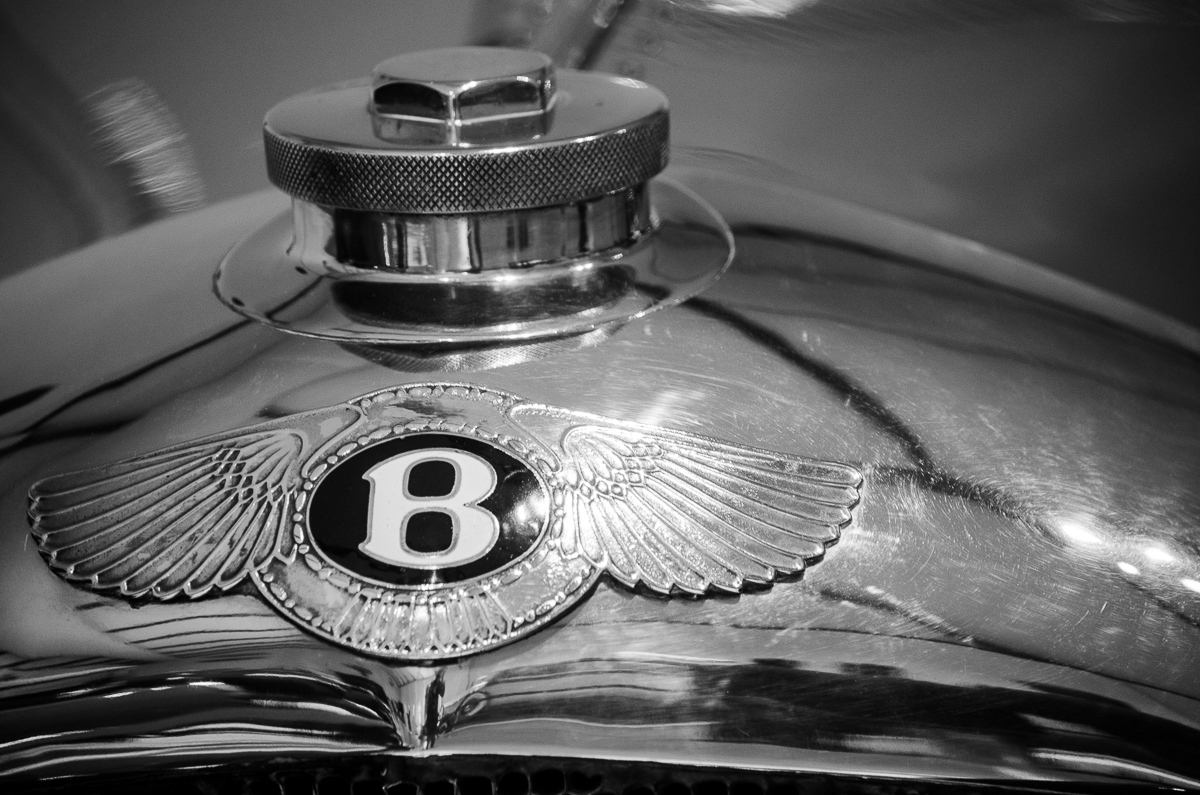
So, let’s have a bit of a deeper dive into the contents of each of these halls of excellence, which left me absolutely stunned, starting with Hall A, containing the earliest vehicles including the Beeston trike I mentioned earlier, some beautiful Bugatti’s, a Bentley, a Rolls Royce, all dating from 1898 to 1935. Henry Ford’s very first attempt at a motor vehicle is also represented in the form of a 1903 Model A, boasting a flat twin 1668cc motor developing an eye-watering 8 bhp…
Photo credit: Russell Heins
Bikes on display in Hall A included a 1917 Triumph Model H, 550cc producing 4bhp, a beautiful 1926 BSA S23 500cc, and a 1936 AJS Jarman 350.
Moving along to Hall B, which on a personal level didn’t talk to me at all, displays various Fords from 1923 to 1938, most of which looked like extras from the ‘Cars’ animated movie series, but on the upside; a 1956 Velocette Valiant and a 1926 Triumph Model P with its ‘bow’ front brake mechanism and 494cc four-stroke side valve single, brought some interest to an otherwise uninspiring display for me.
Photo credit: Russell Heins
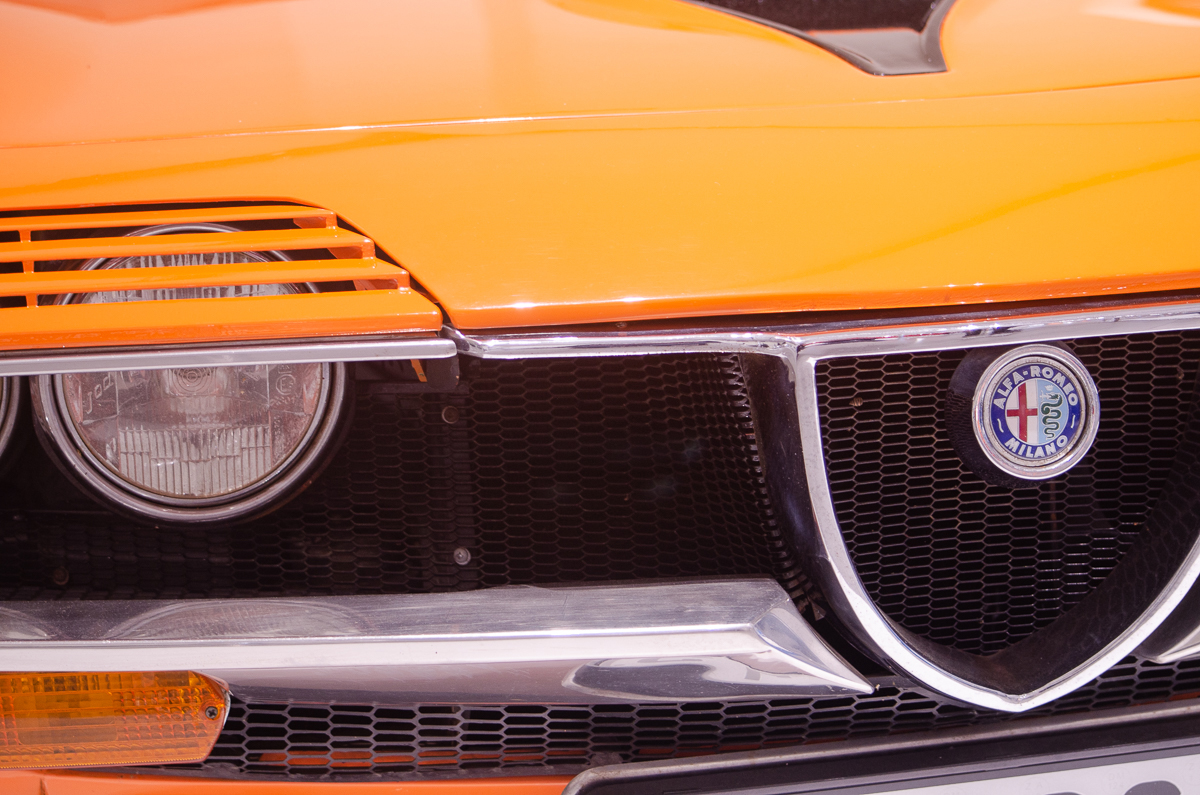
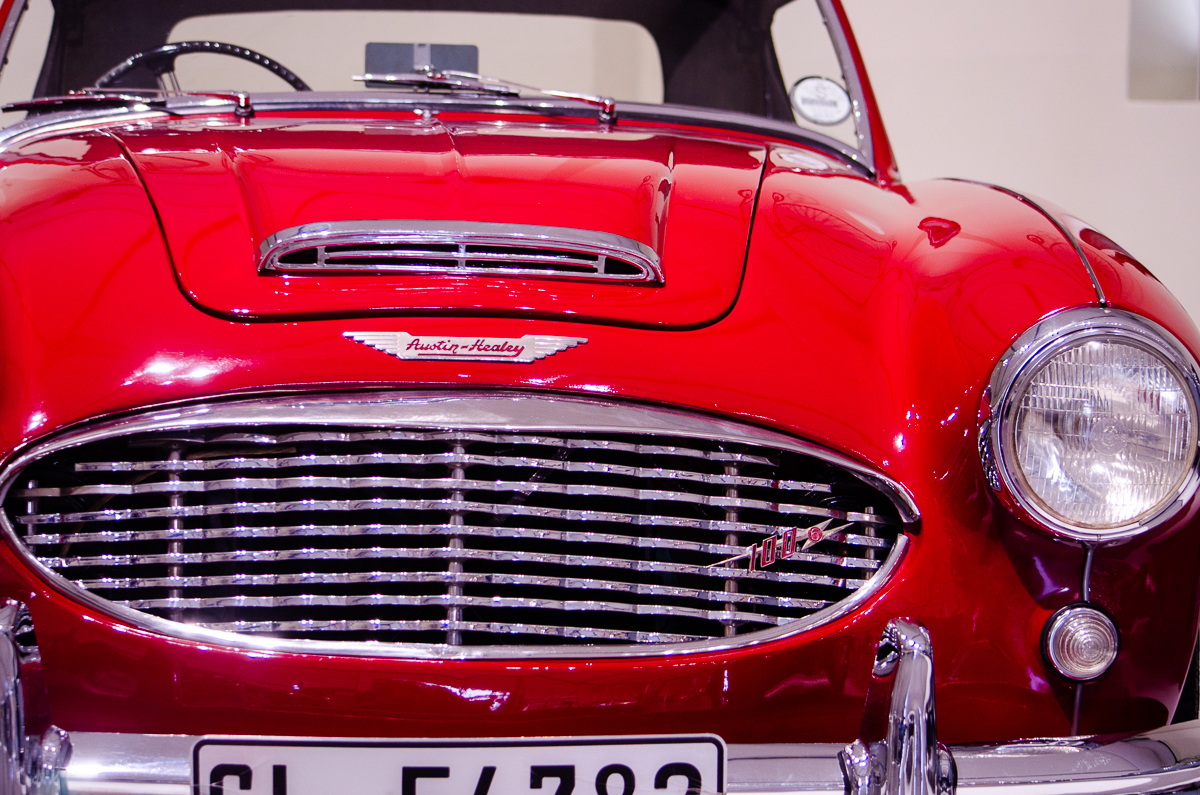
Hall C starts with a 1939 Fiat ‘Topolino’ and ends with the 2016 Chev I mentioned previously, but in between, there are some absolutely stunning Alfa Romeos, Jaguars, and a gorgeous 1959 Austin-Healey 100/6 2.6L roadster. It was somewhere in the middle of this hall that I came to a conclusion that has only taken me 58 years to reach, in my humble opinion when it comes to the design of both cars and bikes, the Italians and the Brits are the only ones who can really do it, with all due respect to the Germans, the Japanese, the French, the Americans and assorted others, visual rightness and jaw-dropping head-turnability belong almost exclusively to the Italians and the Brits, at least to my mind!
Photo credit: Russell Heins
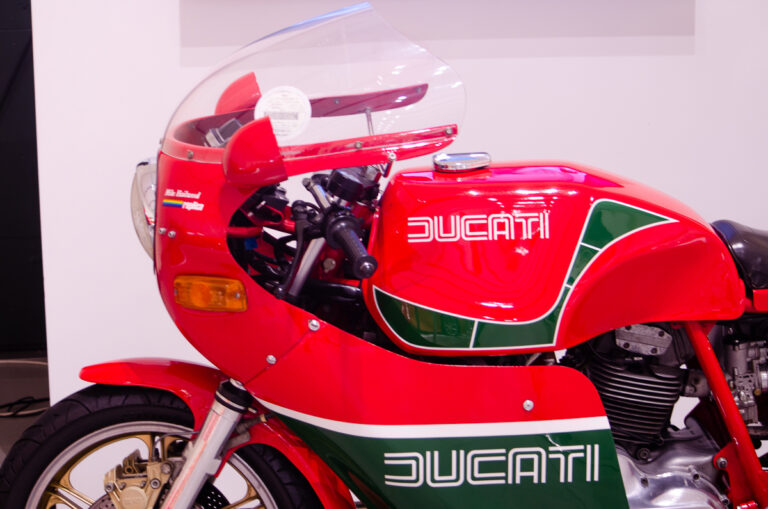
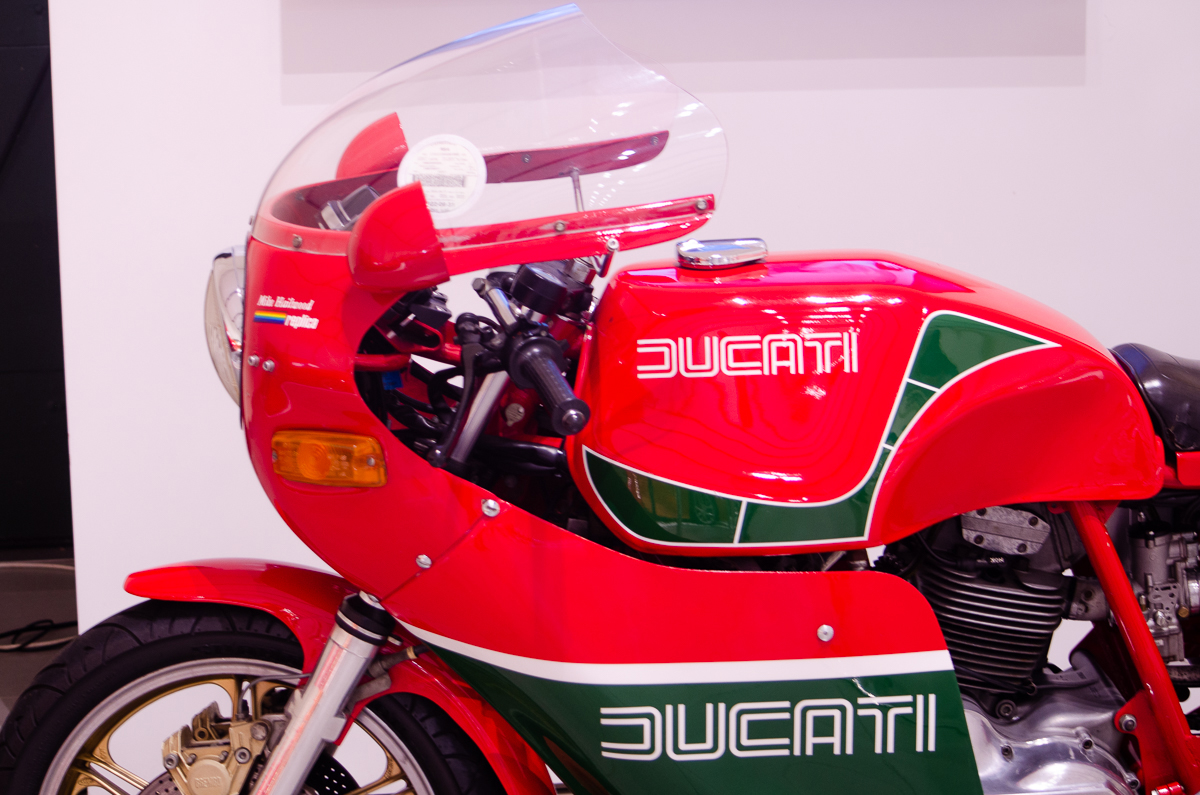
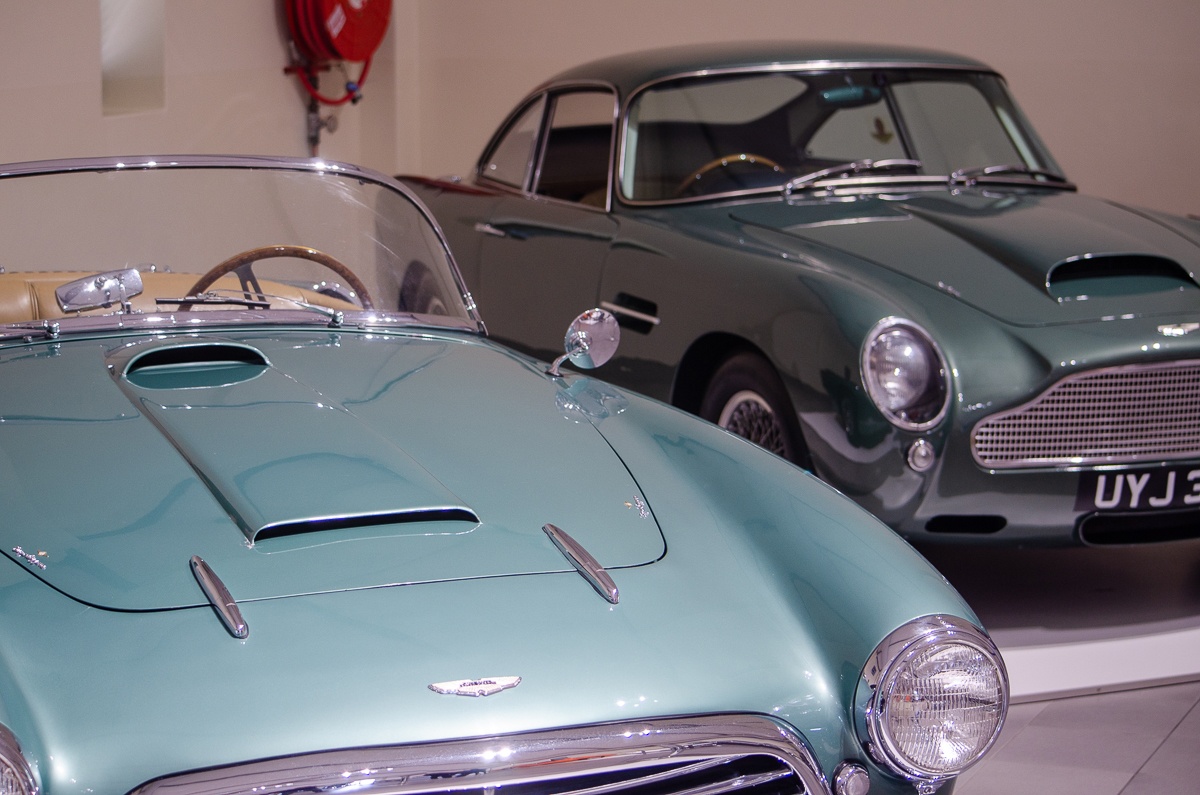
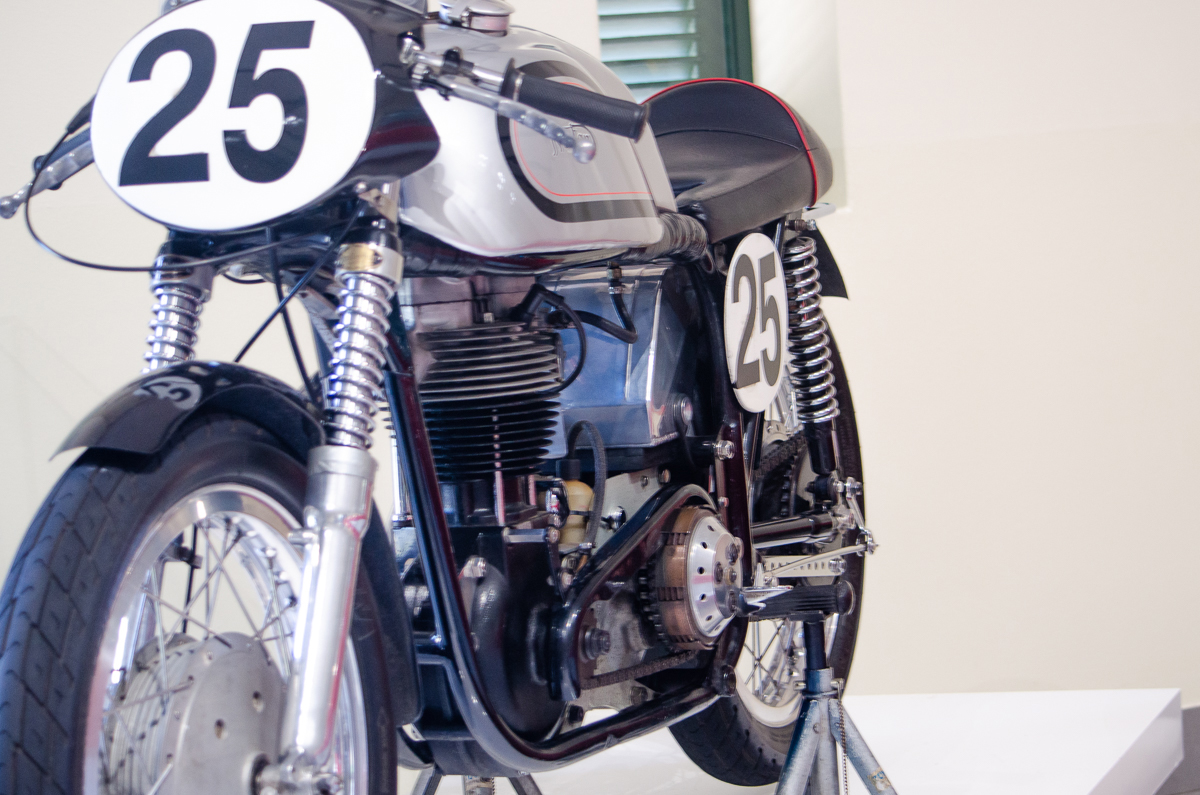
This Road to Damascus moment was reinforced when we entered the hallowed Hall D, which I have to admit has some absolute classic ‘Rest of the World’ sports cars including; the wild 1967 Renault Gordini, a 1979 Porsche 930 Turbo and the Corvette Z06 piloted around Zwartkops by the late great Sabine Schmitz, to name but a few; however the drool factor awards had to go to the two Astons posing nonchalantly in the bottom corner, a DB2/4 Touring Spyder and a DB4GT looking cool and aloof like that iconic James Dean photo. But conversely, wow they are beautiful… Incontrovertible proof if any was needed that my hypothesis isn’t too wide of the mark! This was further reinforced by the bikes in Hall D. Starting with the 1980 900 Ducati Hailwood Replica Mk 2, and my personal favourite the 1950 Manx Norton 500, the original ‘featherbed’ frame machine that dominated at the TT for a number of years, the 499cc single produced 40 kW and topped out at 230 km/h – for a 1950 steed.
Photo credit: Russell Heins
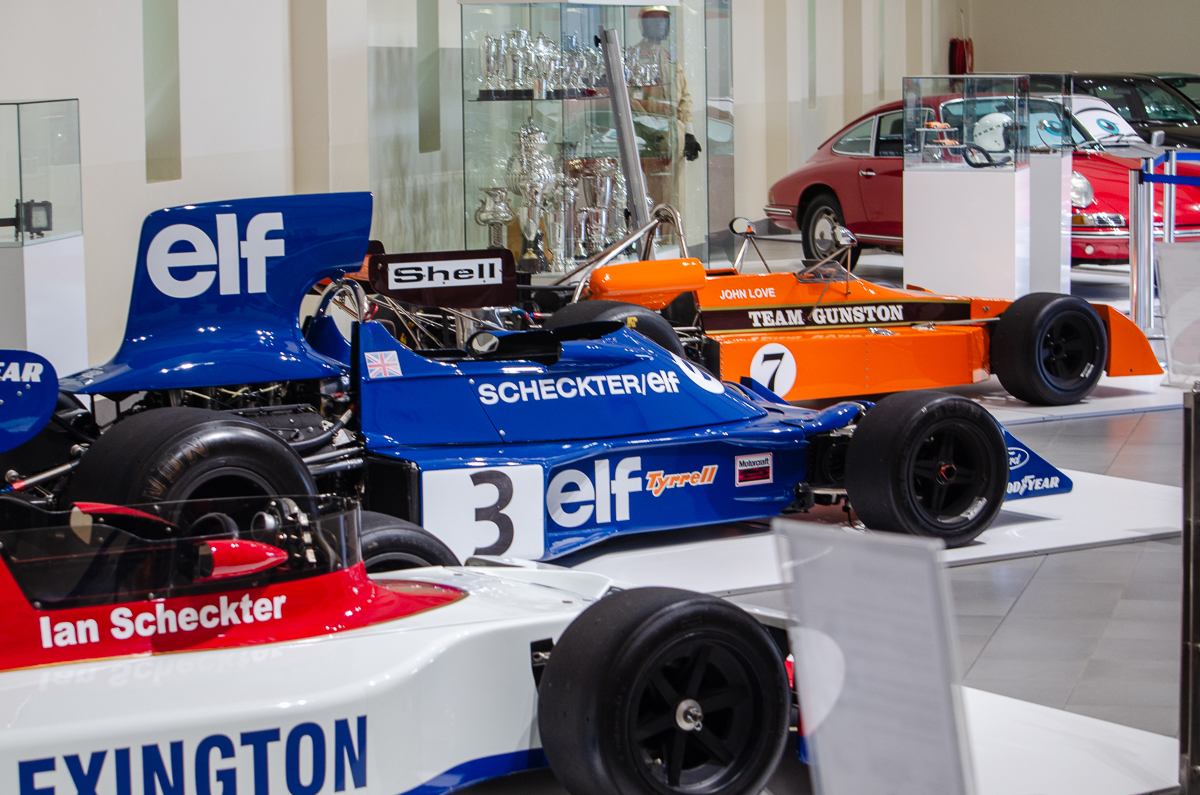
Hall D is rounded out with some legendary classic SA motor racing machinery including the Gunston liveried Chevron B25/3 Formula 2 spec Cosworth, Ian Sheckter’s 1976 Lexington Formula Atlantic and brother Jody’s 1974 Tyrrell Ford 007. Not the one that looked like it was two cars in a permanent dice – the 6-wheeler, but the previous 4-wheel-only model, boasting a 3 litre V8 Cosworth producing 358 kW, in which he finished 3rd in the 1974 Formula 1 World Championship. A tiddler compared to the current 750 kW F1 hybrid monsters or the 1000 kW beasts of the mid-’80s, but the simplicity, lack of electronics, driver aids and extremely basic engineering are just astounding – RESPECT!!!
Photo credit: Russell Heins
So, after an hour and a half of wandering and pondering, even a die-hard non-petrolhead like Sam admitted that she had loved the entire experience, the stunning environment and backdrops, the ambience, the pristine exhibits and the passion of the staff for their charges. This is a fantastic piece of SA and global motoring history, beautifully preserved and presented, and well worth the effort of pre-booking a slot next time you are in the area!
I do apologise for the excessive use of superlatives in this piece; they are, however, totally deserved!!
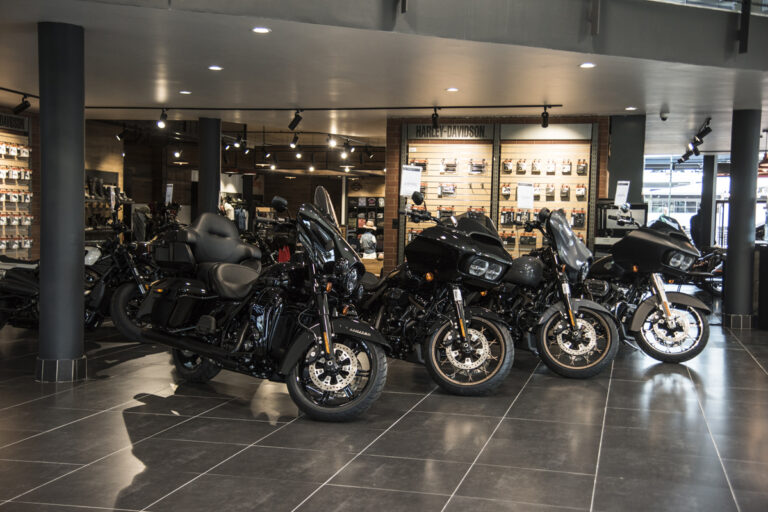
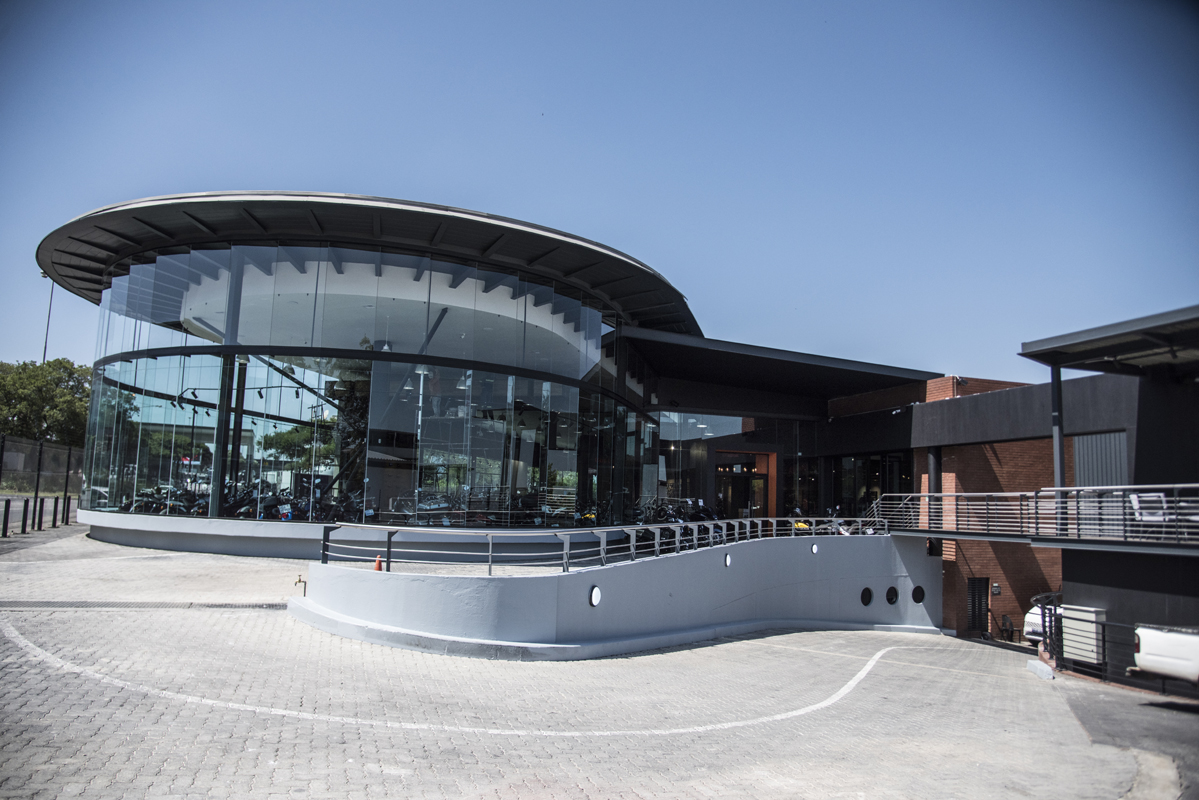
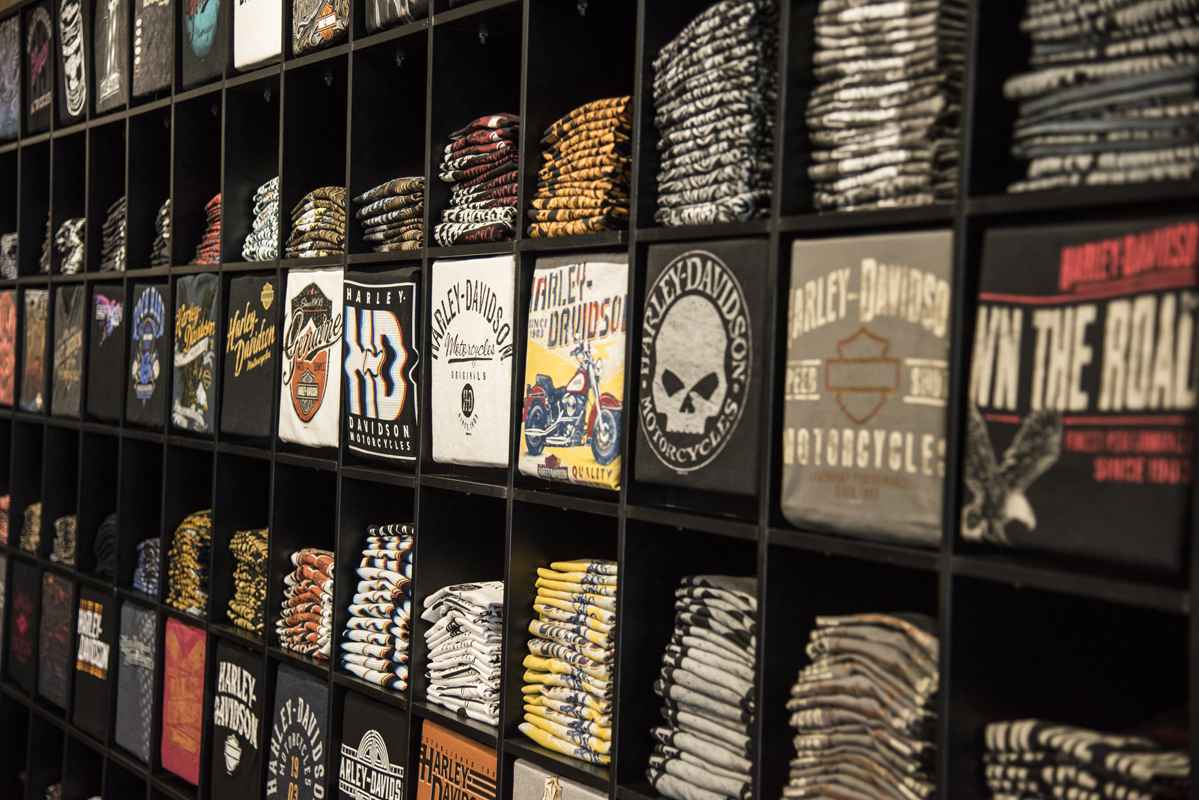
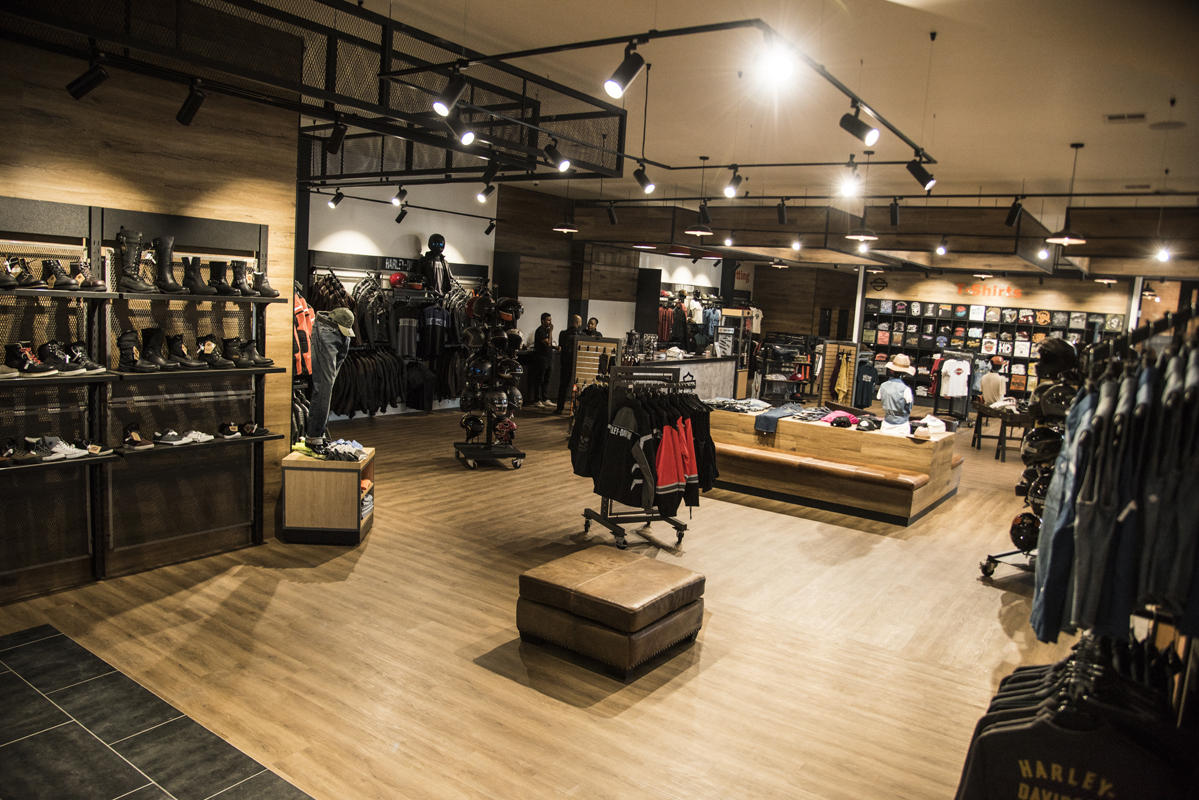
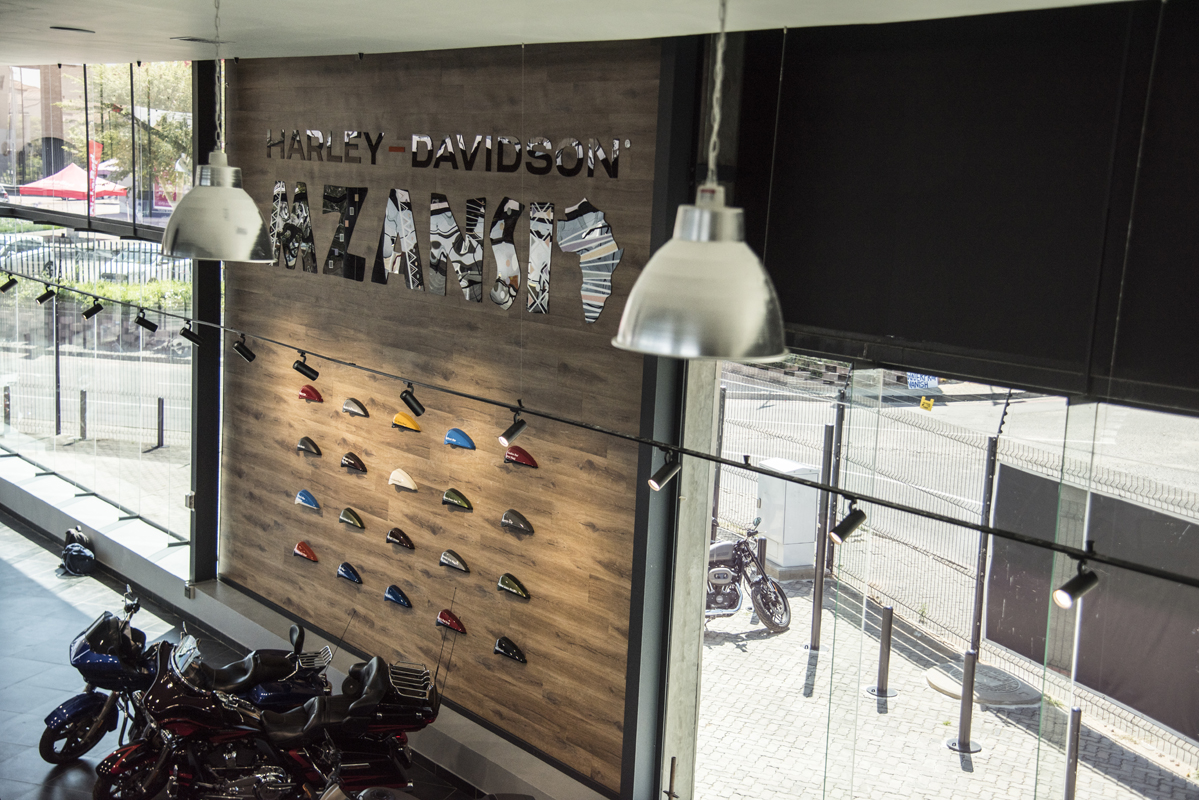
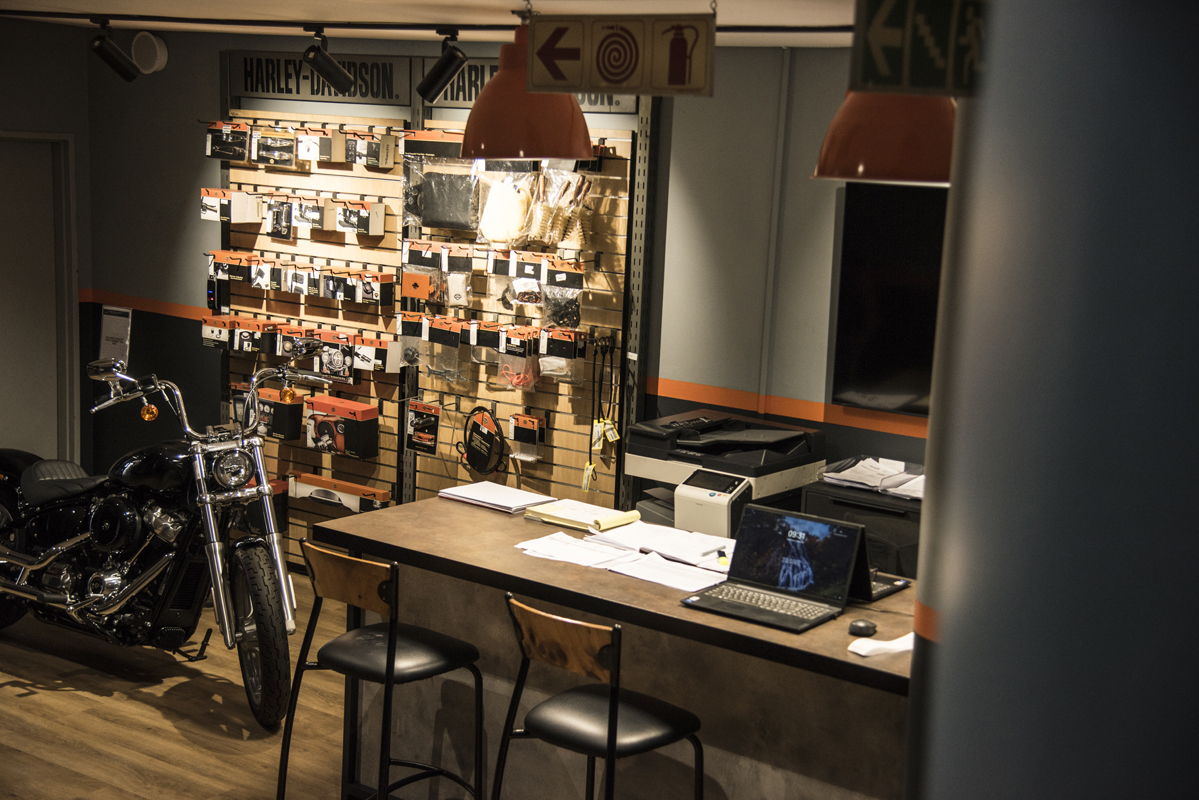
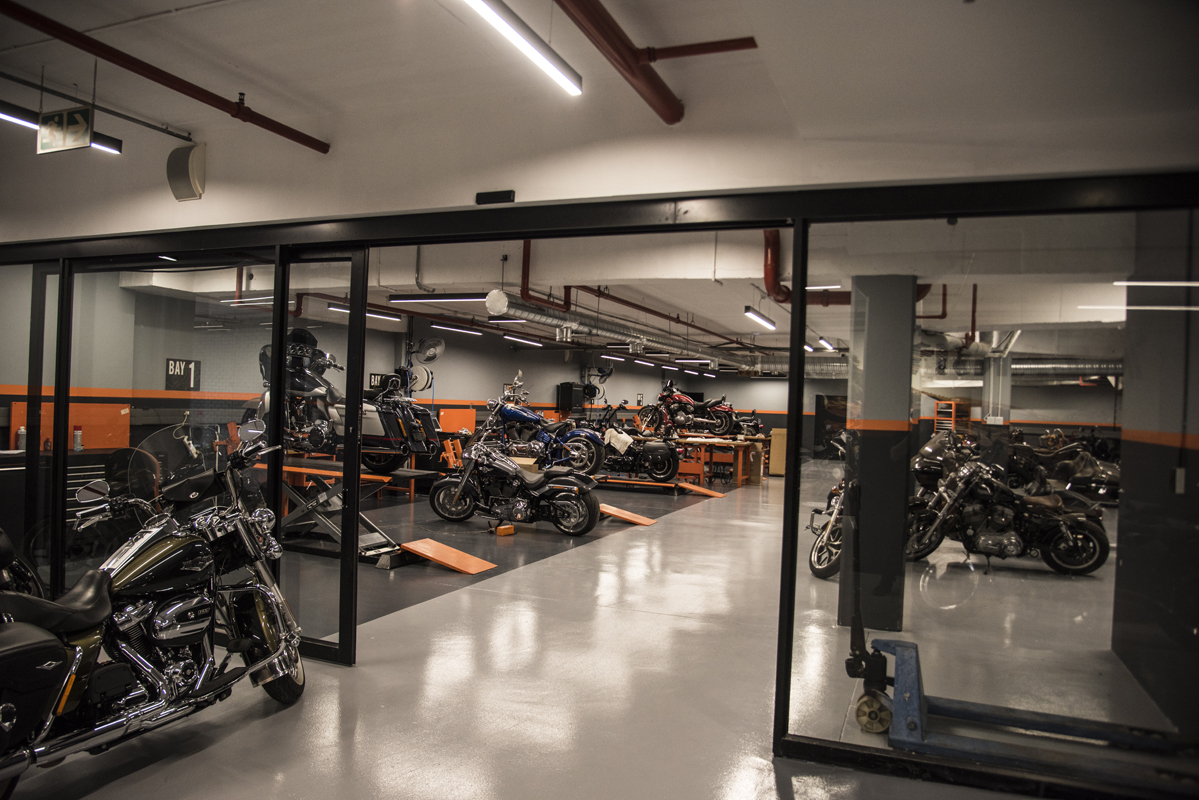
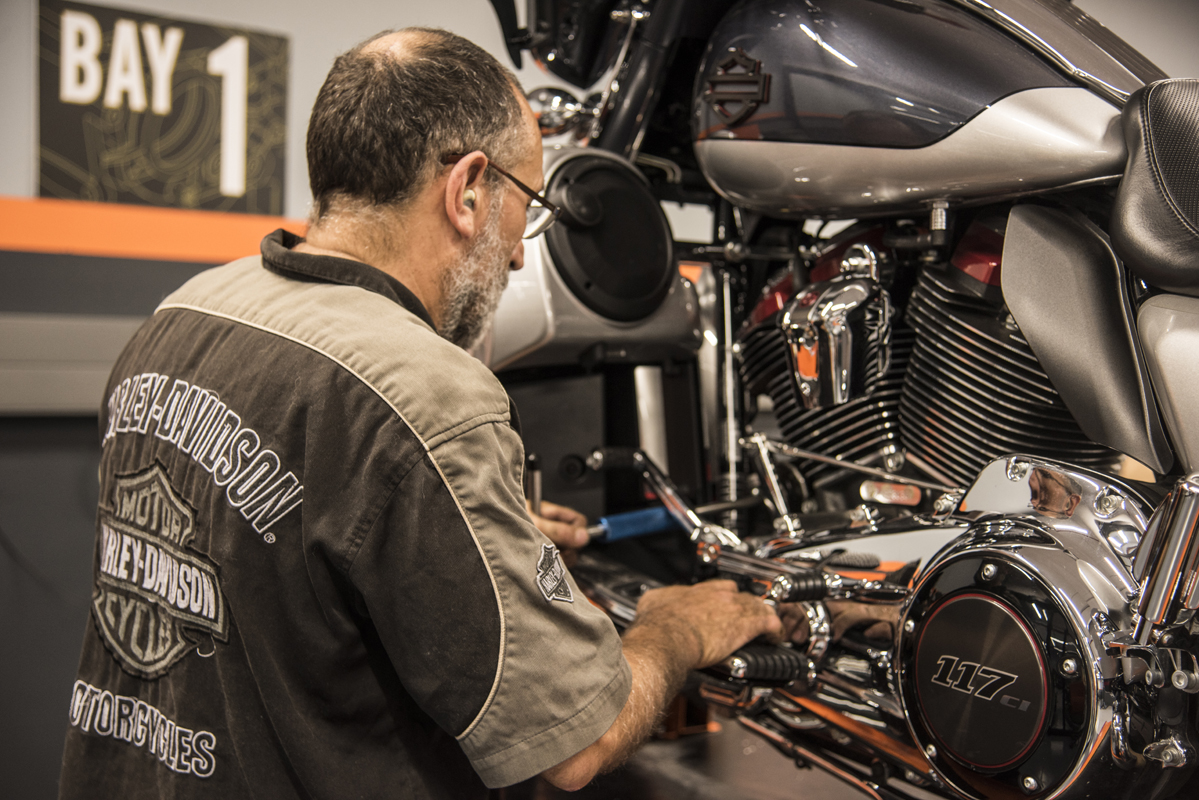
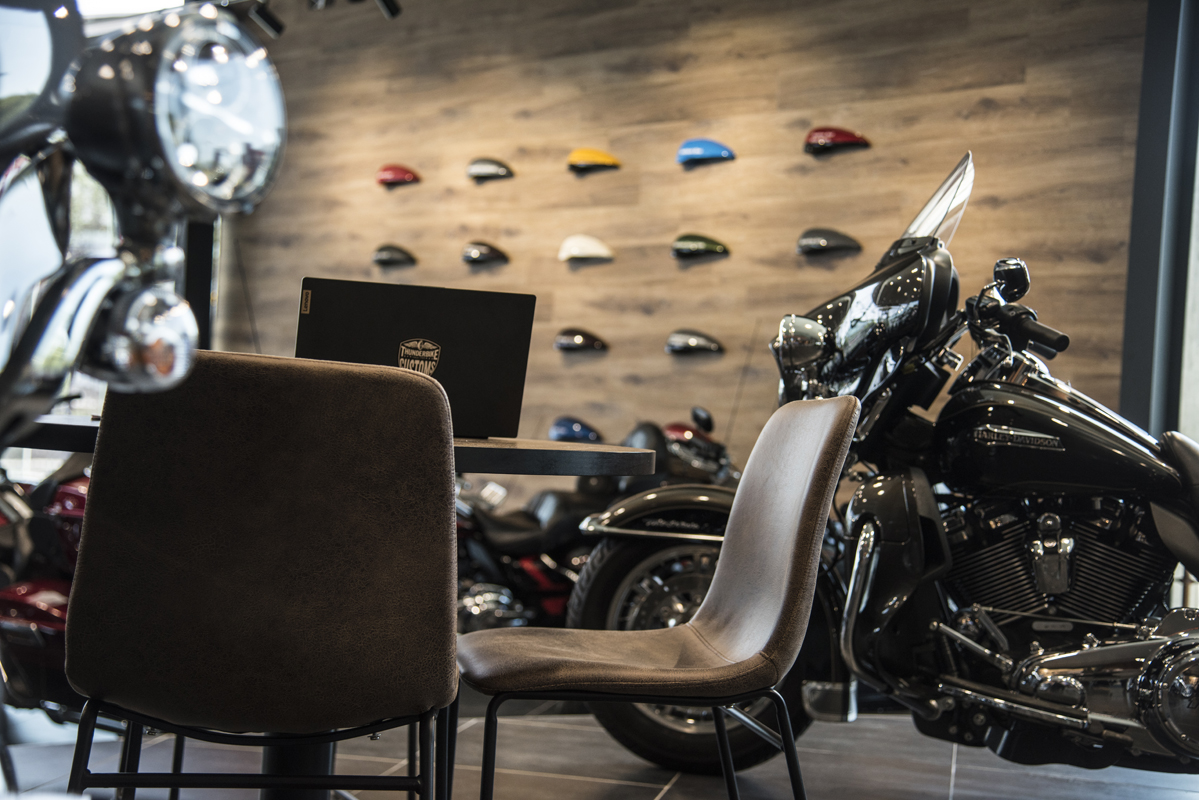
Saturday 26th November is a red-letter day for Harley-Davidson in South Africa. For many years, Harley Davidson Mzansi has occupied a prime location in Sandton but times move on and so has Harley-Davidson Mzansi.
The new showroom and workshop are in state-of-the-art premises at 3 Sunrise Boulevard, Lonehill, Sandton. Travelling north on William Nicol, pass underneath Witkoppen Road and turn right at the next traffic light. The new showroom is right behind the McDonalds – you can’t miss it.
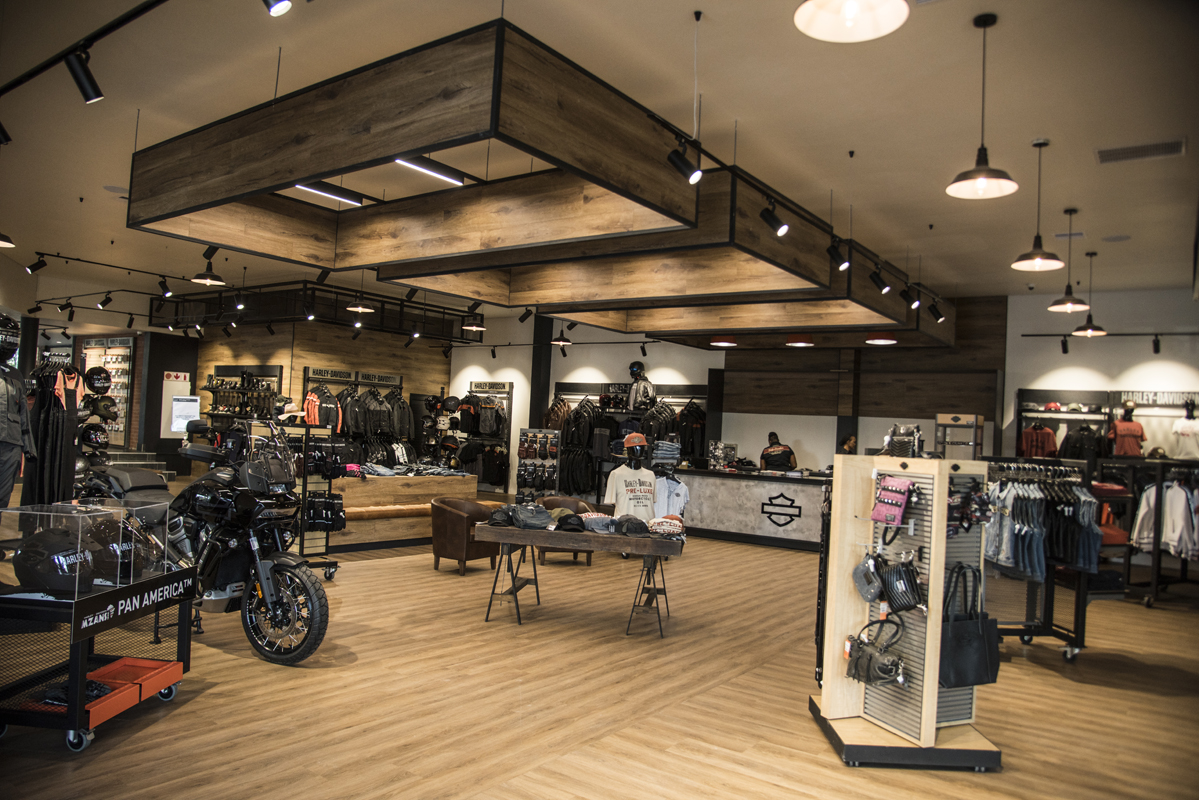
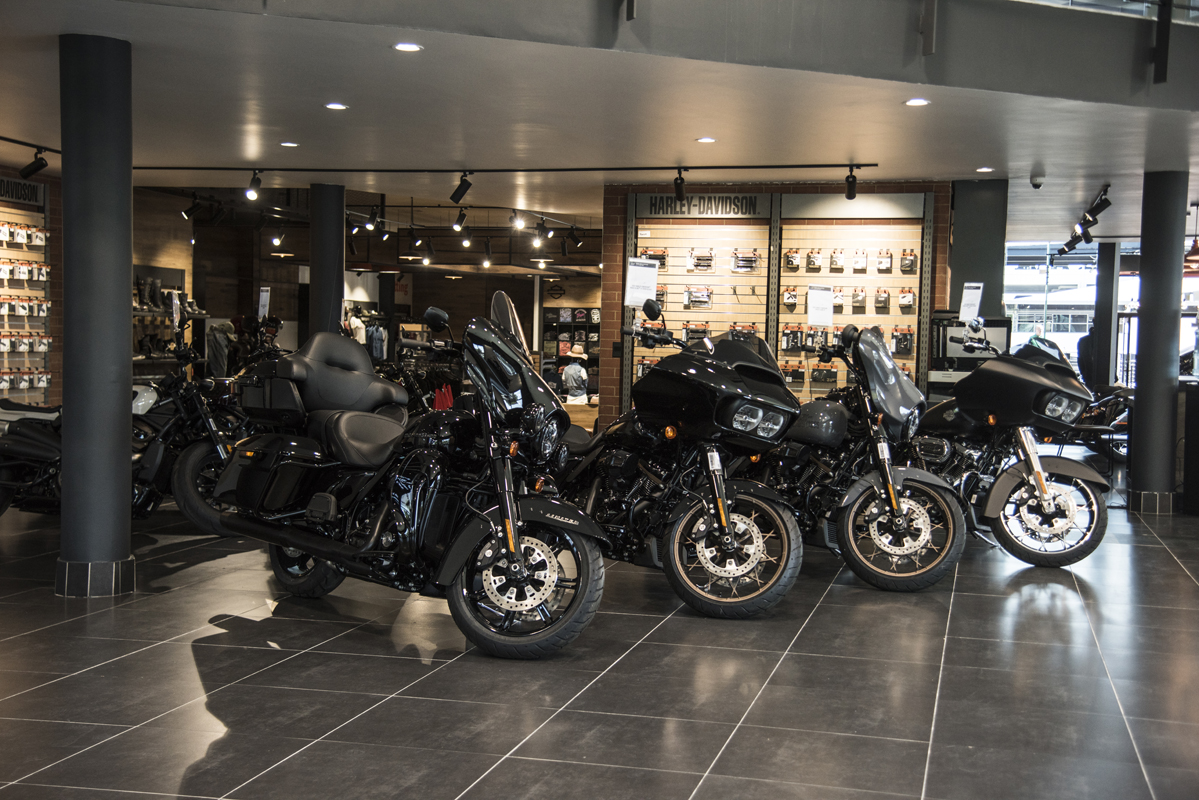
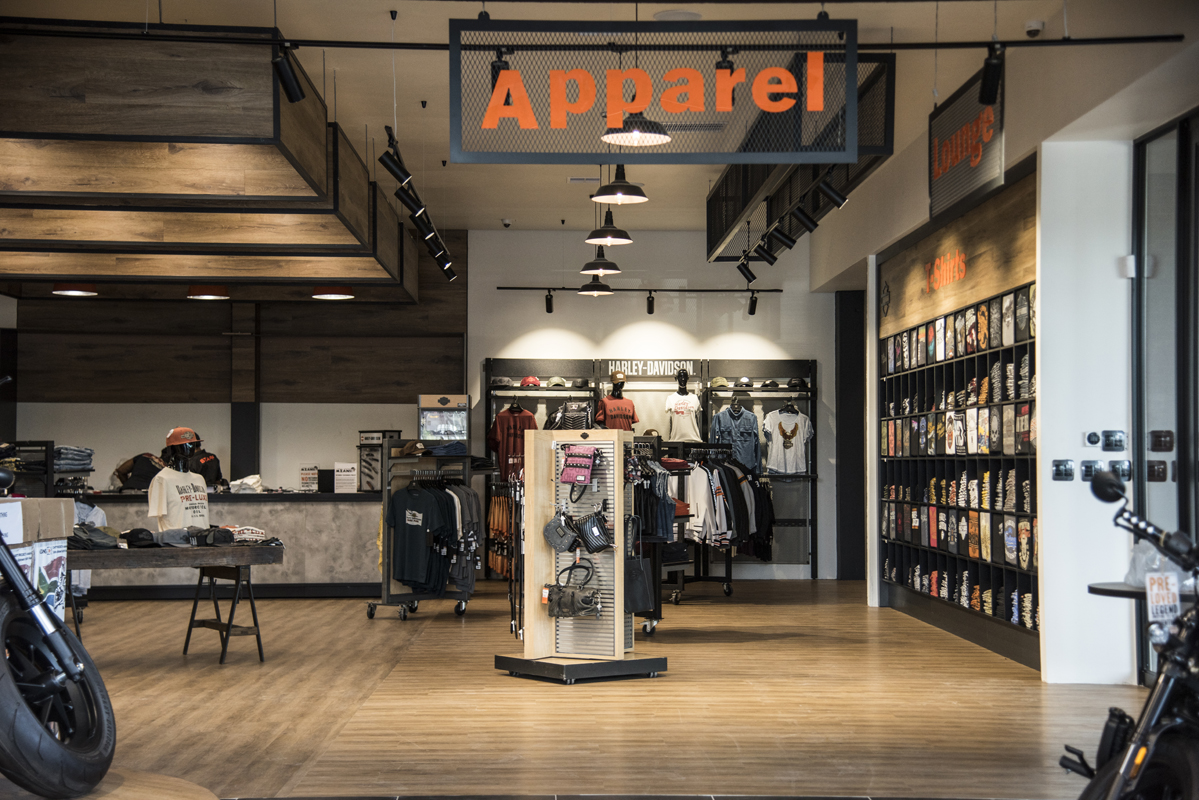
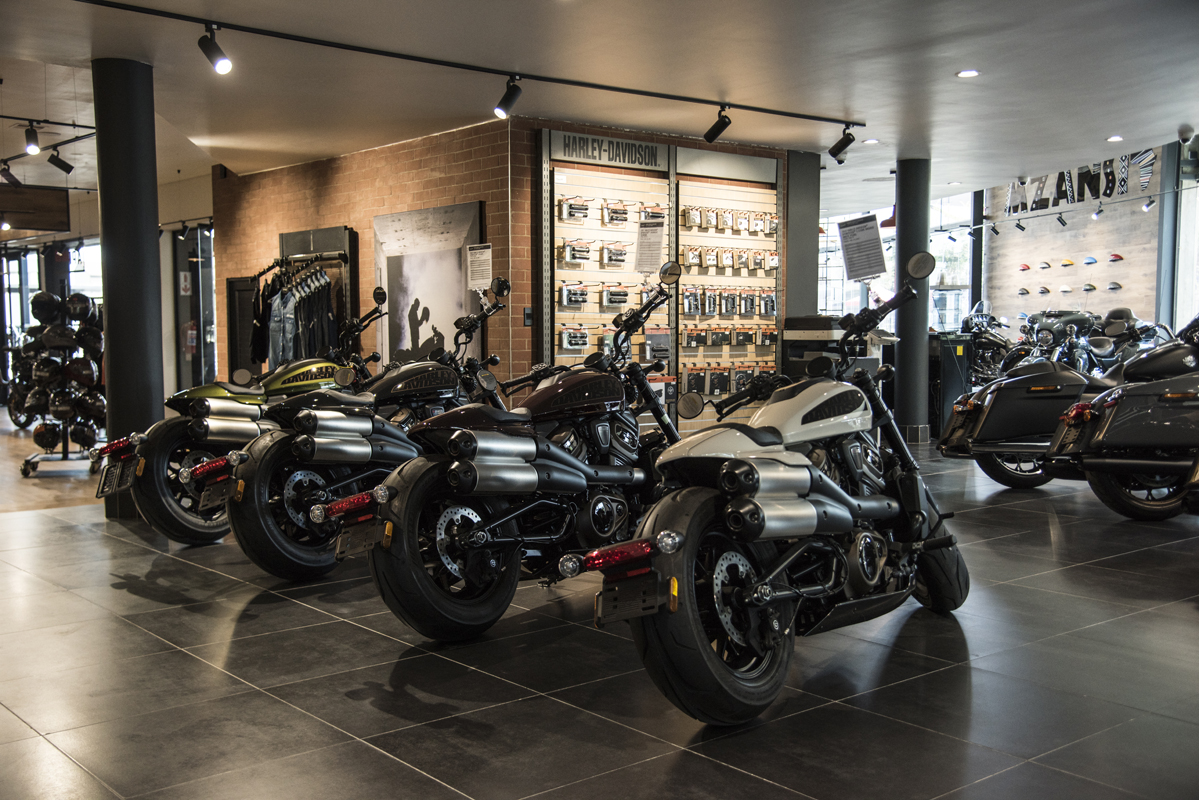
The main reason you can’t miss it is that the new Harley-Davidson Mzansi showroom is one of the largest Harley-Davidson dealerships in the world and certainly the largest in Africa.
Photo credit: Bjorn Moreira / ZA Bikers
It promises to be a fantastic day, with live music and DJs, food and drink on sale and the chance to take a look around this stunning new facility.
Bring your wallets along as there will be Black November deals on all merchandise – up to 50% off in some cases – and also special deals on selected new and used Harley-Davidsons.
Proceedings start at 8 a.m., with the official ribbon cutting, and carry on throughout the day to 3 p.m.
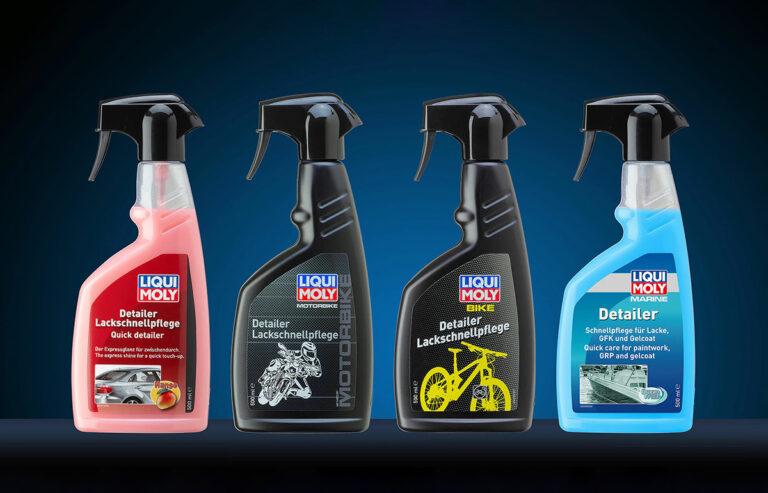
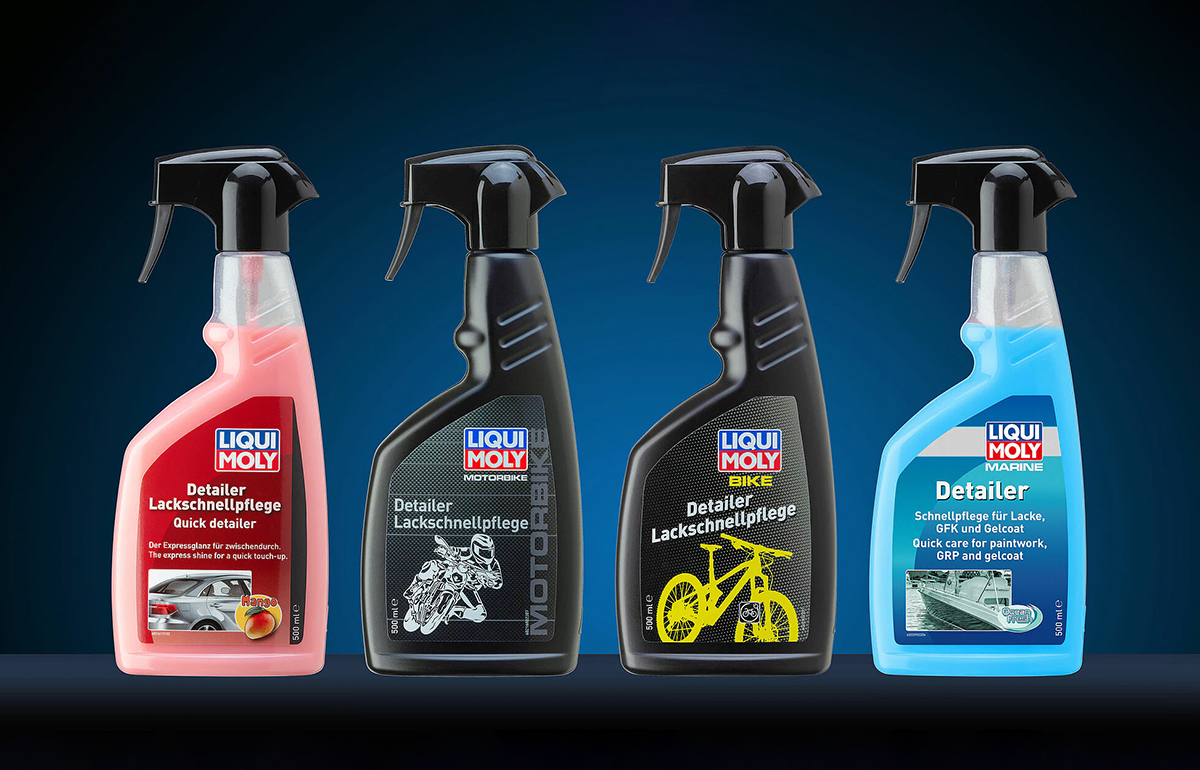
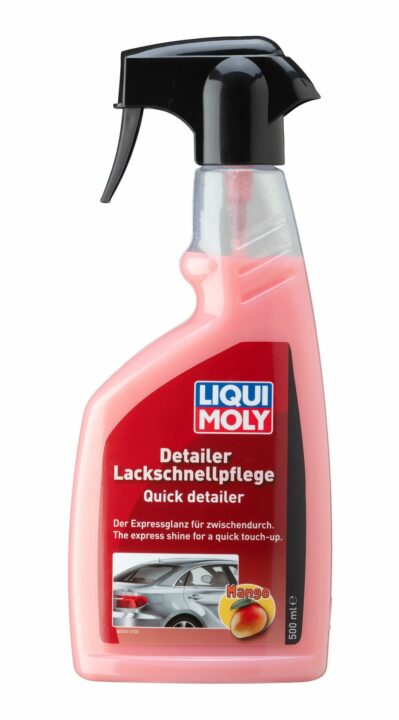
In a previous post, I gave a passing thumbs up to Liqui Moly’s Quick Detailer when I used it to polish the dust off my car. It worked so well in this application that I thought to give it a bash on my bikes as well. Well, to be frank, the results have been superb!
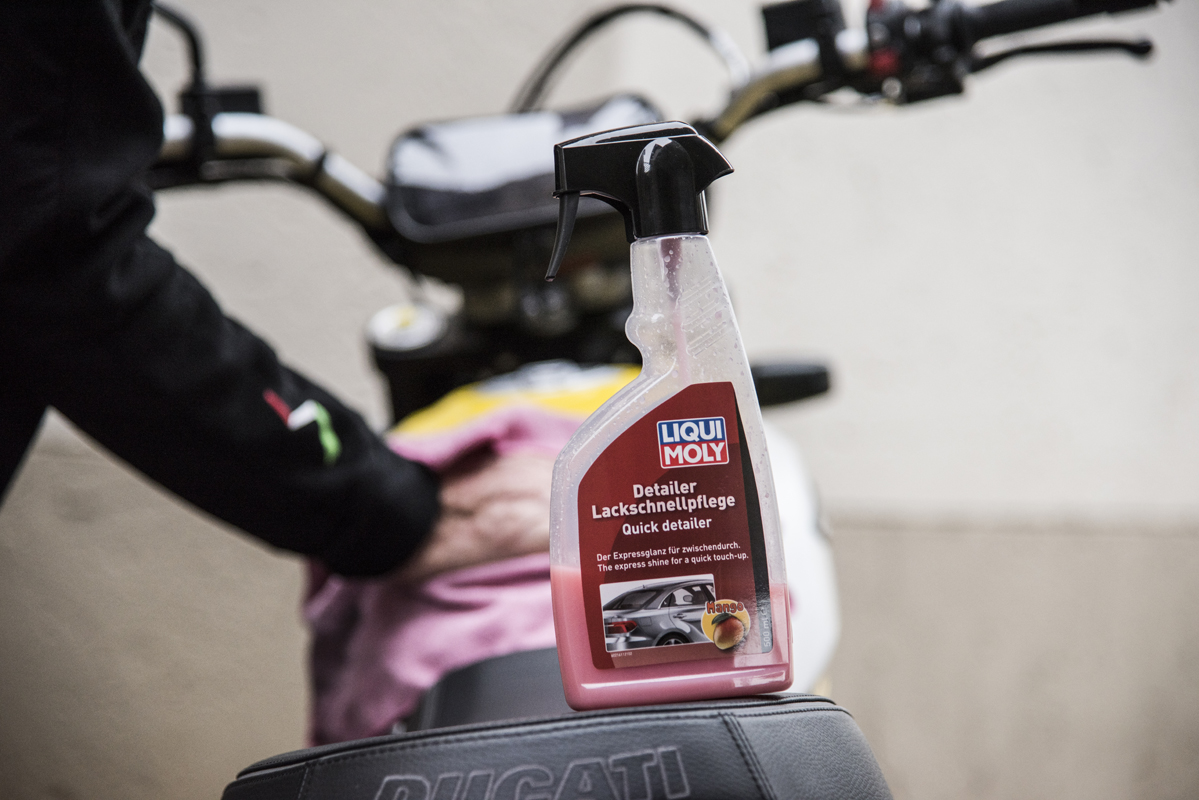
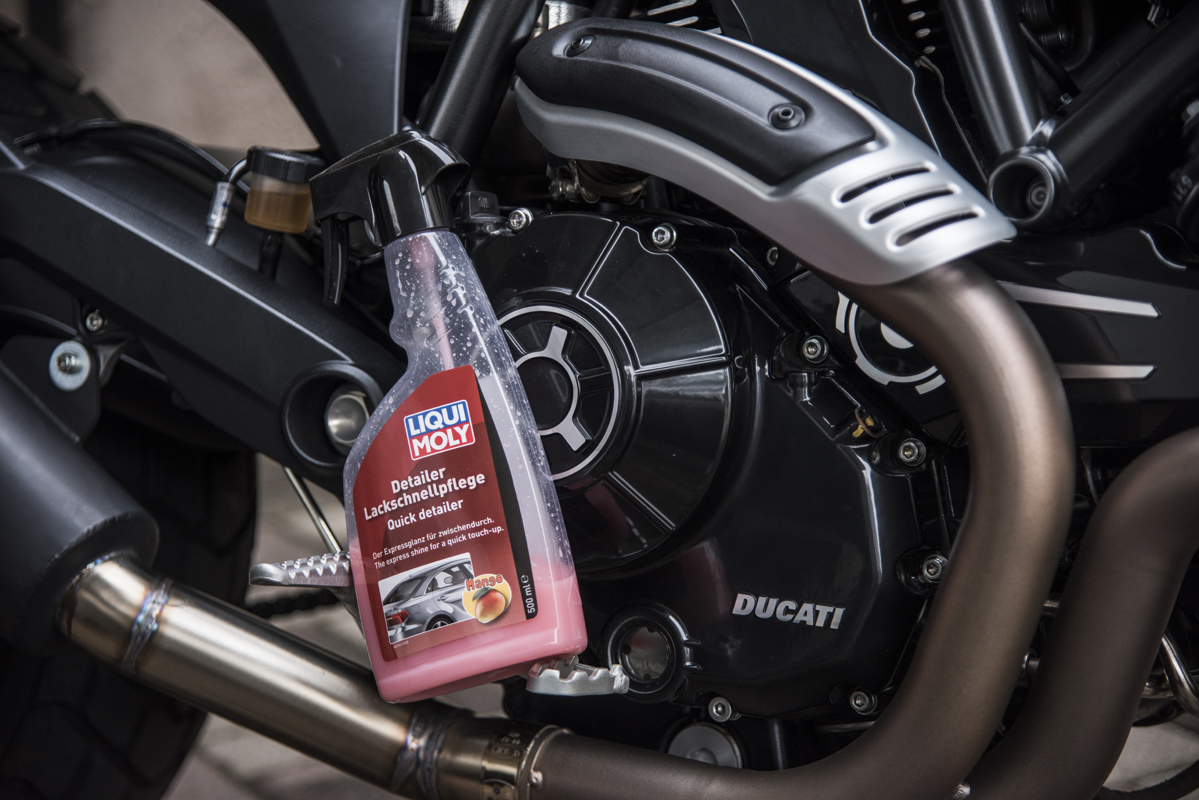
The Quick Detailer comes in a 500 ml spray bottle, is pink and smells like mangoes. Not only does your bike look sweet after rubbing it up, but it smells good too! Let me tell you how I discovered what an excellent product it is.
Photo credit: Bjorn Moreira / ZA Bikers
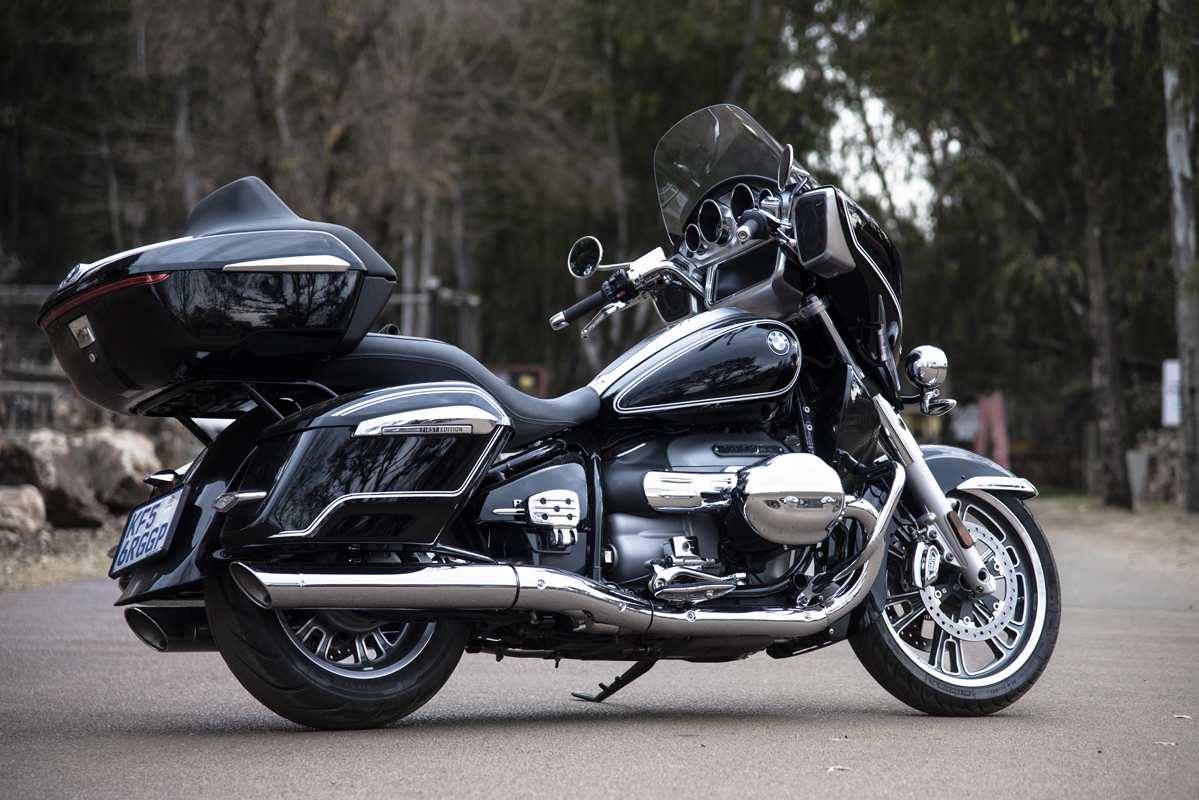
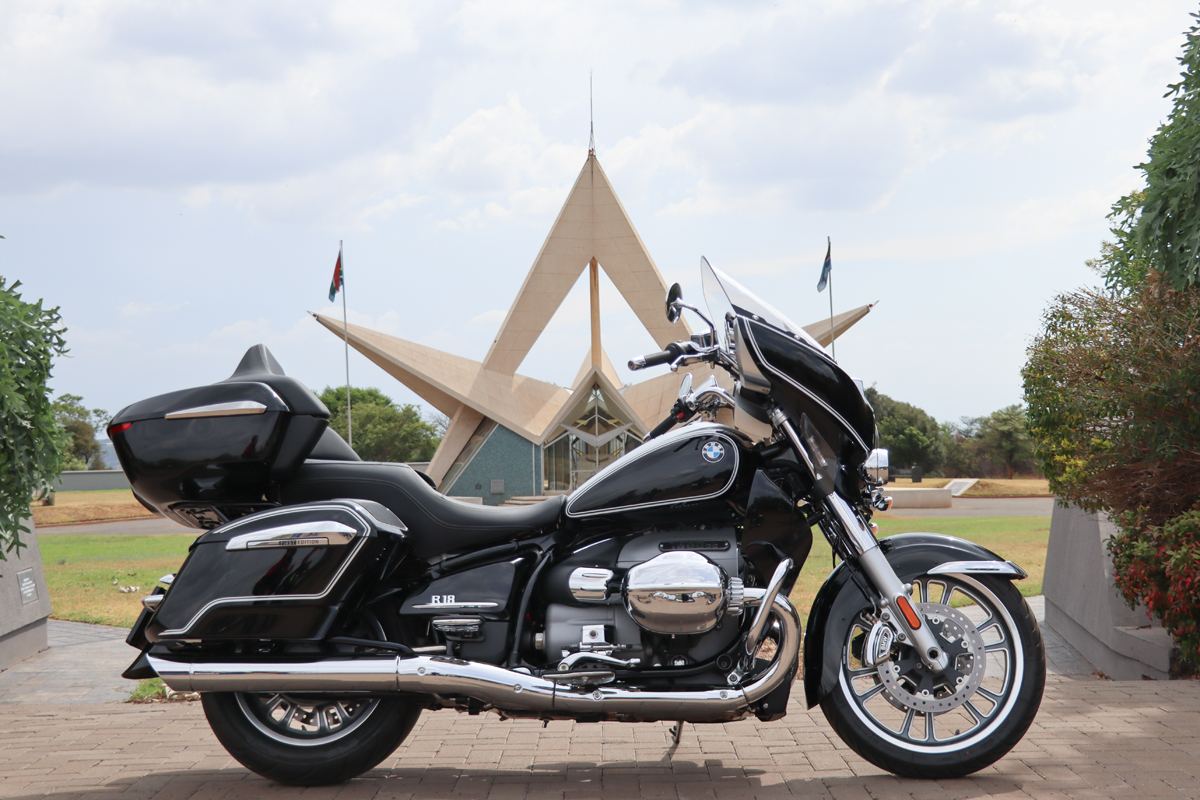
I recently had a BMW R1800 Transcontinental on review. The bike is painted black with a subtle silver metallic sheen. It has the classic BMW pinstripes in white, highlighting the classic retro lines of the bike. As always, in typical BMW fashion, the bike was delivered spotlessly clean.
The Transcontinental is an imposing large motorcycle and unfortunately too large to fit in my garage with my other bikes, so it was parked under my carport, out of the weather. We have had an odd amount of wind lately, so the bike collected a fine coating of dust. To add insult to injury, we had a spattering of rain which blew some drops onto the bike. Wanting to take photos for our review, I found the bike looking less than pristine. It wasn’t dirty as such, but rather dusty and spotted with dried water marks.
Photo credit: Bjorn Moreira / ZA Bikers
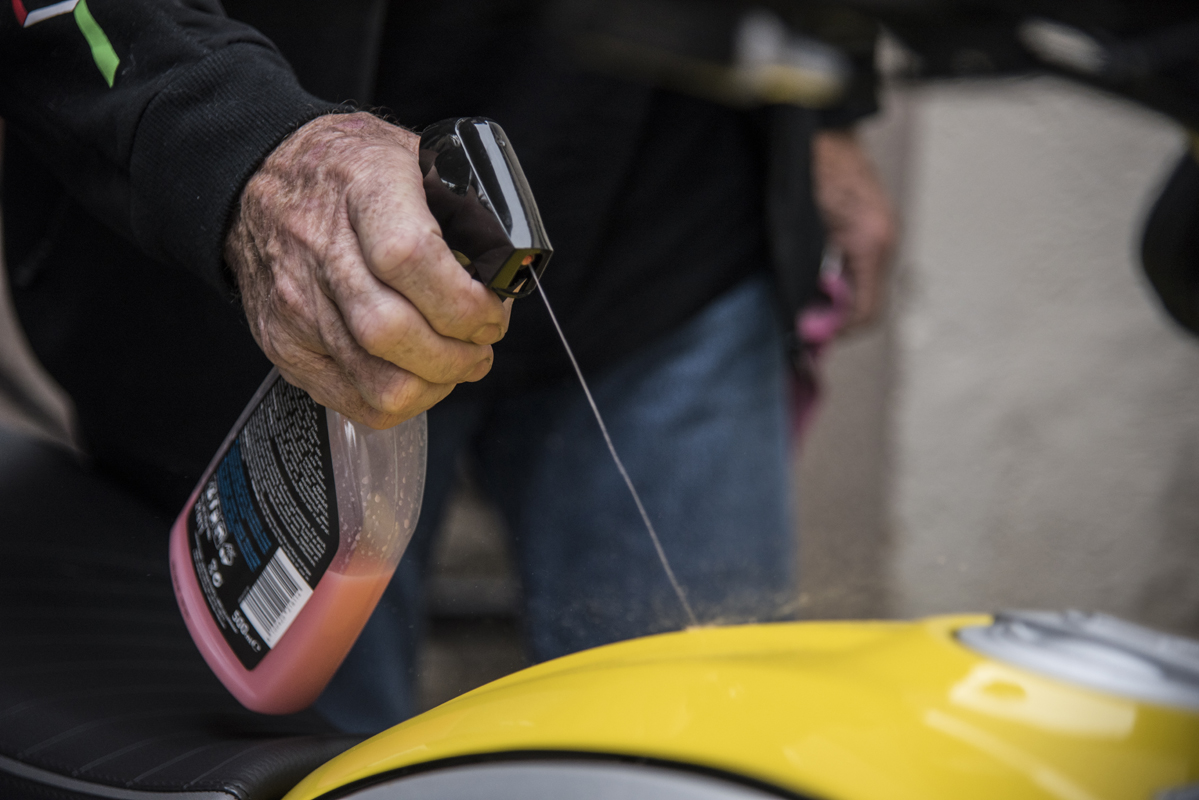
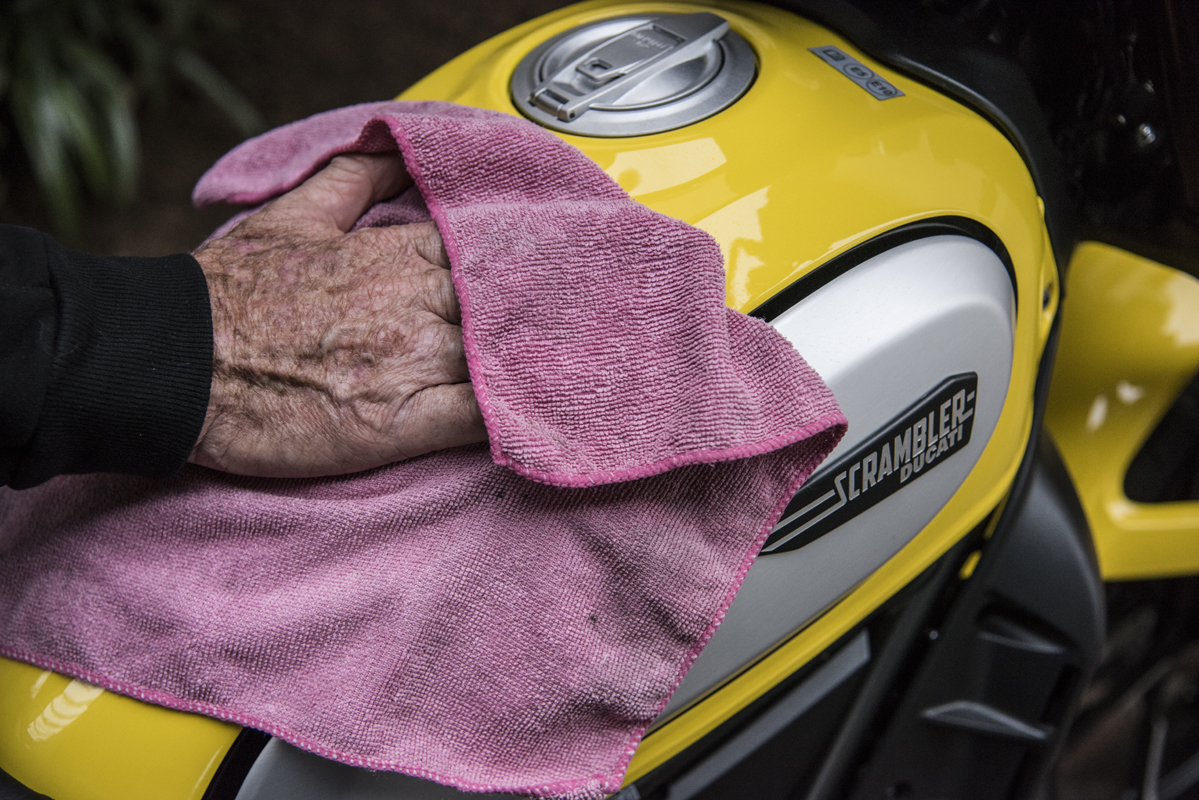
Liqui Moly Quick Detailer to the rescue! Not having time to wash the bike, I thought I would see if the Quick Detailer would restore the bike to its pristine glory. I shook the detailer well, then literally walked around the bike squirting strategic sprays all over the bike’s bodywork including the copious chrome that bedecks the bike. Then I rubbed it evenly with a microfibre cloth, turning the cloth often as per the application instructions.
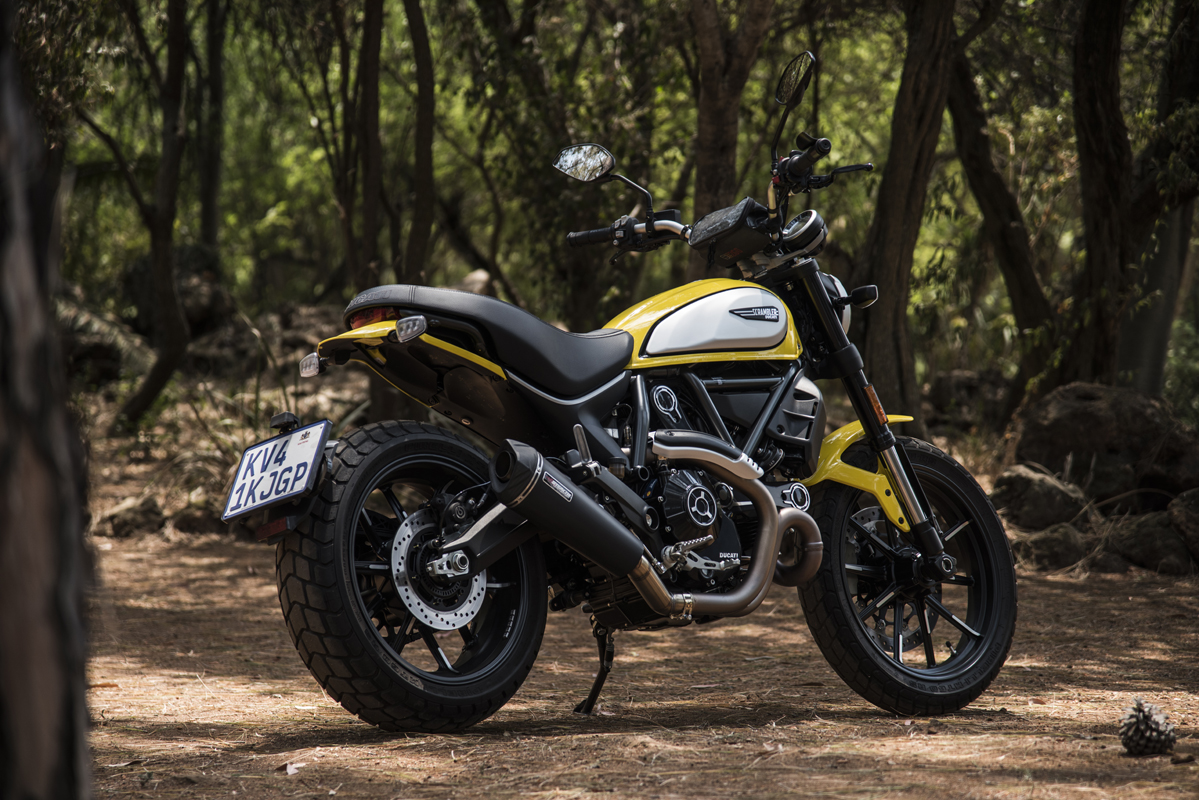
Editor’s Note: To photographically demonstrate the cleaning process in this article we used a Ducati Scrambler.
Photo credit: Bjorn Moreira / ZA Bikers
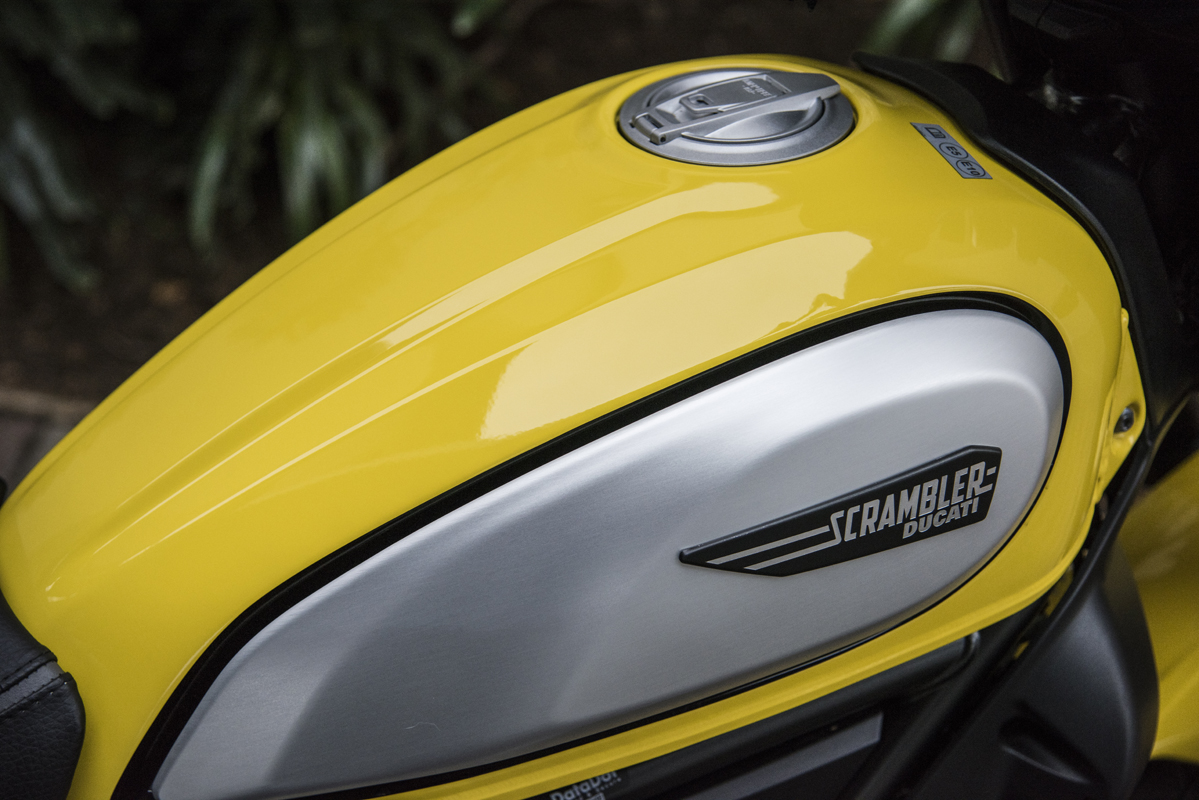
What impressed me was that it didn’t leave a typical hazy polish bloom on the bike, but rather brought out an immediate shine. I grabbed a second microfibre cloth, as the original was now damp with Detailer and rubbed the whole bike up without applying any force but rather just polishing up. The results were spectacular.
Photo credit: Bjorn Moreira / ZA Bikers
The paintwork had a deep lustre and the chrome work gleamed as never before. Even the fairing screen had got the treatment and looked all the better for it. Standing back and admiring my handy work, I was blown away by the results. The bike looked better than ever, with every inch shining in all its glory. The kicker for me was how easy it was. I have polished bikes hundreds of times over the years and worked up a proper sweat doing it. Liqui Moly Quick Detailer is a cinch to use, effortlessly putting the shine on your ride. There are additional benefits too.
Water is not good for your bike. It gets into all the nooks and crannies and corrodes places we can’t dry properly. With Quick Detailer, we not only need to wash the bike less, but it also repels dirt, so your bike stays cleaner for longer. It’s also water-repellent. It leaves a protective coating on the polished surfaces, protecting them from atmospheric contaminants. Leave it parked under a blooming jacaranda tree and you will see what I mean! Whilst they mention painted surfaces and didn’t particularly mention chrome or glass/screens, I can report that these surfaces polished up a treat too.
Photo credit: Bjorn Moreira / ZA Bikers
At R218.00, the Liqui Moly Quick Detailer is not what I consider cheap, but then again, really good effective products seldom are. A little goes a long way, so to my mind, given how well it works, it is something of a bargain.
Add to that the protection it offers to my two-wheeled investments and it becomes a downright steal! Once again this is a Liqui Moly product that delivers and then some. I wholeheartedly recommend it. Order some online. Your car and bikes (and bicycle) will thank you for it!
Photo credit: Bjorn Moreira / ZA Bikers
Liqui Moly Quick Detailer
For more information on the product featured in this article, click on the link below…
I don’t know about you, but my riding career started out with dad’s well-worn riding jacket, a pair of jeans, sneakers and a passed-down helmet. This mentality quickly changed once I grew into motorcycling and proper gear was purchased for the slide rather than the ride. However, one thing always seems to creep back into a motorcyclist’s life; our favourite pair of jeans. Most riders, myself included, find gravitating back to riding jeans over textiles a common reality, but even then, most double-layered Kevlar jeans are just so uncomfortable, sad looking and just too hot for summer. Unfortunately, this leads the majority of us to make the mistake of sliding a pair of non-riding jeans back on for our daily commutes, adventures and even open-road riding.
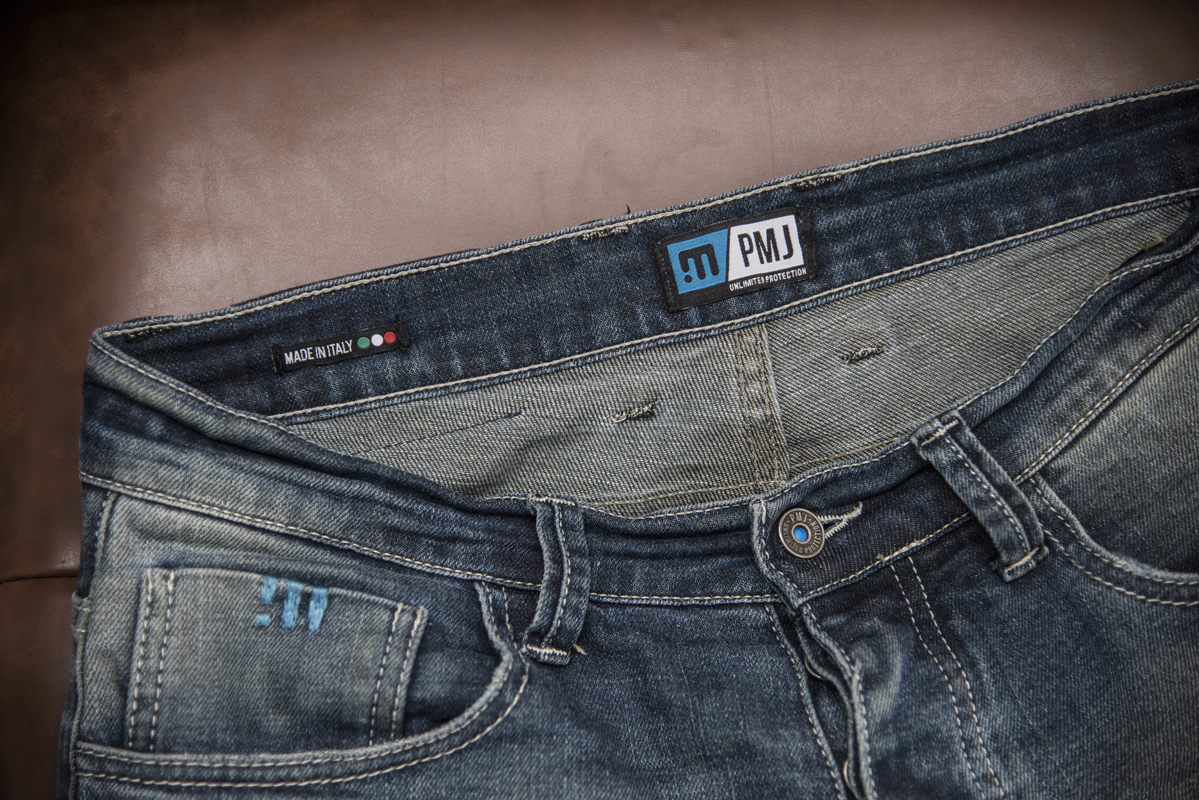
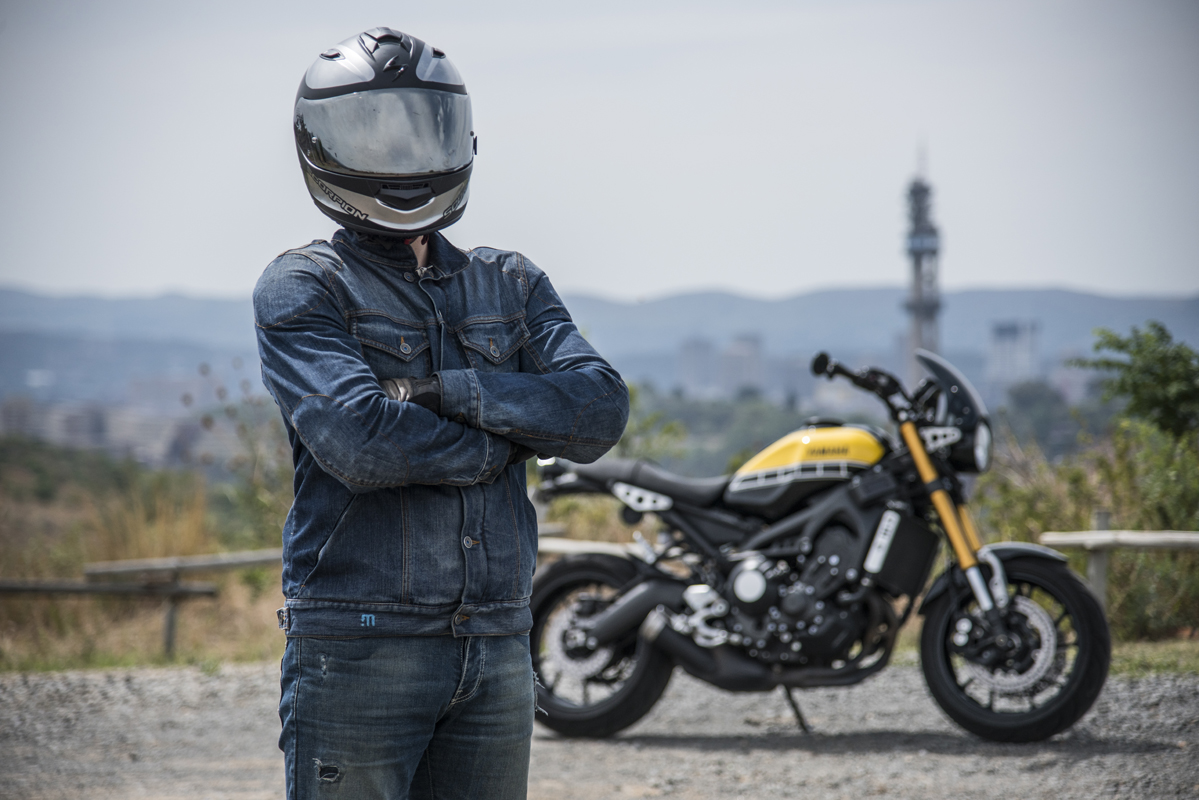
With that said, a few companies have made this silly excuse almost inadmissible with brands like the Italian company PMJ ditching the dinosaur of heavy double-layered Kevlar technology for something called ballistic Twaron—the material that makes single-layer riding jeans possible. Single layer? Is that even worth it and is it any safe? Well, recent tests in material technology have seen single-layer riding jeans achieve CE ratings of AAA, which is the highest possible rating for abrasion resistance and construction. So, we are talking about a riding jean that offers phenomenal cooling, comfort and in PMJ’s case, trendy slim-fitting motorcycle jeans.
Photo credit: Meredith Potgieter / ZA Bikers
With myself being intrigued by this new tech and at the same time in the market for an inner-city riding jean, I got into contact with the South African importers of PMJ, IMI (Italian Motorcycle Importers).
So, who are PMJ? PMJ are an Italian-born and bred company that has had its roots planted deep into high fashion for the last 30 years, collaborating with famous brands like Hugo Boss and Versace to name a few. They take pride in being a 100% made-in-Italy brand that handmakes their protective motorcycle jeans. With almost 14 years in the motorcycle industry, they have now become the best-selling protective motorcycle jean in Europe.
Photo credit: Bjorn Moreira / ZA Bikers
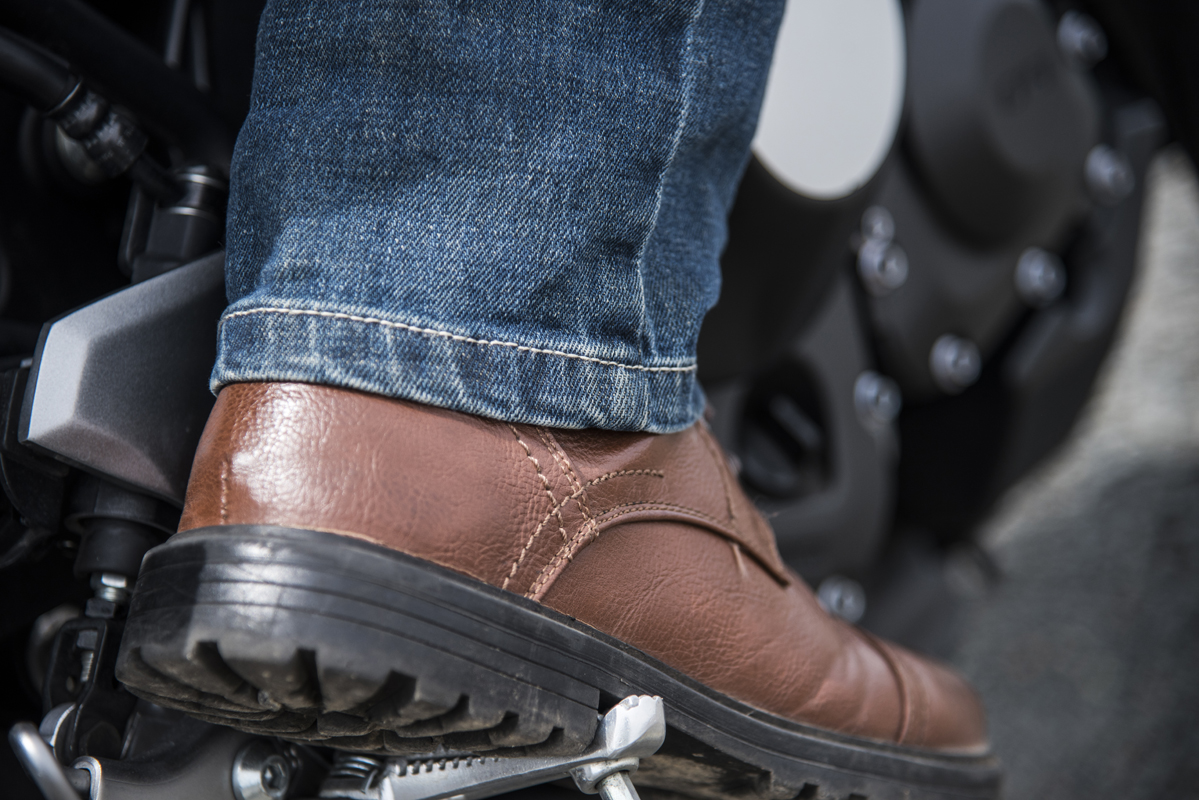
After having a close look at PMJ’s line-up, Sean Powell hooked me up with a pair of “street” jeans, which come with a single “A” rating to compliment my town and around riding. The street jeans are your more traditional stone-washed ripped jean, with a slim upper leg fit and straight leg cut at the bottom to fit riding sneakers. The first fit saw me go a size bigger than usual going for a size 32 as opposed to my usual 30 waist, which is not unusual for a European fit. In saying that, ‘IMI’ do bring in sizes 30 to 42 with a variety of leg lengths to go with it.
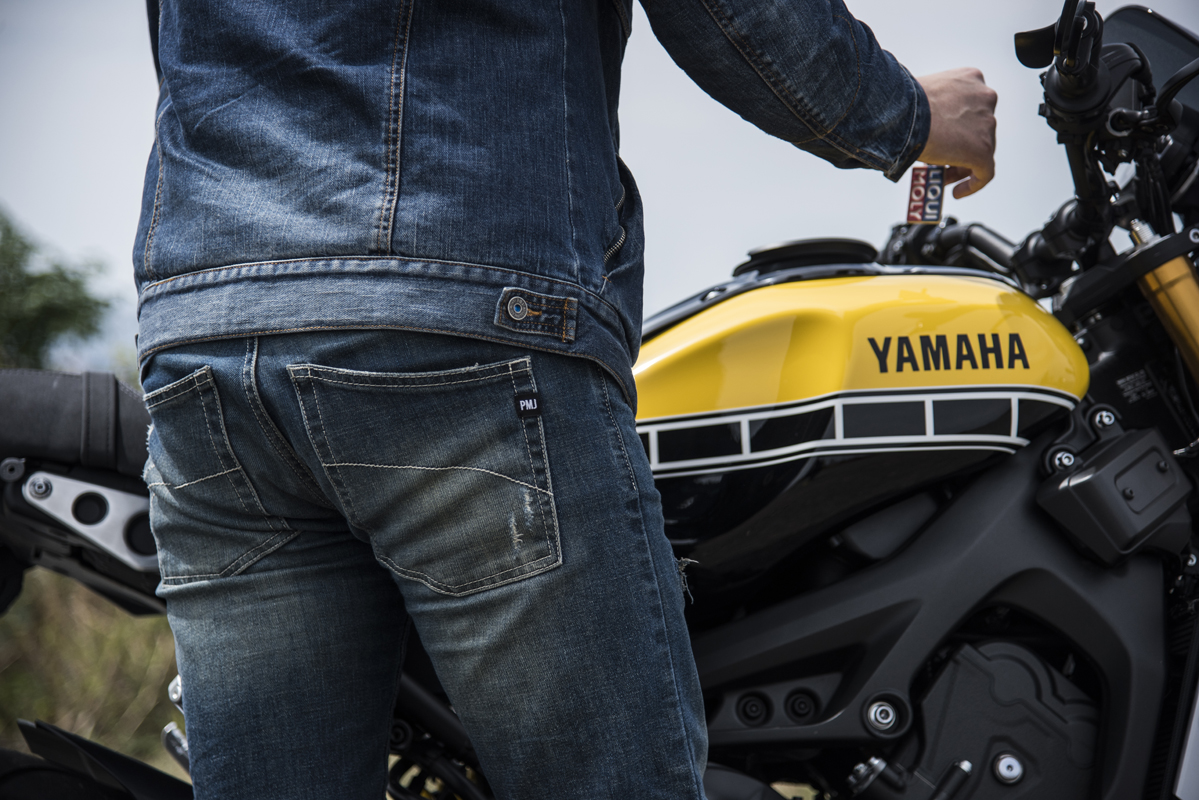
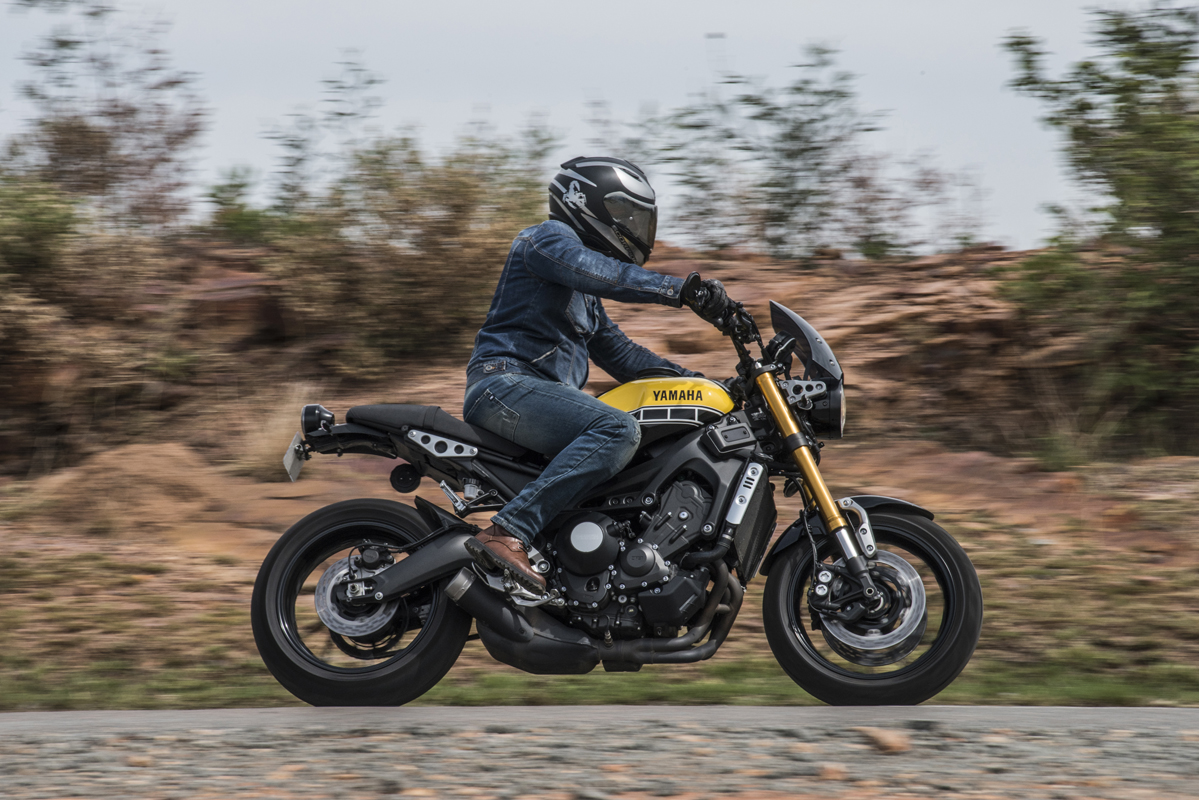
Before hitting the road, Sean paired my riding jeans with one of PMJ’s latest classic denim jackets, called the West jacket. Not only did this add to my off-season Steve McQueen look, but it too was backed by a class AAA PPE rating.
Photo credit: Meredith Potgieter / ZA Bikers
After two months of literally living in the jeans and with the seasons starting to head into summer, I was enjoying my new skin. The first two positives, which are major for me, were how flexible the jeans are when changing riding position on the bike and how well-ventilated they are out in the field. I spend a lot of my time riding but a majority of it standing still photographing motorcycles, which means 20 to 30 min on location in the hot sun, pushing the bike around and getting low for those aggressive shots. I was impressed with how easy they were to live with not only on the bike but off the bike too.
Photo credit: Meredith Potgieter / ZA Bikers
Again, the above is all thanks to the material that is used and how the abrasion resistance comes about thanks to aramid fibres woven into the denim itself, allowing the single-layer denim to form the protection. It is just awesome to see and understand how these protective motorcycle jeans look like normal, everyday slim-fit jeans but they’re lined with ballistic Twaron abrasion-resistant material. This material also gives the street a slide time of 1 second on the “Cambridge machine” (equivalent to around 4 seconds on asphalt).
The level of protection one gets from their gear should always be considered, and for me, that was made simple. I knew these jeans were going to be used for quick pop-around meetups and slow-town riding. So, the safety rating of just a single A was acceptable, while considering an AA or AAA was going to be overkill for town riding, much more expensive and heavier.
Photo credit: Meredith Potgieter / ZA Bikers
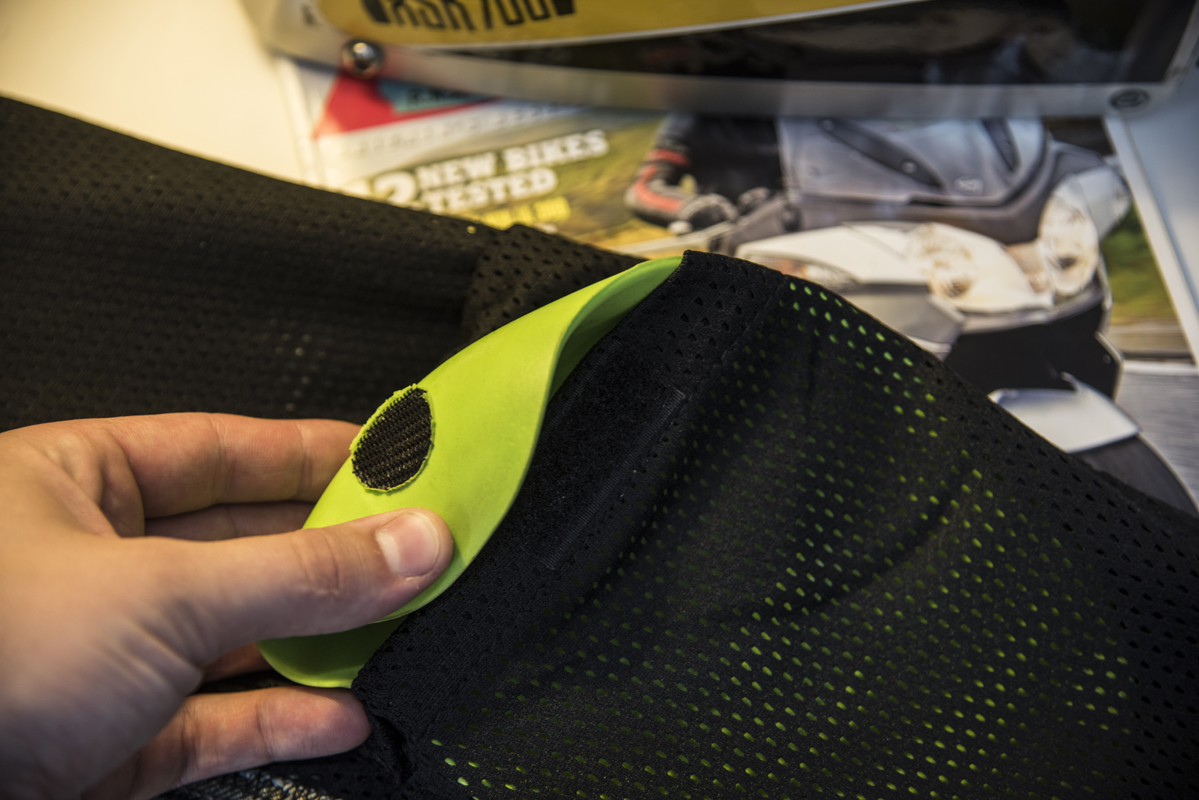
The layout of the jeans is pretty simple, with your traditional five-pocket design and your level-1 knee armour, which for once, lined up perfectly with my knees. I’ve always hated knee protection as they tend to scratch the hell out of my knees, but with PMJ this was not the case. For washing, you can also remove them when necessary and they are cleverly relocated with Velcro to make sure they don’t move around. The street jeans are also hip-protector-ready.
Photo credit: Bjorn Moreira / ZA Bikers
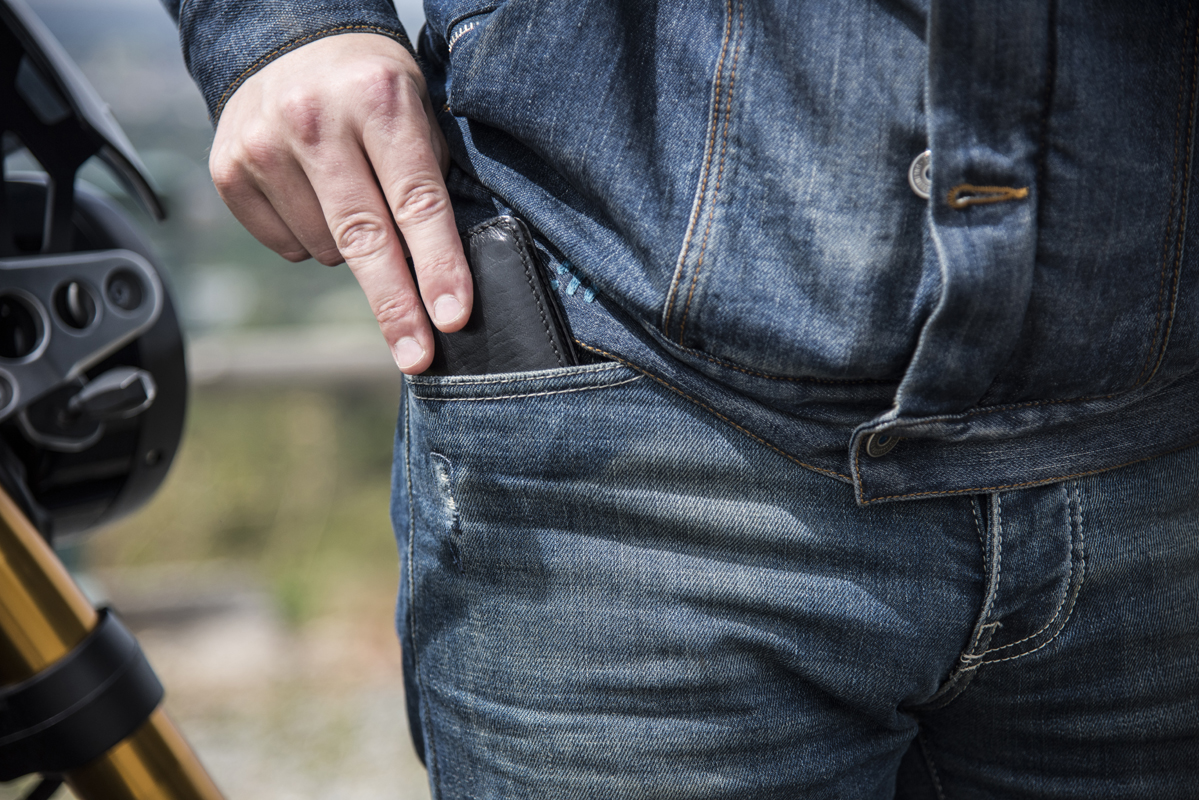
When it comes to fit and use, these jeans have their small compromises and I mean dinky. If you have rugby player thighs you are not going to fit in a pair of PMJs and if you like your pocket space, then again, the tight fit offers very little. If you’ve got a small credit card wallet like mine, all good, but if you’re rolling in the green then you are going to run out of space. You also have a button up front instead of a zipper system, which really isn’t a compromise and I think it adds to the overall classic look and feel of the jeans.
Photo credit: Meredith Potgieter / ZA Bikers
All in all, the PMJ street jeans, offer great value at R2999 and I think PMJ are bringing in products that suit the daily commuter and inner-city riders’ needs with a middle-ground offer. They also have a more subtle pair called the “new rider” jeans which retail for R2400 and come in a darker blue.
After taking a closer look at what other riders wear on the road, I’d say only 25% of motorcyclists wear protective trousers, but I think new products like these can convince more riders to gear up rather than down. So, pull into IMI in Bryanston and give their PMJ line a browse as they have an array of styles for both men and ladies. I’ve already got my eyes set on their Cargo and Café riding pants.
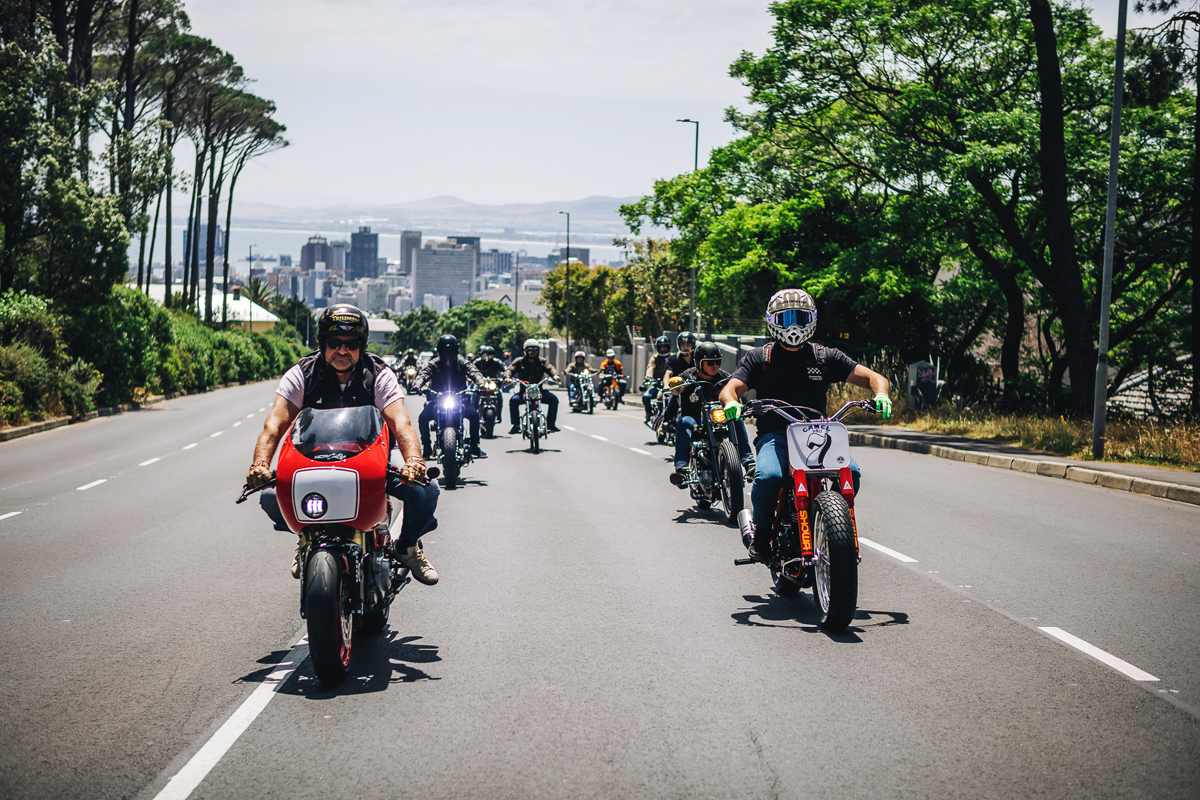
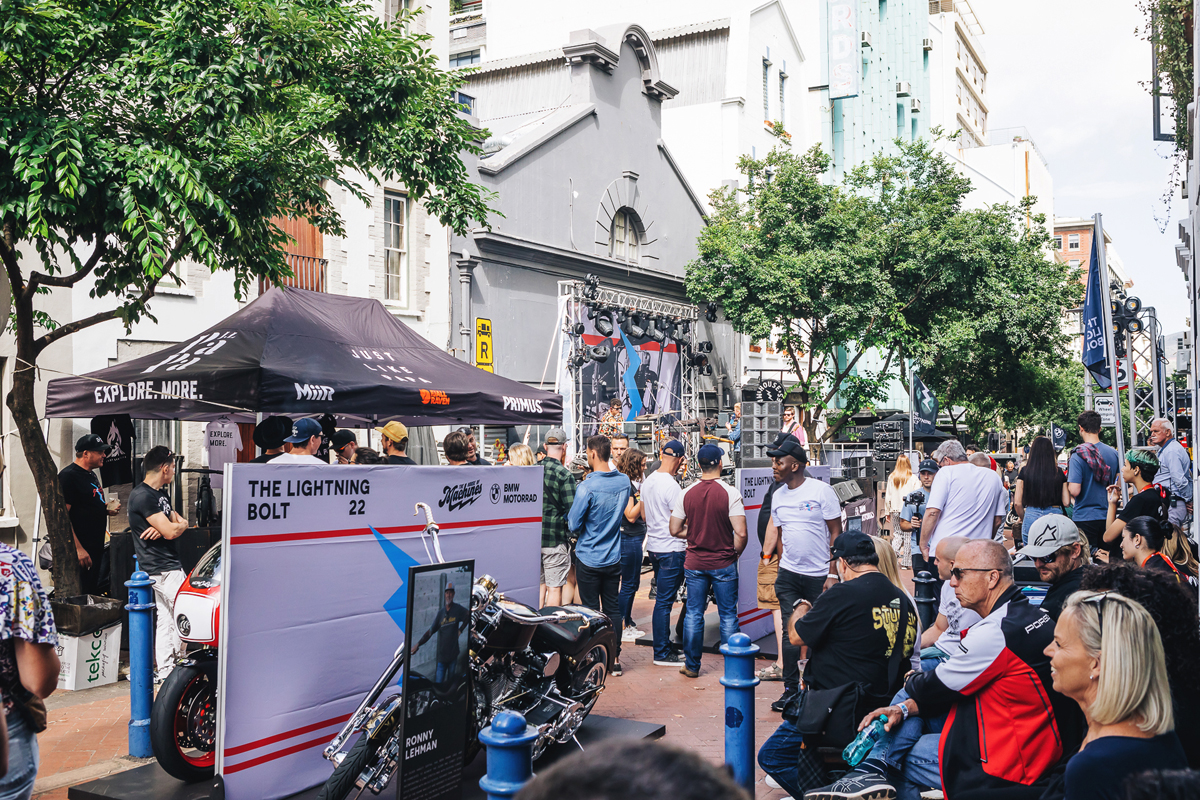
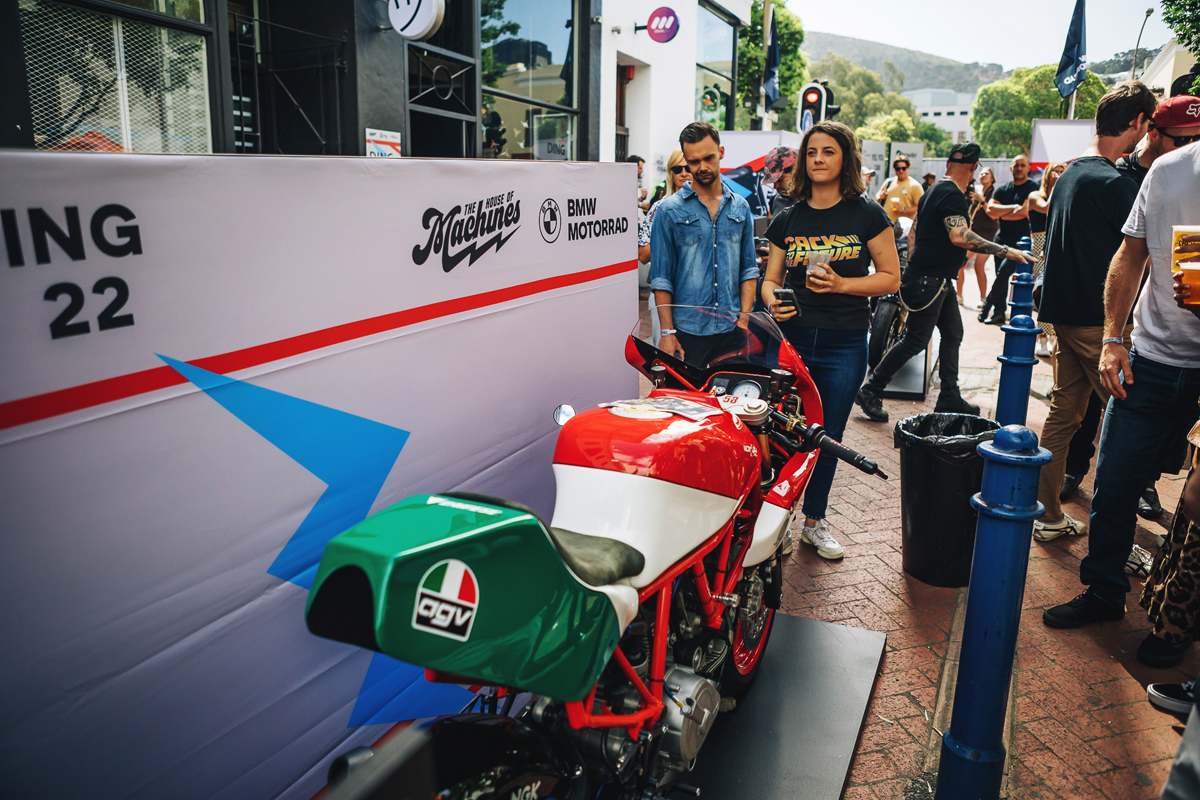
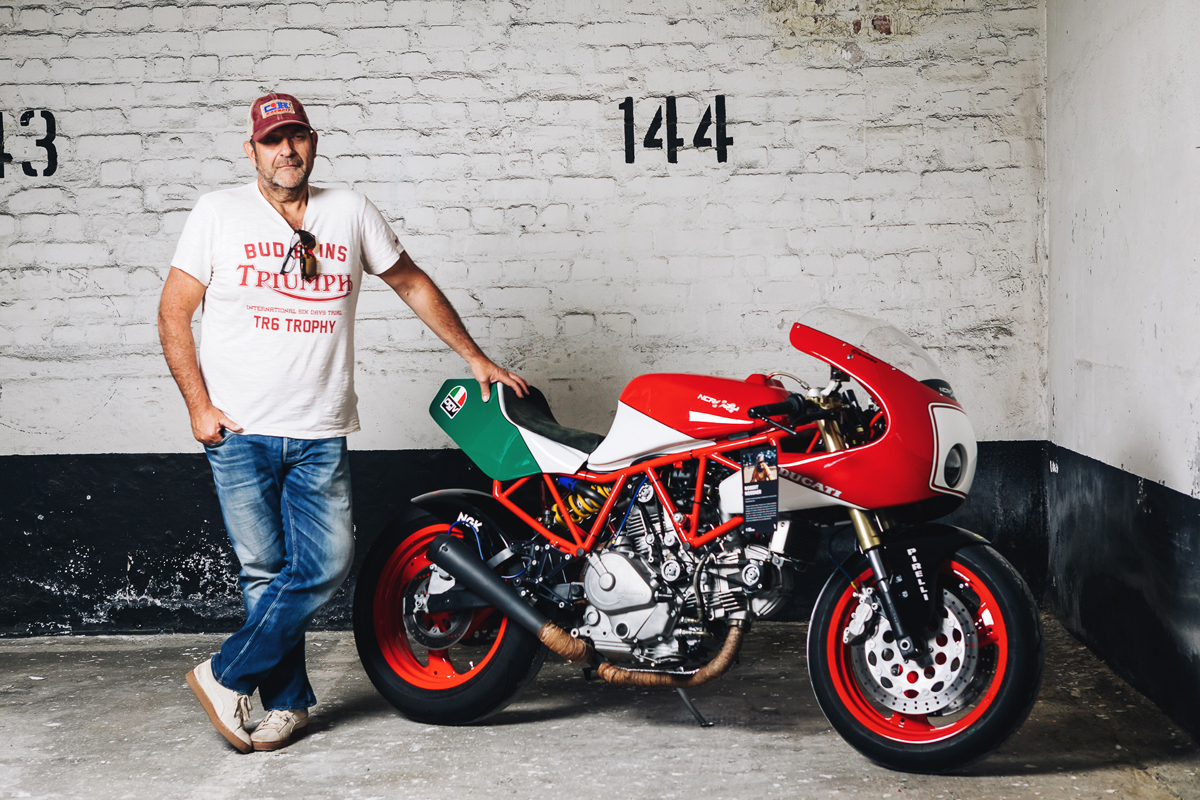
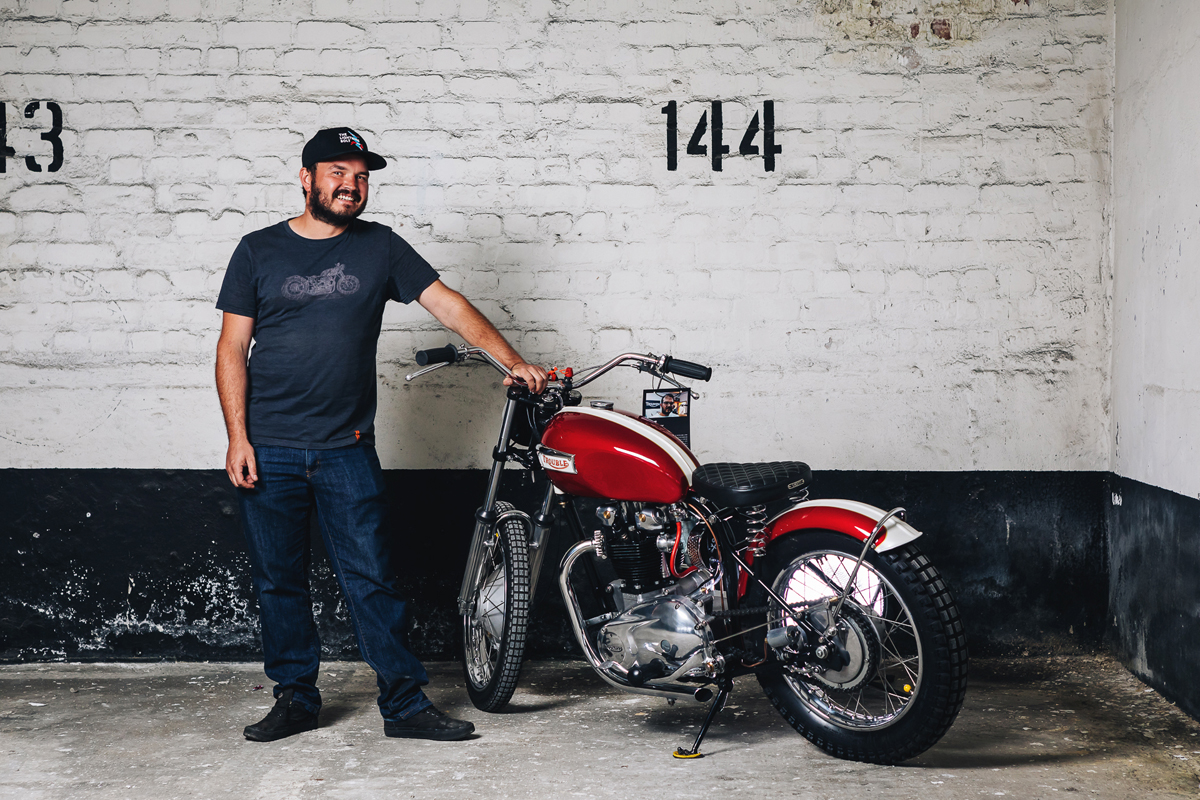
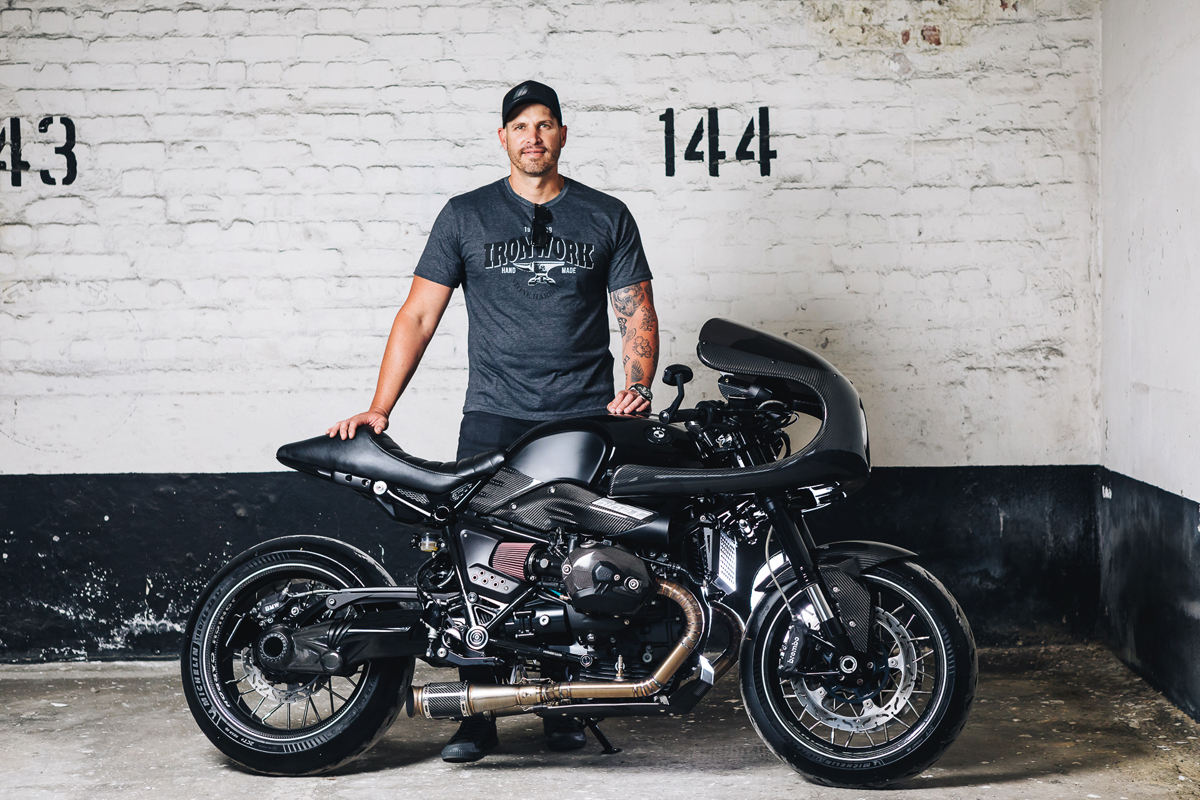
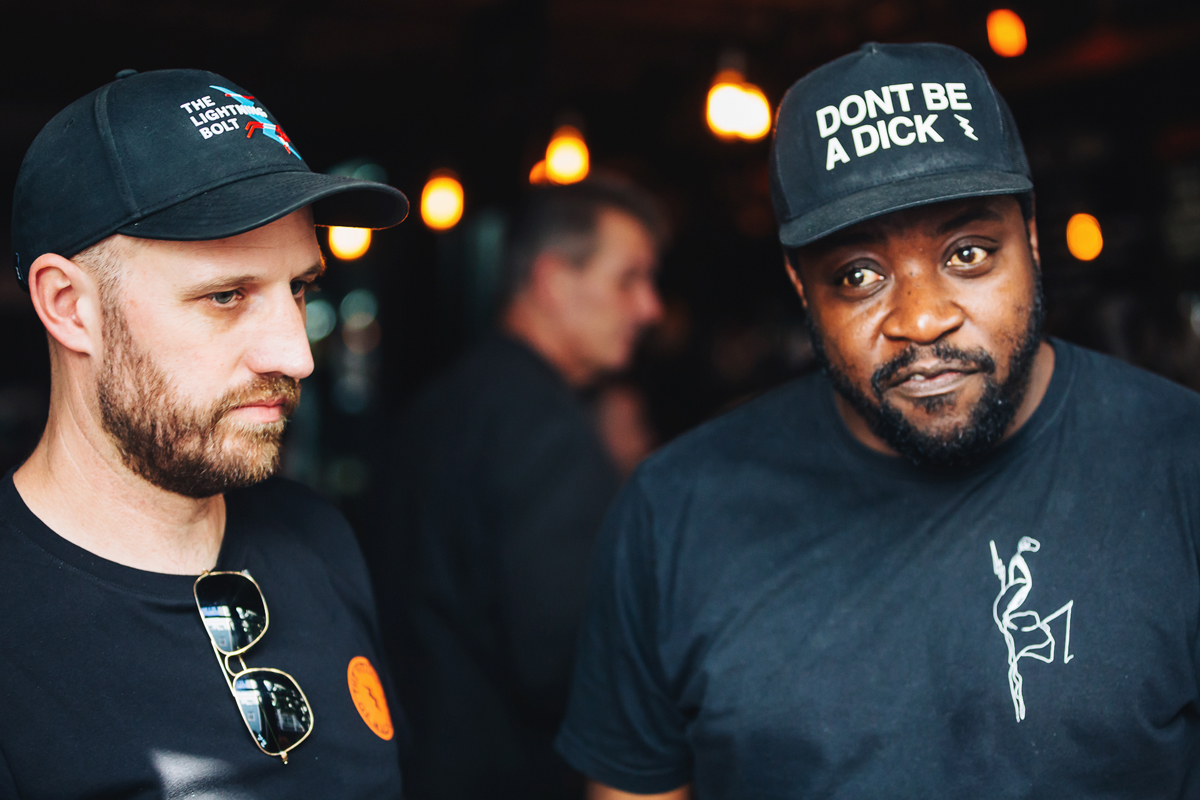
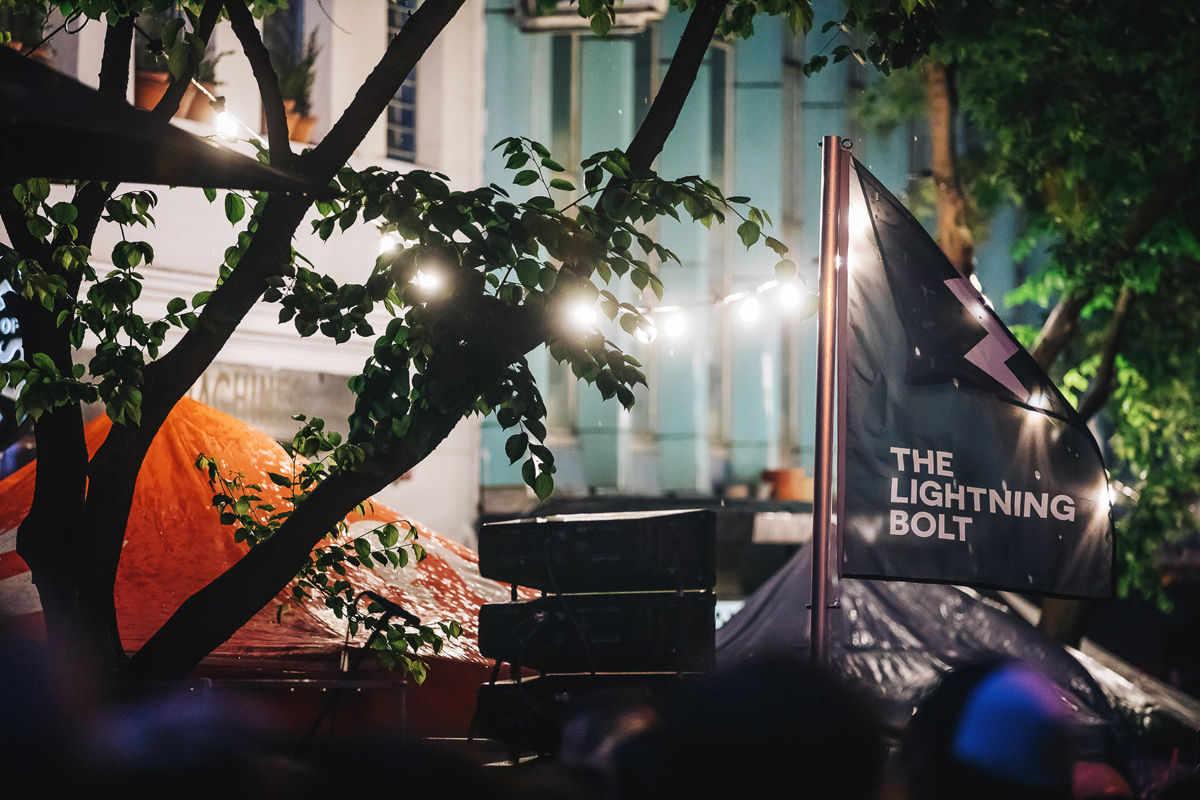
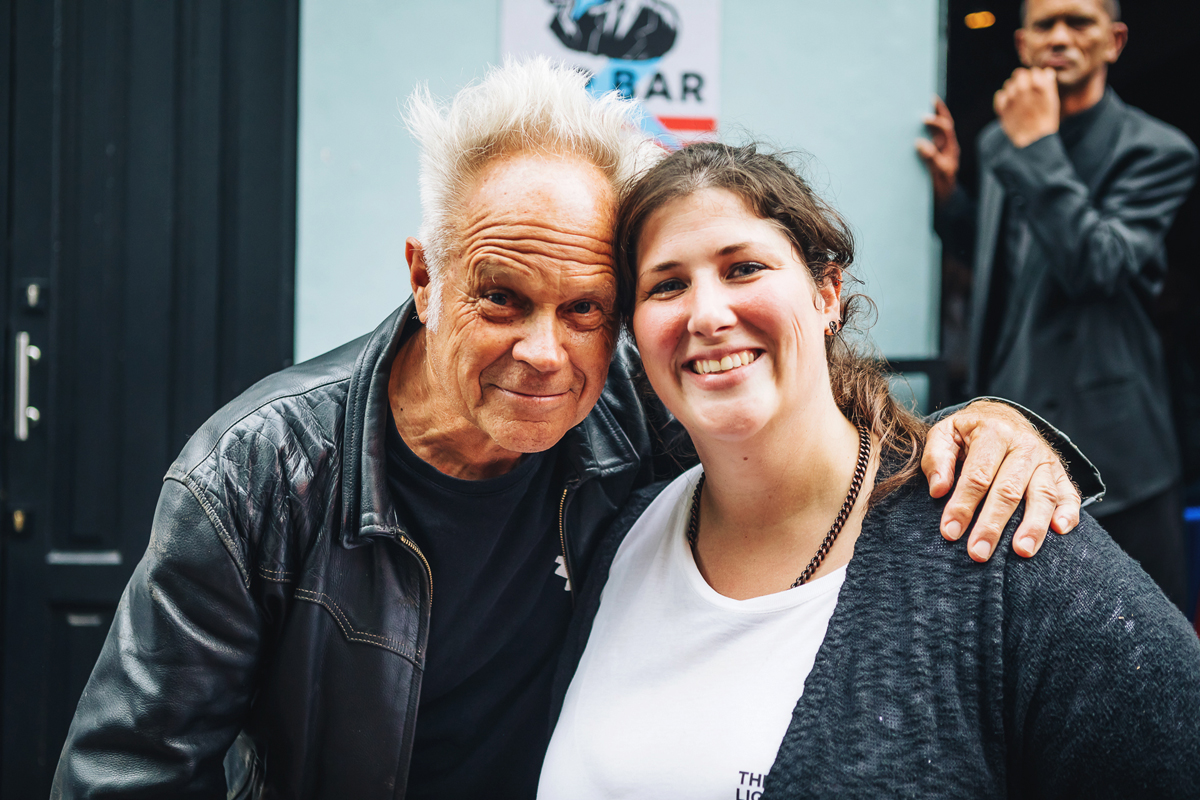
The custom bike scene has grown exponentially globally over the past 20 years and, if you listen to the naysayers, South Africa lags far behind. Well, if last weekend was any indication of the state of the custom bike scene here, then all I can say is that it is in rude good health, and what is being built is the match of anything coming out of the traditional centers of excellence in the U.S., Europe, and Japan.
Photo credit: The Lightning Bolt / Andy Lund
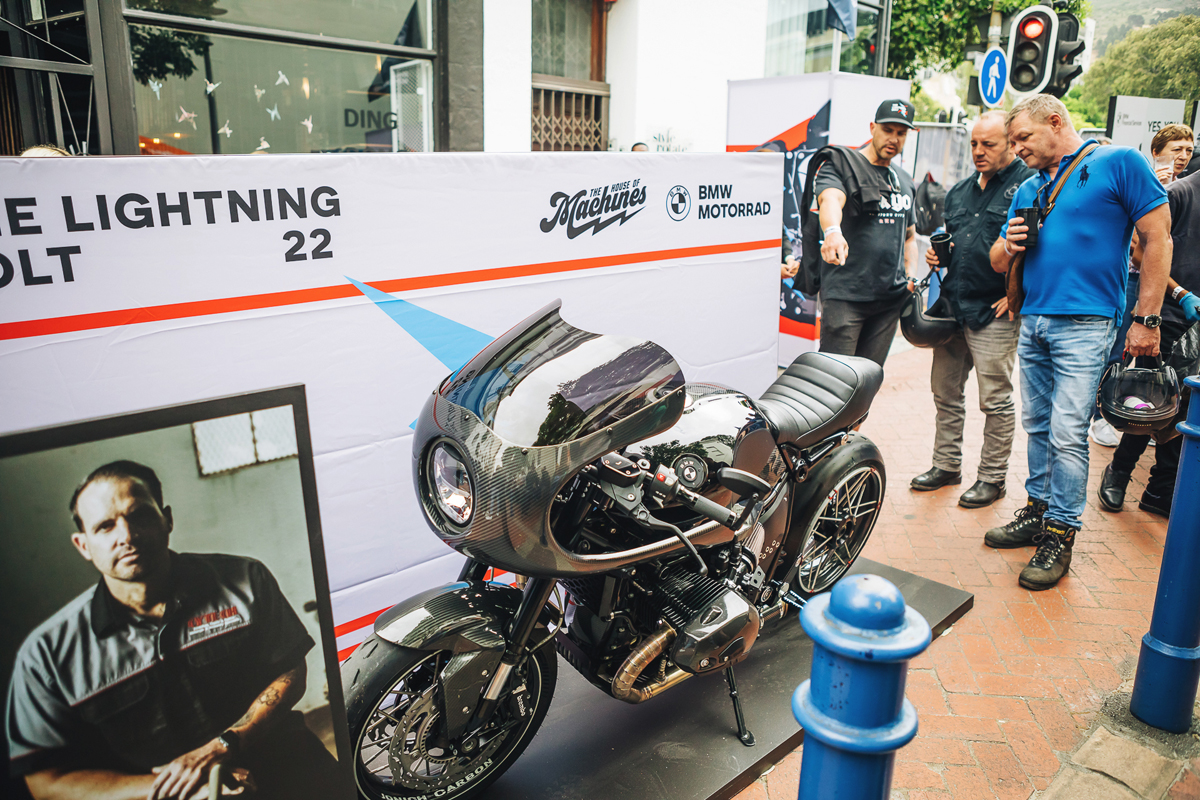
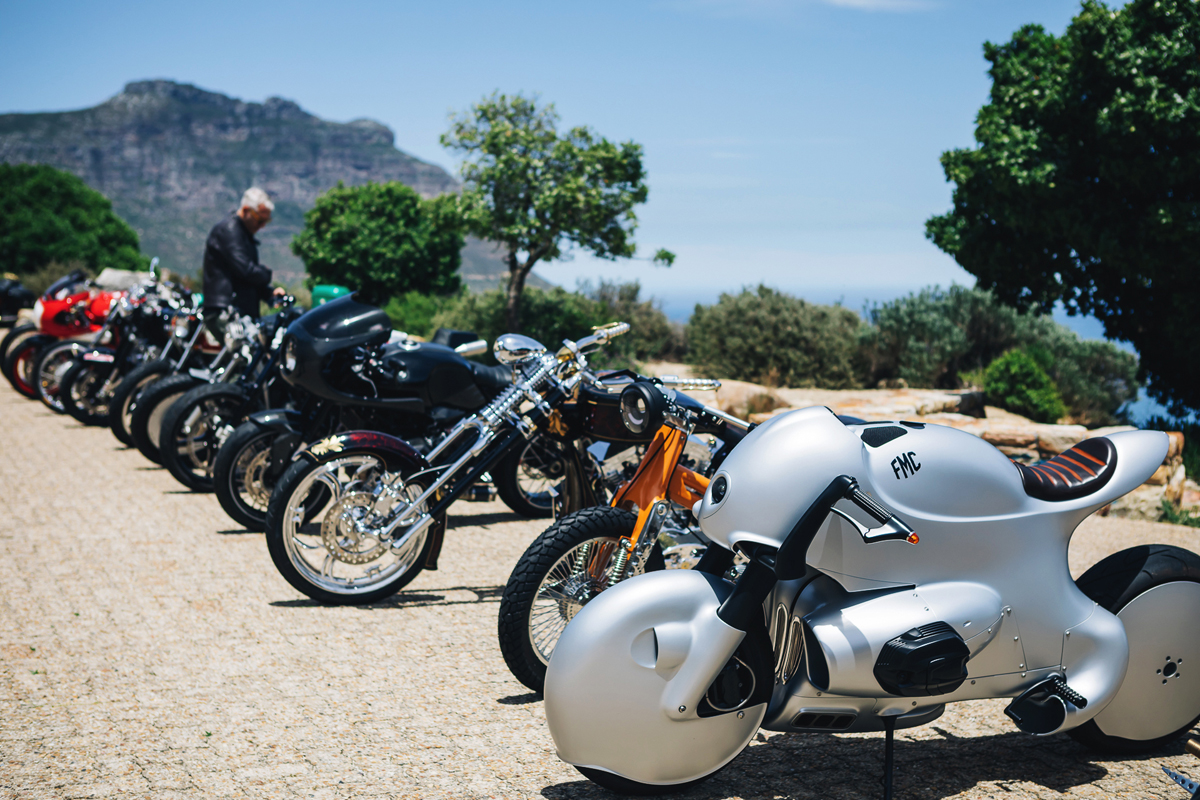
Perhaps surprisingly, TheLightning Bolt competition is an initiative by BMW Motorrad, although do not make the mistake of thinking it is solely open to BMW-based customs. The line-up in Cape Town comprised all makes and both classic-based and new bike-based creations. Far from being a South Africa-only competition, it is open to entries from all over Africa and it was, in fact, the biggest custom bike-building competition in the whole of Africa, with a winner-takes-all prize of R250,000.
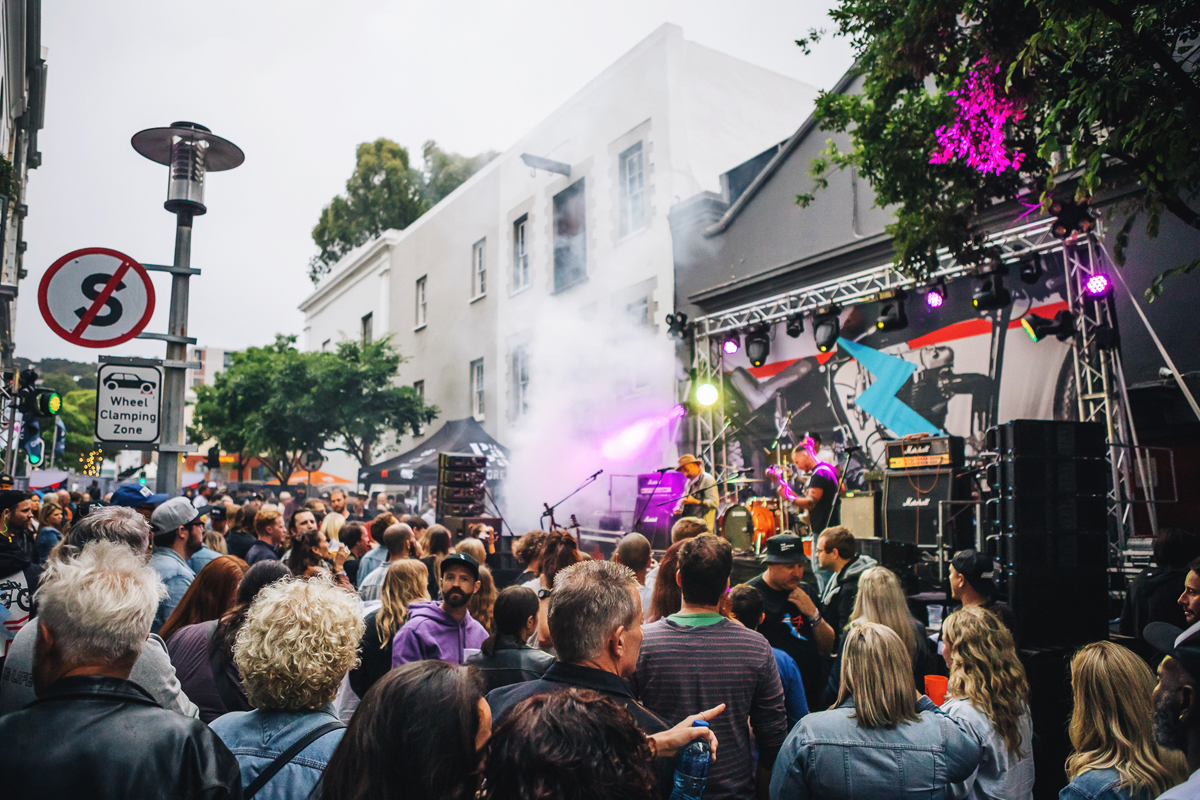
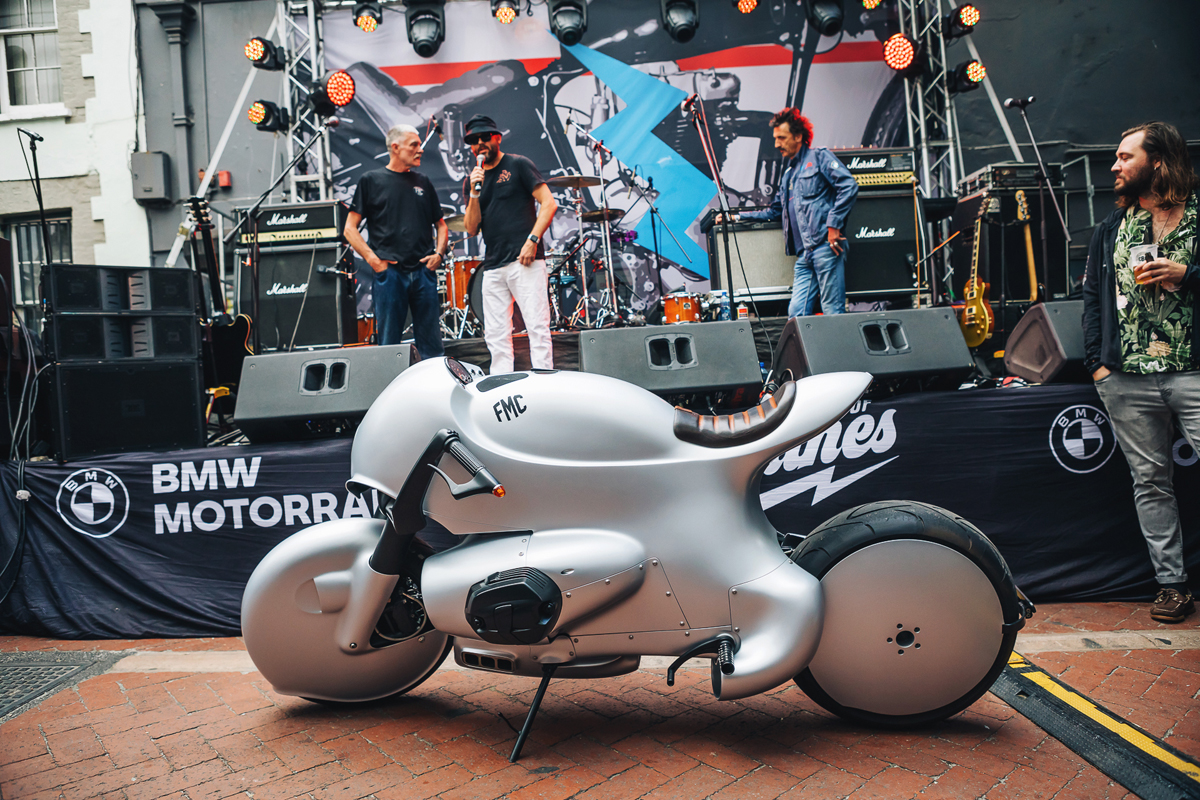
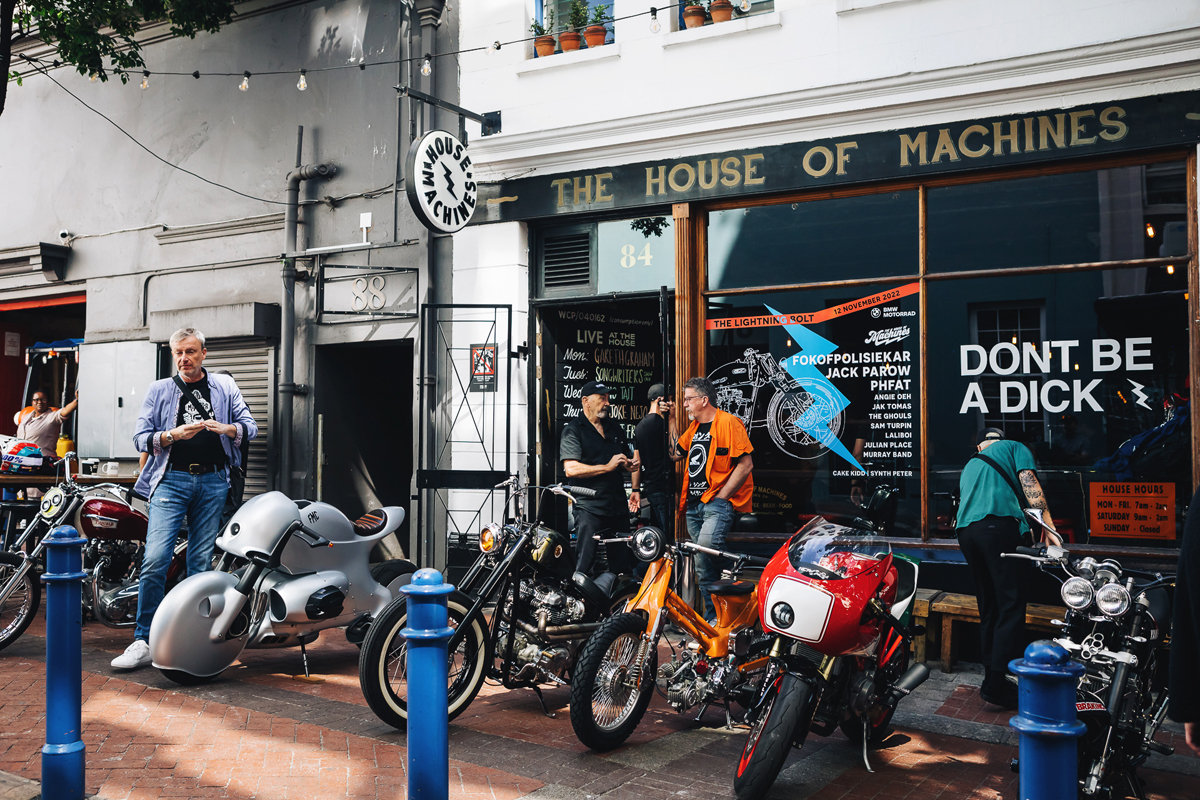
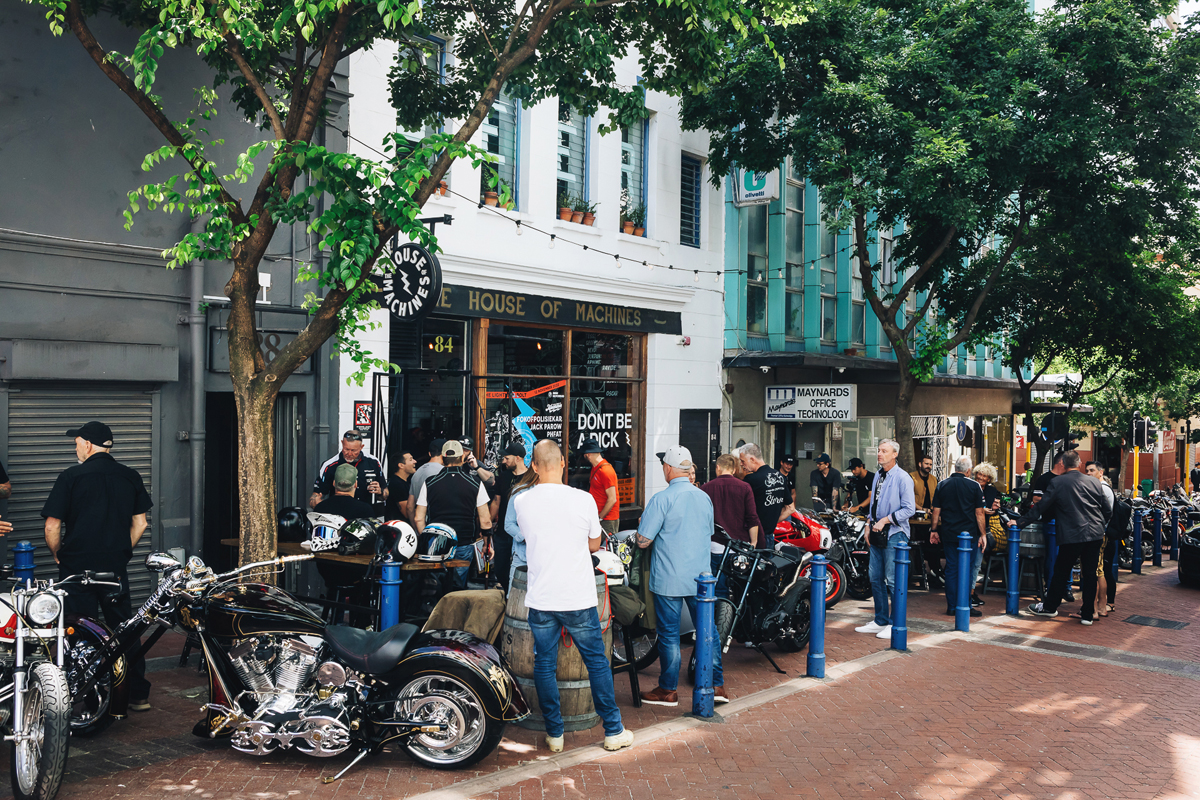
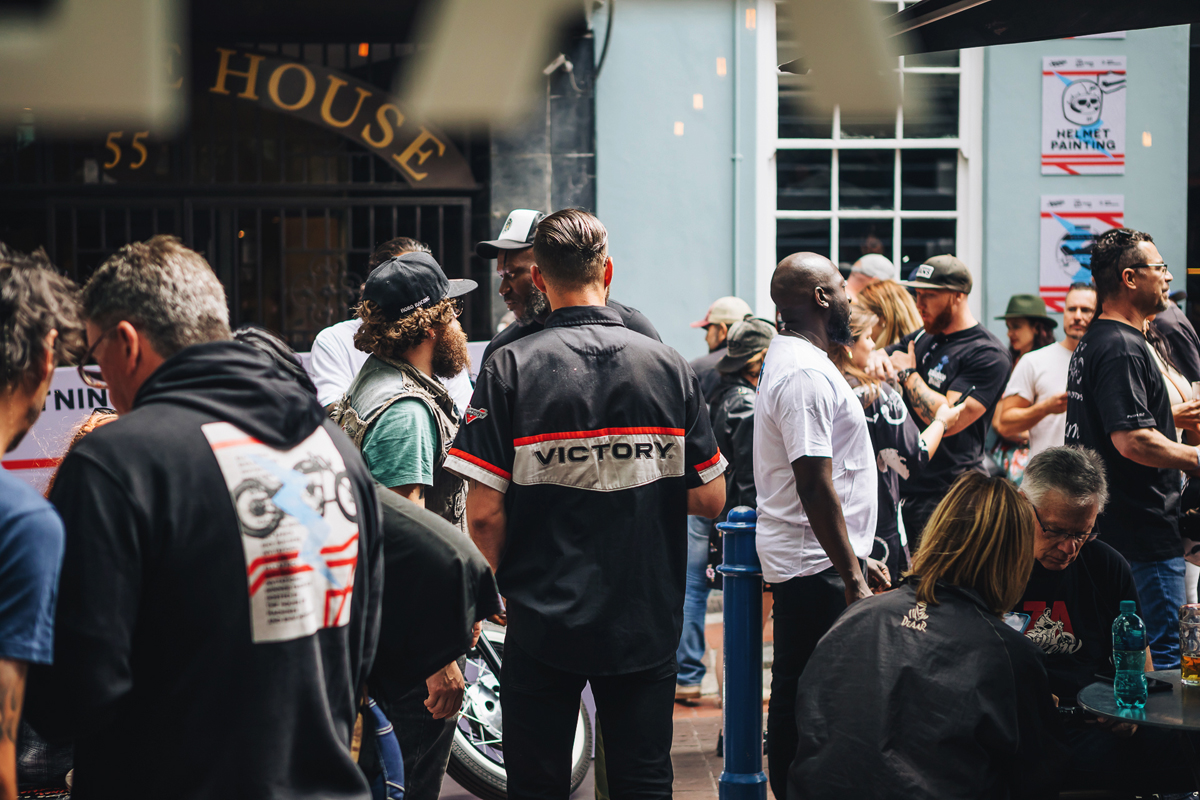
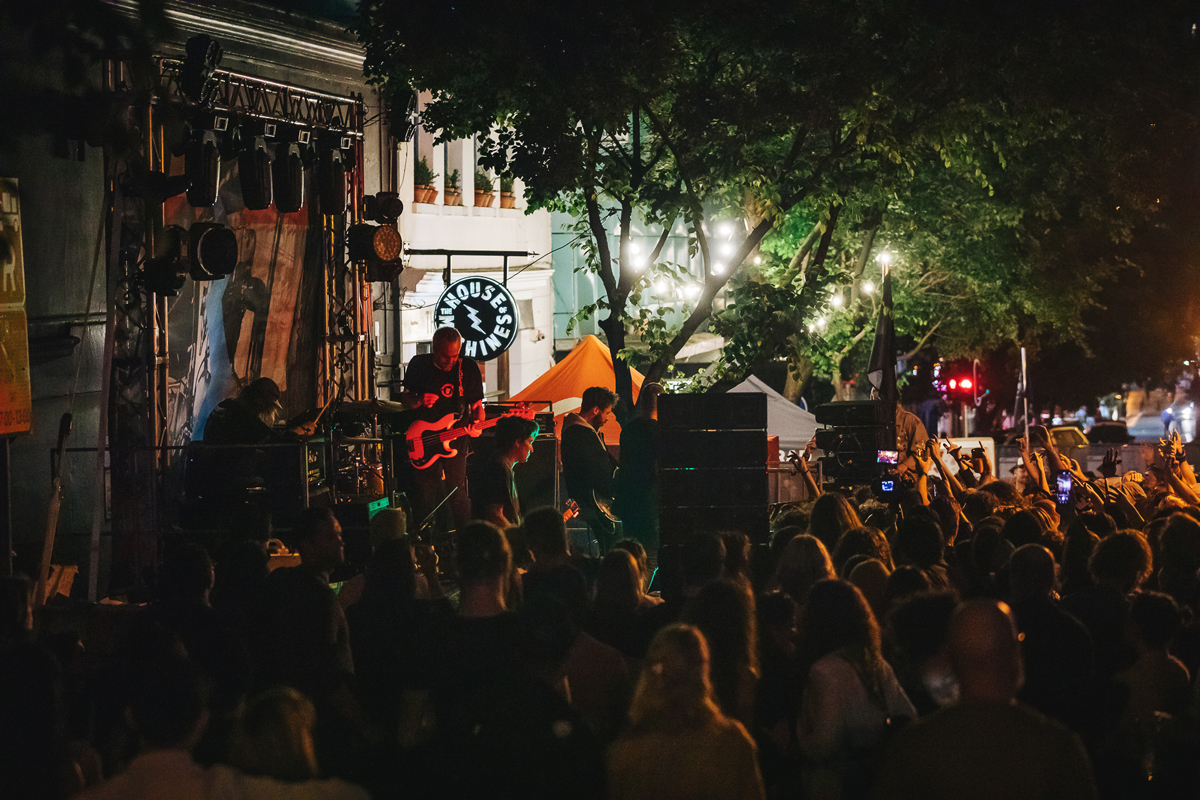
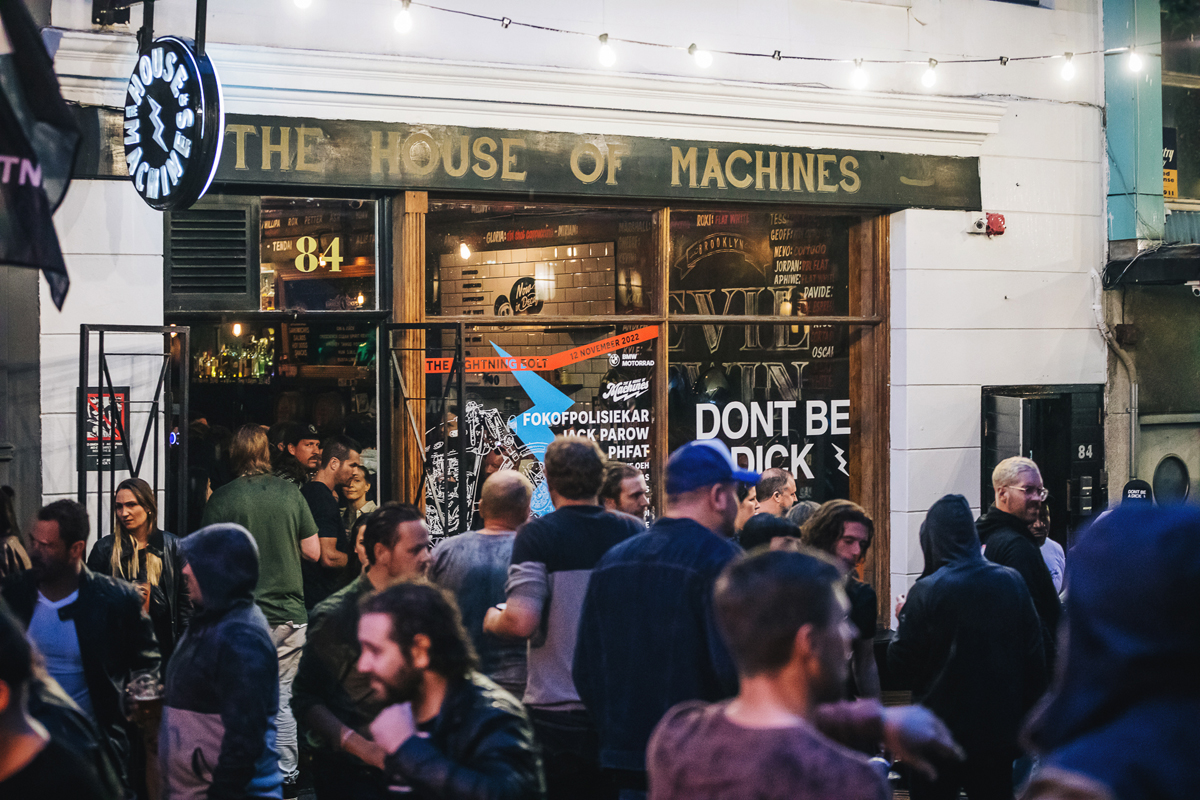
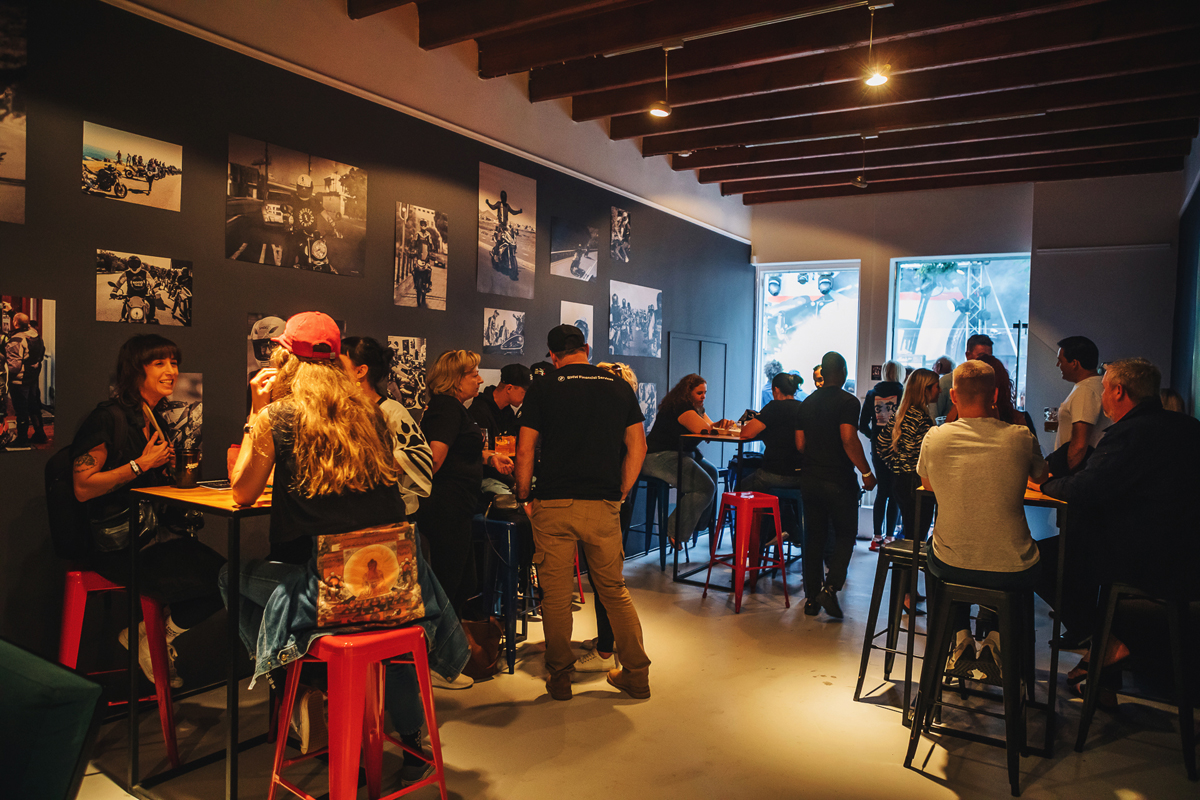
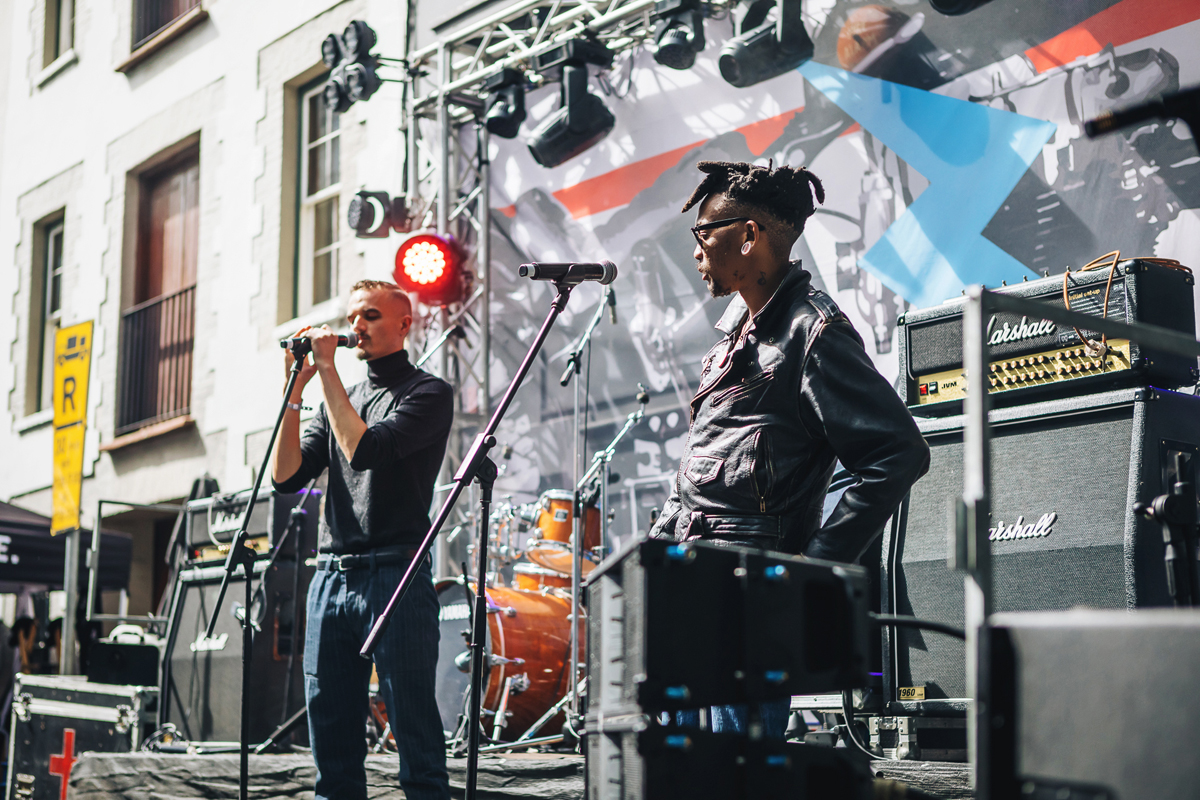
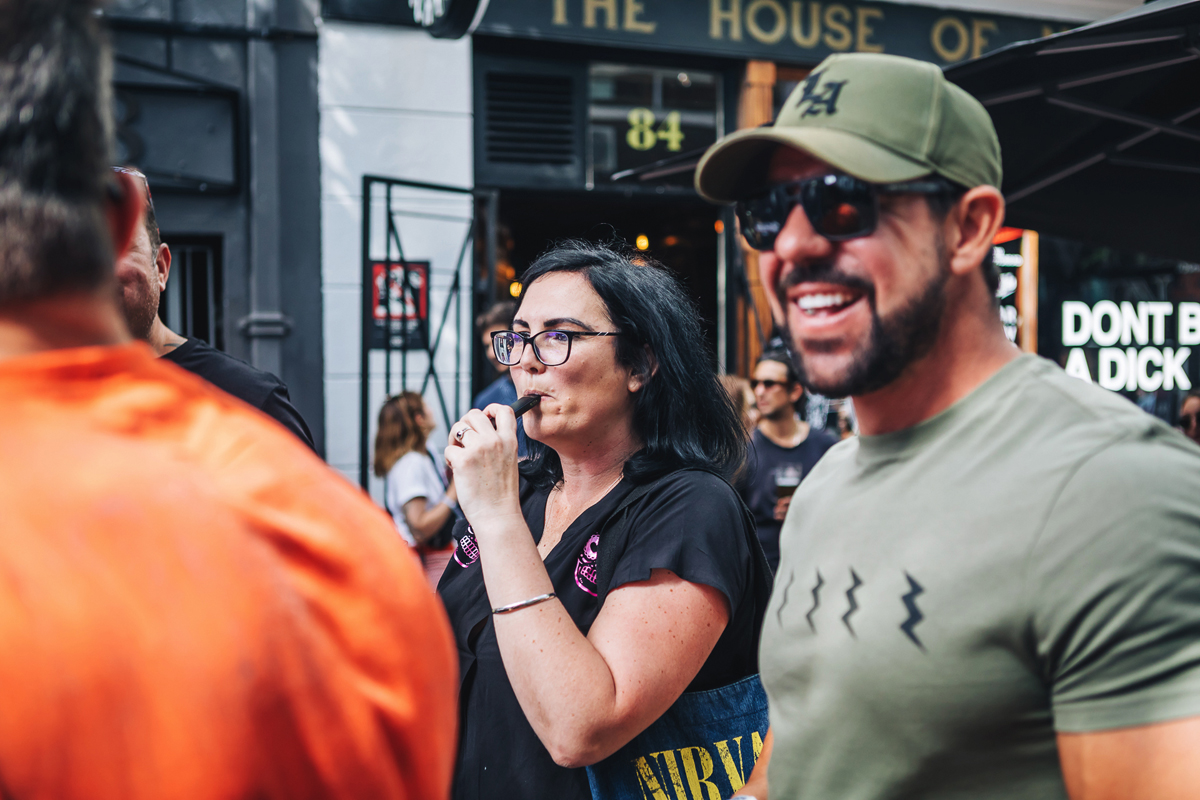
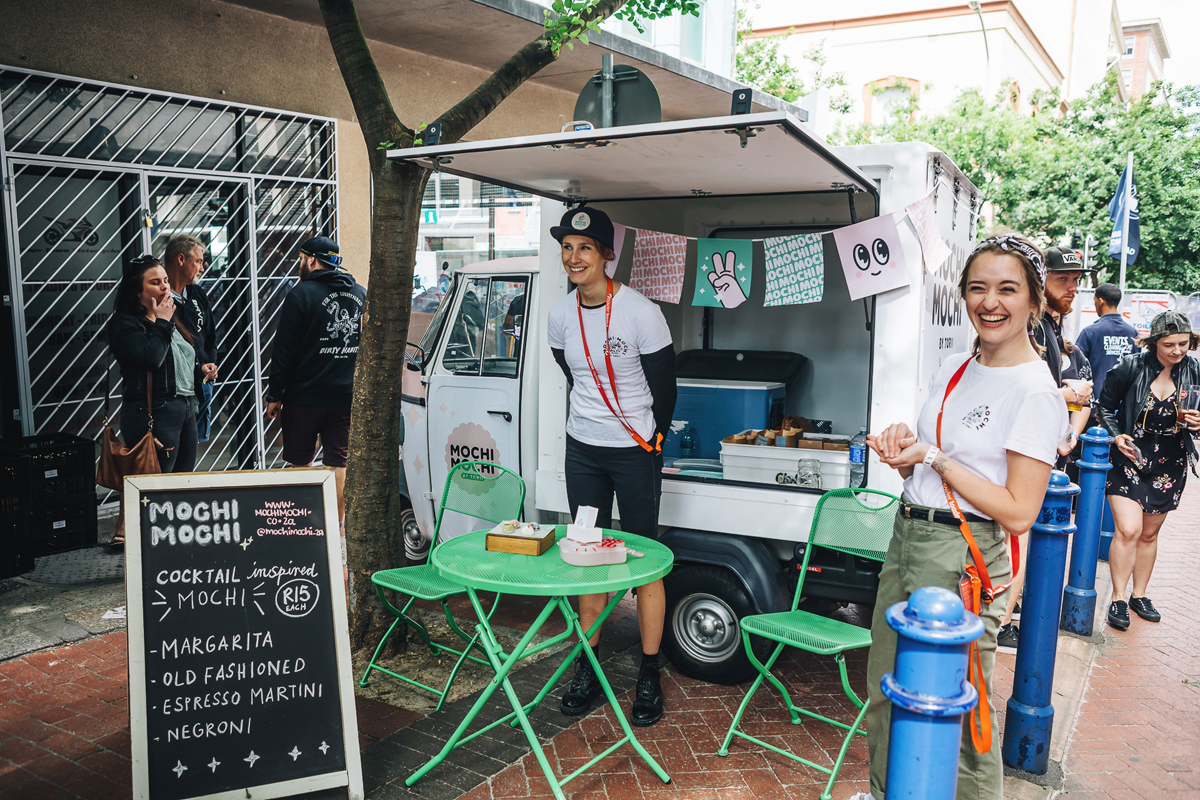
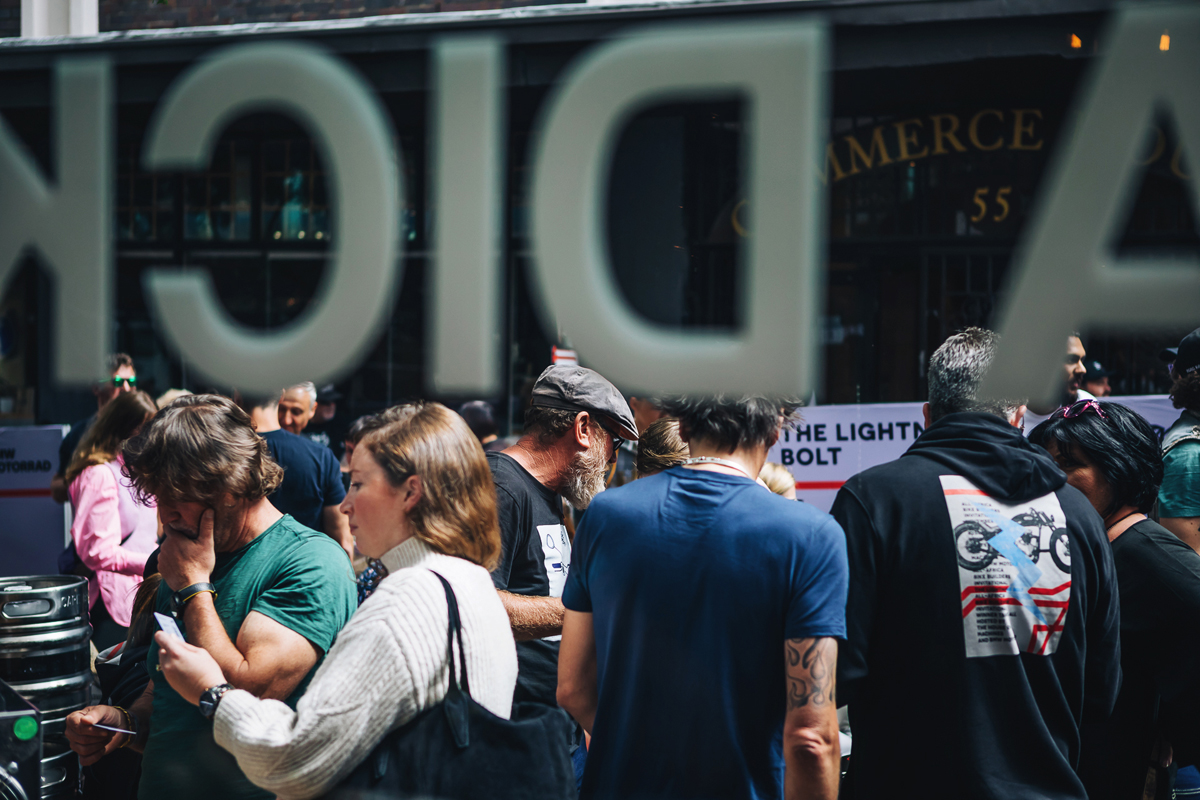
This year’s event took place in Shortmarket Street in the center of Cape Town, the home of The House of Machines, a bar/coffee shop/music venue with the coolest motorcycling culture vibe to it. The organizers of the event, under the expert guidance of Alan Shenton from tenbüro Brand Operations, put in a huge amount of work, not only with choosing the bikes, which was the visible tip of the iceberg, but also putting together an unbelievable line-up of music to keep the roughly 1000-strong crowd who had succeeded in getting tickets entertained.
Photo credit: The Lightning Bolt / Andy Lund
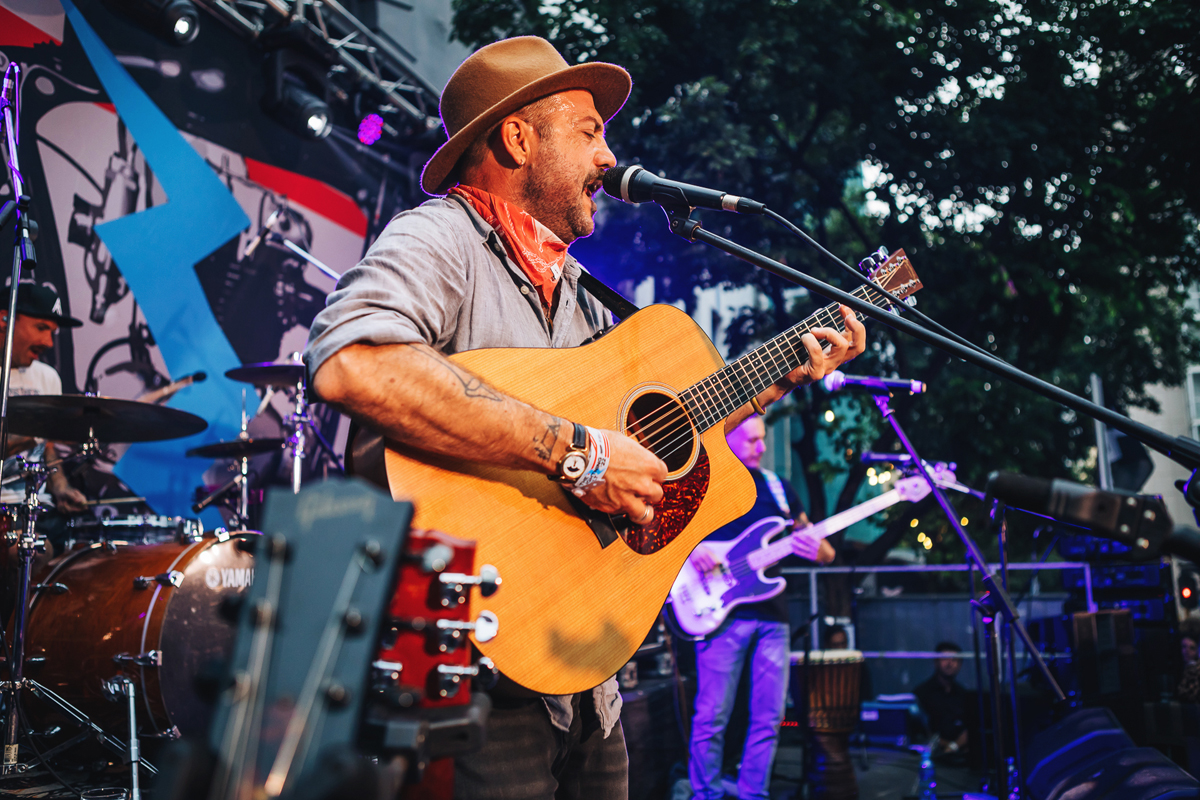
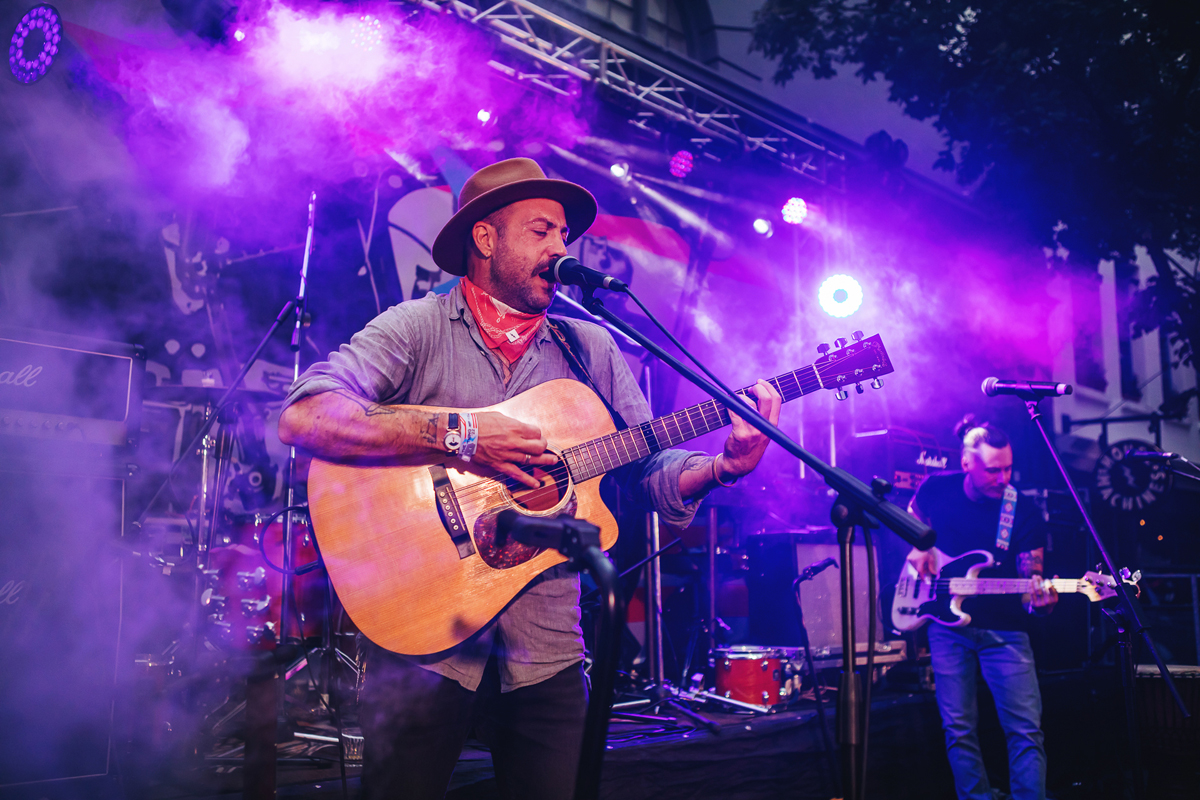
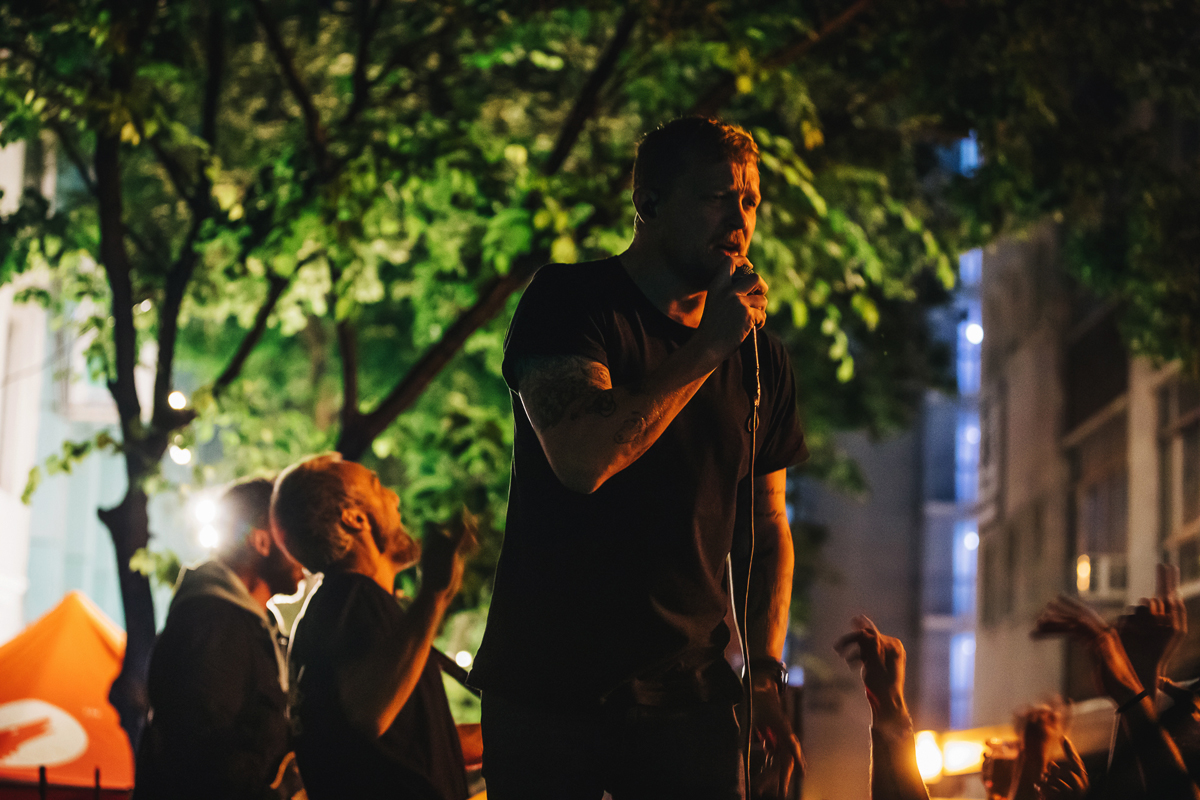
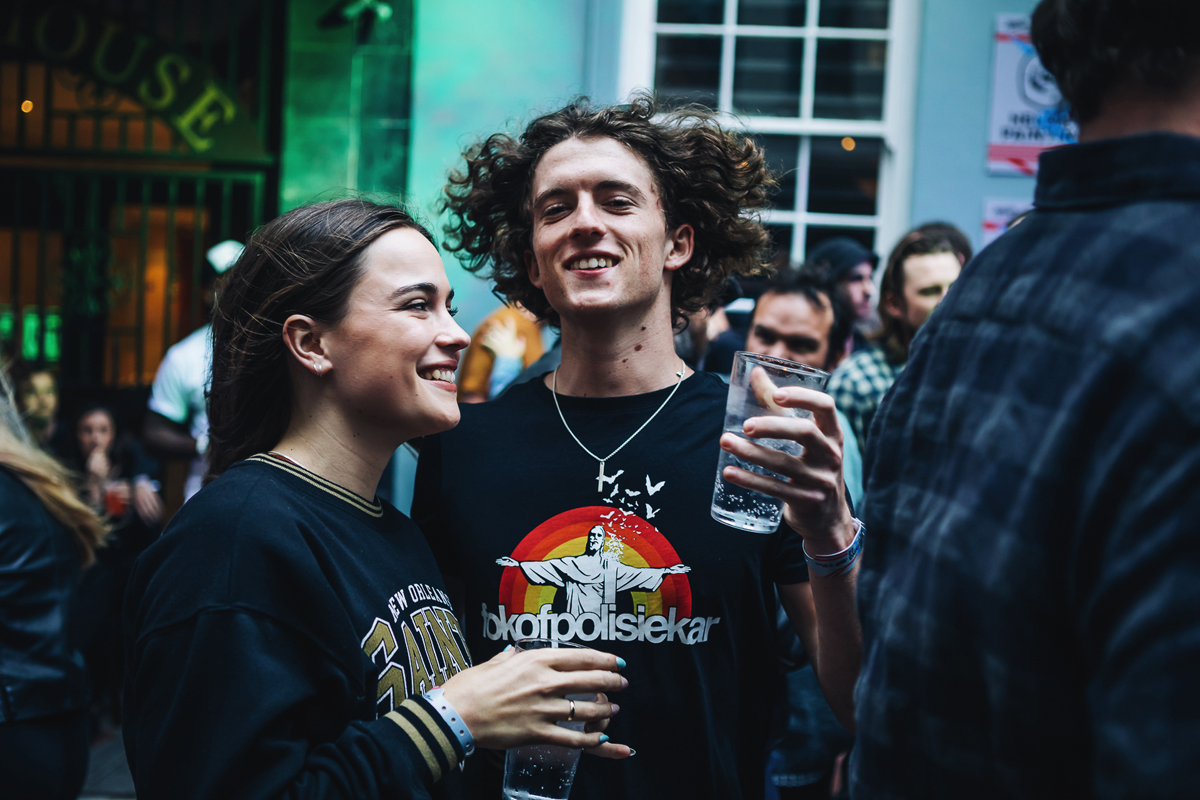
There was not one dud band in the line-up, which ranged from local Cape Town bands to the biggest SA stars, such as Jack Parow and Fokofpolisiekar, ably supported by PHFat, Angie Oeh and The House of Machines favourites Jak Tomas, The Ghouls, Sam Turpin, Laliboi, Julian Place and Murray. The P.A. was one of the best I’ve ever heard and the whole event was so slickly run: even a bit of rain, later on, failed to bring things to a halt.
Photo credit: The Lightning Bolt / Andy Lund
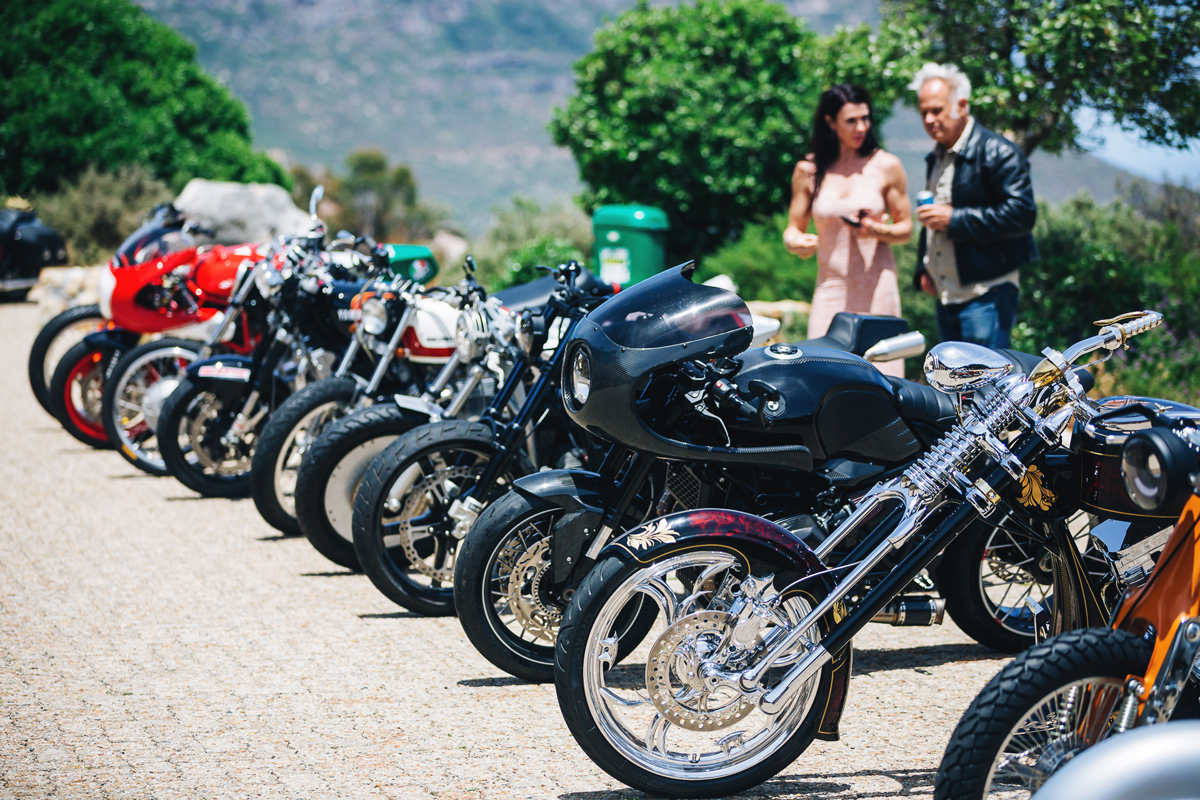
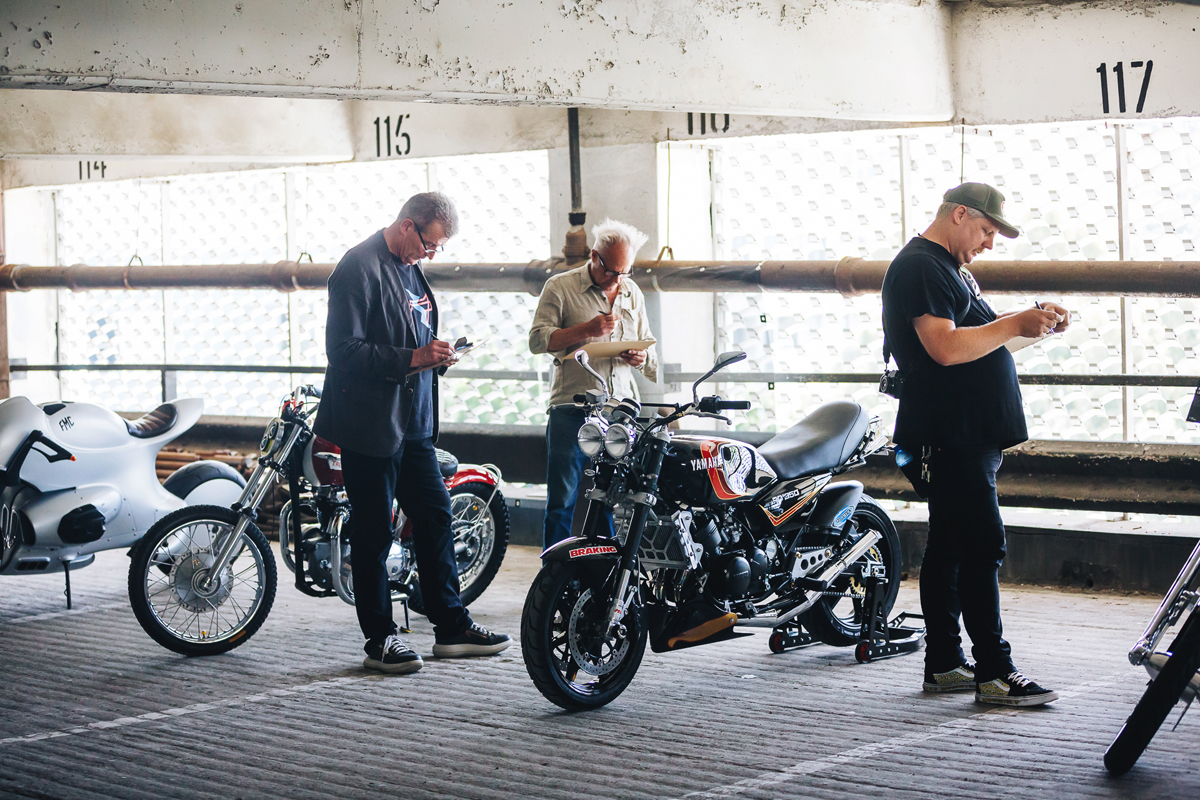
But, of course, the bikes themselves were the stars of the show. There were 12 finalists, whittled down from 30 entries, and they were all of extremely high quality, both in terms of design and engineering.
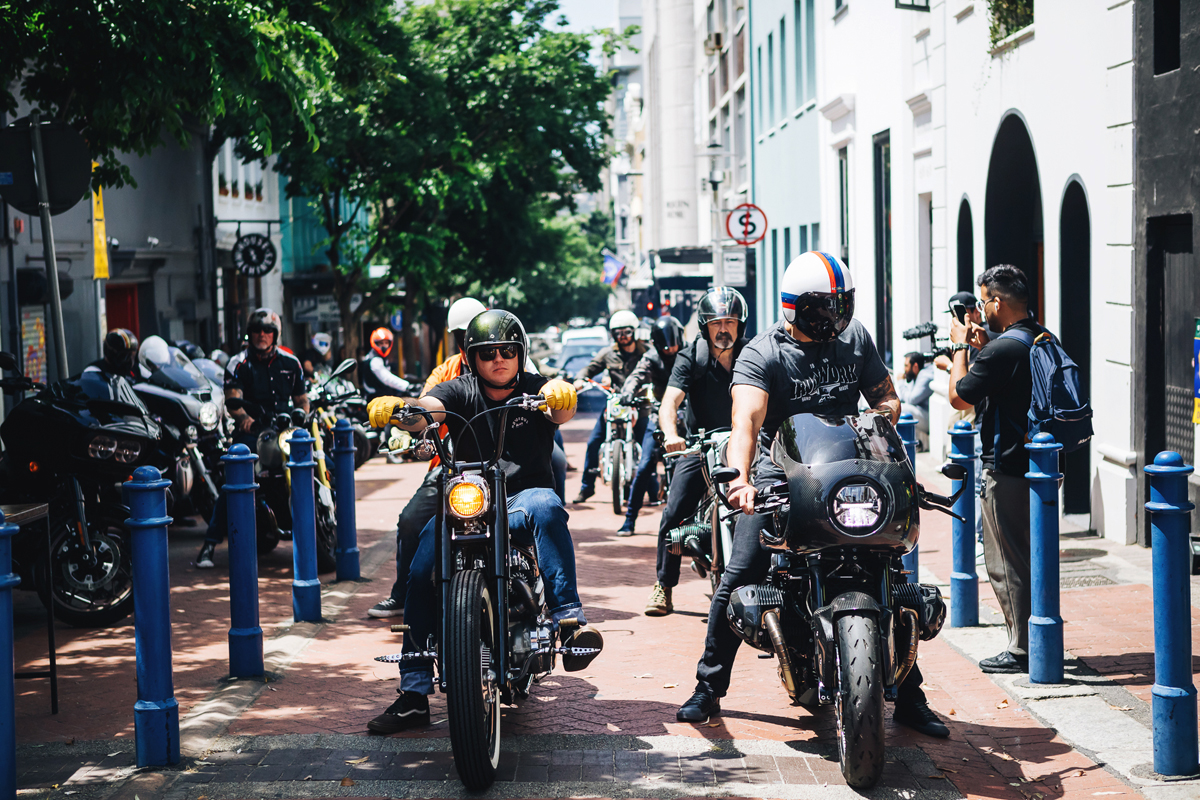
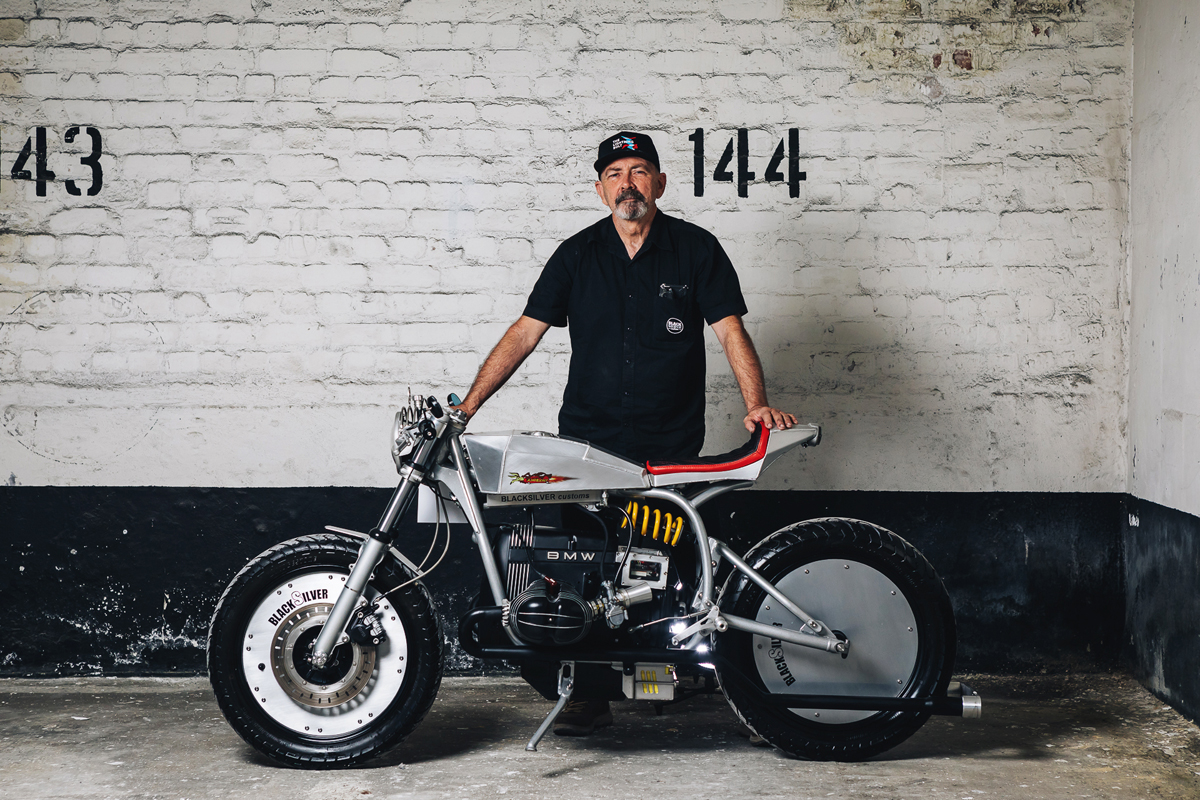
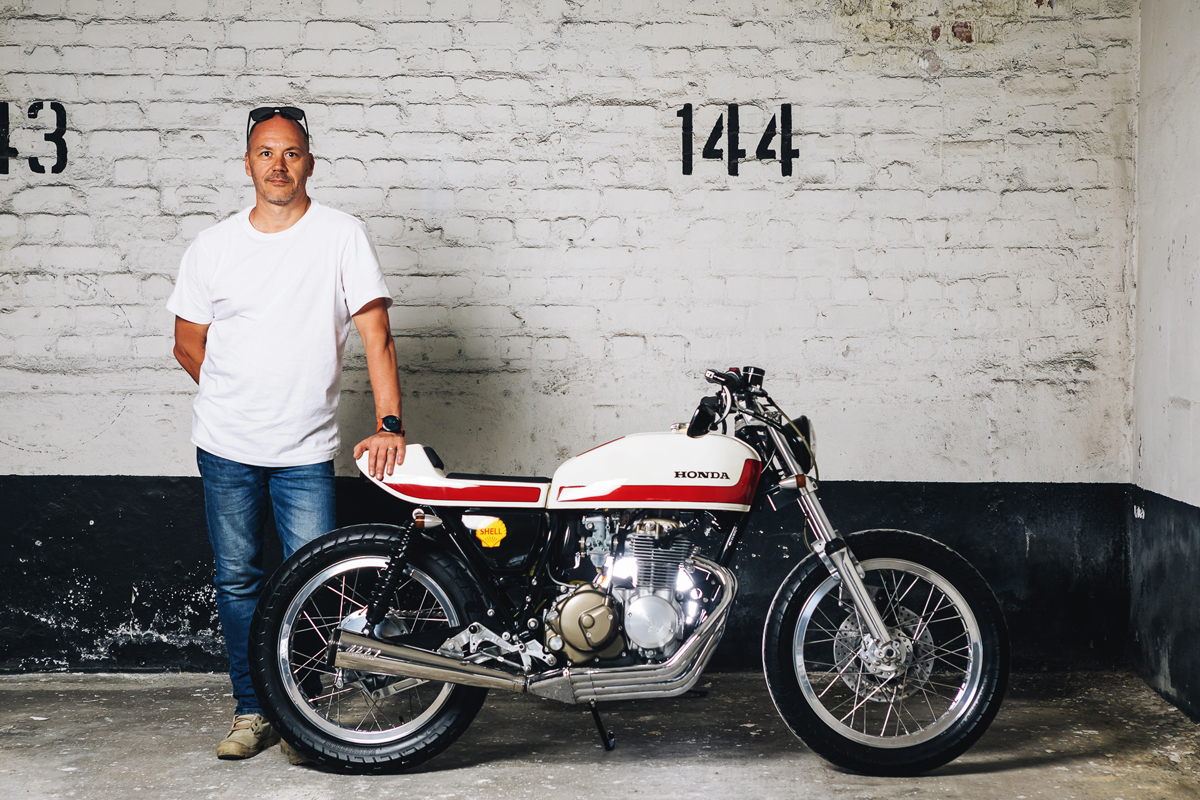
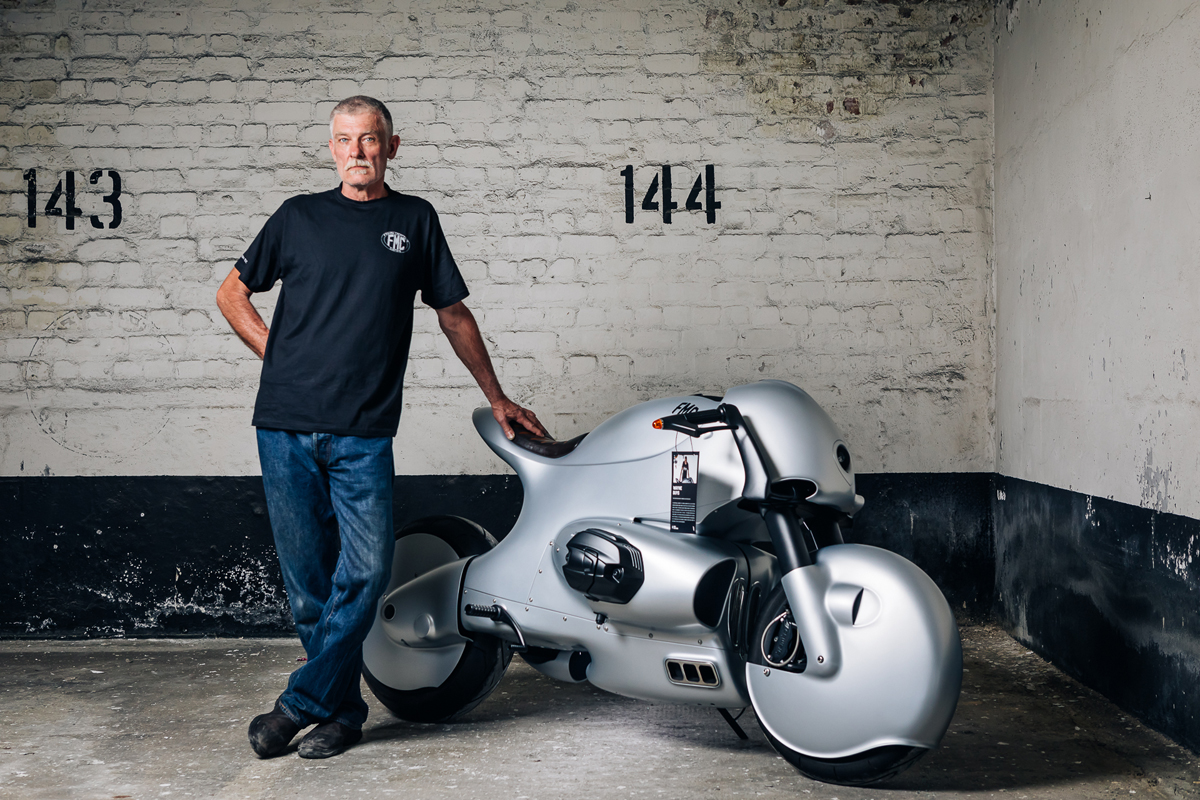
It was an eclectic mix, from a traditional and hugely elaborate Harley chopper to a Honda flat-tracker, from a Yamaha RD350 to an ultra-futuristic BMW with all-enveloping bodywork, from a Honda Super Cub to a Ducati.
Photo credit: The Lightning Bolt / Andy Lund
There were four judges: Dr. Marcus Schramm, head of BMW Motorrad, Alan Stulberg, a master custom builder from the U.S., Wes Reyneke, Cape Town-based Senior Editor of leading custom bike website BikeExif and Paul van Der Spuy of House of Machines. Quite how they were able to choose a winner from such a diverse selection of custom machines, all of which displayed incredible talent on the part of their creators, each with their own vision, imagination, and skill levels, I do not know. All I do know is I’m glad I didn’t have to choose.
Photo credit: The Lightning Bolt / Andy Lund
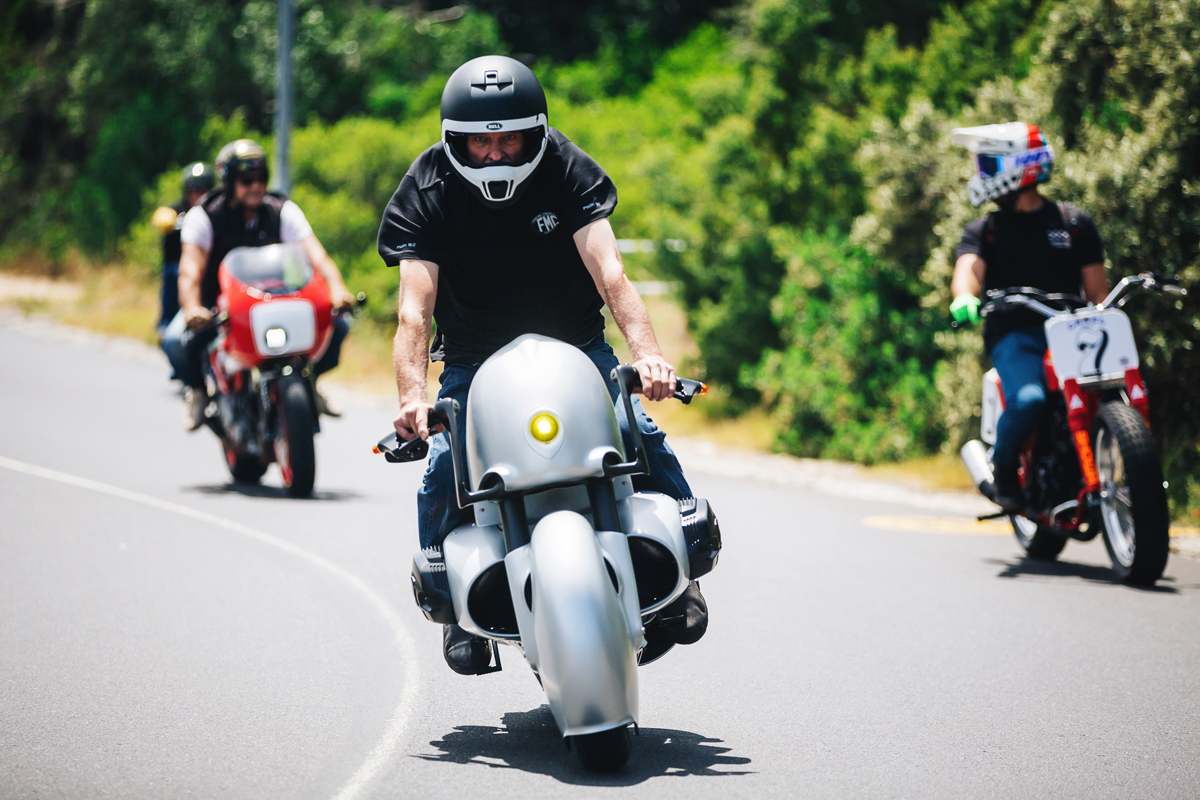
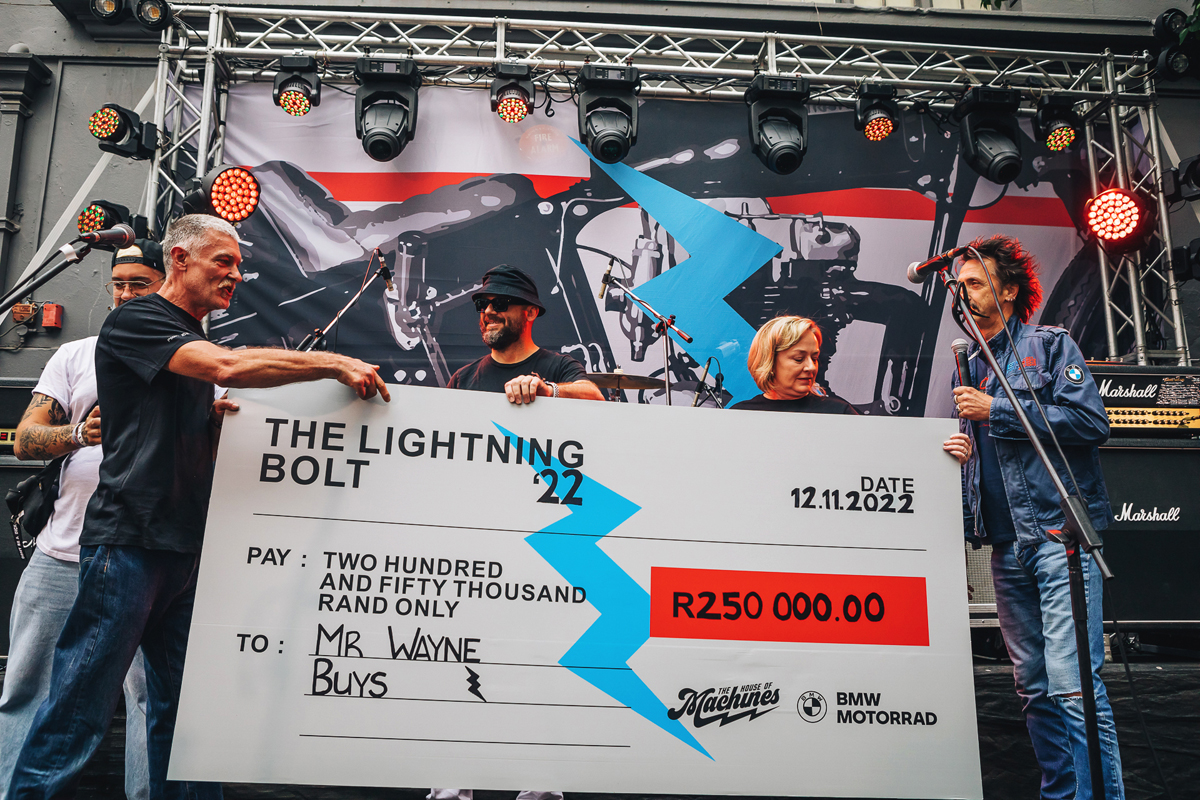
In the bright sunlight, the machines were parked in the length of Shortmarket Street while the crowds mingled, ate, drank, listened to music, caught up with old friends, and made new ones. But, of course, the whole point of the day was to crown one of the bikes a winner, and that winner – a worthy winner in a lot of peoples’ eyes – was Wayne Buys and his incredible BMW with fully-enclosing bodywork: a masterpiece of design and fabrication.
Photo credit: The Lightning Bolt / Andy Lund
The Lightning Bolt was one of those events that, after it was all over, you really wished it was continuing for a few more days: perfect location, perfect weather, great music, a perfect crowd of people, and perfect motorcycles: what more could you want?
The next Lightning Bolt competition takes place in New York next year. South African fans will have to wait for a couple of years for our next one but, rest assured, the wait will be worth it.
I think it is true to say that the heavyweight “Full Dresser” motorcycle is not a genre that has ever really caught on in SA. Having said that, it has been the backbone of the American motorcycling scene for yonks. In 2020, 67,859 heavyweight tourers were sold worldwide, with by far the lion’s share being sold in the US. (Of these, 57,178 were Harleys!) 49,331 Harley “Dressers” were sold in the US alone. At an average price of around $21,000, that is over a billion dollars worth of motorcycles!! Little wonder then that BMW wants a piece of that pie. Enter the R18 Transcontinental.
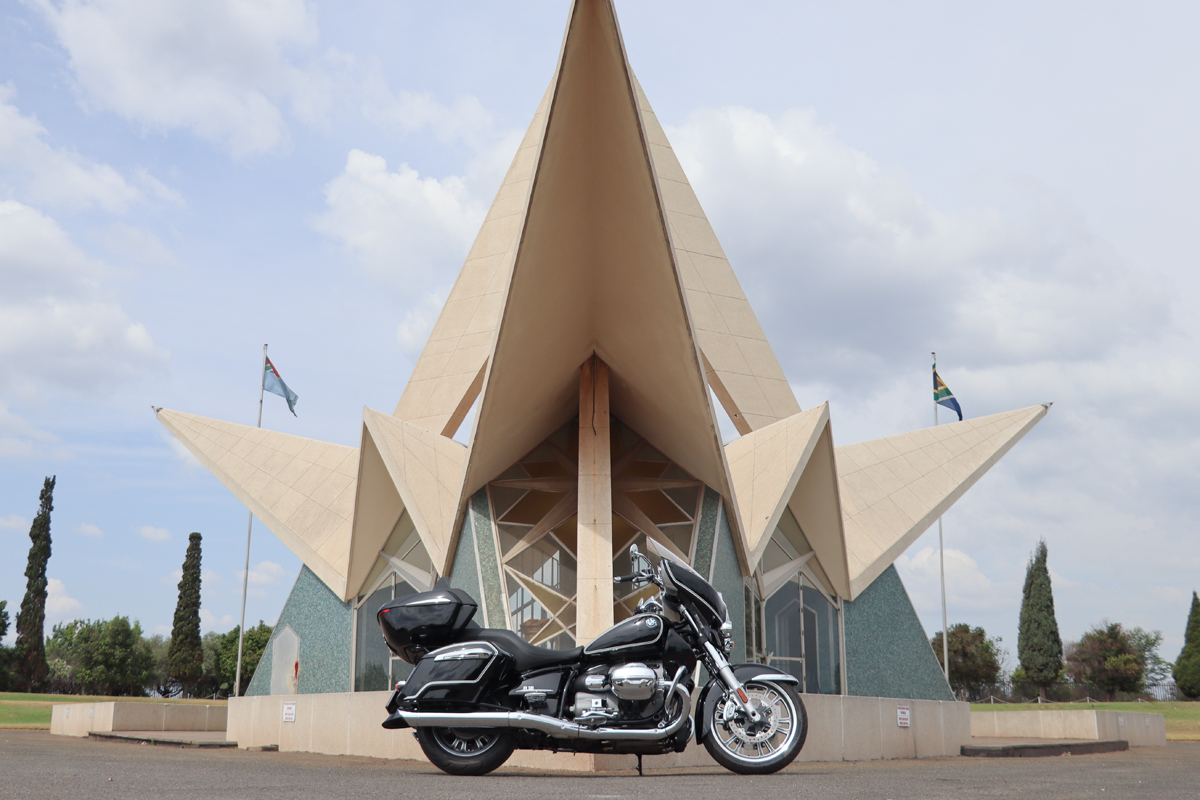
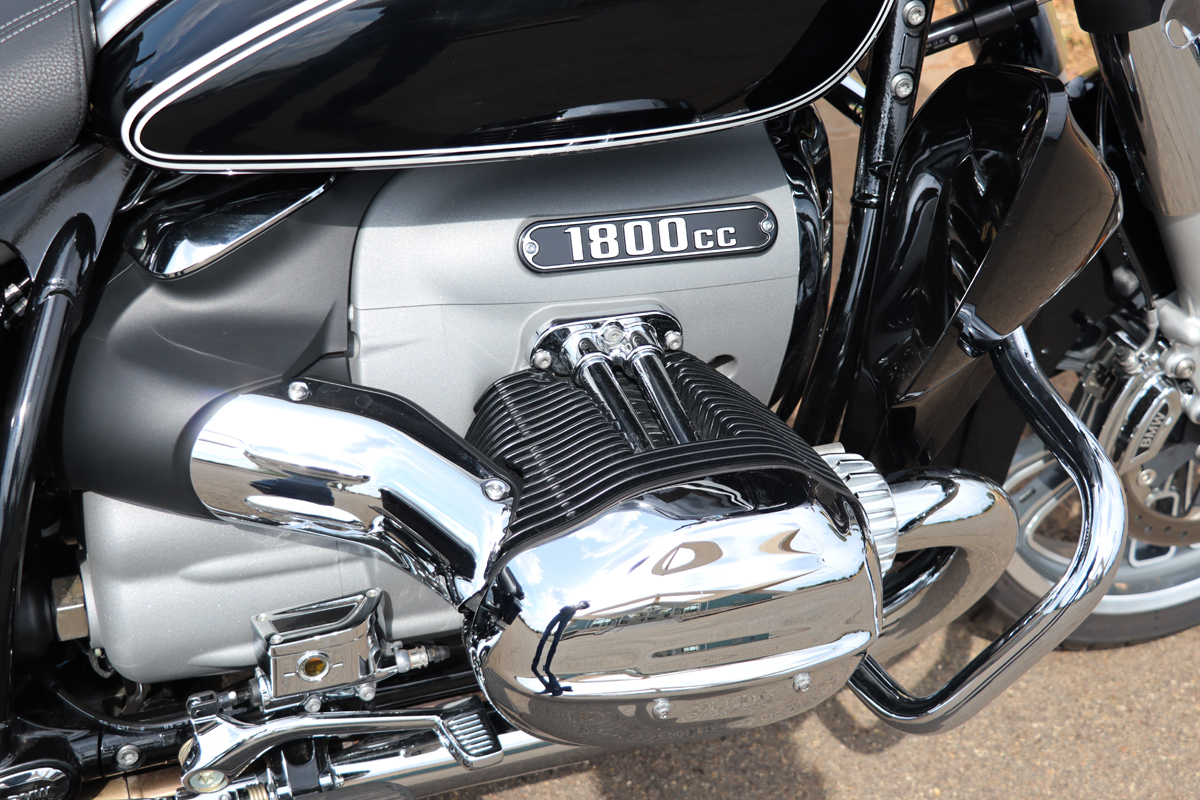
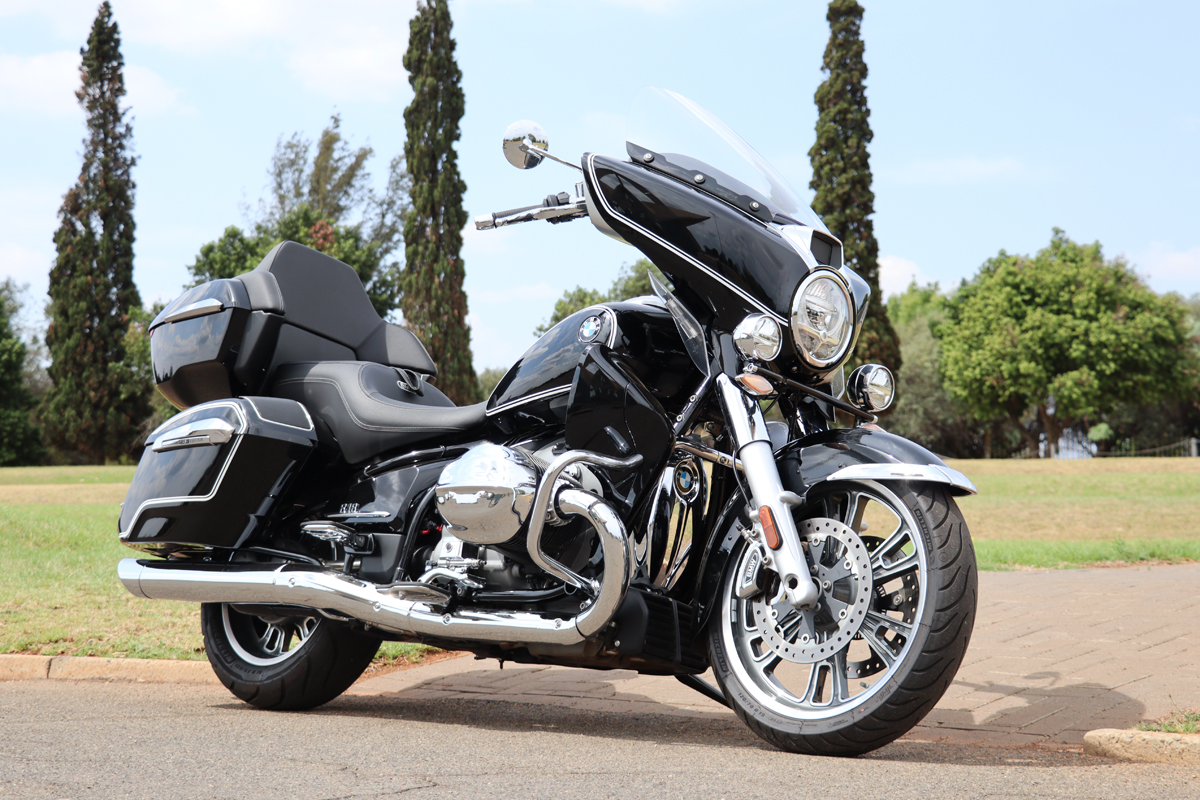
It only takes a glance to tell you that this is a seriously opulent motorcycle. It is a “Full Dresser” in the sense that it has a ‘Batwing’ style handlebar fairing crammed full of gauges, a 10,25” TFT display and two Marshall Gold Series speakers. Running lights, panniers and a top box, or trunk, as it is known in Dresser parlance, complete the picture. It is a handsome picture too. The bike is metallic black with a subtle silver fleck which becomes apparent in sunlight. In classic Bee Emm fashion, it is finished with white pin striping. The bike is awash with high-quality chrome everywhere. Even the clutch and brake lever reservoirs did not escape the chrome treatment. Chrome panels cover both the fuel tank cap as well as a smartphone cubby on the top of the tank. You literally need a dark visor, or shades, to stave off blinding sunlight reflected off all of these shiny bits at midday.
Photo credit: Dave Cilliers
To call these bikes ‘heavyweights’ is no exaggeration. Fully fuelled, the Transcontinental punishes the scales at 398 kg. That, my friends, is close to half a ton of motorcycle! This is also before you and your passenger have climbed aboard! Moving this considerable mass, is a 1803cc pushrod, 4 valves per cylinder Boxer twin. It makes 91 hp @ 4750 rpm and more significantly, 158 Nm of torque @ 3000 rpm. There is over 120 Nm available from 2000 to 3000 rpm. This is consistent with the other bikes in this category, both weight, power and torque-wise.
Riding these bikes take total commitment in all of your actions. There can be nothing flighty or frivolous. Just lifting it off the side stand is serious work. It does get a little easier once you are rolling, but it is only once you get out on the open road that you can relax and actually start to enjoy the ride. The front forks are non-adjustable 49 mm units which do an adequate job of dealing with road imperfections. The rear shock is self-levelling for load and isolates the rider from the worst road issues you will contend with. Given that it is meant as a good road tourer, the suspension is totally up to the task, in terms of ride quality, as well as keeping things tidy through the bends. Ground clearance is a reasonable 35-degrees.
Photo credit: Dave Cilliers
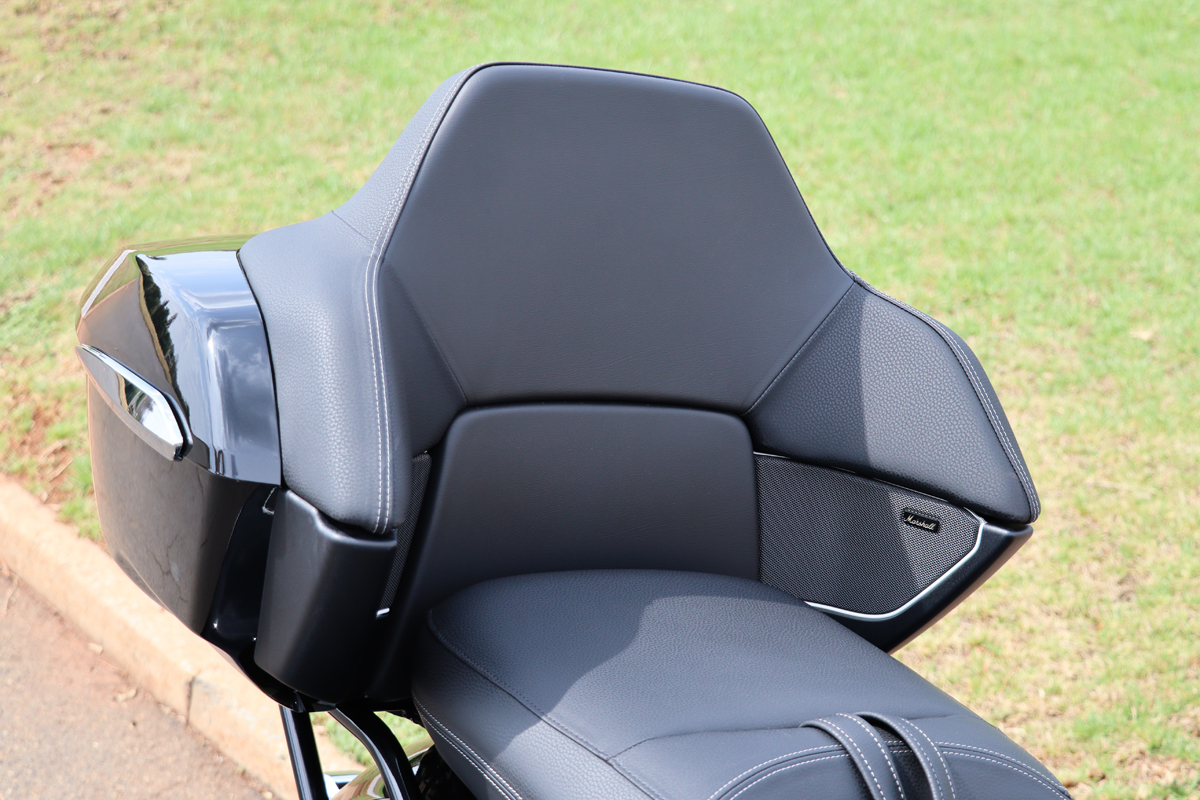
Comfort is top drawer. The seat is wide and supportive and the rear perch is all-day comfortable, with its built-in back and armrests. The bars have a good bend and there are floorboards for both rider and passenger, something that Irene found made climbing off and on easier, as well as negating foot fatigue. Vibes from the huge twin are low amplitude and subdued at cruising speed. Downshifting causes significant increases in vibe levels though. Shifting is typically dry plate clutch BMW. Clunky but solid. The gear lever has a heel-and-toe function, given that it can be difficult getting a booted foot under the gear lever with floorboards. The rider has fewer leg options than a comparable V-Twin, as the huge cylinders restrict the movement of your lower legs. At a push, if you have long legs, you can rest your heels on the crash bars for a while.
A 24-litre fuel tank, coupled with a decent economy, gives a range of over 400 k’s at typical touring speeds. Cruise control is adaptive and does a decent job of allowing you to chill on the highway. I personally am not into 2 wheeled Boom boxes in the slightest, but for those of you who get your jollies by annoying everyone you ride past, the R18 system is top drawer. A total of six Marshall Gold Series speakers will blow the cobwebs out of the most hard-of-hearing ears. These are fairing, pannier and back seat-mounted, for adequate surround sound. BMW have cleverly designed adjustable wind deflectors that can cool you down on hot days, yet deflect cold off of you during the winter. Heated grips and seats will be a pleasure on cold days.
Photo credit: Dave Cilliers
Packing space is so-so on these full dressers. Panniers are 27-litres and the top box, or ‘trunk’ as the Yanks call it, swallows 48-litres of kit. Given the price, BM should toss in the optional inner bags for free to facilitate loading. Once you have got the Transcontinental out of town, up until when, to be honest, it is a bit hair-raising to ride due to its sheer bulk and ponderous weight, you can relax and start to enjoy the ride. The bike lopes along at 135 with the motor ticking over effortlessly. The torque flattens hills and makes holding its speed easy. Once in top gear, you just leave it there.
The screen deflects air over both rider and passenger effectively and cocoons you in a bubble of reasonably still and quiet air. There is a problem, however. At 6’3” I look directly into the line created by the top of the screen. I don’t really like looking through screens, so I need to stretch my neck like a Meercat keeping watch, to see over the screen. The alternative is to slouch, neither posture which is conducive to long-distance rider comfort. An adjustable screen would have been a winner.
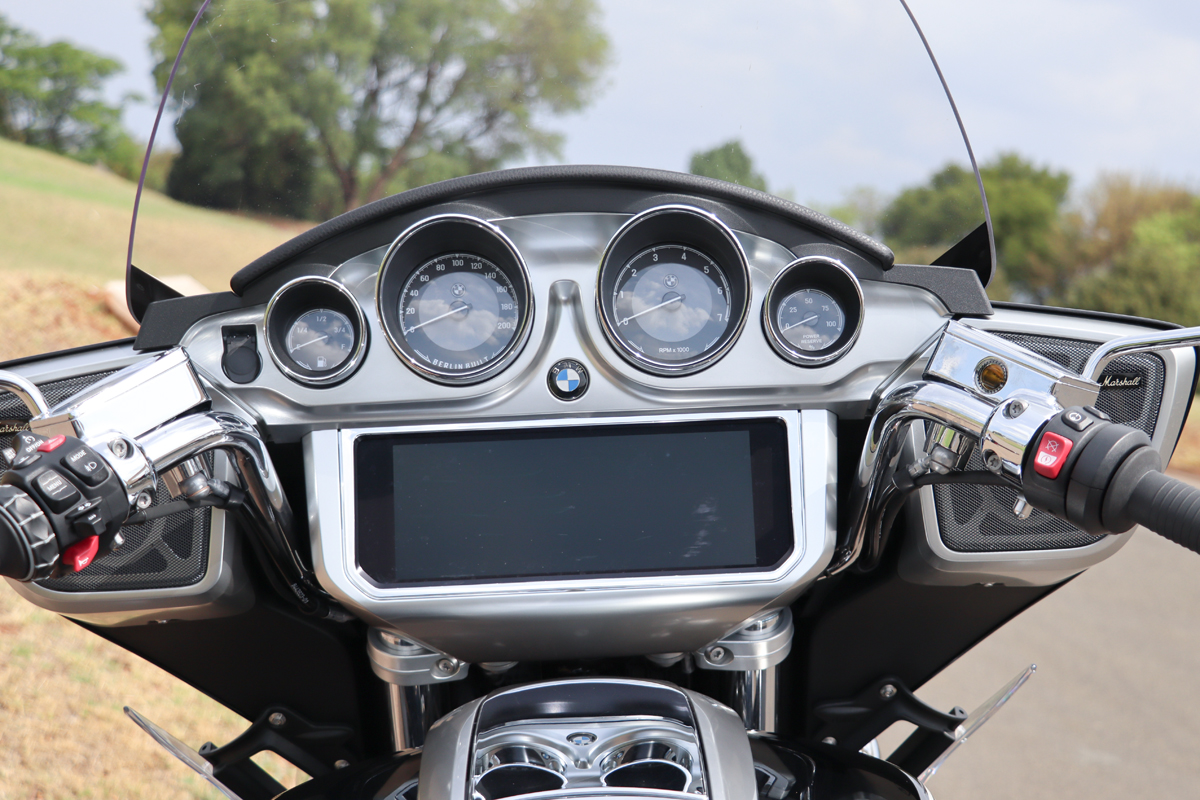
The cockpit has both analogues as well as TFT displays. A line of analogue gauges rides atop a 10,25” TFT display. Left to right are a fuel gauge, speedo, rev counter and “power reserve” gauge, whatever that may be? “Berlin Built” is emblazoned on the bottom of the Speedo, as well as on both brake and clutch reservoirs. BMW want you to be in no doubt that it is a piece of German Engineering that is carrying you across the country in style!
Photo credit: Dave Cilliers
The TFT has the typical menu that gives you access to all the information that you could possibly need, as well as to control the sound system and Nav. The navigation is enabled via the BMW Motorrad Connected app. There is a cell phone receptacle on the tank, underneath a chrome flap, which can accommodate your phone. My Sony is too long, so it is probably Apple or Samsung compatible… BMW utilise their Multi-Controller wheel on the left handlebar to facilitate navigating through the various menus. As with the other manufacturers, this embracing of a “PlayStation generation” has come at the cost of simplicity. They took something that wasn’t broken and tried to fix it.
The BMW R18 Transcontinental is Bee Emm’s attempt to woo riders away from the established H-D V–Twin recipe of big, rumbly, torquey twins, with all the creature comforts that they can think of, and then some. Oh yes, there is a reverse gear for when you can’t move half a ton of bike backwards with your puny little pins. In typical Bavarian fashion, they have turned out a truly classy Teutonic alternative, which can certainly go toe to toe with the Yankee offerings. As to how well it will be accepted, only time will tell. Similarly, only time will tell if this genre is embraced by SA riders in significant numbers. It could not be my only bike, as it is too narrow purposed and at over R430,000, it is not easy to afford more than one bike. Kudos to BMW for offering their full range of bikes to SA riders though.
Sadly, we are not blessed with the best riding roads in Gauteng; to find those, we have to ride east or south for a few hours, something that is not always possible in the course of a Sunday morning. A weekend, maybe, but how many of us have time to do that every weekend?
I used to think it was the same for adventure riding; the flat veldt surrounding Johannesburg not providing much in the way of hardcore trails and hills. Thus, it was always a problem when adventure bikes came up for a test to really put them through their paces without taking a couple of days off, which just wasn’t possible, both financially and time-wise.
Photo credit: Bjorn Moreira / ZA Bikers
I laboured under that impression for a long time, whilst being aware that people did seem to come back with dirty bikes from a morning’s riding: which I just couldn’t fathom.
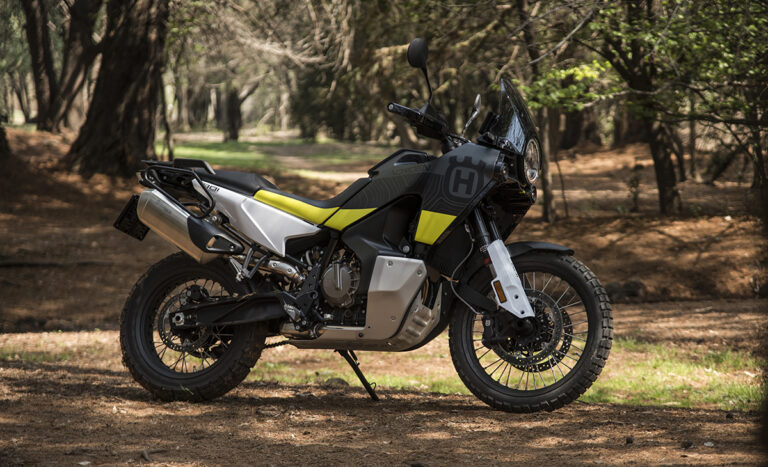
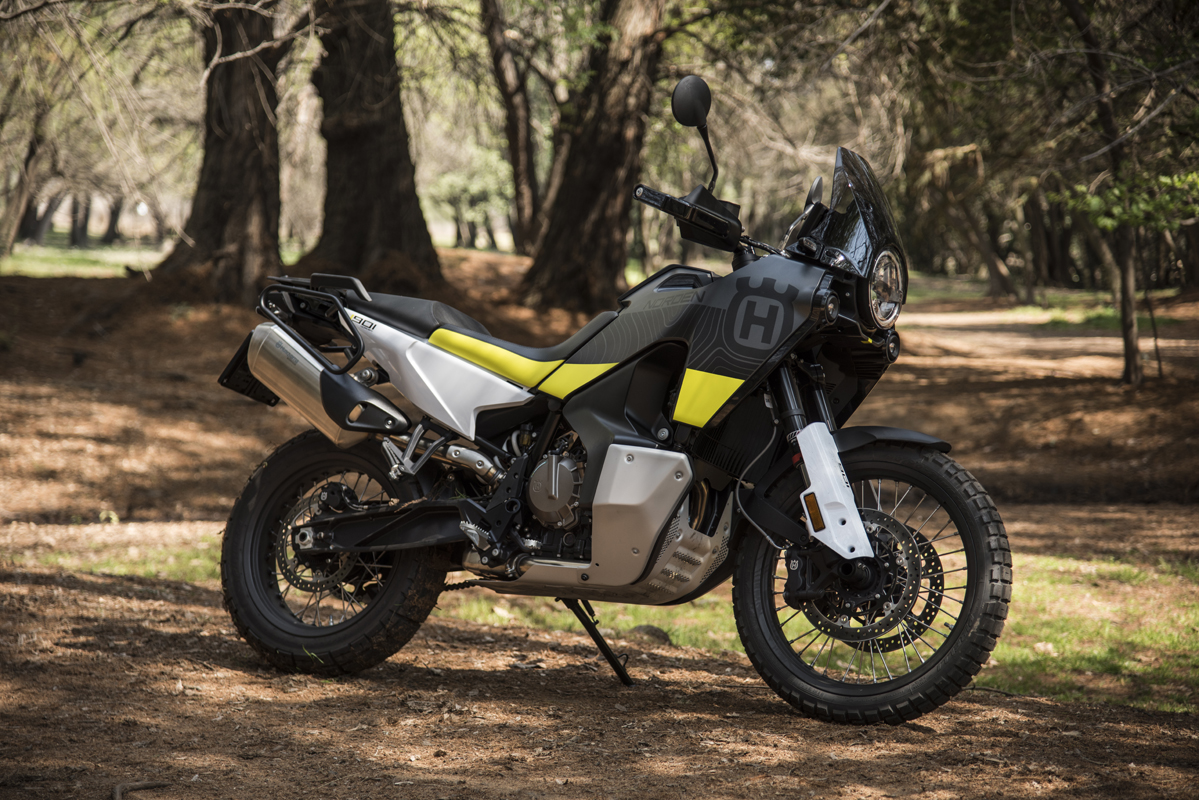
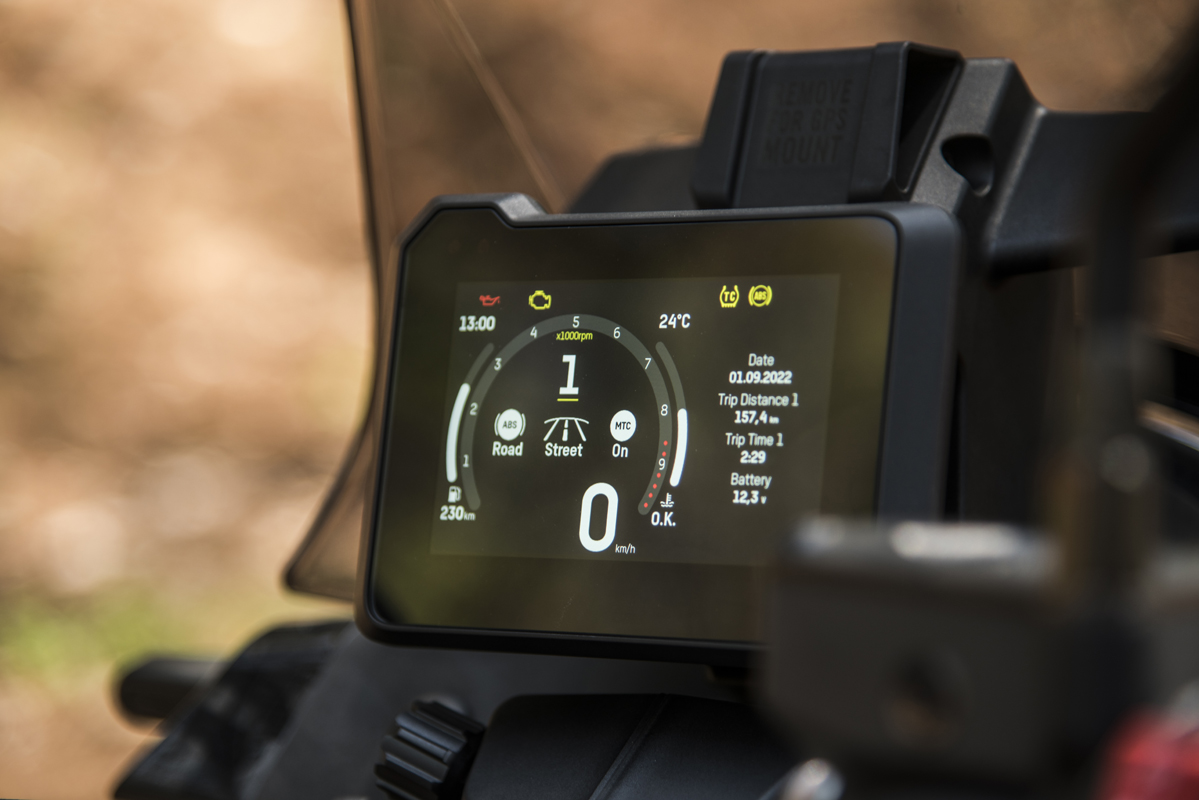
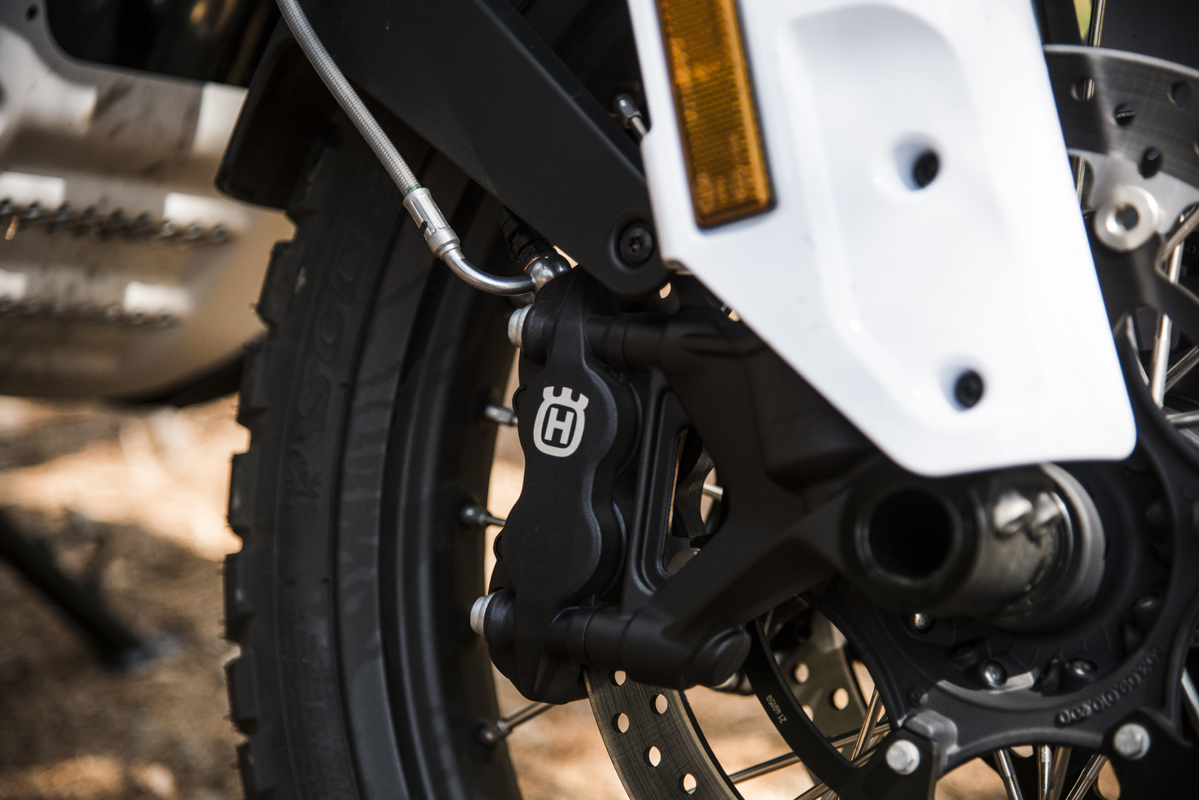
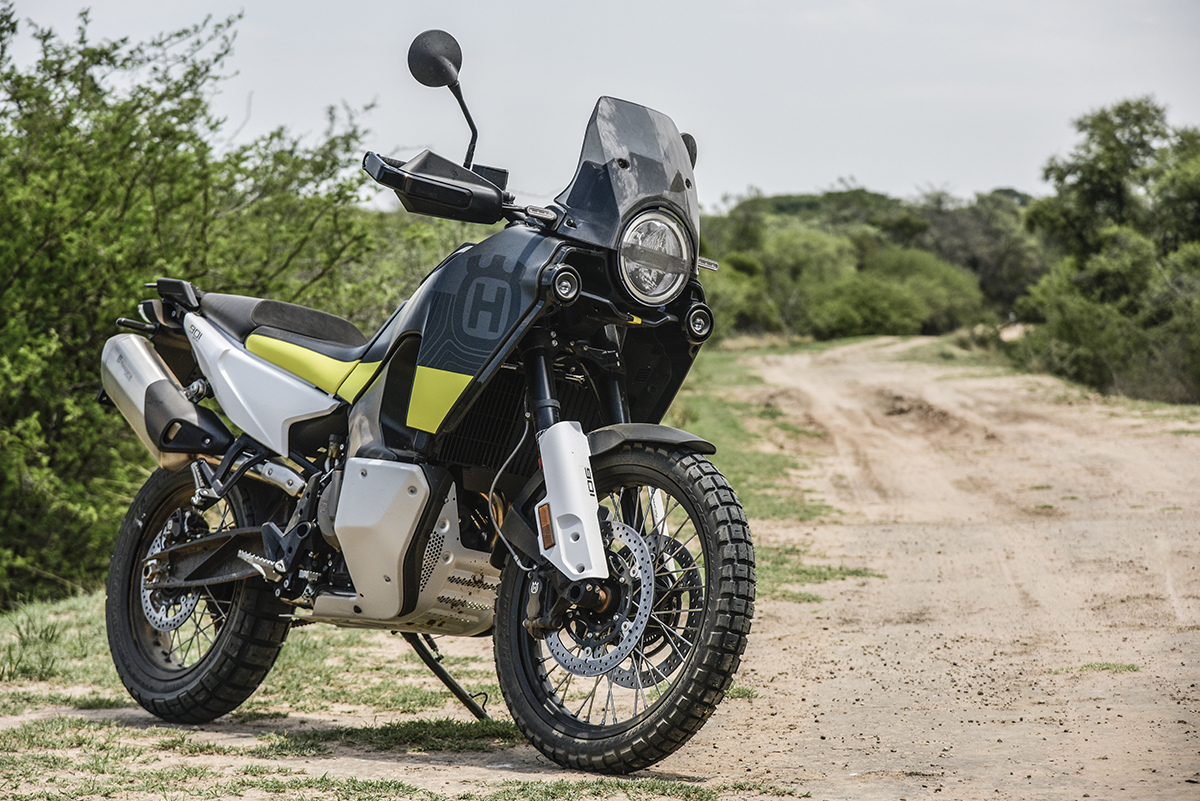
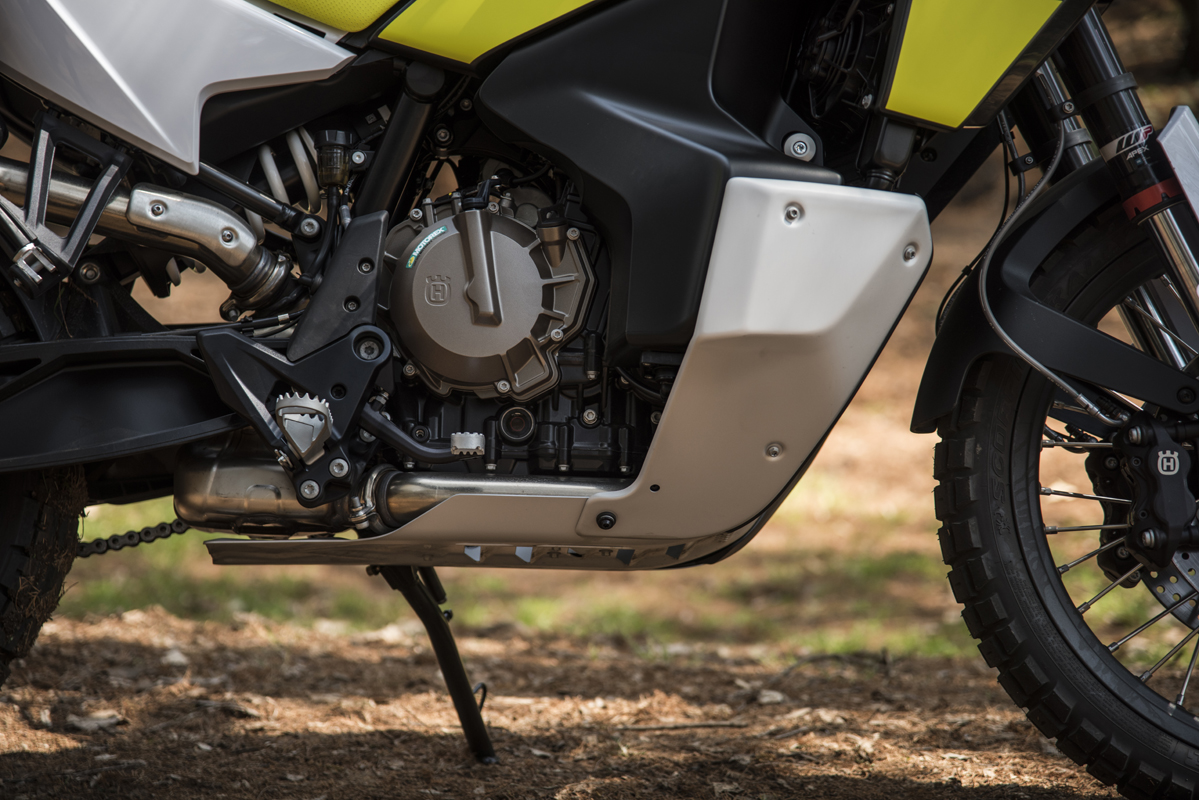
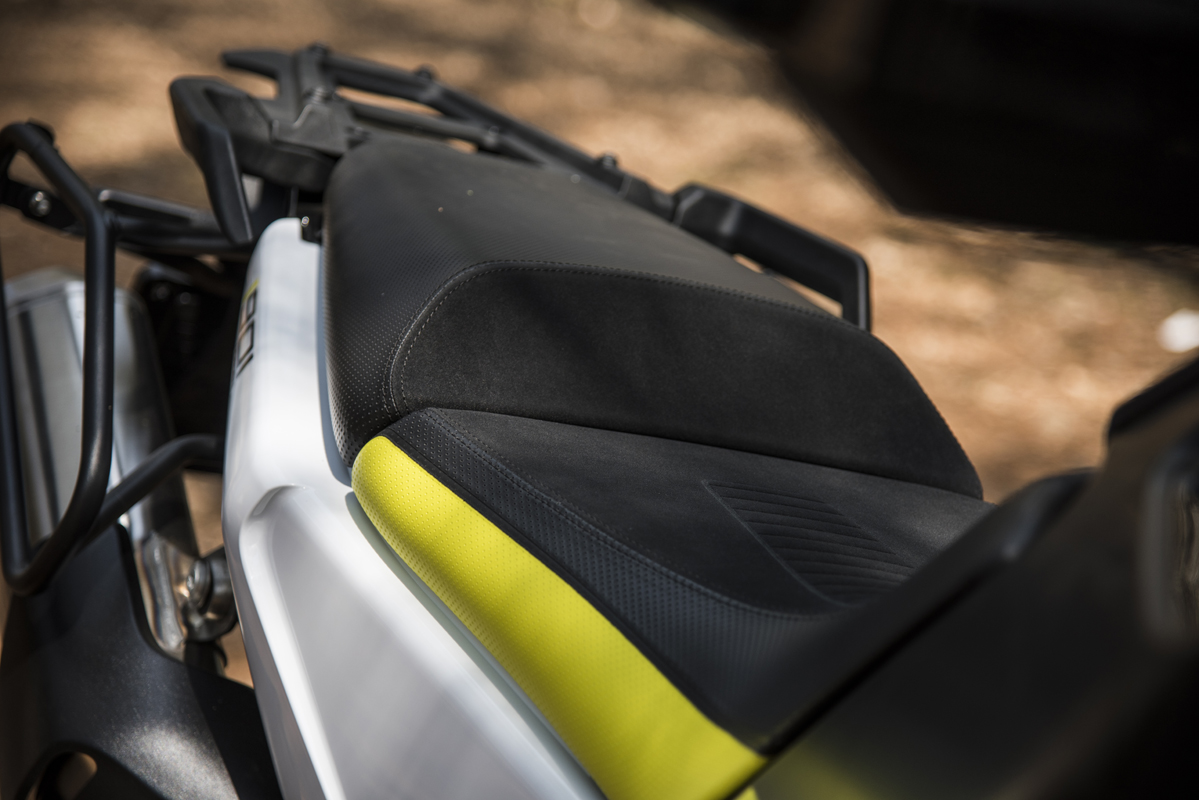
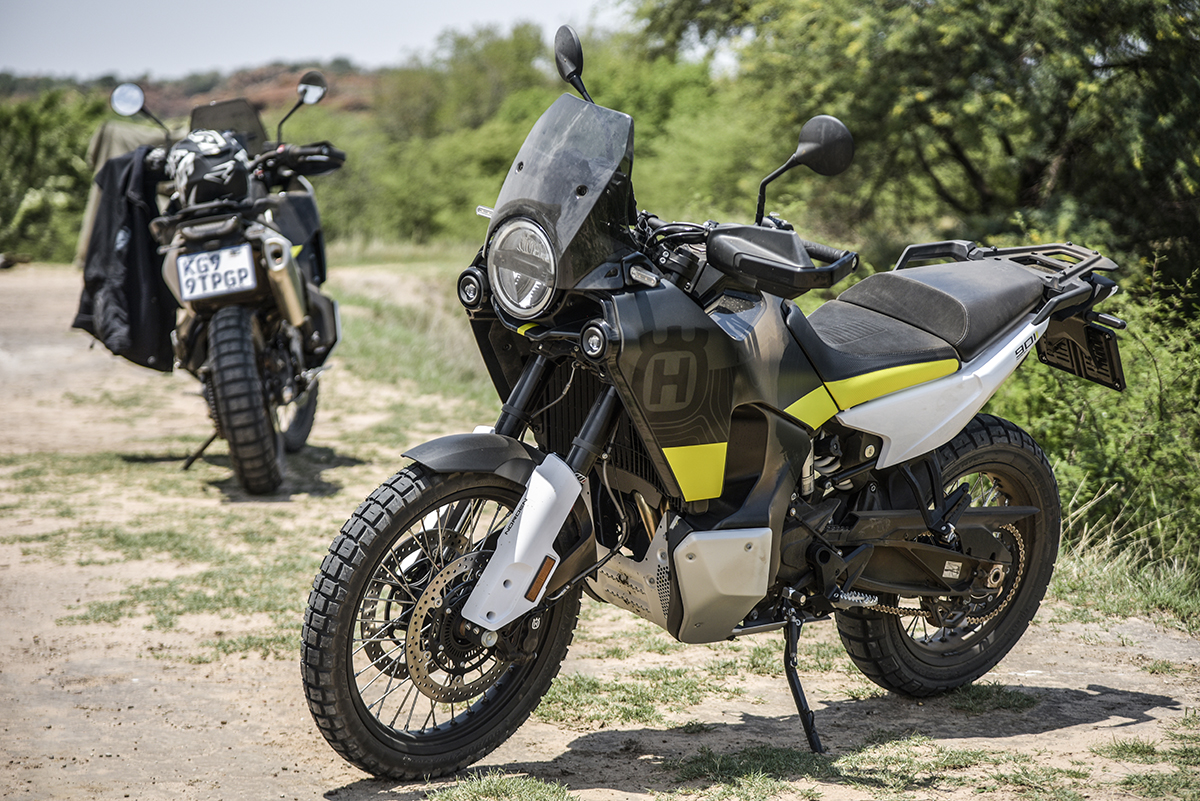
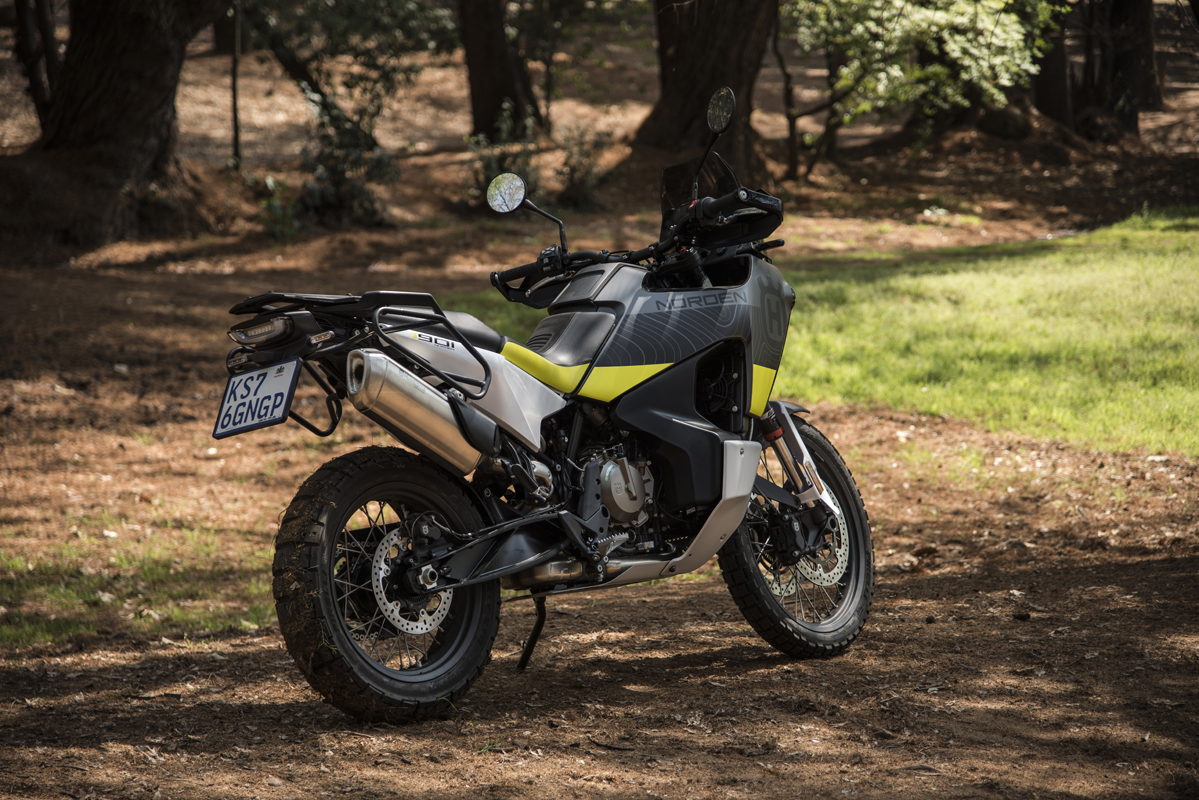
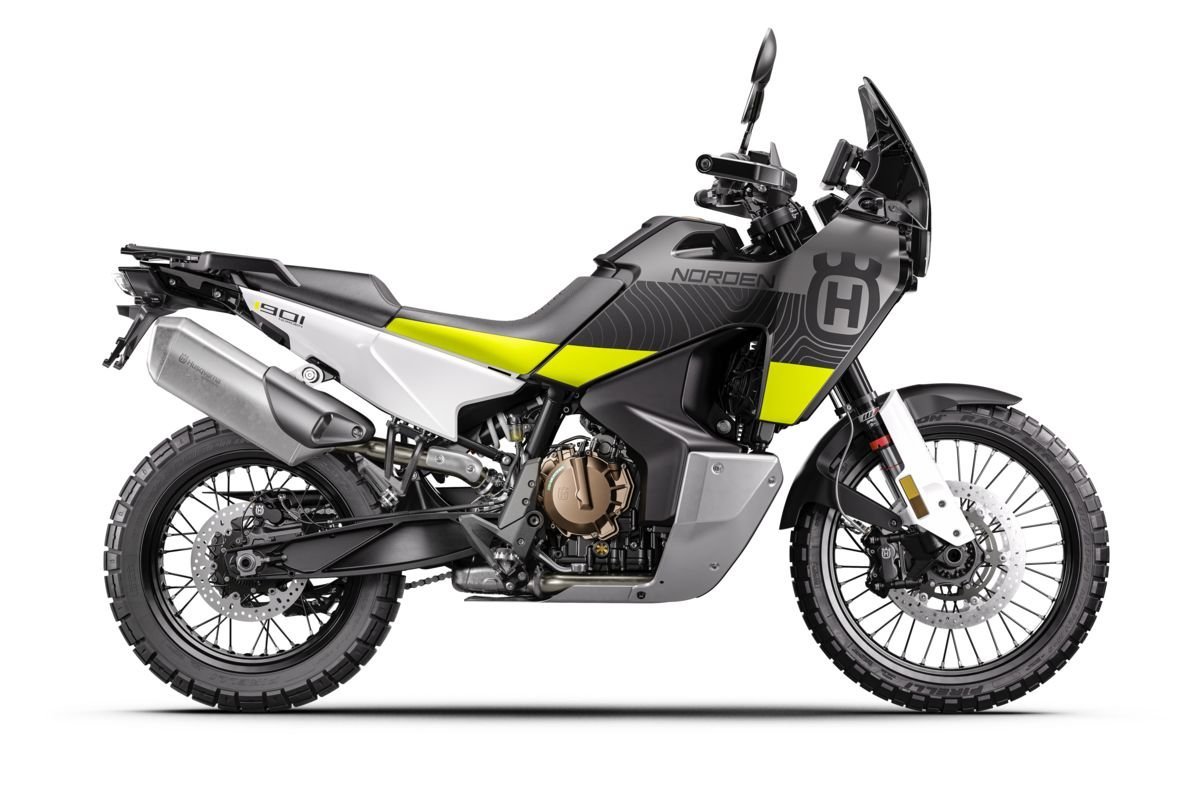
Then the opportunity came to ride the Husqvarna Norden 901 over a weekend and I was determined to make the most of it, to actually take it off-road and not just confirm what I already knew: that it is, in line with all adventure bikes, great on the road.
Photo credit: Bjorn Moreira / ZA Bikers
The problem was where? A chance conversation with a friend revealed that a friend of his rode off-road virtually every weekend with a bunch of mates. Typically for a fellow motorcyclist, the invitation to join in, despite being a total stranger to them, was instantly forthcoming. All I had to do now, was to remember how to ride off-road!
That might sound strange coming from someone who does this for a living but you have to remember that, by and large, we journalists are jacks of all trades and masters of maybe one or two. Our lives are filled with many different bikes but rarely do we have the time to ride any one bike for longer than a few days and, equally rarely do we have a succession of one type of bike, not to mention access to the type of road, trail or track to get the best out of them.
Adventure riding is one of my favourite two-wheel disciplines but I simply don’t get the chance to do much of it, so the prospect of heading out into the unknown with a group of talented riders was just the ticket, despite my own personal lack of talent.
Of course, there was no cause for worry. In my experience, no one who rides bikes resents passing on some hard-won knowledge and makes no fuss about helping out a less-experienced rider if asked, or waiting patiently while the tortoise brings up the rear.
Photo credit: Bjorn Moreira / ZA Bikers
So, to finally get to the point of this article: where did our route take us? We headed north out of Bryanston and up past Broadacres, towards Lanseria. Then we turned off the road and proceeded to wend our way further northwards towards Hartebeespoort, alternating dirt with tar and, from there, we simply followed kilometre after kilometre of irrigation canals, all of which have an access road running alongside.
Now, that doesn’t sound terribly exciting but it was such a revelation to find off-road trails along which to ride, a stone’s throw from where I lived. Ok, so the going was largely flat and not very technical but, still, it was off-road and thankfully dry: it would have been a different story if it was muddy!
Photo credit: Bjorn Moreira / ZA Bikers
Eventually, we popped out onto the R511 heading towards Thabazimbi and headed for a roadside eatery for refreshments. With that came the chance to assess the Husqvarna and the first thing that came to mind was how different it feels to the KTM 890 Adventure which, of course, is essentially what the Norden 901 is under the skin.
I have no idea how they have done this and, in actual fact, it doesn’t really matter. Maybe we should think along the lines of being happy there is another choice of an adventure bike. It might seem strange that the KTM Group would launch a competitor to its own bike but I doubt the Husky will take sales away from the KTM and I only hope that it is a sales success in its own right because it deserves to be.
Photo credit: Bjorn Moreira / ZA Bikers
It was nothing but confidence-boosting off-road, being beautifully balanced and wearing its weight down low. The engine has a broad spread of torquey power and the quick-shifter gearbox is light and precise, although some care was needed to not snick inadvertently down a gear when standing on the pegs.
The Norden 901 is an excellent adventure bike and it is the existence of models such as this, the KTM 890 Adventure and the Triumph Tiger 900 that begs the question: why would you need anything bigger? Compared to these middleweights, the litre-plus adventure bikes seem so incredibly large and heavy.
Photo credit: Bjorn Moreira / ZA Bikers
These middleweights lose nothing to the bigger bikes, whether on tar or off-road: you can cover huge daily distances in comfort and, of course, the lighter weight and reduced bulk pays dividends off-road.
Comfort: good, performance: good, ability: good, appearance: good, equipment: good, brakes: good, suspension: good. Yet another glowing report in a sea of glowing reports: not just for the Norden but for the vast majority of bikes on the market today.
Photo credit: Bjorn Moreira / ZA Bikers
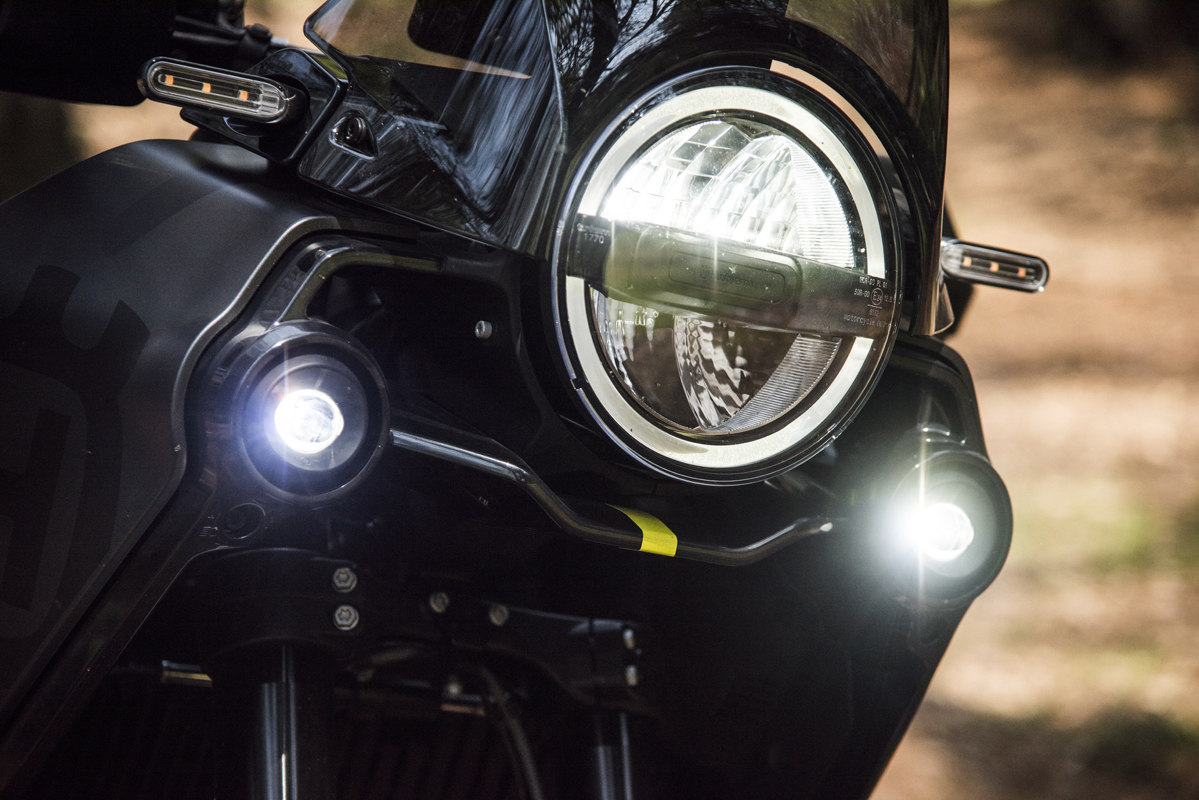
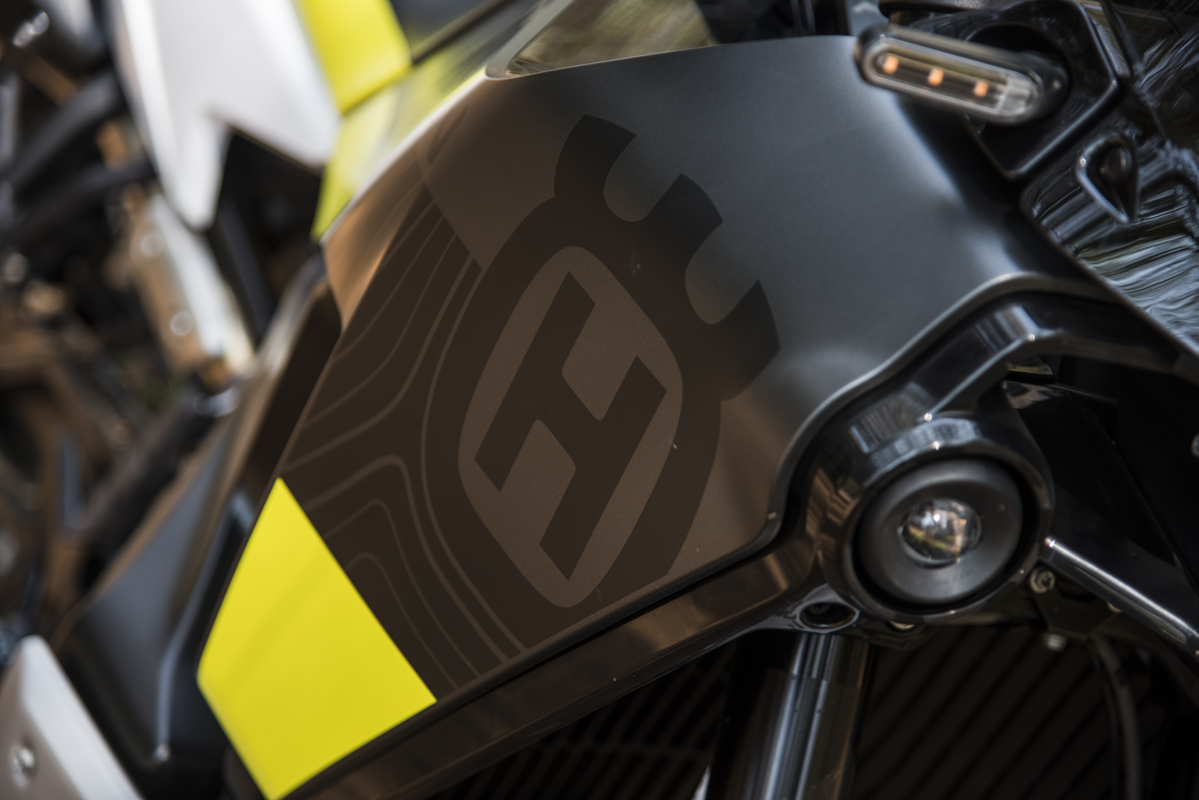
Having said that, while it is not a criticism, there is something that you need to be aware of. The Norden 901 is a handsome bike but those good looks are exposed to disfigurement. The main culprit is the large bodywork panel that stretches from the headlight all the way along the flanks to meet the seat. Because of its convex shape and the positioning of the apex of the curve, even the mildest lay-down will scratch and damage that panel. To protect it would take crash bars of such size and expanse that you might as well build a roll cage around the bike and have done with it.
Photo credit: Bjorn Moreira / ZA Bikers
I can’t imagine that replacing that panel would be cheap, either. Given the company’s experience in building off-road machinery, it is a strange design feature, even if it is attractive.
Is it a deal-breaker? In a word: no. The Norden 901 is just too good for this to be a barrier to ownership. What is a more pertinent question is how do you choose between the 901 and the KTM 890 Adventure? For once, you can buy based solely on looks, safe in the knowledge that both bikes will not only flatter the novice but satisfy the expert.
Photo credit: Bjorn Moreira / ZA Bikers
The Husqvarna Norden 901 will cost you R246,999 or thereabouts. This compares to the KTM 890 Adventure R at R249,999, while the base model 890 Adventure is R229,999.
Husqvarna Norden 901
For more information on the bike featured in this article, click on the link below…
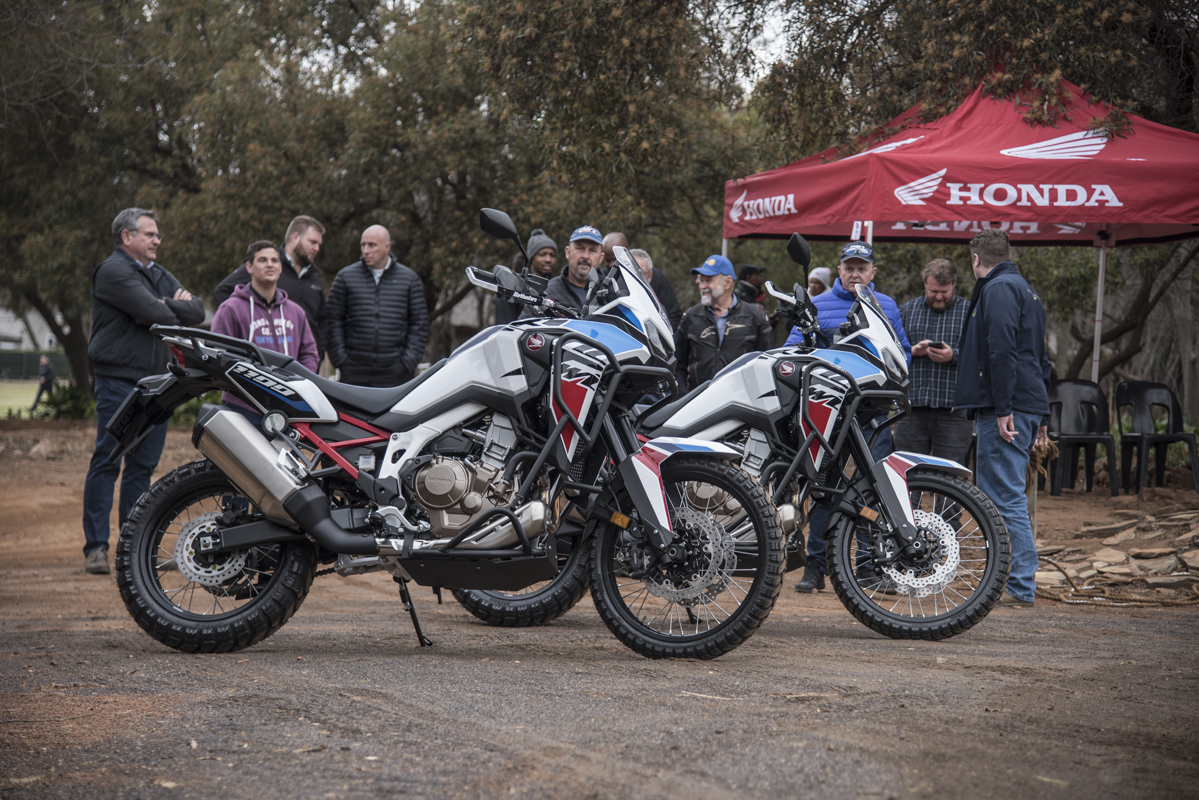
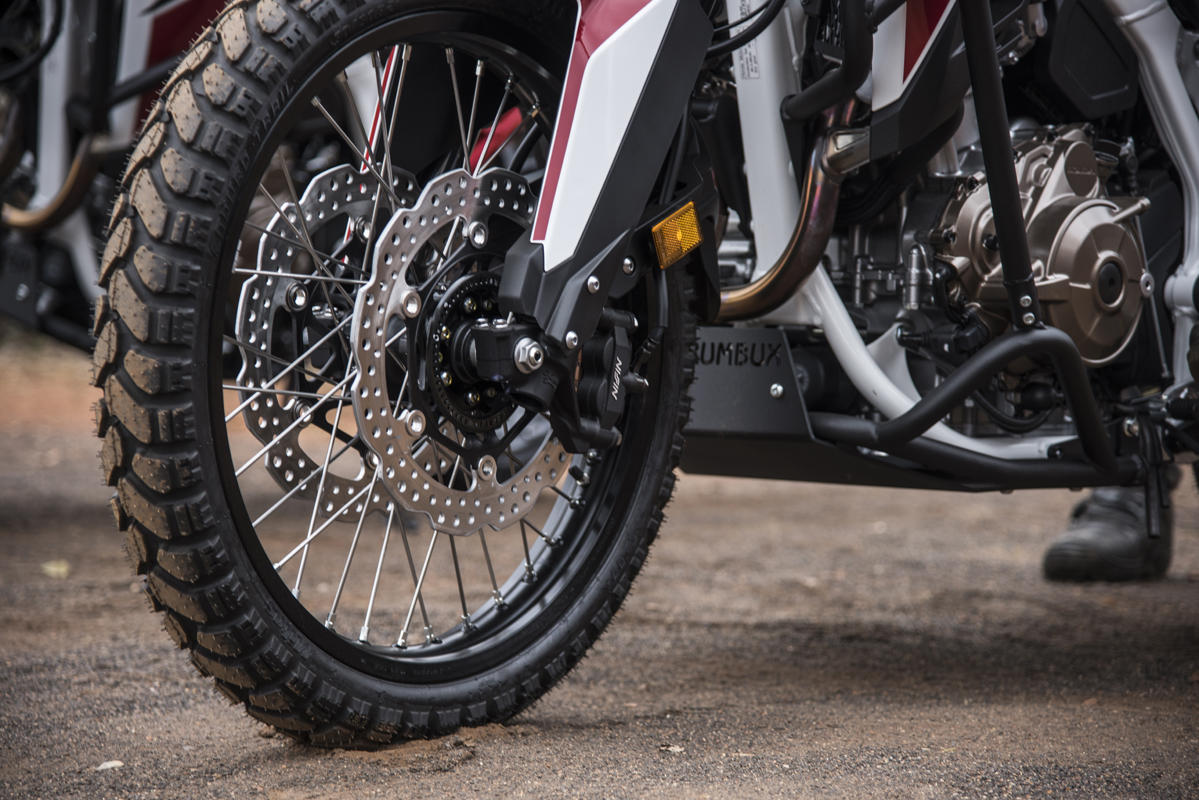
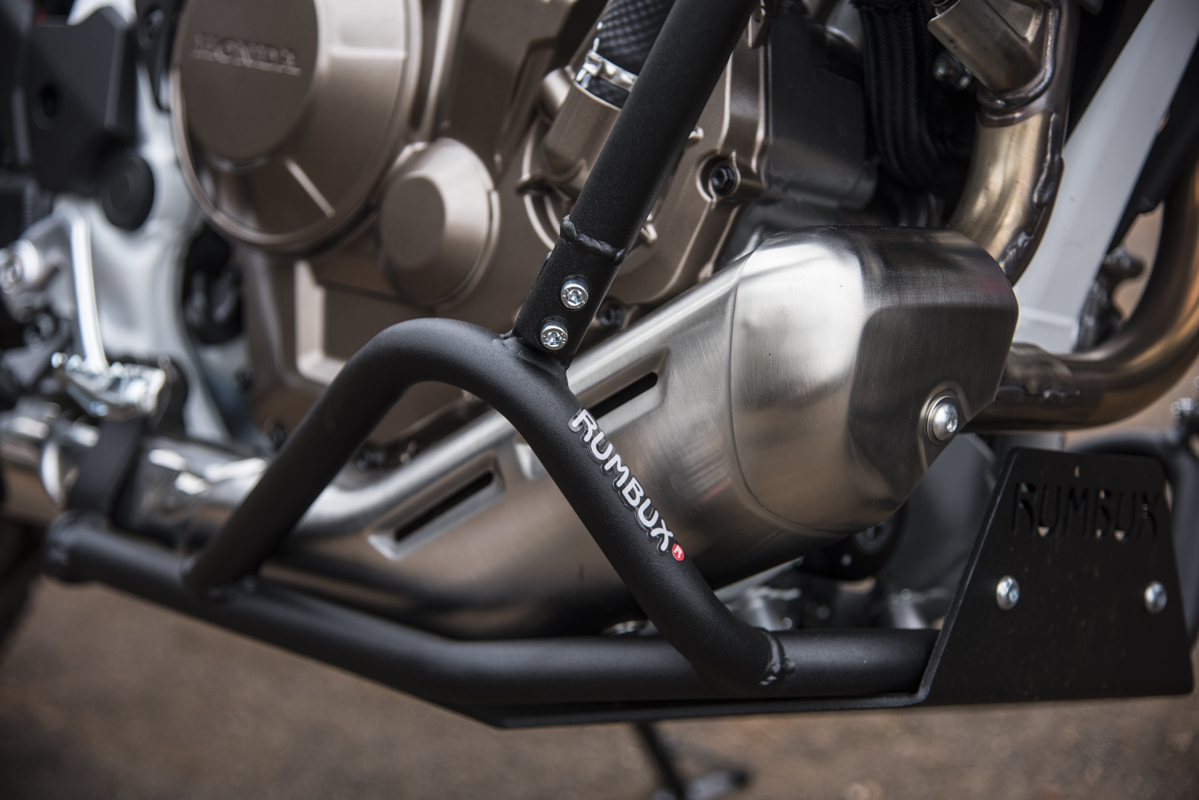
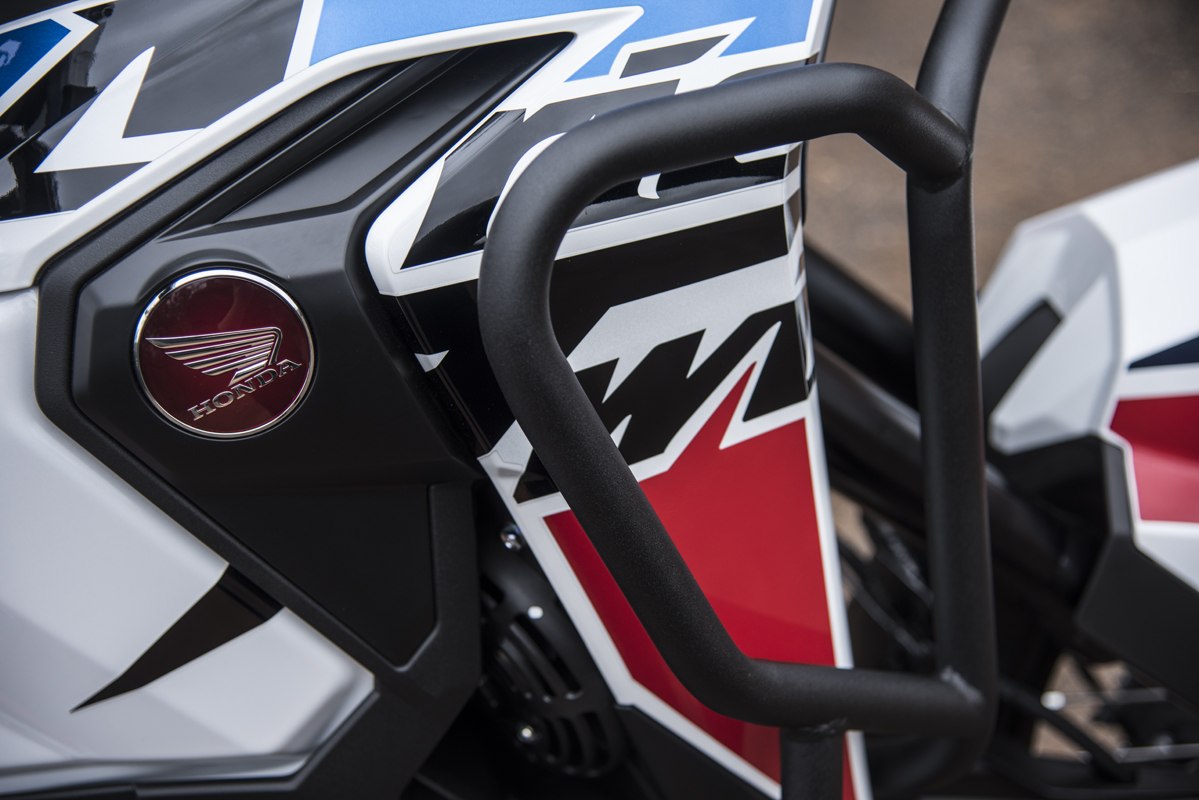
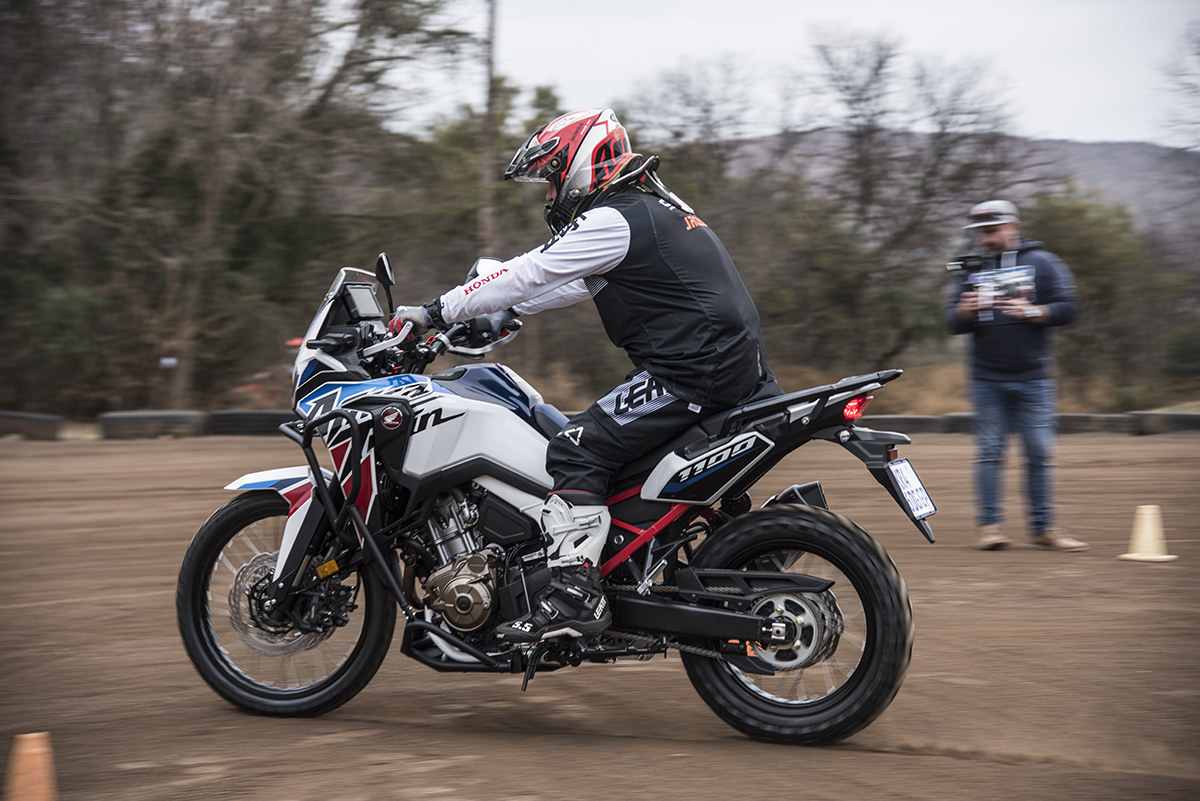
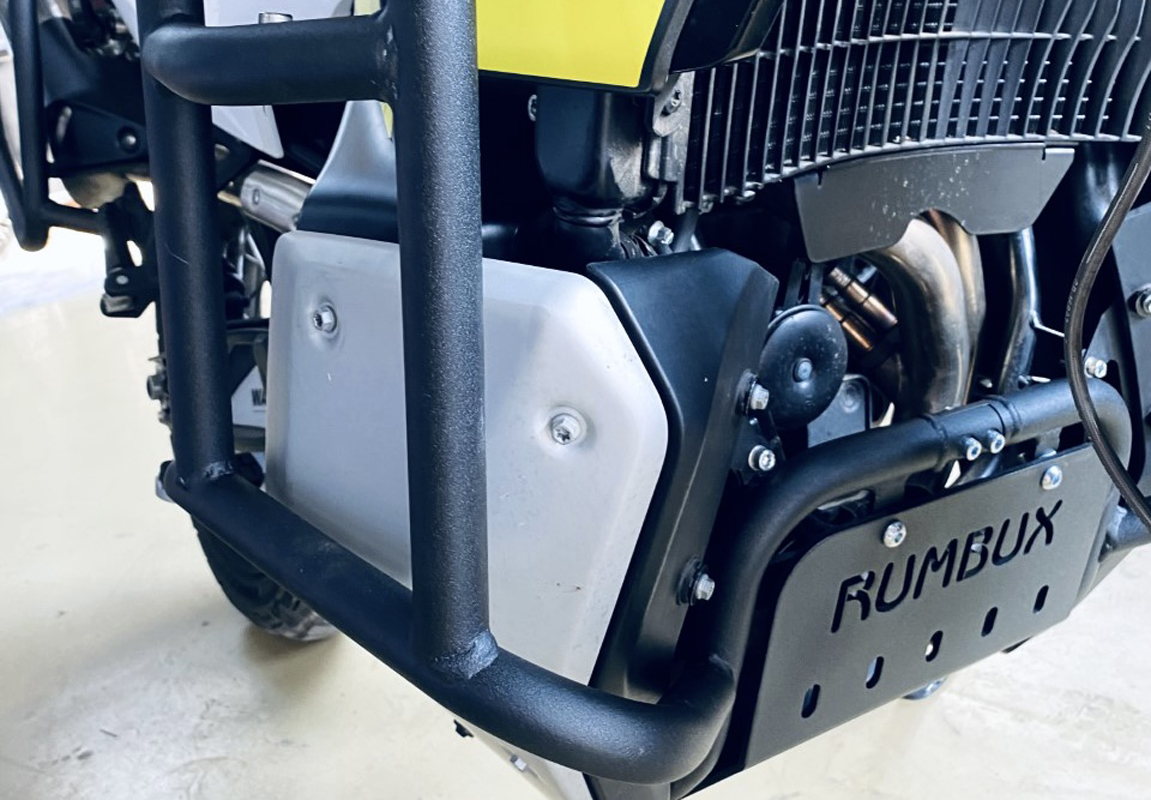
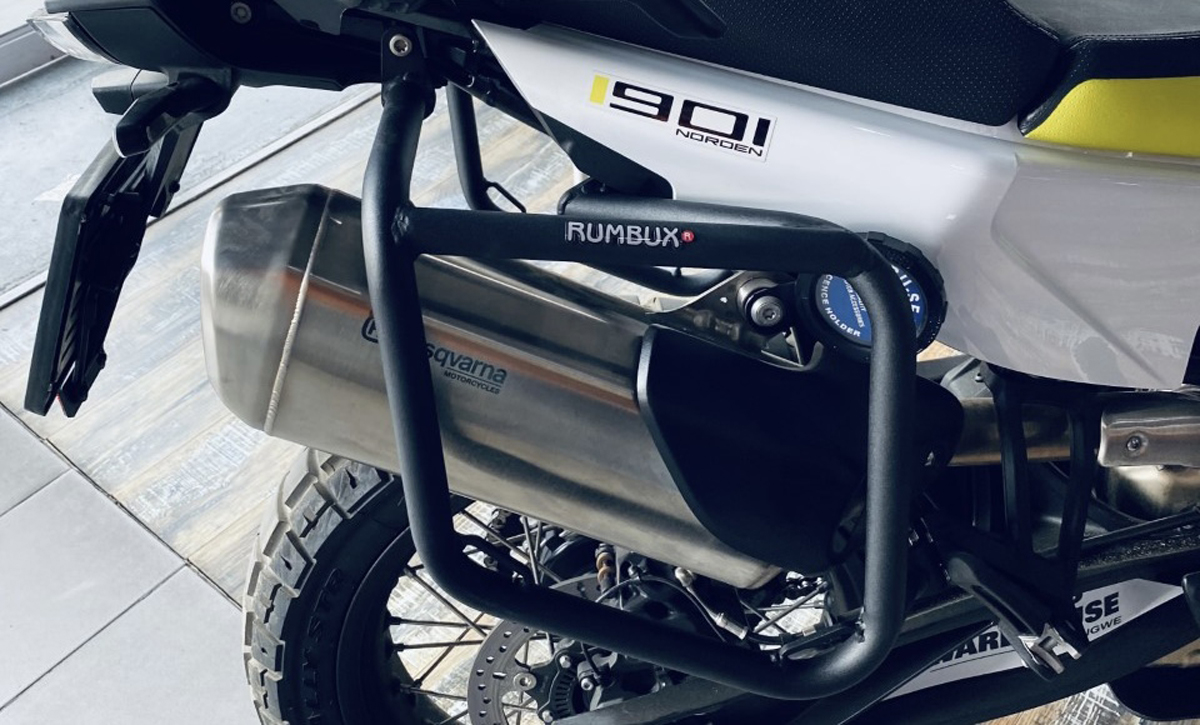
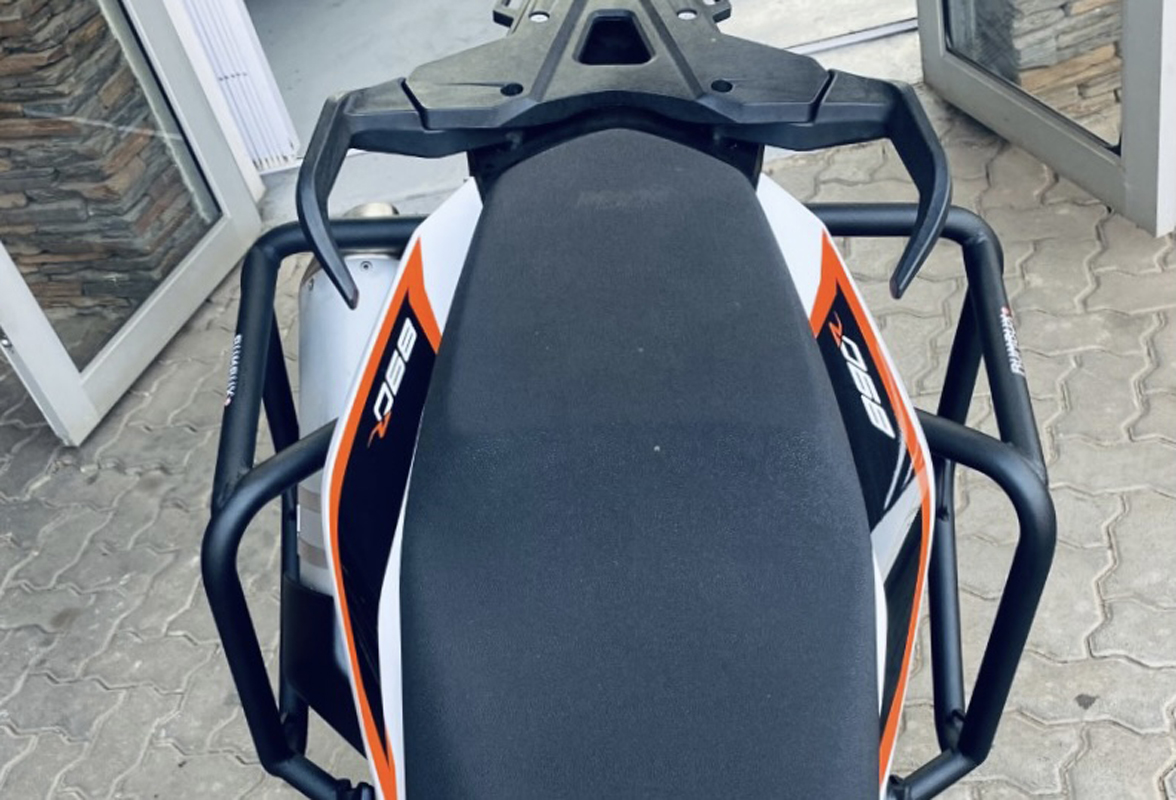
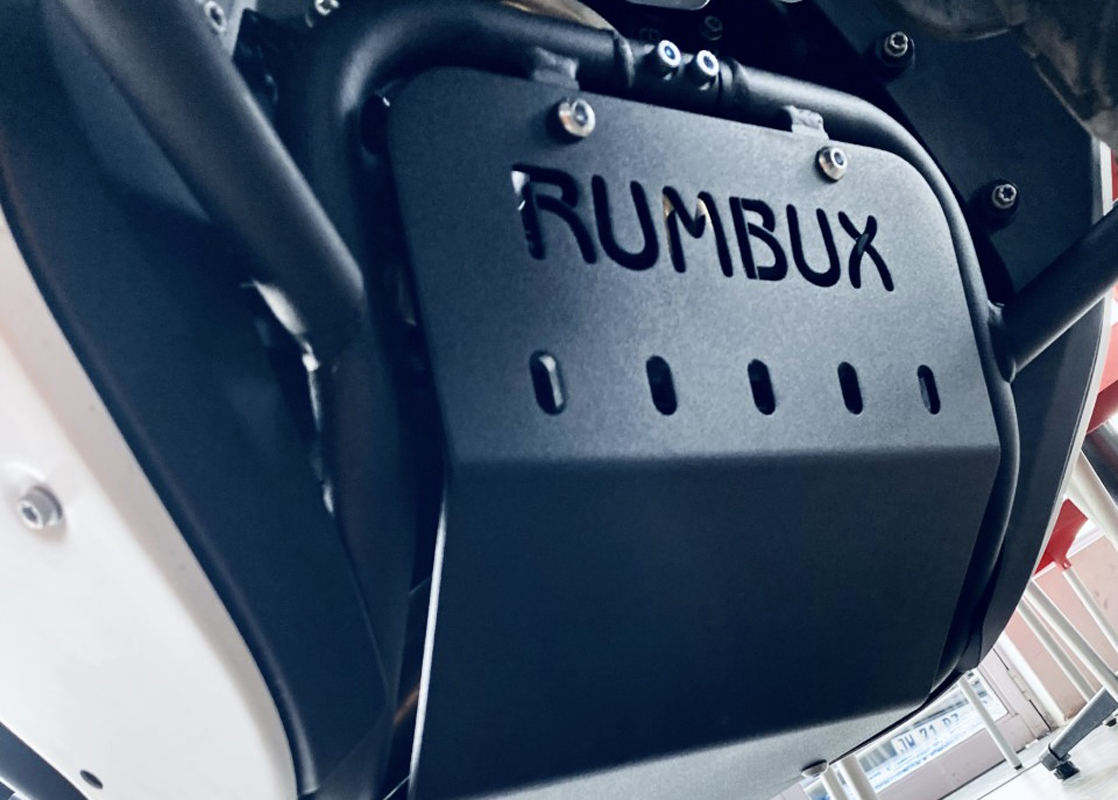
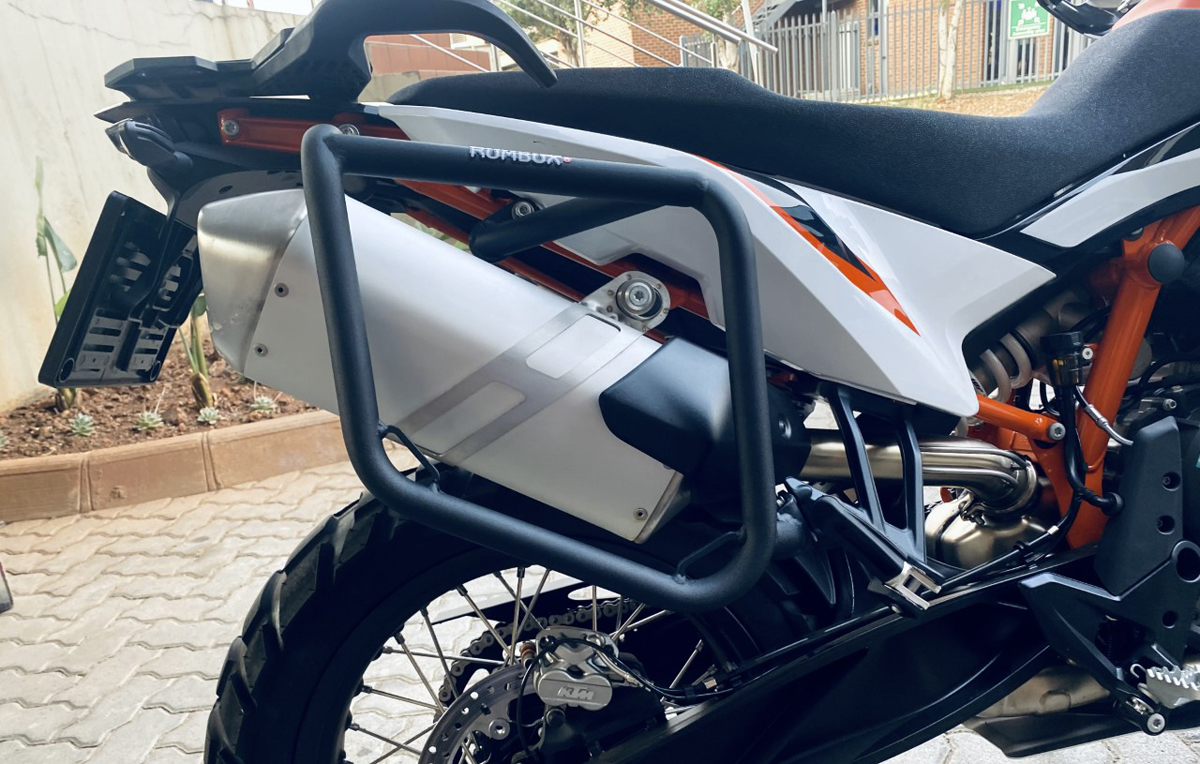
At the recent press and dealer launch for the Honda Quest, I noted with interest that the Honda Africa Twin CRF 1100’s were all sporting crash protection in the form of RUMBUX bars with integrated bash plates. For those of you that may not be familiar with RUMBUX, they are a South African company that over the years have designed and built robust crash protection bars for a variety of Adventure and dual sport bikes. I caught up with the brains behind Rumbux, Deon Lak, to find out what is happening, as well as what’s in the pipeline.
Photo credit: Bjorn Moreira / ZA Bikers
Covid was a huge handbrake on the SA and World economies. Deon took advantage of this downtime to re-invent his business as well as to bring his product line up to date. The upshot of this is a line of products that are really second to none in terms of function and build quality. To operate at maximum efficiency and to deliver a cost-effective product, Deon makes the following products to order:
Full Spec Endurance protection bars: Honda Africa Twin CRF1100L Base (Small tank)-Manual & DCT (Upper & engine crash bars with an integrated skid plate)
Full Spec Endurance protection bars: Honda Africa Twin CRF1100L Adventure Sports-Manual & DCT (Upper & engine crash bars with an integrated skid plate)
Full Spec Endurance protection bars: Husqvarna 901 Norden (Upper & engine crash bars with an integrated skid plate) and Endurance rear protection / Pannier bars
You don’t have to be a motorcyclist to have heard about the Indian motorcycle manufacturer called Bajaj. Bajaj has been servicing the needs of the delivery market across the African continent for years, selling more than 5 million units in Africa in the last 10 years. Another important thing to note is that Bajaj Auto, the motorcycle division, is just one of the many divisions run by the Bajaj group. Focusing on the motorcycle division, they have grown and built their company over the last 70 years and have now become the world’s fourth-largest two-wheeler manufacturer and the largest three-wheeler manufacturer.
There’s no denying the fact that Bajaj is a juggernaut in the motorcycle industry with a big focus pointed in the direction of the delivery market across the world. Although very focused on the delivery space, Bajaj has also been in charge of building engines and motorcycles for many European and Japanese motorcycle companies over the years. This surely gives buyers peace of mind when investing in their products—knowing that quality and engineering are at a high and trusted level.
Photo credit: Bjorn Moreira / ZA Bikers
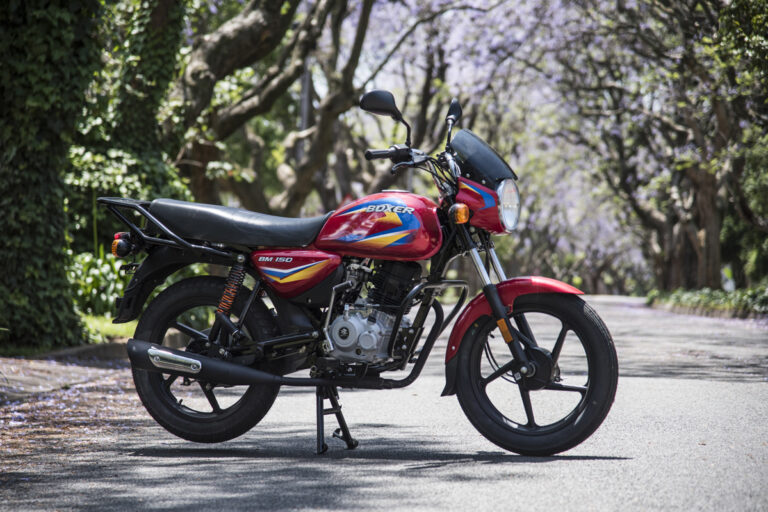
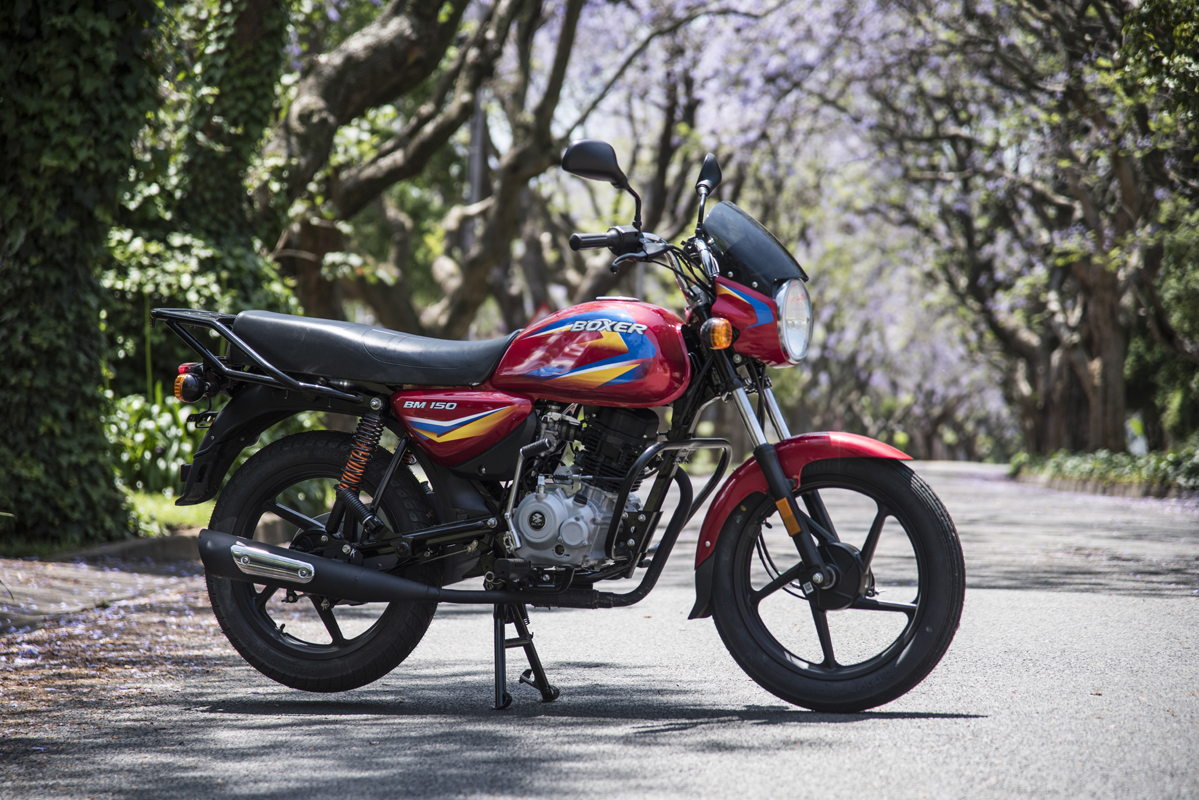
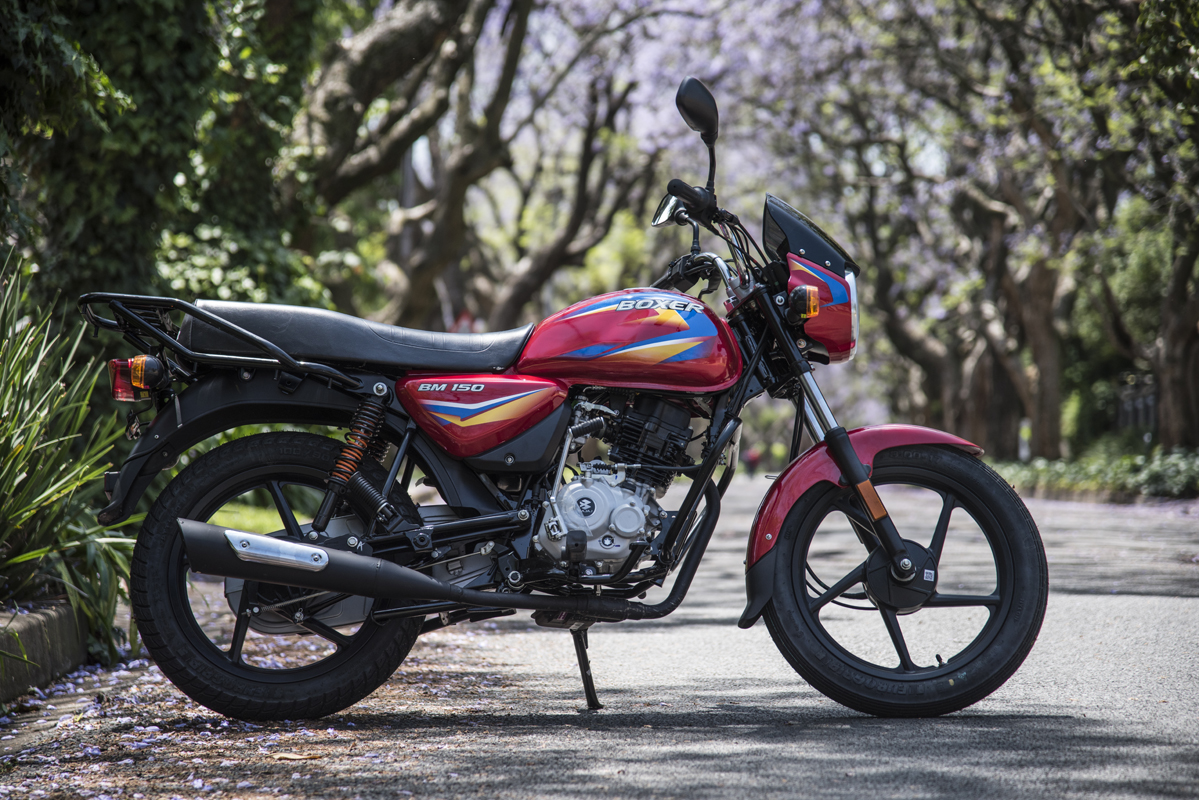
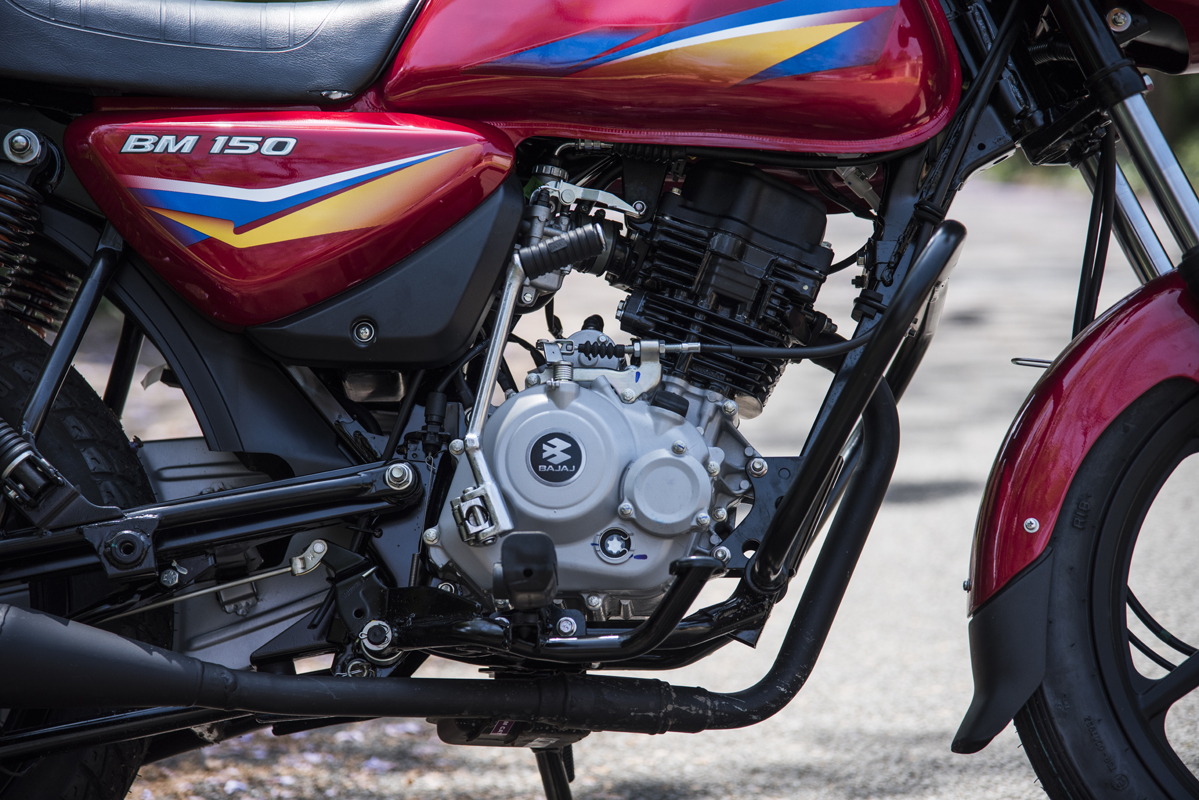
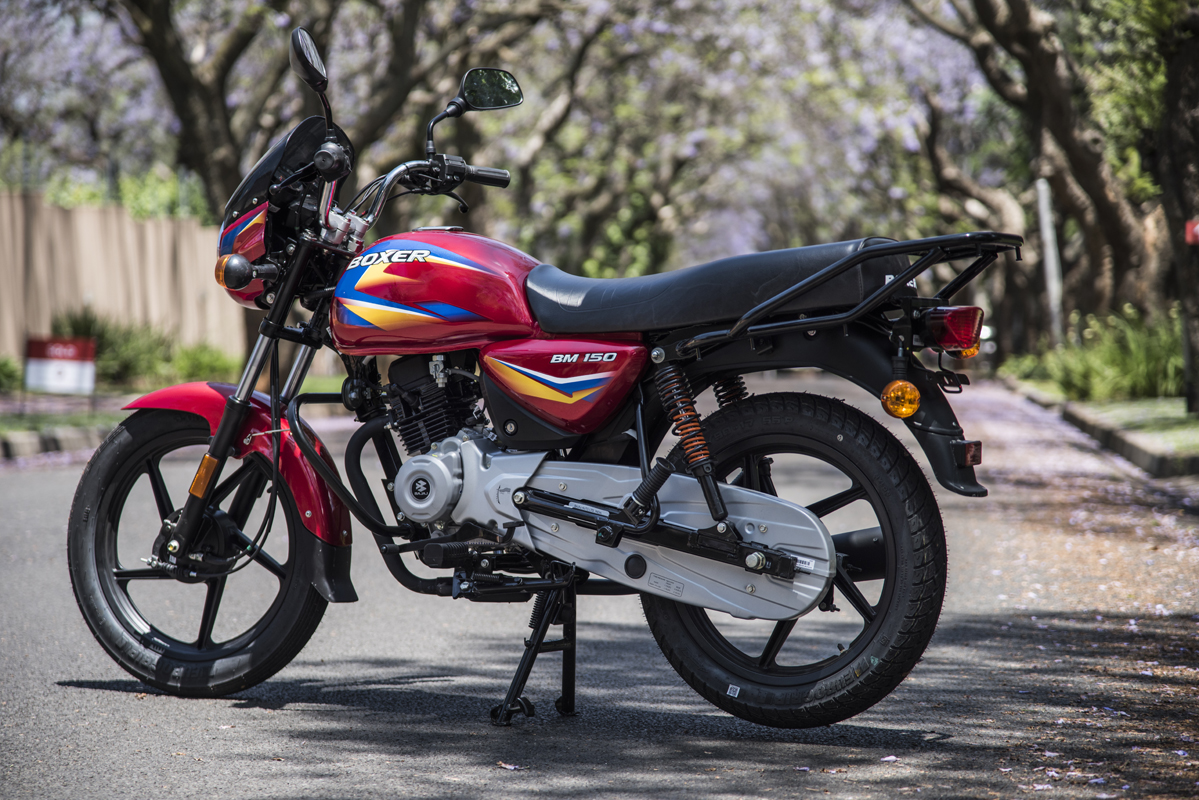
So, who are we dealing with in South Africa? They go by the name of TransRev Bajaj; a passionate team who are the sole authorised distributor for the South African region. After slowly growing their footprint in SA thanks to the Qute (four-wheeler), the tuk-tuk RE4s and the CT125, they are now ready for the big leagues. Ready to take on the competition, they contacted us to give their new player a test. Welcome to the Bajaj Boxer 150…
The Boxer 150 enters its way into an already very competitive delivery market with importers selling their workhorses like fresh bread at a bakery. However, this does not faze Bajaj one bit, with the Boxer bringing its years of experience from upper Africa and India to the growing South African market. With that said, let’s turn the key.
Photo credit: Bjorn Moreira / ZA Bikers
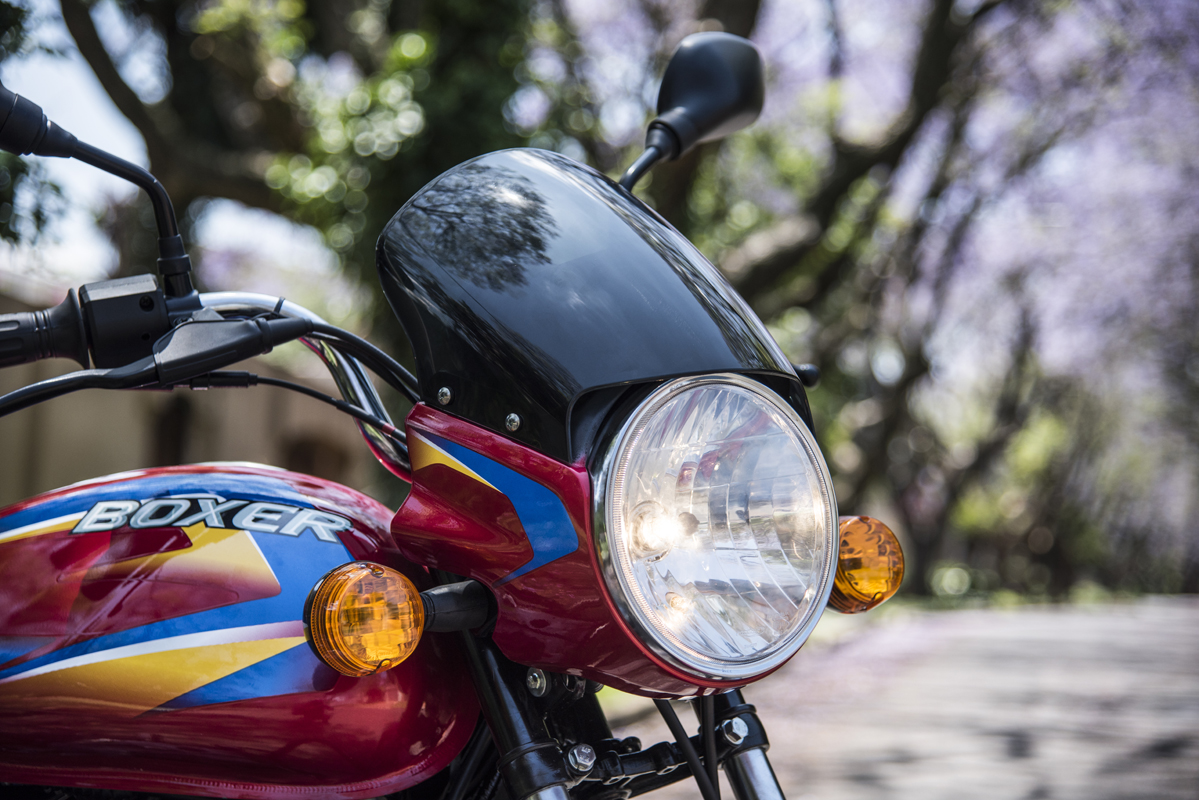
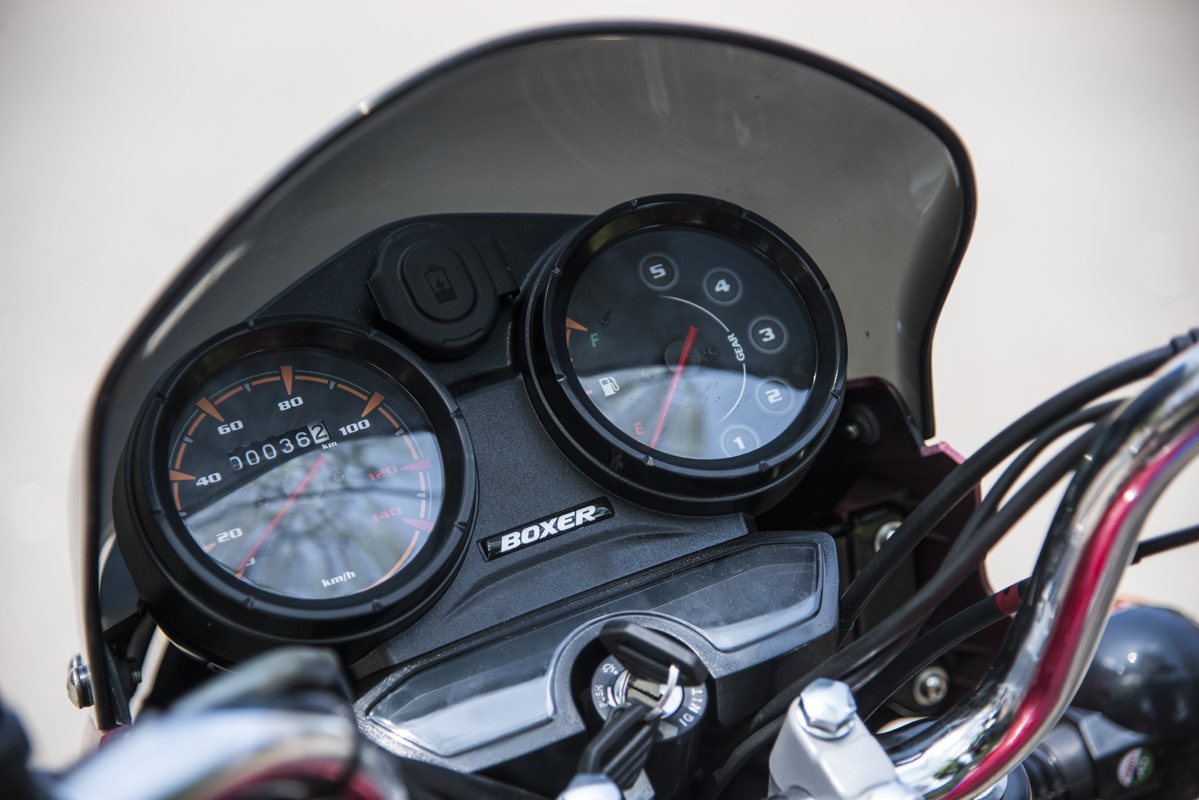
So, what is the Bajaj Boxer 150 all about? The Boxer is a born and bred city dweller with drum brakes at each end, plush but well-damped suspension, a fully enclosed chain guard, standard crash protection, centre stand, USB charge port, gear indicator and a 145cc single-cylinder motor. The Boxer is as simple as it gets when it comes to “form vs function” leaving you with a satisfactory feeling once you’ve taken a step back and considered everything.
Photo credit: Bjorn Moreira / ZA Bikers
The Boxer fires up from a cold start with ease (considering it’s a carbureted motorcycle) and idles with little to no vibrations—you can hardly tell the bike is running. Run the little 145cc single-cylinder motor does, eking out 12 hp at 7,500 rpm and 12.1 Nm of peak torque at 4,500 rpm, not much parked next to a Panigale but right up there with its competitors. On the road you find yourself tapping through the smooth 5-speed box with enough low-down torque to short shift and lug off idle speeds without any hesitation. The Boxer excels at inner city speeds where 80 km/h and below are expected. With that said, the Boxer is more than capable of doing the odd bit of highway travel too.
Photo credit: Bjorn Moreira / ZA Bikers
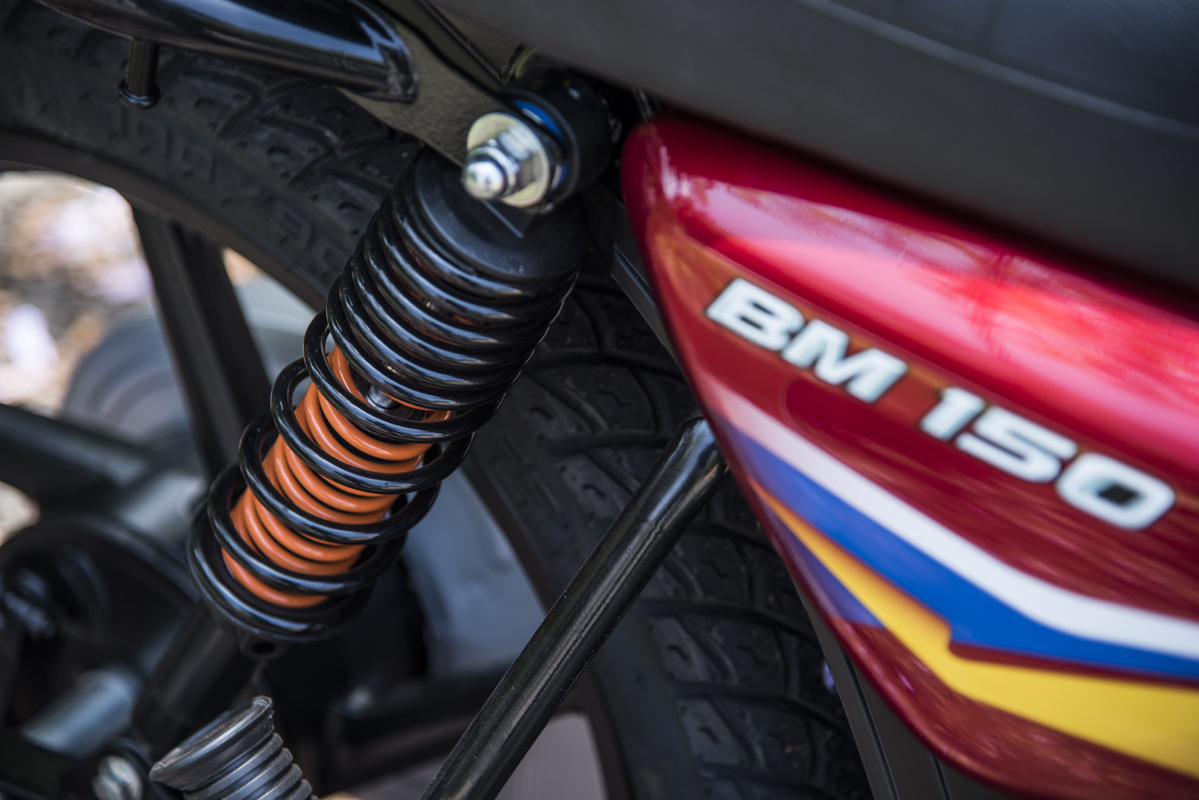
Bad road conditions, congestion and any other form of downtown roughness is where the Boxer comes in handy. The Boxer’s lightweight is complimented by a well-mannered suspension setup, with the front forks working well for budget chaps and the rear SNS suspension double spring taking care of the rest. The rear suspension compared to the comp may seem stiff, but add a box and some weight to the equation and it all starts to make sense. The only thing that I wish the Boxer came equipped with was a front disc brake, as I felt the brake pressure and stopping power could have been a bit better.
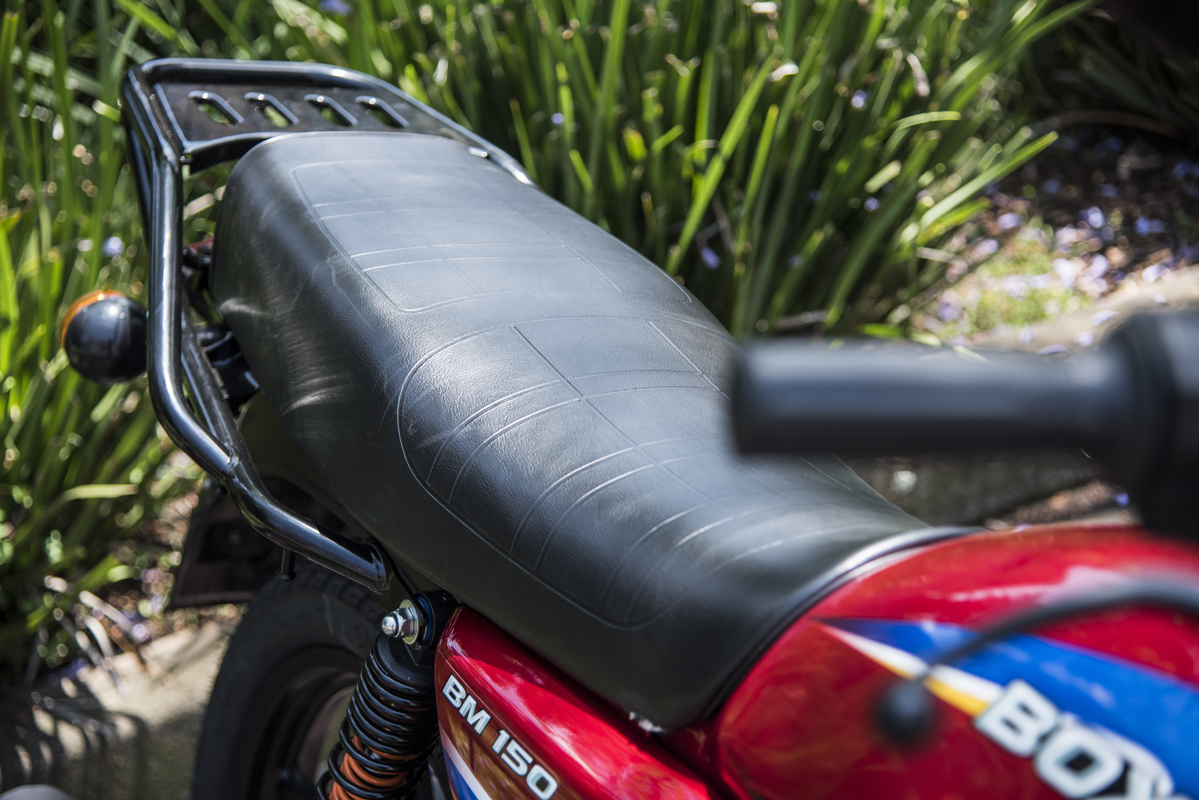
Photo credit: Bjorn Moreira / ZA BikersA long day in the cockpit is made bearable by a comfortable seat, narrow 11L tank, rubber footpegs and low handlebars. When ridden at moderate speeds you can comfortably see a return of 50 km/L, which works out to 550 km on a tank filled with R247 of fuel. If you take your average Uber Eats rider’s 150 km daily trip into consideration, that’s just under R70 a day on fuel. Crazy right?
Photo credit: Bjorn Moreira / ZA Bikers
Bajaj makes it even more of a no-brainer for the micro-enterprises and micropreneurs by providing a ‘rent to buy’ payment option at affordable instalments of R650 per week for 18 months (this includes two free services).
The Boxer comes with a 20,000 km / 2 years warranty plan that allows riders to service their own fleet, as long as they keep to the service intervals (5000 km) and use Bajaj servicing parts, their warranty will stay intact for the duration of the 2 years. A factory-fitted box and bracket are available for the Boxer at an additional price of R3000.
Photo credit: Bjorn Moreira / ZA Bikers
So, what is it going to cost you? The Bajaj Boxer 150 doesn’t come in cheap, nor does it come in at a premium, but rather a mid-range price of R22,900. The Boxer offers a lot of value at its price, with lots of room for riders to have flexibility when servicing and again a quality motorcycle backed by a juggernaut so parts shouldn’t be an issue. TransRev Bajaj has said that they should also have around 30 dealers by next quarter.
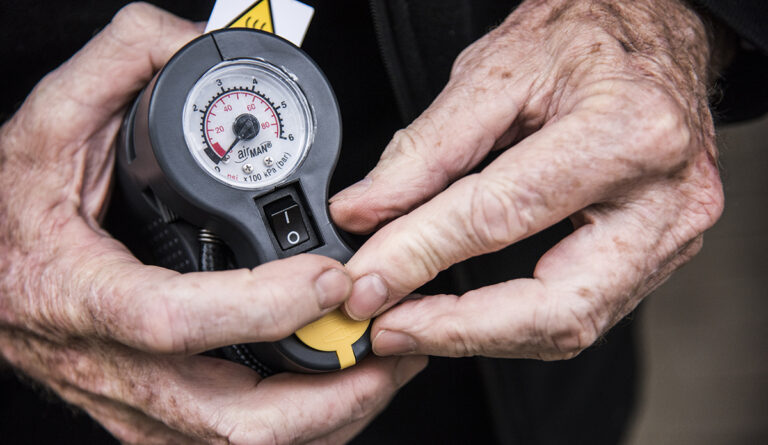
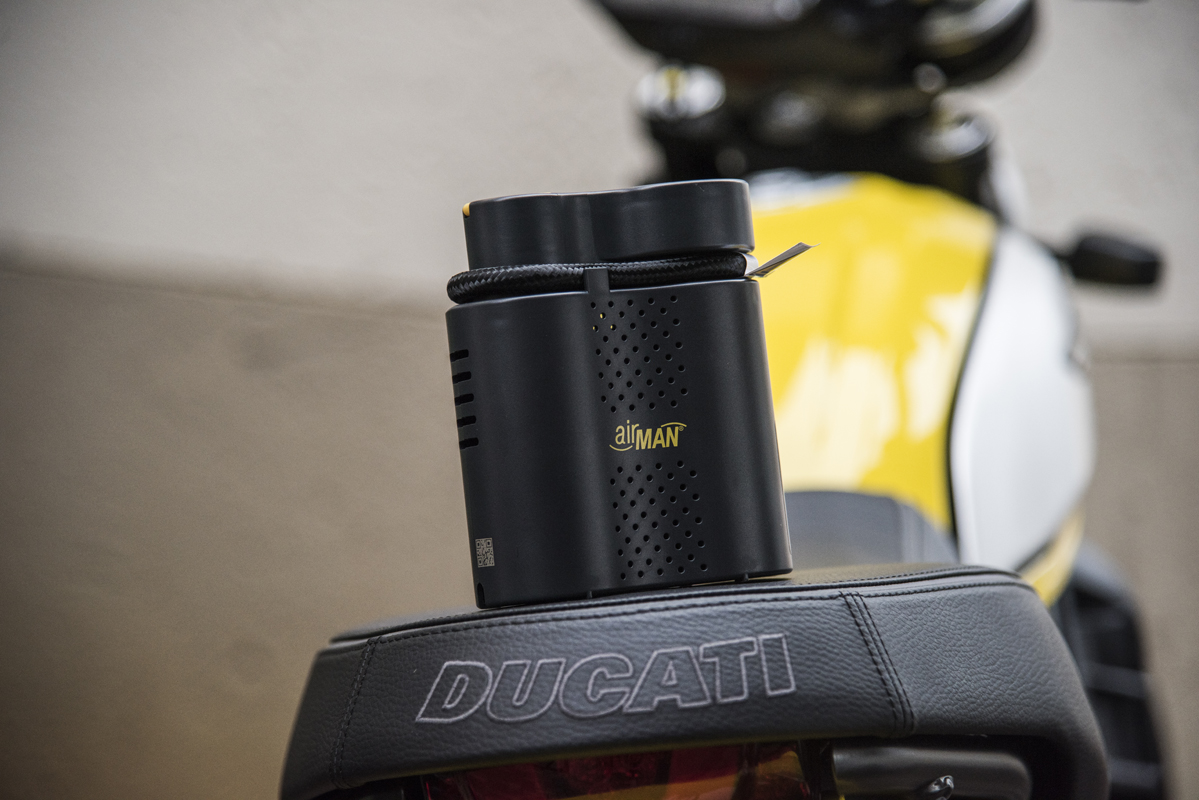
When Albert from GoGravel asked me to put the Airman Mini Compressor to the test, I was quite intrigued. The fact is, with the profusion of Adventure bikes out there, as well as almost all road bikes running tubeless tyres these days with plug-and-play convenience, the ability to pump flat tyres anywhere is almost essential. Puncture repair kits come with ‘bombs’, tiny cylinders filled with compressed air that screw into a tyre valve adaptor. This is all good and well, but if you are unlucky enough to have a few punctures on an extended trip, or even have a slow leak, then this is where a small mobile compressor comes into its own. Knowing that you can pump your tyres will bring you peace of mind all on its own.
I have had the Airman Tire Inflator for a while now and, as the saying goes, “the road to hell is paved with good intentions”, I have not made work of testing it. It seems rather silly to deflate a perfectly good tyre and then pump it up. Almost not authentic if you will. So when Bjorn came over to my place to download some photos and on leaving, saw a screw impaled in the back tyre of his Yamaha XSR900, a wicked part of me thought “hee ha, now’s the time for the Airman to strut its stuff!” I whipped out my puncture repair kit and we removed the screw, reamed the hole and inserted a worm plug into the now totally flat tyre.
Photo credit: Bjorn Moreira / ZA Bikers
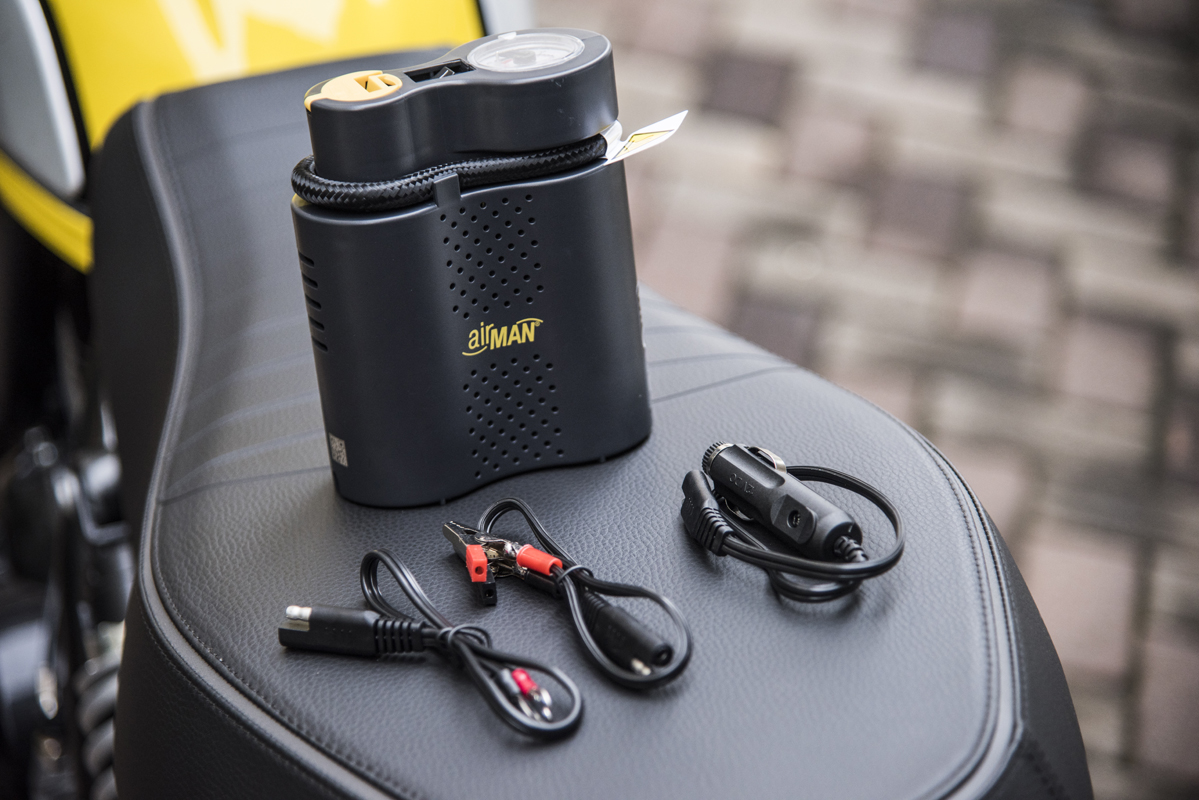
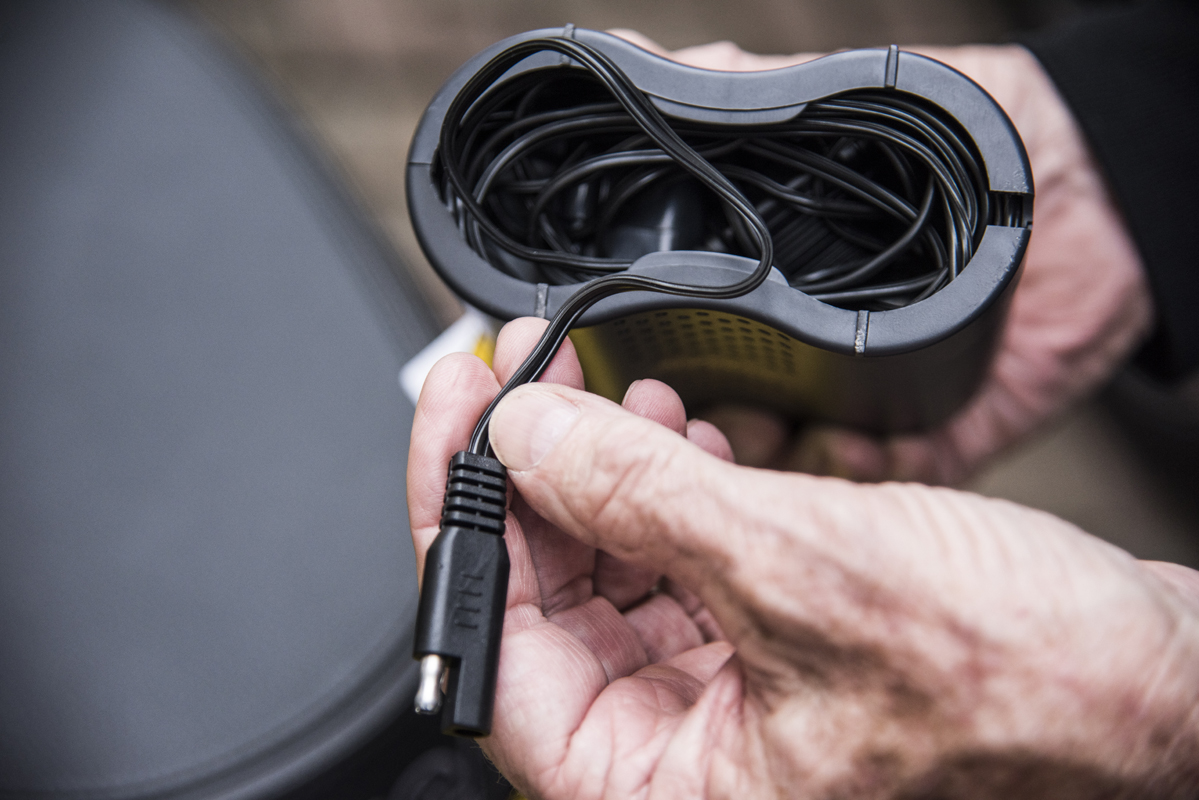
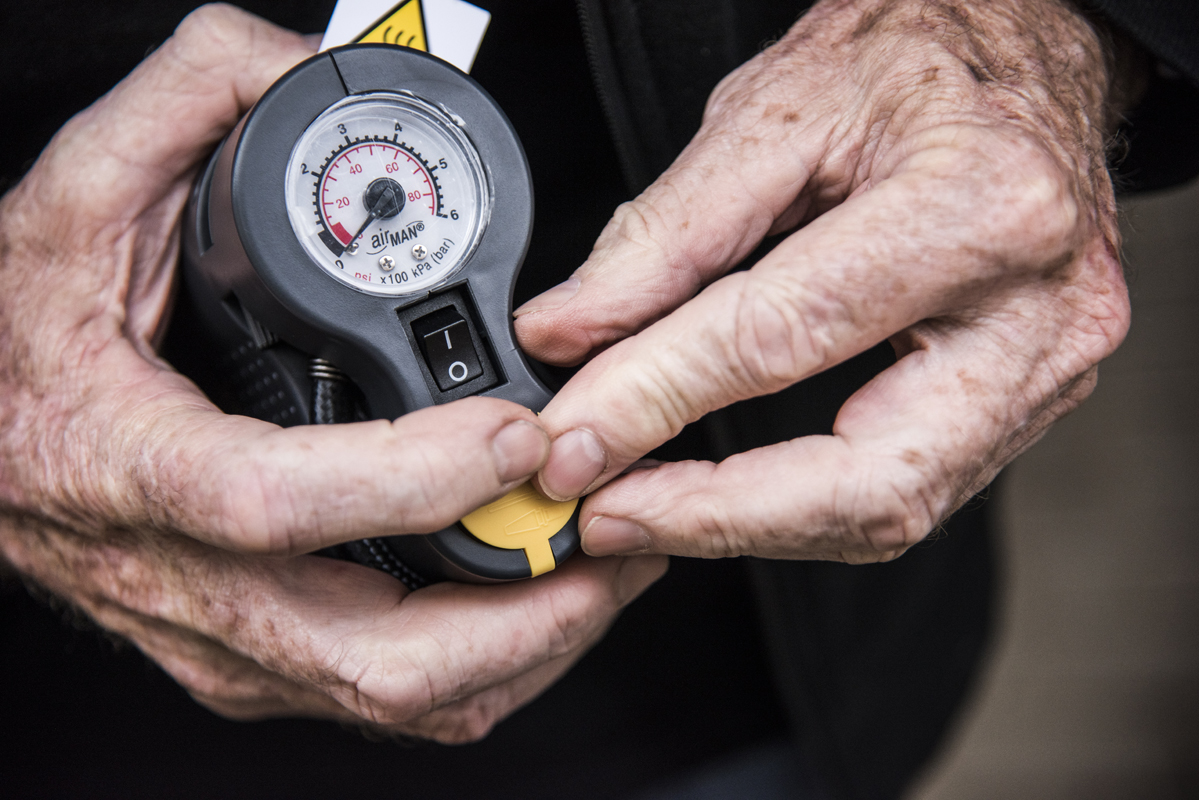
Inspecting the Airman, I was immediately impressed by a number of features. A lot of thought has clearly gone into its design. There are three separate power cables. One that plugs into a regular cigarette lighter socket, another that can be permanently affixed to your battery terminals (which can also be used with many battery chargers), and a third that connects with crocodile clips. Powering up the Airman is thus fast and easy.
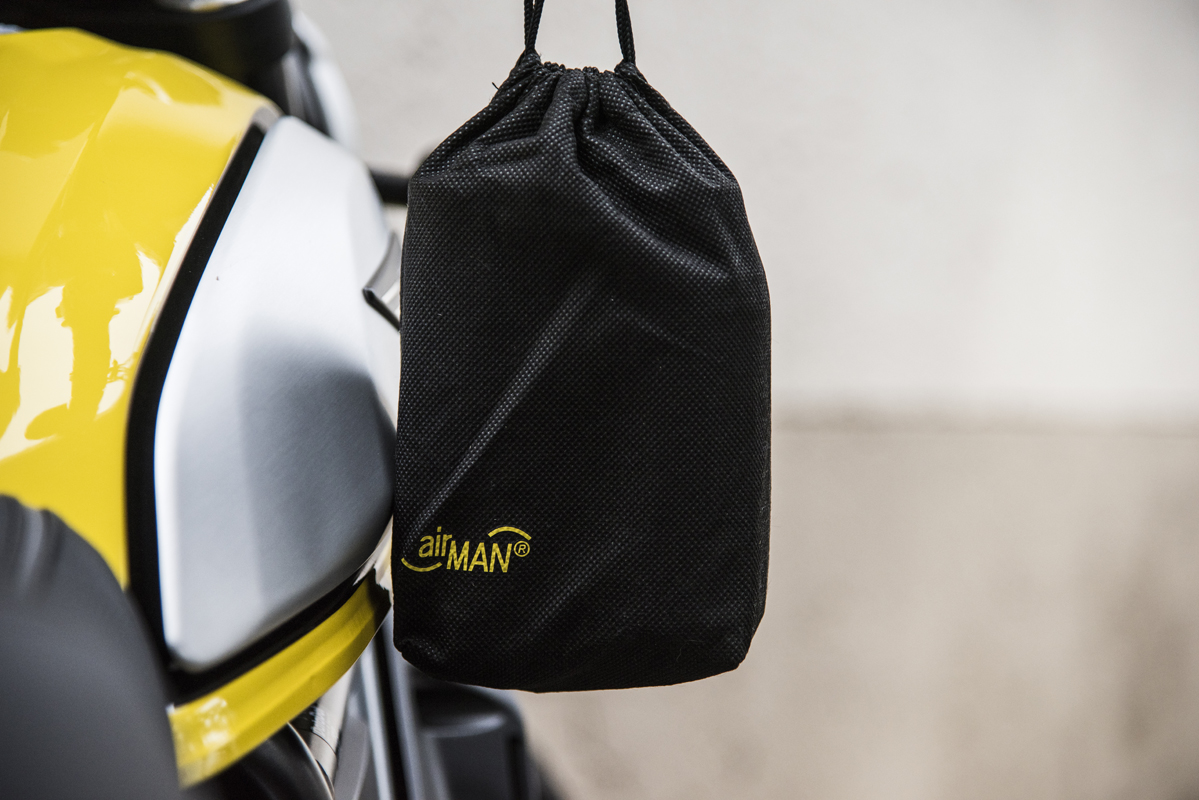
The unit itself measures a tidy 14,5x12x6 cm. It comes in a neat bag which keeps all the bits together. A recess in the bottom houses the power cable which is fuse-protected and measures over 3 m when attached to the desired adaptor, making it easy to plug in and get the compressor close to the tyre that you are pumping. The pipe that screws onto the valve is housed in a recess on the top of the unit and extends 26 cm, making it easy to attach to the wheel that needs inflating.
Photo credit: Bjorn Moreira / ZA Bikers
Also stored under a cap at the top of the unit are adaptors for bicycle tyres, balls and air mattresses. Clever! No more shlepping your (or the kids’) bikes to the garage just to pump the tyres. Also at the top of the unit are the on/off switch and a clearly legible gauge calibrated in psi and kPa (bar). The size is such that it literally fits into a corner of your top box or pannier.
With the puncture repaired, I attached the cigarette adaptor, plugged it into my car standing in the carport, which I could reach easily thanks to the generous length of the power cable, and started the car as per the instructions which come with the Airman, screwed it onto the tyre valve and switched the compressor on. 4 minutes later the tyre was at 2,5 bar. Sorted. Typically, these compressors generate significant heat in the pipe, so care should be taken when unscrewing it. In no time I could pack it up, pop it back in its bag and all was good.
Photo credit: Bjorn Moreira / ZA Bikers
I cannot, for obvious reasons comment on the longevity of the unit, however, if you stick to the instructions and use it when required to inflate or adjust tyre pressures, I see no reason why it won’t deliver years of service. The construction is robust and cleverly designed to be compact yet functional. This is really an essential piece of kit for any touring motorcycle, especially Adventure bikes.
Riders will have no problems lowering tyre pressures when venturing onto sandy surfaces and the like, secure in the knowledge that they can inflate their tyres to road pressures for the tar ride home. Quite likely reducing the chance of capsizing in the dirt. Tyres sometimes also take the rap for delaminating, when in fact it was due to overheating when riders travel at speed on under-inflated tyres. R950 buys you a huge amount of convenience and peace of mind. A solid double thumbs up from me!
Photo credit: Bjorn Moreira / ZA Bikers
Airman Tour Adventure Compressor by GoGravel
For more information on the product featured in this article, click on the link below…
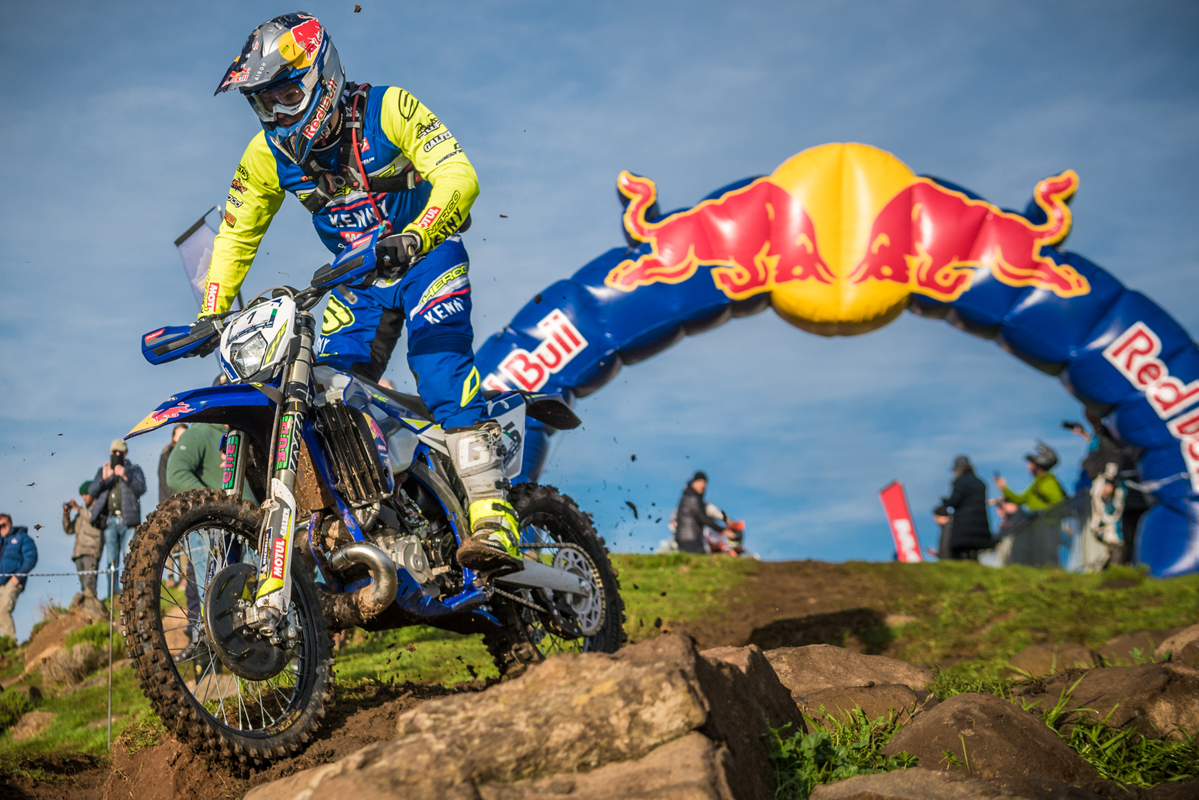
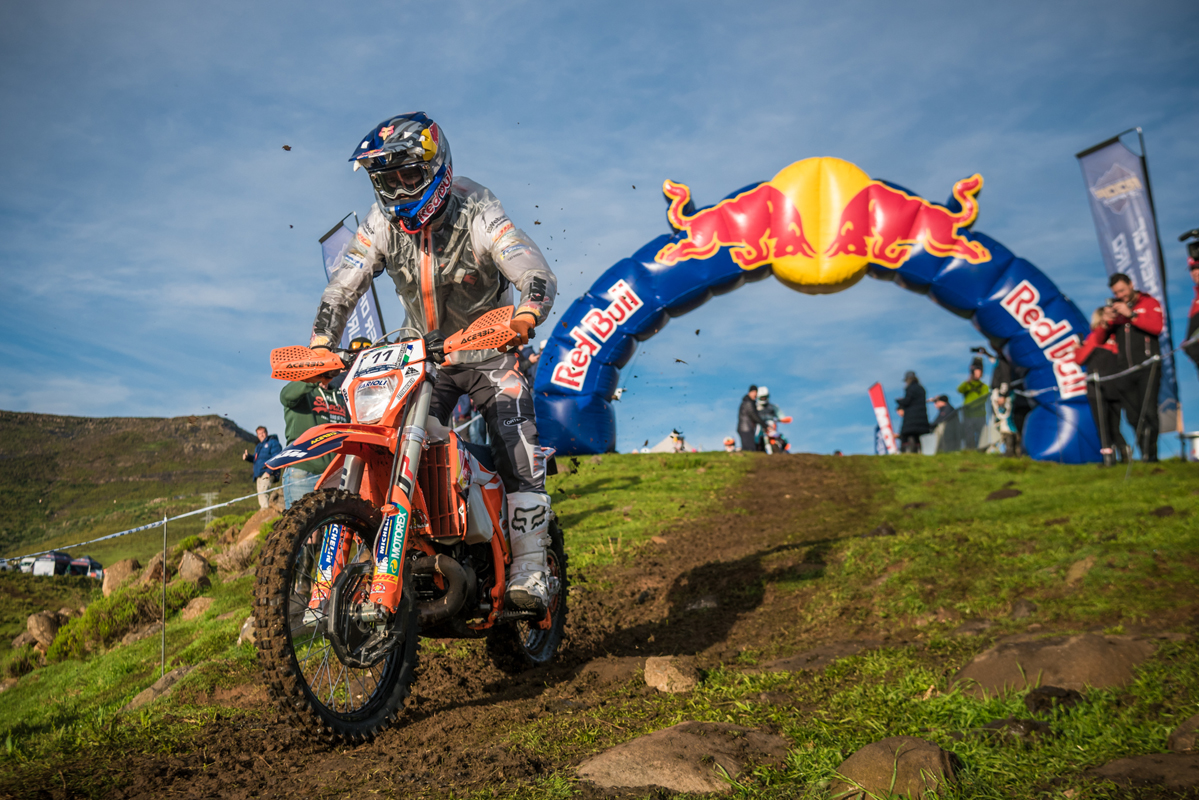
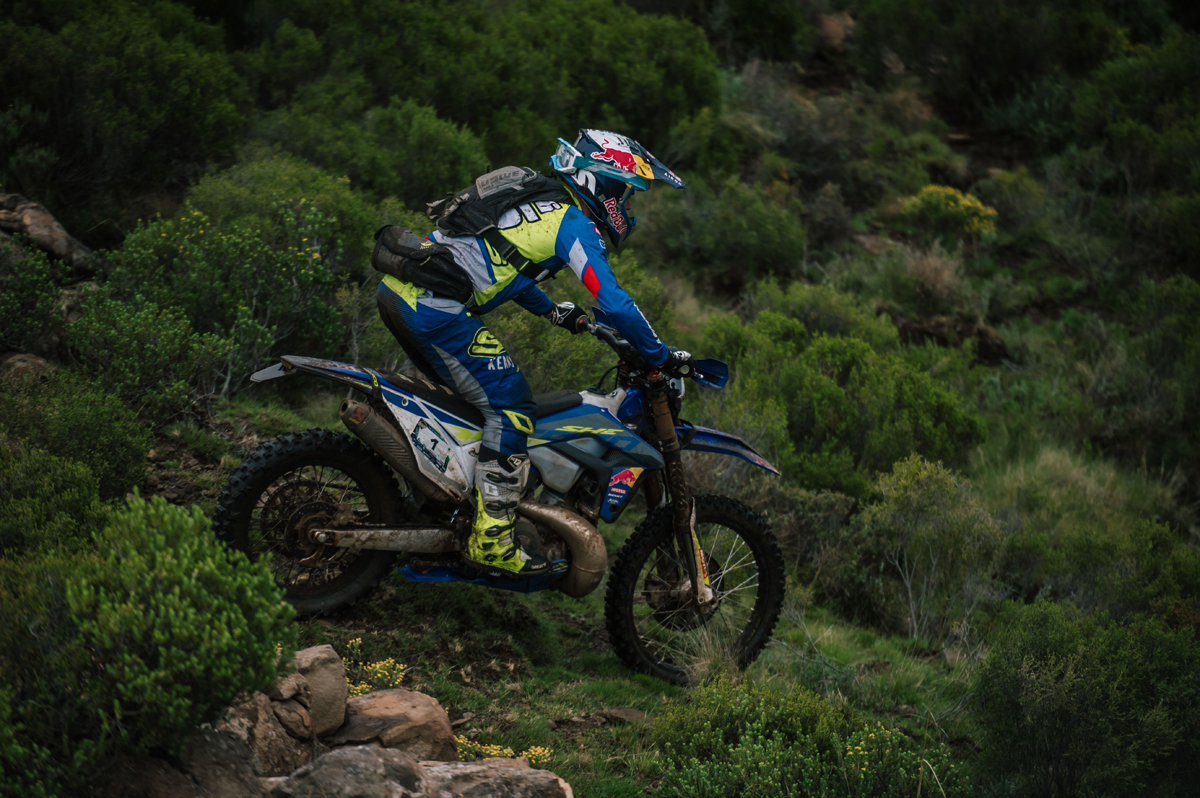
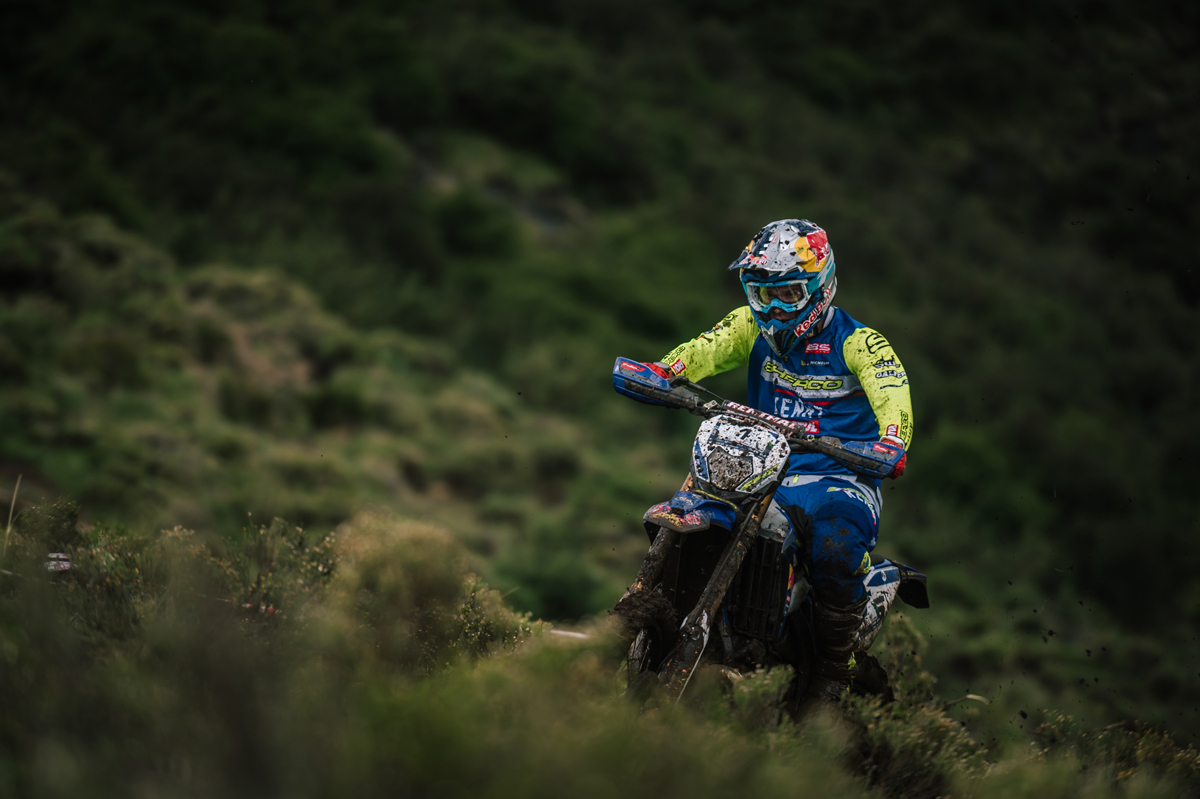
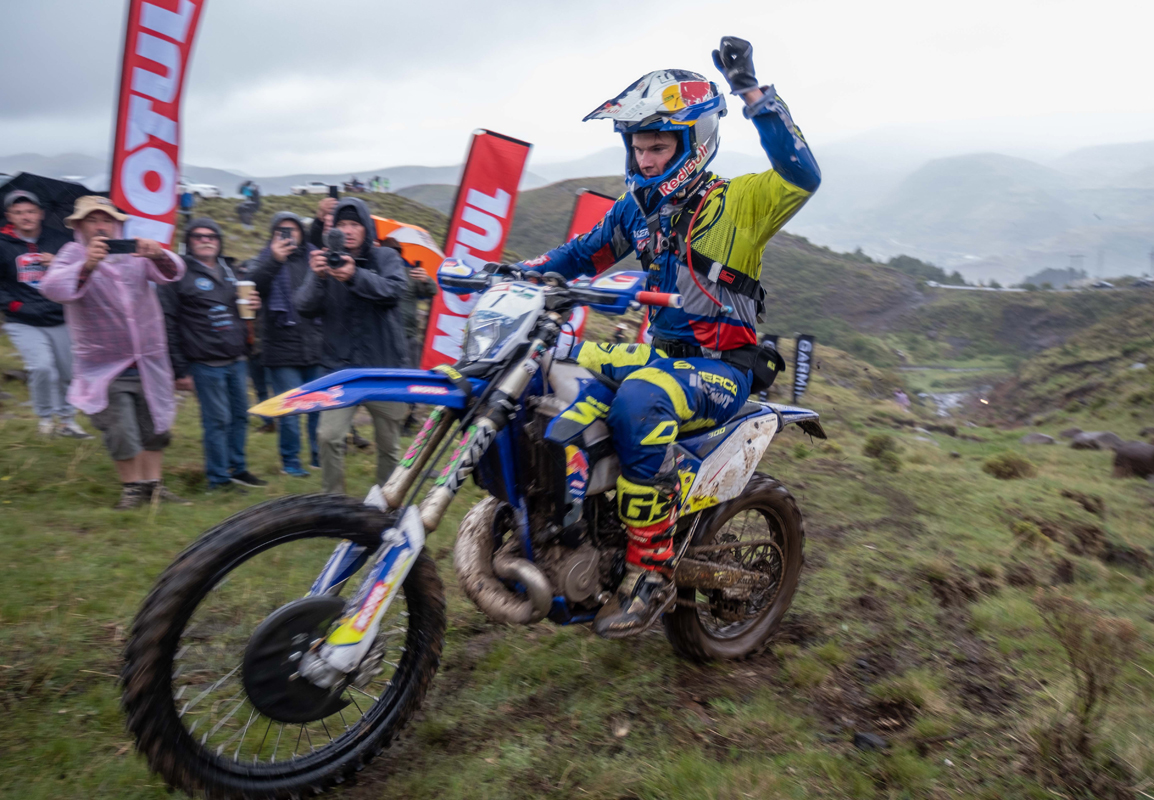
As the overnight leader in the Gold Class, defending champion Wade Young (Sherco Factory Racing powered by Motul), led from the off today to cross the line in first place and notch up his seventh Roof victory. This was no procession, however, as he was pushed hard the whole way by Mani Lettenbichler (Red Bull KTM Factory Racing) and for some part of the morning, Travis Teasdale (ASP Rope Mclarens Racing), who finished second and third respectively.
Photo credit: Black Rock Studio
With heavy overnight rain once again necessitating a change of route due to swollen rivers, conditions, on the whole, were much better than the previous day, with riders able to adopt a more flowing style as the route dried out slightly in the sunshine.
Photo credit: Black Rock Studio
In Wade’s own words, he went out ‘hot’ and tried to ride as smoothly as possible, maintaining his intensity and minimising mistakes so that the riders in pursuit would have to push hard, and take more chances on the unforgiving terrain. By halfway, just after Soldiers Way, he had pulled a 4:30-minute lead but Mani clawed some of that back to just over 2:24 minutes by the finish.
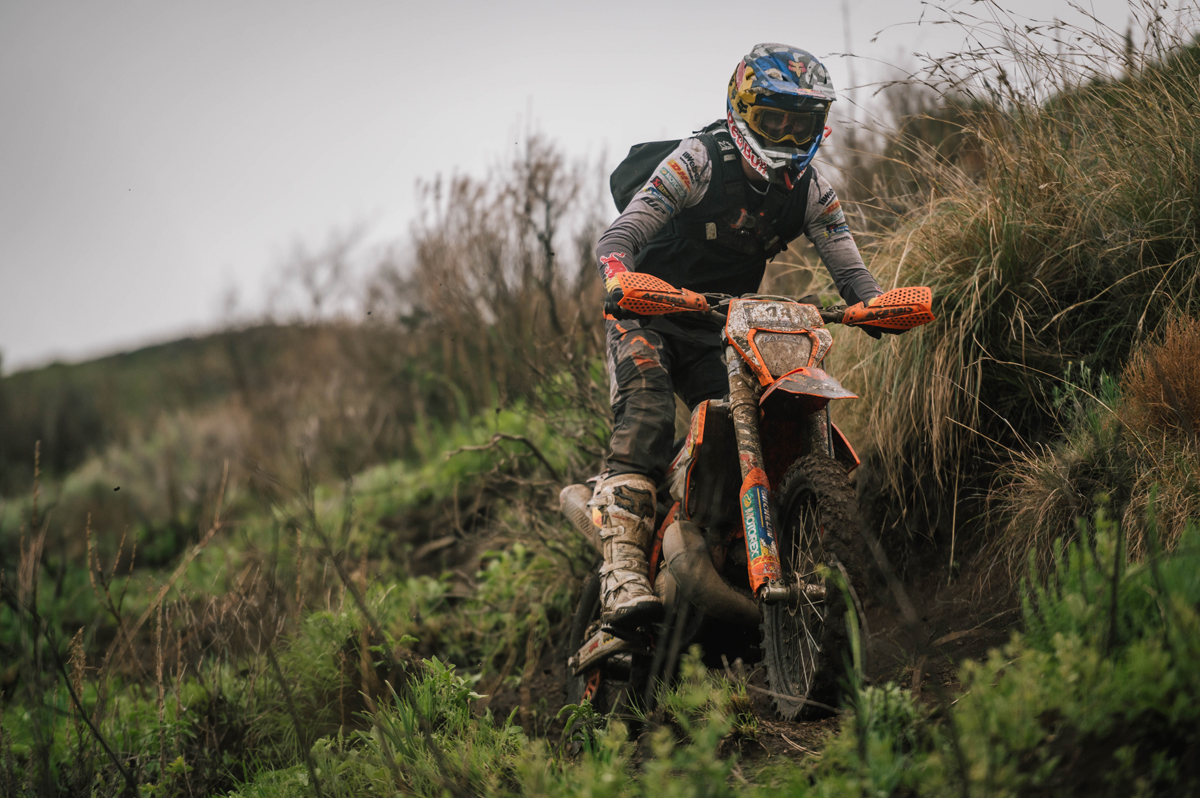
Mani was happy with his result, being only his second Roof, and while he pushed hard in the morning to stay with Wade, he conceded that navigation was a challenge for European riders like him who are not used to the Roof’s race format of pure GPS routes with limited marking. ‘With so many bushes and so many different paths to choose from, reading the terrain around you becomes so important and I’ve definitely learnt a lot for next time.”
Photo credit: Black Rock Studio
This year’s Roof of Africa podium featured not only the 7-time winner of the Mother of Hard Enduro, but the 2022 FIM Hard Enduro World Champion and 2022 SA Extreme Enduro Champion. With seven Roof wins under his belt, Wade is now just two wins away from equalling the all-time record held by Alfie Cox, whose last victory came in 2001.
“The Maloti Mountain weather presented us with some serious logistical challenges this year – even more so than usual,” commented Charan Moore, Roof Race Director and Founder of Live Lesotho. “We’re therefore especially proud that we were able to deliver another classic edition of the Roof, and that we could provide a rewarding challenge for everyone from the world’s top Enduro riders to the weekend warriors in the Iron Class,” he added.
Photo credit: ZCMC
Once again, it was the riders in the Silver Class who had the longest day in the saddle, and this is where perhaps the greatest upset happened. Overnight leader Austin Stuart (Orange County KTM) saw his 25-minute lead whittled away due to technical difficulties, leaving the way open for a trio of young Durban riders to occupy the podium.
Luke Walker (Motorex Alfie Cox KTM) and 16-year-old prodigy Thomas Scales (Ride KTM Durban) both passed Walker’s teammate Daniel Schröder, with Walker’s winning time being 9h32:27 across the three days of the Roof.
Photo credit: Black Rock Studio
The battle for the Bronze Class honours was hard-fought to the end, with Tate Ströh ultimately emerging victorious on one of just four Yamahas in the finishing field of 200 bikes. His winning margin was just over 22 minutes from Stiaan Potgieter (KTM), and Stefan Tolmay (also KTM) in third.
Photo credit: Black Rock Studio
Meanwhile, riders in the Iron Class completed the full route for Day 2 with the winner being Tom Classen (KTM) who led from start to finish. He was joined on the podium by Pieter Kritzinger in second and Jack Brotherton in third, both on KTMs too.
To see the full results of the 2022 Roof of Africa and a gallery of great Enduro racing images, visit the official website HERE.
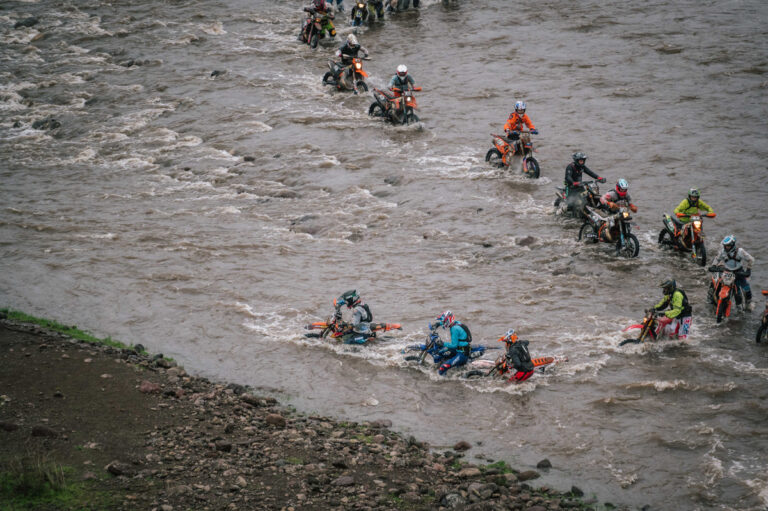
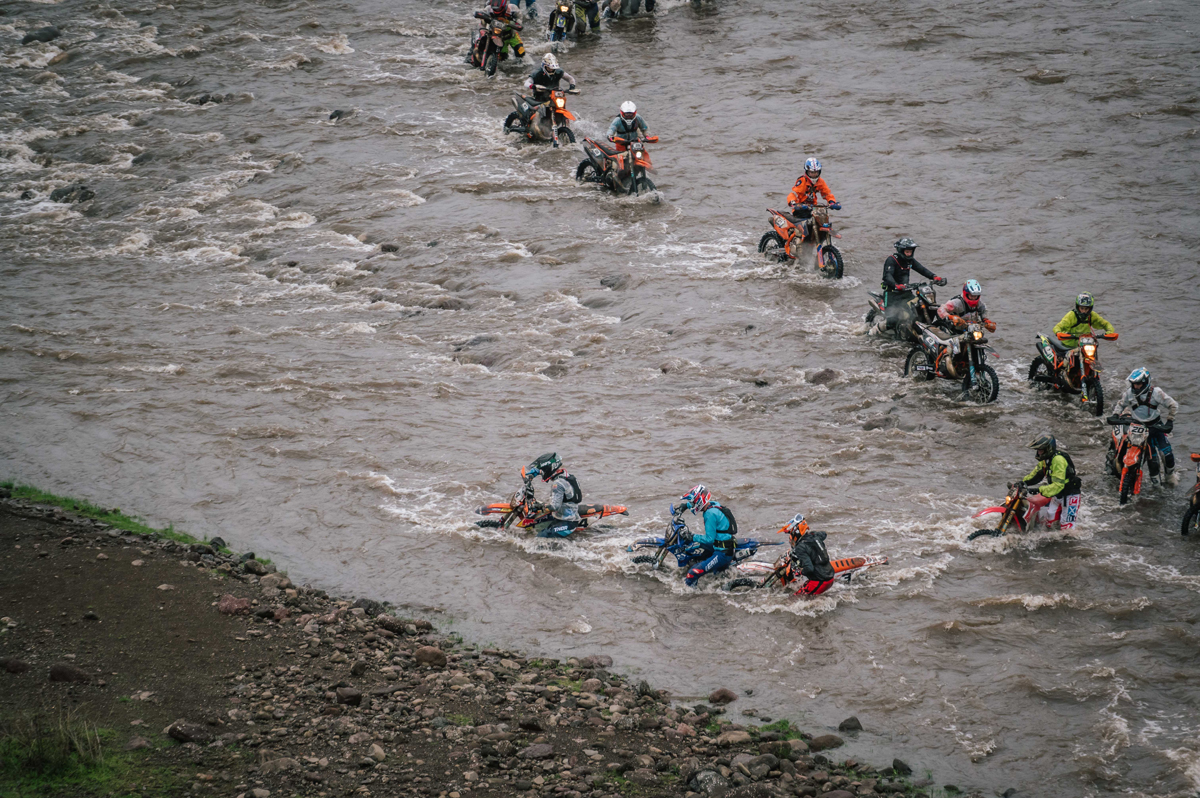
After heavy overnight rain, the organisers of the “Mother of Hard Enduro” took the decision to adjust the routes to limit and, where possible, avoid swollen and impassable mountain rivers. Depending on the class, this involved the routes for Day 2 being shortened by between 50km and 90km.
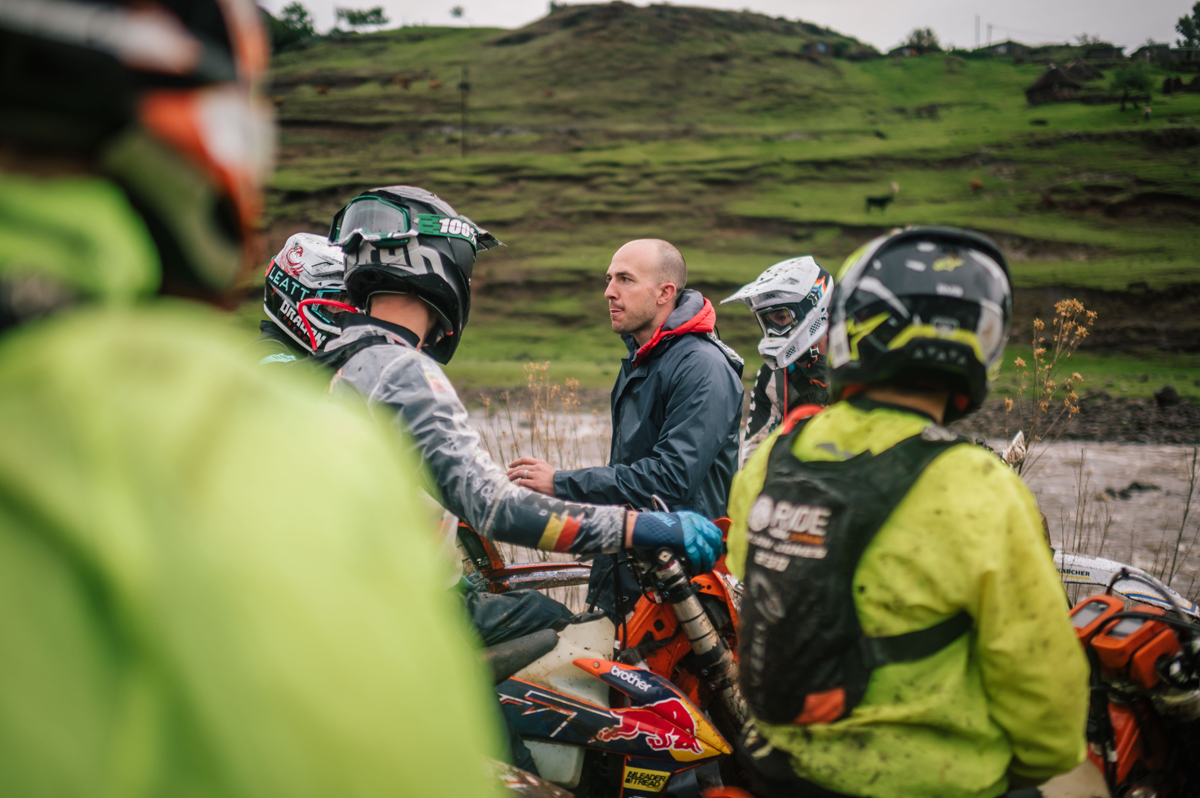
The shorter-than-expected day for the Gold Class riders was not without its share of drama. With no other way around, the first to attempt a major river crossing was Mani Lettenbichler (Red Bull KTM Factory Racing) who succeeded only in drowning his bike, and then had to watch as his rivals left him on the riverbank while he drained the water out of his motor.
Photo credit: ZCMC
However, assertive riding by Lettenbichler saw him catch up to the leading riders before they reached the revised finish line at the DSP. On one of the final downhills, Wade Young (Sherco Racing Factory Team powered by Motul) pulled away to establish a slight advantage over Lettenbichler and Travis Teasdale (ASP Rope Mclarens Racing). These two rivals locked wheels (as well as horns) just as they crossed the line coming into the DSP, to highlight how close the racing was today.
Photo credit: ZCMC
This extreme competitiveness has set the tone for tomorrow’s deciding stage, with three current Champions in Enduro racing going head-to-head for the ultimate prize. According to the provisional results, defending Roof Champion Wade Young holds the lead, but with FIM Hard Enduro World Champion Lettenbichler only two minutes behind and just a single second separating the German rider from SA Extreme Enduro Champion, Teasdale in third, there is everything to ride for tomorrow.
Photo credit: ZCMC
The first Silver Class rider to cross the line, Austin Stuart (Orange Country KTM), has built up a potentially commanding lead of some 23 minutes over second-placed Daniel Schröder (Motorex Alfie Cox KTM), with Schroder’s teammate Luke Walker completing the podium line-up.
Photo credit: ZCMC
Tate Ströh (Yamaha) is the current leader of the pack in the Bronze Class, with Stiaan Potgieter (Husqvarna) 16 minutes behind and Corbin Pape (KTM) a further 7 minutes back.
“Having seen the state of the river crossings on the original route for today, I erred on the side of caution and made some last-minute adjustments to the routes,” explained Charan Moore, Roof Race Director and Founder of Live Lesotho. “We wanted to make sure that we stayed true to the spirit of the Roof, kept all the riders safe, and still gave the fans the Enduro action they’ve come to expect,” he added.
Photo credit: ZCMC
Moore went on to confirm that the final day will be a short, steep route, with plenty of no holds barred ascending and descending – ideal for determining which of the three Champions on the Gold Class podium will be crowned King of the Maloti Mountains. The stage is set for a nail-biting Roof showdown for tomorrow’s final stage.
Photo credit: ZCMC
For more info and the full programme of events, including all the latest results, visit the official website HERE.
Contributor: because we don’t live in India or any of the Asian countries and I’m not a delivery rider.
Editor: Do you like your job?
Contributor: On my way, boss.
Photo credit: Bjorn Moreira / ZA Bikers
OK, so the above might be a dramatisation of the conversation….well, more a complete figment of my imagination, if I’m honest. But it sums up motorcyclists’ attitudes and mentality toward any bike from anywhere east of South Africa. The idea that a small-capacity motorcycle could be anything other than a workhorse is totally alien to many motorcyclists.
Hero might be a new brand to South Africa but the company’s influence on global motorcycling cannot be understated. The figures are simply staggering: around seven million motorcycles are produced every year – that’s more two-wheelers than the second, third and fourth-placed motorcycle manufacturers combined! In the second quarter of 2018, 2.1 million motorcycles were sold! Since the company was formed in 1984 as a joint venture between Hero Cycles India and Honda of Japan, more than 100 million motorcycles have been built.
Photo credit: Donovan Fourie
What makes the figures so impressive is that the vast majority of these motorcycles are sold in India but now, with the dissolving of the partnership with Honda, which prevented Hero from exporting to markets other than Bangladesh, Sri Lanka and Nepal, Hero Motor Corp is making inroads to international markets, including South Africa. Hero South Africa’s operation might be small beer compared to India, but momentum is gathering as the qualities of Hero become increasingly apparent, not only to fleet managers but also to the average motorcyclist on the street. Having ridden the latest XPulse 200, I am beginning to understand why.
We live in interesting times, where living costs, including fuel prices, are rising relentlessly. Motorcycling might be seen as a playful pastime for the wealthy but, more and more, the logic of running a small motorcycle for practical purposes is getting ever more difficult to ignore.
Photo credit: Bjorn Moreira / ZA Bikers
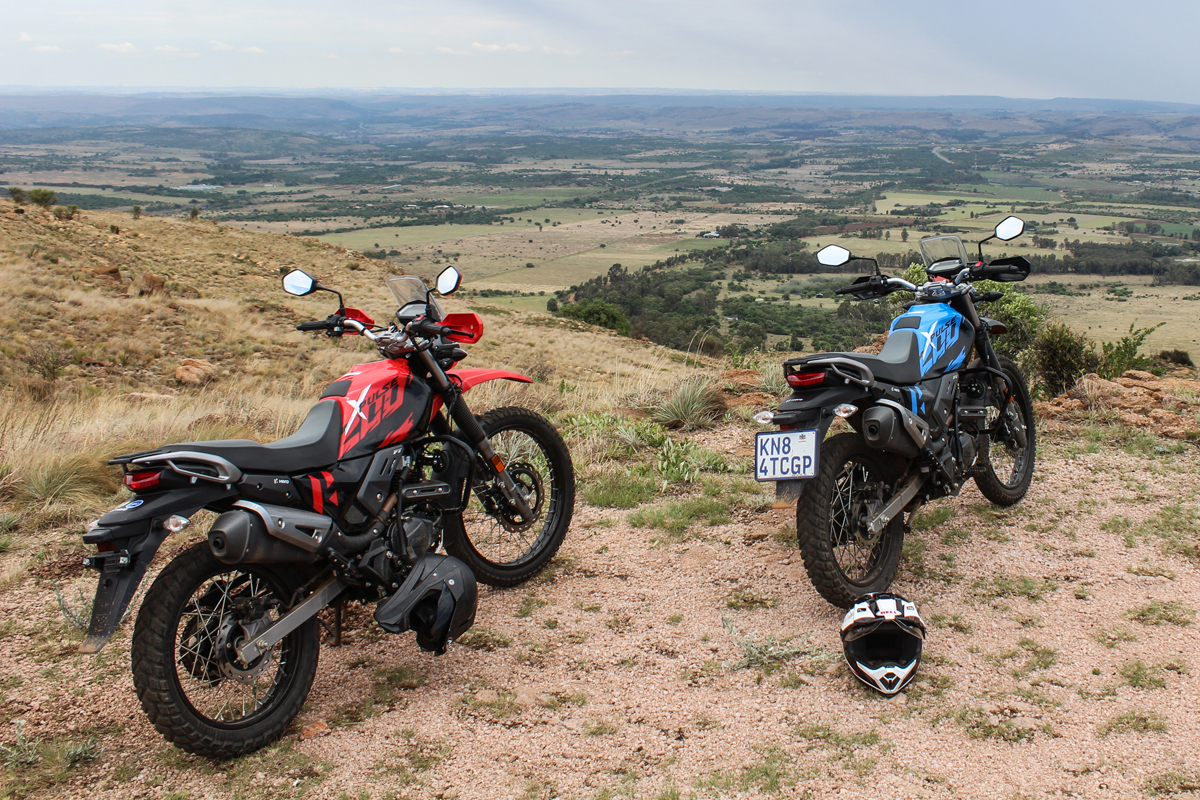
Another barrier that has to be broken down, is the idea that small-capacity motorcycles are dull and boring. Certainly, alongside a near-R400,000 adventure, sports or cruiser bike, the sub-R50,000 Hero XPulse 200 looks underwhelming, with a specification that hardly screams ‘luxury lifestyle’. But that’s missing the point. This is transport we are talking about here, in all its mundane practicality.
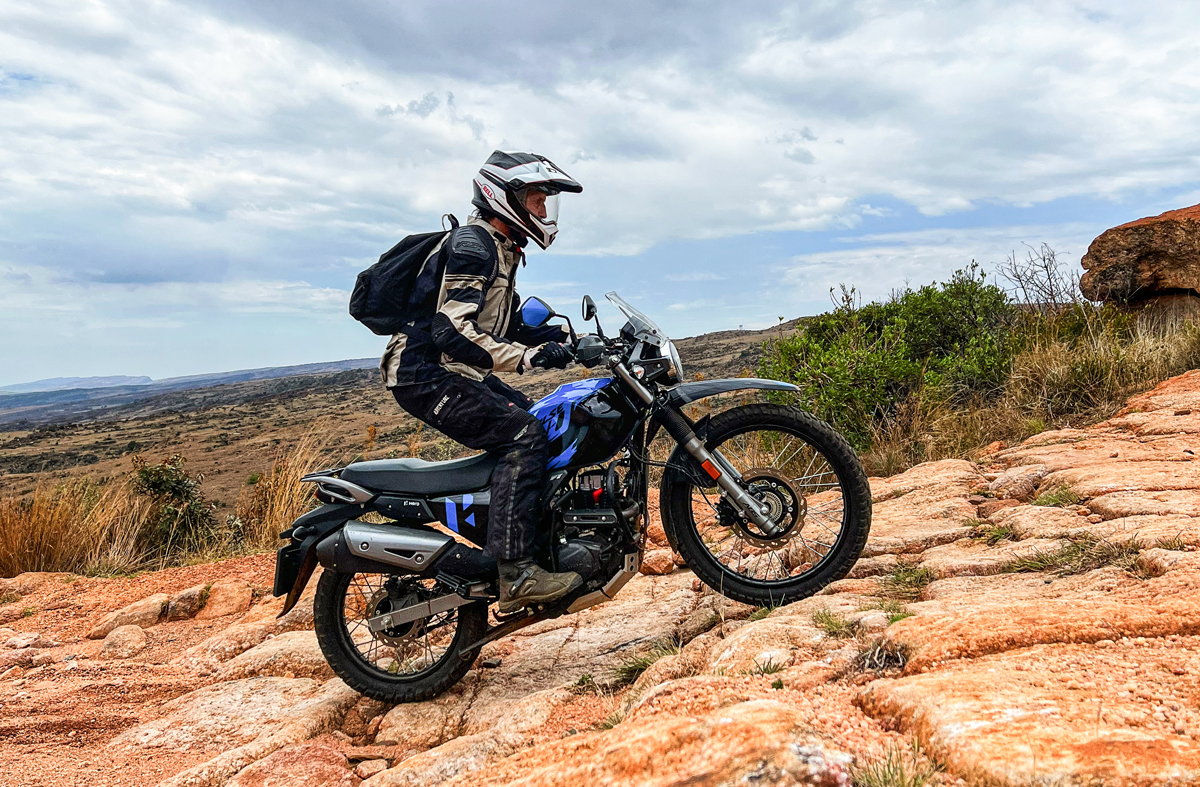
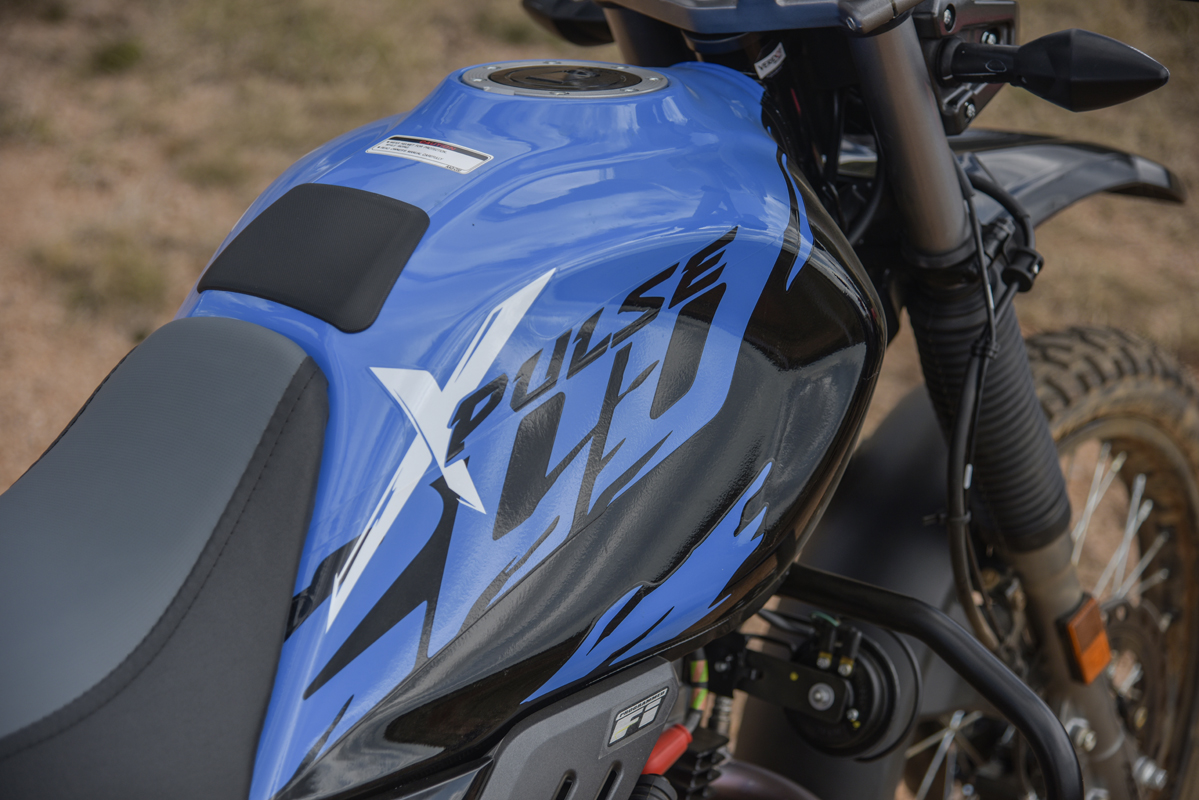
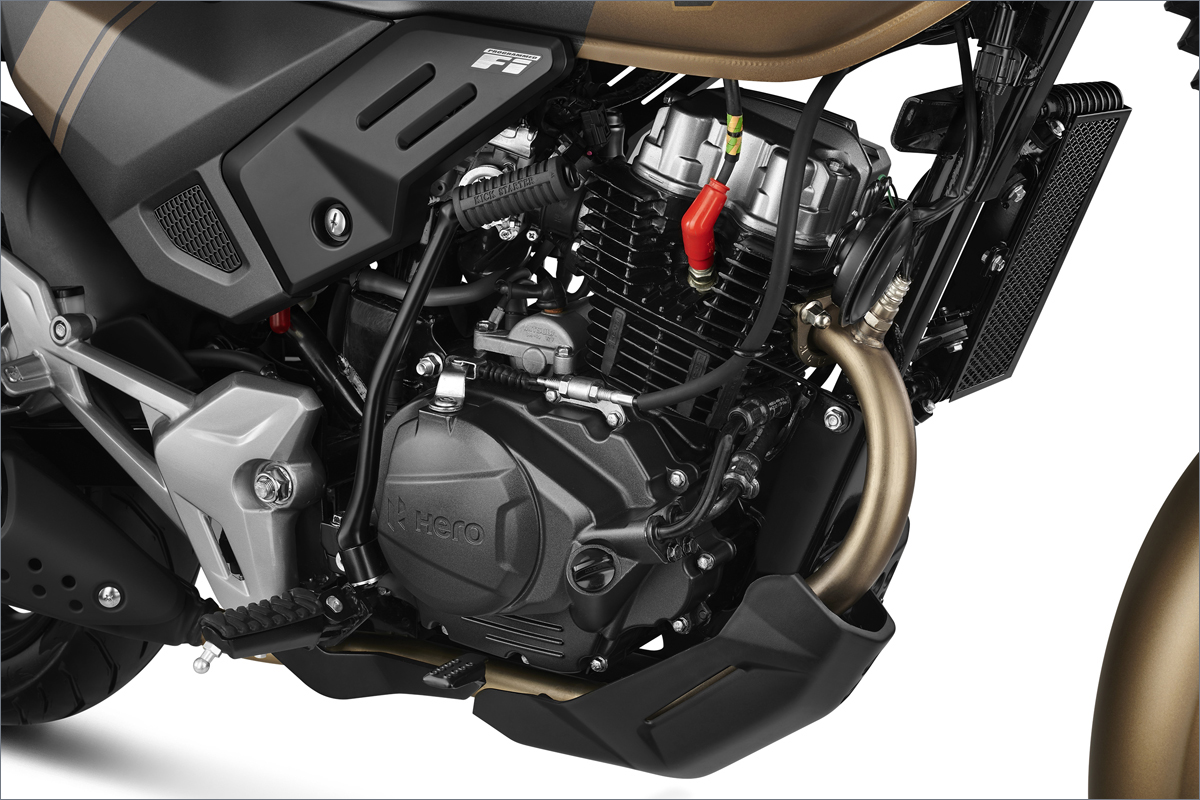
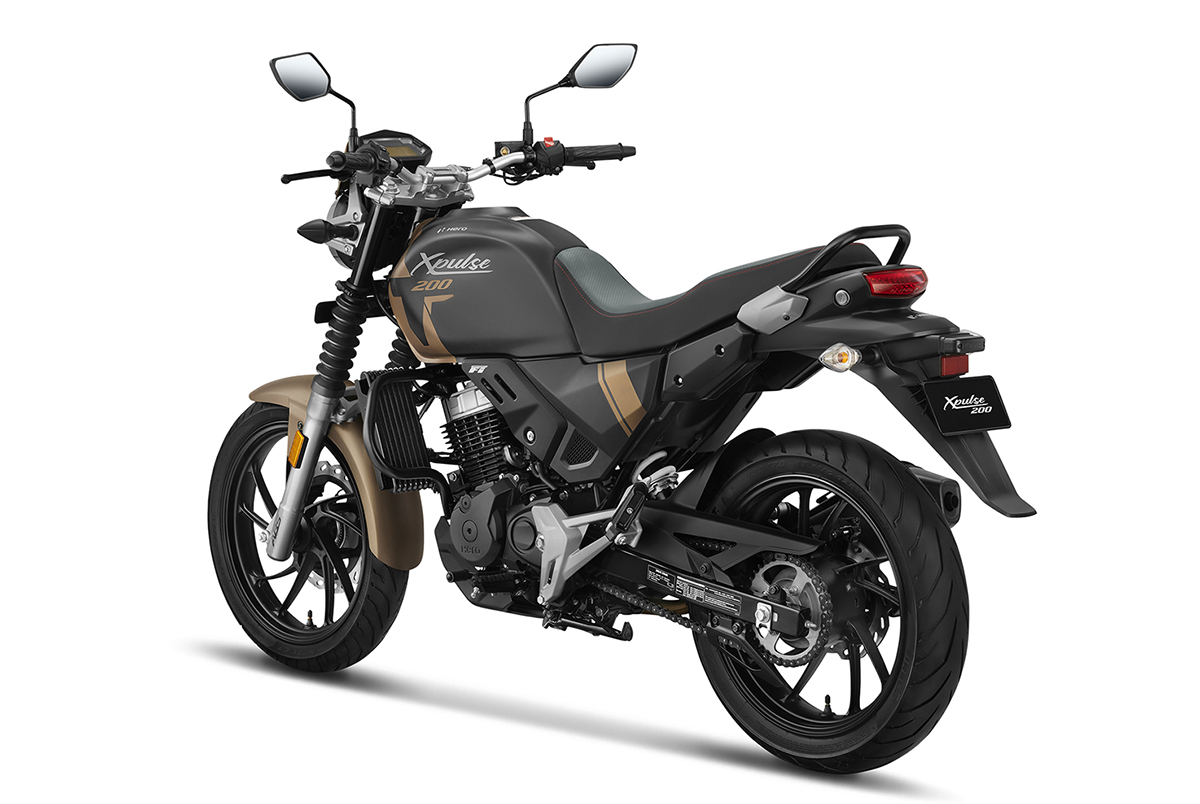
Not that I would call the Hero XPulse mundane. OK, a single-cylinder, 199.6cc, 18bhp engine might not get the heart racing, but it’s not there for that. What it’s there for is to provide inexpensive transport. But don’t ever think that “inexpensive” means “cheap”. We all know the guilty parties building cheap motorcycles, but Hero is not among them. This is a quality product: the type that we have all forgotten about in the rush to go bigger, better and faster as our motorcycling lives have progressed. Didn’t we all start out on something like this?
Photo credit: Bjorn Moreira / ZA Bikers
It’s all a case of readjusting expectations. Jump off your 200bhp superbike and, yes, the XPulse is going to feel a tad slow. But see it for what it is and get on with the right mindset and things quickly start to come into focus.
Photo credit: Bjorn Moreira / ZA Bikers
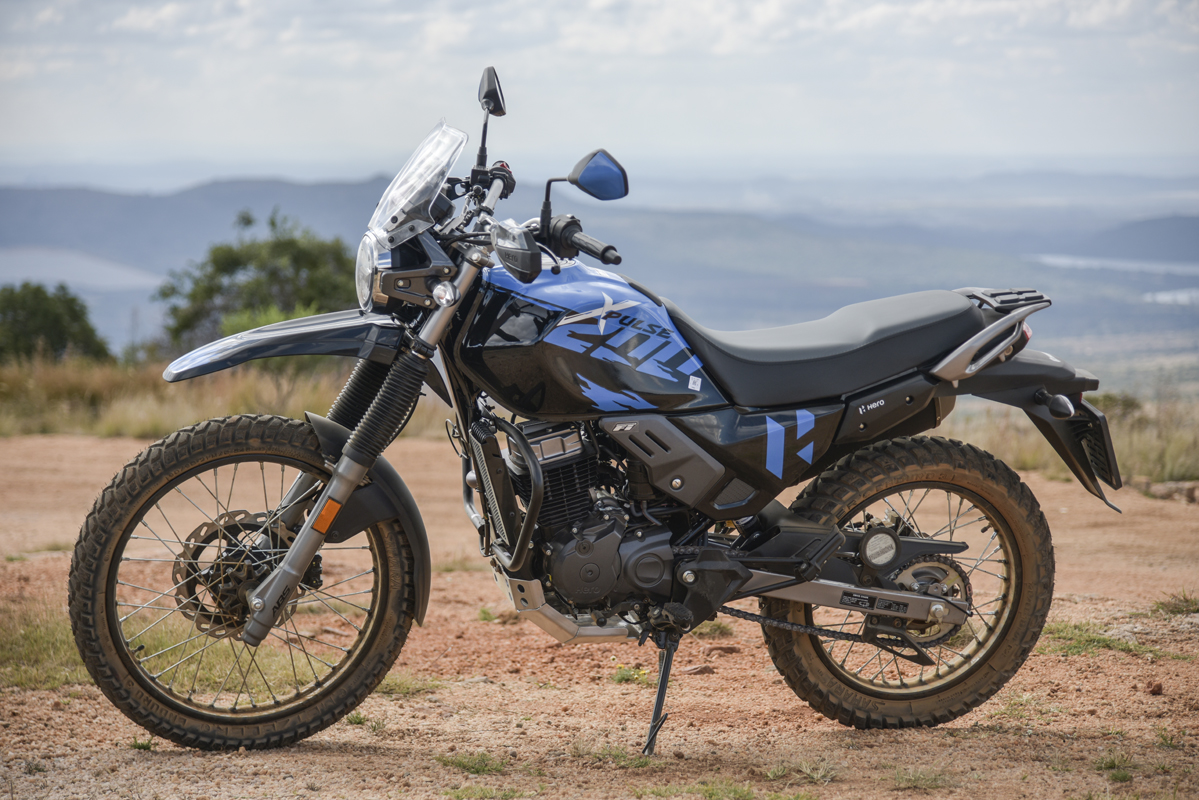
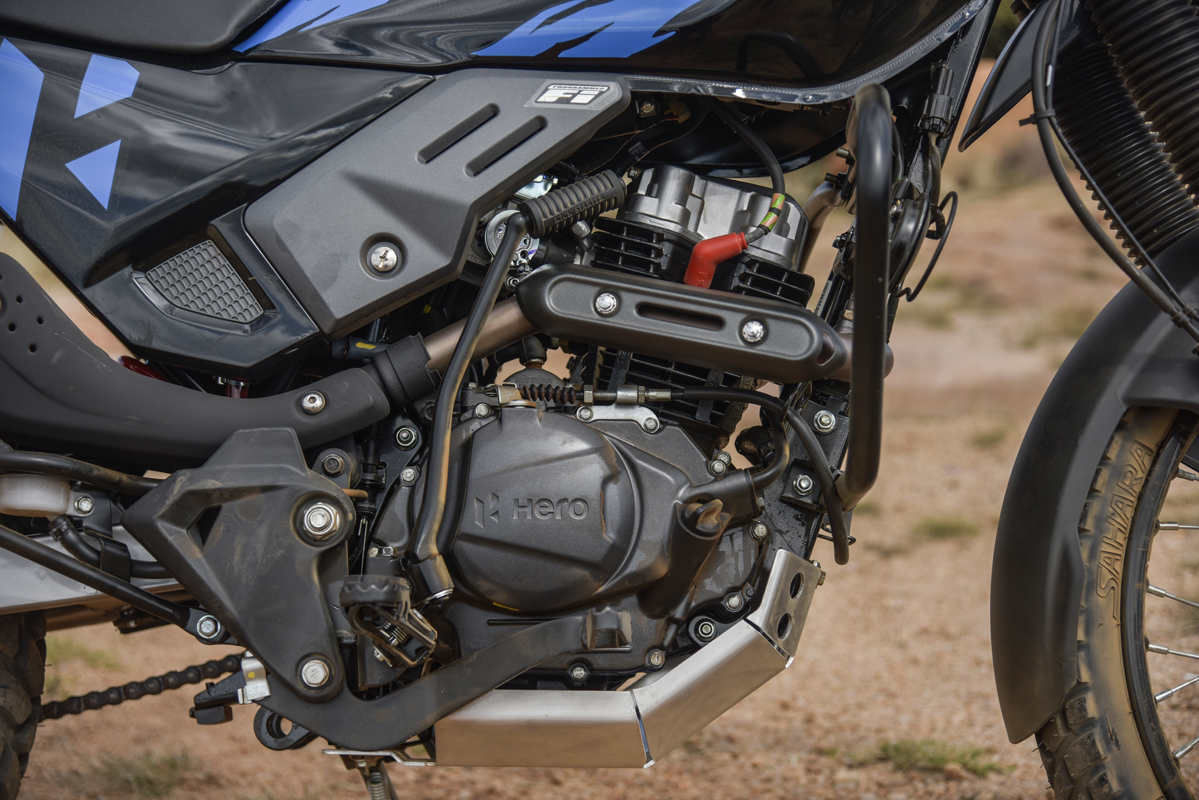
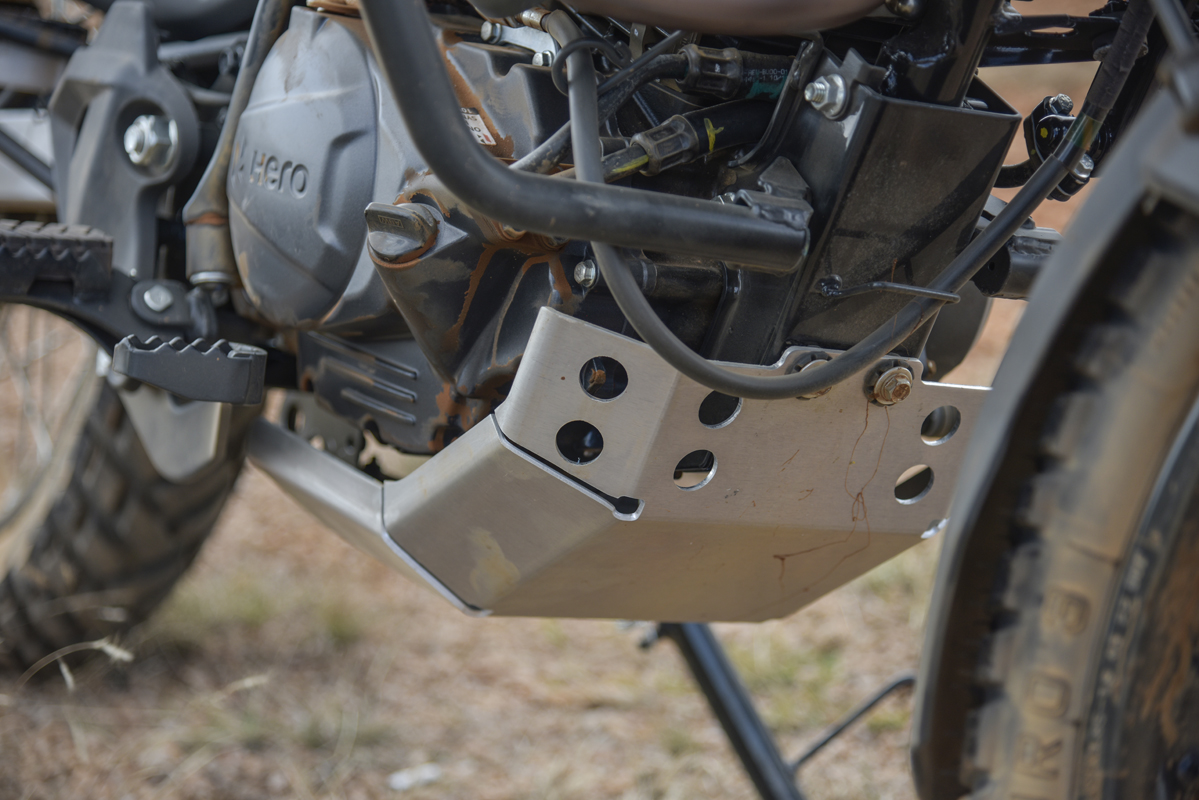
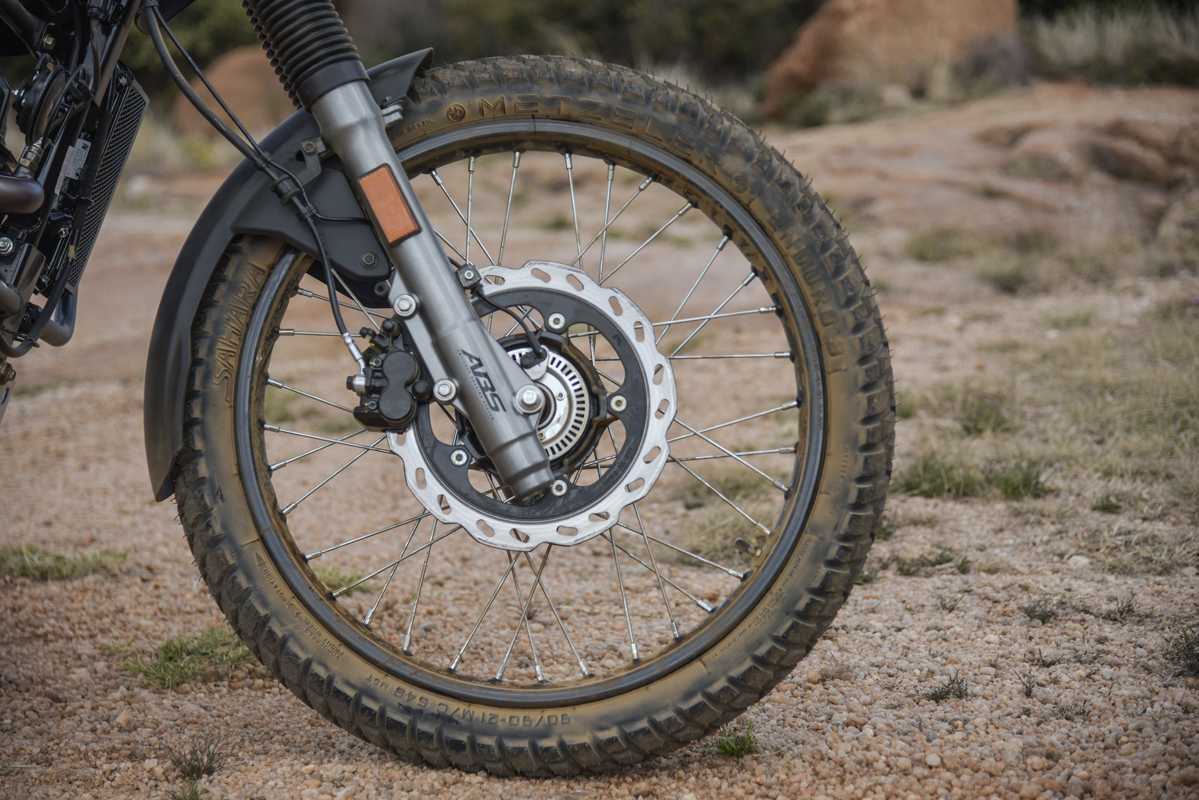
It performs as you would expect a 200cc single to perform: no fireworks but enough performance to keep up – and ahead – of urban traffic. And, boy, does it sip at fuel. One 13-litre tank of petrol took me 350 km and I was using all the performance all the time, with the throttle on the stop more than it was shut. The riding was a combination of road and off-road, for the XPulse 200 is nominally a dual-sport bike, with a 21-inch front wheel and decent Metzeler Sahara Enduro 3 tyres fitted as standard, an engine bash-plate and crash bars.
Photo credit: Bjorn Moreira / ZA Bikers
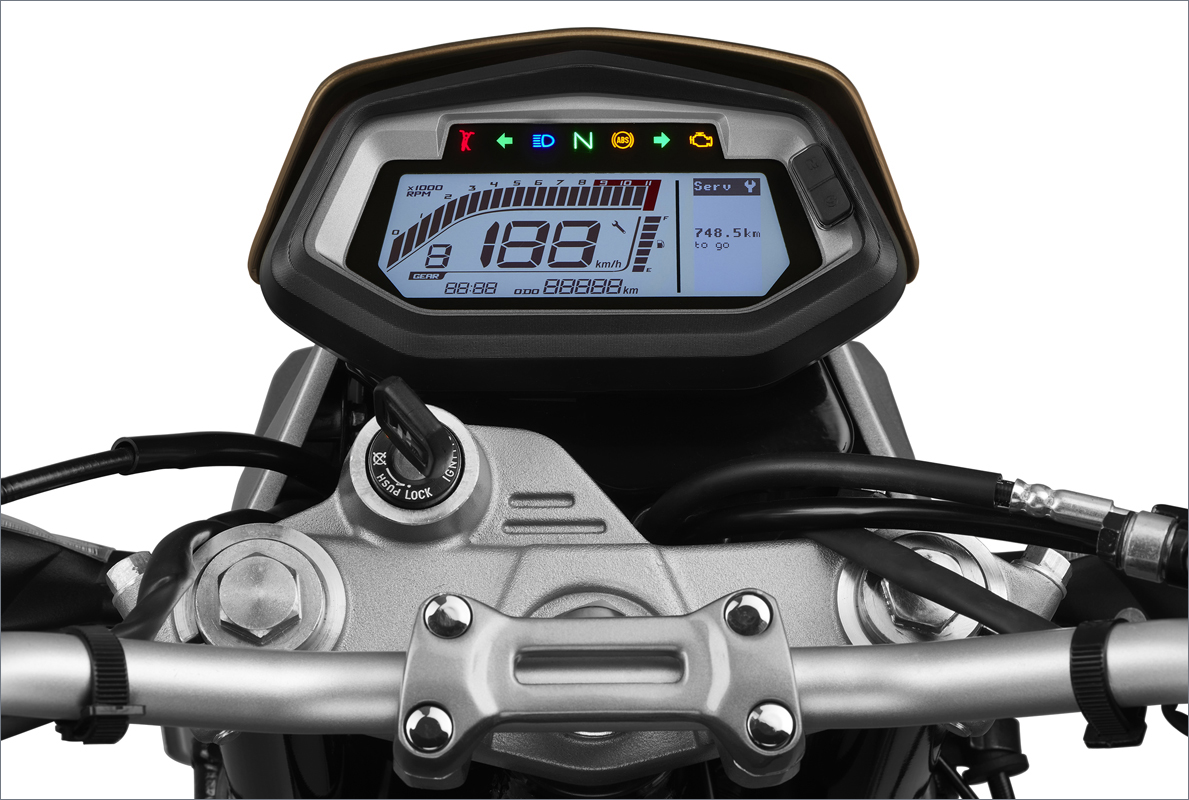
It has tall suspension (but still nowhere near the height of most adventure bikes, making it eminently accessible to everyone), wire-spoked wheels, a high-mounted front mudguard, LED lights, bark-bashers protecting the hands and an LCD dash onto which can be projected turn-by-turn navigation from your phone. There’s an oil cooler mounted within the left-hand crash bar. The suspension is on the soft side and soaks up any bad road surface you’d care to mention.
Photo credit: Bjorn Moreira / ZA Bikers
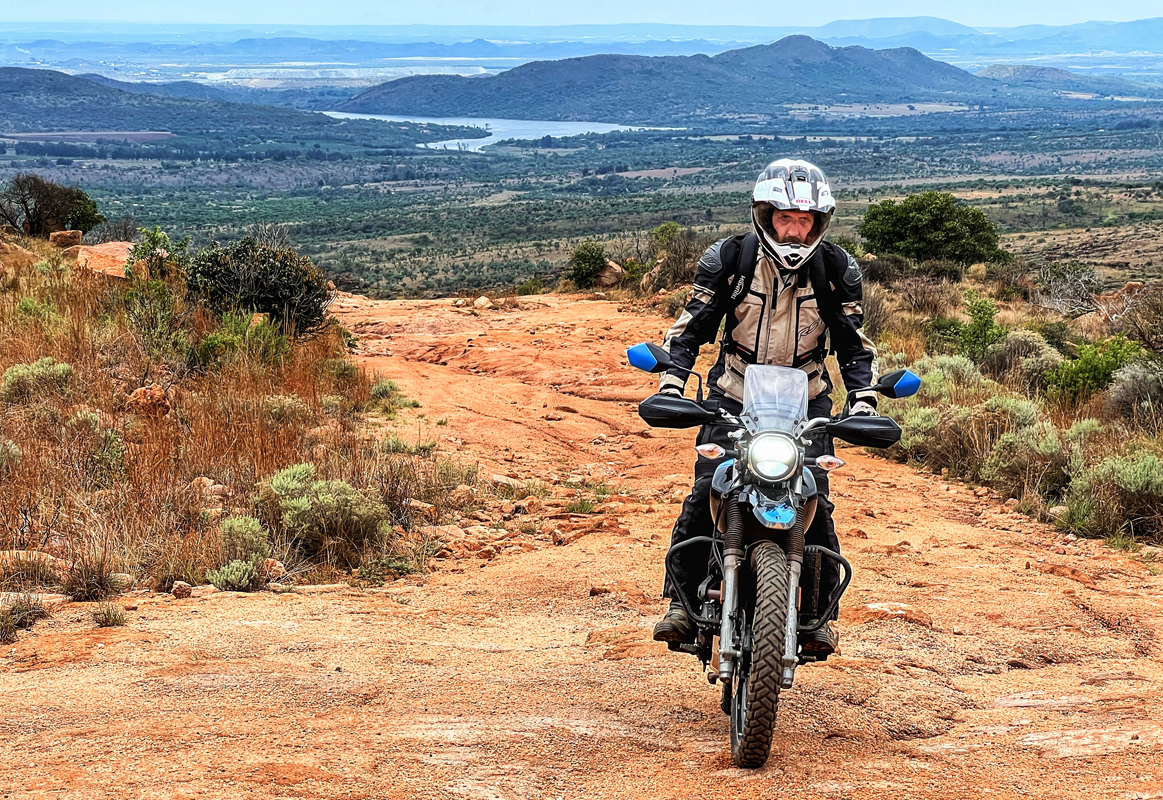
For the off-road portion of the test, I rode out to Mooinooi and up Breedtsnek in the company of Donovan Fourie riding another XPulse, and what a hoot that was: light, manoeuvrable and, with enough power to get you anywhere without scaring yourself silly, the XPulse is utterly unintimidating to ride off-road. Because of that, you feel that you can attempt routes that would have you thinking twice about on larger adventure bikes. I mean, it’s not entirely out of the question that you could carry the bike out if you found yourself at a dead end, either of road or talent.
Photo credit: Donovan Fourie
No, the suspension isn’t as good as WP Xact found on KTMs or the semi-active set-up on a BMW GS and others, but it doesn’t need to be. I feel we have been brainwashed a little into thinking that we absolutely must have all this expensive technology and, on the behemoths that pass as go-anywhere adventure bikes today, maybe we do, but there’s no denying that the simple suspension on the Hero took everything I could throw at it and it never lost its composure.
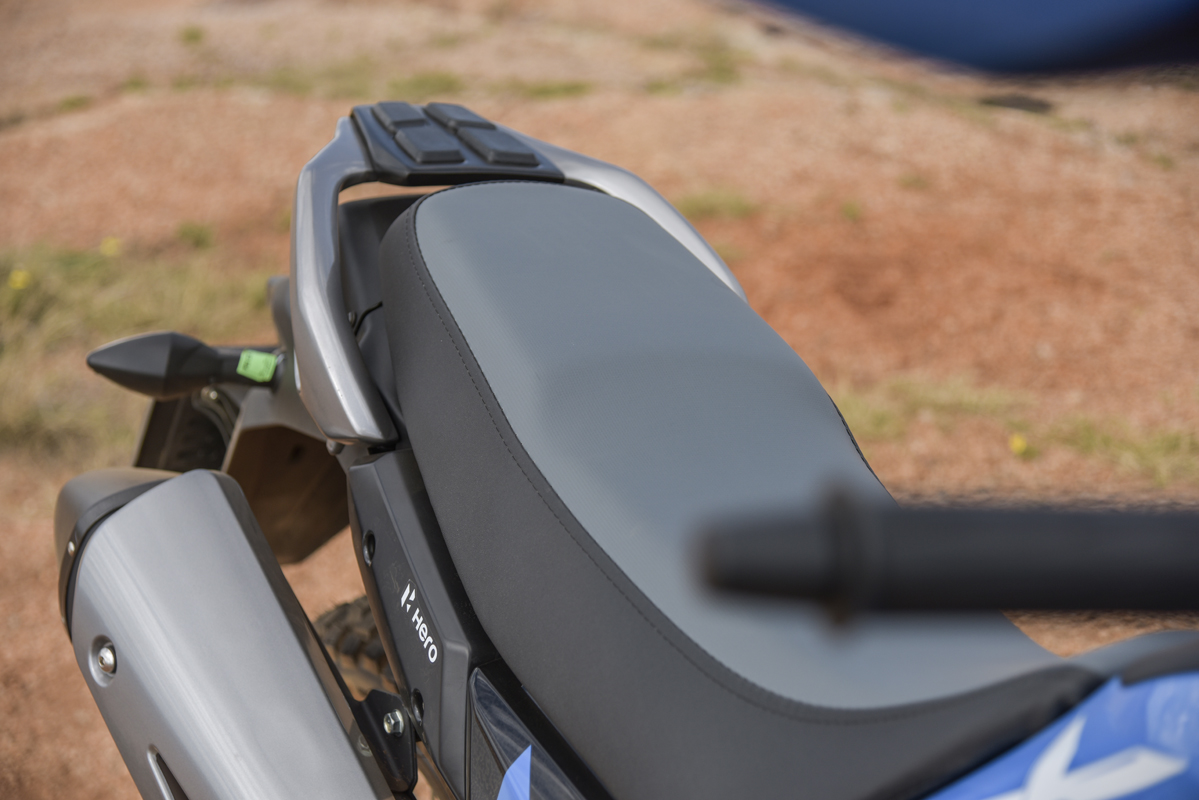
On a bike this size, you’re not getting anywhere in a hurry: top speed is around 125 km/h, in a crouch, downhill, with a following wind so not terribly practical for long-distance journeys but it will sit at 100 km/h all day long and, what’s even better is that you will not regret the decision to ride all day because the comfort is surprisingly good, the seat being thick and relatively softly padded.
Photo credit: Bjorn Moreira / ZA Bikers
The simple fact of the matter is that the more I rode the Hero XPulse 200, the more I liked it. It’s all very well having 150bhp at your fingertips but, with today’s standards of driving, is that really a good idea around town? The Hero was never outrun by a car, was super nimble threading through traffic, comfortable, frugal, practical and not a little fun: there is something about going as fast as you can everywhere knowing that the speed is never going to rise to the point where things can go wrong very quickly.
Another thing about the XPulse 200 is the looks: it’s really not a bad-looking bike and anyone who saw it was impressed and couldn’t believe it cost less than R50,000. It would be fair to say that it took me by surprise and I find myself struggling to think of an argument against having one in the garage.
Photo credit: Donovan Fourie
Hero XPulse 200 Fi ABS
For more information on the bike featured in this article, click on the link below…
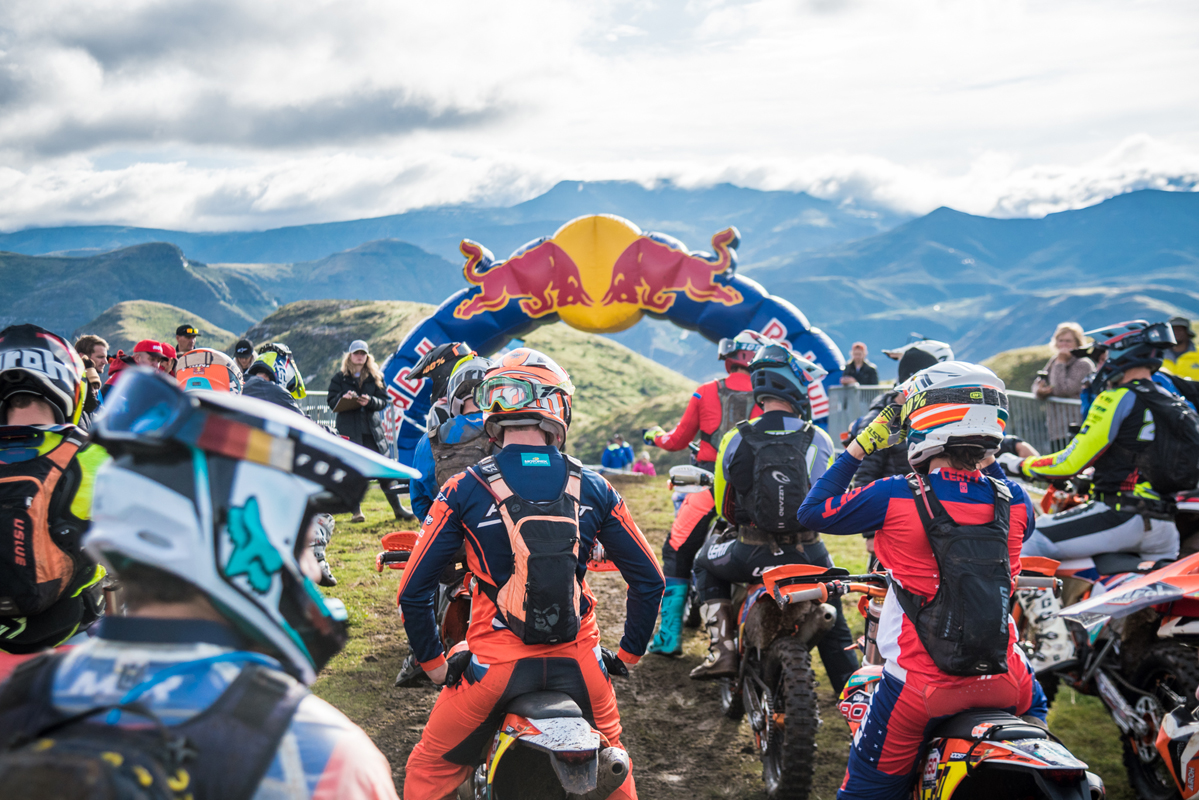
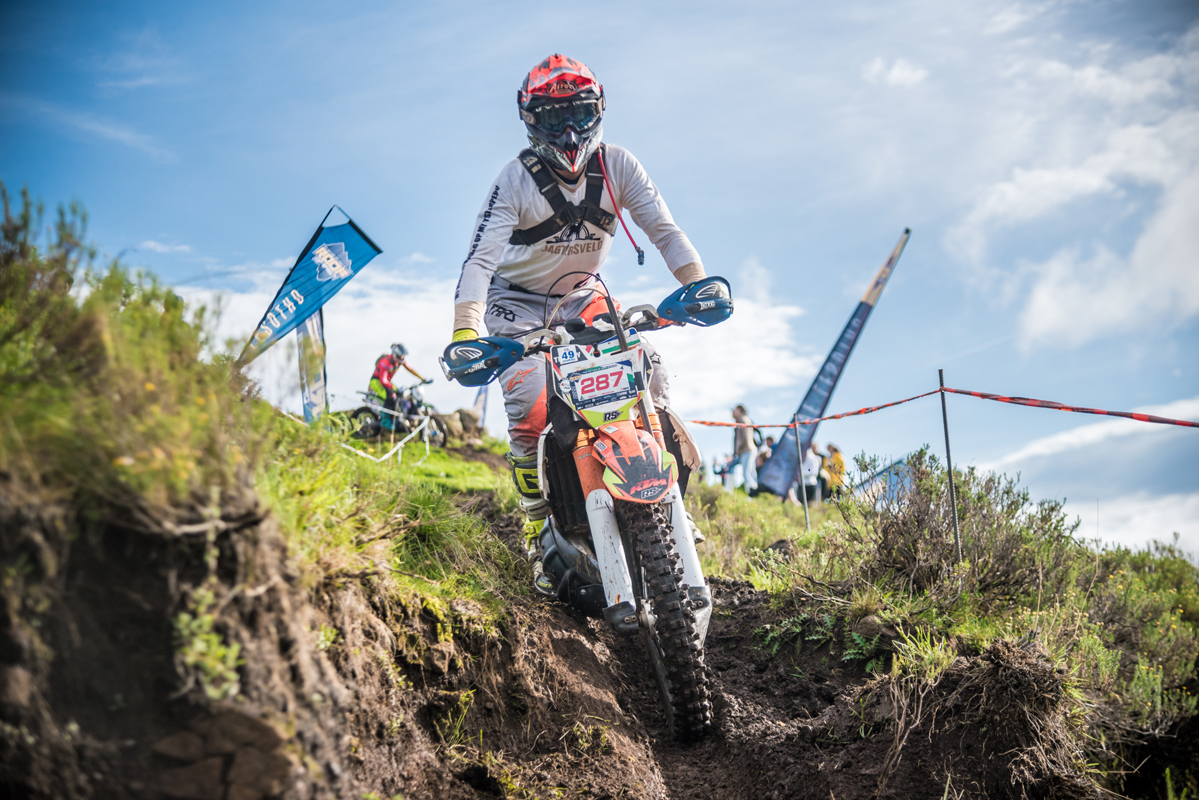
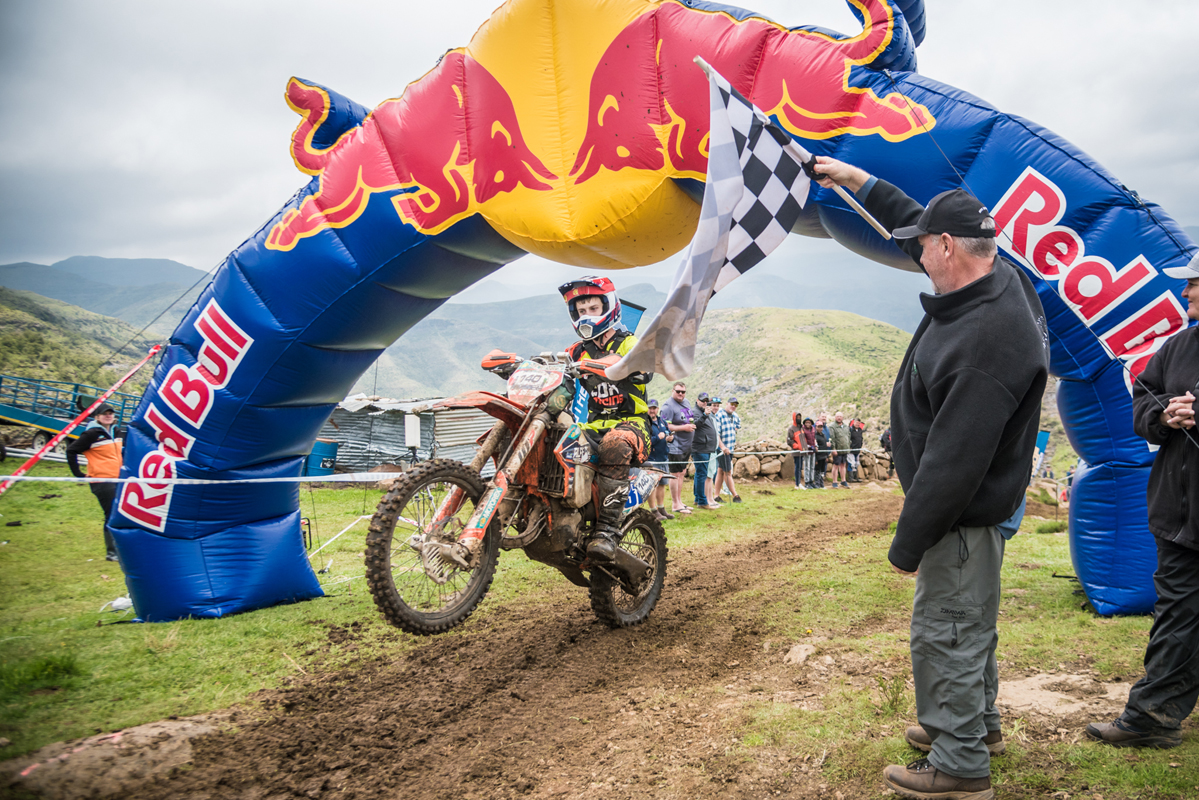
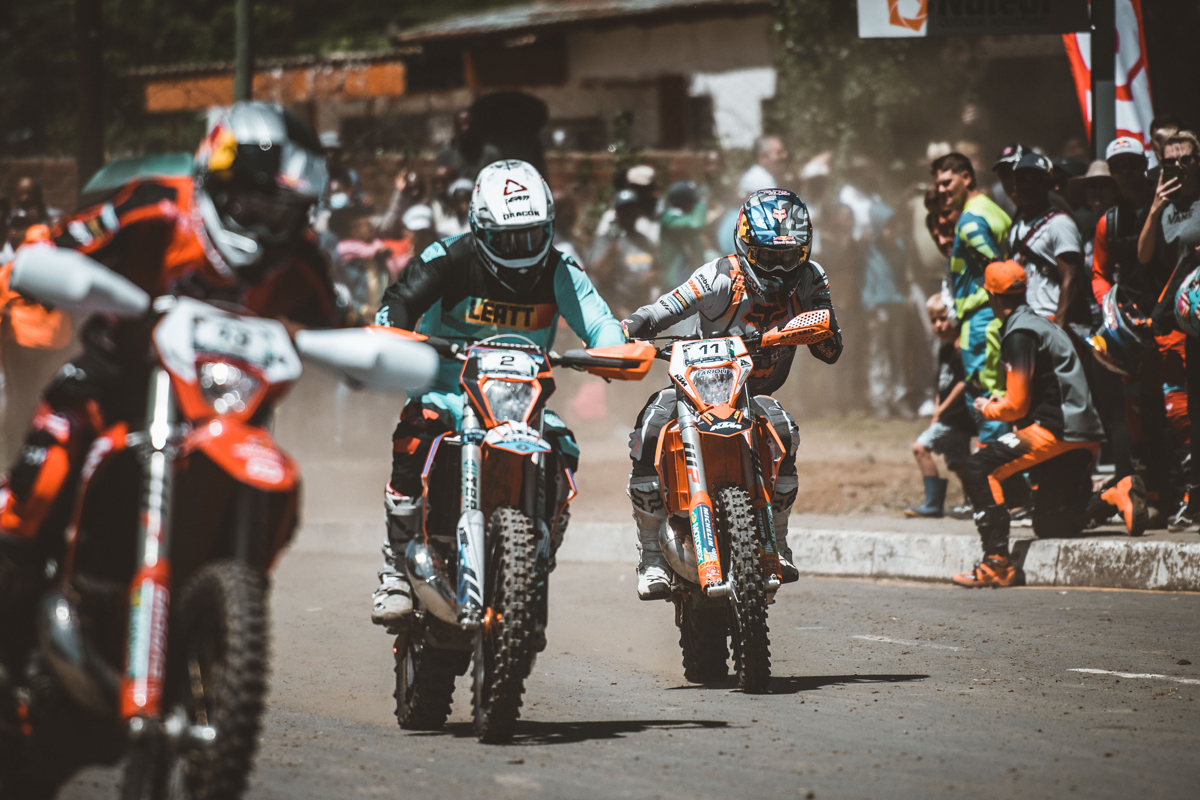
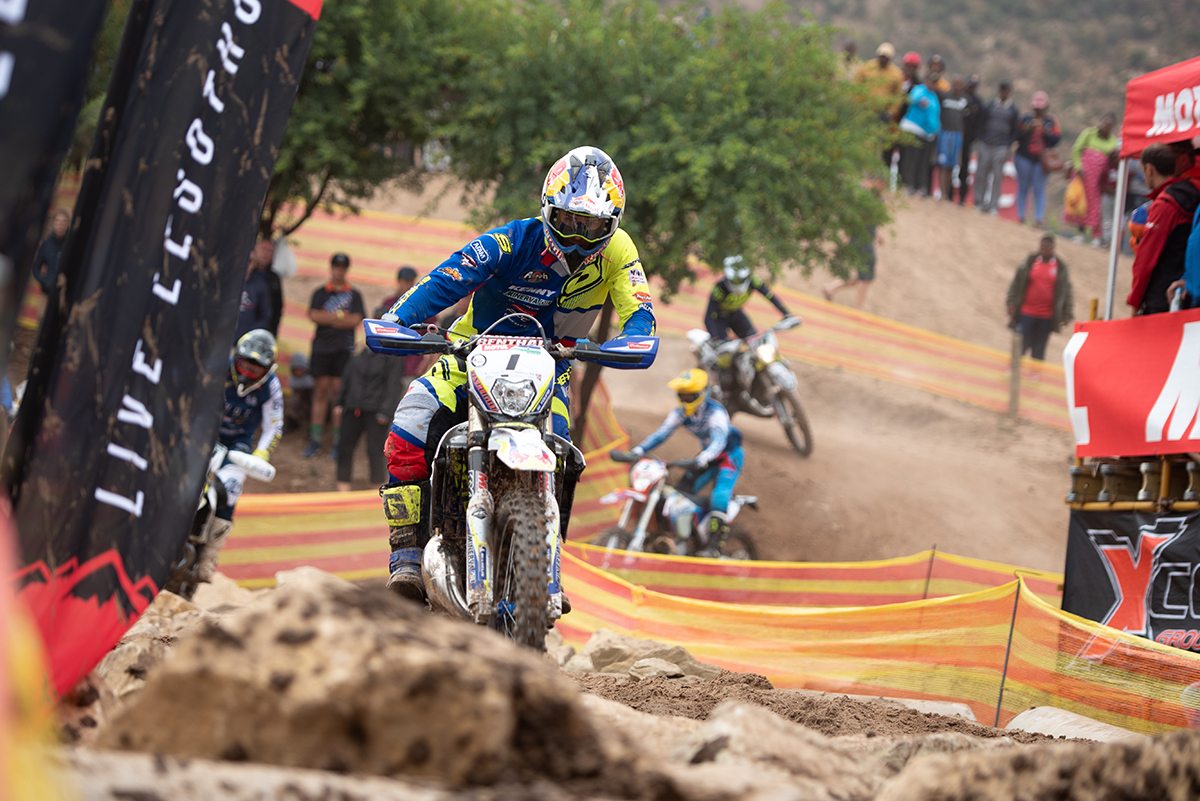
The first day of the 2022 edition of the Roof of Africa was bookended by summer downpours, but even the rain couldn’t dampen the enthusiasm of Lesotho’s Hard Enduro fans. Nor could it affect the dedication and commitment of the over 400 competitors who found themselves at the start line in Maseru on the morning of November 10th.
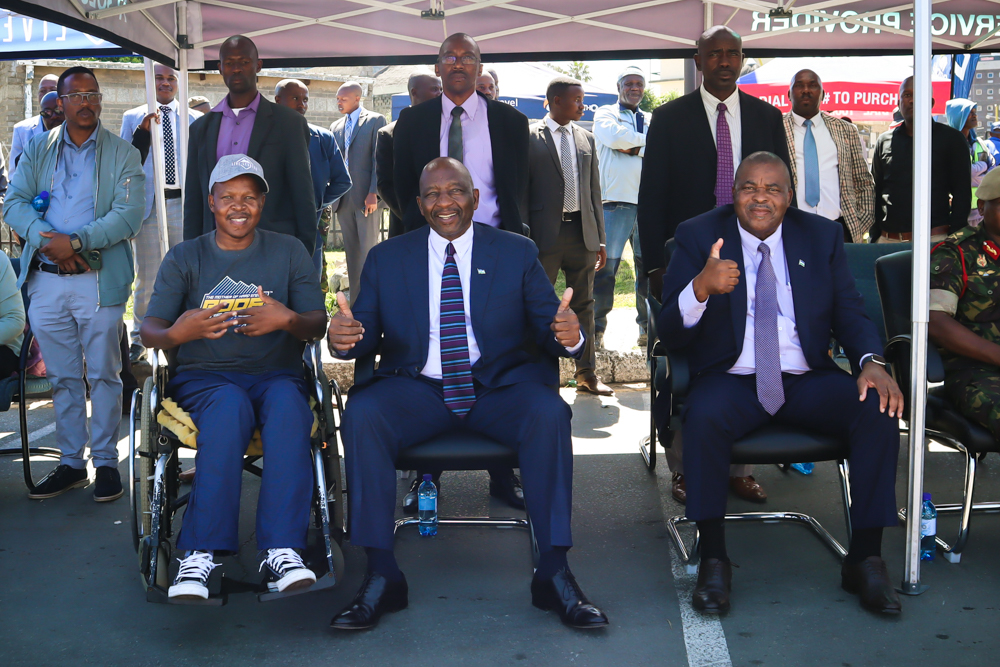
Among the crowds was the newly elected Prime Minister of Lesotho, the right honourable Mr Sam Matekane. A self-confessed petrolhead and ex-Off Road racing driver, he is a big fan of the Roof of Africa. Combined with the excellent turnout of local fans, the future certainly looks good for the Mother of Hard Enduro.
Newly elected Prime Minister of Lesotho, the right honourable Mr Sam Matekane (centre) and some of his cabinet attend the curtain raiser for the Roof of Africa 2022
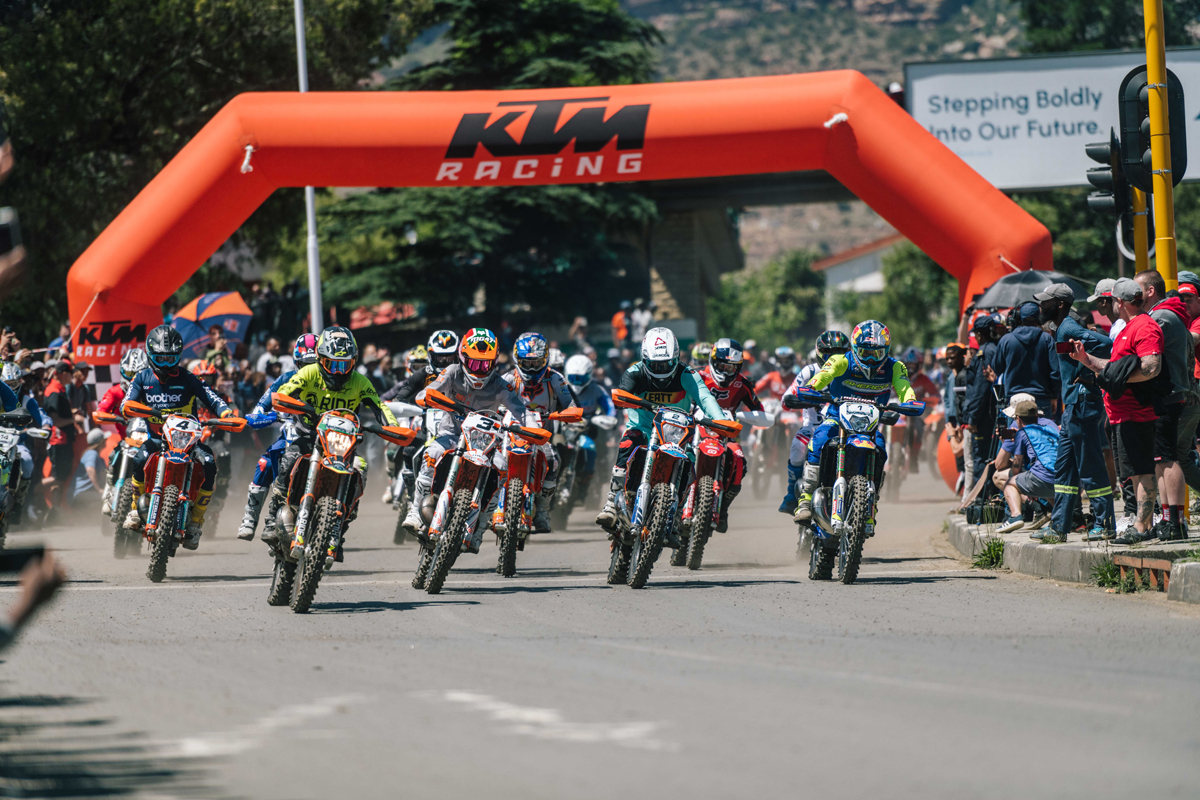
Early rainfall in the capital raised the prospect of wet, slippery tar, but the return of the popular Round the Houses opening segment proved too great a draw to resist for a large and vocal crowd. Besides which, the sun soon emerged, and riders of all four classes (Gold, Silver, Bronze and Iron) enjoyed beautiful conditions. The streets of Maseru echoed once again to the roar of Enduro bikes and excited cheering.
Photo credit: ZCMC
The riders clearly relished this road-racing component of the Roof, with competition being especially tight in the Gold Class. Reigning champion Wade Young of (Sherco Racing Factory Team powered by Motul) once again showed his Roof credentials by pipping long-time rival and 2022 South Africa Enduro Champion Brett Swanepoel (Husqvarna Racing) to the post.
Photo credit: ZCMC
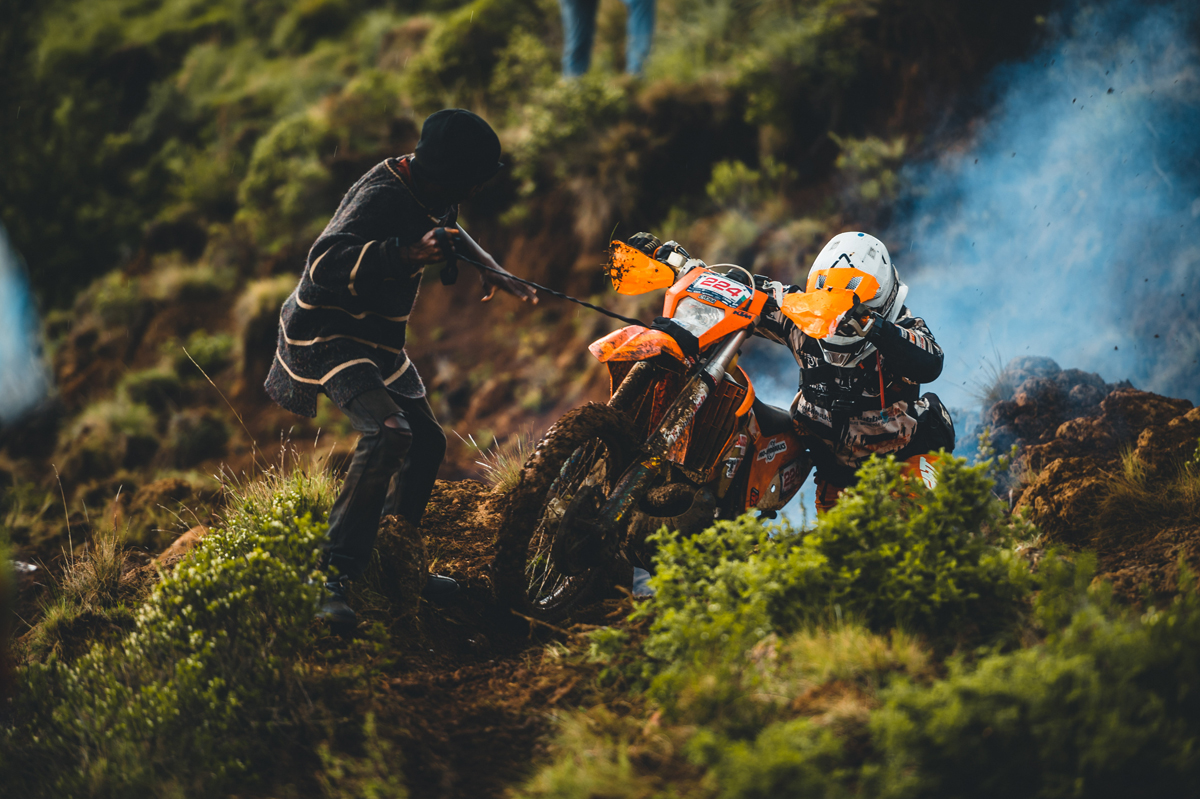
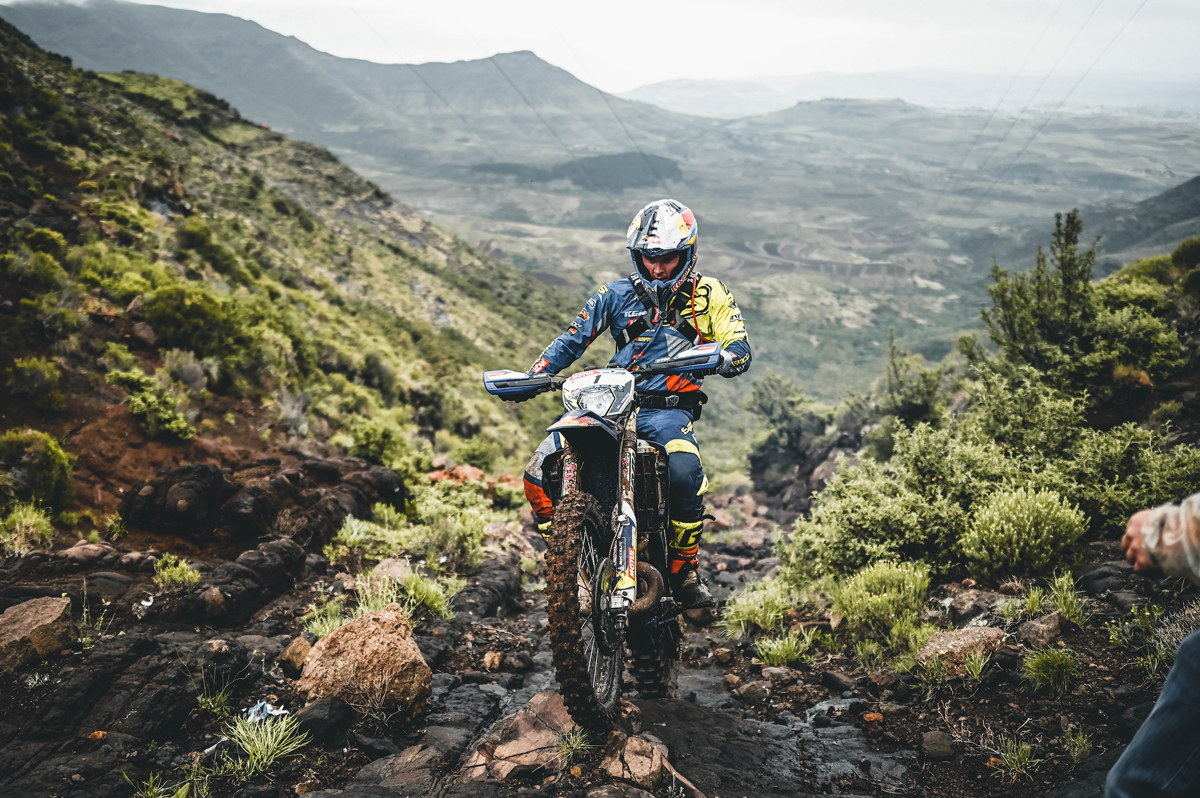
Much as Round the Houses is an iconic component of the Roof, the Mother of Hard Enduro is of course all about the Maloti Mountains and Bushman’s Pass certainly delivers. The combination of challenging terrain and “four seasons in one day” weather – of which today was a classic example – has earned the Roof its daunting reputation.
Photo credit: ZCMC
This year’s Roof was to have been the first time that Gold and Silver Class riders took on the new “Ntoa ea Thaba” or “Mountain Battle”, but the elements clearly had other ideas. Early afternoon hail and thunderstorms dictated a slight change of format, with the organisers using the top 20 Gold Class practice times and instead sending riders out for a single hot lap, the outcomes of which were used to determine the results for the day.
Photo credit: ZCMC
“We were delighted to see such a strong turnout of local Roof fans for Day One of this year’s Mother of Hard Enduro,” commented Charan Moore, Roof Race Director and Founder of Live Lesotho. “While the weather certainly played a part today, we can look back on a thrilling and hard-fought day of racing with old rivalries renewed and new challenges laid down,” he added.
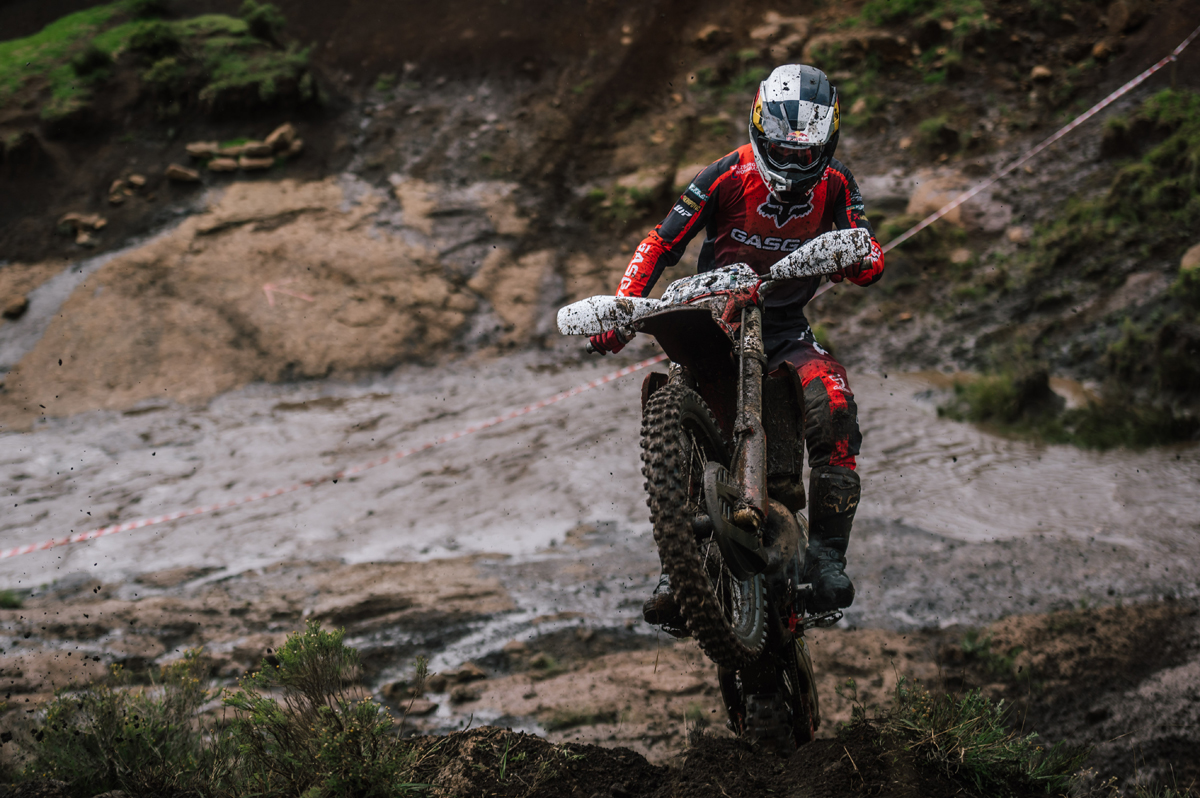
Much like the weather, the Day One results caught many people off guard – and have set up an intriguing day’s racing for Friday. The Roof can be a race of very fine margins and so it proved in the Gold Class, with Micheal Walkner (GasGas Factory Racing) notching up the win by just two seconds from Mani Lettenbichler (Red Bull Factory KTM Racing). Last year’s runner-up, and the highest-placed southern African rider so far, Travis Teasdale (ASP Rope Mclarens Racing) rounded out the podium.
Photo credit: ZCMC
Today’s rain especially impacted the Silver Class, with practice times from qualifying having to be used to determine who occupied the Day One podium. Daniel Schröder currently sits in first place, followed by Austin Stuart and then Luke Walker.
In the Bronze Class, Brian Burrows (Coral Transport KTM) has built up an almost five-minute lead over Tate Ströh (Yamaha), with Stiaan Potgieter (Husqvarna) in third at this early juncture.
Photo credit: ZCMC
The Iron Class Day One podium was a clean sweep for KTM riders, with off-road veteran Tom Classen followed by Jack Brotherton and then Pieter Kritzinger.
For more info and the full programme of events, including results as soon as they are available, visit the official website: www.roofofafrica.co.ls
The notorious Roof of Africa is back in full force and star rider Brett Swanepoel will be flying the Husqvarna flag high in the Maluti Mountains.
An excited Swanepoel commented on the weather conditions, “Looks like it’s going to be another wet Roof, but the team and I are ready for whatever gets thrown our way. Feeling strong and ready for some tough racing ahead, bring on the week.”
Group manager Grant Frerichs said “This is the smallest team we have ever had at the Roof of Africa but it means there is 100 percent focus on Brett and all the teams attention can be on him to get the best result possible” He went on to say, “Brett has had a phenomenal year on a national level but really bad luck at all the international races he competed in. We are hoping the stars align this time around and he gets the result he deserves.”
We are excited to see how the 2022 Roof of Africa unfolds and wish Brett Swanepoel the best of luck.
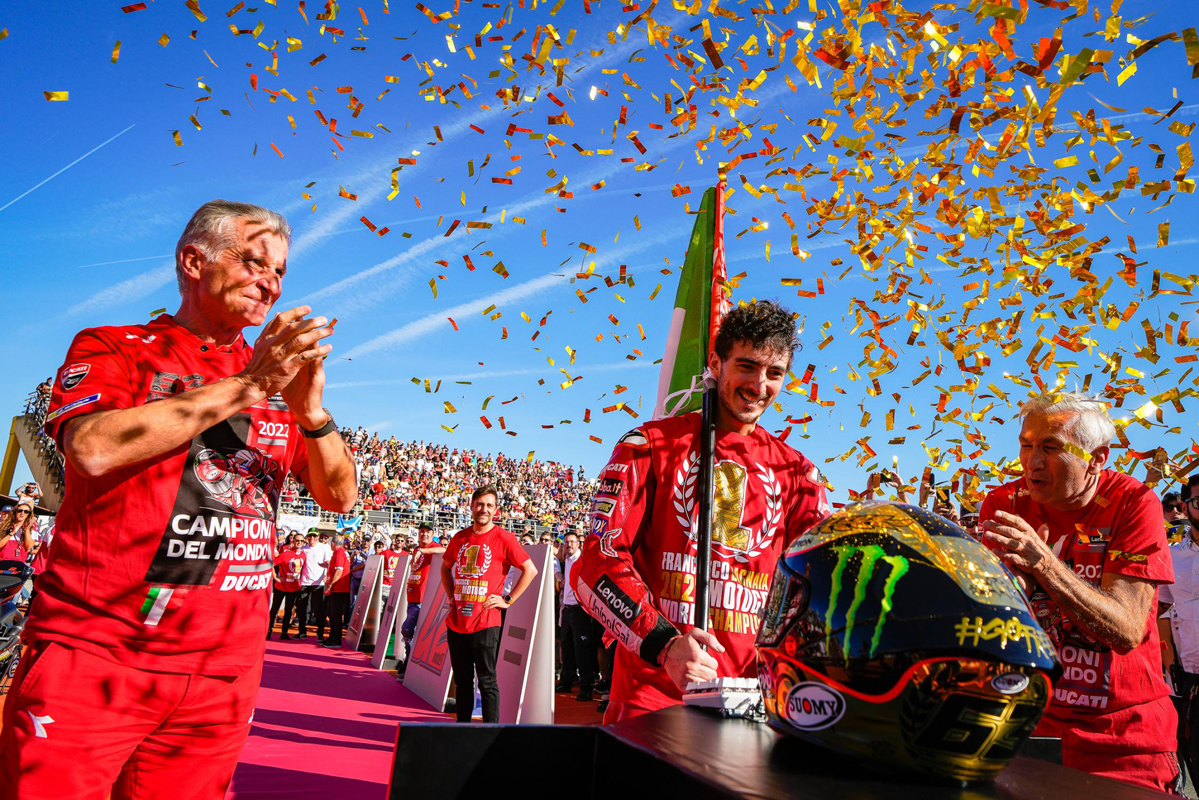
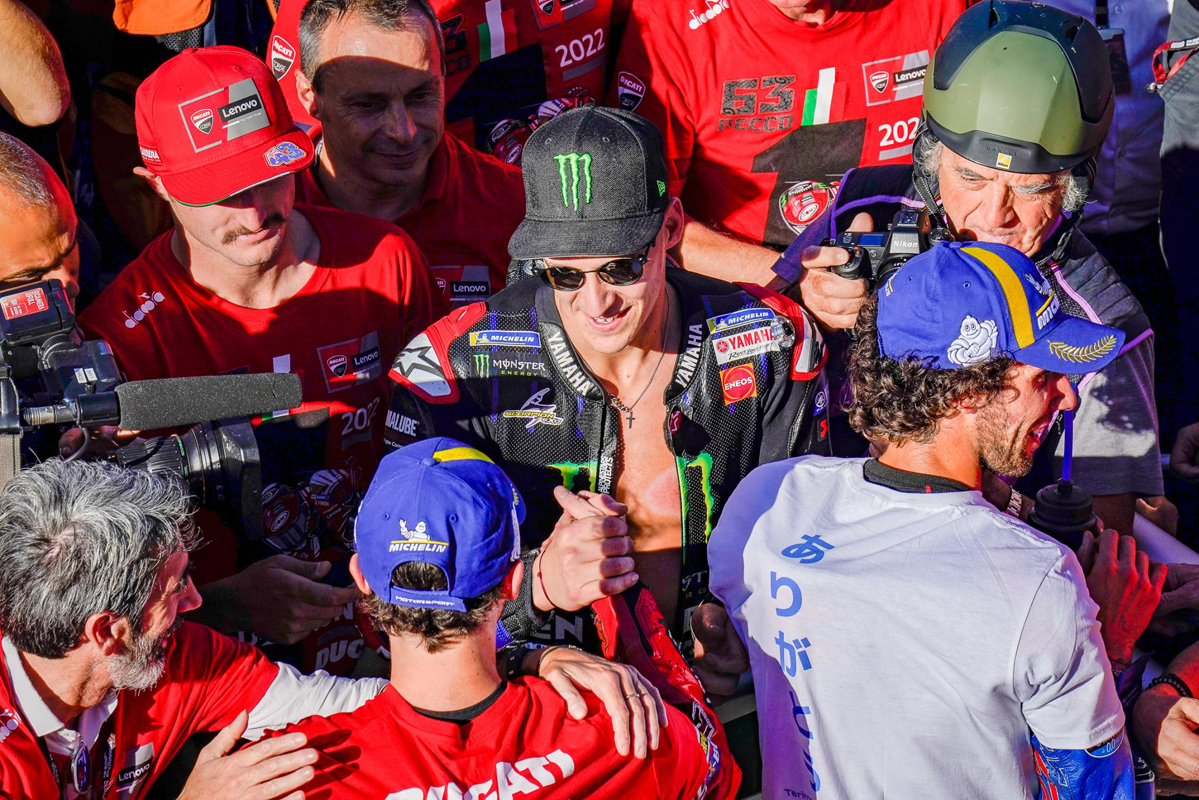
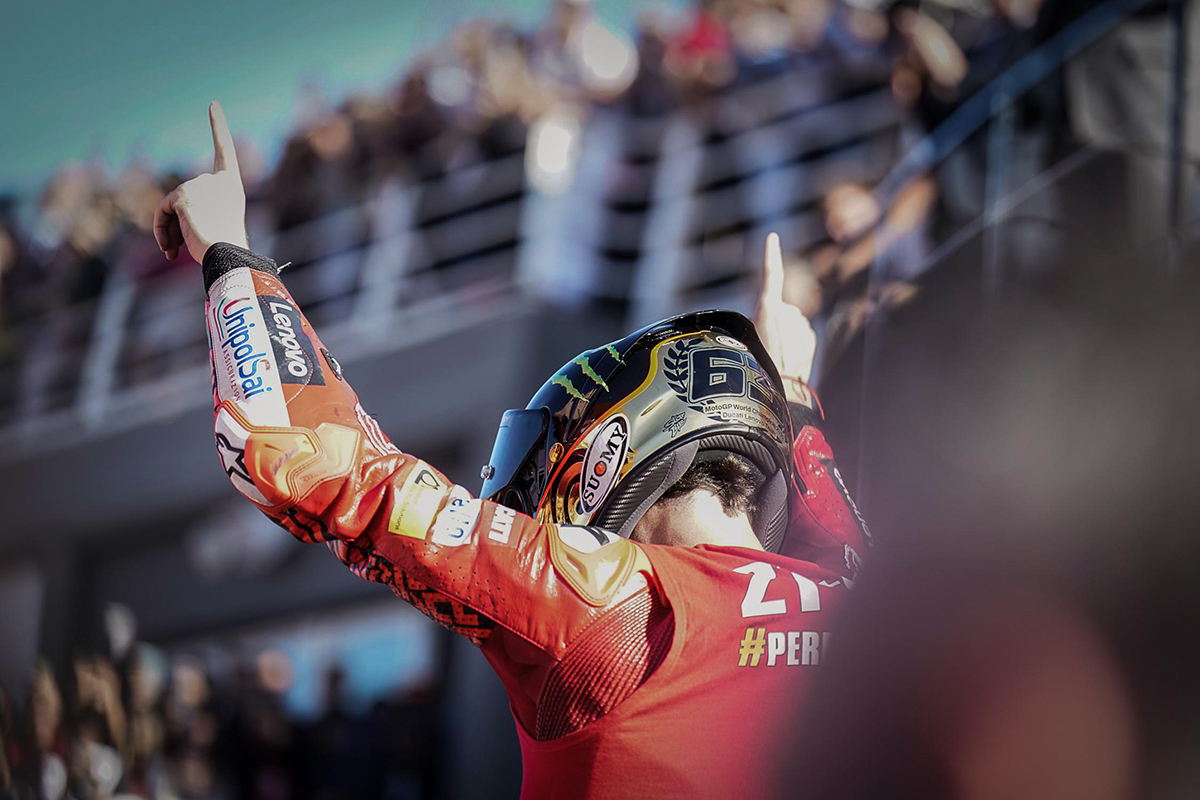
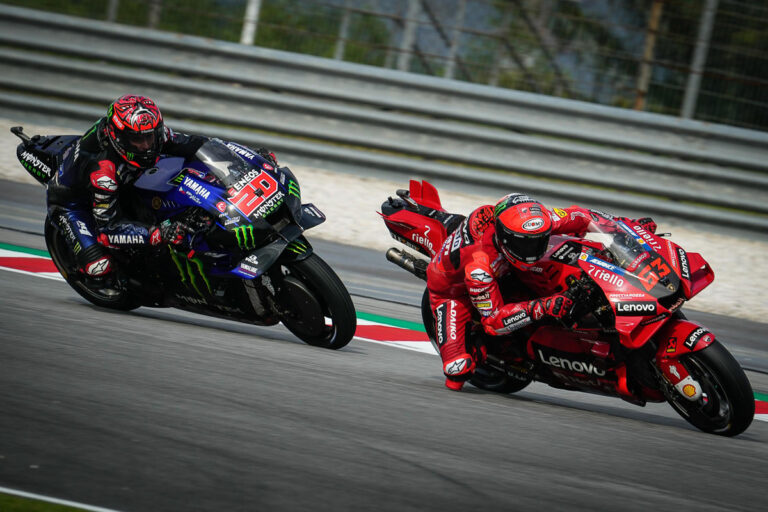
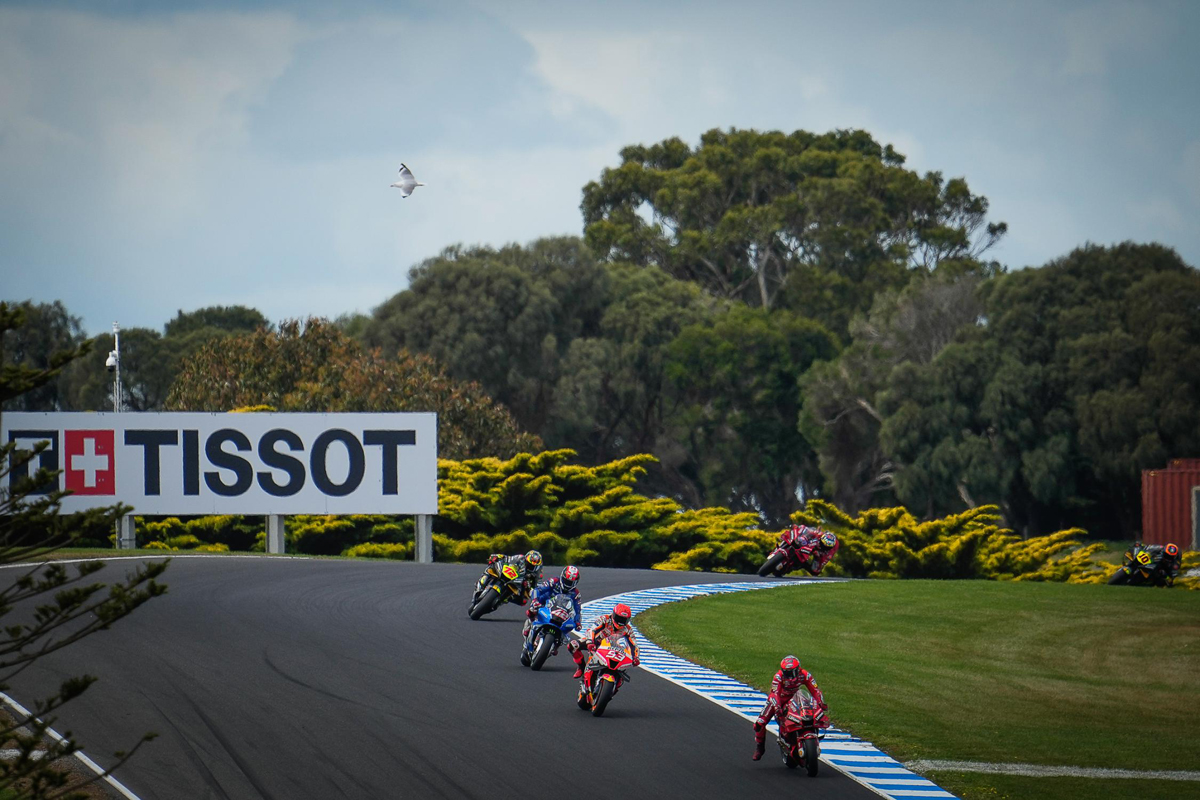
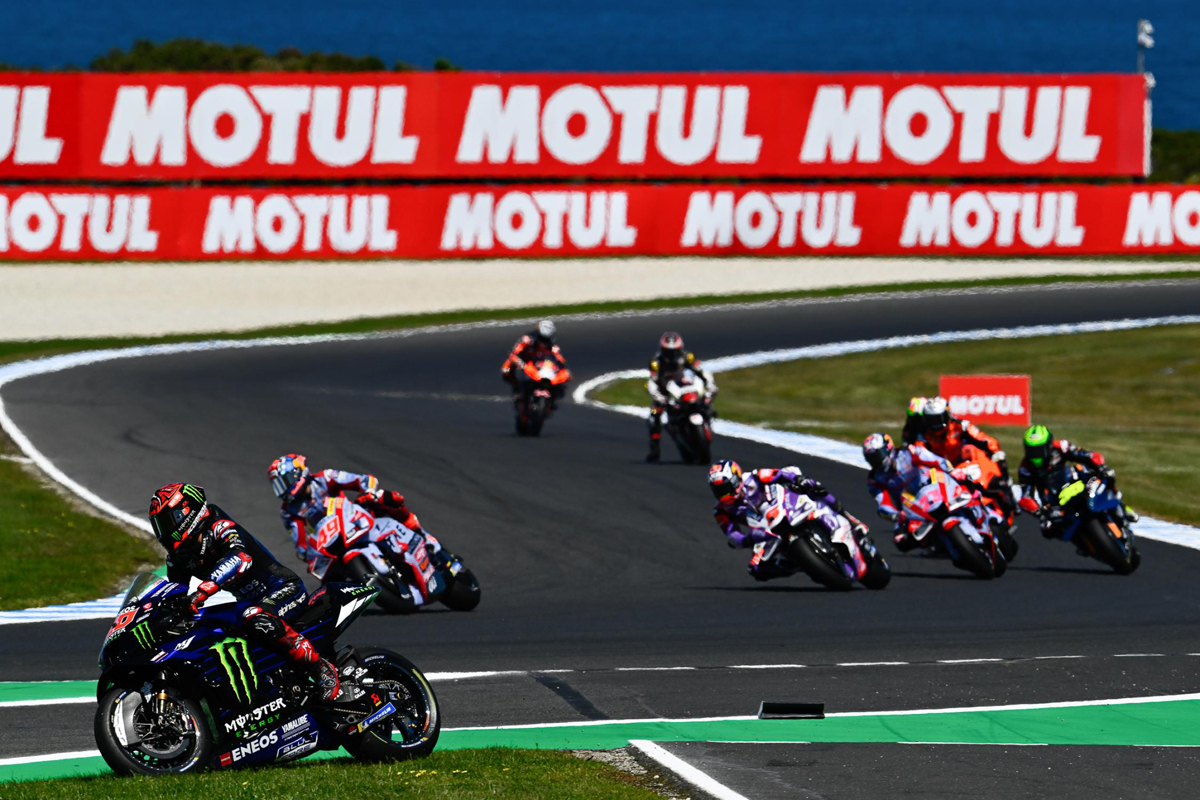
Oh, the statistics geeks have had a field day with this one: first all-Italian championship for 50 years: 50th anniversary of Ducati’s first podium in Grand Prix racing: 50 years to break the record for non-Japanese manufacturer victories in a season (all 1972, when Agostini won the 500cc title on the MV Agusta, Ducati placed third in the Italian Grand Prix and MV Agusta won 12 races): largest points deficit overcome to win: only rider to crash out of five races and still win the championship: first Italian since Rossi to win: first Ducati victory since 2007. OK, those last two are pretty boring. In fact, all of them are really insignificant in the face of one of the best season’s racing we’ve had for a few years.
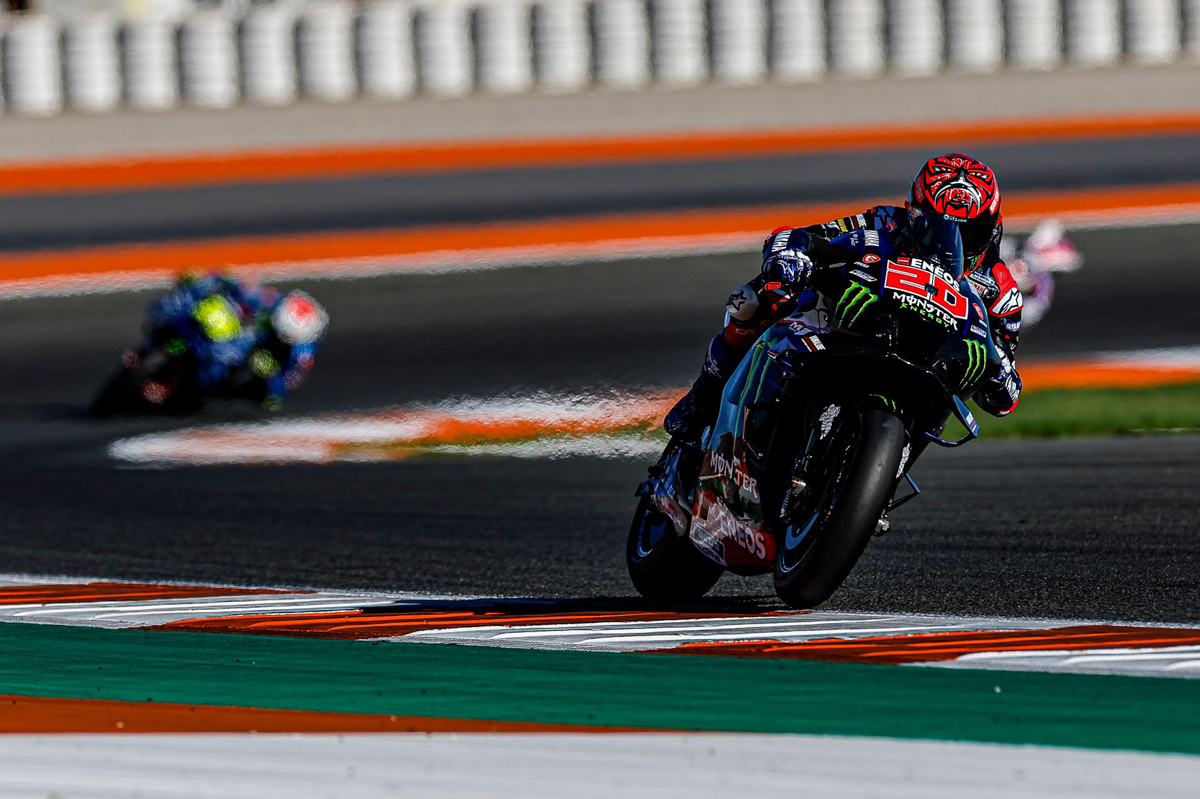
Without the figures in front of you, it seems as if Quartararo’s championship was all but signed, sealed and delivered before Bagnaia started his withering assault. However, while Bagnaia did close a huge points deficit, in actual fact Quartararo was only ever as much as 34 points ahead of the second-place rider which, for seven races, was Aleix Espargaro. More often than not, the gap was appreciably less. Looking at it that way, Quartararo certainly was not having an easy run to the title: it’s just that Bagnaia was relentless at a time when Quartararo was looking vulnerable.
Image source: Yamaha
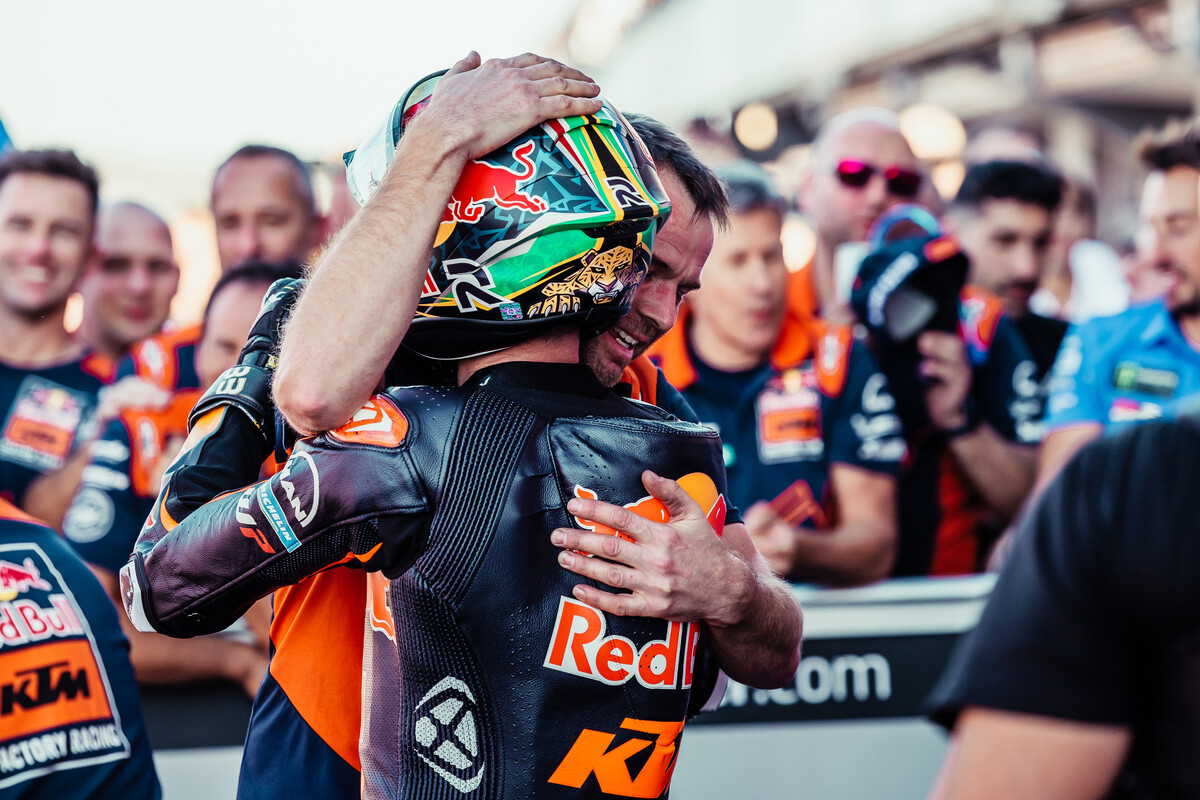
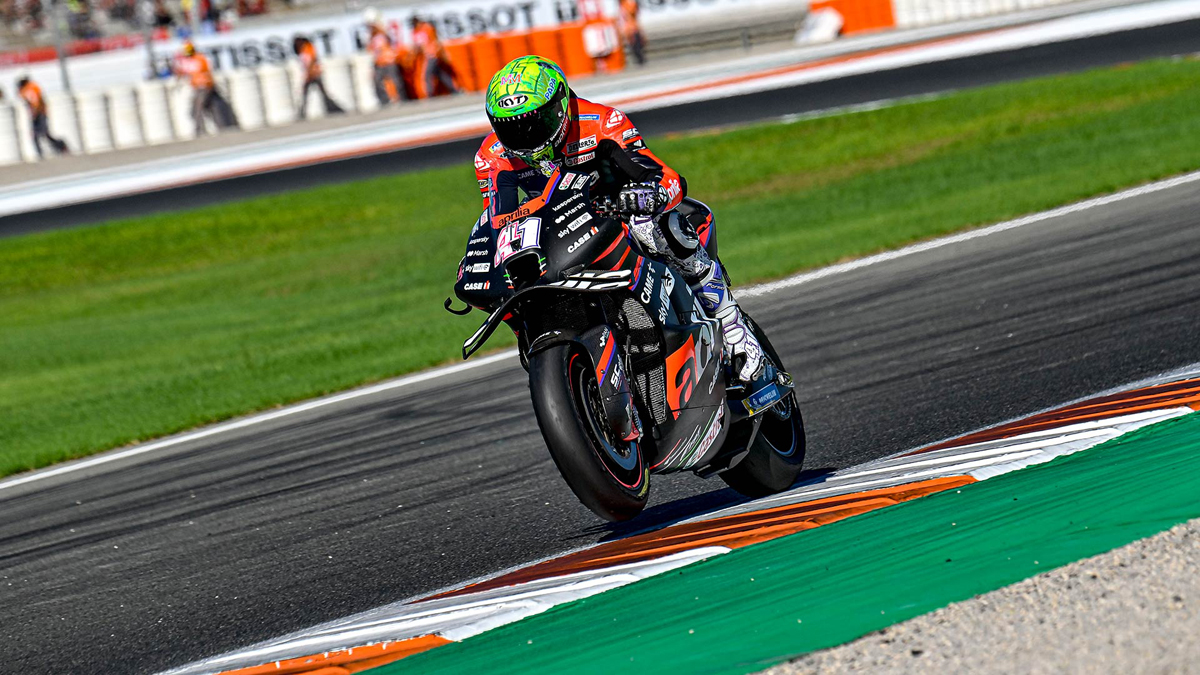
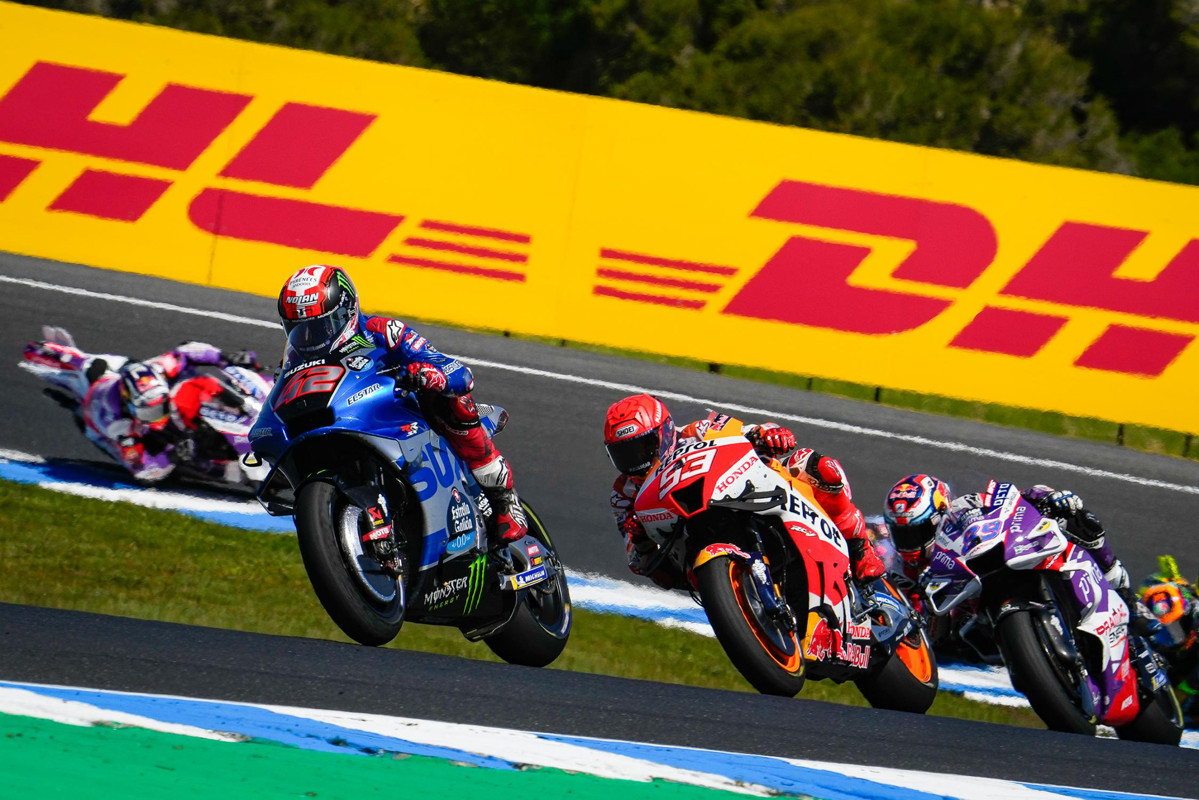
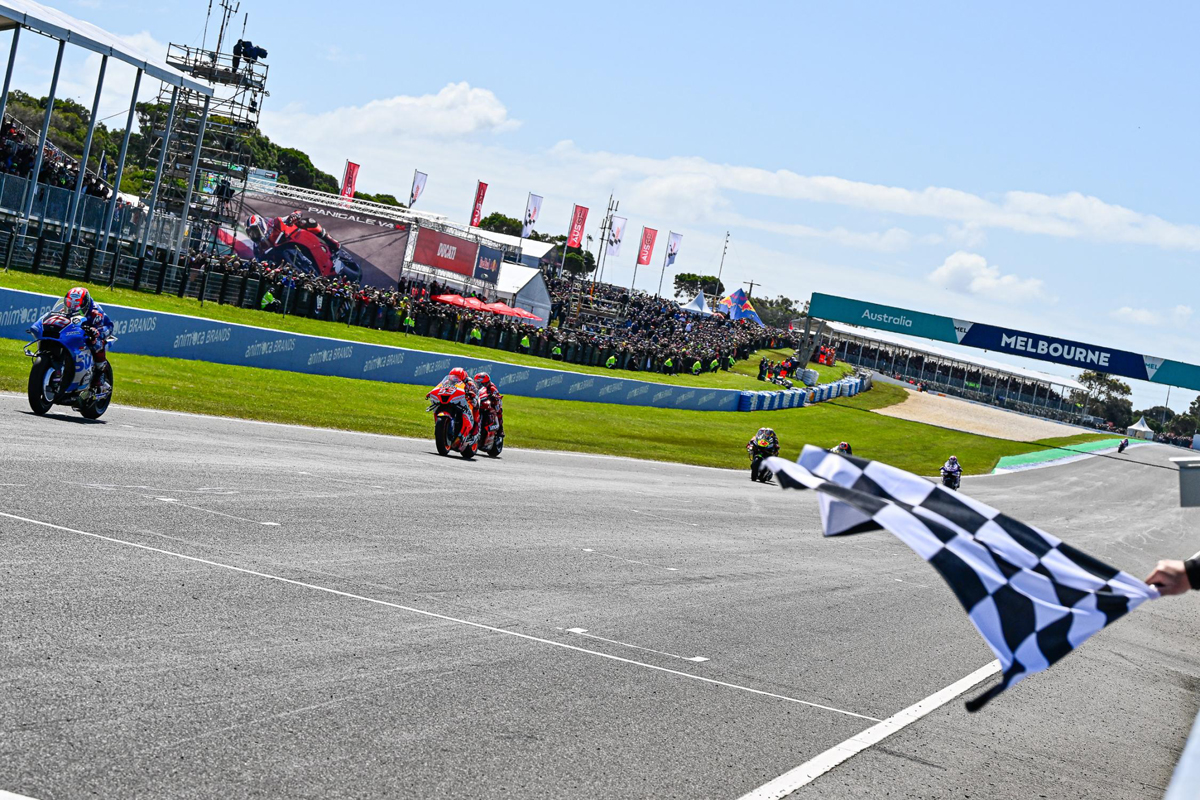
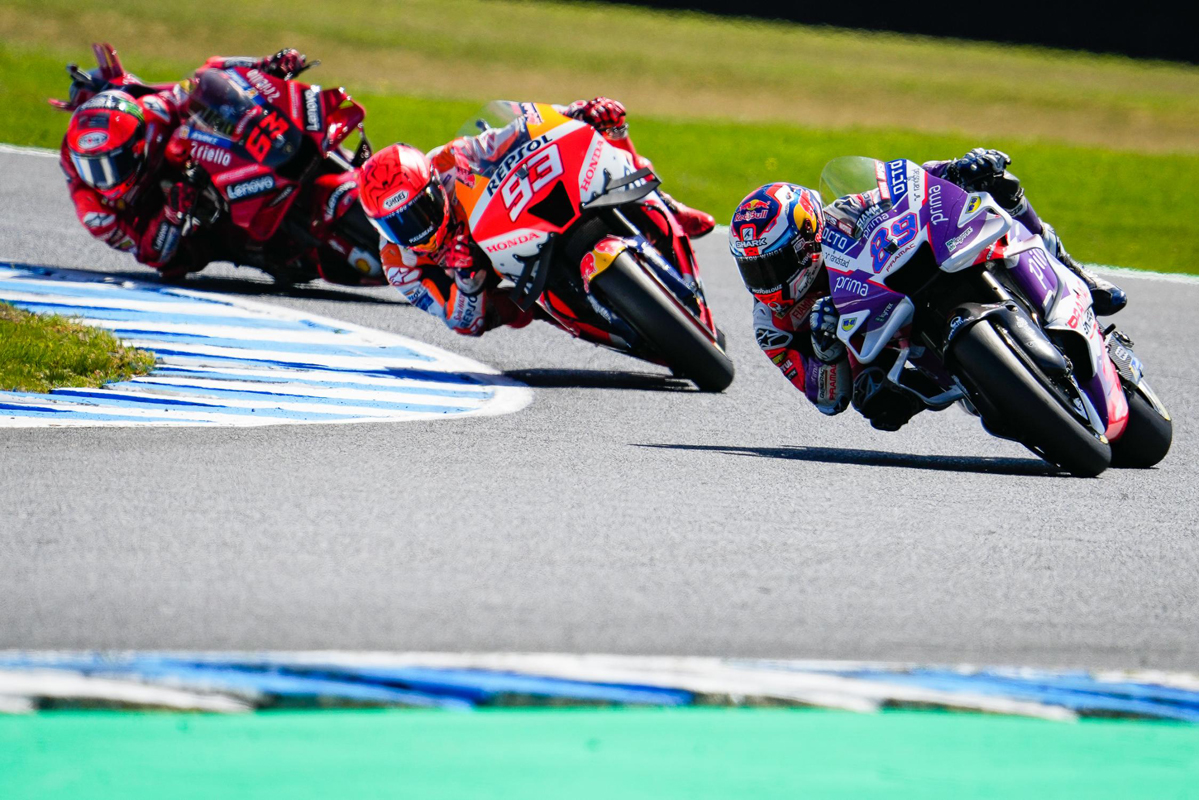
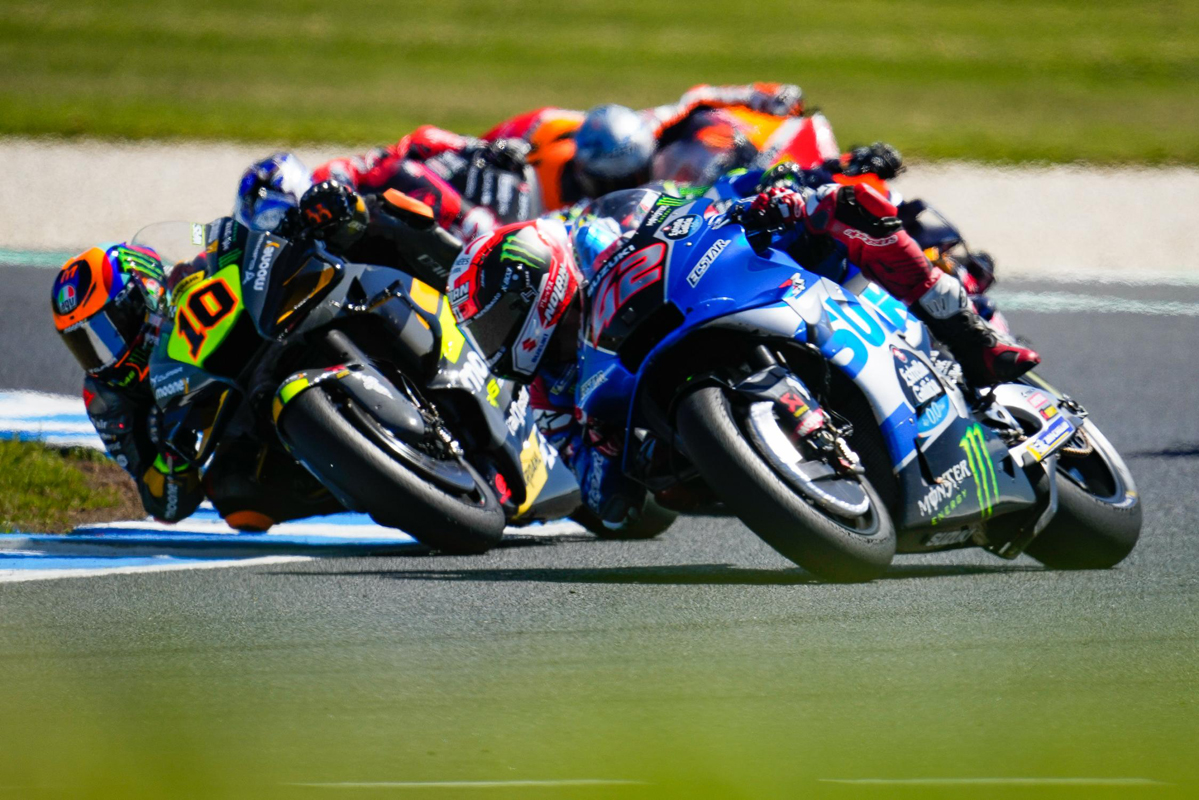
The Valencia race was a bit of a belter, although you had to be patient as the director chose to concentrate on Bagnaia going backwards rather than the action up front. Rins shot into the lead at the start and was never bettered, despite having Jorge Martin, Jack Miller and Marc Marquez breathing down his neck for the majority of the race before an inspired Binder took second place with a couple of laps to go and also made Rins’ neck hot with his breath. Quite how Binder made his tyres last at the pace he was riding is anyone’s guess.
Image source: KTM
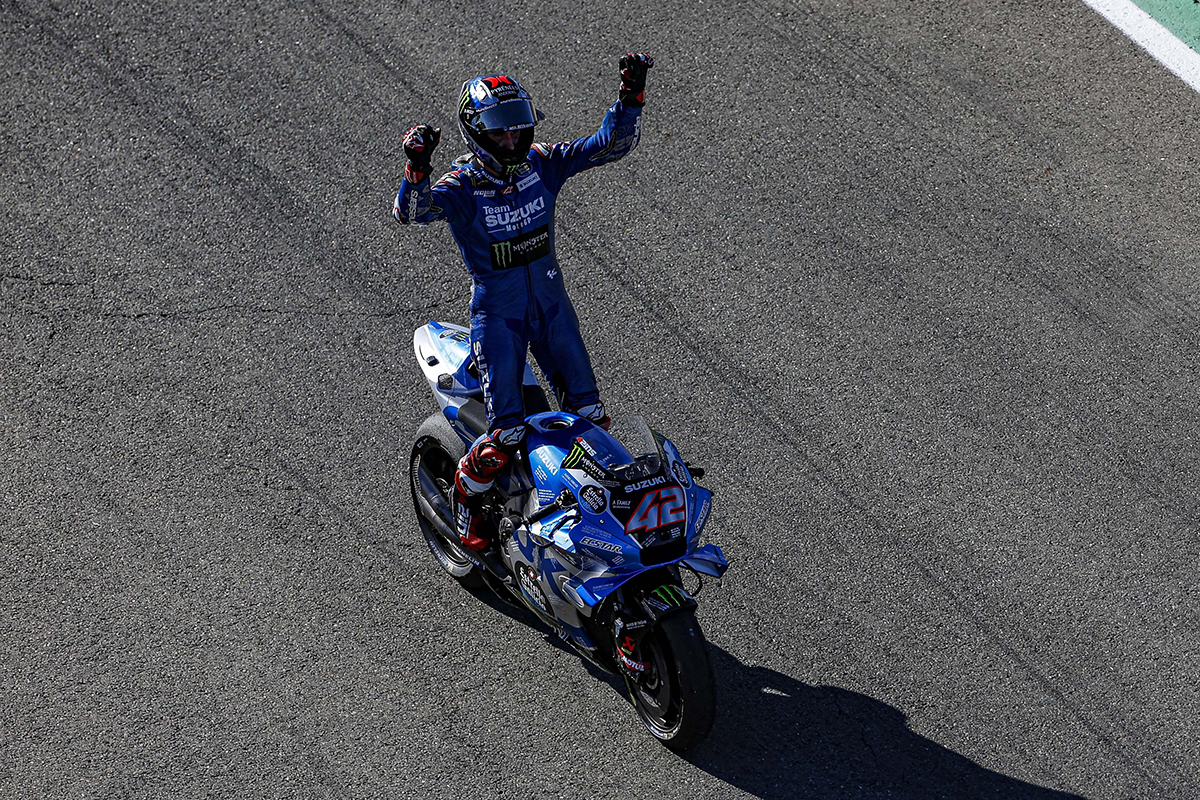
Rins’ performance – the second in three races – must have made the good people at Suzuki wonder just what the hell they were doing, quitting the sport. I mean, a Ducati not being able to get past a Suzuki on the straight? Imagine what Suzuki could do next year if that development curve continued. Another championship would certainly not be out of the question. You can only hope that whoever made the decision to leave MotoGP was looking a bit sheepish on Monday morning as the newspapers and websites were pored over, with a picture of a Suzuki in every single one of them. You can’t buy that sort of publicity but if it has no relevance to what you are actually building, then does it make sense?
If Suzuki has previous form in leaving MotoGP, this time it is for real and permanent, rather than leaving to lick its wounds and come back stronger. Sadly, it makes sense for Suzuki to leave: already news is coming through that Suzuki’s range of sports bikes – the venerable GSX-R line – will soon be unavailable in various territories which signals a change in direction for the company and this new direction has no need for a flagship MotoGP effort costing millions of dollars a year: dollars that could be poured into the development of bikes that are actually selling, as well as electric technology. Still, it’s hard to accept the loss of Suzuki from the grid. MotoGP is still healthy, with five manufacturers but, as Suzuki has shown, it only takes one to quit to leave the paddock reeling amid a scramble for seats: musical motorcycles, anyone?
Image source: Suzuki
The opening couple of laps in Valencia were brilliant as Quartararo threw caution to the wind in order to try and get to the front. Bagnaia was involved as well, losing a front wing as the action got extremely hot. They both survived the skirmish virtually intact but fourth was as far as Quartararo got. Race day was hotter than practice and qualifying days, and his front tyre couldn’t keep up the pace.
He might have lost the title to Bagnaia but Quartararo’s riding this season has been incredible, on a bike that only he has been able to tame and, more often than not, riding way over the limit – and surviving – in order to bend the Yamaha to his will. You only have to look at the other Yamaha riders to understand the job Quartararo has done: the reason Morbidelli is still at Yamaha is not only because he has a contract for 2023 but also because Yamaha themselves know the bike is a dog and to blame Morbidelli for his performances would be grossly unfair. Bringing in another rider is not the answer: a good racing M1 motorcycle is!
Image source: www.motogp.com
What can’t be ignored is Bagnaia’s strength of mind throughout the season. Not only has he had to battle extremely strong Ducati opposition that has never, for one second, let him relax, but also had a crisis of confidence after crashing five times. To rebuild momentum after that is a testament to Bagnaia’s ability to dig deep, analyse the mistakes and make sure they don’t happen again. In the second half of the season, he was imperious, winning four races on the trot after his fifth crash in a race in Germany. That was what set up his championship challenge: that, and the fact that Quartararo’s consistency left him just as Bagnaia was racking up the points.
Pity poor Aprilia: for both bikes to retire from the final race within laps of each other due to technical malfunctions was cruel luck for the most-loved team in the paddock. Aleix Espargaro’s six early-season podiums, including that famous first victory, not to mention Viñales’ three podiums, was the best season for Aprilia ever in MotoGP but the consistency to keep up the title challenge just wasn’t there, with silly mistakes and mechanical fragility scuppering their season. We can only hope that they come back next year just as strong.
Image source: Aprilia
Ahh, next year! Now begins the summer of our discontent with the only minor bright spots being test days here and there. No doubt the teams all need a bit of a break, especially in light of next season, with more races than ever – 21 – looming large. We’ve said it before in this column, but the only thing certain about MotoGP at the moment is the uncertainty. In seasons past, we have been able to predict by and large who will be the dominant force. Since 2020, however, playing such a game has been solely for the clinically insane and next year will be no different.
Image source: Honda
Marc Marquez will no doubt be fully fit but will he have had enough input into the 2023 Honda to turn it into a winner? Will the Ducatis be able to maintain their dominance? Will Yamaha be able to up their game? Will 2023 be KTM’s turn to shine (not an outlandish scenario, given Binder’s performance on a new chassis in Valencia)? Will Bagnaia and Bastianini take points off each other every race, allowing another rider to sneak up from behind and steal the crown? Can Aprilia continue the upward movement?
The questions are many and the answers, naturally, few. For those, all we can do is wait: not for the first race of the season but the last because, only then, will we know who got it consistently right and who didn’t.
It’s EICMA week, which means that we can look forward to a slew of major OEMS confirming some of the industry’s worst-kept secrets. And no secret has been kept worse this year, than the fact that Honda have been working on a new Transalp. Now Big Red’s confirmed it; here’s the brand new 2023 Honda XL750 Transalp.
Honda first released the Transalp back in 1986, but it’s the early 2000s XL650V and XL700V variants that you’ll see all over South Africa’s streets and trails. The Transalp has always sat in the middle of the Venn diagram where versatility, reliability and affordability intersect. It’s never been the most exciting adventure bike on the market, but it’s arguably one of the most iconic.
Image source: Honda
That’s why it’s been sorely missed by scores of adventure riders since Honda cut it from their lineup roughly a decade ago. But it’s back, now with a bigger engine and a host of new features.
Powering it is the same 755 cc liquid-cooled eight-valve parallel-twin engine that’s in the new CB750 Hornet. It’s good for 67.5 kW (90,5 hp) at 9,500 rpm and 75 Nm at 7,250 rpm, and uses a 270-degree firing order for added character. It uses the same Unicam head as the Honda CRF450R, which helps to keep the motor compact, and a slip-assist clutch.
Image source: Honda
The throttle’s a ride-by-wire setup, with five rider modes—one of which is customisable, and one of which is dedicated to off-road riding. Each mode regulates power delivery, engine braking, ABS and traction control. Riders can switch off traction control too, as well as the rear brake’s ABS.
Honda’s claimed fuel consumption figure is 23 km/L. With its 16.9 l tank, that should be good for 390 km between pit stops—which is perfect for South Africa’s most popular adventure riding routes.
Image source: Honda
Its engine size puts the Transalp squarely in the gap between Honda’s CB500X (which is reportedly coming to our shores soon), and the wildly popular CRF1100L Africa Twin. Its styling reflects this too, combining the CB500X’s angular lines with the Africa Twin’s stature. Although it’s not quite as aggressive as the latter, it stops short of being completely bland, with a utilitarian vibe that’s sure to appeal to its intended audience.
Honda’s designers call this look “friendly toughness”—it sounds goofy, but it sort of makes sense. The bodywork is sleek, with ergonomics that look like they’d work just as well whether you’re sitting or standing. The seat height is respectable, but not excessive, 850 mm.
Image source: Honda
The Transalp might be bigger than the CB500X, but its frame is actually lighter. Honda have given it a steel diamond frame that weighs just 18.3 kilos, said to make the bike more agile. The total wet weight is 208 kg, the rake and trail are 27 degrees and 111 mm, and the wheelbase is 1,560 mm.
There’s Showa suspension, with preload adjustment only, at both ends. 43 mm upside-down forks with 200 mm travel do duty up front, with a remote reservoir shock sporting 190 mm of travel at the back, hooked up to Honda’s signature ProLink system. The aluminium swingarm uses the same castings as the Africa Twin’s.
Image source: Honda
Off-road fanatics rejoice: the new Transalp now rolls on 21F/18R spoked wheels, with 210 mm of ground clearance. Sadly, there’s no mention of those wheels being tubeless in Honda’s press release. Braking is courtesy of what appears to be standard-issue Nissin callipers, with dual 310 mm discs up front, and a single 256 mm disc out back.
Standard equipment includes a full complement of LED lighting, a USB charge port, a rear luggage rack and a 5” TFT screen. The dash is packed with info, can be cycled through various display modes, and includes a full Bluetooth connectivity suite. What you don’t get out of the box, are hand guards, a bash plate, or an adjustable screen… but most of those can be purchased separately, naturally.
Image source: Honda
Honda have a full catalogue of parts for the Transalp, ranging from protective bits to luggage. Everything can be bought individually, or in five accessory ‘packs.’ The ‘Urban’ pack includes a 50 l top box (with a pillion pad and an inner bag), a tall screen and a centre stand. The ‘Rally’ pack has a quick-shifter, engine guards, bash plate, burlier foot pegs and hand guards.
The 2023 Transalp takes everything that made its predecessors popular but ramps it up with modern tech and a very respectable spec sheet. There’s a lot to love here—not just for fans of the original, but for anyone looking for a middleweight dual-sport that can commute on weekdays and travel on weekends.
Image source: Honda
There’s no word on what it’ll cost when it gets here—or when it’s arriving. But if the price is right, you can expect to see a lot of these in the wild.
Suzuki has announced the replacement for the long-running and much-loved V-Strom 650 in the form of the V-Strom 800 DE. A ground-up new design, gone is the venerable V-Twin engine and, in its place is a brand new 270°, 776cc DOHC parallel twin which will also power a new middleweight sports roadster, the GSX-S 8S. It features twin balancer shafts to damp out vibrations and, thanks to the 270° crank, it will feel more like a V-Twin than a parallel twin, with attendant excellent torque.
Image source: Suzuki
Power output is claimed to be 83bhp at 8,500rpm, with 77Nm of torque at 6,500rpm. That puts it right in the mix with the Yamaha T7, BMW F 850 GS and the newly-announced Honda XL750 Transalp. In terms of weight, it also sits in that same ballpark.
Image source: Suzuki
If you assumed the V-Strom was so-called because of its V-Twin engine then you might have been right at one point in the model’s career but Suzuki has obviously opted for continuity with the newly-engined model. Of course, the benefits of the parallel twin configuration are significant: simpler, lighter, cheaper to manufacture and maintain and, crucially, much easier to package into a motorcycle for optimum chassis performance.
Image source: Suzuki
Suspension is by Showa and offers 220mm of suspension travel and 220mm of ground clearance. The chassis is all new and has brought the seat rails closer together for a narrower seat where it meets the tank, which will enhance control by bringing the legs closer together when standing. The rear subframe is bolted on to ease and lessen the expense of repairs.
Image source: Suzuki
The electronics have been completely revamped, with three levels of on-road traction control alongside a ‘G’ mode for off-road, which will allow more spin of the rear wheel. ABS can be turned off at the back wheel for off-road riding. There’s also a bi-directional quick shifter and Suzuki’s easy-start system with a low-rpm assist, which helps prevent stalling. There’s a five-inch, full-colour TFT dash via which all the rider aids are controlled.
Image source: Suzuki
Suzuki is clearly aiming to improve the model’s off-road performance to keep it in line with rivals. The suspension changes point to that, as does the 21” front wheel. The airbox has been positioned under the seat, leaving more room for fuel capacity without adding excessive bulk.
Image source: Suzuki
Two model variations have been announced: the standard V-Strom 800DE and the 800DE Adventure, which comes with crash bars, a stronger aluminium sump guard and panniers. It will be available in the yellow/dark blue colour scheme that will be familiar to fans of the outgoing V-Strom 650, as well as ‘Matt Mechanical Grey’ and ‘Glass Black Sparkle’.
Image source: Suzuki
The styling is the only element that has not undergone a huge change which is no hardship as the old V-Strom 650 was already well-endowed in that department. The headlight treatment now echoes that on the latest GSX-S1000, with stacked square LED lights.
Image source: Suzuki
Expect to see the new V-Strom 800 DE in showrooms at some point in 2023.
On a recent visit to Liqui Moly, we got to spy out their new premises. They are now situated at 84 Park Avenue South, Highway Business Park, Rooihuiskraal, Centurion. It is effortless to find as there is a bold Liqui Moly sign on the front of the building. Walking through the building, it seems absolutely made to measure, meeting Liqui Moly’s needs to a T.
Photo credit: Bjorn Moreira / ZA Bikers
The building is light and airy with a distinctly upmarket feel. Totally in keeping with Liqui Moly’s premier “Made in Germany” range of oils, additives and care products for vehicles, machinery, workshops and trade and industry. We have certainly been hugely impressed with every single Liqui Moly product that we have tested to date.
Photo credit: Bjorn Moreira / ZA Bikers
The snowballing success of Liqui Moly in South Africa necessitated the move, as they were bursting out of the seams of their previous premises. The new spot has state-of-the-art warehousing, administration, reception, product display, training and staff R&R space.
Photo credit: Bjorn Moreira / ZA Bikers
What particularly impressed me was the clinically tidy and organised spaces, abounding with subtle yet effective Liqui Moly branding and product displays. It looks like a great work environment conducive to taking this excellent brand to new highs.
Photo credit: Bjorn Moreira / ZA Bikers
Melicia Labuschagne (Managing Director Liqui Moly SA) Commented:
Our amazing Liqui Moly SA team, really put their heart and souls together as 1 unit to make this move possible. This is the same magic team that also takes care of Liqui Moly’s clients. I am really proud to have this team behind me as we strive to take Liqui Moly SA to the next level.
Photo source: Liqui Moly
ZA Bikers would like to wish the Liqui Moly management and staff much happiness and even greater success in their new home.
Having only a handful of long-distance riding experience under me, it was quite the experience, to ride down to East London with Suzuki SA in support of the Buffalo City Riders bikers meet. What was most notable about this particular rally hosted at Orient Beach was observing the extent to which Suzuki SA was actively involved. Historically, having such a strong brand presence from entities such as Suzuki SA tends to be as frequent as a blue moon.
Photo credit: Thabang Khatide / ZA Bikers
Early Friday morning, the 21st of October, we departed from Aliwal North and made our journey down to East London with myself on the Boulevard and Chris Kuun (Motorcycle Marketing Suzuki SA) on the GSX-S1000GT. The 350 km trip was a spectacle in its own right. The vast open road, beautiful landscapes to either side and the spontaneous mountain regions boasted a series of corners that both bikes handled with ease. I will say, the overall riding experience on the Boulevard was sublime!
The ‘Bully’ surprised me on the open road by ticking what I think are ideal travel companion boxes. The Boulevard has comfortable ergonomics, in that the low cupped seat, wide bars and cruiser pegs set you up for a relaxed and stretched-out ride whilst keeping you tucked low enough to minimize wind blast. Suzuki’s legendary 1,783cc V-twin motor feels like it was born on the open road, with plenty of torque low down to overtake (without having to tap down on the box) and also plenty of rpm to allow for a decent cruising speed.
Photo credit: Chris Kuun / Suzuki SA
A fine masterpiece of Japanese engineering all-round, an absolute head-turner. It sure did make me wonder…what was it about this head-turning smile-initiating cruiser that had the average Joe and Palesa in their feels? Was it this young African dude riding it or the eye-catching black and chrome design or perhaps it runs even deeper?
You see, this event didn’t only bring bikers and biker clubs together, it openly invited the motorbike-loving public. Right from the entrance to the main stage, the ladies came out in their summer wear and the gents walked unsteadily with cooler boxes in hand. A fully diverse crowd, above and beyond the mix of ethnicities.
Photo credit: Thabang Khatide / ZA Bikers
Soon, the nostalgia hit, I recall a time when I was often met with glittering eyes riding through my hometown of Mamelodi. There is a certain gaze we receive, particularly as African riders in our respective communities which actually stems from that, “I wonder how it must feel to be him or her on an actual motorbike” afterthought.
That right there, that’s the deeper, for many years catching sight of the odd Harley riders group every other weekend, was the main stimulus that gave us Africans’ aspiration to ride motorcycles. At that moment, I realized the sheer wonder of the Boulevard. Particularly why it thrives in the African community. It is now to the African community what the Harley-Davidson has been to the Caucasian community for many decades—a freedom machine.
Photo credit: Chris Kuun / Suzuki SA
Additionally, having founded a scooter touring company in Pretoria called Velatswi. That was one of the main objectives I was hellbent on, rewriting the script when it comes to inclusivity and being a gateway for first-time pillions. An element which has staggered the steady growth of the biking industry within African communities is the reality that most start their riding journey right in the deep end—most heading straight into the supersport or superbike class without first steadily climbing the ladder.
A brand as big as Suzuki SA being actively involved in such events shows much-needed solidarity from the top, as they lead and take the initiative most have not. They didn’t only show brand presence but went the extra mile to provide much-needed standby mechanical support. It will be interesting to see the long-term future impact such collaborations have on the biking communities across the nation.
Photo credit: Chris Kuun / Suzuki SA
After helping set up the Suzuki tent, all was good to go for the main event on Saturday. From start to finish, the event went according to plan. The weather gods smiled favourably upon us and we had a merry time all-round. Games, challenges and sponsored giveaways from Suzuki were some of the fun activities explored.
Photo credit: Thabang Khatide / ZA Bikers
Before we journeyed back up to JHB, I had the privilege of going on an exclusive M109R ride with one of the members from the “M109R SA” group Makhenzo and a close friend, Lucky, out to Port Alfred. We travelled approx 130 km from Orient Beach, with ample opportunity to open up the V-Twin of the 1800 VZR Boulevard, leaning ever so comfortably and securely corner to corner. We were served with nothing short of breathtaking views as we took a lunch break by the docking bay.
Photo credit: Thabang Khatide / ZA Bikers
All in all, aside from all that, I can only describe my time with the Suzuki SA team members, Chris and Doug, as nothing short of wholesome, engaging and all-round informative. I was in a position to learn about the finer mechanics of the brand’s initiatives and missions to reach the motorcycling community as well as their various planned approaches and so much more. It is safe to say, that there most certainly isn’t a nonchalant frame of mind from Suzuki SA.
I would also like to end with a quick word of thanks to ZA Bikers for welcoming me to the team and recognising the need to cultivate growth within this fast-growing market.
In October, almost two years ago – Dave Cilliers published an article on what he had done and still planned to do to his mid-2020 vintage Triumph Speed Twin, however in June last year Dave, a kindred spirit in terms of generation, interest and expectation, grudgingly sold me the Twin, thereby passing the baton in terms of further modification and removing the temptation from him…
I was born, educated and learned to ride in the UK, “the muddy island” as my sons who live there call it, and started my riding career on a Yamaha FS1-E – now relegated to museum pieces…. And yes, it was a bright yellow one!
Image source: www.nationalmotormuseum.org.uk
I ‘graduated’ to a Honda CG125, which along with Kawa’s KH125 was as far as you could go at the time on a Learner’s licence (and all I could stretch my schoolboy weekend salary to).
I took a sabbatical from bike ownership whilst raising a family, with only the odd loaner or rental experience just to keep my hand in. However, once school fees were paid a few years back, I was tempted back into the two wheels market, starting with a 2014 Tiger XC, which with the relaunch of Triumph in SA, was upgraded to a 2018 Tiger XCa, which at 800cc jointly held the record with my Tiger XC for the largest bike I had owned, until mid last year…
Photo credit: Triumph
So having covered my adventure needs with the Tiger, I just needed to supplement the fleet with a modern classic. Now I love the Thruxton and Thruxton R’s, but my 6’2 frame objects very quickly to the café racer riding position on anything other than a quick spin around the block, so after a deal of trying out, debates and discussions, enter Dave Cilliers, with his tweaked twin, in the colour scheme I wanted, which he was eventually cajoled into parting within my direction after I fell absolutely in love with it!!
I am not going to rehash everything that Dave had done to it (‘Tweaking the Twin’), but there were a couple of things which needed doing to turn it into the dream machine (no, not those Honda’s from the ’70s), which both Dave and I could foresee and wanted to get to, Dave was planning to continue tweaking, so I picked up the ball and ran with it!
Photo credit: Russell Heins
So where did I start – suspension… which to be fair as the stock was ok, but just that – ok, compared to the Thruxton R or Tigers with adjustable suspension it felt, well, a bit agricultural, especially hitting bumps mid-corner, which is becoming an occupational hazard on our roads, where it lost its poise and felt quite nervous.
I looked at the options and ended up talking to Justin Waddington at Shock-Logic the importer and local agent for UK bike suspension kit producer, KTech. Now while I love the feel of the Thruxton R, I am a purist in terms of looks, I’m not big on bling and the Öhlins gold was a statement I didn’t want to make on a black and silver Speed Twin (quite aside from the price tag that comes with Öhlins kit…). The black and silver of the KTech Razor and Tracker kits perfectly complement the OE colour scheme, whilst remaining understated.
Photo credit: Russell Heins
The front-end original fork internals was replaced with adjustable KTech Tracker cartridges, which come with external adjustment for spring preload, compression and rebound—it immediately removed that feeling of crashing through bumps and undulations on the road surface.
There were two options for the rear, both were direct replacements of the original shock assembly, the Razor 3 or Razor 4 piggyback options, the latter was the most expensive but also the most flexible, so that was where I went. The Razor 4’s allow for length and preload adjustment as well as individual compression and rebound adjustment, which are easily adjusted by hand, allowing 14 clicks of compression and 16 clicks of rebound.
Photo credit: Russell Heins
Once these were fitted, even with Justin’s ‘middle of the road’ settings applied, the difference in handling and road surface absorption was absolutely astounding. Riding home from Justin’s premises I headed for a section of Rabie Street that I know is absolutely horrible, and was making my teeth rattle previously, now, whilst the bumps were still there, the suspension response was controlled and far less unpleasant.
So now with Dave’s engine, exhaust and transmission tweaks, supplemented by the suspension upgrade – what was left…well the short answer is not very much, however, the sloppy/snatchy throttle on some of the ‘ride by wire’ throttle Triumph classics was certainly an area. Whilst, not a major issue, it was certainly an irritant, especially at low speed and in traffic, so some YouTube and Instagram searching yielded the answer in the form of the ‘Ducati throttle Spacer’ kit. These were originally developed for the sloppy throttles on some of the Ducati range (would never have guessed from the name…) which apparently use the same source of throttle assembly as some of the Triumph classics and suffer from the same free play when opening the throttle, this, coupled with the awesome power of the Twin made for quite a snatchy low-speed experience.
Image source: www.ducatispacers.com
These spacers probably cost a few cents to produce (and I mean Rand cents – not even hard currency), but are not cheap, however on the upside they do come complete with the correct screwdriver bit for two of the housing screws, which I am pretty sure you would struggle to buy locally. So, I closed my eyes and hit “Buy Now”, when they arrived they took precisely ten minutes to fit, with the longest part of the process being finding the screwdriver in my toolbox – and wow, what a difference, a nice taut, progressive throttle application.
So is there anything else left to do, certainly nothing, for now, it is time to sit back and admire the Twin and most of all ride and enjoy her.
Photo credit: Russell Heins
Over capitalisation? – probably, over modification? – definitely not, and at the end of the day, the money spent is about maximizing your own experience not what you can get back for it – ask any Harley owner. Now all that remains is to catch up with Dave and let him ride it, although that may not be fair on him, crystallising his loss, but it is definitely my gain – Thanks again mate!
I rode through to Jo’Burg from Pretoria during peak traffic to pick up the Kymco for review. After acquainting myself with the handsome Taiwanese Scoot, I headed back out into the traffic. It was immediately apparent that scooters are, without a shadow of a doubt, the answer to conquering the urban mobility challenge that we are all facing. The low centre of gravity, slim proportions, punchy performance and agile handling make it a cinch to slice and dice the heaviest traffic snarl-up. It made my BM feel ponderous by comparison. So what makes the XCITING S 400i special?
Photo credit: ZA Bikers
The heart of the beastie is a wonderfully smooth SOHC 399cc 4-Valve single, which churns out a seamless 35,54 hp @7,500 rpm and 37,7 Nm of torque @6250 rpm. The bike weighs 195 kg, which is quite light for a Maxi Scooter. Consider that a Suzuki Burgman 650 weighs a full 77 Kg more! This negates the extra power to a large degree. The CVT gearbox is snatch-free and accelerates from a stop with a simple twist and go verve. The scooter lifts slightly under hard acceleration, reminiscent of the older BMW twins which jacked up on the shaft under power. It is a pleasant sensation as the bike drops traffic for dead and gets up to highway speeds with surprising ease. Cruising at 120/130 km/h is absolutely effortless, with the engine operating around its torque peak, yet still more than 2000 rpm from the redline. It will run the claimed top speed of around 155 km/h easily.
Photo credit: ZA Bikers
The styling is really handsome, with clean sporty lines. The windshield is adjustable, allowing the rider to set it to suit. The bike hums down the highway with the rider cocooned in a bubble of still air. Weather protection will benefit from this adjustability too. The seat is spacious and comfy for the extended touring that this scooter is capable of. The suspension is on the firm side, accentuating the sporty nature of the XCITING S 400i. Handling is flawless, limited only by the slight lack of feel from the 120/70×15 front tyre and the 140/70×14 rear. They did not let me down in any way, it is just that I started to feel too brave given the excellent handling and chickened out before things got messy.
Photo credit: ZA Bikers
The brakes blew me away. The twin 280 mm front discs have radially mounted callipers. The rear disc is 240 mm. Braking is progressive with an excellent feel and is really powerful and would not disappoint on an out-and-out sports bike. ABS is standard. The Kymco has a taught, quality feel, which is both rewarding and confidence-inspiring. In typical scooter fashion, there is decent storage space under the seat. It comfortably accommodates a full-face helmet, however, access to the storage is slightly limited by the shape of the aperture.
Photo credit: ZA Bikers
There are three ‘Cubbies’ in the front bodywork, one of which has a 12v charging port. A luggage hook allows for a shopping bag between your legs. The fuel cap of the 12,5l tank can be accessed without raising the seat. Fuel economy of around 27 km/L will see a usable range of over 300 k’s.
Photo credit: ZA Bikers
Lights are bright LEDs and include daytime running lights. You have no excuse for speeding given that you have no less than three gauges measuring your speed. A conventional analogue speedo is on the left as well as an analogue and digital speedo in the centre. To the right of the dash is your fuel gauge, clock and trip info on an LCD display. All are very neat and tidy. The whole bike has a well-made and quality feel. It is equipped with both main and side stands. I did not attempt it, but apparently, you can pair your phone via Bluetooth to the LCD display for navigation, to make and receive calls and receive notifications.
Photo credit: ZA Bikers
All in all, the Kymco XCITING S 400i is an excellent scooter which offers exceptional value at around R85k. In fact, given its spread of talents, build quality, good looks and superb real-world performance it may just be the ‘Sports Touring’ and commuting scooter buy out there at the moment. I would highly recommend that you seriously consider it if you are tired of traffic jams and spending hours in traffic. For heaven’s sake, get a life, get a Kymco XCITING S 400i and replace your traffic frown with a smile!
Photo credit: ZA Bikers
Kymco XCITING S 400i
For more information on the bike featured in this article, click on the link below…
One of our favourite motorcycles, the Triumph Street Triple 765, has just had a major update. Revised for 2023, the Street Triple R, Street Triple RS and limited edition Street Triple 765 Moto2 Edition take Triumph’s proven formula, and dial it up to eleven.
All three bikes featured an upgraded version of the Street Triple’s 765 cc triple-cylinder power plant, more aggressive styling and a smorgasbord of electronic and chassis updates. The ‘base’ model R now makes 120 PS (118.4 hp), while the RS makes 130 PS (128.2 hp). The Moto2 Edition makes the same power as the RS, but ups the ante further with top-shelf suspension, carbon fibre parts and an even more aggressive riding position.
Image source: Triumph
Taking lessons from their work in Moto2, Triumph have reworked the Street Triple’s engine with a 4.7% higher compression ratio, along with new pistons, con-rods and gudgeon pins. They’ve also optimised the combustion chambers and added new valves and camshafts.
The R now makes 120 PS at 11,500 rpm (2 PS up from before), with the RS and Moto2 Edition hitting 130 PS at 12,000 rpm (7 PS up from before). Torque’s been bumped up by 1 Nm to 80 Nm, with the same usable torque curve the Street Triple’s loved for; there’s a tangible increase from 7,500 rpm before it peaks at 9,500 rpm.
Image source: Triumph
The gearbox has been revised too, with shorter ratios for snappier acceleration—so the new Street Triple should be even livelier than it already is. The clutch is a new slip-and-assist unit, and an up-and-down quick-shifter is standard issue. Triumph have also rebuilt the exhaust system from front to back, to increase flow and fine-tune the 765’s unmistakable soundtrack.
Moving to the chassis, Triumph have tweaked the RS and Moto2 Edition with a steeper rake and raised tail to make them nimbler on the road. The handlebars on the R and RS are 12 mm wider than before, while the Moto2 Edition goes all-in with race-style clip-ons that sit forward and low. Seat heights are listed as 826 mm (R), 836 mm (RS) and 839 mm (Moto2 Edition), but there’s a low seat option that can shave 28 mm off of that, and a dealer-fitted linkage that can bring it down by another 10 mm.
Image source: Triumph
As for suspension, the R runs with Showa components at both ends, while the RS gets Showa forks and an Öhlins piggyback shock. Both setups are fully adjustable for preload, compression and rebound.
Once again, the Moto2 Edition tops the charts. 43 mm upside-down Öhlins forks do duty up front, with an Öhlins piggyback shock out back. All three bikes have 115 mm of front wheel travel, with 131.2 mm rear travel on the RS and Moto2 edition, and 133.5 mm on the R.
Image source: Triumph
All three are also equipped with Brembo brakes, but the RS and Moto2 Edition both get the company’s high-end Stylema callipers up front and come standard with Pirelli Diablo Supercorsa SP V3 tyres. There’s a linked braking system in use too.
Also notable is the Street Triple’s updated ‘gullwing’ swingarm, fitted across the whole range. It’s been developed to optimise both torsional rigidity and lateral flexibility, to improve stability at higher speeds, and to help the chassis feel more confident when you fire it out of a corner.
Image source: Triumph
Moving to the electronics, Triumph has updated the Street Triple’s ABS, traction control, front wheel lift control and riding mode systems. Like with most of Triumph’s range, the rider has control over how much ABS and traction control intervention is employed in each riding mode. The usual ‘Road,’ ‘Rain’ and ‘Sport’ modes feature, along with a fourth, custom-tuned ‘Rider’ mode, and a fifth ‘Track’ mode on the RS and Moto2 editions.
The two top-tier models also get new 5” TFT displays, along with Triumph’s usual Bluetooth connectivity suite, and a lap timer for track-day use. Leaning into its racing influence, the Moto2 Edition’s display has its own Moto2 startup screen as well.
Image source: Triumph
Then there’s the most obvious change: all three Street Triples have been restyled to look even more menacing than before. They all wear redesigned 15-litre fuel tanks with new side panels, and sharper LED headlights that take cues from those on the Speed Triple 1200 RS (with the same daytime running lights too). The front end even features a tiny little headlight ‘spoiler,’ just like the one on the Speed Triple.
The tail’s been redesigned too, and the RS comes with a colour-coded (and removable) passenger seat cover. As for the Moto2 Edition, it’s dripping with carbon fibre trim. And it’s kitted with a gorgeous machined top yoke, with its series number etched into it—because Triumph will only be producing 765 units.
Image source: Triumph
Each version of the new Street Triple comes in a handful of fresh liveries, but there’s really no contest. The ‘Triumph Racing Yellow’ paint job on the Moto2 Edition is by far the most eye-catching. It’s finished off with some trick Moto2 branding on key parts.
Naturally, there’s a wide range of accessories coming for the new Street Triple too, including cruise control on the two top models, heated grips, passenger grab handles, luggage and fly screens. Judging by the official photography, it appears that bits like the license plate bracket and passenger pegs can be ditched easily, which is a boon for track riders.
There’s no word yet on when the new Street Triple will hit South African shores, which models we’ll get (it’s unlikely we’ll see the ‘R’ here though), or what it’ll cost. The only thing we do know is that we’re frothing for a ride.
Yes, the title says it all, the Liqui Moly MotoGP competition has run its course and we finally have a winner. The comp was extended from last year’s MotoGP final to this year, but after such a pumped-up season of racing, I think all things happen for a very good reason. Winners Anton Frost and Chanel Emslie have already jetted off to sunny Spain for the Valencia GP and a trip of a lifetime.
Before setting off we got to meet the lucky and very much so deserving winners of Liqui Moly’s epic competition. It’s just so awesome to see a petrol head or in this case ‘heads’ win something like this, as this would be right at the top of the bucket list for any GP fan—a dream brought into fruition. What puts the icing on the cake is that Anton has been feeding his rides with Liqui Moly since his 50 cc days and has grown fond of the brand and its well-engineered products.
Photo credit: Bjorn Moreira / ZA Bikers
The love of motorcycles doesn’t stop there, Anton loves scratching knee himself and shares his love for MotoGP with his partner Chanel. You could just tell that Chanel loves GP by the colour of her nails. Yes, yellow, white and Brad Binder’s lucky 33 number on both hands. With racing running deep in the bloodstream of Liqui Moly, they have made sure that both Anton and Chanel get a proper VIP paddock experience with the Liqui Moly Intact GP Team—the team Darryn Binder will be joining in Moto2 next season.
Photo credit: Bjorn Moreira / ZA Bikers
How did they win? Well, like I said Anton loves his Liqui Moly products. As the competition stated: If you spend R1000 or more on Liqui Moly lubrication products, you are eligible to enter the Liqui Moly competition. So, that is precisely what Anton did and after Liqui Moly captured the lucky receipt number, Anton was notified that he had indeed won.
So, there you have it, this pays tribute to how Liqui Moly South Africa shows their clients appreciation for supporting and using their products. Liqui Moly really has pulled out all the stops and has given these lucky winners a trip of a lifetime to the value of 200k.
Sometimes, buying the hottest magazine cover motorcycle isn’t enough. That’s where famous tuners like Brabus come into the picture. Yes, you heard me right, Brabus. So, how does the notorious Mercedes-Benz performance tuning company appear on a motorcycle platform? Well, a simple handshake it seems…
Photo credit: Bjorn Moreira / ZA Bikers
The rumoured partnership started floating around towards the back end of 2021, leaving many people scratching their heads and yelling Mr Trump’s favourite word: “Fake News”. Thankfully fake news it was not, with the first-ever Brabus motorcycle rolling out into the spotlight this year in a limited number of 77 bikes in two unique colour variants; Magna red and Signature black. The beast also received a new maiden name, the name of BRABUS 1300 R.
Photo credit: Bjorn Moreira / ZA Bikers
Now you must understand, KTM does not struggle to sell special editions, in fact, it’s not unusual to sell 500 special editions in just a matter of minutes—the Super Duke RR sold out in just 50 minutes and the RC 8C in just under three minutes. With that said, you can just imagine how crazy it would be to walk into 1 of 77 motorcycles in the world at RAD KTM in Rivonia. After a quick rubbing of the eyes, the Brabus 1300 R was still there and glistening in all of its carbon fibre and Gucci-like glory.
Photo credit: Bjorn Moreira / ZA Bikers
The 1300 R is obviously built on the base of the SuperDuke Evo platform, so lots of KTM can still be seen beneath the more mature modern neo-classic exterior. Exterior aside, Brabus has left the mechanicals alone, with the standard bike already rolling out of the Austrian manufacturer’s factory with impressive specs. Instead, Brabus has concentrated on the style of the bike, completely re-dressing it in a whole new design language.
Photo credit: Bjorn Moreira / ZA Bikers
Taking a closer look at the Brabus creation and you can see where the heart of the rebel meets the soul of the gentleman. Starting from the front of the bike, the round LED headlight grabs your attention like no other and it is finished off with a neat Brabus branding inside the light.
Photo credit: Bjorn Moreira / ZA Bikers
Your eyes then fall onto carbon elements like the double-sided air scoops, fly screen, engine protectors, the front carbon mudguard and integrated calliper cooling system, rear carbon tail section and the integrated chain and rear mudguard. Wow, that was a mouth full of carbon!
Photo credit: Bjorn Moreira / ZA Bikers
Then there are the subtle yet elegant details, like the forged BRABUS Monoblock Z wheels which have a machined edge, a designer custom-made seat that gets the Brabus stamp of approval, machined Brabus rear sets and finally a Brabus dual-pipe exhaust system, which uncorks its unmistakable v-twin rumble.
Photo credit: Bjorn Moreira / ZA Bikers
So there you have it, sometimes owning your dream bike isn’t enough. And in this case, the Brabus is a bike that was designed to offer customers the chance to express as much about themselves as possible—a bike that is personalized deeper than what the company originally planned.
If you were hoping to see one in the flesh, now is your chance and better yet if you are interested in owning quite an exciting and rare beast then make sure you get to RAD KTM in time.
William Slater has joined the Brother Leader Tread KTM team heading into the Roof of Africa next week.
Slater is no stranger in the enduro scene and boasts a host of accolades including IMPI hard enduro overall titles and a 4th place finish at last year’s Roof of Africa race in the Gold class. The likeable man from KZN is looking to stomp his authority at this year’s event as well as across the enduro calendar in 2023 for the team. William is very well known for his impeccable mechanical skills as well as his technical riding ability and looks forward to showing up at the Roof with a brand new 2023 KTM 300 XC-W ready to race the best in the world. He commented, “I’ve got the right people backing me and I am looking forward to racing my bike in the Maluti mountains”.
Image source: www.zcmc.co.za
Grant Frerichs, KTM marketing manager, commented “Having William join the team is a great investment for us. He has been helped by KTM Durban for the last few years and has shown great potential, especially in the technical hard enduro races. We look forward to supplying him with all the tools to get the job done and hope to help him reach his lifelong goal of being crowned South African champion in 2023.
This weekend saw the 2023 MX National Championship draw to a close giving Husqvarna Racing some time to reflect on what on all counts was a challenging season. Grant Frerichs from Husqvarna South Africa summed it up saying he has every reason to be proud of the team. “2022 is a wrap and we faced some significant adversity this season like losing star rider David Goosen to a career-ending injury mid-season and being forced to try patch things up, yet still managing some solid results,” Frerichs said.
Both Josh Mlimi and Davin Cocker showed promise moving on to the 2023 season he commented. “Phenomenal result from young Neil van der Vyver who went out swinging bringing home 1st places in both heats, he did everything possible but he had to settle for 2nd overall in the Championship, this kind of sums up our season” Frerichs added. “We are all looking forward to some downtime to recover and refocus for the 2023 season,” he said.
Image source: Husqvarna
Van der Vyver had the perfect weekend and got some redemption by taking the win ahead of rival Trey Cox in both heats. “The first heat went smooth for me being able to control things from the front but the second heat I had to battle from mid-pack and bashed bars with Trey for a couple of laps before managing to pass him and take the win,” he said. “It is frustrating that I still fell short with a few points, but it was a great season with a lot learnt in the process. Of course, I need to thank my Husqvarna team for all the effort they put in for me this year” van der Vyver said.
Cocker and Mlimi battled bravely and both brought home solid results as they continue to build for what is set to be a significant 2023 season.
Image source: Husqvarna
Mlimi finished 2nd in MX1 and 4th in MX2 saying “I had a few hiccups and made some mistakes that cost me, but nonetheless I’m really happy with how I’ve progressed over the last couple of nationals, the team and I have a really good base to build on for 2023.”
Cocker, in turn, said, “So happy to be back racing MX again, I’m slowly getting back to where I left off and I can’t wait for more of that next season.”
It was another bullish weekend results-wise for the Red Bull KTM boys after a very successful outing at the final round of the Motocross National Championship held at Chestnut Hill this weekend. The team walked off with the laurels in all the classes they competed in. Grant Frerichs from KTM South Africa said the team delivered incredible racing. “The guys wrapped up all of their respective championship title battles!” He went on to say, “It was significant and special walking off with a 1st, 2nd and 3rd in the championship in the MX2 class on board our brand new 2023 model bikes giving a glimpse of what is to come next season.”
Image source: KTM
Tristan Purdon rounded off a flawless weekend of racing wrapping up his journey with KTM South Africa in fine style. “I really had a good day, I knew I had to win MX2 to have any chance at the championship and did just that,” a pondering Purdon said. “I won both heats, closing down a 7-point gap to just 1 point difference” he mused. Purdon added that he has every reason to be happy with his performance on the day saying, “In the end, I managed to win all 4 moto’s as well as being fastest in qualifying in MX1 and MX2, so really happy to end things like that.” Purdon who will be racing in Europe next season in a moment of reflection said, “I want to thank the whole team for the awesome 4 years we have had racing for Red Bull KTM bringing home 4 championship titles together.”
Image source: KTM
It was a roller coaster of a season for Cameron Durow. “It was a long season with loads of travelling, many highs, broken collar bone, and some lows mixed in with some seriously intense close racing. The 2022 season is certainly one for the books,” Durrow said. That said, Durrow still managed to finish the season with the MX2 National Championship title and is clearly happy about that. “Round 6 was a tough round for me in both MX1 and MX2, Chestnut is a track I have always struggled with but this weekend I managed to do exactly what I needed to, finish it off with two 2nd places to bring home the MX2 Championship,” a clearly relieved Durow said. “This was my first full season on the KTM 450 SX-F and it is really amazing to be part of this orange family, I can’t thank my team enough for the support throughout the season,” Durow said.
Image source: KTM
Jono Mlimi battled with bad luck during his season’s final race. “I am happy to get the last round done and dusted, I got a flat tyre during the first race that forced me to fight back to end up in 12th,” he said. “In the second race I wanted to get a better result and I fought through the field to get a 5th place which I’m happy to still get 3rd overall in the championship in my first year of racing the KTM 250 SX-F” he said.
Image source: KTM
Luke Grundy claimed his first-ever Championship title. “The last round was a good one for me, I managed to secure the overall with a 1st and a 2nd and already knew I had the championship in the bag after the first moto,” he said. He went on to say, “I’m beyond stoked about winning the Championship since it’s my first one and I can’t put into words how happy I am, massive thanks to my team and family behind me!”
Image source: KTM
Young Trey Cox also managed to bring home his first National Championship title. “This year has been so solid for me from leading the championship the whole year and pulling off not finishing worse than second in a moto the whole year” Cox commented. “I’m so stoked to take home the championship, I have been working for this for so long and I can’t thank everyone involved enough,” Cox said smiling.
Special mention must go out to Evan Frost, Dean Wheeler, and Lou Rademeyer also winning their respective championships onboard KTM Motorcycles.
The Black Friday concept is a global phenomenon whereby retailers offer huge discounts on goods for one day only. At least, that’s what it used to be: recently, the discounts have become smaller and smaller.
Fire It Up! is bringing back these significant discounts, not only for just one day but for the entire month of November, starting on Friday the 4th.
Photo credit: Bjorn Moreira / ZA Bikers
Fire It Up! will be offering the following unmissable deals to all its customers:
Sprint filters (below cost)
Used motorcycles (at cost)
Rapid Bike modules (at 50% cost)
Selected Hero motorcycles (at dealer cost)
These are all genuine bargains and not merely slightly discounted deals. With each, there is the opportunity to save thousands of Rands, not hundreds and it is just one more way that Fire It Up! is looking after its loyal customers.
For more information, head to the Fire It Up! showroom in Bryanston or contact them at 011 467 0737.
With only just over a week to go before this year’s edition of “The Mother of Hard Enduro” (9 – 12 Nov), the excitement is palpable as competitors and their support teams make their final preparations for the daunting challenge of the Maloti Mountains.
As the official lubricant partner of the 2022 Roof, Motul will be supplying their 710 2T lubricant to the event organisers for use by all riders taking part in the Gold, Silver, Bronze and Iron classes. They will also be establishing a station at each of the unassisted service points during the race offering emergency product support (including Motul lubricants, coolants and other products).
Image source: Motul
Motul will also be sponsoring the Bike Wash station under the watchful eye of long-time Roof collaborator Craig Kruger of Extreme Clean and his local team. The three 5000L tanks will subsequently be donated to the local community by supplier Eco Tanks, as in previous years.
“Whatever the weather – and it’s almost impossible to predict – the bikes are certain to pick up a great deal of mud or dust which can impact their performance. The Bike Wash facility offers a respite from the tough Roof conditions for professional riders and amateur enthusiasts alike, and we’ll be using Motul’s biodegradable bike wash throughout,” commented Kruger.
Image source: Motul
“Supporting all the participants at this year’s Roof, from the professionals to the weekend warriors, gives us a chance to get closer to the riding community and motorsports fans. It’s also a great way to put our range of premium lubricants through their paces under some extremely challenging conditions – we’re excited to showcase our products in this way,” commented Mercia Jansen, Motul Area Manager for Southern and Eastern Africa and the Indian Ocean.
This year, Roof fans can once again get close to the action, whether at the official Start/Finish point at the renowned Bushman’s Pass, or at the various viewing areas throughout the mountains of Lesotho.
Image source: Motul
For Enduro enthusiasts, the highlight will be watching a strong field of international riders challenge defending champion Wade Young (riding for the Sherco Factory Team powered by Motul) as he seeks to retain his title and come a step closer to equalling Alfie Cox’s record total of nine Roof wins.
“We’re excited to see Wade ride the latest 2023 Sherco 300 SE Factory edition. It’s the ultimate extreme Enduro weapon straight out of the box and another reason why there are over 25 Sherco bikes in the starting line-up this year,” commented Ben Du Toit from Sherco South Africa. “As always, we are offering all Sherco riders a comprehensive support package that includes tyre fitment, spares availability and race prep at the end of each day,” he added. This year’s Roof will see the continuation of the Sherco/Motul 360-degree global partnership, first announced in 2020.
Image source: Motul
For all the latest Roof news and views in the run-up to the event, visit www.roofofafrica.co.ls
To learn more about Motul’s product range and commitment to motorsports sponsorship, visit www.motul.com
When it comes to the qualities that set Yamaha apart, the list is never-ending! But here’s one thing they pride themselves on the most; the end of every one of their product purchases only marks the beginning of a long & fulfilling relationship with their customers at Yamaha.
Over the years, they’ve managed to maintain these relationships with the help of Yamalube & bLU cRU. And in case you’re wondering, these two exist as support for anything and everything their customers may need to fully enjoy their products in the long run – from maintenance, special events information and everything else in between. These two have helped them garner a network of relations that continue to grow rapidly.
As a bigger community of customers means an even bigger audience, Yamaha is introducing new channels to connect with them! They’re thrilled to announce that Yamalube & bLU cRU now have their own separate independent Facebook & Instagram pages. This move is very much in line with their brand strategy which is aimed at achieving more awareness for their multiple products.
Image source: Yamaha
For those who may not know, Yamalube is a maintenance and care brand that manufactures oil products for Yamaha-designed engine-powered products. Since being introduced, it has impressively passed many tests including that of time. Currently, it stands as the only oil formulated to perfectly meet the unique demands, operating characteristics and applications of the heart of every Yamaha product – the engine.
Additionally, bLU cRU is a club that was established as a support group for registered Yamaha owners. Through it, they were able to treat their customers to some members-only benefits such as training opportunities, riding events and more.
They’re always looking for ways to expand on the offerings within these two sub-brands. And with the new Facebook & Instagram channels here, they will be able to communicate and engage with their customers regarding all their updates with ease. That said, they encourage their customers to like and follow our pages to stay up to date.
It’s almost time for one of the motorcycle industry’s biggest trade shows—EICMA. But is the Milan-based event losing its lustre?
The pandemic, and the resulting national lockdowns, taught major OEMs that there are quicker and easier ways to break news than to spend big money on showing up at a trade show. And when EICMA returned to the calendar last year, major players like BMW, Harley-Davidson, Ducati and KTM were all absent. It could have been a result of travel restrictions, or slashed marketing budgets, but we’ve yet to see who’ll pitch up in Milan next month.
Image source: Ducati
In the meantime, some brands aren’t content to wait. October has seen an unusual amount of new releases in the run-up to EICMA. We still have some stuff to look forward to (like the rumoured Honda Transalp), but in the meantime, here’s what’s caught our eye over the past month.
KTM RC 8C (Sold Out)
Image source: KTM
KTM might not be getting the results they want on the MotoGP circuit, but that’s done little to quell the love for the marque’s limited edition, track-only RC 8C. The Mattighofen-based marque has just released an updated version of it—and it’s sold out even faster than its predecessor did.
The first RC 8C broke cover last year, with all 100 units spoken for in less than five minutes. But the updated 2023 version flew off KTM’s virtual shelves in a mere two minutes, despite the company making twice as many units available.
We can’t say we’re surprised—after all, the RC 8C is the ultimate track tool for KTM-obsessed riders. It’s not just a redressed 2021 model either. It’s a bonafide upgrade, sporting a host of lust-worthy parts and features.
Image source: KTM
The revised LC8c inline twin now makes 135 hp at 11,000 rpm, courtesy of new titanium valves and conrods, a higher compression ratio, bigger throttle bodies and a handful of other smart upgrades. Power’s managed via a full suite of configurable electronic aids.
The 2023 RC 8C weighs a paltry 142 kilos dry, thanks to lightweight components like the titanium Akrapovič exhaust system. The suspension is an all-new WP Pro setup, while the brakes are high-end Brembo Styleema units.
Image source: KTM
A MotoGP-derived aero package comes standard, naturally. The RC 8C also gets a smorgasbord of carbon fibre bits, along with race-spec rims, triple clamps, switches, and an AIM dashboard. Oh, and the gearbox shifts MotoGP-style. The only thing the RC 8C doesn’t come with is Brad Binder’s skill on a bike. You’re on your own there.
The Triumph Chrome Collection
Image source: Triumph
Nothing screams “vintage” like chrome—lots and lots of chrome. Triumph gets it, so they’re releasing eight ‘Chrome Edition’ modern classics, and two versions of the Rocket 3. If you like shiny things and have nothing better to do on weekends than polish your motorcycle, read on.
Triumph’s new ‘Chrome Collection’ includes special editions of the Bonneville T120, Bobber, Scrambler 1200 XE, Speedmaster, Thruxton RS, T100, Speed Twin 900 and Scrambler 900, along with the Rocket 3 R and Rocket 3 GT. Each model will only be available for a year, and each follows the same basic recipe.
Image source: Triumph
Each Chrome Edition bike features a fully- or partially-chromed tank, with an additional accent colour. Notable exceptions are the T100, Speed Twin 900 and Scrambler 900; these feature a painted tank with a distinctive chrome accent, instead.
The bikes are then further trimmed with contrasting jet-black parts. But if you want to get your shine on, even more, Triumph has a full catalogue of chromed accessories available for each bike.
Image source: Triumph
It sounds silly on paper, but you have to admit that these chrome-laden machines look extremely luxe. It’s hard to argue with the combination of chrome and green on the Scrambler 1200, or the vintage Husqvarna scrambler vibe that the Speed Twin 900 gives off.
BMW R 1250 R (updated)
Image source: BMW Motorrad
The 2023 BMW R 1250 R doesn’t seem that much different from the 2022 BMW R 1250 R. That’s because it isn’t really—short of a new set of liveries, there’s not much to report on.
What is newsworthy though, is what you get for your money. BMW Motorrad is a brand infamous for charging for every last optional extra, but they’re bundling more features with their naked boxer roadster than before.
Image source: BMW Motorrad
Here’s the deal: the BMWs that hit our shores usually come pre-loaded with a host of optional extras, which makes them a little pricier. With the revisions to the R 1250 R, the company is looking to offer riders more bang for their buck by baking some of these into the ‘base’ model. ‘Dynamic Traction Control,’ an ‘ECO’ riding mode, BMW’s ‘Integral ABS Pro’ and ‘Dynamic Brake Control’ features, a USB port, new LED turn signals, and a cover for the passenger seat, are all now standard features.
Image source: BMW Motorrad
There are murmurs that this won’t push the R 1250 R’s price up, though we’d need confirmation from BMW Motorrad South Africa on that. If that’s true, it adds a little icing on top of what is already a ripper of a motorcycle.
Ducati Panigale V4 R
Image source: Ducati
Ducati are going all-in on their four-cylinder powerhouses this month, starting with the 2023 Panigale V4 R.
As if the current Panigale V4 wasn’t mental-slash-desirable enough, its replacement sports, even more, MotoGP- and WorldSBK-derived stuff. It’s an extensive laundry list of upgrades, so we’ll just breeze over the highlights.
The new V4 R has updated wings (obviously), a MotoGP-inspired paint job, and a new billet aluminium triple clamp that will bear each bike’s number. There’s a new clutch, new gear ratios derived from WSBK bikes, and a bunch of refinements to the electronics. It’s a party inside the motor too, with titanium conrods and pistons, and a special oil developed in partnership with Shell.
Image source: Ducati
The result: a stunning superbike that looks bananas, and can hit 240.5 hp in track mode. Oh, and it’ll make that at 15,500 rpm—right before the limiter kicks in at 16,500 rpm.
Streetfighter V4 (updated)
Ducati have upgraded the Streetfighter V4 family too. The focus here was on chassis improvements, upgraded running gear and revised electronics.
Image source: Ducati
Most of the chassis changes are derived from the Panigale V4, to improve handling. So the front frame’s been tweaked, the weight distribution’s been altered and the swingarm pivot’s been nudged higher. The Ducati V4 S also gets semi-active Öhlins suspension and Marchesini forged alloy wheels.
Image source: Ducati
Also new are the tank shape (which has improved ergonomics), and the riding modes, which, again, have been borrowed from the Panigale. The engine’s been re-calibrated to match a larger diameter exhaust, and the Streetfighter now wears the Panigale’s clutch cover.
Image source: Ducati
Ducati have a swanky new Streetfighter V4 SP2 as well. It’s a limited edition model, sporting carbon wheels, Brembo Styleema brakes, Öhlins suspension and a STM-EVO SBK dry clutch. You’ll know it by its livery, which was inspired by the pre-season MotoGP and WSBK test bikes.
Ducati Diavel V4
Image source: Ducati
Continuing with the theme of exotic Italian four-cylinder motorcycles, Ducati have just announced a major update to the Diavel. As is abundantly clear from its name, the new Diavel V4 trades its two-cylinder motor for the V4 Granturismo powerplant from the Multistrada V4.
That move sees the Diavel take a step back in terms of capacity (from 1,262 cc to 1,158 cc), but a step forward in terms of power. It now makes 168 hp (7 hp more than before), while torque dips from 128.9 Nm to 126 Nm. But it’s not just about the numbers—the radical change in engines will surely make the Diavel totally different to ride.
Image source: Ducati
The change also adds visual bulk to the already muscular Diavel—note the chunky air intakes, and the clustered four-piece muffler. All the styling cues befitting of such an excessive machine are present, including a contrast-cut and mega-wide rear wheel that looks like it came off a performance car.
Image source: Ducati
Naturally, the Diavel V4’s chassis has been redesigned around its new engine. But despite its visual heft, it’s actually lighter than its predecessor, tipping the scales at 223 kilos without fuel. It also gets 15 mm more suspension travel, Brembo Styleema brakes, and a revised electronics package with a new TFT display.
When you think about it, doubling the Diavel’s cylinders makes total sense. It plays into the bike’s whole power-cruiser-that-eschews-definition mystique. Oh, and did we mention it now does zero to 100 in three seconds?
Ever heard of Honda Quest? Run by Honda South Africa and unique to our shores, it’s an adventure motorcycling challenge where participants compete in teams of two. There’s one heck of a prize, too: the Honda Africa Twins that they competed on.
I’d wager that while some of you are nodding your heads right now, this is news to the rest of you. Riaan Fourie, head of Honda SA’s motorcycle division, admits that “people outside Quest don’t know what Quest is all about.” Now the brains trust behind the event is set on changing that.
Photo credit: Wes Reyneke
With four annual Quest events under its belt, Honda SA is changing things up. The main Quest event officially called ‘Honda Quest True Adventure,’ will now happen every second year. The format will be much the same as now: Through regional qualifier events, Honda will select 30 entrants to attend a Quest boot camp, then select 14 finalists to duke it out over eight to ten days.
The year preceding each running of Quest True Adventure will be filled with ‘Road to Quest’: a rolling roadshow designed to spread the Quest gospel to the masses.
Photo credit: Wes Reyneke
Road to Quest’s concept is as clever as it is unpretentious. Honda will move from city to city, each time leaving four fully-equipped Africa Twins at a local dealer for a week, for adventure riding enthusiasts to sample.
Each leg of Road to Quest then culminates in an ‘open day’ at a local venue. With seven events already hosted in the Johannesburg, Pretoria and Vaal areas, and two special days at the ADA Training and Outdoor Centre (they’re Honda’s official rider training partner), it was Cape Town’s turn to play host.
Photo credit: Wes Reyneke
Honda South Africa set up shop at Anura Vineyards, tucked away in the impossibly picturesque Stellenbosch wine region. With a mini-fleet of Honda Africa Twins in various configurations on hand, including DCT- and non-DCT-equipped bikes, they entertained around 60 visitors over a weekend.
Both days followed the same basic format. Every hour, a group of riders would be taken on a 45 km loop in and around Anura’s grounds, by experience Honda Quest guides. The route included some tar, open farm roads, enough corners to break loose on, and a tight forest single track with one or two butt-puckering bits.
Photo credit: Wes Reyneke
Like the primary Quest True Adventure challenge, Road to Quest is open to anyone with a motorcycle license—whether they’re a Honda customer or not. So at the very least, the weekend was a great opportunity to put the Africa Twin through its paces in its natural habitat. But the moments between rides were just as important.
Honda made sure that the Quest community was well represented. In attendance were various key Honda South Africa staffers, local dealers, official Quest ‘crew’ and even some past participants—like actor and comedian, Pierre Breytenbach. Questions were asked and answered, conversations were had, and Quest was effectively demystified to a group of dual-sport riders that, until now, had just been looking in.
Photo credit: Wes Reyneke
Honda has six more Road to Quest events left for 2022 before they start looking forward to 2023’s Quest True Adventure challenge. Those are going down in Port Elizabeth, East London, KwaZulu-Natal, Bloemfontein and Brits.
If you’re curious about Quest, or you just want to ride Honda’s acclaimed Africa Twin and meet some rad people, you owe it to yourself to check out your local Road to Quest event. And if you’d like to participate in the main event next year, keep an ear to the ground—entries are set to open sometime in the first quarter of 2023.
For more information visit your local Honda Wing dealer: www.honda.co.za
Riding along any highway can be a soul-destroying thing to do – I don’t care where in the world you might be, although a highway through the Alps is pretty special. Yes, they’re convenient and, by and large, efficient, but all you have to do when you are riding along one is to look either side at the countryside to realise what you are missing by speeding along in your hurry to get somewhere. Whatever happened to the journey being the adventure?
Be that as it may, sometimes highways are unavoidable, in which case, choose your weapon carefully. Choose something with power, comfort and wind protection in equal measures, pack your credit card and a spare pair of undies and set off into the wide blue yonder, for there lies the adventure. Just remember to take the right turn-off!
Image source: BMW Motorrad South Africa
Talking of the right weapon, for the past week a not inconsiderable amount of space in the garage has been taken up by a BMW K 1600 B, the ‘bagger’ version of BMW’s tour de force.
Large? Yes. Good looking? Yes. More comfortable than a feather mattress? Yes. Designed to eat up the miles with little or no stress to the rider? Definitely.
Image source: BMW Motorrad South Africa
Despite the size, it is remarkably well balanced at slow speeds and during tight manoeuvres. Threading it through traffic is easy, as long as there is a space wide enough. The reverse gear means you don’t have to be careful where you park it…
Oh, shut up! Just shut up! Here you have one of the finest touring motorcycles in the world and all you can talk about is how easy it is to park.
Imbecile. Get to the point.
Image source: BMW Motorrad South Africa
On the open highway, the K 1600 B is simply staggeringly brilliant. There is not a whisper of vibration from the engine, no matter where in the rev range you are. At an indicated 140 km/h, the engine is ticking over at a mere 3,500 rpm, with another 6,500 rpm in hand! It is not especially torquey so whipping the throttle open for an overtake doesn’t produce neck-snapping acceleration but it picks up its skirts pretty sharpish in a linear rush as if you are attached to a large rubber band.
However! We’re talking about a six-cylinder engine here and you should all know how wonderful they sound when they are revved. A couple of dabs on the bi-directional quick shifter, crack open the throttle and just listen to this thing howl! Intoxicating doesn’t begin to describe it. It’s all out of character to the rest of the experience, like finding out your local vicar likes death metal.
Image source: BMW Motorrad South Africa
The suspension which, around town, is too hard and gets very tiring over the bumps on what passes for urban roads in this country, is designed for smooth tarmac and, when it finds it, the big Beemer is majestic: it just floats along but never, ever feels anything but taut and perfectly controlled.
Moreover, the relatively hard springing and stiff shock absorbers come into their own when the open road starts to wind its way through the countryside: this is a large bike that can be hustled. I suspect that it would give many other bikes a fright on a mountain pass, when the chassis dynamics, firm suspension, low centre of gravity and an engine that could be left in third to sing its way up and down its rev range like Julie Andrews cavorting through the edelweiss would reveal another, unexpected side to the K 1600 B.
Image source: BMW Motorrad South Africa
Having it sitting in the garage was one of those ‘what-if’ moments: what if I just get up early one morning, say goodbye to the wife and call her later that same day when I’m in Cape Town? I was itching to do it because I knew it would be so easy. For the first time in years, I could actually look forward to that journey, the only drawback being that I would actually arrive and have to stop when the Atlantic hove into view.
Of course, I didn’t do it. But it’s a mark of the not-so-hidden talents of this machine that I seriously contemplated it.
Image source: BMW Motorrad South Africa
So, what’s wrong with it? Like so many of today’s bikes, not much. In fact, nothing would tip the scales in favour of another bike. Personally, I found the screen too low, even on its highest setting, but I would wager there is an option to cure that in the parts catalogue.
There is a lot of plastic, which I suppose is necessary to prevent it from weighing as much as the Titanic. Still, it is typically BMW plastic: high quality with excellent paint, in this case, a rather fetching shade of dark olive/khaki green.
Image source: BMW Motorrad South Africa
But for faults or criticisms, that’s it, really. Yes, it’s not great around town but then it’s a touring bike so what do you expect? It’s like criticising a scooter for being rubbish on a 1000 km highway trip. Having said that, it is so docile at low speeds with absolutely no snatch from the gearbox and so well balanced overall that, if you could have only one motorcycle in your garage, it wouldn’t be a hardship to have this one.
The ‘B’ version of the K 1600 range might lack the ultimate luggage capacity and frontal wind protection of the GTL, not to mention a backrest for the pillion but, for me, that is to its benefit and definitely not a drawback. It’s stripped down to just the right level to make it lighter and leaner but without compromising the reason for its existence.
The South African market is becoming increasingly familiar with the many qualities of the Hero XPulse Adventure motorcycle and now, discerning motorcyclists who value quality at an affordable price are going to have the opportunity to get to know the XPulse 200T, the road version.
It’s not just a change in styling, however: there are some important upgrades to the whole machine.
Image source: Hero Motor Corp
The engine now boasts an oil cooler for increased cooling efficiency, which in turn leads to even greater fuel economy as the engine is always running at the right temperature.
What will also help with economy is the Keihin fuel injection which will give up to 45 km/L of petrol. The digital dash features rider economy symbols that tell you when is the optimum time to change gears.
Image source: Hero Motor Corp
To make the bike even more suitable for South African roads and riding conditions, the suspension has been revised to cope with the worst our roads have to offer, while the mapping has been revised to give a higher top speed. ABS is fitted as standard.
A feature that you don’t expect to find is Bluetooth connectivity, which has been updated for easier connection and which allows turn-by-turn navigation on the dash. A USB charging port is available under the seat.
Image source: Hero Motor Corp
Upon purchasing your Hero XPulse 200T, you will be able to download the Hero app for your Android or iOS smartphone where you can keep track of the motorcycle’s warranty and service record.
The new XPulse 200T from Hero costs R45,900 and comes with a 5-year/100,000km warranty.
Image source: Hero Motor Corp
Hero XPulse 200T
For more information on the bike featured in this article, click on the link below…
There are definite seasons in one’s life and the same can be said of our choice of bikes as time goes by. I cut my motorcycling teeth way back in the 70s. Sex, drugs, Rock ‘n Roll and dodgy handling motorcycles. Towards the end of that decade, bikes had made a huge leap in terms of overall ability. BMW and the Italian manufacturers like Ducati, Guzzi and Laverda had vastly better handling bikes than the offerings from Japan.
The gap only started to close as the ’70s started slipping away. Honda built their F1 and F2 CB750 variants which were decent handling bikes, as were the GS offerings from Suzuki. The beauty of these bikes and this era of bikes was their wonderful simplicity. Traction control was in your right wrist and ABS was dependent on the brake feel in your right hand. Electronic ignition was about to make points and condensers redundant. (“What are those?”, the Millennials cry in unison).
Photo credit: Bjorn Moreira / ZA Bikers
What you did when you bought a new bike was apply a few tried and tested tweaks. The back shocks went straight in the bin and you slapped on a set of S&W Strokers, with their blue and black variable rate springs. Front fork oil was drained and replaced with your particular blend of Wynns and Automatic Transmission fluid to give you the required viscosity and damping characteristics you wanted. A few washers were stacked on top of the fork springs to stiffen up the preload and you were good to go. Typically dodgy Jap tyres of that era would be replaced with Pirelli’s, Metzelers or maybe Avon Roadrunners. Spoon on a four-in-one exhaust and re-jet accordingly, after maybe drilling holes in your airbox to enhance flow. Now your bike was likely to run harder and handle pretty acceptably.
Image source: S&W archives
You would look forward to the weekend’s breakfast run to Stywe Lyne at Hartebeespoort Dam, running the Lanseria road flat out, inevitably slip-streaming one another in a high-speed train. This was easy as traffic was virtually non-existent early on a Sunday morning in those heady days. So why am I telling you all this?
I am trying to graphically explain how different the world and bikes were back then. Roads were smooth and unblemished too. Speeds were also south of 220, so riding slow bikes fast was incredibly exhilarating. I don’t need to paint the picture for today’s bikes and riding environment. You all know that too well. Bikes are stupid fast and good handling and roads are palpably poor. Not really a recipe for fun. With this in mind, I have been considering my options for an ‘old-school’ ride that harks back to a time when life was uncomplicated. I wanted a pokey, light and agile bike that above all things was simple and fun to ride. The sort of bike that will have you riding for the pure uncomplicated joy of it all. A bike where fun comes first and ego comes last. Enter the Scrambler Ducati Icon.
Photo credit: Bjorn Moreira / ZA Bikers
Ducati resurrected the Scrambler back in 2015. They wanted a simple, carefree yet competent freedom machine, that would appeal to a new generation of riders that was slightly contrarian. Skateboarders, surfers, rock climbers and the like. Guys and girls that got their kicks in nature, doing stuff that didn’t require tech, or maybe older riders wanting to return to a less complicated way of living and riding.
A bike that would carry you and some basic essentials to a place to pitch your tent, cook over a fire and sip on a mug of your favourite red while gazing out to sea or across a mountain vista. Maybe an endless desert or bushveld landscape. Your clothing reflects your outlook on life, basic and uncomplicated. Jeans, t-shirt, bandana, boots and an old well-worn leather jacket. Your helmet is probably an open face with a shield or even goggles.
Photo credit: Bjorn Moreira / ZA Bikers
The Scrambler recipe is brilliant. At the heart of the beast is the iconic air-cooled L-Twin Ducati desmo motor. This means no radiators and complex plumbing, thus making a light bike even lighter. The mill is mated to a 6-speed gearbox, pumping out 75 ponies @8250 rpm and 68 Nm of torque @5750 rpm. It is a responsive yet mellow engine, perfect for its intended role.
Photo credit: Bjorn Moreira / ZA Bikers
The frame is old-school robust tubular trellis steel, utilising the motor as a stressed member. Wheels are ten-spoke alloys with a meaty 180/55×17 rear and a 110/80×18 up front. Tyres are Pirelli MT 60s which were developed especially for the Scrambler by Pirelli and look rad with their flat-track-inspired look. They work pretty well on tar as well as blasting down a dirt track. Front forks are 41 mm USD Kayaba’s with a cantilever single Kayaba rear unit. Both ends have 150 mm of travel. Although only having preload adjustment on the back shock, the standard settings are pretty spot on for most applications.
Photo credit: Bjorn Moreira / ZA Bikers
The fuel tank is reminiscent of the original Scrambler from 1962 and is customisable with detachable aluminium side panels. Capacity is 13,5 litres. A full tank of fuel is good for over 280 k’s of town and around. Bars are wide and fall comfortably to the hand, giving you a feeling of control. Instrumentation is everything I loved about bikes before we got hooked on complex TFT TV screens bolted to the front of our bikes. One button allows you to access all the information that you need, simply displayed on an LCD display in a neat round offset housing. Fuel gauge, gear indicator, clock, ambient temperature, trips, odo, rpm’s and even range. It is all there at the push of a button.
Photo credit: Bjorn Moreira / ZA Bikers
I had Jaco from Stealth, fit a slip-on pipe for me. The standard deadweight pipe and boom box bolts off with a clamp and two hangers. The slip-on probably tosses off at least 3 kg of weight from the already anorexic Scrambler, which is a mere 186 fully fuelled. By uncorking the pipe, the Scrambler gets a baritone rumbling voice which is music to the ears of anyone who has ever straddled a motorcycle. The torquey mill lets you short shift through the gears, with the L-Twin rumbling down the road with surprising urgency. Decent power and lightweight always were a recipe for fun.
Photo credit: Bjorn Moreira / ZA Bikers
The Icon is most definitely undiluted old-fashioned fun! Wheeling it out of the garage you are immediately aware of the tidy dimensions and absence of bulky weight. Turn the key, hit the starter, revel in the cacophony of V-Twin sound, snick it into gear and ease out the new (since 2019) hydraulic clutch and the Scrambler rolls off the line effortlessly. As it warms up and settles into its lovely rhythm, it punts you down the road effortlessly. By superbike standards, it is not fast, but it delivers a completely satisfying performance for what it represents. It is a bike that reminds me of why I ride bikes. A Freedom Machine that emphasises that you don’t always have to be in the fast lane to enjoy your bike. It is a reminder that in so many ways less is indeed more.
Photo credit: Bjorn Moreira / ZA Bikers
The punchy performance and general agility that is completely lacking in ‘serious’ bikes, are so much part of the fun of motorcycling. It’s just that we have forgotten all about it, seduced by a “bigger is better” mentality. The wide flat-track-type bars give you great leverage and control and contribute even more to the light and agile riding experience. You find yourself adopting a motard-like riding style, where you sit on top of the bike and blast through bends and obstacles. This bike just totally liberates the hooligan in you. The power compliments, rather than corrupts. The gearbox requires paying attention with precise shifts, especially on downshifts, or you find yourself ghost-shifting.
Photo credit: Bjorn Moreira / ZA Bikers
The Scrambler Ducati Icon is a truly special motorcycle for those who want an honest, good bike with a wide array of talents. It comes standard with an aura of Italian cool that is hard to quantify. It is a blank canvas on which you can express yourself in terms of customisation as well as utilisation. Rediscover why you ride, by shrugging off the woes of the world and investing in some incredible Italian minimalist therapy. Life is too short to not experience this kind of unadulterated motorcycling enjoyment. You will not regret it.
Photo credit: Bjorn Moreira / ZA Bikers
Ducati Scrambler Icon
For more information on the bike featured in this article, click on the link below…
After Philip Island, it would be hard for any race to match it for excitement and on-track action. But Malaysia was exciting for different reasons. The battle for the lead was intense and, to add to that, there were so many sub-plots: was Bastianini holding back? Would he have won if he could? Had Quartararo managed to close up behind Bagnaia and Bastianini, would Bastianini have played wingman to Bagnaia and tried to keep the Yamaha at bay? Did Bastianini overtake Bagnaia just to show that he could do so whenever he wanted and send a signal to Ducati?
What the race lacked in excitement, it more than made up for in suspense. As Bagnaia said after the race, the worst thing you can do as a rider is to back off and ride slower: that’s when mistakes happen. Of course, they also happen when pushing but for some reason, it’s a lesser risk than coasting around.
Image source: www.motogp.com
So, Bagnaia, Bastianini, Quartararo and Bezzecchi were all pushing like crazy: Bagnaia was out in front and had to fend off a determined Bastianini. Quartararo was pushing to catch them but also had to keep an eye on a charging Bezzecchi. If Bezzecchi could get past Quartararo, and Bagnaia remained in first place, then the championship was Bagnaia’s but he could do nothing about what was happening behind him: all he could do was lead.
Which is exactly what he did. Bastianini did get by but Bagnaia re-passed and that was all Bastianini could do: after the race, he said he had nothing left in his tyres to make a move stick. Was that the truth? There were some frantic conversations on the pit wall between the Ducati management but at no point did it appear that an approach was made to the Gresini team to ask them to instruct their rider to cease and desist: Bastianini was free to challenge the lead and that was that.
Image source: www.motogp.com
Perhaps Bagnaia didn’t see it that way but, nevertheless, the victory was his, leaving him with a 23-point lead heading to Valencia and the final race. We’ve seen before that nothing is guaranteed in the 2022 season, but it is hard to envisage a scenario whereby Bagnaia doesn’t become the world champion. Even if Quartararo wins in Spain, Bagnaia only needs to score two points to take the title (which would leave them tied on points but Bagnaia would take the title on wins). If Bagnaia finishes ahead of Quartararo, the championship is his. Given the nature of the Valencia circuit, with a slow corner leading onto the pit straight, which plays directly into the Ducati’s strengths, the Yamaha has no chance and yet, should Bagnaia throw himself out of the race, Quartararo has to win to wrest the title away. And the chances of that? Slim would be an understatement.
Image source: www.motogp.com
Quartararo is not just fighting Bagnaia: he is fighting the might of the eight-strong Ducati attack. Even Bagnaia is not solely fighting Quartararo: he is also fighting the might of the eight-strong Ducati attack, comprising riders who are more than capable of running at the front. Jorge Martin has proved to be devastatingly fast and was leading in Malaysia, only to throw it up the road while pushing to establish his lead. Zarco is fast: Marini and Bezzecchi are fast: Miller is fast but has been less consistent, while di Giannantonio seems a little lost, still, that’s a lot of opposition that should be on your side but, in the absence of team orders in the Ducati camp, Bagnaia is fighting almost the whole grid.
Image source: www.motogp.com
If there was one image that I will take away from Malaysia, it was not the race but an incident that occurred in practice. Now, we are all used to the title protagonists becoming ever shorter of temper as the season draws to a close and the line on which everything rests becomes ever narrower. Quartararo has watched his once-unassailable lead destroyed as he has experienced a slump in form.
Under those circumstances, it would be entirely understandable for Quartararo to descend into a pit of despair from which it would normally be impossible to emerge until the job was done and the outcome decided one way or another. But we are talking about a rider who has shaken off his moments of self-doubt with the comfort of that first championship title under his belt: the pressure is off, in other words. Not that that dilutes the desire to win, but Quartararo has clearly elevated himself to another level this year.
Image source: www.motogp.com
The incident occurred, as I mentioned, during one of the practice sessions, or it could have been prior to qualifying. I forget, but it was hugely revealing.
The pit garage door was half closed and one of the official pit lane cameramen was standing outside the Yamaha garage. He had put his camera down for a moment and Quartararo mischievously pinched it and hid it in a locker in the garage. The cameraman noticed his camera had gone and peered under the roller shutter door, whereupon Quartararo retrieved it and handed it back with a huge grin.
Image source: www.motogp.com
He was then pictured sitting in his seat in the pit garage, laughing at himself as he watched the incident being replayed for the television viewers, the feed of which is relayed onto the screens for the riders to watch.
That, to me, said infinitely more about Quartararo than anything else this season. At the moment when he has to be feeling the immense pressure of the championship battle, coupled with a disastrous last few races which have seen his seemingly unassailable points lead be completely overturned to the point where his hopes of back-to-back championships have all but evaporated, he is laughing and joking in the pits. Quite incredible.
Image source: www.motogp.com
And so what every race promoter wishes for has come to pass: a last-race showdown. This will feel like the longest two weeks for Quartararo and Bagnaia and the race will be incredibly tense. With so much at stake, it is unlikely that we will get another race like Philip Island which is our loss but, as in Malaysia, the tension will have a different flavour and it will only be at the end of the race that we’ll all be able to breathe again!
The wait until the first round of the 2023 championship will be interminable but perhaps we’ll need the break!
If his jump straight from Moto3 to MotoGP ruffled a few feathers and caused plenty of opinions to be published in the press, then his performances throughout 2022 on the RNF Yamaha M1 have done much to silence the critics, who admit that he has done a very good job on what has proved to be a difficult motorcycle, scoring 12 points and the highest finish of tenth in Mandalika so far in 2022.
Sadly, the demise of the Suzuki MotoGP effort has meant a dearth of highly qualified riders for a reduced number of seats and, as the season wore on, it looked increasingly unlikely that Binder would be retaining his seat.
So it turned out and, for the 2023 season, Darryn will be racing a Kalex Husqvarna chassis as part of the LIQUI MOLY Husqvarna Intact GP team, as the Swedish-Austrian brand enters the Moto2 championship for the first time.
If nothing else, the move has given Binder the opportunity to prove that he will be deserving of a place back at the top table, perhaps in 2024 or 2025.
Image source: Intact GP
By pinning his colours to Husqvarna, he follows in brother Brad’s footsteps as, of course, Husqvarna is part of the KTM empire, which also includes GasGas, which is already active in Moto3 and Moto2 and, in 2023, will also be competing in MotoGP. If Darryn can continue to perform well in Moto2, there will be plenty of options for him to move up to MotoGP with any one of those three manufacturers.
“I’m really happy to be part of the LIQUI MOLY Husqvarna Intact GP team next year”, said Darryn. “The team has so much experience and is incredibly professional! I’m looking forward to trying out the Moto2 bike and I believe that together we can achieve good results. I hope that everything I’ve learned this year in MotoGP can help me adapt to Moto2 as quickly as possible. And then hopefully we can fight for some good positions. I’m very grateful to the whole team for giving me this great opportunity and I can’t wait to work with everyone!”
We here at ZA Bikers wish Darryn all the best for 2023 and we’ll be following his progress with interest.
When we do a whole lot of research on modifications you want to do on your vehicle, there is always just a hint of apprehension. Will it all work out as you hope, or will there be niggles with the change you bring about? Literally, the first mod to our Suzuki Jimny was to spoon on a set of General Grabber AT3 50/50 All Terrain tyres. Would we gain in one area at the cost of another?
We did not go blindly into our decision to choose the Generals. We did a lot of research and studied the technical specs. What we learned was that the General AT3s were not necessarily the best in any one area, but rather really competent all-rounders. Given that our Jimny has to perform as a city runabout, smash the odd long-distance trip and be competent in the dirt requires all-round ability.
Photo credit: Bjorn Moreira / ZA Bikers
The AT3’s design brief was to provide exceptional grip, deliver off-road and not compromise ride comfort. The tread pattern is designed for enhanced grip as well as to be self-cleaning in mud. Sidewall lugs are meant to reduce the chance of sidewall damage from offroad hazards. Digging a little deeper, we see innovations like ‘DuraGen technology’, where steel belts reinforced with two nylon cap plies are used to provide penetration resistance as well as give better durability and stability at speed.
We recently had the opportunity to put some of these features to the test. We drove down to Sabie for some content creation. The Generals had already impressed with their good ride quality on dodgy tar surfaces around Jo’Burg as well as their impressively silent performance on the highway.
Photo credit: Bjorn Moreira / ZA Bikers
We were now going to get an opportunity to evaluate them off-road. We were heavily loaded with all our kit and camera equipment and with a bike-laden trailer in tow. The Jimny was also sporting Des Sol upgraded suspension. The ride quality and stability were a significant improvement over the standard suspension and highway spec tyres. Clearly, the upgraded suspension and General AT3s had transformed the road demeanour for the better. No compromises there then. Now for the dirt.
We needed to traverse logging roads around Sabie, contending with gradients, ruts, fesh-fesh-type sand and loose gravel. To say that the Generals ‘impressed’ us is a wild understatement. The ride quality on a solid axle short wheelbase vehicle was superb, inspiring confidence over all the surfaces that we traversed.
Photo credit: Bjorn Moreira / ZA Bikers
In the course of recording some video footage for Des Sol we drove the Jimny in a particularly spirited fashion over some gnarly roads. The fact is that the upgraded suspension allowed us to push the car significantly harder than what would be considered ‘normal’. This had the effect of asking a lot more of the AT3s than normal too. They took everything we threw at them and begged for more! At no stage did we feel limited or compromised by the tyres. On the contrary, their performance was stellar!
Driving home we reflected on the performance of our ‘modded’ Jimny. It is enhanced in every way. Nothing we have done to it has required us to live with any sort of compromise. It is simply a significantly better package.
Photo credit: Bjorn Moreira / ZA Bikers
The General AT3s have allowed us to get the full potential from the suspension improvements, whilst giving us enhanced confidence in their tough, go-anywhere ability. We would recommend them unequivocally to anyone wanting all-round competence without compromise in their 50/50 All Terrain tyres.
The “Mother of Hard Enduro” returns to the Maloti Mountains of Lesotho in just a few weeks’ time (09 – 12 November). In keeping with their innovative approach to adapting this classic event in order to maintain its status as one of the toughest Hard Enduro races on the planet, organisers Live Lesotho are excited to announce some highlights to look forward to at this year’s event.
The Start/Finish point for this year’s Roof has been confirmed as the iconic Bushman’s Pass, while the relaxation of Covid regulations in Lesotho sees the return of Round the Houses in the centre of Maseru, as well as the popular EnduroX segment, albeit in a totally new format and taking place at Bushman’s Pass.
Image source: www.zcmc.co.za
“We’re excited to be once again offering competitors and spectators the prospect of extreme Enduro action in the mountains of Lesotho,” commented Charan Moore, Roof Race Director and Founder of Live Lesotho. “We’re also delighted to welcome the team from WESS Promotion GmbH, organisers of the FIM Hard Enduro World Championship, as we work towards the Roof featuring on their calendar in 2023. Being part of this global series will elevate the status of the Roof and attract even more top international riders, including some of the homegrown talent currently doing so well on the global stage. Watch this space!” added Moore.
Some 400 confirmed entries have been received for this year’s Mother of Hard Enduro, and fans can look forward to the return of some of the big names in Enduro racing, including newly crowned 2022 FIM Hard Enduro World Champion Mani Lettenbichler (RED BULL KTM FACTORY RACING) from Germany, plus Austrian Michael Walkner (GASGAS Factory Racing Enduro Team). SA’s very own 2022 FIM Hard Enduro Junior World Champion Matt Green will be joining defending Roof Champion Wade Young (Sherco Racing Factory Team powered by Motul), also born and bred in South Africa. The UK’s Billy Bolt (Factory Husqvarna Extreme Enduro) has, unfortunately, had to pull out having not fully recovered from a recent injury. These top riders will be joined by multiple other Gold Class competitors with the experience and training needed to apply pressure on the leading contenders, including Brett Swanepoel (2022 South Africa Enduro Champion) and Travis Teasdale (2022 South Africa Extreme Enduro Champion).
Image source: www.zcmc.co.za
Other important changes for 2022 will see fuel for all competitors included in the entry fee. This will be provided at all the unassisted service points (but not at the DSP or before the start of each race day). The 2-stroke fuel will be mixed using Motul 710 2T, and fuel for 4-strokes and 2-stroke oil injection motorcycles will also be supplied.
Should the weather be hot or cold, hydration and nutrition are always vital factors during the Roof. This year, riders will be in very safe hands with USN, who will have water points en route to hydrate and feed the riders. The USN Team will also be present daily at the start and in the post-race recovery zone, providing products to assist with optimal mineral and electrolyte replenishment and rehydration throughout the event.
Image source: www.zcmc.co.za
The overall programme for the 2022 Roof of Africa will be familiar to participants and fans, with documentation and scrutineering taking place on Wednesday, 09 November from 10:00 and finishing by 19:00. There will also be a welcome press conference with a Q&A session involving some of the international riders at 18:00, followed by the secondary riders’ briefing at 19:00, all taking place at the Avani Lesotho Hotel (top hotel).
Thursday, 10 November will kick off with Round the Houses where the action will start at Maseru Soccer Field at 09:00, after the closure of the pre-race paddock at 08:30. Roof fans in the capital can once again enjoy the sights and sounds of Enduro racing through the city streets.
Image source: www.zcmc.co.za
All Roof competitors will then head to Bushman’s Pass, where Bronze and Iron Class riders will take part in a traditional time trial to establish the starting order and times for Day 2.
Gold and Silver Class riders meanwhile will take on a new challenge, introduced especially for this year. “The Mountain Battle” or “Ntoa ea Thaba”, to give it its Sesotho name, will be a thrilling and demanding natural terrain route. Results here will similarly determine start times on Day 2.
Image source: www.zcmc.co.za
Gold Class competitors will also have to take on two GPS-only route sections – one each on Friday and Saturday – where they will have to rely on their navigational skills alone; there will be no directional markers in these sections.
On Day 2 itself (Friday, 11 November), the race segment of the event will begin at Bushman’s Pass with riders setting off in their pre-determined order, beginning with Gold riders from 06:00, Silver competitors from 06:30, Bronze Class participants from 07:00 and finally, the Iron Class riders (aka the “weekend warriors”) starting an hour after that.
Image source: www.zcmc.co.za
The final day of racing (Saturday, 12 November) will follow the same starting pattern, although, with a highly competitive field assembled, this day is expected to go right down to the wire. Every rider who finishes will receive the coveted Roof medal, and all competitors are invited to the special prizegiving ceremony later that evening at the Avani Maseru Hotel (bottom hotel).
Live Lesotho wishes to thank their partners, without whom this year’s event would not have been possible: MGC, Avani Hotels, USN, Motul, Michelin, KTM, LEO, Xco, Maluti Lager and Red Bull, plus the Roof of Africa 2022 supporting partners.
Image source: www.zcmc.co.za
For more info and the full programme of events, go to the official website: www.roofofafrica.co.ls
The first time our friends Bill and Tammy Snell, hailing from Orlando, Florida, in the good old US of A, did a bike trip with us, it was to Botswana, documented in ‘Botswana Odyssey’. KTM were kind enough to loan us bikes for that trip. A couple of years later KTM again obliged when we took Bill and Tammy through Swaziland, the KZN Midlands, Clarens and back to the big smoke. Again the rockstars at KTM helped us out with a 1290 Adventure S and a manic 1290 Super Duke. That story got told in ‘So what will yours be then, Espresso, Cappuccino or a Mochaccino?’.
At the launch of the Norden 901, I mentioned to Husky’s Fred Fensham that I would love to do an extended tour on the hugely impressive Norden. Typical of Fred he rang me up when his Norden stock arrived and they, at last, had a demo model. “About that tour Dave…” It so happened that Bill and Tammy were due to visit again, so a plot was hatched. (Bill is President of Missionary Ventures International, a US-based organisation that does a lot of missionary work all over Africa).
The Husky was ideal for an extended tour but what about the epitome’ of adventure bike offroad excellence, the KTM 890 Adventure R? Can you even consider touring two up on this offroad weapon? A call to Grant Frerichs at KTM is all it took. “Sure Dave, no problem”…flip, I so appreciate KTM’s willingness to help where they can.
Photo credit: Dave Cilliers
We rode south out of Pretoria on a Monday morning. Irene and I were on the Husky and Bill and Tammy were on KTM’s finest. The luggage was two Go Gravel water and dust proof stuff bags bungeed to the luggage racks. All our clothing for a week, including the girls’ body putty, was in those bags. How would the bikes cope with a boring drone down the highway? Surprisingly well in fact. Neither bike has any windshield adjustment. I believe this could be achieved without compromising on offroad performance. The 1290 Adventure R has an adjustable shield after all. The main wind-blast is taken off your chest, however, and the cruise control with which both bikes are blessed is a boon.
These two bikes share so much DNA but are so different in how they go about their business. The KTM has the WP Explore suspension, with 240 mm of travel at both ends. The forks are also beefy 48 mm units whereas the Husky runs 43 mm WP Apex shocks with 220 mm of travel in the front and 215 mm at the back. The suspension is fully adjustable for preload and damping on both bikes. The KTM is appreciably firmer given its full attack capability. The Norden is plush by comparison.
Photo credit: Dave Cilliers
We equipped both bikes with gel seat pads for the passengers which got a solid thumbs-up from both girls. I found the Norden perch wide, firm and supportive. The KTM on the other hand expects you to be standing a lot of the time and doesn’t pay as much attention to seat comfort. Our tails got put to the test due to having to take a detour through Welkom. Apparently, the residents of Ventersburg were protesting due to the lack of service delivery and lobbing rocks at passers-by…welcome to SA, Bill and Tam.
With cruise controls set to 135 km/h at a chilled 5,500 rpm, the bikes were giving us 5l/100. Brilliant! 20 litres of fuel goes a long way with that sort of economy. In the late afternoon, after a light sprinkling of rain, we got to ride our first little bit of dirt, as we did 5 k’s of gravel to our overnight accommodation. The place we stayed on our first and last night really deserves an honourable mention.
Photo credit: Dave Cilliers
Tzamenkomst River Lodge is on the banks of the Orange River, 20 k’s before Colesburg. The river view is beautiful and watching the setting sun turn the river as red as molten lava is a scene not easily forgotten. Dinner was delicious lamb shanks and veggies washed down with a superb Kleine Zalze Cab Sav. Then it was off to very comfortable cottages for a well-earned kip. Tzamenkomst offers decent value for money given the fine facilities and deserves a visit if you are travelling in that area.
Photo credit: Dave Cilliers
Breakfast done, we rode out towards Colesburg in fresh early morning chill. Taking the road to Graaf-Reinet it was invigorating to take in the stunning endless Karoo vistas under an azure sky with brush strokes of white cloud here and there. The bikes continued to impress. A smoothly delivered 105 hp and 100 Nm of torque punts you along effortlessly, even two up and loaded. With the peak torque at 6500 rpm, the motor is around its sweet spot travelling between 135 and 150 km/h. Snicking up or down with the bi-directional quick-shifter makes it effortless to maintain momentum. Why you think you need more, with the weight penalty that comes with the bigger Adventure bikes, is beyond me.
Photo credit: Dave Cilliers
The bikes carry their fuel low, enhancing the lightweight feel. The KTM was Karoo 3 shod whilst the 901 was running Pirelli Scorpion Rallys. Both bikes were stable and sure-footed everywhere we rode them, inspiring huge confidence. 18” rears and 21” fronts allow brilliant offroad tyre choice. The bend on the bars enhances excellent overall ergos. Seated or standing, the riding position feels just right. Taller riders may well consider bar risers for offroad standing riding though.
Photo credit: Dave Cilliers
Naude’s Nek and Loodsberg passes were strafed before rolling into Graaf-Reinet and beyond. Stopping at a farm stall after 80 k’s of arrow-straight road between Aberdeen and Willowmore, we chatted to Jake, a fresh-faced young Brit, cycling from Cape Town to Kenya. Respect! Taking on the wind we were enduring, on a bicycle, takes a special sort of fortitude.
Photo credit: Dave Cilliers
We sped past Willowmore then turned right down a long beautiful valley to De Rust. At this time of year, the Karoo is dotted with a profusion of wildflowers. Predominantly orange but with clumps of bright purple flowers too. Reminded me of the scripture that says “not even Solomon in all his glory was arrayed as one of these”.
Photo credit: Dave Cilliers
The road T-Junctions at the start of Meiringspoort. Riding this piece of road on a bike, with unimpeded views of the towering mountain faces, is simply awesome! It is a short haul from there to Prince Albert. If you have not yet visited this quaint Karoo town then you need to get your act together. We scoffed afternoon coffee and cake at the Lazy Lizard before pulling into Casa Milorca, our quaint B+B for the night. Again we hit the motherlode in terms of comfortable accommodation.
Photo credit: Dave Cilliers
Craft gin sundowners at the stunningly restored Prince Albert Hotel preceded a delicious dinner at ‘The Rude Chef Bistro’. Strolling back to our digs along silent load shedding darkened streets was very pleasant. There is a lot to be said about relaxed small-town living! Smiles come easily to the faces of locals, in stark contrast to our typical big city life with its particular stresses and strains. The Karoo was definitely getting us under its mystical spell. We toppled into comfy beds after a wonderful day’s riding. Tomorrow would be the highlight of our trip. We would get to traverse the spectacular Swartberg Pass, complete with hairpin bends and steep ascents and descents through unique fynbos flora.
Photo credit: Dave Cilliers
We had an elephant feeding appointment at 10:00 AM for Bill and Tammy at a Safari spot near Oudtshoorn, so we rode out of town at 7:30 AM the next morning. 5 k’s out of town we turned onto the Swartberg Pass dirt road. A splendid cutting through the mountain crosses two streams and then leads out onto the climb up the pass. As you go up, the views get more and more stunning. We stopped to take some pics and Tammy had a moment all of her own.
Photo credit: Dave Cilliers
In her haste to get off the bike, her foot hooked on her gel seat pad and she landed on her back in the dust, spraining her ankle properly too. Murphy’s law dictated that at that precise moment, two mountain bikers were descending towards us at breakneck speed. A bakkie was also looking for a way past going up the Pass. Irene came to the rescue (after first telling Tammy to hold the pose for a pic, not realising that she had done herself mischief) plucking Tammy out of harm’s way. Bill looked mighty relieved. I think he envisaged Tammy with a set of MTB tyre tracks across her torso becoming a speed bump for the bakkie. Ribbing Tammy about her capsize, we suggested that she starts a vlog entitled “Itchy Booty…Off her bike”.
Photo credit: Dave Cilliers
We stopped at a few more vantage points for photos, then descended the Pass, which transitions to a super smooth tar road which sweeps through perfect constant radius bends for kilometres. We rolled in for our elephant appointment in amazing spirits. An encounter of this sort with these huge, yet so gentle African behemoths tend to leave you somewhat speechless. It is the emotions that are evoked that are so difficult to express adequately.
Photo credit: Dave Cilliers
Tammy hobbled and hopped back to the bikes before we rode to the eclectic Smitswinkel eatery in Oudtshoorn for brunch. Our lunch stop became a bit extended so we made haste as we rode to De Rust, past Willowmore, with a hectic crosswind battering us to Aberdeen (for a quick splash and dash) then Graaf-Reinet, before turning off to Nieu-Bethesda, nestling in the heart of the Sneeuberg mountains. Starry Nights was our B+B of choice, as I have stayed there on previous trips, including when my mate Cobus and I rode Baviaans.
Nieu-Bethesda, like most tourism-driven towns, comes alive on weekends. Given that we arrived on a Wednesday night during load shedding, there was not a lot going on. I also discovered that in a senior moment, and in my haste to get going, I had left my phone at Smitswinkel. Oh, bugger! Weary and worked up, we sought some solace at Boeties Pub, the local watering hole. As so often happens, it turned into a really great evening, including some counselling with a young lady who runs the restaurant where we ate. She had recently suffered some severe family trauma and really needed to get it all off her chest. Sometimes you find yourself in the right place at the right time. The therapeutic effect of ‘Dr Jamieson’ did the trick and a good time was had by all.
Photo credit: Dave Cilliers
The Tower Cafe was our breakfast venue. Great service and great food soon had us fortified for further travel, so we packed, then grabbed a coffee at The Brewery and Two Goats Deli, before riding a short 215 k’s for a day of R+R at Tzamenkomst River Lodge, before our long haul back home. We got there in the early afternoon and just chilled out before another lovely sunset-splashed evening of cold drinks and good food. In bed by 10:00 PM, we woke to the sound of thunder and rain at 2:00 AM.
Photo credit: Dave Cilliers
Oh boy, about that rain gear that we don’t have! We woke to intermittent rain which luckily, by the time we left at 8:00 AM after breakfast, held off for a while. The bikes again impressed with their sure-footed handling on what was now a somewhat muddy dirt track back to the N1. We again got sprinkled with occasional showers and rode wet roads until 50 k’s before Bloem. The 901 and KTM ran sweetly in the cool and damp air, with the speed controls set at 150 km/h.
Photo credit: Dave Cilliers
We got into a monumental traffic jam 40 odd k’s before Bloem resulting from the worst road accident that I have ever had the misfortune of witnessing. A Fortuner appeared to have ploughed into another, possibly stationary vehicle at high speed, ripping the engine and gearbox out of the car and bowing the chassis like a banana. The damage to the other vehicle was so extreme that it was not even recognisable. Horrific! The bikes allowed us to filter past and get on our way. Cars must have been stuck there for hours. The bikes hummed home from there, only to hit Jo’Burg at peak hour on a Friday. A reality check of note.
Reflecting on our trip and on the bikes, in particular, a few things come to mind. Distinctly different in character despite their shared DNA, they are horses for slightly different courses. The Norden is stylish and capable on all surfaces. The two-up comfort is obviously better than the KTM, courtesy of a more accommodating seat and bodywork. The suspension was never found lacking given the demands of two-up touring, whether on tar or dirt it inspired confidence. This is one smooth Swede.
Photo credit: Dave Cilliers
The Katoom is a whole different story. It coped surprisingly well with the ‘work-man-like’ role that we subjected it to. Can you tour on an Adventure R? Hell yes! It does require some comfort compromise, but not as much as you may imagine. What it does do is allow its race pedigree to shine through in the most spectacular way. The harder you ride it the better it responds, with a kind of “is that the best you’ve got?” attitude that makes it incredibly appealing to anyone with even a smidge of adrenalin in their system.
So, you may ask, which one would I like to own? That’s easy…both! They are both purposeful pieces of kit which excel at their intended purpose with dash and panache which is sometimes rare in our sanitised world. The Norden for practical all-around adventure bike stuff and the 890 R to rip! No other adventure bike on the planet comes even close to the dynamic ability of this bike. If you hail from an offroad riding background you will settle for nothing less. It’s a big motard on the road and a dirt bike in the dirt.
A huge thanks to our friends at KTM for the loan of these two magnificent bikes. 2665 k’s covered in 5 days, at an average of 5,2l/100, two up and riding between 135 and 150 km/h. That’s impressive!
For more information on the bike featured in this article, click on the links below…
No matter which brand you talk to, times are tough in the motorcycling world. Prices are rising and sales are down and yet, a dealership is still a great place to visit, even if, more often than not, it is merely to dream.
Of course, the one element that really makes a difference is the human element. I can’t think of a bike showroom that I’ve visited where you don’t just meet a different breed of person than you’d meet, say, in a bank. Maybe I’m stating the obvious but, every time, it is the people who work there who make a dealership, no matter what brand they are selling.
Photo credit: Bjorn Moreira / ZA Bikers
The ambience of the showroom is important, of course, and, sometimes, the human and the material elements come together to make the experience memorable.
In the current economic climate, businesses need to think on their feet to get potential customers through their doors, not to mention remind the loyal customer that they are still there, ready when they are.
Photo credit: Bjorn Moreira / ZA Bikers
At the weekend, it was the turn of Bavarian Motorcycles (or BMW Motorrad Centurion as they are now commonly known), the long-established BMW dealer in Centurion, to welcome customers old and new to their showroom for their annual October Fair and it is one of the most pleasant dealer ‘open days’ I have attended.
The showroom itself is large in the floor plan but relatively low-ceilinged and not at all brightly lit so there is a feeling of intimacy and warmth. There are a large number of new BMWs displayed to their best advantage and it just feels as if things have been carefully thought out.
Photo credit: Bjorn Moreira / ZA Bikers
The other noticeable thing is the number of familiar faces among the staff which, despite the move a couple of years ago to the new premises, gives a great feeling of continuity.
Encouragingly, there were a large number of people there when we arrived at around 10:00 a.m. and, if it thinned out as midday approached, that was only to be expected: it was not intended to be for the whole day. The fact that so many chose to spend some of their Saturday at Bavarian gives some indication of the loyalty of the customers and the reputation of Bavarian Motorcycles.
Photo credit: Bjorn Moreira / ZA Bikers
For variety, in the same showroom you will also find Pretoria’s finest Vespa showroom, Clint’s Scoots, which has also commenced stocking the fantastic little Italjet scooter, although to call it a scooter does not do it justice. Clint now has his own workshop space at Bavarian for service, restoration and modification of Vespas.
A sunny day around motorcycles and motorcyclists, familiar faces and friends. Not a bad day at all.
I remember my first encounter with Italjet very well. I grew up in Brits (someone had to), and just off the main street was the Suzuki dealership. They also stocked small Italjet motorcycles, similar to the Yamaha PW 50. One of these bikes was up for grabs in a competition, and I would pray to any deity that cared to listen to make me win the bike. I didn’t, but I would go into this dealership almost every day and imagine myself riding it.
To me, Italjet was that small 50cc bike. But this Italian company has been around since 1959 and is based in Bologna. If you care to delve into their history a bit, they have been making some really innovative bikes. Their design studio also had a hand in the development of Ducati and Triumph models. They even competed in the 125cc MotoGP class from 2000 to 2002 with riders like Leon Haslam and Leon Camier.
Photo credit: Brian Cheyne / ZA Bikers
In the late 1990s, Italjet created a scooter called the Dragster. It looked nothing like traditional scooters and became somewhat of a cult classic with its odd-ball design and centre-hub front suspension. Now, many years later, the Dragster has been re-imagined into probably the best-looking scooter available today. I never thought that I would be gushing over a scooter, but the Italjet Dragster is a work of art.
When the first batch of Dragsters landed at Clint’s Scoots in Centurion, I went there to see these beauties being uncrated. The Dragster is available in various colour schemes and my favourite has to be the one with the yellow frame.
Photo credit: Brian Cheyne / ZA Bikers
When you look at the Dragster, you can literally see everything. It has an exquisite trellis frame and the unique centre-hub steering is simply brilliant. The petrol tank and all its ancillaries sit low in the frame. Above it sits the front shock absorber. The rear wheels and engine assembly jut out under the seat which is beautifully crafted and stitched in the main colour of the bike.
The passenger seat is tiny, but I doubt Dragster owners will ever carry a pillion. The handlebars have got lever protectors on and they double as indicator holders. Even the key mimics the design of the trellis frame. The engine is water-cooled and the radiators have been neatly incorporated into the front fairing. The rear brake lights remind me of those found on the Ducati Panigale.
Photo credit: Brian Cheyne / ZA Bikers
The demo unit had an aftermarket Akrapovic pipe on which made the bike look even more wicked. For someone like me, who loves detail, the Dragster was a sensory overload.
There is a very small cubby under the seat that could hold your cell phone and wallet and not much else. There is a USB socket just next to the ignition, but I would have preferred one under the seat as well.
Photo credit: Brian Cheyne / ZA Bikers
From where you sit, you only have a tiny LCD in front of you. It shows your speed, trip A and B, fuel level and the time. Above that, you only have 4 warning lights: indicators, high beams and an oil pressure warning light. That is it. Very minimal and to the point. The seat is quite comfortable, and although the Dragster has diminutive dimensions, it is not at all a bad place to sit. I for one did not feel cramped.
The original Dragster had a two-stroke engine, but to comply with Euro 5 emissions, the new one has a more sedate four-stroke engine. It is a 181cc, liquid-cooled, fuel-injected unit and produces just shy of 20 hp. In true Italian sport bike tradition, the Dragster is fitted with Brembo brakes and Pirelli tyres. To keep the design simple, the bike has no side stand and only has a main stand.
Photo credit: Brian Cheyne / ZA Bikers
I love scooters and the simplicity of riding them, and the Dragster is no different. You simply twist and go. I have to admit that the bike struggled a bit off the line, but I don’t think the issue is entirely the fault of the Dragster, but rather my own weight. You will probably ride the Dragster with the throttle in only two positions: fully open or fully closed. Even though it feels sluggish off the line, once it hits the 70 km/h mark, the little Italjet comes on strong and really gets going.
My initial fear of riding on the highway was quickly dispelled once I felt the top-end performance. When the Dragster reaches around 100km/h you want to keep it there. That means you dodge traffic and go into corners with the throttle wide open because any speed you scrub off in a corner will have to be made up again. The words that Maverick said to Rooster came to mind: “You don’t think, you just do.”
Photo credit: Brian Cheyne / ZA Bikers
Once you get into the Dragster’s ‘zone’, it is a lot of fun to ride. The chunky tyres grip and the bike is extremely responsive. The Brembos provide great stopping power, but as I said, you want to stay away from them as long as possible. One odd thing I did notice with the fancy front suspension was the lack of dive under braking. The front wiggles a little, but the brakes are fantastic.
What makes the Italjet even more special is the extensive accessories list. From Akrapovic racing exhausts, Öhlins suspension upgrades and carbon fibre bits, the sky is really the limit. The starting price of the Dragster is around R130 000, so adding these accessories will probably push the price into the stratosphere.
Photo credit: Brian Cheyne / ZA Bikers
As a scooter then, the Dragster is completely impractical, but I have never wanted a motorcycle more than I want this. This is functional art. It looks fantastic, and even if I just use it for a short ride to a coffee shop or breakfast venue, I will do it every day and enjoy every second of the ride.
So, if you want to see these bikes in the flesh, you can pop down to Clint’s Scoots in Centurion or ScootDr in Cape Town.
Oh, for goodness’ sake! Where do you even begin to talk about that MotoGP race? I pity anyone trying to write a race report in the traditional sense; I mean, how do you start trying to describe what happened if you are giving a blow-by-blow account? It would have to be about 5,000 words long and you still wouldn’t be able to convey the spectacle.
If Philip Island told us anything, it’s that we can’t afford to not go to Philip Island ever again. I don’t care if the teams and riders get stranded there by the next pandemic: a season of 20 races at Philip Island will do me just fine, thank you very much.
Image source: www.motogp.com
This was a race of intelligence. Well, most of the time. Quartararo made a big mistake under braking and was sent straight to the back of the class. He then proceeded to race harder than the Yamaha would allow, ran wide into turn two and paid the price as his front tyre ran out of grip. He’s been riding over the limit the whole year and, if you keep doing that, you are going to tempt fate once too often. Australia wasn’t the first time that has happened and that, as much as Bagnaia’s devastating form, has been Quartararo’s undoing.
It would be easy to say that he should have used his noggin and kept it on the island (literally, in reference to where they were racing) but he had to push just to get into the points, let alone catch the leaders. He threw the dice and lost, simple as that.
Image source: www.motogp.com
Once he knew that Quartararo was out, Bagnaia’s intelligence came to the fore. He was fast but knew that just to finish in the points would be enough to give him the advantage over Quartararo in the championship, so he didn’t fight too hard: indeed, he couldn’t fight in the last few laps as his front tyre had just about had enough, so he stroked it home to the finish, a podium being reward enough.
Then you had Marc Marquez who, inexplicably, went to the grid with the soft rear Michelin fitted when everyone else was on at least the medium. Why would he do that?
Image source: www.motogp.com
He reasoned that everyone else would be trying to save their tyres to make them last the distance, so the lap times would be lower than normal. He figured that he could fit the soft rear and have the advantage of better grip but also make it last to the finish given the lower lap times. He was right!
Similarly, Alex Rins had the intelligence to realise that the likes of Bagnaia and Marquez were riding slower than they could, so he could also ease the pace and save his tyres, something the Suzuki is already good at so he had even more tyre to fight with at the end. He couldn’t match the Ducati on top speed (although he wasn’t far off – only 4.4 km/h, as opposed to 17.3 km/h slower for the Yamaha) but having more tyre at the end of the race gave him more options.
Image source: www.motogp.com
“Before the race, we made a plan,” said Rins. “We put a cross on the corners where I had to take care of the tyres. Here (at Philip Island) you don’t need to take a lot of care with the right side of the tyres, so I was using good corner speed through turn 1 and asking a bit more of the rear tyre than the others, exiting with some spin. This was the key: it gained me a lot of positions.”
That’s the level of intelligence that allows these guys to understand which corners you can use and at which others you need to ease through to conserve the tyre. And this isn’t a static thing: it changes on every lap as the race progresses so the riders have to calculate every corner of every lap. All the time tackling some of the most daunting corners on the calendar, watching where your opponents are weak and defending from attack from behind.
It’s all I can do to write that sentence so it makes sense!
Image source: www.motogp.com
At the finish line, Rins was two-tenths of a second ahead of Marquez who, in turn, was four hundredths ahead of Bagnaia. It was the second closest top ten in premier class history, with the top ten being covered by about 6 seconds, Binder taking tenth place after a see-saw race. For the whole race, we were treated to a thrusting, challenging group of riders at the front, akin to a Moto3 race. It was breathtaking to watch and set up the title fight going into the final two rounds nicely.
One of the big talking points this year has been the lack of overtaking, largely due to the aerodynamic wash created by the winglets on the bikes. If that is the case, then what the hell happened at Philip Island, where there were more overtakes than at any other race? Possibly more overtakes than every other race combined this season. It was hard to keep track of it but it was brilliant fun while it lasted.
Image source: www.motogp.com
Of course, the other talking point – and one that will have every other rider worried – was Marc Marquez. Not only did he produce one of his signature saves during practice, picking the bike up on his right elbow after he lost the front, but he then battled throughout the race for the lead. That he missed out on a victory was simply because Rins and the Suzuki were better on the day but if this is what Marquez can do on a bike into which he has had precious little input, imagine what he will be capable of next year, fully fit and on a bike he has had a hand in developing!
For us, the fans, it is a mouth-watering prospect: Yamaha, Honda, Ducati and KTM are all capable of winning, with winning riders on board, all fighting at the sharp end of the race.
Image source: www.motogp.com
The final talking point from Australia concerns the speed of the satellite Ducatis on the grid. Both the Mooney VR46 riders, Bezzecchi and Marini, were looking very fast towards the end of the race and there was the chance that one or the other of them would deny Bagnaia a podium or several points. Despite Bagnaia claiming that he needs no artificial help to win the championship, would it not be wise for Ducati to tell all their other riders to back off a little? An overtake costing points is one thing, but an overtake that skittles Bagnaia out of the race is another thing entirely.
Enea Bastianini, who has already won four races this year, had the misfortune of having his airbag deploy, dropping him to 17th. He then put in an astonishing ride and was only half a second behind Rins at the flag, finishing fifth. With that pace, would he have romped to a fifth victory had he not had to fall back at the beginning? All we can hope is that moving to the factory Ducati gives him a bike with which he can exploit his stunning talent, something that hasn’t always been the case for satellite Ducati riders moving to the top table.
Image source: www.motogp.com
Moto3
Looking at Moto3 for a change, there are talks in progress to have an upper age limit for participating. This flags an interesting set of conundrums.
Too many older riders prevent seats from opening up for new talent to come through. However, that new talent needs to measure its skill against the older riders, to be seen beating the older – and good – riders.
Image source: www.motogp.com
Having said that, if an older rider is running consistently in the top five and not merely a space-filler, then who is to say they should be denied a place on the grid? Yes, they could move up to Moto2 but that all depends on there being space available in that class. Who’s to say they should be prevented from racing if circumstances dictate that progression is not possible?
And so to Malaysia. Bagnaia can wrap up the championship if he wins and Quartararo finishes fifth or lower. Quartararo can also keep the championship alive going to Valencia by winning in Malaysia, something that he is completely capable of doing.
I get the feeling that the surprises have not entirely finished in the 2022 championship just yet.
Kawasaki Racing came home double 2022 Trademore South African Cross Country Motorcycle Champions from the Virginia Trails season finale in KZN on Sunday. Mike Pentecost wrapped up back-to-back open class OR1 titles following his 2001 success, while Kenny Gilbert went unbeaten in the Senior class.
Photo source: Motorsport Media
Pentecost needed just a point out of the Virginia Trials race to clinch his second open class OR1 title on the trot aboard his Franchise Co. Tork Craft Kawasaki KX 450 X. But bringing it home is just not Mike’s style! He went out and won the race by almost seven minutes: “I took the overall win and wrapped up the title at my favourite race, Virginia Trails, making me a two time OR1 Champion,” a delighted Mike Pentecost confirmed.
“What a race! “My Franchise Co. Tork Craft team was flawless and my Kawasaki KX 450 X did not skip a beat. “It was absolutely on point and I was on rails all day long thanks to Roger Bergstrom and all his efforts in dialling in my bike’s suspension. “Most of all, I salute my team boss Harry Grobler and the whole Franchise Co. Tork Craft Kawasaki team for a job brilliantly done!”
Senior star Kenny Gilbert already clinched the 2022 Senior title at the previous round aboard his Pepson Plastics Scottish Cables Motul Kawasaki KX 450 X. Like Pentecost, that was the last thing to deter Kenny from completing a perfect season as he ultimately won every one of the six 2022 Trademore Cross Country Nationals across South Africa.
Photo source: Motorsport Media
“I had so much fun racing my Pepson Plastics KX 450 X to the Senior title this year,” Kenny admitted. “The Trademore SA Cross Country guys delivered an incredible Championship and my team gave me a great bike every time. “Huge thanks to everyone involved for a brilliant season of racing!”
250cc OR3 class rider Taki Bogiages was also a happy man after delivering a Championship podium third aboard his Pepson Plastics Scottish Cables Motul Kawasaki KX 250 X. “I am beyond stoked to finish third in the National Championship,” Taki admitted.
Photo source: Motorsport Media
“With over 6 hours of racing, Saturday really was tough especially early on. “I found some good pace as the race went on and fought back to finish fourth in OR3 to seal that title third. “All that’s left is a massive shoutout to Iain Pepper, the team and our partners for giving us the opportunity to go out and compete on the highest level in South African racing, thank you, one and all!”
Of the other team riders, Franchise Co. Tork Craft lad took Wian Wentzel the 125cc High School title with a measured ride to third on the day. Jaycee Nienaber rode his Pepson Plastics KX 450 X home sixth overall and fourth in OR1 to cement fifth in his class Championship. And Tork Craft CIT Kawasaki rider John Botha ended fifth in OR3 to finish up fourth in the 250cc title chase.
Photo source: Motorsport Media
“Huge congratulations to Mike and Kenny for a brilliant job done in bringing two championships home, and to every one of Kawasaki’s riders, crew, sponsors, supporters and the rest who made it happen,” Tork Craft Kawasaki counterpart Harry Grobler wrapped it up: “Kawasaki Racing celebrated our second year back with two National Championships in 2022, compared to one in our first year in ’21,” Pepson Plastics Kawasaki Motul Racing with Scottish Cables team chief Iain Pepper concluded. “I like that pattern – let’s double up again in ’23. “Thank you and well done to everyone. 2022 was a vintage year in green!”
The Husqvarna Racing National cross-country team solidified their dominance once again this weekend at the magnificent Virginia Trails venue in the heart of KwaZulu-Natal. The final round of the South African championship provided extremely challenging conditions from dust at the outset of the race to rain and slippery wet conditions after the first racing lap.
Brett Swanepoel came out swinging and wrapped up his 10th South African championship putting his Husqvarna FX350 on the top step of the OR2 class which also gave him the number one spot in the Overall championship standing.
Photo credit: ZCMC
Brett Swanepoel confirmed his satisfaction saying: “I am so happy to wrap up this championship in these challenging conditions. It was extremely easy to make a mistake today in the dust and then in the rain which followed so I am happy with my composure and glad I kept my mistakes to the absolute bare minimum wrapping up my 10th SA title”
Virginia Trails also saw the return of Davin Cocker to the OR3 class after ACL knee reconstruction surgery after round 1 earlier this season. Cocker had a point to prove and started off his day with a phenomenal time trail blitzing the OR3 competition. Cocker managed to keep a clean pair of heels all day despite some goggle issues and small errors, he brought his Husqvarna FC250 home in first place once again proving he is the man to beat heading into 2023.
Photo credit: ZCMC
Grant Frerichs, group team manager, commented: “I am so glad our riders are safe after today’s racing. Cooler heads prevailed today and both Davin and Brett did what they needed to win their classes. 2022 was a challenging year for the team in many aspects but we are proud to walk away with a class championship and the overall win thanks to Brett Swanepoel. Thank you to all of our team as well as our supporting sponsors, see you in 2023”
The Brother Leader Tread KTM team headed down to the final round of the cross-country national championship this weekend. The team was faced with challenging weather conditions but managed to bring home fantastic results across the board along with a South African championship in the form of Matthew Wilson in the OR3 class.
Bradley Cox brought home his number 1 KTM 450XCF second in class commenting: “A small mistake for me in the time trial hindered my initial progress in the main race trying to make passes in the dust but I managed to make steady progress and I am happy with my second place in the OR1 class. I had a challenging year with some downs but I hold my head high after 2 overall wins in 2022 and I am looking forward to 2023 already.”
Photo credit: ZCMC
Kerim Fitz-Gerald had a tough day with challenges from the get-go on a difficult track in difficult conditions but looks forward to some redemption in 2023. His season finished off with a 3rd in class and a very respectable 3rd in the OR2 championship.
Scott Heygate fought through a torn ACL and managed to nurse himself home second in class wrapping up his championship in 2nd place. Scott commented, “I had an extremely long day on the bike carrying my knee injury wasn’t easy on the tight twisty track. I am extremely happy with my second overall in the championship and look forward to getting my knee fixed and coming back next season to fight for wins once again.”
Photo credit: ZCMC
The man of the day was Matthew Wilson who piloted his KTM 250 XC-F to championship honours in the OR3 class. Matthew rode a steady race and did what he needed to do in order to wrap up his first South African championship. “The rain made the race extremely difficult and I didn’t want to make mistakes and throw away a whole years’ worth of work so I just did what I needed to do and made sure I got home safely. My bike didn’t skip a beat and I am so thankful to the whole team for giving me everything I needed to get the job done this year.”
Grant Frerichs, group team manager closed in saying: “The KTM team all performed well today with podium finishes across the board. All of the riders remained injury free and we fought through very difficult weather conditions. Kevin Tyrer, our technician, has done a phenomenal job this year with perfectly tuned bikes round after round and the team owes a lot of our success to him.”
Christmas is coming and so is the Roof Of Africa, and KTM has decided that now is the time for some juicy special offers for those considering buying a brand new KTM 890 or 1290 Adventure and 250 and 350 XC-W Enduro models, or a Husqvarna Norden 901 or TE250 and TE300 Enduro models. Even better, they are all absolutely free!
Looking at the 890 Adventure models first, the Tech Pack comprises the Rally Pack – ‘Rally’ ride mode and 9-stage traction control spin adjustment – Quickshifter +, MSR (Motor Slip Regulation – preventing the rear wheel locking on violent downshifts) and cruise control.
Image source: KTM
The KTM 1290 Super Adventure S comes equipped with the Rally Pack, Quickshiter + and MSR, all as on the 890 Adventure models. The 1290 Super Adventure S also gets Suspension Pro, which features auto preload, and additional damping modes – off-road, auto and advanced. There’s anti-dive fiction on the front forks, Hill Hold Control and an adaptive brake light, which flashes if the bike detects emergency braking to warn other road users following behind.
The KTM 1290 Super Adventure R gets everything the Super Adventure S gets but without the Suspension Pro.
Image source: KTM
These offers are not extended to the 390 Adventure models.
For the upcoming Roof of Africa, when you buy a KTM 250 or 300 XC-W before the end of November, you’ll be able to choose R20,000 worth of KTM Powerparts. The offer does not apply to Erzberg and Six Days models.
Image source: Husqvarna
Also for the Roof, if you buy a Husqvarna TE250 or TE300, you can choose R20,000 worth of technical accessories.
Last but not least, if you buy a Husqvarna Norden 901, you will receive a free Explorer Pack. This comprises an extra ‘Explorer’ riding mode, a nine-stage Traction Control Spin Adjuster and extra adjustment of the throttle response to tailor it to the conditions and terrain.
Image source: Husqvarna
Christmas has come early to KTM and Husqvarna dealers all over South Africa so why not treat yourself in preparation for some epic adventure or enduro rides before the year is out?
For more information on the bikes featured in this article, click on the links below…