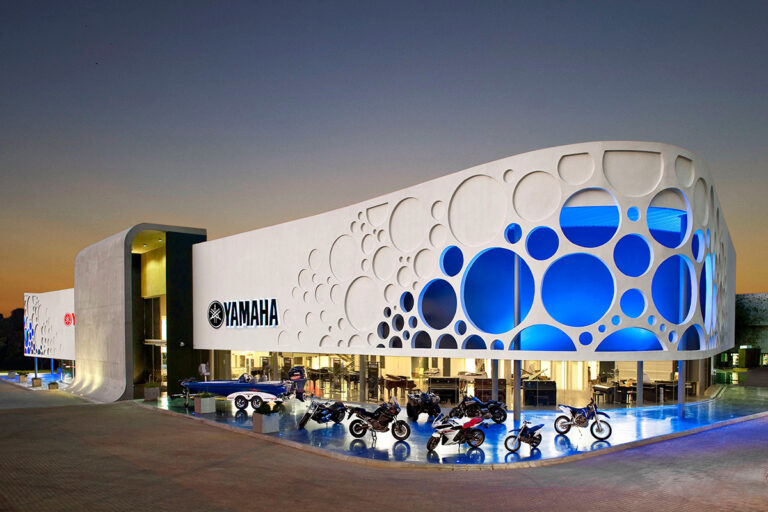
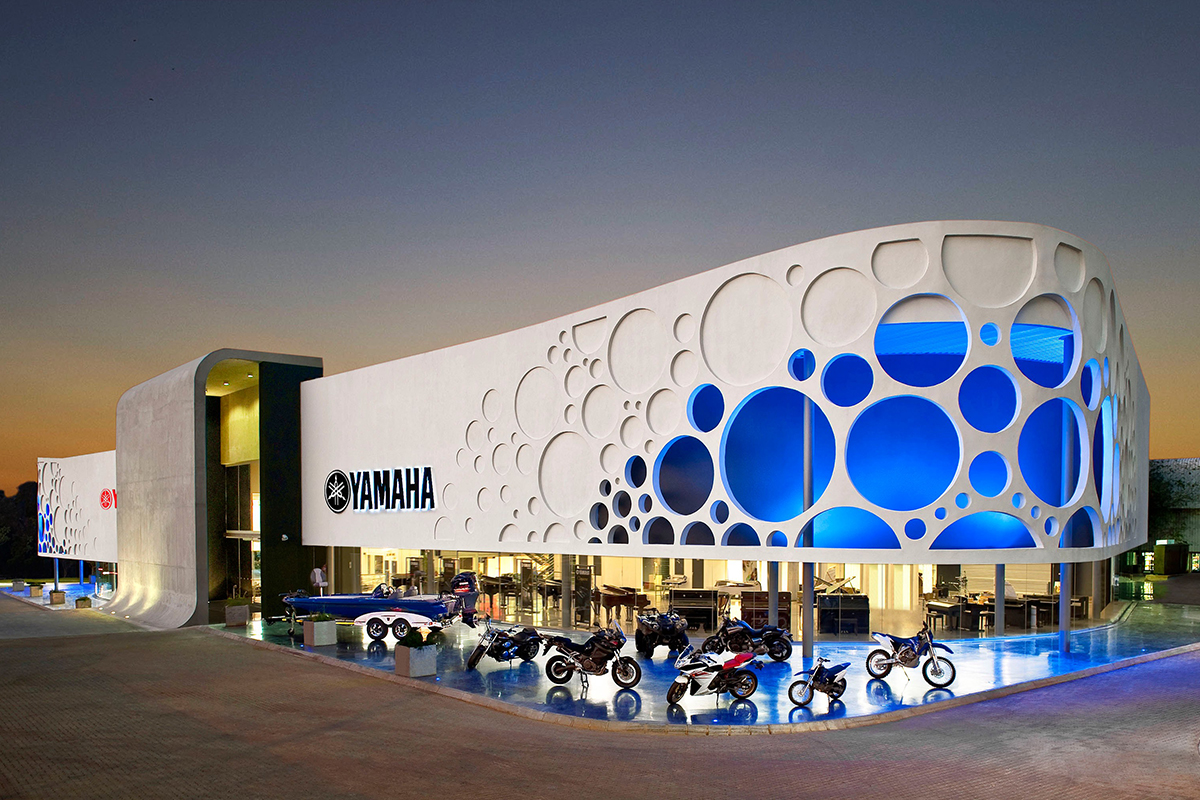
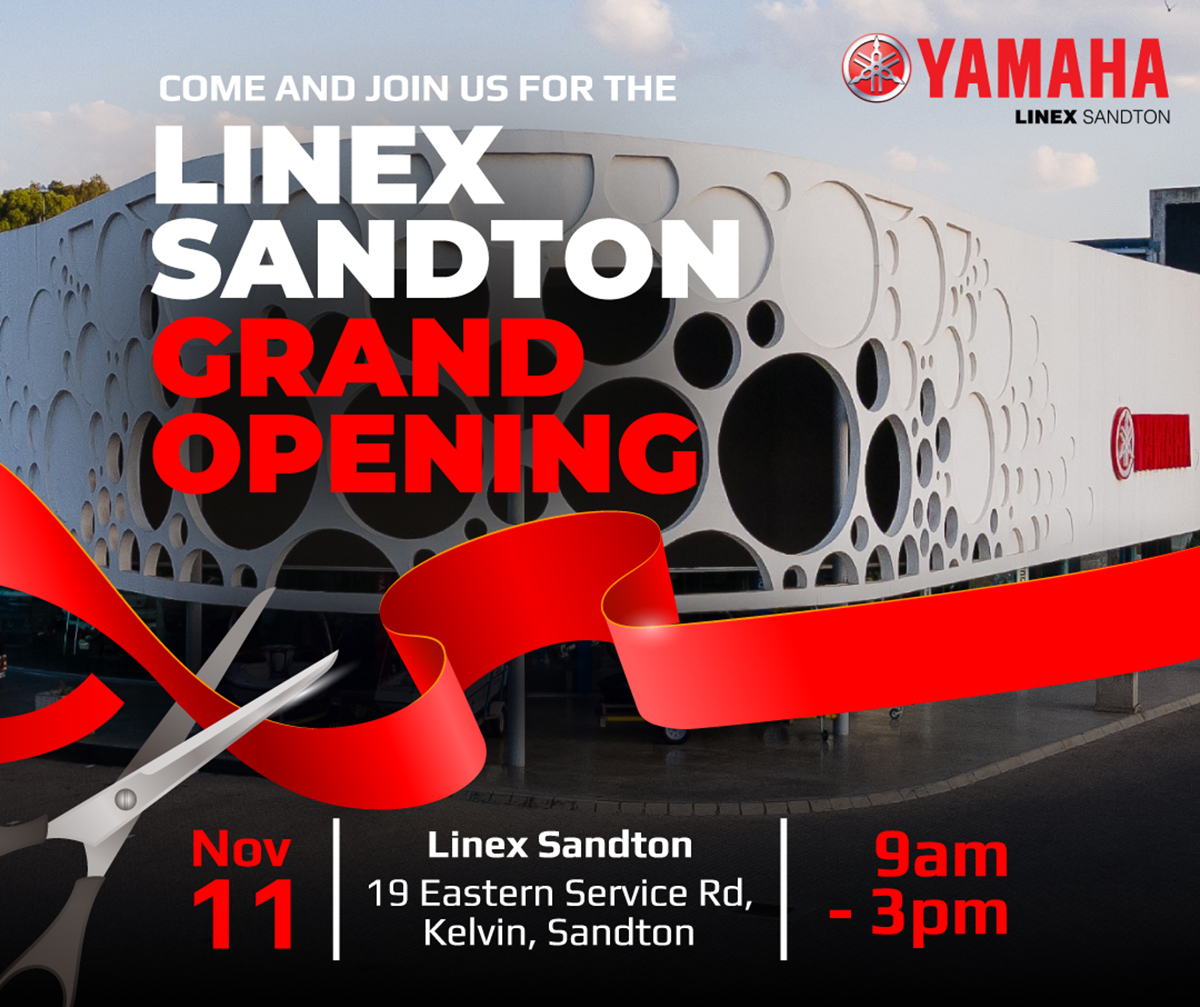
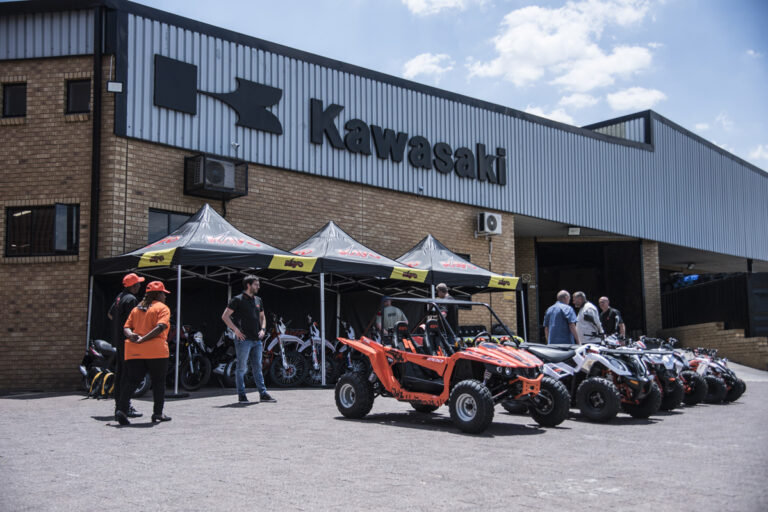
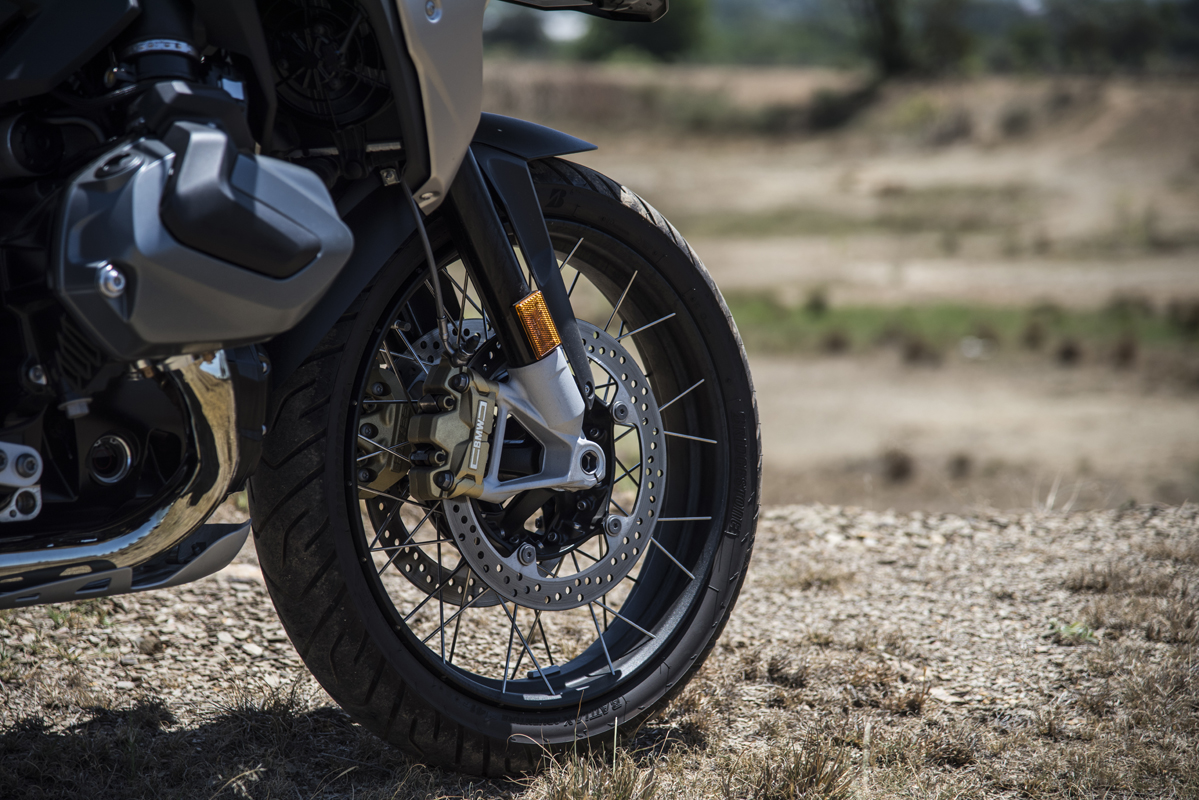
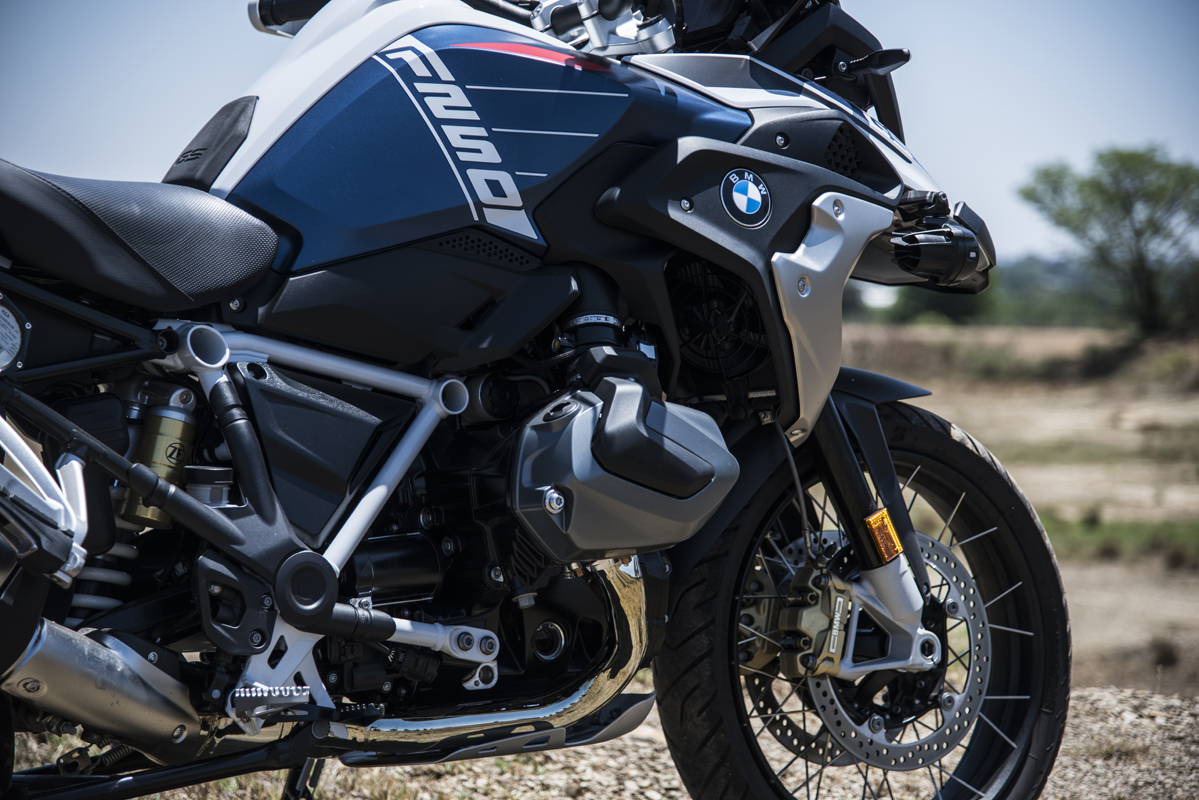
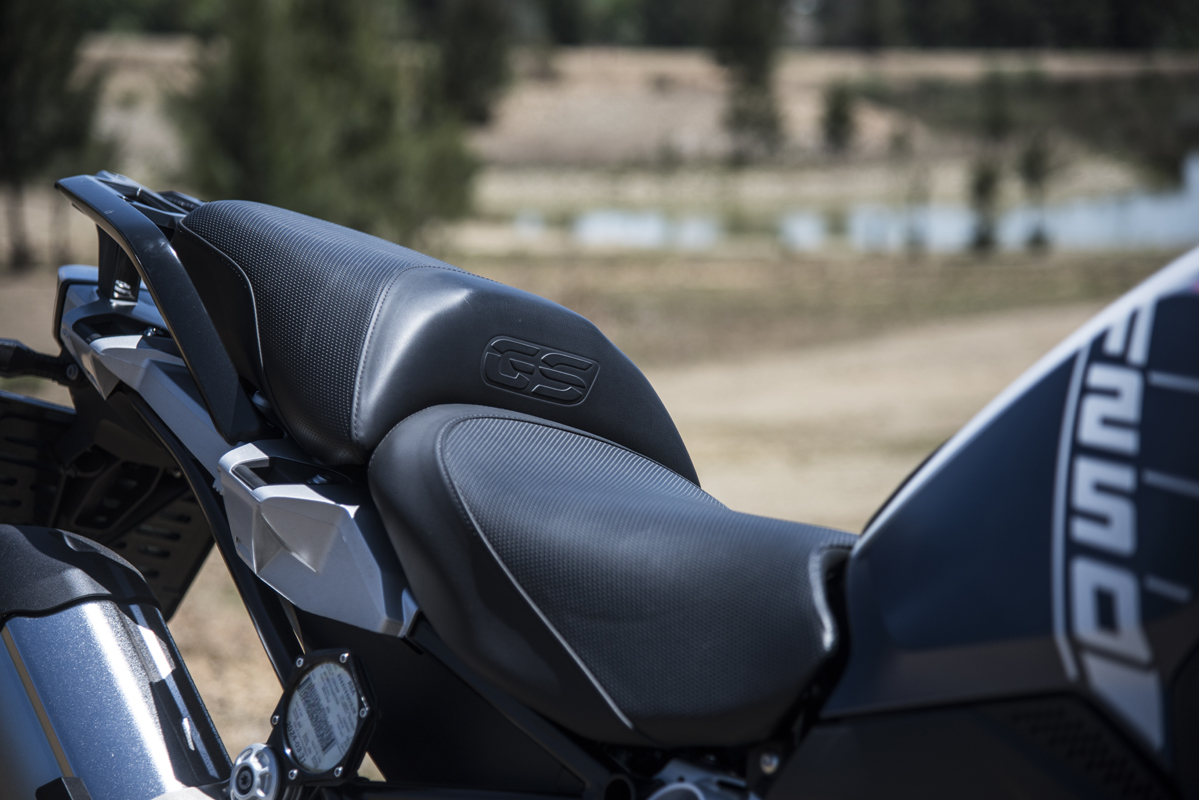
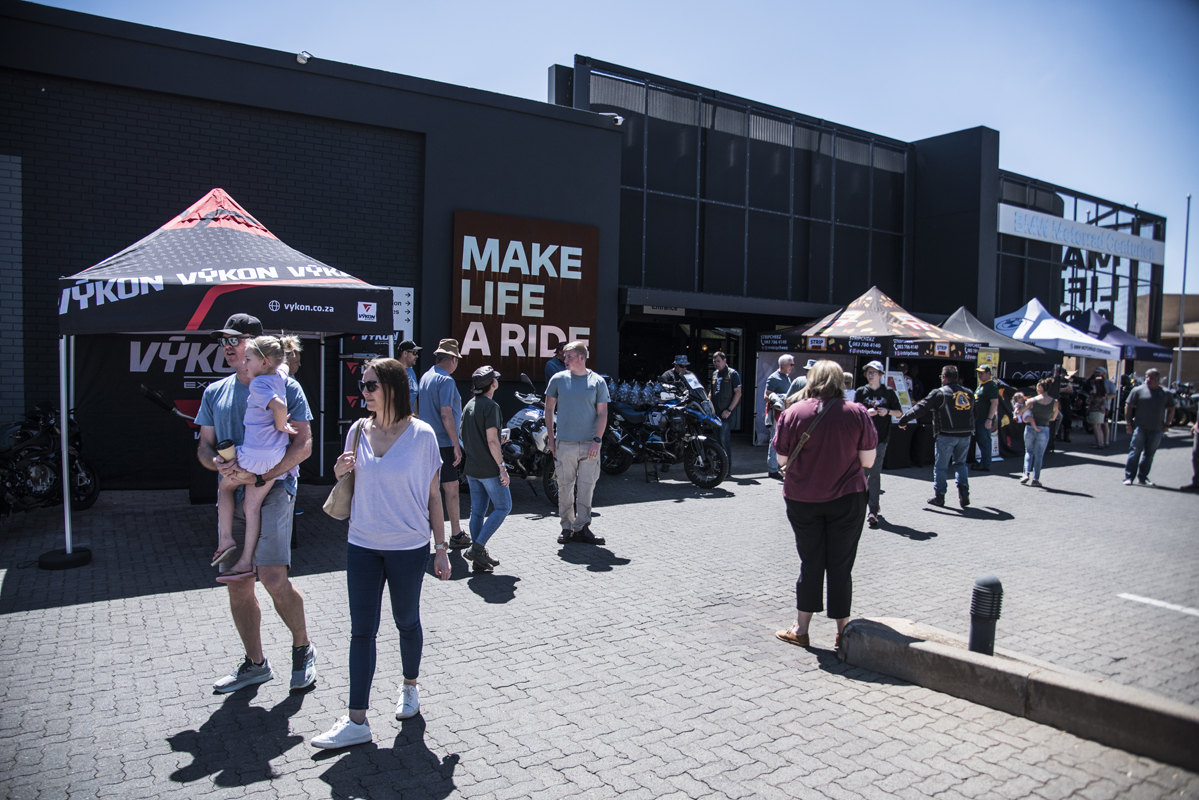
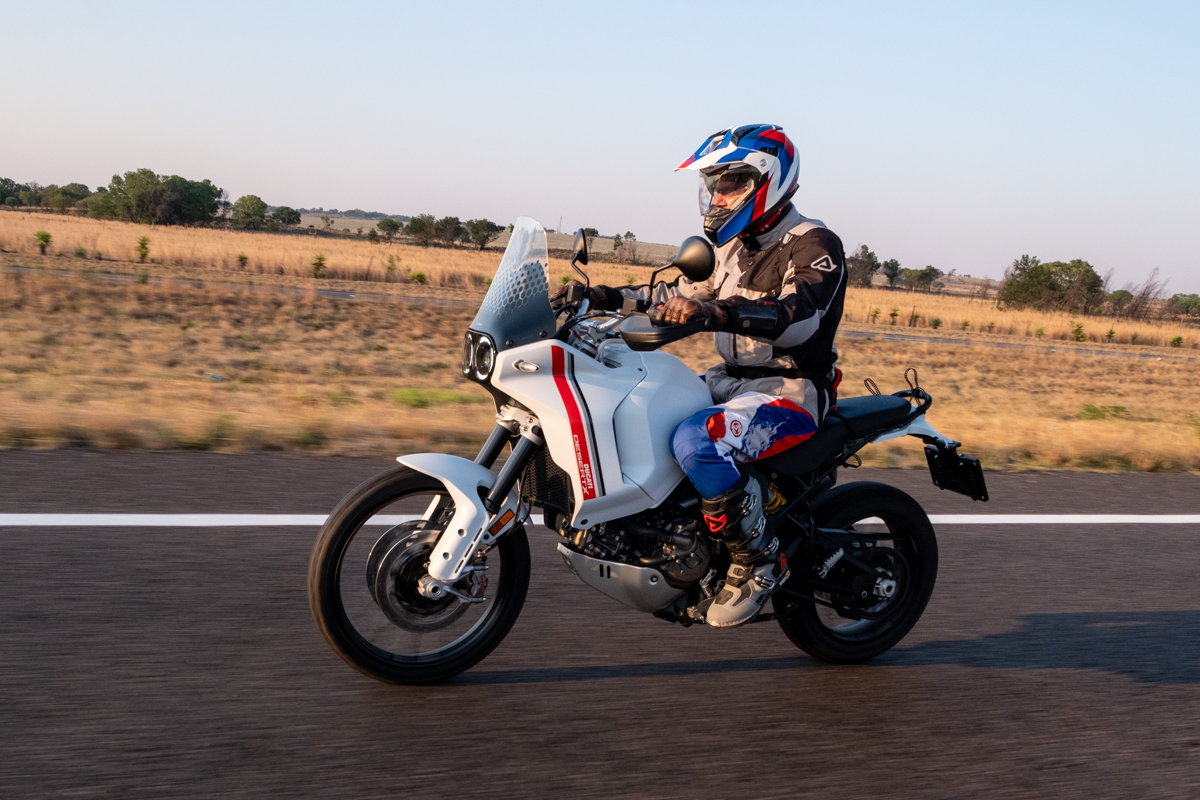
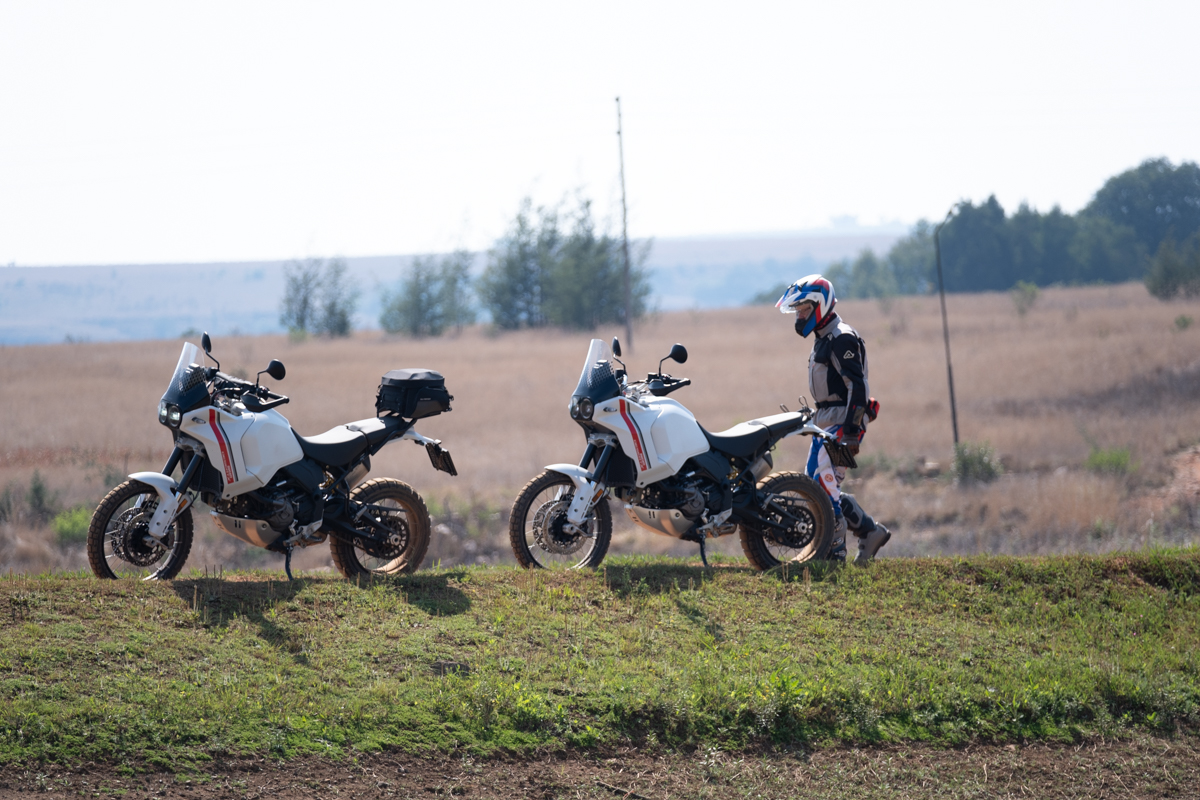
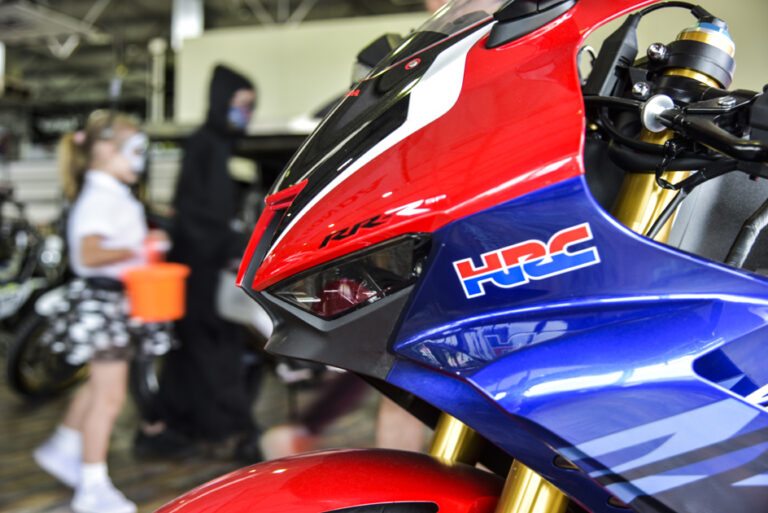
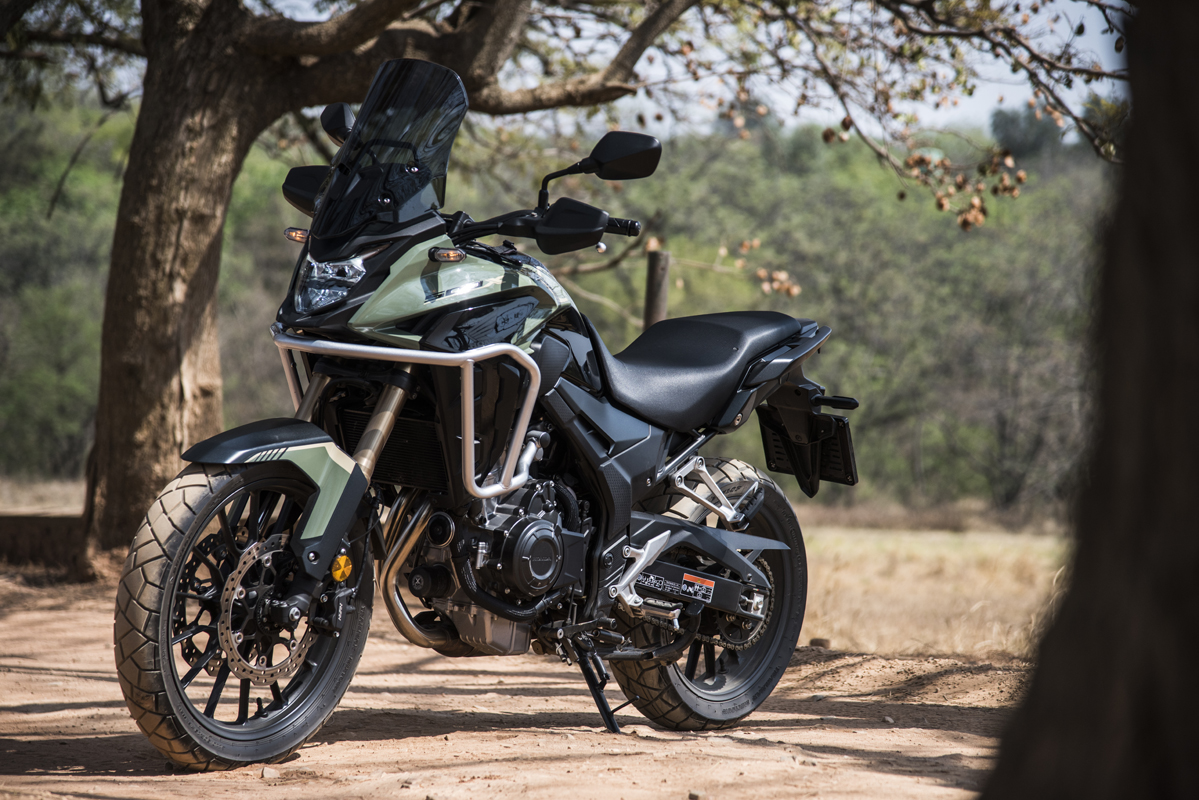
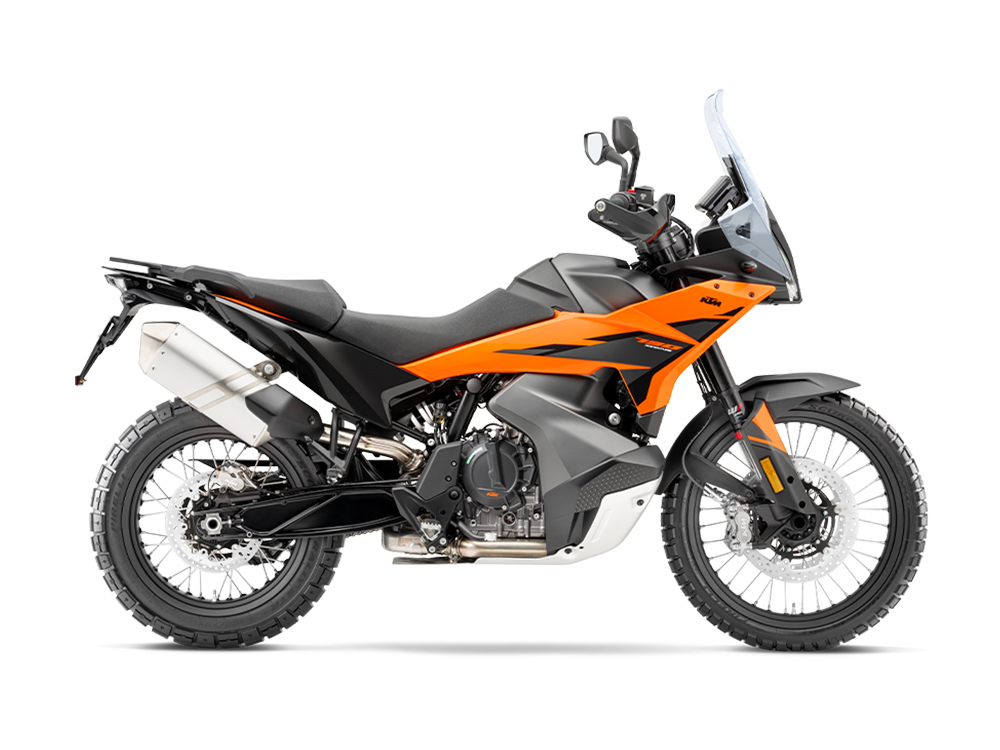
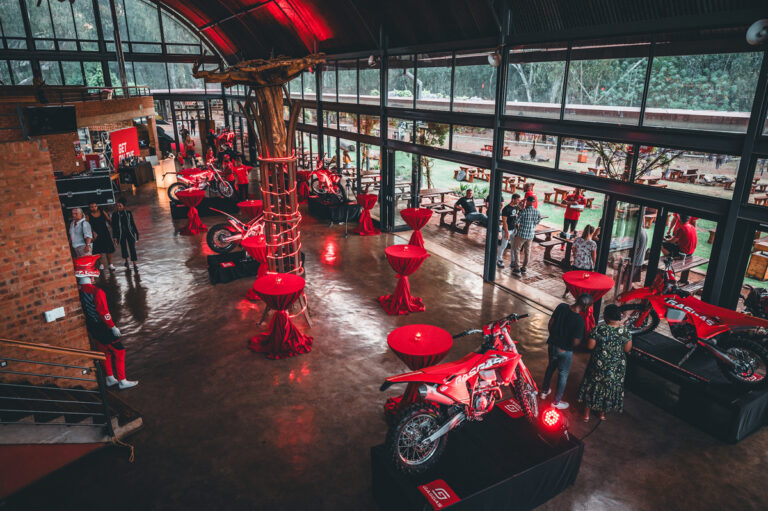
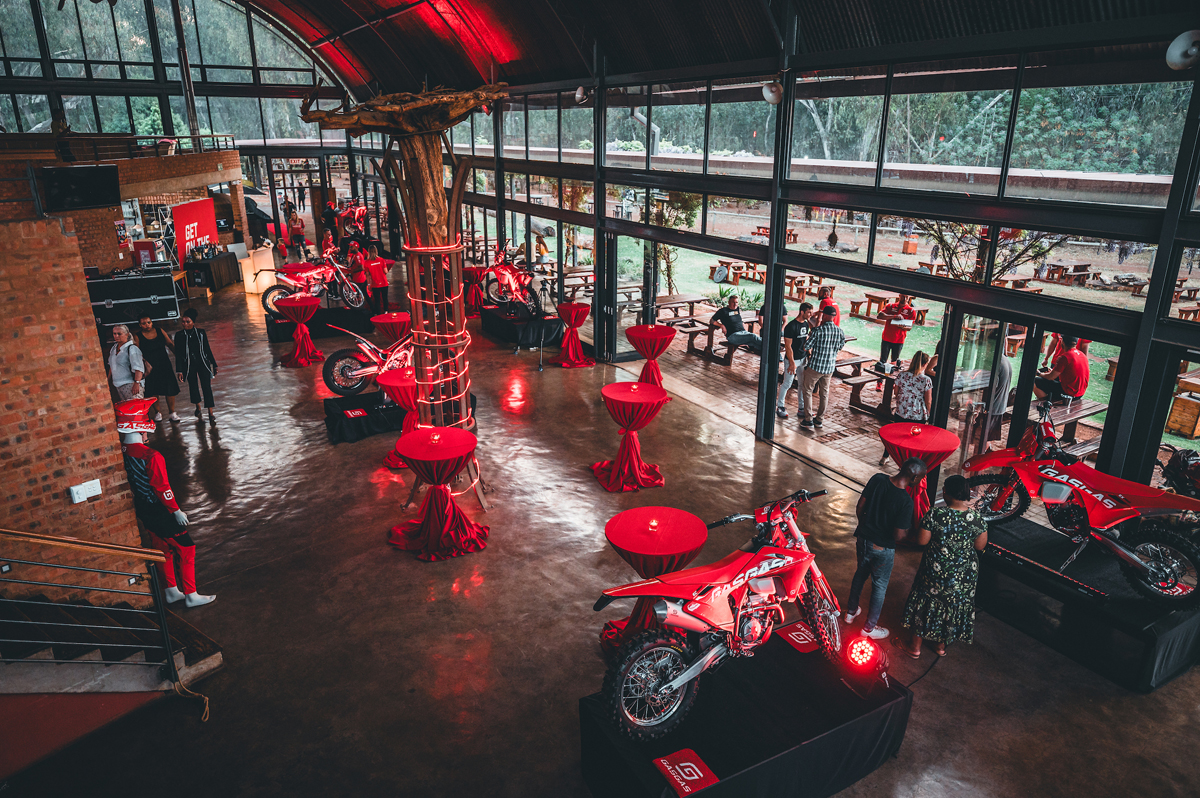
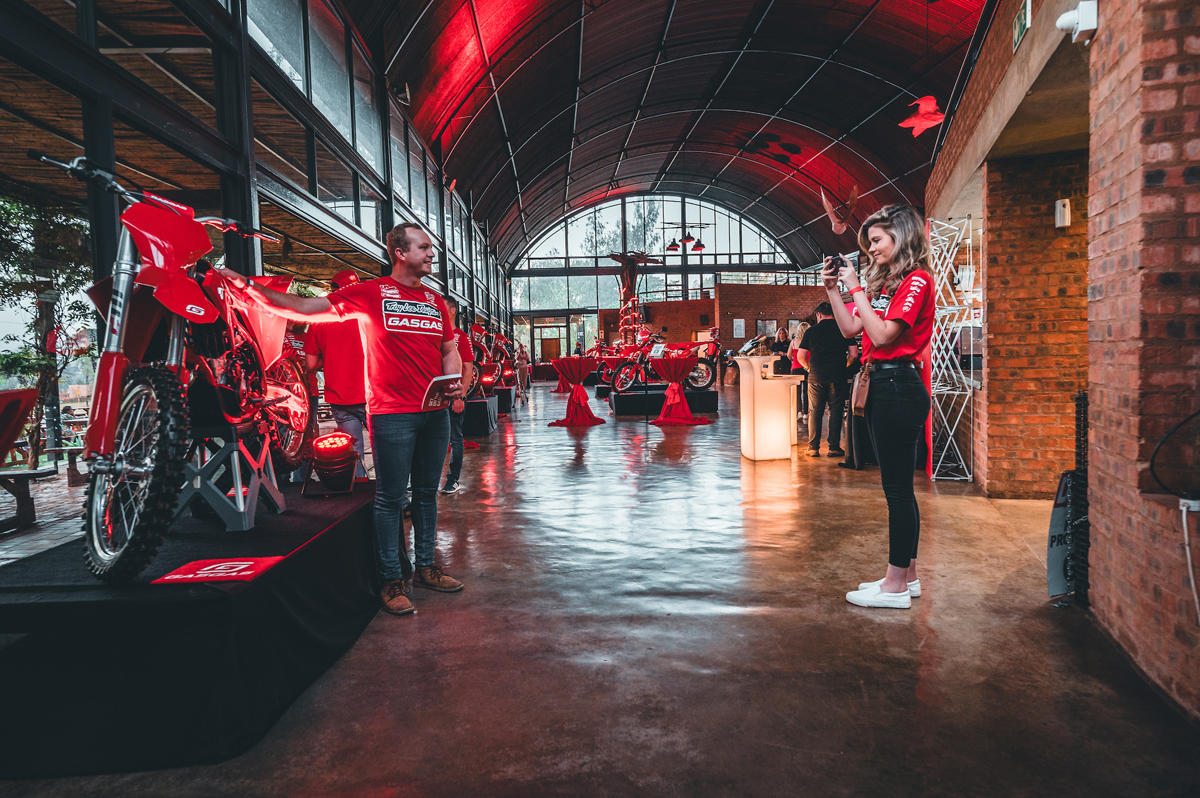
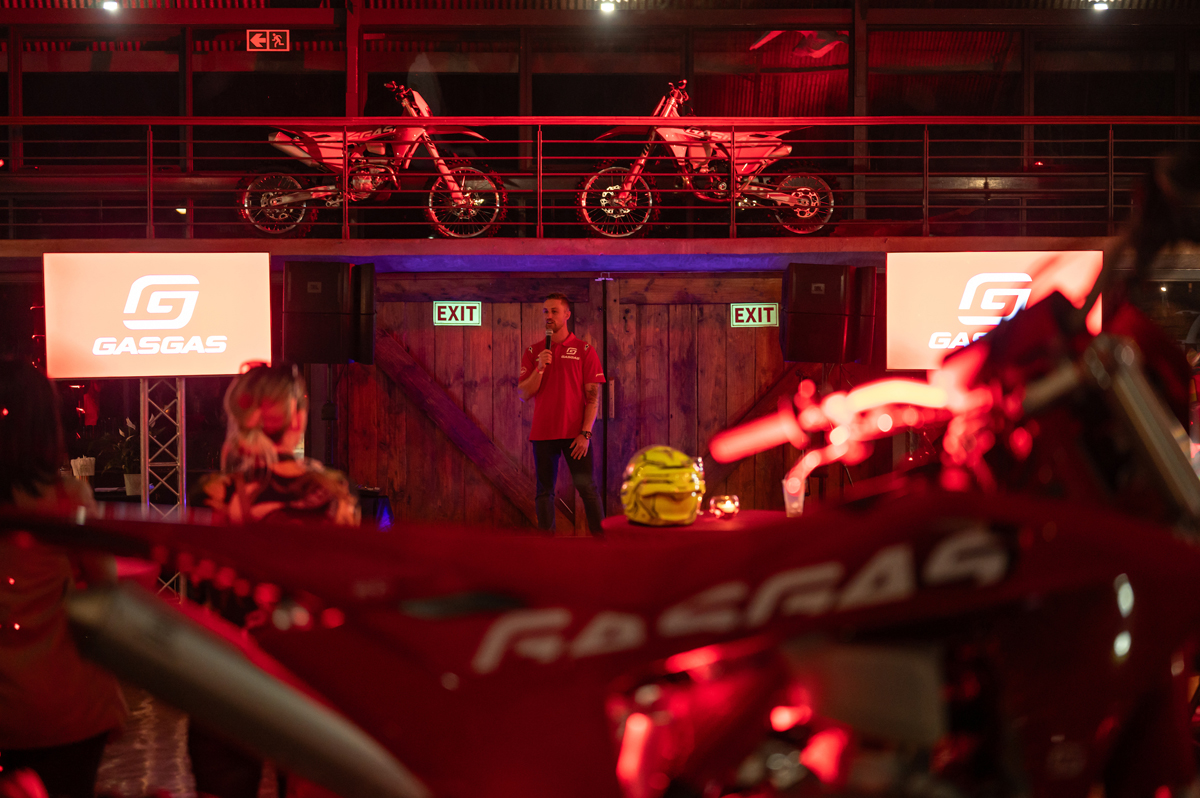
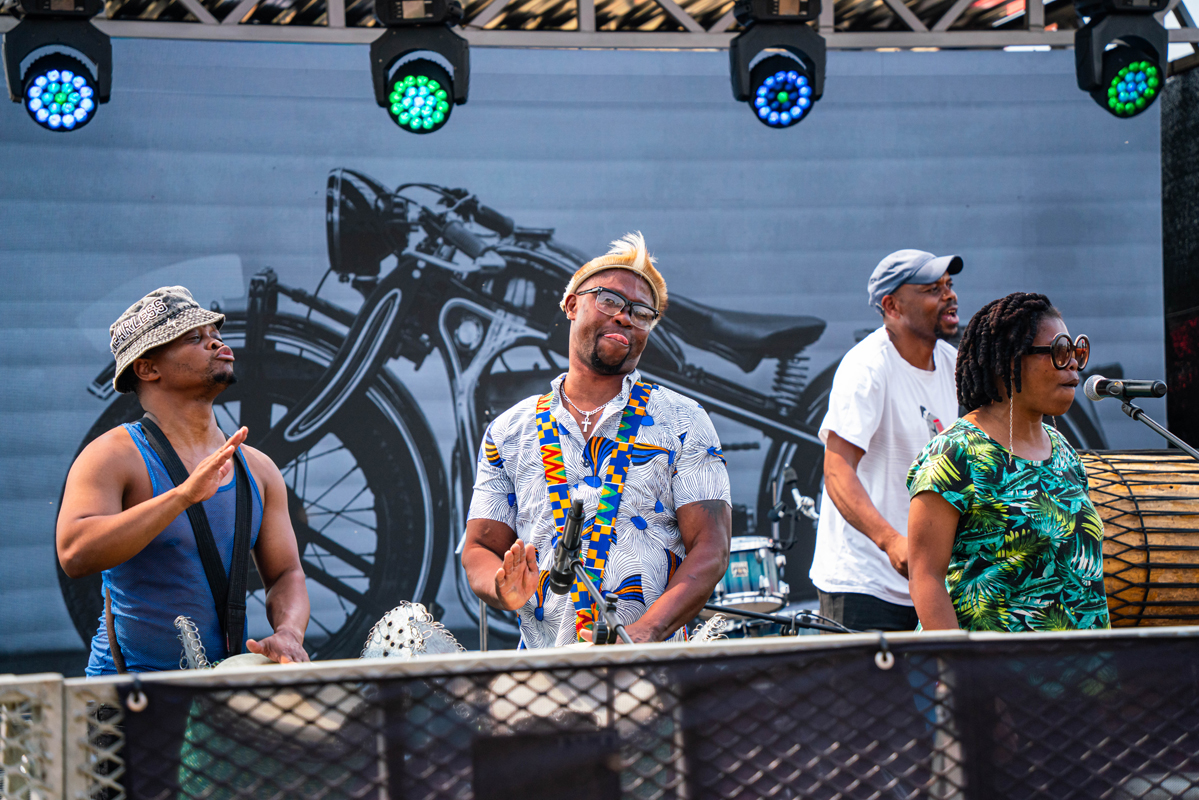
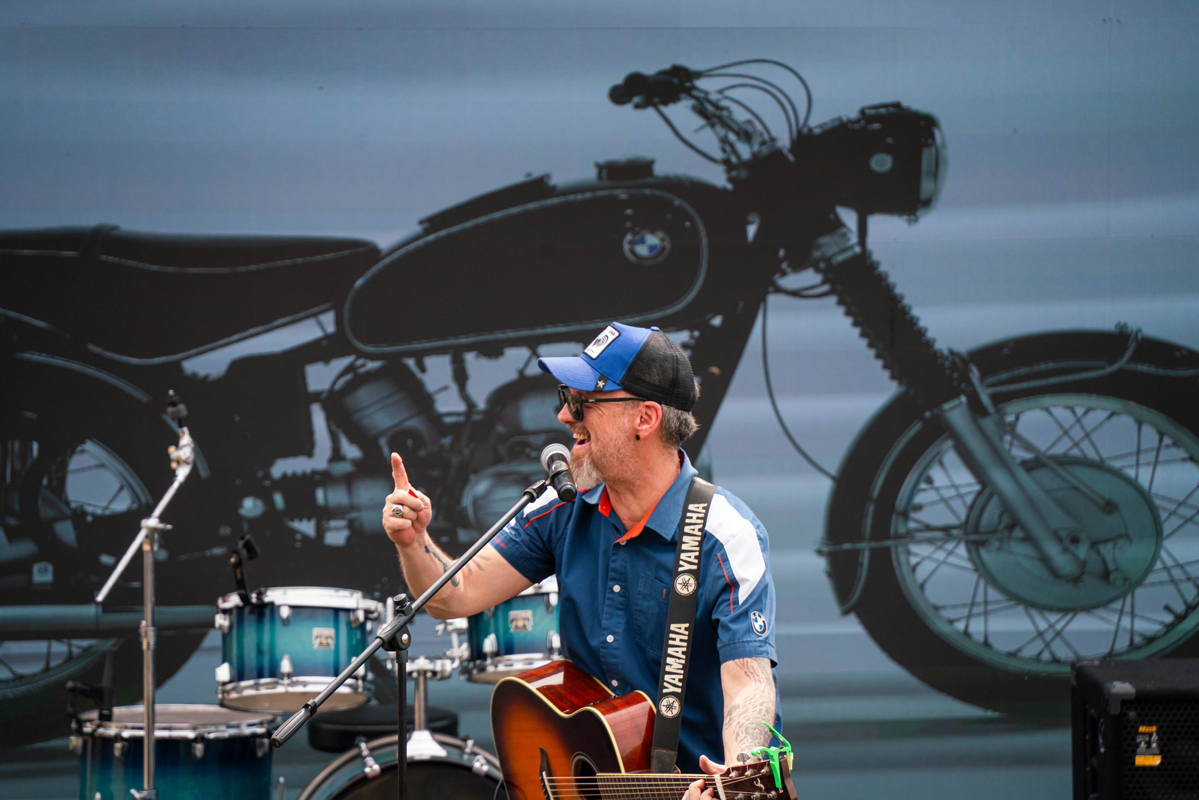
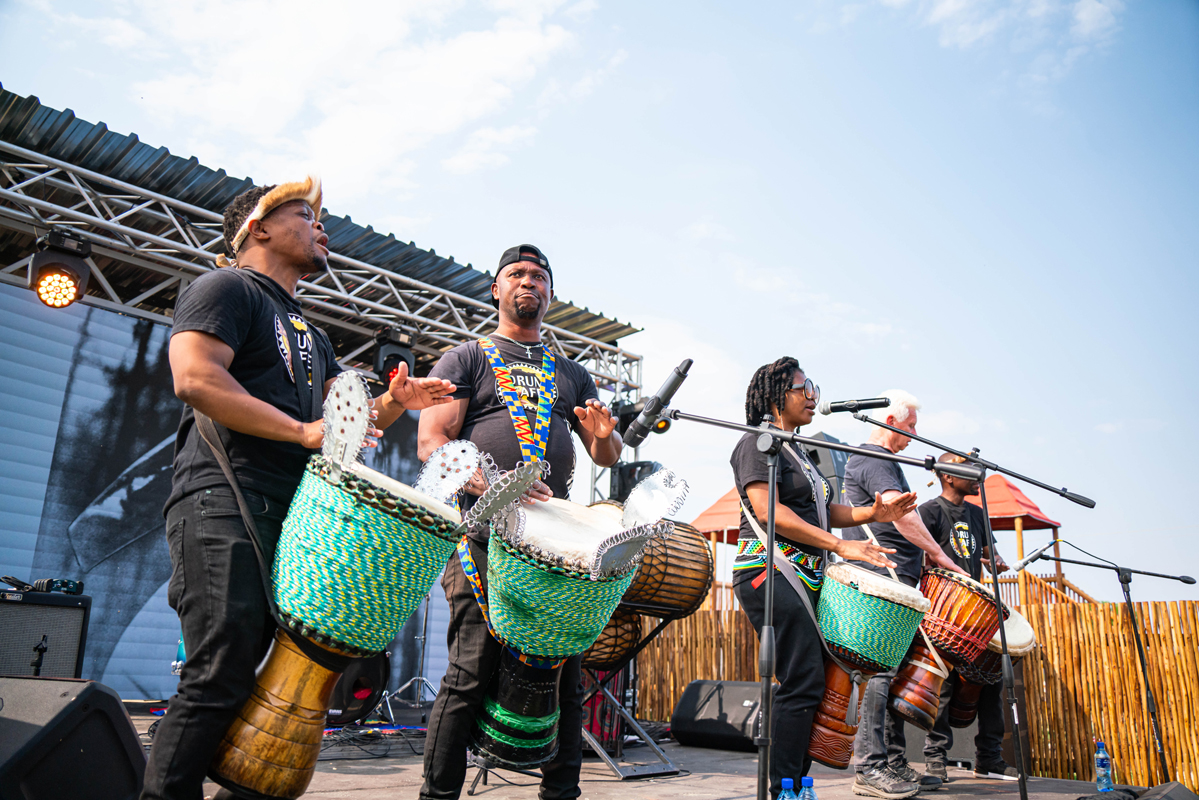
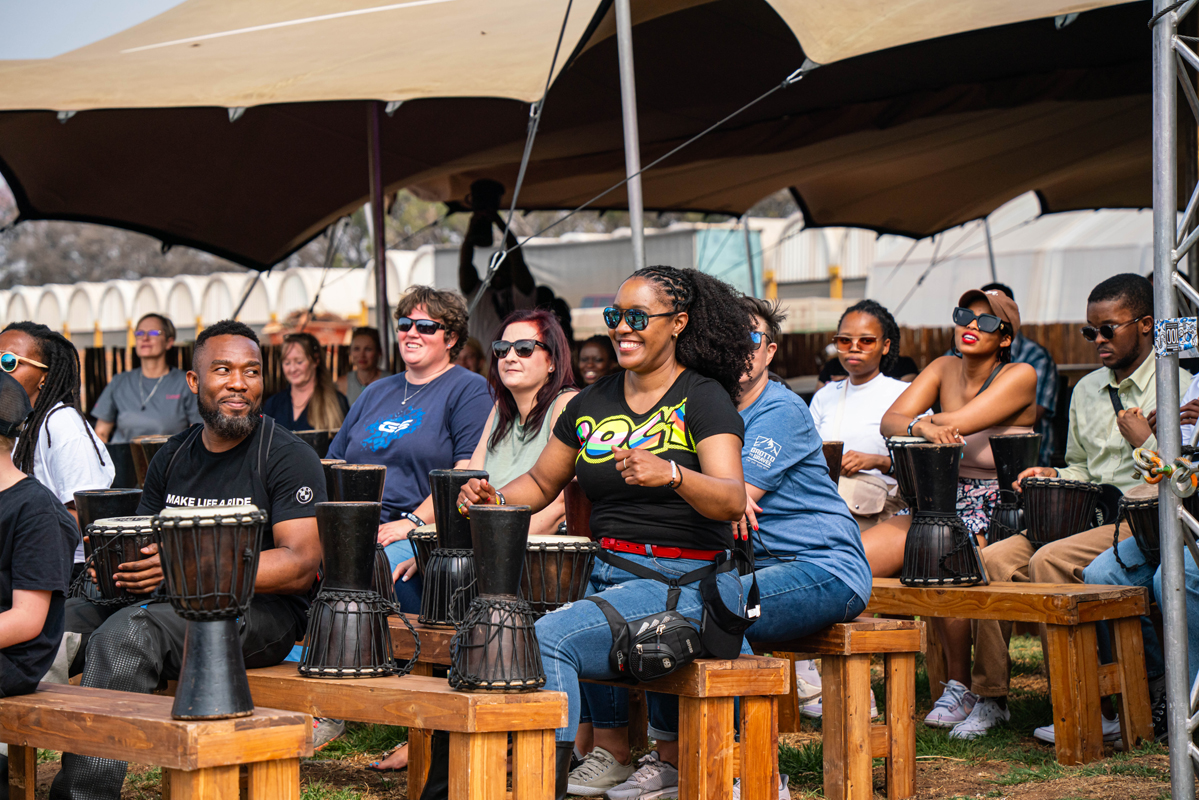
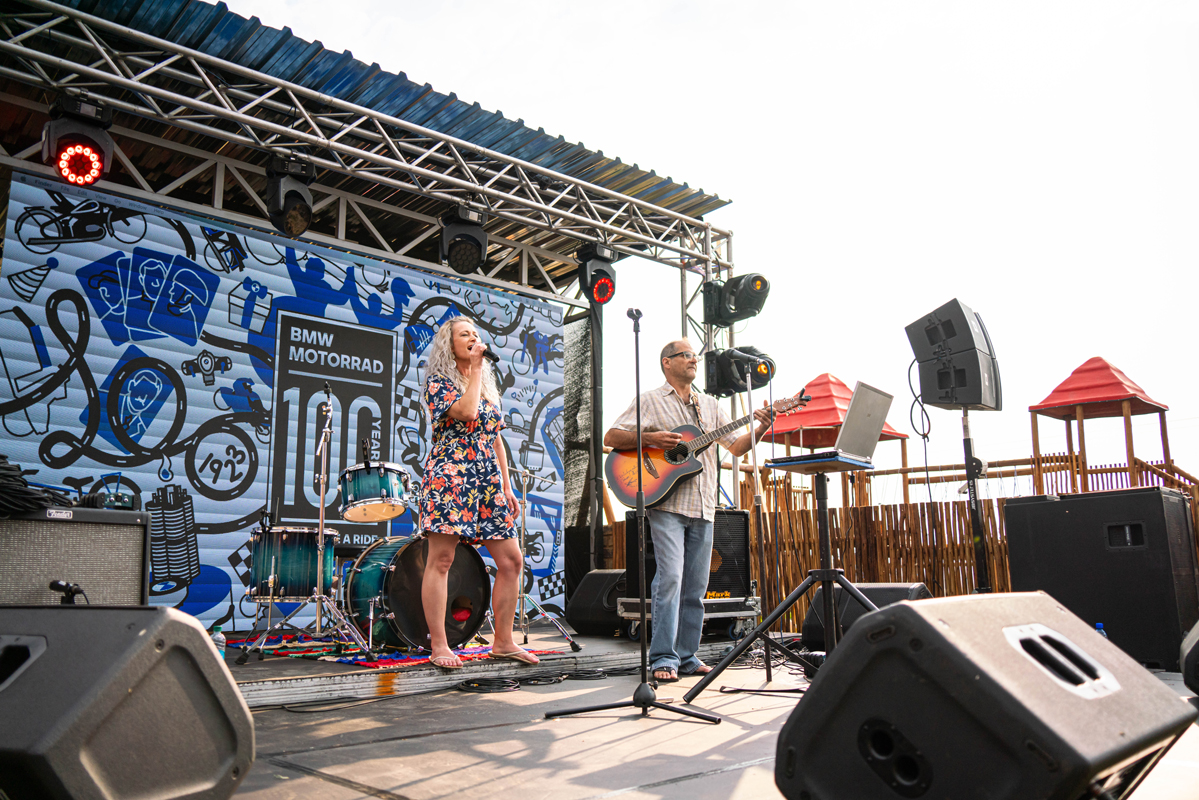
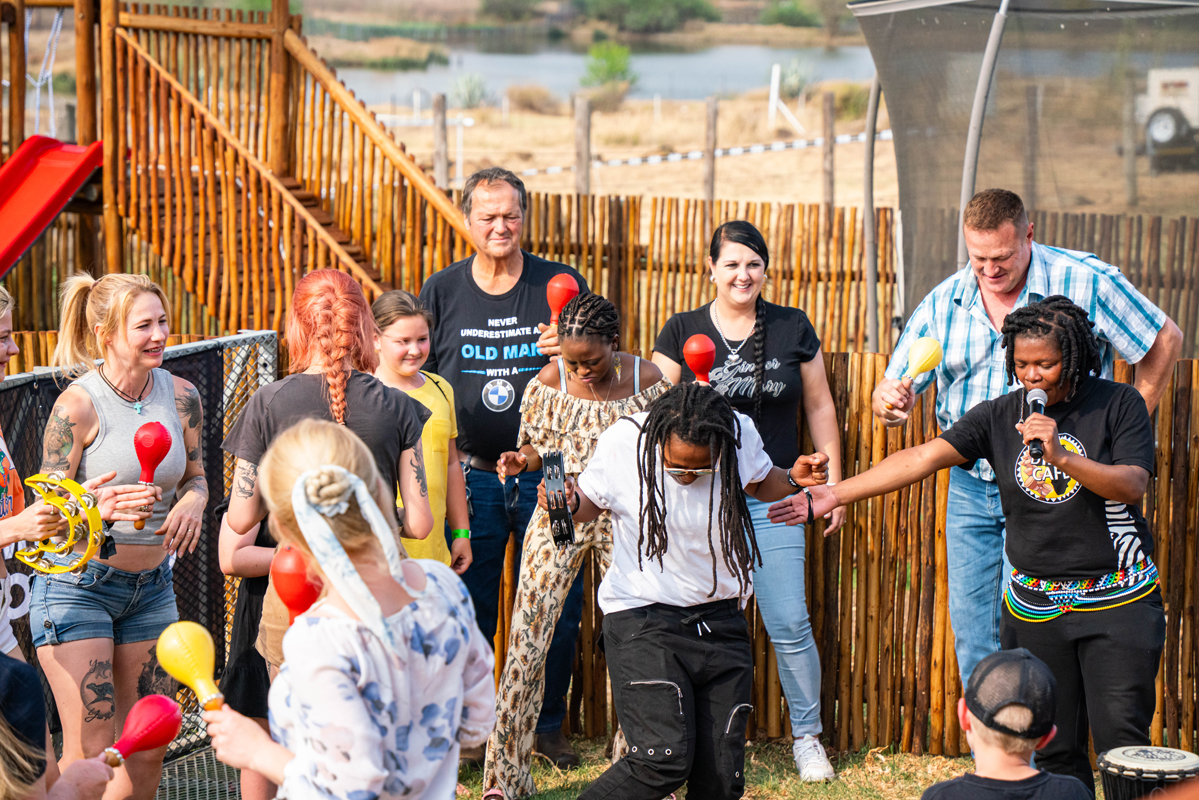
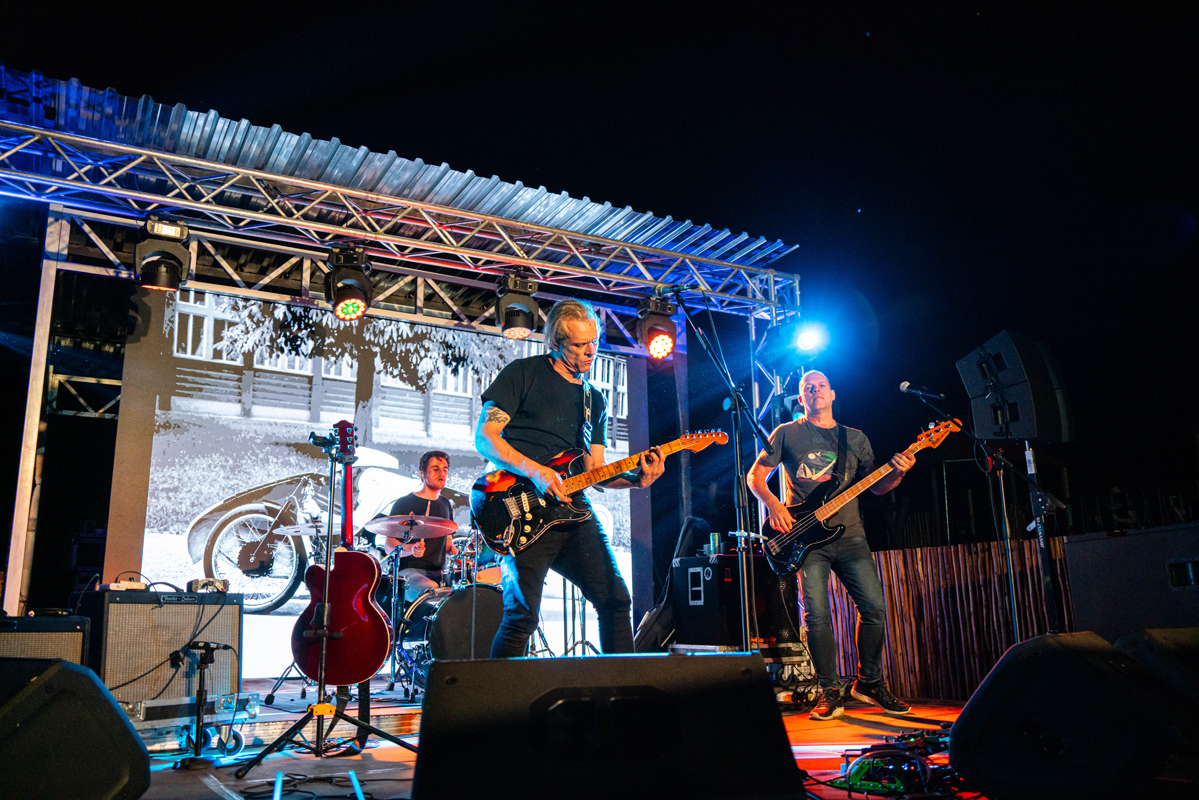
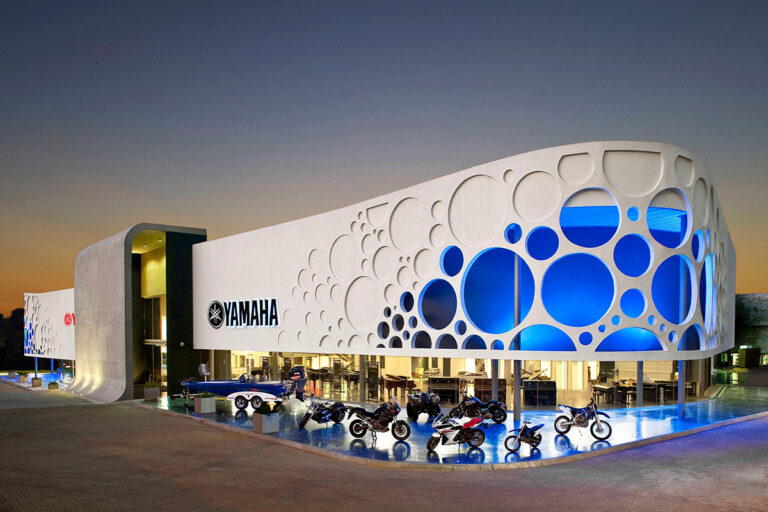
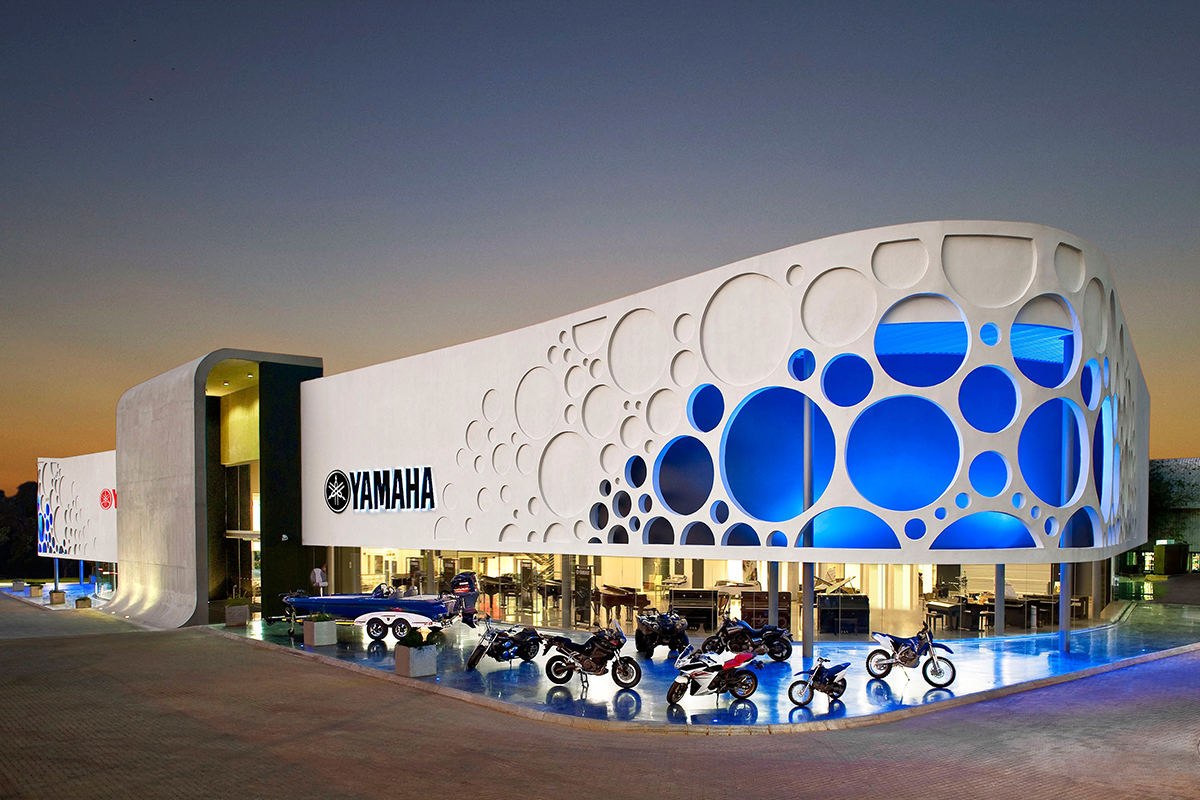
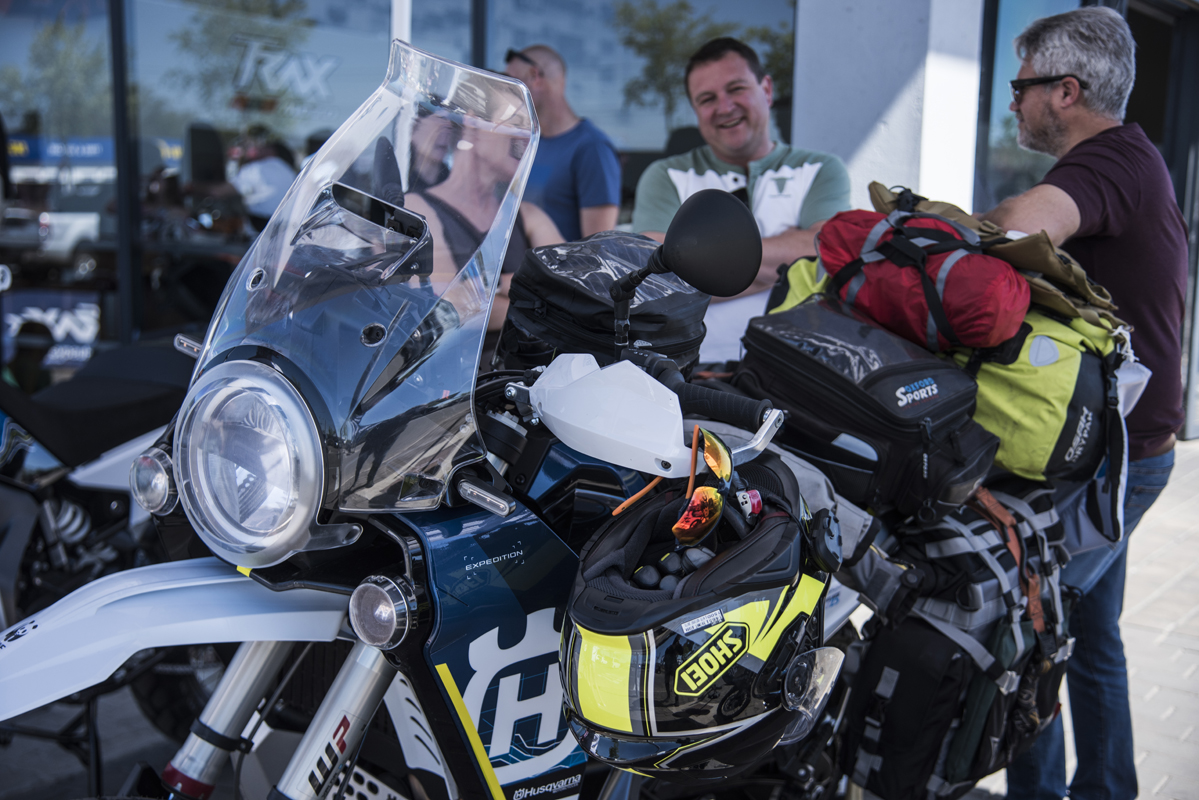
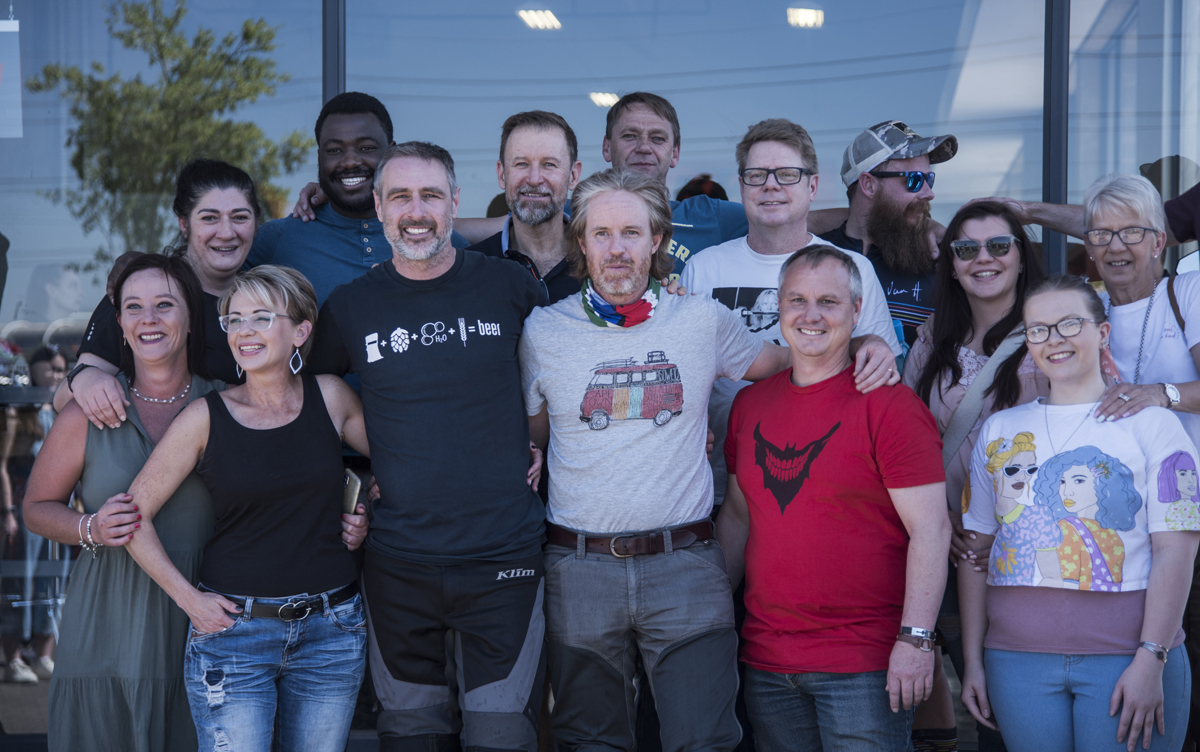
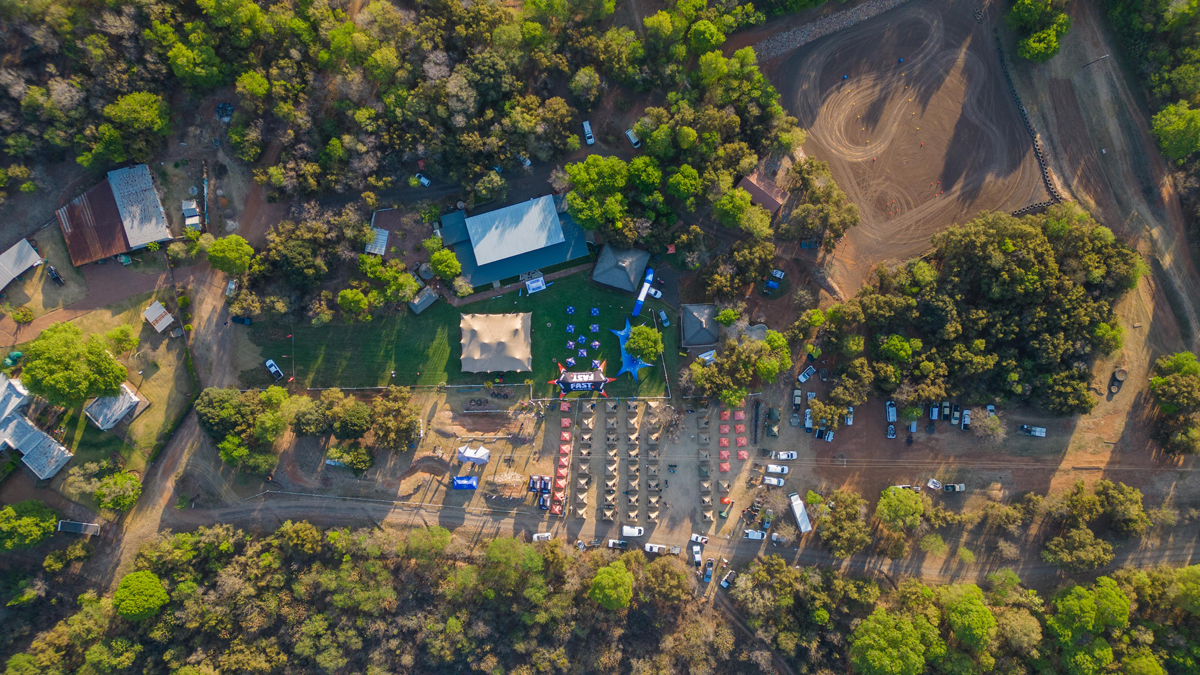
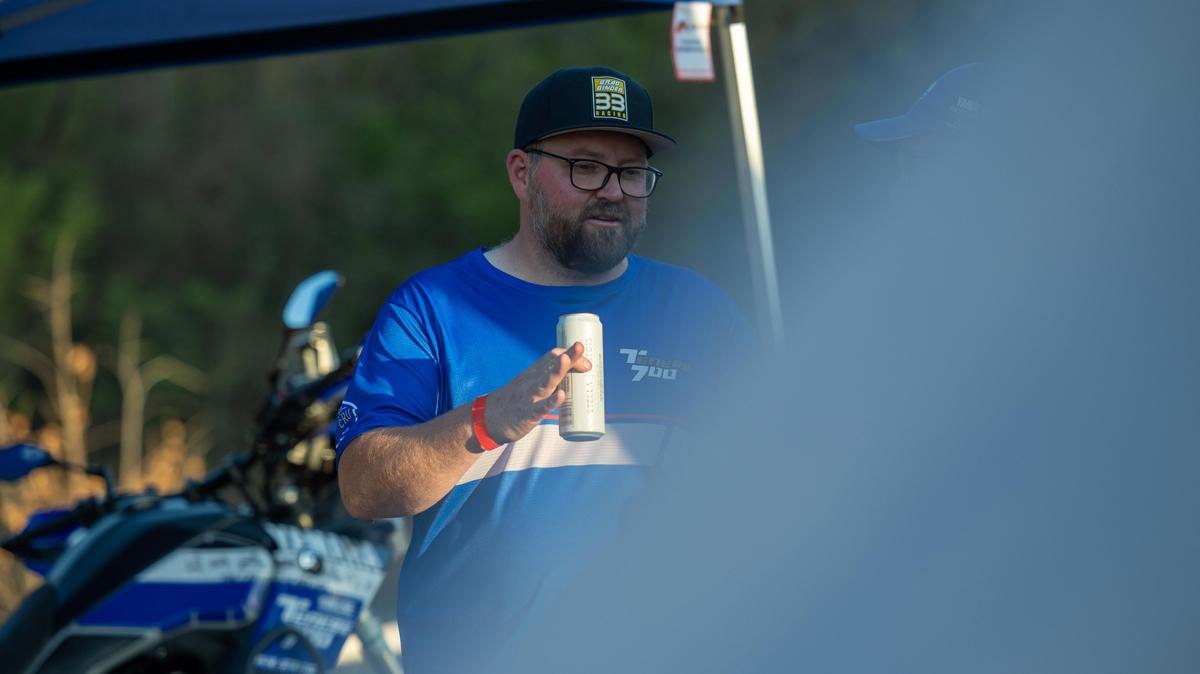
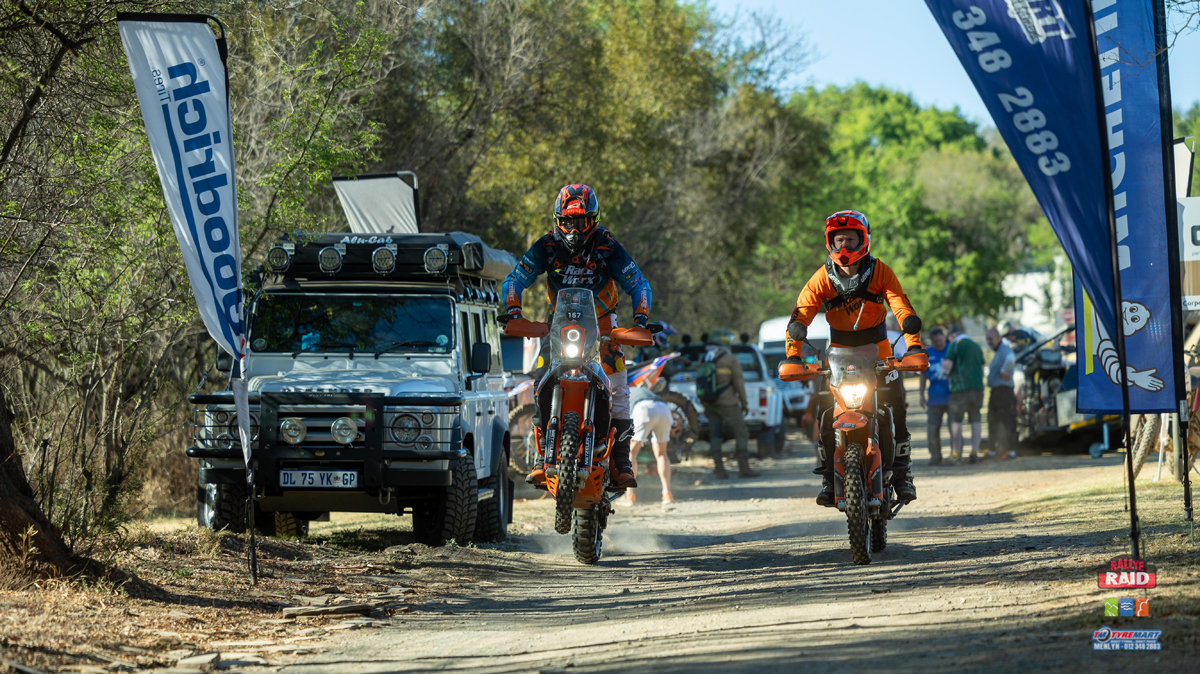
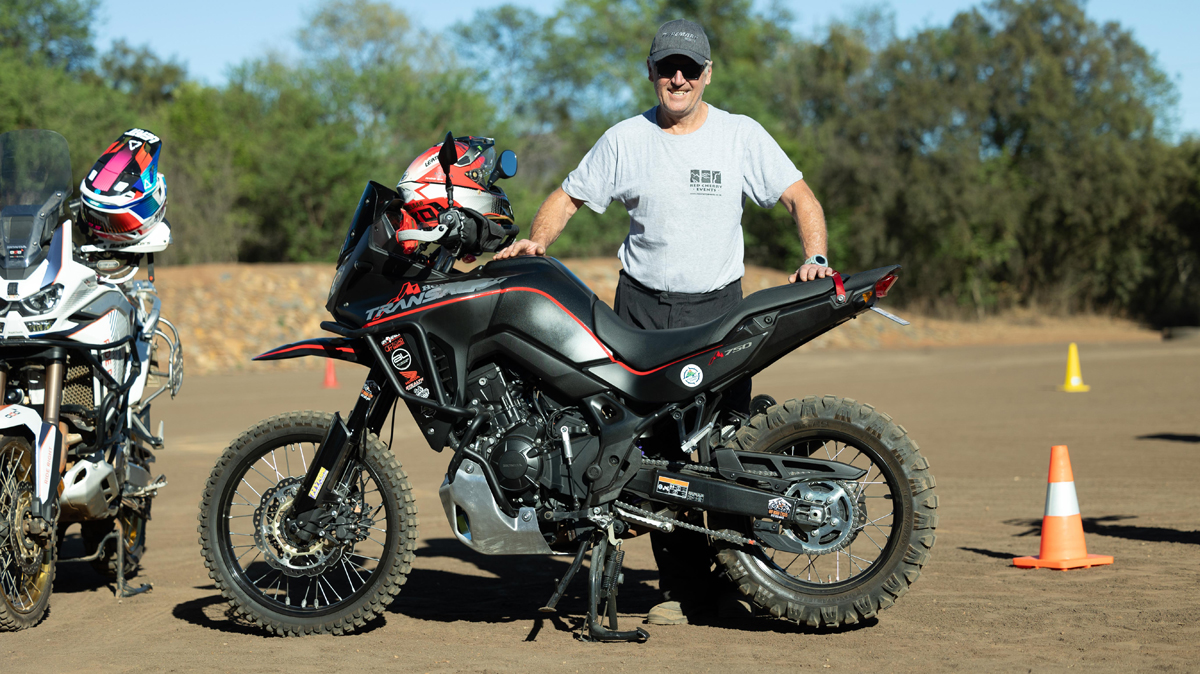
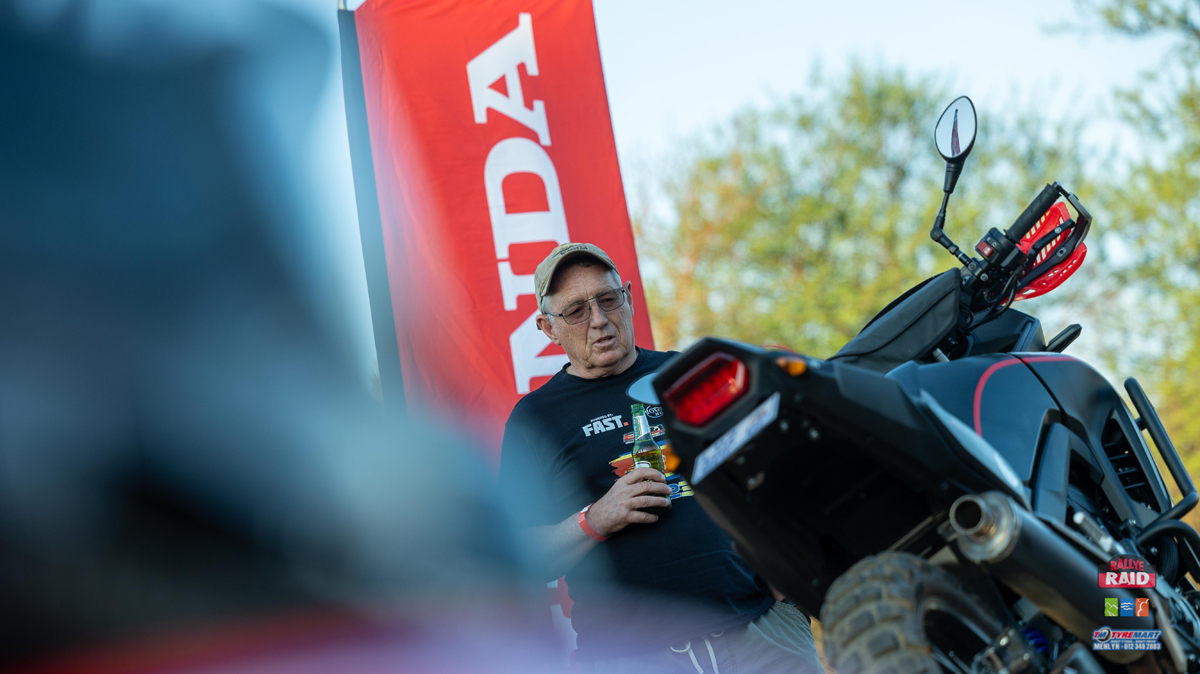
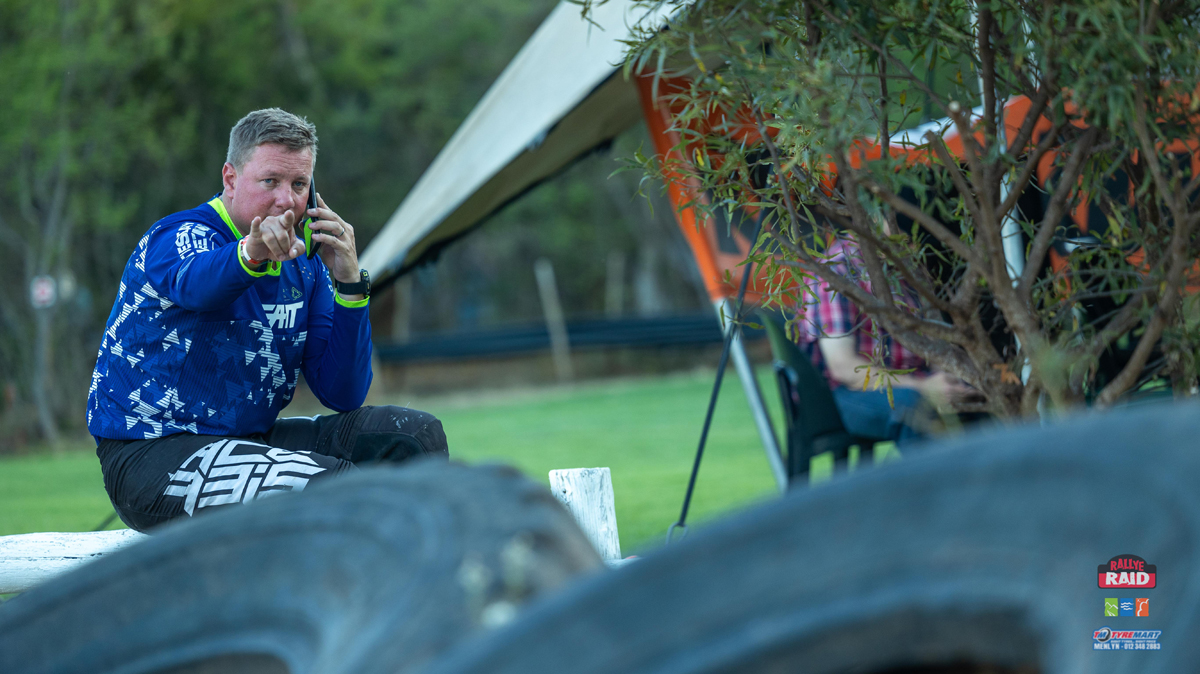
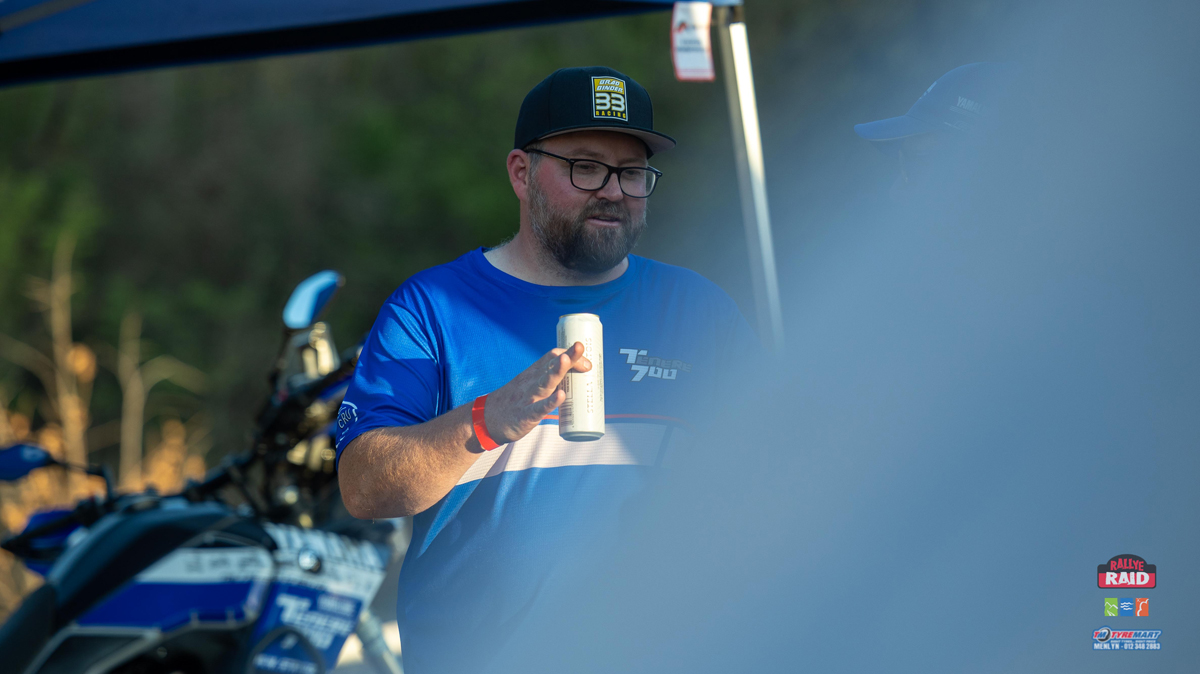
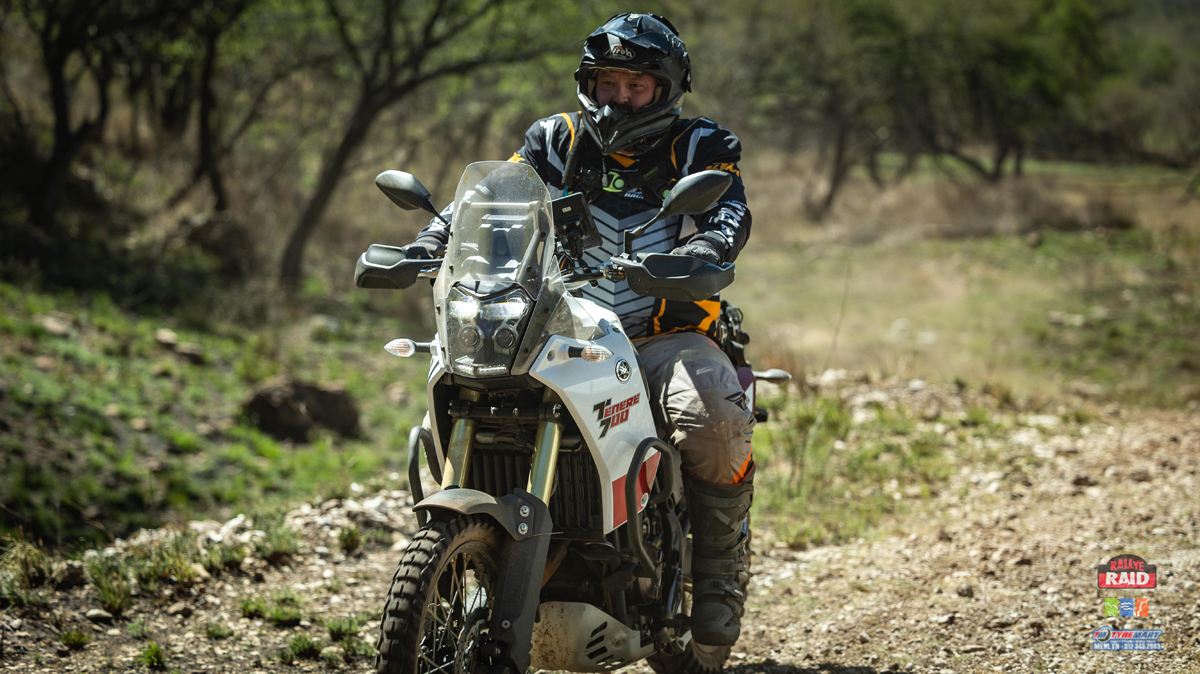
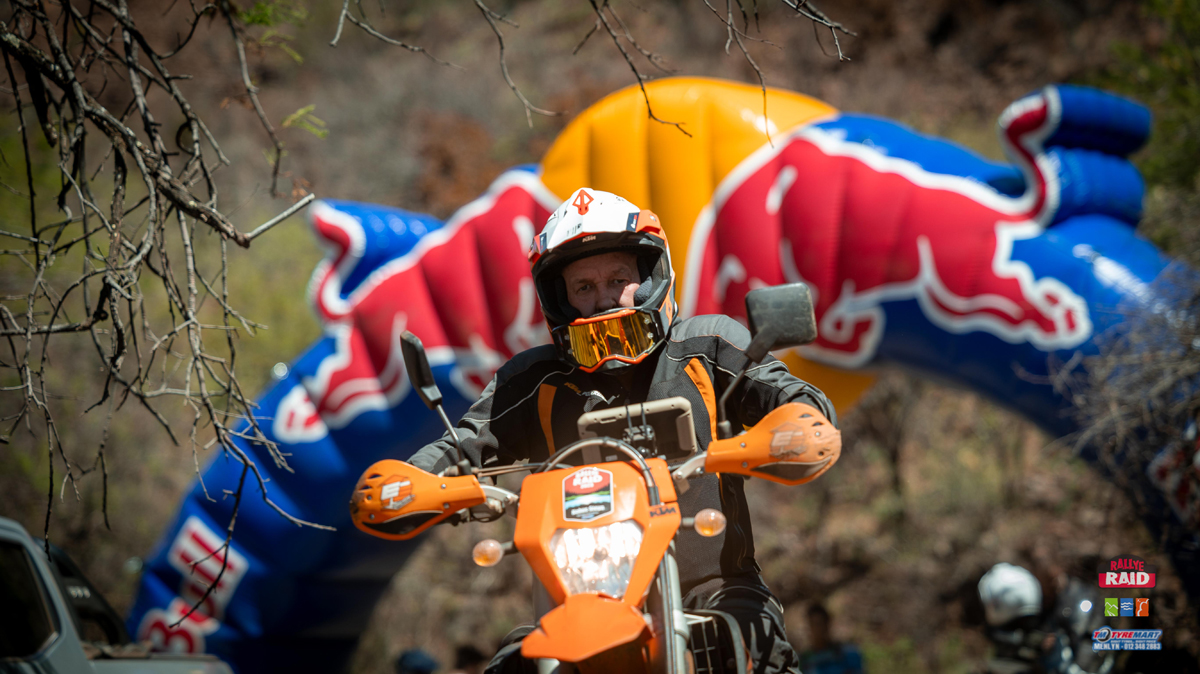
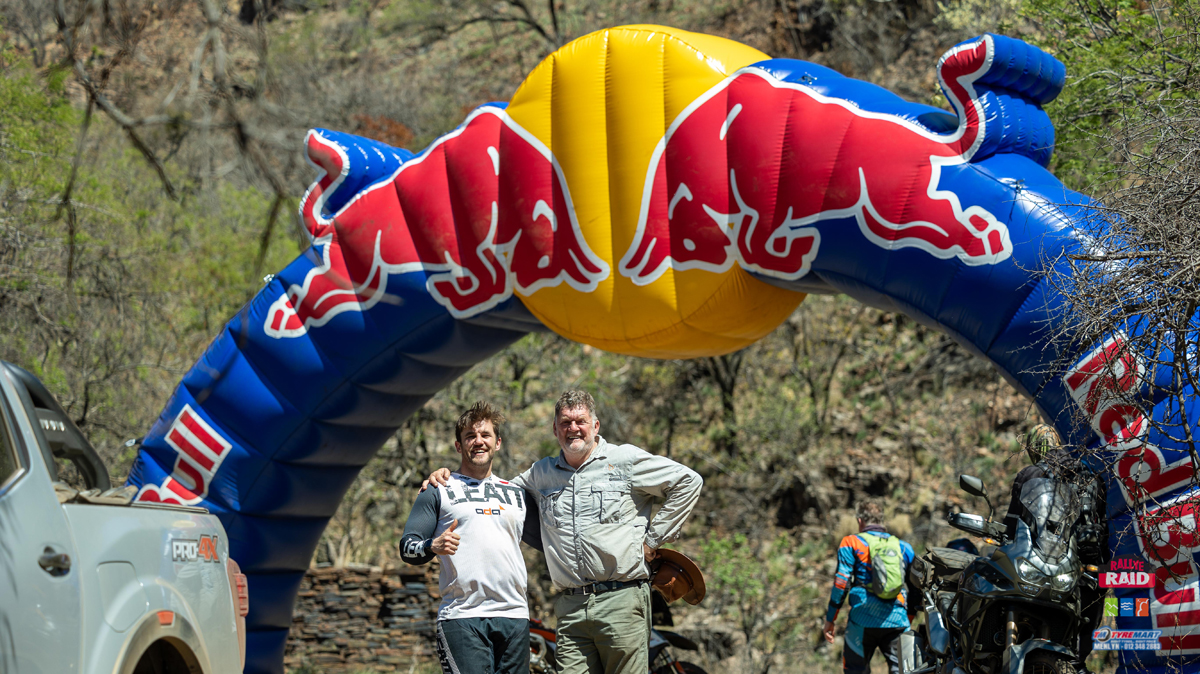
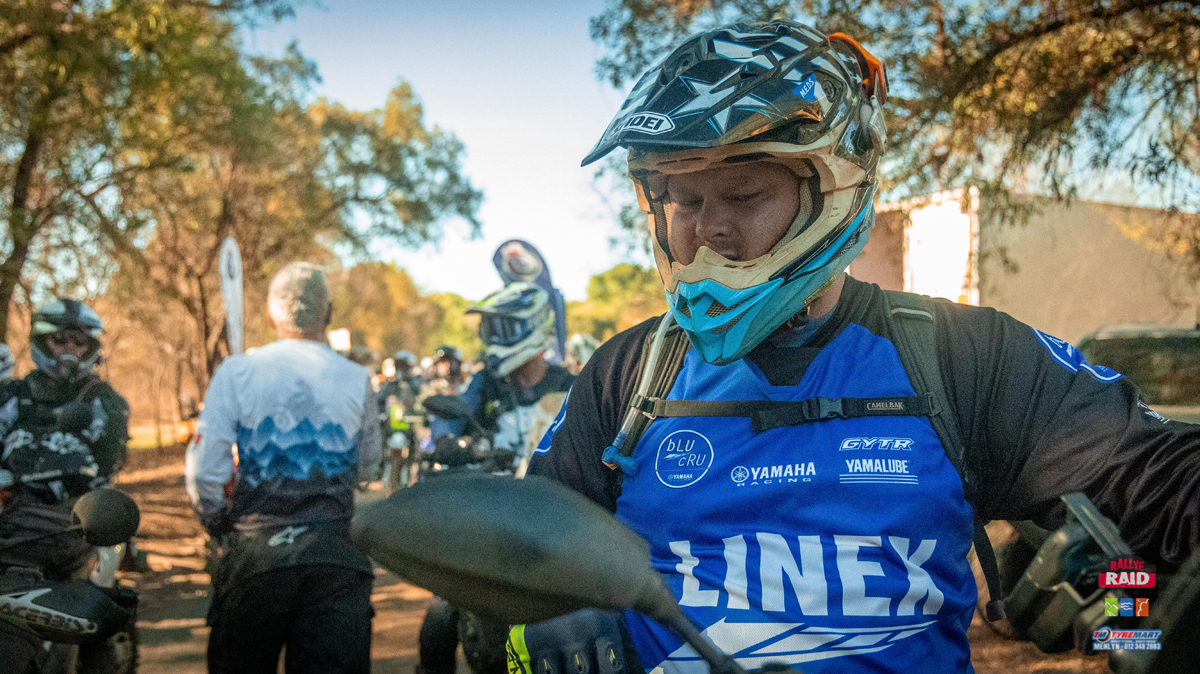
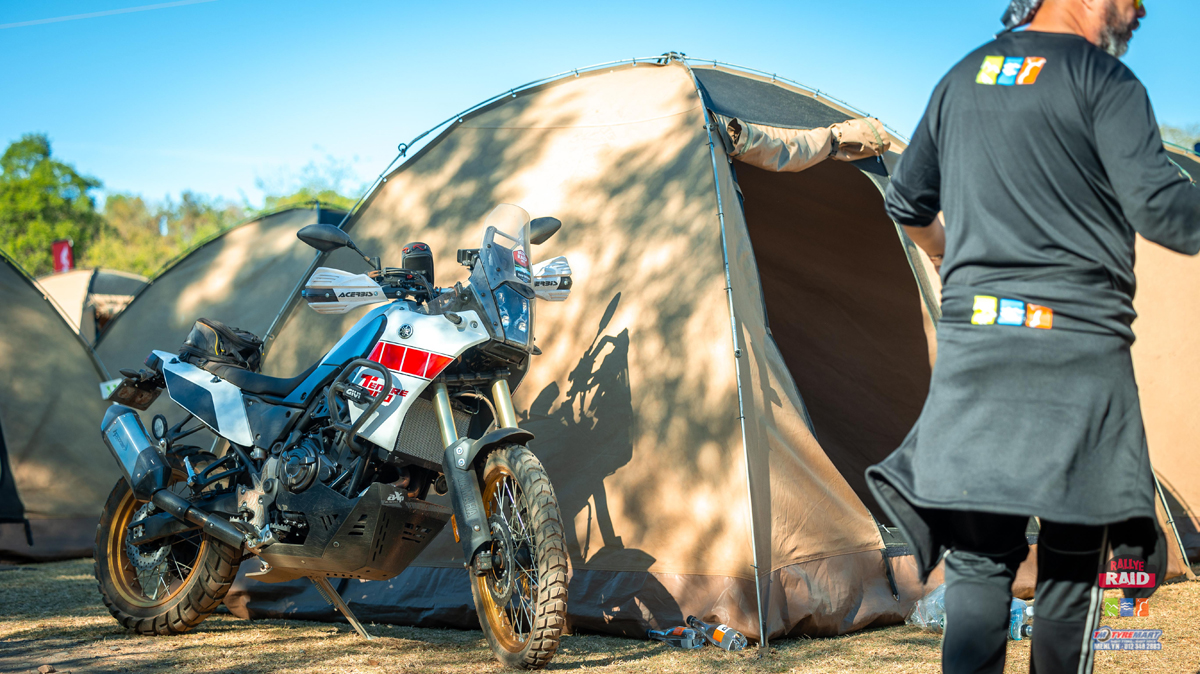
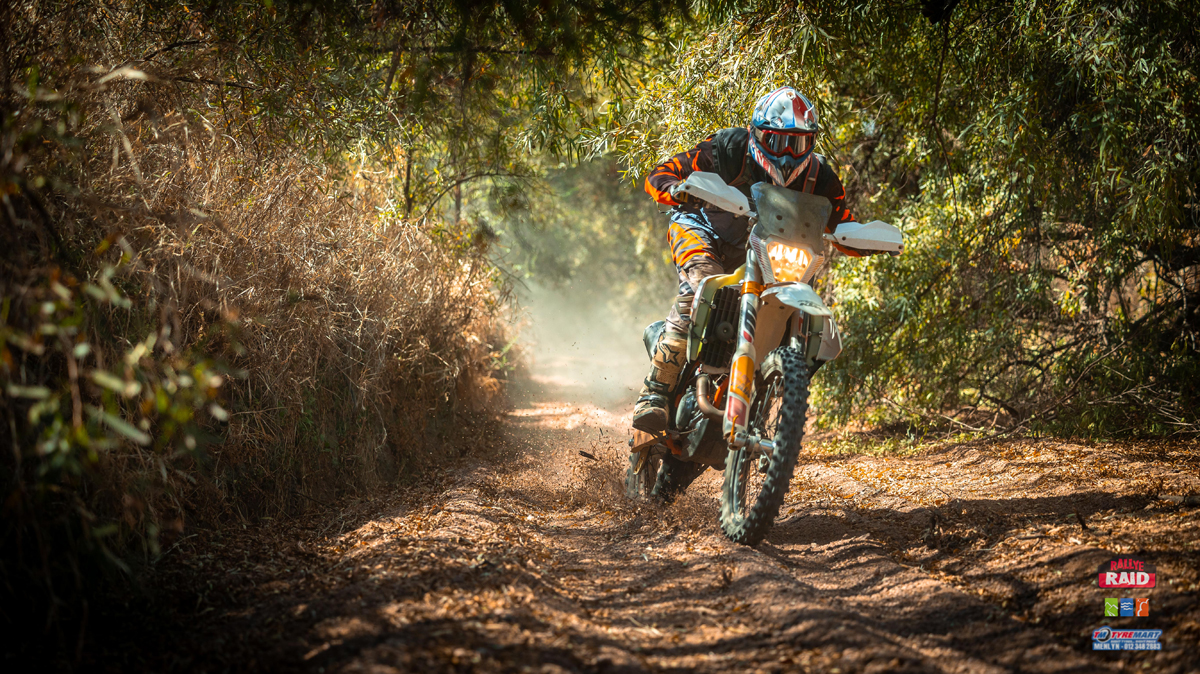
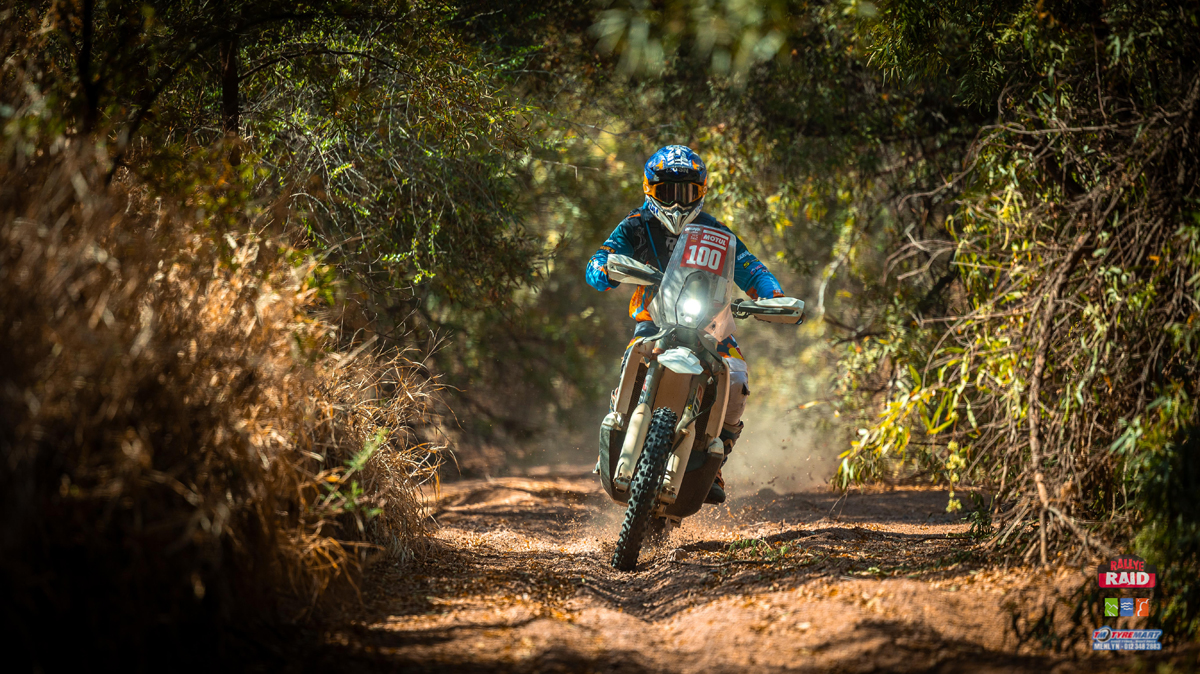
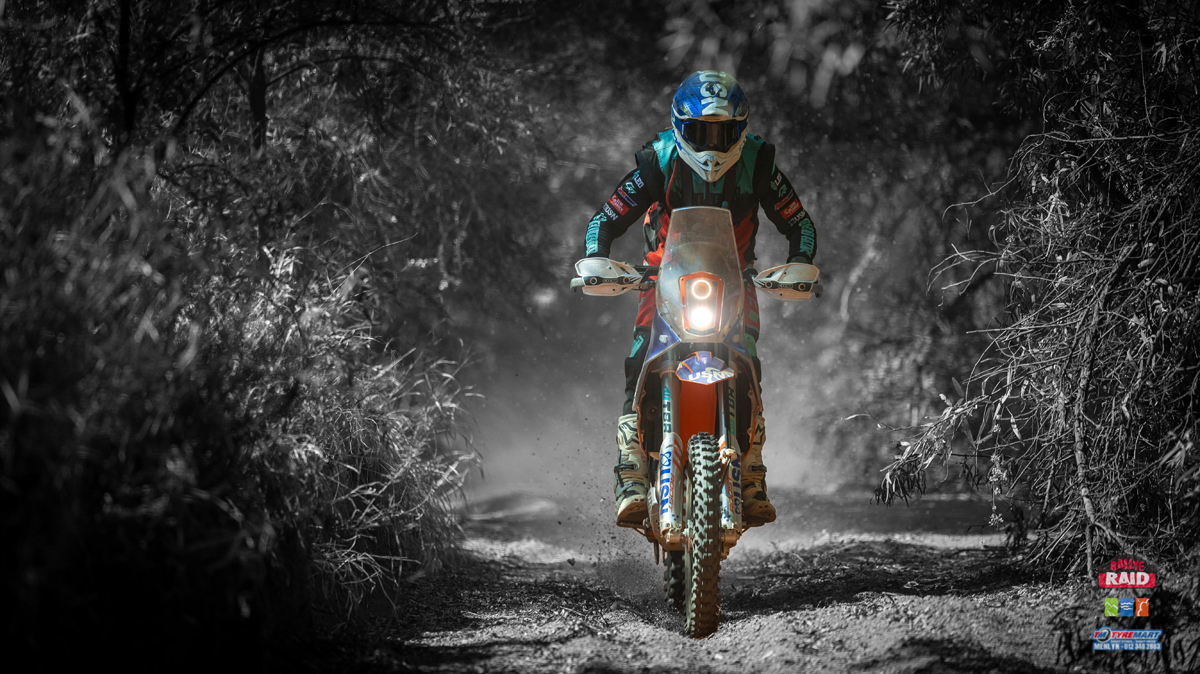
Having invested months in meticulous planning, Linex Sandton is thrilled to announce the grand opening of its new flagship store which is set to take place on, November 11, 2023, at the store’s new address located at 19 Eastern Service Road, Kelvin, Sandton.
This event marks a significant milestone in our journey to provide an even more exceptional experience for our valued customers whom we invite to come and witness a new era of the Linex legacy come to life!
Image source: Yamaha
This relocation has been carefully orchestrated to ensure a seamless transition, so customers can still expect to get the best in brand-new and pre-owned Motor and Marine lifestyle products and an enhanced overall customer experience at their new home.
To add to the excitement, the grand opening will also introduce customers to the store’s exciting addition – the Linex Yamaha Centre of Excellence. This state-of-the-art full-service workshop will be staffed by experienced technicians who are fully trained to provide exceptional care and maintenance for bikes and boats.
Yamaha has lined up a celebration befitting of a business of their stature and is ready to offer you the best entertainment, refreshments, and MORE. Join in to be a part of their history!
Image source: Yamaha
For more information on the grand opening event, please contact:
+27 72 600 7731 or 011 251 4000.
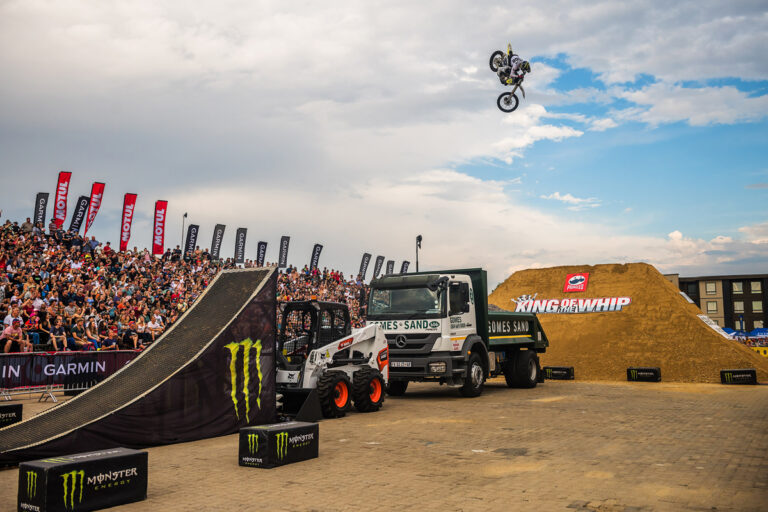
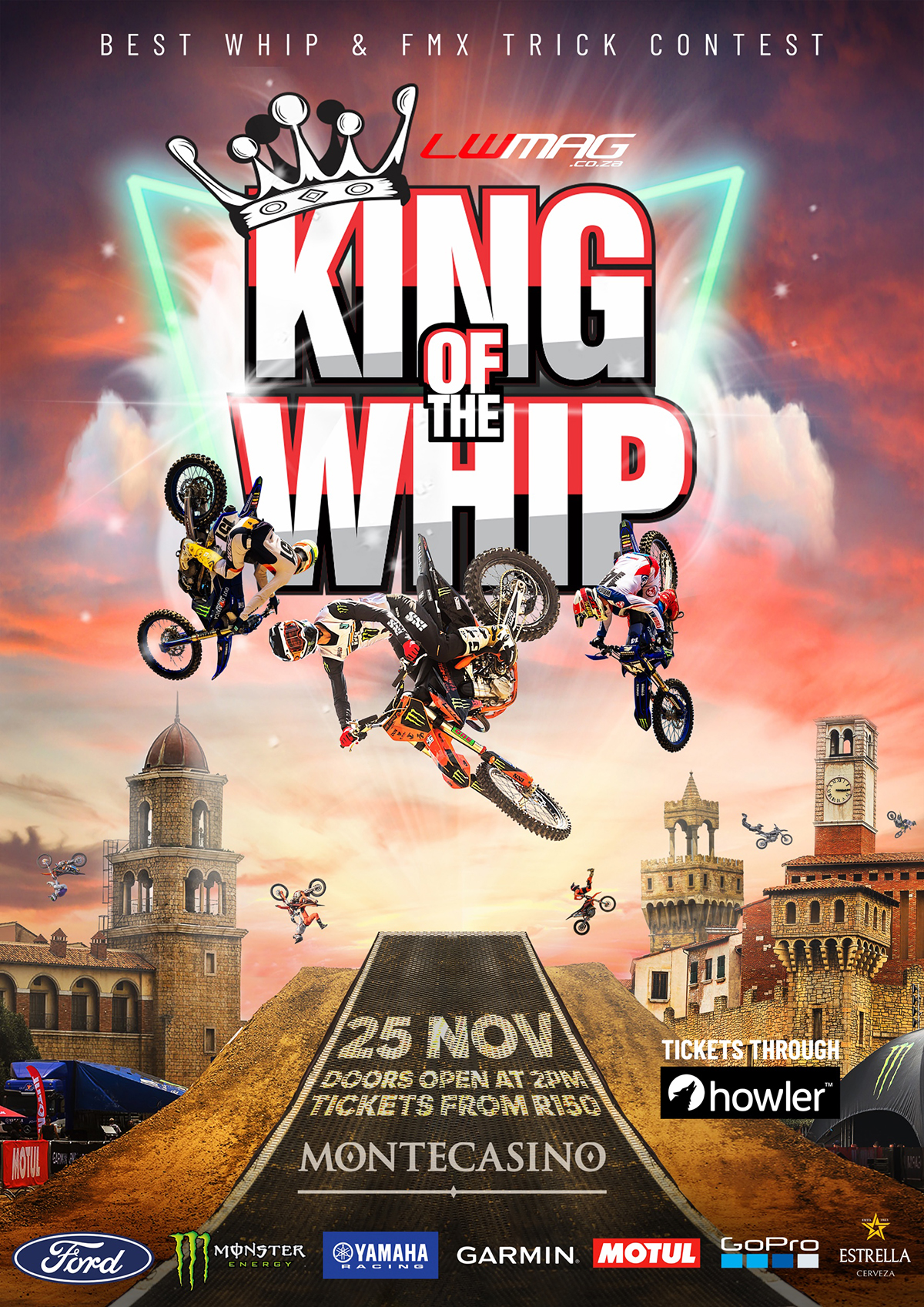
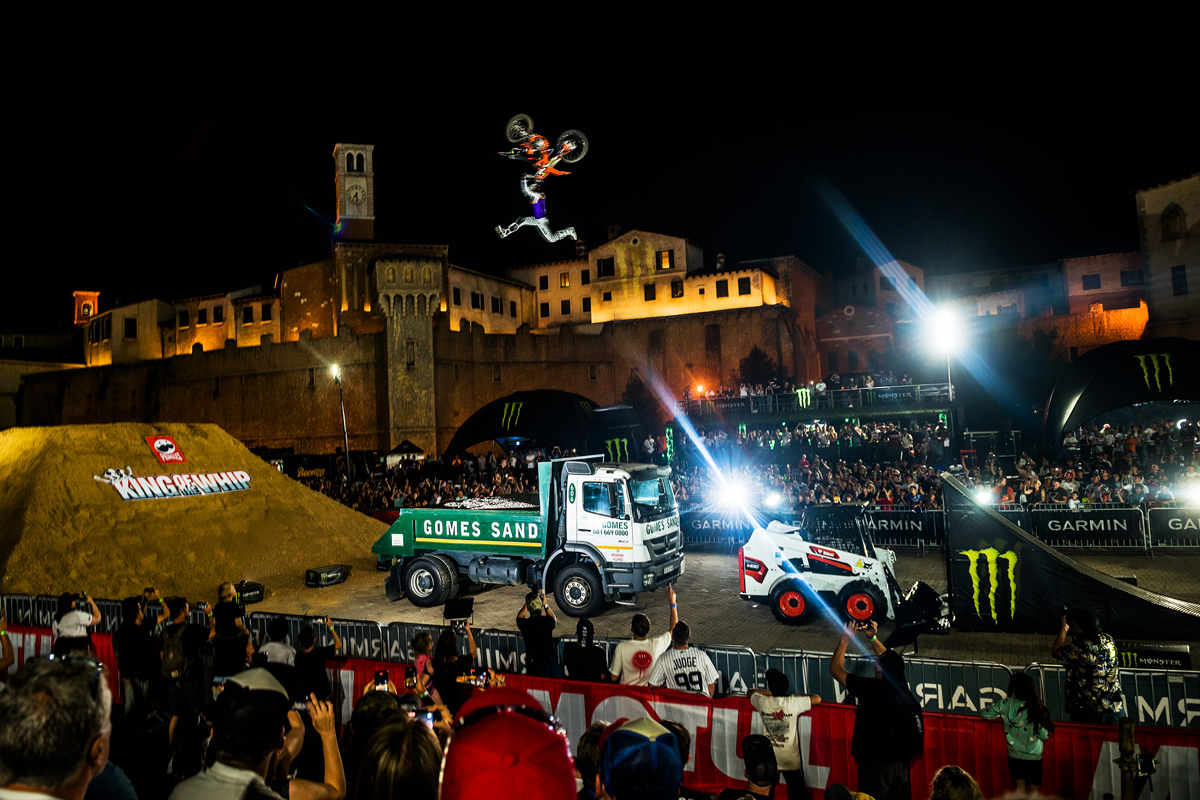
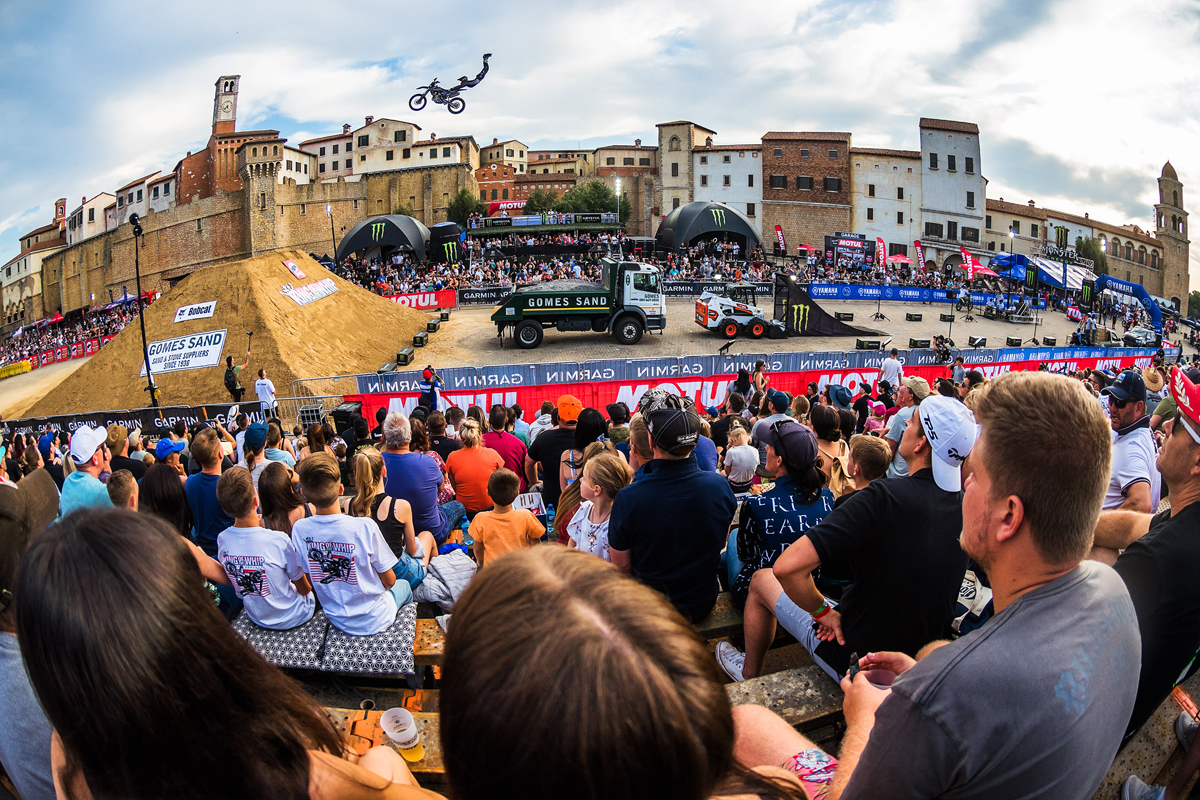
Following a successful and sold-out event at Montecasino last year, King of the Whip (KOTW) – brought to you by LW Mag, returns this November and with it, an exciting list of partners that include: Ford, Monster Energy, Yamaha, Garmin, GoPro, Motul and Estrella Cerveza.
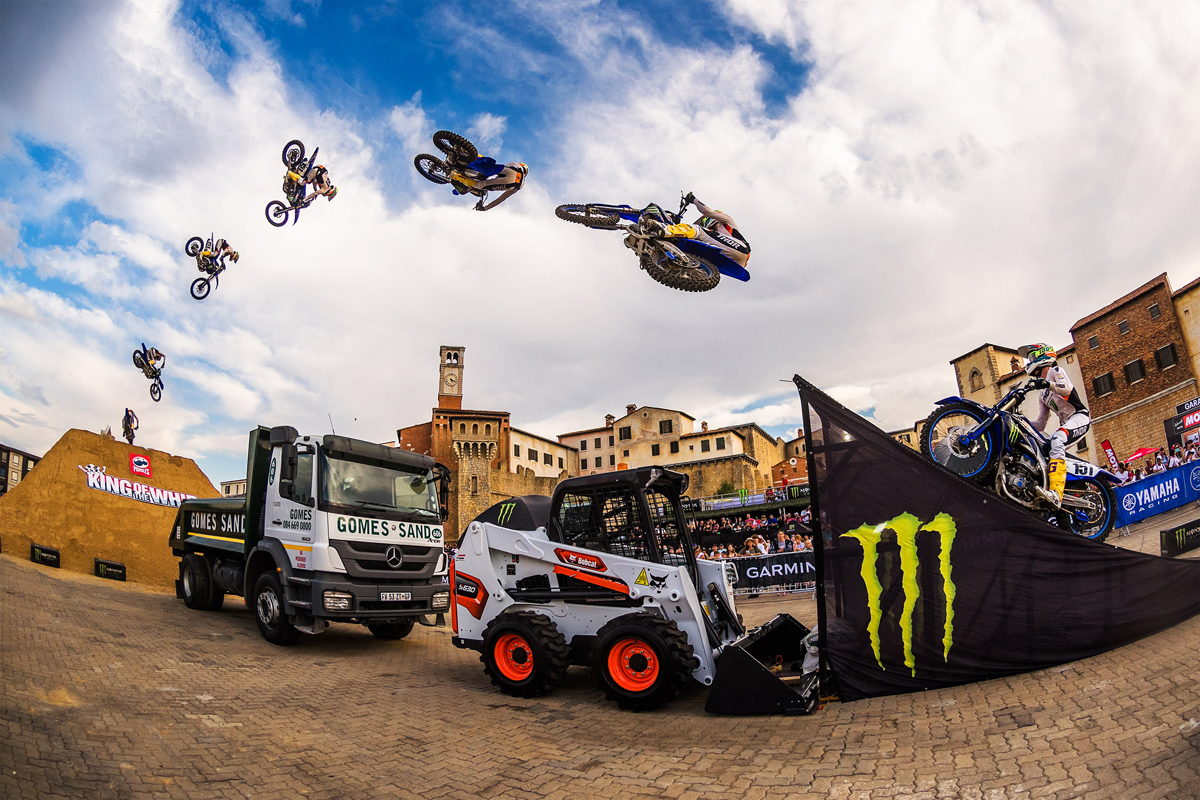
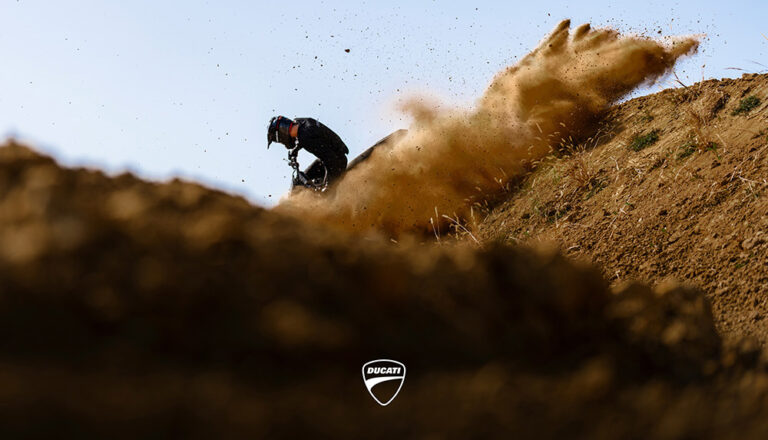
The adrenaline-fuelled Action Sports event is set to take place at Montecasino on Saturday, 25 November, where top Motocross and Freestyle Motocross athletes will battle head-to-head for a share of the prize purse and to see who will be crowned King of the Whip 2023.
Doors open at 2 pm with proceedings kicking off at 4 pm, continuing into the evening with the final showdown taking place under the night skies and flashes of pyrotechnics. Riders scoring enough points through the Best Whip qualifying rounds will advance to the semi-finals and finals. Judges will be taking style, amplitude and variation into account when allocating scores. The FMX Best Trick contest will feature both right-side-up and up-side-down trick categories.
Photo credit: Eric Palmer
The cash prize purse will be split between 1st, 2nd and 3rd in the Best Whip contest, as well as the 1st place riders in the FMX Best Trick contests.
Three times X-Games medallist, Julien Vanstippen (Belgium) claimed the crown in 2022 ahead of South African riders – Freestyle Motocross star Dallan Goldman and National Motocross contender Jesse Wright. Julien Vanstippen has confirmed his attendance and will be back in 2023 to defend his crown. Added to the international rider roster is Spanish FMX sensation, Marc Pinyol, who will be travelling to South Africa for the first time and is ready to mix it up in both the Best Whip and Best Trick contests.
Photo credit: Eric Palmer
King of the Whip organiser, Ryan van der Spuy says, “Last year’s event exceeded all expectations, and we’re ready to bring the excitement back to Montecasino this November. Fans can expect an experience like none other as we bring this production to new heights. Our event partners play a huge role in making this possible and we’d like to extend the biggest thank you to them. The countdown has officially begun, bring on King of the Whip 2023.”
Whip (Noun):
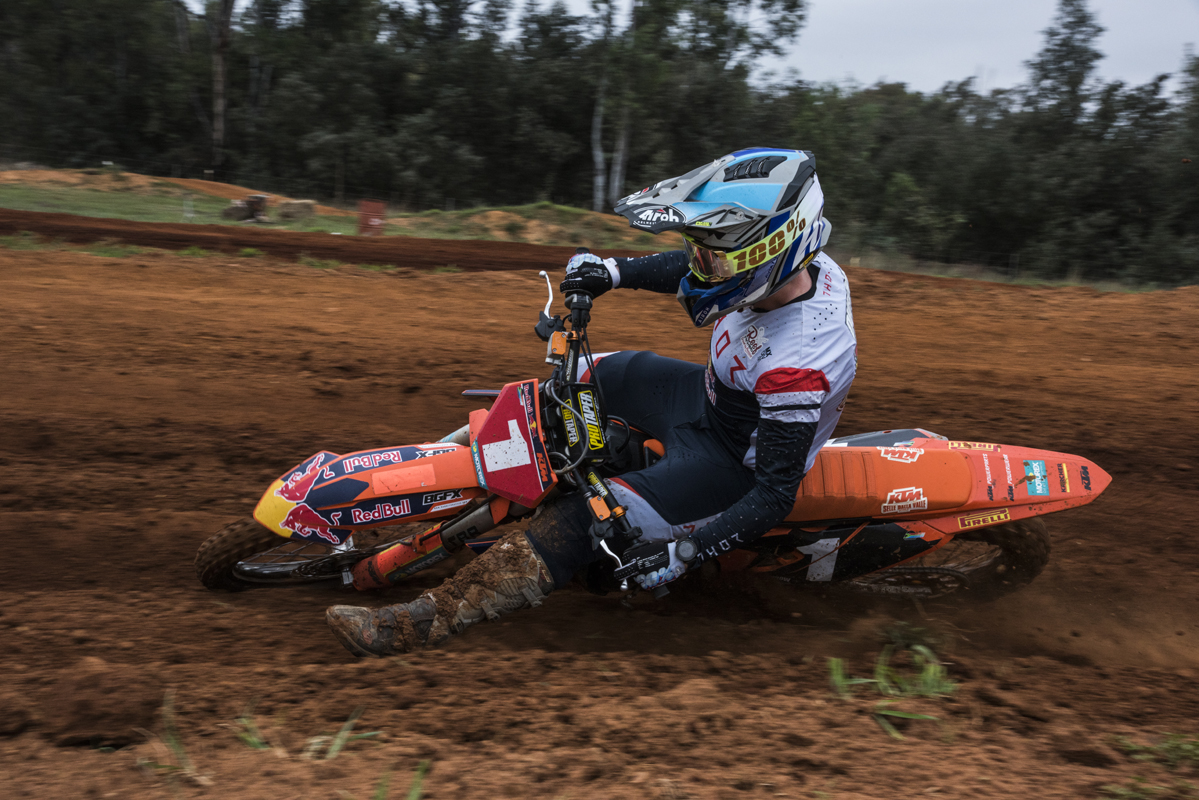
A manoeuvre performed on a motorcycle, usually during a motocross or freestyle motocross contest, in which the rider brings the rear of the motorcycle abruptly around to either side. Performed while the machine is airborne off a jump. In very extreme whips, the rear of the motorcycle will end up perpendicular to the direction of travel, in addition to the motorcycle being laid flat. The purpose of the whip is to show off, to alter the trajectory of the bike in flight, and to scrub speed over jumps.
Photo credit: Eric Palmer
Inviting everyone – families, and friends, to join in witnessing this highly anticipated, action-packed event. Tickets are available for R150 (standing) and R250 (grandstand seating). Food and beverages will be on sale at the event.
King of the Whip event details:
Date: 25 November 2023 Time: 2 pm onwards Venue:Montecasino – Montecasino Boulevard (Cnr William Nicol and Witkoppen), Fourways, Johannesburg
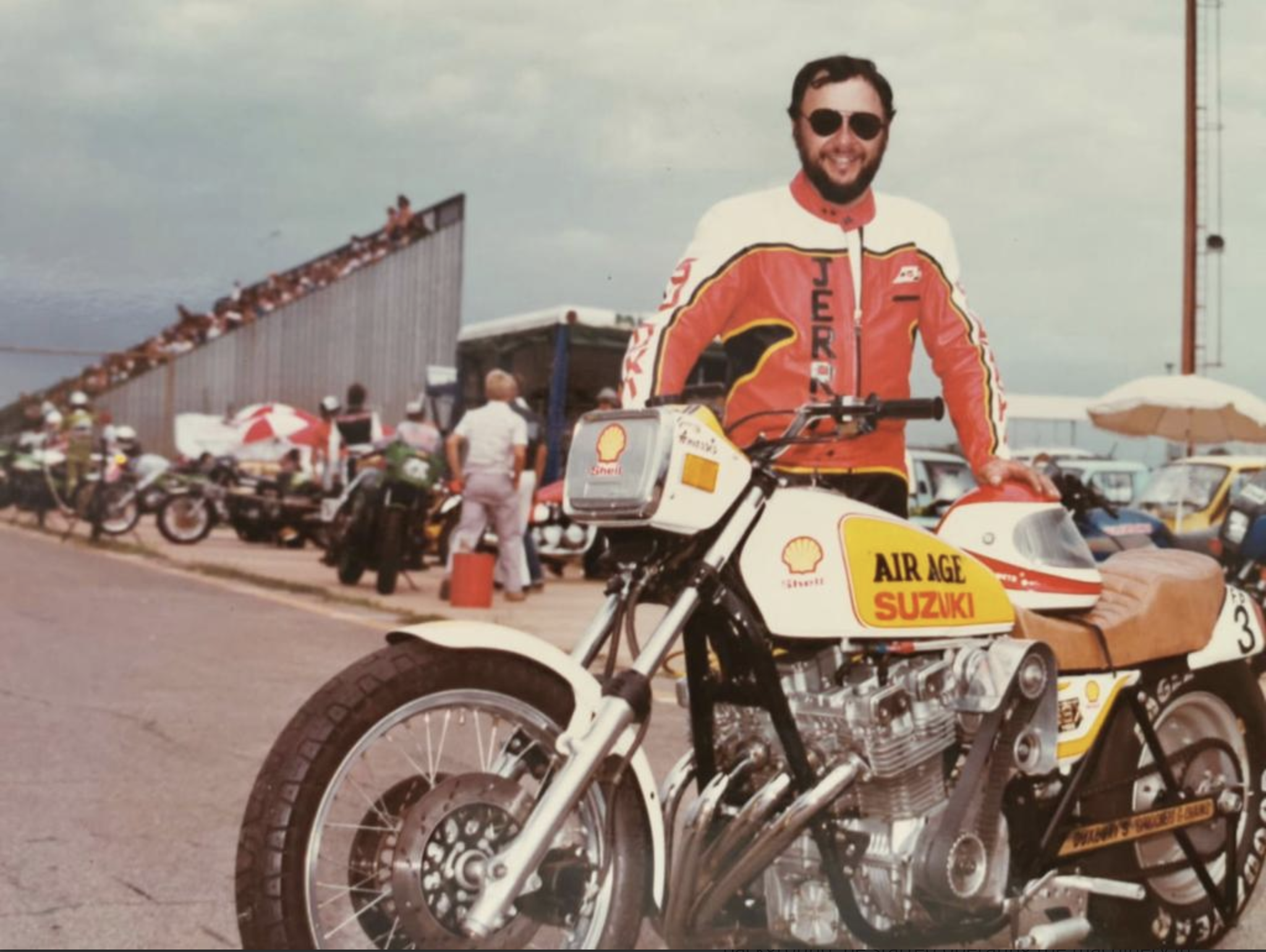
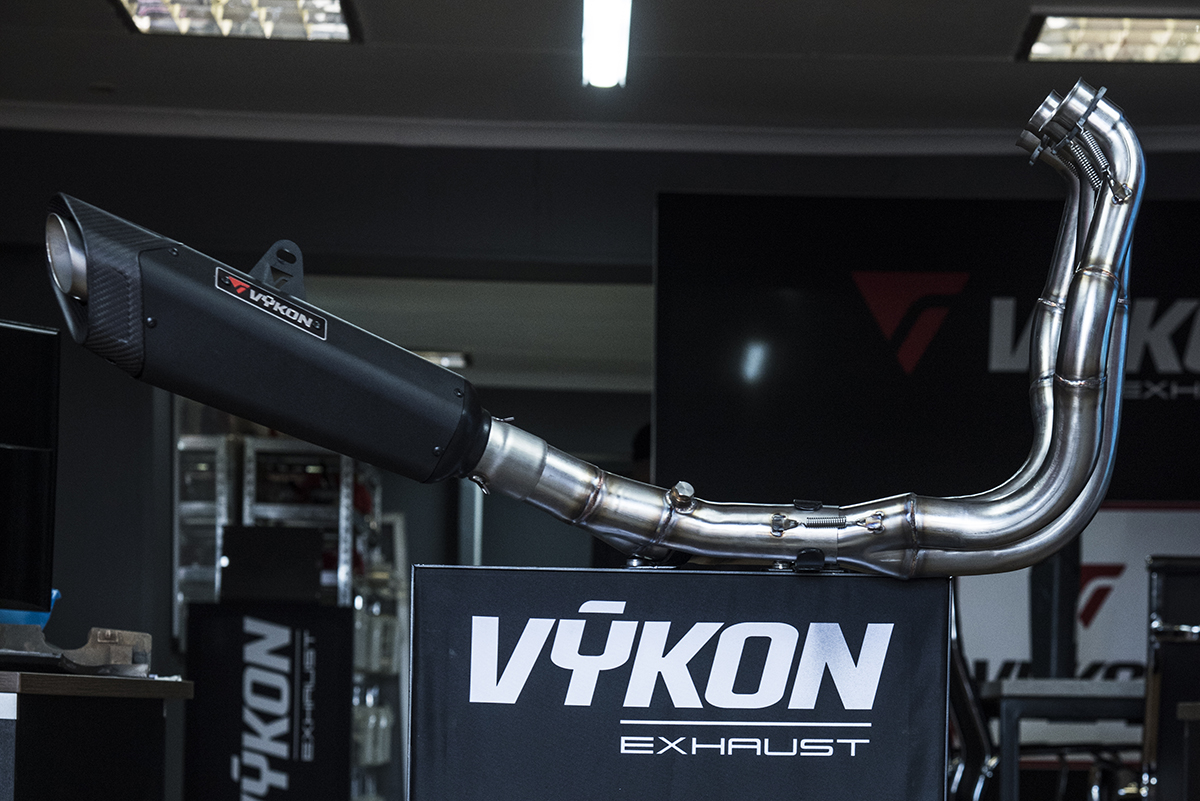
The Anassis name has been synonymous with producing high-performance motorcycle exhaust systems from as far back as the 1970s. Those of us fortunate to have known Gerry Anassis, who sadly passed away in 2019, can testify to his legendary engineering prowess. Gerry built some incredible two-stroke drag bikes which he campaigned with considerable success back in the ’70s and ’80s. Perhaps his most remarkable engineering achievement was grafting another cylinder onto a Suzuki GT 550 2-stroke triple, turning it into a ‘big bang’ four-cylinder drag bike which he campaigned with great success. Let me just remind you that this was still back in the analogue age. Today, computer simulations will explore the viability of building such a bike and getting a positive outcome. Back in the ’70s, it was all in the heads of truly clever people who understood the intricacies of motorcycle engines and, by trial and effort pulled off major engineering feats that make the mind boggle.
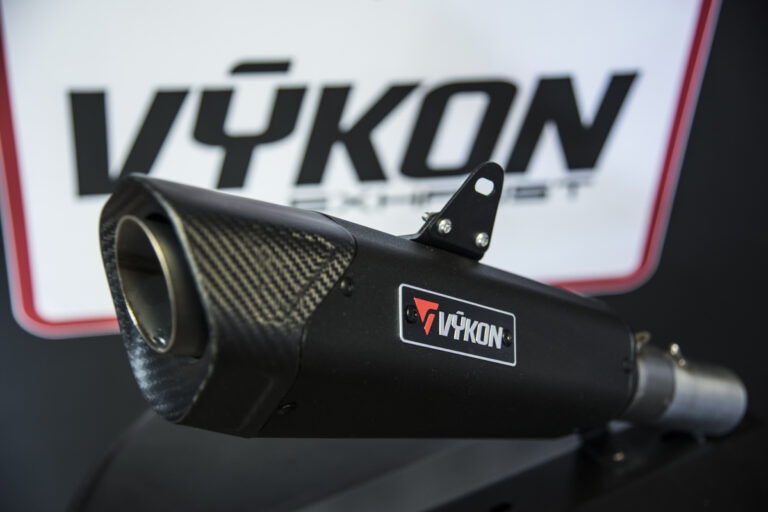
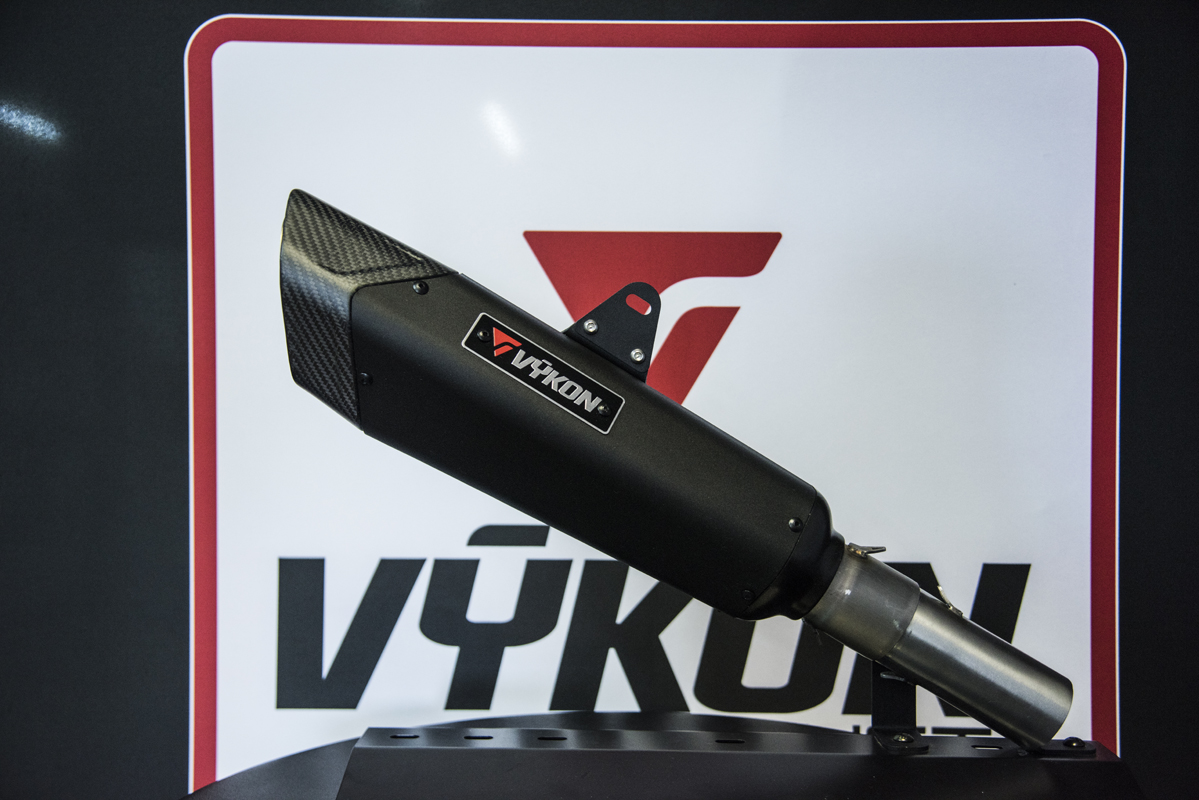
Image source: Vykon
When the four-stroke era put big two strokes out to pasture, Gerry started racing a Suzuki GS1000. He needed an exhaust to make proper power, so needless to say he built one. Air Age pipes became very popular, with great performance gain and build quality. Gerry was also known for expansion box pipes for the two-stroke Suzuki’s which gave serious power gains. Predictably this prowess was going to rub off on one of Gerry’s kids. It was Brad who followed in his dad’s footsteps. This first took the form of motorcycle racing. ¼ mile oval track racing on a RM80 Suzuki, at the aptly named Mayhem circuit west of Pretoria, it was a steep learning curve for young Brad. Next up was inevitably drag racing, which brought almost instant success to the youngster riding well-prepared Air Age machines.
Image source: Anassis Racing
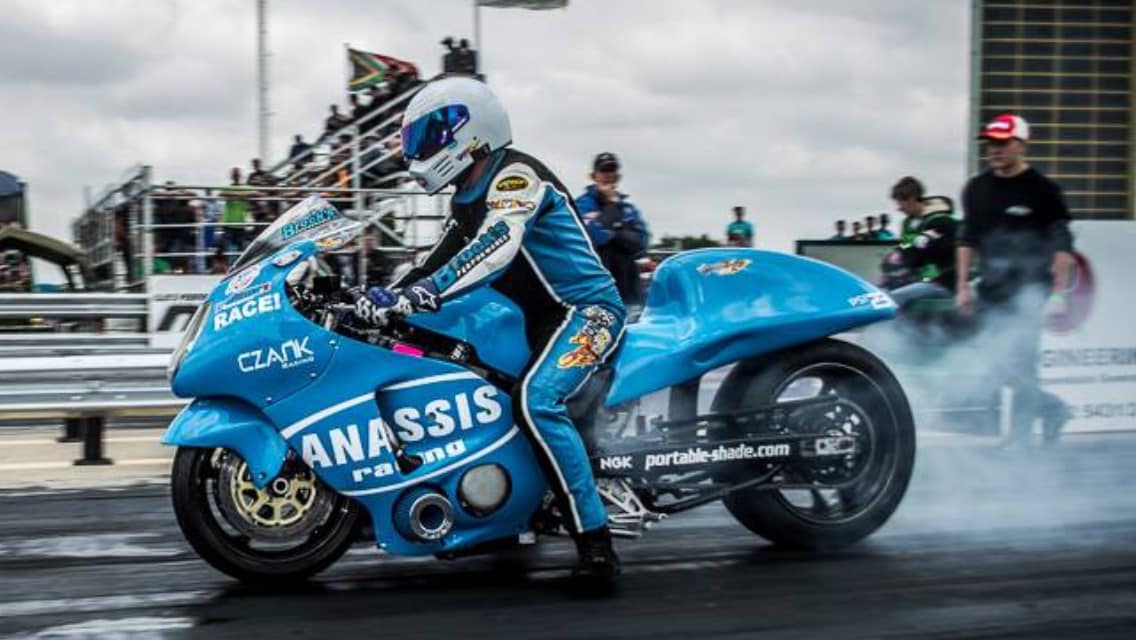
Roadracing a RGV250 Suzuki was followed by 600s and then Superbikes with a fair degree of success. In 2007 Suzuki asked Brad to manage their official road racing team which saw the birth of Anassis Racing and the creation of a world-class race workshop at the Air Age facility. Brad won over 13 SA National Championships in Drag and Road Racing over the next 10 years. His own racing credentials include SA National Colours for Drag Racing and numerous records, some of which stand to this day. Brad spent many hours during his racing career in the Air Age workshop, literally learning at the hand of the Master. He gained a first-hand understanding of airflow principles and exhaust manufacture.
Photo credit: Bjorn Moreira / ZA Bikers
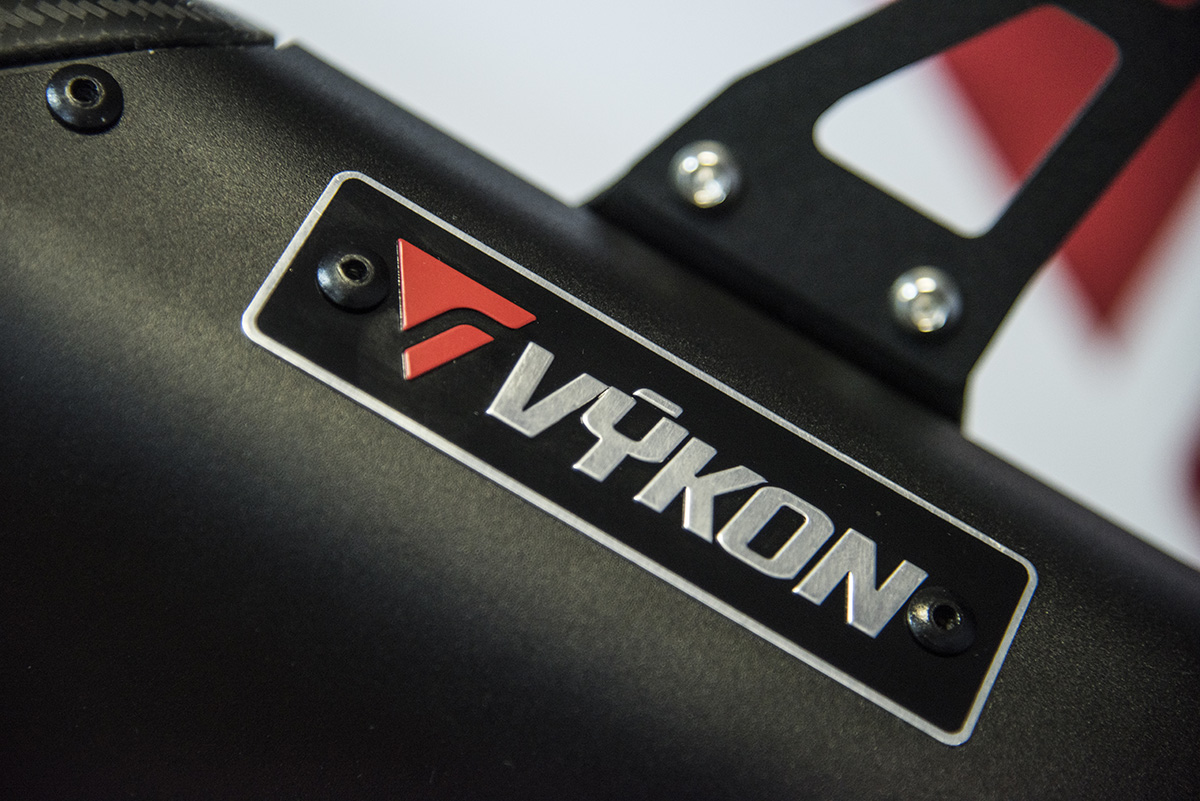
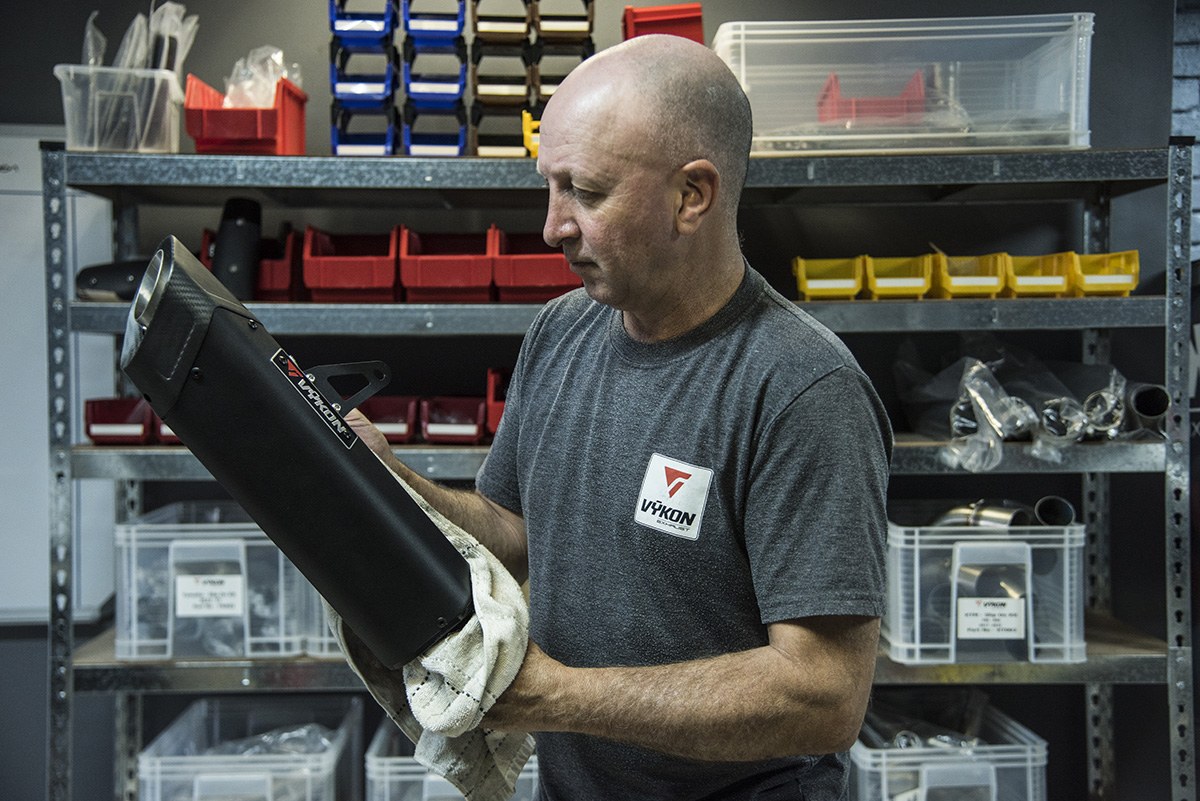
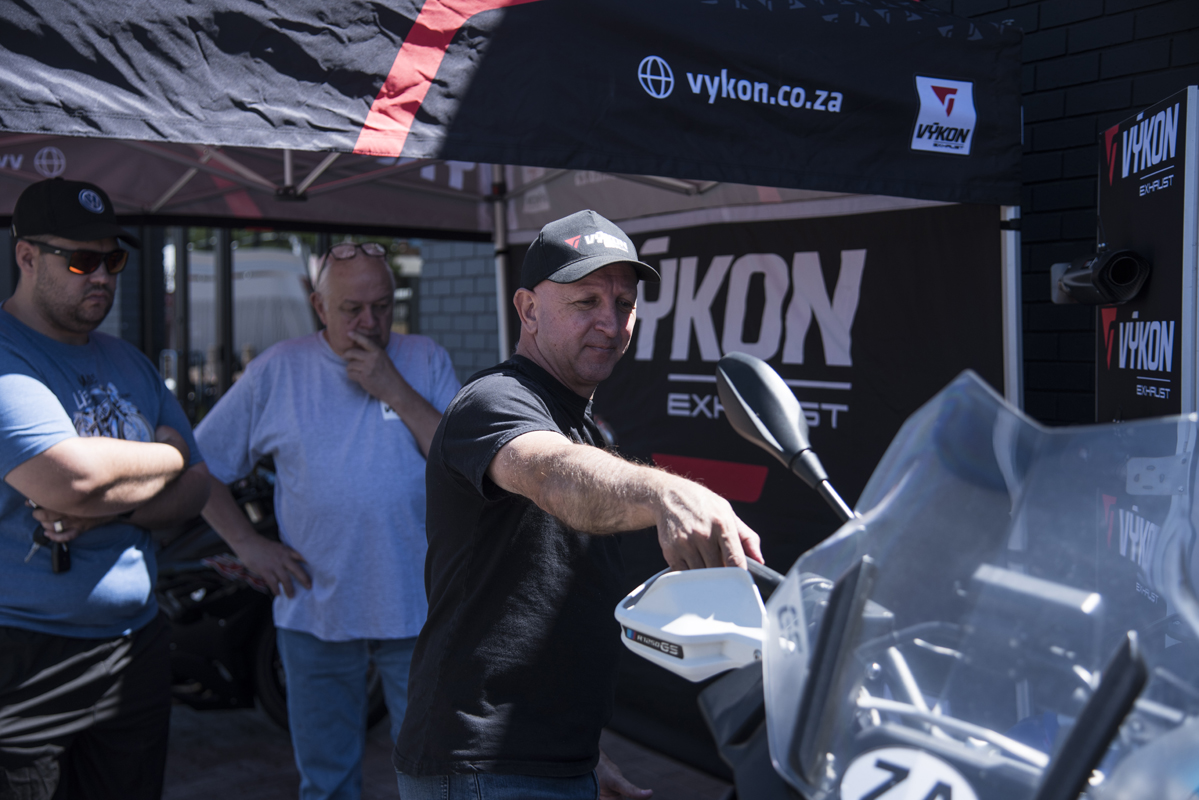
With the wisdom of hindsight, it was probably inevitable that Brad would gravitate towards exhaust manufacture. I believe the catalyst was Gerry’s passing and the Covid pandemic which caused some serious introspection. The result was Vykon Exhausts. The Anassis Air Age legacy birthed what Brad calls “old-school technology with a modern new-age look” all captured by the Vykon brand. ‘Vykon’ is the Slovenian word for Performance. The Vykon enjoys a contemporary look.
Photo credit: Bjorn Moreira / ZA Bikers
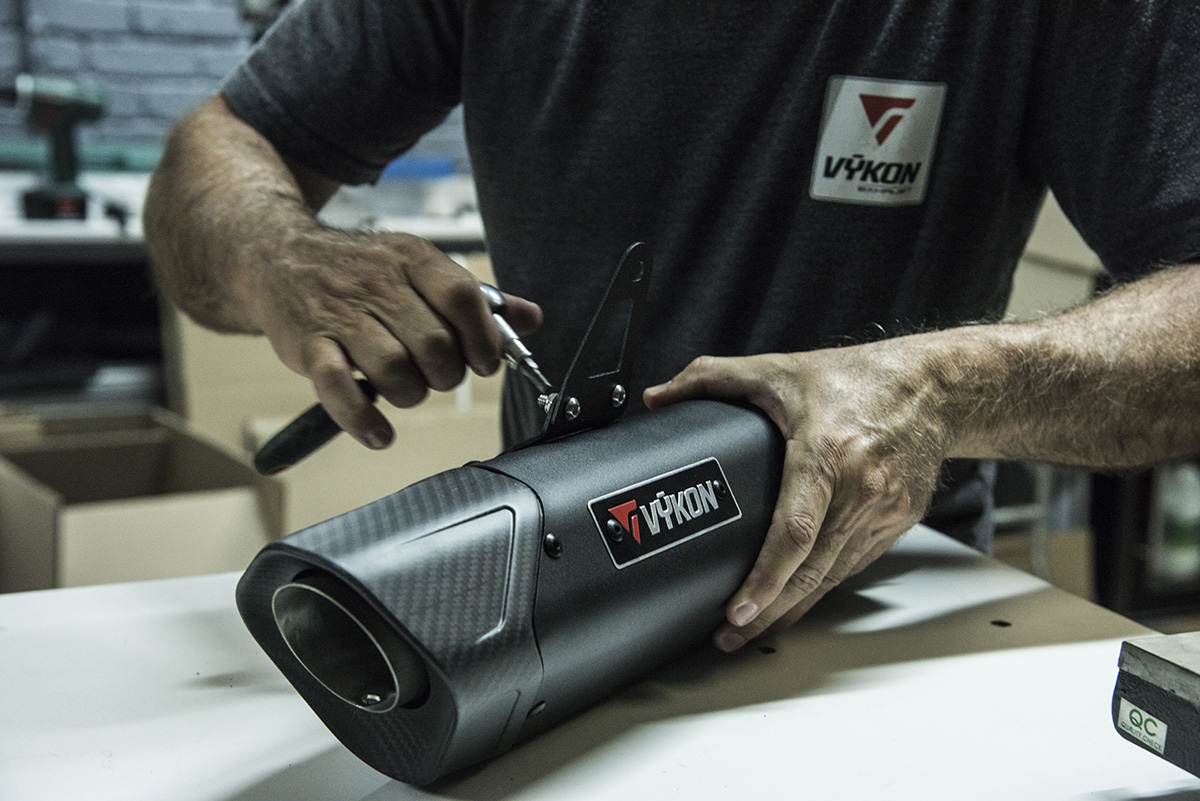
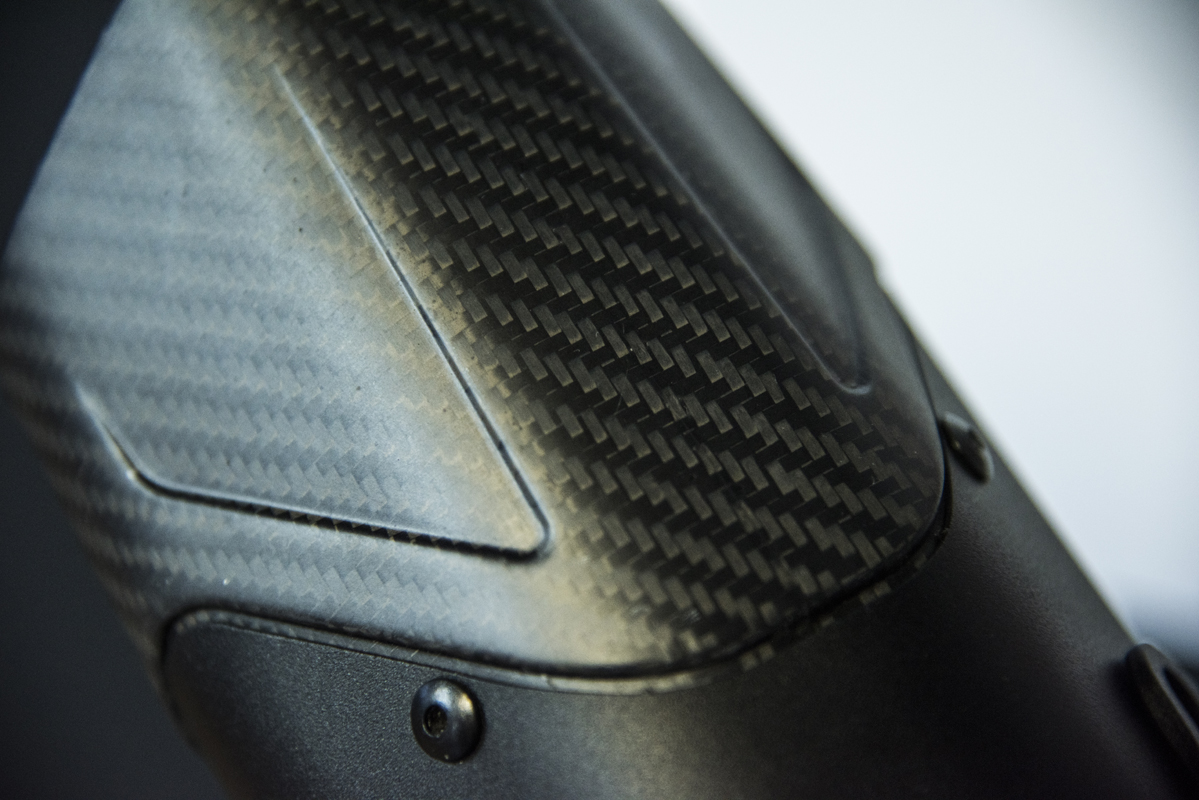
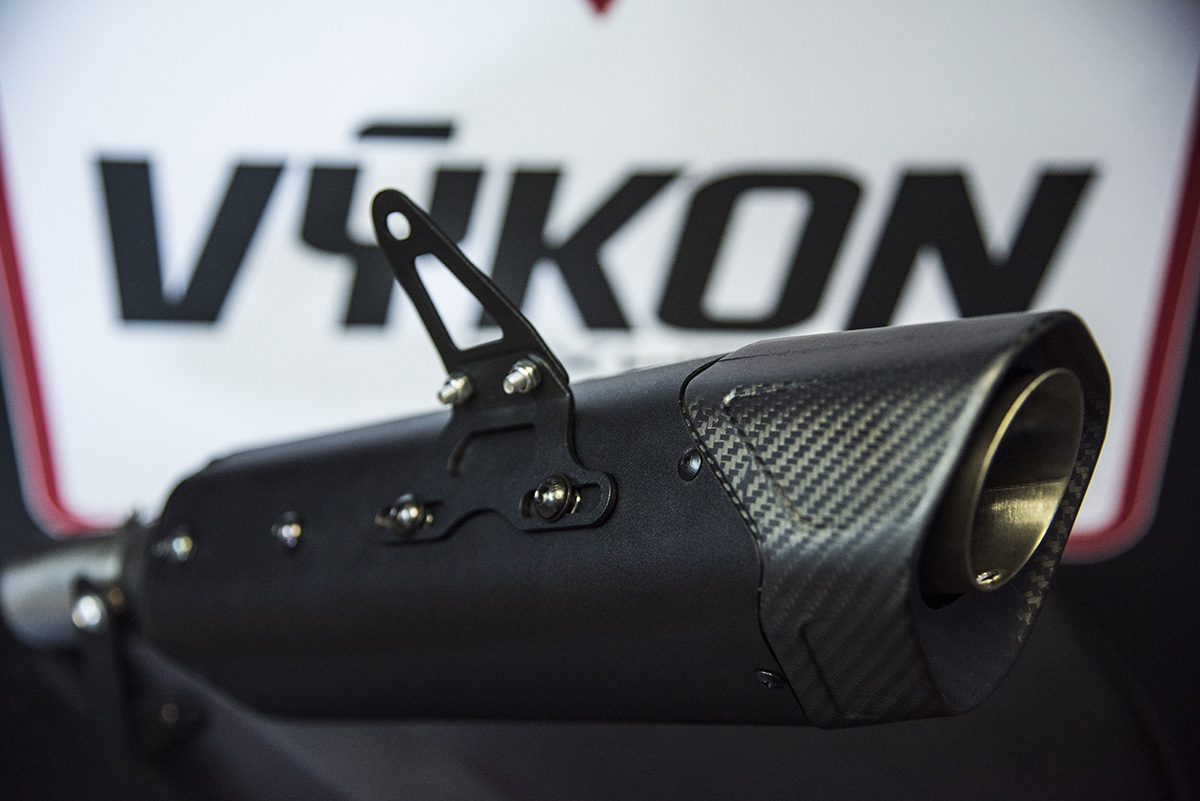
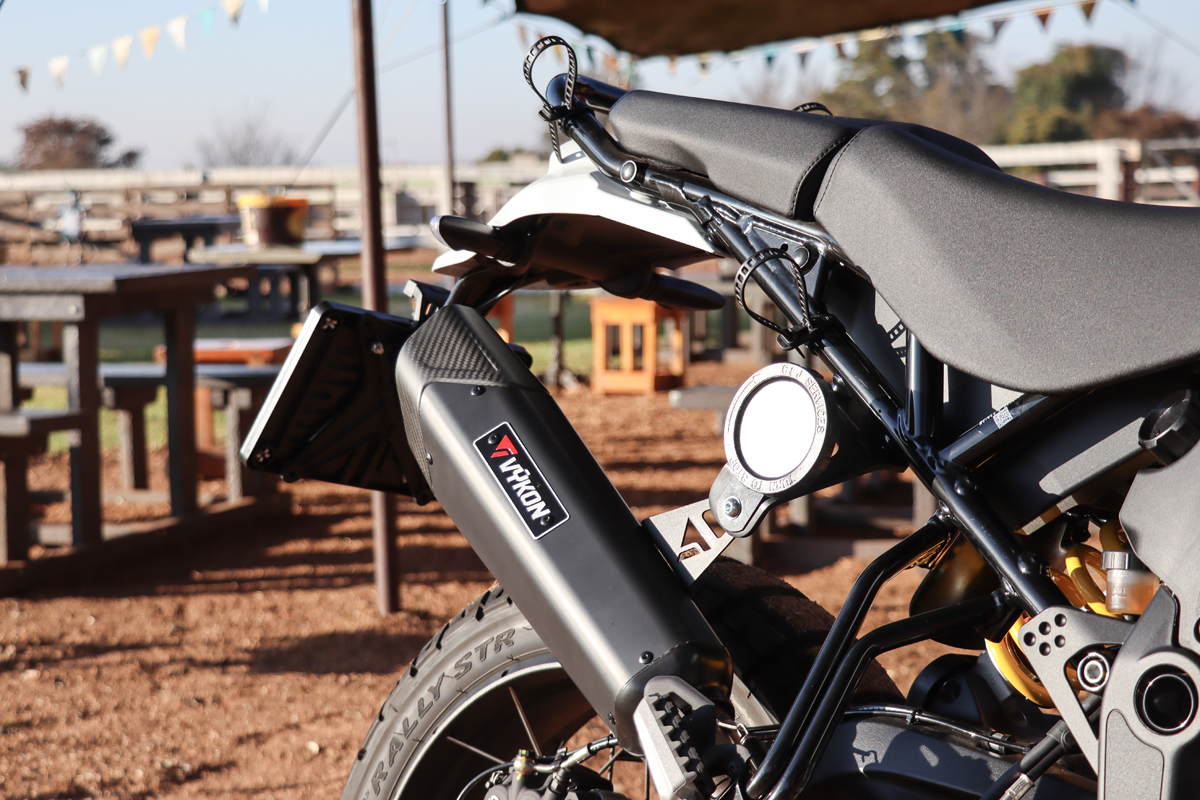
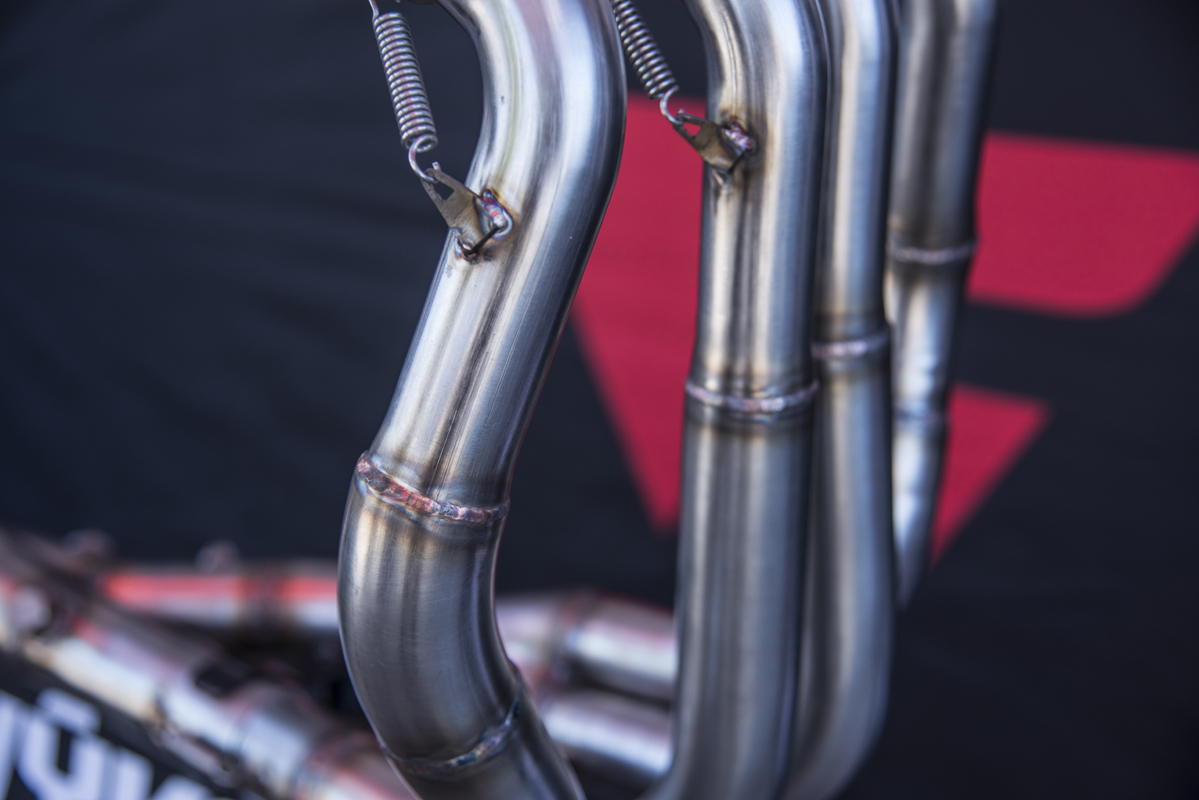
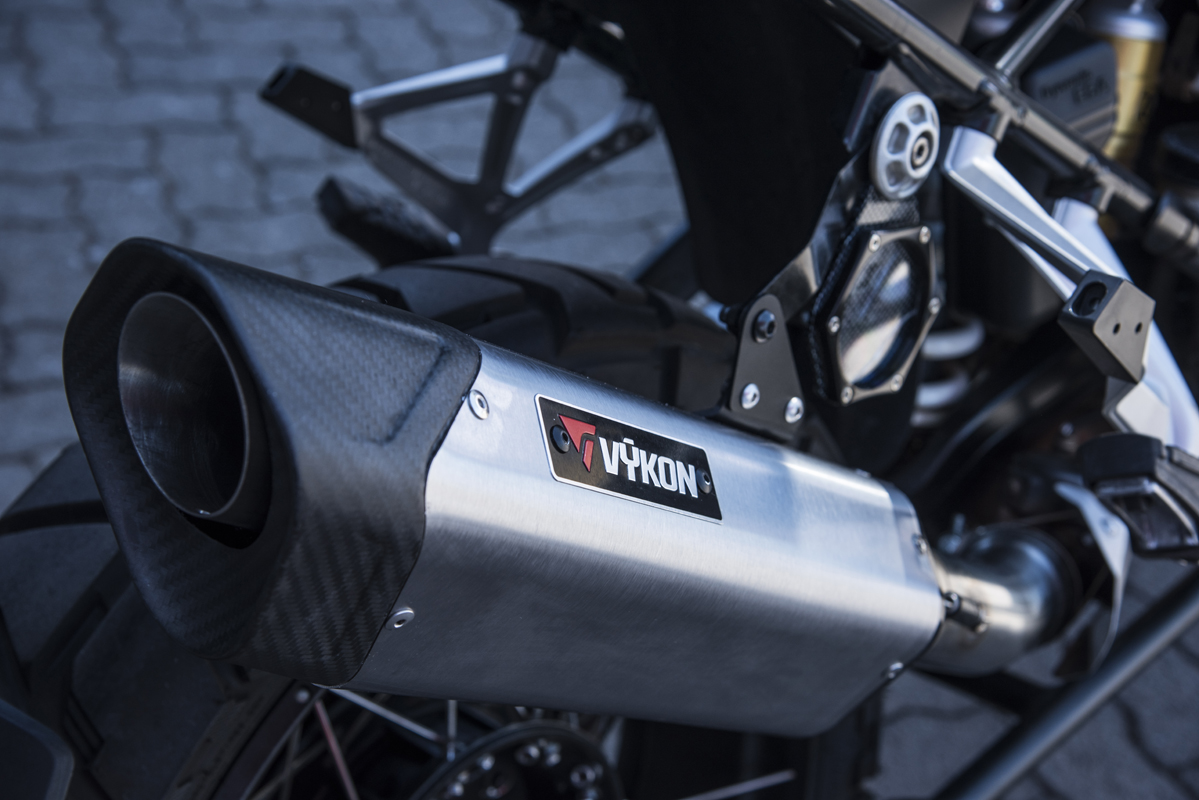
It is unique in its tapered 5-angle design and what Brad calls the “Step Back” carbon endpiece design. He uses aerospace prepreg carbon, mated to a body manufactured from premium quality 304 thin wall stainless steel. The finished product is elegant yet aggressive with a thoroughly modern look. The exhausts have a Db noise reduction unit available as an optional extra. Vykon recommends the use of this unit, which secures with a single bolt, should you use your bike on the street.
Photo credit: Bjorn Moreira / ZA Bikers
The overall design is practical and clever. A variety of mounting brackets can attach to the end canisters in a variety of places, making them highly adaptable.
Photo credit: Bjorn Moreira / ZA Bikers
The DB killer is a cone with holes that collectively have the same volume as the pipe outlet, meaning that they don’t compromise the gas flow, yet tone down the sound. Vykon builds both end canisters and full systems for a wide variety of bikes. I found their full system absolute motorcycle porn. Totally drool worthy! When the fuelling on your bike is mapped for the pipe, you will feel the most gain. The obvious and significant benefit is a big weight saving over the standard system, as well as an aural symphony from the liberated exhaust gas.
Photo credit: Bjorn Moreira / ZA Bikers
Vykon have exhausts to suit your ride, be it an Adventure bike or a Superbike. Slip-ons that are compatible with your standard headers, or perhaps a full system if you are striving for maximum power gain. Manufactured in SA and developed in conjunction with Anassis Racing, you have a superb option that can increase power, reduce weight, provide a signature exhaust note and give your bike a bespoke look and sound typical of a truly premium product. The local manufacture without any compromise on quality when compared to the best systems out there, provides value for money that is unrivalled.
Photo credit: Bjorn Moreira / ZA Bikers
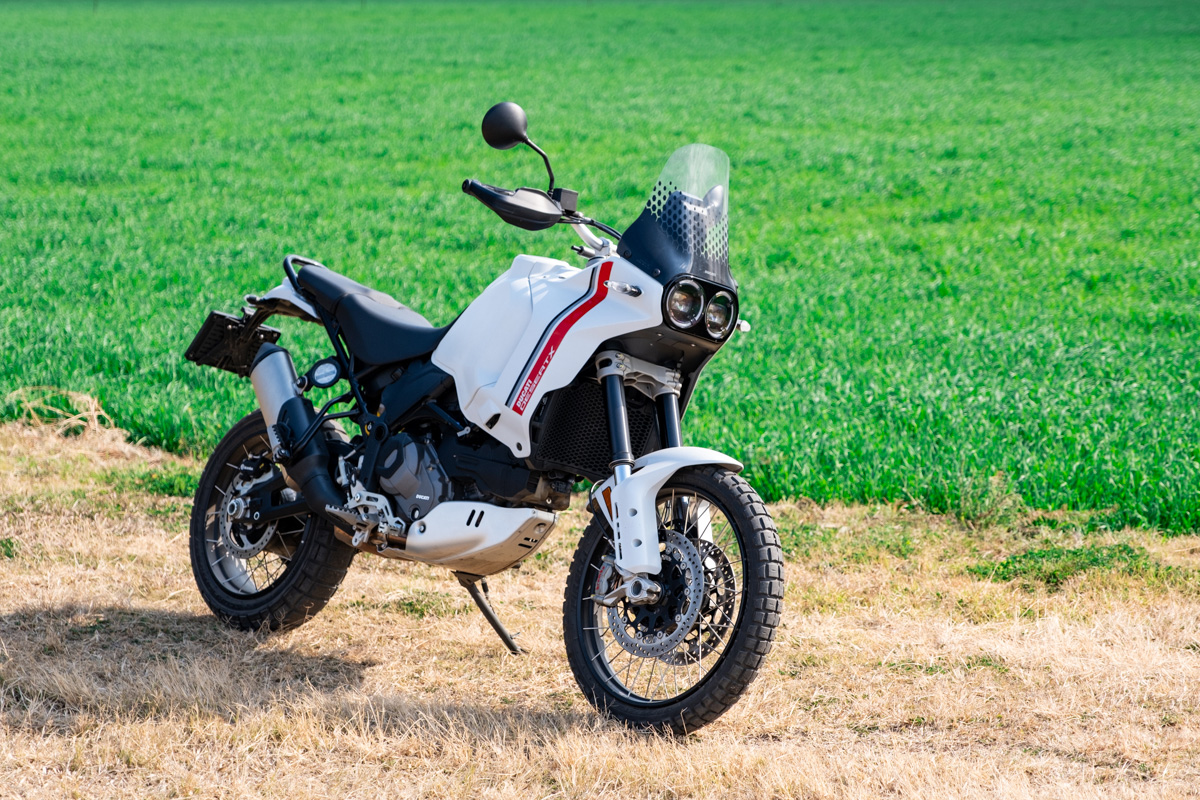
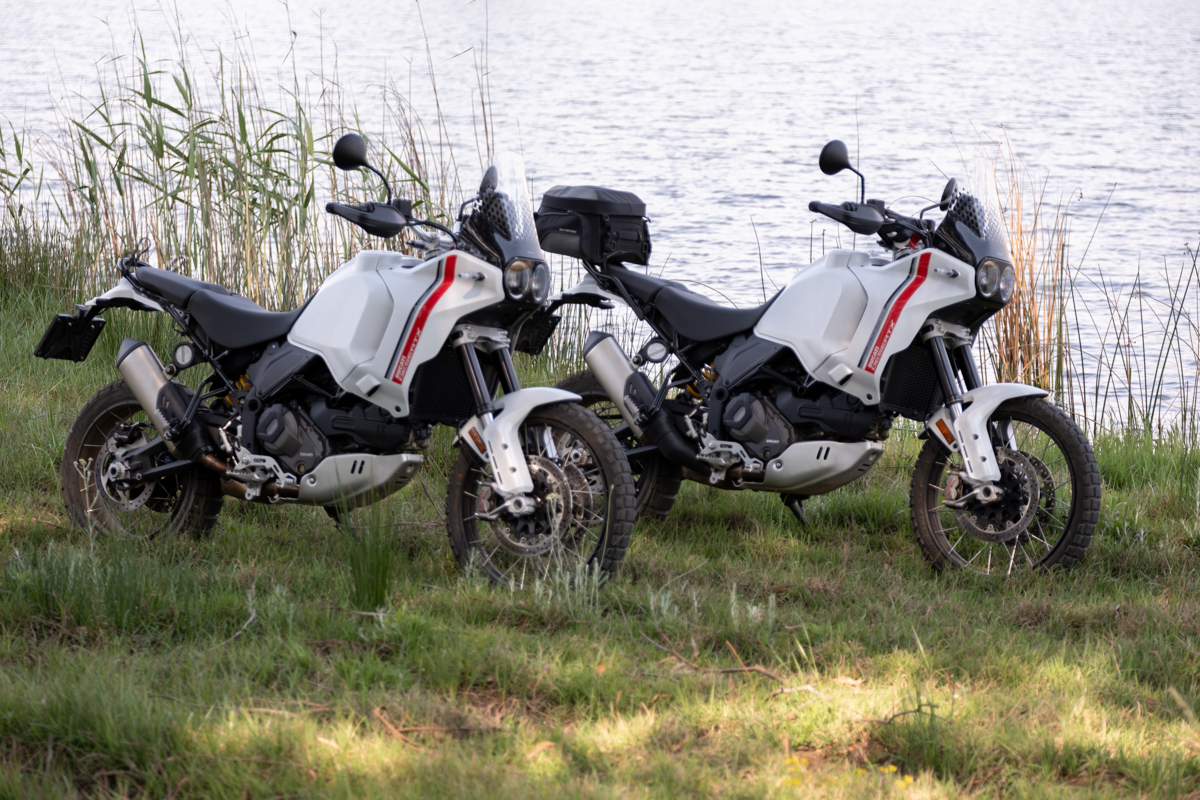
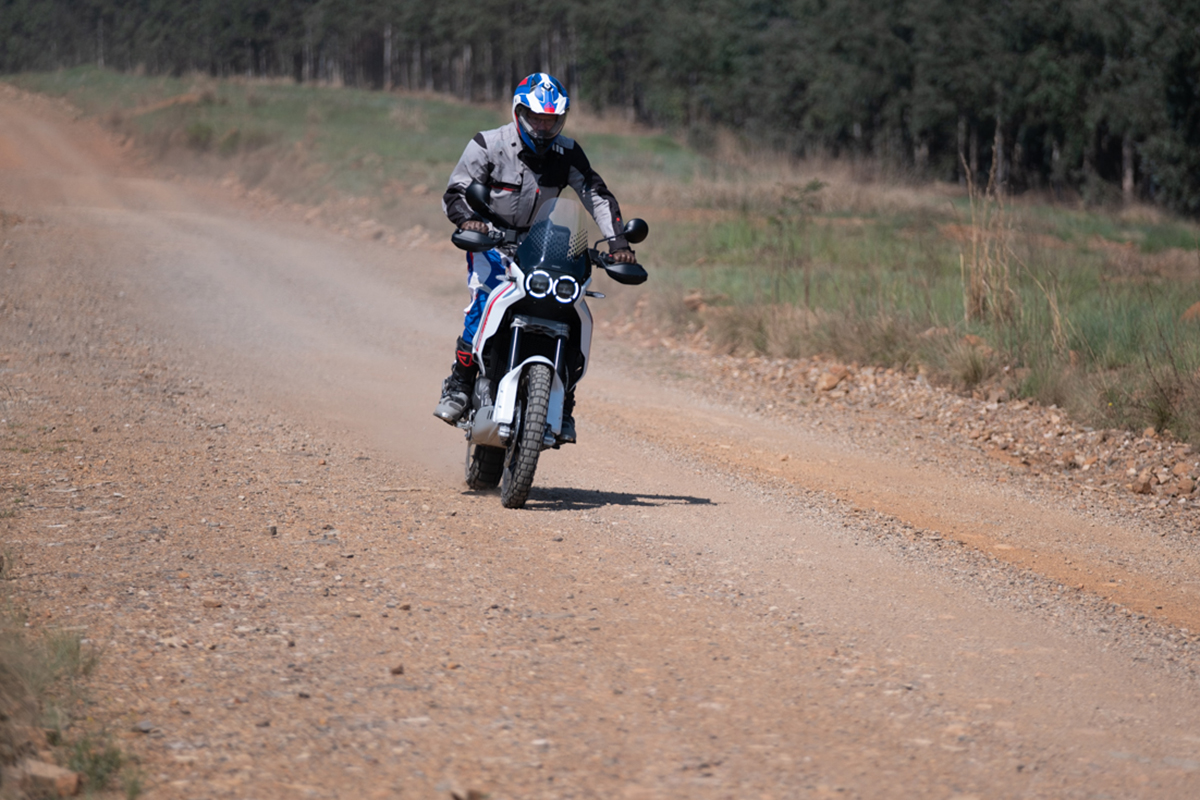
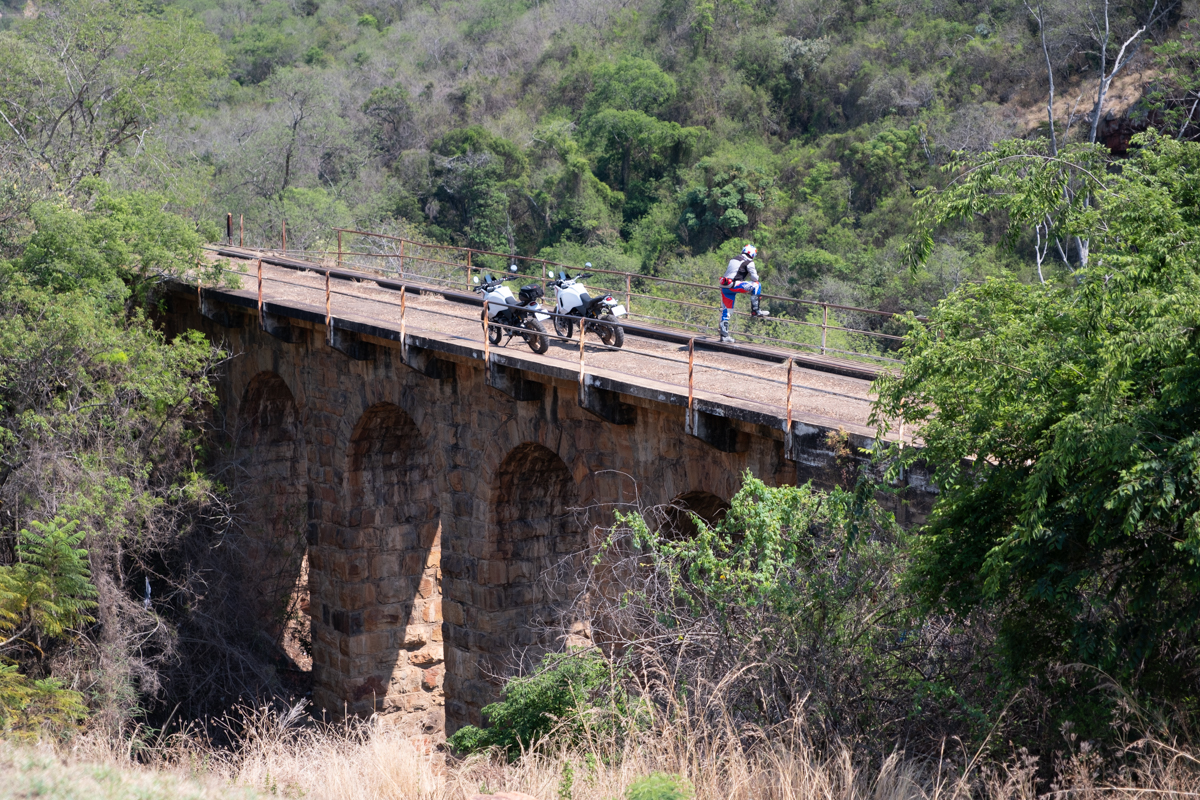
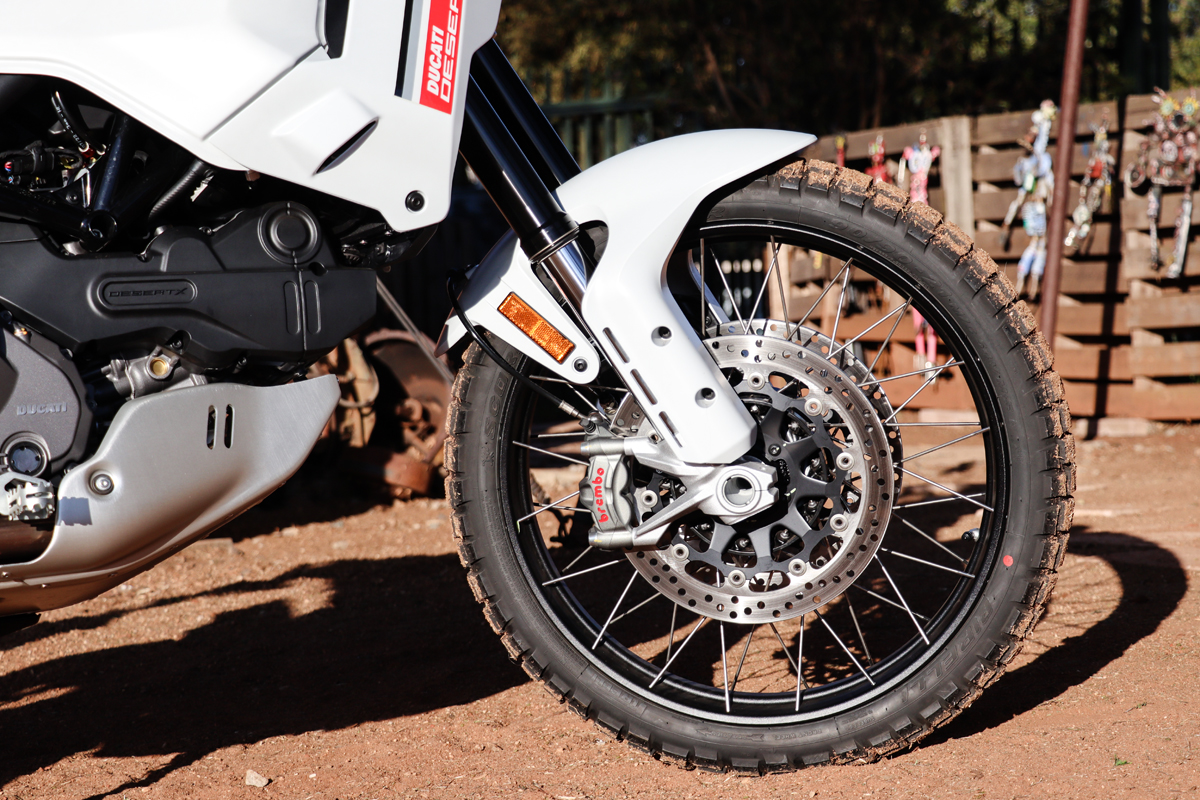
I have experienced Vykon slip-ons on both my Ducati Desert X, as well as on my Triumph Tiger 900 Rally Pro, and both were a doddle to fit. The slip-ons, with their sleek and modern look, complement the look and feel of the bikes significantly. They really enhance the riding experience.
Photo Credit: Dave Cilliers / ZA Bikers
Vykon tells us that they have now developed a smaller end canister for smaller-capacity motorcycles called the Vykon Lite. We plan to fit one onto our BMW G 310 R in the coming weeks, so watch this space for a follow-up article…
Vykon Performance Exhausts
For more information on the products featured in this article, click on the links below…
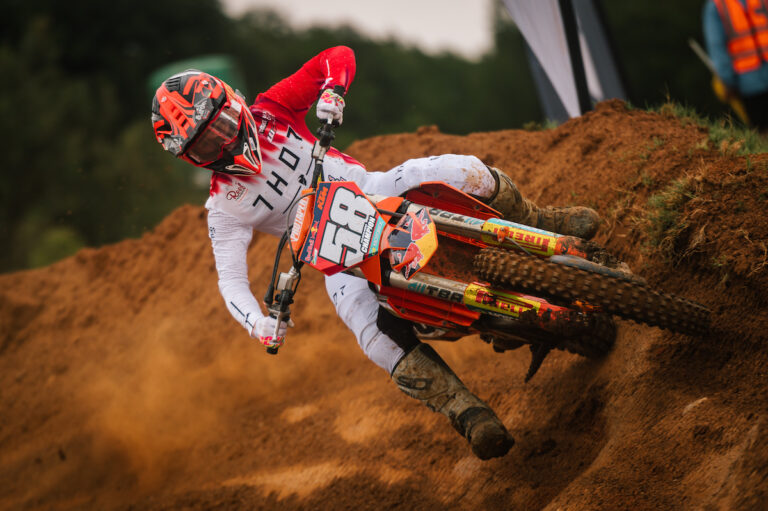
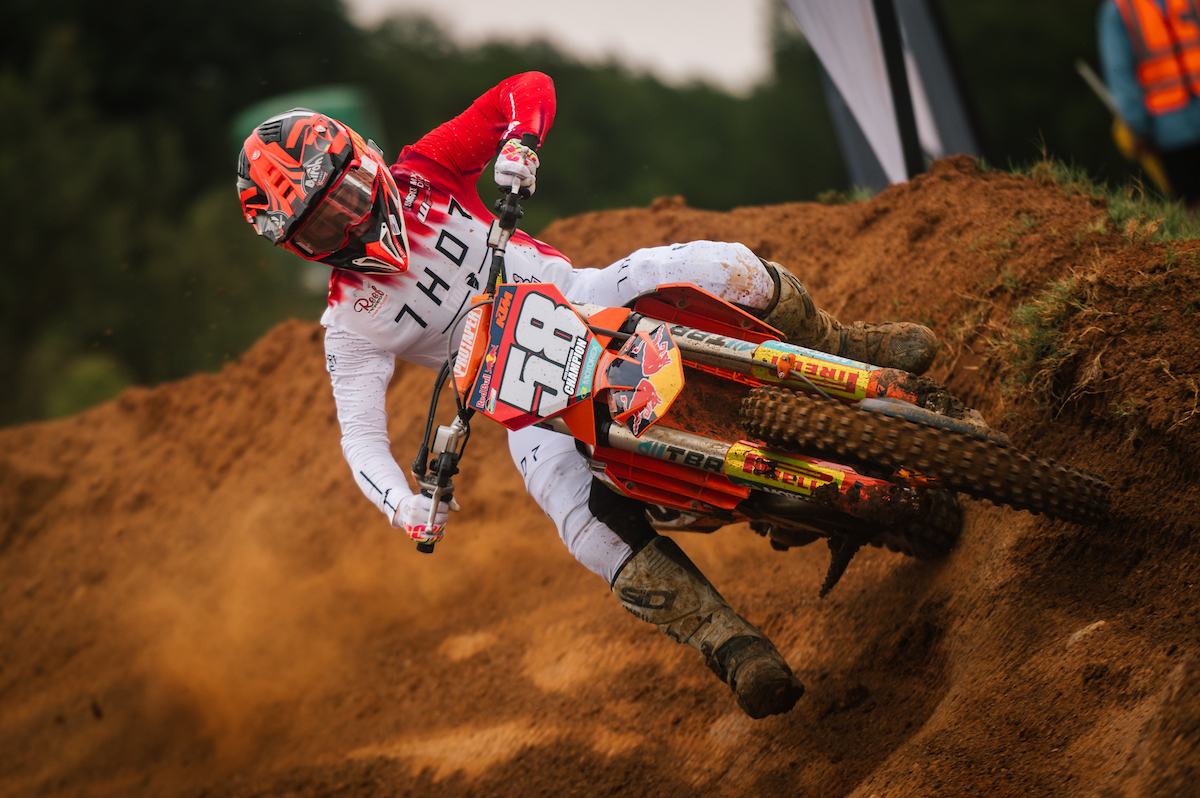
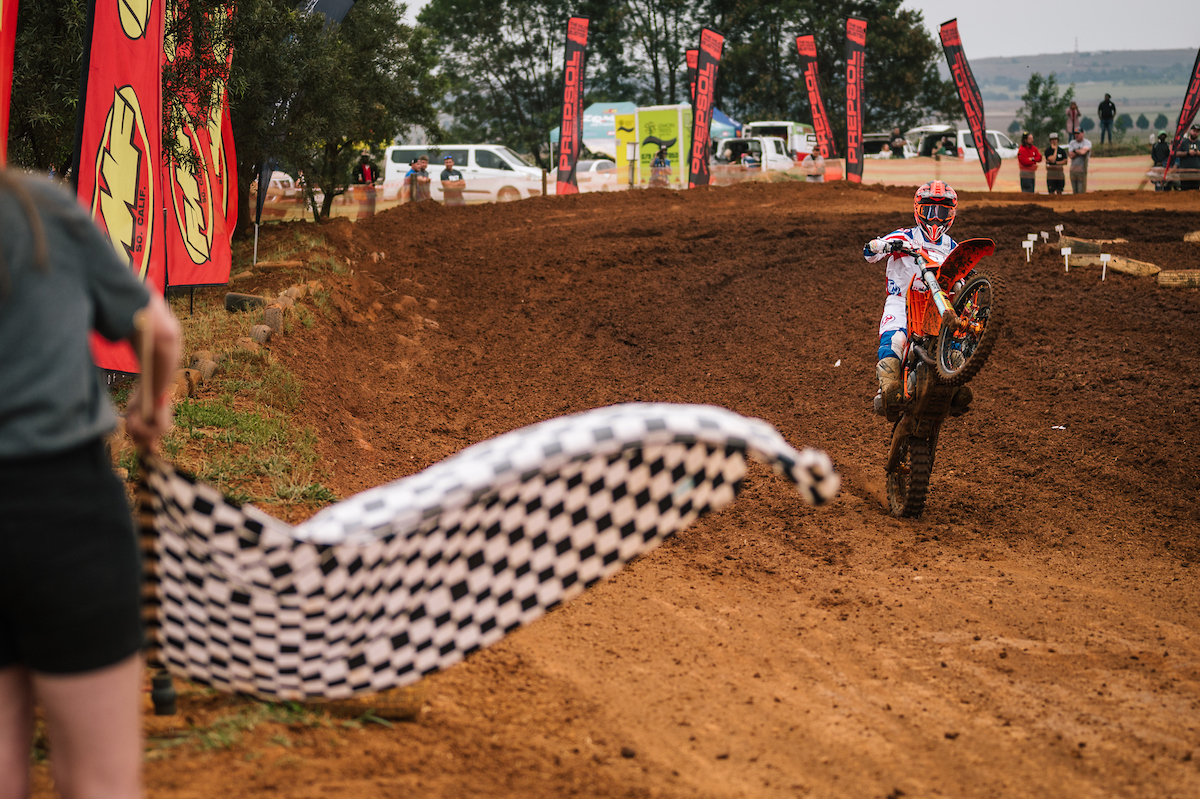
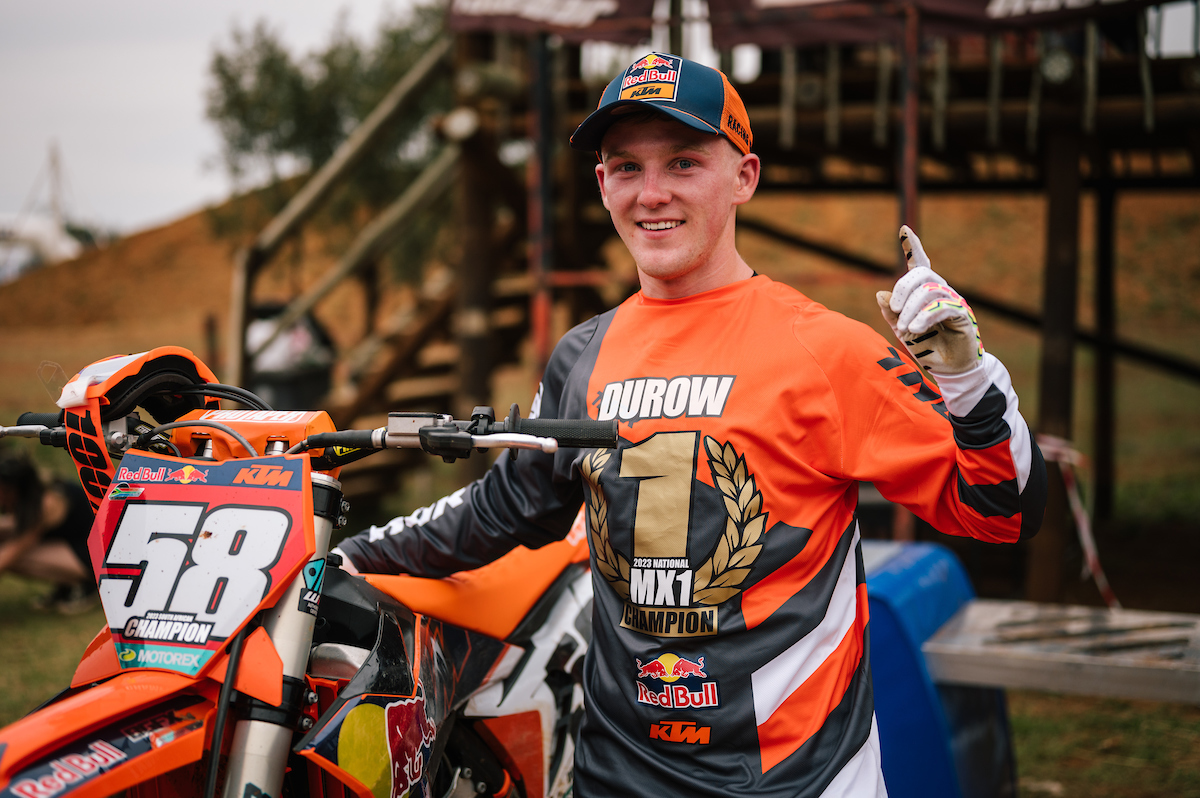
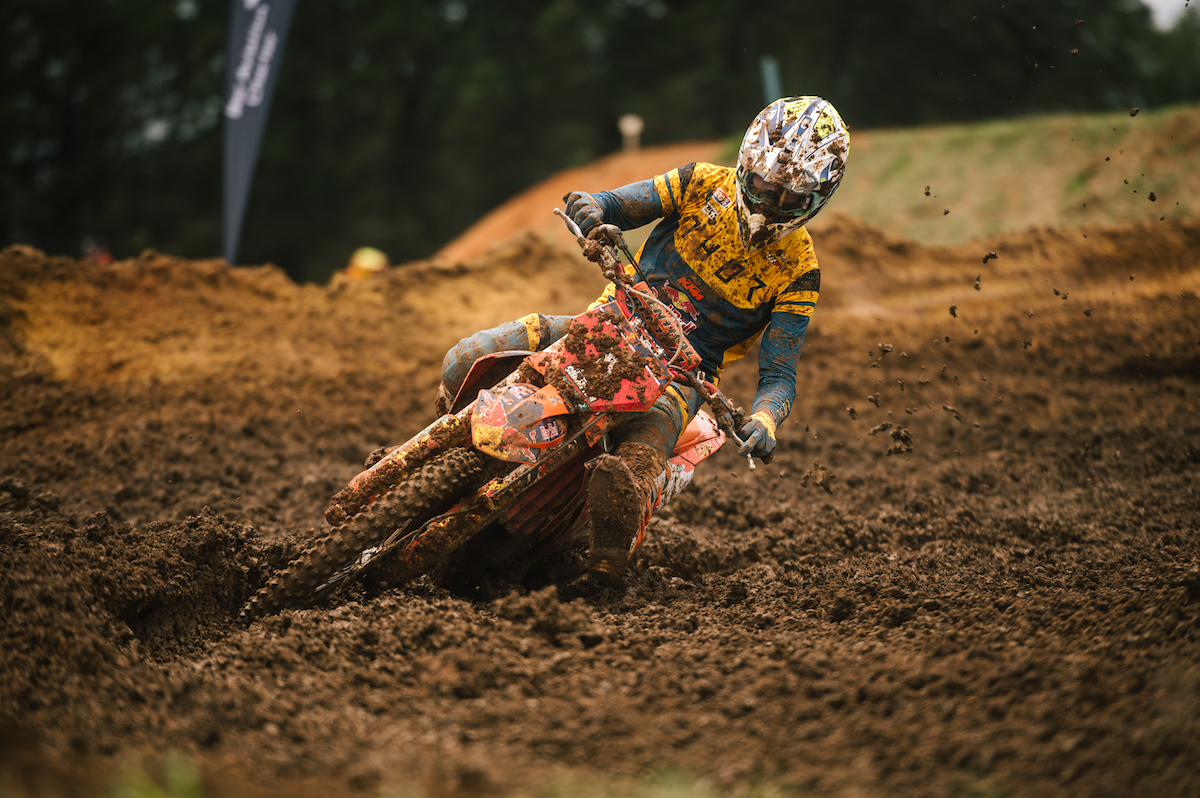
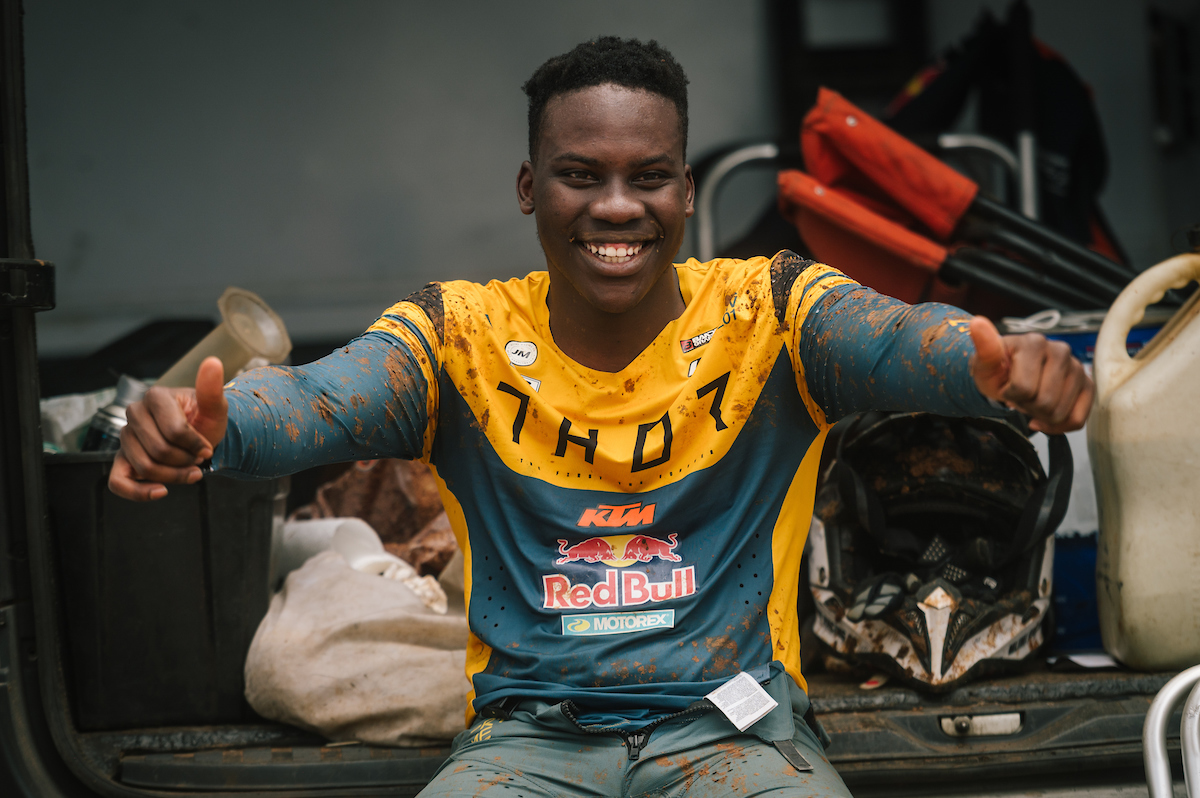
It was another bullish weekend for Red Bull KTM’s, Cameron Durow, at the final round of the National Motocross Championship held at Chestnut Hill. Undoubtedly, it’s no secret that Durow is the standout figure to watch in the Motocross world after wrapping up two championship titles in the previous round.
Grant Frerichs, Group Marketing Manager commented, “It was strange to go to a race day without any championship pressure after wrapping up all 3 of our respective championships a round early. Cameron Durow still showed up on the day with the only intention of winning and he proved moving into 2024 that he is once again the one to beat. We are extremely happy to have 2 number 1 bikes under our Red Bull KTM Gazebos next year in the premier classes.”
Image source: ZCMC Media
Competing in the MX1 and MX2 classes and with an absolutely perfect season for Durow claiming overall wins for both classes, he commented, “A bit disappointed that it’s over now, but it’s been an amazing year for me and I ended off really strong with both overall wins and winning every overall this year has really been a big achievement for me.” He continued, “I am super excited to start 2024 off with two red plates and excited to see what the year has in store.”
Image source: ZCMC Media
Luke Grundy, the reigning High School class champion, concluded his final race in this category, gearing up to transition to the elite MX2 division next year among the seasoned pros. Regarding this shift, he remarked, “It was a good weekend in the books as it was my last race in the 125cc High School class and my first race in the MX2 class. The track got really technical but I had loads of fun racing at such a high-intensity level. Checked off a lot of boxes this past weekend and looking forward to what next year has in store.”
Image source: ZCMC Media
Jonothan Mlimi, representing the MX2 class, put up an impressive performance coming in 5-3 and third overall. He commented, “It’s been a tough season but I am stoked to walk away with a third overall for the final round. I am excited for the 2024 season and to battle it out for the top step.”
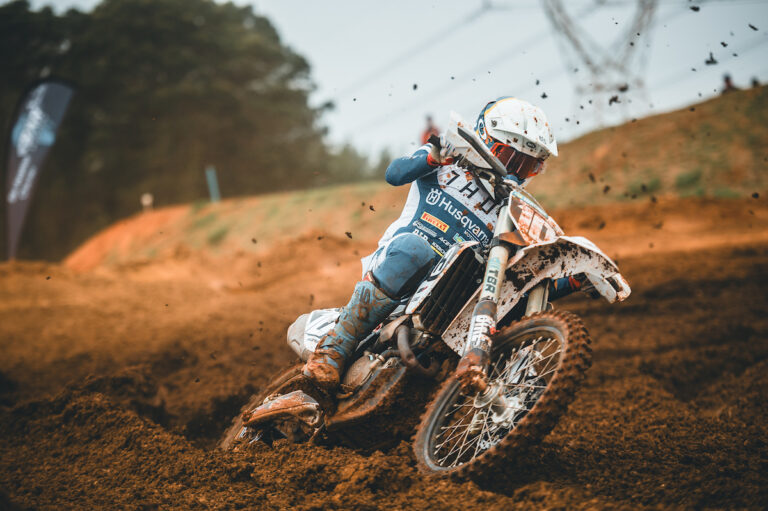
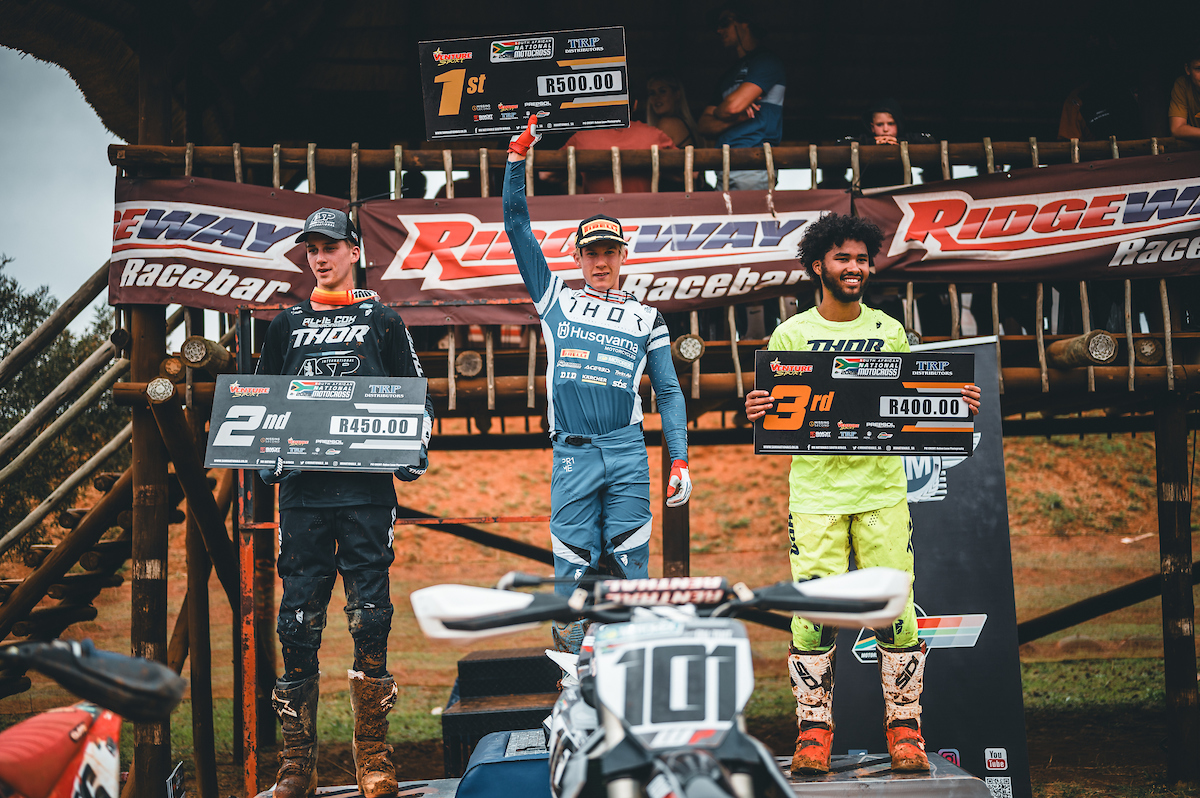
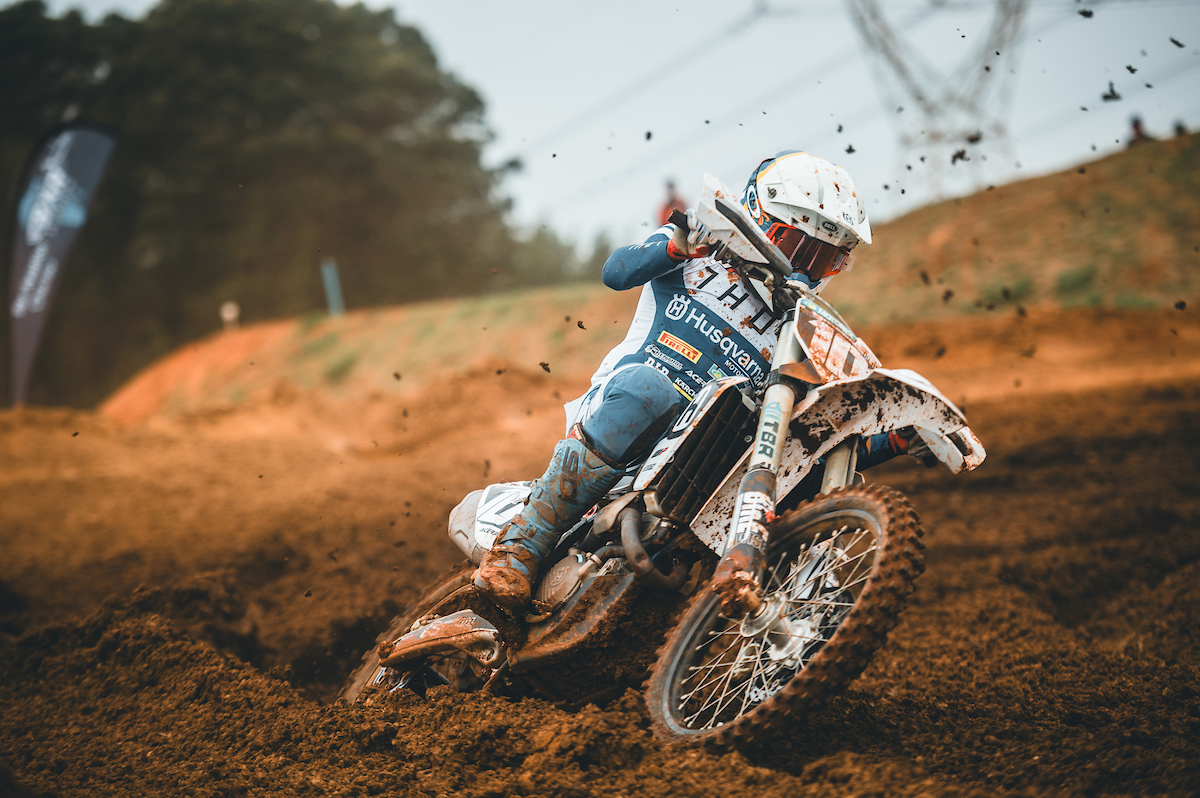
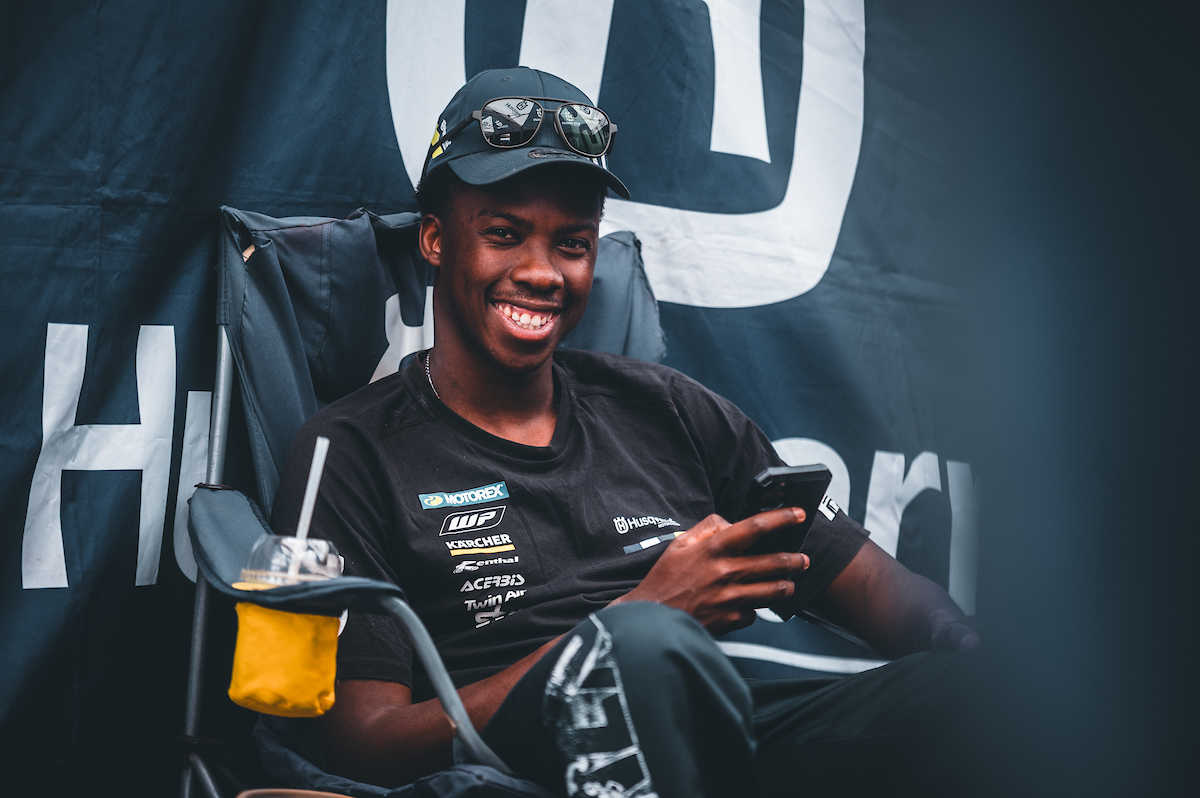
As the National Motocross Championship season drew to a close at Chestnut Hill this weekend, Husqvarna Racings, Barend du Toit, had all eyes on him stealing the show! Du Toit undoubtedly raced his heart out, leaving everything out on the track, and took a 1-1 win in the high school class.
In a whirlwind year filled with twists and turns, the young dynamo, Du Toit, set the track alight in the final round, proving the true extent of his incredible capabilities. With visible excitement Du Toit commented, “I’m thrilled to end the year off with a double victory in the high school class, setting the stage for an incredible year ahead!”. He continued to say, “I am extremely excited and confident for 2024 and what lies ahead.”
Image source: ZCMC Media
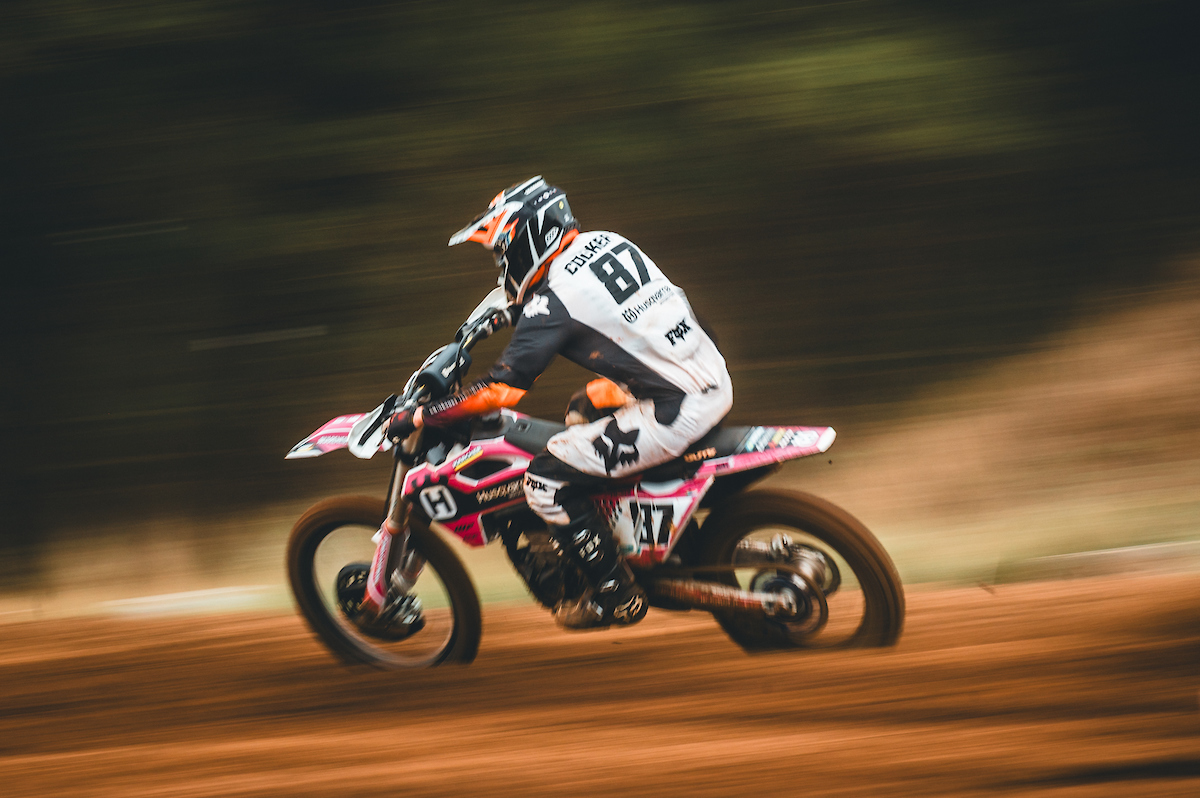
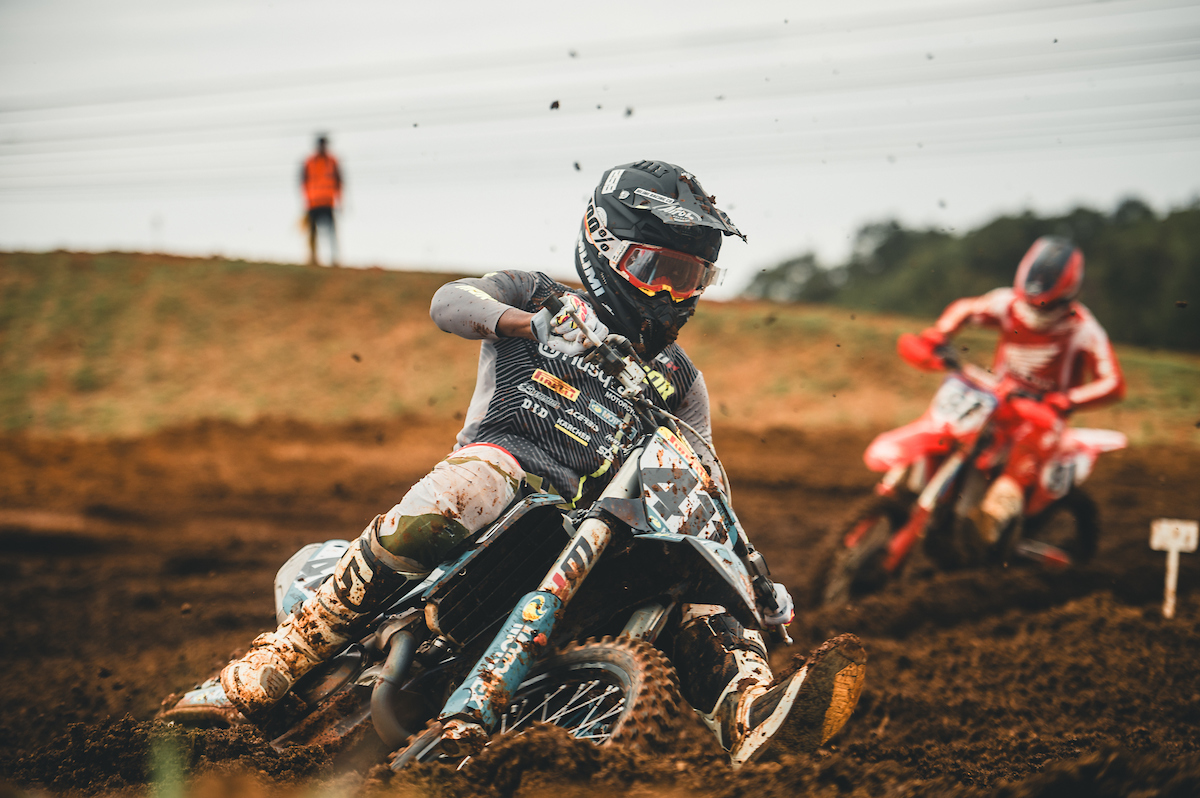
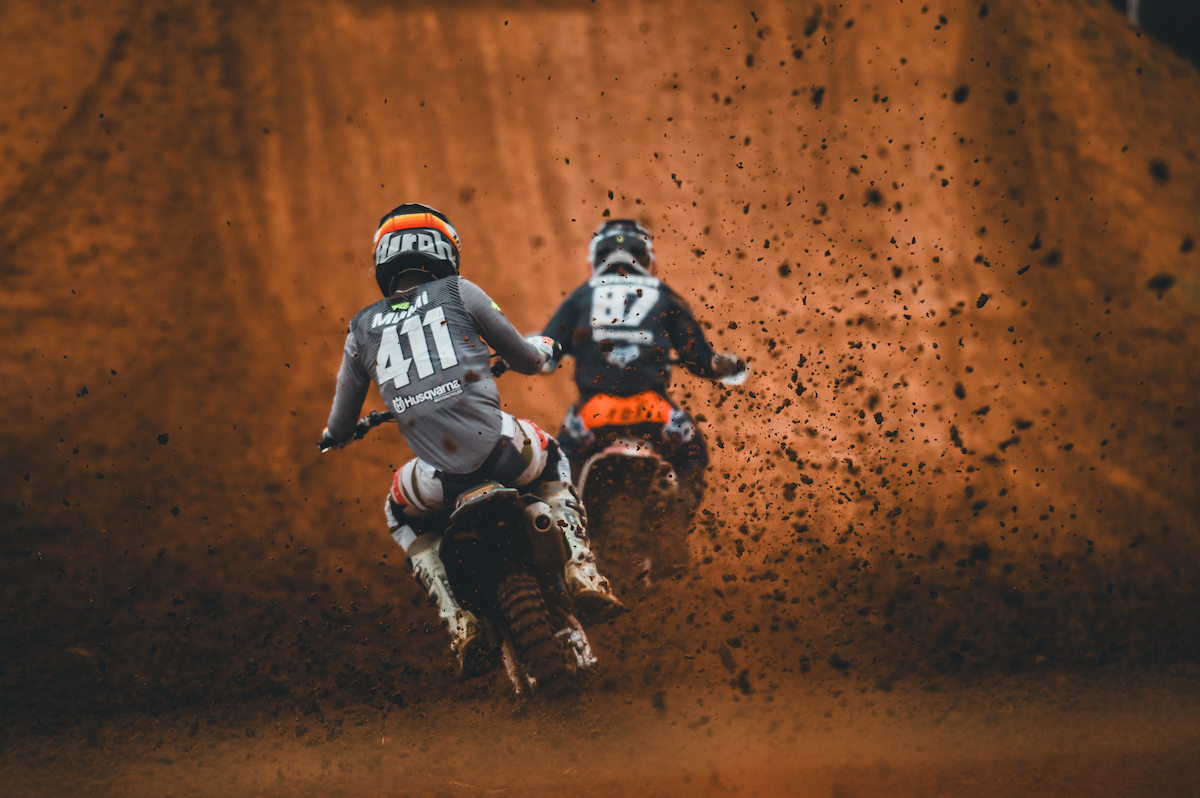
Adding to the excitement of the day teammates, Davin Cocker and Josh Mlimi, showcased an electrifying spectacle in the MX1 class, going in for a bar-to-bar battle in the final round. The two gave it their absolute all showing that they are forces to be reckoned with in the Motocross world.
They pushed each other to their limits, proving that their competitive spirit is matched only by their mutual respect and determination to be excellent.
Image source: ZCMC Media
With Cocker competing both in the MX1 and MX2 classes he had quite the day behind him. Commenting on the day he said. “The last round of the National MX was a blast, I had some great battles and managed to get 4th in both heats for the MX2 class. I’m happy with my riding and can’t wait to get back out on the track next year for some more epic battles.”
Image source: ZCMC Media
Mlimi commented, “Final round done and dusted, got 4-4 for the day was all I had. Didn’t quite ride like myself all day but had a great showdown with Davin. Nonetheless happy to wrap the season up healthy and safe. A lot learnt in my first full season on the FC450. Looking forward to building and getting better for 2024”
Image source: ZCMC Media
“It’s been a roller-coaster ride this whole year for the Husqvarna Racing Motocross team and the last round was no different. Our stand-out performance was Barend in the 125 class with his dominant 1-1 performance but I am proud of all the riders and the determination they showed fighting right up until the final chequered flag.” Commented Grant Frerichs, Group Marketing Manager.
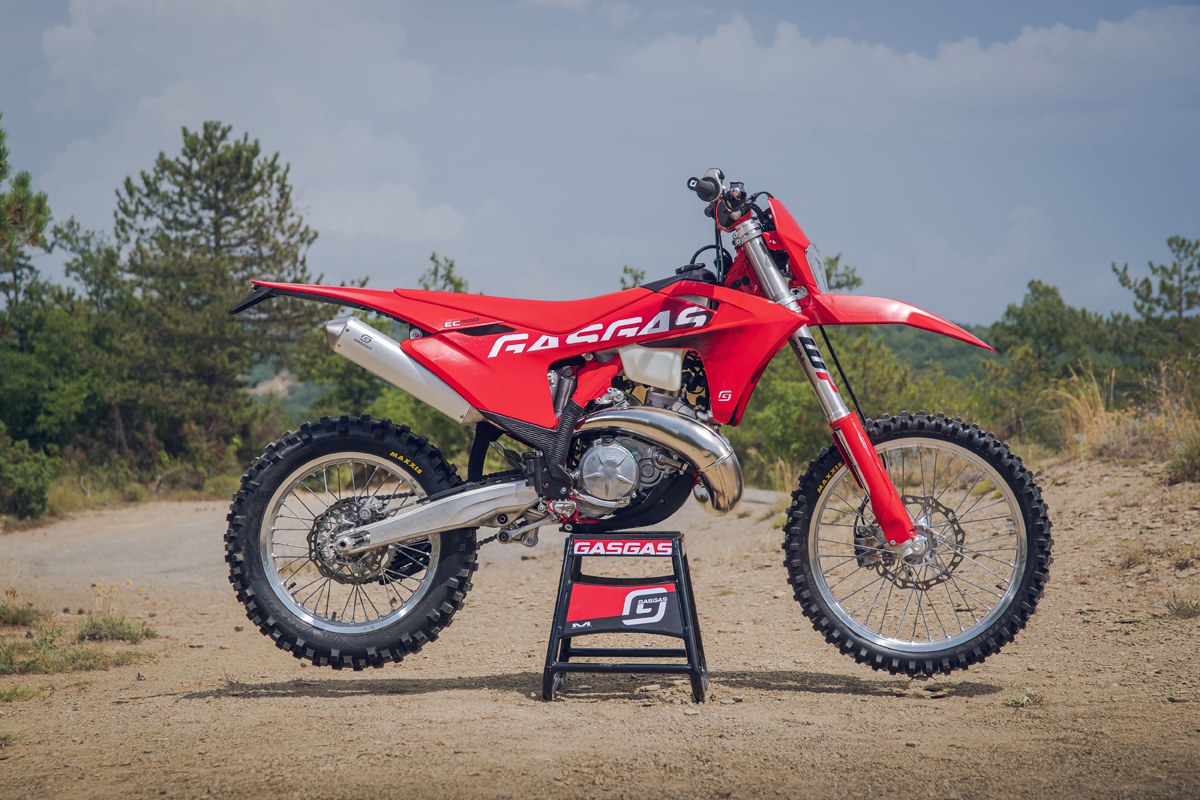
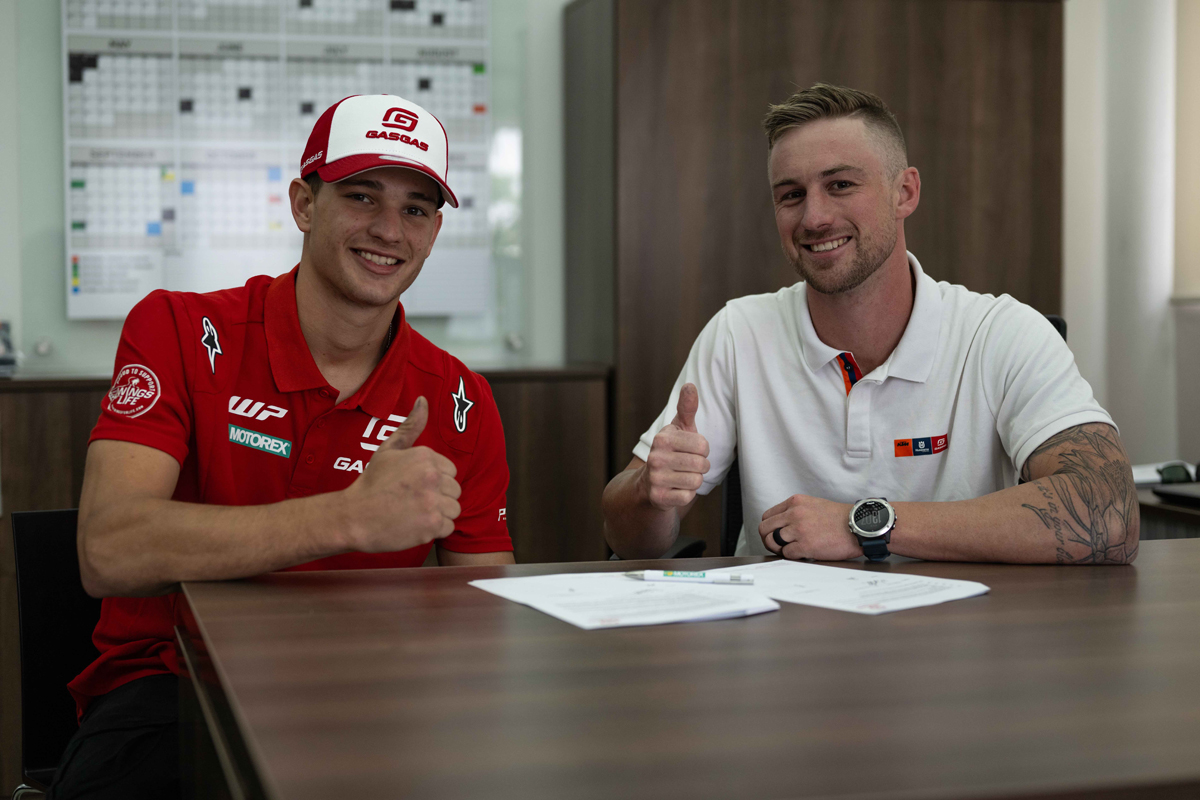
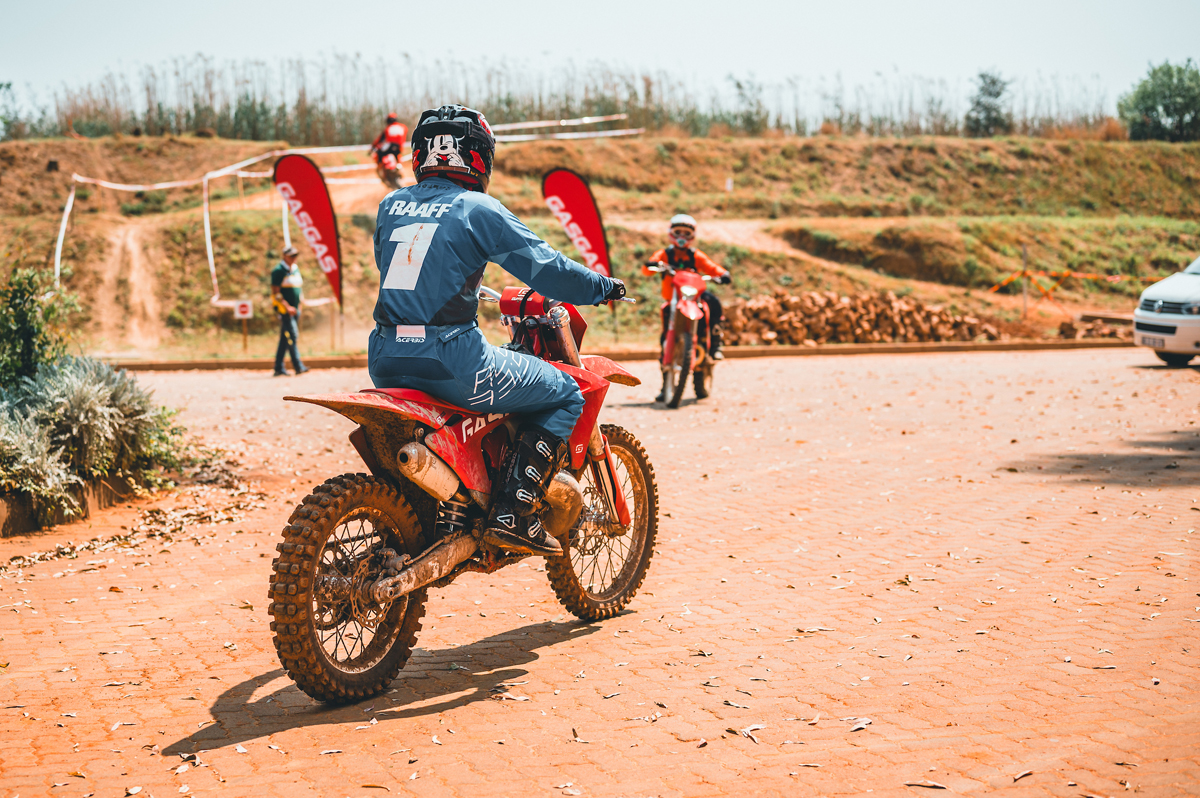
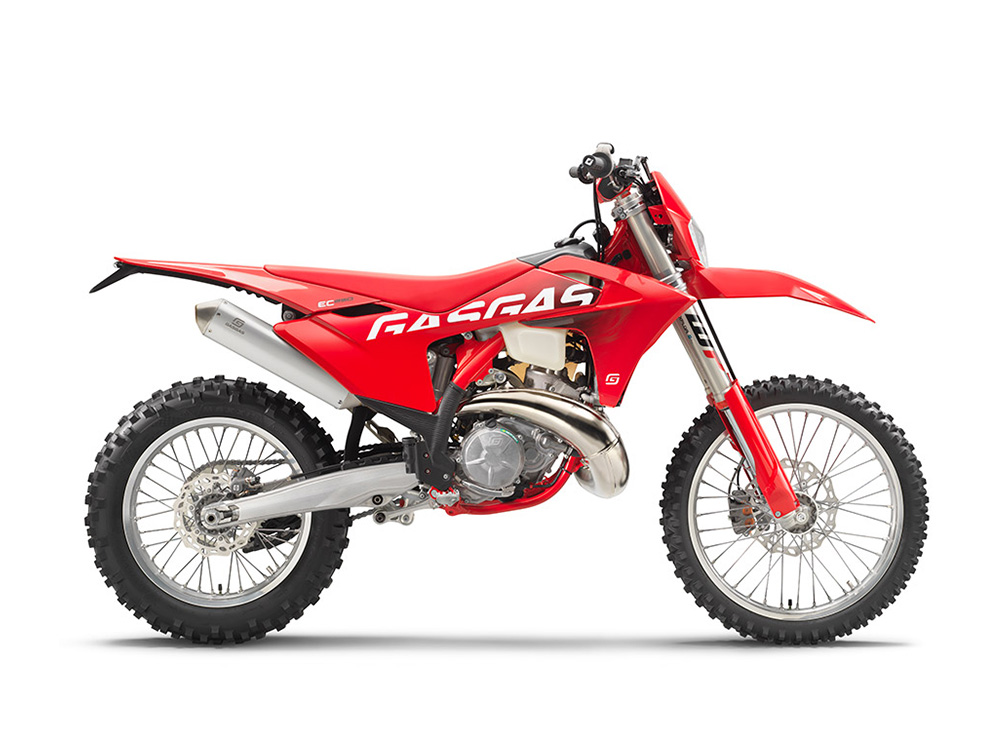
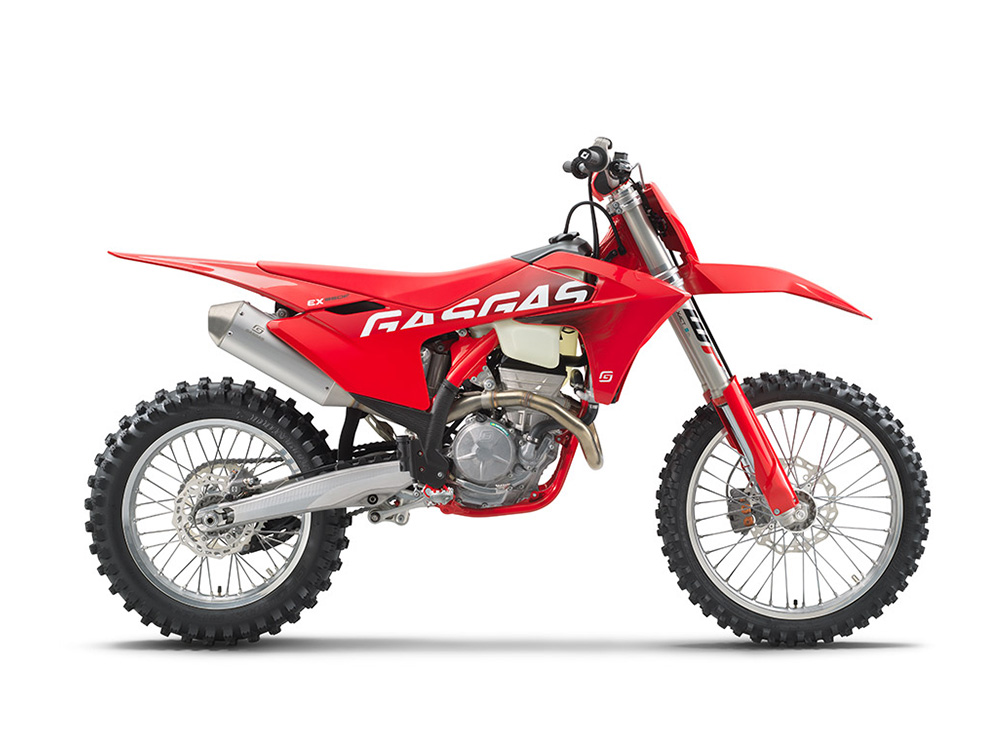
GASGAS South Africa is roaring into the limelight with a monumental announcement set to redefine the pulse-pounding world of Enduro racing. You guessed it… GASGAS South Africa will be lining up for the 2024 Enduro racing season for the very first time with the ‘not-so-new kid on the block.’ Spearheading this exhilarating journey is the talented Heinrich Aust, who will lead the charge as the first member of the GASGAS South Africa Enduro factory team.
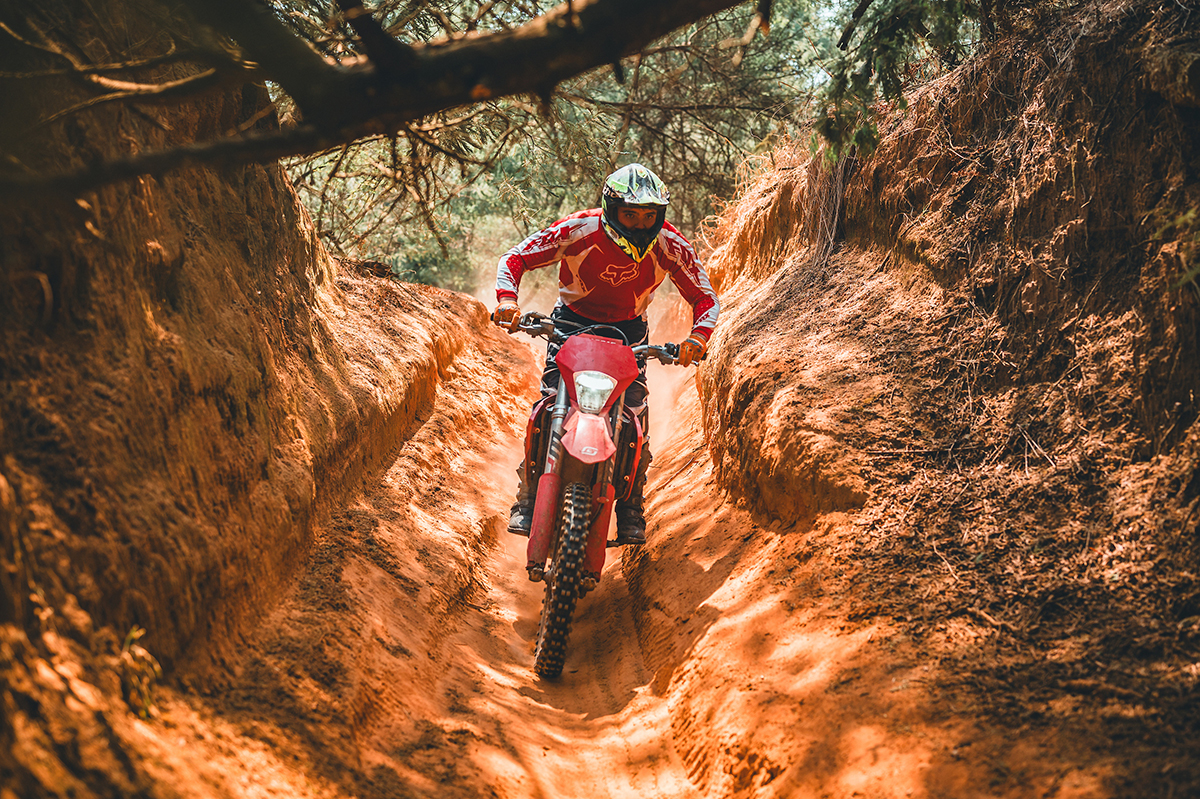
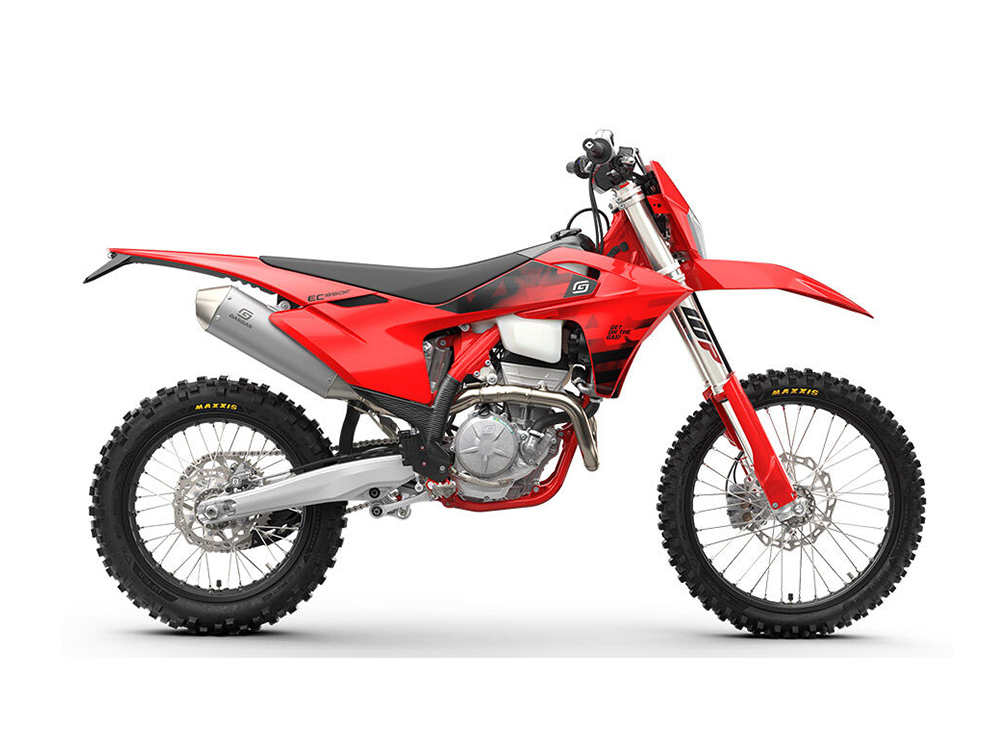
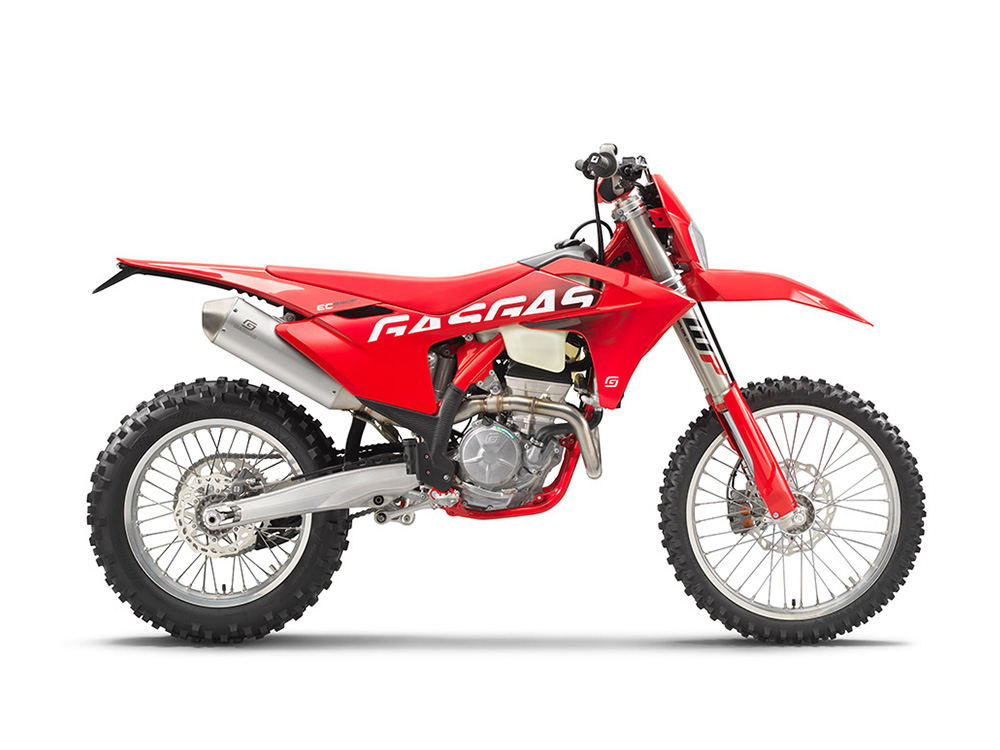
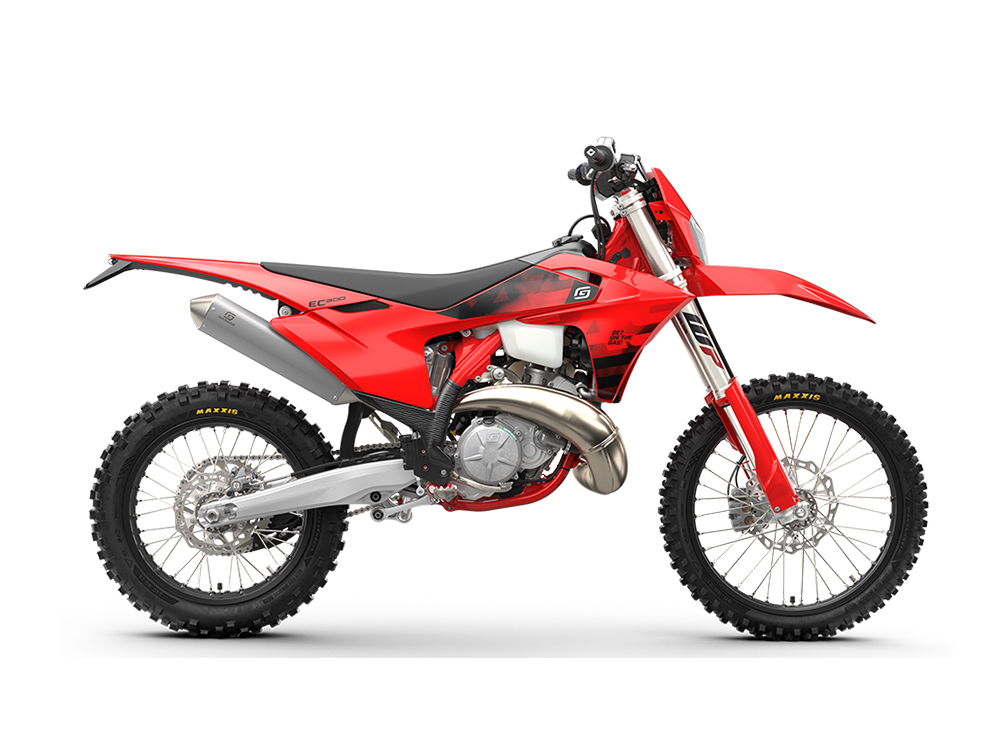
No stranger to the sport and its supporters, Aust will be firing on all cylinders in red for the 2024 racing season in the E2 class on the GASGAS EC300. Aust is an exceptionally seasoned Enduro athlete who will bring a wealth of experience and skill to the team. He embodies the spirit of the sport, making him an ideal choice to trailblaze this new chapter for the brand. We caught up with the rider to discuss being part of the new team and his thoughts on the 2024 season.
Image source: GASGAS
How does it feel to be one of the first athletes on the all-new GASGAS Enduro team?
“I am incredibly honoured to be a part of the GASGAS South Africa family and to lead their first-ever factory team in the Enduro-discipline. I’m very excited and chuffed for this new chapter that lies ahead.”
How does this change align with your career goals and aspirations?
“Embracing this opportunity to join such a supportive team perfectly aligns with my overarching career goals, offering the ideal platform to propel me toward fulfilling my professional aspirations. ”
Starting this new team as the first guy on the official GASGAS team, what do you hope to bring to this new team?
“As the first rider on the GASGAS team, my aim is to make every moment count, staying determined throughout the season to remember what my goals are. I aspire to set an excellent standard and contribute positively to the team’s dynamics.”
What are your bigger, long-term goals as an Enduro rider?
“My biggest goal is to one day compete in the prestigious (WES) World Enduro Series.”
Coming from your first E1 win this year, what are the greatest lessons from the 2023 season that could help you secure the Enduro Championship title again in 2024?
“The greatest lesson I’ve learned in the run for the championship glory in 2023 is that there will always be ups and downs during the racing season. It’s crucial to keep your head held high, keep going, and always remember that consistency is key.”
Photo credit: Justin-Reinecke / www.zcmc.co.za
Group Marketing Manager, Grant Frerich, commented on this announcement for GASGAS stating, “We are so thrilled to get the ball rolling on the GASGAS factory racing effort with Heinrich onboard the EC300. Heinrich has proven himself as both an Enduro and Hard Enduro rider and we believe he will be a competitor once again for overall glory next year. We look to grow the team from strength to strength as we show our commitment to the GASGAS brand moving through 2024 and beyond.”
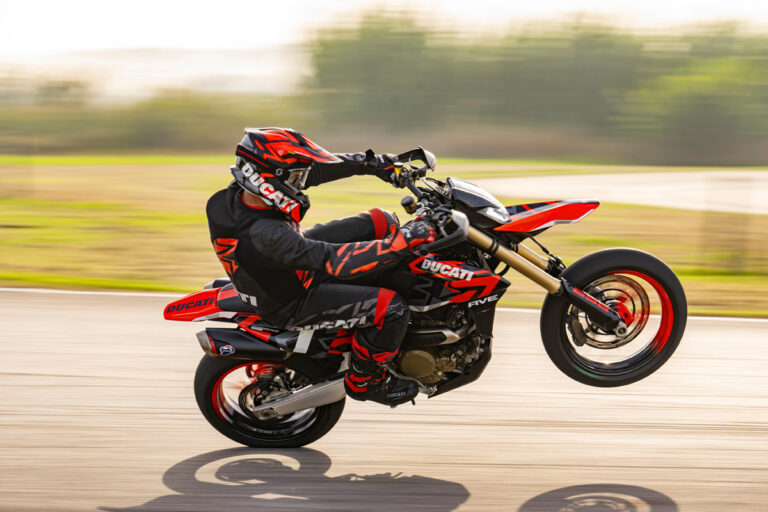
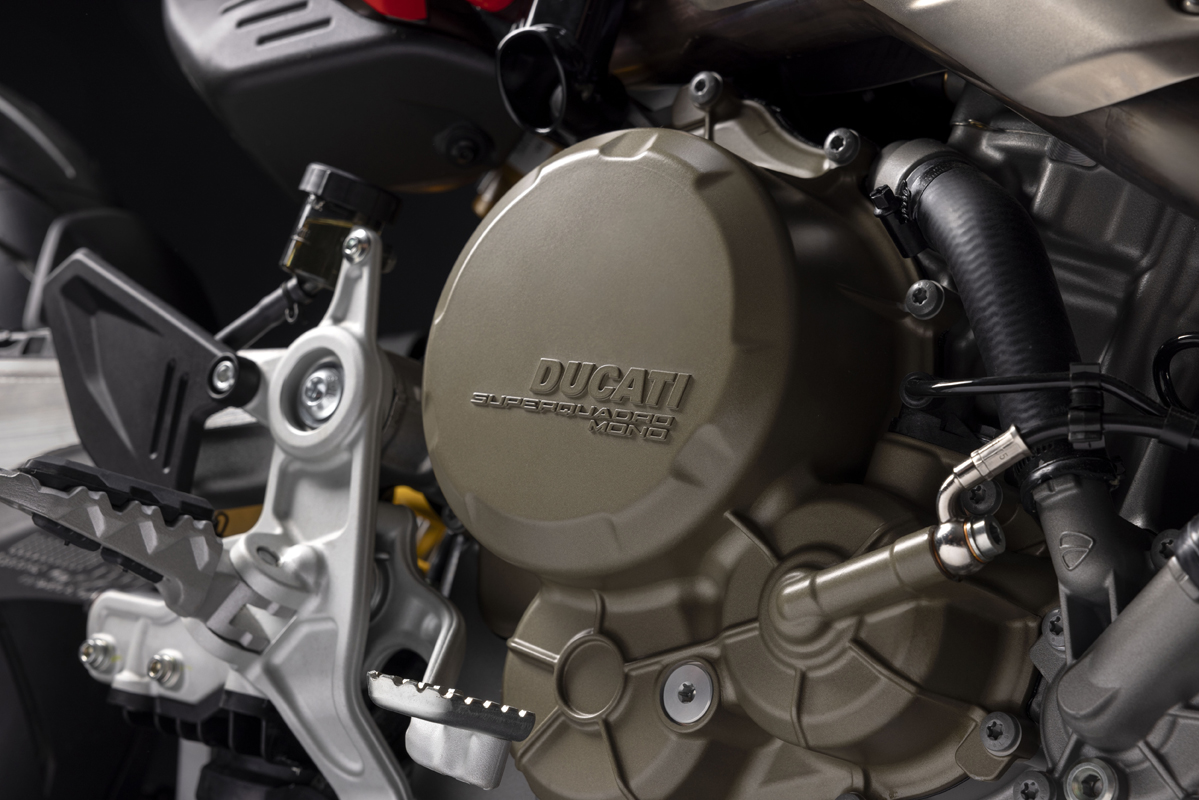
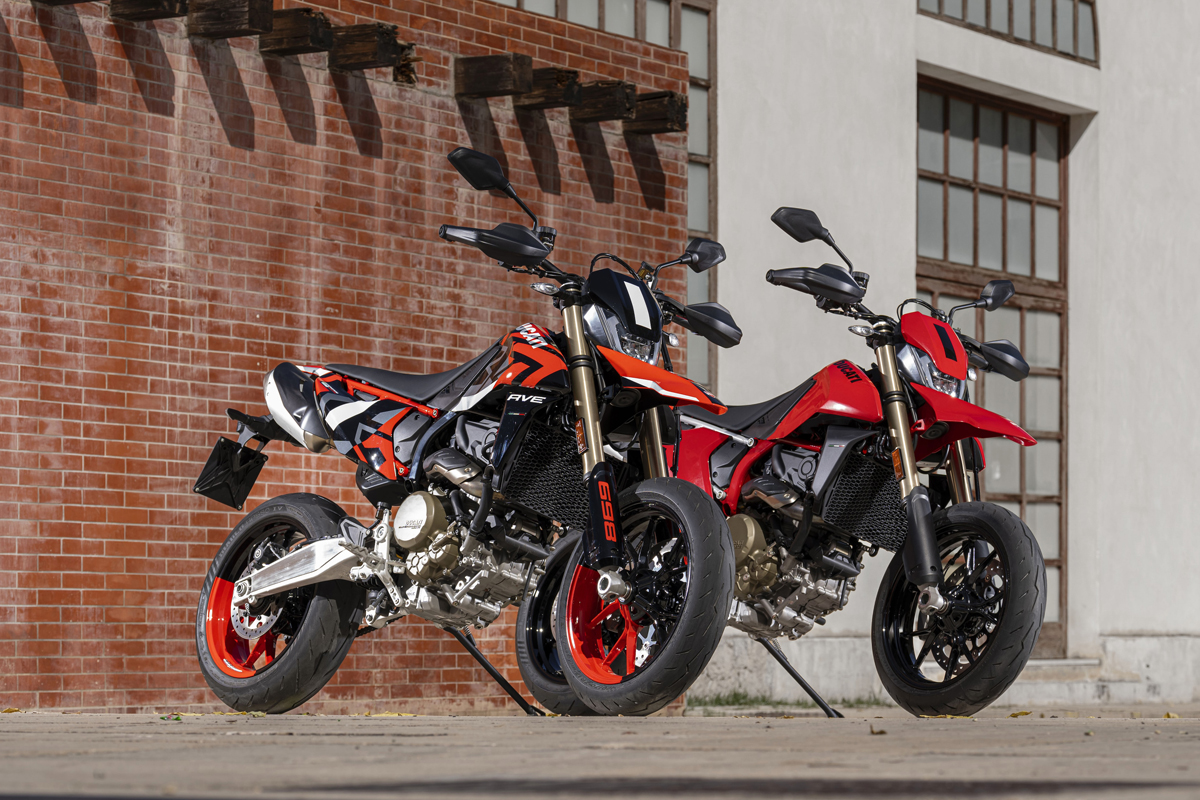
Just last week Ducati pulled the covers off of the most powerful big-bore single-cylinder engine in the world, the 698 cc Superquadro Mono. We are talking about 80 hp from its 116 mm bore piston sliding up and down the barrel at 10,250 rpm—a new benchmark for the category. While the rest of the world or at least the car market are beginning to go EV and Hybrid, Ducati has just sliced the twin-cylinder of the 1299 Panigale in half and then let the rest of the world sit in wonder for the next week. This is typical Italian drama, played out to a T.
We exited the Oprea that was the Superquadro Mono, with tickets in hand for the following week’s engine transplant. Would it be a track-ready Supermono Panigale or could it be a light dual-sport Supermono Enduro? Yeah no… The Supermoto boys are going to love this!
Image source: Ducati
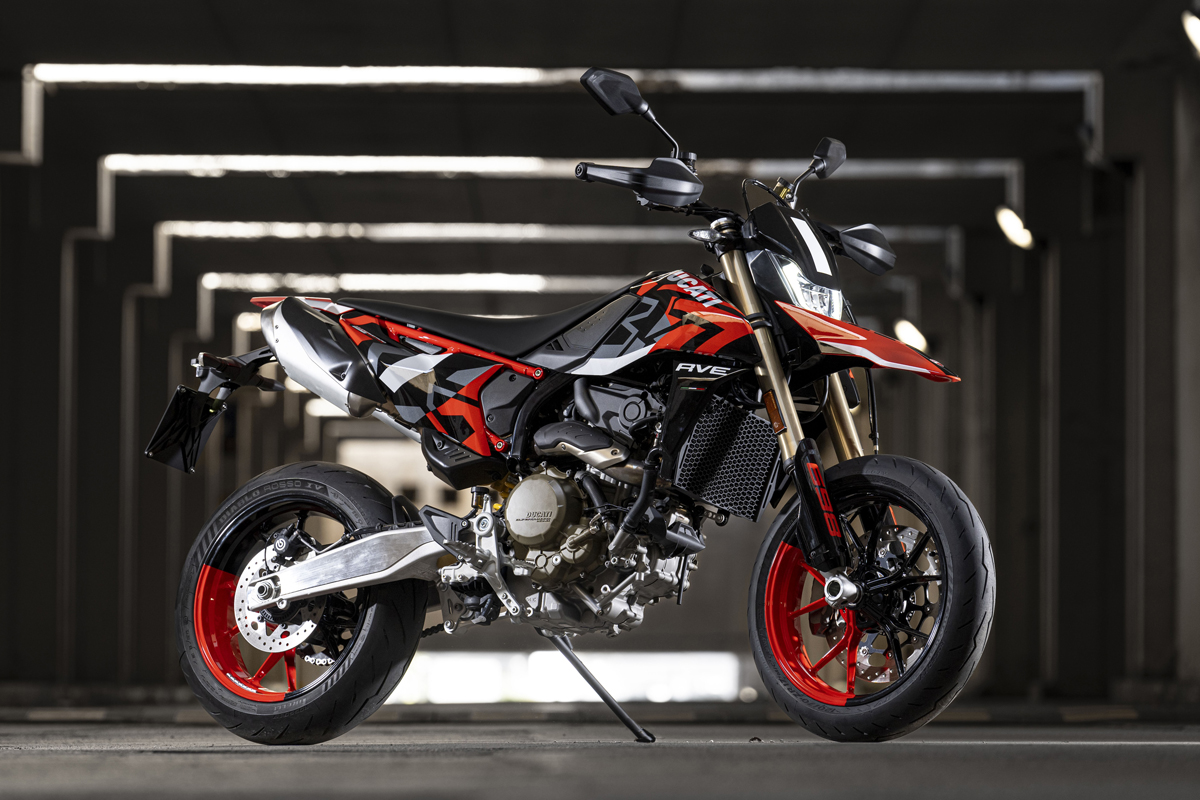
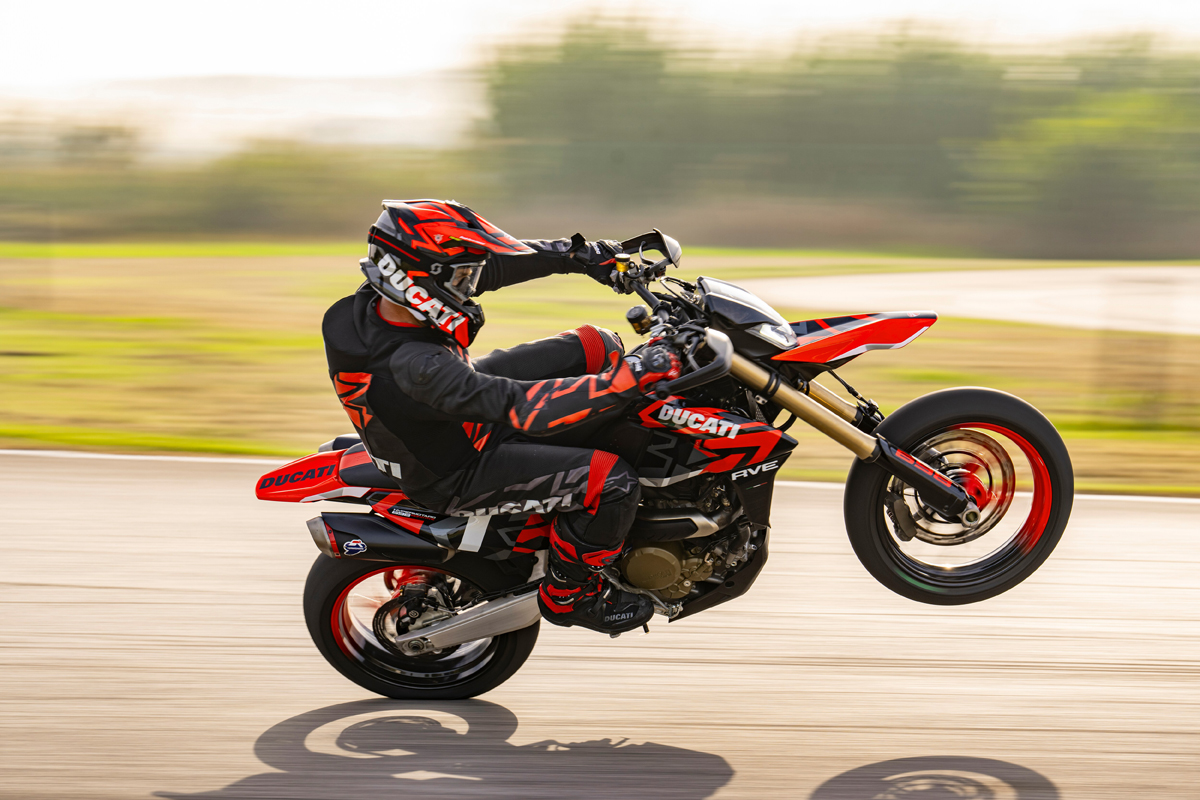
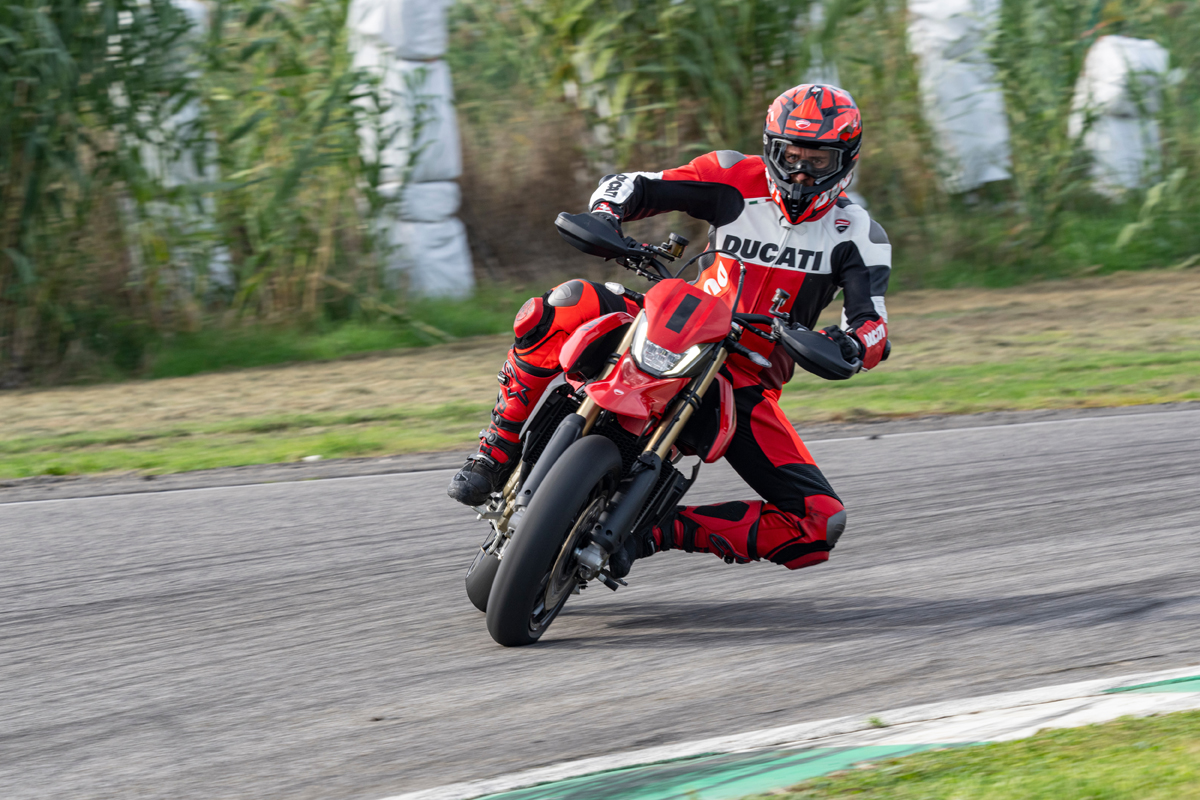
Yesterday the smart TV was on, chips and beer in hand and Ducati’s YouTube channel was blasting tyre screeching and clutch popping sounds out of the TV speakers while Ducati’s Hypermotard 698 Mono made its first appearance. With the squint of an eye, you could see Aprilia’s legendary SVX 550, but after a blink and a shake of the head, a definite sibling to the Ducati Hypermotard 950 RVE. I am a Motard fan at heart and grew up appreciating the talent that racers had in FIM’s Supermoto S1GP series. All I wanted growing up at the end of high school was a road legal motard, a Suzuki DR-Z 400SM, KTM 690 SMC-R (eventually owned one), Aprilia SVX 550 and Ducati’s Hypermotard range was always at the top of the bucket list.
To this very day, we still praise Ducati for building their 1100 Hypermotard. Yes, a 1078 cc beast of a machine, we can all remember Rubén Xaus backing it in with a thumbs up or for the movie fans Jim Carrey popping a wheelie with his ass crack sticking out of his hospital gown. What I’m getting at is, the 1100 made 90 hp and weighed 191 kg, the ‘Mono’ is 400 cc down but makes 10 hp less and weighs almost 40 kg less. In my eyes, I think Ducati might have got a legend on their hands.
Image source: Ducati
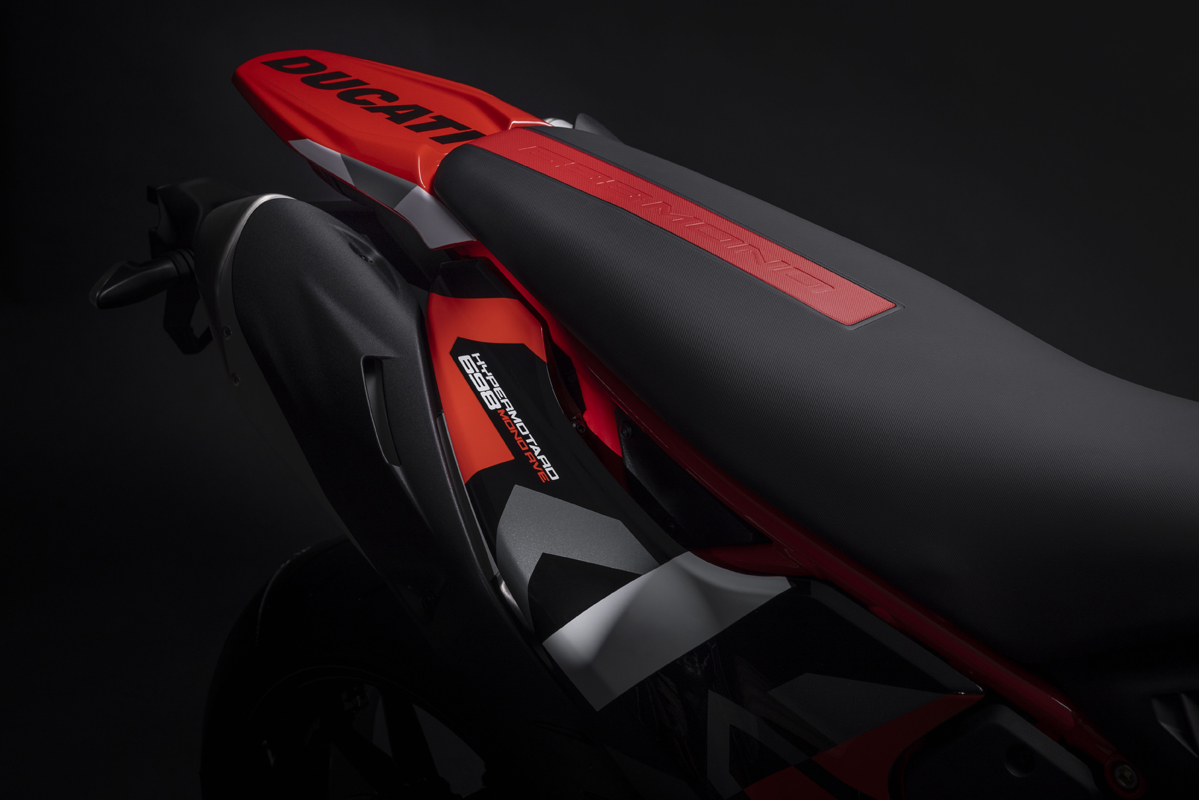
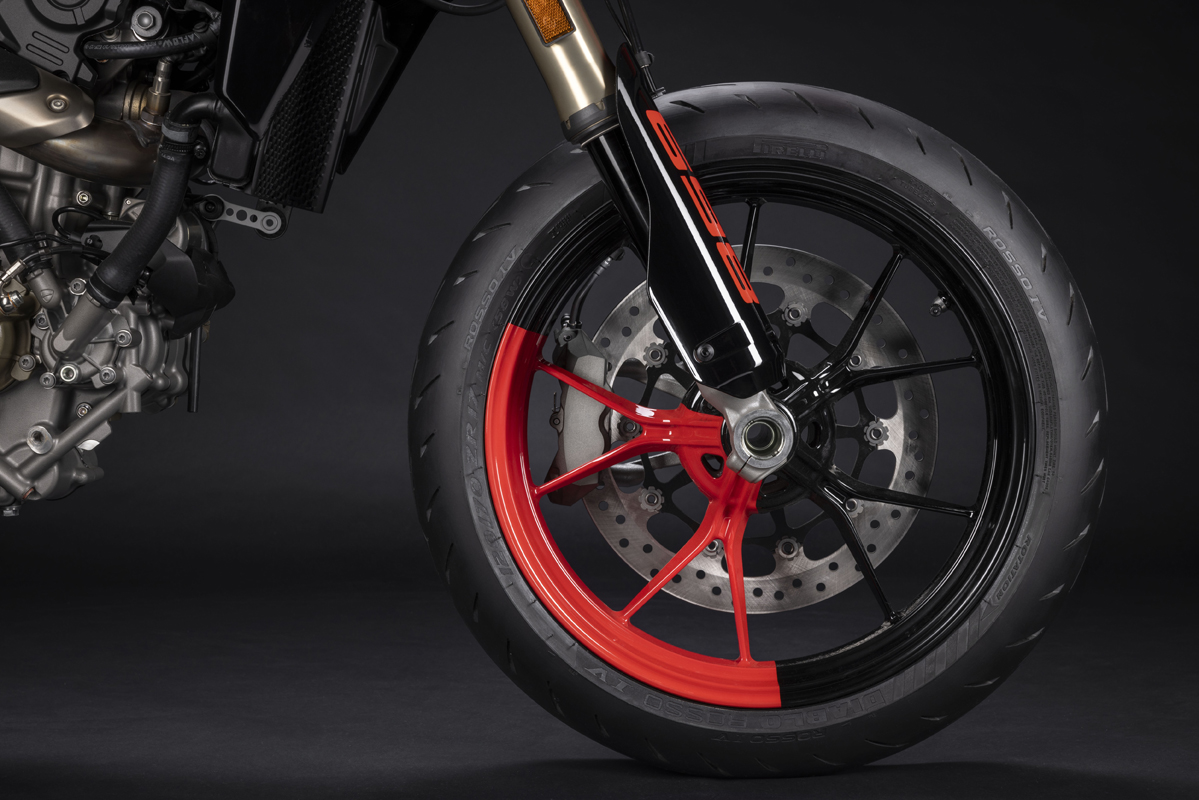
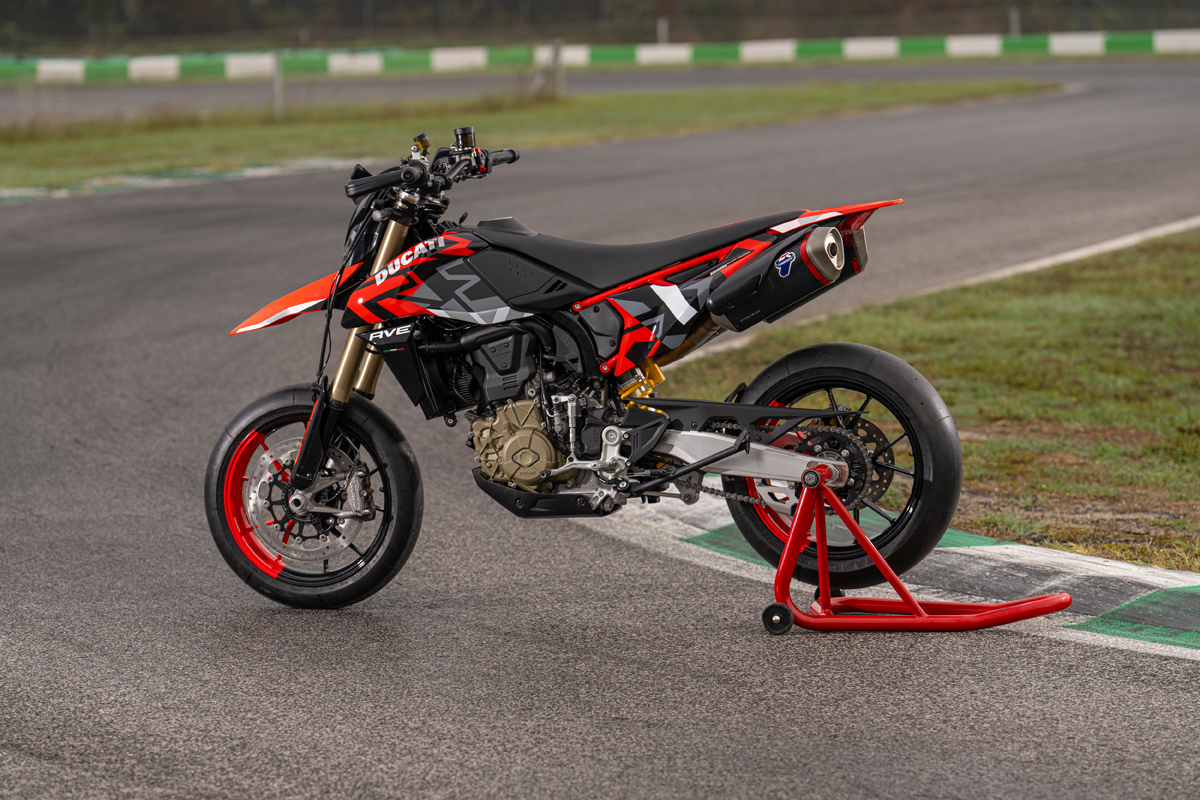
The Mono will be available in two versions, the base model and the RVE which gets the black and red plastics and wheels, comes standard with a quick shifter and a list of extra electronic witchcraft. When it comes to details the Italians are the best in the business!
Image source: Ducati
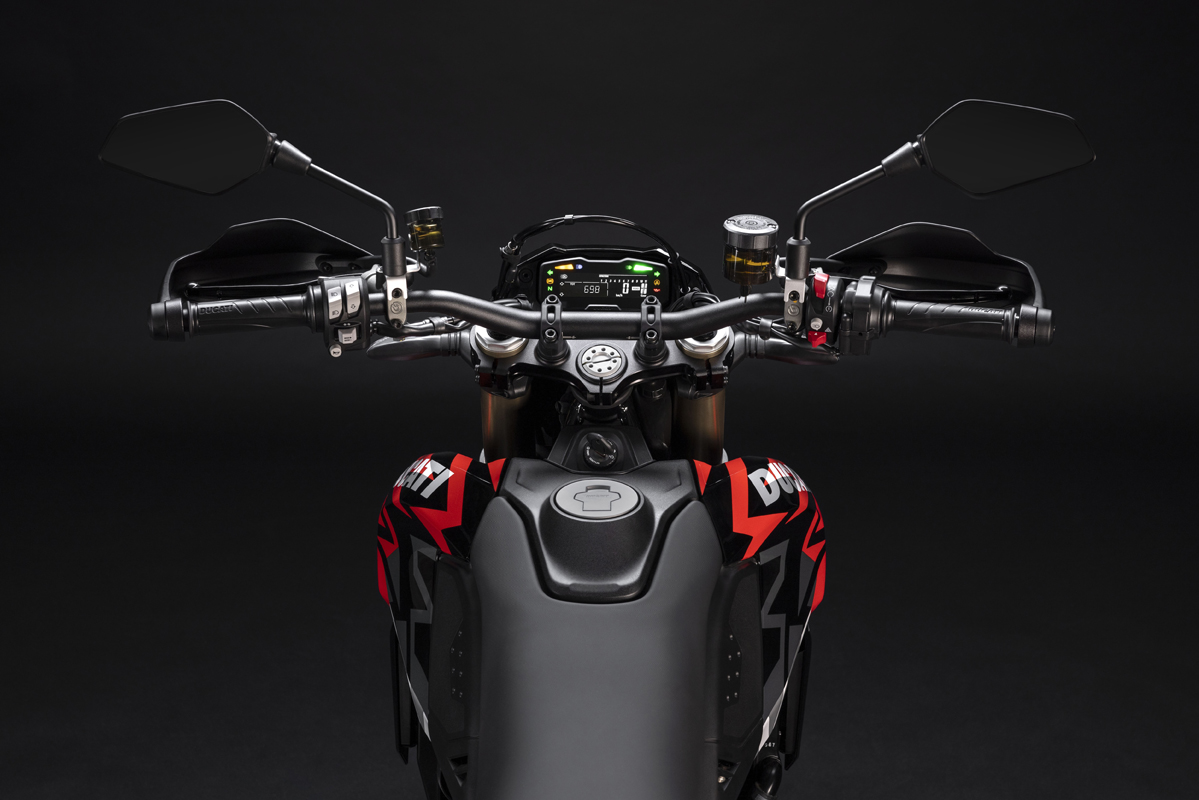
From the motor casings having typical Ducati styling, Mono 698 stitched red onto the seat, sharp and well-tucked plastics, shortened 950 lookalike twin tailpipes and then the small details like the micro LCD dash and the premium brake/clutch reservoirs. Ducati has pulled out all the stops.
Image source: Ducati
The hardware is just as impressive with fully adjustable Marzocchi forks and Öhlins rear shock, Pirelli Diablo Rosso IV tyres and a single Brembo M4.32 radial calliper to stop the super light Hypermotard 698 Mono. I know the Mono comes with rims instead of your traditional Motard spoked wheels, but in all honesty, I think for a road-going Motard, rims are fit for purpose.
Image source: Ducati
Side note for the motard hooligans: We are about to go through the boring stuff that you do not care about, electronics. The Mono is packed to the brim in tech, it’s the most tech-heavy in its class and has a lot of electronics derived from the Panigale V4 platform. On the base Mono you’ve got riding modes (Sport, Road, Urban and Wet) to which the Engine Mode (available on 3 levels), DTC, EBC and ABS levels are assigned by default, which can be modified by the rider on the 3.8″ LCD.
Image source: Ducati
The Mono is also the first Ducati to offer four levels of ABS. Two of these integrate the Slide-by-Brake functionality, which through the use of the rear brake allows safe and repeatable cornering when “backing it in”. We also see 4 levels of wheelie control with 4 being the most intrusive and 1 being the least— Wheelie Control is available as an accessory and is activated only in association with the Termignoni Ducati Performance exhaust.
Image source: Ducati
For those that want all the goodies just buy the RVE version as it comes standard with ABS Cornering, Ducati Traction Control, Ducati Wheelie Control, Engine Brake Control, Ducati Power Launch and Ducati Quick Shift (DQS) Up/Down. If for some reason you buy the standard Mono and your riding starts to progress you can purchase all of these unlockable modes for your standard version.
Image source: Ducati
In summary, I think the Ducati Hypermotard 698 Mono is going to sell like hotcakes in Europe where the roads are tight and twisty. As for us South Africans, there will be the hooligans that will place their orders after reading this, but if not for the hooligans will the Mono be popular in SA? Only time will tell. Maybe what the South African market really needs is a Ducati HyperEnduro 698 Mono…
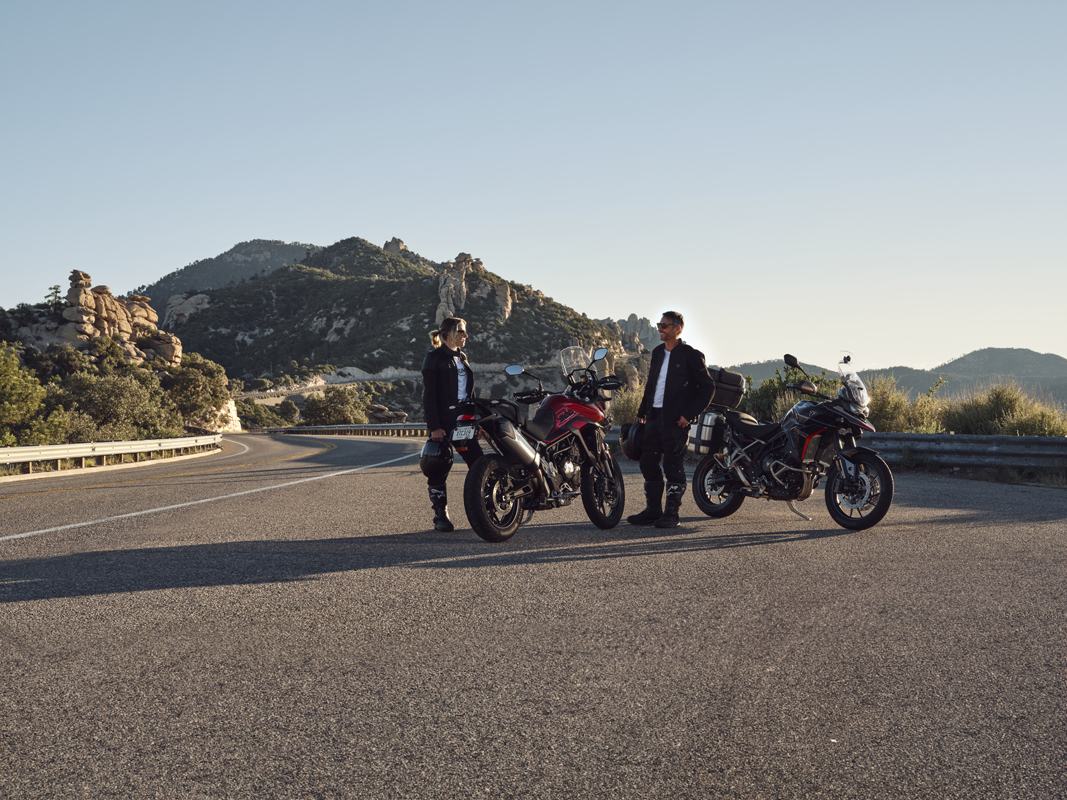
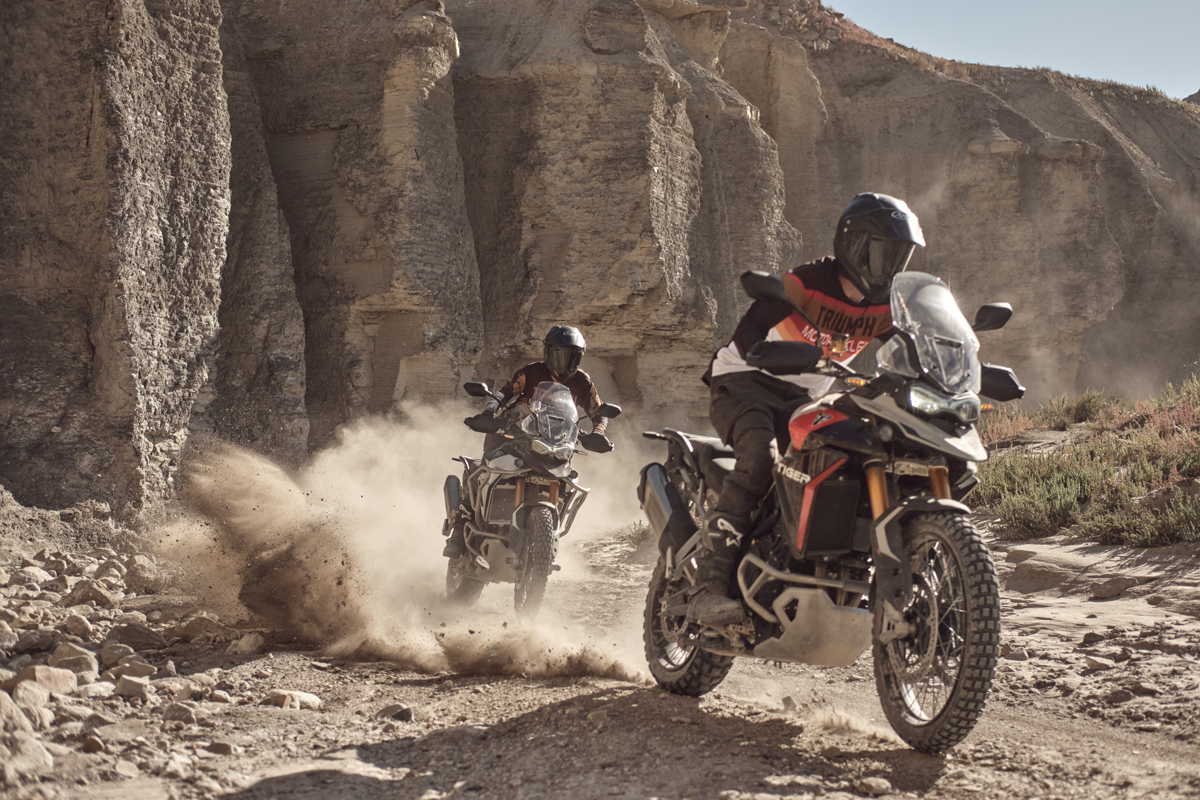
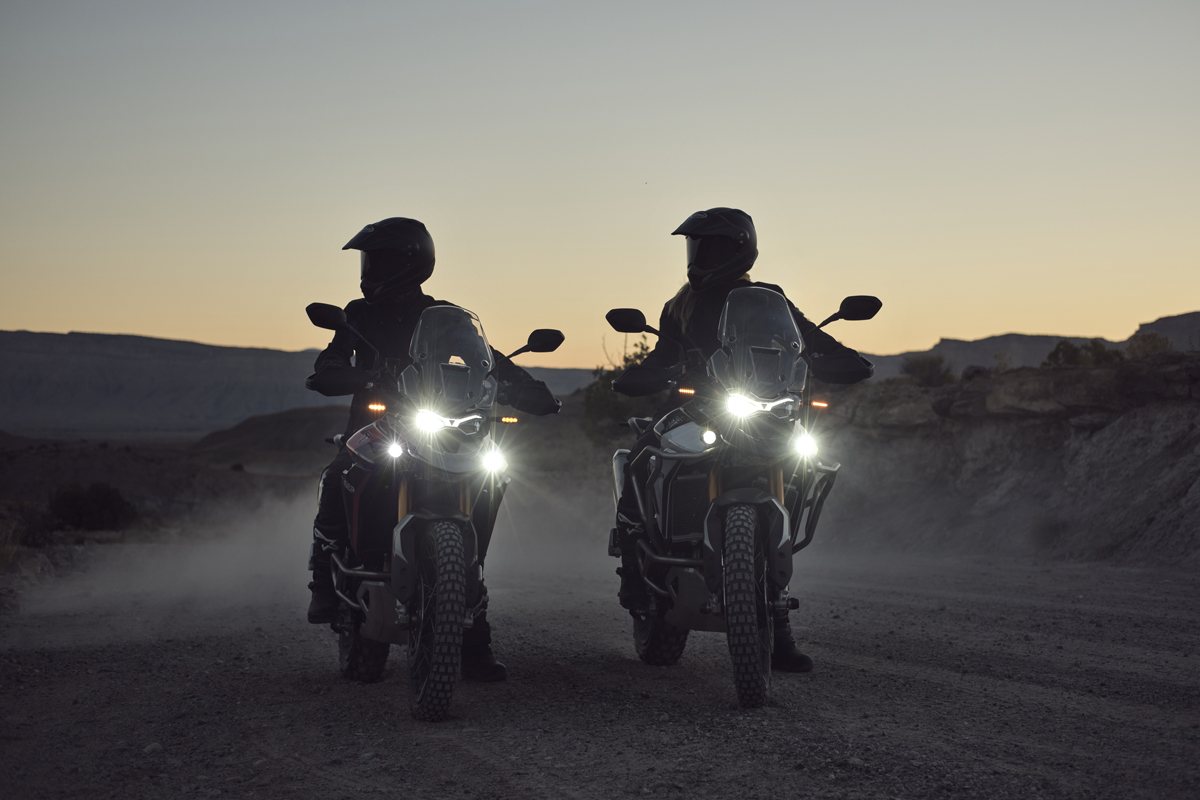
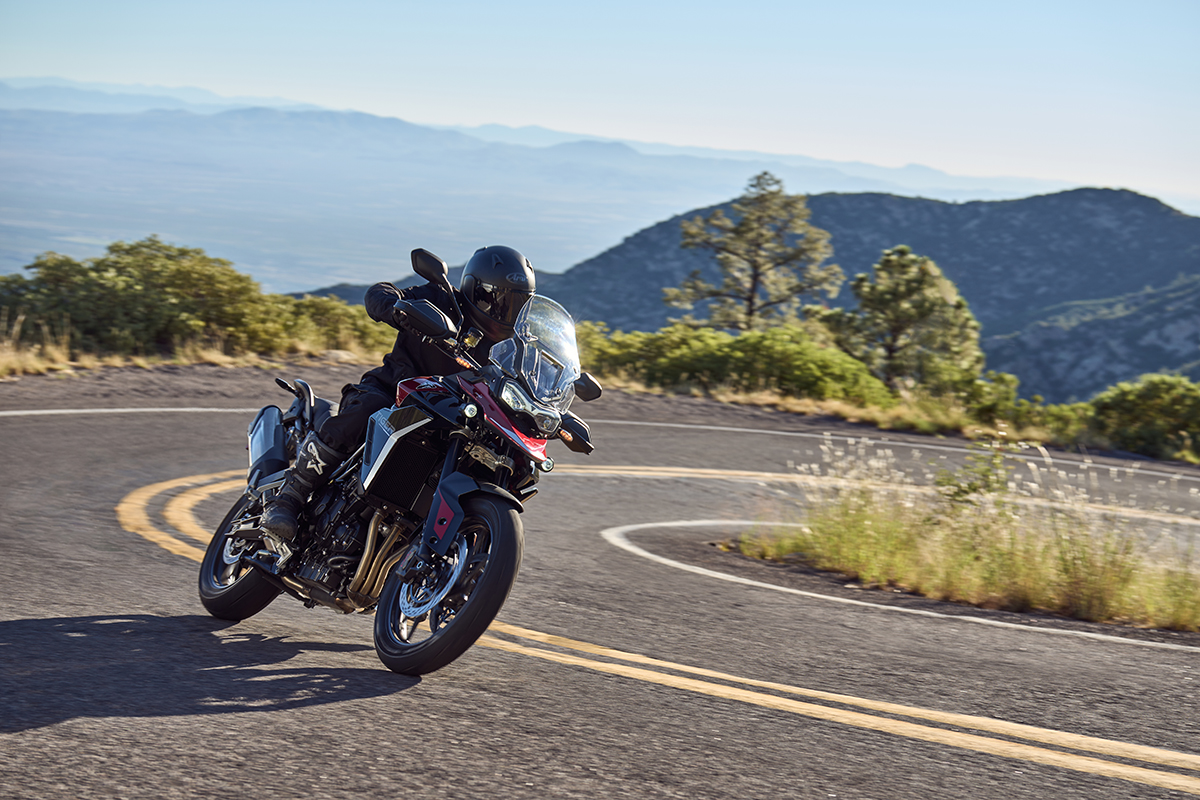
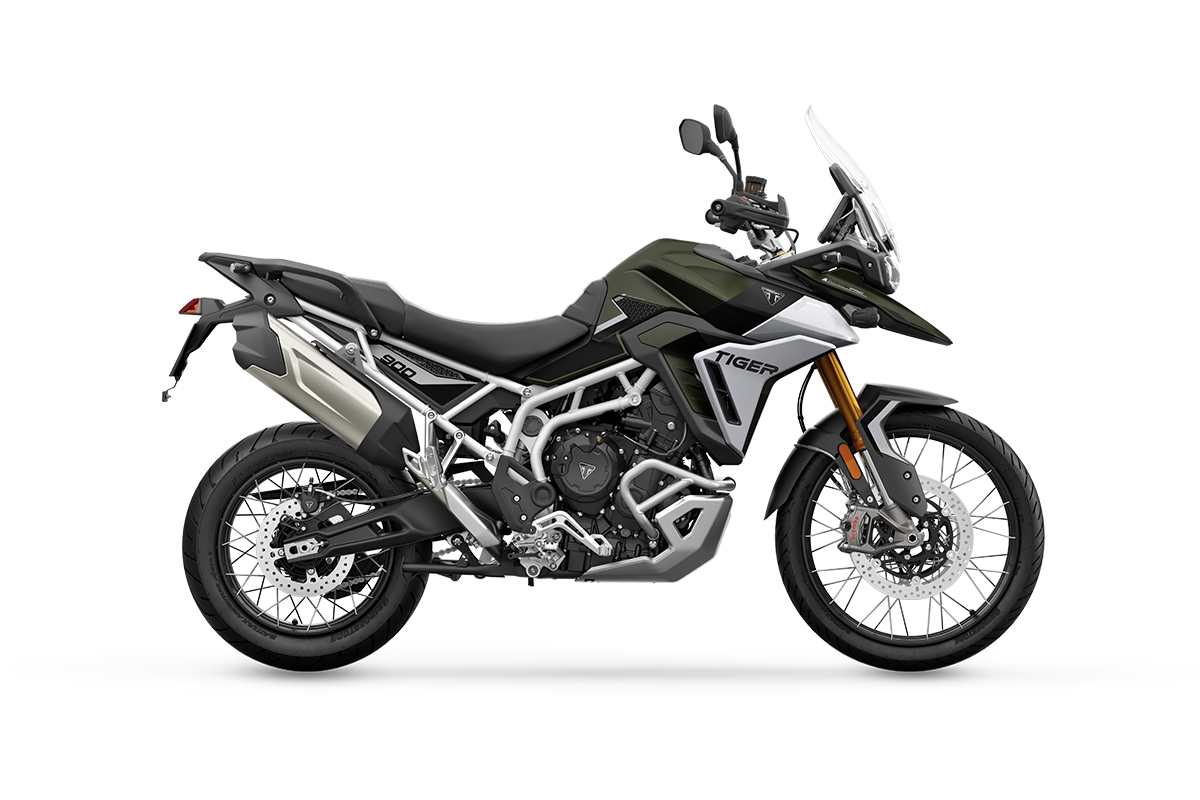
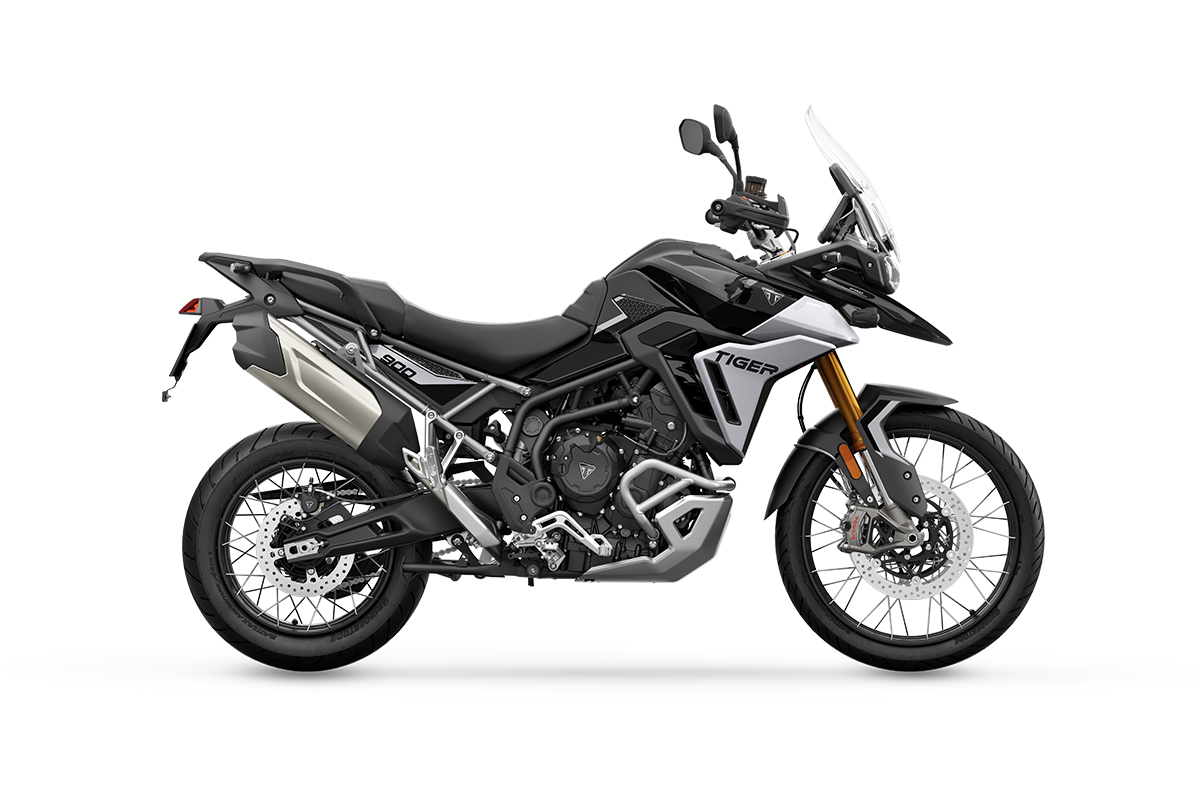
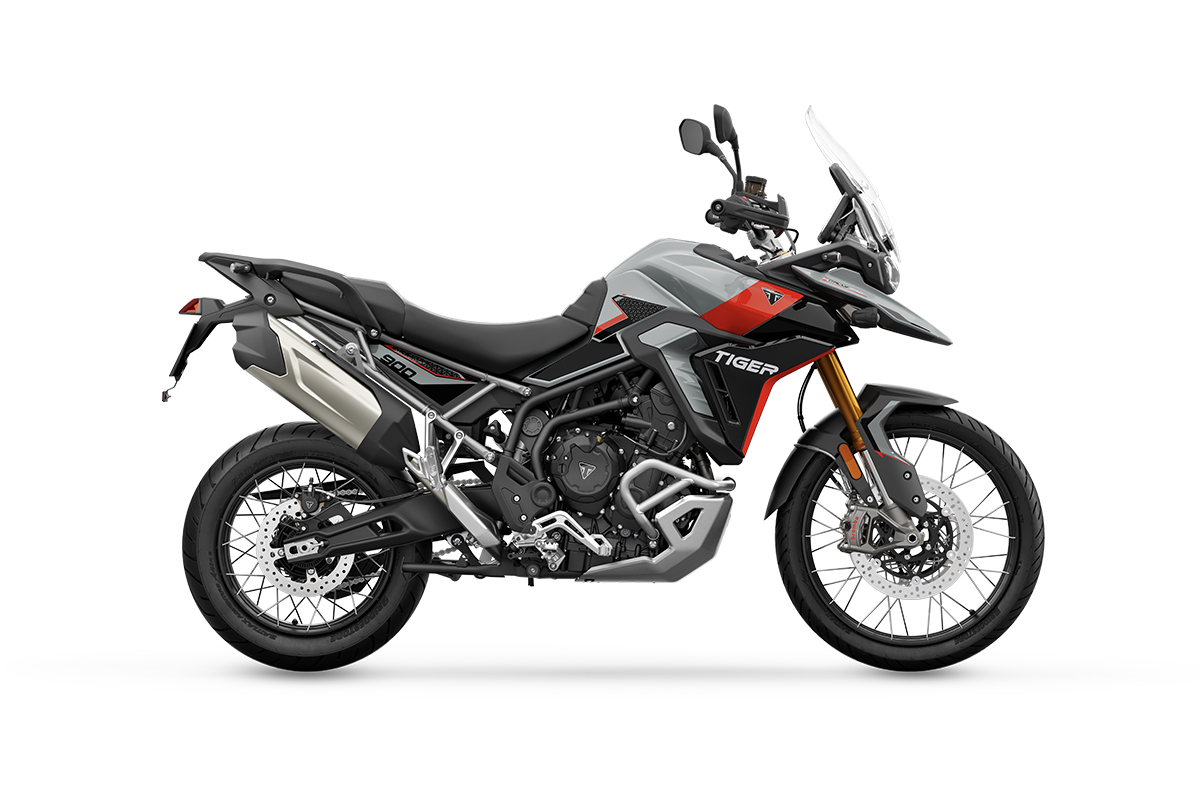
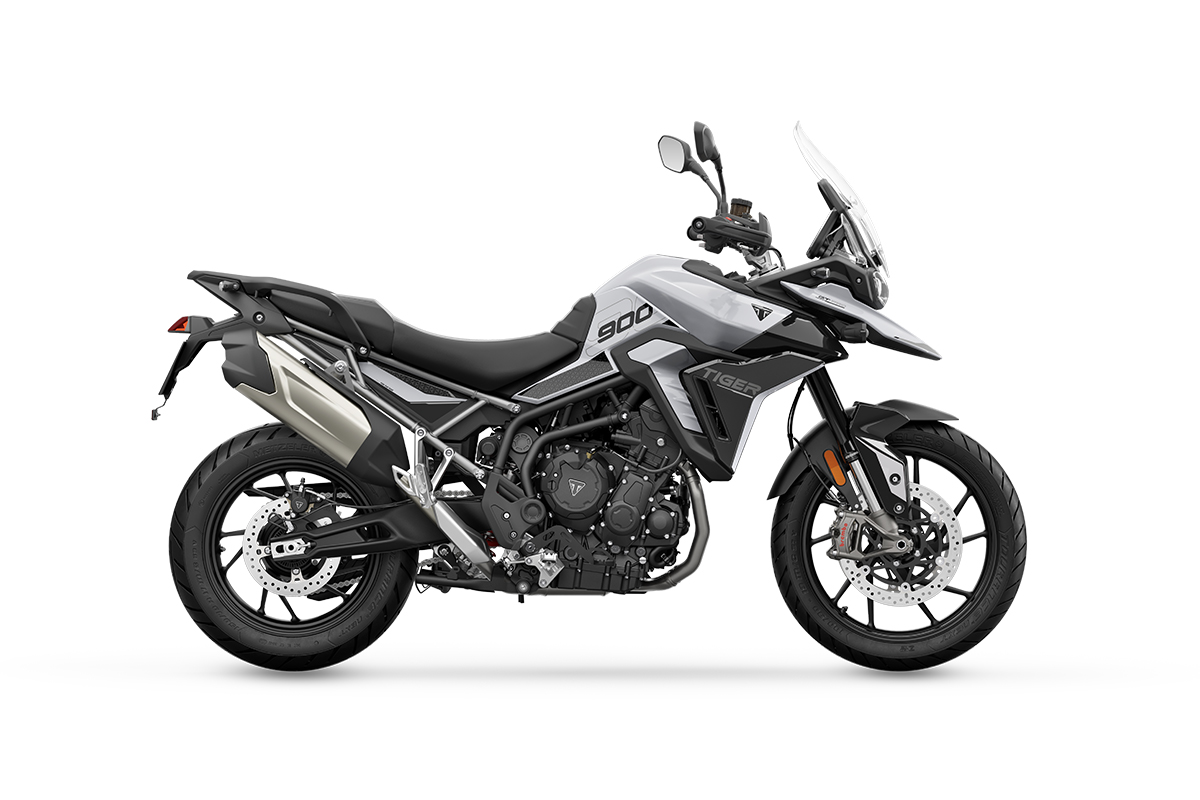
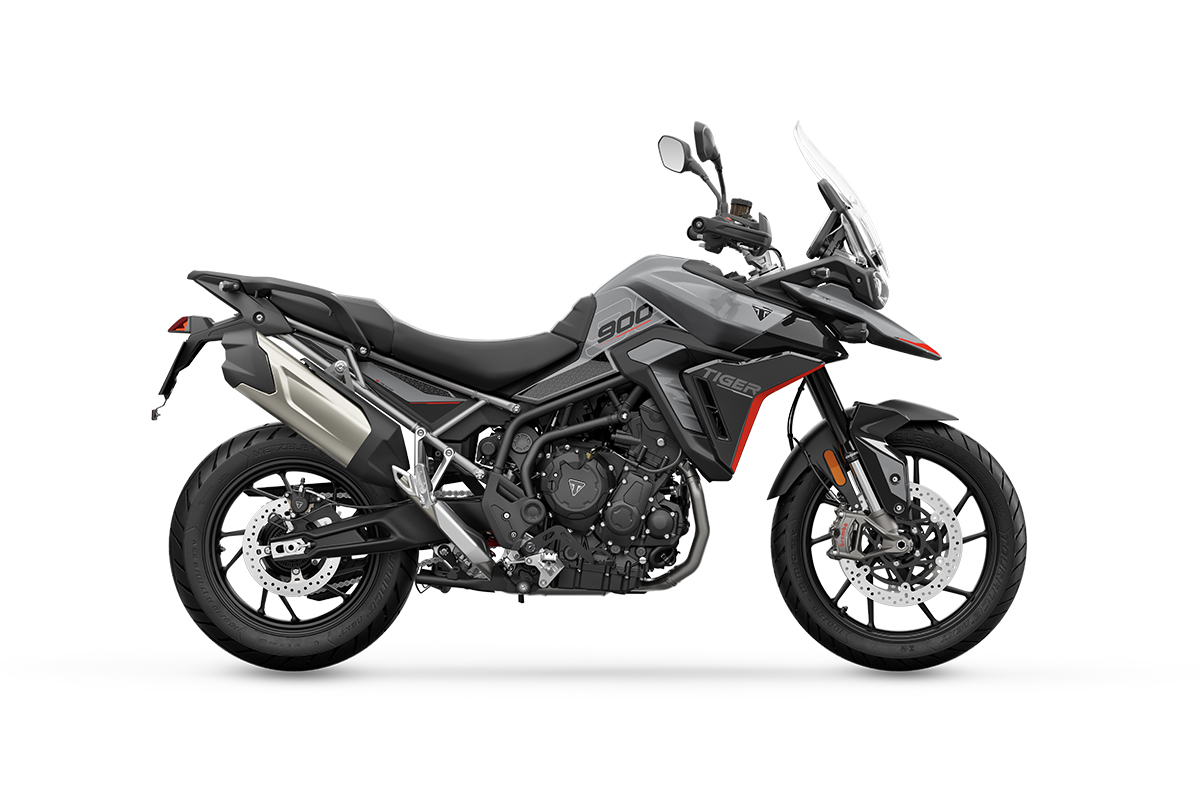
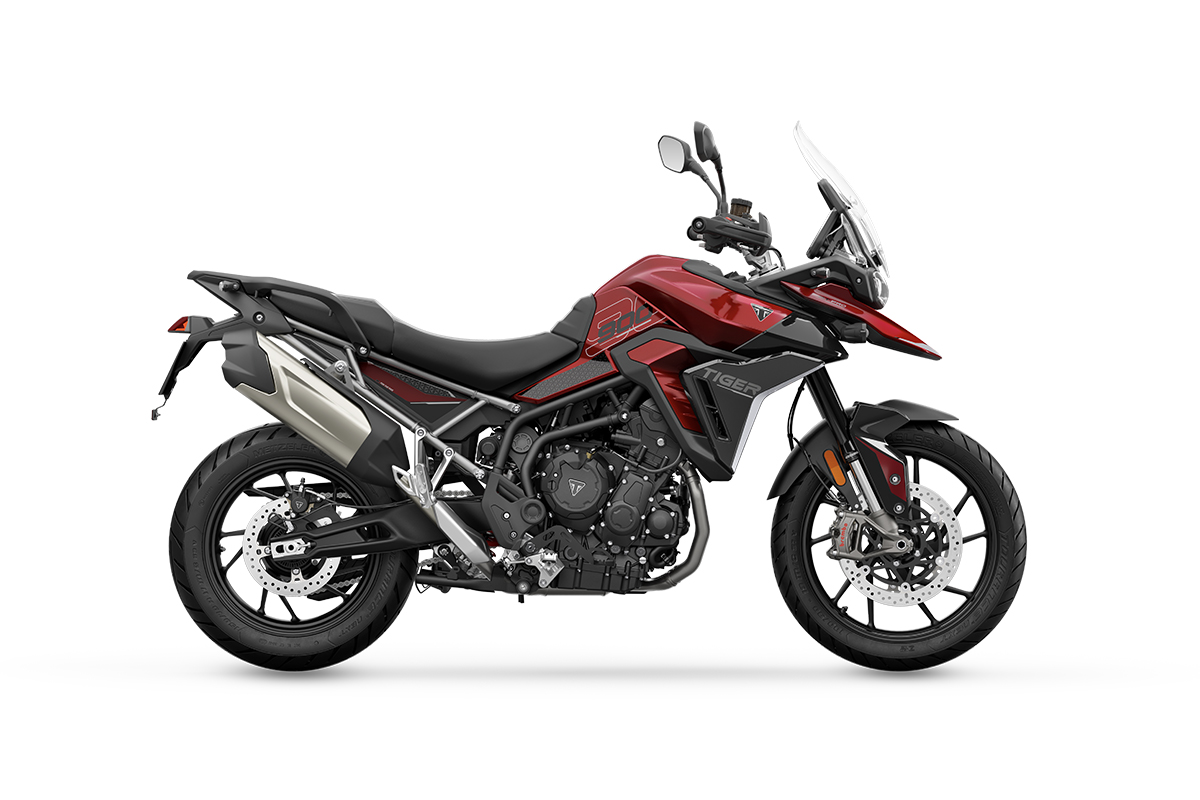
Triumph has given the popular and excellent Tiger 900 range a mid-life make-over for 2024. Triumph promises more power, more torque, more capability and more comfort in a bid to raise the bar for middleweight adventure bikes and the previous six-model line-up has been trimmed to three models: Tiger 900 GT, GT Pro and Rally Pro.
The three-cylinder engine has received a major update, including revised engine components, which provide 13% more power than the previous generation, giving 106 horsepower of peak power and a higher peak torque of 90Nm.
Image source: Triumph
The new engine also offers greater tractability lower in the rev range. With its T-plane crank and offset firing intervals, the Tiger 900 maintains its characterful and distinctive performance and sound, as well as achieving enhanced performance throughout the whole rev range and up to 9% better fuel economy.
All-new active safety features provide more capability across the range, including enhanced braking for better control and reduced stopping distances, and a new emergency deceleration warning system, which activates the hazard lights when braking rapidly. They automatically deactivate when you pull away.
Image source: Triumph
The new range also features new 7” TFT instruments, with new graphics and menu system and a new USB-C cockpit charger, as well as My Triumph Bluetooth connectivity as standard on all models.
The new rider seat is flatter and roomier, with heated seats on both Pro models, designed specifically to provide more long-distance comfort.
Image source: Triumph
With 20mm adjustability on the seat height for all models and an accessory heated low rider seat is available which reduces the seat height by a further 20mm. This offers GT models with a potential seat height as low as 800mm, which combined with the narrow stand-over width, improves accessibility.
A new damped handlebar mounting system creates a more comfortable ride, plus the enhanced handlebar position on the Rally Pro, with the bars 15mm closer, facilitates a more agile ride while sitting or standing.
Image source: Triumph
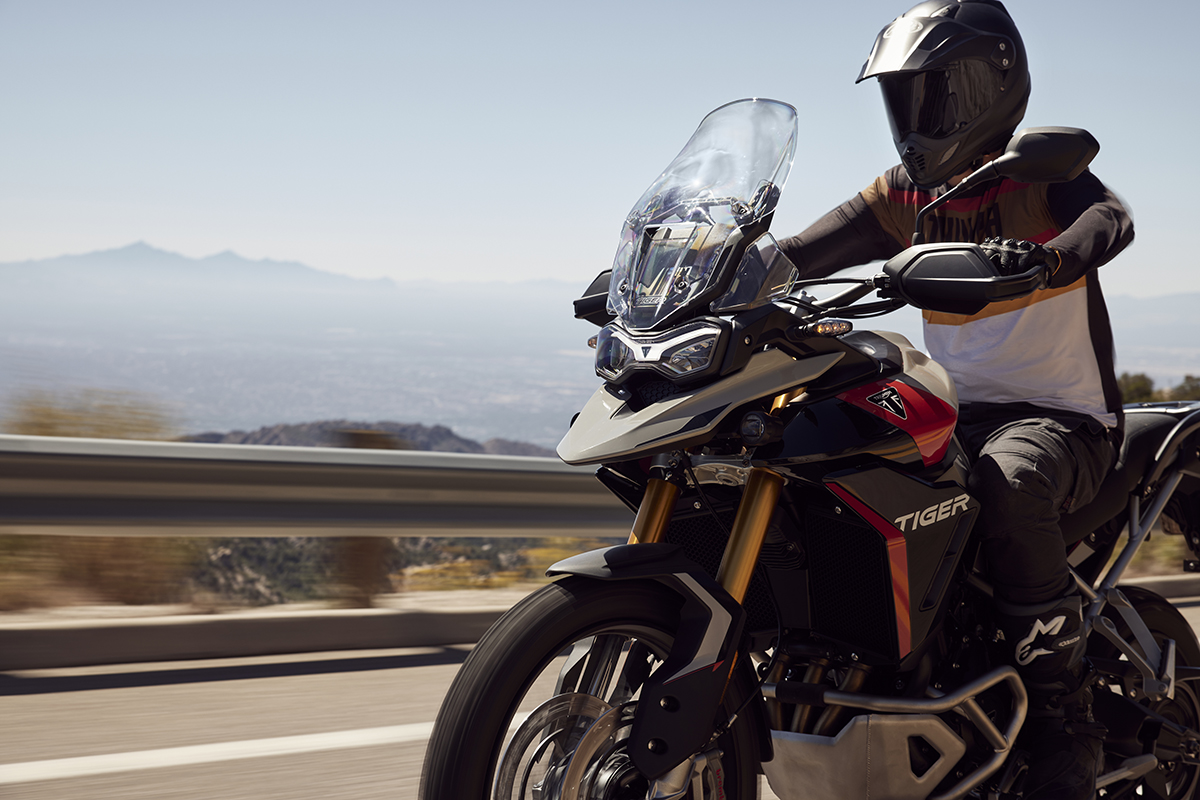
The 2024 range has new bodywork across the beak, cockpit and side panels in an integrated design. In case you thought the current Tiger 900 wasn’t flashy enough in terms of colour schemes, the 2024 Tiger 900 features new contemporary and dynamic paint schemes and graphics.
1 of 6
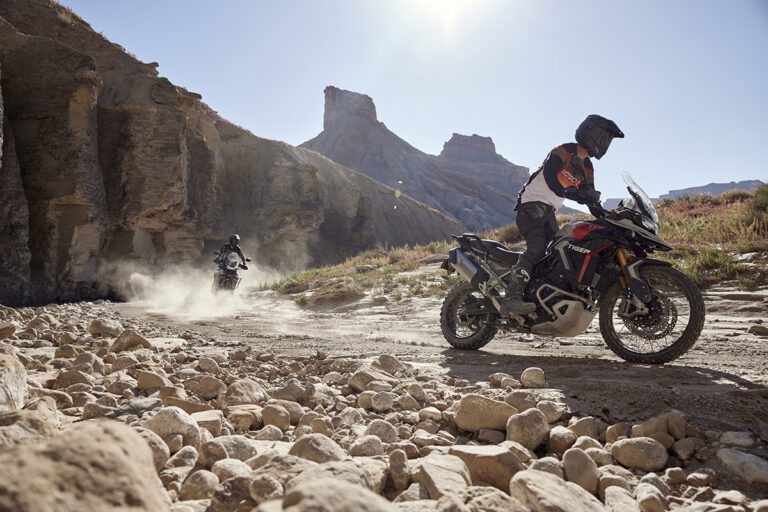
The GT and GT Pro models have Marzocchi suspension with 180mm of fork travel and 170mm of rear wheel travel, fully adjustable on both, while the GT Pro gets electronically adjustable rear suspension for easy preload adjustment. The Rally Pro model uses Showa suspension with 240mm front and 230mm rear travel. The GT and GT Pro come with cast allow wheels, while the Rally Pro has tubeless spoked wheels, the front being 21 inches in diameter. Brembo Stylema callipers are used on all models.
Image source: Triumph
The electronics package remains largely unchanged, which means cornering ABS and traction control and four riding modes, a fifth rider-programmable mode on the GT Pro and a sixth Off-Road Pro mode on the Rally Pro model, with the ability to disengage the ABS and traction control completely.
The seat has been redesigned for enhanced long-distance comfort whilst retaining the ease of movement for the rider to find their perfect ergonomic position. All models feature 20mm of adjustability, as well as heated seats for both Pro models.
A new damped handlebar mounting system creates a more comfortable ride, while the handlebar position on the Rally Pro has been moved back by 15mm.
Image source: Triumph
Prices have yet to be announced but the new models will be available for delivery from early 2024. Contact your nearest Triumph dealer for more information.
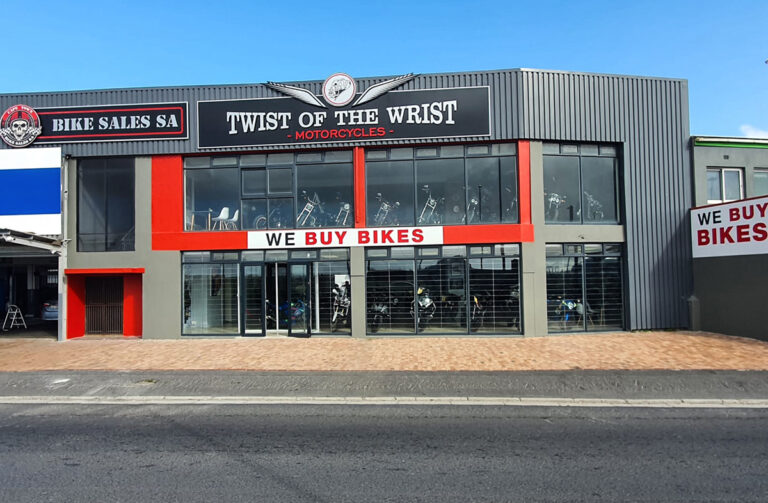
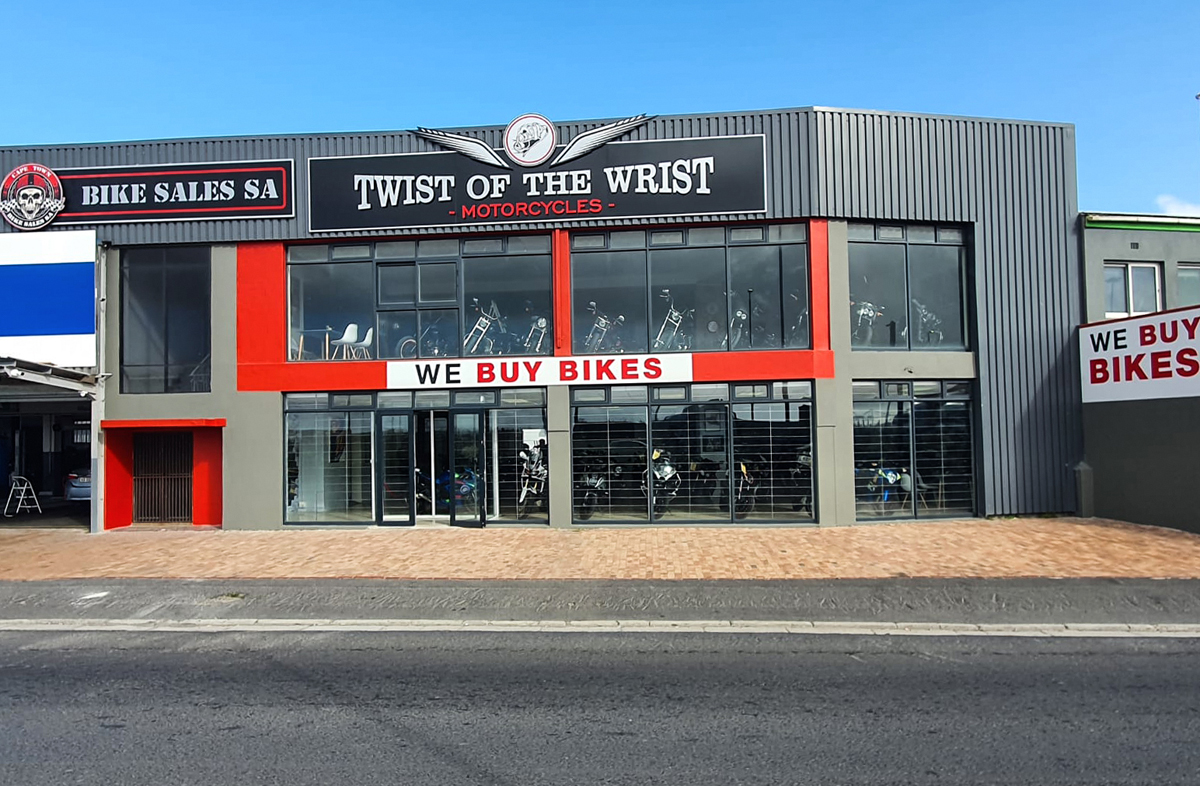
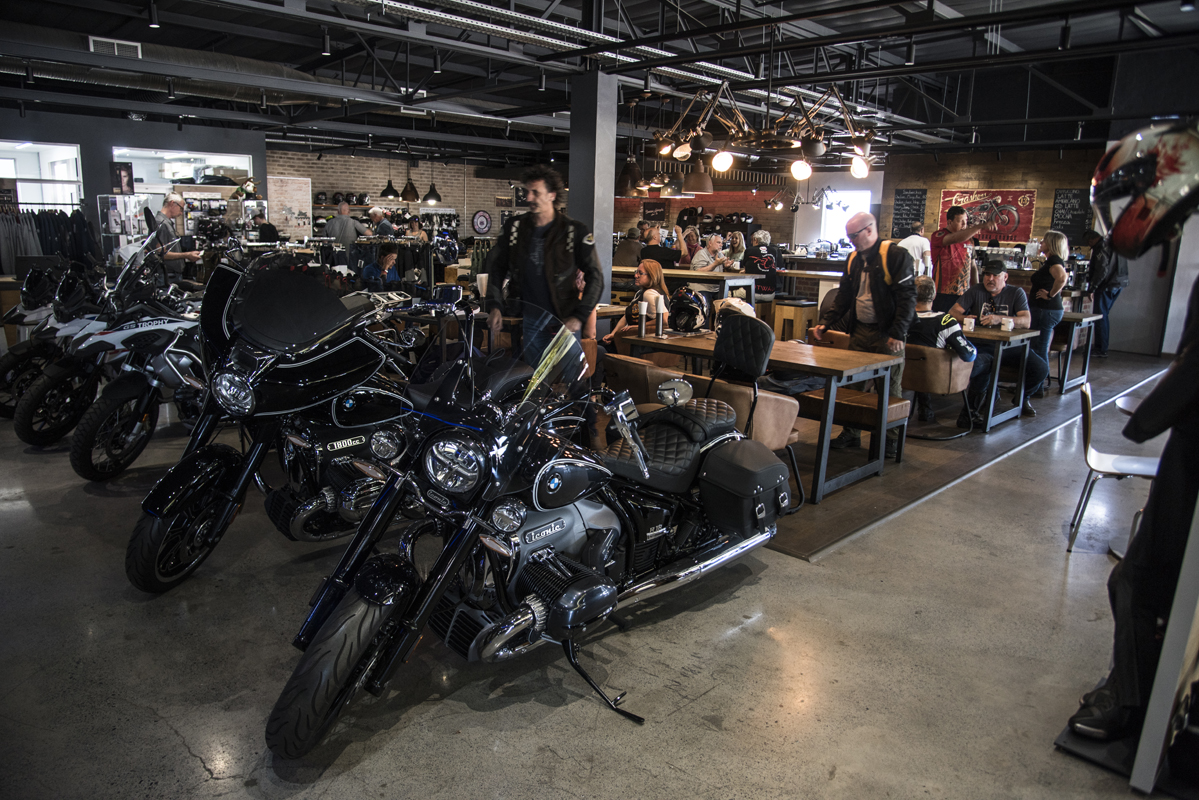
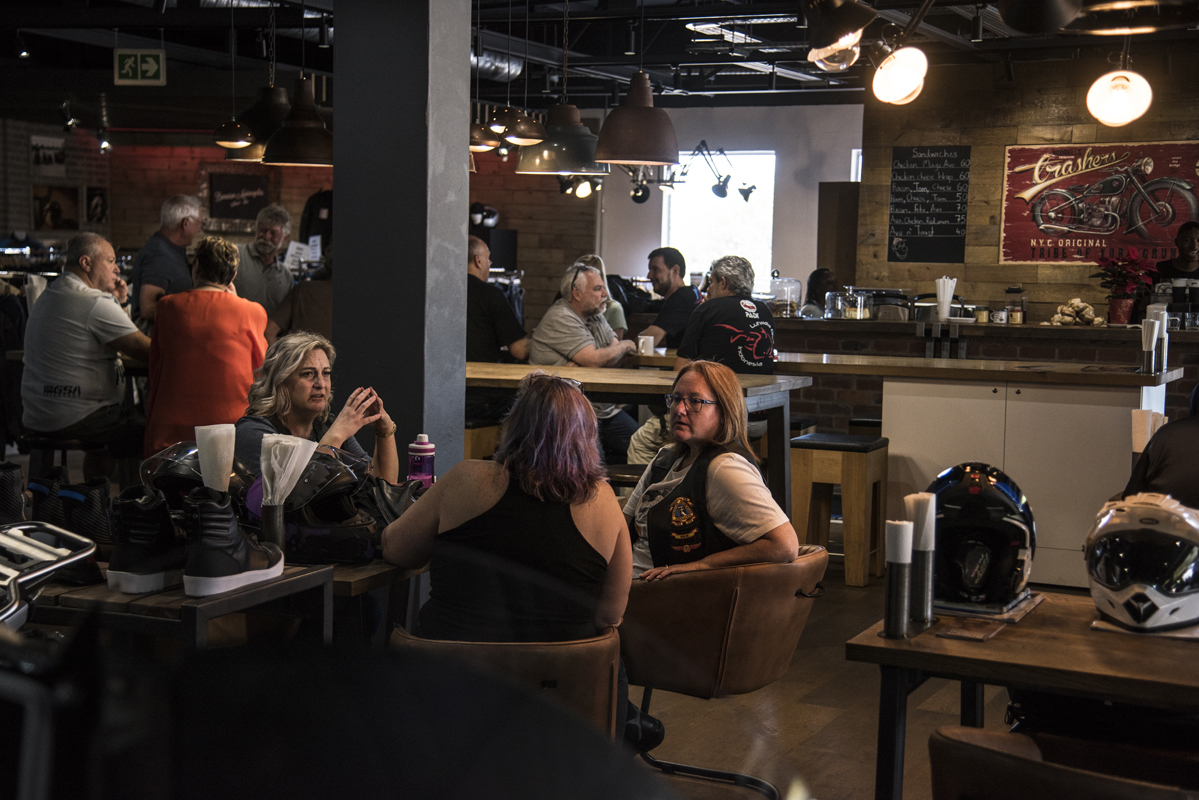
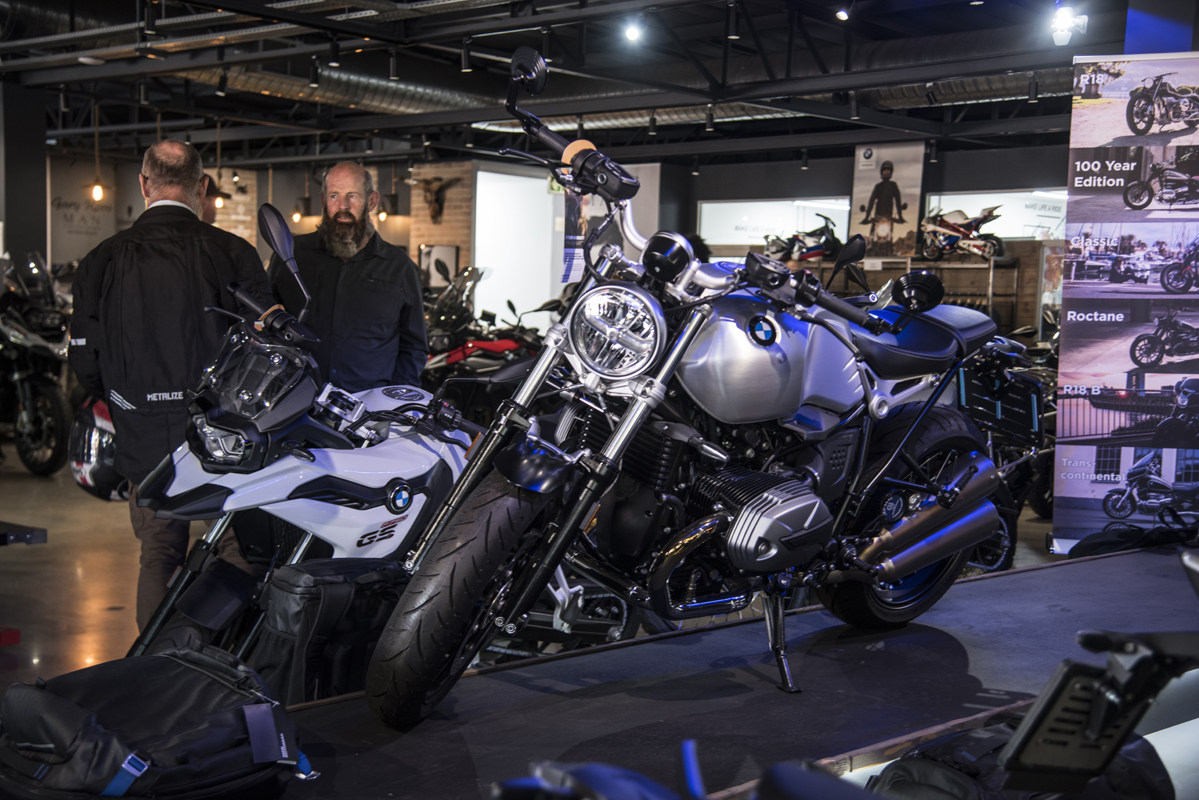
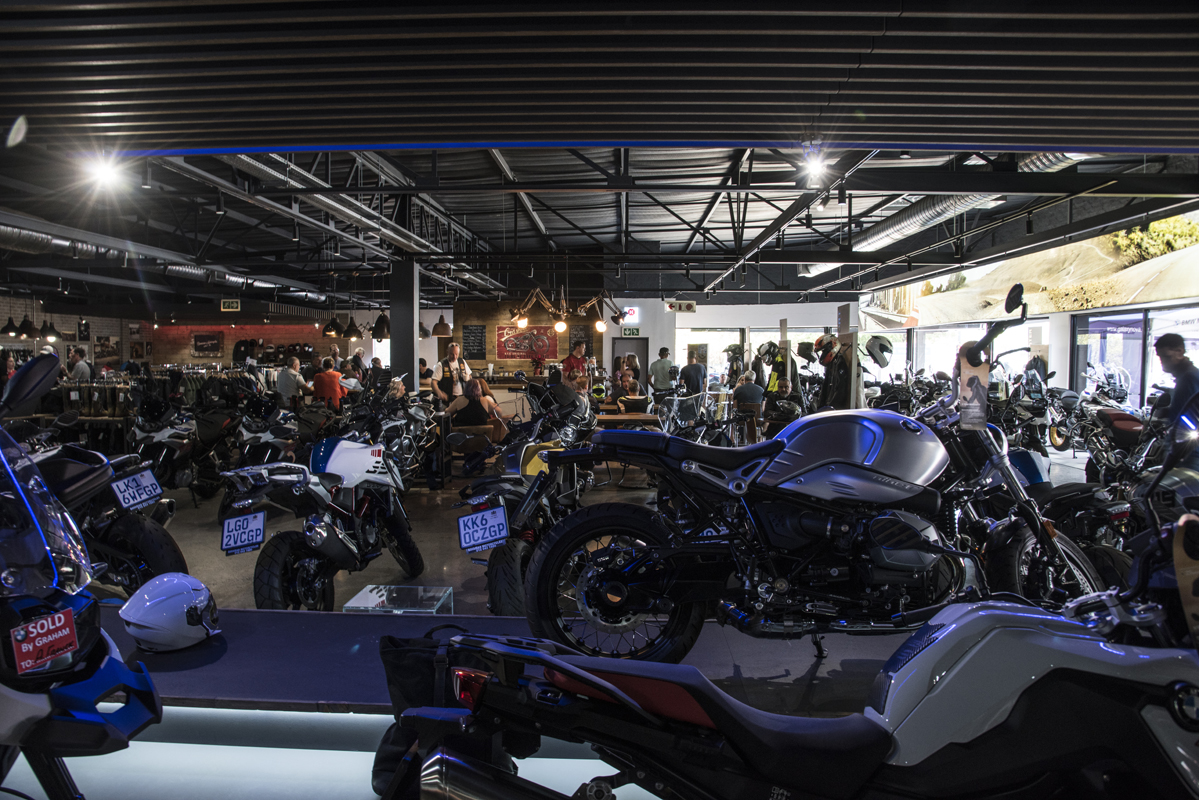
Twist of the Wrist Motorcycle has officially moved into their new premises and invites all local riders and enthusiasts to join them for their official opening on the 4th of November at 42 Marine Drive Paarden Eiland.
Clinton Ruhrmund and his team bring over 20 years of experience in sales and service, and thanks to their passion for motorcycles and customer service they have been recognised for going the extra mile for all on 2-wheels.
Photo credit: Bjorn Moreira / ZA Bikers
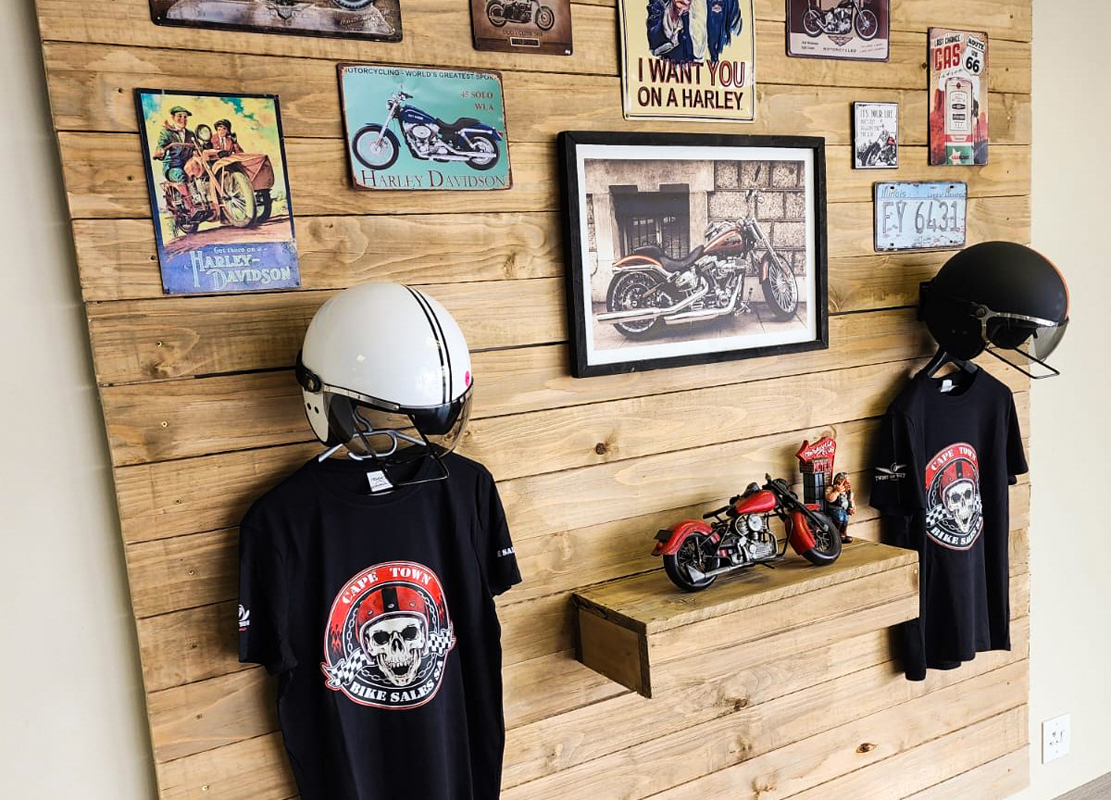
The teaser pictures posted by ‘Twist’ has given us a glimpse of the big screeded showroom, motorcycle art, a few wall-mounted accessory features, a new and improved reception area and a coffee station for the caffeine junkies. Without arm wrestling too much info out of the awesome team from Twist of the Wrist, you can expect the new store to offer motorcyclists a new home where they can feel comfortable to visit, test ride, and enjoy some coffee and friendly bike banter.
Photo credit: Twist of the Wrist Motorcycle
So, pull in on the 4th and come enjoy some bikes, food, drinks and some live music. It will be a day not to be missed and whether you are a cruiser, superbike, naked or adventure bike lover, Twist of the Wrist has got all the flavours to quench your taste buds.
Photo credit: Twist of the Wrist Motorcycle
Twist Of The Wrist: “To our loyal customers, thank you for choosing Twist of the Wrist over and over again, and to our new customers we welcome you with open arms.
Because of you, we can do so much more! With the move to the bigger and better location, we can now offer an even better motorcycle lineup with the exceptional quality you have all come to know and love. This is a special moment in our journey and we would love you all to be there with us”.
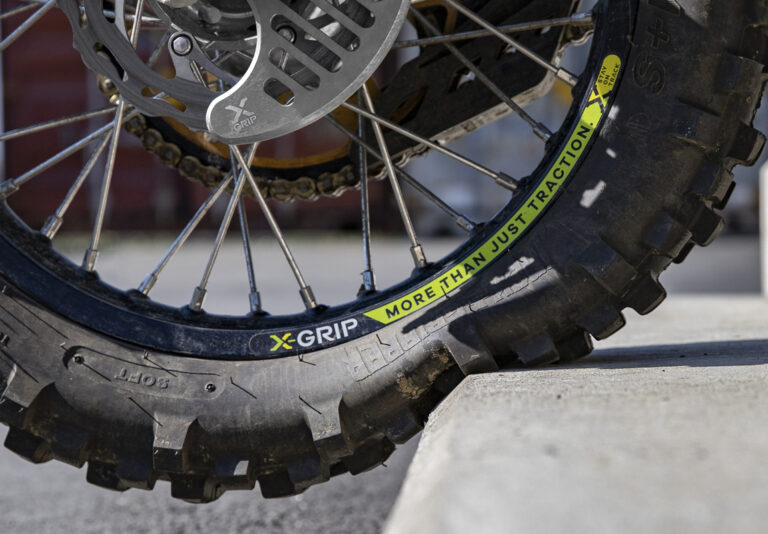
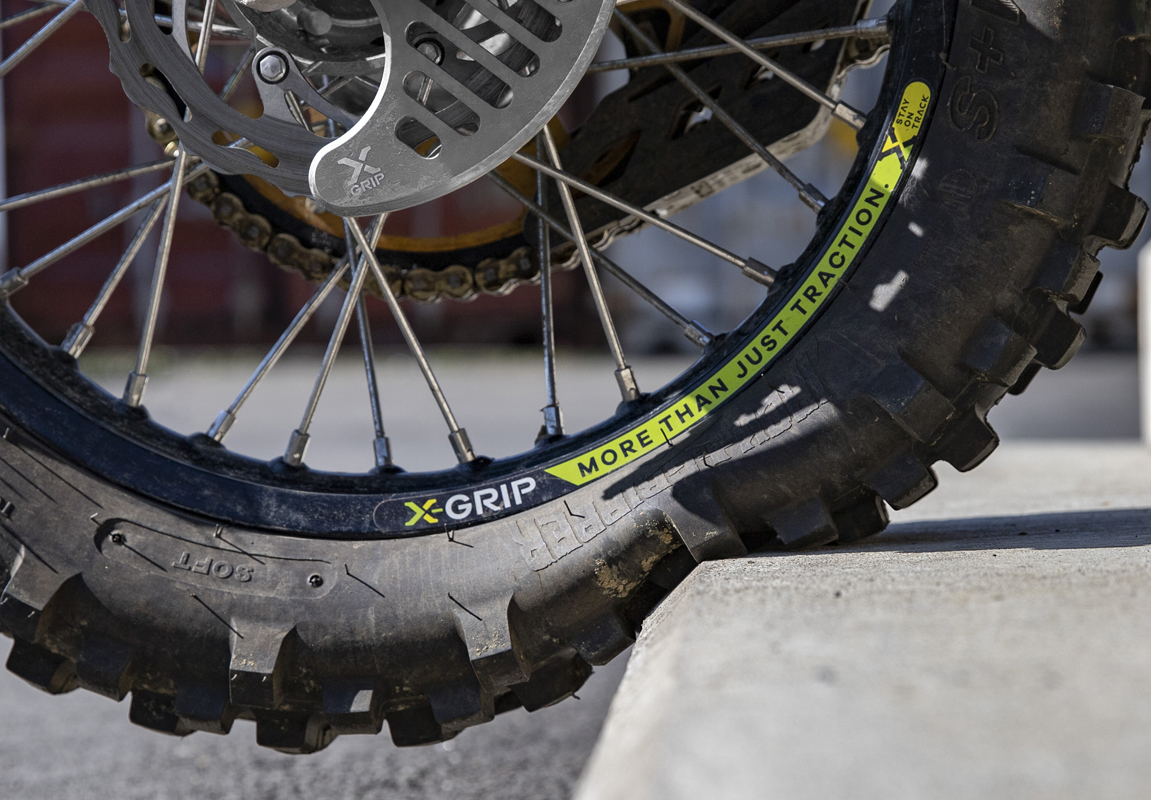
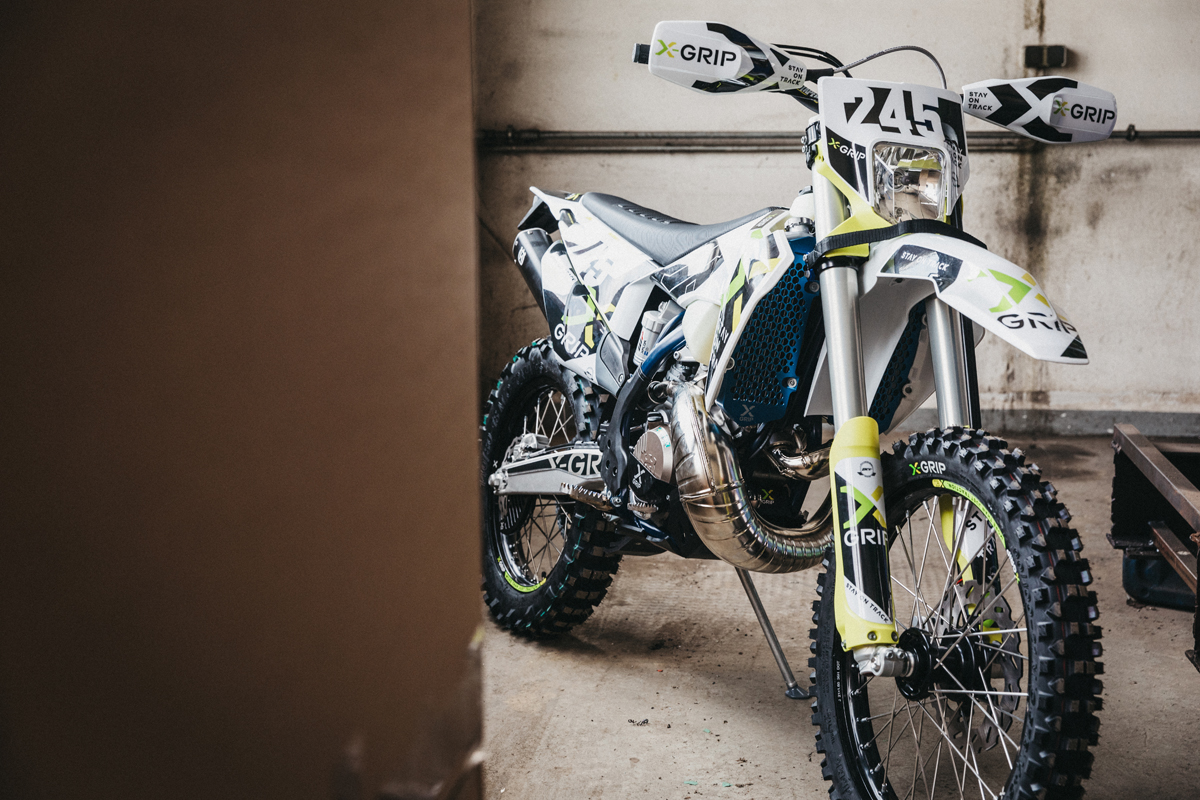
AMP (After Market Products) has just started a new chapter, with the introduction of X-Grip to their portfolio of brands that they import and distribute. X-Grip is an Austrian company (manufacturing takes place in Germany) with deep roots in the off-road world, backed by a young and enthusiastic team who ride and test their products. What started as a few guys developing a really good range of Mousses in 2016, soon saw them jump into the world of tyres and accessories.
What put X-Grip on the map in 2017 is arguably the most famous off-road motorcycle race in the world, the Red Bull Erzbergrodeo. The route planners and racers ride 35 km of treacherous terrain in the Austrian hills of Tyrol, with a selection of tyre choices. The last tyre to be tested was the X-Grip Super Enduro—at this point, no one had heard of X-Grip. To the route planners and pro riders like Lars Enockl’s surprise, the X-Grip worked better than the competing brands in the terrain that is Erzberg. An Austrian tyre taking part in the toughest hard enduro in the world—it just makes sense.
Image source: X-GRIP
With one of the most talked about hard enduro brands making its way to SA, we take a closer look at their tyre and mousse range. The X-Grip range is comprised of five different tyre options, with unique sidewall graphics and a few are available in different compounds. As far as mousses go, X-Grip has two front and two rear options. We see the X-Grip range of enduro rubber, as far as pricing goes, taking on Michelin and Mitas.
SuperEnduro
Image source: X-GRIP
We start the proceedings with the original tyre that started it all for X-Grip back in 2017 at Erzberg, the Super Enduro. This tyre is available in three different rear compounds (hard, medium and soft), two front compounds (hard and soft), comes designed with a wide contact surface and offers extreme grip in all conditions. For the nerds and serious racers, you’ll be intrigued to know that the Super Enduro complies with the F.I.M. regulations (an E-number), this means nothing will stop you from slipping on a set at the top of the game or for 90% of us, just bragging rights at the track and trail. The Super Enduro will be available in an 80/100-21 front and a 140/80-18 rear.
Jack The Ripper
Image source: X-GRIP
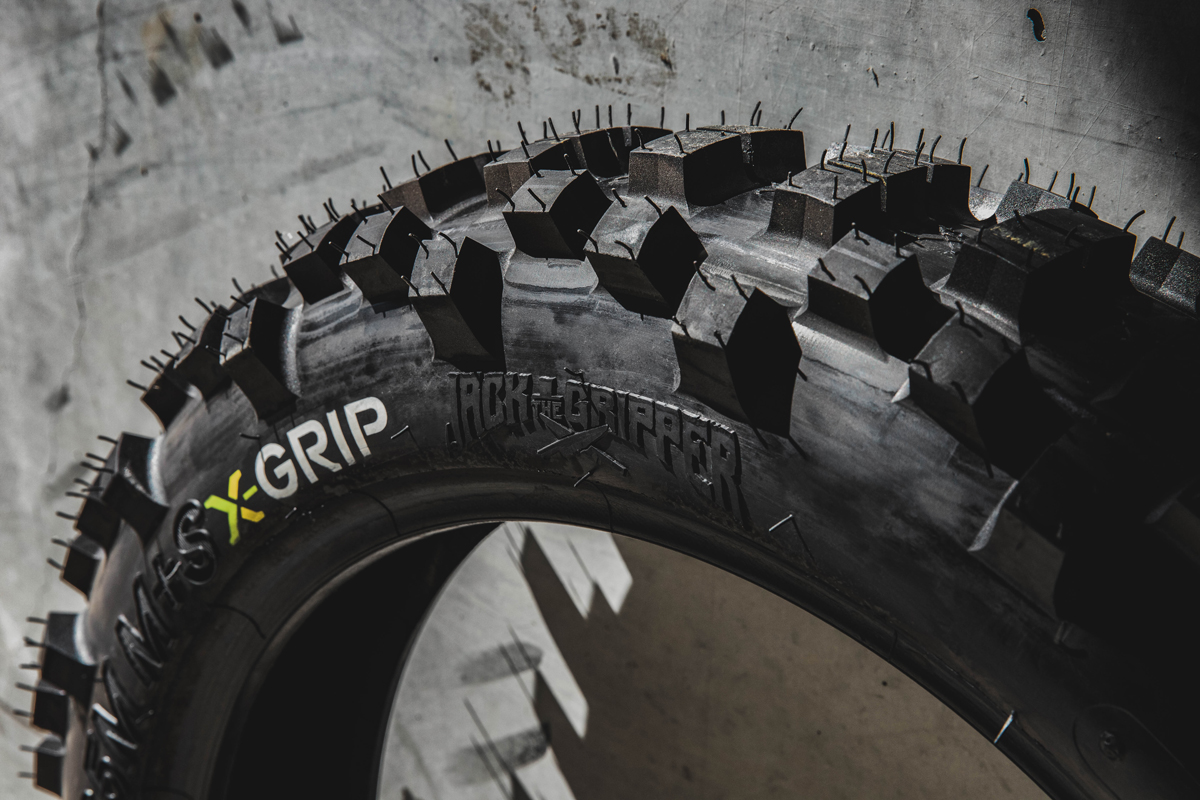
You’ve got to love the naming conventions from X-Grip, the next tyre says it all. We are talking about Jack the Gripper. ‘Jack’ is one of X-Grip’s top sellers overseas, not just because of the name but because of its 140/80-18 rubber soul offering a stable sidewall and “no-bounce-back” rubber compound technology, which allows maximum grip in water crossings and on wet stones—they are also DOT and E-number approved. As far as compounds go, Jack is available in hard, medium, medium + and soft for those slippery days.
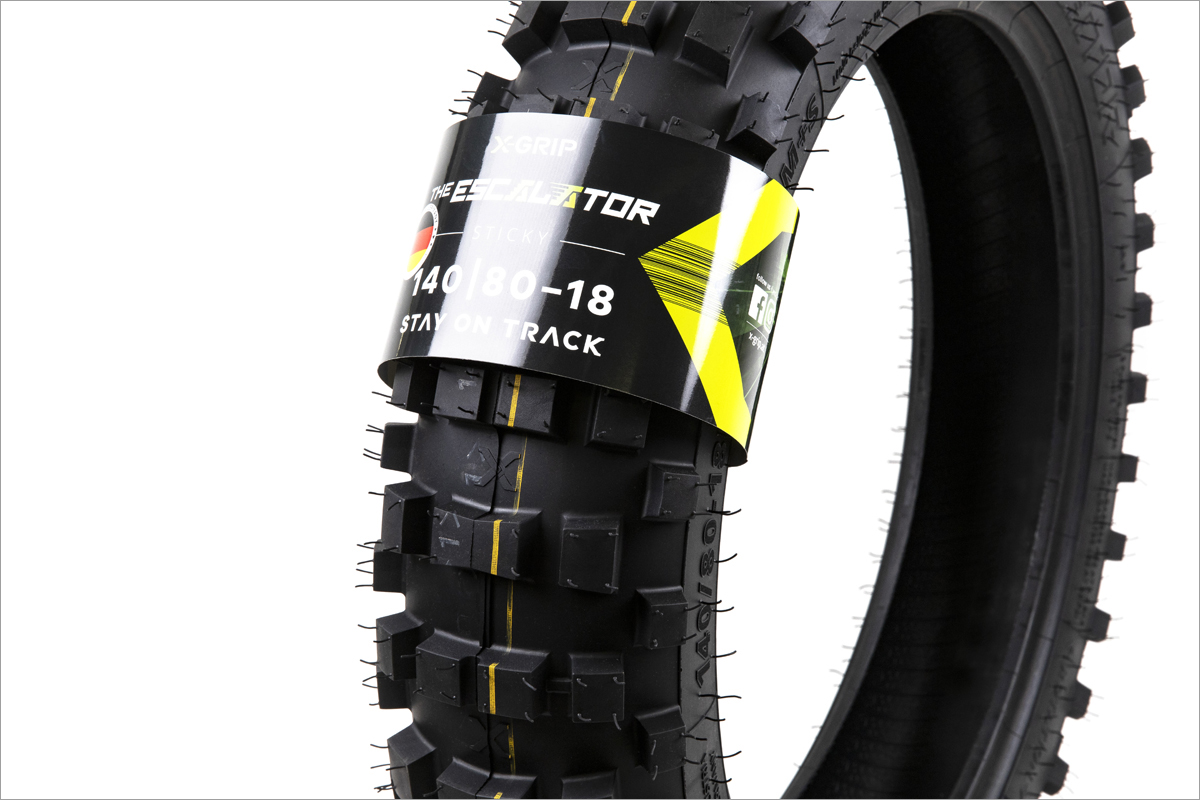
The Escalator Sticky
For riders that are pushing their boundaries in the hard enduro space, X-Grip has got the Escalator Sticky. The ‘Escalator’ is no ordinary extreme enduro tyre, it is designed and developed specifically for 1-day events in the toughest conditions to deliver maximum performance. The “sticky” nature of the Escalator is thanks to its high silica content, which provides riders with a gluey rubber compound feel. Just like Jack the Gripper the Escalator has a no-bounce-back property, is E-numbered/DOT and therefore road legal.
Image source: X-GRIP
We see an extremely wide and aggressive tread on the 140/80-18, which has been developed to help give riders maximum traction on steep inclines. X-Grip has increased the number of knobs on the sidewall to improve lateral grip and traction when riding at an angle. To get the most out of the black rubber, the carcass has been developed with maximum flexibility while maintaining its stiffness in critical areas.
Hulkyboy
Image source: X-GRIP
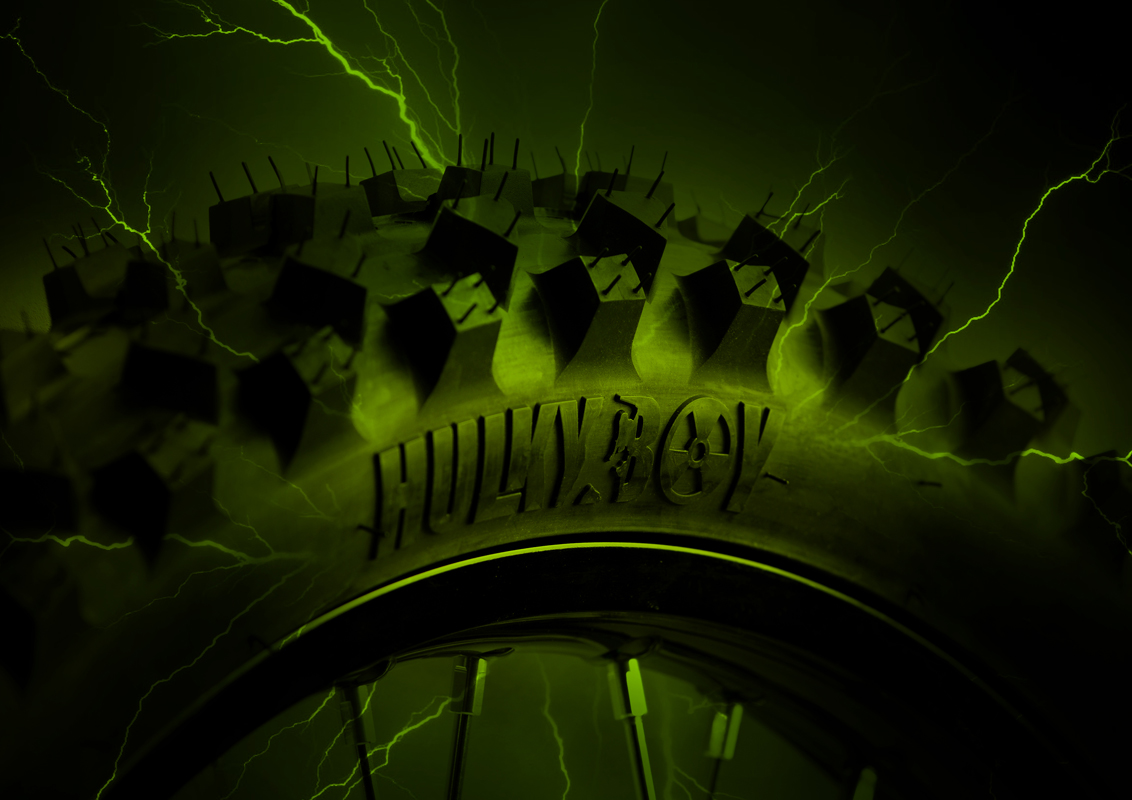
Funny enough X-Grip says that their HULKYBOY is the softy amongst its hard enduro tyre siblings. ‘Hulk’s’ soft nature offers riders massive grip even on the most technical terrain. Yes, with its softer nature, the Hulkyboy is even more desirable for those who enjoy the technical stuff where low RPMs and grip are key.
Super X-Gear
Image source: X-GRIP
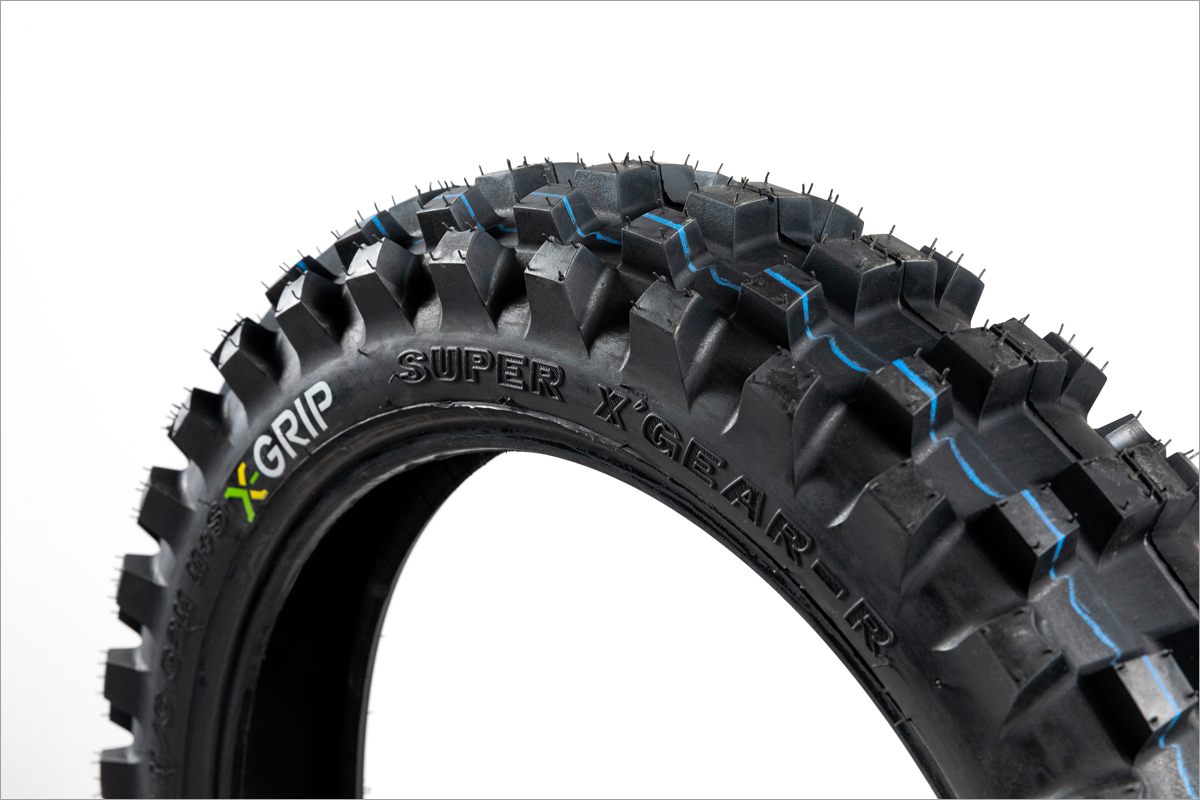
Before you ask, no, X-Grip has not forgotten about the MX riders, welcome the SUPER X-Gear. The ‘X-Gear’ comes with a specifically designed tread pattern and special carcass for motocross. The SUPER X-Gear is available in 110/90-19 & 120/80-19 and comes in a single compound.
South Africa is a dirt bike country and with that in mind AMP has an old face we all remember too well from his factory Husqvarna team rider days, Mauritz Meiring. Mauritz has spent some time riding with Jack the Ripper, Super Enduro Soft and the Escalator Sticky in typical South African conditions and had some feedback to give us.
Mauritz Meiring: “The tyres are amazing, a set lasted a full day of hard riding in dry and rocky terrain and then one more day’s training ride. As far as grip goes, ‘Jack’ offers excellent grip and is a tyre that I would be interested in using for Gold Roof of Africa this year. I would say that they offer the same if not better grip than a Mitas Double Green.”
Image source: X-GRIP
“Obviously, pricing will be a key factor for X-Grip, but in my opinion as far as quality and grip goes, these tyres are for sure worth it. Running the Super Enduro Soft upfront and Jack the Ripper on the rear is a combo that I can use for any Enduro Event, I think the Escalator Sticky tyre will only be necessary for “Gold Class” level riders in an extreme event and or very wet conditions.”
X-Grip Mousses
Image source: X-GRIP
Contributing to the handling of the X-Grip tyres are the X-Grip mousses. For the front end, we see the EV0 – 80/100-21 and EV2 – 90/100-21 which are available in soft, normal and hard compounds. This describes, among other things, the field of application and the hardness of the X-Grip’s mousse range. “Extreme” is used for hard enduro like the Erzbergrodeo, whereas “Hard” is more suitable for rallies and fast missions.
On the rear, we see a Super Soft EXTREME-2 (SSE2) mousse for extreme conditions. This mousse is designed for racing—it has a special soft compound. Ready to race from the first minute, but with a limited lifespan (two rim locks required).
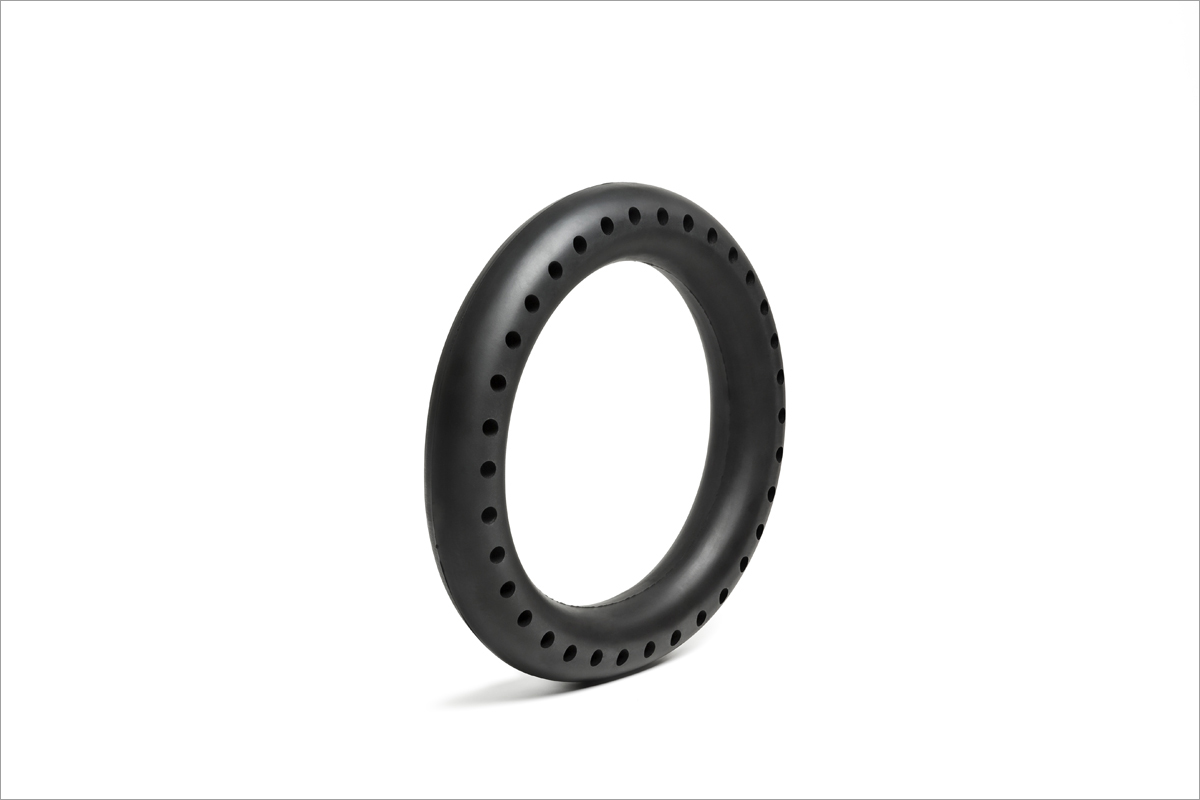
The Super Soft is a rear mousse also used for extreme conditions (two rim locks required). With 34 holes, the Super Soft is very soft and offers ideal grip in rough conditions. However, the service life is not as long as with a conventional mousse.
After having the chance to touch and feel AMP’s first X-Grip shipment, all we can say is what a promising brand for the South African dirt bike market!
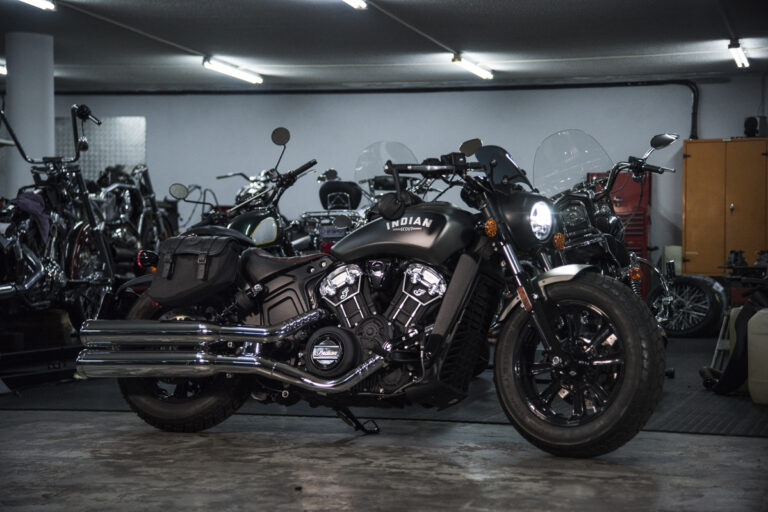
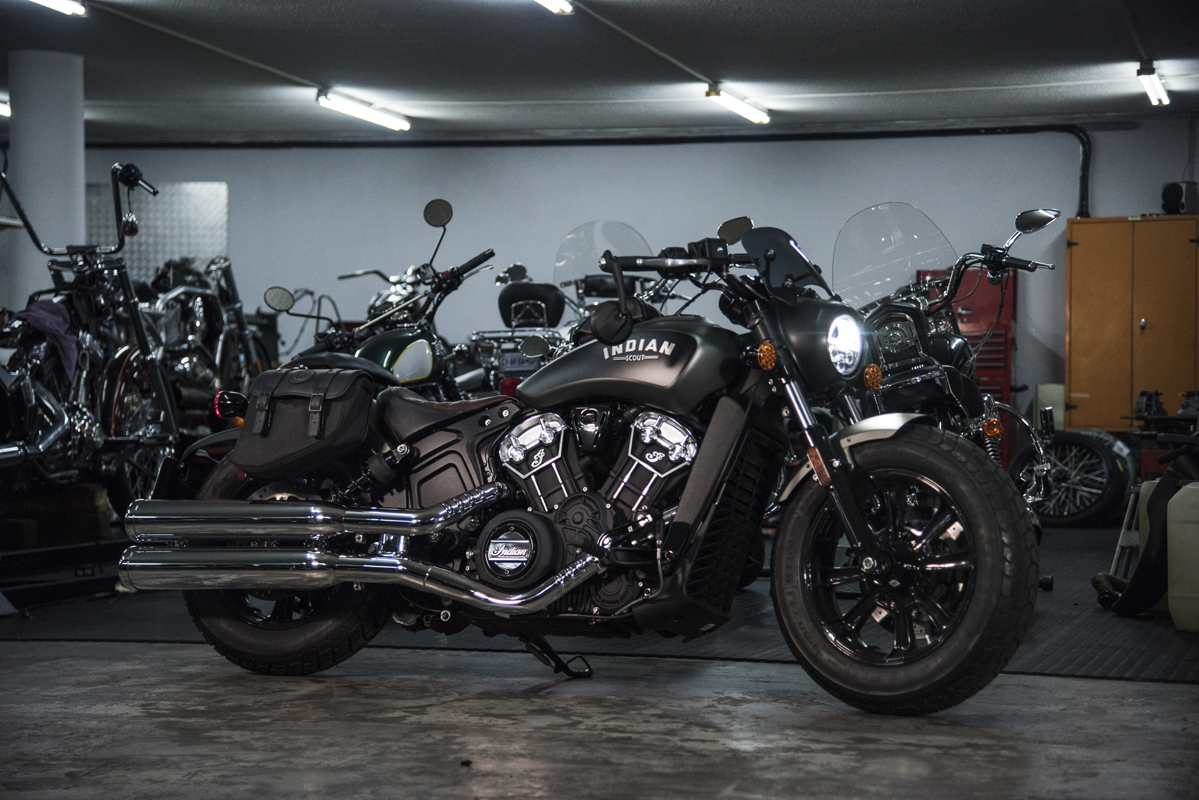
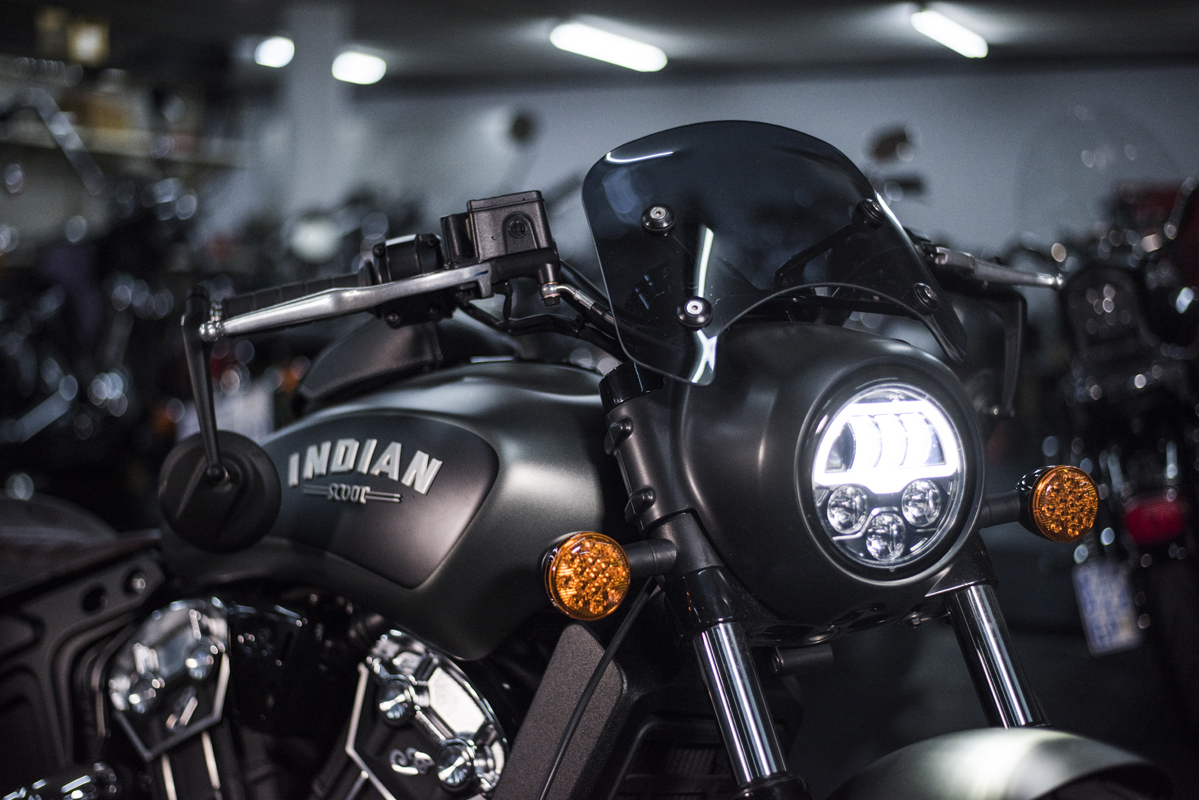
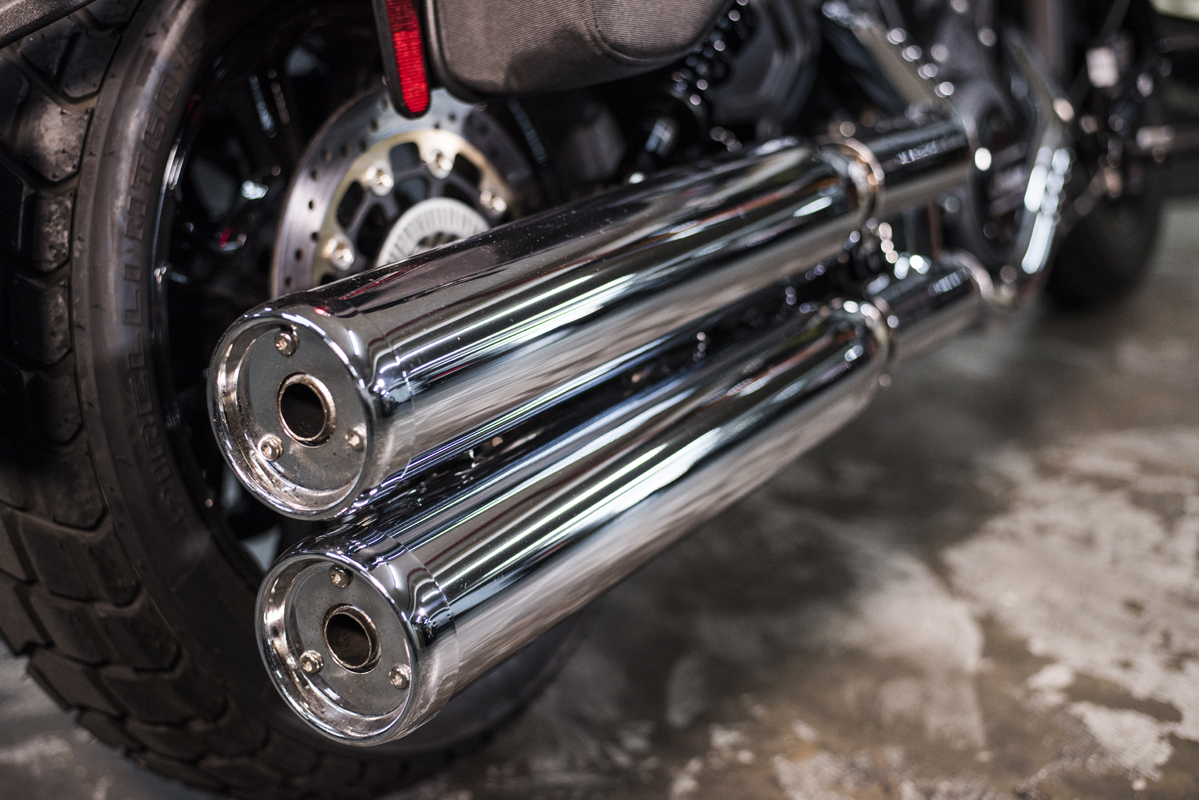
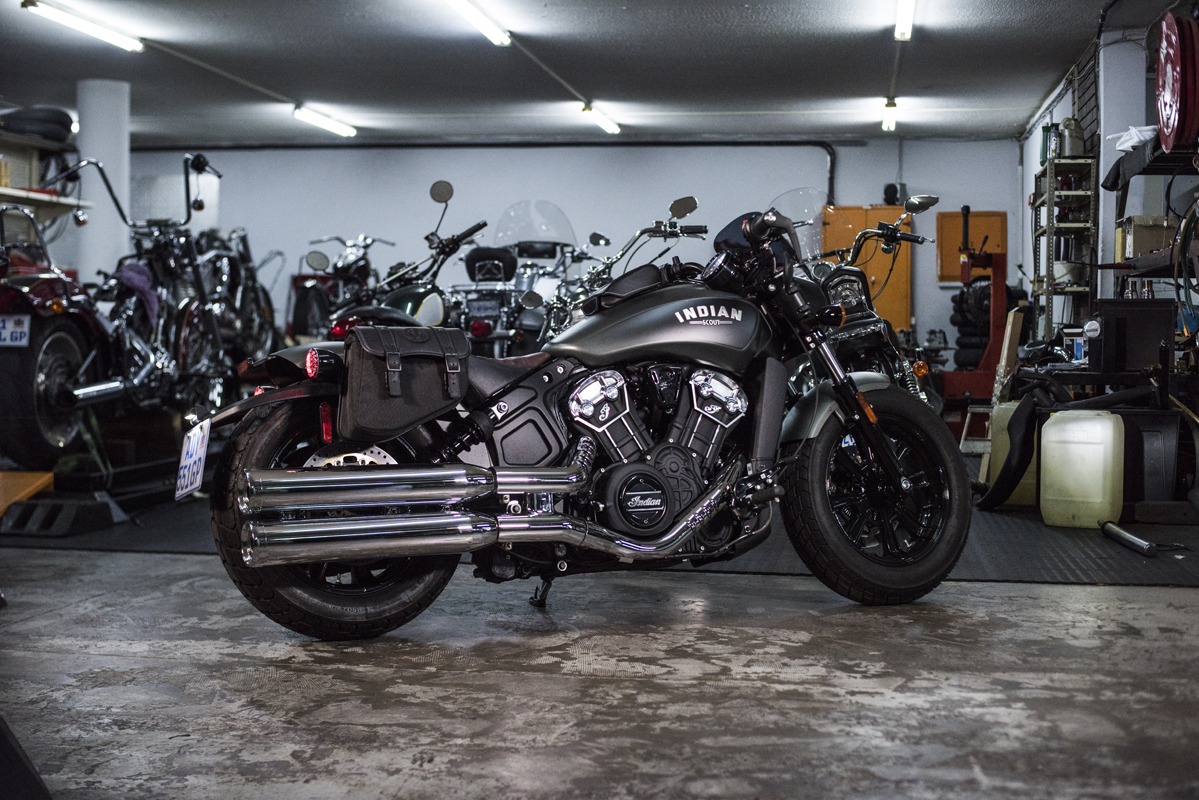
Even though Indian isn’t specifically marketing the Scout Bobber as an entry into the retro or modern classic scene, there’s no denying that, in essence, if not engineering, it is a throwback to the bobber scene that sprouted immediately after the end of the Second World War, much as the Triumph Thruxton harks back to the café racer scene in 1960s Britain.
That the Indian cuts it in the modern motorcycling world is proof enough of that; yes, the styling is an old-school cruiser in conception, but it possesses modern-day performance and not a little refinement, while being thoroughly in the American idiom.
Photo credit: ZA Bikers
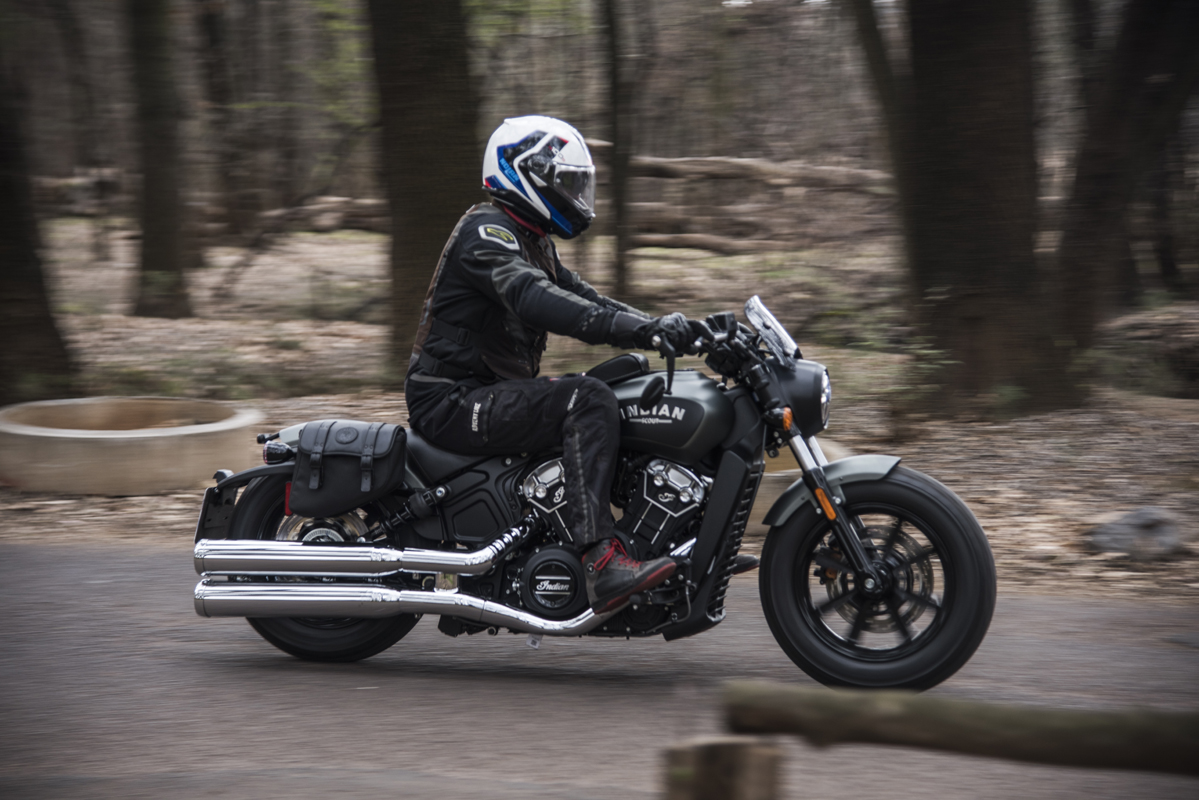
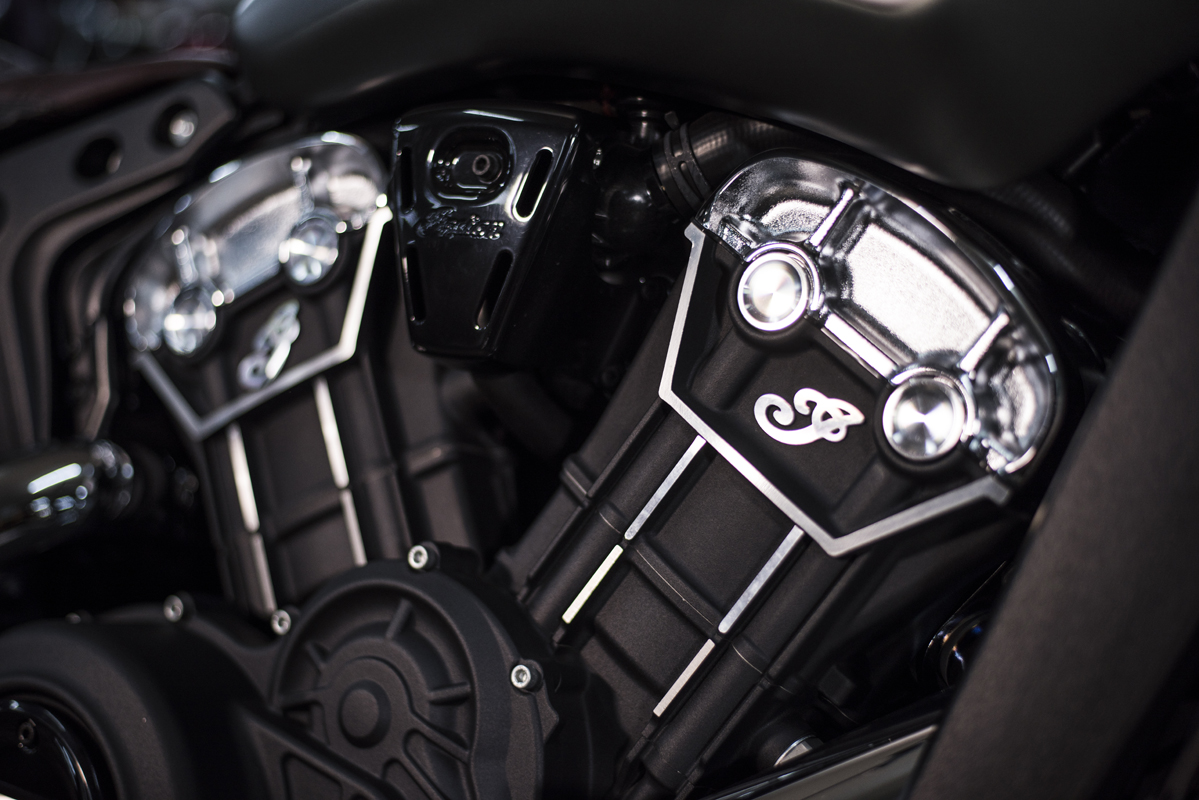
Its heart might be an air-cooled V-Twin, but there’s nothing vintage about its performance which, with 100 horsepower on tap, is no surprise. What is a surprise, though, is the handling this low-slung machine possesses, not something you normally associate with bikes of this genre, with their limited suspension travel. That same lack of suspension travel does mean that the Scout Bobber is rather tiring over bad roads, the springs being firm to prevent bottoming and you’re not going to be leaning too far in corners, thanks to limited ground clearance but find a smooth road with flowing corners and there’s more fun to be had than you’d expect.
Photo credit: ZA Bikers
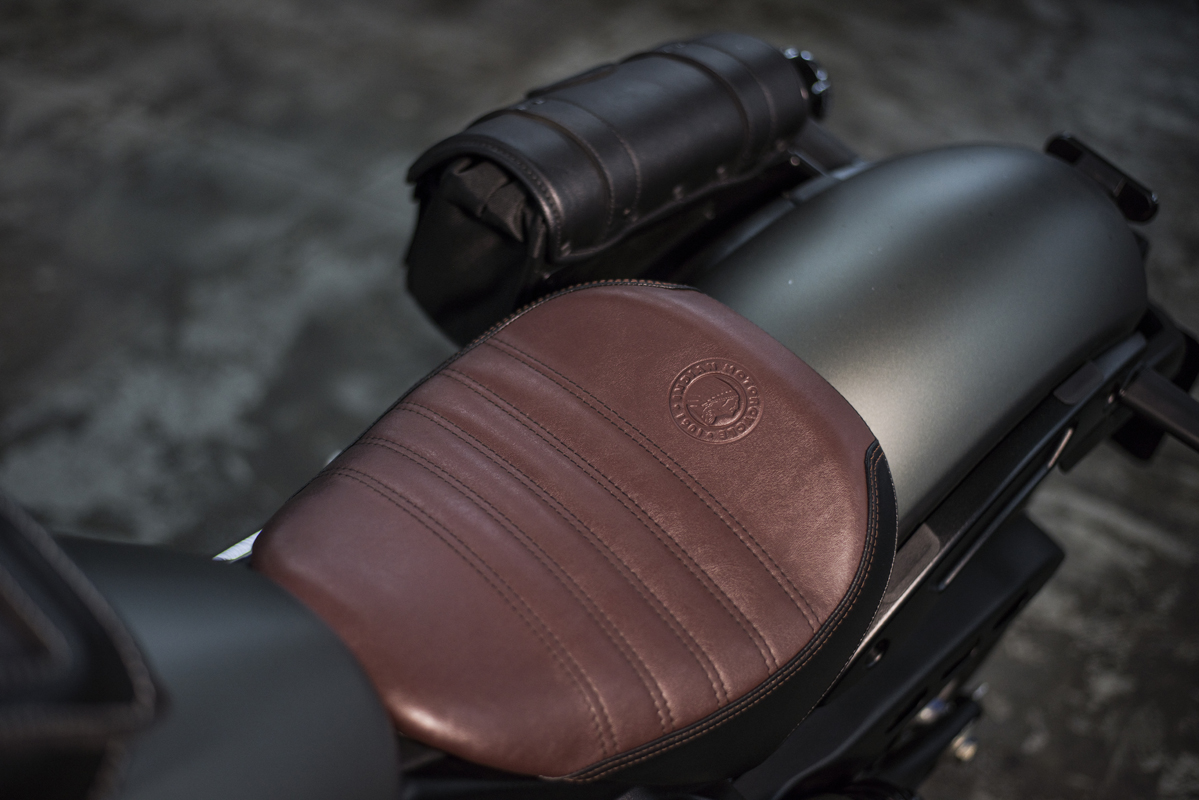
The low-slung stance is, of course, great for shorter riders and those who might lack confidence if they can’t get their feet onto the ground. At 255kg, it’s not light but the weight is carried low so there’s a lot of stability when riding slowly through traffic. Taller riders won’t feel cramped, however, and the seat is comfortable, although the riding position, with legs and arms out in front does put a lot of pressure on the lower back, so perhaps a five-day, 500km per day trip wouldn’t be all that pleasant, never mind the lack of any wind protection. Not that anyone is likely to undertake such a trip on this bike but, given its performance, you would expect owners to want to ride the thing for more than an hour every Sunday (if you are planning to travel longer distances then perhaps the base model Indian Scout would be more appropriate as the ergonomics are more suited for longer rides).
Photo credit: ZA Bikers
Those are the negatives, however, and luckily there are plenty of positives. The brakes are powerful, the handling is safe and predictable and the steering is light. Overall, the chassis feels taut and well-balanced, encouraging you to ride it much harder than you would think possible…as long as the road is smooth!
Photo credit: ZA Bikers
The engine is the 1,133cc, air-cooled unit that is by now familiar in American cruiser circles. Lots of power and torque are developed smoothly and without fuss and those enormous silencers cut the noise significantly, even if they do nothing for the looks. There are, of course, much smaller and very much louder silencers available as an option but then the exhaust note simply becomes unpleasant in any riding situation. Rather stick to the originals and enjoy the muted but still flavoursome V-Twin noises.
Photo credit: ZA Bikers
The clutch and gearbox are surprisingly light and switch-like for an American V-Twin: maybe we’ve just become so used to agricultural changes on Harleys for too long that we expect that from every big V-Twin-powered bike. Coupled with the engine, the power train gives strong but never neck-snapping/arm-stretching acceleration which can be mistaken for sluggishness but, in fact, it’s just beautifully linear acceleration where walking pace becomes highway pace very quickly. There are no hiccups or snatches, nor flat spots in the fuelling: it’s just a lovely engine to have underneath you.
Photo credit: ZA Bikers
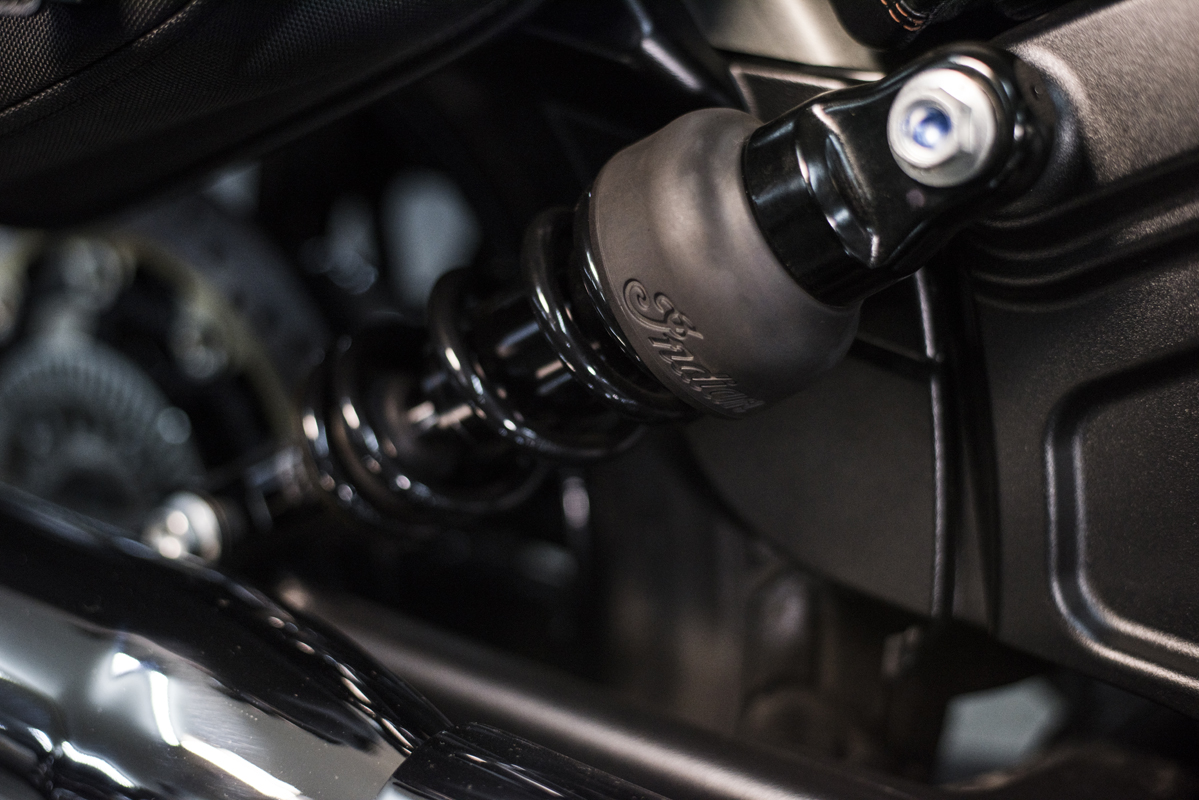
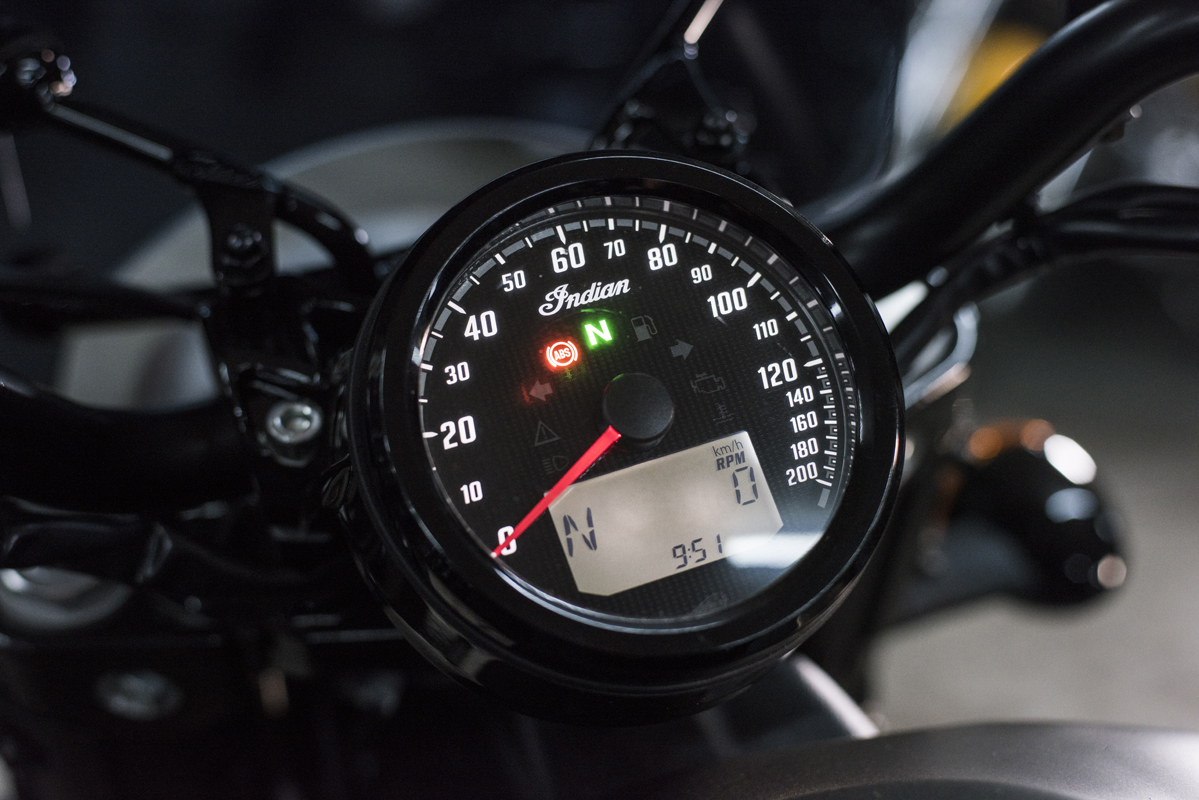
The overall quality is something that Indian should be proud of. There is no evidence of corner cutting anywhere and the attention to detail, fit, finish and paint are all superb. Instrumentation is minimal, but that only serves to remind you of how excessive the displays of so many modern bikes are these days, with no real benefit to anyone or any type of riding. True, the Scout Bobber doesn’t have any electronics to configure so a TFT dash would be a bit excessive and the single, round instrument is nicely retro and easy to read. There is a digital display set into the face, showing revs or mileage but the fuel level is limited to a warning light set into the face of the speedo.
Photo credit: ZA Bikers
Until Harley unveiled the new, Revolution Max-engined Sportster S, the Indian Scout Bobber had no real American opposition, the old Sportster being just that – far too old – to be competition for anything. Even now, the Scout Bobber costs a handy R40,000 less than the Sportster S. But there are other rivals, such as the Triumph Bonneville Bobber which is a seriously good piece of kit and then there are other Harley models, such as the Fat Bob, which out-guns the Scout Bobber in terms of power and torque but, also, out-prices it significantly.
There’s a lot to like about the Indian Scout Bobber and very little to dislike, as long as you’re not intending to spend the December/January holidays touring the country. There’s a huge amount of style but it’s definitely not style over substance. It’s extravagant as a means of getting around the city, but you’ll never look cooler.
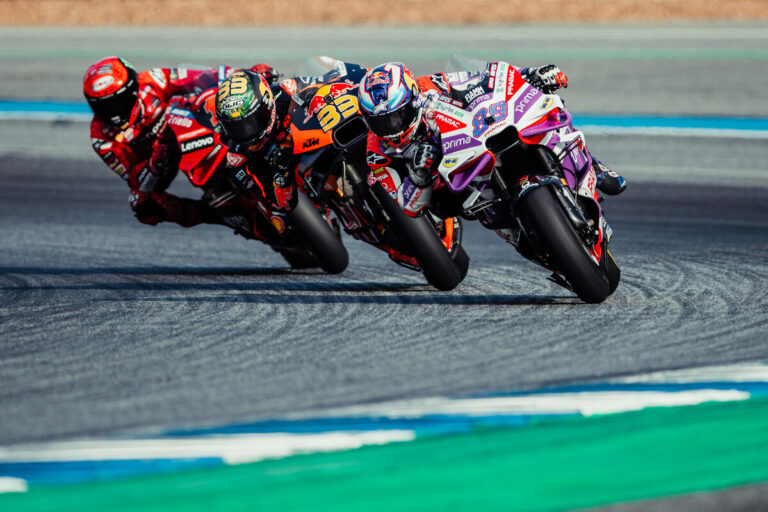
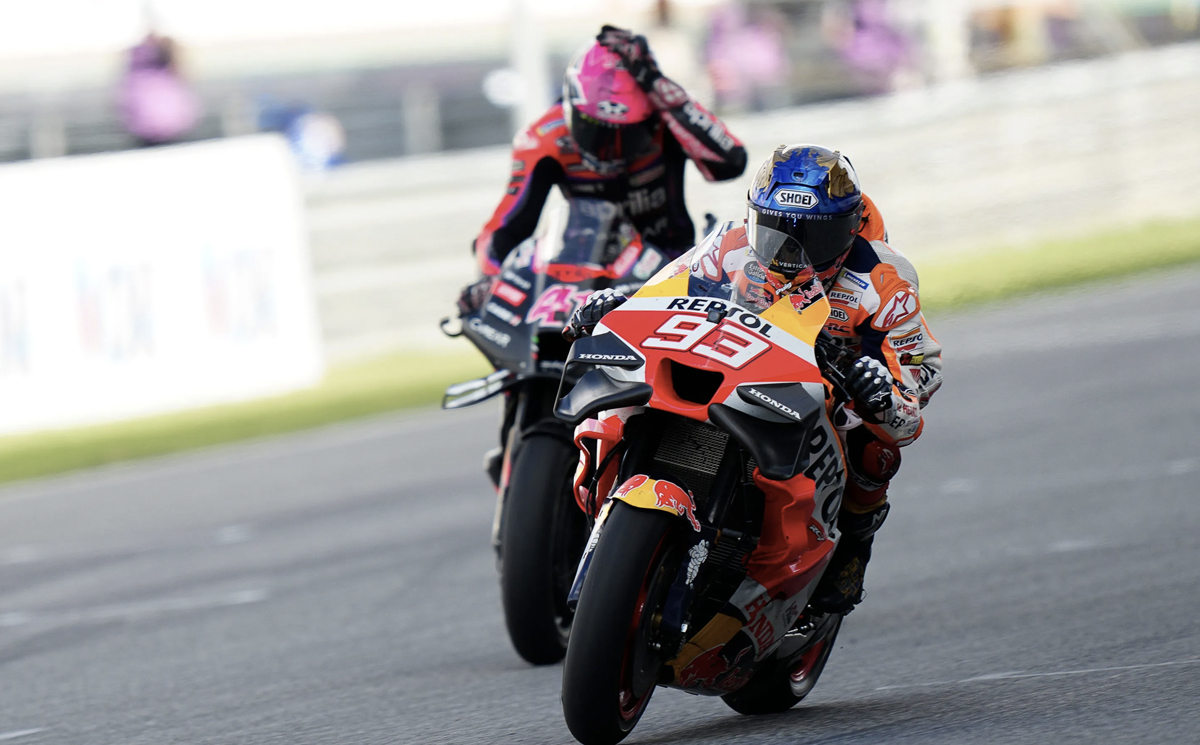
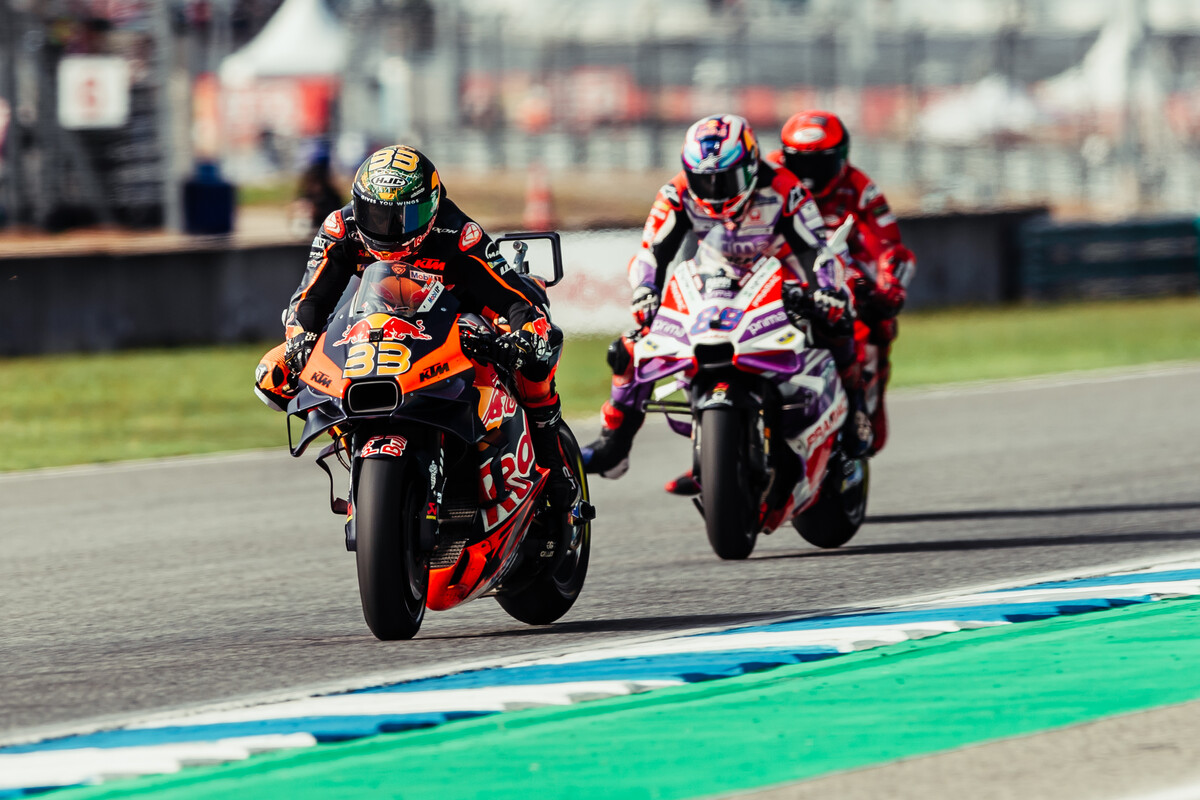
Not only are we getting a fantastic battle for the title heading into the final three rounds of the MotoGP World Championship, but we are also being treated to some of the best races of the season: far from playing the percentage game, Jorge Martin and Francesco Bagnaia are going for broke, as they know they must. What they didn’t need – but we certainly did – was that pesky Brad Binder getting in the way and threatening to spoil their day…!
Image source: KTM
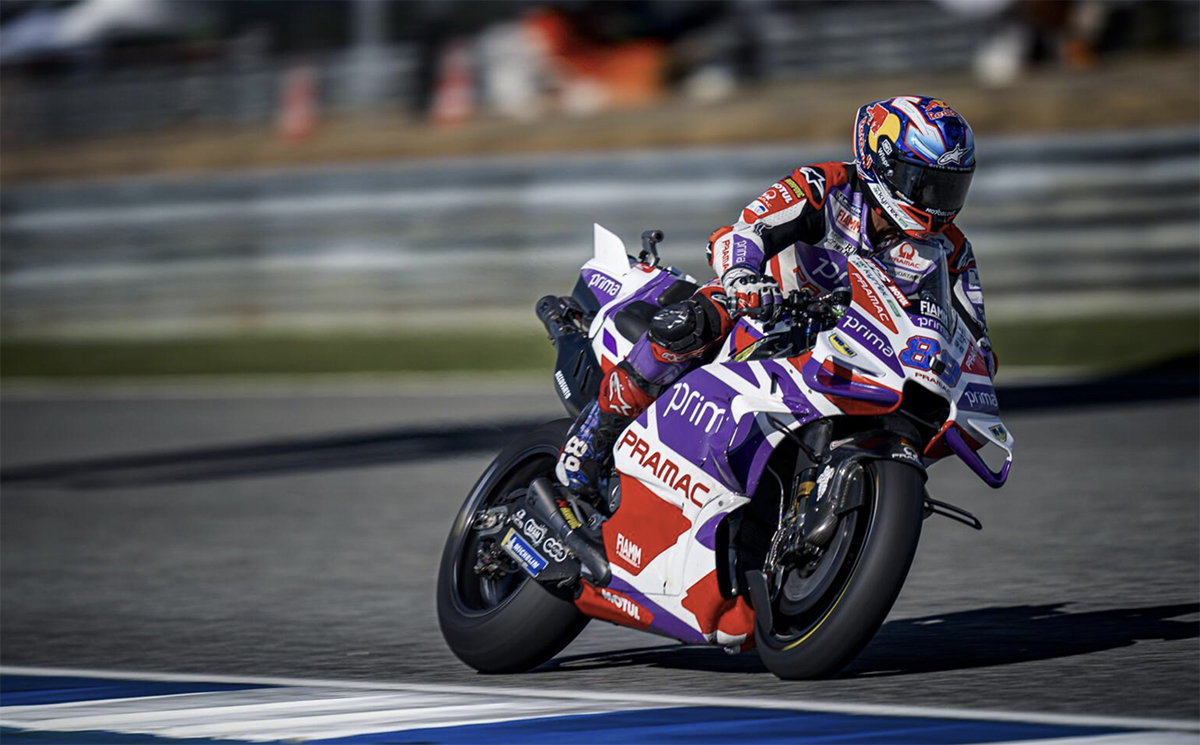
After the nightmares of Indonesia – sprint win then crash out of the main race – and Australia – no sprint race but where at least he finished the main race, albeit in fifth after leading the whole race apart from the last eight corners – Martin knew he couldn’t afford any more mistakes and he didn’t put a foot wrong the whole weekend in Thailand. Pole position and two victories were as much as he could do: it was up to Bagnaia to mess up and, in the sprint race, it looked like he was going to do just that: the seventh place was all he could manage after a poor start and seemingly unwilling to take too many risks to make up for it.
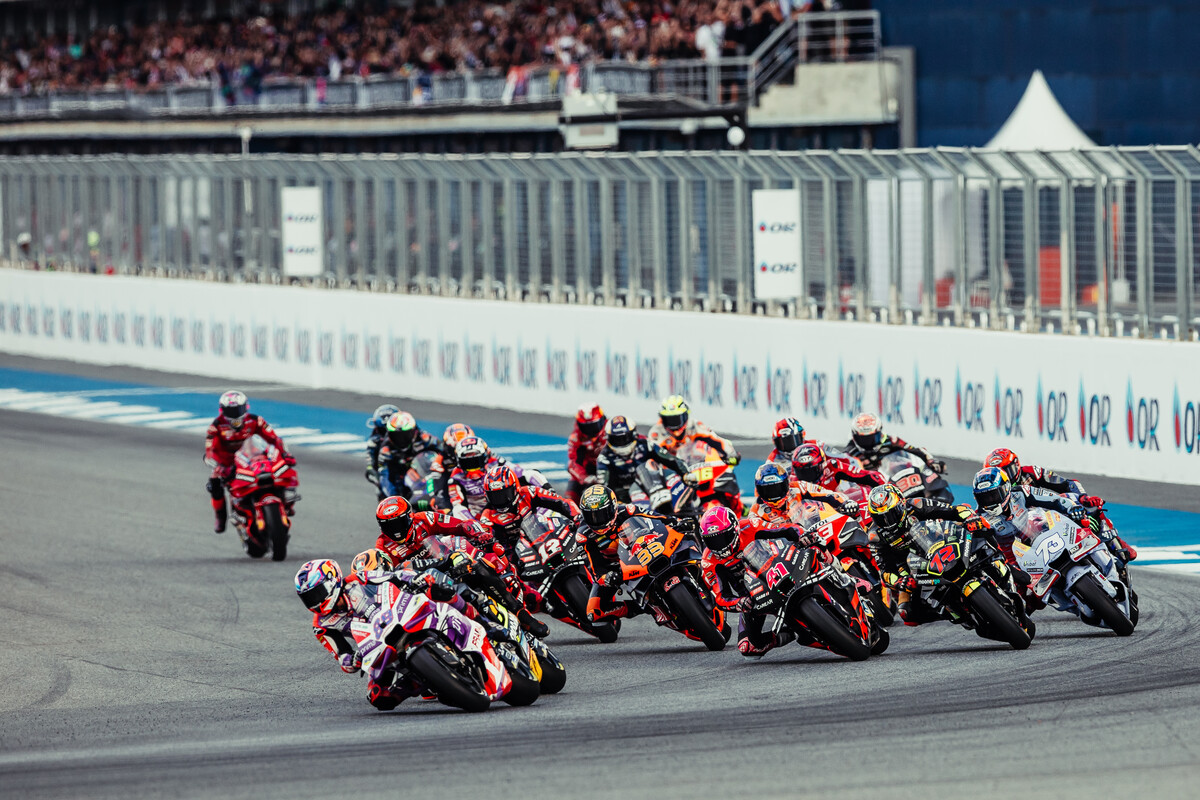
Image source: MotoGP
Thailand isn’t the most inspiring track but we were treated to some epic racing in the Sprint – between Binder and Marini, who completed the podium in that order, and Espargaro and Marc Marquez, the latter snatching fourth at the last corner. Bagnaia could only manage seventh. But the sprint races are breathless and over far too quickly for any rhythm to establish itself, even if the action is great: could the main race be anything other than Martin streaking off into the distance?
Image source: MotoGP
Oh, yes, it could! Again, Martin took the lead at the first corner but, this time, he didn’t streak off into the distance, tyre life was obviously on all the riders’ minds and it seemed as if no one was willing to pull the pin. The danger of this, of course, is that Martin was at risk, first from Espargaro, then Marini and then Binder and Bagnaia, who had had another bad start and had to fight past Marc Marquez, but was gifted more places when Espargaro faded and Alex Marquez fell off.
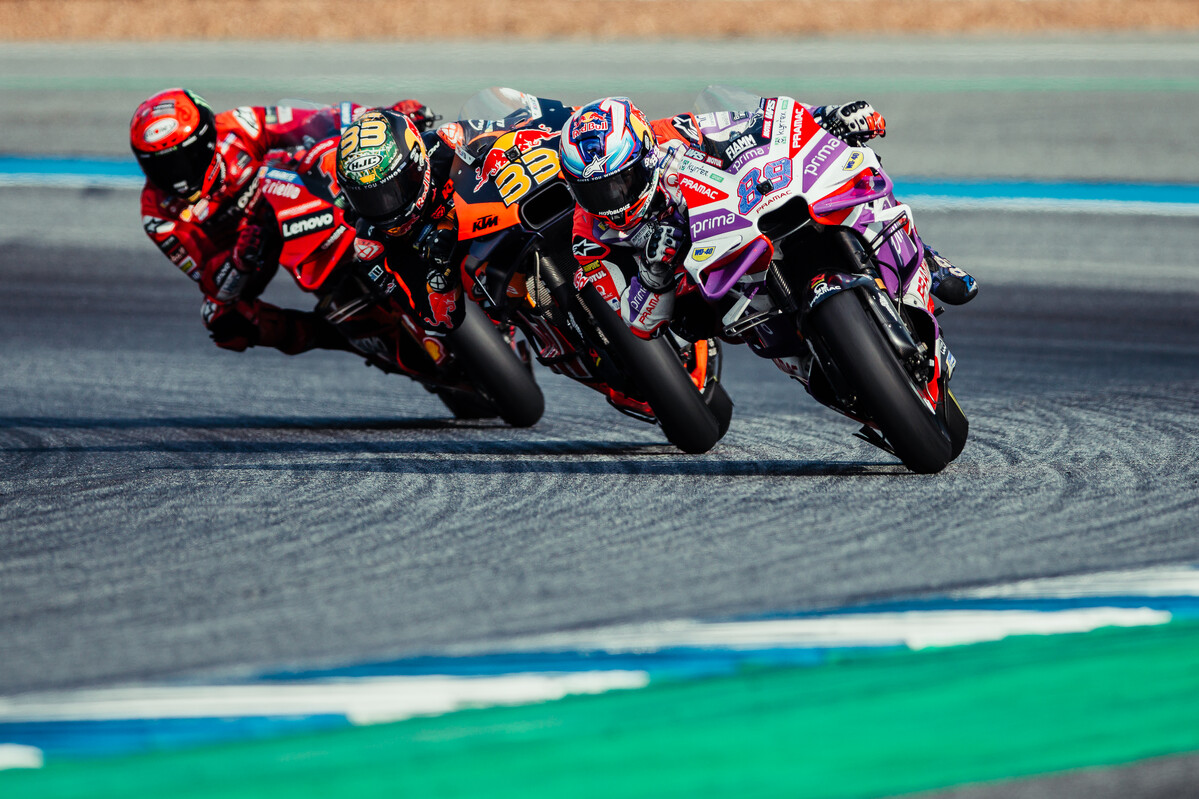
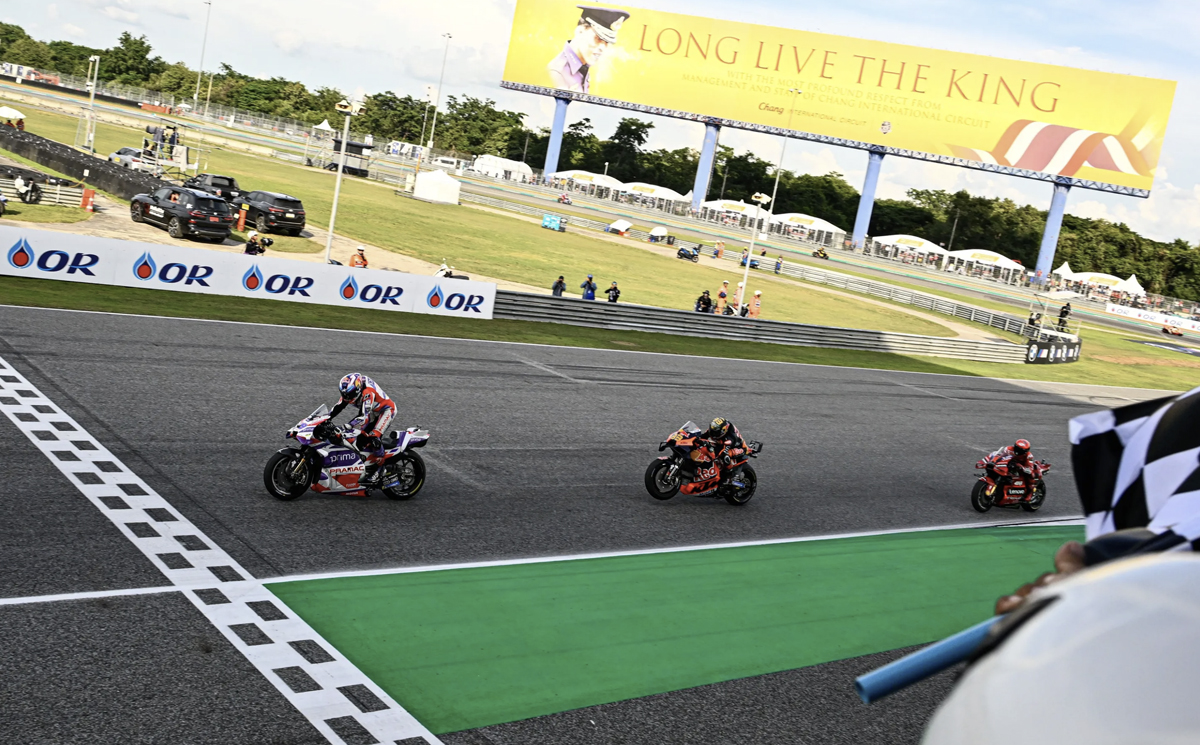
Soon, it was a straight fight between Martin, Binder and Bagnaia and it was intense. Binder tried a couple of times to pass for the lead but always ran it in too hot, letting Martin back through but managing to keep Bagnaia behind. With four laps to go, Binder passed and held the lead, only for Martin to pull a stunning pass out of the bag at turn three and re-take the lead. Again, Binder managed to lose just one place and we all held our breath as the last corners were negotiated. Over the line for the last time, it was Martin, Binder and Bagnaia, quicker than you can say it, the fourth closest podium finish ever!
Image source: KTM
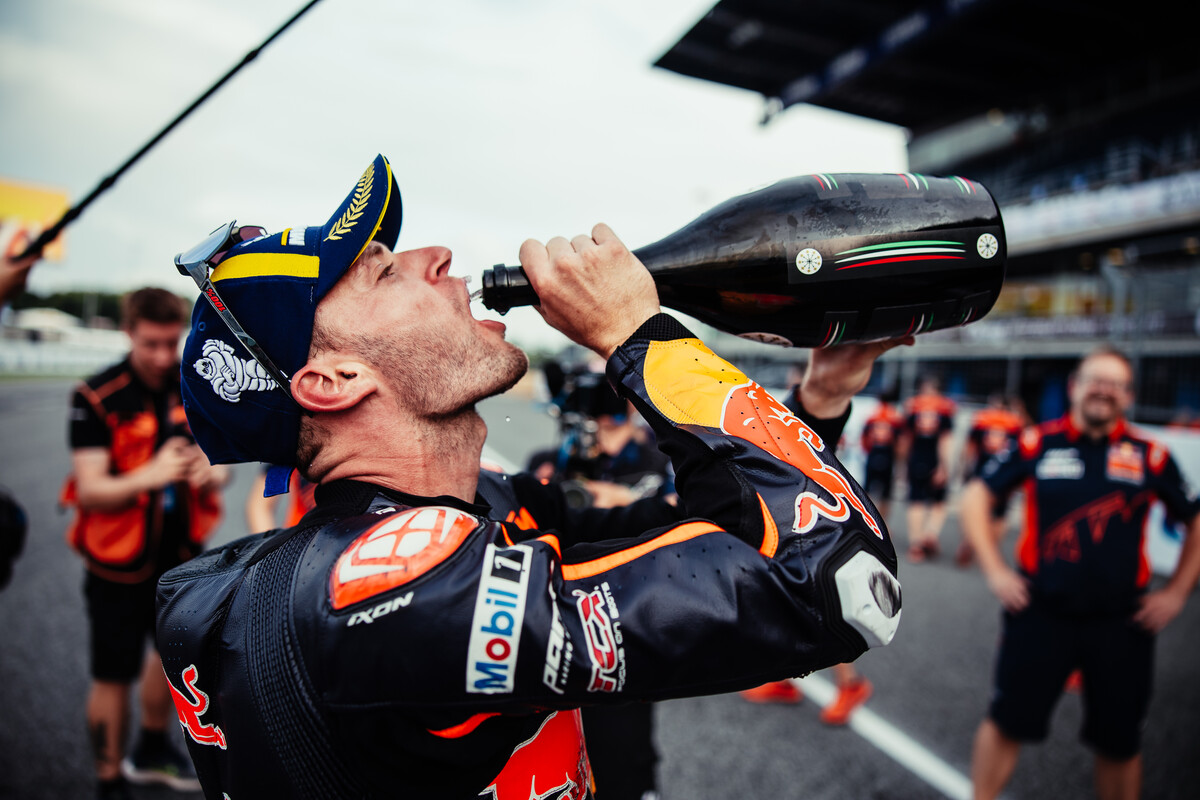
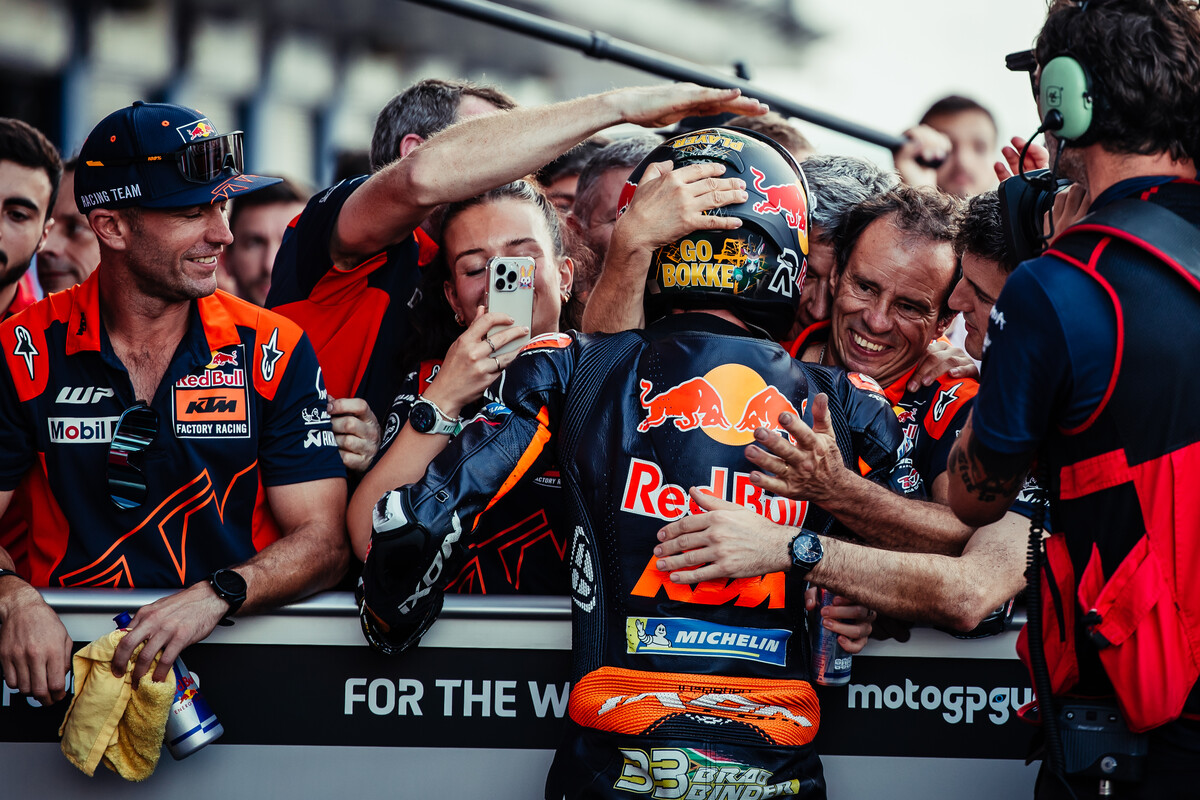
Of course, it was all a little too good to be true and Binder was demoted one place for running wide on the last lap. This time there was no doubt – unlike Assen – but still a podium. That makes nine for Binder, making him the most successful in premier class history for a South African. No victories this weekend, but a double podium will have been welcomed with open arms.
Image source: KTM
Those are the bare bones but, as usual, there were many moments and subtexts that made up the story as a whole.
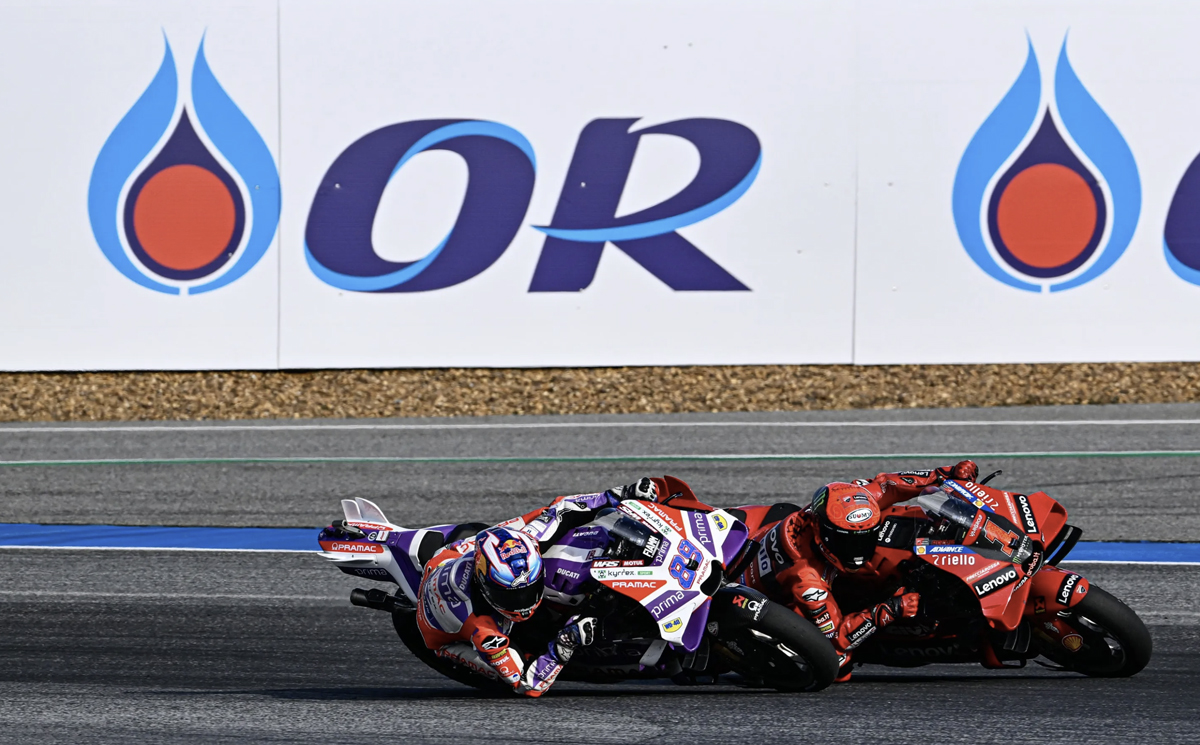
The Buriram circuit is extremely hard on tyres so not only did Martin have to ride as fast as he could to keep Binder and Bagnaia behind him, but he also had to manage tyre wear, all the time making sure no one passed him, which would mean having to follow and overheat his front tyre. So Martin had to know when to push and when to hold back. Also, he had to know when to brake super late and hard and when to brake a bit early and not punish the front tyre too much.
Image source: Pramac Racing
Martin’s expertise is in corner exit speed, not braking, but it shows how much you have to learn to improvise and push your own personal limits in MotoGP, that he was able to out-brake two of the best late-brakers in the business, all the time looking after the front tyre. Think about it; you’re riding as fast as you know how, being pushed relentlessly, making the bike do what it doesn’t want to do, all the time trying to do it as smoothly as possible while working out where you have to do it harder and where you can take it (relatively) easy. This has become the thinking man’s game, not merely the bravest.
Binder managed to get past and led for three laps but he was suffering with a worn rear tyre, which was harming his acceleration out of corners. Martin re-passed Binder but the fight was by no means over and, on the penultimate lap, heading into the penultimate corner, Binder’s bike was trying to shake itself off the track and he had to back off the throttle. Bagnaia jinked to the left to pass Binder, putting him right on the curb. With Martin just in front of Binder, Bagnaia then proceeded to put his nose in front of Martin, who was taking a defensive line against Binder. It was an incredible piece of riding but, ultimately, it stuffed up his corner entry and he was back in third as they streamed onto the pit straight to start the final lap, which they finished in line astern – Martin, Binder, Bagnaia. It was breathless and brilliant.
Image source: KTM
After the race, there was a heart-stopping moment for Pramac Ducati when Martin was told his front tyre had been under pressure for more than half the race and therefore liable for a time penalty. As this was his first transgression, he merely received a warning: next time it would be a time penalty. It doesn’t bear thinking about the consequences of that on the championship and only serves to show how fatuous the rule is, just because Michelin can’t make a tyre that can handle the aerodynamic loads that are being transferred through to the tyre or, if they have, they’re not prepared to stick their necks out and say that the tyre will stand being run under pressure, which may increase grip but also increases temperature in the carcass, potentially leading to tyre failure. If the championship is lost through such a penalty, then everyone will lose: the riders, the teams and the fans. Dorna needs to sort this out as soon as possible.
The upshot of all that is that Bagnaia’s lead is down to 13 points over Martin with 201 points still up for grabs, always supposing we manage to start all the races. Martin is on a roll but no one is foolish enough to count out Bagnaia just yet. Last corner of the last lap of the last race to decide the championship, anyone?
If the truth be told, South Africa, in an African context, has always had delusions of grandeur. There was a time when that way of thinking was perhaps justified, albeit not in respect of all its citizens. We did, 30 odd years ago, enjoy world-class infrastructure, an immaculately maintained road system, clean and tidy towns and cities, borders that were controlled and a vibrant economy. Well, the fact is, that ship has sadly sailed. We have had an influx of migrants into SA, coming to seek their fortune, which has swelled our naturally growing population to the point that urban congestion is the new norm. This has brought new challenges for those who, for work or play, need to move around the cities and bigger towns.
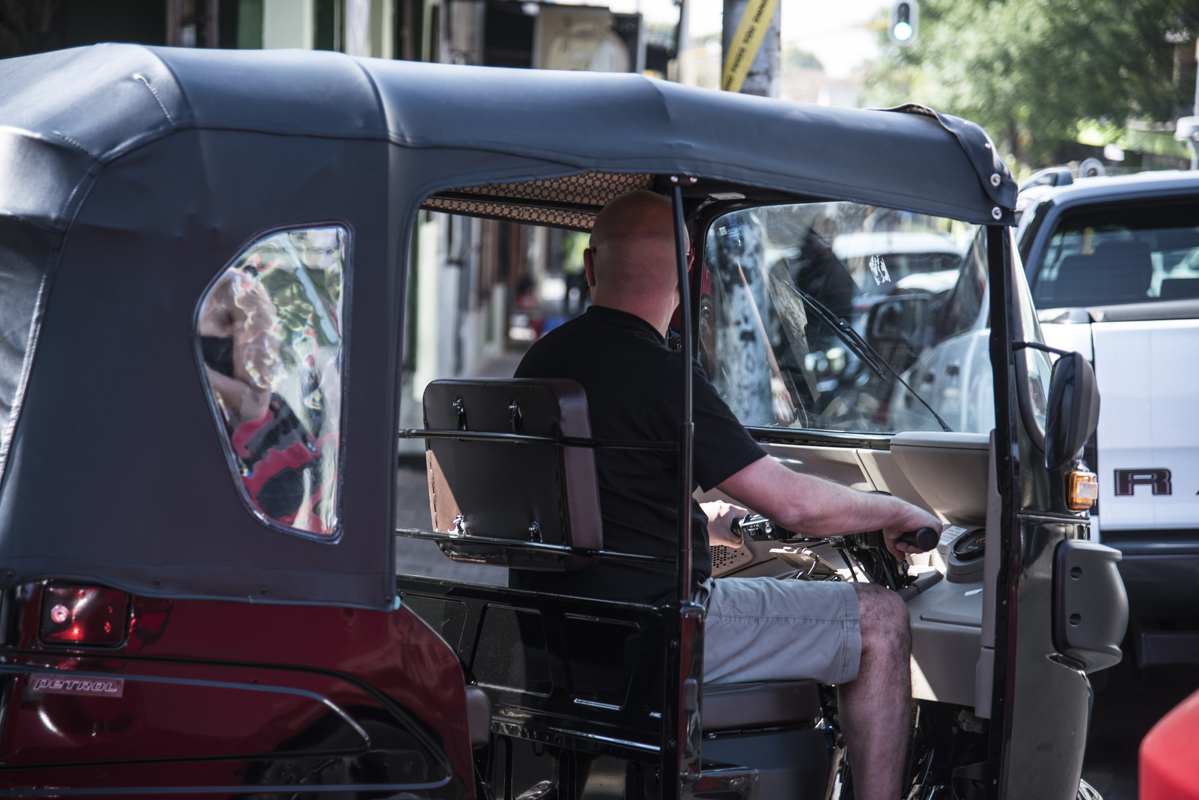
Companies like ‘Uber’ and similar entities have increased in popularity as urban commuters have opted to be driven rather than drive themselves. Finding parking, or the pain of traffic fines if you overstay your welcome and so on, just make hitching a ride really viable. Countries in the Far East have had this crowded city dilemma for decades already, and have been forced to address this issue. Both the transport of goods, as well as people around their cities, has been made much easier by the adoption of what has become known as the ‘Tuk Tuk’. The name no doubt arises from the exhaust note of their single-cylinder motors. Kind of an Asian version of ‘putt putt’, if you get my drift.
Photo credit: Dave Cilliers / ZA Bikers
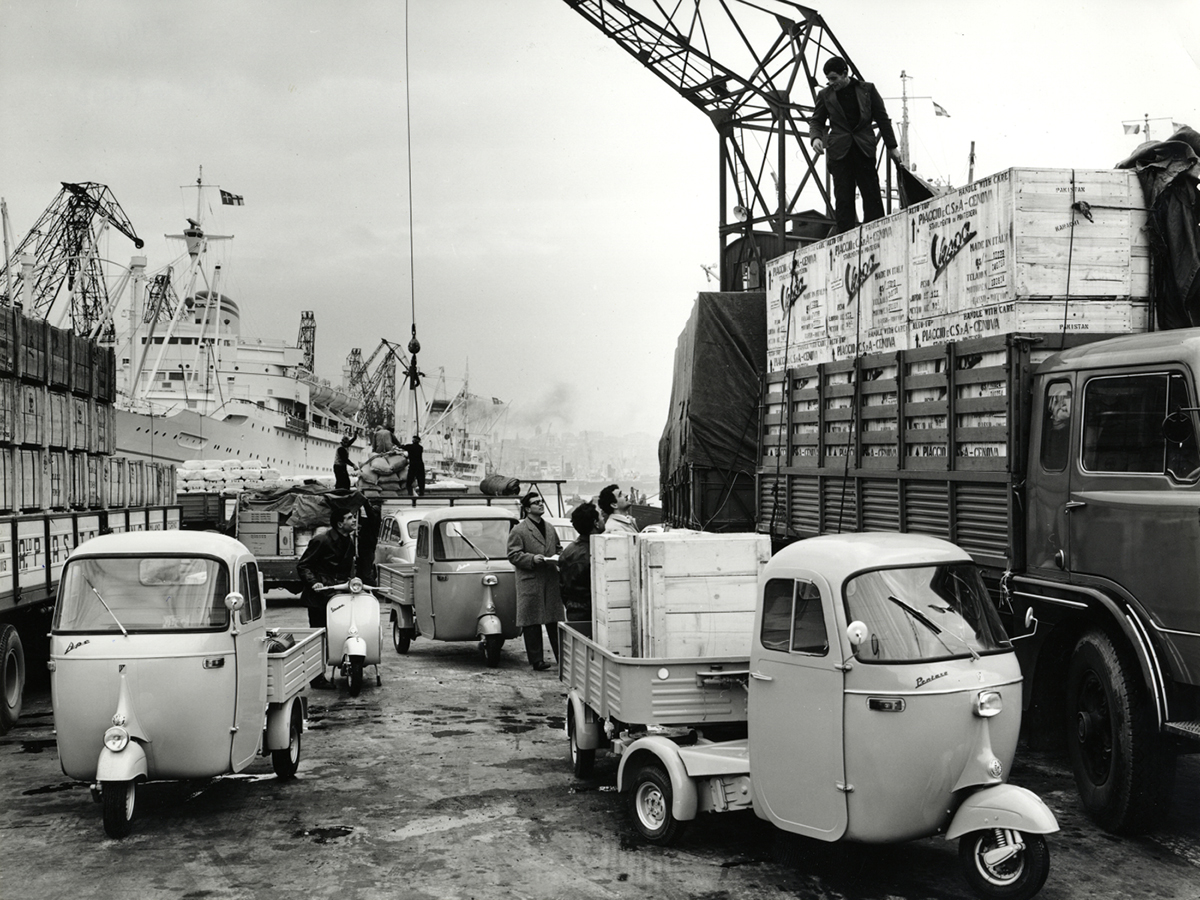
The Tuk Tuk owes its origins to the Piaggio Ape, the venerable little three-wheeler developed post World War 2 in Italy to meet the need for a small, affordable, practical, and economical commercial vehicle. Ape is Italian for Bee. The original 50cc 2-stroke Ape buzzed like a Bee and had a 200 kg payload. Performance was sedate, to put it kindly, and the Ape topped out at 43 kph. Not that this was an issue in its field of operation. In time a diesel engine was developed for the Ape and the rest, as we say, is history. Italian cities are still infested with these plucky little workhorses.
Image source: Piaggio
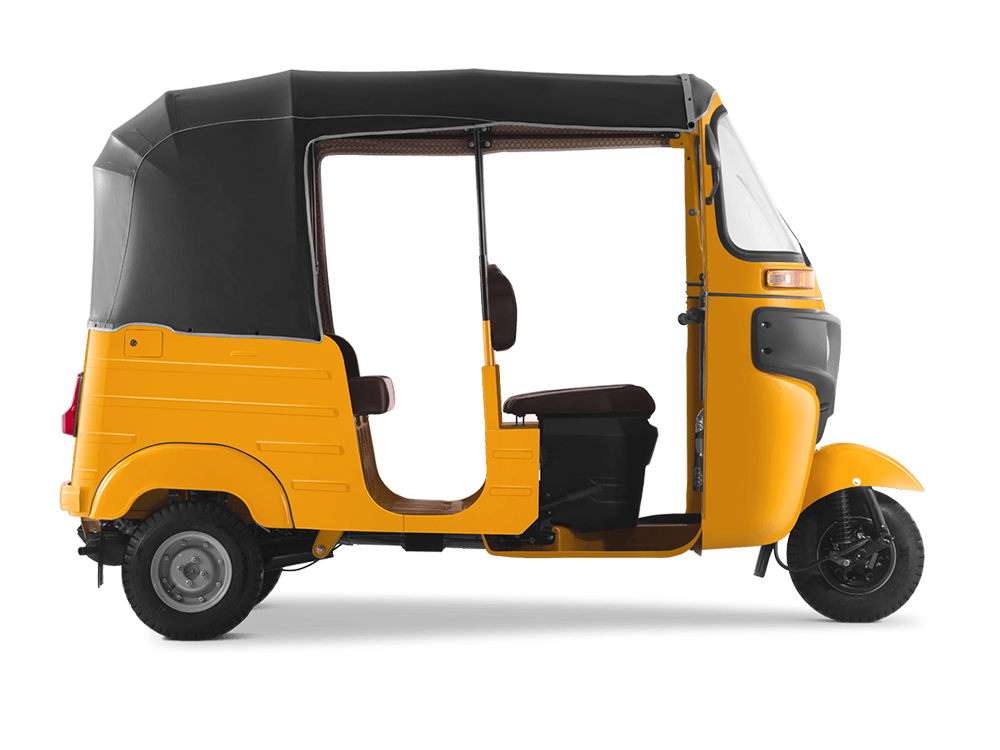
The 1980s saw the Ape take off in India, where Tuk Tuk’s are known colloquially as “loading Gadi’s”. Indian motorcycle manufacturers like Bajaj, Mahindra and TVS all make versions of the Tuk Tuk. Bajaj, the subject of this story, specialises in the people carrying variety and has built an enviable reputation over time. Bajaj were the first Indian company to develop and build what was termed an “Auto Rickshaw” in 1971, after which they started building Apes under licence to Piaggio in the ’80s. Bajaj are currently the largest manufacturer of Tuk Tuk’s in the world.
Photo credit: Bjorn Moreira / ZA Bikers
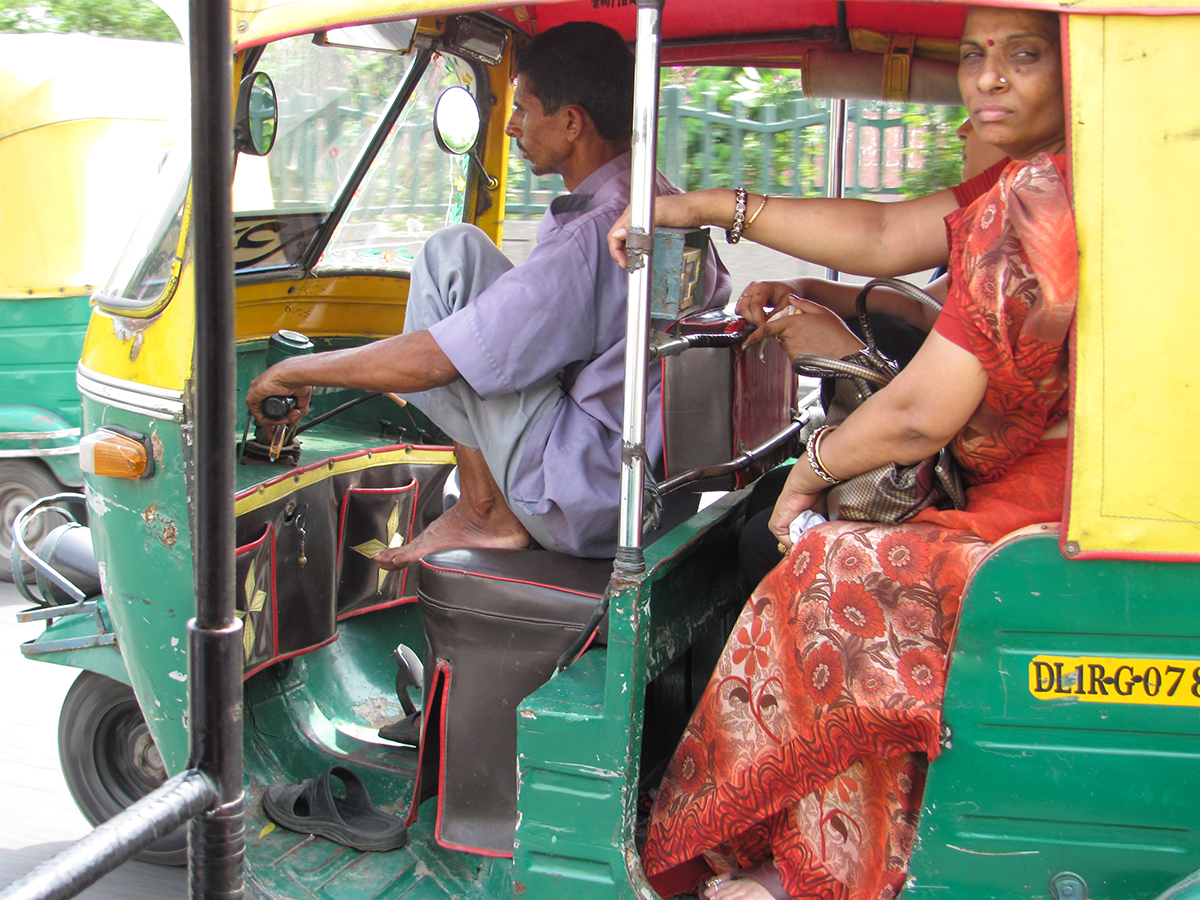
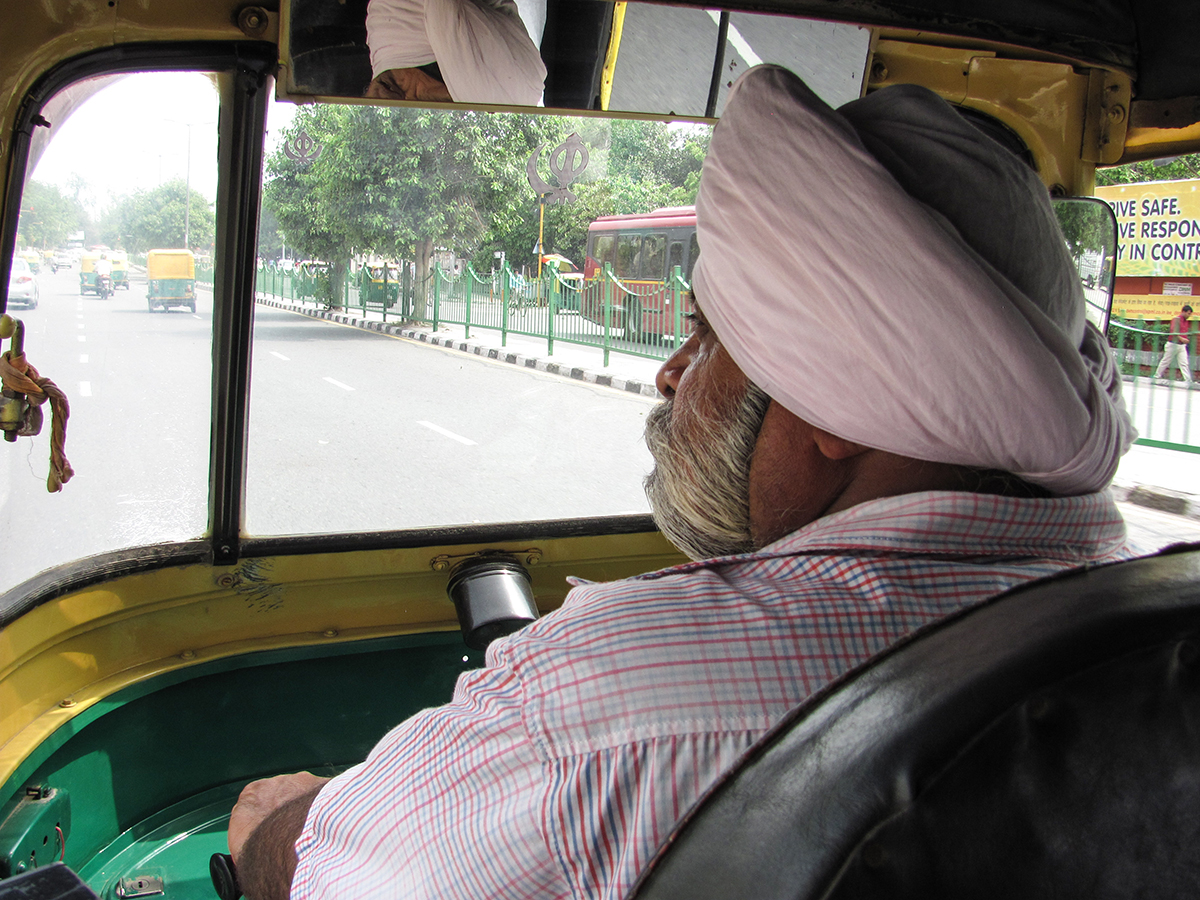
Simon and I visited India around 2010 when we visited TVS in Bengaluru and Hero in New Delhi. We had our first experience of Tuk Tuks right off the plane in Mumbai, when we hitched a ride to our hotel in a Tuk Tuk. Welcome to India. I had ridden on a Tuk Tuk when I visited Singapore and Thailand in the ‘90s so I was already familiar with this unique and funky form of transport. Si and I spent hours in the company of a Sikh fellow who took us on an extended tour of Delhi. His Tuk Tuk was a Bajaj that ran on Liquid Petroleum Gas [LPG].
Photo credit: Dave Cilliers / ZA Bikers
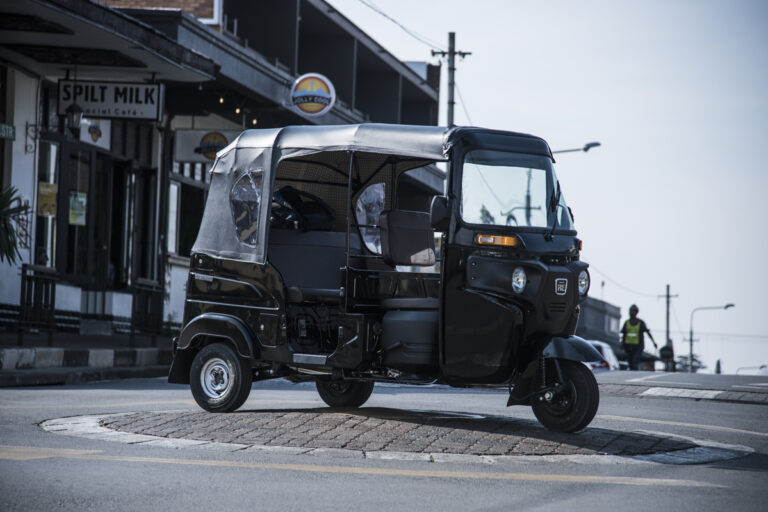
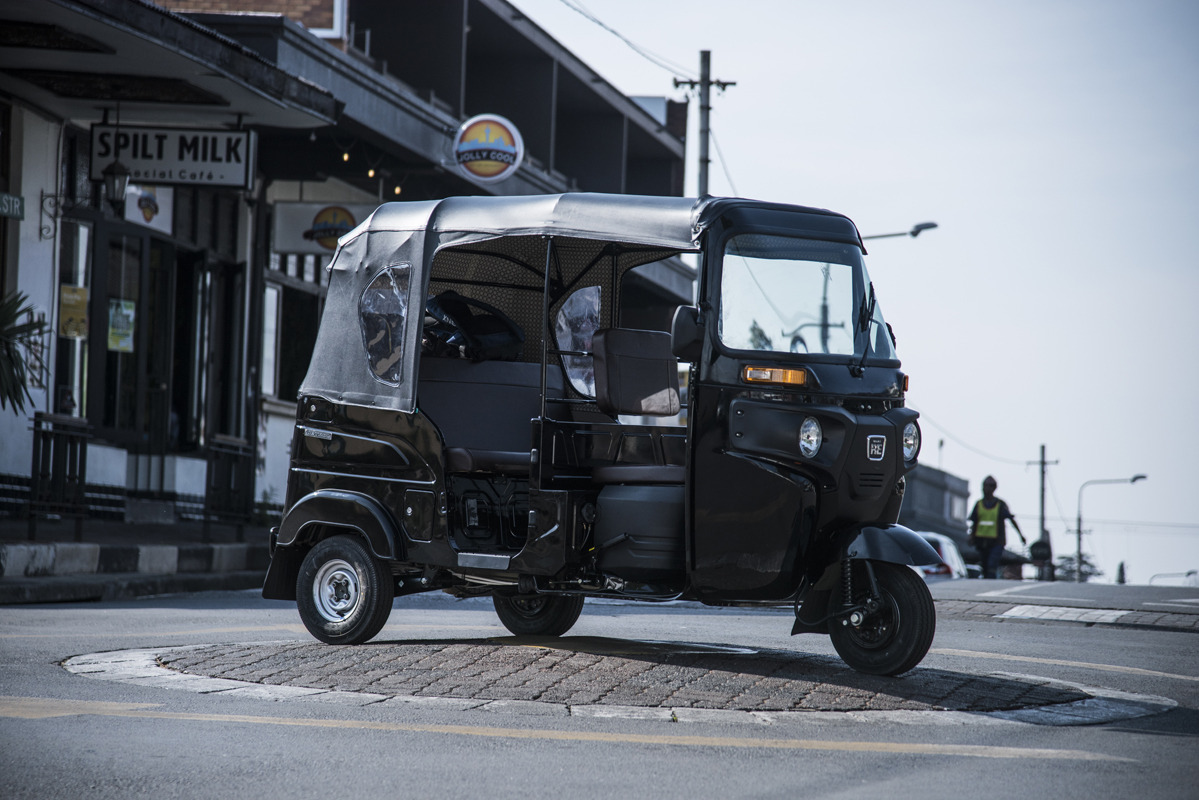
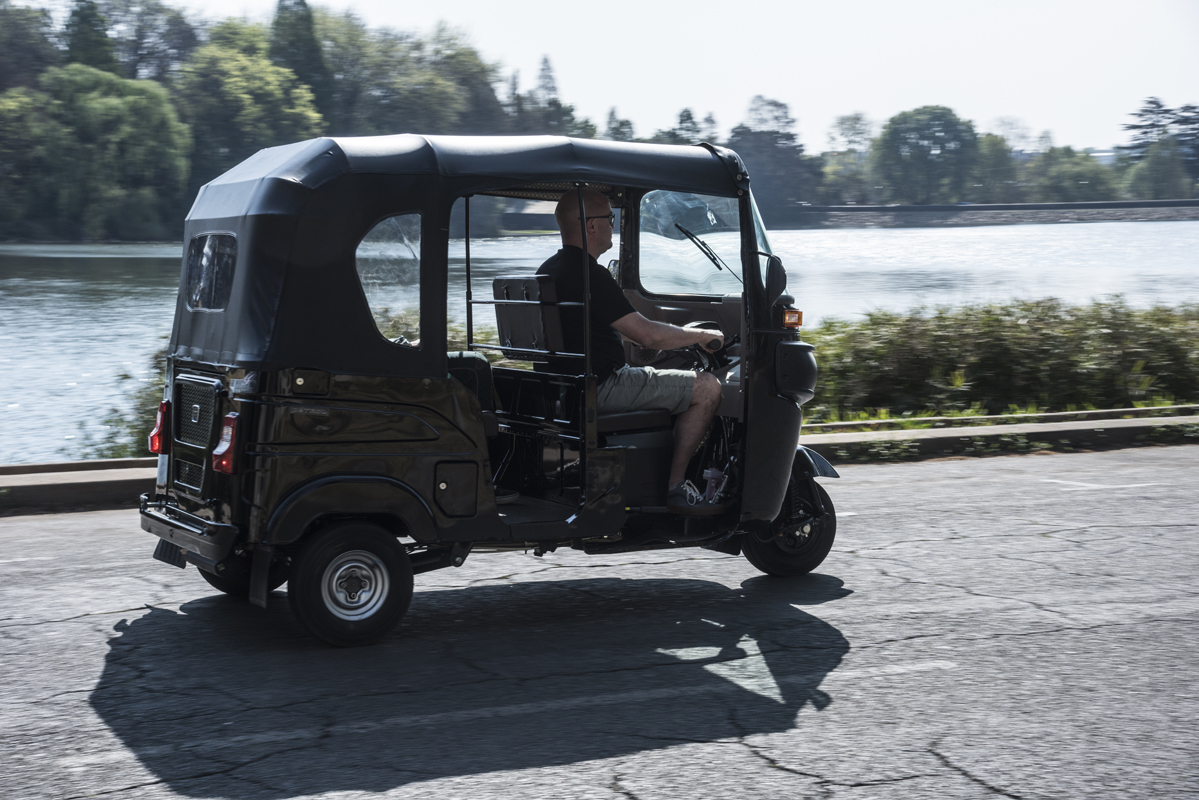
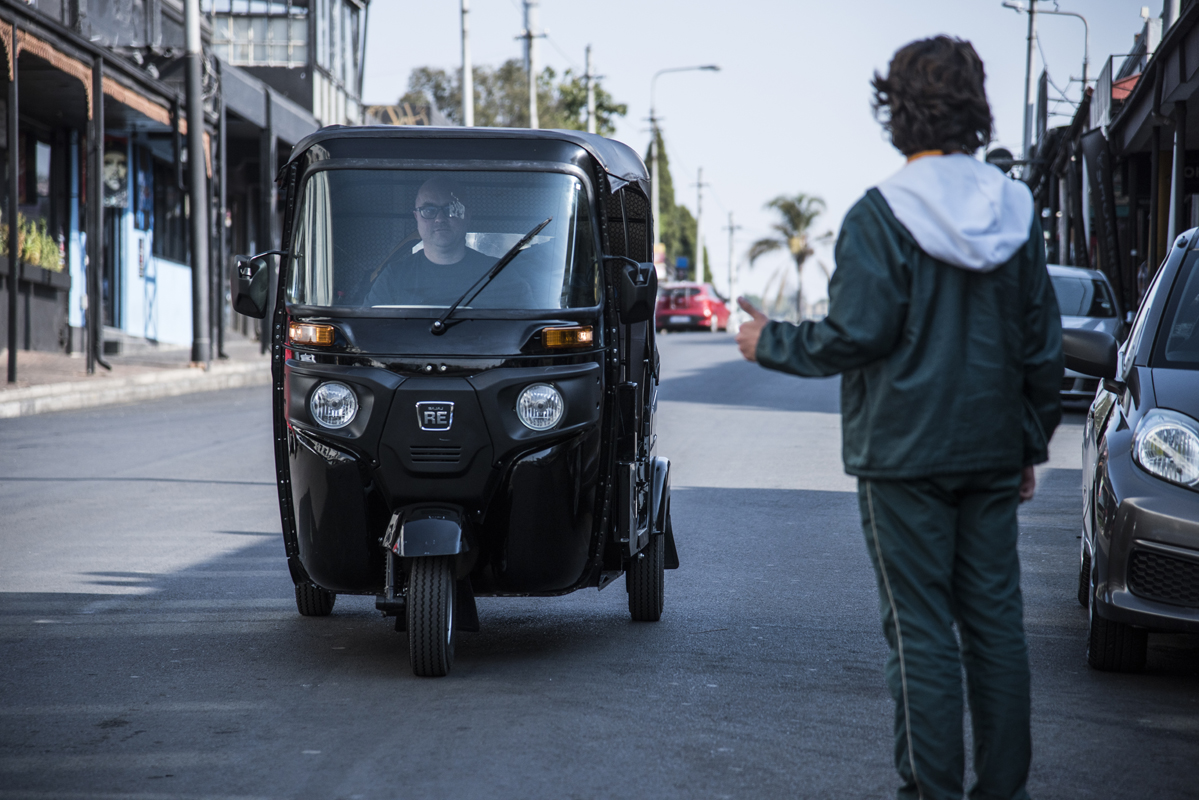
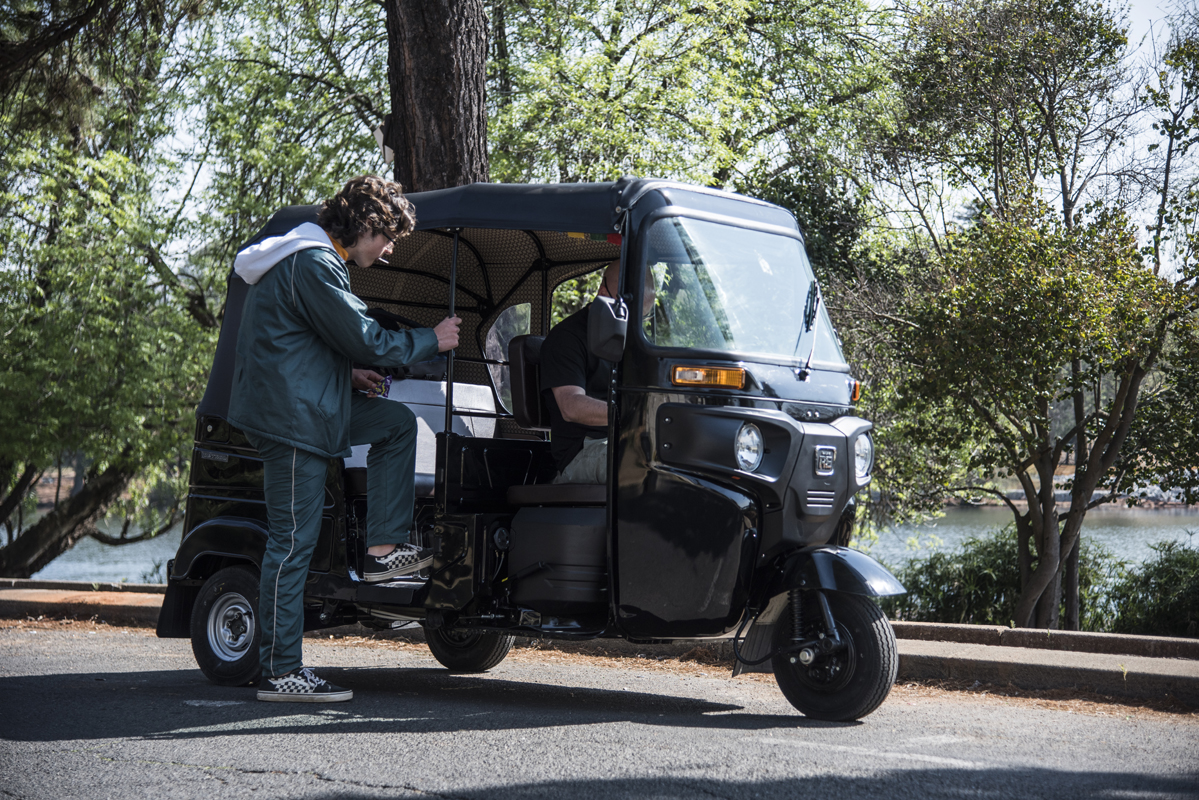
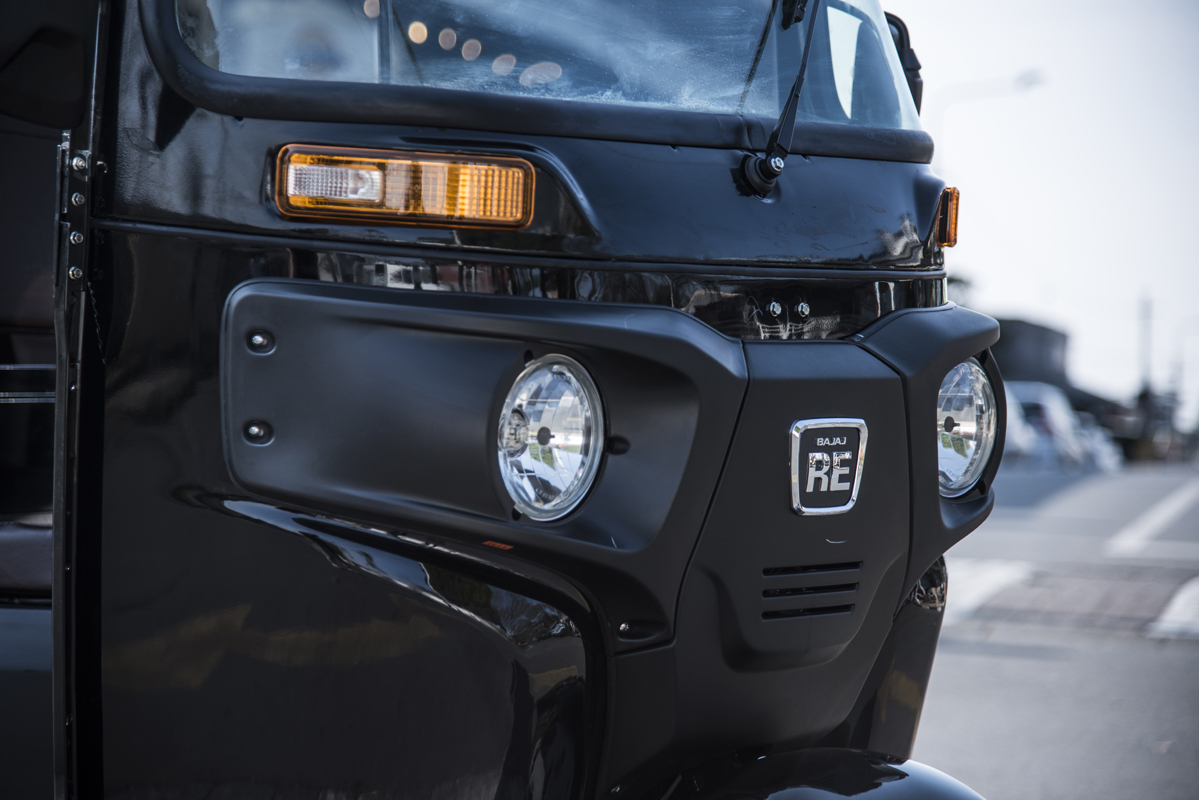
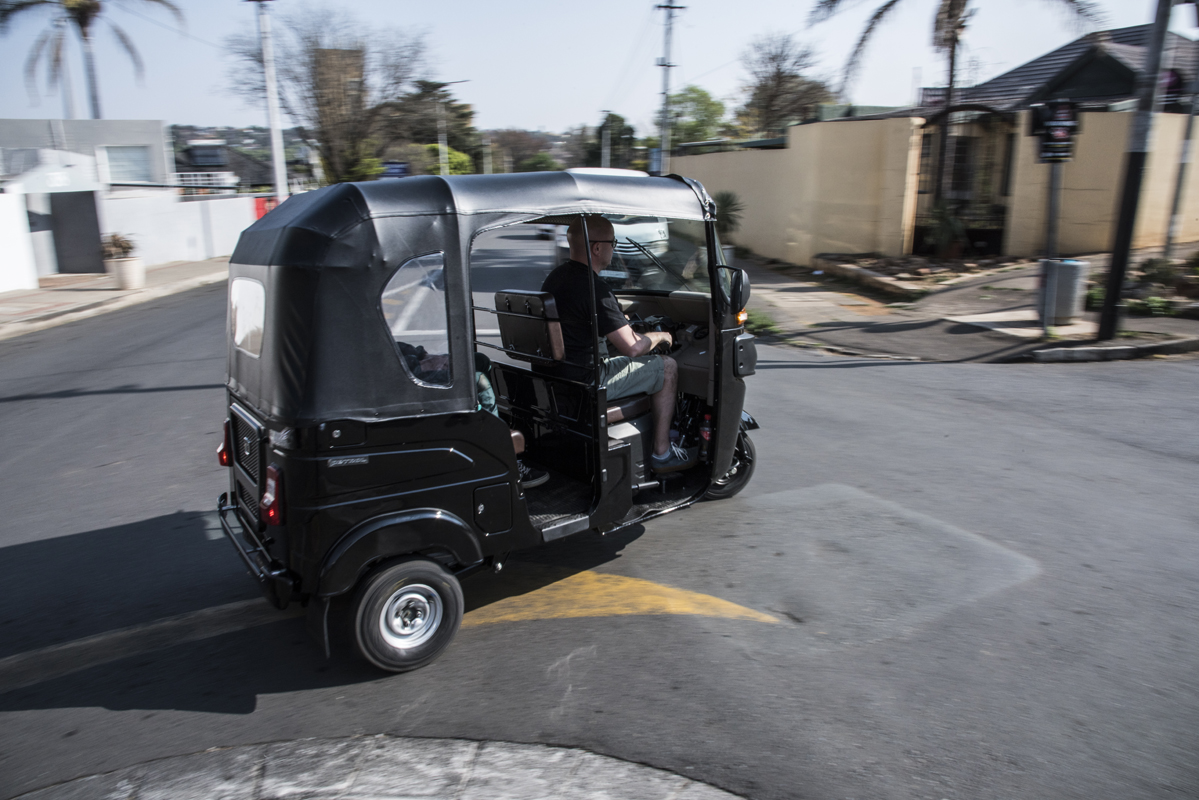
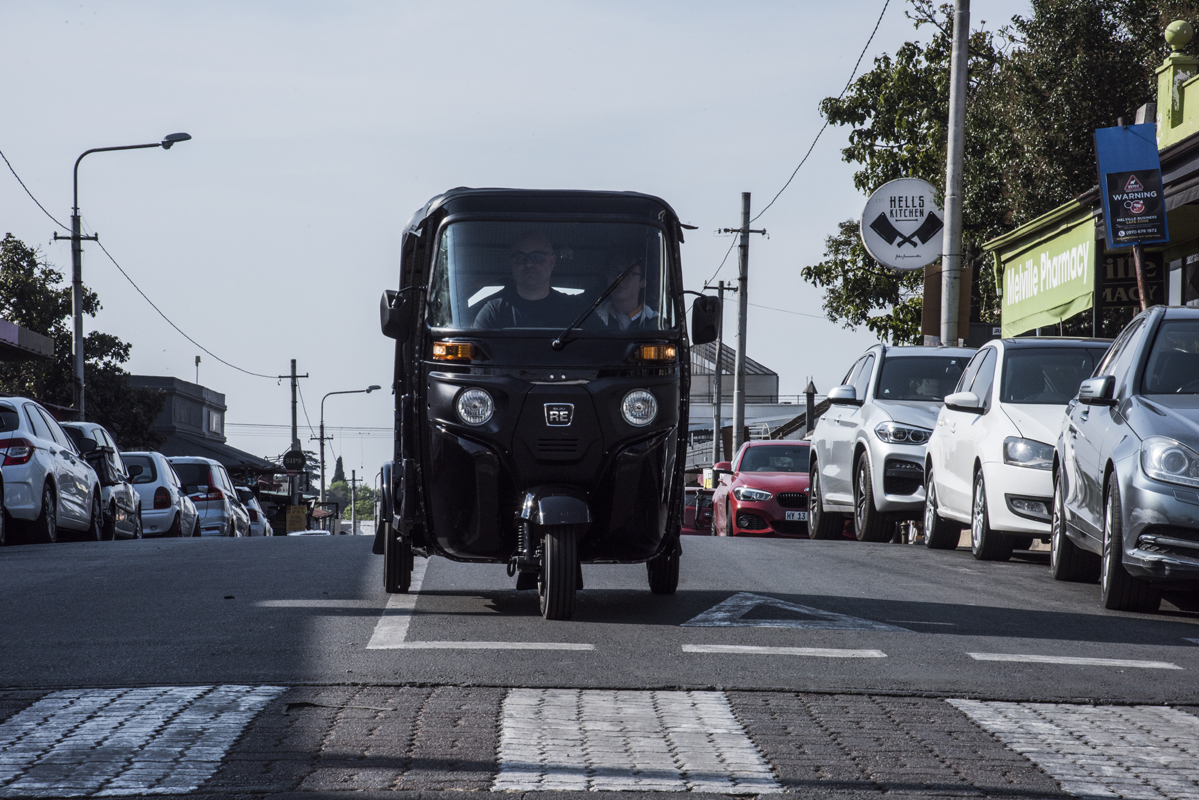
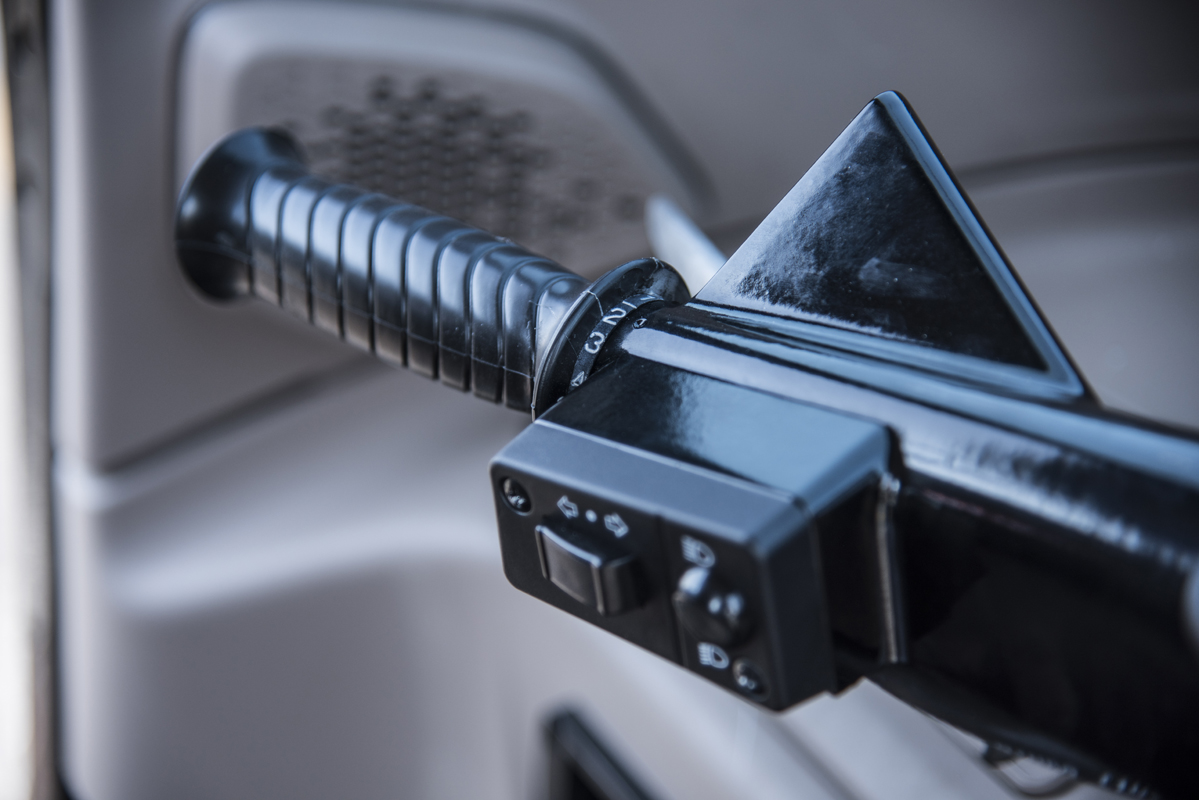
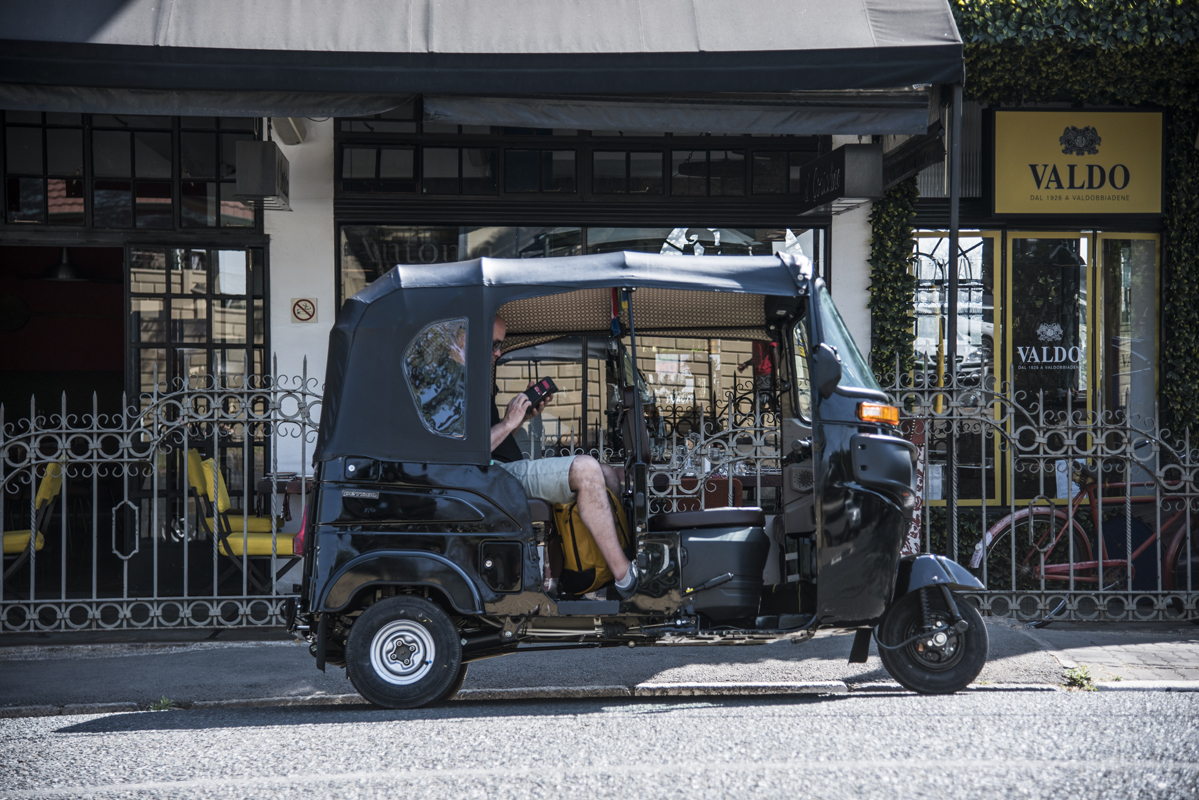
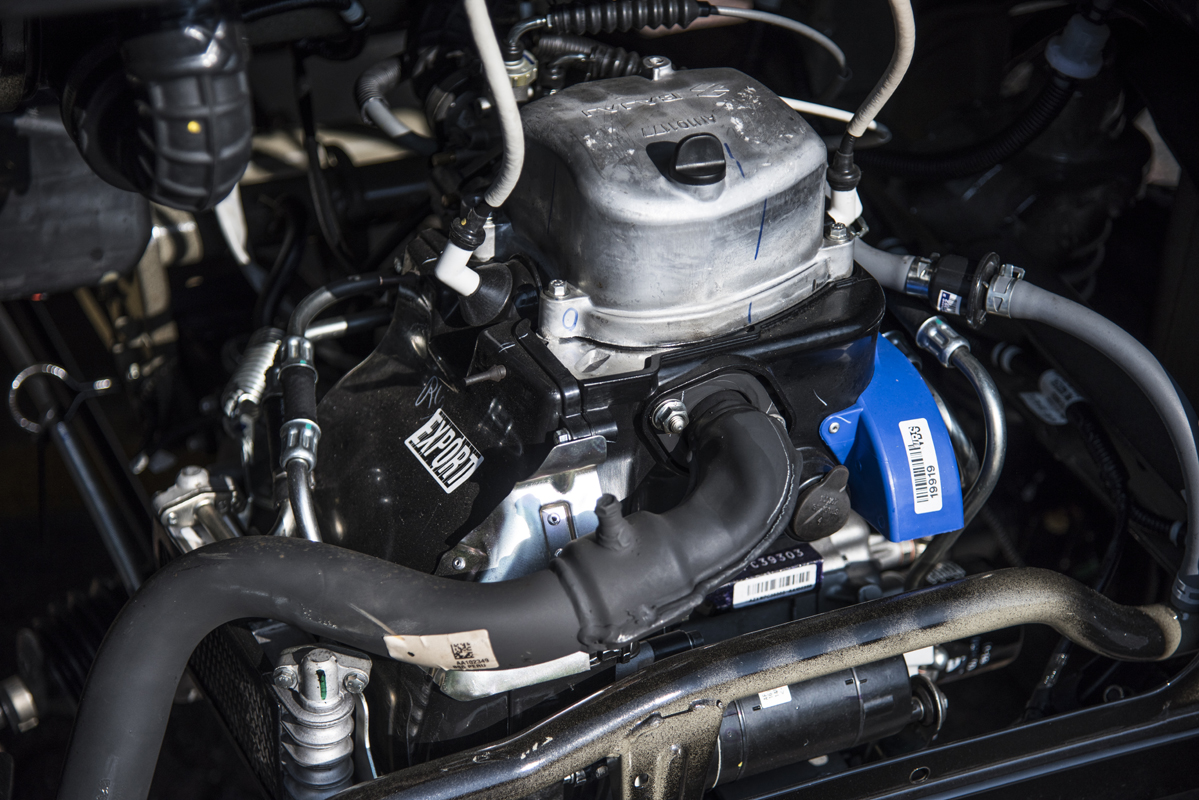
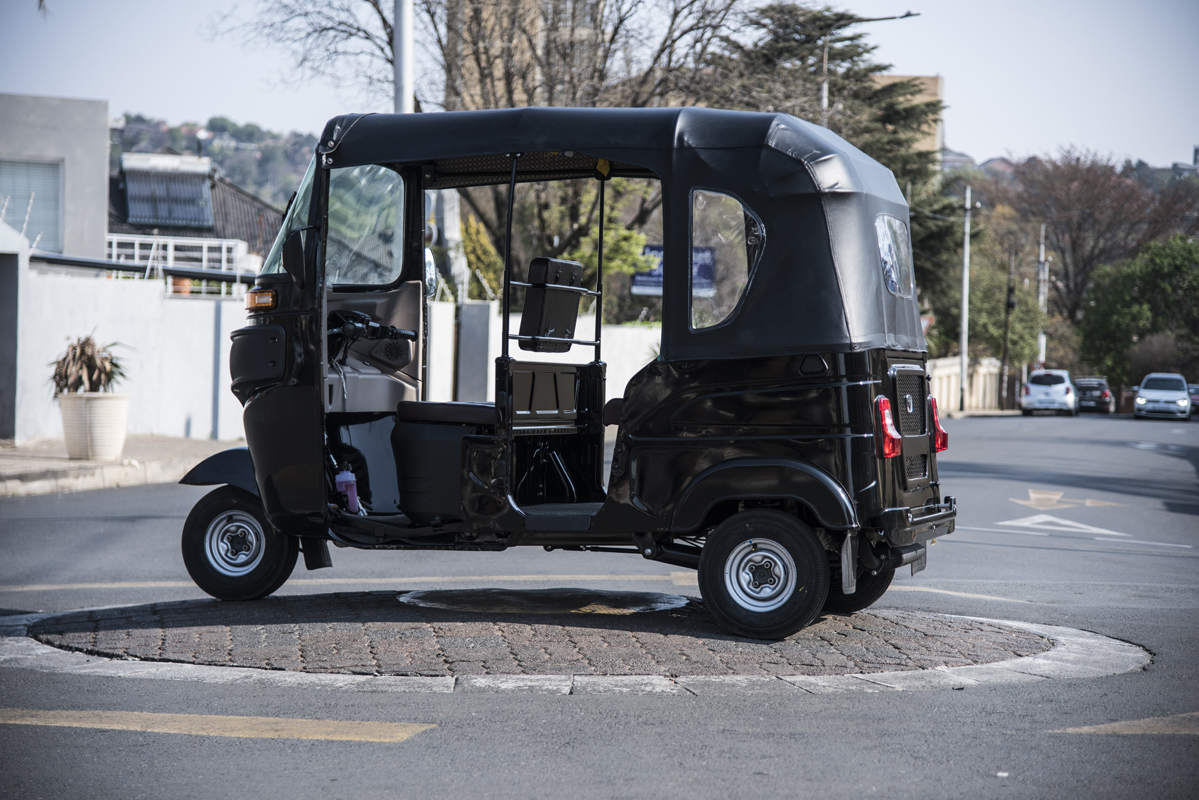
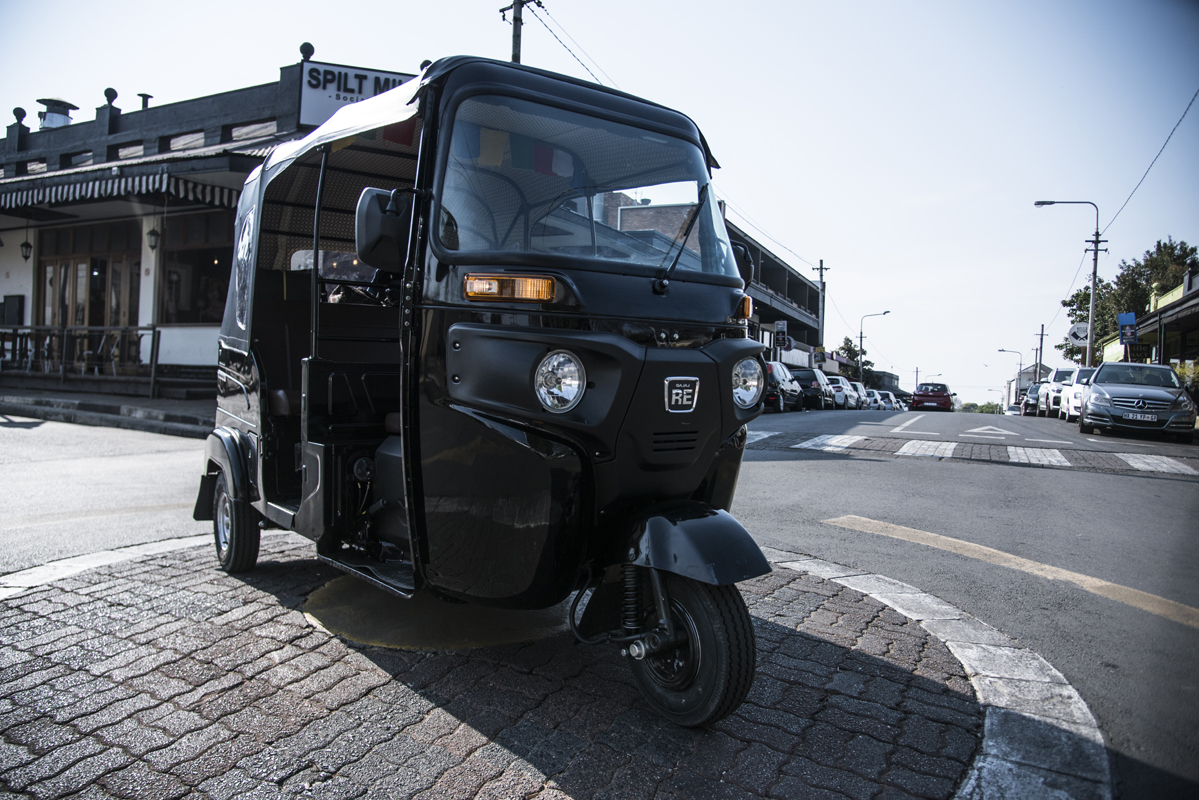
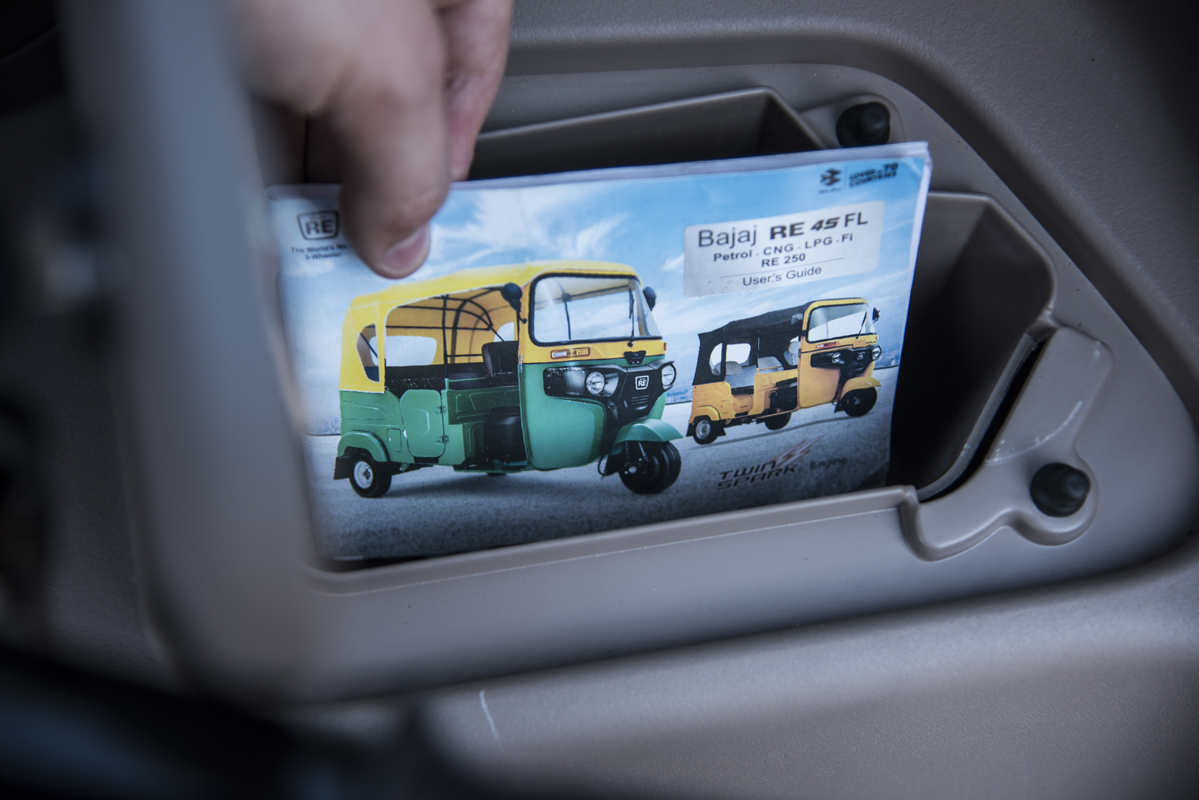
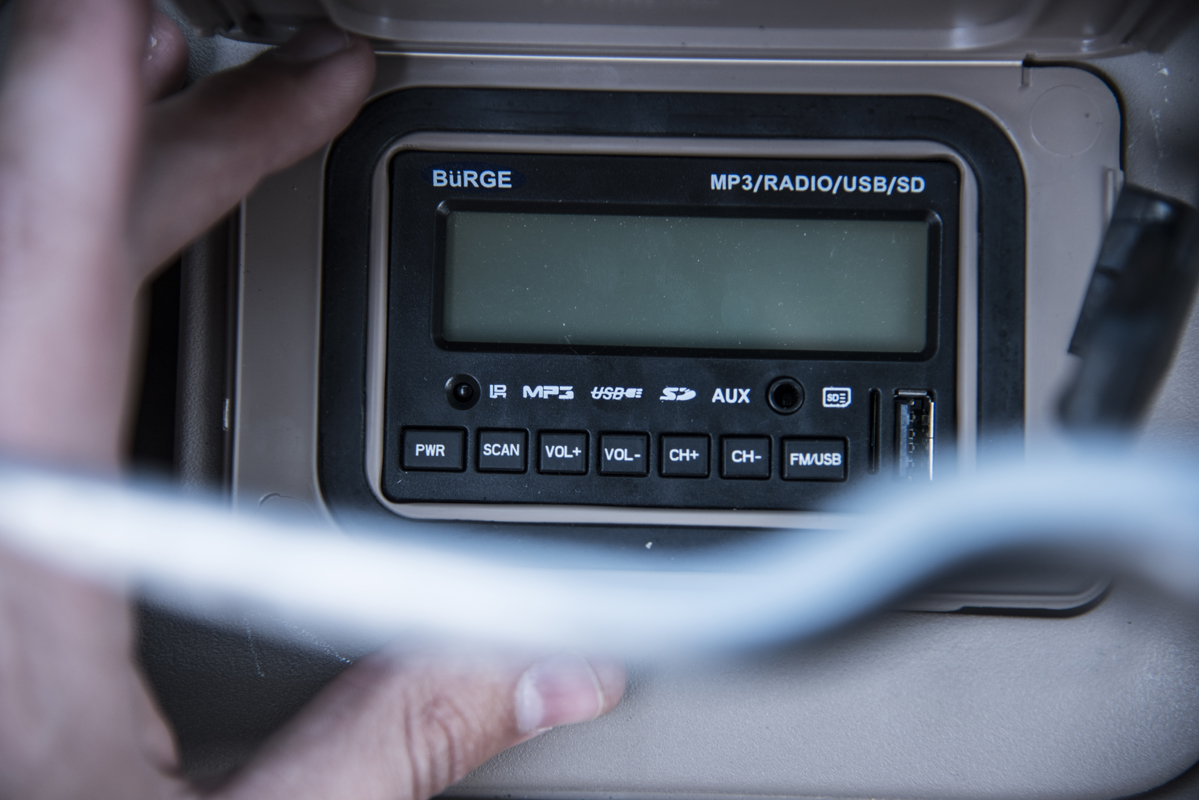
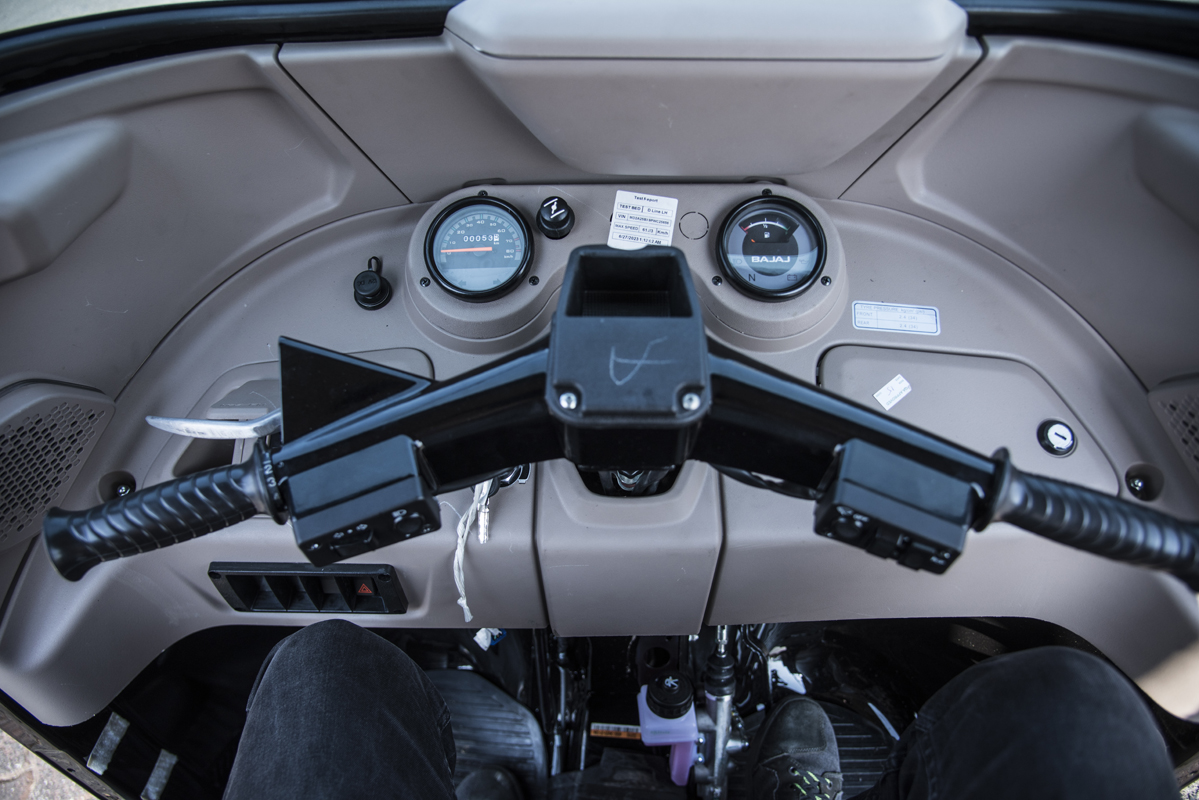
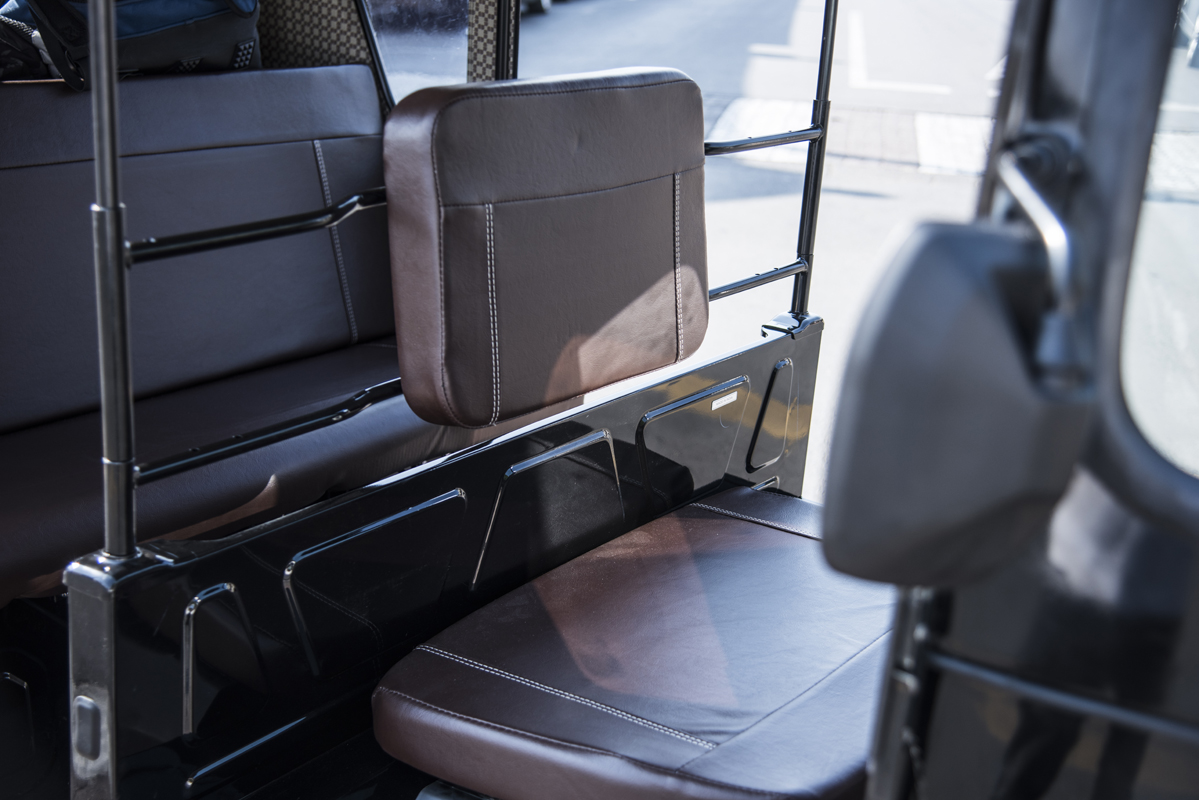
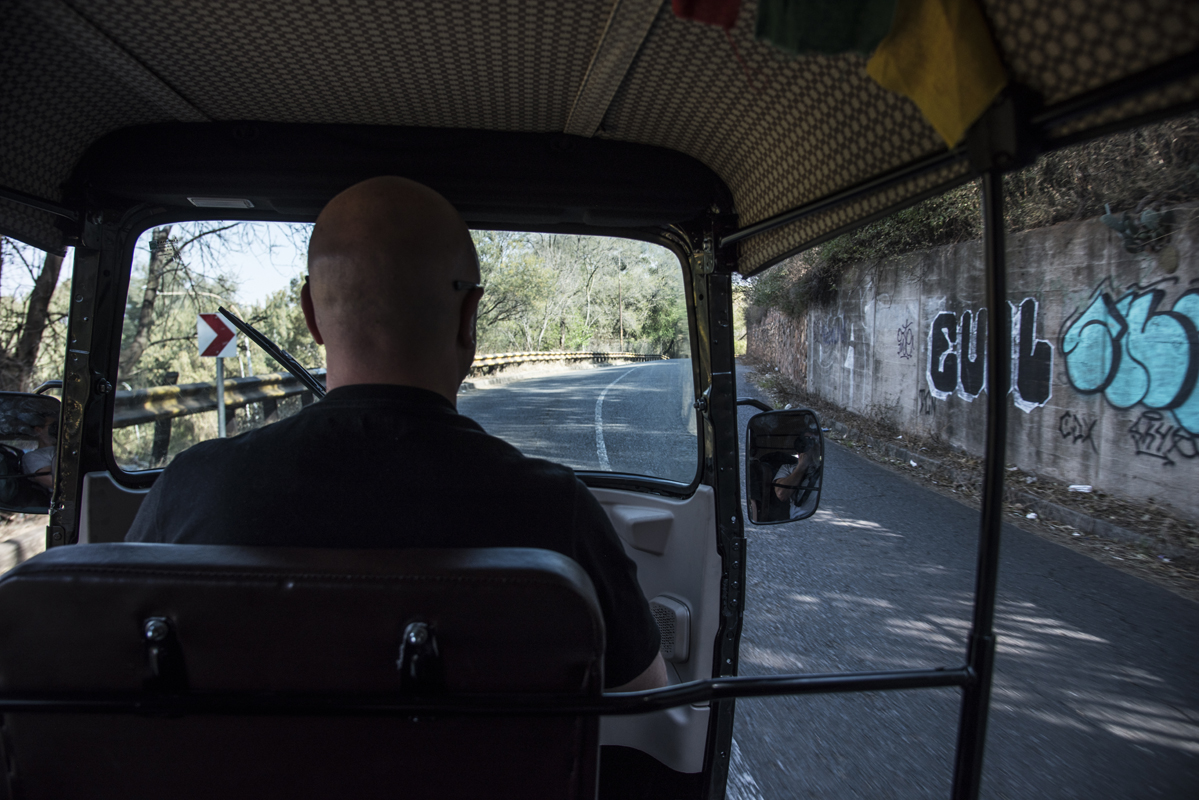
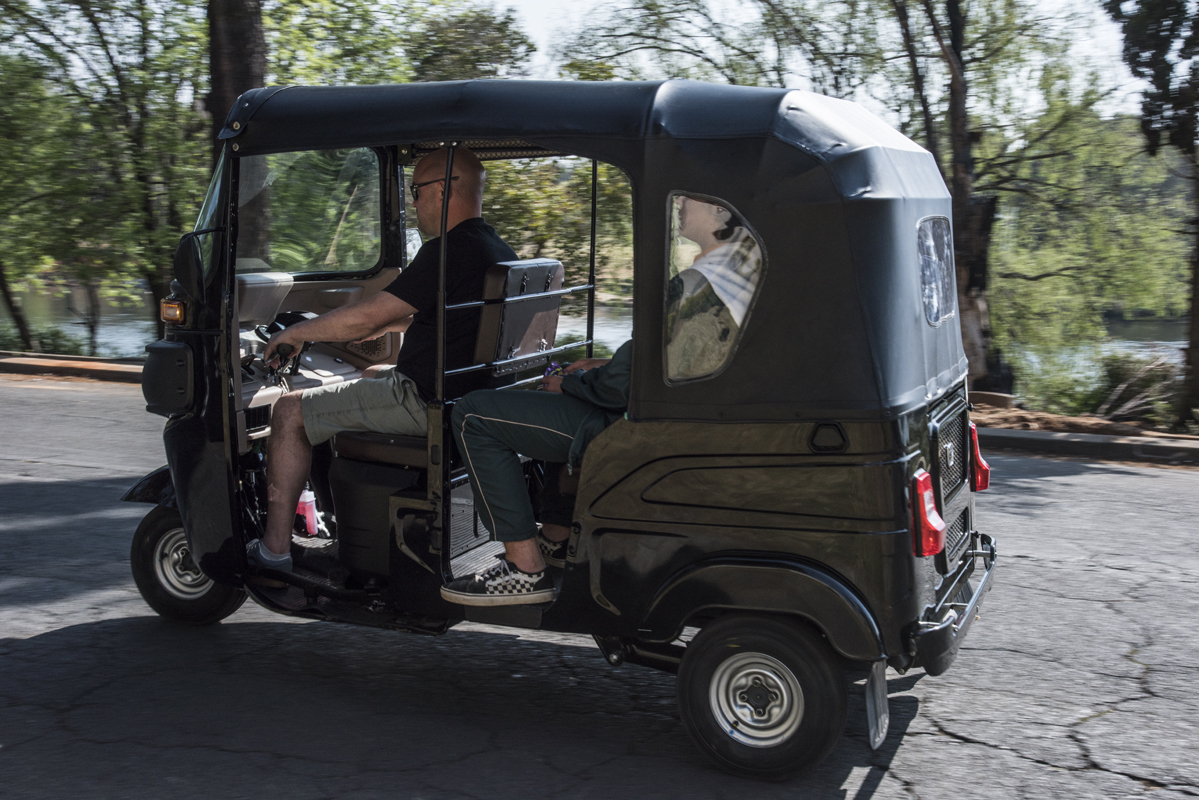
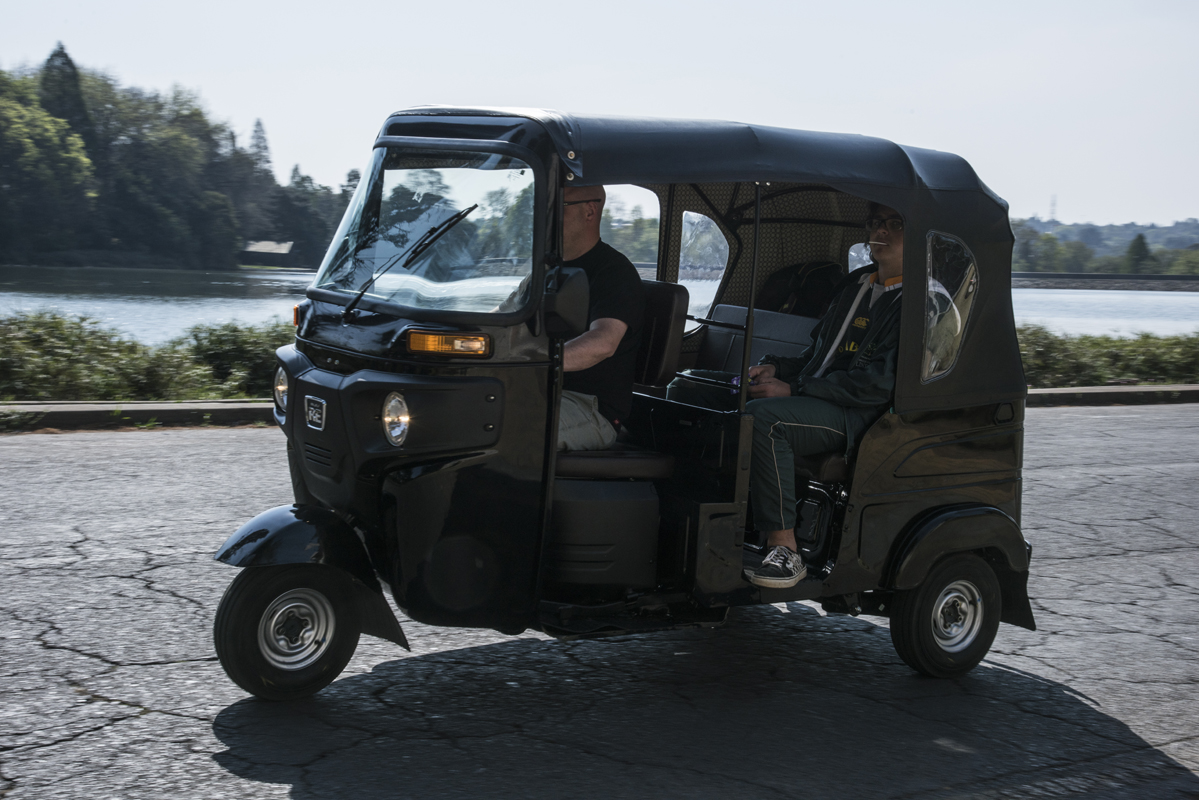
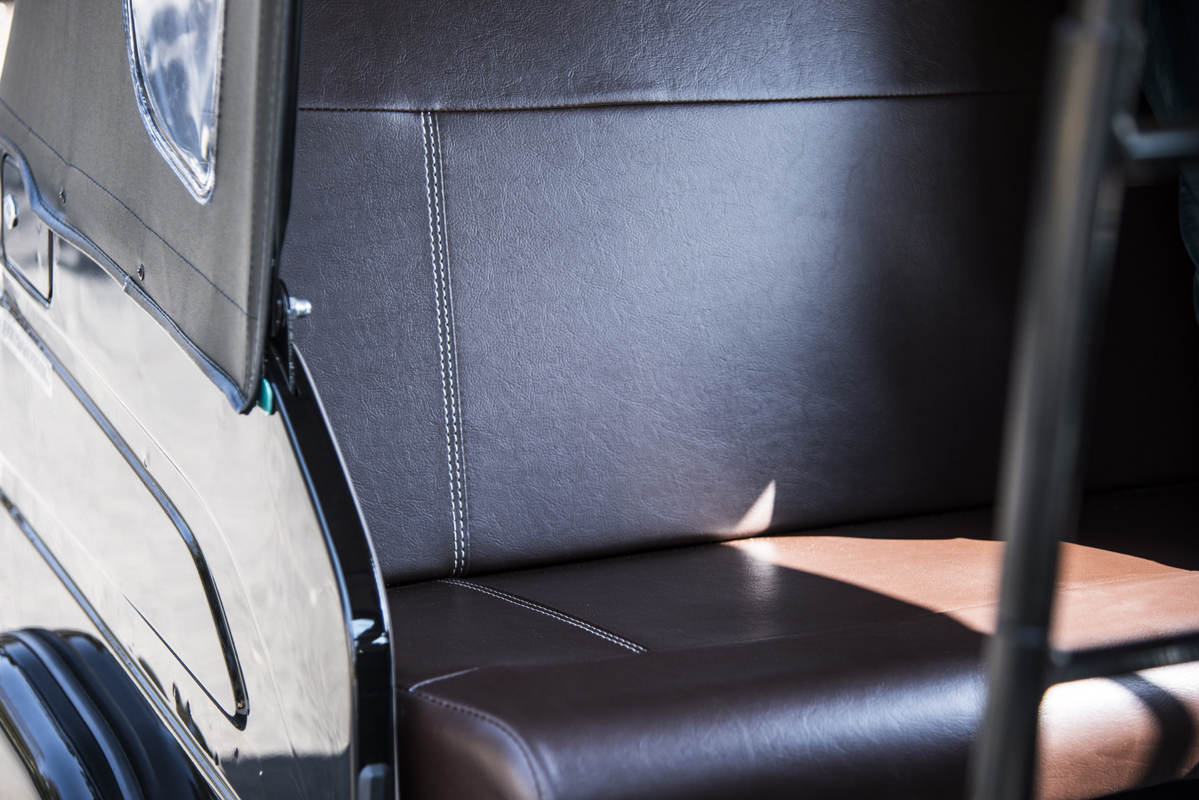
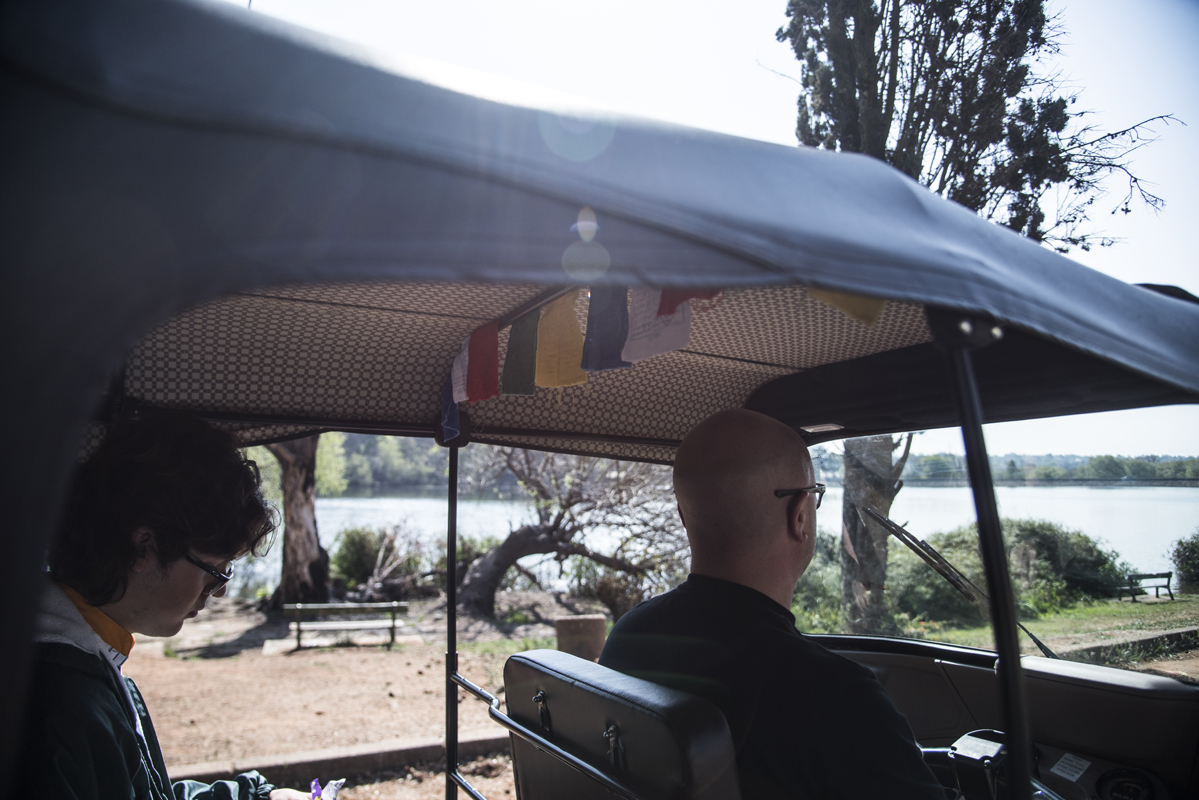
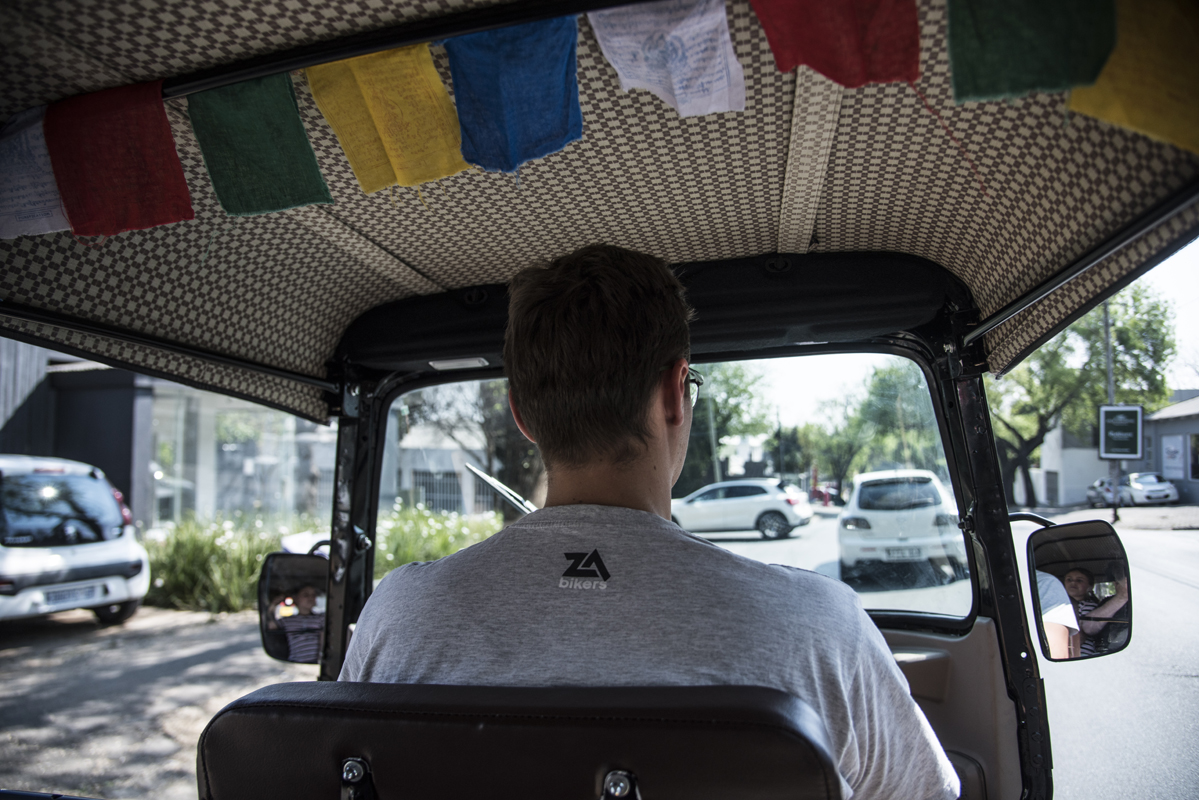
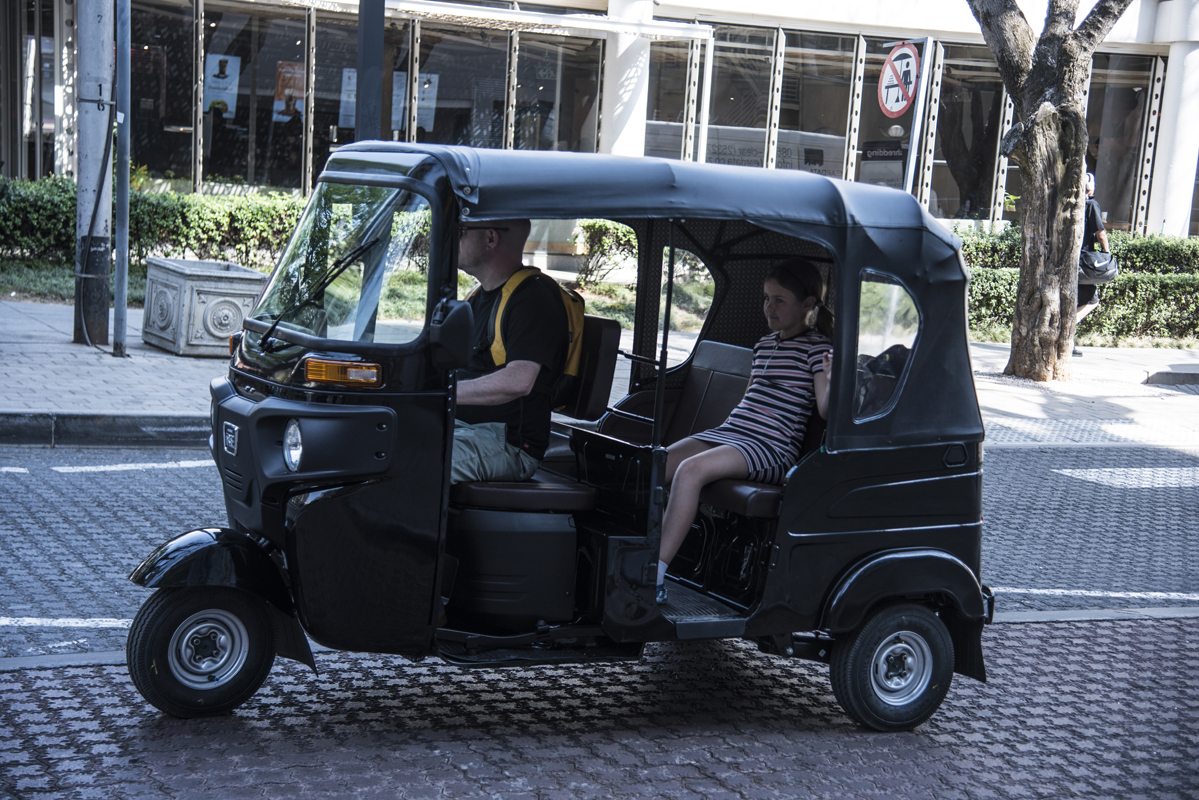
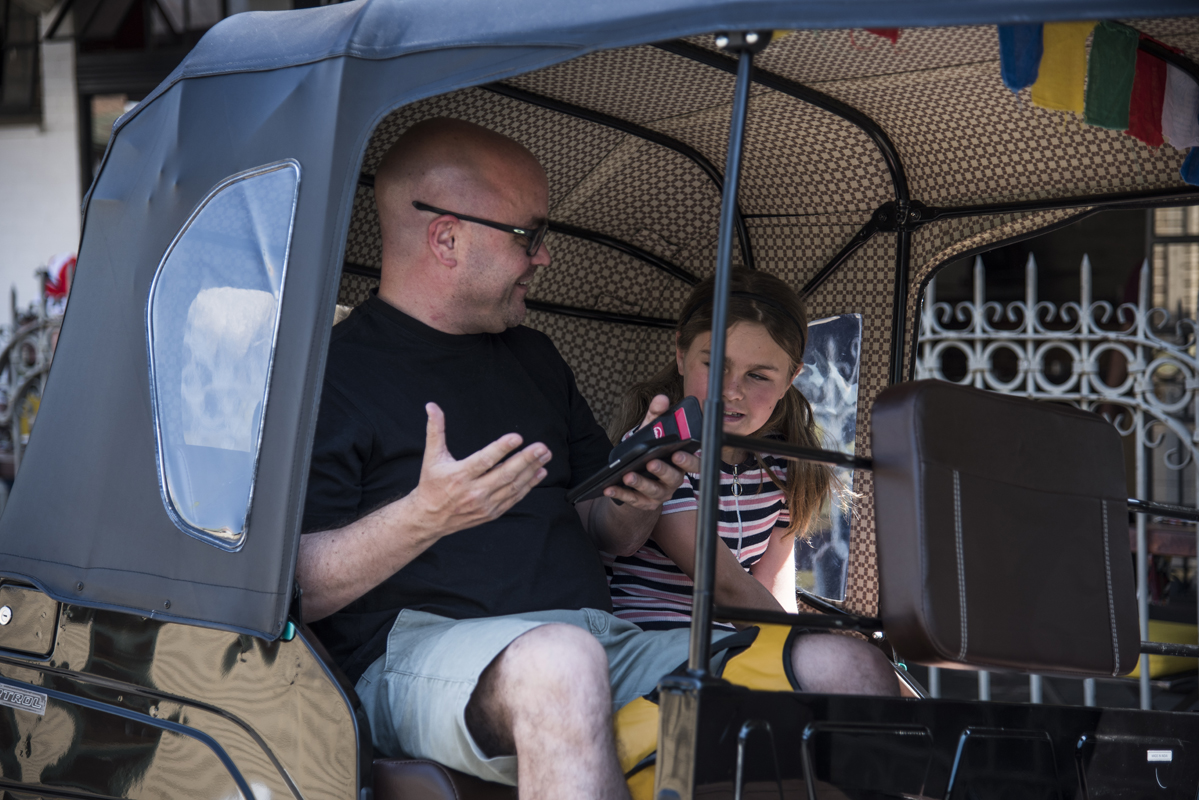
Bajaj have brought their latest version of the Auto Rickshaw, called the Bajaj RE 4S, to SA. We got the opportunity to give it a spin through the streets of Parkhurst and surrounds. For the most part, Bjorn was the designated driver, ferrying Simon and his children Adam and Abigail around the ‘burbs. The RE is driven by a 198.8cc 4-stroke fuel-injected motor developing 7,3 kW@5000 rpm and 17.1 Nm of torque @ a lowly 3,500 rpm. It has a turning circle of 2,88 m which makes it easy to manoeuvre through congested city traffic. With a payload of just over 300 kg, it could easily cope with the Morton family. Not so sure that it would work with the Springbok front row. We may just need a couple of REs for that job!
Photo credit: Bjorn Moreira / ZA Bikers
It is high time that SA has a reality check. Let’s shake off our misplaced First World pretensions and embrace what is practical and works in our beleaguered economy. I would love to see the streets of our cities reverberating to the ‘Tuk Tuk’ of Tuk Tuks. Imagine for a moment having a little operation called Tuk TuK Tours taking you around Jo’Burg’s sights, or around the Cape Peninsula, let alone visiting Wine farms around Franschhoek. You want something open, airy, and slow enough to connect you with your surroundings. Obviously urban taxis, the original ‘Auto Rickshaws’, as a budget Uber alternative make much sense. Getting kids to and from school is a real pain. Why not entrust that task to the TukTuk team?
1 of 24
Come on South Africa, it’s not just what you do, but HOW you do it that counts. Cruising around on a Tuk Tuk is just a special kind of cool. Seeing the Morton kid’s reaction to the fun factor of the RE, was a reminder that we could all do well to let the kid in all of us hold sway at times. Loosen up and live a little! A Tuk Tuk ride could be just the ticket. At around R65,000 a pop, it wouldn’t take much to own your own urban mobility business. Sounds fun, doesn’t it?
Bajaj RE 4S
For more information on the vehicle featured in this article, click on the link below…
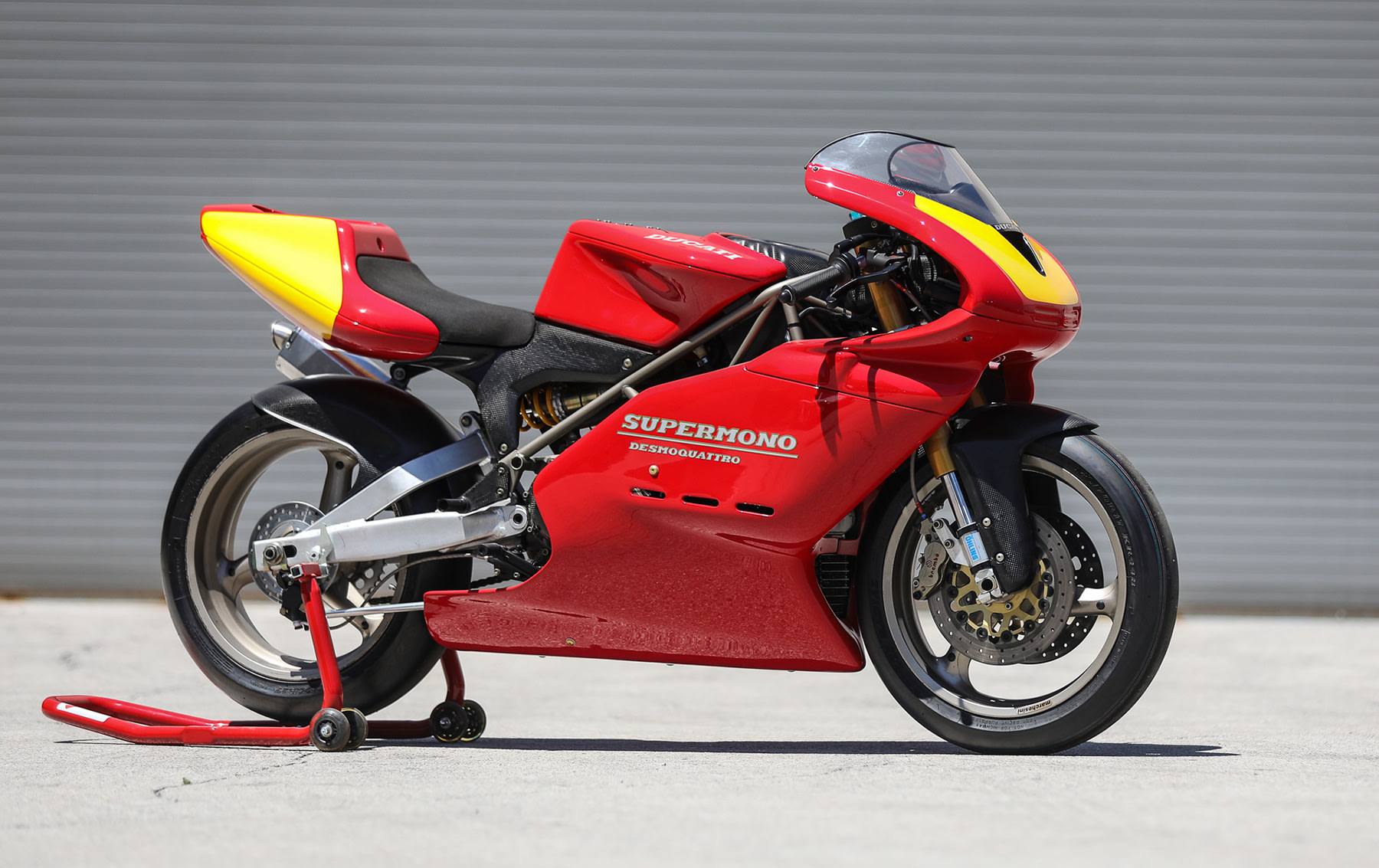
Since 1971, with one notable exception, Ducati has concentrated solely on V-configuration engines to power its road bikes, firstly the iconic V-Twin and, more recently, the impressive V-Four. The one exception was the Supermono of 1993, a lightweight, single-cylinder racing model specifically for the Supermono racing series. Only 65 were built and had technical innovations that influenced the legendary 916.
Image source: Ducati
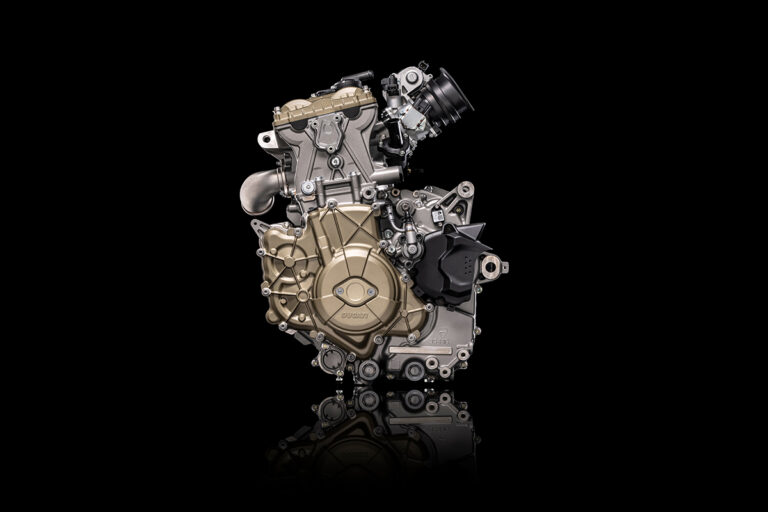
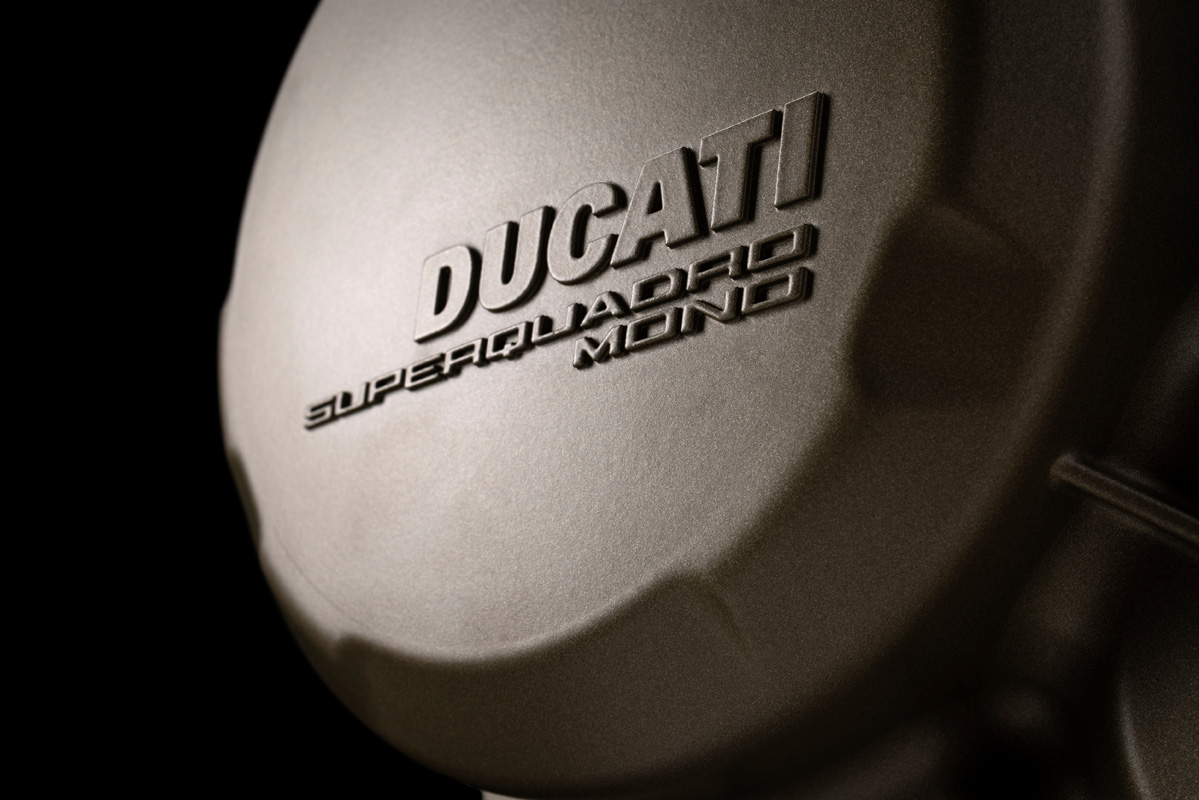
Now, in a shock announcement, Ducati has revealed the Superquadro Mono, a brand new single-cylinder road model that promises to be something spectacular.
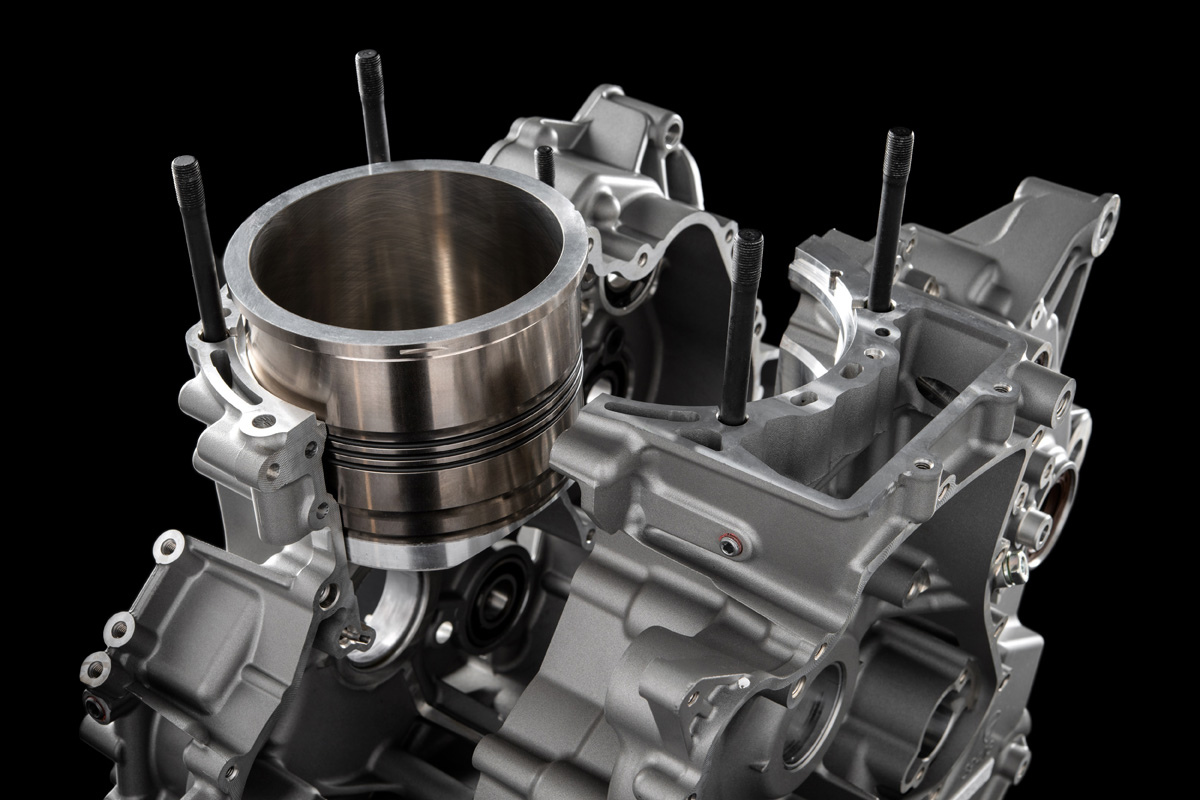
The engine is of 659cc, with an output of 77.5 horsepower, or 85 horsepower with the optional Termigioni racing exhaust, and 63Nm (43 foot pounds) of torque. What is even more incredible is a rev limit of 10,250rpm, which Ducati claims is the highest of any single cylinder engine ever produced. Despite all this, Ducati claims 30,000km intervals for valve clearance adjustment and oil change intervals of 15,000km.
Image source: Ducati
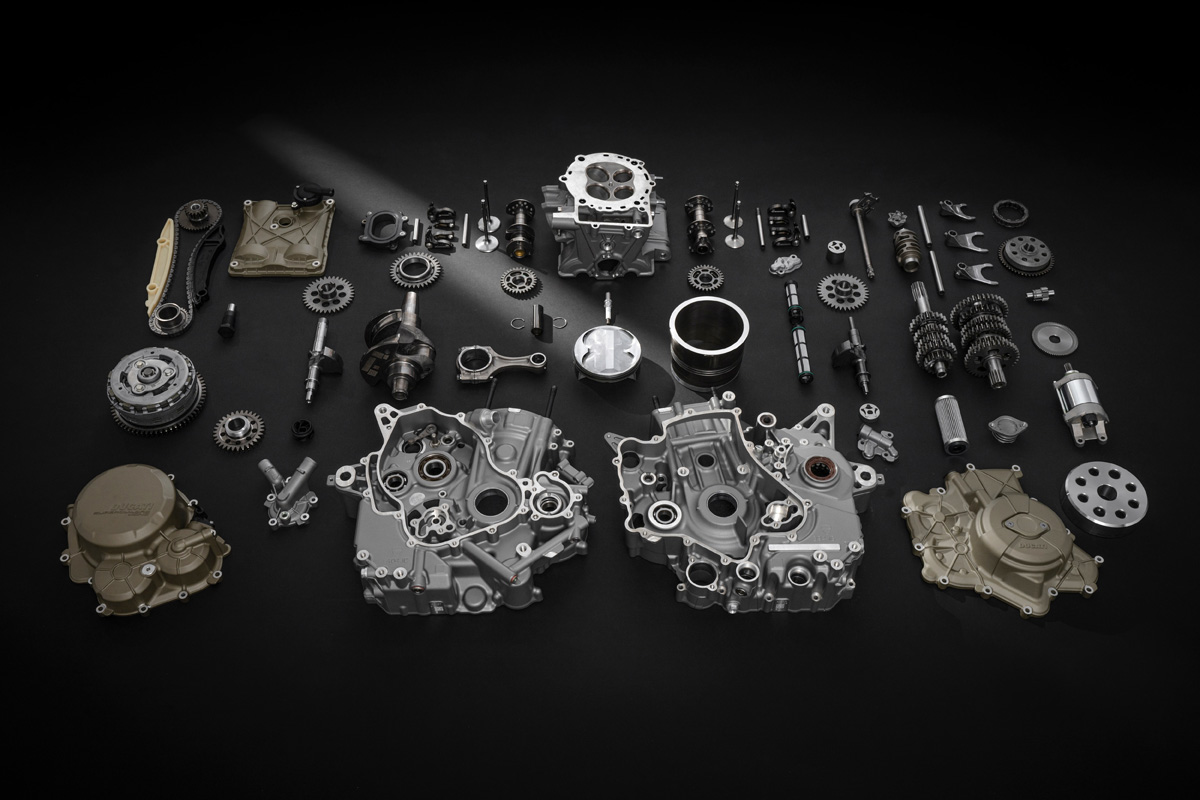
The engine is based on the Panigale 1299 V-Twin unit, the Superquadro engine inheriting the 116mm bore from the 1299, along with the combustion chamber shape, the same diameter intake and exhaust valves and the desmodromic valve actuation system, which does away with valve springs, making over-revving, with the attendant internal damage, impossible. There are two counter-rotating balance shafts to damp out unwanted vibrations and the engine is fully Euro5 compliant. The Superquadro Mono will be a fully road-legal model, unlike its Supermono ancestor.
Image source: Ducati
So far, Ducati has only released images of the engine so we have no idea what the whole bike will look like but that will be revealed in the latest of Ducati’s online launches, due to take place on Thursday, 2nd November at 4pm European time. Anyone can watch the reveal either on www.ducati.com or on Ducati’s Youtube channel.
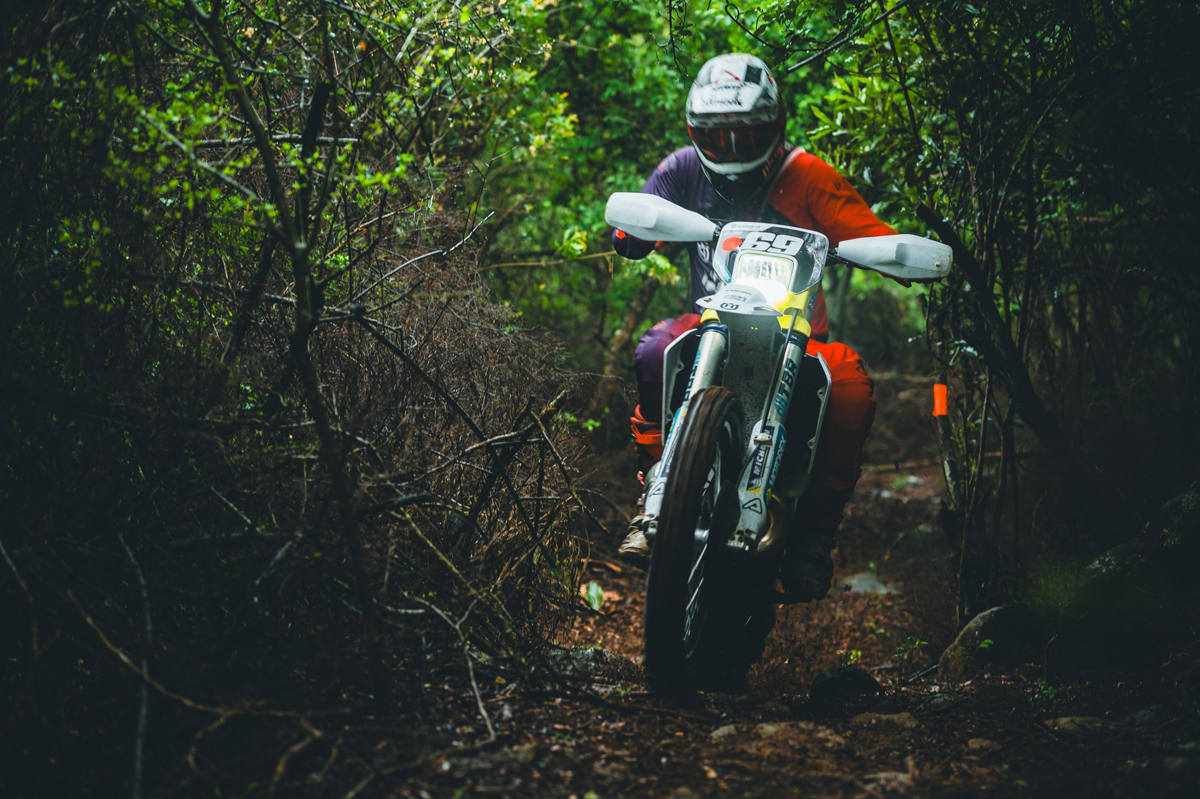
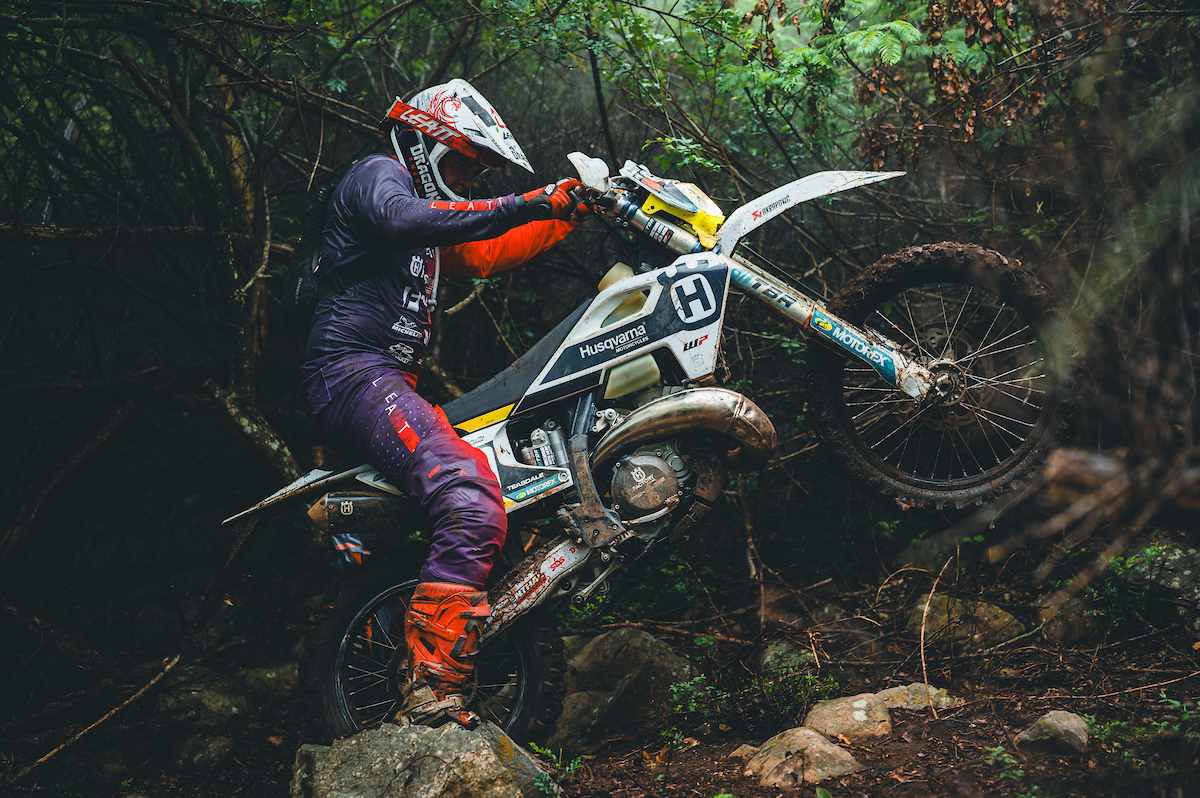
The Husqvarna Racing team demonstrated outstanding skill in very tough weather conditions at the final round of the National Hard Enduro Championship held in Hilton, Kwa-Zulu Natal. Despite facing the tough conditions, the team showcased remarkable strength, with Travis Teasdale clinching a stellar second place in the Gold Class after losing a significant amount of time having to change his radiator. Additionally, Heinrich Aust secured an impressive 6th place, further highlighting the team’s ability to overcome challenges and perform at a high level.
Travis Teasdale exhibited sheer determination and unwavering ability, securing a remarkable second place in the fiercely competitive Gold Class, even after a radiator change. His outstanding performance underscores the Husqvarna Racing team’s commitment to excellence and their unyielding pursuit of success in the demanding world of Hard Enduro racing.
Image source: ZCMC Media
Teasdale commented, “It was a challenging weekend, having to change my radiator mid-race but it only fuelled my determination to push harder and overcome. I’m so grateful for the team to help me out so quickly in getting my bike back up and running to put my Husqvarna on the podium and excited to keep pushing the limits in the upcoming races.”
Heinrich Aust’s formidable 6th place finish in the Gold Class further reinforces the team’s collective strength and capability in facing the challenges presented at the pinnacle of Hard Enduro competition.
Image source: Husqvarna
“The final round of the National Hard Enduro Championship went down very challenging because of the weather conditions, I didn’t have the best day out but I still managed to keep myself together to bag some good points for the championship on the day. Every race pushes us to our limits, and it’s overcoming these challenges that fuels our passion for the sport.” Aust said.
Megan Prinsloo, KTM Group Marketing Coordinator commented on the season saying. “We are incredibly proud of our rider’s performances during this season and we will be back next year, fighting for the Championship win!”.
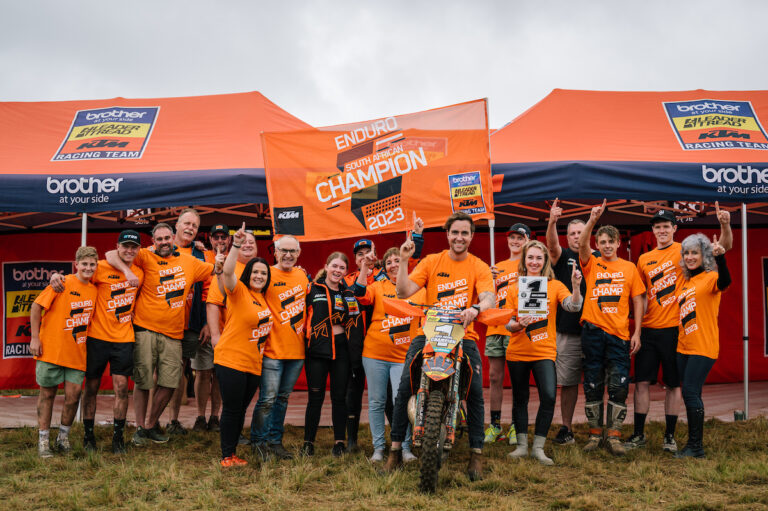
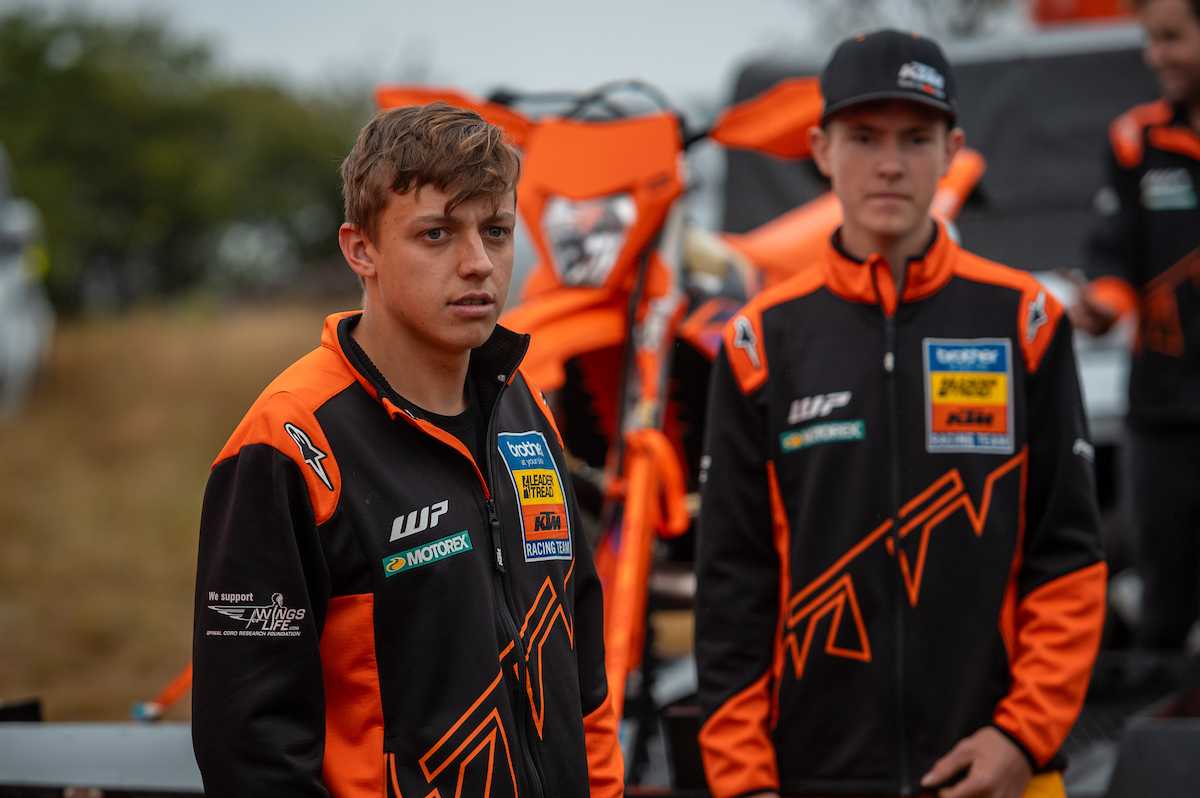
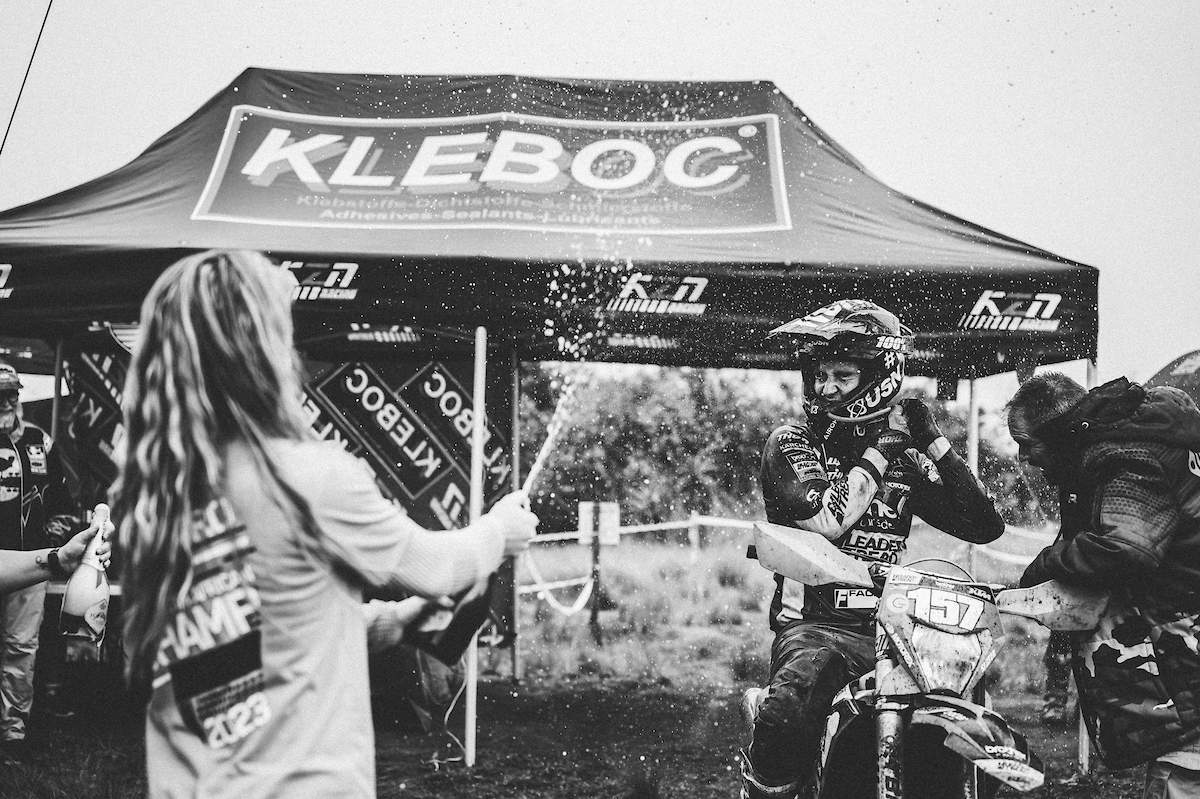
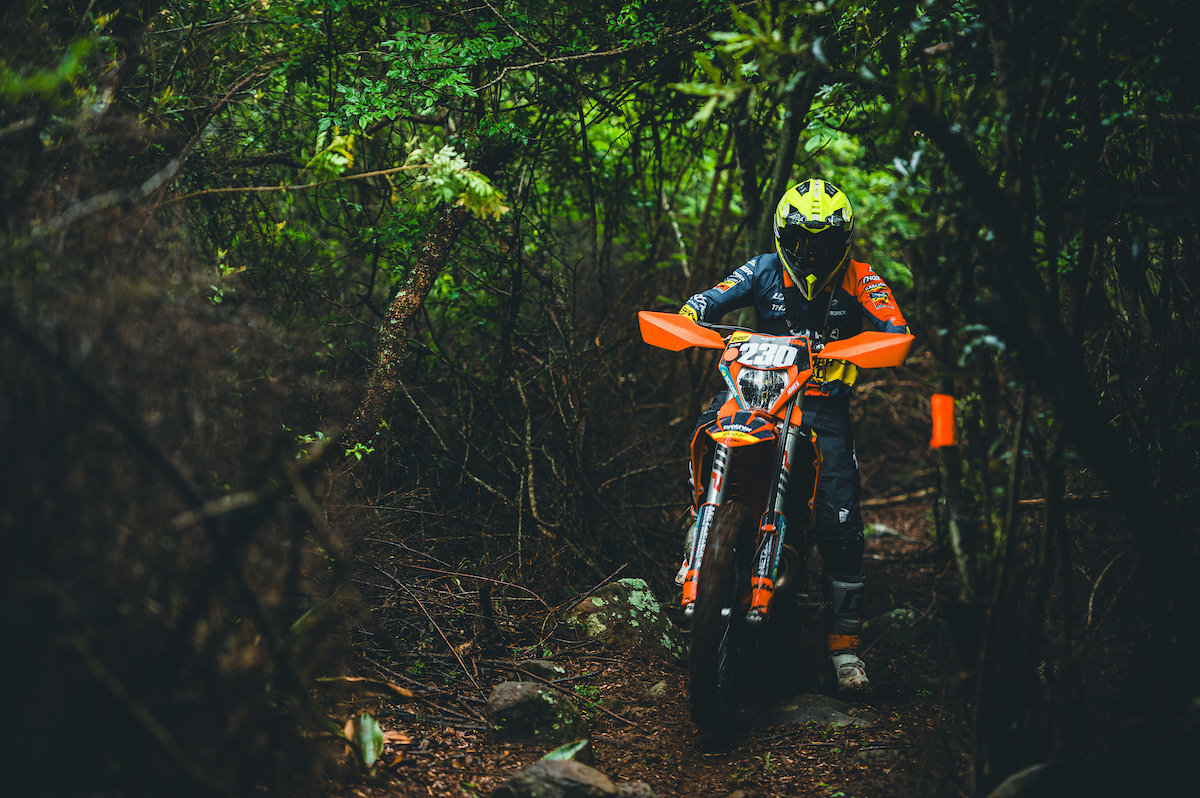
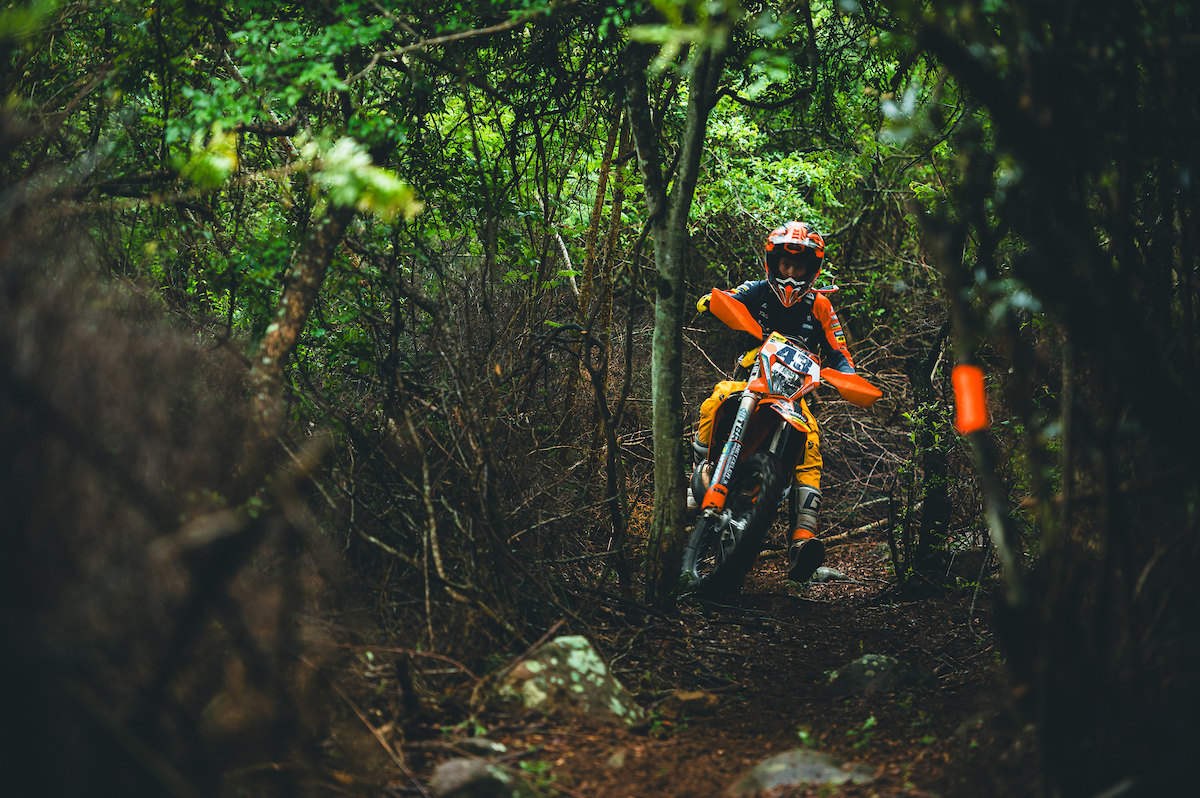
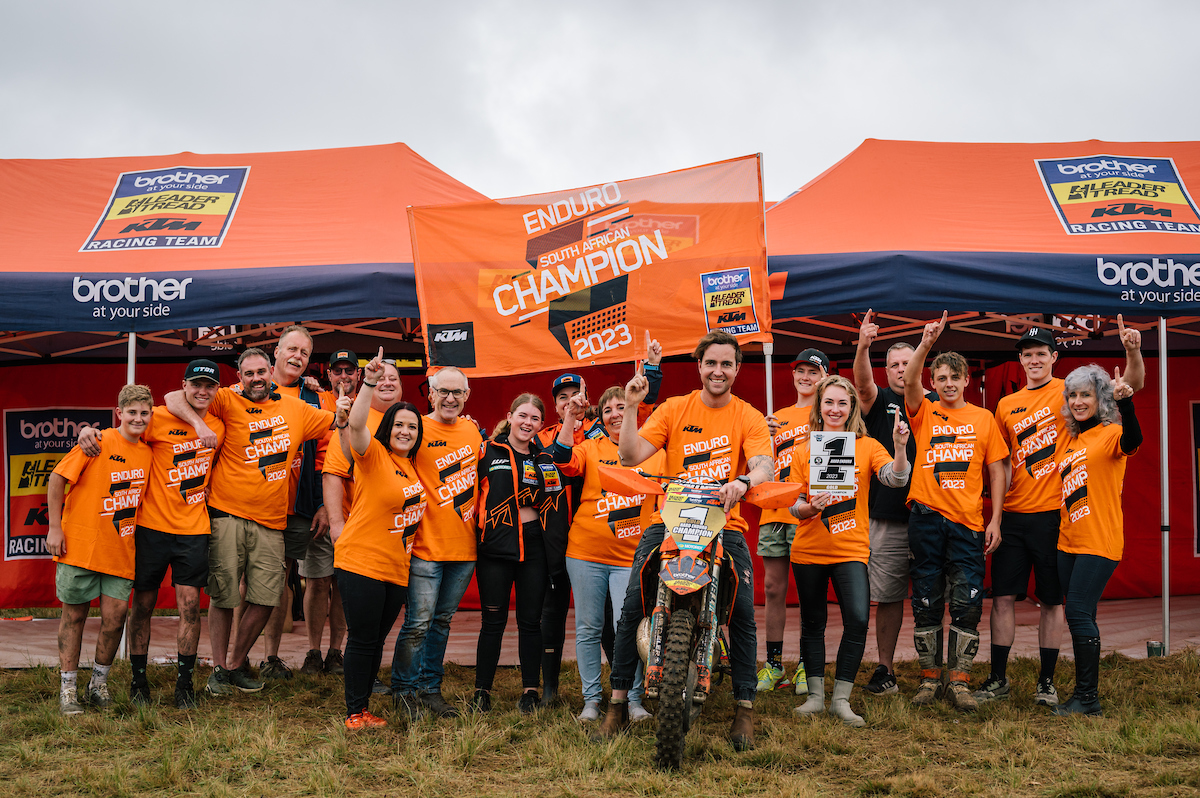
The Brother Leader Tread KTM team has triumphed in spectacular fashion as the National Hard Enduro Championship season drew to a close at the final round held in Hilton, KZN. The relentless efforts of the team members propelled KTM to the pinnacle of success, with William Slater emerging as the newly crowned National Hard Enduro Champion!
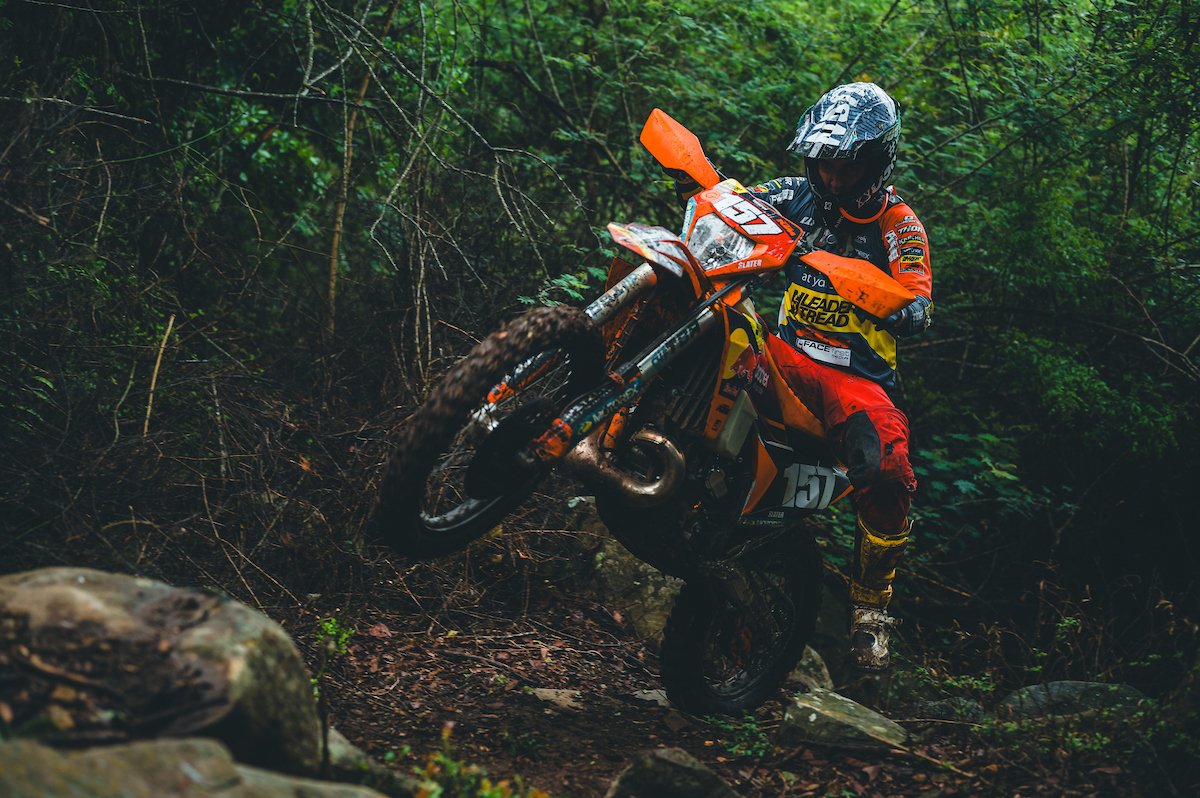
The thrilling conclusion to the championship in Hilton witnessed an exceptional display of skill and determination, with tough weather conditions, from the Brother Leader Tread KTM team. William Slater’s outstanding performance not only elevated him to the top step but also earned him the esteemed title of National Hard Enduro Champion, marking a significant milestone in his career.
Image source: ZCMC Media
An elated Slater commented, “Winning the National Hard Enduro Championship for KTM really is a dream come true for me. The journey has been a test of true guts and determination but couldn’t be happier with the outcome!” He continued to say, “Started out front and extended my lead as the day went on. It was a tricky balance between pushing my body and bike so hard in those conditions but still trying to look after my bike, all I tried to do was look after my bike and bring it home safely as I knew what was at stake. I gave it everything and left nothing out on track. My 2024 KTM 300 was unreal under those conditions. I want to express my deepest gratitude to my Brother Leader Tread KTM family and everyone else who has helped me along on this adventure. The championship win is not just a personal achievement but a testament to the collectable effort of an incredible team.”
Image source: ZCMC Media
Notably, alongside Slater’s incredible feat, Dylan Jones showcased an impressive performance, clinching a formidable 7th position.
Jones commented, “The weekend was a thrilling ride, and I’m proud to have secured a formidable 7th position. It was a test of not just skill but also mental grit. Racing alongside such talented competitors is a humbling experience, and I’m grateful for the incredible support from the amazing Brother Leader Tread KTM team.”
Image source: ZCMC Media
Rounding off the team’s stellar performance was the promising young talent, Matthew Stevens, who delivered a solid result, contributing to the team’s overall success.
“The final round of the National Hard Enduro Championship was one of the best Extreme Enduro loops this year and rain added to the toughness, loved the conditions and my fitness training for Roof is paying off. Happy with my 11th overall and learnt a couple of valuable lessons along the way.“ said Stevens. He continued to say, ” The new 2024 KTM 150XCW was amazing all around, and a huge thanks to the team, family and friends for the support!
Image source: ZCMC Media
“We are incredibly proud of the outstanding performance of the Brother Leader Tread KTM team at the final round of the National Hard Enduro Championship. The riders faced very tough conditions and showed their true skills in the sport,” said Megan Prinsloo, Marketing Coordinator for the KTM Group. “William Slater’s crowning as the National Hard Enduro Champion is a testament to the dedication and skill of our entire team. We extend our heartfelt congratulations to William, Dylan, and Matthew for their exceptional performances and unwavering determination.”
The Brother Leader Tread KTM team’s success reflects their relentless pursuit of excellence and their unwavering commitment to pushing the boundaries of Hard Enduro racing.
It is openly acknowledged by all interested parties that South African roads are not safe roads. The general standards of driving are bad enough but the death toll is appalling: any death statistic is bad but a figure of over 12,000 deaths per year is simply unacceptable.
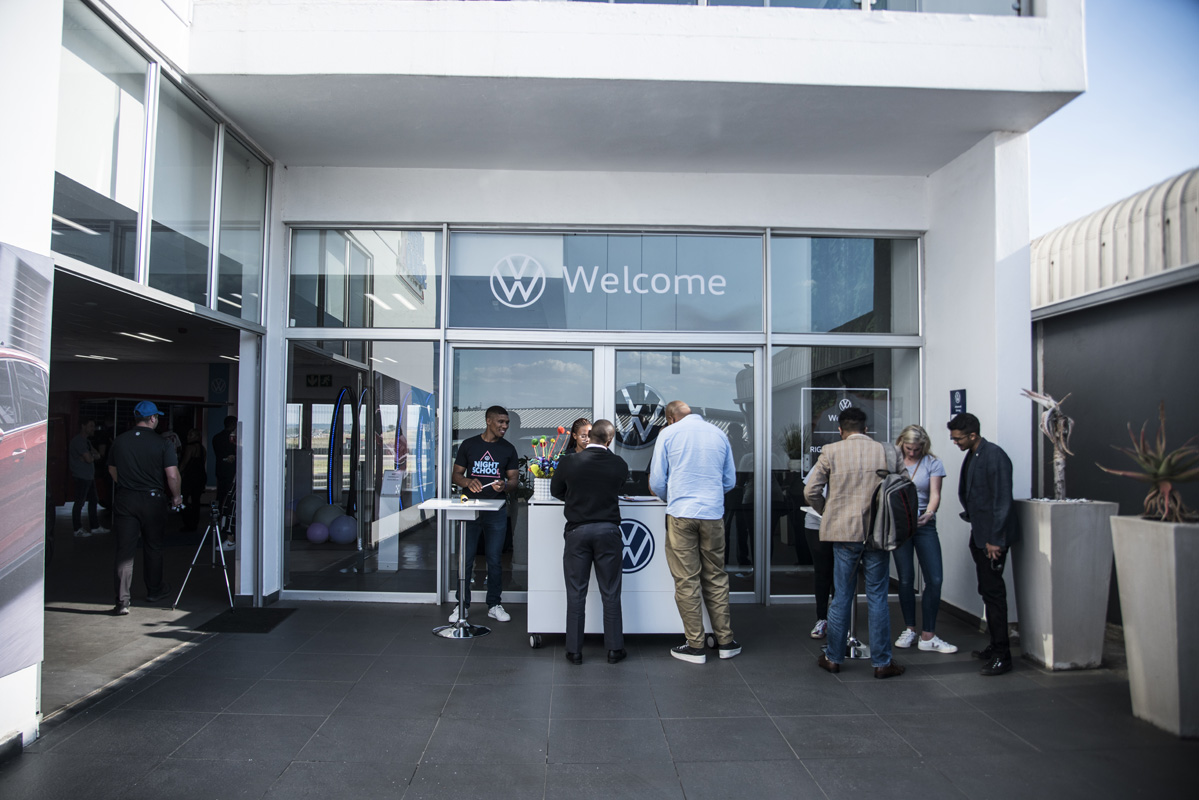
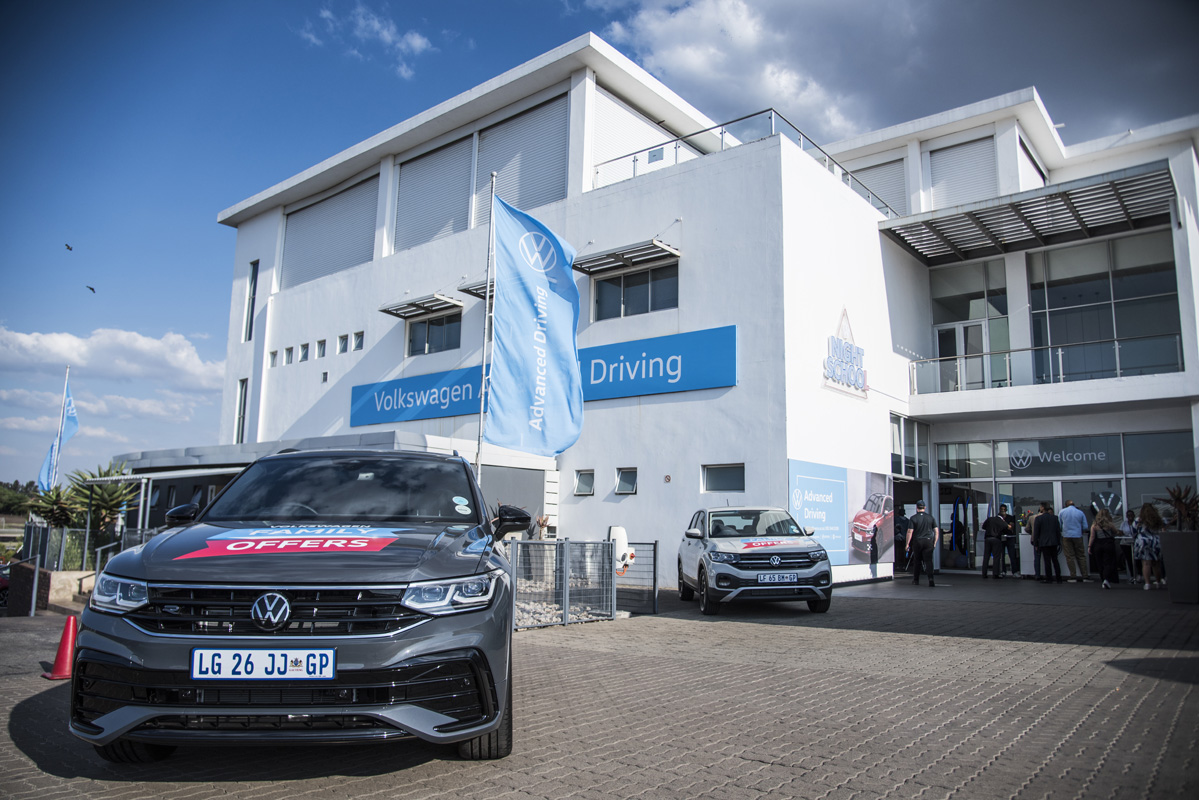
It is clearly too much for our government to do anything about it, so it falls upon us, the general public, to do what we can. Luckily, we are not on our own as it is a problem that is being increasingly acknowledged by the car manufacturers themselves and, recently, we were invited to the VW SA Driving Academy at Zwartkops for the launch of a new initiative based around road safety.
Photo credit: Bjorn Moreira / ZA Bikers
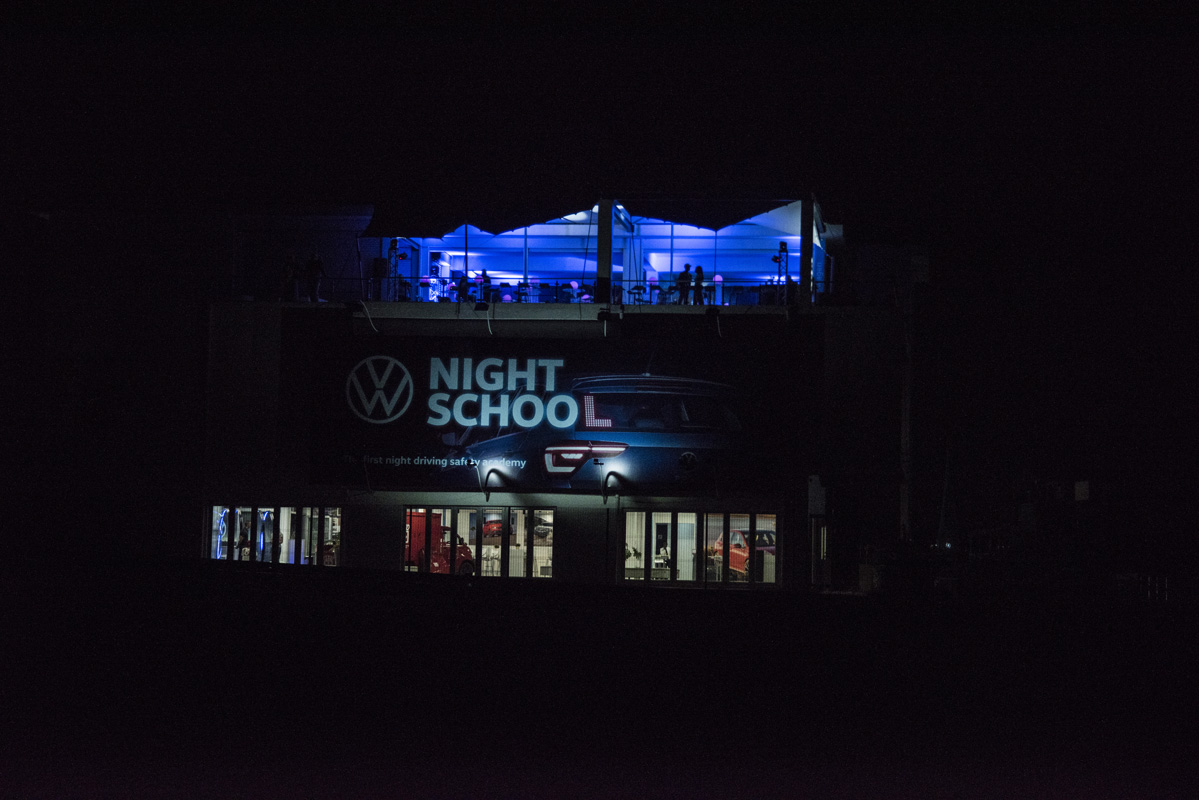
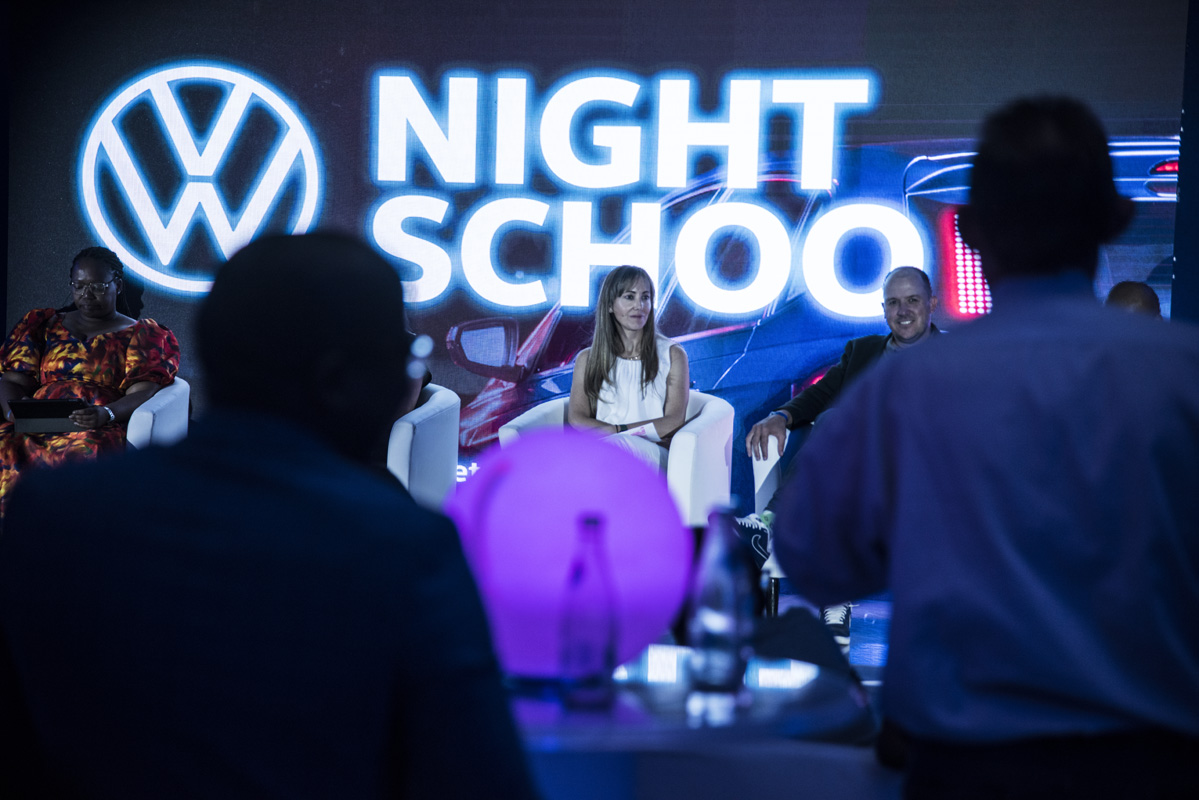
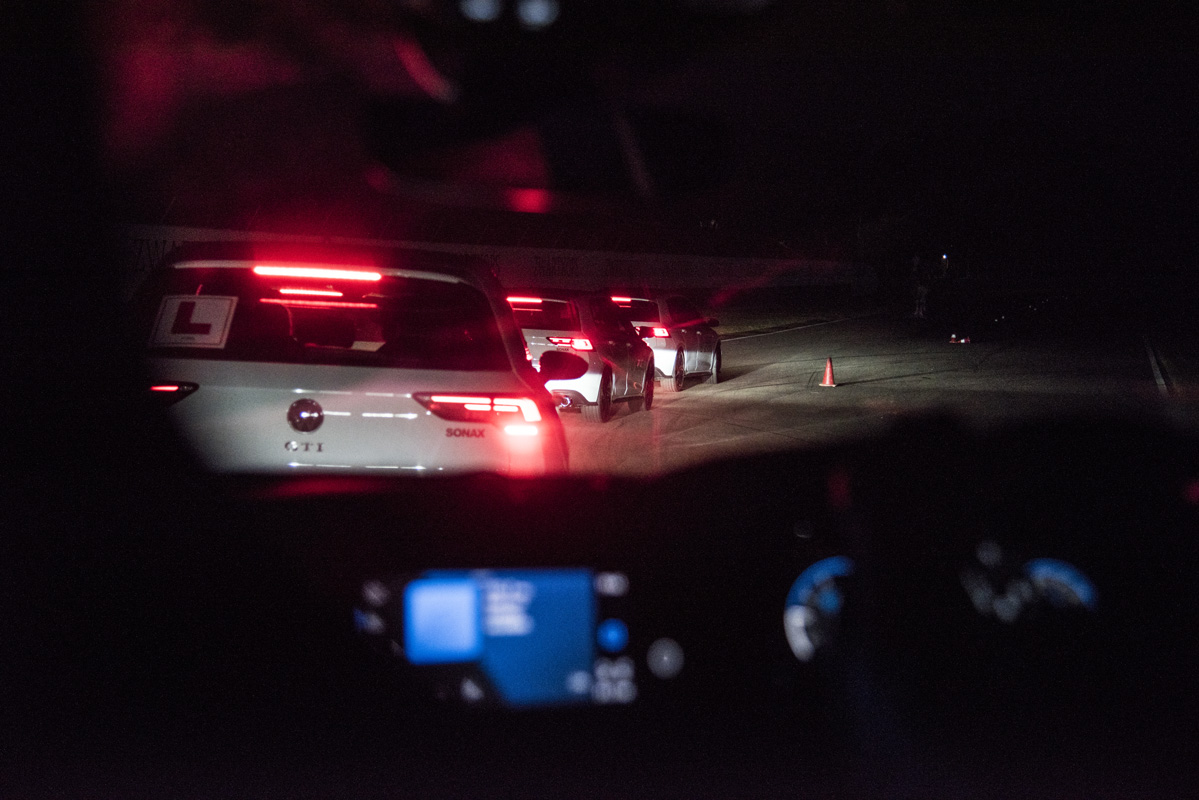
Where VW’s approach is different is that they are concentrating on night driving, which is when 55% of fatalities occur on SA roads. VW is calling the initiative Night School.
Volkswagen’s Night School curriculum covers a range of night-driving topics from understanding your vehicle, visibility and poor vision, driver fatigue, recklessness, personal safety, weather conditions and a host of factors that compromise a driver’s ability when on the roads after dark.
Photo credit: Bjorn Moreira / ZA Bikers
Volkswagen has also partnered with other corporates who will support the initiative of steering South Africa towards safer roads. Vision experts, Spec-Savers, as well as Vida e Caffe, will be providing all curriculum graduates with additional rewards for completing the course.
Photo credit: Bjorn Moreira / ZA Bikers
“As a leading passenger car manufacturer, at Volkswagen, we are acutely focused on our ambition of creating safer roads, not only for our drivers but for all road users including passengers, pedestrians, cyclists and animals,” said Bridget Harpur, Head of Marketing for Volkswagen South Africa. “With over half of our country’s fatal accidents occurring at night, we asked ourselves, then why do we all only learn to drive during the day? Through our Night School curriculum, we are hoping to provide a tangible and effective solution that will help play a part in reducing the country’s night-time road accident statistics and as a result, help save lives.
“To us at Volkswagen, while current road safety statistics are grim, we believe they provide the impetus for action. Statistics are not forecasts. It is imperative to reduce our country’s road fatalities and we believe, through collaborative and transformative efforts, that together we can make a difference.”
Photo credit: Bjorn Moreira / ZA Bikers
Volkswagen’s road safety initiative encompasses three main aspects: the ongoing innovation of its vehicle safety technologies, driver education and up-skilling, and fostering large-scale public awareness.
Volkswagen vehicles are already engineered with a number of advanced safety systems and features such as their IQ.DRIVE with blind spot assist, lane assist, multi-collision brakes and adaptive cruise control. However, Volkswagen believes that driving road safety goes beyond what is under the hood of its vehicles. As such, Volkswagen is taking it a step further to increase driver education and driving skills, especially for night-time driving, when it matters most.
Photo credit: Bjorn Moreira / ZA Bikers
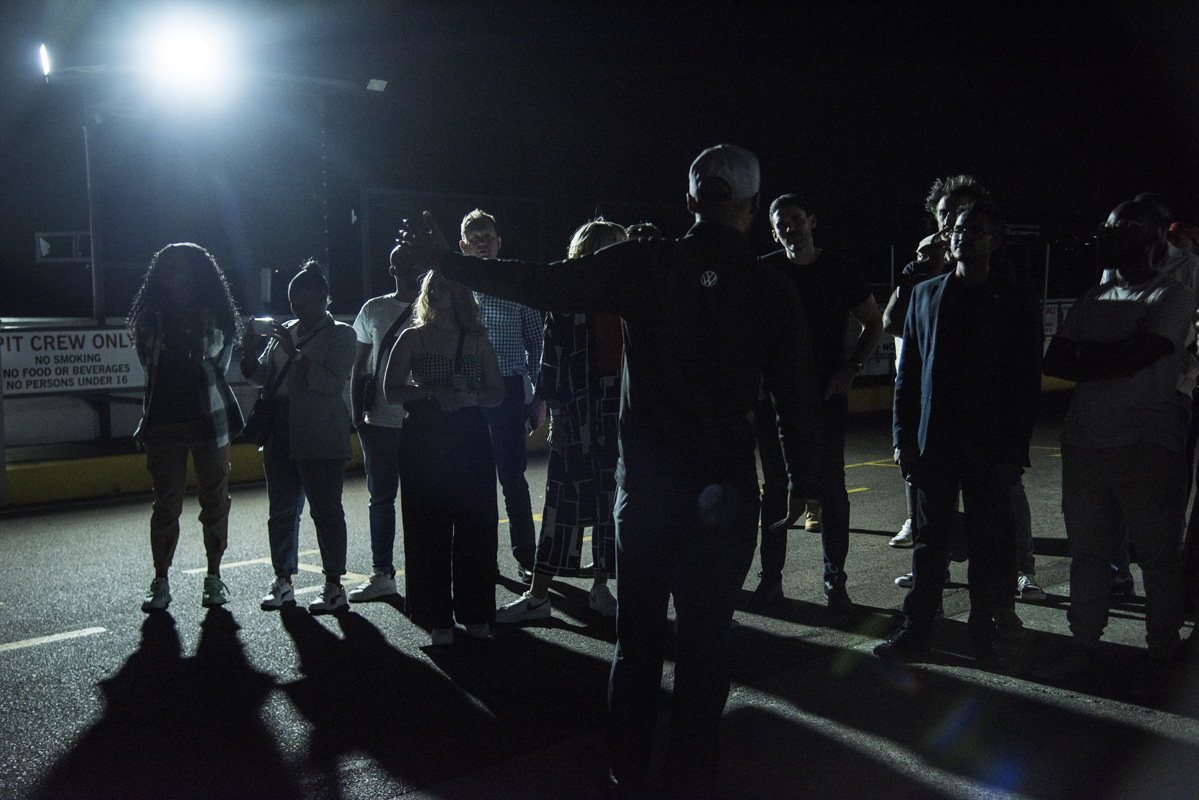
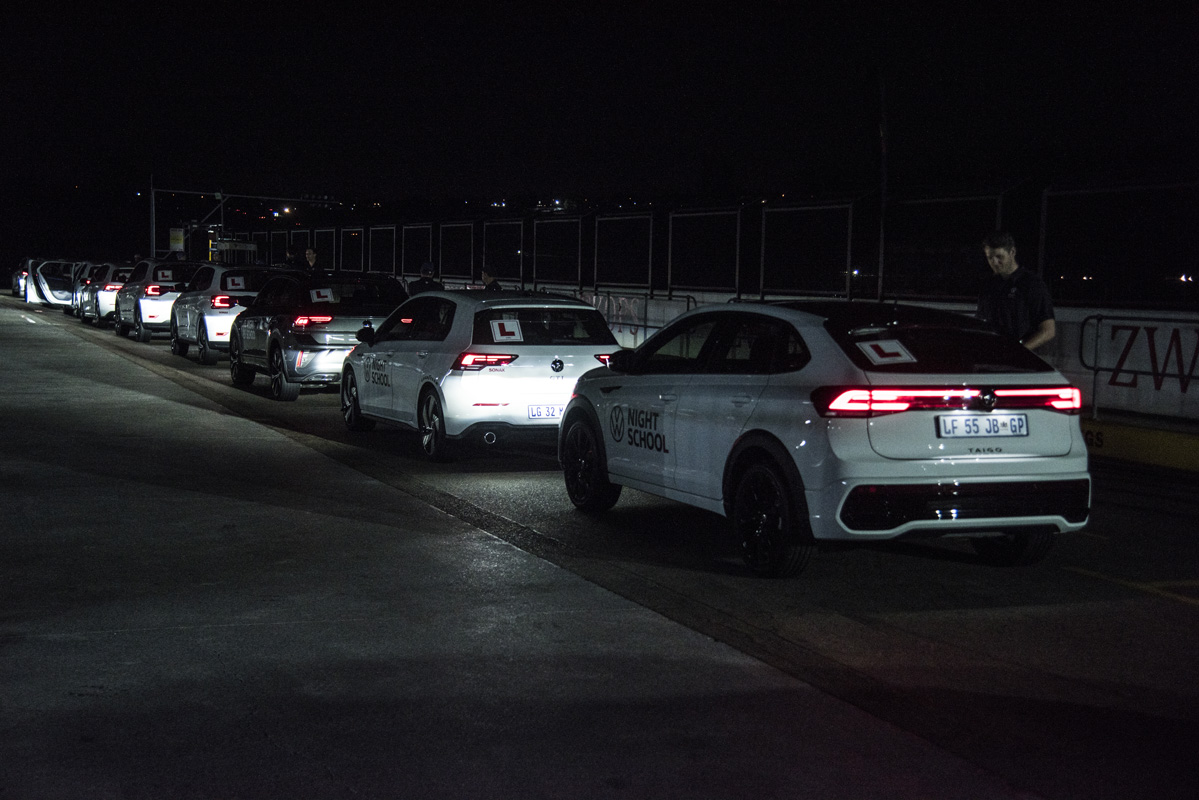
Through Night School, Volkswagen has developed a comprehensive open-source online curriculum that is fully dedicated to night-time driving education and includes learner tests at the end of each chapter. The curriculum is free and accessible to all road users wishing to join their journey towards making South African roads safer. In addition to the online curriculum, Volkswagen’s Advanced Driving Academy will also be offering a real-world theoretical and practical course hosted by their experienced defensive driving instructors based at Zwartkops Raceway.
Photo credit: Bjorn Moreira / ZA Bikers
Interested people can enrol on Volkswagen’s Night School Curriculum from the 1st of November 2023, by visiting VW Nightschool
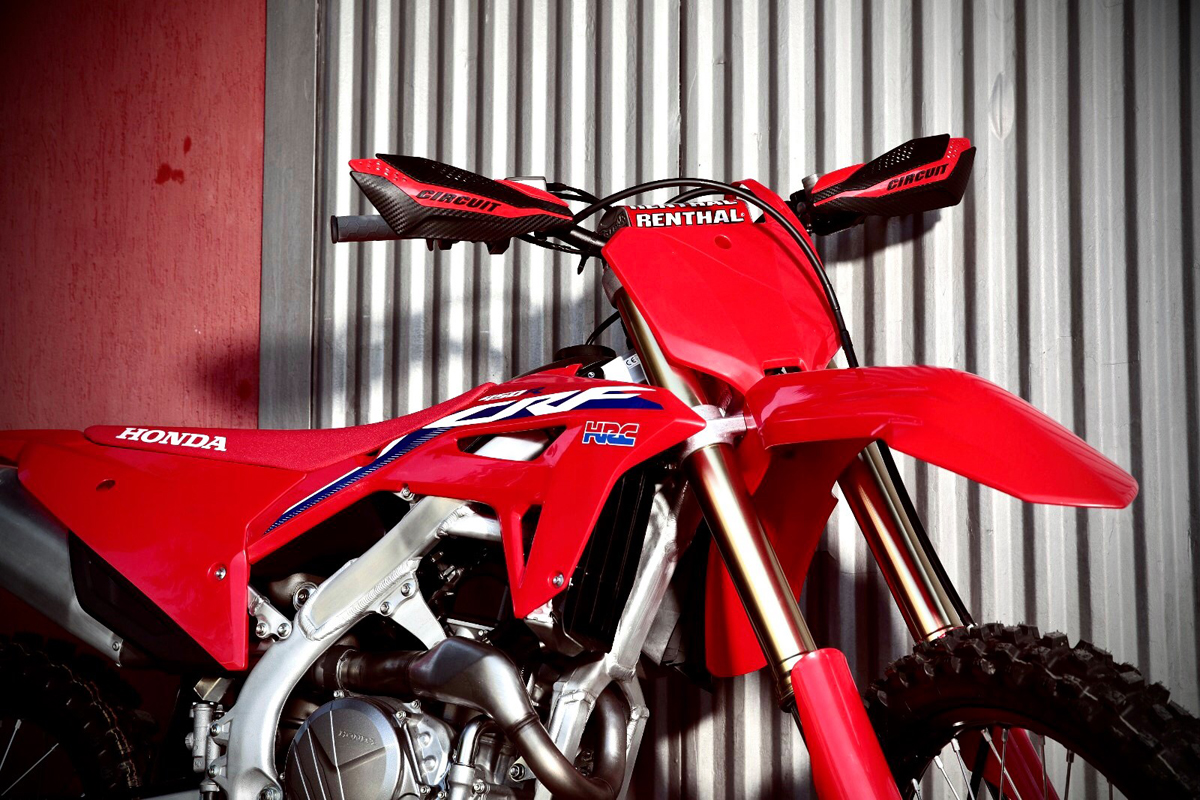
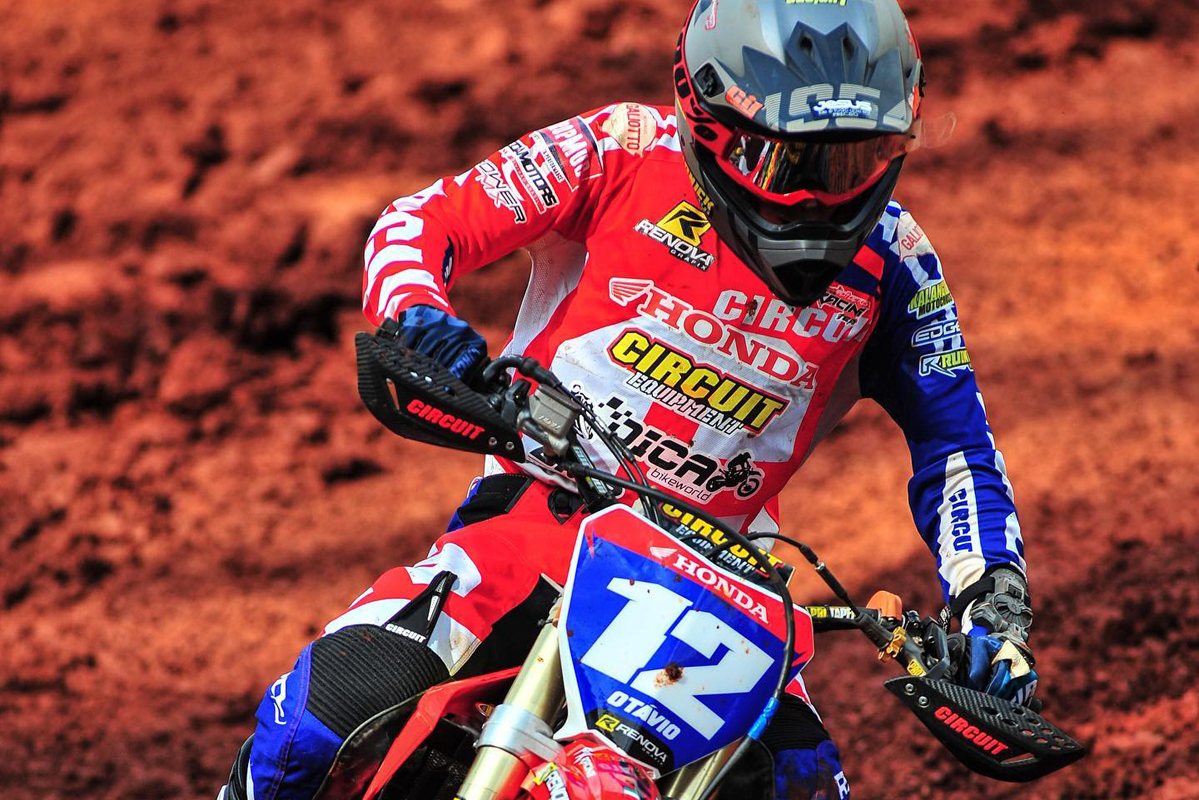
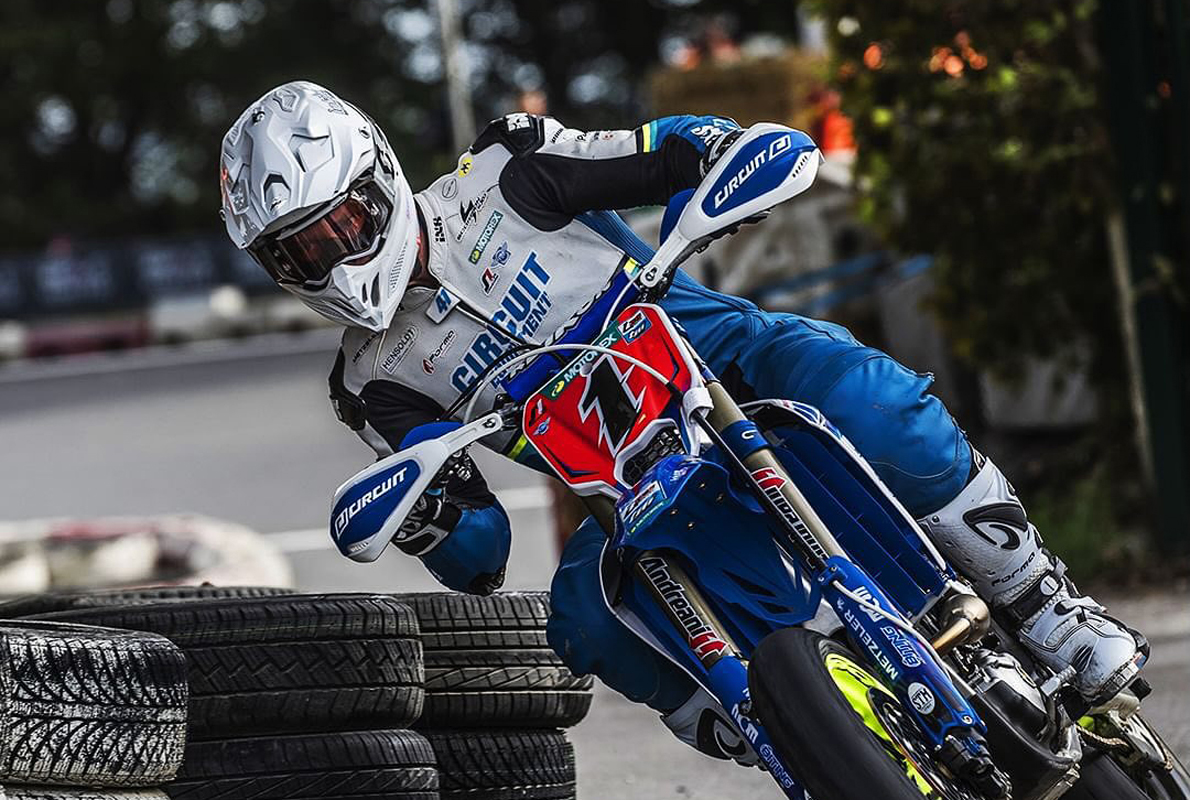
Handguards are a must when riding dirt, trail and adventure bikes, but in saying that many motorcycles don’t come equipped with them from standard and some are just an afterthought. As simple as the subject is, there’s a lot to know about handguards like what kind of handguards there are and what type suits your riding discipline. To further understand, the local importers of Circuit Equipment, Autocycle Centre, invited us to take a closer look at their new range of ‘Circuit’ Handguards.
The Brazilian-founded company Circuit Equipment have been roosting around the block since 1984 and has a passion for all things dirt-related. Circuit is globally renowned and has bitten into a big piece of the pie in both Europe and America with a selection of products and accessories in Motocross, Enduro, Rally and Supermoto. With a massive importer like “Autocycle” standing behind the brand in South Africa, bringing in Michelin, Elf Moto, Castrol and HJC to name a few, you can be sure that Circuit Equipment will have proper backing and spares.
Image source: Circuit Equipment
So, let’s talk Handguards…
When it comes to protecting our hands and motorcycle controls there are two types of handguards: the shield type and the wrap-around. The plastic shield handguards are traditionally known as Motocross handguards, made to be lightweight and protect your hands from a rocky roost. Without facing any slow obstacles or technical terrain, MX handguards are there to act as a shield, rather than offering protection to the motorcycle.
Image source: Circuit Equipment
While the “MX” style handguards are merely roost-guards, the wrap-around handguards or “Barkbusters” as they’re known in the Enduro world, offer greater protection for riding through the bush, where you might come into contact with trees, shrubs and other bits of nature. Barkbusters also prevent your front brake lever from engaging if you do brush past a branch or tree, plus you won’t be able to break any levers if you suffer a fall kilometres away from your van or bakkie.
What does Circuit have to offer the dirt riders of South Africa?
For the MX riders, we see two stylish offerings from Circuit, the Dakar and the Vector Carbon. Both handguards are designed in Italy and feature a carbon fibre lookalike material that runs between the five available colours, rounding off the design. The Dakar is slightly longer than the Vector and comes with a nylon adapter.
The Vector Carbon in my opinion is the better looking of the two and is made of a highly resistant material called polypropylene. Because they are so compact, it might even be a handguard that Enduro or Downhill mountain bikers might want to fit on their bicycles. On the Vector we also see the adaptor being available in high-strength nylon, aluminium or anodized aluminium. Both the Dakar and Vector are easy to install as they come with universal mounting points.
For the Enduro and Cross Country riders, Circuit has got you sorted with the P4 and the Alloy C Slider. The P4 is your entry-level Barkbuster as it is made completely out of nylon. For most riders that aren’t doing serious Hard Enduro where aluminium comes into play, the P4 is light, has been tested for high impact resistance and looks great with its two-tone design—a Barkbuster I have spotted on a few Rally, cross-country and even supermotards.
The Alloy C Slider Barkbusters are going to be the Hard Enduro and newbie rider’s best friend. They come out of the box in a solid in-your-face colour and are made of polypropylene. Unlike the P4s, the Alloy C Slider comes with polished aluminium or black adaptors, making them less prone to cracking or snapping during impact.
The newest and probably the most exciting Barkbuster in Circuit’s lineup this year is the Adventure-styled Ventura. The Ventura looks like a premium product with its carbon fibre finish, high-quality aluminium Circuit logo and additional spoiler which increases hand protection. The Ventura is universal but at this point has only been tested on all the Honda Africa Twins, KTM 1290 Adventure, BMW R 1200 GS and R 1250 GS models.
So there you have it, five new handguards from Circuit Equipment—bringing good quality and competitive pricing to our local market. For more information on Circuit products visit – www.poweredbyautocycle.co.za
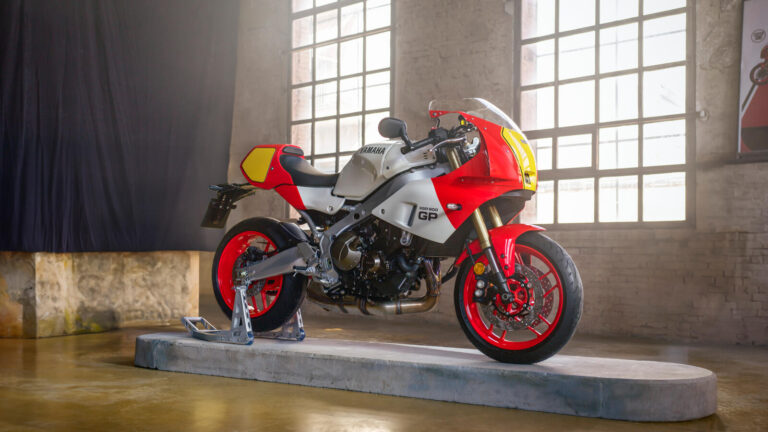
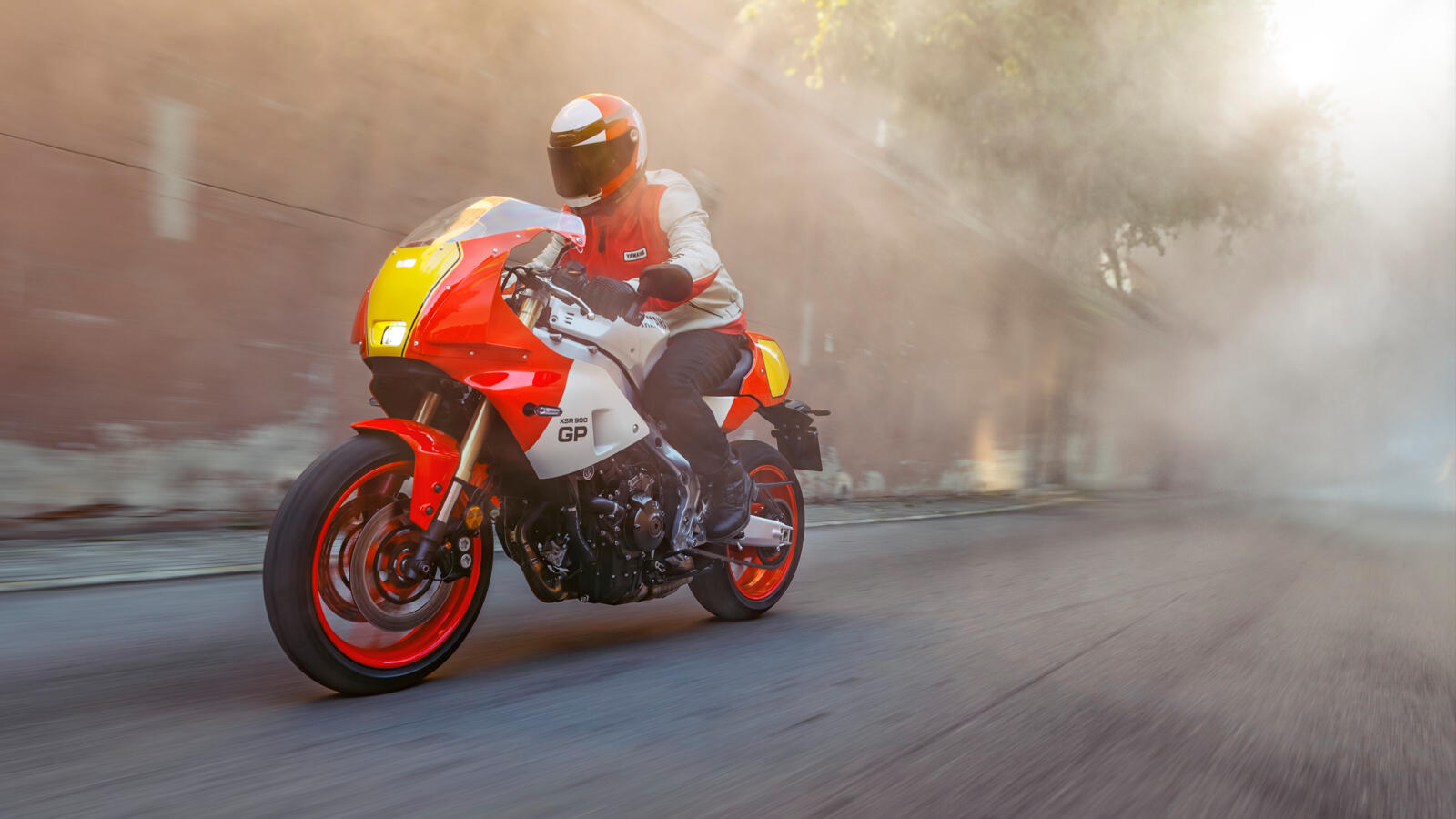
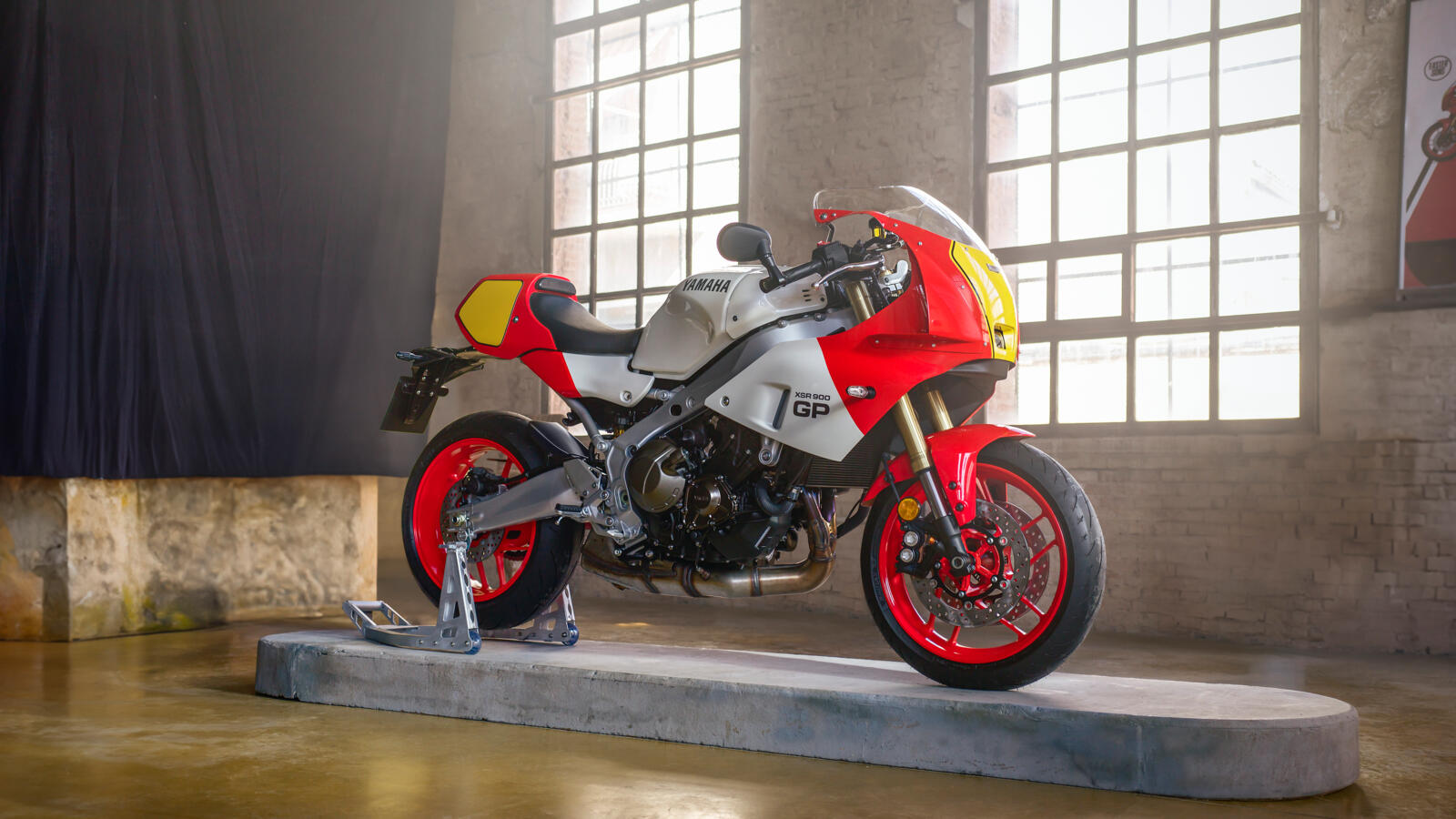
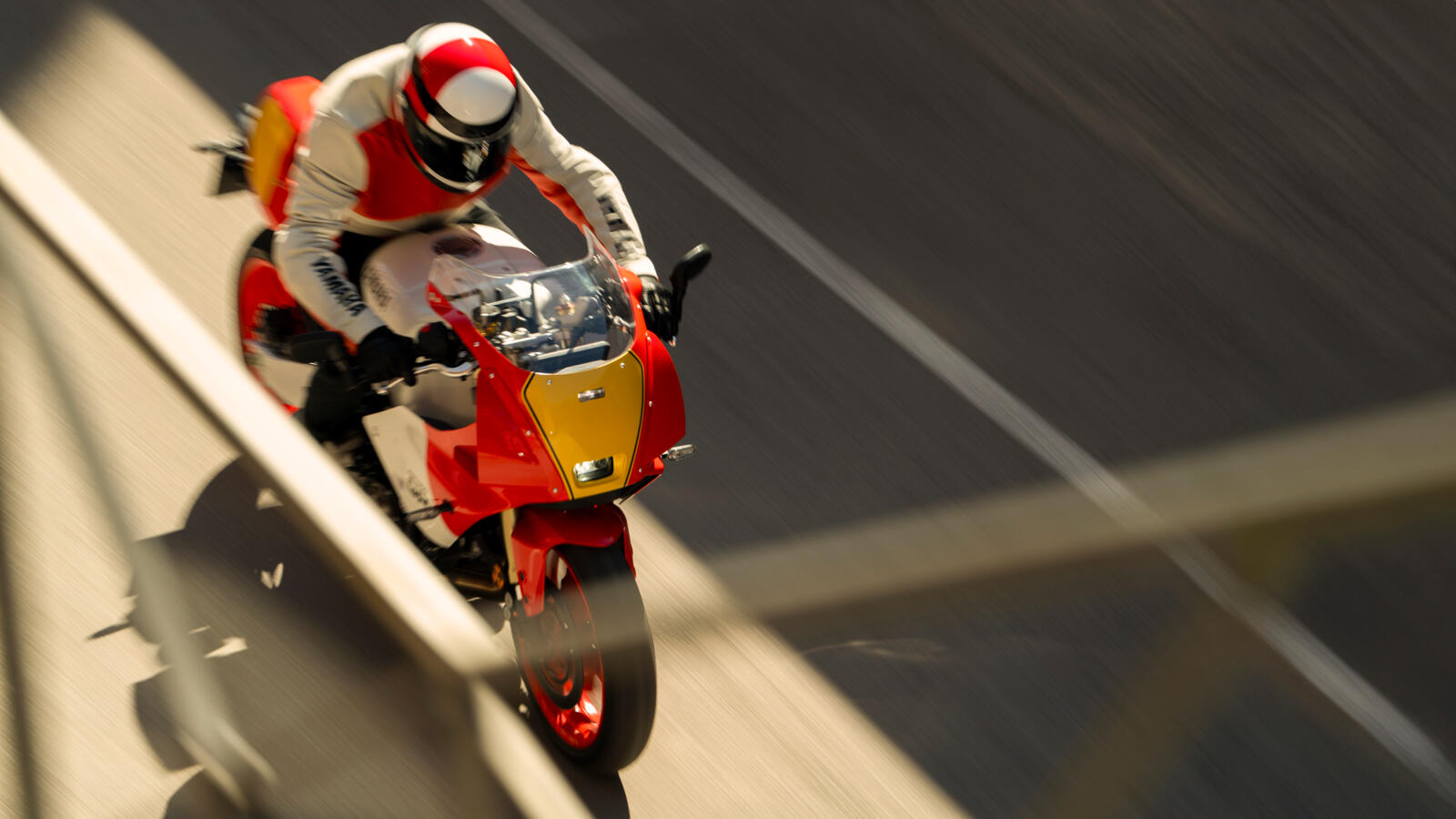
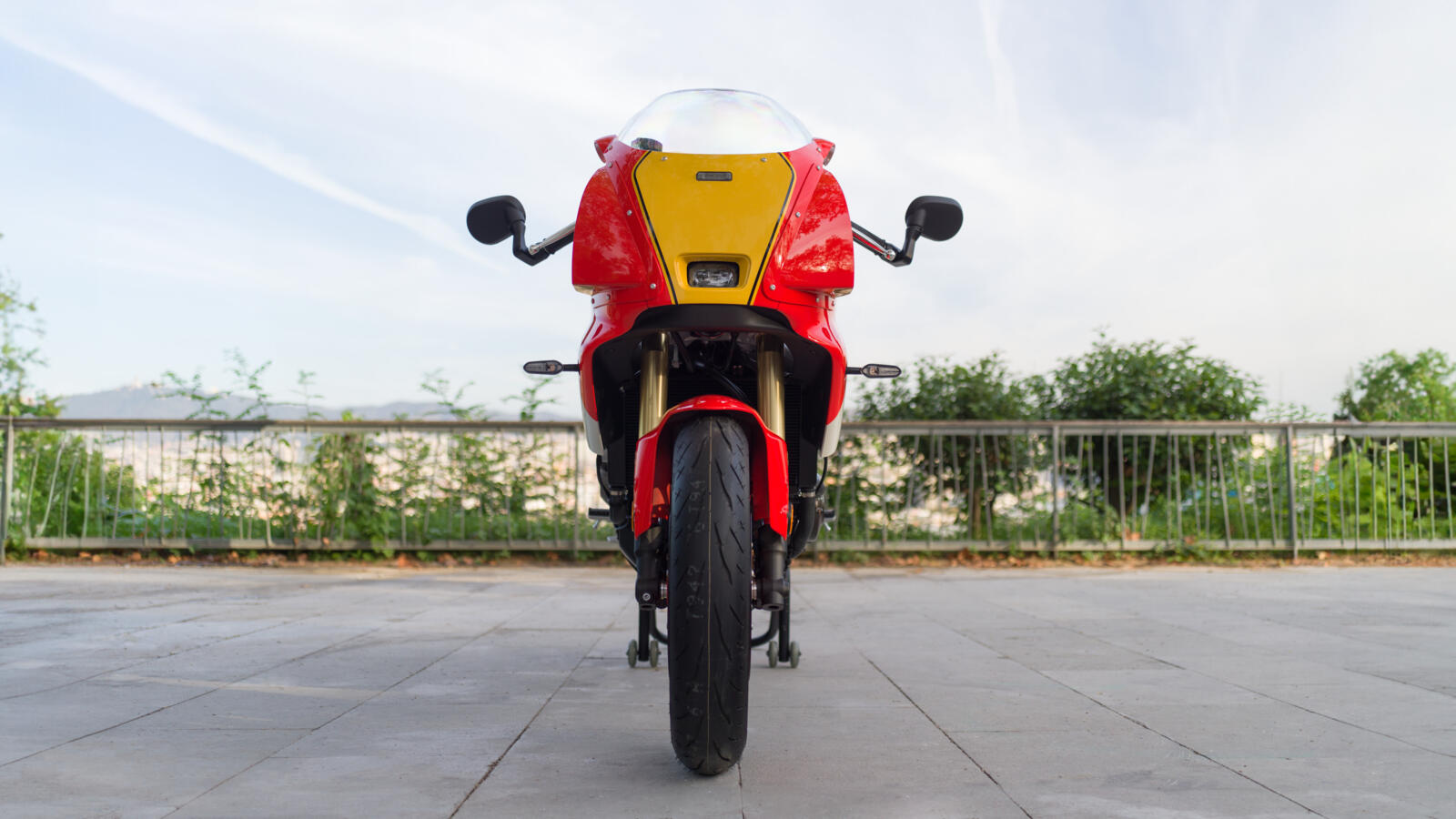
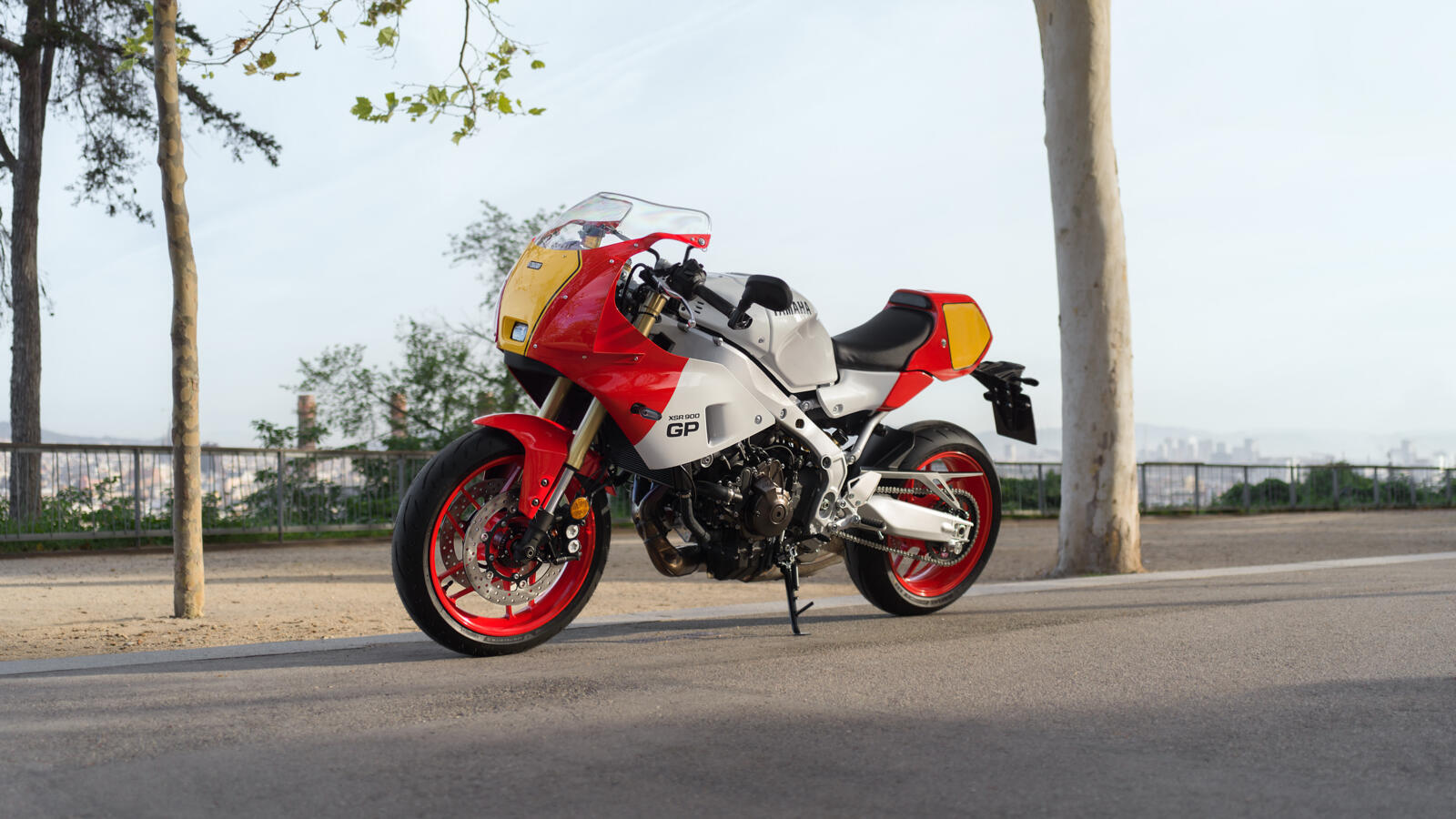
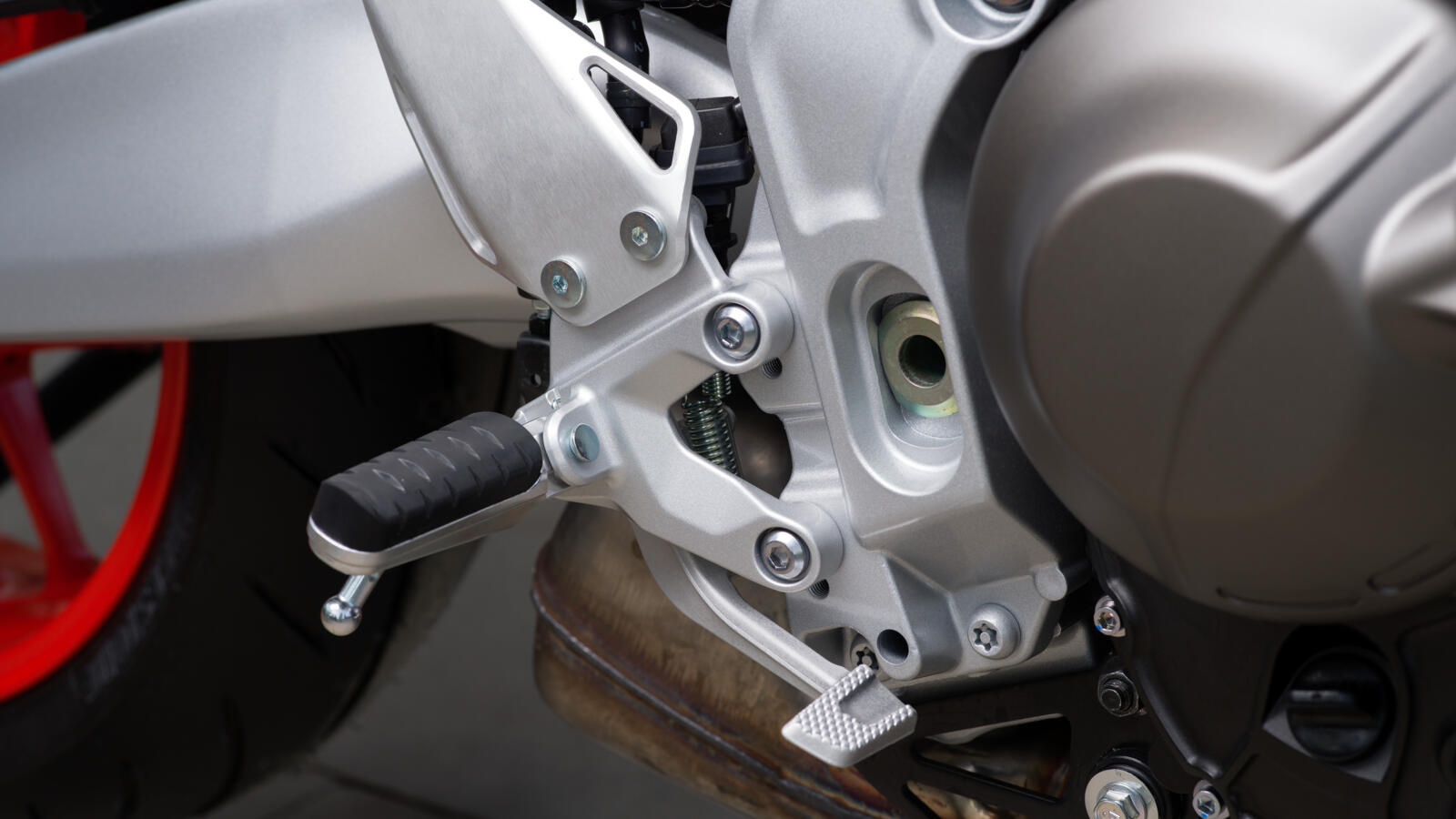
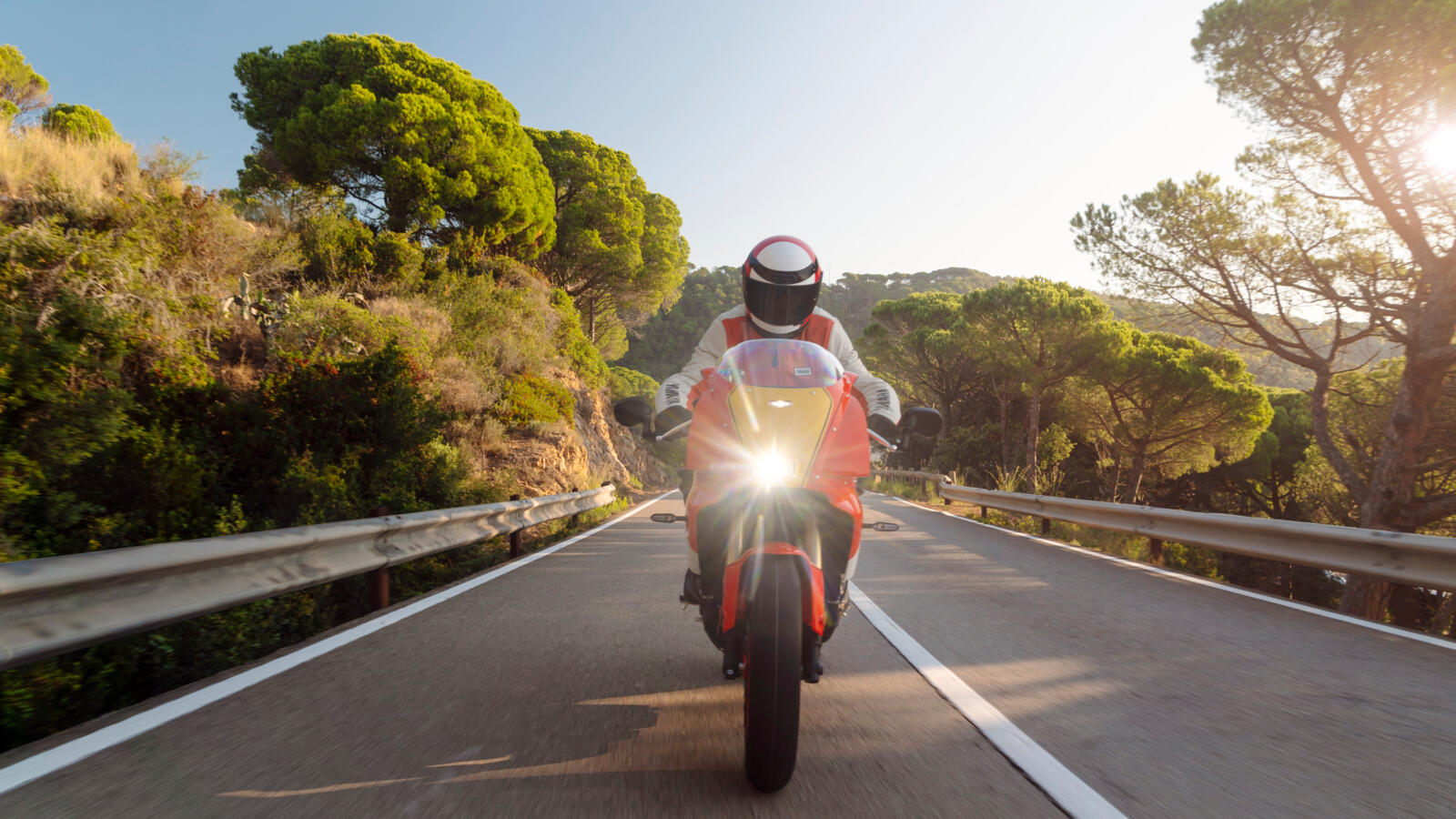
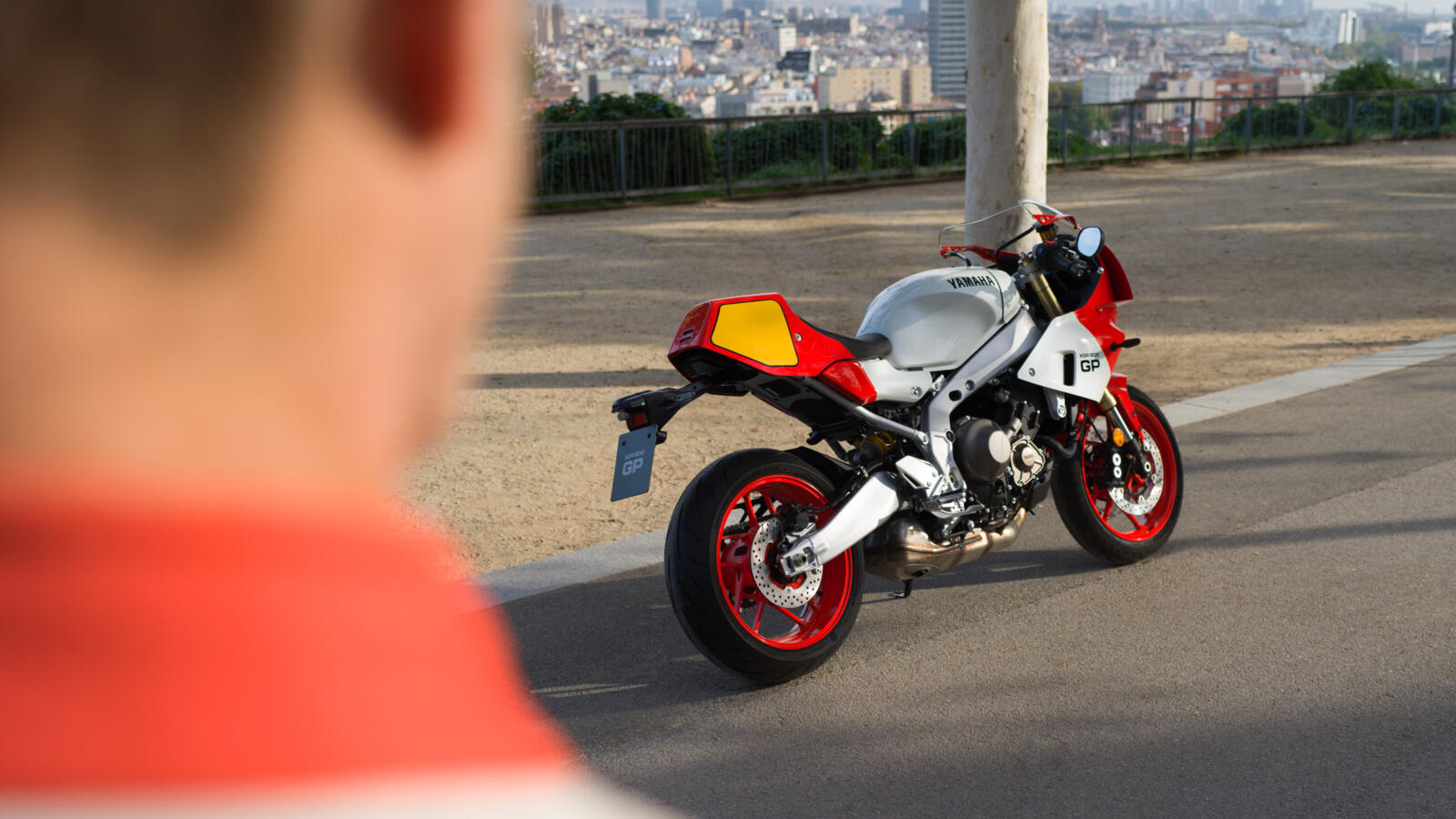
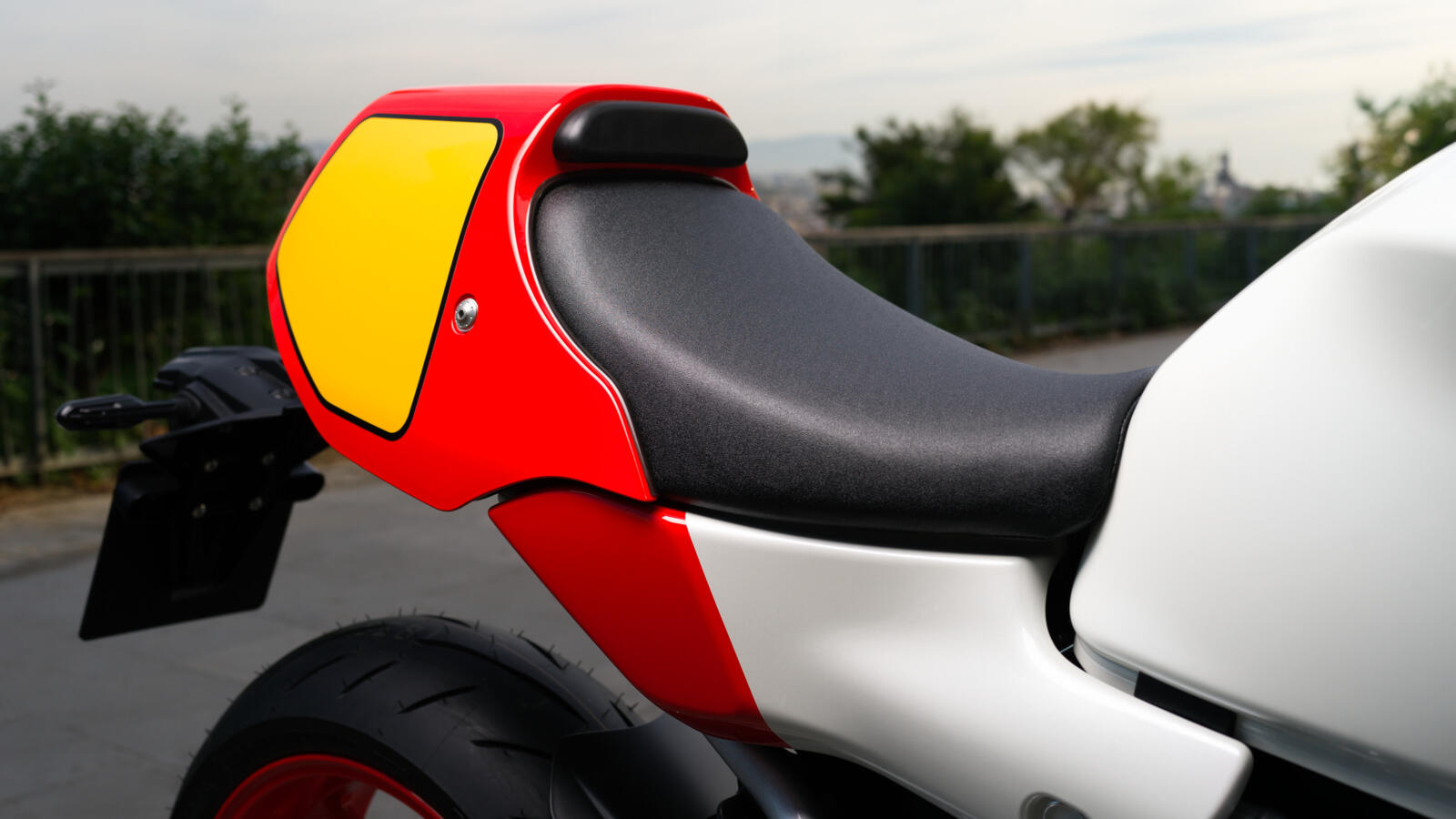
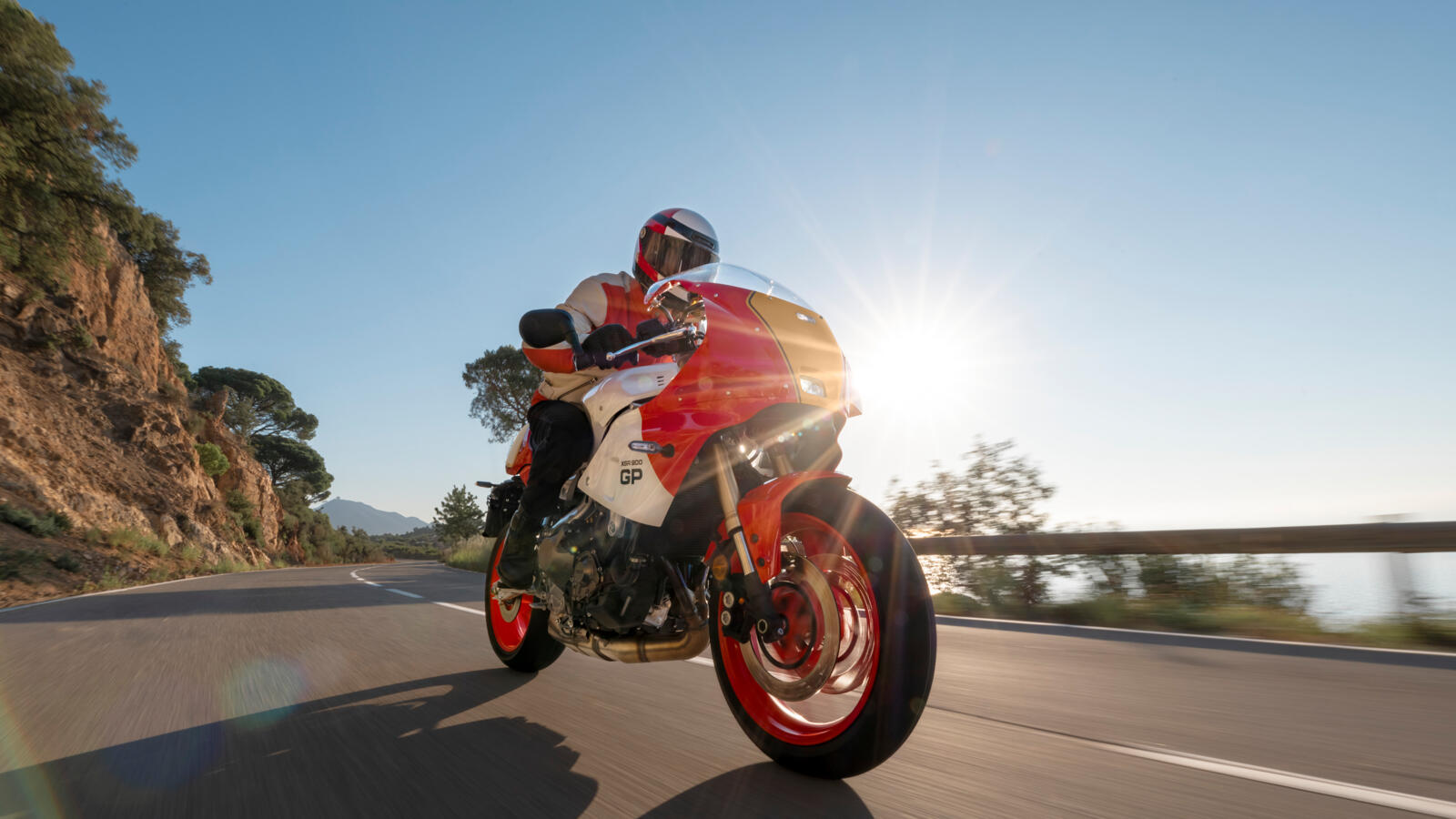
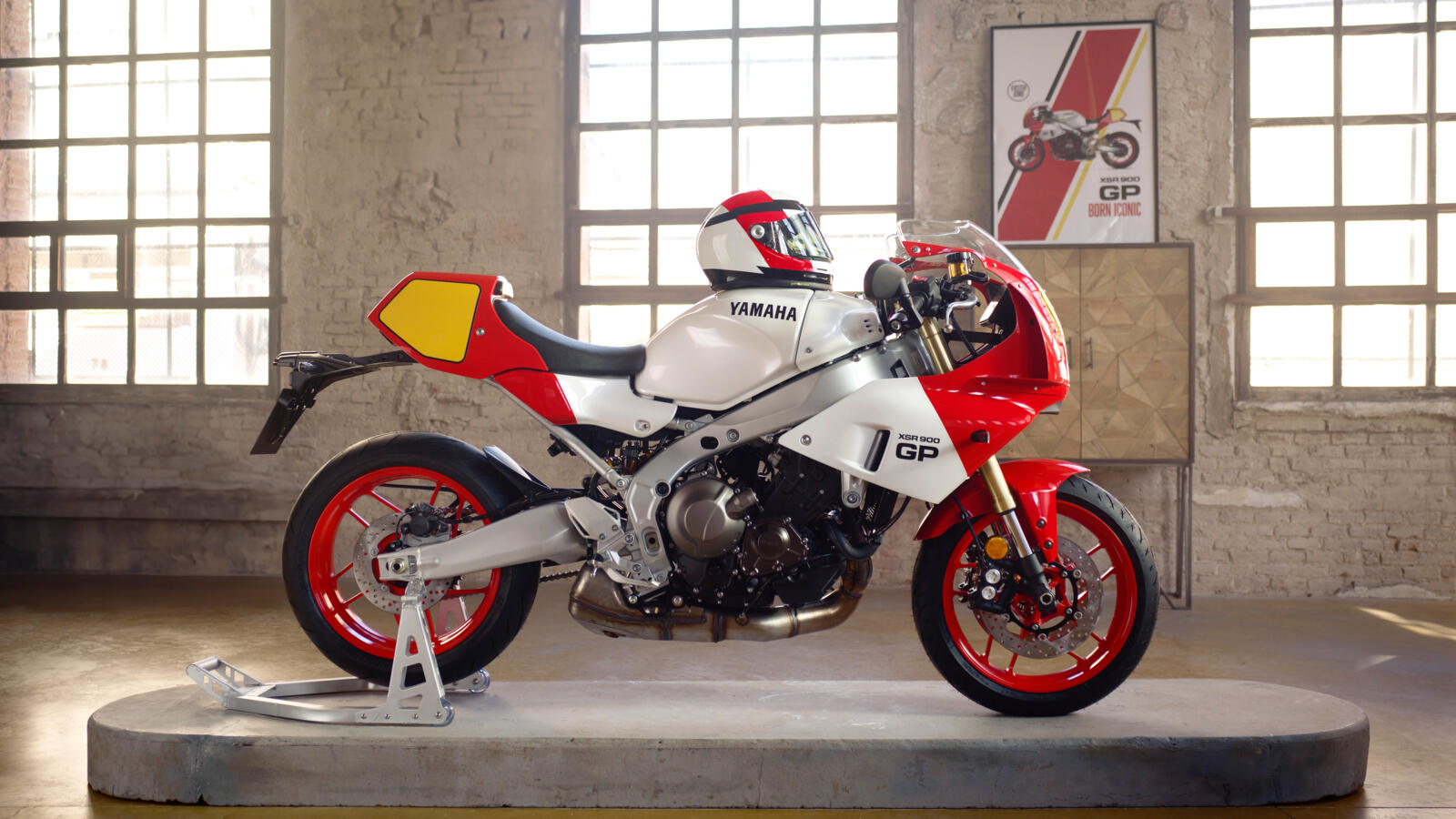
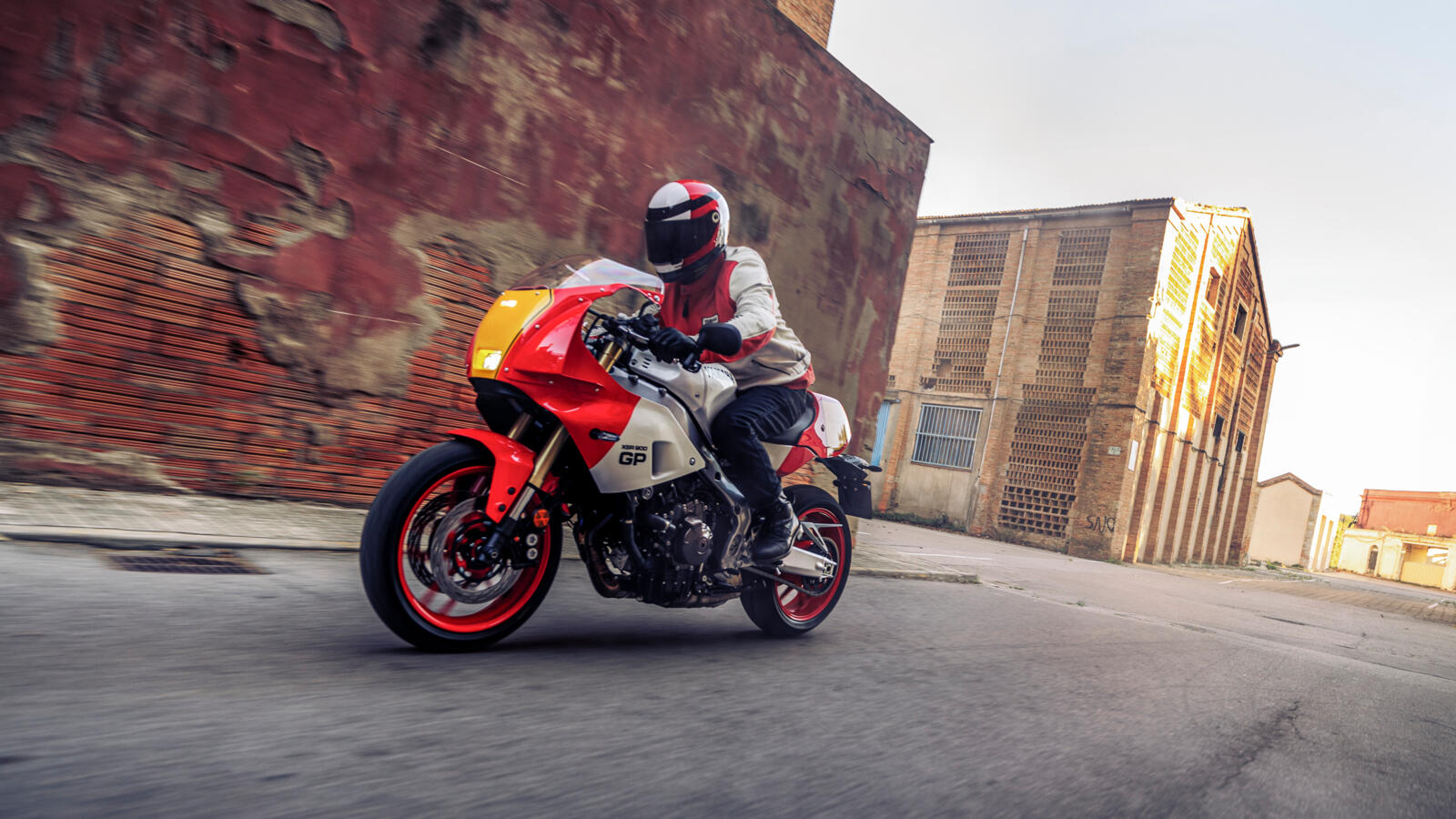
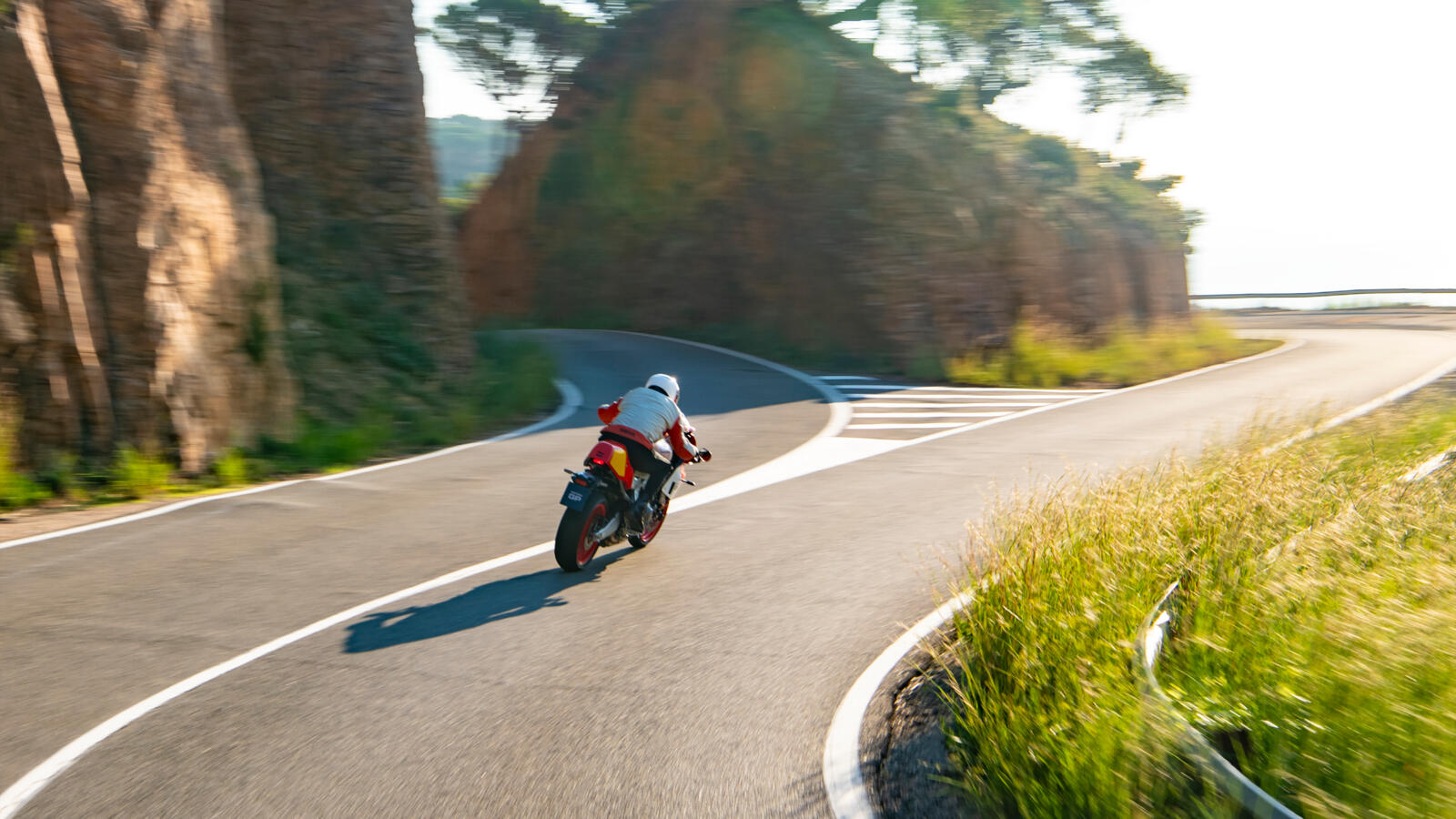
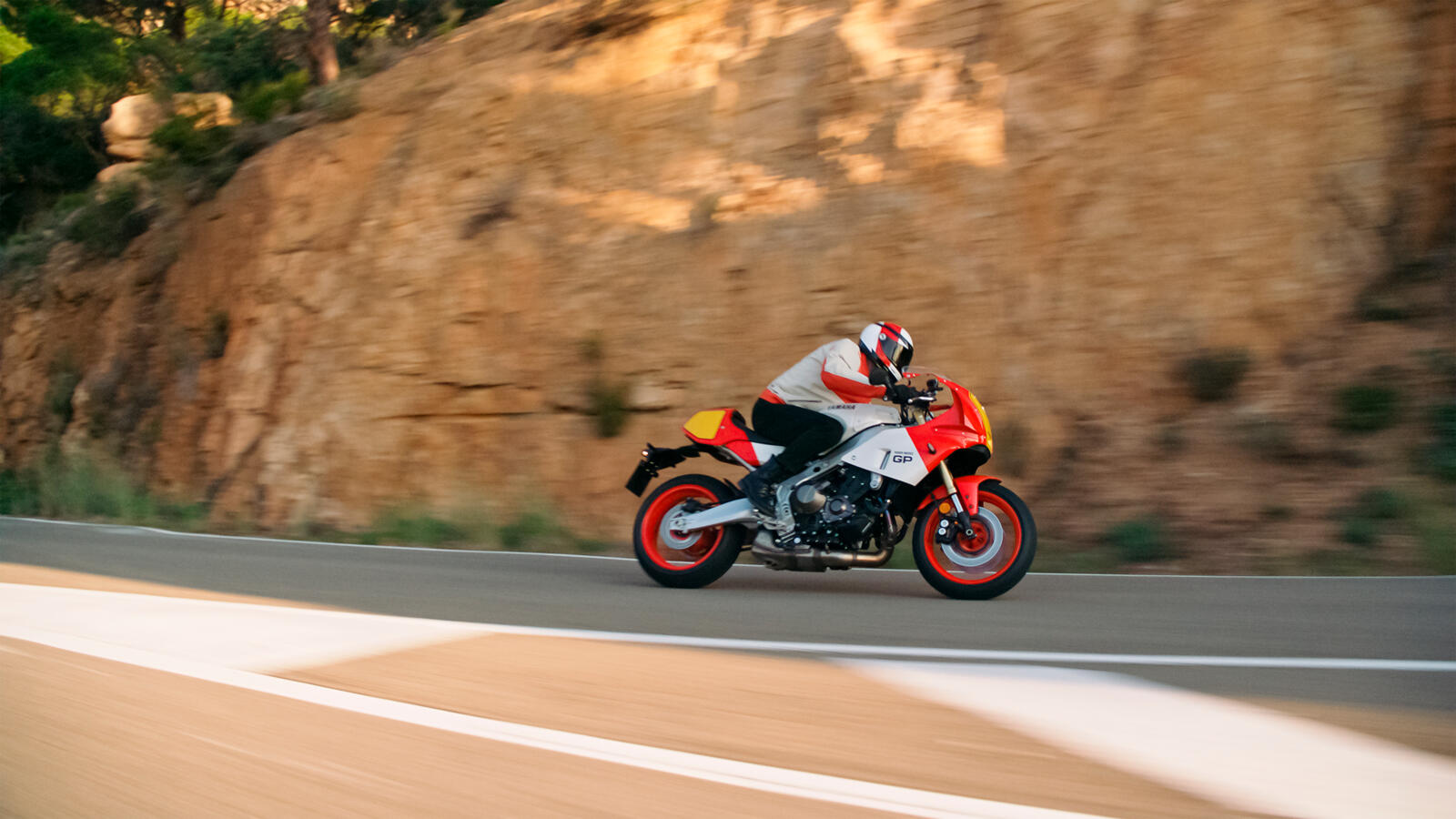
Yamaha’s MT-09 platform has proved to be incredibly versatile and the XSR900 version added a dash of retro appeal to the mixture. Now, Yamaha has gone full-rose-tinted-spectacles on us with the reveal of the stunning new XSR900 GP.
Image source: Yamaha
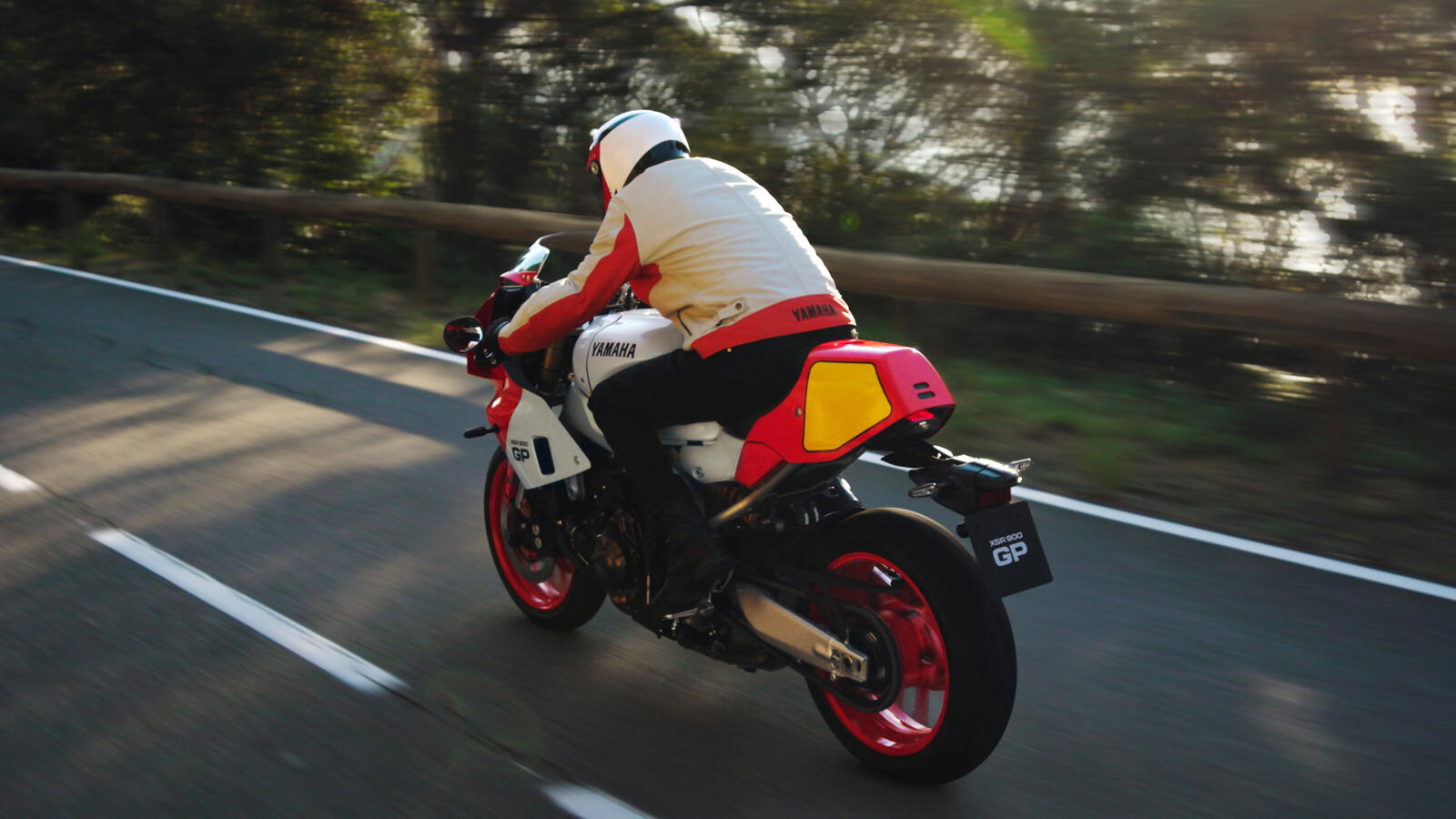
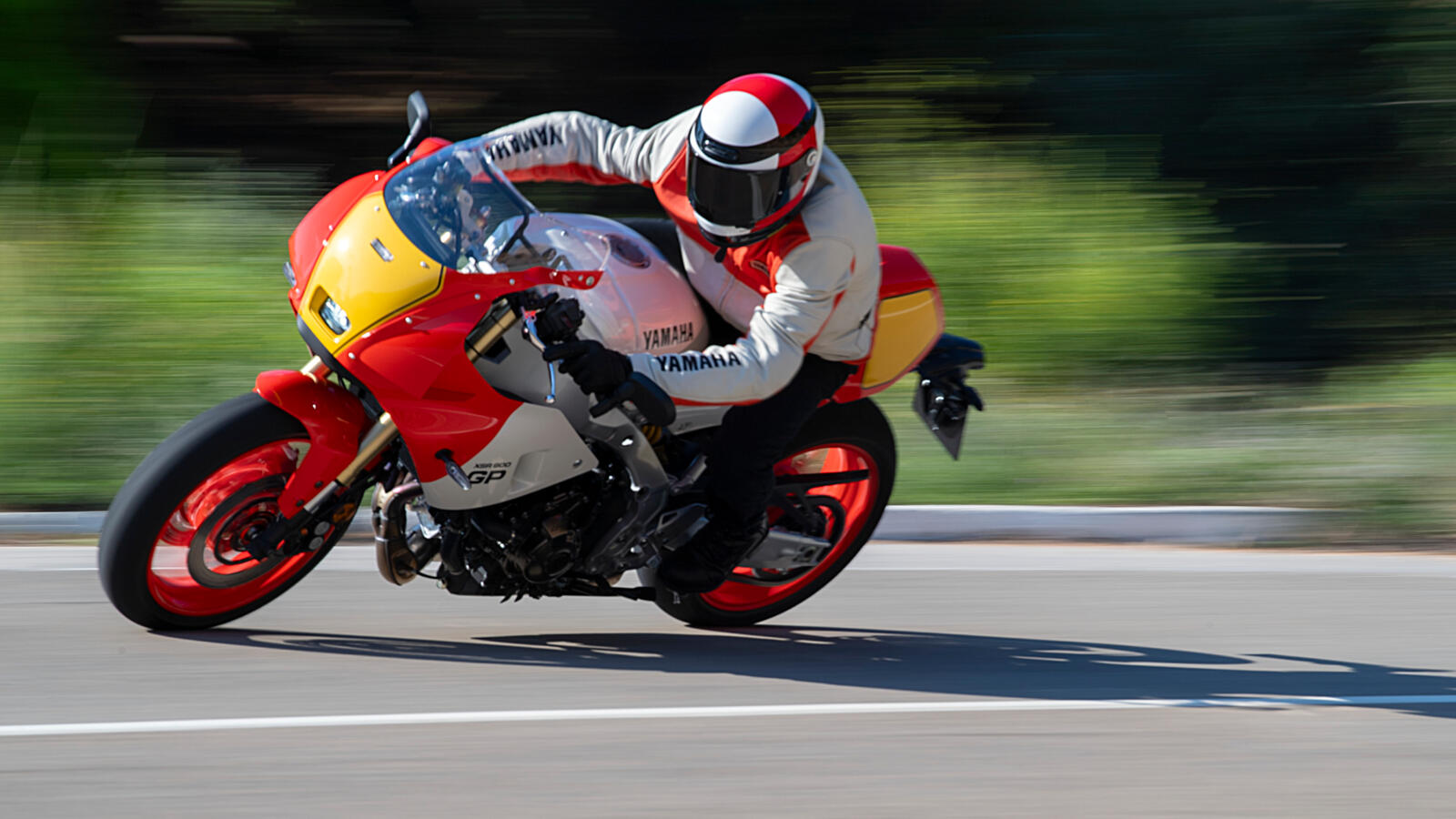
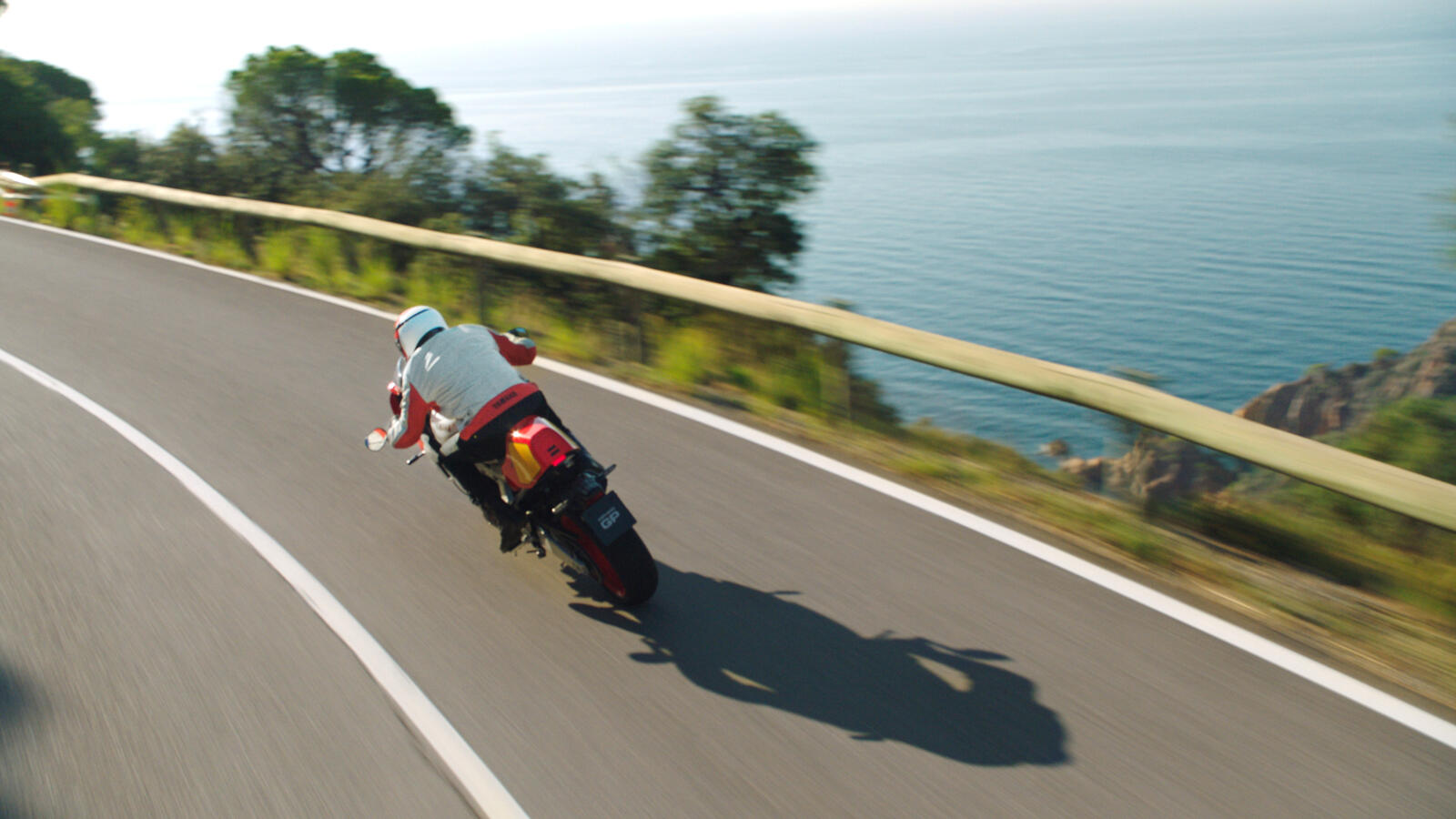
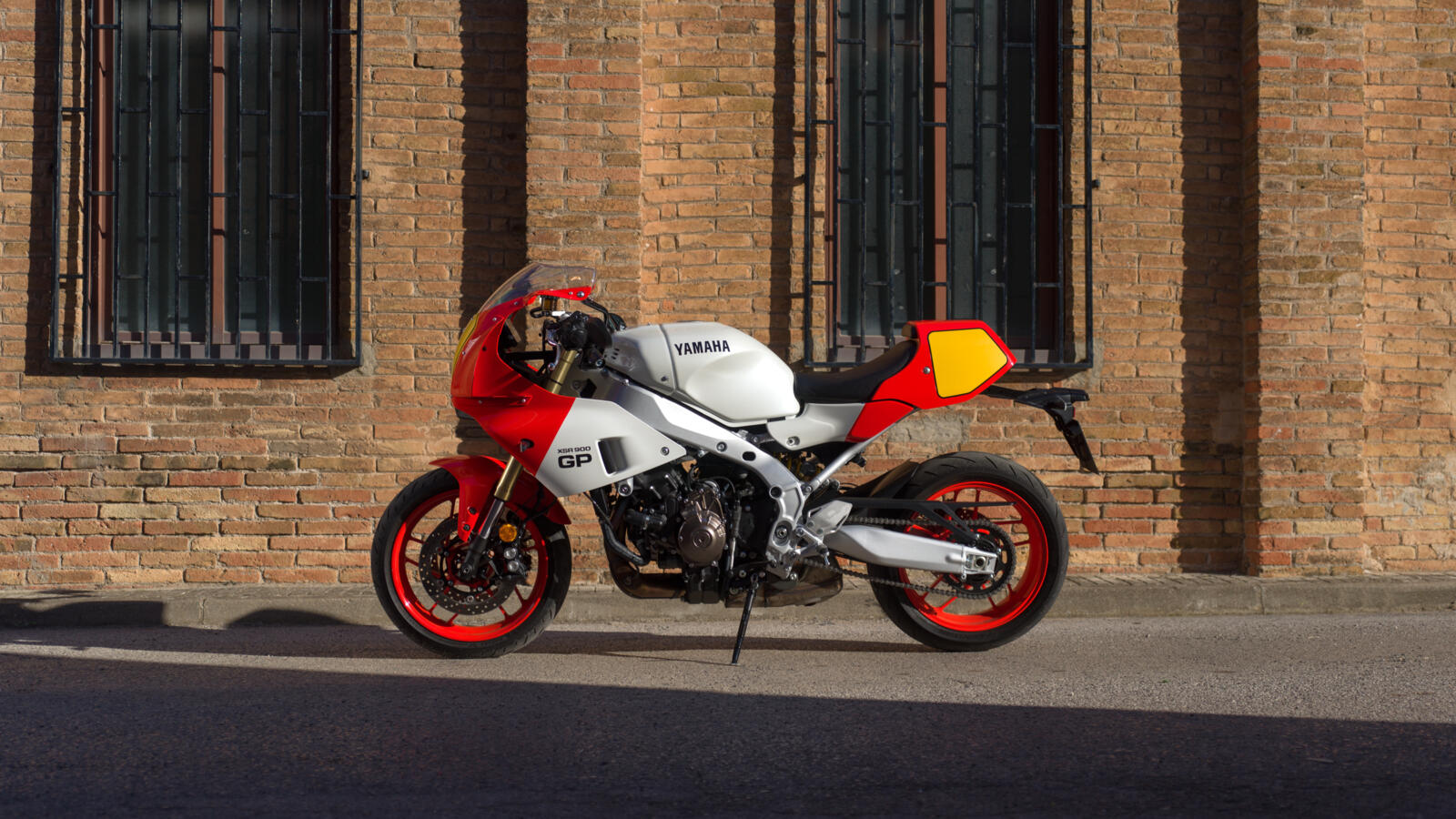
As you can see, inspiration has been taken from the factory 500cc Yamaha Grand Prix bikes as ridden by Eddie Lawson and Wayne Rainey, so the red and white colour scheme that resembles a certain cigarette packet is entirely deliberate and, to our eyes, utterly spectacular.
Image source: Yamaha
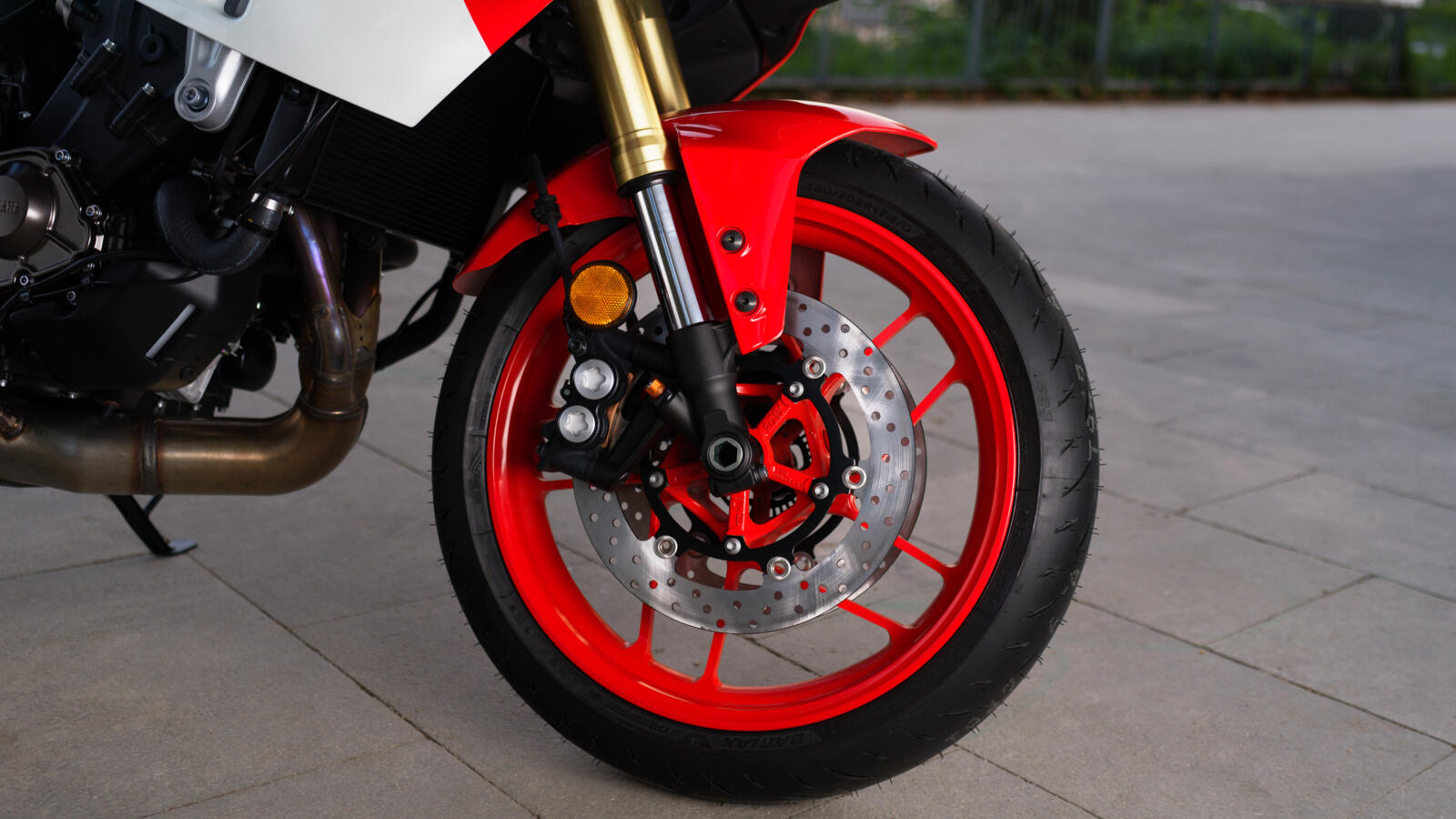
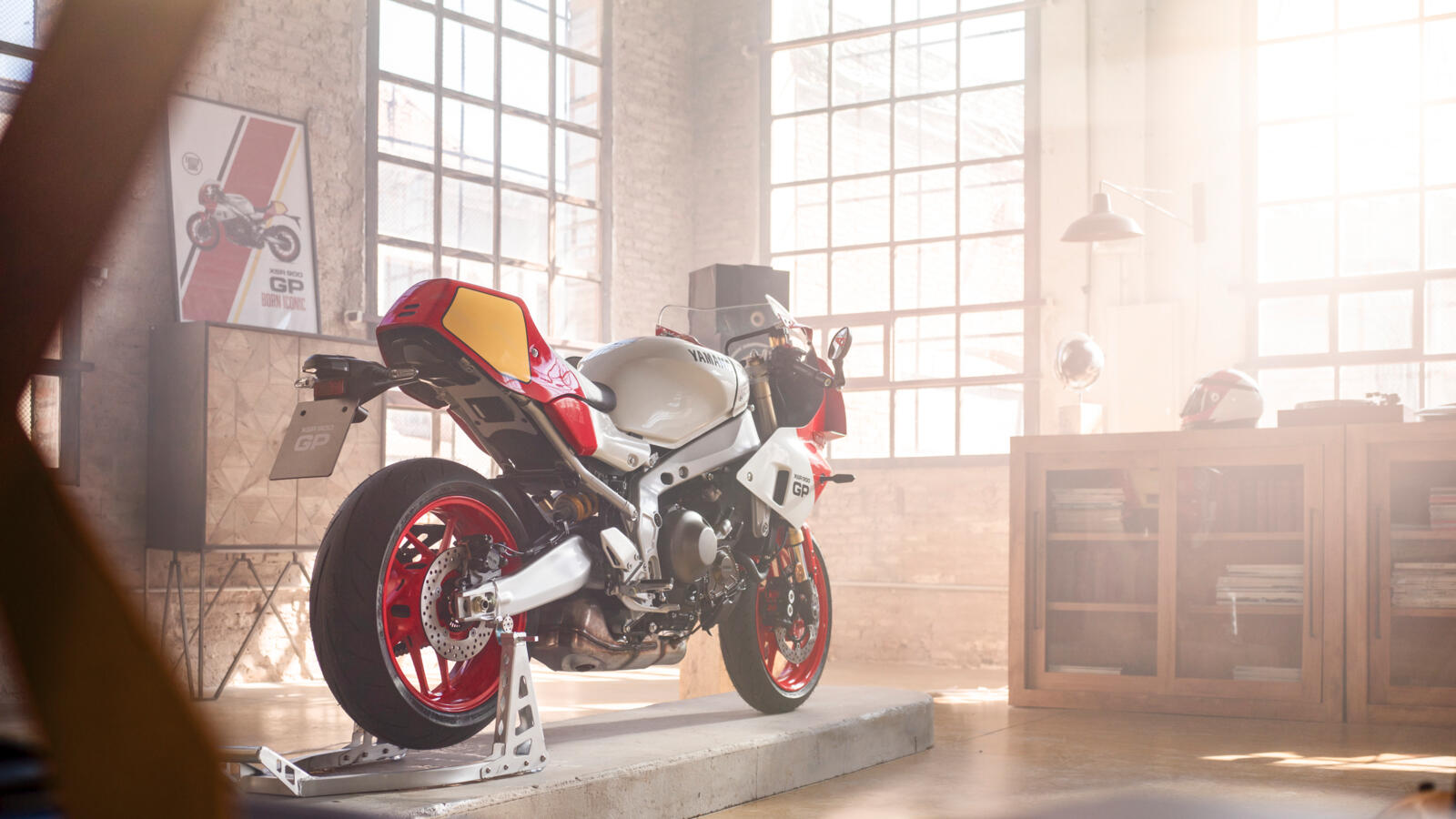
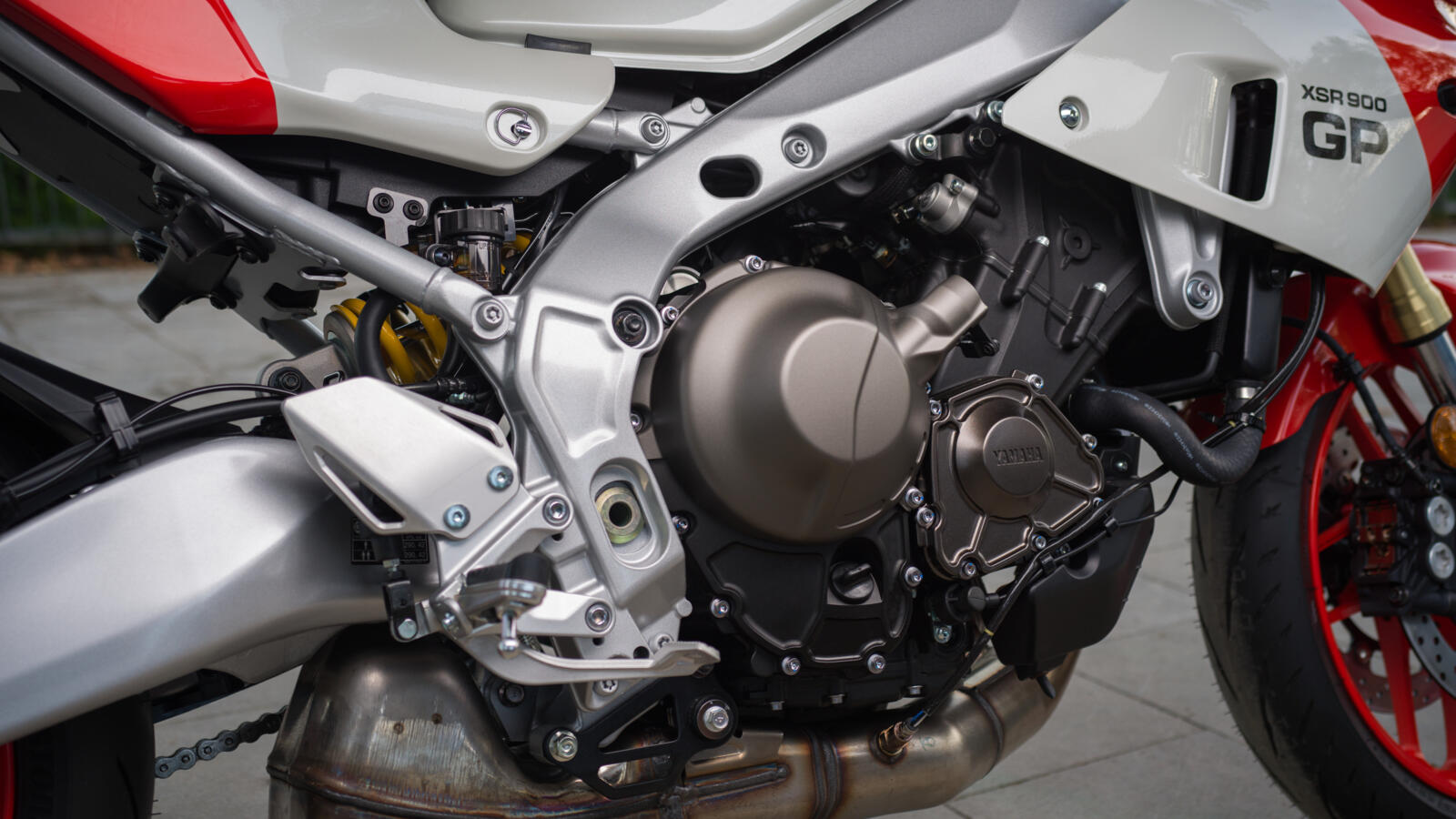
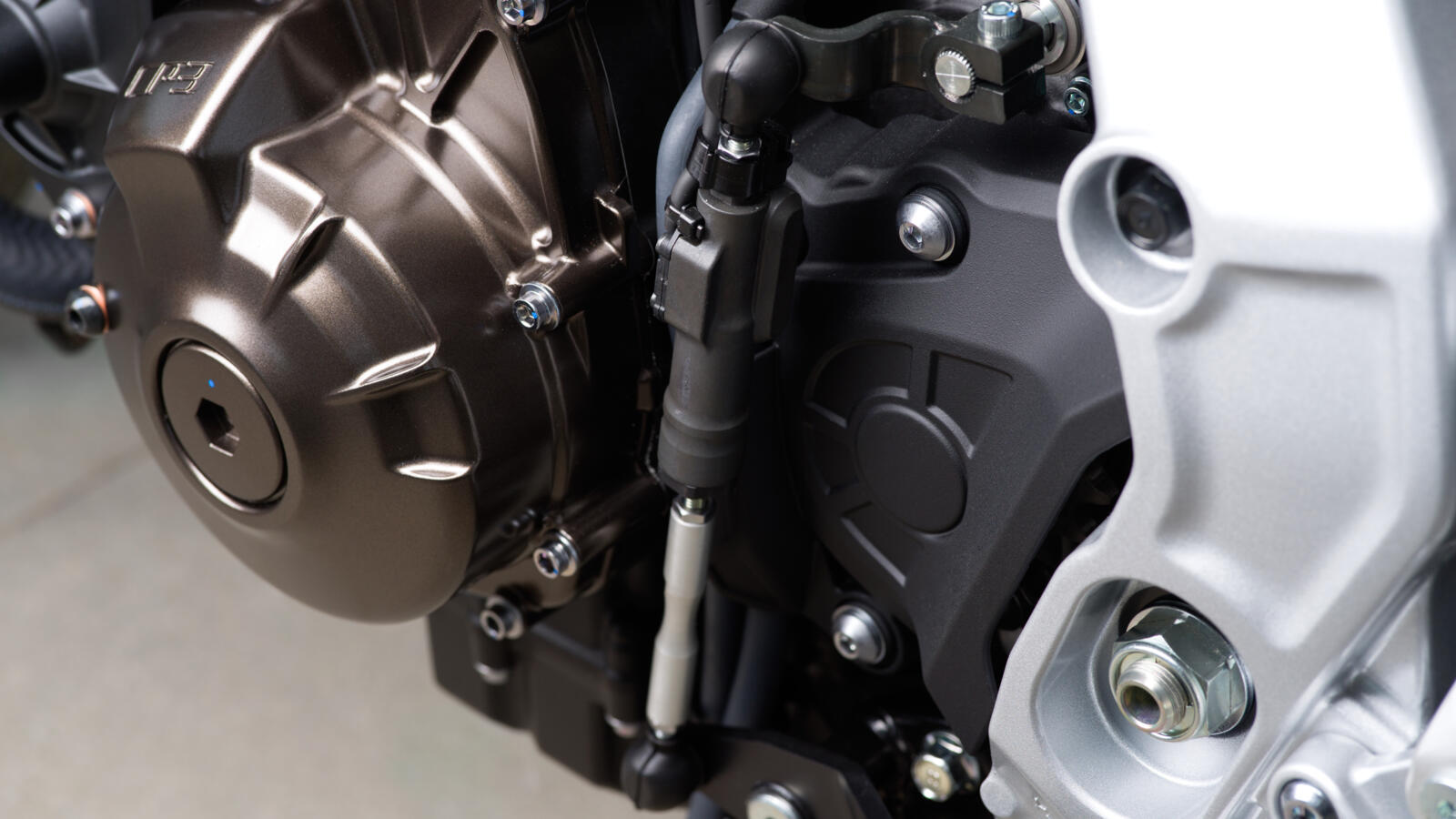
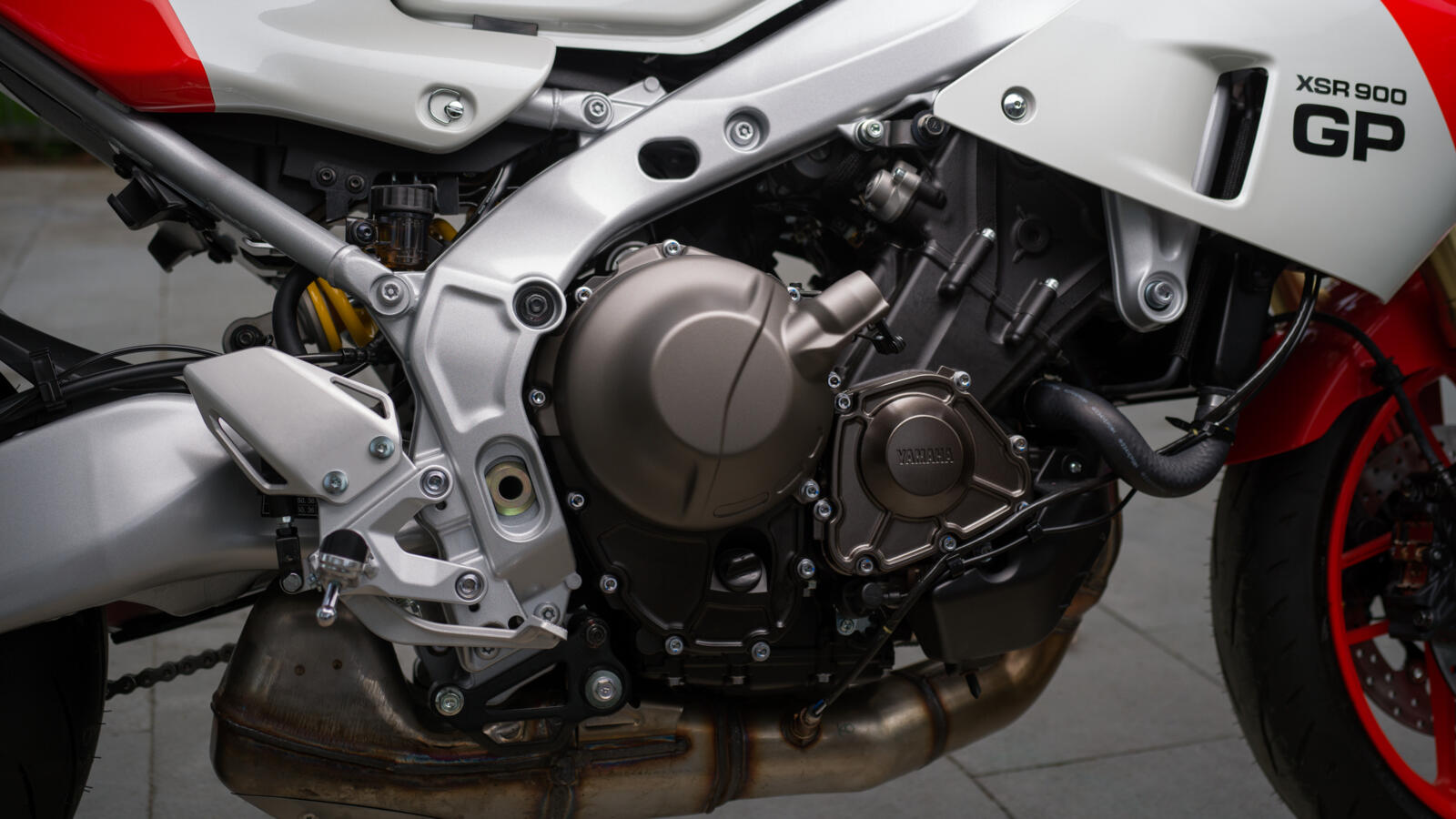
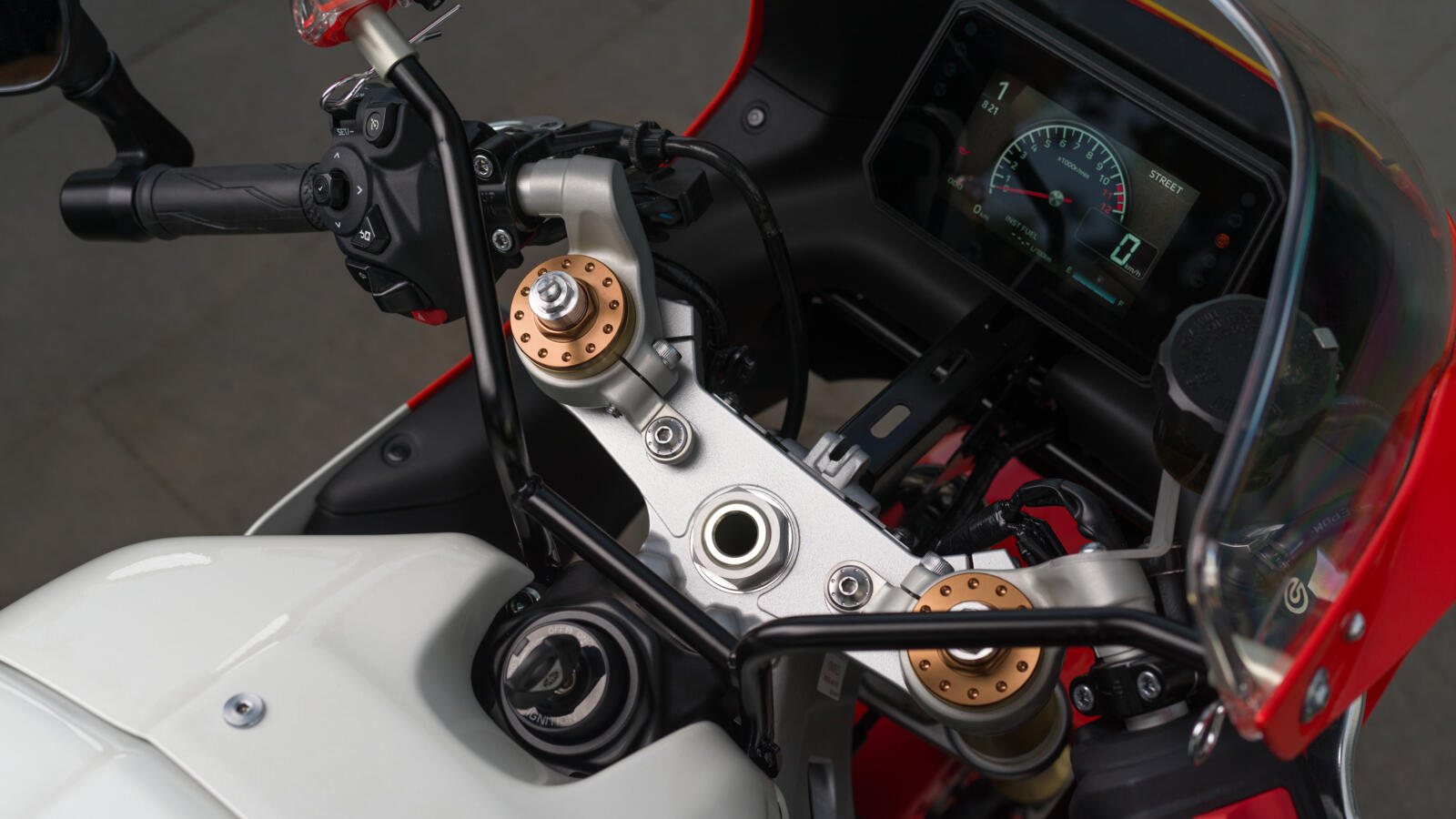
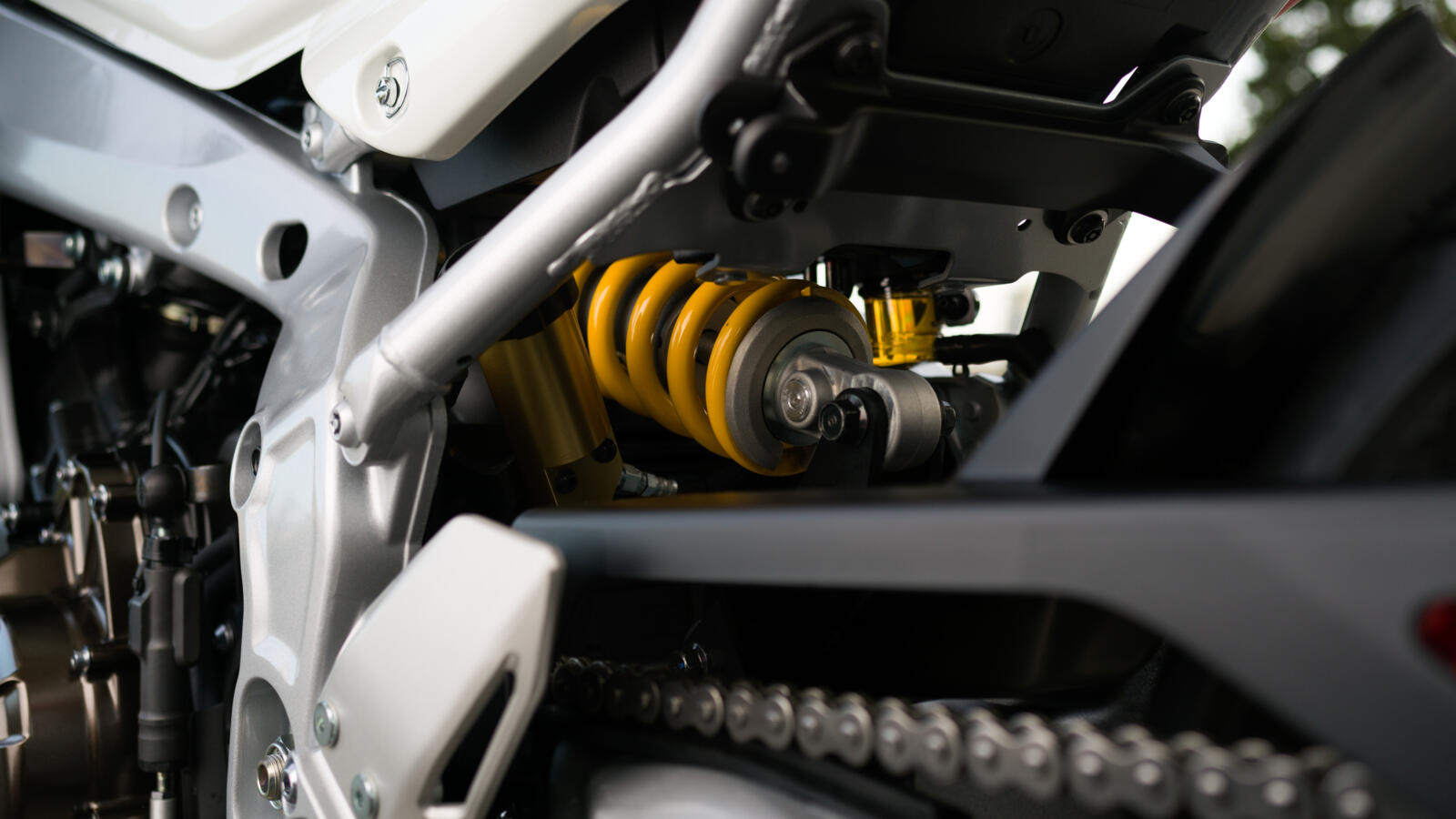
Mechanically, the XSR900 GP is identical to the ‘standard’ XSR900, with a 115bhp, three cylinder engine, Deltabox aluminium frame, radial brake calipers and forged alloy wheels, alongside fully adjustable KYB suspension.
Image source: Yamaha
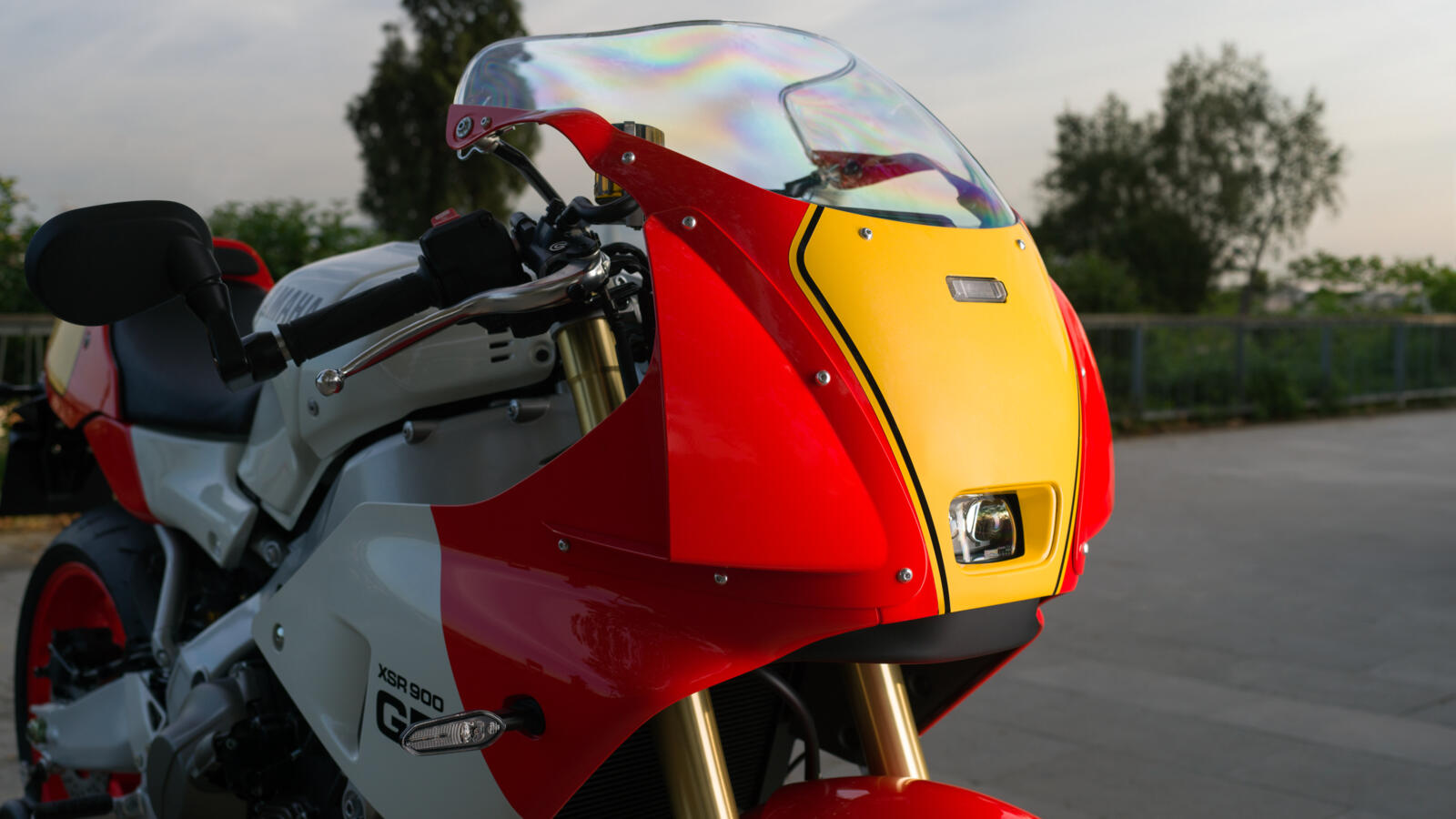
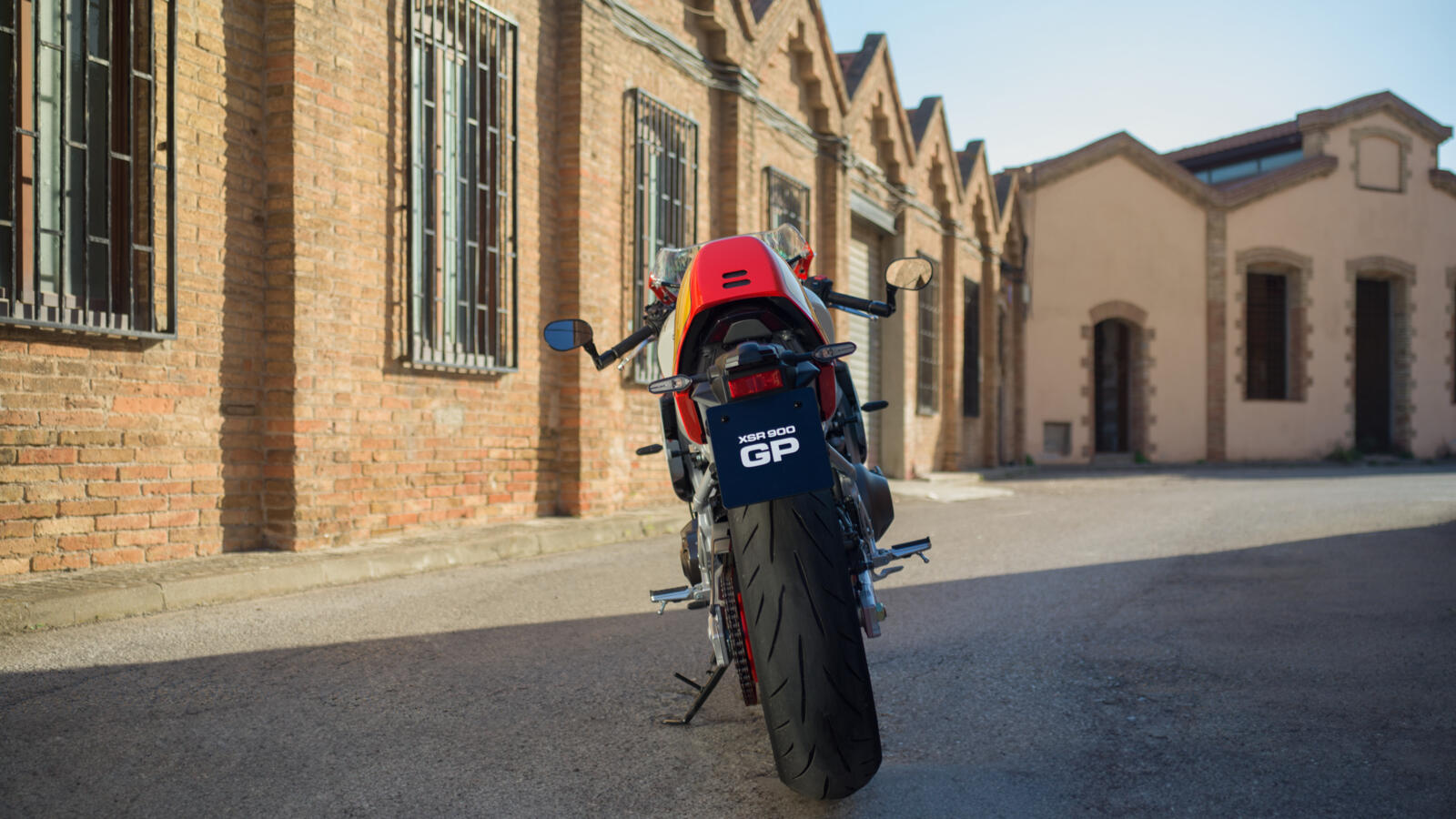
So far, so good, but the real show-stealer is the half-fairing, with lower fairing panels available as an optional extra. Thanks to the tiny but obviously super-bright headlight, the front of the fairing looks just like a race bike, with a yellow race number panel, matching those on the seat hump. The side panels are also new.
Image source: Yamaha
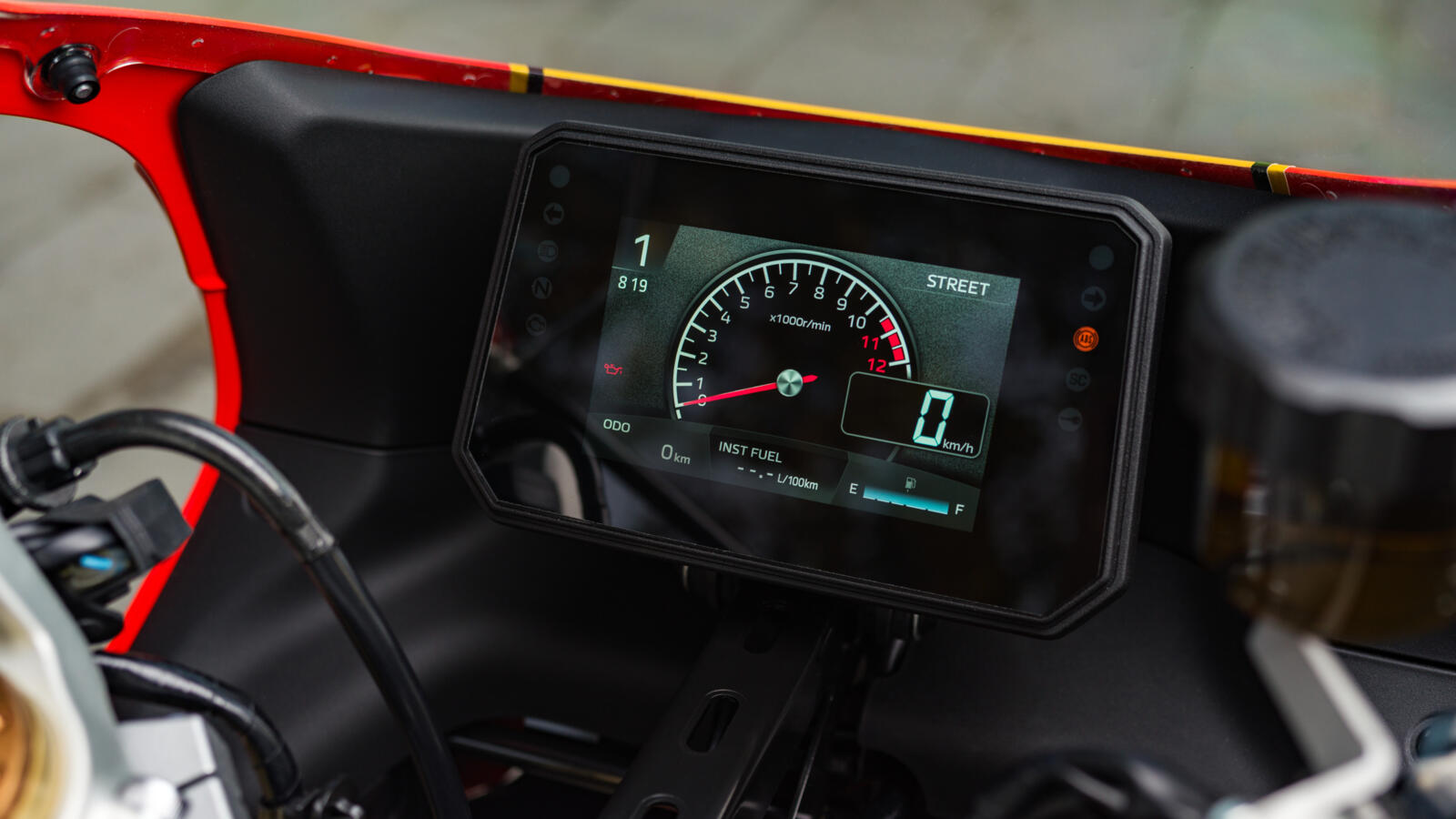
There’s a new 5-inch TFT dash, clip-on handlebars and new switchgear. Electronics include a quick shifter/auto blipper, a full suite of rider aids including three pre-set engine power modes, Bluetooth connectivity and cruise control.
Image source: Yamaha
But, to be honest, we don’t care what’s under the skin because the skin itself is utterly gorgeous: never have we been so happy to see a naked bike covered up.
1 of 23
There’s no indication of price or even if any will come to South Africa but, perhaps, if we make enough noise, Yamaha SA will be forced to bring them in.
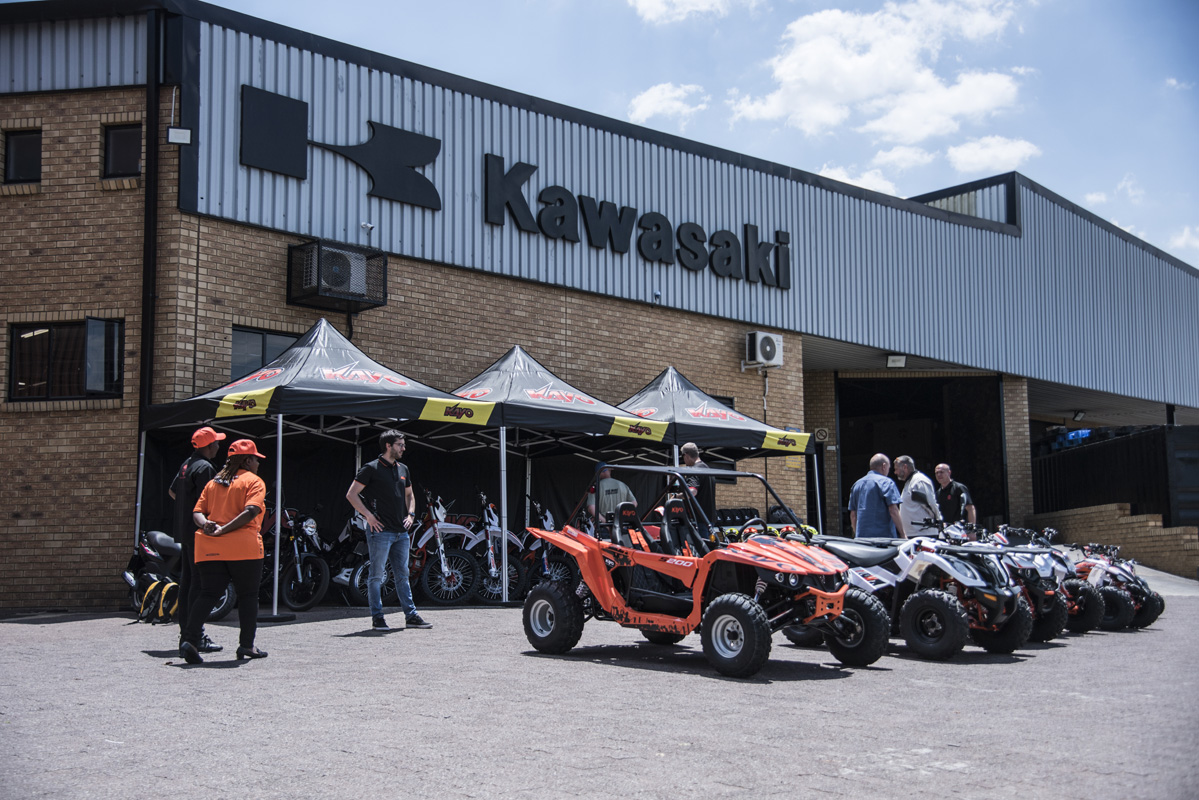
We were invited to KMSA recently for the introduction of a new brand debuting in SA under the KMSA banner. The introduction started with Chris Speight, KMSA supremo, giving us an overview of the current sales statistics for motorcycles in SA. To be frank, they don’t look too encouraging. Statistically, the relevance of traditional strong performers has reduced drastically. SA was always Sportbike country.
Photo credit: Bjorn Moreira / ZA Bikers
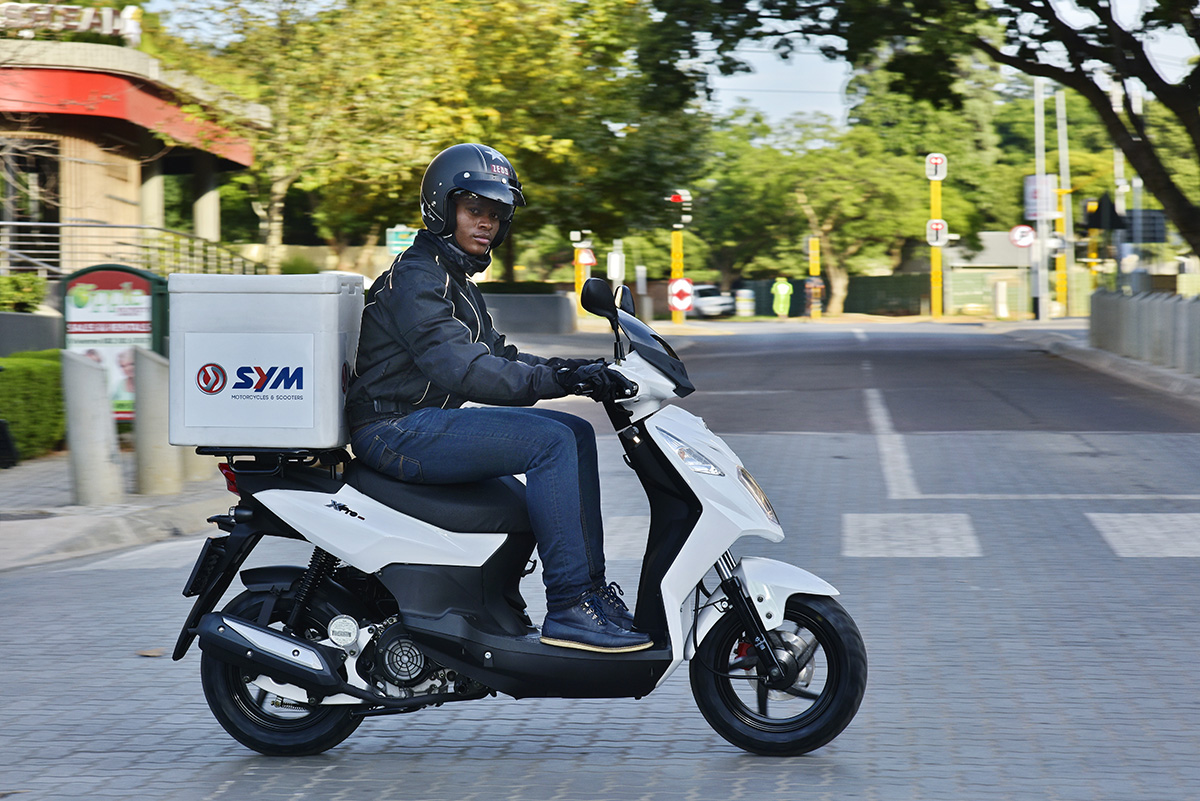
This market has certainly shrunk drastically worldwide and particularly in SA. Even KMSA’s SYM sales are down compared to last year. Whilst still robust, they are under pressure in our ailing economy. The only sector which is healthy is the small bike sector, what with Uber eats and grocery deliveries. This is a high-volume low-profit part of the market. The historic big bike (over 500cc) market is taking strain.
Image source: SYM Scooters SA
Many potential buyers in this market now live in London, Toronto and Down Under. Having been around the block a few times in this fickle industry where motorcycle sales have always been a barometer of the economy, Chris and his team have looked, learnt and taken action. After 48 years of distributing Kawasaki in SA with a parts first and bikes second approach, KMSA have done a sterling job with all the brands that they have represented. Their Dirtbike sales have been reasonably consistent, what with their backing of the Championship Pepson Plastics race team.
Photo credit: Bjorn Moreira / ZA Bikers
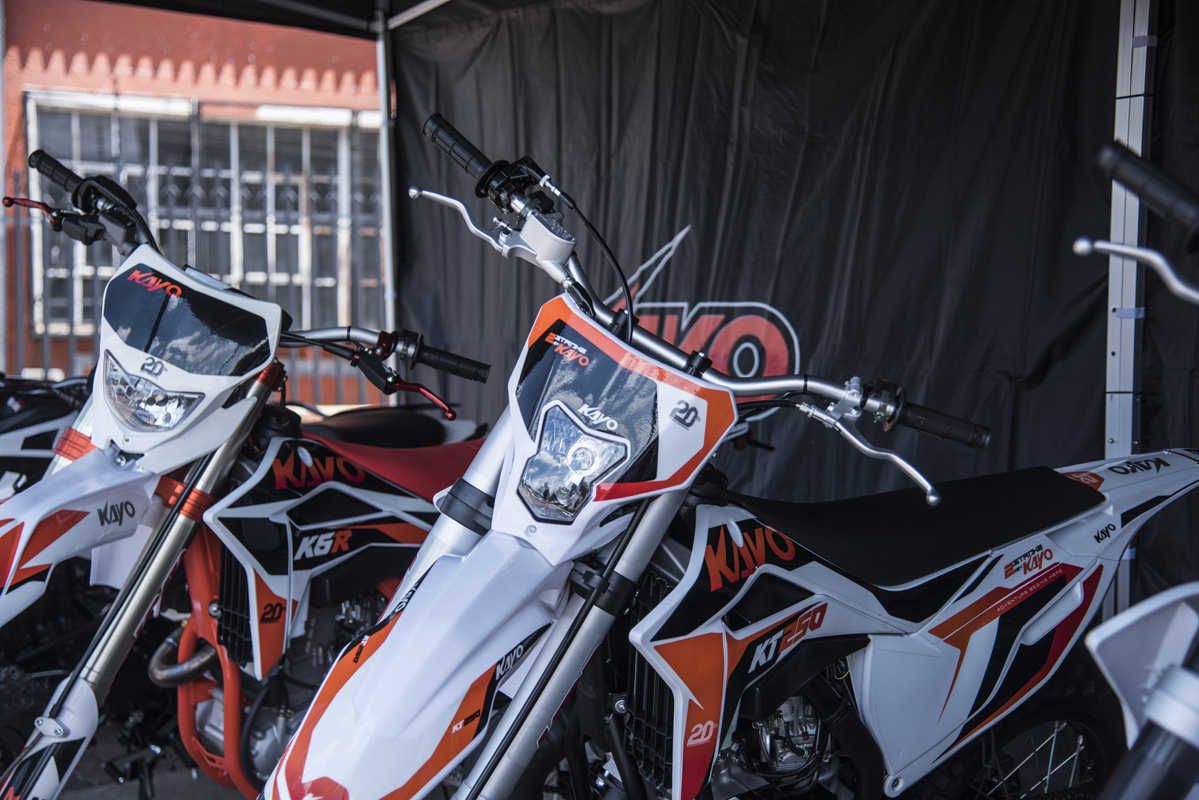
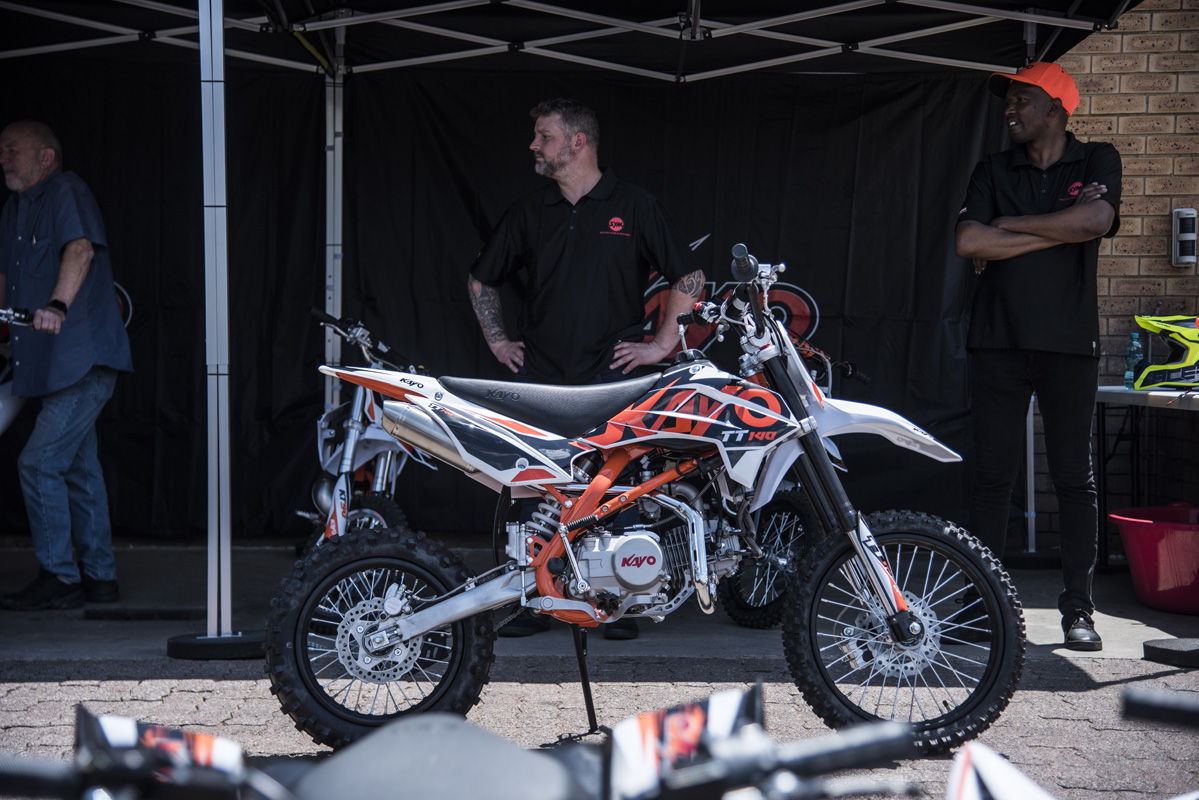
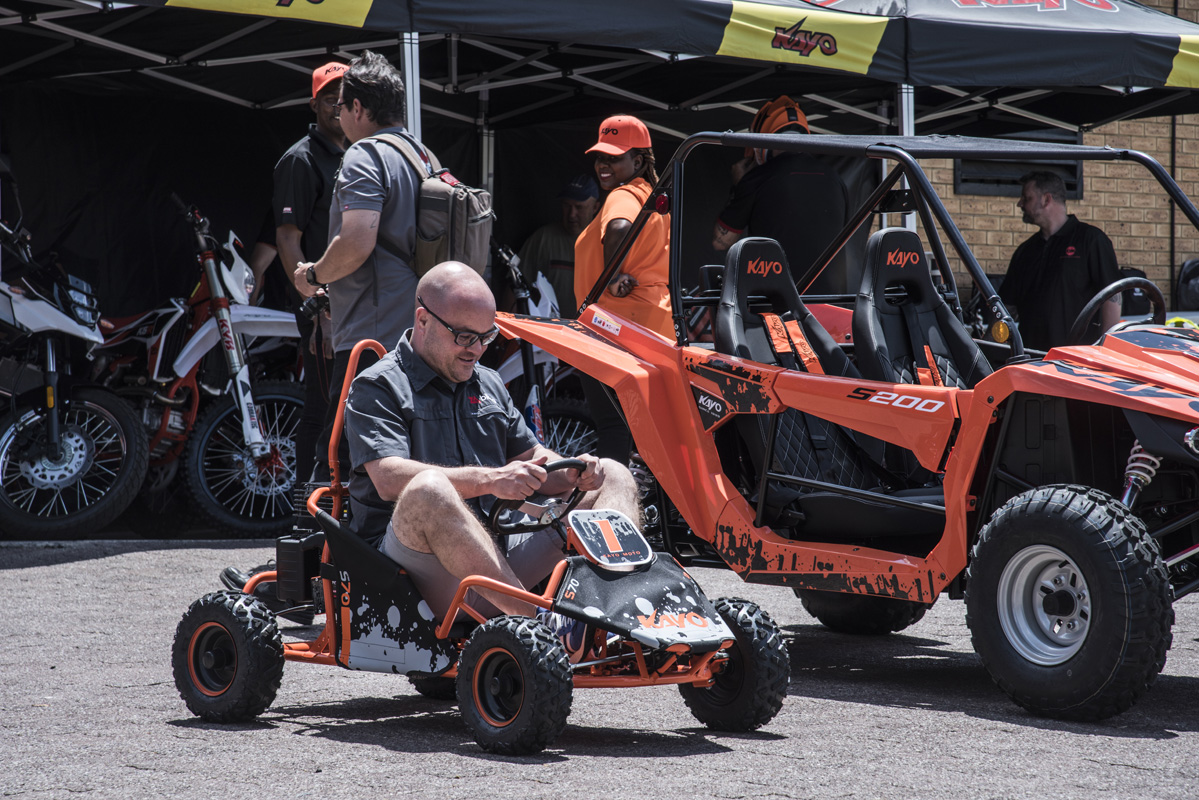
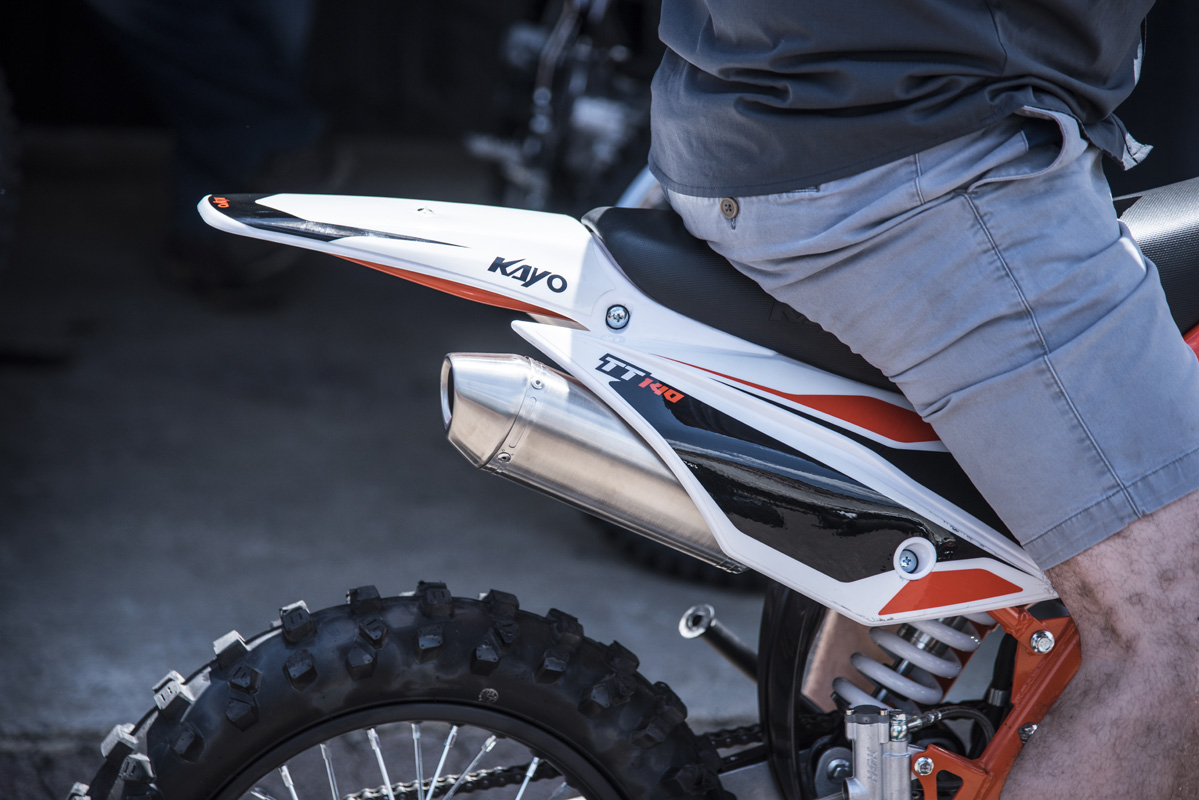
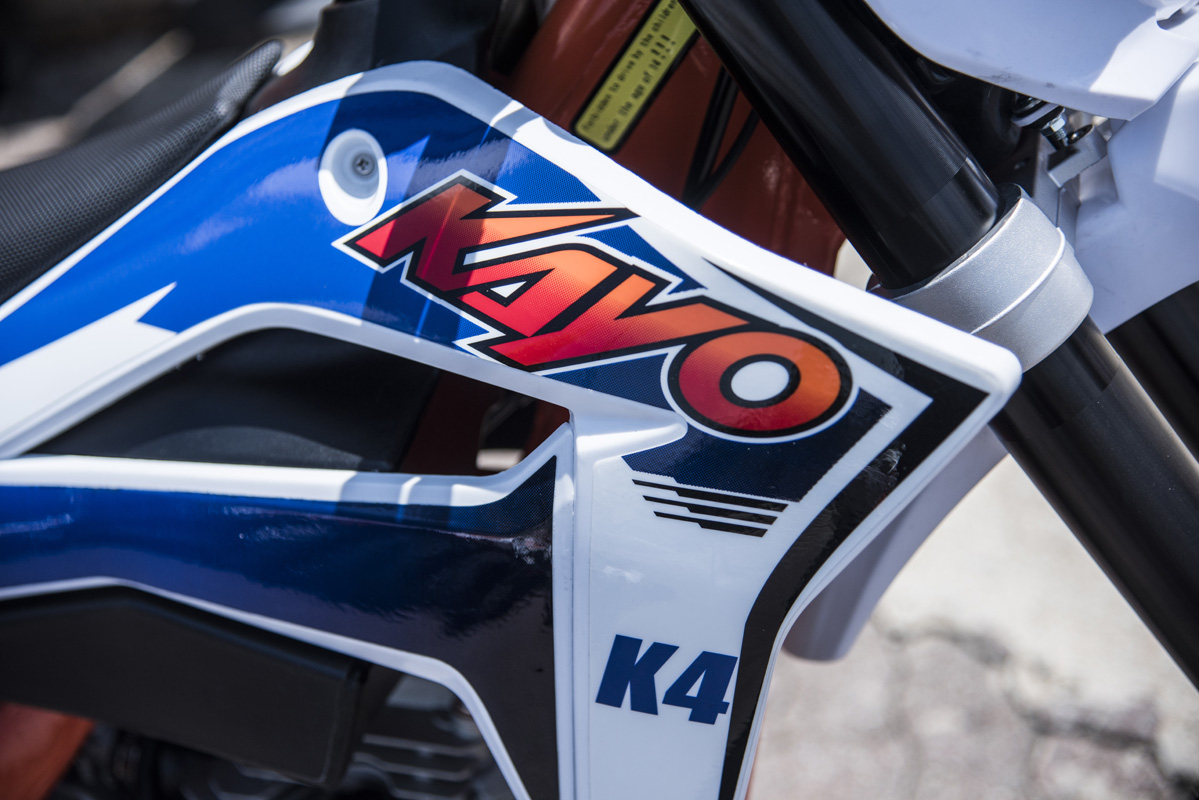
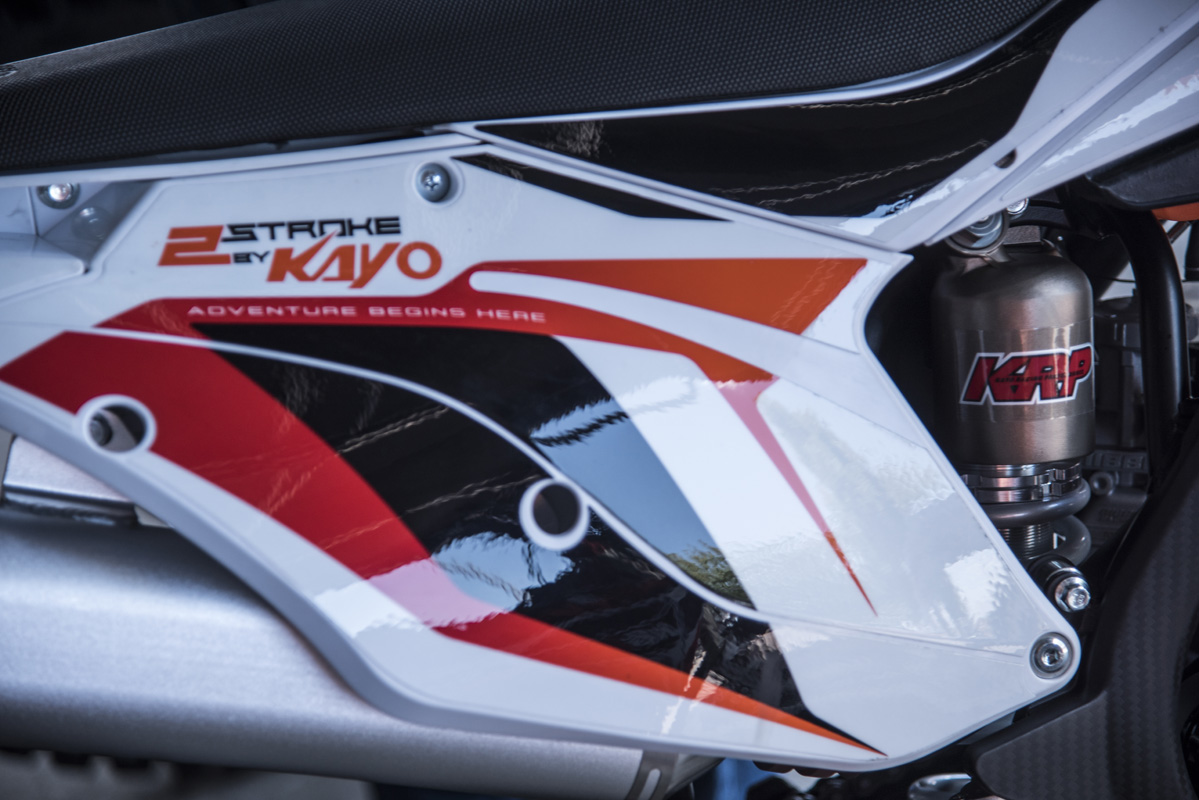
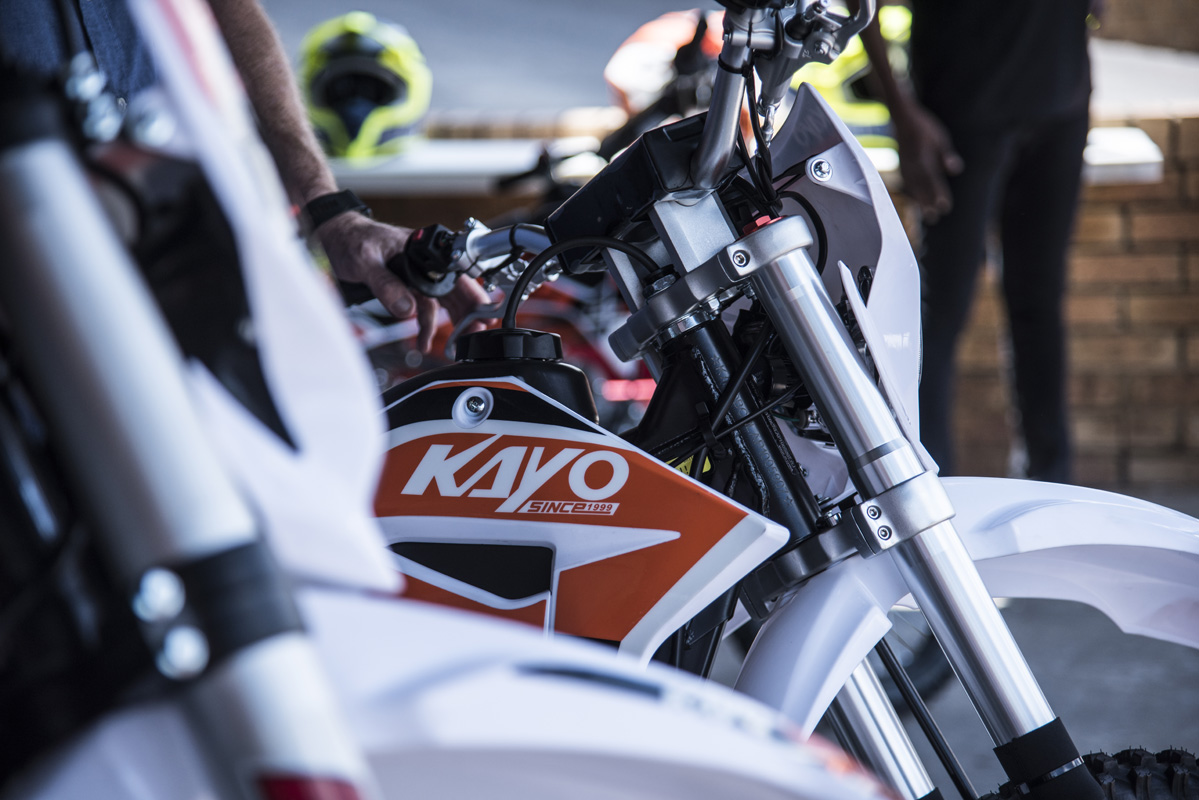
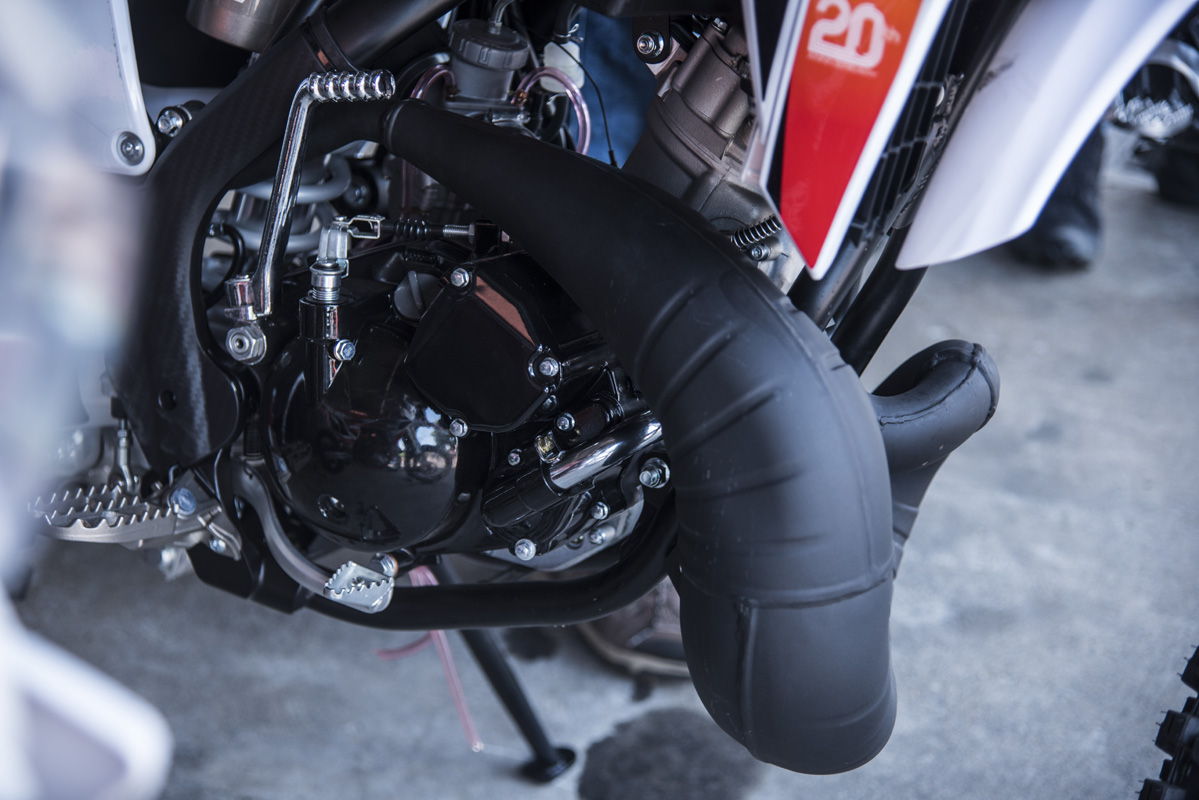
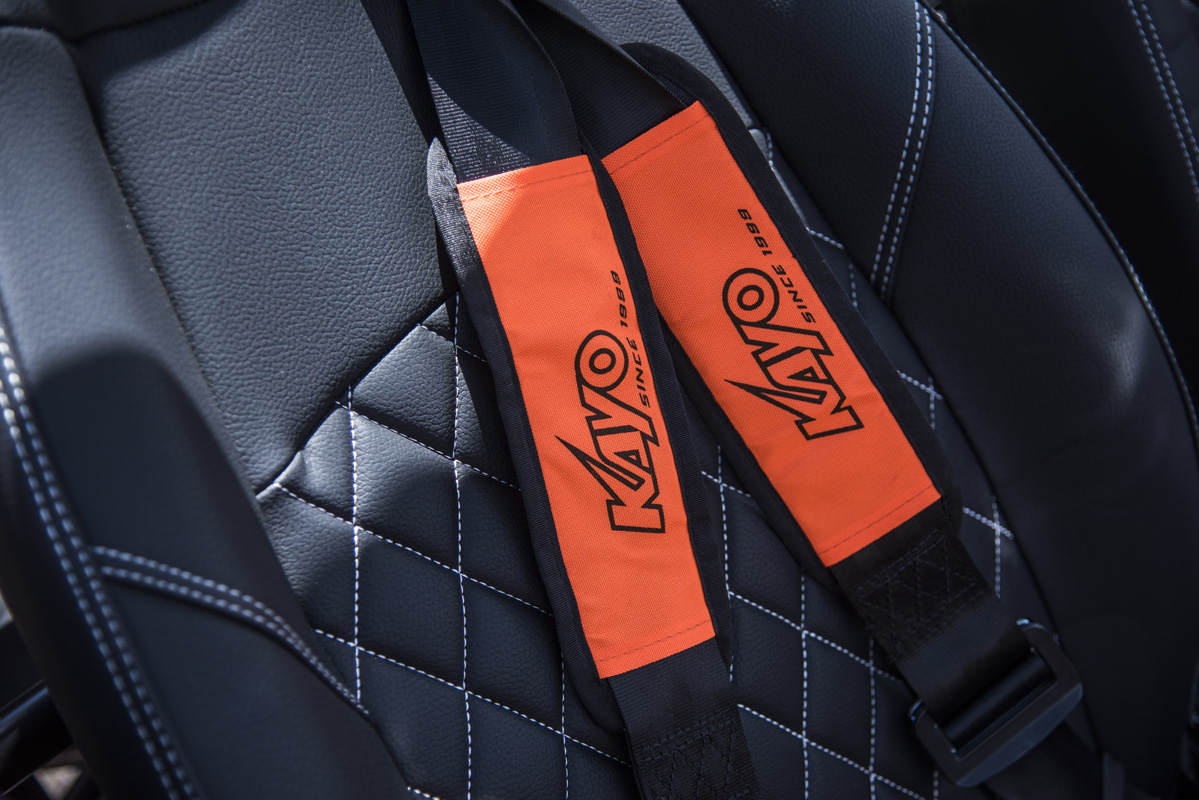
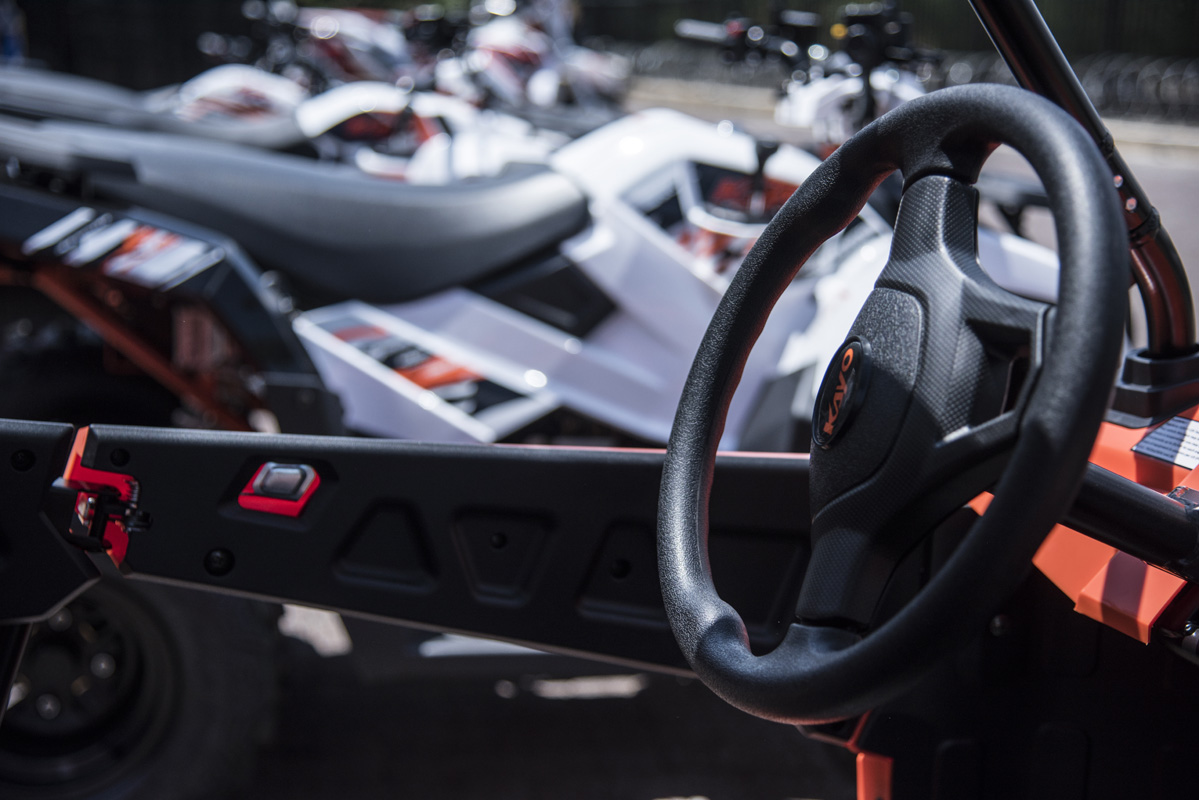
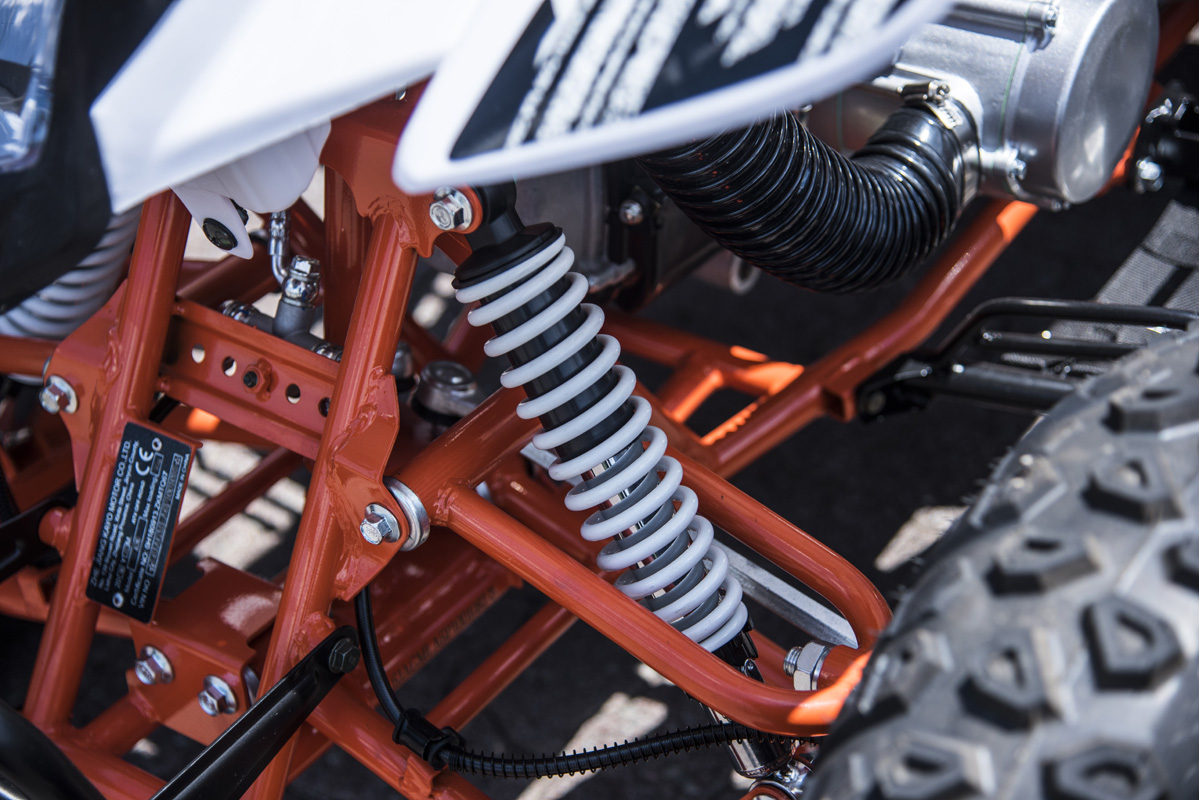
Dirtbike prices have not been spared, unfortunately, and the traditional brand offerings are getting increasingly dear. How do we keep getting new riders into this potentially lucrative recreational space? Why not search the globe for a proven brand with good build quality and decent performance, that still offers really good value for money? Enter KAYO.
Photo credit: Bjorn Moreira / ZA Bikers
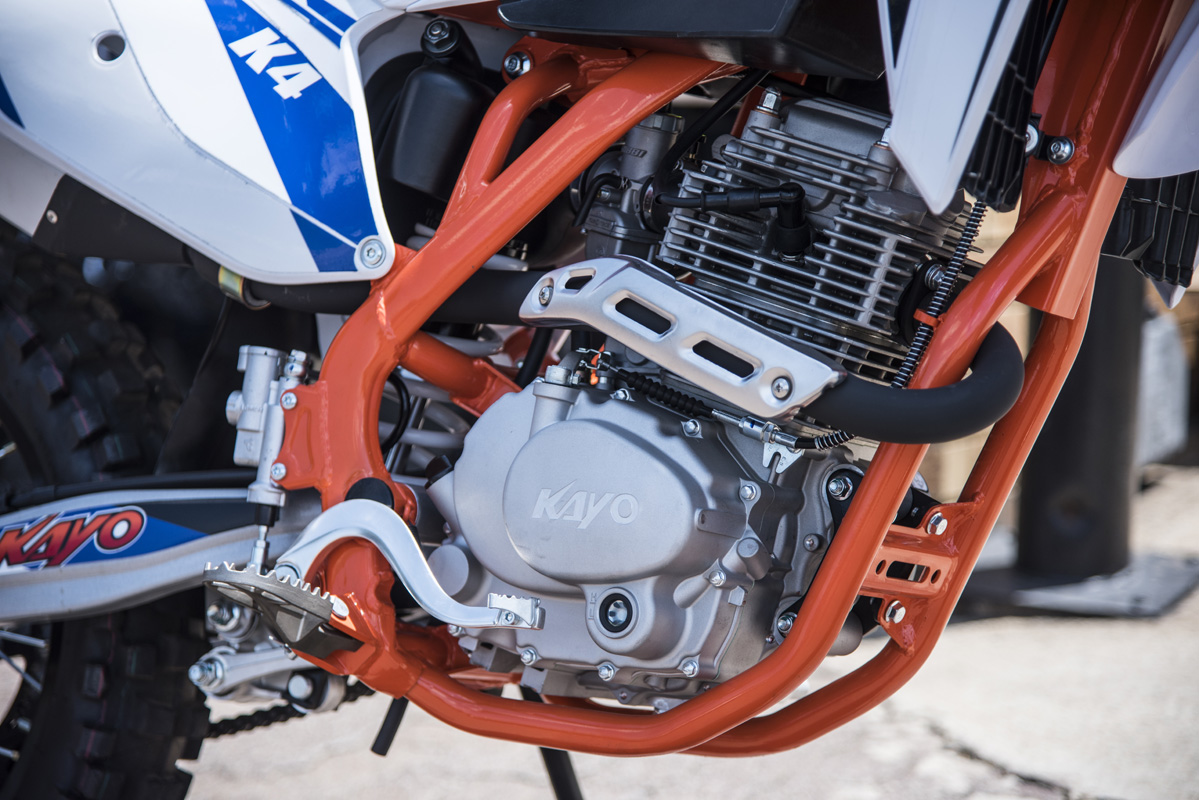
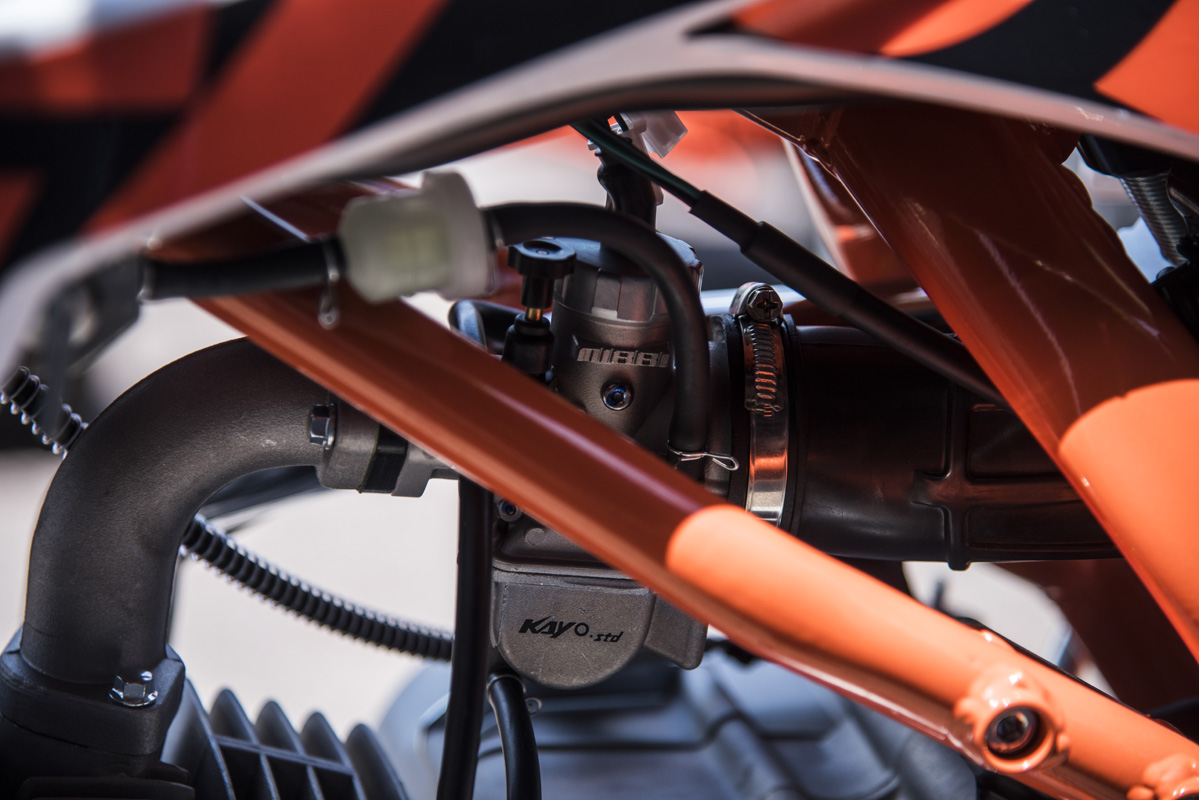
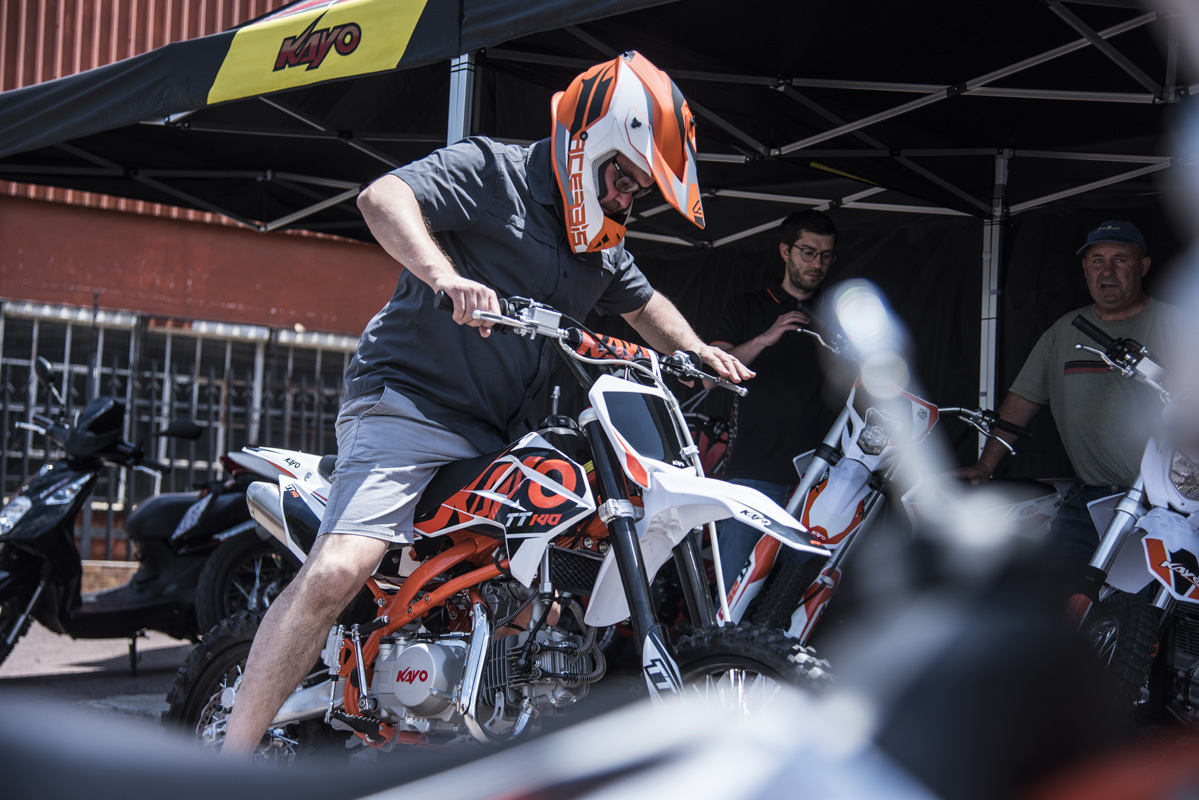
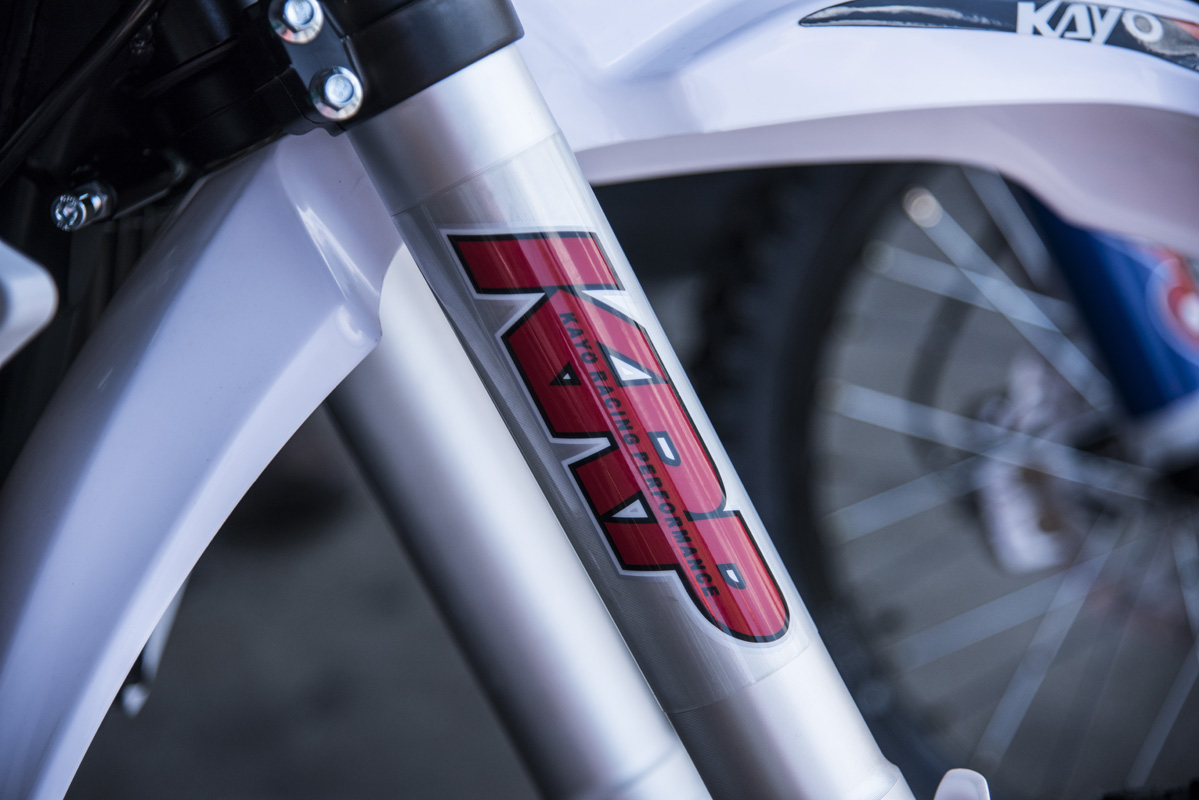
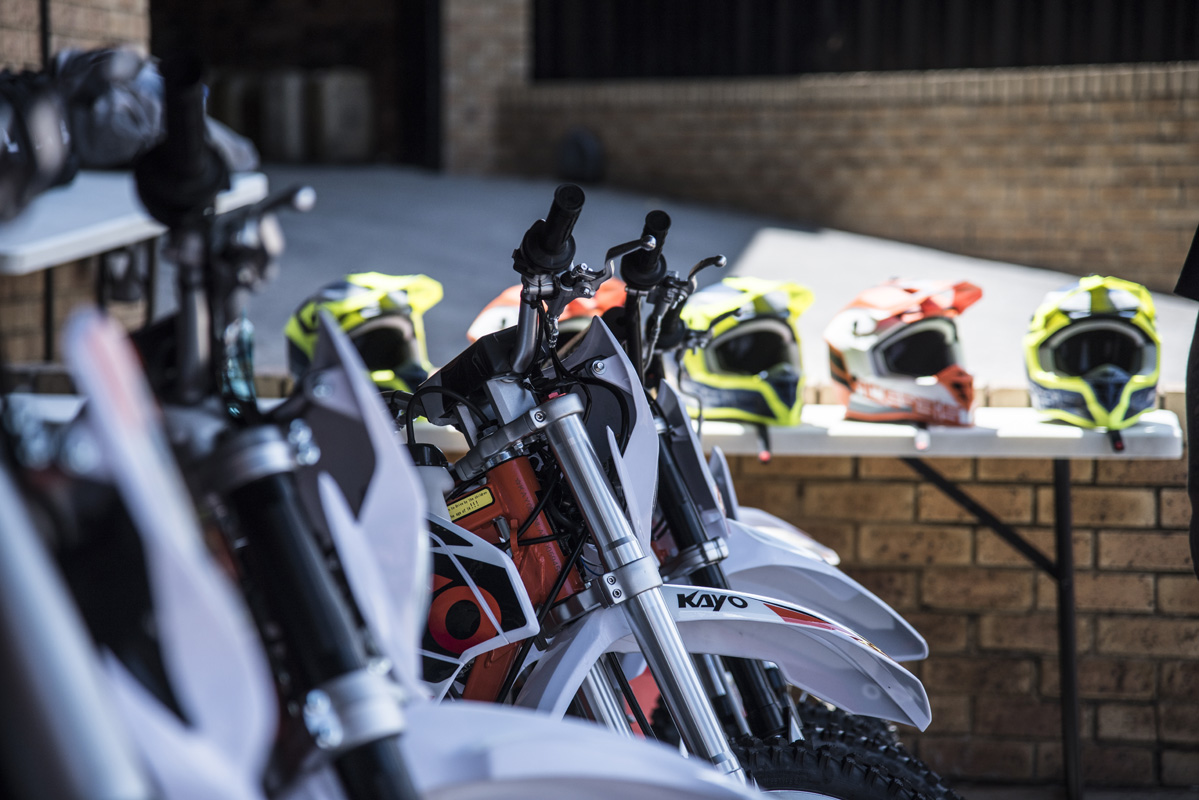
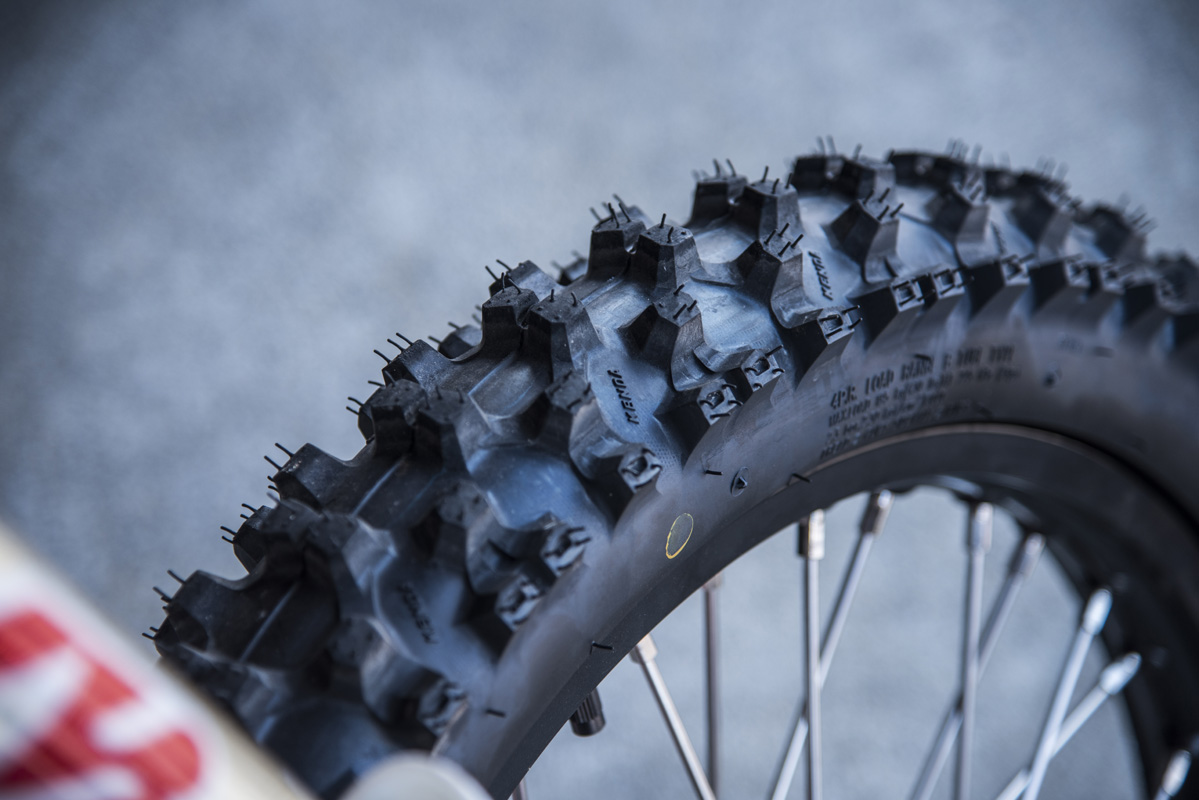
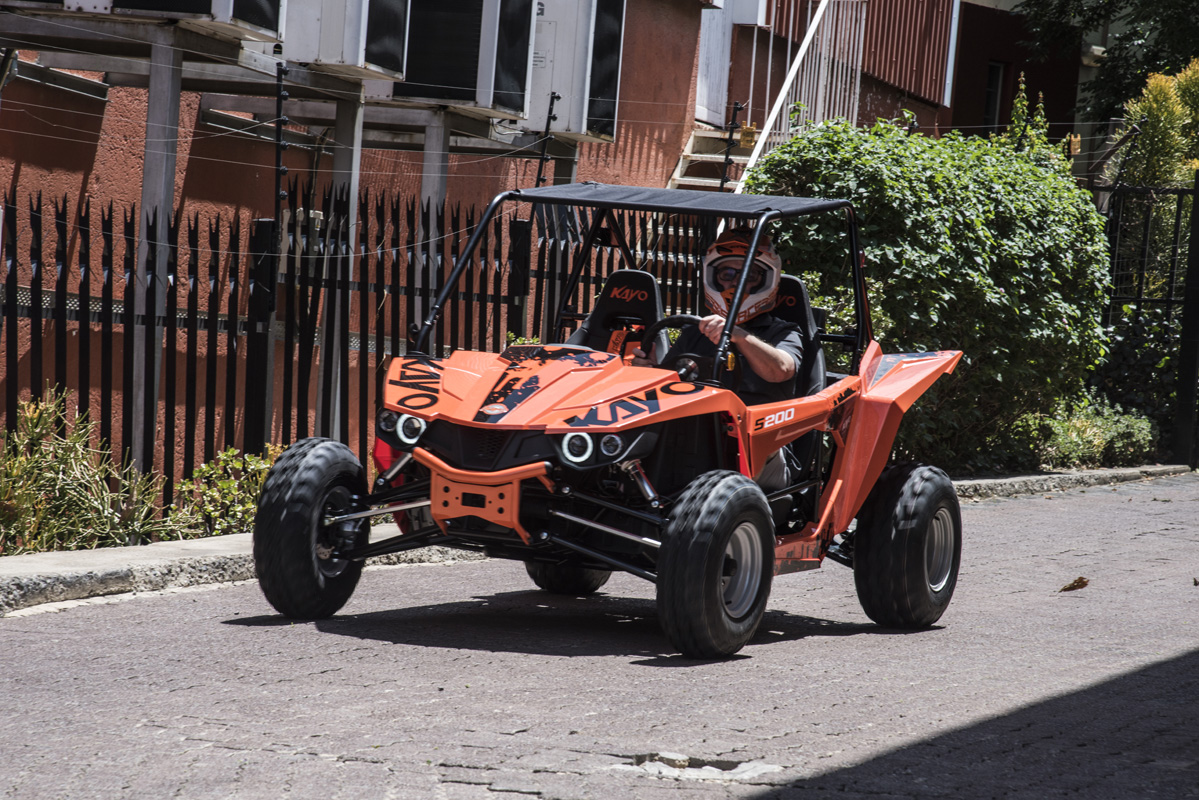
Launched in the USA in 2002, KAYO have built a solid reputation for building quality dirt bikes and quads at affordable prices. They now build over 50,000 recreational vehicles per year which they distribute globally. Consider the number of CRF230 Honda’s that were sold in SA. A bulletproof bike that is still snapped up in the second-hand market for almost double what they cost 10 years ago. KAYO offer a modern take on the CRF with USD forks etc for similar money than you would pay for a well-used CRF, how cool is that?
Photo credit: Bjorn Moreira / ZA Bikers
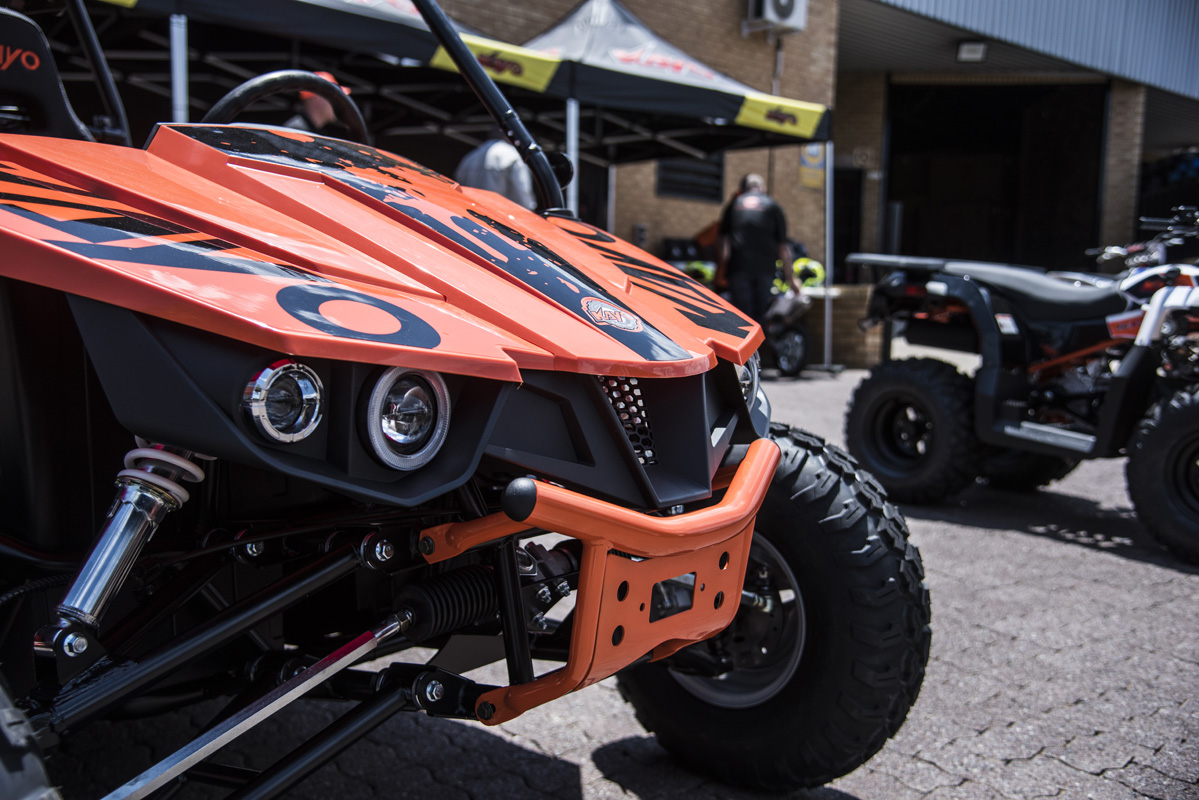
This is just one example. If you look at the range of bikes & quads that KMSA are bringing in this theme pervades across them all. Well-built products with decent performance at prices that currently offer unparalleled value.
1 of 18
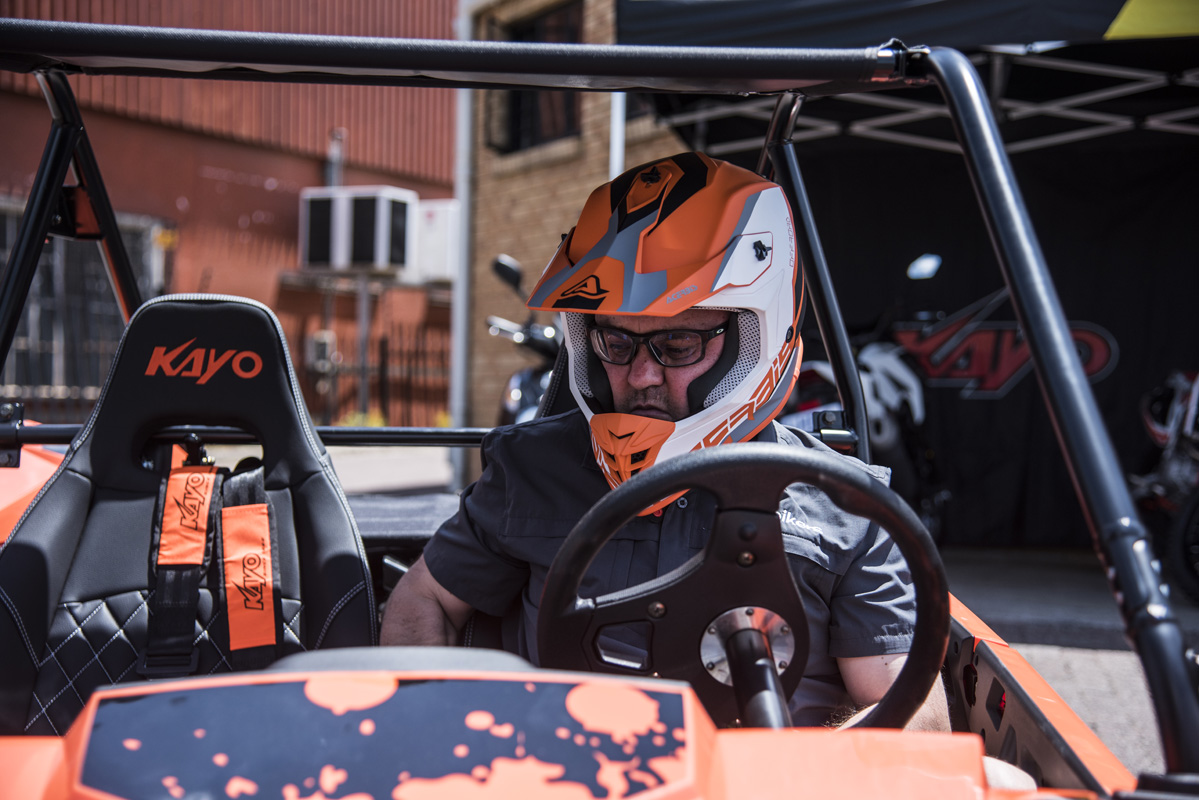
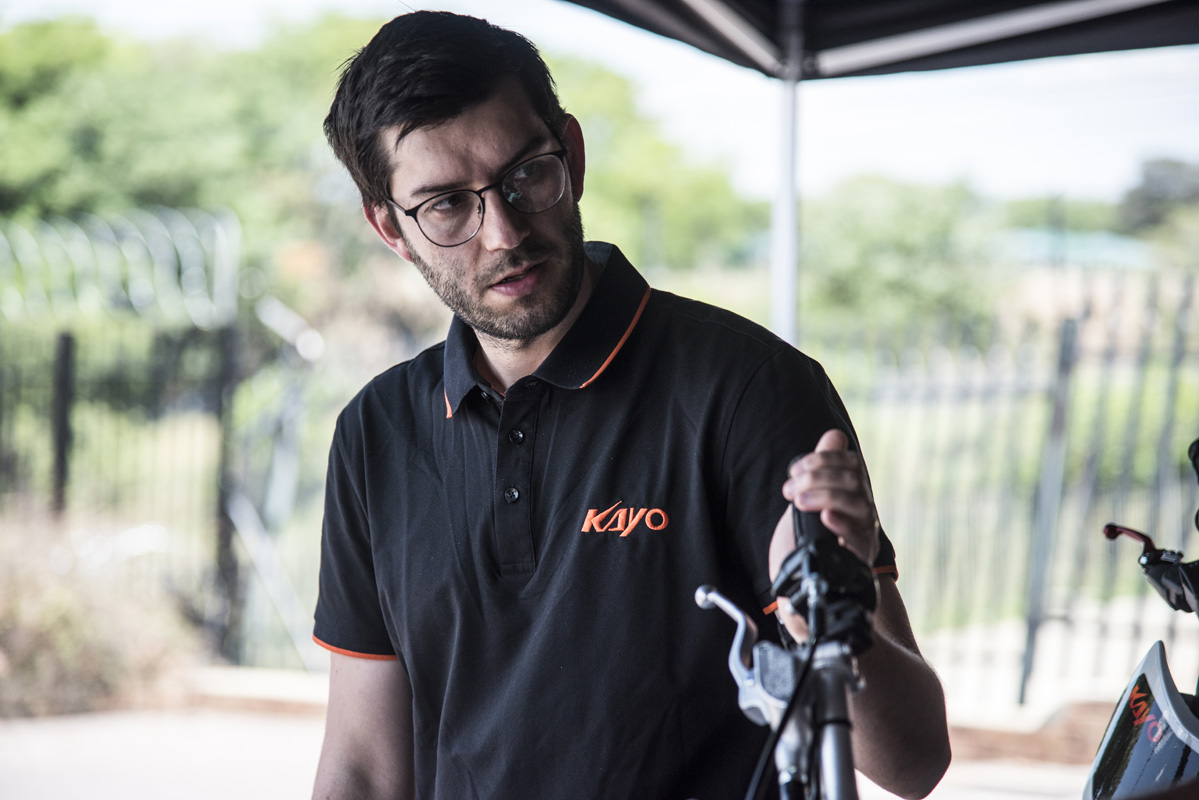
We got to touch, feel and ride the new bikes and quads in the KMSA stable and came away suitably impressed. This is just what we need right now. Forget your worries and woes, buy an affordable dirt bike and go and enjoy the wild blue yonder. Good on you KMSA!
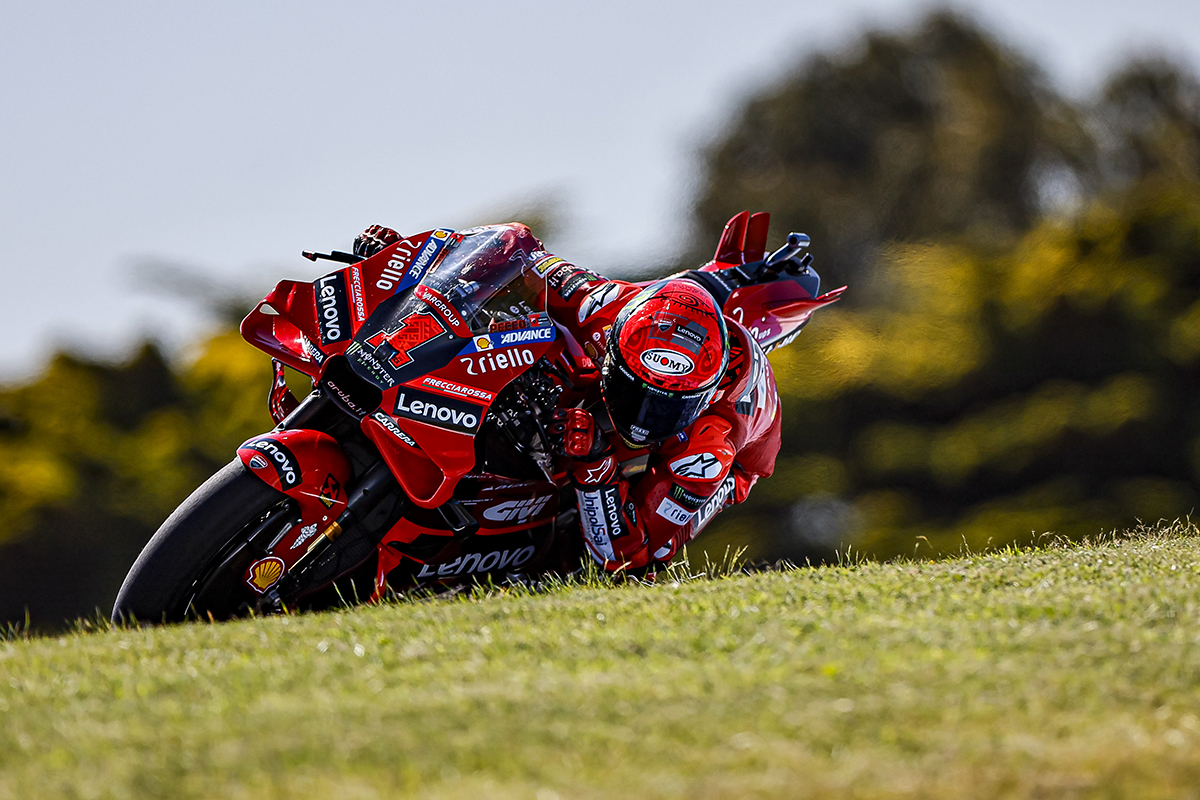
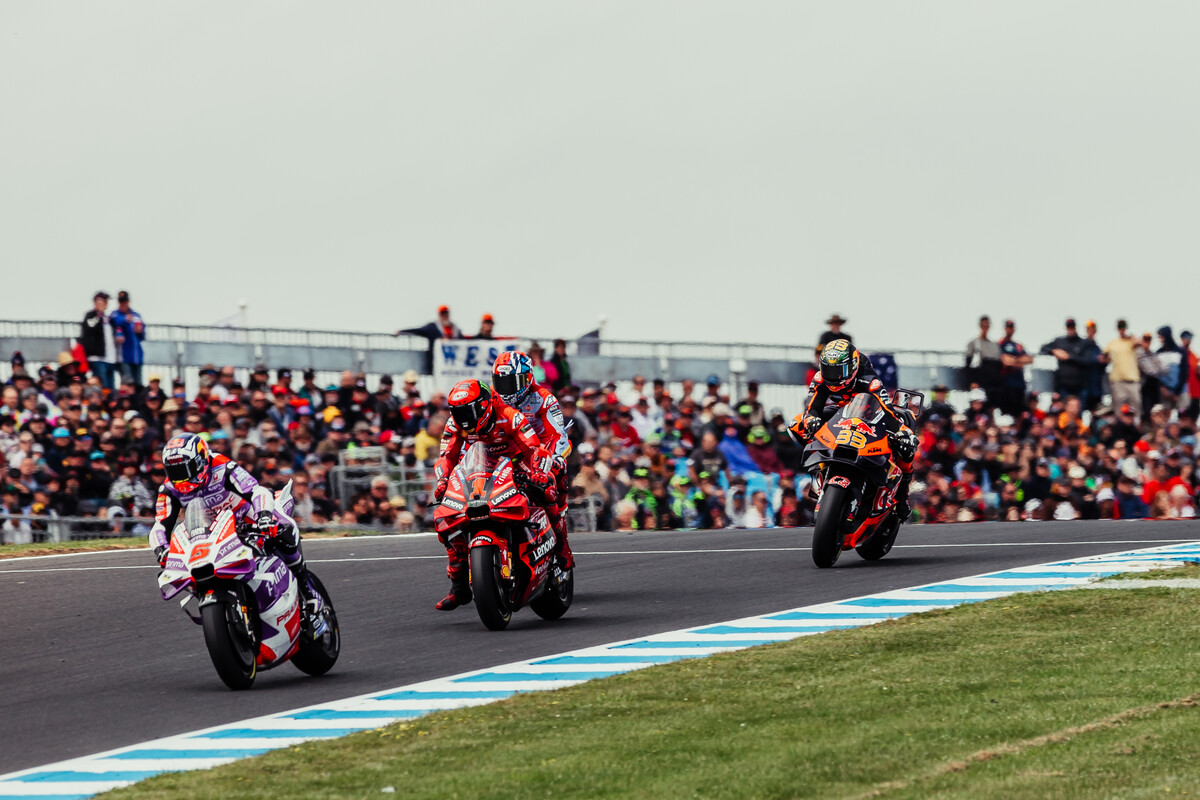
Just when you thought you’d seen it all this year, the weather steps in and throws a spanner into the works and, perhaps inconsequentially, gives us one of the best races of the year and, more importantly, a brilliant result.
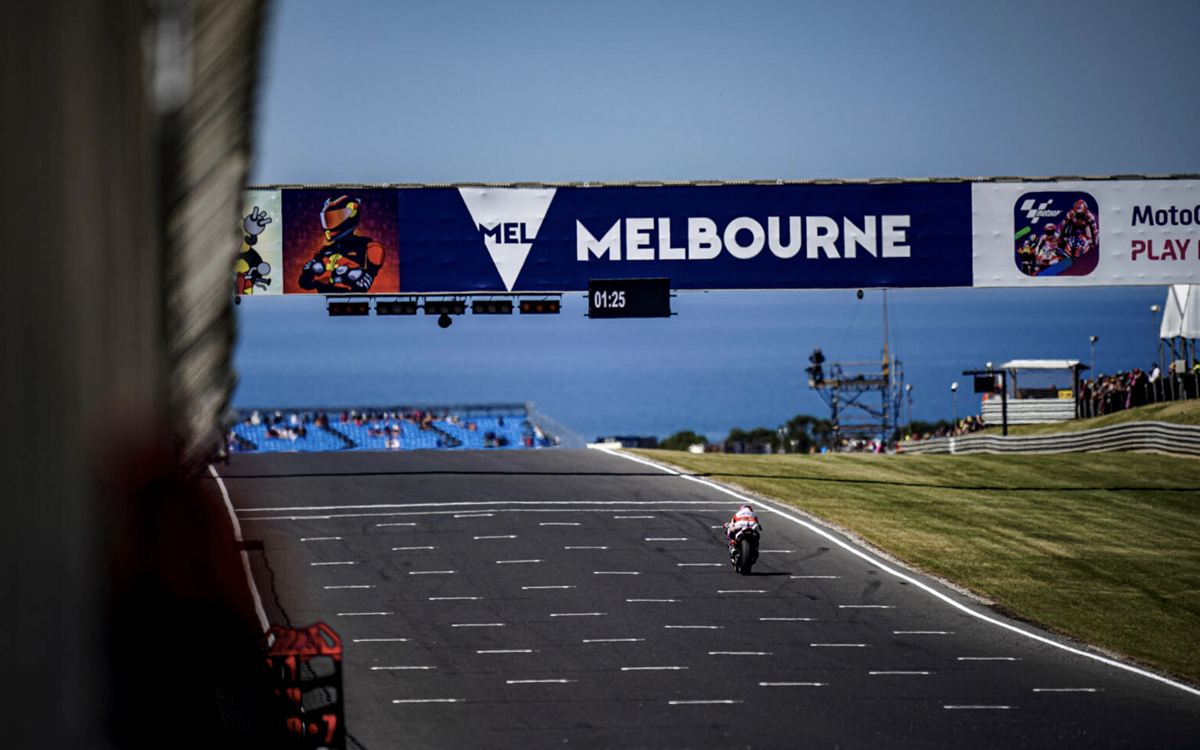
If there have been rumblings of discontent about the Saturday Sprint races, then maybe they have been partially put to rest as the race mechanisms were in place to enable a change of the Main race to Saturday when Sunday’s weather threatened – accurately as it turned out – to be just too dangerous, with high winds forecast. To have missed out on a Philip Island race would have been a travesty as it is always the scene of brilliant racing and a favourite track of all the riders.
Image source: MotoGP
It’s not hard to see why: fast and flowing, it is spectacular and requires balls the size of melons. Some circuits we armchair jockeys look at and go, ‘I might be able to do that,’ even if it is patently a load of rubbish, but Philip Island makes you draw a sharp intake of breath even from the comfort of your soap box.
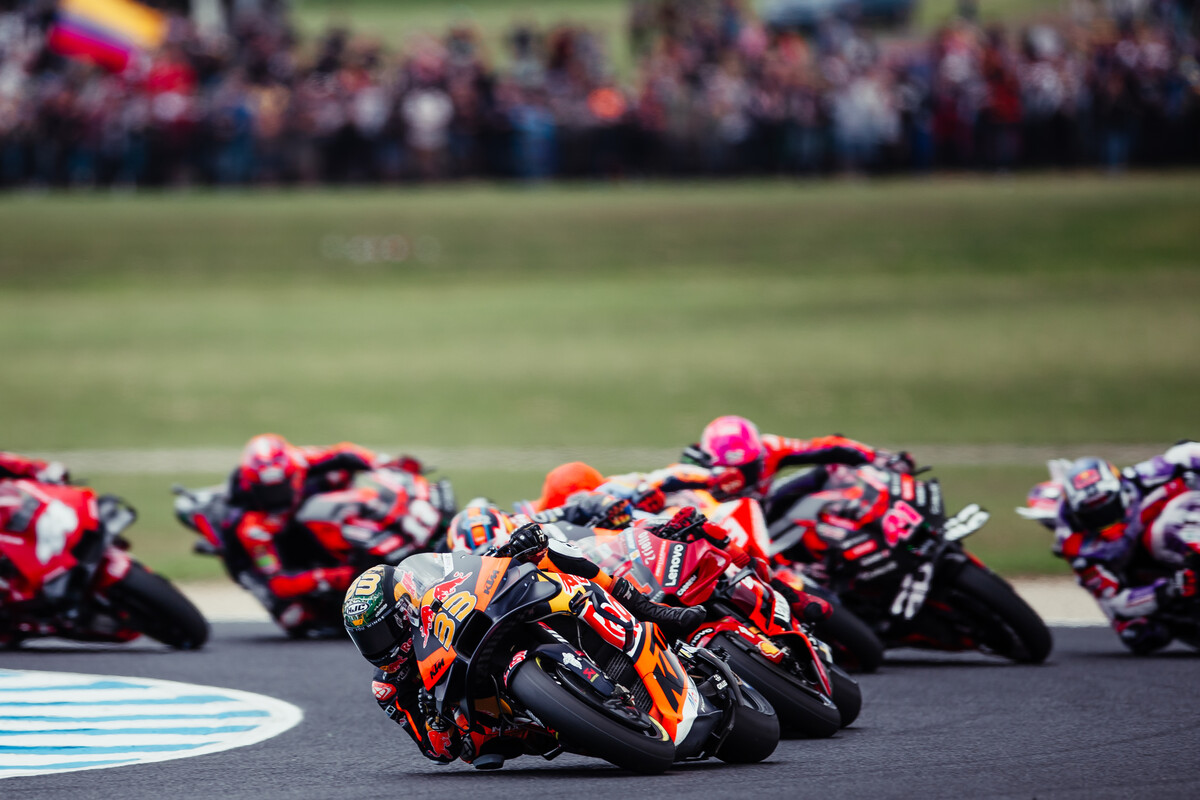
Normally, one rider making off into the distance at the beginning of the race is cause to concentrate on what’s happening behind and such was Martin’s dominance that is exactly what we were doing, but at the back of our minds was the fact that he had started on the soft rear tyre and his pace was such that it was almost inevitable that his pace would drop off a cliff before too long.
Image source: Pramac Racing
That he remained in front until the last lap was incredible and even though we knew it was a gamble, for him to drop from first to fifth in a few corners was heart-breaking. But, if we can be selfish, what a race it gave us as Binder, Bagnaia, DiGiannantonio and Zarco fought tooth and nail for lap after lap, never more than a few metres between them. That is the definition of trust in your fellow competitor, to know that they are going to do the same thing as you at the same speed and at the same time, corner after corner, lap after lap and that you have to do something out of that window and on the edge in order to pass. Mind-blowing.
Image source: KTM
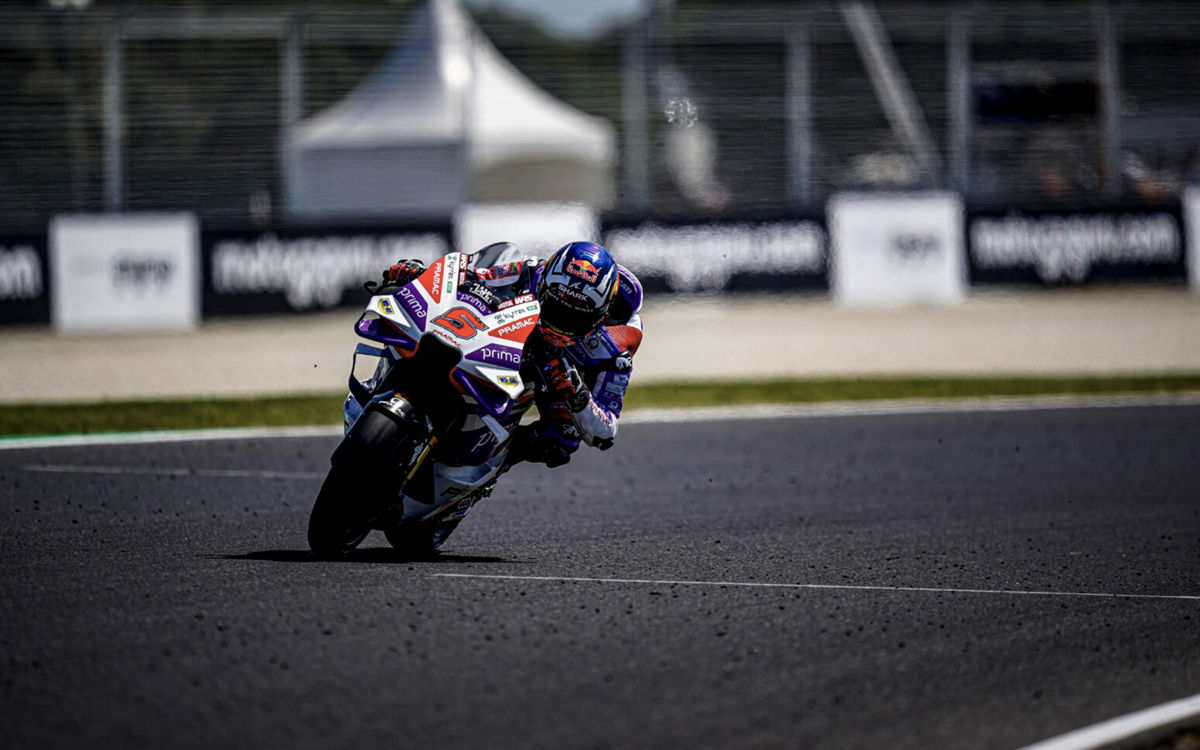
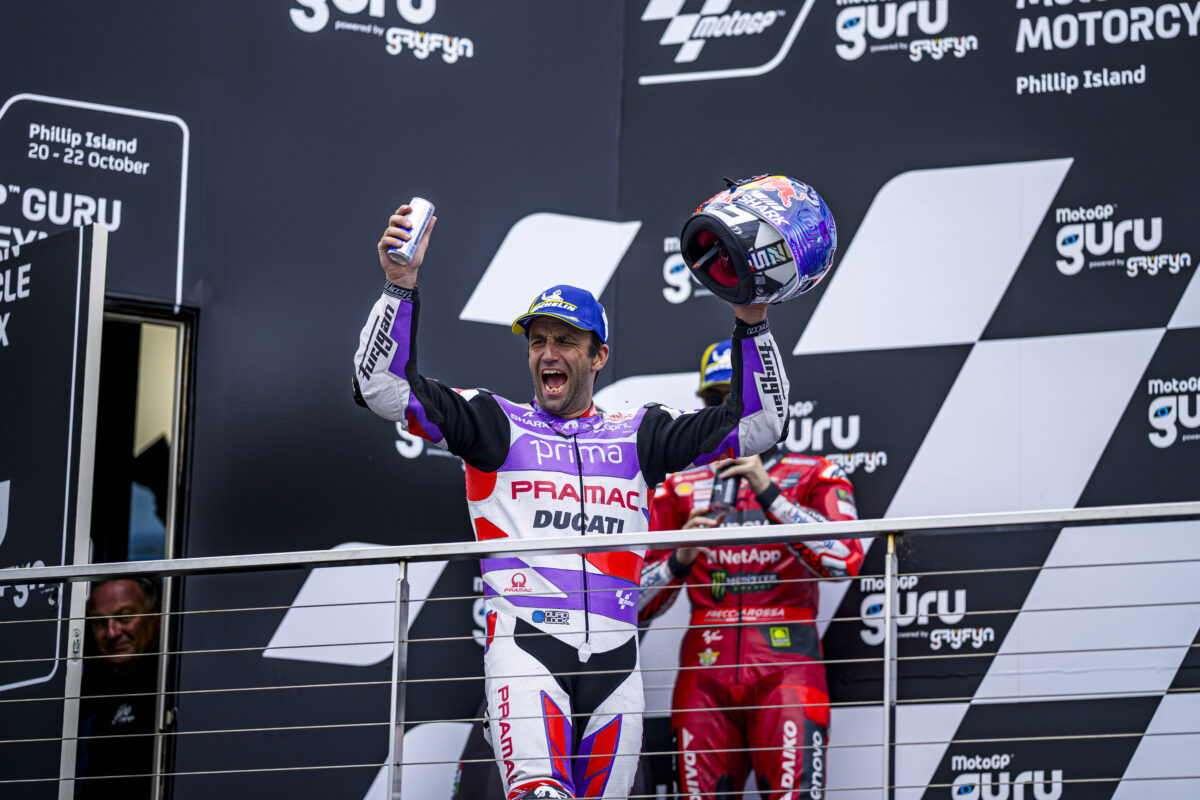
To see Zarco finally win a MotoGP race was fantastic; he must be one of those riders whom everyone wanted to see win and to get that monkey off his back has to be a relief, as long as it opens the door to more. His move to LCR Honda in 2024 might seem like a big-money ‘last-move-of-a-career’ but we have to hope that it coincides with an upturn in fortunes for Honda to at least give him the machinery with which to challenge again.
But what an insidious position to be in during the race: your teammate, who is fighting for the championship is leading but slowing rapidly. Do you protect his lead as much as you can, which will be virtually impossible as he is going so slowly, or do you overtake and take the win – your first, don’t forget – and prevent your teammate’s nearest challenger from winning and stealing even more points? Of course, it was a no-brainer for Zarco: he had no choice and seized the opportunity with both hands and I couldn’t be happier for him. As I suspect, will the vast majority of the paddock.
Image source: Pramac Racing
And let’s not forget DiGianantonio: he’s been getting better and better in the past few races, culminating in his best-ever result with third place in Australia. And he doesn’t have a contract for next year! If he’s not snapped up soon, it will be one of the grossest injustices but he’s young: he can afford to take a test rôle for 2024 in lieu of a place on the grid in 2025, when most seats will be up for grabs.
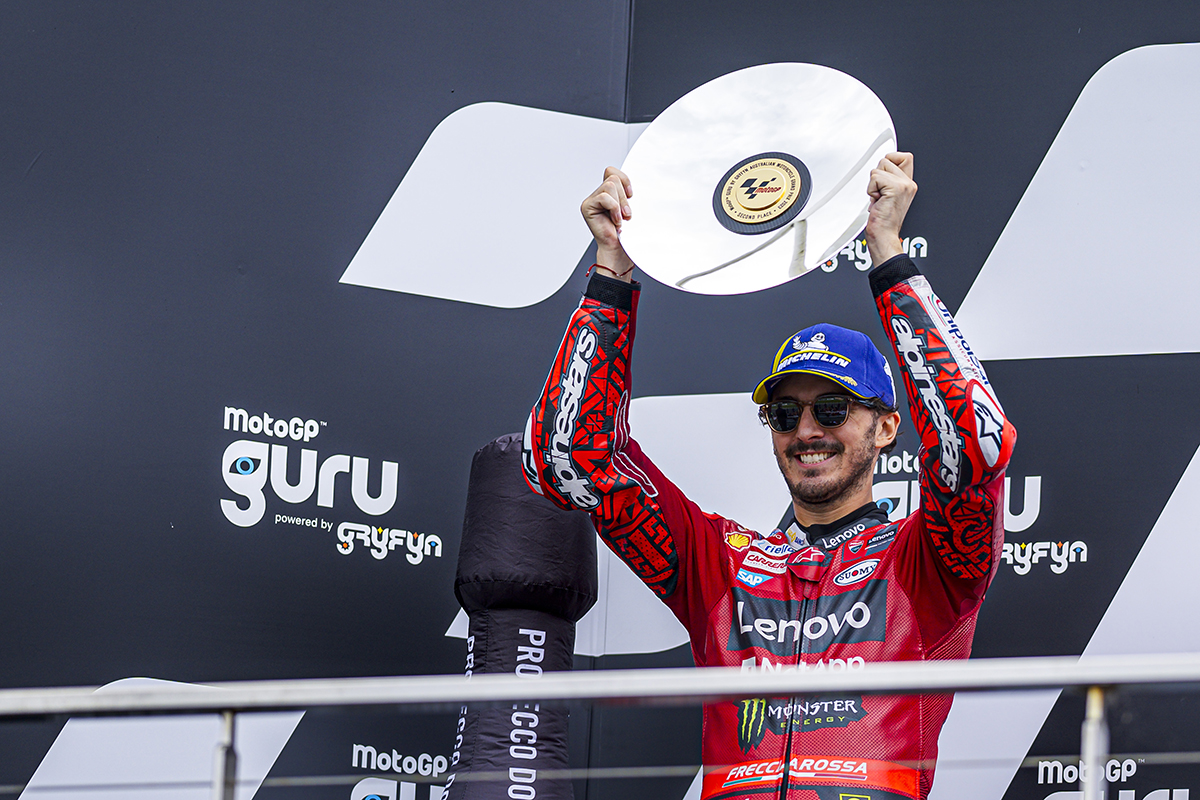
But what a see-saw period in the championship: Bagnaia initially leading the championship comfortably; Martin clawing back and taking the top spot for all of 24 hours; Bagnaia winning the next day as Martin crashes out; Martin leading by a country mile in Australia but Bagnaia leaving with a 27-point lead. I’ve always said I don’t care who wins, as long as we have good races and a close season, and that still stands true, but I’m also a fan of the underdog and I’d love to see Martin take the title at season’s end, but I also can’t deny that Bagnaia deserves it as well. Such conflict!
Image source: Ducati
Back to Zarco. It was heartening to see all the riders on the slow-down lap coming alongside Zarco and warmly congratulating him – one of the best things about MotoGP. If Zarco was a championship threat, maybe there would have been one or two riders who wouldn’t be that pleased with his success but I would like to think that that wouldn’t be the case. In parc fermé, Zarco’s celebrations were slightly disappointingly low-key, when you would expect them to be infectious and over-the-top.
His comments afterwards were revealing; “You try to keep the hope (of a win) always there, but then you’re wondering, why don’t I have these moments the other riders have? At the last corner, I had this feeling, okay, I know I’ll have good drive but then you open the throttle and you feel you don’t have any power and you’re scared you’ll get passed on the line. Over the finish line, there was no explosion of emotion. It was more of a calm feeling, ahh, it’s done. Winning in Philip Island gives you a really nice feeling, because everyone loves the track, so you feel you are part of the big guys if you win here…”
Image source: Pramac Racing
It’s interesting to look at the different approaches of Bagnaia and Martin throughout the weekend. Bagnaia spent a lot of time on Friday on the medium rear tyre and so knew what it could do and wasn’t fazed when he failed to make it through to Q2 automatically because he knew that on the medium tyre, he had the pace to run at the front, not to mention the longevity of the tyre. Of course, that could have all meant nothing if he got caught up in a start accident by not being at the front but it was a gamble worth taking.
Image source: Ducati
Martin gambled on using the grip from the soft rear to build a gap at the start and manage tyre wear after that to maintain the gap, something he is good at thanks to his smooth style. He so very nearly pulled it off, leading for all but eight corners of the whole race. Unfortunately, they were the wrong eight corners!
Many critics called his gamble stupid but there is such a fine line between hero and twit. One race lap less – and the win – and Martin would have been hailed a hero. Remember Brad Binder in Austria in 2021, gambling on staying out on a wet race track on slick tyres while everyone else changed bikes? Another half a lap and Bagnaia would have sliced past Binder as if he was standing still: as it was, Binder was hailed a hero for winning against the odds. It could so easily have been different, as Martin knows all too well.
Image source: KTM
“I was really convinced the soft tyre was the one,” he said. “I took the risk and it didn’t work by half a lap… I rode really smooth, trying to be super-clean on the tyres, but finally, it didn’t work.”
It was a brave attempt, a gamble such as Martin is likely to take, being the hunter and not the hunted in the championship. Will it be enough to deliver the title? Only time will tell and, luckily, we don’t have long to wait for the final acts.
The Bologna-based manufacturer has been working for two years on a prototype that will make its debut next season in the Italian Motocross Championship, with the aim of validating the technical solutions made on the bike on the track. This strategy confirms the approach that distinguishes Ducati in the development of its sportiest and most high-performance models, i.e. starting from racing competition and then creating series products capable of exceptional performance for the delight of its enthusiasts.
This is a multi-year project that will see the creation of a complete range of off-road engines and motorcycles. The models will gradually become part of a family of knobby motorcycles branded Ducati, starting with motocross.
The Bologna-based company has signed an agreement with nine-time Motocross World Champion Antonio Cairoli as a high-performance test rider for the new project and, thanks to his talent, speed and experience, he will give important input for the development of the new motorcycle.
Image source: Ducati
Claudio Domenicali, CEO of Ducati Motor Holding, commented: ”I am proud to announce Ducati’s entry into Motocross. A totally new world for Ducati in which we want to bring our talent in designing lightweight motorcycles, with excellent components and high performance and – above all – which can excite more and more motorcyclists. Just as we believe that the track is the best laboratory to develop and test the bikes that will then be available to customers and enthusiasts. This is why we have decided to cooperate with an undisputed champion like Tony Cairoli who, together with the passion and dedication of many of us here in Borgo Panigale, will contribute to making Ducati in off-road as capable in offering very high-performance products to its passionate customers as we have proven on the asphalt. The project is possible thanks to the company’s excellent results in recent years and confirms our desire to extend our presence into new worlds, speak to new motorcyclists and therefore grow the Ducati Community.”
Image source: Ducati
Antonio Cairoli added: “I am extremely happy to become part of the universe of Ducati, which has always been a symbol of the Italian spirit throughout the world, and to begin this exciting new adventure, in an all-Italian project. Being able to make my contribution to the development of the Borgo Panigale motocross bike is a dream come true and a source of great pride for me.”
Ducati has also signed a multi-year agreement with Maddii Racing, one of the most experienced teams in the motocross paddock, which will be the reference structure for the MX racing activities and will take part in the 2024 Italian Motocross Championship with Alessandro Lupino, eight-time Italian Champion and 2021 MXoN winner, also contracted to Ducati as racing and test rider.
The focus of the Ducati off-road project is a combination of the search for lightness pushed to the extreme, top-of-the-line components and engines characterized by a very broad power delivery curve. The latter is obtained thanks to the use of the Desmodromic system, used on all the sports bikes of the Bologna-based company starting from MotoGP. Ducati is in fact the only company in the world that uses the same valve return system on its highest performing production motorcycles as it does on racing prototypes.
Entering the specialist off-road sector represents a very important and challenging strategic choice for Ducati, made possible thanks to the excellent results achieved in recent years. A decision that confirms the desire to expand the brand’s presence into unexplored terrain today. New young motorcyclists will be able to get close to the Borgo Panigale brand and thus enter the large community of Ducatisti.
Performance is one of the three core values of the brand, together with Style and Sophistication. In Borgo Panigale, there are many off-road lovers and we can’t wait to see the Desmo in all its potential at work off the asphalt!
Who the hell, you may ask, is Team Matjien? This is where it gets scary! Harley Davidson, back in the day, called their engineers involved with their race effort ‘The Wrecking Crew’. Similarly, Lockheed Martin called their Advanced Development Engineers responsible for designing and building special projects like the SR 71 Blackbird, the world’s fastest aircraft, ‘The Skunkworks’. Well, if you come to South Africa, we have such engineering fellows who have had some incredible achievements over the years. When it comes to motorcycles, enter Team Matjien!
Image source: Team Matjien
The chap that heads up this motley crew is none other than my old buddy and Super Singles adversary from the early ’80s, Koos Zietsman. Koos grew up fascinated by mechanical things. This resulted in his buying a basket case bike and with a little help from his dad, getting it assembled and running. Such is the nature of the man; he didn’t end there. He went on to race this bike, which in turn resulted in him being properly bitten by the racing bug. He studied Mechanical Engineering and in the late ’70s and into the ’80s, it is fair to say, that he became by far the dominant force in short-circuit racing. This was prominently at Swartkops and Lichtenburg, where he ruled in sprint and 6-hour endurance racing. In 1982 I kept him honest by beating him on a few (very few) occasions, finishing second to Koos in the then Transvaal Championships.
Image source: Superfiets Magazine
Koos rode a YZ250 Yamaha engined Super Single housed in a frame which he designed and built. In truth, I think he viewed my twin shock XR500 Honda with a 750 Honda front end bolted on, with some disdain. His bike was quick and worked well. It was also very reliable, something that I, as a four-stroke fan, didn’t think possible. He campaigned this bike with his two-stroke wizard buddy Neels Van Niekerk in the six-hour endurance series as well, which he won in 1982. I too contested some races in ‘82 with an immensely talented partner, Jean D’ Assonville. In fact, we managed to beat Koos and Neels at Lichtenburg by a mere 13 seconds after 6 hours of intense racing. In truth, Jean was the hare, and I was the tortoise in our team. Jean broke the lap record in the 550 class on our Mean Machine-sponsored GPZ 550 during that race, but it was Koos who was crowned the Endurance Series Champion for ’82. Koos raced motorcycles competitively till 1990, after which he transitioned to racing and doing other crazy stuff in 4x4s.
I got a call way back in March from Koos, inviting me to pop around to his spot as he had some news that he suspected would get my attention. Flip, what an understatement! He introduced me to two other members of Team Matjien. Both with the surname Pretorius. The older of the two, Riaan, or “Riempies” to his friends and “Jock”, both do their motorcycle racing in the dirt. Riempies background is not dissimilar to Koos’. Growing up on a smallholding outside Pietersburg his dad bought him a Yamaha YB100 which was desperately in need of some TLC. The bike got fixed and raced. He too studied engineering and, as fate would have it, he and Koos ended up working together. Riempies has had a long fascination with the Roof of Africa extreme Enduro. After buying a 450 4-stroke, and campaigning it for a while, he realized that he was a 2-stroke man at heart. The strokers are so much easier in the technical stuff that he encountered in Lesotho. He has 7 Roofs and the 2011 Erzesbergrodeo under his belt. He currently rides a KTM 300 in these events.
Image source: Team Matjien
“Jock” Pretorius is a youngster by comparison and worked as an engineer alongside Koos and Riempies. Their constant racing banter got to him and in a moment of weakness (I suspect there may have been some alcohol involved) agreed to ride the Roof. I don’t think he had even ridden a bike in anger at this point. This is where Team Matjien enters the story again. Prior to the Roof in 2010, Koos had an idea to raise some sponsorship for his buddies for their racing endeavours. Erzberg in 2011 was also just around the corner. Team Matjien was the name chosen for the team of aspiring youngsters who wanted to ride the Roof. Koos made himself Team Boss and lent on various acquaintances and friends to throw bucks at Team Matjien’s efforts. Jock was one of the beneficiaries and entered and finished his first Roof under the banner of Team Matjien. The nickname “Jock” does not refer to any kind of Scottish ancestry, but rather to the “Jock of the Bushveld” Staffie-like grit and determination that he displays in the line of duty, whether working or riding.
Image source: Team Matjien
When I learned the reason for Koos’ call, I realised that Team Matjien was going next level. Koos is the lead engineer on their current crazy but audacious project. Get this… Koos and Riempies remember the days of 2-stroke glory when bikes like Honda CR500s, Kawasaki KX 500 and Yamaha 490s scared their riders out of their wits at every opportunity. Pumping out huge horsepower, but not of the linear kind, these bikes were only for men with gonads of steel. They constantly did their damndest to spin up the rear tyre, in any gear and dump the rider on his head. What followed was a general toning down of 2-strokes. Power valves and water cooling and mapping gradually tamed the beasts into the superbly competent and rideable bikes that they are today.
Image source: Honda
Now here is the thing with engineers. Get them talking on mechanical things that float their boat, like the 500cc 2-strokes of the days of yore, bemoaning the fact that you can no longer get bikes of this ilk in the current politically correct, sanitised world, then toss a little alcohol into the mix (again I suspect this is what happened) and creative juices really start to flow. It was Riempies’ idea. “Let’s build our own 500 then,” he said. Some primaeval light shone in Koos’ eyes, “design it and let’s talk”, he retorted. Most times nothing comes of these chats, but not this time. Riempies got busy and came back to Koos with some solid design plans. In essence, what Riempies planned was using a set of crankcases modelled on a KTM 300, incorporating the gearbox and electric start, as well as the mounting points, to shoehorn the 498cc motor into a 300 KTM frame.
Image source: Team Matjien
My mind was in a flat spin as they unfolded this fiendish plan back in March, with more questions than answers. “Who else is involved, guys? This is crazy!”. Enter Koos’ old race partner, Neels Van Niekerk. This guy is a legend to anyone who has ever toyed with a performance 2-stroke. His ‘Vannik Racing’ tuning work is world-renowned. I bought a NSR250 Honda for my son to race in Powersport, years ago. Neels had done development work on the NSR which turned it into an absolute weapon. His motors were not only powerful but eminently rideable. Neels is the Simulation Engineer on the ‘TM498’ project. (The project name changed to PZ490 after learning that a European bunch marketed TM motorcycles at some point).
He has written a programme to map the power and way that is produced by the 498cc 2-stroke engine that they are building. In his typical quiet and laconic way, Neels has indicated that his biggest challenge is to ‘de-tune’ the bike to make it vaguely rideable. Without even trying, indications are that it will pump out over 30% more power than a fit KTM300! Piet Van Zyl, an old engineering mate of theirs who has done work for McLaren and currently plies his trade in the UK, will design bespoke internal engine gears like the crank to clutch and so forth.
Image source: Team Matjien
The Team Matjien crew have been, and some currently are, still engaged in building specialist armoured vehicles, during which they have access to some of the most competent engineering concerns in the country. They have called in all their favours and then some, to make this project a success. The one unanswered question remained… “Why guys, do you want to market these motors?” “Hell no!” was the instant mass retort, “it’s just something that we want to do”. Let’s face it, that takes ‘Boer maak ‘n plan’ (farmer makes a plan) to the next level! Fast forward 7 months and 21 days. Unbelievable as it may seem, the idea shared back in March is a rip-snorting, tyre-shredding, rock-chucking reality! We got invited to the unveiling of the Team Matjien PZ490 on a plot just outside Pretoria. It is only a week since the beast got fired up for the first time (watch here). Apart from minor issues around the power valve software which need some fettling, the PZ490 is all it promised to be.
Image source: Team Matjien
One could write a book about the engine build alone. Crankcases as well as all the major components were 3D printed then assembled and mounted in the frame. From this plastic motor, an exhaust was fabricated and checked to see that it would fit. Engine building in the digital age that we live in is an amazing process to get your head around, especially if you don’t have an in-depth knowledge of engineering. The software driving the processes is mind-blowing. Even engine component stress can be assessed before the build to ensure that engine bits are robust enough.
Image source: Team Matjien
Talking software, the engine management software makes this monster rideable. With power and torque to burn, it needs huge toning down to work in a real-world application. Riempies concedes that his 300cc KTM is as perfect a Roof bike as you could wish for and anything more potent is total overkill. But that is not why this bike exists. The other motorcycle that was built primarily to prove that it was possible, and could be done, was Honda’s incredible oval piston’ed NR750. The difference here is the resources available. This motor was designed, fabricated, and built in after-hours spare time by a tiny group of passionate engineers, funded by businesses that have come a long way with Team Matjien. He shudders at what the fat exhaust pipe will look like after dealing with Lesotho’s rocks. Koos is more pragmatic. “If you’re lucky it will lose a few ponies” he says, laughing.
Image source: Team Matjien
For those interested in what’s under the bonnet, here is the power comparison between PZ490 and the donor KTM XCW300.
Image source: Team Matjien
The motor is bolted into a KTM 300 frame. Parts were manufactured all over the world, wherever it could be done cost-effectively and timeously. To hear the bike fire up with that deep-throated big-bore 2-stroke blatt is spine-tingling. It revs up crisply and watching Riempies accelerate, spins up the front wheel and lofts the front wheel just off idle. The guys had the bike displayed on a platform covered with a bespoke PZ490 cover emblazoned with some of the major sponsors’ names. Parked to each side were two bikes to which this monster pays homage, in the form of a Honda CR480 and a Maico 490, both sporting huge finned barrels and heads, in stark contrast to the PZ490’s liquid-cooled motor. The bike looks sweet with a bespoke PZ490 sticker kit also showing dominant sponsors who participate in this amazing project.
Image source: Team Matjien
Riempies has spent so much time on the PZ490 project that his preparation time for the Roof has been rather limited. But then again, he is there to experience riding a bike with a motor that literally was only a dream less than 8 months ago. A bike that embodies the incredible spirit of a handful of supremely talented and driven South African engineers, who dared to do what most would consider impossible. Team Matjien, take a bow! A second motor will be built for another audacious Team Matjien project that may just end up in a particularly prestigious record book, but for now, that will be a story for another day. Riempies, enjoy your Roof, brother! May the force be with you!
See the original plan as it was hatched back in March, in this casual and candid video shot on Koos’ lawn.
Ducati has emphasised its commitment to the Multistrada platform with the launch of the sixth variant in the current range of V4 Multistrada in the form of the Multistrada V4 RS.
Image source: Ducati
One aspect of the new V4 engine was its impressive service and valve train adjustment intervals, which was made possible by dropping the desmodromic valve actuation in favour of valve springs to close the valves. This enabled valve adjustment intervals to be extended to an impressive 60,000km, while an oil change is needed at 15,000km and an air filter change at 30,000km.
However, for the Multistrada V4 RS, Ducati has reverted to desmodromic valve actuation which, for those who might not know, both opens and closes the valve with cam lobes and does away with the need for valve springs, which are a limiting factor to how well an engine breathes at high revs and also how high the engine can rev. The engine of the V4 RS will rev to 13,500rpm, with peak power at 12,250rpm, while the valve-spring Multistrada engine tops out at 10,000rpm.
Image source: Ducati
Engine displacement is 1,103cc and the power output is 180 horsepower or 192 with the optional Akrapovič race exhaust system. The new RS runs super light 17-inch Marchesini wheels (in place of the 19-inch wheels on the rest of the range) and the chassis geometry has been altered that puts more weight on the front wheel so the V4 RS will turn like a sports bike. By doing this, Ducati has blurred the lines between a sports-touring bike and a full-fat sports bike. It is, in effect, a tall and much more comfortable Panigale V4S.
Image source: Ducati
Suspension is Ohlins Smart EC semi-active suspension and, naturally, the best Brembo calipers – Stylema Monoblocs – money can buy.
Image source: Ducati
On the electronics front, the ‘Enduro’ riding mode has been replaced by a ‘Race’ mode and the V4 RS retains the rest of the comprehensive electronics package, with four power modes which significantly alter the power and torque characteristics in the intermediate gears as well as sixth gear. You can adjust engine brake control, wheelie control, traction control and ABS, while the radar detection front and rear is another refinement.
Image source: Ducati
Weight reduction has been taken seriously, with 2.7kg off the wheels, 2.4kg off the subframe and 1.4kg off the battery. With the Akrapovič exhaust fitted, the all-in weight of the V4 RS will be 205kg, which isn’t much heavier than the Streetfighter V4S!
Image source: Ducati
Whether the world needs a track-blitzing, upright riding position, comfortable Multistrada is not for us to question: it’s enough for us that Ducati feels it’s what we need and we’re happy to listen to them.
After the reveal of the BMW R 1300 GS a couple of weeks ago, a model that will only arrive on these shores in 2024, it seemed appropriate to revisit the current R 1250 GS for one final assessment. It’s been around long enough to not need yet another road test but my own personal enjoyment of the GS in its many different incarnations has been such that I welcome any opportunity to ride one again, even if my wheels generally venture no further off-road than into the car park of a restaurant or shops, at least in a normal week.
Being provided with a demo bike goes beyond an excuse to have a bike to run around on for a week, as enjoyable as that always is, especially if it coincides with a longer trip having to be undertaken, although time precludes heading off for several days to explore another corner of this fantastic country on a suitable bike. By ‘longer trip’, I mean getting out of the confines of the city into the open country that surrounds it and, hopefully, discovering a new corner right on my doorstep that is new to me.
Photo credit: Bjorn Moreira / ZA Bikers
There is a welcome impression of familiarity that accompanies swinging a leg over a GS. It might only be a motorcycle with handlebars, a seat, an engine and a dashboard but, as you will all fully understand, the number of variations on that theme might as well be infinite for all that one bike feels like another. Having been lucky enough to ride a huge variety of bikes, including every adventure bike for the past fifteen years, there are some that stick in the memory and some that are forgotten almost as soon as you walk away but, in my own experience, a new GS has always been an occasion and I’ve been lucky enough to cover significant mileages on each one since the last of the air-cooled models back in 2012.
Photo credit: Bjorn Moreira / ZA Bikers
What that does is further deepen the mystery of how a manufacturer manages to improve a given model generation after generation. If I ride an air-cooled R 1200 GS today, it still feels like a hugely competent motorcycle, with no discernible flaws and certainly no lack of ability or character. So how did BMW improve on it? Yes, the next model had partial liquid cooling but at its core, it remained the same: maybe a few more electronic gadgets but the basics remained the same. And again with the R 1250 model. So why spend untold millions on this constant cycle of development for only incremental improvements?
Of course, it happens because none of the other manufacturers stop either: it’s a vicious circle of their own making that they can’t stand still for fear of being left behind, even if some of the advances – mechanical, aesthetic or electronic – are not much more than window dressing and, although we are told that they add to the experience, it’s sometimes hard to understand how or why. Naturally, some advances do add significantly to the experience and, of course, the safety although are the electronics only necessary because of the size of such bikes?
Photo credit: Bjorn Moreira / ZA Bikers
At least with the new R 1300 GS, BMW is addressing this ever-increasing size and weight issue that plaques the modern adventure bike. However, upon reacquainting myself with the R 1250 GS, it really doesn’t seem excessively large: certainly no bulkier than the KTM 1290 Super Adventure models, both of which I was fortunate to assess briefly while I had the BMW in my possession.
Photo credit: Bjorn Moreira / ZA Bikers
The simple fact is, the R 1250 GS is everything I want and need from a motorcycle: plenty of power and torque in an entertaining and confidence-inspiring chassis; good suspension; comfort and wind protection, enabling fatigue-free long journeys; enough room for my gangly frame; easy to figure-out – and largely useful – electronics and, last but not least, excellent build quality. Naturally, that description matches a lot of bikes on the market but it doesn’t take into account personal preference and the experiential factor: the simple fact is I have had more memorable experiences on a GS than on any other bike, for whatever reason.
Photo credit: Bjorn Moreira / ZA Bikers
Having access to press bikes also enables you to interact with the brand, the dealers and the owners and, at this, BMW works hard. Recently, the R 1250 GS has taken me to the BMW Motorrad 100 Years celebration at Grotto to Gravel in the Magaliesburg and to BMW Motorrad Centurion (formerly Bavarian BMW) for their annual October Fair, which is always a good morning out.
Encouragingly, there were a large number of people at Bavarian BMW once we arrived at around 10:00 AM. Music, German engineering, food and motorcycle accessory stalls kept all walks of life entertained throughout the day. The fact that so many people chose to spend some of their Saturday at Bavarian gives some indication of the loyalty of the customers and the reputation of the Bavarian brand—If the motorcycle industry is suffering in the current economic climate, then there was little evidence of it at both events.
1 of 17
So, the R 1250 GS is about to be consigned to history and the GS story will start a new chapter in 2024. No doubt the new model will be a huge advance in virtually every way possible – new engine, more power, lighter weight, different ergonomics, more comprehensive electronics, new styling – but whether it will necessarily be fundamentally any better than the current R 1250 GS is another matter entirely. The big question is: does it need to be so much better when the existing model is already so good? For that, we’ll have to wait until next year and our first taste of it.
Photo credit: Bjorn Moreira / ZA Bikers
BMW R 1250 GS / R 1250 GS Adv
For more information on the bike that we tested in this article, click on the links below…
Cancervive has been creating awareness around cancer and providing people with hope for over a decade, and we here at ZA Bikers have had the privilege of being involved and joining their annual flagship ride in 2017, 2018 and 2019, but due to Covid, they were unable to continue their awareness rides in the years to follow up until 2022. With great anticipation – 2023 would be their second flagship ride since the pandemic hit our shores.
Once again when the opportunity presented itself for us to join them and show our support, we jumped right at it! This was my first time joining them on their flagship ride and boy was it a life-changing experience. Never have I met a group of people so supportive of not only the survivors amongst them but every individual they came into contact with. Losing my grandad to cancer a few weeks prior to the ride, I was feeling a bit hesitant to go, but this trip provided me with the healing that I didn’t know I needed and for that, I am forever grateful.
Photo credit: Meredith Potgieter / ZA Bikers
This year they chose to visit the stunning province of the Western Cape. To say that we rode through some of the most beautiful destinations would be an understatement. We travelled from the famous city of Cape Town to various small towns like Grabouw, Slanghoek, Montagu, Ashton and Ceres just to name a few, visiting the communities in each area.
As some of you may know, motorcycles are a big part of what makes Cancervive so unique as they bring a sense of ‘sisterhood’ to the group; they are at the centre of what moulds Cancervive together, and they ignite an exhilarating energy amongst the crowds within the communities that they visit.
Photo credit: Meredith Potgieter / ZA Bikers
For 2023 Suzuki South Africa was the sponsor for all the bikes used (and even the vehicles). They honestly couldn’t have partnered with a better brand for the ride. The people from Suzuki were so involved and supportive helping out wherever they were needed. Not only did they sponsor the bikes and cars for the trip, but they also offered a rider safety course at Red Star Raceway for every person that would be joining where they guided them through the safety and riding techniques to stay safe on the road.
Photo credit: Meredith Potgieter / ZA Bikers
A few of the riders were people who would be joining the ride for the first time and the feedback that we received regarding the assistance and valuable information that they were given was off the charts. They continuously said, “If it wasn’t for the training we did, we wouldn’t have had the confidence to do this ride”. A reflection of this resulted in the riders barely having any incidents; other than the one or two tip-overs due to uneven ground, which was a huge confidence boost for the riders.
Suzuki’s main focus for the ride was “Rider Safety” and they certainly did an amazing job at keeping everyone upright. No matter the situation, if someone needed them – they were right there to offer their assistance, from moving bikes to more stable ground to making sure the bikes were spick-and-span. So, with that said, a huge shout out to the guys at Suzuki, you certainly outdid yourselves, and on behalf of the entire group, we appreciate it. I know from the feedback I heard from the Cancervivers; that they are looking forward to strengthening their partnership with Suzuki in the future.
Photo credit: Meredith Potgieter / ZA Bikers
As mentioned, we started the ride in the beautiful city of Cape Town with their first appearance being at the Spar Ladies Day – The Spar Group being one of the longest and biggest sponsors for Cancervive. We spent the morning at Grand West where they had amazing motivational speakers, live music and many prizes to win. In my opinion, it was really lovely to have attended this event before starting the flagship ride, it created a sense of appreciation and it set an exciting atmosphere amongst the group. At the end of the event, Cancervive was presented with a cheque and we received a wonderful send-off as we departed on the 10-day journey.
Photo credit: Meredith Potgieter / ZA Bikers
A big part of Cancervive is creating hope and offering support to cancer patients and their families. This is where the survivors and supporters soften their hearts and connect with people who are struggling with their own battles. Experiencing this was something that weighed heavily on my heart, and this is where you realise the importance of their presence within the communities. Every ward we entered the little faces of the children would light up and they would spend some time just existing with them. Sometimes simply sitting with a person who is fighting their battle and telling them that there is hope and they shouldn’t give up was the only message that person needed to get them through their journey.
Photo credit: Meredith Potgieter / ZA Bikers
There was a little boy at the one hospital we visited who was so brave and continued to tell us his story. He truly crawled into every one of our hearts and they had the opportunity to make his dream of riding a bike come true. The joy on his face is a sight one can never unsee, and it’s moments like those that make you appreciate life.
Photo credit: Meredith Potgieter / ZA Bikers
Over the next few days, they would travel to various towns performing educational shows at schools and farms. The main goal is to create awareness amongst communities that are unaware of the facts and precautions that can be taken against cancer. The overall message that Cancervive leaves with people is that “early detection can save lives”. I was very surprised to learn how few people are aware of what cancer is, and how many people are unwilling to speak up if they are suffering from it. The saddest part was how people would rather suffer in silence than make others aware of their battle simply because of the stigmas and myths linked to the word “cancer”.
Photo credit: Meredith Potgieter / ZA Bikers
One of the biggest events they joined was at the Gerald Wright Thusong Centre where over 1000 people attended the Edu-show. This was probably the most emotionally challenging event we did as the community that joined was in a great deal of poverty. Along with the Edu-show, they were also sponsored by County Fair with chicken donations which was used to cook a meal for the members of the community. It was tough to see the children who have been orphaned and were left to fend for themselves, but bless the woman’s heart from the Soulfood Community Organization who has taken it upon herself to care for them.
Photo credit: Meredith Potgieter / ZA Bikers
Supporting each other and creating an environment where one can hold space for one another is vital on a ride like this. The things the group witnesses and has to remain strong through can easily take a toll on an individual, especially the survivors who share their stories. This is why they created sharing circles at the end of each day where the group could reflect on the day and their experiences, and process the difficult emotions that were stirred up throughout the events that they held.
Some evenings also involved some activities where the Cancervivers would create projects for the ride going forward. One of the projects was a representation of them ‘planting seeds of awareness’ where each person would plant a few seeds of wild olive trees with a note attached. These bags of seeds would be handed over to each place they visited as a symbol of planting awareness within the community and keeping it alive.
Photo credit: Meredith Potgieter / ZA Bikers
Another beautiful project was a set of paintings which would be handed over to one of the hospitals to hang in their recreational centre where patients can go to unwind. They were given a canvas with a bare tree on it and they had to use their fingers to create the colourful leaves, and each Cancerviver and sponsor that joined could write their own message of hope.
Photo credit: Meredith Potgieter / ZA Bikers
As we travelled from one town to the next my outlook on life started to change, instead of living a life for yourself I started to realise the importance of opening yourself up to being selfless and caring towards complete strangers. It’s so easy to walk through life without noticing the struggles that other people go through and to focus on your own struggles with the mentality that no one will understand how overwhelming your situation is. Observing the people in the crowd, and noticing how many people are going through struggles that are equal and sometimes worse than your own is an eye-opener. You walk away feeling like “If these people that have so much less than myself, or live in so much worse conditions can stay strong, then who am I to complain”, it certainly stirs up a new sense of strength within you.
Photo credit: Meredith Potgieter / ZA Bikers
Even though everyone in the group remains strong for the people they meet and support, they are each fighting their own battle as well. With that being said, the organisers of Cancervive hosted a beautiful ceremony for the group to release and reflect on their own journey and their experiences on the trip. This year it was held on a farm with a tranquil dam underneath the stunning African sunset sky.
Photo credit: Meredith Potgieter / ZA Bikers
Before heading to this location, we had to write a letter, either a letter to our future selves or a letter of gratitude or reflection; either way, you could simply write your heart down in private. We rode in a convoy to the farm and once we arrived, we were each given a boat with a candle. They played music to set the tone and Jessica (the lead singer) sang a song while we placed our boats on the water and watched them drift away. Everyone was given their own amount of time to release their emotions and to touch base with themselves, allowing whatever healing needed to take place. We sometimes forget to allow ourselves the time to look inward and create space to connect with our emotions, and this was a beautiful reminder that it is necessary.
Photo credit: Meredith Potgieter / ZA Bikers
The Edu-shows would start off with people being very involved and excited to learn about what cancer is, to enjoying the drummers, and then there would be a sudden shift in the atmosphere as soon as Itumeleng would share the poem she wrote of her battle with cancer. Everything would become quiet and you could instantly tell which individuals have been touched by cancer in one way or another. It would not be long before the Cancervivers would gradually make their way to these individuals to offer them their support and mutual understanding of the pain that they were going through. It was such a beautiful moment of caring, something that is quite difficult to put into words, however, it was undeniably visible.
Photo credit: Meredith Potgieter / ZA Bikers
Talking about caring and making a difference in people’s lives – I have to mention the school we attended in Rawsonville with the name of Goudini Hoërskool. This is a school that doesn’t stick to your average curriculum. They teach the children life skills such as agriculture and craftsmanship where they can make projects that can either be used at home where electricity is not an option or sell it to have an income. The one project that they had to make was a stove, the smallest, most well-thought-out design that I have ever seen. All they require is wood and a pot and they can make a meal indoors.
Photo credit: Meredith Potgieter / ZA Bikers
The community and farmers have also sponsored the school with funds to set up greenhouse tunnels where the children can learn how to grow their own food. The produce will then be sold to put money back into the program and the rest of the food will go into the school’s feeding scheme as they house up to 90-odd children on the premises. These children are being cared for as their home environments are not safe and are unhealthy.
Photo credit: Meredith Potgieter / ZA Bikers
Seeing this truly puts hope into your own life, and it certainly feeds the Cancervivers with the same. Giving so much of yourself to others can easily drain you as an individual, however, witnessing that there are people out there with the same goal of creating hope and futures for the next generation is truly astonishing.
The ride was slowly reaching the finish line, one could tell that the group was feeling a bit sad that it was coming to an end. We finished our final day with a caring session at the Groote Schuur Hospital. They visited many patients, handing them gift bags and offering them emotional support. After a good chat with one of the young patients, he handed the Cancervivers a well-drawn artwork that he had done to thank them for spending some time with him. Everyone said their goodbyes and thank yous to the nurses who kindly assisted them throughout the hospital, and we hopped on the bikes for the final stretch to the hotel where they would have their awards evening.
Photo credit: Meredith Potgieter / ZA Bikers
Arriving at the hotel was like the floodgates of emotion were opened. There was this sense of relief and gratefulness that it was over, but simultaneously there was also the sad feeling of it being over and having to wait another year to make this kind of difference in people’s lives. Over the course of the flagship ride, Cancervive has reached over 8,000 people face-to-face in 10 days. Each year they hope to grow that number and spread the seeds of awareness far and wide, saving people’s lives with early detection.
Photo credit: Meredith Potgieter / ZA Bikers
I look forward to next year’s ride and I am very proud to have been a part of an organization that truly lives to make a difference. This has been an experience that has been imprinted in my heart forever, and I wish every individual at Cancervive the very best. May you continue to plant your seeds of awareness wherever your journey may take you.
1 of 43
For more information or if you would like to make a difference, please visit Cancervive.
Last year we got to attend a mass gathering of all things orange, an event we all knew would become an annual thing. Yes, with orange blood flowing through their veins and with the craving to ride already set within their DNA, KTM South Africa organised an event for their loyal customers and supporters called “Orange Day”. Last year’s event was a tar and ride-along-based event, not just for the ‘Dukesters’, but for all who love the grippy stuff. Over 100 KTM riders showed up, enjoyed the scenic ride and joined in for an awesome social at Barbados in Hartebeesport—it’s fair to say it was a successful event, enjoyed by all.
This year saw Orange Day make its return with a new location catering not only to the riders but families and the public. All the Gauteng-based KTM dealers organised their own unique routes to the Legends Adventure Farm near the mining town of Rayton. With a smidge of orange in my DNA, I was not going to miss out on this year’s ride, so I organised a 1290 Super Adventure R from KTM SA and joined RAD KTM in Rivonia for their group ride.
Photo credit: Bjorn Moreira / ZA Bikers
When planning a ride the weather isn’t always going to step in line and it’s this that is usually the culprit of many riders staying home in their warm beds. Thankfully, the weather didn’t stop most of the orange boys and girls from showing up. My girlfriend Meredith and I showed up semi-prepared for a pour-down as we rolled into RAD at 7:30 AM. After a warm cup of coffee and some chit-chat, we headed out with the RAD group on B-roads connecting up with Bapsfontein.
Photo credit: Meredith / ZA Bikers
With almost everyone in the group riding on Super Adventures and knowing that the first 300 KTM to arrive at Legends would receive free entrance, we picked up the pace. The weather held back and we met up with a few fellow KTM riders along the way, it was truly a relaxed and like last year, a scenic ride with smiles all around. The 1290 R also provided plenty of shove and comfort for the both of us en route to the meetup.
Photo credit: Bjorn Moreira / ZA Bikers
Entering Legends saw riders pass through a massive KTM arch, with all things orange standing behind it. Dealers had their stands filled with merch, and motorcycles for demoing and KTM SA laid out Adventure, MX and Enduro routes for riders to ‘braap’ away on. The families got to enjoy the picnic areas and live MotoGP coverage and the little ones were also spoiled with a mini track lined up with demo KTM E-bikes.
Photo credit: Bjorn Moreira / ZA Bikers
Orange Day is just KTM’s way of saying family day. Seeing the smiles, and the people huddling around the bikes and braai areas reminded me of why I bought my first KTM. There’s just something about the Austrian brand and the people that buy into it, we all become one giant unorthodox kind of family. With KTM there are no office doors, you get to ride and chat with the dealer principal, CEO, marketing manager, workshop manager and just about everyone else in the team. The KTM group are an awesome bunch of people we as media, customers and dealers love spending time with.
Photo credit: Bjorn Moreira / ZA Bikers
As for the turnout, one could only guess that there were over 300 KTMs on the property of the Legends Adventure Farm throughout the day. We at ZA Bikers are really impressed to see brands like KTM focusing on bringing customers into the brand and building long-lasting relationships. With a second successful Orange Day completed we would love to see more of these events in the future and possibly an Orange Weekend.
If Bagnaia ever showed that he was a worthy champion, then it was demonstrated in Indonesia. In the space of a weekend, he went from championship leader to losing the lead, to getting it back again, while his main protagonist, Jorge Martin, snatched the lead and then snatched defeat from the jaws of victory, heading the championship for all of a day.
Talk about a weekend of ups and downs. Bagnaia failing to make it directly into Q2 and then failing to get out of Q1 and thus starting thirteenth on the grid. Martin taking the Sprint victory to take the lead in the championship, then crashing out of a commanding lead in the Main race. Bagnaia coming through in the Main race to take victory and, with it, an 18-point gap to Martin. Viñales within a whisker of making history by winning for a third different manufacturer. Binder making a real hash of it on Sunday and clattering into two different riders, ruining their races, after having his own race ruined by Espargaro on Saturday, while Espargaro messed up properly on Sunday with the wrong tyre choice. Quartararo taking a well-deserved third place on Sunday. You couldn’t make this stuff up. Hollywood, take note.
Image source: Yamaha
If Bagnaia has been looking like a man under threat recently, he showed that he has lost none of his motivation. When a rival who has been punishing you in recent races fails to finish a race, a rider needs to capitalise on that to inflict the most damage in return. Starting thirteenth on the grid, no one gave Bagnaia too much of a chance to claw back ground to Martin, should anything befall the latter, and it looked like Martin was going to continue to put the pressure on Bagnaia by leaving everyone in his wake right from the get-go. But this is where the class of Bagnaia showed: a good result after Martin crashed out would have seen him re-take the championship lead but not only did he finish the race, he won, turning around Martin’s eight-point advantage to an 18-point deficit and rescuing what was looking like a near-disaster.
Image source: Ducati
Bagnaia had been having a torrid time from the start at Mandalika. His Ducati GP23 just didn’t like the soft rear Michelin, which he needed to use to set a fast time. Interestingly, the problem was too much grip which made the bike too aggressive on the throttle. That translated into failing to get into Q2 on Saturday and being pipped at the post by his teammate Bastianini. No dream orders there, then, which became clear in the Sprint race, where Bastianini led his teammate over the line, despite having Bagnaia snapping at his heels in the second half of the race.
That also highlighted a characteristic of Mandalika: the grip is high but the racing line is narrow, so to go off line is to court disaster, as demonstrated by Aleix Espargaro, who skittled out Binder by going up the inside at the entry to the penultimate corner and losing it. That should mean that overtaking is difficult but try telling that to Martin and Bagnaia, both of whom made plenty of overtakes in the course of both the Sprint and Main races.
Image source: KTM
Martin made sure he didn’t have to overtake anyone in the Main race by rocketing off the line thanks to Ducati’s improved launch control software and taking the lead into turn one and he simply rode away from everyone. He then went one metre off line into turn ten on lap 13, dirtying his tyres which caused him to fall in the next corner and that was it: down and out and a severe talking to himself, while Bagnaia inflicted maximum damage. Martin was pragmatic about his mistake after the race: “I’d done 14 races without a mistake, so it was coming sooner or later, and it came today.”
Image source: MotoGP
What that does, of course, is really light up the championship tussle heading into the last five rounds. It’s often easier being the hunter and not the hunted and it seems to be a situation that Martin revels in but, sooner or later, he’s going to have to believe in himself to lead from the front.
Ominously for Martin, this race was the first time Bagnaia has been fully fit since damaging his leg at Le Mans when Brad Binder ran over him at the beginning of the race after the Ducati rider crashed in front of everyone. If the resulting injury has been bothering Bagnaia, then it isn’t any more, which means he’s back to full strength and a full-strength Bagnaia, in his current form, is going to be hard to beat. On the other hand, Martin has nothing to lose – although, maybe, everything to prove – and while there will be pressure on him, the pressure is definitely heavier on Bagnaia.
Image source: MotoGP
Yet again, Aprilia showed huge promise, easily the best bike for the fast, sweeping corners of the circuit. Espargaro really cocked it up by crashing out of the Sprint race before it was a lap old and then, for some strange reason, chose the soft rear tyre for the Main race which predictably wilted before half distance and left him 30 seconds behind his teammate Viñales at the end: a race, don’t forget, that Viñales had led after Martin crashed. If Viñales could do nothing to resist the attentions of Bagnaia, a second place was a good reward, especially in light of Quartararo’s attentions in the latter stages of the race.
Image source: MotoGP
But that was as far as the Yamaha rider got: it’s one thing catching, but another thing entirely passing. It’s a Yamaha trait of old: perfect when on its own and able to do what it needs to do but all at sea when following another rider closely, with neither the power nor the traction to effect an overtake. Remember Lorenzo? If he got to the front, he was all but unbeatable but mire him in the midfield and he was nowhere. Frustrating for Quartararo, but a podium must feel like a victory at the moment. Yet again, how good was it to have him challenging at the front? All we need is Marc Marquez to be up there as well, along with Binder, Miller, Rins and all the rest and then we’ll have a season.
Images source: Yamaha
Next up is Australia: Philip Island is a track everyone loves; riders and fans alike. But it’s forecast to be cold and wet – on Sunday, at least – so all bets are off and, while it seems inevitable that Bagnaia and Martin will be making the running, we can rightly expect the unexpected.
My alarm is set for 4:45 a.m. on Saturday, just in case I oversleep. I need not have bothered. The anticipation of a day trip with my mate, and fellow journo Brian Cheyne, on our Desert Xs got some gnawing excitement going that was enough to have me bright-eyed and bushy-tailed at 4:30. A quick coffee out of my Ducati mug (just to set the tone you know…) and dive through a shower, dress in my kit laid out the previous night, and I was good to go. Dressing in motocross pants and enduro boots always adds to my anticipation. It holds the promise of smashing some decent dirt. It was still dark as I wheeled my spotlessly clean Desert X out of the garage. We are a weird lot. We clean our bikes to go and ride in the dirt…go figure!
Photo credit: Brian Cheyne
I revelled in the crisp early morning air. The promise was for a sweltering day, so we planned to ride as much as possible in the cool part of the day. I rolled into the Rosehaven Fuel stop on the N4 just after 6:00, having stopped to snap the obligatory sunrise pic featuring the achingly beautiful Desert X, to find the ever-punctual Brian sipping on a coffee. We had a brief chat with Mike, the driver of a black Porsche Speedster, also enjoying his classic ride in the early morning cool before riding east. A couple of pics along the way and a ‘special stage’, where I ran the X onto the redline in top gear, helped to ward off any highway boredom. It also got us to our brekkie stop at Milly’s in no time. These Desert Xs have no shortage of shove!
Photo credit: Brian Cheyne
We rode through Machadodorp, which I was pleasantly surprised to see was reasonably clean and tidy, then onto Barberton Road, before taking the left turn to the Nkomati mine and onto the scenic dirt road to Waterval Boven. We explored some peripheral tracks down to a little cabin by a lake in a most beautiful setting. It had me reflecting on the great philosopher Henry David Thoreau’s quote in his book ‘On Walden Pond’. “I went to the woods because I wished to live deliberately, to front only the essential facts of life, and see what it had to teach, and not, when I came to die, discover that I had not lived”. Motorcycles have played that role in my life. The simple pleasure of riding a bike satisfies the soul in a manner that few other activities can. Motorcyclists do, by and large, really live!
Photo credit: Brian Cheyne
We rode on, revelling in the effortless ability of these spectacular bikes. The motor, in Enduro mode, produces seamless torquey shove. The long wheelbase, relaxed rake, and supple suspension backed up by the factory steering damper inspire huge confidence and uncanny stability. You find yourself relaxing and enjoying the whole riding experience. The X seems to dance in the dirt in a way that belies its size and weight. What an absolute thoroughbred!
Photo credit: Brian Cheyne
We popped into Tranquilitas Campsite situated on the edge of a gorge with spectacular views, walks, mountain bike trails and a climbing wall. Great place for a weekend away enjoying nature. Then it was back onto the tar. Brian showed me a second tunnel that runs adjacent to the tunnel on the N4 between Waterval Boven and Onder. It is the original train tunnel built by the Zuid-Afrikaansche Spoorweg Maatschappij way back in 1892. Completed in 1893, it was lined with superb stone masonry which harks back to a time when things were made to endure for ages. You enter the old tunnel from the eastern side, and you exit to the most beautiful panorama of the Elands River valley, with a great view of the waterfall cascading down from the plateau into the valley below. How could I have traversed this road countless times and never seen this? Probably because I was too intent on getting back on the main jet as I exited the tunnel!
Photo credit: Brian Cheyne
The sun was now making its presence felt, so we swept through the long sweeps down the valley to Ngodwana, where we turned right up the mountain to Kaapschehoop. If the truth is told, a slight red mist descended, and the Desert Xs flew up the mountain running line astern. The road has great long sweeps, but the surface is bumpy enough to unsettle the firm suspension on a sports bike. No problem for the Desert X though. The Pirelli Rally STRs stick like the proverbial poo to a blanket, and you can let the suspension deal with the bumps as you strut your stuff. These bikes make so much sense. You get to have an amazing riding experience irrespective of the road surface. You can hang the back wheel out on the dirt and then strafe bends on the tar with equal vigour.
Photo credit: Dave Cilliers
The riding position is also such that you don’t have to have your chiropractor on speed dial. You just get so much motorcycling enjoyment in one package. The 937cc L-Twin Testastretta Desmo motor is perfectly suited to this bike. The electronics allow you to make the most of what the motor offers. You can tailor-make the power delivery, traction control, engine braking and wheelie control to suit your preferences. The Brembos are powerful with excellent feel, ensuring superb braking ability on all surfaces. Using all this ability to the max, we blasted up the mountain to Kaapschehoop, and a welcome pitstop at Nagkantoor, our watering hole of preference. We were fortunate to be greeted by one of the small herds of feral horses which frequent the town and surrounding forests.
Thirsts slaked, and feeling chilled despite the mounting heat, we reflected on the joys of being loose on the land on two such spectacular Italian thoroughbreds. We rolled back down the mountain to fill up at Ngodwana. Feeling the heat build up as you descend to the Elands Valley floor is uncanny. Top-up completed, we rode down the valley to turn left up Schoemanskloof. Recently refurbished, it makes for superb riding. Trucks and slower traffic are despatched with disdain by the Ducs. Prod down on the quick-shifter, get on the gas, then snick it back into the top as you get back up to speed. Sublime!
Photo credit: Brian Cheyne
Just before the ridiculously expensive tollgate before Machadodorp, we hooked a right onto a dirt track which undulated through the countryside offering stunning views and a variety of surfaces. Rocky loose climbs, sections with rain furrows, and smooth jeep tracks transitioning to smooth dirt, all handled without fuss by the Ducatis. The road eventually joins the N4 between Milly’s and Belfast. We ran at a decent clip to Alzu, where we stopped for a bite before the quick squirt home.
Photo credit: Brian Cheyne
Fed and watered, we said our goodbyes as I was going off left at Bronkhorstspruit, and Brian went right. Half an hour later we were home, pleasantly weary from an awesome day’s riding. Henry David Thoreau, if you could just have hooked yourself up with a bike, you would not have had to park off at a pond in the woods for a year to make sure that you truly lived! Unfortunately, the world had to wait another generation for that pleasure. We are literally living at the end of an era. Bureaucratic pressure may just scupper this pleasure for us in years to come. Thoreau was a true visionary when he also famously said “That government is best which governs least”. Preach it, brother! Stock your garage with your dream machine while you still can and TRULY LIVE.
Ducati Desert X
For more information on the bike featured in this article, click on the link below…
Halloween is just around the corner, and Biker’s Warehouse has an exciting event planned for all the road bikers out there.
Photo credit: ZA Bikers
On the 31st of October, they invite you to join them for an epic Halloween ride. Whether you’re rocking a beefy machine over 250cc or riding a sleek scooter under 250cc, we’ve got you covered with two thrilling ride options.
Photo credit: ZA Bikers
The scenic road ride will cater to the bigger bikes, while the urban commuter run is perfect for those zipping around on smaller bikes and scooters. But that’s not all! After the exhilarating rides, They’ll be heading to the Sundowner Pub for a ghoulish meal.
If you come dressed to impress for the Halloween theme, then you’ll receive a complimentary meal voucher. Plus, the best-dressed attendee will even snag a frightful prize!
Photo credit: ZA Bikers
So dust off your Halloween costume, register, mark your calendar and get ready for a spooktacular ride and feast. We can’t wait to see you there!
Date: 31 October 2023 Time: 17:00 – On the Tar at 18:00
For years motorsport has been used as a means of rapid development in technology, aerodynamics and safety for the motorcycles we ride on the roads. What usually gets forgotten about is what riders wear when riding flat-out around the fastest and most demanding race circuits in the world. Yes, race suits, gloves, boots and helmets are what keep these top athletes safe at ten-tenths where the rubber meets the tar. Whether it’s low siding at 300 km/h, landing badly after a high side or just being extremely aerodynamic, companies invest millions into motorsport and work continuously around the clock for a safer, higher quality and less drag coefficient product. A year-old product competing in the most elite form of motor racing could mean sacrificing a couple of tenths per lap or even keeping a championship contender out of action for a longer period of time.
Image source: HRC
There is no denying how crucial product development is for the end user, and one company who have been taking this into account since 1959, is the Tokyo-based company known as Shoei. Even if you don’t ride a motorcycle, you will know that Shoei is one of the Holy Grail helmet brands out there and that’s not just because of “Mr.93”. Shoei takes pride in testing their helmets out in the field, as they believe this gives them the best real-world results. One thing about this Japanese helmet brand that impresses me the most, is that every Shoei helmet is meticulously handmade and goes through a sophisticated process that involves over 50 people. You won’t get a dud from Shoei, only a helmet that’s almost too good to wear.
Photo credit: Bjorn Moreira / ZA Bikers
Motorcycle racing means a lot to its fans, the bike that wins on Sunday is the bike people buy on Monday, the next packet of cigarettes or in today’s world, a pledge of faithfulness to a helmet brand. Just like how the three words Rossi, Yellow and AGV all belong, so too do Shoei, Marc Marquez and MotoGP. Shoei’s original X-Spirit led the pack by being the most advanced helmet in the world back in 2003, and twenty years later they have done it again, with a leap from the X-Spirit III to the all-new X-SPR Pro.
Photo credit: Bjorn Moreira / ZA Bikers
To the untrained eye, the X-SPR Pro may look very similar, but trust me, all of it is new. So, how do you better an X-Spirit III? Well, Shoei took the X-SPR Pro to the wind tunnel and 150 iterations later, they created a new design that is fully focused on high-performance riding with the aeroform shape providing aerodynamic performance at speeds in excess of 350 km/h. I know, who is going to do 350 km/h on the road, but again, it’s pretty cool bragging rights. One thing is for sure, the innovation behind the X-SPR Pro is not limited to its exceptional aerodynamic performance.
Photo credit: Bjorn Moreira / ZA Bikers
Ok, the aerodynamics may just be a little overkill for the road rider, but there are two things racers and street riders need and that’s good visibility and ventilation. The X-SPR Pro comes with revised dimensions around the eye port providing a wider field of vision and Shoei has also positioned the ventilation holes in optimised locations. The multiple inlet and outlet vents (7 closable air inlets & 6 air outlets) have been developed to deliver a higher ventilation efficiency when riding in the tucked position. The cheek ventilation system has also been improved and now features double the number of ventilation holes.
Photo credit: Bjorn Moreira / ZA Bikers
Thanks to FIM’s strict rules the Shoei X-SPR Pro’s shell and visor mechanism now comes with the latest ECE 22.06 certification. This means the X-SPR Pro has a new visor system which features a central locking mechanism—designed to reduce the risk of accidental visor release. Shell-wise, because the ECE 22.06 tests a penetration done on 12 places rather than the 22.05 testing only 4 places, the X-SPR Pro gets Shoei’s AIM+ shock-absorbent shell making the X-SPR Pro safer but heavier than before at 1442 gram in a size M. Marc Marquez has certainly put the ECE 22.06 certified X-SPR Pro to the test this season with 22 crashes out of the 14 rounds—now that’s what you call R&D.
Photo credit: Bjorn Moreira / ZA Bikers
We also see the fancy carbon fibre shield base plate section now equipped with a newly designed trigger lock mechanism. The trigger lock mechanism activates another lock on the base plate, again preventing the visor from opening in the event of an unlikely accident. I also found that when the locks are open, the visor is extremely easy to replace, which will come in handy to endurance racers. Lastly, another nice touch is that the X-SPR Pro comes prepared for easy installation of a hydration system.
Photo credit: Bjorn Moreira / ZA Bikers
Will it fit my head? In addition to the X-SPR Pro coming in four different outer shell sizes (XS-S/ M/ L/ XL-XXL) with cheek pads available in different thicknesses (31, 35, 39, 43 mm), it is also equipped with a new independently adjustable modular interior system. The pads are shaped like pockets, allowing you to tailor the fit to your own head shape right around the helmet. The cheek padding uses the same two different angle adjustment systems, as seen on the X-Spirit III, and the area in contact with the cheek is 16.5% larger—providing a more secure fit at high speeds.
Photo credit: Bjorn Moreira / ZA Bikers
The Shoei X-SPR Pro comes in a multitude of graphics and solid colours, for those who aren’t too big into the racing look. But for me, it has to be the Marquez7 TC-1 with its subtle ghosted blue 93 and the 3D ant on the top. I’ve never been Marc fan up until now and with his move to Ducati next year, who doesn’t want to support an underdog story that is finally making a turn for the better?
Photo credit: Bjorn Moreira / ZA Bikers
In summary, the “PRO” in X-SPR Pro is really meant. Shoei has somehow bettered the X-Spirit III with the ‘PRO’, with some features suiting the road riders and a lot suiting those on track. What I liked the most was the better fit and how all the vents and locking systems were easy to operate, even with thick leather gloves. At the end of the day, the Shoei X-SPR Pro is a high-end track-focused helmet and that’s going to cost you a pretty penny. But, just like a medical aid, a good helmet shouldn’t be a budget purchase.
Shoei X-SPR Pro
For more information on the product featured in this article, click on the link below…
The summer months are finally here, so therefore, it’s time to reach for that trusty airflow jacket again. My good old faithful Triumph airflow jacket was getting long-in-the-tooth and starting to look a bit tatty so it was time for a replacement.
Enter the Acerbis Ramsey Vented Jacket…
Photo credit: Bjorn Moreira / ZA Bikers
First of all, the Ramsey jacket fits really well in all areas, it doesn’t pinch under the armpits or feel tight around my waist at all, and the elbow/shoulder pads line up as they should, which at this price point, isn’t always a given (I have an Oxford airflow jacket which I bought last year which is the exact opposite). The styling of the Ramsey jacket has a sporty fit to it which I really like, as it compliments the overall look of my bike.
Photo credit: Bjorn Moreira / ZA Bikers
There are two smallish pockets on the outside of the jacket and one internal pocket which is big enough to hold a medium-sized phone or wallet.
Photo credit: Bjorn Moreira / ZA Bikers
The cuffs have a zip which enables you to slide the sleeves on over your gloves, and there’s also a velcro cuff adjustment so that you can fine-tune the fitment. Also on the bicep is another adjustment mechanism for fine-tuning the fit accordingly.
Photo credit: Bjorn Moreira / ZA Bikers
Safety-wise, the Ramsey jacket comes standard with CE-certified elbow and shoulder protectors, there’s a pocket for a back protector, however, this is sold separately.
Located on the front, sleeves and back of the jacket are reflective Acerbis logos and inserts which give the rider some added visibility when riding at night.
Photo credit: Bjorn Moreira / ZA Bikers
The outer is made from 100% water-repellent polyester (which is resistant to tearing and abrasion), there is a waterproof and breathable membrane available for the jacket, which zips together on the inside, however, this is sold separately. Personally, I just carry a rain suit with me on those rainy forecasted days.
Now let’s talk airflow, situated on the front, rear and sleeves of the jacket are huge vented mesh areas, which gives you plenty of ventilation on those hot days during the summer months—I can attest that the airflow of the Ramsey is superb!
Photo credit: Bjorn Moreira / ZA Bikers
The inner lining is a mesh fabric, adding to that all-important ventilation. What I particularly like about the Ramsay is the microfleece collar, it gives the jacket a premium feel around the neck area, which I thought was a really nice touch.
Photo credit: Bjorn Moreira / ZA Bikers
Overall, I am very happy with the Acerbis Ramsey Vented Jacket, it is a very lightweight jacket, fits me really well, is stylish and at a price point of R2200, I can understand why they are selling so well in South Africa.
Photo credit: Bjorn Moreira / ZA Bikers
For more information on the product featured in this article, click on the link below…
Competition Time!
Bikewise is giving our readers the chance to win this very cool Acerbis 711 bike stand to the value of R1500. Simply fill in the form below and tell us what you ride and why you ride…
The competition ends on 31st Oct 2023 – the winner will be contacted directly.
Bikewise is giving our readers the chance to win this very cool Acerbis 711 bike stand to the value of R1500.
If you own a dirt bike, you own a bike stand, it doesn’t get much simpler than that. Instead of being a heavy steel or aluminium maintenance stand, the ‘711’ is a lightweight fold-up techno polymer bike stand for race day. Although the Acerbis 711 bike stand offers the practicality of folding up and chucking into the boot or cab, it does still offer a few handy features.
Photo credit: Bjorn Moreira / ZA Bikers
Once folded out onto its wide feet supported by inner steel tubes, you’ll see the upper mat with its anti-slip design which is made from a soft material that won’t get your frame rails scuffed. Weight-wise, we are looking at a max load of 160 kg so even your bigger tank rally and cross-country bikes will feel at home.
When you are out on track, the pit crew can add your number to the integrated customisable number plate boards and can also slide in an Acerbis 10l quick fuel container for refuelling.
Photo credit: Bjorn Moreira / ZA Bikers
So, there you have it, simply fill in the form below and tell us what you ride and why you ride…
The competition ends on 31st Oct 2023 – the winner will be contacted directly.
One advantage of living in the times that we do is being able to get bespoke products that address very specific needs. Liqui Moly’s Pro-Line PTFE Powder Spray is just such a product. I own a Suzuki Grand Vitara 2.4 4×4. The car has independent suspension with coil springs at the rear. Now here is the thing. It provides a very comfortable ride both on-road and off, however, if I load the car for an extended road trip, or use my X-Ramp bike carry system, it tends to be too soft in the rear and sags the back of the car like a smacked puppy. This compromises ride quality and safety. I had a similar issue with my Jimny, so I knew how to fix it, but this is where I encountered another irritating problem. Let me explain…
Firestone manufactures what they call Coil-Rite Air Helper Spring Kits. It comprises two bespoke cylindrical airbags made from a very tough rubber that fit inside the rear coil springs. They have valves akin to a car tyre which allows you to pump them up to restore your vehicle’s ride height when loaded. They work brilliantly. Air is perfectly progressive, so as the bags compress, they get stiffer, resisting sag.
Photo credit: Bjorn Moreira / ZA Bikers
So, what is the problem you may ask? The squeak, that’s what!! To prevent the bags from pinching it is recommended that you always run some pressure in the bags which is cool as the ride quality and control is superb. The negative is that the rubber bags rub against the inside of the encasing spring. As the springs compress and extend it gets a real squeak going which between here and Botswana would have me off my rocker. Typical lubes work for a while but are magnets for dust. In no time the dust removes the lube, and you are back to square one.
Luckily, we are connected with people in the general lube business, so I asked Liqui Moly’s Boss lady Melicia what I could use to keep my sanity and solve my squeak issue. PTFE she responded. Tell me more…Liqui Moly Pro-Line PTFE Powder Spray is made for exactly this kind of application. With elements based on Teflon or polytetrafluoroethylene (try saying that after a few), it is a dry lube that does not attract dust or dirt and provides long-lasting squeak, creak, and stiffness protection whilst minimising wear. It operates through a very wide temperature spectrum, so it is as effective in Antarctica as in the Sahara. Well, that’s the theory anyway, but how well does it work in practice?
Photo credit: Bjorn Moreira / ZA Bikers
We went off to Botswana for a few days of R&R with some mates. The trusty Suzy was the obvious car of choice, but we would be traversing the pans and dirt roads which would put any lube to the test. I sprayed the coils and bags with PTFE Powder Spray before we left, a task made easy by the clever nozzle system which easily allows you to access areas needing attention. Peace!! Gone was the dreaded squeak. I was now intrigued to see how well the application would last given the rigorous conditions that it would be exposed to. I packed the powder spray in the boot just in case I would need to re-apply the spray during the trip.
Photo credit: Bjorn Moreira / ZA Bikers
I need not have bothered. We drove to and from Botswana, dirt to our first-night stopover at Woodlands Campsite, traversed the pans twice and did our customary visit to Elephant Sands without a single squeak. What a pleasure! As with every single product by Liqui Moly that I have tried, it more than delivered on my expectations. You can’t ask for more than that. Available online from Liqui Moly the PTFE Spray will set you back around R192,88 for a 400ml can. Sanity never came this cheap!!
Having learnt how effective the PTFE Powder Spray is, I used it on various areas on my bikes. I applied a coating on all the surfaces where rubbing typically takes place. For example, where the seat rubs against the tank, as well as the seat rubbers on the frame. Although these are places that you don’t see, I like the peace of mind of knowing that those areas are protected. Happy bike happy life. Another top-class product from Liqui Moly.
Photo credit: Bjorn Moreira / ZA Bikers
Liqui Moly Pro-Line PTFE Spray
For more information on the product featured in this article, click on the link below…
A review of a motorcycle does not always convey the full story of what that bike is about. The importer will try and give the journalists an impression based on how they perceive the bike to be used. They will choose a route which showcases the abilities of the bike. Honda SA’s introduction of the CB500X was no different. They took us through a mud wallow and up hills and down dales on a predominantly offroad route. This did have the effect of impressing us with how well the bike performed offroad, but it didn’t really showcase the total array of talents that the CB500X possesses. What was obvious was that it was a typical Honda in that it was well screwed together, decently equipped, and likely to be ultra-reliable. Add to that a purchase price of R122,399 and we knew that Honda had a winner on its hands.
Photo credit: Bjorn Moreira / ZA Bikers
But here is the thing. None of us buy a bike because we want something in our garage with two wheels. We have an idea in mind of what we want to do and then buy a bike that we can afford which will fulfil that dream. It comes back to our lifestyle. So, what is the CB500X’s ideal role? Let’s look at the package and then try and draw some conclusions.
The CB500X puts out 46.9 hp @ 8,600 rpm from its 471 cc parallel twin, twin-cam 4-valve motor and 43 Nm of torque @ 6,500 rpm. This gives perky performance to drive its 199 kg wet weight. The bike is handsome with its typical Honda Adventure bike looks. A decent screen shields the rider in a roomy cockpit. In fact, one of this bike’s strengths is the fact that whilst compact, it is not small. This is particularly beneficial when you carry a passenger for any distance. Instrumentation is by an LCD screen which tells you all you need to know.
Photo credit: Bjorn Moreira / ZA Bikers
Suspension is by Showa with a 150 mm travel Big Piston SFF-BP front fork and Honda’s familiar Pro-link back shock setup with 9 preload adjustments and 135 mm of travel. Seat height is an accessible 833 mm, making the bike suitable for most riders. A huge score is a decent 17.5l fuel tank which, when combined with the superb fuel economy, gives a significant range easily in excess of 425 km. In fact, my mate Duncan who has lengthened his gearing and loves 110 km/h cruising on his CB, gets over 500 km per tank. Traversing the vast tracts of Africa that this bike is capable of; a decent fuel range gives huge peace of mind. Wheels are cast aluminium, with a 110/80×19 up front and a 160/60×17 rear.
Photo credit: Bjorn Moreira / ZA Bikers
Whenever bikes with adventure pretensions are spec’d with cast wheels, we get howls of protest from all and sundry. “Give us spokes” they cry in unison. Motorcycles for me are about form and function. Big and heavy Adventure bikes are notoriously hard on rims when ridden offroad with gusto, and more flexible spoked wheels have a better chance of survival. On a lighter bike, this does not hold true. I have never heard of a 390 KTM Adventure or a BMW G 310 GS that trashed their rims. KTM fitted spoked wheels to their latest 390 Adventure by popular demand, not because it needed them. I love the plug-and-play simplicity of cast wheels or tubeless spoked rims. A US-based Adventure company that runs offroad tours in North and South America operate a fleet of CB500Xs and in years of operating has never dinged a rim. So there, case closed!
Photo credit: Bjorn Moreira / ZA Bikers
I asked Honda’s Riaan Fourie if I could spend an extended time with the CB500X to properly understand the bike in all its guises. As most of you should know by now, I use bikes as my primary form of transport. This reveals way more about a bike than what is revealed to a “weekend warrior”. The Honda, to my mind, offers a spectacular value proposition to more and more cash-strapped riders out there. Many of us simply don’t have the loot for a R300k Adventure motorcycle. Visually it is a substantial and handsome package, so parking it at your local coffee haunt draws admiring rather than derisive glances. The riding experience also does not disappoint.
Photo credit: Bjorn Moreira / ZA Bikers
The bike feels taught and goes exactly where it is aimed. You do get the feeling that while adequate, the back shock lives in the shadow of the performance of the big piston fork. It is probably the one upgrade that I would consider on my X. You can then run the tyres that are best suited to your kind of riding environment and always come away satisfied. The CB500X punches way above its weight. Unless you are seriously masochistic, reliability is non-negotiable for a motorcycle that you ride far and wide. The CB500X has evolved over its 10-year lifespan into as bullet-proof a bike as money can buy, giving satisfying levels of performance both on tar and dirt.
Photo credit: Bjorn Moreira / ZA Bikers
The riding position, screen protection, seat comfort and smooth operation of the X, make it an ideal companion whether commuting, breakfast running with your missus, or touring Namibia or wherever tickles your fancy. Having been around for a long while internationally, there is no problem accessorising your X for your intended use. Having spent extended time on the Honda CB500X and considering our road conditions and traffic volumes, I found myself asking if we need more bike than the X offers, especially considering its superb pricing. Is it only half the bike of the expensive big guns? Not on your Nelly! We may want more, but we don’t need more!
Photo credit: Honda SA
The Honda will take you wherever you choose to go and bring you back again. In these times of punitive fuel prices, its general economy alone makes it worth buying. The trips and lifestyle options that it opens for you just become a huge cherry on top. The CB500X is one of those rare bikes that adds up to more than the sum of its parts. If you are looking to downgrade in size, weight, and power, to something a bit more manageable, or you are looking to get a bike that will save you both time and money, as well as open a whole new world of adventure, then this might be just the ticket.
We live in weird times. Fuel prices are astronomically high and traffic conditions are next level. I live in Pretoria but need to travel often to Johannesburg in the course of my business. Intercity travel is both time-consuming and frustrating. It is not uncommon to find yourself at a complete standstill on the four-lane highway linking the two cities. If you commute by car, that is. The beauty of a motorcycle is that you can trickle through the traffic and are seldom if ever brought to a stop. This saves a huge amount of time and frustration.
Numerous motorcyclists commute by bike. This has resulted in large-capacity motorcycles being termed commuters. Now don’t get me wrong, you can commute on a Goldwing, but why would you? It is false economy to utilise your BMW R 1250 GS Adventure for commuting. Whilst big bikes are economical when compared to cars, it is not just an issue of fuel consumption.
Photo credit: Bjorn Moreira / ZA Bikers
Big bikes are expensive to buy and service, heavy on tyres, bulky, and hopelessly overpowered for a commute in heavy traffic that seldom sees you averaging more than 90 km/h. If you can buy a bike that performs perfectly in this environment, is light, agile and super economical to buy and run, surely this makes more sense? You can literally pay for it out of your savings, keeping your behemoth fresh for what you really bought it for. The SYM NHT 300 is a powerful case in point.
SYM products are now well known in SA, enjoying the backing of KMSA, importers of the Taiwanese brand. Over time they have built up an enviable reputation for reliability. At R59,950, the NHT 300 costs much less than a good quality mountain bike. It goes through traffic faster than the best of them and provides a whole lot of fun to boot.
Photo credit: Bjorn Moreira / ZA Bikers
The SYM sports a 278 cc liquid-cooled single which puts out a healthy 17.7 Kw and 22.5 Nm of torque. Fed through a six-speed box, and weighing in at 166 kg, the NHT 300 performs really well. It effortlessly drops traffic from a stoplight and has plenty of oomph to scoot up hills and cruise in excess of the legal limit. In fact, I was truly impressed with the overall performance. To not feel vulnerable on the highway, you need to be able to run with and overtake slower traffic easily.
The SYM does this easily, never feeling stressed or strained and not needing to be flogged unmercifully. The SYM has Adventure bike styling which makes for an upright riding position which gives you a commanding view in the traffic. At 6’3”, I found that the bars are brought too close to the rider courtesy of rearward slanting handlebar risers and the bend of the wide bars. Saying this, it may well be perfect for shorter riders.
Photo credit: Bjorn Moreira / ZA Bikers
The NHT 300 has around 140 mm of travel at both ends. I found the rear shock to be a trifle over-sprung, which made the ride a bit harsh over rough patches of tar. Disc brakes back and front provide adequate stopping power. Having said that, the brakes seemed to be improving as the k’s mounted up and the brake pads bedded in. Handling is stable and predictable, allowing the little SYM to engage in the cut and thrust of urban commuting with aplomb.
Photo credit: Bjorn Moreira / ZA Bikers
The seat height is 860 mm, due to the taller stance of the Adventure styling. The lightness of the bike makes this a minor issue, even for shorter riders. The NHT would definitely be up for some Tiddler Touring, both on tar and decent dirt roads. It sports some decent engine protection bars in case the bike tips over. The flyscreen could have been a bit taller to offer some wind-cheating benefits.
Photo credit: Bjorn Moreira / ZA Bikers
Whenever bikes with adventure pretensions are spec’d with cast wheels, we get howls of protest from all and sundry. “Give us spokes” they cry in unison. The SYM NHT range are all impressively equipped with spoked wheels, for those who like the more adventure-like look and carrying tubes. I would have personally preferred tubeless rims, as tubed spoke wheels do not give you the benefit of plug-and-play puncture repairs, but that’s just me.
Photo credit: Bjorn Moreira / ZA Bikers
With fuel consumption that settles at around 3.3l/100 km, it has a decent range on its 11-litre tank (over 300 km). I am confident that the consumption figures could be improved on with some restrained riding.
Photo credit: Bjorn Moreira / ZA Bikers
Reflecting on my time spent with the SYM NHT 300, I can attest that the engine is the jewel in the package. It is a beauty. Willing and gutsy, it punts the little SYM around with vigour. It was never found wanting. The gearing is spot on too. It allows brisk acceleration, yet cruises at the legal limit with plenty of revs to spare. This is often the Achilles heel of small displacement bikes which may run at freeway speeds but work very hard to do so. The SYM NHT 300 takes it in its stride. Running at 120 km/h it still has power and revs in hand should you need it. At no point does excessive vibration feel intrusive. Lovely motor, take a bow SYM!
Come on guys, do the math. Put an NHT 300 or something similar in your garage and give the oil tycoons a thumb in the eye! We have been fed such a diet of oversized and overweight bikes that we have forgotten the joy of nippy, light and agile bikes which ask so little and give so much. Join the SYM revolution.
Photo credit: Bjorn Moreira / ZA Bikers
SYM NHT 300
For more information on the bike featured in this article, click on the link below…
Looking back five years ago, KTM caught everyone napping and reinvented the middleweight adventure segment with their 790 adventure range. Back in 2019, every manufacturer dreamt of building a dirt-focused, high-tech, intoxicating, Swiss Army knife-like motorcycle like the 790—most would only come to market much later. Why are we going back in time? Well, that same formula that embodied the 790 adventure still lives on, in the bodies of KTM’s 890 range of adventures.
2021 saw KTM up the ante by using the 889 cc parallel twin motor to build two new adventure bikes: the KTM 890 Adventure and 890 Adventure R. The Adventure R offered unmatchable off-road performance within its class, while the Adventure added everyday usability and relaxed open road manors. Moving to the 890 platforms saw a 10 hp and 12 Nm increase in performance, 20 per cent more rotating mass on the crank, new traction control algorithms, reinforced clutch and cruise control.
Photo credit: Bjorn Moreira / ZA Bikers
Now, 2023 sees a legend make its return with some upgrades handed down from the 890 platform, along with some new Dakar-inspired fairing design. We are talking about the all-new KTM 790 Adventure. Yes, the original middle-weight champion of the world has returned, but in the meantime, the game has changed quite a bit, so where does the 790 stand and why has the 790 made its return?
The middle-weight adventure class has recently split up into two groups, adventure tourers and off-road rally raid capable machines. With the extremely off-road capable rally-inspired machines you’ve got a few downsides, that’s low fuel range, a tall seat height, ok road manors and they’re pretty pricey. This is where a few manufacturers have spotted the gap and have come up with a few sensible and price-sensitive options: the Honda Transalp and the Suzuki V-Strom 800DE. Both these bikes have great road manors, are capable of comfortable two-up travel and are both around the 200k mark. This is where KTM are aiming their scope towards by bringing the 790 Adventure back.
ZA Bikers Buyers Guide
Out of the box for 2023 the 790 Adventure is not only the most tech-heavy in its class with a full arsenal of rider aids, ride modes, ABS, traction control features and smartphone connectivity, but thanks to KTM South Africa, the 790 comes standard with KTM’s tech pack. The tech pack unlocks the quick-shifter, cruise control and Rally mode. This means your standard 790 is not only more technological than the competitors, but also more than its bigger brother the KTM 890 Adventure in its stock form (you need to unlock these features for an additional cost of R16,235).
Photo credit: Bjorn Moreira / ZA Bikers
Tech aside, the 790 also has tubeless wheels with grippy Pirelli Scorpion Rally STRs, an aluminium bash plate between the low-slung fuel tanks, a new and wider touring screen and a height-adjustable two-piece seat. On paper, the 790 has lost nothing but gained it all.
Photo credit: Bjorn Moreira / ZA Bikers
So, what’s the caveat you ask? Well, it may or may not be a caveat to some, but the new 790 Adventure is built in its entirety by CFMOTO in China, to keep pricing competitive with the Japanese adventure-built bikes. CFMOTO has been around since the late 80s as a premium yacht-building company and later expanded into manufacturing engines, motorcycles, all-terrain vehicles, quadricycles and quads. Since CFMOTO was acquired by KTM they have gone to the next level and now compete in the Moto3 world championship and Isle of Man. Backing CFMOTO’s production is their 280 thousand square meters headquarters with two campuses, employing more than 4800 people as of 2023.
Image source: CFMOTO
We are starting to see more and more manufacturers spreading the load of production, just like they’ve done in the car industry for years. We take a look at companies like BMW which have their F 750 GS and F 850 GS motors produced by a world-renowned Chinese manufacturer Loncin and even Triumph has factories located in Thailand and Brazil. My point is, if it has KTM’s stamp of approval then it should have ours.
Photo credit: Bjorn Moreira / ZA Bikers
Having spent a lot of seat time on the first-gen 790 Adventure and the new 890 Adventure, the reincarnation of the 790 feels like all the good parts of both these machines. The seat height is relatively low at 840 mm (can be adjusted to 860 mm) on its lower setting allowing me to almost flat foot at my 175 cm height, but at the same time, KTM haven’t sacrificed their 233 mm ground clearance.
Photo credit: Bjorn Moreira / ZA Bikers
The WP APEX 43 forks are non-adjustable but are set on the stiffer side, with the WP APEX monoshock only offering preload adjustment. This is another obvious area where KTM has made some savings, but in all honesty for those riders who are commuting and have adventure touring in mind, this suspension setup gets the job done with a simple preload adjustment for when carrying extra weight on the rear. I fully expected to be bottoming and bouncing once I hit the high-speed off-road sections, but even though the Apex is KTM’s more budget-friendly suspension, it still works better than a lot of other companies’ higher-end stuff.
Photo credit: Bjorn Moreira / ZA Bikers
KTM’s middle-weights have been dubbed with a reputation for having almost zero compromises when steering between the dirt and tar. With the 790’s mid-set trail, long wheelbase and low-slung tanks it feels at home on the twisty tared roads and even more so on those winding dirt roads, allowing you to rear wheel steer almost like Chris Birch.
Adding to the mix of rear-wheel steering on the throttle is the Rally mode. Rally mode allows you to dial in your slip control (fancy traction control) with 9 different lean-sensitive traction control settings. I also appreciated that all your settings are remembered once the bike is switched off. If you are never going to dive into these settings and turn things off for some fun, then the standard programmed modes Street, Rain and Off-Road will do you just fine with their pre-programmed ABS and traction control settings taking care of it all for you.
Photo credit: Bjorn Moreira / ZA Bikers
Riding the 790 Adventure in solitude, you wouldn’t even think it was down on power compared to the 890 Adventure. The engine spins up quickly and holds its own compared to its competition at 94 hp (70 kW) and 87 Nm, I honestly barely felt the difference in power compared to the 890 in the low and mid-range. The 790 sits comfortably at highway speeds, with a good economy to match at 4.2 l/100 km, leaving you with a high 400-plus kilometre range thanks to the 20l fuel capacity—that’s if the little orange man inside doesn’t get the best of you.
Photo credit: Bjorn Moreira / ZA Bikers
Do I have any pet peeves about the 790? If anything, because of the low-slung tanks the motor does throw up a lot of heat, which only really becomes annoying in town. The motor can sound a bit rough under a cold start, sounding almost like a Greek restaurant on a Wednesday until reaching operating temp. Although the new and taller screen worked well for my 175 cm height, our fellow tester Dave Cilliers did happen to experience some buffeting with his taller 185 cm frame.
Photo credit: Bjorn Moreira / ZA Bikers
In this case both sayings, “more is more” and “less is more”, with the subject being the 790 Adventure stand. KTM is offering adventure tourers a strong contender in the middle-weight adventure segment, with all the amenities of the 890 Adventure, minus the adjustable suspension. In my opinion, the 790 is all the bike the 890 is and if not a little more thanks to the included Tech pack as standard. If you are looking for a light, quick and fully loaded adventure tourer, the 790 Adventure should be high on your shopping list.
Photo credit: Bjorn Moreira / ZA Bikers
KTM 790 Adventure
For more information on the bike featured in this article, click on the link below…
My first reaction upon hearing the news that, surprise, Marc Marquez and Honda would indeed be parting ways at the end of the 2023 MotoGP season, was one of relief: now we can put that limping dog of a story to bed and get on with enjoying the last six races of 2023 which, if the last four races are anything to go by, should be fantastic.
At one point it would have been inconceivable to suggest that HRC and Marquez would part ways, so much success have they enjoyed together: six world championship titles, 59 race victories, 101 podiums and 64 pole positions. But, if Marquez’ bone-breaking crash in 2020 wasn’t the RC213V’s fault, his dire 2023 season has certainly been the fault of a motorcycle and a company that has unfathomably lost its way.
Many will attribute that disastrous slump in form to Marquez’ absence, which suggests that the bike was built and developed around his talents and that, without him and his all-pervading influence, the project lost its way. Maybe that is so but his teammates in the past three years have been nothing but top drawer talent and to suggest that they were and are at fault or, at least, not up to the task of developing a bike, is to do a disservice to their particular talents.
Image source: HRC
Of course, MotoGP racing is sprinkled with examples of riders failing to get to grips with a previously dominant bike: Rossi at Ducati: Lorenzo at Ducati (for a while, at least) and also at Honda: as well as Rossi jumping on a previously rubbish Yamaha and turning it into a winner almost overnight when the likes of Biaggi and Gibernau struggled with it. Will Marquez become yet another statistic on board a 2023 Ducati in 2024?
I’d like to think not, as the prospect of Marquez fighting consistently at the front again is tantalising, as it would be to have Quartararo, Mir and Rins up there as well. Only time will tell if Yamaha and Honda can turn up the wick again. What direction will Honda take without Marquez to concentrate all their efforts on?
Image source: HRC
It’s always dangerous to think that jumping on a currently-dominant bike will work for every rider. Who’s to say that Ducati will continue its run of form? Again, motorsport history is littered with examples of a sudden downturn in form of a previously dominant car or bike. How would Marquez feel if the 2024 Honda gets the recipe right and starts winning again, while Ducati gets their sums wrong? Of course, the plus point for Marquez is that he will be riding this year’s dominant GP23 and the factory team will be riding the unknown quantity that is the 2024 GP24. So many variables…
At the moment, there has been no announcement as to where Marquez will be next year but, as Gresini Ducati is the only team with a spare seat, it is likely to be there, riding alongside his brother. But it will be for only one year at the present time and, in 2025, there will be a whole bunch of free factory seats, with many contracts up for renewal. Could there be a seat for Marquez back at Honda in 2025, if the 2024 RC213V (or possibly a completely new RC 214V bike) proves to be a winner? Would a Honda not built around Marquez’ particular riding style work with him on board? After all, the 2022 and 2023 Honda’s haven’t suited him after testing input from HRC’s other riders.
Image source: HRC
Of course, the Ducati has had no input from him, so the real test will be whether he can adapt to a motorcycle that hasn’t been built around him. If he can, then we all might need to start reassessing our definition of the Greatest Of All Time. That should keep the Rossi fans happy…!
Martin the Merciless has taken twice the points of title rival – and championship leader – Pecco Bagnaia in the last four rounds of the 2023 MotoGP championship, reducing Bagnaia’s lead to three points from 62. Five Sprint/Main race victories out of six starts is how you win titles and there can be few who will bet against Martin pipping Bagnaia to the post at season’s end.
Of course, nothing is written in stone yet and Bagnaia knows how to win races and a championship but Martin is showing no deference to the factory Ducati rider and on both the slowing down lap and the podium, the coolness between the two was plain to see. They are good friends off the track but the pressure must be intense in both garages and that can’t help but spill over into private life as well.
Image source: MotoGP
Motegi served up a proper mixed bag of conditions on Sunday for the Main race. Raindrops were already falling when the riders set off for the warm-up lap and there can be few situations that will increase the stress of the riders as conditions such as that.
Almost immediately, the race was declared wet and riders were free to come into the pits to change bikes. Most of them did and those who rolled the dice and stayed out on slick tyres in the hope that the rain would stop and put them in the pound seat as their rivals peeled in a second time to swap bikes again had their hopes dashed.
Image source: MotoGP
Bagnaia’s and Martin’s races weren’t perfect: Martin locked a front tyre and dropped from third to eighth before calmly picking off those who had passed him in short order. Then Bagnaia had an issue with his pit lane speed limiter when changing bikes which dropped him to sixth as he rejoined the race but also soon was past everyone except Martin.
Image source: MotoGP
Then the red flags came out and the race was stopped. It re-started a while later but, again, it was simply too wet and dangerous to continue and that was it: a bit of an anti-climax for us, the viewers, but Martin had no cause for complaint as full points were awarded as the race had run for more than 50% of the full distance.
Image source: MotoGP
Brad Binder failed to build on his excellent second place in the Sprint race and had a nasty crash in the Main race when he was slammed to the floor as he lost the front under braking. There was absolutely no opportunity to react and he has to feel lucky that he could walk away with nothing worse than a bruised ego.
Image source: MotoGP
Marc Marquez took his first podium of the season in fine style. Rain is a great leveller and, once Marquez had the sniff of a podium, he transformed from a rider unwilling to push too hard just to finish in the points to the Marquez of old, willing to push the bike and the tyres to gain just one spot, especially when that spot is on the podium! It’s unlikely we’ll see that again this season unless there is another rain-soaked race but, while it might have been fleeting, it was good to see.
Image source: MotoGP
Yet again, the talk in the paddock was around where Marquez will be next season. Gigi Dall’Igna, Ducati Corse General Manager, took the unprecedented step of commenting on the situation with Marquez and Ducati, saying, “Marquez has decided to leave Honda for an unofficial Ducati.” He acknowledged that getting out of his Honda contract would be a complicated process, but that the decision had been made.
In the post-race press conference, Marquez commented that the podium result was “a very romantic podium,” which could be interpreted that it would be his final podium for him at Motegi on a Honda, for whom Motegi is their home track. Cheekily, Bagnaia interrupted and said, “Bye Bye, Honda.”
Image source: MotoGP
Is there smoke leading to fire? No one but Marquez and a few of his trusted companions know for sure but you have to believe that an announcement one way or the other will be made soon.
In other news, it has been suggested that Augusto Fernandez will be moved into a testing and reserve rider role to make way for Pedro Acosta to move to MotoGP with the GasGas team which, of course, is a KTM in different colours. That must be a relief to Jack Miller on the factory KTM as his performances in 2023 haven’t been great and he naturally felt vulnerable.
Image source: KTM
Then there was the announcement that the 2024 season will comprise 22 rounds, which met with a far from enthusiastic response from many of the riders. It means a total of 44 races, with the attendant increased risk of injury, not to mention overwork for an already hectic paddock and team personnel. It’s unlikely that Dorna and the FIM will change their minds but it will add another layer of uncertainty to the season.
The latest Ducati online launch has taken place and the new model that has been revealed is the long-anticipated and more extreme DesertX Rally, which takes the DesertX from being a retro adventure bike to a full-on serious off-road rally raid model.
Image source: Ducati
The new model remains unchanged mechanically, being powered by the 937cc Testastretta engine mounted in a tubular steel chassis, but the new model has longer travel suspension, a high-mount front mudguard and a unique paint job.
Image source: Ducati
The red, grey and white paint with the oversized Ducati script looks the business and is a taste of what is to come with the rest of the bike. The front mudguard shrouds less of the front wheel so it won’t get clogged up with mud, while the wheels are 21 inches front and 18 inches rear, both being Excel rim-equipped, running Pirelli Scorpion Rally STR tubed tyres.
Image source: Ducati
The suspension is still supplied by KYB but is now a set of 48mm closed cartridge front forks, adjustable for compression and rebound. They offer 250mm of travel – an increase of 20mm over the base DesertX. At the rear, the travel is upped by 20mm – jumping to 240mm thanks to a fully adjustable shock with a larger 46mm piston, designed to improve off-road behaviour. Overall the new suspension gives 280mm of ground clearance, or 30mm more than the standard bike.
Image source: Ducati
The aluminium swing arm has a new attachment point, with an adjustable Öhlins steering damper up front, fixed directly to the handlebars, to improve stability off-road.
Image source: Ducati
As you would expect, the electronics are extensive, with anti-wheelie, traction control and cornering ABS and six riding modes – Sport, Touring, Urban, Wet, Enduro and Rally, all being controlled via the 5-inch full-colour TFT dash. If 108 horsepower isn’t enough, an optional Termignoni race exhaust boosts power and torque by a claimed 7%.
Image source: Ducati
There is no South African arrival date so far but talk to Ducati South Africa for more information, including the all-important price.
It seems that we’ve been waiting for the official launch of the next-generation BMW GS model for ages and speculation was rife as to what exactly it would be: a warmed-over R 1250 GS or a completely new model.
Well, now the speculation can be put to rest as BMW Motorrad has finally unveiled the R 1300 GS and it is indeed a completely new model, with very little carried over from the R 1250 GS.
Image source: BMW Motorrad
The chassis, engine and suspension are all brand new and not merely an evolution of the outgoing model and a chunk of weight – 12kg – has been lopped off.
Yet again, BMW defies the passage of time and has developed the venerable boxer-twin engine design to even greater heights of power, torque, smoothness, flexibility and rideability. Its new design is more compact than ever before thanks to a gearbox located under the engine and a new camshaft drive arrangement. From exactly 1,300 cc it produces an output of 107 kW (145 hp) at 7,750 rpm, developing a maximum torque of 149 Nm at 6,500 rpm. This makes it by far the most powerful BMW boxer engine ever to be produced in the series and, if the horsepower figure is still shy of that achieved by rivals KTM, Triumph and Harley-Davidson, it is certain to be more than enough.
Image source: BMW Motorrad
The chassis is another huge step forward: a sheet metal shell main frame made of steel, which in addition to being significantly optimised in terms of installation space, also offers higher levels of stiffness than the previous model. For the rear frame, the previous tubular steel structure has now been replaced with a die-cast aluminium construction.
The suspension follows previous concepts but the new EVO Telelever front wheel guide with flex element and the revised EVO Paralever rear wheel guide provides even greater steering precision and ride stability, according to BMW.
Image source: BMW Motorrad
Naturally, the electronics have been uprated significantly and the new electronic Dynamic Suspension Adjustment (DSA) now goes one step further over the old system, combining the dynamic adjustment of the front and rear damping with a corresponding adjustment of the spring rate (“spring stiffness”) – depending on the selected riding mode, riding condition and manoeuvres. The automatic adjustment of the spring rest ensures load compensation. DSA ensures an even higher level of ride safety, performance and comfort.
Exclusively in conjunction with DSA as optional equipment ex works, two further items of optional equipment are available for the suspension of the new R 1300 GS: the new adaptive vehicle height control and the sports suspension.
Image source: BMW Motorrad
With adaptive vehicle height control, the new R 1300 GS offers fully automatic adjustment of the vehicle height depending on the operating condition, thereby ensuring the greatest possible comfort without having to compromise on riding dynamics and banking freedom.
With 20 mm more spring travel at the front and rear and an optional athletically firm sports suspension specially developed for the GS, off-road riders are well catered for here.
Image source: BMW Motorrad
Even in standard trim, the new R 1300 GS now has four rather than three riding modes for adaptation to individual rider preferences. The “Rain” and “Road” riding modes allow riding characteristics to be adapted to most road conditions. With the “Eco” riding mode it is possible to achieve the maximum range on a single tank of fuel, while the additional riding mode “Enduro” enables an enhanced riding experience off the beaten track with a specific set-up for off-road use.
The new BMW R 1300 GS features the new Riding Assistant option, comprising Active Cruise Control (ACC), Front Collision Warning (FCW) and Lane Change Warning (SWW). Active Cruise Control (ACC) with integrated distance control can be used to set the desired riding speed as well as the distance to the vehicle in front. Front Collision Warning (FCW) with brake intervention is designed to prevent collisions and help reduce the severity of accidents, while a Lane Change Warning, monitors the lanes to the left and right and can help ensure a safe lane change while supporting the use of the rear mirror.
Image source: BMW Motorrad
The new R 1300 GS might be light years away from the very first R80 G/S of the early 1980s, but the goal remains the same: peerless performance, practicality and durability on any road surface the world can throw at it.
For more information on pricing and arrival dates of the R1300 GS in South Africa, contact your nearest BMW Motorrad dealer.
The South African Traditional Enduro Championship drew to a close at the weekend as riders took part in the double-header round in the hot, dusty, and extremely challenging conditions in Heidelberg Gauteng. Back-to-back days of racing ensured riders and their machines were pushed to the limits.
Image source: ZCMC Media
William Slater put his body on the line the entire weekend falling just 9 seconds shy of the overall Enduro championship. His hard work did not go unnoticed as his 2nd and 1st place class scores proved he is a force to be reckoned with moving forward to the remaining 2023 racing season. “It was a bittersweet weekend for me coming so close to overall glory but I am determined to keep fighting in 2023 with lots still up for grabs.” Said Slater after Sunday’s race day.
Image source: ZCMC Media
Dylan Jones came into the weekend as the championship leader in the E1 class but a costly error on Saturday left him with an injured hand forcing him to DNF round 3 taking him out of the championship chase. Jones fought through the pain and discomfort on Sunday to salvage what was left of the E1 championship. Unfortunately, second on the day was not enough to make up the deficit after scoring 0 points the previous day.
“I am upset with the situation but need to be able to move on to the last round of the Hard Enduro Championship as well as the Roof of Africa” said Jones once the dust had settled on Sunday evening.
Image source: ZCMC Media
Young gun, Matthew Stevens grabbed the double-header format by the horns and put his KTM 150 XC-W onto the podium in second place in the high school class on both days. Stevens has been fighting for a podium finish all year and looks to continue with the moment as we go forward into the last round of the Hard Enduro Championship as well as the Roof Of Africa at the end of the year.
Image source: ZCMC Media
KTM group motorsport manager, Grant Frerichs added, “We did not win a championship in the Traditional Enduro series this year but all of our riders were in contention at the final round and we need to take the positives out of the challenging weekend and move forward as there is still lots to play for in 2023.”
The past weekend marked the penultimate and final round of the Traditional National Enduro Championship and Heinrich Aust had his body and bike firing on all cylinders!
After an unfortunate crash in round 2 of the championship, the young Husqvarna rider was left playing catch up in his pursuit of the E1 National Championship title. Aust started in P10 on Saturday morning and fought through the hot and dry conditions to lead the pack across the line after 5 brutal laps of racing giving him first place overall for the day as well as class honours on board his FE250.
“Saturday was a demanding day on my body with the heat and relentless rocks at the Heidelberg event but I was really happy to get the job done and go into the final round with a fighting chance at the championship”, commented Aust after Saturday’s round 3.
Image source: ZCMC Media
Travis Teasdale had been nursing a nagging shoulder injury which caused a DNF at round 2 and came into the final round of racing on the back foot. Teasdale also started towards the middle of the starting order and had to make moves on the first lap in order to get into a comfortable position to be able to race forward. The lack of riding of the past few weeks took its toll on his hands toward the end of day 1 but a 3rd place in the E2 class was nothing to shy away from.
“My hands were completely destroyed after Saturday, there was no rest on the route and it was relentless out there in the hot conditions. I wasn’t sure how I was going to recover overnight but I did everything I could” Teasdale said after the penultimate round.
Image source: ZCMC Media
Day 2 brought the final of the championship and everything to play for with 4 riders having the opportunity to win the overall championship. Heinrich Aust started out front and showed a clean pair of heels the whole day taking top step in the E1 class, crowning him the 2023 National E1 Enduro Champion. A series of events unfolded during the day, Aust causing chaos amongst the pits and service crew but when all was said and done, Aust had done enough to be crowned the Overall champion by the narrowest of margins.
An ecstatic Aust commented, “I’ve been hunting for this championship for a few years and it’s a big relief to have it now and I can look ahead to the rest of my career and what’s to come”
Image source: ZCMC Media
Travis Teasdale knew he had his back up against the wall but was determined to prove his worth and came out swinging making up tremendous time during the course of laps 1 and 2 but disaster struck right at the beginning of lap 3 with a broken chain which resulted in a massive loss in time and left Teasdale fighting from behind once again. In the end, Teasdale brought his TE300 across the line in second place in the E1 class giving him a solid 3rd overall for the year.
Teasdale commented, “It was a tough two days for me and I struggled with my hands but I pushed through I had such a good time out on my bike and on the track. Stoked with my result even though there were a couple of bumps in the road, we can just work on getting better from here”
Image source: ZCMC Media
Team manager, Grant Frerichs showed visual excitement saying, “Heinrich really deserved everything he has accomplished this year…He is a hard worker and never gives up and it showed this year when he fought through all his injuries at round 2 which ultimately kept his championship alive and we are really lucky to have an athlete like him on our brand.”
A new horizon settles in. Just when the day has run its course and ease flows in. It’s bold and fearless, and did I mention it is coloured an unmistakable red? A colour that denotes passion and energy. All terms are synonymous with the GASGAS brand.
For the upcoming year, GASGAS kicks things up a notch with more. More red, more fun and more bikes on offer. GASGAS finally unveils their new gen models across the Motocross, Enduro, and Cross Country range of bikes for the 2024 year.
Photo credit: ZCMC Media
The brand, from its inception, has roots embedded within the Spanish offroad culture since the early 1980s. The name originates from a simple saying “Vamos! Gas a fondo… gas gas.” which loosely translates to “Go!, faster faster! Push harder!”.
That’s exactly where the tide has turned up to date. Ever since joining the Pierer Mobility Group in 2019, it has reaped the success of launching its first bike range in South Africa in December of 2021.
On the 22nd of September, we all gathered at the Big Red Barn in Olifantsfontein to attend the first marketing event for GASGAS in South Africa. A launch evening that would have our eyes set on some of the brand-new models. These models, like the brand, are designed and set apart for fun, liveliness, vitality and vigour. They really are all about putting back the fun of getting down and dirty whilst making big leaps and advancements on mechanical designs and components that enhance that entire enjoyment factor by 10 fold.
Photo credit: ZCMC Media
We had Megan Prinsloo and Grant Frerichs take us through a presentation on the history of the GASGAS brand and bikes. Most importantly, they iterated what new features and updates we can look forward to across the models and across the off-road categories of Enduro, Motocross and Cross Country.
Ultimately, we see an introduction of the following new components: frames, aluminium subframes, redesigned bodywork, fork triple clamps, lighter motors and a few more that we’ll get into and the benefits thereof.
Photo credit: ZCMC Media
One of the highlight events of the year is the United In Dirt Festival. A festival that’s all about ripping it in the dirt with like-minded individuals whether you’re attending for rips and giggles or in a racing capacity. South Africa is one of four countries that host the festival, the others being Czech Republic, Belgium and Spain. At its core, it is all about going out and having fun with your offroad motorcycle. As Grant says, “In dirt, we are all the same.” These motorbikes fall right in line with the
As an exceptional milestone for GASGAS, Jorge Prado, a 22 years young Spanish rider secured GASGAS’ first-ever MXGP title. The replica of the renowned bike was amongst the line-up for the following day for test riding.
The launch evening drew to a wholesome close, with food and drinks being on offer whilst all those in attendance enjoyed the live music performance.
Photo credit: ZCMC Media
Day 2 of the GASGAS launch had us arrive at Legends Adventure Park for a Demo Day. This was the main day we awaited in anxious anticipation as we had the opportunity to get up close and personal with the EC, EX and MC bikes. (Enduro, Cross Country and Motocross respectively.) One of the exciting elements on the day’s agenda was not only the media and dealers getting their first runs out with the bikes but the public took part in the experience too.
Photo credit: ZCMC Media
The new generation of dirtbikes has been developed with the intention of being the best in performance on dirt. There’s a model for everyone. From the novice kicking things off with a 2-stroke MC 125 to the MXGP race machine, the MC 450F 4-stroke. It has been a game of tweaks and fine-tuned improvements throughout the entire bike and not just select minor changes. All the 2024 models are built with new lighter motors, which in turn translates to more torque and more high rev power. As mentioned above, GASGAS is in the business of more, like a gift that keeps on giving.
Photo credit: ZCMC Media
Motocross
The entire range is new from the MC 125 2-stroke, right up to the MC 450F 4-stroke. Straight away, you take note of the new bodywork but moreover, the addition of a new steel frame, new aluminium subframe and swingarm takes cornering and fast straights to the next level. As a neat update, the MC 125 and MC 250 are fitted with a convenient electric start button. With the new and lighter motors now being fitted in a more central position within the bike’s frame, you can expect much better handling from the bike.
Image source: ZCMC Media
Thanks to this unified motor position, the frames become easily and conveniently interchangeable, which in turn assists dealers with efficient stock control. The 125 comes standard with the map switch feature while the rest of the models have it as an add-on option purchasable as a technical accessory as well as quick-shifter and launch control for the 4 strokes.
GASGAS Motorcross Range
For more information on the bike featured in this article, click on the link below…
It’s important to note that the entire 4-stroke range can be registered for road use. Additionally, GASGAS goes on to welcome the EC 450F which is a completely new offering. These bikes are not only fun but are designed with ease of ride. Admittedly, I have never ventured onto the Enduro or off-road scene, for that matter. This GASGAS 2024 range launch and demo day stirred up much personal excitement. A rare opportunity to be immersed in the offroad culture and truly dive into what it is all about.
Photo credit: ZCMC Media
Naturally, that wouldn’t come full circle without actually swinging a leg over one of these bold red machines. By honest suggestion, I was advised to hop onto the EC 250F and my word, what an experience that was. Everything felt counterintuitive, considering I come from an on-road riding background but soon I adapted and learnt to trust the bike under me. As part of the updates to the bodywork, it is larger with smoother contact areas that assist the rider in gripping the bike much tighter. Across all 3 categories, they feature new footpegs and new Nekken handlebars.
Photo credit: ZCMC Media
We see TPI being done away with, across the categories and the introduction of TBI, a new Throttle Body Injection system which ensures the motor is clean-run and produces power throughout the entire rev range. In contrast to the Motocross models, the Enduro bikes have a separate tank for the 2-strokes as compared to the premix in the Motocross range.
I made it around the designated route, with a few bails here and there, thanks to the assistance and coaching of professional dirtbike rider Zandre de Klerk who holds over 10 years of experience and has completed the Roof of Africa back in 2016.
Image source: ZCMC Media
GASGAS Enduro Range
For more information on the bike featured in this article, click on the link below…
It contains the smallest range out of the 3 categories. These bikes are capable of comfortably riding on and over rocks, Motocross style or the milder ride out with a few mates. The cross-country bikes are brand new from the front-to-back and top-to-bottom. They are specially adapted for tight spaces whilst also ideal for the wide and open. The cross-country range is the perfect mix of Enduro and Motocross.
On a personal note, having taken a go with the EX 350F, I struggled a lot more around the track. It was a lot more powerful and really demanded a higher than entry-level experience and skill. I had a sit down with Zandre to get some overall feedback and takeaway on the bikes he took out.
Image source: ZCMC Media
“Having ridden the EC 250F-500 and an EX 350F, the real sweet spot for me was the EC 500F. It was the perfect all-rounder. It was ideal and more than capable of flat as well as technical riding. The bike itself doubles up well as both hero and villain. You can ride it like a more tame 250 or when you so desire, kick things up into the beastly 500. The WP XACT rear shock with rear linkage was definitely a well-experienced practical element of the bike. The new suspension felt a lot more forgiving, taking in bumps and dips with ease. The larger footpegs undoubtedly added to the element of control. As a whole, each bike I rode held the GASGAS values firmly which for me dubbed my afternoon into more fun, thanks to more features and functions.
GASGAS Cross Country Range
For more information on the bike featured in this article, click on the link below…
The demo day went on, with plenty of experienced and intermediate riders taking turns on the various models of the bikes. All those present were further captivated by an outstanding trial biking showcase.
Photo credit: ZCMC Media
All in all, both the GASGAS launch evening and demo day were a big success. Be sure to tap into the full specs of each of the bikes in their respective categories. GASGAS really did not hold back nor leave any stone unturned with their 2024 model range. A brand focused on fun with function and a motto to “Get On The Gas” and go out there to enjoy your motorbike.
For more information on the bikes featured in this article, visit: www.gasgas.com
A new circuit on the MotoGP calendar is always a great leveller and India proved to be no different. Everyone started from the same baseline and there were no guarantees that a bike that works well at one track would work well here. As it was, the Ducatis were once again dominant but it was what was happening behind them that was interesting.
With a new track to learn, the cream would rise to the top as those riders who were quick to get to grips with the Buddh International Circuit would have an advantage and so it proved. If any proof were needed that Marc Marquez, Joan Mir and Fabio Quartararo have lost none of their talent, then it came in both races, Sprint and Main. A podium for Marquez in the Sprint race and one for Quartararo (not to mention a fifth place for Mir) in the Main race was the tonic they all needed, even if it will, in all likelihood, prove to be a flash in the pan and the rest of the season will return to normal service.
Image source: MotoGP
As was to be expected, however, the Ducatis were unbeatable. It was unfortunate that Bezzecchi was involved in his teammate Marini’s first corner cock-up in the Sprint because his pace saw him rise from dead last to fifth and he would have surely done what he managed to do in the Main race: disappear into the distance, leaving everyone else wondering which way he went.
Image source: MotoGP
As it was, Martin took the Sprint race victory, with Bagnaia second and Marquez third, Binder was an excellent fourth, being handed the position when Mir sadly crashed out of that position. In the Main race, Bezzecchi managed to stay out of trouble and that was it as far as the win was concerned.
Image source: MotoGP
Behind him, Bagnaia and Martin were keeping each other honest and Bagnaia re-took second before throwing it down the road, with disastrous consequences for his championship hopes. Martin had an eventful race, being harried by Quartararo and losing time when he naturally slowed to do up the zip on his leathers, which had inexplicably come undone. Quartararo then briefly held second before Martin made the pass of the season to secure second. But it was only afterwards that the full extent of his achievement became apparent as he all-but collapsed in pit lane after dismounting, being completely spent and suffering from heat exhaustion, not surprising when you consider the ambient temperature was in the high 30s, while the humidity was in the 70% range. Add the enormous heat coming off the bike and things were getting pretty uncomfortable for the riders.
Image source: MotoGP
The question was, why was Martin so bad when Bezzecchi and Quartararo looked relatively fresh? There could be no doubt that Martin is just as fit as any other rider on the grid, so why was he so done in? The answer lay in his choice of rear tyre: he chose the medium rear, when everyone else was on the soft, because the medium gave him better stability when accelerating but it also gave him less grip so he was fighting the bike the whole race, which simply meant he used everything and more. Given that, his second place was remarkable, all the more so considering Bagnaia’s non-finish.
In the space of three weeks, Bagnaia’s championship lead has gone from 62 points to 13 over Martin, with Bezzecchi only a further 31 points behind that. Shades of 2022, when Bagnaia overcame a near-100 point deficit to Quartararo to snatch the title. At times, Bagnaia is imperious and looks as if he could win the race with one arm tied behind his back. But he continues to make crucial mistakes when he can least afford them, while Martin is getting stronger and stronger.
Image source: MotoGP
Bagnaia’s Ducati looked evil under braking all weekend, hopping and jumping all over the place which is a problem, as Bagnaia’s talent lies in his braking. The fact that it was like that in Misano as well has to be playing on Bagnaia’s mind: lose your main weapon – other than the straight-line speed of the Ducati – when Martin and Bezzecchi are snapping at your heels and it would be easy to get rattled and make mistakes. With eight races in the next ten weeks and 266 points up for grabs, the championship is wide open which is great for us watching but expect the heat in Bagnaia’s pit to be as hot as India.
Image source: MotoGP
Quartararo’s performance showed the impetus the sniff of a podium can do to a rider. For the first time since America, he was prepared to ride out of his skin, which any rider worth his salt will do when a good result beckons. James Hunt, the 1976 Formula One world champion, said that he was only interested in putting everything on the line if he had a chance of winning: otherwise, he just wasn’t interested in risking his neck for a single point or no points at all. That must be the same for the Yamaha and Honda riders. It’s a pity that Marquez crashed out of fifth place in the Main race because, if there is one thing the world championship needs, it is Marquez – and Mir, and Quartararo – fighting at the front, adding spice to the Italian dishes being served up at present.
Image source: MotoGP
Of course, the only thing that anyone seemed to be able to talk about was where Marquez will be riding next year: stay with Honda or jump ship a year early and join his brother Alex at Gresini Ducati, riding a 2023-spec bike in 2024. It seems that every day, a new rumour goes into circulation. The latest is that Marquez will be loaned to Gresini Ducati for a year, before returning to Honda once they have sorted their s**t out. Can’t really see that happening but, then again, this is MotoGP and it is best to expect the unexpected.
The only thing we can do now is to book our time in front of the TV on a Saturday and Sunday afternoon over the next ten weeks and get ready for what promises to be a fantastic showdown, hopefully running right up to the last corner of the last lap of the last race.
The first time you visit Grotto to Gravel, your first reaction is, “Why have I not been here before?” Then you start to look at the details and you realise that here is a space that has been created with so much passion and a genuine love of motorcycling, not to mention an incredible bond between Marietta and Gus, the owners.
Photo Credit: ZA Bikers
There are photographs everywhere: not arty shots of magnificent landscapes, but simple snaps of people having fun on their motorcycles, all with wide grins and it’s clear there’s a lot of laughter going on both in front of and behind the camera.
There is a lot more to Grotto to Gravel but today wasn’t the day to explore it because we were gathered here for one simple reason: this year marks the 100th anniversary of the first BMW motorcycle and the formation of BMW Motorrad and BMW Motorrad South Africa had planned a big jolly to celebrate the fact.
Image source: Brand Boom Media
As always with BMW, things were not done by halves and, in addition to the live music on stage, food stalls, fully stocked bars, a large braai area and plenty of faces, both familiar and new, there was the impressive sight of two skydivers jumping out of a helicopter at 7,000 feet and parachuting smoothly down to the arena area to officially open proceedings.
Image source: Brand Boom Media
Confident riders could tackle the off-road course on their GS models, Motul was there to offer support, tents were arranged in neat rows for overnight accommodation, the sun shone and a good time was had by all.
Image source: Brand Boom Media
But the real stars of the day were Grotto to Gravel, Gus and Mariette. If you haven’t visited yet, then do yourselves a favour and make a day (and night) of it: you won’t be disappointed. You’ll find it on Rustenburg Road, just around the corner from the Black Horse Brewery. Call 076 085 2050 or find them on Facebook.
We attended the inaugural Suzuki Jimny Gathering event in Clarens on the weekend of the 22-25th of September 2023, watch our highlights video to see how it all went down..
Following months of meticulous planning, Linex Yamaha Randburg is pleased to announce its relocation to Linex Sandton, a move that signifies a strategic step forward in their business’s ongoing commitment to providing an improved experience for their valued customers.
Image source: Yamaha
Their new home serves as a testament to their proven dedication to enhancing their existing offerings. As they finalize the relocation processes, they promise to deliver quality products, services, and an all-encompassing experience that will surpass expectations. They can assure their customers that this relocation has been orchestrated with utmost care, ensuring that every detail aligns seamlessly to provide them with only the best service.
The origin of the Linex Yamaha story dates all the way back to 1977 when Linex Yamaha Randburg opened its doors for the first time, marking the beginning of what has now been a 44-year legacy of customer satisfaction which will continue in the new premises.
Robin van Rensburg, the Managing Director of Tuning Fork (PTY) Ltd, expressed his pride and vision for the brand in the following words; “I am extremely proud to build on the Linex legacy. After years of planning and experimenting, the Linex brand is ready to give customers a world-class experience at its new location.” This sentiment captures the essence of the business’s exciting journey.
They invite their customers to come and experience their expanded offering at their new address which includes an extensive range of brand-new and used Motor and Marine products and accessories as well as financing agreements.
Image source: Yamaha
In addition, they are excited to announce that Linex Sandton will also house their Centre of Excellence, a full-service workshop staffed by fully trained experienced technicians who will provide exceptional care and maintenance for your bikes and boats.
As an added bonus, you can enjoy a complimentary cup of coffee while you browse through their selection!
Their new address is located at 19 Eastern Service Rd, Kelvin, Sandton, 2054.
More details about their grand opening will be shared soon. For more information, please contact us at +27 72 600 7731 or 011 251 4000.
Adventure is a motorcyclist’s “soul food,” the kind of food that can benefit your mental, physical and emotional state. When living on a continent like Africa, it just makes logical sense that adventure motorcycling, without any question, should be the best way to spend your time on two wheels. For some, it’s an escape, or to rephrase, therapy, but there are a select few people that use the time they have on two wheels to support others in need.
Dr. Jean Cooper, an industrial psychologist and De Witt Oosthuizen, a dedicated medical doctor are both these kinds of people, the kind we all like to call heroes behind visors. The two old varsity students have recently embarked on their own 17 000-kilometre journey, planning to ride through 20 African countries to reach Madrid in Spain and spanning over three months, all in benefit of the Direct Transact Foundation’s water relief initiatives for disadvantaged communities in the rural Free State.
Photo credit: Bjorn Moreira / ZA Bikers
Meeting and hearing Jean and De Witt’s story at this past weekend’s send-off party, at KTM TRAX Moto in Silver Lakes, helped everyone see what amazing and daring gentlemen they truly are. The support from their friends, families, media and ‘TRAX’ was just phenomenal. Oh yes, and how can we forget? Their lovely Husqvarna 901 Norden Expeditions prepped, setup and backed by TRAX for their journey through Africa were gleaning in all their glory too—two suitable steeds for the trot ahead.
“We are attempting this without any ground support staff to make it a journey of epic proportions over a planned period of three months. It is a great dream come true for us, as two middle-aged men, to attempt something like this. Many of the consulates where we applied for visas were surprised, reacting with a mixture of awe and suspicion that we were even attempting this, but we are inspired to do this. We do this for a great cause, and we do this to prove to ourselves, our children and our communities that anything is possible if you set your mind to it,” says Cooper.
Photo credit: Bjorn Moreira / ZA Bikers
The goal behind the Expedition H2O is to raise funds for water tank installations in under-resourced communities in the Warden area, creating awareness about water conservation and leadership—created through the photos, stories, interviews, blogs and social media posts they will share all along their journey.
“Our goal is to raise R3.2m – R200 for each kilometre that we will be riding. This will cover our costs and install a further 100 tanks – enough to supply water to 4800 people! Every 3.5km (R700) gives access to water to one person. Every 14km (R2 800) to one family. And every 160km (R32 000) will sponsor one tank – enough for 12 families.”
Photo credit: Sean Fryer / ZA Bikers
To make their mission a success, Expedition H2O needs our help…
“We call on our community in Pretoria, and all people in South Africa who believe that everyone in this country should have access to safe drinking water, to support our project. We hope to exemplify the type of leadership needed to transform our continent’s water crisis – leadership that takes action and puts one foot in front of the other. We all need leadership that takes it back to basics, pragmatic and collaborative, that does not give up when things get tough or when government support is lacking – leadership that takes things forward in the spirit of ubuntu.”
Before the Direct Transact Foundation got involved two years ago, the Ezenzeleni community outside Warden had no reliable access to running water. Today, 45 rainwater tanks supply the community of Ezenzeleni, and 20 tanks supply water in neighbouring Tweeling, all together providing water to 3120 people, thanks to the community leaders who joined hands with the Direct Transact Foundation. To go one further, fruit trees have also been planted beside every tank to nourish the people of these communities. “We want to extend this campaign to more communities in the Warden area that are equally in need of help and who also have the will and drive to use this gift to help themselves,” says Cooper.
After enlightening us with their vision, both riders suited up for the ride ahead, followed by a group of fellow riders, joining the boys for their first few kilometres towards the Fountains Circle. With no words, just the sound of the wind and rumbling twins, we wished both heroes a warm farewell with a typical biker nod of appreciation.
Photo credit: Bjorn Moreira / ZA Bikers
With a border crossing in Botswana on day 2, the duo will then ride through Okahandja in Namibia on Day 4, followed by Angola, DRC, Congo, Gabon, Cameroon, Nigeria, Benin, Togo, Ghana, Ivory Coast, Guinea, Senegal, Mauritania, Western Sahara, Morocco and Spain. Yes, a mouth full, I know, so just imagine the hardship and challenges both De Witt and Jean will face and need to endure throughout their lengthy journey. Thankfully, they do have contingency plans to reroute along the way if any issues arise. As far as maintenance goes on the bikes, TRAX has given both riders the necessary training and will be able to send parts up into Africa when needed.
Expedition H2O
This story, journey and adventure is truly an inspiration to us all. It is not only about the numbers that come before the ‘km’ symbol, it’s about the difference two human beings can make in thousands of underprivileged lives. We can all think about this next time we go for a weekend ride or throw a leg over our machines.
How to get involved? Well, you can start off by donating via Back-a-buddy, or make an EFT directly to The Direct Transact Foundation Trust, Standard Bank Account Nr 013358197, Branch Code 051001, using the reference “H2O”. Article 18A certificates will be issued to all donors upon request.
Heine Engelbrecht and sons (and team), from the world-class ADA training and events facility, hosted Mike Glover and son Shaun’s Red Cherry Events to present an epic adventure riding weekend for the adventure-riding faithful, the Rallye Raid Harties Powered by Tyre Mart Menlyn.
Despite only advertising the event on social media, the response from local riders showed that adventure biking is alive and well in this part of the country. Heine gave me a heads up on the Friday morning of the event, so staying true to the father/son nature of what was going down, I jumped on my DesertX and my son Dave on his Tiger Rally Pro and rode out in the late afternoon to see what was going down. I unfortunately had weekend family commitments that prevented me from participating.
Photo credit: Shaun Glover
Riding into ADA was like arriving at a race village come bivouac at Dakar. Apart from all the cold bevvies that is. Tents were arranged in gun barrel straight lines for the participants. The grounds were littered with adventure bikes of all shapes and sizes. The Katoom boys were there in force, as one would expect, with both Raceworx and FAST KTM Dealerships providing logistical support to their customers and friends. Not to be outdone, the bLU cRU boys were also in attendance.
Photo credit: Shaun Glover
Leading from the front were Peter Wilkens, Adrian Bac and Marc Roach. T7s were thick upon the ground, testimony to how these bulletproof Yammies have made their mark on the adventure bike scene. Honda, ever supportive of ADA events, provided bikes for the logistical crew to get around.
Photo credit: Shaun Glover
Of particular interest to me was a Transalp Wild. Prepared by Conrad at Offroad Cycles. The bike features full Hyperpro suspension, Cycra handguards, Stealth pipe, comprehensive crash bar protection, a bash plate and a quick-shifter. A raised front mudguard and knobblies completed a pretty picture. I’d love to ride that beastie in anger! ADA’s Nissan Pro4X 4X4, resplendent in its industrial grey livery, completed the 4-wheeled logistical support.
Photo credit: Shaun Glover
Strolling around the campsite it was cool to catch up with the guys. An old mate, Lucky Thomaides, introduced me to a friend as ’Dave’ whereupon said friend retorted “Oh, are you Dave Griffin?” “No, I said, he’s the one who can really ride, I’m the one who just rides a lot and writes a bit.” A good chuckle was had by all. I also got to chat with Gerry vd Byl, there with his awesome KTM 450 Rally bike with which he completed the Dakar in 2018. As always, he was chomping at the bit to get out and ride.
Photo credit: Dave Cilliers
We grabbed a cold one at the Bedouin tent set up on the lush green lawn and chatted to Heine about the anti-snare patrols which he has instituted on the ADA property. Roping in school kids, they are doing a sterling job to save the local wildlife from a torturous death. What is really cool is that the snares are then turned into amazing rustic jewellery by a group called Down to the Wire who, as they put it, “turn destruction into hope” by fighting snares with snares.
Photo credit: Dave Cilliers
By using members of the local community to make the pieces, they show how a cottage industry can create resources greater than the gain from the destruction and eventual elimination of our precious wildlife. Good job guys, I salute you! Let us support their endeavours wholeheartedly and do our bit to protect our wildlife. Visit Down To The Wire for details. Using school kids, with their sharp eyesight is a bit of a coup by Heine, who not only finds the snares but also gets a vital point across to the next generation.
We enjoyed the golden late afternoon light watching the good-natured revelry going down amongst like-minded individuals. The weekend delivered stunning spring weather with perfect, albeit gnarly in places, riding conditions. The many photos posted on Facebook and the accompanying comments bear testimony to what turned out to be a spectacular event. We may be living in SA in trying times, but we do get to balance that with some amazing adventures, riding our bikes across an unparalleled African landscape.
1 of 128
Thanks to Heine from ADA and Mike from Red Cherry Events for making these epic events such a huge pleasure and success.