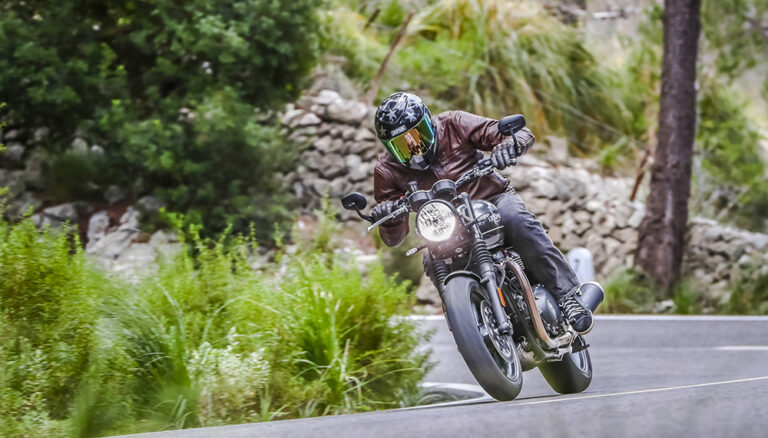
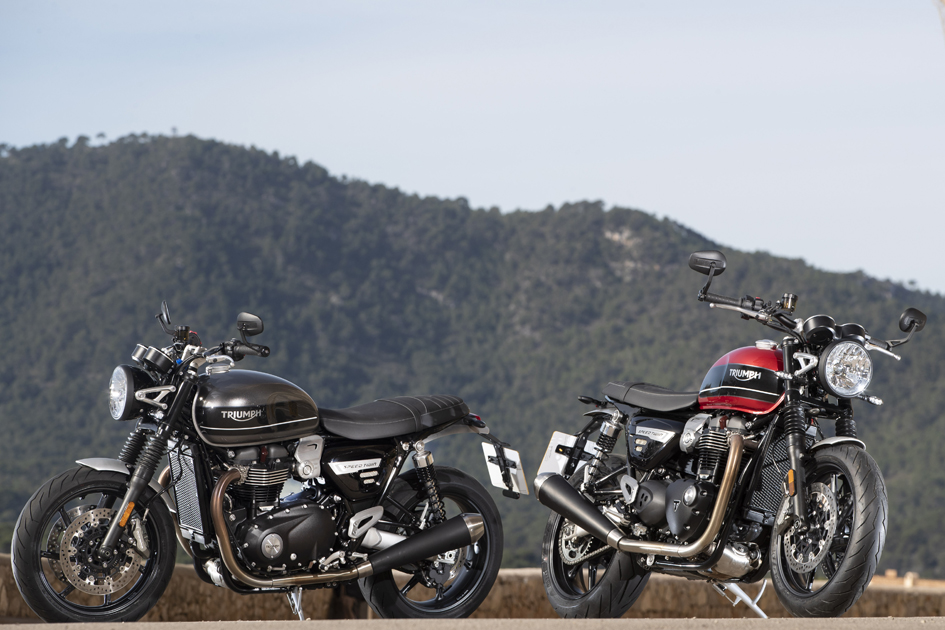
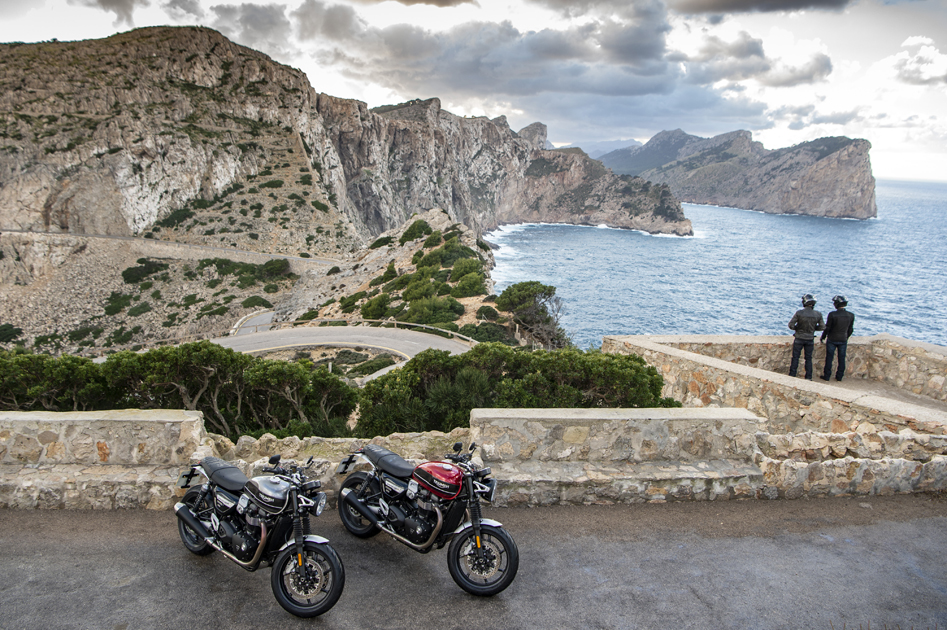
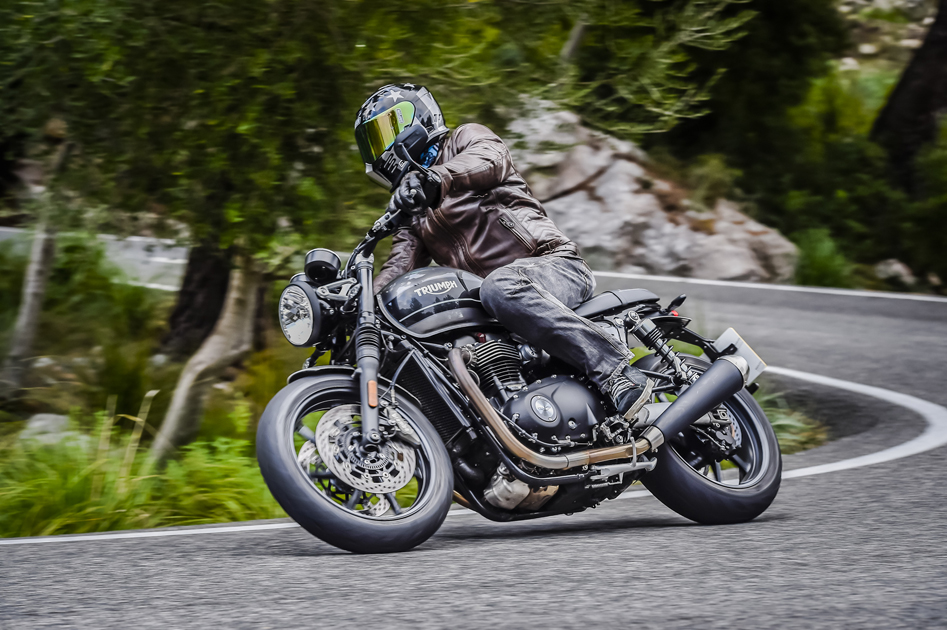
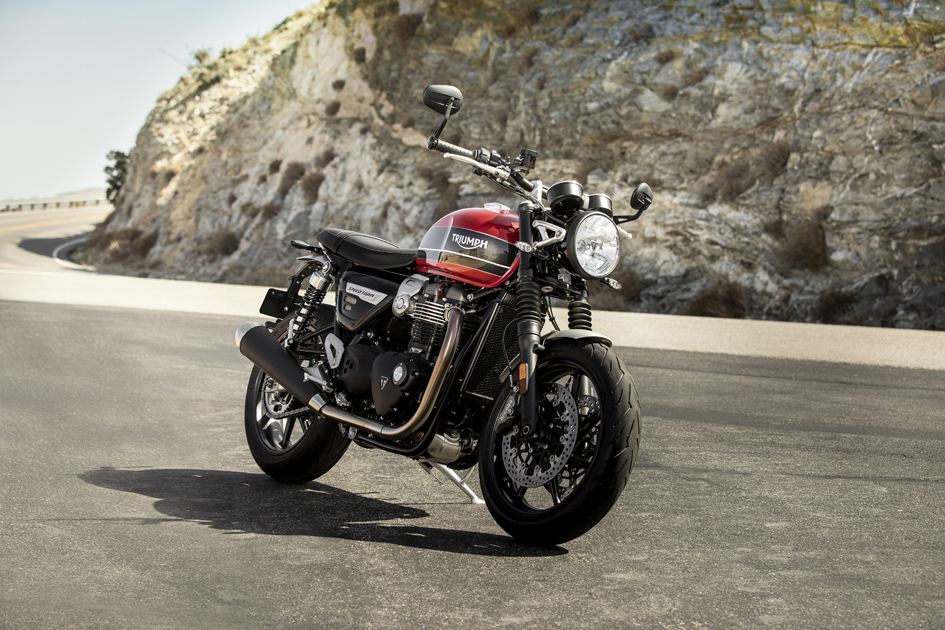
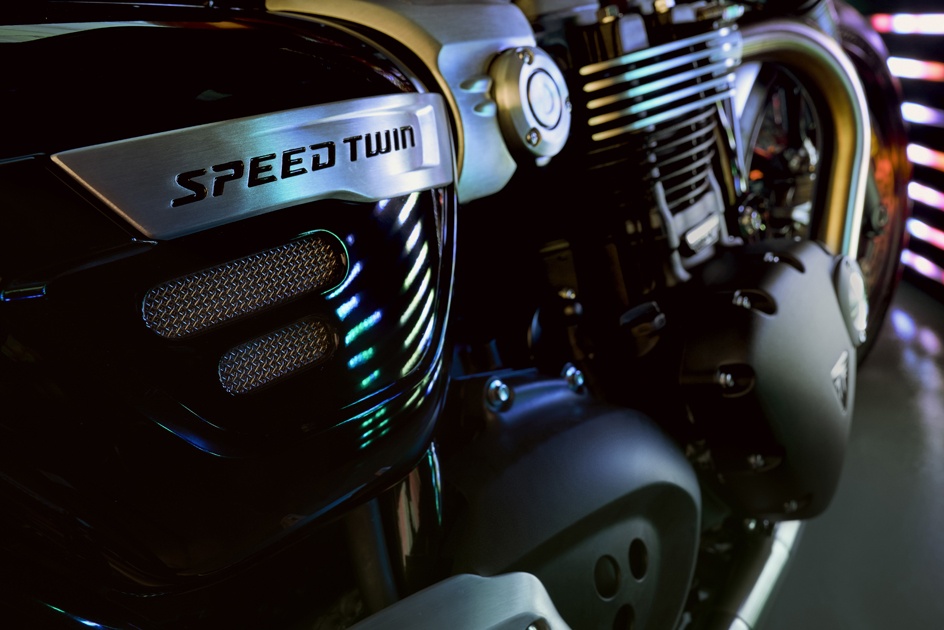
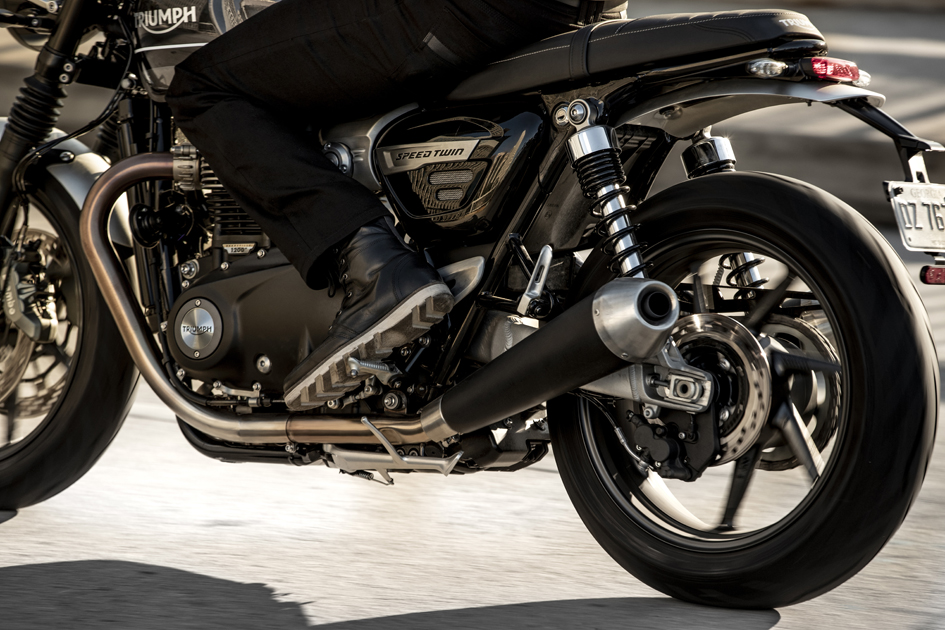
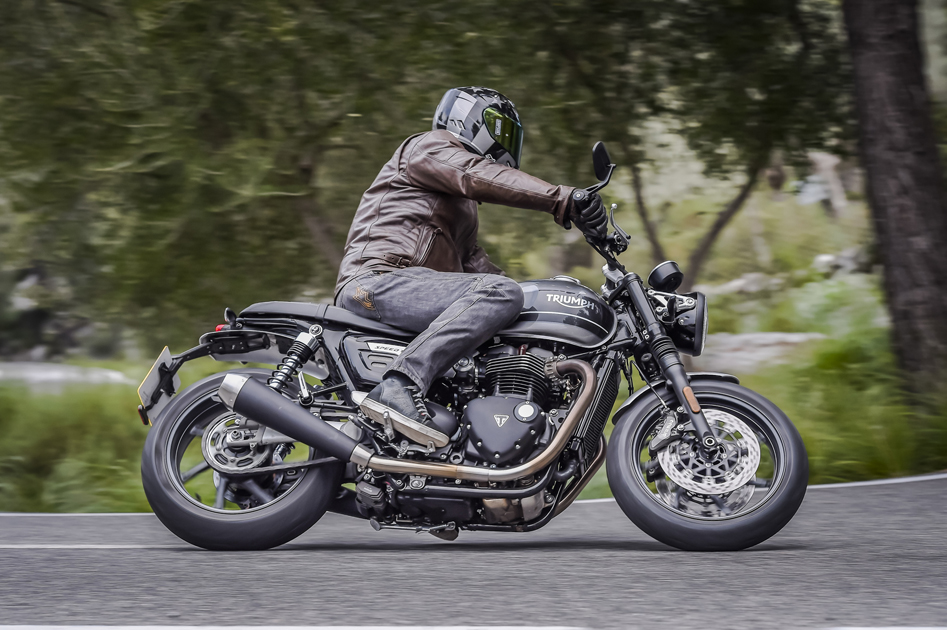
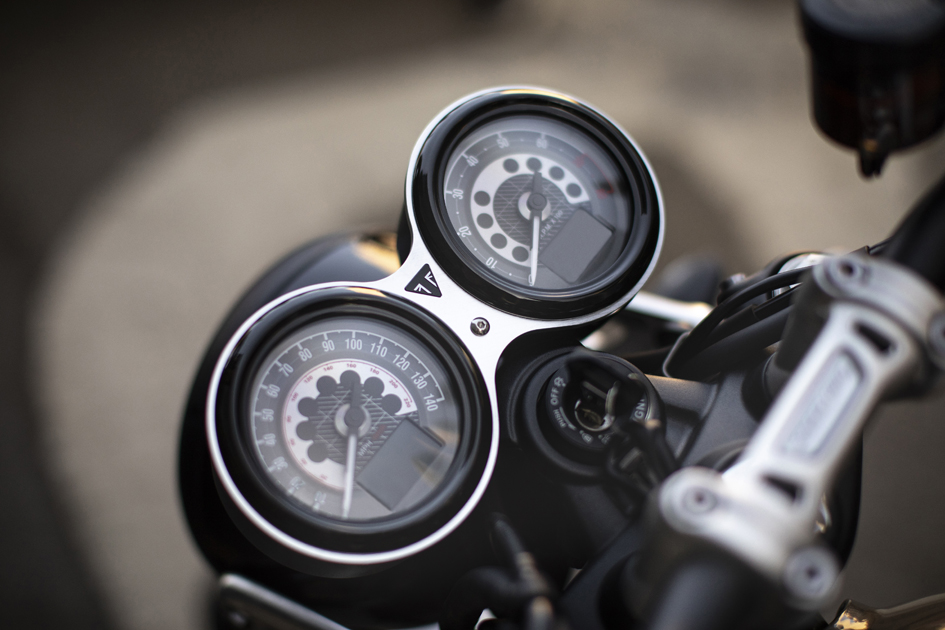
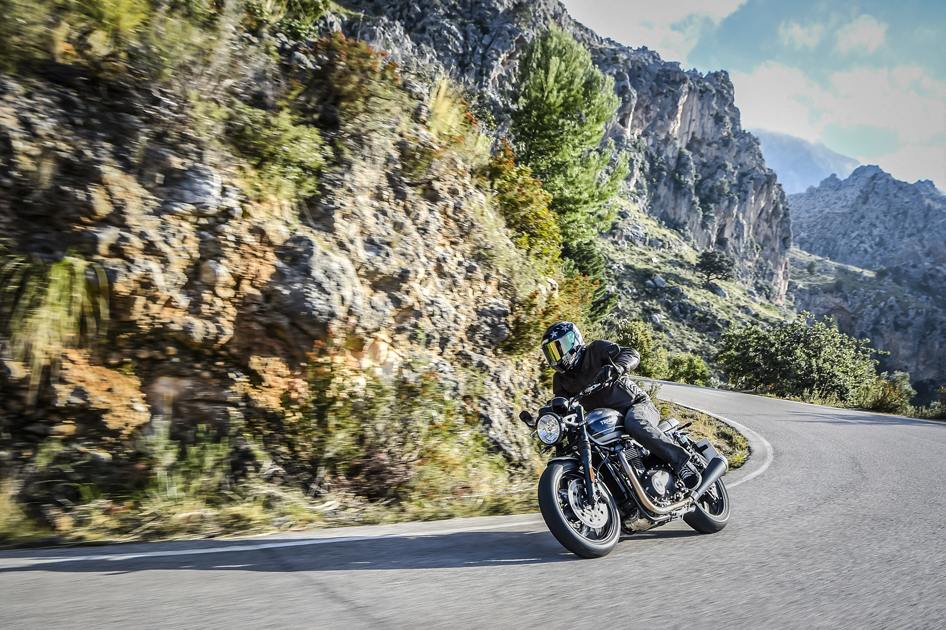
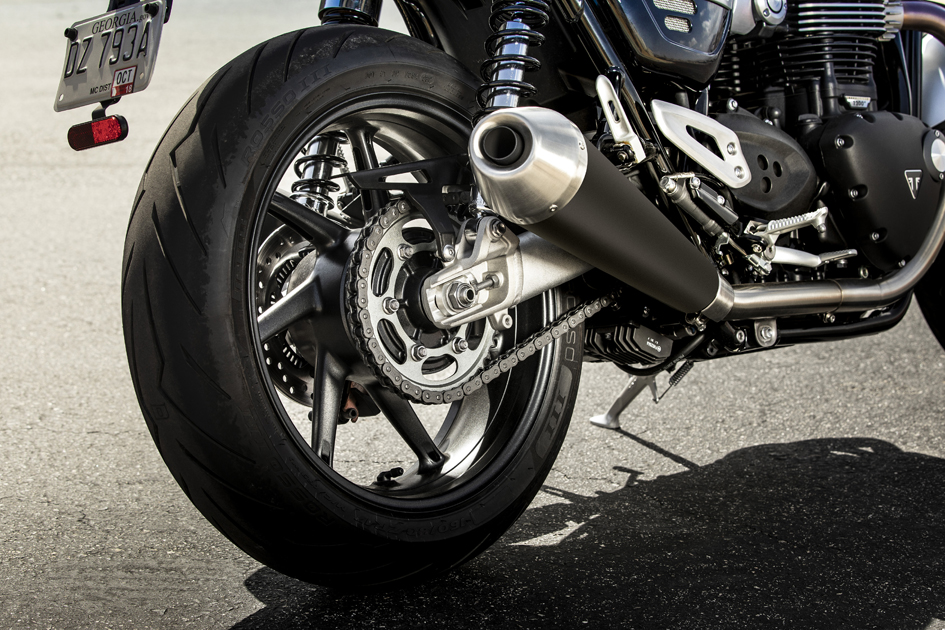
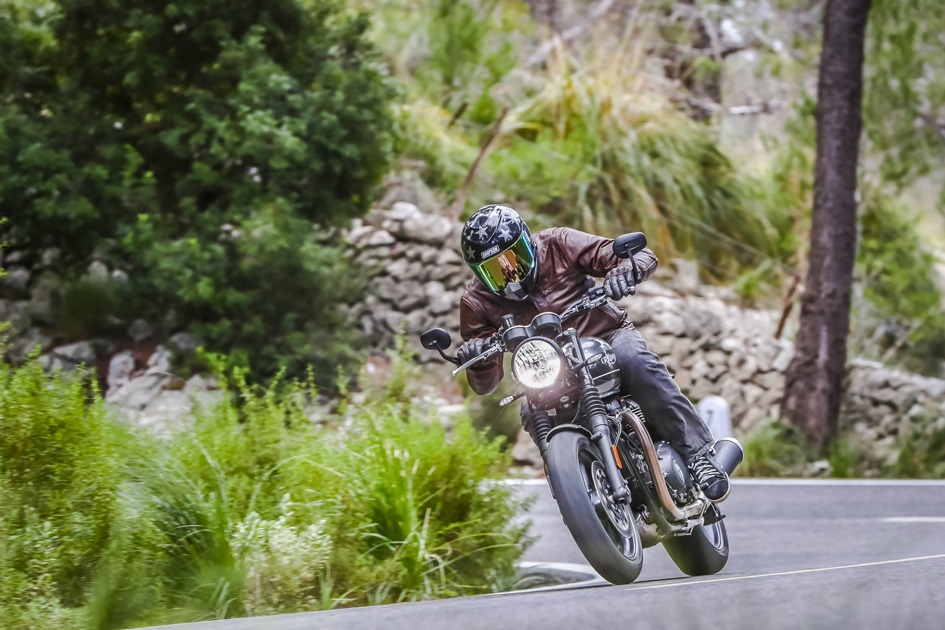
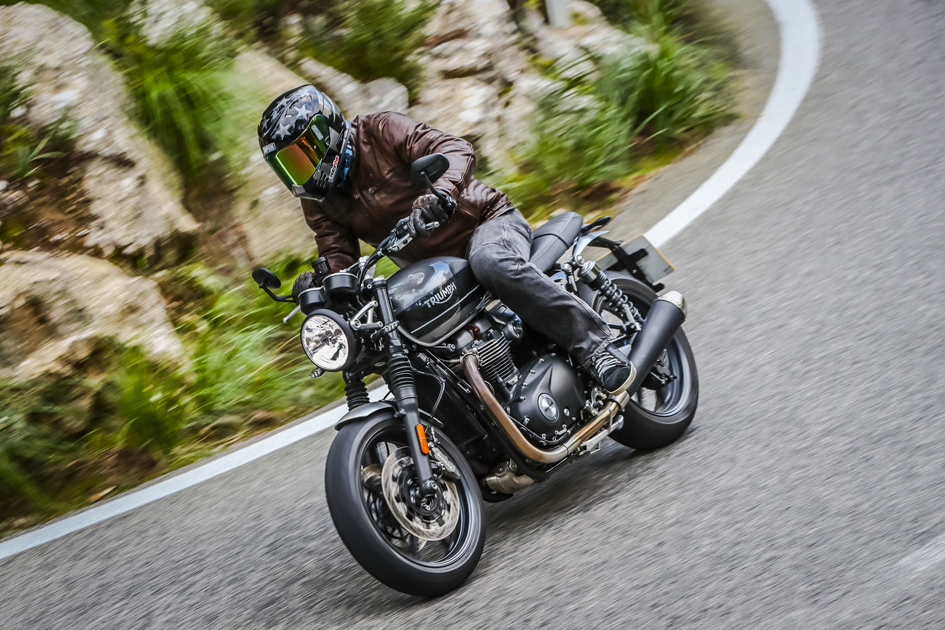
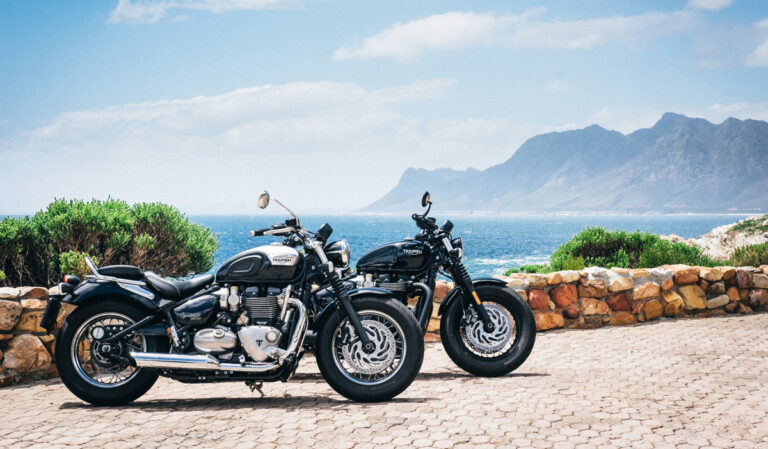
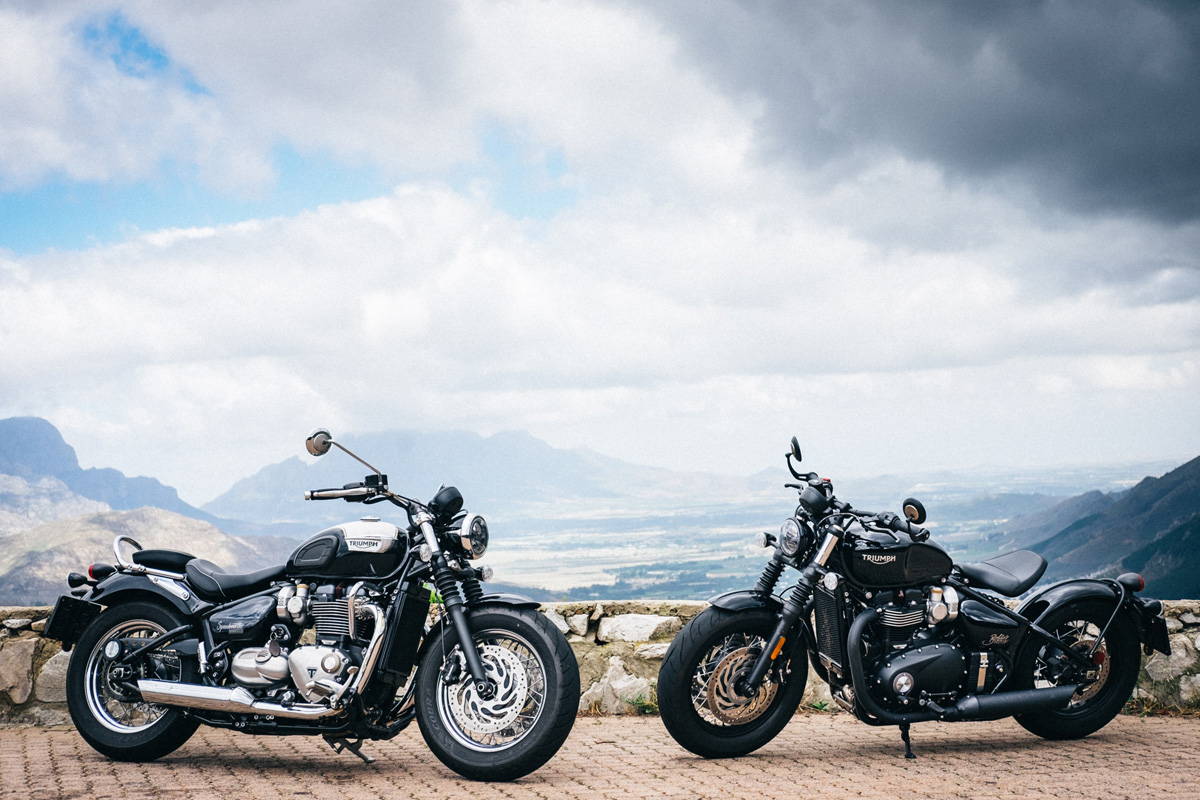
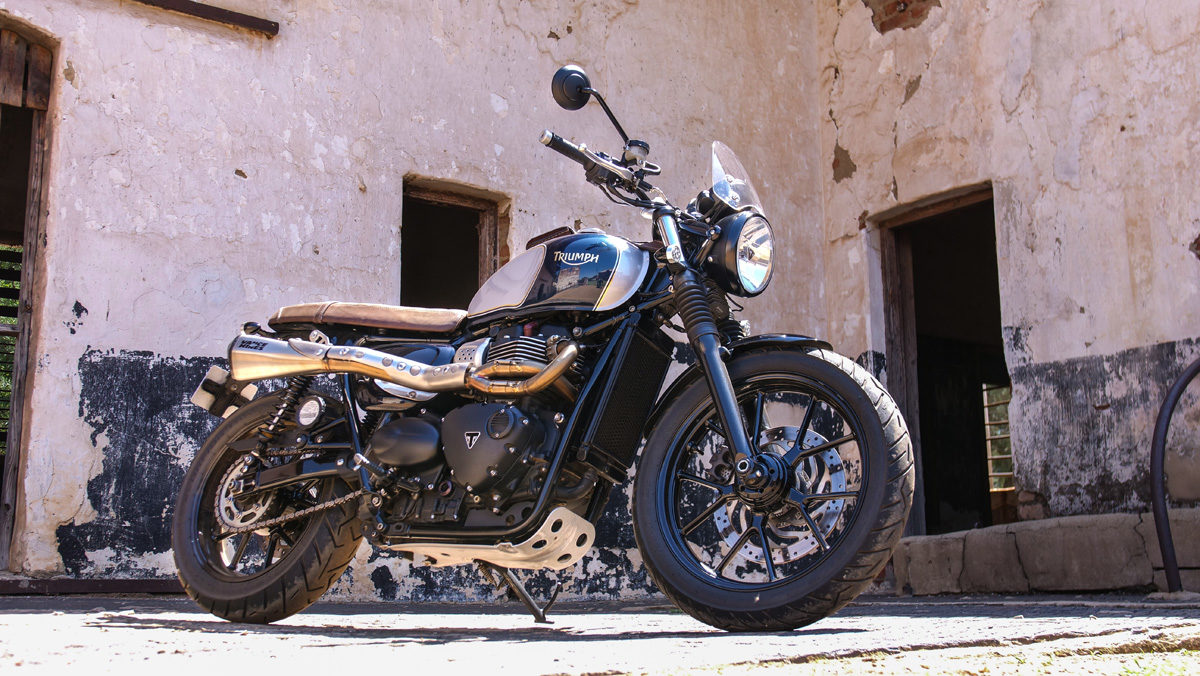
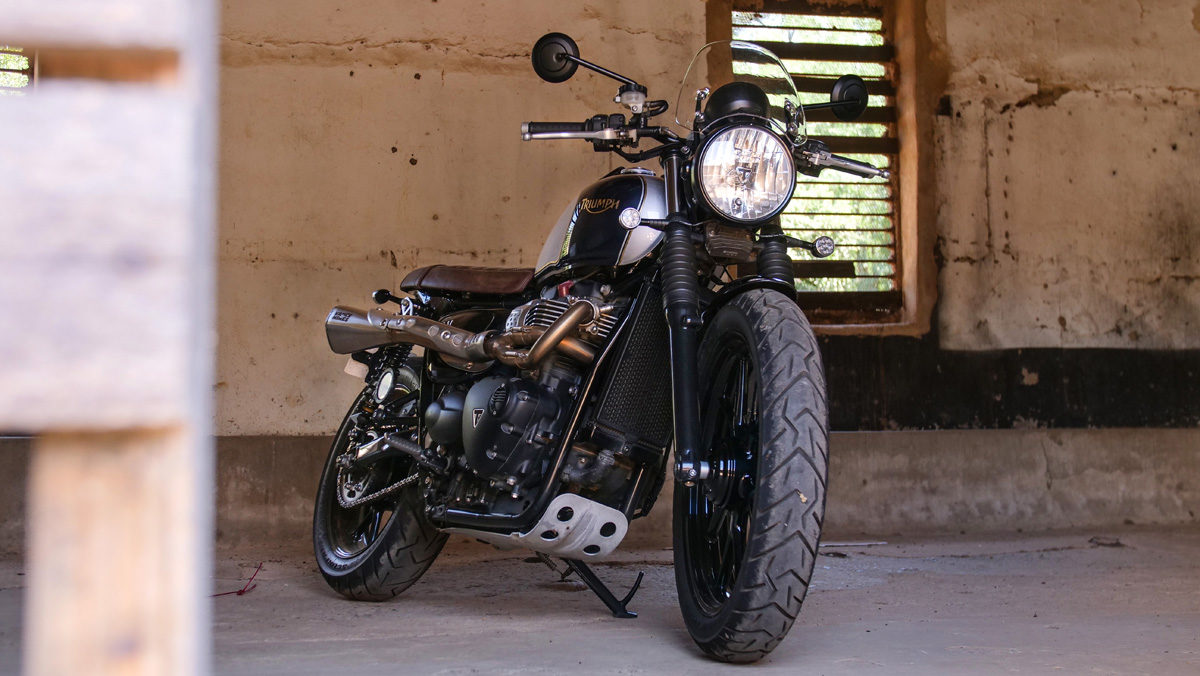
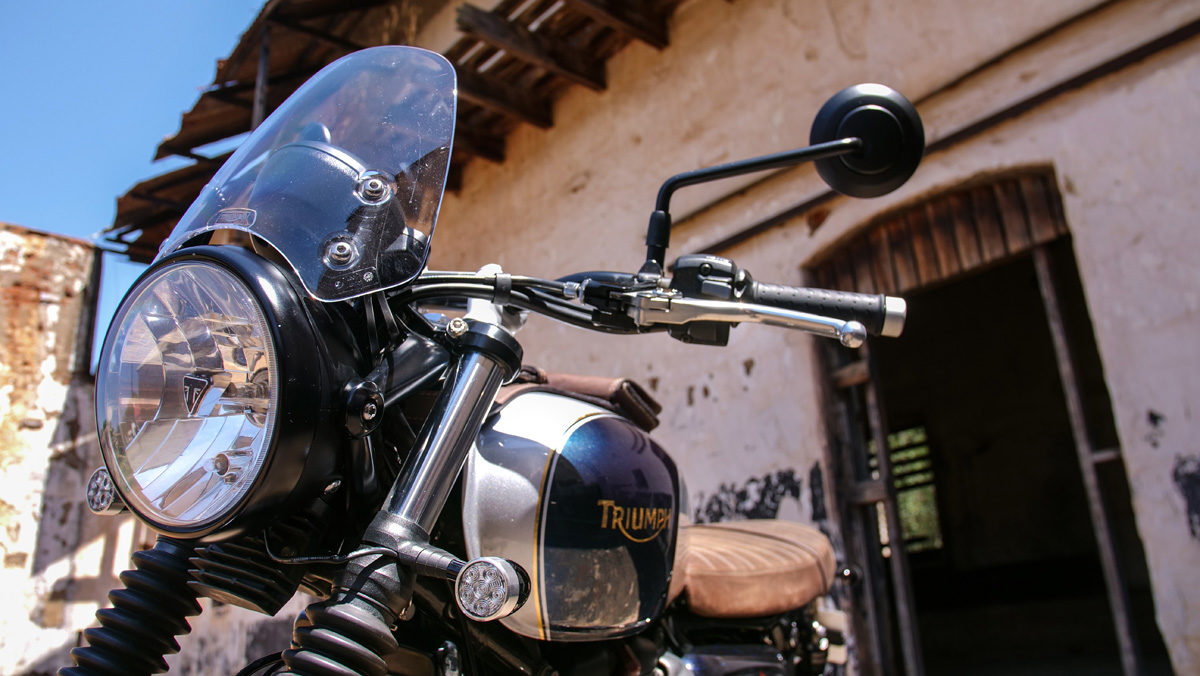
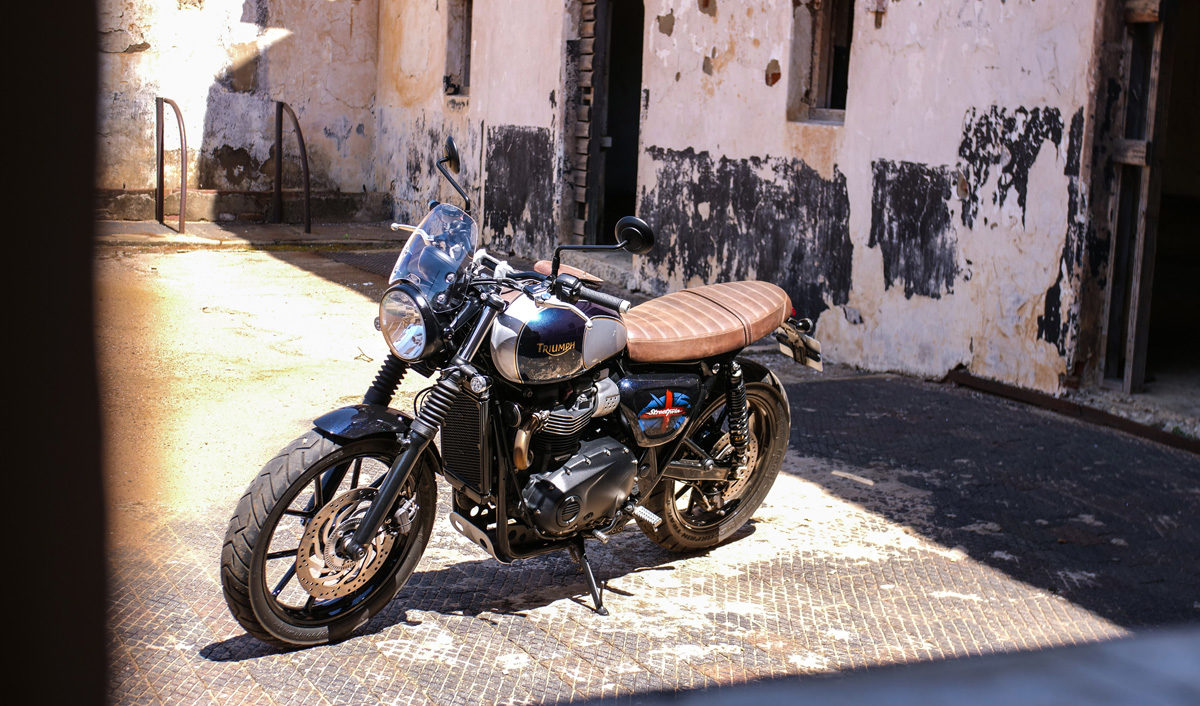
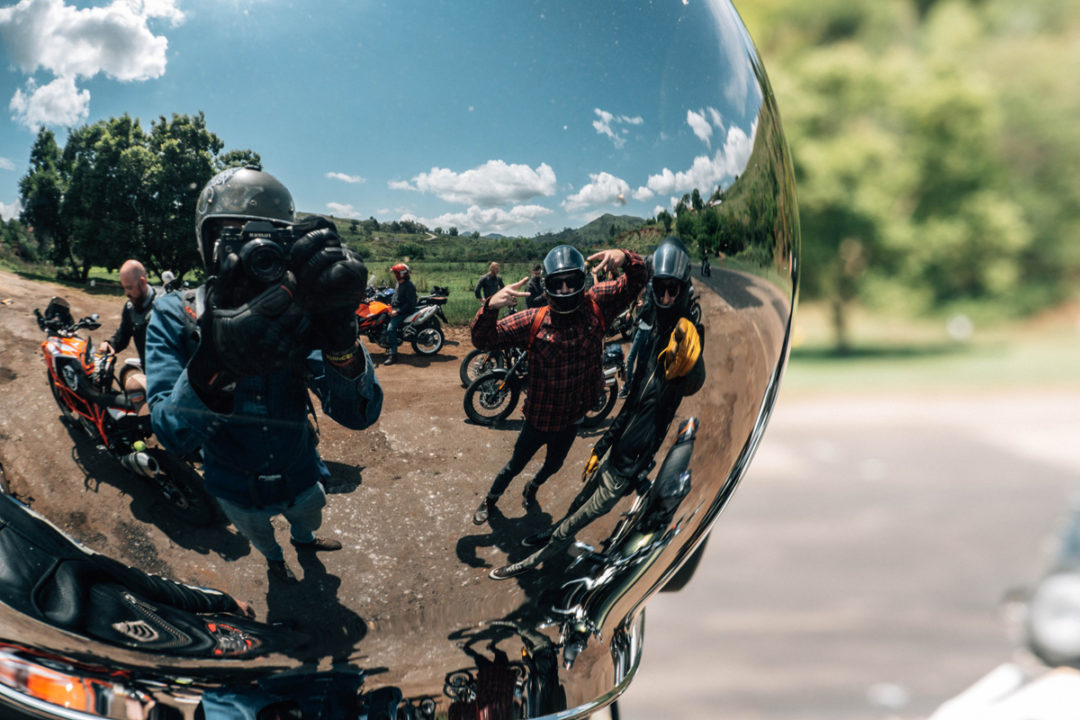
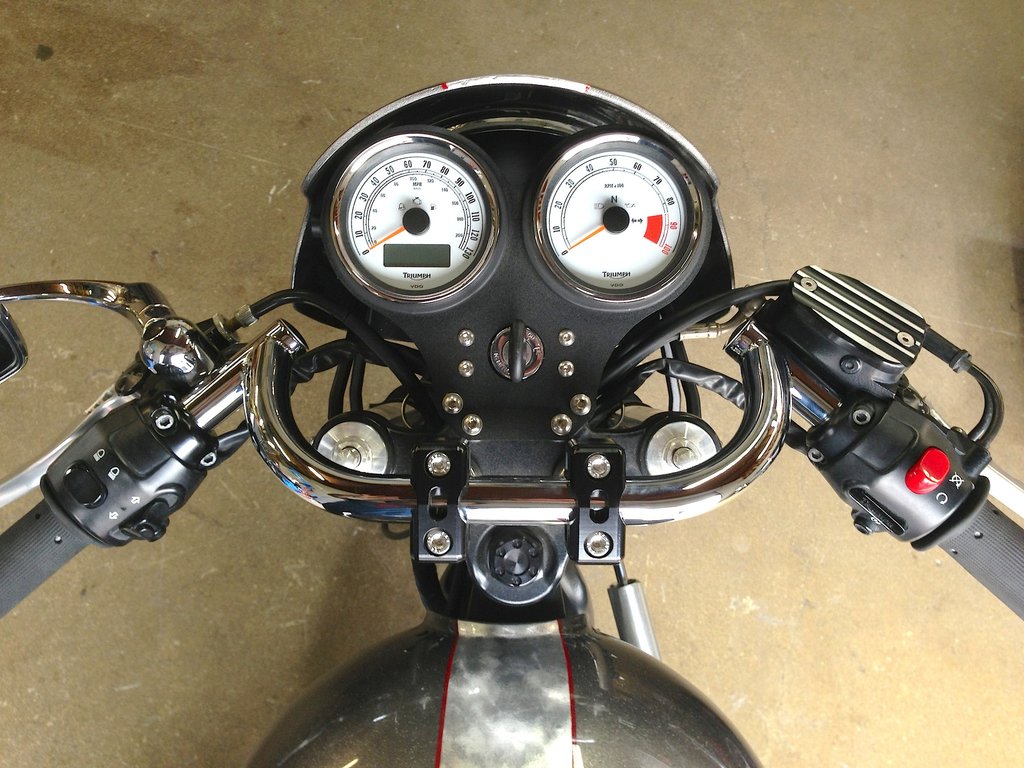
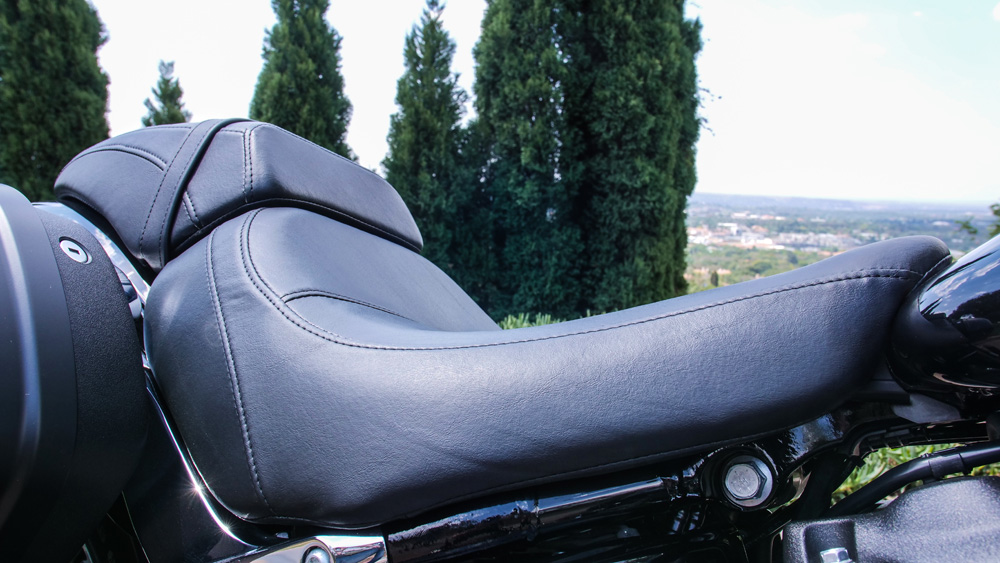
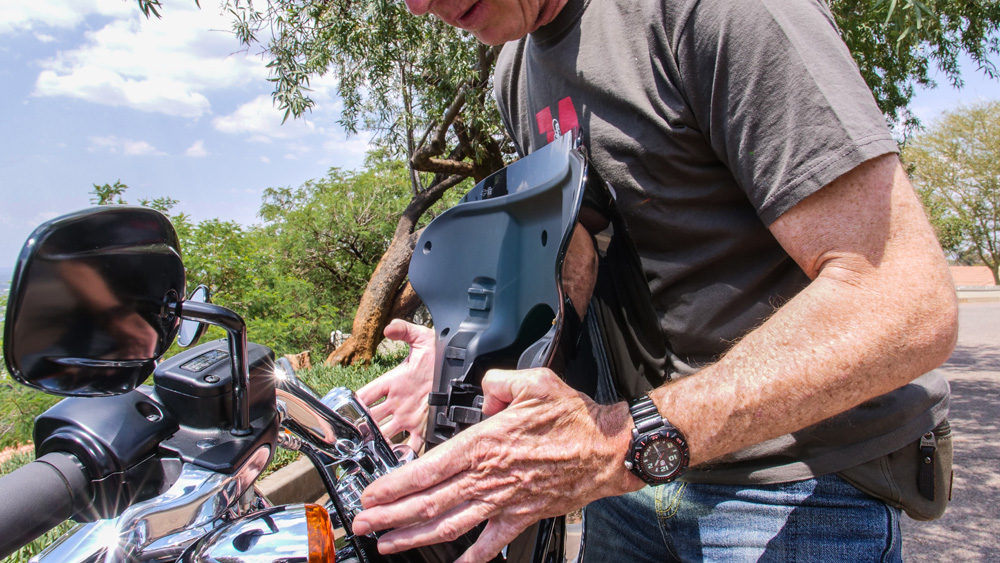
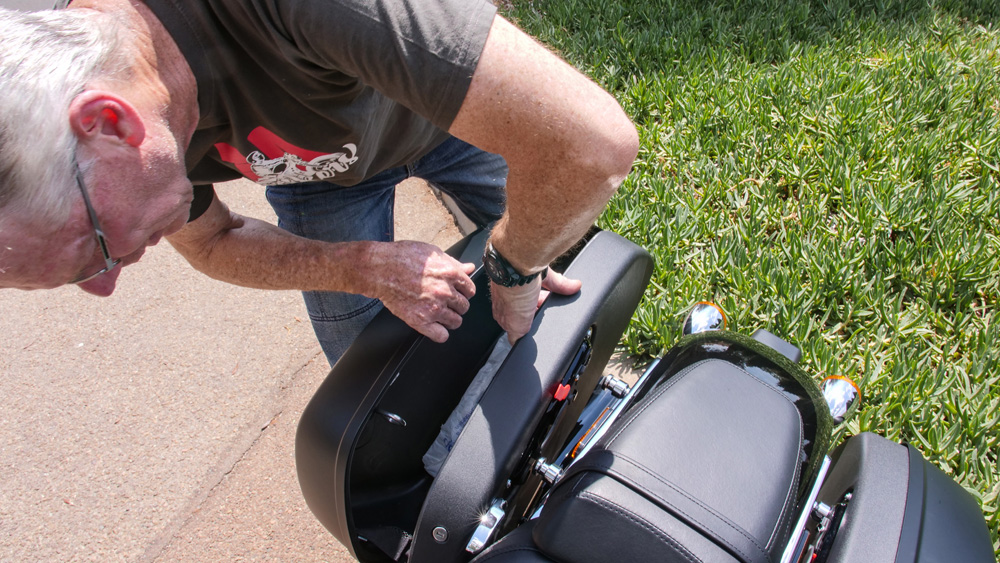
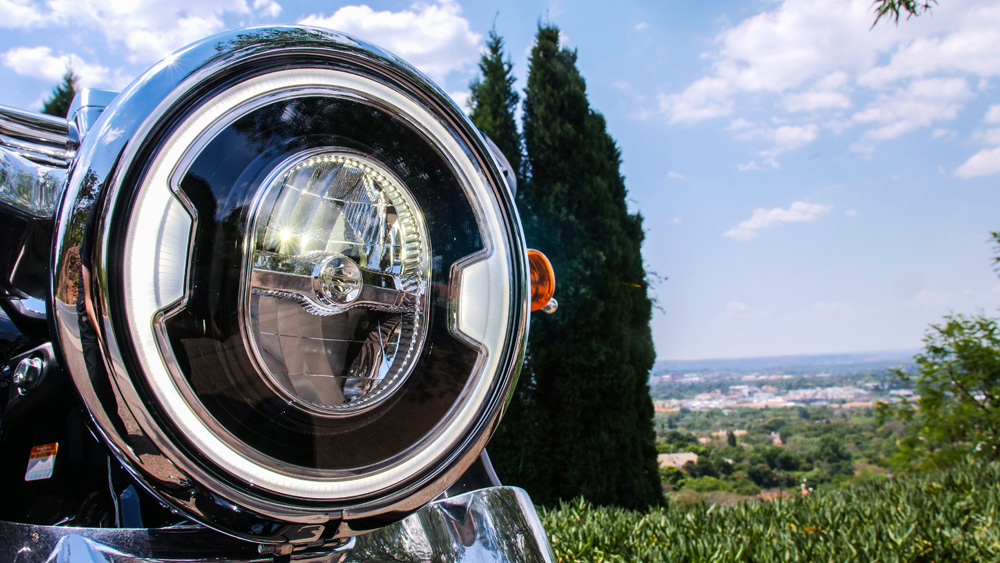
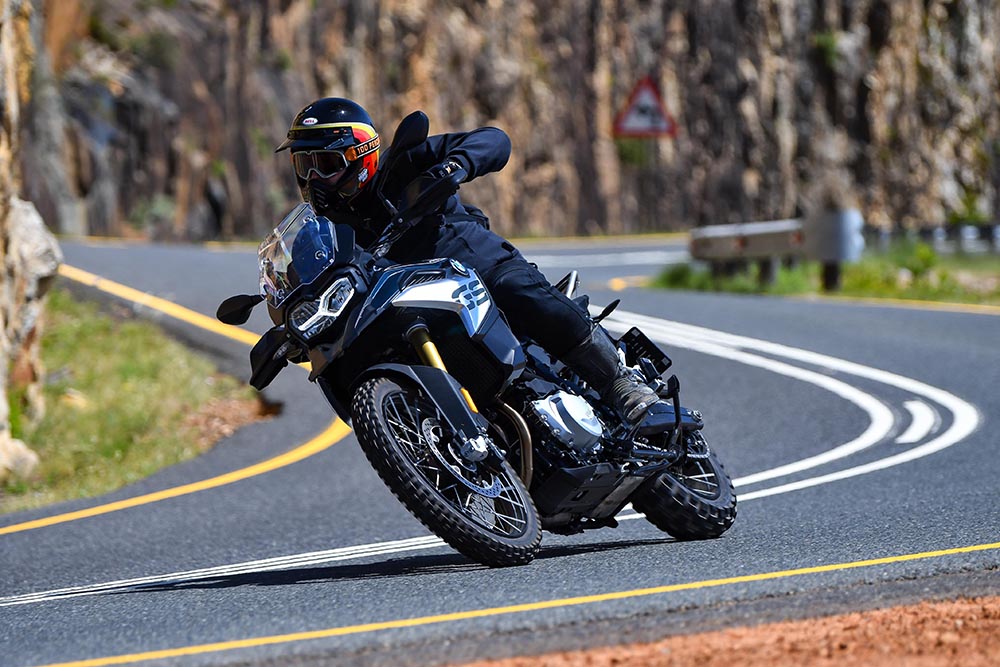
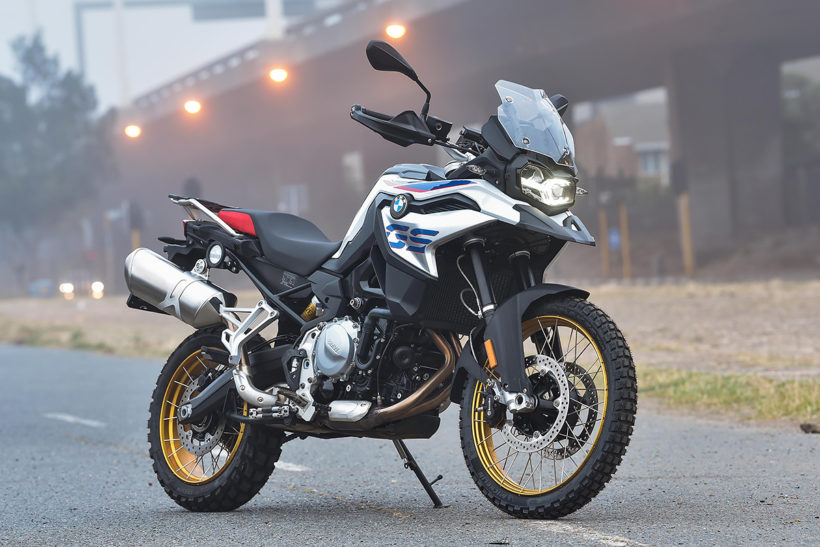
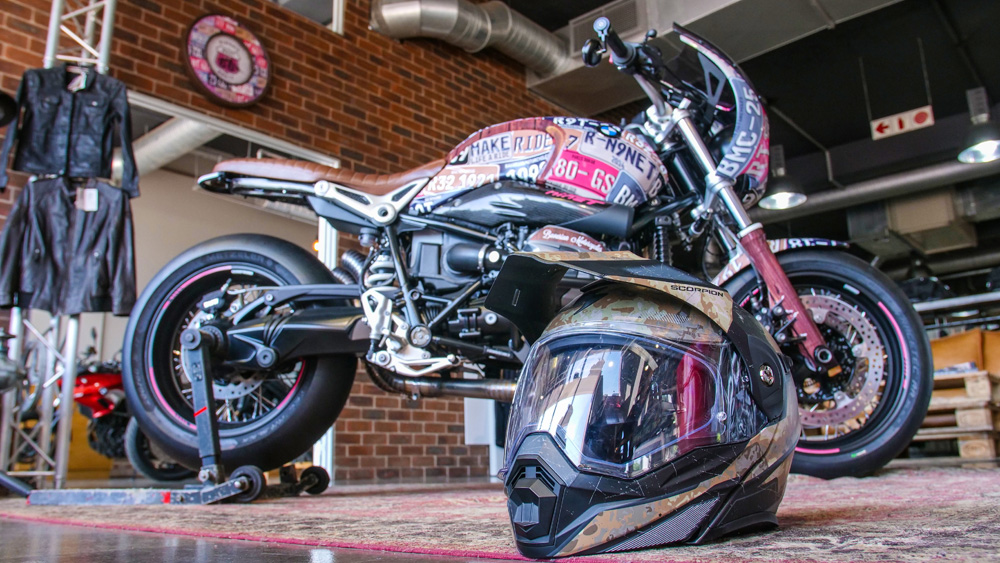
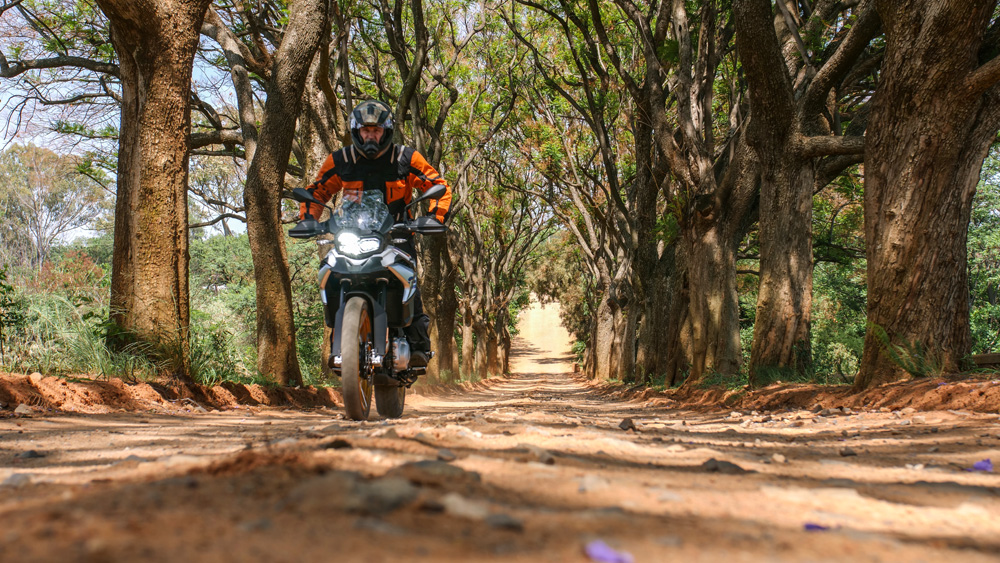
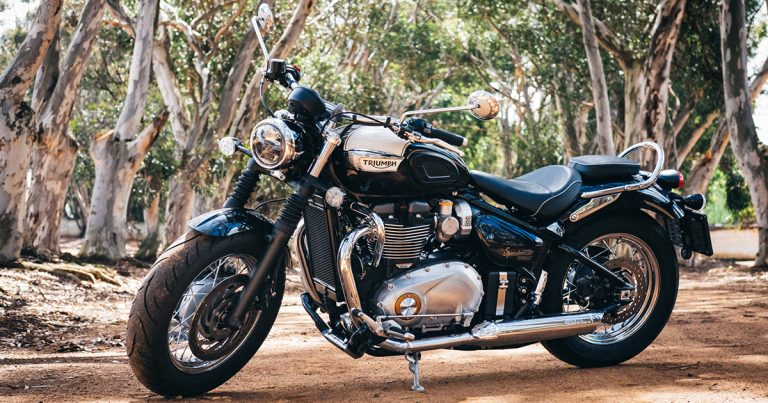
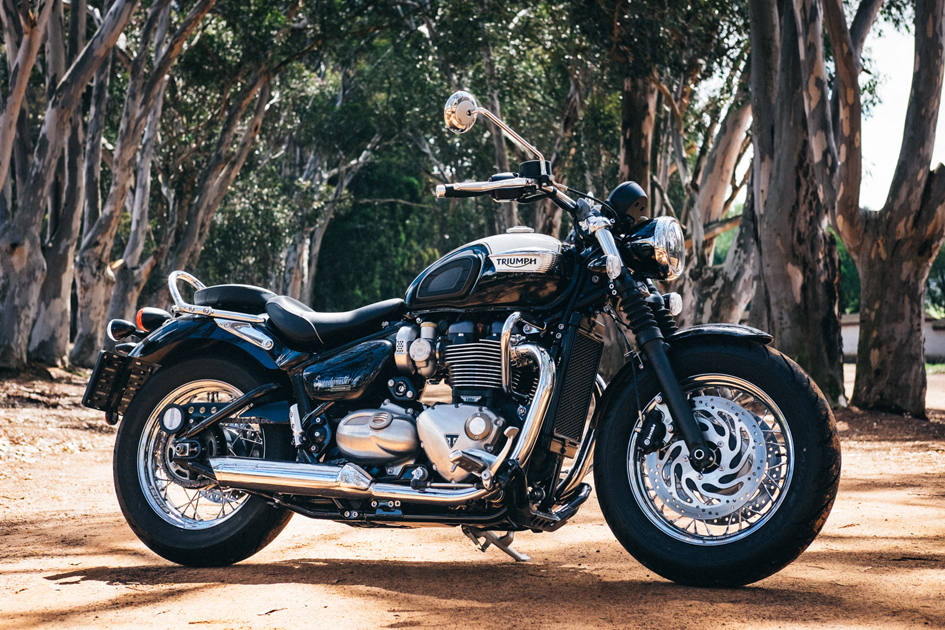
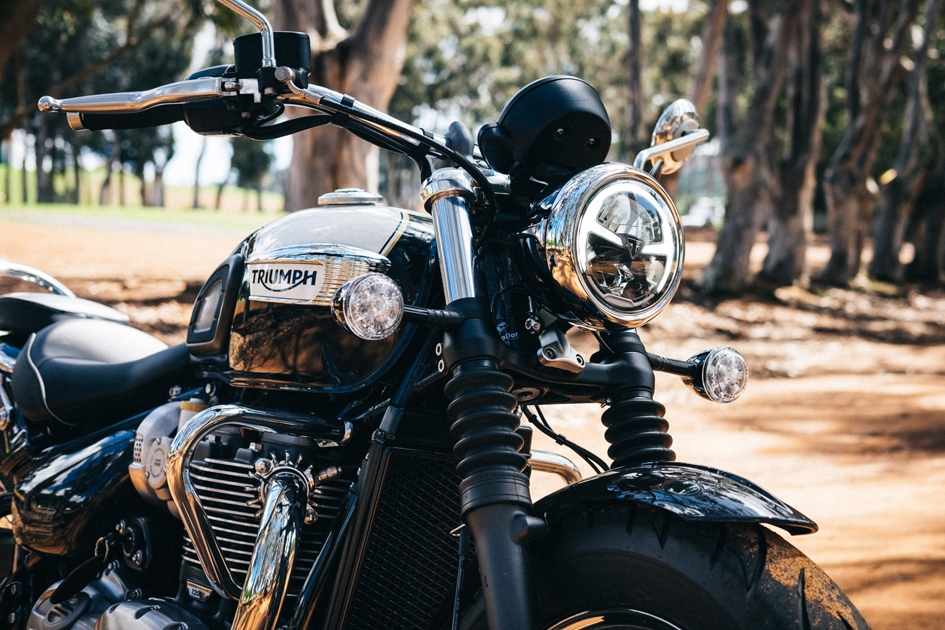
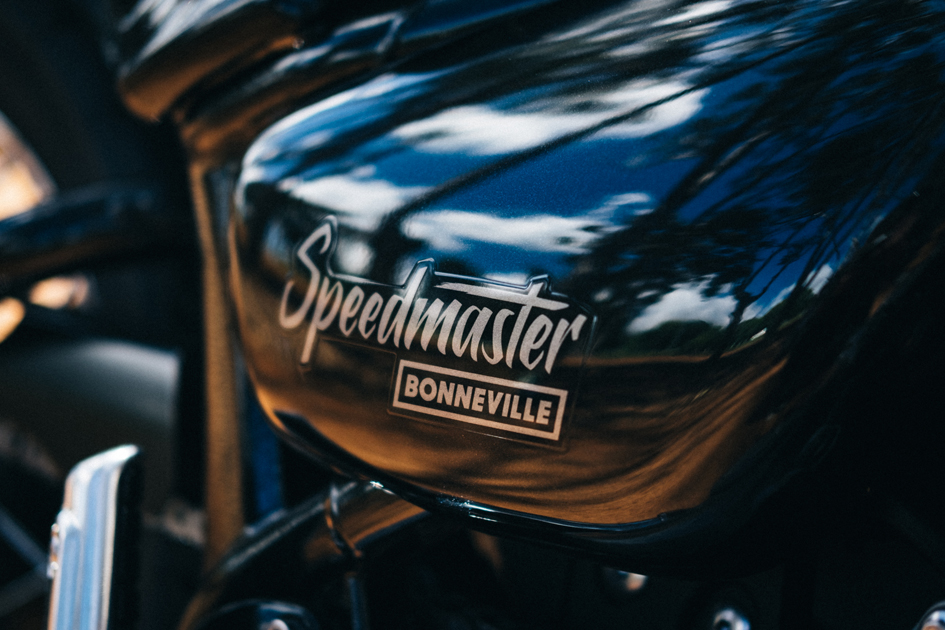
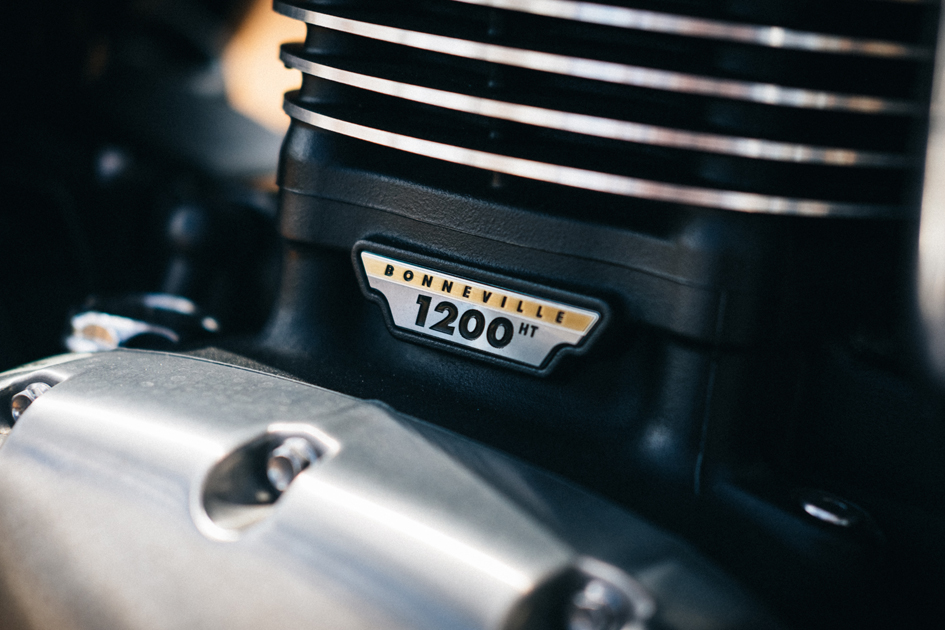
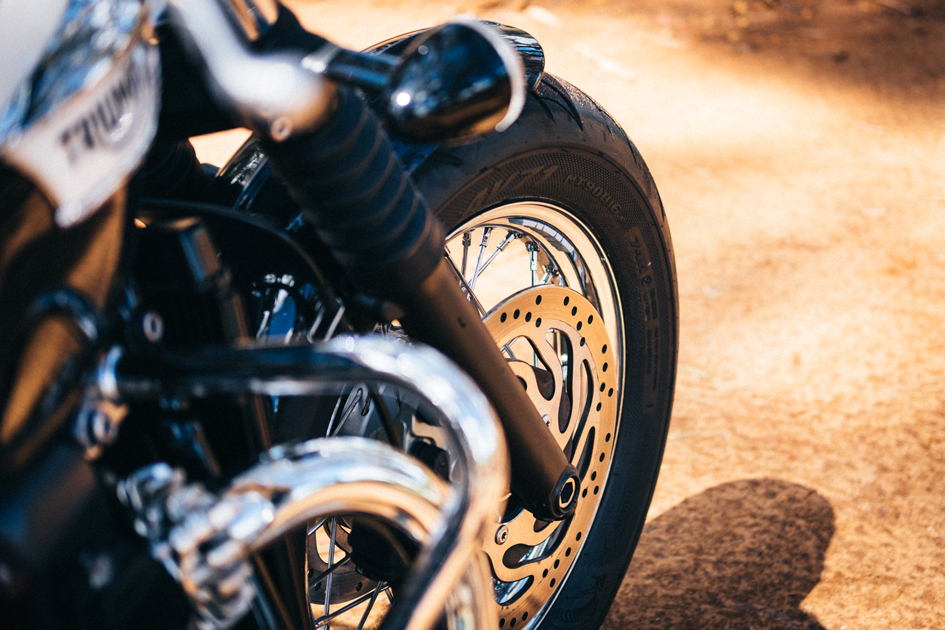
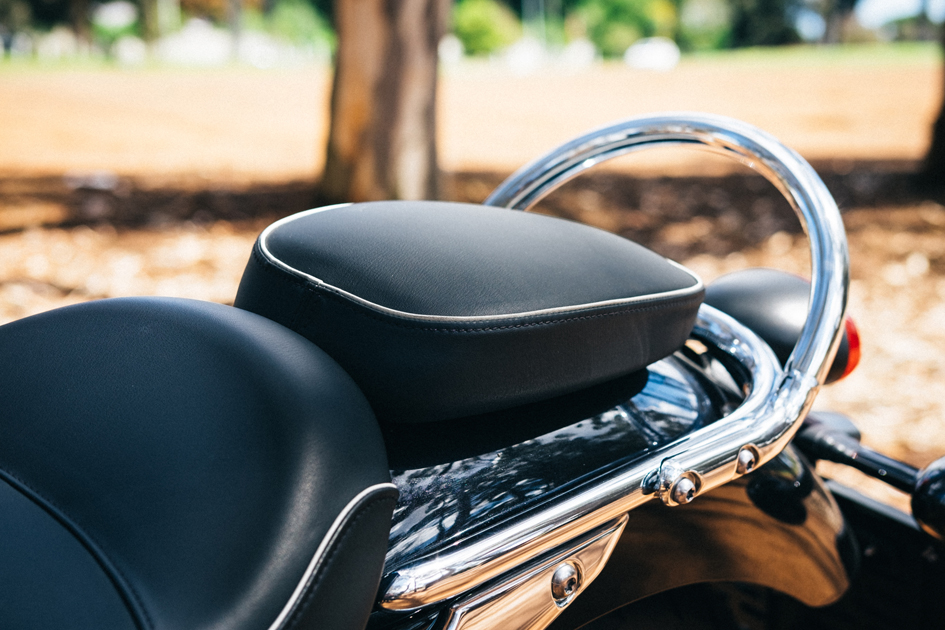
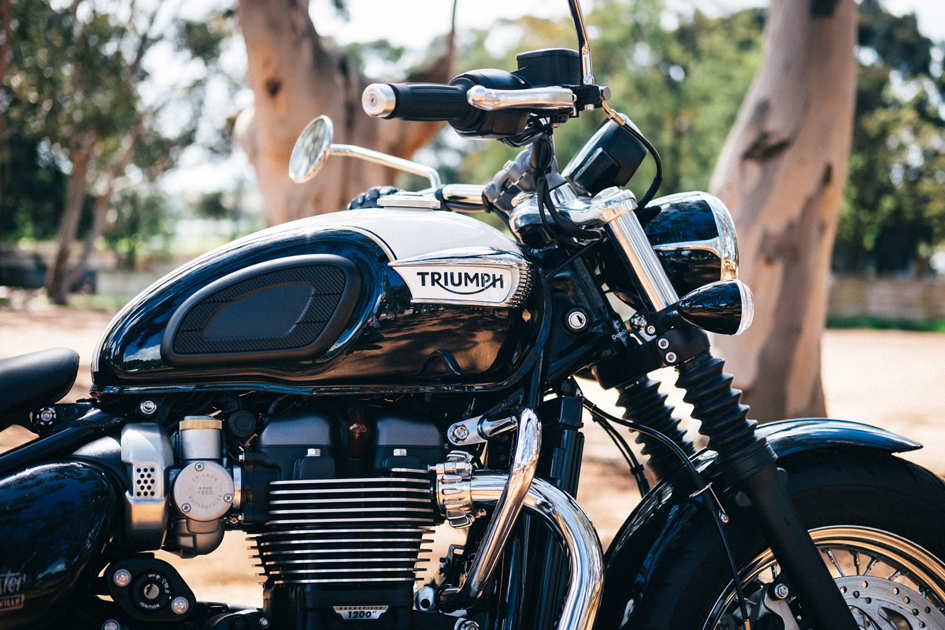
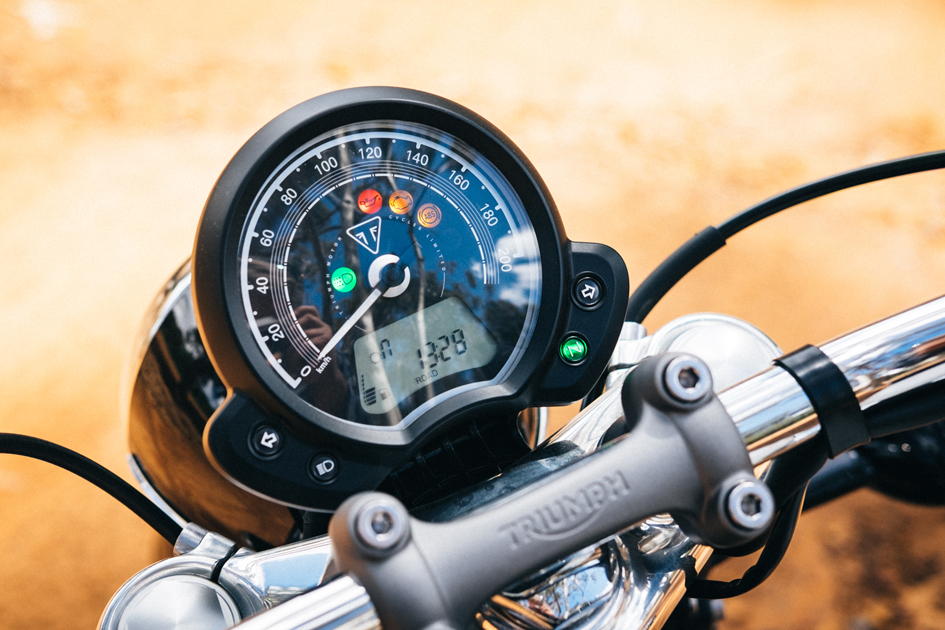
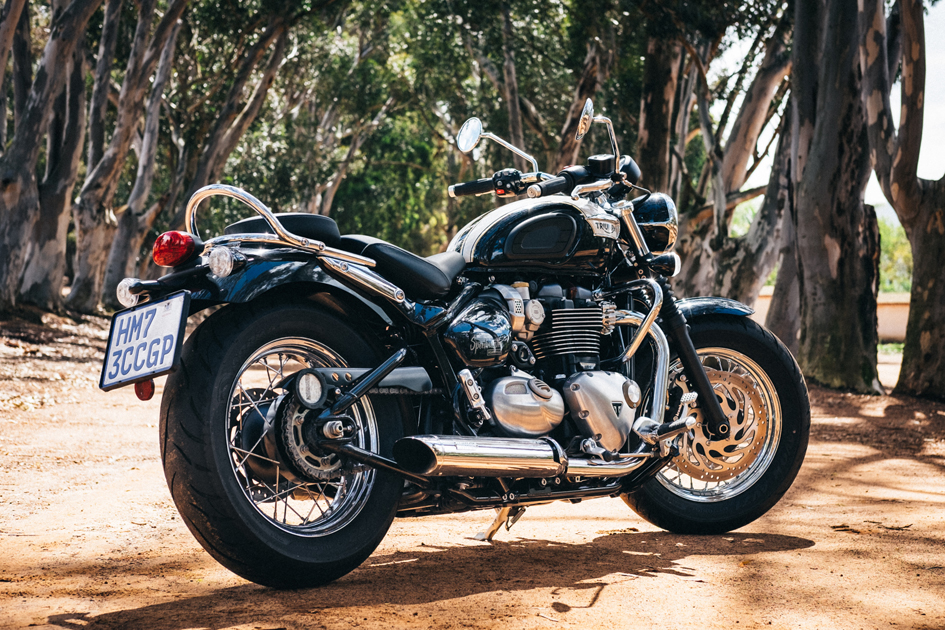
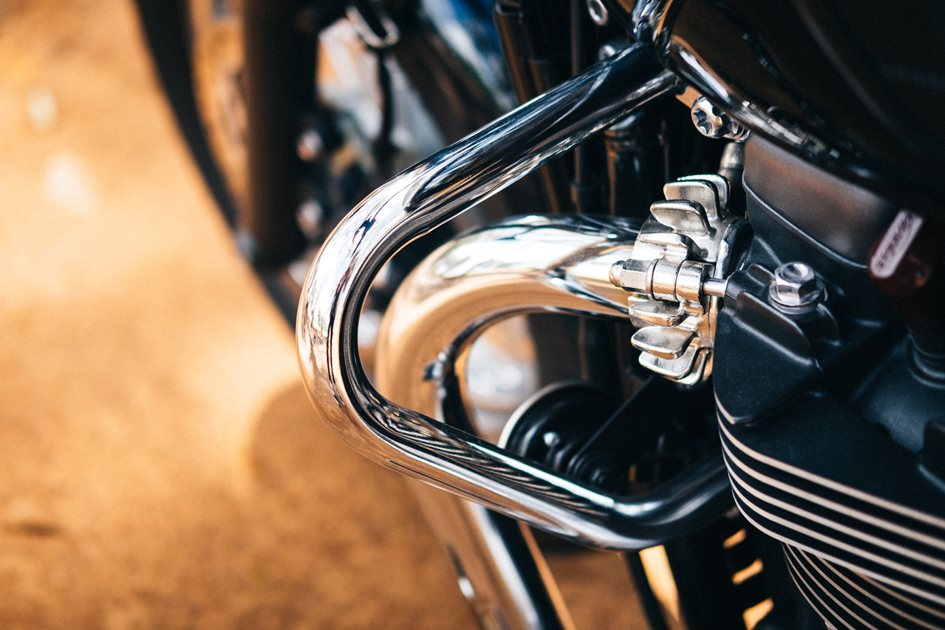
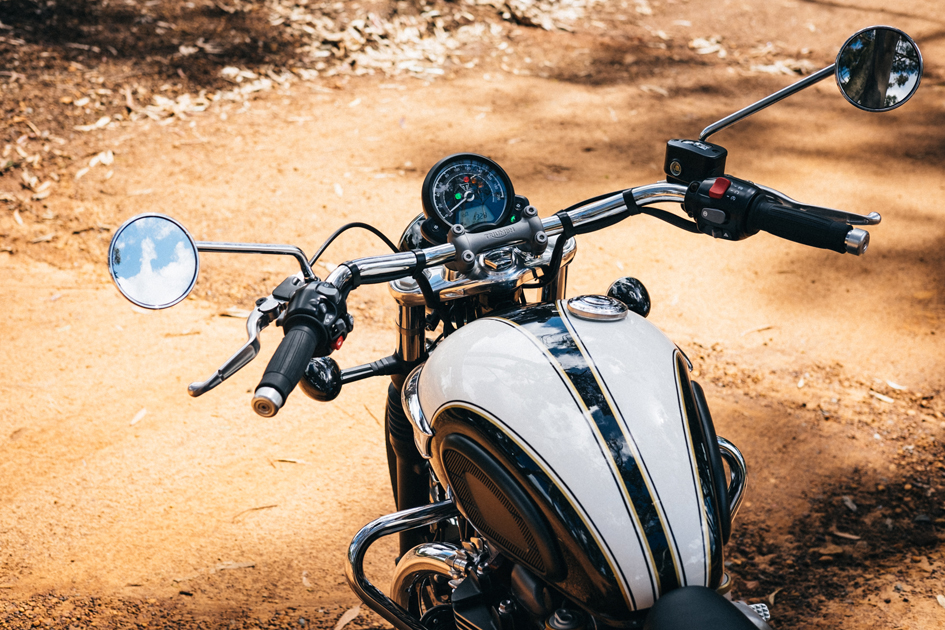
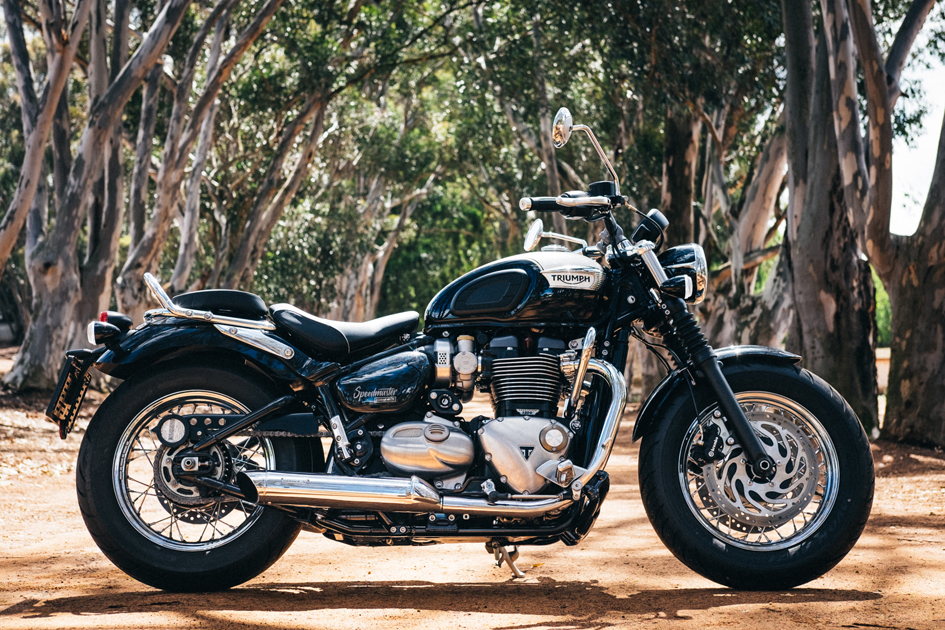
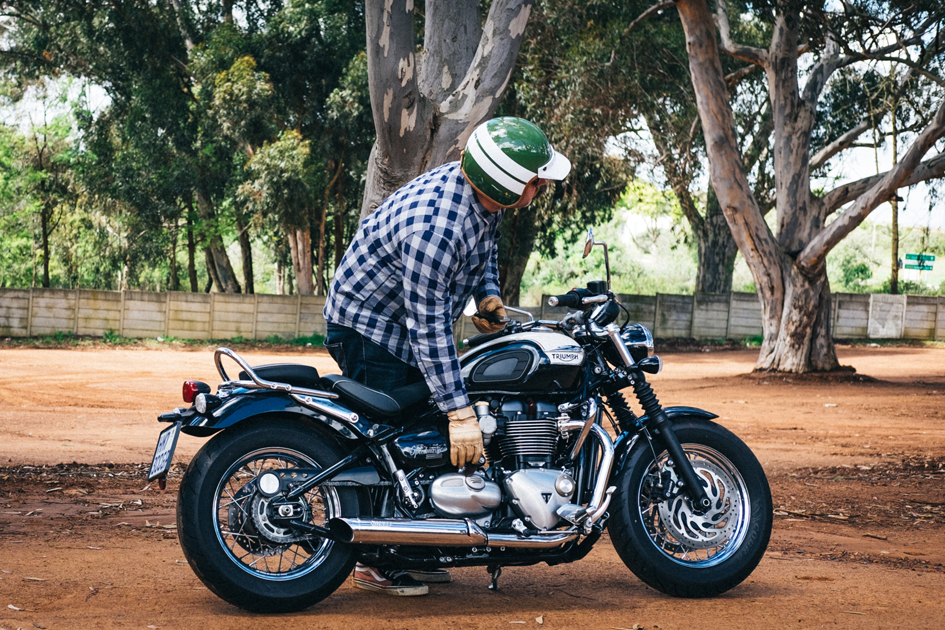
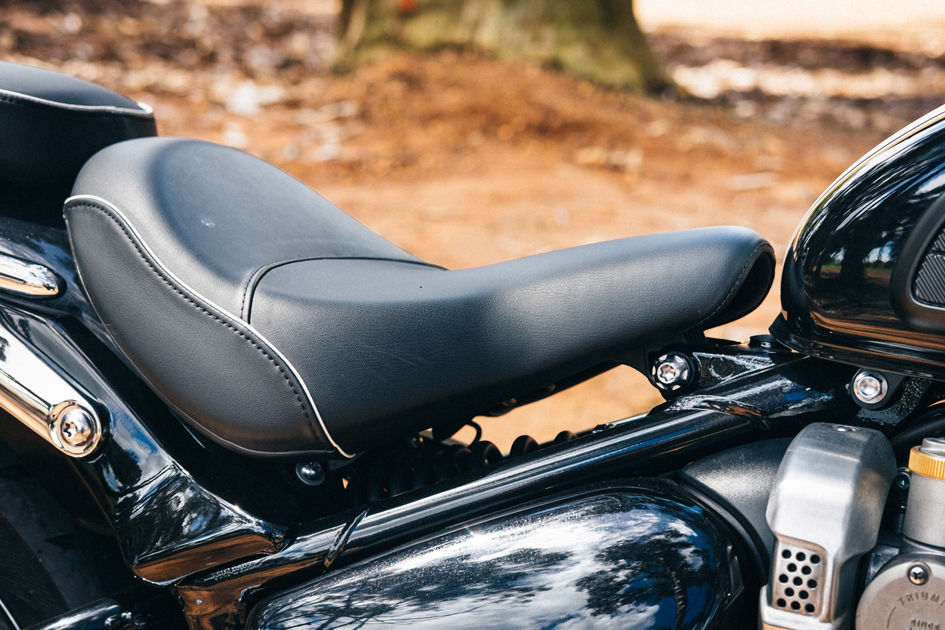
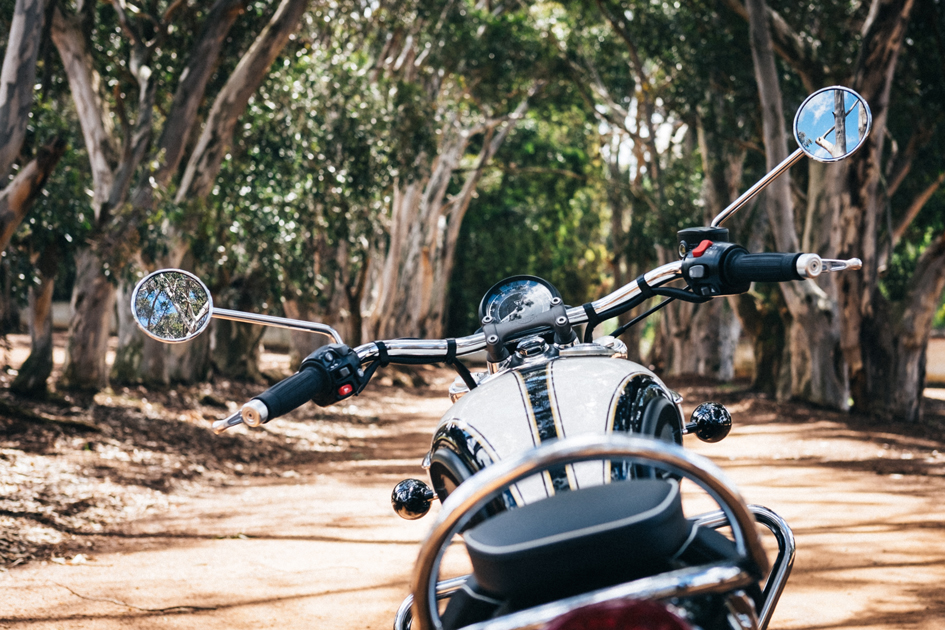
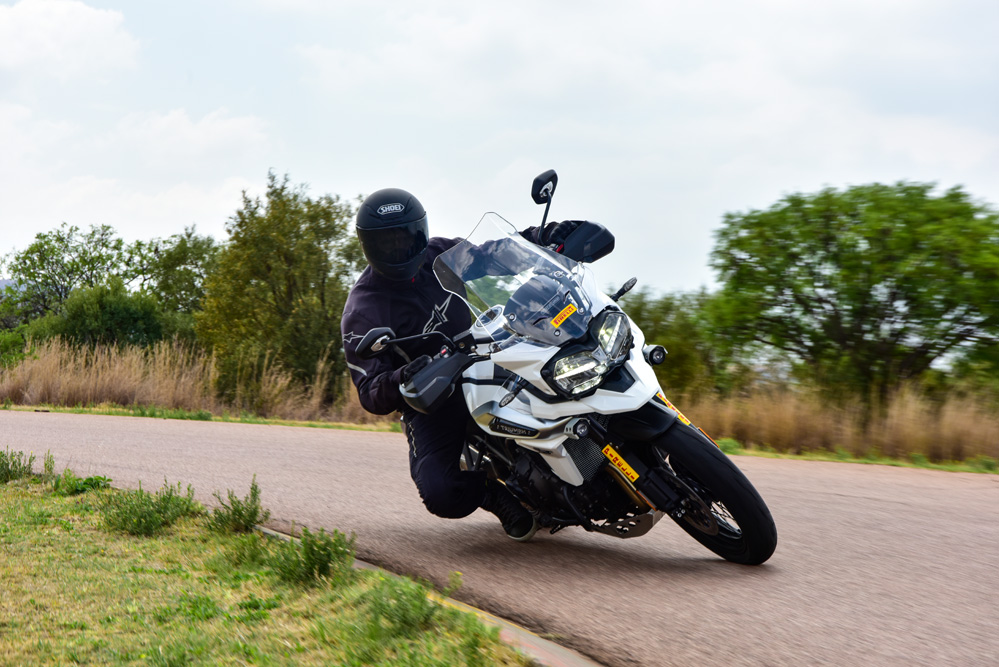
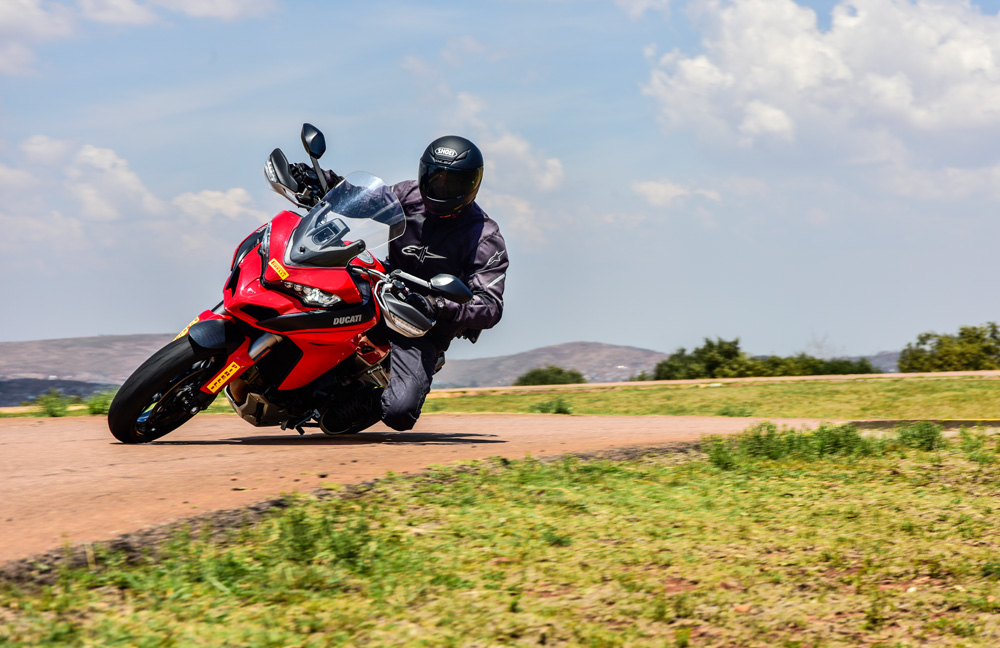
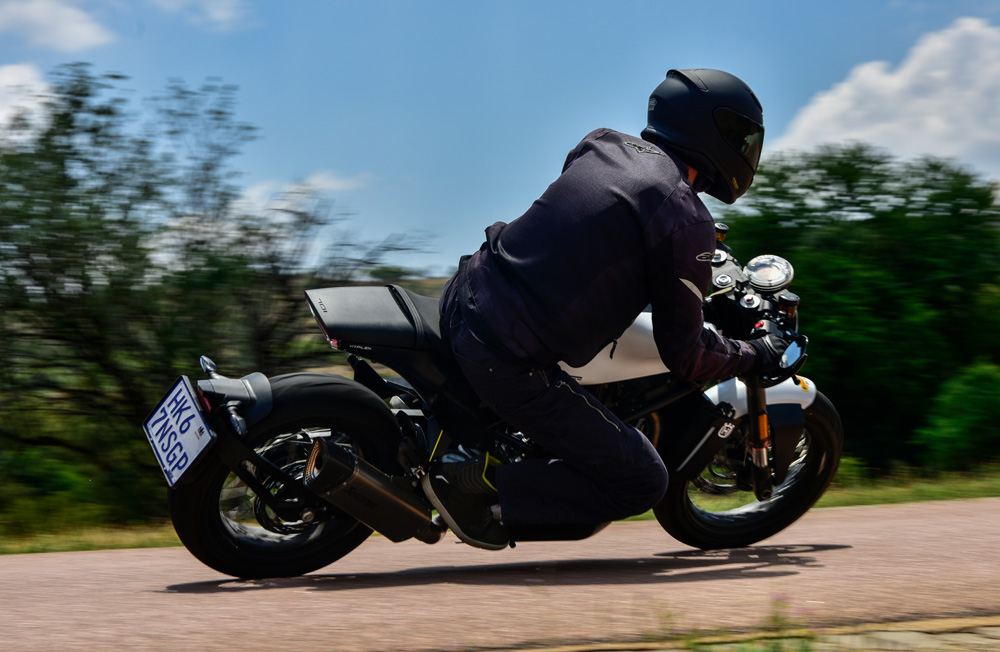
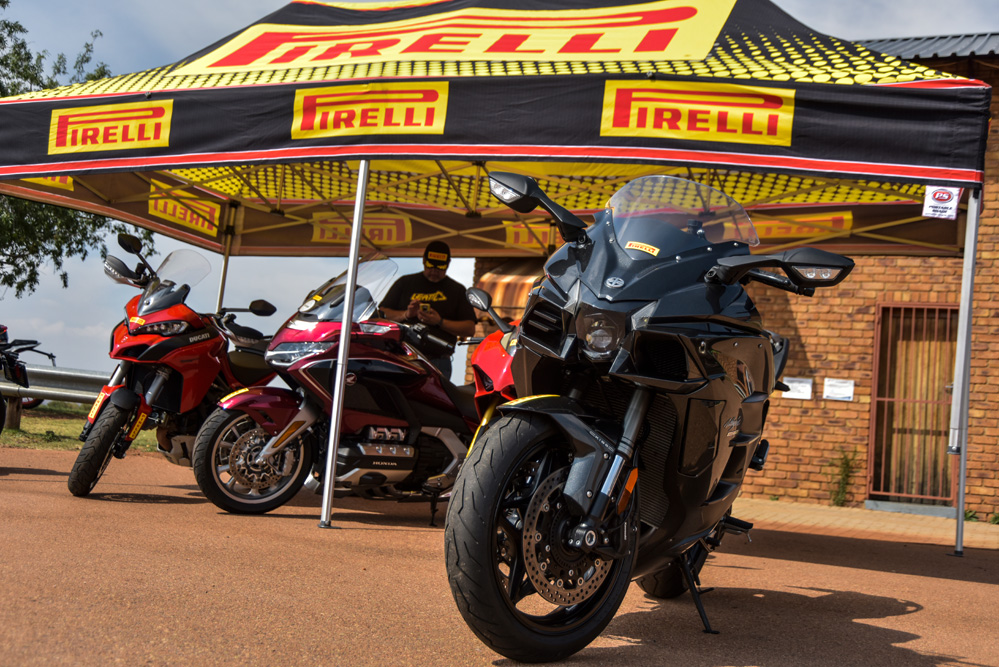
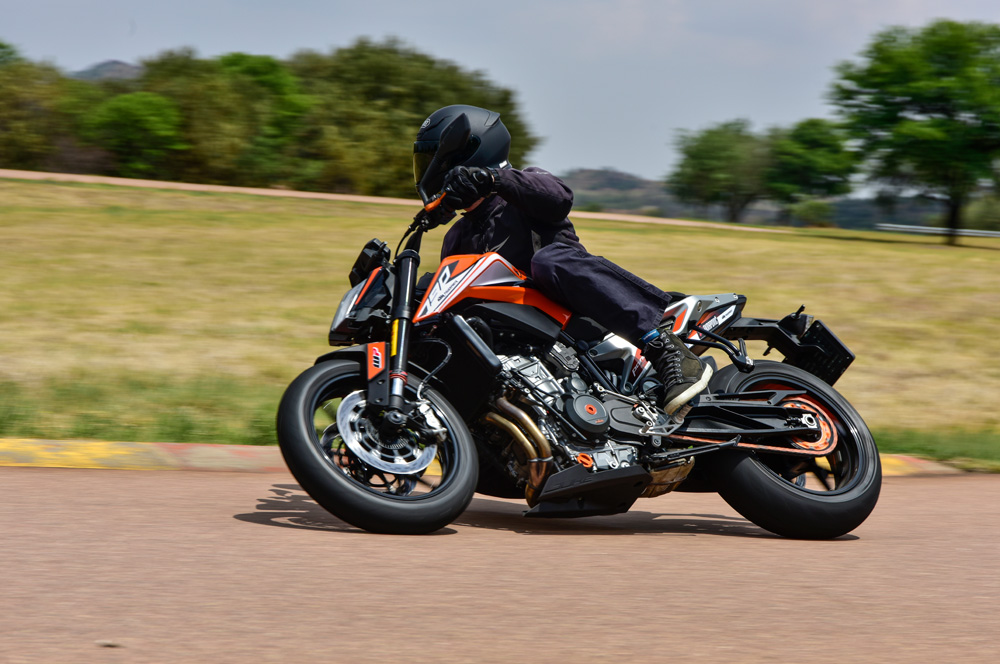
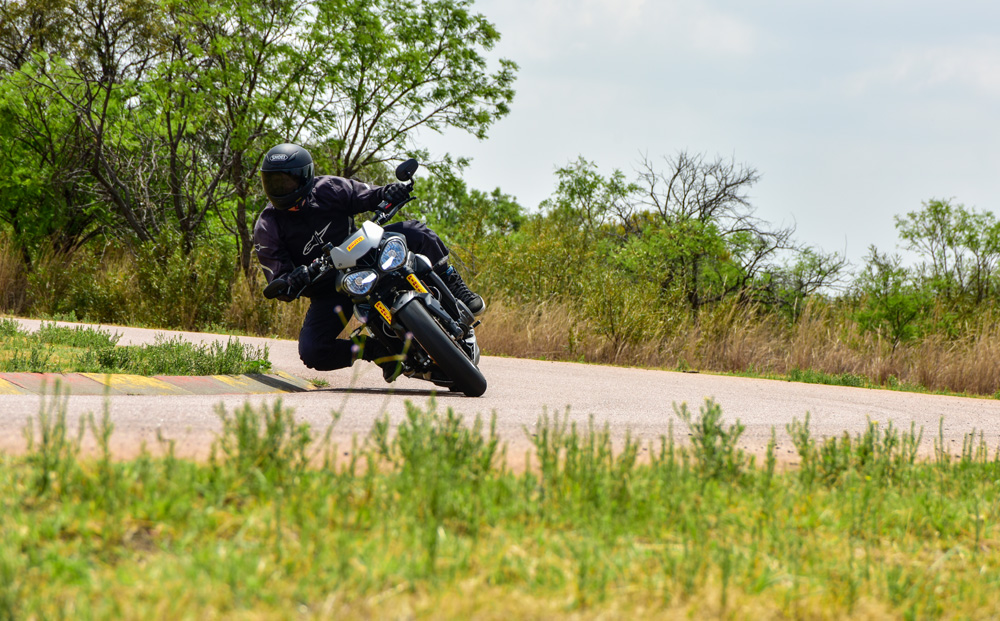
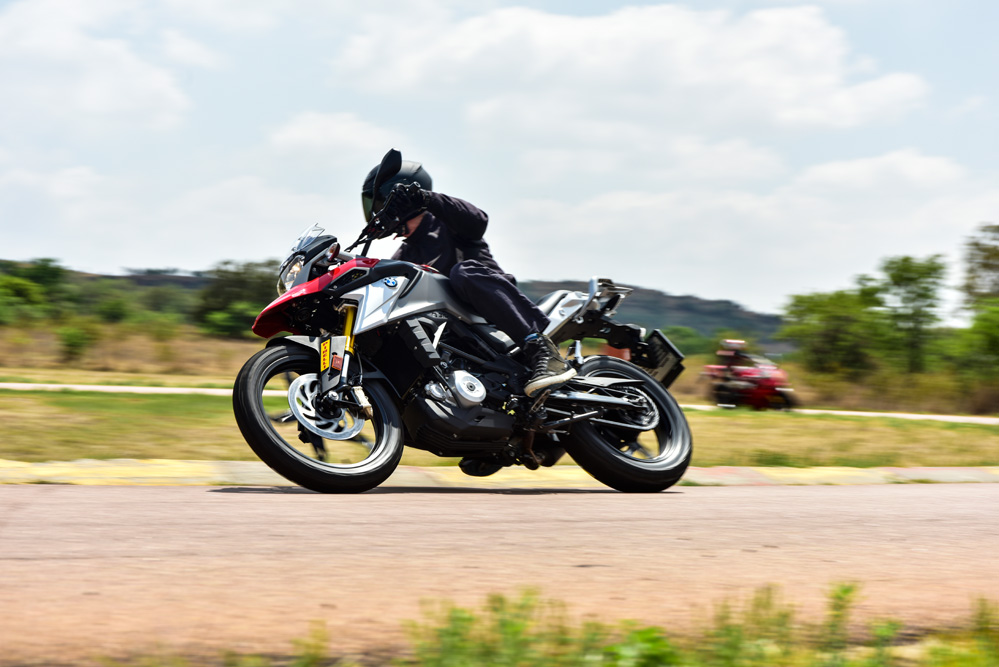
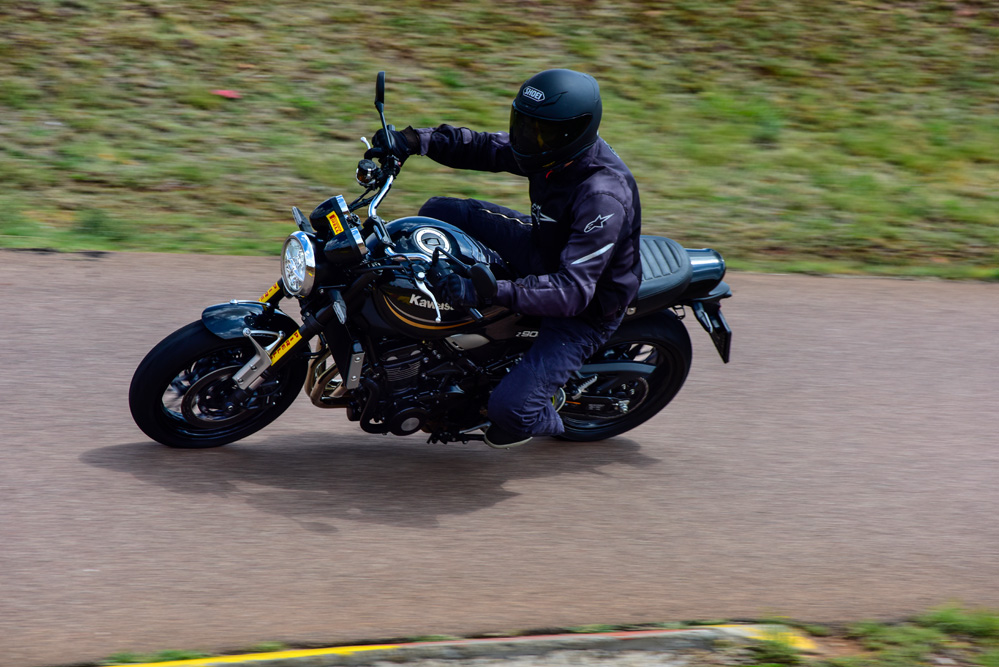
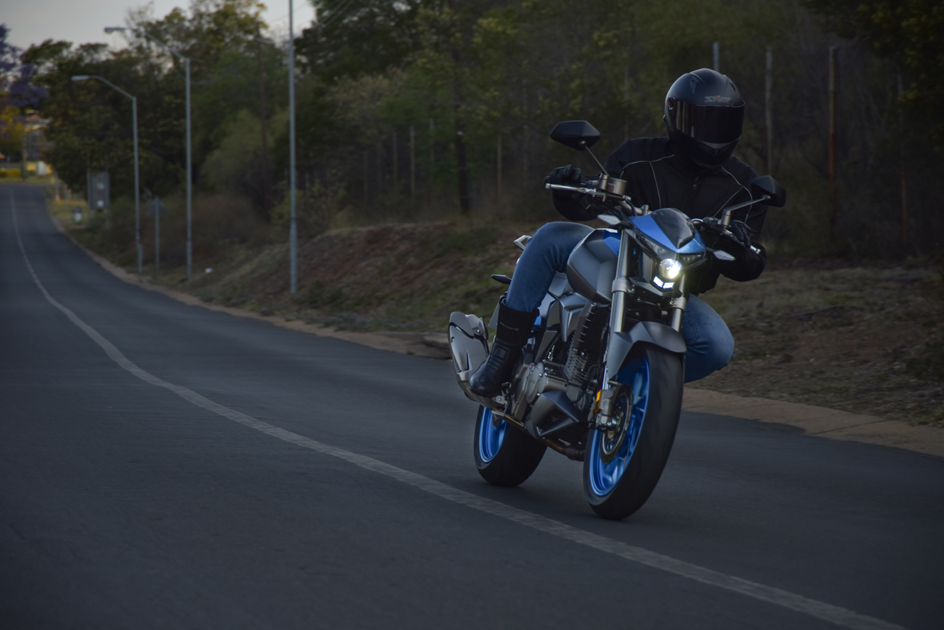
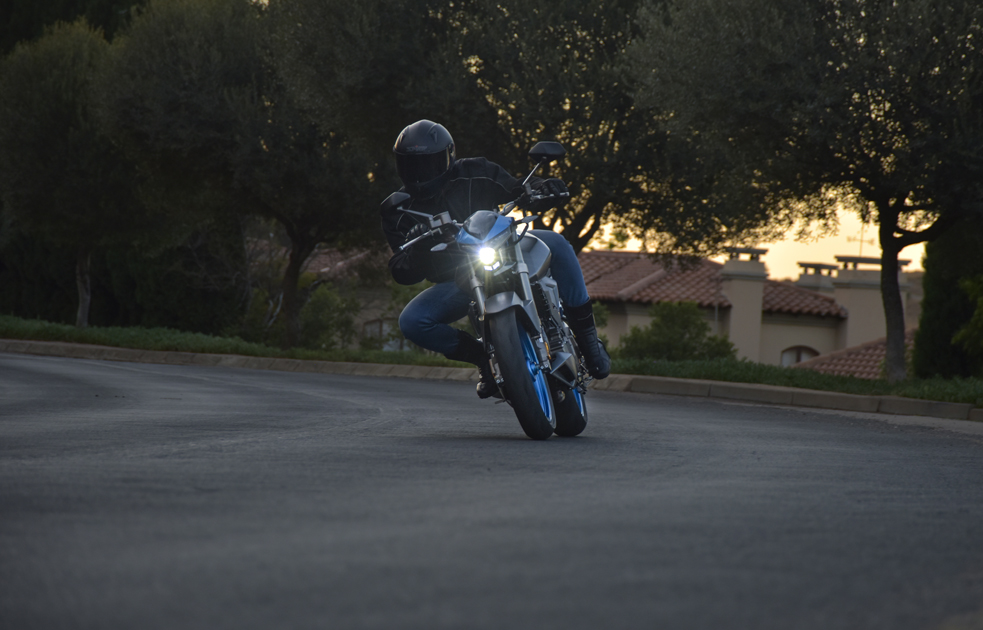
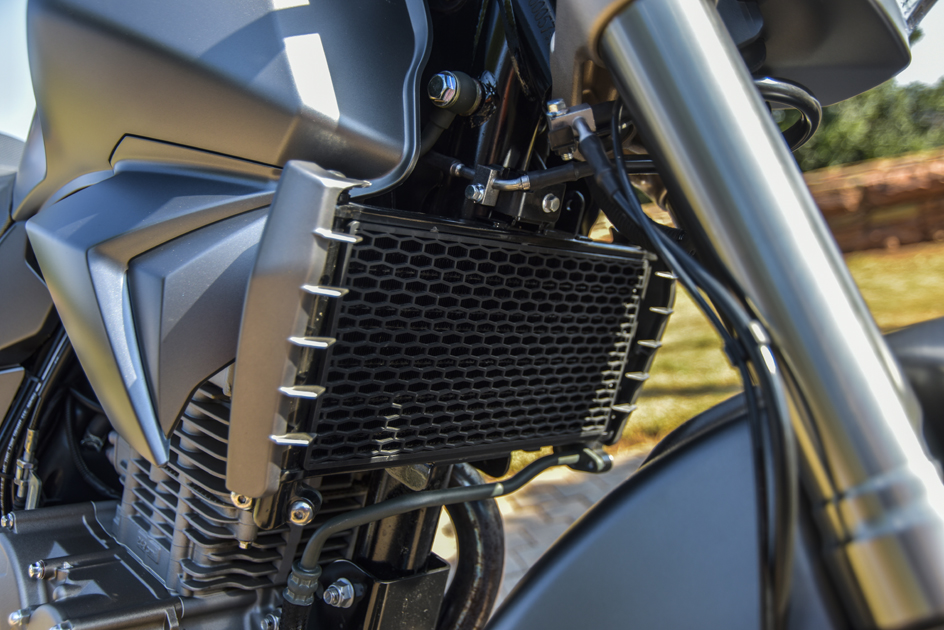
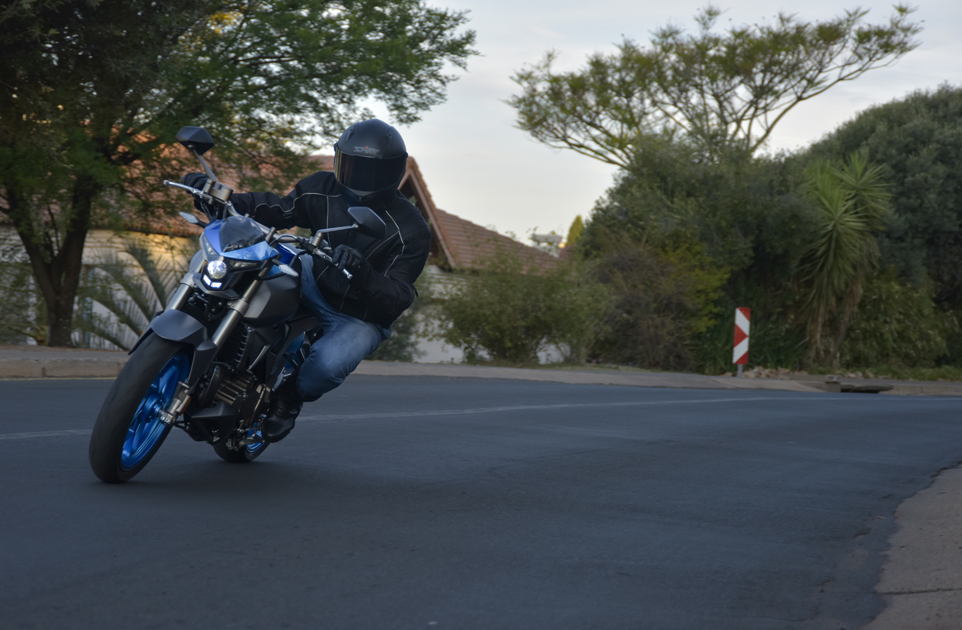
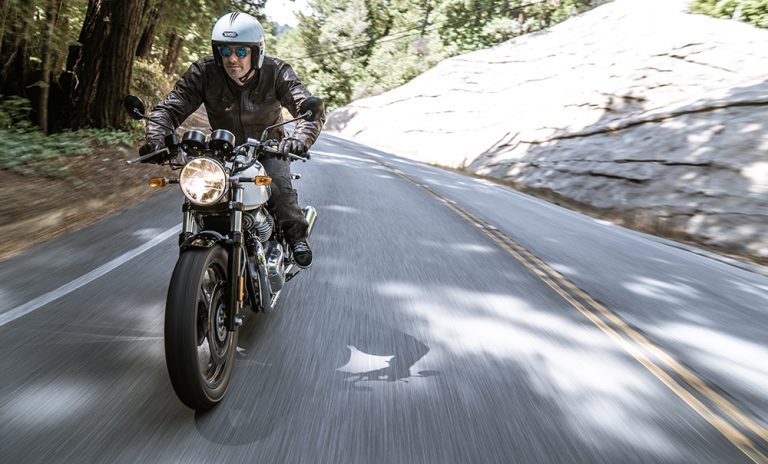
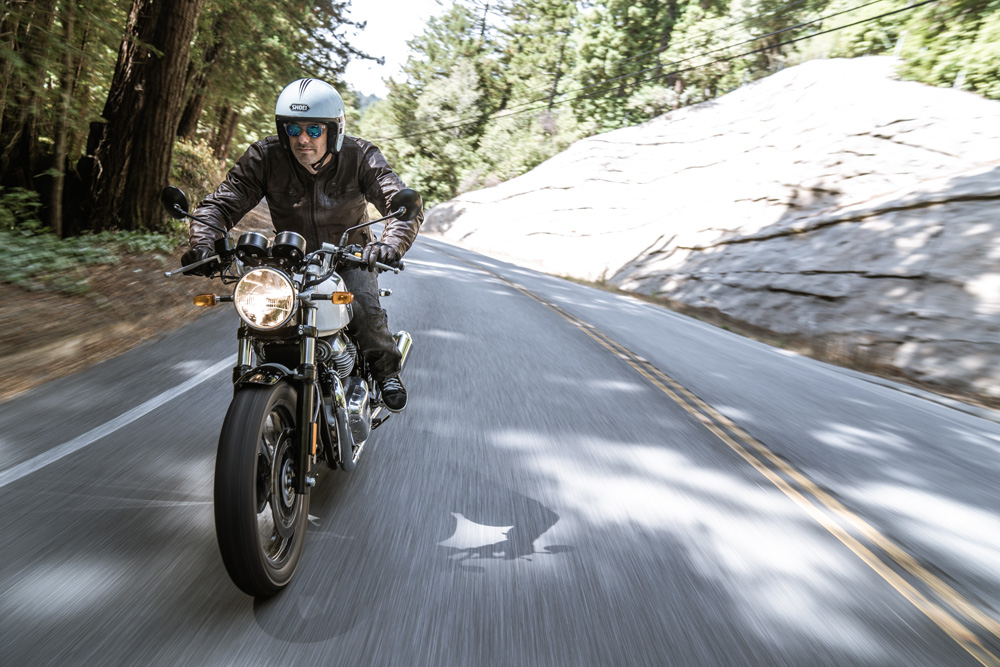
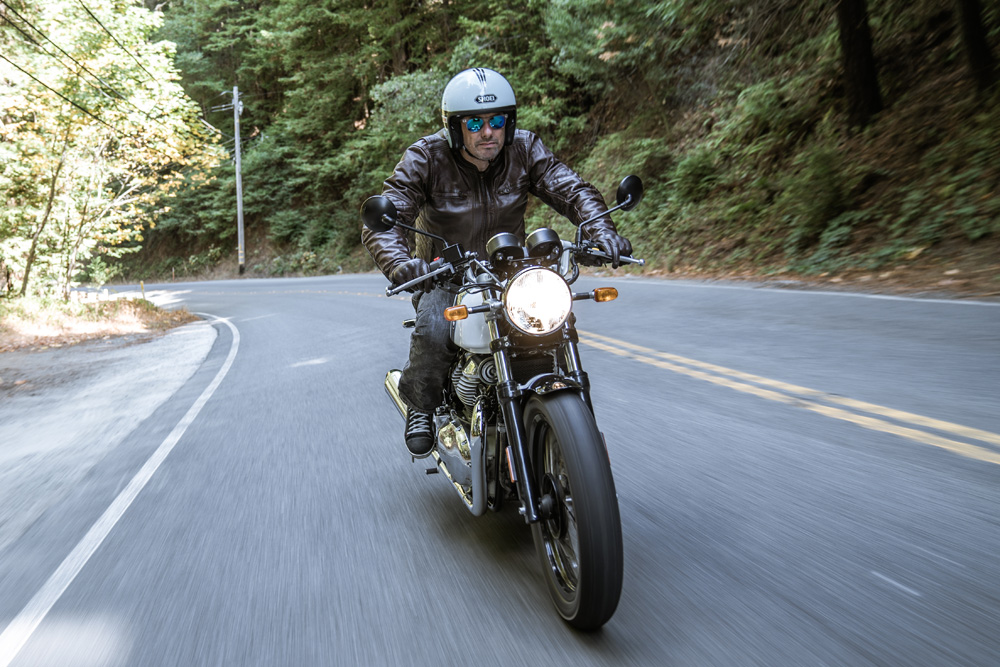
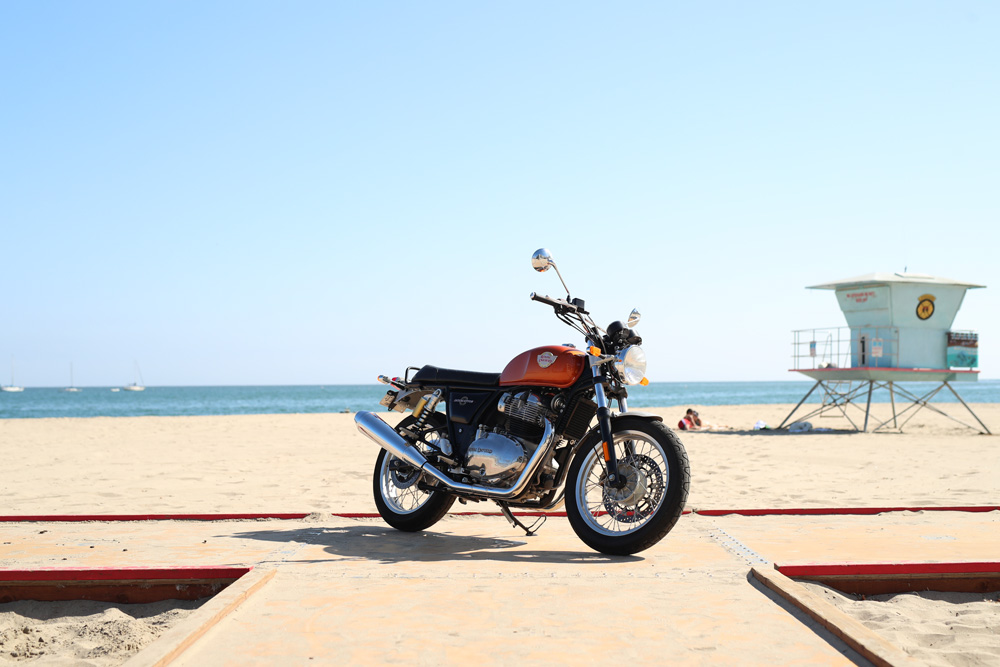
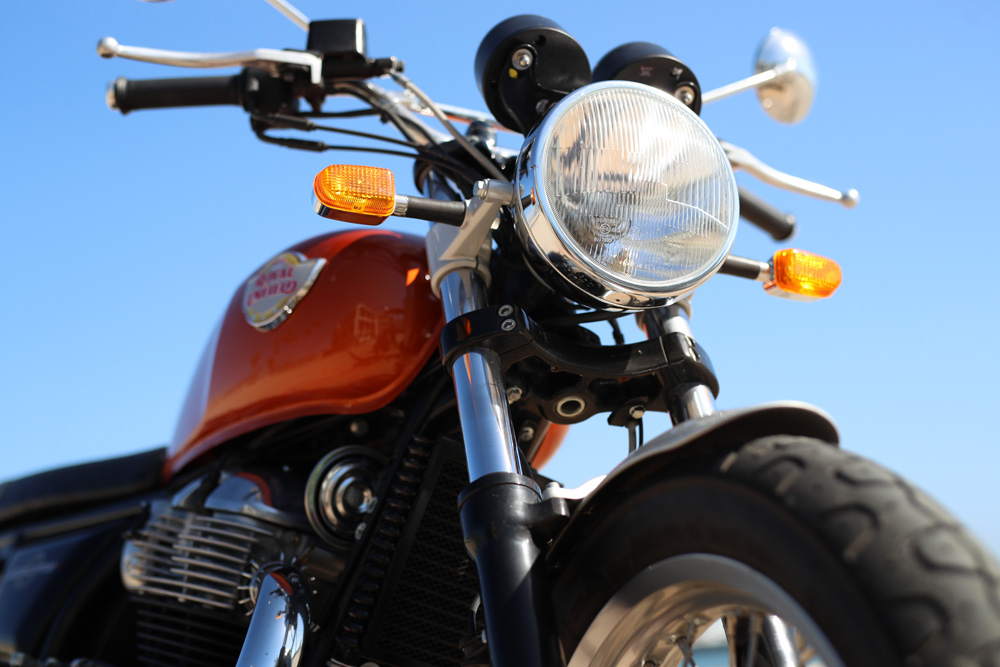
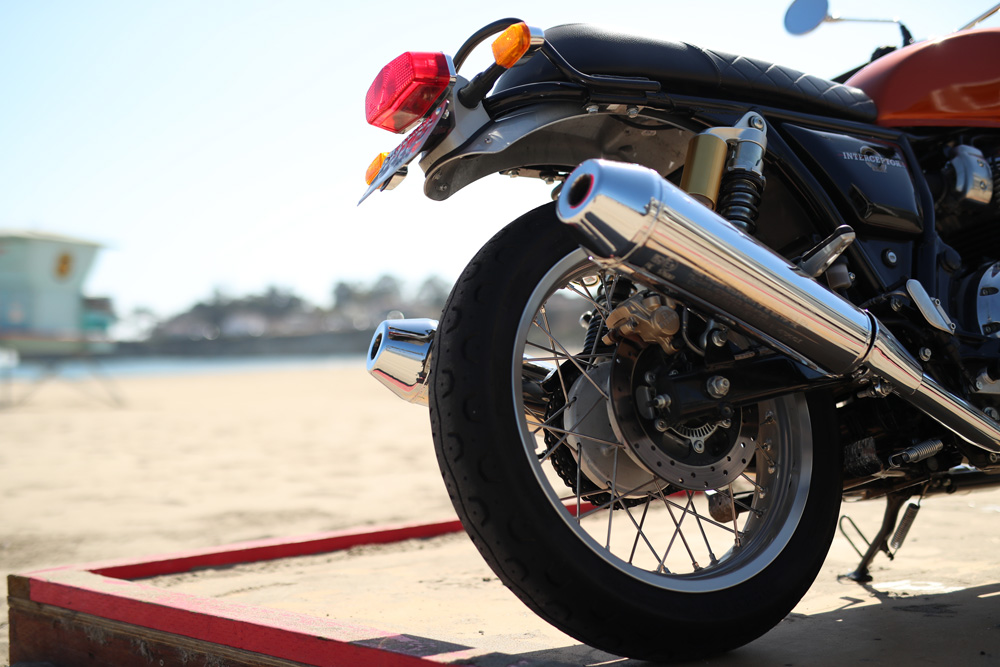
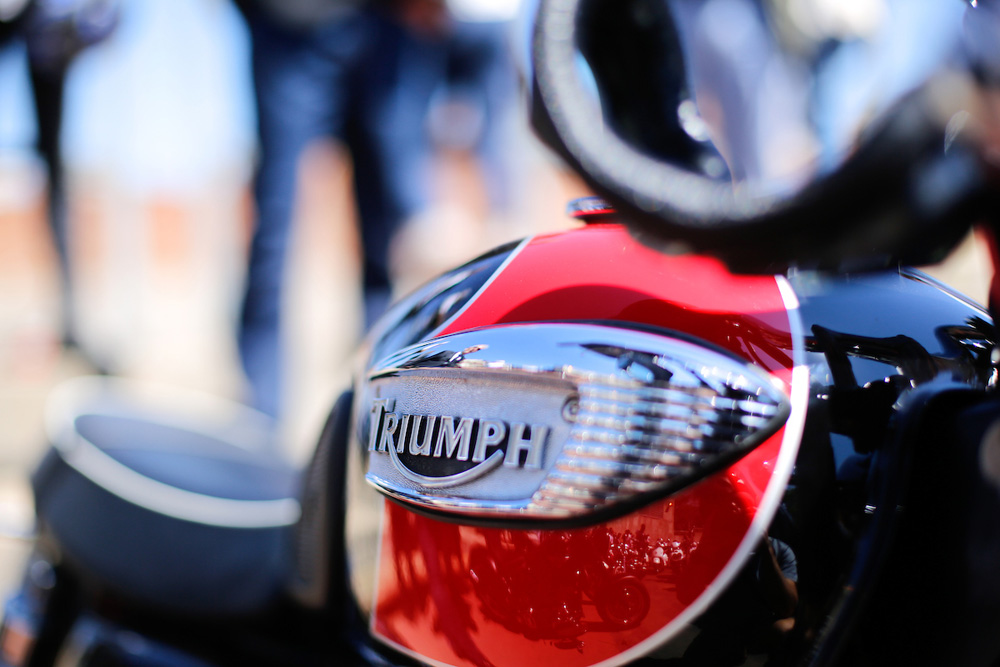
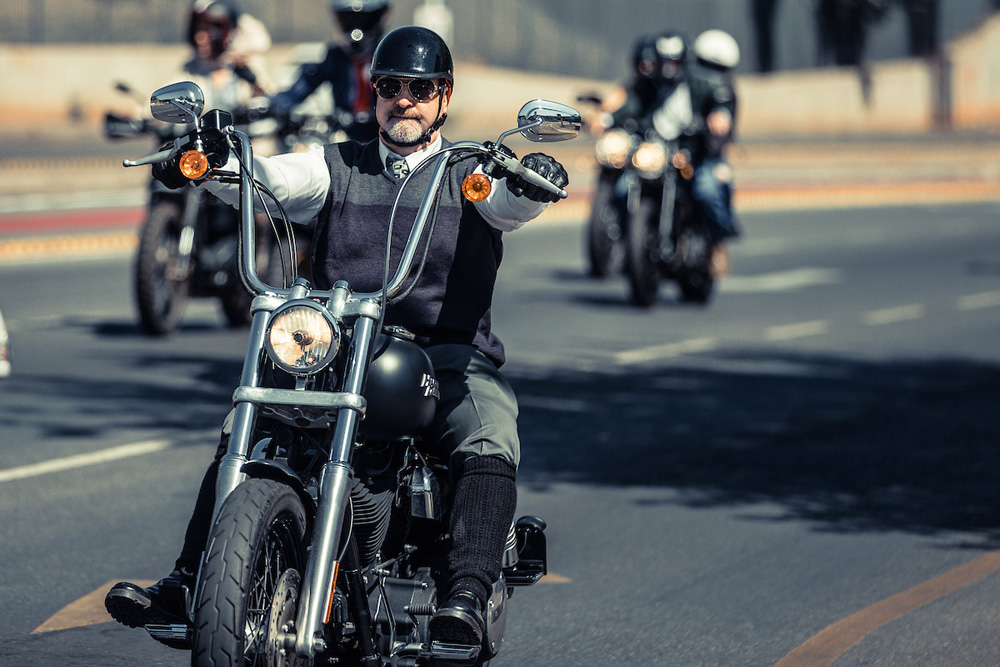
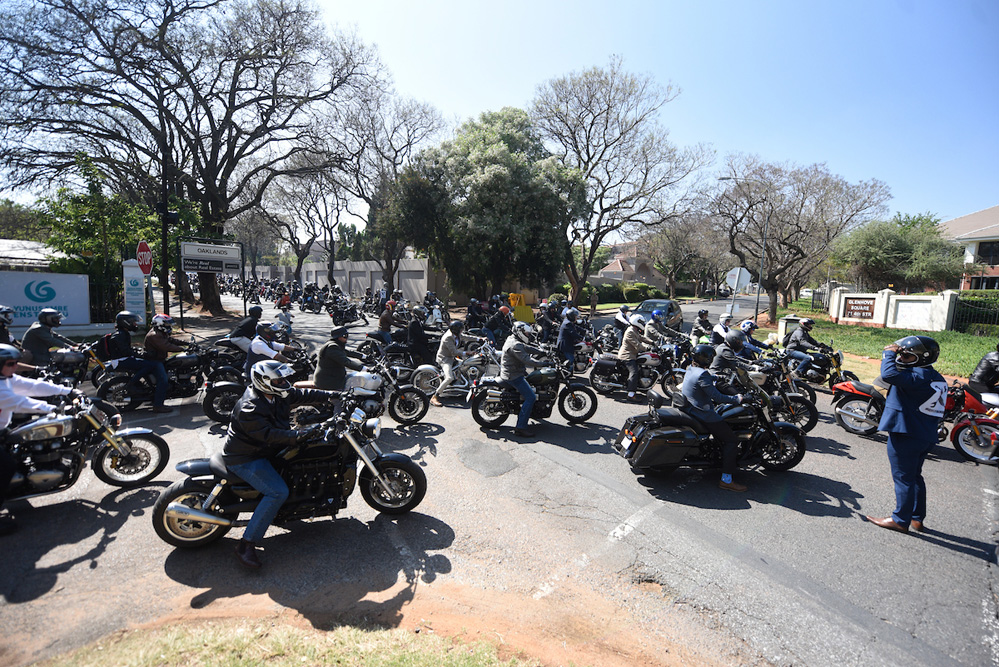
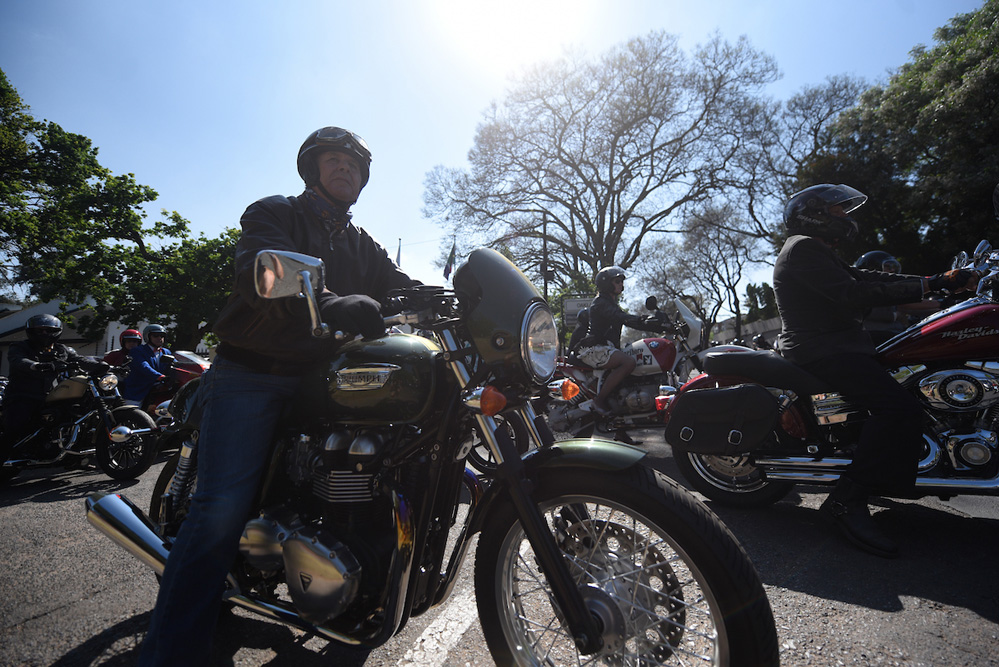
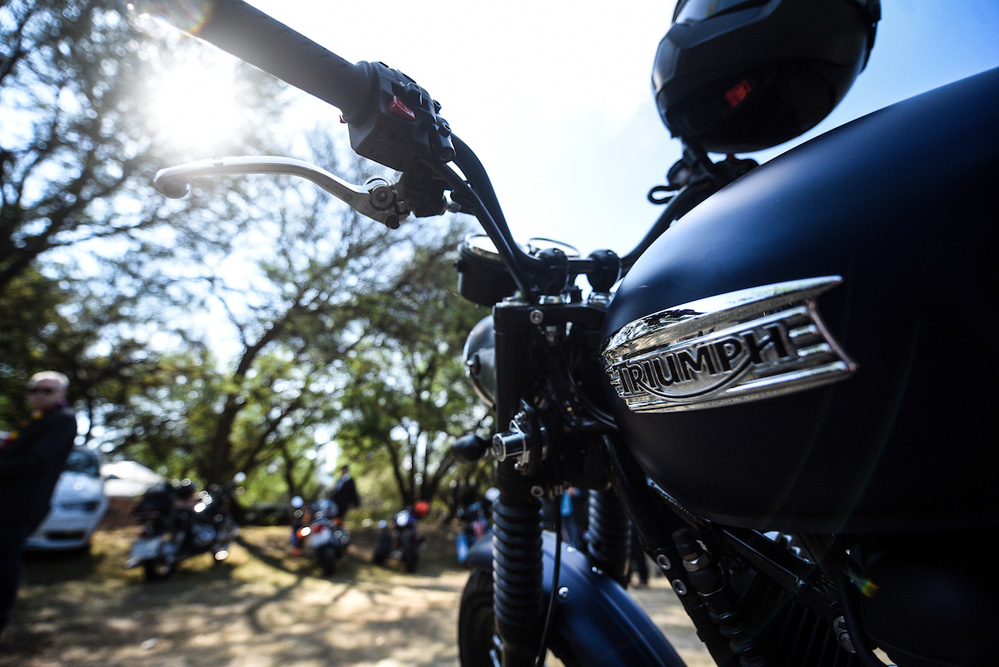
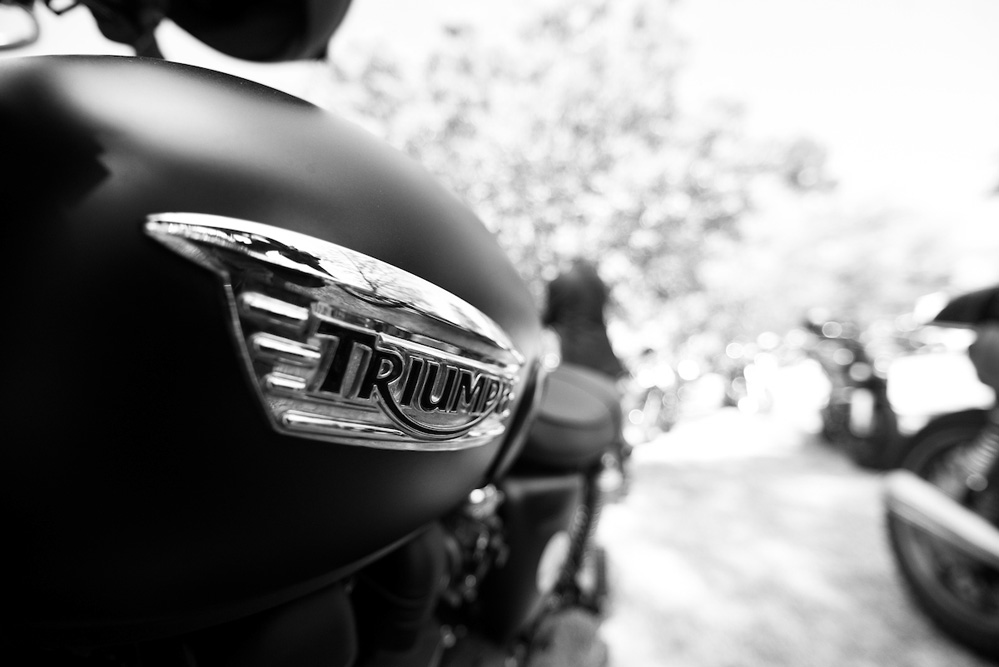
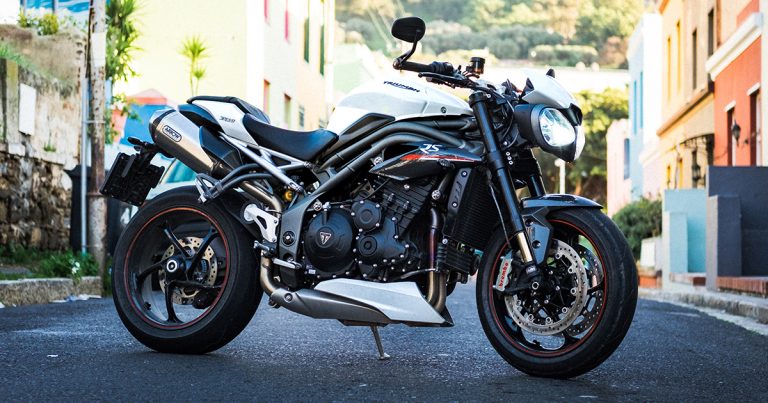
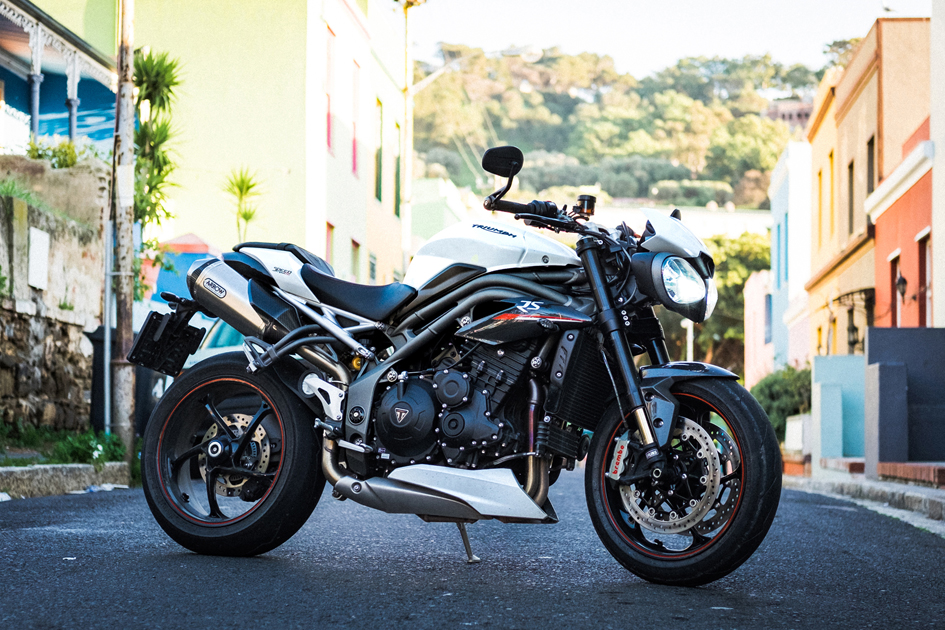
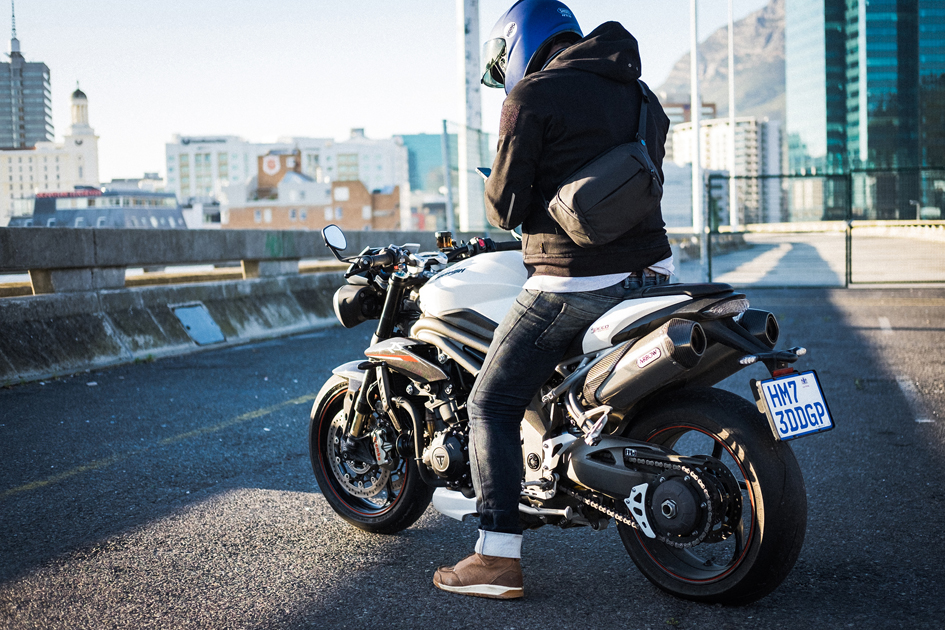
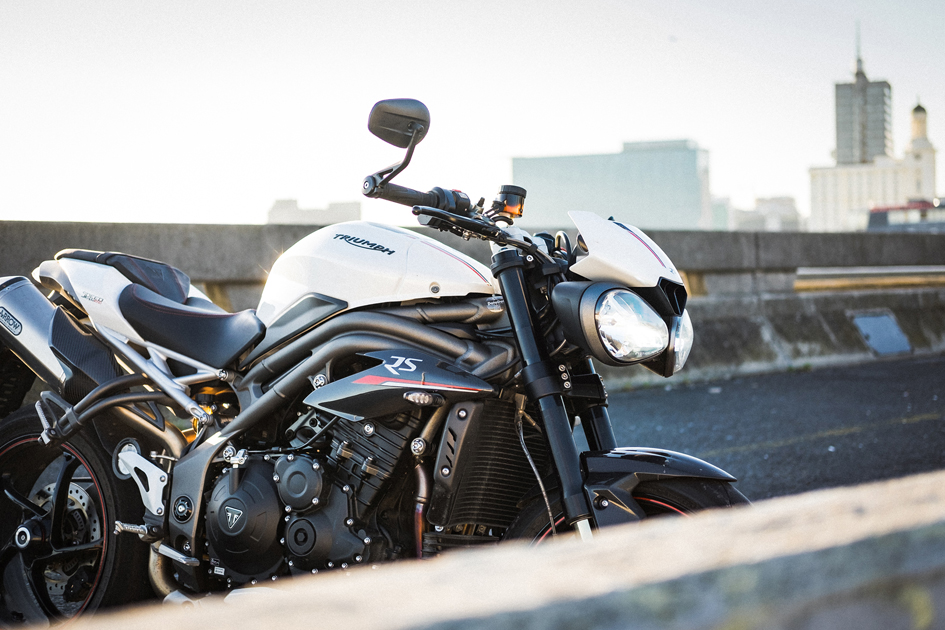
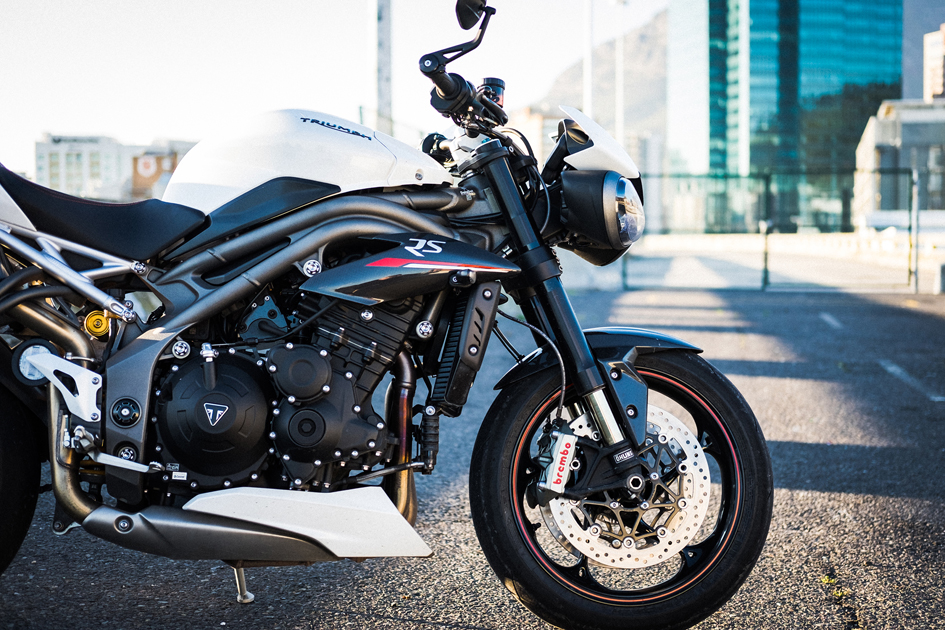
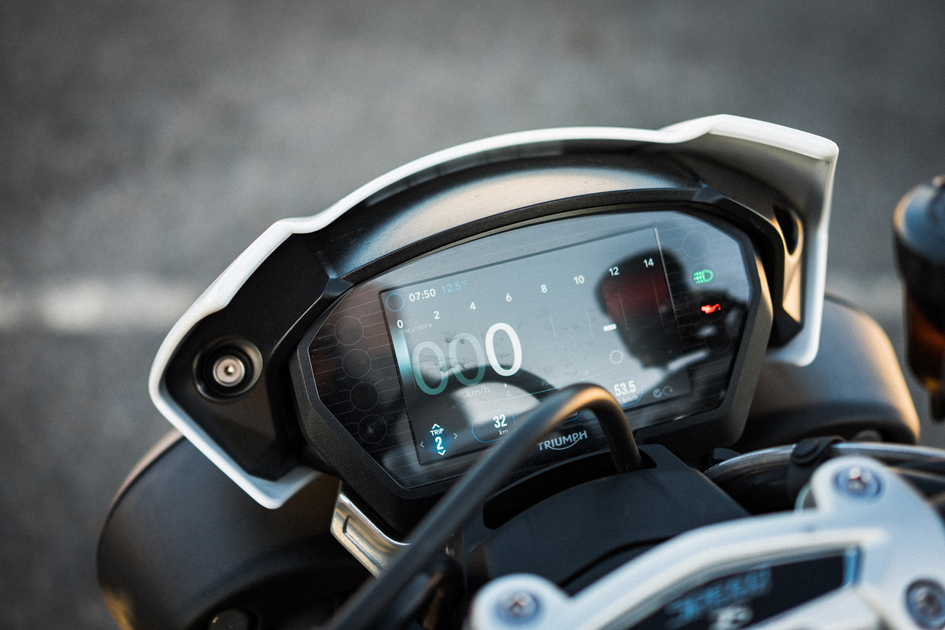
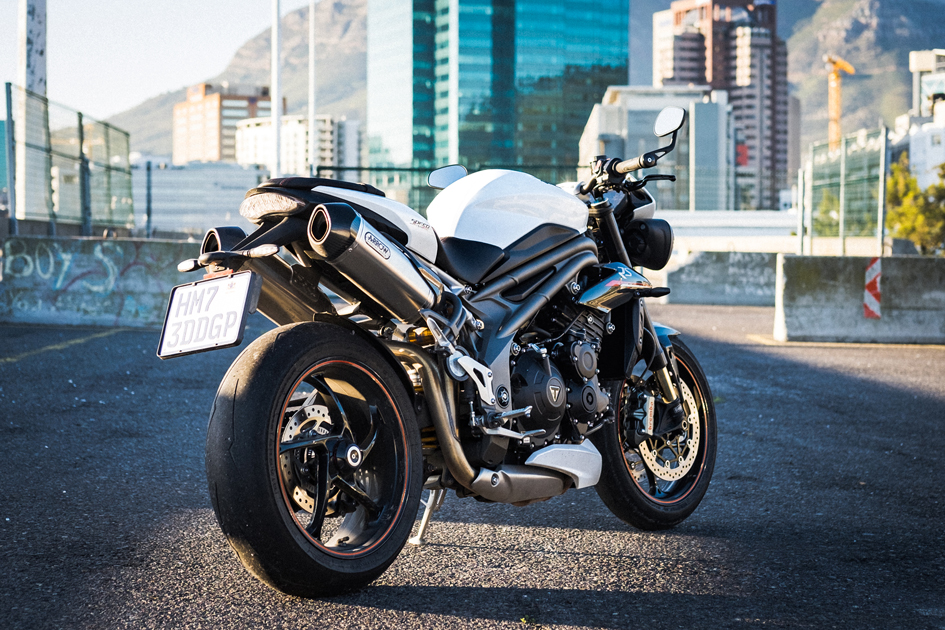
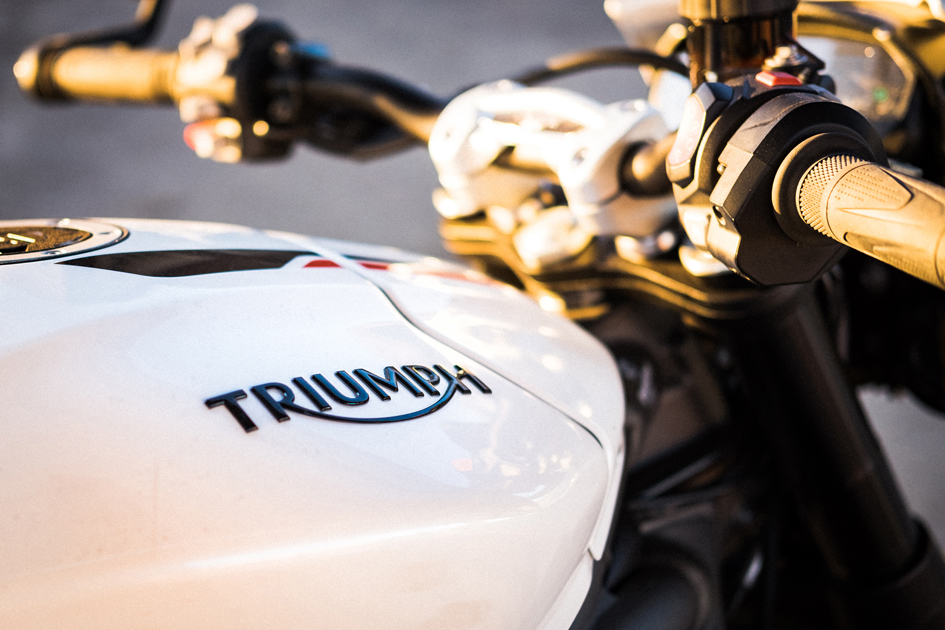
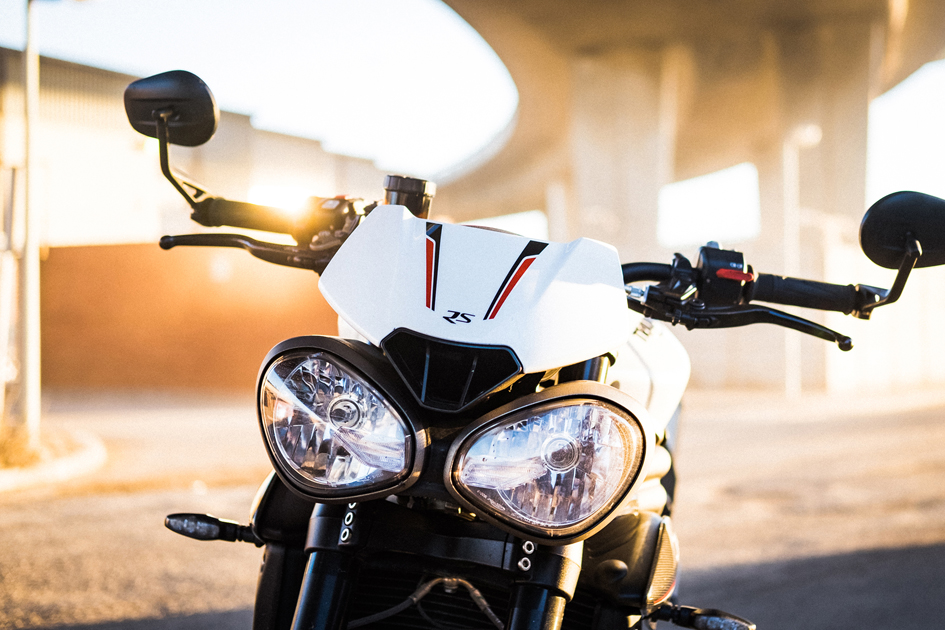
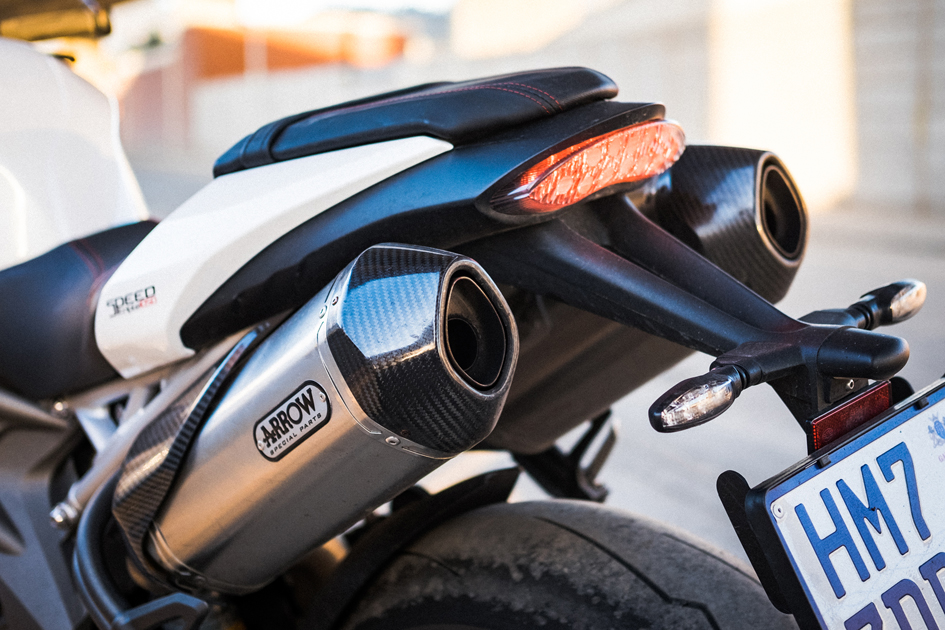
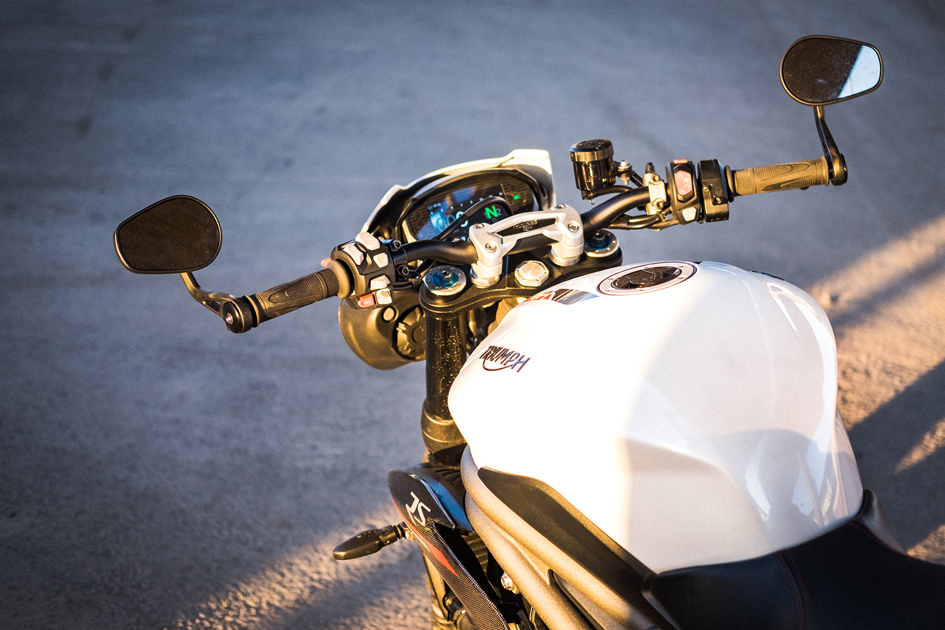
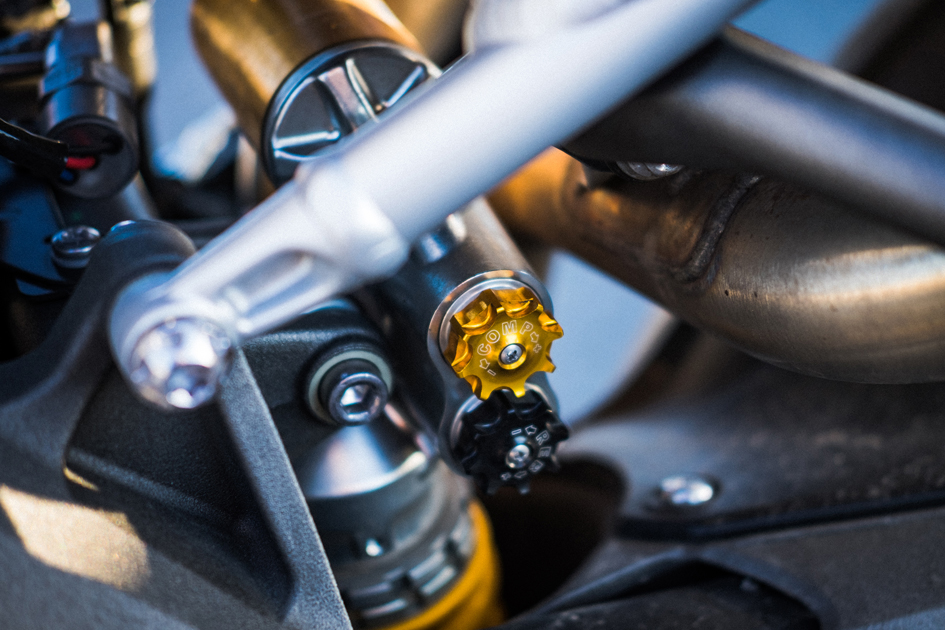
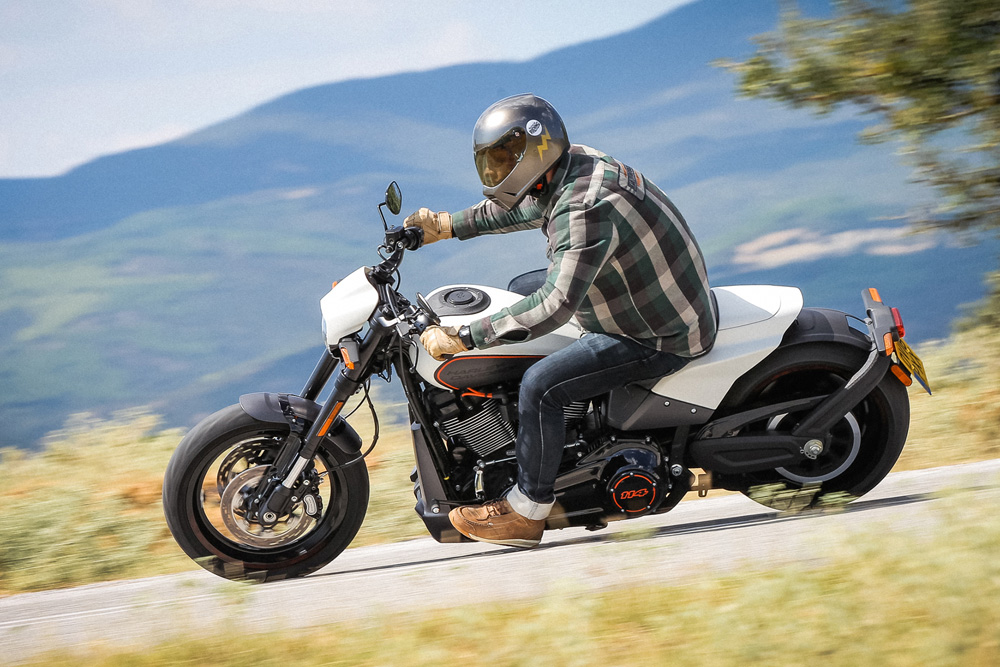
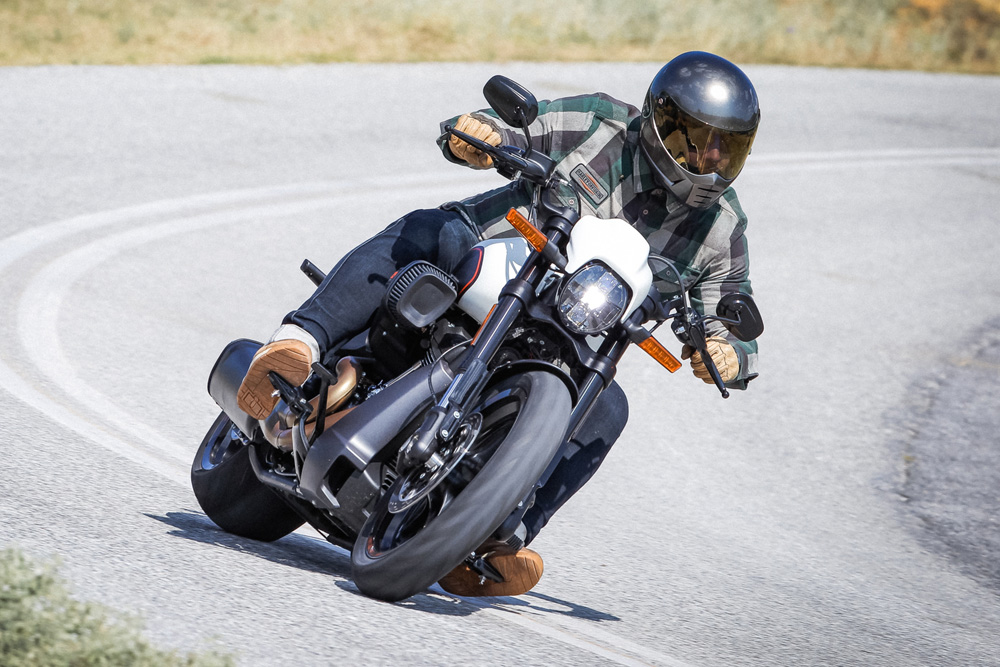
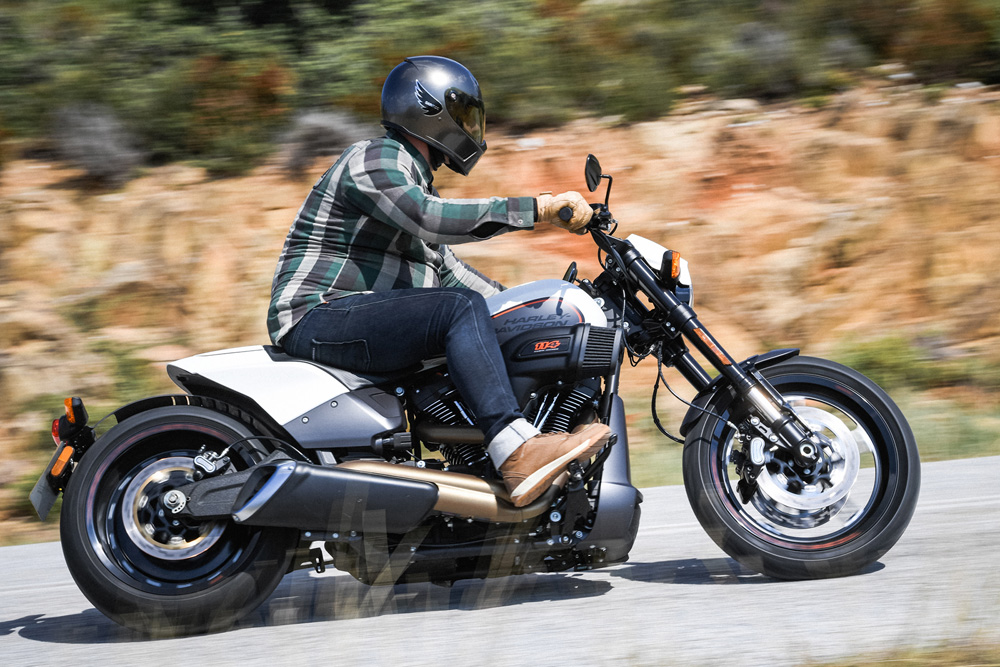
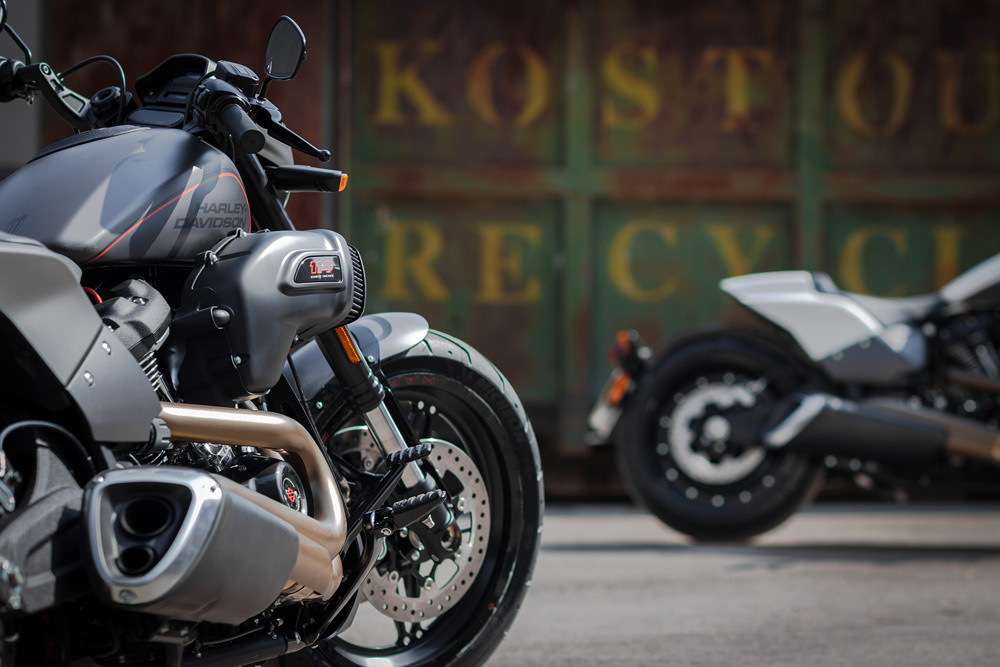
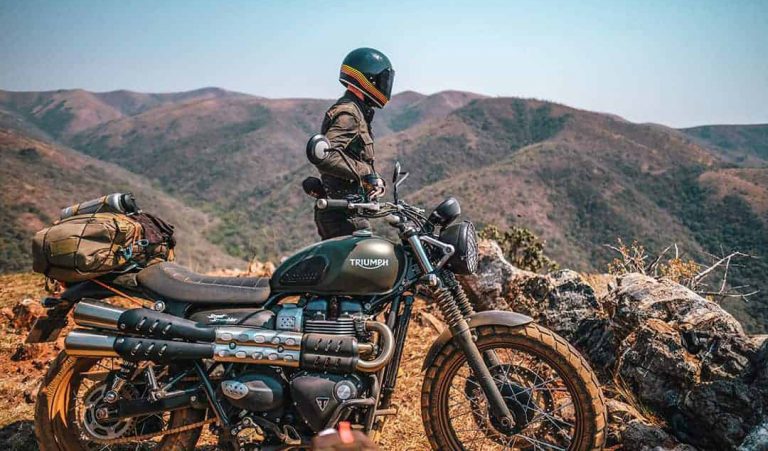
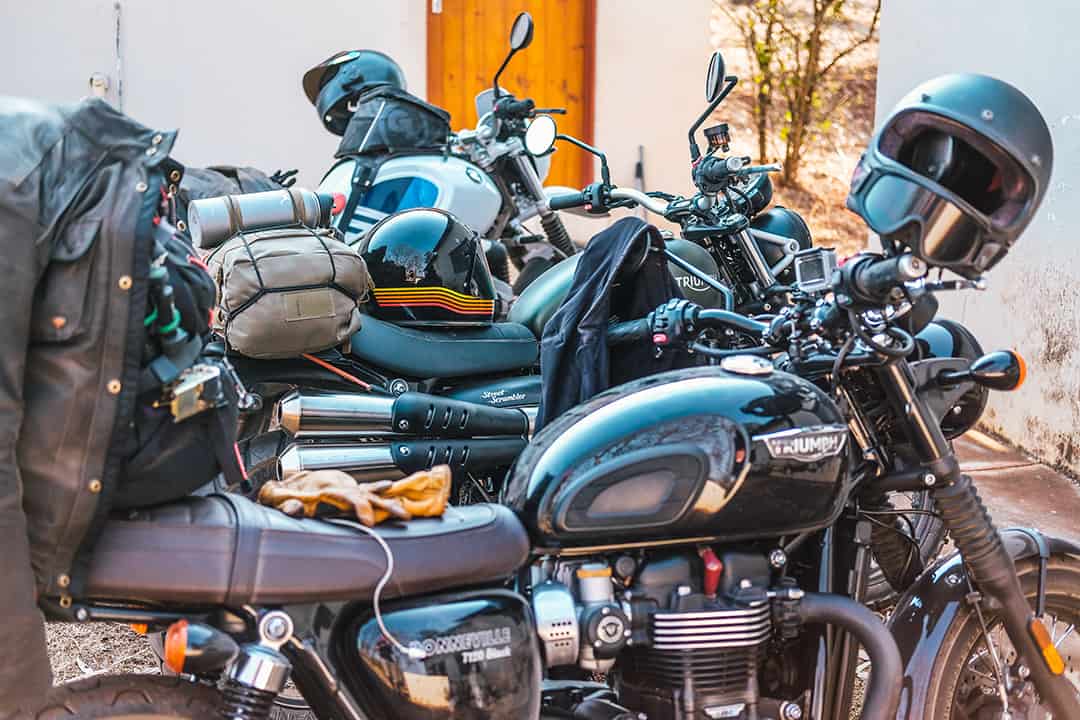
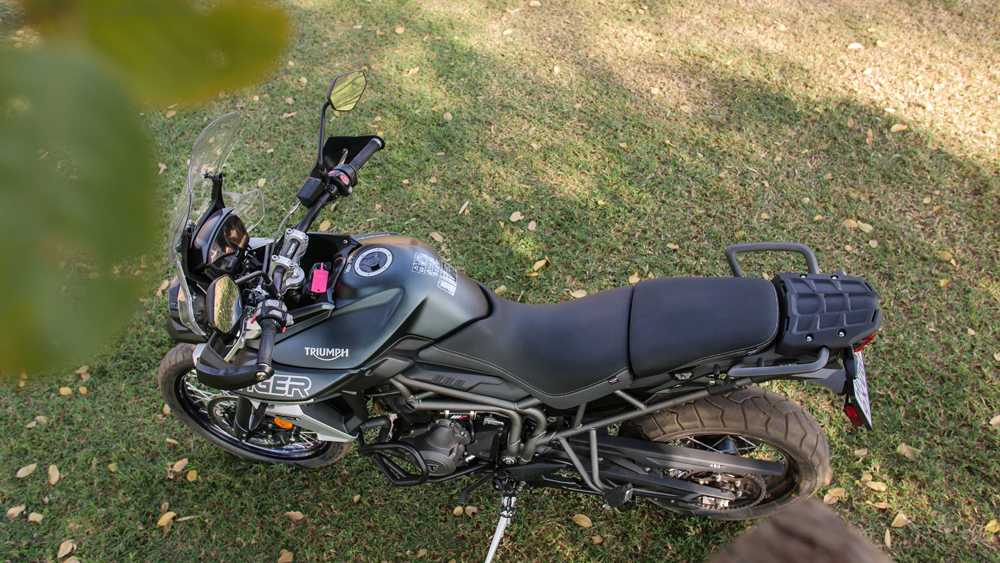
Triumph UK sold more than 61000 motorcycles last year. They are on a progress process by extending, somehow, their “Modern Classic” range. Alongside the Bonneville T120, the Thruxton & R, the Bobber & Black, the Scrambler 1200 XE & XC, the Speedmaster, and now there is the eighth member of the family. Welcome the Speed Twin, the missing link between the Bonneville and the Thruxton… ZA Bikers went to the island of Majorca, in the Mediterranean Sea, to test ride the new 1200 Speed Twin.
Photo credit: Triumph Motorcycles
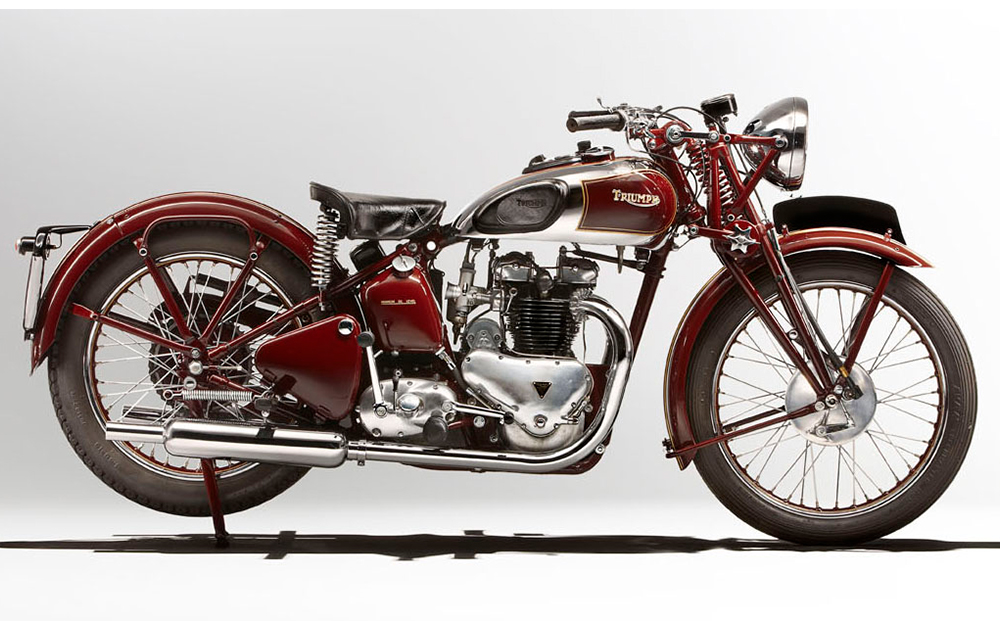
Bikers are getting older and bikers are getting more nostalgic, aren’t they? So it makes sense for Triumph to offer a new motorcycle with a classic look and modern behaviour. The new Speed Twin is recalling a famous name for Triumph: back in 1938, the 500cc Speed Twin was the first modern vertical twin with outstanding performance. Designed by the then Triumph Boss Edward Turner, the Speed Twin delivered 27 hp, and was produced for a record period of time. [28 years until 1966 !) It surely set the genre of the “archetypal British parallel twin cylinder motorcycle”, as the Speed Twin inspired BSA, Norton and other brands to develop their own offerings to compete against the Triumph.
Photo credit: Triumph Motorcycles
Many years later, the new Speed Twin offers 97 hp and 112 Nm of torque. In other words, it’s a Bonneville, with Thruxton-like performance, which makes it very fun to ride, and with its estimated selling price that was indicated to us at the launch, I believe this new offering from Triumph will offer great value for money.
Photo credit: Triumph Motorcycles
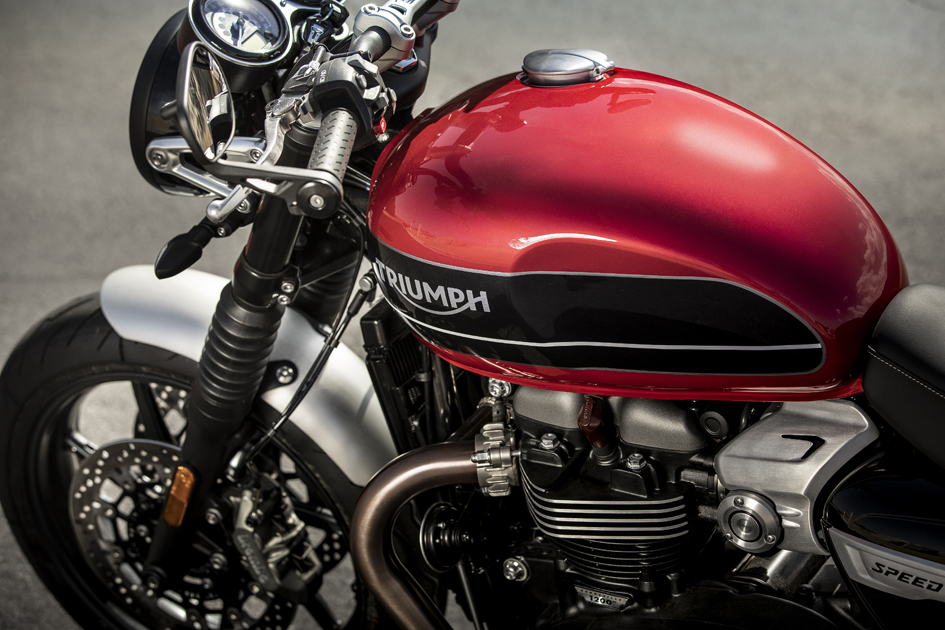
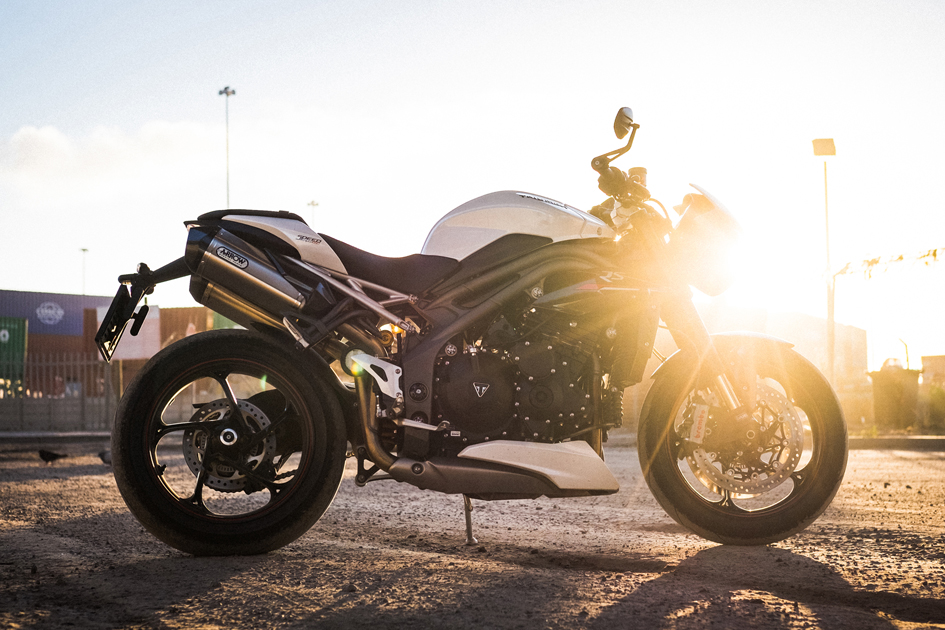
The new Speed Twin is conservative with the colour choice. The black scheme comes as standard, with the dual tone grey/black or “korosi red” / black requiring a couple of extra bucks.
Photo credit: Triumph Motorcycles
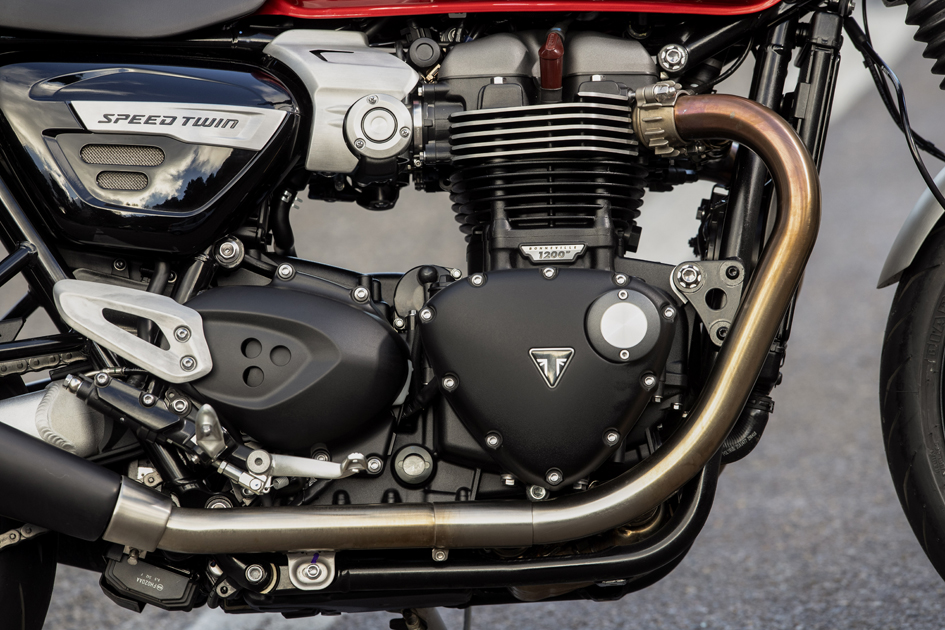
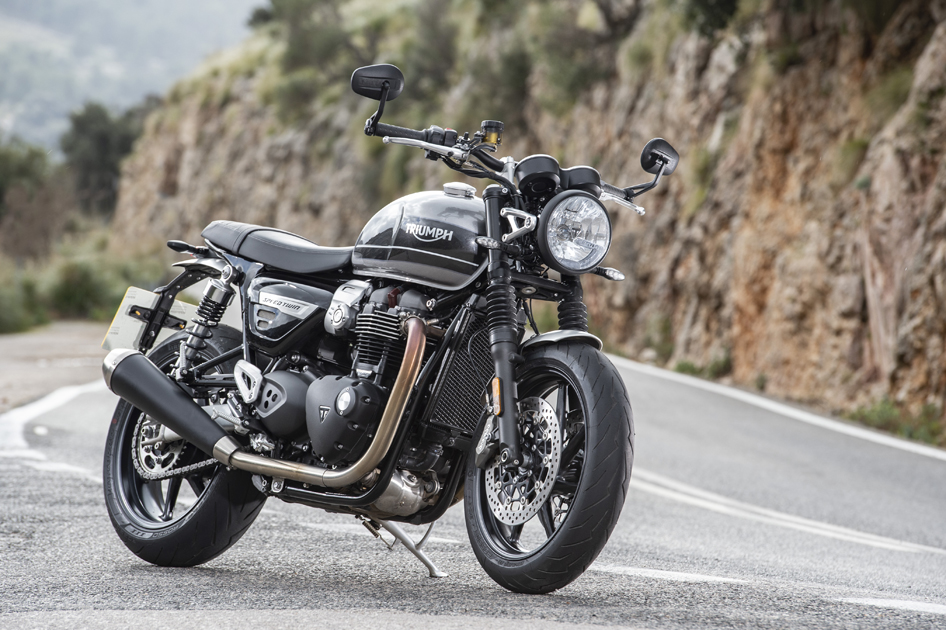
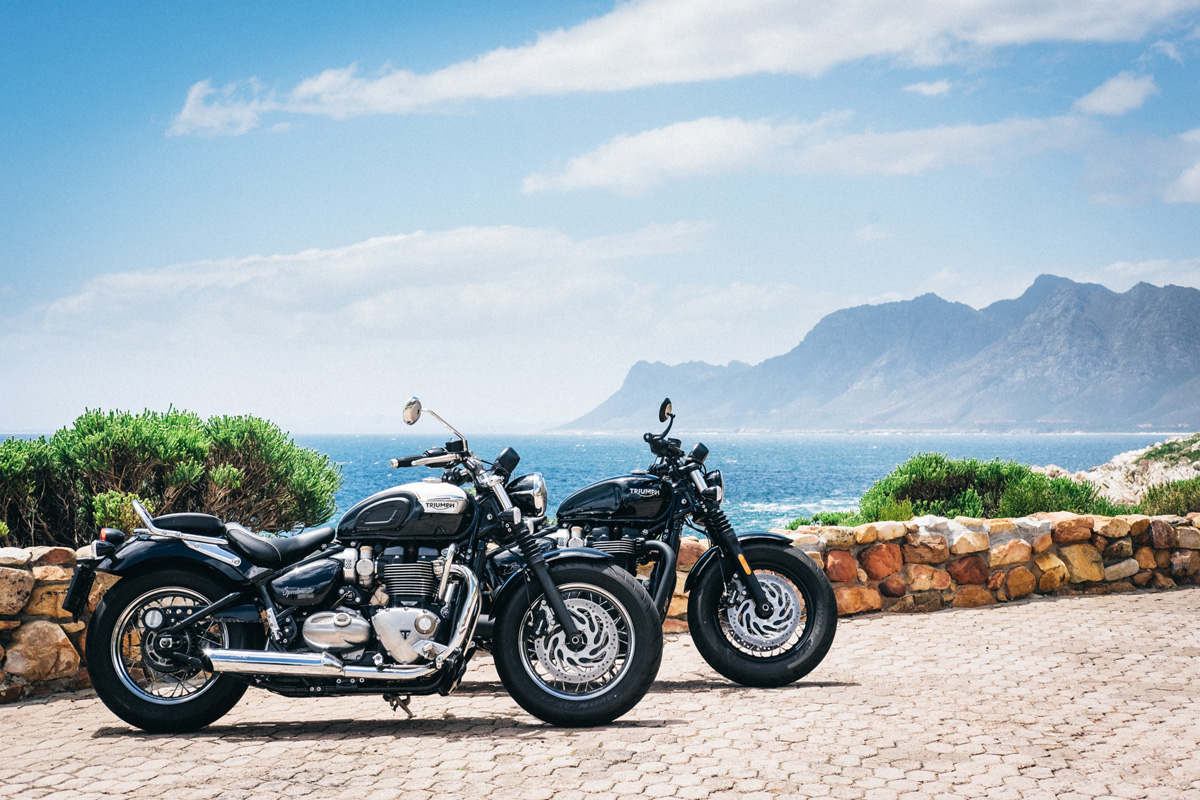
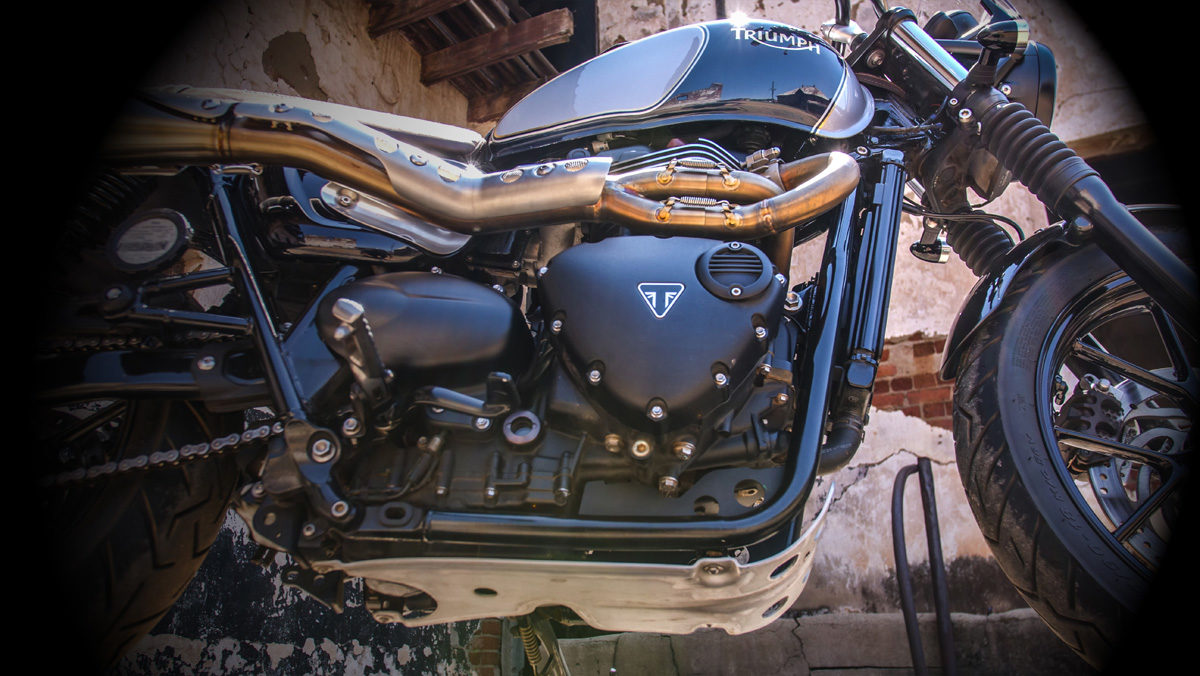
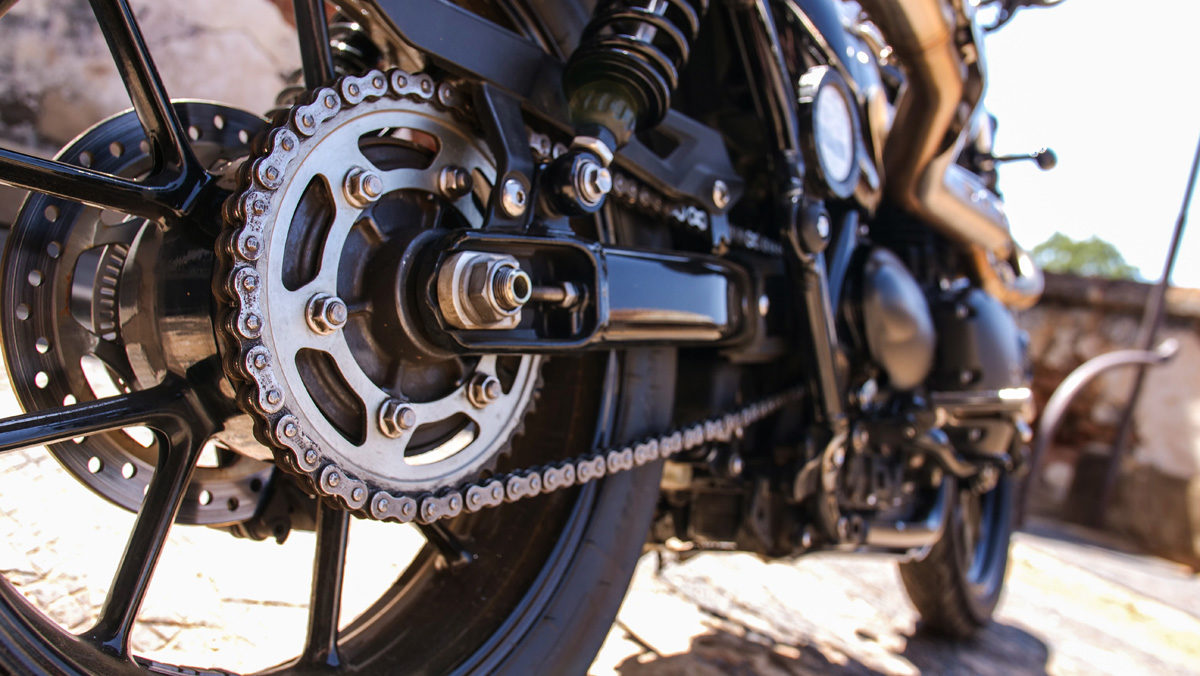
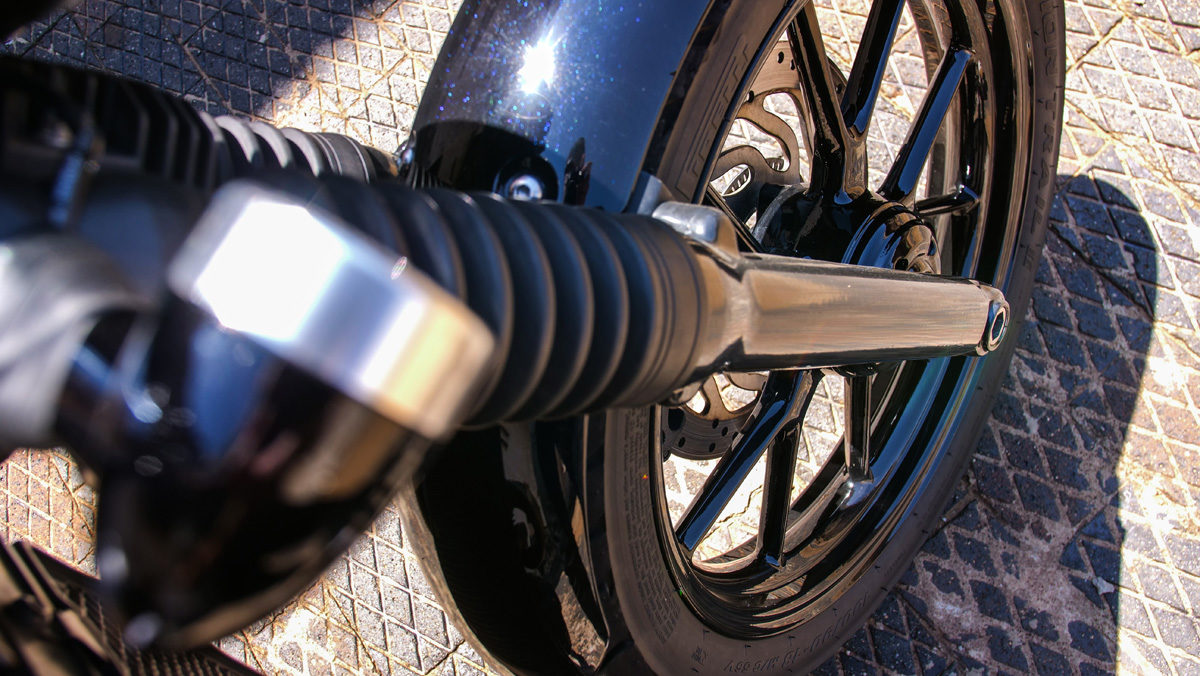
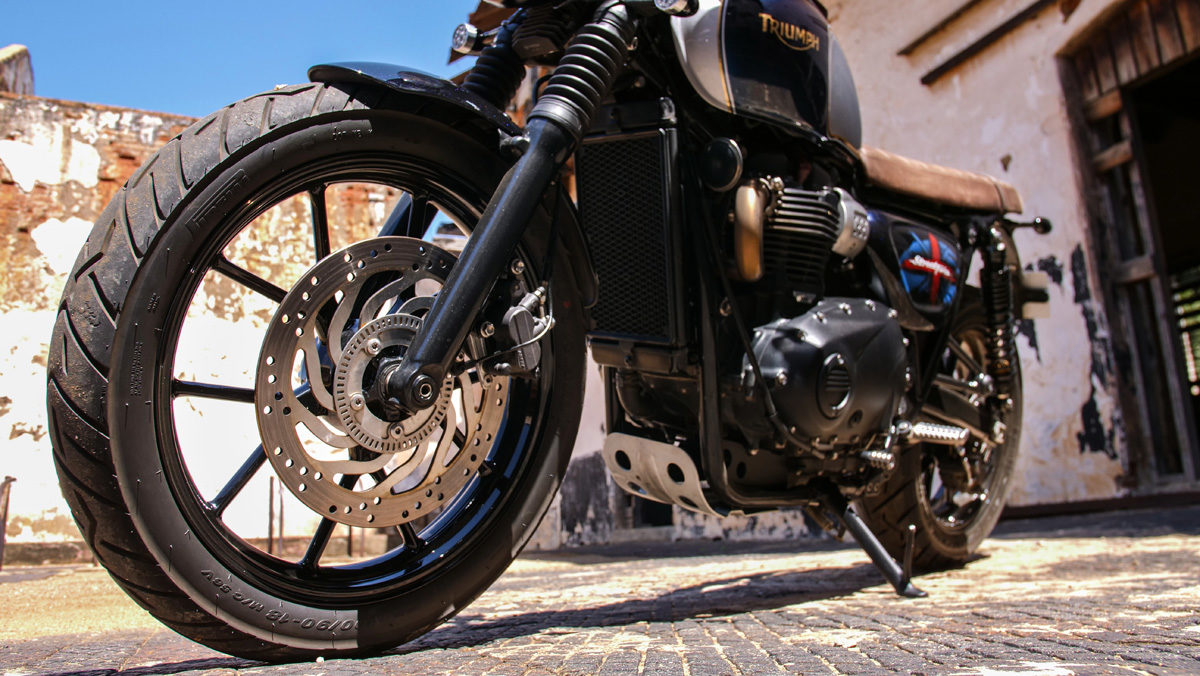
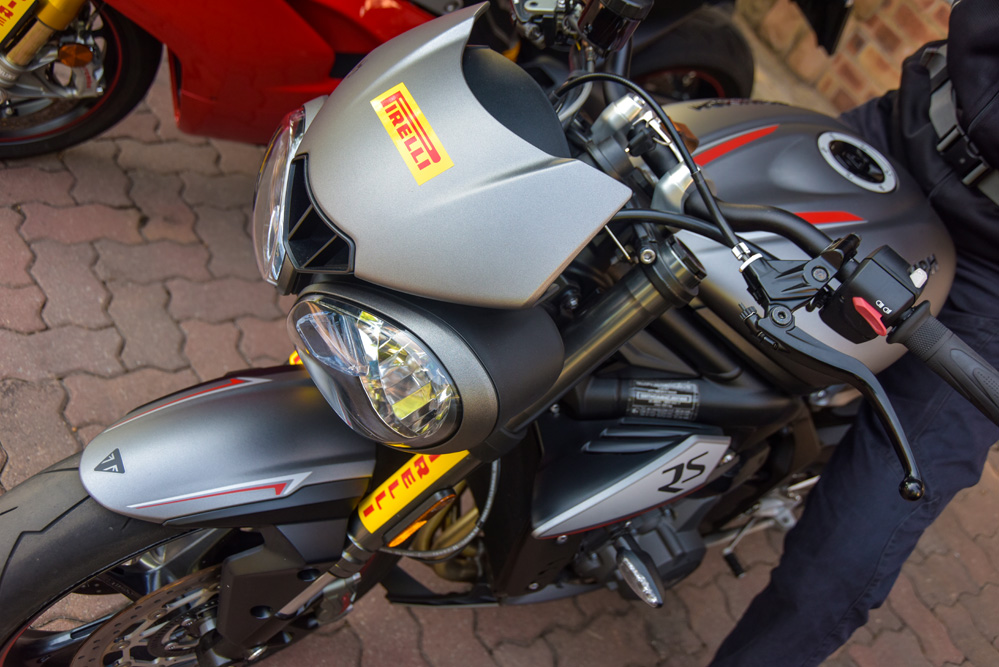
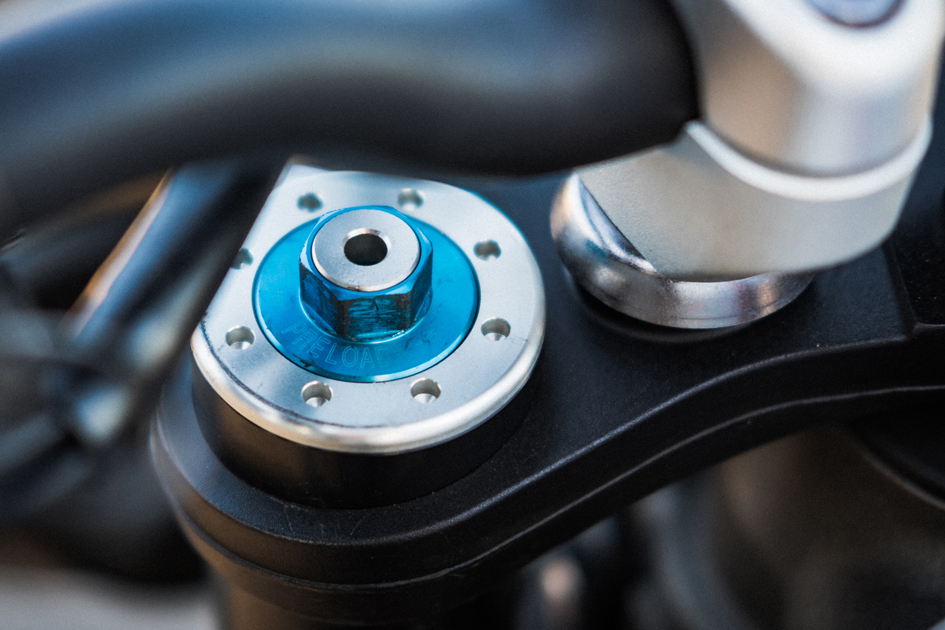
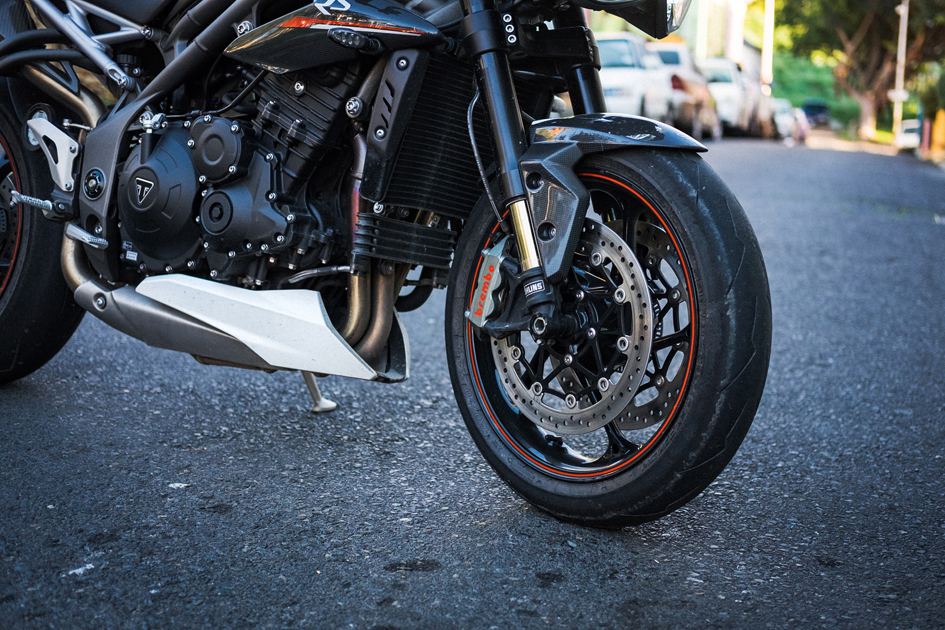
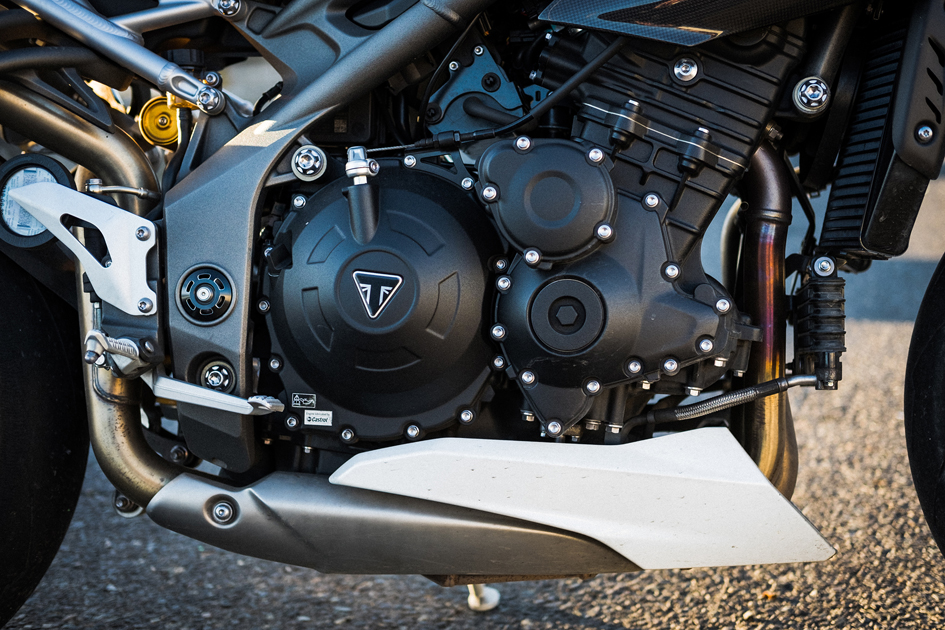
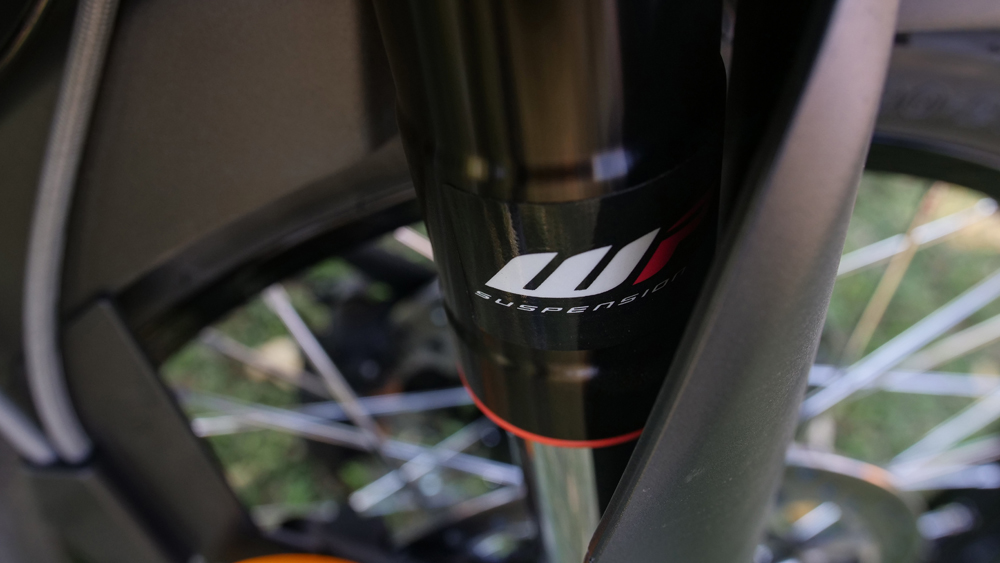
But whichever colour you fancy, the rest of the bike has a lot of black accents. Engine, wheels, front fork, mufflers, are all black, albeit with classy brushed aluminium bits and bobs here and there for contrast.
Photo credit: Triumph Motorcycles
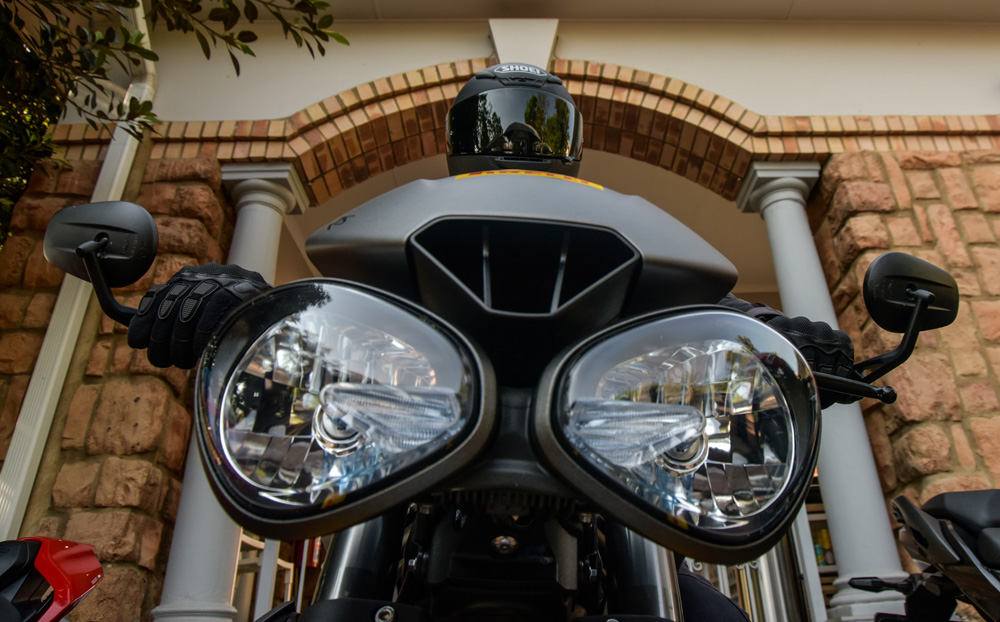
The rest is rather minimalist. Look at the tiny rear light and the LED indicators, and admire the bike’s compactness.
Photo credit: Triumph Motorcycles
The Speed Twin silhouette is tipped over the front end, a stance that elicits a real dynamism. And that dynamism is not only a promise:The Speed Twin is 10 kilograms lighter than the Thruxton, thanks to the new wheels (front wheel and discs are 2,9 kg lighter) and new engine casing, and that translates to better agility.
Photo credit: Triumph Motorcycles
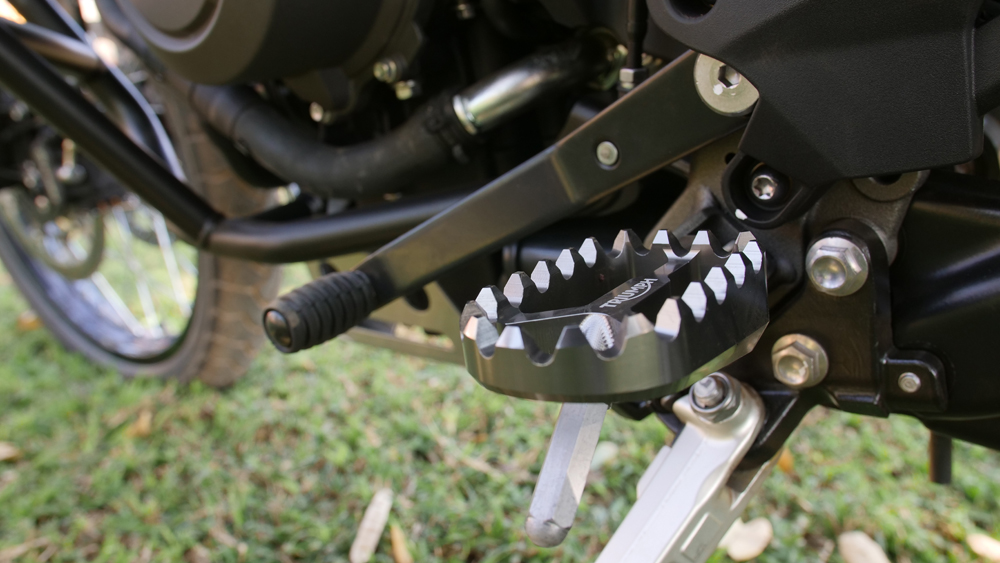
Compared to a Thruxton, the new Speed Twin has a longer wheelbase (+ 15 mm) and the weight distribution is 2% more forward. The riding position is also more neutral, with footpegs located 38 mm further forward and 4 mm lower, than those on a Thruxton.
Photo credit: Triumph Motorcycles
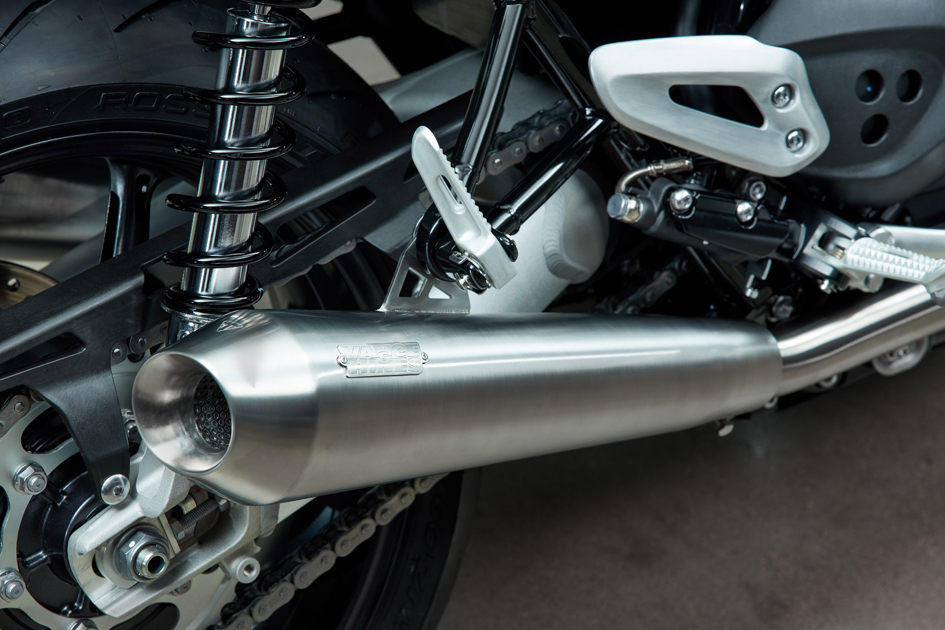
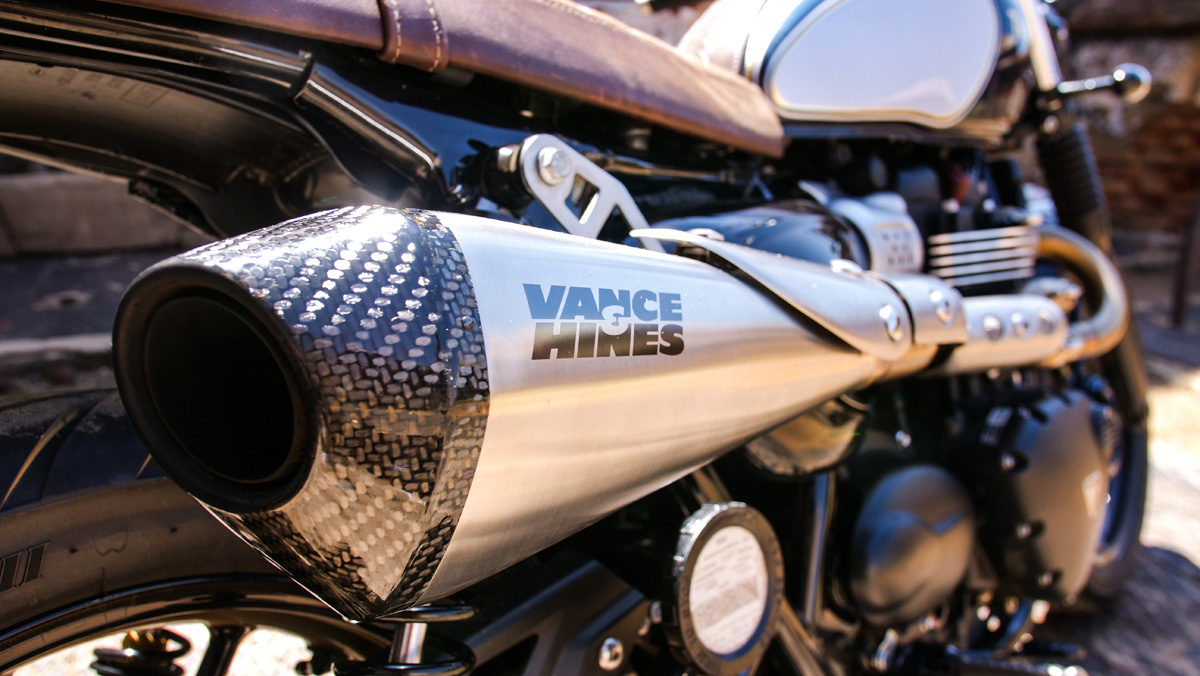
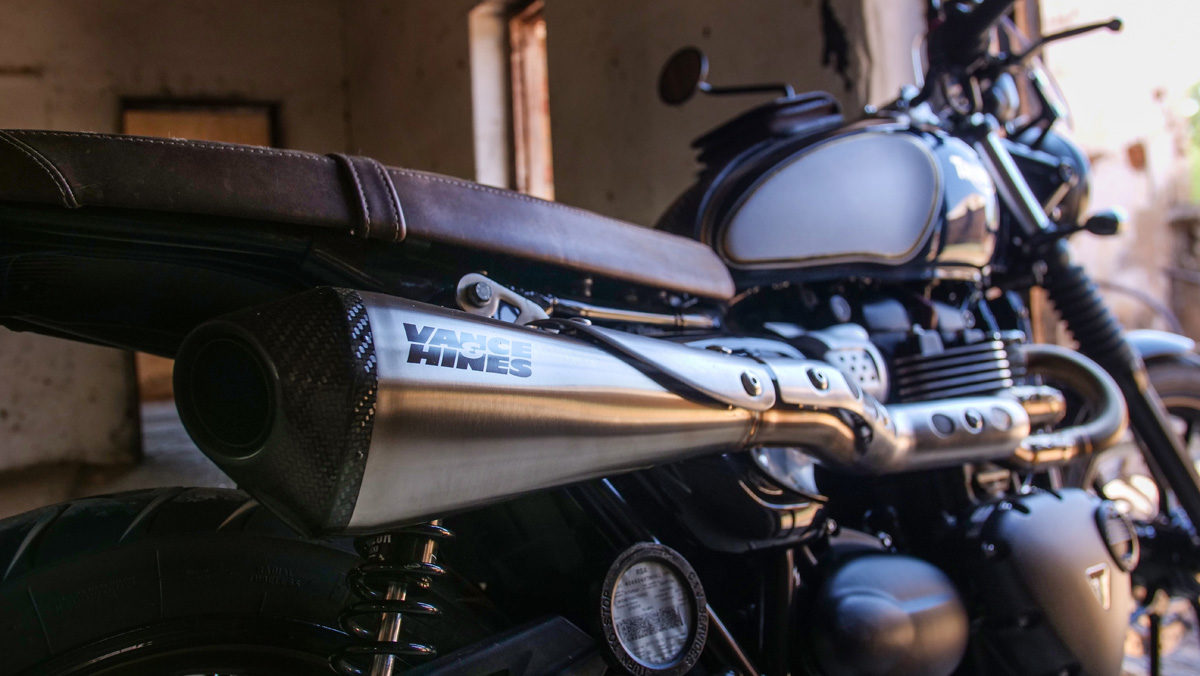
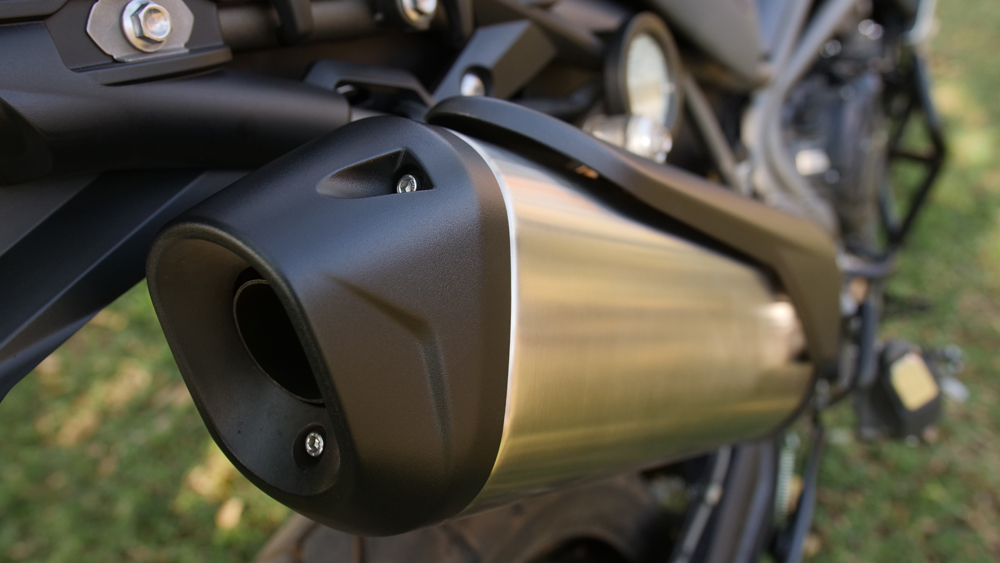
Before starting the engine and enjoying the deep tone of the vertical twin cylinder coming from the new exhaust (a pair of Vance & Hines silencers, coming either in polished or black finishes is also offered as an option), I have to pay tribute to Triumphs’ fit and finish.
Photo credit: Triumph Motorcycles
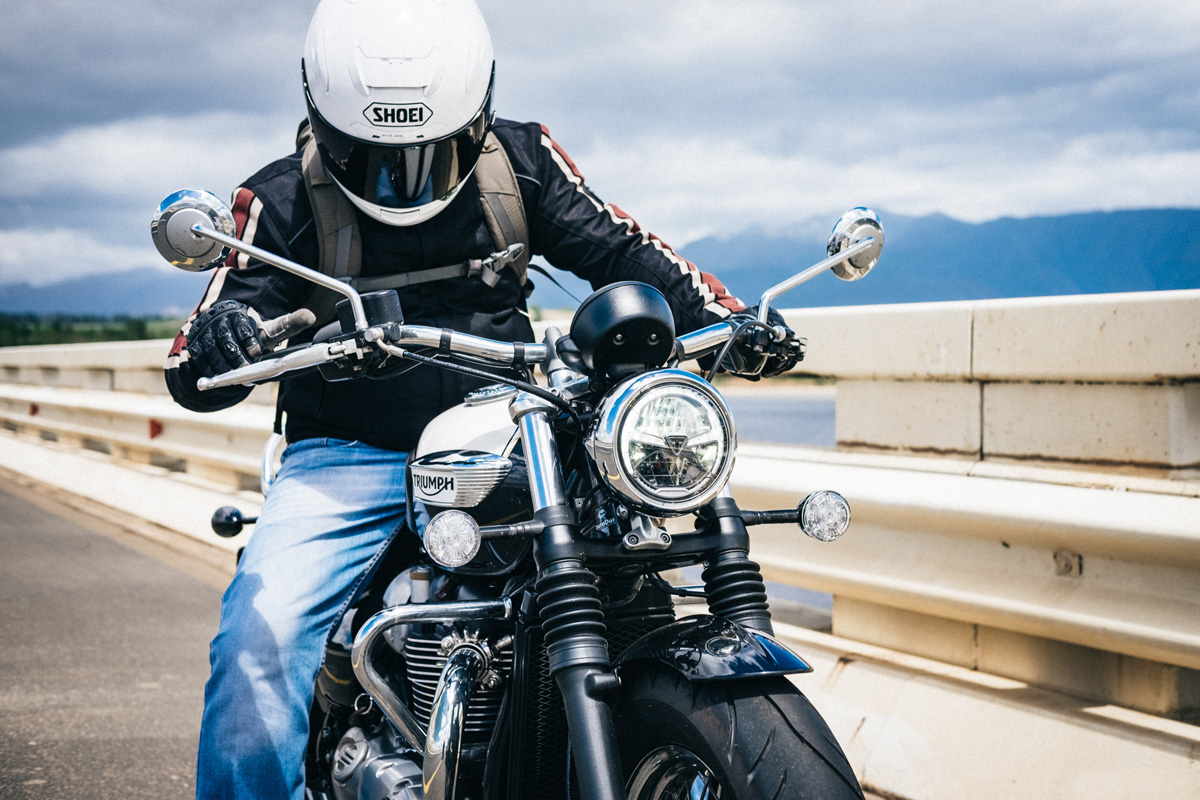
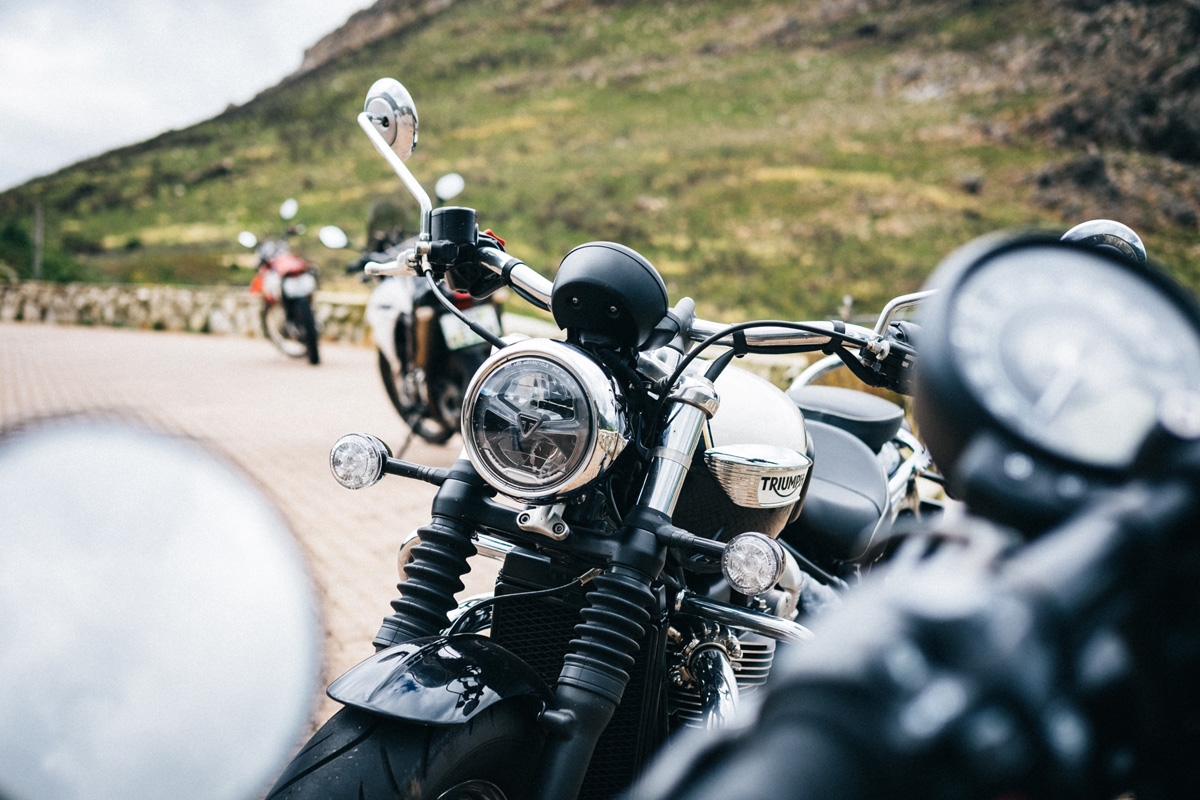
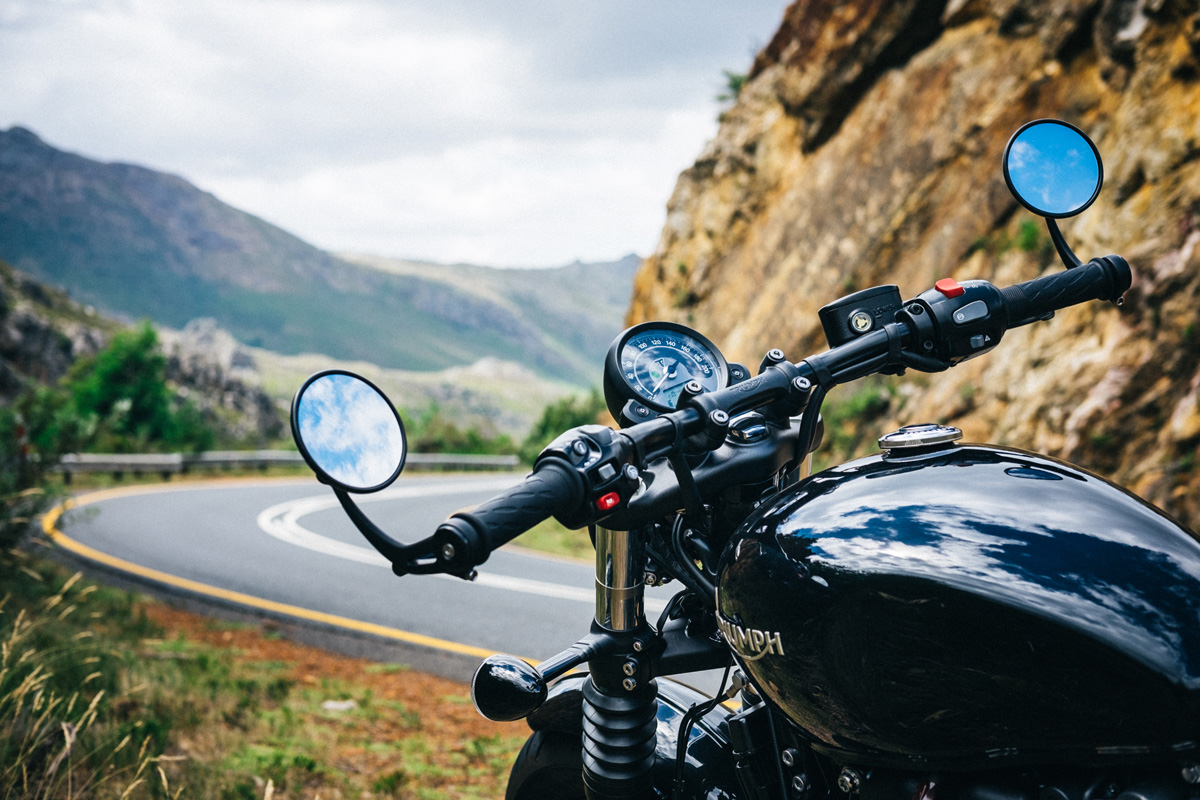
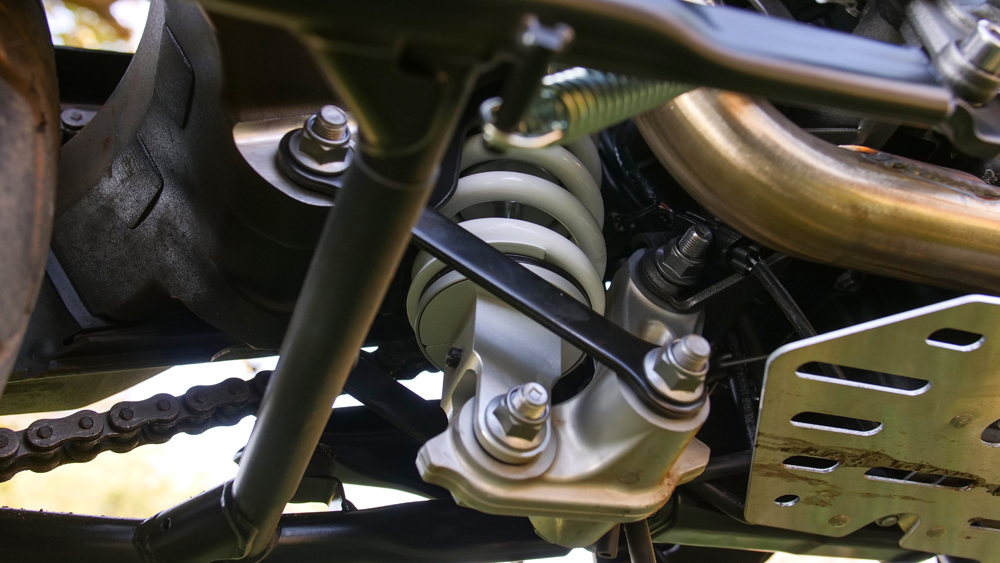
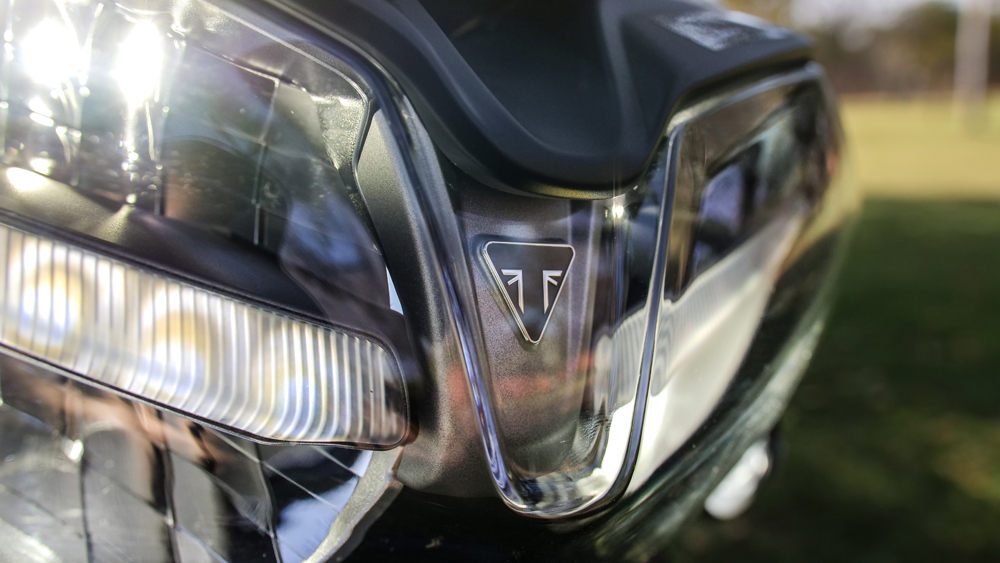
The bike looks clean and is brilliantly built with precision and many touches of class: just look at the brushed aluminium mudguards, the forged alloy headlight bracket, the retro-looking Monza fuel cap, the LED lights everywhere, the tiny “Triumph” logos all over the bike. Great job!
Photo credit: Triumph Motorcycles
In Europe, the Speed Twin is sold at the very same price (12900 €) as a BMW R nineT Pure standard and without any options, the German stallion might suffer from the comparison. Yet, the German is more powerful: 110 hp and 116 Nm of torque, against 97 hp and 112 Nm on the British side.
Photo credit: Triumph Motorcycles
The Speed Twin however delivers its figures at a lower rpm. (6750 rpm against 7750 for the power, 4950 against 6000 for the torque) and as the Speed Twin’s gearing is a bit shorter, there is always plenty of oomph and great roll-on acceleration, even in sixth gear, to enjoy on this British bike.
Not only a perfect commuter
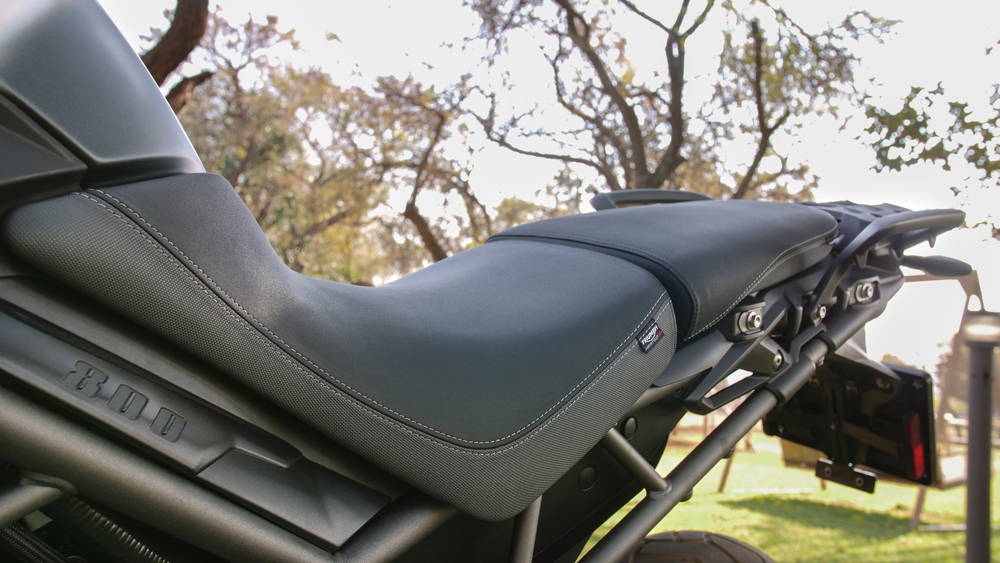
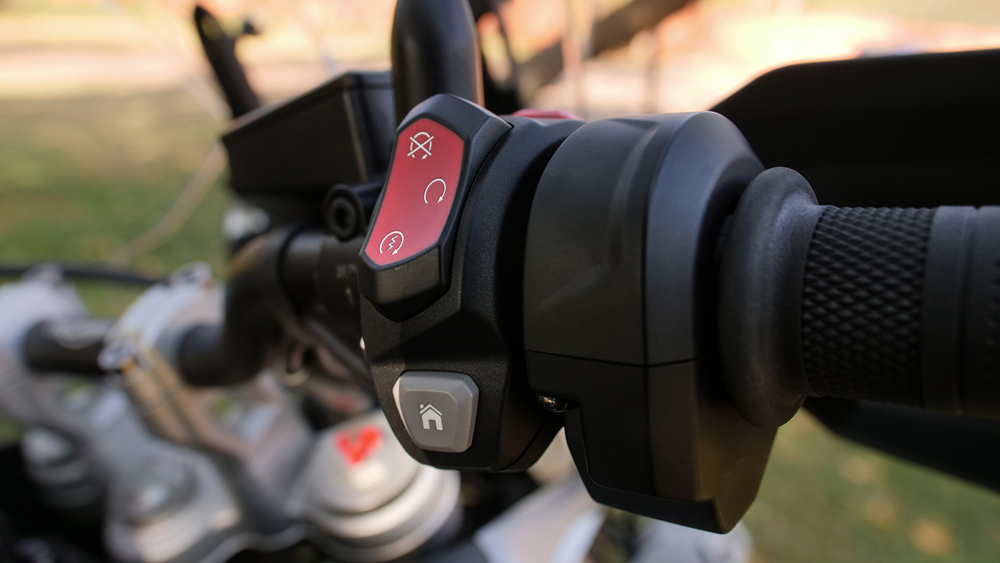
The new Speed Twin is incredibly easy to ride. Its overall dimensions (a dry weight of 196 kilograms and a decent seat height of 807 mm), allied to a compactness for a 1200 cc machine makes it accessible for nearly every shape of rider. All the controls are very smooth and the engine at low revs is a peach too, and that makes the Speed Twin a perfect commuter. There are three riding modes, “normal”, “sport” and also “rain”, as well as traction control.
Photo credit: Triumph Motorcycles
With a very neutral riding position and reasonable tyre size (the rear is “only” a 160/60), the Speed Twin is easy to steer and very agile as a mid-capacity bike. Triumph’s argument regarding the Speed Twin has been focusing a lot about the weight reduction compared to a Thruxton, with 10 kilograms less. So, not only can the Speed Twin be seen as a perfect commuter, it can surely be an awesome breakfast run machine, for a Sunday morning blast on any winding road you fancy.
Photo credit: Triumph Motorcycles
You won’t need many corners to find how competent it is. It starts with the good tyres, as the Pirello Diablo Rosso 3’s are quick to warm up, and then the next step is to explore the more than decent ground clearance.
Photo credit: Triumph Motorcycles
The engine delivers all its power in a rather linear fashion, and whilst chasing other journos over the Majorca island twisties, I was quick to find out that the 7000 rpm redline is not the real limit, as the big Twin is happy to rev up to 7500 rpm with a proper top end whack too! For sure, the Speed Twin deserves its name!
Photo credit: Triumph Motorcycles
I was impressed with the bikes fuel consumption too, I still managed to come back with a 5,5 l/100 on-board computer figure, which makes an acceptable fuel range of 250 kilometres. With the 15 mm extra wheelbase as compared to the Thruxton the high speed stability in fast corners is not an issue. However, if you are attached to the extreme precision and feedback from hi-specced suspensions, the Öhlins-mounted Thruxton R can’t be beaten and remains on top of the ultimate handling hierarchy of the Triumph Classic range. The Speed Twin however is more versatile and offers great value for money.
Photo credit: Triumph Motorcycles
Triumph has ticked all the boxes, and then some, with the new Speed Twin: it’s fun, it’s easy to ride, it looks great and sounds great too, goes strong and can take corners well. The Speed Twin is a new, fresh offering from Triumph and pays great homage to the genuine essence of motorcycling.
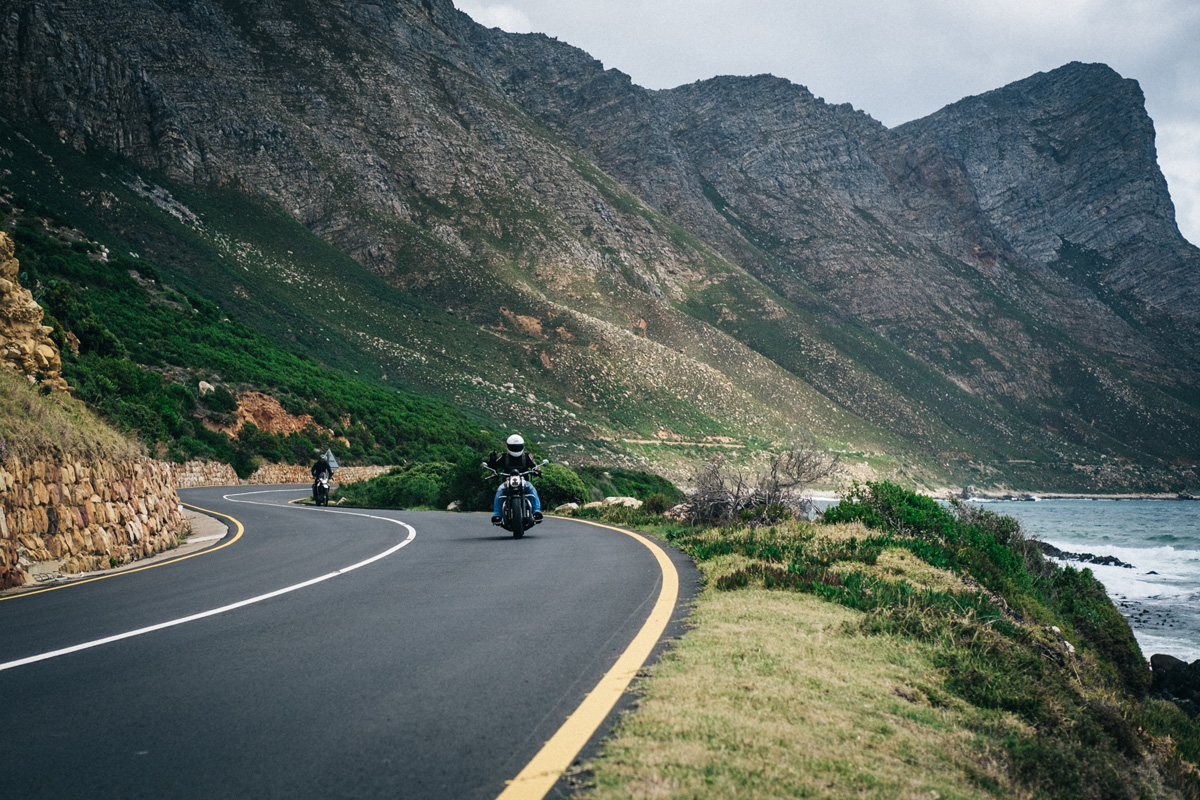
Cape Town’s motorcyclists are evangelists for the Mother City. We can’t help it—not only do we have amazing scenery, food and people, but the riding here is top notch. Tell a local motorcyclist that you’re visiting Cape Town, and he or she is likely to drop everything to take you riding.
Photo credit: Wesley Reyneke
Which is exactly what I did, when ZA Bikers editor-in-chief, Simon Morton, informed me that he was heading to Cape Town for the holidays. I hit back with my standard response: “Of course we’ll go riding. It’ll be amazing. You’ll love it.”
We put a call into our friends at Triumph South Africa, and managed to hustle a couple of bikes via their Cape Town service centre, MHM Motorcycles. Then I mapped out one of my go-to routes—a 250 km loop that includes Helshoogte Pass, Franschhoek Pass, the Elgin Valley, Clarence Drive, and very little highway.
Photo credit: Wesley Reyneke
If you’re a local, you should know it well. If you’ve never ridden it, stop reading right now and go tick it off the list immediately. It combines some of the Cape’s best roads with some of its best vistas—and it’s one of the best days out you can have on two wheels.
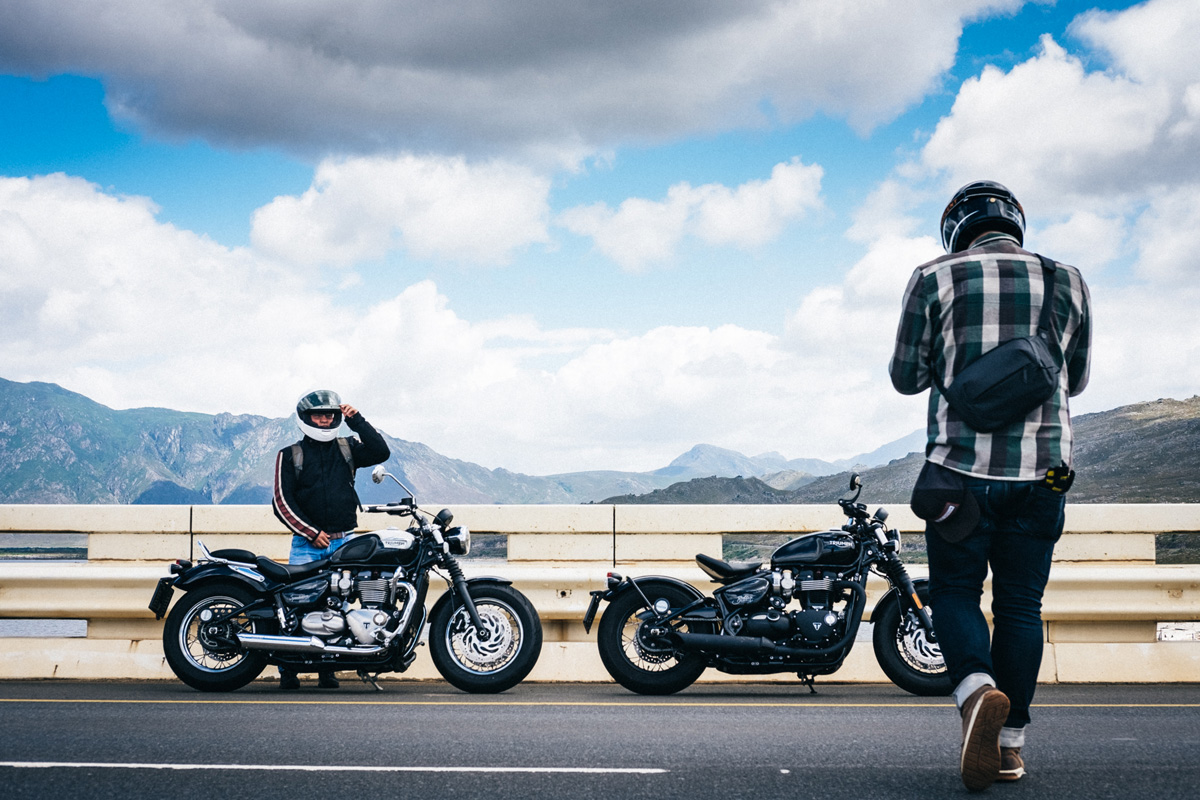
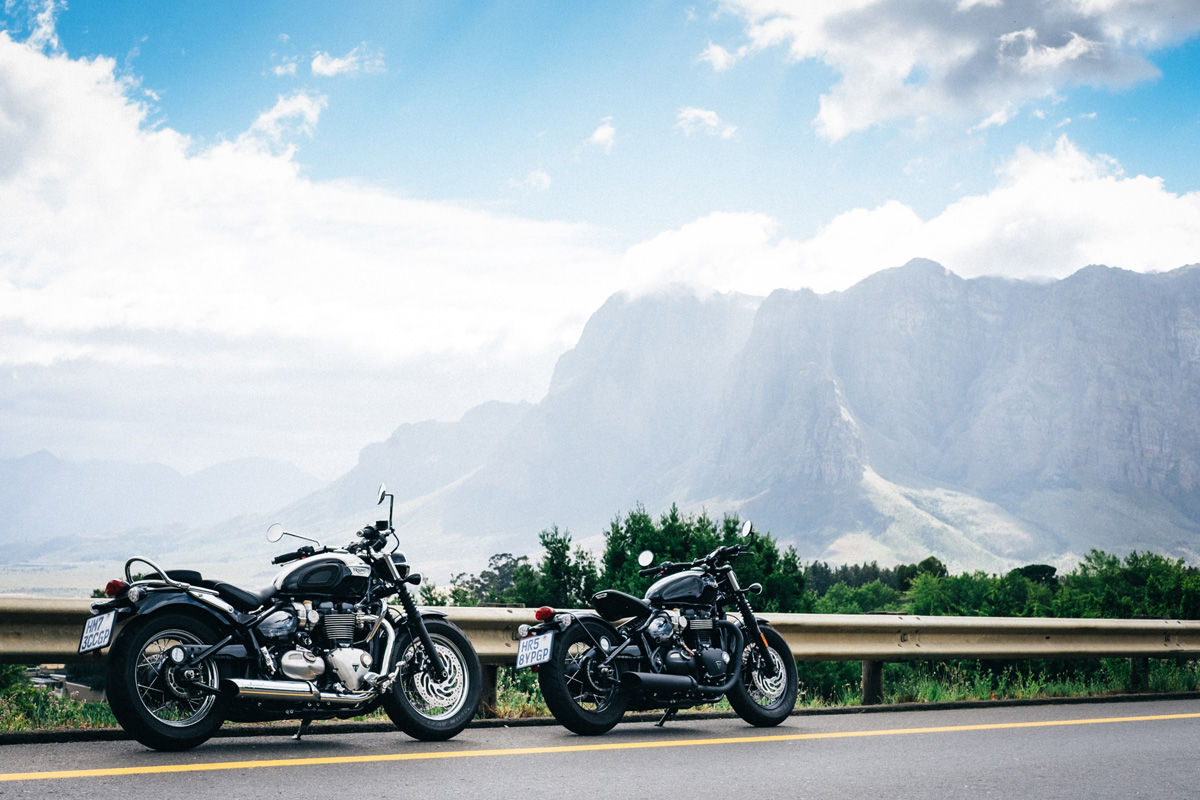
Triumph have a few bikes in their line-up that would have smashed that particular route, but Simon and I had planned to take it easy. So we opted for supreme style—and picked up the Triumph Bonneville Speedmaster and Bonneville Bobber Black.
Photo credit: Wesley Reyneke
Both bikes are proof that Triumph’s modern classics are about both style and substance. Under the hood, they’re powered by the same punchy 1 200 cc parallel twin motor, good for 106 Nm of torque. It’s a gem of a motor, with enough grunt to launch the bikes off the line and fire them out of corners. And it’s backed up by an equally good fuelling, clutch and gearbox package.
Simon went for the Speedmaster, which meant his ride was decidedly more comfortable than mine, thanks to a well-padded seat and forward pegs. I hopped on the Bobber Black—and began questioning my life choices about 50 km into the ride.
Photo credit: Wesley Reyneke
Don’t get me wrong—I absolutely love the Bobber Black (so much so that I hung onto it for an extra couple of weeks after the ride). But its mid controls, drag-style bars and slim, cantilevered seat make it more suited to bombing around the city, than munching miles and miles of countryside. So we broke the ride up with breakfast and lunch stops—and plenty of photo ops too—which gave my back and legs lots of time to recover.
Photo credit: Wesley Reyneke
And whenever we stopped, both bikes were mobbed by passersby. It was totally expected; the Bobber Black’s burly, murdered-out aesthetic, and the Speedmaster’s classy black and white livery, are both impossible to ignore. I almost felt sorry for my friends, Stephen and Teresa, whose Yamaha XT660 and Honda CRF250L didn’t get quite as much attention.
Photo credit: Wesley Reyneke
But the day wasn’t about bragging rights, or even brand bashing. It was about buds on bikes—soaking up the scenery, chatting away, comparing notes and collectively taking a breather from everyday life. Between Ou Meul Bakkery in Simondium’s R49 breakfast special, and pies at the insanely popular Peregrine in Grabouw, there was plenty of time to wag chins.
Photo credit: Wesley Reyneke
In between, we put the Bobber Black and Speedmaster well through their paces. Even though our route included some relaxed stretches, it also included my two favourite roads: Franschhoek Pass and Clarence Drive.
Once we’d shuffled our way through the tourists overrunning Franschhoek, the famous pass unwound before us. It’s as much fun going up as it is going down, with endless turns, and sprawling views on both sides of the mountain.
Photo credit: Wesley Reyneke
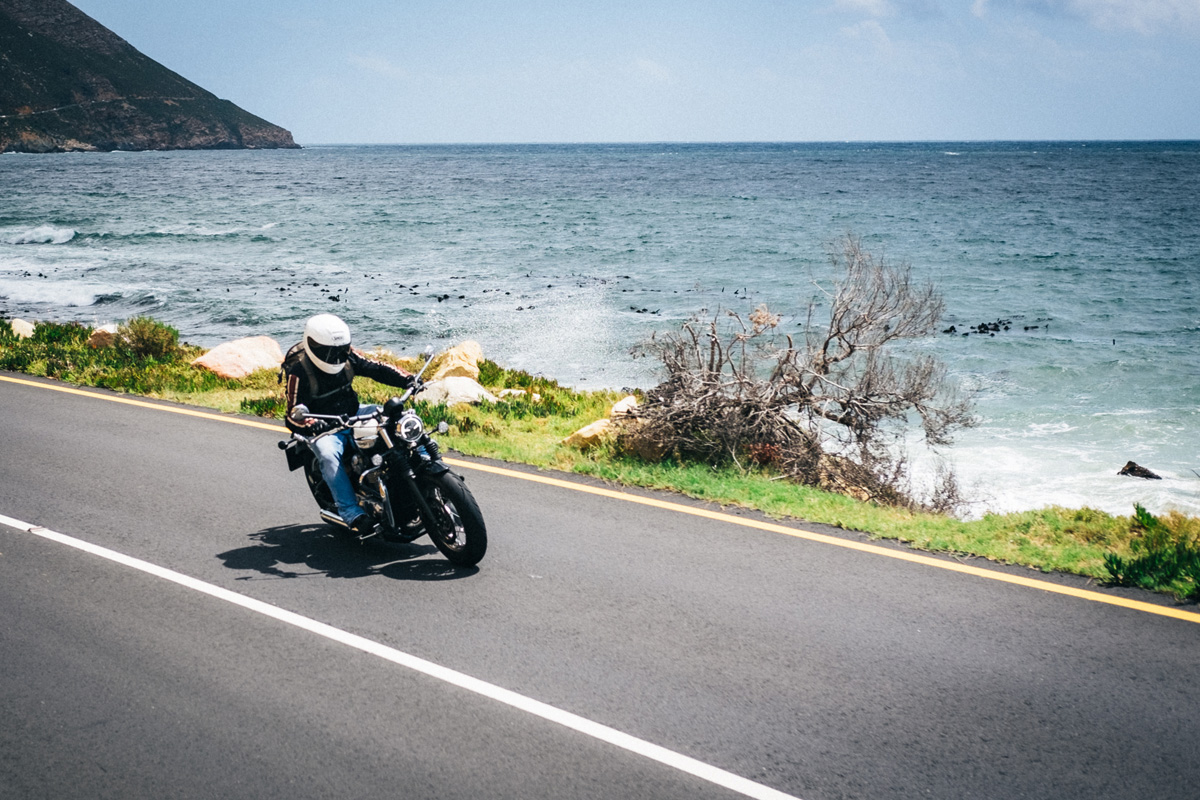
Clarence Drive—the road that stretches from Rooi Els to Gordons Bay—is even more epic. Think of it as a long ribbon that twists and tilts alongside False Bay’s shoreline. I’ve ridden both pieces of road many, many times, and I’m still not bored of either.
Photo credit: Wesley Reyneke
Neither Triumph has much ground clearance—so on roads like these, you either need to take it easy, or push as hard as possible until the peg meets asphalt. “I just adapted my riding style to suit the bikes laid back ergonomics,” Simon tells me, “and enjoyed the beautiful surroundings that I was in—as opposed to riding as if I was on a race track.”
Photo credit: Wesley Reyneke
The day ended up being a mixed bag of chilling and hustling; riding and shooting the breeze. There’s a million ways to show a friend the Cape—but I’ll pick the back of a motorcycle every time.
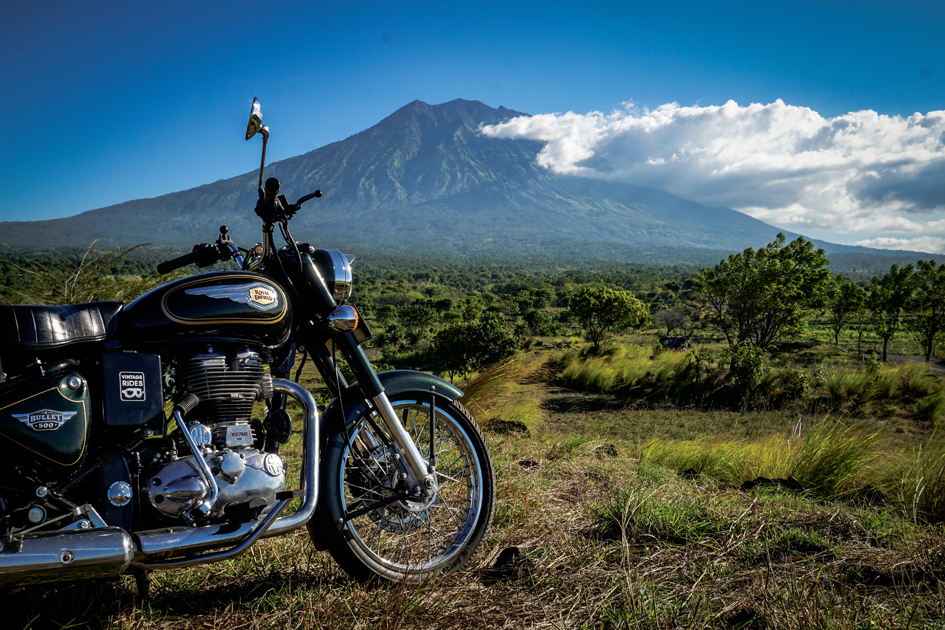
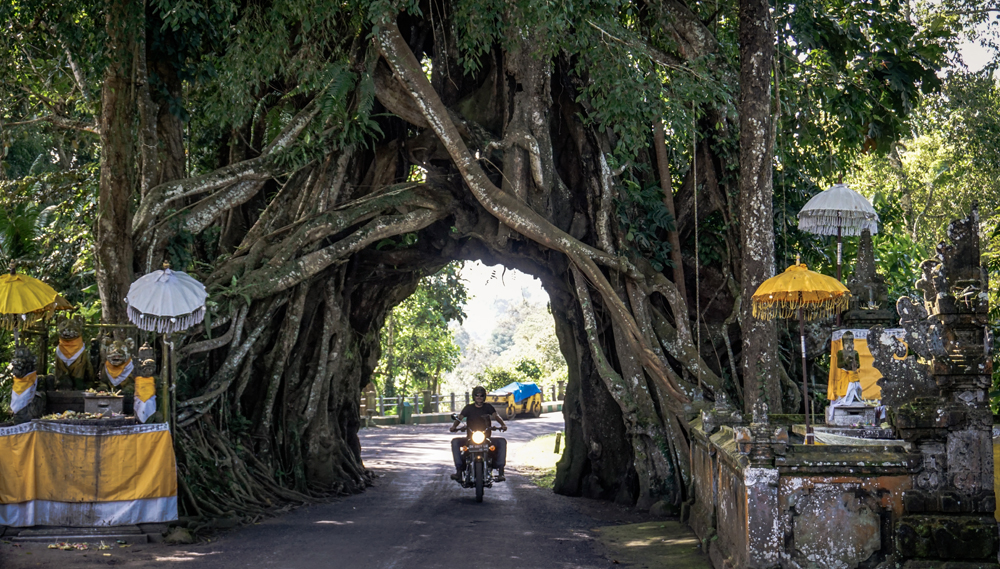
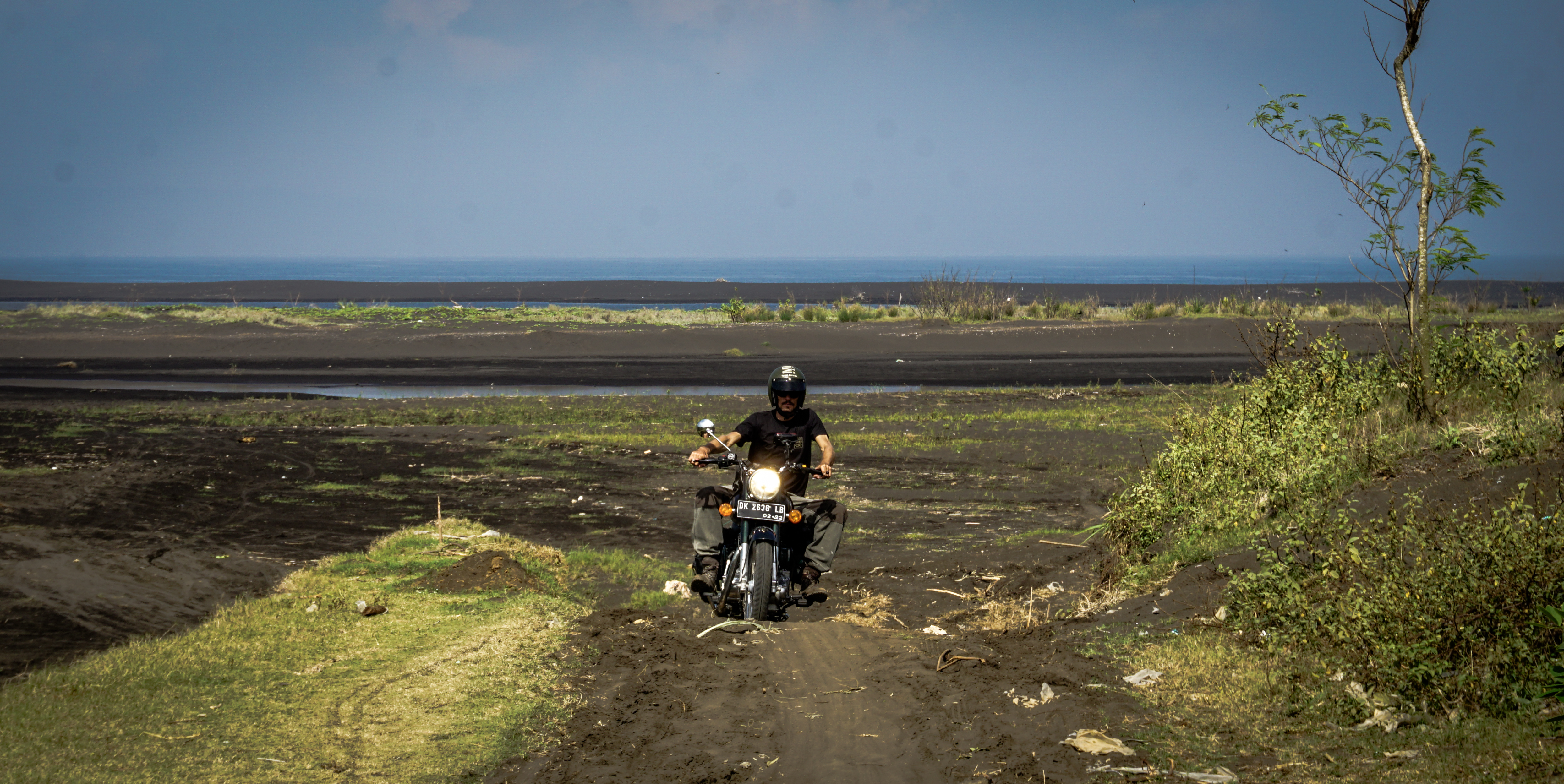
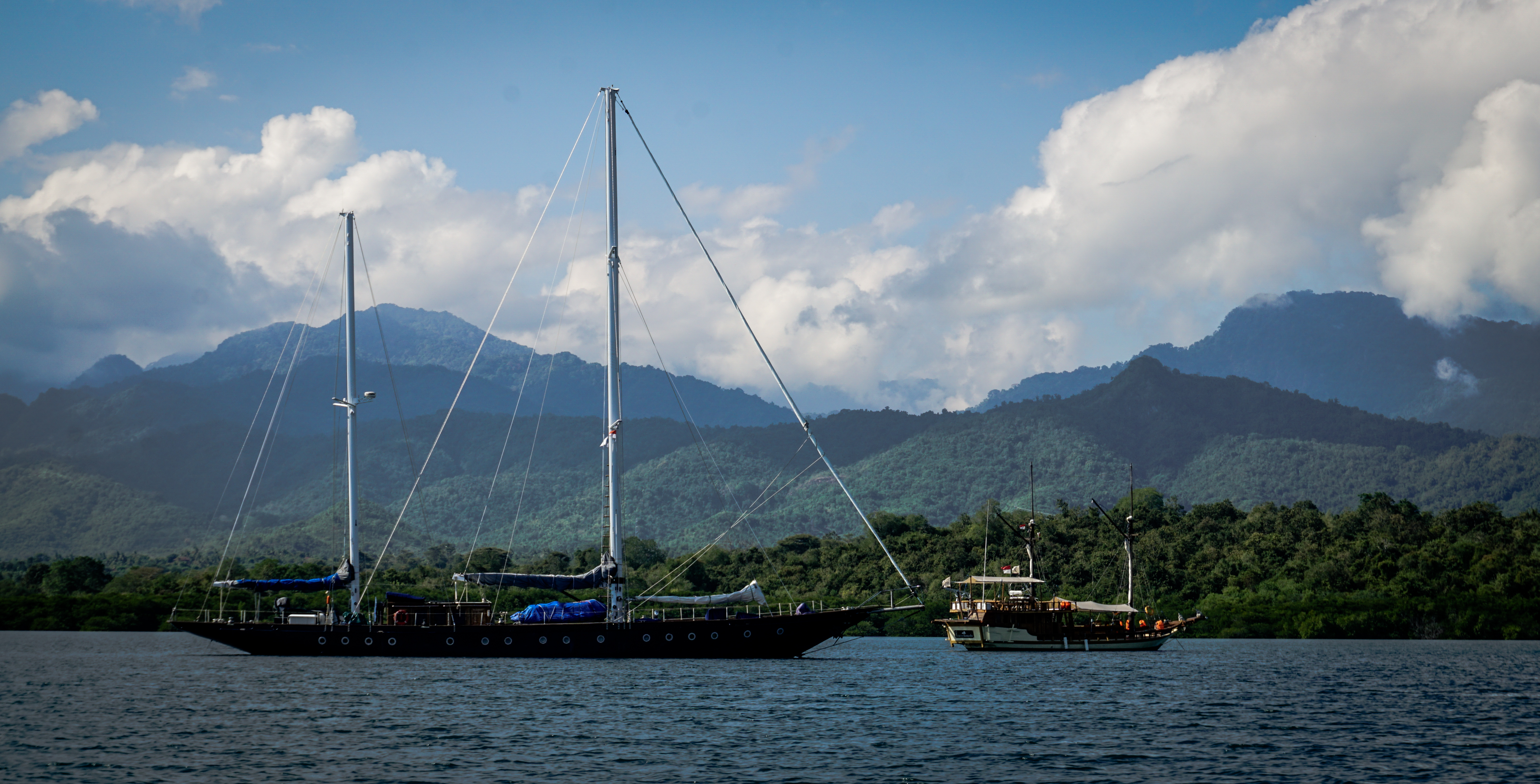
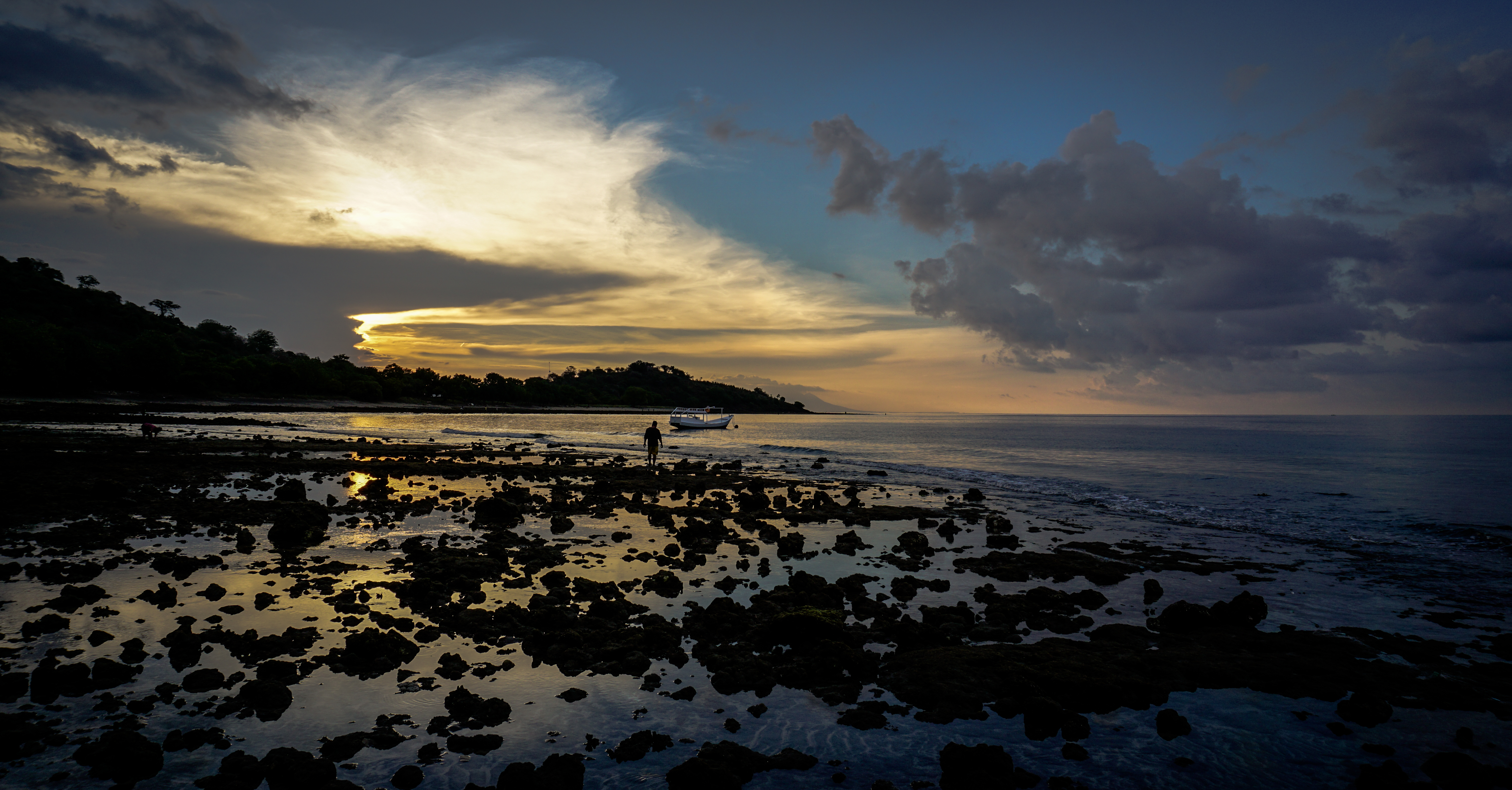
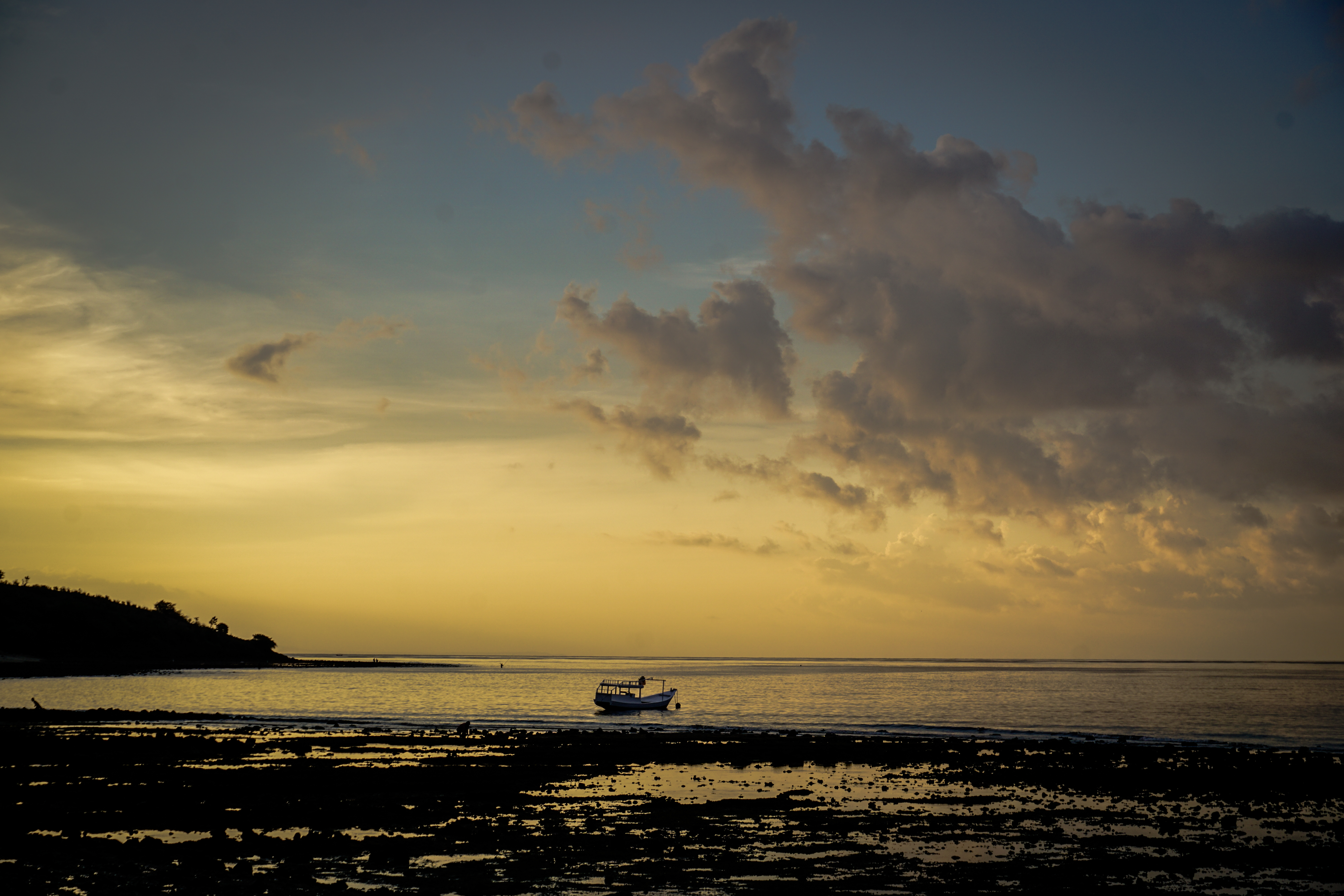
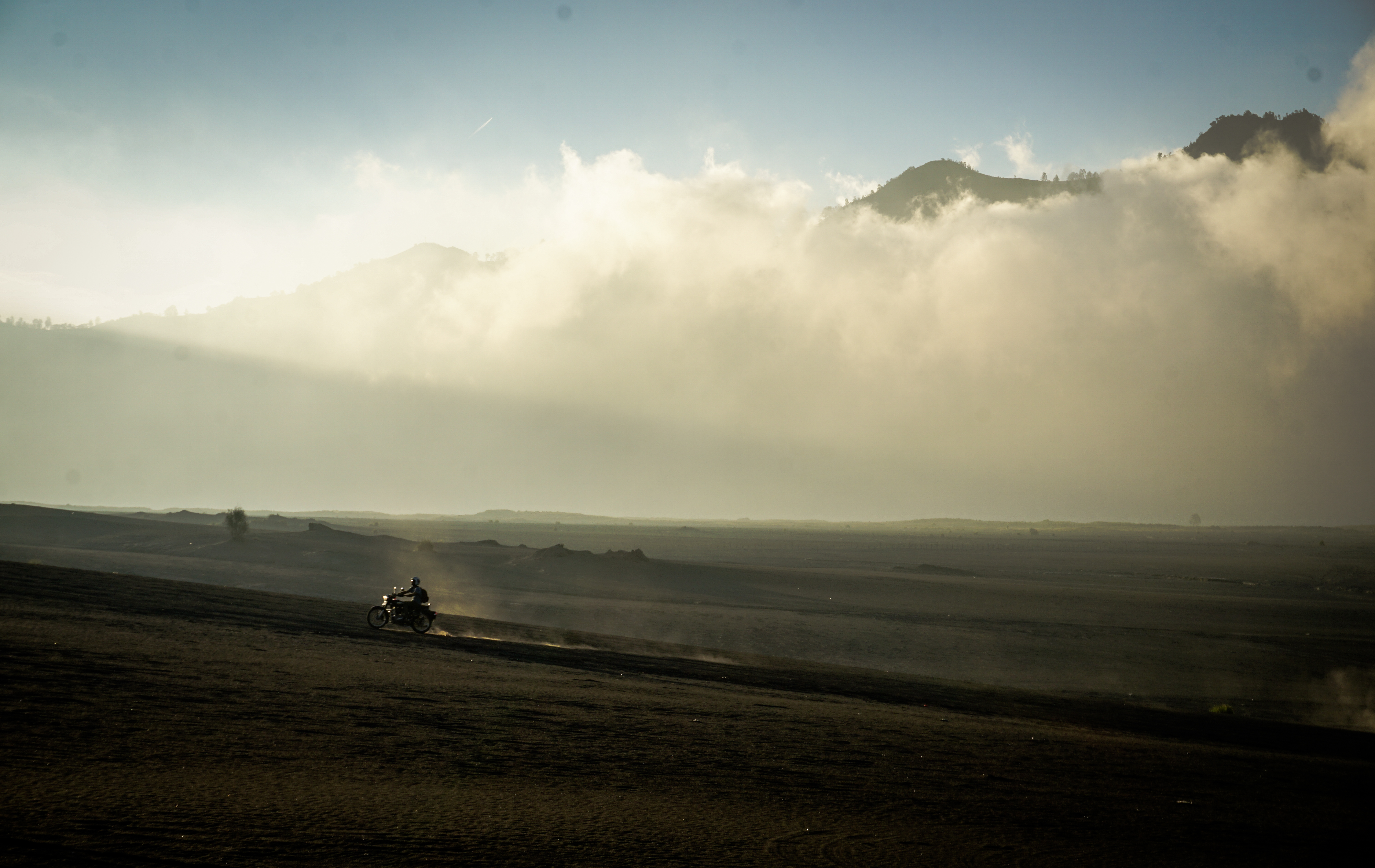
Located approximately 8500 kilometres away from South Africa across the Indian Ocean, Indonesia is a world on its own. ZA Bikers went on a motorcycle trip over the two islands of Java and Bali, to discover how different they can be, as well as enjoying the essence of slow pace touring on a Royal Enfield Bullet 500.
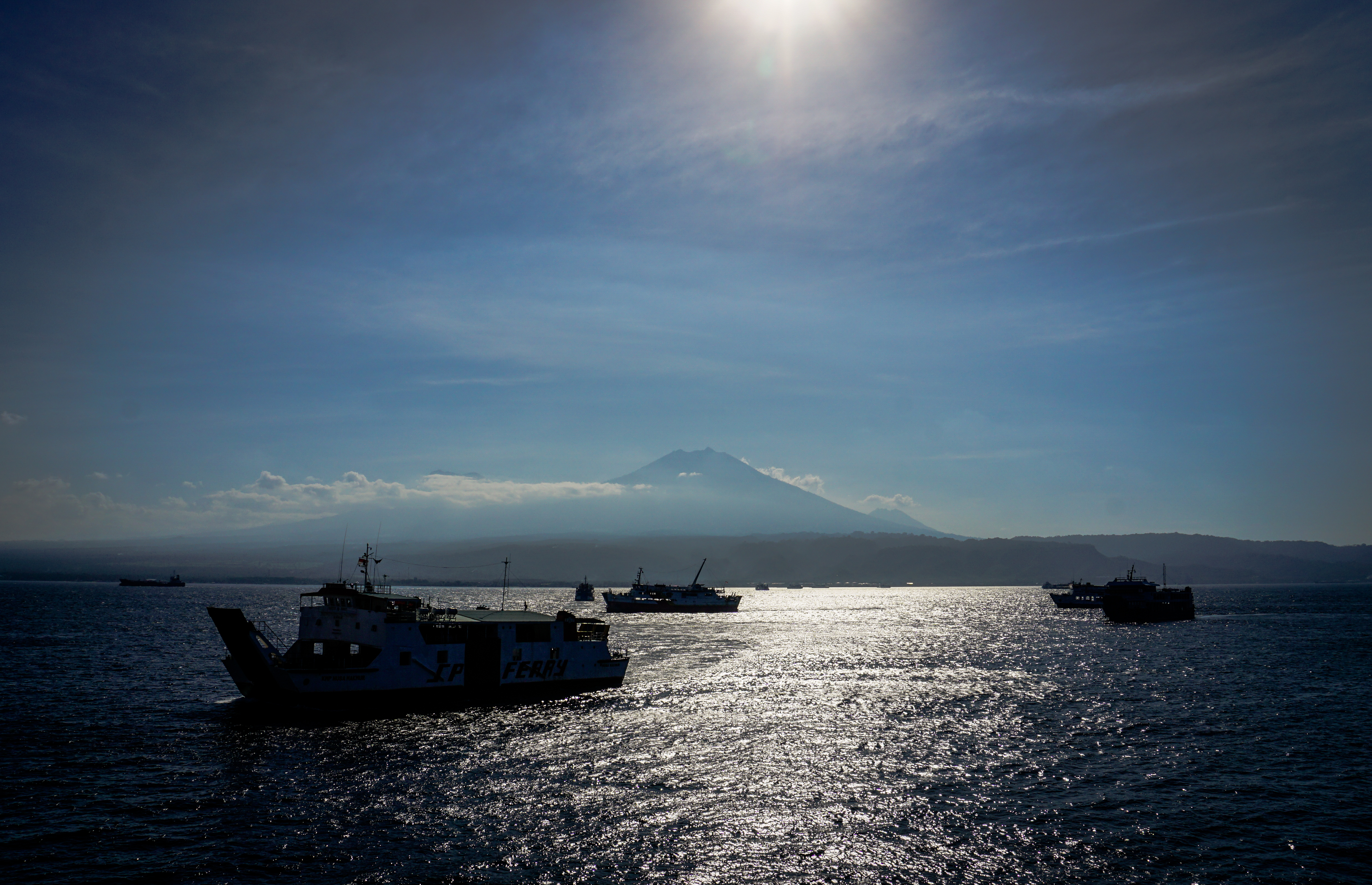
Indonesia is surely a world on its own. The country is a sprawling mass of 17508 islands where over 700 dialects are spoken. There are 268 million inhabitants, 87% of them being Muslims, which makes it by far the biggest Muslim country in the world. There are over 400 volcanoes, of which more than a hundred are still active and unfortunately, Mother Nature wakes up more often than not, with resulting natural disasters.
Photo credit: Philippe Guillaume
The biggest island, Java, covers nearly a tenth of South Africa’s surface area, however, Java hosts 168 million inhabitants, over three times the South African population… Density is the keyword.
When it comes to motorcycles, Indonesia is also a world on its own! In 2017, 5886103 two-wheelers were sold! Yes, nearly six million! However, the market is suffering a recession, as more than 7 millions units were sold in 2012 – if only South African recessions where this mild.. Hey?
Photo credit: Philippe Guillaume
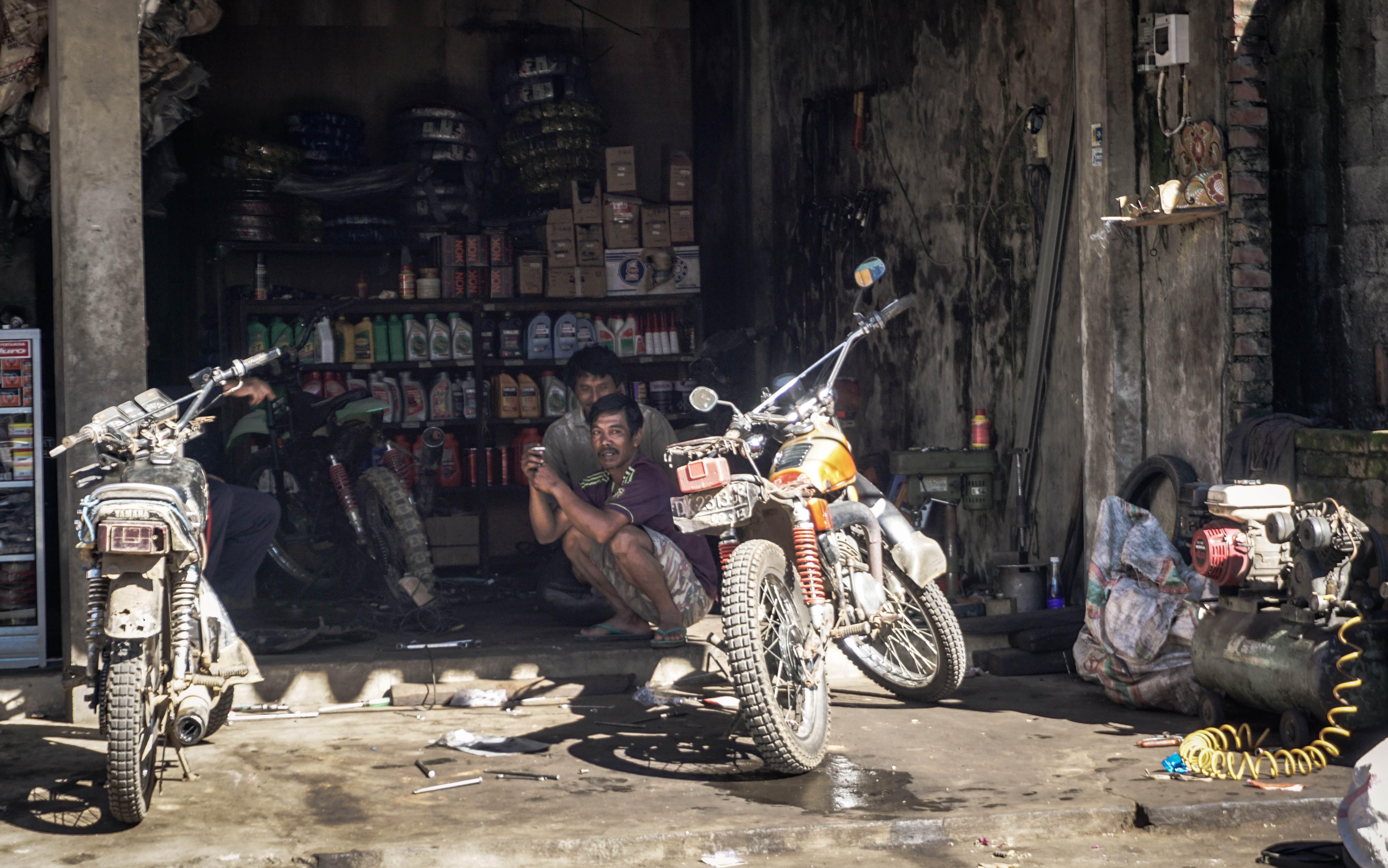
Honda is, by far, the giant, with a steady 74,5 % market share, followed by Yamaha (22,9 %), Kawasaki (1,3 %) and Suzuki (1,2 %). Locals are passionate about motorcycling and racing but although you’ll find millions of “99”, “93” and “46” stickers on the machines, it’s mainly a scooter country, as the best seller is the Honda Vario, a big wheel commuter.
On the main streets of most villages, I was surprised to cross a “start” and “finish” line. Reason: drag racing is popular amongst youngsters and the best racers are seen as heroes and can make quick money.
Photo credit: Philippe Guillaume
It’s not compulsory to ride with daylights, but wearing a helmet is, although the rule is barely obeyed, especially in the rural areas. The most popular motorcycle gear is by far… wait for it, flip-flops! However, we dressed in full riding gear to cover nearly 1600 kilometres of road over the Bali and Java islands.
A genuine tourer!
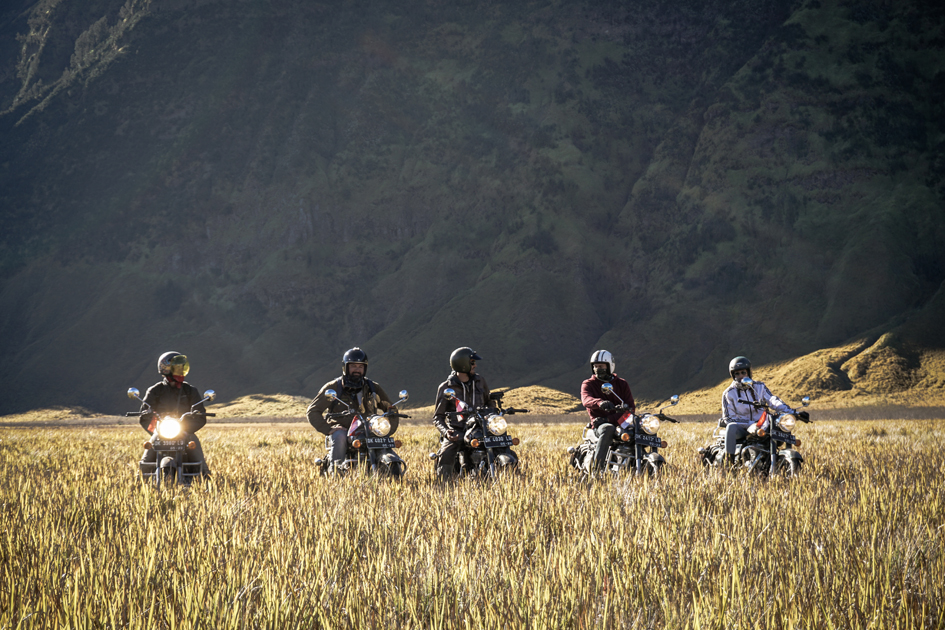
Surrounded by several dozen 150cc scooters, the Royal Enfield looks like a genuine tourer. With 28 hp, compared to approximately 10 for most of the two-wheelers encountered on the road, the Bullet has enough torque for easy overtaking and making its own way. You can’t really ride fast in Indonesia and this is why the Bullet is the perfect weapon for touring. Due to the traffic density and the amount of trucks, reaching 80 km/h is not so easy on the main roads as well as in the countryside, where the tar is not much wider than a Toyota Avanza. (These tall-narrow-and rather-ugly MPV’s sell like hotcakes there, and it’s easy to understand why, due to the road conditions). You find yourself mostly cruising between 50 and 60 km/h.
Photo credit: Philippe Guillaume
Indonesia is definitely not a big, wide open-space country, such as SA, but our tour guide whipped up some magic. After comprehensive research on all sorts of modern tools (such as Google Maps and Google Earth), he managed to find some extraordinary routes through exotic, charming and out of this world paths in the middle of primary forests, inhabited by the local version of the Big Five, being monkeys, varan-lizard, cobras, giant bats and last but definitely not least, some lone tigers!
Photo credit: Philippe Guillaume
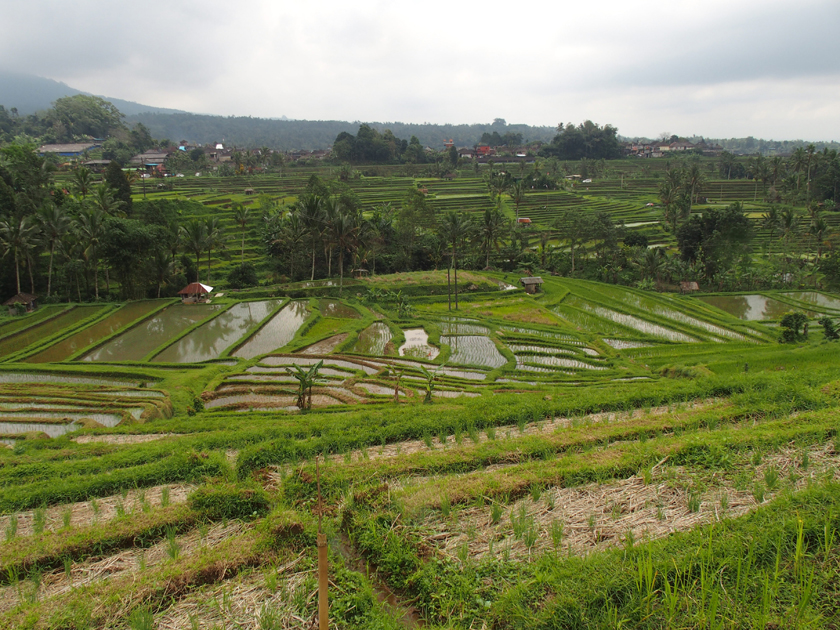
The first couple of kilometres were done near the Sacred Monkey Forest natural area; and predictably, there are monkeys all around and when you stop, you need to be careful to not leave a pair of gloves or a set of keys around or else they will be stolen. Although to be fair, the local monkeys are not aggressive, like the Capetownian baboons. After this first taste of the Indonesian wild life, our tour guide, François, shared with us his deep knowledge of the Indonesian countryside and suddenly, our ride took on a different dimension. We find ourselves surrounded by a patchwork of several shades of bright green, being rice plantations, which nearly cover every square centimetre of the Indonesian countryside. Their clever irrigation system and shape of the terraces are so unique that UNESCO classify some of them as World Heritage Sites, such as the Jatiluwih, in Bali.
Much more diverse than it seems
Twelve days Adventure riding and Indonesia reveals its wonders – a lot of people, a lot of rice plantations, Hindus in Bali and Muslims in Java. You can’t assume that Indonesia is simple – it isn’t; it’s busy and it’s complicated.
Photo credit: Philippe Guillaume
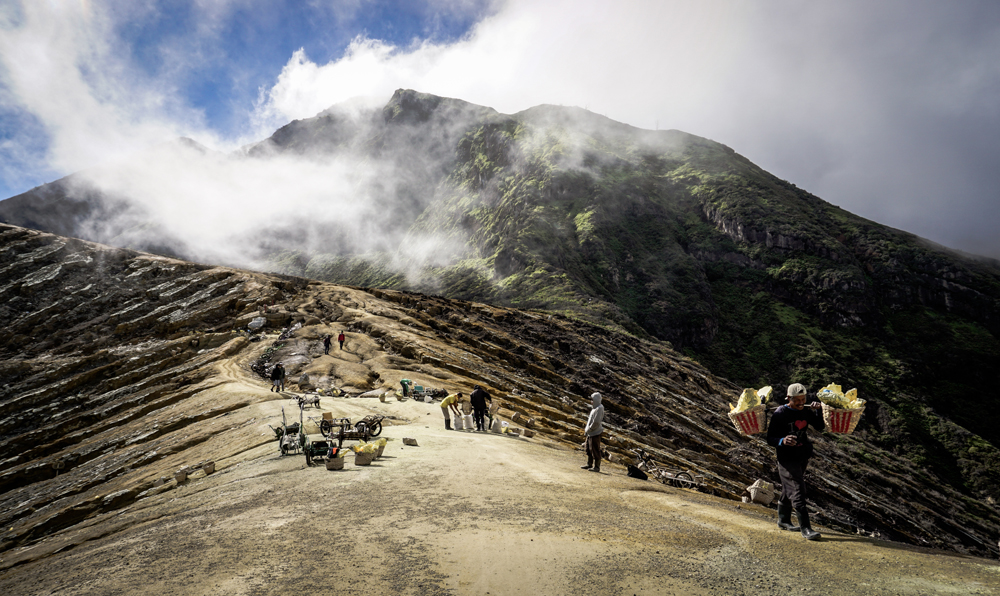
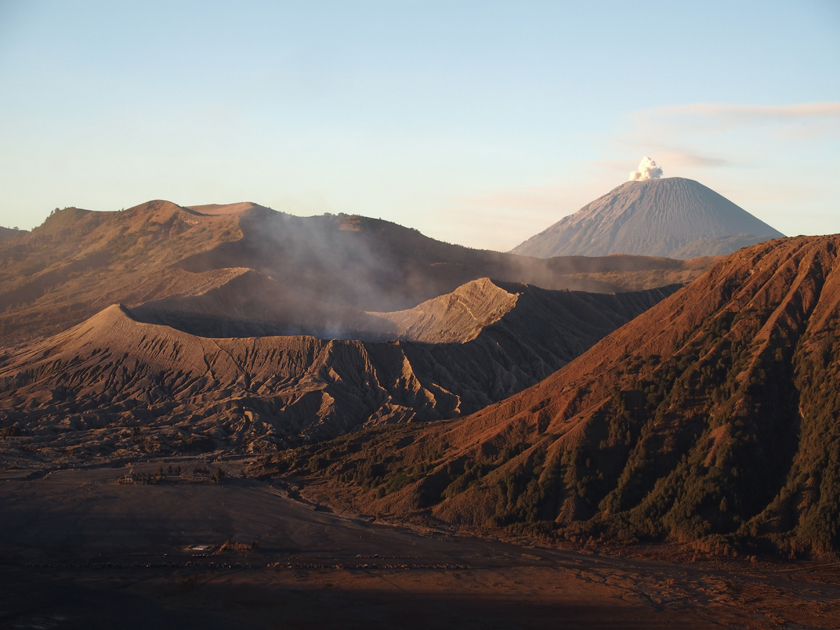
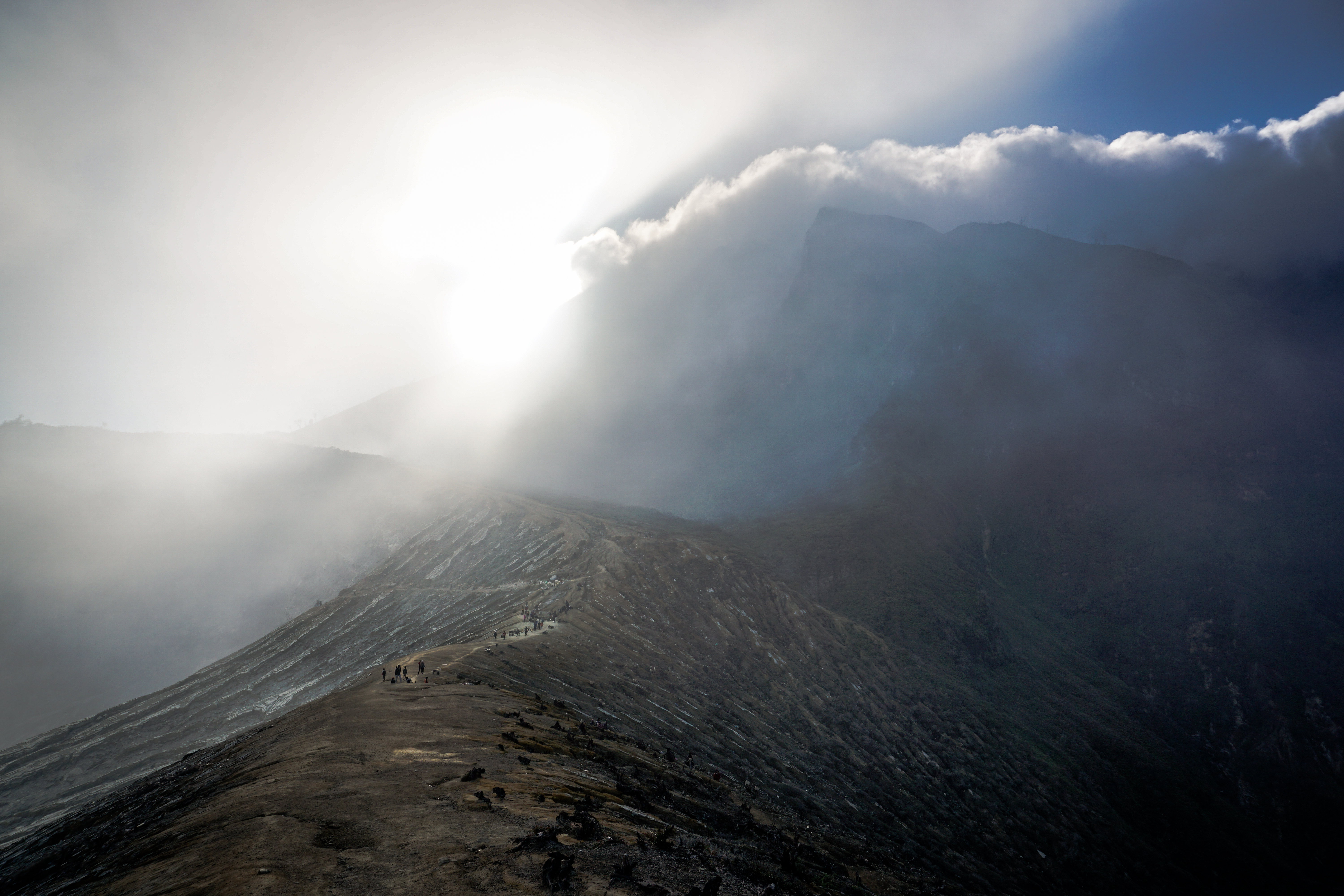
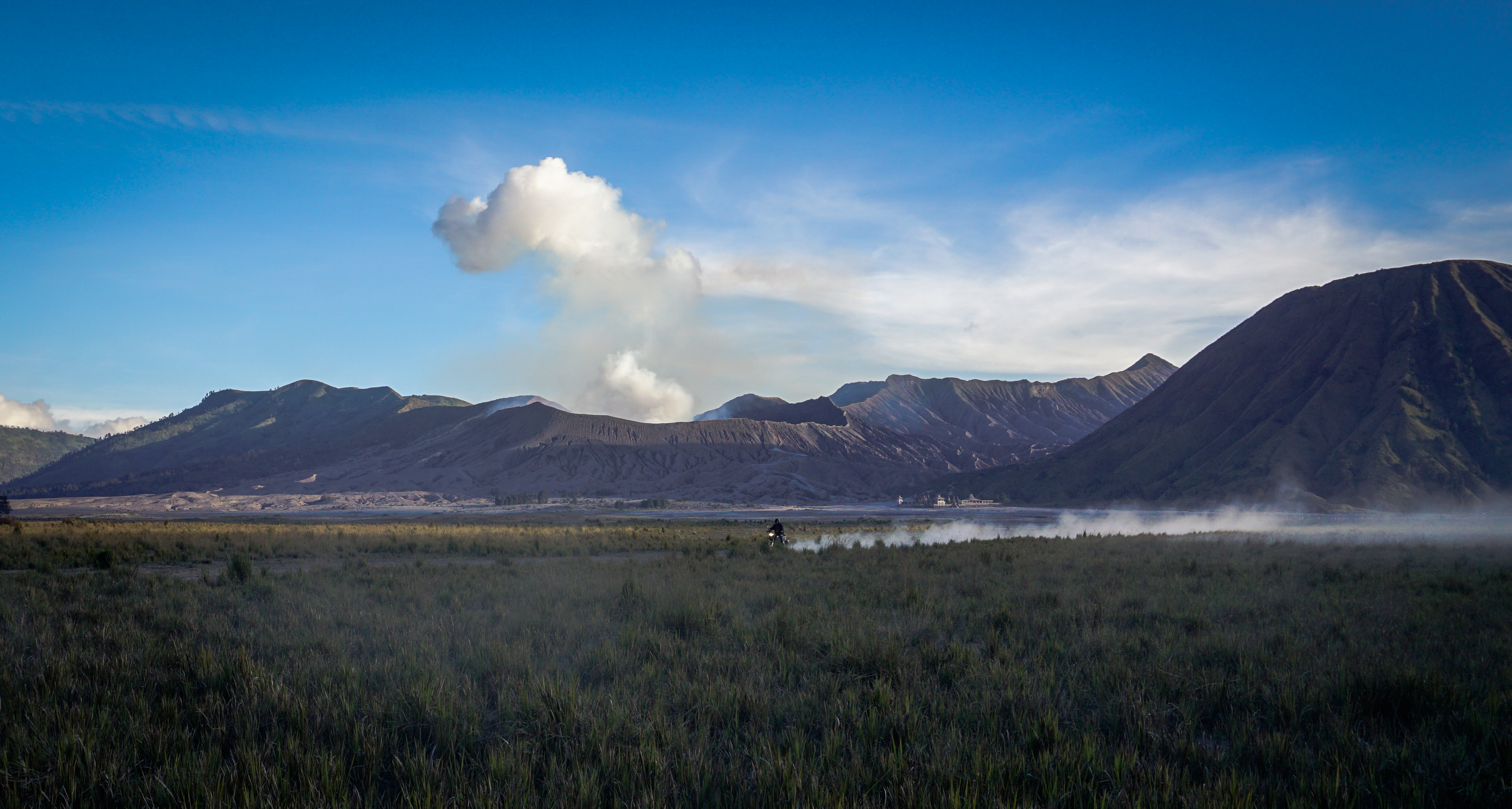
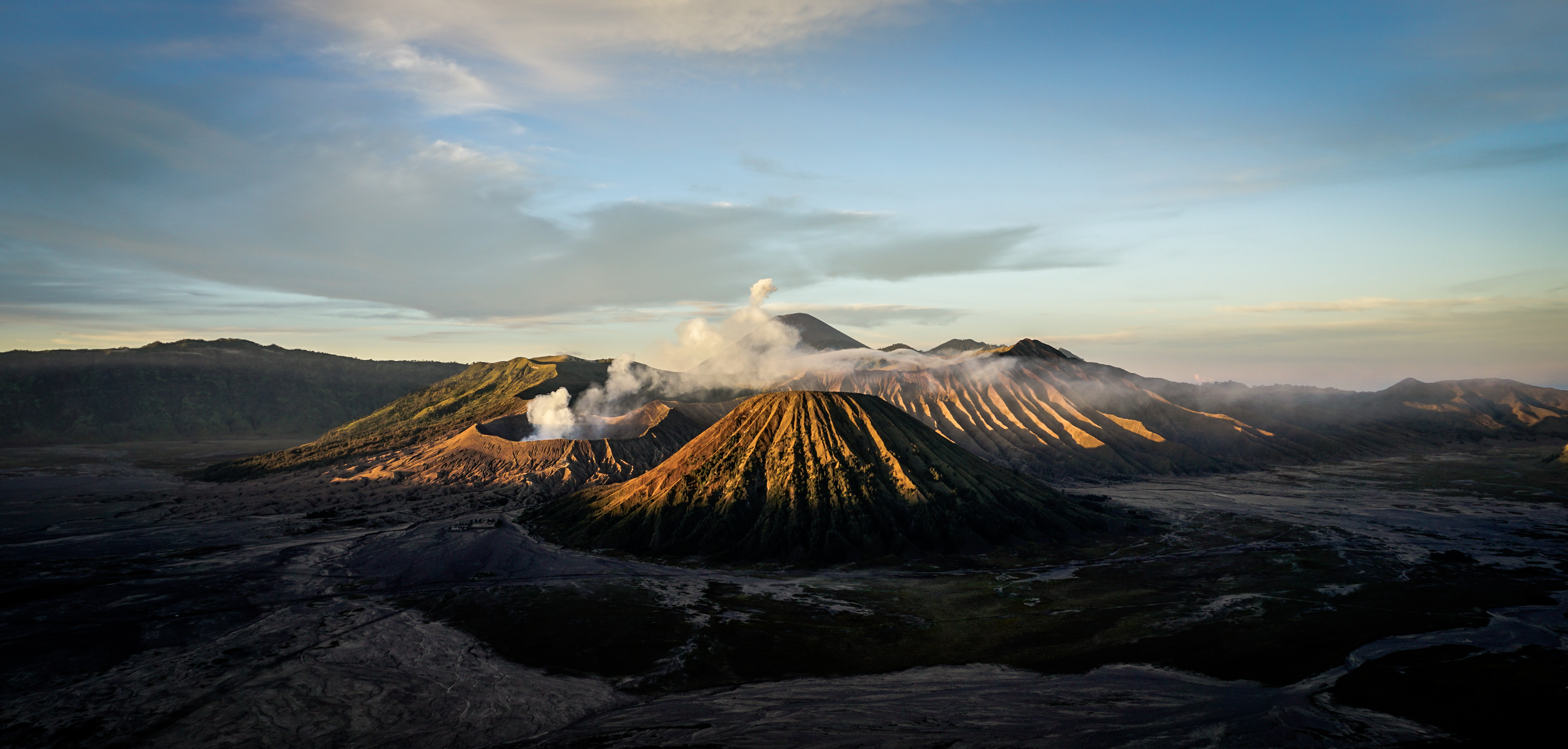
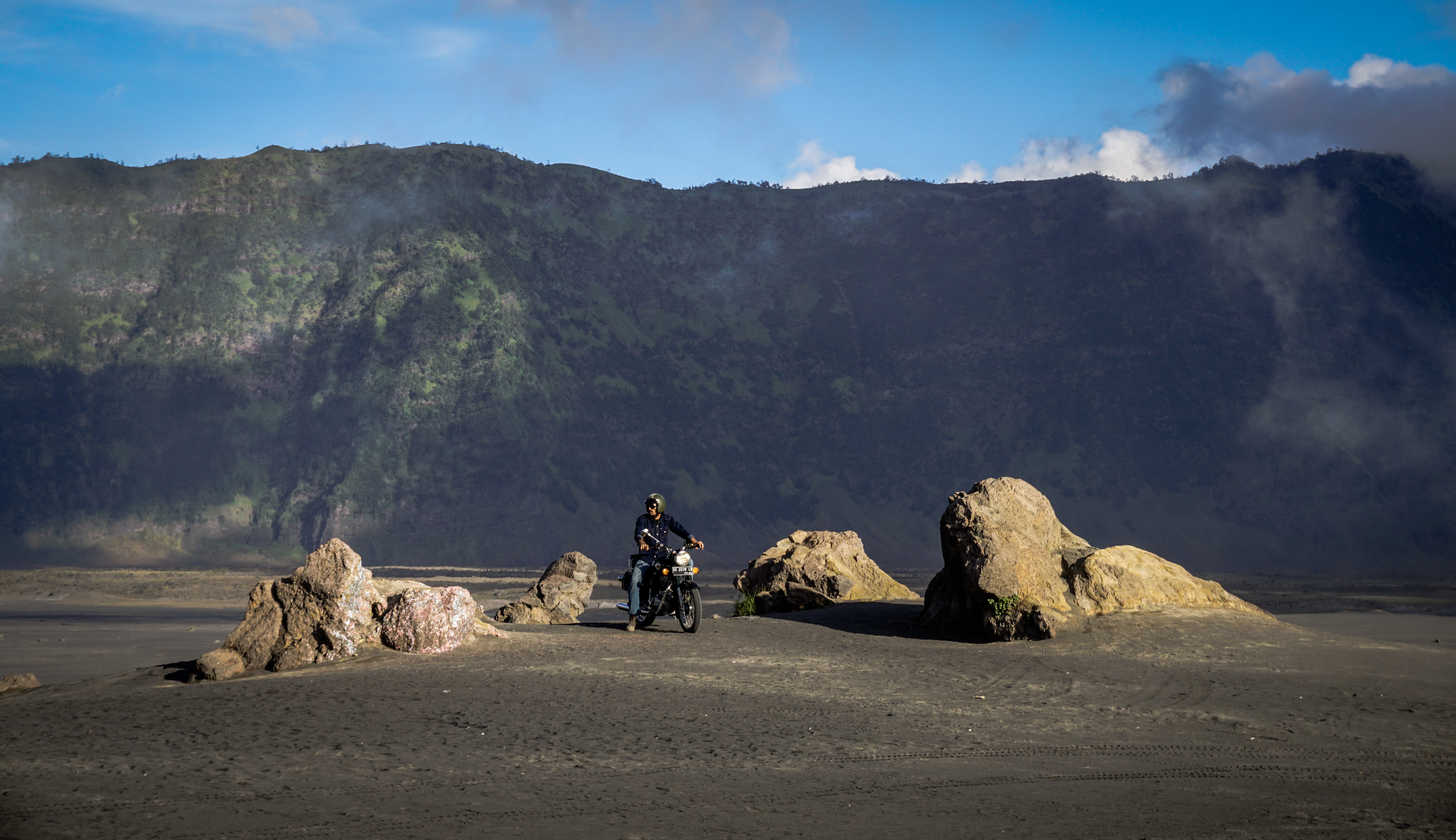
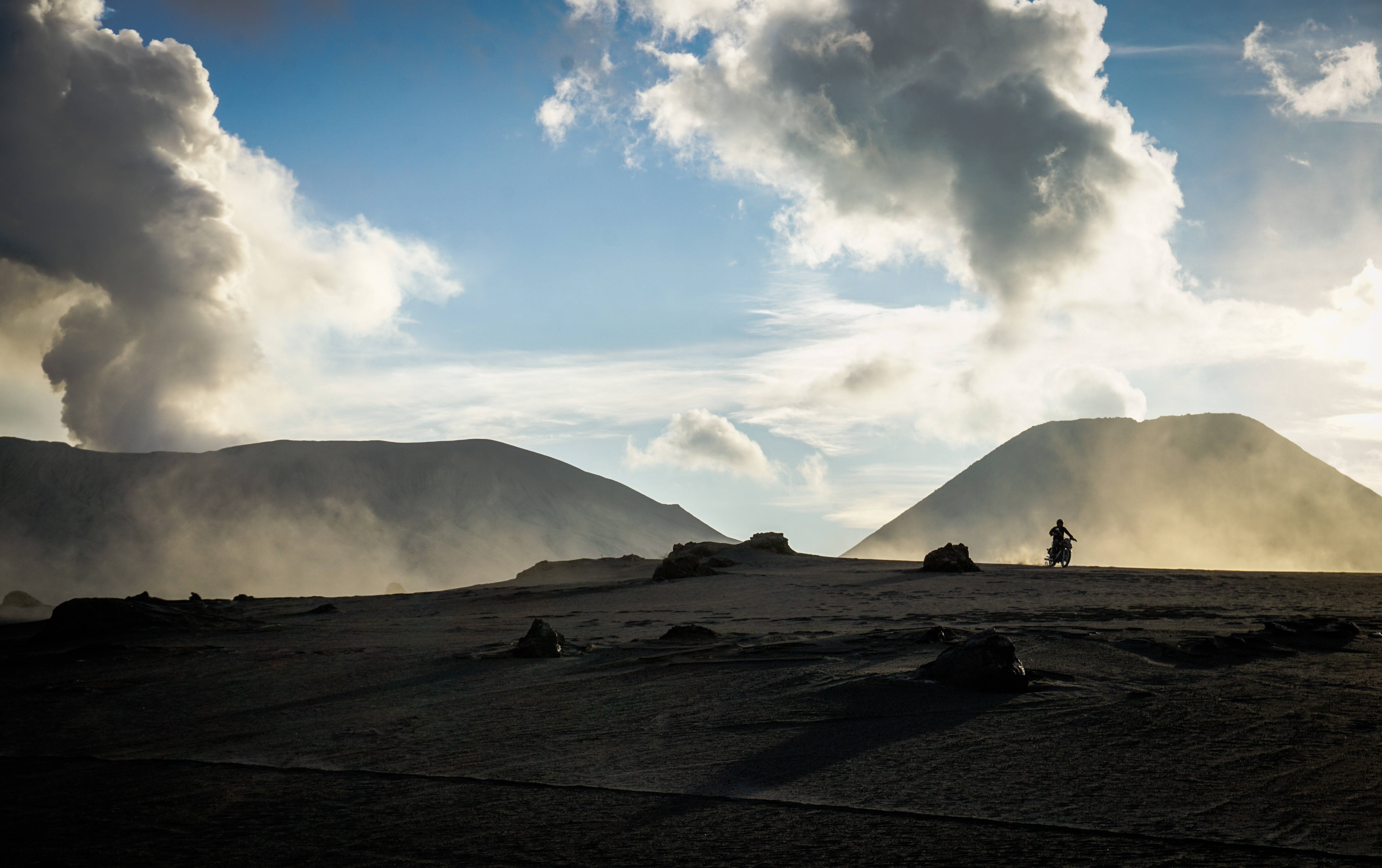
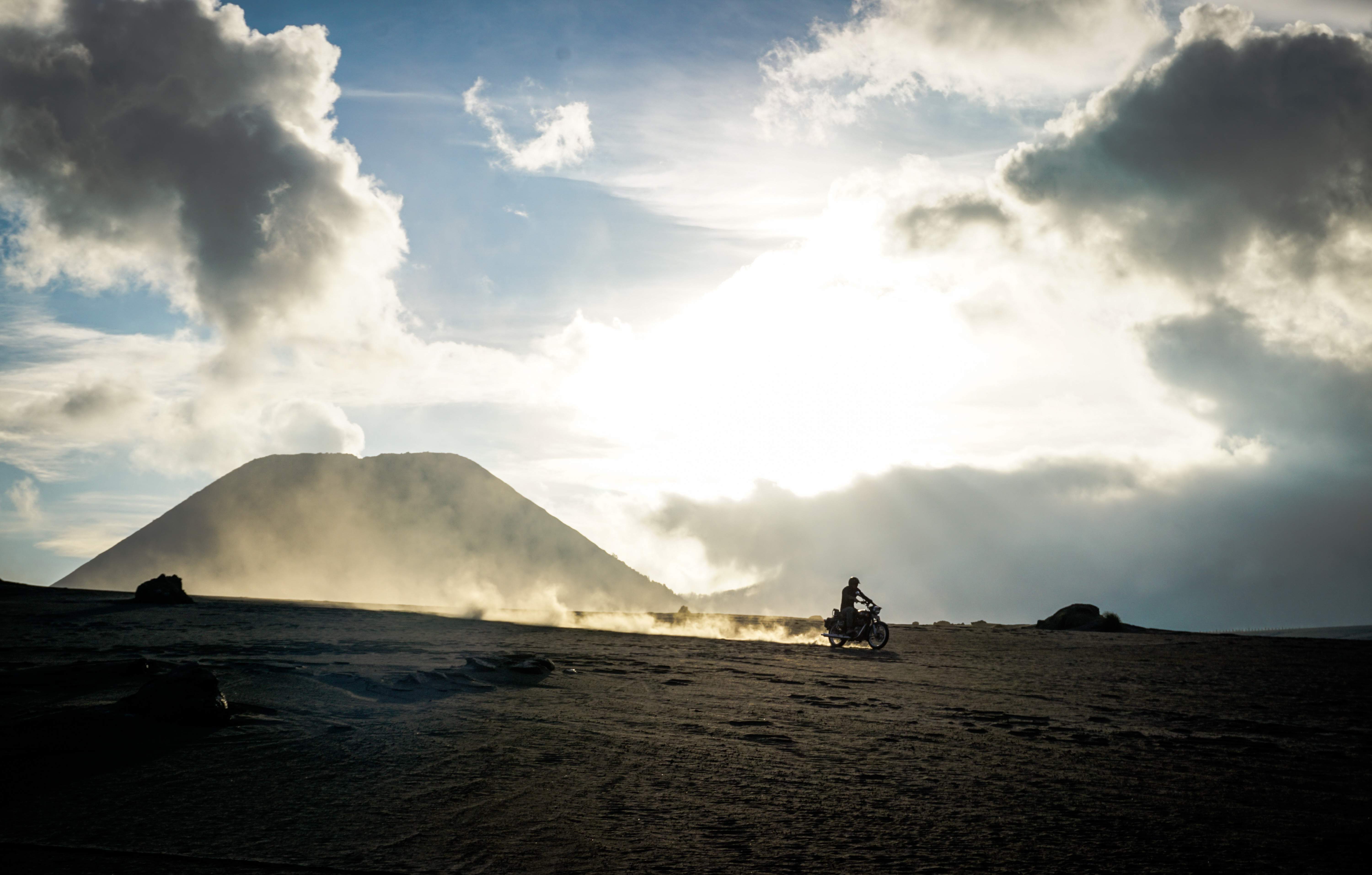
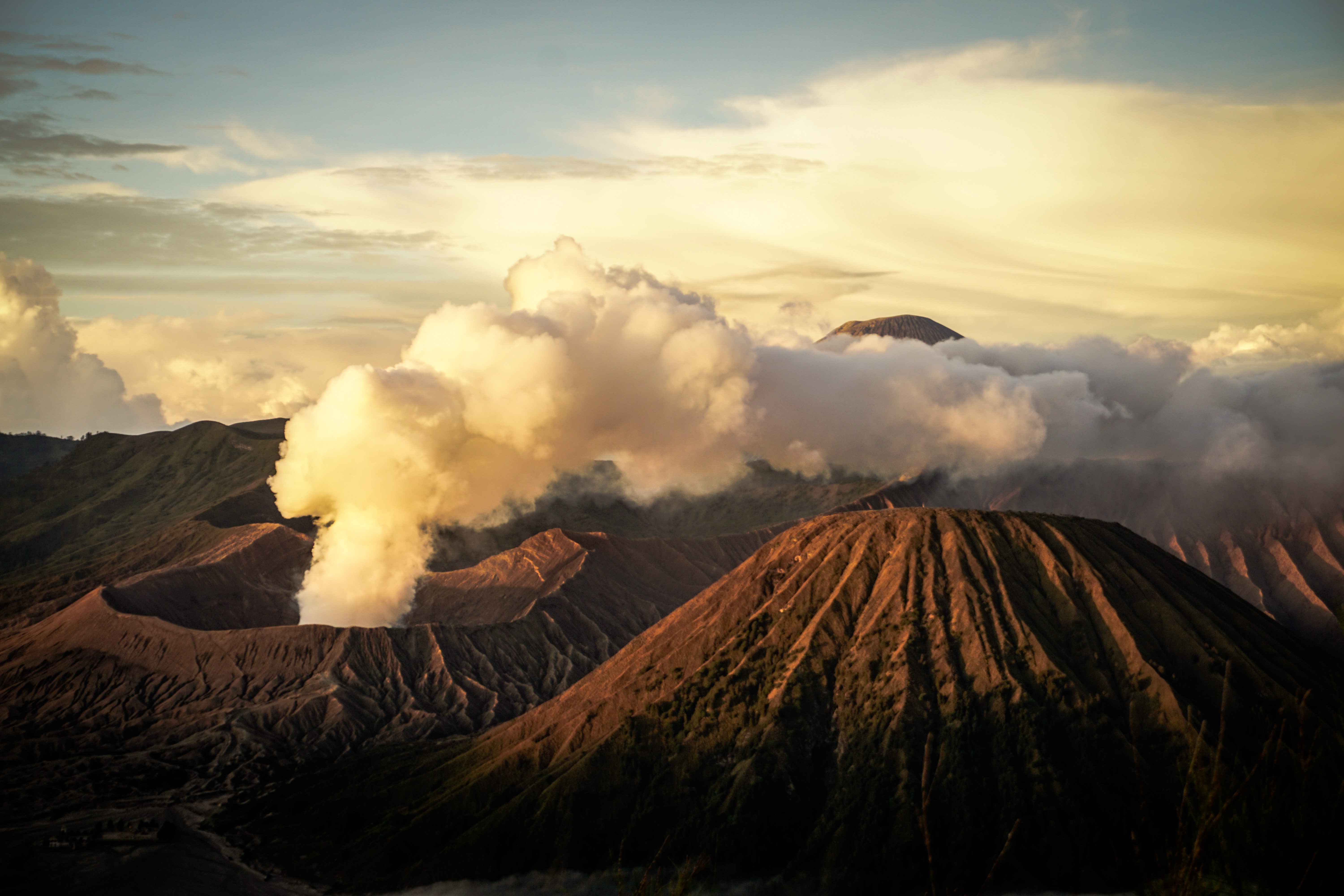
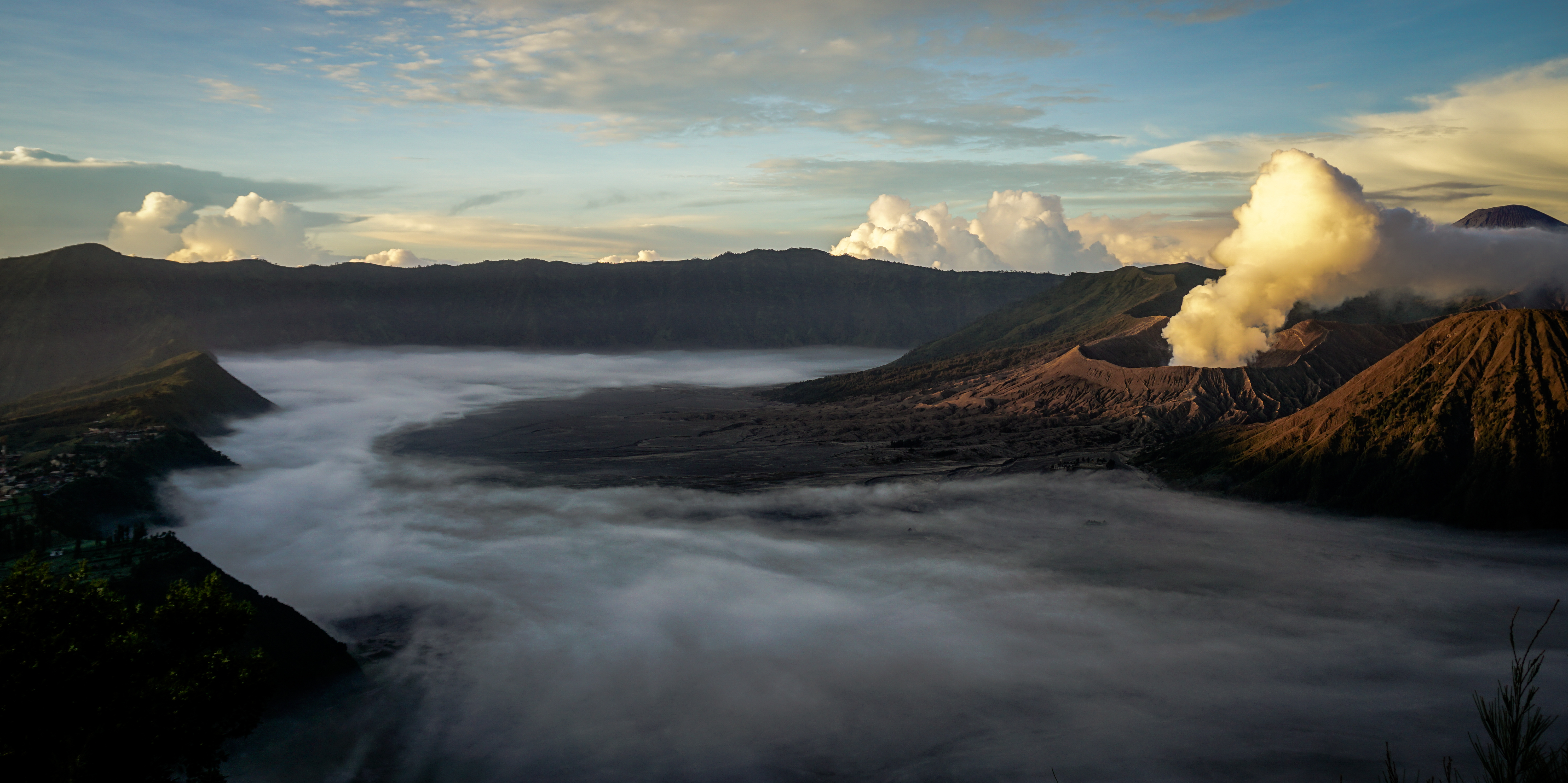
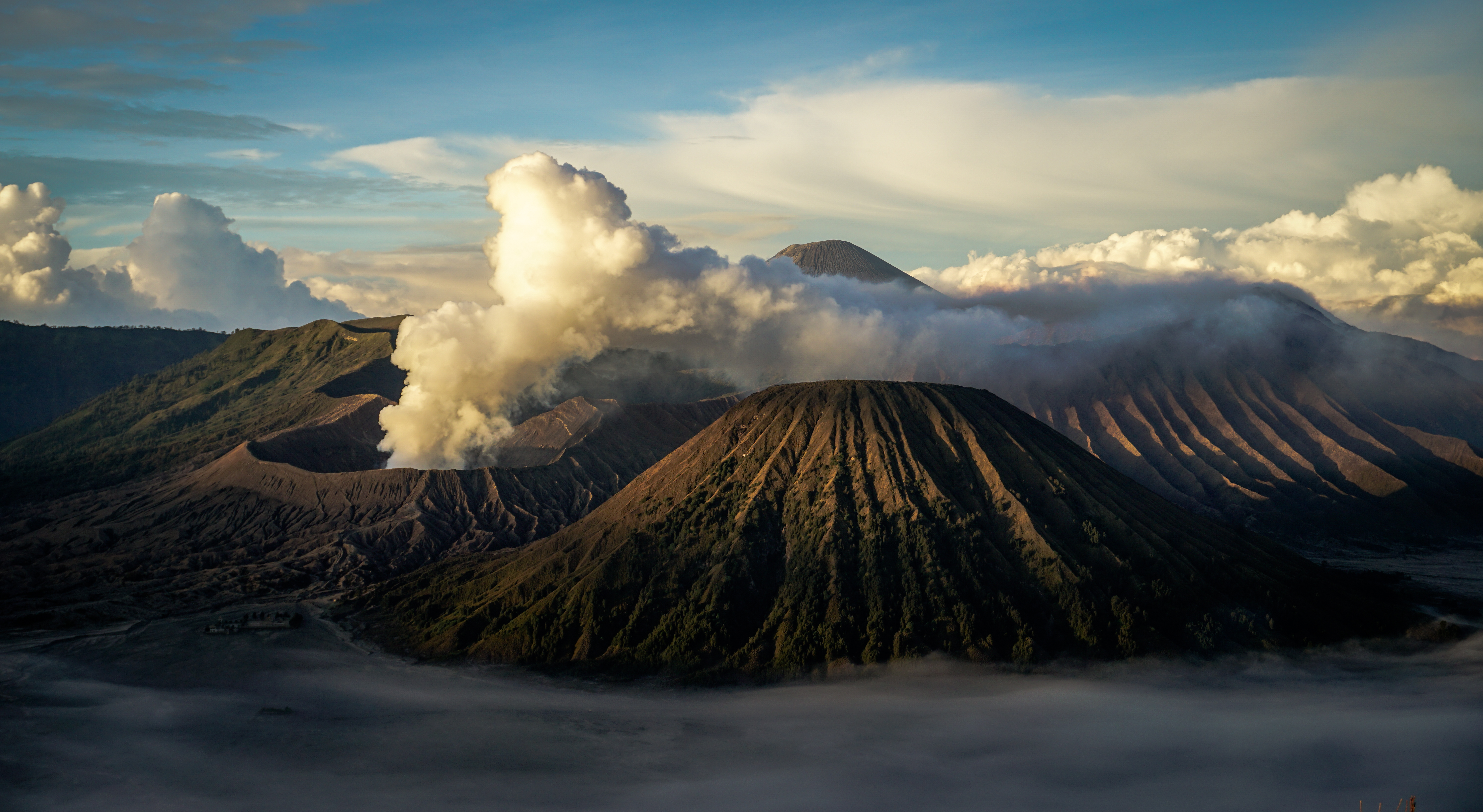
In the heart of Java island, we start to get into altitudes as high as 2300 metres above sea level, a mission which our Bullet coped with very easily, thanks to the torque of the thumper. Here in Java, there is another cultural group settled in the mountains called the Tenggers and they offered us, by chance, an extraordinary night, as we stayed over at the remote city of Podokoyo. They live in some 30 villages around a volcanic area, where the perfectly round craters of the Bromo and the Semeru volcanoes shape the landscape and are visible from a dozen kilometres away as they eject a small cloud of gas every twenty minutes or so.
Photo credit: Philippe Guillaume
Reading in the stars, a local Shaman decides on an evening of celebration. The Tengger believe in the man-horse divinity. Tonight there is no other Westerner in sight but we quickly find ourselves surrounded by a dozen Tenggers, each one bearing a friendly smile and over-excited mind. Twelve Tenggers – in gold and purple outfits, complete with bells and trinkets, start a dance while straddling small wooden horses that are as colourful as the ‘riders’. The dancing becomes more and more animated; the Shaman contributing to the rising tempo by slamming his lash on the ground. A pot is filled with flowers, eggs, rice and the contents of a small perfume bottle. When this is done one of the wooden horse ‘riders’ drops to the floor, gathers up the pot, drinks half of its contents and throws the rest over his head. From here on in, things get much wilder. The drum beats deepen and the dancers become more and more ecstatic and entranced, some of them rolling their eyes back into their heads, a trickle of saliva dribbling from their mouths. Soon the scene turns into a frenzy where it becomes difficult to disassociate people from horses. One of the Tengger grabs a live chicken, rips its neck with his teeth, drinks some of the blood then shares it with whoever looks interested. Not content to end it here another celebrant takes a neon tube, breaks it, gathers together the shards and starts to eat some of them. I take this as my cue to leave the party and get some sleep. Was it a dream? Or was it true?, I ask myself.
Photo credit: Philippe Guillaume
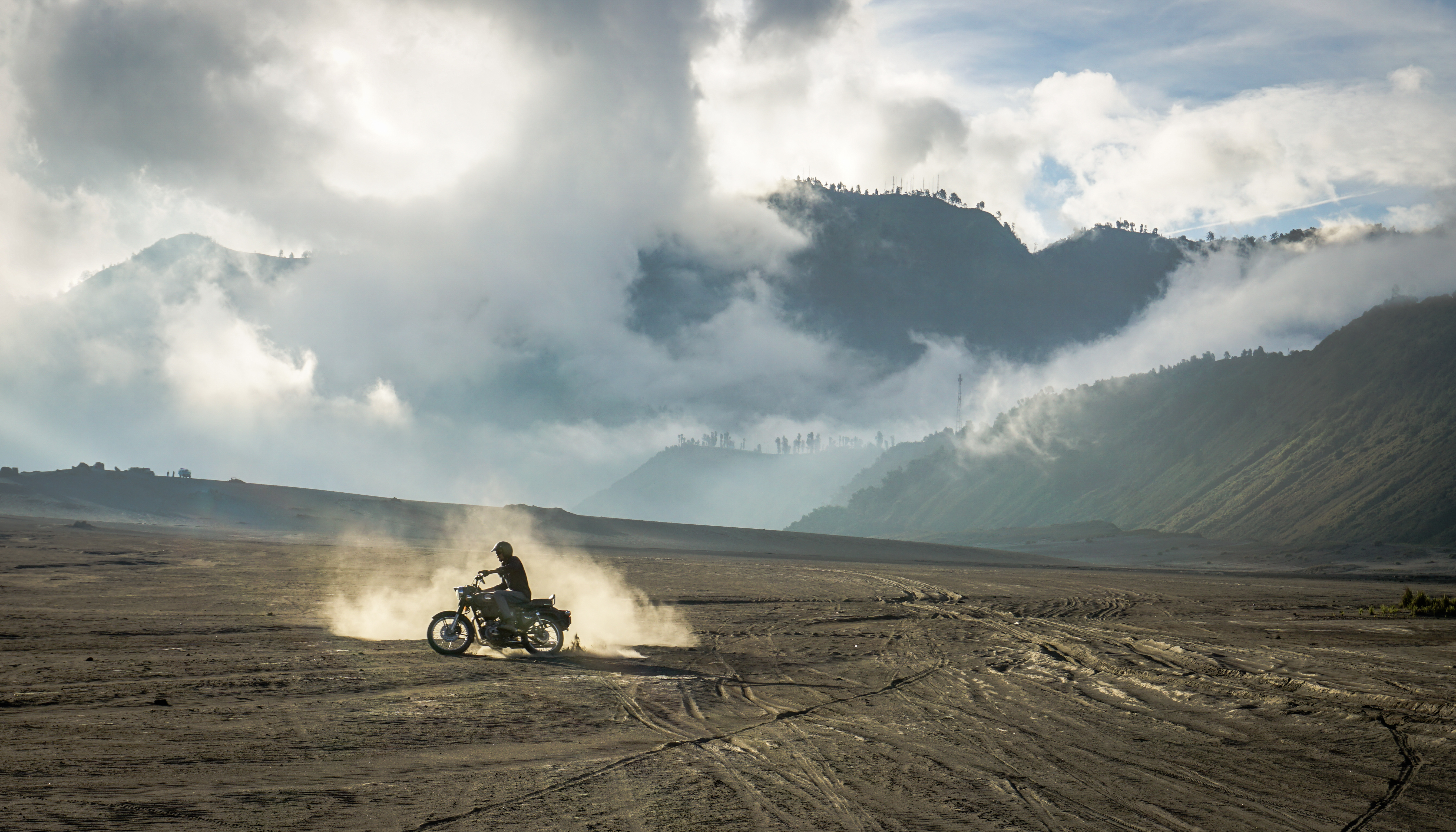
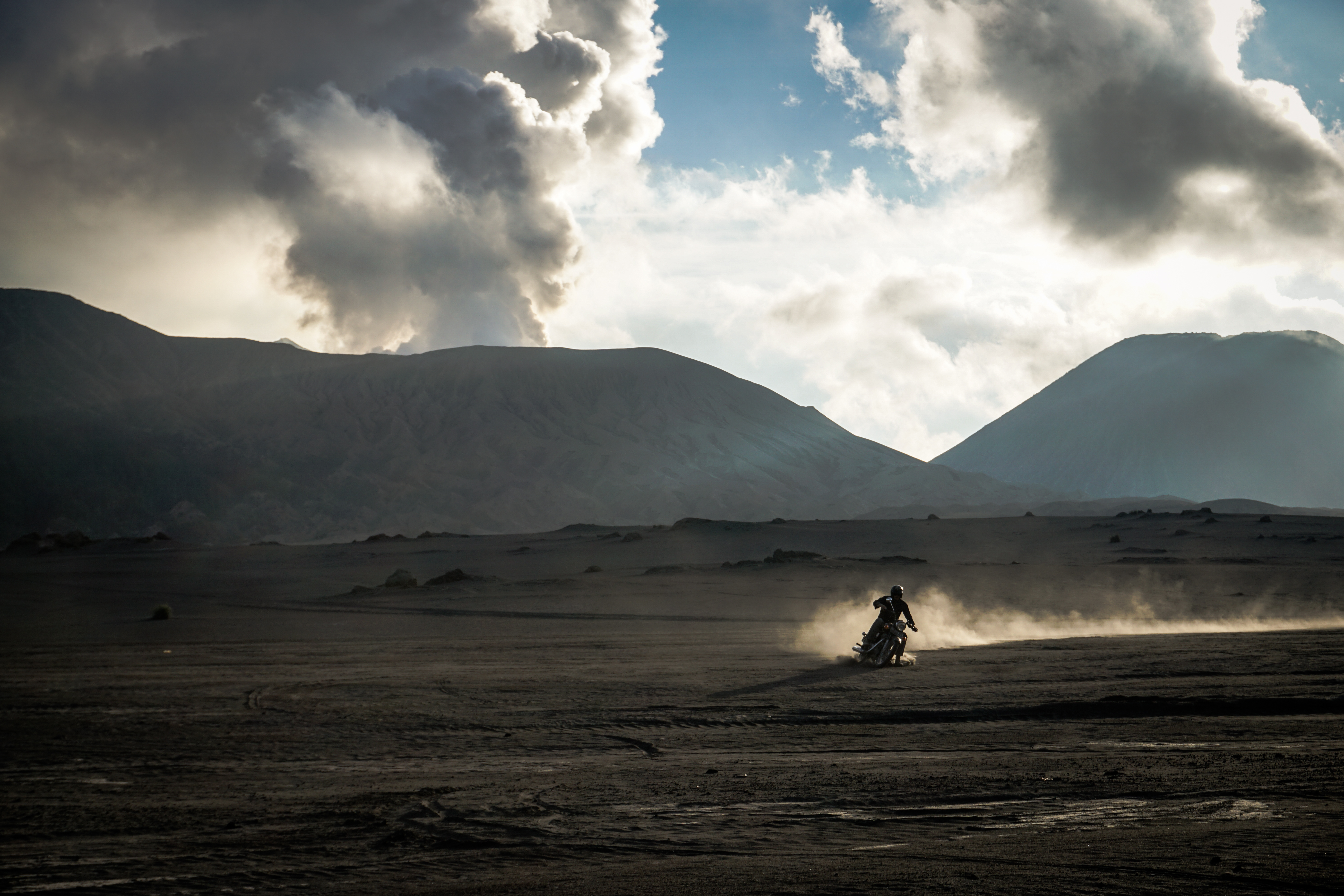
The next morning’s ride brings us back to reality. After a lekker morning of sand riding around the volcanoes, we ride down again to sea level, going across an incredibly dense primary forest in which, for sure, tigers, cobras and many monkeys abound. Indonesia is truly fascinating and blessed with a variety of natural wonders…
Photo credit: Philippe Guillaume
Acknowledgements: many thanks to Vintage Ride travel agency, who gave us the opportunity to discover the Indonesian marvels. If you are tempted, several dates are scheduled for 2019. For more information visit www.vintagerides.travel .
You also might meet our tour guide François as he will now be leading the Vintage Rides tours in the Western Cape. Check out if you meet a bunch of Enfield riders near Worcester or Paarl.
Cast the window wider, sonny;
Let me see the veld
Rolling grandly to the sunset
Where the mountains melt;
With the sharp horizon round it.
Like a silver belt
Years and years I’ve trekked across it;
Ridden back and fore
Till the silence and the grandeur
Ruled me to the core;
No one ever knew it better;
None could love it more.
There’s a balm for crippled spirits;
In the open view.
Running from your very footsteps
Out into the blue.
Like a wagon track to heaven.
Straight ‘twixt God and you.
There’s a spot I know of sonny,
Yonder by the stream;
Bushes handy for the fire,
Water for the team.
By the old outspan sonny,
Let me lie and dream. P. GIBBON.
Photo credit: Bjorn Moreira
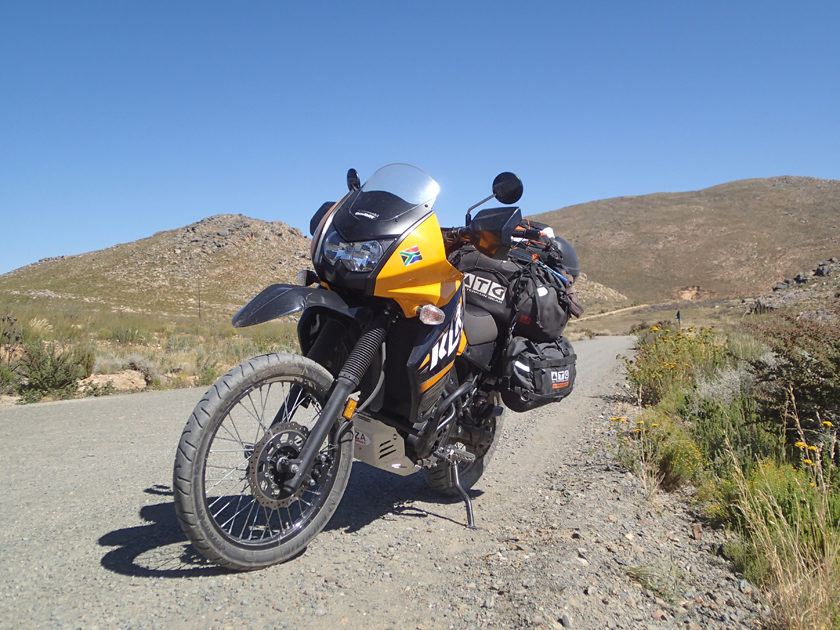
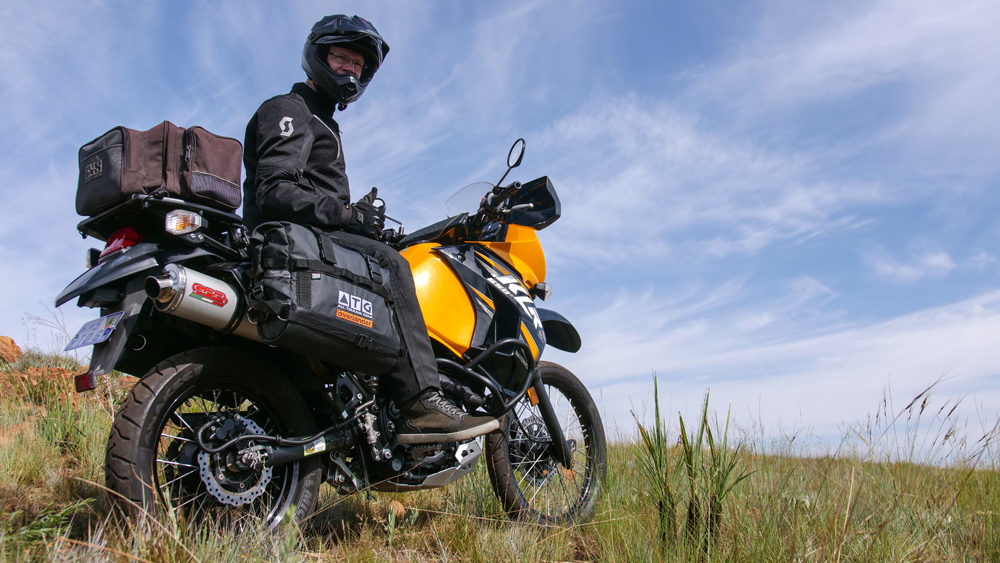
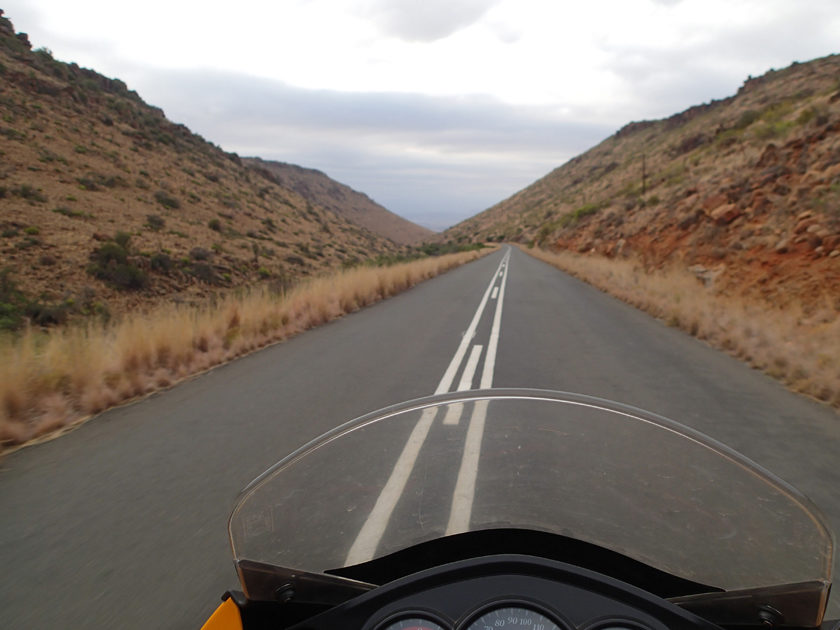
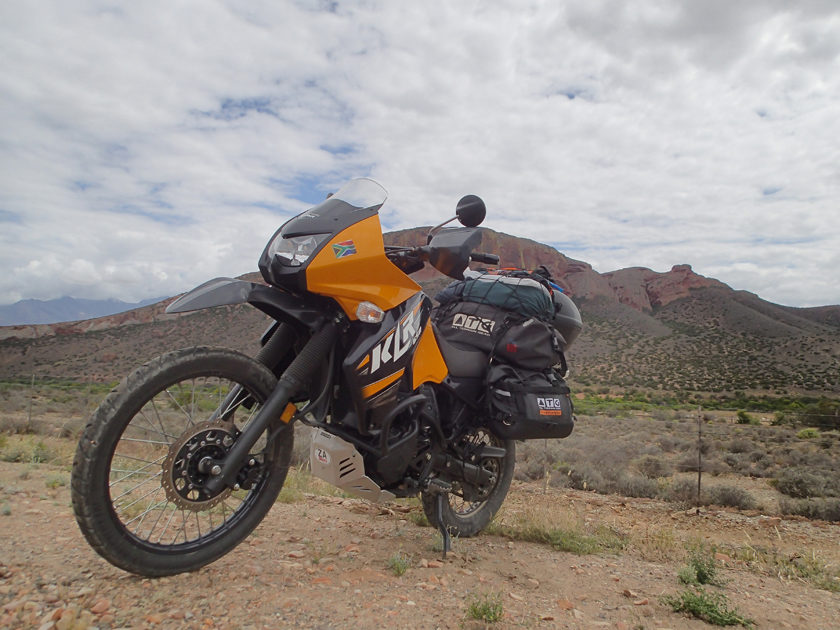
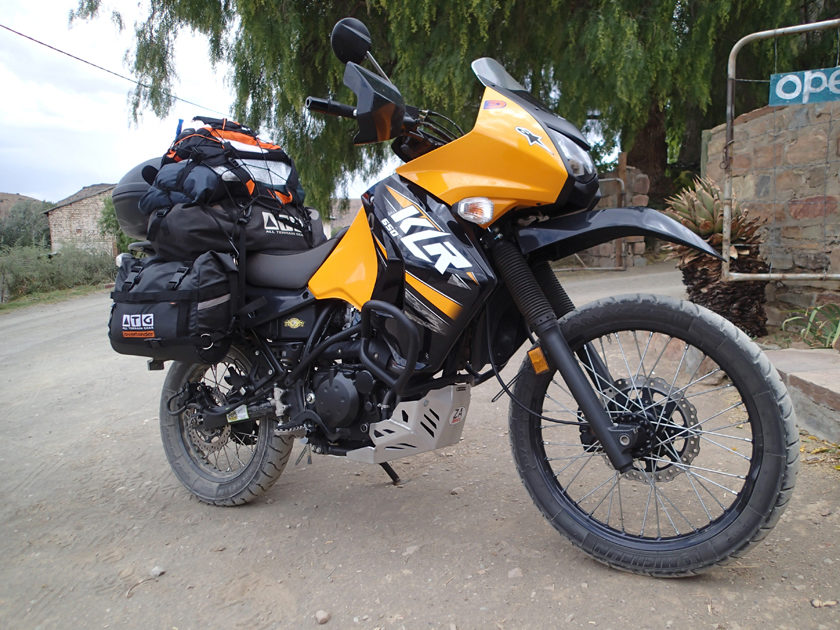
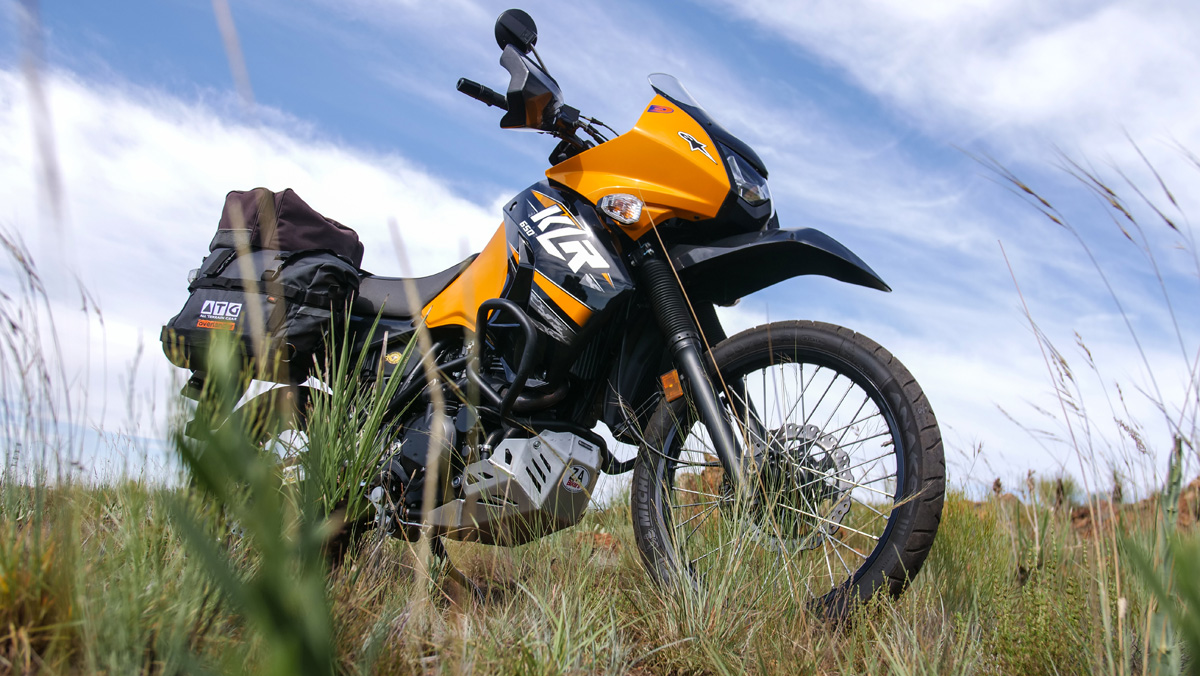
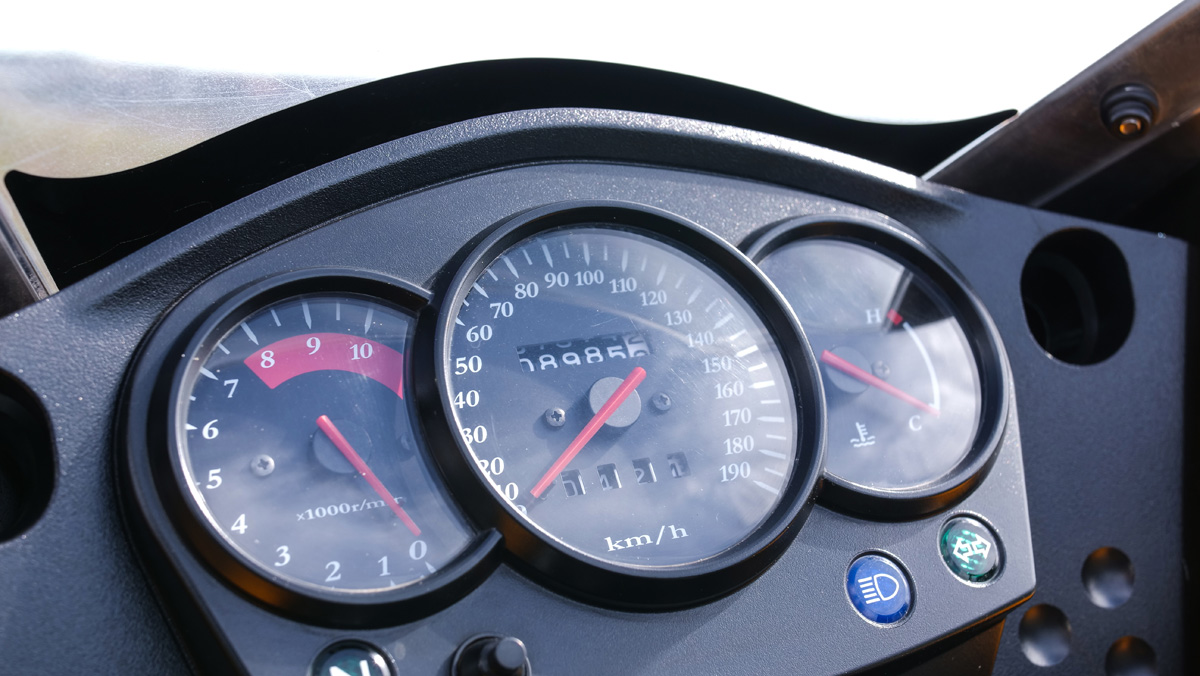
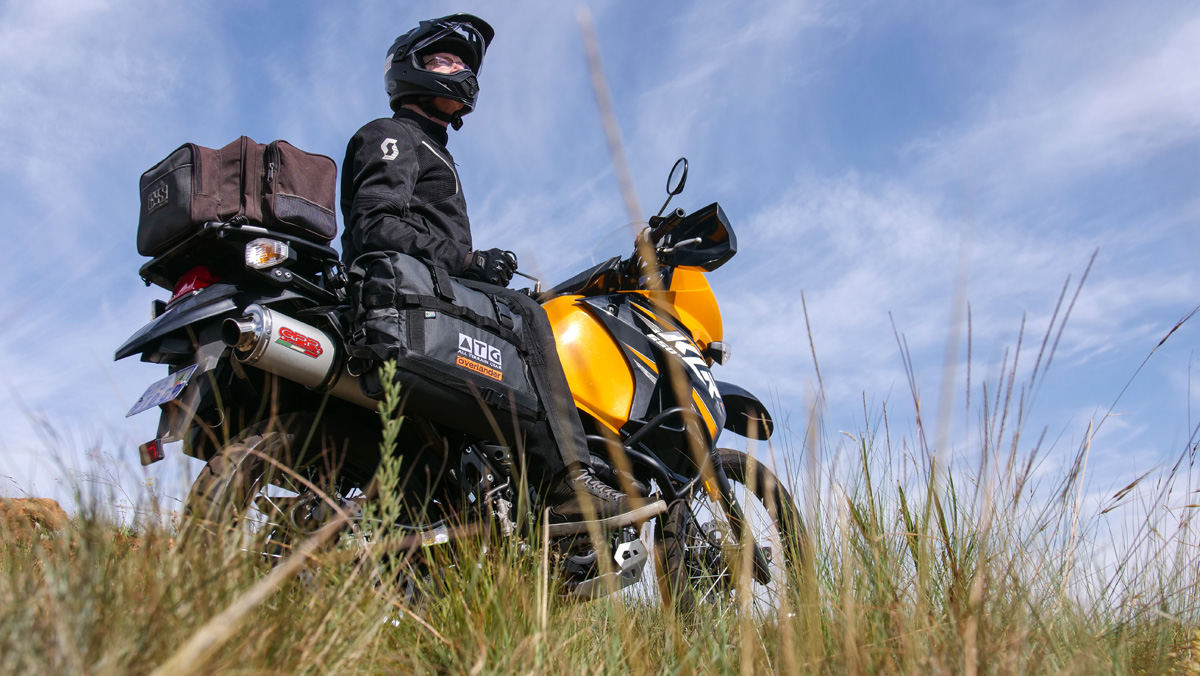
At 4.40 am on the 17th of December I rolled out on to the N1 highway on my heavily laden metal beast of burden, my orange and black Kawasaki KLR 650, affectionately nicknamed “the Killer bee”. KLR, killer, get it? I was expecting a really hot ride so wanted to exploit the cool of the morning to allow me to smash some serious k’s before the day got really warm. My destination for day one was the lovely little Karoo town of Nieu Bethesda, 30 odd k’s before Graaff-Reinet. It is always difficult to wear the right kit for early morning starts, when the wind chill factor can make one quite nippy. Too warm a jacket becomes a heavy liability later in the day, so I dress in layers, with a wind proof shell over my airflow jacket. The sky was heavily brushed with clouds which leaked the odd drop on me as I skirted a still silent Jo’burg and on to the Grasmere toll plaza which was experiencing a traffic jam. Rows of holiday makers queued ten deep at the booths. As you know, bikes rock! So I rumbled past to the head of the queue. “what’s going on?” I asked the chap. “Eish, we offline!”, came the reply. In the interest of good fuel economy and decent tank range coupled with mechanical sympathy, I was cruising at 115 kph on the KLR’s speedo. [Interestingly enough, this would equate to around 123 kph on my KTM 1090, Africa Twin or Yamaha Super Ten which all over read by an almost unacceptable margin.] The “ancient” cable driven speedo on the KLR, when checked against my GPS, is almost spot on. This got me thinking about the Tortoise vs Hare effect that I started noticing. The KLR was able to stay glued to it’s speed. When trucks impede your progress, you simply pass the row of cars stuck behind it and overtake without having to cross the centre line. Cars which flew past you earlier at 130 are now restricted, sometimes for kilometres, to 80 kph. It is amazing how many k’s pass before they fly past you again only to be hindered once again by the next truck, of which there are many on our roads these days.
Photo credit: Dave Cilliers
I had a fuel “splash and dash” in Ventersburg, then rolled on to Bloem, with the KLR throbbing along sweetly at a relaxed 4,500 rpm. The One Stop was so overrun with holiday lemmings bound for the coast that I ditched breakfast plans, settling for a take away coffee and a lunchbar, then got back on the bike. Bloem was actually really cold and heavily overcast and the skies to the south appeared black and heavily pregnant with rain. As it sometimes happens the road seemed to follow a lighter path through the dark skies and I only hit 5 odd k’s of proper rain before I scudded out from under the bank of clouds and reached a dry and hot Colesburg. It was only midday and I had only 150 odd k’s to go.
Photo credit: Dave Cilliers
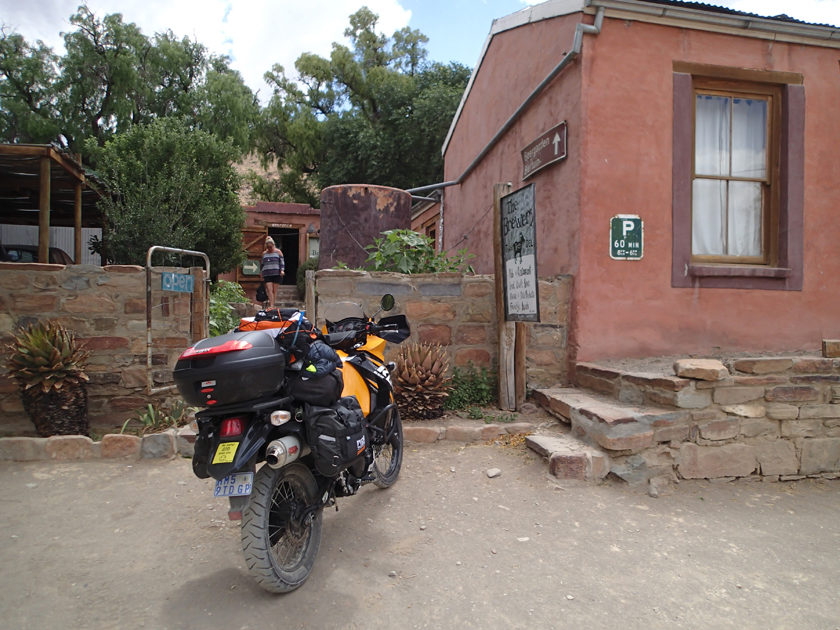
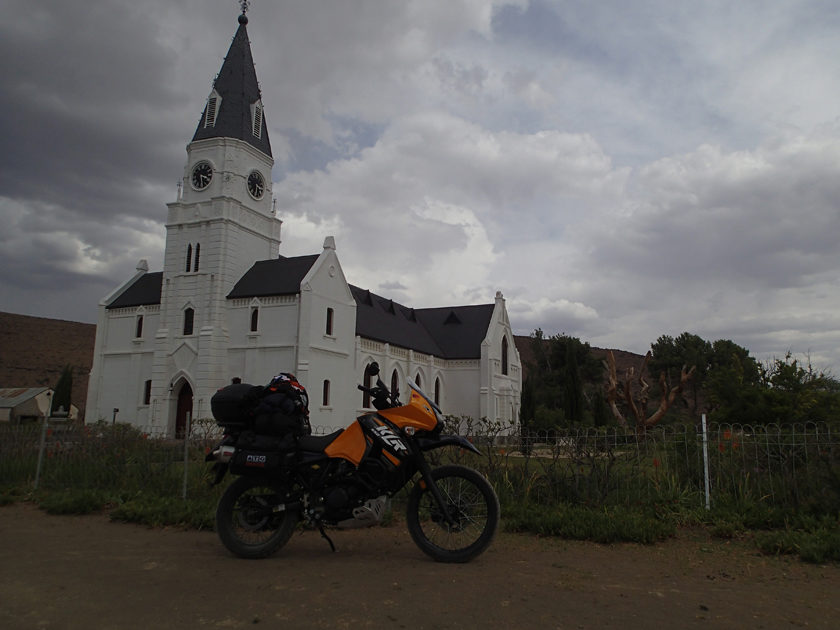
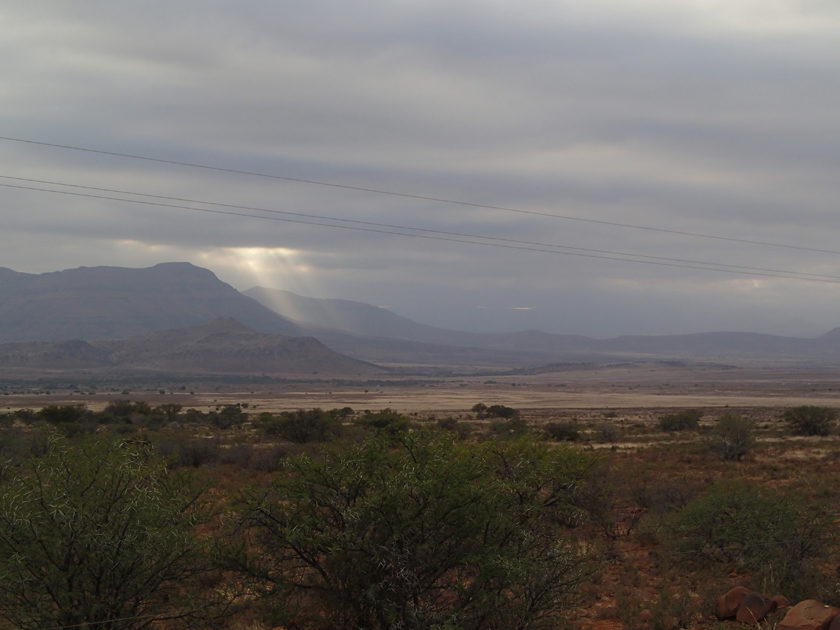
As one enters the Karoo proper, and as I would experience over the next few days, there are huge swathes of our magnificent country that are still in the grip of a devastating drought. Riding through the Great Karoo under a cobalt sky and through a wall of relentless heat, I found myself wondering at the tenacity of the people and animals that inhabit this arid land. The turn off to Nieu Bethesda took me off the national road and after a short while I trundled into the town, heading straight for the Two Goats Deli and Brewery that I had discovered on a previous adventure. I wolfed down a sandwich to quell my hunger and slaked my now considerable thirst with two tankards of “Honey Ale”. If you have not yet visited this little gem of a town, put it on your bucket list. No streetlights, banks or ATM’s, and with tree lined dirt roads emanating from the typical steeple’d church at it’s centre, it oozes old world charm. It was also home to the famous “owl lady”, Helen Martin. In fact, it is probably thanks to the outsider art works of sculpture created by this somewhat tortured soul, that Nieu Bethesda rose to prominence as a tourist destination. The town also has some of the finest dinosaur fossil beds to be found in the Karoo. I always stay at a lovely little B ‘n B called Starry Nights. A real “home from home” spot. Give Bronwen a buzz [0834427734] if you are looking to stay over, you will not be disappointed.
Photo credit: Dave Cilliers
There is a lovely little pub and pizza spot in the middle of the village, opposite Helen Martin’s Owlhouse. This was my supper venue, so after a shower I strolled through the early evening glow for a sundowner. Earlier in the day, just before the turnoff to the village, I was passed by a couple on a BMW 1200 LC GS. So it was, in typical kindred spirit fashion that I spent a delightful night in the company of Rudie and Rene’ Kruger, a couple from Centurion, also on an extended road trip that would take them to the West Coast and back. Rene’, in the interest of sensibility had left her own Bee Em at home and was riding pillion with her man. You are never lonely on a motorcycle road trip. Watered and fed, we strolled back to our accommodation in the cool of a star speckled Karoo evening, tired but content.
Photo credit: Dave Cilliers
True to form I was up early and on the road out of the valley and over the Sneeuwberg to Graaff-Reinet by 6am. Taking advantage of the decent range from the 22 litre tank on the Killer Bee, I fuelled in Willowmore, a full 440 k’s from Colesburg. The solitude and vast vistas of the Karoo accompanied by the reassuring throb of the big single feed your soul. Oh yes, I must tell you about Roelof. About 30 klicks south of Aberdeen, I stopped where a farm road spills out onto the main road to secure my rainsuit bag which was trying to go AWOL. A farm bakkie emerged, and the driver, who was accompanied by his young son, asked if I was OK. So this is how I met Roelof. Turns out he is a hectic adventure biker who rode his KTM 990 with mates through the Darien Gap in South America. After running a fruit export operation in Pretoria, he is now farming the family farm near Aberdeen in the Karoo. A mere 4k’s from the main road he has self catering farm stay cottages on his farm, and plans to host adventure rides from this venue in the future. Watch this space for details! In fact the town of Aberdeen has plenty to offer, so before just haring through, stop and linger a while.
Photo credit: Dave Cilliers
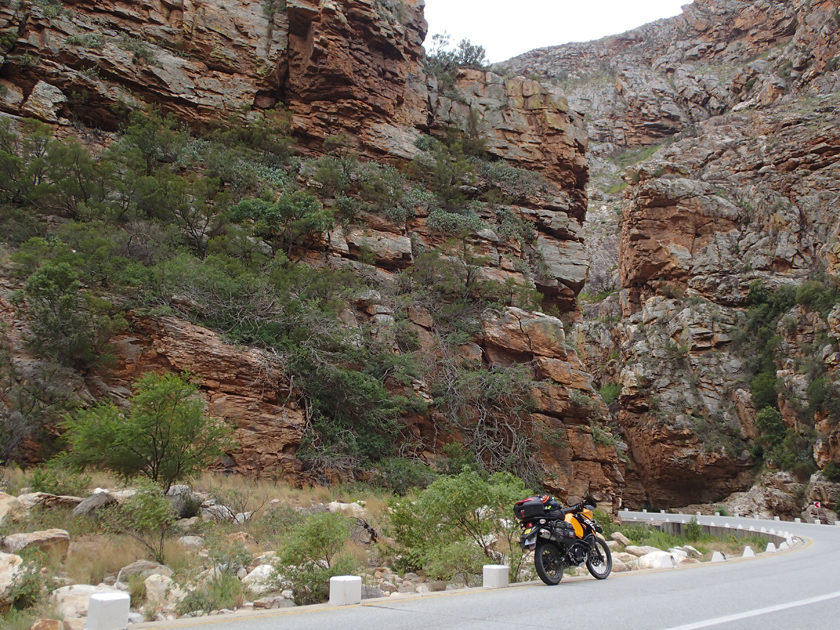
Around 40 k’s after Willowmore I took a right to De Rust. This road undulates and curves through some amazing scenery before it makes a T-Junction in De Rust. Turn right and the road leads you through Meiringspoort, with the most spectacular scenery you can imagine!. The road follows the course of the river which over the ages has cut it’s way through the mountain to create this spectacle. Once you exit the Poort it is a short hop to the Prince Albert turnoff, where I was to meet my mates from Montagu. If you have not yet visited Prince Albert, do it! Again, a tidy little Karoo town with lots of history and, nestled at the foot of the Swartberg pass, perfect as a base for Karoo travellers.
Photo credit: Dave Cilliers
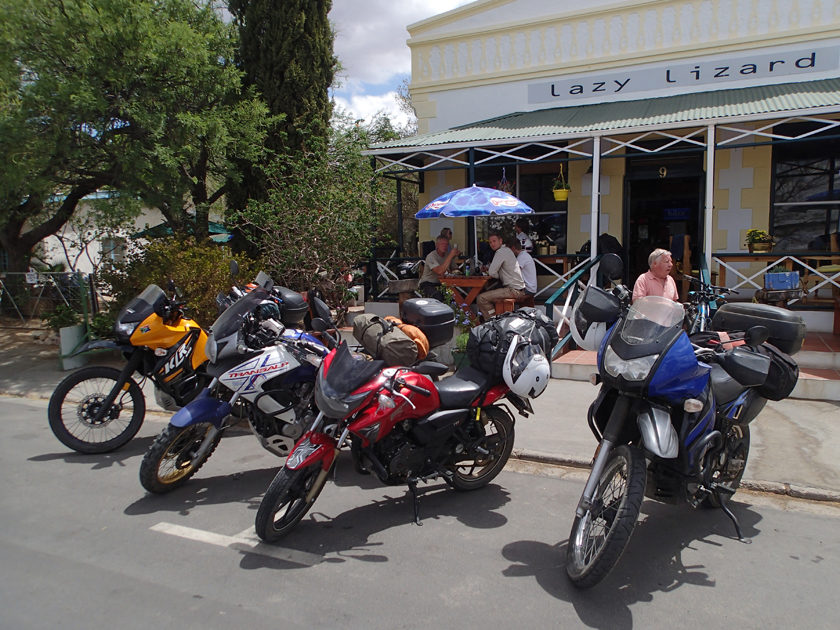
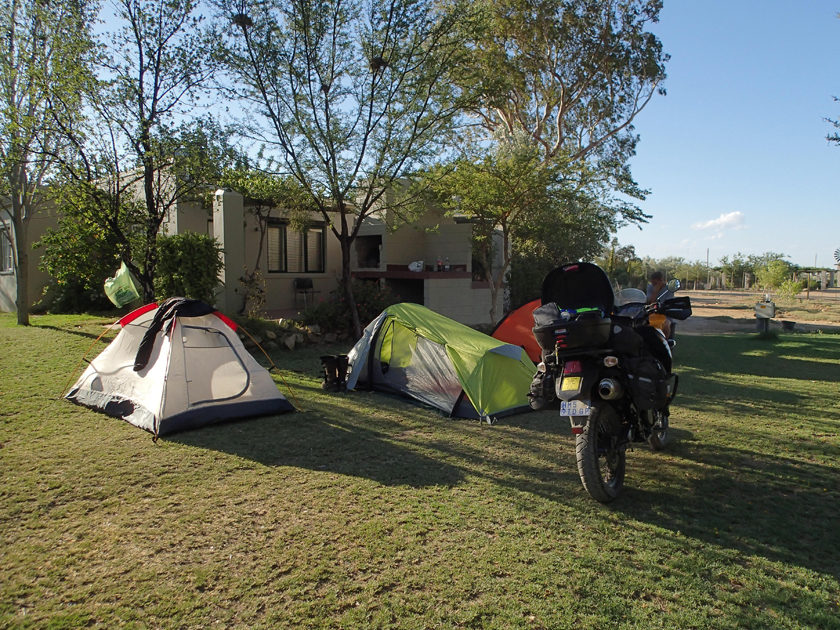
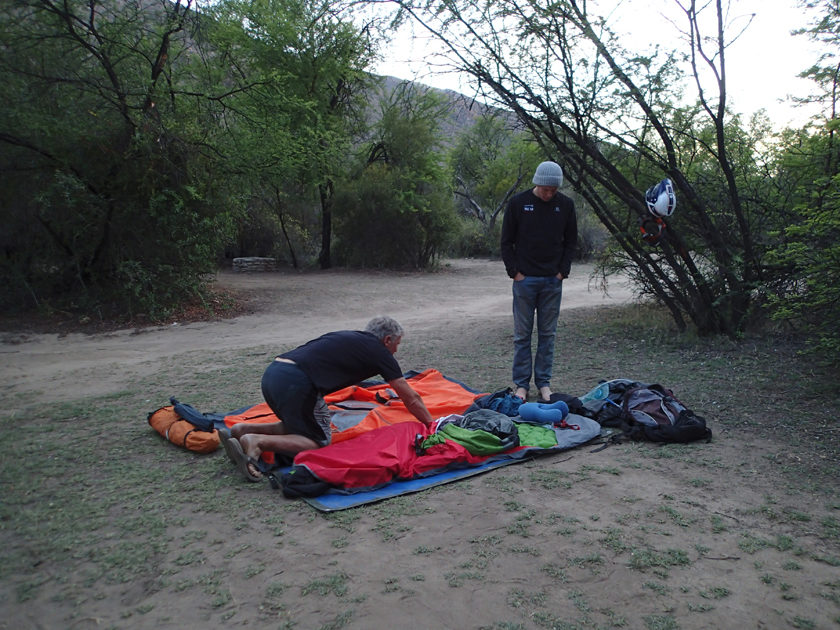
I pulled in to the Lazy Lizard, a funky little eatery that makes a damn fine coffee, on the main street of Prince Albert, to wait the arrival of my bud Cobus, on his 700 TransAlp, together with his sons Eckardt and Krisjan, riding another KLR and a TVS 180 Apache respectively. The tiny TVS, commandeered for the trip from his wife Tersea, is no stranger to the open road, having been ridden down to Montagu from Pretoria a few months back. We had slight reservations about it’s ability to negotiate the somewhat extreme road that we intended riding down Gamkaskloof to Die Hel. I was on my third coffee when the troops arrived. The typical banter of an easy friendship ensued as we planned our assault on Die Hel. We sought out the local camp site, pitched our tents then went shopping for provisions for the next two nights of camping. “Ons gaan nou braai”, was the popular call, so Karoo chops and wors were on the menu, with a stew planned for the next night at our Die Hel campsite. Captain Morgan, the travellers mate, got things off to a great start as the fire burned down to braai ready coals. The sky was clear and the weather warm with the earlier gusty wind having died down. Tents pitched amid the organized chaos of unpacked bikes formed a wonderful backdrop to another memorable “kuier”. The evening drew to a close as we sat chatting and sipping on the now customary, Captain laced, “Renoster” coffee. With the heady anticipation of an epic ride in the offing on the ‘morrow, we snuggled into our sleeping bags for some welcome slumber.
Photo credit: Dave Cilliers
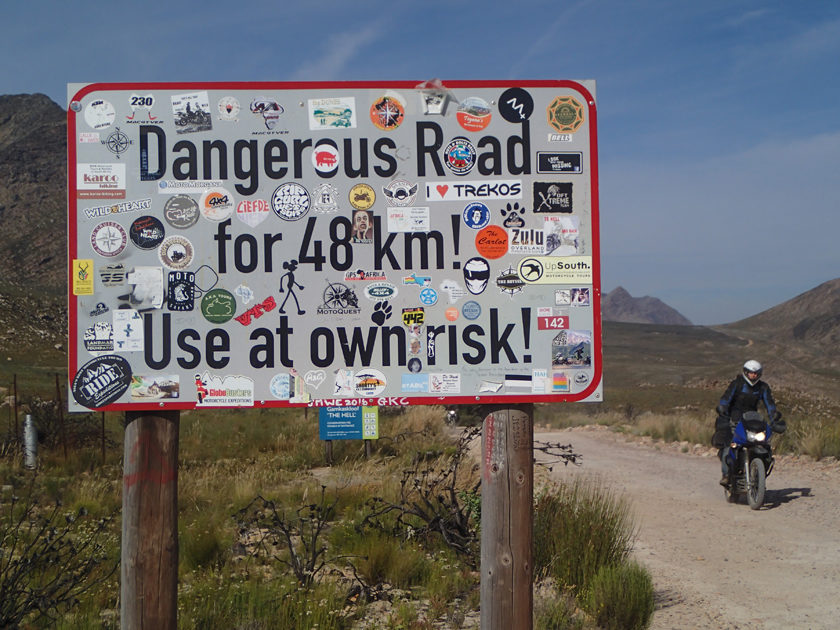
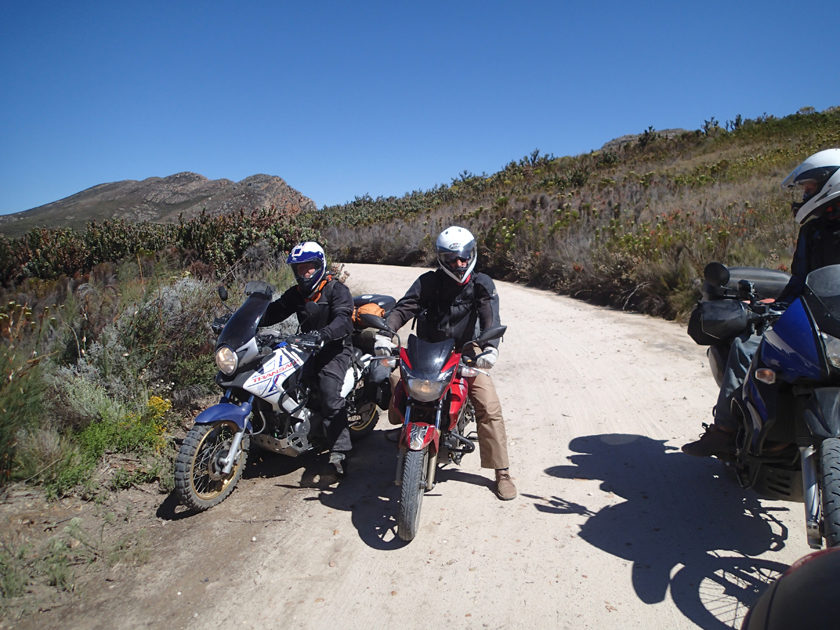
As is typically the case when camping I rise early, so at first light I showered and started striking camp. One by one the troops too followed suit. We arrived at the town butchery for our meat for our planned stew, topped our fuel tanks then headed out of town. The bottom of Swartberg pass is reminiscent of Meiringspoort before they tarred the road. The road starts to rise onto the pass proper, opening up magnificent vistas. Not even 20 k’s up the pass the turnoff to Die Hel goes off to the right. Two signs at the turnoff help build the excitement. The first reads “Dangerous road for 48 km! Use at own risk”. The sign is covered in stickers put there by fellows who have ridden the road, such as “GPS for Africa” and “GlobeBusters MOTORCYCLE EXPEDITIONS”. Numerous 4×4 clubs have added their logos too. The next sign reads “Gamkaskloof 37 Travelling time two hours”. Slightly confused by the discrepancy in distance between the two signs, which are a 100 metres apart, we rode off. A bunch of guys on adventure bikes were parked under a tree in the shade, waiting for their backup vehicle, having just ascended the pass. We stopped for a chat. Their was a KLR, a couple of airhead GS’s and an 800 GS. After exchanging typical questions about where we were from and where we planned on going, one of the guys said “Oh, you that guy from ZA Bikers, I just read your blog about the Doohickey, now you are on the trip you spoke about!”. Youbetcha!, I’m that guy!. We shared a few war stories, as is the custom amongst adventure bike riders then got on our way. The guys gave a parting glance at the little TVS that had us wondering if we had perhaps brought, in the case of the 180 Apache, a knife to a gunfight.
Photo credit: Dave Cilliers
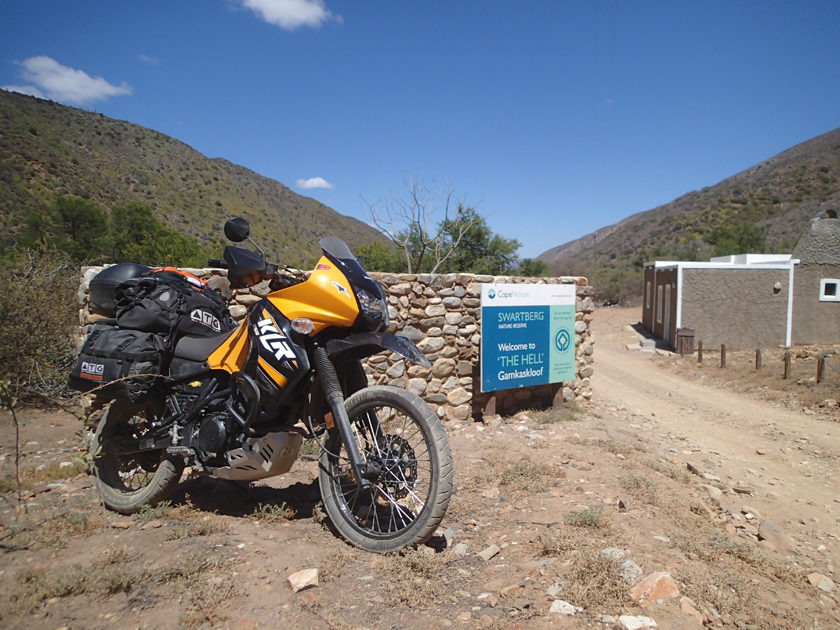
Die Hel was so named by an early visitor to Gamkaskloof who exclaimed “die plek is so warm soos die hel!”. [this place is as hot as hell] The name stuck. We planned to complete the ride before the heat of the day really manifested. With the occasional cloud looking like white brush strokes on a blue canvas, the weather was splendid. Speaking of names, “Gamkaskloof, in the language of the Khoisan who named it, means Lion Kloof. I marvelled at a time when lions, in abundance, roamed this land. The descent makes for excellent riding. Loose and rocky in places, open and flowing in others, the road ebbs and flows through fields of proteas in places, with the occasional stream crossing, now reduced to a trickle by drought. Some mountain bikers making the descent became the odd moving chicane as we endeavoured to get past. The more skilled riders match a motorcycle for speed as they strut their stuff down the gnarly dirt track. The final part of the descent gets steep and somewhat rutted with hairpin bends and drop offs. A sign at the foot of the pass announces that you are entering the Swartberg Nature Reserve, Gamkaskloof. You then ride on a few more k’s to a beautiful small valley dotted with the renovated homes of the early settlers. These dwellings can be booked by visitors to Die Hel, or alternatively, like in our case, you can camp.
Photo credit: Dave Cilliers
I waited for everyone to arrive, with Krisjan on the TVS bringing up the rear scant minutes behind the pukka adventure bikes. He reported that some of the rocky sections had been a bit hairy but that the light weight of the little 180 had allowed him to pick the best line down the road. He was full of praise for the plucky and tough little Indian bike. The TVS once again proved that it is not the size of the bike in the adventure that counts but rather the size of the adventure in the bike!. The Killer bee was huge fun to ride in the dirt. Running down steep inclines against compression allowed minimal use of the brakes, whilst the steep uphills were despatched with torquey tenacity. The adequate suspension travel, 21 inch front wheel and relative light weight make technical sections a bit of a non event.
Photo credit: Dave Cilliers
It was late morning by now and the heat was building. We sat under the shaded veranda of the shop and quaffed a couple of cold beers and feasted on freshly baked farm bread, cheese and jam. The thatched shop is scattered with items that bear testimony to the history of the valley and the people who made it their home. Only in the early 1960’s did the road get built, finally linking the kloof to the outside world. Prior to that goods were brought into and out of the kloof by donkeys on a bridle path. The nearest town is Calitzdorp, so travel in and out of the valley was no mean feat. To this day there is only one road, the one that we had traversed, in and out of the Gamkaskloof. The shop and its surroundings, consisting of a small swimming pool and some green lawn flanked by a small vineyard, and dotted with the odd restored dwelling is an oasis in the harsh heat and singed landscape. We paid our camp fees, a paltry R50 each and rode a short distance to our campsite. We pitched tents, dispensing with the need for the flysheets as we expected the evening to be both dry and warm, then lay in the shade for a siesta.
Photo credit: Dave Cilliers
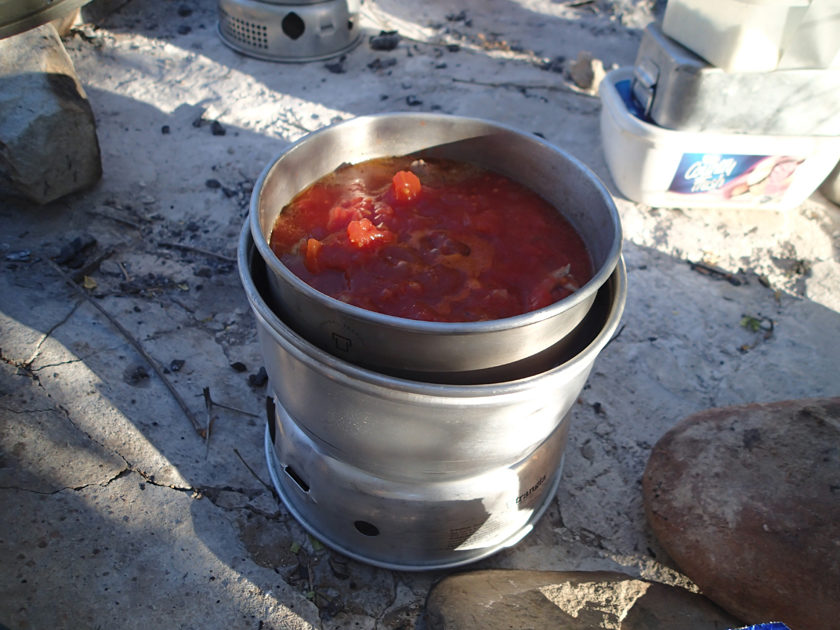
In the late afternoon, wilting in the relentless heat, we went for a swim and a cold shandy. Rejuvenated, we returned to our camp to prepare our evening meal. Cobus and I got our trusty Trangia stoves going and sucked on a mug of red while I prepared our stew consisting of cubed rump steak, butternut, tomato, onion, potatoes and peas in their shells. As the light seeped from the sky and the heat softened to a balmy glow, the delicious aroma of the bubbling stew permeated the air. We shot the breeze for a couple of hours before ladling stew over the rice on our plates and tucking into what, even though I say it myself, was a damn fine chow! The mandatory Renoster coffee put the seal on what had turned out to be a really special day. The next day would see us going our respective ways, with Cobus and his boys meandering back on scenic dirt roads while I had in mind to ride Prince Alfred’s pass from the Langkloof over the mountain, to hit the national road near Keurbooms river, then on to PE.
Photo credit: Dave Cilliers
Up at 5am we hastily packed up and rode out of our campsite by six. As is often the case, the ascent of Gamkaskloof in the early morning was a blast. The air was still cool and we were blessed with another splendid day albeit with signs of more serious heat in the offing. We gathered at the spot at the top of the pass where we had chatted with the bikers the previous day then rode back onto Swartberg pass. The pass, closed until a year odd back for the repair of storm damage, is in good nick. Cresting the pass and descending into the valley on the Oudtshoorn side is great adventure riding. The surface, whilst rocky in patches, is good and the views spectacular. At the foot of the pass we said our goodbyes and I sped off to meet with my buddy from Sedgefield, Mike, with whom I was to ride Prince Alfred’s pass.
Photo credit: Dave Cilliers
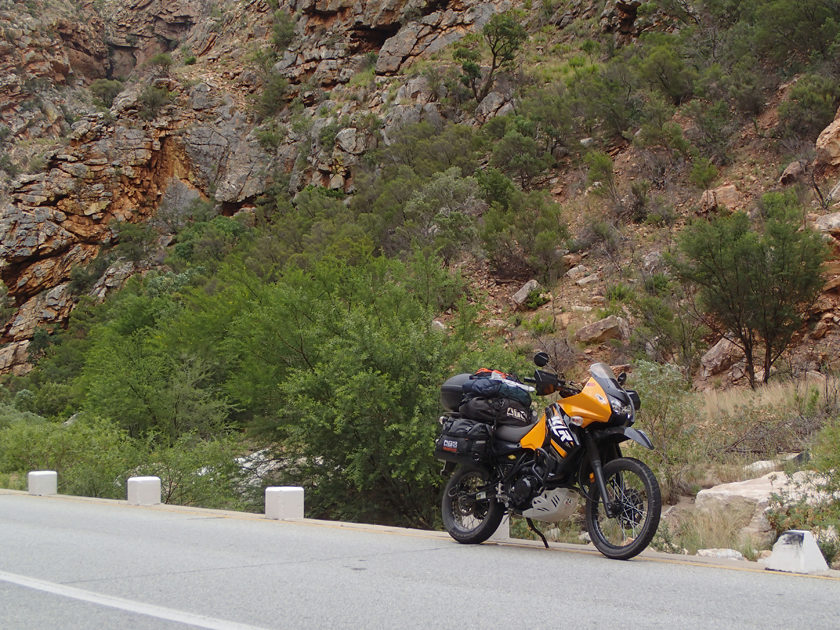
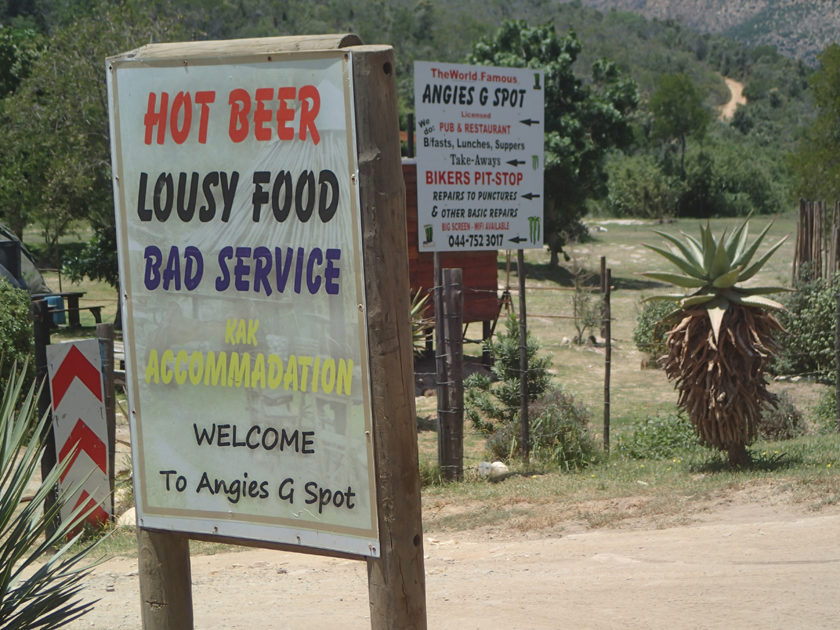
The ride into Oudtshoorn is amazing. Back on tar, the road sweeps through twisties that beg for full leathers, knee sliders and a Sports weapon. Even the KLR was a blast pitched on its ear through the bends. I met up with Mike at the foot of Outeniqua pass on the Karoo side, where we punished a quick breakfast before riding the N9, and a short piece of route 62, before turning off at the hamlet of Avontuur. Back on the dirt the two KLR’S ran in tandem up and over Prince Alfred’s pass. The guys in the western Cape are seriously blessed with fantastic adventure bike routes. Once again, great views and good dirt roads made for splendid riding. With the day now properly hot we stopped at the well known “Angie’s G Spot” for a cold coke. I had a good chuckle at the welcoming sign at Angie’s which advertises Hot beer, lousy food, bad service, “kak” accommodation – welcome to Angie’s G Spot.
Photo credit: Dave Cilliers
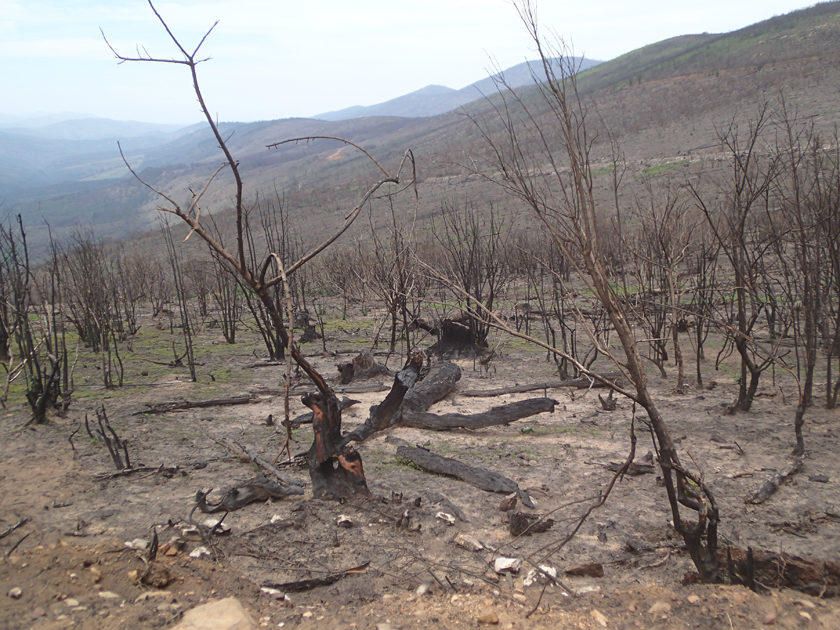
Only when you ride these roads do you fully appreciate the devastation wreaked by the fires which have ravished these areas. Charred stumps stand as stark reminders, on blackened hillsides, of the fury of the blaze. Typically I would have continued straight along this road through a section of the magnificent Knysna forest. The fires however, have reduced this area to a blackened wasteland, so we veered off left to eventually meet the N2 just east of Plett. Once again it was time for goodbyes as Mike returned to Sedgefield and I hopped on to the N2 to PE, which I reached by around 3pm after being buffeted for the last 80 k’s by a proper side wind. Welcome to the windy city indeed!
Photo credit: Dave Cilliers
After a few days with family it was time to return home, so at 5.15 am on the morning of the 26th, I again hopped on the Killer Bee and in the cool of the morning ran at 5000 rpm’s to Cradock. This equates to around a true 122 kph but interestingly increases the fuel consumption significantly. The KLR had, to this point, running at 4,500 rpm, averaged better than 19 kpl consistently. An extra 500 rpm dropped the consumption closer to 16 kpl, reducing the tank range from 450 k’s to around 350. I rode the more scenic route to Gariep Dam and then to Bloem where I downed a quick milkshake before once more braving what was now consistent 38 degree heat. With a total travelling time of 11 hours and 15 minutes I rolled up to my gate in Pretoria, having smashed a 1100 k ride. The Killer Bee had passed the road trip test with flying colours! Total oil consumption for the just on 3000 k trip was a mere 400 ml. Given the heat and sometimes extreme conditions, that is more than acceptable. The simplicity of this honest motorcycle totally won me over. Even the comfort was a surprise. A reasonably plush seat [for a dualsport bike] and a neutral riding position both contribute to the ability to crack long days in the saddle. A fuel range of at least 350 k’s minimises fuel stops and gives piece of mind. The speeds at which I rode allowed proper sightseeing, as opposed to the typical full speed ahead trap we typically fall into. The standard screen, whilst taking all the blast off my chest, allowed enough air to still bring a degree of cooling on the sweltering parts of the ride.
MY KIT.
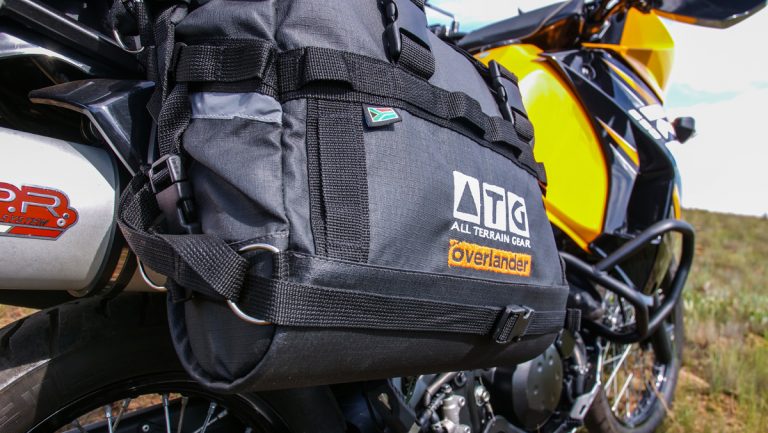
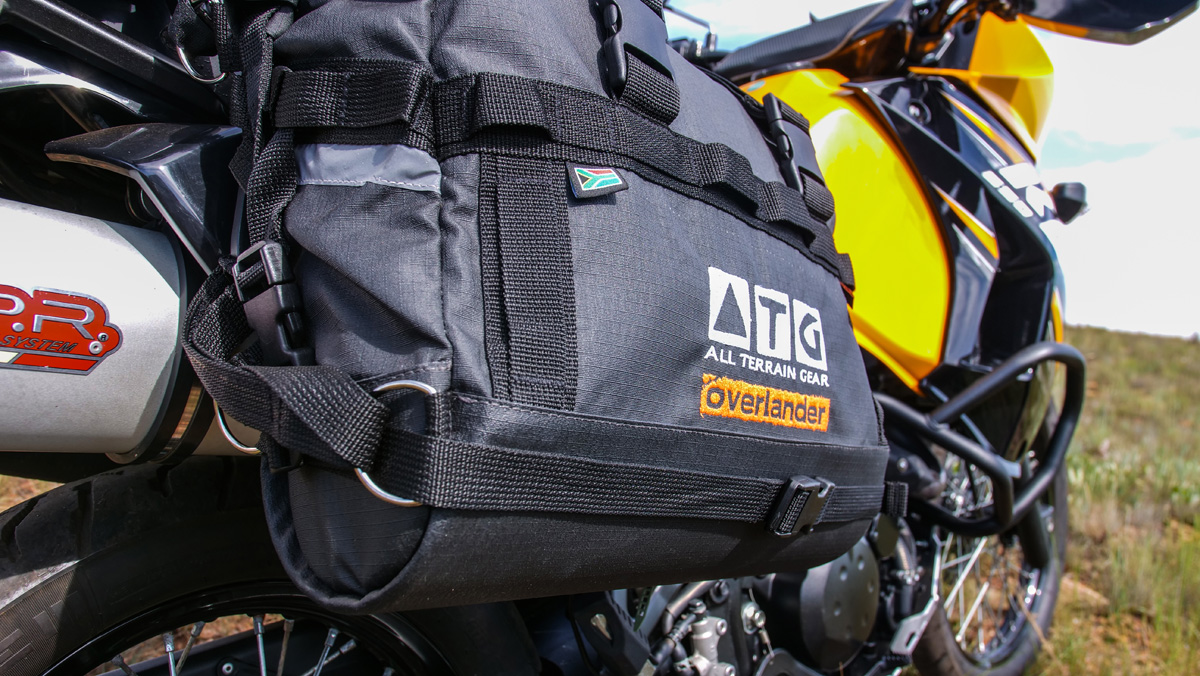
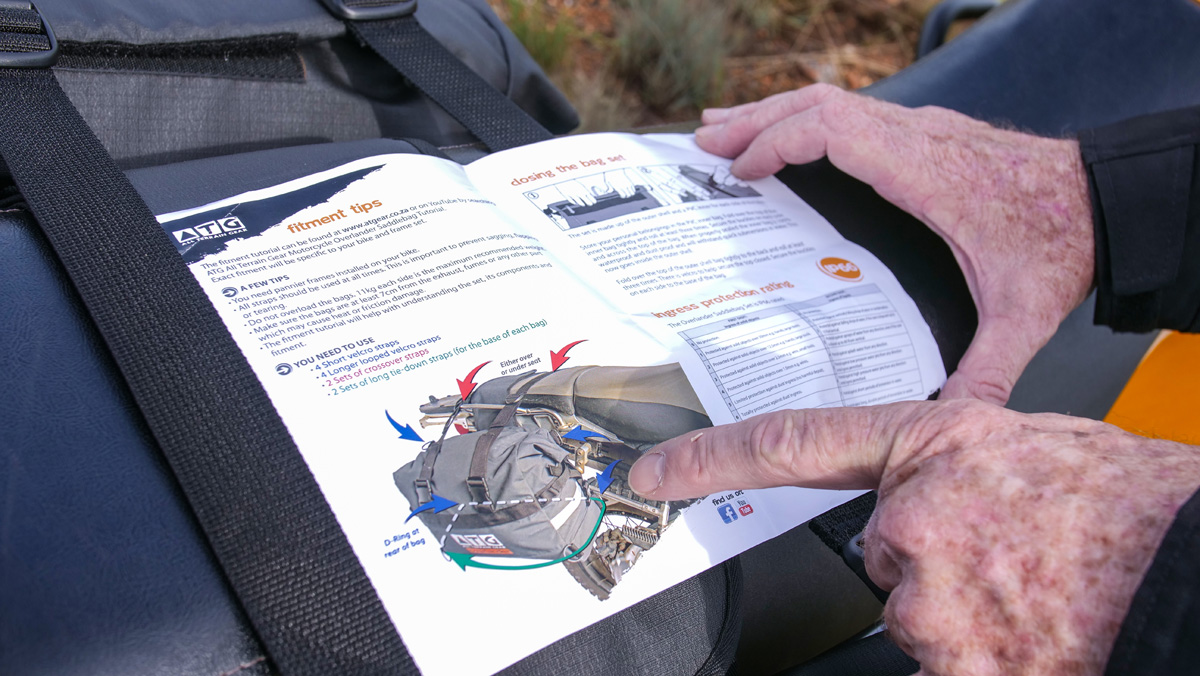
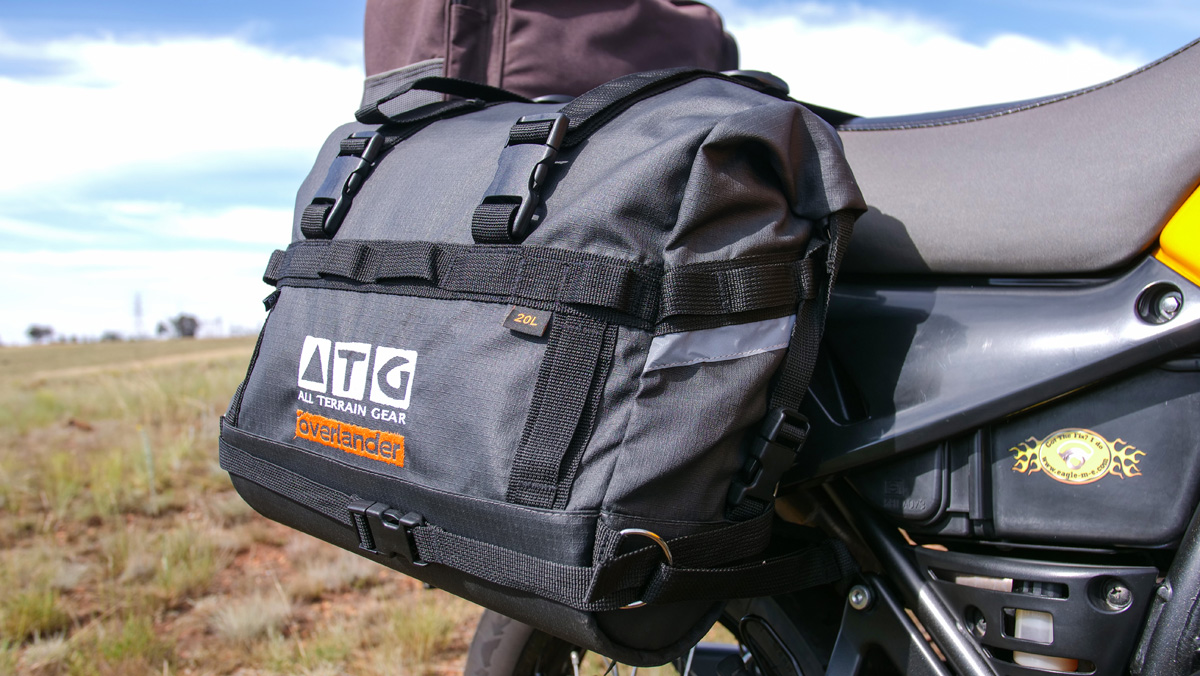
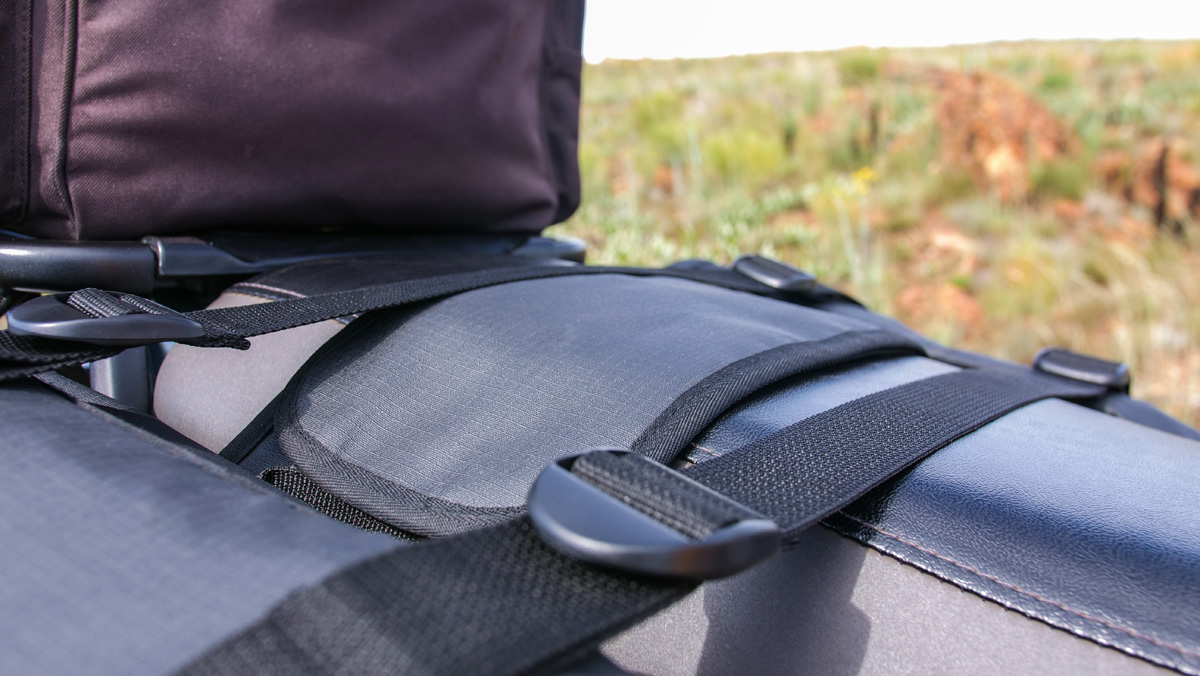
I often get asked how I carry my gear when on an extended road trip. On this trip I exclusively used the excellent products produced locally by All Terrain Gear. My tent and camping equipment, being groundsheet, pillow [a super comfortable memory foam “visco elastic” pillow available from XKULCHA], sleeping bag, thermal liner and self inflating mattress all fit into my ATG dry bag which is easily secured to the back seat with its adjustable straps. It forms a great backrest too. My cooking kit goes in my topbox together with an Olympus “ruggedised” camera. A small cooler bag carries the days food and hip flask for “Renosters”. A chamois for visor cleaning lives here too. The rest of my kit, being clothes, tools, puncture repair kit and running shoes go in a set of ATG 20l soft luggage panniers which come with all the straps to secure them properly to the bike. Despite the extreme riding conditions they kept water and dust out and stayed securely in place. The waterproof and dustproof roll top inner bags allow you to remove your kit without having to take the pannier bags themselves off the bike. I was impressed by how nicely they cleaned up post trip after a brushing with a soft brush and soapy water. Highly recommended. [Also available from XKULCHA as well as other selected motorcycle accessory outlets]
Photo credit: Dave Cilliers
As for clothing, I protected my feet with my trusty and comfortable Forma Adventure boots. [Available from DMD] Riding pants were my ancient, but still serviceable Fox freestyle motocross pants which have serious cooling vents. I don’t think you can get them any more but XKULCHA Dakar pants have served me well on similar trips in the past. In this heat an airflow jacket is essential, so my trusty Alpinestars airflow was pressed into service. It also gives the peace of mind of good soft armour. For cooler early mornings I pull my Alpinestars Enduro jacket over the airflow as a wind proof shell. It is tough and rugged and suitable for extreme offroad conditions. It is very well vented too. It has no armour so is only suitable as a shell and for some abrasion protection but not for knocks. My helmet is a Bell Adventure helmet which I find extremely comfortable with a visor that seals particularly well. I do however find that it is more wind affected than my Airoh Adv helmet, but about on a par in this regard to my Arai tour X. Gloves are a brand called FIVE-5, and are a mix of tough textile with leather reinforcing in high stress areas and are well ventilated. They have proven to be hard wearing and durable and very comfortable without any bunching in the palm area. Unfortunately I have no idea where I got them. So there you have it guys and gals!
Photo credit: Dave Cilliers
I may have rattled on a bit with this account, but I really tried to recount what an absolute joy it is to ride a motorcycle far and wide across our magnificent land. Maybe you are a strictly tar rider. It doesn’t matter. Get out of town with like minded buds and live a little. You owe it to yourself! Motorcycles offer a unique opportunity to enjoy a real modern day adventure especially given the weather and countryside we have in SA.
From the moment that engine got mounted onto a bicycle to create the first motorcycle, men have tried to make these contraptions go faster. Quite why we have been obsessed with speed, I really don’t know. Ego and testosterone I suppose! As volatile a mix as nitromethane! Two German gents, Hildebrand and Wolfmiller, went one better then old Gottlieb Daimler (credited with building the first ever motorbike in 1888) when they built a 1500 cc liquid cooled twin cylinder bike that managed 25 mph (40kph). Scarily fast when you consider that the brake was a metal bar that dragged on the ground to eventually bring the whole plot to a stop.
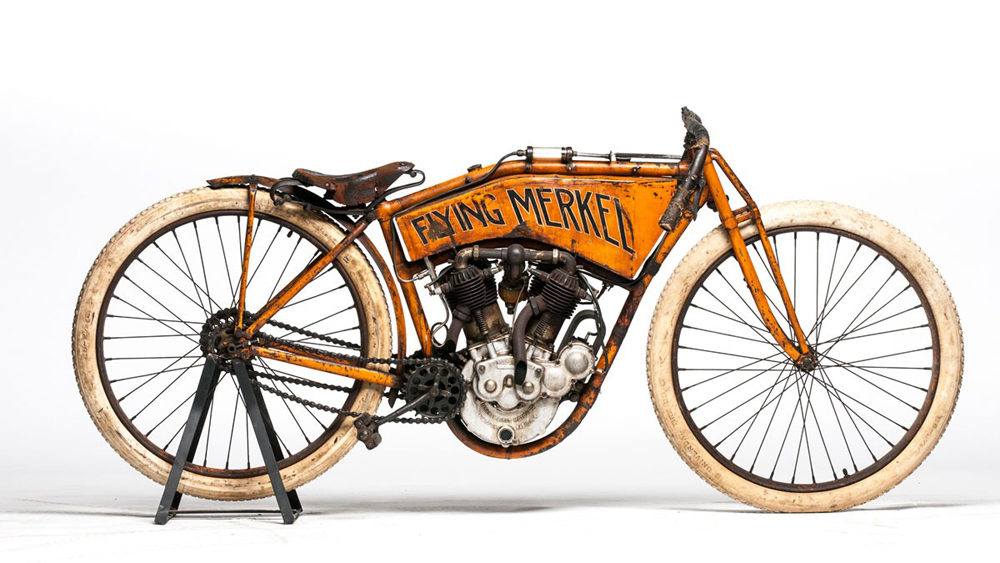
www.mecum.com
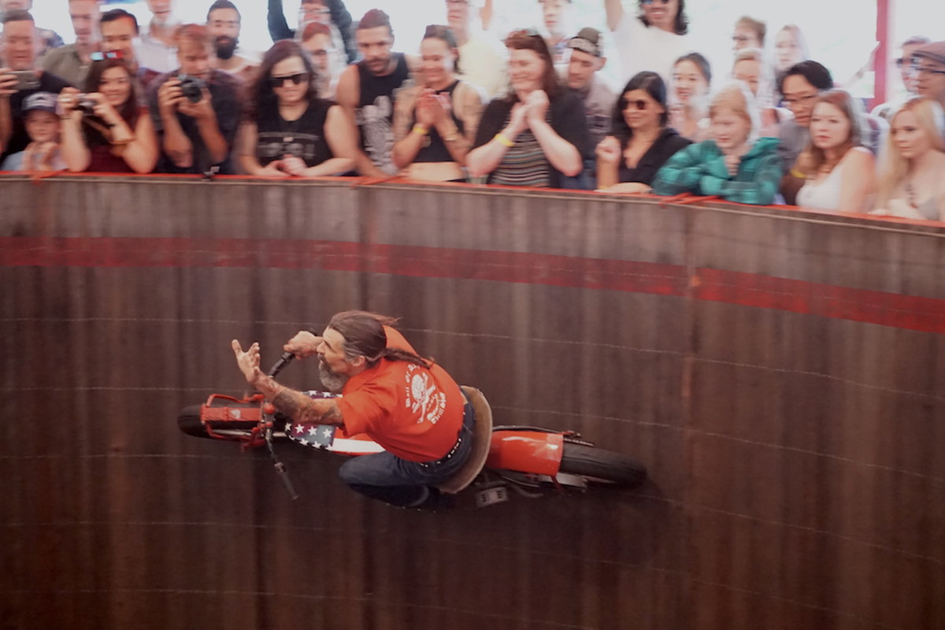
The Americans really got things going when, in the early 1900’s, Indian, Harley Davidson and Flying Merkel started vying for the bragging rights to building the worlds fastest motorcycle. The Flying Merkel may have provided inspiration for KTM’s of the future as they were painted bright orange and had V-twin engines. In fact V-twins have powered Harleys ever since! The “Indian” was resurrected by Polaris, who added the iconic brand to their range of four wheelers, snow bikes and Victory motorcycles. A brand new Indian Scout was launched at the 2014 Sturgis Rally in the States. Back in the day the Scout made the Indian a household name in America as Indians performance model. It was popular as a “Wall of Death” racer. A popular fairground attraction was watching riders on Indian Scouts blast around a cylindrical wooden drum with centrifugal force pinning them to the vertical walls. That darned testosterone again!
Charlie Ransom rides the 14-foot-high Wall of Death on his Indian Scout. Photo credit: Chris Nelson
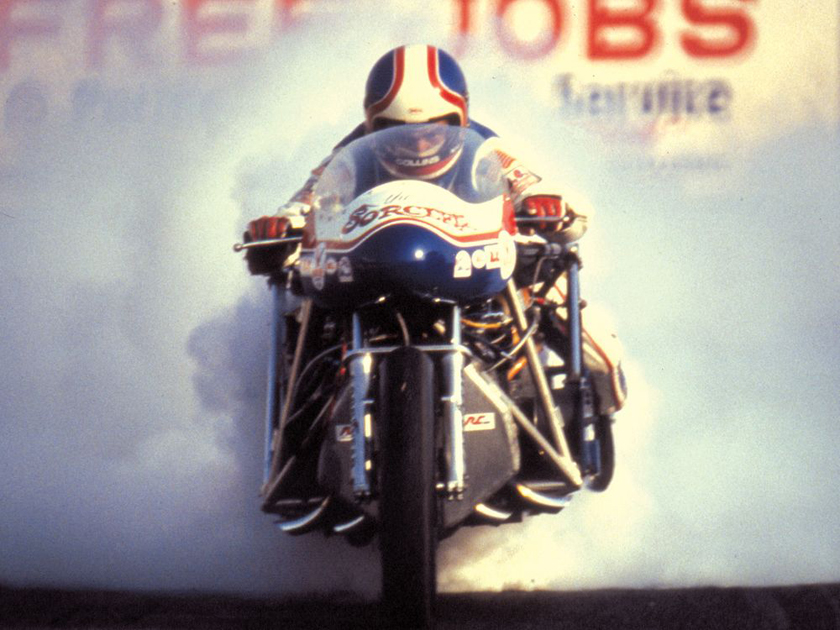
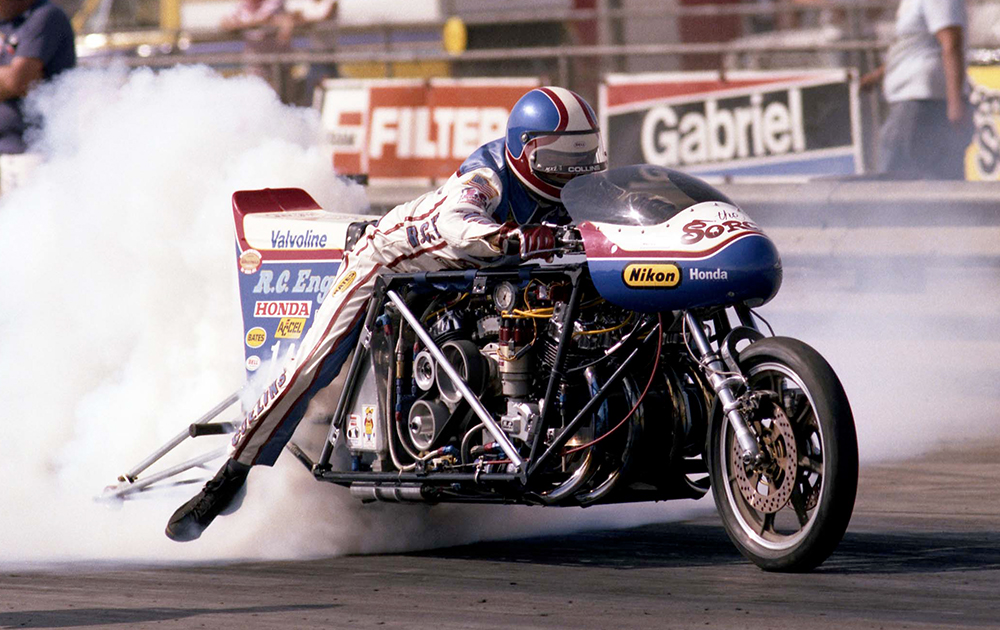
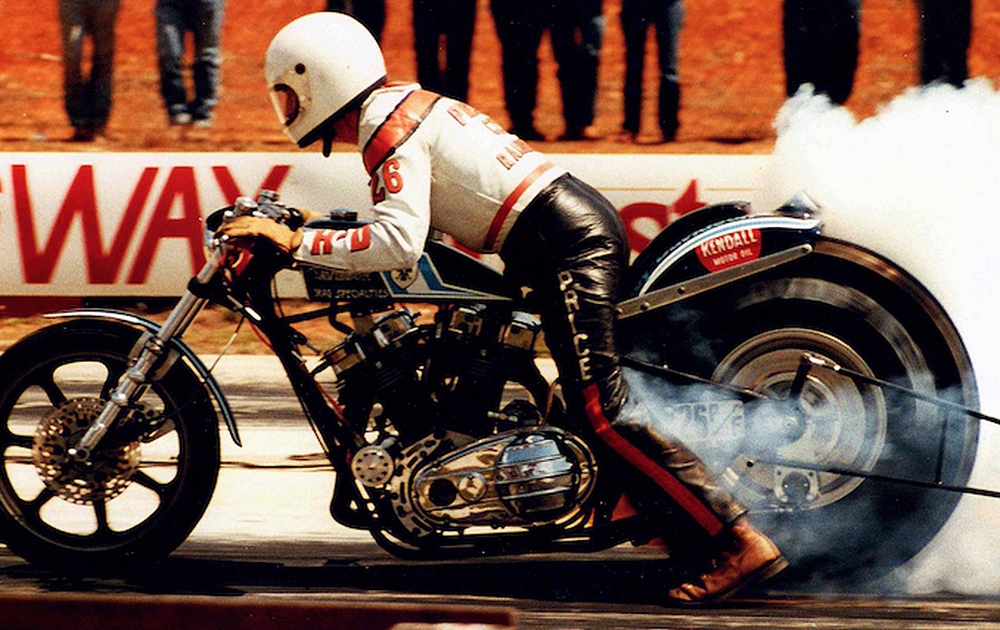
Lets get back to the 70’s to explore what was happening to motorcycles in the quest for speed and world records. Drag racing! Racing over a quarter mile from a standing start (Not men dressed as ladies running with their skirts up) Gotcha! The wildest class was known as “Top fuel”. 8 inch M + H slicks, or “gumballs”, mounted on custom built MTC rear wheels, would distort, then spin wildly off the line, desperately scrabbling for traction as nitromethane fuelled engines belched flame from stubby unsilenced exhausts. The rider, stretched out flat on top of his monster, would desperately try to keep the bike straight and “hooked up”, drag racer speak for rear wheel traction. This was made all the more difficult by the accelerative g-force draining the blood from the brain as the roaring, flame belching, tyre spinning beast left a 100 meter black, torque induced, rubber footprint as proof of it’s passing.
Photo credit: www.motorcyclistonline.com
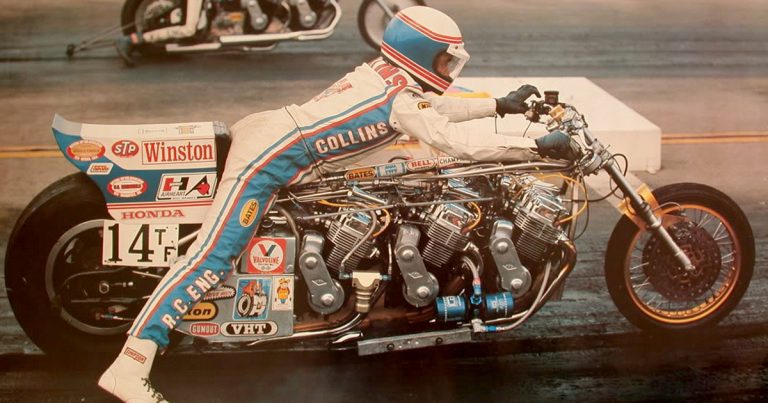
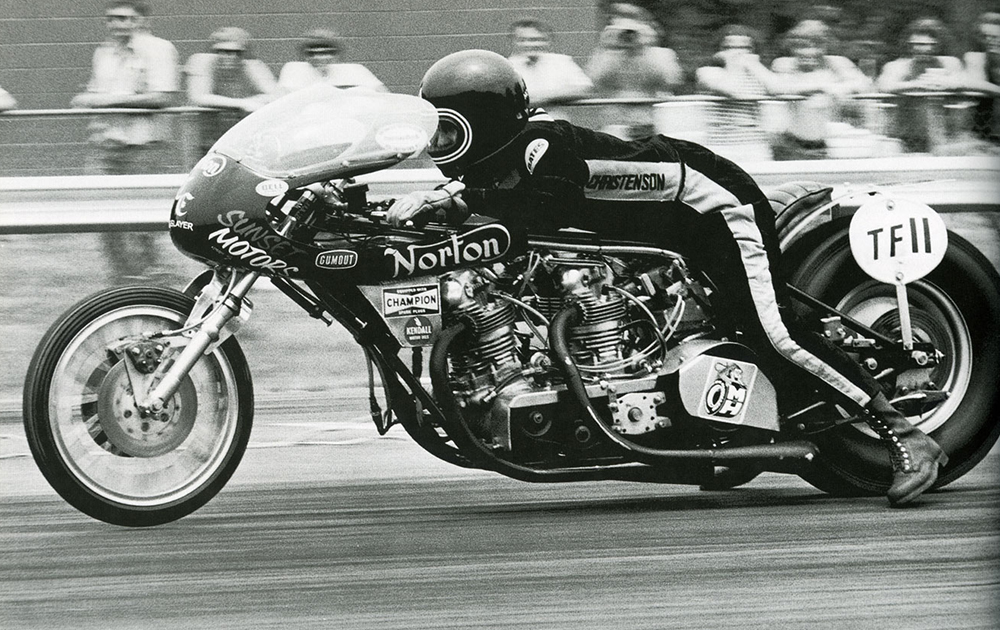
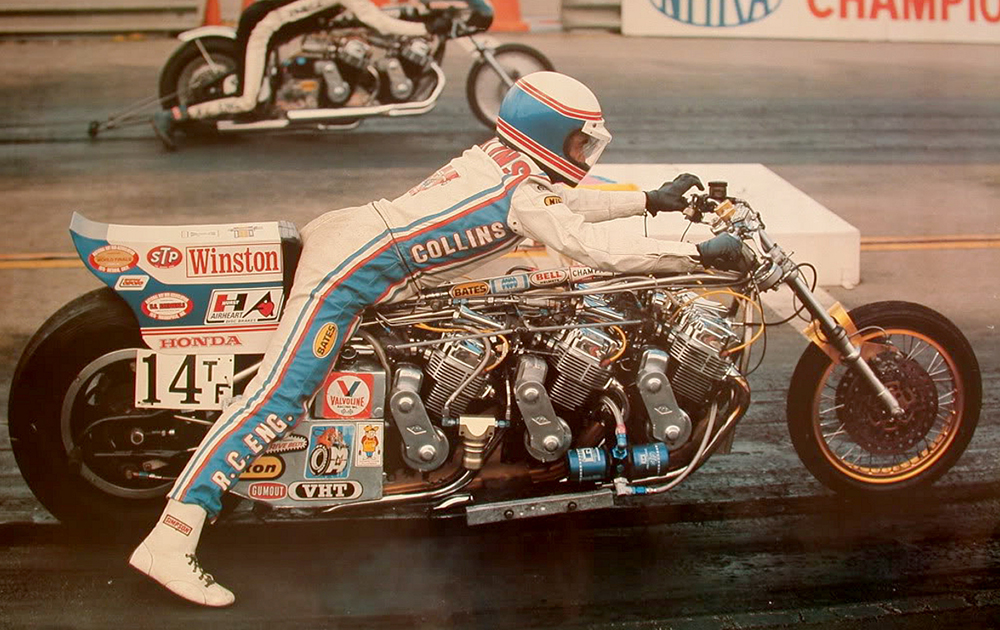
The men that ruled motorcycle drag racing in the early mid seventies were, Joe Smith, T.C Christenson and Russ Collins. Honourable mention must go to Terry Vance, Boris Murray, Danny Johnson, Marion Owens and Sonny Routt. All legends in their time. “How fast did these bikes go through the quarter?” you may ask. Drag racers strive for two numbers. ET, or elapsed time is the absolute measure. How long does it take from when the light on the “Christmas tree” goes green to when the bike breaks the beam at the end of the quarter mile? The second, less important number, but certainly allowing for considerable bragging rights, is the terminal speed. The maximum speed that the bike attained through the quarter mile. In early 1976 the World record ET by a top fuel bike was posted at 7.861 seconds. The highest terminal speed? 182.55 mph.
Photo credit: www.hotrod.com
The venerable Colt sixgun may have ruled at the showdown at the OK Corral, or on the streets of Dodge. We saw different weapons of choice at Ontario, Pomona, Bakersfield, Englishtown, Indianapolis, Fremont, Bowling Green and National Trail in Columbus Ohio. Innocuous names for the venues around the States and Canada that witnessed the tyre shrieking, smoking cacophony of sounds and sights of Top Fuel drag racing!
Photo credit: www.motorcyclistonline.com
Strangely enough the man who consistently allowed Top fuelers to run in the seven’s and eights was a fellow named Marvin Rifohin. “Who the flip was he?” you may ask… Well, Marvin was head honcho at M+H Tire Company. The introduction of six inch and eight inch wide racing skins immediately rendered single engine drag bikes obsolete. At last the huge power of double and even triple engine monsters could be harnessed. Riders could “hook up” that rear gumball and slingshot down the quarter in previously undreamt of elapsed times. Even to this day traction has been the Holy Grail for motorcycle performance in general. In the past it was tyre technology and to a lesser extent, engine design which sought to harness all the available traction. Today these two have been joined by electronic traction control wizardry, but more of that some other time. Lets get back to drag racing, 70’s style.
Photo credit: Pintrest.com
Joe Smith learned his trade with a single engine Harley 74 powered bike. Marvin blew the head off that box and Joe came to the fight with two enormous Harley 74 engines lashed together in tandem! Long, low and lean, the guttural stutter of the beast firing up was a sound you would not easily forget. The gentle potato – potato beat of a stock Harley was amped into a staccato blast of unbridled power. Radical cam timing and hot drag pipes would ignite unburned fuel and flames belched from the short exhausts, what a sensory overload! Aptly dubbed “The Sledgehammer”, there was nothing subtle about Joe Smith’s Harley 74 double.
A familiar sight in the opposing lane that would strike fear into the heart of the opposition was the diminutive T.C. Christenson stretched out on the double engine, John Gregory tuned Norton. This bike went by the wishful, yet prophetic name, “Hogslayer” (for the uninitiated, Harleys have always been known as “Hogs”). The Norton engine bike, with it’s engines of British origin, brought diversity to the start line. Running a mix of 95% nitro, 2,5% propylene oxide and 2,5% methanol through those Norton mills produced sparkling performance. Probably the most consistent of the three bikes featured here, it was testimony to T.C’s brilliance and Gregory’s technical acumen. Joe Smith’s Harley Davidson motors displaced over 3 litres. Hogslayers’ Norton motors were tiny by comparison, running 810cc per engine. despite a wicked state of tune, and standard 1960 Norton Atlas conrods, the Gregory built bike drew from the vast well of knowledge acquired with their earlier single engine Norton drag bike. Consistent and fast, the stuff of which champions are made.
Photocredit: http: www.nortonhogslayer.com
If you think that bikes are impressive, and they are, you will be utterly gobsmacked by the Russ Collin creation! “Atchinson, Topeka and Santa Fe” was the name Russ gave to his three engine Honda four powered bike. Yes Lavergne, you heard right! 3288cc, 12 cylinders, 850 pounds of fuel injected fury, pumping out almost 500 horse power! The Honda was the bike that was the first into the 7’s. 7.861 seconds at Ontario. New elapsed time world record. Can you imagine that spectacle? 400 horse power being dumped into and 8 inch M+H slick with 850 little gravity gremlins trying to give it to the ground. That massive gumball distorting, spinning, smoking as it deposits a strip of rubber on the tar. Accompanied by the shriek of three nitrous fuelled fours building up to an 11,000 rpm crescendo! I told you the 70’s were heady days indeed!
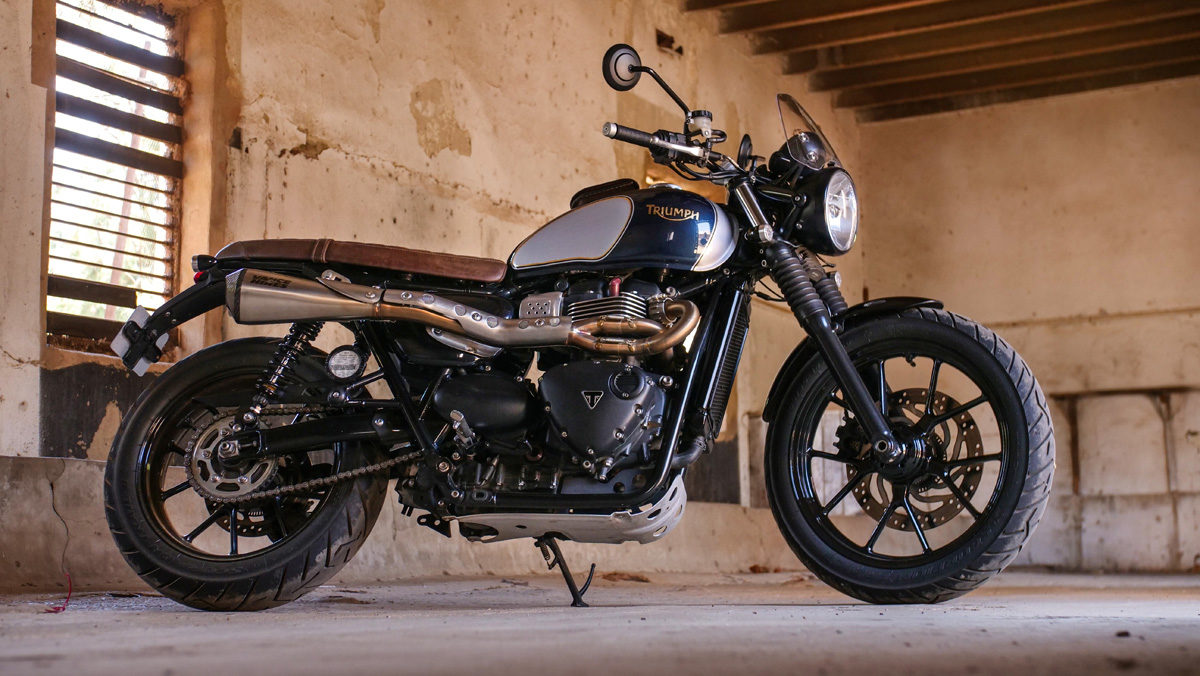
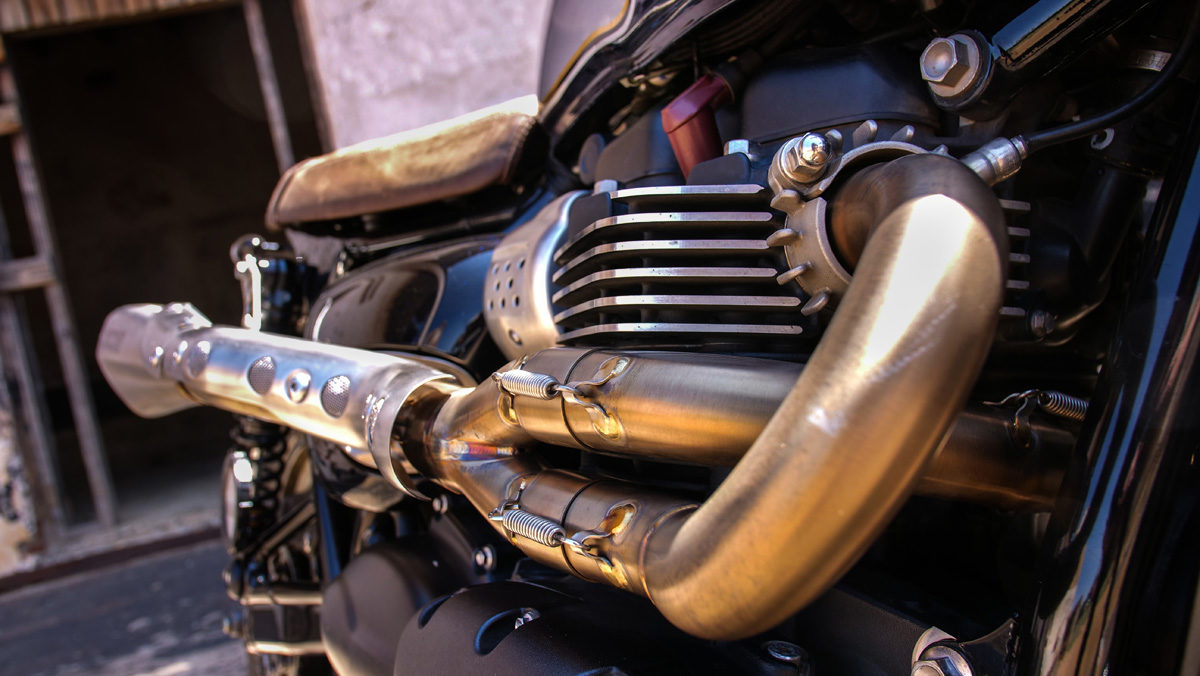
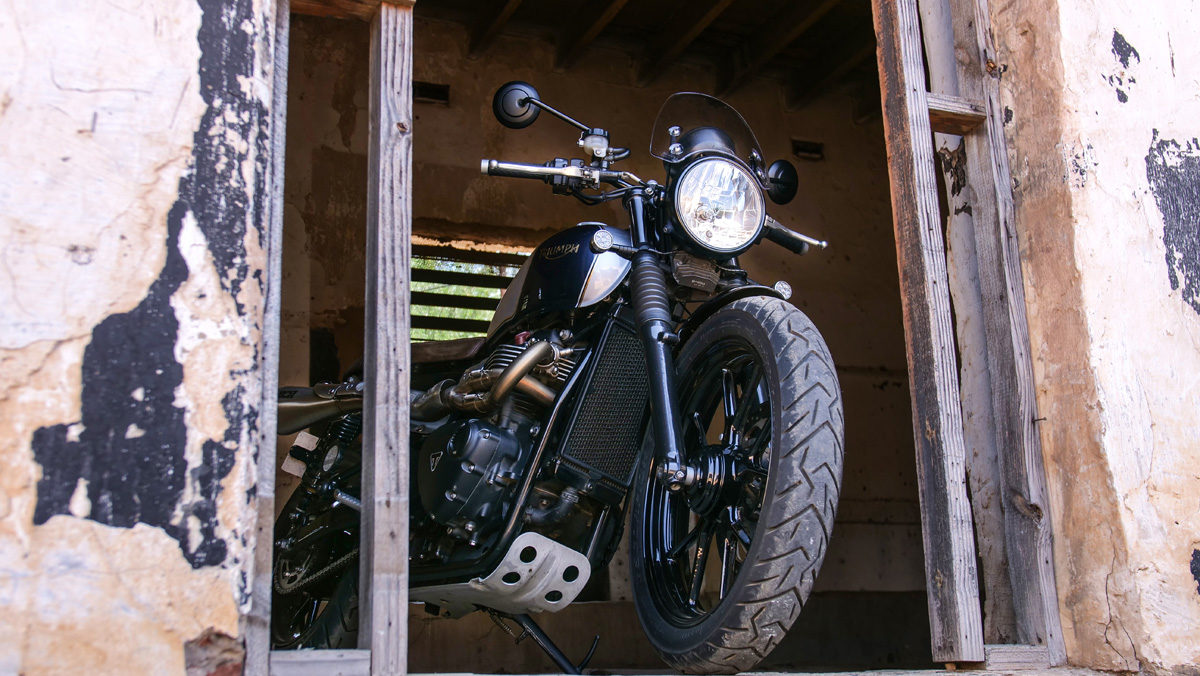
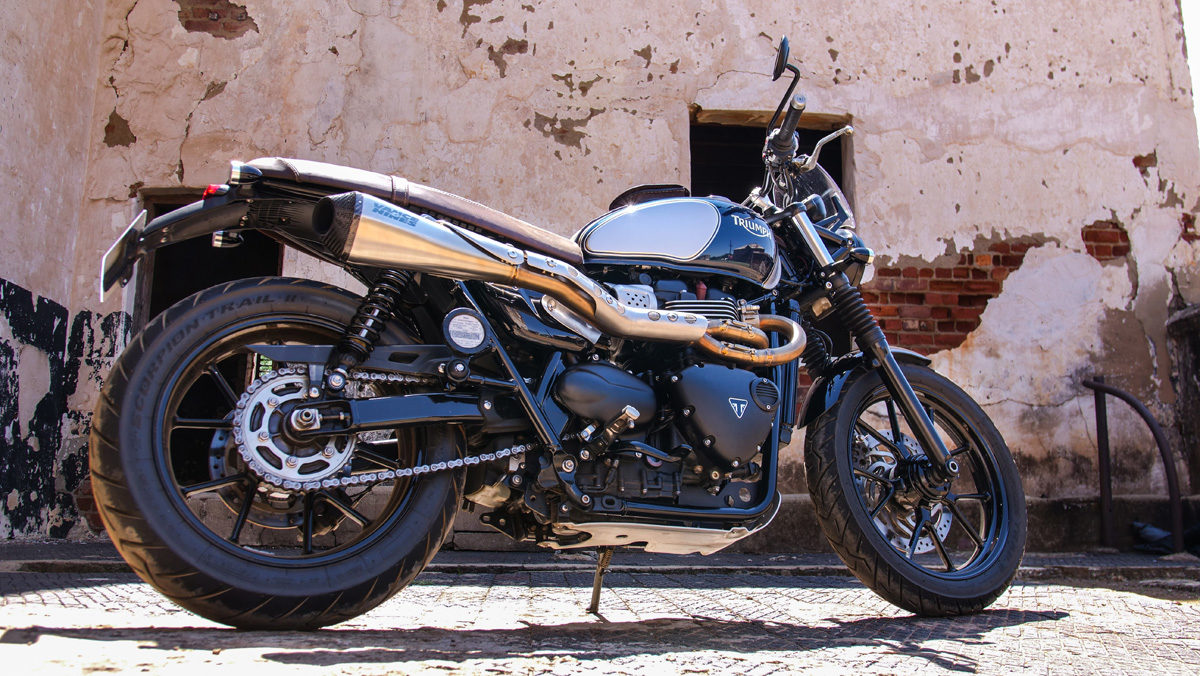
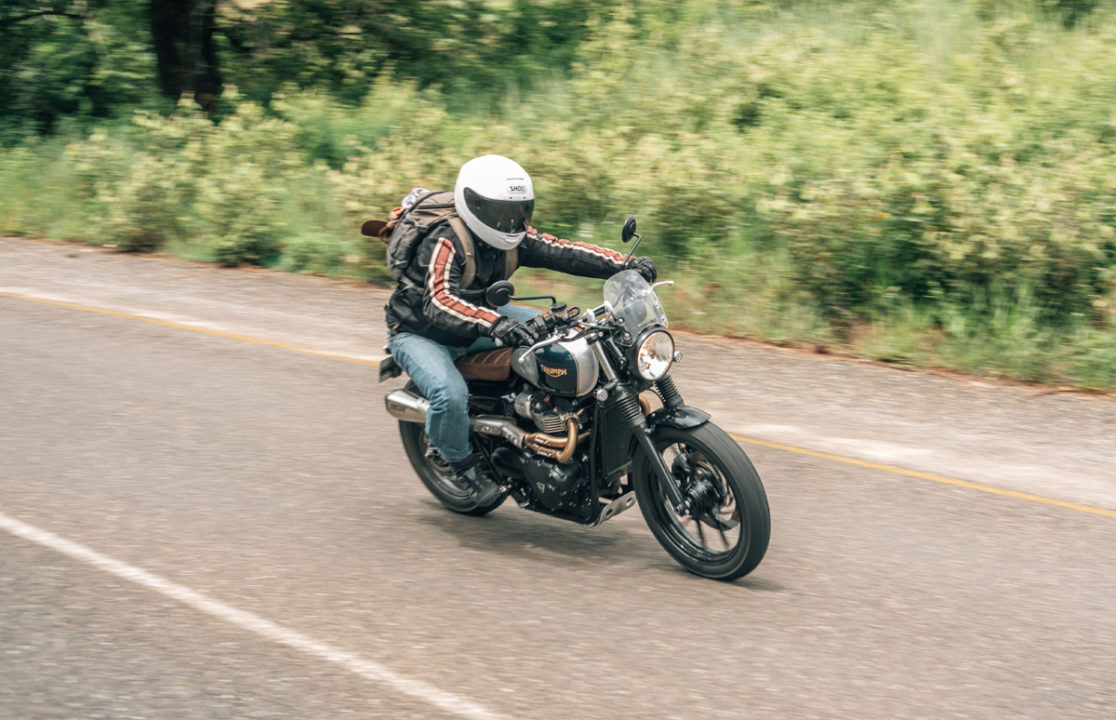
I own a Triumph Street Twin, which I bought back in late 2017. Since buying the bike, I have been gradually customising it to my liking.
Photo credit: Bjorn Moreira
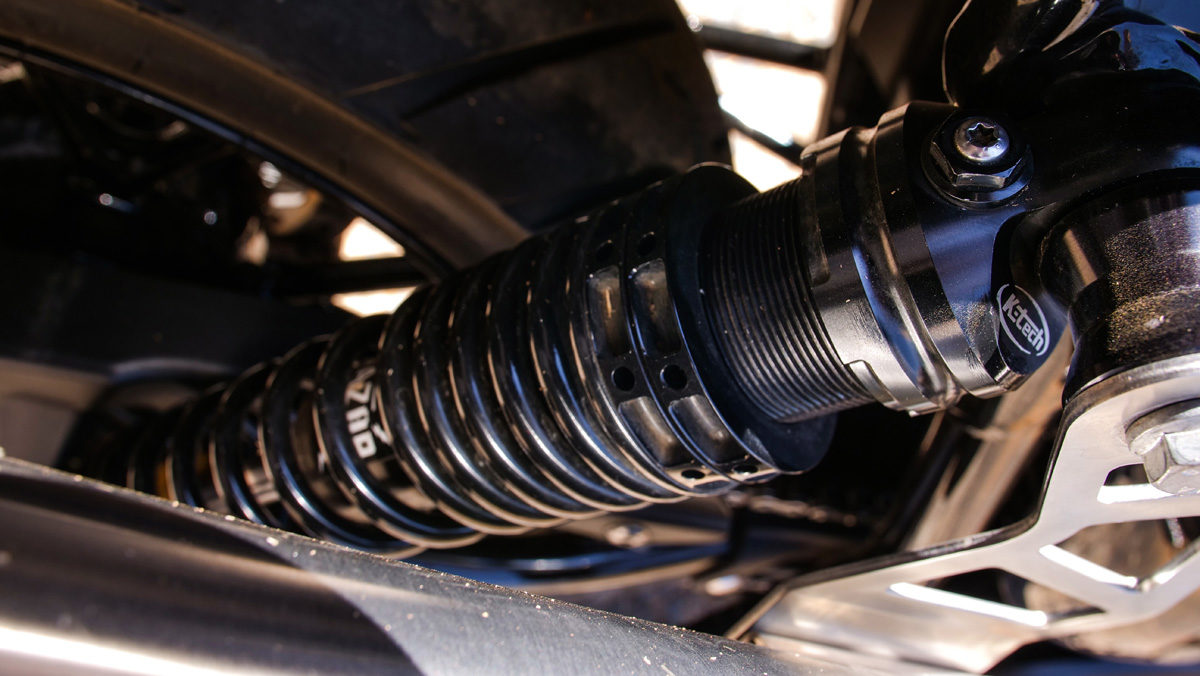
When I first got the bike, I found the suspension to be a bit on the soft side, especially around corners the front-end felt somewhat squishy. So, I took it to Justin Waddington from Shock Logic and he fitted a set of K-tech shocks at the rear, and upgraded the standard front forks with progressive stiffer springs. These modifications really improved the bikes handling.
Photo credit: Bjorn Moreira
Annoyingly, Triumph had restricted the 2016 (first generation) Street Twins, and as a result the bike’s power would feel sluggish in the mid-range. I did a ton of research about this online, and I found that they had done this not in the traditional way via the ECU, apparently they had been restricted mechanically via a restricted Camshaft, resulting in a max output of only 47 hp.
The guys on the forums speculated that Triumph did this because a none restricted Street Twin would have similar power to the more expensive T120, and therefore why would a consumer ever buy the T120 at a more expensive price?
Whatever the reason, the 900cc motor on my Street Twin obviously had a lot more to give, so I made it my mission to try and get more performance out of it. Having done more online research, I came across a company in Germany called Classicbike Raisch who had developed a performance Camshaft for the 2016 Triumph Street Twin.
Photo credit: Bjorn Moreira
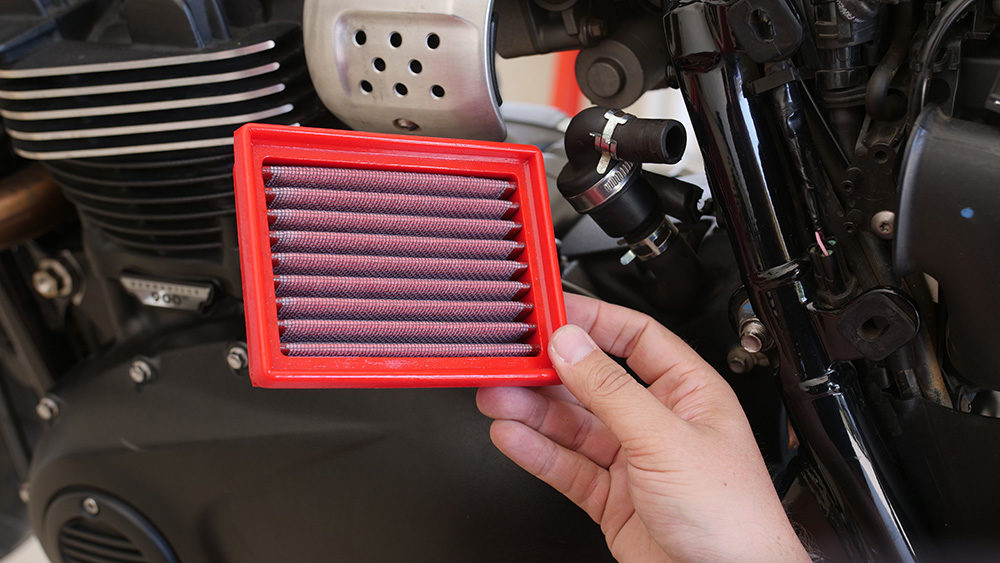
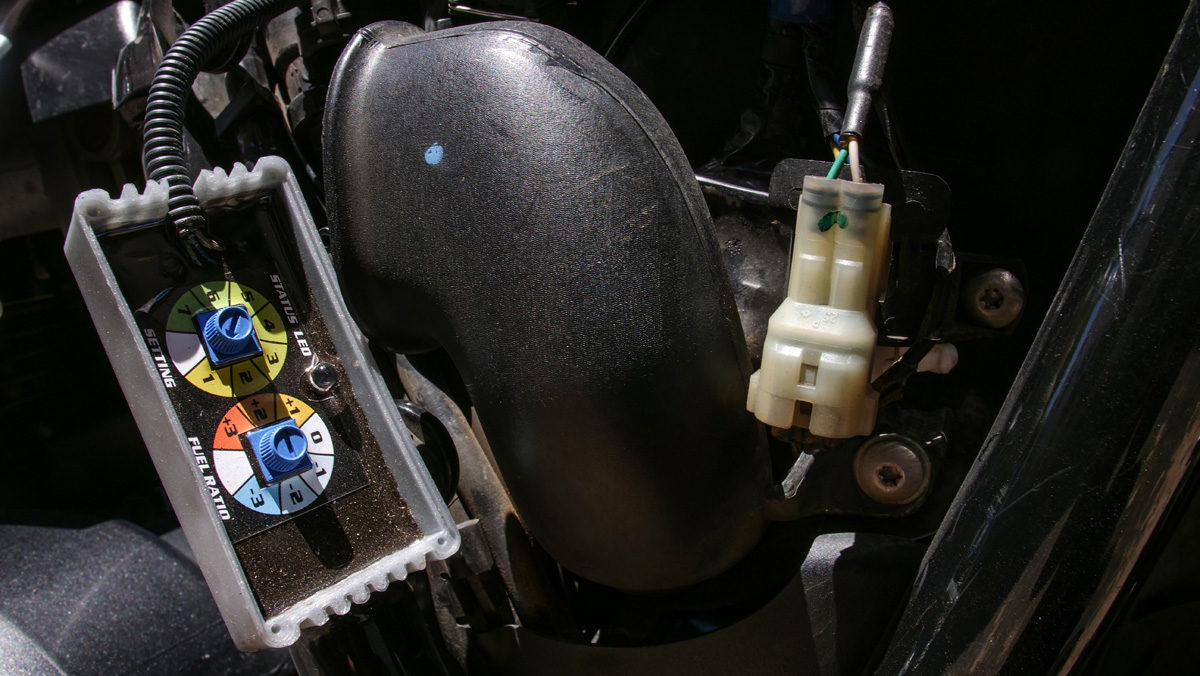
Long story short, I fitted the Camshaft into my bike, along with a BMC Air Filter and a Rapid Bike Easy fuelling module. The results were outstanding! She now has a max output of 62 hp, and the bike now pulls much stronger than before, and delivers way more power in 3rd/4th gear. It has totally changed the characteristics of the bike, and I am really enjoying it so far. An expensive upgrade at approx 15k, but worth every penny.
Photo credit: Bjorn Moreira
Please note: for 2019, Triumph has added an extra 10 hp to their standard Street Twins, so the engine modifications that I have done would only be advisable on the first generation models.
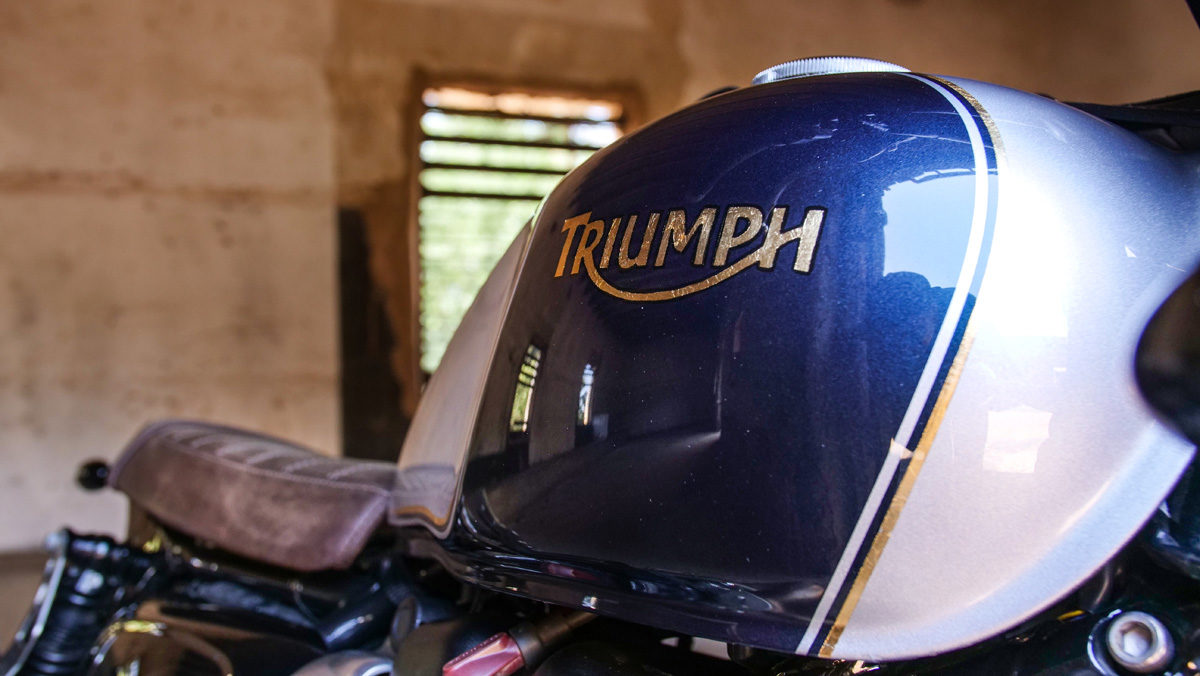
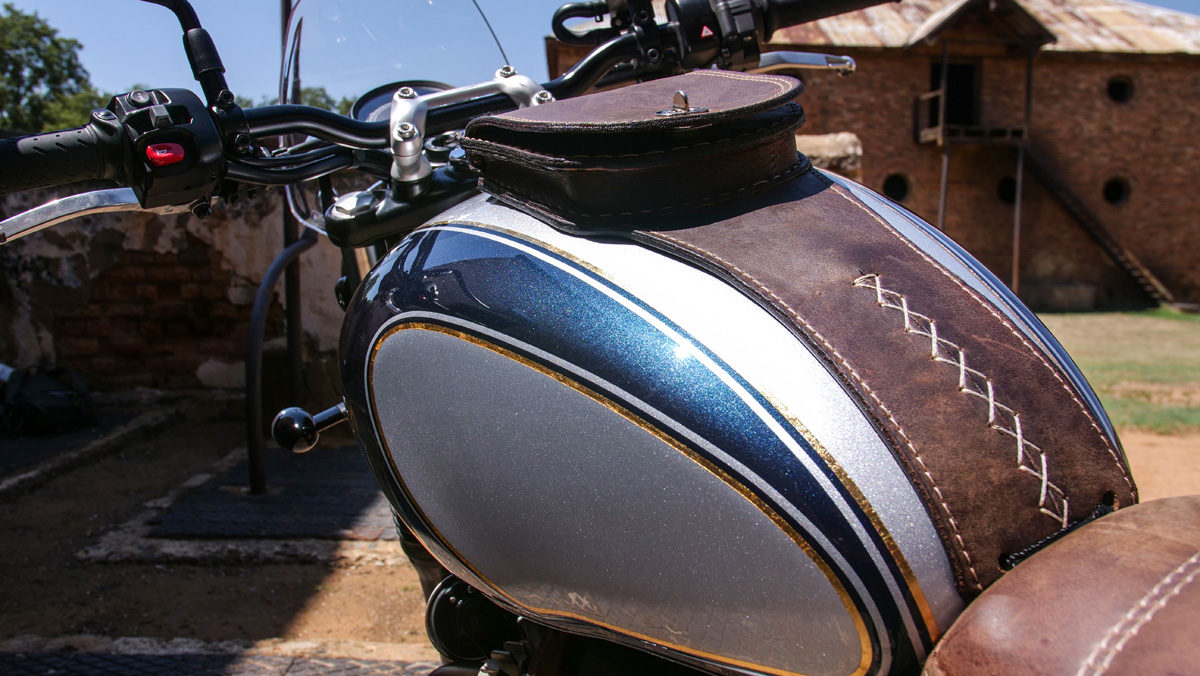
In the paint department, I visited Kim from The Air Brush Studio in Pretoria, who did a frikken awesome job. She painted the tank in a dark metallic blue and silver, with gold leaf pinstriping and logo.
Photo credit: Bjorn Moreira
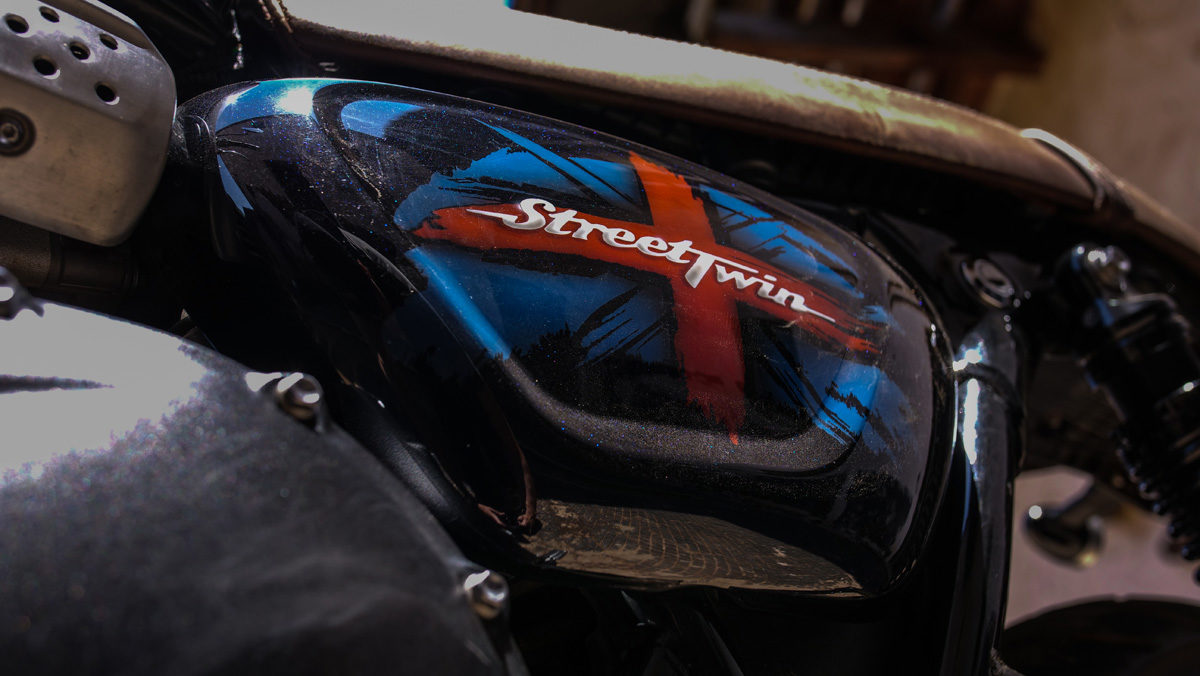
The fender and side covers became black with a blue pearl tint that sparkles in the sun. Kim added her personal touches by airbrushing a Union Jack design with Street Twin logo on one of the side covers – it looks Rad!
Photo credit: Bjorn Moreira
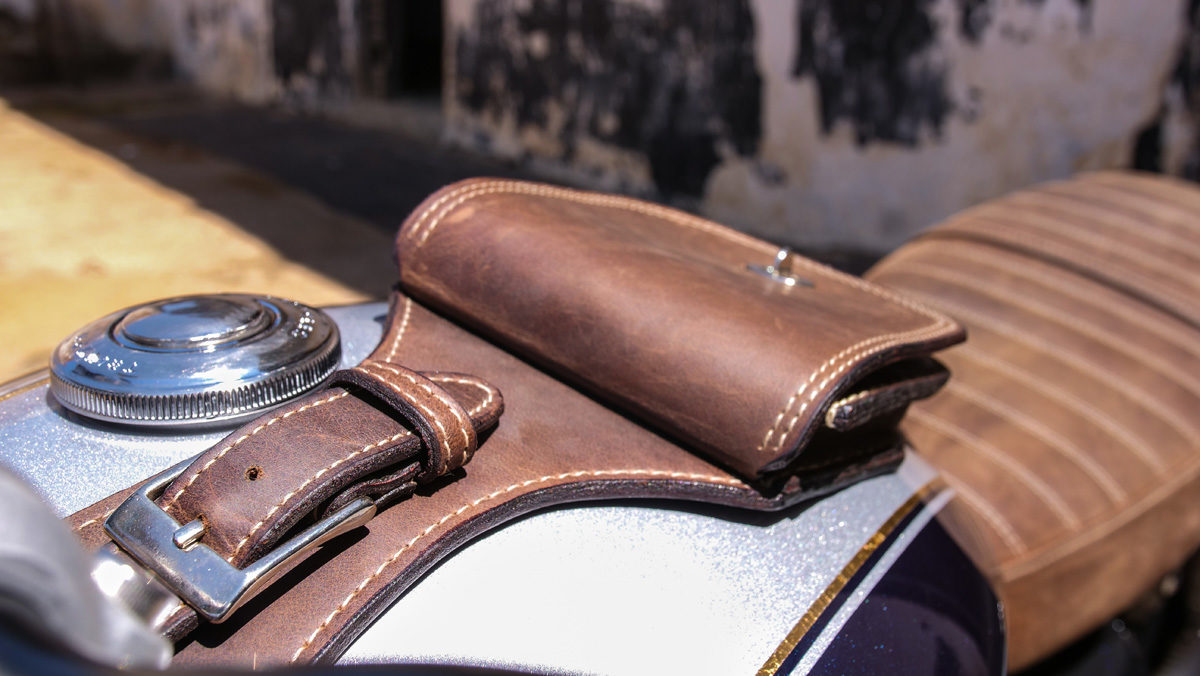
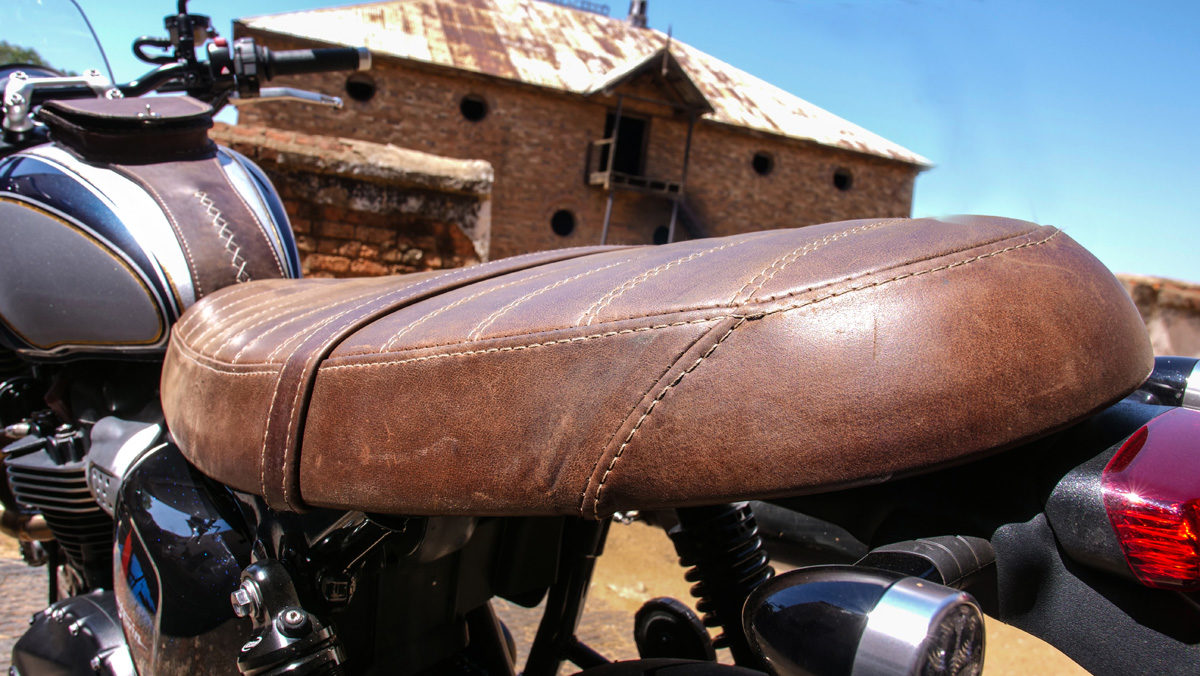
I also had some custom leather work done, which included a tank protector/bag and the re-upholstering of my seat. This was done by Dion Korkie (Leather Man D), who is also based in Pretoria; his craftsmanship is incredible, and his prices are very reasonable too – check out his Facebook profile for more information.
Photo credit: Bjorn Moreira
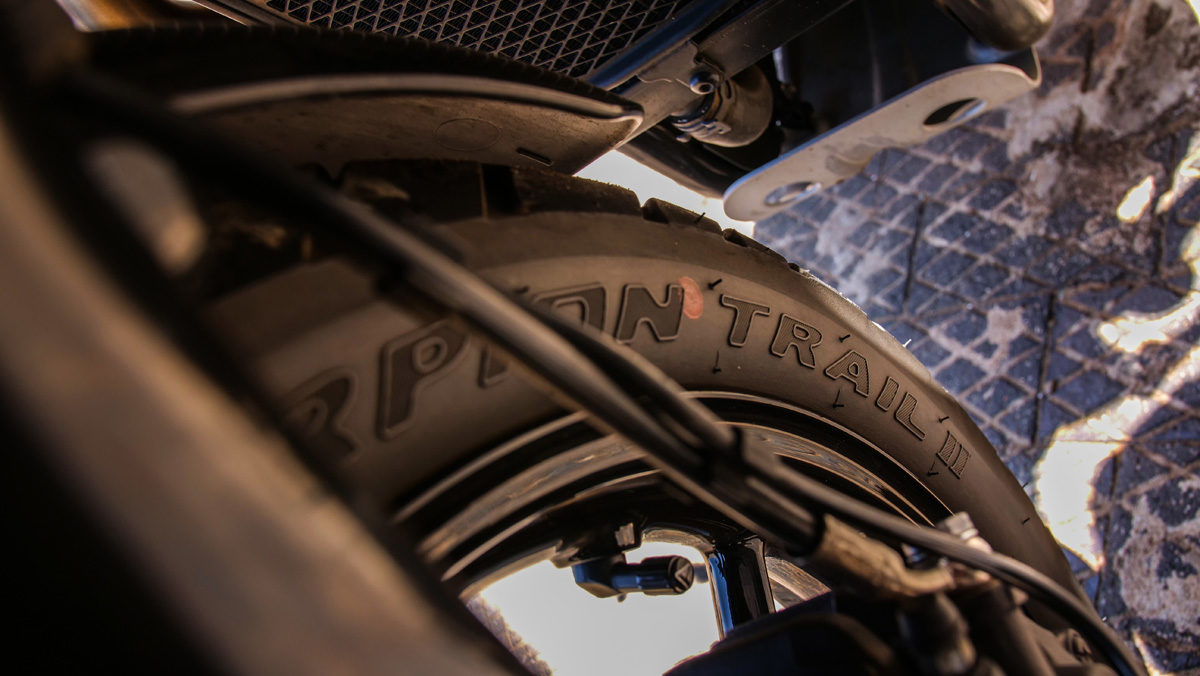
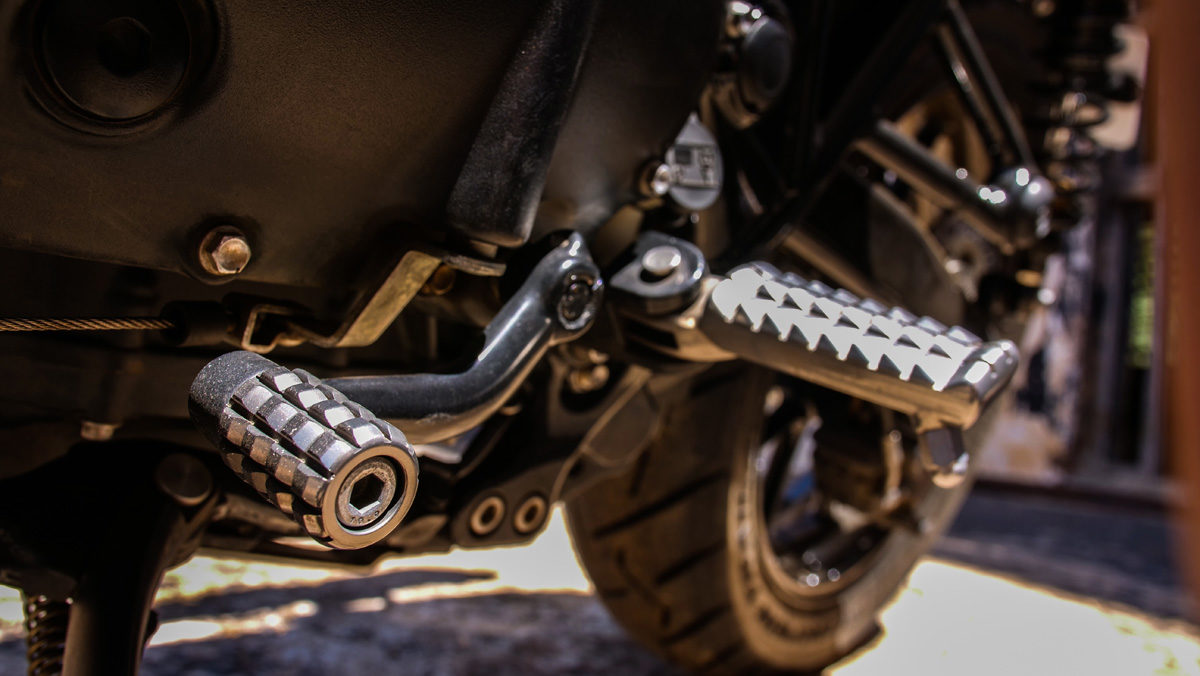
Other upgrades included; a new set of Pirelli Scorpion Trail II tyres, Vince and Vines full system high pipe, anodized gunmetal grey gear selector and foot rests, and Triumph laser etched valve caps.
1 of 17
Because of budgeting reason’s, it has taken me the best part of 2018 to finish my ride to my liking, and up until that point, I had not ventured anywhere outside of Gauteng. So, when I received a newsletter about the 2018 Sabie Bubble Run, I was very keen to go along for the ride, as this trip was going to be the perfect place to mingle with other like-minded Triumph enthusiasts, and for the first time, I would get to ride and experience my bike on some of South Africa’s finest undulating roads.
What is the Sabie Bubble Run?
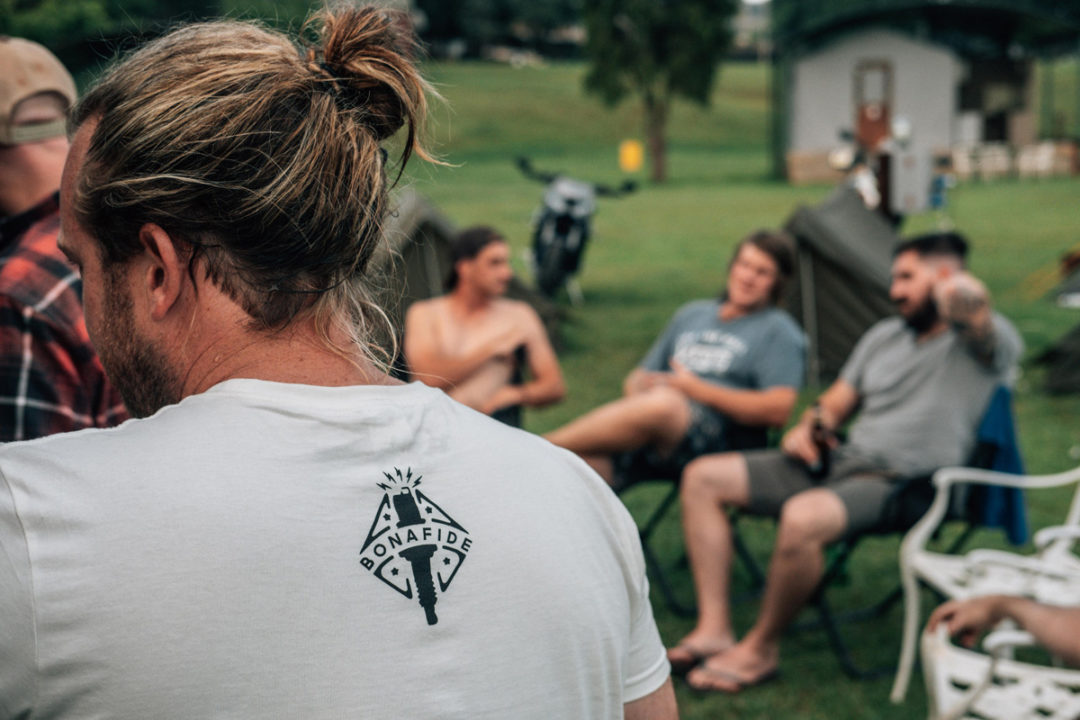
The Sabie Bubble Run began in 2014 by Joe Fleming, Leroy “Black” Tulip and Marnitz Venter. It was inspired by a few different traditional runs from the United States (The Gypsy Run and El Diablo Run), but was given a South African flavour.
During the inaugural run, the first two days were filled with rain. It was pretty miserable, and their only saving grace during those days was their “Bubble Shields”, and the word “Bubble” stood out to them. So, they decided to call it the Sabie Bubble Run.
Photo credit: Joe Fleming / Bonafide Moto Co.
Simply put, a traditional run is high mileage and low drama. While the modern run is essentially a forty mile coffee run with a lot of bolt on chrome compliments, a traditional run is riding, camping and a hell of a good party. They are geared towards the rider who feels out of place at a “major rally” or anywhere you find an excess of “LIVE TO RIDE” patches.
This years Bubble Run
I have known about the “Sabie Bubble Run” now for a number of years, and I have always wanted to go and experience it for myself. Unfortunately in years gone by, I have always had other commitments but this year I was free. So, I quickly signed up and paid my entry fee of R1 800, and that was that.
Amazingly, for a mere R 1 800, the trip included; accommodation, dinner each night at camp, an endless supply of coffee and beers, plus a few other gift items. Honestly, this is really good value for money, and I cannot figure how they made such a trip of a lifetime so affordable – what a Bargain!
Photo credit: Joe Fleming / Bonafide Moto Co.
Reading the itinerary for the first time made me extremely excited for the trip. A mixture of; stunning scenery, some of SA’s best twisties, Mpumalanga’s finest tourist attractions, waterfalls, lots of coffee stops & pub lunches along the way, and evening chilled camp fire vibes by the Sabie river – it sounded awesome.
Photo credit: Joe Fleming / Bonafide Moto Co.
The Bubble Run is aimed mainly at classic bikes, although there were a few non-classic bikes on this year’s ride. The organisers seem to be very chilled about what bikes are allowed, in-fact on their website it states:
“It does not matter what you ride. So long as you ride.”
Photo credit: Joe Fleming / Bonafide Moto Co.
Packing for the Ride
Planning for any kind of bike trip is exciting, it always starts to build the anticipation weeks before the trip. Especially when considering how to pack everything that I was going to need for a 5 day camping adventure on the back of a Modern Classic motorcycle.
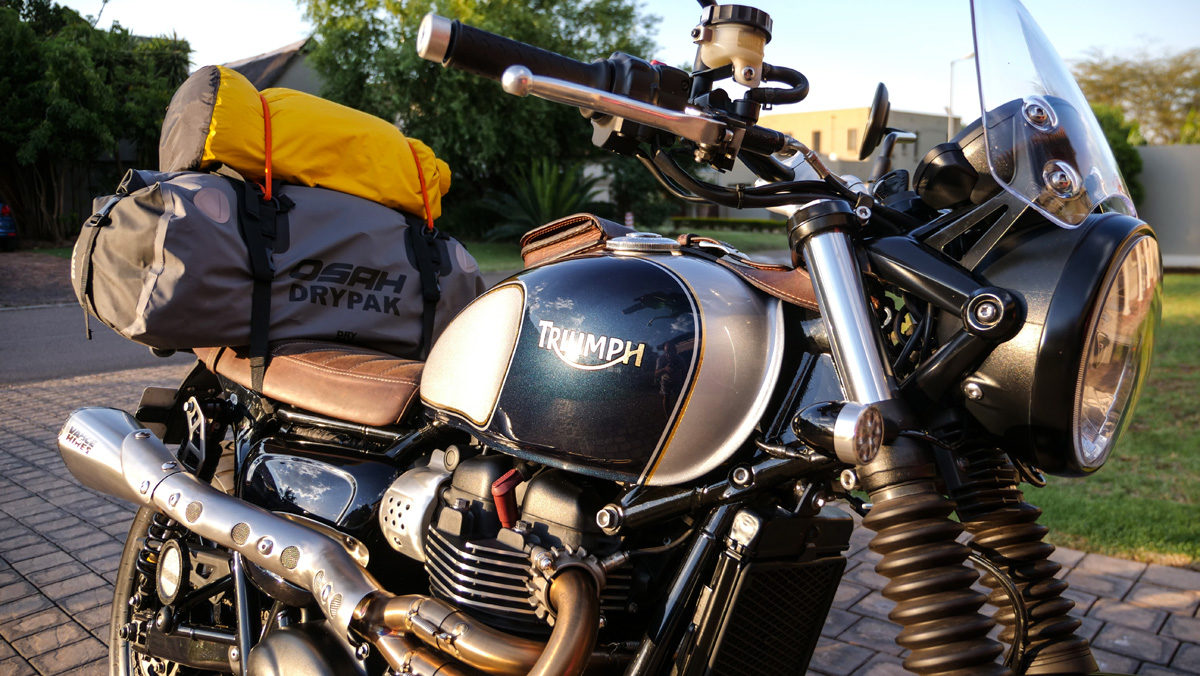
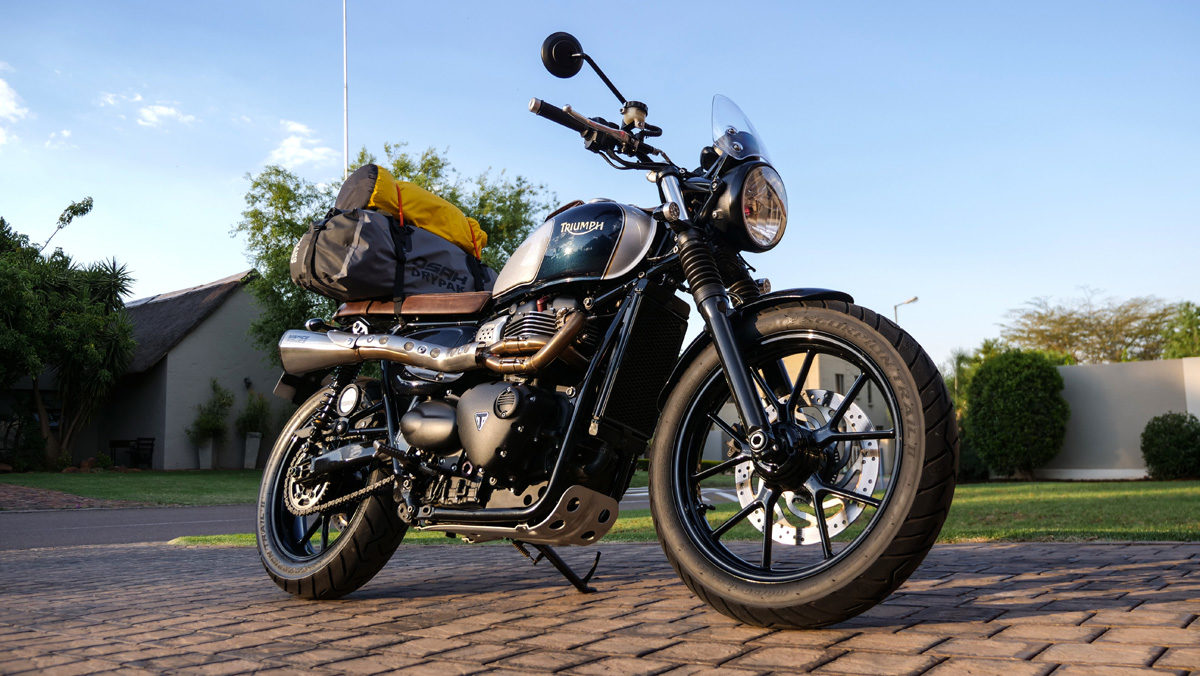
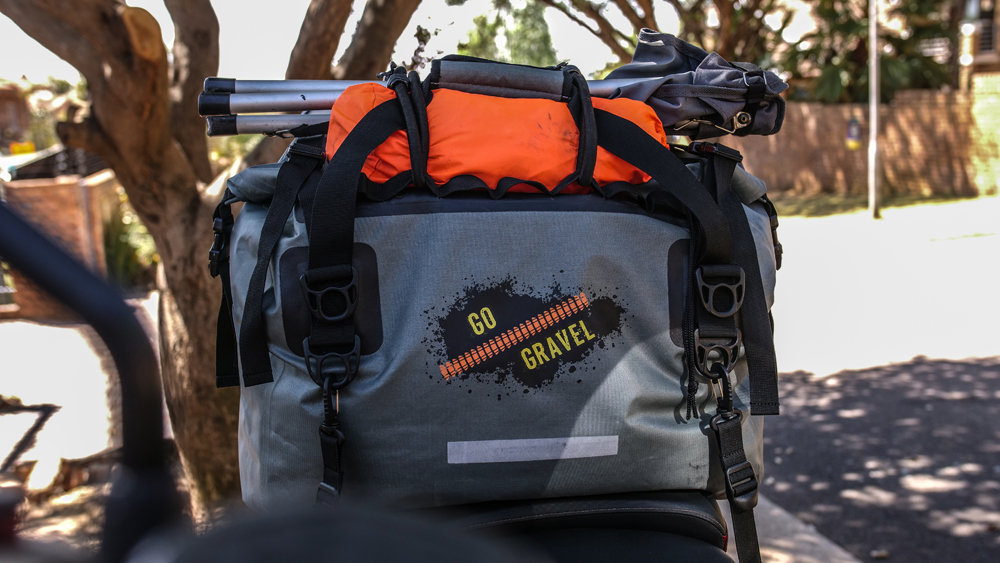
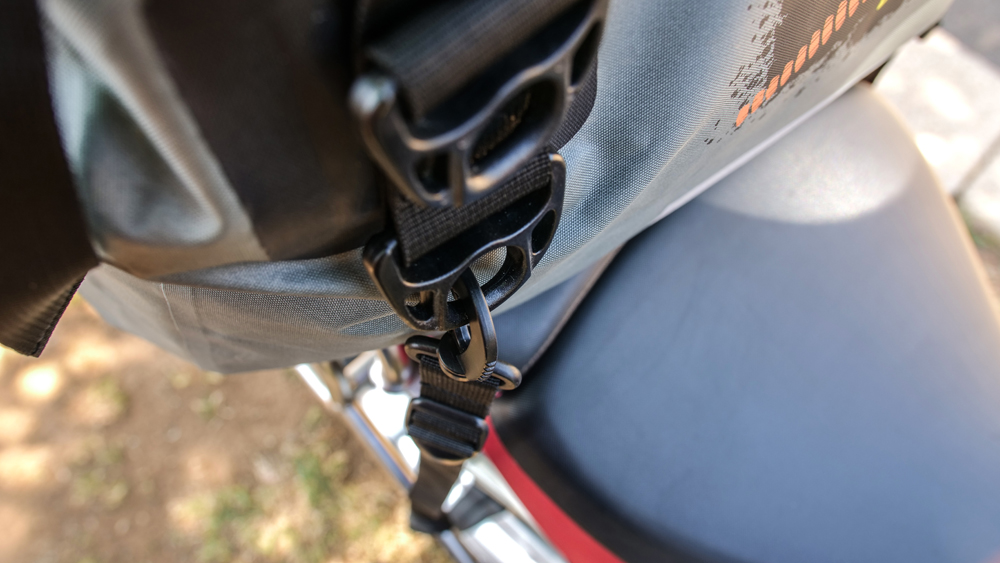
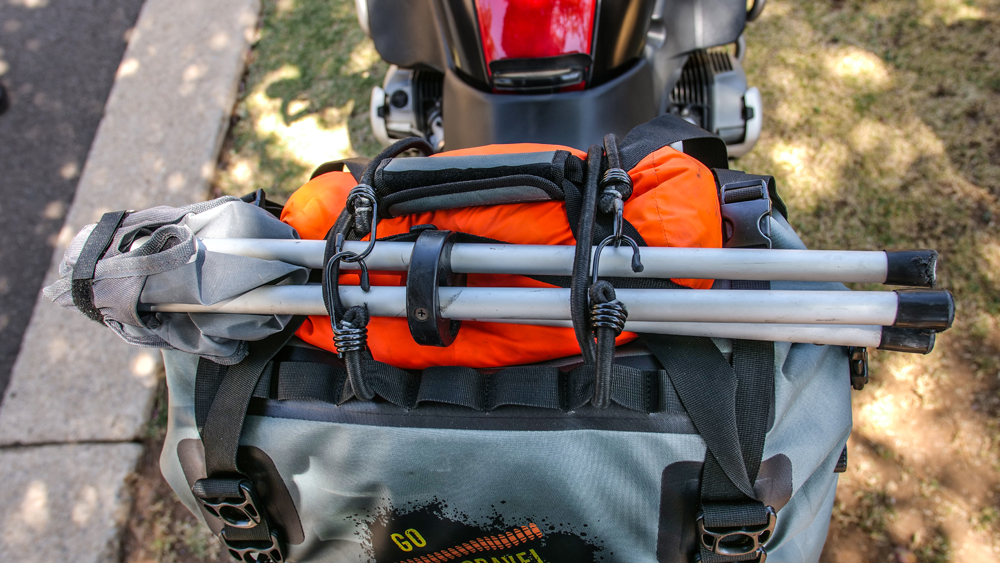
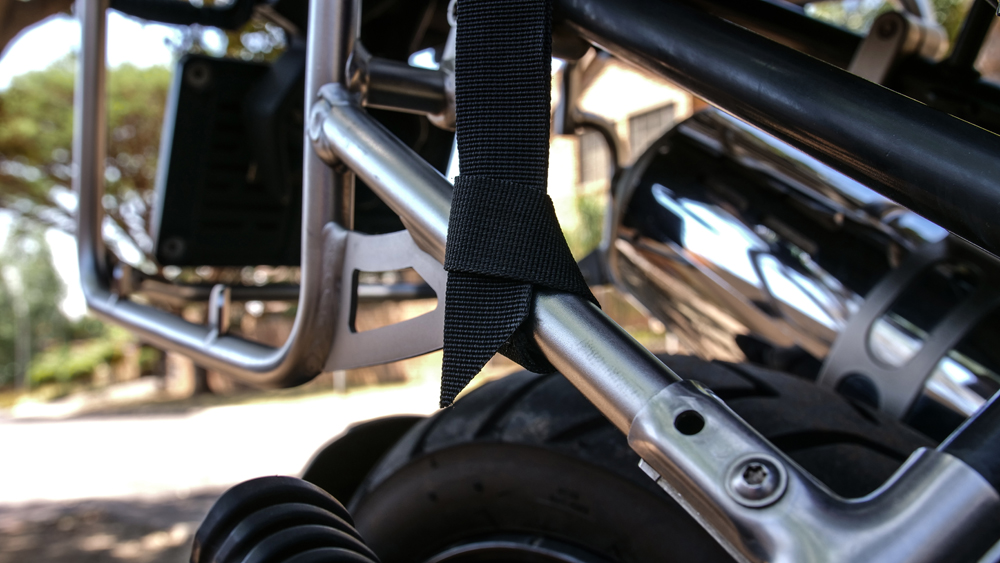
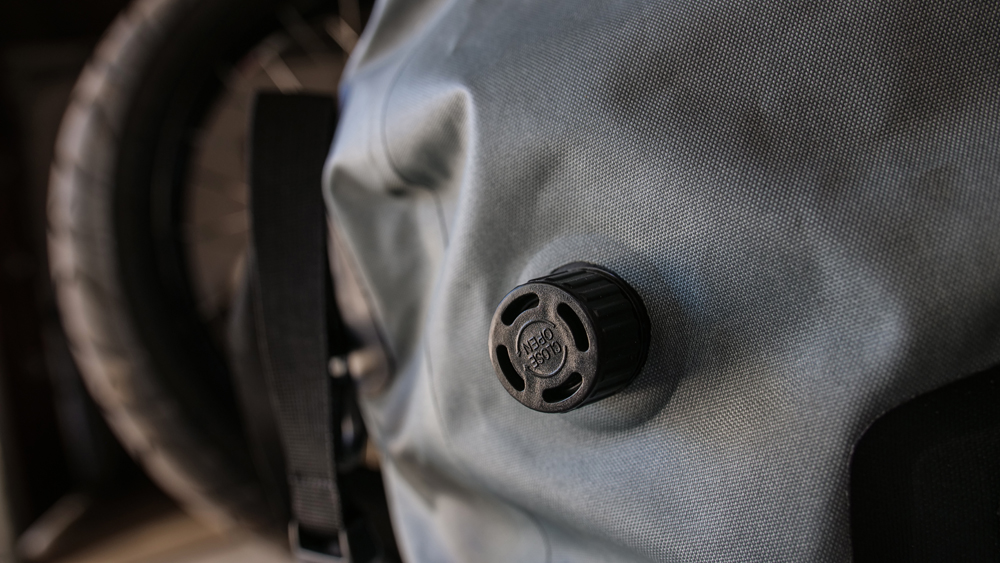
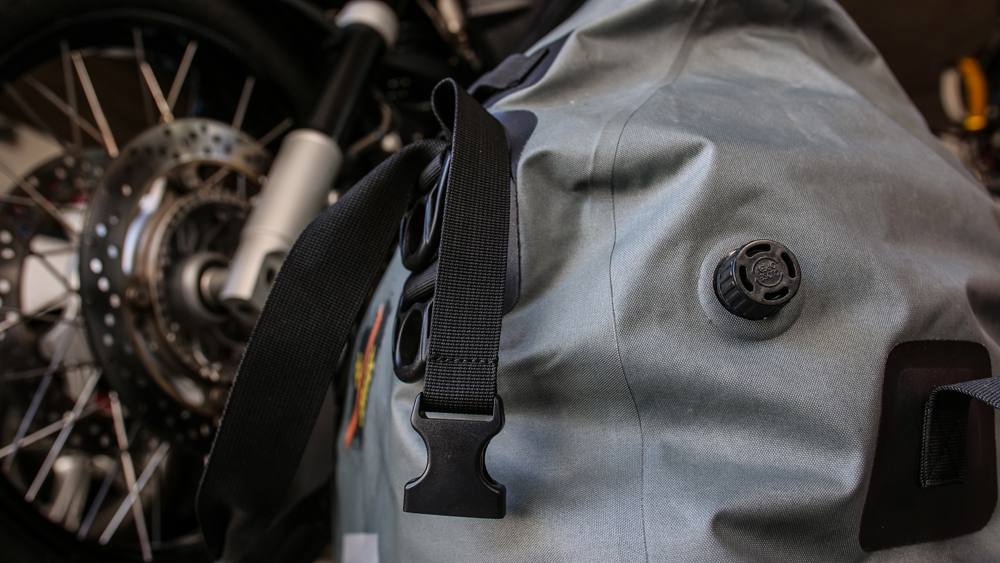
For this particular trip, I decided that I was going to use my OSAH Drypack 40L Duffel bag, because it was fully waterproof and came with X4 tie down straps, that easily attached to my frame (underneath the seat), and tied my bag down into position without any movement – a perfect fit!
Photo credit: Bjorn Moreira
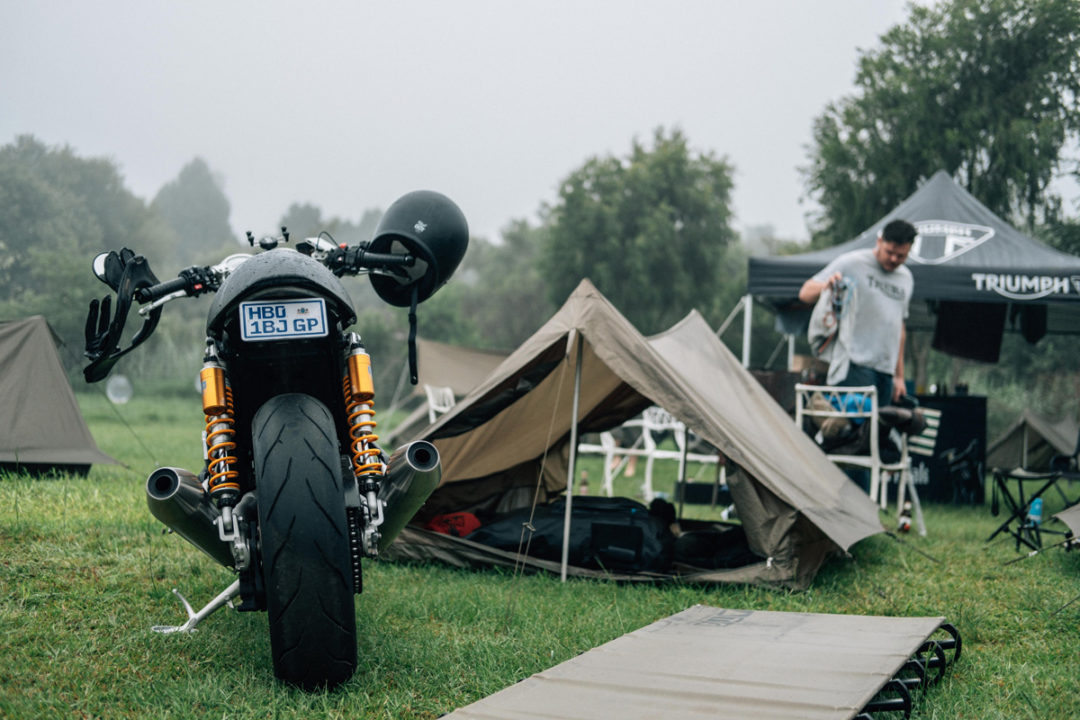
Now for the fun part, trying to figure out how to fit everything that I would need for a 5 day camping trip into a 40L bag. Luckily, there was already tents supplied by the organisers (Bonafide Moto Co.), so this was one item that I did not need to worry about.
Photo credit: Bjorn Moreira
The first thing that I considered was my sleeping stuff. I pulled out my old self inflating sleeping mat, to find that it had a puncture. I tried to fix it using the repair kit that came with the mat, which was not a great idea as it made a real dogs dinner of the mat, and after all the faffing around, it still did not fix the puncture.. Aaagh!
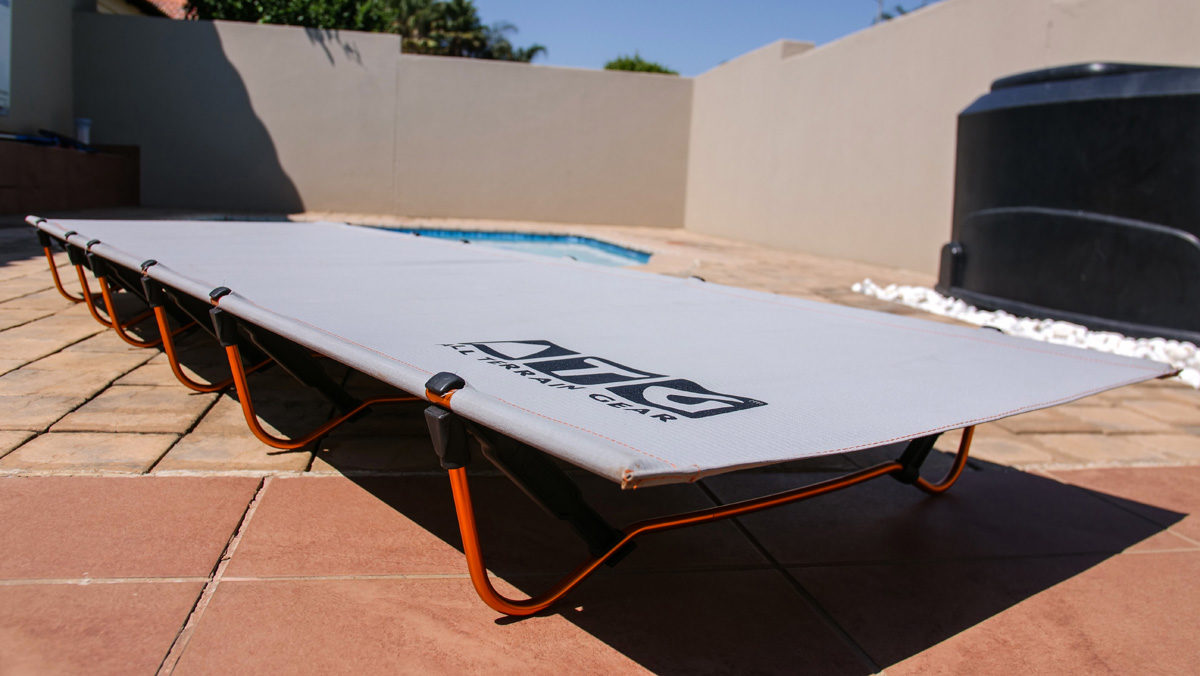
I then came across a very compact stretcher by a company called All Terrain Gear (ATG), at R2,200. This was a bit more pricey than simply buying another inflatable sleeping mat, but my thinking was that it would last a lifetime and would never get a puncture, so I bought it. I am very happy that I did because it sleeps lekker!
Photo credit: Bjorn Moreira
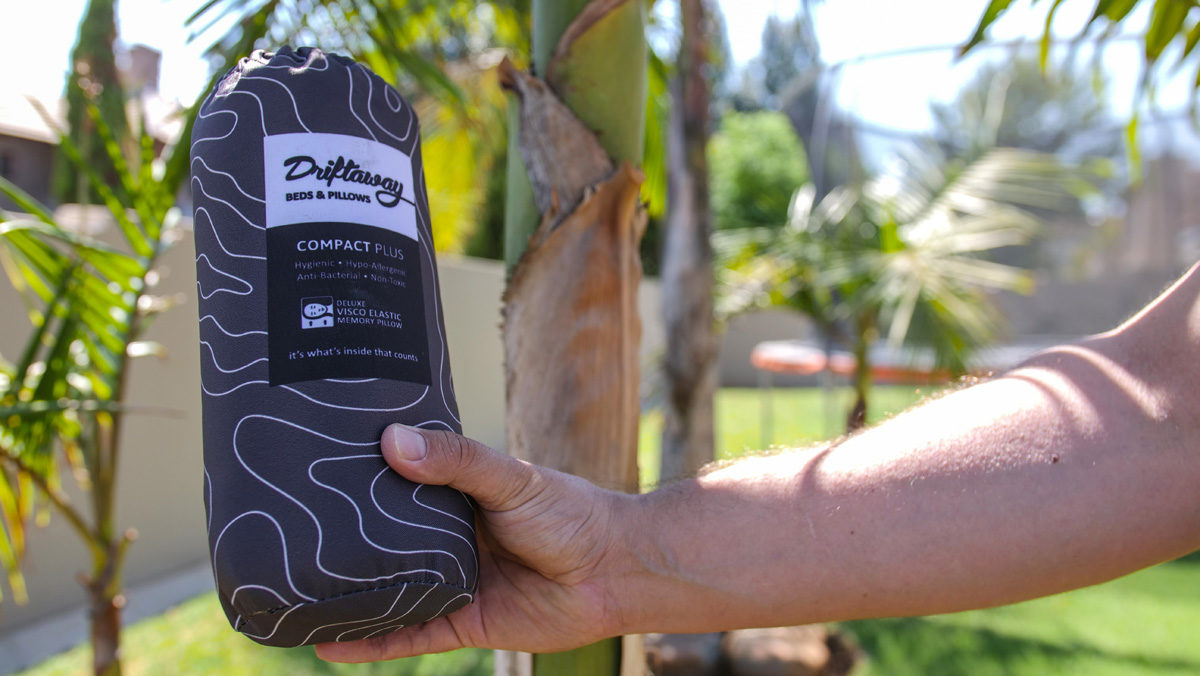
I took my old sleeping bag along which I fitted into a dry sack, then using some bungee cords, and the very handy D buckles that are cleverly paced on-top of the OSAH bag, I was able to easily secure down my sleeping bag on top of my OSAH bag. Oh, and I also bought a memory foam compact pillow which I bought from Xkulcha which took minimal space in my bag.
Photo credit: Bjorn Moreira
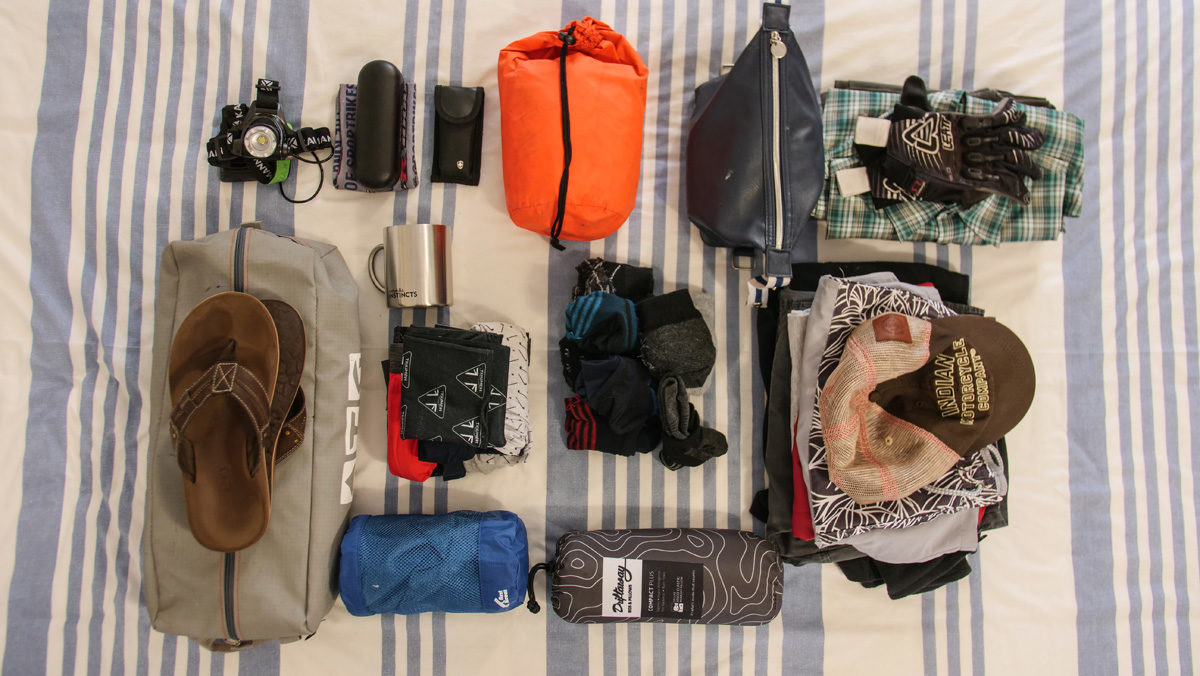
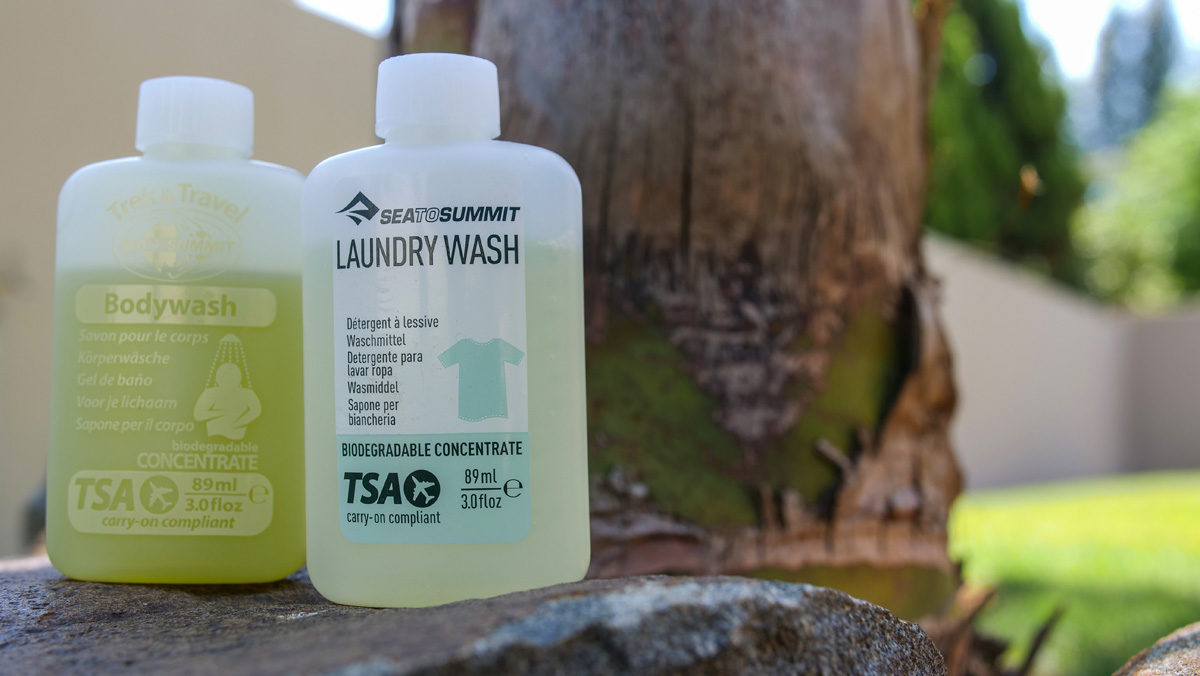
Instead of packing a lot of t-shirts, I bought two Under Armour non-iron t-shirts, which I was able to wash at camp each day. Shopping at Outdoor Warehouse, I found small bottles of laundry and body wash, which helped to keep my toiletries downsized. I love the fact that you can pretty much get everything you need in a mini version of sort. When you apply your mind to it, you can really pack allot of essentials into a small space.
Photo credit: Bjorn Moreira
So that was that, everything I needed for my trip packed easily into my bag, and then fitted onto my bike – I was now packed and ready to go!
Photo credit: Bjorn Moreira
My Impressions
The trip was an absolute blast! I really enjoyed riding around the beautiful roads of Mpumalnga, and riding my bike now with the upgrades on these roads was pure motorcycling bliss.
Photo credit: Joe Fleming / Bonafide Moto Co.
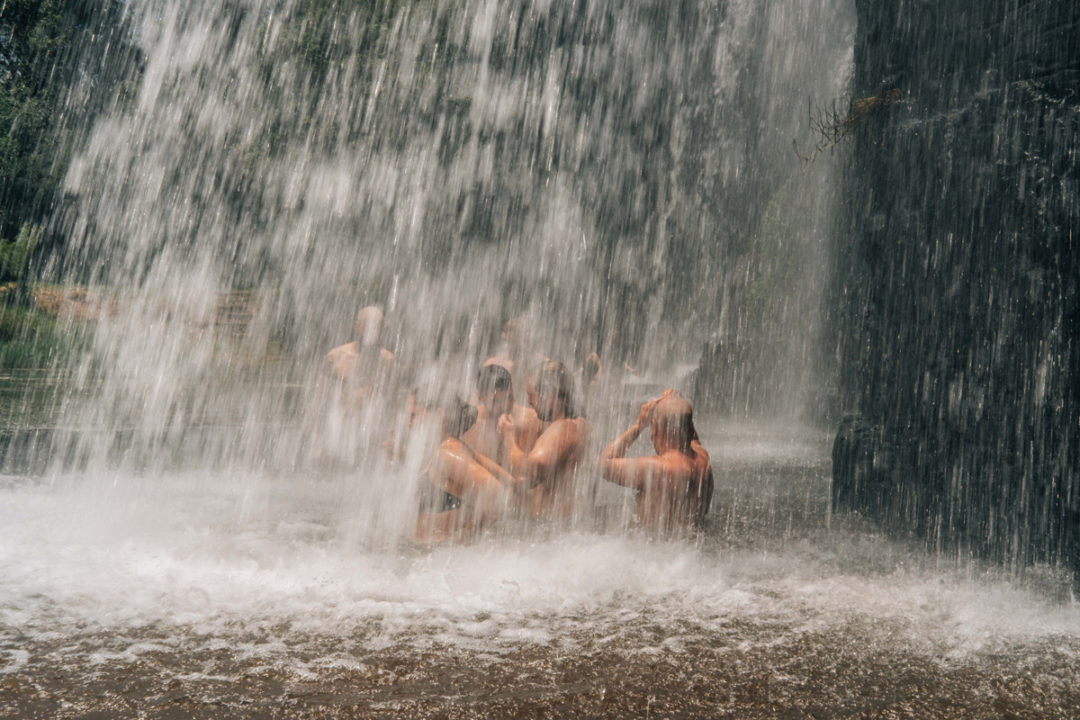
The absolute highlight of the trip for me was visiting and swimming at Forest Falls, which is located near Pilgrims Rest – it was totally epic! All the people who attended the ride were really cool and easy to get along with, and it made for a magical experience.
Photo credit: Joe Fleming / Bonafide Moto Co.
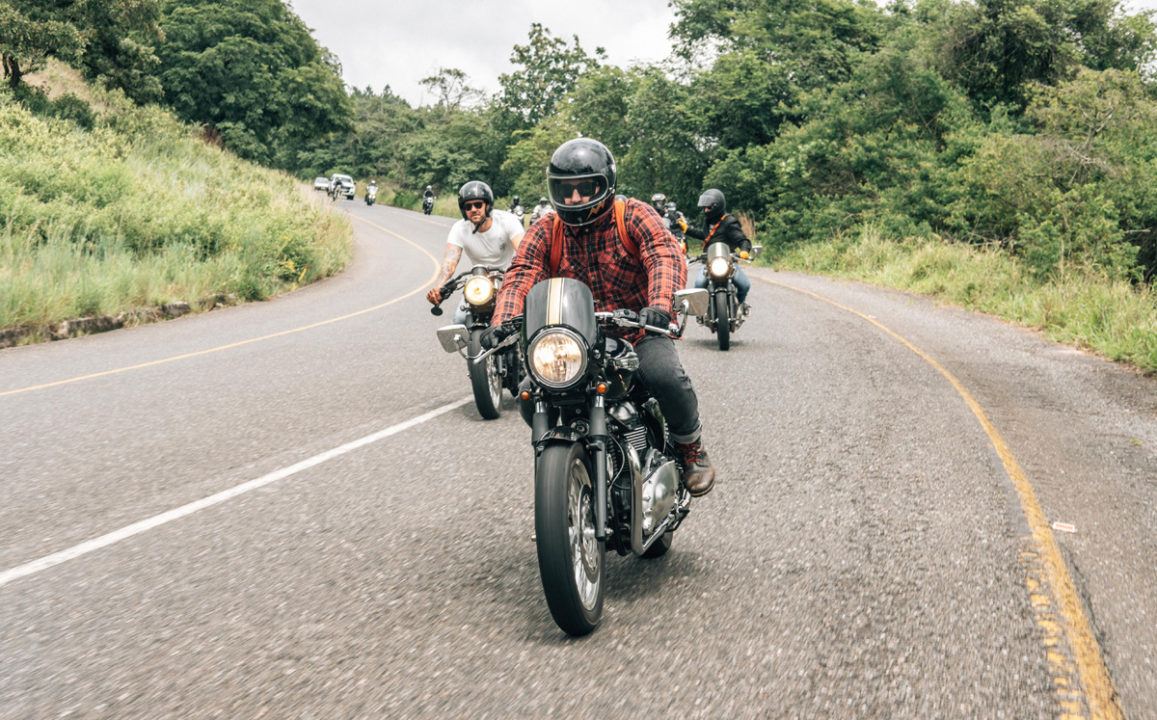
The daytime was spent cruising around the Eastern Transvaal region, at a leisurely pace, stopping at pubs along the way and visiting some of the local hotspots.
Photo credit: Joe Fleming / Bonafide Moto Co.
After a long day in the saddle, a quick dip in the pool before winding down for the evening, and then sharing stories of the days ride, whilst enjoying a scrumptious dinner – was a wonderful experience it was.
Photo credit: Joe Fleming / Bonafide Moto Co.
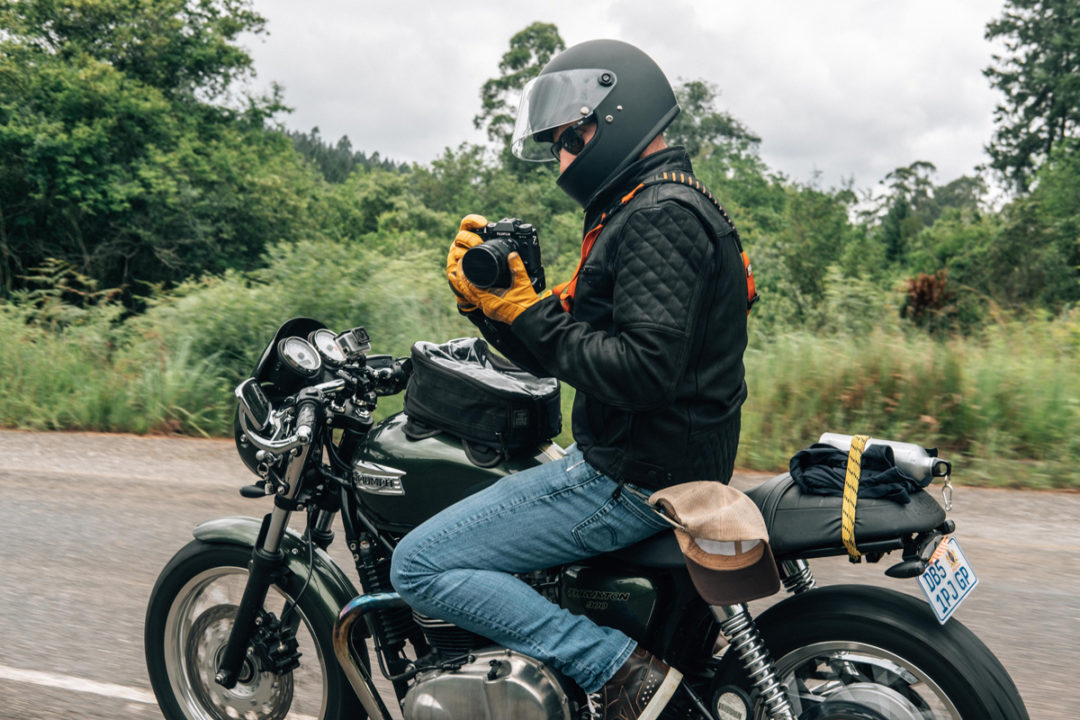
I have to give a shout out to both Richard Harper from Ride Motos Take Photos, and Joe Fleming from So Tall Right Now, as they are masters at taking tracking photos whilst riding on their bikes. I was very impressed with their techniques and skills – Respect!
Photo credit: Joe Fleming / Bonafide Moto Co.
Another memorable occasions for me, was riding Ashleigh’s (from Triumph South Africa) Street Triple, and on the famous 22 road. Oh my soul, what a machine!
What I forgot to mention earlier, is that the itinerary had a RULES section, which explained the do’s and don’ts of the trip – they read:
“We aren’t one for all kind of rules when it comes to the run. Just one simple rule that can be applied to life and will ensure that you’re safe, treat everyone with respect, and have a great time…
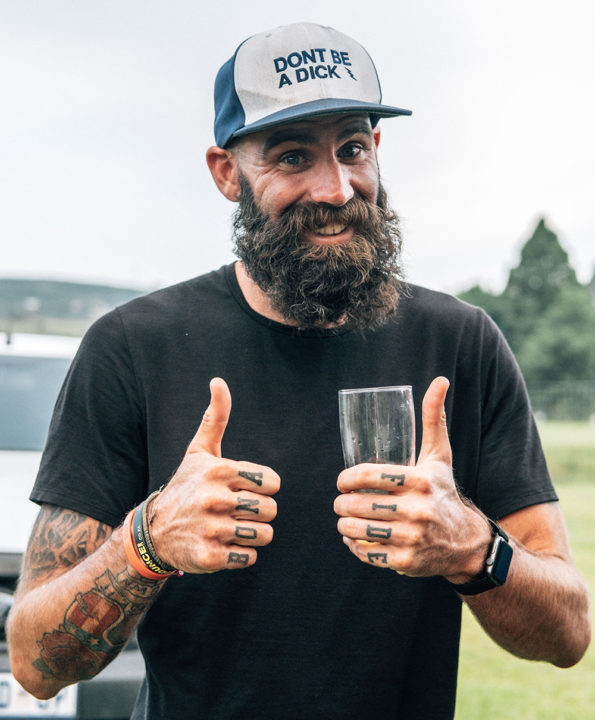
DON’T BE A DICK”
When I first read this statement it made me chuckle. However, I had to remind myself of this rule, whilst riding over Long Tom pass and overtaking a few slower riders through some of the bends. It occurred to me that I was actually being a dick, so I retracted back to a slower cruising pace. What seemed like a joke at first is actually a very true and clever statement, and I will always remember it going forward through life’s journey.
Photo credit: Joe Fleming / Bonafide Moto Co.
Overall I really enjoyed the trip, and I will be back on one of Bonafide Moto Co’s adventures again next year – for sure.
Bonafide Moto Co.
Bonafide Moto Co Adventures? I thought this was the Sabie Bubble Run?
Photo credit: Joe Fleming / Bonafide Moto Co.
Since the Bubble Run which started in 2014, Joe and his good friend Alan Shenton created a brand called Bonafide Moto Co. which has now evolved somewhat, and offers throughout the year numerous adventures and rider training events – such as; In Search of Swazi Gold, Adventure to Sani Pass, and One Night In the Dirt. Again, these adventures/training events are mainly aimed at classic bikes, but it seems that anyone is actually welcome, you certainly won’t get frowned upon if you arrive on your KTM, on the contrary these guys make you feel welcome whatever you ride.
Photo credit: Joe Fleming / Bonafide Moto Co.
To keep up to date with all things Bonafide, follow their Facebook & Instagram pages below… #HeresToTheNextAdventure
Adventure motorcycles are all about compromise. Some go for maximum off-road prowess, at the expense of open road comfort, while others prioritise touring over hooning in the dirt. The trick is to make those compromises as small as possible.
Photo credit: Wesley Reyneke
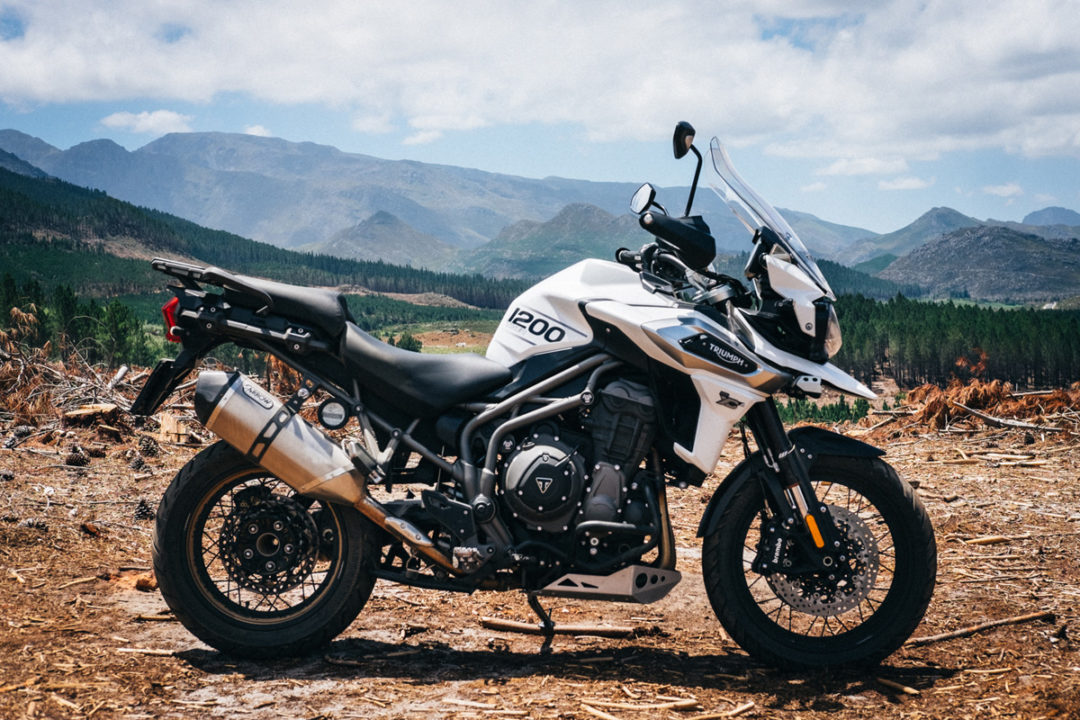
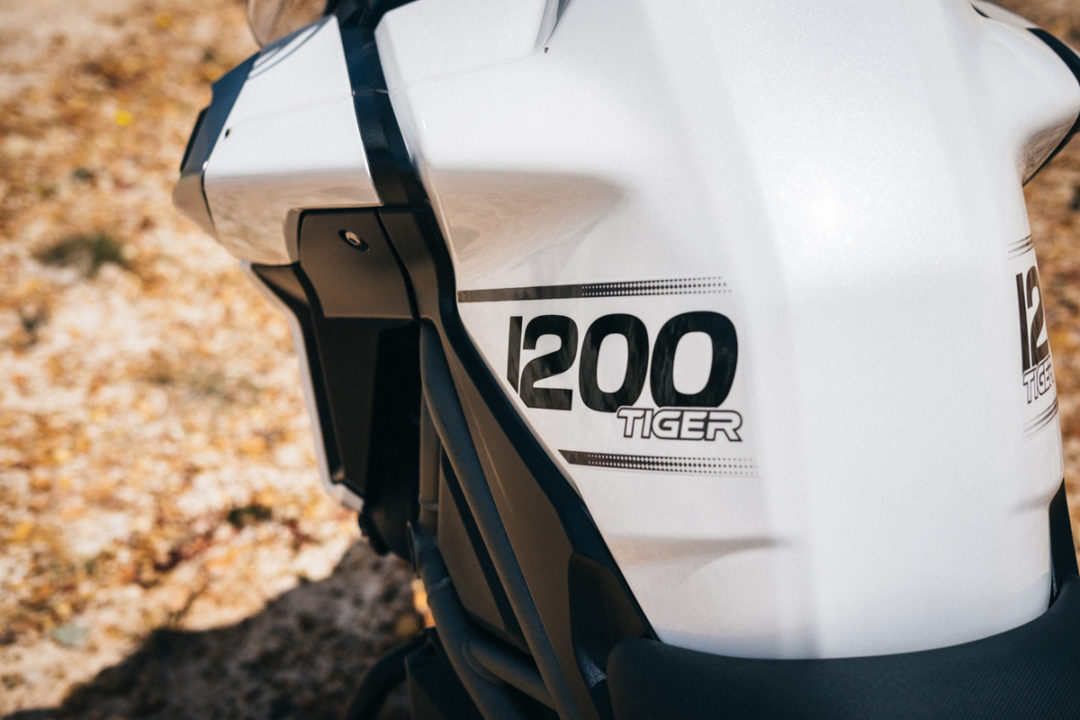
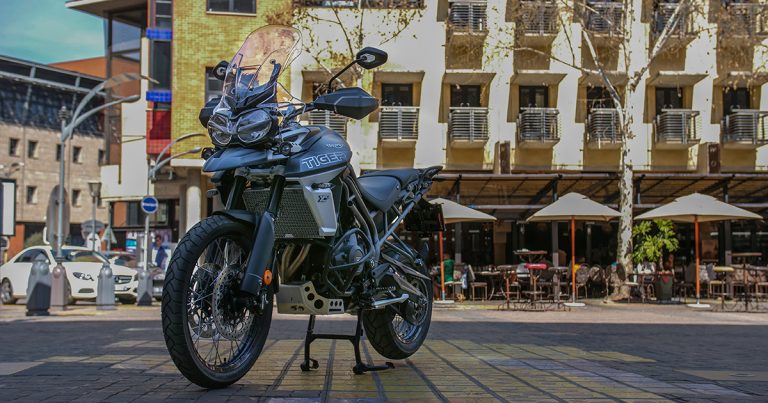
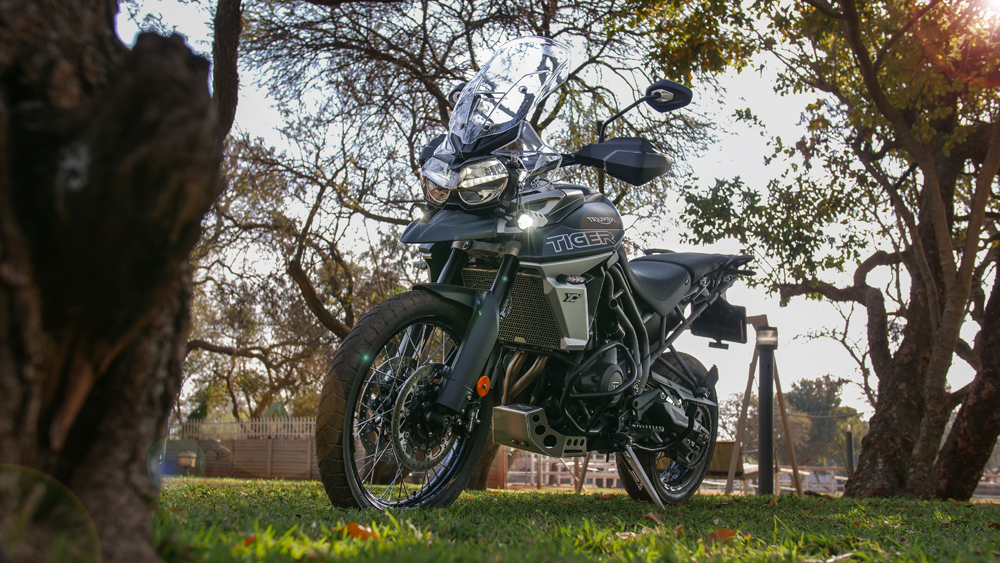
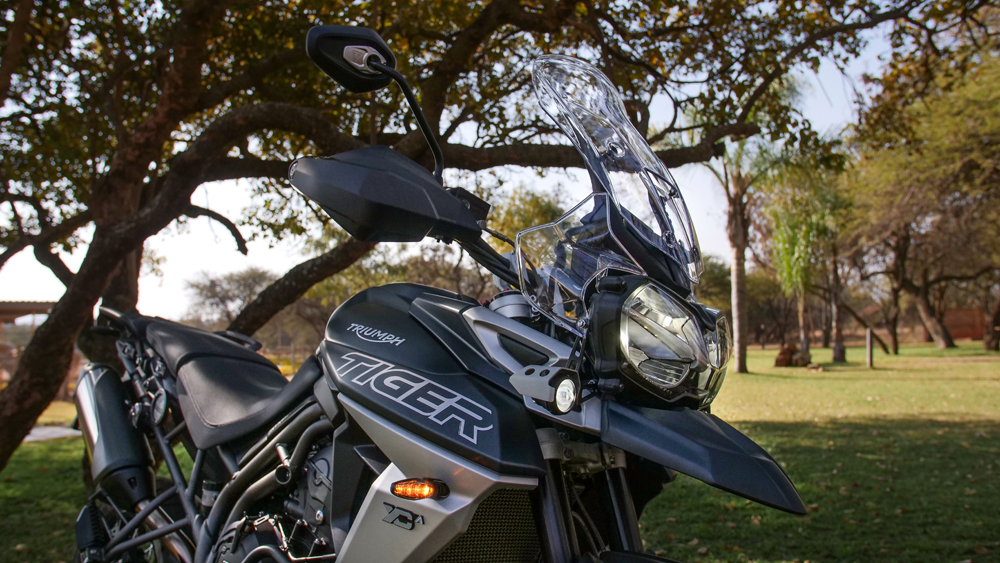
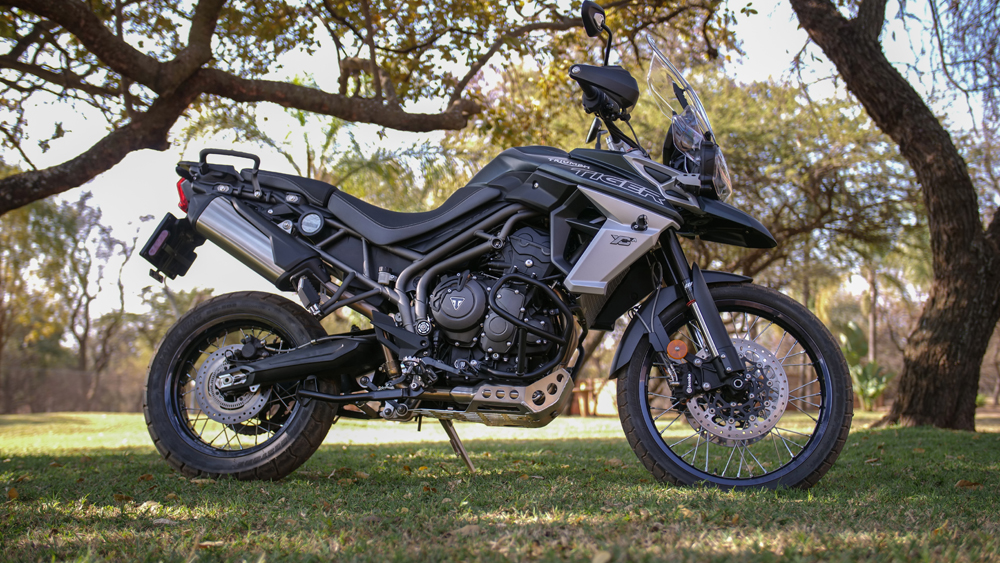
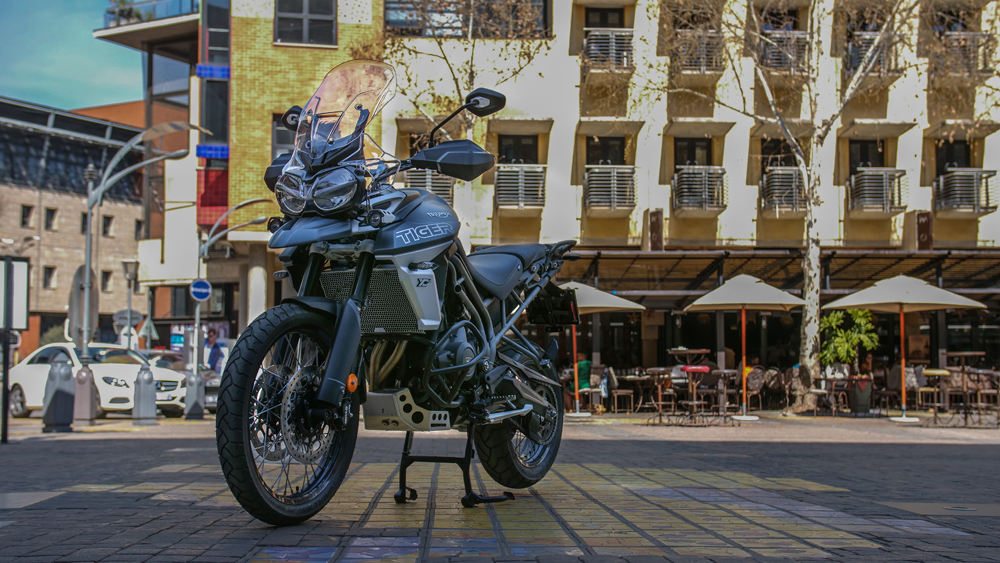
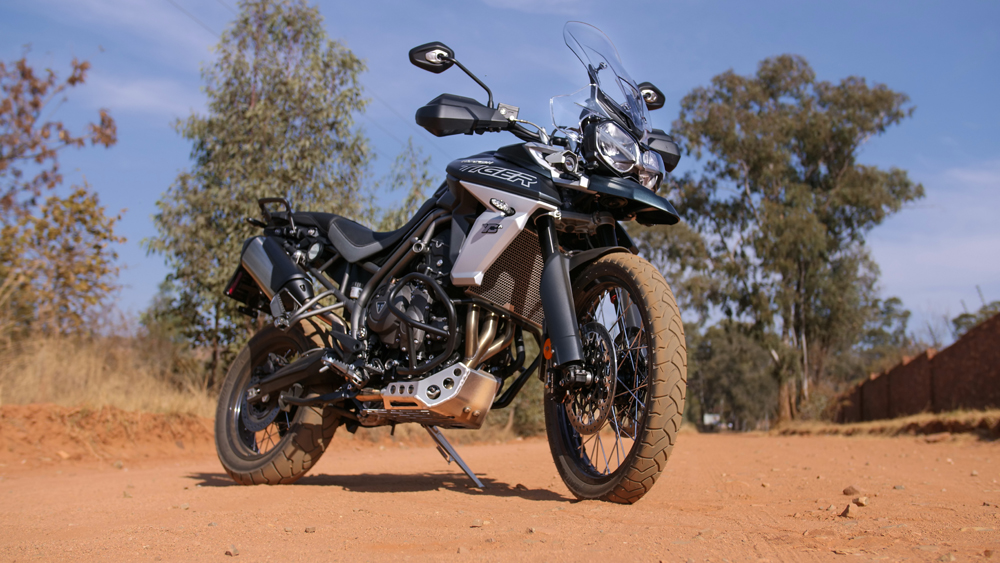
With a stonking 1 215 cc three-cylinder motor, and a dry weight of 248 kg, it’s pretty clear where the Triumph Tiger 1200 XCA sits on that spectrum. But what’ll surprise you, is just how versatile it actually is.
The Tiger XCA is Triumph’s flagship adventure bike, with a spec sheet to match. It makes a respectable 139 hp at 9 350 rpm, and 122 Nm at 7 600 rpm. That’s delivered straight to the back wheel via a drive shaft, with a ride-by-wire throttle, hydraulic torque-assist clutch and six-speed box managing power.
That puts it in the same ballpark as BMW’s new R 1250 GS—but in reality it’s a very different machine. Its in-line three has a characteristic as unique as the Beemer’s boxer mill and makes its numbers higher in the rev range. It really is something else; the way it delivers power—and the sound it makes as the motor climbs through the revs—are downright addictive.
Photo credit: Wesley Reyneke
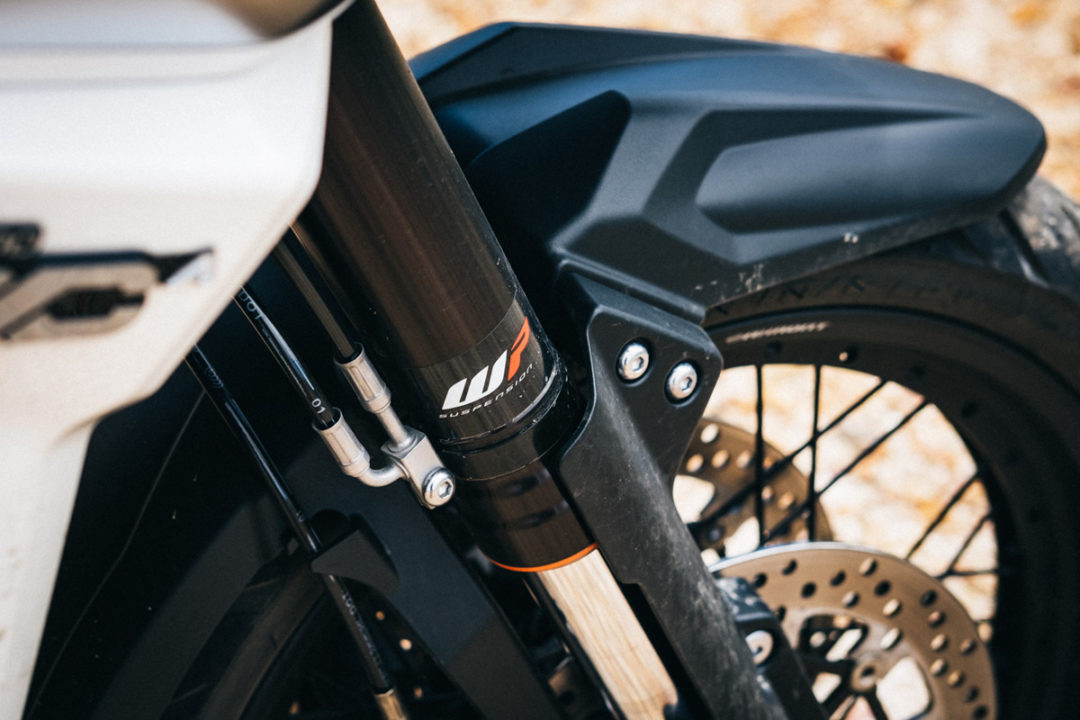
The Tiger 1200’s chassis is well sorted too. It’s built around the same steel trellis frame that’s become a hallmark of the Tiger range, with an aluminum swing arm encapsulating the final drive. And it’s kitted with WP suspension at both ends; 48 mm forks with 190 mm of travel, and a mono shock out back with 193 mm of travel. It uses Triumph’s proprietary ‘Semi Active Suspension’ system, and is electronically adjustable too.
Photo credit: Wesley Reyneke
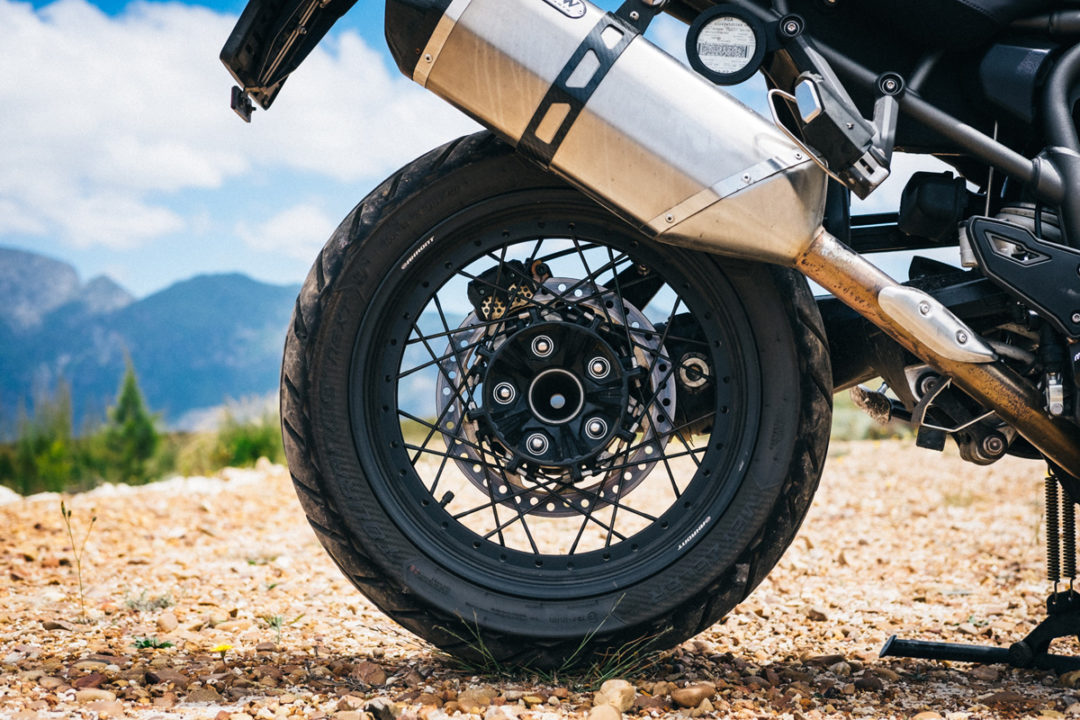
The wheels are spoked tubeless numbers—measuring 19” up front and 17” out back. And the brakes are a mix of Brembo and Nissin parts, with twin discs up front and switchable cornering ABS as standard.
Photo credit: Wesley Reyneke
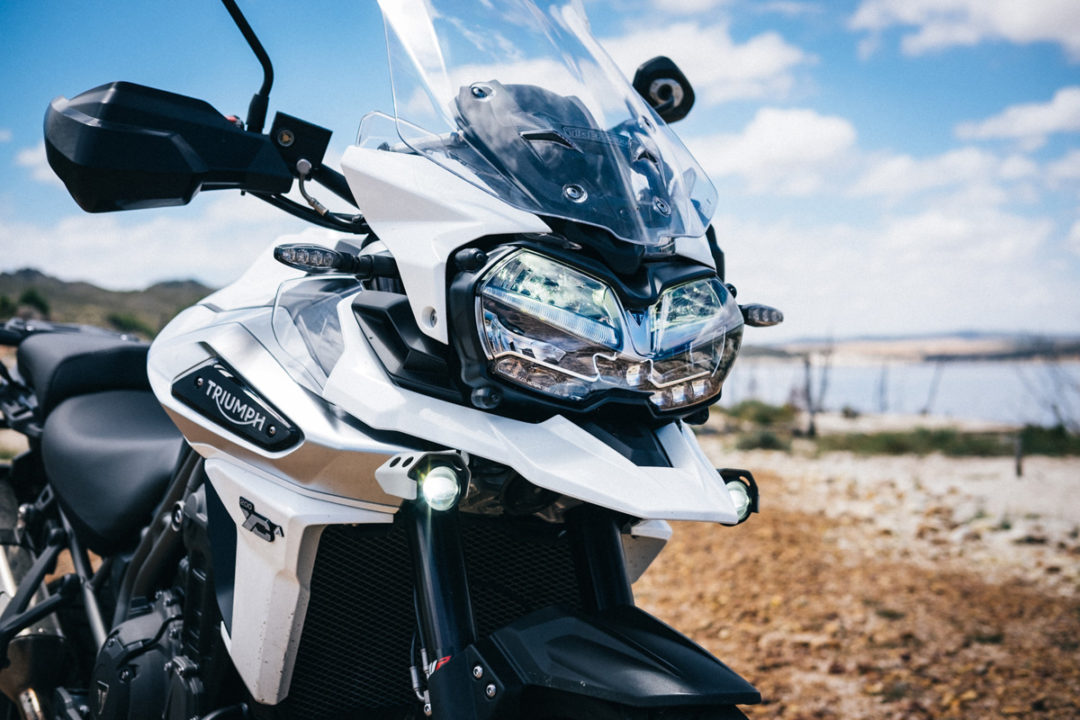
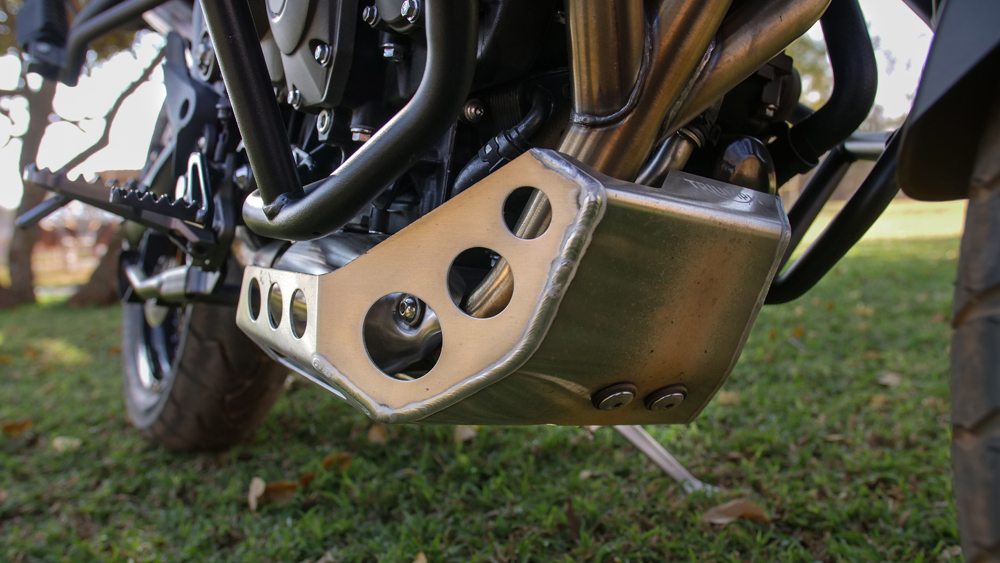
You also get a 20 l fuel tank that’s good for about 300 km between stops, and a seat height that’s adjustable between 835 mm and 850 mm. Bits like the engine guards, bash plate and hand guards are standard equipment. Other fancy bits include a keyless ignition, LED lighting with slick-looking daytime running lights, and an electronically adjustable screen.
Photo credit: Wesley Reyneke
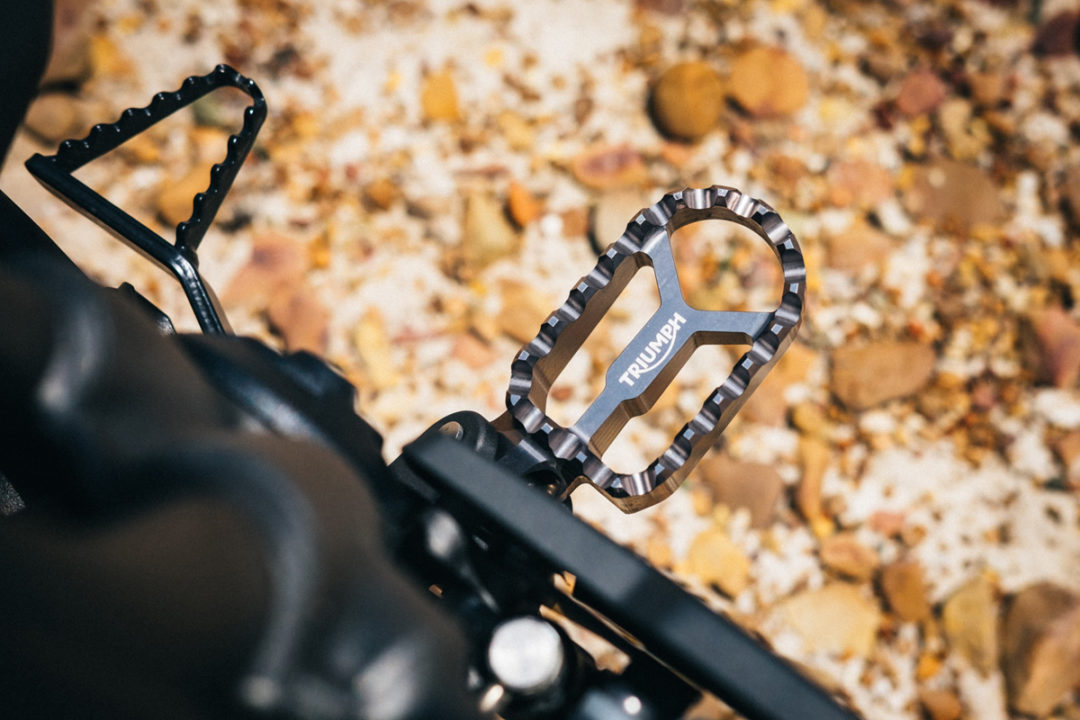
At R254 000 the XCA is a little pricier than the XCX, but that extra change buys some sweet upgrades. The XCA’s headlights feature adaptive cornering tech, and LED spotlights are included too. Heated grips come installed, along with separately heated rider and passenger seats, and chunky off-road foot pegs.
Photo credit: Wesley Reyneke
The XCA also comes with Triumph’s shift assist quick-shifting system, hill hold control, and a titanium and carbon fibre-wrapped Arrow silencer. It’s not the loudest pipe I’ve heard, but it does add a little substance to the Tiger’s soundtrack.
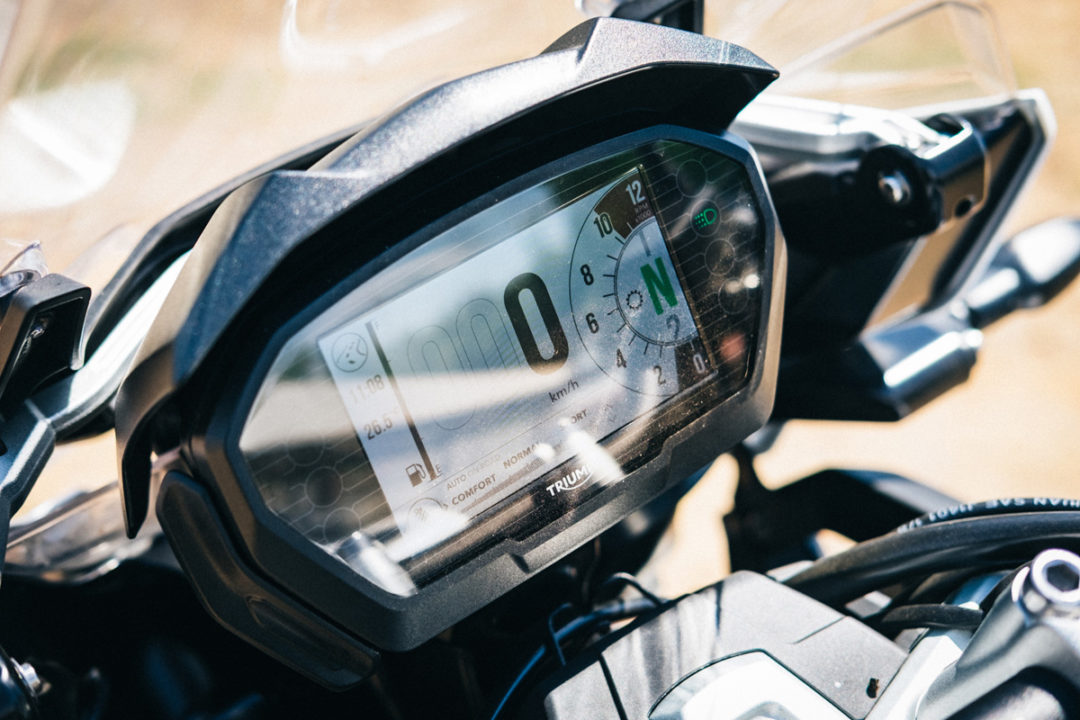
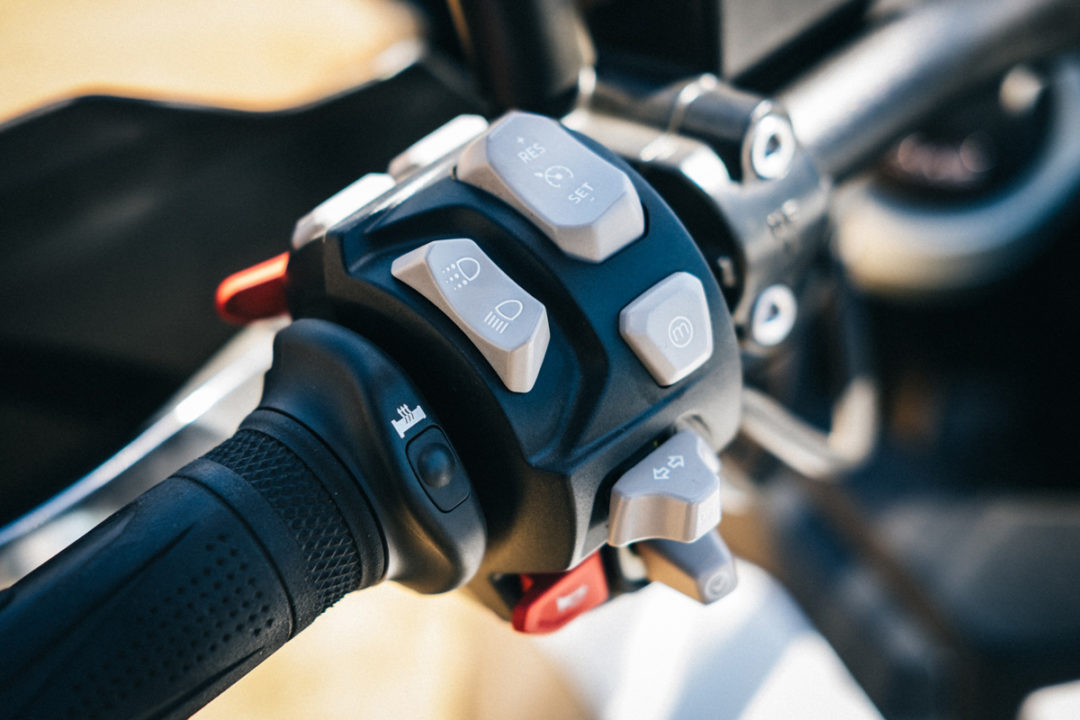
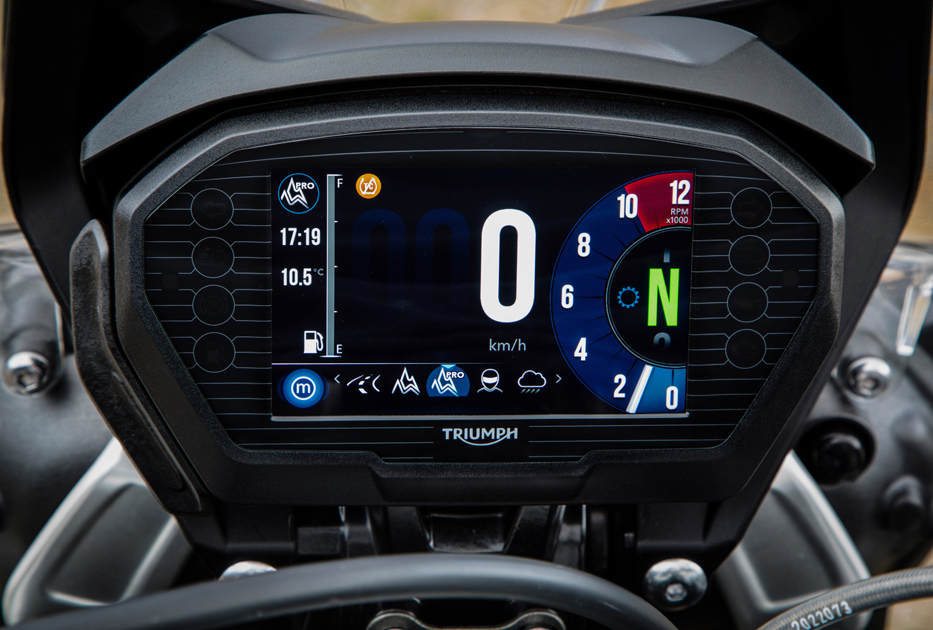
But it’s the sheer amount of useful gadgetry that truly sets the Tiger 1200 apart. Everything is monitored and controlled via a 5” TFT display, and an easy-to-use switch arrangement. From here, you can flick through all the data you’ll ever need, change riding modes, and even customise various settings.
Photo credit: Wesley Reyneke
It’s a pretty intuitive system—for the most part—but I did find one or two settings confusing. For example, you can switch between different speedo and tach layouts—but only if you dive into the menu first to change the default settings. (By default, the different layouts are linked to each riding mode.) My biggest gripe is Triumph’s standard cruise control, which works OK, but has to be canceled by pulling the clutch or brake (rather than via a button).
Photo credit: Wesley Reyneke
The Tiger 1200 electronic aids include traction control, and six riding modes—two of which are off-road specific, and one of which is a user-specific custom setting. Each mode includes specific suspension settings—but what’s nifty, is that you can easy fine tune the suspension stiffness further, on the fly.
On the road, most of the electronic aids are refreshingly unobtrusive. Settings feel subtle rather than drastic—and that’s a good thing. Triumph’s ride-by-wire and fuel injection systems are at the top of their game too, and the Tiger 1200’s throttle is direct and predictable.
Photo credit: Wesley Reyneke
That rev-happy triple really is a gem—firing the Tiger off the mark and out of corners with at even the slightest encouragement. It spools up quick too, moving you through the six speed box rapidly. Triumph’s shift assist works well enough, even if it does take a solid foot to shift up—and the hydraulic clutch is feather light when it’s needed.
Honestly, I expected the Triumph to be punchy. But what I didn’t expect, was just how nimble it is, especially for a litre-plus dual sport. Hustling it through corners is oodles of fun and less work than you’d think. Even in heavy traffic, the big Tiger is easier to squeeze between pesky cars than you’d imagine.
That nimbleness translates to a surprising level of off-road capability too. Even though my test unit was fitted with extremely road-biased dual-sport rubber, I had no problem traversing gravel and farm roads aboard the Tiger. So I pushed it harder—tackling loose stretches of steep ‘twee-spoor’ too.
Photo credit: Wesley Reyneke
Granted, I didn’t take it through sand dunes, or on a pukka enduro course—and I wouldn’t want to either. But for general purpose adventure riding, the Tiger 1200 is hella good.
That’s partly down to its two off-road riding modes, which blend various levels of ABS and traction control interference. Switch it to ‘Off-Road,’ and it’s very forgiving; flick to ‘Off-Road Pro,’ and suddenly the back wheel’s snaking around and putting a huge grin on your face. (It’s just a pity that you can only switch between the road and off-road modes when the bike is stationary).
Photo credit: Wesley Reyneke
But it’s also the Tiger’s ergonomics that make it such a usable motorcycle. The rider triangle—and the amount of padding on the seat—are all-day-comfortable. And even though the screen’s a touch too low at its highest setting for my 1,86 m frame, it should hit the sweet spot for most riders.
Get up out of the saddle, and it’s immediately clear just how switched on Triumph were when they designed the Tiger’s layout. The fuel tank’s perfectly sculpted to be narrow between your knees, making it easier to move your body—and the bike—around, when you’re negotiating tricky terrain.
Photo credit: Wesley Reyneke
It’s considerations like these that make the Tiger 1200 so appealing. I used it in town, in traffic, on twisties, out on the open road, and off the beaten track—and it never felt outgunned. And with plenty space for luggage, it left me itching to pack a bag and kick up dust clouds for a few days.
I get it horribly wrong as I brake-slide into a tight left hander, attempting to bush-up on my rusty enduro bike skills. It is the first outing on my trusty KTM200XC-W in more than a year. My two wheeled companion high-sided me and I get that weightless feeling as I fly through the air like Superman…. Off course, my landing was less graceful than that of the superhero on the silver screen. I am heavily winded from landing on my right shoulder and thereafter flat on my back. I lie there for a few seconds before even attempting to get up. “Why do I keep doing this?”, I ask myself while shaking my head. I can only laugh as I try and regain my composure before the arrival of my riding buddy.
Photo credit: Bjorn Moreira
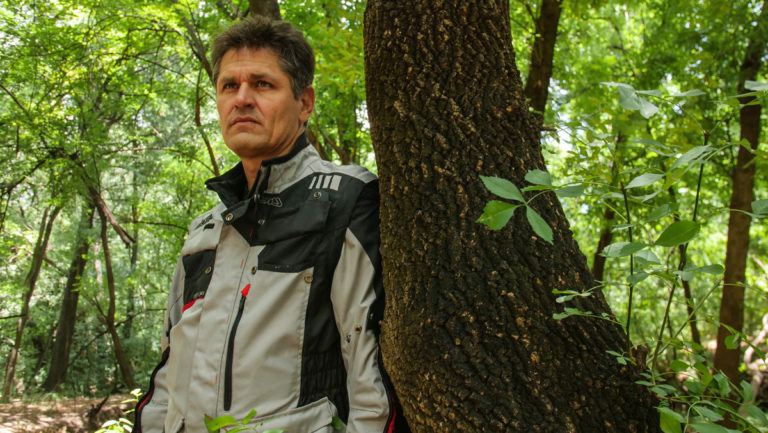
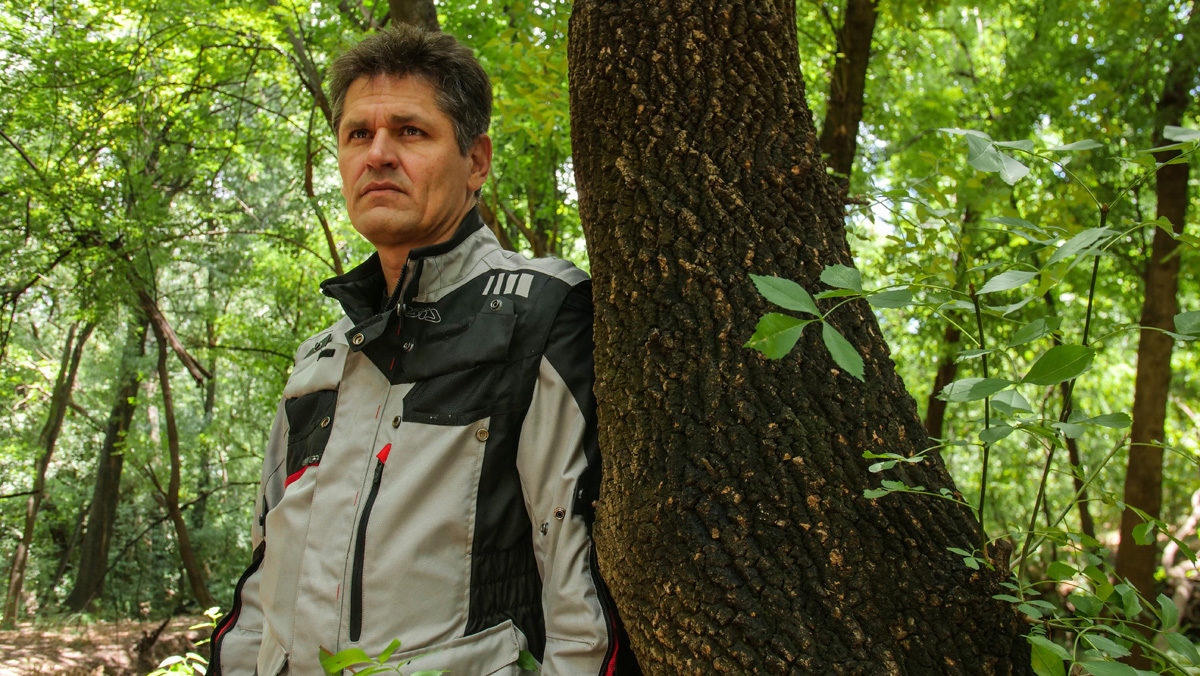
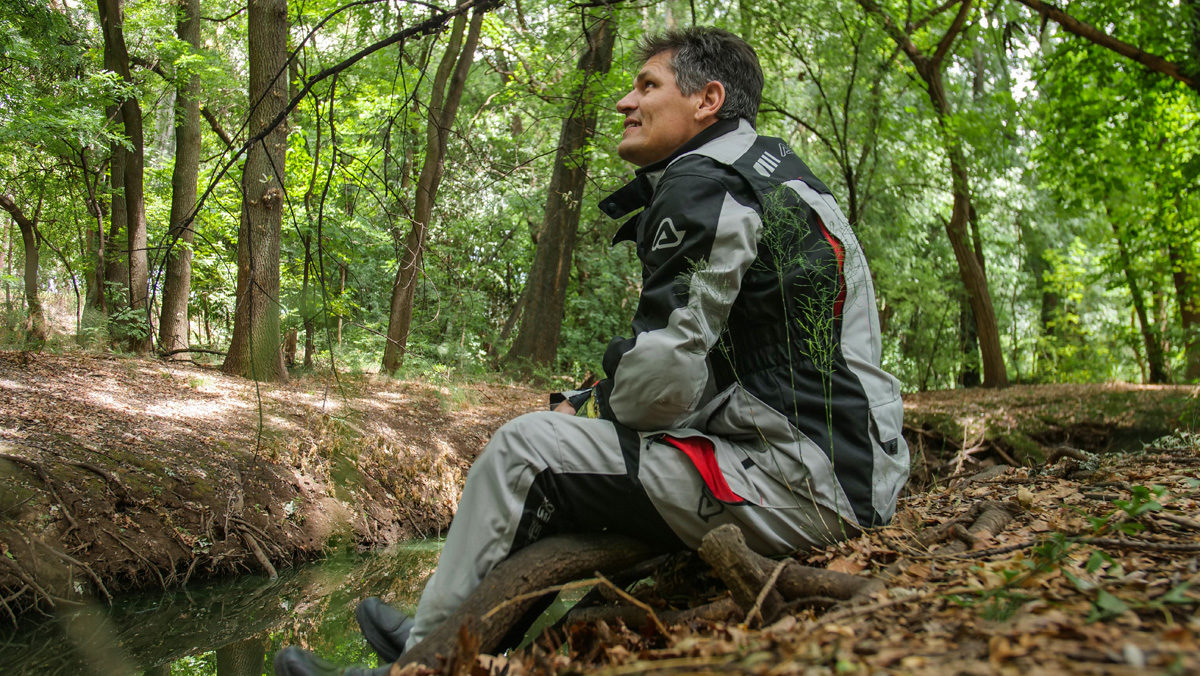
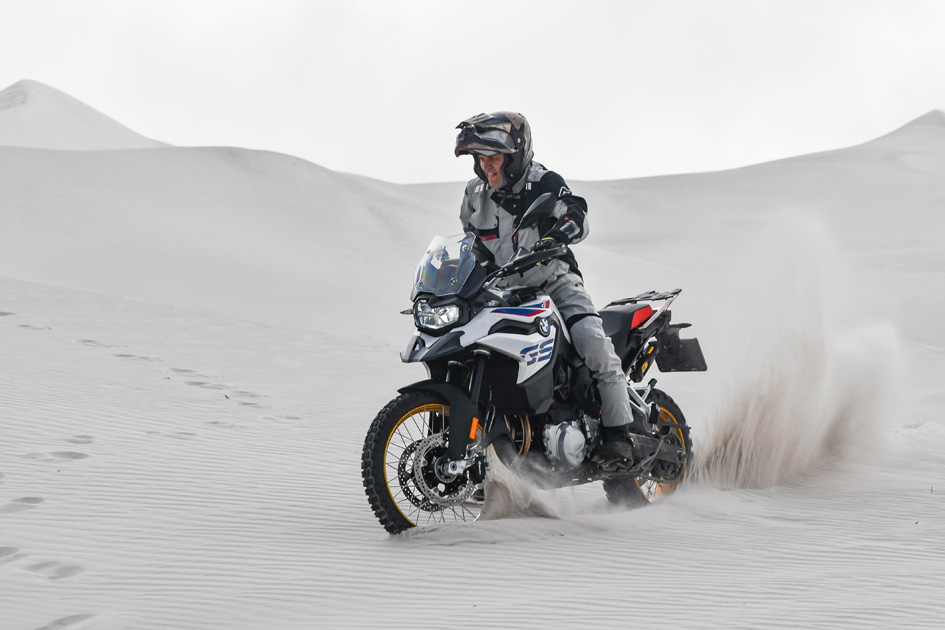
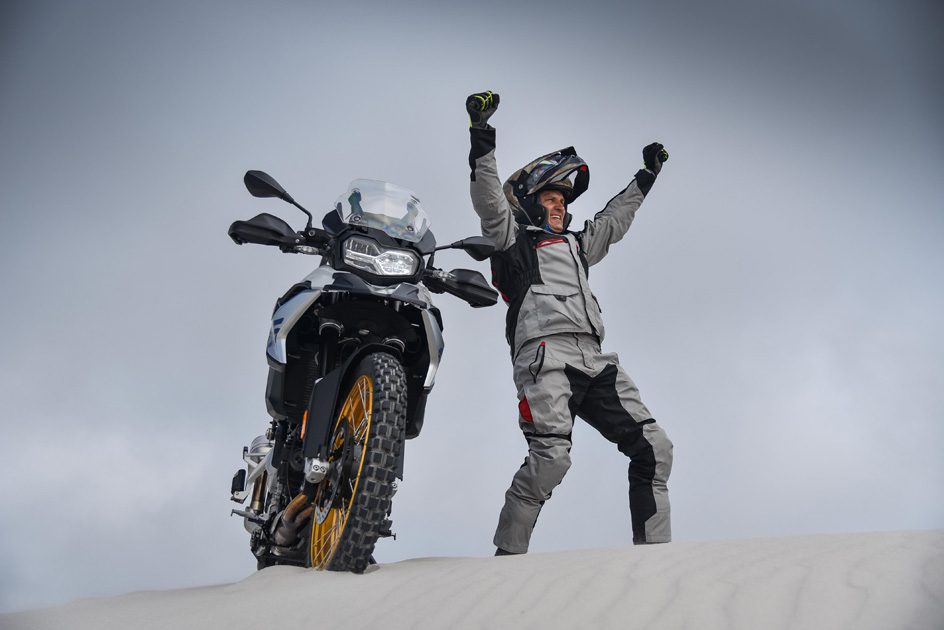
Yet there was something funny and almost out of place in this scenario. I have donned myself with the latest Acerbis adventure bike jacket and pants. Some might argue that this is not the appropriate gear for where I find myself deep in the woods on a very technical enduro bike trail. I agree wholeheartedly!
But there is method to my madness…. I am here to test and review this new addition to the world of adventure riding gear. This is what I call the torture test. Slow technical riding in hostile bush and thorn trees, with virtually no breeze to cool me down in a warm, humid setting. This often comes with the territory, so to speak. “Africa is not for sissies” is how the saying goes.
Photo credit: Rob Till
Most adventure bike owners also own what we call a “plastic bike”. This is something in line with what I was riding in the opening paragraph. Something that resembles the likes of your favourite motocross, enduro or trials bike brand. Acerbis is best known for supplying OEM and aftermarket body plastics for these small, lightweight specimens at affordable prices. For a few hundred rand, thanks to companies like Acerbis, you can buy a plastic, bolt-on body kit that will make your enduro or motocross bike look brand new again. That is the beauty of plastic bike riding, as it is certainly easier on the bike than the rider.
Back to the riding gear. Upon my visit to Adrian Bac, well known and likeable chief in charge at AMP distributors, I was very surprised to learn that Acerbis also make adventure bike riding gear. Adrian himself is deeply rooted in the world of motocross and adventure biking. He keeps himself close to the action on weekends, supporting his son who participates in motocross on a national level. Whenever Adrian gets a break, he boards his Yamaha XT1200Z for the other passion in his life, adventure biking. He has been using this same Acerbis outfit for quite a while now and was very excited to get me to share in the experience. I was a little reluctant, to be honest.
Photo credit: Rob Till
The time came for me to see this adventure wear up close and in person. As we tried for size, it soon became apparent that I underestimated the Italians! The fit is perfect for my body size and type. Perhaps I have Italian blood somewhere in my past! I soon remembered that the Italians are renowned for fashion, style, art and beauty. This is what they do, to be frank!
Photo credit: Bjorn Moreira
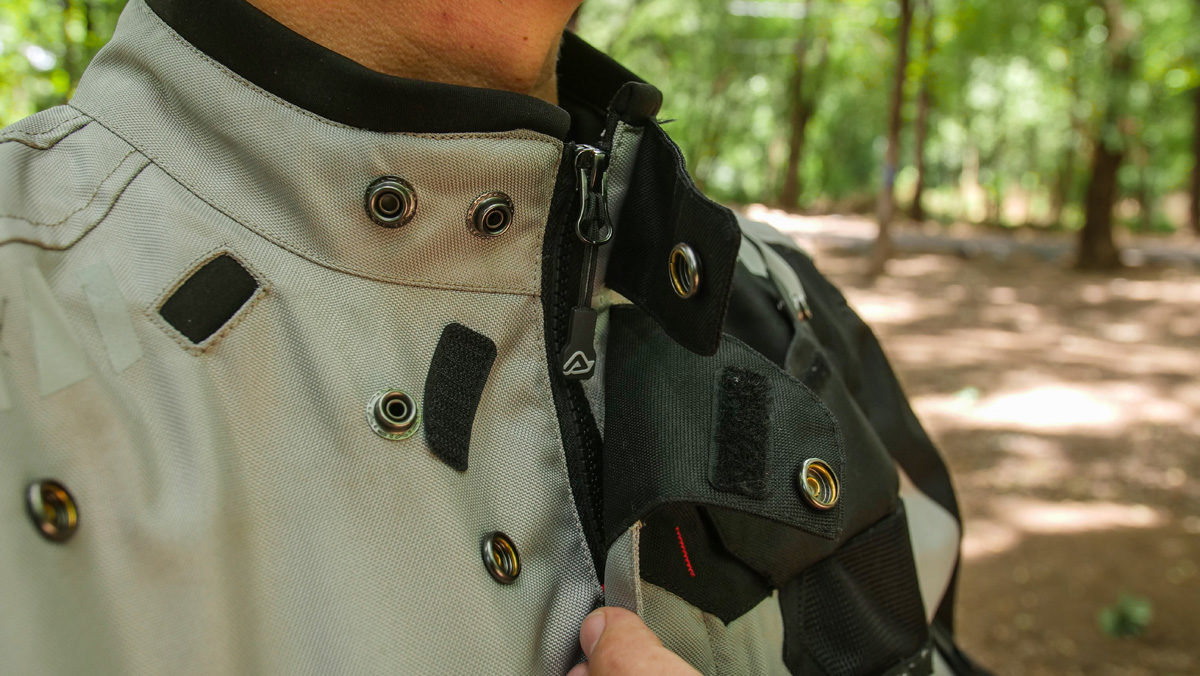
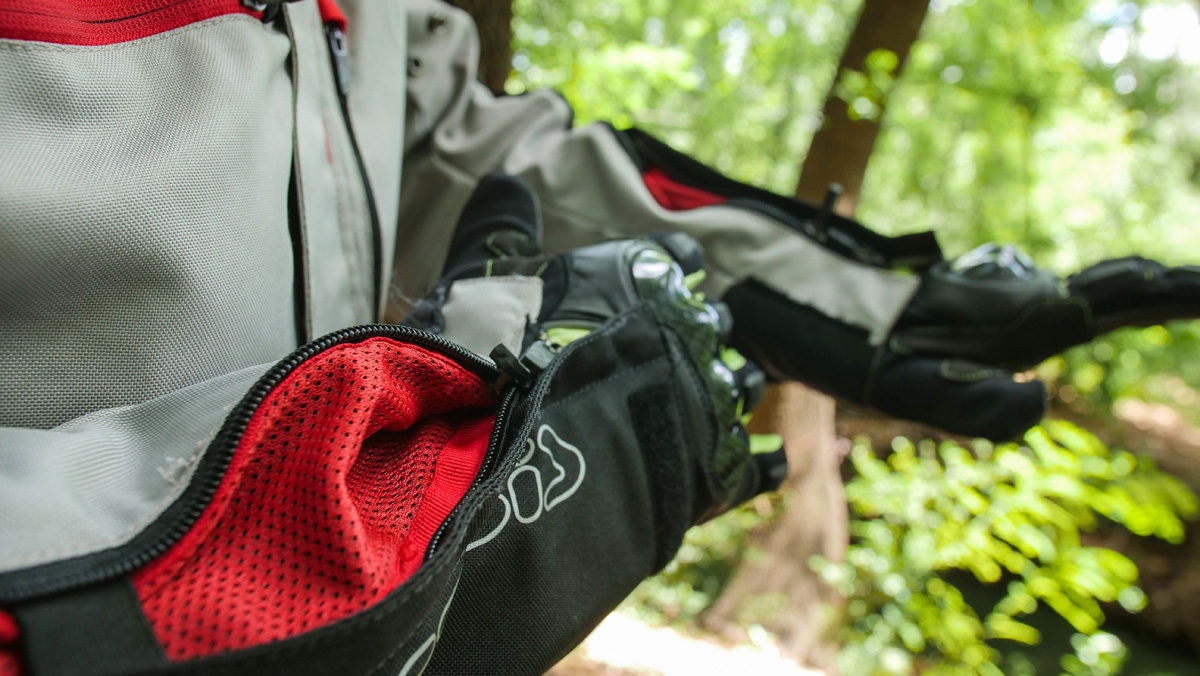
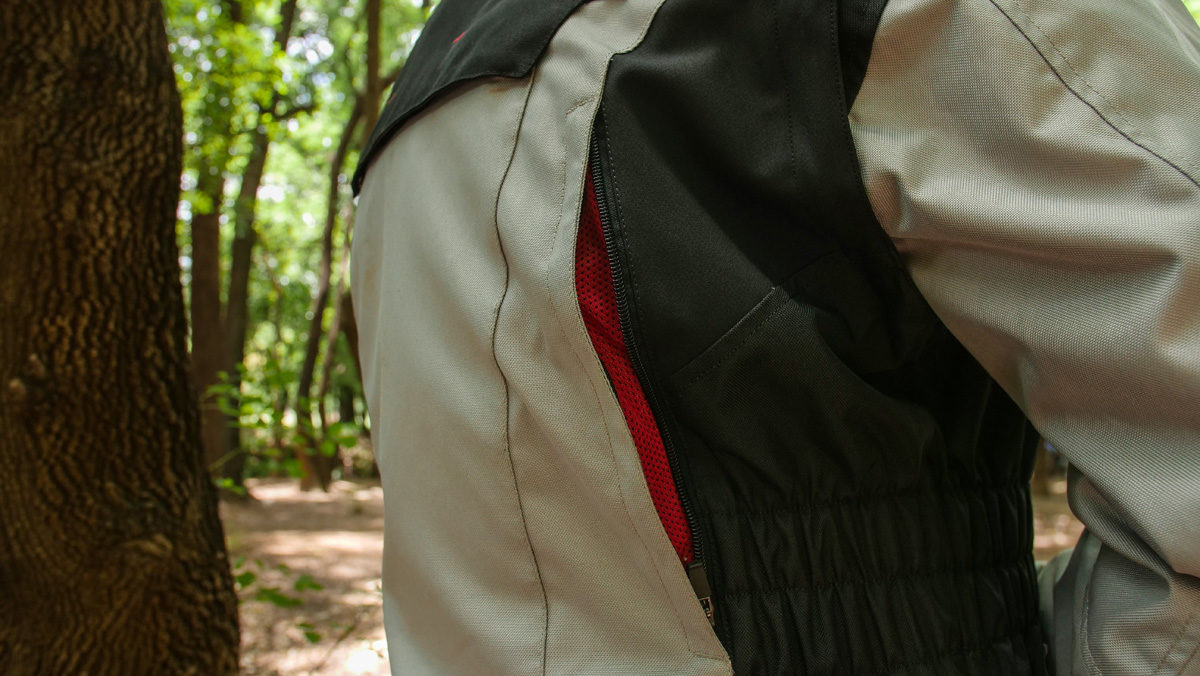
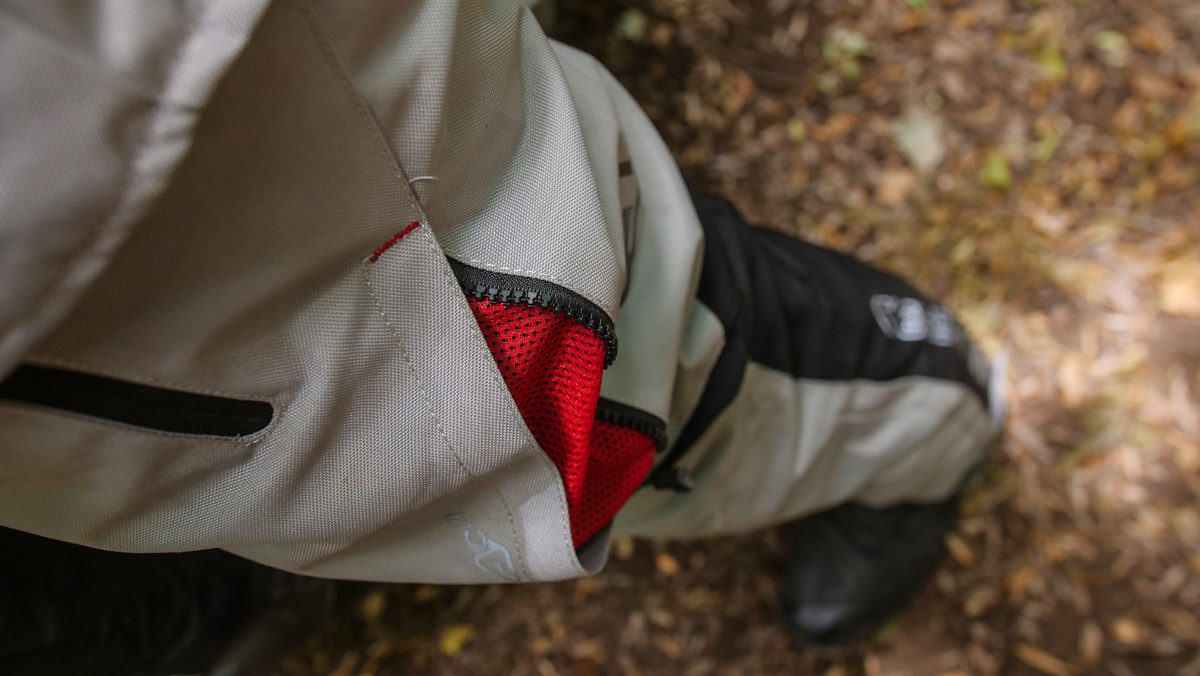
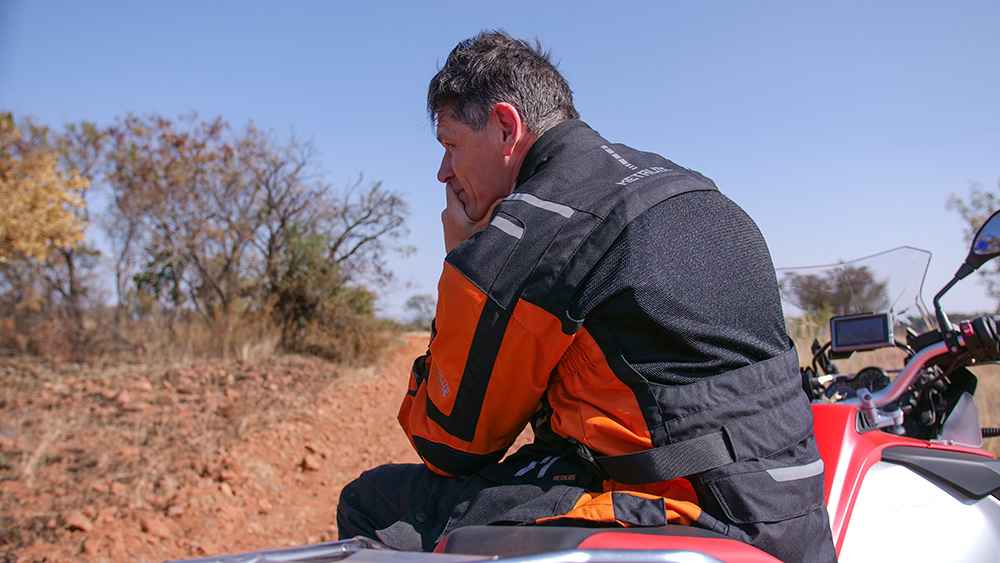
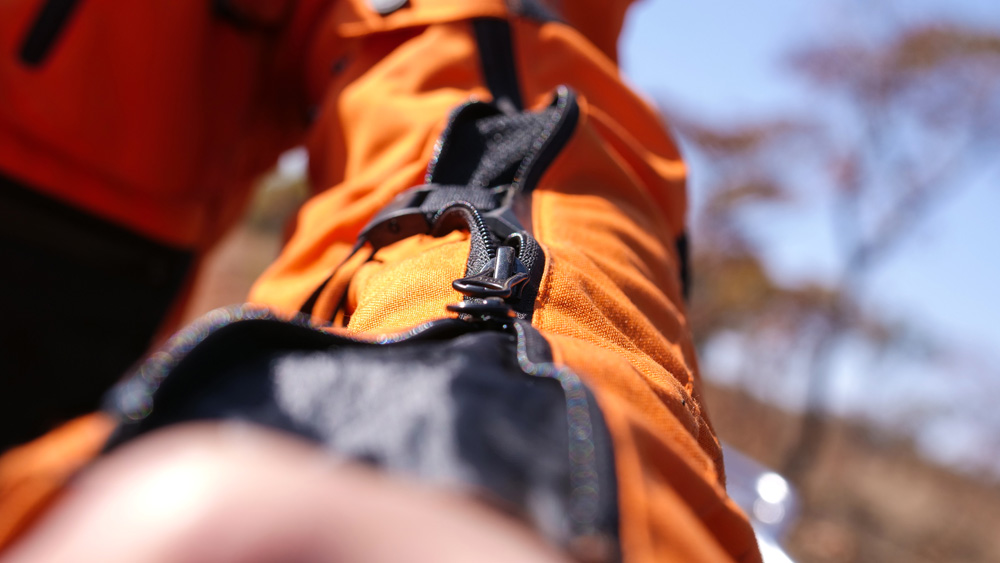
The attention to detail is typical Italian. Fine, meticulous stitching and well shaped inlays personify this suit. A well laid out ventilation system forms the central theme from the front 4 openings, all the way to the two exhaust slots at the rear, facilitating good flow-through of cool, fresh air. I certainly found this adequate in the conditions encountered as described in the opening paragraph.
Photo credit: Bjorn Moreira
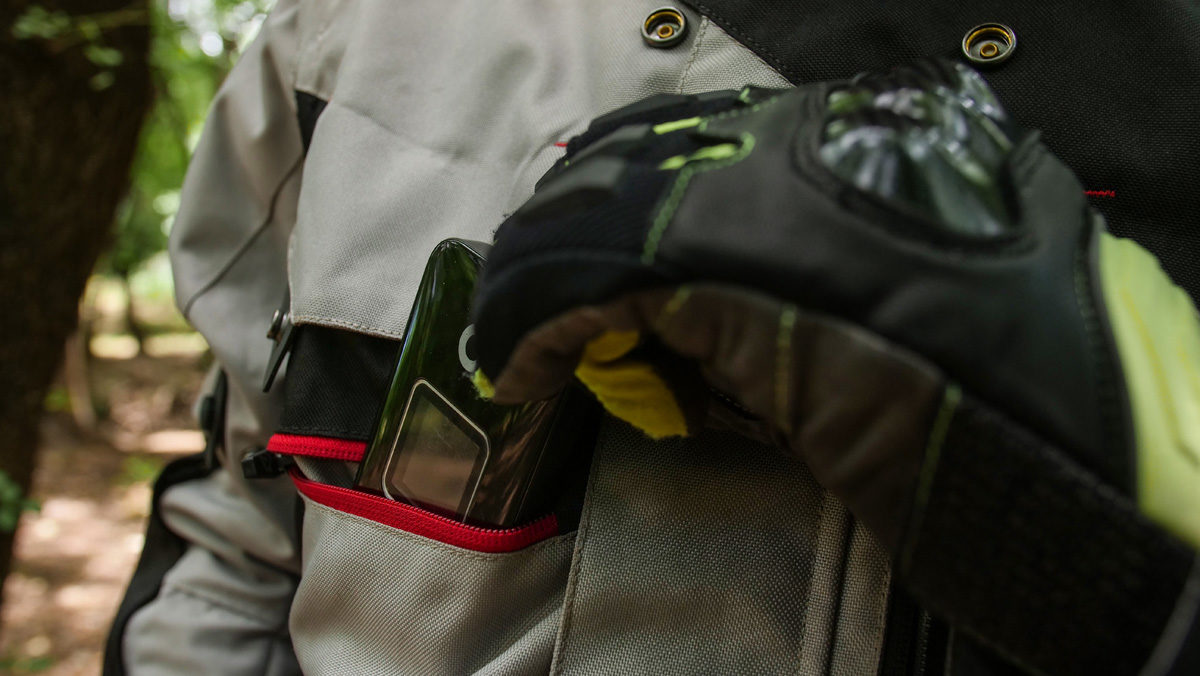
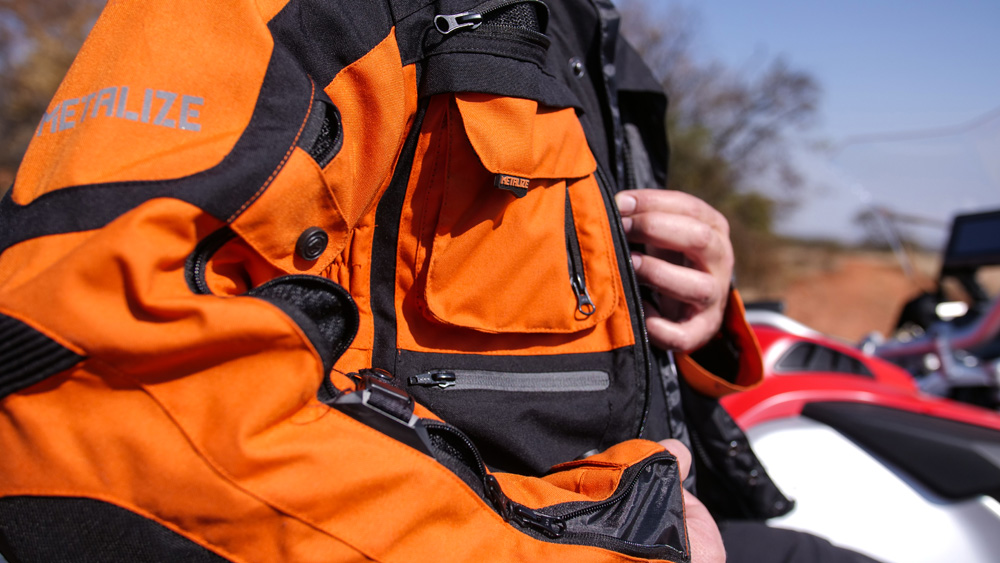
Furthermore, the four front pockets are well placed for easy reach. The left hand vertical opening is ideal for my smartphone, while the horizontal opening on the right is ideal for securing my wallet and other documents of consequence.
Photo credit: Bjorn Moreira
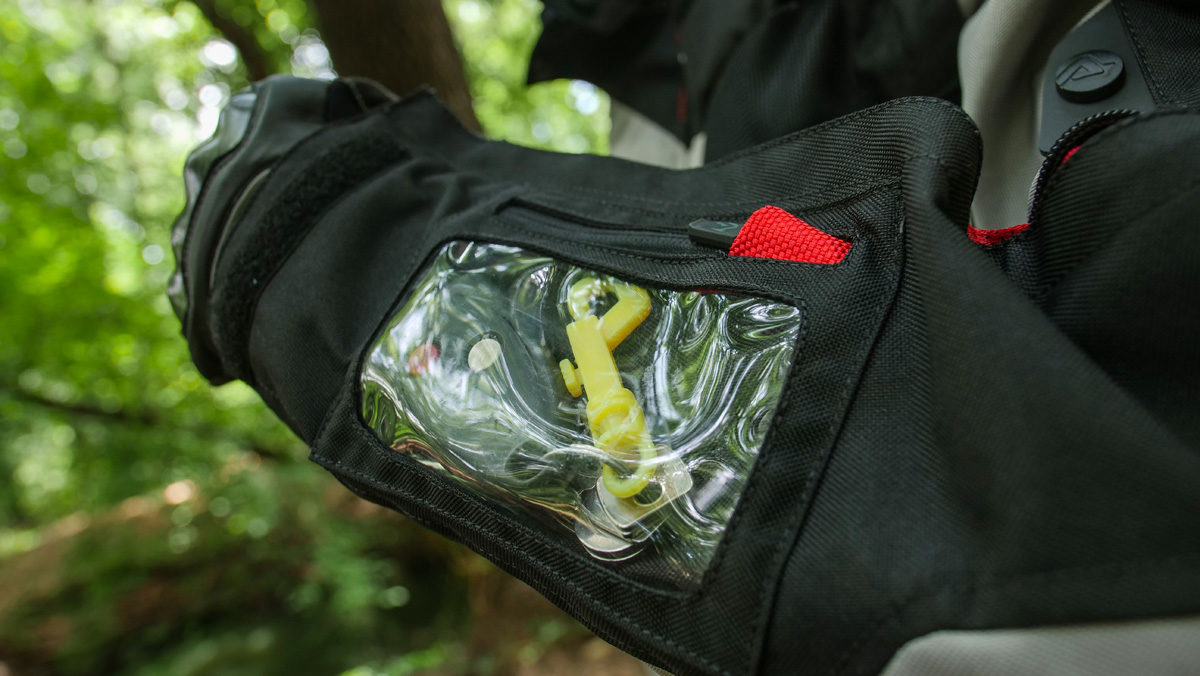
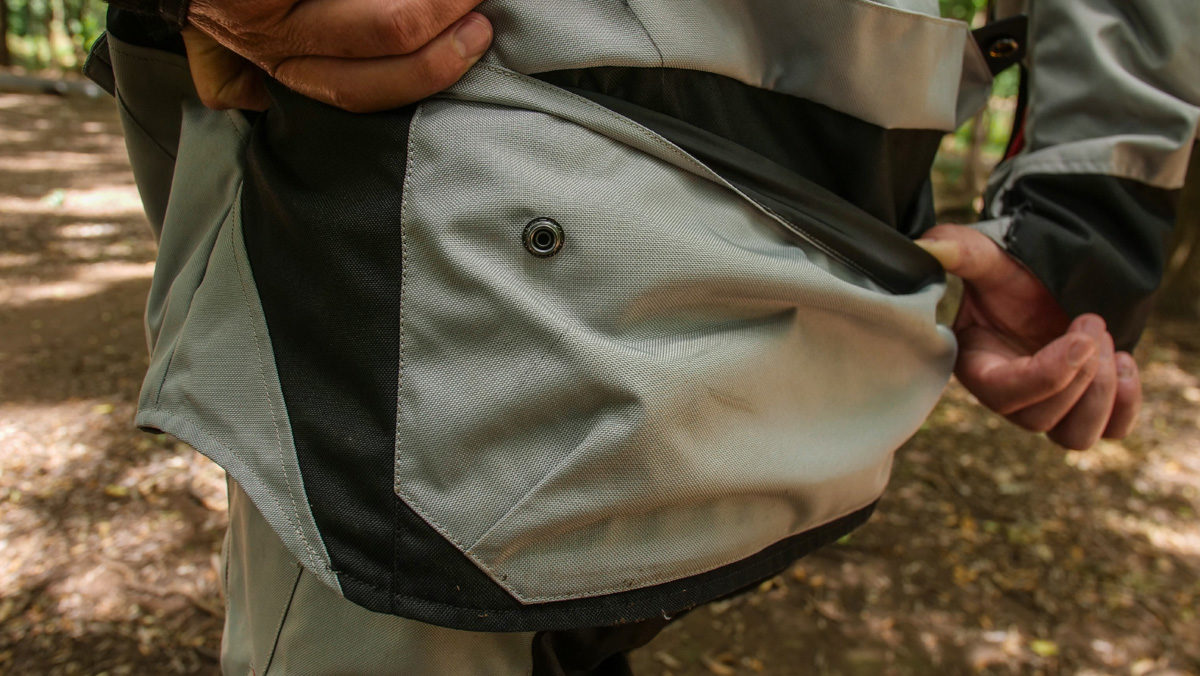
The two bottom pockets are very roomy, but I seldom use these, as I do not want my adventure suit to become too heavy. I would much rather stow other items in my top box or panniers. The winning pocket for me, is the transparent left hand sleeve pocket, it’s ideal for storing a garage card or cash, and gives you quick and easy access at the famed toll gates, which we so often encounter on our motorways.
Photo credit: Bjorn Moreira
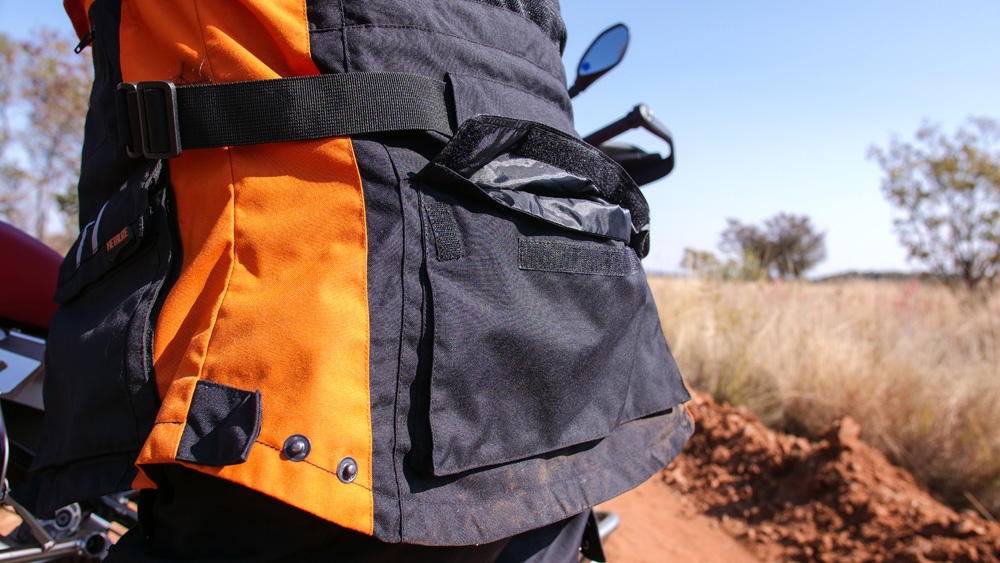
At the rear is the famed bum bag for stowing the included thermal and waterproof inner. Once again, pockets that I seldom use for similar reasons.
Photo credit: Bjorn Moreira
The back also sports a pocket for a water bladder, with comfortable, easy to reach channeling for the feeding pipe on more challenging rides.
Photo credit: Bjorn Moreira
The advantage to this is that you no longer have to carry a separate backpack to facilitate the water bladder. This is a feature offered on a wide range of adventure jackets nowadays.
Adventure Pants
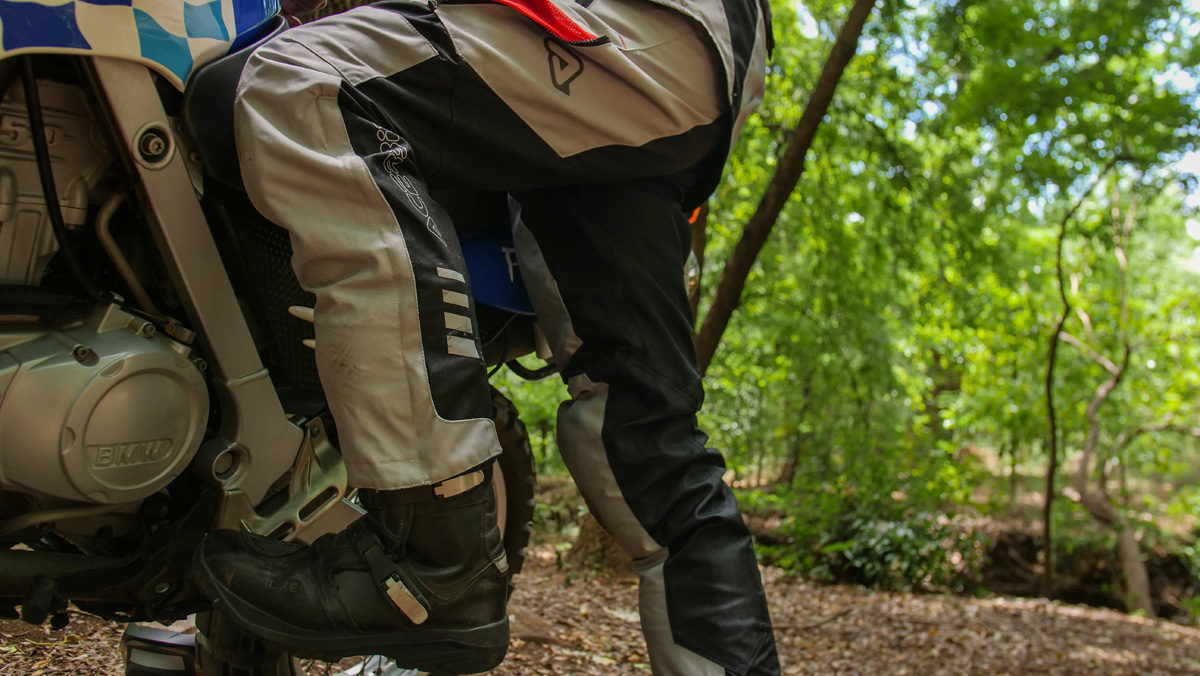
The matching pants, sold as a separate item, also sport vertical ventilation slots and two “secret pockets”, as I call them. This I mostly used for carrying my cash with me. An obvious oversight on part of the pants, is that the pipes are not roomy enough to fit over most adventure boots. I was fortunate to pull them over my adventure touring boots, but would certainly not have been able to fit them over my more rugged plastic motocross boots. This leaves most with only the option to tuck them into their boots, negating the waterproof capabilities offered by the included waterproof liner. Who likes wet boots??
Photo credit: Bjorn Moreira
Funny that, as the rest of the suit is very well presented and practical to use. The waist adjustment belt is nicely tucked away and fairly easy to use once you get the hang of it, although the one fastener did rip out of the pants main body due to sparse stitching, it could also be my middle age bulge putting too much pressure on the waist tackle, off course. Other than these complaints, the pants are comfortable and cool on the body.
Photo credit: Bjorn Moreira
Carbon G3.0 Gloves
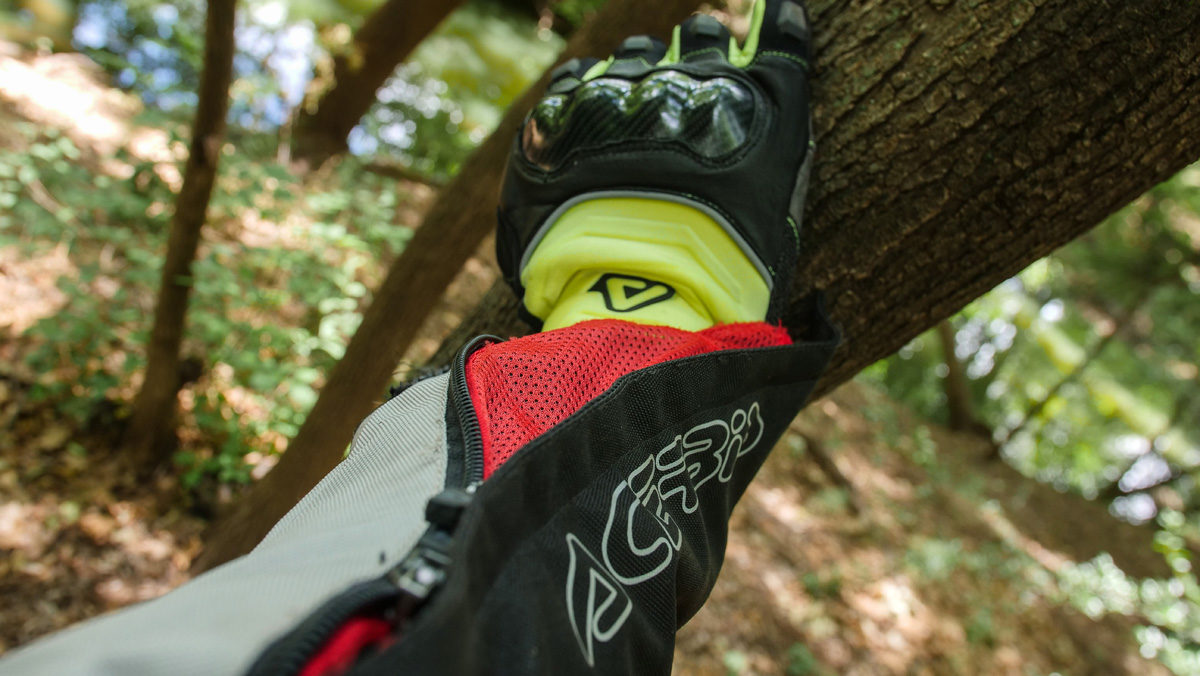
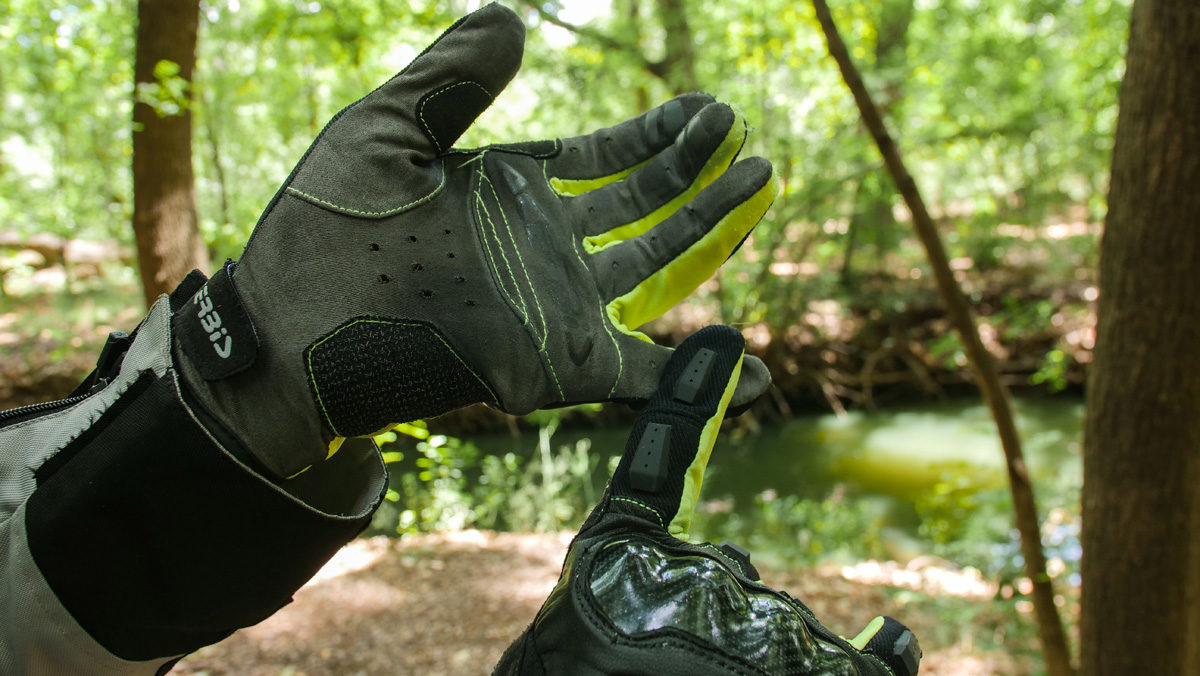
Adrian was also kind enough to give me the above mentioned gloves to test. These were certainly very impressive. This is a light, easy-on glove with good knuckle protection and more than adequate hand protection for low to medium speed adventures. They will not be suitable for high speed crashes, as this is not what they were designed to do. These gloves offer excellent feel on the grips and all important controls, which will certainly afford you less mistakes in technical riding.
Photo credit: Bjorn Moreira
They are the closest thing to riding with bare hands, which suits my style of riding to the tee! The fore fingers on both gloves, have a silicone outer patch that offer even better grip on the levers in wet conditions. Nice touch! I can certainly recommend these gloves, bearing in mind that they were not designed with weather and high speed protection in mind. Time will tell how durable they are, yet so far, so good!
Photo credit: Bjorn Moreira
Conclusion
At the time of writing this conclusion, I have been on many adventures wearing this suit as described. I have yet to experience extreme cold and wet conditions wearing these, but for everything in between, I found this to be my suit of choice at this present time. The jacket retails for R 5200, the pants for R 3000 and the gloves for R 1100.
Photo credit: Rob Till
The pricing is spot-on, offering good value for money, in my personal view. The outstanding theme in this article, is the comfort levels and how good the suit makes you look. The cut has been well defined and is tasteful on the eye. After all, who does not want to look cool while practising the coolest lifestyle…..?
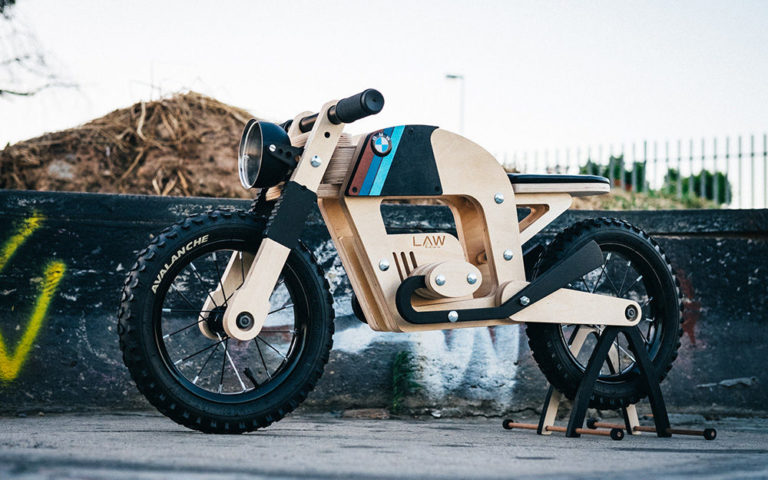
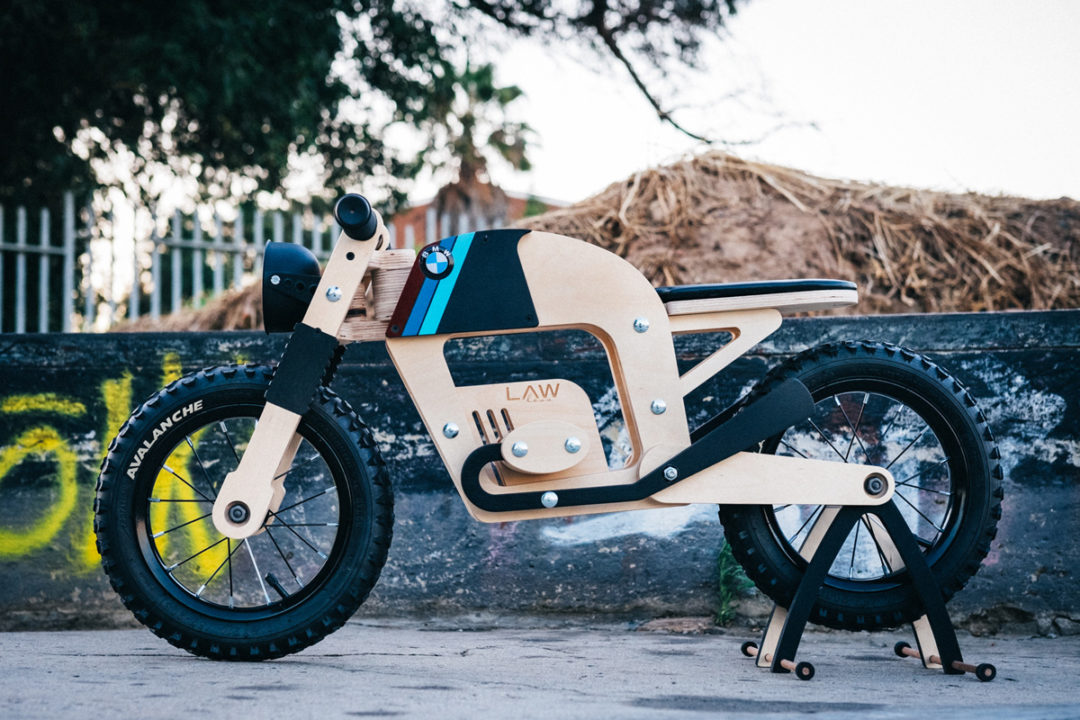
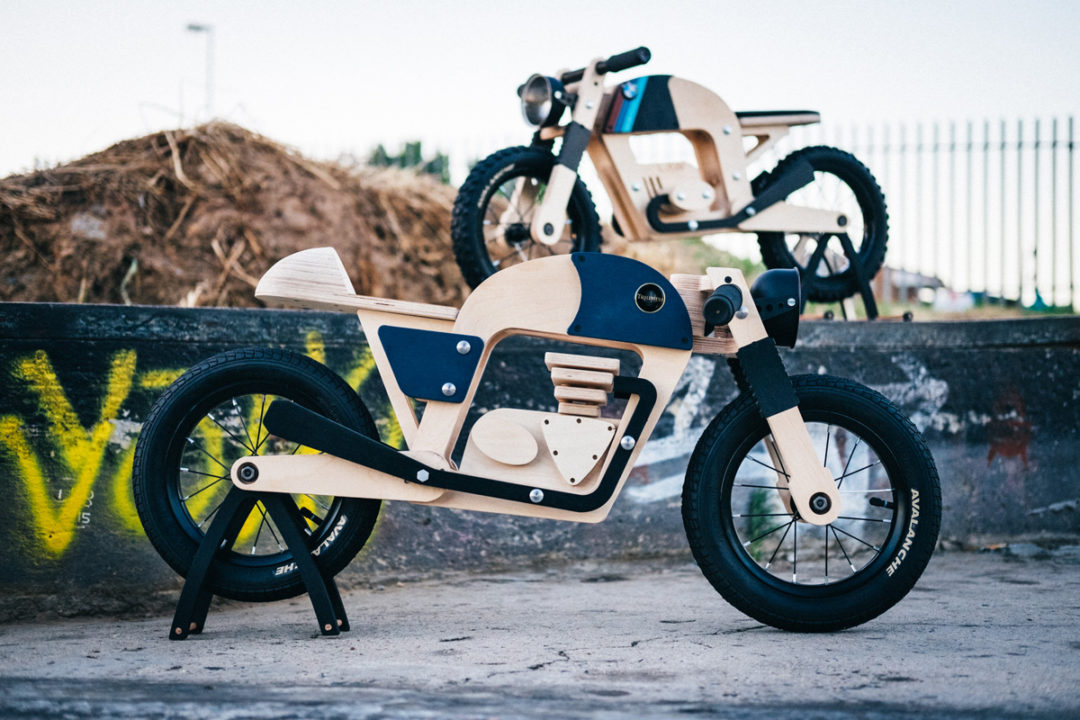
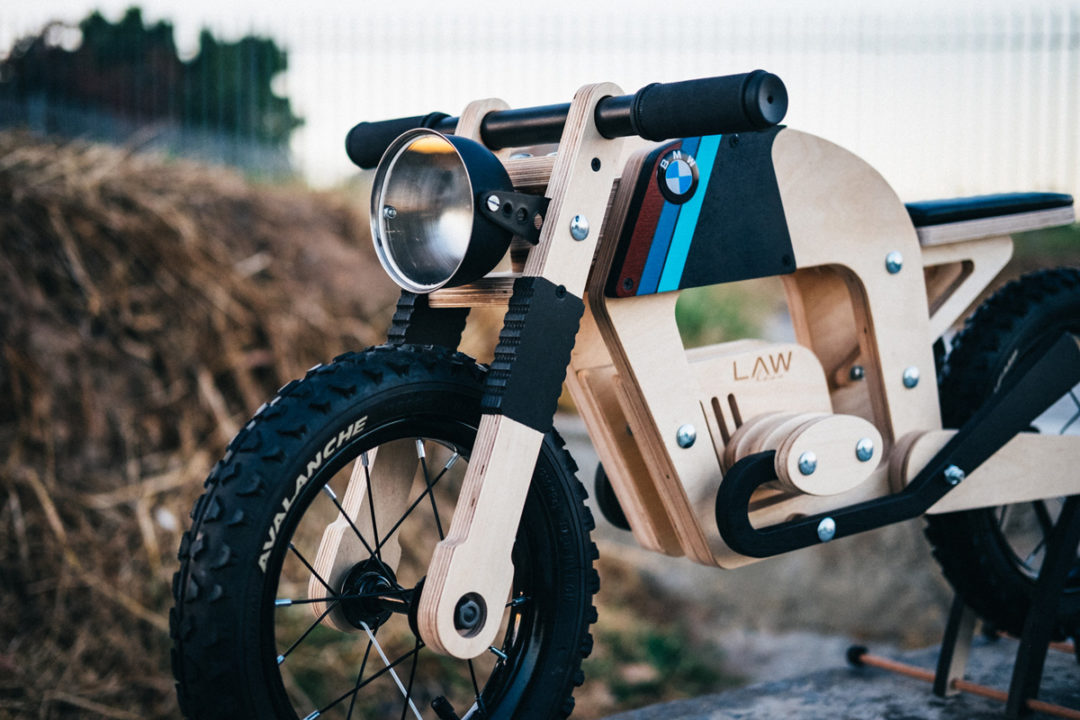
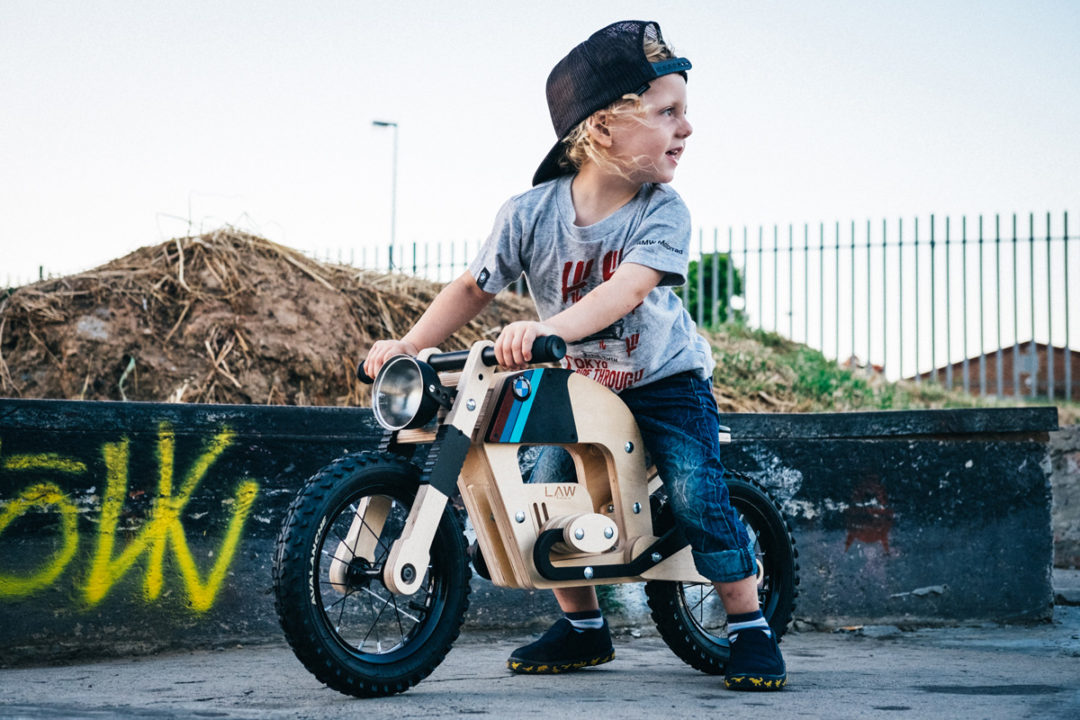
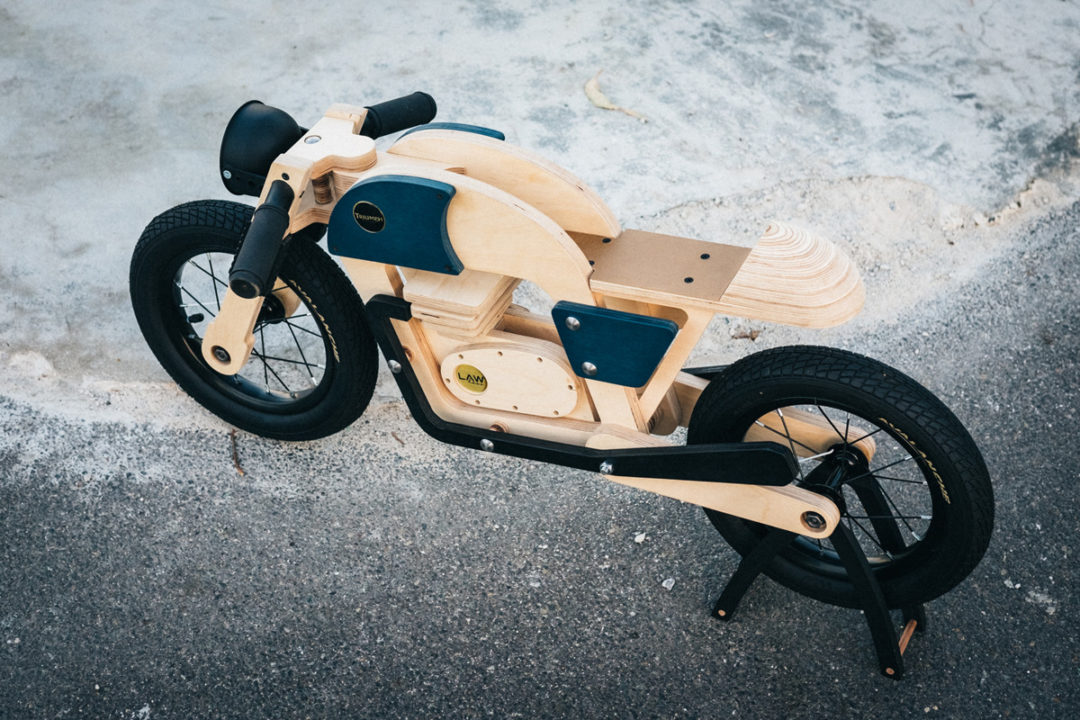
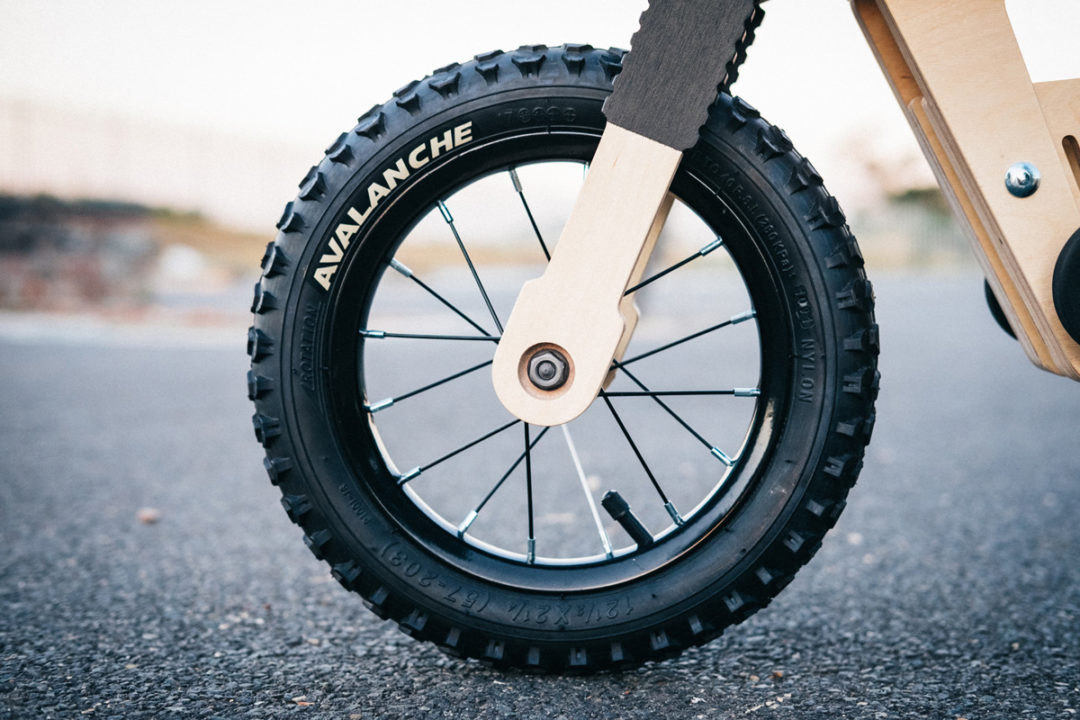
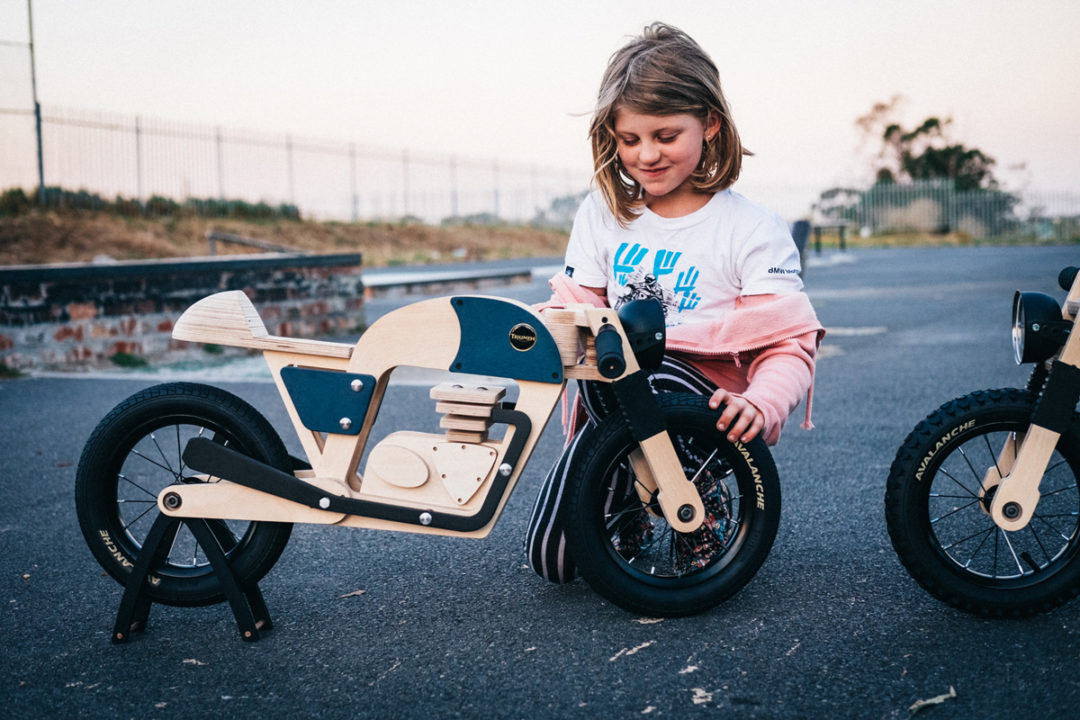
Here’s something that would top any three-year-old’s Xmas list: a wee little wooden balance bike, styled to mimic a full-size café racer. Sure, these pint-size two-wheelers don’t have motors—but if they don’t put a smile on your dial, you might want to check your pulse.
They’re the work of Johann de Wet, who builds them under the label ‘Lawless Bikes.’ Johann’s not a carpenter though—he’s actually a business intelligence consultant based in Paarl, and Lawless is just an after-hours creative outlet.
Photo credit: Wesley Reyneke
Johann fell in love with café racers six years ago, when he stumbled upon a custom 1976 BMW R75 online. Then, this time last year, he had an idea…
“It was December vacation and I was on a woodwork high after a table and chairs project for my two daughter’s rooms,” he tells us. “Somehow, between browsing motorcycles and woodwork pics, some motorcycle-inspired balance bike pics popped up.”
“I had a few days of vacation left and some wood from the aforementioned project, so I decided to take a stab at building one for my daughters. It came out pretty well, so I went on to build a second bike, inspired by the BMW model which started it all.”
Photo credit: Wesley Reyneke
“That one in particular drew enough attention from a few friends and colleagues, who asked me to build some for them a well.”
Since that first attempt, Johann reckons he’s built about 10 Lawless balance bikes. “I only really build on order,” he says, “and also have to juggle it with a full time job and being a dad and husband, so time is limited. The range of customers has been interesting though…from kids to art galleries, and everything in between.”
Photo credit: Wesley Reyneke
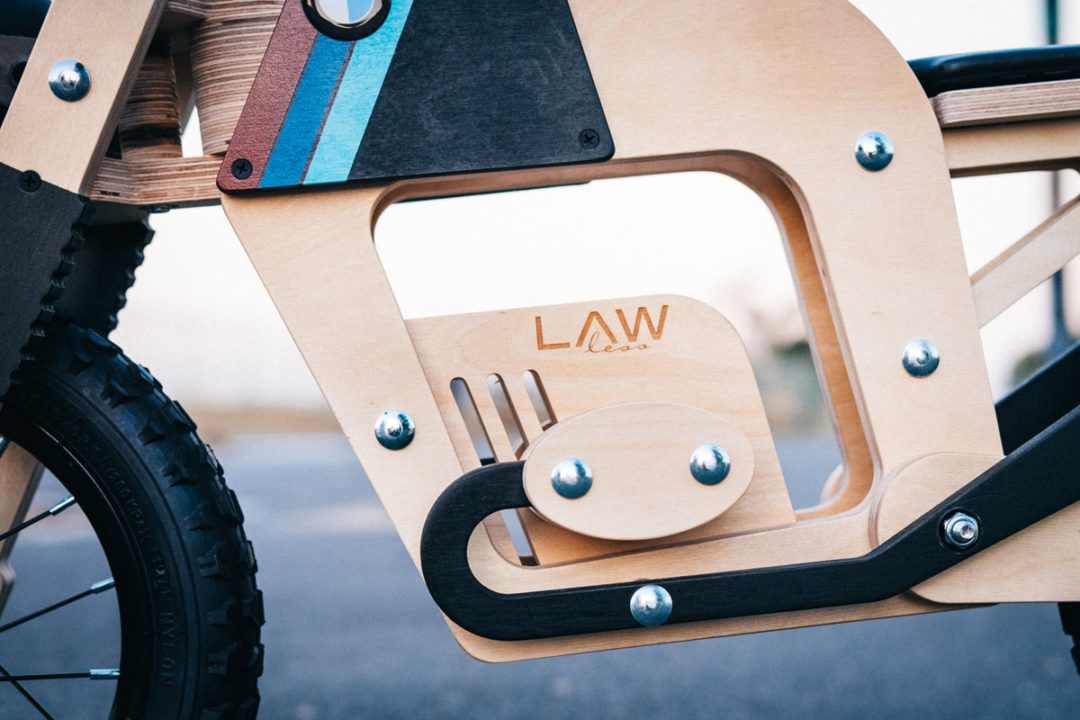
Each Lawless build is based on one of two templates that Johann’s designed: a classic BMW boxer, and a Triumph modern classic. (He’s also in the process of figuring out a third, Harley-Davidson-inspired design.) There’s room for customisation too; one of the bikes shown here is styled as a café racer, and the other a scrambler. And Johann’s even built a bike to match a client’s custom-built Triumph Bonneville before.
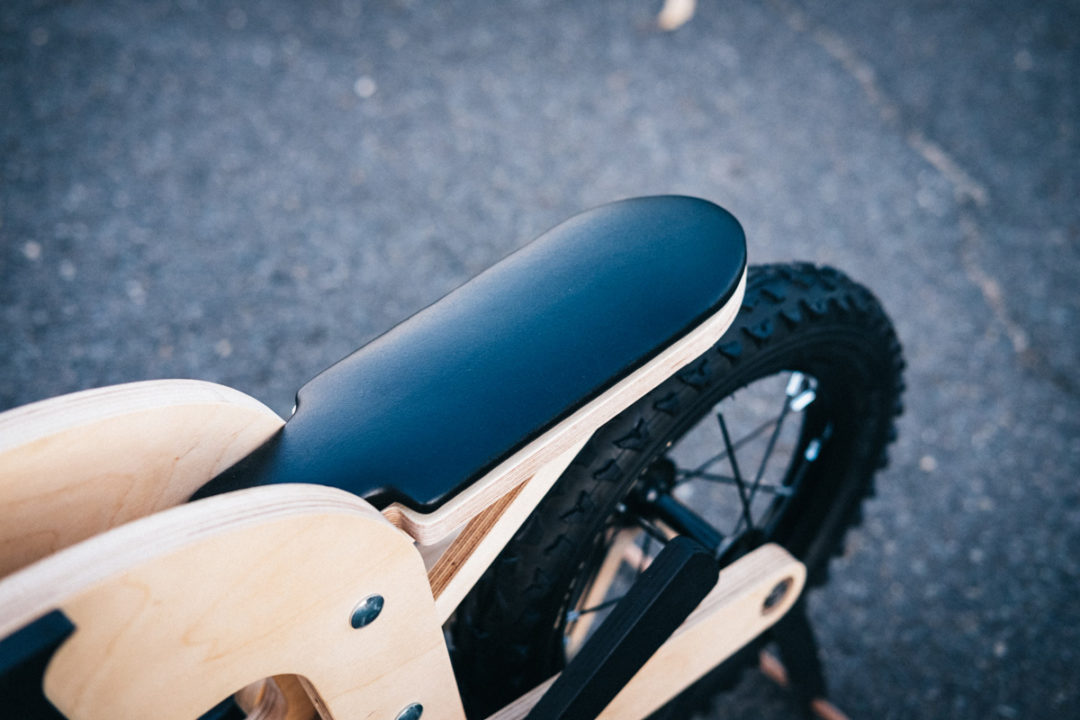
Each build starts out as a stack of Bitch plywood sections, CNC-cut by Cam Craft in Salt River, according to Johann’s CAD drawings. “The first five bikes were cut by hand using a jigsaw,” says Johann, “which was very labour intensive and time consuming, and the quality was inconsistent. I then downloaded a CAD program and went about capturing the designs on there.”
Photo credit: Wesley Reyneke
Once Johann’s assembled the parts by hand, there’s still a surprising amount of work left. That includes sanding and treating the wood, cutting the bolts to their ideal lengths, and carefully spray painting bits that need colour.
Despite their size, Lawless bikes are loaded with thoughtful details. The distinct shapes of the BMW boxer and Triumph parallel twin motors are instantly recognisable, and Johann even builds ‘exhausts’ for the bikes. There are more subtle touches too; check out the sculpted fuel tanks, the ‘fork boots’ and the baby Triumph’s side panels.
Photo credit: Wesley Reyneke
The Triumph also wears a café racer-style tail section, with low slung handlebars. And the scrambler-styled BMW has straight up bars, knobbly tyres and a bench seat. The seat’s covered in genuine leather too, courtesy of Kingdom Upholsterers in Paarl.
Photo credit: Wesley Reyneke
The wheels, tires and grips are all standard kiddie bike parts, but Johann trims to grips to get the proportions right. His bikes even have faux headlights. They’re made from the lids of a particular set of coffee and tea cannisters, with laser-cut perspex lenses.
Photo credit: Wesley Reyneke
Each bike’s finished off with a tank badge, bearing the Lawless Bikes logo. The bikes shown here feature the logos of their respective marques, but Johann usually only does this on his personal bikes, to avoid legal hassles.
Naturally, every Lawless bike rolls and turns too—but Johann officially markets them as display pieces rather than balance bikes. “Aside from my own daughters using them, I have not done any rigorous testing,” he explains.
Photo credit: Wesley Reyneke
“Most bikes I’ve built have been for display purposes, so there is still very little feedback in the way of kids using them. I tend to alter the design slightly with each iteration in an attempt to improve it—but until a three-year-old has owned one I will not know what their true limits are.”
Photo credit: Wesley Reyneke
Any toddler lucky enough to be picked as a test pilot, is sure to be the envy of his pre-school classmates…and a few adults too!
Travelling for extended periods by motorcycle presents one with some logistical challenges, especially when you need to carry a fair amount of stuff. “Credit Card” travel is popular in places like Europe and the USA where you can hop on your bike with minimal kit and have plenty of overnight options which simply require swiping your credit card. Travel in “the Colonies” is more of a challenge. Adventure biking often takes us off the beaten track where infrastructure is either minimal or totally non existent. We need to carry some essentials along with us. Tent, cooking stuff, tools and clothing all need to be stashed securely, especially when our route may deteriorate into a real goat track. To keep the weight of your kit as low as possible, panniers are your best bet. Mass centralisation is a modern buzz term meaning keeping the weight of your bike as low and “central” as possible. This prevents the bike feeling top heavy and wanting to topple over without much provocation. Picking the bike up after capsizing is also much easier if the weight is low.
Photo credit: Bjorn Moreira
Panniers are either “hard” cases, typically mounted to either side of the bike, or soft luggage, a modern version of saddle bags used for ages to stash provisions on horses. Which system is better? Like with so many things relating to motorcycling, each has pros and cons. Hard cases are securely mounted, don’t move around and are easy to pack and lock. This is a serious consideration when your bike is parked unattended. Especially when travelling through poor countries with many opportunistic thieves. Negatives of hard cases are weight, vulnerability to damage in a spill and how they encourage you to “fill that space”. You tend to take stuff that is not essential to your trip, simply ‘cause you have the space!. If your travels take you over rough terrain there is another major consideration. Let me quote a passage from Ted Simon’s book, “Dreaming of Jupiter”, the account of his second round the world trip, to illustrate. “I am already out of sight of the junction and halfway through the second patch of mud when I lose it, but this time my right foot is stuck in the glutinous clay, and the forward motion of the bike drags it under the alloy pannier before I fall. It’s very bad. For the first time in my life I hear the loud snap of a bone breaking. Then I’m on my side with the full weight of the bike pressing down on my foot”.
For me, the solution is to use my hard luggage for tar and dirt highway travel, but if there is any serious off road riding to be done, I opt for soft luggage. Enter ATG’s soft pannier system. The bags are rectangular in shape with a firm plastic back and bottom to allow them to keep their shape to facilitate packing. The broad band of material which throws over the passenger seat is velcro equipped, allowing you to adjust to the width of your bike. Pannier brackets are required to keep the bags out of the back wheel, as well as to secure them to the bike. The bags are equipped with “D” rings at each corner to help tying them down. A lot of thought has gone into the design and how to secure them to just about any bike. The instructions which come with the bags has cleverly colour coded the various straps, to act as a guide as to how to use them.
Photo credit: Bjorn Moreira
The bulk of the weight is carried by the broad velcro top strap, supported by two adjustable straps which straddle the seat and clip to each bag providing additional support. Another adjustable narrower strap fits through the bottom “D” rings and right around the bottom of the bags to hold them against the bike, and preventing them from splaying outwards. Four additional loop and velcro equipped straps allow additional fine tuning to secure the bags totally for complete peace of mind no matter where or how you ride.
Photo credit: Bjorn Moreira
The bags themselves are made from a heavy duty, wear and abrasion resistant cordura. Each bag has a roll top inner water proof bag with it’s own carry harness. This means that you can leave the bags secured to the bike and simply remove the inners filled with your kit, free from dust or rain. The bags have a velcro secured roll top with a clip on each side to close snugly and keep dust out. The roll top allows you to keep the bag snug irrespective of how full it is. Each bag has a recommended weight limit of 11Kg’s. That allows you to stash a lot if kit!. The bags are strategically reinforced with strapping to protect against abrasion and to add to their general strength and ruggedness. Reflective flashes are sewn across the back of each bag to enhance visibility.
Photo credit: Bjorn Moreira
The bags fit best and ride most securely when fully loaded, with the weight providing stability. Your heaviest items should go at the bottom of the bags, with items you may need to access, such as rain suit or fleece, at the top. With these bags fully packed and an ATG waterproof carry bag secured across the back seat, you are sorted for really extended travel on any kind of road, in any kind of weather. The quality of materials and workmanship is excellent and on a par with the best similar products, such as Enduristan, from anywhere in the world.
Photo credit: Bjorn Moreira
Let Ted Simon, now halfway around the world in Australia, have the final say. “When we got back to Dave’s place I made a momentous decision. I took off the big metal boxes and put on some canvas bags that a friend of Dave’s had designed. I had two good reasons. First, I thought it would be almost impossible for Malu [his partner] to sit comfortably on the bike with those boxes there, because they were too long. Just as important though was my desire to lighten up. I felt that I had never really given the bike a chance with all this weigh on it. Andy White’s bags were clever and convincing, and I went for them. I sent the boxes back to England, and I never regretted it”.
Photo credit: Bjorn Moreira
Get yourself a set of ATG soft luggage, also clever and convincing, if you have an epic adventure in mind. You too, will never regret it.
Thank heavens corporate South Africa seems to be seeing the light at last. One of the absolute worst carry overs from the colonial era is the suit and tie culture. British explorers traversed the African continent wearing suits and ties and pith helmets. There was no way you could “go native” and dispense with the silk snake that was strangling you. Take off your jacket? Never! You sweated up a storm on your stiff upper lip. For some inexplicable reason the locals started to emulate the European dress code. Before you think that we are the only “doff” fellows, consider the Indians. Many of them did the same thing. Thanks to dudes like Bill Gates and many of the other Tech wizkids it became cool to pitch for work in jeans, tackies and T shirts. Slowly but surely it dawned on us that the old waistcoat, jacket and tie could be put out to pasture and we started to dress in a manner befitting our hot African climate.
Unfortunately we still see the odd brain donor riding his bike in shorts and flip flops. You only have to have one off to realise that tar and skin don’t gel. Tar always wins! Jeans or chinos offer only marginally more protection. Thanks to the savvy and stylish guys at proudly South African company XKULCHA, we can now ride our bikes “smart casual” and not go unprotected. With the latest addition to their Klassic range we can now look so smooth that we can almost slide uphill without falling off of our scooters! Previously only available in black denim, we now have a chino type material, also in black, which looks really smart, and would not look out of place in any boardroom.
Photo credit: Bjorn Moreira
The cut is similar to the jeans, but without any loud branding. Protection is provided by hip pads as well as dense foam knee inserts, neither of which are visible or detract from the classy appearance of the garment. Comfort in hot weather is aided by the cotton lining. Sizing is a doddle, with various leg lengths available. My only criticism remains the knee inserts which, when seated on the bike ride up too high. The thigh is well protected but the patella is only just covered. I would like to see the whole panel move down by 4 or 5 centimetres. I can only comment on the long leg garment. It may not apply to you more vertically challenged dudes with shorter pins.
1 of 9
So there you have it. Really smart black denims or chinos in that classic cut for when you need to “dress up” a tad. As with all XKULCHA products you can have them repaired, or replaced if necessary, for free if you do land on your butt. No more excuses to not wear all the kit all the time, beauty is you don’t have to look like a biker “heavy” while doing business. Stylish, smart and tough, they are a steal at a little over two grand.
Done the what? Is that some kind of dance? Like first cousin to the Macarena, perhaps? No dudes, it is just KLR speak. Kawasaki’s venerable KLR 650 has been around, in various forms, for almost 40 years. Actually incredible that you can buy a bike that has been made, without many changes, for this length of time. The other interesting thing is that the KLR is not really good at any one thing, yet it has enjoyed huge popularity wherever it has been sold. Google any epic ride around the world, be it a Round the World trip or traversing the Great Alaskan Highway, and I will bet that a KLR has done it. So to what can we ascribe the KLR’s success? In essence, simplicity, practicality, reliability and fantastic value for money.
Photo credit: Bjorn Moreira
Current KLR’s have been upgraded to the point that they must be close to the most reliable bike on the planet. The bike sports a fairing and screen that allows comfortable cruising at the legal limit. It also has a decently sized tank, upwards of 22 litres. Allied to reasonable consumption you have a good range of around 440 k’s or more, depending on cruising speed and conditions. The seat is good, by dual sport standards. It is also endowed with a sturdy rack incorporating a tool kit. The frame is steel, and able to mount panniers without buckling, like alloy framed dual sports. The motor is a water-cooled single, with twin cams, in a mild state of tune. The gearbox is a 5 speeder.
Photo credit: Bjorn Moreira
Oh, the Doohickey!, I’m sure you are chomping on the bit to know what that is. It is the tensioner mechanism on the balancer shaft chain. In early years this was prone to failure. If your bike started vibrating significantly it was a sure sign that your “doohickey” had come apart. If you were unlucky the bits would get into, and often trash your motor. Kawasaki eventually upgraded the tensioner around 2009. Most KLR aficionados will tell you that you should still do the aftermarket mod, ‘cause the Kawi mod was a bit iffy. So now you know. Get your Doohickey done!
Photo credit: Bjorn Moreira
In the final form of KLR that came to SA, the bikes were pretty sorted. Firmer suspension, thicker spokes and upgraded alternator to power accessories, it was all there. So, whilst the KLR is good at nothing, it is quite decent at damn near everything. I love it’s old world simplicity. Turn the key, rotate the handlebar mounted choke lever, give a whiff of throttle and the KLR leaps into life. Back off the choke to a fast idle and by the time you have donned helmet and gloves, you are ready to roll. Oh yes, turn the tank petcock to “open”.
Photo credit: Bjorn Moreira
Right off idle you have torque. Some of the forums I have read reckon that the KLR will rotate the earth before it stalls in first gear. Although heavy for a dual sport, when compared to a Honda XR 650L or a Suzuki DR 650, the kawi is a much better touring ride. Both the other bikes are better off-road, but have no wind protection, small tanks and racks for seats. The Honda also vibrates like a demon at highway speed. The Kawi might not dance off-road, but it will always get you there in it’s reliable workmanlike way.
Photo credit: Bjorn Moreira
The KLR has been around for such a long time that you can get any accessory that you can ever want, or think of. Despite upgraded piston rings, also around 2009, the bikes tend to use oil if revved over 5000 rpm for long periods. I suspect that the crankcase breather can’t quite cope at high revs, so it tends to build crankcase pressure and blow oil out of the breather and into the airbox, from where it is sucked back into the motor and burnt. This is not uncommon amongst big singles and twins. With a 16 tooth front sprocket installed, the Kawi runs at just over the legal limit at 5000 revs. At this speed, you get around 22K/litre.
Photo credit: Bjorn Moreira
Happy days. The motor is smooth and happy at this speed, and runs up the steepest of hills in top gear without bother or shedding any speed. You kind of get a serendipitous feeling as you thump along, just knowing that all is really well with your KLR. It is probably similar to the feeling that Toyota Landcruiser owners get when they are overlanding. The pleasure of knowing that you can take the reliability of your wheels for granted, so just bring on the adventure. The less electronic features your bike has the better.
Photo credit: Bjorn Moreira
Let me give you an example of electronics gone wrong. Traction control works by two wheel-speed sensors, feeding front and rear wheel rotation data to the engine management computer. Should your back wheel rotation speed exceed that of the front wheel by a certain margin, the computer assumes the back wheel is spinning up. It cuts the power to your back wheel to equalise things again. All good. Until, for example your front wheel sensor stops working. The computer assumes the back wheel is spinning out of control and, yes, you guessed right, cuts the power. A mechanical error message appears on your dash, telling you, according to your handbook, to take your bike to the dealer to run a diagnostics programme.
Photo credit: Bjorn Moreira
Problem is, you may be on the road of bones in Mongolia when your pride and joy says, “Houston, you have a problem”. Fact is, in essence, there is nothing wrong with your bike! But, and here is the thing, you don’t know that. You see yourself stranded in the wilderness, and promptly curry your rods! See why I want to do my next really “wild ride” on a KLR?. Every fancy electronic gizmo on your bike, that looks so good on the spec sheet, could become an unsolvable ball ache, when you are stuck in the back of beyond. Just ask the guys who’s bikes stopped reading their “keyless entry” fobs when they were far from home. Or near to home, for that matter!
Photo credit: Bjorn Moreira
Ultimately we will have to just don our big boy pants and tough it out. Fact is, the industry will keep playing with things that aren’t broke, trying to fix them. In the meantime I am just going to enjoy my KLR, thanking the gods of things mechanical, rather than electronic, that my Doohickey is fixed!
Photo credit: Bjorn Moreira
On the 18th of December the KLR and I are cruising to Nieu Bethesda, overnighting there, then on to Prince Albert, where i am meeting a couple of mates. Together we will traverse the rugged and magnificent Swartberg Pass, then wind our way down Gamkaskloof to Die Hel. Then i will simply go where the fancy takes me and my trusty KLR. Can’t wait! Tell you all about it in the new year.
Back in April, I tested extensively the Z900 RS (Kawasaki Z900 RS – The legend Returns!), and every since then I have been keen to ride their “Cafe” version, to see how they compare.
Kawasaki distinguish between this and their regular Z900 RS by adding “Cafe” to the name. Many would suggest that this is therefore the Cafe Racer version of the two Z900 RS’s. Reasonable assumption considering the original bikes that gave rise to the name. Back in the sixties and seventies bikes were generally naked, that is unfaired. Ducati’s legendary SS models, both in 750 and 900 form came standard with half fairings, as did Moto Guzzi’s 850 Le Mans, which sported an abbreviated handlebar fairing of sorts.
Photo credit: www.motorcyclespecs.co.za
Clones of these fairings started to find their way onto modified naked bikes to make them look and ride sportier. Touring bikes had big barn door type fairings which may have kept the wind off, but looked friggin’ awful.
To achieve more of a “racer” look, you would replace the cowhorn standard bars, with which bikes of the day were equipped, in favour of clip ons, or what were known as “Clubmans”. These had their origin in guys who would modify their bikes to go Clubmans racing, and limited by a tight budget, would sometimes just invert their standard bars, which would get your torso into a more wind cheating position. Slowly but surely the custom crafters started refining these bars into narrower, more comfortable ones. Hey Presto! Clubman bars were born.
Photo credit: www.lossaengineering.com
What Kawasaki have done with the Cafe version is exactly what we did with our Z1’s back in the early 70’s. They have changed the bars to a set of Clubmans, and fitted a handlebar fairing. The fairing is really period correct. Almost every handlebar fairing cloned in the seventies was a replica of the neat and effective unit which came standard on the BMW R100 S. The fairing fitted to the Cafe Z900 RS is a dead ringer of the original Bee Em chap. What it does for the Z900 RS is really take the looks to another level. Painted in Kawasaki’s hallmark green, the bike sports a white stripe that starts above the headlight and broadens as it sweeps down the fairing, continues across the tank and side covers and onto the tail piece where it shrinks in width once more.
Photo credit: Bjorn Moreira
The stripe gives the bike a sort of Dodge Viper kickass attitude, which increases it’s allure even more. Wheels are a slightly different design to the naked RS, and are finished in black with a green pinstripe which looks superb.
Photo credit: Bjorn Moreira
Some suggest that this bike harks back to handlebar faired Kawasaki’s like the Eddie Lawson Replicas and ZXR’s. I beg to differ. This is Z1, modified ‘70’s style, through and through.
Photo credit: Bjorn Moreira
The rest of the Café is pretty much left as is, and given what a cracker the standard Z900 RS is, that’s a good thing. Visually the only other change is a satin finish on the pipes as opposed to the shiny chrome of the standard bike.
Photo credit: Bjorn Moreira
Looks stunning overall, a real head turner wherever you go. The seat has a sort of single drag bike look. Kawasaki have dished the front slightly more with a taller tail bone section. Looks and works just fine. So, how does she ride?
Photo credit: Bjorn Moreira
The bars place you just a smidgen further forward and lower, without creating any neck or wrist discomfort. It almost feels more natural, given the slightly rear set foot pegs with which the Z900 is fitted.
Photo credit: Bjorn Moreira
The bars don’t look great, I think Kawasaki could have made them look more “trick”, but they are nicely positioned, and fall naturally to hand. I love the fact that they are black, also practical in that they don’t reflect sunlight into your eyes.
Photo credit: Bjorn Moreira
The slightly more aggressive riding position, paired with the reduced wind blast thanks to the fairing, makes the bike a lot more pleasant to ride at speed. You willingly indulge in the type of tomfoolery that the torquey, turbine smooth motor and responsive chassis encourages.
Photo credit: Bjorn Moreira
Riding the bike far and wide over the course of a 1500k weekend reinforced what a great all rounder this Café is. Droning down the freeway, tearing through the twisties or simply styling in Clarens, the Café takes it all in it’s capable stride. It is comfortable for rider and passenger, plush enough for our less than perfect roads, and fast enough to keep you entertained.
1 of 8
To cap it all it oozes old world cool, yet is practical enough to be an everyday ride. Read my comprehensive test on the standard Z900 RS for detail that I don’t want to regurgitate here, but know that for me, the Café makes an already superb bike even better! For a small price premium you get an even more functional and handsome bike that will give you years of reliable and enjoyable riding. Fans of the Green Meanie brand have never had it so good!
I recently had the opportunity to ride the Crosby 400 Adventure brought into SA by V-Custom Cycles in Centurion. This recent addition to the Crosby range is most interesting, in that it ticks a much needed box. The beauty, to me, is the simplicity of this bike. The motor is the familiar 397cc air cooled single that powers the Crosby range.
Photo credit: Bjorn Moreira
The single overhead cam 4 valve unit generates 27 Hp @ 7000 rpm and 35 Nm of torque @ 5500 rpm. Not heady numbers by any means, but enough to deliver satisfying performance for the intended purpose of the bike. Electric start and fuel injection makes firing up the Crosby a doddle.
Photo credit: Bjorn Moreira
Visually the Adventure looks the part. A 90/90 x 21 inch, Kenda shod front wheel hints at off road capability, with a 130/80 x 18 rear giving a wide variety of off road tyre choices.
Photo credit: Bjorn Moreira
Suspension is by way of 43 mm front forks with preload, compression and rebound adjustability. The forks felt reasonably dialled in, with a firm yet controlled ride, so I did not experiment with the adjustments due to limited time with the bike.
The rear shock is a mono unit adjustable for rebound and preload.
Photo credit: Bjorn Moreira
Brakes are discs, with a 280mm front and 220mm rear. Whilst not overly powerful, they are well suited to off road use and a big improvement on the units fitted to the road Crosby I sampled a while back.
Photo credit: Bjorn Moreira
The seat height is a tallish 880 mm, but, allied to a dry weight of only 151 kg’s, doesn’t present problems to most riders. The motor exhibits decent torque low down, so low speed manoeuvres and pulling off from rest is made pretty easy.
Photo credit: Bjorn Moreira
The bike feels relaxed at around 110 kph, and will cruise at 120 if needs be. The seat is firm but quite nicely shaped. Really long tours may well require a gel seat pad. The bike comes standard with BMW lookalike panniers.
Photo credit: Bjorn Moreira
The locks feel a trifle stiff, but can probably be adjusted to operate more smoothly, the panniers swallow a fair amount of kit, and together with a stuff bag would accommodate your kit for an extended trip. The panniers are not waterproof, so one needs to use waterproof inner bags.
Photo credit: Bjorn Moreira
The Crosby 400 Adventure brings a really feasible simple option to the Adventure bike space. Many riders are embracing touring on smaller more manageable bikes with proper off road ability. Also bikes that don’t break the budget to buy and run. The Crosby is spot on. The tank, together with decent fuel economy allows a decent range. I would like to do an extended tar cum dirt adventure ride on this bike to really put it through it’s full paces, but what I can tell you is that my initial impressions are promising.
Photo credit: Bjorn Moreira
At a price point of R69 000 (including fitted panniers), the Crosby is a lot of bike for the money. You could just pack it and depart on your adventure.
Photo credit: Bjorn Moreira
The screen works really well to keep the windblast off, and the clocks are a combination of analogue and digital giving you all the info such as fuel levels, trip meters that you need.
As with the road only Crosby, the general fit and finish, whilst acceptable, is not up to what you would get from a bike out of Japan. On the other hand you don’t have to pay a premium for it though. Right now, especially considering the spend, there is nothing out there that offers what the Crosby 400 Adventure does. The last option of a dirt worthy, simple bike with proper adventure credentials died with the venerable Kawasaki KLR. The Crosby may just fill that gap.
The idea to do a long term review of the Sport Glide started early in the year when I first laid eyes on it during the Ride, Ride, Slide event hosted by The Motor Company in Croatia. We where there to ride the Street and Tour Glides, as well as new Sportster models. Doing duty as a backup bike for the support crew was a maroon Sport Glide. From the moment I saw it I felt that it was the most perfectly proportioned Harley I had ever seen! The more I studied it, the more the practical aspects of the bike emerged. Harleys, in the past, have tended to be long on form and short on function. People buy them because of how they look and feel, and perhaps how they make their riders feel, too. In fact, this is such strong motivation amongst the old Harley faithful that it is, for them, almost blasphemous for H–D to tamper with the mould.
Photo credit: Bjorn Moreira
I overheard a well known, long term Harley rider, talking to a group of buddies at a Harley gathering recently. Whilst he conceded that the new Milwaukee-Eight motors where great, “they no longer feel, or sound”, like old school Harleys. Wow! How dyed in the wool can you get? From my perspective as a lover of two wheeled vehicles generally, and having owned at one point a H–D Sportster 1200 Custom, the improved function part of the form versus function equation makes total and complete sense. The latest Harleys are simply vastly better motorcycles. Period! What it does illustrate however, is what a blessing, [and curse] a strong brand identity can be. Sometimes you are damned if you do, and damned if you don’t.
Photo credit: Bjorn Moreira
Lets take a proper look at the Sport Glide then, shall we? The bike has the typical, low slung Harley look. The front end sports the most beautifully sculpted handlebar fairing. Small and neat, it is big enough to be functional, as, like on most Harleys, you sit low in the bike. The bars are not overly wide and fall naturally to hand. The tank is the absolutely classic H–D profile and takes a decent 18,9 litres of gas. A slim sculpted double seat riding onto a bobbed rear fender completes the perfect profile. Two “bagger” styled panniers enclose the back wheel. Like baby bears porridge, they are neither too big, nor too small, but “just right”. The rear indicators double as stoplights, and, like the headlight are LED’s. Try as I might I cannot fault the classic looks of this bike. There is nothing I would want to change.
Photo credit: Bjorn Moreira
The wheels are what Harley call their “Mantis” design, and with a 130/70×18 up front, and a 180/70×16 rear are another stunning contributor to the overall looks of the bike. Thankfully the wheels are also sized to complement the handling characteristics of the bike. OK, so I know i’m gushing, but see for yourself, will you?.
Photo credit: Bjorn Moreira
Central to the looks is the black and silver accented 107cu i Milwaukee – Eight V-Twin engine. That is 1745cc in metric speak. Whilst the 80 odd horses it pumps out [the Motor Company doesn’t quote HP figures, but Cycle World ran it on a dyno] may not sound too impressive, however Harleys have always been about torque and real world power. Fully fuelled, the bike is for a H-D, quite trim at 317 kg’s. The 145 Nm of torque @ 3250 rpm, punts the bike along very nicely. The 6 speed gearbox has that authentic, hewn from steel, American feel. Shifts are precise but solid. Final drive is by the now a familiar industrial strength belt. The bike is braked by a single disc, chomped by a 4-piston calliper up front, and a 2-piston calliper at the rear. Brake action, whilst not in the Superbike league, is adequate and reassuring. ABS is, as is the modern norm, standard.
Photo credit: Bjorn Moreira
Instrumentation is via a tank mounted circular speedo with a digital window showing trip distance, RPM, fuel range, fuel level etc, everything is accessed via a simple button on the left handle bar switchgear. Also nestled on the same side is a cruise control button. Magic! Starting is by way of the now familiar H-D key fob keyless system. Put the “kill” switch in the “on” position, and the beast comes to life. Hit the starter button, and you are in business. Everything about the bike reeks simplicity, like God intended!
Photo credit: Bjorn Moreira
It was this inherent simplicity, allied to the stunning looks and all round practicality of the Sport Glide package that got me thinking. The fact is that we are living in an increasingly sterile world. Almost everything that used to be fun, is either now no longer politically correct, infringing on someone’s questionable human right, or just generally frowned upon. Enter motorcycles. They are the one thing that still shatters the boring mould! Unfortunately, suggesting that someone “get a bike, Bru”, is not always met with enthusiasm by all and sundry. Motorcyclists do not always ride with the necessary sense of self preservation that they should and have caused bikes to be summarily labelled as dangerous. Enter the Motor Company’s products. Harleys have never placed the emphasis on speed, but rather a lifestyle. Harley riders often ride in groups, or even when alone, tend to announce their presence with pipes emitting some rolling thunder.
Photo credit: Bjorn Moreira
The biggest killer of motorcyclists, their ego’s, are, in the case of Harleys about form, not function. You don’t have to race your buddy to score points, you just have to make your ride look sweeter than his. The two of you then roll down the road, slow enough for all to see your awesome American Iron. Statistically this is proven by the low rates for insurance of Harleys as opposed to other, similar value bikes. Fact is, Harley riders crash less. So here’s the thing.
Photo credit: Bjorn Moreira
Joe and Janet Bloggs live this dreary existence. Work, work and no play. “We have to get a life”, they say. But how? Buy a Harley, that’s how! Flog one of your four wheeled shopping baskets, and for similar money, or even less, buy a Sport Glide. Bowl the cage with the excitement factor of a dysentery amoeba and experience what I have over the last few weeks. After studying the practical side of the Sport Glide I decided to use it day to day as transport, and as the freedom machine that it is, on the weekends. Rolling up the garage door and surveying the sexy curves of my ride for the day always evoked a sense of occasion. I have just never had a Fiesta, Polo, i 20 or the like ever do that to me. Roll out of my estate, greet the guards who are giving me a thumbs up [which I never get in a car] and cruising to the Gym is a whole new buzz. Firstly, the traffic is now a non entity, with many cars actually moving over to give me space so that they can better eyeball my gleaming black Glide. Pull up at Virgin Active and all and sundry stop and drool over my ride. Flip! Can it really get this good?
Photo credit: Bjorn Moreira
The whole day I cruise between clients, slowly growing accustomed to their envious stares and questions. The bike performs this hum drum stuff faultlessly. Instead of being frustrated by heavy traffic, I simply roll slowly by, revelling in the freedom. The panniers swallow up my kit and sundry goods. The commanding riding position makes you feel like you own that particular piece of road. The Glide torques off the line at robots leaving all in it’s wake. At one point a fellow on a GSX600 pulls up next to me, with let’s race body language. I look straight ahead and proceed on my way, treating him with the disdain he deserves. For heaven sake, would you try and give the King a wedgie?. The Sport Glide, despite its decent turn of speed, is above that sort of foolish frivolity.
Photo credit: Bjorn Moreira
Come the weekend and my panniers are packed and I am off to Mpumalanga to put the “Sport” part of this Glides name to the test. I choose my route carefully. The highway is despatched in comfort, with the cruise control set to 130. The tiny fairing works a treat at this speed, leaving my helmet in clean air but taking all the windblast from my body. Topping up with fuel brings another revelation. 23 Kpl! Take that, Fiesta and Polo! This gives me a touring range of over 400 kays. I decide to avoid the stop and go’s in Schoemans Kloof and go straight past Waterval Boven, revelling in the stability of the Sport Glide through the long sweeps. This Glide is a Softail, so I dialled in a lot more preload by simply turning in the easy to hand adjuster.
Photo credit: Bjorn Moreira
This gained some ground clearance and firmed up the ride. At no stage was it harsh, but rather soaked up everything the sometimes less than perfect roads threw at it. It also eliminated the vagueness felt when on a softer setting, completely. Front suspension is upside down cartridge forks, which, whilst non adjustable, work just fine.
Photo credit: Bjorn Moreira
Turning past Sudwala, then on to Sabie and to my Graskop stop for the night, I rode at a sports touring pace, enjoying the ride more than on any Harley I have ever ridden. At first I was apprehensive about grounding hardware through the bends, but then started to relax and simply enjoyed the ride. Whilst by no means a “scratcher”, this Harley–Davidson deserves its “Sport” label, certainly in the context of what genre of bike it represents. I did not even touch a foot peg once over the full duration of my ride. My travelling companion, Ryan, was on his Yamaha XSR 900, their heritage bike, and a splendid one at that. At no time did I feel that I was holding him up. On the contrary, he was impressed by the manner in which the Sport Glide powered out of the sweeps, and up the straights. Obviously, if it had come down to a race, the Yamaha would have been off like a sweaty sock, but the point is I had a great ride, at a fair clip, on the Harley. This is no one trick pony.
Photo credit: Bjorn Moreira
Let us talk versatility. The Sport Glide has some ingenious design features. The handlebar fairing, or cowl, clips off, literally, in 8 seconds. Similarly, the panniers detach in seconds. You are then looking at a clean mean street prowler. It looks as stunning naked as it does dressed. Going on a Cafe Cruise? Rip her clothes off! Taking a tour ? Pop on the panniers and cowling. All this without needing a single tool. Brilliant!
Photo credit: Bjorn Moreira
So let me try and summarise. In the Harley–Davidson Sport Gide you have an immensely versatile package that can literally change the way you are living your life. Harleys have been around since before nostalgia became vogue. Now that they have added a huge dollop of function to their world renowned form, a lifestyle change is more feasible than ever before. Dump the Polo, keep the family car, and get yourself a Sport Glide. Your commute will become a pleasure and your babe will love the new man in her life!
Photo credit: Bjorn Moreira
Join your local HOG chapter [Harley Owners Group] and you will introduce a whole heap more “social” into your life. At a mere R238 000 it is a steal. You cannot imagine that life can be such fun.
Standing position, legs open, knees bent, elbows bent, vision correct! I make sure to follow the rules and give myself a fighting chance. Second gear selected, ready to give it full throttle.
The moment of truth comes as I dip the 21 inch front wheel into the sand. I proceed cautiously until I get a feel for the nature of the sand, dabbing a foot here and there from the standing position. Time go give full throttle as the sand starts swallowing the wheels. The cross plane twin cylinder engine bursts into life and propels me to the crest of the first dune. Over the summit I look forward to the downhill in order to gather proper momentum now that I have a feel for my surrounds.
Photo credit: BMW Group PressClub
Cresting the second dune I start laughing in my helmet, embarrassed that I had underestimated this brilliant new machine which I straddled just a few hours earlier. I stop at the second crest for a photo opportunity and give myself a breather after quite the wrestling match. I am surrounded by a sea of dunes as I cut the engine. The late afternoon sun winks in amber and all I can hear is my elevated breathing. This is one of those moments to remember. The only other activity I can detect is Rob Till, a brilliant photographer hired by BMW Motorrad rushing in to capture the moment.
Photo credit: BMW Group PressClub
As I collect my thoughts, I cannot help but admire the courage BMW showed by selecting this venue. Sand riding is one of the ultimate tests for any adventure machine and greatest fear for most adventure riders, at least for those big enough to admit it. Thinking back to earlier in the day when I first saw the row of F 850 GS’s parked in front of the hip Radisson Red Hotel on the V&A Waterfront. I should have known BMW was serious about this one when noticing the fresh mix of knobby tyres on each press bike.
Photo credit: BMW Group PressClub
I later complimented Edgar Kleinbergen, General Manager of BMW Motorrad SA, for allowing these bikes into their natural habitat with the right footwear. I have previously battled against Edgar at the 2018 Sabie GS Challenge, and he is a very talented Adventure rider. His enthusiasm, energy and love for the sport does not go unnoticed. Dutch by birth, Edgar has been in SA since early last year. He uses every free hour for exploring our vast expanses, together with a network of local riders. Don’t look now, but Edgar is truly falling in love with our Country and its endless possibilities.
Photo credit: BMW Group PressClub
The new F 850 GS comes at a very crucial time in the history of the middleweight Adventure segment. It has been a full decade since I was fortunate enough to attend the world launch of the inaugural F 800 GS in the Algarve Province of Portugal. Since then, this segment has become hotly contested with no clear leader. BMW gradually lost its stranglehold as fans had to put on the patience-cap year after year.
After freshening up, we socialised a bit before the early evening press conference. At the conference, Edgar shared statistics about another record year for BMW Motorrad worldwide. The juggernaut seems to be at full steam, although most would agree that the local market is taking strain. BMW is expecting a lot from this model and the excitement is tangible. After the interactive press discussion, we retired to a well-received dinner on the rooftop, overlooking most of V&A Waterfront.
Photo credit: BMW Group PressClub
The next morning was my turn to ride the new F 750 GS. Being the more road orientated of the two, it was shod with Michelin Anakee 3 tyres. As sibling to the F 850 GS, they share a degree of parts and are always launched together.
Photo credit: BMW Group PressClub
The second days’ route was laid out to include winding tar sections as well as mountainous gravel roads. The first highlight on this route was the winding Franschhoek pass where this playful GS came into its own. Carrying the on-board camera for a fellow journalist, I was given the proverbial license to hooligan up and down the pack in the name of “good videography”. I was in my element and so was this youngster of a GS. In the days of old, the F 700 GS’s chassis could get “bent out of shape” a bit with hard, committed sports riding. This model is definitely a step up. Composed, predictable handling, the 750 invited me to go harder.
Photo credit: BMW Group PressClub
Time to hit the dirt, as we gradually make our loop back to Cape Town. This was to be the true test. I found a rough, corrugated piece of gravel with some sand patches to wind the throttle open. Seeing 130 km/h on the speedo, I was expecting the bars to become lively in my hands. Not to fear, the 750 remained calm and composed and I remember thinking that very few will ever feel the need to take this bike up to these speeds on this kind of gravel surface. It had passed the test I came to give it!
Photo credit: BMW Group PressClub
Back on tar, towards Betty’s bay, a fellow journalist and I hooked up for a spontaneous top end run. The 750 stayed alongside the 850 he was riding up to an indicated 195 km/h, after which the 850 pulled away slowly. Impressive indeed.
Winding along the Old Coastal Road towards Pringle Bay and Rooiels, the tourist in me eventually awoke and I rode at a leisurely pace, absorbing the fresh sea breeze and breathtaking scenery.
Photo credit: BMW Group PressClub
Our lunch stop was at the Idiom Wine Da Capo Vineyards, high in the mountains behind Gordon’s bay. We celebrated a successful event with fine food and good company. Shortly afterwards, the Gauteng based attendants blasted up to Cape Town International for our flight back to the Old Smokey.
Photo credit: BMW Group PressClub
Conclusion
The aim of the article is not to bore the reader with endless technical details and specifications. We have prepared a press release to piggyback on this article for the more technically minded.
Starting with the F 750 GS; few realize that this motorcycle has one of the toughest jobs in the BMW stable. It often has to fit the bill for shorter riders and physically smaller lady riders. These groups demand the same levels of performance as the larger capacity enthusiasts.
Photo credit: BMW Group PressClub
The previous 700 was fairly nervous on unpaved surfaces and required a good amount of effort and skill to navigate. This made life hard for those who had a limited choice as previously mentioned. The new F 750 GS seems to address exactly this aspect. As mentioned before, it is much more composed than the previous model and that can be felt through the calm handlebars. There is also a reassuring steering damper present as standard, although intervention of this part was never required.
Photo credit: BMW Group PressClub
Seat height and basic seating arrangement feel the same as the outgoing model, so no surprises there. The engine accounts for much more character and low down torque is markedly better. The suspension is certainly of a higher quality and the performance could not be faulted for its intended use. As a road bike with the ability to traverse gravel surfaces in comfort and luxury, this motorcycle is spot on. Commuting on the 750 should be effortless, and it would not shy away from long distance touring with decent wind protection fitted. All in all, this spirited performer will do what it was designed for and is an exciting bike to ride.
Onto the F 850 GS, and the answer is much more elaborate. The 850 has the job of being what I call an Adventure Sports Bike. In my definition, this means that it will see a lot more action than most larger capacity bikes. For many a talented rider that cross over from enduro sport into adventure sport, this will be a first stop.
Photo credit: BMW Group PressClub
It handles the rough stuff as good as any, and has become a true alternative to the larger capacity ultra-marathon contenders. Most of the major complaints have been addressed, in that the new motor has much more character and grunt, with the additional beautiful sounding note.
The brakes certainly have more bite. The tyres are now tubeless, and the bike sports most of the same luxuries that are found on BMW’s more premium models. Examples include; cruise control, TFT flat screen interface, shift assist and user defined modes. The fuel tank is situated in a more conventional lay-out between the riders legs, which makes the back end look light and skinny. The skinny rear leaves more room for a pillion rider to stand behind the pilot, a grossly overlooked feature on the previous model. In the looks department, the 850 is certainly on a different level and exudes youthful appearance.
Photo credit: BMW Group PressClub
All in all, the middleweight class has a new contender that will certainly make its presence felt. But what excites me the most is that the gap between the big bore bikes and the middle class is shrinking, thanks to the upgrades found on this new arrival.
While Braam was faffing around in the dunes on the F 850 GS, I was shooting around the Cape Peninsula aboard the F 750 GS. Perfect weather meant horrendous traffic—but the 750 was still the perfect scoot for urban and spirited coastal road riding, thanks to its punchy motor and nimble chassis.
Photo credit: BMW Group PressClub
The next day, I swapped over to the eight-fiddy for a longer route, that included highways, mountain passes and stretches of dirt. The mid-sized ‘travel enduro’ blew me away with how versatile it is.
Even with the slightly vague on-road feel of the Continental TKC80’s, the F 850 GS railed corners with minimal effort. I’m a huge fan of taller adventure bikes for their commanding riding positions, and the 850’s ergonomics are spot on. Power delivery is crisp, and the optional quick shifters our test units were fitted with only added to the fun. (I can’t say the same for the clutch though, which I found to be stiff and notchy).
Photo credit: BMW Group PressClub
I was a little concerned that the BMW’s redesigned fuel tank would get in the way on the off-road bits, but the bike was surprisingly narrow between my legs. It was also easy to manhandle over rougher, looser terrain. And then there’s the electronics package; the TFT looks good and works well, and the ABS and traction control settings in the ‘Enduro Pro’ riding mode were helpful rather than intrusive.
The only downside? I only got to spend a day on it.
Road Tripping through the Free State – Just outside of Clarens.
Our buddy Johann Claassen, who served as road captain on Cancervive, heads up the Rustenburg chapter of Steelwings. For those who don’t know, Steelwings is a dedicated club for Harley–Davidson owners. Members come from all walks of life, but the common thread is a passion for the iconic American freedom machines. Johann invited us to spend a night or two with him and his Missus at the Steelwings “Back to basics” Rally at the Gariep Dam Forever resort.
5:00 meeting spot at the Castle Walk Engen garage in Pretoria.
Early on the morning of Friday the 9th of November, we trundled out of Pretoria southbound. I was riding my GS Adventure, Bjorn was on a Kawasaki Z900 RS Green Meanie and Simon was on a magnificent Harley Road Glide Special. We negotiated the early morning Jo’burg traffic with “Born in the USA” belting out the speakers of Simon’s Glide. Cruising south at a leisurely pace, all was particularly well with the world. By early afternoon, after a brekkie in Bloem, we rolled into Gariep Dam.
BMW R1200 GS ADV – The consummate do it all bike. No wonder they are so popular.
As the sun bid goodnight to the sky, we revelled in the magic of another magnificent African sunset. We joined the now plentiful rallygoers for the evenings festivities in a Marquee. After a few “lemonades” had flowed, things got typically lively. A really good time was had by all. We retired by about 10 pm allowing the Harley faithful to reconnect with old friends and party into the early hours.
Take a look at some pics of the Steelwings guys, birds and bikes. Thanks Johann for the invite and hospitality. You rock Bro!
1 of 19
We planned to get an early start on our second days riding to Bethulie, birthplace of Sir Laurens Van Der Post, and then along the Maloti route to Clarens.
Look at the Meerkat Biltong we found on route to Bethuile.Typical Karoo landscape photo opportunity with the Harley.The local Bethulie ZZ Top resident admiring our Harley.KAWASAKI Z900 RS – By the end of the ride Bjorn was trolling the internet to see what he could earn from the sale of a kidney! He was absolutely smitten by the incredibly versatile retro Kwakka.Customers at the Restaurant thinking that we a little strange!The Green meanie looks rad against the patina backdrop.
We spent the night at Clarens Inn & Backpackers, which was also host to a Ulysses contingent, as well as a bunch of lowveld KTM riders, on there way back home after riding Lesotho. All the bikers created a lot of cheerful banter, and a really fun time was had by all.
Clarens at Braai time.
We dined at one of the many street cafe’s, which make this town so quaint. By this point the days riding and good food increased the gravitational pull on our eyelids, so it was off to bed.
HARLEY-DAVIDSON ROAD GLIDE SPECIAL – Simon turns into a toffee nosed larney on this bike. He is the first to admit that really long days in the saddle tucker him out. Not on the Harley couch though. That beast eats miles easier than Zuma through the national budget. He spent the days on the big H–D with a faraway look in his eye, dreaming of chasing horizons on a similar bike with his Missus on the back.
We got going bright and early the next morning, and passed a group of road tripping Ural side-car rigs on the way to Villiers.
Passing a Ural convoy on our way to Villiers.
We punished a quick breakfast, and cruised into Pretoria well before lunch. Our Free State road trip, took in some amazing scenery and covered almost 1500 km.
I am standing on the line, waiting for the lights to go out and the race to start. Every nerve on full alert, I hold the revs steady at 7 000 rpm, waiting, waiting, waiting. The moment of truth as the lights go out and more than 30 angry racers storm into the first left hander, jockeying for position. Modern day gladiators, battling it out in modern day Colosseums.
In many ways very little has changed since the days of old. It is no less intense alongside the track, as screaming, blood thirsty fans wave their fists in support of their chosen gladiator, living in the moment. We see this scenario repeated weekend after weekend in different sports all over the world.
Motorcycling has been my chosen profession for the last eighteen years. Counting my blessings every single day, I could not imagine a life much different! As the tempo of my professional engagements evolved from time spent on the sales floor to time spent in wind, rain and sun, rider gear has become a central part of my everyday life. The demands placed on the latter means that virtually every strength and weakness gets exposed. I truly wear them through from the inside out. Long hours in the saddle doing photo shoots, product reviews, selective rider training scenarios, off road events and shootouts all form part of my daily routine.
The one piece of equipment that gladiators from every era depended on most was and still is their helmet. This is plain logic and common sense. Helmets get worn wherever hazard lurks. Motorcycle helmets have evolved more so than any other sport. The helmet has come into its own as more and more emphasis is placed on safety.
Strangely enough, this was not always the case. Open face helmets used to be the norm as recently as 30 odd years ago. Motorcycles were simpler and freedom of movement received first priority. Full face helmets were an expensive luxury afforded by a fortunate few. Over time, full face helmets became the norm. This was almost more of a fashion statement. Realization of obvious safety benefits transpired with time and the fashion statement soon became a most vital safety benefit. For once, fashion served a purpose in protecting the masses. Gradually, our vanity became responsible for jackets, pants, boots and gloves to become main stream.
A certain German helmet and motorcycle manufacturer, saw the direction the market was taking and seized an opportunity in 1980 to manufacture a helmet that incorporated the freedoms afforded by an open face helmet, as well as the protection and shielding afforded by a full face. These revolutionary helmets were called “System” helmets. Their sales story grew from scepticism, to acceptance, to huge sales successes, before other manufacturers sat up and took notice. Nowadays almost every helmet manufacturer of consequence offers this unique style of one button metamorphosis from open face to full face.
Personally, I never made the transition into this new direction, which was for one reason only. As far as I was concerned, these helmets never really matched the sharp styling of the racing full face and enduro style adventure helmets. They always seemed quirky and I could not envision myself wearing one anytime soon. That was until recently, when I got a phone call from a specific importer.
It was with an open mind that I visited Mark from Henderson Racing Products. He sounded very excited over the phone as he explained that he had just received the first shipment of Scorpion helmets. As an active adventure rider, he wanted me to come and view the new Scorpion ADX-1. On arrival and presentation, it took me about ten seconds to get equally excited as he explained the features to me.
Photo credit: Bjorn Moreira
Here I was, looking at the helmet that I had secretly hoped for. What I saw was an adventure type helmet, complete with peak, sun visor, simple venting system, simple “open-to-closed” conversion mechanism and road helmet transformation properties. But what impressed me the most was that it was just “drop-dead-gorgeous” in the styling department!
Photo credit: Bjorn Moreira
Mark took time to explain the TCT Composite shell. This is a proprietary 5 layer blend of interlaced and specially formulated fiberglass, Aramid and organic poly-resin fibers. It sports ECE 22.05 standards approval, which is the toughest standard of testing worldwide and required for all forms of premier racing. This piece of information convinced me to give it a go.
Photo credit: Bjorn Moreira
Trying out the different styles it became obvious that the medium was too small for me and the large slightly too big. A word of advice to any prospective helmet buyer, is to always go for the smaller size when in doubt. It took a good part of 3 000 km for the helmet to eventually settle to my specific head size and shape. It certainly was worth the initial pain and discomfort and she now fits like a glove.
Photo credit: Bjorn Moreira
More than 6 000 km later, from Namibian desert, to Botswana heat, to just about anything in between, prompted me to pen my conclusions to paper.
Photo credit: Bjorn Moreira
After settling in, the helmet has now become as comfortable as any premium helmet on my shelf. The clear visor is thick and durable, seats tightly and certainly keeps the wind out. The sun visor, as always is a big plus and helps in the brightness of the Route 62 sun. It deploys at just the slide of a button.
Photo credit: Bjorn Moreira
I have been spoilt by the open-to-closed conversion and find myself riding in open face mode during slow traffic conditions, in the dunes and gentle cruises along the coast. At higher speeds, the helmet is more quiet than any other full face in my arsenal. This is especially noteworthy, as wind noise is what most “open-to-closed” helmet owners complain about.
Photo credit: Bjorn Moreira
The quality of the inside padding is spot-on and it has now been tested in diverse conditions. High speed testing is usually the final insult for many adventure type helmets, as the very design is in conflict with certain envelopes of the speed spectrum.
Photo credit: Bjorn Moreira
I tested this helmet on a recent adventure bike launch up to speeds of 195km/h on an F750GS with virtually no wind protection and found it ultra-composed and tracking straight.
Photo credit: Bjorn Moreira
An interesting feature is that the helmet can be converted for street use by removing the peak and fitting the included side plates. It then fools anyone into thinking it’s a proper sports helmet, even stylish enough to satisfy all but the most avid from the naked bike clan. It looks especially menacing with the optional dark visor!
Photo credit: Bjorn Moreira
I have been thinking long and hard about possible criticisms with this product, but fail to find anything concrete. Perhaps the weight of the helmet would bother some, although mass specification is on par with similar offerings. The sun visor conversion slider work counter intuitively for me and took some getting used to. In the closed configuration, the cheek pads put quite a lot of pressure on the jaw, which in my case is reassuring more than a drawback.
Photo credit: Bjorn Moreira
In conclusion, the recommended retail price of only R 5 500 blew me over for the level of quality and features on offer. When collecting the helmet, the price was not yet finalised and my expectation was that it would certainly be more expensive. The array of colours available will suit most tastes and replacement parts are readily available from this very approachable distributor.
Photo credit: Bjorn Moreira
Do yourself a favour and check out the new Scorpion helmet range, you may just find your next purchase to be one of these.
When you spend the amount of time on bikes that I do, and especially on less than perfect roads off the beaten track, it is almost inevitable that you will capsize at some point. Earlier in the year I rode down to Port Elizabeth to spectate at the Ironman triathlon. On my way home I made a detour to a game farm, 70 odd k’s from Colesburg. The last 30 k’s was on a reasonable dirt road. Reasonable that is until I had to leave the farm the next day after 15 hours of rain. My KTM 1090 R was shod with Pirelli road rubber, as I was keeping the knobblies fresh for dirt trips. The rain took me totally by surprise.
I rode straight onto a road that had literally turned into a quagmire overnight. Feeling my way gingerly, I tried to get a feeling for what traction there was. Very little, to be frank. Wanting to get the dirt done with I foolishly, with hindsight, sped up from a manageable 60 to around 80 kph. All good, until I hit some water filled potholes that is. Not wanting to do anything sudden to upset the bike further, I tried to keep a constant throttle and ride out the bumps. What followed is a bit of a blur. The bike started getting a porpoising action going which got more and more violent, until I abandoned ship. The bike went down on its left hand side. I must have tried to save it till the last moment, because the 1090 landed on my left lower leg before doing its own thing and I slid and rolled down the road.
Those of you that have fallen off your bikes in similar fashion, will know that even as you are sliding on your bum and other extremities, you are counting the cost of your loss of talent. Standing up, I hobbled back to the bike on a seriously painful ankle. Picking up the bike there was ominous clicking and crunching from my lower leg. The standard KTM crashbars did a reasonable job, together with my soft pannier brackets, of protecting the bike. The soft, muddy road also helped to absorb a lot of energy from the crash, as did my lower leg. I decided it would not be a good idea to remove my boot to asses the damage because I was pretty sure I would not get it on again. What followed was a cold, wet and painful 600 odd kay ride home. Why do I tell you this tale of woe? Enter RUMBUX protection bars.
Photo credit: Bjorn Moreira
I made the error of being pennywise and pound foolish. If I had really thought about it, I would have realised that the factory crash protection, whilst better than nothing was not totally up to the job of protecting the bike, and perhaps more importantly, the rider. There is no way that you will escape with no damage, however RUMBUX products show that an incredible amount of research and development goes into their design. My handlebars and front flicker needed replacing. I took my bike straight off to RUMBUX and asked the guys to fit the top section of their 1090 R system. I have the KTM factory bashplate fitted. The full RUMBUX system sports a bashplate incorporated into their design as well as engine casing protection.
1 of 8
Studying the fit of the RUMBUX bars it is obvious that they hugely improve both bike and rider protection. In my case, my leg would not have been trapped under the bike. The wider top section of the RUMBUX bars not only offer greater radiator and body work protection, they prevent the bike from landing fully on its side. The fit and finish is superb, and look for all the world like they were designed and fitted in the bike manufacturers factory.
Photo credit: Bjorn Moreira
Honda equipped all their Africa Twins used for the Honda Quest event, with RUMBUX bars. Neither their bikes or riders could afford to be damage to the extent that they could not continue the ride. Despite numerous offs, the RUMBUX bars kept the bikes operational.
Photo credit: Bjorn Moreira
Now here is the thing. South African Adventure bike riders ride through some of the most demanding and hostile riding country in the world. You simply cannot afford to render your bike unrideable after a dirt or tar off. I believe with total conviction that when it comes to comprehensive protection for you and your bike that RUMBUX bars have no peers. Riders all over the world have cottoned on to this fact and this proudly South African product flies the flag on Adventure bikes all around the globe.
Photo credit: Bjorn Moreira
I would strongly suggest that for what is a small amount of money compared to the value of your bike, you give the guys at RUMBUX a shout. You owe it to your bike and yourself. Pray that you don’t crash, but dress your bike for the occasion.
Harley-Davidson’s future looks…interesting. The Motor Co. is on a mission to expand their portfolio, with motorcycles as diverse as the electric Livewire, and adventure-touring Pan America, on the way. That’s left some die-hard Harley fans vexed; worried that the brand will stray too far from its roots.
They shouldn’t fret though—because while H-D are certainly trying hard to reach a wider audience, they’re also quietly refining their core bikes in the background. Just look at the 2019 Harley-Davidson Road Glide Special. It’s a mainstay of the Milwaukee marque’s line-up—and while it might not be a groundbreaking new model, it’s had some pretty sweet improvements.
The Road Glide Special is effectively an upgraded version of the ‘regular’ Road Glide, with a price tag that’s R20 000 higher. (The Special costs R375 000 in black, R380 000 in colour and R401 000 for custom two-tone paint.)
Photo credit: Wesley Reyneke
The most obvious difference is the finish: while the standard Glide is loaded with chrome, the Special looks far more menacing with almost-all-black components. My test unit came in the Silver Flux / Black Fuse colour scheme, which consists of a sublime deep silver flake paint job, with black scallops. The Special also gets better-looking wheels, and stretched cases that offer a little more storage.
Photo credit: Wesley Reyneke
Then there’s its biggest drawcard: the motor. For the past couple of years, both versions of the Road Glide have been powered by Harley’s 107 ci Milwaukee-Eight mill. But this year, the Special gets a bump to 114 ci (or 1 868 cc), bringing its torque output up to a mighty 163 Nm at 3,000 RPM.
Photo credit: Wesley Reyneke
I’m an unapologetically huge fan of Milwaukee-Eight power plant—and the 114 derivative in the Road Glide Special is downright rowdy. It pulls hard through the rev range, and has no problem propelling the Special’s considerable heft (391 kg, wet) forward. The throttle feels smooth and responsive without being clinical, and even though the Glide’s clutch needs a heavy hand, actual gear shifts through the six-speed box are slick.
Photo credit: Wesley Reyneke
With the Special’s price tag—and considering we’re almost in 2019—I feel like I’m supposed to complain about the lack of techy features, like switchable riding modes. But I’m not sure I want to; the Glide is plenty usable (and fun) without them. And Harley-Davidson have already announced traction control, linked braking and a few other features for next year, so that extra refinement is just around the corner.
The Road Glide Special’s grunty V-twin is matched by a surprisingly agile chassis. On the open road, it holds its line like a cruise liner in quiet waters. And despite its touring designation, it loves spirited riding too. Few things are as fun as manhandling a bagger through twisties, and while the Special doesn’t quite hustle through turns like a sport bike, it sure holds its own.
Photo credit: Wesley Reyneke
With a 19” front and 18” rear wheel (versus the standard Glide’s 16” rear) it feels more balanced too, with an extra degree of lean on each side. Getting the floorboards to touch tarmac was near impossible, no matter how hard I flung the Harley’s high and wide handlebars around. With ABS and twin discs up front, it’s easy to slow it down too—but I did notice the front brakes get a little wooden as they heated up.
I had limited time with the Road Glide Special, but somehow managed to squeeze out more mileage in a few days, than I normally manage in a week of testing. It included a rapid 400-plus kilometre ride to Montagu for lunch one Friday, where the Special’s all-day comfort shone through.
Photo credit: Wesley Reyneke
The ergonomics are just about flawless—with a wide, cushy seat, and well-placed handlebars and floorboards. My only niggle was the positioning of the dual toe-and-heel gear shifter, in relation to the left floorboard. My size 12 foot didn’t quite sit right in between them—a problem that could easily be fixed with some basic adjustability.
Photo credit: Wesley Reyneke
The Road Glide’s fixed fairing is stable at speed, but if you’re as tall as me (1,86 m), the sleek windscreen won’t block all the wind. With the right helmet on, the buffeting isn’t too bad—but taller riders might consider fitting something more substantial.
Behind the fairing, you’ll find a classy mix of old and new school styling. The Road Glide’s kitted with analogue speedo, tacho, temperature and fuel gauges, but it’s also sporting Harley-Davidson’s new Boom! Box GTS media system.
There’s a full colour TFT touch screen display front and centre, flanked by a pair of 6.5” speakers (the regular Glide gets 5.25” units). The system is Bluetooth capable, and includes everything from onboard navigation to a media player. The system honestly has more features than I had time to explore—like voice recognition, and the ability to link up your in-helmet comms system.
Photo credit: Wesley Reyneke
I simply paired up my iPhone, and found myself flicking through my favourite tracks in no time. The system’s touch screen works just fine with gloves on, and the handlebar-mounted buttons are both intuitive and effective. (I just couldn’t figure out how to pause and restart a song, but I’m sure I was just being daft.) There’s even a USB port in one of the fairing’s handy cubby-holes—I used it to charge my phone, but you can also use it to plug in a USB drive.
Photo credit: Wesley Reyneke
Audio quality is relatively crisp for a bike-mounted system, but the speakers run out of presence at speeds over 100 km/h. There’s also an auto-volume option that dips or raises the volume depending on your speed, so that you don’t have to be ‘that’ guy at the traffic lights. I gave the navigation a whirl too, and found it to be a huge improvement over Harley’s previous offerings.
I’d love more time to fiddle with the Boom! Box GTS setup, but it does highlight one of the Road Glide Special’s strengths: creature comforts. Not only is it plush enough to spend hours on on, but it’s also loaded with 71 litres of storage, thanks to the lockable side-cases. Between those, and the fairing’s little cubbies, there’s no need to stuff your pockets or carry a backpack. And with a well-engineered cruise control system in the mix, you’re not likely to get tired soon.
Photo credit: Wesley Reyneke
Add a passenger though, and you’ll need to upgrade a few bits. The pillion seat is slim, and tapers off towards the back—so you’ll want a sissy bar at the very least, or a new seat with a padded top box for the ultimate two-up setup.
That doesn’t stop the Road Glide Special from being one of the raddest motorcycles I’ve ridden recently. I wouldn’t pick it for day-to-day riding—especially in tight traffic, where it’s just too unwieldy. But between devouring miles on the open road, and hooning through my favourite mountain passes, the Special has me hooked on #BaggerLife.
1 of 13
2nd Opinion
By Simon Morton – Online Editor at ZA Bikers.
I have just come back from a 3 day extended trip in which I rode the Harley-Davidson Road Glide Special for a full 1500 km. On the first day I rode approx 700 km from Pretoria down to Gariep Dam in the Southern Freestate. Riding the N1 highway was superb – the Glide is such an extremely comfortable bike and with the added benefit of an on-board infotainment system, 700 kays in a day was a doddle.
Photo credit: Bjorn Moreira
Like Wes, I also had a small issue with the dual toe-and-heel gear shifter but mine was a bit different. I found that whilst trying to sit more upright, during long stints on the bike, I was not able to slide both feet back on the footrests due to the heel gear shifter being in the way. Instead, I found relief by resting my feet on the rear pegs.
I was able to pack all that I needed for my trip easily into the bike’s panniers, and having my cell-phone on permanent charge gave me peace of mind that I would not get stuck on-route, without any communications. The Glide’s 114 ci motor is truly sublime! Nothing beats hurtling along through some of South Africa’s finest vistas, listening to the sound of a throaty V-twin backing track.
Photo credit: Bjorn Moreira
Everywhere I stopped bystanders would flock to admire the Glide and to take selfies. I really enjoyed the status factor when riding this beast – this is such a badass bike!!
Photo credit: Bjorn Moreira
My only real dislike was when traversing through very bumpy and pothole stricken roads, in this scenario the Glide was a real handful to navigate.
1 of 8
Overall I had such an amazing experience, riding a Harley-Davidson of this calibre on good roads is pure motorcycling bliss – a real mile eater for sure!
Total concentration, I make myself a promise in the privacy of my helmet; “one day I will ride this gravel mountain pass to watch the scenery, rather than enjoy the corners”.
Photo credit: Bjorn Moreira
Off course I am talking about Prince Alfred pass. This well-known adventure bike trail joins the settlement of Avontuur with the very popular coastal town of Knysna. My bike is fitted with a set of Dunlop Trail Smart Max tyres and these will be the topic of our story.
Dunlop is the world’s oldest and most successful tyre manufacturer! The company was founded in 1888. To their credit, they have more than 138 World Championships, in multiple disciplines. They take pride in 13 consecutive Isle of Man TT wins. To rub salt into the wounds of their competitors, BMW and Dunlop achieved the new lap record at this famed road circuit in the hands of Peter Hickman earlier this year.Despite all this, Dunlop as a motorcycle tyre is not well known and supported in South Africa. Hard to understand why.
Photo credit: IOMTT
Over time, I have concluded that motorcycle tyre choice is as personal as the choice of underwear. I have been in endless discussions where self-proclaimed gurus defend their choice of rubber to whoever cares to listen. Tyre choice is one of the most hotly contested topics on local adventure bike forums.
Let us zoom in for a moment. Local adventure riders expect a lot from their motorcycles and equipment. Rightfully so, as our standard of rider is probably the best in the world. South Africa being the reigning GS Trophy World Champions only enforces this argument. Furthermore we are fortunate enough in that SA offers some of the best riding terrain and freedom of movement. Adventure biking is therefore a serious past time for most of us.
Photo credit: Bjorn Moriera
But these wide expanses of seemingly unlimited riding also come with unique challenges. Most of the population is urbanised, thus getting to the most beautiful destinations often include long periods spent on paved roads. Being a warm, sunny part of the world also means high surface temperatures. Combine this with high speeds and heavy loads and you soon come to realize just how important the correct tyre choice is.
The main consideration is whether to fit the knobbly type tyres that offer good grip on gravel surfaces but limited lifespan or choose the option of a more road based tyre that provides better grip on paved surfaces and also offer much better lifespan. Adventure riders lament the fact that they seldom get more than 5000km on these knobbly type tyres. Combine that with rising tyre prices in recent times and the argument gets stronger for those selecting the more road based option.
When I was offered the opportunity to test the new Dunlop, I conceded with a smile and an expectation. I knew very little about this tyre, but knew also that Dunlop could be trusted to production of the highest standard.
Photo credit: Bjorn Moriera
The first superstition I perform when inspecting a new tyre is to test the compliance of the rubber with my finger nail. This specific example seemed very fresh and the feel of the compound impressed me. So far, so good. Over many years of racing in various disciplines, I have seen the effect of heat cycles on rubber. With frequent heat cycles most tyres gradually dry out and become less compliant. Over time, grip levels start to suffer, which hampers overall performance. On this topic, it must be said that these tyres gripped like new, even after 5000km of all-surface riding.
Photo credit: Bjorn Moriera
Shortly after fitting these new hoops, I went on an eight day journey, traversing some of the most scenic gravel passes in the fairest Cape. This would provide opportunity to test them thoroughly on a vast array of gravel surfaces as well as the odd paved roads. The tough life of a journalist and product tester!
Photo credit: Bjorn Moriera
These tyres impressed from the word “go”. Contrary to popular wisdom, I kept the tyre pressures at 1.5 bar front and 1.8 bar rear. I did this while fully loaded with panniers and top box. It helped a lot in smoothing out the ride and I experienced a very cushy feel from both the front and back of the bike. Few riders realize that the tyre provides the all-important first line of suspension. These pressures certainly suited my setup and intended use. I still remember how I laughed in my helmet when negotiating the smooth tar surface of the Huisrivier Pass, just outside Calitzdorp. I was wondering when I would feel the metal panniers scratching against the tar surface. Man, was that an enjoyable moment in time? The kind of moment we, as motorcyclists, live for… We have all been in that “zero zone” where it seems that everything is just working perfectly. Respect!!
Photo credit: Bjorn Moriera
Yet the greatest claim to fame with these new tyres is longevity. With most press releases, where new tyres are concerned, promises are made about better mileage and better grip, yet this seldom materializes in the real world. You can just imagine my apprehension when the local importer mentioned the longevity part! The only way, was to ride the tyres as hard as possible, for as many kilometres as I could pack in before having to feature this article. Included is a photo taken earlier today after almost 5000km of all terrain use. On the picture, one can see that the contact area has barely been compromised. Very impressive indeed. I have now used this set for 4 months at the time of writing and will continue to use them to the end of their life span.
Photo credit: Braam Smit
In conclusion, the Dunlop Trail Smart Max is exactly what I was hoping for. It adds an impact player that could well upset the local status quo. Especially on the longevity aspect, it seems that the Dunlop is going to deliver more than current options. I loved the feel on the road, even more so in spirited riding situations. I cannot fault it in general off-road adventure riding.
Photo credit: Bjorn Moriera
The more popular Front 120/70R19 retails for R 1625,00 and the Rear 170/60R17 retails for R 1895,00. Combined with the durability aspect, this offers good value for money. You are then certain to buy into a heritage that has been built over many years.
In this beautiful world of ours, trust is earned not given!!
Why do you suppose I refer to the Optimate3 as a “system” rather than simply a charger? Quite simply, because that is what it is. Let me try and explain. I need to come clean at this point that I am the original, and I am sure the world’s worst, technophobe. Please understand that “smart phones” are much smarter than me! Don’t ask me to programme anything electronic. I am so bad that even setting the time on my bike’s dash is a major endeavour and there is no way that I would even attempt it without reading the manual. My head simply does not wrap itself around electronics. Give me mechanical any day and I will suss it out, but electrics? No way!.
I am in the blessed position to own more than one motorcycle. I do, also, contrary to popular belief, own a car. [unfortunately there are times when just can’t do the job with a bike and the only option is then a four wheeled shopping basket] Problem is, I can’t ride them all, all of the time. Sometimes weeks go by where a particular bike does not get started. Modern bikes, with their sophisticated electronics do not like weak batteries. They are invariably fuel injected too, so when you try to start the bike the fuel injection needs to deliver a squirt of mixture before, or as the motor turns over to light the engines fire. All of this needs power and then spark. Even push starting doesn’t work because said fuel injection doesn’t work. How do I know this? Half an hour of working up a serious sweat trying to push start my KTM 1090 Adventure R is how I know this! Enter battery chargers.
Old world battery chargers did exactly that. Irrespective of how charged your battery was they kept on charging. If you didn’t keep on monitoring the state of the battery, by trial and error, it would simply cook your battery. The world, thankfully has moved on and we now have, like “smart” phones, smart chargers. The Optimate3 is one of those, and a devilishly clever one at that. I have already told you, ad nauseam, how technically challenged I am when it comes to things electronic, so I am not going to try to tell you how it works technically, but rather how it works practically!
The Optimate3 comes equipped with two means of connecting it to your battery. Firstly, there is a connection which can be permanently attached to your batteries terminals and cable tied to the bike or car. If you want to periodically top up and maintain your battery charge you simply plug the male\female and it is then simply a matter of plugging the charger plug into a wall socket and switching it on.
Photo credit: Bjorn Moreira
The second option, and the one that I use because of my multiple vehicles, is the crocodile clip equipped wire. Two colour coded [for elecro-idiots like me] crocodile clips with the said male/female connector get attached to the charger, clipped on to the relevant battery pole, plugged in and switched on. Bob’s your uncle!.
Photo credit: Bjorn Moreira
And that friends, is the wonder of this device. No further intervention is required. The Optimate3 tests where your battery is at and starts remedial action by applying an appropriate level of charge. It even has a “Dave proof” feature which will tell you if you have connected the crocodile clips to the incorrect poles. How cool is that? An explosion in my garage could wreak some havoc but thankfully Optimate3 has got that covered.
Photo credit: Bjorn Moreira
A panel of lights on the charger itself indicate what the battery is doing, so that you know when your battery is sorted or still “undergoing treatment”. Once the battery is fully charged, it automatically goes into a maintenance mode, whereby it monitors and maintains an optimum charge.
Photo credit: Bjorn Moreira
The Optimate3 comes with very comprehensive instructions and specifications for you guys who understand, and get your jollies from reading stuff like that. For us lesser mortals, we simply read how to attach it to our batteries and then forget about it till we unplug it and go ride. I cannot recommend it highly enough. Well I suppose I can. I bought one. ‘nuffsaid!.
For more information visit: www.bikewise.co.za Or call Bikewise on: 011 566 0333
At the best of times we should take really good care of our bikes and riding kit, however in these financially taxing times it becomes even more relevant. We need kit as well as bikes to weather well so that we can extend their working life and give us more value for our hard earned loot. Enter the Motul motorcycle care range of products. Rather than raiding your local hardware or grocery store for general cleaning agents that may contain chemicals or other agents which may harm, instead of enhance our gear, the French lubricant giant has some bespoke products with which to pamper our rides and kit.
Photo credit: Bjorn Moreira
The first two products I wish to tell you about are formulated to keep your skidlid, brain bucket, pip protector, OK then, your helmet, in tip top shape. Harsh South African riding conditions invariably leave your helmet and visor dusty, dirty and bug bespattered. Motul’s helmet and visor clean comes in a 250 ml plastic bottle with a trigger type spray applicator. Specially designed and tested to loosen dust, dirt, oily road residue and bug innards without compromising your helmet and visor materials, you simply spray it all over helmet and visor, leave standing for a minute or so, then wipe clean with a clean soft cloth.
Photo credit: Bjorn Moreira
It penetrates all the cracks and crevices and loosens the grime so that you can easily coax it out. Rub up nicely, and your lid is left shiny and clean, with nary a streak. Magic. So much for the outside.
Photo credit: Bjorn Moreira
The said SA riding conditions allied to some spirited riding sometimes causes us to work up a sweat, which can leave your helmet somewhat funky, and not exactly smelling like the proverbial roses! Don’t stress, Motul interior clean to the rescue. At the end of the ride, spray the inside comprehensively and leave the helmet in an airy space to dry. Active ingredients called Methylchloroisothiazolinone and Methylisothiazolinone, [I kid you not] kill all the smelly bacteria and leave your helmet sweet smelling and fresh. Sorted!
Photo credit: Bjorn Moreira
The third product tested is really relevant for the current crop of bikes and riding gear which sport a matte finish. It is specially formulated to clean, enhance and protect matte surfaces. Damn! Where was this when I had my matte green Triumph Scrambler? Conventional polishes change the matte finish to a “flat” finish. The Motul matte surface clean does exactly what it says. The 400ml aerosol can with a conventional spray nozzle makes it a doddle to apply. Spray on, leave for three minutes and polish off with a clean dry cloth, and Voila! Like new!
Photo credit: Bjorn Moreira
I put the spray to the test on my two matte black helmets, as well as the panniers on the beautiful Harley – Davidson Sport Glide that I have for a medium term review. The bike is a magnificent deep glossy black, with the exception of the panniers, which are matte black. The Motul muti did it’s magic, restoring all my matte goodies to their former glory. Descent kit this Motul MC Care range. It’s a definite thumbs up from me.
MOTUL MC Care
For more information on the products used in this article, click on the links below…
I have owned a pair of XKULCHA Dakar pants for a couple of years now and done many miles in them. To be frank, they are my Adventure pants of choice, even above the Adventure pants which form part of my suit. I choose to wear them [the Dakar pants] with my jacket. Why? You may ask. Let me tell you. Firstly, the comfort. They are cut high in the waist, especially at the back. They also have a broad, wide belt. These two features provide proper kidney cover with a nice supportive feel. They are also long enough. I am tall and slim. Typically if I get pants that fit properly around my waist they hang half mast.
Photo credit: Bjorn Moreira
With the “long” option Dakar’s they are perfect, even when seated on the bike. The cotton lining is comfortable, even in Botswana heat. This is aided by the mesh vent in the crutch. A perceptible stream of air keeps the nether regions cool in the African heat. In winter I simply wear running shorts under the pants, to keep the “heat in”. The pants lower leg can be zipped open to accommodate MX boots, allowing easy fitment. Subtle features abound. There is a cell phone pouch on the front upper right thigh with a secure flap. Pockets are reinforced on the edges for durability. The right pocket sports a key clasp to secure your house keys while bouncing around rough terrain.
Photo credit: Bjorn Moreira
The soft armour covering the knee is really comfy and keeps the old patella’s warm in winter. They could perhaps be moved down by three odd centimetres as they just cover the knee when seated. Removable soft hip protection can be attached with velcro if desired, and comes standard with the pants.
Photo credit: Bjorn Moreira
I just waxed lyrical about my old Dakar’s, so what is up with the newest derivation?. Whilst the old style came in a heavy duty grey fabric, the new pants are made from 500 denier ATF high abrasion resistant cordura nylon. They come in an earthy dark salmon type of colour which is both attractive and practical. Like the old models they have a eshweshwe print cotton inner for comfort and breathability.
Photo credit: Bjorn Moreira
Crash zones have been subtly reinforced with ballistic nylon panels. Knee pads are removable, allowing fitment of hard shell armour if so desired. Compact foam knee and hip protection is once again standard. The new material, whilst equally protective, is more attractive and lighter, making for even higher comfort levels.
Photo credit: Bjorn Moreira
The crutch airflow mesh is also retained. In short, the new Dakar adventure pants from proudly South African Xkulcha, retain all the features of the originals with a more contemporary look, and even better performance. Having worn them extensively on a 3,500k trip recently, I can confirm that they are real winners! The peace of mind of knowing that you can have them repaired or replaced free of charge in the event of a mishap, ensures no buyers remorse. Highly recommended.
Most of my day-to-day riding is done sans passenger. So when Triumph offered me a set of wheels for the Distinguished Gentleman’s Ride, the classy single-seated Bobber Black was a shoo-in. That is, until my significant other decided to tag along.
Photo credit: Wesley Reyneke
Switching strategies, I opted for the equally stylish 2018 Triumph Bonneville Speedmaster instead. After all, the Speedmaster is just a Bobber with a passenger seat, right? Not quite.
Photo credit: Wesley Reyneke
It’s true that they’re mostly the same bike under the hood. Both are powered by Triumph’s 1 200 cc ‘high torque’ parallel twin motor, making 76 hp, and a stonking 106 Nm of torque. You also get a wet clutch, six speed box, and rider aids that include ABS, switchable traction control and two ride modes.
Photo credit: Wesley Reyneke
The Speedmaster and Bobber’s rolling chassis are virtually identical too. Up front, you’ll find the same 41 mm KYB forks as the Bobber, with the 16F/16R wheels from the Bobber Black. Braking is via twin 310 mm discs and a Brembo caliper up front, and a single 255 mm disc with a Nissin grabber at the back.
Photo credit: Wesley Reyneke
The rear end also features Triumph’s gorgeous faux hardtail design, with a KYB mono-shock tucked in under the seat. Except the Speedmaster’s seat doesn’t ‘float’ like the Bobber’s does. Triumph have added struts to the subframe, to support the rear fender, the back of the seat, and a small passenger pad.
Photo credit: Wesley Reyneke
But that rear section’s not the only feature that sets the Speedmaster apart from its cousins. It’s also got a larger fuel tank, forward-mounted foot controls, and wide, swept-back handlebars. My test unit came in a sweet black and white colour scheme, punctuated by gold striping and finished with period correct tank badges. It also came with a few optional extras: softer grips, rubber knee pads on the tank, crash bars, and a pair of Vance & Hines cans.
Photo credit: Wesley Reyneke
Every single finish—from the paint right down to the chrome trim on the headlight—was immaculate. The long-stemmed chrome mirrors look classic, but work well, while the LED daytime running light adds a modern edge. I’m a fan of the Speedmaster’s digital/analogue combo speedo too, which packs in all the important info in an easy-to-read layout.
Photo credit: Wesley Reyneke
So while the Bobber packs a lot more attitude, the Speedmaster errs on the side of elegance. It’s fully British, fully cruiser and fully classy. And it’s a real head-turner too, attracting admiration from riders and non-riders alike.
Photo credit: Wesley Reyneke
Getting the Speedmaster out on the road surprised me though. The laid-back riding position and classic looks suggest a relaxed ride—but the punchy parallel twin pulls hard, straight off the mark. There are no hiccups in the fueling (or gearing), and power is usable all through the rev range. Braking is excellent too; the brakes are strong, but not grabby. And the combination of the 270 degree crank and those Vance & Hines cans generates a raspy sound and feel.
Photo credit: Wesley Reyneke
Switching between ‘Road’ and ‘Rain’ modes doesn’t make a huge difference, but it changes the power delivery enough to be a worthwhile feature. Deactivating traction control also hardly makes an impact—unless you execute a couple of hard downshifts. Triumph have also fitted cruise control to the Speedmaster, but it’s a rudimentary one-button system that’s more frustrating than it is useful.
Photo credit: Wesley Reyneke
The Speedmaster also handles way better than any cruiser should, once you adapt your riding style. Those goofy handlebars felt a little awkward at first (like I was pushing a wheelbarrow), but I soon figured out how to make the setup work for me. And once I did, the Speedmaster felt like it was cornering on rails.
Photo credit: Wesley Reyneke
With forward controls it took a tiny bit longer for the pegs to touch down in corners—but they did make contact, often. (A friend riding behind me nicknamed the bike ‘Sparky,’ and pointed out that I was millimetres away from wrecking those beautiful chromed silencers.)
That mix of performance and an easygoing attitude make the Speedmaster enigmatic, in the best possible way. Never before have I ridden a motorcycle that both encouraged me to take it easy, and get rowdy, at the same time.
Photo credit: Wesley Reyneke
It scores well on comfort too, from the shape and padding on the seat, right down to little details like the size and shape of the foot pegs. It’s not the best long haul or high speed bike though. A lack of wind protection, combined with a distinctly non-aerodynamic body position on the bike, means that any turbulence tires you out real quick. (Fitting a screen might be the simplest solution here.)
Photo credit: Wesley Reyneke
I only have one gripe with Speedmaster, and it’s a biggie. That little passenger pad on the back isn’t particularly effective for anything more than a quick blast to the café. My plus one politely pointed out that it stopped being comfortable halfway through the Distinguished Gentleman’s Ride already. (Triumph offer a ‘Comfort Pillion Seat,’ but I can’t comment on how well it works.)
Photo credit: Wesley Reyneke
Luckily the Speedmaster has a lot more going for it than just a pillion seat. I’d take one anyway, ditch the rear pad for a small luggage rack, and continue my solo adventures… in supreme style.
Back in the ‘80’s South Africa went through a “petrol crisis”. I was working for a Honda dealership at the time and we would sell upwards of 50 bikes a month!. Bike salesman were order takers, and printed money as bikes flew of showroom floors. The challenge was to get enough stock to meet the demand. Motorcycles made huge sense as fuel efficient transport then, and they make even more sense now. So why are bike sales not off the charts? Our resident youngster, ZA Bikers photographer, Bjorn, has an interesting theory. Thinking about it, he may be on to something. Bjorn reckons that parents feel uneasy about their children’s safety on South Africa’s roads and don’t want them on bikes. I get it. When my kids were at school I too was not keen to have them on bikes. Transporting them here, there and everywhere was a mission, so what was the solution? A Yamaha B – Whizz scooter, that’s what. My daughter, the older of the two, scooted to school without any mishaps, as did my son when he inherited the little Yammie. Here’s the thing guys. Nothing has changed. Scooters just don’t have the “motorcycle” stigma. Once folks have got used to their kids scooting around, the transition to motorcycles is so much easier as we now have a safe track record and a traffic smart and aware kid.
Photo credit: Bjorn Moreira
Enter the “Scooter Revolution”. There is simply no better way to negotiate snarled up city streets than on a modern Scooter. This was brought home to me with a bang by a couple of weeks commuting on Sym’s brilliant CityCom 300i. I use motorcycles as my everyday transport, only resorting to driving a car if there is no way a bike can work. For example when you have to load a whole lot of stuff. The day that we collected the Sym from KMSA Distributors SA, the importers for these quality Taiwanese scooters, I was asked by a buddy to help him take his bike for service in Centurion. Gerry is a big guy, weighing in at around 100kg’s. I had my doubts about the ability of a 300cc scooter to haul 180kg’s at highway speeds, but was keen to give it a go. Fact is, we where blown away! Not only did the plucky scoot maintain highway speed with us both aboard, it did it in comfort!. In the weeks that followed I was impressed by not only what the scooter did, but how it did it. The Sym never feels laboured. It cruises at 120 on the highway at 6500 rpm, with another 2000 rpm to spare. Totally chilled. It is so willing that you find yourself backing off the throttle to reign it in as it runs to 130 plus.
Photo credit: Bjorn Moreira
Scooters carry their weight really low with both fuel and engine slung really low in the frame. This makes steering light and effortless. The 300i sports 16 inch wheels which add to the stability and excellent all round handling.
Photo credit: Bjorn Moreira
Suspension is conventional forks up front and twin shocks at the rear which are adjustable for preload. On their second preload setting they managed everything, including the two up duty admirably.
Photo credit: Bjorn Moreira
Typical of most scooters, the ride can be a little choppy over uneven surfaces, but that is being really critical. All in all the comfort is superb. Twin 260mm discs with twin puck callipers and braided hoses makes stopping from any speed a cinch.
Photo credit: Bjorn Moreira
The motor is a gem. A 278,3cc single, water cooled with a single overhead cam and a ceramic coated bore is peppy and super smooth, both in town and on the highway. It simply never feels strained or stressed with the CVT transmission seamlessly punting you along, easily outpacing the general traffic.
Photo credit: Bjorn Moreira
The practicality of a scooter is brilliant. I needed to pick up some bird seed. I normally buy in bulk and therefore have to use the car. No problem with the Sym. Two 10kg bags under the seat and a third hanging from the bag hook in front of my knees. There is a cubby with a power point for charging your phone or whatever. The under seat storage takes a full face helmet and rain suit quite comfortably.
Photo credit: Bjorn Moreira
An extended time with this Sym also showed it to be very fuel efficient. The ten litre fuel tank is good for 300k’s of typical Gauteng commuting. By that I mean a combination of highway and around town. I averaged 32,3k’s on a litre with typical riding.
Photo credit: Bjorn Moreira
Styling is modern and really handsome. Build quality is above reproach too. The windshield works really efficiently and the body provides proper wind protection. This 300 really hits the sweet spot in terms of overall balance. For me it is the perfect size. A tad smaller than a maxi scooter, but with adequate performance and real ease of use that makes it an ideal day to day ride.
1 of 20
At last the penny has dropped for me. I am going to do what half of Europe has already done. I am going to join the scooter revolution and get the freedom of the city! I’ll keep my bigger bikes for what they are built for and enjoy “scooting” around the city.
Photo credit: Bjorn Moreira
At R65 odd grand the 300i will make a perfect addition to my garage. Do yourself a favour, go ride one and discover for yourself how to slice and dice traffic like never before. Could just turn you into a revolutionary too.
This years Pirelli BOTY is a really interesting one! Before we get into the meat of things I would like to give a huge shout out to Pirelli. We are living in challenging times to put it mildly. The motorcycle industry, like the general economy, is under siege, yet Pirelli, stalwart sponsor of this event since inception stood in the gap once again! It is one thing to be recognised for a sponsorship but it would be remiss not to commend Pirelli on the excellent quality tyres that they are currently engineering. The bikes on test were all Pirelli shod and I truly believe that a significant amount of their handling prowess, both on the road and track, is partly due to the confidence inspiring Pirelli tyres. Back in another age Pirelli Phantoms were my tyre of choice on my Kawasaki GPZ 550 endurance race bike and let me tell you, if I was racing a production bike today it would also run Pirellis. ‘Nuffsaid!
Photo credit: Bjorn Moreira
Right, let’s talk BOTY. In previous years I went out on a limb and gave my winner and runner up and so on. I am going to break with that tradition simply because there were so many stand out bikes in their respective classes this year that to pick a winner would almost disrespect the others. I will need to cast my vote, and I will, but right here and now I will tell you what stood out for me and why.
Photo credit: Bjorn Moreira
TRIUMPH 765 STREET TRIPLE R
This middleweight sports naked is damn near perfect. As a motorcycle journo I try to analyse the various aspects of a bike like brakes, chassis, suspension, engine, ergonomics and then how all these facets hang together to give the rider a “feel” for the bike. The styling and looks of the machine also contribute to this “feel”. This is an almost extrasensory aspect developed from riding bikes daily for over 40 years. Bikes that may be a real buzz to ride for a day might be a pain to own in the long run. The 765 is quite simply sublime. Refined in absolutely every area. The suspension rides bumps on the road with aplomb yet gives perfect feedback on the Gerotek dynamic handling circuit. Probably not surprising with Ohlins in the rear and Showa USD forks, all fully adjustable for preload and damping. Brembo monoblocs provide faultless brake feel and action and that fantastic sonorous triple engine drives with authority from low in the rev range. This bike will make average riders good and good riders brilliant. Flawless and incredible value given it’s performance and spec at just over R150K.
Photo credit: Bjorn Moreira
KTM 790 DUKE
KTM’s latest addition to the Duke family absolutely redlines the fun counter. Our test unit was blinged out to the max from the Powerparts catalogue and had, especially the younger journos, drooling! The parallel twin motor pumps out impressive power right off idle and keeps that up till redline. A responsive chassis channels all this performance in an impressive manner. It is the perfect size and power for the dynamic handling circuit, and a really fun time was had by all on the little Duke. Only when ridden back to back with the Triumph does it come up short. It feels a trifle loose by comparison with slight brake fade from the “budget Brembo’s”. It matches the Triumph blow for blow in the engine department, albeit in a twin cylinder way. Hugely appealing to younger, less discerning riders out there but perhaps less so to those really experienced pilots. Ridden in isolation it will certainly thrill prospective owners, and it’s flaws will be easily overlooked by those with a hint of orange in their blood!
Photo credit: Bjorn Moreira
KAWASAKI NINJA 400 SE
Oh Lordy! What a fantastic bike! I had never ridden this little green rocket before and after a couple of laps memories of my giant killing Yamaha RD 350 came flooding back. Obviously the parallel twin four stroke delivers it’s power differently to the legendary little ‘stroker, but it is no less impressive. Nothing about the bike feels built down to a price. It is a genuine sports motorcycle that will give larger capacity bikes a hernia on a tight windey road. The motor generates surprising power in a linear fashion. I even managed to stay ahead of a decently ridden Husky Vitpilen, despite a 300cc engine disadvantage. This incredibly competent little green meanie can be had for a paltry R79995. Personally this is my bike of the decade!
Photo credit: Bjorn Moreira
HONDA GOLDWING
What can one say about a bike that has evolved over a period of 43 years from the original GL 1000? Especially when that evolution has been undertaken by Big Red. It is the quintessential super tourer, especially when the 1800cc flat six engine is mated with the seamless DCT gearbox. It is built with only one purpose in mind, and that is to take it’s rider and passenger far and fast in absolute comfort. It hits the bulls eye in every respect. The only criticism, if you can call it that, is an element of “playstation” in the way it goes about it’s business. The rider feels almost detached from the bike in the real world, if you get my drift? It is like flying a jumbo versus a Pitt’s special. Both are incredible aircraft, just very different in the way they go about their business. At R392000 it is only really accessible to a limited few which is perhaps also a consideration in these trying times.
Photo credit: Bjorn Moreira
BMW K1600 BAGGER
Any motorcycle with an inline 6 cylinder engine is going to be special, and this is no exception. In “Bagger” guise the K1600 is a magnificent steed. With a fit and finish on a par with Honda’s Goldwing, it is a wonderful way to reel in the horizon, aided and abetted by that brilliant motor. Like the Honda it has raised the Super tourer bar in a “cruiser” like fashion. Fans of the blue and white propeller brand will not be disappointed. At R348100 it is also only for a privileged few and also gives one the “playstation” riding sensation.
Photo credit: Bjorn Moreira
TRIUMPH TIGER 1200
Every time I sling a leg over the latest incarnation of Triumph’s biggest Triple I am reminded of why it has placed so high in previous competitions. It is an excellent all round motorcycle which is competent in many roles. Still very much a riders bike, it is a hoot to ride. Whether trundling down the superslab or attacking the twisties it feels equally at home. Rider and passenger creature comforts are at an all time high. The wonderful gruff ‘n tough triple is a pleasure at all speeds. An excellent all round motorcycle.
Photo credit: Bjorn Moreira
DUCATI MULTISTRADA 1260
The Italian take on the Swiss Army, do it all motorcycle theme, albeit with a road bias. Lovers of the V – Twin Testastretta motor will not be disappointed. The 1260 motor is a belter! The long travel suspension initially makes really fast riding a trifle disconcerting, but once you get used to the amount of suspension movement you can really hustle this beast down a windey road. You sit very much “in” this bike as opposed to on it. Hugely versatile, it is a jack of all trades but it’s weakness is that perhaps it is not really “master” of any.
Photo credit: Bjorn Moreira
HUSQVARNA VITPILEN 701
I commented to a fellow journo that the Husky was predominantly an artistic expression with it’s almost “art deco” styling. That was before I rode it. What an impressive motorcycle, especially on the dynamic handling track. I was in “super single” heaven. The big single pulls with reasonably smooth authority right from the basement. Handling is top drawer. The Vitpilen gives excellent feedback as you dive into turns, rail through sweeps and climb on the impressive stoppers. It is not quite as at home on the street, where high speeds have it feeling somewhat extended, with the big one lunger breathing hard. Despite it’s unique styling and competence I cannot help feeling that it is perhaps R20k too expensive to be a real contender.
Photo credit: Bjorn Moreira
KAWASAKI H2 SX
If, like me, you are a fan of Sports Tourers, then this bike will properly blow your hair back, and a whole lot more besides. The supercharged H2 motor has found it’s natural home in the Sports Tourer. Endless power and speed are accessible at the twist of the wrist. The rest of the bike can be set up to complement your preferred riding style. An amazing motorcycle. The only nagging thought from a BOTY perspective is whether, when all is said and done, the H2 SX is a better motorcycle than it’s brilliant sibling, the ZX 1400. I get the feeling that in the real world the way simpler ZX delivers the goods with less mechanical complexity. That is, of course, until you hear the waste gate on the supercharger chuntering and chirping. Damn, this is a tough job!
Photo credit: Bjorn Moreira
KAWASAKI Z900 RS
I love this bike! It does not rely on it’s old school cool styling to win you over, as some retro’s do. Underneath that sweet styling is a fundamentally good and versatile motorcycle. The motor delivers real world performance that totally satisfies, as does the suspension and chassis. It is the kind of bike that you ride, and then start doing the ownership sums on. A real contender.
Photo credit: Bjorn Moreira
BMW R310 GS
WIthout taking anything away from it’s real world usefulness and performance, the little Bimmer felt out of it’s league in this company. It’s tiny road focussed sibling punched so far above it’s weight last year, astounding all with it’s performance, that we were perhaps expecting too much from the littlest GS. The attributes that make it perhaps better in day to day use, like comfort and versatility and suspension travel when compared to the regular G 310 R, hampered it in fast road and track riding. Great little beastie, but as a BOTY contender, no cigar.
Photo credit: Bjorn Moreira
DUCATI PANIGALLE V4 S
Last, but oh so definitely not least, is this all conquering Italian that redefines the word Superbike. No one can argue that this bike, sporting the largest capacity Superbike motor of them all, with a fair amount of Ducati’s MotoGP DNA in it’s makeup, raises the bar in almost all respects. If you are up to it, that is. To be brutally honest, precious few riders have the skill to utilise this weapon to the full. In fact, around the dynamic handling track, if you had the gonads to do it, you hardly could get it out of first gear. In a way, for me, it’s like being married to a super model who you feel you can never really satisfy in the bedroom. Her pretty, girl next door type sister almost becomes more appealing. It exposes your lack of ability, because everyone knows that the machinery that you are on is not deficient. So, for me, for all it’s undeniable brilliance, it is simply a bridge too far.
Photo credit: Bjorn Moreira
To sum up. I tried to give you some insight into my thought process as a judge at this great Pirelli sponsored event. No matter what wins, you may well think differently. Please forgive our choice. At least we have ridden them all in the same environment and have tried to be ruled by our heads and not our hearts. As passionate motorcyclists that is not an easy task, especially given that there was genuinely not a bad bike there.
1 of 30
At the end of the day, it is you the motorcycle rider that ultimately wins. We have never been so spoilt for choice!
A new recruit has joined the Autobot Freedom Fighters and he goes by the name of Zontes ZT250-R, assigned by the leader himself Optimus Prime. Becoming an Autobot is a mission of its own, there is a list of expertise to have at hand such as; manoeuvrability, performance, stealth and most of all loyalty.
Photo credit: Bjorn Moreira
When it comes to stealth, the ZT250-R has clearly aimed its target at the smartphone generation, with its modern design as well as its flashy colour range. The free screw design really blends the bodywork together, giving you a very neat finish to look at with no major visible gaps between the bodywork. As stealthy as it may be in the new urban society, the ZT250-R doesn’t sacrifice practicality nor functionality.
Photo credit: Bjorn Moreira
Armoured with a very stylish yet robust bash-plate, that doesn’t just protect the undercarriage but scoops up the air to keep the motor cool as well. Bent radiator fins, “no I don’t think so!”, says the blacked-out radiator guard, which covers the entire surface area with styling to match. The exhaust is protected with a cleverly designed wrap-around heat shield that definitely kept both myself and my fellow passenger cool whilst on our ride.
Photo credit: Bjorn Moreira
When it comes to performance the ZT250-R may seem under-powered when looking at the spec sheet but with a lightweight of 146kg, the 24hp and 23Nm are more than adequate. The dual overhead camshaft, four-valve, single-cylinder engine has proven to be not only sporty but economic. During my urban travels, I managed to get an average fuel consumption of 3.0 l/100km and with highways combined it steadily moved up to 3.5 l/100km.
Photo credit: Bjorn Moreira
The gear ratios are very short, so you find yourself cruising along in top gear which hence provides you with such an economical ride almost scooter-like. Even with the short gear ratio’s you are kindly provided with a top end of 145 km/h, which translates to a high rpm ride on the highway at 120km/h with revs reaching 8000rpm with only 10000rpm available. I think the ZT250-R is a city dweller and loves being ridden around town but that’s not to say you can’t take it comfortably on the highway.
Photo credit: Bjorn Moreira
The manoeuvrability of the ZT250-R is great, making tight parking lots and back street manoeuvres quick and effortless. The front suspension gives off a plush ride and very stable feel, whilst riding on some seriously pitted backroads. When the highway to hell ends and the stairway to heaven begins, that is when the plush front suspension suffered with me. Bottoming out under hard braking was a factor for myself and without adjustment on the front forks, it left me rolling my wrist forwards rather than backwards.
Photo credit: Bjorn Moreira
The rear nitrogen shock was the exact opposite to the front suspension—the rear was heavily sprung and it gave me the same talent as Niki Lauda, which was to feel whether the coin I just rode over was heads or tails. Once a passenger has been seated on the back of the bike this all changes, making long journeys manageable.
Photo credit: Bjorn Moreira
Stopping quickly and safely is not a problem on the ZT250-R, due to it being equipped with a reliable BOSCH ABS system. I found the brakes to work very well in day to day use and in sporty riding, I was able to switch the ABS off with a touch of a button. Good braking is also complimentary to the surprisingly good factory fitted Radial rubber. Not only did they give me confidence under braking but they also provided good grip, mid-corner.
Photo credit: Bjorn Moreira
The clutch and brake levers on the ZT250-R are both adjustable and have a neat safety feature. This safety feature is foldable levers and if you’ve ever dropped a motorcycle you’ll agree with me that this is a neat function – no more snapped levers.
Photo credit: Bjorn Moreira
The rider cockpit is comfortable as well as ergonomically pleasant when having to use the controls and when changing your riding position. The reach to the bars and legroom are very commuter based, therefore making daily journeys a treat. When getting into a sporty rider position for some backroads the ZT250-R is very accommodating, giving you plenty of room to move around.
Photo credit: Bjorn Moreira
A great convenience on the centre-control is having multiple functions. You can now engage the anti-theft lock, fuel tank cap, headlock, seat lock and ignition lock all with the turn of a key.
Photo credit: Bjorn Moreira
The digital LED display is clear and simple to read, displaying nearly all necessary information. A gear indicator is not present on this model and with it being a beginner bike, this may be an issue for novice riders. Visibility was not an issue for me on the ZT250-R, with the mirrors being cleverly able to rotate 360 degrees, eliminating all blind spots as well as making them easier to adjust. The switchgear is really simple, chunky and backlight too. The switchgear has a cool red backlight but it only highlights the buttons not the functions of the buttons, leaving a beginner or new owner in the dark.
Photo credit: Bjorn Moreira
As you all know, fuel has recently become pretty expensive but on this Zontes, I must be honest and tell you my wallet hardly felt a difference.
Photo credit: Bjorn Moreira
R221 plus/minus gets you a full 13L tank on the ZT250-R and it took me a distance of 371.4km which is exceptionally economic for a 250cc motorcycle.
Photo credit: Bjorn Moreira
When a full tank can take you so far, it’s very important to have a comfy saddle and may I say it doesn’t disappoint – this is probably one of the comfiest seats on a lightweight motorcycle, that I have ever placed my rump upon. The seat on the ZT250-R is comfy and also grippy, making sure your butt is in the correct position at all times. Behind the pillion’s throne, you will find a neat set of pillion handles that blend in with the swingarm and handlebars colour scheme.
Photo credit: Bjorn Moreira
The headlamps give off the transformer like appearance which tends to turn heads all day long. This beam of light is created by LED globes that not only provide a great life span but also provide you with a longer field of vision.
Photo credit: Bjorn Moreira
Loyalty is the key to success and this is what Zontes and the ZT250-R provide. Zontes reassures us that the parts holding in South Africa is huge and that locally unavailable parts can be sourced from the Chinese mother company within 2 to 3 weeks. When looking at the prices of other 250cc rivals, you ask yourself the question, “well how much does the ZT250-R cost”? Here’s the answer: you can buy the Zontes ZT250-R today for only R44900 and let me tell you this, you can’t buy anything as modern-looking, economic or that’s going to turn heads, for the same price.
Royal Enfield can perhaps lay claim to being the oldest motorcycle brand in the world, and have been producing their “modernised” single cylinder units since 1970. Give a warm welcome to their new offering based on a so-British vertical twin engine. ZA Bikers went to Santa Cruz, California, USA, to test ride the brand new Royal Enfield 650 Interceptor and 650 Continental GT and found out that they are bloody good!
The motorcycle legends aren’t supposed to die but Royal Enfield very nearly did. In the mid 2000’s, the brand was not iconic; just out-dated. The Chennai (India) factory was producing 18,000 units of a four-decades old Bullet, appealing to some faithful locals and a few manic foreigners and upsetting the biking community at large by the apparent lack of reliability and pre-historic technology. But hey! over the last financial year, they delivered 820,000 motorcycles, which suggests one of the best motorcycle resurrections ever! The single cylinder bike range (Bullet 350, Bullet & Classic 500, Himalayan 410) is now complemented by a brand new platform, based on a fresh and, yet so British, 648 cc vertical twin.
With this new pair (Interceptor and Continental GT), Royal Enfield have some serious ambitions. Funny enough, no pricing, other than in the US, has been divulged during this world launch, but the company’s strategy is to be aggressive with pricing. The Interceptor will start at as little as 6,799 $ and the Continental GT at 7,199 $, which puts the competition in a rather uncomfortable position, although the competition is also rather scarce. The Interceptor competes against the Triumph Street Twin and the Moto Guzzi V7 III Stone, and the Continental GT against the Triumph Street Cup and the Moto Guzzi V7 III Racer. Obviously, local South African pricing and availability has to still be announced. What we do know is that this won’t be before the beginning of 2019. As a cherry on top of the cake, the 650 twins will come with a worldwide 3 year warranty!
Royal Enfield is so obsessed by quality that they’ve built a batch equivalent to 5,000 machines that won’t be sold to customers, but rather used in testing to perfect their building process consistency. 5,000 is a massive number and it shows the absolute commitment to getting the quality spot on.
Historic times
Royal Enfield is proud of its past and has even created a position for a genuine historian and fascinating story-teller, in the person of Gordon May. Gordon reminded us of the complex brand history, which is much more complex than the 1932 and onwards Bullet dynasty, which is too often associated to the British-then-Indian brand.
In his presentation he covered two examples:
After the 2nd world war there were 200,000 motorcycles running in the USA. In the 60’s, the figure jumped to over 3 million, many of them being based in California. The British industry was then a great supplier of fun for the baby-boomers, and alongside Triumph, Norton and BSA, Royal Enfield took its share with the Interceptor. The Interceptor was a 650 vertical twin produced from 1960 to 1962, then followed by a 750 version (in reality: 736 cc), which was made up to 1970 when the British subsidiary of the brand collapsed forever. The Interceptor was a rather refined motorcycle, with a lot of mid-range torque.
In the early 60’s, the British government put a limit to new bikers, by limiting them to motorcycles with a maximum of 250 cc engines! At the time, Royal Enfield had a commuter, the 250 Crusader. They improved it to make the Continental GT, which was in early 1965, the fastest (the top speed was over a genuine 135 km/h), the most sophisticated (it was the first British motorcycle to have a 5-speed gearbox) and also, the most expensive 250 cc of the time (at 270 British pounds, when a standard 250 was then costing between 200 and 220). Royal Enfield proved the bike’s potential by organising a launch going from the furthest point North of Scotland to the furthest point West of Cornwall: the small 250 did the 1340 km of B-roads in one day without any trouble.
For 2019, the new 650’s are here to relive the past, the Interceptor in a rather direct heritage kind of way, whilst the Continental GT is just in keeping with its ancestor in spirit! Although their designs are very distinctive, they share the same essential running gear, being different only in styling, ergonomics and the rear suspension settings.
Genuine twins!
Interceptor and Continental GT share the same new engine. Gone is the time of the iconic, long stroke, 360° vertical twins. They were full of charm, for sure, but also full of vibrations, oil leaks, difficult to start and lacked true potential. Royal Enfield made different prototypes of the engine and during a comparative test of 180°, 270° and 360° versions, the 270° unit came up trumps. The engine is suitable for beginners and complies with A2 regulations: it delivers 47 hp @ 7,250 rpm and 52 Nm of torque @ 5,250 rpm (with 80 % of it being available from 2,500 rpm), and it doesn’t take long to be convinced by a broad spectrum of qualities.
It sounds good, like a proper twin but fortunately not too loud. It’s smooth enough for daily use (you can ride at 60 km/h at 2,200 rpm in 6th with a smooth response, thanks to a nicely tuned Bosch fuel-injection), it’s quite lively around 4,500 rpm and the power delivery is sensitive between 5,000 and 7,000 rpm, although some vibrations are felt as the rev-needle goes higher and higher. For commuting and B-road fun, the 650 twins are great. It does long distance too, as it’s running at 5,000 rpm at 120 km/h in 6th gear, in an effortless and vibration-free manner that makes the Bullet 500 an archaic, yet adorable, motorcycle! These Royal Enfields are now mile-eaters in an unprecedented way for the brand.
Beginner-friendly
The Harris Performance company was bought a couple of years ago by Royal Enfield. Harris made some GP 500 frames in the mid-90’s and what they made for the 650 twins is just remarkable! Although the technology is rather simple (a steel, double cradle unit), the chassis gives instant confidence and a perfect balance. Ride them for a couple of hundred meters and you’ll definitely feel at home – as comfortable as sitting next to a fireplace, with your cat sleeping over your knees. When the pace gets faster, the bikes still impress with class-leading agility and real cornering confidence, with a planted front end and great ground-clearance. The Pirelli Phantom tires look old school, but their compound has been developed for the 650’s and they offer great grip and feedback.
We’re not talking here about some superbike riding style, but a fast yet smooth pace in line with a modern classic. The brakes, made by ByBre (the Brembo low-cost branch) as used by KTM on some models, are good enough too. ABS is standard.
Which one to choose?
We started our first day of testing with the Continental GT and Royal Enfield was confident enough to take us down some very scenic and twisty roads, near the charming little town of Pescadero, surrounded by some dense forests of sequoia trees. On those roads, the Continental GT seduces by its great agility and the confidence provided by its chassis and it’s more radical riding position (the foot pegs are 9 centimetres further to the rear than those on the Interceptor, and the handlebars 2 cm further and 4 cm lower), which gives a different riding experience. (Ask Jorge Lorenzo: a new ergonomic fuel tank helped him to win GP’s on the Ducati!). However, the riding position is far from extreme and the Continental GT proved itself to be a very comfortable machine, including the seat, which initially felt too firm but was actually fine.
If the Continental GT is an easy bike to ride, the Interceptor is even easier. The natural riding position and its brilliant balance not only makes it a pleasure to ride, its makes it perfect as a commuter too.
Both of them are nicely built: they’re not endowed with billet-machine parts and exotic components, but the overall level of finishes and assembly is more than decent, especially considering the pricing. Your choice of which model will ultimately come down to personal preference, be that Cafe’ Racer or Classic Retro.
The two new 650 twins from Royal Enfield are a refreshing and worthy addition to the current crop of modern classics out there. In some hard to define and odd way, they seem the most “authentic” take on the original theme.
1 of 21
Ride one when you get the opportunity and see for yourself.
For more information on Royal Enfield in South Africa, contact your local dealer: www.royalenfield.com
This is the littlest bike in Suzuki’s V–Strom Adventure Sports line up. Sporting the same engine as that in the GSXR 250 road bike, it is a tried and tested unit. A parallel twin of 248cc, it revs to 10,000 rpm and produces it’s maximum torque of 17,3 ft-lbs at 6,500 revs. The styling is familiar V–Strom, and at a quick glance could easily pass for a 650. With a magnetic tank bag friendly steel tank and solid build quality, it weighs in at 188 kgs. The wheels are 17 inchers back and front, with a 140/70 rear and a 110/80 front. Seat height is a not too lofty 800 mm. The DL 250 has a substantial rear carrier rack, and our test unit was fitted with a 23 litre Suzuki factory top box, finished in a complimentary black satin colour.
Photo credit: Bjorn Moreira
Suspension is non adjustable up front and preload adjustable on the rear, allowing you to compensate for load. The spring rates are pretty sorted, and at no stage did I bottom either end, despite riding some relatively gnarly dirt. I did find that the damping could be somewhat overwhelmed by stutter bumps if negotiated at speed. Dialling back the pace settled everything down again. I rode a really rutted and eroded dirt road and expected the 17 inch wheels to be somewhat nervous. Surprisingly this was not the case. The wee Strom took it all in it’s stride. If the truth be told, neither of us enjoyed the road, but I don’t think any bike short of a full out dirt beast would have, it was that bad.
Photo credit: Bjorn Moreira
Brakes are single discs, front and back. Brake action was solid and predictable, with decent feel, even on the dirt. The bike is ABS equipped, which is reassuring for newbies. I found the seat reasonably comfortable, and the fairing mounted screen, despite being non adjustable, worked a treat. All in all the little ‘Strom was pleasant to ride.
Photo credit: Bjorn Moreira
The motor, whilst obviously no fire breather, revs freely and is always willing. It tops out at 136 odd k’s an hour on the redline. Cruising at 115 kph has the motor spinning at a heady 9,000 rpm. For those with some mechanical sympathy it can be a trifle unnerving to rev the motor this hard. I must say, the DL 250 seems to be happy, and feels totally unburstable.
Photo credit: Bjorn Moreira
A nice feature is the fact that the frame is rigged to accept factory panniers. Handy on a lightweight, go anywhere tourer. Off road excursions are made possible by the addition of a proper bash plate to ensure that rocks do no mischief. The bike is not really adequately powered for lengthy two up duty, but can suffice for the occasional short commute.
Photo credit: Bjorn Moreira
So who is going to buy this little Strom then? I see two potential customers. Firstly as an adventure bike for a lady, or for a youngster wanting to ride along with his dad, who more than likely will have a bigger version. The two peas in a pod appeal will be especially attractive to Suzuki aficionados. Alternatively you may well find that the bike will appeal to an older gent who wants something solid, man sized and dependable to simply cruise around on. At R73 250, and returning a respectable 3,9 l/100 on fuel, it makes a lot of commuting sense. A 17,3l tank gives a fair amount of range too.
Photo credit: Bjorn Moreira
Typical of all Suzuki’s you are likely to have years of service from your DL 250, over which time your petrol saving will pay for the bike, not to mention the fun you can have along the way. I would happily embark on a “tiddler tour” of note on this bike. Slow it down a bit and smell the roses and introduce some excitement into your life. The smallest V-Strom may just be your ticket to a whole new world of adventure.
The diversity of motorcycle motorsport never ceases to amaze me! Everyone is familiar with the likes of MotoGP, World Superbikes and Supersports, the TT Races, and so on. Then we have MX, Enduro and its allied disciplines. In the States, Flat-track racing on dirt ovals is huge. Speedway attracts crowds in Europe, as does ice racing, which is like speedway, but with studded tyres. If we put our minds to it, we could probably come up with many other forms of motorcycle sport, like Observed Trials, and so on. I want to throw you bike fundi’s a curved ball. How many of you are familiar with Japanese Auto Racing? If, like me when I first heard the term, you now have a rather blank stare, let me elaborate.
Back in 1950, post war Japan was trying to shrug off the devastation visited on the country by years of brutal conflict. Not the least of which was the total destruction, with catastrophic loss of life, of Hiroshima and Nagasaki, by nuclear holocaust. People needed forms of recreation which blotted out, even if it was just temporarily, the misery of what they had endured. If there was also an opportunity to make a quick buck, then what a pleasure! So it was, that Japanese Auto Racing started.
Perhaps it was the influence of the American troops that occupied Japan after the war, that determined that this racing would be on an oval circuit.
A big advantage of oval racing, is that it is very spectator friendly. Dedicated stadiums now host these events. The bikes that are used are really strange beasts. They look like speedway bikes gone wrong. Originally they were powered by Triumph Twin engines. With the passing of time, these engines died out, [literally] and were replaced by dedicated motors.
The bikes all run the same motors. Built by Suzuki, they are designated “AR 600”. It is a 599cc parallel twin, pumping out 59 Hp and 45 ft lbs of torque. As with speedway bikes, there are no brakes, and a separate two speed gearbox.
The exhausts are what we would term “straight shot” pipes, which at 8000 rpm, add a mean soundtrack. Unlike American flat-track, which is run on dirt, Auto racing is on a tar oval. Races run six laps of the oval, so the bikes only need a tiny 1,9l tank. Races run anti-clockwise only, so the bikes have a padded rod that sticks out from the right hand side, over which riders hook their right leg. The handlebars are not symmetrical. On the left the bar rides high and wide, whilst on the right, it is down and back.
This is to facilitate control while sliding the bike on tar. Essentially, the bikes have a rigid frame, with a rudimentary form of front suspension. Imagine spindly front forks with a steering damper mounted length ways on each fork leg. In essence, a sprung fork leg with externally adjustable damping.
Riders wear brightly patterned, cloth helmet covers and tops, similar to the colours worn by jockeys, over their leathers. This allows spectators to recognize “their” rider. Why is this important? Because they gamble on the result, that’s why! To make racing even closer, they run a reverse grid. Fastest riders at the back. Tyres are shaved KR73 Dunlops. These are favoured because of their triangular shape, which benefits traction when the bike is heeled over. The tyres are shaved for less squirm under load.
Back in the day, the Yakuza, or Japanese Mafia, so influenced race results, that huge, ill-gotten gambling profits, were generated. In 1967, the Japanese Motorcycle Federation stepped in, and instituted a strict race regime to eradicate the skulduggery. Riders are now required to be quarantined before each race meeting. They are searched, have their cell phones removed, and move into a dormitory before the race. Sounds like a lot of schlepp, so why bother? For the pay, that’s why! Top auto racers earn millions of US Dollars annually. One of the original stars was none other than Mitsuo Abe, father of Norifumi Abe, the late MotoGP star.
A roadracer of distinction, Mitsuo found that he had much greater earning potential in Auto Racing. Speaking about the technique required to be really fast, he says, that as in dirt tracking, you need to slide the front first, and then the back. Holy cow! Sliding the front of a motorcycle is the stuff of loose stools, at the best of times! Imagine barrelling into a sweep at 150kph, foot down, sliding both ends as you pitch the bike sideways. Throw a whole bunch of riders, jockeying for the lead, into the mix, and you have the stuff that spectacles are made of.
Riders develop cult hero status in Japan. Fans would trample Valentino Rossi, to get their favourite Auto racers autograph. With bikes that are so even, with strict rules limiting what mods are allowed, really small things make a difference. The money that rides on the results, is another massive incentive for attention to detail, in bike setup. An example of this, is changing valve springs after every two races. It makes no horsepower difference, but improves acceleration. In recent years, Auto racing has seen an influx of woman riders.
Rules require that riders be at least 17 years old, no taller than 5’ 10”, and weight no more than 60 Kg’s. The recent death of an Auto racing woman star, spawned national mourning of Princess Di proportions in Japan.
1 of 21
There are six tracks around Japan that host Auto racing. Riders slug it out for six laps, in a spectacle of sight and sound, that lasts a mere three minutes per heat. The overall winner of the days racing will come away with anything up to 1 million USD in prize money. That makes most MotoGP stars earning paltry, by comparison. How wild is that? Darn. We learn something new every day, don’t we?
For more information about Japanese Auto Racing, visit the official website: www.autorace.jp
What a truly brilliant idea these Enduro thorn sleeves are! Back in the day I used to do a lot of riding with my buddies in De Wildt. Anyone who has ridden in a bushveld environment will attest to the fact that thorn bushes make mincemeat of enduro shirts. Unfortunately, by default your arms take terrible strain as well. I know of riders who have had to have thorns, which have become imbedded so deep in their arms, surgically removed.
Photo credit: Bjorn Moreira
Enduro riding is seriously hot work. Especially in summer. Manhandling your bike through technical terrain generates a real sweat. If you wear an enduro jacket for protection over your chest protector you take real strain. The folks at the proudly South African enterprise, XKulcha, have come up with a unique solution. Enduro sleeves. Available in various sizes to accommodate medium to 3XL, these shaped sleeves are joined at the back by two stretch strips which keep them snugly in place on your arms. The shoulders are specially shaped to fit perfectly over your shoulder and arm. A “B” embroidered on the back means that even the most dyslexic riders will put them on the right way round.
Photo credit: Bjorn Moreira
The sleeves are made from really heavy duty 600 denier laminated polyester material that is properly rip and puncture resistant. Bring on those thorns! The fit is such that they fit comfortably over your elbow guards without restricting arm movement at all. The fit is so good that you totally forget that you are wearing them. They are available in a funky cammo design as well as black and brown. These things are brilliant, and to my mind, an essential piece of every enduro riders kit.
Photo credit: Bjorn Moreira
Keep your cool and protect your arms while you are at it. I actually found another use for them on a recent adventure bike trip. I encountered some really cold weather, like between 1 and 7 degrees C. I found my jacket keeping my torso warm as it was out of the wind behind the screen on my bike. My arms, out in the wind, were taking strain. On an impulse I had packed my sleeves. What a difference! I will never do a winter trip without them. Putting layers under your adventure jacket makes you feel like a stuffed toy. The sleeves fitted nice and snug, effectively wind proofing my jacket, without the Michelin man effect. Excellently designed and properly made, these X Kulcha Enduro sleeves are brilliant. At only R360 a set, your saving on enduro shirts will pay for them in no time. Get some. It’s a no brainer!
On the 30th of September around 120,000 mostly classic or unique motorcycles rolled through the streets of 650 cities all across the globe. Riders don all manner of gentlemanly garb. Tweeds, waistcoats, cravats, brogues, spiffy hats, you name it. I even saw a fellow in a typical kilt and tunic getup. Back in 2012, an aussie by the name of Mark Hawwa came up with the idea of immaculately turned out riders on classic motorcycles riding for a cause. That cause is prostate and testicular cancer as well as men’s mental health. The inaugural ride saw 2,500 riders in 64 cities. The ride has grown out of all proportions, and rightly so.
Photo credit: www.zcmc.co.za
Johannesburg hosted a Distinguished Gentleman’s Ride which saw over 1000 riders cruise through Greenside and Melville, up to Constitutional Hill for a group photo, and then on to the funky Victoria Yards urban project.
Photo credit: www.zcmc.co.za
All in all a great day for a worthy cause. Check out our photo gallery to catch the cool vibe. Almost 6 million dollars and still counting was raised worldwide this year! You gotta love that.
Rarely does it happen that a motorcycle offers you more performance than what you pay for but in the case of KTM bikes, they invariably do and the 390 Duke is no exception. When the 390 Duke was launched in 2013, the amount of bike you got for your money was such that even I, as a 16 year old at the time, aspired to own one. This orange bike, that I was obsessed with, was more than just a motorcycle to us teens. The 390 Duke became an object of desire that started miniature riding groups on our teen ‘WhatsApp groups’.
Photo credit: Bjorn Moreira
KTM brought out it’s newly designed 390 Duke last year and yet again, KTM has astonished us, but this time with a new plan! This second generation 390 Duke is no longer just a motorcycle for the pimply faced crowd, it is a bike that appeals to a much wider audience.
A month prior to my purchasing my recent KTM 390 Duke, I had run into motor issues with my Kawasaki 650 Versys. Having a tight budget, I looked into the 300cc / 400cc category.
The available options at the time were:
Kawasaki 400 Ninja
KTM 390 Duke
Yamaha R3
KTM 390 RC
BMW G 310 R
Zontes ZT310-R
Having ridden nearly all of these bikes, I came to a conclusion – it had to be ‘orange & white’. Having been the cult bike back in 2013 and now even better in every respect compared to the previous generation and to it’s current competition, I was left with an easy decision. Now you may think jumping off a 650 and onto a 390 is a downgrade, but the way engine development has progressed on the bikes of today, it is not the case.
Photo credit: Bjorn Moreira
What I especially like about the 390 Duke, is the many factory parts & accessories which are available to customise your bike to your liking. As a motorcycle enthusiast, I like the fact that I can personalise my bike with factory parts and also purchase KTM fan-wear, such as; mugs, shirts, gear and so much more – which makes the “enthusiasts” life a doddle!
Photo credit: Bjorn Moreira
Having been designed around it’s older brother, the 390 Duke looks absolutely gorgeous with it’s sharp plastics, split LED headlight unit and it’s sub-frame that is painted in white, with the main frame in orange. The extra 2.5 litre fuel capacity and cleverly constructed metal tank is a winner because, not only do you get an increased range, you can now also mount a tank-bag, helping you free up space in your rucksack. As I mentioned previously, KTM has a monumental parts list of not only performance-based upgrades but practical parts as well to make your commute that much more comfortable and flashy.
There are many things that I like about the 390 Duke, but I’ll give you my top six:
1: The TFT Display
Photo credit: Bjorn Moreira
Immensely sophisticated electronics like this TFT dash, makes the KTM 390 Duke a force to be reckoned with. The first thing you’ll see appearing when you turn the ignition on is “Ready To Race”, which is KTM’s slogan and yes, applicable to the 390 Duke too. The TFT dash has a light sensor on the top right which analyses light and then it decides to either present you with a dark back light or bright back lighting, making the screen much easier to read.
Photo credit: Bjorn Moreira
On your main screen you will find all your important trip information such as km/l, trip meter, date & time , trip time, temperature, fuel, battery voltage and ODO. This can also be adjusted in your settings, which helps you simplify things. By ticking the boxes of choice, you see only the information you want to see .
Photo credit: Bjorn Moreira
The 390 Duke has Bluetooth capabilities that allows you to connect your phone to the bike through the ‘I Ride App’, which then allows you to listen to audio or view your GPS on the go. When having to change songs or answer a call, you can just use the switchgear on the left to do so. The Dash also lets you know when each service is due and if you run over the service interval recommendation – a massive yellow warning sign pops up.
Photo credit: Bjorn Moreira
Lastly and this might be a bit “racer” to most people, you can adjust your shift light – meaning you choose an RPM in which you’d like to see the shift light flash.
2. Brakes
Photo credit: Bjorn Moreira
The 390 Duke is fitted with perforated steel discs; a 320mm front and a 230mm rear disc, which are coupled with hydraulic ByBre brake callipers that deliver controllable and confident braking performance. Furthermore, the 390 Duke uses a state-of-the-art Bosch ABS system and yes, the ABS can be fully disengaged for the more advanced/hooligan riders, and for the sensible hooligan, there’s Supermoto mode.
Photo credit: Meredith Potgieter
Supermoto mode is the setting of choice for myself and the function it provides is that front ABS stays engaged whilst rear ABS is completely disengaged allowing you to play a little more with your rear brake and engine braking. Backing it into the bends is a doddle in this mode.
Photo credit: Bjorn Moreira
The brake and clutch levers are adjustable with 5 options of adjustment, the 5th being the longest stretch. I seem to prefer setting 3 on either side because I ride with one finger resting on the brake and two fingers on the clutch permanently (whilst riding on our South African roads). As you might have noticed, I’ve replaced the brake reservoir cap with an orange anodised sibling in order to give the front cluster some colour. This upgrade was thanks to Jeff from: www.traxktm.co.za who ended up convincing me on getting a good looking tank protector too.
3. Headlight
Photo credit: Bjorn Moreira
I use my bike 24\7, which means riding a fair bit at night. Because I ride so often in the dark, decent lights are essential. The 390 Duke doesn’t just tick this box, it double ticks it! The lights are amazing even though you’ll get the odd car flashing you or an Owl falling out of a tree. The parking lights, which consist of 20 LEDs, they look attractive and are permanently on, and they make the bike really visible to other traffic users – obviously a massive safety benefit too.
Photo credit: Bjorn Moreira
The head light comes equipped with AHO as well as DRL’s. The AHO are the low beams which are the top two lights, the DRL’s are the middle two and lastly there is the high beams when all the lights are on. I find the position of the headlight switch to be very functional and easy to use, especially because it’s located just behind the clutch lever.
4. Handling
Photo credit: Meredith Potgieter
The front suspension features 43mm open cartridge WP forks, whilst the rear features a progressive damping system connected directly to the swingarm. I found the bike’s suspension leaning firmly towards the sporty side of the spectrum, which is the kind of riding I enjoy and in the urban environment the suspension works well. If you are looking for a plusher ride, the rear suspension can be slightly adjusted, I personally have not tested this, as I said for me the set up is just right. The 390 Duke loves being fed corners, tipping in effortlessly and holding a stable line till the apex and beyond.
Photo credit: Bjorn Moreira
With a seat height of 830mm, high slanted foot-pegs combined with sporty angled handlebars, the Duke 390 gives a pukka Supermoto ride and let me tell you, it puts a massive grin on my face. The bike is fairly tall and at 172cm in my socks, I fit just fine. For those shorter riders, have no fear because KTM is near, with a lowering kit also found in their parts catalogue.
5. Gearing
Photo credit: Meredith Potgieter
I’m obsessed with the gearing of this beastly motor and yet people say “slap on a smaller sprocket at the back,” the more I want to add a few teeth. KTM have made the 390 Duke a torquey little monster, made for ripping up back roads and city streets with an occasional highway ride that will make you want to take the next exit. Don’t get me wrong you can ride the 390 Duke on the highway at 120 km/h with ease, but that’s not where it wants to be all day long. If you do purchase the 390 to ride on the highway at high speed for a long period of time then yes, work out a good sprocket combination. With the stock gearing you’re looking at 163km/h top end, with an impressive 0 – 100 km/h in 5 seconds.
Photo credit: Bjorn Moreira
I managed to get 3.6 l/100 km fuel consumption with a steady wrist, and with a typical KTM aggressive wrist I see 4.8 l/100 km. I would like to go two teeth up on the rear sprocket to have a little more punch at the bottom but otherwise the 37 Nm of torque and 42.9 hp/32kW, will keep pulling me out of tight corners with a light front wheel.
6. Design
Photo credit: Meredith Potgieter
Once you’ve seen a Duke you’ll never forget it and no matter which Duke you come across you will always find bits and pieces of DNA that match. The design brief for the 390 Duke was pretty simple: “it had to be light, compact, agile and fun, as well as being easy to live with and service”. The new design came with a new orange and what a beautiful colour, highlighting the sharp edges and making previously dull or unexplored areas a treasure. I love the way KTM have taken the idea off their endure bikes radiator guards and slapped a similar design onto the Duke, as well as the bash plate not only being stylish but also protecting the family jewels.
Photo credit: Bjorn Moreira
When KTM said: “easy to live with and service,” they meant it! The 390 Duke is a pleasure to spanner on and tinker on, with all the bolts and nuts being accessible as well as simple to put back. There’s a cleverly placed key slot on the left side of the bike which allows you to take off the seat but remember, the pillion seat needs to come off first and then the front seat, so you can access the air-box and battery. Lastly, I love how easy the Duke is to wash because with the orange wheels, you find yourself washing your bike on a regular basis.
Photo credit: Bjorn Moreira
Personal Improvements
So my ride and ownership of this beautiful KTM continues but with some personal improvements (in stages due to cost $ ) ahead such as:
Fly Screen
Bar End Mirrors
Exhaust
Rear Seat Cowl
Some Orange Motor Bits
New Rubber ( Pirelli Rosso III )
ECU
So stay tuned fellow riders and let us know what you think I should add to my 390 Duke.
Remember, happiness is a way of travel, not a destination.
KTM 390 DUKE
For more information on the bike that we tested in this article, click on the link below…
So, how can boring cars be exciting for bikers? Boring, self-driving, reading-the-newspaper-on-the-way-to-work kind of cars? A thought was developing in my mind while driving home on a Sunday evening and observing the drivers around me.
What. A. Stressful. Drive.
I was sort-of amazed by what I saw. Now, I am not going to go on a tirade about driving standards or how bad drivers are, and I am not going to make any claims of being a better driver than anyone and how I don’t make mistakes but others do (I am very much an average driver just trying to keep me and my family safe). But attitude is something I do want to highlight. On the drive this evening I saw the usual distractedness and lawlessness, but the icing on the cake was seeing a person happily chatting on a facetime call with his possibly better half while cruising along my local main road, blissfully unaware of happenings around him (and the red traffic light he drove through)! The attitude I observed was that the distraction is more important than the action of driving. Attitude.
Further events just added to the thought pattern forming in my mind. Speed differences with cars trying to go fast sharing the road with cars driven by learner drivers, slow drivers or drunk drivers, making the road a slalom course full of chicanes and 4-wheeled beacons to be avoided. And this is a Sunday evening, not the Monday morning rush as the economy awakes from the weekend slumber. So, nothing unusual, therefore I was only sort-of amazed, because this is the normal road use we are exposed to every day. Things that make us upset but are not surprising. The new normal of driving in this age of cell-phones, audio-streaming, video calls, bought licenses and low levels of enforcements.
And to the person driving the bakkie who slowed dramatically for a left junction, without a care for an indicator or looking behind them, thank you for clearing the statement in my mind (no, not that statement….). Clear in my mind was the thought that drivers are not looking around them. Perhaps slightly ahead, but not to the sides and definitely not behind them. There are many factors to this. They could include distractions in the car such as passengers and cell-phones, poor driving education and skills, or even a poverty line that means that the meagre earnings go towards feeding your children, not replacing the side mirrors or maintain tyres, brakes etc. It’s a selfish driving style, and I don’t mean selfish in an aggressive, confrontational way, but more in a closed-minded, focus-on-self, lack-of-empathy-for-others way.
To the above-mentioned bakkie driver, luckily for us both I was driving conservatively and had a generous following distance, allowing me gentle braking time and my 12-year-old son didn’t even notice the potential for carnage.
Let me move on to the thought in my mind: If drivers aren’t even looking for other cars, how could they ever be looking for motorcycles? Statements such as “the bike came out of nowhere” ……. How is that even scientifically possible?! Please rather write “I didn’t see the motorcycle coming”.
This brings me to autonomous cars. In my line of work, I have been studying the development of this technology and have a fair understanding of it, from the sensors, cameras and radars around the vehicle to the algorithms that are programmed to look for obstacles and plan routes around them. Some cars already can steer, slow and accelerate themselves, keeping themselves in lanes, slowing for traffic ahead and resuming cruising speeds when traffic clears. Limitations include elements such as low-visibility weather conditions, poor road markings for the camera and a great deal of other infrastructure challenges that are part of the development and improvement of this technology into the future. A further point to add is that it’s quite a challenge to engineer an autonomous motorcycle, and many speculate that motorcycles as we know now, with a (hopefully) attentive rider, will be sharing the road with autonomous cars in the future.
But there are some interesting positives. A camera doesn’t need get fatigued. A computer is always making calculations. Sensors send millions of data points to a processing centre every second. There is very little variance in performance, it is almost boring in its continual search for algorithmic input and output.
It is always looking. Looking for everything. Cars, road markings, pedestrians, road signs.
And motorcycles.
So, my thought is: Wouldn’t it be nice to share the road with cars that are actually looking for you? This excites me because I can focus on the enjoyment of riding, not on avoiding death. It is almost time for me to ride again of a serious crash last year, and I can’t wait. But other roads users? Well, they terrify me. I almost trust the boring computers more than the person on the cell phone.
I’ve had a crush on the Triumph Speed Triple ever since Tom Cruise escaped from the bad guys on one, in Mission Impossible II. That was eighteen years ago, but remarkably I’ve never swung a leg over Triumph’s three-cylinder brawler… until now.
Triumph South Africa were kind enough to loan me their 2018-model Triumph Speed Triple RS for a couple of weeks. I picked it up with great trepidation; I’d been building this up in my mind for almost two decades, would it be up to muster in real life?
Photo credit: Wesley Reyneke
Spoiler alert: yes. The Triumph Speed Triple RS is all that, and a bag of chips. I was grinning like a dweeb from the moment I fired up the ignition, right up until I handed the keys back.
Photo credit: Wesley Reyneke
The R210 000 ‘RS’ is currently the only Speed Triple model available in South Africa. Compared to the base model ‘S’, the RS benefits from full adjustable Öhlins suspension at both ends, a pair of Arrow silencers and one extra riding mode. Both feature twin Brembo front brakes, with ABS—but the RS includes cornering ABS, which uses electronic wizardry to optimise cornering performance.
Photo credit: Wesley Reyneke
Both are powered by a 1 050 cc triple cylinder mill, good for 148 hp of power at 10 500 rpm, and 117 Nm of torque at 7 150 rpm. That’s a touch more power and torque than the outgoing model, and the new Speed Triple is lighter too, at 189 kg dry. Out on the tarmac, that translates into a very lively ride.
The RS also gets a few upgraded trim items, some swish carbon bits, and a belly spoiler as standard equipment. For the rest, the two models are mostly identical: that unmistakeable aluminium twin-spar frame, those bug-eyed headlights, and a chunky single-sided swing arm.
Photo credit: Wesley Reyneke
There’s also a new, easy to follow 5” TFT display. It packs in a ton of information, automatically switches to a high contrast setting (basically inverted) in low light, and has three designs to choose from. The important stuff like your speed, revs, gear and fuel level take the prime slots, while a little joystick on the left switchgear flicks between your odometer, trip meter and a ton of other details. If anything, it’s a little over-designed; a little minimalism wouldn’t hurt here.
Photo credit: Wesley Reyneke
Overall, the cockpit’s really well laid out, and every little component feels top-shelf. The bar-end mirrors are surprisingly effective, the switchgear is easy to navigate, and the cruise control (which I hardly used) is an user friendly dual-button system. The Speed Triple uses a keyless ignition, with one big toggle button that turns the bike on, disables the kill switch and starts it. It can be a bit fiddly at first, but it doesn’t take long for the process to become second nature.
Photo credit: Wesley Reyneke
I was expecting to see a hydraulic clutch on the bars, but instead Triumph have installed a cable-operated, slip assist clutch. It’s actually very light and usable, and the six-speed ‘box is equally smooth. That said, I can’t help feeling that a bike in this price range should come with a quick shifter as standard. (It’s an optional extra.) On the up side, both the clutch and brake levers are fully adjustable.
Photo credit: Wesley Reyneke
So it’s a far more advanced machine than the 2000-model that Tom Cruise’s stunt man did unimaginable things on, but it’s no less iconic. Even without the original round headlights (a change that die hard fans still bemoan), the Speed Triple’s street fighter DNA is still very much evident.
And it’s clear from the moment you hop on, that it’s still just as much of a hooligan machine. It’s an extremely compact motorcycle, with street-fighter ergonomics that pitch you just forward from centre, and encourage shenanigans. On the down side, a lack of wind protection limits how fast you can go without straining a neck muscle, and that tight riding position wears thin after 150 km or so.
Photo credit: Wesley Reyneke
Fire it up, and the combined sound of the Speed Triple RS’s triple motor, and its twin Arrow cans, is just superb. The mufflers are Euro-spec though, so they are a bit muted—but get the Triple up to 7 000 rpm, and it sings.
Even the littlest amount of throttle propels it off the line—and while traction control and riding modes have added a measure of refinement, they haven’t quelled the Speed Triple’s aggression. I suck at wheelies, but that front wheel sure did feel light a few times, even when in ‘rain’ mode.
Flipping through riding modes is a pretty straightforward process too. Hit the dedicated ‘mode’ button, flick over to the setting you want, and press the joystick in to select it. Triumph have picked icons instead of names for their modes though, which can be confusing.
Photo credit: Wesley Reyneke
The modes seem to be rain, street, sport, track, and a custom user profile. Each has their own engine map, and regulates how much the traction control and ABS interfere with your riding. I was more than happy switching between street (day to day riding) and sport (when I found myself on a twisty piece of road), which both work so well out of the box, that I never dug into the customisable settings.
What I did mess with though, was the fully adjustable Öhlins suspension. Whoever had the bike before me had done a dismal job of setting it up, so the Speed Triple felt like jelly the first time I pushed it hard.
Photo credit: Wesley Reyneke
I downloaded the user manual, reset everything to factory default, then tweaked it to Triumph’s recommended settings for sport riding. A quick spin around the neighbourhood, and a few more clicks, and it was damn near perfect. Setting up suspension can be daunting, but the user manual was ace at holding my hand through the process.
Photo credit: Wesley Reyneke
Once I had it set up, the Triple really came alive. It’s a nimble machine, is sensitive to rider input, and corners on rails once you’ve pointed it in the right direction. My time on the Speed Triple coincided with me picking up a couple of new riding techniques, and it was the perfect machine to test them out on.
Photo credit: Wesley Reyneke
Sure, it’s a little weighty, and that was noticeable when the roads got tighter, and I started flicking it from corner to corner. But the more body English I threw at it, the better it responded, and with excellent stopping power and modulation from those twin Brembos up front, I felt completely in control. Really spirited riding eventually tired me out—but I was tired and happy.
Photo credit: Wesley Reyneke
So how does the Street Triple stack up against other big nakeds? I honestly couldn’t tell you. It’s a pretty unique ride, thanks to that peachy triple-cylinder motor. If anything, it faces tough competition from within its own family; the Street Triple RS is lighter, cheaper and still makes more than enough power.
Photo credit: Wesley Reyneke
The Speed Triple RS is part scalpel, part sledgehammer, and might even be total overkill for most riders—myself included. But then again, whoever said motorcycles had to make sense?
I recently had the opportunity to do a really proper test of GoGravel’s 40L duffel bag. The bag looks good in a grey material finish emblazoned with a funky Go Gravel logo in yellow. As technical motorcycle luggage goes, it certainly looks the part. The bag is made of a material called TPU, which is rated at 450 denier. It is light, abrasion resistant, UV resistant and can withstand big changes in ambient temperature. All the seams are welded for weather band dust proofing.
Photo credit: Bjorn Moreira
The bag has a double layer bottom for strength and durability. The neck is as wide as the bag making packing and unpacking hassle free. The top of the neck has two firm strips with a wide strip of velcro in the middle. This facilitates proper closure, keeping the closing strips aligned as you roll the top and secure it on each side with two clips.
Photo credit: Bjorn Moreira
The handles are robust and reinforced. You will have to really abuse the bag to have any problems toting it around. A shoulder strap comes as standard and can be attached in seconds for further carrying convenience. The bag has a IP 66 dust and waterproof rating, if that means anything to you. So there, you have the specs, how does it work in the real world?
Photo credit: Bjorn Moreira
I did a two week roadtrip on my BMW R1200GS Adventure and needed to take a really huge amount of kit. With the panniers full, I put a lot of bulky clothing in the bag as I was expecting cold and grotty weather. Attaching the bag was really easy. The four cinch straps provided have a clip on the one end to attach to the well placed heavy duty plastic loops on the bag and a loop on the other end to attach to the bike.
Photo credit: Bjorn Moreira
They are long enough for any imaginable application and I literally had the bag secured in 5 minutes max. A nice feature is the plastic screw type air bleed valve which allows one to pull the bag tight around the contents with the two integrated compression straps, then close the valve to keep the contents snug and airtight. Almost “vacuum packed”!
Photo credit: Bjorn Moreira
Over my 5000 odd kilometre trip, I encountered hours of rain and cold, yet had absolute peace of mind that the contents of the bag would emerge unscathed, and indeed they did. If water cannot penetrate the bag then neither will dust. I would go anywhere with this bag in a heartbeat. Two parallel strips of heavy duty loops run the length of the bag, allowing you to strap a tent or sleeping bag on top, if needs be.
Photo credit: Bjorn Moreira
This typifies the amount of thought that has gone into the construction and design of this bag. Perhaps the only improvement I can think of is strategically placed velcro on the cinch straps to stop excess strapping from flapping. Come to think of it, I don’t really know of any manufacturer that has solved that problem yet.
Photo credit: Bjorn Moreira
In summary, I think that Go Gravel can be justifiably proud of this “proudly South African” product. At a suggested retail price of around R1200, it offers decent value for money, and judging by the build integrity and material quality, it should give years of solid service. Check out the Go Gravel website at: www.gogravel.co.za, for other products in their ever expanding range of goodies for adventure travel.
The setting is Sutherland, Northern Cape. Commonly known as the coldest place in South Africa. As an adventure traveller, I cannot believe my luck as I drive into this small gem. The place is covered in snow! a Cold wind howls through my open visor as I start laughing in my helmet! It is the heart of winter.
But why is this fact even significant? Well, as an adventurer you often find yourself stacked against the elements and the odds. That is off course, if you are doing it correctly. An adventure should be exactly that. The element of surprise must always be there, at least to a certain extent. The one thing an adventure rider must always regard, is their safety and their mortality. With ever changing terrain and weather conditions, you want to keep yourself both happy and safe.
Over the years I have been in a great deal of difficult circumstances chasing after “sunsets” and “horizons elusive”. I have tried many different variants of rider gear and camping equipment. In an ever changing landscape you want a few constants, a few items that help you feel at home, pardon the expression. If you are wise enough to formulate what you want from your rider gear, then half the battle is won. I have very strict parameters that I incorporate to feel safe, comfortable and protected. I have a closet full of dependable, battle hardened, tested and proven riding equipment.
Enter Mark Henderson, the brain child and owner of Henderson Racing Products, home to Metalize riding gear. Visiting with this man, you cannot help but feel the passion he has for his business and what it offers. With his keen sense of awareness, he offered me a brand new Adventure Jacket and a set of Off Road touring boots to test for an upcoming expedition into some very hostile terrain. I accepted the gesture with a certain amount of apprehension, as I already have my favourite riding gear waiting for me back at home. It felt like infidelity when I donned the new orange Metalize jacket for the first time. My old Savanna Jacket has served me like no other and I was not keen to replace it anytime soon.
This is where the story gets interesting. I remember coming home, gracefully laying down the new Metalize kit on my bed, starting to investigate every nook and cranny. I soon came to realize the amount of thought, development and passion that went into the birth of what seems something quite special.
Photo credit: Bjorn Moreira
I remember Mark specifically mentioning that he developed this range of clothing for local conditions. He is forever busy fine tuning and tweaking on the feedback he receives from local test pilots. For me, the most critical part was inspecting the frequency and positioning of the ventilation system.
Adventure jackets, much like Adventure bikes fall victim to unrealistic expectations. From sub-zero degree temperatures as I experienced in Sutherland, to fourty degree heat, as we so often find in our sunny country. The expectation is to be “Jacks of all trades”, answering to all things correctly.
Getting a bit more technical, the Metalize Adventure Jacket comes fitted with 6 vents front and one huge exhaust vent at the back, which filters through the cool air in hot conditions. I find this system adequate in most conditions, the only time I found it to be inadequate was when riding very technical sections in the hottest of conditions.
The jacket certainly offers more than enough pockets. Eight pockets in the front, to be exact. Four of these are small pockets for storing vitals like your ear plugs, ninety degree elbow for tyre inflation, an extra valve for tubeless arrangement, etc…
Photo credit: Bjorn Moreira
The jacket comes with both a thermal and a waterproof inner, which are two separate items, and are included in the suggested retail price of roughly R 4 300. The “bum-bag” pocket at the rear is large enough to store either one but not both of these inners, I used it to store the thermal inner, and I found that the bottom right-hand front pocket is adequate in size to store the rain inner. Another great feature I found is the hidden pocket located inside the thermal inner. When combined with the waterproof lining, this acts as a waterproof arrangement so your most valuable electronics will be safe in all but the most adverse riding conditions.
Photo credit: Bjorn Moreira
In summary, the Jacket has all the potential to become a faithful travel companion, that favourite piece of “go-to” kit, allowing you the freedom to focus on the job at hand. As Adventure jackets go, this one will serve you well in all but the hottest of technical conditions. At the suggested retail price of R 4 300, as mentioned earlier, Metalize can expect to sell stacks of these.
Now, turning our attention to the boots, as mentioned earlier in this review.
Photo credit: Bjorn Moreira
Yet again, as an adventure traveller I demand the impossible from my footwear. In my view, boots must fit comfortably and protect well, as I found out when dabbing my foot in the thick sand and the aluminium panniers hitting the back part of the boots’ calf protection. Mishaps like this happen so quickly and all too frequently. Comfort for prolonged hours in the saddle is also critical. Being a barefoot country boy most of my life, hot stuffy feet is no option when traversing and exploring.
Photo credit: Bjorn Moreira
Many from the adventure family believe in the better protection of the so called “plastic boots” used in Motocross and Enduro sports. I beg to differ. In my opinion, an adventure touring boot should have extreme levels of comfort, feel, excellent grip from the sole, and a metal shank or stiff sole for prolonged hours of standing on the foot pegs. The leather Metalize boots as tested, adhered to all these qualities and exceeded my expectations. At a suggested retail price of R 2 900, these boots punch well above their weight. Even better, is the fact that spare parts can be readily obtained from the importer.
Photo credit: Bjorn Moreira
A further bonus is that the fastening system is screwed on, rather than riveted, making roadside repairs a reality. These boots took a bit of time to become comfortable, which is to be expected with these levels of protection.
Photo credit: Bjorn Moreira
In conclusion, apart from excellent, affordable product, I see an importer/distributor in Henderson Racing Products that are both enthusiastic and committed to bringing the best to their clients. When taking the time to go and visit this fine team, I cannot help but notice their vision. This kind of commitment filters through to the deepest levels of service, availability and product. Now for the next journey, the next adventure….
To the casual observer, Harley-Davidson appears to be on the ropes. So there’s a massive expectation with every new bike released: will it be the Hail Mary pass everyone’s waiting for?
The new Harley-Davidson FXDR 114 is under that intense scrutiny. Revealed hot on the heels of the Motor Co.’s recent four-model announcement, its aggressive styling and claims of superior performance has both detractors and fans fired up.
To find out if it lives up to the hype, I grabbed my Biltwell Lane Splitter and my best Dyna Bro flannel, and hopped a plane to balmy Thessaloniki, the second largest city in Greece.
The FXDR 114 is the tenth model in Harley’s new generation Softail range. So it shares the same chassis and Milwaukee-Eight power plant—with a few upgrades thrown into the equation, and a fresh, radical aesthetic.
Photo credit: Harley-Davidson International
Harley says the idea was to build a contemporary power cruiser—a drag-inspired bike that values performance and actually handles well. Its nearest cousin is the Softail Breakout, but key tweaks set it apart. For starters, the FXDR is the only Softail that’s exclusively available as a ‘114.’
That means it gets the 114 ci (1,868 cc) version of the Milwaukee-Eight V-twin, good for 162 Nm of torque at 3,500 rpm. (Power is likely to be around 90 hp at 4,500 rpm.) It also has a unique intake, inspired by Harley’s own drag bikes. It’s designed to enhance airflow, and it uses a synthetic material that shrugs off rain and doesn’t need oiling.
Photo credit: Harley-Davidson International
The drivetrain’s rounded off with a chunky two-into-one exhaust, with an angular design that has less chance of hitting the deck in corners. And it sounds pretty throaty too.
Harley-Davidson has worked hard on the geometry too. They wanted to keep the raked out look of the Breakout, but improve handling. So they pulled back the trail to 120 mm; 25 mm less than the Breakout, and 12 mm less than the entertaining Fat Bob. The front end gets 43 mm inverted forks, and a 19” front wheel for quicker turn-in.
Photo credit: Harley-Davidson International
Out back, Harley switched out the Softail’s steel swing arm for an aluminum one that’s 4,6 kg lighter. And they moved the mount for the (preload adjustable) shock, effectively raising the rear end and improving both ground clearance and lean angle. The FXDR now has more lean than any other Softail, at just under 33 degrees left and right.
The rear wheel is the same 18” / 240 mm whopper as the Breakout—a mandatory feature on this style of bike. Both wheels are aluminum, as is the subframe, and even the strut that holds the rear tail light and plate assembly. As for the tail section, that’s built out of a composite material.
Photo credit: Harley-Davidson International
With all those weight saving features, the FXDR 114 still weighs in at 303 kg wet. That’s only 3 kg less than the Fat Bob 114, and it’s 6 kg more than the bare-bones Street Bob.
Why all the comparisons? Because the FXDR’s price asks a lot of it. Starting at R299,900, its upgraded bits make it one of the more expensive Softail models.
But it’s also the most progressively styled, and that’s probably the biggest clue to its purpose. At the press briefing Ben Wright, chief engineer for the Softail platform, said that the FXDR’s design is a bridge between the current Softail range and the upcoming Streetfighter. So it’s a great snapshot of the Motor Co.’s thought process.
Photo credit: Harley-Davidson International
It’s sure to polarize opinion, but seeing it in the flesh had me instantly hooked. It has all the right power cruiser chops, but with neat contemporary touches. Like that flat track-esque rear section, and that oval LED headlight, borrowed from the Breakout. (Kudos to Frank Savage, who led the design team, and Dais Nagao, who penned the first design.)
Look at it from the front, and you’ll see the angles on the headlight shroud echoed on the air filter and the edges of the oil cooler covers. Peak behind that screen, and you’ll see the same tiny LED speedo as the Street Bob embedded behind it.
Photo credit: Harley-Davidson International
The FXDR’s raised clip-on handlebars keep the cockpit neat and open, and a removable plate reveals regular riser mount points, if you’d prefer to fit different bars.
The 16,7 l fuel tank is all-new too, with a more sculpted look than the other Softails. The FXDR wears it well, along with that oversized intake and angular exhaust. I don’t even mind the ridiculously large turn signals, and ugly-yet-compulsory bits like the rear mudguard are easy to bolt off.
What’s more, every last part feels primo to the touch. We had four of the six paint options on hand, and they all looked top-class in the light of day, with little orange highlights (right down to the spark plug wires) adding to the muscle bike feel.
There’s a USB port too, and a panel on the tail that pops off to reveal a small cubby (and a mounting point for a pillion pad).
But swinging a leg over the FXDR 114 quickly revealed a weakness: ergonomics. With forward controls and low bars, I looked and felt like a regular badass on it. But out on the road, it limited how good the FXDR could be.
Photo credit: Harley-Davidson International
Whacking the throttle open had the FXDR pulling off the mark like a freight train. With no traction control to rein it in (when asked, Harley said it was in the works for future models), getting the rear to breakaway and squirm was as juvenile as it was fun.
The riding position worked a treat here: all I had to do was hang off the clip-ons, feet out, with the scooped seat tucking me into the bike. But the pressure on my back and wrists made riding it a chore by the end of our 240 km ride.
It also meant I had to work harder to shuffle it through corners. The shape of the seat made it hard to shift my weight around in the saddle, and harder still to hang off the side. With my feet out front I couldn’t rely on them for steering, and my arms were too stretched to get my elbows out.
Photo credit: Harley-Davidson International
There were a few corners that I went into way too hot, and had to slam brakes and scramble to correct myself, pronto.
But once I managed to adapt my riding style, I started to see the results of Harley-Davidson’s handling tweaks. That 19” front wheel does turn in easier, and the bike feels incredibly planted once it’s in a turn. On the Breakout, that fat rear wheel feels disconnected—but on the FXDR it works in unison with the front.
The chassis is stiff and predictable, and the increased lean angle actually makes a difference. I managed to put peg to pavement a grand total of once—but I did grind my boot heels frequently.
Photo credit: Harley-Davidson International
Just like I reported when I first rode the new Softails, power delivery from the 114 ci Milwaukee-Eight mill is thick and smooth. So it’s a hoot to power it out of corners. One of the H-D staffers on our ride pointed out that he could stick with me into turns (he was on a different bike)—but that I dropped him coming out of them.
The rest of the drivetrain’s no surprise: the clutch is light enough not to tire you out, the gearing is spot on and the FXDR’s twin 300mm, ABS-equipped front stoppers got me out of trouble more than once.
All in all, it’s a rowdy, fun ride. But that goofy riding position stops me from really loving it. And, honestly, that’s OK. Harley-Davidson is clearly pitching the FXDR 114 at riders who value power and styling more than all-out canyon carving ability.
1 of 7
The FXDR 114 is also just one of the ‘100 high-impact motorcycles’ that the Motor Co. plans to release by 2027. So if it’s trying to prove anything, it’s that Harley-Davidson are out to build something for everyone.
It does have me thinking though: what if Harley-Davidson applied the FXDR 114’s upgrades to, say, the Fat Bob? Or what if similar ideas are lurking under the hood of the upcoming Pan America, or the Streetfighter?
It’s fascinating to page through one of my 1977 bike magazines. The articles are fascinating in that emission standards were introduced and enforced in the ‘States for the first time. The Cycle magazine editorial was entitled “Here come the Bureaucro – Bikes”. In essence, the feeling was that bikes had reached the zenith of their performance, as future models would be strangled by power robbing technology aimed at lower emissions. With the hindsight we now enjoy, we see that manufacturers where up to the challenge and more then doubled, in fact almost tripled, the output of superbike engines by employing smart technology. Fuel injection, electronic control units and the like have also shed about 50 to 60 kg of lard over their 70’s ancestors. No wonder modern superbikes are so devastatingly fast!
What I really want to talk about is the adverts that appeared on 70’s mags. On the inside cover of the April 1977 Cycle, Triumph punt their 750cc Bonneville. The ad shows a typical 70’s style macho dude, dressed in heeled boots, bell-bottom trousers, collared blue shirt and an open leather jacket, in the process of kick starting his Triumph. The bike is propped on the side stand, with the rider standing on the left peg whilst lunging down on the kick-start with his right leg. His only concessions to safety attire are the short black leather gloves he is wearing while holding onto the handlebars. There is no helmet in sight. Talking of sight, you can see pretty far as the bike is standing on salt flats. Presumably the legendary “Bonneville” salt flats. Geddit? The header on the ad says, “Some bikes challenge egos”.
Advert scriptwriters are sharp-witted chaps. This ad is a prime example of this skill. Honda’s 750 four introduced 8 years earlier, featured an electric, push button starter. Turn the key, thumb the button, and the big Honda fired up instantly and settled into a four-cylinder purr. Starting the Triumph, and most other twins of the time, was a hit and miss affair. The canny scriptwriter decided on a unique angle. Why not turn this glaring flaw into a selling feature? This is how they tried exactly that.
The ad reads, “You don’t just jump on a Bonnie and take off” “The Bonneville is a motorcycle that demands involvement. A vertical twin that demands involvement. A vertical twin that insists you learn exactly how to tickle the carbs… throttle… just right… so one healthy kick brings it roaring to life. Bonneville riders – over two generations of them – understand and appreciate this intimate bond between man and machine. Most egos aren’t up to the kind of a trip that today’s 750cc Bonnie demands. But if yours is, we have a most rewarding motorcycle for you”.
Intimate bond my arse! I remember watching guys in black leather “lummies” jumping repeatedly on the starter lever, hissing, “Start you bitch” as sweat poured down their pained faces. To make matters worse, they wouldn’t always get the engine on the right power stroke, and the starter lever would kick back viciously, inflicting serious damage on the poor sod trying to fire “the bitch” up!
Ok, let’s move on. Cigarette ads. Winston, Camel, Marlboro (remember the movie Harley Davidson and the Marlboro man?) and even Antonio and Cleopatra Grenadier cigars all had full page ads that intimated that if you had any testosterone at all, you would complete the picture by having a twenties pack of their finest in your denims shirt pocket. We all know where the world’s gone with this one!
After market exhausts were big business in the 70’s. Under the heading, “The power pipe”, Denco claimed that their Tricone headers were “the absolute tops in rear wheel horsepower”. The Denco pipe shown bolted to a Kawasaki Z1, exists on the chain side of the bike, which was unusual, and looks like some aggressive cornering would turn the Tricone megaphone into a “flat cone”. Clearly they were designed more with drag racing in mind than road racing. Come to think of it, the Z1 probably had similar design objectives. Any kind of corner, or moderately fast sweep, would induce wobbles that made your eyes water!
Hondaline (what the hell happened to them?), Honda’s own accessories company of the 70’s, showed off their line of “Tough nylon MX pants, featuring goats skin and spandex inserts”, MX boots, featuring that new fangled “Velcro closures” and steel shin plates (sort of riveted to the shin area of the boot on the outside. Looks kinda cool in a retro kind of way). Pre-curved gloves of supple sheepskin (seems Honda had it in for goats and sheep in the 70’s!) Even your red, white and blue helmet and goggles, as well as polyester Action designed T-shirts, were courtesy of Hondaline. It all looked damn spiffy to say the least! Those “Tough nylon MX pants” worked up some serious humidity in your nether regions whilst on a trial ride during a typical S.A. summers day.
Very few bikes came with mag wheels back in the day. Ads displaying their wheels were placed by Lester, Carol Shelby (he of the Shelby Cobra car fame) and Morris. Other bikes featuring in full page colour ads were Kawasaki with their 650 /4 Custom. Another featuring the various KZ-400 models (a two pager), and their Z-1000Ltd with a full three page colour ad. Kawasaki was obviously running a huge advertising budget because those weren’t built, let alone ever came to S.A.
Other then BMW and Triumph, the only non-Japanese bike advertised in the April ’77 Cycle is the Moto Guzzi, “Guzzimatic”. Touring screen, panniers and broad flat seat. Floorboards to appeal to the American touring set and automatic transmission. Given the Yanks love for Auto V8 cars, maybe and Auto V2 was not a bad idea. The other obvious feature of the bike is a set of standard crash bars. Not just any crash bars however. These are the most humungous bars I have ever seen! T-boned at 80mph by an Oshkosh and I swear the Oshkosh would be totaled!
Other manufacturers with ads were Sony turntables (for your vinyl’s), Kerker, S+S Headers, Dunstall exhausts, Dodge, Toyota, Datsun, Jeep cars and even Cessna aircraft. Lockhart oil coolers, S+W shocks, Bell Helmets and Chilton motorcycle manuals. Craig Vetter advertised his Windjammer fairing, effective no doubt, but definitely fell out of the ugly tree and hit every branch on the way down!
Paging through these old mags is a nostalgic walk through motorcycle history. A generally laid-back world embracing exciting times. Sadly, many of the advertisers, especially the accessory builders are no more. Manufacturers now offer factory spec bikes catering for all riding styles. There just isn’t much need for the after market products of old. Yes the 70’s were heady days indeed!
Our trip to Swaziland wasn’t in search of real gold, but the metaphorical gold of adventure.
Over the past few years we’ve explored a substantial amount of South Africa. The wonders of Mpumulanga, deserts of the Klein Karoo, coastlines of the scenic Garden Route, the concrete jungle of Johannesburg, and of course, the beautiful scenic drives of our mother city, Cape Town.
Although we’ve covered quite a bit of ground there’s an always insatiable desire for us to seek more and explore Southern Africa and the world around us. This is how three adventure seekers end up in Swaziland with nothing but the clothes on their backs and some cameras to capture it all.
The plan was pretty straightforward. Map out a route, find accommodation along the way that met our needs and see if it was an adventure we could replicate for a larger group of people.
Spoiler alert: The Bonafide Moto Co. Swaziland Adventure is happening in 2018!
Day 1: The Adventure Begins
The three of us (Alan Shenton, Richard “Uncle Rich” Harper, and myself, Joe Fleming) met at Bonafide Barbers in Johannesburg on a Thursday morning for some coffee. The motorcycles we embarked on were Alan’s new Triumph Street Scrambler, Uncle Rich’s Triumph Bonneville T120 and I was testing out the new BMW Urban G/S.
Photo credit: Joe Fleming
We left Johannesburg by 9 a.m. and set off for Uncle Rich’s uncle’s (more about that later) house in Barberton for the first night, about 360 kilometers outside of Johannesburg. The roads getting out of Johannesburg aren’t all that glamorous for the first few hours as they’re just wide open highways. Once you’re past that, you turn off the highway for your first taste of the back roads and you begin to embrace the silence.
Our only major stop that day was for lunch in an old gold mining town known as Kaapsehoop. It’s a quirky little place that sits on top of a mountain surrounded by beautiful cliffs. The town is synonymous with the wild horses that roam freely through the town.
From Kaapsehoop, we veered off the tar and took our first dirt road the majority of the way to our destination in Barberton.
We arrived at Uncle Rich’s uncle’s house (let’s just call him Uncle Mike) just in time to get settled in, drive into town for some beers, and hike up the hill to catch the last rays of the sun. Uncle Mike has a beautiful property where he breeds nyala (a spiral-horned Antelope native to the region.) That night we sat around the campfire, indulging in too much Wild Turkey whilst Al cooked up some boerewors rolls (local sausage, synonymous with a South African braai) and we shared some stories and laughs.
Photo credit: Joe Fleming
Day 2: Into Swaziland
Barberton is just 50 kilometers from the Swaziland border, and only 65 kilometers to our final destination for the next day so we had plenty of time to explore the region. We pulled into Barberton for some early breakfast and to map out our plan for the day and fuel the bikes. Our desire was to find a few places that were off the main road and that would offer some dirt riding for our “modern classics.”
Alan managed to spot a long dirt road that was just before the border leading to Shiyalongubodam. We were keen! So we made our way up the twisty roads leading to the border and were pleasantly surprised—it ended up being one of favourites in the region. We found the dirt road fairly easily and at first sight, it seemed manageable.
Photo credit: Joe Fleming
The road started off winding its way through what felt like a jungle. That changed within 15 minutes and for the next hour, we found ourselves in full sun making our way through long dusty and bumpy roads. In total, the road to the dam was only about 40 kilometers, however, I’ll be honest, it wasn’t the easiest we’ve done.
Photo credit: Joe Fleming
Eventually, we made it to the Shiyalongubodam where we parked and found the first spot we could to take a breather. The water was nice and calm, and we took a break under the trees. From that point, we had a choice to either turn around and go back on the long dirt road we came from to the border, or continue another 10-20 kilometers on the dirt road that would lead us back to a tar road to Barberton, where we would retrace our steps back to the border. Considering that beautiful tarred road, we opted for option two.
Photo credit: Joe Fleming
Once we passed the damn turnoff again, the tar road leading to the border seemed to turn quite majestic. It snaked its way up to the Swazi Kingdom, and we were honestly the only people on the road to enjoy it. After speaking to some locals, it turns out it’s the oldest geological trail in the world. With every corner, a new lookout point presented itself with some information about the rocks in the region. We moved on swiftly.
We arrived at the small border post manned by three people. One guy at the ticket office to check your passport, one guy manning the boom pole, and another taking your ticket. Not your typical African border post scene.
From the Swaziland border post our accommodation was a short ride to the small town of Bulembu. The town had a strange sensation to it, almost ghostlike. Probably due to the abandoned gold mines, since the industry was almost entirely replaced by forestry.
Photo credit: Joe Fleming
Our accommodation that night was amazing, a large four-bedroom house with a front porch, yard and a three-car garage that came with a fresh pile of cow dung. Nice job, Alan.
Photo credit: Joe Fleming
The only downside to the town of Bulembu was that it was a dry county. For three dudes who’ve been out on the road all day that’s the last thing we wanted to hear. The receptionist at our hotel did tell us that there was alcohol in the next town, but you’d have to take a dirt road to get there. That didn’t seem so bad until we asked her how the dirt road was. Her response, “Eish, it’s not so nice.”
We’re always up for a challenge and we were thirsty so we set out for the dirt road. We realised quickly how right she was. This road was destroyed by trucks and riddled with random rocks all over the place; we really had to stay alert and pick the right lines with every twist of the throttle. The road was covered in a fine powder of dust, and eventually so were we.
Photo credit: Joe Fleming
We made it to the next town where we pulled into the only restaurant we could see that seemed to be a legitimate option. On a good day, it would be average at best. We at least got something hot to eat and head back on the dirt road before it got dark.
The ride home seemed much easier, either because we knew what to expect, or it had experienced less traffic in that direction, but we all had an enjoyable experience.
The rest of the night we sat outside around the table, went to dinner, cleaned up our gear, and talked about our full day before we all tapped out nice and early.
Photo credit: Joe Fleming
Day 3: Heading to Mbabane
Nothing but Swaziland on this day.
The three of us all wake up pretty early so it’s helpful that there’s no one going against that grain. Our bags were packed fairly early, we made our way to breakfast and got the bikes loaded up quickly so we could take on the dirt road again. Just like the way home the night before, the dirt road seemed quite manageable now that we knew what to expect from it.
Photo credit: Joe Fleming
This was another day of a short distance to travel. Bulembu to Mbabane was only 83 kilometers so we didn’t have very far to go, but plenty to see along the way. We stopped at a restaurant at the Komati Damn, which stores an enormous body of water and generates hydroelectricity for the Swazi people.
We had a couple instant coffees from the restaurant and a long chat with the manager who was very curious as to what exactly we were doing there. I suppose riding motorcycles for pure leisure and not transport is unusual in the region. He was a very interesting fella.
Photo credit: Joe Fleming
After an hour or so there, we set out again on some beautiful twisties through the mountains where the temperature began to drop. The previous days on the road were quite warm, but a cold front was coming through and we were starting to get a taste of it. If you’ve never ridden through a country in Southern Africa, it’s an absolute must. The tar roads are generally well maintained, and the topography bestowed upon us the most beautiful twisties and scenery.
Photo credit: Joe Fleming
Our final destination that day was a wildlife sanctuary just outside of Mbabane, the capital city of Swaziland. After the previous 2 days of riding through remote towns it was quite strange to be screaming through the highways of the city with a feeling like we were back in the hustle and bustle of Johannesburg. And of course, along with that came the traffic control. Uncle Rich was first to get caught and issued a speeding ticket, which took the attention off myself and Alan.
Photo credit: Joe Fleming
The accommodation that Alan had booked for that evening was at Mlilwane Wildlife Sanctuary. This place very quickly turned into the highlight of the trip for me.
Photo credit: Joe Fleming
After checking through security, we rode on a smooth dirt road leading through fields where animals freely roamed. The dirt road led to a patch of woods where there was what seemed like a small village, complete with cabins, huts, tents, horses, bicycles, guests walking around, fire pits and a massive restaurant under the trees that opened up to a small pond filled with wild birds flying about. The weather was looking ominous, with large storm clouds surrounding us, creating a moody atmosphere.
Photo credit: Joe Fleming
We had arrived at the wildlife sanctuary well before noon and had no plans for the rest of the day. So we walked over to the restaurant, ordered some food and drinks from the bar and relaxed. Hearing a vast array of languages around the lunch tables is truly what makes Southern Africa so interesting and diverse. Once lunch was finished we left the restaurant and immediately noticed a huge fire pit with three massive logs that were slowly burning with chairs around it. We turned around, ordered some drinks from our waiter, and pulled up three chairs around the logs. We didn’t leave that spot for the rest of the day.
Photo credit: Joe Fleming
Just before nightfall, the weather started to get quite cool, and we noticed there were a lot of general game roaming around the area. Slowly, a sounder of warthogs who were curious about our fire joined us. Turns out they’re regulars to that fire pit every day and enjoy the warmth of a large gum tree slowly smoking next to them in the pit. We sat there by the fire, the warthogs resting within arms reach of us.
Photo credit: Joe Fleming
The funny thing was when people would head to dinner and walk by the fire they would barely even notice the warthogs lying so close. Eventually, they caught on and a crowd formed around the fire with more people amazed that these animals were so comfortable that close to humans.
Photo credit: Joe Fleming
Dinner was served later that evening, a buffet cooked mainly over hot coals, and it was damn good. We might have just been the only locals there that evening as there were some large groups of American and European tourists.
After dinner, we went back to the fire pit where we shared some more laughs and stories with our four-legged friends. There’s a lot to do at the sanctuary (game drives, bird watching, bicycle hire) yet we were quite comfortable right where we were.
Photo credit: Joe Fleming
Day 4: Heading Home
On our last night of the trip we were awoken to bellowing sounds of thunder in the distance which slowly made its way through to the sanctuary. The place we stayed that night was in a massive grass hut with four bedrooms. When the storms came, you felt like you were actually lying outside. It was great.
Riding in the rain is one thing, but having to pack your bike and leave in the rain is not the most pleasant. Sometimes that’s just the way it goes.
The weather on the route home remained ominous. We spent the first three hours cruising just under the speed limit in a constant, soft mist of rain. Our visors kept fogging up, our gloves were now soaked from wiping away the rain on the visor, but we were all cool. After 3 hours on the back roads, the weather started to clear before we made it to the highway and some food.
Photo credit: Joe Fleming
We sat down for some lunch at a massive rest stop, caught up to some cell phone signal, and tucked our rain suits away one last time for the warm sunny ride back home to Johannesburg.
This Swaziland adventure left a warm spot in our hearts, and we know it’ll leave one with you when you make it this way. In September 2018 we’ll be offering this same adventure to those who might want to join us in search of the Swazi gold.
Are you ready for the next Bonafide Moto Co Adventure?
Our next big trip of the year takes you into the heart of Swaziland, where you’ll spend 3 nights (breakfast & dinner included) at some rad spots. This trip will be a mix of both tar and dirt roads as exploring Swaziland sometimes is best done on dirt.
Keen to join or want to hear more details about this next adventure? Send an Email to: [email protected] or you can go ahead and RSVP below.
KL 117 Fans! Let’s dig deep and get Kirsten to Dakar. We did it with Joey, now we got to do it with Kirsten! And here’s why………
No woman from this continent has ever finished Dakar. Our very own Kirsten Landman has all it takes to be this special first. Her racing CV would do anyone proud, irrespective of gender. The fact that she is tiny and petite, and pretty to boot, makes the fairy tale complete. Oh Lordy, she can really pedal a dirt bike!. I am not going to bore you with the details, I’ll let way more qualified people, who know Kirsten intimately do that. Watch the video we have put together and I think you will agree. I remember the incredible time we had supporting Joey Evans overcome impossible odds to conquer Dakar. The rollercoaster of emotions was insane. We have another Dakar mission! Let’s get OUR Kirsten to Dakar and support her to the finish!.
We caught up with Phillip Weyer from Synergy Racing Academy to find out what are the steps needed to get your scooter license. Here is what he had to say:
“Motorcycle licenses are categorized between ‘A’ and ‘A1’, ‘A’ being the license for bikes larger than 125 cc, and A1 for bikes 125cc and lower. We need to mention this as these days there are scooters that are way above 125cc and indeed, one of the two SYM scooters you will be seeing in the video is a 200cc scooter (‘A’ license required).
So, where do we start on our license journey?
First step is to obtain a learners license, and for this you need to personally make a booking at a license department, and pass the electronic test. You will also need the following: 2x ID photos, your ID Number and proof of residence.
The total cost of a learners license is as followed:
>> Cost = R168
Once you have obtained your learners license, you have a period of two years to complete your K53 practical license test. Failing that the learners will lapse and you will need to do the test again. So, once you have made your test booking at a local test centre for your K53 test, join us for a training session so you can pass your license with ease.
The K53 practical training that we offer is a 2 hour course, where we do a technical as well as a practical training session. Technical sessions include track discussions as well as all you need to do on the day of the test.
The practical training is active training on a track where we go through every part of the actual test, and we run a mock test with you.
The cost of our K53 practical training courses are as followed:
>> Group participation = R 605
>> One on one training = R 955
The cost of booking your K53 practical test and issuing your license is as followed:
>> Cost = R 420
You will also need the following: Learners license, 2x ID.
One thing I need to mention is that the license for a scooter will add a limitation on your license. You will not be allowed to ride geared bikes since you have passed your test on an automatic – basically the same limitation as you get with a car license.
I hope this provided some insight into obtaining your scooter license. Should you need further information please et in touch.” Said Phil.
“Tiger Tiger burning bright”. So begins the opening stanza of the famous poem. So apt too, it is for Triumph’s latest offering. For 2018 a XCa version of the 800 Tiger is offered, and this Tiger burns very bright indeed. This is the top of the range version of Triumph’s midrange adventure bike. It is incredibly comprehensively spec’d! I mean just get a load of this. Over and above the standard spec of the XCx, which I will touch on later, the XCa offers, over and above the 5 riding modes of the standard bike, a programmable mode which allows the rider bespoke settings in line with their preferences.
Photo Credit: Bjorn Moreira
Competent off-road riders will welcome the addition of Off-Road Pro to both versions standard repertoire of options. This essentially turns everything except front off road sensitive ABS off! On the top dog, or should that be cat, you also get full LED lighting [headlight, indicators and taillight], backlit ergonomic switchgear, including a 5 way joystick for easy navigation. The playstation generation are accommodated with 6 optional screen styles, including a choice of three standard TFT display options. Rider and passenger comfort is enhanced by the addition of heated grips and seats.
Photo Credit: Bjorn Moreira
LED auxiliary lights [spots] are standard, as is an aluminium radiator guard and centre stand. Standard on both models are engine protection bars, aluminium bashplates, switchable ABS and traction control, handguards, USB and 12V sockets and immobilisor.
Photo Credit: Bjorn Moreira
Middleweight Adventure bikes really hit the spot for me. They have enough power to not be compromised, even when two up with luggage. They also are physically big enough to comfortably accommodate rider and passenger, unless they are really outsize. Typically middleweights weigh in a good 40 kays lighter than their 1200cc siblings, making them dance in the dirt, by comparison.
Photo Credit: Bjorn Moreira
On balance, it is difficult for me to justify the extra spend on the heavyweights, given the talents of the lighter bikes. The sport bike analogy would be the GSXR 750 in the Suzuki GSXR range. The 600 lacks hit, the 1000 has too much hit, and the 750 smacks the bullseye! Ego results in many riders on 1000’s that would be better off on 750’s. It is no different in the Adventure bike fraternity. Let’s cut the philosophy and get back to the Triumph.
Photo Credit: Bjorn Moreira
Common to both dirt Tigers are WP suspension, Brembo brake callipers up front, Nissin callipers on the rear and the Tiger now sports a smaller, lighter, freer-flowing [better sounding] exhaust pipe. The 2018 Tigers have undergone significant engine upgrades with more power and torque lower on the rev range. Whilst maximum power is unaltered, the bike feels stronger because it is now permanently in the power.
Photo Credit: Bjorn Moreira
Top end hit has never been a problem anyway. A few years back I rode a Tiger on an off-road Adventure called the “Parys to De Aar”. Shortly before De Aar, on a 40 odd kay straight dirt road, I had an impromptu dice with a 1150 Adventure, and two 1200 Adventure BMW’S. We did the usual top gear roll on, then 5th, then 4th.
Photo Credit: Bjorn Moreira
In each scenario the Tiger properly spanked the larger engined bikes. Dropping gears simply caused the Bee Emms to get roosted by the wailing Tiger! I became a huge fan of the fantastic triple. Torque rich, yet endowed with top end hit of note. The way the power is delivered is simply amazing. Many motors have a sweet spot. A part, or parts of the rev range where the motor feels really happy and “sweet”. The Triumph too, has a sweet spot. Difference is, it starts at idle, and ends at the redline!
Photo Credit: Bjorn Moreira
Accompanying the turbine smooth thrust, is the most spine chilling aural symphony imaginable. You find yourself playing through the super slick shifting gearbox for the sheer joy of the resultant three cylinder orchestra.
Photo Credit: Bjorn Moreira
The WP suspension allows you to enjoy the engine to the full. Adjustable for compression and rebound damping as well as preload up front, and preload and rebound on the rear shock, you can set up the suspension to suit. There is a degree of ergonomic tailoring too.
Photo Credit: Bjorn Moreira
Seat height, handlebar position and brake and clutch levers all have some adjustment. Wheel travel is adequate for spirited offroad riding, yet the excellent WP’s never feel wallowy on the road.
Photo Credit: Bjorn Moreira
The Tiger feels taught and controlled everywhere. There is no discernible drive line slack whatsoever. The fuelling is as good as any fuel injection, fly by wire system, that I have ever experienced. The Tiger handles superbly. Firm, yet well damped suspension and an overall light, neutral steering feel make the bike a joy through the bends.
Photo Credit: Bjorn Moreira
I am going to go out on a limb and say, subject to a long term test confirmation, that no other Adventure bike that I have ever ridden, and I think I have ridden all the mainstream ones, is as accomplished a road bike as the new Tiger. When it comes to offroad, there are bikes which are, for me, marginally better. I say “for me” because this is obviously very subjective. The standing riding position of the Tiger tends to put the rider a bit more forward over the bars. Both the Africa Twin, as well as the KTM’S, put the rider in a more neutral position, where it is easier to lighten the front wheel, if required. Possibly, it is this subtle front end weight bias, which makes the Tiger such a superb road bike. And here is the thing.
Photo Credit: Bjorn Moreira
Almost all Adventure bike riders spend way more time on tar than in the dirt. We typically, in SA, have to traverse significant distances to get to the “trailhead” as the yanks say. The fact that the Tiger is good on dirt and superb on tar, is probably, for the thinking rider, the perfect mix. Spend enough time on dirt and you will learn to trust the planted front end, and be able to ride exceptionally fast. If you want to, that is. The Tiger will take you wherever you may wish, or need, to go.
Photo Credit: Bjorn Moreira
I am often asked, especially by those who know that I have owned hundreds of bikes, and ridden even more over the years, what would I buy If I could only have one bike. I have always defaulted to one bike. The Honda VFR800. This iconic V4 is legend for it’s all round ability. Thing is, in recent years, I have developed a penchant for riding to out of the way places. As a result, more and more Adventure bikes have filled my garage. CRF 1000 Honda, Yamaha Super Ten, BMW GS’s [800 and 1200], KTM 1090 Adventure, old generation Tiger and BMW Adventure have all been there, and some still are. But, if I could only have one, it would be a new Triumph Tiger.
Photo Credit: Bjorn Moreira
The jury is still out on which one, and if I could only have one it would probably be the XCa, simply because it ticks ALL the boxes and offers a huge amount of bike for the bucks. There is literally nothing that you would need to spend over the purchase price. The bike has it all. One standard feature that I did not mention in the spec, is the brilliant standard adjustable windshield. Flanked by standard deflectors, it is one hand adjustable through enough height to suit any rider. Factory luggage systems are available for your RTW trip. [Round the world]
Photo Credit: Bjorn Moreira
It is not often that I ride a bike that is so well rounded, and so suited to it’s intended purpose, that it is beyond reproach. Especially when it comes to Adventure bikes. The modern Adventure bike is required to tick so many boxes that to really stand out, it takes an exceptional piece of design and engineering.
Photo Credit: Bjorn Moreira
For me, the Triumph 800 Tiger XCa is such a bike. It has not a single area which requires compromise. Solid, taught and extremely capable in all it’s roles. This one is a keeper!
Photo credit: Joe Fleming / Bonafide Moto Co.
Oh, and if you buy one right now, Triumph South Africa is throwing in a 10k voucher to spend towards apparel & accessories (offer ends 30th September 2018), so there is no better time to buy than right now.
How much is just enough? For Ducati, the answer is the amount of cubic centimetres inside the motor of the new Ducati Scrambler 1100.
As modern classics go, Ducati’s Scrambler range is bang on trend. But the 803 cc twin in the smaller Scrambler is a little outgunned against contenders like the BMW R nineT and Triumph Thruxton. Don’t get me wrong—the Scrambler 803 is bags of fun—but if you’re itching for more oompf, the 1100 might just be the sweet spot.
On paper, its 1 079 cc L-twin mill puts out 86 hp and 88 Nm, versus the 803’s 73 hp and 67 Nm. It doesn’t seem like a massive increase, but the difference is instantly tangible when you crack open the throttle.
Photo credit: Wesley Reyneke
What’s curious though, is the 1100’s mash-up of old and new tech. Ducati have crammed in a ride-by-wire throttle, their new cornering ABS, and traction control with three riding modes. But the engine’s not borrowed from any of their current models—instead, it’s the air-cooled mill from a few years ago’s Monster 1100. Why? Because liquid-cooling would seriously undermine the Scrambler’s retro credentials.
It’s not just about looks. Sure—a radiator, and all the other bits that come with a liquid-cooled package, aren’t easy to incorporate into a throwback design. But it’s the way that air-cooled power plant feels that makes the Scrambler 1100 so fun to ride.
Pit it against the 147 hp Monster 1200—or even the 109 hp Monster 821—and it suddenly seems seriously underpowered. But neither Monster has the same raw vibe as the Scrambler 1100. Its ride-by-wire throttle ensures a crisp power delivery—but the engine note and feel are unapologetically rough.
Photo credit: Wesley Reyneke
There’s a brutish nature there that harks back to previous generations of Ducati nakeds. Even its twin stainless steel mufflers (the covers and end caps are aluminium) are a joyful reminder of a time when Ducati used to run their exhausts up to the tail. They sound pretty amazing too for OEM units—with a deep burble that screams when you whack the throttle.
Photo credit: Wesley Reyneke
So riding the Scrambler 1100 is a total blast. The power it makes is more than adequate for reaching a respectable top speed (for a naked bike). And peak torque hits at 4 750 rpm—so launching it away from cars at traffic lights, or out of corners, is a total hoot.
The 1100’s built in riding modes are rudimentary—effectively just altering how much the traction control interferes with the throttle—but they’re a nice feature to have. I enjoyed setting the bike to ‘Journey’ for most roads, and ‘Active’ when I wanted to crank it up. The 1100’s hydraulic clutch and six speed box are more welcomed upgrades—but I’ve yet to ride a Ducati that doesn’t struggle to get into neutral.
Photo credit: Wesley Reyneke
On the suspension side, the Scrambler 1100’s equipped with fully adjustable 45 mm upside-down forks from Marzocchi, and a Kayaba rear shock with pre-load and rebound adjustability. The suspension performs well out the box, but the ability to fine tune it is a huge bonus.
The wheels are a 3.50” x 18” up front, and a 5.50” x 17” out back. They’re shod with Pirelli MT60 RS rubber; dual-sport tyres that perform well on tarmac. With twin 320 mm semi-floating brake discs and Brembo calipers up front, there’s also more than enough stopping power on hand—but with a serious lack of braking feel, it’s almost too much.
Photo credit: Wesley Reyneke
The whole package makes for a decent handling bike. At 189 kg dry it’s not too heavy, and the upright ergonomics mean you can manhandle it through tight city streets and flowing mountain passes without too much hassle. And I do mean ‘manhandle’—the more body English you throw at the Scrambler, the better it’ll cut through the twisties ahead of you. It’s one of the few bikes that had me stuck on one of my favourite passes, going back and forth more times than necessary, just because I was having so much fun.
As good as those Pirelli tyres are on asphalt though, I can’t help but wonder just how hard you could push the Scrambler if it was on stickier rubber. And I wonder how much quicker it would turn in, if it ran a 17” front wheel. Because, honestly, neither the dual-sport tyres nor the bigger wheel are particularly necessary. This is a ‘scrambler’ in style only—with its heft, and the fact that the ABS can’t be switched off, it’s unlikely to spend much time off-road.
Photo credit: Wesley Reyneke
It’s supremely comfortable for a naked, retro bike though. There’s a ton of padding in that vintage scrambler-styled saddle. And as goofy as the high and wide handlebars look, they suit my six foot frame perfectly. That comfort just adds to the Scrambler’s versatility—this is a bike that’ll meander through the countryside just as happily as it hacks through the urban jungle.
And it’ll look really, really good doing it. The Scrambler 1100 carries the same general aesthetic as its baby brother, but with a much more primo feel. Like the 803, it has a fuel tank (15 l on the 1100) with swappable aluminium side panels—but it also has a few extra bits of aluminium trim lower down. You’re seeing the base model Scrambler in these shots, but there are also ‘Sport’ and ‘Special’ models that feature even nicer trim.
Every last detail is neat—from the machined touches on the engine to the contrasting bits on the alloy wheels. Items like the levers and switches are quality, although the mirrors are frustratingly tricky to adjust. The speedo is a little quirky-looking, with an additional ‘strip’ of into wedged into the side of the existing circular design. But it’s clear and easy to read, and packs in a whole whack of info.
1 of 13
It’s an extremely cool-looking machine, but it comes at a price. At R196 900 for the base model, it ain’t cheap—especially when you consider that the Monster 1200 costs the same and performs better.
But you wouldn’t buy the Scrambler 1100 for outright performance—you’d buy it because you want heaps of fun and throwback appeal, wrapped in a well-finished package. And whether that’s worth paying for, is entirely up to you.
Having just watched a compilation of Marc Marques’ miraculous saves, situations where all other riders would have crashed, a question came to mind: How will Marc Marques be remembered? Will it be for the statistics he will no-doubt achieve in his career, or will it be for his sheer talent?
There is a similar debate in many other motorsport arenas, such as the Formula 1 world. Drivers like Michael Schumacher have achieved amazing results and have enviable statistics, yet there will always be this ongoing debate around the likes of Ayrton Senna and Gilles Villeneuve, with many saying for sheer talent and speed they are the true greats.
I must state here that perspective is important. We are discussing the rarefied space of top motorsport. Any driver or rider in these categories are all supremely talented and deserve to be there, able to ride or drive at barely comprehensible levels for us mere mortals. We are discussing the tiny differences, the split seconds, the amazing moments, the superhero status that is attained. It is also impossible to compare different genres, the likes of Agostini rode in a different era with many different aspects. But for the sake of interest and a bit of a pub debate let us look at some statistics.
Photo Credit: Motogp
These statistics come from the trusted resources of motogp.com and other reputable motorsport sources, and are up to early July 2018. And with current riders their statistics will surely change as their careers progress. Lastly, the measurements are only for premier class results, thus excluding Moto2, Formula 2 etc, and focusing only on MotoGP and Formula 1 data.
Photo Credit: Motogp
If we look at race wins as a percentage of total races Marc Marques is at 39,8%, whereas Jorge Lorenzo is on 25,3%, Valentino Rossi is on 28,4%. Interestingly, Ayrton Senna comes in at 25,3%. Thus a clear win for the number 93.
Pole Positions as a percentage of total races makes for more interesting reading. Ayrton Senna, the pole master, measures at 40,1% and Marques is on 48%. Closer but still a win for Marques. FYI, Rossi is in 17,6% and Lorenzo on 22%.
Percentage podiums out of races shows an interesting perspective. The statistics are: Senna 49,4%, Lorenzo 61,5%, Rossi 62,3% and Marques is on 70,4%. For those who say Marques either wins or crashes, the stats definitely show otherwise. To win championships you need to finish, and finish well.
Finally, race speed also shows some interesting data. Fast laps in races shows the following: Senna, 11,7%, Lorenzo 15,9%, Rossi 24% and Marques………41,8%.
So statistically Marc Marques is definitely writing new records. This brings me to the opening question: Will he be remembered for the stats?
Martin Brundle often said of Senna that he was easily the toughest racer out there. In overtaking situations Senna would put his vehicle in a position that would leave it to his opponent to choose if they were going to crash or not. Aggressive, daring, dominant. Marc Marques has a similar style about him. His opponents, when they see on the board that the 93 is behind them, expect an overtaking move, without any doubt. He is aggressive, daring, and dare we say, dominant.
Photo Credit: F1
When it comes to his riding style, Marques has defined a whole new generation of riders, with a lower-to-the-ground, almost chin-on-the-deck cornering style. This is then coupled with a sliding style, with both the front and back tyres often well over the limit, black lines from both ends of the bike being painted on the road (where for us normal riders we can only gaze and admire, realising that for us those kinds of moves would result in brown skids and crashes).
Photo Credit: Motogp
Marc Marques recover slides from the brink of disaster. Other riders might recover, but from small slides, not the large, far over-the-limit status that Marques achieves. Marc recovers from beyond the point of no return, it seems.
Photo Credit: Motogp
He is already a legend. Will he be remembered for his statistics or his talent?
In my opinion he will be remembered for the most eleven-tenths rider we have ever seen, the rider who had the skill to live consistently over the limit on the track, rescuing impossible slides, showing all of us how defy the laws of physics. A qualifying lap from Marques and a qualifying lap from Senna, the 2 most surreal on-board videos you will ever watch.
The ‘GS’ designation’s been part of BMW’s line-up for thirty-eight years already. Their flagship R 1200 GS is synonymous with globetrotting—even if only a fraction of owners actually take theirs far enough off the beaten track.
So the new BMW G 310 GS has me slightly perplexed. On the surface, it looks like the perfect pocket-sized GS—and it’s damn pretty too. But BMW themselves paint it as more of an urban runabout that can tackle the odd unpaved detour, than a serious adventure bike.
Note: ‘Revisited’ is a series of reviews where we get our most hipster test rider, Wes, to spend some time on a motorcycle that we’ve already reviewed. It’s a fresh perspective, and might not cover all the points you’d typically find in a motorcycle review. Dave Cilliers originally reviewed the BMW G 310 GS here.
Pukka adventure bikes are made to get lost on—they can go almost anywhere, and can spend all day doing so without fuss. Some of my best memories were made on dual-sport bikes; wrestling my BMW G 650 GS Dakar through absurdly gnarly trails in Lesotho, or sleeping next to my Husqvarna TE610 in the Tankwa Karoo. Would the petite G 310 GS measure up?
Photo Credit: Wesley Reyneke
To find out, I borrowed a test unit from SMG Uhmlanga Motorrad. I was on holiday with my family on the Dolphin Coast, and managed to negotiate a day pass from the missus to do some exploring. Not all adventures span thousands of kilometres—sometimes a few hours worth of helmet time is all you need to reboot.
We were staying in Ballito, and a friend who knew the region recommended a good ‘point B’: Wartburg. I loaded up Google Maps, and plotted what look like an interesting loop, there and back. Then I clipped my phone into a handlebar mount that I’d brought along, and headed out.
Photo Credit: Wesley Reyneke
Route planning can be a tricky game. From what I could tell, the road I’d picked to Wartburg looked like it was mostly tarred, with short bursts of gravel. But in reality, it was the other way around. Before long I was making my way through villages and farmlands, surrounded by KwaZulu-Natal’s breathtaking vistas.
Photo Credit: Wesley Reyneke
Open road cruising doesn’t seem like something a small capacity adventure-slash-commuter-bike should do well at, but the G 310 GS holds its own. Its liquid-cooled, single cylinder 313 cc motor puts out 34 hp and 28 Nm. Those numbers kick in at 9 500 rpm and 7 500 rpm respectively—so it gets funner as the revs climb.
Photo Credit: Wesley Reyneke
The throttle and fuelling are smooth and predictable, and the clutch and ‘box are light enough, that flicking through all six gears all day won’t wear you out. I do have one nit to pick though, and that’s the 310’s tendency to want to stall in first gear. It can be a pain in town, and makes it really tricky to navigate very technical, slow terrain.
Photo Credit: Wesley Reyneke
BMW claim a top speed of over 140 km/h, and I know guys that have come close to that. But since I didn’t need to cover any highway miles on my ride, I rarely pushed it past 110 km/h—and at that pace I never felt like I was overworking the little single.
Photo Credit: Wesley Reyneke
Trading asphalt and gravel back and forth all day on the G 310 GS was a cinch. BMW specced it with practical wheel sizes—19” front and 17” back—and Metzeler Tourance rubber. They’re not the most extreme dual-purpose tyres on the market, but I never went anywhere gnarly enough to find their limits.
Photo Credit: Wesley Reyneke
Both the suspension and brakes performed adequately for a bike in this class—but neither blew me away. The suspension was soft enough that hard bumps would be jarring, and the brakes lacked some finesse—especially with ABS switched off. That said, switching the ABS on and off on the G 310 GS is dead easy, which is handy when the road surface is constantly changing.
Photo Credit: Wesley Reyneke
I’ll admit it’s not the first time I’ve taken the 310 off-road. At its South African launch a while back, we spent the day exploring the countryside around George. There, the terrain was marginally more technical—but even then the 310 was happy to break loose in corners and trundle across loose, stoney sections. I pushed it harder then than I was doing on this particular ride, and came away impressed.
Photo Credit: Wesley Reyneke
The G 310 GS scores high on ergonomics too. I’m a hefty guy, and I look like a bear on a tricycle on its road-biased brother, the G 310 R. But with a seat height of 835 mm, the GS fits me perfectly. I actually can’t overstate how well laid-out it is; the width, rise and sweep of the handlebars is spot-on, and the seat is literally all-day comfortable.
Photo Credit: Wesley Reyneke
The whole setup works just as well when you’re standing—though I’d want to install chunkier pegs for my Yeti-sized feet. As an added bonus, the rubber inserts on the stock pegs are removable, leaving you with grippier serrated pegs. The G 310 GS comes standard with some useful equipment, like a bash plate (albeit a plastic one) and a sizeable luggage rack.
Photo Credit: Wesley Reyneke
The screen is too small to keep the wind out of your face—but it will keep it off your chest. Right behind it is an easy-to-read LCD display that packs in way more information than you’d expect on a smaller bike, right down to your fuel level and gear position. All that’s missing is a neat set of hand guards.
Photo Credit: Wesley Reyneke
It really is a looker too, closely resembling its stablemates: the R 1200 GS, and the upcoming F 850 GS. I even had an offer to purchase from one of the locals, when I pulled over to take some photos. That’s part of the charm of a smaller bike—it’s not that intimidating. I could trundle through small settlements without scaring small children or animals (the 310 isn’t particularly loud), or kicking up massive dust clouds. And with a lot less power on tap than a big adventure tourer, I never felt the need to rush off anywhere.
Photo Credit: Wesley Reyneke
That is, until my iPhone’s battery started running out on me, and I discovered that my power bank wasn’t as charged as I thought. Riding in the middle of nowhere with less than a clue of where to go, I fell into a cycle of checking how far the next turn was, switching off my phone, watching the odo, then switching it on again to check the next marker.
I wondered why a bike built as an adventure-commuter for youngsters didn’t have a USB port onboard. But I miraculously made my way to Wartburg, rolled into the local eatery and found a place to recharge. It’s moments like that reminded me of what’s so great about adventure bikes; the places they’ll take you, and the fun you’ll have getting there.
Photo Credit: Wesley Reyneke
With my day off behind me, I still had a few days with the G 310 GS before I had to return it—so I put it to work as an around-towner. Ballito has no shortage of speed humps, traffic circles or idiot drivers, and the G 310 GS made quick work of them all. It’s relatively light weight made it easy to flick through traffic, and it seemed to go on forever before it needed refuelling.
Photo Credit: Wesley Reyneke
So it ticks all the boxes that BMW have laid out for it: it’ll get you around town, and it’ll tackle the odd dirty detour. But is it really worthy of the GS moniker? My fond memories of nearly getting lost in the hills, say yes.
For those of you that started your motorcycling in the early 70’s, do you remember learning to ride? Invariably it meant getting to grips with a 50cc bike or, as schoolboys of the day called them, an “Aut” – probably short for autocycle. Believe me, ditching your bicycle and upgrading to an “Aut” gave you instant street cred amongst your peers. Arriving at a “session” (sort of open parties frequented by teens “back in the day”), with your right pants leg tucked into your sock to avoid chain grease from your bicycle, was decidedly uncool! Making an entrance on your “Aut”, with baffles removed from the exhaust of course, was way cooler!
Speaking of removing baffles, a two stroke 50 relied on some back pressure to perform optimally. Whipping out the baffle paralysed the already lethargic little beast. The exhaust note went from muted buzz (hence the name “buzzbikes”), to the sound of a virile young man peeing into a jam tin. Not quite a Ducati Desmo at full chat you understand?
Four stroke 50’s were another story. Whilst the two strokes would run them ragged in the performance stakes, the tiny four strokes sounded the goods! The throaty beat belied the puny performance, and was music to the ears of “Aut pilots. Perhaps this is what influenced my choice of a Honda S50 as my first bike. The S50 was a bit of a hybrid. The frame was like that of the first C110 Honda, with pressed steel monocoque type chassis and front forks. The engine was the single overhead cam type, replacing the pushrod version of the C110. It, like the C110, sported a four speed gearbox. All subsequent Honda 50’s had 5 speed boxes.
My acquisition of this little Honda was the culmination of a long and drawn out campaign. Despite the fact that I was only 14 and therefore still not able to ride legally, I lusted after a motorcycle. Thus began a psychological effort of unprecedented proportions to convince my dad that I truly needed a bike. Endless conversations on the topic plus brochures on relevant models were left lying all over the house. My poor dad couldn’t sit, sleep, eat or even relieve himself with out facing a pamphlet on Honda’s finest! Eventually he wilted under the relentless pressure and thus began my motorcycling odyssey.
For the substantial sum of R95 I acquired my first bike, a glossy black and chrome Honda S50 in really decent nick! There was only one minor problem; I did not have a clue how to ride it! So when all else fails, read the instructions! In truth I didn’t just read the instructions, I absorbed them. In no time at all I understood the theory of every aspect of motorcycle riding and maintenance. Now for the practical.
Let me just set the scene for you dear reader. We lived in a town house complex with an L shaped drive, which in total, was perhaps 150m long. Over the course of the next month, I clocked up over 100 kilometres in riding in the confines of the driveway. Thank heavens the tenants were all at work in the afternoons as I completed lap after endless lap, practising pull-aways, clutch control and first to second gear changes. A demonstration of my newly acquired skill eventually convinced my dad, who in turn had to convince my mom, that I would survive a foray onto public roads. I then started to plan my first foray onto the streets of unsuspecting Pretoria and what an entrance it would be!
Friday evenings was “Youth club”. A whole bunch of guys, and much more importantly girls, would get together at the Methodist Church in Hatfield for a really fun time. As already alluded to, many childhood romances blossomed during this interaction with the opposite sex. Most of the kids attended Pretoria Boys High, and the sister school Girls High, so somewhat starved of interaction with the fairer sex, youth club was not something to be missed! Oh yes, the seeds of Christian faith were also sown during this carefree time. The reason I am telling you this is to explain my master plan.
If I got my timing right I could make my grand entrance on my S50. Polished for the occasion, while all the guys, no well actually girls, were standing outside chatting just before the start of the youth club. Just imagine, the Knight of the open road, roaring, well ok then, “putting” up on his shiny steed. Surely this would awaken some primal urge in the loins of every fair maiden viewing this virile specimen of masculinity on his handsome beast? Fact is, I thought, every other contender, arriving by bicycle, “pants in sock”, would instantly become an “also ran”.
Let me set the scene. The church hall where youth club took place was on the right hand side of the road, about 100 metres from where I would swing into view as I negotiated a right hand corner. The way I imagined it, the bystanders would hear the unmistakable sound of an S50 at speed. Luckily it was a downhill to the right-hander, so speed was a possibility. Needless to the say, the baffle from the exhaust was long gone! To add to the aural assault, I would drop a gear or two before peeling into the turn. Oh imagine the sweet sound of that beast running on compression, popping and banging on the overrun! Once around the turn I would jump on the mainjet once again, accelerate to the church hall and brake to a stop. At this point I was sure that every nubile maiden, tongues gently moistening, slightly parted lips, hand sliding provocatively over pert breasts (or where breasts would be in a year or two), would flock to my side, clammering for my undivided attention.
Well, it didn’t turn out quite like that. Up to this point of my riding experience, I had yet to hook third gear, let alone fourth. Suffice to say I was somewhat unnerved by the turn of speed when I gave the little Honda it’s head down Schoeman street. The speedo crept past 70kph and marched towards 80! Nothing I had ever experienced had prepared me for the adrenalin rush I was now feeling. My eyes were glued to the speedo needle with the odd glance to ensure that the road was clear. No problem, traffic was non-existent in the late 1960’s. Before I knew it, my turn was approaching at warp speed!
To slow for the turn I dropped from top gear into third and got hard on the brakes. What brakes? The puny little drums were simply no match for the hurtling Honda. With the intersection upon me, I started to turn in. At this point, with me putting tooth marks in my heart, I realized that I could not make the turn. Survival instinct kicked in and I started looking for an escape route. With everything happening way too fast, I picked the bike up straight and ran off the road on the outside of the turn. What I didn’t realize at that point was that the bellowing exhaust and pathetic attempt at braking had attracted the rapt attention of everyone standing outside youth club.
Back in the 60’s there was no pavement as such but rather a wide gravel verge from the road to the fence around the house on the corner. In fact a school buddy, Gary, lived in that particular property. Like many houses at that time there was a diamond mesh fence around the property, over which a hedge had grown. In a desperate attempt to stop I put my feet down and dragged them through the dust. This was to no avail. At a good 20 kays an hour, I smacked the huge hedge head on.
If any of you have seen photos of nuclear explosions you will be familiar with the mushroom cloud of the dust hurled skywards by the force of the explosion. Years of accumulated dust shot in all directions as the hedge swallowed me and the bike – WHOLE!!! Through the dust and scattered bush and twigs, all that bystanders could see was a dusty Honda tail light sticking out of a somewhat second hand hedge.
Folks let me tell you, it is impossible to extricate yourself from a hedge, covered in dust, scratched by twigs and after your clenched sphincter has tried its best to take a bite out of the saddle, with any kind of decorum! All that you could really make out was the whites of my eyes, which were so wide they would have looked at home on a giant eagle Owl. Apart from a shattered ego I was unhurt. The huge old hedge worked like a giant cushion, holding the bike and me upright. At least a compound fracture of the femur, and lots of blood, might have elicited some concern and sympathy from the aforementioned maidens, but it was not to be. Instead I had to wallow in misery as I witnessed the unbridled mirth of all and sundry.
Never has a learning curve been so steep! Those were heady days indeed. From “hero to zero” in a millisecond. Fact is, egos and bikes just don’t go!
We visited Xkulcha in the heart of Johannesburg, to see how they manufacture their Urban riding jeans. See video of our experience from the day we spent there.