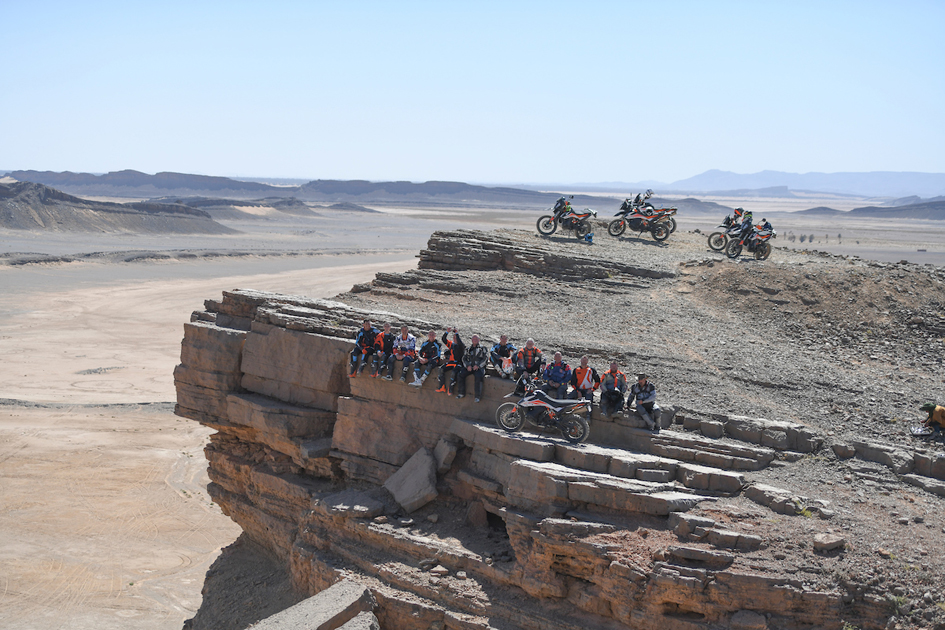
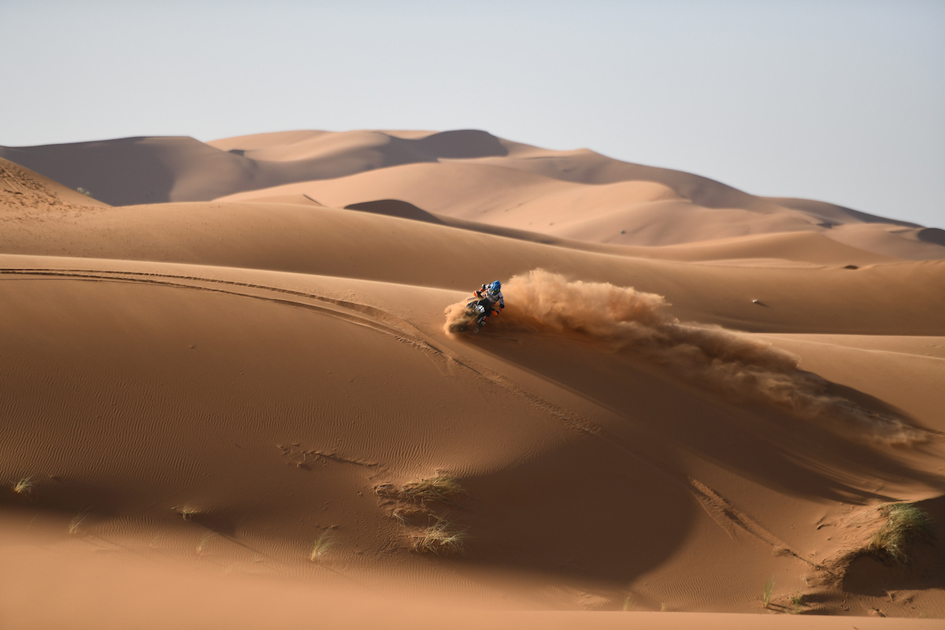
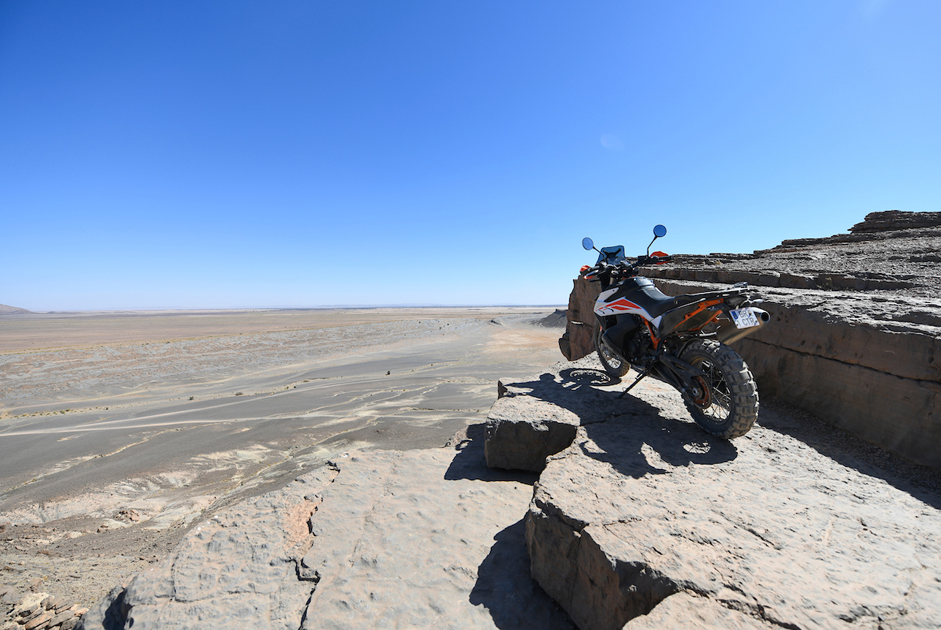
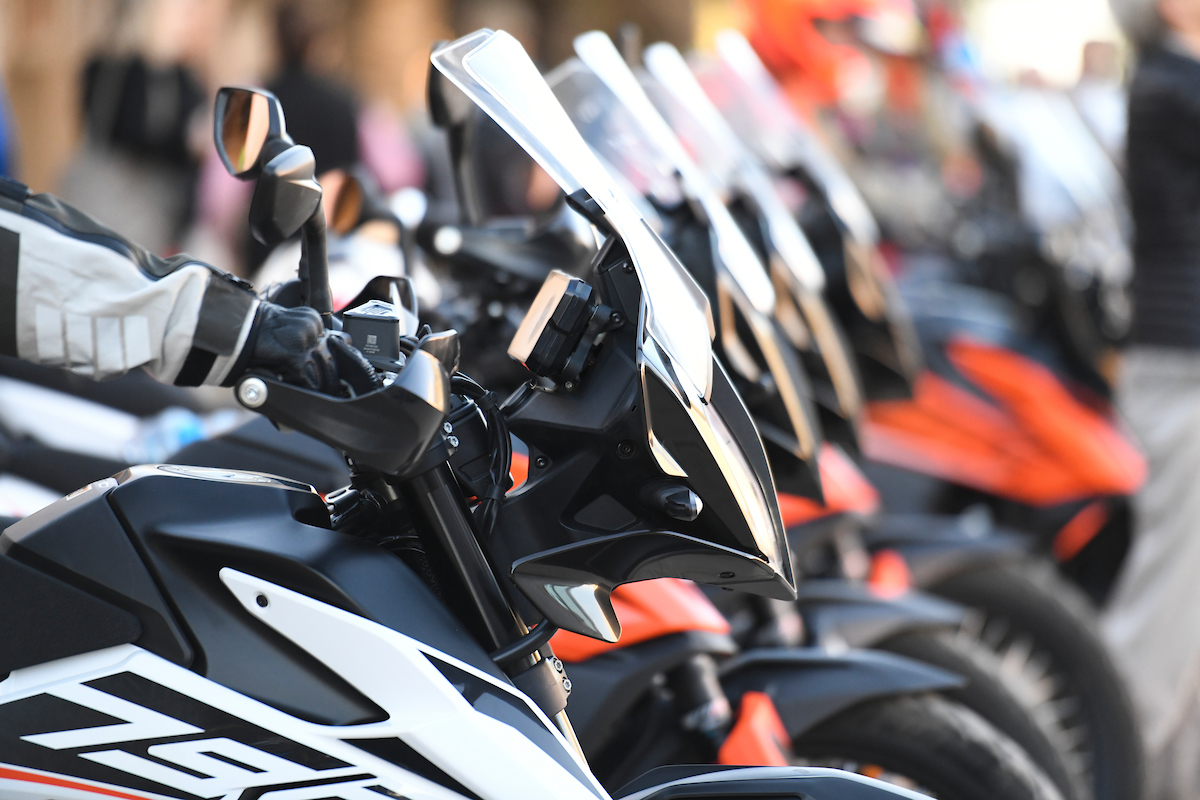
The world is full of complexity, choices, and decisions that need to be made. This creates stress, anxiety and occasionally some poor decisions. With the different chapters of our lives, be they home, work, family and hobbies all fighting for a piece of this stress-and-anxiety pie I have found that sometimes we crave the simple things in life, a simplified space where we can let go of the world and just “be”.
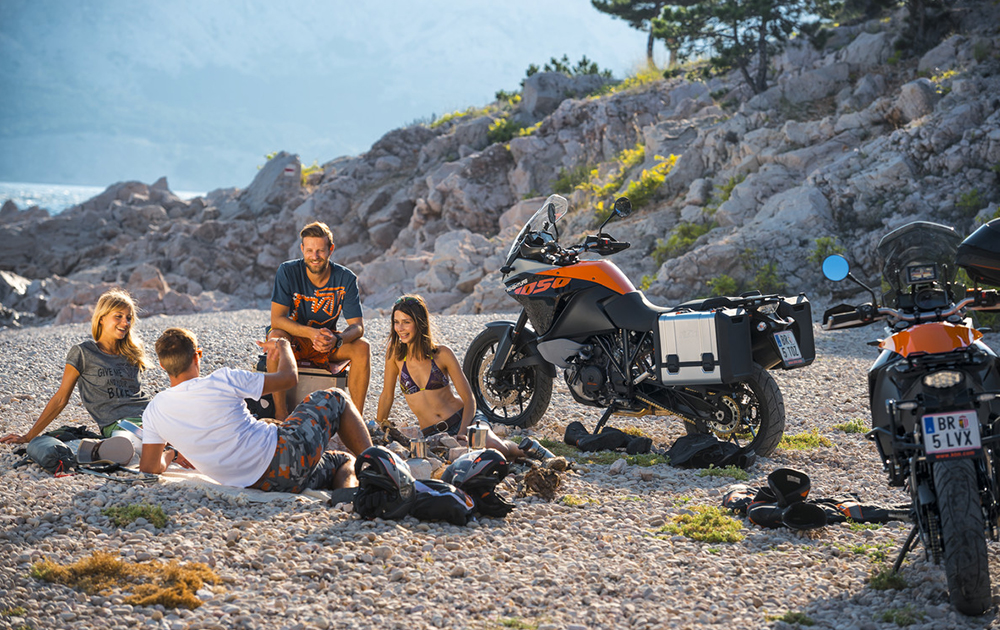
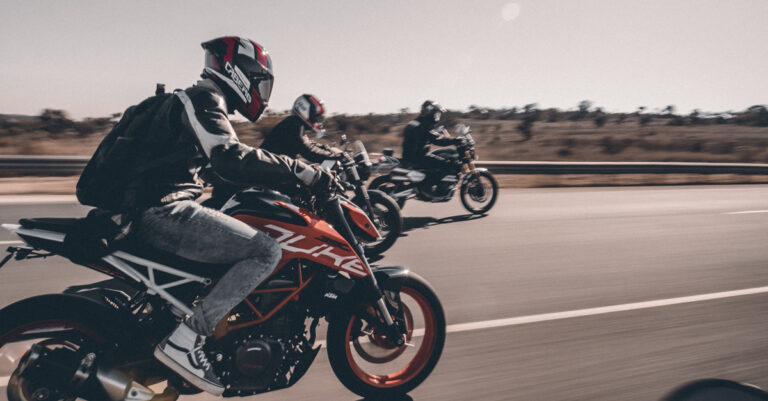
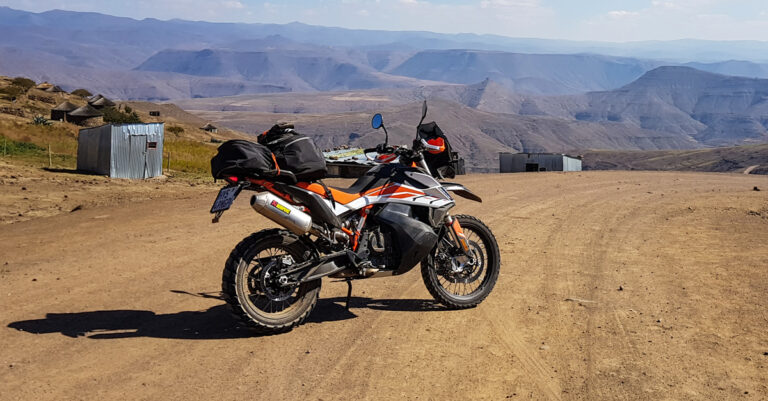
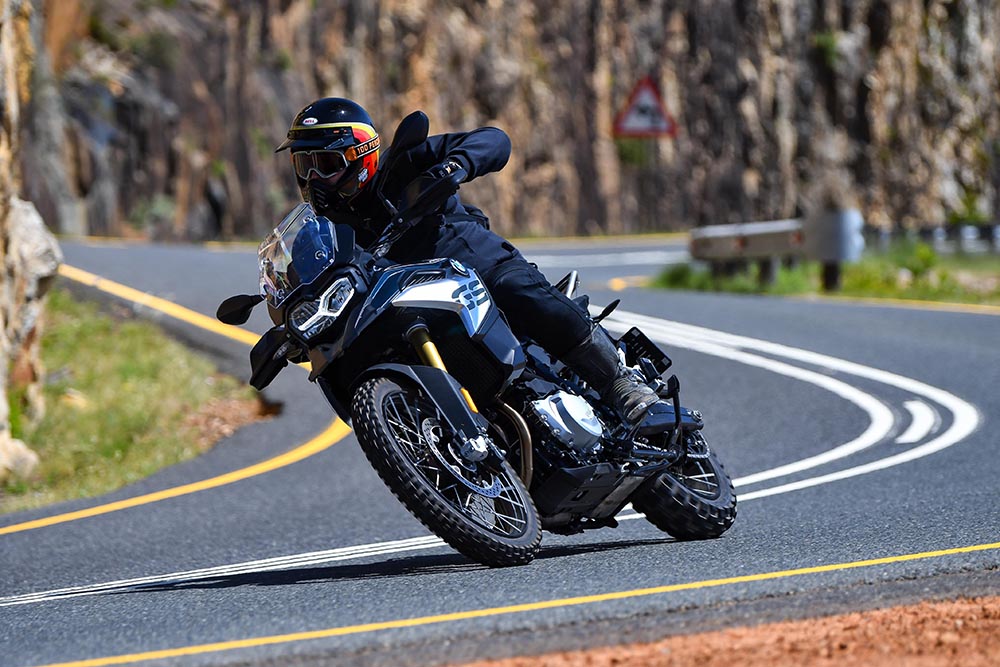
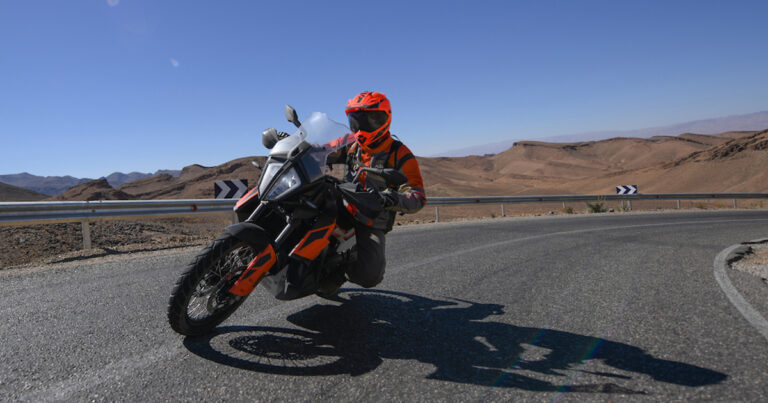
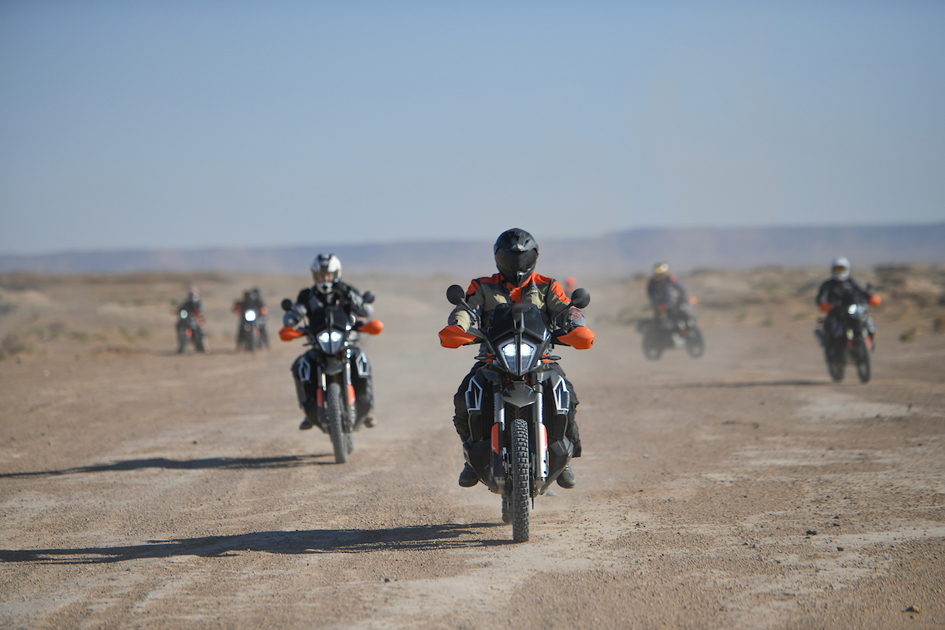
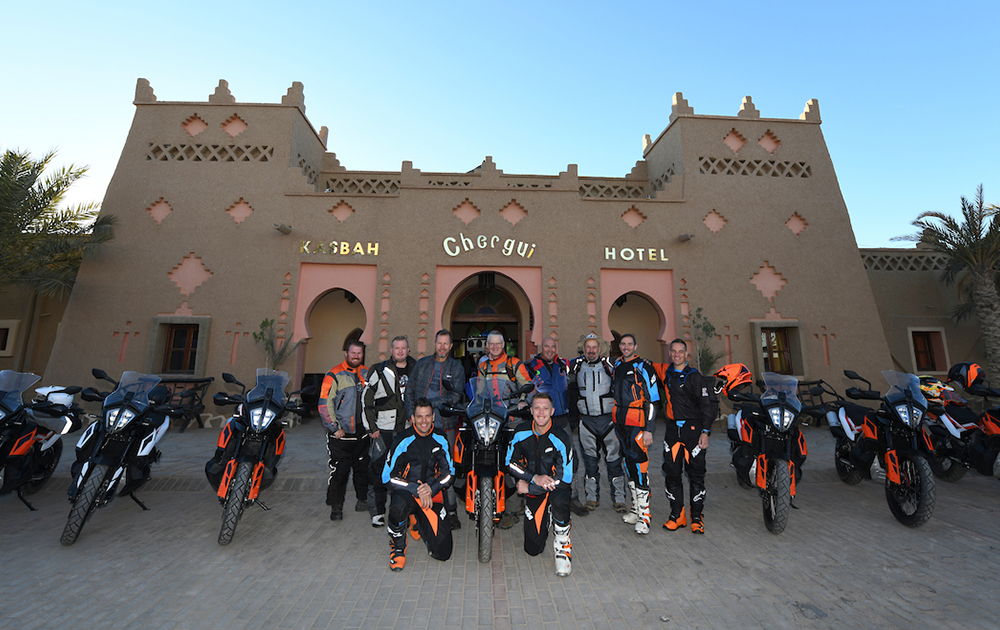
Photo credit: KTM Official
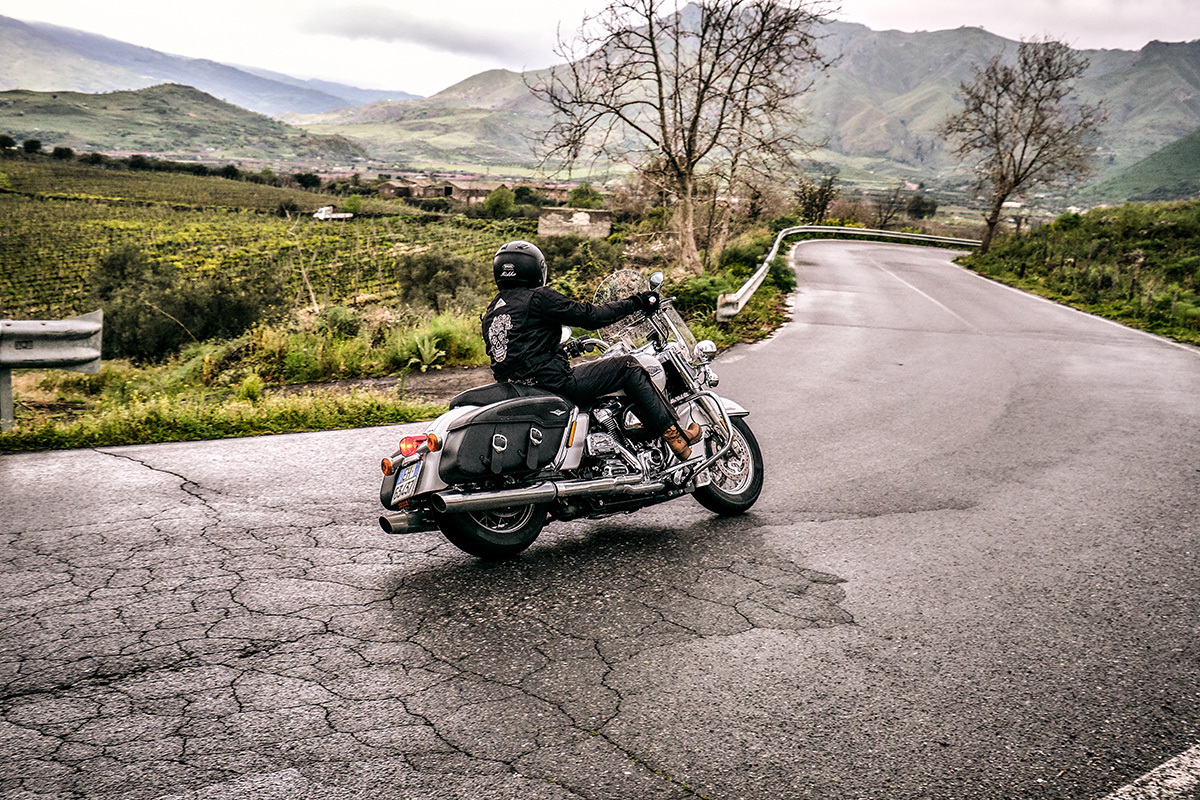
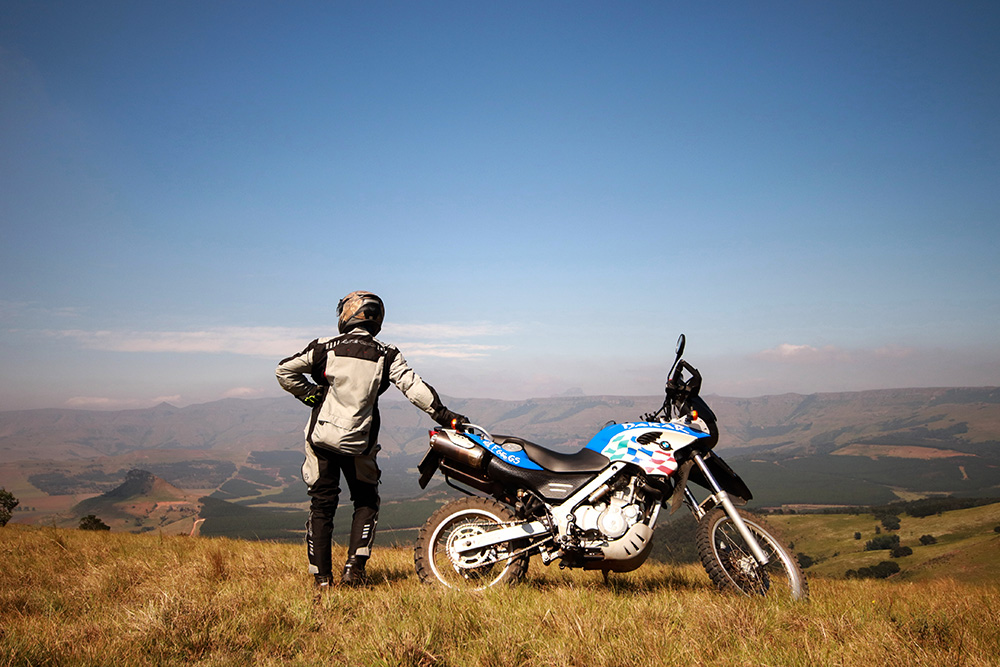
Perhaps this is why some of us ride motorcycles. The solitude, the time with just ourselves and the environment we chose to ride in, the peace we find in riding is a major drawcard, or at least it is for me. But now I have stress regarding this topic as well! Having recently been side-lined from riding after a car decided to occupy the same piece of road as me and the hospital suggesting some new metal bits to add strength and stability to this fragile body, it is now time to get back on the road and to find this happy place again.
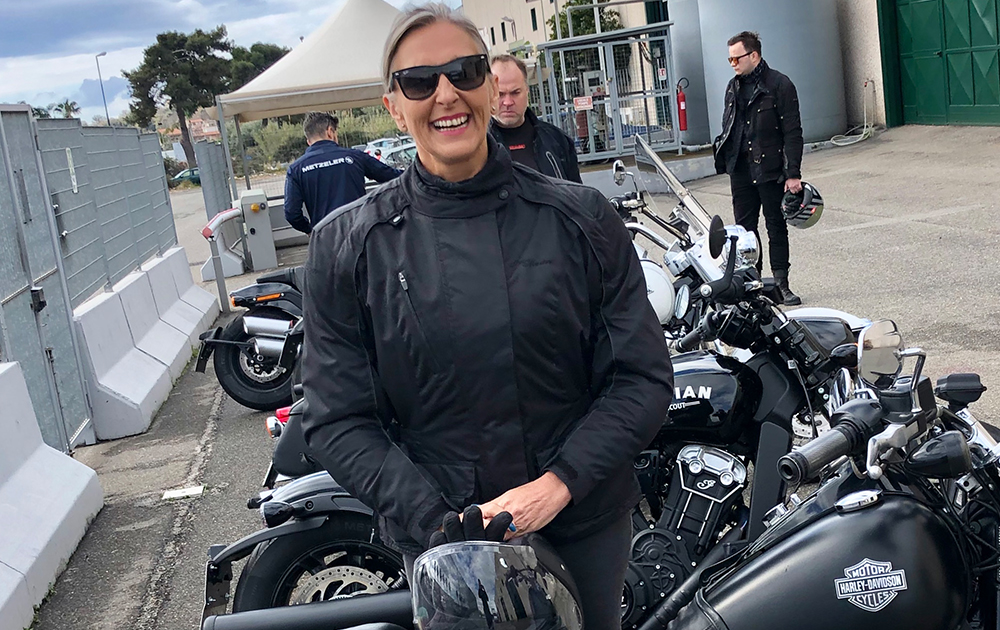
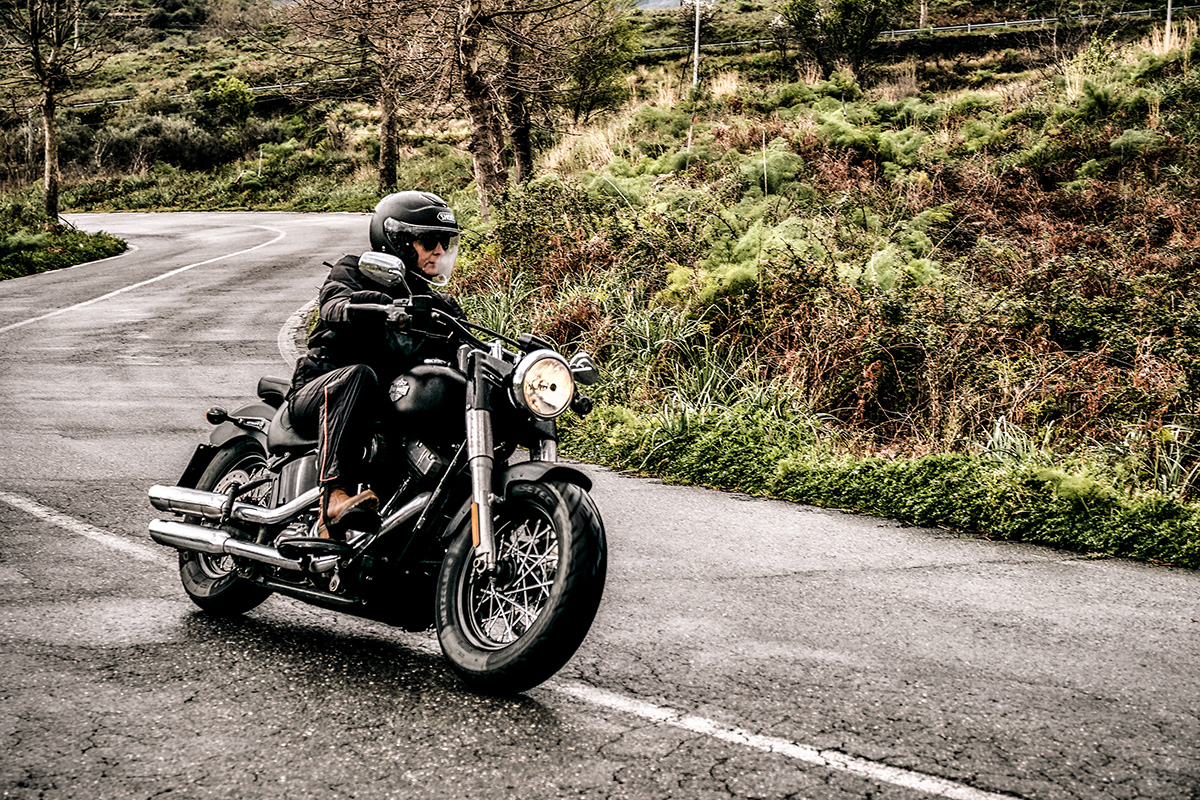
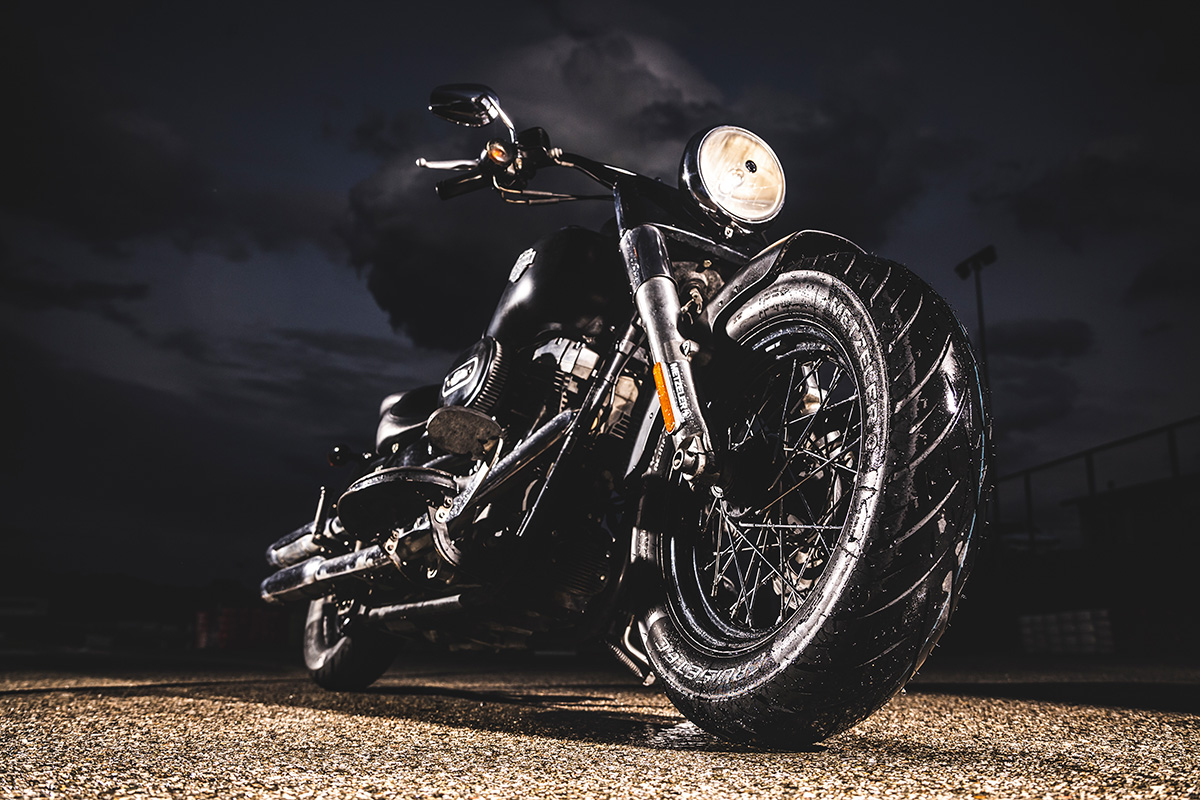
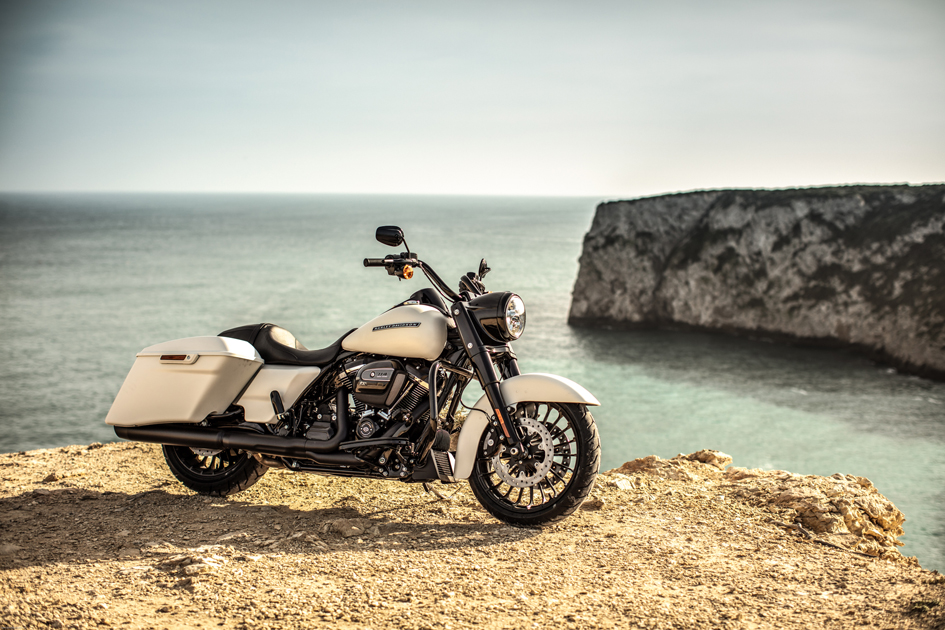
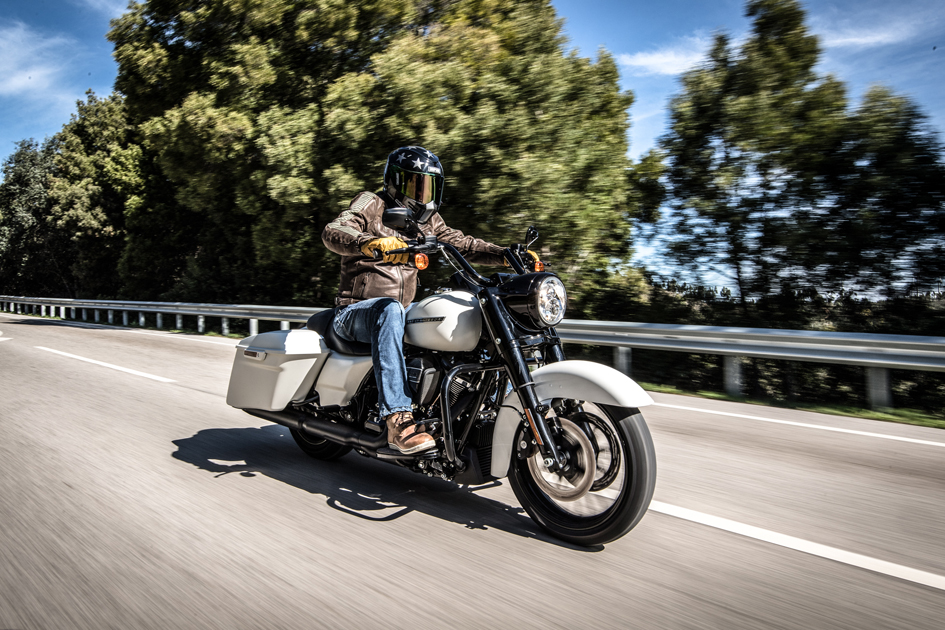
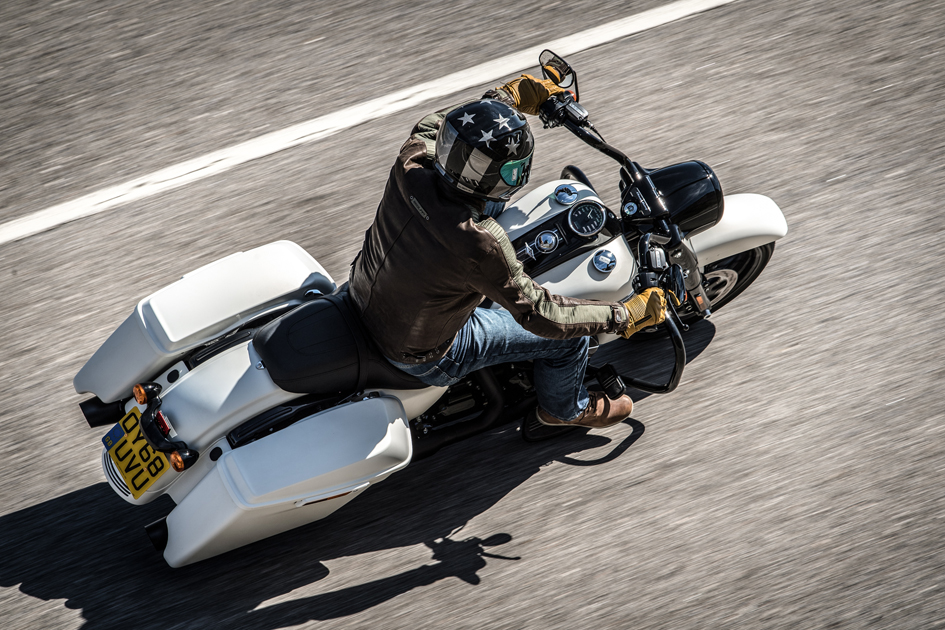
But what motorcycle do I chose?! I have begun the process of looking around to see what type of motorcycle tickles my fancy the most. Do I go for an adventure bike or a cruiser, do I go Italian, German or Japanese? I would like to state for the record that I am of the firm opinion you cannot buy a bad product anymore, all the motorcycles are high quality, and they all have their own brand presence, history, character and statement to make.
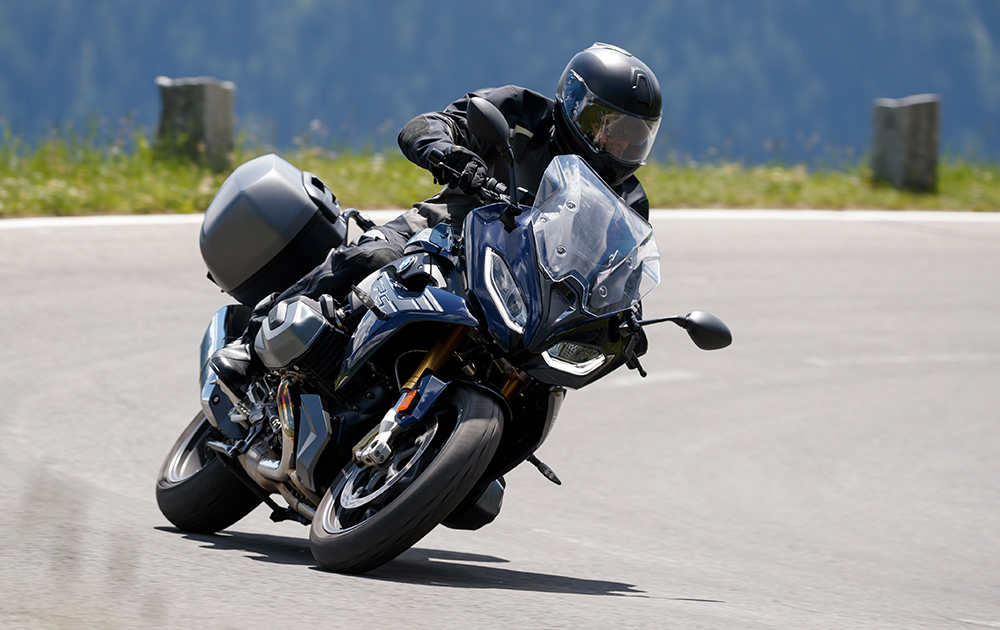
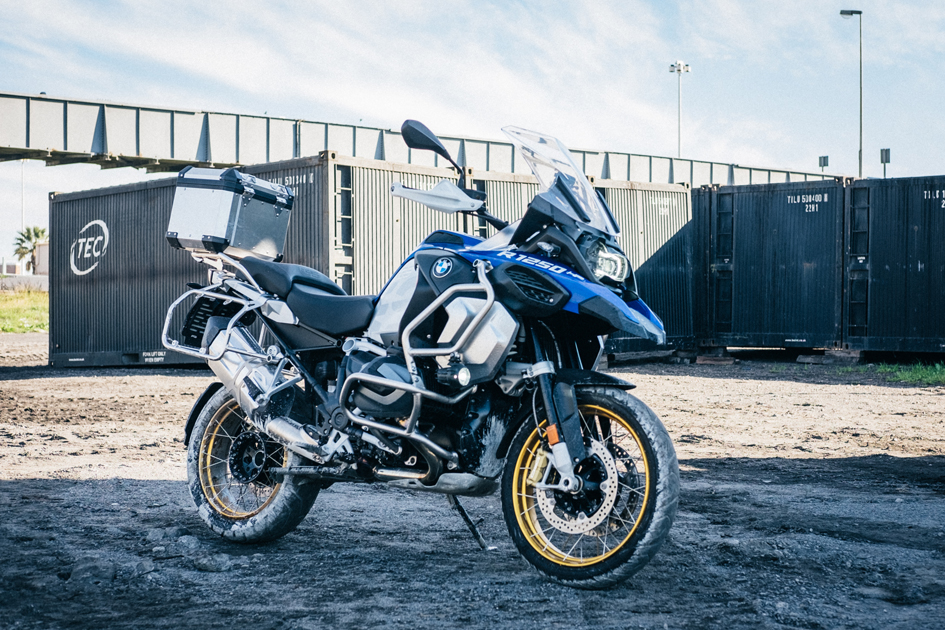
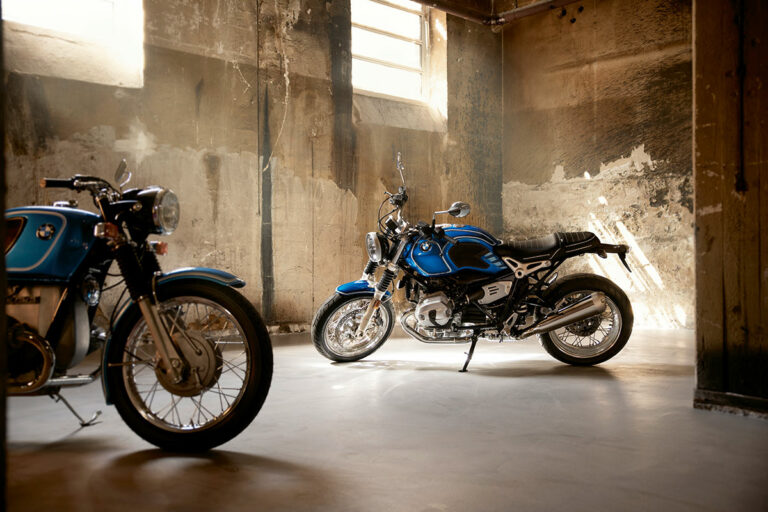
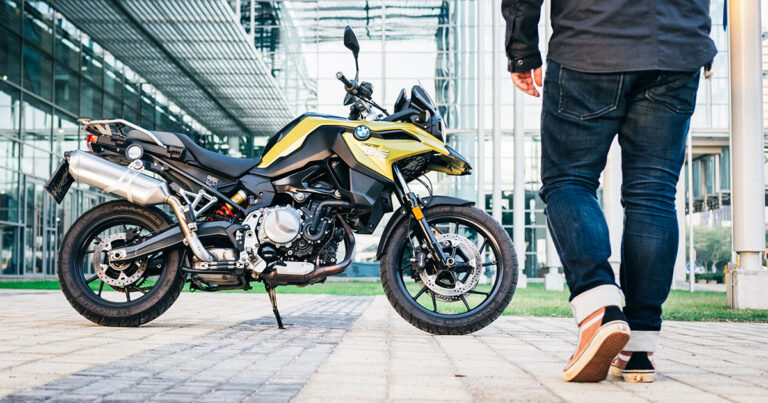
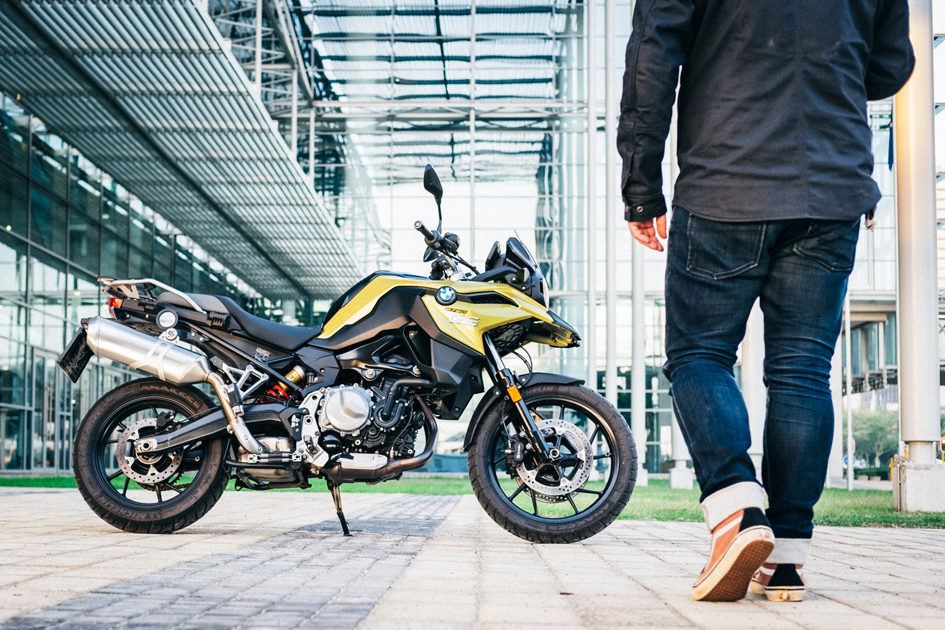
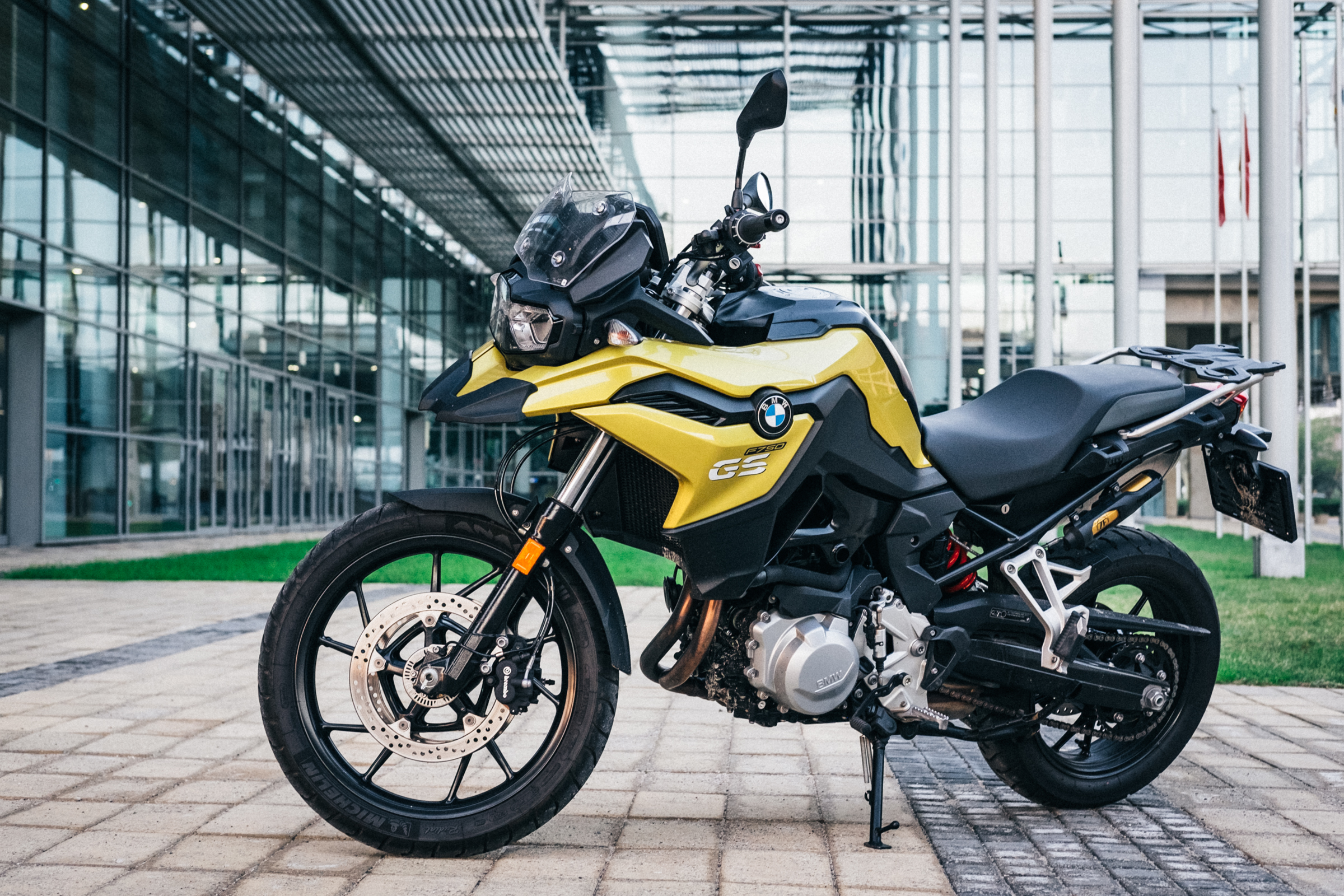
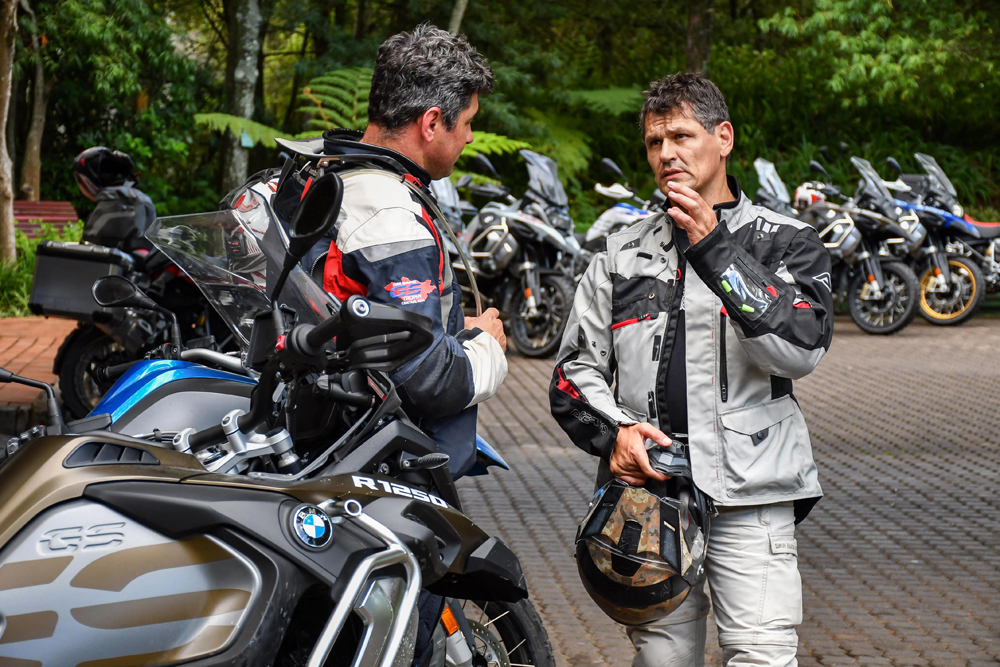
Photo credit: BMW Motorrad
An additional layer of stress to this, and totally self-induced, is the fear of riding on the road again. I have been back on the track and it has been fantastic! But those Sunday morning breakfast runs, the tours around the country to visit far-flung destinations, fill me with a sense of trepidation. I am mentally preparing myself, both for the ride and for the justification to those who judge me for riding again (crazy seems to be the common label), but the brain finds itself in a confused space. What should the first ride be?! Again, more choices to make!
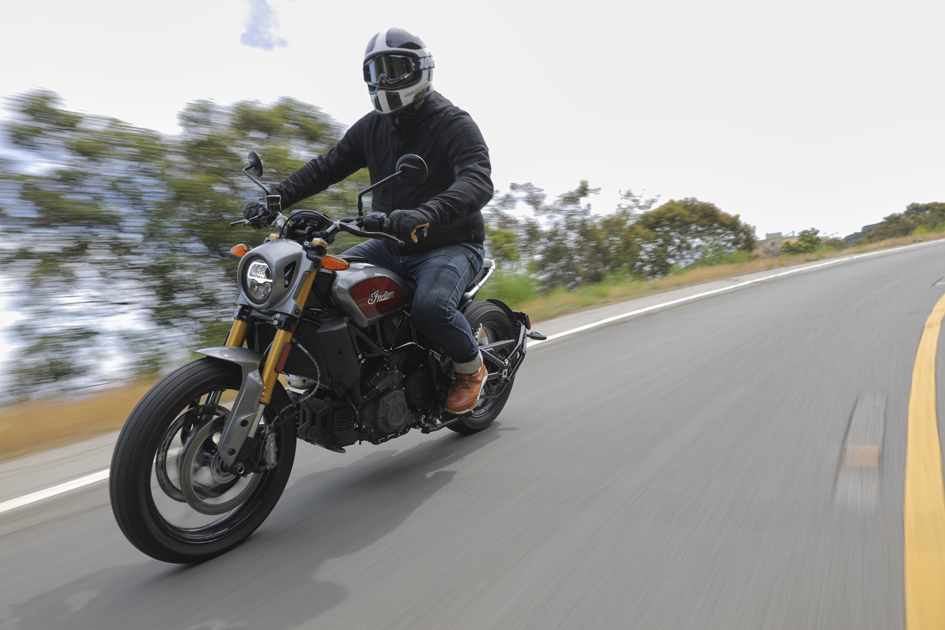
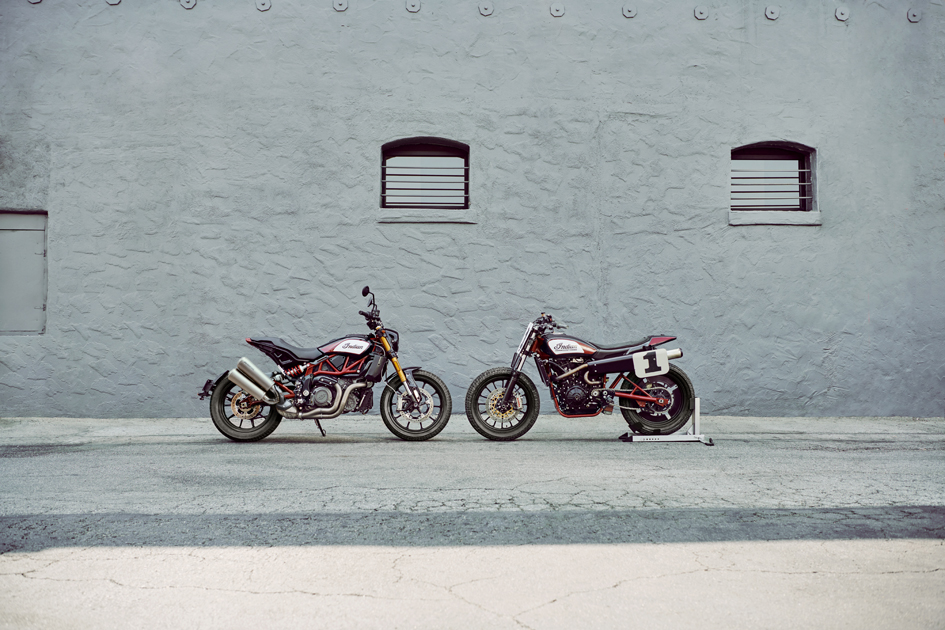
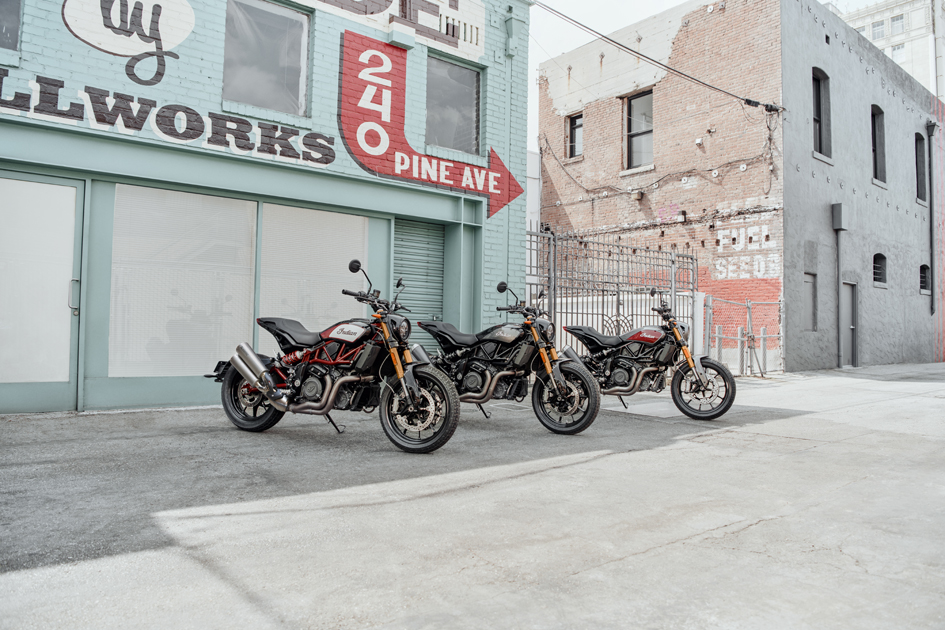
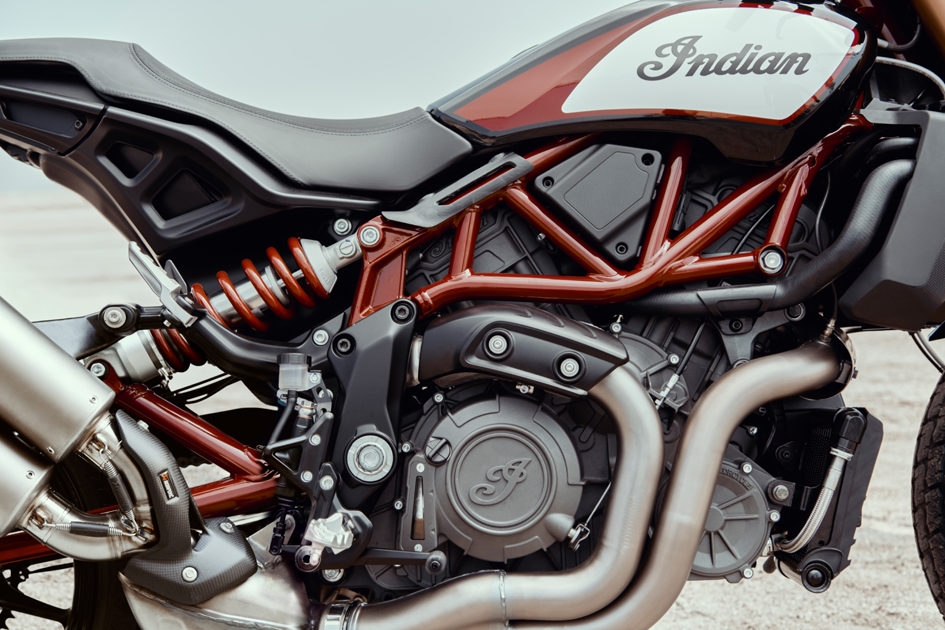
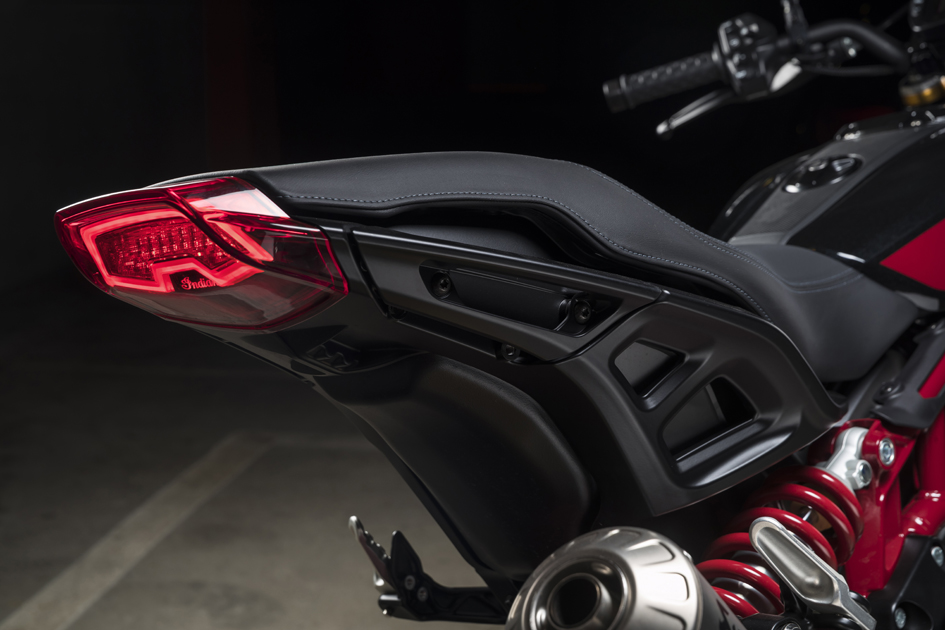
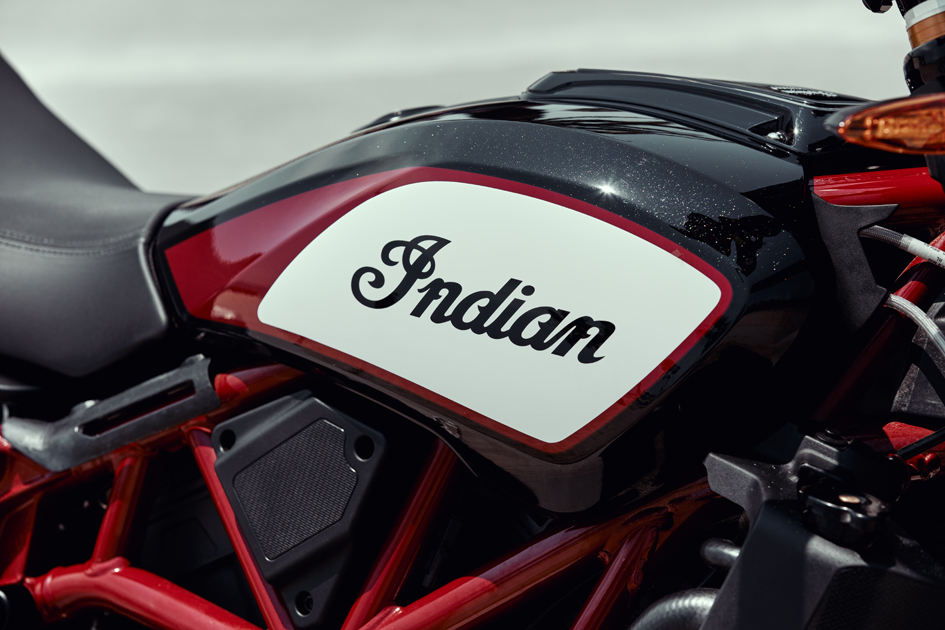
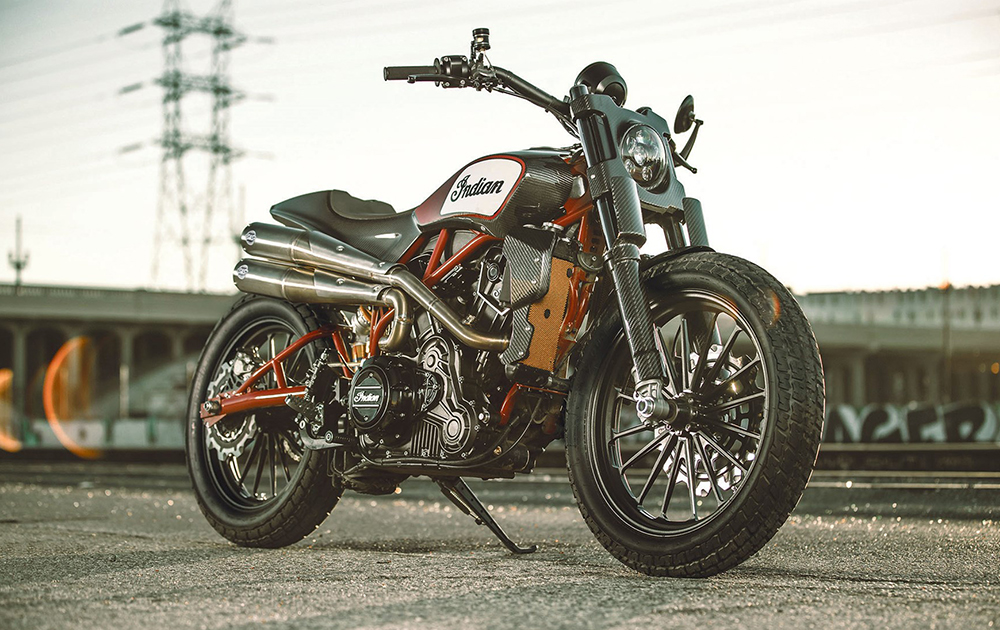
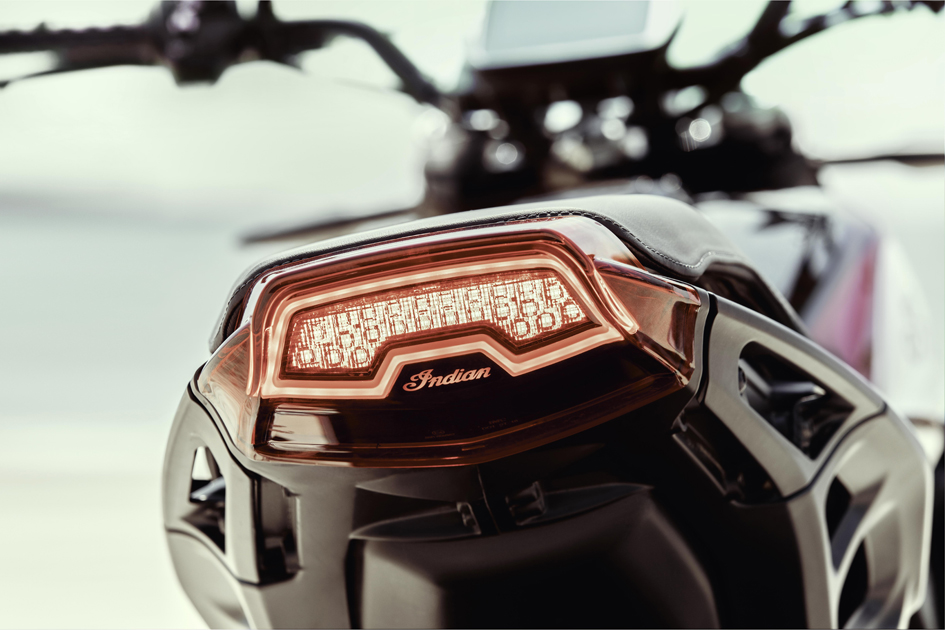
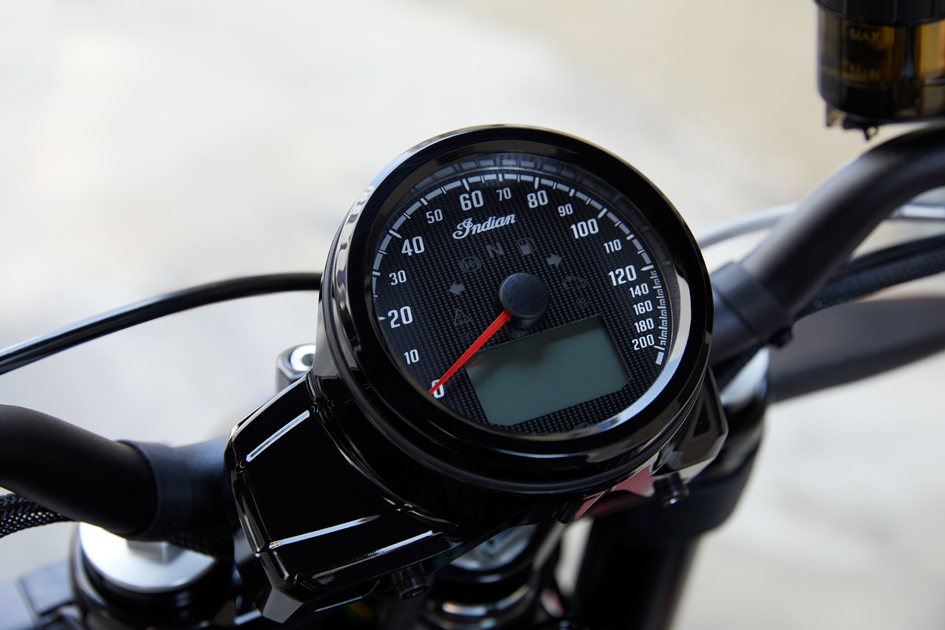
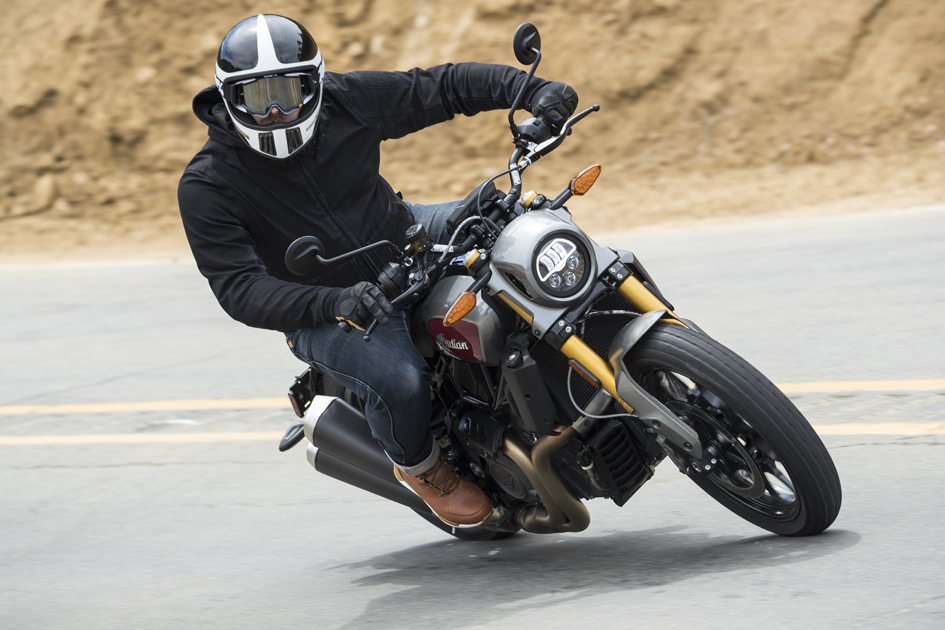
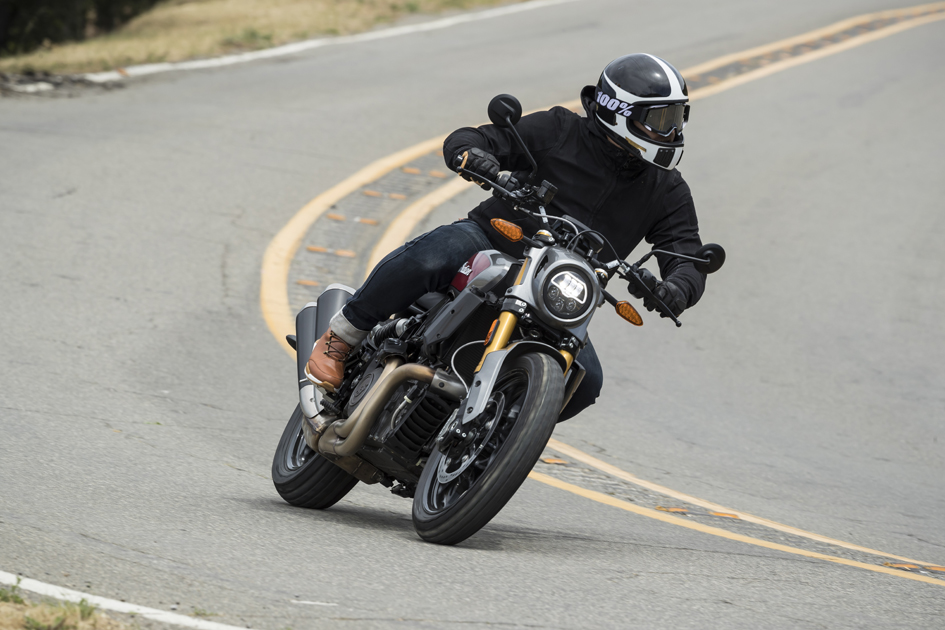
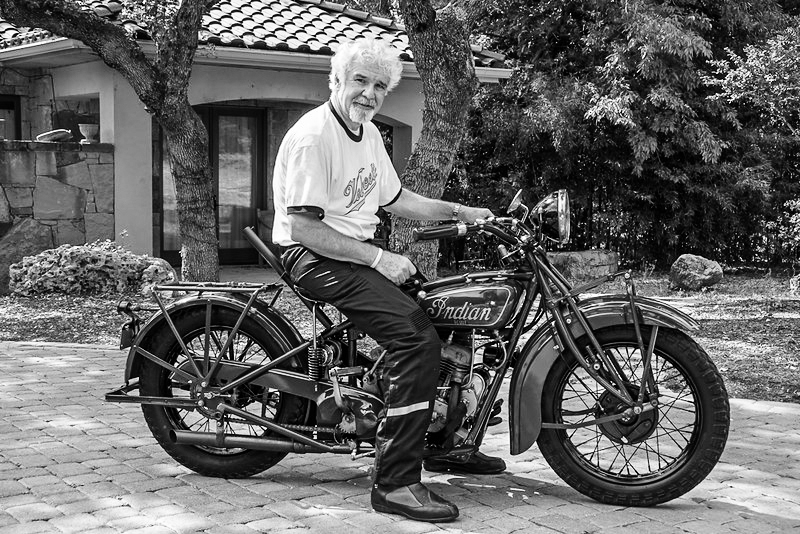
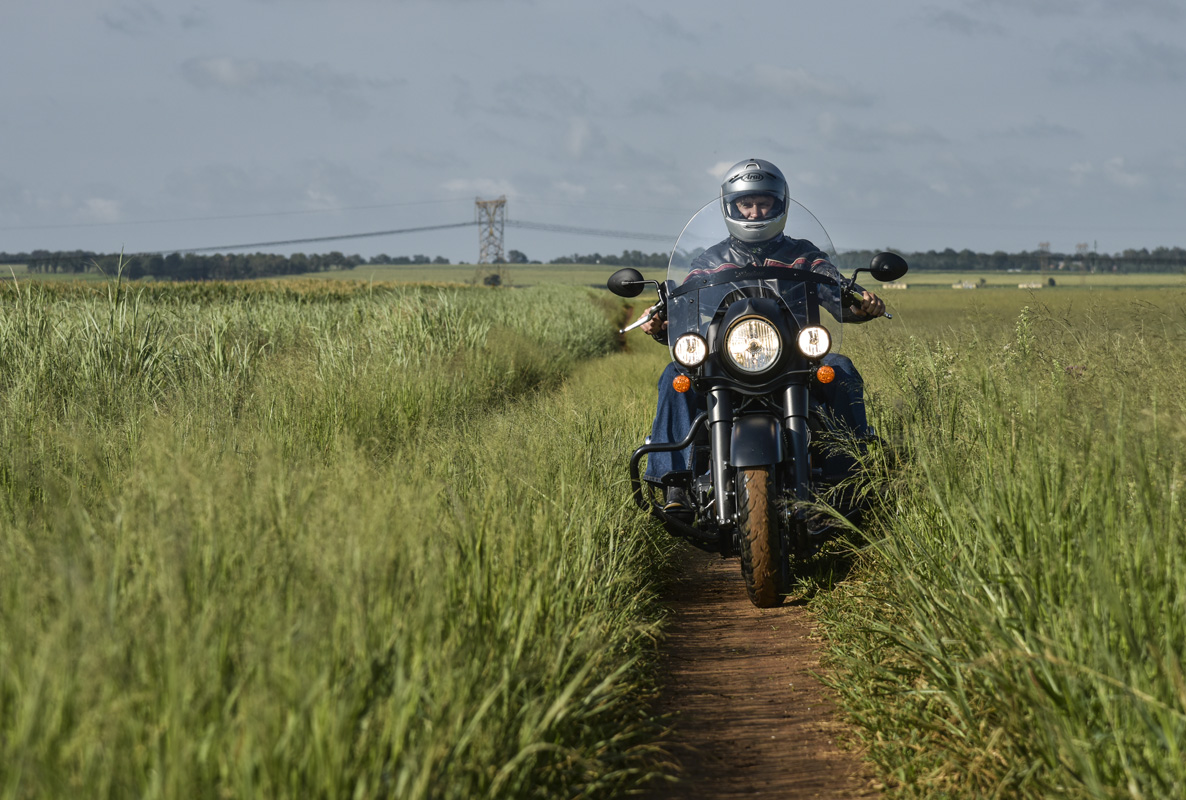
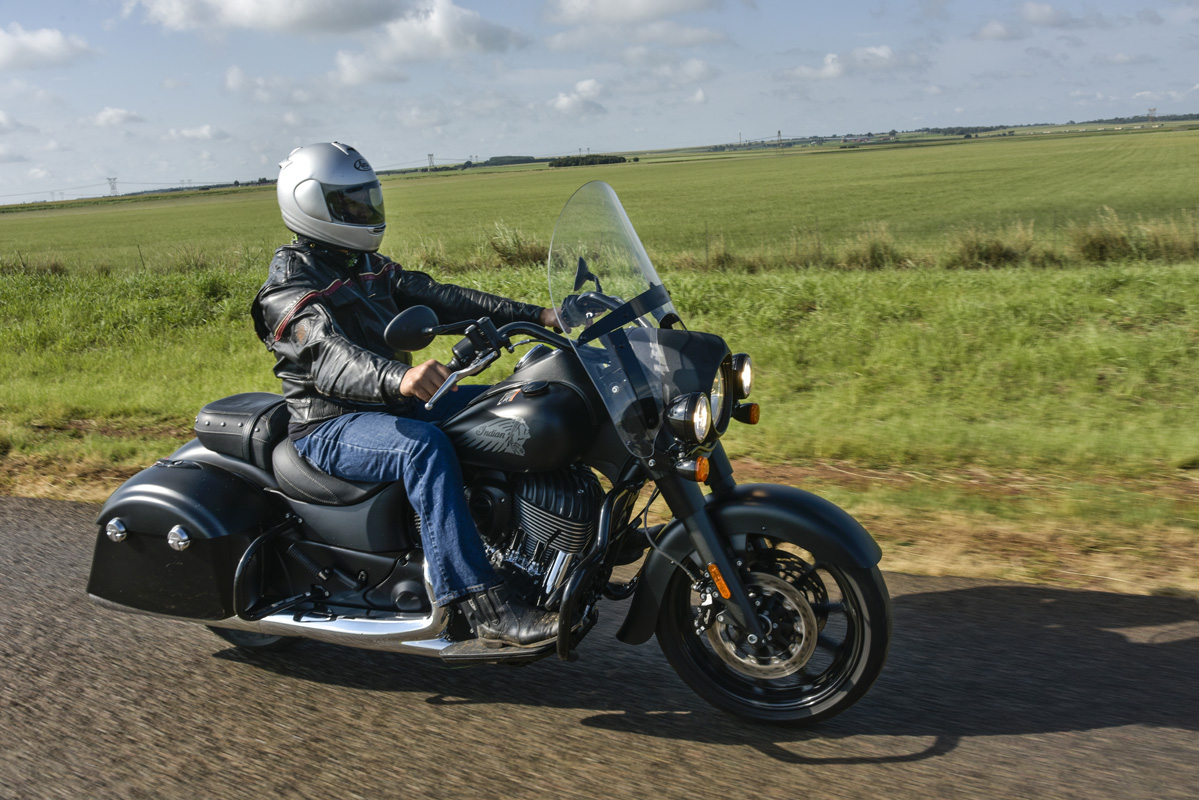
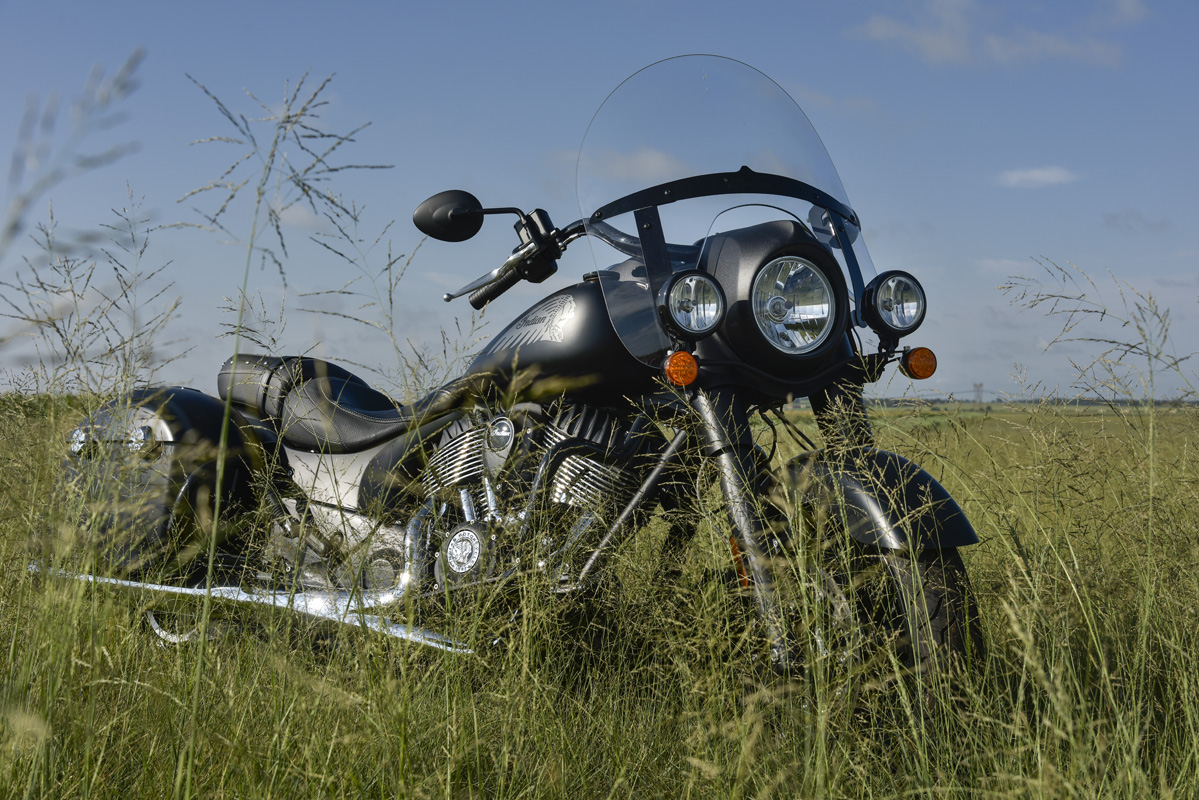
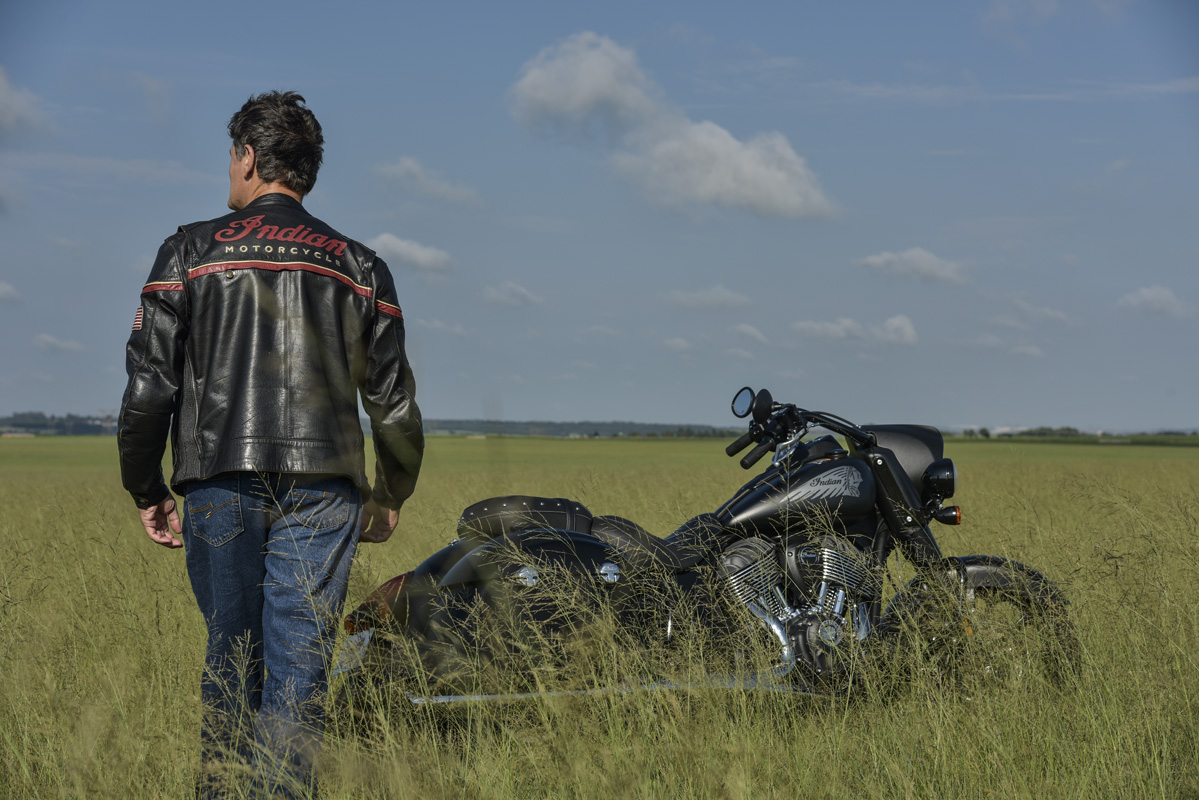
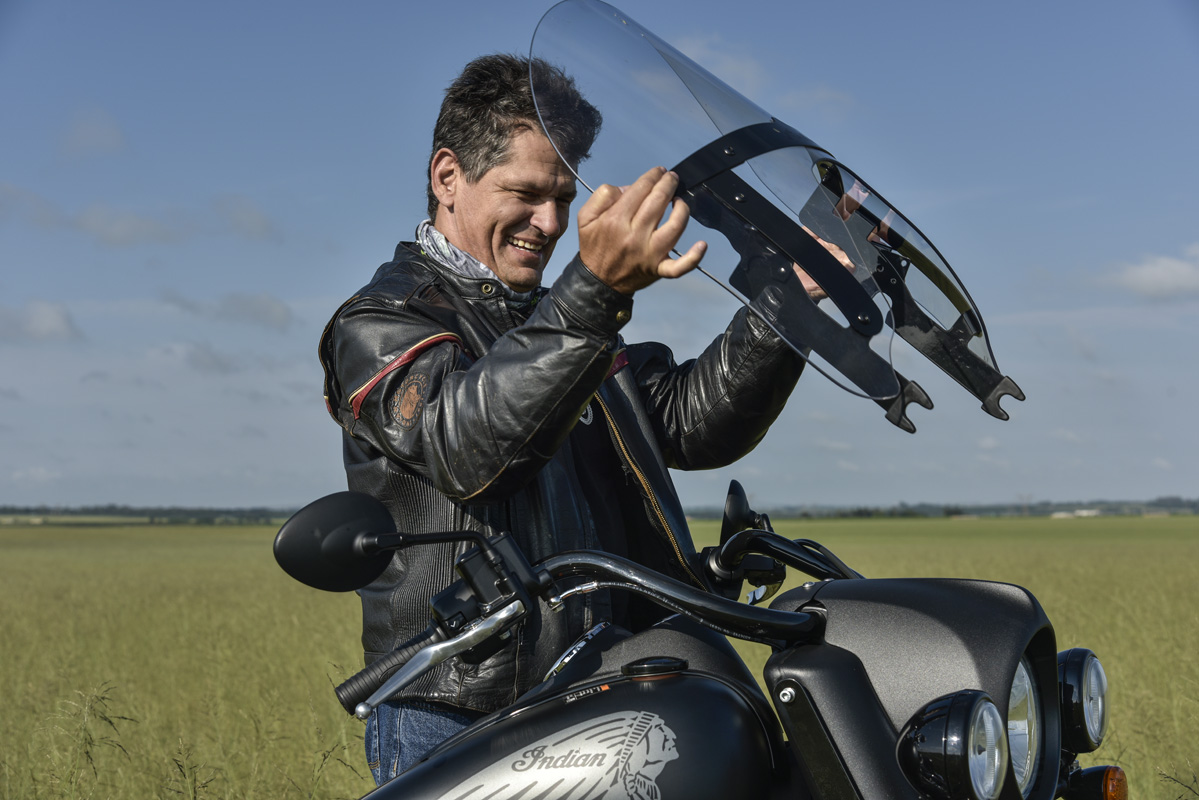
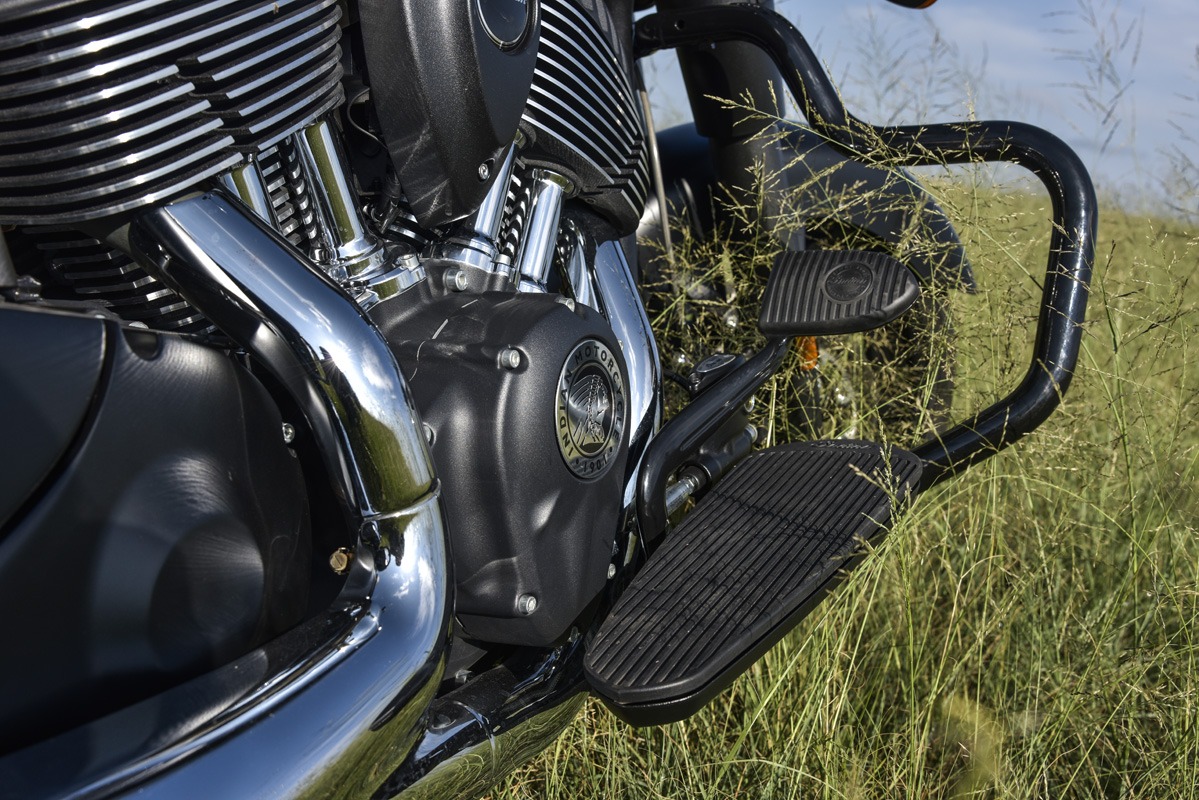
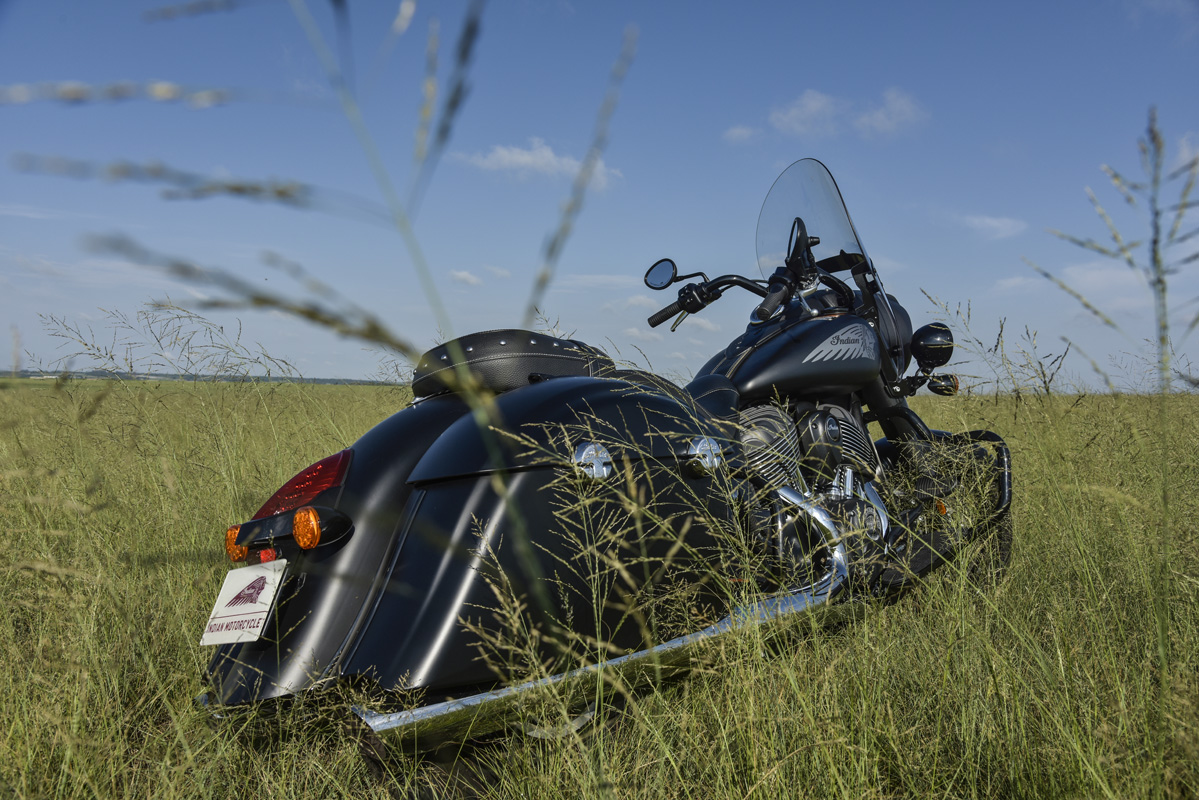
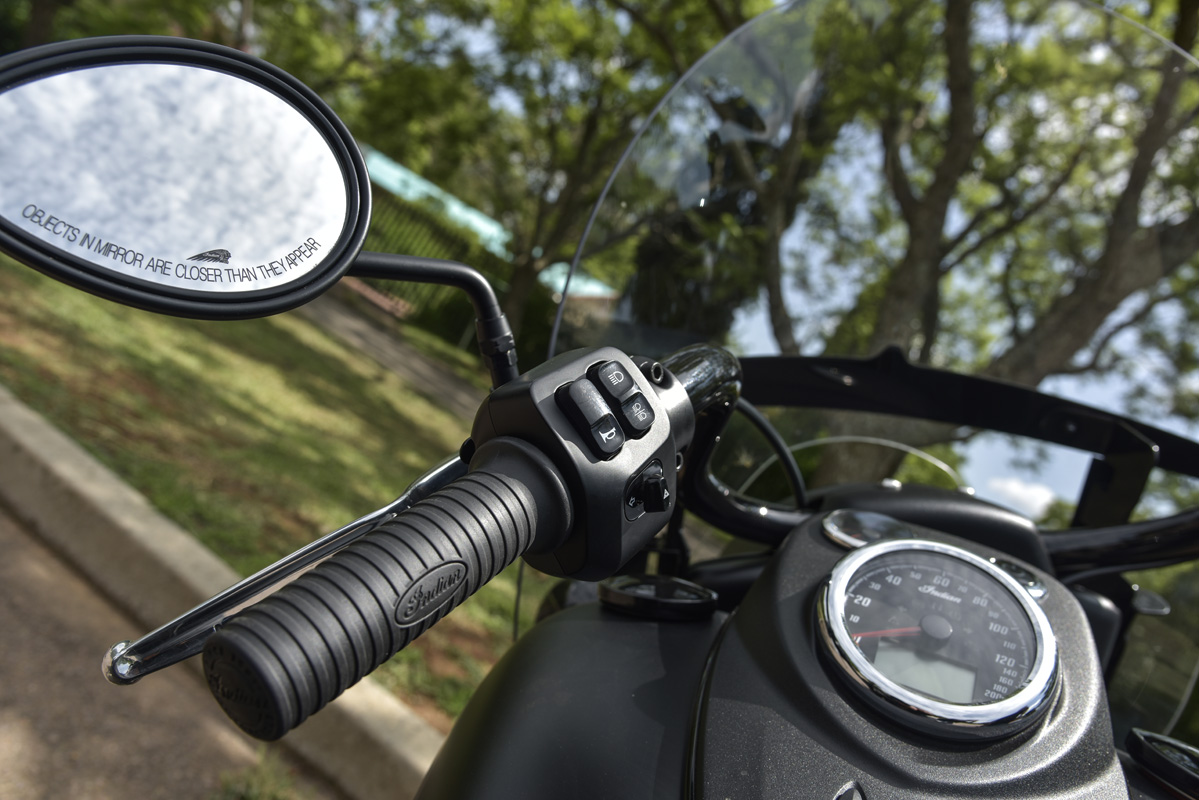
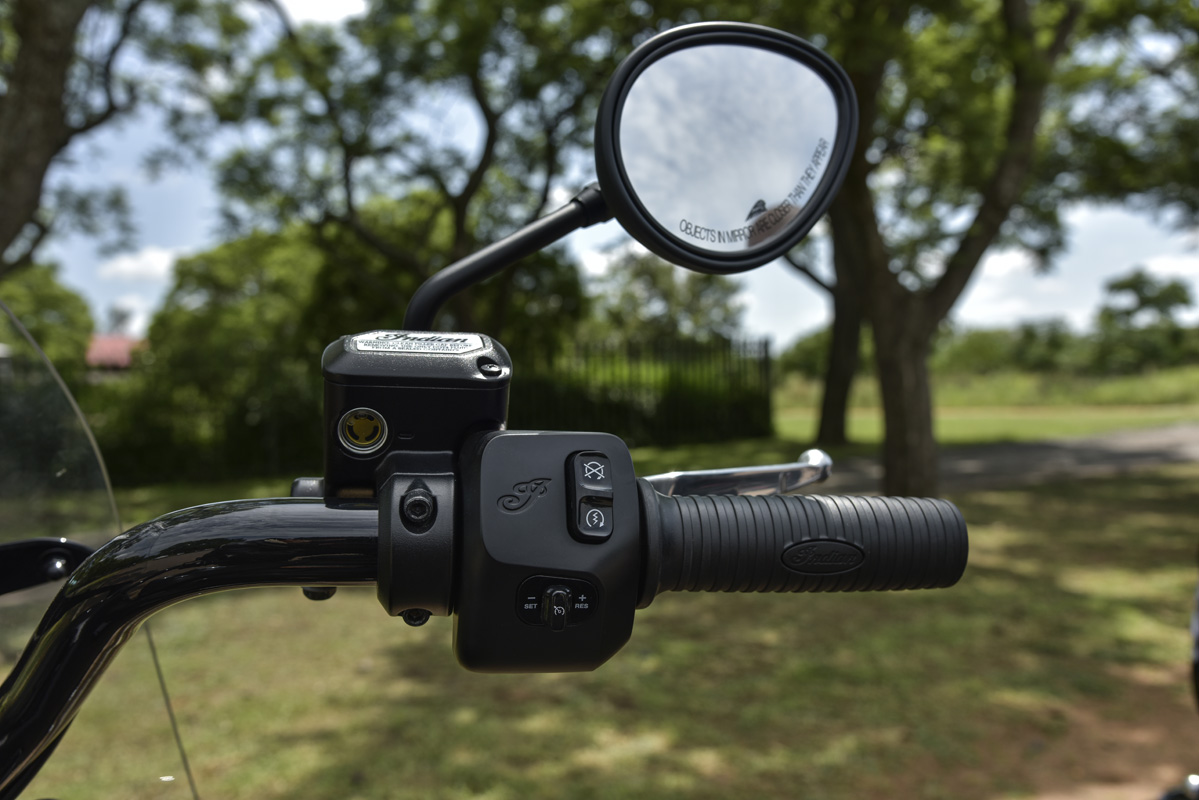
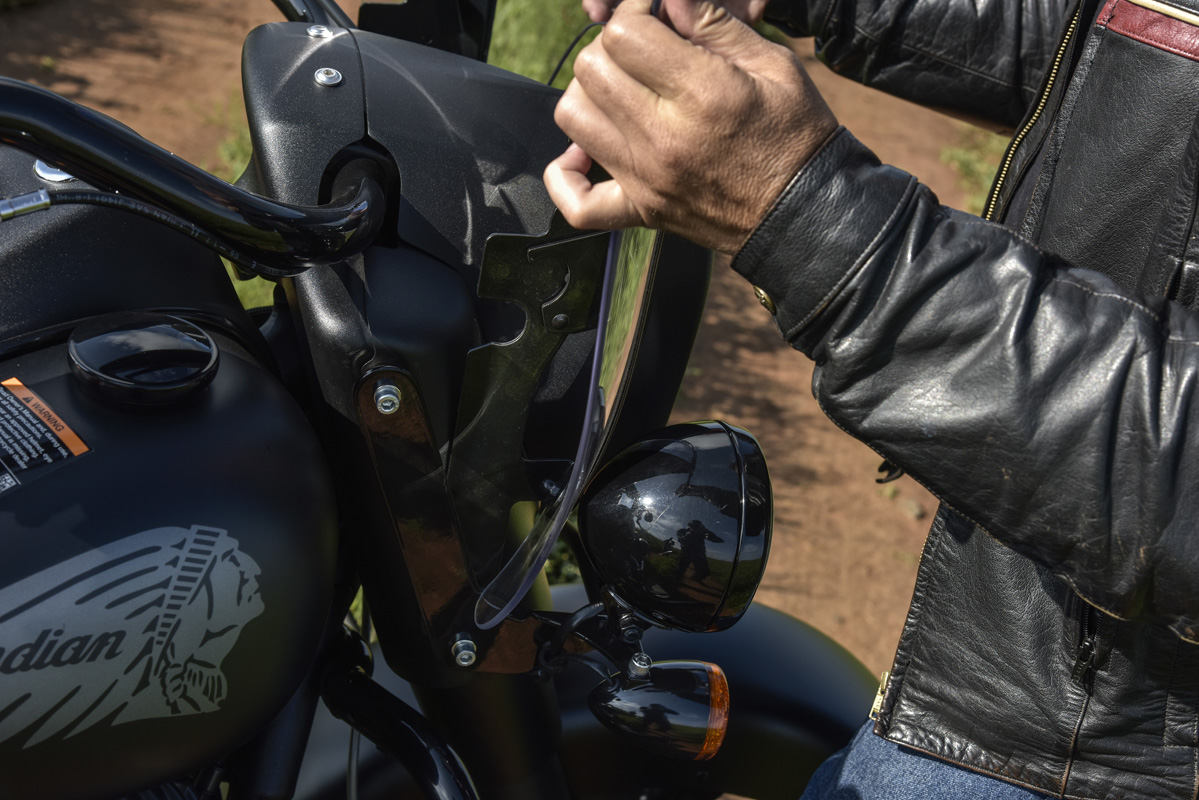
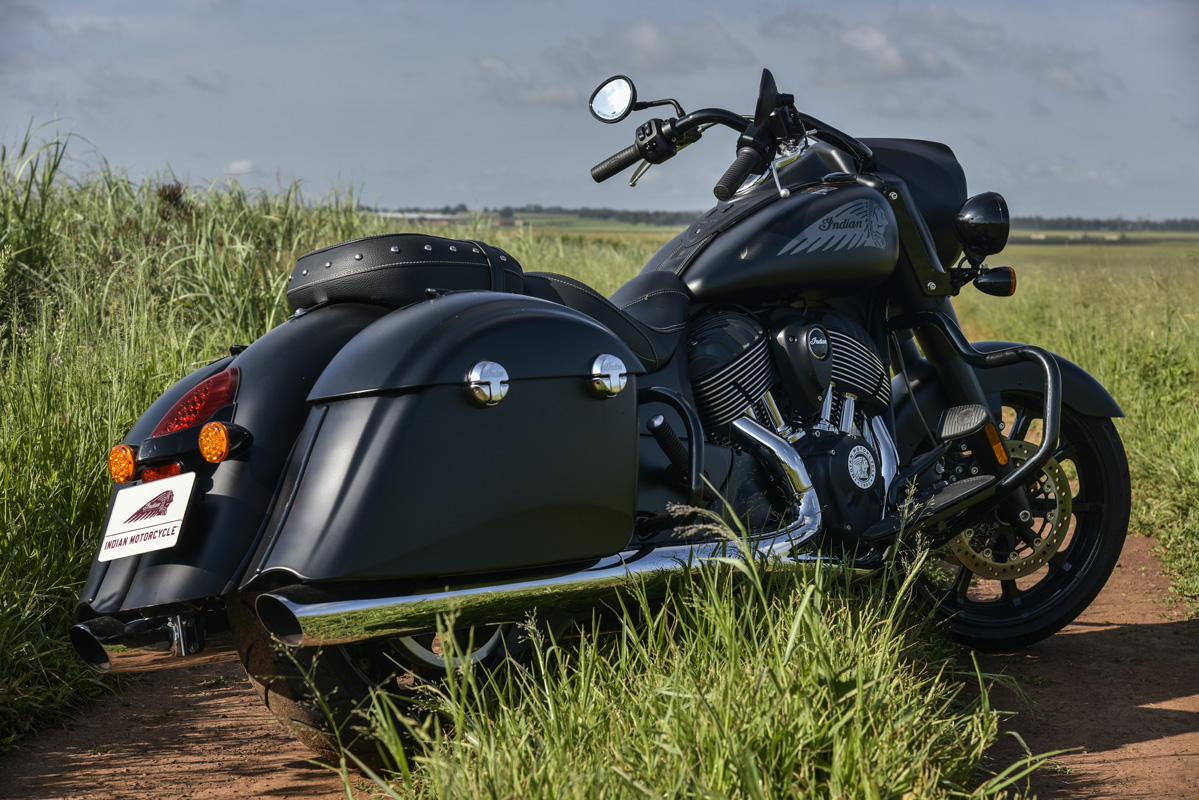
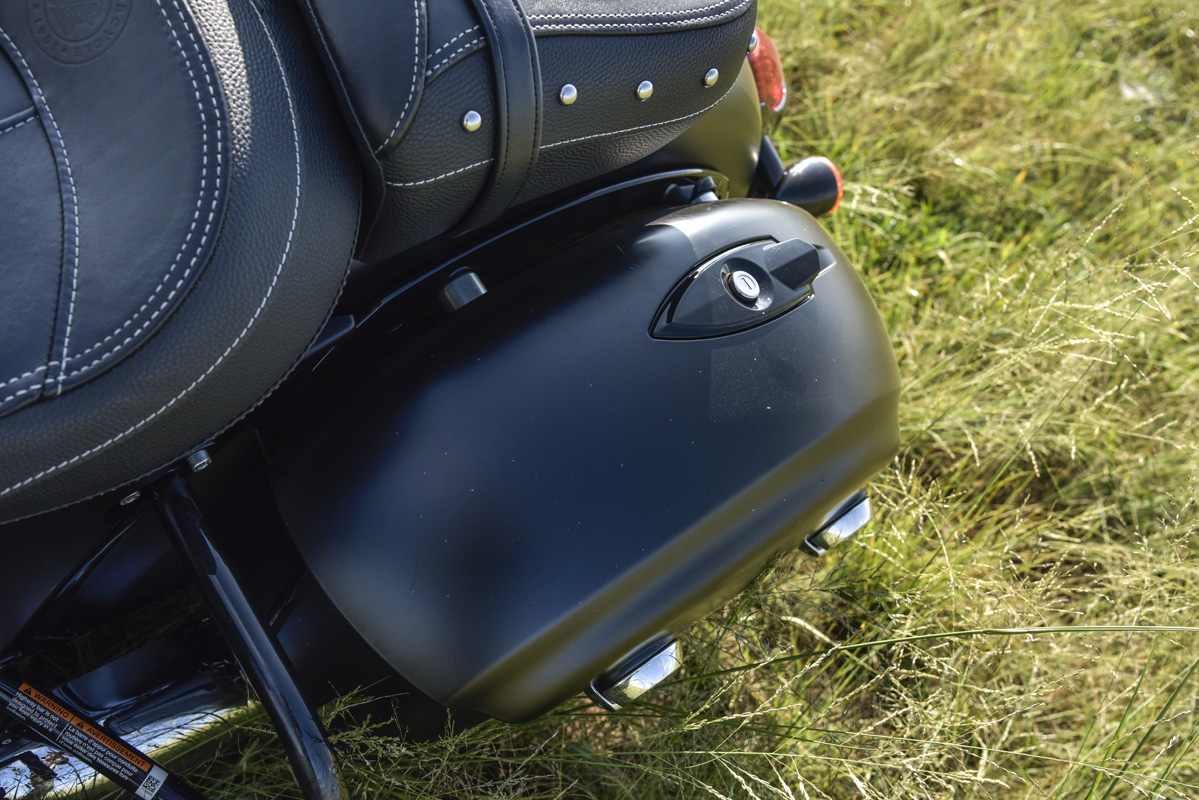
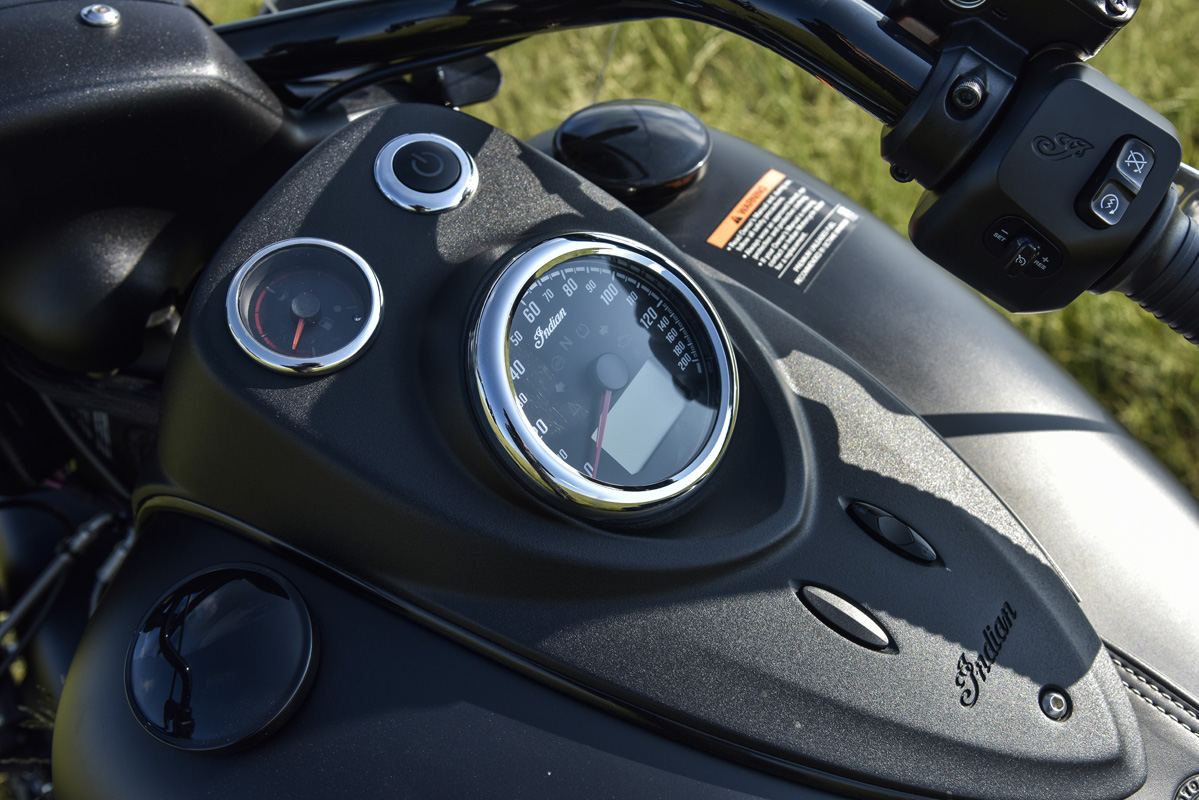
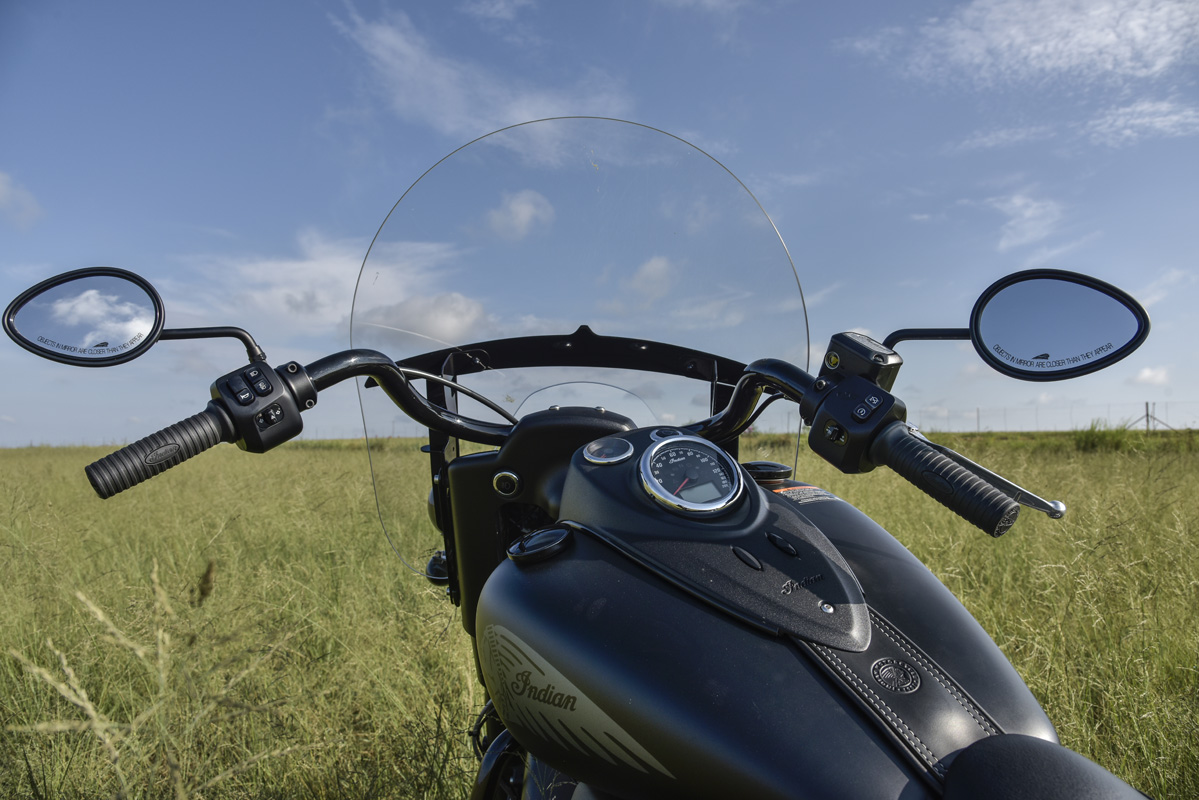
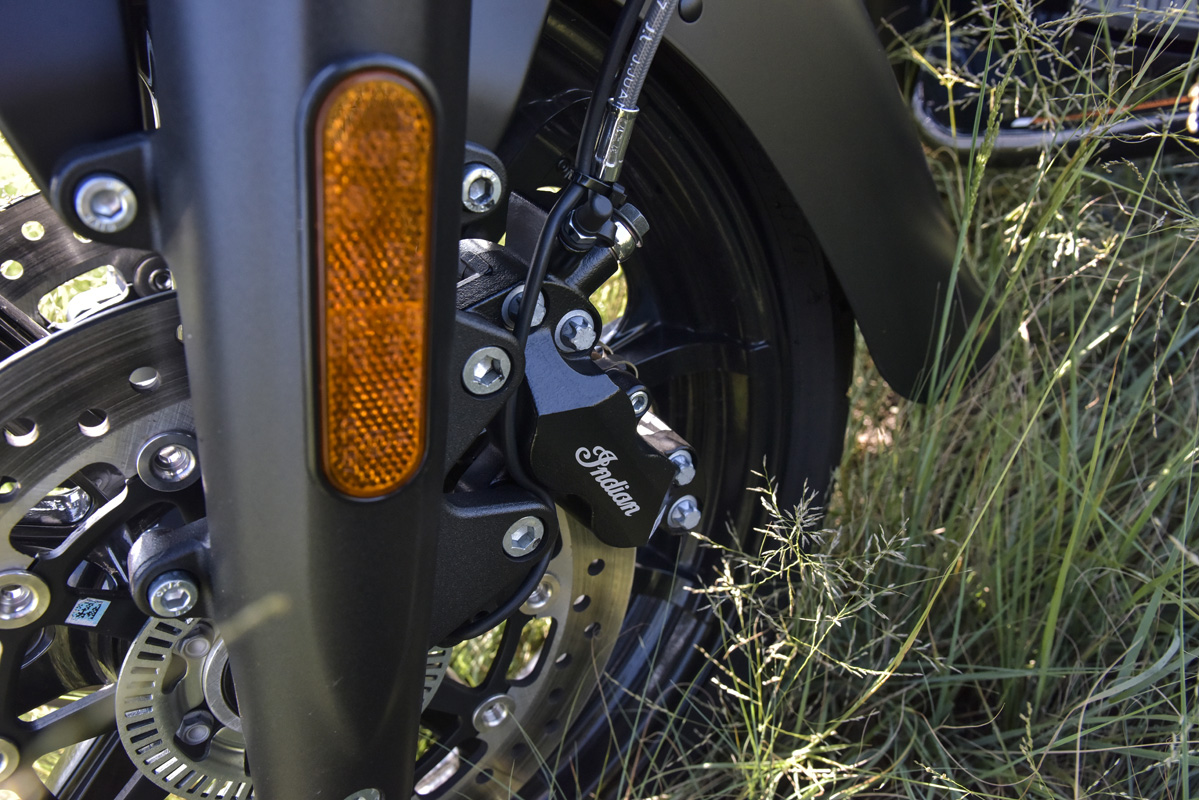
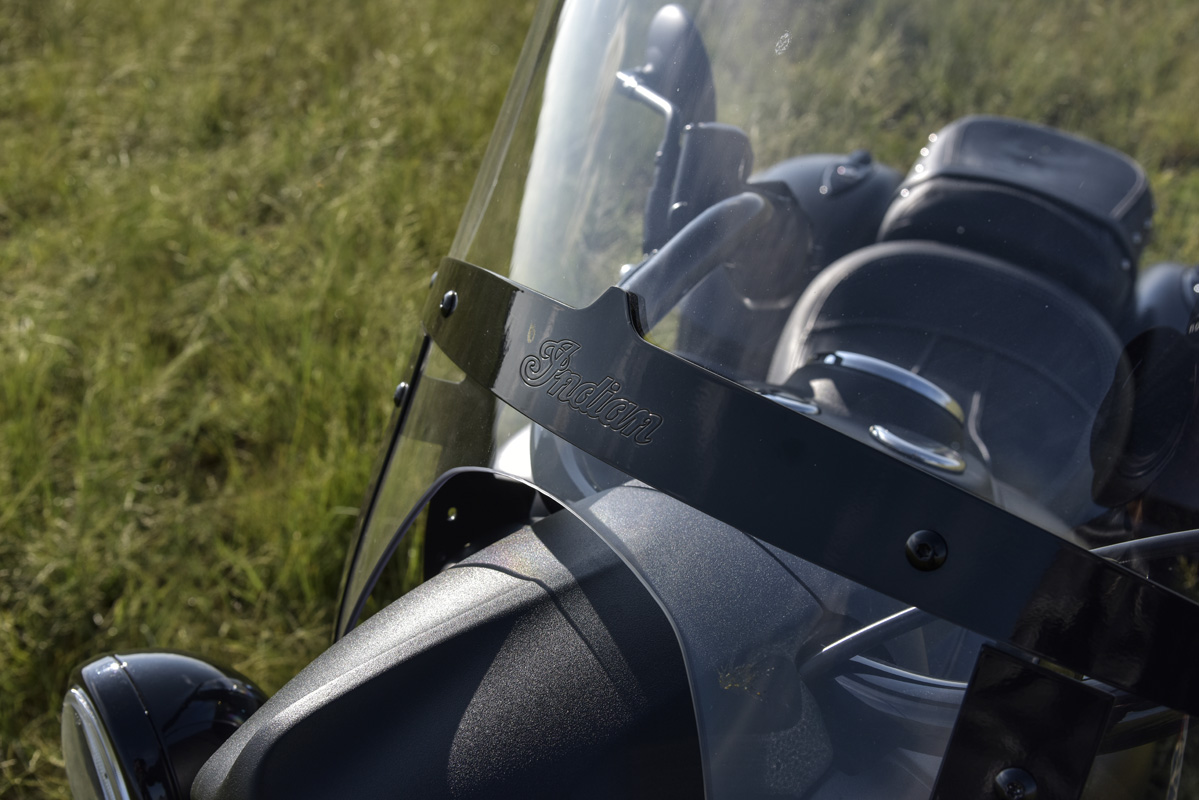
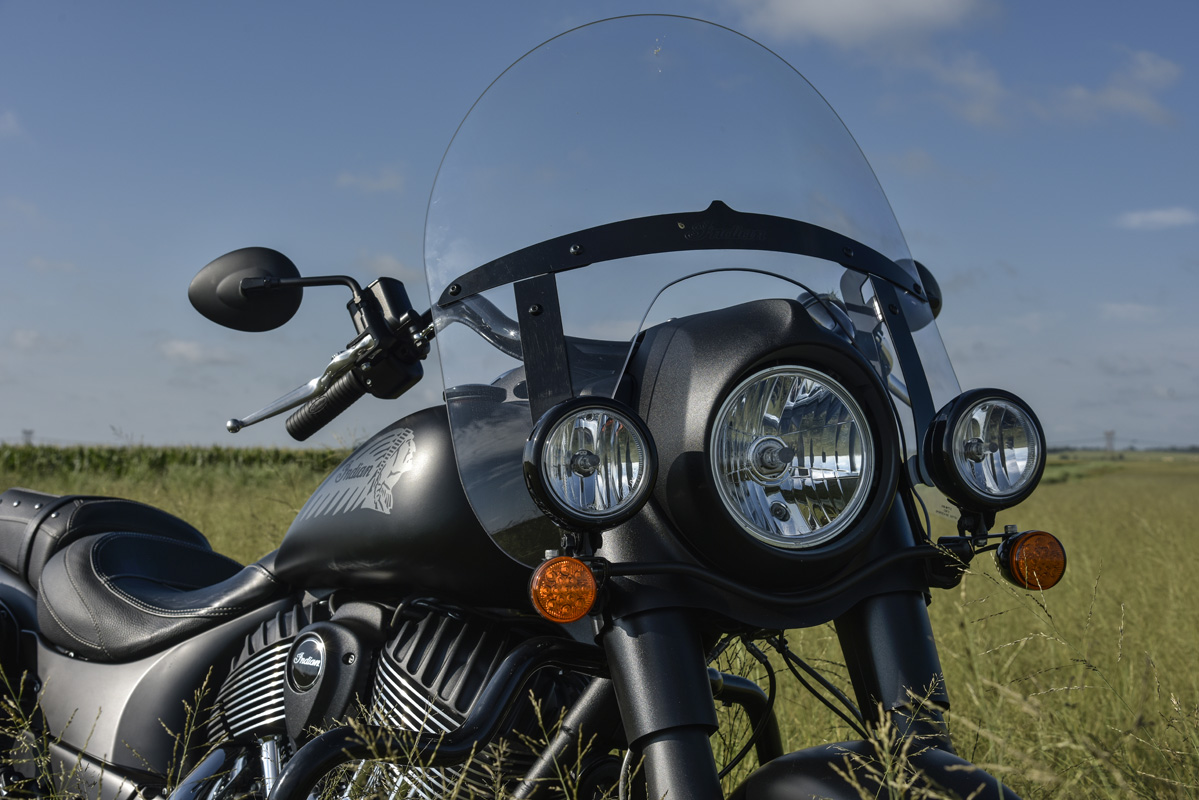
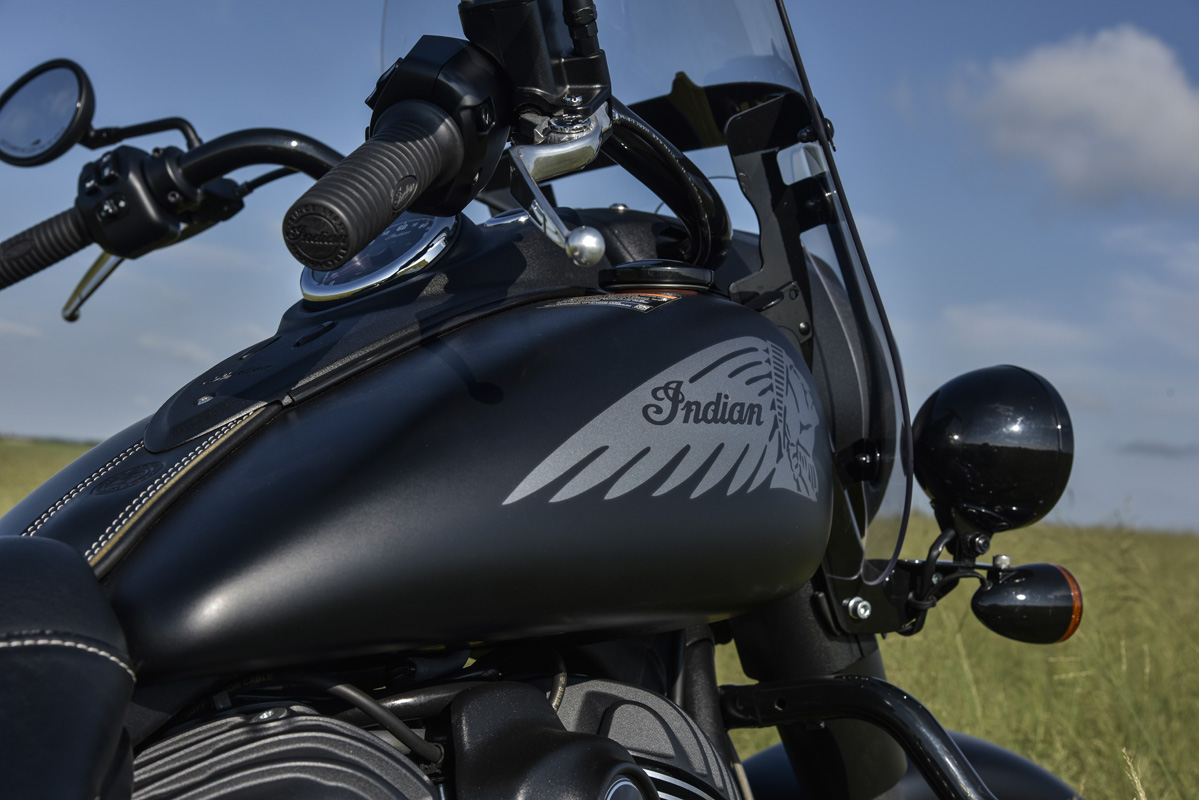
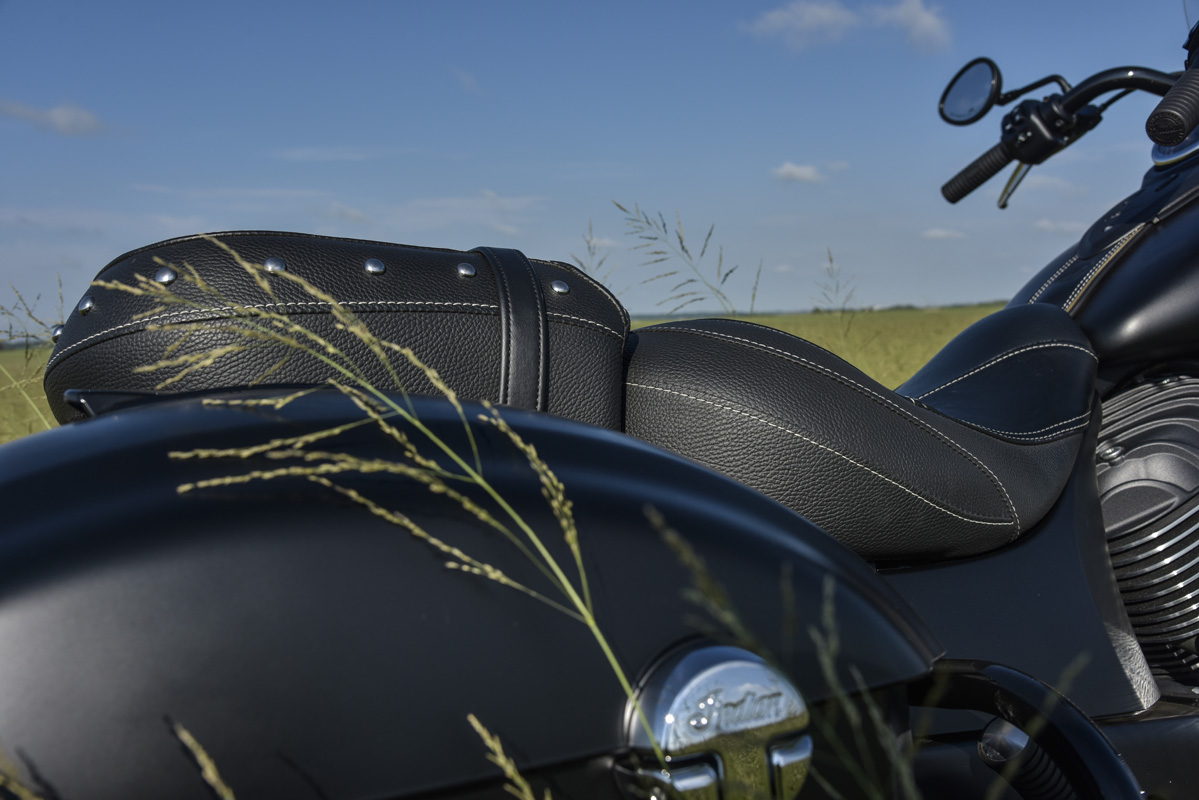
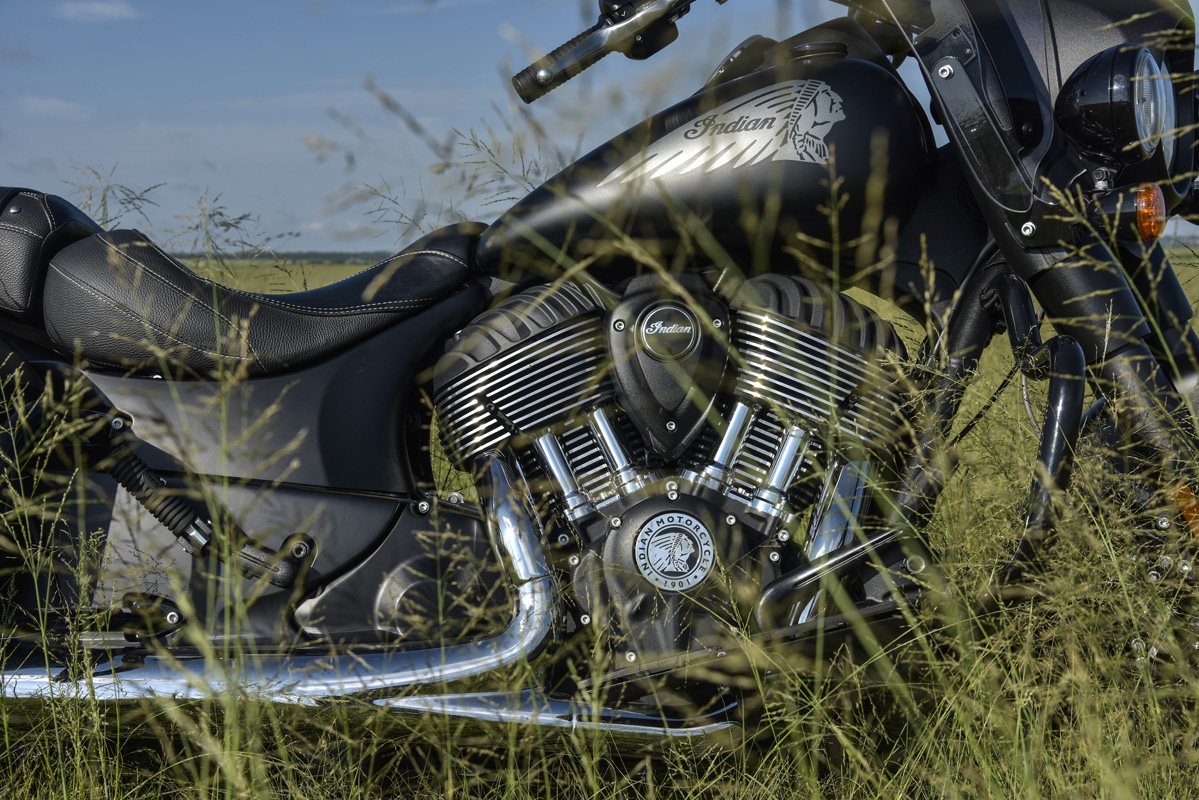
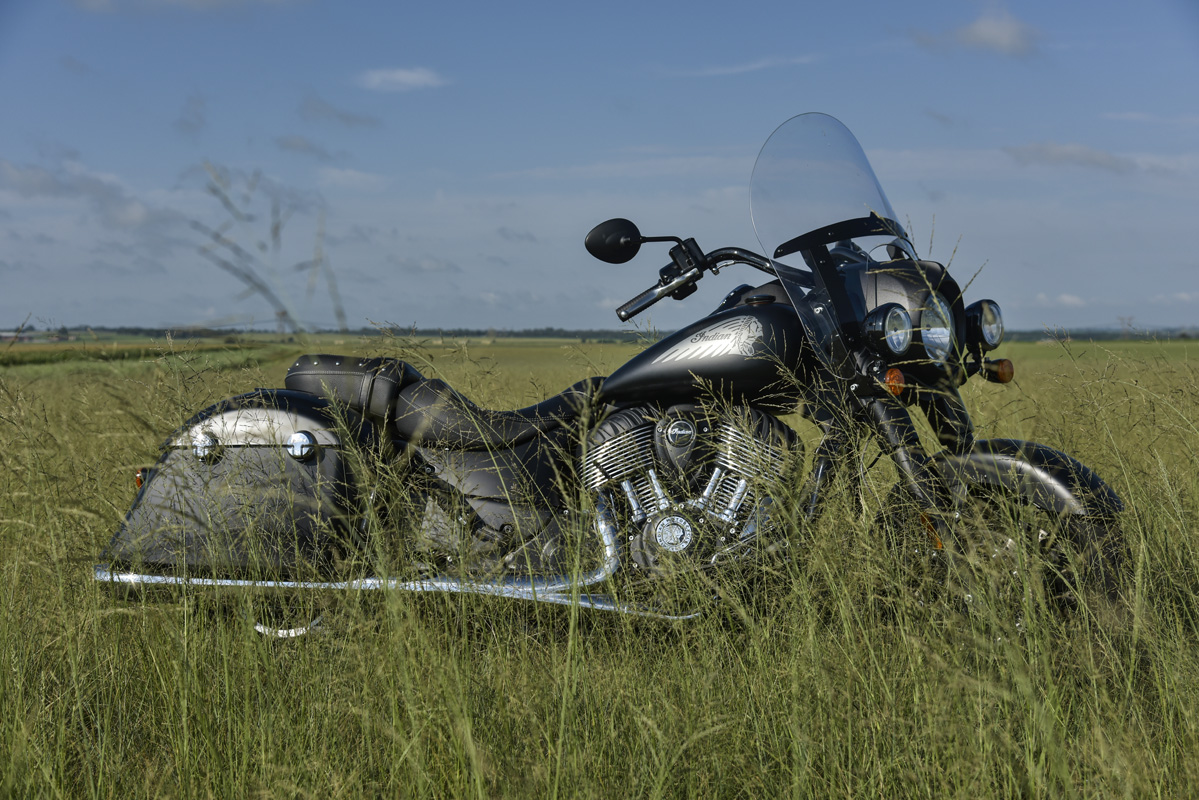
Photo credit: Indian Motorcycle Official
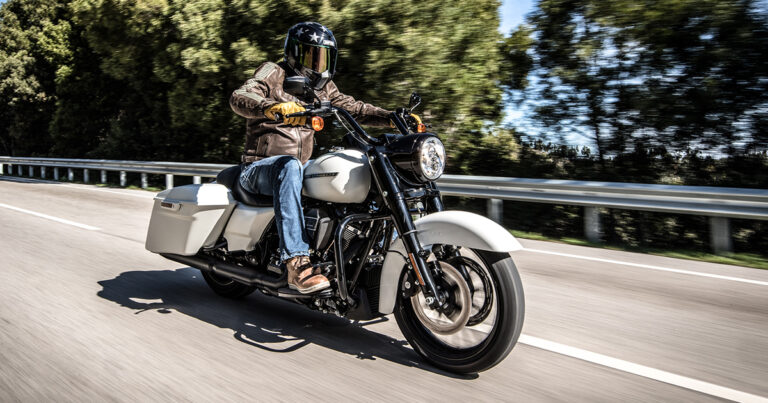
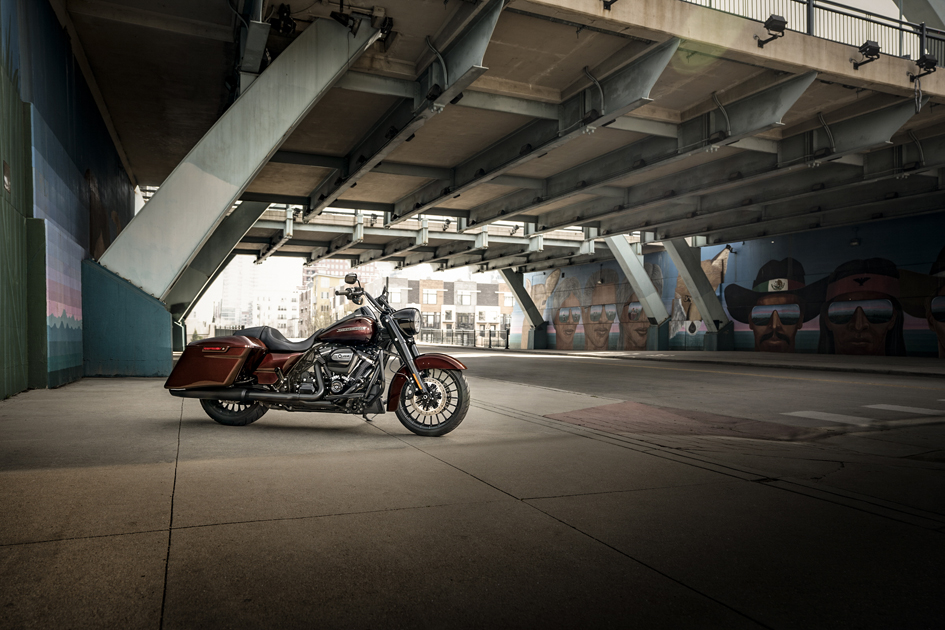
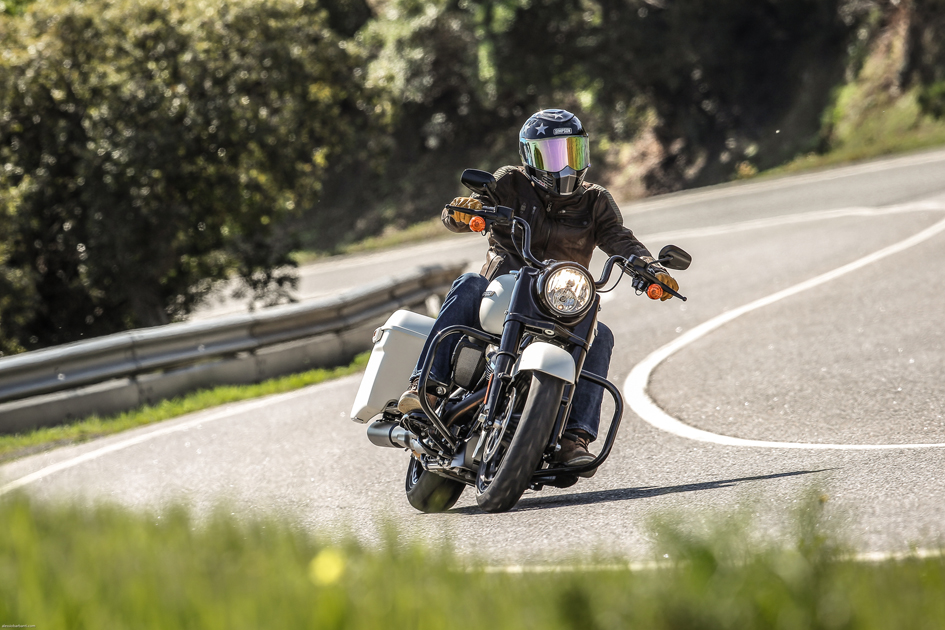
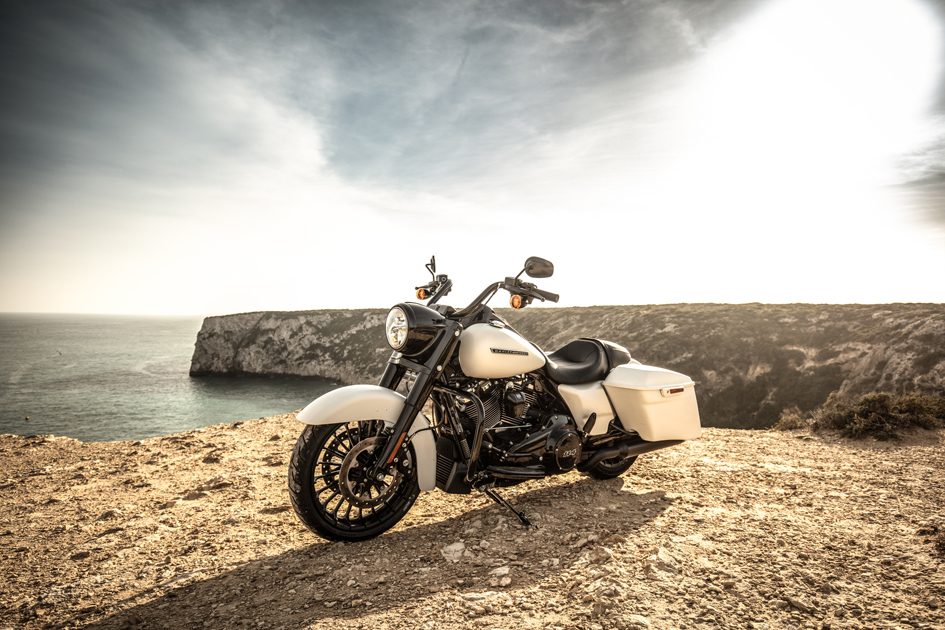
Therefore, the type of bike I chose is even more important. Do I follow the passion and the heart, or do I follow logic and sensibleness? I’m picturing in my mind many riding scenes. The meeting of friends for coffee in Parktown on a BMW R nineT or a Ducati Scrambler. The adventure through the Karoo on a GS Adventure or a KTM. The Sunday morning blast on a Panigale or an RR. The cruise on a Harley or an Indian to a rally. Even the commute to work, beating the traffic, is part of the mystique playing out in my mind.
Photo credit: Ducati Official
Additionally, we live in an age of huge information, big data and accessibility to facts, opinions, and reviews, all of which serves to reinforce my love affair with motorcycles. At this point, logic must kick in, narrow down criteria such as budget, finance options, usage parameters, etc. Picturing a see-saw, with one side being rational and the other emotional, where is the balancing point? And I can tell you this point changes by the minute, depending on the most recent review, commentary or discussion with friends.
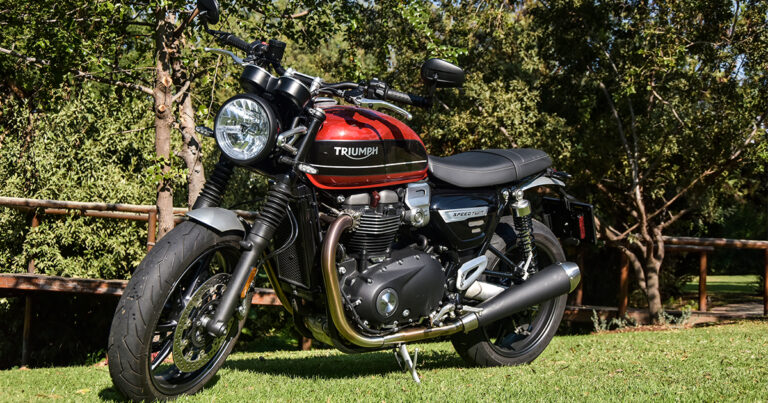
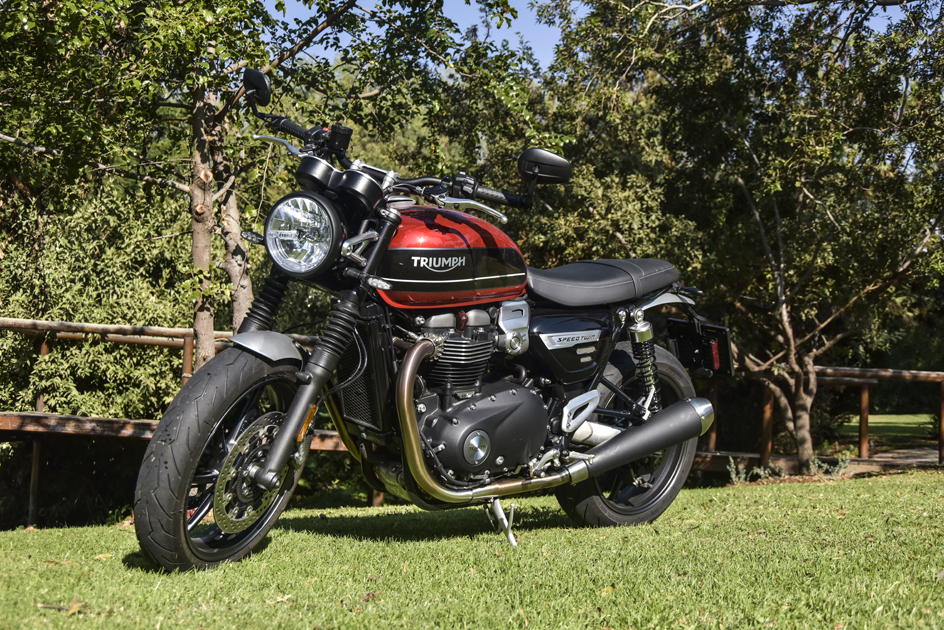
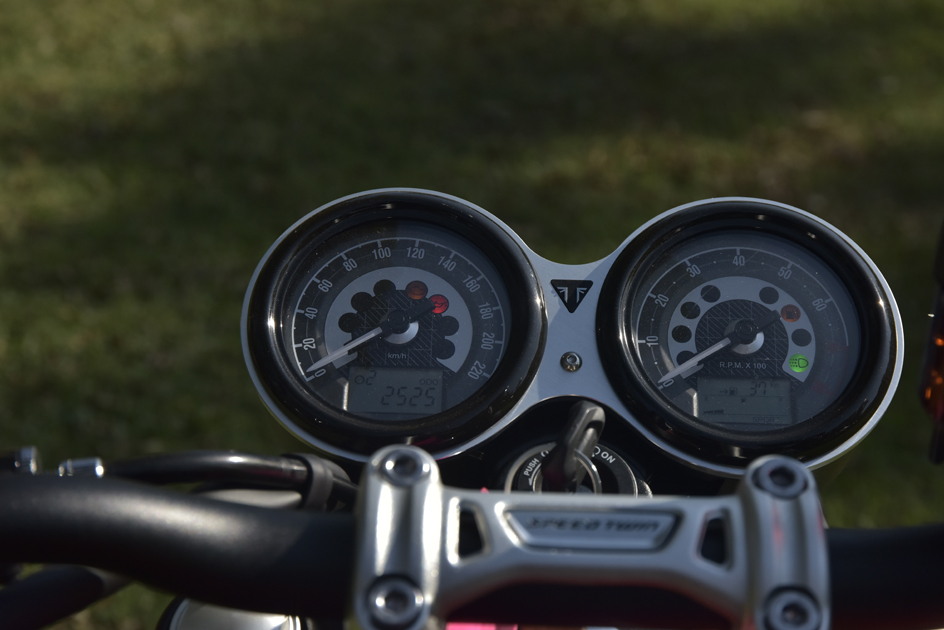
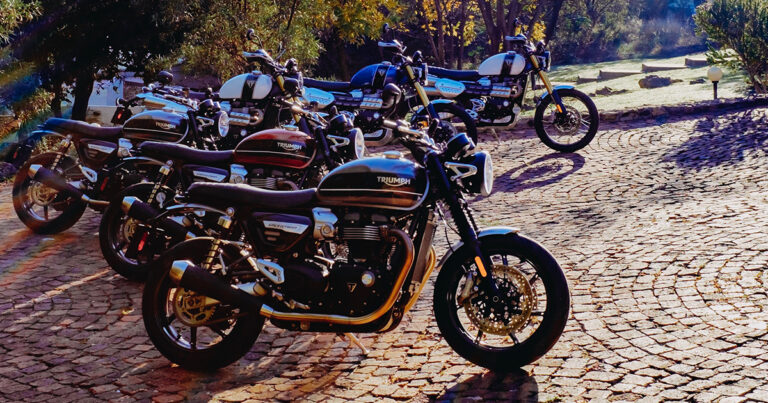
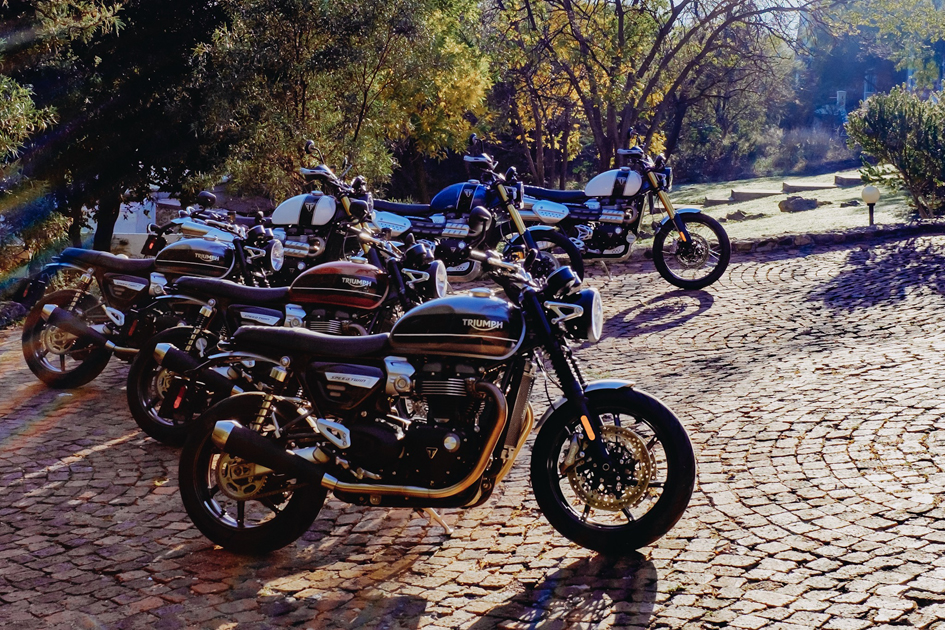
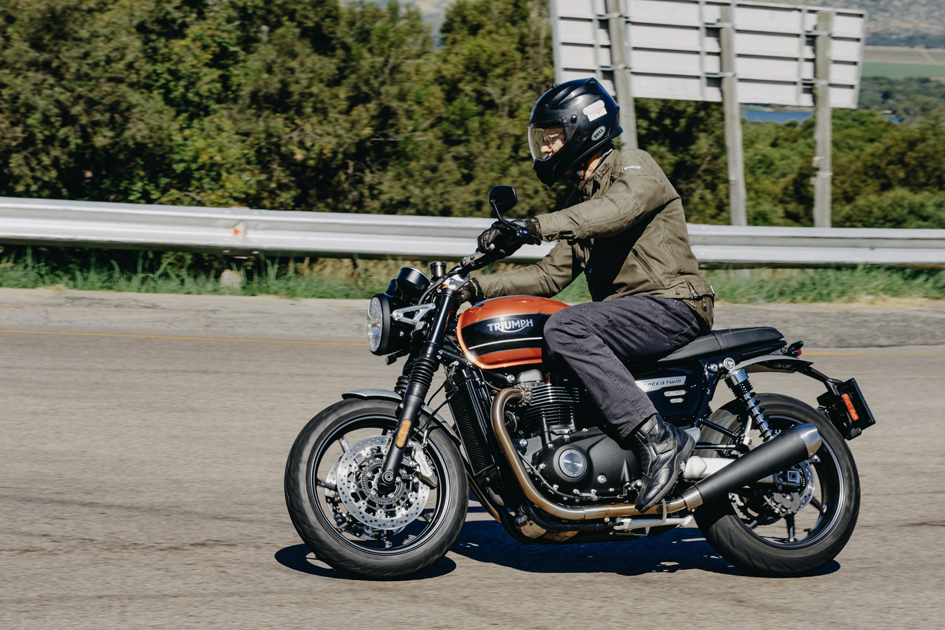
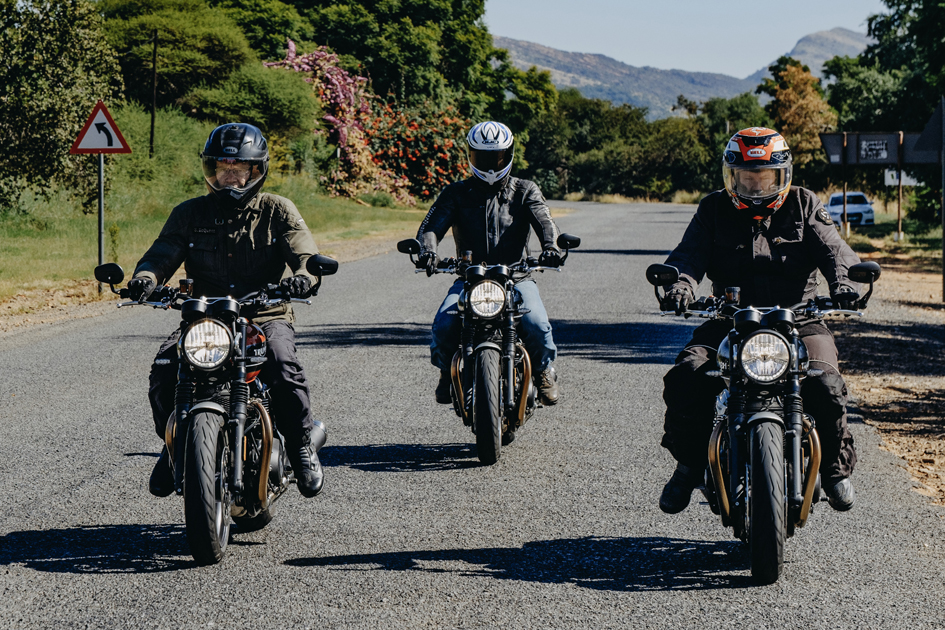
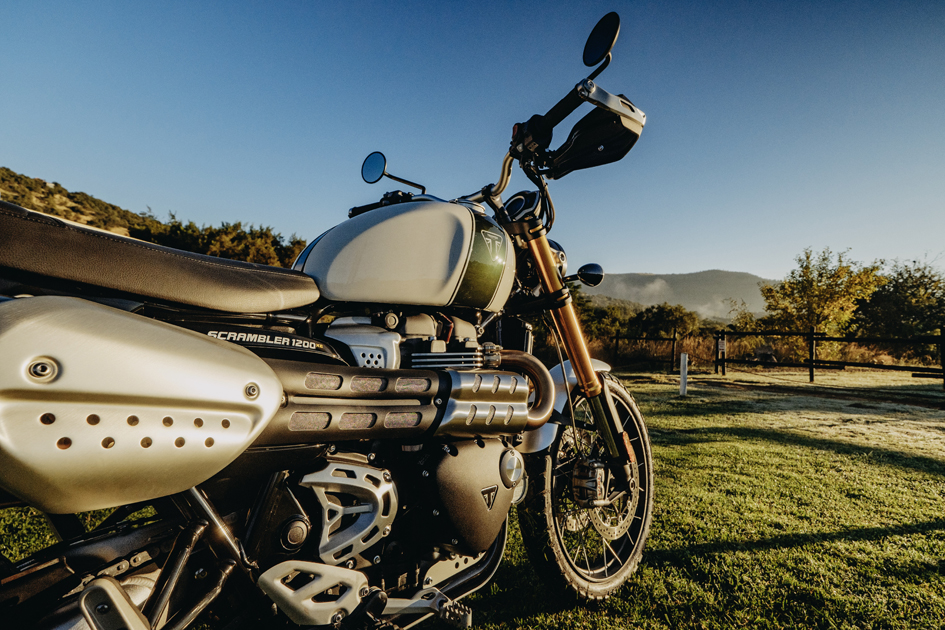
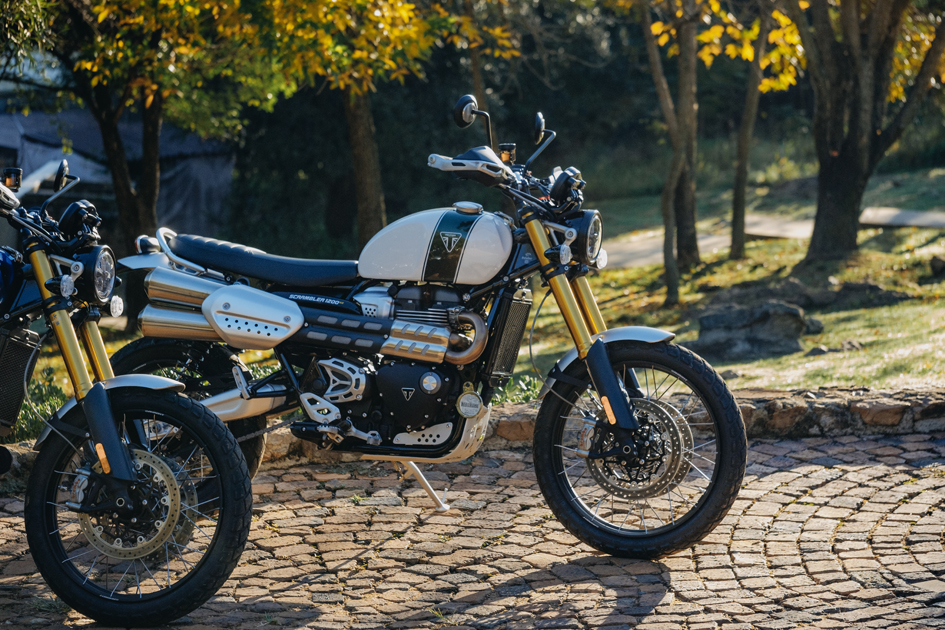
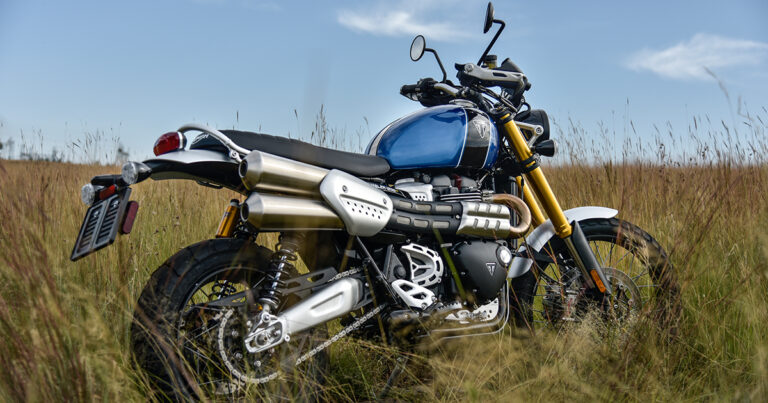
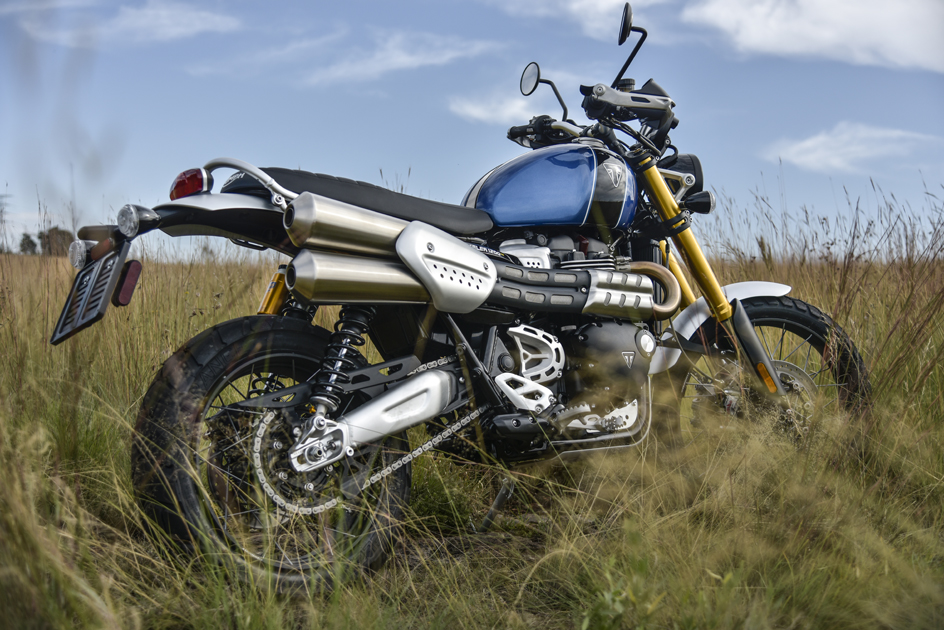
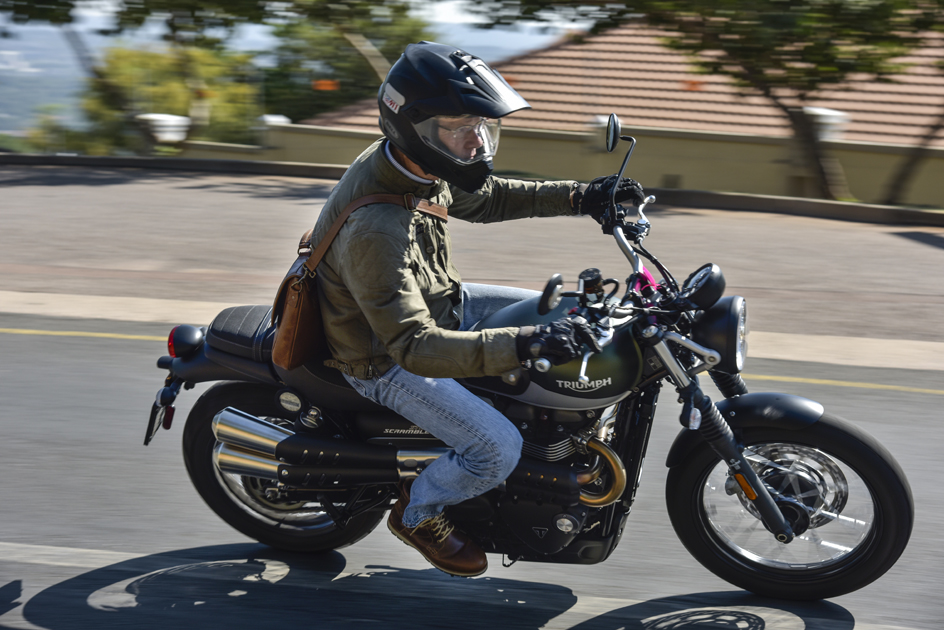
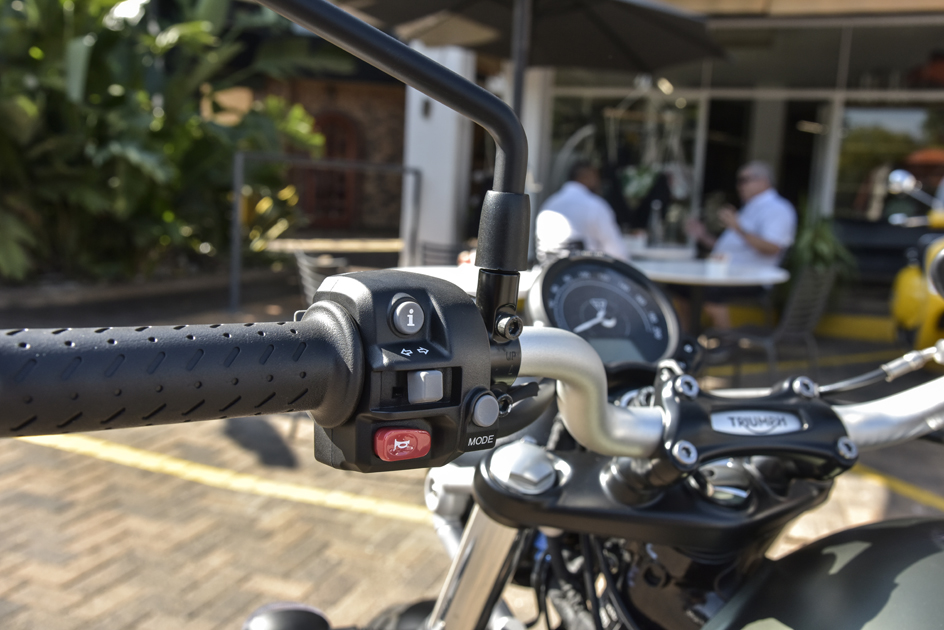
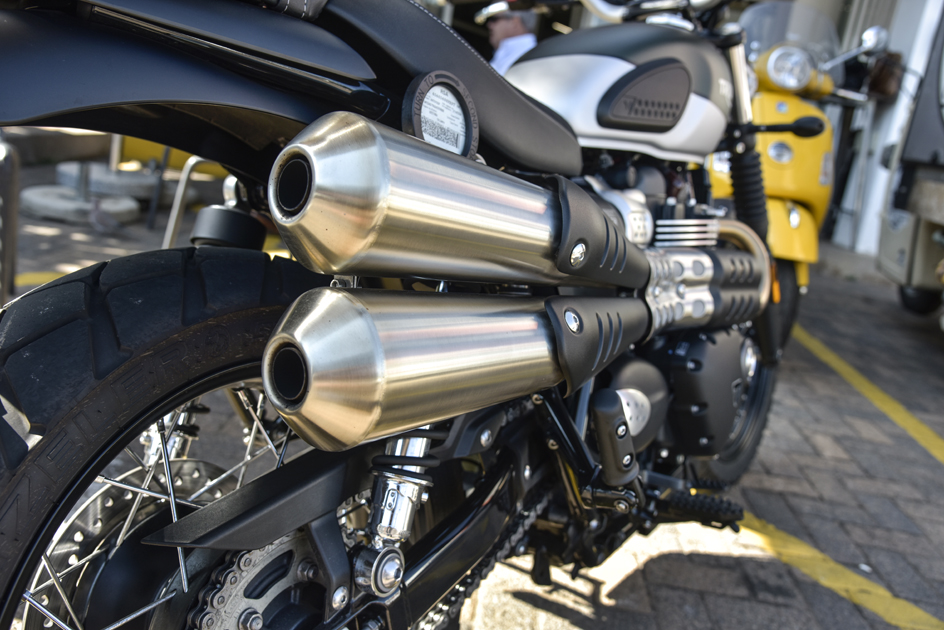
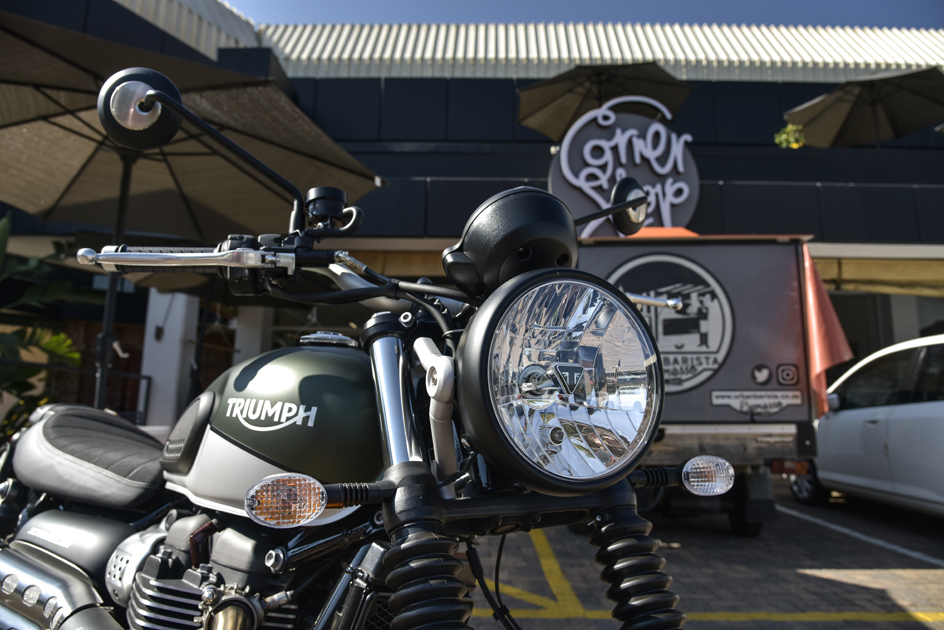
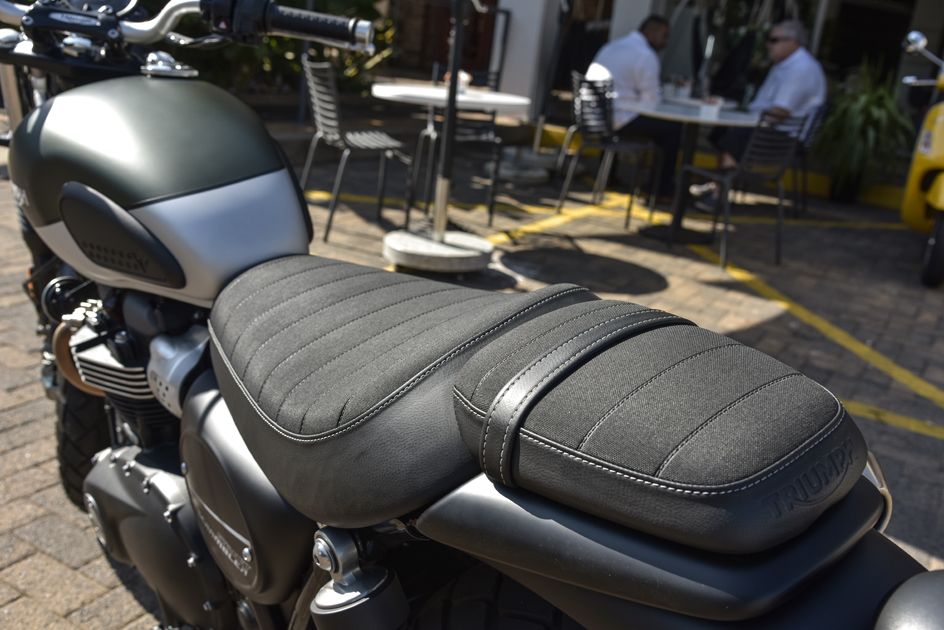
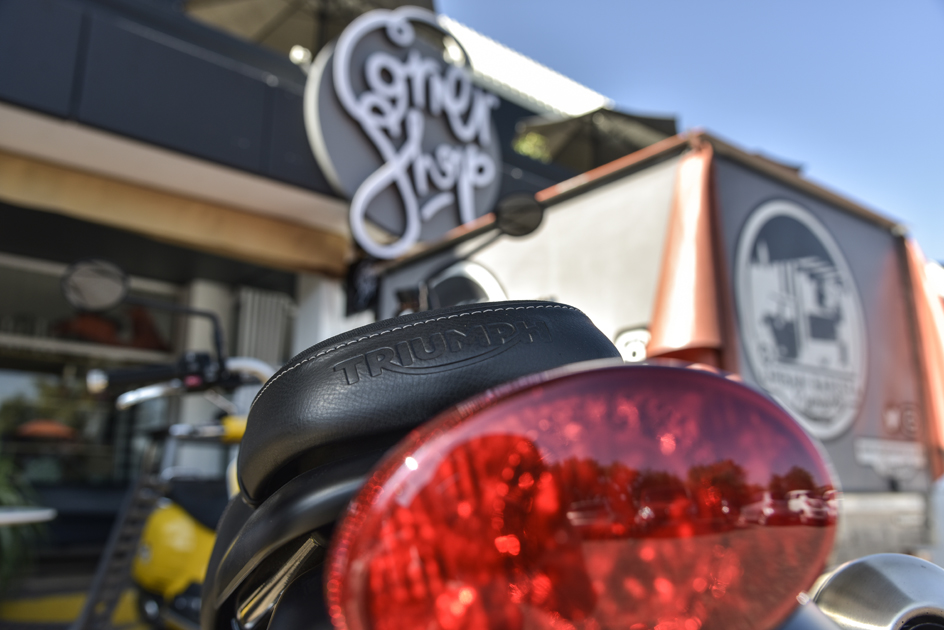
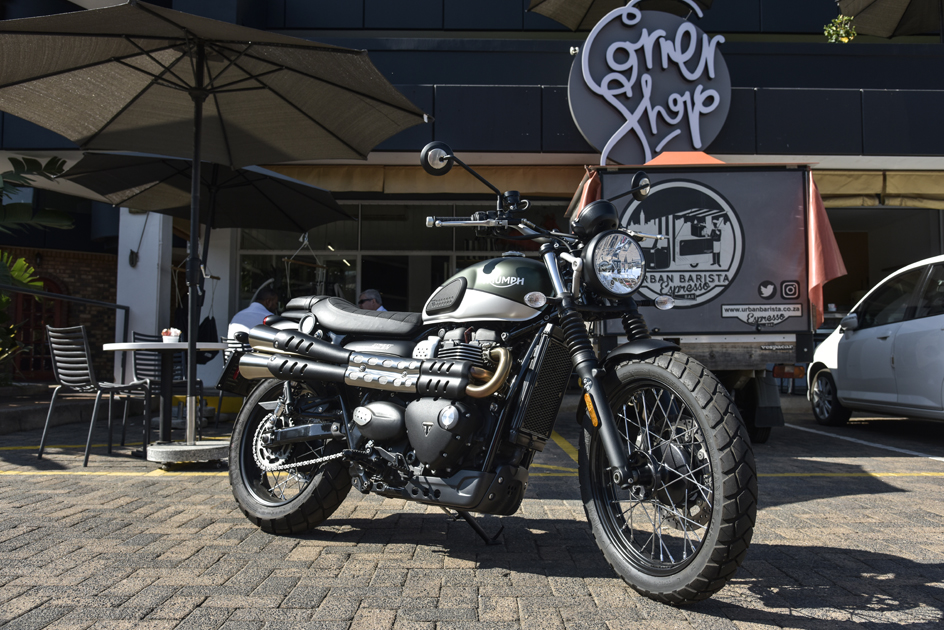
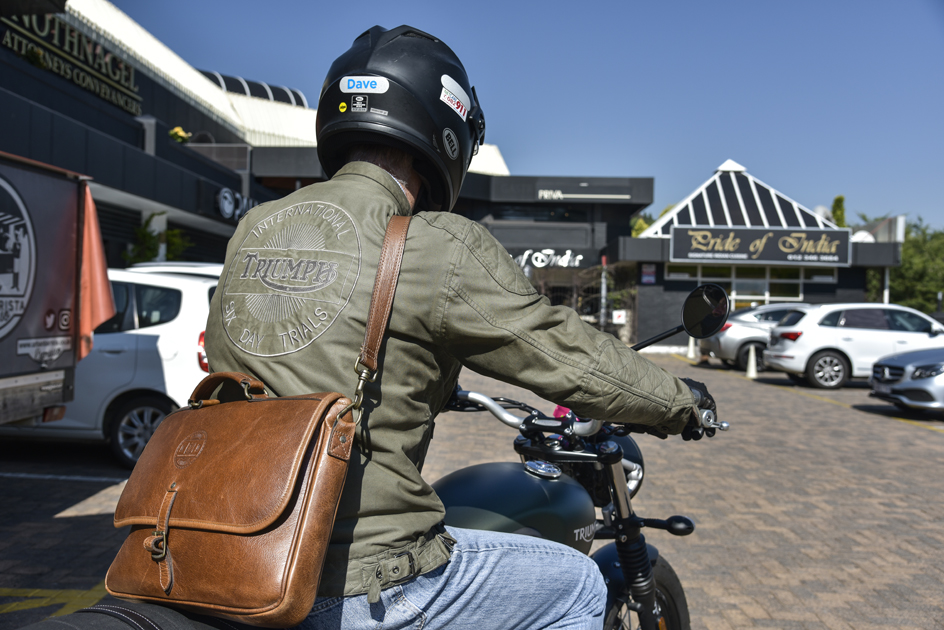
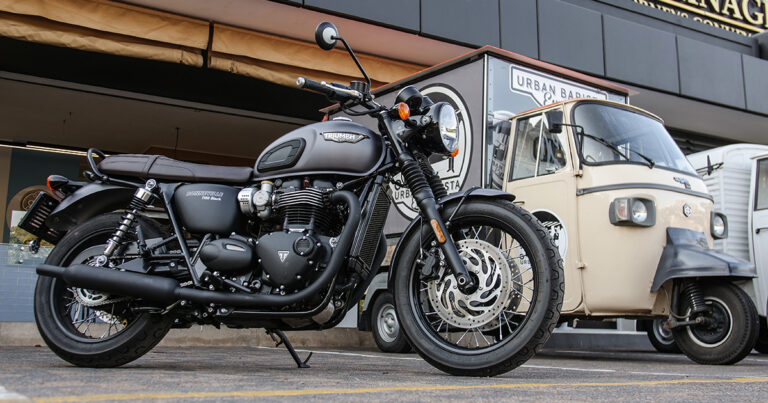
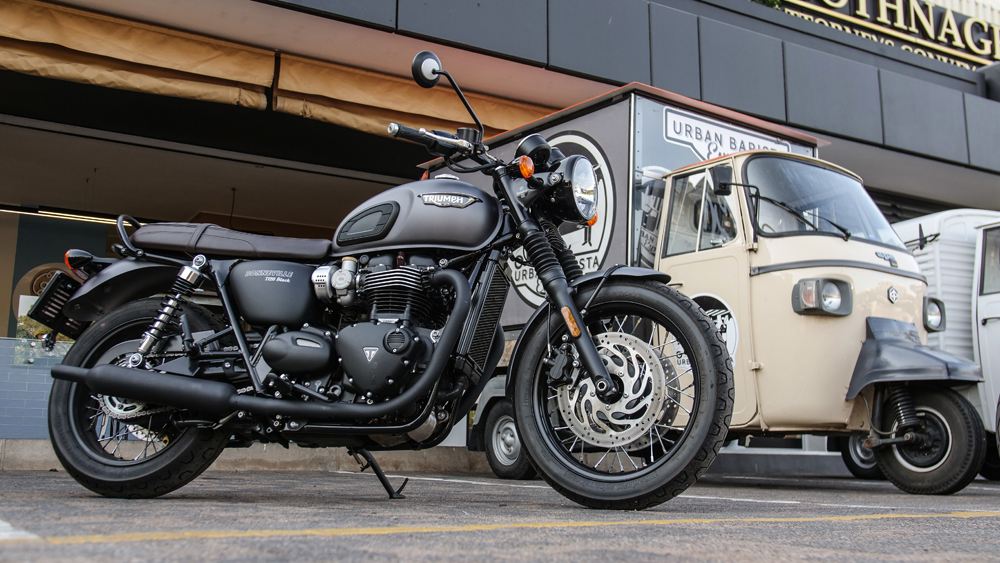
Photo credit: Triumph Official
How confusing. How exciting. How supportive the biking community has been.
There is so much to process, digest and chose from. In summary, my question is: Do I follow the romance of imagination or the sensibility of logic? Or perhaps, more eloquently, to just “be” do I chose the crazy or slightly less crazy?
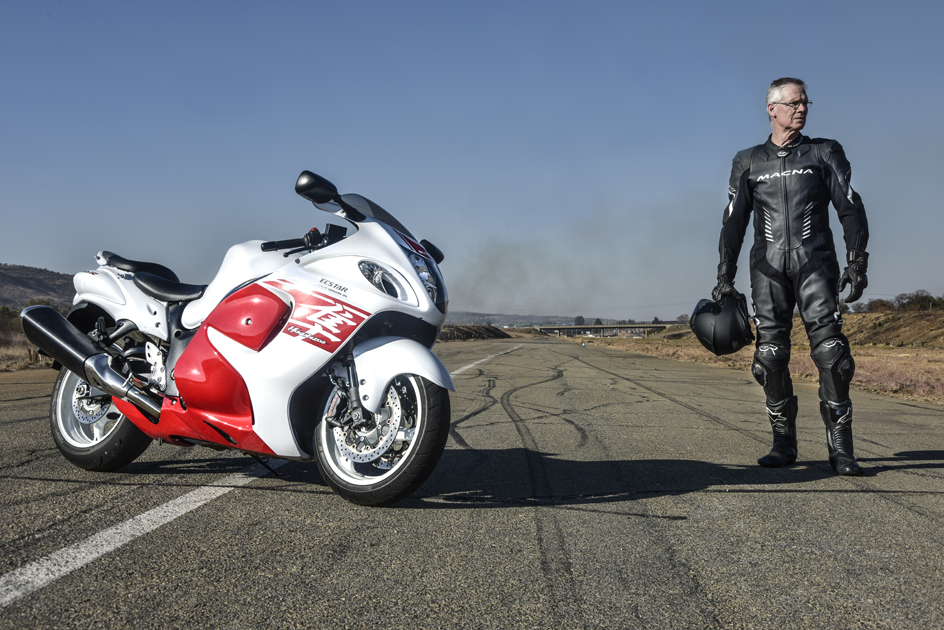
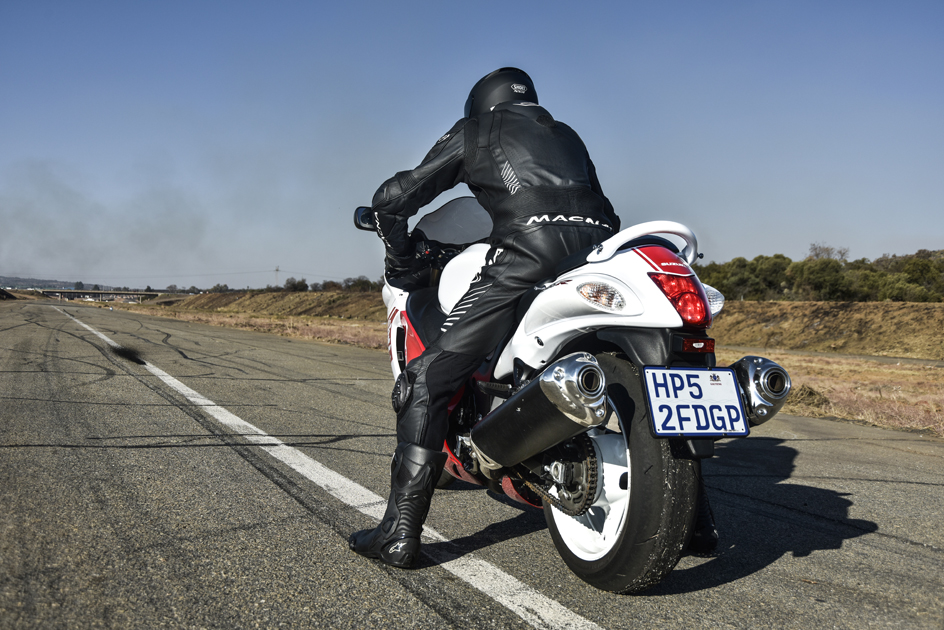
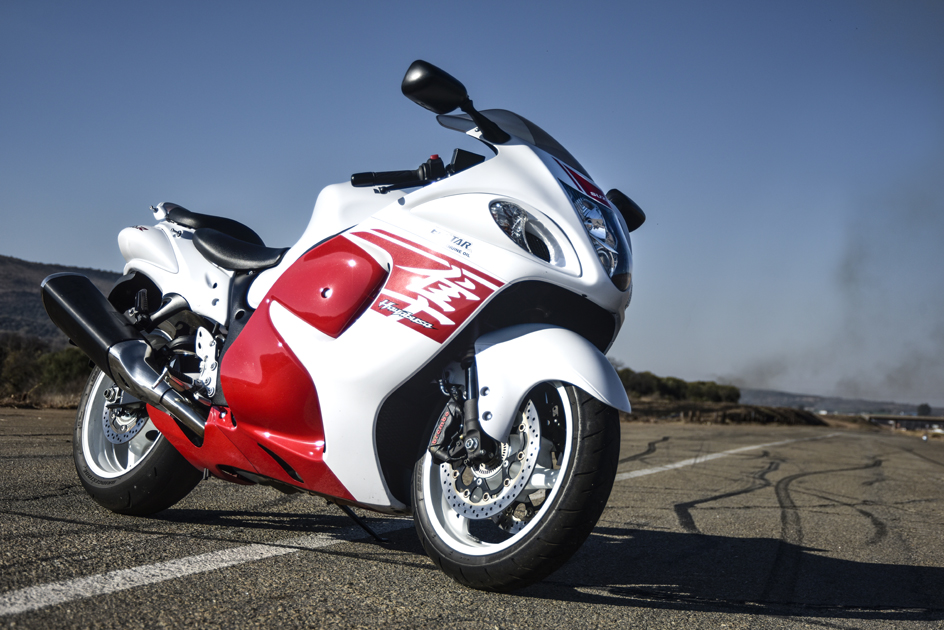
The Hayabusa, “Highway Abuser” or ‘Busa, as it has become fondly known in SA, the story started, incredibly, way back in 1999. In fairness, it was Kawasaki, with their wickedly fast ZX-11 Ninja who threw down the hyper bike gauntlet way back in 1990. The big Ninja wailed to a top speed of over 180 mph. Not to be outdone, it was Honda that was first to retaliate with their 1100 Super Blackbird, which pipped the ZX-11 by a couple of miles per hour. Suzuki waited to the end of the decade before delivering a sledgehammer blow to the opposition. Enter the Hayabusa GSX 1300 R. Their first statement was in the name. “Hayabusa” is the Japanese name for the Peregrine Falcon, which dives at speeds of up to 325 kph. It was not purely coincidental that the main prey of the Peregrine Falcon is Blackbirds! Did it deliver? Oh hell yes!
Photo credit: RideApart
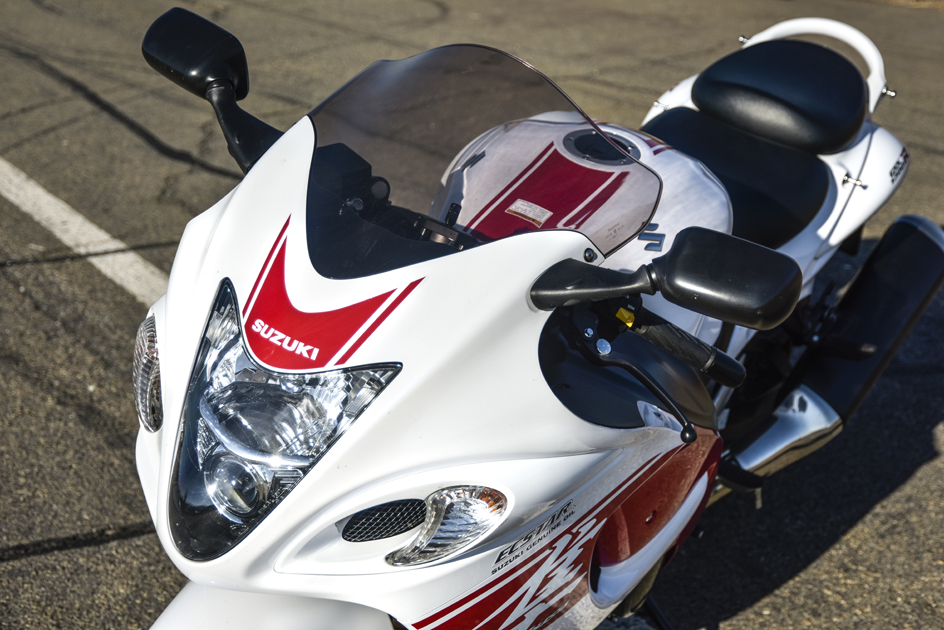
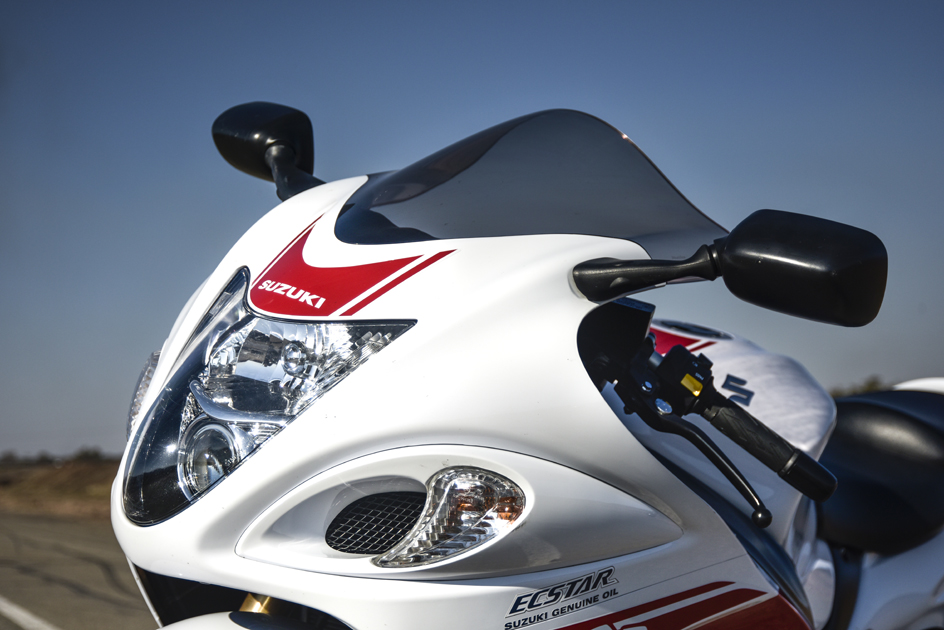
Suzuki endowed the ‘Busa with a twin cam, 4 – valve motor displacing 1299 cc’s. To a large extent designer, Koji Yoshirua allowed the wind tunnel to shape the big ‘Busa. Bulbous and bold it divided opinion on its appearance from the outset. The nose, with it’s stacked headlight and massive air intakes is pointy and made to penetrate the air as efficiently as possible. The air intakes bring a ram air effect into play with the airbox being pressurised to increase intake manifold pressure. This bumps horsepower the faster the bike goes. The full fairing belly pan extends to the back wheel to make the bike as slippery as possible. The end result is looks that are distinctive, and I suppose as always, beauty is in the eye of the beholder. This beholder has never been won over by the ‘Busa’s looks.
Photo credit: Bjorn Moreira / ZA Bikers
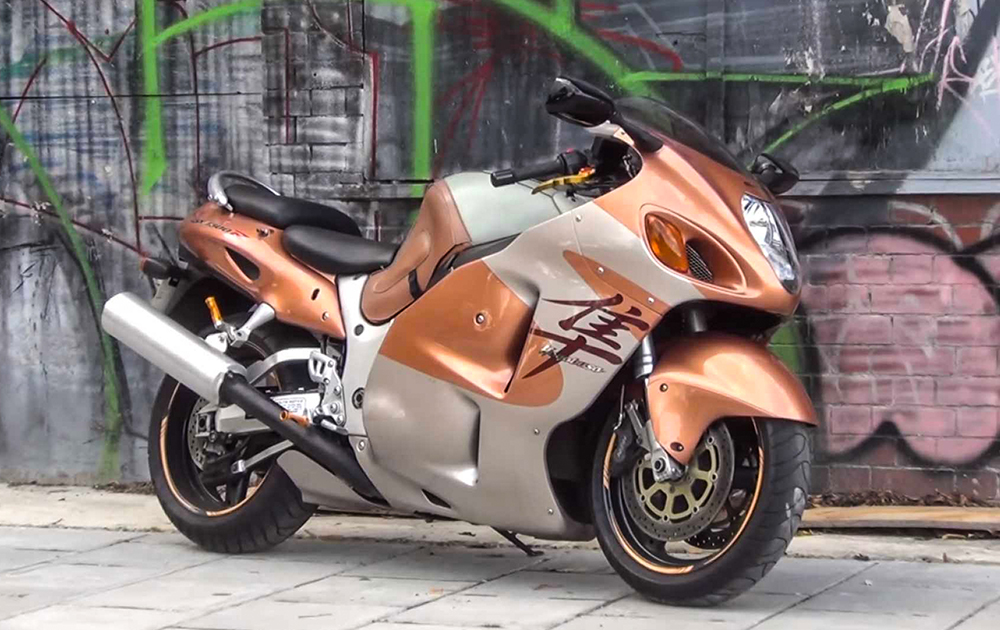
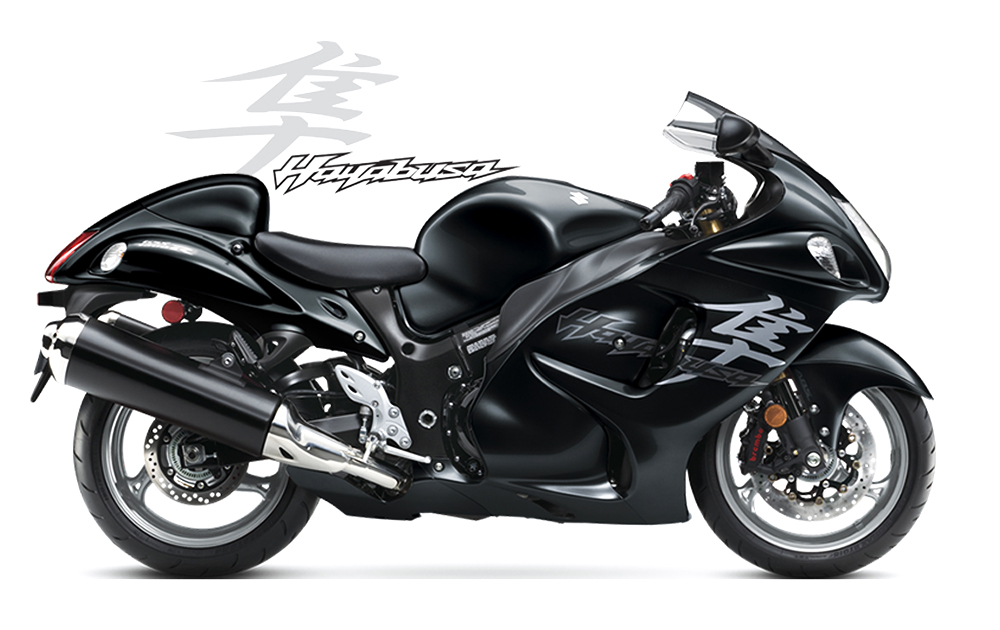
For me, it fell out of the ugly tree and hit every branch, and then some, on the way down. Early paint jobs and colour schemes didn’t help much either. Interestingly, where most bikes sell well after their introduction and taper off over time, it has been the other way round with the big Suzook. To me, that suggests that as the ‘Busa’s talents shone through, and people came to grips with the looks, it ‘s fan base has grown consistently. An American traffic law enforcement agency uses a Hayabusa as a high-speed pursuit vehicle and painted it pitch black. It looks stealthy and fantastic in a single colour, especially black.
Photo credit: Suzuki Official
The latest four into two exhaust system sports two of the largest silencers that you will find on a two-wheeled conveyance. Ditch them for a set of Yoshi RS 3’s or the like and you will probably lop off at least ten kilos of weight. You will also liberate an exhaust note. The stock setup is whisper quite.
Photo credit: Bjorn Moreira / ZA Bikers
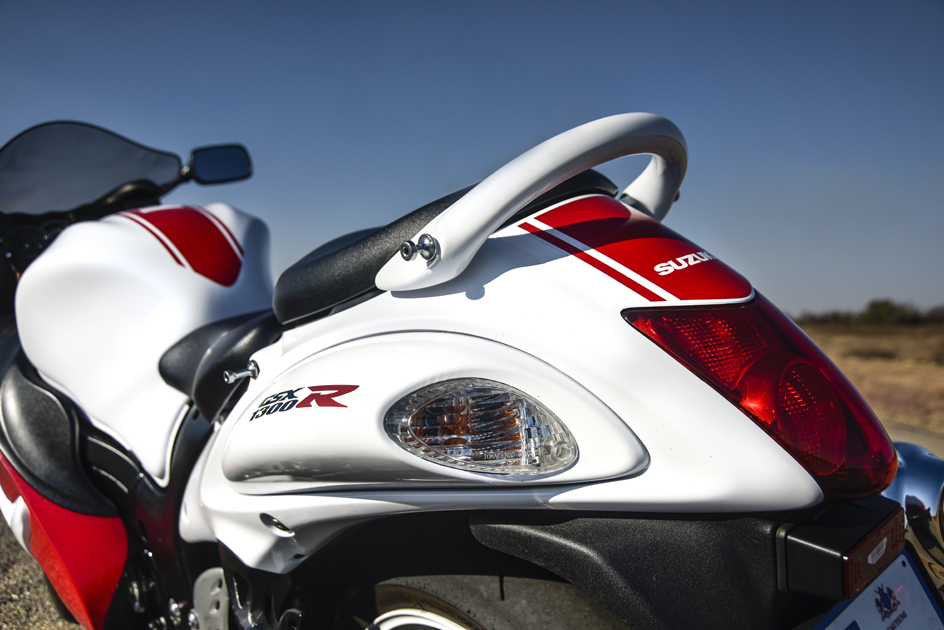
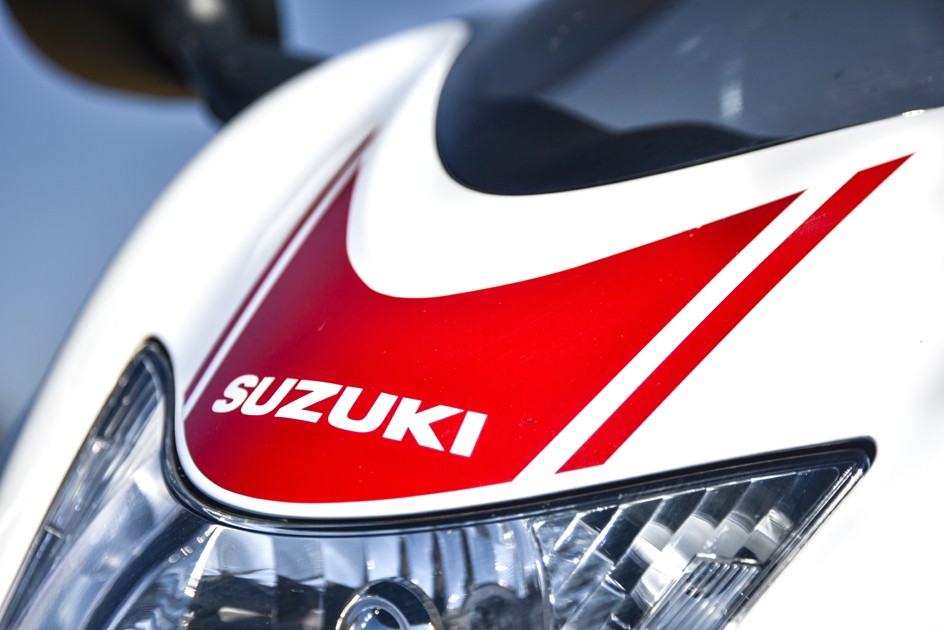
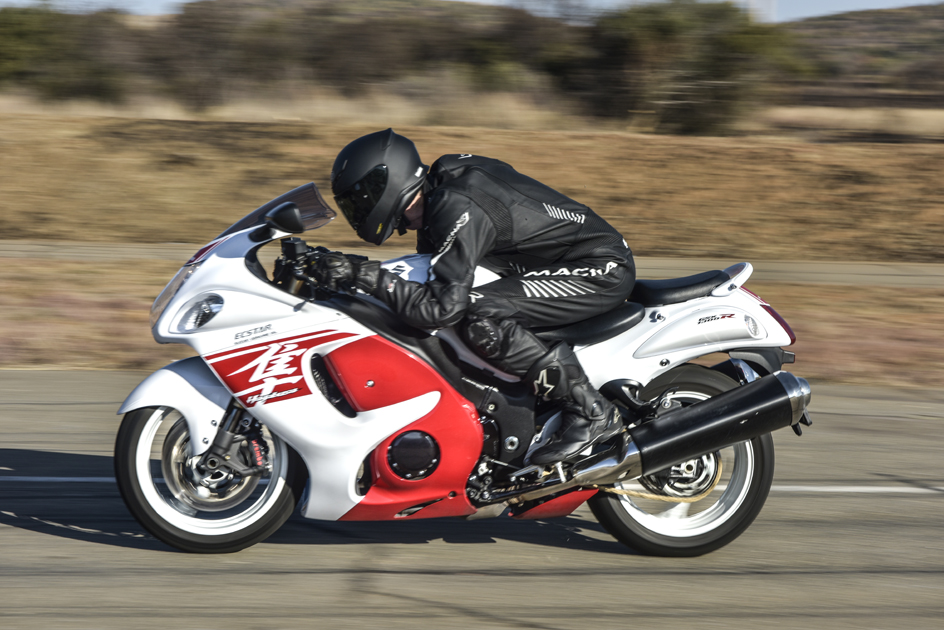
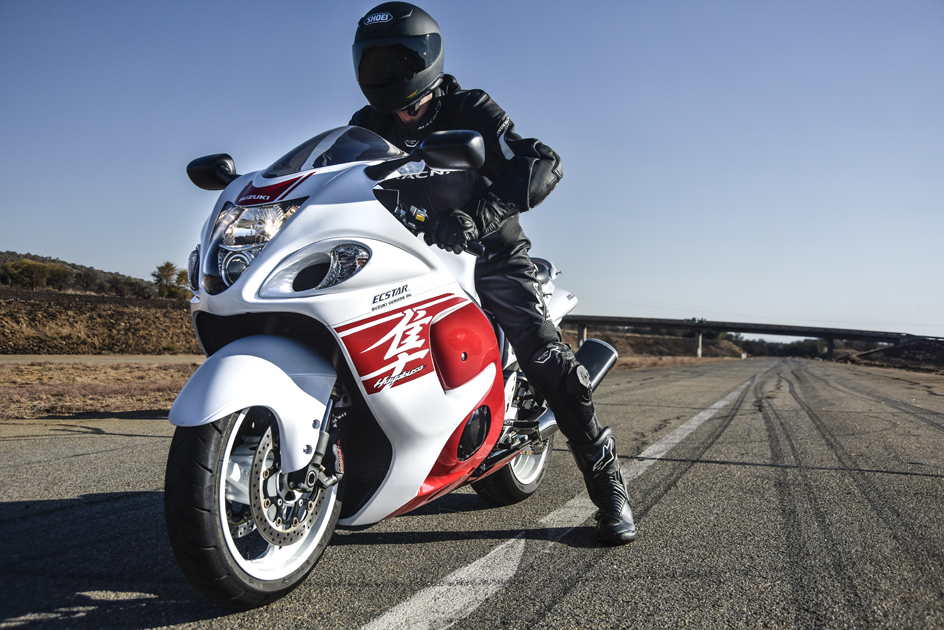
My test ‘Busa had the 2018 red and white paint job, which is certainly striking, especially with the white wheels too. After a steady diet of Adventure bikes of late, the ‘Busa’s riding position took some getting used to. Quite a stretch to the bars and high rear-set footpegs put you in a sportbike crouch, sitting in, rather than on the bike. The clip-on bars are also lowish, so the bike is hard work at low speed but this is categorically not what the ‘Busa is about.
Photo credit: Bjorn Moreira / ZA Bikers
Taking the on-ramp onto the N3 the Suz immediately struts its stuff. The bike turns in with little effort and holds a line perfectly. The 266 kg weight all but disappears and simply slows the steering to the point of making the bike feel super stable. Not even bumpy roads upset the composure, with the suspension coping admirably. The wheelbase is 60 mm longer than a GSXR-1000. This enhances high-speed stability yet does not make the somewhat lardy ‘Busa feel cumbersome or ungainly.
Photo credit: Bjorn Moreira / ZA Bikers
I absolutely love the fact that the Hayabusa churns out 199.7 horsepower and 155 Nm of torque, yet has not been emasculated with a bouquet of electronics that would make an astronaut’s eyes water. Three engine modes and ABS. That’s it! The progressive power delivery, ferocious as it is, makes the bike a doddle to ride. Having said that, it is only a bike for experienced riders of large and powerful motorcycles. A proper man’s bike!. Just before the turnoff to Suzuki SA, there is a sign to a clinic that goes by the name of “Busamed”. I had a good chuckle at the name. Treat the Hayabusa without proper respect and you could just end up there! The aforementioned engine modes are A, B and C, where C makes you think that you have water in your fuel. Clearly for some poo for brains fellow who needs to be told to exercise caution on a 200 horsepower motorcycle in the wet. B mode is for casual touring and pottering around town. A mode. Now we are talking. This is the one that most ‘Busa’s will stay in while their riders sing “nearer my God to Thee” in their helmets.
Photo credit: Bjorn Moreira / ZA Bikers
So how fast is a Hayabusa? Fact is, since it’s introduction 20 years ago, the Hayabusa has established itself at the absolute pinnacle of fast! The bike sports a quarter-mile time of under 10 seconds [9.97] at an astonishing 233 kilometres per hour! The ‘Busa was launched before the European legislators coerced the manufacturers to limit top speeds to 300 Kph. It is officially the fastest production motorcycle of the 20th century. Various publications ran the Hayabusa to top ends between 303 and 312 after it’s launch in 1999. Since then, the ‘Busa has picked up some weight but that is more than compensated for by the displacement growing to 1340cc and power and torque increasing by around 20%. The motorsports titanium valves, shot-peened conrods, and a slipper clutch. A typical Suzuki, it is also mega strong.
Photo credit: Bjorn Moreira / ZA Bikers
‘Busa’s are a firm favourite with the hot rod crowd. They have been turbo’d, supercharged and injected with nitrous oxide to generate insane power and speed. There are street registered Hayabusa’s in the USA making over 700 hp and capable of top speeds in the region of 270 mph! [437 kph]. That, sports lovers is Flippen ridiculously fast. Bill Warner, way back in 2011, set a World Land Speed Record with a Turbo ‘Busa of 311.945 mph [502.027 kph] Let’s face it, love it or hate it, no none can question the Suzuki Hyabusa’s performance credentials.
Photo credit: Bjorn Moreira / ZA Bikers
Yeah, that’s all good and well, but this is 2019 we are talking about, where almost every 1000 or 1100cc sportbike boasts 200 hp. So is the ‘Busa’s speed still awe-inspiring? You betcha! Get this. The Hayabusa revs to 11000 rpm. At a lazy 5500 rpm, the Suzuki is running 160 kph! The weight and size of the Hayabusa makes running these speeds a kind of a non-event, and herein lies the potential problem. The bike is blindingly, blisteringly fast, yet makes it all sooo easy. Lightweight sportbikes with huge power are twitchy and flighty, reacting so fast to rider input that it can be unnerving. Not so the ‘Busa. Whack open the throttle and it doesn’t try to rear up on its back wheel and smack you between the eyes.
Photo credit: Bjorn Moreira / ZA Bikers
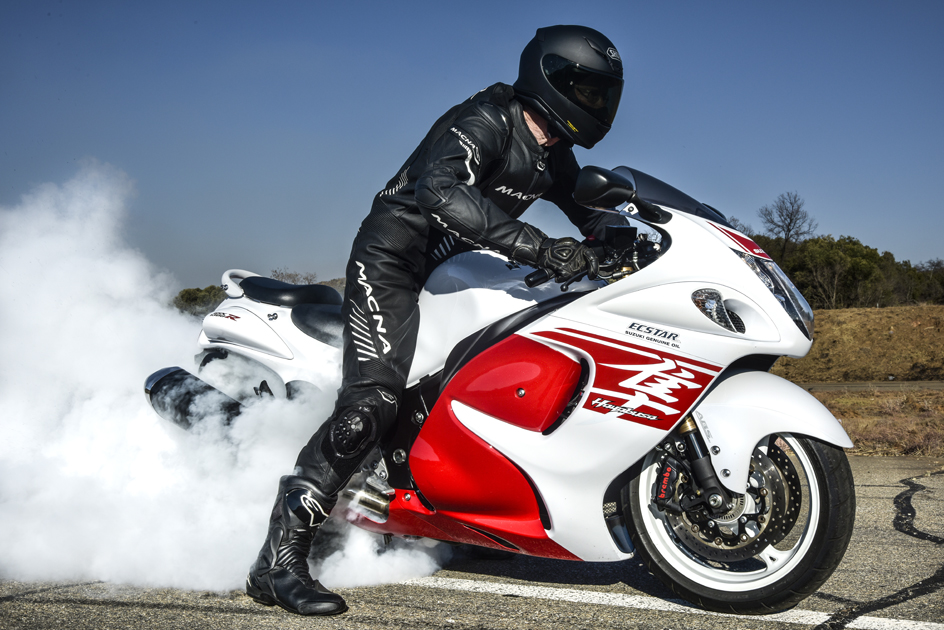
The front-wheel weight bias and long-wheelbase just allows the back wheel to hook up and launch you forward. Even coming off the line hard spins the back wheel for metres yet you can still keep the bike running reasonably straight as the back tyre scrabbles for traction. Easy peasy. Despite the huge torque the bike still really starts to haul with insane gusto as the revs rise and every one of those 199.7 horses makes their presence felt. The Hayabusa is not a one-trick pony. It handles with a deftness and stability that belies its age. Our resident photographer, Bjorn, sets himself really high standards, as can be seen by the superb quality of his work throughout this site. He had in mind some very specific shots which he felt epitomised the arse-kicking attitude of the Hayabusa. On our way to the location for the photoshoot, we needed to negotiate a few highway roundabouts. With the confidence that full leathers bring, I found it easy to drag the knee sliders with the big ‘Busa inspiring total confidence even when pitched on its ear. The ground clearance is excellent, with nothing touching down even at serious lean angles.
Photo credit: Bjorn Moreira / ZA Bikers
Comfort at speed is good. The windblast keeps you neutral without too much weight on your wrists or helmet, whilst the screen does enough to allow really high-speed cruising. The seat for both rider and passenger is of a consistency that is super comfortable for long days in the saddle. With this sort of power and torque, the bike doesn’t even know when you have a passenger aboard. Bungie hooks fore and aft of the seat are a practical touch. The ‘Busa has a relaxed demeanour with the motor hardly working even at very high speeds. The engine has a gear-driven counterbalancer which keeps things smooth at all revs. Clutch and gearbox are beyond reproach. I spent almost an hour in rush hour traffic without the bike running hot or complaining in any way. It is, and I know this sounds like a cliche’, almost impossible to ride the ‘Busa slowly on the open road. 160 honestly feels like 120 [I swear Officer!] with the bike so utterly relaxed and stable at speed. The tank holds 21 litres, so if you are able to show some restraint it will give you an adequate fuel range. The fuel gauge is a trifle weird. The needle doesn’t move for a hundred kays then drops faster than a slut’s panties. The reserve light comes on with a full five litres still in the tank. Running a tank of fuel through the ‘Busa returned 16.9 k’s per litre. Please understand that this included some seriously spirited riding, so cruising at a constant 130/140 would probably improve the consumption significantly. 300 plus kilometres on a tank is very do-able.
Photo credit: Bjorn Moreira / ZA Bikers
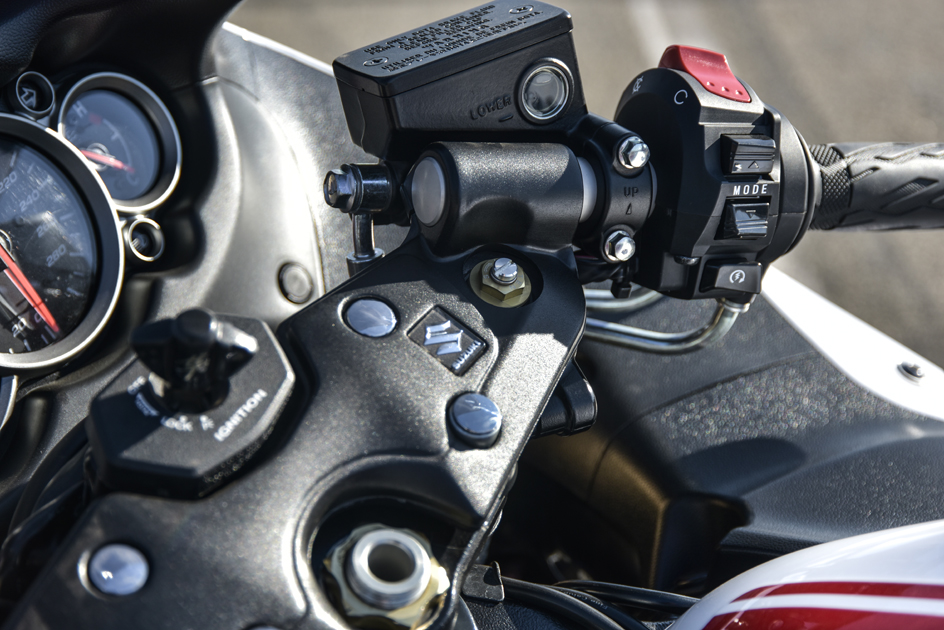
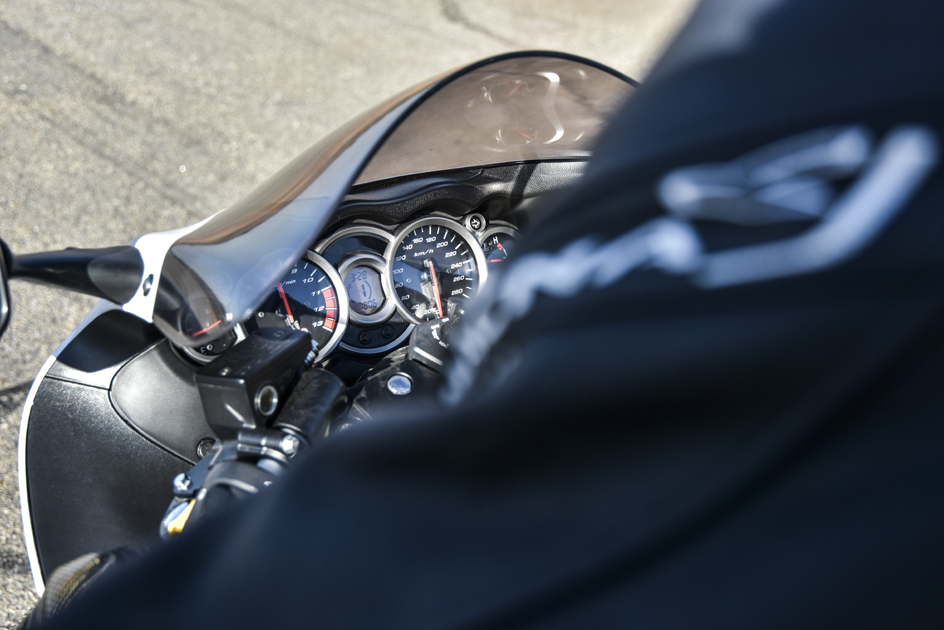
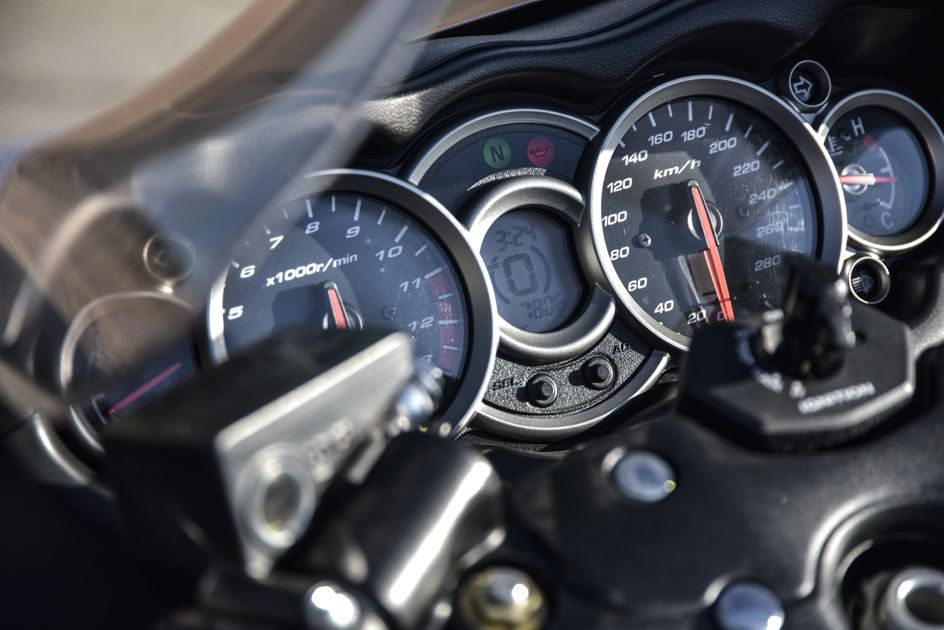
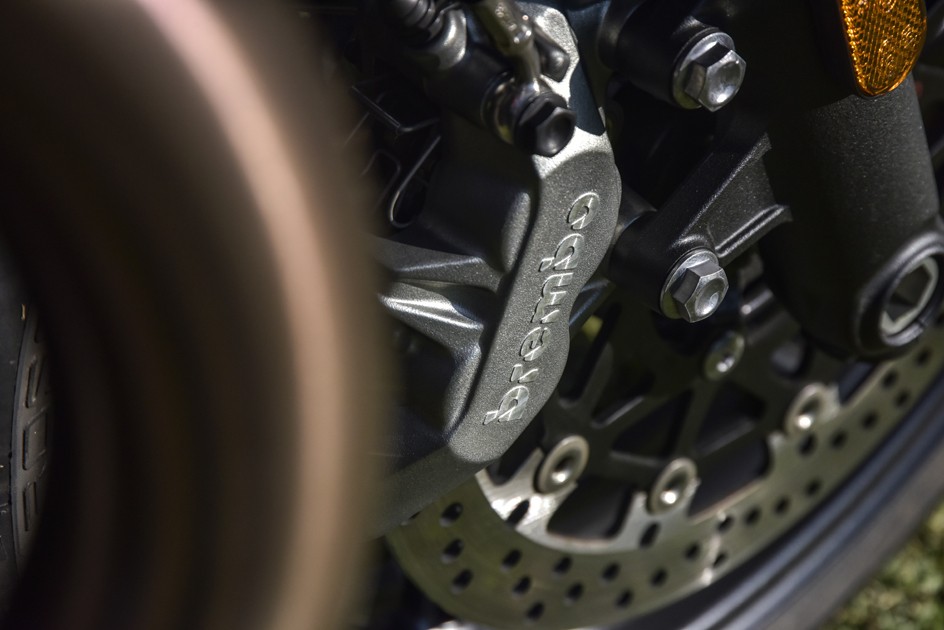
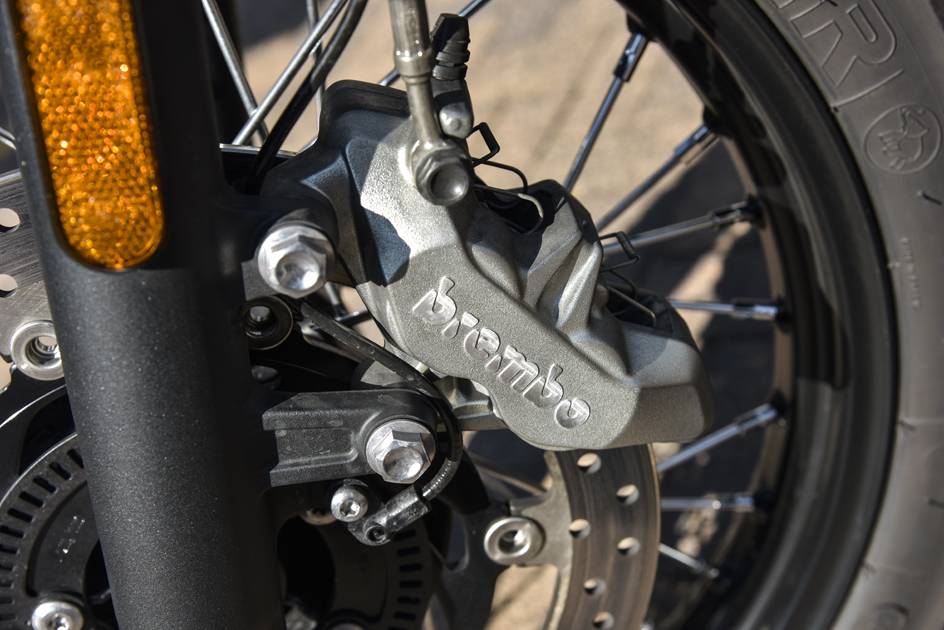
Speaking of gauges, the Hayabusa clocks are old school and to my mind super functional and cool. On the left is a circular fuel gauge with a needle indicating the fuel level. Left of a central digital display is an analogue tachometer and to the right a speedo. The digital display shows you what gear you are in, your engine mode, the time, and trip and odometer displays. A temperature gauge balances things off on the right. I am so tired of everyone waffling on about TFT displays. Give me the ‘Busa’s setup any day. Functional, easy to read and simple. Why, for pity sake would you want to change that? This is one of the reasons why Suzuki can sell the Hayabusa for just under R207000. We don’t have to pay for a toilet full of electronic gimmickry that doesn’t add a rat’s patootie to the riding experience. Brakes have been upgraded from Tokico to Brembo callipers, which are now radially mounted and work just a treat. Powerful and with excellent feel, they inspire confidence no matter what speed they are required to slow the bike from.
Photo credit: Bjorn Moreira / ZA Bikers
Typical of a bike that has “evolved” over time, the Hayabusa really doesn’t have any vices considering what it is. Thrilling to ride, with a totally unburstable feel, it is a deliciously old school package that simply works. A prominent motorcycle journalist summed it up rather well when he said: “the Hayabusa is all about speed, but speed is not what it is all about”. A rolling piece of thrilling motorcycle performance history, there will probably never be another motorcycle like it. A reminder that we really haven’t gained much with the relentless march of technology. A well ridden Hayabusa will give almost anything a serious go on real-world roads. Be that two-wheeled or four. It deserves all the accolades ever showered on it. And then some.
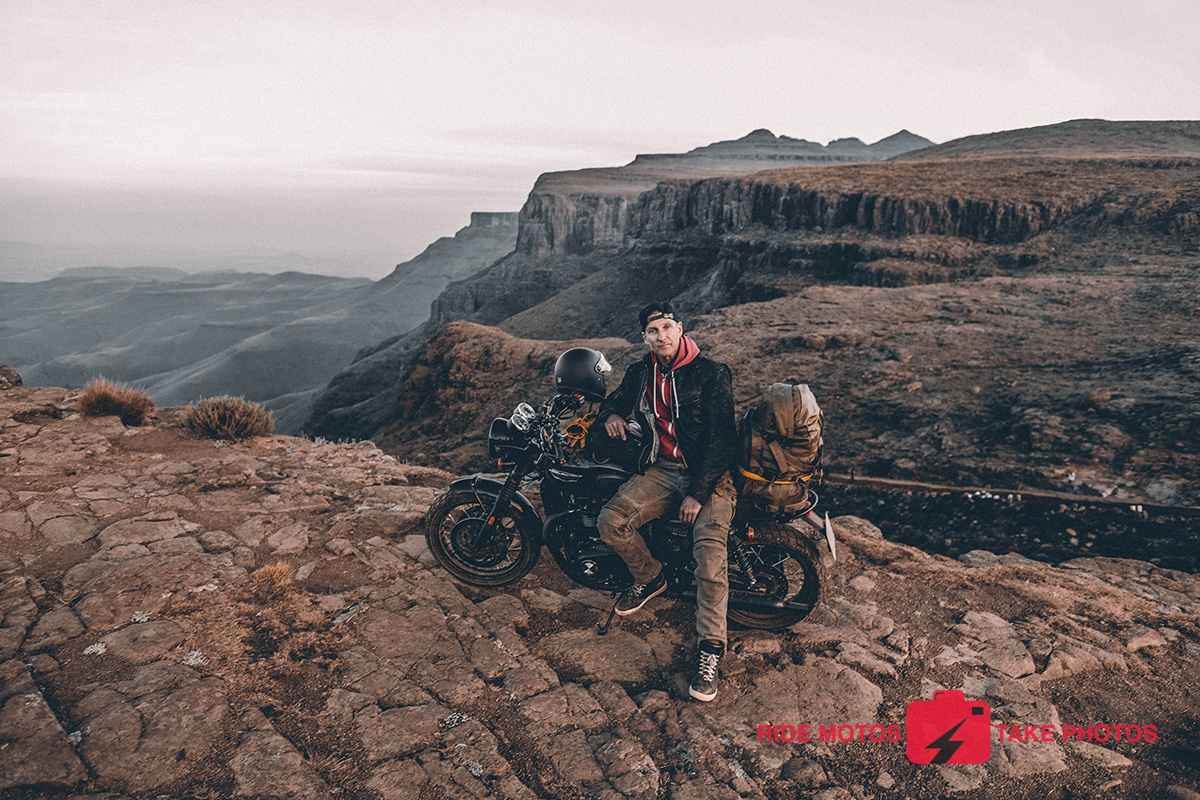
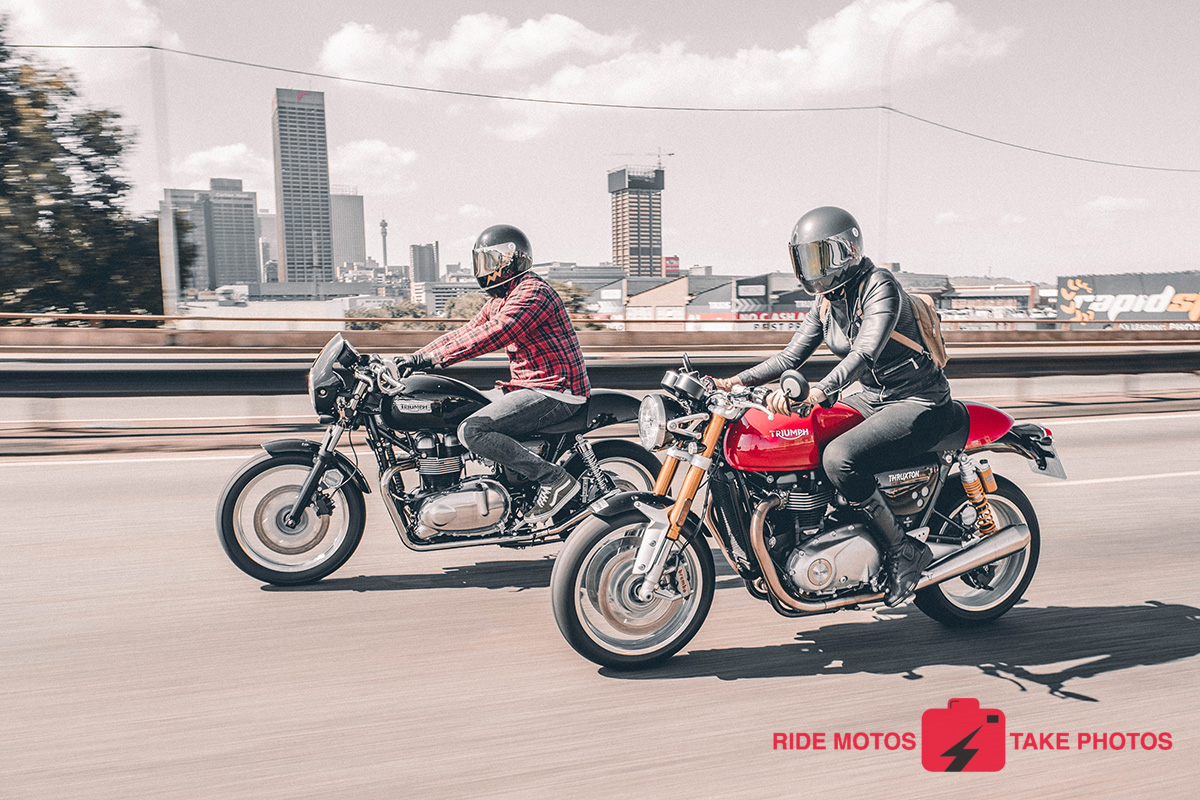
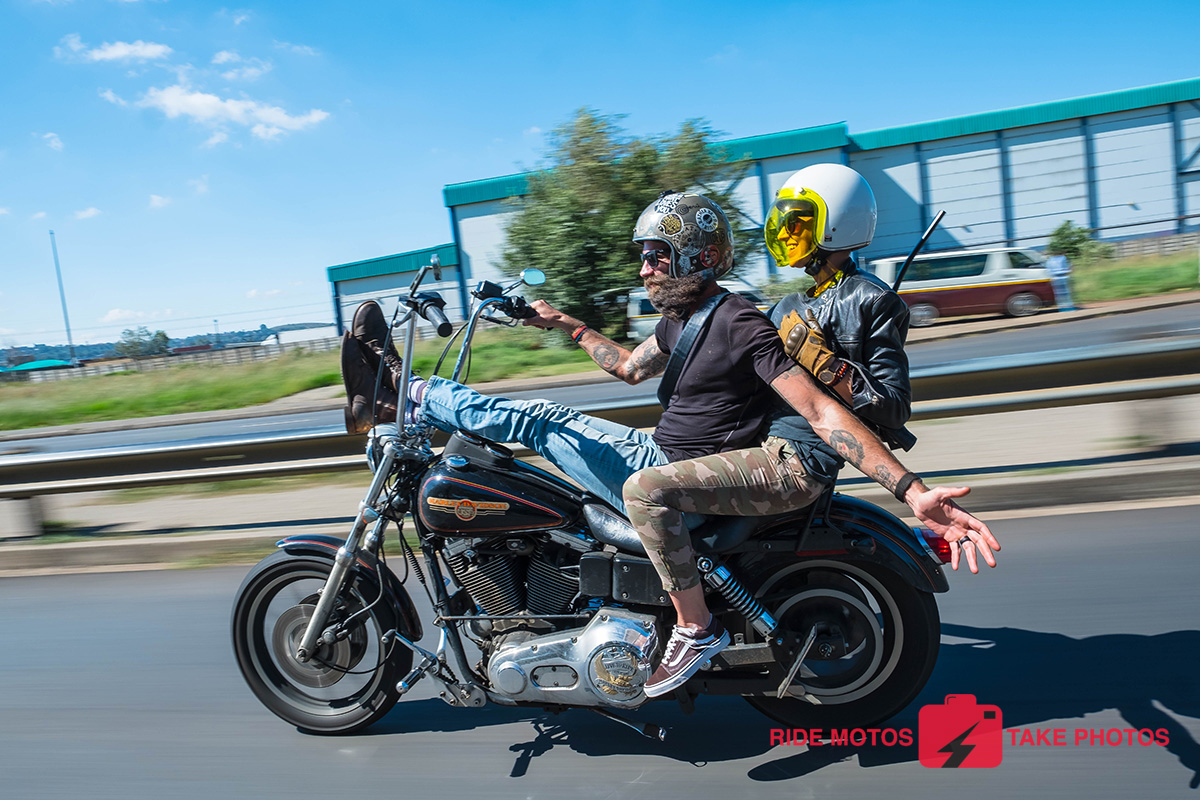
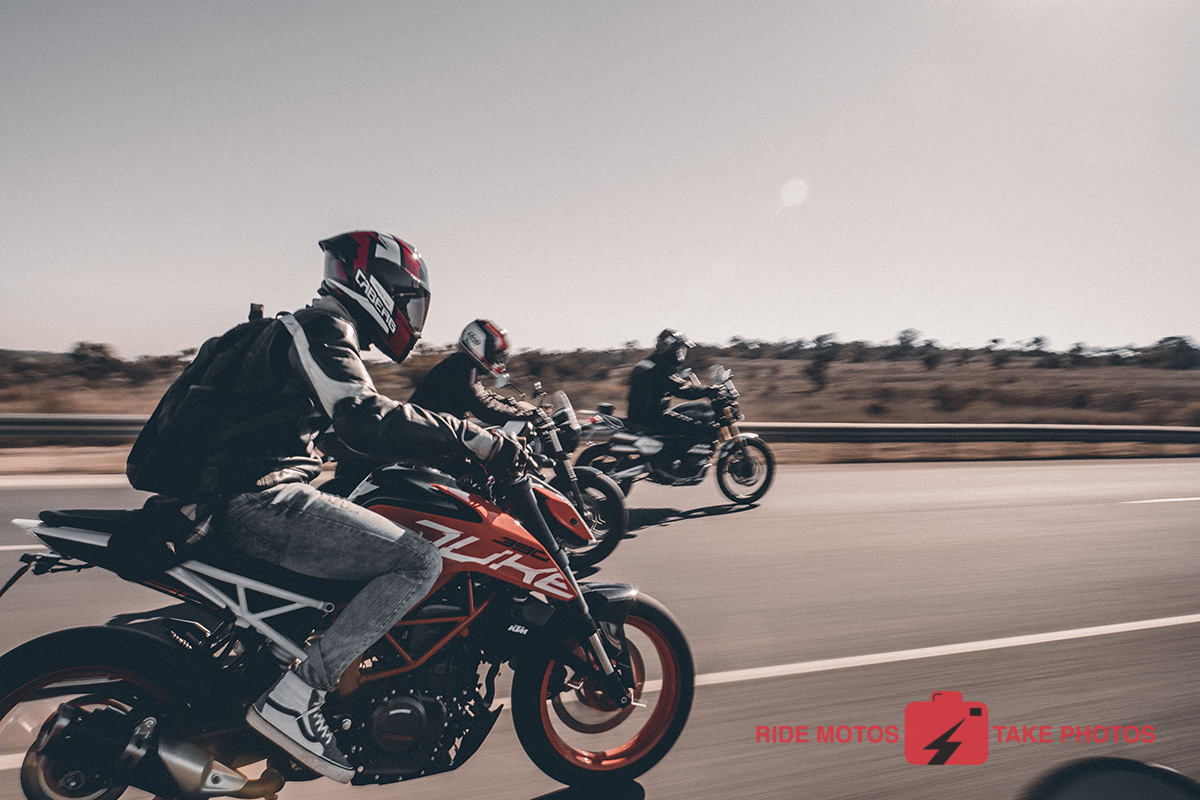
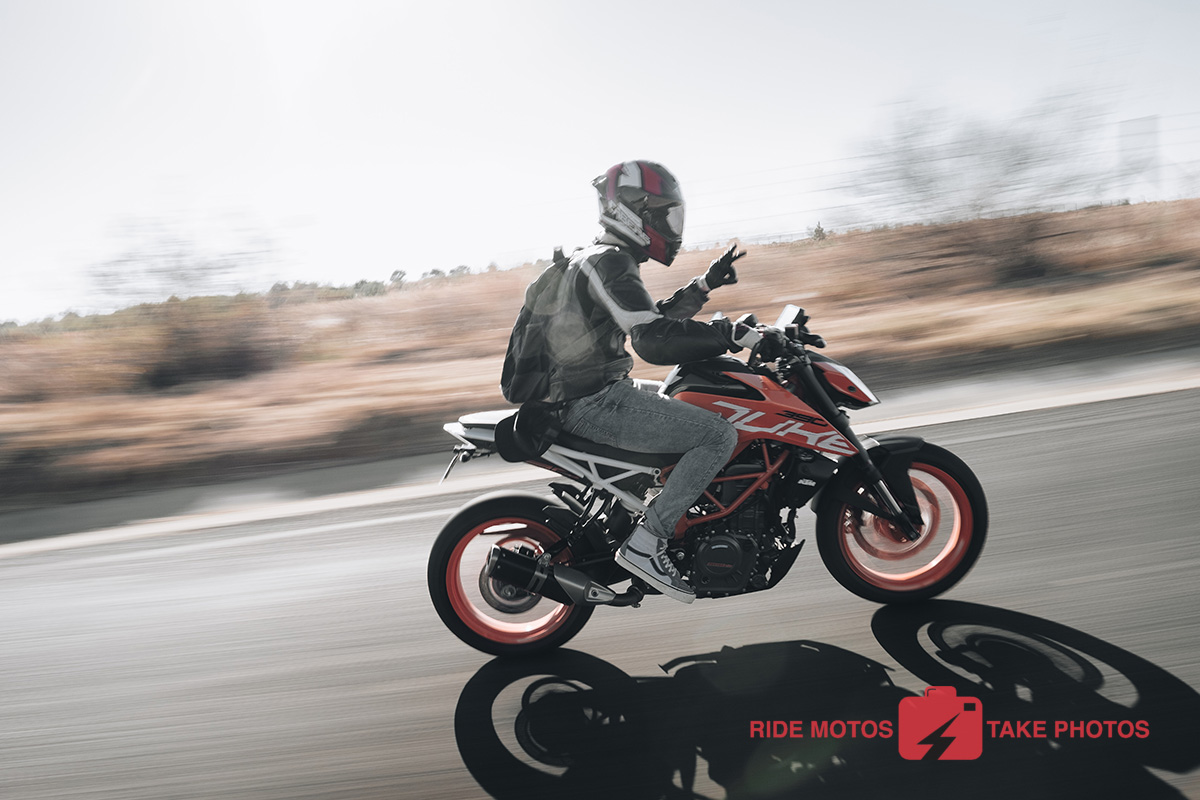
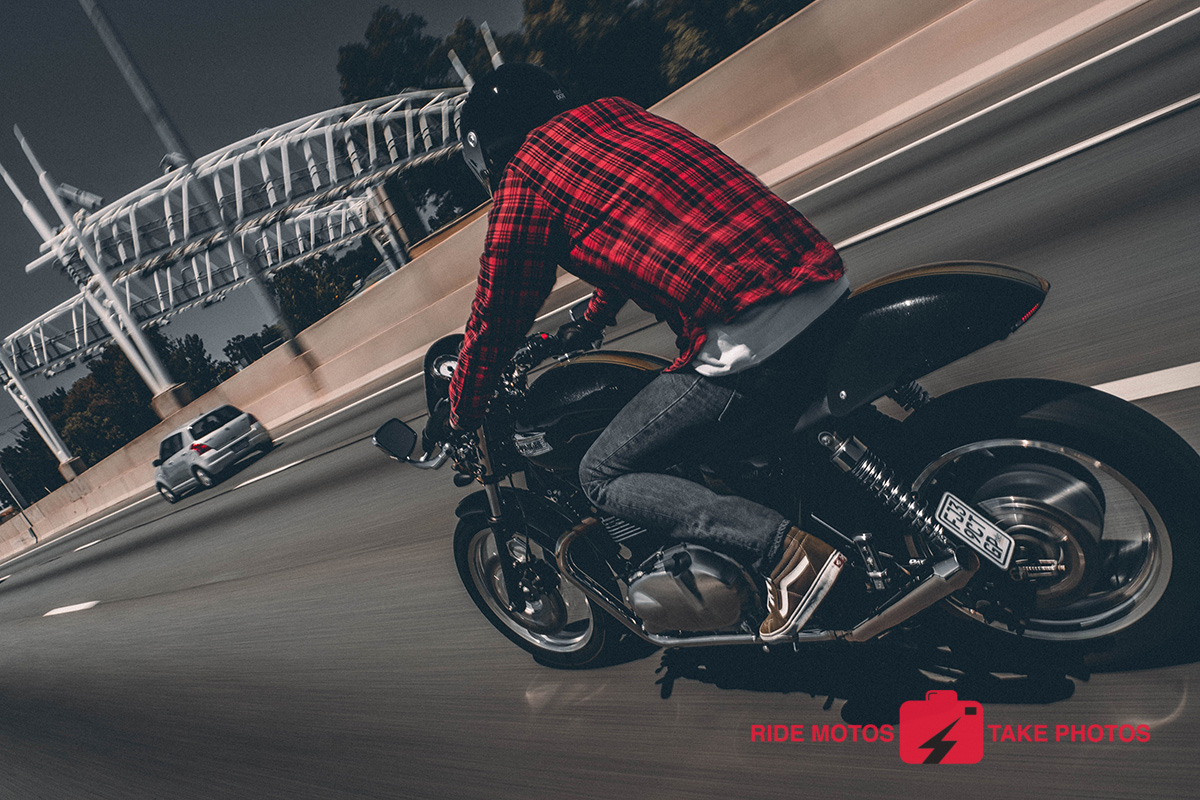
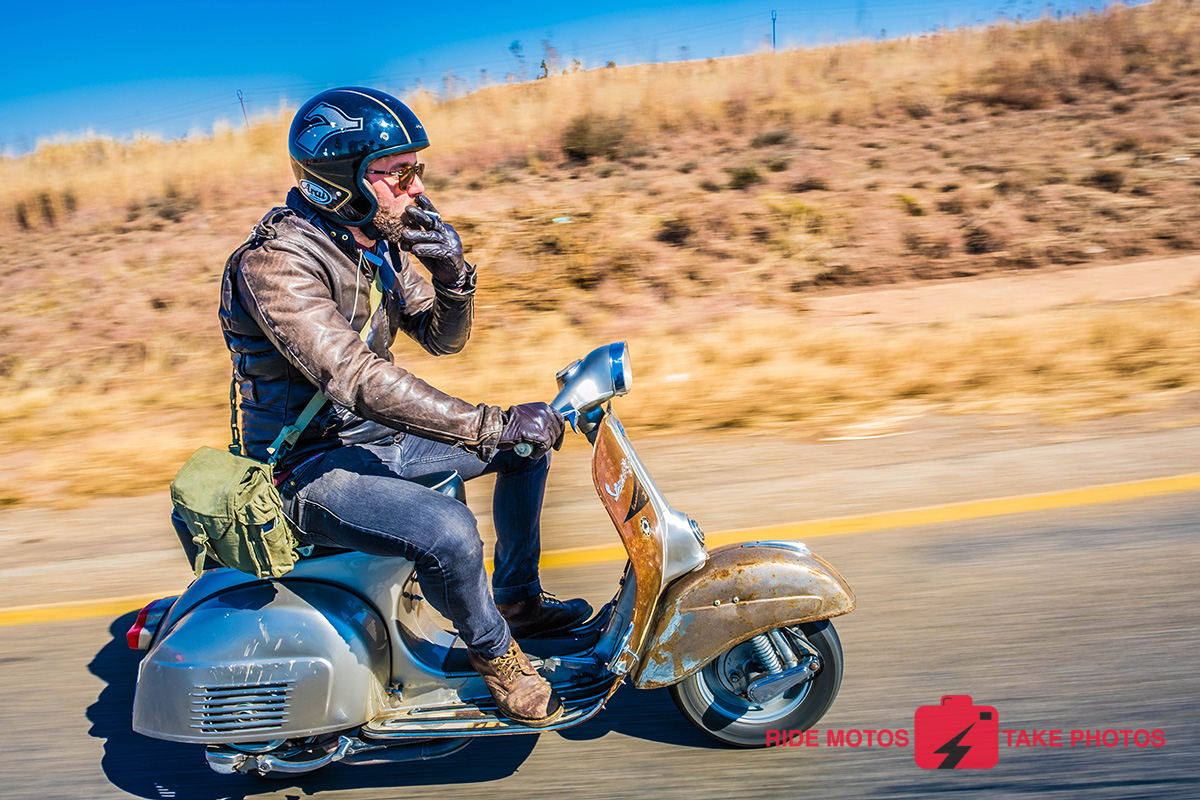
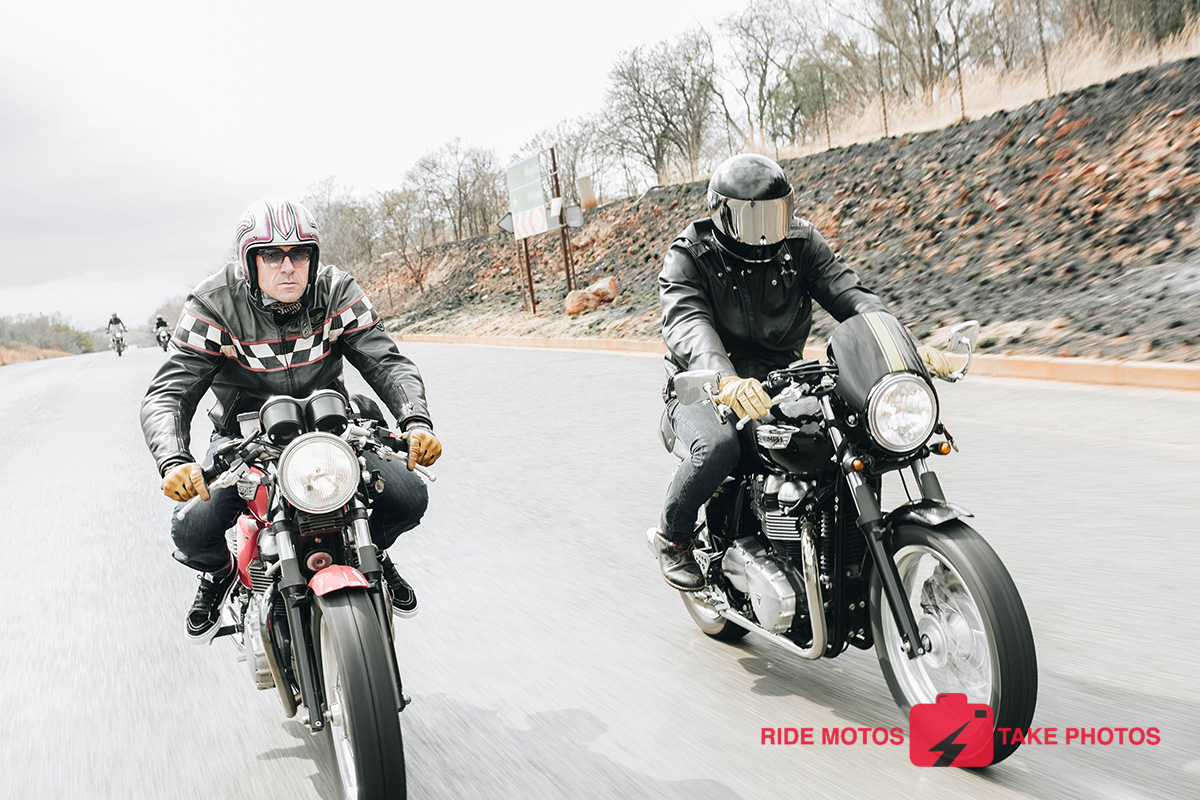
Richard Harper, half of the brains behind “RIDE MOTOS TAKE PHOTOS”, [The other half being his buddy and business partner Barry Gordon-Davis,] put it so well when I asked him over a brekkie what inspired him to start this unique photography enterprise. I quote “I mean, wouldn’t you rather have a cool pic of you on your bike, ripping down the highway, sheer adrenaline right there! Or would you settle for the usual pic of you next to your bike? Yeah, thought so”.
Bit of a no brainer, isn’t it? To be honest, most of the shots I have of me and my bikes took over the years look like really bad selfies. Fact is, I never knew anyone with enough talent [and large enough gonads] to take shots of me riding. For Richard, it has become second nature.
We took a ride out to Cullinan with Richard riding along, capturing the moment, as we went. I was amazed at how he ranged his Triumph T120 fore and aft of us, snapping away and keeping control of his bike all the while. What really gobsmacked me was to hear that he only started riding bikes in 2015.
Flip! talk about a kid with talent! That talent extends to his ability with the camera. He was attracted by the totally new world that motorcycles opened up for him. Band of brothers camaraderie, tattoos, music and of course the road trips, create a unique lifestyle that only one of the “band” can relate to.
Richard started taking his camera along on rides, marrying his two great passions. It got to a stage where he never rode without his camera at hand, thrilling his riding buds with awesome riding pics. It was Barry that saw the obvious commercial application for his unique skill.
Barry is a bit of a wiz around computers so it wasn’t too difficult for him to put together a really special website fleshing out the whole deal. In short, if you want brilliant shots of you and your special ride in action, then Richard is your man. See for yourself.
1 of 12
Check out: www.ridemotostakephotos.com to see the sort of work that these guys turn out. Whether individuals, clubs or whatever, they can accommodate you. Capturing those special moments in a unique way adds a whole new dimension to our passion.
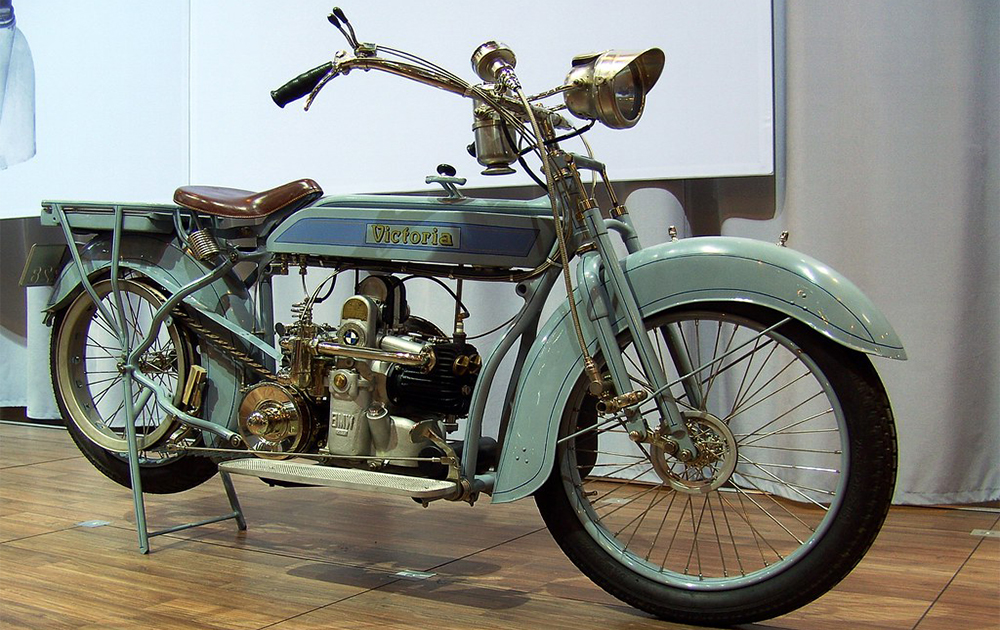
BMW built its first motorcycle engine some time around 1920—except it didn’t power a BMW motorcycle. Called the ‘M2B15,’ it was a 494 cc, longitudinally-mounted flat twin, which first appeared in the Victoria KR 1 and then the Bayerische Flugzeugwerke Helios.
Photo credit: David Van Mill (1921 Victoria KR1)
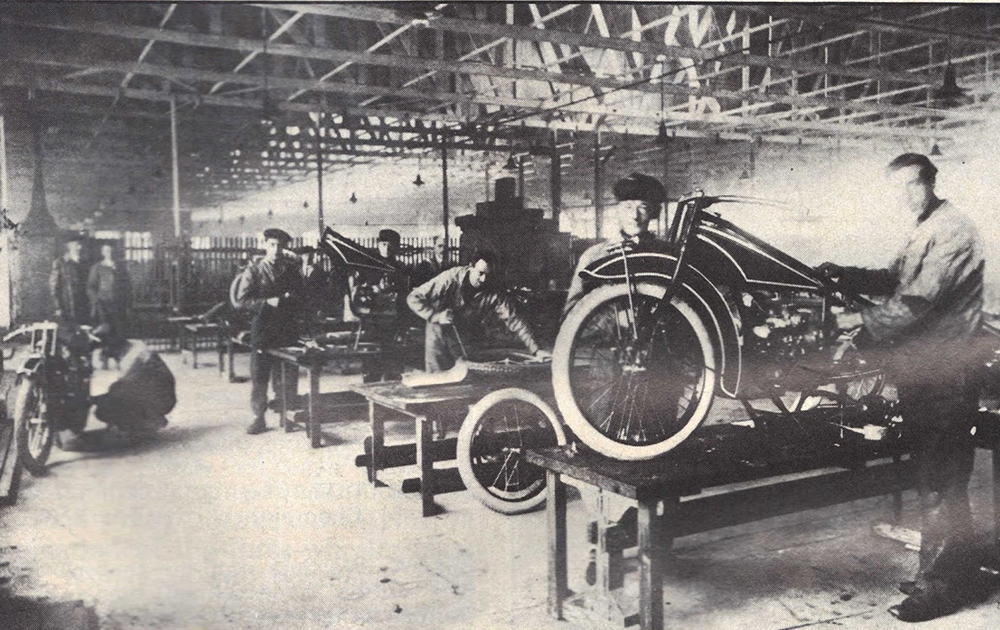
In 1922, Bayerische Flugzeugwerke merged with BMW, bringing the Helios into the fold. Rather than simply re-badge the Helios, BMW designer Max Fritz redesigned it from the ground up—most notably, flipping the motor sideways.
Fritz reportedly did this because he didn’t rate the Helios’ transverse crankshaft system and preferred an in-line setup, and because he wanted the air-cooled cylinder heads protruding so that they’d, well, cool better. Or maybe BMW just wanted their first motorcycle to look distinctly different from the Helios the KR 1.
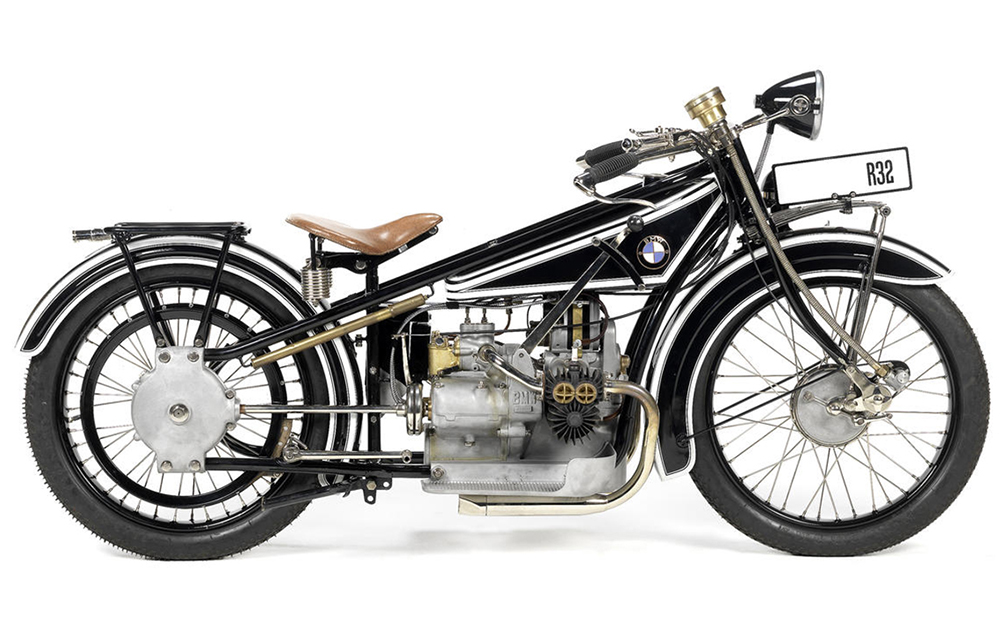
Photo credit: BMW Motorrad
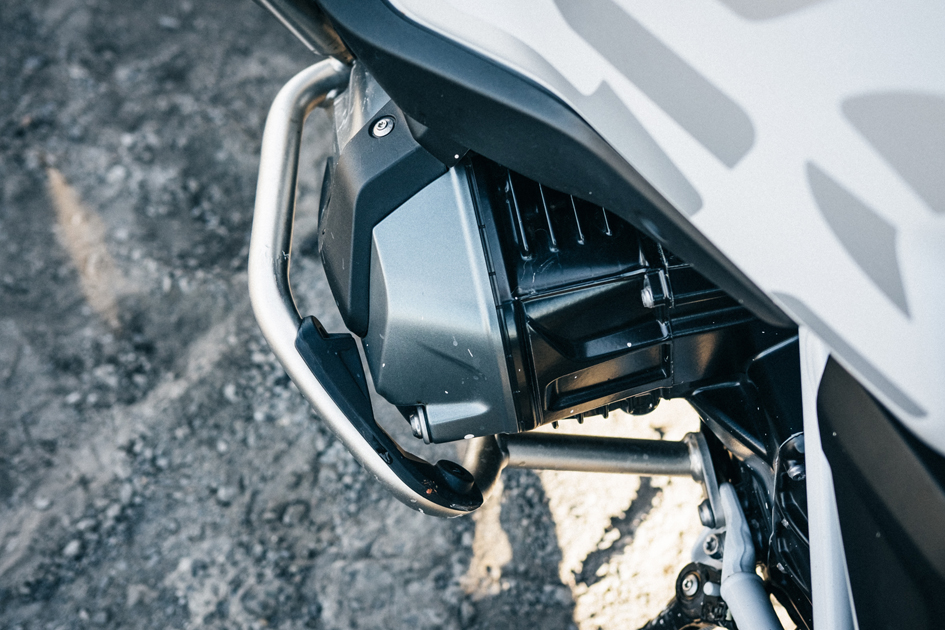
And so the R32 was born, equipped with a 494 cc, air-cooled boxer motor and a shaft drive, putting out a whopping 8.5 hp. 96 years later, BMW are still producing a boxer motor with a shaft drive, only now it’s liquid-cooled, has a capacity of 1,254 cc and puts out 136 hp. And it has ShiftCam technology too—BMW’s own version of motorcycle variable valve timing.
Photo credit: BMW Motorrad
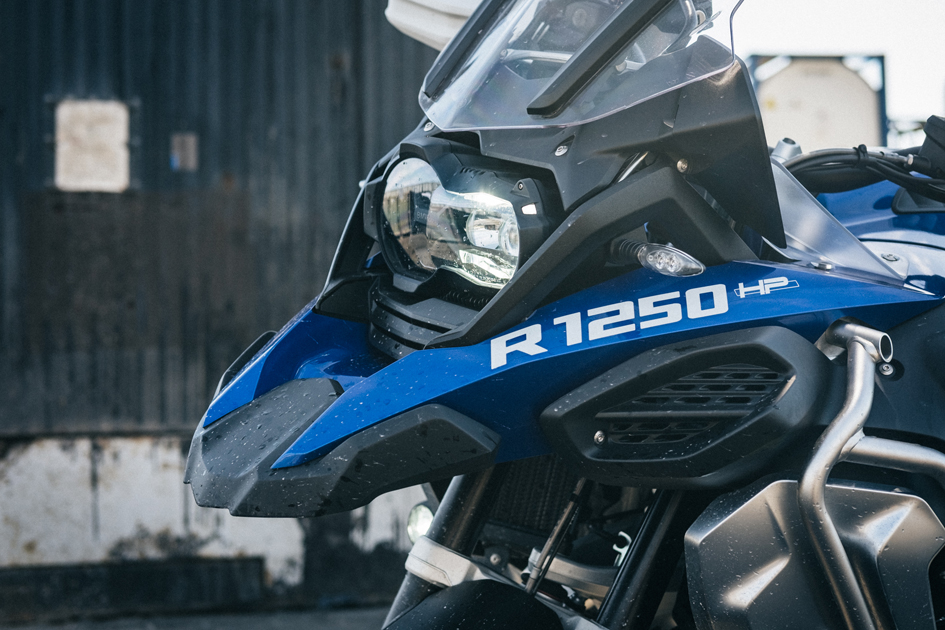
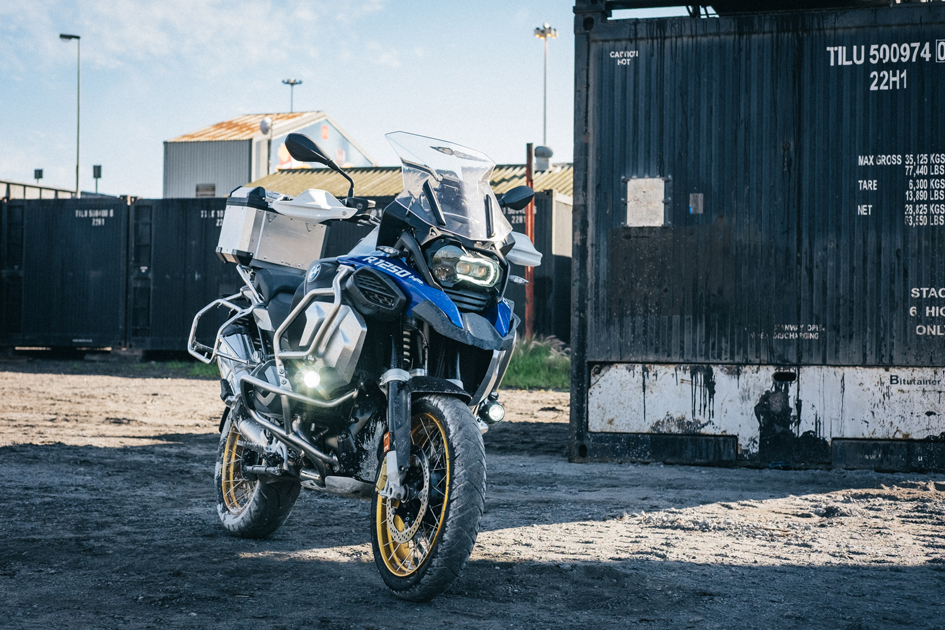
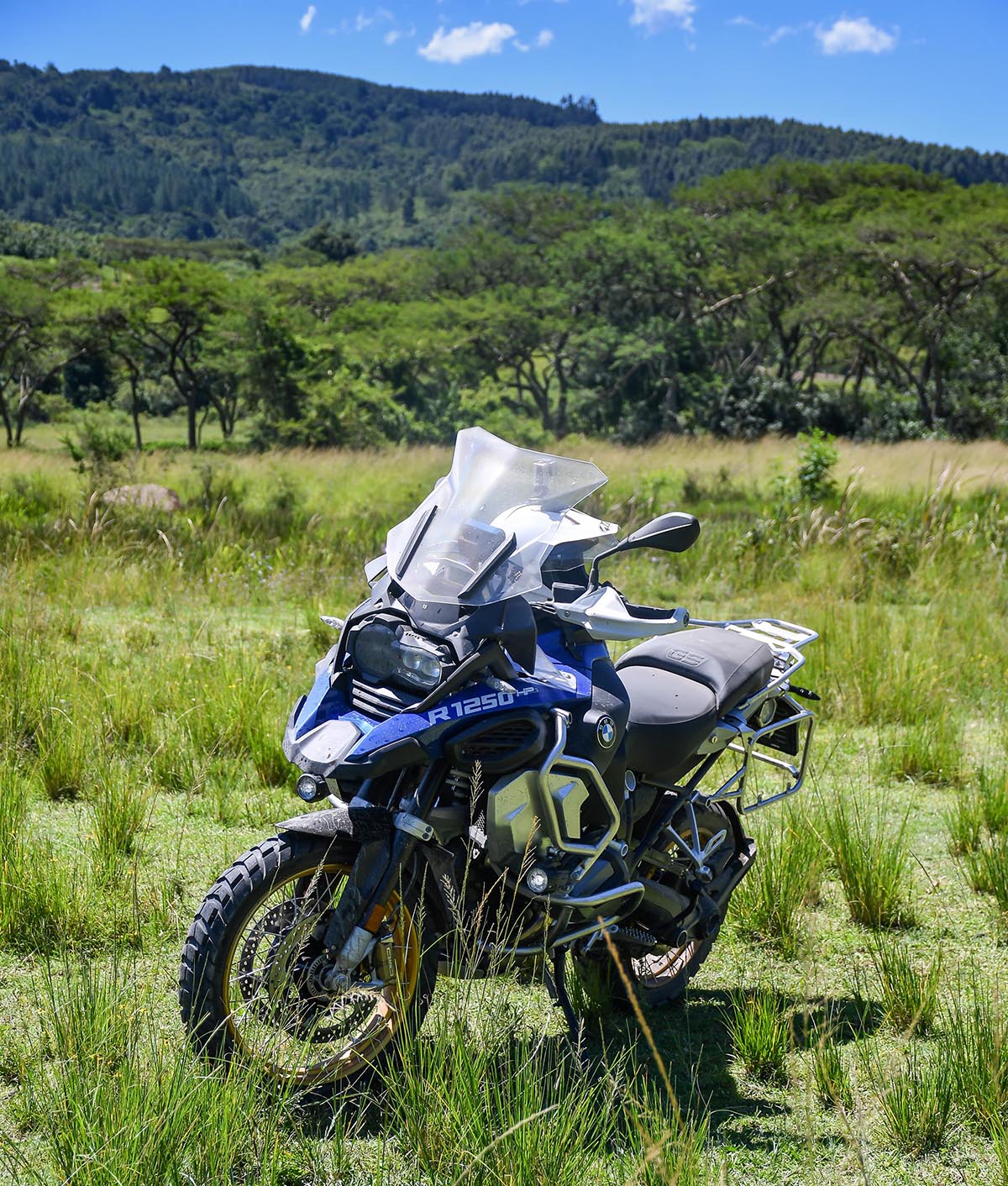
To find out just how good this updated boxer is, we borrowed BMW Motorrad South Africa’s new R 1250 GS Adventure. Why that particular bike? Because the R 1250 GS and GS Adventure are the only bikes of the new 1250 range currently available in SA (the R 1250 RT, R and RS are expected later this year).
Photo credit: Wesley Reyneke / ZA Bikers
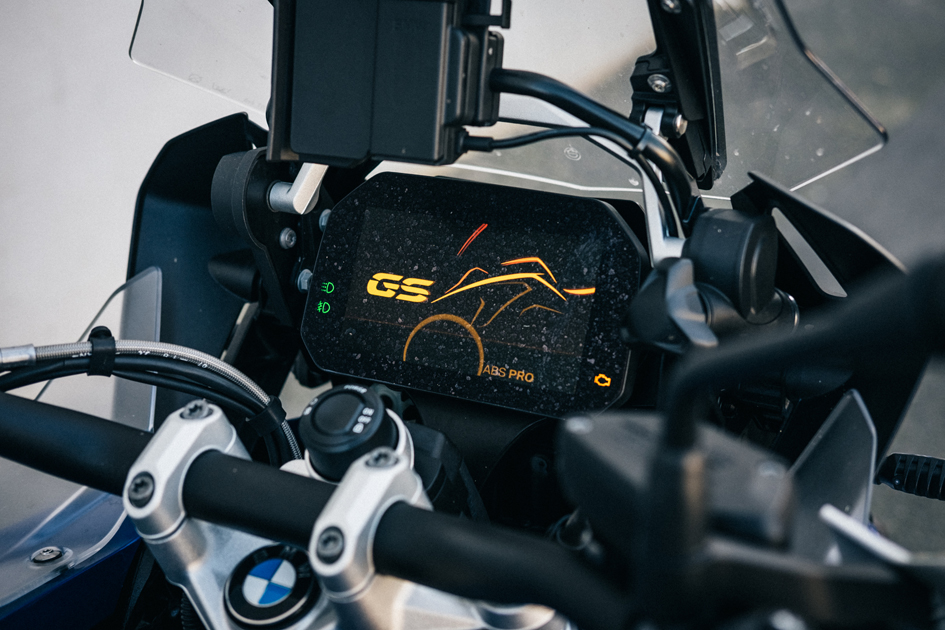
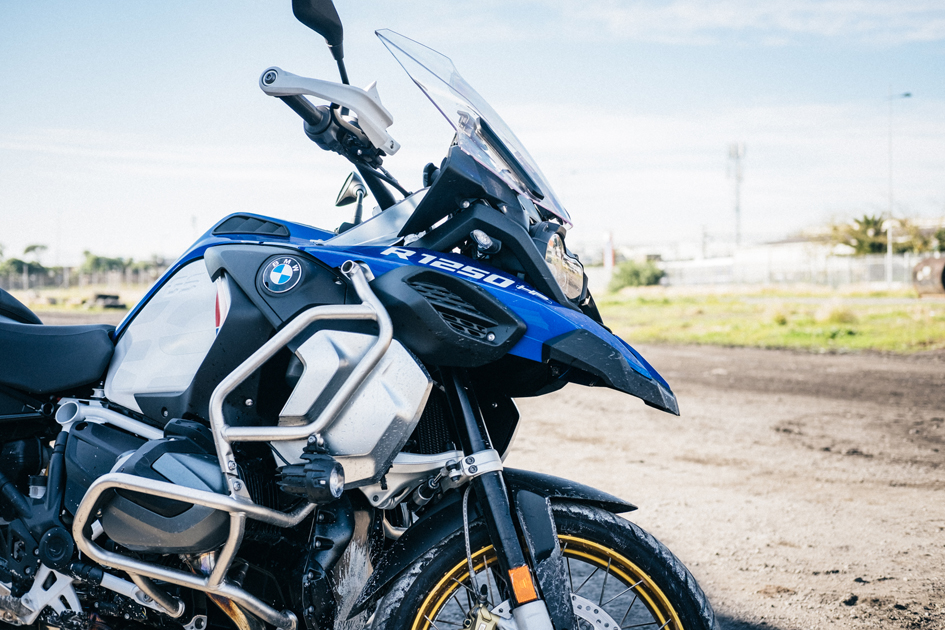
At a glance, there’s not much that separates the outgoing R 1200 GS from the new R 1250 GS; it almost feels like a mild face-lift. And that’s OK, since the big GS is as good as its ever been—the liquid-cooled 1200 was a smash hit for BMW, with additional amenities like electronic suspension adjustment and a sizeable TFT display.
Photo credit: Wesley Reyneke / ZA Bikers
But under the hood, the 1250 is a different beast. Those extra cubic centimetres have boosted power by 11 hp to 136 hp, and torque by 18 Nm to 143 Nm. That power’s still handled by BMW’s predictable ride-by-wire throttle with multiple onboard rider modes and switchable traction control, but with a twist: ShiftCam.
Photo credit: Wesley Reyneke / ZA Bikers
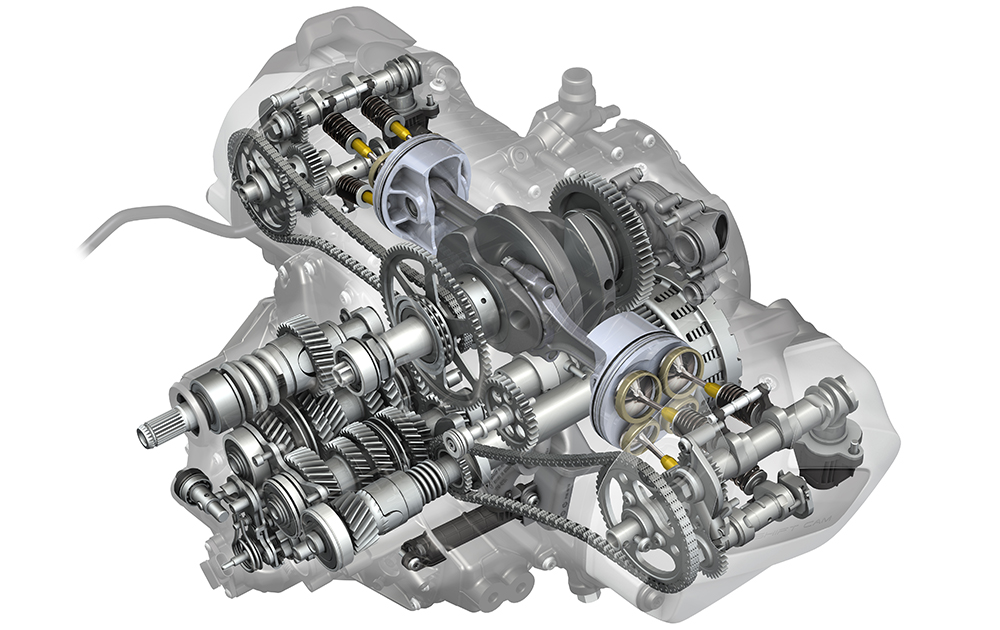
ShiftCam is hard to explain, but actually a simple concept. The system uses a cam shaft with two cam node pairs—’partial load’ and ‘full load.’ The ‘partial load’ cam reduces valve lift and optimises fuel consumption. The ‘full load’ cam kicks in at higher revs or under heavier load (BMW aren’t clear on how they measure that), and increases valve lift for maximum performance.
Photo credit: BMW Motorrad
The cam shaft literally slides back and forth between the two node pairs. How? There’s a notched ‘shifting gate’ at one end, that runs on two indexing pins, with only one ‘active’ at any time. As the pins switch, the ‘shifting gate’ moves over and the camshaft slides. BMW have a video that illustrates it nicely.
So how does it feel in practice? It’s hard to pinpoint exactly where the cam shifts, but what is immediately tangible is how usable the 1250 motor is throughout the entire rev range. It’s really happy to putter along smoothly, and it comes alive when you whack the throttle wide open. The previous-gen 1200 is no slouch, but the 1250 is better—not just on overall power, but on how lit it feels everywhere in the range. (Plus the motor sounds pretty awesome too.)
We only limited time on the R 1250 GS Adventure, but it was enough to figure out different scenarios where ShiftCam will come in handy. Sedate day-to-day riding should yield great fuel consumption, but the 1250’s smooth nature at low revs also means it’s really good at slow maneuvers in technical off-road terrain. And once you’ve negotiated that muddy washout or tight and loose corner, the 1250 will pull strong from whatever RPM you’re at as you roll on the throttle.
Photo credit: Wesley Reyneke / ZA Bikers
It really is a peach of an engine. And in the R 1250 GS Adventure, it’s wrapped in a pretty impressive package too. Everything the boxer puts out is managed by a ride-by-wire throttle, with multiple rider modes (our test unit also included the ‘Dynamic Pro’ and ‘Enduro Pro’ modes), and switchable traction control and ABS.
Photo credit: Wesley Reyneke / ZA Bikers
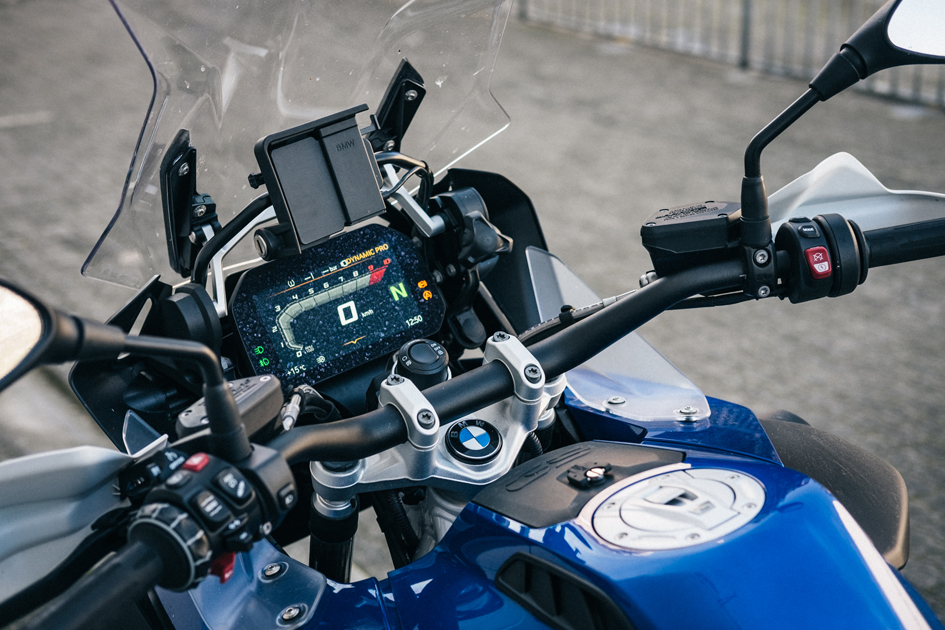
There’s also a hydraulic clutch, and a quickshifter for clutch-less up and down shifts. The TFT display is packed with BMW’s complete connectivity suite, the headlight is a full LED unit, and the screen is adjustable.
Photo credit: Wesley Reyneke / ZA Bikers
At 268 kg wet and with seat height that’s adjustable between 890 mm and 910 mm, the Adventure isn’t exactly petite. But it’s extremely well balanced, and manages its weight well once it’s moving (BMW’s hill start control brake is handy too).
Photo credit: Wesley Reyneke / ZA Bikers
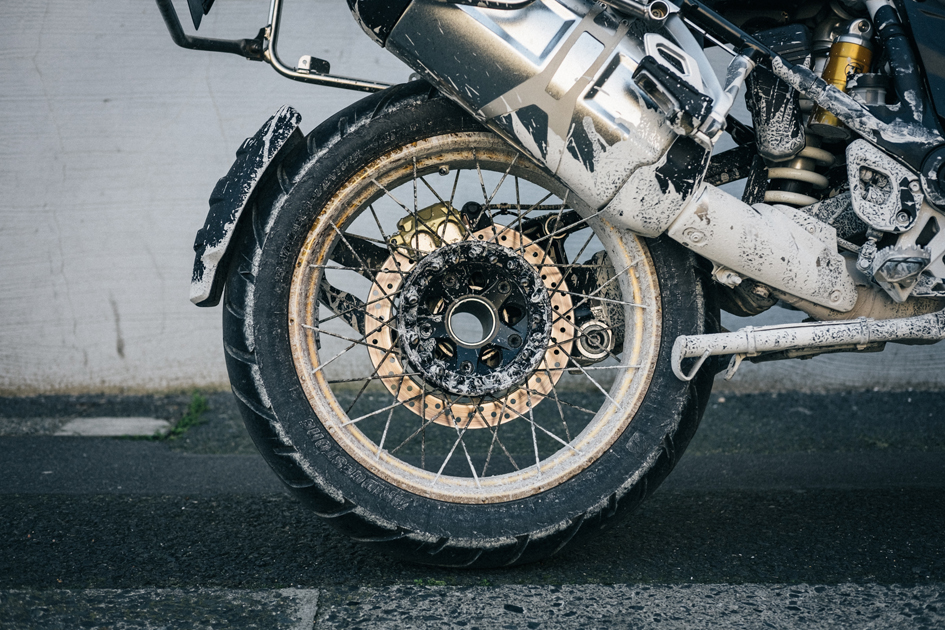
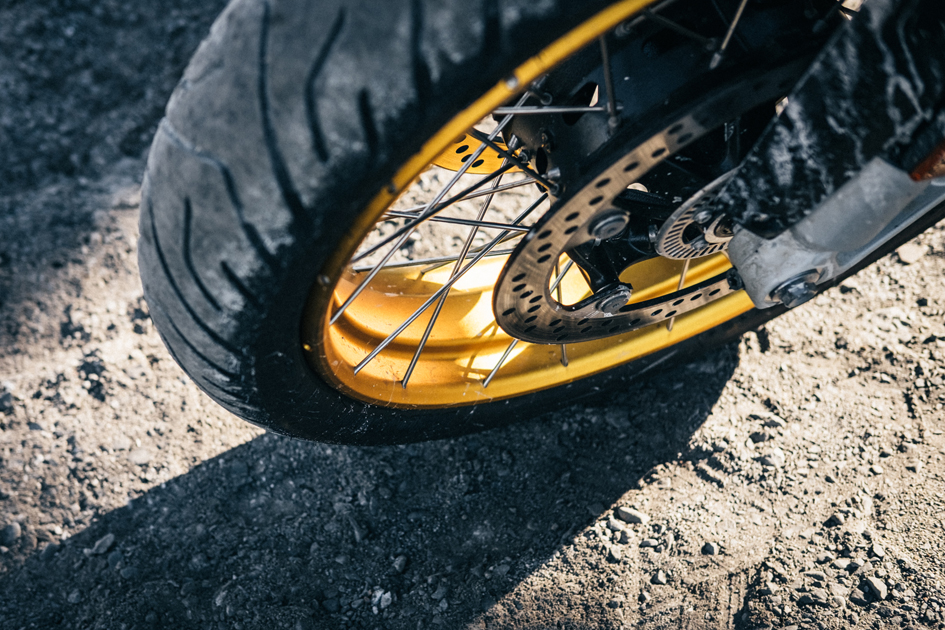
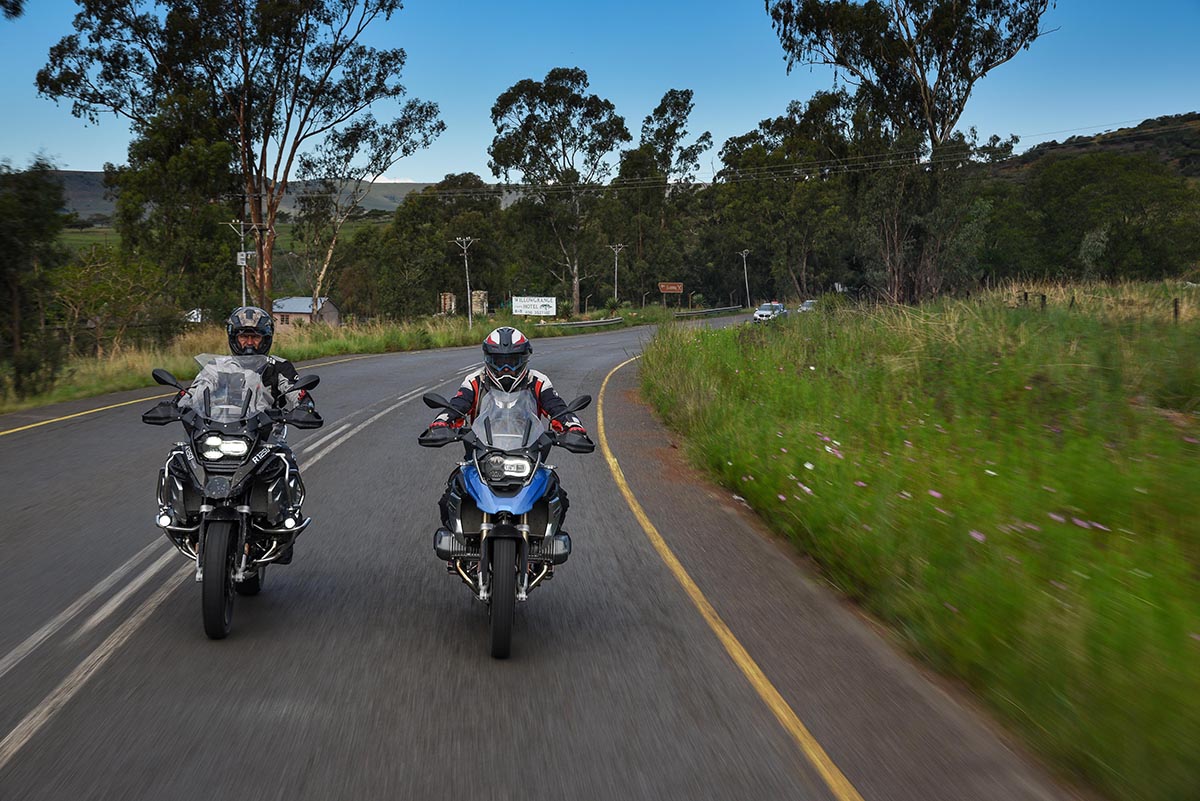
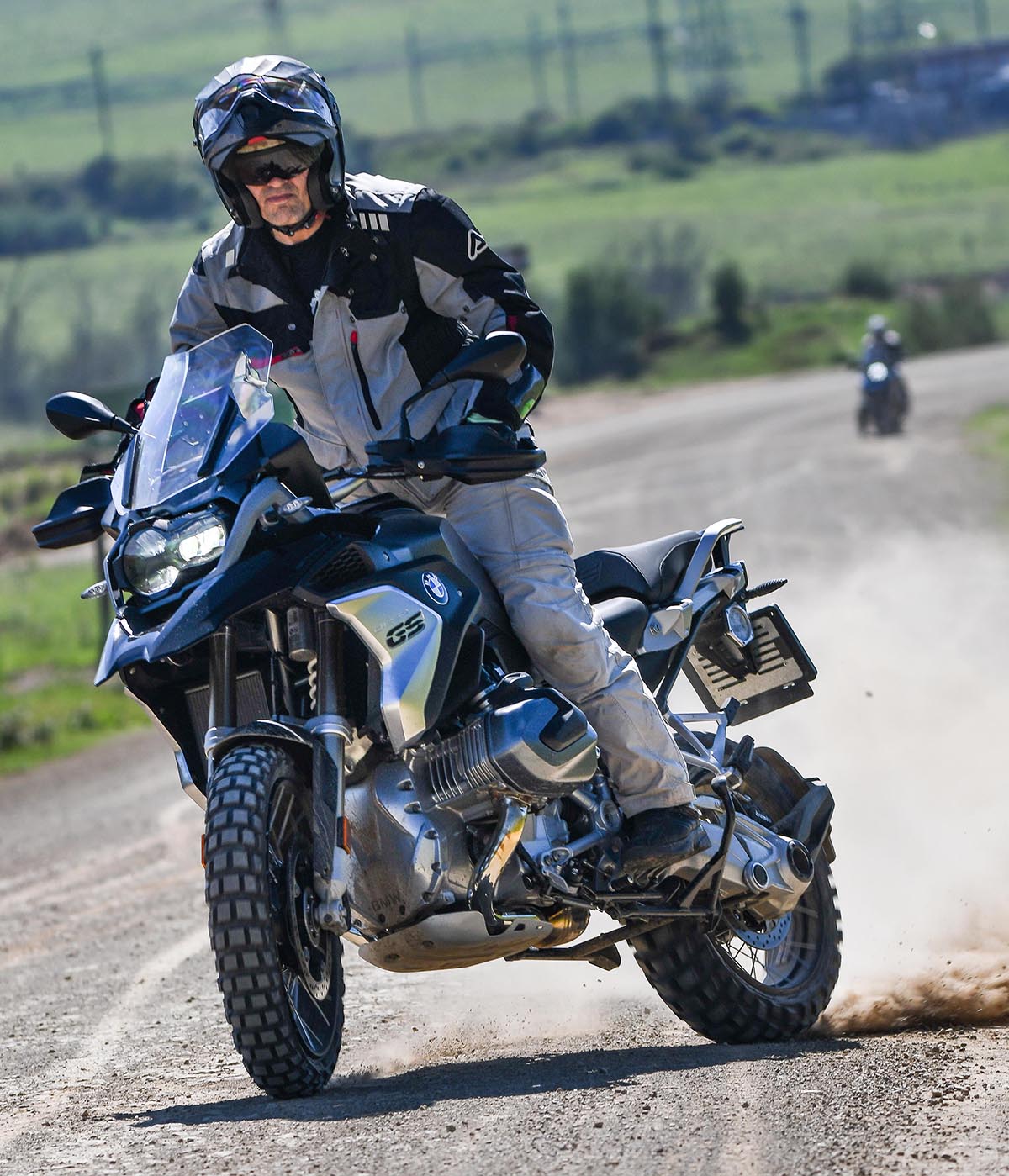
Our test unit came with very road-biased dual-sport tyres fitted, so we were hesitant to push it hard off-road. To be honest, we wouldn’t want to go all-out enduro on such a big bike, but even with inadequate tyres, the 1250 handled a few random dirt jaunts just fine. And on the road, the big boxer was both comfortable and sure-footed.
Photo credit: Wesley Reyneke / ZA Bikers
So all-in-all, BMW’s biggest GS is still a great adventure-bike-slash-tourer-slash-weekend warrior. Only now, it’s both more powerful and more usable than before. We wonder if Max Fritz ever imagined just how far his engine design would go when he penned the M2B15.
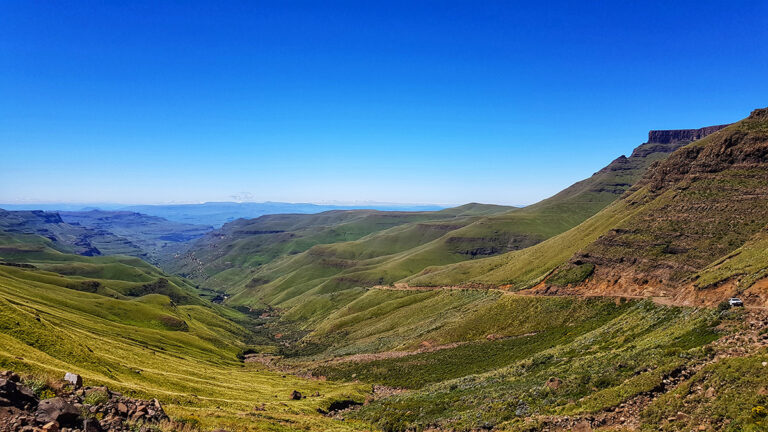
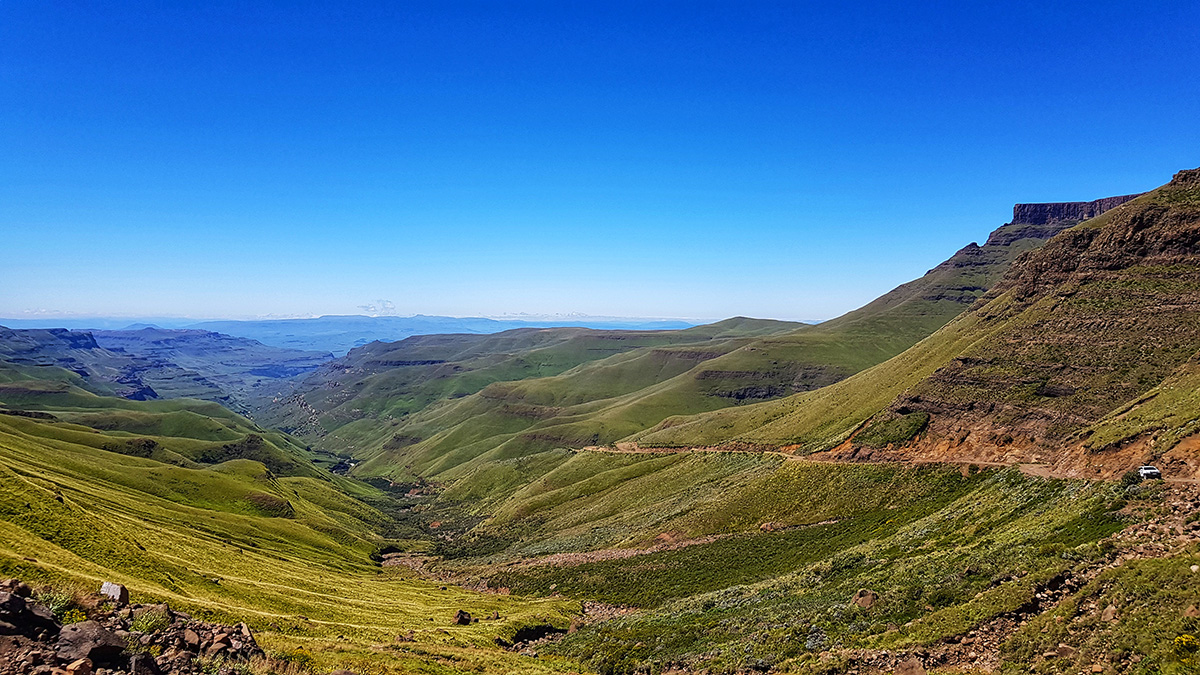
Planning a moto adventure in the middle of winter to one of Southern Africa’s most iconic mountain passes doesn’t always come recommended. The weather and road conditions on Sani Pass can rapidly turn and you can become instantly humbled with the circumstances you find yourself in. We’ve had it both ways before, but this year – we lucked out all round!
From our experience with years past, we prepared everyone for the worst. At the top of the packing list was long underwear followed by extra layers to keep you warm. Those items luckily weren’t needed until the evening at the backpackers at Sani Mountain Lodge.
Photo credit: Joe Fleming / Bonafide Moto Co.
This was the third year that Bonafide Moto Co. led a group of riders from Johannesburg down through the Midlands and up to the top of Sani Pass. Each year sees riders of all skill levels, with various brands and styles of motorcycles – the only rule, Don’t Be A Dick.
Photo credit: Joe Fleming / Bonafide Moto Co.
We set out early on a Saturday morning avoiding all the commuter traffic that we normally run into when departing on our adventures. The first few hours leaving Johannesburg are always the toughest. You’ve been looking forward to this trip for months and you spend the first few hours on long and straight roads knowing that the turns will eventually come. The first set of fun turns quickly end just as we arrive into lunch into the mountain town of Clarens. For those who’ve never visited this area, it’s always a lively town filled with weekend warriors looking to get away from the city.
Photo credit: Joe Fleming / Bonafide Moto Co.
Leaving Clarens, the road begins to show off – cutting its way through the rocky cliffs of Golden Gate National Park.
Photo credit: Joe Fleming / Bonafide Moto Co.
On this stretch from Clarens to the Amphitheatre Backpackers, you finally get the chance to stretch the bike out, become comfortable leaning into the turns and take a chance to take in the amazing views with the city life now well behind you.
Photo credit: Joe Fleming / Bonafide Moto Co.
The arrival into the backpackers sneaks up on you just after chasing the person in front of you sweeping through the mountains. The lodge is tucked away into a small oasis in the middle of the rolling hills overlooking the impressive Drakensberg Escarpment. Settling into the lodge riders picked their mates for the night and fought over who would be the one on the bottom bunk.
Photo credit: Joe Fleming / Bonafide Moto Co.
With the mix of riders being from different towns, background and countries we like to arrange the riders goodie bags with luggage tags strategically at the big dinner table on the first night so that everyone gets a chance to meet someone they may haven’t gotten a chance to know. We find this tends to open up people to one another and offers them time to get to know one another.
Our departures this time of year tend to be quite early as we are limited to the amount of daylight needed to get us to our next stop. We left not long after sunrise and started to make our way closer to Sani Pass via the beautiful Midland roads. After stopping for lunch just 30 minutes away from the base of the pass we could all feel the excitement and tension in the air as we all knew we would soon find ourselves pushing our limits on Sani Pass.
Photo credit: Joe Fleming / Bonafide Moto Co.
Leading up to this adventure we reached out to local riders in the area to see if they had any feedback as to the conditions on the pass. Over the past year, construction has begun at the bottom section where bridges and outlines of where the road would be tarred had begun. We were told to expect very loose rocks and tough lines to follow.
We left lunch, fueled up the bikes before heading into Lesotho, stretched out the arms, took all the deep breaths we could and followed the signs for Sani Pass.
Photo credit: Joe Fleming / Bonafide Moto Co.
The beginning of the pass greeted us with extremely dusty conditions. The area hadn’t received any rain or snow for the past 2-3 weeks so we informed riders to give as much gap as possible so that they had visibility. Not only was the dust visibility a concern but heading up the pass just hours before sunset meant we’d be riding into the sun with dust all in front of us.
Photo credit: Joe Fleming / Bonafide Moto Co.
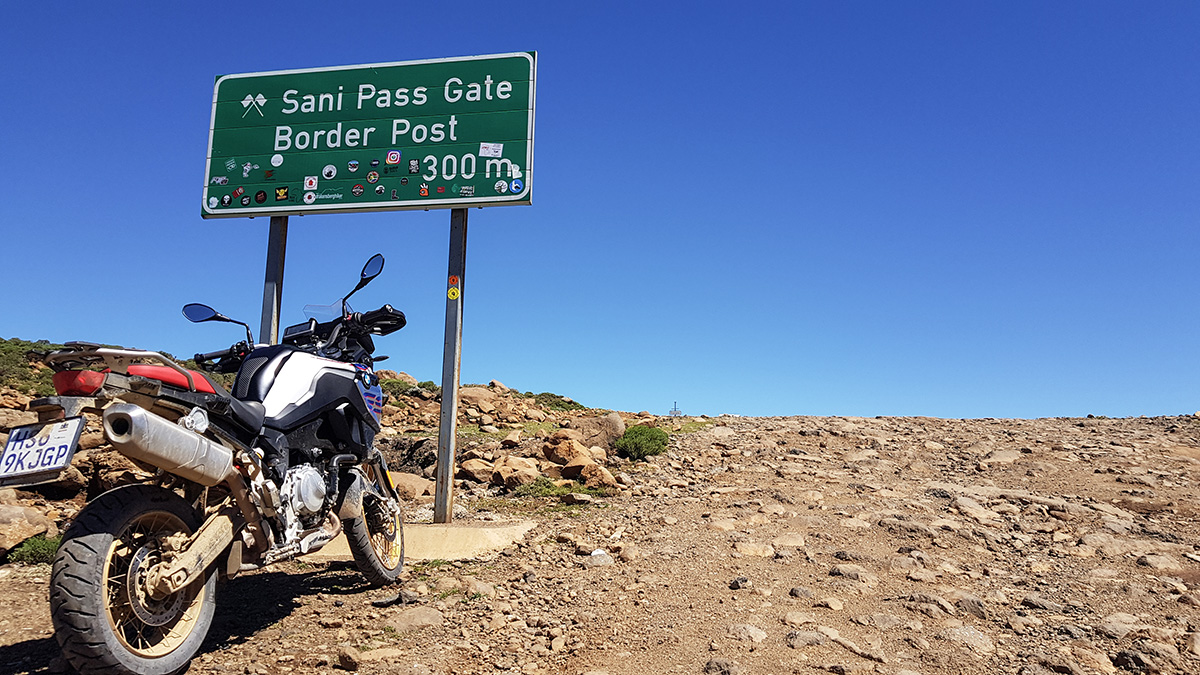
All were accounted for and came in quite close together as we got to the South African border post, which is the base of the Iconic Pass. From here on out to the Lesotho border, we didn’t know what to expect, but always to expect the worst.
Photo credit: Joe Fleming / Bonafide Moto Co.
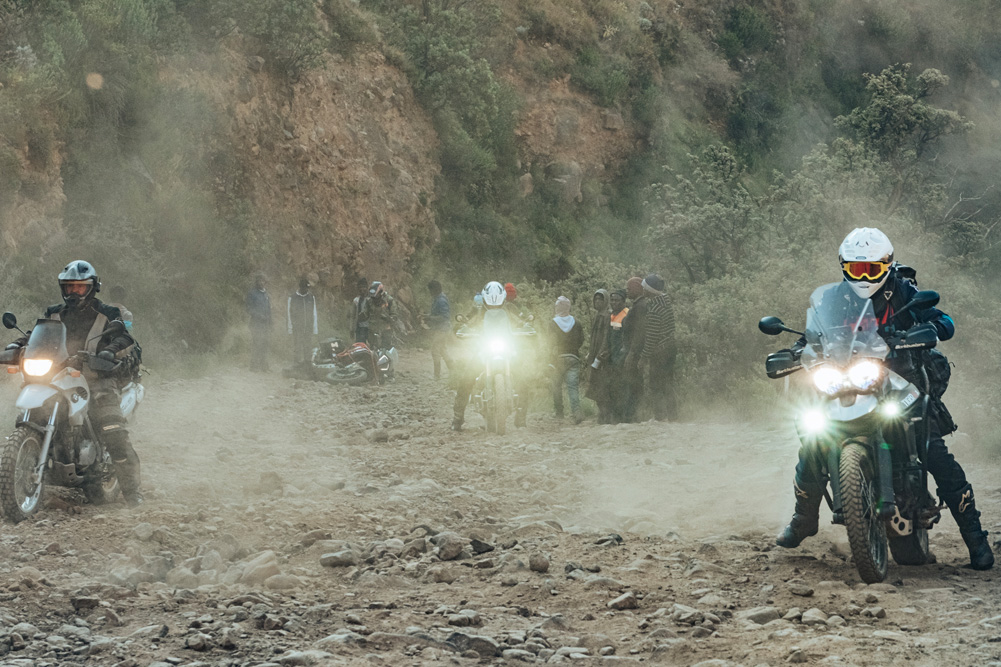
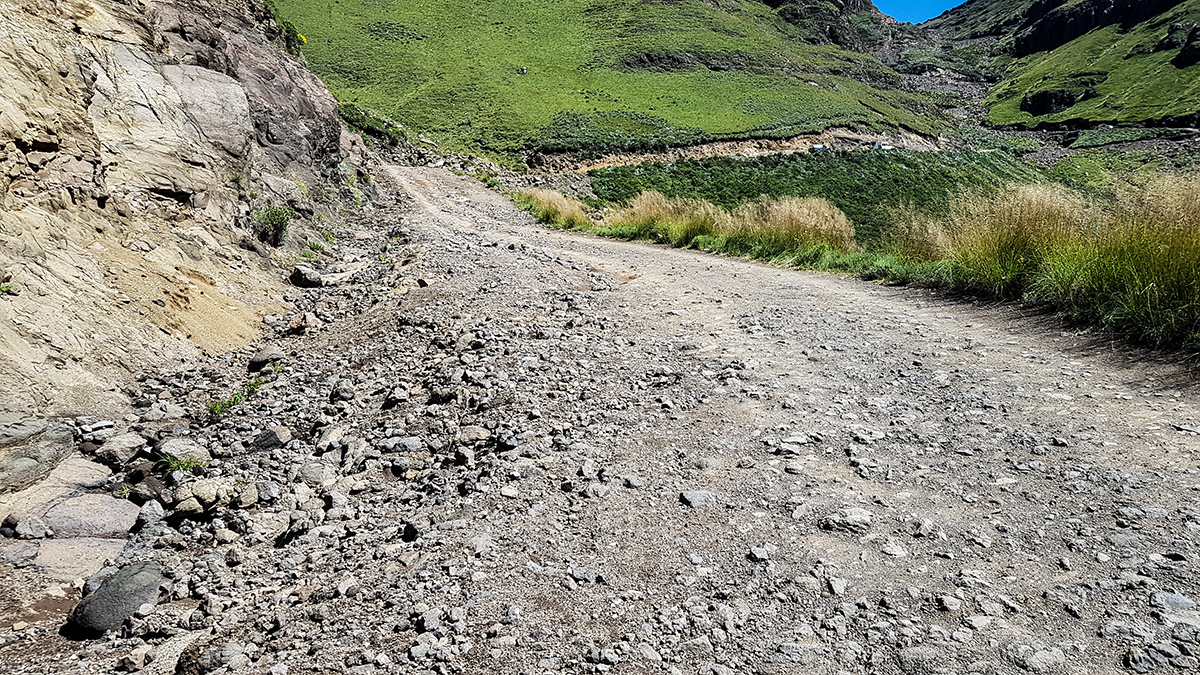
With under 3 hours before the sun would set we felt well positioned to allow everyone enough time to get to the top before the border would close. Riders set out from the border at their leisure and the stoke levels were high. The loose rocks and tough lines were quickly visible as the climb began up to the first two river crossings. After the second river crossing was when things got interesting and when we encountered what we now call the “death zone.”
What normally would be a typical straight uphill climb into the mountain became a traffic jam of bikes slipping and sliding trying to battle their way up this extremely loose and rocky section. The first few riders made it up quite easily through the locals who were repairing the road but shortly after them, you could see the panic in the eyes of those that were next. Some of the riders had found good lines to go up, but the locals fixing the road began to block their lines and urge them to take another. This led into slippier sections with bigger areas of loose rock bed that soon got the riders stuck in one spot. At one point there were 4 bikes all on the brink of toppling over.
Photo credit: Joe Fleming / Bonafide Moto Co.
For those that had made it past this section, they had pulled over onto the flattest section possible to keep an eye on those behind knowing that there were going to be some riders who would need help. They quickly ran down to assist those who were spinning in one place and after a good, 30 minutes or so of pushing, lifting and digging the whole group made it past…this first gnarly section.
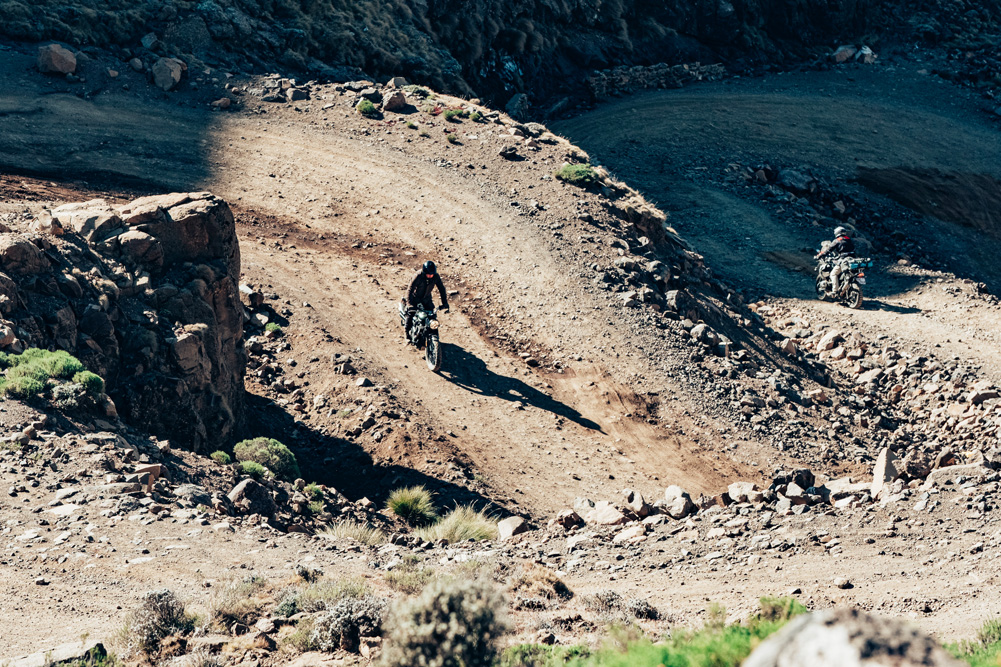
The riders who battled in the death zone were extremely exhausted and fatigued. This wasn’t a good place to be in as some of the toughest parts were still yet to come. Leaving the death zone the pass starts to level out a bit with a decent section of smooth lines before you begin to navigate your way up the iconic switchbacks of Sani pass.
Photo credit: Joe Fleming / Bonafide Moto Co.
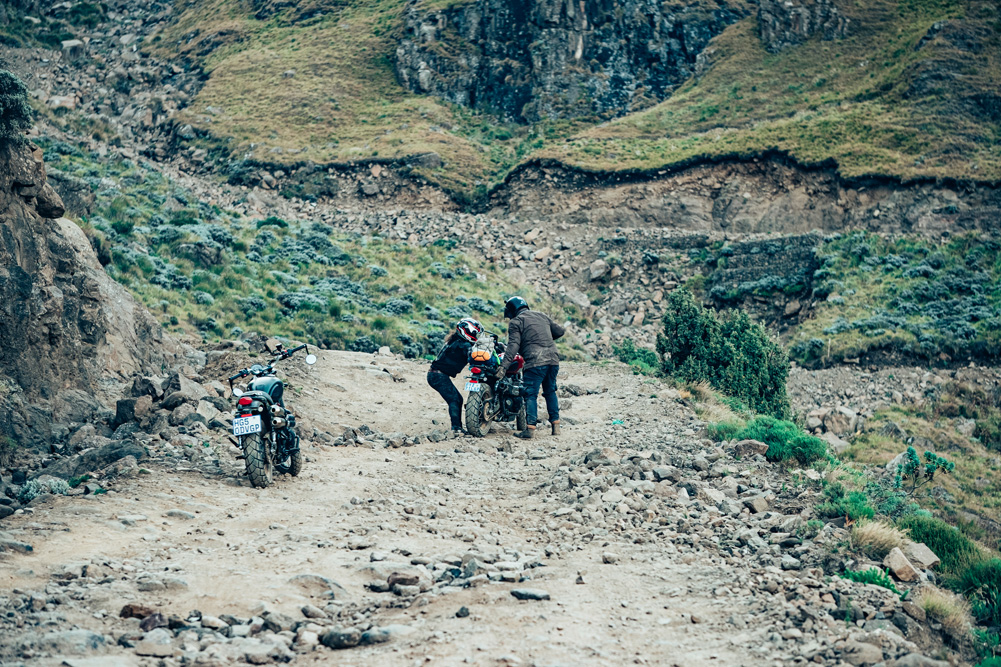
With the level of fatigue being high it also meant that the throttle hand was also tired. The key to a successful summit on Sani Pass is consistent throttle. The moment you back off the throttle on one of the sharp uphill twists, the bike stalls and you begin to find yourself quickly trying to find your feet. Depending on which way you lean (usually the downhill side) means you’re probably going to drop the bike.
Luckily the way we ride and the mentality we have at Bonafide Moto Co. is to leave no man/woman behind. The riders naturally partnered up with those who were struggling so that when a bike went down they weren’t left on their own to pick it up.
Photo credit: Joe Fleming / Bonafide Moto Co.
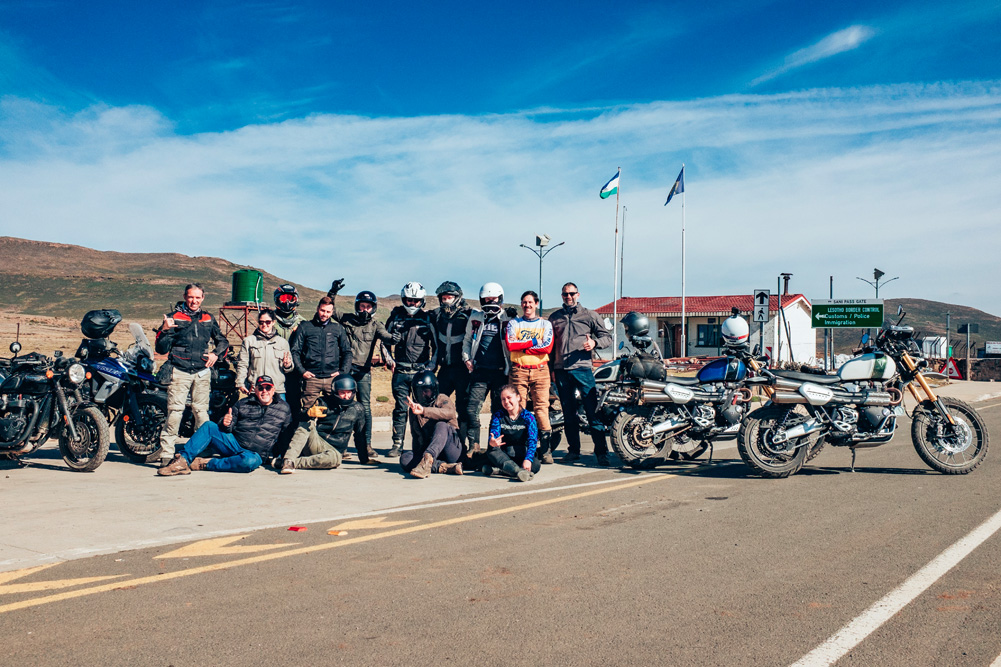
We lost count of all the drops but that doesn’t matter anyway. What did matter was that just 30 minutes before the border gate closed everyone was accounted for, all bikes had made it to the top and we were safe and sound. To be honest, this summit of Sani Pass was by far the most challenging of all of our trips.
Photo credit: Joe Fleming / Bonafide Moto Co.
As mentioned before there were all types of bikes on this trip; 3 Triumph 1200 Scramblers, 3 Tiger 800’s, 3 Street Scramblers, 2 GS 650’s, 1 GS 800, 1 KTM 1290. But do you want to know which bike made it up with the most ease out of all of them? A stock Bonneville T120. Yup. It was the third time this specific bike had summited the pass and it did so quite easily. We’ve noticed that the lower the sense of gravity on the bike, the easier it is for the rider to get up.
Photo credit: Joe Fleming / Bonafide Moto Co.
That evening around dinner you could hear and you could sense the fear and realization of how challenging the ride up to the top was. Some riders were questioning whether or not they should go down the pass or take the long detour through Lesotho. For us, we prefer everyone stays together as a group, but we aren’t here to tell riders what they should do. After a good dinner, and a good nights rest the attitudes had changed. Everyone knew what they had signed up for and they each wanted to finish what they had set out to do.
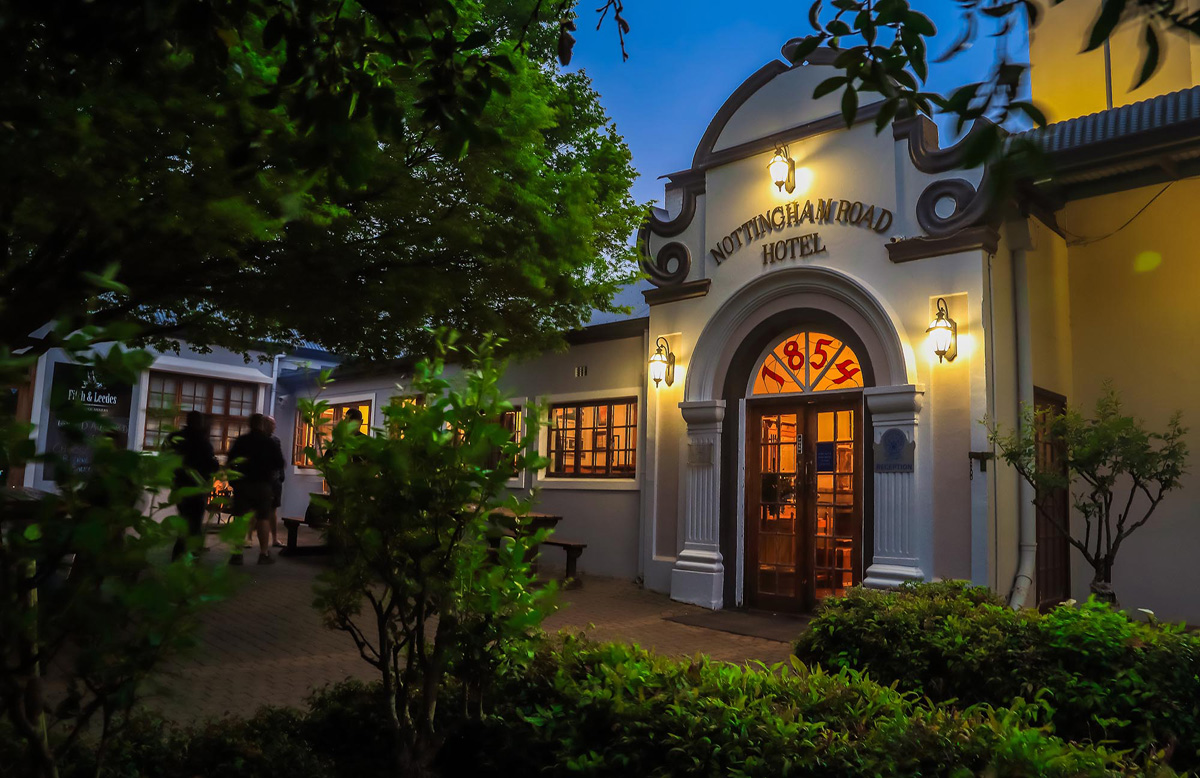
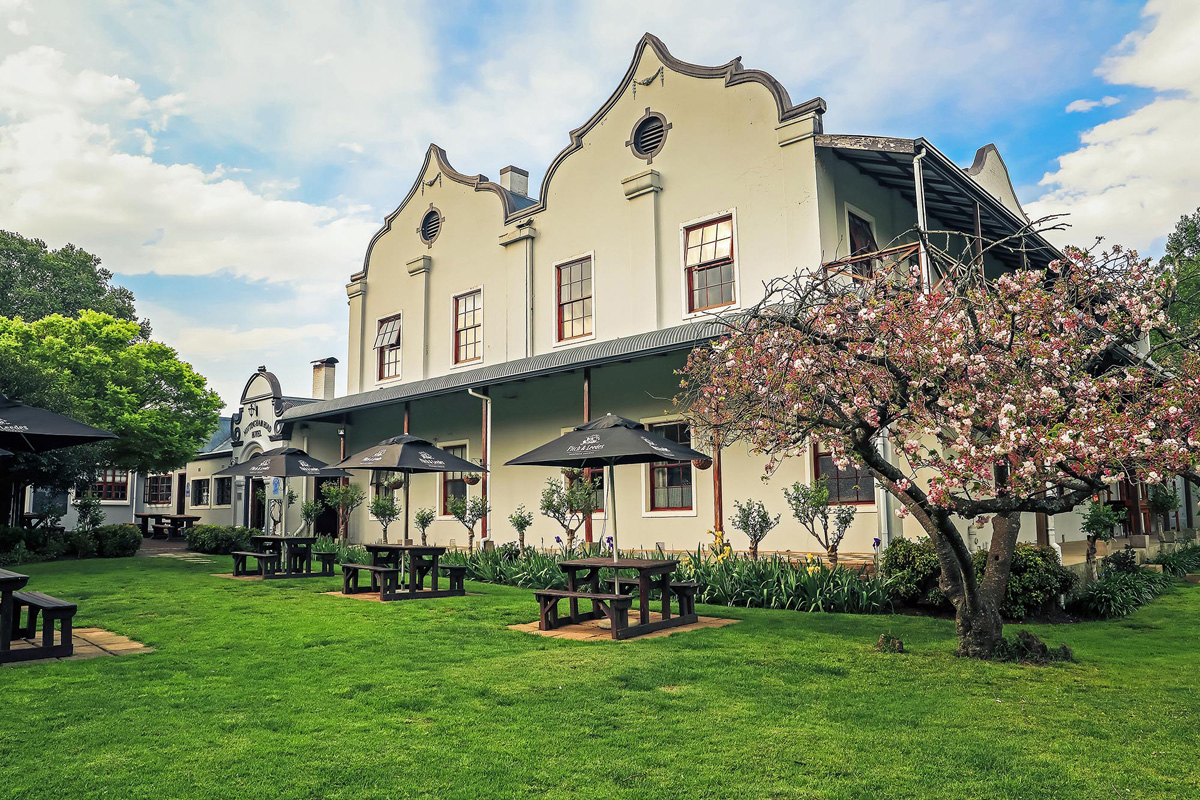
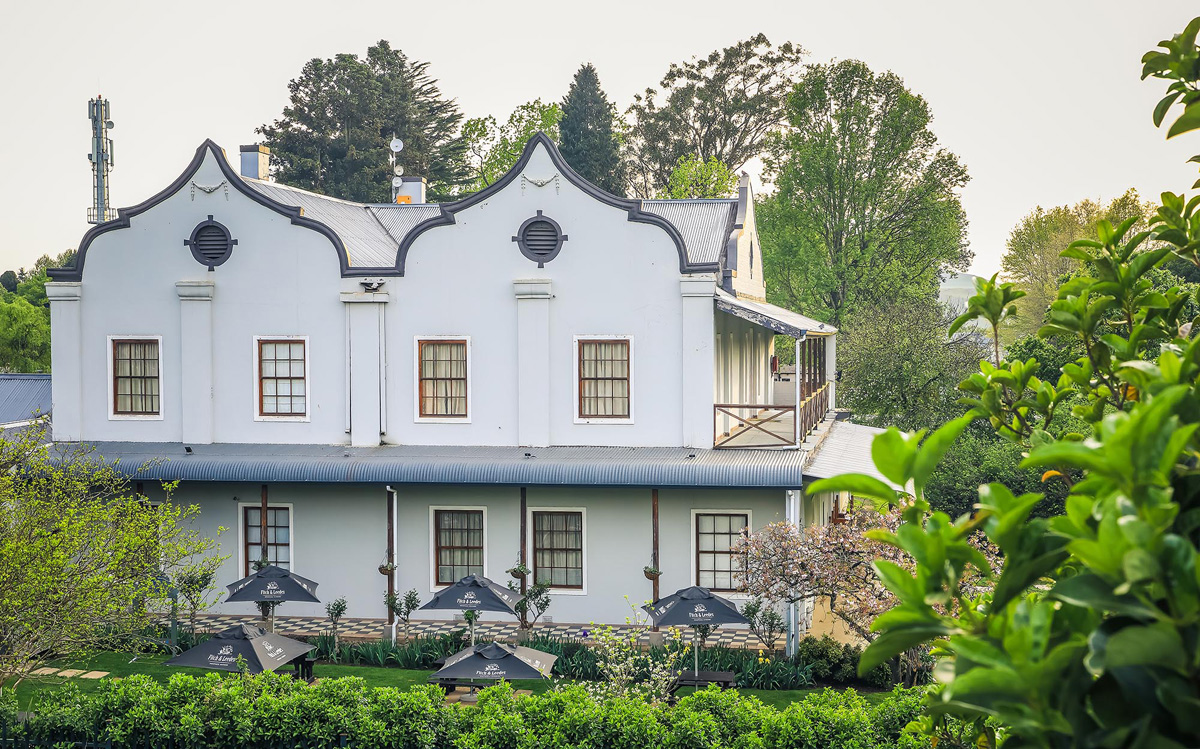
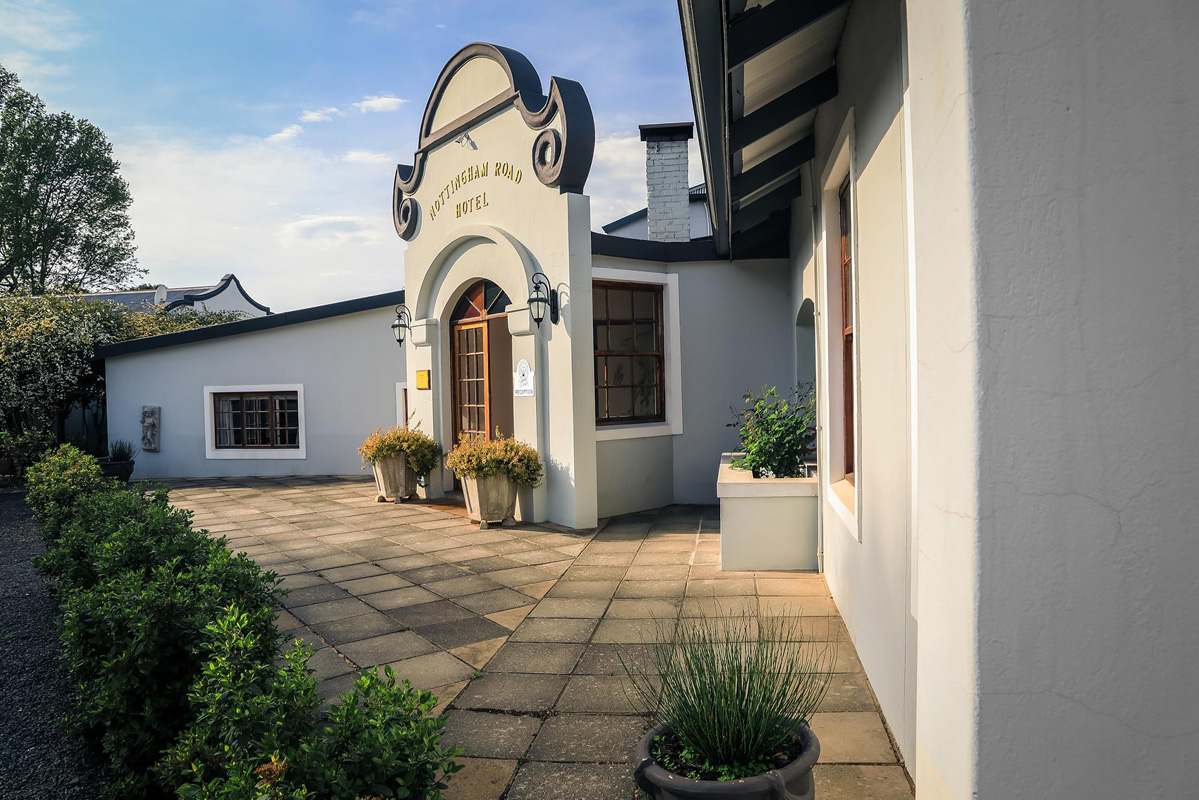
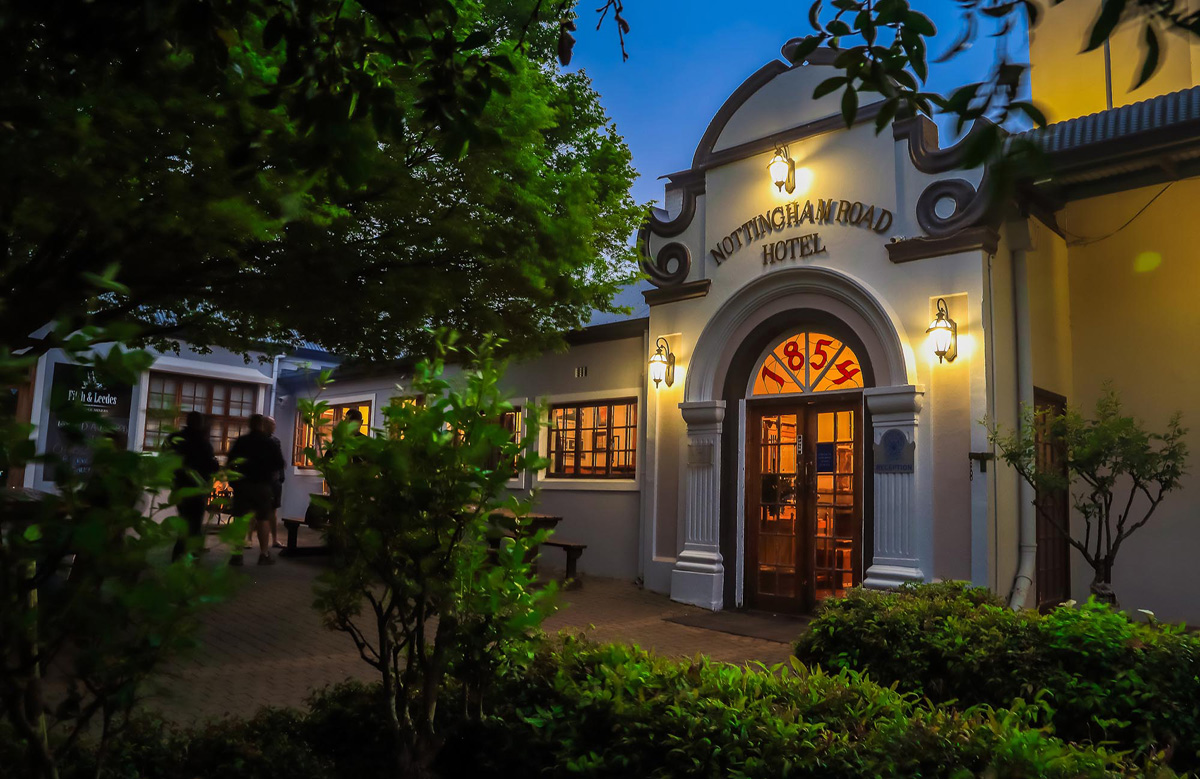
Their reward after making their way down the pass? One of the most fun dirt roads connecting from Underberg to our final night stay at Nottingham Road Hotel. This 70km dirt road has been one of our favourites through the year as it’s thrown a bit of everything at us. The first year was a clay ice skating rink from a decent amount of rain that had come down on our way. This year was not the case and we lucked out with another dry, dusty and smooth ride into Himeville.
Photo credit: Joe Fleming / Bonafide Moto Co.
The last night is always the best as Notties Hotel has quite a unique local pub downstairs and this year it was all ours! We had all come a long way together, we pushed ourselves, we progressed our riding abilities and we struck up new and everlasting friendships that we will never forget.
Photo credit: Joe Fleming / Bonafide Moto Co.
Our next adventure into eSwatini, The Kingdom of Swaziland promises to be a good one. The neighbouring country provides a beautiful scene for both asphalt and gravel riding of some of the finest in Southern Africa.
To join us on the next adventure to some of the other areas in Southern Africa head over to our www.bonafidemotoco.com and get ready for one heck of a good time!
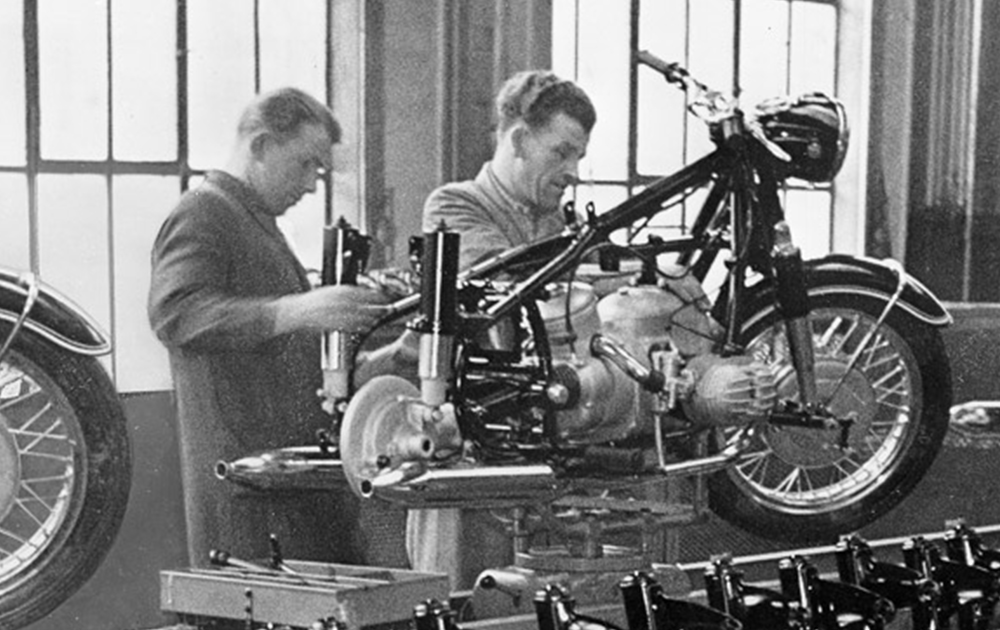
1969 was a big year for BMW Motorrad. That’s the year they opened their new factory in the Spandau area of Berlin, and it’s the year they launched the /5 series of boxers—the R50/5, R60/5 and R75/5. With a new engine and chassis, electric start and a contemporary design, the /5 was an instant hit.
Photo credit: BMW Motorrad
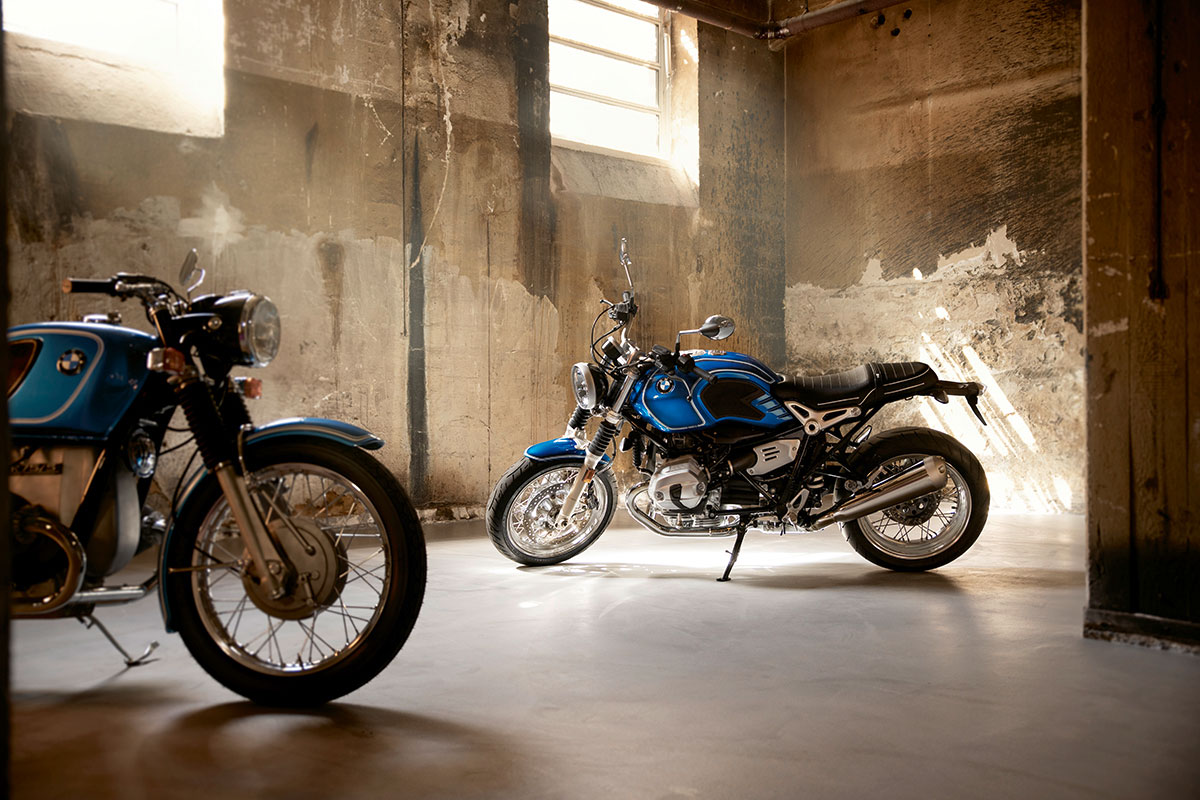
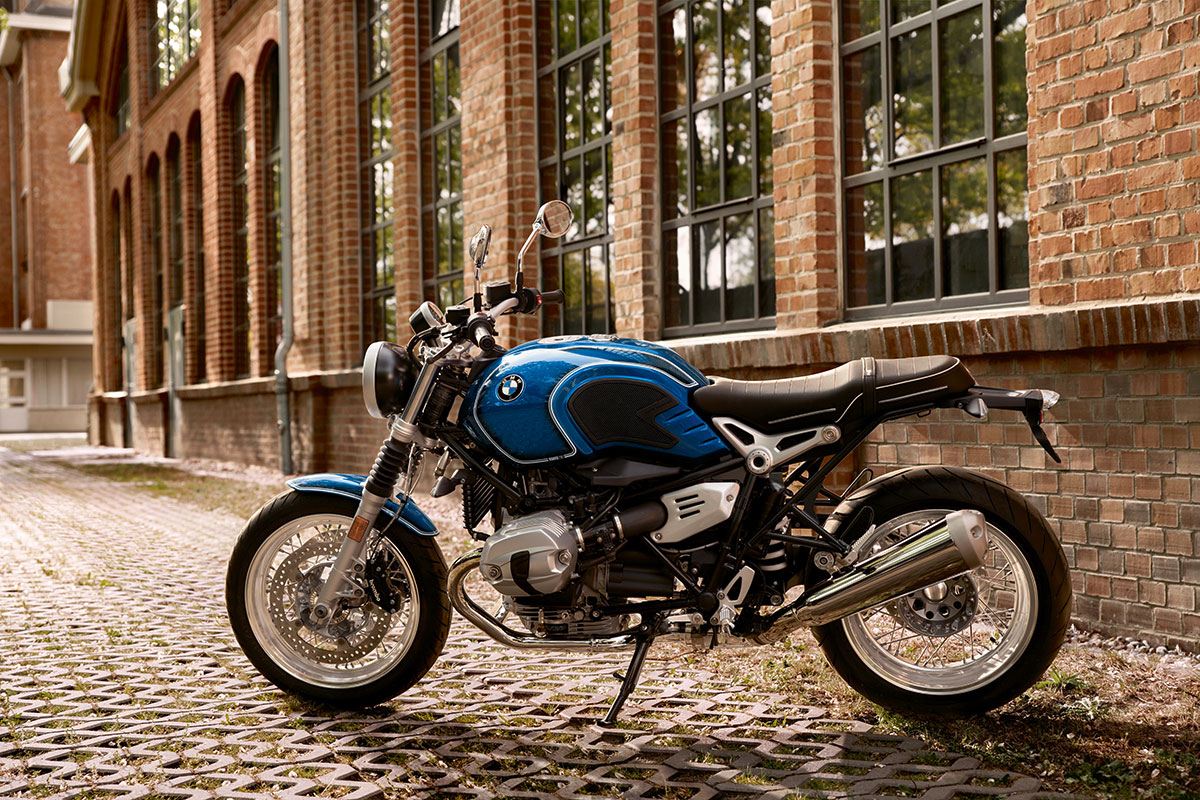
Now BMW Motorrad are commemorating the 50th anniversary of both occasions, with the special edition R nineT /5. As BMW’s only remaining air- and oil-cooled boxer, the neo-retro R nineT is the perfect choice.
Photo credit: BMW Motorrad
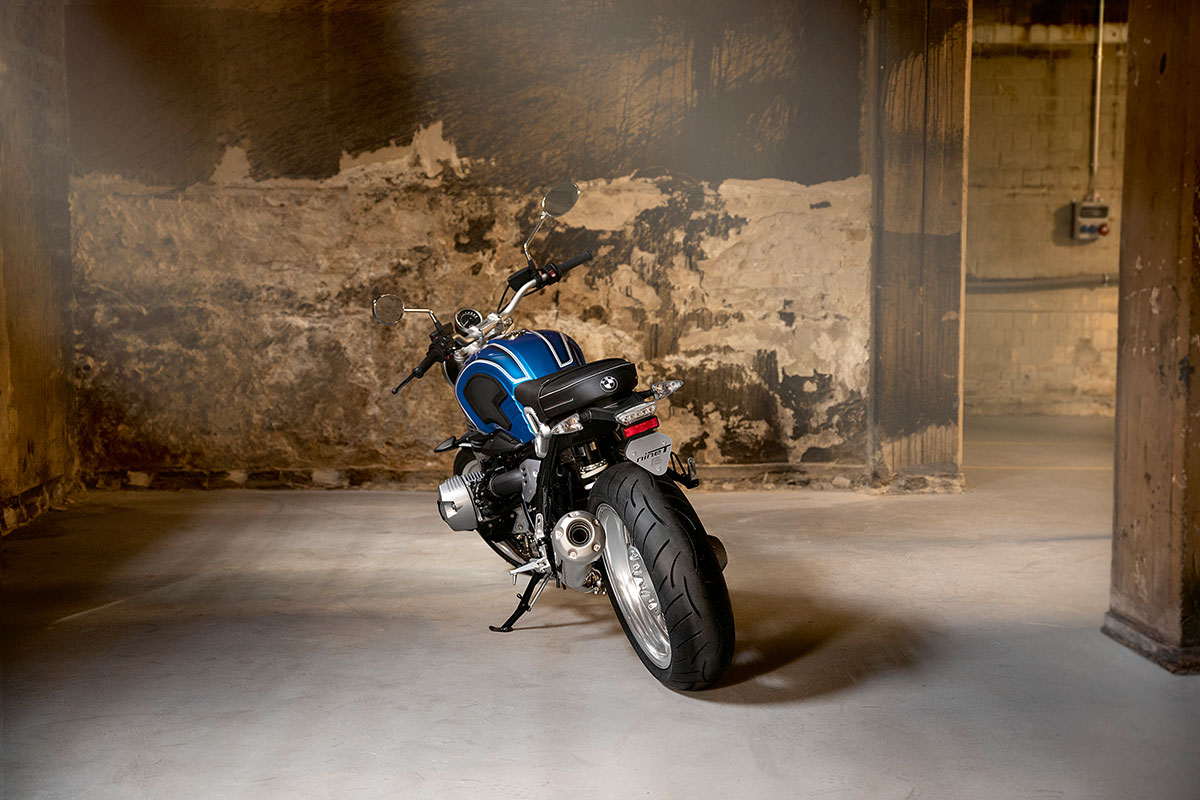
This /5 special edition is really just a cosmetic re-work of the stock R nineT, with no significant mechanical differences. At a glance, the base bike seems closest to the R nineT Pure. It comes with right-side-up forks, 17” spoked wheels, and the same style exhaust as the Pure.
Photo credit: BMW Motorrad
The biggest visual hit comes from the /5’s rich blue paint job. The original /5 bikes came out in brighter colours than previous BMW motorcycles; a response to an era marked by musical progression and political turmoil, and a bid by the marque to push into the US market. So the R nineT /5 has been finished in a Lupine Blue metallic livery as a homage to the original.
Photo credit: BMW Motorrad
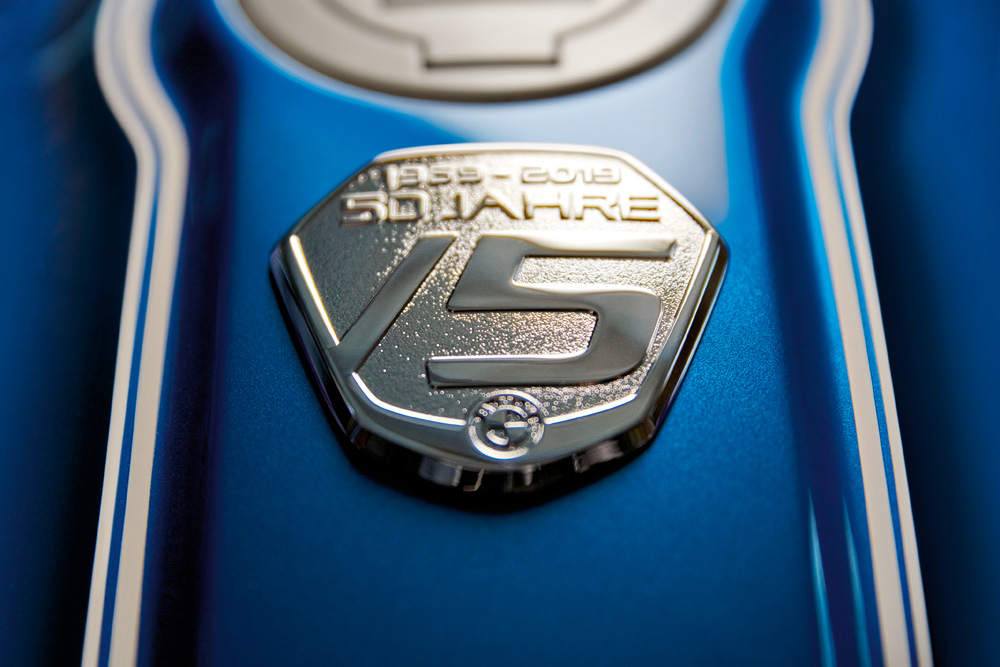
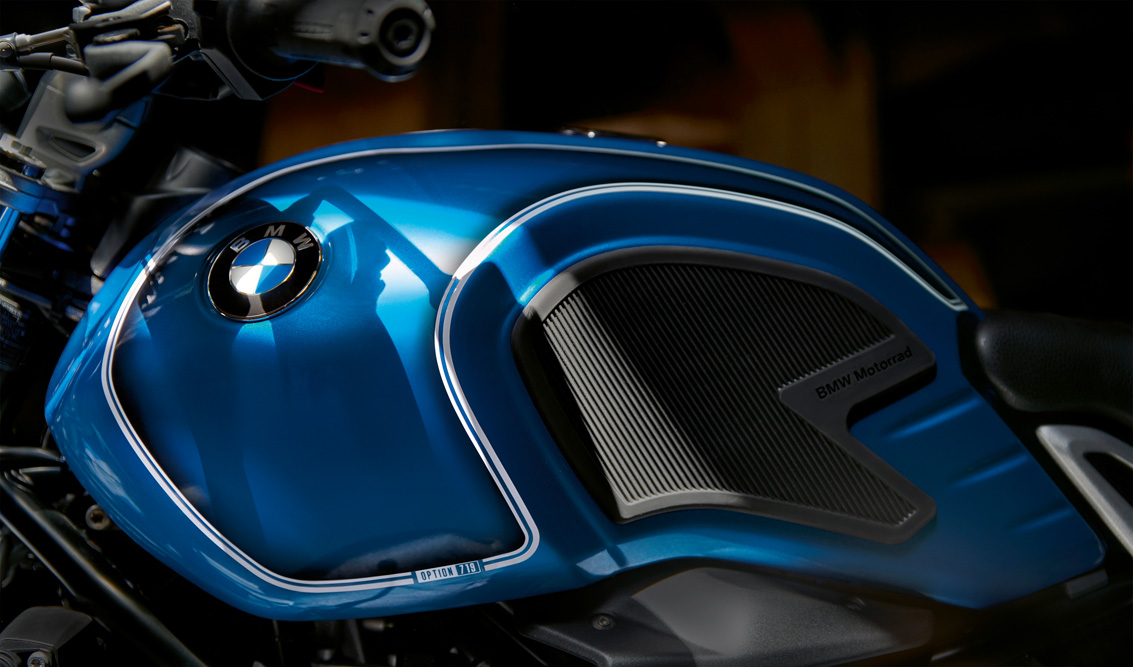
It’s a highly detailed finish, with double white pin-striping and subtle smoke effects in the paint. There’s also a pair of vintage-looking rubber knee pads on the tank, as well as a 50th anniversary badge just behind the petrol cap.
Photo credit: BMW Motorrad
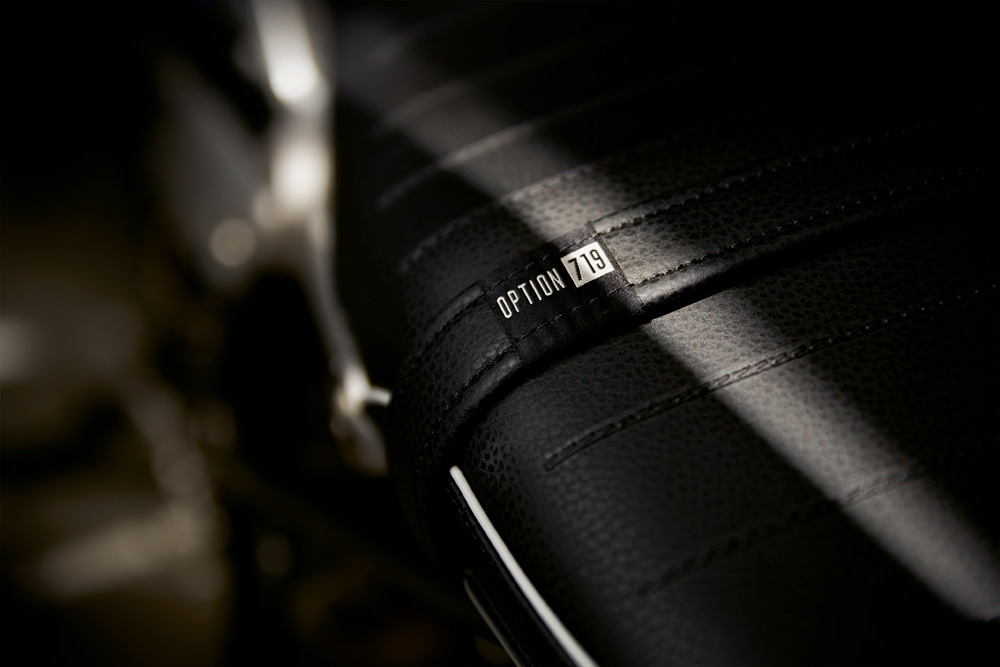
The R nineT /5’s two-up seat is unique to this bike too. It’s shaped a little differently to a stock R nineT saddle, with a double countour that harks back to the classic /5. It also features embossing that mimics BMW’s classic horizontal pleating, a grab strap, white piping and chrome trim.
Photo credit: BMW Motorrad
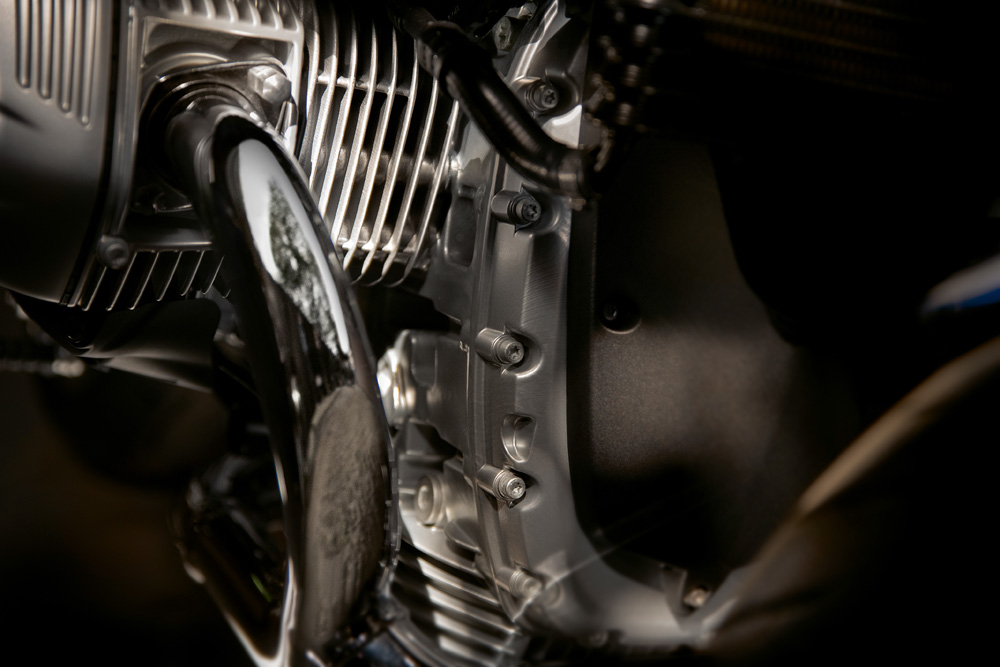
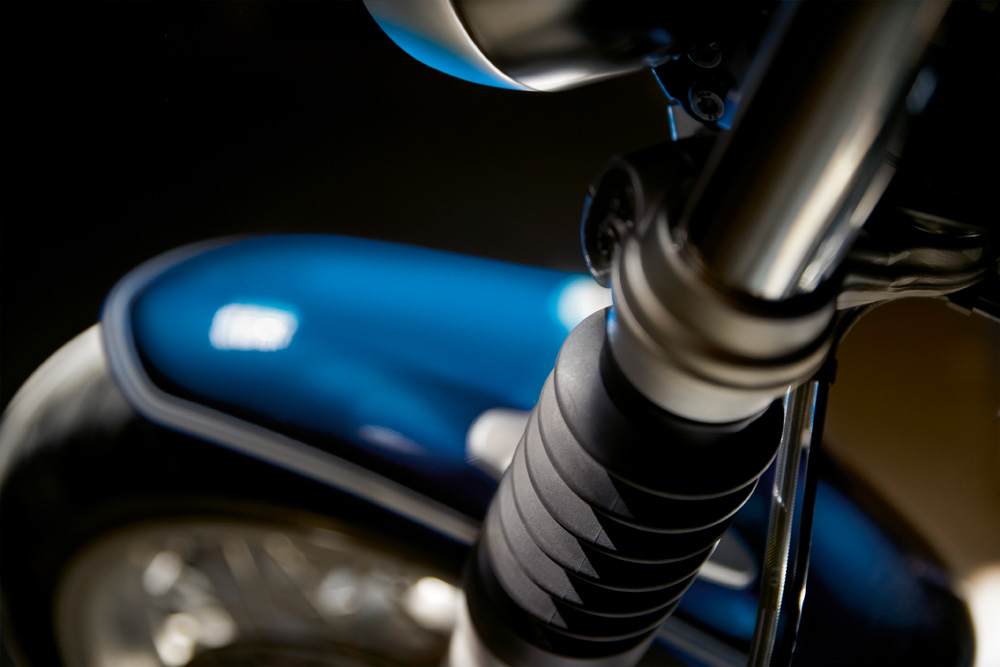
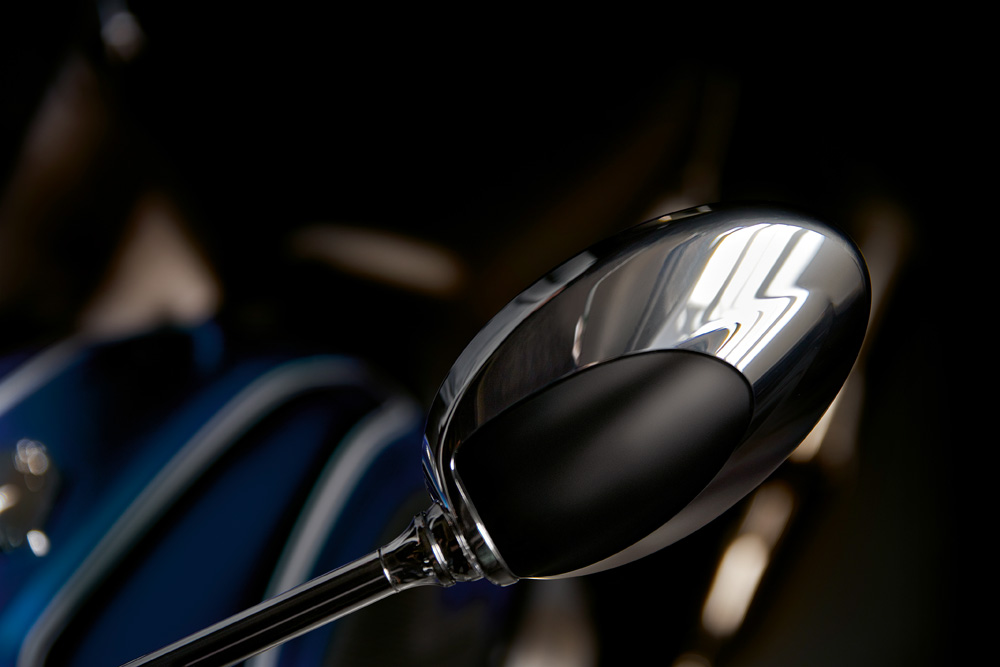
This special edition also gets chromed mirrors and exhaust headers, all to push the vintage styling further. The motor, gearbox, fork lowers and wheels are all finished in Aluminium Silver, and even the final drive is black in front, and silver at the hub (just like the R75/5). The /5 also gets a unique set of side covers, and rubber fork boots.
Photo credit: BMW Motorrad
The rest of the equipment is standard R nineT fare—which means that the /5 will take any accessories that would fit a ‘regular’ R nineT. (Just imagine this with BMW’s solo seat and tail hump, painted to match.) Modern kit includes ABS, traction control and heated grips as standard.
Photo credit: BMW Motorrad
Even though the R nineT /5 is nothing more than a cleverly re-skinned R nineT, it’s tastefully executed, extremely stunning and one of the nicest special edition bikes we’ve seen.
Photo credit: BMW Motorrad
Unfortunately BMW Motorrad have not confirmed whether it’s coming to South Africa or not, so for now we’ll just have to be content with these photos.
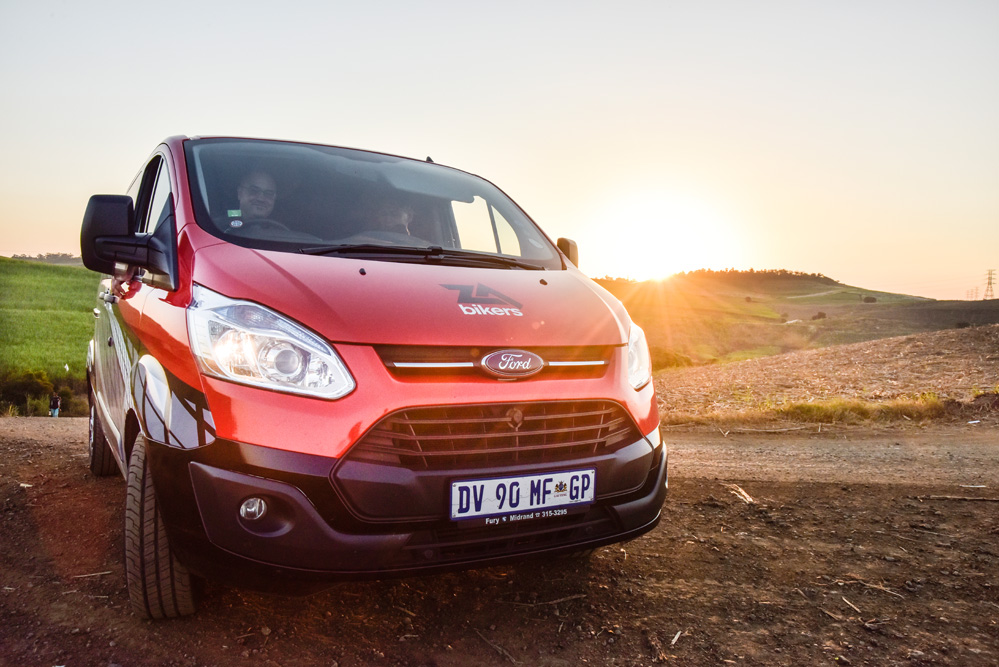
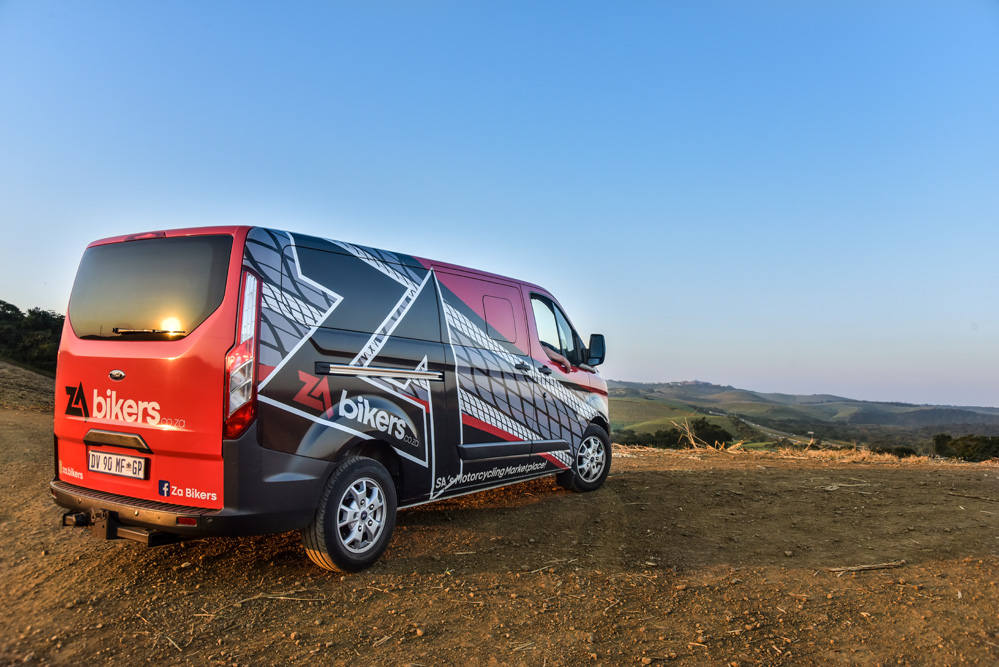
At ZA Bikers we needed a road trip. But not just any road trip. After a very rewarding few months of visiting and interacting with the Gauteng based dealers from all avenues of society, we thought it fitting to fan the friendship further than our municipal borders. We wanted to go where we had not gone before in our finely wrapped, pretty and imposing Ford panel van.
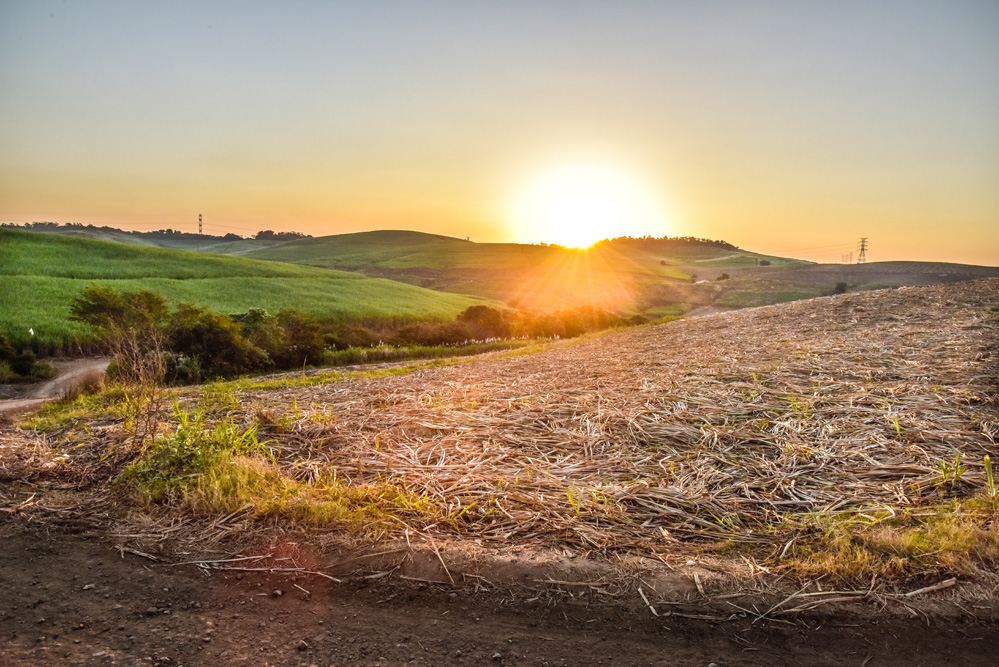
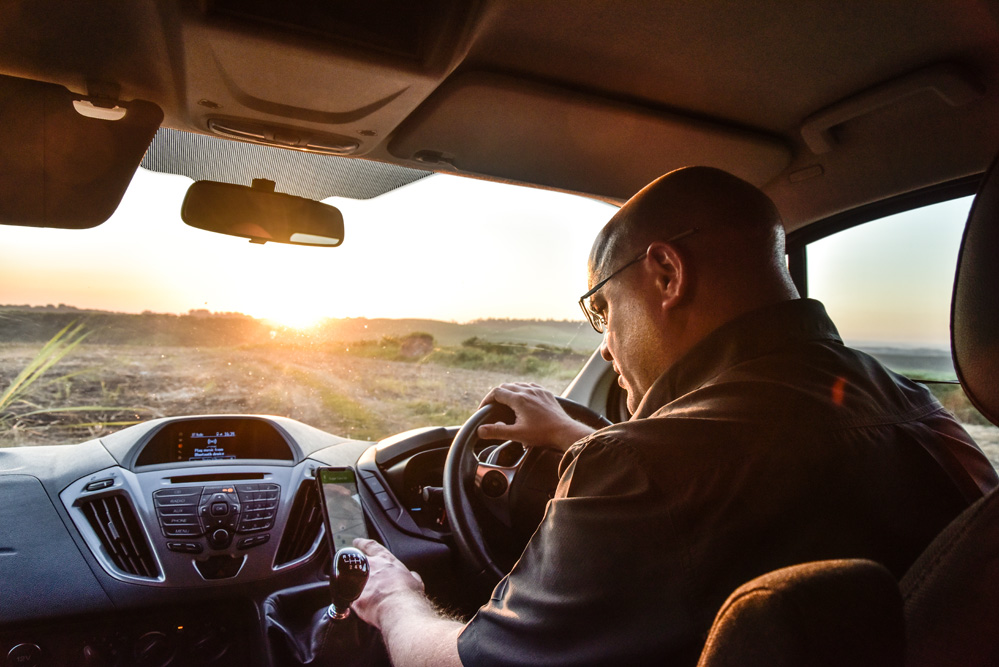
Trust our editor in chief, Simon Morton for what happened next. We took a few wrong turn off’s against the advice of the stoic but professional GPS lady and ended up in the most beautiful cane fields and rolling hills. Off course the road had turned to gravel a few miles back and was becoming more challenging as the three of us gave our piece of mind to the GPS lady. What ensued was just a whole lot of mocking and laughter.
We may have been lost in the sugarcane fields… but what we found was a vibrant, energetic bike scene.
It was a fitting start to our otherwise well-organised road trip of one whole week. You guessed it. Sugar cane fields can only mean that we were somewhere in the green, lush hills of KwaZulu-Natal, or KZN as most South Africans would call it nowadays.
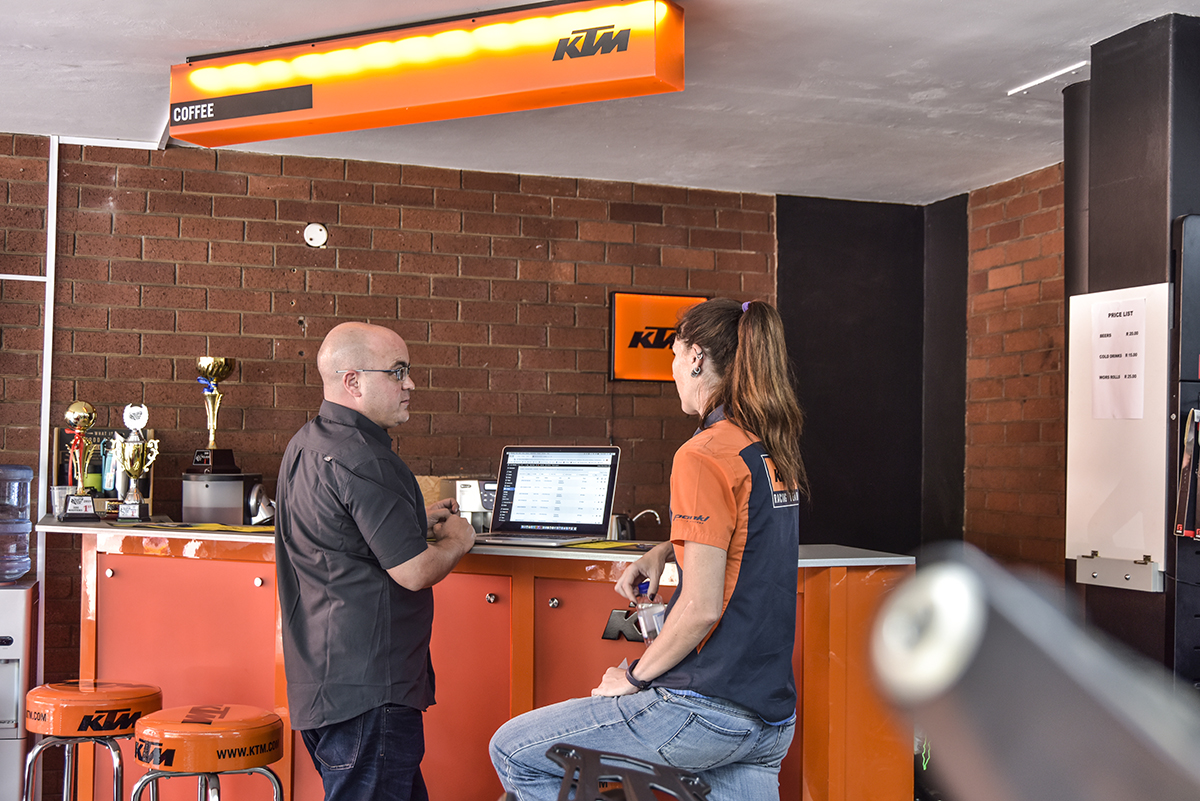
Our friend, Keryn Ehlers responsible for social media at a Gauteng based dealer had moved down to Durban and wanted us to offer our special toolset to the local KTM dealer, where she now works. It was certainly not hard to spot that she is loving life in KZN. We are so glad for her.
Keryn Ehlers (KTM Durban), receiving first-hand training from our passionate, hard-working editor.
The building is presently under renovation and should be very impressive once finished. It is built on top of a busy Spar Supermarket. Why do I mention that? Because the best possible curry dishes can be picked up here for virtually nothing. It was finger-lickin’ good, to quote the words of Col. Saunders from KFC fame.
We started in Pietermaritzburg and worked our way to Pinetown and then Durban. From there we would head up North and into the Richards Bay area where we had heard reports of some vibrant biking activity.
We needed a break and we wanted a good story! Or should I say a feel-good story? Of course, we had no idea what to expect when we set off on a cold Sunday morning. At least we knew the weather would probably be a little less hostile in that part of the world. But what we found was a lot less hostilities, period!
Getting lost somewhere between the N2 and Umhlanga Rocks.
We found a bunch of friendly, approachable dealers. They all knew exactly who we were despite the fact that every visit was a “cold call” as we say in the sales game. These dealers treated us like old friends and were very interested to hear how things were going in the rest of the country.
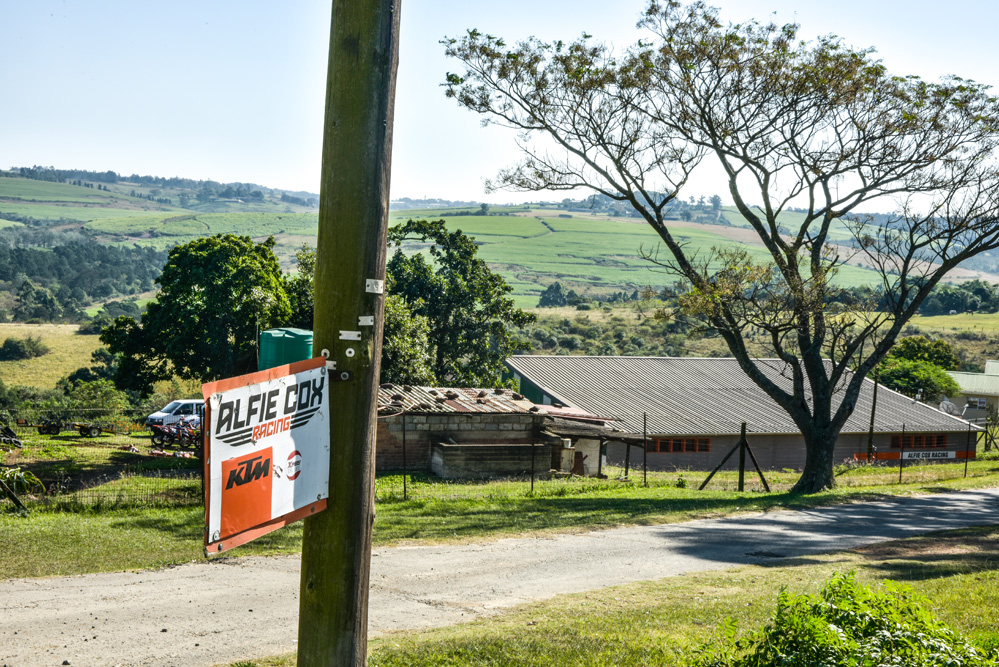
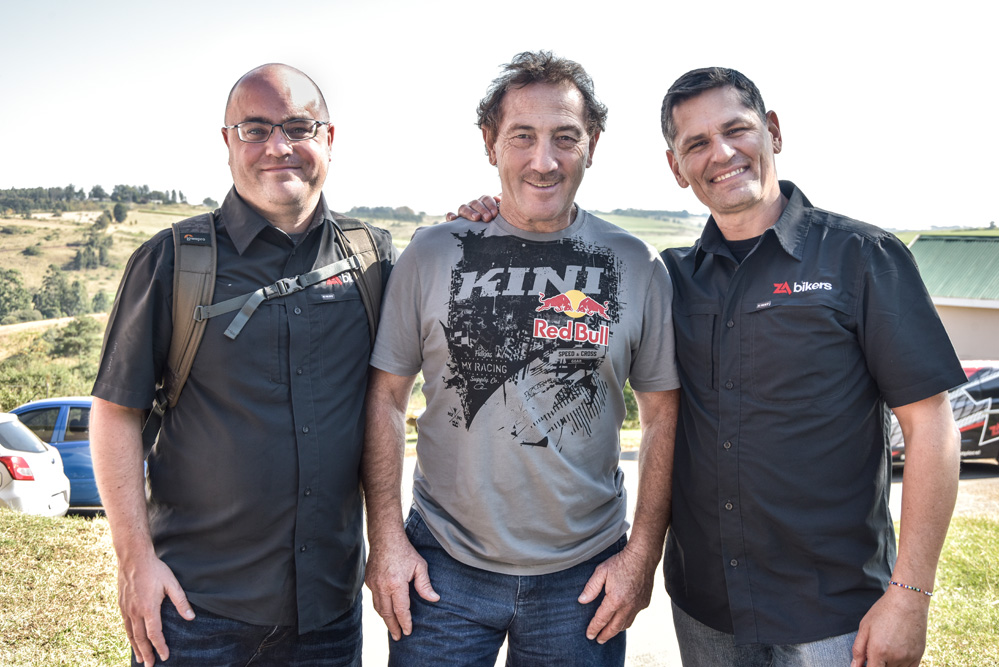
We spent hours laughing and chatting as we were entertained by former MotoGP technicians, road racers from the days of old that mesmerised us as kids, all the way to Red Bull legends like Alfie Cox on the rolling hills of his Cato Ridge farm. It was a week that will remain a highlight in our minds for some time to come.
A very special family business somewhere in Cato Ridge, KZN.
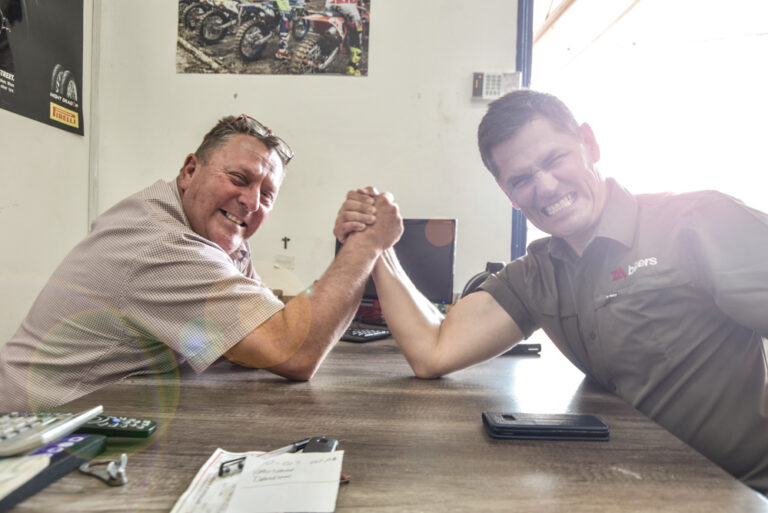
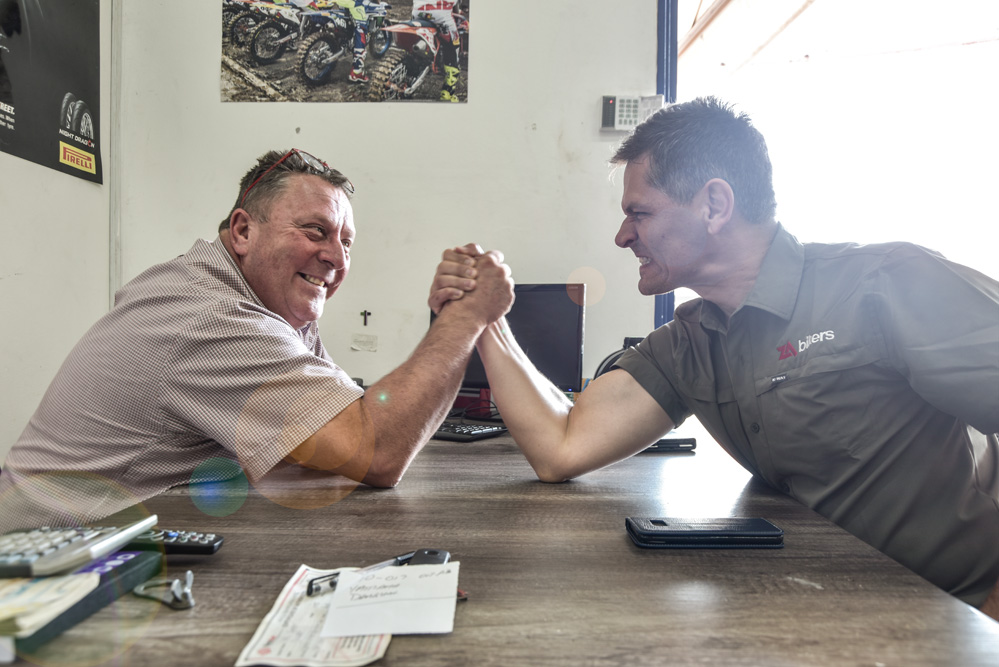
Personally, I managed to hook up with a few friends like Peter Marshall from Monster Motorcycles, who used to swop paint with me on our Gauteng race tracks weekend after weekend. In KZN you do not become a respected member of the community when you are this talented, you simply become a legend. Now past our circuit racing rivalry, we ensued in an arm wrestling match instead, to clarify who really should have been champion, back in the days. Laughter all round!
The final showdown between Peter Marshall and Braam Smit.
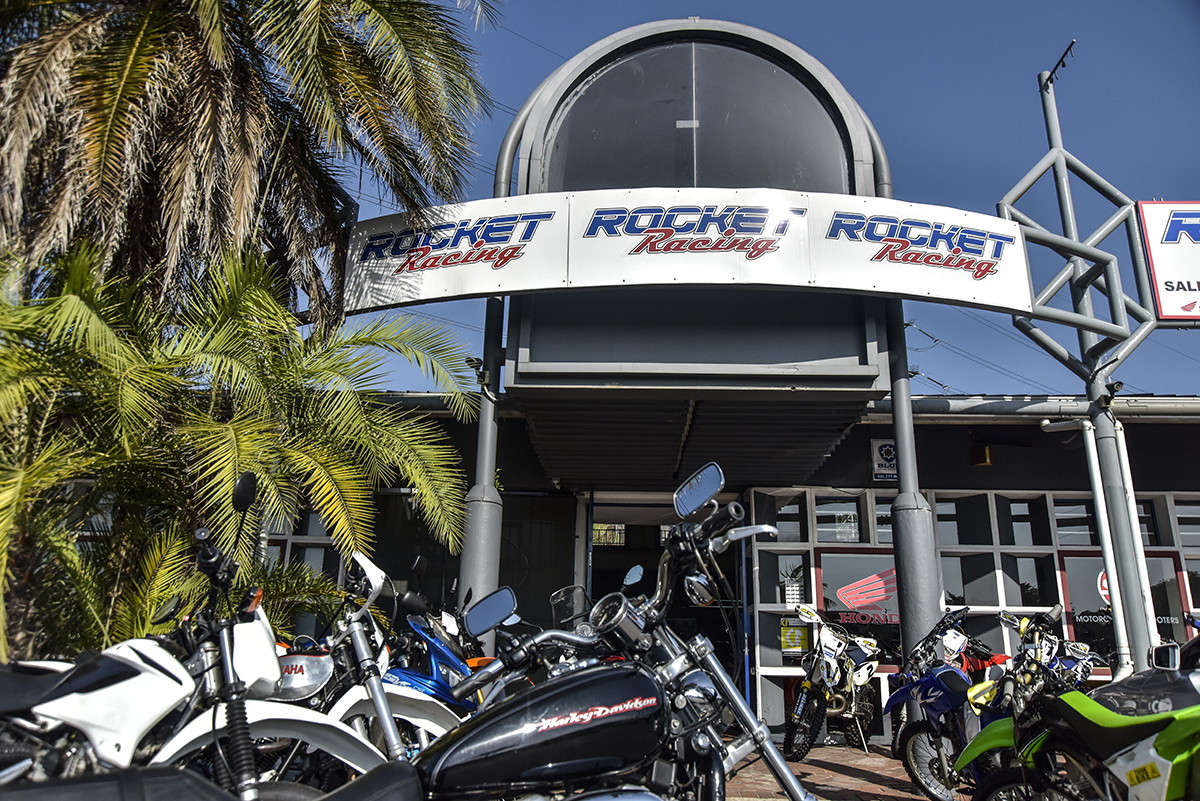
Monster Motorcycles is part of a trio of bike shops in the same centre. The other two being Rocket Racing and Bikes4Africa. All these dealers hold impressive stock and dedicated staff. So nice to visit three bike shops within walking distance from one another.
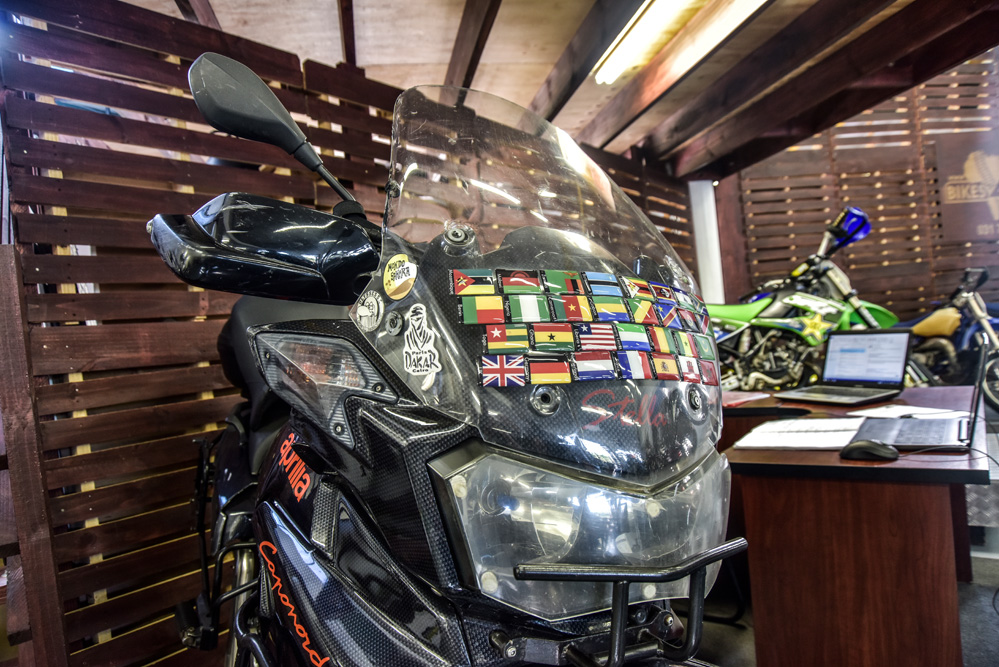
The Aprilia Caponord that Johann Greyling, from Bikes4Africa used during his voyage through Africa.The guys from Rocket Racing had some really clean used stock. They are also Official Honda dealers.
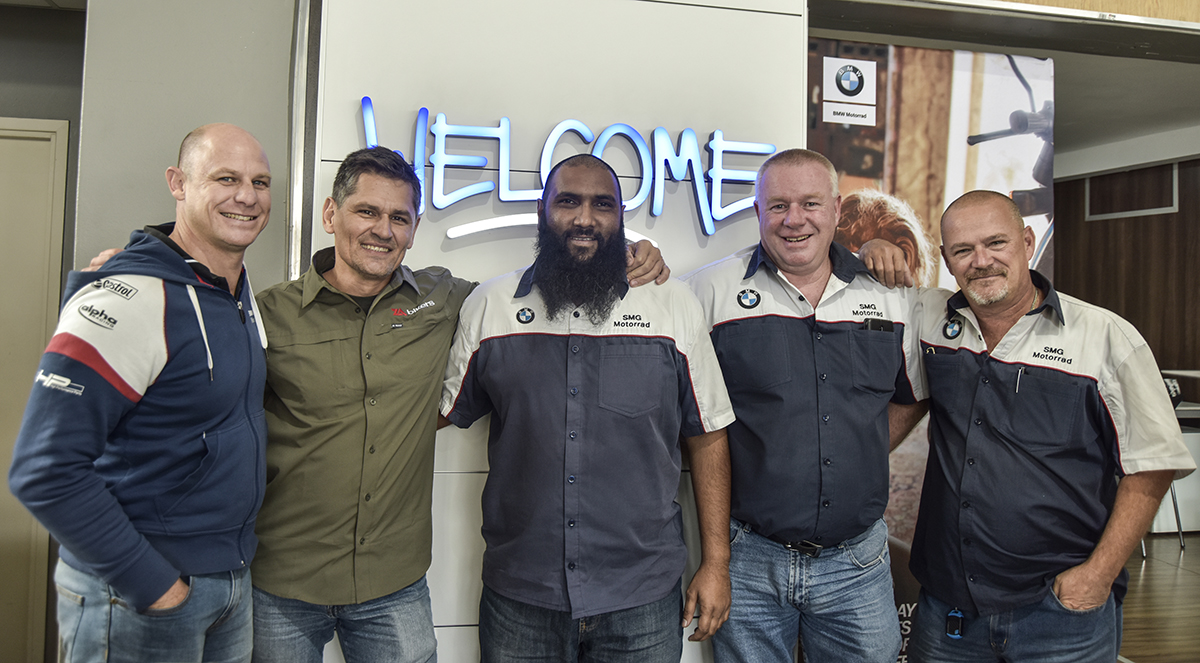
I managed to also meet up with an old friend Shaheen that used to work at Auto Umhlanga BMW, now better known as SMG Umhlanga. We started selling bikes at round about the same time, some twenty years ago and could share stories about our experiences. He still exhibits that personal approach and soft-spoken voice that has endeared him to the local clientele from the last number of years. He remembers every customer’s name and pedigree as one should. Old school values lost in the winds of change, it seems.
Good times with the friendly team at SMG Umhlanga.
Over here, we also ran into an old friend and foe, Alister Hay. Alister trumped me as the number one BMW Sales Manager back in 2005 and 2006. We were two of only three South Africans fortunate enough to go to Spain in 2011 for inaugural rides and in-depth training on the then brand new K1600, six-cylinder models. Mutual respect is the password here…
Old friends, old foes Alister Hay and the author reminisce about good old times.
We had fun with the straight-talking Alfie Cox, whom I met for the first time. Off course, Alfie is better known as South Africa’s Dakar legend. A title no one will ever disown him. He also does guided off-road tours and events like the annual Dual Sport Festival, not far from where he lives.
I finally get to meet the Red Bull Legend, Alfie Cox.
Talking of which, the Natalians know their terrain. You get the feeling that they spend every weekend on their bikes, whether in the sugarcane fields like the ZA Bikers crew, or burning rubber somewhere in the midlands meander. True enthusiasts that live, breath and talk bikes all day, as this is who they are.
We also found that many dealers helped each other out in keeping a chosen customer happy. We hear that the customers here are also very loyal, unlike what we find in the big smoke nowadays. All in all, I can describe it as the Gauteng era from twenty years ago, when these values were still at the order of the day. Things just seem to move way too fast in Gauteng nowadays…
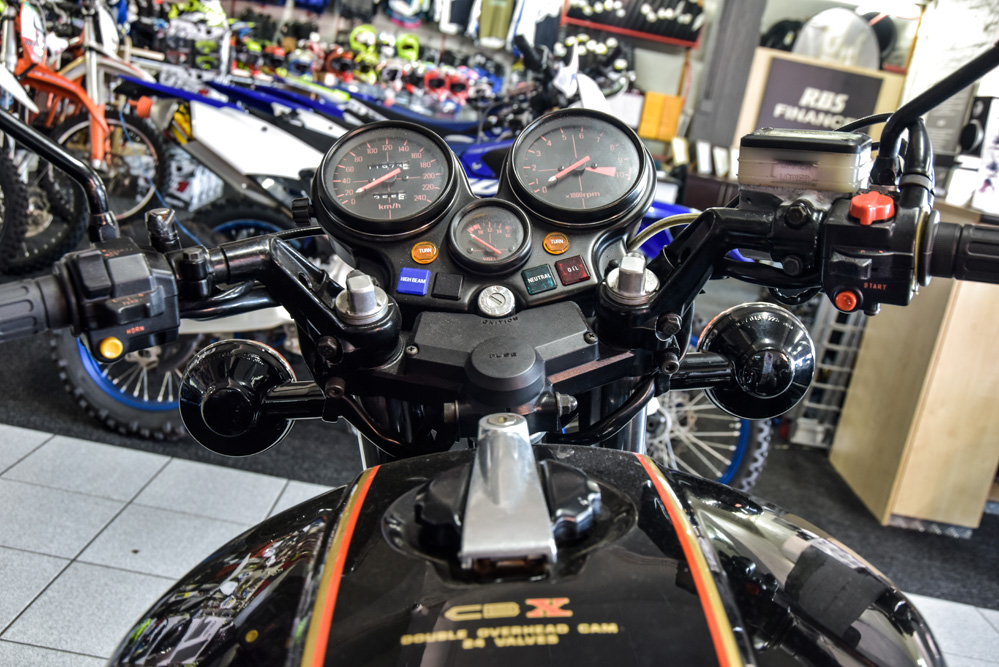
The delectable, early 80’s, Honda CBX 1000 at RBS Yamaha…
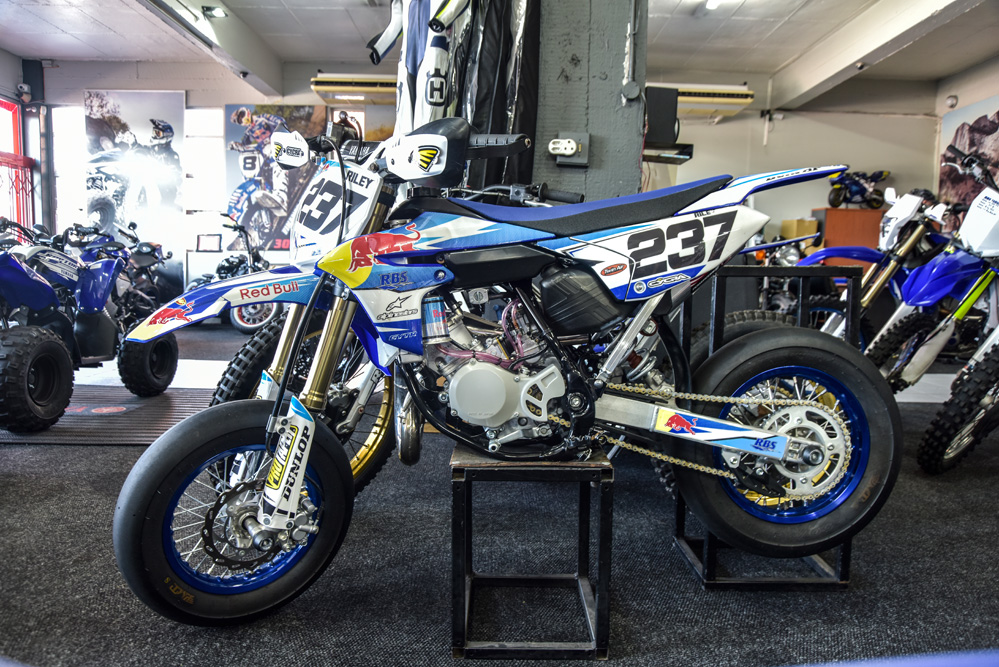
Most of these dealers have immaculately turned out, old school Yamaha RZ50’s or Honda MBX’s gracing their showroom floors. We found the most beautiful, six-cylinder Honda CBX1000 at RBS Yamaha, sharing floor space with a Yamaha R1M, signed by Vinyales, all the way to a two-stroke YZ85 in perfect SuperMotard livery.
The most beautifully turned out Yamaha 2 stroke mini motard we had ever seen…
Blue blood in their veins, Yamaha blue… What a joy to see!
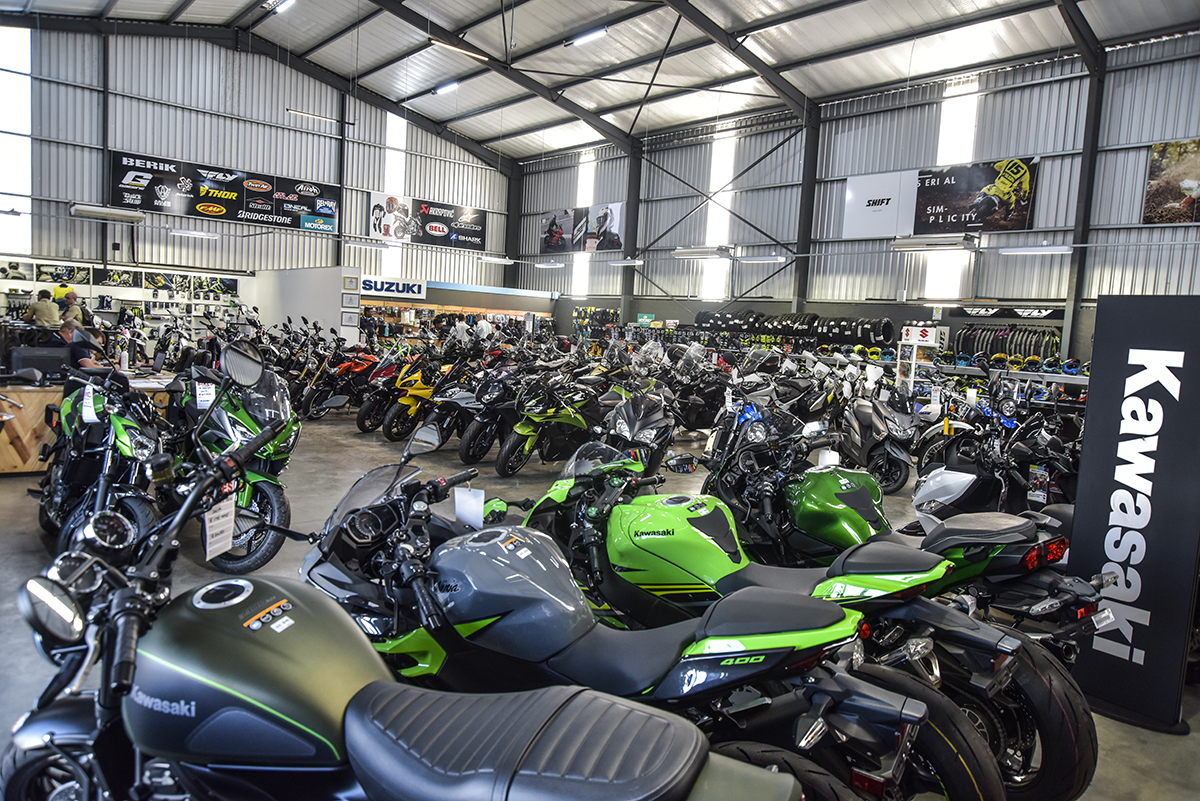
A warehouse full of gleaming stock to suit every taste at Perry Bikes.
Perry Bikes is the local Powerhouse. We were greeted by a very approachable Mark Perry, owner of this fine establishment and his knowledgeable sales staff. There is a huge variety of bikes on their floor, both new and used! It took no time to set up their profile and train their staff in navigating the tools we supplied them.
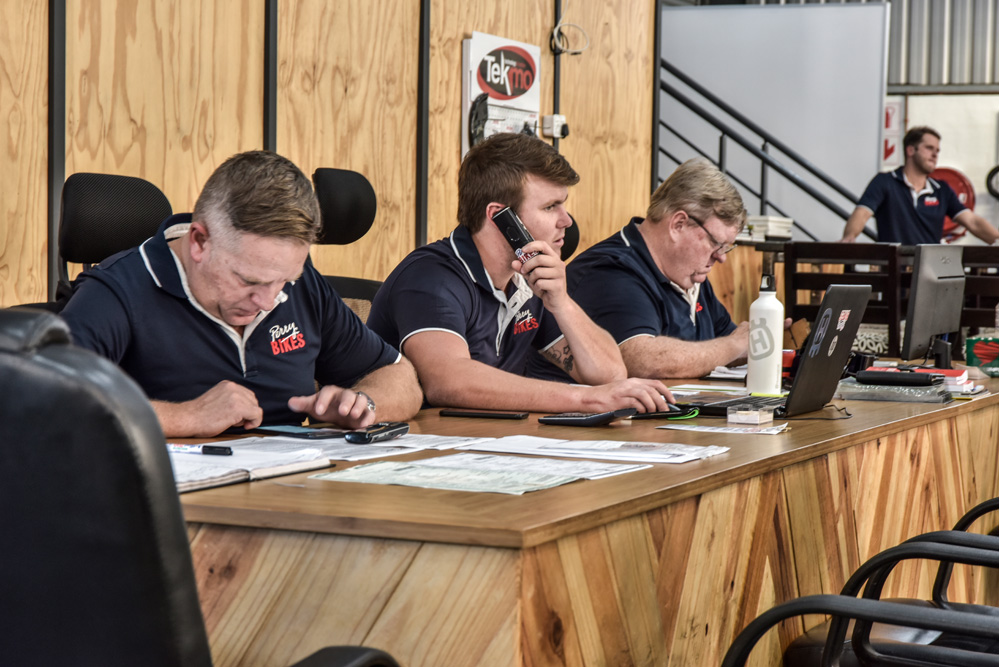
The highly focused sales team at Perry Bikes.
Imagining things cannot get much better, we made our way up North to Richards Bay. This beautiful drive took us to even more friendly, warm-hearted people. First stop was Jaco, from Richards Bay Suzuki. The ZA Bikers crew met him on last year’s Suzuki weekend, where he made a huge, lasting impression! Of course, he was off visiting the Yamaha dealer when we got there, so we spoke to his wife Belinda and committed to return a bit later that same morning. We proceeded to visit the Yamaha, BMW, Kawasaki and Honda dealers next, mostly teeming with life.
Oval track racing is also big in this town and everyone who is anyone was now busy preparing for their spotlight in the National Meetings over the weekend. Here we also found a community who knows very well who we are and welcomed us with open arms.
More meaningful conversation was to be had when we returned to Jaco, the Suzuki man.
A man with a plan! Jaco Viviers from Richards Bay Suzuki. What a fun visit that was…
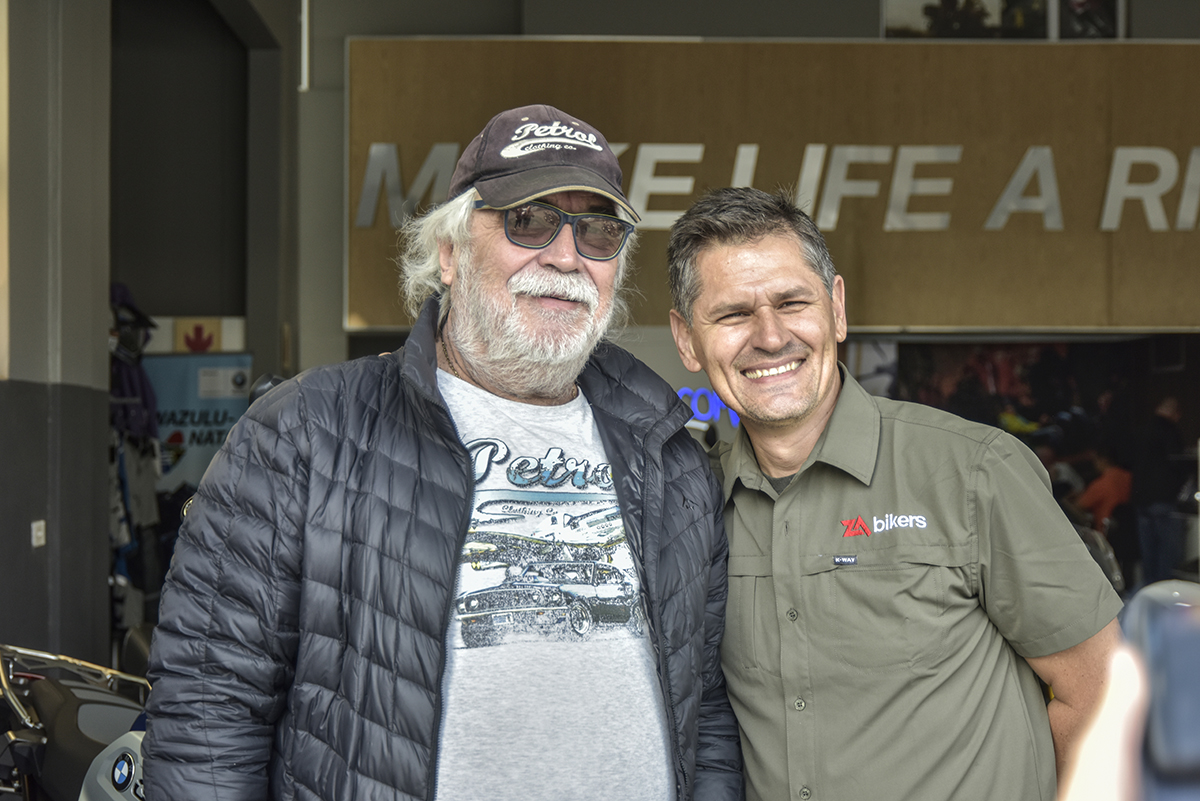
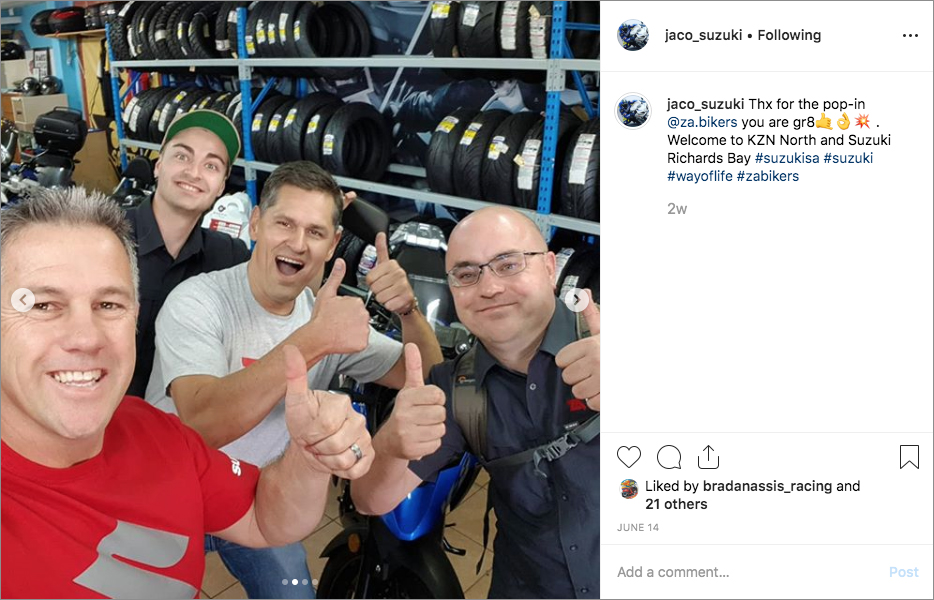
We had to leave eventually and it was most awkward for our resident photographer, Bjorn Moreira to be on the right side of the camera lens as Jaco took a parting shot of us.
Selfie time!
That night we slept in first-hand accommodation and had a meaningful dinner. We reminisced about a week well spent and people well worth remembering. We realised that there is life outside Gauteng, perhaps an even better, simpler life than we expose ourselves to every day.
Hopefully, we forged friendships that will last for many years to come and we can happily report that the biking scene in KZN is alive and well, perhaps even downright more enjoyable and interactive.
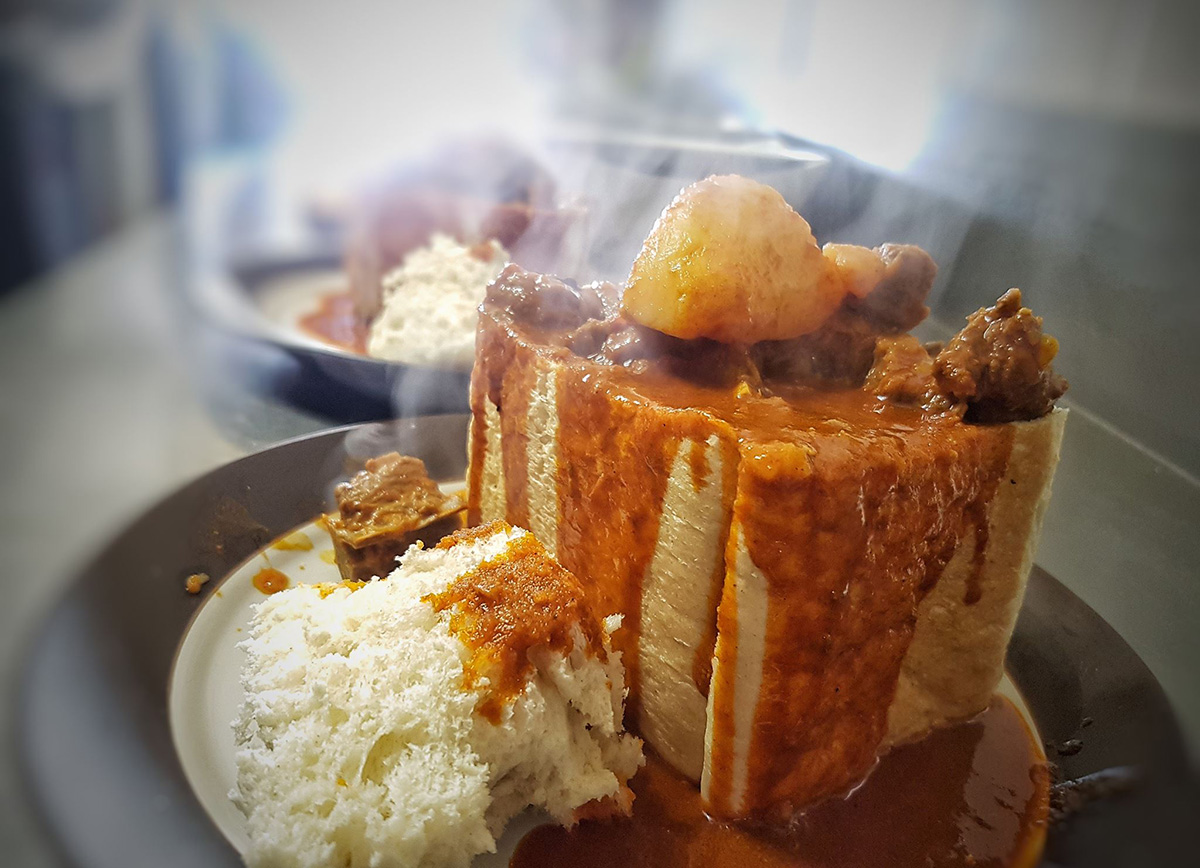
By far the best Bunny’s on our KZN trip was our final night in Richards Bay. KNK Curries we salute you.
Perhaps I can one day persuade our editor in chief, to change headquarters to KZN, far enough away from the hustle and bustle of the Gauteng city noise…
Reflecting at the end of the week on what has been an incredible trip to KZN.
Editors note; As a closing remark, we are sharing a link to the profiles of all the dealers we visited, complete with pictures, digital business cards and other useful info. We hope you enjoyed the read… www.zabikers.co.za/dealer-directory
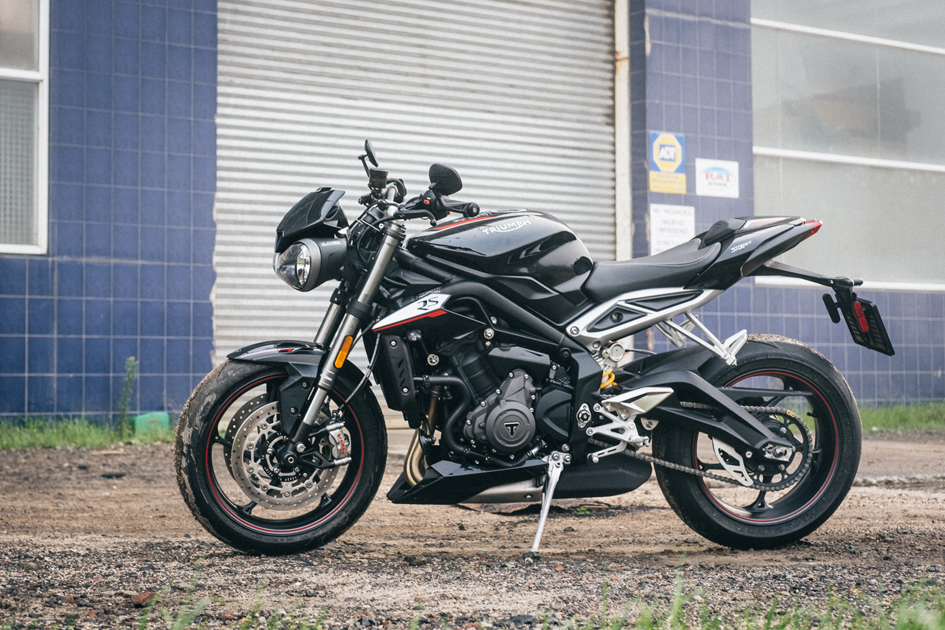
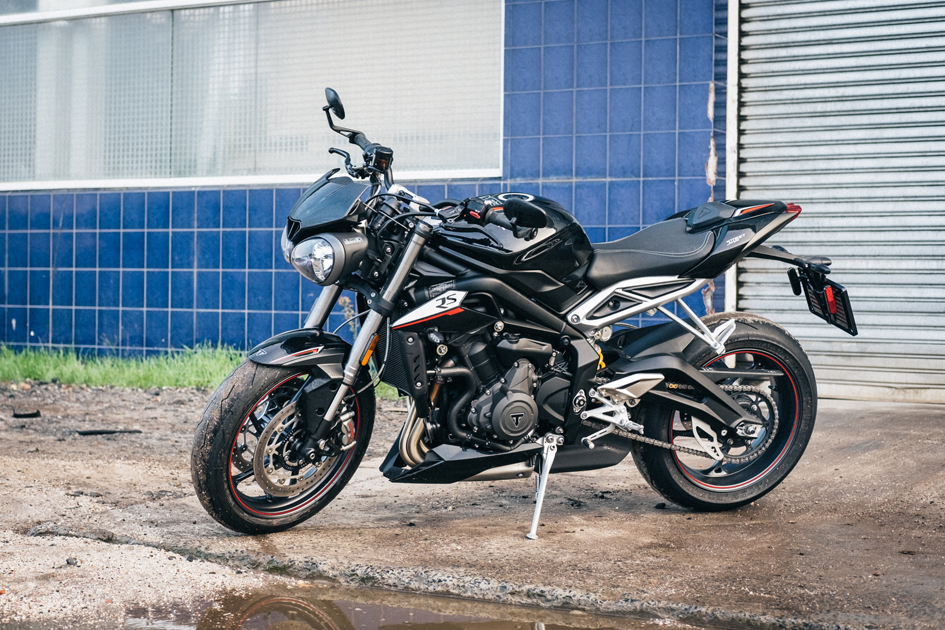
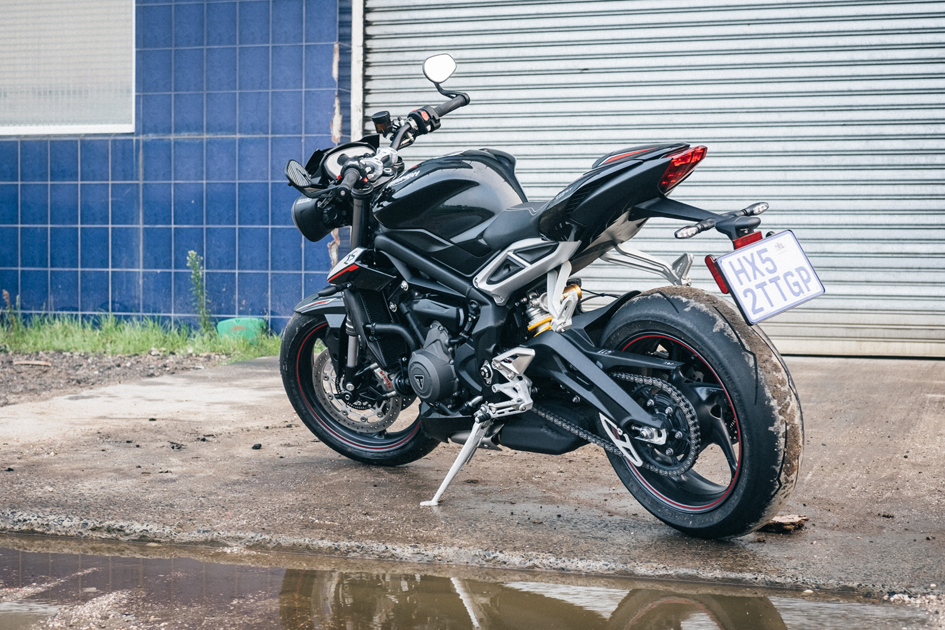
When the Triumph Street Triple first broke cover over a decade ago, it was a massive hit. The combination of the Speed Triple’s unapologetic styling, and the Daytona’s 675’s much-lauded motor, struck all the right chords for both critics and customers. It achieved what very few bikes do: it was an instant icon.
So the latest iteration of the Street Triple has some pretty big shoes to fill. Luckily, it’s powered by Triumph’s new 765 cc triple—a street-tuned version of the motor that’s currently powering the Moto2 race series. And the overall package is so good, that it easily fills those shoes…with change.
Photo credit: Wesley Reyneke / ZA Bikers
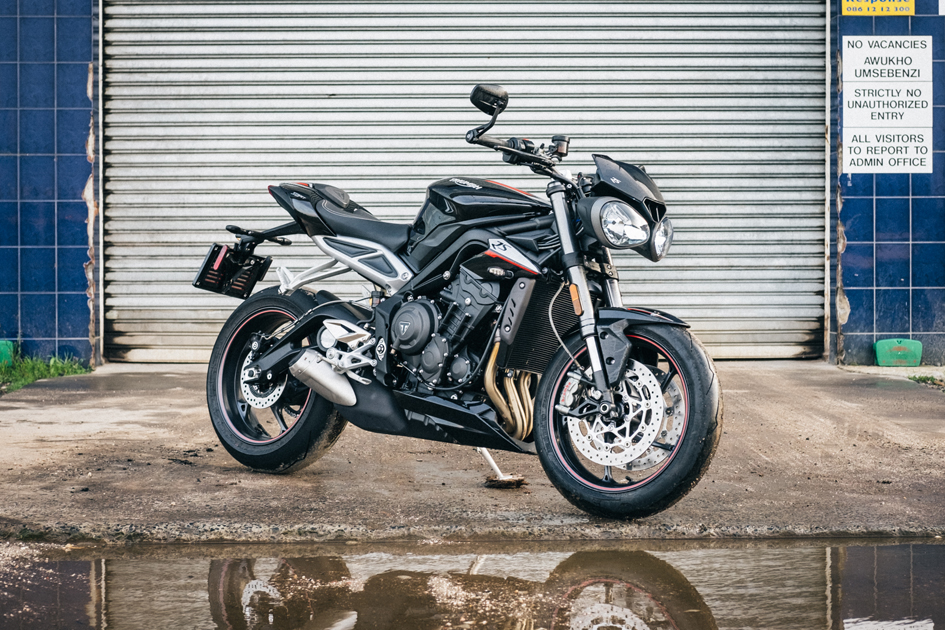
The new Street Triple ‘765’ comes in three flavours: S, R and RS. They each have their own engine tune, make different power and torque numbers, and come in varying levels of equipment spec. Here in South Africa, we only get the R 165,000 Street Triple RS—and that’s a good thing, because the RS is the top model in the range.
Let’s look at the numbers. The RS makes 121.2 hp at 11,750 rpm, and 77 Nm of torque at 11,000 rpm. That’s a pretty significant jump up from the older 675 Triple’s 106 hp and 68 Nm. And despite the extra cubic centimetres, the new Street Triple isn’t any less compact than its predecessor, and even weighs two kilos less (it’s 166 kg, dry).
Photo credit: Wesley Reyneke / ZA Bikers
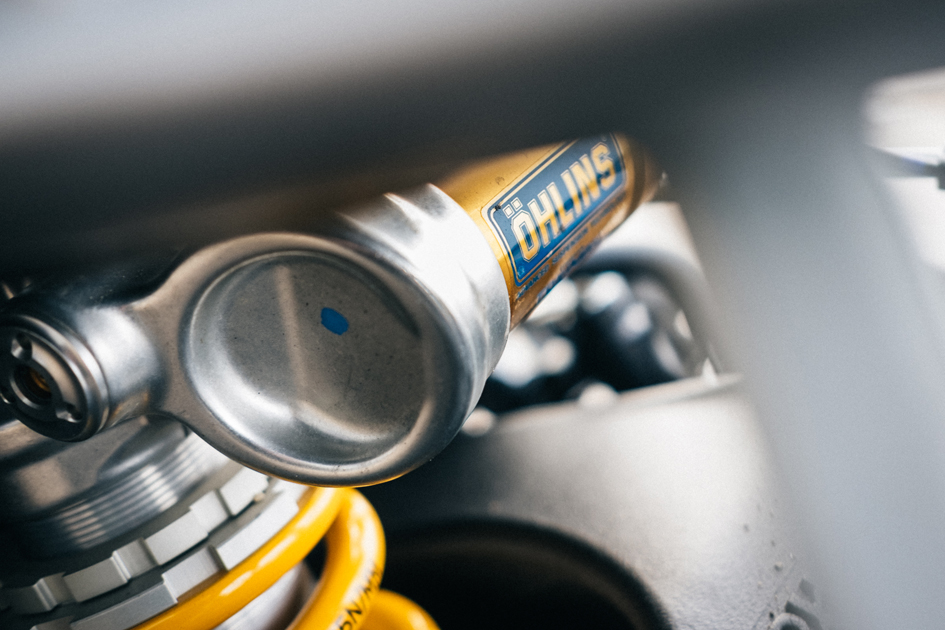
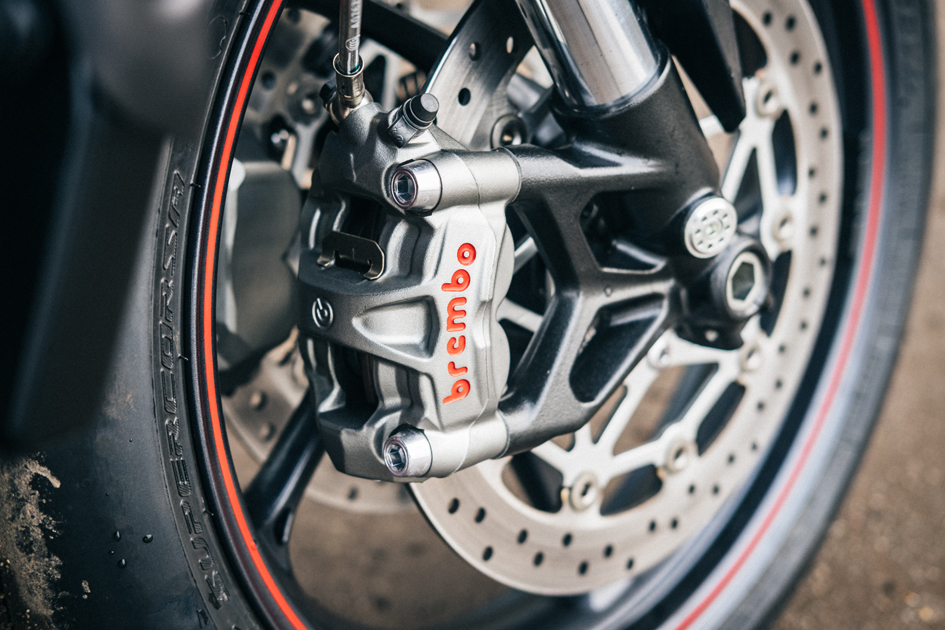
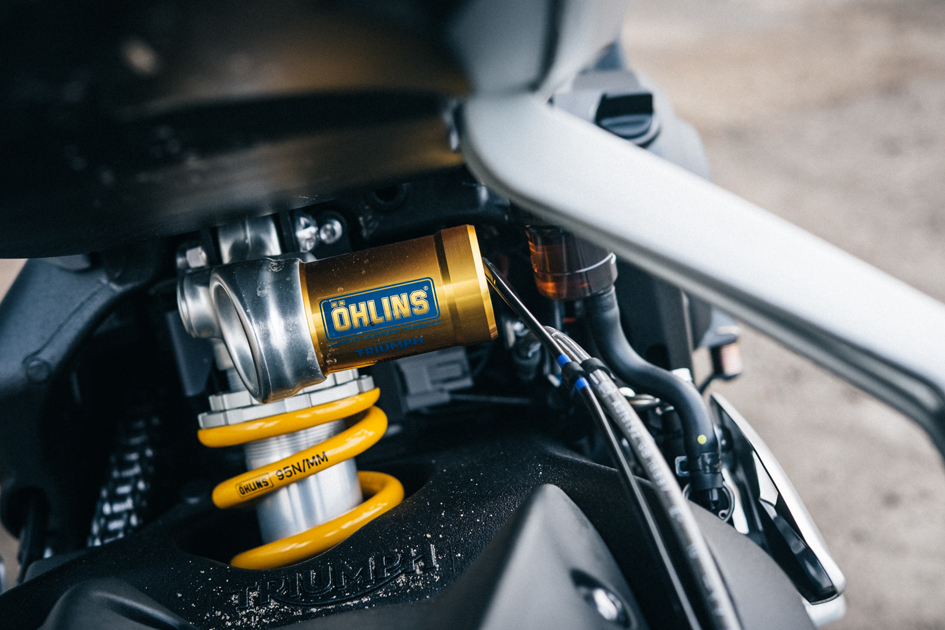
The RS spec also includes a bevy of top-shelf parts. The front forks are fully adjustable Showa ‘big-piston’ units, and there’s a fully adjustable Öhlins STX40 shock out back. You also get a quickshifter, Brembo M50 monobloc front brake calipers, and Pirelli Diablo Supercorsa SP tyres. And even the electronics package is slightly tweaked, with an additional riding mode (‘Track’) and a lap timer.
Photo credit: Wesley Reyneke / ZA Bikers
Features that are shared across the Street Triple range include a ride-by-wire throttle, switchable traction control and ABS. There’s also a six-speed transmission, and a multi-plate, slip assist clutch.
Photo credit: Wesley Reyneke / ZA Bikers
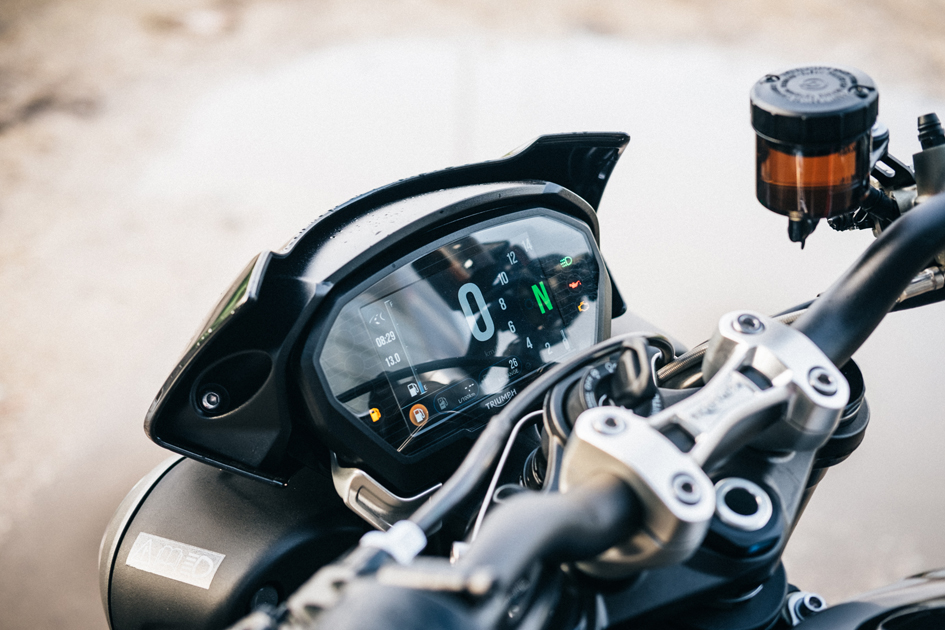
The dash is a 5”, full colour TFT unit, controlled by a nifty little joystick on the left switchgear. It packs in a ton of info, but it’s also easy to read and straightforward to navigate through. Your current speed, revs, gear and fuel level take centre stage, and all the other info is toggled through on one neat line.
There are three built-in layouts, along with a day and night mode (you can choose them manually, or set them to ‘auto’). Hitting the ‘mode’ button on the right switchgear calls up the Street Triple’s rider modes on screen; Road, Rain, Sport, Rider (a programmable mode), and Track. And if you dive deeper into the display’s menus, there’s a whole bunch of settings you can tweak.
Photo credit: Wesley Reyneke / ZA Bikers
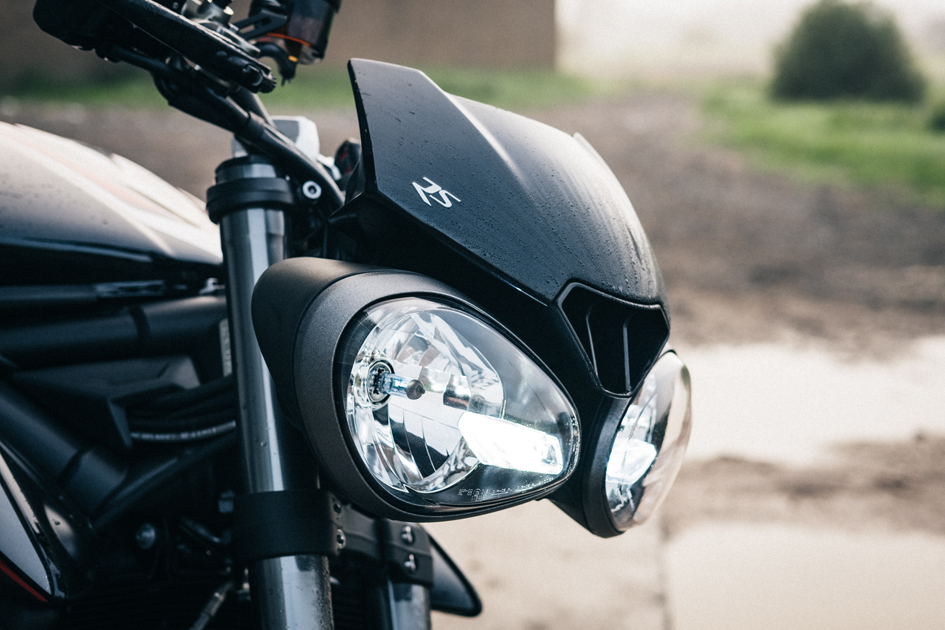
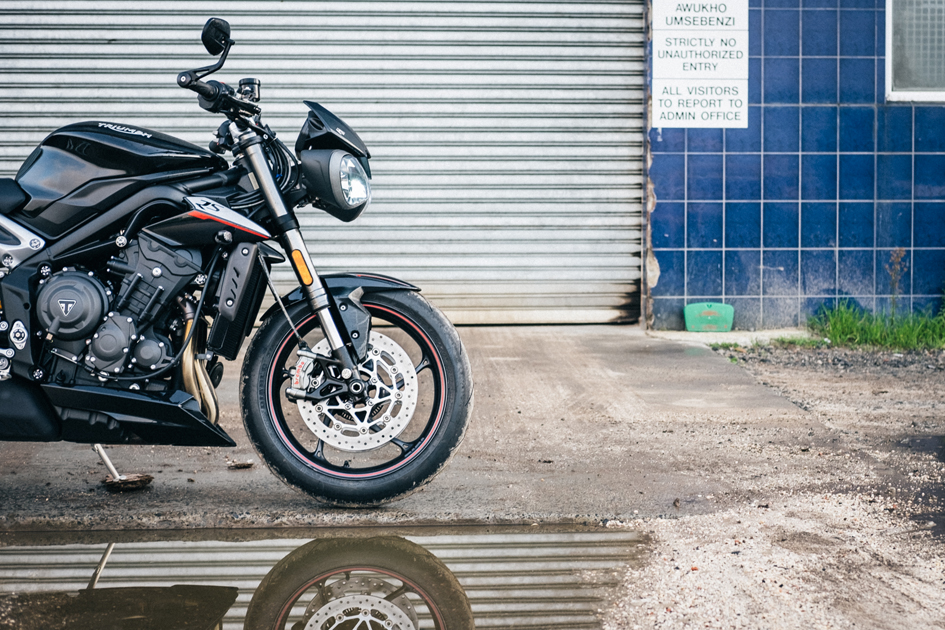
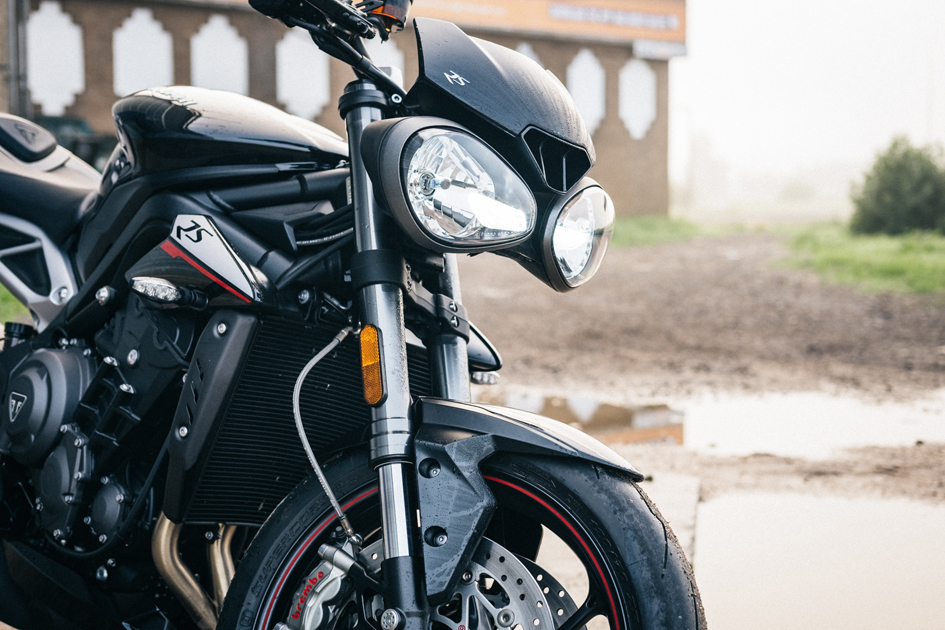
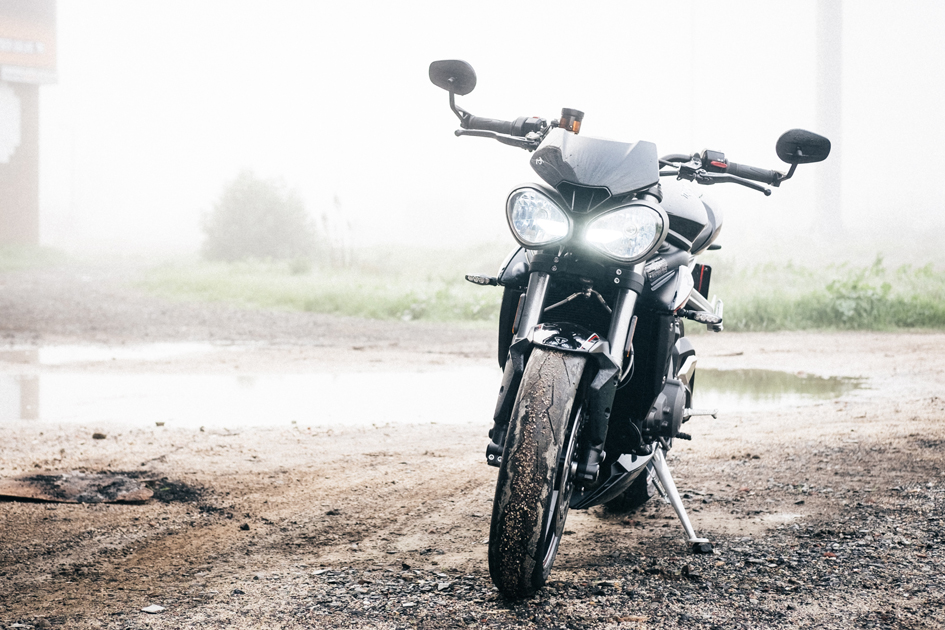
Looks-wise, there’s not a whole lot separating the new Street Triple from the old Street Triple. It still has the controversial twin, angled headlights—only they’ve morphed slightly, and now feature slick LED daytime running lights.
Photo credit: Wesley Reyneke / ZA Bikers
The front bit of the frame is Triumph’s unmistakable twin-spar aluminium design, with die cast components for the subframe, and an aluminium swing arm lower down. Between the heavily contoured 17,4 l fuel tank, sharp tail section and alloy wheels, it’s still one of the best-looking naked bikes on the market.
Photo credit: Wesley Reyneke / ZA Bikers
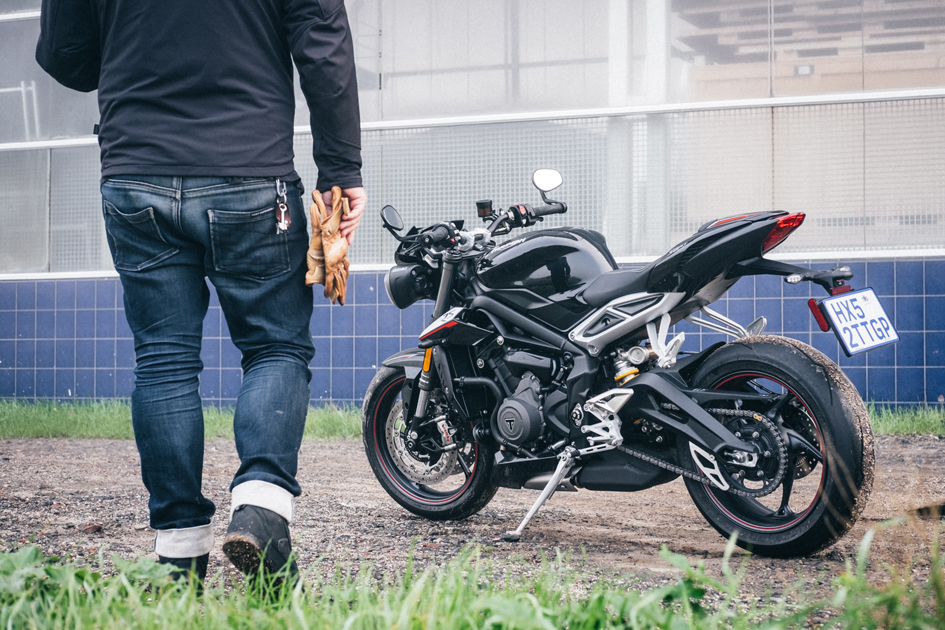
The tail section’s cover can pop off and be swapped for a pillion seat. Standard equipment also includes a fly screen, belly spoiler, and bar-end mirrors. It comes in white too, but the black-with-red colourway that my test unit came in is just perfect.
Photo credit: Wesley Reyneke / ZA Bikers
So it’s nice to look at, and fast on paper. But how does it perform in the real world? Is it still the ultimate weapon for both road use and track days? Pretty much.
Triumph’s marketing blurb throws around terms like “explosive” and “adrenaline charged,” and honestly, they have every right to. The Street Triple RS fires off the mark and gets up to speed frighteningly fast. Since peak power sits higher in the rev range, the motor responds well to being held wide open while you blip through gears with the quickshifter.
Photo credit: Wesley Reyneke / ZA Bikers
That three-cylinder motor sounds bananas at full tilt, and even angrier when you shift back down through the range. It’s just a pity the quickshifter works on upshifts only, because an auto-blipper for downshifts would have rounded out the package nicely.
With its rev-happy and punchy nature, you’d expect the Street Triple to be a handful. But between the various rider modes and the built-in traction control, it’s anything but. And that’s one of its big strengths—it’s an extremely usable motorcycle.
Photo credit: Wesley Reyneke / ZA Bikers
Like every Triumph triple I’ve ridden, throttle response is a little jittery first thing in the morning. But once it warms up, everything’s peachy, and power delivery becomes smooth and predictable. The various riding modes are spread apart well, with each one delivering exactly the sort of ride you’d expect. The traction control keeps the front wheel mostly on the ground, and the slip-assist clutch forgives harsh downshifts.
But if you want the Street Triple to get wily, it will. It loves to be ridden with a heavy hand, and if you can figure out how to switch off the traction control (hint: use the programmable ‘Rider’ mode and set it up just how you like it), unbridled hooliganism awaits.
Photo credit: Wesley Reyneke / ZA Bikers
But a perky motor isn’t the only thing the Street Triple has going for it. Its other big strength is that it’s uncannily nimble. Its wheelbase is a mere 1410 mm—that’s shorter than the Ducati Monster 821, and just a hair longer than the diminutive Yamaha MT07. It also has a sharp steering angle, and a pegs-to-seat-to-bars layout that keeps you engaged at all times.
Photo credit: Wesley Reyneke / ZA Bikers
The Street Triple is so compact that it’s almost too small for my 1.86 m frame. But that makes it even easier for me to throw around. It’ll edge into a corner with the lightest of touches, and if you’re hustling it through a sequence of turns, it’ll change direction almost intuitively. (Seriously, it’s so easy to manoeuvre, that it’s borderline unnerving.)
That’s backed up with a sweet brake and suspension package that never really get bent out of shape. Sure, the front brake can be a little snatchy if you’re not delicate—but there’s more than enough stopping power to keep things civilised. And if you take the time to fiddle with the suspension settings, it’s possible to dial the Street Triple in find your own personal sweet spot. (I managed to get it from ‘OK’ to buttery smooth with minor fettling.)
Photo credit: Wesley Reyneke / ZA Bikers
I didn’t have the opportunity to unleash the Street Triple RS on the track, but I’m sure it would excel. From its snappy acceleration and slick handling, right down to the ability to tweak a wide range of setup options, it has all the right ingredients.
Photo credit: Wesley Reyneke / ZA Bikers
The Street Triple RS is another home run for Triumph, and a worthy entry in the Street Triple lineage. For more information visit: www.triumph-motorcycles.co.za
We live in interesting times. The last few years have seen technological breakthrough reaching wonderous proportions. The way we communicate, connect and live has revolutionized to the point where freedom for one, means captivity for another.
The motorcycle industry has certainly not eluded this. Our wheels of passion have become testbeds for all sorts of gizmos and electronic wizardry. Yet, despite these innovations, the core design of motorcycles have largely remained untouched. Basic engine, gearbox and chassis design remain conventional for the most part. The reason for this is that over the years motorcycles have basically become largely perfect.
Photo credit: Bjorn Moreira / ZA Bikers
Motorcycle design has reached maturity, so to speak. And so has the audience to which all this matters. The fact of the matter is that the average age of the current enthusiast is steadily on the rise. The time has come for us to face this fact and act accordingly.
We need to make it cool again for a fresh audience to ride the objects we love… new buyers, different players, young blood!
Photo credit: Bjorn Moreira / ZA Bikers
The new generation city slicker is an energetic, vibrant, well-informed individual that lives life at “neck break” pace. Life demands more from each day as society shouts “adapt or die”. Amidst all of this, there is a very strong undertone to conform; Do as others do, wear what others wear, eat where others eat, party with the right crowd.
In this process, reality drifts further and further away from authenticity and we become like sheep following an invisible shepherd over the cliff. We become conformists, normal individuals with grey suits following the same path to work every day.
Photo credit: Bjorn Moreira / ZA Bikers
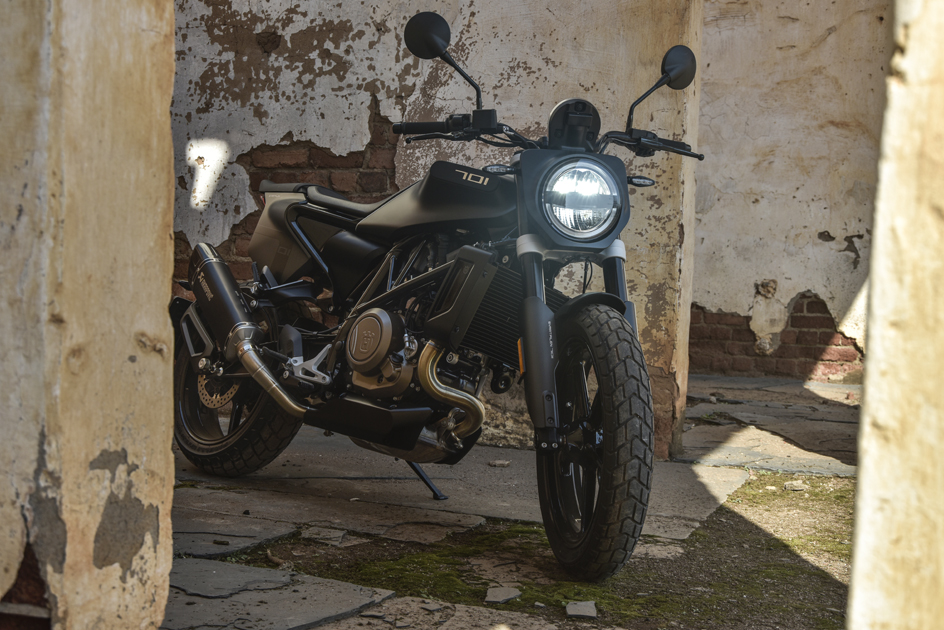
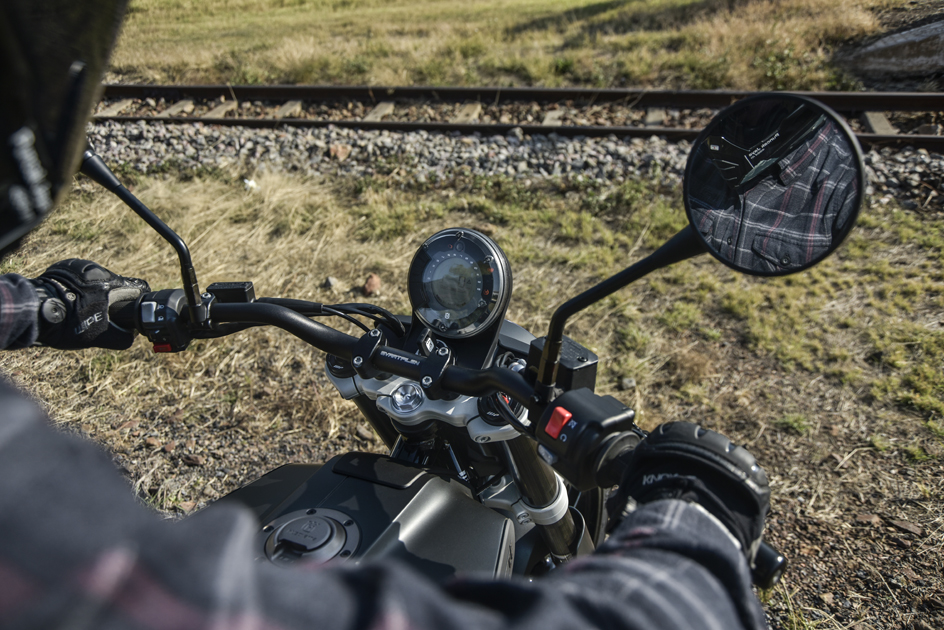
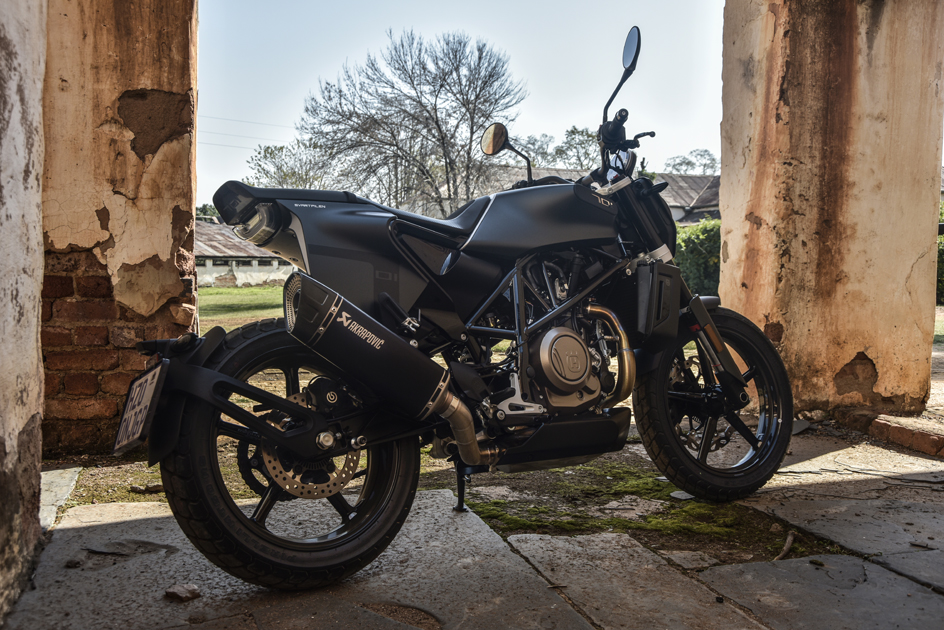
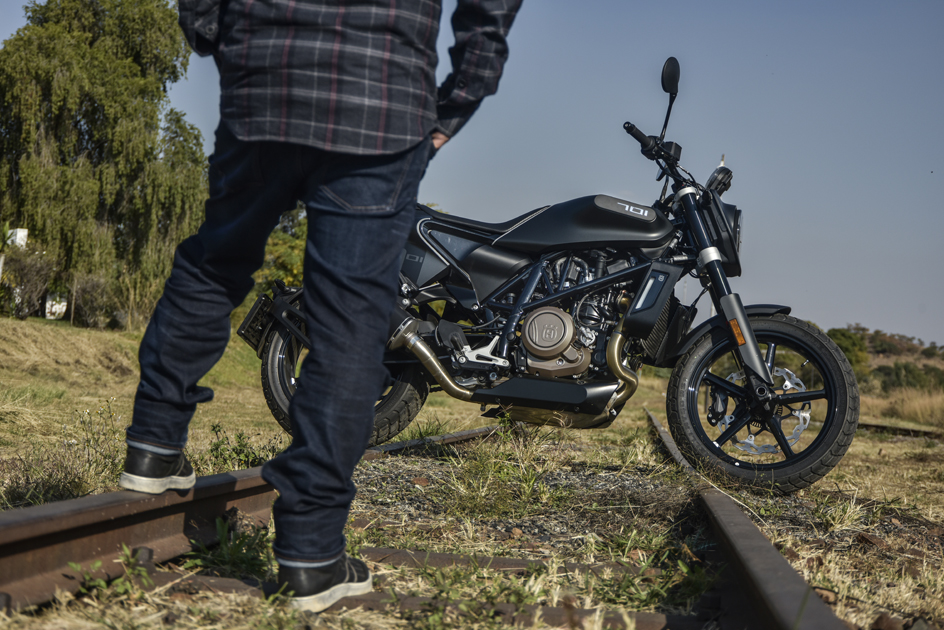
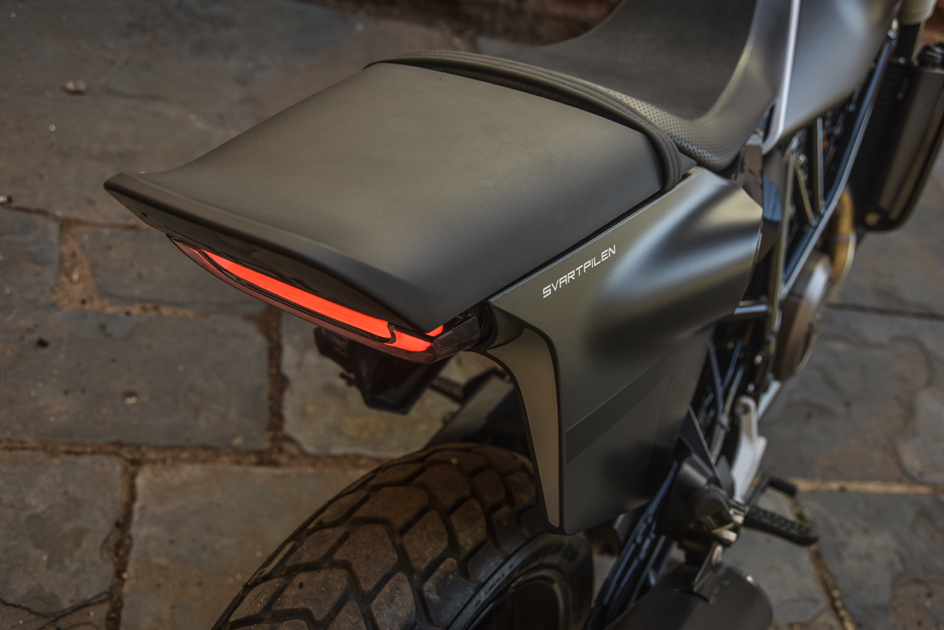
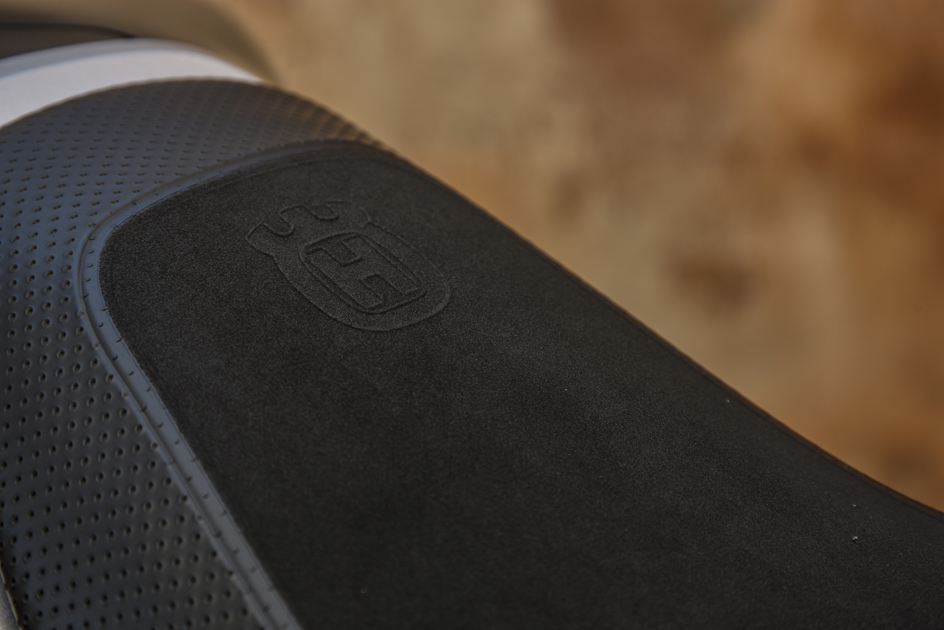
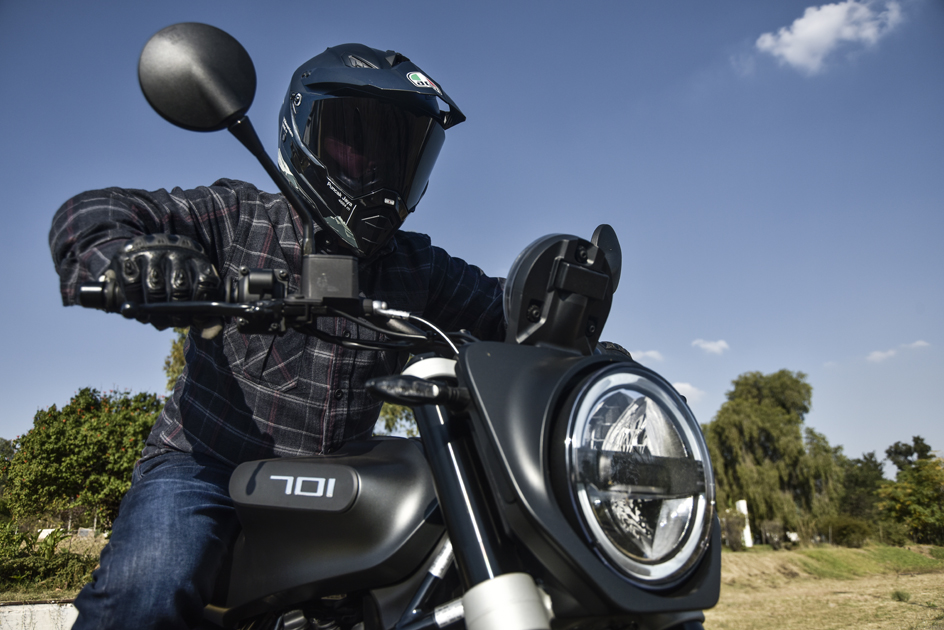
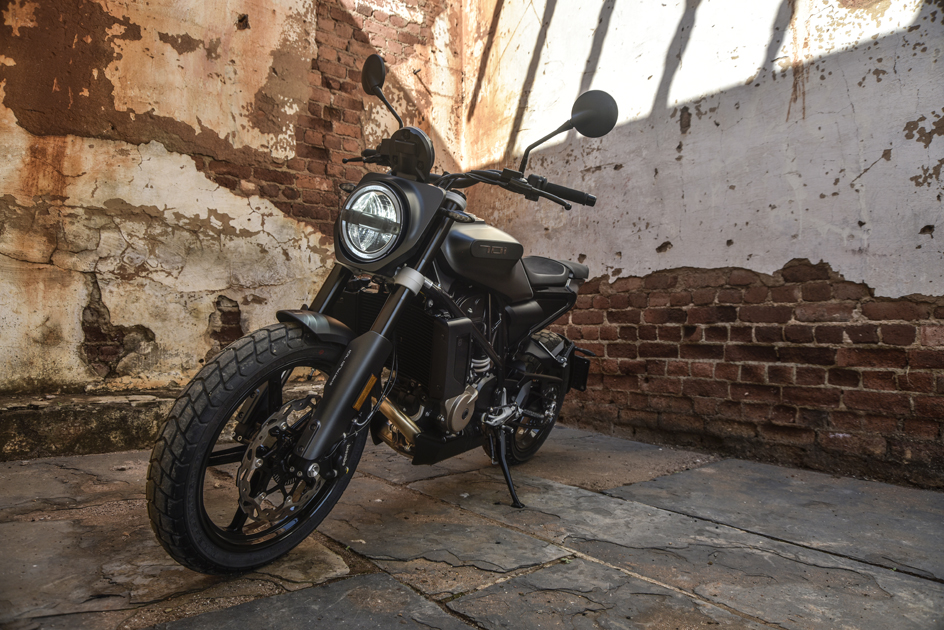
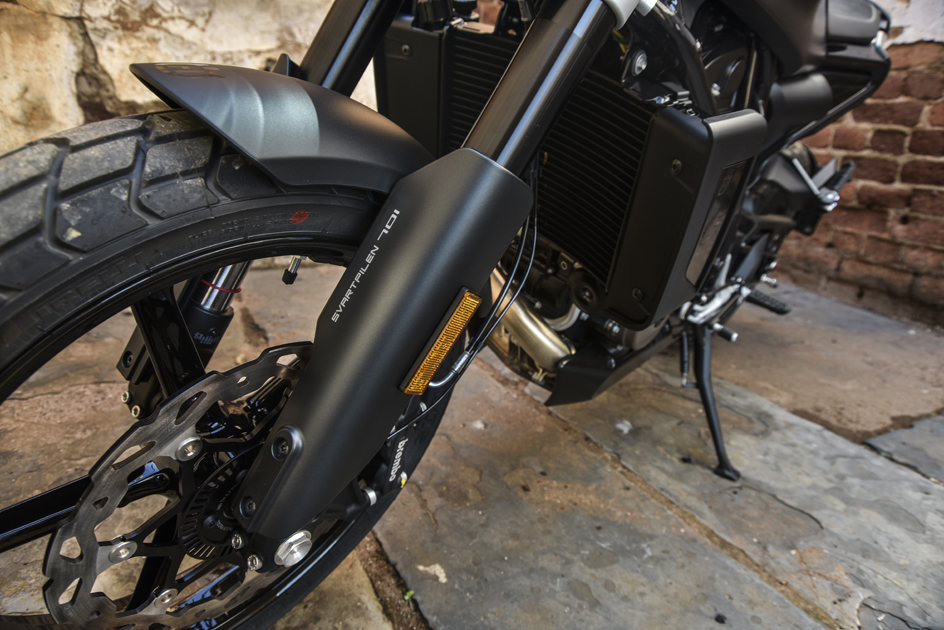
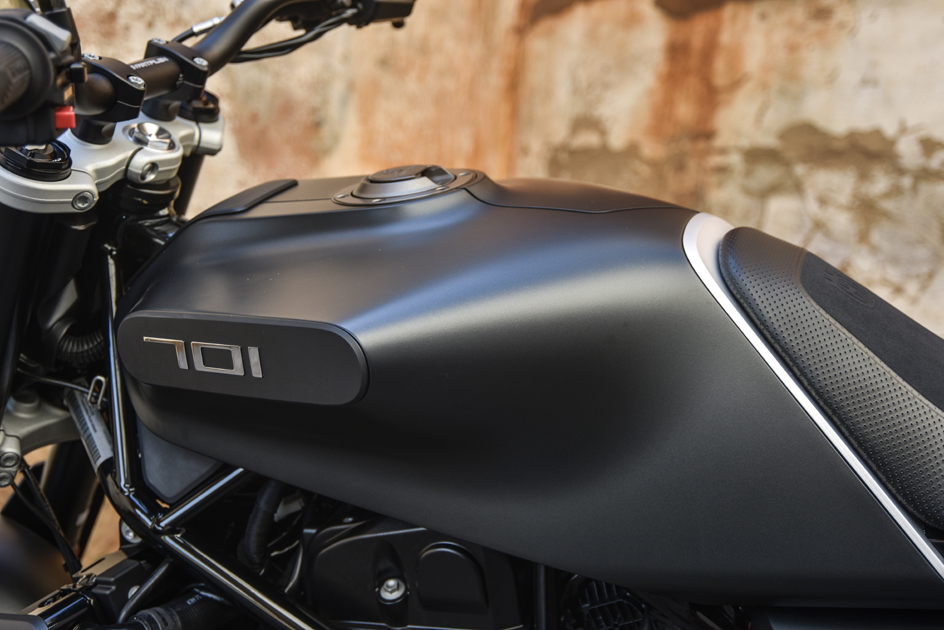
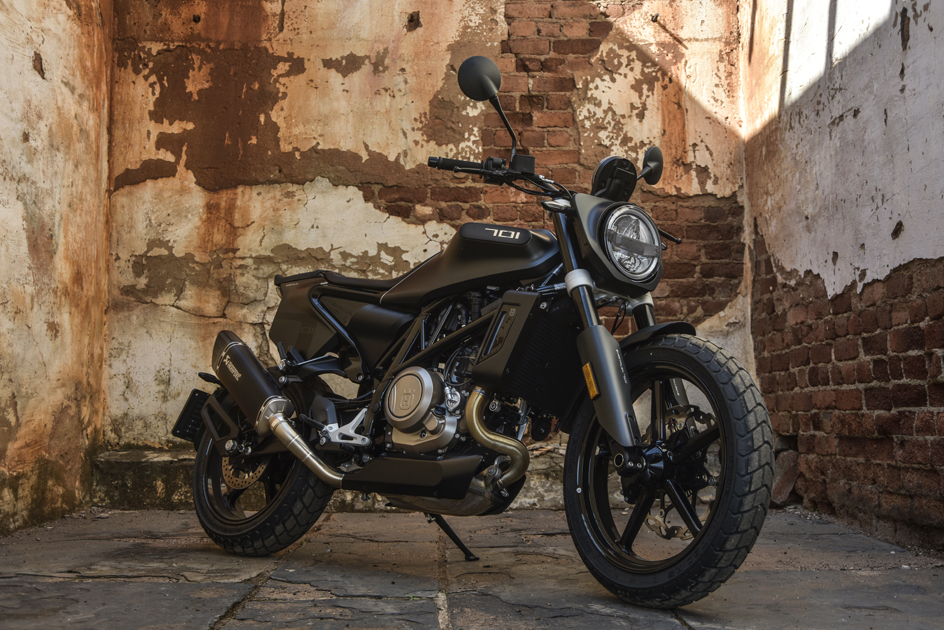
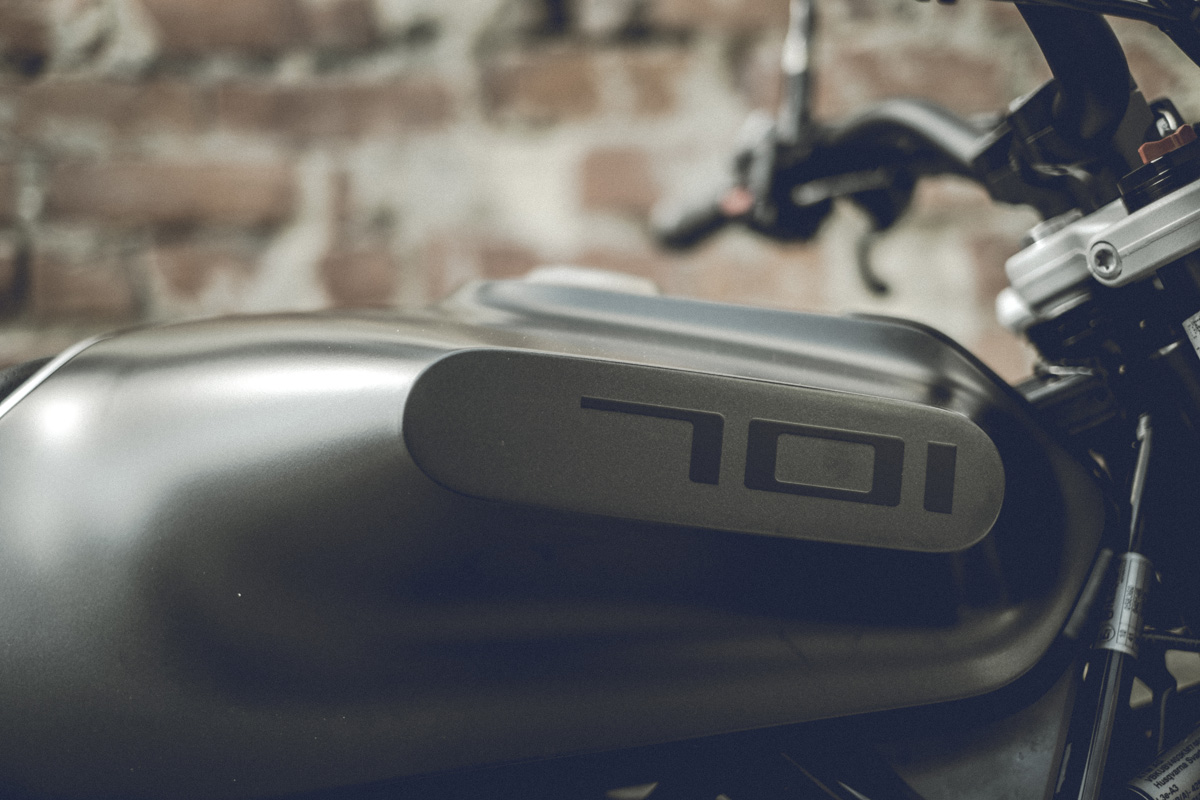
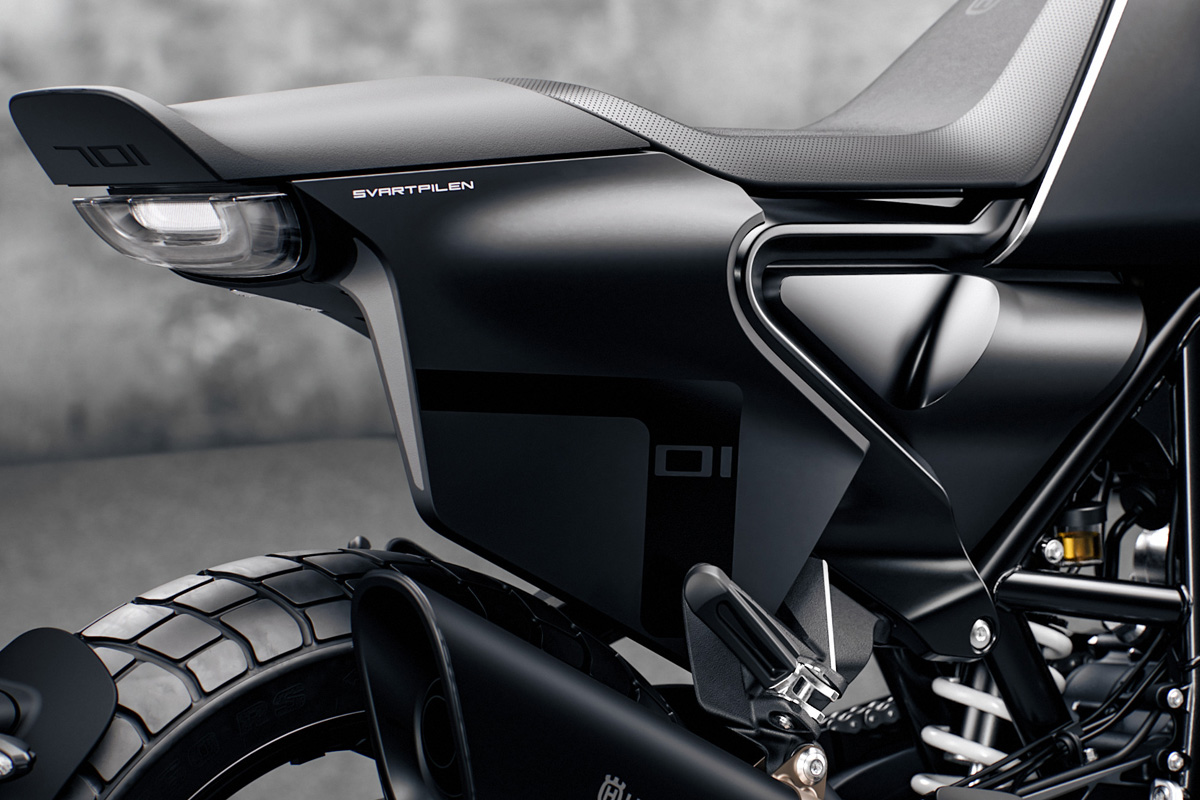
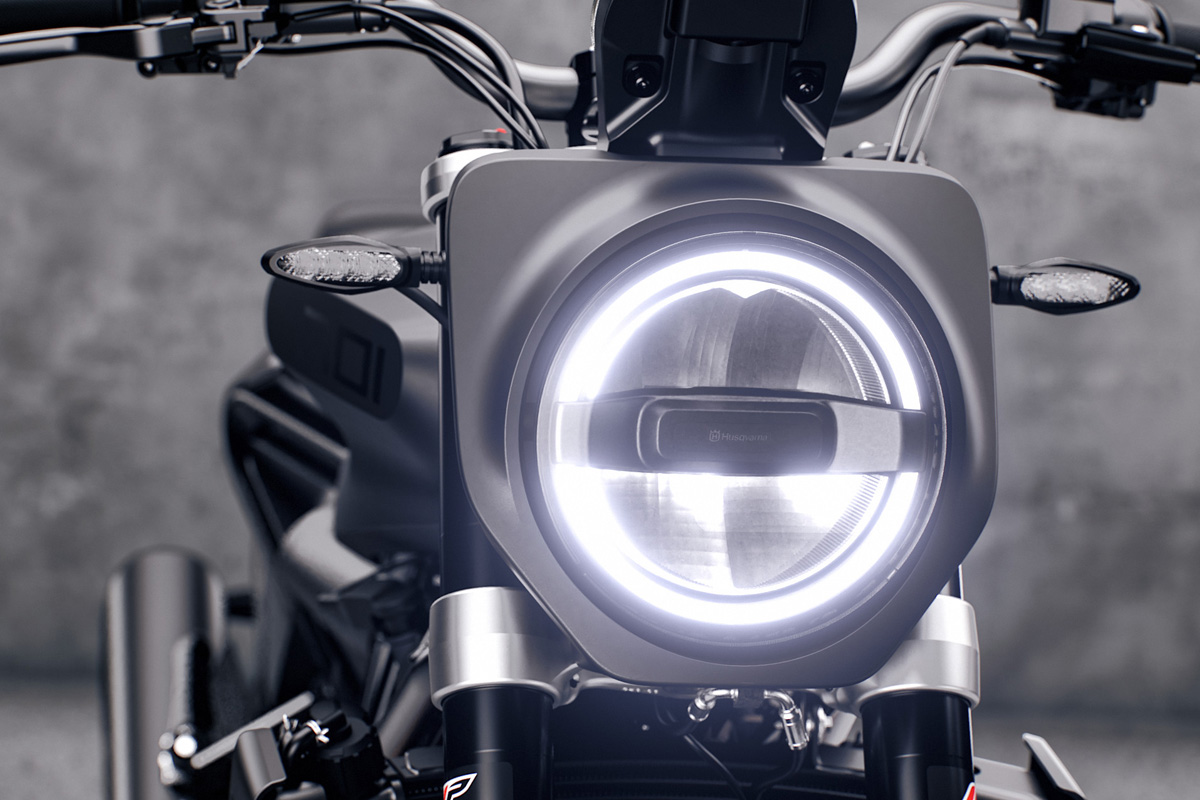
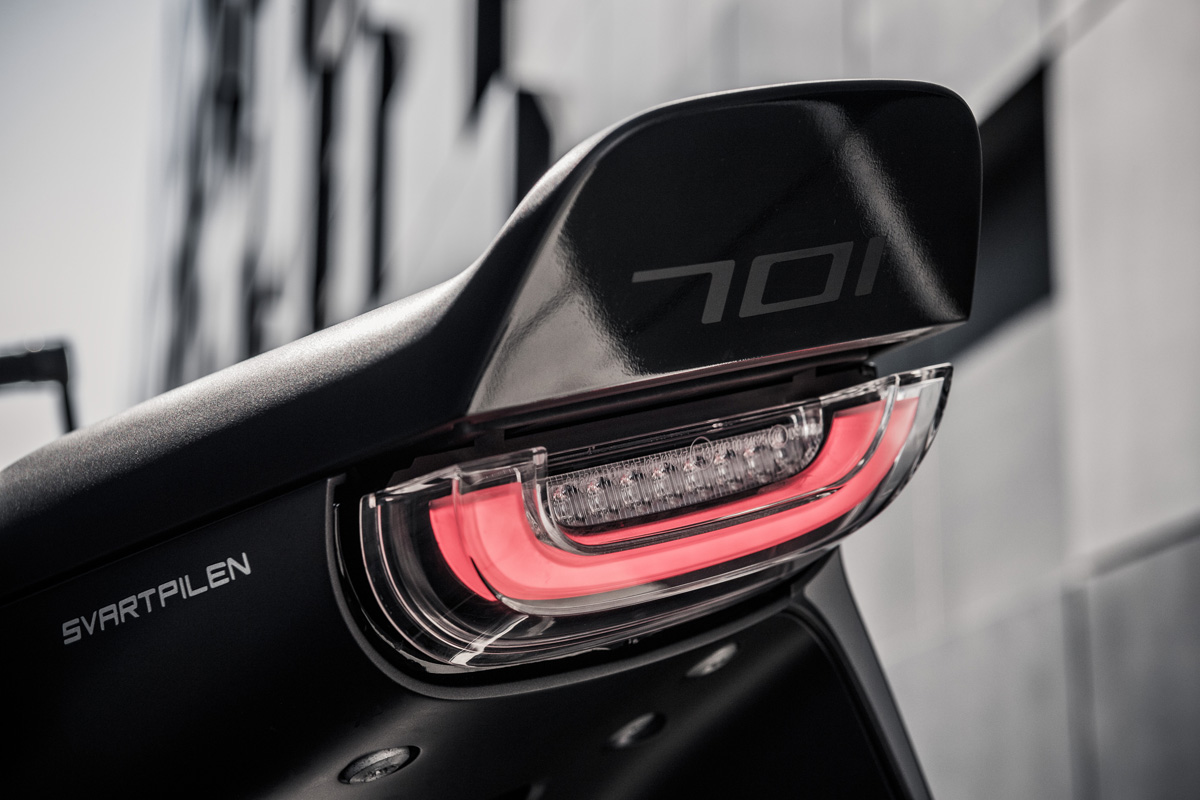
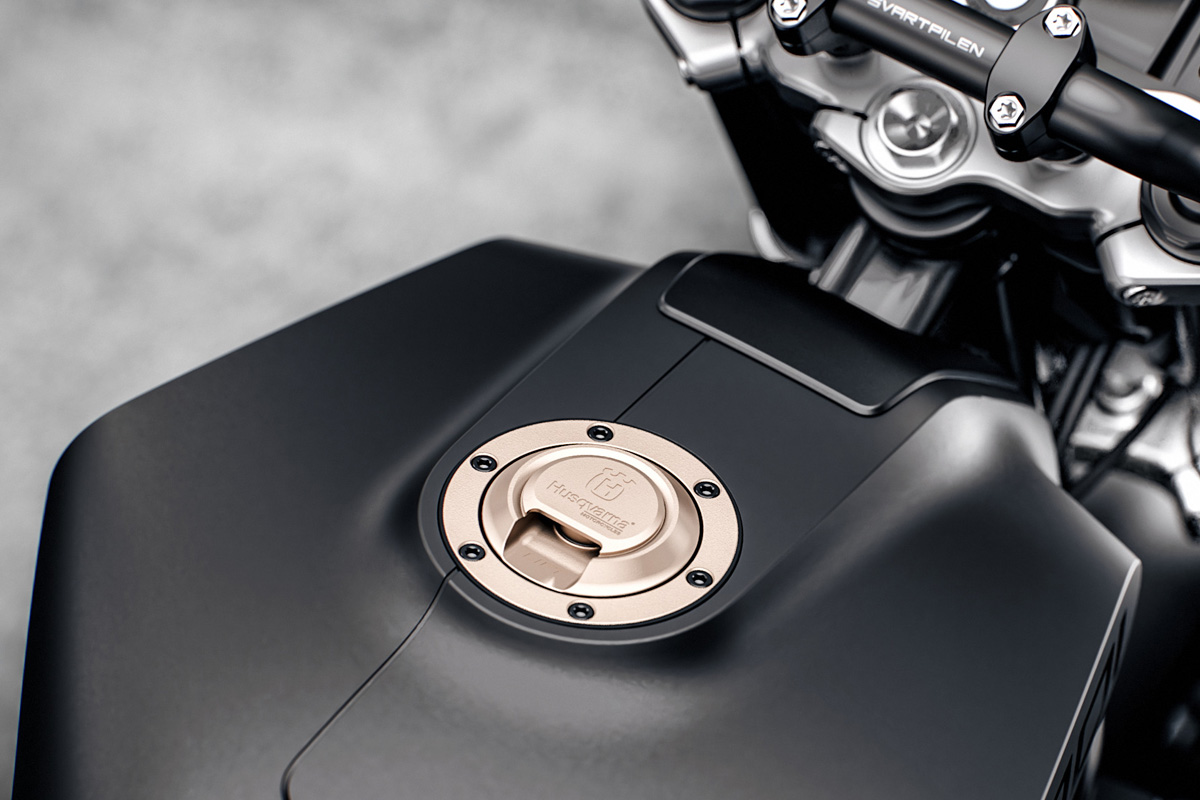
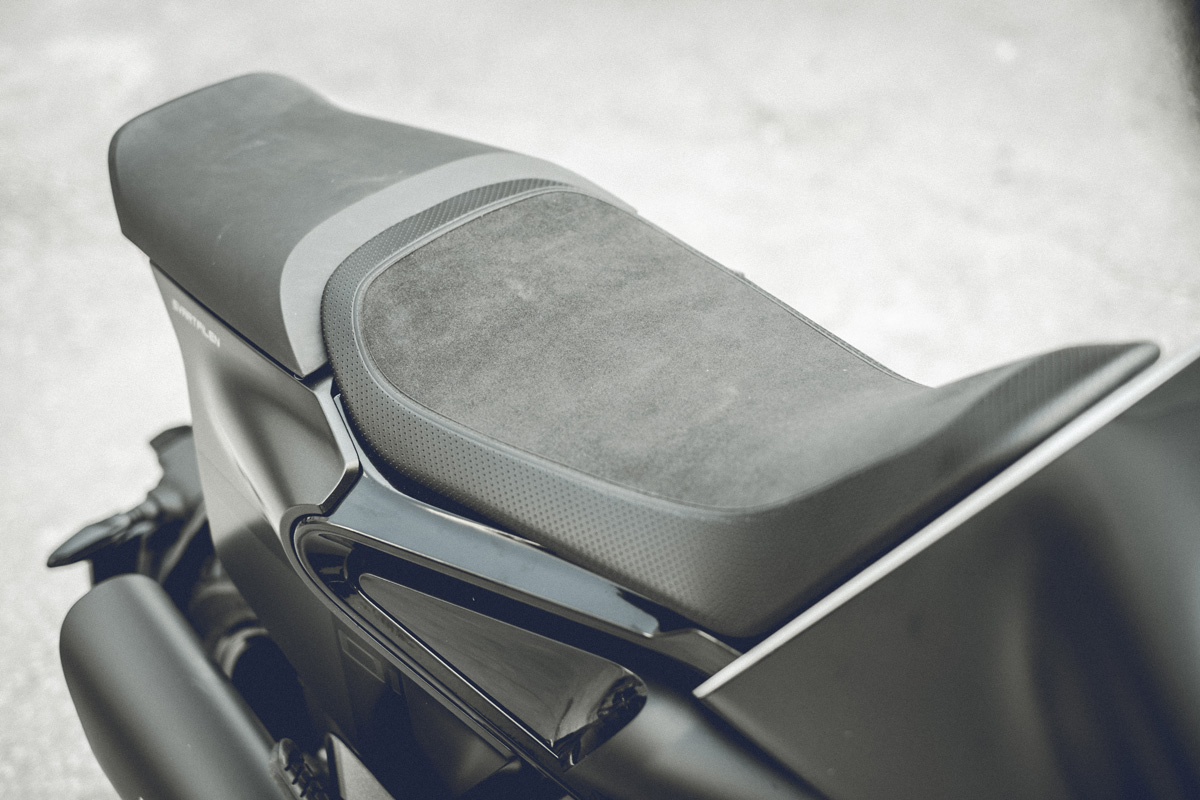
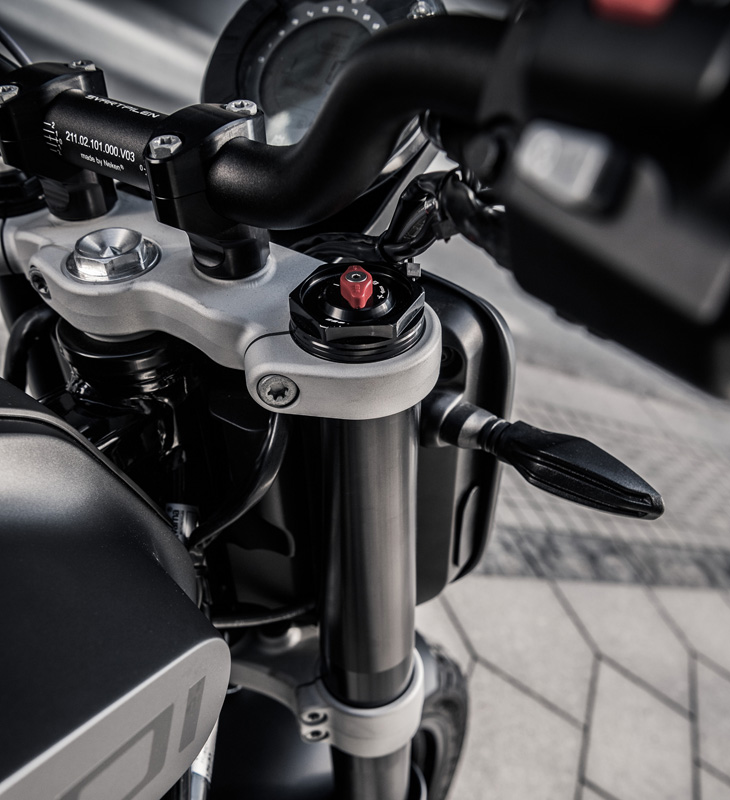
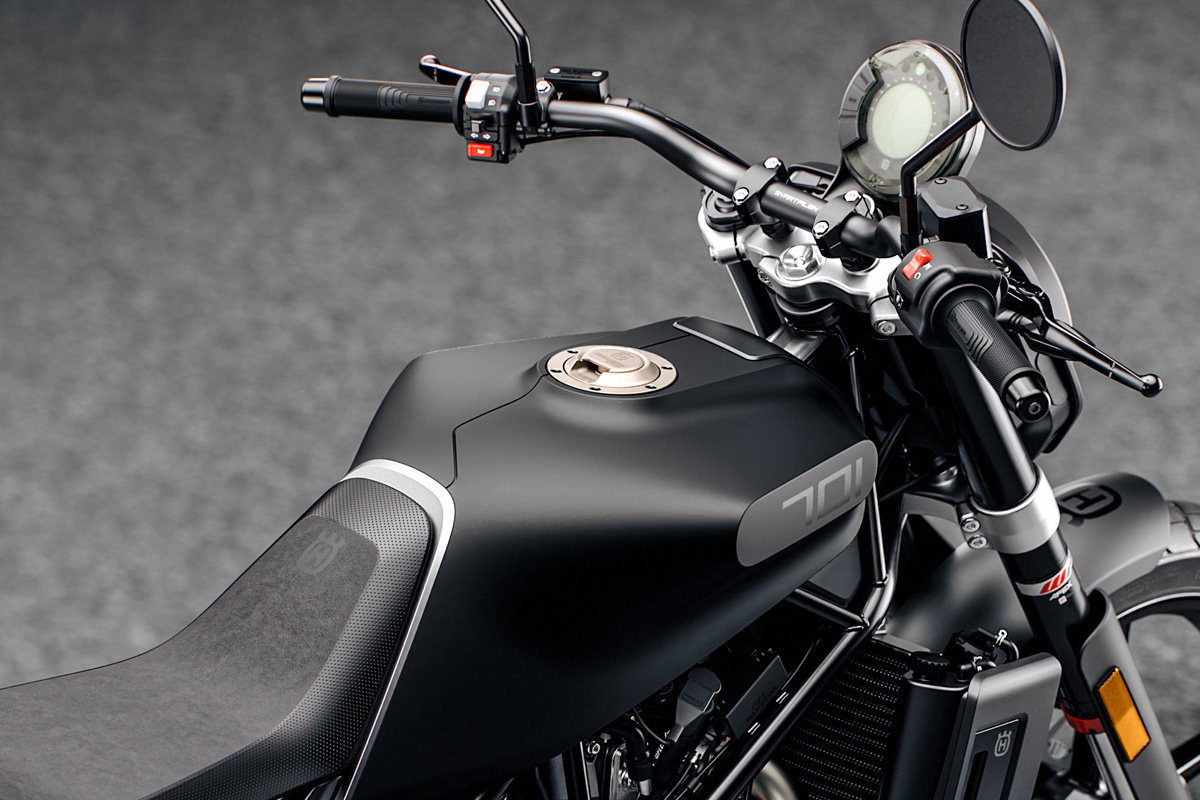
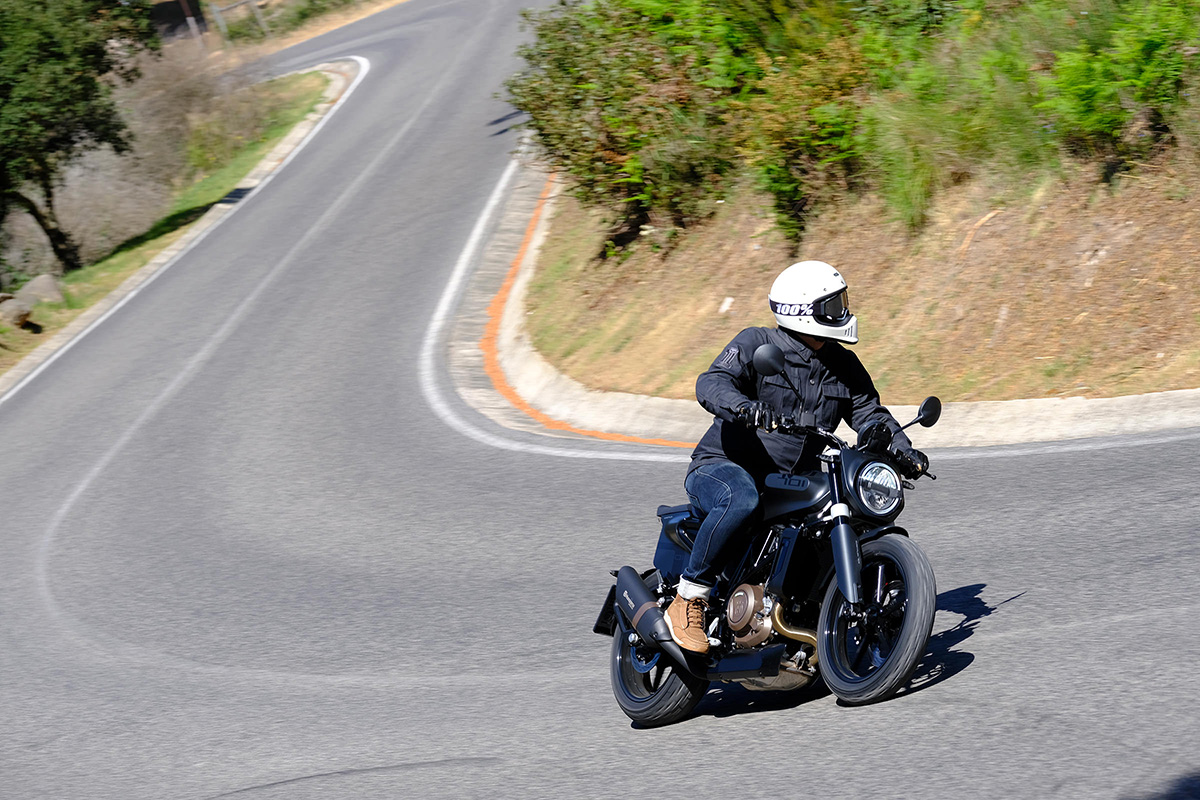
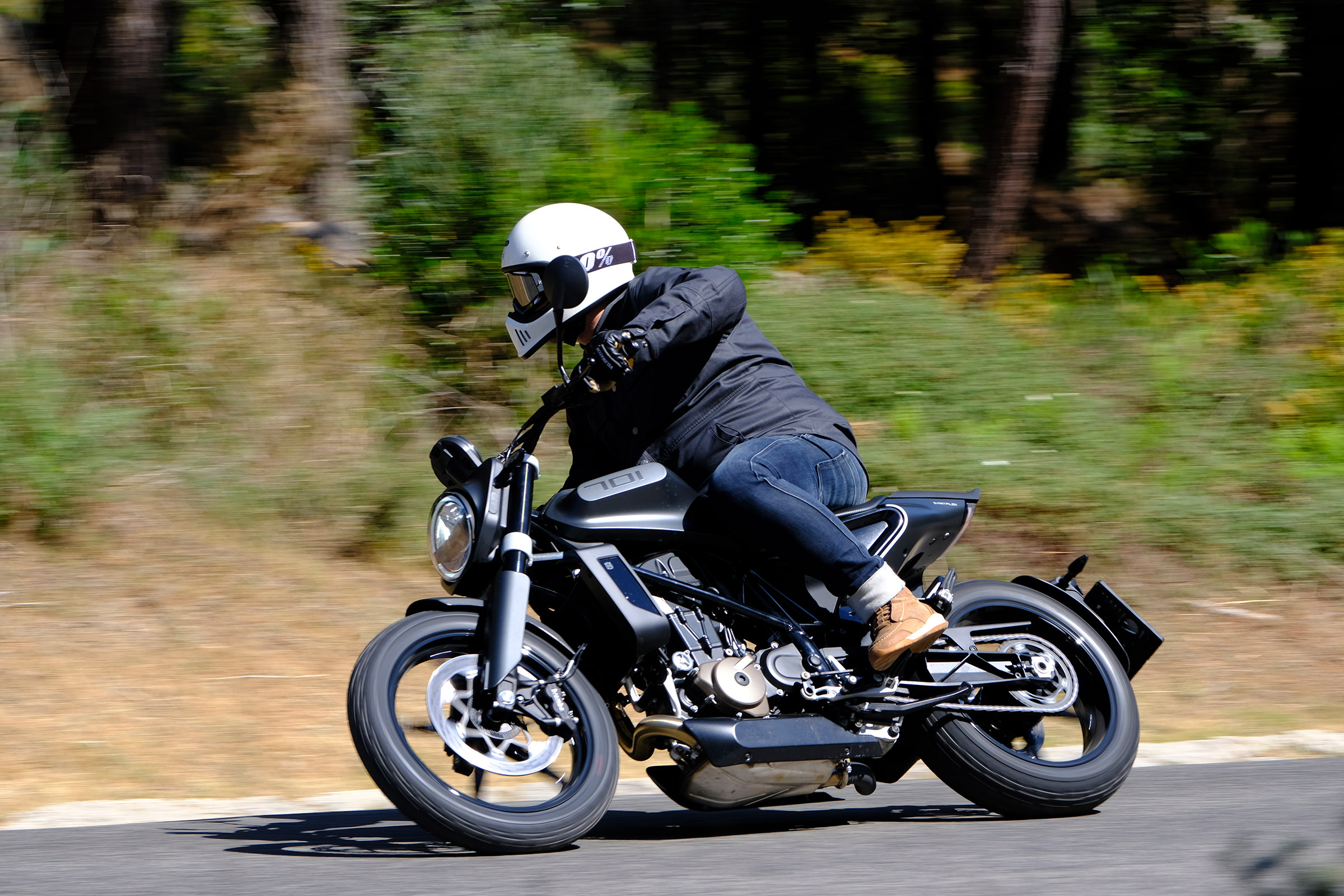
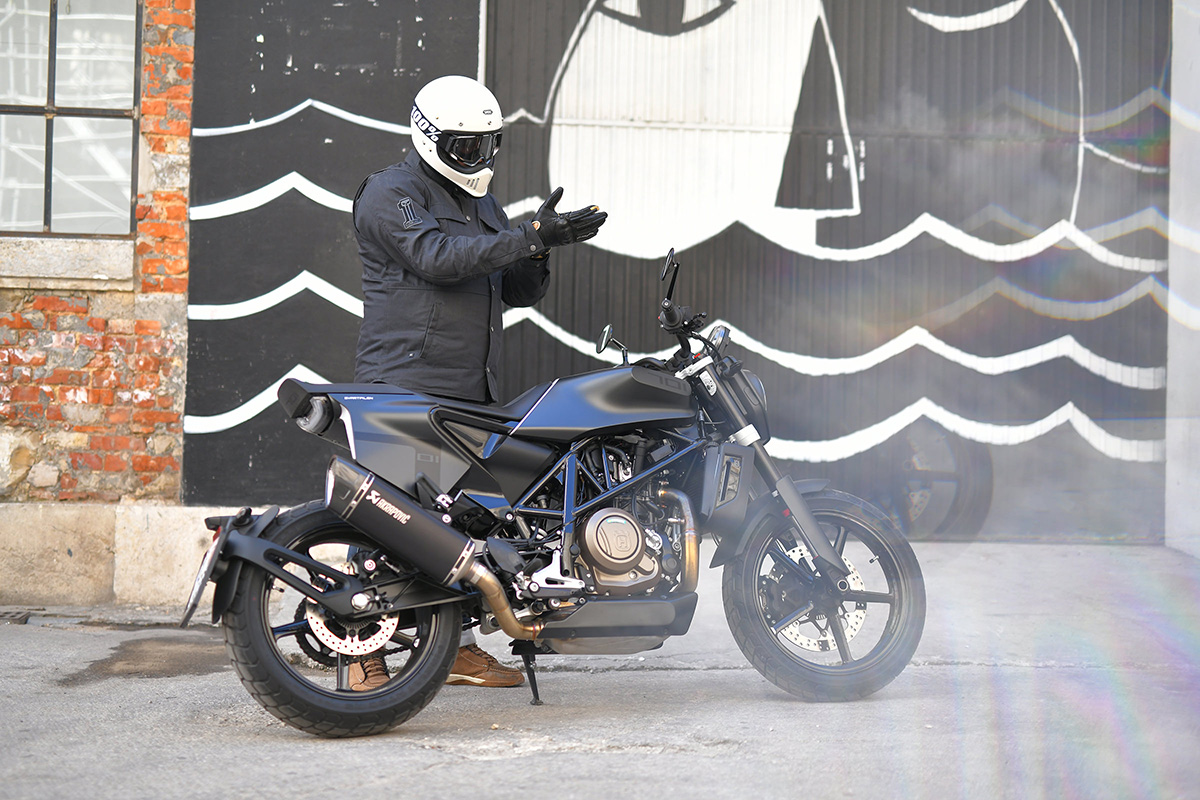
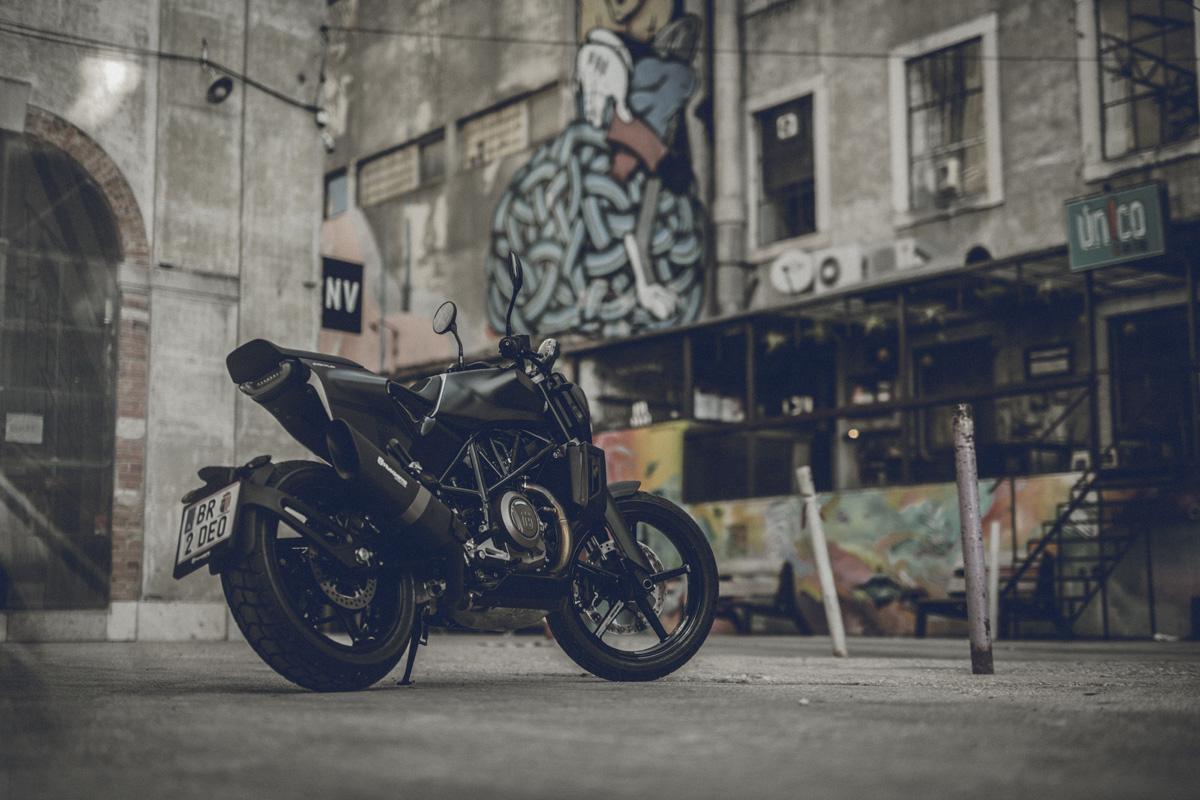
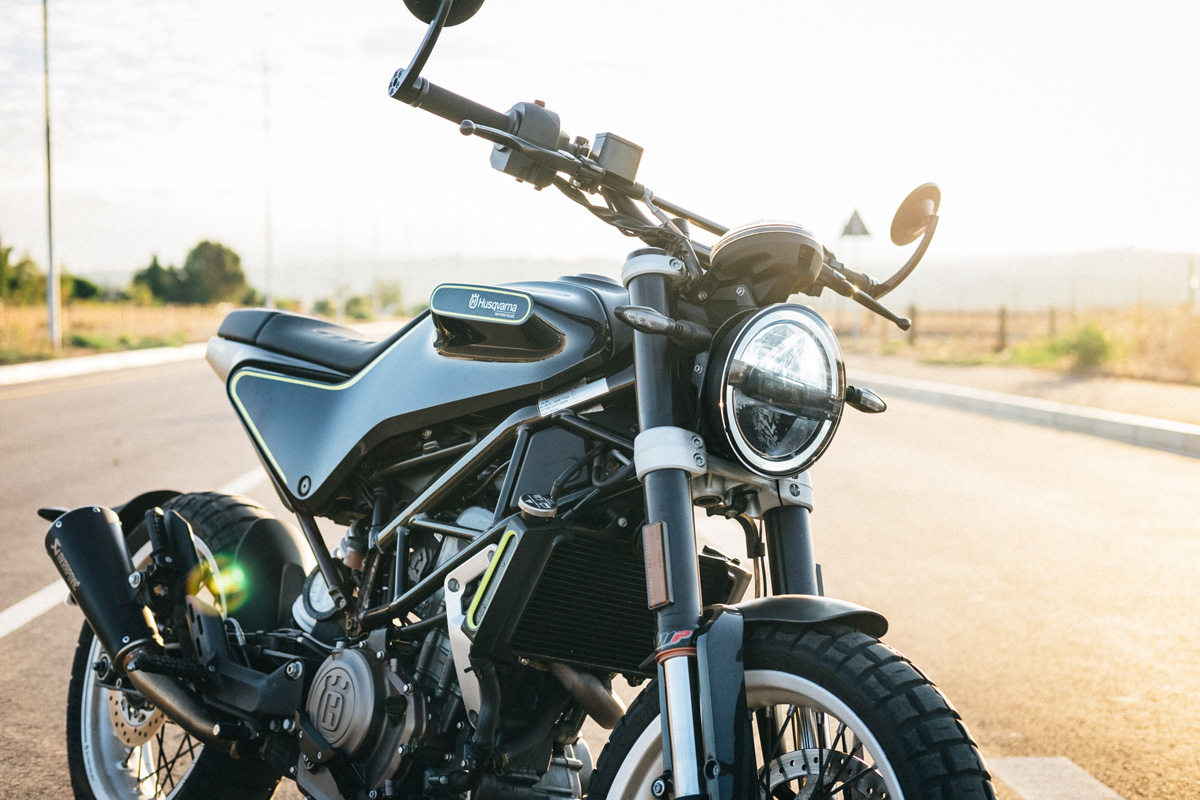
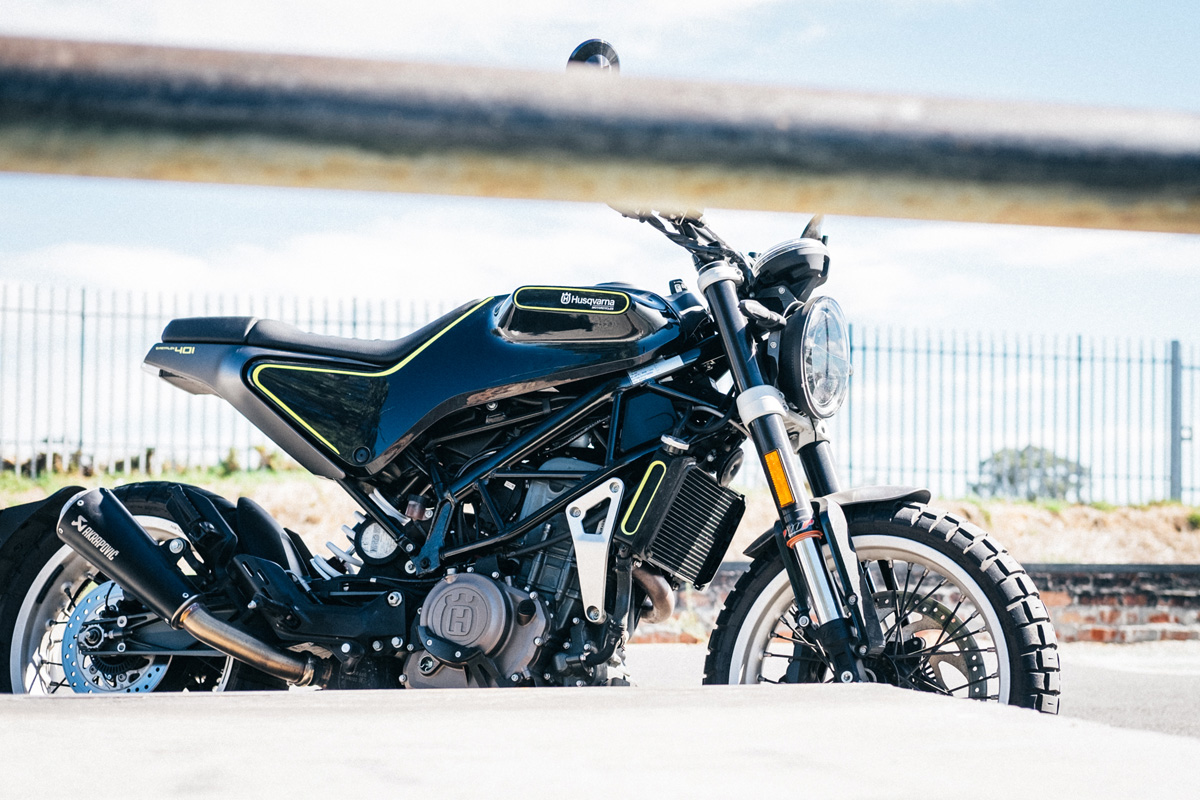
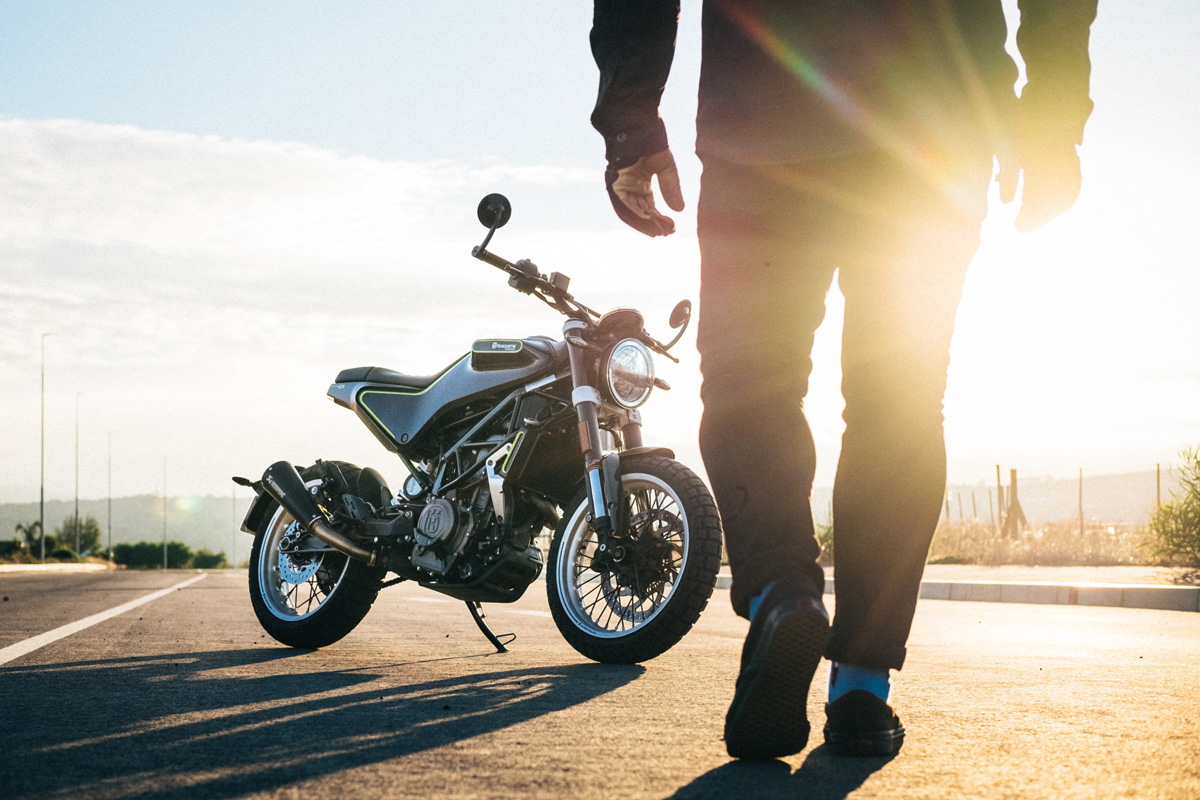
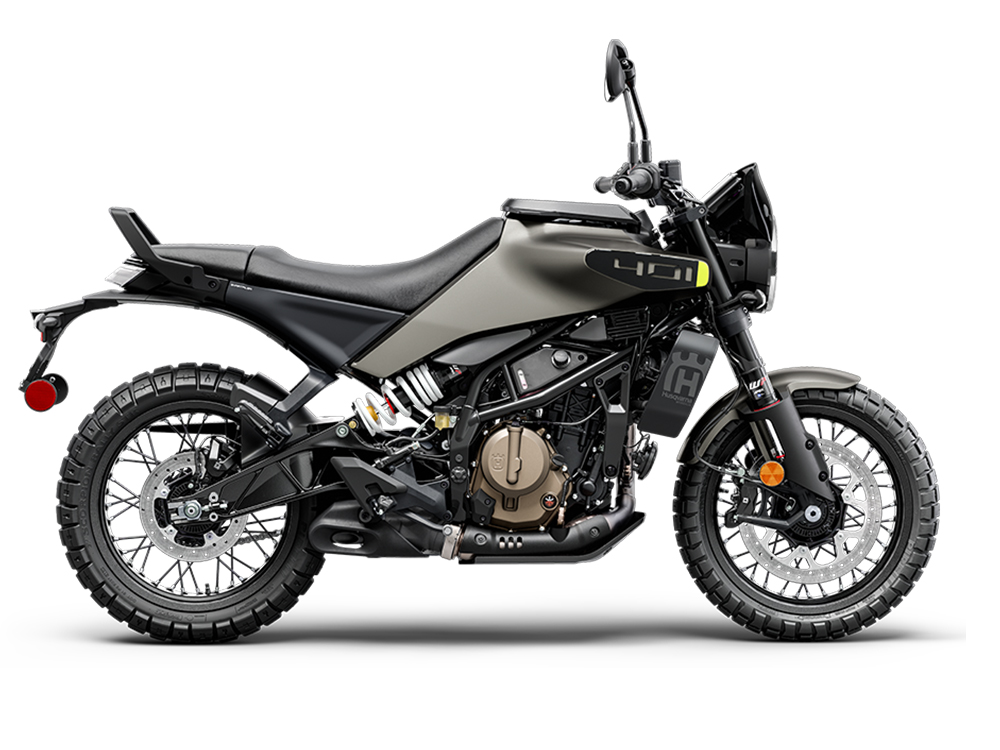
Let’s raise the curtain, for a brief moment on a motorcycle that is set on changing all of this. Taking a look at the Husqvarna Svartpilen 701 for the first time is an eye-opener, to say the least! My first reaction was a frown of silence for at least five seconds before reluctantly formulating my opinion. Silencing a journalist for even a few seconds does take some doing. Accolades to the Black Arrow for managing that. The word Svartpilen is Swedish in origin and means “black arrow” in English.
Photo credit: Bjorn Moreira / ZA Bikers
Fresh, peculiar, minimalistic styling to say the least. Almost classic in appearance, with ultra-modern styling thrown into the mix. Painted in a classic dark matt paint scheme that looks downright sinister.
The first, obvious action is to try and categorize this work of alternative design. This is a very normal thing for us to do. In this day and age, everything seems to get a label, a stamp of approval if you will.
Photo credit: Bjorn Moreira / ZA Bikers
But then begs the question; Did the creators of this bike even consider a category whilst at it? Did they seek out a sweet spot that will satisfy the masses? My best guess would be a resounding “No!” It seems a case where the Svartpilen seeks to approve the buyer, rather than seeking to be approved if that makes any sense….
But how does it ride?
The interesting, subjective question, as always. My first thought when I first swung a leg over the Svartpilen 701 was just how narrow it is. Man, this thing feels paper-thin. Eventually, I get excited about the bike. Up to this point, I had no idea what to think, to be honest.
Photo credit: Bjorn Moreira / ZA Bikers
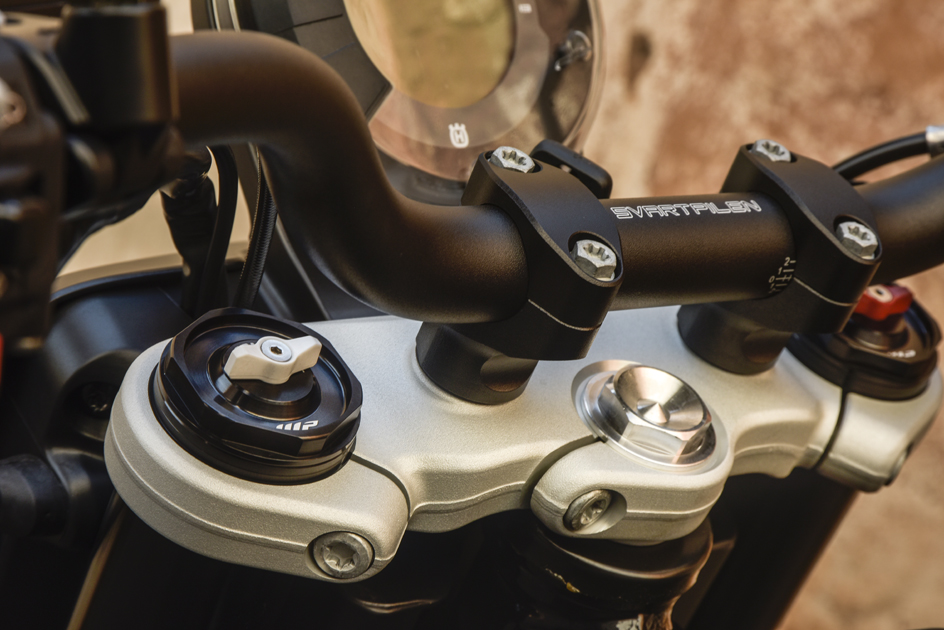
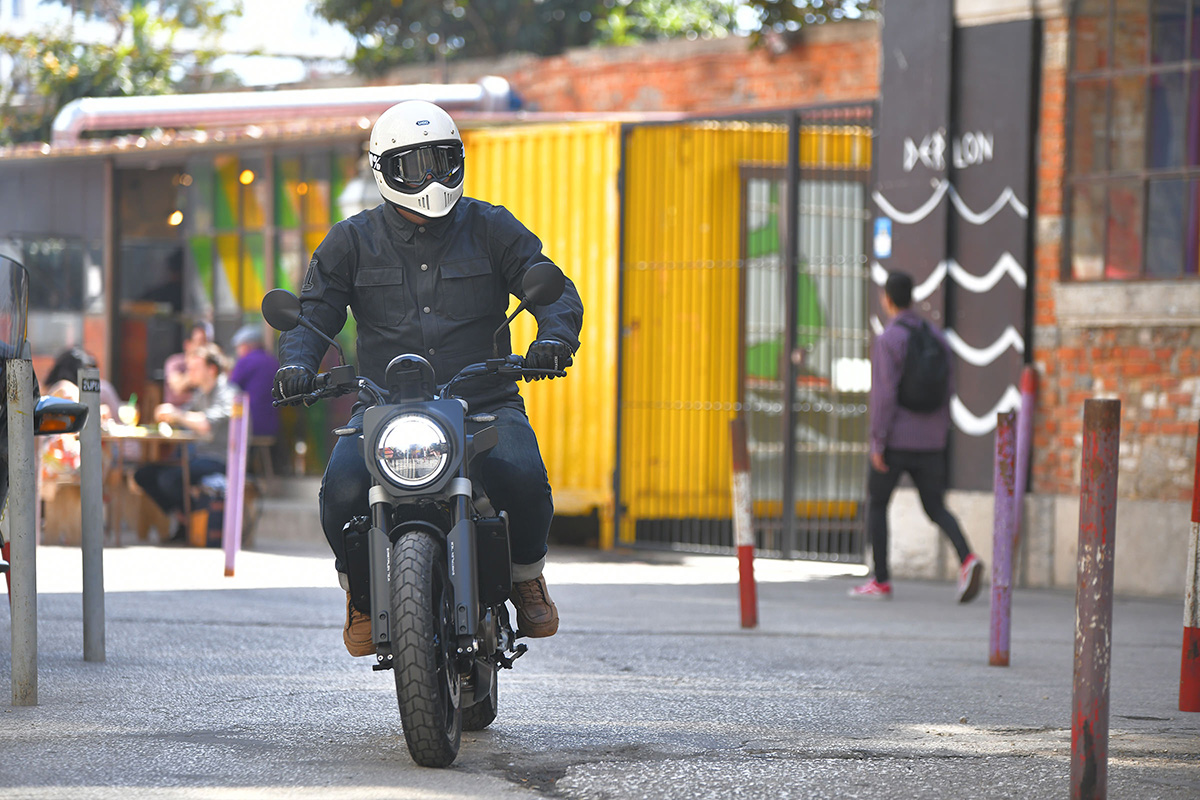
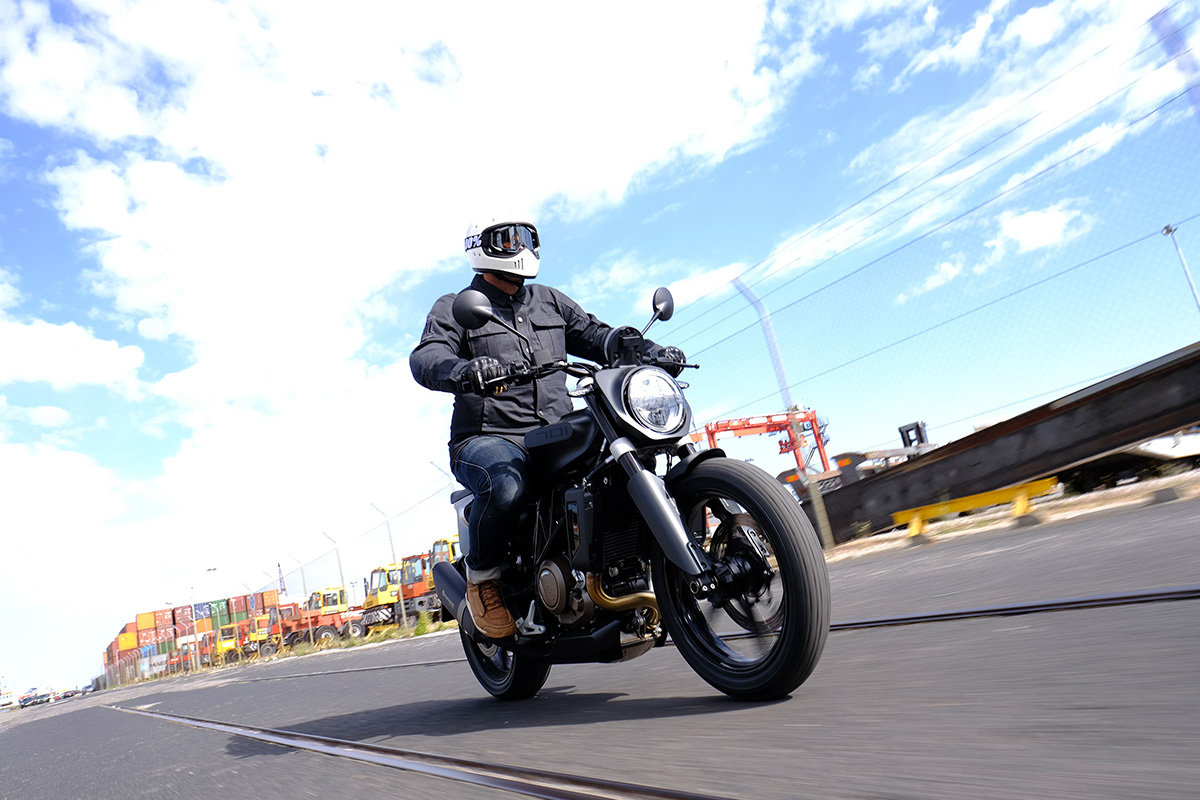
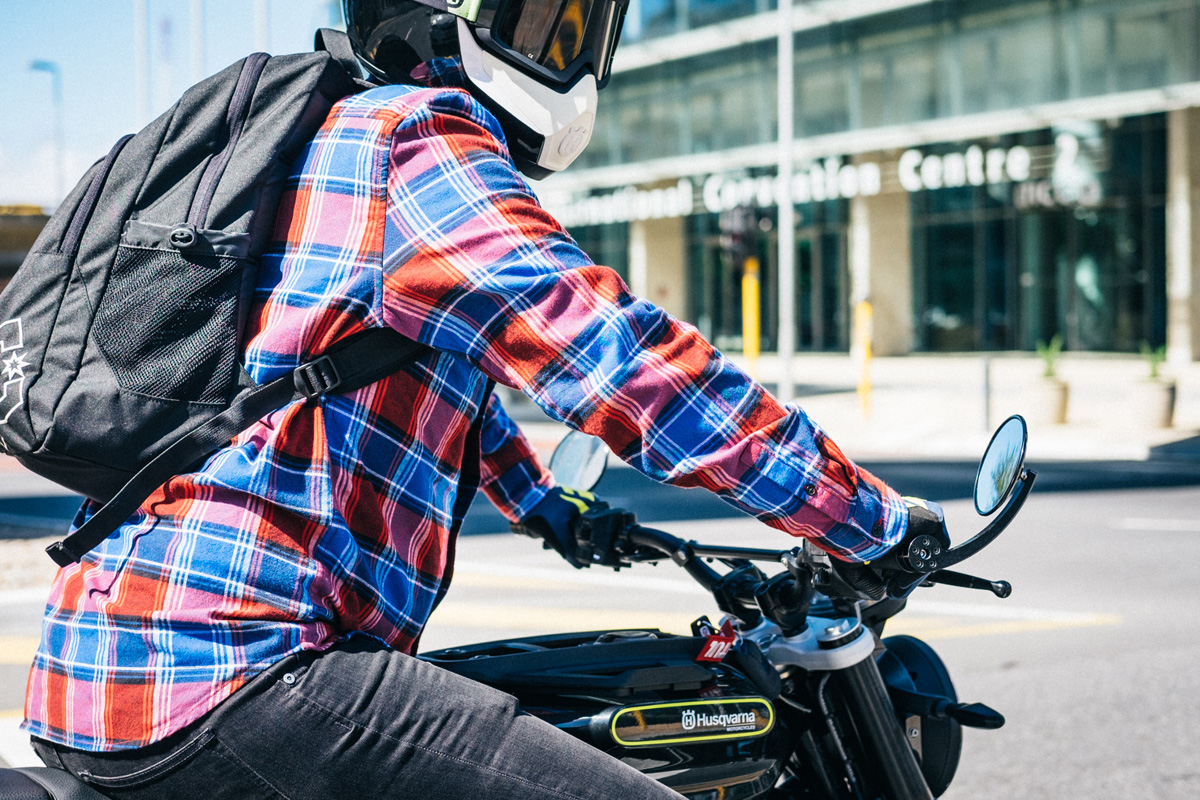
The thought of riding the Svartpilen straight from the estate where I first climbed aboard, into the dense city traffic was now very appealing. This bike was born for the city! Miniscule in size and weight means maximum enjoyment as an urban assault weapon. The motocross type handlebars sends a message of aggression to the brain, so be warned.
Photo credit: Bjorn Moreira / ZA Bikers
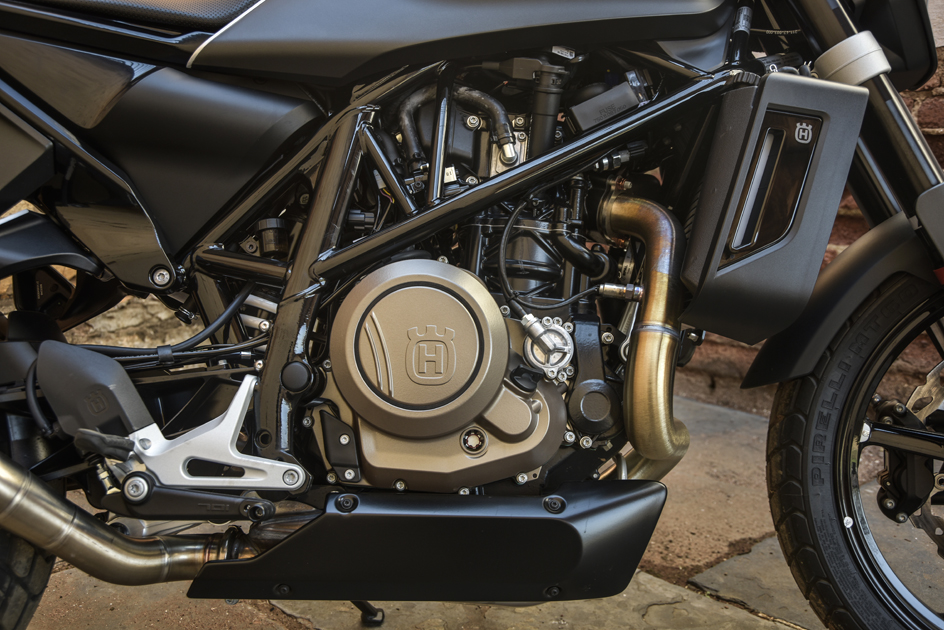
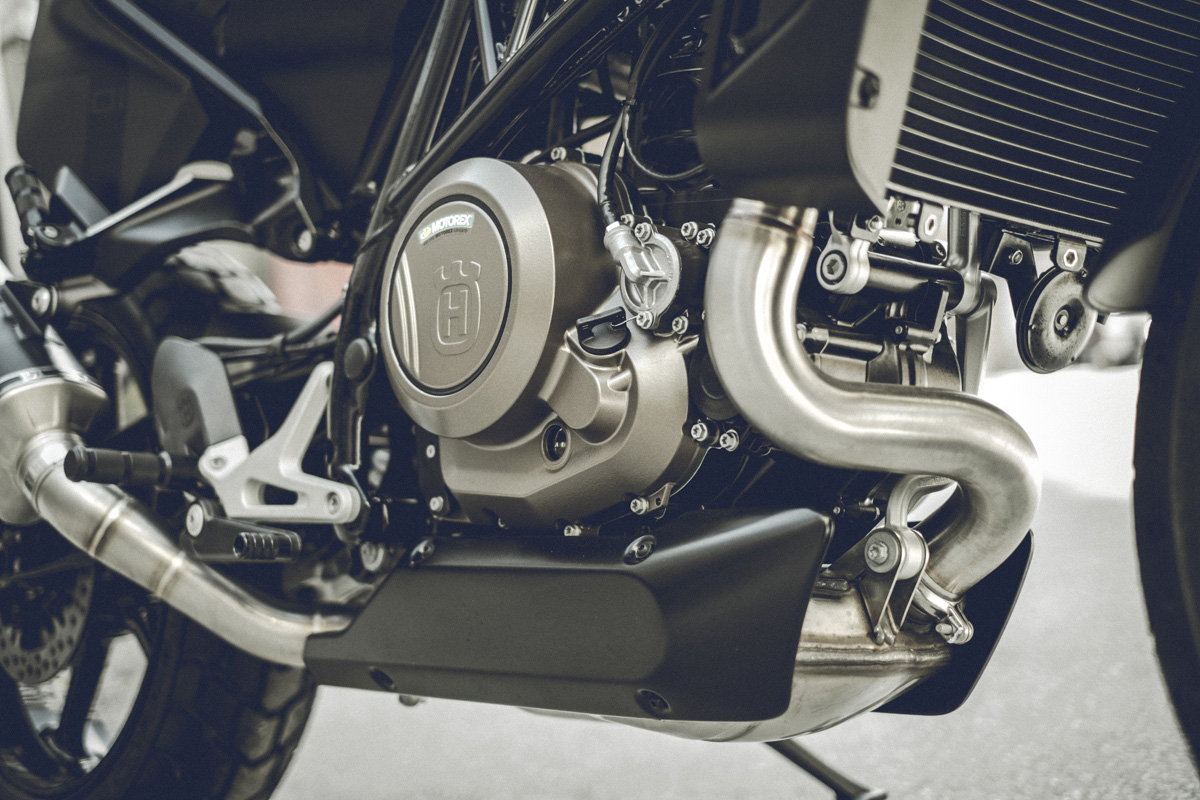
The 75 horsepower developed by this proven 692cc, single-cylinder engine never ceased to surprise whenever the throttle was twisted in the right direction. The very strength of simplicity and weight reduction that a single-cylinder engine brings is also its weakness. This comes in the form of noticeable vibration at around the 5000 rpm range. That being as it may, it did not phase me very much as I have had years of experience riding single-cylinder bikes all over Southern Africa.
Photo credit: Bjorn Moreira / ZA Bikers
The chassis and suspension do exactly what they need to do by tracking sharply and responsively around all different sizes and shapes of bends.
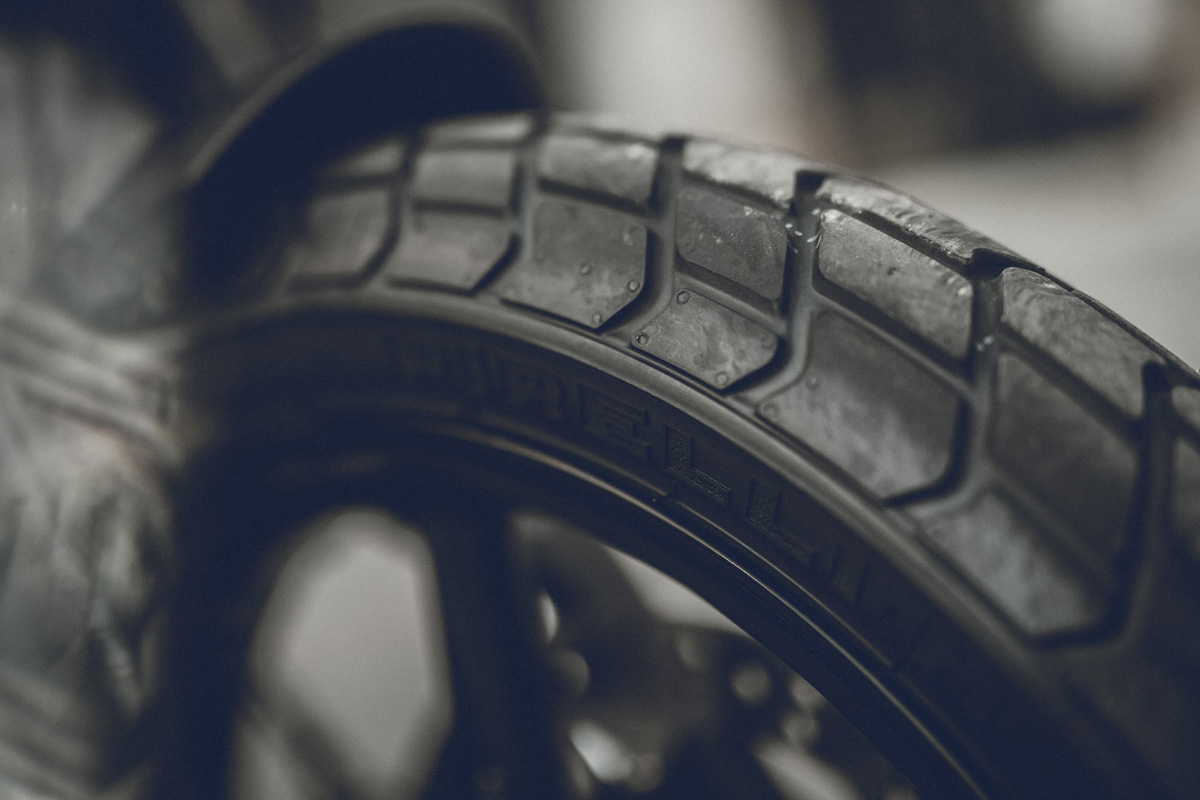
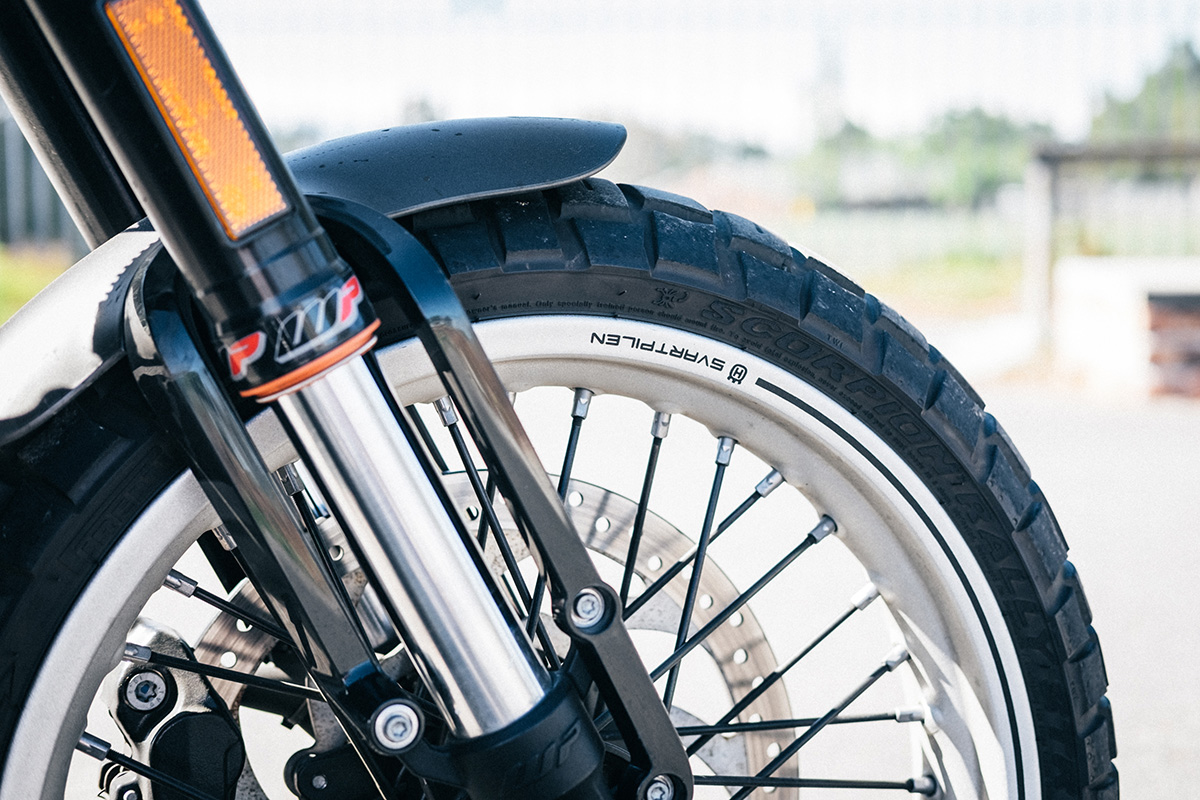
I was initially quite surprised, even a little concerned to see an 18-inch front wheel instead of the customary 17-inch of similar types. Conventional wisdom has programmed us to believe that 17-inch is the perfect setup for road riding, whilst 21-inch the perfect setup for off-road use. To me, this is more of a limiting belief than true reality. I have spent hours convincing my off-road students that most any wheel size is adequate and that rider input is by far the most important factor. To this day that gospel is swallowed with a pinch of salt. Be that as it may, the 18-inch front wheel tracked with positivity and great feedback all the way.
Photo credit: Bjorn Moreira / ZA Bikers
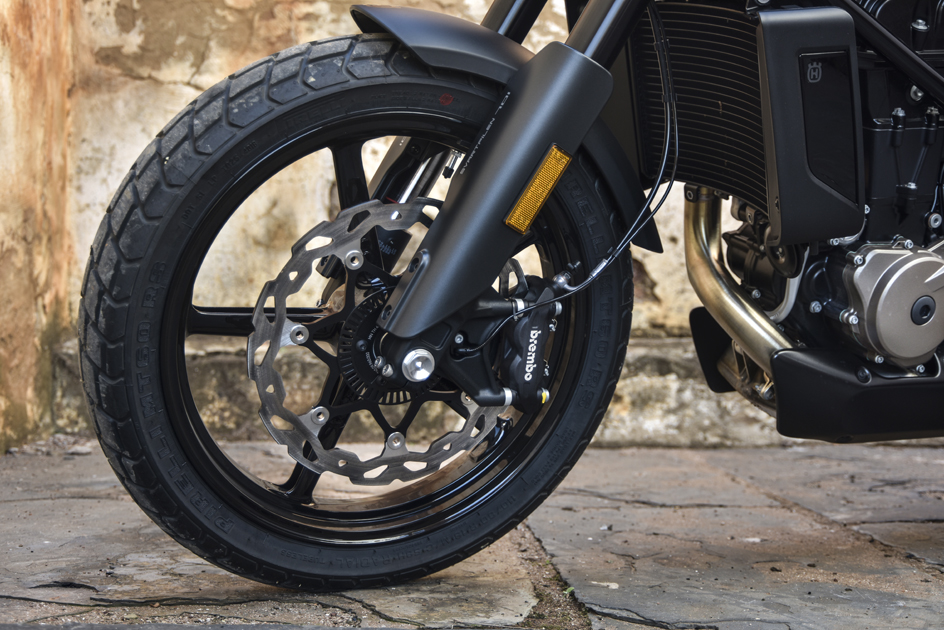
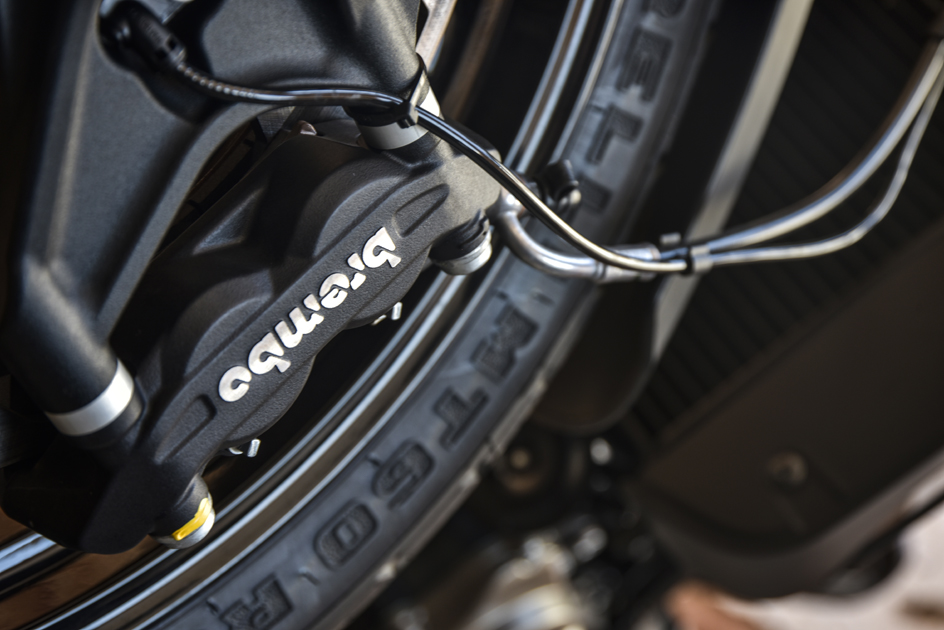
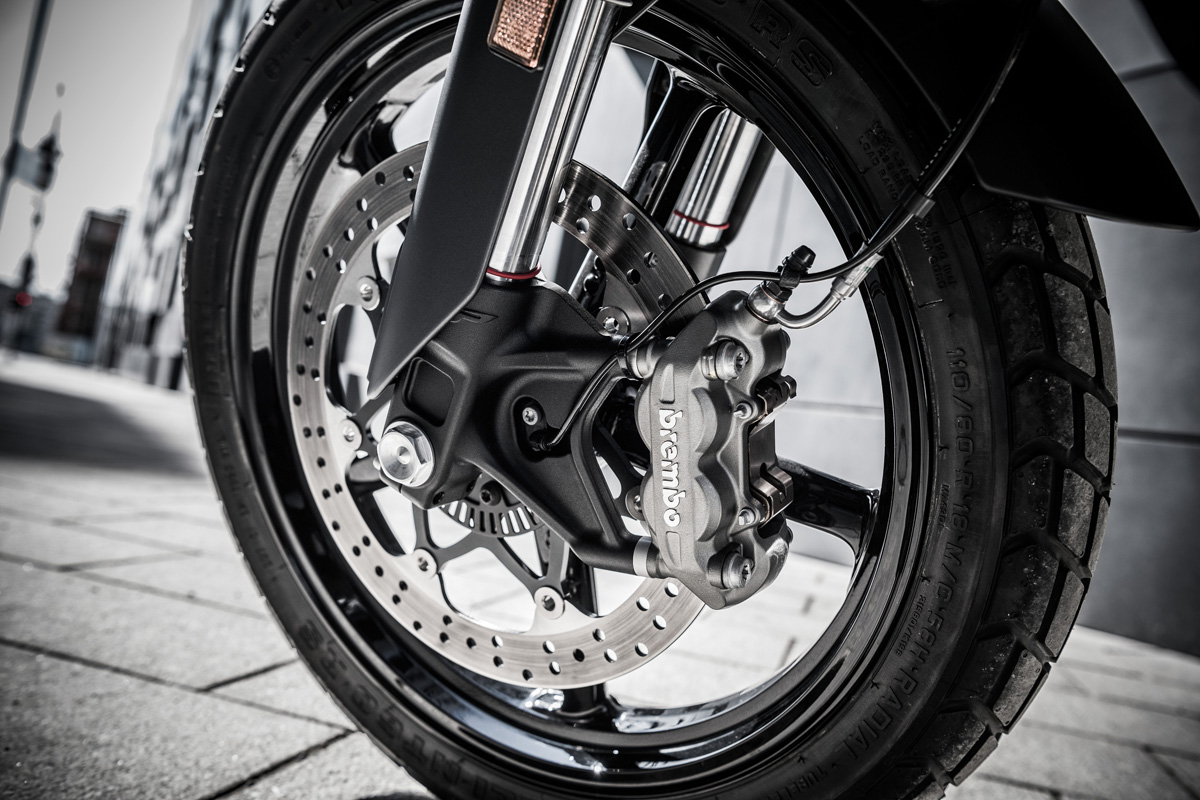
The brakes are another item worth mentioning. The single front disk did a good job of stopping the bike every time. I was surprised to see 175km/h on the speedo with regular frequency while on the commute between Joburg and Pretoria and the Brembo stoppers did a great job every time they were called to action. Of course, there was much more speed to be extracted from this little beast, yet I never felt the need to do so.
Photo credit: Bjorn Moreira / ZA Bikers
Another aspect that bothers me very little is wind protection. City dwellers should need no more than the total lack of protection on offer. Some enjoy the freedom of a wind blast in the face. Others enjoy the sight of nothing but the open road before them, ones like me, that is…
Photo credit: Bjorn Moreira / ZA Bikers
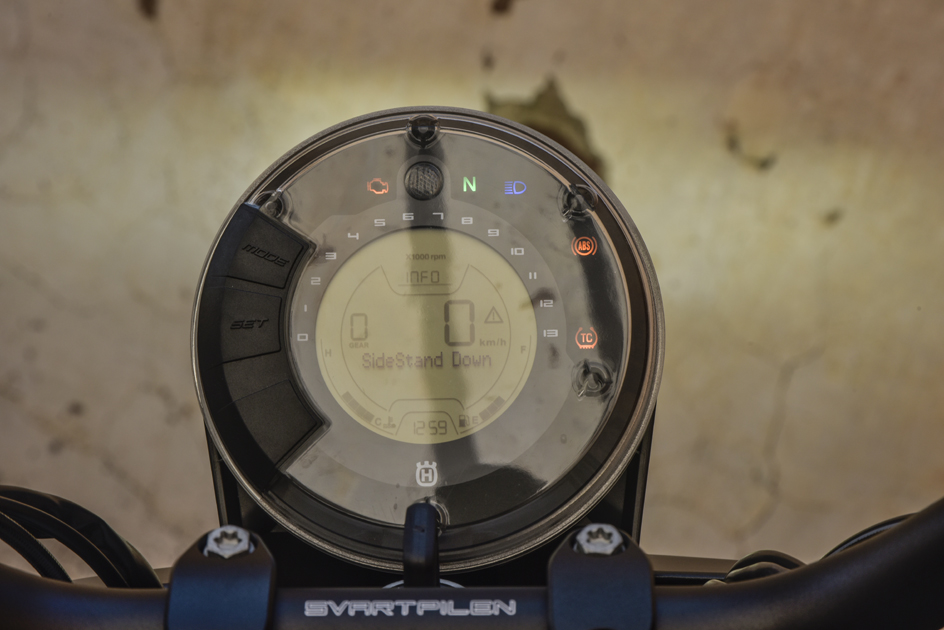
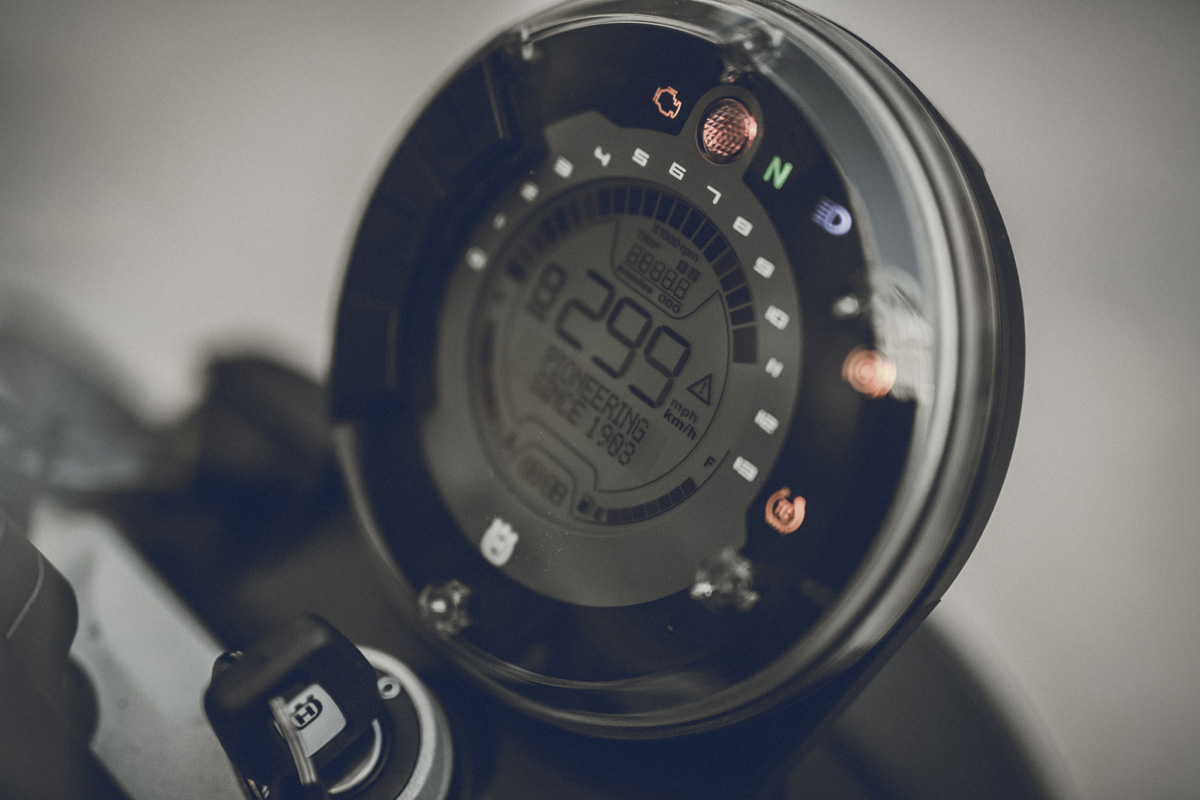
A major let down, however, was the instrument cluster. Although modern in appearance with all the necessary functions, it seemed cheap and out of place on this otherwise well-formed package.
Photo credit: Bjorn Moreira / ZA Bikers
Apart from the gear position- and digital speed indicators, the lettering used to communicate the other features seemed way too small and hardly legible for my now mature eyesight. Husqvarna could have used this opportunity to marry a solid, high-quality retro display and old fashioned dials to an otherwise modern interface, perhaps with indigo backlighting to round it off.
Photo credit: Bjorn Moreira / ZA Bikers
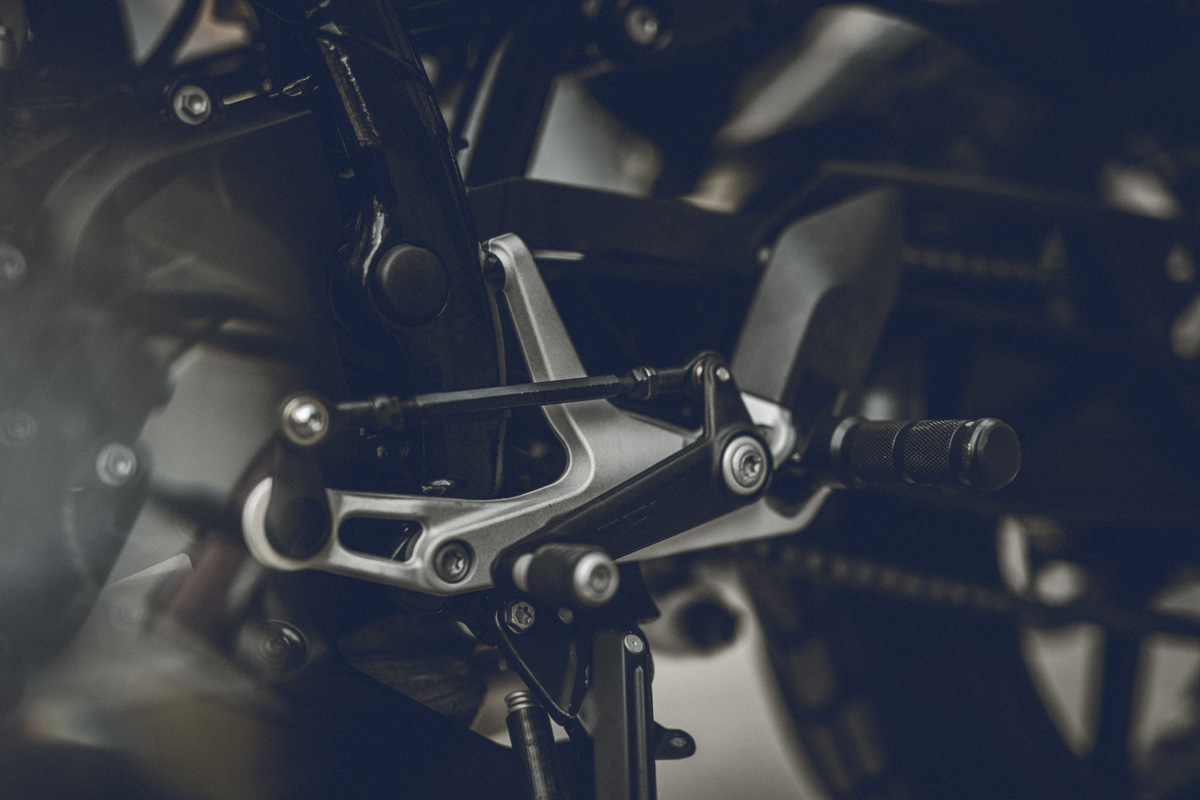
A nice touch that enhances the sporty engine characteristic is the addition of a quick shifter that offers clutchless up and downshift action. It does take a bit of time to finetune the correct foot action, yet that is all part of getting acquainted!
I had so much fun carving the city streets that I was a bit annoyed being interrupted by the fuel warning indicator ever so often. The 12 liter fuel tank seems way too small. Understandably, Husqvarna wanted to keep the wet weight around 170kg and this was probably the only way to keep to that target.
Photo credit: Bjorn Moreira / ZA Bikers
In closing, it is important to remember that this motorcycle was born to stand out, not to fit in. There will be very few motorcycles launched in 2019 to make this more clear. Husqvarna should be applauded for such a bold, fresh design. The price tag of over R 150 000 puts it in a bracket where many other value offerings reside, so the Svartpilen will have its work cut out on the local motorcycle scene.
Photo credit: Bjorn Moreira / ZA Bikers
Only time will tell whether this young one will be a sales success in the South African market, as much as it is a statement of individuality. And finally, in the words of the clever folks over at Husqvarna’s marketing department; Simple. Progressive…
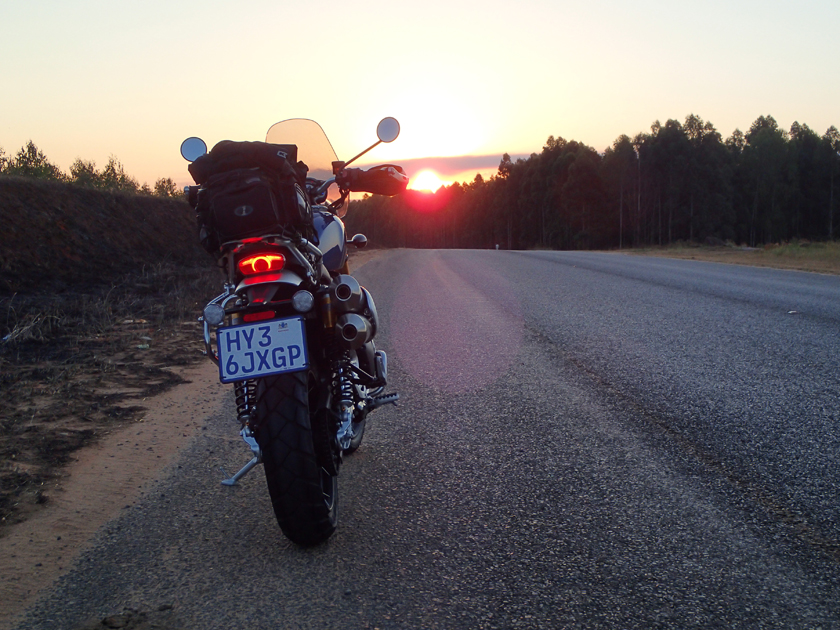
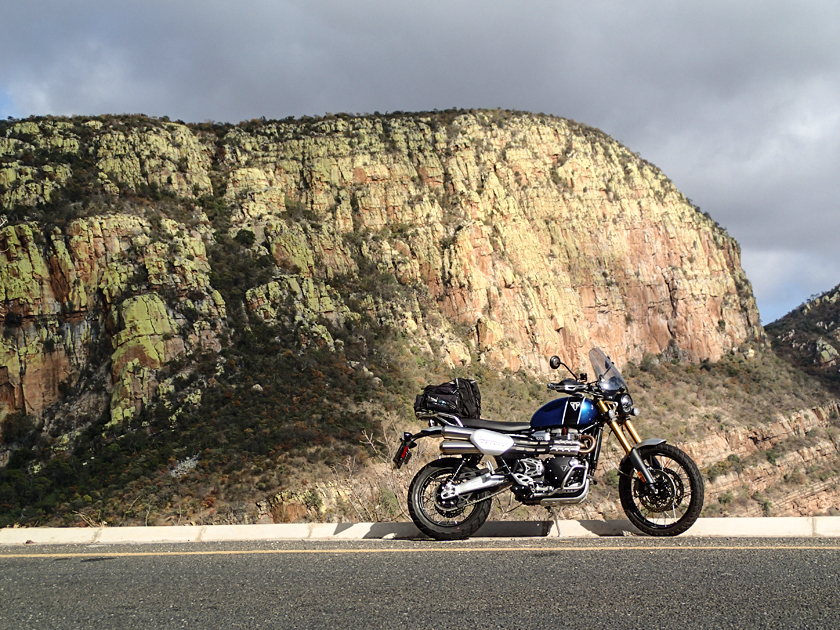
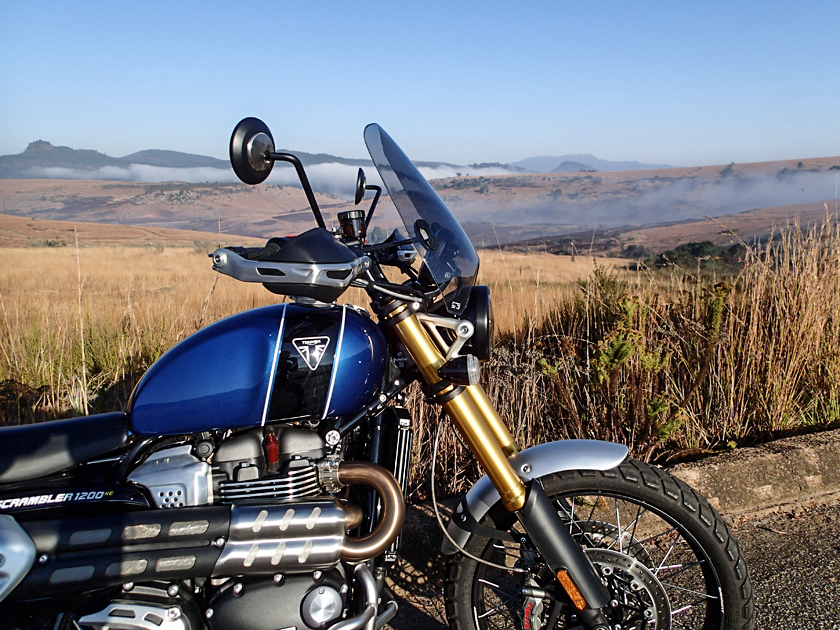
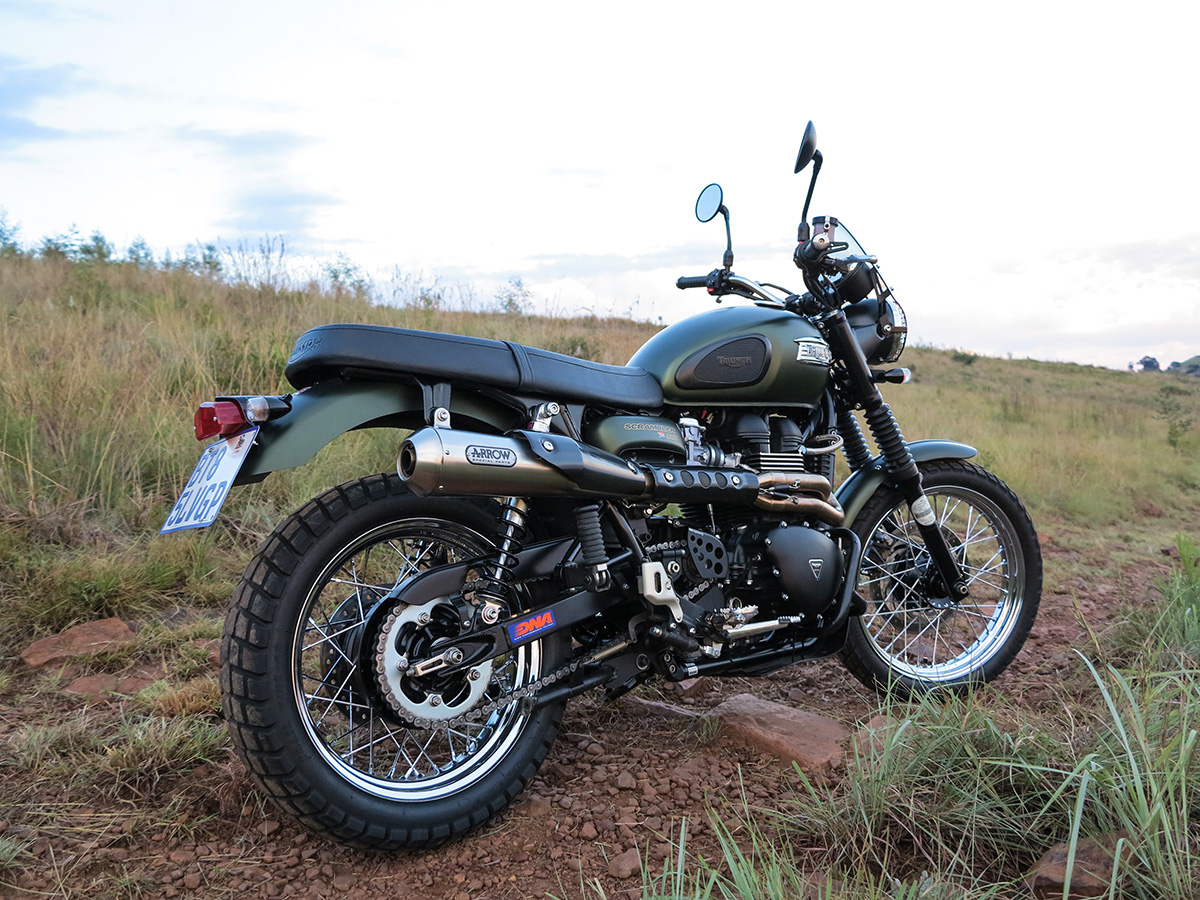
Let’s face it, we never need a reason to ride but it is sometimes fun to put a particular spin on it. I had some business appointments down in Barberton, in the Lowveld [or is that “Slowveld”?. I, as is usual, decided to go by bike despite the cold snap that promised to arrive on the Friday of my ride. I rolled out of Pretoria at 6 am on my Triumph Scrambler. I usually ride the back road to Bronkhorstspruit and then join the N4 heading east. This allows you to miss the first toll gate. Always a pleasure to put as little as possible into Sanral’s coffers! It was properly cold. Probably around minus 5 considering the wind chill factor. I was barely out of town when I hit the first bank of mist. My visor was misting up from my breath and this was now compounded by almost zero visibility in the misty pre-dawn half-light. I was literally riding at 55 kph, desperately wiping my visor every few seconds to remove the watery mist, and give me some semblance of sight. Eventually, I was forced to open my visor and duck down behind the Puig screen fitted to my Scrambler, where, by just peering over the top I had some semblance of vision. No way that this is fun but rather something to be endured as you pray for the mist to break. The frigid air hitting my face had me gasping for breath as my lungs rebelled against the icy onslaught.
Photo credit: Dave Cilliers / ZA Bikers
The lights from oncoming traffic compounded the poor visibility problem as the mist on my visor splattered the light into a dazzling, blinding mess. Absolutely riding blind, your mind starts playing tricks on you that there is something in your path. Instinctively I backed off and moved my head around, trying to get the airstream to, just for a second, blow my visor clear and give me a glimpse of the road ahead. I was concentrating so hard that the stop sign where the road T-junctions with the Bronkhorstspruit road, almost took me by surprise. I turned left and gingerly made my way through even more dense mist. My worst nightmare was realised ten kays before Bronkhorstspruit when a collection of taillights sprang out of the mist and I climbed hard on the brakes, not knowing quite what was blocking the road. Literally idling along in first gear I made out an object in the road, which to my utter dismay was an F650GS BMW lying on its side, crash debris everywhere. The rider was lying clear of the road, spread-eagled on the ground. The fact that the cars and trucks that had stopped were directing traffic and not attending to the rider, made me fear the worst. Judging that there was nothing that I could do to help in any way, I mouthed a silent prayer as I continued on my way with a deep sadness in my soul for that unknown fallen brother.
Photo credit: Dave Cilliers / ZA Bikers
Once on the N4 the mist started to lift and the light started to reclaim the land at the start of a new day. The landscape was frost bedecked and white in the weak wintery sunlight. As always, it felt even colder in the early morning first light. I rode on, deep in thought about how tenuous life can be. The traffic on the highway was already heavy as folks got away early to enjoy what was to be a long weekend. I pulled in at Milly’s to refuel, then turned off at Machadodorp, exiting the town via the R541. This quiet, scenic road drops off the highveld escarpment and winds its way down into the Lowveld, where it t-junctions with the Barberton – Badplaas road about ten kays outside of Badplaas. As you tumble and sweep down this winding and sweeping mountain road you become aware of the panoramic views of rugged cliffs and mountainsides split here and there with wispy waterfalls plunging many metres to the valley floor. In the summer, swollen with sometimes prolific rain they can be quite spectacular. As the Scrambler soaked up the sometimes uneven road surface and railed through the sweeps, my sombre mood lightened and I started to revel in the warmer Lowveld air. A heightened sense of life came over me as I soaked up the glorious mountain views and started to bond deeply with the big booming Triumph.
Photo credit: Dave Cilliers / ZA Bikers
Turning left to Barberton, the fun gets even better as you descend the Mkonjwe mountains, with the neat plantations contrasting starkly with the jumbled mountain range. Looking left you are rewarded with glimpses of the valley stretching towards Mbombela. By the time I rolled into Barberton the eternal joy of riding a motorcycle through God’s own country had lifted my spirits. Once again I had that bike induced song in my heart and spring in my step. A quick Wimpy coffee and toast and I dispensed with business, raring to get on with my ride. Now for the “Name Game”. Try as I might, even after trolling the streets through the quaint little gold rush town, and even asking passers-by, I can confirm categorically that there is not a “BARBER” in Barberton. Well, I was planning to overnight in Mpumalanga, so let’s see if there is “GRAS” in Graskop……
Photo credit: Dave Cilliers / ZA Bikers
The road to Mbombela is a beaut! The wooded hillsides are now regularly interspersed with the typical bushveld which gave that famous pooch, Jock, his name. You traverse the valley and then ascend the tight, curvy pass before descending into Mbombela. The surface is good and a real joy to ride on a torquey twin with plenty of ground clearance. The Scrambler is light steering yet stable as you switch direction and pitch it on its ear. All too soon the pass was behind me and I rolled into, and through a bustling town, with an already hectic rush hour swollen by tourists heading to their holiday destinations. I’m on a bike so no sweat. Threading through cues of idling four wheeled shopping baskets, I was soon on the road to White River and beyond.
Photo credit: Dave Cilliers / ZA Bikers
The road to Hazyview is a long-time favourite. Sweeping past first the Pine Lake on your left and then a little further, the Da Gama Dam on your right, the views are amazing. I have ridden this road so many times over the years that I chuckle inside my helmet when it dawns on me that I even know where the bumps are, as well as subtle changes in camber. This is the incredible aspect of motorcycling. We constantly assess and hone our skills when riding familiar roads. Time stands still as you become one with the bike flowing down a road like a mountain stream meandering through the countryside. The views on this road are dominated by wooded mountainsides which slowly give way to fields of bananas, and then typical bushveld around Hazyview.
Photo credit: Dave Cilliers / ZA Bikers
Exit Hazyview, and then just after crossing the Sabie river and passing the quaintly named “Hippo Hollow”, you hook a left to Graskop via Kowyns Pass. This is a seriously high-speed road. These days you need to exercise some caution as there are some potholes that have the potential to make a meal of you and your bike. You sweep through long wooded bends with truly spectacular views to all sides. This is another reason to show some restraint. It is a travesty to be in such “attack” mode that you miss the spectacle going on around you. I rode at a healthy clip yet still enjoyed the scenery flashing by.
Photo credit: Dave Cilliers / ZA Bikers
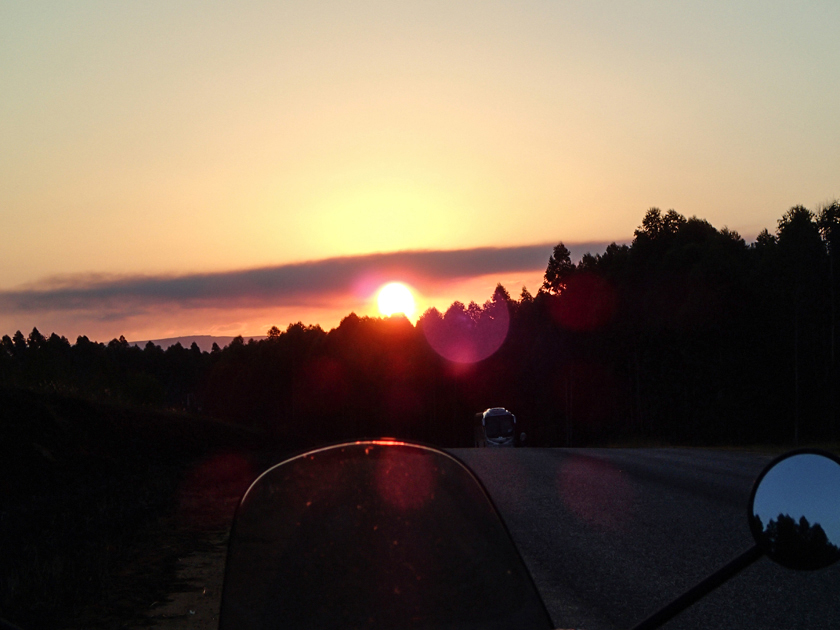
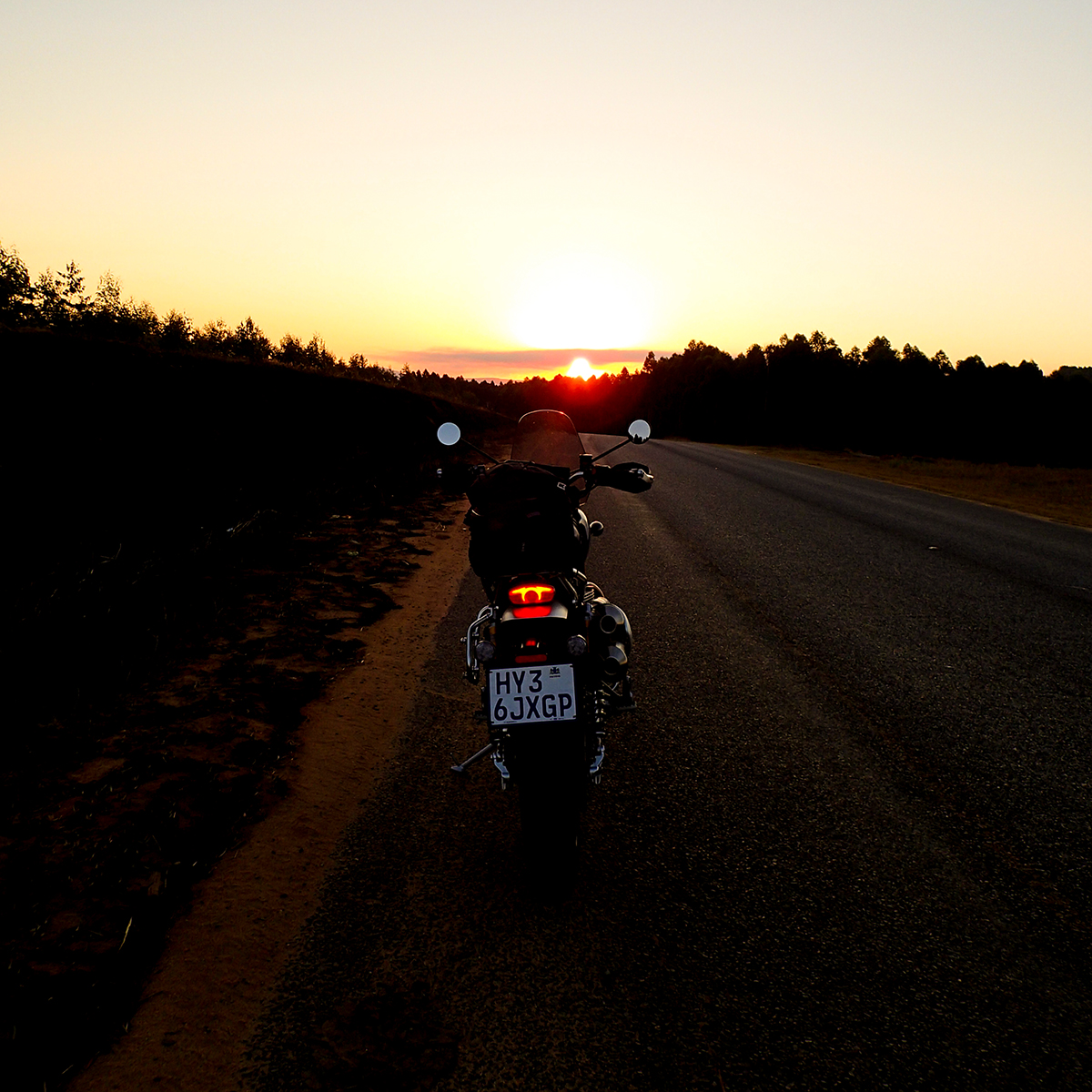
Some haphazard cloud on the horizon became inflamed by the massive red orb of the setting sun. I had to stop and try to record the spectacle on the “digital” film.
Photo credit: Dave Cilliers / ZA Bikers
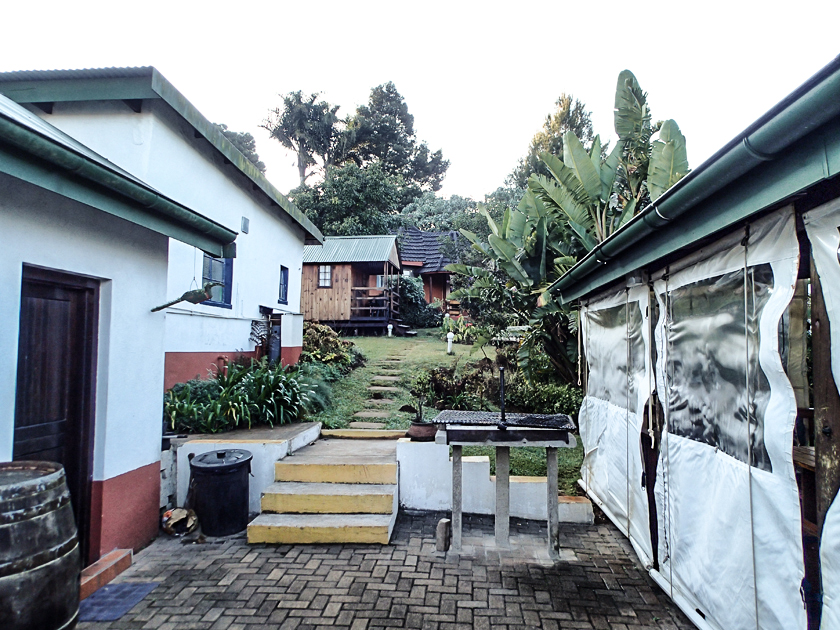
The chilly mountain air was again making its presence felt but in an invigorating way. The road tightened up through Kowyn’s Pass, much to my and the Scrambler’s glee. I stopped in town for fuel so as to be ready for an uninterrupted start the next day, then cruised on to my overnight destination, the Valley View Backpackers. This establishment, on the west of town, gives an uninterrupted view across the valley towards Pilgrim’s Rest. So let me, at this point already, not keep you in suspense but confirm that there is plenty of GRAS in Graskop. In the company of some foreign tourists that evening I can report that grass of the “electric spinach” variety is also not in short supply! You just got to love Africa!
Photo credit: Dave Cilliers / ZA Bikers
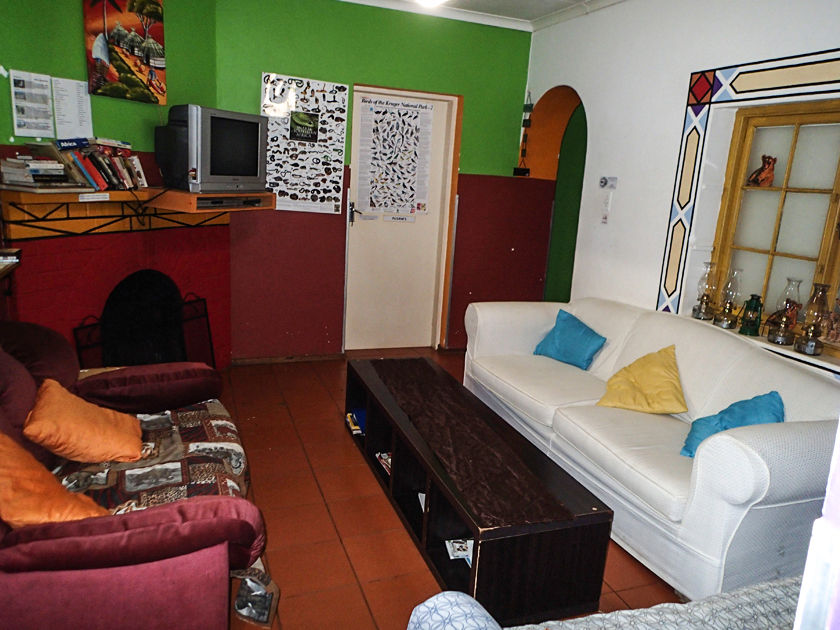
Let me digress for a moment. If you want to travel fast and light, then overnighting in backpackers establishments is just the ticket. Accommodation cost is reasonable, with options to suit all budgets, from dorm-type arrangements [a lot of fun when you are travelling in a group] to en-suite options. I habitually stay in the “Valley View” room which is en-suite with its own toilet and shower. The communal kitchen is the place to get chatting to fellow travellers as meals are prepared. Braai facilities are available too. With a fire going in the lounge, it is really all rather jolly sipping a glass of hooligan soup and chatting to folk from all over. Beds are clean, warm and cosy. Bikes are behind a locked gate, safe and secure. Having had a latish lunch I decided that I couldn’t do justice to my freeze-dried Thai curry, so I chowed a packet of peanuts with a few Captain Morgan’s and just chilled. Everyone turned in by ten and I was snug under the duvet despite the icy Graskop chill outside.
Photo credit: Dave Cilliers / ZA Bikers
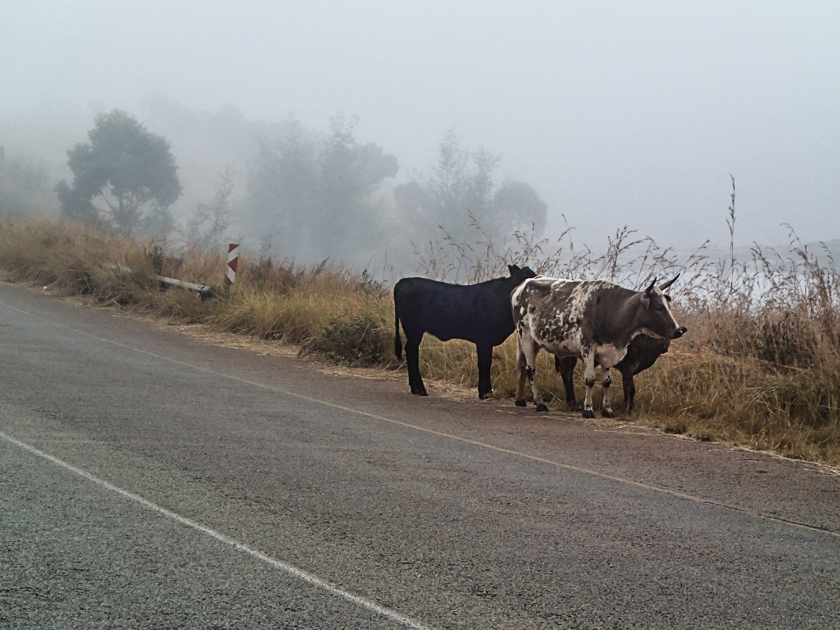
Saturday dawned clear and bright. I showered, punished a cup of coffee then layered up against the early morning chill. A quick chain lube and I was on my way. Riding out of town on the road to Bourke’s Luck and the Potholes, the views were breathtaking. The mountainsides were bathed in the bright early morning sunlight that had banished all but the most tenacious mist to the deepest valleys. Here and there tendrils of mist still stretched their wispy fingers across the road as I raced by. This is high-speed Nirvana. On a Sports weapon, you duck behind the screen and lace together the 240 kph sweepers. I was a little more restrained on the Triumph, but let all 1200cc’s off the leash. The dreaded mist once again spoilt my fun. As I raced towards the valley floor the spooky chill of the mist enveloped me and I was forced to back off. No sooner had I reined in the Scrambler when three cows came plodding along the road. My Sainted Aunt, ploughing into those chaps would have been an epic stufupp! “mombies in the mist” my Rhodie buddies would have said. Cattle were referred to as “mombies” back in the day in Rhodesia, no doubt taken from a Shona or Matabele name. Luckily the mist abated quite soon, just past the “Three Rondavel’s”, then it was back to corner strafing fun. Again the wooded mountainsides had gone, with Mopane bushveld making its first appearance.
Photo credit: Dave Cilliers / ZA Bikers
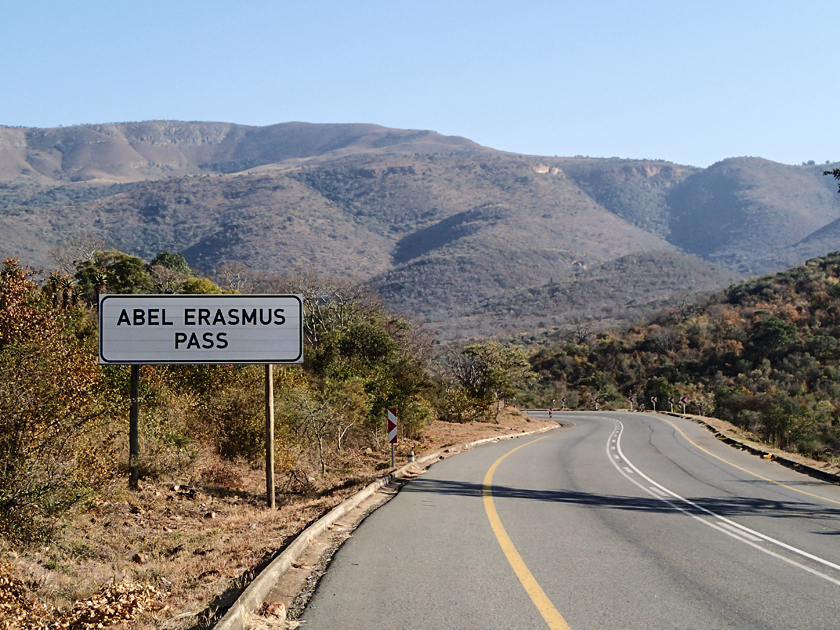
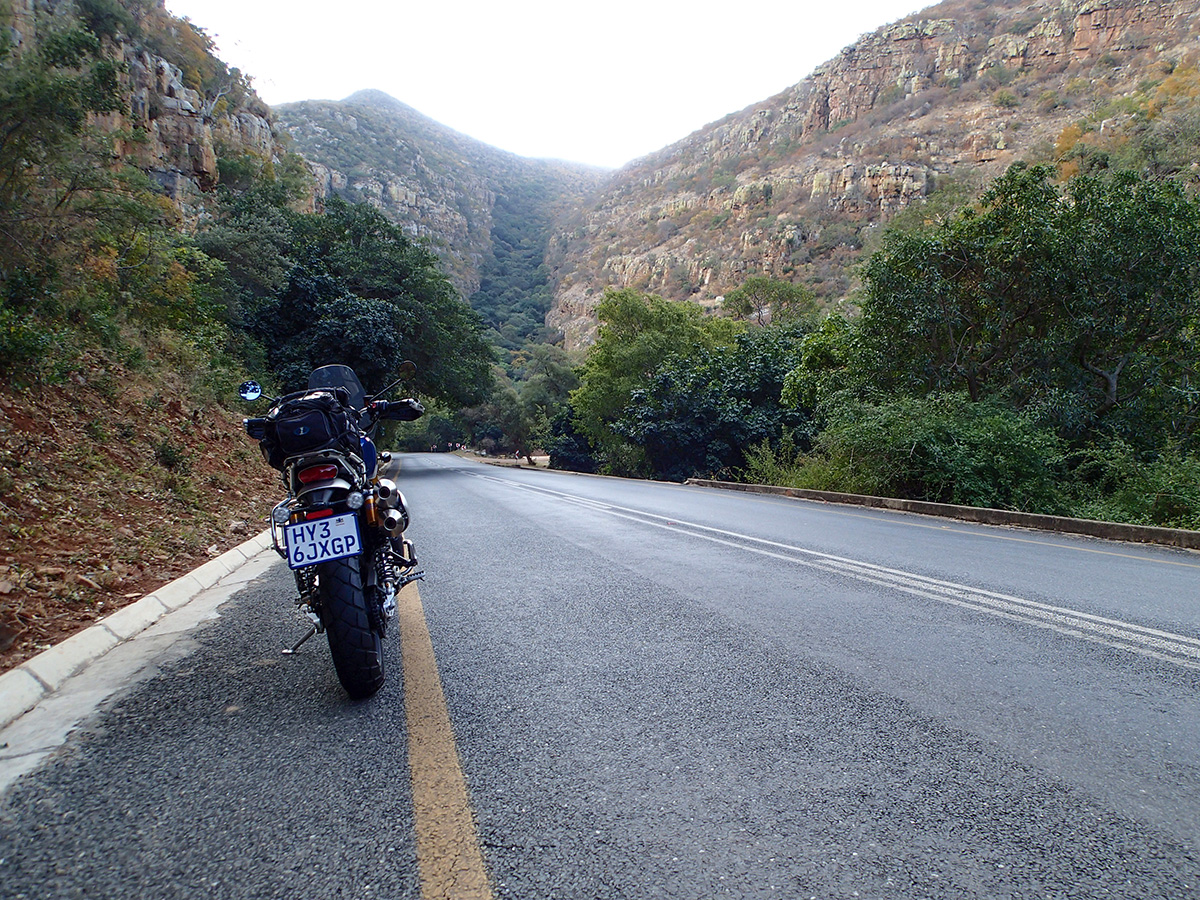
In no time I reached the t-junction to turn right up the Abel Erasmus Pass. Up and over we went, the Triumph and I, dropping down through the Kloof like a mini Meiringspoort, and then through the Strydom Tunnel. Now I had the Blyde river vistas to my left and moss coloured mountains all around me.
Photo credit: Dave Cilliers / ZA Bikers
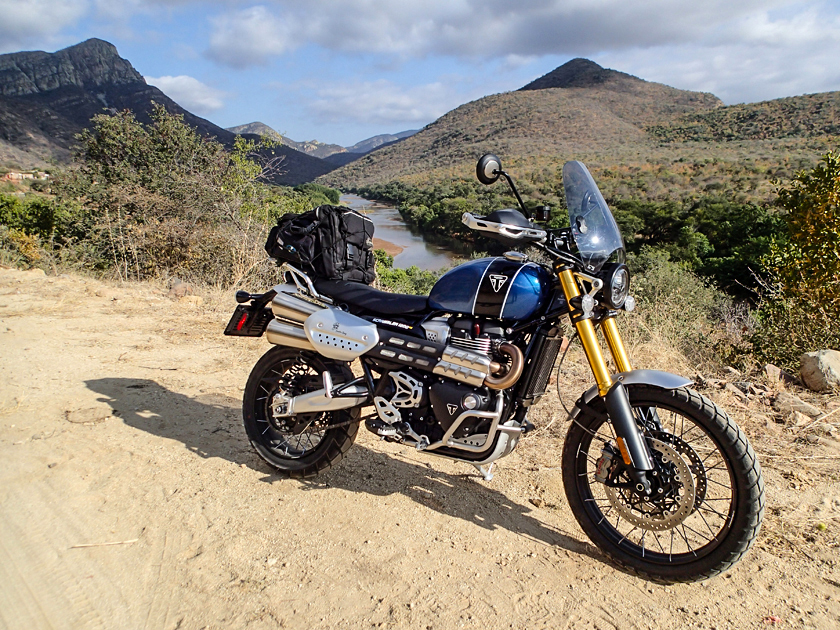
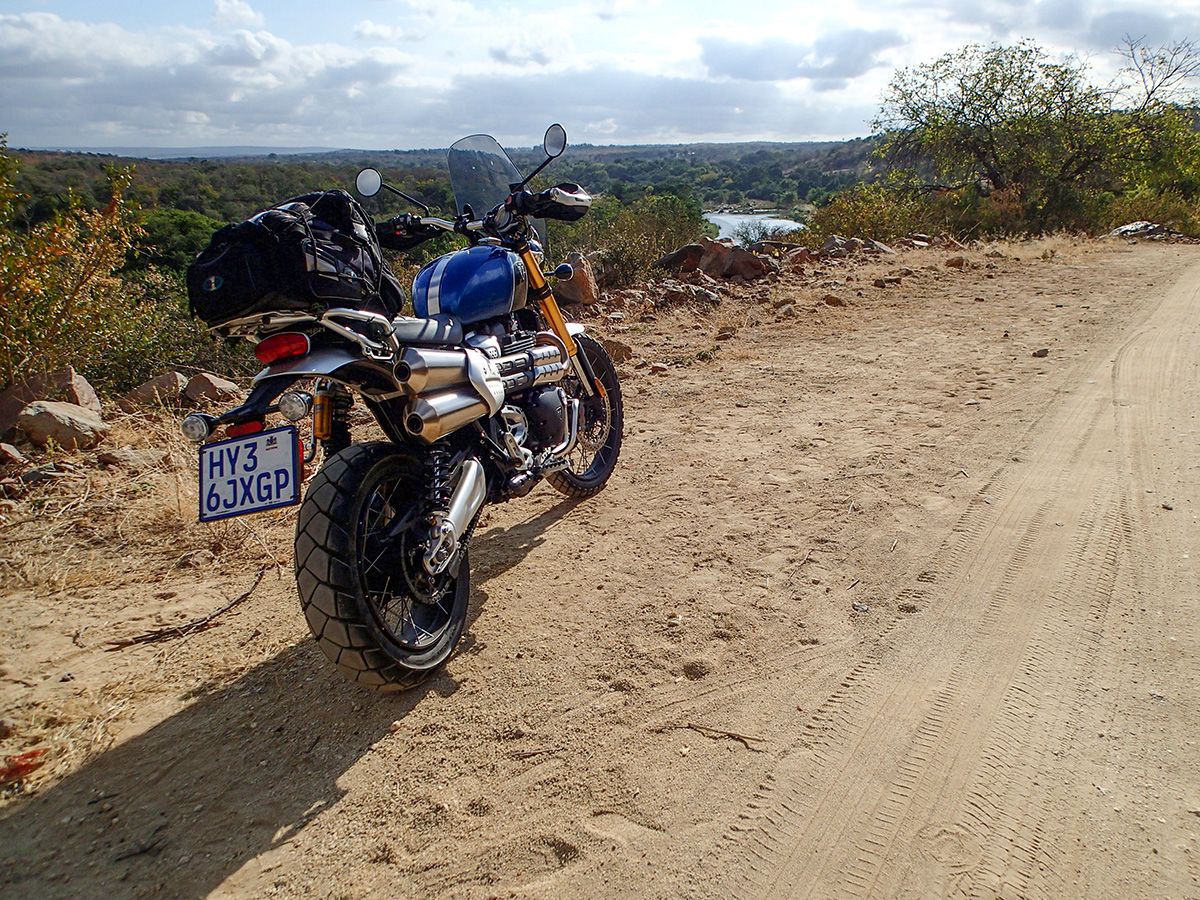
Lord, the majesty of your creation never ceases to captivate and enthral me! With the versatility of the Scrambler, I rode down a gravel road next to the river for a photo, then flat-tracked out of there. Man oh man, this thing is proper! Back on the tar, I turned left towards Tzaneen. I had it in my mind to look up Modjadji, the Rain Queen, and ask her what the hell she is up to. To tell her that the guys in Cape Town want her to abdicate her throne. This means we must return to the “Name Game” and ride “Modjaji Kloof”. Try as I might, I just could not track her down.
Photo credit: Dave Cilliers / ZA Bikers
The Galuchi Vervet monkey clan, her emissaries, were staying stum, so unfortunately I must conclude that Modjadji is no longer resident in Modjadji’s Kloof! Now, what about Duiwel’s Kloof? Do you think Old Nick hangs out there or did the place just get a bad rep? There is only one way to find out. Up and down I went, Georges Valley, Duiwels Kloof, Magoebas kloof and eventually all the way to Haenertsburg. The old serpentine fellow never showed. Perhaps he is “going hither and thither, seeking to kill and destroy”, but I’ll tell you something, those roads are more like Heaven to me!
Photo credit: Dave Cilliers / ZA Bikers
A belated brekkie in Haenartsburg and then back on the road. Polokwane, and the N1 home. I rolled into my spot at around 15:00 pm, a little sore of tush, but in very high spirits. A quick 675 k’s dispensed with through some of the most splendid scenery that you can imagine. We are blessed to live in the most amazingly beautiful and diverse country. William Wallace, the Scottish patriot is quoted as saying, “all men must die, but only some men truly live”.
Photo credit: Dave Cilliers / ZA Bikers
To play the “Name Game” and venture far and wide in our awesome land, is to truly live! Grab a map book and plan your own “Name Game”, you will add another amazing page to your book of motorcycling adventure, as I did.
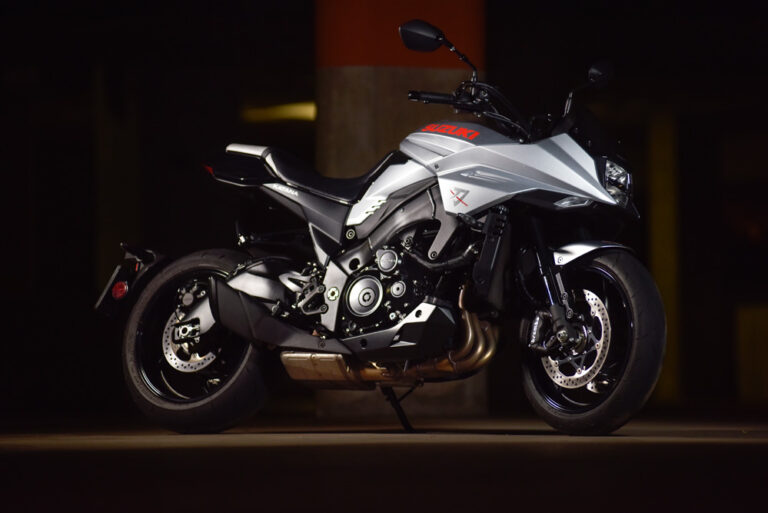
Suzuki has a penchant for giving their motorcycles interesting names. More often than not there is a deeper meaning to the choice of name. Let’s take the Hayabusa as an example. The fastest production motorcycle available at the time of the ‘busa’s launch was Honda’s Lockheed SR71 inspired Blackbird. Turns out that the Hyabusa is a breed of falcon native to Japan that feeds on….. you guessed it, Blackbirds. Needless to say the ‘busa quickly established itself as the new benchmark for those who worship at the Altar of Speed. So what the hell is a Katana?
Photo credit: Bjorn Moreira / ZA Bikers
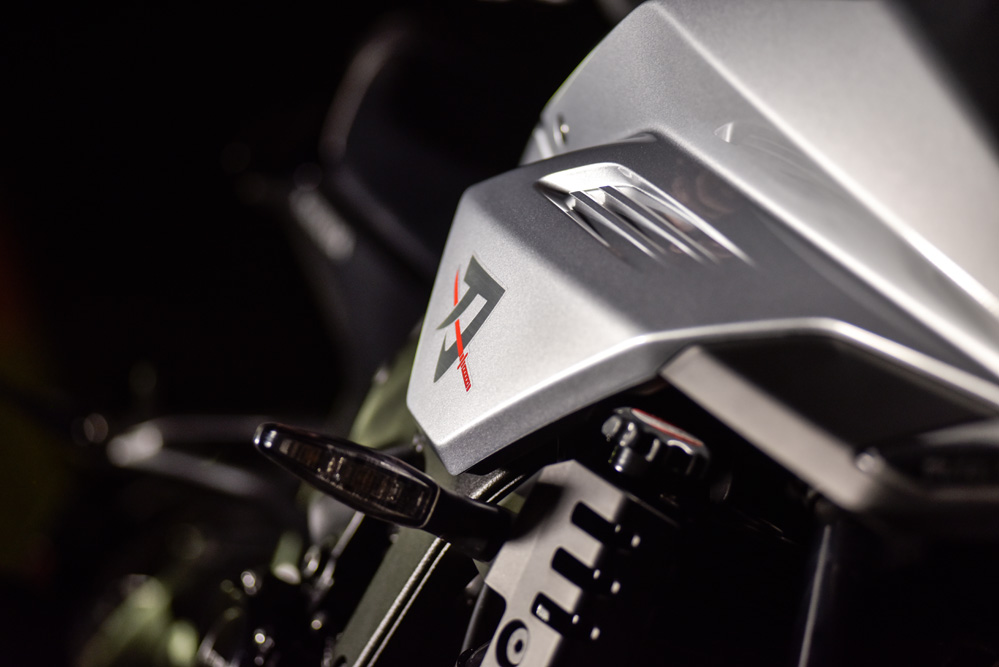
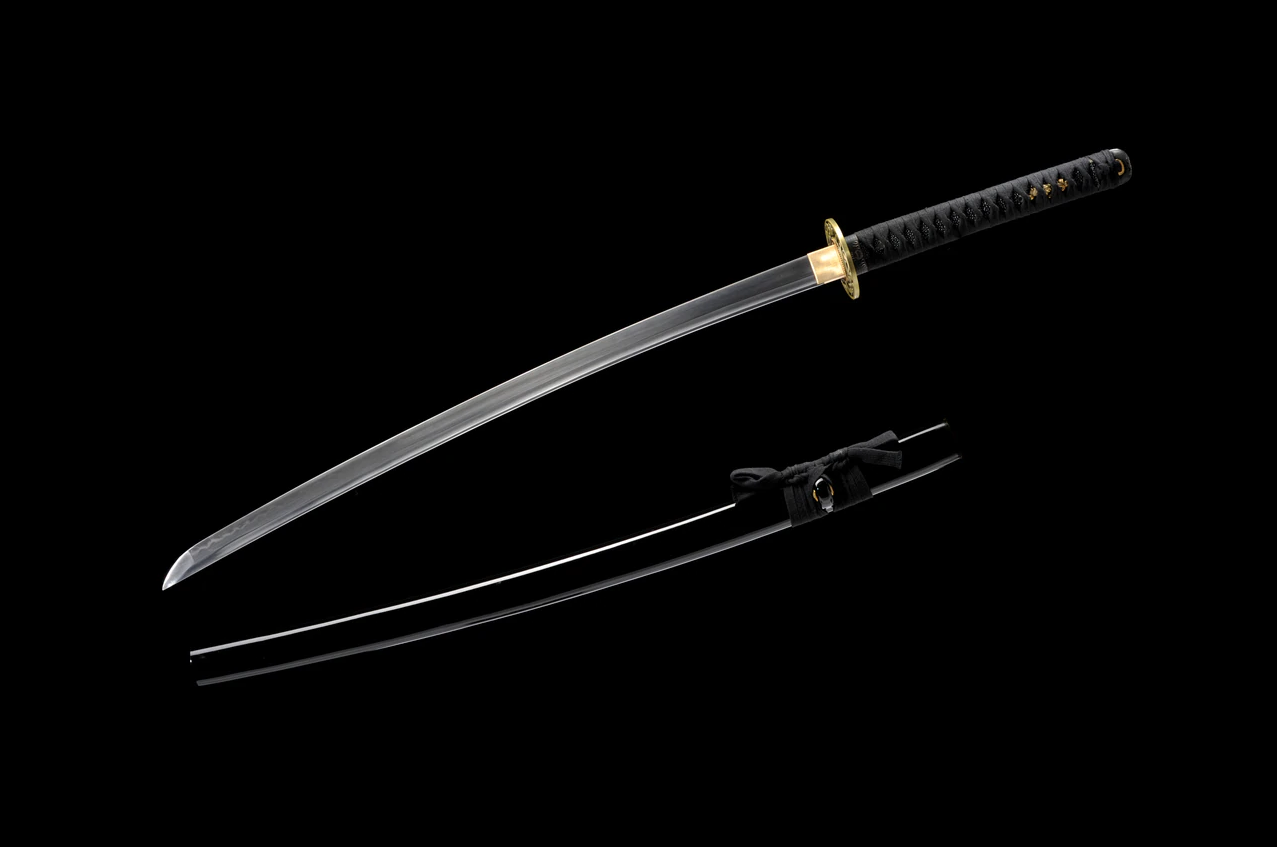
Back around 1400 AD the Japanese warrior class, known as the Samurai, were at the forefront of the battle against marauding Mongol Hordes. The Samurai at that point were incredibly skilled mounted archers. They carried swords as symbols of class rather than primarily as weapons. When the fighting got really heated they found that the swords they were using were not particularly effective against the tough boiled leather armour worn by the Mongol warriors. Enter the Katana. Swordsmiths made a double-handed sword with a slim, slightly curved blade. Said blade was only sharpened on the leading edge and could be utilised for cutting and thrusting. A process similar to Damascus steel manufacture was used to forge the “tamahagane”, Japanese sword steel, to a water quenched, consistent hard blade that could be honed to an edge that would slice through Mongol armour. [and the Mongol!] As recently as the Second World War, Japanese officers carried Katana’s as a sidearm and symbol of rank. In light of this, I believe Suzuki had a cutting edge weapon in mind when their Katana was conceived.
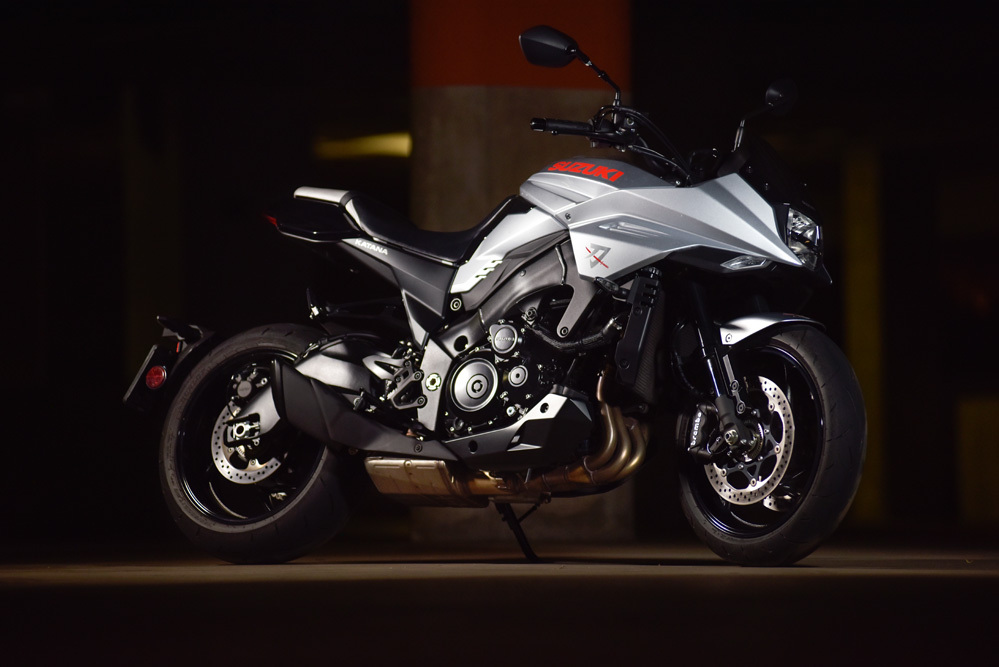
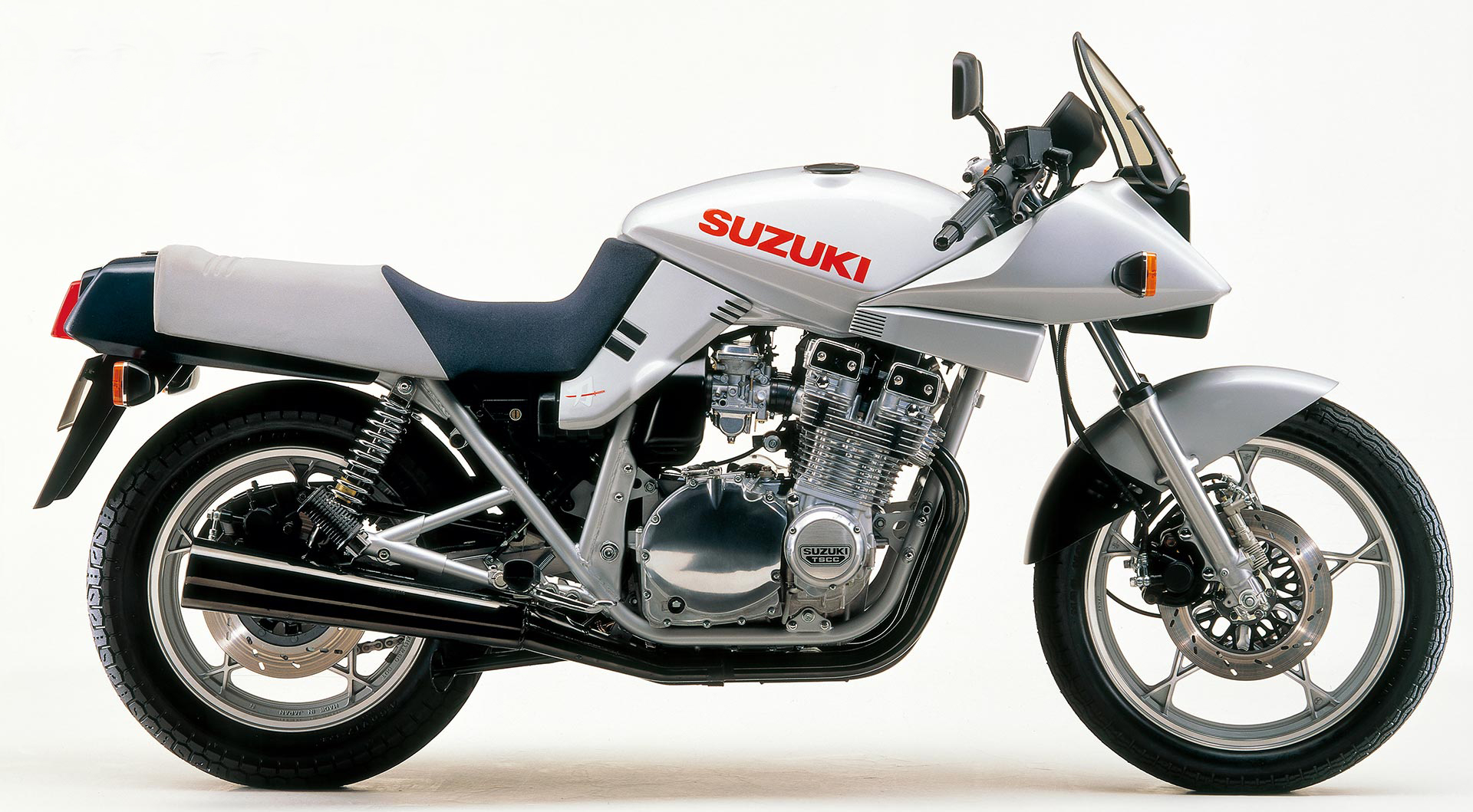
Back in the late 1970’s Suzuki approached a German design studio to style a bike that would take their sports offering to a new level. The bike that resulted was the Hans Muth designed “Katana”. The big Kat was a far cry from Suzuki’s GSX 1100, which was a great bike but not really easy on the eye, with slightly bulbous and frumpish lines. The Katana was radical. Sleek, sharp and low slung, it dispensed with the bull horn handlebars of the GSX in favour of clip on’s. It had a frame-mounted fairing with a tiny yet effective flyscreen windshield. Pegs were rearset and the whole package was unashamedly sporty. It was sold alongside the standard GSX 1100 and inspired a range that included a 550, 650 [shaft drive],750 and 1100. In 1983 it sold for the princely sum of R5500!. A homologation 1000cc “Special” was also built, featuring spoked aluminium rims that were slick tyre compatible. The other Katana’s all wore mags. The 550 and 650 had some canine genes in their DNA, and despite their zooty Katana clothing were slight “dogs”. The 750 and 1100 Katana’s were a totally different story. The late Wayne Heaseman was immediately onto the podium in local 750cc class road racing. New Zealand import Neville Hiscock took the fight to the dominant Honda CB1100 RC’s with some significant results. The Katana soon developed a strong following amongst the local sportbike faithfull. The DOHC roller bearing crank engines built a solid reputation for reliability. The robust motors also responded well to tuning and a few very potent Katana’s prowled South African streets full of Yoshimura high-performance goodies. In the fullness of time, the GSXR range became Suzuki’s sportbike weapons. The beloved Katana lingered on in the memories of their owners, and a few well-preserved examples are still around.
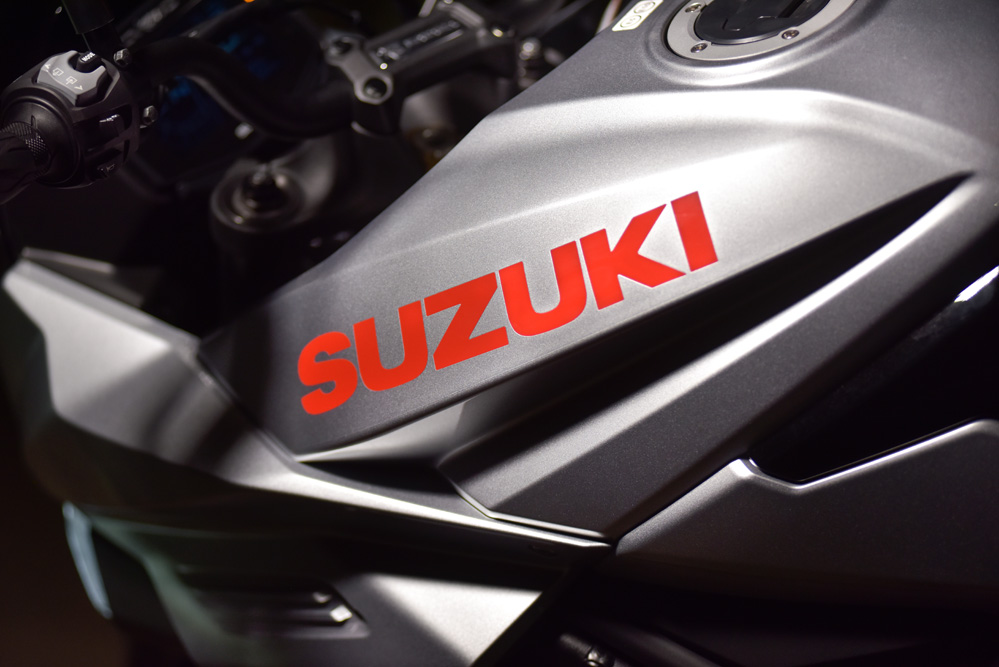
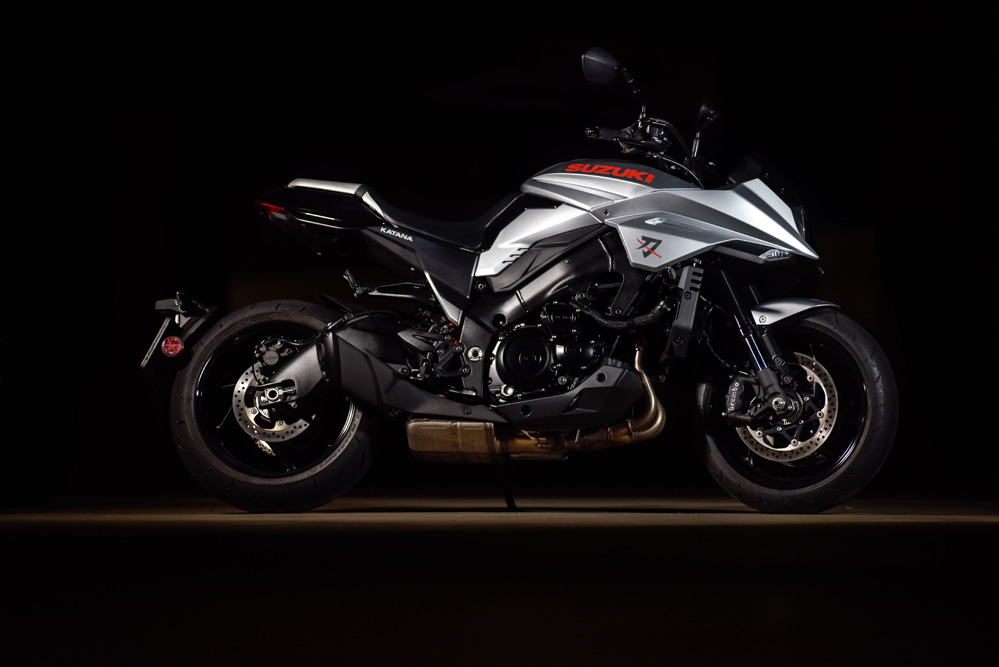
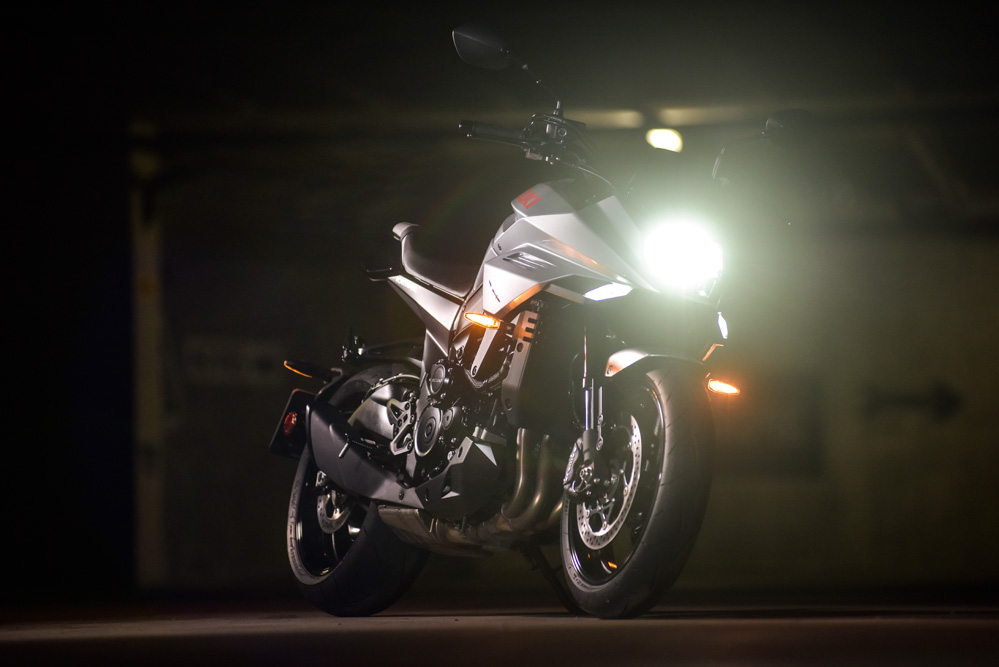
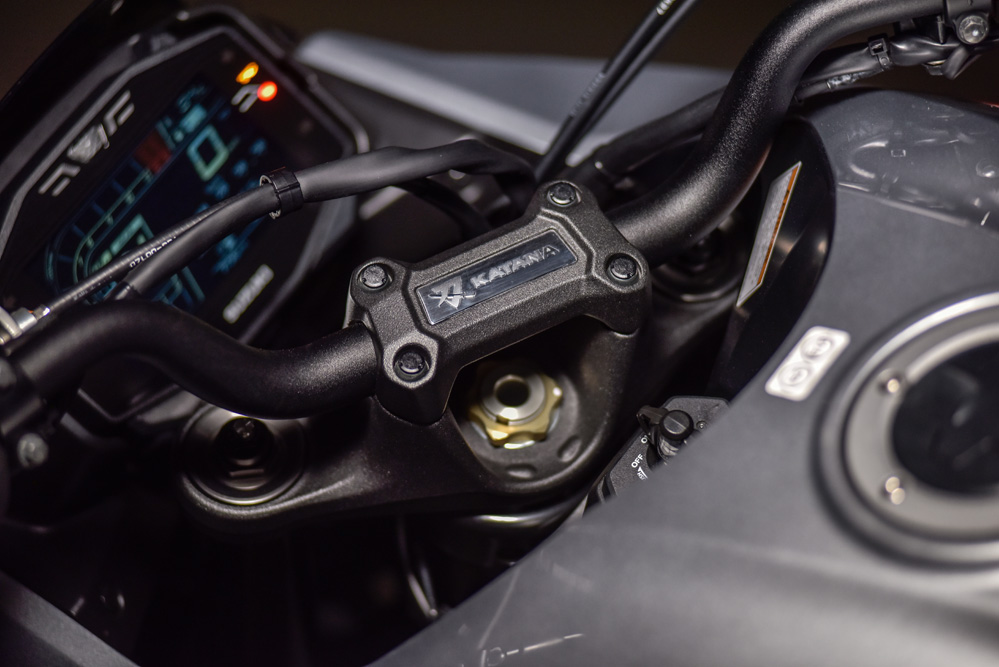
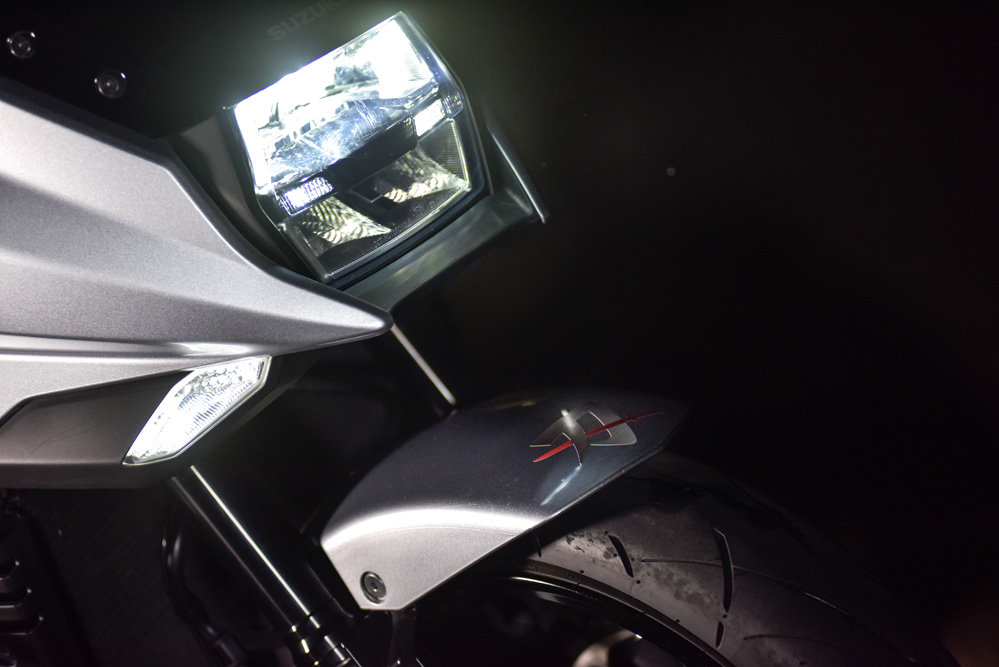
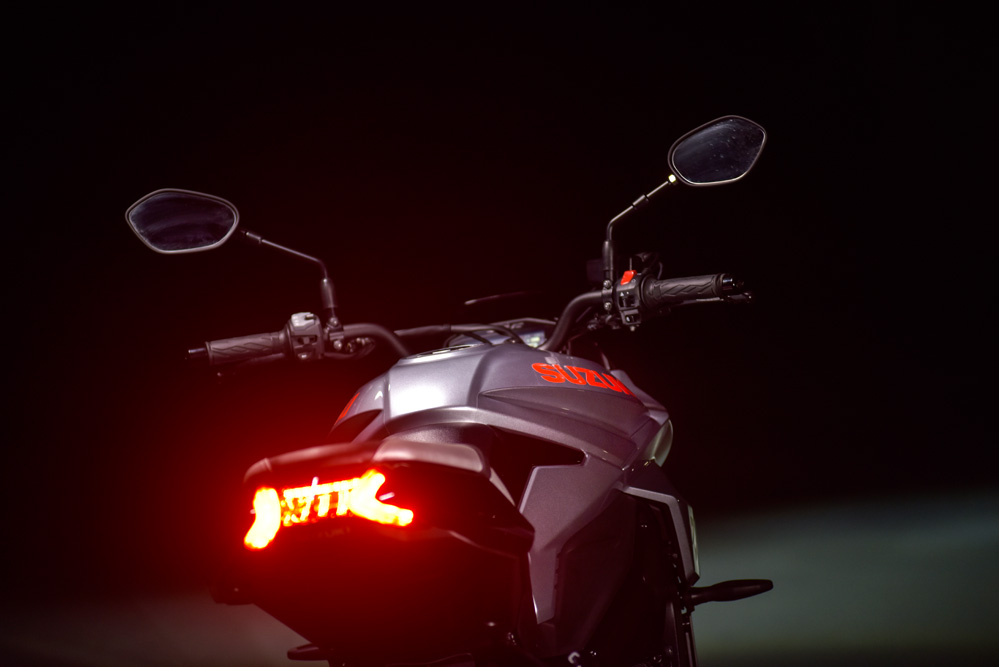
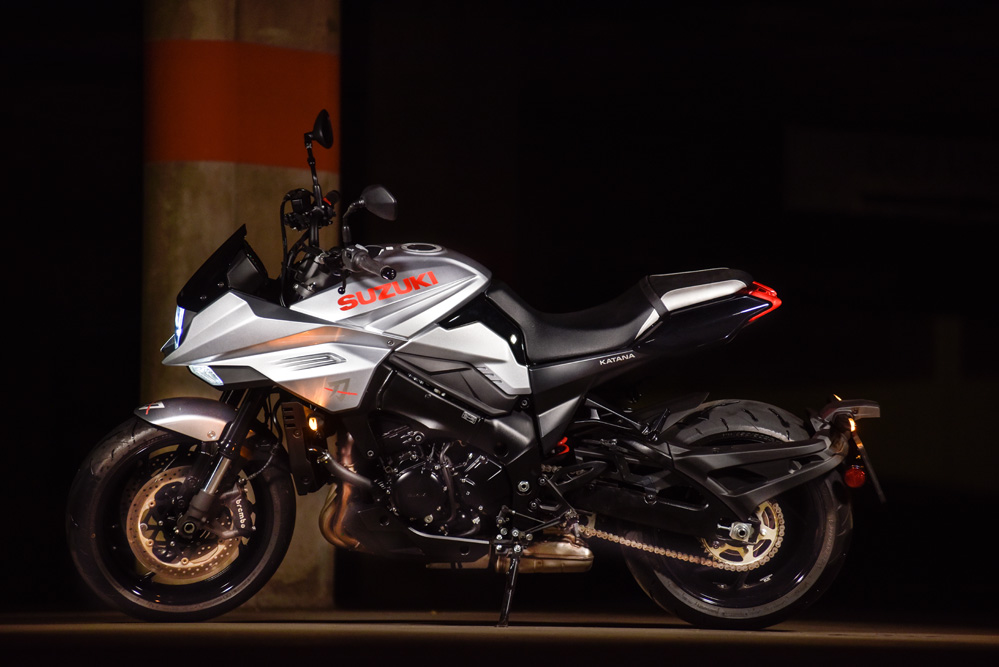
For a while now the wind of nostalgia has been blowing through the motorcycle industry. Modern Classics is the name applicable to these thoroughly modern motorcycles which are styled to take us back to heady days of yore. Suzuki, not wanting to sit out this party, chatted to Italian designer, Rodolfo Frascoli, asking him to do a modern take on their iconic Katana. I have just been afforded the privilege of being the first South African journalist to sling a leg over and ride the remade Kat. What a ride it has been! You have to understand that this is a big deal to me. I was riding and racing motorcycles when the original Katana was introduced and remember vividly the impression it made. Opinions were divided as the styling was radical for the time. It didn’t take long for us to grow accustomed to the sleek lines, and I for one was smitten! And so it is with the 2019 Katana. I dig it!
Photo credit: Bjorn Moreira / ZA Bikers
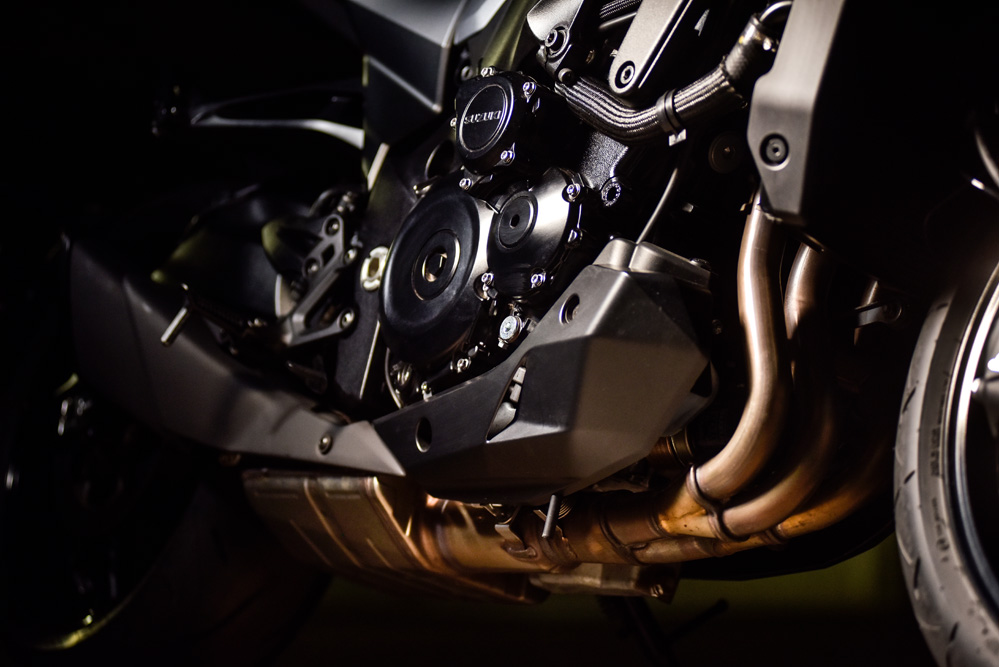
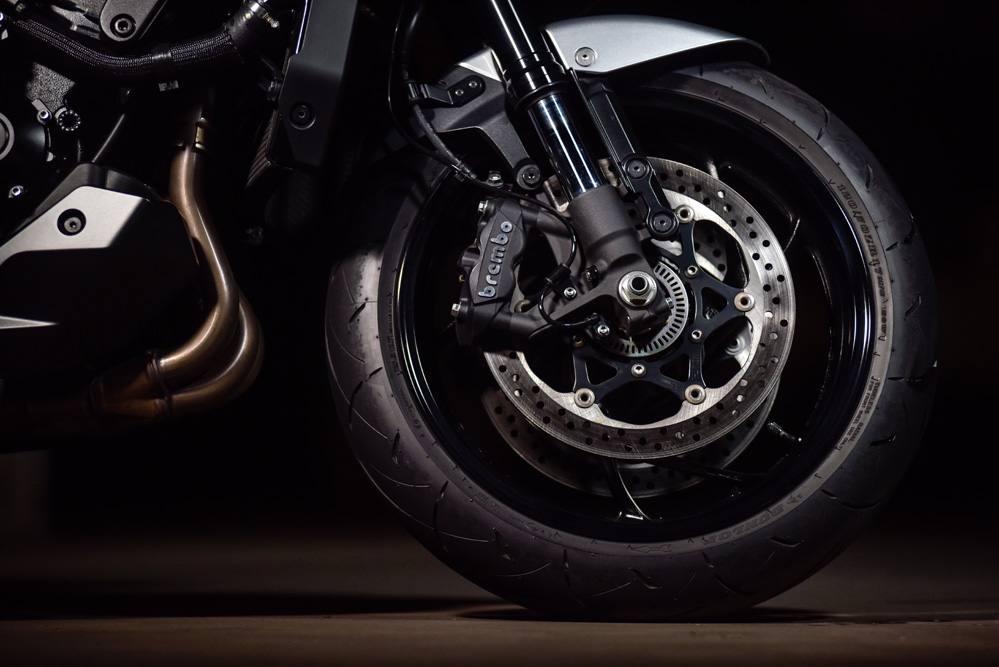
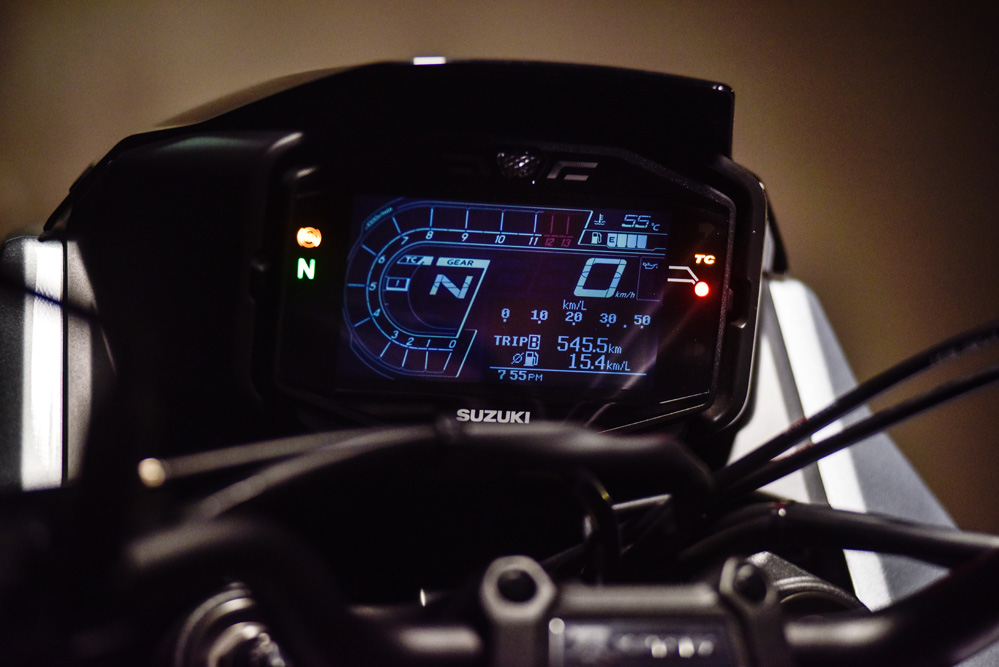
Suzuki have approached this project in a really appropriate way. The bike features a 1000cc motor based on the brilliant mill that did duty in their K5 GSXR. Torquey and smooth with a proper top-end rush, the engine is an absolute peach. It actually makes me yearn for the time when sportbikes were still good and proper weapons for road use.
Photo credit: Bjorn Moreira / ZA Bikers
The current crop are unashamedly track tools and as such have lost significant appeal for everyday use. The new Katana fills this gap to perfection. Electronics are limited, thankfully, to 3 levels of traction control with less or more aggressive intervention. The ECU is programmed to give a slightly softer response from the cable operated throttle and works with Suzuki’s Low RPM Assist and Easy Start to give stunning, seamless riding. The motor is good for 150 horses and believe me, they are not the Shetland Pony variety. We are talking thoroughbred Arab stallions here!
Photo credit: Bjorn Moreira / ZA Bikers
I am not going to go into detail about the styling, because you can see the incredible images of the new Kat that our resident shutterbug, Bjorn Moreira took, and make up your own mind.
Photo credit: Bjorn Moreira / ZA Bikers
Those of you old enough to be familiar with the original Katana will immediately get that clout of nostalgia. The new Kat has, probably in the interest of rideability, been equipped with low rise handlebars as opposed to clipons. I would have loved clipons, but do get their drift.
Photo credit: Bjorn Moreira / ZA Bikers
The Katana is properly comfortable and is good for extended periods in the saddle, tank range notwithstanding. Fuel capacity is a scant 12 litres which will curtail the fun pretty damn quickly if you ride with gusto. Having said that, I averaged 20 k’s to the litre in town and around riding, being gentle on the gas. Good luck to you if you think you could sustain that. The big Kat is way to entertaining to do anything more than the occasional “economy run”, and 15 odd km/L is then more realistic.
Lights are LED’s and look fantastic. The headlight offers good spread but I would have liked more reach. I did not have time to see if I could adjust it, besides, that would have intruded on my ride time.
Photo credit: Bjorn Moreira / ZA Bikers
The seat, despite its stubby appearance, accommodates a passenger quite nicely. The taillight and rear indicators are part of a BMW GS style remote rear mudguard. The tail tidy industry will undoubtedly give us a way to lose the whole kit and caboodle thus tidying up the back end wonderfully.
Photo credit: Bjorn Moreira / ZA Bikers
The back wheel is a 190/50×17 and gives clean KYB mono-shock rear end an aggressive look. The front wheel is a 120/70×17 suspended in upside-down, fully adjustable 43mm KYB forks. The large section back tyre slows the steering slightly and the bike is supremely stable at all speeds and on all road surfaces. The rear swingarm comes straight from the 2016 GSXR-1000. The frame is aluminium, not unlike that of the GSX-F. When you put all this together and combine it with an excellent riding position, brilliant 108 Nm and 150 HP motor, then it becomes the perfect recipe for FUN!. When you need to curtail the fun, and I’m talking really fast fun here, then 310 mm twin front discs are arrested by radially mounted Brembo Monobloc 4 piston callipers. Powerful, secure braking performance is a guarantee.
Photo credit: Bjorn Moreira / ZA Bikers
The Katana sports a simple instrument nacelle which digitally informs you of what gear you are in, fuel consumption, range, trip meter and how much fuel you have left in the tank.
Photo credit: Bjorn Moreira / ZA Bikers
The “new” Kat has a tidy four into one exhaust which emits a surprisingly throaty note. It is quite simply a truly pleasant and fast motorcycle that is also beautifully packaged, with real appeal. Sure, the side stand should be a cast piece rather than a flattened pipe, and it could have been a tad more “special”, but hop on, fire it up and ease that clutch with a man-sized pullout, and all is forgiven! The big Kat rocks! At R184500, it comes at a “nostalgia premium”, but still offers solid value.
Photo credit: Bjorn Moreira / ZA Bikers
Ride it and judge for yourself. In the world of modern classics the Katana is cutting edge and without a doubt a worthy weapon!
Triumph South Africa recently launched their online store, and we’ve been browsing. Online shopping has become the go-to for many South Africans—but for some inexplicable reason, the local motorcycle industry is lagging. So it’s high-fives all around whenever a major brand gets with the program.
It also doesn’t hurt that Triumph’s gear is functional, stylish, well made and devoid of any garish branding. A couple of ZA Bikers team members already own Triumphs—but even those of us that don’t have been eyeing out some of the British company’s new kit.
So here are five pieces of gear from the new Triumph South Africa online store, that we’d be happy to wear on just about any bike.
Raven 2 jacket
The Raven jacket has been part of Triumph’s line-up for the longest time—and it’s easy to see why. It’s a no-fuss, well-priced leather jacket, with a neutral cut and vintage styling that’s not likely to date quickly. This is the second iteration of the Raven, and it’s kitted with a host of functional updates.
There are perforated sections under the arms, and vents at the chest and back, to aid in airflow. And there’s a removable, long sleeve quilted thermal liner inside too. The Raven 2 also has removable, CE certified D3O armour at the elbows, shoulders and back. If you’re not familiar with D3O, it’s a lightweight and flexible material that hardens on impact—making it some of the most comfortable armour on the market.
Best of all, the Raven 2’s branding is extremely subtle—so you don’t need to feel guilty wearing it on your Harley-Davidson Sportster.
Not all women want motorcycle gear that’s pink, or covered in tribal flower patterns. The Triumph Andorra Ladies jacket is a classically-styled leather jacket that doesn’t scream ‘biker’—but has all the functionality you need for riding.
The outer shell is 100% leather, with CE-certified D3O protectors at the elbows, shoulders and back. There’s also a removable vest liner for chilly days, and a zipper to connect it to any of Triumph’s riding jeans.
The Andorra’s styling is pure throwback, with an asymmetrical zip and quilted sections—all in a rich, red-brown leather. It’s specifically tailored for women too, with stretch panels at the hems to cater for a wide range of body types. And just like the Raven, there’s very little visible branding.
It’s easier to take off a helmet and jacket when you reach your destination, than to swap out your trousers. So if you’re someone that likes to blend into the crowd when you’re off the bike, casual-looking riding pants are a must. And Triumph’s Pure riding jeans are as casual as they come.
They look like a regular pair of black jeans; straight-cut, with a little stretch built into the denim. But they’re highly protective too. The denim’s lined with PEKEV in key areas—a tough material that adds a measure of impact and abrasion resistance. And there are height-adjustable D3O protectors at the knees too. The jeans are also lined with a breathable, moisture-wicking air-mesh layer, and come in short, regular and long sizes.
These gloves are for those that like to wear their heart on their, uhm, hand. With a Union Jack motif on top, the Triumph Mono Flag gloves are pretty brand-specific. But they’re also extremely stylish—with a mix of black and cream leather throughout.
They aren’t the most protective gloves Triumph offer, with only light padding on the knuckles and fingers rather than hard protectors. The fingers are pre-curved, and there’s a conductive material at the index finger tip designed to work with your smartphone’s touchscreen. And if black and cream is too subtle, there’s a full colour version of these too.
Motocross boots offer the ultimate off-road protection—but they’re total overkill if you’re exploring gravel roads instead of hitting whoops. Triumph’s Dirt boots blend the best features of motocross boots, with the practicality of touring boots and the comfort of hiking shoes.
They feature adjustable MX-style buckle fasteners, hard shin protectors, reinforced ankles and chunky, anti-slip soles. But they’re also equipped with Triumph’s proprietary TriTex liner, making them waterproof yet breathable. And while they have a CE safety rating, they’re super casual too—thanks to their brown, full-grain leather outer shell and subtle black details.
I am in creative conversation with Miguel Lage, Dealer Principal at RAD Moto, Rivonia. He carefully studies the digital map and the route that I have proposed for our next soulful adventure, without saying a word. Lesotho has been his playground for many years and I value any input that he may have to share.
I get a grin on my face, as I study his – I love these moments! Moments when I see a grown man become a boy again. An adventure seeker to the core, he eventually breaks the silence and the wisdom starts to flow. He knows full well what we will encounter in the days ahead. I can see him shifting schedules around in his head, trying to find a way to join Hennie Olivier, Pieter Du Plessis and myself, to this biking paradise. It was not to be and I will keep haunting him to join us on future travels.
The KTM 790R. Most anticipated bike for 2019
Back to the opening statement. The bike he is referring to is the new KTM 790 Adventure R. He believes this is the weapon of choice in KTM’s vast arsenal of adventure sports motorcycles. Riaan Neveling, likeable Marketing Manager at KTM South Africa, was kind enough to arrange one for me as the backdrop to this experience.
The brief was simple; I wanted to test the KTM on a proper 5-day journey, with every conceivable type of terrain thrown into the mix. The weather would be moderate to cold, with no rain or snow forecast in the coming days. Camping equipment and the like, to be strapped onto the bike by means of a generic soft luggage system.
The backdrop to this journey was the newly launched KTM 790R. We could not have selected a better option.
Riaan rose to this challenge without a moment’s hesitation and started making the necessary arrangements. I was ultimately supplied with a squeaky clean 790 Adventure R, complete with Akrapovic slip-on. Even the chain had been meticulously cleaned and lubricated as a final touch. A few unavoidable battle scars gave the bike an authentic ring and we were good to go!
“Tally-ho” is a term used by modern-day fighter pilots when they engage the enemy in a dog fight – no holds barred. I felt like screaming this in my helmet as the scenic cattle tracks on the plains turned into a steep, twisty, rutted and badly maintained Matebeng Mountain Pass. Entering Lesotho from Matatiele on the South African side at Ramatsediso border post, which is towards the southeastern side of the Mountain Kingdom, you can look towards the vast, far-reaching mountain line and possibly see a communication tower. This signifies the summit at 2960 meters above sea level. Loose rocks strewn all over the place, we negotiate switchback after switchback on what seems like a never-ending climb.
The smoother side of Matebeng Pass, 2960 meters above sea level and a test to any adventure rider and his machine.
This is the stuff dreams are made off; the stuff that makes campfire stories come to life! I have to use my best behaviour not to put a foot wrong. Drawing on a few years of enduro riding experience, I wrestle to the summit, as mentioned previously, with only a communication tower and my two riding buddies gracing the endless mountain line. For the technically minded, the vertical elevation from the valley floor to the summit is 700 meters.
We traversed the pass from East to West. Take a deep breath at the summit, because the fight is not over yet…
I stop for a brief moment to peruse our progress and make the decision to tackle the very challenging descent while my mind is in harmony with my body. For the first time, it was necessary to dab with the left foot from rock to rock while carefully modulating the rear brake in the standing position. The elevation drop on this descent was a staggering 1200 meters. Tense moments, as the last thing I want to do, is compromise the goodwill extended to me by KTM with the unconditional loan of this highly anticipated wonder machine.
Lingering afternoon shadows. The mountain in the background had just been conquered. On careful scrutiny, the communication tower can be seen roughly in the middle of the mountain line, depicted by the red circle.
Eventually reaching the valley floor without incident and a fair bit of relief, we follow a twisty track that ultimately leads us into the most pleasing, secluded, camping spot and not a soul in sight. Majestic oak trees grace the crystal clear river line to the one side, while an imposing mountain towers over us to the other side.
Could you tolerate camping here?
“This is where we will set camp for the night”, exclaims Hennie while carefully watching my reaction. He knows all too well that this is the moments we live for. I look at my dream maker friend with a contented smile as we start setting up camp. Hennie and Pieter stumbled onto this piece of heaven on a previous visit and vouched that this will be our next camping spot under the African stars.
Autumn poetry as a lone horseman gallops past with a wave and a smile…
As the sun sets slowly, autumn colours accentuate the yellow oak leaves falling to the ground forming a rustling velvet carpet underfoot. We set up our tents facing each other, sharing a hot cup of coffee in the autumn chill and light-hearted conversation, we settled in for the night with an almost full moon peeking through our canvas tent walls. Who knows what tomorrow will bring…?
Our tents nestled together. No other place in the world for us right now…
Day breaks and the lazy autumn sun is reluctant to show its face in this secluded, well-sheltered place. We decided to wake up early and just enjoy the surrounds for a few hours before moving on. This seems to have been a very wise choice as all sorts of friendly, curious visitors start showing up. First off was the sight and sound of the cattle herders, leading their livestock past the campsite and further up the mountain. Pieter is well versed in Sesotho and strikes up a friendly conversation.
Early morning visitors…
Next up was a symphony of bells as the sheepherders came past from the little village nearby. Rush hour was now in full swing and I could only chuckle when I met the sheepherder. Technology seems to find a way into every corner of this world as I noticed him holding a portable solar panel in each hand, carefully wired to the mini “jukebox” around his neck. Man, this was funny and so original. I made a video and took some pics. Of course, the friendly young man could not figure out what the fuss was about.
Morning music as the sheep graze past us with bells around their necksMobile jukebox. This sheepherder made us smile as he strolls by with not a care in the world.
Soon afterwards we decided to take a dip in the icy mountain stream carving through our little piece of heaven. Hennie and I challenge ourselves on every trip by doing something out of the ordinary. It’s about making memories, after all. Needless to say, this ordeal was quite entertaining for the locals but, for some reason, they could not be persuaded to join us. We took the opportunity to wash away the dust and dirt and just enjoy the near-freezing temperatures on offer. If you have not done this yet, then you are probably wiser than us….
Early morning cleansing in the near-freezing mountain water
After some wholesome conversation with the campsite manager, we parted with a camping fee of thirty Rand per person. For our American friends, this equates to about two dollars. We signed the visitors’ book and off we went on what promised to be another blissful day of clear weather and picture-perfect scenery.
Pit stops all along the way to process the desolate beauty
The smooth gravel road took us all along the Orange River over bridges, streams and glorious mountain passes with deeply carved valleys on either side. This is the unpaved road that leads from Matebeng to Taung. It seems that rainfall in this part of Lesotho is less as the gravel surfaces are in very good, smooth condition. Very little traffic and low population density epitomize the remoteness of this landlocked kingdom.
Travelling into endless mountains on smooth, windy gravel roads
Due to the near-perfect conditions, we go on the offensive and test our limits on the KTM. Was this a revelation? The suspension and chassis seem to have been designed with this windy gravel road in mind! The harder I rode, the more composed the bike became. The power delivery was predictable, yet direct in the “Off-Road” setting. The OEM Metzeler Karoo 3 tyres could barely hold their own and I can remember wishing they were Michelin Anakee Wilds, which is my first choice adventure tyre at the moment. Small details aside, this bike made me feel like I could relaunch my now-defunct racing career. It was that good!
On the offensive, testing the suspension and chassis
An immediate observation is that the suspension setting favours function over comfort. You get the best from this bike when riding it hard – that’s just the way it is. I am sure that the suspension can be adjusted to favour comfort above ultimate performance, in order to suit touring type riding styles. I can remember laughing out loud as bike and scenery just mesmerized all sense and sensibility. On this very road, I waved Hennie and Pieter down and insisted that they each take a go at riding this wild child. There were smiles all round and it took them the rest of the day to remember that they were Yamaha and BMW fans respectively. We had huge fun all morning…
A fist pump of approval shortly after Hennie dismounted the 790RCarefully hidden filling stations require local knowledge to find
We refuel in Thaba Tseka and start making our way to Katse Lodge. This was another gravel road, wide and twisty, but badly rutted from ample rain in preceding weeks. This rocky surface was a real tester for man and machine! Over the years, I have learned to take decent, smooth lines through these kinds of corners out of respect for my equipment. It was on the 790R that I realized this no longer applies. I could select just about any line through these wide corners. With this kind of suspension performance, the inside line was perfect, but so was the middle line and the outside. This was just crazy. Some corners would see me seated and others would see my ‘full-on-attack’ mode in the standing position.
When will these corners end?Rally mode. Proceed carefully if you are in the wrong “headspace”
It was on these roads that I tested the ‘Rally’ mode. This transformed the bike into an off-road animal. Do not try this mode if you are in the wrong headspace. The difference from “Off-Road” mode to “Rally” mode is immediately tangible. The throttle response becomes brutish and demands your full attention! With this kind of riding my soft luggage started ripping to shreds and would never be the same again. I made a plan with some of my old faithful bungee hooks, in order for me to ignore this fact and have some more fun. We reached Katse Lodge shortly before dark, where we bunked for the night, enjoying some good food and a decent shower. We sat on comfortable couches by the fireplace until it was time to get some rest.
Tired but utterly content. Enjoying the finer things at Katse Lodge
Well rested, we woke up early to capture the sunrise over Katse Dam. Another good day beckons. We took this wild route back to Thaba Tseka for a refuel. From here we followed the tarred A3 and A5 towards Roma, Ramabanta and ultimately to Semonkong Lodge for a late lunch. Dear reader, these are small sentences that cannot begin to encapsulate these amazing roads. It was heaven on earth. There were many miles where we rode on the crest of the mountain ranges with deep valleys on either side. The quality of the surface was amazing as these roads see very little traffic and hardly any cattle. After two hard days off-road, traversing these mirror-smooth roads felt like a gift from above.
The hypnotic, mirror-smooth tarmac was our reward…
This is where the Metzeler Karoo 3 tyres stamp their authority as possibly the best tar road adventure tyre around – I could throw that 790 from side to side with reckless abandon. I moved into what I call the ‘Zero Zone’; my description for the perfect ride in perfect conditions. We eventually pass the towns of Roma and Ramabanta and then onwards to Semonkong Lodge in the early afternoon where we encountered some American tourists and a well deserved late lunch. We were in very high spirits, as this trip escalated from good, – to better – to brilliant!
American tourists taking a donkey ride at the Semonkong Lodge
As mentioned in previous travel blogs, we like to travel towards a theme rather than merely a destination. This ensures an open canvas, allowing creativity about routes and places to visit. I have been fortunate enough to align myself with like-minded people from all walks of life in this pursuit. Hennie Olivier is a well-travelled, highly entertaining specimen. He is a master at putting routes together that needs very little modification. We have travelled to weird and wonderful places together and there are certainly no plans to stop doing this in the near future. Pieter Du Plessis is the kind of person you want on every trip. He is a soft-spoken, easy-going individual. He is a very competent rider that you never have to worry about or look after. He goes wherever the road leads and is well organised. He also speaks a few native languages which are invaluable when we find ourselves in the remotest parts, far from civilisation.
Pieter entertaining local kids all along the way. His kind nature and fluent native tongue is invaluable on these travels
Shortly after our last excursion, I mentioned that I would someday like to pitch my tent right on the escarpment overlooking the Maletsunyane Waterfall close to the town of Semonkong. Next thing I knew, Hennie had the whole route mapped out and raring to go. Travel buddy Cobus Bekker could not make it due to professional commitments, so in the end, it was Pieter, Hennie and myself.
Our camping spot among the stars…
Maletsunyane Waterfall is one of the highest single-drop waterfalls in the Southern Hemisphere. It plummets a staggering 192 meters from top to bottom and is a glorious sight to see. We were fortunate enough not to just see it, but camp on the escarpment in full view of the raging water. This was the ‘destination’ part of our trip; the embodiment of our brief. Needless to say, this is a must-do activity while it is still somewhat of a secret. Lying in our tents that night, listening to the sound of the laughing waters, the full moon as our backdrop, makes me relive the last few days. I dream myself to sleep…
And there she is! a Bucket list item can be crossed off with a contented smile…
The next morning saw some more antics and laughter as we slowly packed-up to head home, back to the Big Smoke and an altogether different kind of sound. Hennie led us through to Peka Border Post, close to Ficksburg, in our bid to make it back home. I declined their offer for lunch in Bethlehem, as I wanted to revisit these amazing days in the privacy of my helmet, with the muffled sound of the wind through my earplugs, pondering why we ride.
Heading home.
The answer to this never really seems to fall on the tongue because there are just so many reasons as to why we do what we do. It’s somewhat like a pilgrimage; a religious experience; a self-awakening; an educator of sorts, and a sure way to keep us humble.
Onto the next adventure, discovering a world of endless wonder…
I was quite intrigued to be offered the opportunity by Biker’s Warehouse, to ride the Bajaj Dominar 400. Here is why. Bajaj just happen to build one of my favourite single cylinder fourstroke motors. I am, of course, referring to the cracker of a mill in KTM’s 390 Duke. Smooth and torquey, it punches way above its weight. The Dominar shares the same bore and stroke as the 373.3 cc KTM motor, but differs in that it has a Single Overhead Cam head, versus the DOHC setup of the Duke. This explains the softer power, with the liquid cooled Dominar motor maxing out at 34.5 bhp against the robust 43 bhp of the little KTM. Both motors produce 35 Nm of torque.
Photo credit: Bjorn Moreira / ZA Bikers
A six speed gearbox and a slipper clutch complete a pretty comprehensive and up to date mechanical pedigree. The 2019 version of the Dominar, which we don’t get as yet in SA, is a DOHC with 40 bhp. It also sports different colours and it gets USD [Up Side Down] front forks. So now that you know what’s coming let’s get back to the subject of this test.
Photo credit: Bjorn Moreira / ZA Bikers
Styling is really cool. The headlight and little fly screen are reminiscent of a Suzuki B-King. The 13 litre tank with its shrouds has a broad-shouldered look tapering into a waspish waist and a stylish, modern looking tailpiece, complete with passenger grab handles. The exhaust is small, tidy and understated in matt black. The bulk of the plumbing is discreetly hidden under the motor. All this styling is somewhat nullified by the Canyon Red paint job which is in essence a kind of browny maroon. Different strokes for different folks I concede, but the colour does not do it for me at all! Glacier Blue or Rock Matte Black may be better, we will have to see. The 2019 model comes in a stunning metallic Ninja green which makes the bike really pop. On a practical note the tank has a protector as standard. Why doesn’t every manufacturer think of that?
Photo credit: Bjorn Moreira / ZA Bikers
You will know by now that for me, the jury is still out on motorcycle offerings from China, but I am a big fan of Indian built bikes. Many k’s on TVS Apache’s have made me a believer. Robust, almost to the point of being over – engineered, they are indestructible. I have also had the privilege of visiting India and seen first hand how the bikes are built. You can buy with complete peace of mind, believe me. The Dominar gives me the same feeling. Suspension is taught and properly damped.
Photo credit: Bjorn Moreira / ZA Bikers
Front forks are a hefty 43 mm’s. No flex there! The rear shock has a remote reservoir, and works just fine. The motor has a strange “boom” when you get hard on the gas or are travelling at speed. I could not quite work out where it originated but probably primarily air-box type roar. It was exacerbated by my Bell Adventure helmet which seemed to amplify the noise. I rode the bike wearing a conventional full-face and the noise was so muted that it was of no consequence. Interesting.
Photo credit: Bjorn Moreira / ZA Bikers
The Bajaj pulls pretty darn well for a 400 single. Not in the league of the KTM, but it hauls off the line ahead of most traffic without a sweat and cruises at 6500 rpm at 120 kph. At highway speeds it still has something in hand for overtakes on the freeway. Redline is at 8000 rpm and peak torque is at 6500 rpm, helping the bike run up long hills without losing speed. The bike sports a “rpm limit” indicator light on the dash which lights up from 5500 rpm. Hopefully it is adjustable and set for running in purposes, failing which it is a little dof for a bike making its peak power at 8000 rpm. I didn’t have the bike long enough to test consumption, but my experience of Indian bikes is that they are particularly economical. No reason to doubt the claimed 27 km/L figure. This equates to a decent range of over 350 k’s. The whole package is taught and controlled with the handling both easy and accurate.
Photo credit: Bjorn Moreira / ZA Bikers
Brakes are by Bybre, with a 320 mm disc up front and a 230 mm rear. No problems there. The bike weighs 182 kg’s and is sizable enough to be comfortable for riders of all sizes.
Photo credit: Bjorn Moreira / ZA Bikers
The fly-screen alluded to earlier, which is attached to the headlight housing, does very little to deflect much wind. Makes me wonder why they wouldn’t just make it 10 to 15 centimetres longer, then it would fulfill some function rather than purely cosmetic. Lights are LED and excellent, as is the hooter. Makes the horn on my BMW R 1200 GS Adventure sound piddly!
Photo credit: Bjorn Moreira / ZA Bikers
All in all the Bajaj Dominar 400 makes a significant statement as a value for money commuter, or, for that matter, adapted for commercial duty. R56,500 is really not a lot of money for what is a solid and capable bike that is likely to perform well for many thousands of kilometres. Bring in the 2019 model with it’s uprated spec and funky colours and more peppy motor and I could definitely be tempted.
Photo credit: Bjorn Moreira / ZA Bikers
This bike offers pretty much what the BMW 310 R does, but at a significant discount. Worth thinking seriously about.
It has been some time since BMW played in the Cruiser space with their R 1200 C. That could all be set to change. BMW Motorrad unveiled the R18 Concept at the Concorso d’Eleganza Villa d’Este held at Cernobbio recently. Concepts are always fascinating to dissect because they give an indication of how the winds of creativity are blowing. In a way, German thinking does not lend itself to the development of this kind of bike. The Teutonic tendency is typically more focussed on function than on form. Take their GS as an example. The “Captain Beaky” styling had opinions very divided when the original R 1100 GS was launched. Over the years, possibly as a result of the GS’s huge success, it has become a familiar shape that we have grown accustomed to and become to like. In the deep recesses of our brains, we have possibly started to associate the GS shape with what the bike represents and in a weird way, function has made us accept the form.
Photo credit: BMW Motorrad
Enter the R18. At first passing glance, it is hugely reminiscent of the early Bee Emm’s right back to the R28 and on. Designer, Bart Janssen-Groesbeek has reached deep into the nostalgia bin and built a motorcycle that is something really special. I have, and this is totally a personal view, never considered the Boxer motor as an obvious choice for a custom build.
Photo credit: BMW Motorrad
Slim and trim has always had more appeal for me. When a manufacturer looks to iconic motorcycles from their past and builds a modern interpretation, it is a totally different thing. They are not trying to be someone, or something else, but rather who they are! So it is with the R18. The low slung, rigid frame appearance with the classically BMW styled tank, complete with hand-painted pinstripes is absolutely beautiful.
Photo credit: BMW Motorrad
Wheels are oversize, but not in width but rather in diameter, 21 and 18 inches fore and aft, again in keeping with bikes of yesteryear. The exposed shaft, chromed to stand out, even more, looks spindly, yet Oh so right. The diff is small and tidy driving a black hub laced with shiny spokes to a black rim. A beautiful long Bobber type fender hugs the wheel, also finished in translucent black. A gold tinted clear coat gives the paint a wondrous lustre in the light. Truly spectacular.
Photo credit: BMW Motorrad
The bike has an almost visceral appeal. Not only does it evoke the urge to sling your leg over it and cruise off down endless byways, it is sooo easy on the eye. Sip on a coffee and just eyeball the bike. Run your gaze over the detail. The simplicity of it all. Upside down front forks with pinstriped shrouds. A wide, essentially flat handlebar. The headlight is smallish, black and simple.
Photo credit: BMW Motorrad
The only detail being dimpled grooves that are so classy. The Concept bike is devoid of instruments, accentuating the simple design and classic lines. And then there is the engine. Boxer layout, obviously, but a whopping 1800cc. Hence the R18 tag. The glass bead blasted satin aluminium finish is set off by a highly polished front timing cover. The classic blue and white BMW roundel subtly adorns the bike here and there. Everything hangs together in a way that looks just right. At this point the bike sports a Bobber style single seat, covered in embossed leather, of course.
Photo credit: BMW Motorrad
For me, this motorcycle opens up a new world of possibility for BMW. Granted it will undergo some changes before production. The Concept has carbs which won’t work given emission rules in Europe and elsewhere. Some form of instrumentation will also be a must but notwithstanding these obvious issues, the direction BMW Motorrad have taken with this bike is so right for these times. In our ever-changing world, it is bikes like these that take us back to a time when things were so much simpler and made much more sense. As Edgar Heinrich, Head of BMW Motorrad Design so aptly says, “it is an analogue statement in a digital age”.
You have to feel a little sorry for the BMW F 750 GS. With a lower ride height and less power than its big brother, the F 850 GS, you just know that salesmen will be pitching it as a bike for novices and smaller riders. And while that’s not entirely unfair, it is a little short sighted.
Photo credit: BMW Motorrad South Africa
It’s true, the 750 does make less power and torque than the 850; 77 hp and 83 Nm, versus 95 hp and 92 Nm. Both motors actually have the same capacity (853 cc), but different engine tunes set them apart.
Photo credit: Wesley Reyneke
And it’s also true that it’s a shorter bike. It has less suspension travel than the 850 (151 mm front and 177 mm back), with 19F/17R alloy wheels, rather than the 850’s 21F/17R spoked combo. It also has a 45 mm lower seat height at 815 mm, with factory lowering options that go as low as 770 mm.
Photo credit: Wesley Reyneke
At R 142 900, it’s R 12 000 cheaper than the F 850 GS. But that’s for the base model—there’s a host of optional extras and upgrade packages that can run the price up significantly. My test unit came with almost every upgrade package available for it, totaling almost R40 000 more than the base price.
Photo credit: Wesley Reyneke
Those upgrades included a keyless ignition, all of the 750’s available rider modes (you only get two on the stock bike), a quick-shifter, heated grips, and my favourite: BMW’s excellent TFT display. It also had an LED headlight, a GPS bracket and handlebar dial, and a bunch of other creature comforts.
Photo credit: Wesley Reyneke
But the F 750 GS is a lot more than just a lower, slower and more affordable 850—it’s actually a damn fine motorcycle in its own right. I had a chance to sample it briefly at the South African launch of both bikes, and then again for a week of day-to-day riding in and around Cape Town. Both times, I came away far more impressed than I thought I would.
Photo credit: Wesley Reyneke
For starters, the F 750 GS is no slouch. It’s quick enough off the mark to escape traffic, and fires out of corners hard enough to keep you smiling. Power delivery is smooth and predictable, thanks to BMW’s reliably good fueling.
Photo credit: Wesley Reyneke
BMW’s revised twin cylinder motor is leaps and bounds ahead of the older F 700/800 GS mill. Not only is it a lot punchier, but it feels better too; compared to its predecessor, it has tons more character. Plus it sounds great, even with the stock silencer on.
Photo credit: Wesley Reyneke
Gear shifts through the six speed box are slick, thanks to a light clutch. And the quick-shifter’s a total pleasure to use—provided you’re on the gas and your shifts are solid.
You also get a few rider modes to flip through: Rain and Road as standard, and Dynamic and Enduro as optional extras. And there’s switchable ABS and traction control, which both do the job well without being intrusive.
Photo credit: Wesley Reyneke
Between the intuitive switchgear layout and the easy-to-read TFT display, changing modes and fiddling with settings is dead easy. (Although, for the life of me, I still don’t know how to reset the trip meter on BMW’s new TFT display). And everything from the actual switches to the body panels, seat and rear luggage rack, feels premium and well-finished.
Photo credit: Wesley Reyneke
Out on the road, the F 750 GS is extremely nimble—thanks in part to its smaller and wider 19” front wheel, and its lower ride height. Combine those with the 750’s comfortable, dual-sport focussed ergonomics, and you’ve got a snappy handler that hustles through corners with ease—and feels planted all the way.
That upright riding position also makes it great in traffic, putting you head and shoulders above all those four-wheelers that are probably trying to kill you. Combine that with a seat height that’s just low enough to get your feet down, and you’ve got one helluva competent commuter. And a frugal one too—I’m admittedly terrible at keeping track of consumption, but I was squeezing close to 300 km out of the 15 l tank.
Photo credit: Wesley Reyneke
With dual 305 mm discs up front, braking is snappy. But the suspension on the F 750 GS is its weak spot. It dives under heavy braking, and is completely outgunned when you leave the asphalt behind.
I’ve sampled the F 850 GS off-road, and it’s a real peach—so much so, that BMW have picked it as the weapon of choice for this year’s GS Trophy. The 750 is significantly less capable, but that doesn’t mean it’s completely terrible.
Photo credit: Wesley Reyneke
It’s adequate for garden variety gravel road riding—which, for most riders, is good enough. And with similar ergonomics to the 850, you’ve got maximum control and comfort, even when standing up. Sure, when the trail gets tighter, looser and bumpier, I’d pick the F 850 GS every time. But on the street, the F 750 GS shines.
Photo credit: Wesley Reyneke
That’s really the 750’s selling point: it’s a rock solid street bike with a measure of adventure touring capability. I’d have no qualms commuting on it Monday to Friday, hustling it through mountain passes on the weekend, and even putting in some extended leave to head off the beaten track.
How many of you bike fundi’s out there know that Triumph motorcycles have German roots? Honestly. Dig into the history of Triumph and you will see that the company was started in 1886 by a German immigrant named Siegfried Bettman who moved to England from Nuremburg. Three years after settling in the cathedral city of Coventry, he established the Triumph Cycle Co with the aim of building bicycles. In 1886, the New Triumph Co, funded by the Dunlop Pneumatic Tyre Co, built bicycles for local consumption and export. We can be eternally grateful that in 1902 some forward thinking fellow at Triumph saw fit to cobble a Belgian Minerva engine into a bicycle frame, creating what was destined to become the first in a long and illustrious line of Triumph Motorcycles.
Photo credit: Triumph Museum
Factories in Coventry and back in Bettman’s hometown of Nuremburg were established in 1902 and a steady stream of Triumph’s emanated from them. The German factory, known as “Triumph Werke Nurnburg”, operated until as recently as 1957, albeit turning out Triumph’s, which were dubbed TWN’s. Back in Coventry, 30000 Model H Roadsters were built, many of which supported the war effort during The Great War of 1914/18. They earned a solid reputation for quality, which had them known amongst owners as “Trusty Triumph’s”.
Photo credit: Triumph Museum
A clever fellow by the name of Edward Turner, designed a parallel twin with a capacity of 500cc. It was, at that point, the fastest Triumph ever built, so was rightly called the Speed Twin. In 1936, some of these bikes found their way to the States, where they established a somewhat fanatical following. The second World War saw the Blitz extend to Coventry and the Triumph factory was one of many factories levelled by the tons of explosive ordnance dropped by the Luftwaffe on the hapless city. It was as a result of this that the Triumph factory relocated to Meriden, where Triumph’s were built up until 1983, albeit under a slew of different owners.
Photo credit: Triumph Museum
The modern day Triumph success story came as a result of massive investment by John Bloor, a property tycoon, who bought Triumph lock stock and barrel in 1983. The 20/20 perfect vision of hindsight shows that the resurrected Triumph has had a knack for building unique, relevant, riders’ bikes. Like with the Speed Twin of old, modern day Triumph buyers seem to be joined at the heart with their rides. Riding Triumph’s latest version of their legendary Speed Twin, it is not too difficult to understand why.
Photo credit: Bjorn Moreira
When you name a particular model a “Speed Twin”, it should obviously have a twin cylinder engine and have enough mumbo to justify the Speed part of its name. Sporting the lovely 1200cc motor from the Thruxton R, SA Bike of the Year of a couple of years ago, speed is a given. Smooth and refined, vibration is best described as a muted rumble which is endearing rather than intrusive. 96 horse’s provide decent thrust, but what really gives instant get up and go, is the 112Nm of torque, produced at a lowly 4950 rpm. Hang on the cable, [fly by wire actually] and the Speed bolts forward with thrust that is almost disconcerting. All this translates to real-world practical power, at any engine speed and in any gear. The Speed Twin is a rapid motorcycle indeed. Torquey motors are deceptive in that you don’t feel a progressive power and speed build up, which can give an illusion of great speed. The Speed Twin is instantly up and gone, then rolls into a satisfying top end shove as well. Lovely and addictive.
Photo credit: Bjorn Moreira
Power is frustrating without control. The Speed Twin rolls on a 160/60×17 back tyre with a 120/70×17 in the front. Simple and handsome seven spoke magnesium wheels are shod with Pirelli’s brilliant Corsa Rosso 3’s. Conventional, right side up front forks of 41mm are allied to twin back shocks with which they share 120mm of travel. The ride is amazingly supple, yet controlled.
Photo credit: Bjorn Moreira
I spooned in two more steps of preload, which firmed up the ride and gave better turn in. Put this all together and you have an agile, good handling motorcycle. The flat, low rise bars fall naturally to hand and pull you just enough forward to have your torso “ride” on the air stream created by your right wrist.
Photo credit: Bjorn Moreira
I rode the Speed to Sun City and back to give it a thorough go. I wanted to get there early to spectate at a triathlon in which my son was competing, so I left in the dark. The LED headlight is bright and effective, providing both a good spread and projection. Cruising at 130 to 140 was both effortless and comfortable. The seat is flat and of a good consistency, which remains comfy even for extended rides.
Photo credit: Bjorn Moreira
The tank takes 15,5 litres of fuel and is mounted in what is a slightly forward sloping line. This gives an optical illusion of an aggressive stance, which is totally in keeping with the bike’s general persona. A blacked out motor and stubby silencers enhance this look. The side covers are things of beauty. Painted gloss black, they have aluminium accents with mesh panels which scream “class”!
Photo credit: Bjorn Moreira
In keeping with the Modern Classic look, the clocks are analogue with digital panel inserts which give all the info that you require. [fuel gauge, range to empty, consumption, present and average, trip meters, service indicator and rider modes, including ABS status] The nimble ride is made easier by a dry weight of only 196Kg’s.
Photo credit: Bjorn Moreira
I was initially disappointed by the small tank, which I felt hamstrung the bikes touring potential, until I saw how far the bike could go on very little fuel. The torquey twin sips fuel at only 4,6l/100 at a cruising speed of 130 plus. This gives an easy, stress free, 250 K’s range between top up’s.
Photo credit: Bjorn Moreira
Braking is in keeping with the performance capabilities of this naked Roadster. 305mm twin front discs are retarded by Brembo callipers, with a smaller 220mm disc doing duty on the rear wheel. This bike stops properly from all speeds and in all conditions, with good feel at the levers. If I tell you that this bike is “fun” to ride, you may think it is frivolous, kind of candy floss, not steak. Believe me, this is the real deal, well able to cut it with any other naked roadster out their when it comes to riding enjoyment and satisfaction.
Photo credit: Bjorn Moreira
At a base price of R179000, with a slight premium for fancy colour schemes, it is a powerful contender. It feels physically small when you climb aboard, yet was spacious enough for a comfortable two up ride for Irene and me. The low seat height means it is accessible to virtually all riders too. The brushed aluminium short fenders complete the power Roadster picture.
Photo credit: Bjorn Moreira
This bike is a classically styled, handsome naked, which will tick many boxes and provide endless pleasure to its owner. It really is hard to fault. Once again, as with their new Scrambler 1200, Triumph have applied modern technology to a classic recipe and come up with another winner. Edward Turner, father of the original Speed Twin, would be proud!.
Nothing elicits a feeling of longing and nostalgia in me more than watching a YouTube clip of bikes and buds on a road trip through an arid landscape. I literally feel the heat, smell the dust, revel in the amber glow of the sunset and live for the African aroma of a “hardekool” fire. You may need the coals of that fire to cook your meal, warm you or maybe just to sooth your soul with its primal endless attraction and comfort. It was in this mood, that my son, also Dave and I packed our two SYM 300cc scooters for what promised to be another epic road trip. Dave was to ride the EVO GTS, while I was on the CITYCOM 300i. The EVO, as I mentioned in my recent review, is exactly that, having grown to 263.7cc’s from what started life as a 250. The CITYCOM has a newer bespoke motor of an actual 278.7cc’s. Ceramic bore and all, it is high tech and punches way above its weight. The CITYCOM sports larger,16 inch wheels, with the GTS rolling on more “Scooterish” 13 inchers. Enough specs, this is about the ride!
Photo credit: Bjorn Moreira
The GTS packs a bit easier for a trip as it has a larger cavity under the seat, which swallows an amazing amount of stuff. The passenger seat backrest serves as a great backstop for a waterproof stuffbag which is easily secured to the passenger seat by utilising the grab rails as anchor points. This has you ready to roll in no time. The CITYCOM was not much more of an issue. The grab rails also work a treat as they extend around the back of the bike. My trusty “All Terrain Gear bag” went at the back with my ground sheet, self inflating mattress and camping stool giving me something to lean back against. The bikes were both fuelled up, so we rolled out of my yard at midday on the Thursday preceding the Easter weekend. We were hoping to get the jump on the ZCC pilgrims travelling to Polokwane for their Easter celebrations. However, the N1 was very busy as everyone seemed to have the same idea about getting a head start. Tollgates and heavy traffic are a recipe for delays, causing kilometre plus, long log jams. Being on scooter’s, we quickly realised that the SYM’s gave us the freedom of the highways as well as the cities! Cruising effortlessly at 115 to 120, they sped past the traffic and short circuited the cues at the tollgates. Running at around 6500 rpm they are at there torque peak, so hills are a non issue. We snuck past a 4 kilometre long traffic jam at the exit to Modimolle. Chuckling like dervishes, we wondered at anyone dumb enough to travel far on an Easter weekend on anything with more than two wheels. When will they ever learn?
Photo credit: Dave Cilliers
Travelling on way less busy roads we spotted Impala, Sable antelope and Warthog as we scooted to our first stop for a belated lunch at the Zeederberg Centre outside of Vaalwater. After inhaling a couple of sizeable burgers, we topped up our fuel tanks to see what sort of consumption we were getting at open road speeds. We were gobsmacked to find that both bikes were delivering just over 30 K’s to a litre! With tanks of over 10 litres that meant an easy 300 K’s range. Scooters exhibit a somewhat choppy ride compared to a conventional motorcycle. This is probably due to limited suspension travel, allied to a stiff monocoque chassis. Comfort remains substantial due to sumptuous seats and decent damping. Wind and weather protection is excellent. The CITYCOM is so good that it creates a slight vacuum behind the screen which almost pulls your upper body slightly forward. You soon get used to it and cruise along without any wind buffeting and minimal noise. The GTS screen is further from the rider and a bit lower, so whilst it negates wind-blast on your chest, it does allow more air onto your torso. This is actually comfy when the weather is hot as it allows you to cool off. Numb-bum is simply not an issue on either bike.
We rolled up to Martin’s Drift Border post in the late afternoon and it took about an hour to get through both sides and into Botswana. There is always a heightened sense of purpose and anticipation when you have dispensed with border formalities and are once again “loose on the land”. A quick fuel up and we were on our way to Palapye and Itumela Camp for our first night in Bots’. The two SYM’s ran into a stunning African sunset. The surrounding bush had a strong green tinge from the recent rains and the sky was just about cloudless. As the sun ebbed from the sky, the last rays lit up a zig zag cloud formation that lined up perfectly with the road ahead. The road took on a molten silver hue and seemed to take off into a fiery trail into the sky. As if this was not sufficiently surreal, a glance in the rear view mirror showed a huge orange full moon rising directly behind us. We stopped to take photos which can never do justice to the spectacle that we were witnessing. We then jumped back on the bikes and rode into the gathering darkness.
Photo credit: Dave Cilliers
I never ride at night on country roads if I can avoid it. The risks are just off the scales; potholes, animals and cars without lights, you name it. What added to our woes was that there was quite a heavy volume of oncoming traffic. This meant we were forced, for the most part, to travel on dims. The two SYM’s have excellent lights, especially the GTS with its side running lights as well. Even on dims, they give a good spread of light. It was this wide peripheral vision that saved my bacon. A dark brown donkey suddenly walked into the road just metres ahead of me but the light from the CITYCOM reflected off his lighter underbody, allowing me to swerve with literally millimetres to spare! Severely rattled, I waited for a car to pass us then slotted in behind him for the last 30 K’s to Palapye. He could run interference for us and prevent us having to wear any errant animal. Needless to say, it was a relief to pull into Itumela and settle in with a well deserved ‘frosty’.
The next morning before seven we rolled out of our campsite invigorated by a good night’s rest. We soon settled into a rhythm with both the SYM’s and us loving the cool, crisp morning air. Fuelling just before Francistown, we pulled in for a good old Wimpy breakfast before heading north towards Nata where, for me, the “real” Botswana begins. I haven’t commented on how the scooters were running because, other than the fact that they were running sweeter and stronger with each passing kilometre, there is nothing to add. By now they had earned our complete and utter respect! It would not be long before they raised that respect another notch or two.
Photo credit: Dave Cilliers
The 180 K’s to Nata is punctuated by some short road repairs and off road deviations. No sweat, the super SYM’s took it all in their stride. Then we really put them to a test which, with hindsight, was a tad crazy. We pulled into Nata Sanctuary, which gives one access to the pans proper. I actually stopped, out of curiosity, wondering how wet they were and if perchance the flamingos were “at home”. “The road is passable and, yes, the flamingos are in” said the lady at reception. Ok then, but is that 4×4 passable or will two wide ranging brave-hearted city slickers manage the calcrete, washed out, whooped, fesh-fesh infested goat track to where water cover the pans for as far as the eye can see? Water that would now be tinged pink by tens of thousands of flamingos. Well, we paid our monies and took our chances. Gingerly you must understand, because I want to return bikes in the same condition in which I get them.
Photo credit: Dave Cilliers
In no time the two SYM’s gave us huge confidence, even when traversing soft sand. Obviously the designers never had this in mind when they conceived these scooters, however the engine weight on the back wheel gives great traction and even the fuel is under your feet. The centre of gravity is so low that they have no tendency to topple over like so many adventure bikes. They were an effortless blast to ride down the sand track to the pans.
Photo credit: Dave Cilliers
The sight of the flamingos in their thousands was spectacular. As an encore we got to ride within a hundred metres of a large herd of wildebeest. Shaking our heads in wonderment, we took some pics then retraced our tracks and got back on the tar for a few more K’s before pulling in to Nata Lodge for some welcome cold beverages.
Photo credit: Dave Cilliers
We now had only a short hop to Elephant Sands, our final destination, so we got back on our Scoot’s and fuelled up with petrol and a stash of water in Nata, before riding north for just over 50 K’s. Just before the Lodge, we pulled into a siding where water was being pumped into a Scania tanker and trailer.
Photo credit: Dave Cilliers
This would in turn be emptied into two pans for the benefit of the wildlife in that area and specifically the large elephant population. We had passed two elephants already, browsing alongside the road. You have to remind yourself that you are not traversing a game park but are rather in Africa as God intended it – wild and free, for animals to roam where they choose.
Photo credit: Dave Cilliers
Elephant Sands was established some sixteen years ago. A little more than two kilometres of sand jeep track takes you to the Lodge.
Photo credit: Dave Cilliers
In the dry season, typically after July and until the rains start in earnest in November, this place is inundated with elephants who come from far to savour the 250000 litres of fresh water that is pumped for them daily from almost 14 kilometres away. Literally hundreds of these lumbering pachyderms will visit the drinking trough located a scant ten metres from the lodge. To sit after dinner next to the fire with a glass of decent red and watch the elephants interact as they jostle each other for a turn at the trough, is an experience that you will never forget.
Photo credit: Dave Cilliers
It is uncanny how silently these huge grey wraiths appear as if by magic, and then, just as stealthily they fade away back into the bush. Getting up to go to the loo in the night needs a good look around as one can easily encounter an elephant or two on their way to or from the water. They are incredibly tolerant of people. A really dumb tourist, who seemed to think he was at the Hamburg zoo and approached really close for a selfie, was quickly put to flight when the jumbo being harassed seemed almost obliged to see him off with a mock charge and a trumpet blast before going on with his business.
Photo credit: Dave Cilliers
We set up our tent, allowed our self-inflating mattresses to inflate, rolled out our sleeping bags and hey presto, it was time for a St Louis Export to celebrate an incredible day of SYMmetry. A bit of light entertainment was provided by a group of Adventure bike riders from Bothaville who were travelling with a back up 4×4 bakkie carrying their kit. They were literally speechless when the two SYM’s rode into the campsite. They ignored us like the proverbial stop street until we engaged them in conversation. Difficult to be hardcore in the wilds of Botswana on your GS’s and KTM 1190 when the “Freedom of the City” rolls in.
Photo credit: Dave Cilliers
Highlight of any visit to Ellie Sands [other than the Ellies] is the dinners. Showered and fresh, we sipped on a couple of sundowners in the glow of another African sunset in really special surroundings. Elephants came and went from the water as the sun’s gentle glow receded into darkness opposite a full moon rising with such an orange glow that it could easily be mistaken for a massive veld fire on the horizon. Accompanying this spectacle was the wonderful aroma of roasting meat on which we would shortly feast. All was truly well with our souls! Elephants are fascinating to watch. Sitting at the fire, no more than four metres from the nearest ellie, you pick up the fascinating subtleties of elephant behaviour. There were a few really big guys at the water. Another front row forward type would approach and the posturing would begin. A violent shake of the heads would flail the huge ears producing a thunderclap of sound and a halo of dust around their heads. I could just imagine what incredible photo’s Kawasaki’s Chris Speight would capture of this jumbo spectacle, given his talent behind the lens. The giants face off, mock charging each other whilst trumpeting. Being that close to a bellowing elephant is not something easily forgotten. It is not at all unusual to see an ellie with his tusks nudging, no, shoving his buddy from behind, to move him from the water rather forcefully. You simply cannot tire of watching them.
Photo credit: Dave Cilliers
Mike Toth, the lodge manager, has a special bond with one of the grey giants who is so well known to the locals that they have named him Ben in honour of the owner of Elephant Sands. A massive ulcerated wound on his foreleg hindered him drinking as the jostling at the water was just too painful. Mike got a vet out from Gabs who darted Ben, then cleaned the wound thoroughly and administered antibiotics. While he was recovering, Mike would water him with a hose into a drum set up in the campsite. Ben made a complete recovery, however he would seek out Mike, whenever he was around the lodge and Mike would water him from the hose. It got to the point where Mike would stroke Ben’s trunk as he drank. Almost a year went by without Ben putting in an appearance with Mike fretting that something had happened to him. On one day, he arrived with a small herd, watered and moved off. At that point Mike was alerted to his presence and called Ben by name. Hearing Mike calling, he broke from the herd and trotted over to greet his friend with an obvious show of affection. It is stories like this that fill us with wonder at the intelligence and obvious emotions that these magnificent animals possess.
By this time our delicious dinner was resulting in a serious case of “tight skinned Gorilla syndrome”. You know when your stomach distends from an excellent meal and pulls your eyelids shut! So off to our tent we went in the glow of the full moon and snuggled into our sleeping bags. We drifted off to sleep with ongoing “elephant music” in the background. What a privilege it is to live and ride motorcycles, in this most magnificent and diverse of all continents.
Photo credit: Dave Cilliers
It was already light, but the sun had not yet poked its fiery head above the horizon when we emerged from our tent. The chilly morning air hinted at the changing seasons as I went through the familiar ritual of getting water going on my little gas cooker for that essential first caffeine kick of the day. Sitting on our camp stools next to our tent and trusty parked SYM’s, we sipped on piping hot coffee and watched the rising sun splash some early morning clouds the most magnificent orange, heralding in another African day.
Photo credit: Dave Cilliers
Not wanting to let his never ending Ironman training slip, Dave jnr donned his running kit and set off for a trot accompanied by CITYCOM SYM and me. He did a quick twelve K’s in the fresh and pure Botswana air as I kept him company and played water-boy on the SYM. We passed a termite mound with the bleached thigh bone of an elephant imbedded horizontally through it. How the hell did that happen, I wondered? Was the bone lying on the ground and got lifted up as the mound grew or what? Nature never ceases to amaze! Back at the lodge we went about our morning ablutions, smacked a bacon and egg brekkie, then settled down on loungers next to the pool for a day of R and R. As the sun started to assert itself and the early morning gentle breeze dropped, we found it necessary to ward off that dreaded dehydration with the odd frosted beverage. Ain’t life just dandy?
Photo credit: Dave Cilliers
Enter Raimon and Dominique. Lounging next to the pool we spied a couple of cyclists negotiating the sand road to the lodge. They made there way to the campsite, parked their well worn and heavily laden bikes against a fallen down tree, then walked over to the lodge for a cold drink. First impressions of Raimon were of a lean yet muscular man of slightly above average height, his olive skin tanned a deep brown by many hours of exposure to the elements. A bandana covered shaven head and a goatee beard just tinged with grey, gave him an almost piratanical air. Perfectly even white teeth, accentuated by his deep tan, punctuated his face every time he laughed or smiled.
Photo Source: Bicicleta i Manta
His partner, Dominique, was tiny. Short, blond and impishly pretty with page boy short dishevelled helmet hair.
Photo Source: Bicicleta i Manta
With both Dave and I being seasoned cyclists, it was only a matter of time before we struck up a conversation. It turns out that Raimon has cycled through almost every corner of the globe, covering over 60000 K’s to date. A couple of years back he met Dominique in South America where she was on an adventure of her own. She was smitten by the suave Catalan globetrotter, so she quit her job, bought a bike and joined him on his travels. She now works for six months in Switzerland then joins Raimon wherever in the world he might be at that time. They had already ridden 4500 K’s through SA, starting in Cape Town, up route 62, then dropping down to the garden route to PE, through the Transkei, across Lesotho and across the Free State into Botswana. They then crossed the Makgadigadi pans from Kubu Island, running out of food and water before reaching Gweta on the north side of the pans. Flip!, I’ve ridden a bike across the pans from Kubu and suffered the 30 K’s of deep sand tracks through the mopane forest before Gweta, and that was hard going. I can only imagine how deep they had to dig to do that on pedal power! Respect! Check out Raimon’s website on:www.bicicletaimanta.cat. It makes for fascinating reading.
Photo credit: Dave Cilliers
There was another world travelling cyclist in the campsite too. A pretty dark haired girl named Tatiana. She has travelled solo on her bicycle across vast tracts of the planet. Unbelievable what courage and determination such an endeavour must require. Listening to these people share their experiences really gets you thinking. When you settle for the old nine to five, the house, wife, kids and picket fence, it comes at a price. It reminds me of the quote by William Wallace, the Scottish patriot who famously said, “all men must die, but only some men truly live”. We spend so much time gathering stuff that you can’t take with you when you snuff it and too little time enjoying the God given splendour of the incredible planet on which we live. We enjoyed an epic Elephant Sands dinner in the company of Raimon and Dominique. We drank a couple of bottles of good red whilst being enthralled by their travel tales. As if on purpose, the Ellies put on an amazing show for us. Double in number to our first night, they wheeled and turned, jostled for position at the water trough, trumpeting from both ends. You eat up to 250 kg’s of foliage every day and see if you too don’t get a trifle windy! Elephant sized rippers were the order of the night. The four of us returned to our campsite for a quiet nightcap, where we had a truly special elephant encounter. Standing around our braai place we noted a huge bull elephant coming from the water directly towards us.
Photo credit: Dave Cilliers
We stood silently and overawed as the huge animal stopped literally within scant metres of us. He was so close that we looked up at him, getting a true appreciation of just how huge these animals are. For at least five minutes we simply stood silently in the presence of this magnificent beast. He then ambled silently past us on his huge padded feet and moved away into the bush. Thrilled and chilled at the same time by this encounter, we finished our drinks and prepared for bed.
Photo credit: Dave Cilliers
Up at first light, Dave and I packed up camp, showered and fired up our magnificent SYM’s. A short hop to Nata Lodge for their expensive but extensive super tasty buffet breakfast, before retracing our steps south to the border. The ride to the border was swift, smooth and uneventful. It was mid-afternoon when we pulled in to Kwa Nokeng lodge on the banks of the Limpopo river, having despatched almost 500 K’s on our SYM’s. Sitting on the deck overlooking the river we slowly sipped on a cold one whilst marvelling over the comfort, reliability, brilliant fuel consumption and just general competence of our two SYM scooters. We found that we could average similar speeds to much faster vehicles as they would fly past us then get caught behind the next convoy of cars stuck behind a pedestrian truck. We would SYMply hold our pace and slip past the row of vehicles without even crossing the centre line. It would take the cars many minutes to catch us again, overtake and once again get stuck behind another slow vehicle. Once again we would pass and disappear into the distance. Great fun. The bikes ran better and better the more they piled on the K’s. Cruising at an indicated 120 was effortless with more in reserve for overtaking.
Photo credit: Dave Cilliers
We slept in a Safari tent so as to get an early start the next morning. We were through the border by just before 6am and had to wait a couple of minutes for the fuel station to open. The border was a nightmare for some as hundreds of ZCC members returned to Botswana from Moria. Luckily we were going the other way so formalities were a doddle. The sun only rose around 6.30 off to our left as we sped towards Lephalale. Over the mountain and down to Vaalwater for breakfast and a most welcome cappuccino. Fed and watered we resumed our journey, joining the chaos of the N1 just after Modimolle. Thank heavens, once again, for the traffic carving SYM’s. The highway was traversed in next to no time despite the bumper to bumper traffic, made worse by the brain-donor traffic police and SAPS, who deemed it necessary to conduct a road-block on Easter weekend on the busiest road in the country. ‘Nuffsaid’!
Photo credit: Dave Cilliers
Approaching the Rigel avenue, off ramp on the N1 from the north, you have a really long, speed sapping hill. To give you some idea, my CRF 250 Honda would struggle to maintain 120 kph up this incline. I decided to give the CITYCOM it’s head up this hill to see how it would fare. Driven by a mere 263cc’s and laden with all my camping kit, that phenomenal little scoot ran to 145 km/h and was still accelerating! Dave on the GTS was not far behind despite me getting the jump on him.
Just shy of 1900 kilometres over everything that Botswana could throw at them, and the two 300 SYM’s performed absolutely flawlessly. Incredible average fuel consumption of over 30 km/L and no oil used. SYM have built two scooters of which they can be justifiably proud. I would jump on either and ride them anywhere. Of the two, I would rate the more sumptuous EVO 300i GTS as the tourer, with the slightly sleeker and marginally perkier CITYCOM as the Sports Tourer. Whatever the adventure, commute or road trip, they are up for it! Question is, are you?
Photo credit: Dave Cilliers
A huge thanks to Chris and Kibble at KMSA for entrusting us with these great bikes for our Botswana SYMmetry adventure. You clearly knew what these amazing scooters are capable of. As for our two SYM’s, it was a real wrench taking them back to KMSA. I even found myself talking to them when I was giving them a good clean. Talk about bonding with your bike! “Freedom of the City” is a given when you buy a SYM, you just don’t expect to get the “Freedom of the Country” to boot!
For more information on SYM products visit: www.sym.co.za
For a brand that only relaunched five years ago, Indian Motorcycle is making some bold moves. The Scout FTR750 racebike has cleaned up in the flat track scene in the US, and Indian has now released a matching flat tracker for the street: the hotly anticipated FTR 1200.
When the FTR1200 Custom concept broke cover 18 months ago, everyone with a pulse and a love for two wheels went all giddy. And even though the production-ready FTR 1200 has been watered down by practical and regulatory considerations, it’s every bit as appealing.
Photo credit: Indian Motorcycle
It’s as if Indian have taken the classic ‘win on Sunday, sell on Monday’ approach—but that’s only half the story. The motorcycle industry is morphing, and Indian are looking to attract younger, hipper riders; riders that want a slice of Americana, but have no interest in cruisers or baggers. (And yes, they’re obviously riding the wave of flat track racing‘s popularity, too.)
It’s also no secret that the American cruiser market is struggling. But Indian has seen significant growth in Europe—so the FTR 1200 is a bid to appeal to a wider audience, and pitched directly at European motorcycles.
Does it succeed? Does the FTR 1200 look half as good in real life as it does in photos? And does it go as good as it looks? I headed to LA for a day of Californian canyon carving to find out.
Photo credit: Indian Motorcycle
Even when parked up, there’s a lot to like about the FTR 1200. It’s closer to a full-on flat tracker than any other production bike out there. Indian very wisely parked it next to their FTR750 racer at the launch, and the shared DNA is unmistakable.
Photo credit: Indian Motorcycle
The FTR comes in three flavors: The R 209 900 base model, the S version at R 229 900, and the S ‘Race Replica’ at R 259 900. The S is the benchmark and comes in two colors; the base model sacrifices a number of features and comes in plain black, while the Race Replica adds Akrapovič cans, race replica paint and a red frame.
Photo credit: Indian Motorcycle
All three share the same chassis, and the same liquid-cooled, 1,203 cc 60-degree V-twin motor. Numbers are respectable; 123 hp at 8,250 rpm, and 120 Nm of torque at 5,900 rpm. Power is handled by a slip assist clutch, a six-speed transmission and chain drive.
Photo credit: Indian Motorcycle
The S models also get a TFT touchscreen display, traction control and three switchable riding modes: rain, standard and sport. And they have additional rider aids like stability and wheelie control. The base model has an analog clock, no traction control, and no riding modes. Its fueling is equivalent to ‘standard’ mode on the S bikes.
Photo credit: Indian Motorcycle
All three models share the same Sachs suspension; 43 mm inverted forks and a mono-shock, with 150 mm of travel front and back. Both ends are fully adjustable for preload, rebound and compression on the S models, but on the base model, you only get preload and rebound adjustment at the back. Nothing up front.
Photo credit: Indian Motorcycle
The ten-spoke alloy wheels are a perfect compromise between flat track style and day-to-day practicality: a 19” up front, with an 18” out back. (The 18” rear offers a wider tire selection than a 19” would.) They’re wrapped in Dunlop DT3Rs—road-ready versions of Dunlop’s popular DT3 dirt track tires, developed in collaboration with Indian for the FTR. Rounding out the impressive parts spec are Brembo brakes, with twin 320 mm discs up front. ABS is standard on all models, but on the S it utilizes a six-axis IMU, and is switchable.
Photo credit: Indian Motorcycle
Everything’s packaged in a steel trellis frame, with an aluminium subframe. And it’s one helluva clean package too. From the cable routing on the handlebars to a distinct lack of visible plugs and gadgets on either side of the motor, Indian’s design team went to great lengths to keep things as tidy as possible.
Photo credit: Indian Motorcycle
It’s quite a compact design too. The airbox sits right on top of the throttle bodies to improve airflow, with the 13-litre fuel tank dipping down under the seat. So the faux tank you see up top is really just a set of plastic covers, with a shape that mimics the FTR750’s tank flawlessly.
Photo credit: Indian Motorcycle
The FTR 1200 has a premium feel, right down to the paint. The base model’s black is a straight-up gloss black, but the two S paint jobs have a deep flake that’s just stunning when the sun hits it. And the Race Replica is a dead ringer for the race bike, with a multi-coloured flake in the black paint that’s downright hypnotic.
Photo credit: Indian Motorcycle
The FTR 1200 does stray a little from the look of the FTR1200 Custom prototype. But according to the Indian product team at the launch, this was unavoidable. That concept had a 3,8-litre fuel tank, no airbox, an uncomfortable seat, and a high exhaust that ran hot—making it impossible to homologate and sell.
Photo credit: Indian Motorcycle
Still, there’s a lot to love on the FTR 1200. The LED lights at both ends look great, especially the taillight, which even has a subtle Indian script logo in it. I don’t even hate the chunky dual exhausts—though I will say that the Akrapovič option looks miles better, and the catalytic convertor lurking under the bike is an eyesore.
Photo credit: Indian Motorcycle
But it’s only when you swing a leg over the FTR 1200 that you realize just how much thought went into its development. Indian has absolutely nailed the ergonomics. It starts with the beefy ProTaper handlebars: they have a flat track feel to them, but the measurements are more suited to street riding.
Photo credit: Indian Motorcycle
The foot pegs are ever so slightly back from mid, and titled a touch forward. Combined with the seat height and bar position, it makes for a rider triangle that hits the sweet spot between comfort and control. Oh, and the seat is remarkably cushy too—even for a full day of riding.
Photo credit: Indian Motorcycle
The cockpit area is a letdown though. The TFT display on the S models is hit and miss—it packs a lot of information into an easy-to-read package, but the display itself is a lot smaller than the physical enclosure, and the graphics aren’t particularly great.
On the positive side, the touchscreen works great, and the unit has a lot of functionality—like the ability to interface with your phone and Bluetooth comms. But it’s also tricky to navigate.
Photo credit: Indian Motorcycle
There are three buttons on the switchgear, and three buttons on the display itself—some of which do the same thing. Switching modes means hitting one button to flick the display to the next screen, then either using the touchscreen or the joystick (which is on the other side of the bars) to pick your mode. (Oh, and you can’t switch traction control and ABS off independently.)
Photo credit: Indian Motorcycle
To be honest, I far prefer the analog clock on the basic FTR. Plus, the actual handlebar switches are incredibly dinky too, and the grips look and feel cheap. Which is a downer when compared the level of finish everywhere else on the FTR.
Photo credit: Indian Motorcycle
Can you look past these niggles when you’re out on the road? Absolutely. Indian took us on a route that lead out of Santa Monica along the Pacific Coast Highway, and into the twisty hills above Malibu for some spirited canyon riding.
I spent most of my time on the S model, and it was bags of fun in the twisties—as soon as I got used to a couple of things. I applaud Indian for being brave enough to put street-legal flat track tires on the FTR, but it took me half of the day’s riding to get along with them.
Photo credit: Indian Motorcycle
I’m not sure if they just suck when they’re cold, or if I’m just not used to the way they behave, but there’s little to no feedback from the Dunlops. By lunchtime I’d figured them out, and realised I could push them a lot harder than I thought—and from a style perspective, they’re perfect.
The 19F/18R wheel combo is not as sharp as a set of 17s would be, but that’s not necessarily a bad thing. It just makes for a different ride characteristic. Its compactness also belies how heavy it is. At 222 kg dry the FTR 1200 is several kilos heavier than the BMW R nineT, which is 208 dry and 220 full fueled. It’s a lot heftier than it looks.
Photo credit: Indian Motorcycle
To put this into perspective with other roadsters with sporting pretensions, the Ducati Monster 1200 is a mere 185 kilos dry, and the Triumph Speed Twin is 196 kg. Luckily the FTR 1200 carries its weight well, with the low fuel tank helping to centralize mass. But it does mean that you need to manhandle it—rather than simply flick it—through corners.
The spot-on ergonomics help muscle it from turn to turn, and once you’re pitched over, it holds its line like it’s on rails. With the right kind of riding style, and plenty of body English, the FTR’s capable of setting a fast pace.
Photo credit: Indian Motorcycle
Thanks to solid suspension and brakes, it doesn’t get bent out of shape too easily either. Those Brembos are sharp and predictable, and the suspension felt dialed out of the box, even on shoddier road surfaces. (With extra room for adjustment, expert riders should be able to fine-tune it to perfection too).
Twisting the throttle will remind you that you’re riding a chunky American V-twin. There’s a lot of torque, but the throttle’s snatchy—even more so when you switch it into ‘sport’ mode. The FTR 1200 gets enough power down to keep you entertained, but current emissions controls have it sounding a little bunged up (even with the optional Akrapovič units).
Photo credit: Indian Motorcycle
The slipper clutch is feather light, and shifts from the six-speed box are rock solid. I’ve been riding a lot of bikes with quick-shift systems lately, and immediately missed it on the FTR—but Indian’s people assured me it’s on their radar.
All in all, the FTR 1200 will give as much back as you’re willing to put in. Whack the throttle, trust the tires and throw your weight into it, and it’ll respond. Even the base model FTR is a hoot to ride, and might just be the ticket for riders that want a simpler bike, and don’t need to fuss with suspension settings.
Photo credit: Indian Motorcycle
The FTR’s biggest win though, is what it signals for Indian. It’s a far cry from a cruiser or a bagger, but doesn’t sacrifice one iota of the brand’s heritage. Think of it as American muscle, with a European twist.
As for customisation, Indian have launched four accessory packs alongside the FTR 1200. But in my opinion, they add too much fluff to what is essentially a super-clean bike, as OEM offerings go. I reckon customers are more likely to pick and choose individual pieces (like the carbon fibre body panels in the ‘Sport’ kit).
Photo credit: Indian Motorcycle
I asked Indian’s VP of Industrial Design, Greg Brew, how much room for pukka custom work there is, and he reckons there’s a lot. He has a point too—at the end of the day, the FTR has good bones, and in the right hands we could see some exciting builds come out of the woodwork.
He also mentioned that they’d been playing with a few configurations in-house, but wouldn’t get into specifics. What’s clear though, is that the FTR hints at a whole new platform for Indian, rather than just a one-off.
Photo credit: Indian Motorcycle
It’s also carving out its own niche. Its closest competitors in capacity and price are the BMW R nineT, Triumph Speed Triple or Ducati Monster, but none of those are quite the same bike. And Harley-Davidson’s product line is woefully missing anything that could compete.
And that’s really the FTR 1200’s biggest selling point. There’s nothing else like it.
Even when I’m not riding them, motorcycles take me to some incredible places. Earlier this year, they took me to Milwaukee, the homeland of Harley-Davidson, in the middle of a snowy Midwestern winter.
Photo credit: Wesley Reyneke
It seems like a silly time of year for a motorcycle-related trip. After all, Wisconsin’s winter weather is a lot different to South Africa’s. Here, we ride year-round—there, they only have a handful of riding months each year, and February isn’t one of them. So locals find other ways to keep their two-wheeled stoke high.
Photo credit: Wesley Reyneke
To find out exactly how, Harley-Davidson flew me all the way out to Milwaukee for a week’s worth of moto-related activities—none of which involved actually riding a bike. After too many hours in the air, and armed with the K-Way down jacket I’d bought with the express purpose of not freezing to death, I finally touched down in Brewtown.
Photo credit: Wesley Reyneke
Here’s what I learnt about feeding your motorcycle obsession, when it’s too cold to ride…
Build a custom motorcycle
Winter time is wrenching time. For some people, that means maintenance and repairs—but on this particular trip, it meant customisation. Harley-Davidson had invited me to join one of the teams on their ‘Brewtown Throwdown’ custom bike build-off—a friendly competition between two teams, each customising a brand new Street Bob.
Photo credit: Wesley Reyneke
My team included everything from an X-Games gold medalist, to an ex-American Ninja Warrior contestant with a neuroscience degree. Our base of operations was the Milwaukee Harley-Davidson dealership, with a couple of their top techs guiding us through the build.
Photo credit: Wesley Reyneke
We had a couple of weeks to plan the project (thank goodness for Skype, Photoshop and Google Drive), and for the Milwaukee H-D guys to tackle any fabrication and paint. But the final tear down and build had to happen over two and a half days; the bike had to be ready to go on show at Flat Out Friday and Mama Tried, that weekend.
Photo credit: Wesley Reyneke
With the Street Bob’s hardtail-looking frame and stripped down styling, we decided to go for a style that you don’t often see on modern Harleys: a throwback to the 1946 Harley-Davidson WR flat track racer.
Photo credit: Wesley Reyneke
Time was limited, so we scoured our favourite parts catalogs for rad things that we could bolt on quickly. That included a set of Speed Merchant mid-mount foot controls, and Thrashin’ Supply Co. pegs, shifter and brake numbs, and handlebars. We also installed a chain conversion kit, and a skinny 19” rear wheel for a period-correct vibe, with Dunlop dirt track rubber.
Photo credit: Wesley Reyneke
From the H-D catalog, we picked out a solo seat kit, which we had re-upholstered in a classy triple diamond stitch with gold thread. Other Harley bits included a set of bronze engine dress-up parts from the ‘Dominion’ collection, and the brushed metal forks from a Low Rider. We also added a custom-built shock with a 1” lift, and Vance & Hines race pipe, with their Fuelpak fuel management system to tune the bike.
Photo credit: Wesley Reyneke
The bike was painted in a deep red with gold scallops, and some hand-lettering on top of the tank that we had done on the day. A minimal air cleaner sporting the only H-D branding on the bike, and a pair of number boards, finished things off. (Bill Davidson himself even popped in to say hello during the build, and helped us figure out where to mount the rear plate.)
Photo credit: Wesley Reyneke
We managed to button the Street Bob up a day early—so we came in on the last day just to ride around the frigid parking lot and take photos. Then we left the Milwaukee H-D guys to load it up, and headed off to our next engagement.
Photo credit: Wesley Reyneke
Visit the Harley-Davidson museum
With a couple of hours to kill after the bike build wrapped up, a group of us headed out for another moto-fix: the Harley-Davidson museum. After all, if it’s too cold to ride, you might as well spend a couple of hours soaking up some motorcycle history.
Photo credit: Wesley Reyneke
It was my second visit to the Harley museum, so I skipped the tour (which is well worth it, by the way) and wandered around alone. You don’t have to be a fan of the brand to appreciate its 116 year history—all of which is on full display. My favourite exhibition? The tank wall: a stretched out display with half-shell ‘tanks’ painted in Harley’s most iconic liveries.
Photo credit: Wesley Reyneke
Watch indoor flat track racing
Later that night, we headed over to a massive indoor arena for Flat Out Friday—an indoor flat track racing event. Flat tracking in itself is exciting enough to watch, but indoor flat tracking ups the ante. Before the evening’s heats begin, the oval track is sprayed down with Dr Pepper syrup. As the night progresses and more rubber hits the track, it gets super tacky—and the racing gets super fast.
Photo credit: Wesley Reyneke
Racers battle it out in everything from pro to hooligan classes, with kiddies races, boonie bikes and the ‘Inappropriate Class’ all getting their turns in between. The racing is competitive, quick and chaotic. It’s also noisy, and the mix of petrol fumes, burnt rubber and Dr Pepper syrup is intoxicating (quite literally).
Photo credit: Wesley Reyneke
The highlight of the evening? Watching the Harley engineer that helped on our custom build race his Road Glide around the track. He was dressed as a farmer, the bike was done up like an egg, and, despite strict instructions not to, he signed off the evening with a massive burnout.
Photo credit: Wesley Reyneke
Attend the Mama Tried show
Cold outside? Beat the chills by huddling inside a historic building, with questionable décor, a whole bunch of custom motorcycles and far too many people. That, in a nutshell, is the annual Mama Tried custom bike show.
Photo credit: Wesley Reyneke
Custom builders from around the USA (and some from abroad) brave the icy temps to load their bikes into the Eagles Club Ballroom—a concert venue and Milwaukee landmark. There, they’re put on display alongside a multitude of apparel and parts vendors, with enough beer to keep the scores of visitors happy.
Photo credit: Wesley Reyneke
It’s a mixed bag of styles; I saw choppers, bobbers, vintage dirt bikes, cafe racers, flat trackers and more than a few undefinable machines. Scott ‘T-Bone’ Jones from Noise Cycles brought along his brand new Harley-Davidson Street Rod 750 flat track race bike (that he’d just raced at Flat Out Friday), complete with its Husqvarna plastics (yes, really). And Dan Riley had driven over from Minneapolis with two bikes in his truck: his own R nineT custom, and the ‘R18’ build from Custom Works Zon in Japan, packing a prototype BMW motor.
Photo credit: Wesley Reyneke
There was also a stunning bobber from Harley design head, Brad Richards, a Ducati single with a prototype Moto 3 frame from Analog Motorcycles, a Penton from Chi-Jers Vintage Bike Works, and a miniature Honda cafe racer from Utopeia Design. It’s one of the most eclectic shows on the custom circuit, and well worth attending.
Photo credit: Wesley Reyneke
Make friends, eat and drink
With the draw of Flat Out Friday and Mama Tried, Milwaukee gets busy around this weekend each year. It’s a great excuse to catch up with old friends and make new ones—and I did plenty of both. So much so, that leaving was a bit of a bummer.
Photo credit: Wesley Reyneke
There’s also a lot of eating to be done. This is, after all, the Midwest—where everyone seems to want to feed you. From Mama Tried pre-parties at the legendary Fuel Cafe, to Bike Night at the H-D Museum’s restaurant, I was stuffed by the end of the week. We also stuffed our faces with burgers and frozen custard at Kopp’s and steaks at Five O’Clock Steakhouse.
I celebrated my birthday during the event, with a couple of good mates treating me to pizzas at the Milwaukee Public Market, and beers at a classic Milwaukee dive bar, where the DJ was furiously spinning only the best 90s tunes.
Photo credit: Wesley Reyneke
In between the festivities, Harley-Davidson put me up at the Journeyman—a cracking hotel in the middle of Milwaukee’s historic third ward. It’s an old industrial area that’s been gentrified, and it’s probably one of Milwaukee’s prettiest districts. Add a constant flow of gently falling snow, et voila; winter wonderland.
Photo credit: Wesley Reyneke
Everyone keeps telling me Milwaukee is even better in the summer. But man, I’ve been there twice in winter now, and I’d do it again in a heartbeat.
When one thinks of Sicily, one thinks of bubbling volcano’s, rugged cliffs, fabulous food, the Mafia and even the Godfather comes to mind, so when I was invited to participate in the product testing of the new Metzeler Cruisetec Tyre, I was delighted to say the least!
I flew into Catania – an ancient port city on Sicily’s east coast, at the foot of Mount Etna, an active volcano. I transferred to our meeting point – the Zash Country Boutique Hotel – where historical fragments meet contemporary taste. Born from the restoration of an old winery, that has been converted into an elegant manor house wrapped by vineyards and mandarin trees and is characterized by flagstones of lava stone and vaults.
Zash Boutique Hotel
I hooked up with some very entertaining ‘non-smiling’ Russians including the Russian Metzeler guy Sergey and we became ‘brothers in arms’. We were a small group of Polish & Swedish journo’s, a Harley-Davidson Dealer from the Czech Republic, and the amazing Mezeler Team from both Milan and the Testing Centre in Sicily.
#NoSmile.com Russians
Metzeler’s Silvio Frare, head of the company’s motorcycle business unit, introduced us to the new Cruistec tyre which is specifically designed for the cruiser market. It delivers improved handling on both older and modern bikes, giving superb comfort, great grip and is perfect for wet weather riding. It is designed for improved cornering, braking, and stability all due to an all-new tread pattern. Whilst a standard V-twin Tyre has low-curvature contours, Metzeler extended the center of the tyre and narrowed the sides in order to give it a bigger footprint at mid-to-full lean. New compounds and tread patterns are pretty much standard fare for new tyres.
Photo credit: Metzeler Germany
Then we met Salvatore Pennisi – the Head of Testing for Metzeler, he is a dynamic Italian that has tested motorcycles for more than 40 years. He helped BMW Motorrad develop its first ABS, and assisted Massimo Tamburini with the Ducati 916 when developing the bike that changed sportbike history.
The infamous Salvatore Pennisi
He shared his passion for the product and the reason why they launched the Cruistec Tyre to offer cruiser riders the opportunity to experience high performance, stability, comfort and safety and also to meet the needs of younger riders and custom bike enthusiasts.
Metzeler Testing Facility
Our evening at Zash was an indulgence of local food and wine, good conversation, great wine and fun chats. The Chef beautifully prepared dishes that highlight the region’s specialities and excellent fresh produce. The dining room is situated in the old mansion, its designer-style decor is modern and functional. Bikes, Wine, Good company and food – My ideal evening!
Zash Hotel
Early morning with a touch of drizzle and armed with our rainsuits, we headed to the very impressive Metzeler Testing Station in Giarre for a planned riding route up to the top of Mount Etna, testing this new Cruistec tyre on a variety of new Harley-Davidson and Indian Motorcycles.
Riding on a Harley-Davidson Road King
Southern Sicily is known for its great biking roads. The scenery is beautiful and the road is like a race track – nice, smooth, grippy tarmac. A perfect combination of straight tracks, tight corners, lots of hairpin bends – hair raising when you are used to riding on the OTHER side of the road! Shew!
I have been riding Harley-Davidson motorcycles for 25 years which means we started riding without ABS brakes, good tyres and even safety gear! It was the mandatory pisspot helmet, cut off gloves, cut off sleeves and a on whim and sometimes a prayer we would hit the road! Thankfully we have gotten a touch wiser as we have gotten a tad older, so safety features and safety gear have now become a priority, so I really was looking forward to this day.
Ready to Ride!
The first thing that I noticed when I jumped onto my first ride; the Harley-Davidson Softail Slim, was how safe I felt on the bike – It was like I was constantly glued to the road! The grip, the handling on the corners and the stability was unbelievable! I felt incredibly confident despite the fact that I was riding in a strange country. I’ll tell you something else – the braking was different level!
We swapped out bikes a couple of times and I rode the Indian Scout, the Harley Softail Heritage and finally ended up on the Road-King. Each ride gave me the same feeling of confidence and safety: from braking, steering, tight corners, straight roads – even slippery roads in the villages we rode through. Tyres remained stable and tractable, allowing me to keep a steady line. The same can be said for cornering grip and stability – the performance never waned. All in all it was a very comforting feeling.
Riding on a Harley-Davidson Softail Slim
Metzeler attributes the increased braking performance to the diverging grooves that extend to the edge of the tyre. The center section’s grooves cross, which Metzeler says also assists in braking duties. Trust me – I’m no tyre tech, quite the contrary in fact – but even I felt that the Cruisetec Tyres had a real connection to the asphalt.
To increase the adrenalin status – it started to rain! We were able to test our riding skills on the Cruistec Tyres in the rain – no problem! Having the latest specifically designed cruiser tyre makes such a difference to your riding ability in adverse weather conditions. My confidence overflowed as the Road King remained steady in the corners and stopped smoothly! The secret to the stable handling is the performance-oriented high-curvature contour of these tyres.
Photo credit: Metzeler Germany
By lunchtime, it was raining heavily and the visibility was bad! We were unable to complete our route up to Mt Etna so we detoured through the twisties to the city of Catania. The security of the Cruistec Tyres allowed me to focus on my riding skills, something you absolutely must do when riding in the rain – on the wrong side of the road! We stopped for a much needed coffee break at Harley-Davidson Catania and were very warmly welcomed by Italian legends Gaetano and Ignazio. Thanks guys!
Harley-Davidson Catania
Our day ended with a swift ride back to the Metzeler Testing Station through the traffic and a tour of the outstanding facility!
Traditional Cruiser Tyres are designed for maximum life and mileage. Performance Cruiser Tyres though, need to be able to handle deep leans and hard control inputs, often at the same time. A tyre that’s made to go a long way in a straight line, though, will break down—sometimes suddenly—under that kind of pressure. Metzeler says its Cruisetec tyre will maintain its character in high-stress conditions, allowing performance cruisers to confidently ride their bikes the way they’re intended.
Photo credit: Metzeler Germany
With the advanced braking technology that is now available on most bikes, the contact point between the brakes and the tar road is the ability of the tyre – you can have the best brakes in the world – if you don’t have a decent tyre you don’t have the best of anything! Where the rubber meets the road isn’t optimized, all suspension and electronic enhancements like ABS are ultimately worthless.
Benefits for the rider:
Performance-cruising pleasure – performance-oriented profiles with higher curvature than tyres in the same segment offer a new level of handling and line taking and holding.
The new tread pattern, innovative compound recipes and the dual-compound rear guarantee immediate response and higher grip, giving confidence, even in wet conditions.
The dual-compound rear layout – which adapts technologies from the sport-touring world to the requirements of higher torque, weight and segment durability – ensures grip without sacrificing the durability of standard tyres.
Smooth and effortless riding – The conformability of the profiles, thanks to the reduced thickness of the carcass, improves the precision and line holding, to give a neutral, effortless steering and comfortable feel, whilst riding leisurely, plus precision when pushing harder.
Enhanced confidence and safety – thanks to compounds with high Silica percentage coupled with a conformable carcass, Cruisetec delivers the best wet behaviour in this segment, and is capable of effectively working with all generations of electronic rider aids.
The Metzeler Cruisetec Tyre
Cruiser motorcycles can now express their full potential in terms of agility, grip limit, stability, comfort, stopping distances and cornering speed – thanks to an exceptional combination of technological features, many of which are revolutionary for tyres in this segment, riders can make the most out of their bikes in terms of performance, tyre durability and riding pleasure!
Riding on a Harley-Davidson Road King
What makes the Cruisetec’s so ideal for hard cruising? In addition to the high curvature profile, Metzeler borrowed materials from its sport-touring tyres in the Cruisetec’s construction. The front uses a softer, more plasticized compound, while the rear gets a dual compound that’s softer and more pliable on the outside but harder around the middle for more consistent wear. The sidewall softness is what brings the sporty feel and improved handling to big V-twin cruisers generally not accustomed to aggressive riding. The rear tread pattern also has a slicker center strip that replaces some of the straight-line stability lost to the slightly smaller contact patch. Outward bridges on the tread pattern do more than displace water; they encourage even wear, resulting in more consistent performance as the tyre ages and its tread fades.
Photo credit: Metzeler Germany
Their tagline ‘Performance Perfected’ defines this tyre 100% and I will certainly invest in a pair of these amazing tyres! This is the ultimate V-Twin tyre to perfect the performance of the motorcycles of yesterday, today and tomorrow – particularly the new breed of performance cruisers and custom bikes! Personally I think this is going to be a trendsetter for the cruiser market going forward! Indeed!
Gaetano, Mishka, Ignazio H-D Catania
Thank you to Wayne Doran and the Metzeler Team for this amazing opportunity!
Metzeler Cruistec Tyres will be available in South Africa in June 2019 – for more information visit: www.metzelertyres.co.za
We received an email recently from “The Nottingham Road Hotel” (Notties Hotel), which is situated in the Midlands region of KwaZulu-Natal and is approximately halfway between Gauteng and Margate. They have an exclusive accommodation special for bikers who are joining the 2019 South Coast Bike Fest in Margate (26th – 28th April 2019) and are looking to overnight stop on their journey to and from Gauteng. We thought we should share this information with you, as both the establishment and offer looks really decent.
Photo credit: Nottingham Road Hotel
The Notties hotel has a rich and interesting history which can be gleaned from visiting their excellent website. The following is a brief summary:
“The popular Notties Hotel, which is located in the village of ‘Nottingham Road’ on the R101 (south of Mooi River on the N3), celebrated its centenary anniversary a few years ago and is one of the most popular hotels in the ‘Midlands’ region. It was originally built in the mid 1880’s as a Railway hotel and was located close to the station at the tiny Nottingham Road settlement. The hotel soon became the centre of social activity for the area, which became increasingly popular as a holiday destination, with its fresh, cool air and lovely countryside.
Photo credit: Nottingham Road Hotel
The first white settlers in the Midlands were the Voortrekkers, but they began leaving the area when Britain annexed the Boer Republic of Natalia in 1843. The first British settlers in Nottingham Road were members of the King/Ellis family. They arrived in Natal in 1849, attracted by the Byrne Immigration Scheme, one of many schemes that tried to lure settlers to the largely uninhabited interior of KZN. Each adult male paid ten pounds, which covered the cost of the sea voyage from England to Durban and gave every man twenty acres of land. They were conned, of course and many found their allotments were infertile and totally unsuitable for farming, leaving them the choice of returning home to England or purchasing better land for themselves.
1 of 45
Today, Nottingham Road is considered the hub of the KZN Midlands. The hotel, the village, its farmers’ hall, the shops of The Junction and the residential success story of Gowrie Village, Gowrie Farm and the superb Gowrie Golf Course, create a cohesive centre that draws people to the area. The Midlands Meander as well as upmarket spas, such as Fordoun and Brookdale, bring leisure travellers for both day-trips and longer stays. Adventure activities are also a draw card for the area, with good motorcycling and pedal cycling routes, equestrian events, fishing, shooting and high action past times such as the Karkloof Canopy Tours nearby.
Photo credit: Nottingham Road Hotel
Notties Hotel is the perfect landmark destination to break a trip between Johannesburg and Durban (especially for rugby and other sporting events) and is convenient for travellers intending to explore the mountain kingdom of Lesotho”.
Letter we received from Patricia Bester (Pixie) at Notties Hotel
“If you are joining the South Coast Bike Fest at the end of April, and are travelling down from Gauteng to Margate, we here at the Legendary Notties Hotel would love to have you stop over on your way to Margate and spend a night or two with us. We have an exclusive accommodation special for you, at R650.00/pp sharing rate (Bed and Breakfast) or R750.00/pp single rate (Bed and Breakfast)”.
Photo credit: Nottingham Road Hotel
For any queries please feel free to contact us on 0332666151 / 0826101286, or drop us an email at: [email protected].
So you want to do a hard core trip through South Africa, Botswana and Namibia. A trip that includes some hostile terrain with lots of sand, rocks and gravel thrown into the mix? Furthermore, you prefer to do this on light weight adventure bikes that offer a fuel range of up to 600 km? With no back up vehicle in sight? You certainly have our attention…
Photo credit: Bjorn Moreira
Usually, adventure bikes that offer this kind of range and serious luggage carrying capacity come with a few distinctive drawbacks, including huge size and weight. So what do you do? You do it the South African way, that’s how.
Firstly, you contact Thomas Eich, the brain child at Omega Fiberglass. Not only does this proudly South African company develop a delectable Rally Kit for the equally delectable Husqvarna 701 Enduro model, but Thomas is also a well travelled, battle hardened rider that has ventured into Southern Africa on more than one occasion.
Photo credit: Omega Fiberglass
This is exactly the acquaintance you hope for, when you are a German that has never been to South Africa. Four Germans, in fact. Three engineers and a building contractor that are bike riders to their core, having travelled Morocco, Romania and the Czech Republic together as a unit. Not a bad resume, I would argue!
For Bernd Buerner, Claus Kainzbauer, Reinhard Scherer and Juergen Soell, expeditions of this magnitude start out as crazy, far fetched ideas around a barbeque fire with some laughter and lots of german beer flowing. Don’t we as kindred spirits, know this kind of scenario all too well?
The sight of these ready prepared machines gracing the clinically neat showroom floor at Husqvarna West, Little Falls and one cannot help but picture yourself racing towards a typical South African sunset. Just you, your bike and the elements… and a few Germans in hot pursuit!
Photo credit: Bjorn Moreira
Francois Du Toit, passionate co-owner of this fine establishment, stands proud next to these specimens as we mingle with our European guests.
Photo credit: Bjorn Moreira
The Husqvarna 701 Rally Kit offers, among many other features, a pair of 7 litre, forward mounted fuel tanks in addition to the standard 13 litre tank, which is positioned under the seat towards the rear of the bike. This brings the collective fuel capacity up to a very useful 27 litres. This, in turn extends the range to well over 540 kilometers of blissful riding. Exactly what the doctor, or shall we say the Germans ordered…
Photo credit: Bjorn Moreira
Speaking of which, our German friends had quite an ordeal shipping their donor bikes to South Africa on Thomas’ good advice. The bikes were then fitted with these ready prepared kits and graphics by Racestar Graffix.
Photo credit: Bjorn Moreira
It is their first time to sunny South Africa and their trip is to include the solitude of the Makgadikgadi Pans in Botswana and the majesty of the Victoria Falls that bisects Zambia from Zimbabwe. They will then head west into the Caprivi strip, then down south into larger Namibia. All in all, a three week journey is on the cards. Perhaps they will stay a little longer, as Africa has a way of becoming part of your soul before you know…
1 of 10
We wish our merry friends all the best on their journey and pray that they will be rewarded with unforgettable sights and sounds that only Africa can offer.
Our German friends run a very entertaining and detailed blog, that is well worth the read, and you can keep updated on their travels along the way.
A group of journos gathered at a venue in the Hennops river valley for the official launch of Triumph’s much anticipated new 1200 Twins. The Scrambler, which we have already featured [because I bought one], and the Speed Twin, which is the naked Sports or Roadster variant in the line up. The programme kicked off with Bruce Allen, Triumph SA’s bossman, giving us a progress report on the state of Triumph SA. It is just on a year since the birth of Triumph SA. The first four months were really preparatory, so we are talking about 8 odd months of trading.
Photo credit: Joe Fleming from Bonafide Moto Co.
Bruce reminded us that the motorcycle market in SA [and globally] has been in steady decline for a number of years. The large motorcycle sector, in which Triumph participates, has been particularly hard hit. We are essentially talking the 800cc plus sector. With hindsight, the new Triumph entity launched in a perfect negative economic storm! Brexit, Eskom, State capture, corruption revelations, impending elections and a tanking rand are just some of the factors that have resulted in a Tsunami of economic woes that have engulfed us over the last year. As things stand at the moment, the focus for Triumph is to deliver exceptional service and consolidate their position as a permanent player in the SA motorcycle scene. Expansion will take place as and when it is economically viable and justifiable.
Just on the Triumph horizon are the two TFC models, [Triumph Factory Custom] In the form of a pimped out Thruxton and new Rocket. There are also rumours of a Moto 2 inspired Daytona special edition that will be built in limited numbers, making it an instant collectors piece. Just a rumour you do understand, nudge, nudge, wink, wink. So there is plenty of excitement in store for us from Triumph, but let’s focus on the here and now. The arrival of the new 1200 Triumph Twins has been a game changer for Triumph SA, providing a welcome tailwind in our local market.
Photo credit: Joe Fleming from Bonafide Moto Co.
I have given you the lowdown on the Scrambler, but let me just add a tad about it’s off road ability. My first ride on the launch was on the Scrambler which I have spent some time on, but not yet on the dirt. The launch bikes were all set up with road suspension settings, so the first bit of washed out and rutted dirt had the bike feeling “hard”. The off road engine map worked well in this application, providing progressive power delivery and a limited amount of rear wheelspin. What was immediately apparent was how the Scrambler has a big dirt bike feel to it as opposed to a typical adventure bike feel. This can probably be attributed to the fact that the riding position is typically dirt bike and it is naked, giving an unimpeded view of the road ahead.
Photo credit: Joe Fleming from Bonafide Moto Co.
The second stretch of dirt we rode was way better suited to what makes the Scrambler special. Typical adventure bike standing up makes you aware of the pipes tucked away on the right hand side of the bike. Whilst they do not impede your ability to ride the bike, you are never the less aware of them. On the second piece of dirt it was open and fast with the odd irregularity from rain run off. This type of road is the Scramblers reason for being. Sit down, elbows out and attack the road. The firm suspension gives perfect feedback and the ample travel deals with any “lurkers” that you may encounter. The engine map that works best for me is the pro setting which switches everything off.
Photo credit: Joe Fleming from Bonafide Moto Co.
The motor is such a peach with such linear power delivery that dial a slide is order of the day! Short shift and it hooks up incredibly, even on road biased rubber. It finds traction in typical 270 degree crank fashion. Sit down, leg out and spin the sucker up. It is a blast. The suspension also made mincemeat of the bumpy roads around the dam and the bike is stable, even when pitched on it’s ear in the twisties. I think you get my drift. I really dig this thing!
Photo credit: Joe Fleming from Bonafide Moto Co.
After a scrumptious lunch we got back on the bikes. The Speed Twin is for me, the new “sleeper” in the Modern Classic range. The Thruxton has the Cafe Racer styling that says “speed”. The Speed is much more subtle. The clues are there in the quality rubber, the classy mag wheels, the twin Brembo callipers and flat bars with sweet, and effective, bar end mirrors. The stubby black exhaust cans hint at aggression, but in a low key way. Yay! It switches on and off with a dash mounted key! Simple.
Photo credit: Joe Fleming from Bonafide Moto Co.
Let the clutch out and lunge off the line and you are instantly aware that this beast has some mumbo! I noted that the preload adjustable rear shocks were on their softest setting. Given that this is a performance roadster I would have half expected the need to jack up the back a bit. All my 80 Kg weight did was to settle the bike nicely and it displayed perfect stability throughout the ride. It got me thinking that if suspension can be this competent without all the damping fiddles then keep it simple. All you then really need, if you regularly win pie eating contests, is to bump the back preload a notch or two.
Photo credit: Joe Fleming from Bonafide Moto Co.
The bike was both stable and supple, even over some really crappy surfaces. This translates into comfort too. The slightly more upright riding position is bang on. The Speed Twin is geared slightly shorter than the Scrambler, in keeping with it’s roadster mandate. It has usable power all of the time. Steering is perfectly neutral, with the bike turning in and holding it’s line perfectly. The general feel is that of a bike that is really well sorted and works with you at all times resulting in huge rider confidence. If you don’t do the dirt thing and like the purity of a classic roadster, but don’t want to compromise on function, then you will love this bike. The Brembo brakes are excellent.
Photo credit: Joe Fleming from Bonafide Moto Co.
It is not the purpose of this report to give you a review on either bike. For that we will need a more extended period in the saddle. We have managed that with the Scrambler and will try to do the same with the Speed in the near future. Suffice to say at this juncture that Triumph can be justifiably proud of these two bikes. They are guaranteed to keep smiles on the faces of anyone who slings a leg over them. They are not in competition but rather give riders a wider set of options with which to scratch their particular itch. Of late, Triumph seem to have a real talent for building relevant bikes that capture the nostalgia which is such a part of this iconic brand. Long may that continue.
Photo credit: Joe Fleming from Bonafide Moto Co.
Huge thanks to Bruce, Ashleigh and Paul from Triumph and Joe and Al from Bonafide Moto Co., as well as Andre from iRide for the really fun event. As for you dear reader, get your butt over to Triumph in Sandton and see what the hype is about. You owe it to yourself.
With a pair of sexy MotoGP-like carbon winglets and the most powerful engine for a standard Superbike, the Aprilia RSV4 1100 Factory promises to be an absolute blast on a racetrack. ZA Bikers had the opportunity to go to the famous Mugello circuit in Italy, to find out more. Despite Aprilia not having a South African importer since the demise of Cayenne, we believe it is only a matter of time before a local entity snaps up this iconic brand.
Photo credit: Aprilia Italy
I am on the exit of the “Biondetti 2” corner, I’m full throttle, hooking fourth and I look down at the digital speedo for just a nanosecond, to read a bit over 200 km/h, which is truly amazing on such a short piece of straight. Here comes the last corner of the famous Mugello racetrack. Called “Bucine”, it’s a long left-hander with, what seems, the option to ride different lines. I delay my braking point, enter the corner mid-track and get my apex as late as I can, turn and get back on the power. Here comes the fun all over again. Full throttle in second gear, I change to third as I’m now on the exit coloured rumble strips.
Photo credit: Aprilia Italy
Third is good for 210 km/h. The RSV4 1100 Factory wants to wheelie as I go to fourth, but the AWC (Aprilia Wheelie Control) is set on 2 (of 3 positions) so it carries the front wheel just a couple of centimetres above the tar for a short time. No time to breath. Fourth gear pulls to 250 km/h. I gear up to fifth, then cross the “Italian flag” (red, green and white) stripes demarcating the pit lane exit, then go to sixth at more than 280 k/ph. The RSV4 still accelerates very strongly despite a small uphill, and the braking point is not yet visible, but I know that the “San Donato” right hand corner is just over the horizon. At this speed it will appear very, very quickly. All things considered, I feel amazingly relaxed and I’m having a lot of fun.
Photo credit: Aprilia Italy
In less than half a minute, I managed to figure out a couple of the brand new Aprilia RSV4 Factory assets. First, whilst being extremely powerful with 217 hp @ 13200 rpm and 122 Nm of torque @ 11000 rpm, the V4 remains easier to ride when compared to the Ducati Panigale V4 S (214 hp @ 13500 rpm and 124 Nm @ 10000 rpm), which I also had a chance to test on another MotoGP racetrack last year. Power delivery is a tad smoother and, in “track” or “race” mode (the “race” is very similar to the track, except for a lighter engine braking), the electronics makes it easier to exit corners with the throttle pinned.
Photo credit: Aprilia Italy
In addition to the magic electronics, when it comes to stopping power the brand new Brembo Stylema callipers are just perfect.
Now premium and blindingly fast…
Ducati was the first to open a new door by building an 1100 cc Superbike which is of course not eligible for World Superbike homologation, but the uber-expensive Panigale V4R is there for that. Aprilia has cleaned up its RSV4 range. Exit the 1000cc RF version; the RR is a really decent budget track tool and this brand new 1100 Factory is dedicated to those really discerning riders with some exquisite taste.
As it’s not eligible for racing, Aprilia wants the RSV4 1100 Factory to deliver a premium feel. I need to mention once again the MotoGP-like carbon winglets as they look absolutely stunning and the bike is dripping with carbon and titanium parts.
Photo credit: Aprilia Italy
Winglets are supposed to enhance stability during high speed acceleration and also during high speed braking. The braking composure was superb, but I could notice a bit of movement over 280 km/h, but I’m also a fairly tall rider…
The TFT dash has been upgraded, it’s now brighter with more contrast. There is only one colour scheme, though: it’s black. Actually, it’s called “Atomico 6”, because the 6th atom is the one for carbon. I like it when poetry mixes with 217 hp!
Photo credit: Aprilia Italy
Power is nothing without control
The engine has the same capacity, bore and stroke as the naked Tuono 1100, however, you don’t get an extra 40 hp with just new mapping and a bit of luck. So the pistons are new, the compression ratio is higher, the mapping is indeed different, as is the inlet valve timing, and a brand new Akrapovic exhaust, fitted as standard, also contributes to the new power and torque figures. With that much power and torque, the gear ratios provide a longer 5th and 6th gears, and the up & down gear shifter comes as standard. (it worked perfectly well during all our sessions, and the down-shift from 6th to 2nd at the end of the pit straight is just a peach).
Photo credit: Aprilia Italy
The already perfect APRC (Aprilia Performance Riding Control) has been redesigned to cope with the extra level of performance. The ergonomics are perfect: the left-hand switch-cube helps to navigate through the different menus, and both the traction control and wheelie control set-ups can be changed whilst riding, as can the riding mode. There are also two speed limiters, one for the pit lane and cruise control for the open road. There are also some minor changes in the frame geometry, to make the bike even more agile (and remember, the RSV4 is still the only Superbike on which you can adjust your own geometry, with the steering head angle and the engine position that can be fettled to your own taste). The 1100 Factory also features the best of Öhlins components, a NIX30 fork (with travel specially upgraded to 125 mm to fulfil Aprilia specifications, as the NIX30 is usually good for 120 mm, paired with a TTX36 shock at the back).
Photo credit: Aprilia Italy
As mentioned, the brakes are now Brembo Stylema, lighter and more rigid than the previous system, and Aprilia offer some optional carbon funnels that helps to reduce the heat by 20 %. The weight savings are such that the whole system is lighter than the previous one, funnels included. The bike’s overall weight has been reduced by 5 kilos, with the RSV4 1100 Factory weighing in at a mere 199 kilos. That makes a great power to weight ratio, indeed!
Photo credit: Aprilia Italy
More good news is the price tag, which is, obviously on the expensive side, but actually not that much if you consider that in Europe, the RSV4 1100 Factory has for competition the Ducati Panigale V4 standard (without the Öhlins shocks), and the Panigale V4 S is 5000 € (R 85 000) more expensive.
Fun for everybody
Since 2009, I’ve always considered the RSV4 to be my favourite Superbike. It always gave me the feeling of riding a CBR 600 with the power of a Hayabusa. The RSV4 has managed to get better year after year, getting improved ABS, a new TFT dashboard, and has become Euro-4 compliant. With the 1100 Factory, the RSV4 has never been so good.
Photo credit: Aprilia Italy
The magic thing with the modern era Superbikes is definitely the electronics. From the first sighting lap to the end of the last session, once you’ve warmed up yourself and got more accustomed to the bike and the track, the RSV4 makes itself fairly easier to ride. Although, that said, the power delivery generates a bit of movement from the suspension when exiting low speed corners. I could only say with certainty after riding them back to back, but I suspect that the Panigale V4’s front end is a bit more agile, however the Aprilia’s power delivery and overall balance appeared to be easier to control. The fact is for me, after all the sessions, the test ride was physically less demanding on the Aprilia than on the Ducati…
Photo credit: Aprilia Italy
If he could have ridden a RSV4 1100 Factory, Max Biaggi reckons he would have been able to get another SBK World title in 2011. Enough said.
Around 15 years ago RACE! was birthed out of a passion for motorcycles. Red Italian motorcycles built in Bologna, to be precise. The person who was primarily responsible is Italian, so no surprises there. Over the years, the business that Marco Casciani spawned has grown on many fronts. Ducati’s are now only one of the makes of motorcycles that are fettled at RACE!. High end exotic cars are customised into even more exotic creations. The standard of work performed by the RACE! Crew is absolutely world class. Strolling around their Kyalami facility is like visiting the ultimate man cave.
Photo credit: RACE!
Over the years RACE! have acquired various sole agencies to import all manner of cool stuff. Just to get the old pulse racing, consider the following motorcycle biased products for whom RACE! are the local agents. Dainese, AGV, ZARD, ARROW, VR 46, Marchesini, Termignoni, SC Projects [they build most of the exhaust systems for Moto 2], Brembo, Light Tech, Rizoma and Fabbri Accessories. I have probably missed a few but you owe it to yourself to pop in and see for yourself what is on offer. Car buffs have not been neglected so there is a similar list of car products, however this is ZA Bikers so we aren’t to concerned with four wheeled shopping baskets here.
Photo credit: RACE!
No surprise then, that when Husqvarna’s boss man Fred Fensham saw the kind of work that RACE! turn out, he decided that they needed to collaborate on a project. Fred supplied a Husky 701 Enduro and access to the whole Husqvarna aftermarket “Special Parts” catalogue. For the rest, RACE! were left to their own devices. They decided that to build something really special they would need to build the 701 into a Rally bike. Enter Thomas Eich from Omega Fiberglass.
Photo credit: RACE!
Thomas builds proudly South African Rally Kits for KTM 690’s and Husky 701’s. These kits have been put to the test in serious offroad conditions and come up trumps. Race! had a scheme for the bike which threw Thomas a serious curved ball. Not content with building something in any way ordinary, they ordered a kit from Thomas, but get this, not his normal fibreglass creation but rather in carbon fibre. They also insisted that the tank too, had to be in Carbon fibre.
Photo credit: RACE!
Thomas is now not so easily recognisable as he aged ten years over the course of this build. Not really but almost!. What he produced, once fitted to the Husky and adorned with subtle graphics by Richie van der Westhuizen from Racestar Graffix, is truly spectacular! The front tower, bash plate, front fender, side fairings, rear side panels, tail piece, hand guards and protection kit are all made from the super strong, light and exotic material. The front forks have been wrapped black, which gives the bike an almost stealth fighter look, in a way it sets off all the carbon. Light Tech swing arm spools and indicators complete the picture.
Photo credit: RACE!
A Garmin Zumo GPS is mounted in the instrument tower and the bike drips with special parts. Notable bigger bits which satisfy both function and form are the ARROW stainless steel collector, link pipe and Titanium Race Tech silencer. This Husky has the bark to go with the bite. In total around 24 special parts make the bike absolutely pop.
Photo credit: RACE!
Details like a blue Husky rear sprocket contrast with the carbon fibre to create what is truly a masterpiece. As for the cost? I never did get an answer out of RACE!’s Ashlay Sauren, other than to say that the bike was already sold. Just know that it is probably the world’s most exotic [and expensive] and perhaps only, full carbon fibre Rally 701.
On the dark side of Japan, there’s a group that rule the streets and they go by the name of “The Z Gang”. This notorious group of street fighters live and breathe the Sugomi lifestyle, which translates to something wild, something fierce and ready to pounce on its prey. With rumours floating around about a new Z on the block, I decided to track down this new so called Z to find out if it has what it takes to wear the Z badge. Midnight was the hour and down town Fountains Circle was the location, in which I spotted the Z400.
Photo credit: Bjorn Moreira
With every step bringing me closer to the growling 399cm³ twin, perplexed thoughts started to line up with small details making it unambiguously clear. Starting from the infamous evil lights, to the sharp shoulders in front of the tank right till the strikingly sharp tail, leaving you this squat down kind of look. From a looks perspective it certainly has the “Sugomi” effect with every line showing off an aggressive persona and alongside it’s design the paint job is very stealthy. Kawasaki call this paint job “Storm”, with a metallic black tank and some candy green looking Z finishes on the side fairings, this really underlines it’s aggressive design features.
Photo credit: Bjorn Moreira
After spending a few days and a few hundred kay’s together, the Green Hornet and I have become somewhat familiar with one another. Although the bike is styled very aggressively, don’t let that put you off. As far as ergonomics go the Z400 is “Spot On” and is by far the most enjoyable and comfortable light weight naked bike that I have rode within it’s segment.
Photo credit: Bjorn Moreira
Grab the bars and swing your leg over and the first thing you will notice is the low seat height, which is there to accommodate a larger variety of riders as well as to give you more confidence. Another thing you will notice is that you are not mounted on top, but rather in the motorcycle, with the tank being higher and the bars within easy reach. A soft seat combined with a small fly-screen is close to luxury for us naked bike riders and that is what you get on the Z400. Kawasaki do have a taller screen available but honestly by sitting so low in the saddle, I don’t feel the need for one.
Photo credit: Bjorn Moreira
Put the key in and turn the ignition on, the green hornet has a Z650 inspired dash with all the information one needs to know. Ok, so it’s not a TFT display but to be honest the Z400 has a dash that just works and with less distractions, I was certainly a happy sailor only having to deal with two buttons. The switch gear is very basic and just like on the Ninja 400, unfortunately not backlit but again once you get familiar with the controls this becomes second nature just like pulling in a clutch.
Photo credit: Bjorn Moreira
Time to slide on my Arai and zip up, for the Z400 and I have some dark streets and alleyways to tear up. With Queen’s song “Tear it up” playing in the back of my mind like a back track to a getaway scene in a movie, I felt like a total badass on the Green Hornet. Nothing inspires a rider more at the darkest hour than a good set of lights. The Green Hornet’s evil eyes stare into the darkest of dark and bring forth the light. All this is done with ease as the dark is taunted by a smirk coming from the Z400 and a growl as I shift past 7500 RPM, just where the downdraft intake starts to purr.
Photo credit: Bjorn Moreira
The Z400 has the same 399cm³ motor that has proven to be a versatile and fun crackerjack of a motor in the Ninja 400. What many manufacturers do when making a naked version of a bike is change the gear ratios, making the naked option shorter geared for town use but this usually leads to a massive blackhole on the highway or on the open road. Kawasaki have not changed the gearing on the Z400 so you’ve got an easy and smooth bike to ride in town under 7000 rpm with peak power only kicking in at 10 000 rpm with an impressive 44.5hp and a good hit of 38Nm of torque. This all translates to a comfy 7000 rpm at 120km/h in 6th gear on the open road with still 5000rpm at hand before the red line is met.
Photo credit: Bjorn Moreira
With low revs being achieved, thanks to Kawasaki’s smart gear ratio, you are blessed with not only a class leading top speed but also a great fuel economy. A 14 litre tank is what you get, and with those 14 litres of fuel I managed to get just under 318 kilometres (22.7km/L) in which there was mostly urban and highway riding involved. I must add that this was achieved due to ZA Bikers weight protocol (My 70kg’s), just like in MotoGP were weight is critical when it comes to the handling of a motorcycle and in my case fuel economy on the smaller bikes.
Photo credit: Meredith Potgieter
As the Sun starts to rise the Green Hornet and I are greeted with sunny skies and dry-ish roads. Whilst approaching corners, gear after gear is found smoothly and without any hassle. Two knocks down with my left foot and the slipper clutch is released, with the help of both ABS equipped Nissin callipers, the front Showa forks are compressed and ready to lean in with the Dunlop Sportmax tyres warmed up. From entry to mid and beyond, the Z400 holds it’s line giving you supersports bike confidence and naked bike comfort all at once. Kawasaki say they have softened the suspension by 10% and man my thumbs are up because it hasn’t taken anything away from sporty riding; and for the streets it has actually improved it all round.
Photo credit: Meredith Potgieter
So I was asked the question by Simon and Dave, whether I would park the Z400 or the Ninja 400 in my garage. Watching all of Kawasaki Motors “Toughest Choice Ninja Or Z” videos the past year, I never thought it would be so difficult to answer the very question myself. After what felt like years of thinking and meditating on all the strong points of each bike, I nearly went into a mental state and just decided to flip a coin because honestly they are both awesome bikes. Unfortunately the coin landed in a pond so my answer is inconclusive but do yourselves a favour and visit a Kawasaki dealer and take both bikes for a doddle. You won’t be left unsatisfied – that I can guarantee.
Sani Pass is one of the most talked about gravel passes in Southern Africa. It is the “Child of Fire” and for a long time, was the highest, longest and therefore most prestigious pass within our borders. Internationally acclaimed, adventure seekers come from all over the world to face this giant, usually in the form of guided tours in rented 4×4 vehicles.
Statistically, Sani is just shy of 2 880 meters above sea level. It has an average gradient of 1:20, which is quite impressive for such a long pass. This means that for every 20 metres travelled, the vertical climb amounts to 1 metre. However, at places the gradient can be as steep as 1:5. Located in the Drakensberg region with closest towns being Himeville and Underberg, KwaZulu Natal.
A very interesting, often argued fact is that Sani belongs to the Republic of South Africa. Although the RSA border post is roughly 8 km from the summit, it is not the official border. The border is defined right at the summit, at the welcome sight of the Lesotho border post.
Reaching the top of Sani always brings a sense of relief, gratitude and joy!
Up to the RSA border post, the going is scenic, although relatively easy. This facility is well kept and proper. The staff are very friendly and it has never taken me more than a few minutes to conclude formalities. Furthermore the border officials are not fussy about what kind or size of motorcycle is passed through, but be advised if you have a backup vehicle in your touring party, it will have to be a 4×4 specimen. Normal vehicles are not allowed beyond this point.
Sani “proper” starts after passing the SA Border control. The final 8 kilometers to the summit is where you will realise that you have moved into the action zone. Undulating and twisty, describes Sani best. The surface conditions can change dramatically, according to the season.
This picture gives an indication of typical surface conditions encountered during this trip
I have not been lucky enough to traverse this section in the snow, but can imagine it must be quite eventful. At the time of writing this article, the rainy season is just about concluded and has left the surface in a sorry state. The gravel has been washed out, which has left only loose rocks behind. I have never encountered it this bad before and inexperienced travellers must take note that they will traverse against my advice.
In actual fact, the most notorious part of this journey is usually the final 14 corners of consequence, often referred to as “switchbacks”. This time, however I found the valley floor most challenging due to the state of the surface as mentioned before. The comforting part is that the final switchbacks, although overwhelming in size and gradient, are easily traversed due to recent maintenance. Take a deep breath and do the switchbacks in one go. It is difficult and even hazardous to stop during this part. Once you have stopped, it will take quite a fair level of skill to get going again.
One thing that must be understood about mountain passes in general and especially so in Southern Africa, is that conditions change all the time and they can change rapidly. The wind near the summit of Sani can sometimes be quite treacherous. On a previous ride up Sani, my very experienced travelling buddy had his big adventure bike blown over by the wind, while stopping to take a picture. It is recommended that you travel with decent weather wear, as there can be heavy snow on the caps, while the sun shines in the valley.
Taking pictures is something you will want to do almost all the time, if like me, you are a nature lover. The majestic sights, especially in the green of summer is hard to describe. I have not seen a single picture of Sani that truly justifies the actual beauty on offer.
The stunning valley floor has been photographed a thousand times and no picture does it justice. It simply has to be seen with the naked eye…
There are two kinds of adventure bike riders in South Africa, those who have completed Sani successfully and those who still harbour the desire to do so. For the adventure bike community, this serves a purpose. Sani Pass becomes the gauge by which all riders are measured. As tour leader and riding coach, I always find it helpful when a prospective client discusses their Sani experience with me. It usually gives me a good idea about their riding ability, but more importantly, their state of mind.
Please note that this article is not aimed at the expert level, experienced rider. I am writing this article specifically with the first time Sani traveller in mind. As an experienced rider, it took me just over 40 minutes from border post to border post and I stopped on five occasions to take pictures, being overtaken by the same 4×4 vehicles every time. For a first attempt, give yourself at least two hours to get from Himeville to Sani Top. This will grant adequate opportunity to truly enjoy this experience. You will only do Sani for the first time once in your life…
The Journey to Sani
I set off on Friday 8 March for a planned two night stay over in the area. I wanted to do a follow up test on the BMW F850GS at the same time, as the conditions experienced at the media launch in November last year in Cape Town did not include this kind of challenge.
The F850GS saw fairly heavy rains close to Harrismith, the Lower Loteni Valley and off course Himeville
A quick phone call to the friendly and ever helpful staff at Bavarian Motorcycles in Centurion and I was even given my colour of choice to maximize photo opportunities. It must be mentioned that over the years, this specific dealer has done more than any other for adventure biking in South Africa. Their passion and knowledge is tangible and the dealer principal even offered to accompany me on my ride. Unfortunately, the date clashed with important commitments in his business calendar, so it was to be a customary solo ride for me. I was eager to report back on the current state of affairs, after an absence from Sani of more than a year.
Traversing from Gauteng, I always plan my trip to include the Loteni Valley in KZN. Travelling to Harrismith on the N3 is always relatively uneventful. Just watch out for speed traps. The cruise control on the well equipped F850GS was a big help in this regard.
The Lower Loteni Valley, between Nottingham Road and Himeville. One of my favourite roads…
From Harrismith I headed past the Sterkfontein Dam, over Oliviershoek Pass, down to Bergville. From Bergville, the next stop is Winterton. In Winterton you turn right on the R600 towards Estcourt. On the way to Estcourt, you will see the town of Draycott. Here I turned right into the town. Continue straight through town and it will eventually become the most beautiful gravel road. From here on, it branches into various lesser travelled tracks that eventually leads into the Loteni Valley, Lower Loteni and ultimately, the friendly town of Himeville.
The narrow tar road just behind Draycott takes you over this crest and into a gravel travel haven
Himeville is a charming place with a rich history and various points of interest. Named in 1902 after Sir Albert Henry Hime, Prime minister of Natal, it is also the closest town to Sani Pass, so becomes more like a pilgrims’ destination for adventure bikers. There is ample lodging on offer and one can take your pick. Be sure to visit the Himeville Arms if you happen to pass through on a Saturday, watching the customary rugby game with beer in hand in the cheerful pub.
One of the many roads that lead you towards the Loteni Valley
In the Lower Loteni Valley, I encountered fairly heavy rains, for which I was most grateful. I have heard conflicting reports about the surface when wet and wanted to make up my own mind. I was pleasantly surprised at the off road performance offered by the F850GS at brisk pace. The bike was fitted with the OEM Michelin Anakee 3 tyres, that favour road biased performance at best. Yet, I can safely say that the wet gravel surface offered good grip, even while turned to mud.
Serene sites when travelling towards one of the local reserves
It was on Sani Pass that the F850GS was to get a proper test on the suspension side. I found the front suspension too soft for my type of riding. I prefer to keep good momentum in rocky conditions with a neutral, crouched riding position and “soft” hands. At this kind of pace, the rear end held up much better than the front end. I am convinced that a simple fix like thicker fork oil will alleviate this problem. The parallel twin motor, on the other hand was a pleasure to experience and was overshadowed only by the beautiful, understated exhaust note. I removed my ear plugs, just to listen while enjoying the flexibility of the power plant. I do not enjoy load exhausts and the standard arrangement on this bike was just perfect.
The most photographed sign in Lesotho
Getting to the top of Sani Pass, you just have to visit the “Highest Pub in Africa”, that forms part of the Sani Mountain Lodge. Experience 4 seasons in one day, as well as friendly staff and good food. You will get the opportunity to practice your Italian, German, French and just about any other language, as this is a popular tourist attraction. I have had only good times at this venue and although pricey by local standards, it is worth an overnight stay, especially in winter when temperatures can fall well below zero and the howling wind reminds you how privileged you are to simply be alive.
Tarring of the pass
In South Africa we don’t call it “asphalt”, or “paved”, we simply call it “tar”. This leaves us with the last, burning question. When will Sani be tarred?
I do not know the official answer to this question and frankly, neither did any of the sources that I have spoken to in the last few years. I will offer my personal opinion and reasons for saying so.
Ever since my first encounter with Sani in early 2015, I have seen signs of roadworks up to the SA Border Post. In my opinion, this is more basic maintenance than plans to tar. At best, we will see it tarred up to the SA border, but no further than that. Initial rumours was rife that the section mentioned would be completely tarred by as early as January of 2018. Until this day, there is no evidence of that. In my opinion, it will be very costly to tar the section from post to post, as there are some serious terrain challenges. Off course it can be done, but whether sufficient budget exists for such a fete, remains to be seen. An entire tourism industry is at stake and should Sani be tarred, it will lose much of its attraction and lure.
Stunning Lesotho
Your ultimate reward after a refreshing stop at the “Highest Pub in Africa” is travelling through Lesotho itself. Although this is not the subject of this article, it must be mentioned that the paved roads is just from another world. Some call it the Alps of Africa, it is that good. I have included a few pics and descriptions about this must-visit place.
Mirror smooth Lesotho roads await the one that conquers SaniThe common sight of a shepherd and his best friendFriendly young vendors abound as they sell their produce with pride
In conclusion I am reminded why we ride. Some ride to see the beauty, some ride simply to relax. Then there are those who like to push the limits. In any of the cases mentioned, Sani remains a must do for any adventure biker. Some will do it in one glorious swoop, others will do it like they eat an elephant… piece by piece. Either way, if you plan correctly and honestly evaluate your riding ability, level of fitness and experience then the elusive summit of Sani Pass will be well within your grasp.
In a weird and wonderful way motorcycling has come full circle with bikes like the new 1200 Scrambler from Triumph. In the dawn of motorcycling bikes were built as utility transport. Cheaper and simpler than a car, they offered the advantages of a horse compared to a horse drawn buggy. Roads were poor, bordering on non existent and bikes could negotiate obstacles more easily than the four wheeled contraptions of that time. For example. A while back I made the acquaintance of an old timer, living in Barberton by the name of Bernie Cook. In the thirties, Bernie made a living by travelling from farm to farm with a steam driven Case threshing machine to thresh maize crops. Small and of slight build, you could still see a latent strength in his wiry frame. Already on the far side of eighty, Bernie’s eyes would twinkle as he recounted tales of those early days in the lowveld. Remember that in those days telecommunications were in there infancy. Bernie could not just respond to a ‘phone call from a farmer to say that his crop was ready for threshing. What he did was way more exciting.
Bernie owned an Indian Scout. He would fire up the Indian and ride via game paths and dodgy roads and tracks, from farm to farm to assess the readiness of the crop. When he ventured far away he would lash tins of petrol to the Indian and bury them at intervals along his route. This is how he would be able to get back home. Rivers were another obstacle to be overcome. He would melt candle wax over the electrics to keep them dry, then, by putting a pole through each wheel, he would, with the help of the local “natives”, physically carry the Scout across the river at a shallow point. Incredible! Our adventure riding exploits pale into insignificance when we think of what Bernie did in the course of a normal day’s work. After assessing the crop he would retrace his steps on the Scout, hitch his team of oxen to his Case threshing machine and trek to get the job done. Horse sickness was rife in the lowveld at that time and travelling by Scout negated the problem of being left stranded in the wilderness. [it says reams for the basic reliability of those old bikes]. So why am I telling you all this? Because it’s a flippen’ cool story, that’s why! There is another reason of course. In an obscure way Triumph’s new 1200 Scrambler reminds me of that simple but functional Indian Scout. So much so that I laid down my own hard earned loot and bought one for myself.
Photo credit: Bjorn Moreira
Bikers have evolved into a type of sub culture over the years. We ride for myriads of reasons, many of which relate more to the statement we make with the bike we ride, than using our bikes like old Bernie used his Scout. His Scout was a tool. A means to an end, yet, in the course of utilising the Indian as an essential part of his life, he developed a deep love for the freedom that his simple old Scout offered. That essential simplicity and purity of purpose is what endears me to the Triumph Scrambler. Take a step back and look the bike over. It is not wrapped in a bling cocoon of plastic. It is still “an iron”. Old uncle Bernie would recognize it as kin to his old Scout. From front to back all the Scramblers considerable talents are laid bare.
Photo credit: Bjorn Moreira
As you sweep your gaze over the Triumph you are struck by how tall it is. It has ground clearance for Africa and huge suspension travel. A full 250mm front and rear. Talking of rear, the twin OHLINS shocks are things of rare beauty to the eye of any petrol head. Gold piggyback remote reservoirs hunch over a shock and spring with what looks like a yard of travel.
Photo credit: Bjorn Moreira
Jewel like compression and rebound damping knobs adorn either end. The OHLINS mount at the back of a trick looking alloy swingarm. The rear passenger footpegs are removable at the frame as on the Street Scrambler. Whip them off and you have an unimpeded view of the back suspension setup. Stunning! In typical Scrambler fashion the exhausts sweep up and along the right side of the bike, culminating in twin classic reverse cone mufflers. They are tucked in tight with heat shields in aluminium and black protecting your right leg from excess exhaust heat which is only felt in heavy traffic, or at standstill.
Photo credit: Bjorn Moreira
The tank is unmistakeably Triumph Bonnie inspired but a thing of beauty in it’s own right. Seamless, with indentations in the front to allow full handlebar lock, it is retained by a stainless steel strap in a shallow channel running the length of the tank. Ubercool! The brushed aluminium filler cap pops open to reveal a lockable inner cap. Kudos to the stylists!
Photo credit: Bjorn Moreira
The seat too, is classic Scrambler, long slim and flat. It is firm yet comfy and easily allows back and forth movement for weight transfer as you attack the dirt. The bars are tall and wide on a high riser type mount that reeks of dirtbike. Pukka alloy reinforced handguards are both functional and handsome.
Photo credit: Bjorn Moreira
Brakes are Brembo M50 callipers biting on twin discs up front and a single disc on the rear. In a way this epitomises the build philosophy of the entire bike. It absolutely drips quality! Tubeless outwardly laced Akront rims are 17 inch at the back and 21 inch in front.
Photo credit: Bjorn Moreira
The TFT display is ingenious. Technology at it’s cleverest. It tells you everything you want to know and then some. Programmable, it even greets you by name when you light it up with the starter inclusive kill switch, activated from the keyless entry fob in your pocket. I could have done without that personally but welcome to the modern world Dave. I will have to just learn to trust it, but the day it refuses to greet me and gives me a blank stare, is the day that the limey engineer who’s brainchild the keyless entry was, will get a monumental cramp, which I will wish upon him, in his fundamental orifice!
Photo credit: Bjorn Moreira
The motor, oh Lordy, the motor. It is truly a magnificent lump. Peak torque is at a mere 3950 rpm, at which point it is producing a twisting force of 110 Nm. BMW’s torque monster 1200 GS LC pumps out a massive 125Nm, but it has to spin to 7000 rpm to do it. The instant hit from low on the XE is unnerving till you get used to it. I find myself short shifting at 3000 rpm and just surfing that delicious wave of stump pulling torque. This is why the motor has this amazing mellow feeling of power that you can never get tired of. It spins up to 90 odd horsepower, but with that torque, who the hell cares? In theory it is geared for about 250 kph at redline in 6th, meaning that at a 140 to 150 practical cruising speed it is smooth and totally unfussed. It is a naked bike after all.
Photo credit: Bjorn Moreira
The quality of the suspension makes it’s presence felt from the moment the XE starts rolling. The OHLINS are matched for quality by the big piston Showa USD forks. “Watch that speed bump!, “what speed bump”?. They really are that good. Despite the huge travel, the bike is taught and composed at all speeds and over any surface. It actually feels like a big, really sorted Motard. Agile, nimble and punchy. Combine those three attributes in one package and you have the recipe for HUGE fun.
Photo credit: Bjorn Moreira
I have not ridden my Scrambler in the dirt as yet, however Spurgeon Dunbar, from Revzilla in the USA, who owns a KTM 1090 Adventure R, is of the opinion, having ridden the XE in the dirt, that it is at least as good, if not better than his KTM! That, my friends is worthy praise indeed. For the record, the Triumph is about 10 kg’s lighter than the KTM, fully fueled.
Photo credit: Bjorn Moreira
Some folks out there have a “diss response” to any bike that is different and does not conform to an established norm. They think that if a bike is not orange it is not dirt worthy. Well, sorry for you, dude. Your bubble is about to be burst and I think it’s an egg bubble, which you are going to be wearing all over your face. What Triumph has built with the Scrambler 1200 XE is something fresh. A bike that stirs the nostalgia part of your soul, yet not at the cost of function and excitement. They have crammed the best and latest technology into a simple package. That, in itself, is an incredible and fiendishly clever feat!
Photo credit: Bjorn Moreira
Triumph offer a wide range of accessories for their Modern Classic range and for the Scrambler 1200 in particular. To me, this is a bike for all seasons. Brilliant to use day to day without any significant vices. Fantastic to ride on tar as well as to rip up the dirt. Comfortable and beautiful to behold. At a current retail price of R205000, It makes a compelling statement. Get yourself down to TRIUMPH in Sandton and ride the new Scrambler. It will blow you away.
You will recall that I really enjoyed the first version of Triumph’s Street Scrambler. I owned the original Scrambler and really enjoyed it. I imported cartridge inserts for the front forks and had rear shocks valved and sprung for me by Works Performance in the States. I rode it extensively as an adventure bike doing a “Parys to De Aar” adventure rally as well as Baviaans kloof. It did not have a lot of suspension travel, but what it had was excellent quality. It was huge fun to ride with a gentle torquey power delivery. The taut suspension made slides and rear wheel steering almost intuitive.
My original 2014 Scrambler 900
When Triumph introduced there new generation Street Scrambler with much more torque but a tad less power, they also pared around 20kg’s of weight off the bike. A set of longer travel piggyback Fox shocks were available from Triumph’s accessory catalogue. I lost no time in reviewing the bike and enjoyed it so much that I promptly bought one! The Triumph Street Scrambler marches totally and completely to it’s own drumbeat. There was general criticism that it had lost some power, but most felt that it was a nicer bike to ride due to the high torque at low revs. The bike was also really refined and simple, yet engaging to ride.
With the passage of time and perhaps inevitably, Triumph have built a real off road weapon in the 1200 Scrambler about to be launched world wide. So what about the Street? Essentially they have addressed the only two criticisms levelled at the bike. They bumped the power by just on 19% and sharpened the front brake power by bolting on a Brembo calliper.
Photo credit: Bjorn Moreira
So who should buy a Triumph Street Scrambler?. Well, here’s the thing. Watch the news these days and you feel like doing push ups on your penknife. Eskom, aided and abetted by government, is doing it’s damndest to re-introduce us to “darkest Africa”. We all seem to be putting in more effort for less reward. Richard Dawkins, the atheist intellectual spoke of the Universe as “a cold, bleak and empty” place! Lousy advert for atheism wasn’t he? I reckon he needed two things to alter his world view. Rethink his atheist stance and buy a Triumph Street Scrambler! The world cannot be a miserable place with a Scramblers muted rumble beneath you.
Photo credit: Bjorn Moreira
Let’s back peddle a bit. Our relationship with our bikes is essentially twofold. It is a bit like with women actually. First it’s the looks, and then the character is explored. We see a bike and say, “how cool is that beast?”. Now the seed is planted and the imagination takes over. In your minds eye you are riding your favourite road on your new bike and all is well with the world. The plot is hatched and your Scrambler is in your garage.
Photo credit: Bjorn Moreira
I have been known to sit on a camp stool in my garage, sipping on a coffee and visually feasting on my new bike. You will want to indulge yourself in this manner with your new Scrambler, because it is, to my eye, a stunning looker. Triumph’s attention to detail on all their bikes is world class. Remove the petrol cap and there, cast into the part that goes into the tank is a little Triumph logo!. Flip, who is going to see that? Wherever you look these little touches abound. The proportions are just right. From the curve of the classic Bonneville tank to the bobbed fenders and the upswept twin pipes, it is oh so right. Classic and simple.
Photo credit: Bjorn Moreira
Turn the key in the middle of the dash, watch the dash come to life, pull in the clutch and depress the starter incorporated into the “kill” switch and the 270 degree parallel twin 900 fires up instantly, settling into a rumbly idle. Snick the bike into gear, ease out the buttery smooth and light clutch and a solid wave of torque just punts you off the line. No need to rev this bike.
Photo credit: Bjorn Moreira
Short shift and let the ample low down grunt power you briskly along. The power increase is immediately evident if you rev the bike through the gears. The “old” bike would pull well to 4500 rpm and then go somewhat dead, not really pulling with any authority to redline at around 7000 rpm. The 2019 bike pulls in a perfectly linear fashion with 500rpm more at the riders disposal.
Photo credit: Bjorn Moreira
It is at no point intimidating, but rather satisfying and in keeping with the demeanour of the bike. There are five gears. Ample, given the low down urge that this engine revels in. What amazes me is the feel that Triumph manage to build into their Twins. There are a plethora of 270 degree parallel twin engines built by a number of manufacturers these days. Honda Africa Twin, Kawasaki Versys, Yamaha Super ten and MT 07 and the KTM 790’S to name a few which, whilst capable, none of those bikes have the incredibly sweet engine feel of the Triumph twins. Smooth and kind of velvety.
Photo credit: Bjorn Moreira
This version of the 900cc twin makes 65 hp @ 7500 rpm and 59 ft lbs of torque at only 3200 rpm. The crank is a tad lighter too. Crazily, the already excellent fuel consumption is even better on the new model. It is quite easy, in around town and short hop commuting, to see the Scrambler sipping fuel at under 4l/100.
Photo credit: Bjorn Moreira
The forks are wider and cartridges upgraded for even more assured handling. The bike keeps it’s 100/90×19 front and 150/70×17 rear wheel sizes. The 310mm front disc is now chomped on by a Brembo calliper, which takes braking from adequate, on the old model, to excellent on the 2019 model. The dash is the epitome of simplicity, with all the information and changes you may wish to make to ABS or engine modes achieved by pushing or holding only one button. Hallelujah!
Photo credit: Bjorn Moreira
So what we have on the 2019 Street Scrambler is subtle tweaking by Triumph of what was already an excellent motorcycle, to a now close to flawless bike, given it’s intended use and market. It is simply such a pleasant bike to ride.
Photo credit: Bjorn Moreira
It is the kind of bike that would get me up early on a sunny day to go for a cruise and soak up the absolute pleasure that is motorcycling simplicity and purity. If it were not for the fact that I have a 1200cc XE Triumph Scrambler on order, I would have one of these, which I would ride everywhere, both on and off road. This is a bike for the soul. ‘Nuffsaid!
Of all the Husqvarna street bikes, none has been so hotly anticipated as the Svartpilen 701. Especially by riders who love the forward design and ride dynamics of its Vitpilen café racer sibling, but can’t get along with its ergonomics.
Excitement hit fever pitch when Husqvarna announced (at EICMA last year) that the Svartpilen 701 was indeed going into production. And like its 401 stablemates, the factory bike is as close to the original jaw-dropping concept as you can get.
But what’s it like in the flesh? Does that neo-retro flat track style translate into a decent street bike? Do pastéis de nata (custard tarts) taste better in Portugal than they do in Cape Town? I traveled to Lisbon to find out the answers to these burning questions.
Photo credit: Husqvarna Motorcycles
In simple terms, the Svartpilen 701 is a different riff on the Vitpilen 701 that we reviewed last year: trading café racer style for a hit of flat track flavor. The design is more neo-retro than it is throwback; futuristic even, with a clear nod to Husqvarna’s Scandinavian roots. Even the name is Swedish: it means ‘black arrow’ (and in case you’re wondering, it’s pronounced ‘pillen’).
All the body panels are plastic—and that’s OK because they’re also light. The build quality’s right up there too, and everything feels carefully considered and well finished.
Photo credit: Husqvarna Motorcycles
The number board and headlight combo, fork guards and tail section are all clear flat track cues. And the combination of the single rear number board and exhaust, both on the right, echoes the asymmetrical design typical of race bikes. The Svartpilen 701 is also stacked with neat details. Check out that silver line that runs down from the seat and tank junction, and how it lines up perfectly with the exhaust hangar.
Photo credit: Husqvarna Motorcycles
The head and taillights are both LED items, and there’s a ring-shaped daytime running light that’s becoming a signature of the Husky street range.
Bronze finishing on the tank cap and engine covers breaks the all-black scheme, and the branding is super-subtle. The saddle is covered in synthetic fabrics, but the combo of a suede-like upper and perforated sides looks high-end.
Photo credit: Husqvarna Motorcycles
And that duck-tailed section is actually a piece of high-density foam, making it a sneaky (albeit hardly practical) pillion seat.
Photo credit: Husqvarna Motorcycles
Underneath the Svartpilen 701’s swanky exterior, you’ll find a chromoly frame and a 693 cc single-cylinder motor, both borrowed from the KTM 690 Duke. And that’s a good thing: the liquid-cooled, 4-valve single is a total gem with dual counter-balancers to suppress vibration.
It’s good for 75 hp and 72 Nm, and the overall package weighs under 160 kg. That gives it a horsepower-to-weight ratio only a tiny fraction less than the figures Indian are quoting for the FTR1200, that other hotly-anticipated roadster influenced by flat track design.
Photo credit: Husqvarna Motorcycles
Power is handled by a ride-by-wire throttle, a six-speed box and a slipper clutch. Switchable traction control is standard issue, along with Bosch ABS and Husqvarna’s ‘Easy Shift’ clutch-less shifter.
Photo credit: Husqvarna Motorcycles
The Svartpilen 701 is refreshingly well-kitted throughout. The 43 mm upside-down forks and the rear shock are from WP Suspension, and both are adjustable for compression and rebound. There’s 150 mm of travel at both ends—15 mm more than the Vitpilen 701.
Photo credit: Husqvarna Motorcycles
Both ‘Pilens use five-spoke alloy wheels, but the Svartpilen gets a size bump to an 18” up front (with a 17” out back). Brembo brakes and Pirelli MT60 RS tires round out the package.
Photo credit: Husqvarna Motorcycles
Up in the cockpit, you’ll find wide, upright bars to counter the Vitpilen’s clip-ons. The speedo’s been pitched up to match the riding position, the switchgear is standard fare, and the clutch and brake levers are adjustable.
Photo credit: Husqvarna Motorcycles
With more suspension travel and a bigger front wheel, the Svartpilen has a touch more ground clearance and a higher seat (835 mm) than the Vitpilen. Add to that the higher bars, and it makes for a far more commanding riding position.
Which, Husqvarna tell us, was exactly the point. They designed the Svartpilen 701 with ergonomics that’d make it ideal for urban exploration—and better for everyday use. And to prove just how much of an all-rounder the bike is, our hosts plotted a route that would take us through Lisbon’s grid-locked streets, along the Atlantic coast and up into some twisty mountain roads.
Photo credit: Husqvarna Motorcycles
Within seconds I knew I’d have a tough time being objective about the Svartpilen 701. That’s because Husqvarna have pretty much built my ideal motorcycle. Even for my 1,86 m frame, the Husky’s ergonomics feel flawless; a solid mix of comfort and control.
With its low weight and oodles of low-down torque, the 701 springs off the line. The ride-by-wire system gets the power down without any hiccups or burps, making the throttle crisp and responsive.
Photo credit: Husqvarna Motorcycles
The traction control does its thing without ever feeling too invasive, but turn it off, and the 701’s immediately more wily—in a good way. I couldn’t wheelie if my life depended on it, but some of my fellow riders spent plenty of time with the front wheel in the air.
The Husky’s Easy Shift setup gives you a quick shifter on upshifts, and an auto-blipper down. It works a treat and adds an extra dose of fun, but it’s not completely flawless—I found a couple of false neutrals between fifth and sixth.
Our ride saw us battling traffic in town and attacking corners in the hills. Again, the Svartpilen 701’s low weight and confident ergos helped it shine in both situations. The surefooted chassis is happy to tip toe through tight spaces, and then flick through turns in anger.
Photo credit: Husqvarna Motorcycles
Even with their dirt track aesthetics, those Pirelli MT60 RS tires don’t sacrifice much grip on asphalt. I pushed them surprisingly hard into turns and they stuck, giving me plenty of warning if they were close to breaking away. The Brembo stoppers performed really well too; sharp, but with plenty of feel.
Photo credit: Husqvarna Motorcycles
It makes the Svartpilen 701 the perfect recipe for hooligan antics: low weight, agile handling and snappy acceleration. But it’s not without its limitations.
Even though it holds decent speed on the highway and runs smoother than you’d expect a thumper to, there is still some vibration through the seat and bars. And although the seat’s surprisingly cushy for its thickness, it starts to falter after about 150 km. So while the 12 litre fuel tank gives decent mileage, I wouldn’t pick the 701 for long days in the saddle.
Photo credit: Husqvarna Motorcycles
I’m also not a fan of the Svartpilen’s round dial. I love the display itself, which packs a lot of info into a well-arranged design, but the unit is much bigger than the actual display area. (There’s apparently a lot of circuitry packed in there.) And the speedo buttons are near impossible to operate with gloves on.
Photo credit: Husqvarna Motorcycles
I’m not sure that it’s a deal breaker, but it sure is something that needs improving—because the rest of the motorcycle works so damn well.
Husqvarna is pitching the idea of a simple machine that makes you fall in love with motorcycling again—and they’ve nailed it. The Svartpilen 701 is a no-frills whip that does exactly what it says on the tin: hoon around while looking really fly.
Photo credit: Husqvarna Motorcycles
If there’s a catch, it’s the price. At R149 699, the Svartpilen 701 comes in at a premium over its cousin, the KTM 690 Duke, and is in the same ballpark as the cracking 790 Duke. And established performers like the Ducati Monster 821 and Triumph Street Triple R are only about 15 grand further up the chain.
Which means it ain’t cheap. But it sure is good—and well worth a test ride, if you’re looking to add a sporty and stylish middleweight to your garage.
Photo credit: Husqvarna Motorcycles
* The Husqvarna Svartpilen 701 is expected to be available in South Africa from the beginning of May 2019
The “EVO” part of this Sym’s title is spot on. The Taiwanese built scooter started its life as a 250, and then evolved into the 263,7cc engine which currently provides its thrust. In fact parent company Sym are busy with a bit of an evolution themselves. 2018 world wide sales are significantly up, to more than 750000 units, this despite sales in China, their previous biggest market being down. Sym products have built a reputation for quality and reliability over the years which is now starting to bear significant fruit.
As always, when I review a bike I see what journos around the world have to say about the bike. This is so that I remain objective and factual and if there is an issue which I am not aware of I want to know about it. The more you google Sym, the more you read positive things about this brand. After reviewing the Citycom 300i I became a firm fan. A fan of that scoot in particular and of scooters in general. I just don’t get why SA has not followed the European love of scooters.
Photo credit: Bjorn Moreira
As our roads have become more and more congested over the years we should, like in Europe, embraced this thrifty, convenient and fun way of commuting. At times I think we are just way too testosterone driven and dof when it comes to making intelligent commuting choices! By all means, keep your big beast, but don’t waste it in the urban sprawl. Your saving on services and tyres and petrol will damn near pay for your Scooter.
The GTS EVO looks more substantial than the CityCom, with more elaborate bodywork, and despite running 13 inch wheels. I half expected a tad of instability with the smaller wheels, but no way! The GTS, aided by decently damped shocks, tracks straight and true at all speeds, even over dodgy surfaces.
Photo credit: Bjorn Moreira
The body does provide a greater level of weather protection and storage nooks and crannies. There are two cubbies just rear of the dash as well as a third behind your feet. The under seat storage is comprehensive and good for two full face helmets.
Photo credit: Bjorn Moreira
The EVO also features the on/off kill switch additional security measure under the seat. The steering can be locked too, as well as a sporting a cover which locks over the ignition so that you can’t jimmy the lock. Clever.
Photo credit: Bjorn Moreira
The EVO is slightly heavier than the CityCom and makes slightly less power at 17.15 Kw and with torque of 24.08 Nm @5500 rpm. The result is slightly softer performance all round. That said, it is no slouch, dropping most cars off the line in the robot GP’s. I took it on an evening out at the Corner Shop with my wife Irene on the pillion. She loved it!
Photo credit: Bjorn Moreira
Reckon’s it rivals the very best she has experienced for comfort. The urge makes two up riding a doddle too. It was so convenient stashing our kit under the seat while we quaffed an ice cream and coffee.
Photo credit: Bjorn Moreira
I used the GTS for a full week in the course of my daily comings and goings and enjoyed it so much it was a real wrench to give it back. I rode out almost two tanks of gas which, at 28 km/L gave me 300 plus k’s on a tank. Frikken amazing.
Photo credit: Bjorn Moreira
Now here is the thing. It is a given that the EVO GTS is going to be the business in the general urban sprawl. What you don’t expect, considering it’s bulk and a motor of closer to 250 than 300cc’s, is how well it performs on the highway. The torque is such that it holds it’s speed, and even accelerates if called upon to do so, whilst cruising at highway speeds. I reckon that if you like touring at a “stop and smell the roses” pace, the Sym 300 Scooters would do the job in a really practical way. Good wind and weather protection, a smooth [at all speeds] motor, decent tank size and brilliant fuel economy. Ally those attributes to a comfy seat with nice lower back support and you have in my book, a winner.
1 of 17
The Sym 300 GTS EVO, at a little over R60 grand, makes a compelling commuting argument. I just feel that to not explore it’s other talents is to sell it short. Over the coming Easter weekend we are going to indulge in some Botswana SYMmetry. Two Dave’s, are going to ride two 300 Sym’s, to Elephant Sands in Botswana. We intend carrying all our camping kit in and on the scooters. We’re going to prove to any remaining sceptics out there just how good, versatile, economical and fun these amazing scooters are. Watch this space!
Walking through the modern architectural Summit near Menlyn, I find myself being dragged into a designer’s coma. Visions, kaleidoscopic visions as modern meets contemporary, when all of a sudden as my steps multiply my kaleidoscopic vision falls behind. This feeling of being in an infinity mirror room has drawn to an end with one reflection making sense and this reflection being the Zontes 310-X.
Photo credit: Bjorn Moreira
The ZT 310-X can be found at the brink of modern and at the heart of elegance, making the visual perspective a real treat. Why elegant you say?, well again it has to do with the design and how simply and how cleverly Zontes have hid, or shall I say blended, bits and pieces of body work. For instance, the petrol cap has it’s own trap door, the fairings have no exposed bolts, crash bobbins are found on the fork bottoms and side fairings, as well as the windshield being electronically operated leaving you with a clean look.
Photo credit: Bjorn Moreira
In the past few years the 300cc market has been growing and not only in sales but in the increase of available models. In today’s market you’ve got the choice of buying a super sport, naked or adventure styled 300cc motorcycle, but hold on, now that’s where the ZT 310-X changes things. I personally think the ZT 310-X falls into it’s own category and that being sport touring. When thinking about sport touring bikes, what comes to mind are models like the BMW S 1000 XR, Kawasaki Z1000 SX, even the Yamaha MT-07 Tracer which are much larger capacity bikes, but the point is the ZT 310-X has the same characteristics that make the mentioned bikes sport tourers.
Photo credit: Bjorn Moreira
In the game of cricket, there’s a term called, The All Rounder and what this means is that you as a cricketer are talented in both bowling and batting. Why am I bringing up a cricket term you may ask?, well I believe the ZT 310-X has ticked the boxes as being good in the sports segment as well as having great touring capabilities. Having ridden the Silver Dream Machine for the past week, I have come to the conclusion that a 300cc sports tourer just makes sense. The reason the ZT 310-X makes nothing but sense is, you don’t have to compromise when it comes to having fun in the twisties nor do you have to suffer wind blast or cramps on a long journey.
Photo credit: Julio Moreira
As far as looks go, Zontes have yet again not disappointed, bringing us another modern transformer like design but this time fully faired. Parked at the Summit near Menlyn is where the ZT 310-X really started attracting a crowd, with a more grown up look the Silver Dream Machine gets attention from all walks of life. The fairing does more than just capture your attention, it cuts through the wind like a Corvette through choppy seas and with an electronically adjustable windscreen, your journey becomes that more enjoyable.
Photo credit: Bjorn Moreira
With all these power outages we’ve been having lately, you better have a good set of torches. Riding back home at night during one of these load shedding episodes, I just flicked the switch and there was light booming from the centre Kawasaki H2 styled headlight, turning what was just moonlight to daylight. During the day you’ve got very stylish day time running LED’s that run along the sides of the front fairing giving you that transformer like appearance that I think is just so cool.
Photo credit: Bjorn Moreira
The cockpit is a pleasant place to be seated with high-rise handle bars, tall or short screen depending on your preference, all the gadgets neatly laid out on the switch gear, a USB port, and a very smart looking, easy to use LED display.
Photo credit: Bjorn Moreira
The LED display works well and displays, current fuel economy, current fuel load, Trip, Rev’s that climb looking like a narrowing runway and of course your speed. I did find it strange that the display wouldn’t show me an average fuel economy just a current but besides that it worked just fine and a neat function that I appreciated was a button that allowed me to adjust the screen brightness.
Photo credit: Bjorn Moreira
On the performance side the Silver Dream Machine offers the same thrill as it’s naked family member, the ZT 310-R which has 34hp/26kw at peak RPM with a good hit of 30 N.m coming from it’s 312cc single cylinder motor. With the ZT 310-R already achieving an impressive 24km/L , the ZT 310-X takes it a step further with an impressive fuel economy of 26km/L and with a 15L fuel tank you can be assured to cover many Km’s on end.
Photo credit: Bjorn Moreira
The ZT 310-X offers a comfy ride with a somewhat sporty ride as a bonus to top it all off. With a soft sprung suspension, the Zontes soaks up the bumps like a Cadillac but still holds it’s line when it comes to the twisties. I always seemed to get that planted feeling when carving corners and never really felt the suspension lacking or needing to be firmed up.
Photo credit: Julio Moreira
The seat was both comfortable for myself and my pillion with soft cushioning to support and to keep us comfortable. The brakes though not branded work well on wet, dry and even sandy roads, they do come with ABS that can be disabled by the touch of a button.
Photo credit: Bjorn Moreira
Vibrations on the other hand did cause somewhat of an irritation, coming from the footpegs, handelbars, seat and majorly when looking through the mirrors after 6000 rpm. Despite the vibrations this overall package Zontes have brought to the market rocks and with some single sided swing arms in the pipeline, alongside 4 available colours I see them selling well at a mere R68 900.
It’s time for little bikes to go mainstream. In the past, they’ve commonly been relegated to beginner status—but the current crop of small capacity motos has plenty to offer experienced riders too. And if you don’t believe me, perhaps the Husqvarna Svartpilen 401 will convince you.
Photo credit: Wesley Reyneke
I spent two weeks hooning around Cape Town with the Svartpilen 401. But it took a lot less time than that to succumb to its charms, and to see the logic in owning a smaller machine. Sure, if you need to go far or fast—or you need to carry a passenger or cargo—bigger is better. But for everything else, something in the 250 to 400 cc range makes a whole lot of sense.
The Svartpilen 401 sits at the higher end of that segment. If you didn’t already know, Husqvarna is owned by KTM, and the 401 is effectively a re-dressed KTM 390 Duke. So it has the same steel trellis frame, and the same 373 cc single-cylinder, water-cooled power plant. It also has a six speed box, ABS and WP suspension at both ends.
Photo credit: Wesley Reyneke
What sets it apart from the Duke is that it’s so much better looking. It’s been designed by KTM’s design firm of choice, Kiska, and feels more like a case study in contemporary design than a traditional motorcycle. Sitting somewhere between a street tracker and a supermotard, it hits all the right notes: compact, slick, and almost retro-futuristic.
Photo credit: Wesley Reyneke
It gets its own set of plastic body panels, giving the body an almost monocoque look. It also has classy 17” spoked wheels, a round digital speedo, an LED-equipped headlight and a neatly integrated LED tail light.
Photo credit: Wesley Reyneke
So while most small bikes are very utilitarian, the Svartpilen 401 looks more like it rolled out of a custom shop than a factory. Which means it’ll pique the interest of riders who’ve possibly dismissed smaller bikes in the past, based on looks alone.
Here are a few more reasons why the Svartpilen 401 might just be a gateway into the world of little bikes…
It’s punchy
Sure, small bikes aren’t usually picked for outright performance. But there are a few gems within the 250 to 400 cc range, and the Svartpilen 401 is one of them. That 373 cc KTM single is nothing short of super, and puts out a respectable-for-its-size 43 hp.
The 401 launches off the mark and loves to be revved. And that makes it great for everything from ducking between cars to shooting up side streets. You’ll flick through all six gears pretty quickly, but at the top end the 401 has long enough legs for highway stints too.
Photo credit: Wesley Reyneke
It’s simple
The 401 has ABS as standard, but you won’t find traction control or switchable riding modes. And while it has a fuel gauge and estimated range readout (which doesn’t work too well), there’s no keyless ignition or cruise control either.
As much as those modern day tech features add to the overall riding experience, there’s something extremely refreshing about the twist-and-go nature of simpler machines. Coupled with the Svartpilen’s minimalist design, it makes for a fun and approachable motorcycle.
Photo credit: Wesley Reyneke
It’s compact and light
Small bikes are generally lighter and more compact than big bikes. It’s called ‘physics.’ The benefits are endless: they need less power to get moving, they’re easier to squeeze into tight parking spaces and they’re easier to handle out on the road.
With a dry weight of just 150 kg, this is all true of the Svartpilen. And its power-to-weight ratio is something else.
Photo credit: Wesley Reyneke
It’s nimble
Despite a high seat height (835 mm), the Svartpilen 401’s low weight and small size makes it feel like a BMX with a motor. But maybe that’s just because I measure in at 1,86 m tall and around 120 kg heavy—so anything feels small to me.
Regardless, throwing the small Husky in and out of turns is borderline effortless. Lane splitting is a breeze too, robot-to-robot riding in town isn’t taxing, and getting up and down curbs is effortless.
Photo credit: Wesley Reyneke
It’s versatile
The Svartpilen 401’s not exactly made for touring, racing or serious adventure riding, but it’s still a pretty versatile machine. I used it for short highway stints, hustling across the suburbs to run errands, and even bombing through the city with a mate on his 401, for no other reason than that we had time to waste. And when the odd gravel shortcut presented itself, the standard issue Pirelli Scorpion Rally STR tyres had more than enough grip to kick up sufficient roost.
Photo credit: Wesley Reyneke
Remember as a kid, when you went everywhere on your BMX, mountain bike or skateboard? Riding a small bike as your day-to-day is kind of the same feeling.
Photo credit: Wesley Reyneke
It’s affordable
At R91 699 (in stock form—my test unit had some extras), the Svartpilen isn’t exactly the cheapest small bike out. But while you can pick up the BMW G 310 GS, Kawasaki Versys-X and Honda CRF 250 Rallye all for cheaper, it’s still a damn sight cheaper than bigger bikes like the Yamaha MT-07, or Triumph Street Twin.
Which makes financing a smaller bike a far more realistic prospect for anyone on a tight budget. And with a fuel usage of around 25 km/L, your monthly fuel budget won’t feel the pinch either.
Photo credit: Wesley Reyneke
There’s no denying it: small bikes offer maximum thrills-for-Rands. For me, the Husky’s pokey motor and superior looks sealed the deal. But there’s a whole wide world of little bikes out there, just waiting to be discovered.
We have been thinking about sharing some of the cool spots we have discovered during our travels. Tell us what you think. Belinda Ayre, from the Hogsback Inn sent us an introduction to the Inn recently. I have made a point of overnighting in the beautiful little village of Hogsback during my Eastern Cape meanderings. Perched high on the edge of the Amathole mountains, Hogsback is off the main road to East London, as well as to PE, so you need to make an effort to get there. Typical of when you do make a bit of effort, it is well worth it. If you tour on a road bike you would approach on the tar road from Fort Beaufort, south west of Hogsback, or on an adventure bike, and dig the dirt, from Cathcart to the east of Hogsback.
Photo credit: Madele
The Hogsback Inn is neat and tidy with that typical charm of a small town Inn. The Eastern Cape has some spectacular scenery and is a must for bike touring both on tar and dirt. Hogsback is one of those spots that, once you have been there once, lures you back again and again.
The Historic Hogsback Inn: by Belinda Ayre
[Hogsback is about 80km North West of East London]
Photo credit: Hogsback Inn
Set high on a plateau in the heart of the Amathole Mountains, surrounded by the indigenous forests and the many waterfalls that flow under the tree canopy, you will find The Historic Hogsback Inn. We offer good food, good drink and a cosy atmosphere, often in the company of any one of Hogsback’s interesting and “colourful” residents. We are situated just off the main road, nestled in beautiful natural surroundings against the three peaks, with our own little stream running through our gardens. We have kept the country charm and elegance that has made us a local landmark. Our old English-style Tavern and Inn offer an olde world feel steeped in history and tradition. Beautiful trees, clean air and tranquillity – so many reasons to visit, only one place to stay!
Photo credit: Hogsback Inn
We are very keen to accommodate bikers and biker groups, whether you’re looking for a one night, en route, stop over or a few days exploring our beautiful and interesting region. We are very popular with groups like Red Cherry Adventures (Mike Glover and the team are on the mountain at least twice a year); we have BMW groups from Pretoria come and stay; Ulysses Centurion are coming in April and the touring company, SA Adventures, came through recently.
On offer are 10 x Standard Hotel Rooms, 6 x Riverside Suites and 3 x Self-Catering Units. All rooms are decorated in their own unique way and offer guests a comfortable stay. Rooms are serviced daily and offer amenities such as DStv, tea, coffee making facilities; some rooms have heaters and others have fireplaces. Stay awhile and get to experience more of the charm and warmth of The Historic Hogsback Inn.
Photo credit: Hogsback Inn
THINGS TO DO IN THE AREA
Hogsback offers the visitor a rich variety of things to do and experience. And, of course, the opportunity simply to forget the rat-race for a while and chill-out in the most beautiful and tranquil of environments.
Bikers who stay with us for a few days tend to go adventure biking and as part of their preparation, we send scouts out a week before their arrival, to assess the condition of the roads, etc,.Hogsback in general lends itself to so many different biking routes of interest and we can provide details of these in advance of your visit.
There are of course, plenty of ‘touristy’ visits to be made, locally around Hogsback and other activities to keep you entertained. For example, we partner with Hobbiton-on-Hogsback, who are big on team building events including abseiling, archery, wall climbing, ropes courses and trapeze flying (7m above ground level!)
Another way to experience the beauty, the silence and the restfulness of Hogsback is on foot. There are heaps of hiking routes and walks that will take you through the forests, up the mountains, past the waterfalls, and to spectacular views.
Photo credit: Hajakely
The bird life in Hogsback and surrounding areas is very interesting and varied – we have 150 bird species in and around the village? And, we can arrange for you a ride on horseback to see the paths less travelled through the beautiful Amathole Mountains and forests.
Photo credit: Hajakely
Oh, and by the way, being the oldest accommodation establishment in Hogsback, we boast the original pub; the legendary Hogshead Tavern.
Photo credit: Hogsback Inn
From bountiful natural gardens in Spring and Summer to snow in Winter, The Historic Hogsback Inn offers many pleasant surprises to its guests and we negotiate and tailor-make packages to suite each groups needs.
Photo credit: Hogsback Inn
Should you require any further information, please do not hesitate to contact us and we will gladly assist. We look forward to welcoming you to our little piece of paradise!!
Harley–Davidson has made some changes to it’s Touring range for 2019. ZA Bikers went to the magnificent Algarve region of southern Portugal to ride the new Road King Special 114 and to catch up on what’s happening at the Motor Company. We experienced a machine that totally blew away some oft quoted misconceptions about Harleys in general, more often than not by someone who has probably never ridden a modern Harley–Davidson.
Photo credit: Harley-Davidson
When, in the fall of 2016, Harley–Davidson embarked on their Milwaukee–Eight project, the touring range, including the Road King, underwent significant upgrades. The styling was reminiscent of the original 1994 Road King. This is part of the Harley magic. On the surface everything remains familiar but under the skin it is all new and updated. Only the real Harley–Davidson faithful will pick up on the changes.
Photo credit: Harley-Davidson
The Milwaukee–Eight project was not only about the new generation of 4–valve head engines with increased displacement, [107 cu. Inch and 114 cu. Inch] or 1745cc and 1868 in metric speak, they also revised the chassis, brakes, fitted new Showa cartridge forks and upgraded the shocks. Power increased from 67 hp and 107 Nm of torque (on the old 1340cc motor), to 88 hp and 150 Nm (on the new 1745cc motor), and even more on the 114 cu. Inch engine.
Photo credit: Harley-Davidson
Then folks, Harley–Davidson made it “Special”. The Specials, which started with the Street Glide and Road Glide, and about a year later with the Road King, are blacked out “badass” versions aimed at the younger rider craving style with attitude. A generation that rides with takkies, techstyle jackets and a full-face helmet as opposed to the old traditional boots and leathers boys. I jumped at the chance to don my beloved Simpson Venom helmet and style with the best of them! So whilst the fathers take to the road on their traditional Road King Standard and Classic, white wall tyres and all, the son’s will love the bad boy attitude of the Road King Special.
So what’s new for 2019
Before I get into the Road King Special riding experience, let’s look at what H-D have in store for us in the not so distant future. We have already seen the launch of their FXDR muscle bike and keenly await the advent of the electric powered LiveWire in around six months time. Not resting on their laurels, a revamped version of the Electra Standard has also come to market with Apple CarPlay compatibility and a dedicated GPS App all appearing on a way crisper and sharper display. Harley have also put their 114 cu. Inch motor in models such as the Special and Ultra which previously ran the 107 cu. Inch mill.
Photo credit: Harley-Davidson
Now for the Road King Special. You can choose between five different colour schemes, with Black, Silver and Burgundy as “standard” colours, and for a few more bucks you can opt for the two-tone paint job in traditional H-D Orange and Black. My personal favourite is the Matt White, which also sells at a slight premium [around R5k ] over the base colours. Typical of current Harley–Davidson’s, the paint quality is beyond reproach. “We know they look cool,” I hear you say,“but how do they ride?”
Misconception number one: Harley’s are slow
Harley–Davidson planned a thrilling 260 km blast for us through the twists and turns of the Algarve which dispelled that first rumour fair and square. This Special hauls! With 90 hp on tap @ 5020 rpm and 163 Nm of torque @ only 3000 rpm there is oodles of stump pulling grunt to lift the skirts and get this baby running.
Photo credit: Harley-Davidson
The power is super smooth, with 4th gear acceleration from a mere 50 km/h and at only 1500 rpm no problem at all. Roll the throttle open at 90km/h in 6th gear and the Special responds with grunty vigour. Gearing feels spot-on too. At 130 km/h the mill is loping along at a mere 3000 rpm. Top whack is over 180 km/h at just over 4000 rpm.
Misconception number two: Harley’s don’t handle
The Road King Special features a brand new 130/60 x 19 front wheel which transforms the handling as compared to the 130/80 x 17 of the other Road Kings. Obviously this is no Sport bike, but it gives good front end feed back translating to rider confidence.
Photo credit: Harley-Davidson
Employing a suitably smooth and flowing riding style and using the 32 degree lean angle to the full, you can hustle down a windey road. Brakes are by Brembo and well up to the job of hauling the Special down from speed.
Misconception number three: Harley’s are uncomfortable
That’s a tricky one. Despite hours of riding, including a full week-end on a Road King last year, the jury is still out for me on the comfort aspect. The absence of a windshield is obviously an issue at high speed. Hours in the saddle are going to be fatiguing.
Photo credit: Harley-Davidson
On European roads it is not such an issue, however the passenger seat has almost a negative slope from front to back which exacerbates the strain of no shield. The comprehensive Harley after-market catalogue can remedy this with optional windshields and backrests. The twin 32 litre saddlebags are both attractive and convenient.
Misconception number four: Harley’s are over-priced, under-tech pieces of machinery
Sure, they are not cheap, but they are not nasty either. The finishes are excellent and they weather reasonably well. They also hold their value well due to not becoming outdated like Sport bikes every couple of years. As alluded to, the Special smacks heavily of the original 1994 model. This keeps even older models relevant, especially with the new wave of nostalgia that has been sweeping across the bike scene in recent times.
Photo credit: Harley-Davidson
As for their lack of “tech”, that is quite simply hogwash. Quintessentially, Harley–Davidson’s are a modern expression of a classic, timeless theme. By their very nature that means they do not try to reinvent the wheel every year. They certainly have got pretty damn good at getting it to roll better though!
Riders buy Adventure motorcycles for different reasons. Some like the comfort, touring ability, two up suitability and general all round competence. Others like to venture off the beaten track, and then others where there is virtually no track! No matter what your reason for buying an Adventure bike, when it comes down to bar room bragging rights it is the off road capability of your ride that makes or breaks it.
Somewhere in the dark recesses of our imagination we picture ourselves sporting at least a weeks worth of stubble and travel grime, astride our equally travel stained ride, gazing in steely eyed fashion across an arid plain in some far flung land, contemplating the next leg of an epic adventure. Truth is, these pictures could put us on any bike for, as the old saying goes, “where there is a will, there is a way”. However, if the scene playing in your mind is as hard core as such imaginings usually are, you would be on an orange bike. Fact is, KTM’s are quite simply the most hard core and badass adventure bikes out there! As you get cruisers and then you get Harleys, so, in the hard Adventure world you get KTM and then everything else. I mean 18 consecutive Dakar wins. How conclusive a credentials argument is that?.
Photo credit: Zoon Cronje / www.zcmc.co.za
In this context, when you ride, and then consider the qualities of the new 790 Adventure and Adventure R from the Austrian manufacturer, you realize that they are not simply a shot across the bow of the competition. It is more like the famous World War 2 sea battle between the German pocket Battleship Bismarck and the daunting and seemingly invincible pride of the Royal Navy, the battleship HMS Hood, which, up until then had ruled the seas. The Bismarck didn’t bother with a warning shot across the Hood’s bow. Instead they put one straight into the ammunition magazine of the Hood and blew it all to hell! Perhaps the 790 Adventure could still be considered a shot across the bow, but the R version simply blows the competition away. KTM’S catch phrase for the new 790’s is “Adventure harder” and it could not be more apt.
Photo credit: Zoon Cronje / www.zcmc.co.za
So who is the competition? Because of the wide skill set that the 790’s posses it is not only the obvious BMW R850 GS, Triumph Tiger 800 XC, Honda Africa Twin and Suzuki V–Strom but KTM’s own 690 Enduro as well as the Husky 701. Criticism of the first four, and please don’t misunderstand me for a moment, as they are all good bikes in their own right, is that they are all big and a bit porky. The weight that they carry and the distribution thereof is a limiting factor when off road adventures get a tad extreme. KTM’s 1090 in my opinion is the best current adventure bike in terms of off road ability. The Africa Twin runs it a close second but only after you have re-valved the suspension. The 690 and 701 are really Dual Sports and not Adventure bikes in that they carry too little fuel and lack open road legs.
Photo credit: Zoon Cronje / www.zcmc.co.za
This has always been the compromise. Long distance comfort, fuel range and speed versus off road ability. I met a BMW R1200 GS Adventure mounted couple at the turn off to Elephant Sands just north of Nata a while back. They were trying to pluck up the courage to venture down the sandy track to the lodge on the hefty Bimmer. I did my best to encourage them with tales of elli’s and the like but to no avail. The thought of the big bike in the deep sand was a no no. Now we all now how capable a well ridden GS is, but for many riders the idea of wrestling a heavy Adventure bike through thick sand is a bridge too far. The weight of the bike puts many riders off riding slightly technical terrain.
The cry of many such a rider has been for a lighter, more manageable and less intimidating truly off road worthy adventure bike. KTM has heard that cry. Yamaha too, heard that cry and responded with their incredibly well received T7 concept bike. Despite confirming that it would go into production, four years has elapsed and still no Yamaha has come along to scratch the itch they created. KTM in the meantime, a scant year or so after launching their exciting Duke 790 road bike, have produced not one, but two brilliant Adventure variants featuring a retuned version of the powerful and playful 799cc parallel twin. Talk about sucker punching Yamaha!
Photo credit: KISKA / KTM Austria
In Adventure form the motor churns out 95 horses @ 8000 rpm, just shading the Africa Twin litre bike. Torque is equally impressive at 88Nm @ 6500 rpm. This propels a bike that is at least 20 to 30 Kg’s lighter than any of it’s peers. The end result, not surprisingly, is ability that has set a new benchmark for the class. I actually think it has reinvented the class. I asked the question after attending the new 1200 Rallye GS launch, why it was that Adventure bikes had got heavier rather than lighter over the years. The original ‘80’s model R80 GS weighed the same as the new KTM 790’S. Why then should the latest GS’s be closer to 240 Kg’s fully fuelled?
The 790’s in both Adventure and R guise look the goods. As with their off road bikes the colour is not painted but rather moulded into the plastic body panels. The 20 litre fuel tanks have deep sides which both carry the weight low and offer a remarkable degree of crash protection too. Powerparts supply tough covers to enhance this feature. The bikes have wide handlebar lock, so coupled to the low centre of gravity they turn on the proverbial tickey.
Photo credit: KISKA / KTM Austria
The Duke got instant acclaim for it’s playful nature. The Adventures are no different. The inherent abilities together with the playfulness makes them unique in the Adventure bike class. How can I make a statement like that you may ask? ‘cause I rode them in Adventure bike heaven, that’s how!
Photo credit: Zoon Cronje / www.zcmc.co.za
KTM SA flew a bunch of SA journos to Morocco hot on the heels of the World Launch of the 790 Adventures. Riaan Neveling, KTM SA’s National Sales Manager, in consultation with Hein Engelbrecht from ADA, decided that the world journos were wusses and that the SA chaps needed a bit more of a challenge, so they tacked on a few more embellishments to what was already a hectic Adventure route. Unfortunately for us Riaan does crazy s**t on any motorcycle and thinks its easy! I detest a kid with talent!
Photo credit: Zoon Cronje / www.zcmc.co.za
After flying in from Casablanca and being briefed on the new bikes and riding plans for the next two days, I went off to bed with butterflies in the stomach resembling a WW 2 dogfight. Tomorrow was game on! The sun only rises around 7am at this time of year in Morocco so we rode out from the hotel into a beautiful golden glow over the arid landscape. Day one was riding the Adventure variant shod with Avon dual sport rubber with a 70 to 80% road bias. The days riding was in an area near the towns of Erfoud and Merzouga, of Merzouga Rally Raid fame. This is about 350 kay’s as the crow flies east south east of Casablanca.
Photo credit: Zoon Cronje / www.zcmc.co.za
As we rode out I thought back to Riaan’s briefing. The aim for KTM was to build bikes that can “adventure harder, ride further and push your adventure riding goals”. What I am going to do is give you the low down on the Adventure and then we will explore the R model.
KTM 790 ADVENTURE
This is meant to be the user friendly, go anywhere, one up or two up with luggage if needs be, comfortable and very capable model. Understand that “capable” in KTM speak means way above average off road prowess. A 20 litre tank with frugal fuel consumption equates to a 450 kay plus range. We rode them a bit like we stole them and yet at the end of the day my computer reported 4,9 l/100. Ease of maintenance was another design parameter. To this end the air filter is located under the seat. Whip off the seat and you can clean or replace the filter in a flash. Clever!.
Photo credit: Zoon Cronje / www.zcmc.co.za
Speaking of seats, there is a low setting at 830mm or a high setting at 850mm. The clutch is cable, rather than hydraulically actuated again for ease of maintenance in remote locations. Windscreen is taller and adjustable by 40mm. Sustained high speeds were comfortable even for my 6’ 3” frame, with no untoward buffeting even whilst wearing a peaked adventure helmet. (Screens are interchangeable between the two models). There is 200mm of suspension travel at both ends, with preload adjustment only on the rear shock. The factory has done a better than average job with the spring and damping rates, so unless you have gone to town on the pies (or Burger King, Mr Portman) you should be quite happy. Even at silly speeds over some dodgy surfaces the Adventure stayed tidy. Wheel sizes are the same on both models at 90/90×21 in front and 150/70×18 at the rear. Spoked and tubeless, they are easy to plug and bomb in the event of a puncture. This is just as well as neither variant is equipped with a main stand.
Photo credit: Zoon Cronje / www.zcmc.co.za
The seat is a two piece and is comfy but firm in typical Katoom fashion. Zoon Cronje, the photographer, spent two full days on the back of Riaan’s bike and had no complaints. (About the seat, that is. The danger pay is an ongoing dispute, I am sure!) The bike has the now familiar to KTM riders TFT dash display which gives you all the vital information that you need to know and then some. The full electronics package has been thrown at these bikes. Off road ABS, cornering ABS, Slip control (a more adjustable version of traction control designed for you to slide the bike controllably like a riding God), rider modes including “Rally” with adjustable throttle mapping. Flip! This is confusing as hell for an old school dude like me!. Fact is these modes all work. Don’t get clever. Put your ego as deep as it will go in your pocket, or better still, lose it! The rider aids are proper and make a better and safer rider out of you.
Photo credit: KISKA / KTM Austria
A 12 V socket is located conveniently directly in front of the rider and there is a dedicated spot for you to mount your GPS so that you don’t miss the turn-off to Katmandu. Ergonomics are like baby bear’s porridge; just right. The handlebars are adjustable by rotating the clamps, though length job’s like me will have to ideally install risers for when standing off road. Mirrors work well, giving a good view and staying unblurred at all speeds. Back to the ride.
A scant 20 kay’s into the ride, after meandering through a quaint town, riding on the right side of the road, as they do in Morocco, Riaan hooked a right onto a rocky goat track through a stone quarry to the top of a cliff. Despite a few sphincter clenching moments we all made it safely to the top and started to realize that these bikes make the difficult ordinary. Oh yes, the view was great too. Back on the road the little KTM continued to impress. The torquey twin has found it’s rightful place in this style of bike. Smooth and willing it whips you along effortlessly to a top end (indicated) of just over 200 kph. Decent power and light weight always was the recipe for superior performance.
Photo credit: Zoon Cronje / www.zcmc.co.za
This light weight and grunt translates into a really fun ride. You forget, after a diet of podgy bikes, how engaging and fun a light pokey bike is to ride. You feel in control all of the time. Those of us with a penchant for riding on only the back wheel were having a real wheelie fest. One day when i’m big…..The Adventure is a joy in the mountains, railing through bends at warp speed and blasting down the straights. A veritable weapon on a windey road.
Photo credit: Zoon Cronje / www.zcmc.co.za
By the end of the day we had seen sights and ridden places that many would not feel up to going on the typical Adv bike out there. (like that flippen’ rock garden up the mountain, Riaan) The 790’s were never found wanting. The 320mm front discs hauled us down from speed without fuss or bother, yet gave plenty of feel on dirt. To sum up. I would hop on this bike and depart on a round the world trip in a heartbeat, secure in the knowledge that whatever we faced together we would be able to handle it. A new class is born. The “hard adventure bike”. Flip, now how good is the R?
RIDING THE R
“Why would you need more than that offered by the straight Adventure?”, I was asking myself. And then I rode the R. Joining us for the R ride, which was going to be almost exclusively “off piste”, as the Dakar dudes say, was Ross Branch, the “Kalahari Ferrari”, the Botswana boytjie that caused such a stir with his incredible Dakar debut. Botswana is close enough for us to call him ours, isn’t it?. From the moment we turned onto the dirt, the fun began. Well, if the truth be known, for me it was initially fear, translating into fun as I got to grips with the R, and it’s talents started to shine through.
Photo credit: Zoon Cronje / www.zcmc.co.za
We encountered fast gravel plains interspersed with rocks, ruts, washes and sand. Lots of sand. That “S” word that strikes fear like a dagger to the heart of many an Adventure bike rider. With my bike in Rally mode and my seat in the 850mm low position, in case I needed to dab a foot down, (905mm in the high position) and the slip control allowing decent controlled slides with off road ABS engaged I was G for go. Please understand that whilst I don’t totally suck at off road adventure bike riding, I’m by no means an off road boff. Adding to my potential woes was the fact that our TKC 80’s were pumped to 2.5 bar to prevent pinch flats or cuts on the sharp rocky lurkers that we were hitting at speed. No help in the sand there then!
Photo credit: Zoon Cronje / www.zcmc.co.za
The quickshifters fitted to the bike were a revelation. As you dirt donks out there will know you have two choices when riding a motorcycle in sand. For those who have not yet experienced this unique experience, allow me to explain. Option one. Proceed slowly and carefully as if you are looking out for mines in a minefield. The front wheel is pushed this way and that by the sand demon that lives in the sand, so you spin your legs like a roadrunner as if you are a twin paddle Mississippi paddle steamer. Trouble is, the paddles soon go limp as you run out of steam and inevitably grind to a halt. At this point your quivering spent pins can no longer hold you up, so you capsize in the sand, often under the bike. If all you have to get through is a 20 metre wide river bed then option one will work, however if you have kilometres of sand in which to battle the sand demon then you have to come up with another plan.
That plan is this. Hook second gear and slip the clutch out so the bike doesn’t stall. First gear will simply dig a hole in the sand and roost the crap out of your ex buddy who was waiting patiently behind you for his turn to have a go at said sand demon. As you accelerate, the front wheel rises up out of the sand and the sand demon falls off. Suddenly you are no longer flapping your arms around like an Outsurance pointsman, because the bike is running relatively straight. Be warned, this technique is not for the faint hearted as you are now proceeding at a rate of knots, so should you abandon ship at this stage it is most likely going to hurt. As the sand demon falls off you need to stand up, grip the bike between your knees and try and relax your death grip on the bars. Now you can put your butt back to get the front even lighter and make it even more difficult for that pesky demon to mess with your front wheel.
Photo credit: Zoon Cronje / www.zcmc.co.za
A word of caution. Many riders, at this point, make the mistake of studying the sand in front of their wheels, presumably to take avoiding action if they see a particularly nasty sand demon lurking ahead. Don’t fall for this heinous plot! Cast your gaze ahead, with only your peripheral vision scanning for nearby lurkers, and ride towards that distant point. This way you will use those nasty demons for traction rather than fall into there clutches.
Why did I share this dark secret with you? Because you need to understand that the other variable, hitherto unmentioned, is the bike that you are riding. As you who have previously fallen foul of the sand demon know, gravity sucks! So, the heavier the bike you are riding the more chance the demon has to grab your front wheel. Darn!, now you get it, don’t you? Enter the KTM 790 Adventure R. This baby, defying gravity as she does, simply hoiks the front wheel out of the clutches of Monsieur Le Sand demon all the while flashing him a single finger salute! Defeating the sand demon has never been this easy on an adventure bike. If we all start riding Adventure R’s’ or straight Adventures for that matter, the sand demon will have to go on the dole or find another day job. That’s a fact! The quickshifter is another sand secret weapon, because you stay on the throttle and hook it through the gears, never giving the demon a chance to retard your progress enough to grab the wheel. All of a sudden you have brought a gun to a knife fight and your confidence spikes and you start playing with the sand monster. How cool is that?
Photo credit: Zoon Cronje / www.zcmc.co.za
Ross Branch is so good at beating the daylights out of the sand demon that, and I have it on good authority, old demon runs and hides when he sees Ross coming. Asked his opinion of the 790 R in the sand he beamed. “It’s even easier than my Rally 450 because the twin cylinder hit is less brutal and more linear, I love it”. I can’t say that the R turned me into even a “Kalahari Kia” in the dirt, but what it did do was turn my apprehension into enjoyment.
Photo credit: Zoon Cronje / www.zcmc.co.za
We stopped for lunch at a spot literally on the edge of the famed Merzouga sand dunes. I looked out over the amazing expanse of rust coloured sand and felt an oily snake of caution filling my gut. Intuitively I knew that it was not the sand demon that dwelt there but rather his evil sibling, with twice the guile and venom. We had stumbled upon the lair of the dune demon himself! Being older and perhaps wiser I witnessed some of my countrymen, full of confidence from their defeat of the sand demon, sally forth against this new foe. The battle raged hither and thither and when we at last were forced to regroup we had lost one of our number. Veritably the bravest of us all. The dune demon feinted, providing traction and then struck! Thrown from his noble steed he suffered grievous wounds and was forced to retire from the field of battle.
Ok, enough of the medieval imagery. The fact that the bikes could even traverse the dunes was testimony to their ability. While we were there, two guys on new GS’s arrived, took one look at what the guys were doing with the R’s on the dunes, took a quick photo, then got the hell out of there! Perhaps they were chilled to the bone by the mournful wail of the dune demon. What remained was a brisk trail ride back on a track circumventing the dunes. Back at the hotel everyone was gushing over the ability of the bikes. Riding these bikes you need to constantly remind yourself that you are on an Adventure bike and not a pukka dirt bike, lest you overstep the mark and reap the whirlwind.
Photo credit: Zoon Cronje / www.zcmc.co.za
Watching Ross in the dunes was amazing. Clearly you need to be able to “read” the dune in all it’s incredible complexity’ levels of traction change constantly, as do the inclines of the dune face that you encounter. Misjudge a slope angle or slip face and you hit a lethal drop off, only to crash down in a heap. Not for the faint hearted! Having said this, the bike had the guys doing things that I honestly don’t think they would typically attempt on an Adventure bike. KTM’S 790 Adventure R is in my humble opinion in a class of one, albeit even a new class entirely in terms of off road prowess. Combine that with it’s many other talents and you have a huge winner. It is incredible that 240mm of suspension travel and a couple more mm of ground clearance can make a bike feel so different. Admittedly the R suspension is fully adjustable, and, in the way of serious KTM’s, proper! It negotiates whoops and ruts with a finesse that I have only experienced on a fully fledged dirt bike. It also has a slightly more relaxed head angle, thus increasing the wheelbase slightly and enhancing stability at speed. A steering damper is there as a catch fence.
Photo credit: Zoon Cronje / www.zcmc.co.za
KTM have broken new ground, with their only competition coming from within. If your adventure is going to be “hard” in nature, you would be well advised to equip yourself with one of these weapons. The bike will thrill you and extract every ounce of your riding ability in the best possible way. The R can be had for a bargain R185999. The Adventure segment revolution has officially began and the guillotine doing the damage is most definitely orange!
A huge shout out to Franziska and Riaan and the other members of the KTM SA team like Shondor and Stefan, who rode along and made the experience so epic. The passion you have for your brand is inspirational!. Thank you for the privilege of putting your new bikes to the test in magnificent Morocco. Thanks are also in order for Hein and Dieter Engelbrecht from ADA who shepherded us on the rides. You gentlemen rock.
Photo credit: Zoon Cronje / www.zcmc.co.za
And finally, kudos to the most badass, hardcore adventure motorcycles on the planet. The 790 KTM Adventure and R, thanks to you the colour of extreme adventure is most certainly orange.
The Kloofzicht Estate is situated in the Cradle of Humankind. Fostered by mountains all round, it is quite a mystical place. Mirror smooth lakes, game roaming free in lush, summertime greenery, it’s the kind of place you will visit more than once in your lifetime.
But there is work to be done, so time to focus. A few souls are fortunate enough to sit in a dimly lit boardroom, busy watching a video clip of an electric Supersport motorcycle that is capable of accelerating from 0-250 km/h in just 10,9 seconds. The motorcycle is called the SuperNEX, manufactured by Kymco. But that is not what this story is about.
Photo credit: Kymco South Africa
Known mainly for scooters and ATV’s, Kymco as a brand requires little introduction to the local motorcycle industry. In the early 2000’s, there were many to be seen on our roads. After a period of success, the small and seemingly vulnerable local importer closed its doors due to unforeseen circumstances. This was quite sad and left a lot of owners stranded.
Manufacturing in excess of 570 000 vehicles annually, with close ties to Kawasaki and BMW, it was only a matter of time before the re-emergence of Kymco to the local market.
Enter “Tuning Fork (Pty) Ltd”, who has been awarded the sole rights to import and distribute Kymco to the South African market. A company perhaps better known as “Yamaha SA”, in layman’s terms.
Photo credit: Kymco South Africa
Robin van Rensburg, the newly appointed Managing Director of Tuning Fork (Pty) Ltd, shares his vision for the road ahead. He seems to be a man of action and has brought about many telling changes already in just a short space of time. Next up, Peter Wilkins gets down into the “nuts and bolts”, introducing the range of products in more detail. This likeable man has been the point man at Yamaha for many years and will now also be the head of operations on the Kymco side.
Peter continues to introduce each model to us in methodical fashion from smallest to largest. The range to be imported to the local market seems more than adequate and consists of different capacity scooters, quads and side by side ATV’s.
I will try and be as methodical as Peter in giving brief feedback of the various models as I experienced them during some lengthy test rides.
Noodoe Navigation
The newest Kymco range of scooters from 400cc and above sports the revolutionary Noodoe GPS and tracking system. As far as my knowledge goes, this is a first in the scooter market. This is a built in GPS system that is interactive and can be customized to the riders taste.
Photo credit: Kymco South Africa
It also has the added benefit of tracking other Noodoe enabled scooters that form part of your group to make sure no one gets lost. A really slick piece of kit indeed.
Scooters:
Agility RS 125
Photo credit: Kymco South Africa
This little scooter weighs only 97kg dry with a seat height of 800mm. It seems small and agile, hence the name. Meant for heavily congested city traffic, this little one should be lots of fun to ride. This is one of two models that we did not get the opportunity to ride.
The “Like 125i” is the fashion statement of the range. This very cute scoot resembles the looks of a Vespa and is capable of speeds of over 100kph. The seat height is only 770mm and is therefore ideal for shorter riders. This one was also unavailable for testing.
The G-Dink 300i was available for test riding. This is a scooter in the typical Kymco tradition and is very well priced. An even lower seat height of 760mm makes this a real possibility for anyone who wants to take up motorcycling as a means of transport. The seating position is very upright and the scooter seems small when climbing aboard. This is the first step in performance scootering and can certainly hold its own in any traffic condition.
I will make no bones about it, but the G-Dink 300i ABS was my favourite scooter on the day! It certainly seemed most zippy and agile. Although it only has a single disk brake at the front, it still offered excellent stopping power, with the ABS giving that wholesome reassurance. Bill Hunter, my fellow journalist and I had huge fun conducting roll-on acceleration tests between the pair of 300’s, and the G-Dink 300i ABS was certainly the strongest performer.
Photo credit: Kymco South Africa
I can see myself on this scoot for the daily commute as it has ample power to deliver you from evil and good handling to boot.
The XCITING S 400i is a serious piece of engineering. As standard, it sports the Noodoe navigation system mentioned earlier. With more than 26Kw of power on tap, this scooter makes light work of intercity travel. It can cruise effortlessly at highway speeds all day long and still has some of the sporty feel that I mentioned on the G-Dink 300i. The fuel capacity of 12,5 litres should deliver about 250 km between refuels.
This is the flagship of the Kymco scooter range and is a monster that should be taken seriously. It has an array of features, which include Noodoe navigation, Keyless ride and Brembo ABS brakes. Tyre pressure sensors is also a standard feature. In my personal frame of reference, the touring scooter does not make a huge amount of sense, but be that as it may, it will certainly put a smile on your face every time you turn the throttle. It is very roomy and comfortable, with ample focus given to passenger accommodation. Needless to say, this was a favourite among the press!
We drove the scooters to a proper 4×4 facility, where the full range of ATV’s awaited us. This was really a nice touch and I must confess, the highlight of my day. We had some good laughs and the best pizza in Krugersdorp, freshly prepared while we were having fun on the various offerings.
Photo credit: Kymco South Africa
Daniël Pienaar and myself “got lost” on some of the most scenic trails that the venue had to offer. The capabilities of these quads were properly tested in all sorts of terrain. To be honest, I do not have much experience on ATV’s, so I have limited frame of reference to compare these quads with. All I can say is that the quality, power and handling was more than adequate for much enjoyment.
This was the pinnacle of fun on the day! For most of us, this would be the first go in a Side by Side vehicle and we didn’t really know what to expect. The roll cage and safety belts went a long way to reassuring us that all was going to be okay. It was amazing how much we achieved as first timers. There was this really scary off-camber, rocky ledge that we traversed successfully, despite limited experience, as mentioned previously.
Photo credit: Kymco South Africa
These Side by Side vehicles offer 4 wheel drive, low range and high range, load carrying capacity and more than enough ground clearance. I can see them being widely used on farms and Sunday outrides for the whole family.
In summary, this was a day that we all enjoyed and the memory will stay with me for some time to come. Not to single anyone out, I would like to commend Jessica Jooste and her marketing team for a well planned, memorable day of fun and laughter. This was certainly a team effort that required careful planning and vision.
May this be the start of a successful new venture for the Tuning Fork company and the new home of Kymco as a brand.
I will always remember the first time I stumbled onto the Loteni Valley, conveniently hidden away from the rest of the Midlands Meander, KwaZulu Natal. I would like to claim that I discovered this piece of heaven, but that would simply not be true. It had that much of an effect on me! I was on a ride to nowhere…
Photo credit: Rob Till
I say “a ride to nowhere” because that is what I do when I meander solo. I spread out my trusty, wrinkled and outdated topo map on the bare earth beneath me and stroke to frontiers unconquered. That is how many of my journeys begin.
This time was no different. The only other companion on this journey was Liberty, my trusty and loyal BMW R1200GS Trophy. The year was 2016. It felt like I had discovered a parallel universe. Just Liberty, my map and myself.
My thoughts usher me back to the present day as I behold the same scenery yet again, the same emotion. This time Liberty is but a fond, everlasting memory.
The brand new BMW R1250GS Adventure burbles underneath me as I throttle back from 5000 rpm, backing into the next flowing, undulating corner. I feel like I am conquering this private world all over again.
Photo credit: Rob Till
She is a beauty, this Exclusive model dressed in her Golden-Green, Kalamata dress. For today, just today she is all mine as this mystical world unfolds. But let’s escape from this dream for just a moment, as I explain…
Earlier this morning my fellow journalists and I get transported from a busy King Shaka International airport to the Beverly Hills Hotel, Umhlanga, and a breathtaking view of the Indian Ocean. After breakfast we are greeted by the ever cheerful Chris Modise, National Sales Manager, BMW Motorrad SA.
Photo credit: Rob Till
It is a proud moment for Chris and team as he introduces us to the new flagship GS models that we are here to evaluate. He mentions that BMW Motorrad has just completed its 8th consecutive year of record production. Close to 165 000 newly manufactured BMW Motorcycles has seen the light of day in 2018 alone. The Juggernaut seems to be at full momentum, hence the slogan “Unstoppable”, adopted a few short years ago.
For the whole of today I will be aboard the R1250GS Adventure, shod with brand new Metzeler Karoo 3 tyres. She is the direct replacement for the outgoing R1200GS Adventure. The so called “GSA” began life as an 1150 back in 2002.
Photo credit: Rob Till
As the undisputed heavyweight champ, it is no stranger to criticism. Seemingly unfazed, it goes about its business of being the weapon of choice for the local adventure bike community.
The subtle changes to the chassis and electronics certainly compliment the new engine design. BMW seem to always take the opportunity to make numerous but telling changes. These changes most regularly go unpublished, but seldom unnoticed.
Case in point, I notice how much more smoothly the gearbox works. As a result, the shift assist feels more sorted on the boot, especially when downshifting. Subtle design queues include the black handlebars, white hand guards (HP model) and redesigned chrome style side panels.
Photo credit: Rob Till
We leave a congested Durban behind in search of the serenity that the Midlands Meander and Drakensberg regions have to offer. The open road affirms yet again why this beast has become a household name. If you have not experienced one of BMW’s Adventure incarnations, then do yourself a favour by contacting your local dealer for a test ride. But be sure to plan a full day of riding, as this is where you will truly appreciate its qualities.
We spend the night in the glorious Drakensberg Sun Luxury Hotel where we share the days’ experiences over good food and drink. This place is cradled in an Amphitheatre of mountains and lush green beauty abounds.
Photo credit: Rob Till
Day 2 beckons, and I am handed the Storm Black R1250GS, fitted with Michelin Anakee Wild tyres. We leave a thousand photo opportunities behind, in search of new ones. There is lots and lots to be said about these bikes, our experiences and where we rode, yet I have decided to cover two of the most hotly debated questions a typical Motorrad Sales Executive has to deal with. Follow me….
“What should I buy, The standard GS or the Adventure?”
The simplest answer would be that you cannot really make a mistake with either. Point is, on this launch we spent two days in all sorts of terrain on both these variants. The one could go where the other did. Plain and simple.
However, this answer seldom suffice, as the customer searches from a deeper conviction. So here goes; From a “Rand-and-Sent” point of view, the Adventure model certainly makes more sense. For the extra R25 000 odd, you get the larger fuel tank, larger wind shield, higher suspension, upper and lower crash bars, LED driving lights, quick adjustable rear brake lever and wider footpegs. The seat also has extra padding and there is a neat glove box forward of the fuel cap that can hold your credit card, spare cash and gate remote. You also get steel luggage frames as opposed to the standard GS’s Plastic frames. For most buyers, this warrants a decision towards the GSA.
Photo credit: Rob Till
Then there is the other side to the coin; The standard GS is a much more exciting bike to ride, primarily because of the very absence of these extras. Whereas the Adventure ushered me into a comfort zone of bird watching and flower smelling, the standard GS kept provoking me to cover more ground in less time. The GS was an absolute blast to ride. These bikes are so similar, yet so different.
Photo credit: Rob Till
The difference in character boils down to more than just the spec sheet.
Careful thought and engineering went into the portrayal of character, so to speak. I know many friends who have had more than one Adventure, eventually down scaling to the standard GS for a different look and feel. I am on that same path. Owner of numerous Adventures, I have since found the standard GS a more rewarding bike to ride. I often find myself in the middle of nowhere, needing nothing more than a GS and a soft luggage roll strapped to the back.
Photo credit: Rob Till
“Tell me more about the automatic suspension?”
This question warrants an article all on its own, but allow me to condense a few meaningful words for now. To be correct, the suspension system is called “Dynamic Electronic Suspension Adjustment” or DESA in short. This basically gives you 3 options, which I will cover briefly;
Auto mode:
In auto mode the suspension adjusts the damping automatically, in accordance with the demands of the varying terrain. I am starting to sound like an engineer….
The earliest version of this was to be found on the R1200GS Rallye, introduced in 2017. The good news is that it has evolved slightly on the new bike into a more compliant, less choppy ride. It seems a little less foreign to deal with and becomes less excitable, for lack of a better word, than the first incarnation mentioned.
I find it useful in most conditions off road for when I want to enjoy a ride without thinking too much. In this mode it is also more stable at high speeds, than the first version. I tested this one numerous times and once took the bike up to very illegal speeds on a open gravel road. She remained composed.
Photo credit: Rob Till
Max mode:
Maximum mode adjusts the preload on the suspension spring to a much firmer level, making the bike grow in height quite a bit.
This is the mode I use most often. I find this to be my favourite mode for hard sports riding on twisty roads, primarily because it keeps the bike more stable and gives best ground clearance for really hard cornering. It is also much more predictable due to the fact that it is a set point.
Off road, I prefer this mode for speed ranges above 120 km/h. It becomes your best friend at these speeds. The harder you ride, the more it rewards.
Photo credit: Rob Till
Min mode:
Minimum mode adjusts the preload on the suspension spring to a much softer, compliant level, making the bike much lower in the process.
This is the mode I find most useful for speeds below 100 km/h. I also prefer this mode in slow, technical riding. The downside is that the ground clearance is compromised, so take care when traversing rocks, logs and other foreign objects.
Photo credit: Rob Till
In summary, the two days spent in the company of the BMW Motorrad team and their newest offerings was certainly time well spent. Accolades to the team for planning such adventurous routes, backed by some of the most exquisite destinations. The new motorcycles are state of the art and will certainly position the brand well for the next round of battle in this, the premium segment of Adventure touring. These bikes seem to tick all the boxes with even less effort than before and should enhance the ownership experience, especially with the added peace of mind that the 3 year, unlimited mileage warranty offers.
We feel like outlaws from some Wild West movie as we roll into the bustling little museum town of Cullinan on our three iron horses. It’s a sunny Sunday morning. The perfect weather sees every conceivable type of motorcycle lining the streets in front of the coffee shops and popular diners. Life is good as always, I suppose…
I find myself astride the Indian Springfield Dark Horse, with Simon flanking me on his custom Triumph modern classic and Bjorn on his KTM 390 Duke. It was a leisurely cruise from the big smoke on this glorious morning, the Dark Horse purring along just fine in top gear. The monster torque from this 1811cc motor makes for an effortless traverse.
Photo credit: Bjorn Moreira
On our way, we pass the lush, green and beautifully kept farmlands. Riding at the back I spot a photo opportunity. As I roll off the throttle, I see Bjorn and Simon doing exactly the same in front of me. No communication needed as beauty is in the eye of the beholder, after all.
We start positioning the Dark Horse in this field of green. Bjorn, our resident photographer starts capturing beauty, as he always does, while Simon and I discuss the ride so far.
Photo credit: Bjorn Moreira
In November 2017, I was privileged enough to ride the “big brother” Indian Chieftain on a three day cruise into the Midlands of KZN. The Chieftain is the more elaborately specced version, suited more to the full time roll of touring. The ride report ‘Travelling like a Chief’ can be viewed from the archives of this website. I was truly impressed back then, and I am truly impressed now. The Chieftain and the Springfield differ somewhat in form and function.
The Chieftain sport more creature comforts and appeals to the touring community first and foremost. A community where ultimate comfort and refinement is demanded. In this habitat it is hard to fault, as the journey through the midlands confirmed. The Springfield Dark Horse, on the other hand, was created for a different purpose, one that appeals more to the rebel inside, one that promotes individuality even more, one that sets apart.
Photo credit: Bjorn Moreira
A most glorious feature of the Dark Horse, is that it can be transformed from touring-to-naked bike in seconds. The very effective touring screen can be removed in a jiffy, making for an appealing naked style street rod. This greatly enhances functionality, both in looks and riding experience. There are many occasions where I feel like a fuss-free, wind in the hair style cruise into the country side, especially in South African summer time. As I found on my urban travels, the Dark Horse evoked much more reaction as a naked bike, than the fully faired version. She is a soulful beast, to say the least. I would certainly go naked, most of the time.
Photo credit: Bjorn Moreira
Although the seats are very comfortable and plush, the cruiser type seating position on the Dark Horse, as with any cruiser style motorcycle, positions the feet far forward on long running boards for a more relaxed knee angle.
Photo credit: Bjorn Moreira
To the rider of more conventional motorcycles, this poses quite a demanding adaptation in seating posture. No fear, when Indian is near! The engineers at Indian, to the rescue. a Riders’ back rest can be inserted with very little effort, affording the necessary lumbar support to the small of the back, making the transition from conventional-to-cruiser seating less traumatic. This seems to be the answer and a very cool feature indeed, making long hours in the saddle an option.
Photo credit: Bjorn Moreira
The basic ride and feel of the Dark Horse, is very similar to the Larger Chieftain, as mentioned earlier. The technical specifications are roughly the same, due to the same chassis being used successfully in both versions. This is a trend nowadays with most of the premium manufacturers, which cuts down dramatically on development costs and parts holding. It never seizes to surprise me that these manufacturers can engineer such similar, yet different riding experiences from such similar, yet different motorcycles. No pun intended…
Photo credit: Bjorn Moreira
In conclusion, I find the Indian Springfield Dark Horse a true pleasure to ride. The quality, matt black paint finish, evoke reaction from all other type of riders and brands. Almost everyone takes time to look and stare, ask questions and contemplate. Off course, this is very much part of the function desired when engineering this beast. I had the bike for a few days only and felt that I was not ready to give it back on the day of its return to ground zero. The friendly and helpful staff at Indian Motorcycles, Melrose Arch, Sandton was pleased, as this seems to be a favourite with both staff and customers.
Photo credit: Bjorn Moreira
I find the Indian brand refreshing and uniquely positioned in the cruiser market. The typical Indian customer is less price-sensitive and therefore doesn’t mind paying extra for this level of individuality. These are individuals, first and foremost, not simply stereotypes and crowd pleasers. Unique motorcycles seem to draw unique souls, it seems…
1 of 16
As a certain wise man once said; “If you follow the crowd, you will end up no further than the crowd”.
We caught up with Clint Seller (team boss at Seller Racing), to discuss his new King Price Xtreme Yamaha Racing Team and to find out what their plans are for the future. Check out our short documentary video to see how it all went down.
Do not for a moment believe all you read on Google! Google “Indian beast of burden” and you will come up with a Gaur or a Zebu. Never heard of them? Well, nor had I until I asked Google. Turns out a Gaur is like the Asian equivalent of the American Bison. It is a seriously large bovine that, when domesticated, is used for all manner of work, not least of which is lugging stuff around. A Zebu on the other hand is a “humped Ox”. This too is a large bovine used quite extensively as a beast of burden in India and elsewhere in Asia.
Photo credit: Needpix.com
If you have never been to India you could be forgiven for believing Google. However, if you have travelled a bit in India as my mate Simon and I did a few years ago, Google, or nobody else for that matter will be able to pull the wool over your eyes. You will know categorically that the true Indian beast of burden is a motorcycle. Not just any motorcycle, but the TVS XL Super Heavy Duty to be precise.
Photo credit: Bjorn Moreira
You could even be forgiven for not knowing that TVS is the third largest motorcycle manufacturer in India, founded in 1978 and with an annual revenue of around 2.1 billion US Dollars. Not too shabby hey?.
Photo credit: Dave Cilliers
South African bikers probably only really became familiar with TVS as a motorcycle manufacturer when they collaborated with BMW in a joint venture to build the motors for the BMW 310 R and GS. TVS, in a similar way to Honda with their legendary C50 step through, built their reputation on a diminutive step through “help my trap” which evolved into the ubiquitous XL Super Heavy Duty.
Photo credit: Dave Cilliers
The first bikes were so easy to ride that anyone who had ever ridden a bicycle would find it a doddle to ride. The shape was similar to what we know today, but with pedals to get the little beast going as well as to assist on really steep inclines.
Photo credit: Dave Cilliers
Sporting a somewhat asthmatic 50cc two stroke motor the tiny TVS was an instant hit. Equipped with a single speed twist and go throttle and a really practical design, the little workhorses where dirt cheap to buy and maintain. With a population in excess of a billion people, many of whom are financially challenged, the tiny TVS provided transport for the masses.
Photo credit: Dave Cilliers
The instant popularity soon saw TVS bump the motor to 70 cc [69.9cc to be exact] and fit the bike with footpegs and a kickstart, rather than pedals, to light it’s fire. The bike remained super easy to ride and came standard with a decent carrier behind the rider.
Photo credit: Bjorn Moreira
The step through design allowed riders to carry a huge bag of flour, or whatever, between their legs, with some other goods lashed to the rack.
Photo credit: Dave Cilliers
A removable seat can be attached to the rack in seconds to accommodate a passenger.
Photo credit: Dave Cilliers
It is not at all unusual to see a family of three or even four cruising around on a Heavy Duty. Dad riding, Mom holding a baby on the back, typically riding side saddle, with a toddler standing on the front floorboard between his Dad’s legs. No problem!
Photo credit: Dave Cilliers
The tinky two stroke churns out 3.5 Bhp @5000 rpm and 5 Nm of torque @3759 rpm. Not exactly Hyabusa type power I concede, but enough to get the job done. The 4 litre tank of premix will take you around 240 kays!
Photo credit: Dave Cilliers
The chain is fully enclosed, keeping maintenance to a minimum and not allowing the chain and sprocket to eat your wife’s Sari (or teeth).
Photo credit: Dave Cilliers
Fully fuelled, the wee beastie weighs in at a mere 66 kg’s, yet boasts a payload of 130 kg’s. Not that your average Indian owner will take much notice of silly numbers like that.
Photo credit: Dave Cilliers
It is widely stated that you can load up to 400 kg’s on your TVS. Owners obviously take the “Super Heavy Duty” seriously! Marie biscuit 2.5 x 16 spoked wheels somehow manage to take crazy abuse and stay reasonably round. A puny 80 mm drum brake on the front is assisted by a 110 mm rear drum to contain the 60 kph speed potential of the Super.
Photo credit: Dave Cilliers
Beast of burden? Damn straight! Check out some of our photos to see what Indians carry on their Super Heavy Duty beasties. If I told you, without photographic evidence, I would not blame you for a moment for wondering whether I was spinning you a line. It truly beggars belief.
Photo credit: Dave Cilliers
The TVS XL Super Heavy Duty has such a huge following that it has spawned a cottage industry. There are manufacturing facilities that make a living primarily from making accessories for Heavy Duties.
Photo credit: Dave Cilliers
Tankbags, seat covers and passenger seat covers abound in every design that you can imagine. Simon and I were so taken by these amazing little bikes that we decided there and then that we would import one.
Photo credit: Bjorn Moreira
Simon got a set of accessories custom made to his design. We literally waited while the goodies got sewn up.
Photo credit: Dave CilliersPhoto credit: Dave CilliersPhoto credit: Simon Morton
To us, the Super Heavy Duty is a fascinating little example of an amazing Indian success story, yet to literally millions of Indian families it is a faithful companion. It fetches and carries tirelessly, providing families with affordable and practical transport. You have to wonder why we do not see bikes being used in a similar fashion by cash strapped South Africans.
Photo credit: Dave Cilliers
For only a few months taxi fares they could have their own independent transport. The penny has dropped in countries like Angola, the DRC, Uganda, Kenya, Rwanda and Burundi to name a few.
Photo credit: Dave Cilliers
Small bikes abound in those countries, even being used as taxis. Just a final word on the star of this story. TVS has discontinued the 69.9 cc two stroke motor in favour of a 100cc four stroke powered version.
Photo credit: Dave Cilliers
So if you thought that Virat Kohli or MS Dhoni are the best known and loved Indian legends, you better think again. That title is surely owned by another Indian legend, the tiny motorcycle with a big, big heart. The TVS XL Super Heavy Duty.
This new Vespa is the most powerful ever made by the iconic Italian brand. Subtle aesthetic changes and a brand new engine makes it an offer difficult to resist when it comes to being stylish on a Sunday morning breakfast cruise… or when it comes to your daily commute. ZA Bikers went to Italy to have the first taste of this new Vespa.
Photo credit: Vespa Italy
1946: the post-war Italian genius creates something unique. It could have been a scooter, but in reality, it’s so much more than that. It’s a Vespa: a unique mix of flair, elegance and easiness, an effortless cool way to move around the city as immortalised by Gregory Peck and Audrey Hepburn in the classic movie Roman Holiday (1953).
Photo source: Pinterest
For decades, Vespas have been, well, Vespas! But in 2003, the Vespa engineers decided to go wild. Or mostly to go wide! Alongside the “narrow” body, they created a new range of Vespa, bigger machines called in Vespa factory speak, “Vespone” (the big Vespa). That was the GT and GTS family, and that proved to be a great idea, since the Italian brand has sold more than 435 000 units. The GTS 300 was the flagship until last year: welcome the new GTS 300 HPE.
Photo credit: Vespa Italy
What’s new?
Much more than you would imagine by simply looking at the bike! The new one looks nearly like the old one, but this is because Vespa does what Vespa customers want, which is a machine with a distinct look that everyone can recognize. This is why the new GTS 300 HPE has evolved in a subtle way: the front panel, the central part (which Vespa call “the tie”) is lower, longer and larger, and the body behind the front wheel has changed a bit as well. Other subtleties like Lateral airvents have been redesigned, as well as the mirrors, the seat and the grab rail. The easiest way to spot the new model is certainly the new, full LED headlight.
Photo credit: Vespa Italy
By the way, I’m just not talking about the new GTS 300 HPE, but five new GTS 300 HPE variants. See the silver wheels and front spring? Then, it’s the standard GTS version. The Touring one sports a small windshield and a rear luggage rack.
Photo credit: Vespa Italy
Black wheels allied to a red front spring, maybe? Then this is the GTS Sport version, but if it has matt paint and small touches of red on the body, than this is the GTS Super Sport! We could test ride the four of them, which are absolutely identical, technically speaking. This is then a matter of taste to decide which one suits you the best (the matt blue Super Sport will do ok for me, thank you).
Photo credit: Vespa Italy
That’s not all: in a couple of weeks, the fifth version will join the range. The GTS SuperTech features a full colour 4’’3 TFT dash, connected with the latest Vespa Apps, and will give you the opportunity to have and save comprehensive data on the on-board computer, as well as a GPS. The SuperTech will come in black or matt grey paint with black wheels and a yellow front spring.
Many scooters offer limited colour schemes, perhaps with a choice of black, silver or white, and consider yourself lucky if you can pick up a blue one. Overall, across the five versions, the GTS 300 HPE comes in 13 different colours! No need to mention the comprehensive accessory range: there is surely a GTS 300 HPE for everyone! Aside from the above changes, the chassis, brakes and suspension remain similar to previous versions.
Photo credit: Vespa Italy
HPE, they said…
If you are a bit of a car-maniac, you may know that in Italy, the HPE logo first appeared on the “shooting brake” 3-doors Lancia Beta in 1975, and the initials meant “High Performance Estate” or High Performance Executive, according to diverse Lancia sources). At Vespa, it signifies “High Performance Engine”, and rightly so as the GTS 300 HPE is the most powerful Vespa ever built by the factory. Okay, we are “only” talking about 23,8 hp (@ 8250 rpm) and a beefy 26 Nm of torque (@5250 rpm). Hence, that makes a significant 12 % power and 18 % torque increase compared to the previous version.
Photo credit: Vespa Italy
To achieve this power increase Vespa has built a virtually new engine: new head, bigger valves, new cams and piston. This engine also comes with a new, reinforced clutch and a stronger secondary belt. Engine cases are new, to reduce internal noise and the fuel injection, as well as the starter mechanism is upgraded. The spark plugs are now iridium. The service intervals have increased from 5000 to 10000 kilometres, after the initial 1000 km service. The HPE engine is obviously Euro 4 compliant, and will easily cope with the 2020 Euro 5 regulations, say’s Vespa.
Photo credit: Vespa Italy
From Arenzano to Finale Ligure
No, I’m not referring to some new fancy Montecasino restaurant, but to our itinerary. We had the chance to ride the new Vespa on a great mix of coastal roads, mountain passes and city cruising. As it happens during a sunny and relatively warm winters day, it was a perfect day for riding.
Photo credit: Vespa Italy
Once on-board, the GTS 300 HPE proves itself to be extremely easy to ride – after all, this is what everyone can expect from a scooter. Although the seat height is at a mere 790 mm, the new seat shape and the fact that it’s quite narrow towards the front makes it an easy bike to climb on. The weight (160 kilograms, same as the previous version) never feels heavy. There is plenty of room, thanks to the flat floor, to stretch your legs.
Photo credit: Vespa Italy
Once started, the new engine delivers some slight vibrations that you can feel through the seat, but they disappear once you are on the move. With its 12 inches wheels, the GTS 300 HPE is as agile as a springbok and makes the city its own territory: lane splitting, lane changing and going through congested traffic has never been so easy. And the new engine helps too. From 0 to 30 km/h, the acceleration is very smooth (it feels like the throttle is linked to a stronger spring for the first millimetres), but then the drive is very solid from 30 to 90 km/h, making the GPS 300 HPE the king of the “Robot Grand Prix” against the average set of wheels. Pressing on, the speedo needle fills the clock, slightly above 140 km/h, a genuine 120 to 130 km/h on the GPS: enough for suburban commuting. We came back from our test with a fuel consumption of slightly over 3 l/100, which gives, with the 7 litres fuel tank, 200 km of fuel range. Another surprise came from the comfort side. The front fork is just average, but the seat and the rear shocks are surprisingly good, much more so than some Japanese counterparts.
Photo credit: Vespa Italy
The road holding is okay with the 12 inch wheels providing more agility than stability, but the cornering ground clearance is decent and the Michelin City Grip tyres live up to their name, and not only in the city. This is no Sportbike, but when you ride a scooter, it is always plenty of fun. The Vespa GTS 300 HPE delivers a really satisfying way of riding.
Photo credit: Vespa Italy
Each time I ride a “mid-capacity” (300 to 400 cc) scooter I realize how suitable they are for real life needs and I can surely see myself going to work on it everyday, as well as having a blast on a sunny day riding the M6 from Cape Town to Hout Bay. Probably the coolest answer to Cape Town’s traffic woes. And I’m surely not the only one to realize that the segment is getting bigger and bigger.
Photo credit: Vespa Italy
Alongside the well established Suzuki 400 Burgman and Yamaha X Max 300, we’ve seen lately the arrival of the Honda Forza 300 and the SYM CityCom 300i, and even more recently the Kymco XCiting S 400i and the BMW C 400 X. Yet the Vespa remains unique: yes, it’s less powerful, less equipped and surely less versatile (mainly for high speed cruising and wind protection), but it is the original “real deal” and adds a genuine touch of charm. The fundamentals are untouched and with this new engine comes more efficiency and fun, so it is difficult to resist with it’s unique Italian charm.
For more information on Vespa is South Africa visit: www.vespa.co.za
Triumph is being fiendishly clever with its Bonneville range. They are utilising their fantastic 1200cc parallel twin with its 270 degree crank across a range of highly desirable models. This review came about by taking a ride on their Bobber. I had been wanting to ride that beast from the moment I first laid eyes on it. The Bobber makes absolutely no sense at all, yet it makes all the sense in the world! Does that sound oxymoronic? Let me explain. The Bobber has minimal suspension travel, is strictly a solo ride, has a far from ideal riding position and an impractically small fuel tank. No sense, not so? Who gives a rats patootie, because to ride it is to love it! The 270 degree crank motor, breathing through two stubby silencers, emits a muted small block Chevy like rumble. Slip the clutch and it takes off like a terrier after a rabbit. Short shift through the slick box and it builds speed on a mellow wave of torque.
Photo credit: Triumph Motorcycles
And then the looks. Bobbers got their name from rigid frame bikes of old with sprung tractor type seats to give some semblance of bump absorption. Triumph has snuck a shock under the seat in a linkage which looks like a rigid frame but gives 77mm of rear wheel travel. I rode the Bobber around for a day which spawned a crazy train of thought. If I hit the gym really hard and got the biceps to 16 plus inches then I could get a full sleeve tatoo and just chase endless sunsets on the Bobber, in denims and a vest, open face helmet and aviator sunglasses. Crap! That’s not going to happen, Dave. Get real. How else could I get to chill on a bike with that super mellow, sweet, big twin motor, but in the real world? The T120 Bonneville Black, that’s how.
Photo credit: Bjorn Moreira
And so it was that I got to swop the uber cool Bobber for the somewhat staid, but hugely practical T120. Riding back to Pretoria from Triumphs Sandton HQ I immediately got a huge grin on my face. The Bobber had worked my case physically on the ride to Jhb. As awesome as it is in town and around duty, it is limited on the highway. The bobber riding position is just hard work. The T120 on the other hand, is sublime.
Photo credit: Bjorn Moreira
Geared to run at just over 3000 rpm at the legal limit, it lopes along effortlessly with slower traffic despatched with a twist of the wrist. The riding position is relaxed and neutral. Low rise bars fall naturally to hand with your torso leaning ever so slightly forward. Legs are tucked under you at a relaxed angle. The seat is flat and comfy.
Photo credit: Bjorn Moreira
Looks wise, the T120 is real old school Bonneville. Painted fenders and for the “Black”, flat black peashooter exhausts. The 14,5 litre, classic Triumph tank is finished off with rubber tank pads and raised Triumph tank badges. Sounds a bit small perhaps, but brilliant fuel consumption gives 300k plus range.
Photo credit: Bjorn Moreira
My test bike was a matt silver colour with a chocolate brown seat. Sounds odd, I know, but it actually gives the bike an air of “old school cool”. The now familiar faux carbs hide fuel injectors and in typical Triumph fashion, the attention to detail is top class. The bike looks right, in a sensible brogue shoe kind of way. Not funky like its Bobber sibling, but just where function meets form in a classic way.
Photo credit: Bjorn Moreira
Analogue speedo and tach are complimented by a small digital display giving you all the info you need. Trip metres, distance, current and average fuel consumption, clock and range are all available at the mere press of an “info” button. Brilliant! The ease of use of the bike, in every way, epitomises what this Triumph is all about. It has absolutely no vices. Redlined at 7000, the T120 is only revving 4000 at around 145 kph and remains super smooth and mellow. The effortless nature in which it gathers speed makes it deceptively fast.
Photo credit: Bjorn Moreira
This bike reminds me of the days before specialised bikes that cater to a particular purpose. Those days when you bought a bike and it did everything you needed to. Commute to work, tour, one up or two up, carve corners, even do a track day. They didn’t excel at any one task, but did pretty damn well all round.
Photo credit: Bjorn Moreira
Today we think we need bikes for dedicated tasks. Adventure, sport, commuter, etcetera, etcetera. Flip! How complex has life become? Anyone buying a T120 Bonnie can revel in its simplicity and user friendliness. Brakes are twin 310mm discs up front chomped on by 2 piston Nissin callipers, with a single 255mm disc at the back. Stopping power is progressive, with good feel.
Photo credit: Bjorn Moreira
Suspension on the Bonnie is only adjustable for preload on the back. The standard settings are plush and keep the bike tidy through the bends. I suspect that if you got ham fisted and pushed the bike really hard, you would find the limits of the suspension. Ride it the way that feels right, and it’s just fine. Don’t expect your Labrador to be an attack dog. He is just going to be a totally reliable faithful companion that you love spending time with. So it is with the T120.
Photo credit: Bjorn Moreira
That, my friends, is both its strength and weakness. Many will revel in its easy going nature. Despite a really descent turn of speed, and never feeling underpowered, some may feel that it is just a tad too nice. No problem, because for you, Triumph has just launched their Speed Twin. Toss 28 kg, add 20% more power and torque, firm up the suspension and tighten the riding position ever so slightly and you have a Labrador cross Pitbull, with just a streak of mean to liven up your life.
Photo credit: Triumph Motorcycles
So there you have it sports lovers. No matter which way you roll, there is a Bonnie to tickle your fancy. The 1200 Scrambler, with its dirt worthy tweaked motor and brilliant suspension is going to seriously tarnish some Adventure bike egos. Mark my words. The Bobber and Speedmaster take street cool to new levels in an incredibly authentic way. Speed Twin is retro cool performance in an amazing, attractive, simple and effective package. The T120 brings it all together in a competent, authentic classic retro way that really pleases. If you want a timeless bike that oozes soul and is a blast to ride, look no further than a Bonnie. A real Triumph of function and form!
Back in 2017 I reviewed the Tracer version of Yamaha’s MT-07. Read my review (Yamaha MT-07 Tracer – Middleweight Cruise Missile), and you will see that I was pretty taken with the bike. Essentially Yamaha took what was a proven motorcycle and equipped it for some serious all round motorcycling duty. 3 more litres in the tank, longer travel suspension, lengthened swingarm for high speed stability and a really effective adjustable windscreen. A comfortable double seat completes the picture. But here is the thing.
Photo credit: Bjorn Moreira
Why, in all that is holy, are the streets not inundated with MT-07 Tracers?. The parallel twin engine is an absolute cracker. Gearbox is as slick and precise as they get. Brakes are powerful, full of feel and inspire huge confidence. A week of commuting shows an average fuel consumption of over 24k’s per litre. Ally that to a 17 litre fuel tank and you have a range of over 400 k’s. The chassis and suspension are totally up to providing an invigorating ride. This excellent package sells for a hugely competitive R124950. Then there is a lesser known or publicised fact to sweeten the deal. In a comprehensive and extensive survey conducted in the USA, motorcyclists who had owned their bikes for 4 years were polled on issues with their bikes that occurred outside of regular service and maintenance. In other words, who builds the most reliable motorcycles on the market, not based on hearsay or manufacturers claims, but on statistical fact. The results were really interesting. Fact is Yamaha scored number one by a fair margin ahead of Honda and Suzuki who dead heated for second and third spot, with Kawasaki in fourth. Harley-Davidson scored fifth. Other prominent European brands [no name no pack drill] didn’t make the top five! The long and the short of it is that Yamaha builds the most reliable bikes on the planet. Period!.
Photo credit: Bjorn Moreira
So why the hell don’t their bikes sell in the numbers that they deserve to? They are attractively styled, well priced, well specced and dynamically excellent. The importers are a massive listed entity, so backup is pretty much guaranteed. Could it be that South African buyers tend to wear blinkers, and are not so well informed?. How many makes of bike did you research and test ride before your last purchase?. I challenge you to ride a MT-07 Tracer before forking out on your next commuter cum middleweight Sports Tourer.
Photo credit: Bjorn Moreira
The true strengths and weaknesses of a motorcycle emerge when you use it day to day. For example, a notchy gearbox may be overshadowed by a bikes performance experienced on a test ride, however live with it in the long term and it starts to irritate you like a festering sore. The quirky supermodel is exciting for the first few dates, but you don’t necessarily want to marry her! Tracers are bikes that you can happily marry. In fact, the longer you are together the better it seems to get!
1 of 20
Go spend some time with one, and I’m sure you will agree.
It was Albert Einstein that stated, “why do I always get my best ideas in the shower?” Simply put, this means that we must sometimes remove ourselves from the immediate situation, relax and talk or think it through objectively. Thank you, Mr. Einstein!
This is exactly what we did on one clear summers night, deep in the Limpopo bush, nestled around a campfire with the sound of a glorious waterfall rushing in the background. The setting was idyllic, but the cost of getting there was a less peaceful story. It was the second consecutive trip of this sort where one or more members of our travelling party had sustained costly damage to their high end, big bore, twin cylinder adventure bikes. The way we like to ride sometimes just does not suit these big brutes.
This was the birth of what we like to call “The Singles Club”. We have raised many an eyebrow in our attempt to explain the title. Off course Singles refer to the use of single cylinder, medium capacity Scrambler type motorcycles, that can go just about anywhere.
If the reader will bear with me, I would like to profile the main players, as you may just find yourself relating in more ways than one to our stories. Singles clubs are all about matchmaking, after all…
Cobus Bekker and his lovely wife Ilse enrolled in the “Introduction to motorcycling” course at the BMW Riding Academy a little over two years ago. I was their instructor on the day and we have since become close friends.
Cobus Bekker and the author contemplating the road ahead….
Soon afterwards, Cobus acquired a beautiful, 30th year limited edition BMW R1200GS Adventure for himself and a BMW G650X-Country for Ilse. The light switched on and Cobus started consulting more and more about my travels. A country boy and farm owner in the true sense of the word, Cobus loves the outdoors and has extensive 4×4 experience. Among many strengths, Cobus is an excellent navigator and good organiser. He has situational awareness that I admire.
We soon embarked on our maiden voyage which was, to say the least a monster challenge. Cobus realised that adventure biking had unique challenges, yet ecstatic reward when done right. He soon bought a BMW G650X-Country Single, like Ilse’s for our more extreme travels and has not regretted this choice.
The horse whisperer…. Cobus and horse share a joke!
The second member of our team is Hennie Olivier.
Hennie and I became close friends when we did an Eastern Cape mountain pass challenge together. We ended up traversing 16 of the most scenic and challenging mountain passes that this province has to offer in the space of only two days. We did this in the heart of winter and it was an unforgettable experience.
Hennie is an extreme cyclist and multiple Cape Epic finisher. We call him the “Replay Chappy” as he can just keep on going in the face of severe adversity. My kind of travelling companion, Hennie always has time for a quick joke or quirky video interview. He is well travelled and has lots of experience. Yamaha DNA stored so deep in his body, that no antidote or cure has yet been found. Owner of two Yamaha XT1200Z Super Tenere motorcycles, Hennie also acquired himself an XT 660Z Tenere Single for our more extreme adventures.
My role in the team is to be the instigator. I travel differently to almost everyone else I know. I tend to give my trips a theme, rather than a destination. I have learned over the years to travel as the wind blows. I develop my ideas while I travel and seldom plan in advance. My informal approach does not suit everyone and I often find myself alone in the remotest of places. This is my medicine, my mojo and my religion…
A simpler life of sunshine and fresh air….
For this kind of travel, I decided on a BMW F650GS Dakar. For many years, this was the top selling motorcycle in its segment and prompted firms like Kawasaki and Suzuki to re-launch their archaic singles in a bid for market share. The Dakar has good carrying capacity, excellent fuel consumption and good range. The suspension gives a plush ride and there is ample torque for technical riding.
For our latest Adventure, we decided on the theme of Normandien Pass in KwaZulu Natal. The plan was to travel from my home in Centurion through Memel in the Eastern Free State, to Normandien Pass in KwaZulu Natal. We would then travel to Verkykerskop and surrounds, before heading back to KwaZulu Natal and my favourite Inn, located in the small village of Van Reenen, but more about this later.
With lots of daylight hours still to burn, we reach the tranquil farming town of Memel, which has become quite popular with travellers in the last 15 odd years. It reminds me of times much simpler, with friendly people and colonial buildings gracing the streets. We would see a lot more of this in the days ahead, as we travel back through time. We did not tarry here for too long, as there was lots more to discover before dark.
The winding open spaces between Memel and Normandien is worth the effort…
Part of my travelling success is the fact that I am a good observer and like to live in the moment. I gather notes in my head for my next visit to Memel, as there is an old army acquaintance farming in the area that I had not seen for thirty years. I would like to pay him a surprise visit in the near future. That could prove to be very interesting. The beauty of travel is that the more you see, the more you realise how little you actually know.
Onwards to Normandien Pass, more than 1900 meters above sea level and the beauty as was expected. We enjoy the leisurely ride immensely and there is little need to concentrate on anything but the green rolling hills. For this trip Hennie could not join us, due to professional commitments, so we decided to call on the help of two young gentlemen and a backup vehicle. It also helped that both Christof Bekker and Theo Pistorius has a keen eye for photography. A luxury I am seldom afforded on my travels.
Breathtaking vistas await…
So we found a beautiful vista on top of Normandien Pass and decided to pitch our tent on the spot. The view was simply breathtaking as we watched the sun set on this memorable day. Needless to say, the wind on top of the pass kept us occupied until the early morning hours. This kind of weather is often encountered on high mountain ranges and one is advised to factor this in before setting up camp.
Verkykerskop, where time stopped ticking many moons ago…
Another glorious day awaited us, as we packed up and headed back over Normandien’s towards the sleepy village of Verkykerskop (loosely translated as “spy hill”), somewhere in the Free State Province. This charming little place is rumoured to have about twenty residents. We located the local diner and spent hours laughing, listening and observing. This was an unexpected surprise and this little place will certainly see us again.
The old diner entertained us no end…
Our final stop for the day was The Green Lantern Inn, situated in the small town of Van Reenen. What was historically a railway town, has since turned into more of a tourist attraction after the railway system collapsed in the mid 90’s. This little town is also home to Llandaff Oratory, which is a privately owned 8 seat Roman Catholic church built in 1925 by Maynard Matthews. The aggrieved father built this church in memory of his son Llandaff who died while saving 8 lives during the Burnside Colliery disaster. These little gems abide all over South Africa and we simply have to afford ourselves the opportunity to take “the road less travelled”.
None of my three travelling guests had ever been to the Green Lantern Inn before. I enjoyed watching them walk through the doors and back in time as they gazed on old artifacts, creaking wooden floors dignified by the most pleasing old furniture. On the farside wall one can watch silent movies that date from the 1920’s. Guests grace these comfortable chairs with book in hand or good companionship.
The staff here is warm hearted and happy hour becomes quite a treat in the adjoining pub. This is the local hang out and soon an old friend graces us with her presence. Meet Bo-Jangles, a particularly social donkey appears from behind the counter, complete with hat on head. She is the local flavour. Guests get to feed her fruit and sweets in turn for her good company. She lingers around for a few minutes until she gets bored and leaves on her own terms, in her own time. She is one of the well kept secrets here and always a treat to see.
After exchanging pleasantries with the locals, we move over to the dining room where one can feast on lamb curry, oxtail and other native specialities. We reminisce our experiences around some fine cuisine and share some more laughter.
Bo Jangles, our favourite donkey in the whole world…
After an evening well spent consorting, mingling and more, each retire to his old fashioned hotel room for a well deserved, good nights’ rest before the open road calls again.
On the final morning we had a delicious breakfast, discussing the last leg back home to old smokey and beyond. Sitting on the N3 highway at the leisurely national speed limit, I compose my thoughts. I remind myself how easy it is to envision and structure such a weekend breakaway. It all lies in taking the decision to go out and live.
Having had this discussion with so many, it still amazes me how some disqualify themselves from living the life, presenting menial and worn out excuses. The resources needed is least of the reasons not to go out and discover.
And I say to myself, what a wonderful world….
Sometimes a good life is just one decision away. Thereafter, a cultivated mindset that moves us into the freedom zone inch by inch.
There is not much competition anymore in the “big motard” segment for enthusiastic bikers seeking for a hooligan machine to ride! Alongside the existing Aprilia Dorsoduro 900, Ducati introduces a seriously revamped version of their Hypermotard. Bye-bye the 939, welcome the 950! ZA Bikers flew to the middle of the Atlantic Ocean to test ride the standard 950 version on the road and the SP version on track, near MasPalomas, in the Canary Islands…
Photo credit: Ducati Italy
“Am I wrong, or do they look the same?”. If you are emerging from a hangover like wake-up, differentiating the Ducati Hypermotard 939 from the 950 may be a bit difficult.
Photo credit: Ducati Italy
However, there are two unmistakeable features: this first being the main headlight, which now has two stylish integrated DRL LEDs.
Photo credit: Ducati Italy.
Secondly, the exhaust is no longer on the side, it has emigrated upwards and now exits as two double short under-tail mufflers. Ducatista will be delighted to see that the shape of the exhaust pipes, after the tranquillisation chamber, has been designed exactly like on the iconic 916.
Photo credit: Ducati Italy.
There are many more subtle differences between the two models. First are the ergonomics: big sections of the bike have been redesigned for a better man to machine connection. The handlebar is more open by 7°, so the new riding position gives you better control of the front end of the bike.
Photo credit: Ducati Italy.
The frame has been redesigned in its mid-section, being narrower and also lighter by 1 kilogram, they have achieved this by using thinner tubes (from 3 to 2,5 mm), however only when there is no structural rigidity issues.
Photo credit: Ducati Italy.
The seat is also narrower, and the inner leg curve measurement is now 53 mm, so despite the seat height being slightly intimidating at 870 mm (890 mm on the SP), because of the new cleverly designed seat (it’s the equivalent of a bike 12mm lower), this ensures that your feet can be placed firmly on the ground.
Photo credit: Ducati Italy.
On the electronic side, the Hypermotard pair are controlled by the Bosch 6-axis IMU system, managing the traction control and wheelie control (8 levels each), and cornering ABS (3 levels). All of the above offer different packages according to the 3 different riding modes, which are as followed;
Sport: The performance-oriented Sport Riding Mode settings – suited to sports-style riding on both track or twisting roads – unleash the full 114 hp of the twin-cylinder Ducati engine. DTC is, in fact, set to level 3, DWC to level 3 and ABS to level 2.
Touring: Touring Riding Mode is ideal for inner city hops or out-of-town runs or simply for those who prefer a clean, fluid riding style. It still uses the full 114 hp of the Ducati twin-cylinder engine but delivers it more gently thanks to more safety-oriented electronic settings. That why DTC is set to level 4, DWC to level 5 and ABS to level 3.
Urban: Urban Riding Mode is intended for daily around-town use or when road conditions offer little grip (e.g. in the wet). That’s why this Mode limits the power of the twin-cylinder Testasretta to 75 hp and all electronic settings are dialled towards maximum safety. That means DTC is set to level 6, DWC to level 6 and ABS to level 3.
You can also create your own custom rider mode by using the left-hand switch-cube, which is very user-friendly to set up. The Hypermotard is fitted with a 4.3″ colour TFT display which is very sexy, as it’s nearly the same as the recent Panigale V4. All the usual information is there, and its all very easy to read.
Photo credit: Ducati Italy.
There is more news coming from the engine side. Like on the 939, the 950 is actually a 937 cc engine (that’s all marketing magic!). Hence, the pistons are new, the compression ratio is higher (from 12,6 to 13,5:1), and the exhaust cams, engine mapping and throttle bodies (now with a 53 mm diameter instead of 52 mm on the 939) are also new.
Photo credit: Ducati Italy.
The engine head-covers, made of magnesium, are responsible for a 1 kilogram weight reduction (add minus 500 grams from the new aluminium front fork inner tubes and less 600 grams from the new brake discs, and that all contributes to a total loss of 4 kg compared to the 939). The engine delivers 114 hp @ 9000 rpm and 96 Nm @ 7250 rpm. Those figures are rather similar to the previous version, but Ducati said they’ve been working a lot to strengthen the engine characteristics as well as making it more efficient, with 80% of the torque being available from 5000 rpm.
Photo credit: Ducati Italy
Of the two versions, the SP is differentiated by its tre-coliri paint scheme (the standard 950 only comes in red), its Öhlins, front and rear, fully adjustable suspension, the Marchesini forged wheels, some carbon parts (front mudguard, engine covers), removable pillion footpegs, as well as the up and down Quickshifter, which can be fitted as an option on the standard version. Pirelli Supercorsa SP also come as standard, replacing the Diablo Rosso 3 of the “plain Jane” version.
Photo credit: Ducati Italy
Enough said. Time to ride.
Canary Islands are a biker’s heaven!
We started our test ride with a 130 kilometres morning tour composed mainly by some very narrow – and scenic – mountain roads, over the Las Nieves Peak, reaching an altitude of 1939 metres. It’s sunny and quite warm from the first morning hours. You don’t need more than a few corners to realize that you don’t want to be, on that special moment, on any other bike.
Photo credit: Ducati Italy
The first thing you notice is a strong mid-range: on those roads, I was using mostly second and third gear, not so much the fourth, and the corner exit traction is very pleasant. Second point are the brakes: the front is as powerful as you can imagine, coming from a Brembo system with radial callipers, but due to the high suspension travel, the rear is not so efficient (a classic Ducati feature), and the ABS activated itself from the rear, a couple of times. Third is the handling: the bike is not a proper lightweight (although it’s not on the heavy side either, with 200 kilos with a full tank), but the engine is simply brilliant. Look to the apex, change directions while on full throttle, going left, right through twisties with no time to rest in between is simply great fun.
Photo credit: Ducati Italy
The Hypermotard 950 simply becomes a extension of yourself and you can ride at a great pace in an easy and effortless manner that is difficult to match. The only little trick comes from extremely sharp corners when the serious braking initial bite and the traditional Motard geometry brings a little instability from the front end. But you can stabilise with a soft touch of rear brake or also opening your leg towards the ground, to make it stylish and safe!
Photo credit: Ducati Italy
The last great surprise was the overall level of comfort: it can’t obviously compete against a Multistrada 1260, but although the seat does not look very thick, its foam is comfortable and the flat shape of the seat allows you to change position easily. The suspension works well too, with a progressive compression and a decent feel in the rebound. We returned an on-board computer 6,2 litres per hundred figure – at a rather sporty rhythm all morning long.
Knee-down time
In the afternoon, we had a couple of track riding session on a SP version, with some optional racing footpegs, steering damper and the racing Termignoni exhaust, which brings the power to 120 hp… and exhaust note to a really thrilling deep and proper V-twin sound.
Photo credit: Ducati Italy
It took me nearly one session to get accustomed to the bike. The riding position is not exactly what one is used to when it comes to trying to go fast and get your knee down in corners. The bike is high and while being stiffer than the Marzocchi fork and Sachs shock of the standard version, the SP version’s full Öhlins equipment still generates a bit of movement under the hard braking moments.
Photo credit: Ducati Italy
Although the lean angle has been improved by 3° compared to the 939 SP (47° versus 44°, as it is also for the standard 950 version), you still need to place your boot on top of the footpeg to avoid unexpected scratching! That also says how easy it is to lean the bike only after a few corners. The MasPalomas racetrack is very special: it’s located on the edge of the Atlantic Ocean but its also quite dangerous as there is a chicane in the middle of the pit straight and, in and out, the walls are just so close! You get there full throttle in fourth gear, downshift to third, and as you’ve thrown the bike into the right hand corner, it’s time to get to the other side. And, this is not a joke, but there is a good bump on the lane.
Photo credit: Ducati Italy.
The Hypermotard 950 SP changes lane without any effort, you can feel the bike slightly airborn over the bump as, being already flat out, the traction control gets into action for a tenth of a second and thereafter, the system does not cut the feeling of acceleration and the SP now goes up the hill towards the corner One. This one is very interesting, as you have to switch from a right hand to a left hand corner while braking hard and downshifting two gears. But everything gets so easy on the SP that you quickly feel very confident to push your braking point forward.
Photo credit: Ducati Italy
Lap after lap, once you find that you need to be mobile on the bike, more mobile than on a superbike, you’ll discover great fun, safety and confidence. It’s what all big supermotards are about and there is no doubt the Hypermotard 950 SP is now the class leader.
Nothing excited me more as a sixteen year old, than getting up at dawn on a beautiful Sunday summers morning. Throw on jeans, T-shirt and jacket. Grab my open face helmet and gloves and push my Honda SS50 GT into the street.
The lure of the open road egged me on as I allowed the little Honda to warm in the fresh morning air. Riding out of town on the old Bronkhorstpruit road, I would daydream about the motorcycle adventures awaiting me. Long distance travel by motorcycle has always attracted me with an inexorable pull greater than gravity itself.
Photo credit: Bjorn Moreira
It seems I am not alone in this. As far back as 1912 it is documented that a fellow by the name of Carl Steams Clancy circumnavigated the globe on a Henderson motorcycle – 20,000 miles in almost a year. How’s that for hardcore? Probably 90% were dirt roads on a rigid frame motorcycle.
Photo credit: Passion-Harley
These days we argue for hours on end about the merits of our “Adventure Bikes”. In 1912 the trip was the adventure and the bike simply the means. In fact, on that note, here is a thumb in the eye for you “Adventure bikers” out there!
Photo credit: Passion-Harley
The Guinness record for the most mileage by a round the world traveller is held by an Argentinian, Emilio Scotto, who over the course of ten years covered 500,000 miles (735,000 k’s). He rode through the Amazon, crossed both Americas (North twice), Europe (including Iceland), Russia, Mongolia, Asia, India, Thailand, Australia, New Zealand and Africa. This included crossing the Sahara and traversing the West and East coasts. Congo, Zaire, Cameroon, Equatorial Guinea, in the rainy season! Ok guys and girls, what bike do you think Emilio rode? What appropriate bikes were around in 1996 when he set out from Agrentinia with 300 US dollars? Africa Twin? BMW GS? Yamaha XT 600 Tenere? Ok, I’ll tell you, because if you don’t know you will never guess! It was a Honda Gold Wing 1100 Interstate.
Photo credit: Sportmotor
In Emilio’s words, “She is my friend, my only travelling partner”. Laden with all his worldly possessions, literally! 4 gallons of fuel strapped on top of each pannier, and 5 gallon of water on the passenger seat, Emilio rode this 1100 pound behemoth everywhere over the course of 10 years. Deserts, swamps, ice and snow, he crossed them all. Kinda screws your bragging rights after riding your purpose built dually through Namibia doesn’t it?
Emilio is not alone in riding inappropriate bikes in inappropriate places. Nick Sanders is a good example. He rode an Enfield Bullet 61,200 k’s around the world. No big deal, he jumped on a Yamaha R1 and rode 32,070k’s in under 32 days. All in all, he has done 7 around the world bike trips (his first RTW trip was by bicycle) ‘Nuffsaid!’.
Photo credit: Photo bucket
Seems fellows with the surname Sanders have a penchant for this sort of thing. Kevin Sanders holds the world record for a motorcycle circumnavigation. Alaska to Florida, across Canada, the USA, Europe, Turkey, Iran, Dubai, Australia, New Zealand, and back to America. All in 19 days 8 hours and 25 minutes! Holy cow! Sjaak Lucassen also favours sport bikes for world travel. He did RTW trips on a Honda Fireblade and a Yamaha R1.
Photo credit: Motorcycle-diaries
Helgen Pederson put BMW’s venerable GS on the map by travelling across 77 countries over a ten-year period, doing about 400,000 k’s on his R80GS. John Gerber travelled 32,000 k’s on his Vespa Rally 180. Zoltan Zulkowsky and Gyula Bartha covered 170,000 k’s around the world on their Harley back in the day. The day was 1928 to be precise!
Photo credit: Amid
Perhaps the best documented travelogue is that by Ted Simon. Ted, a journalist in London, chose a 500cc Triumph Twin as his means of adventure travel. When Ted decided to travel the world he felt the obvious mode of transport was a motorcycle, despite, not at that point owning a bike or possessing a bike licence. His book, “Jupiter’s Travels”, is a must read for any aspirant motorcycle traveller.
Photo credit: Motorcycle-diaries
Four years and 126,000k’s later, Ted completed his journey. His account is not just about the bike, but also richly interwoven with the adventures and fluctuating emotions common to almost all long term travellers. He also factually documented the world as he saw it in 1974. The trip, undertaken at the age of 42 was hard yet exciting. Interestingly Ted undertook another trip at the age of 70, retracing his route from 1974. His views on how the world had changed over the span of 24 years is rather sobering to say the least. It certainly makes “Dreaming of Jupiter”, his account of his second trip, tantalizing reading.
Photo credit: Motorcycle-diaries
“What if my bike breaks?” is certainly a thought in the back of every long distance riders mind. Ted’s bike ate its first set of pistons after 7,000k’s. Emilio Scotto by comparison had his one and only engine overhaul after an incredible 250,000 odd miles, despite putting his Wing through the most unspeakable torment. In Iceland it took him an hour to cover 150 metres. In the Congo he rode through mud holes big enough to swallow a truck, and Asia in monsoon season. It defies belief that a luxury tourer could survive even a tenth of what was thrown at it! It’s an incredible testimony to Honda build quality and reliability!
Photo credit: Sportmotor
So what do we glean from all of this? Firstly, the incredible resilience of the human spirit. If you believe it you can achieve it! Secondly, motorcycles, no matter what form they take are the true adventurers first choice of transport. The question is not whether your bike is up to it but whether you are up to it?
Perhaps I should end my telling you about another Guinness World Record holder, Dave Barr. Dave was a career soldier. Helicopter gunship gunner for the last two years of the Vietnam War. Joined the Israeli Defence Force and served for two years as a paratrooper. Seems this wasn’t enough adrenalin for this junkie as he then joined the Rhodesian light Infantry to fight communism in another form. At the end of hostilities he moved south and joined the SA Defence Force, where he served in 32 Battalion as gunner on the legendary Col. Jan Breytenbach’s jeep.
Photo credit: Passion-Harley
Daves military career essentially ended when the vehicle hit a landmine. Pulled from the burning wreckage by Col. Jan, Dave lost both his legs. One just above and the other just below the knee. After a lengthy convalescence Dave returned to the States and, fitted with prosthetic limbs, jumped on his 1972 Harley Wide Glide and rode 133,575k’s around the world. He was first motorcyclist to traverse Siberia in the winter. In answer as to why in winter, Dave simply says, “Well, frostbite on my feet wasn’t a problem”. He subsequently rode an 883 Sportster to the four compass extremities of Australia for a second Guinness record.
Photo credit: Passion-Harley
Dave has a deep love for Southern Africa and does annual fund raising rides across S.A. When asked why he does these things he gives a profound answer. He says that when we cash in our chips and God enquires what we did with the incredible gift of life he gave us, we better have some proper answers. Makes one think, doesn’t it?