In an online launch today, Triumph revealed what has been teased in recent weeks in a brief but short-on-detail video. The only thing we could tell was that there was some sort of fairing but beyond that, we could only guess.
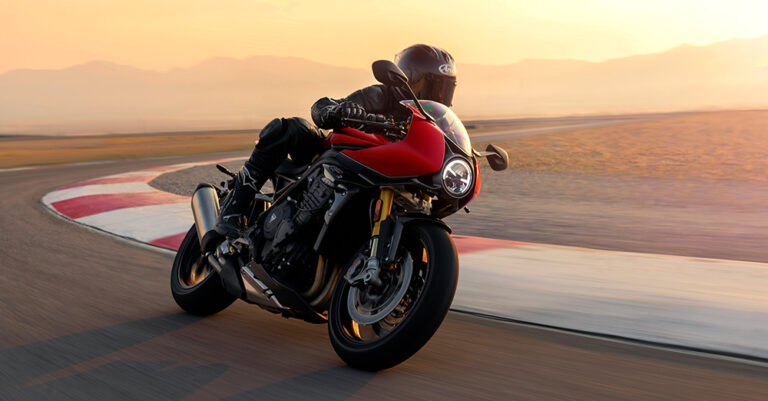
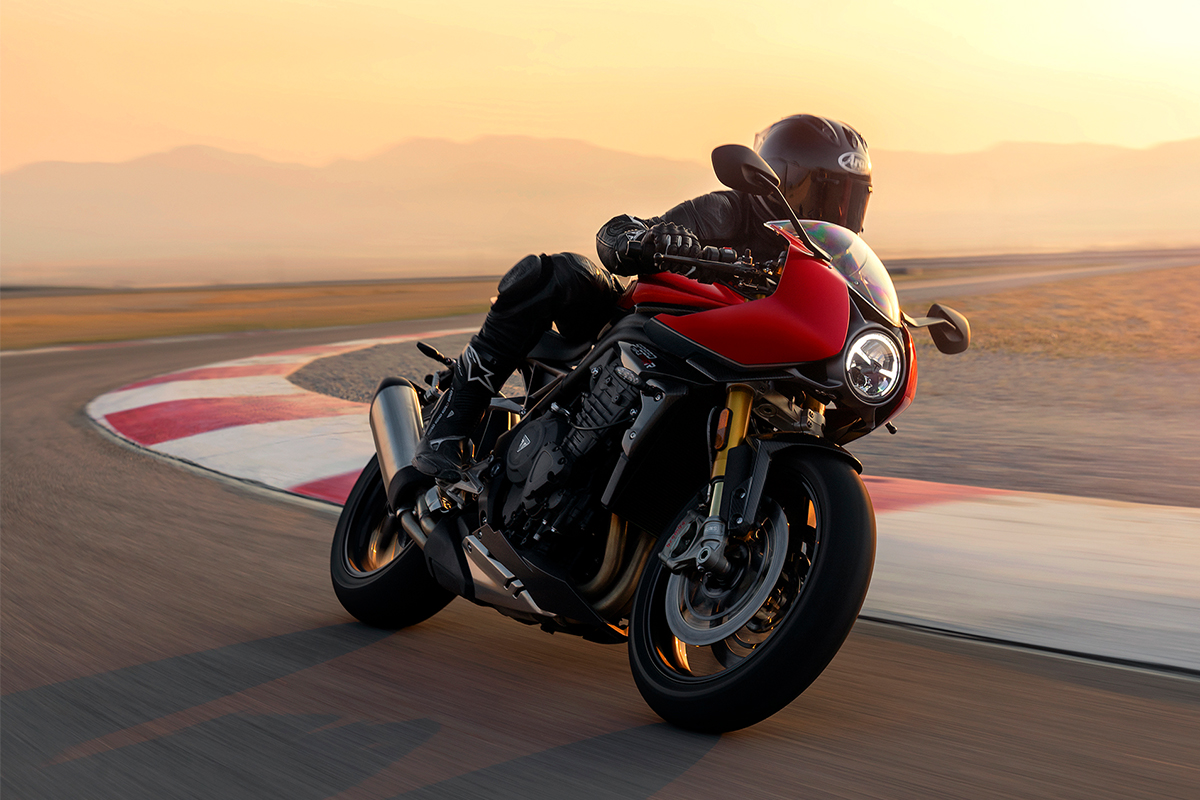
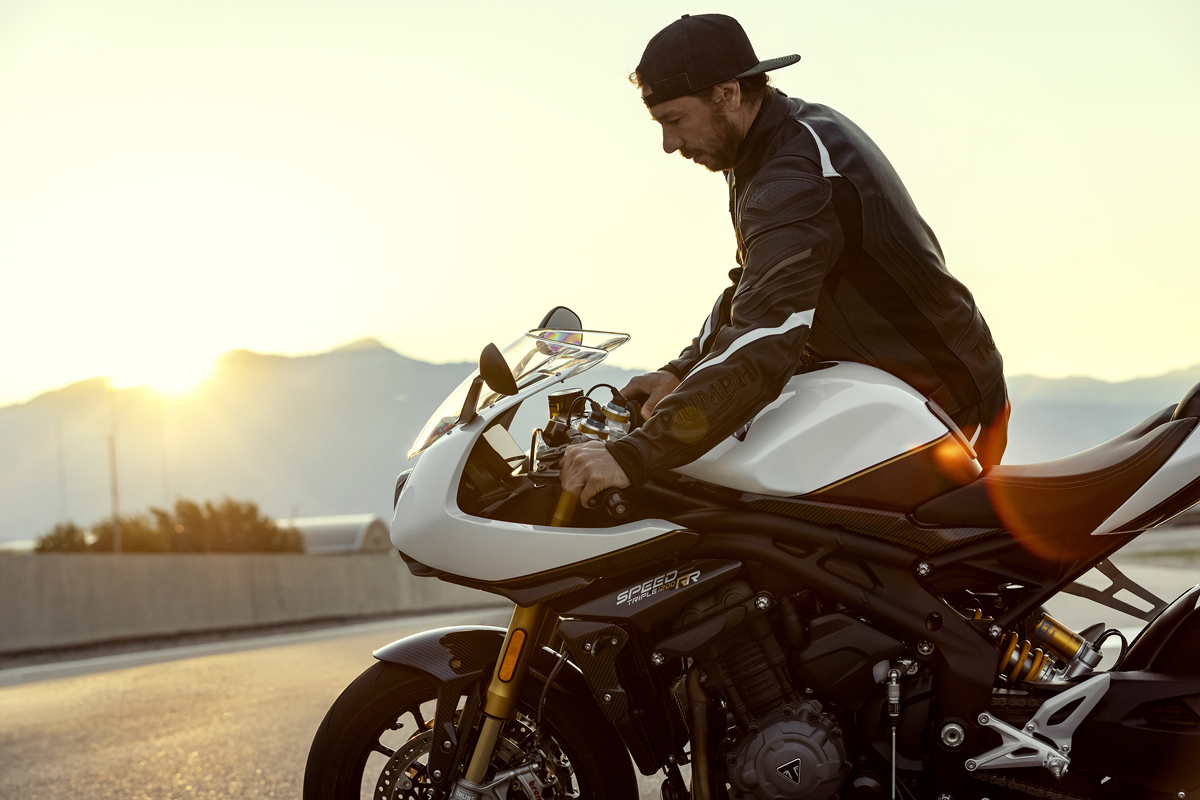
Now, all can be told. The new Speed Triple RR does indeed have a half-fairing housing a single LED headlight and it is a thing of beauty. Available in red/grey or white, it is a modern incarnation of the traditional cafe racer.
Image source: Triumph UK
But the changes are more than skin deep. The riding position has been completely changed, the handlebars having dropped 135 mm and 50 mm forward to give a much more aggressive riding position. The foot pegs similarly have been moved slightly back and up.
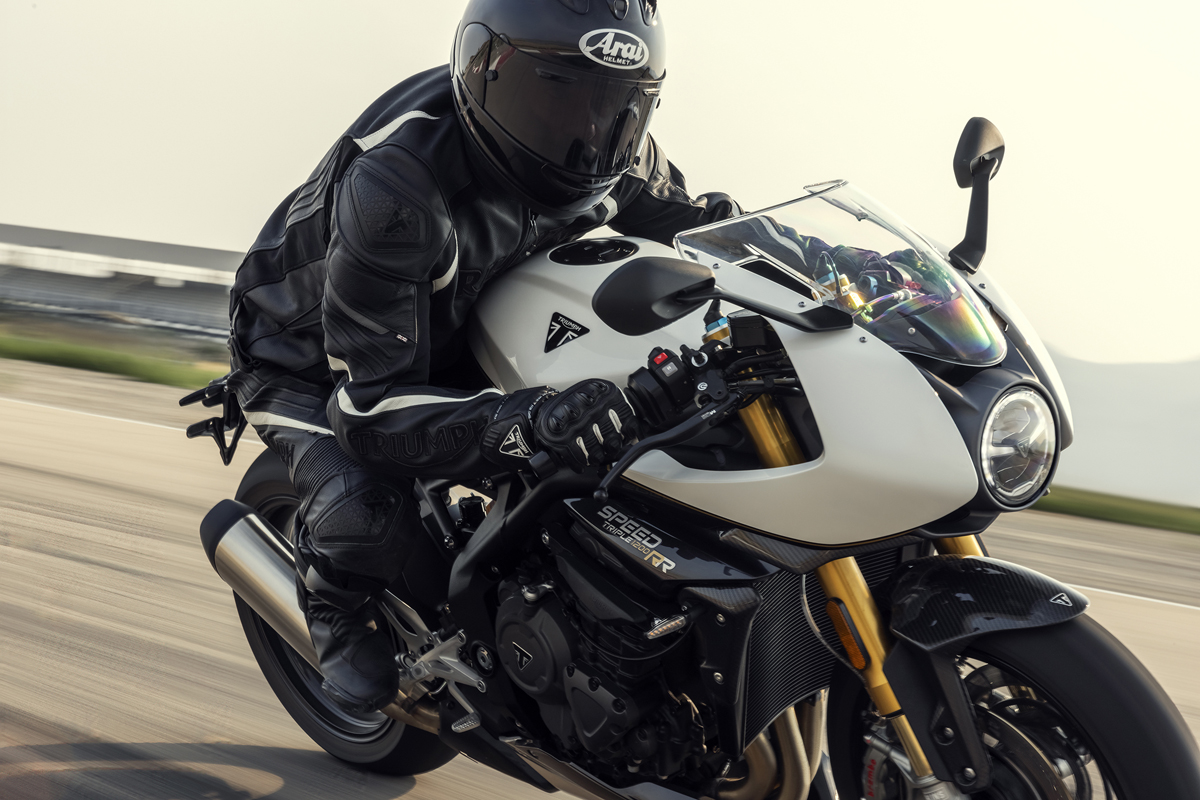
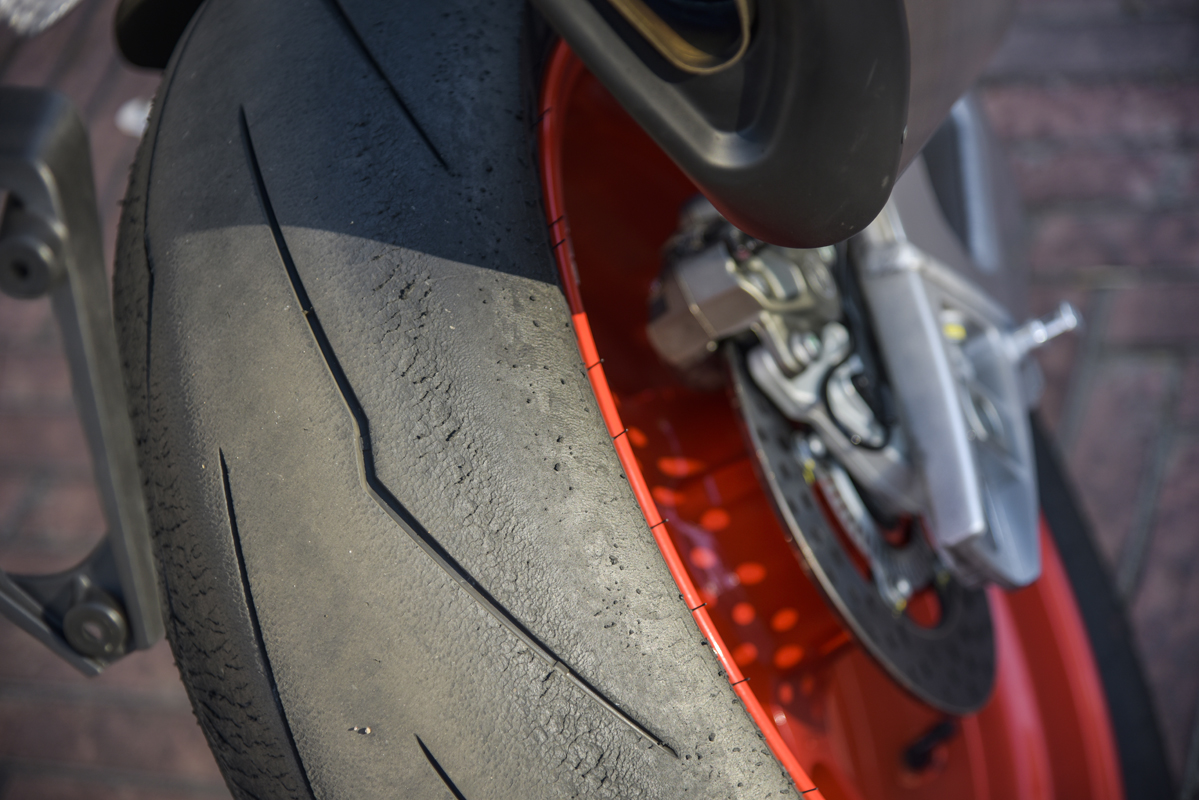
While the mechanicals remain the same, offering 180 hp and 125 Nm, driving through a six-speed gearbox and slip assist clutch, operated by an up/down quick shifter, the suspension has been completely updated. The Speed Triple RR is now suspended on Öhlins Smart EC 2.0 electronically adjustable suspension front and back and runs on super sticky Pirelli Supercorsa SP V3 tyres.
Image source: Triumph UK
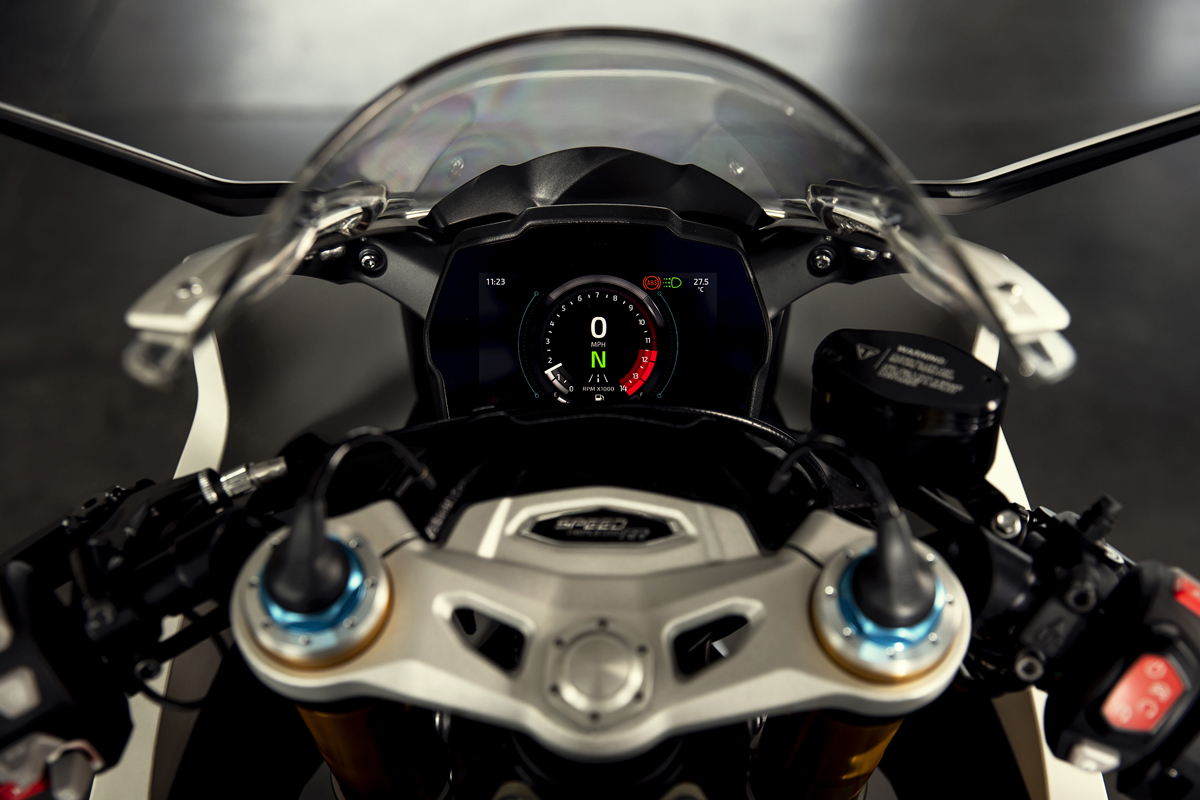
The electronics comprise five riding modes, including Track and a rider-customisable setting, while the ABS and Traction Control are adjustable and lean-sensitive.
There are carbon fibre details around the tank and fairing and the front mudguard is a carbon fibre piece.
Image source: Triumph UK
Triumph are claiming that the new model is in a class of its own and is a more focussed, more aggressive sports road bike that will be epic on the track, which many customers will be happy about. It really does take the Speed Triple 1200 concept to a new level.
In line with the Speed Triple RS, service intervals are 16,000km and there is a 2-year unlimited mileage warranty.
New Speed Triple 1200 RR Features and Benefits
Everything you need to know about the new Speed Triple 1200 RR…
No word on SA pricing yet but it should be in the showrooms in the first quarter of 2022.
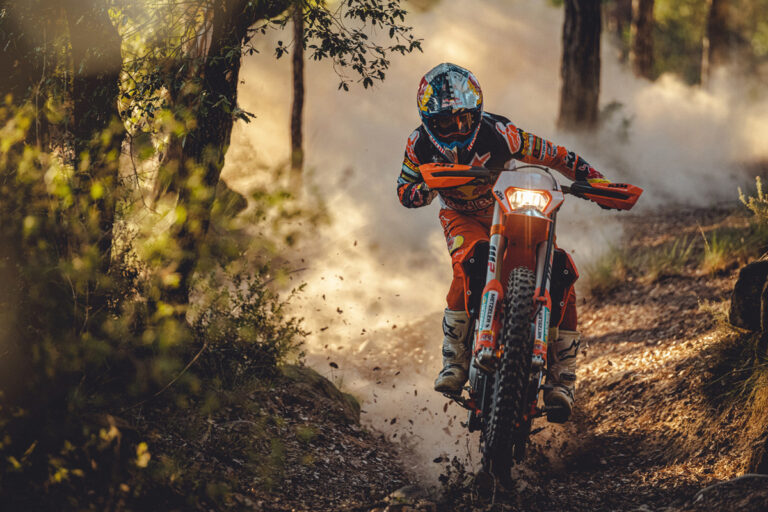
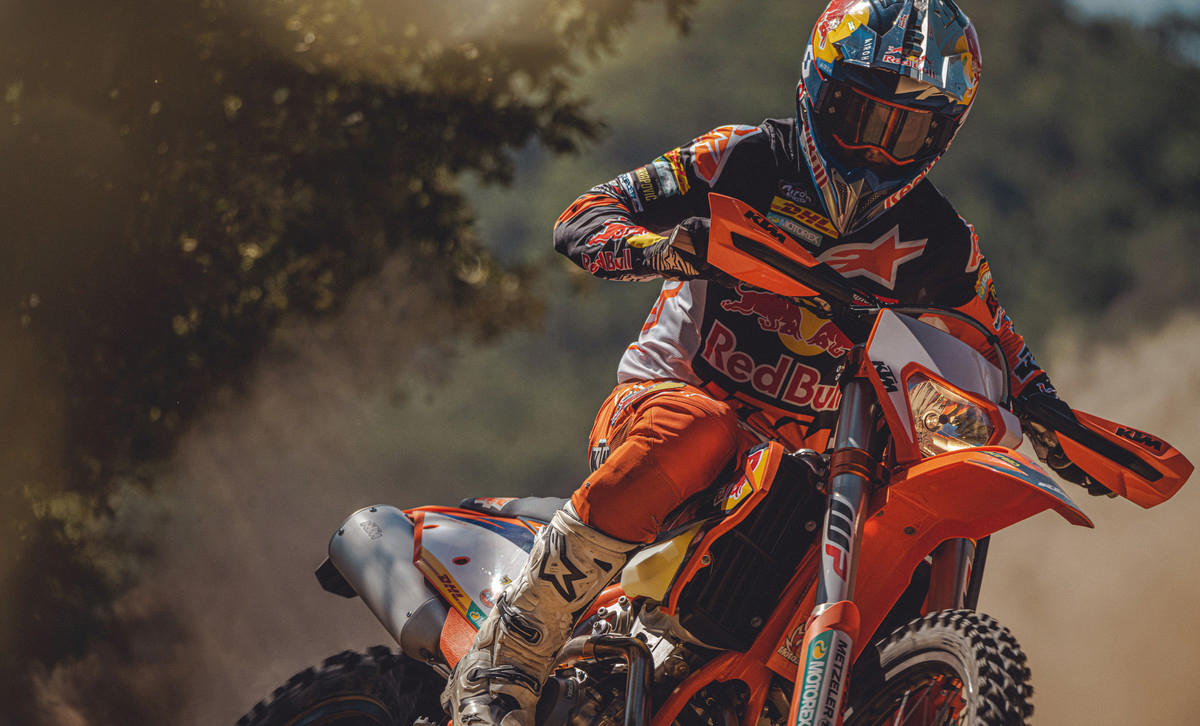
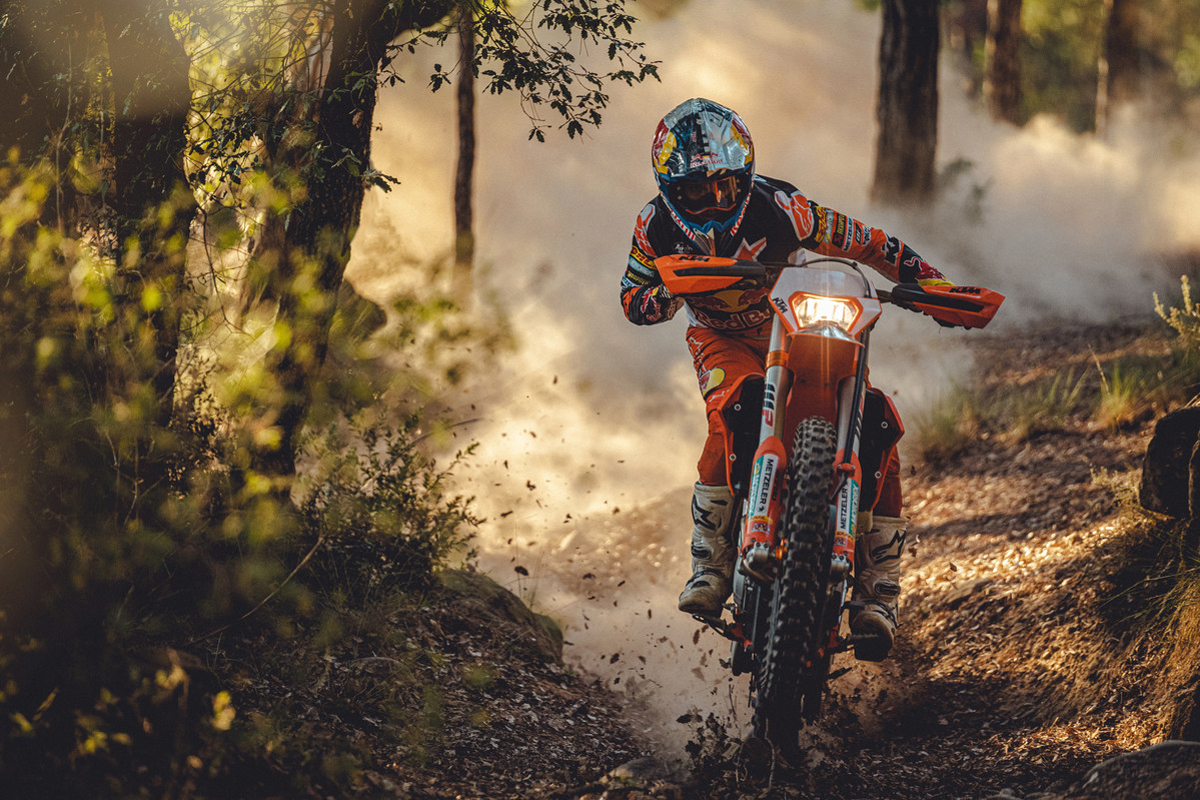
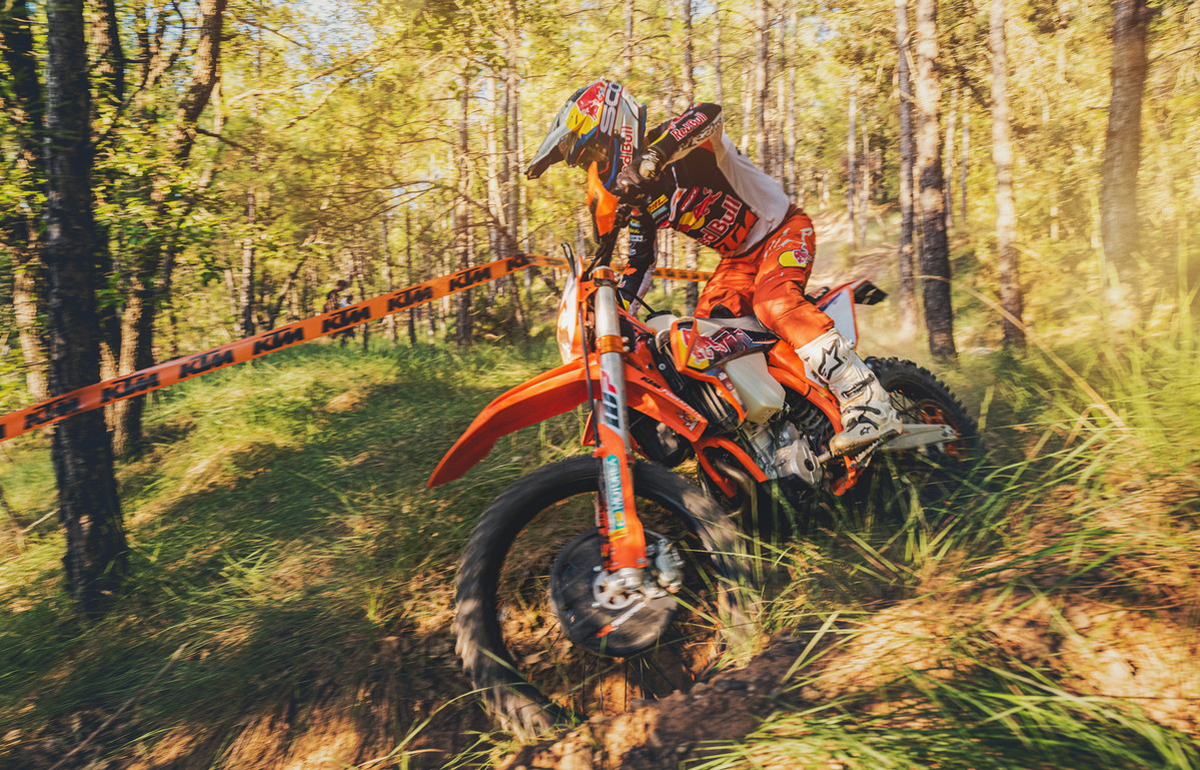
Stand out and leave your mark in the trails… Built for those looking for the ultimate 4-Stroke offroad machine, the 2022 KTM 350 EXC-F FACTORY EDITION is the best and brightest expression of Enduro excellence that has been crafted with the help and expertise of Red Bull KTM Factory Racing stars.
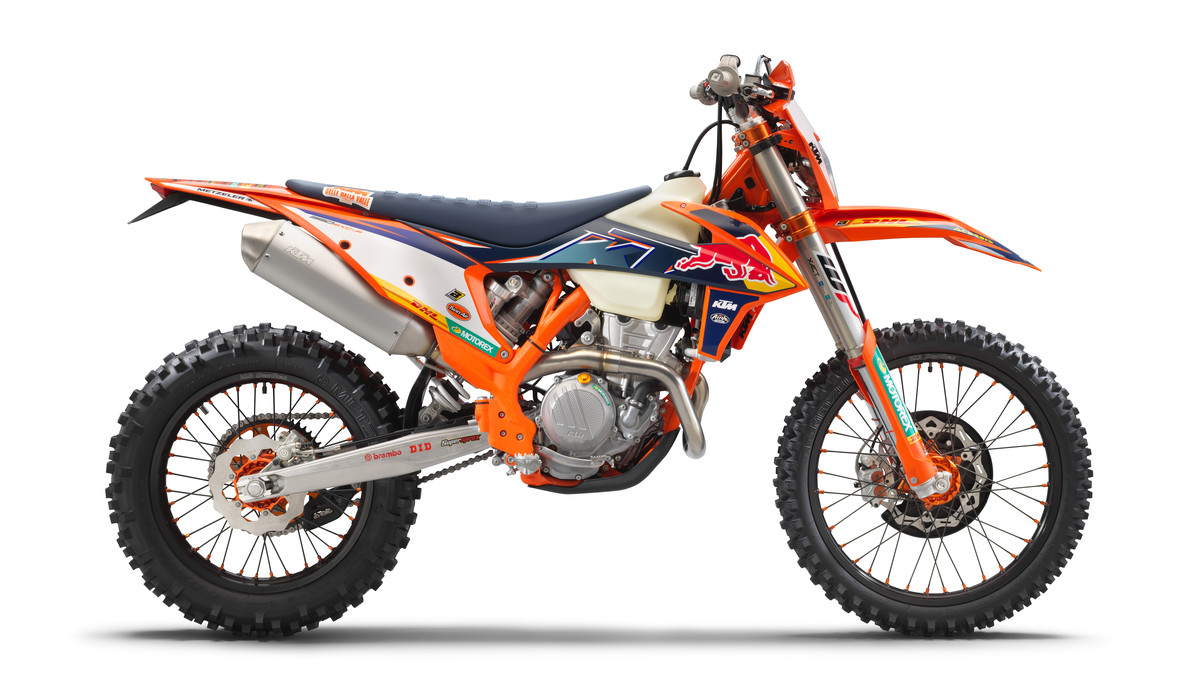
A special model in the 2022 KTM EXC line-up, the new KTM 350 EXC-F FACTORY EDITION features a long list of race-inspired parts combined with WP XACT air fork technology. The air fork introduces key weight savings together with quick and dependable adjustment possibilities thanks to the easy-to-access clickers and air pump. All in all, two key factors for the demanding and changing conditions found in Enduro competition.
Photo credit: KTM
The combination of the compact state-of-the-art chromoly steel frame and the lively 28 kg 350cc fuel-injected DOHC engine bring the best compromise for a myriad of offroad conditions. From the slow, technical precision of wooded and rocky paths to miles of throttle-heavy trails, the KTM 350 EXC-F FACTORY EDITION is here to ace all challenges and challengers.
Some of the hard hits of racing and riding can be deflected by the KTM 350 EXC-F FACTORY EDITION’s factory wheels and anodized hubs, the engine skid plate as well as the front brake disc guard. Other race-derived upgrades include the radiator fan and radiator protection, the map selector switch and the Supersprox Stealth rear sprocket, which all help enhance the premium experience of the 2022 KTM 350 EXC-F FACTORY EDITION.
Photo credit: KTM
Lastly – for a bike that will keep riders noticeable in first place – is the aesthetic for 2022. Red Bull KTM Factory Racing graphics is the clearest and easiest sign that the 2022 KTM 350 EXC-F is firmly FACTORY EDITION but there are other details too. Cast an eye over the factory blue seat, orange oil plug, CNC-machined orange triple clamps and, of course, that sumptuous orange frame.
KTM 350 EXC-F FACTORY EDITION – HIGHLIGHTS:
Red Bull KTM Factory Racing inspired graphics
WP XACT 48mm air fork
Factory wheels with anodized hubs
CNC machined triple clamps
Radiator fan
Radiator protectors
Skid plate // Factory seat
Front brake disc guard
Rear solid disc
Map select switch
Supersprox Stealth rear sprocket
Orange oil plug
Grey ODI grips
Photo credit: KTM
The 2022 KTM 350 EXC-F FACTORY EDITION will be starting stopwatches from all authorized KTM dealers this September. For more information, visit ktm.com.
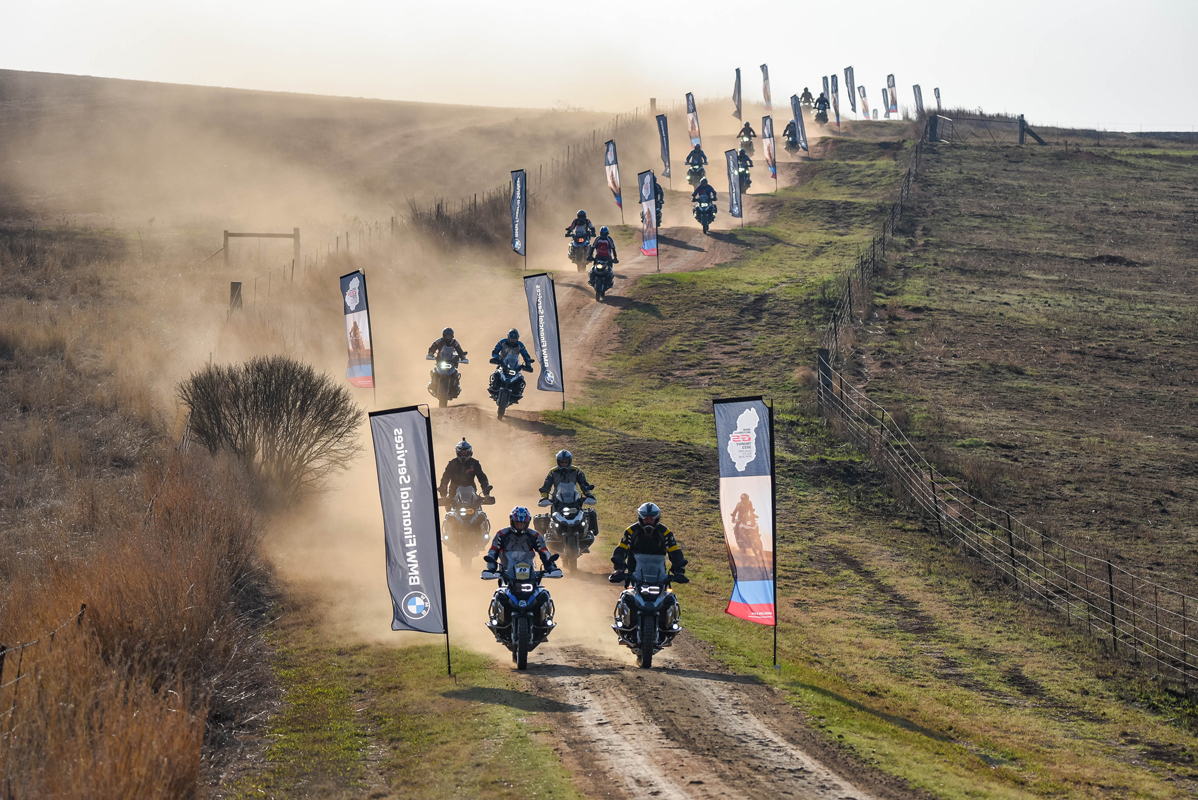
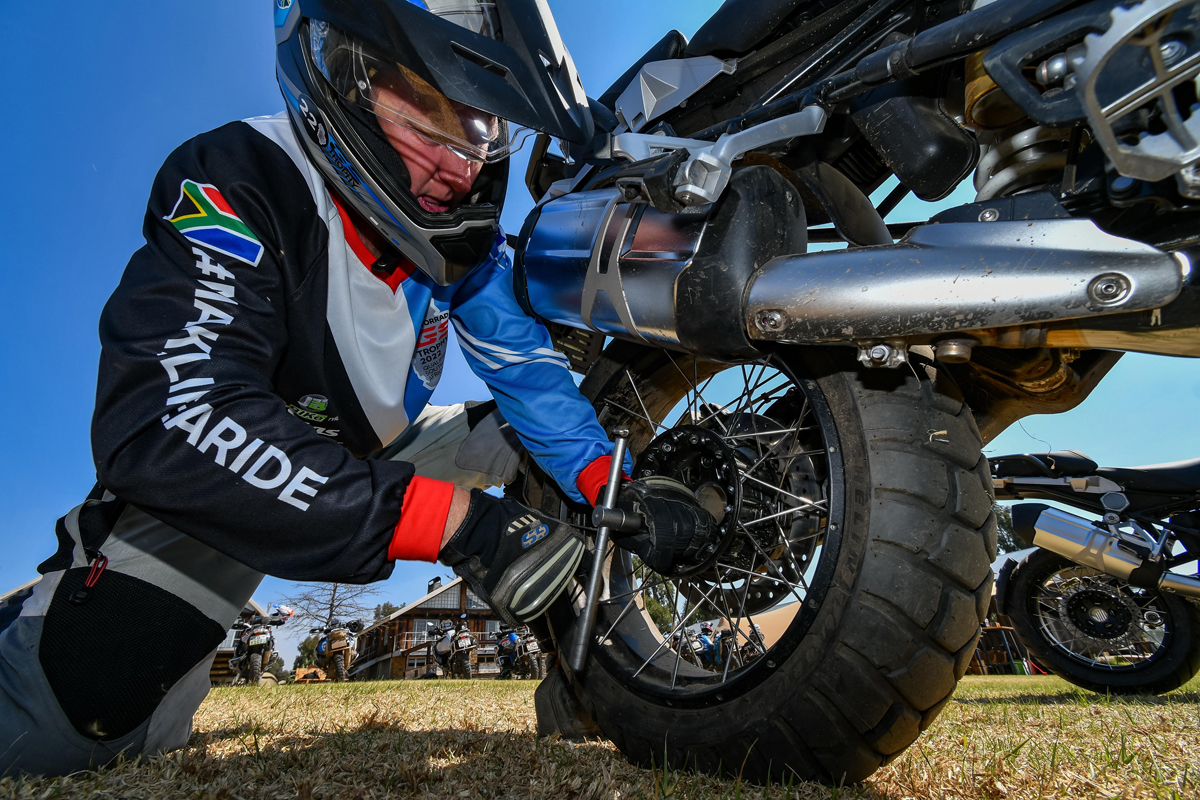
After the activity of the first full day of Qualifier action on Friday, the competitors were keen to catch up on some sleep ahead of another busy schedule on the final day. Just after midnight, though, the night air was pierced by sirens summoning the competitors from their tents to their motorcycles for two more night-time exercises.
Image source: BMW Motorrad SA
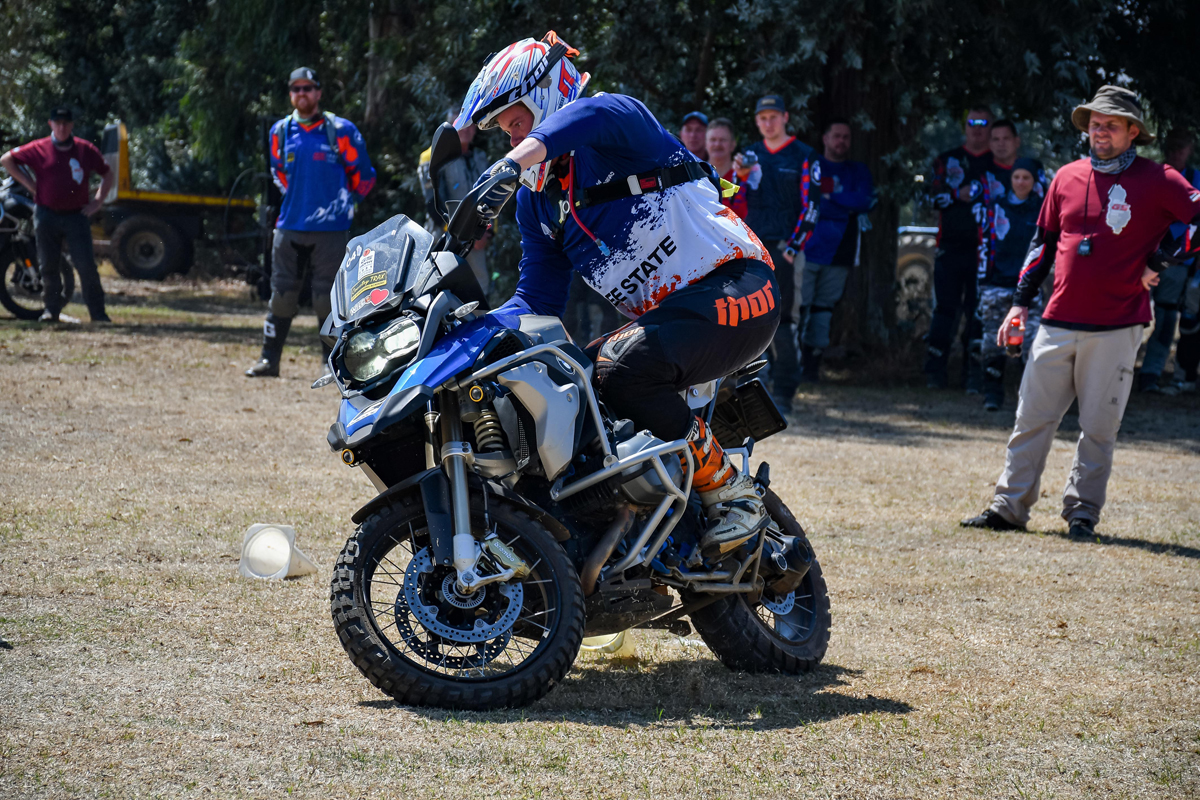
They were back in their tents two hours later, only to be woken again at 05:00 for a skills test in the bush. This proved to the warm-up exercise before a hearty breakfast, whereafter the competitors continued with several sand exercises, and tackled challenges to test their resilience on steep hills and corners. One of the exercises played out at the dreaded Wall of Life at the CountryTRAX facility, a deep circular pit set at an angle of about 60 degrees that tested the competitors’ nerves, while battling gravity and a tricky entry and exit point – keeping their motorcycles upright.
Image source: BMW Motorrad SA
The competitors were kept busy until the late afternoon, after which time it was the turn of the GS Trophy 2022 Qualifier South Africa marshals to tally the day’s scores.
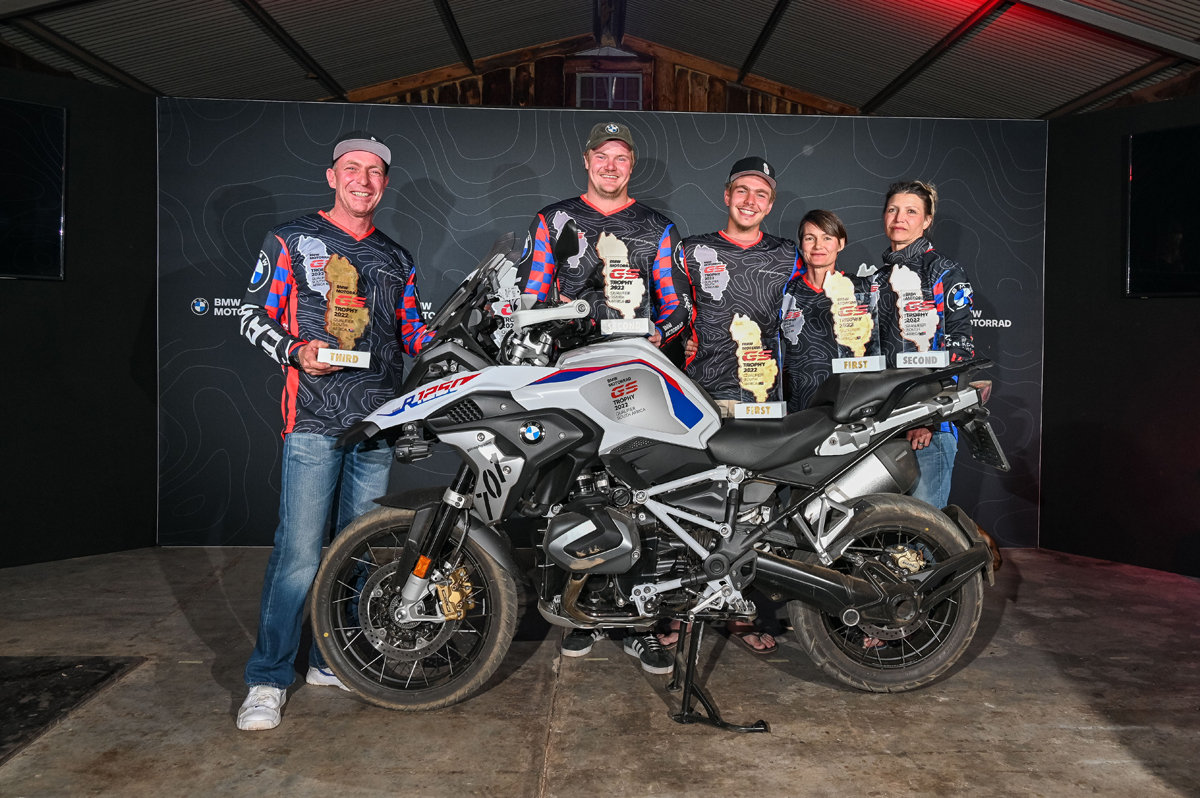
Saturday evening’s dinner was followed by the final points ceremony and the announcement of Team South Africa that will compete in the International GS Trophy 2022 in Albania. Team South Africa for the 2022 competition is: Gerrit du Toit (Limpopo), Dalton de Bruin (Free State), and Warren Venter (Gauteng).
Image source: BMW Motorrad SA
Christelle van der Meulen and Hanneli Zondagh were the highest-ranking ladies after the GS Trophy 2022 Qualifier South Africa. The International GS Trophy 2022 organisers now have the task of determining who will compete in the final women’s teams, based on the global entries received. The announcement of the official ladies’ teams to compete in the International GS Trophy 2022 in Albania will follow.
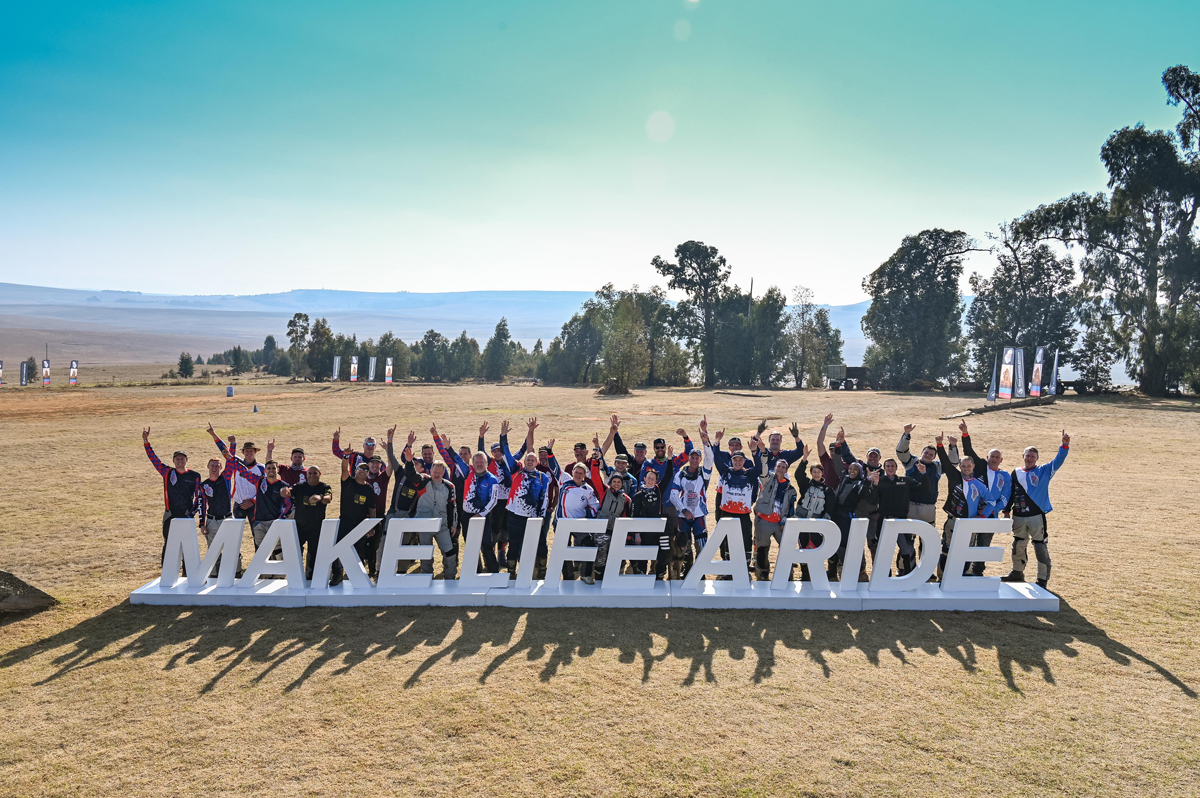
Penny Sterley, General Manager of BMW Motorrad South Africa, said: “The passion shown by BMW Motorrad owners is unlike anything I’ve ever seen, and the success of this year’s GS Trophy 2022 Qualifier South Africa again demonstrates the love for riding in our amazing country. I must thank all 31 competitors who left their families and support teams at home to give their all in the Spirit of GS to make this event a success. I have no doubt that we have the team to capture an unprecedented fourth consecutive International GS Trophy in Albania next year. What a way to Make Life a Ride!”
Image source: BMW Motorrad SA
All-in-all, the weekend’s activities near Amersfoort in Mpumalanga again demonstrated the breadth of skill held by GS riders in South Africa. Once the weekend celebrations taper off, preparations will begin in earnest in the hunt for a fourth consecutive International GS Trophy win.
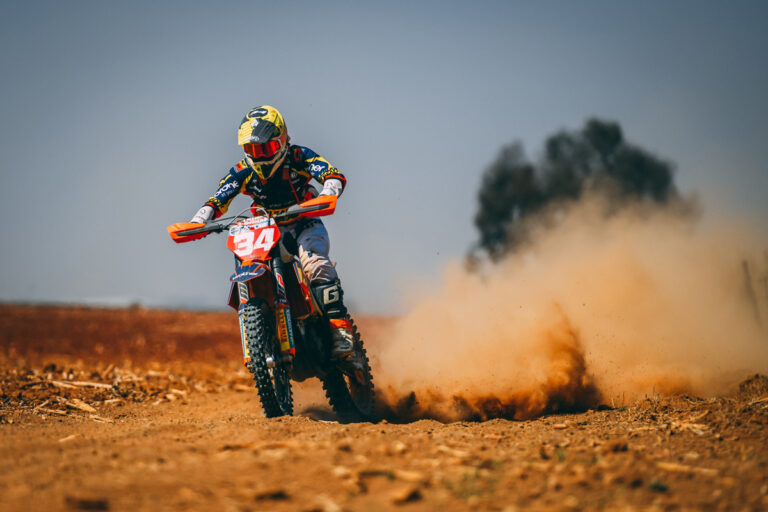
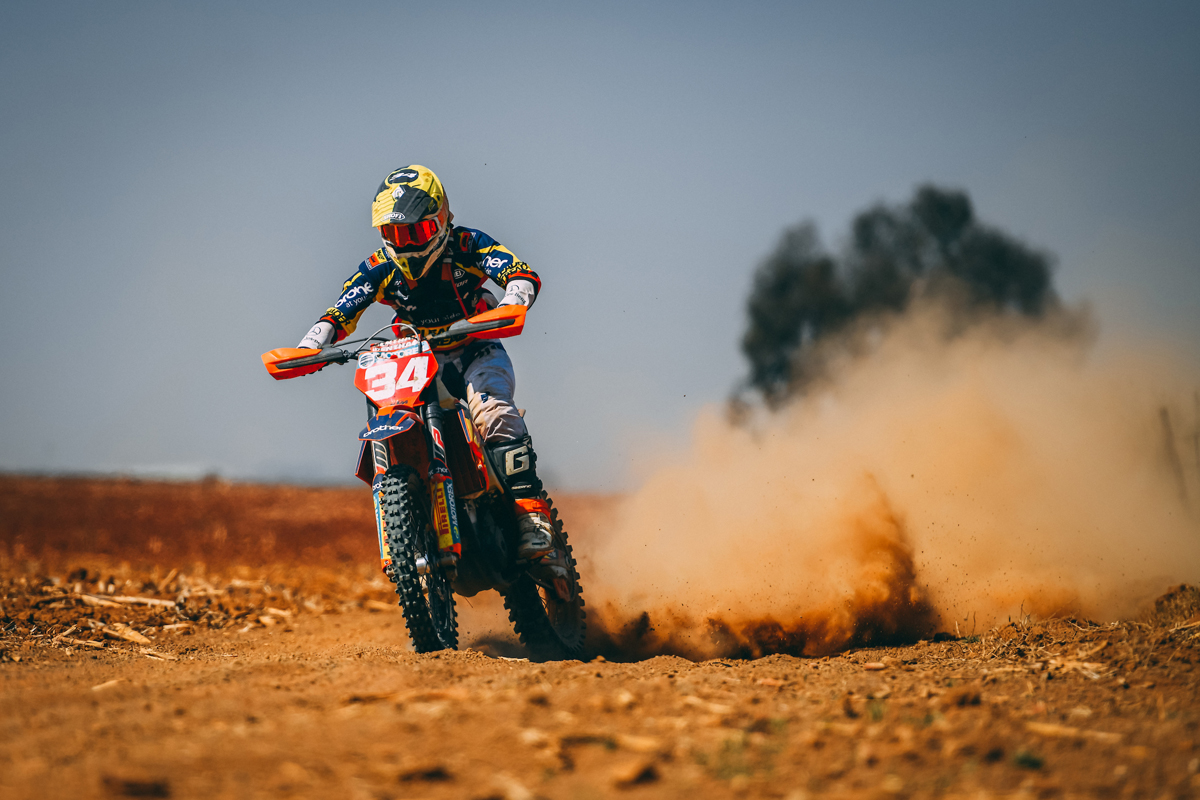
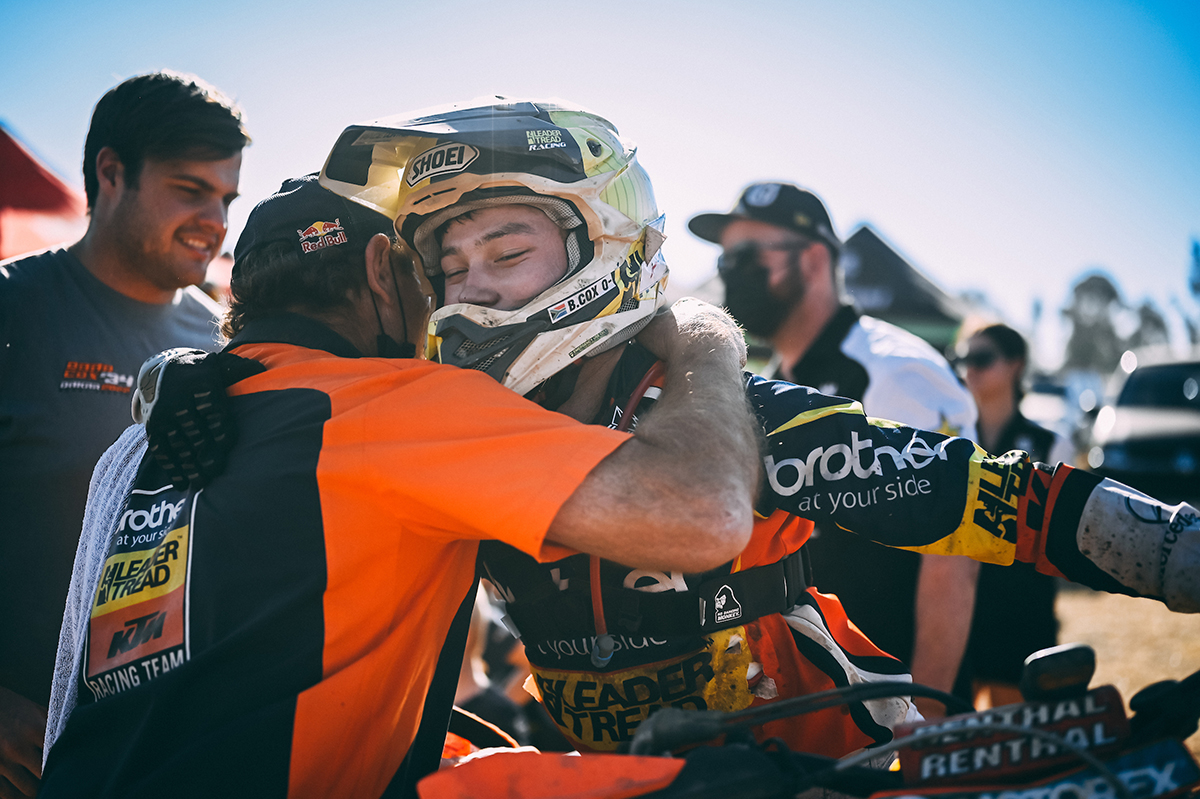
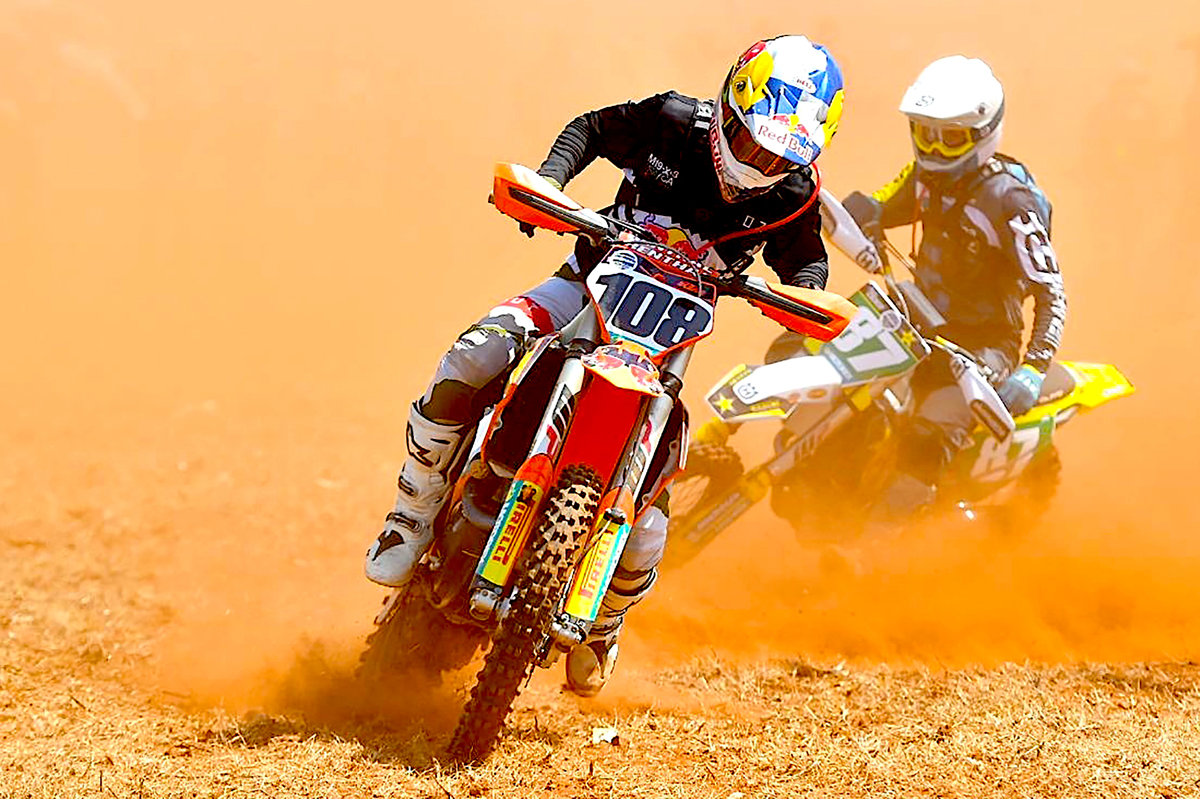
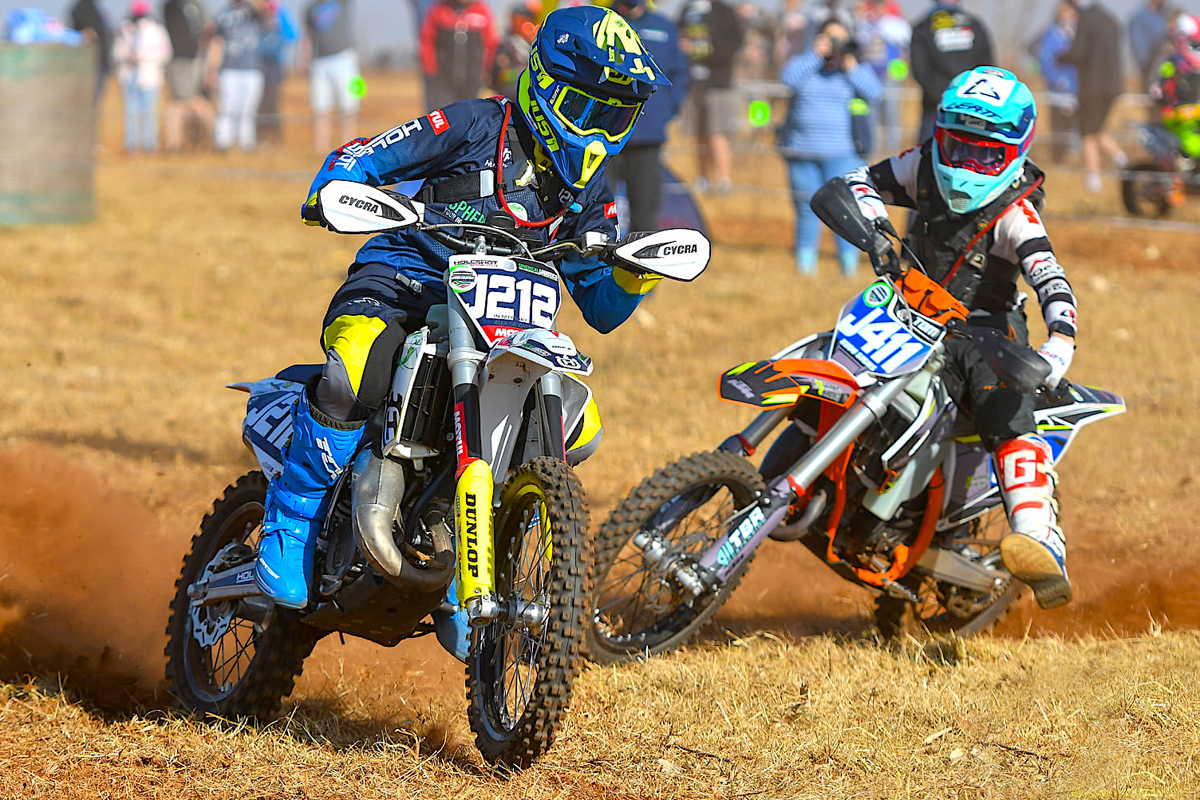
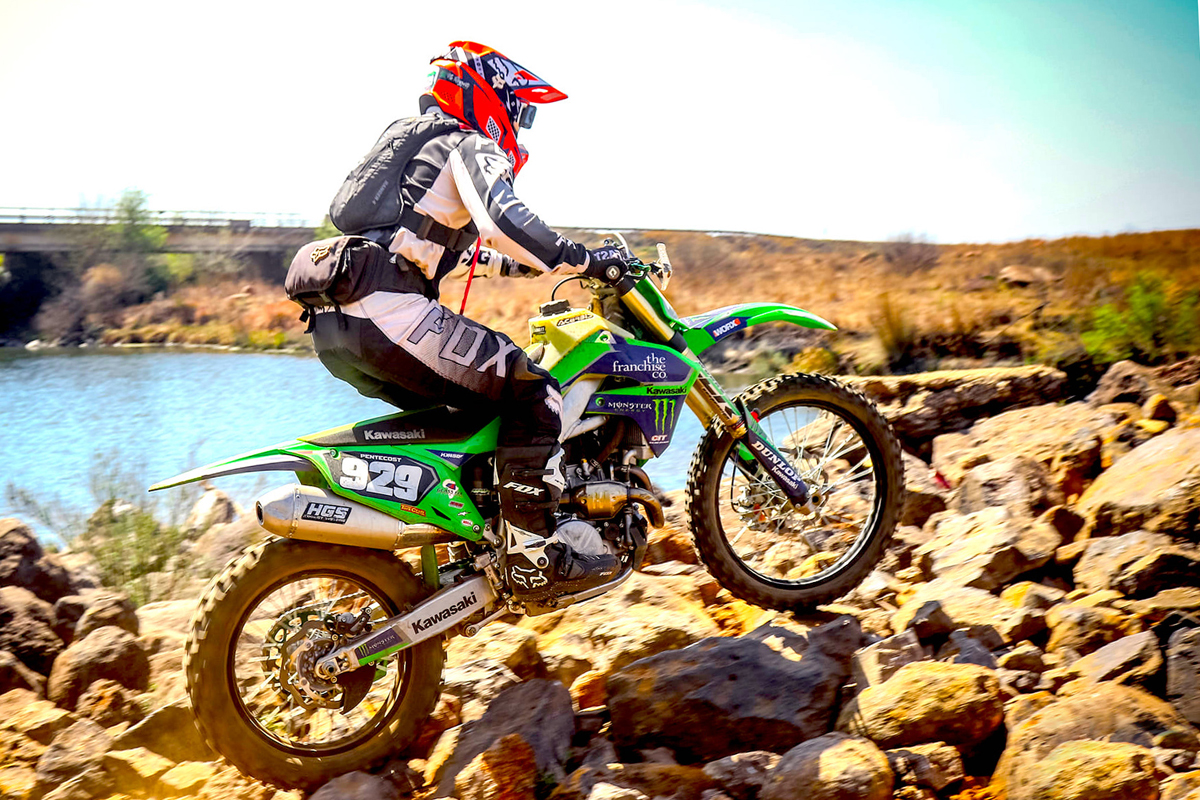
KwaZulu Natal hero Bradley Cox tightened his grip on the overall South African National Cross Country Motorcycle championship when the Brother Leader Tread KTM rider beat Franchise Company CIT Kawasaki man Mike Pentecost and Kerim Fitz-Gerald’s Red Bull KTM to victory in a dusty, rocky and occasionally slippery Delmas race on Saturday. In so doing, Cox opened his championship advantage to a handy 19 points, but it is far closer in the various class chases.
OR2 rider Cox had to fight for his overall victory as he made it four different riders and machines to win in the four races so far in 2021. Former motocrosser Fitz-Gerald was quick out of the blocks on his OR2 machine and led the way from OR1 man Pentecost, before Cox clawed back to take a close win from Pentecost and Fitz-Gerald. Just 37 seconds covered the top three as Cox became the first out of province rider to win a round this year as he continues to prepare for his Dakar debut in January.
Photo credit: ZCMC
OR3 lad Davin Cocker’s Rockstar Husqvarna harried the leaders as he beat Ian Rall’s similar OR2 MCA Dragon machine to fourth. D’Artagnan Lobjoit’s Pepson Motul Kawasaki was sixth from reigning champion Brett Swanepoel’s Rockstar Husqvarna, Scott Heygate’s Alfie Cox KTM and Jaycee Nienaber’s Spherical Husqvarna. Also Dakar bound, reigning OR1 champion Charan Moore was tenth on his Brother KTM, straight off racing the Kalahari Rally through the previous week.
The upshot of all that is Bradley Cox has extended his overall 2021 South African National Cross Country Motorcycle championship advantage to 19 points over KZN rivals Brett Swanepoel, with Michael Pentecost a further two points adrift, subject to official MSA ratification. Botswana rider D’Artagnan Lobjoit leads tight four-man fight for fourth over Gauteng trio Ian Rall, Davin Cocker and Kerim Fitz-Gerald, with just seven points splitting that quartet.
Photo credit: GXCC
It’s however a different story in the classes, where several of them see splendid title battles raging as the season heads to its finale next month. It’s super tight in open class OR1. Mike Pentecost’s second Kawasaki win on the trot over the similarly mounted D’Artagnan Lobjoit sees Pentecost draw level with Swanepoel in the title chase. And Lobjoit is just seven points adrift. Jaycee Nienaber was fourth in the Open class on Saturday from Charan Moore and Hein van Niekerk’s KTM.
Cox’s class win over Fitz-Gerald, Rall, Devan Smith’s Vans Husqvarna and Juan Niebuhr’s Rhubein KTM saw Cox open his OR2 title advantage to ten points over Rall. Fitz-Gerald is now just four points further adrift. Cocker’s OR3 win over Heygate, Pepson Plastics Kawasaki Motul lad Kyle Mckenzie, Peter Karam’s Roost KTM and Erik Ernst Merry’s Husqvarna sees Cocker move two points ahead in that class title chase. Merry and Mackenzie jump up to third and fourth.
Photo credit: GXCC
Wade Blaauw made it four wins out of four starts in the over-30 Seniors on his Roost KTM, yet again ahead of Deon du Toit’s CIT Franchise Kawasaki. Marco Cocci’s Enduro Zone Yamaha, Lee Thompson’s Pepson Kawasaki and Dirk Olivier’s Shimwells Yamaha followed. And Wayne Farmer took Biker’s Warehouse Husqvarna took the over-40 Masters over Warrick van Schalkwyk Roost’s KTM and Carel le Roux’s Alfie Cox KTM to close down to 9 points adrift le Roux in that title chase.
In Junior action, John Botha took High School honours on his Franchise CIT Husqvarna from Derek Karam’s Roost KTM, KTM Durban lad Dylan Jones, Rory Donaldson’s Gas Gas, Branden Swanepoel’s Trademore Sherco and Michael Struik on a P Trimborn KTM. That leaves Jones in a provisional 11 point title lead over Swanepoel and Botha now tied in second.
Cobus Bester took the 85 cc Junior win on his Spherical Holeshot Husqvarna ahead of Thomas Scales’ KTM, Brandon Clarke on another Spherical Husqvarna, Bruno Niebuhr’s Rhubein KTM and Johandre Vermaak’s TFC CIT Husqvarna. That means Scales now leads Bester by two points with Clarke a further seven adrift.
Photo credit: GXCC
All of which means that while Bradley Cox has to simply finish the final race at his home Virginia Hills race on 22 October among the top fourteen machines to clinch the overall title, it’s still all to play for in the classes. All the 2021 SA Cross Country Motorcycle title class fights are going right down to the wire.
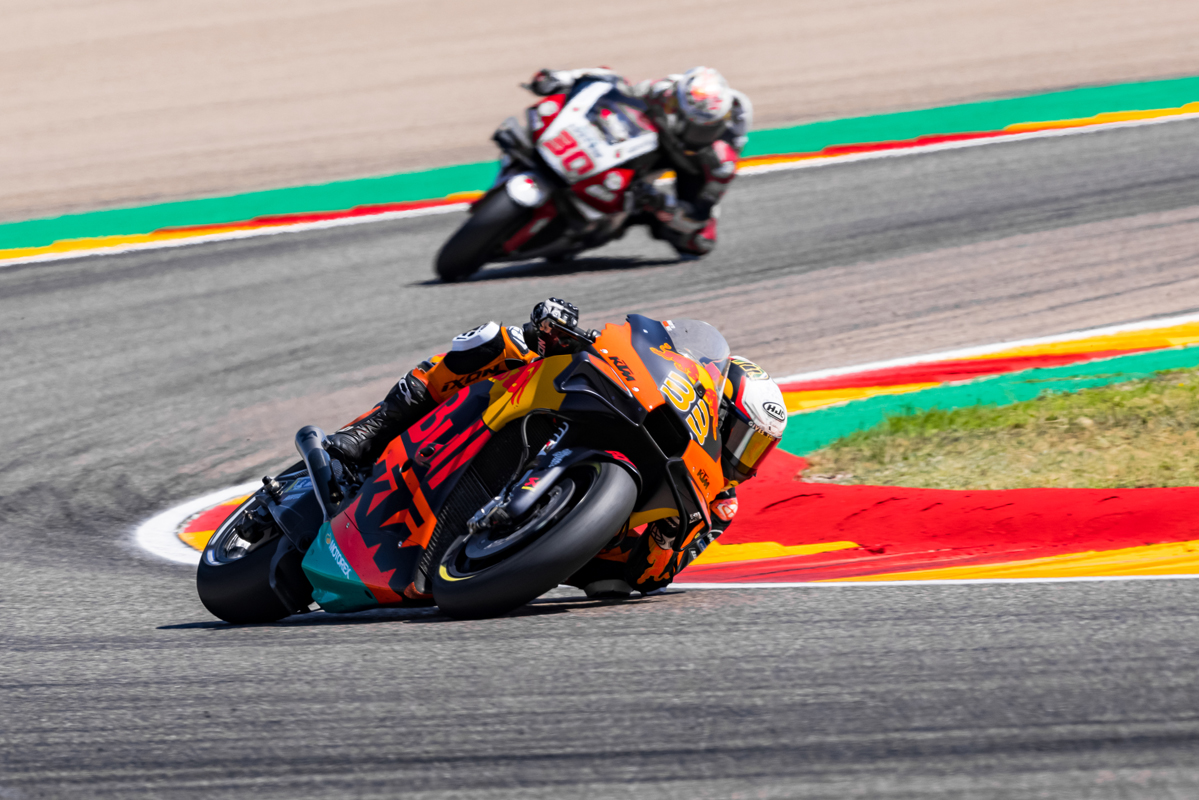
After a short breather riders returned to the hot asphalt of MotorLand Aragon for the thirteenth Grand Prix of the 2021 campaign and the third of four visits lined up in sunny Spain. 5.1 kays and 23 tyre ripping corners were laid out in front of the riders, with tyre endurance and race management being the make or break for podium contention—anything could happen.
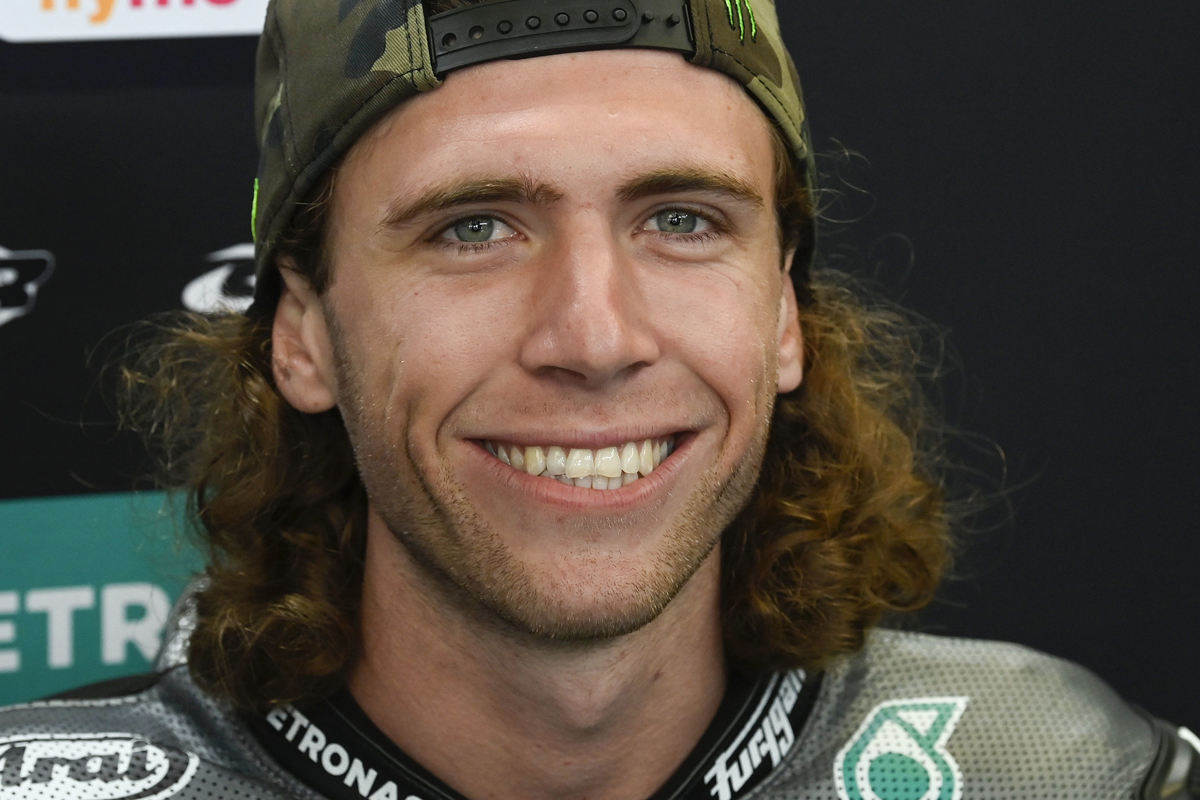
Darryn Binder
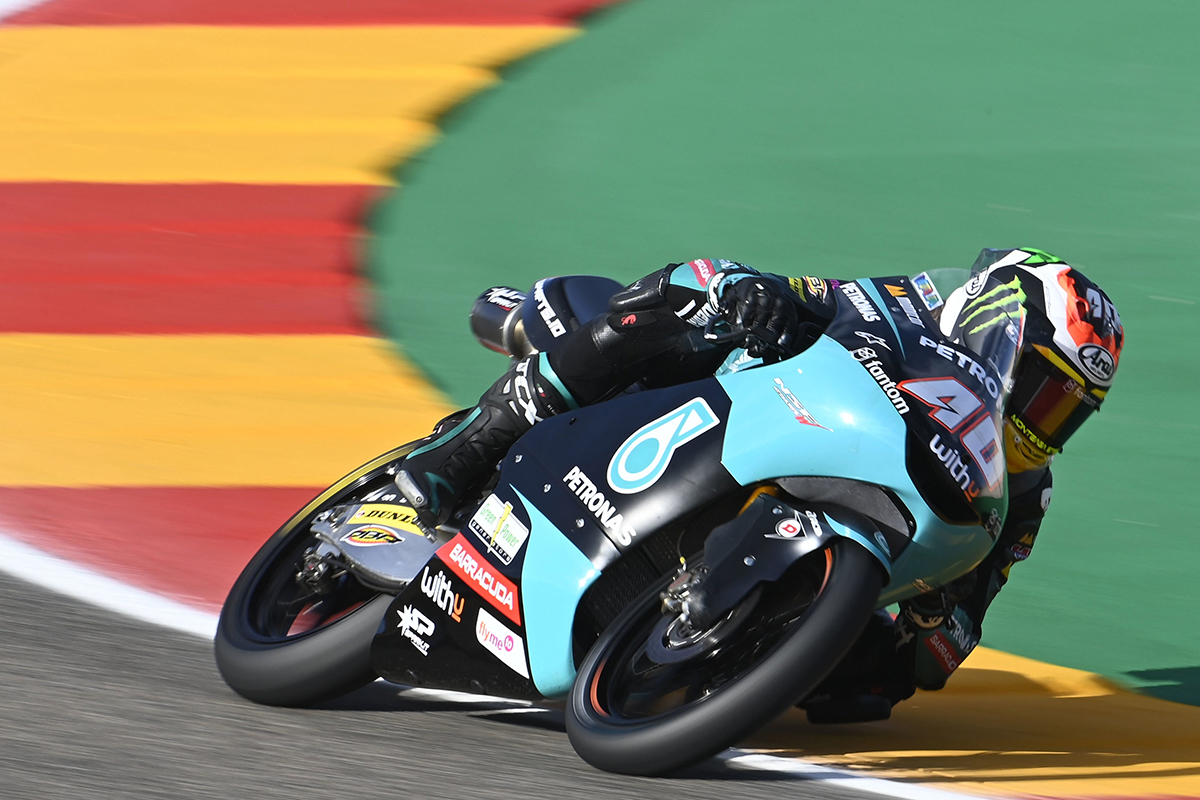
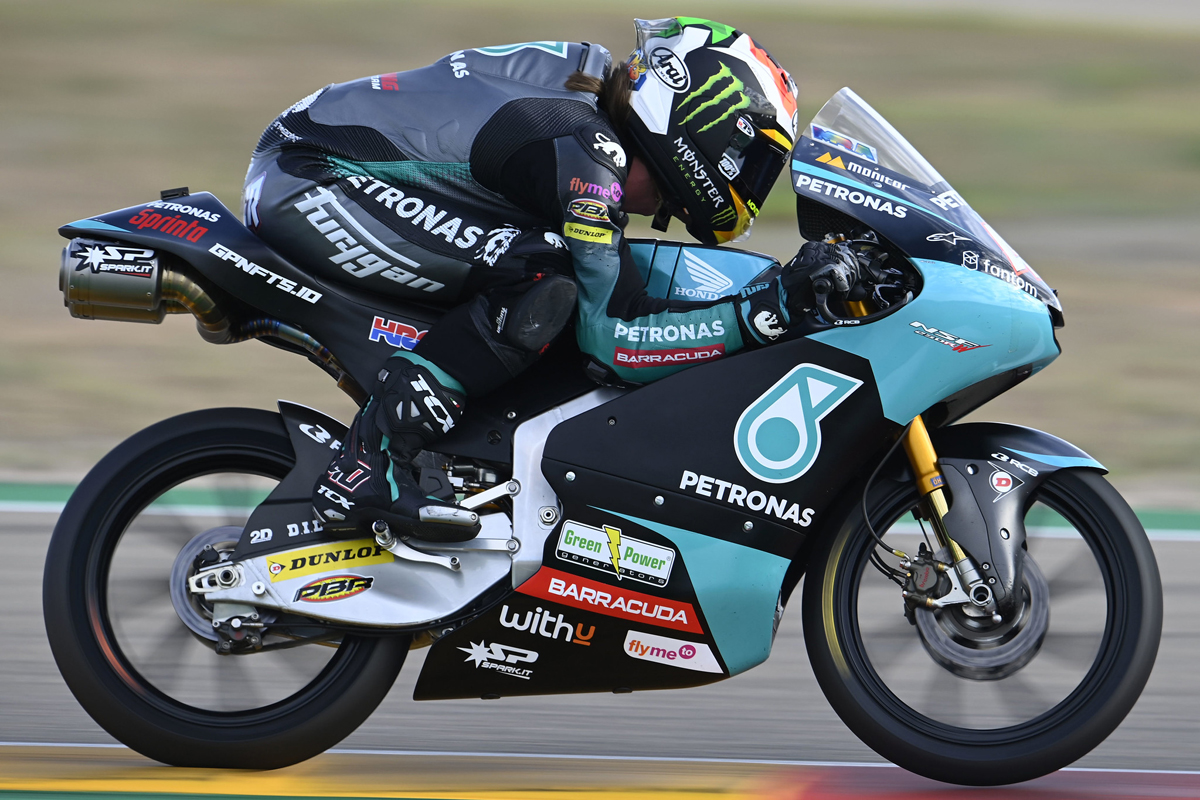
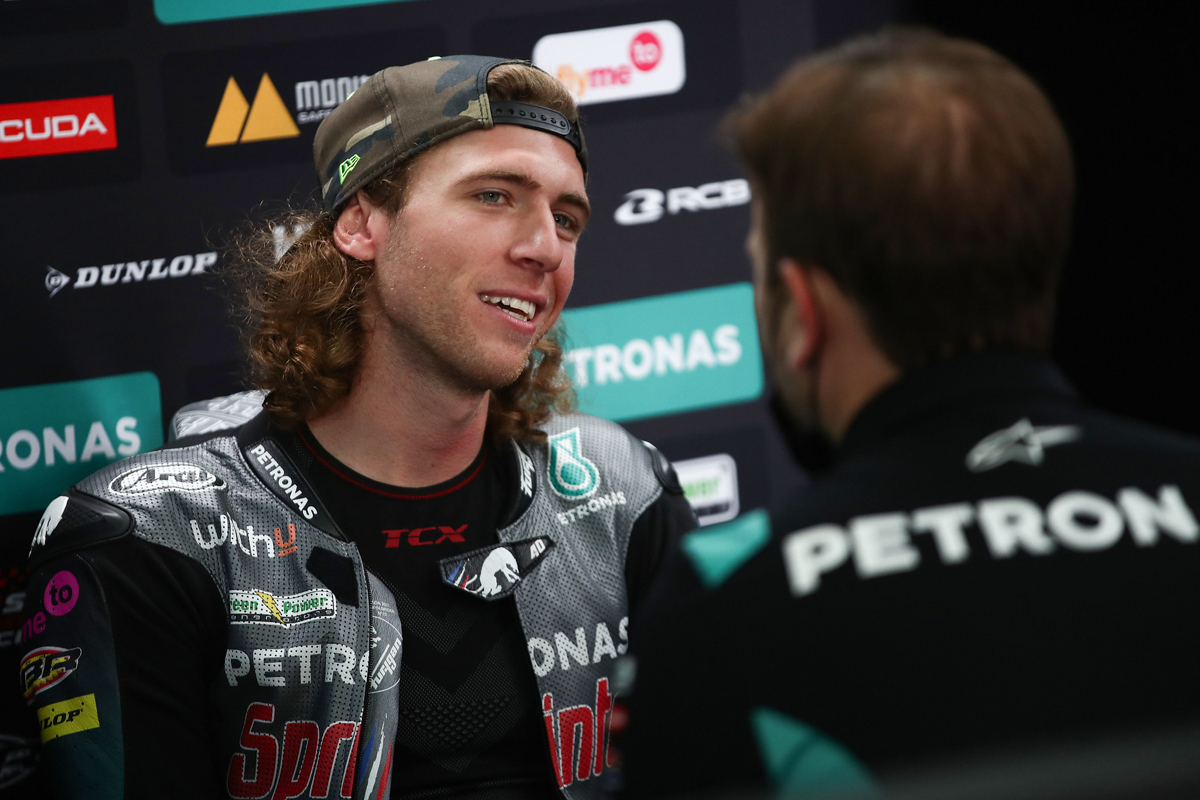
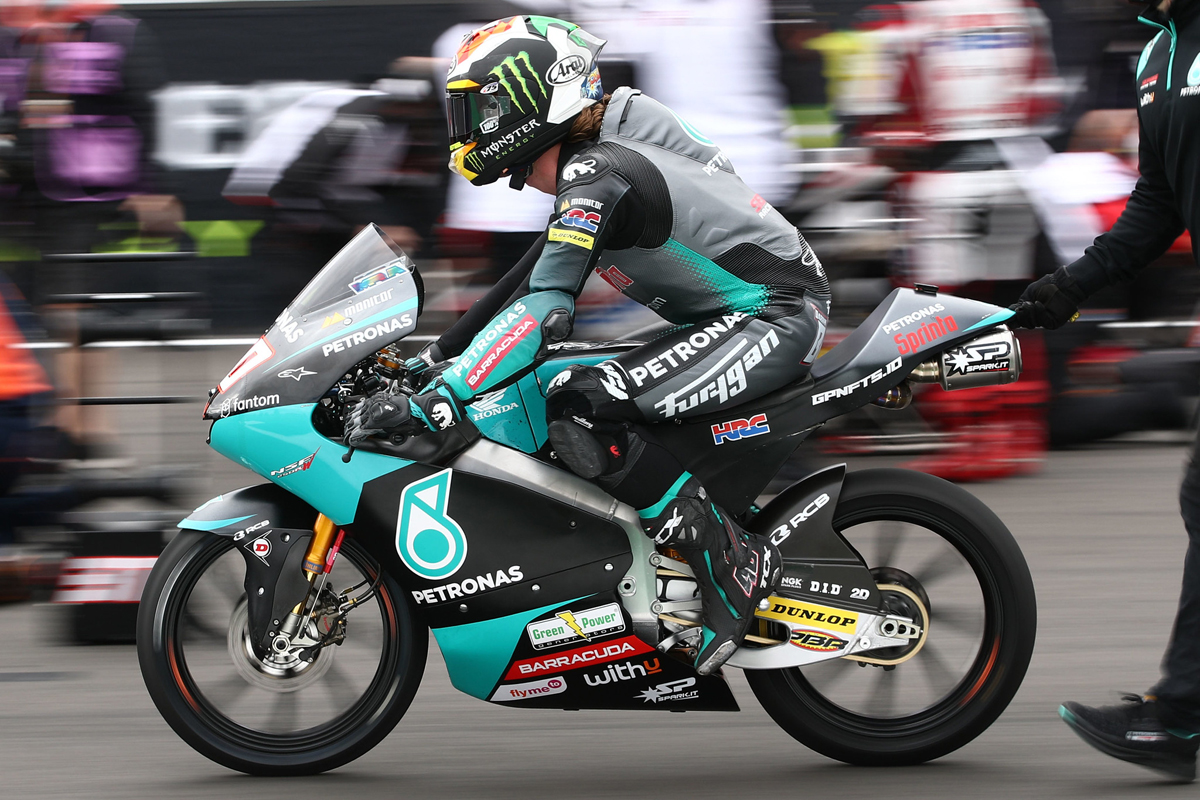
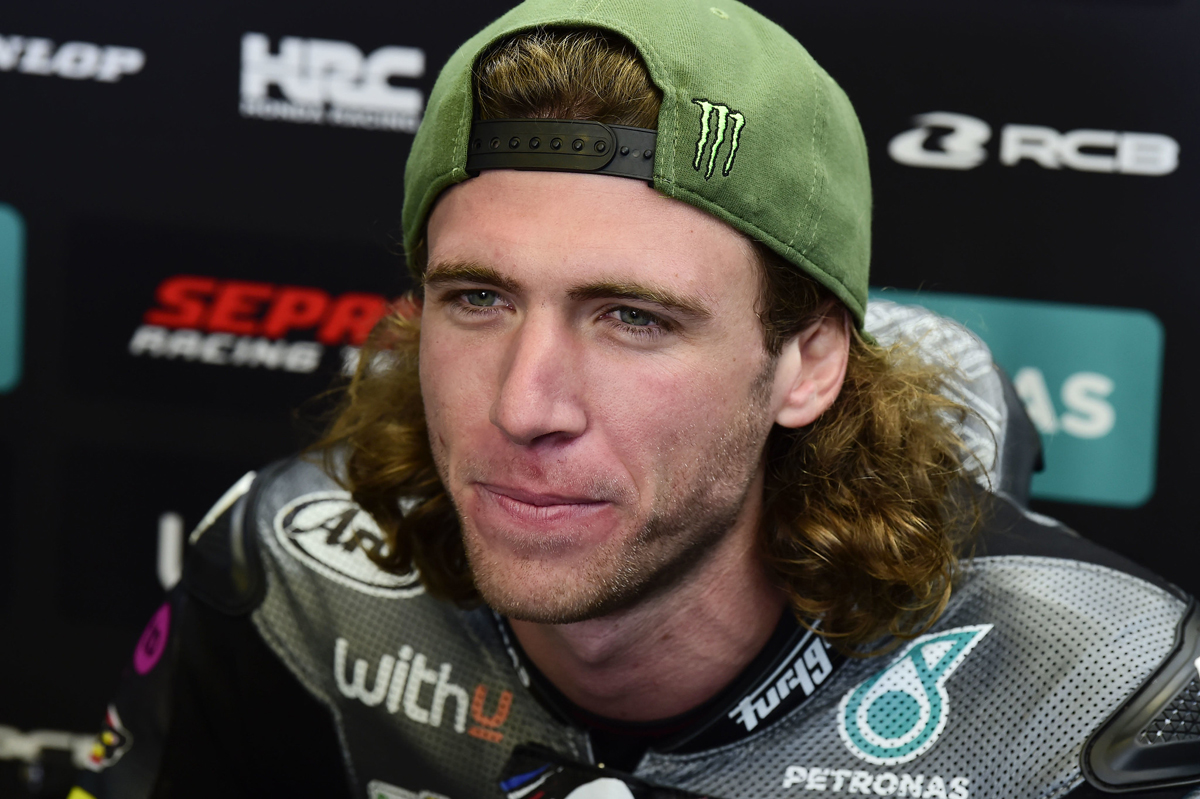
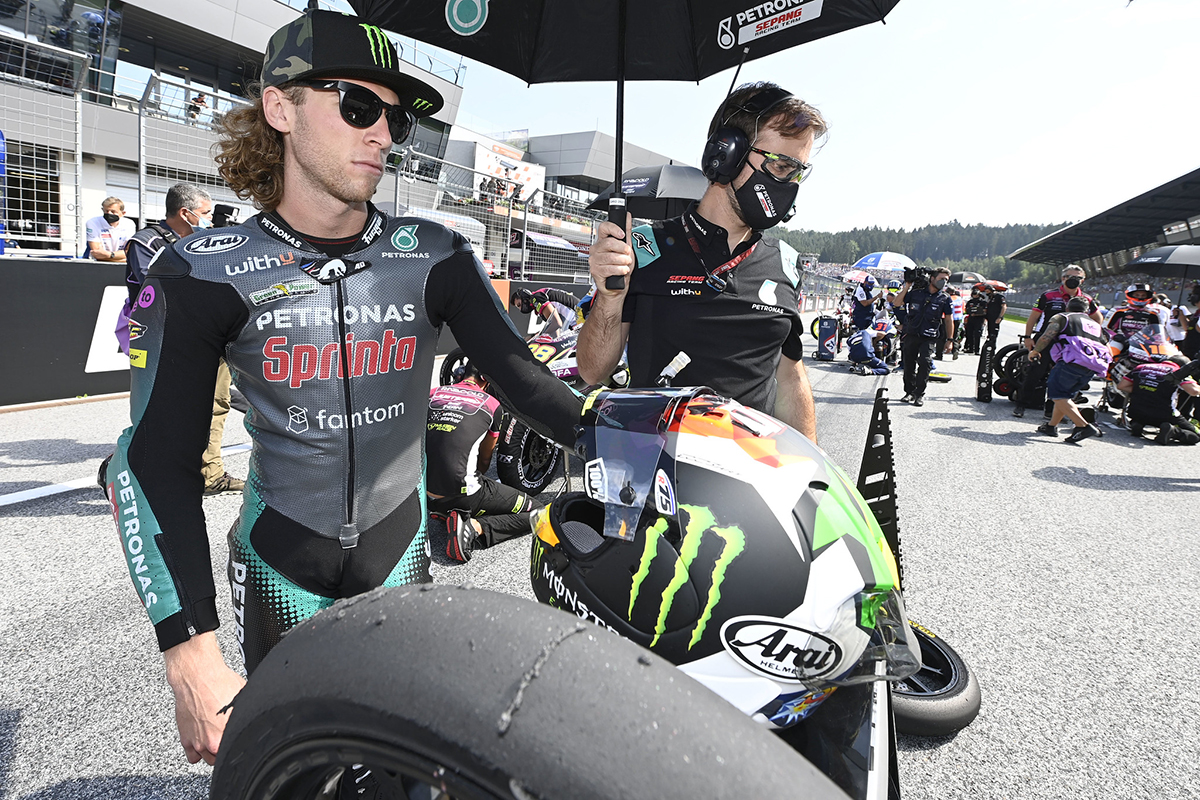
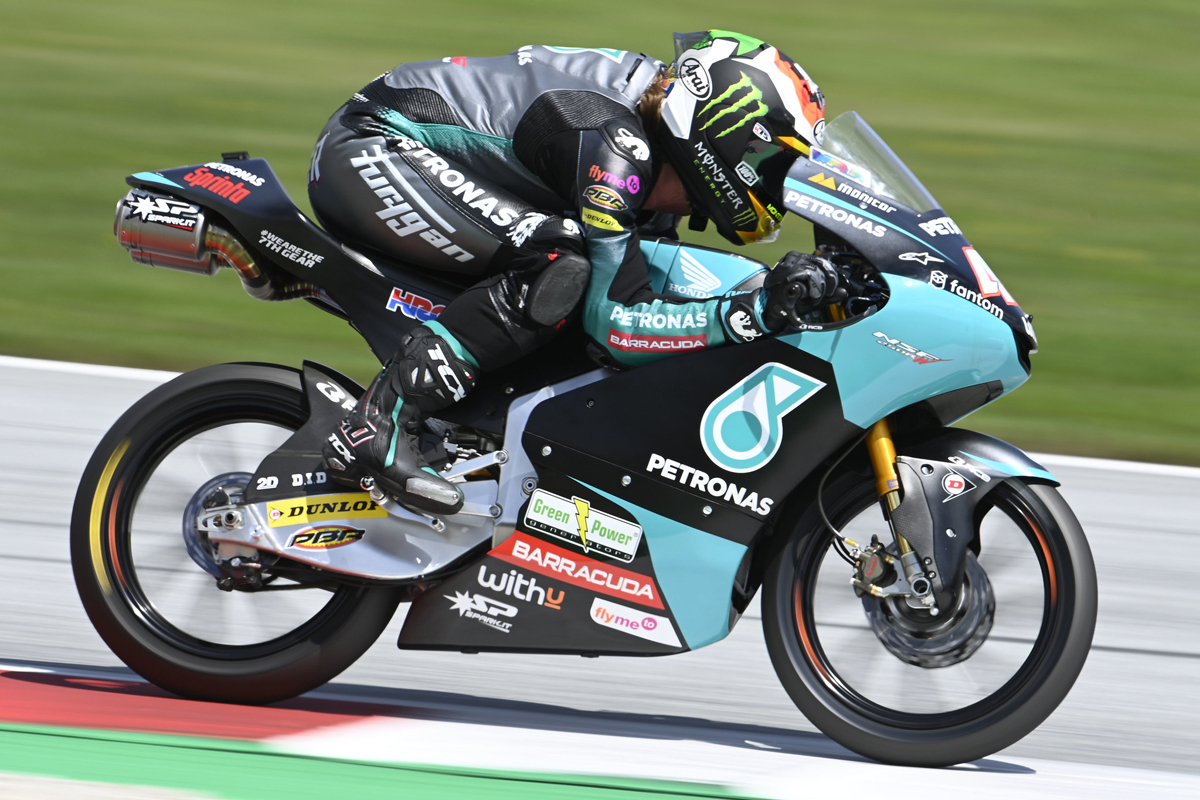
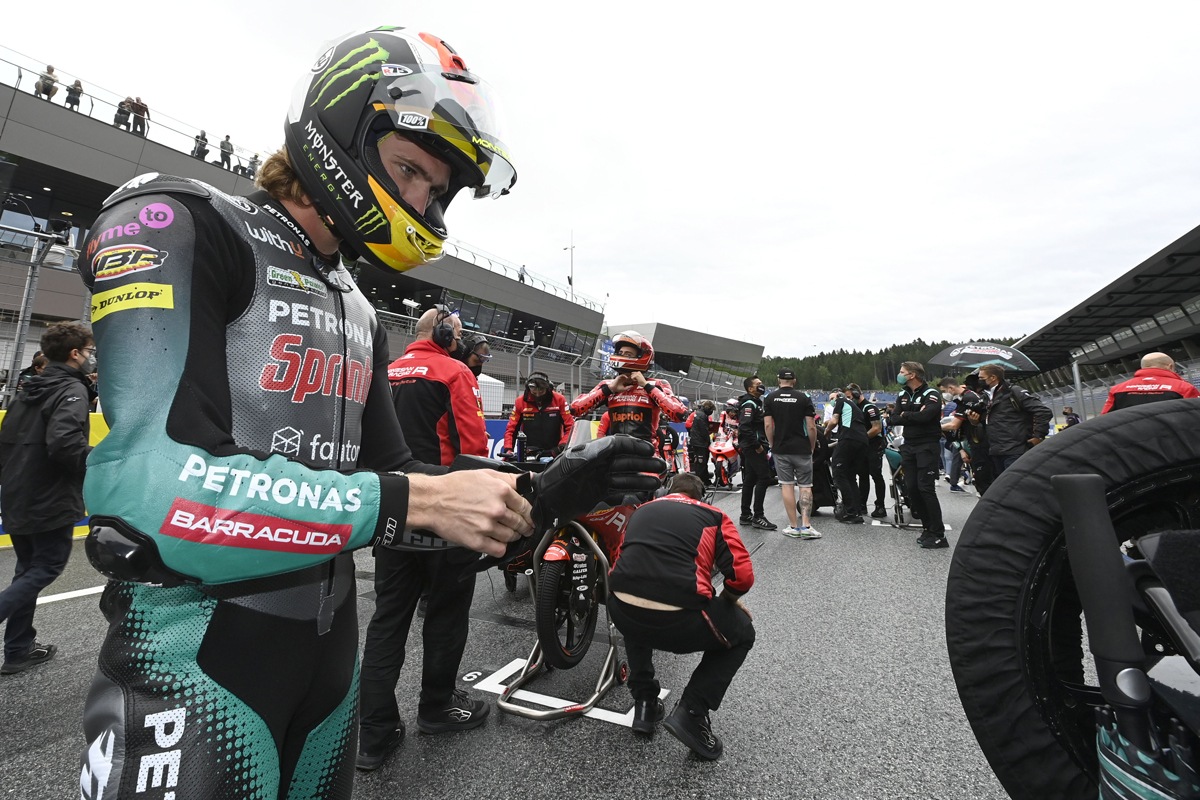
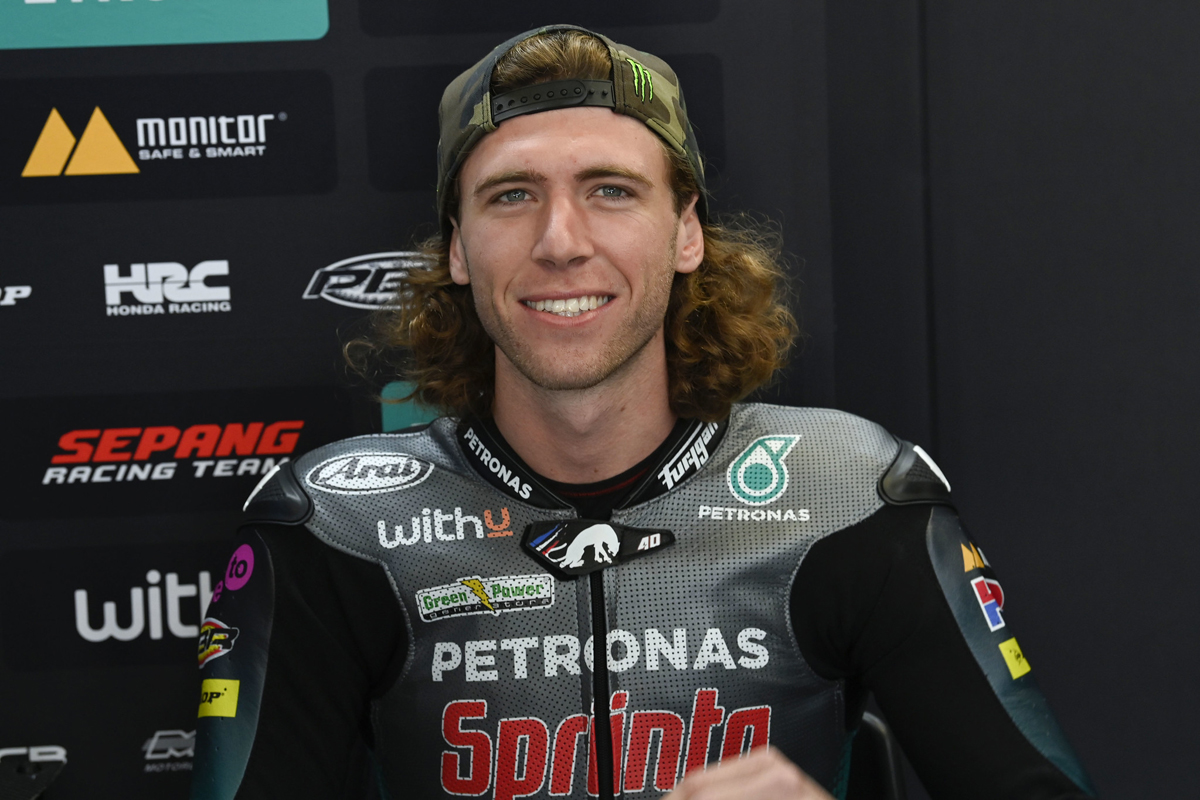
Darryn Binder dominated qualifying in Aragon, taking his first pole since the Qatar GP. He started out his weekend with a top three in FP3, setting the third-fastest time (1:58.152) on his final lap, securing him a place in Q2. Our fellow South African continued to keep his pace in qualifying and immediately took his spot at the top of the timesheets with a 1:57.724 lap time. Darryn’s lap was just unmatchable and this meant he would claim his second pole position of the year.
Photo credit: Petronas SRT
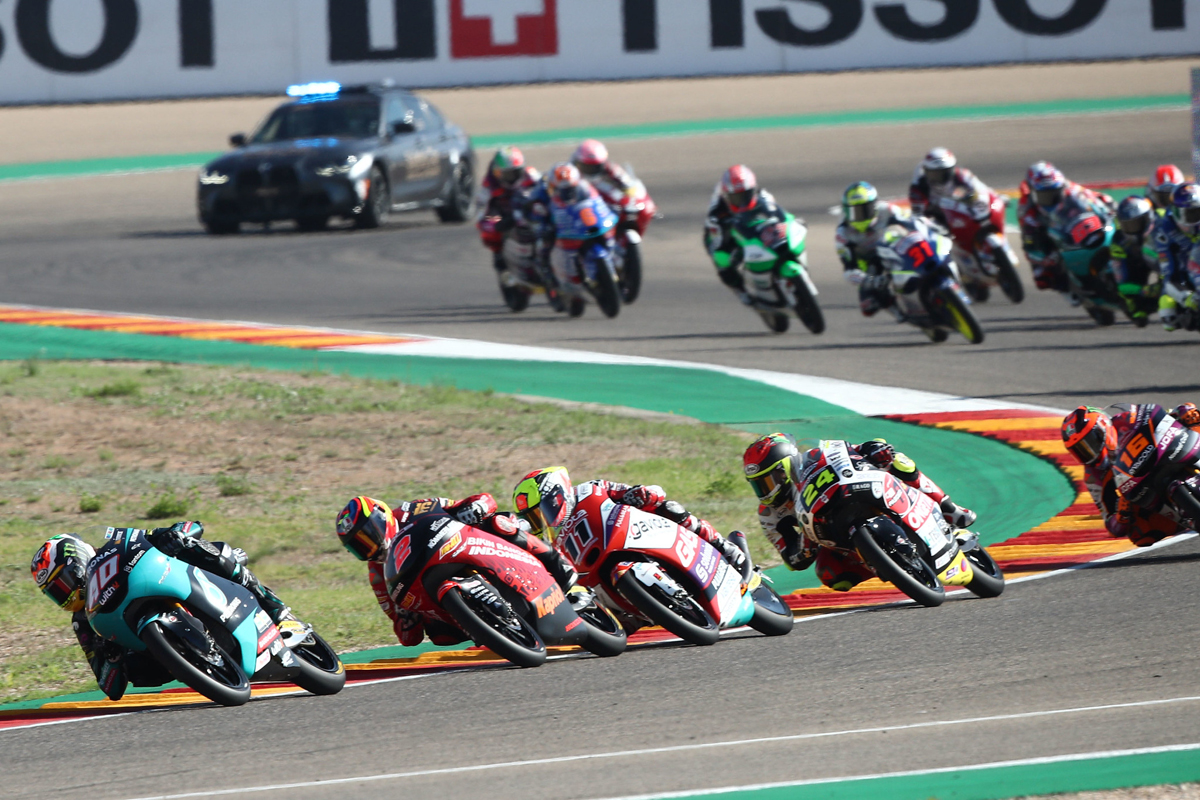
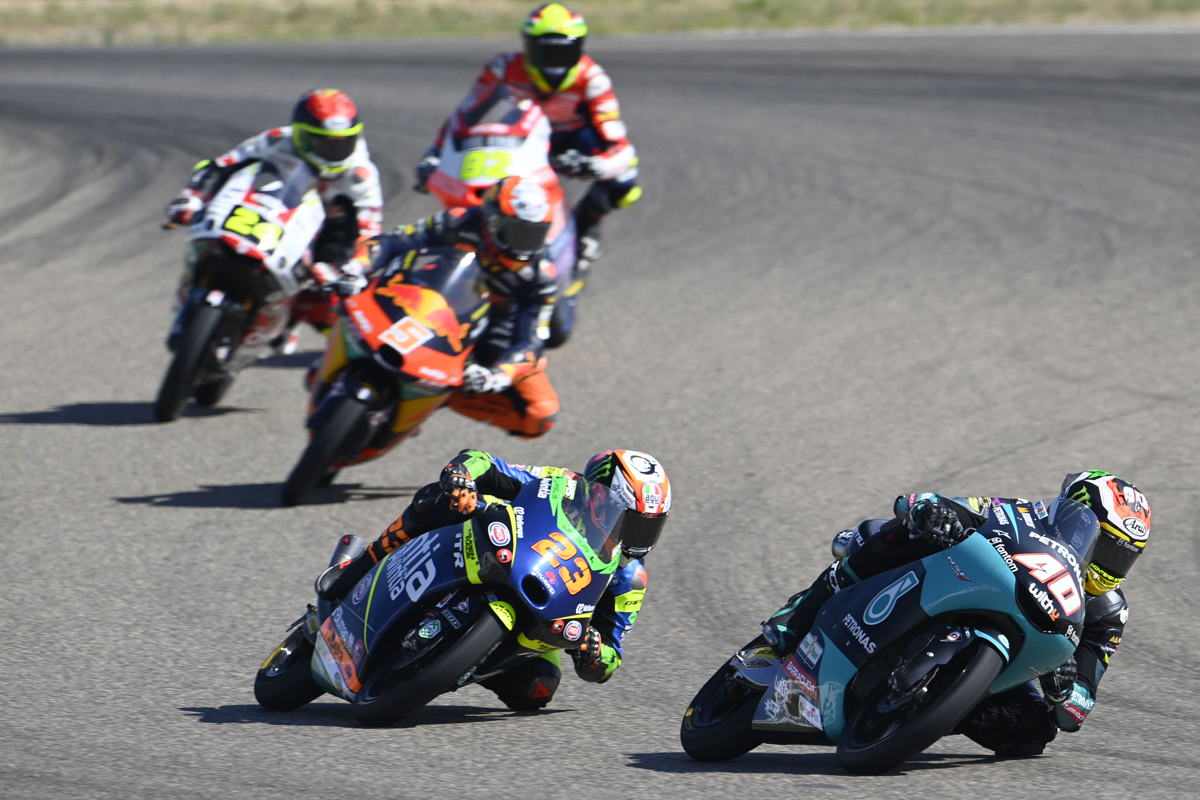
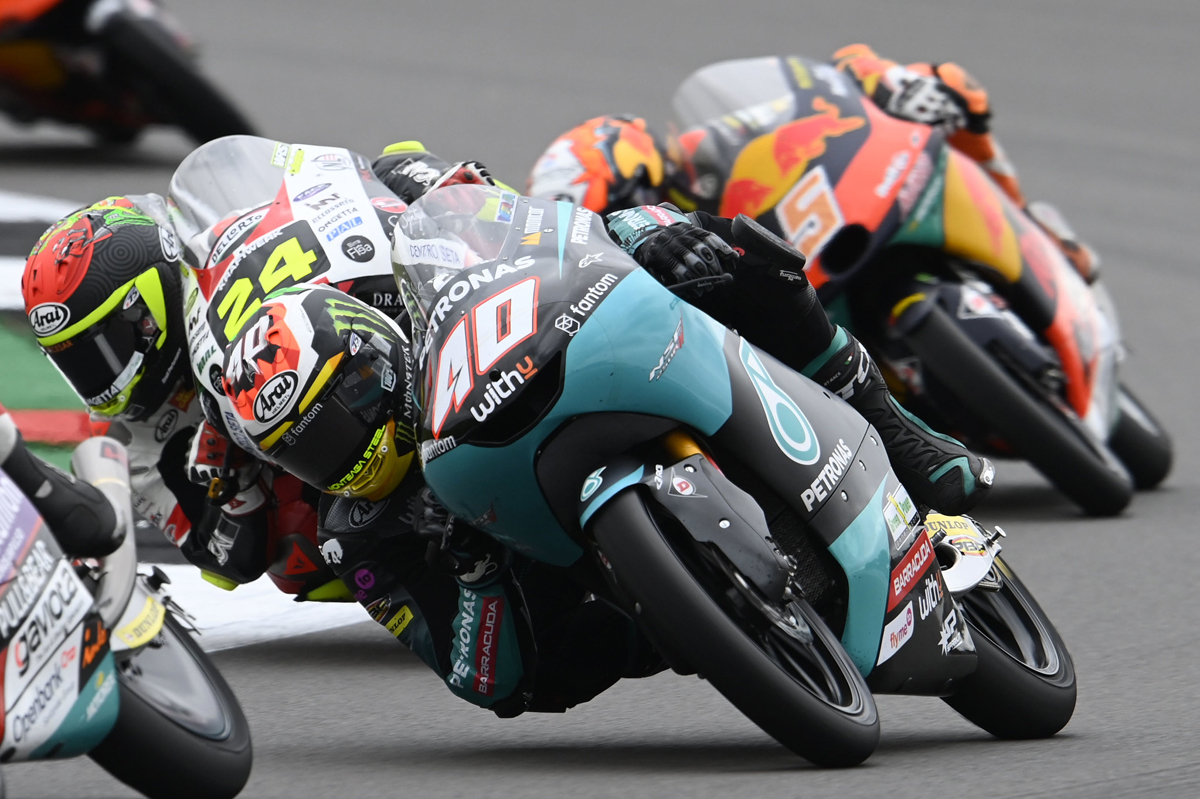
Sunday saw Binder make a perfect launch off the line from pole and take the lead through the opening corners. As the laps started to trickle down Darryn found himself in a mid-pack scrap, which started to slowly force him down the roster.
Photo credit: Petronas SRT
Despite finding himself falling back to ninth, Darryn kept himself inside the leading group for the majority of the race. Unfortunately, he lost contact with them in the closing stages and ultimately ended the race in seventh. He maintains sixth overall in the championship standings with 104 points.
Photo credit: Petronas SRT
DB: “It was a really difficult race and I’m not sure what changed between yesterday and today, but we were missing some speed. I’m not happy with that or the result, so the team and I will have to look at what happened and why. It’s disappointing because I did feel really strong ahead of it; I was able to catch up in the corners but just couldn’t stay with the other riders in the straight. I need to look at the positives because overall it has been a good weekend and I’m really happy with how the weekend has gone, apart from the race.”
Photo credit: Petronas SRT
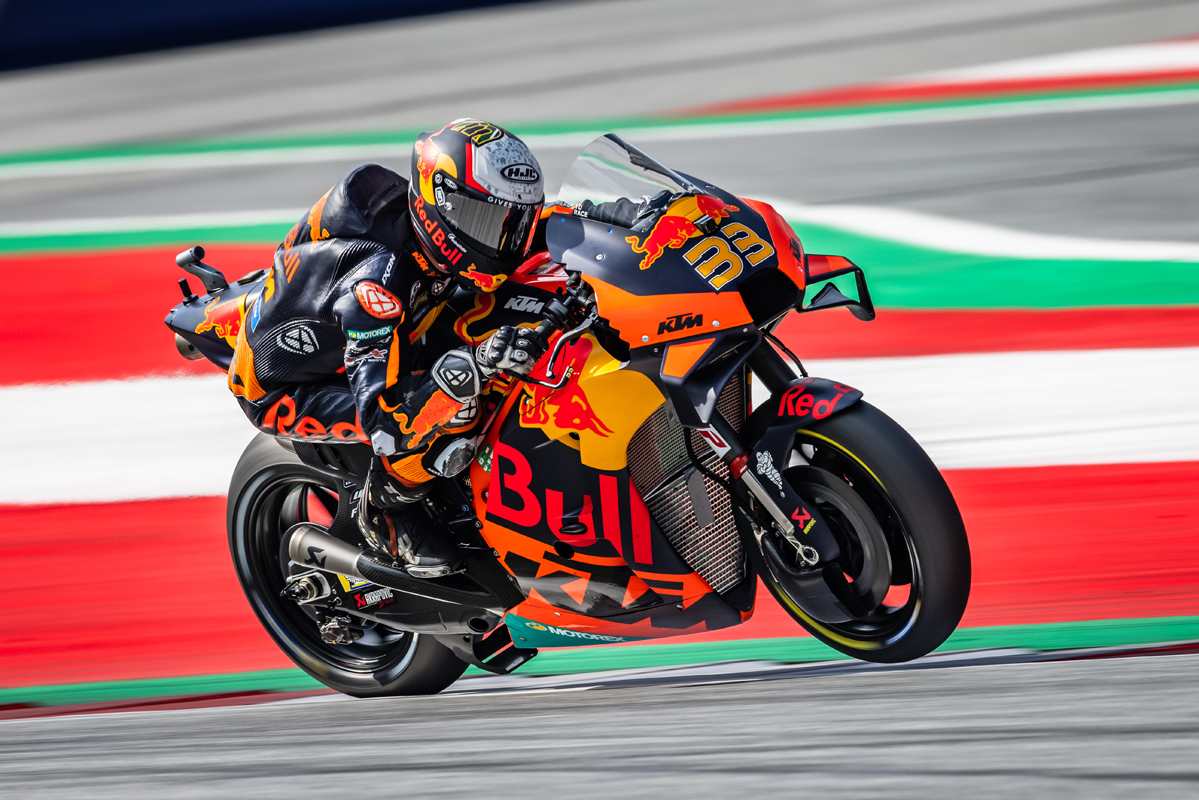
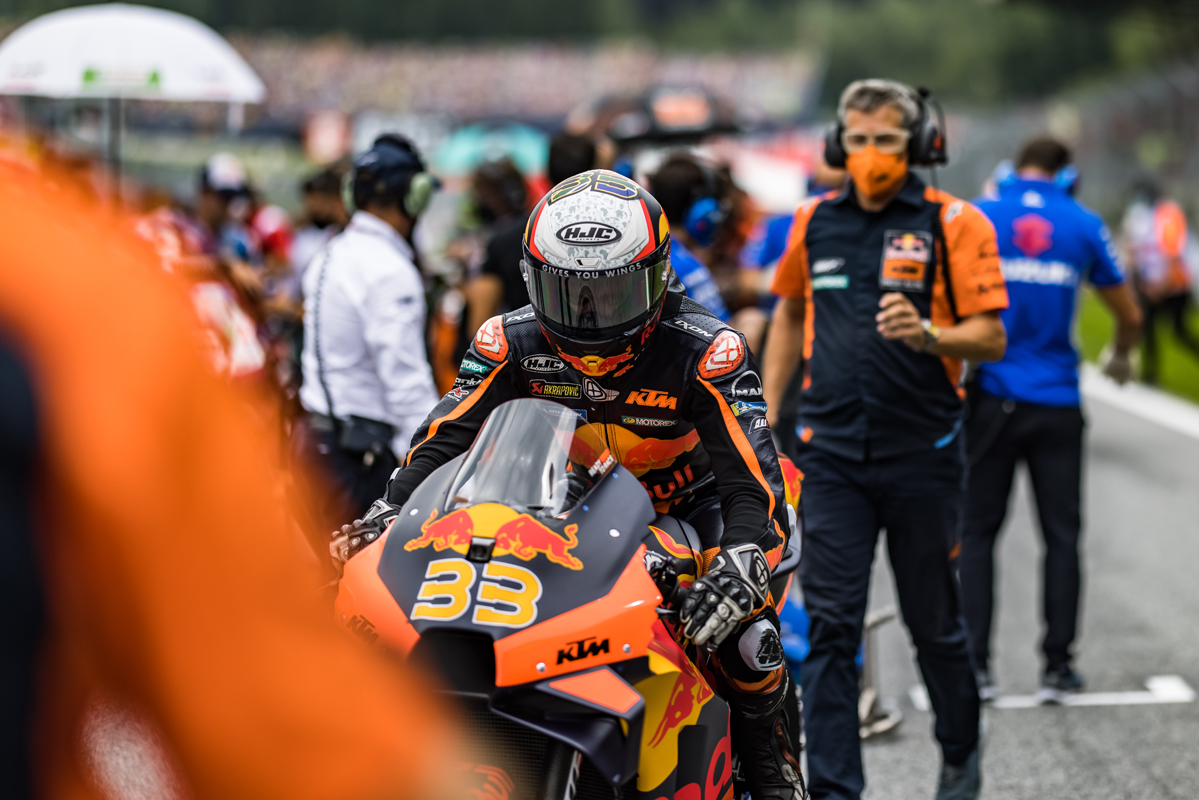
Brad Binder
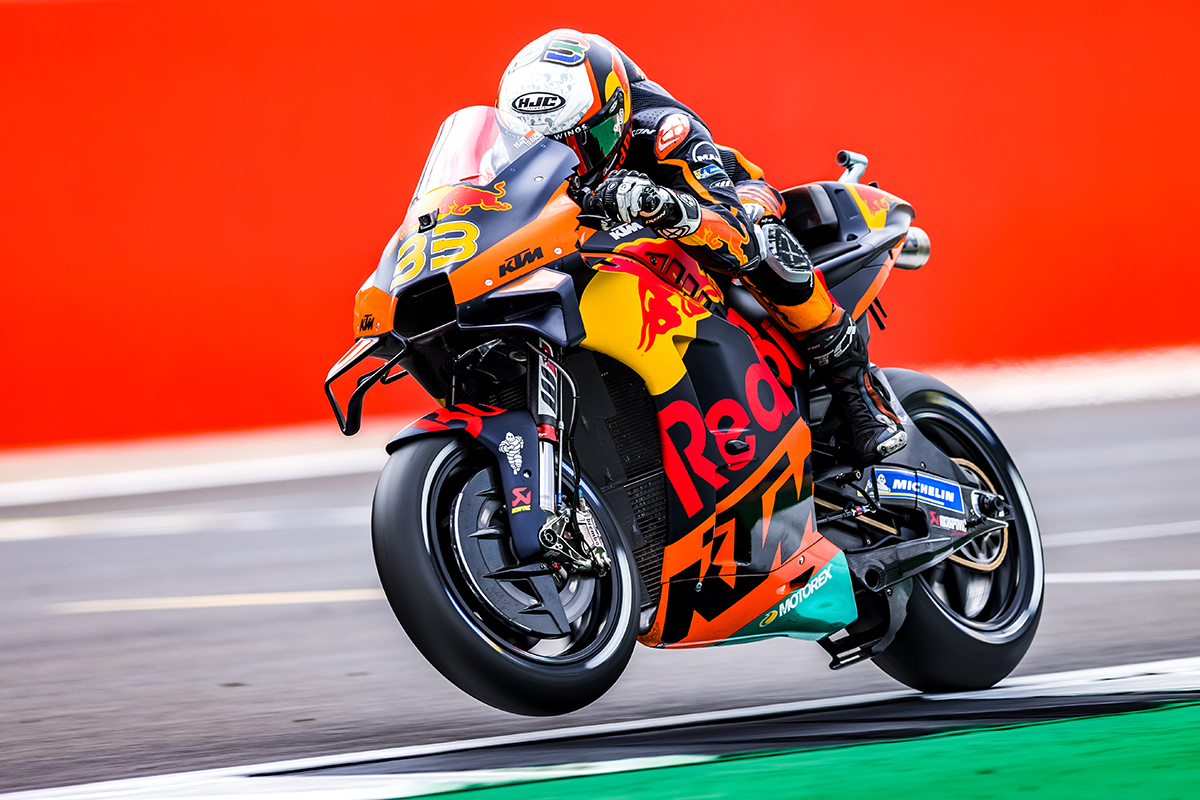
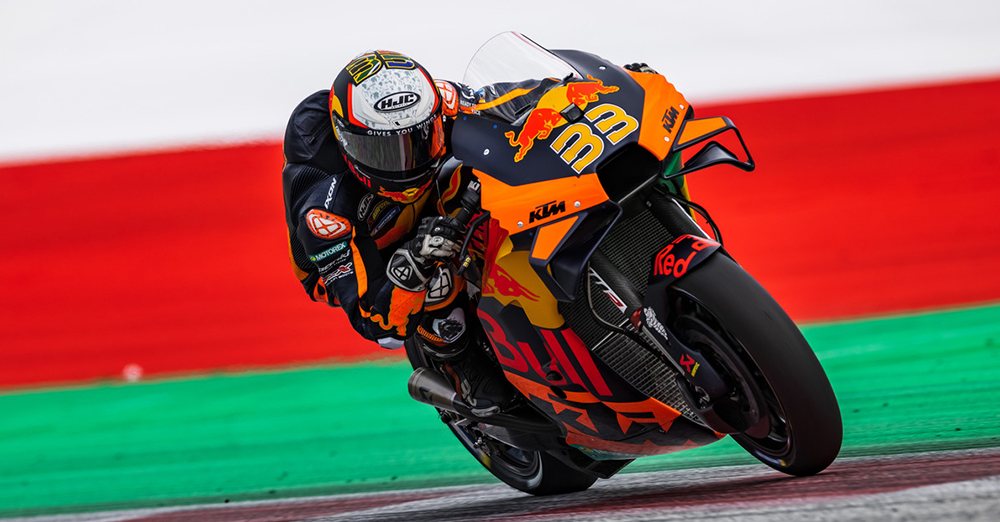
Brad Binder also showed some great pace like his younger brother and finished Saturdays qualifying as the quickest KTM RC16 rider on the day—11 riders were split by just 1.1 seconds. Brad grabbed second place in Q1 and transferred into Q2 for the second meeting in succession. Binder headed into Q2 with a massive disadvantage having used the best options from his tyre allocation and could not push to the maximum, which resulted in him qualifying 12th overall.
Photo credit: KTM
Sunday saw all the premier class riders line up on the grid with soft Michelin rear tyres…
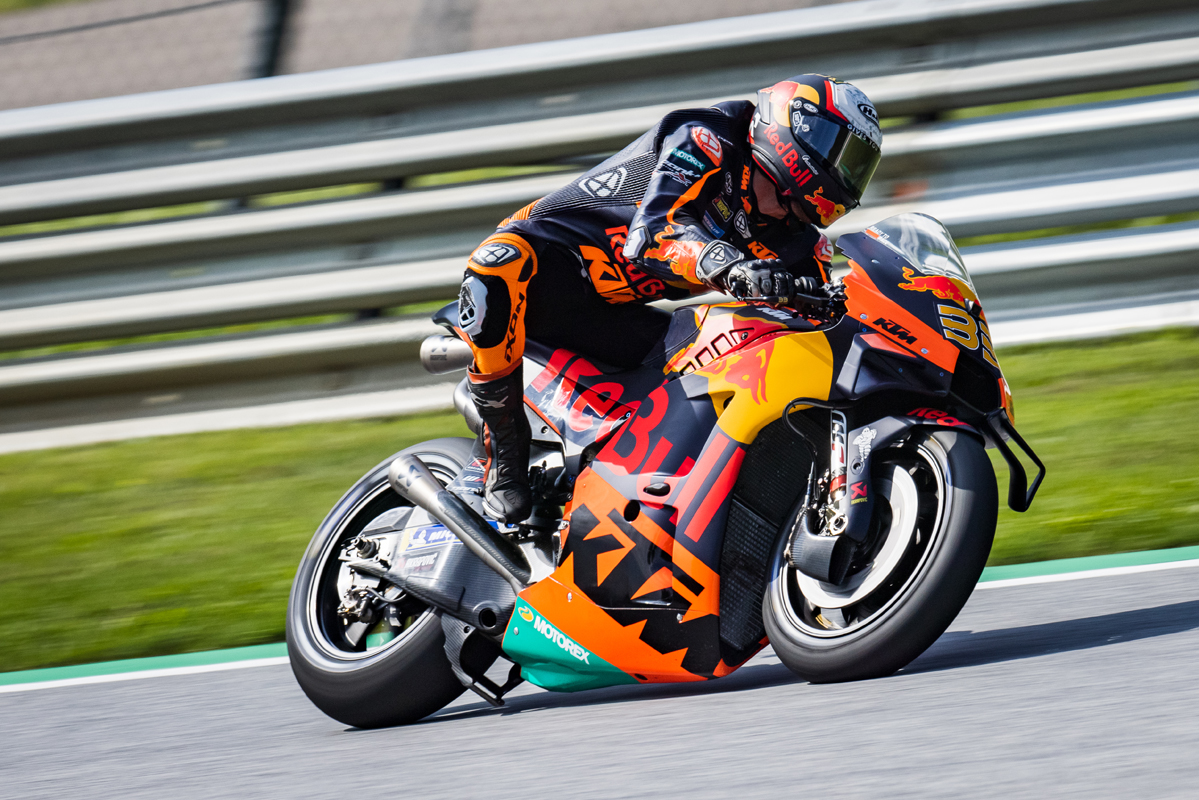
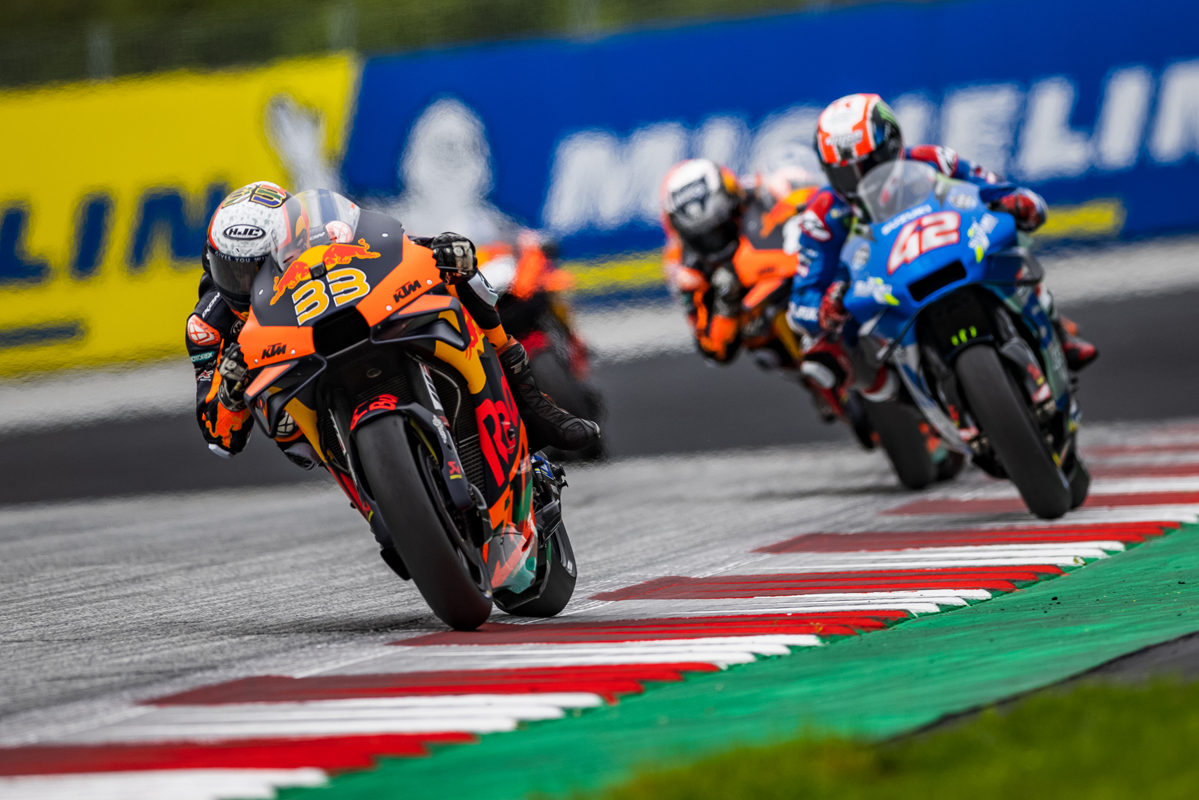
Binder made a great launch and hovered his front wheel from 12th place on the grid straight into the exhaust stream of Tech3 KTM Factory Racing’s Iker Lecuona. Both riders circulated together in a dispute for 7th and ahead of championship leader Fabio Quartararo.
Photo credit: KTM
Lecuona dropped down to 10th by running wide at turn 8 and Binder had breathing room to move up to 6th and then gazed at a large gap to 5th. Well, Brad was pulling in 5th Marc Márquez was having an epic battle with pole setter Francesco Bagnaia for first. Binder negotiated the last three laps with fading rear grip and took 7th across the flag. He maintains sixth place in the championship standings with 117 points.
Photo credit: KTM
BB: “It was a tough race for us, really difficult, I tried my absolute best at the beginning not to destroy my rear tyre so that I would have something left for the end. Even though I nursed the left-hand side really well it gave me a very hard time on the last few laps. I need to say a huge thank you to the team because they worked so hard this weekend. The bike is working well, we just need a little bit more to be a bit more competitive. We are struggling more than we’d like to right now but it’s not for a lack of effort, that’s for sure. If we keep working then we are going to get there.”
Photo credit: KTM
There will be no rest for the Binders, as they now head to Misano for the Gran Premio di San Marino e della Riviera di Rimini (17-19 September).
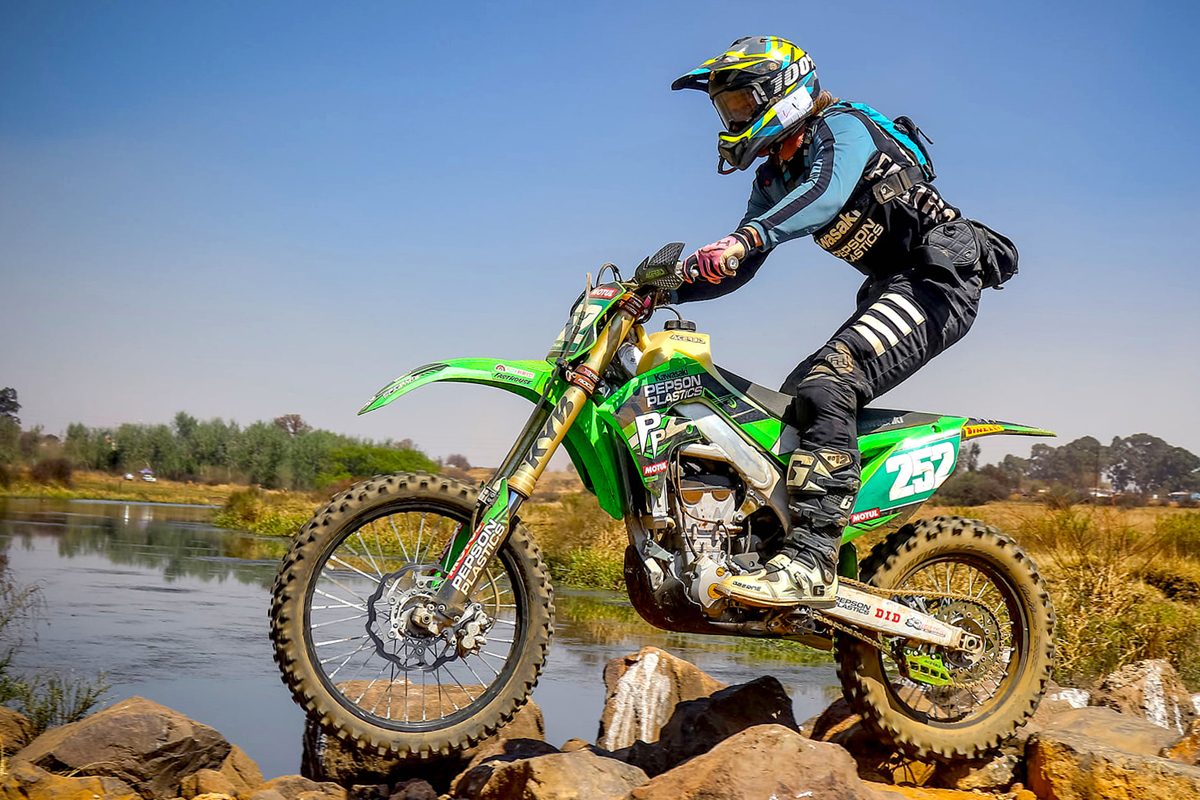
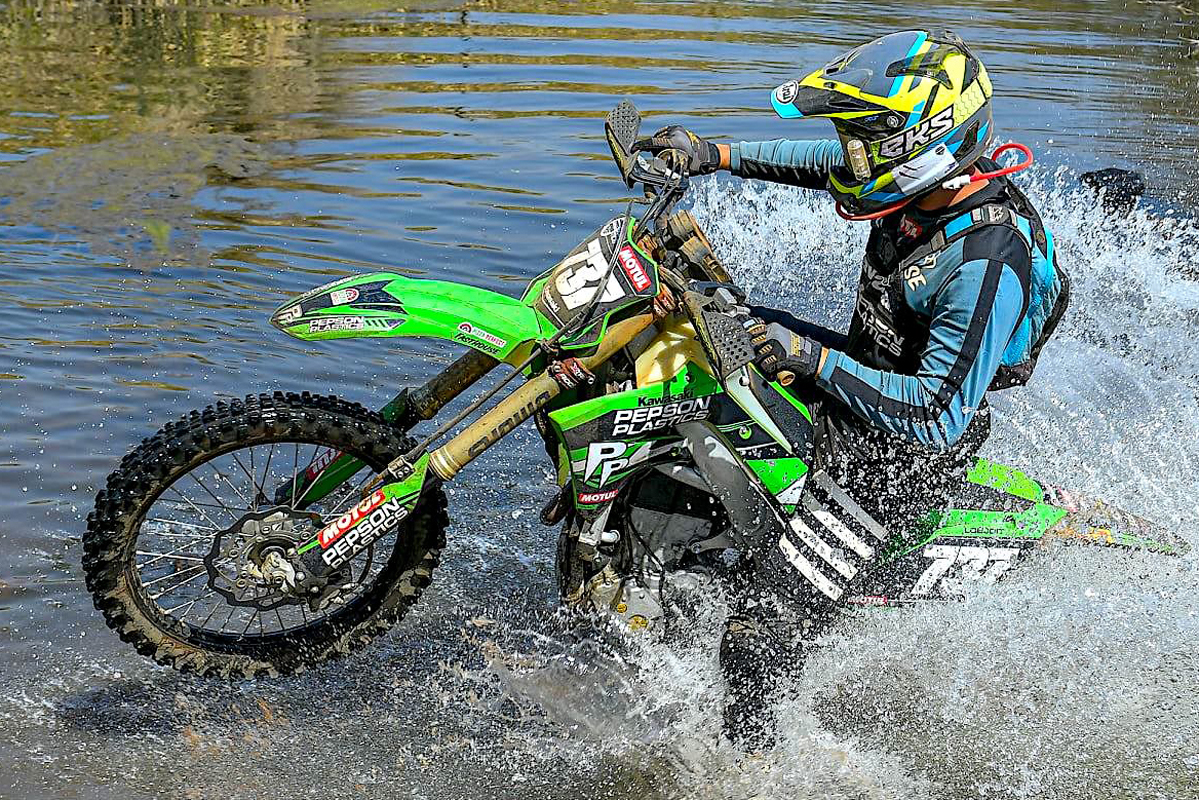
Newly returned Kawasaki won again in its fourth race since its SA National Cross Country Motorcycle Championship comeback. Mike Pentecost’s Franchise Company CIT machine led Pepson Plastics Motul man d’Artagnan Lobjoit to a KX450X open class OR1 1-2 at Delmas on Saturday on a good day all round for Kawasaki. KX250 trio Franchise Co CIT man Deon du Toit rode to second in Masters, and Pepson Motul trio Kyle McKenzie to third in OR3, Lee Thompson fourth in Seniors and Craig Alcock has a positive OR1 outing.
“Kawasaki only returned to the South African National Cross Country Championship this season and we have already won twice,” Pepson Plastics Kawasaki Motul Racing team principal Iain Pepper explained. “Overall winner last time out Mike Pentecost repeated his OR1 victory at a dusty Delmas on Saturday and D’Artagnan Lobjoit made it a 1-2 on his Pepson Plastics Motul KX450X.
Photo credit: GXCC / www.motorsportmedia.co.za
“We had a great day all round — Deon du Toit, Kyle McKenzie and Lee Thompson all starred in their classes and Craig Alcock had a good run too. “Michael now shares the OR1 championship lead with Dart a close third, Deon is second in Masters and Kyle jumps up from ninth to fourth in OR3. “Our Pepson Plastics Kawasaki Motul Juniors – Clayton and Dylan Human, Jake Pretorius enjoyed another learning weekend “With one race left at Virginia Hills, we are fighting for championship wins in our first season back. “Bring it on!”
“We had a fantastic day at Delmas,” D’Artagnan Lobjoit admitted. “Second in OR2 and a Kawasaki 1-2 at that, keeps me third in that championship chase and fourth overall. “And it’s looking even better in the Gauteng Cross Country Championship. “It was so dusty and tough with some tricky rocky sections too, but my Pepson Plastics Kawasaki Motul KX450X ran like a train all the way. “Thanks to my incredible team for all the support — this is proving to be a special season!”
Photo credit: GXCC / www.motorsportmedia.co.za
“What a fun but dusty day at the fourth round of the National Cross Country series in Delmas,” Kyle McKenzie explained. “I never made the start I was looking for, but my Pepson Plastics Kawasaki Motul KX250X felt amazing and I was super happy with my set-up. “That helped me to make up some positions to end up third in the national OR3 class and second on the Gauteng GXCC regional results. “Massive thanks to everyone who helped in the pits and before the race!”
“That’s more like it!” Masters rider Lee Thompson smiled. “I’ve had a few tough breaks so far this season and I needed a bit of luck, so I’m happy to bring it home fourth in Delmas. “It was dry and dusty out there, which always makes it more difficult, but my Pepson Plastics Kawasaki Motul KX250X ran a treat and I scored my best national result of the season so far. “Thanks to my team — it is a special privilege to be part of it.”
Photo credit: GXCC / www.motorsportmedia.co.za
Pepson Plastics Kawasaki Motul returns to SA National Cross Country Motorcycle Championship at Virginia Hills in KwaZulu Natal for the season finale on 22 October.
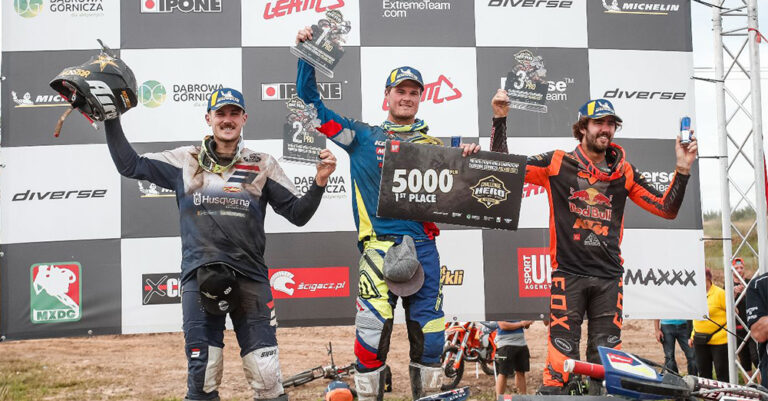
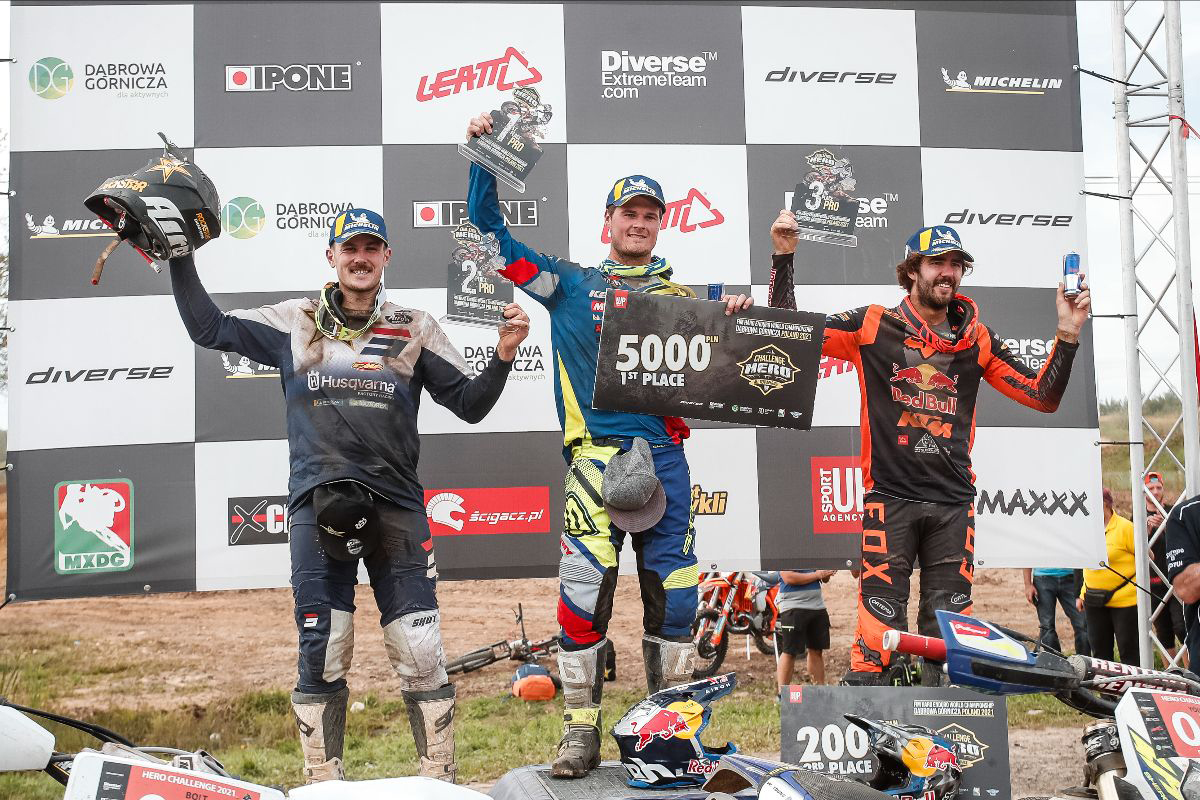
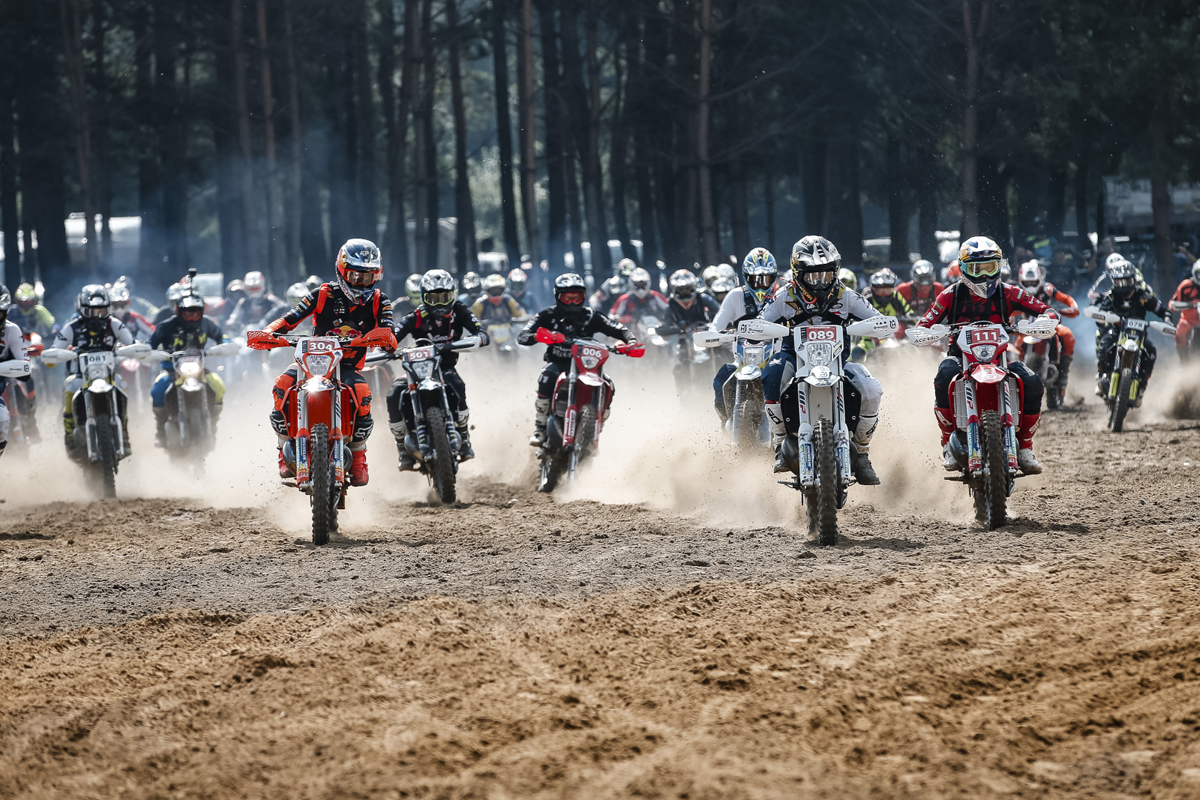
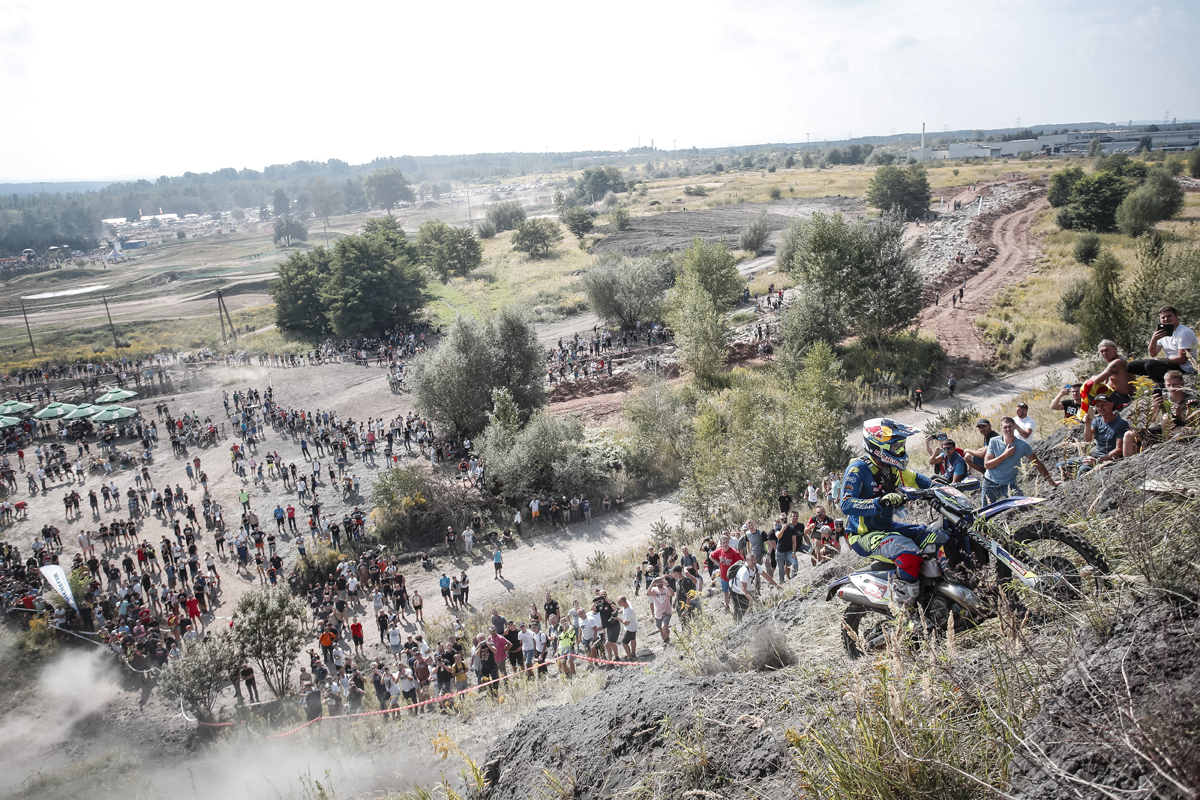
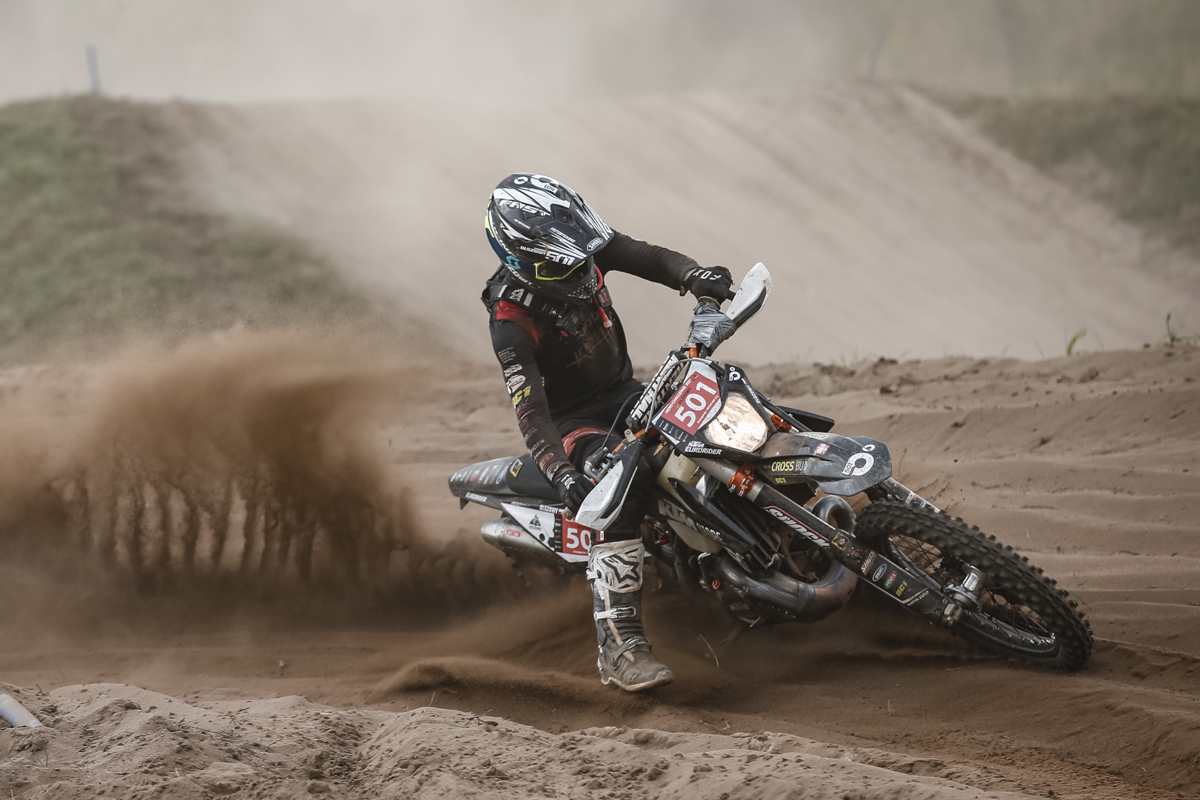
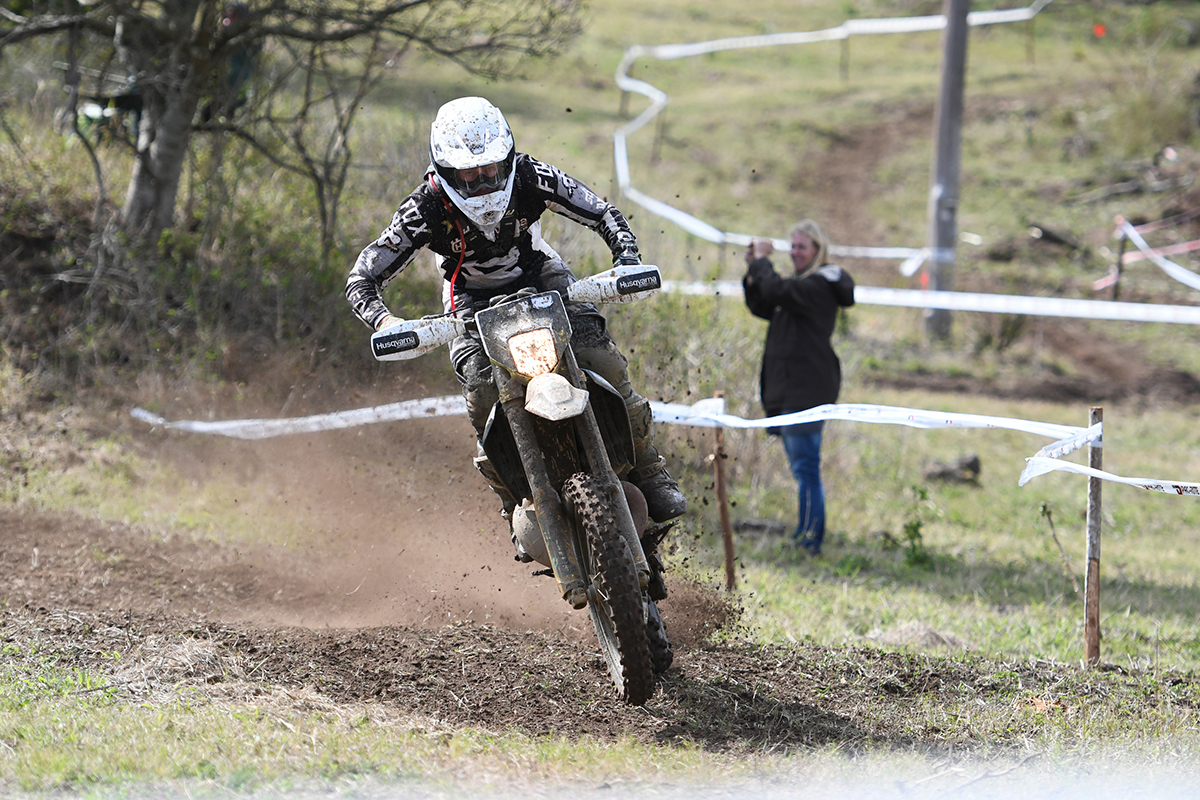
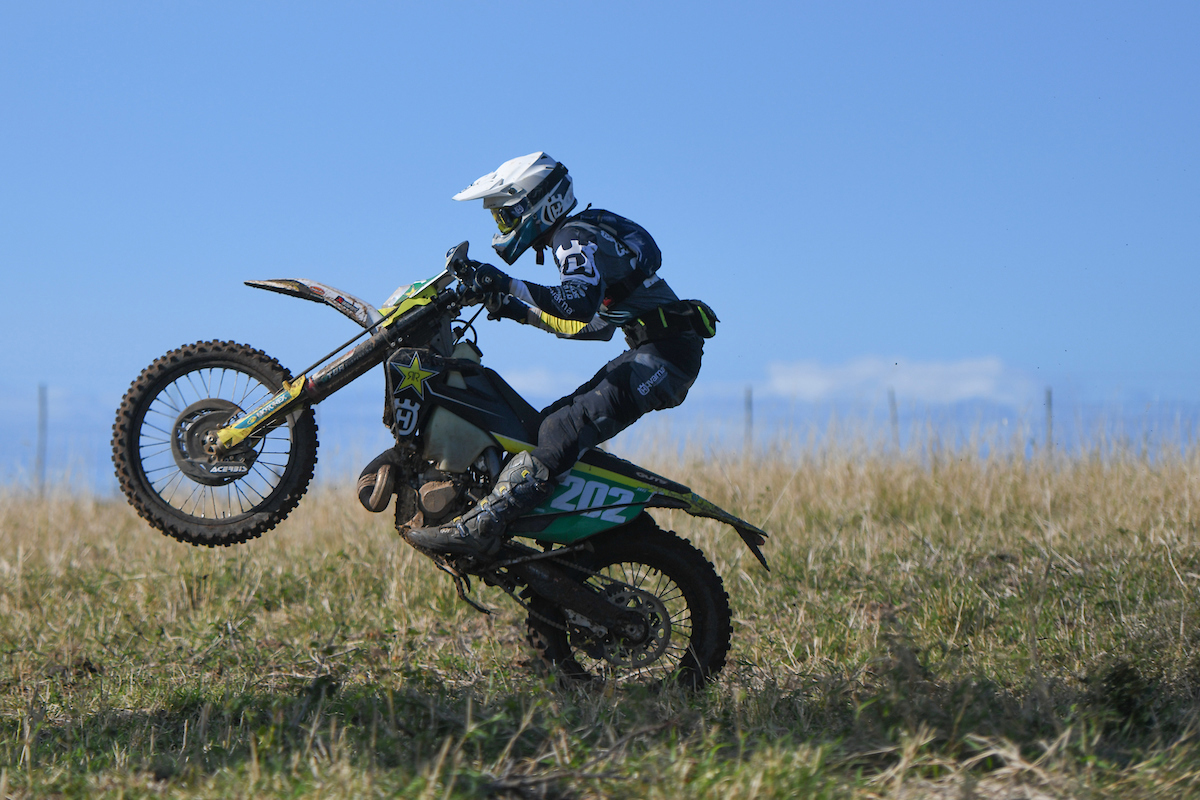
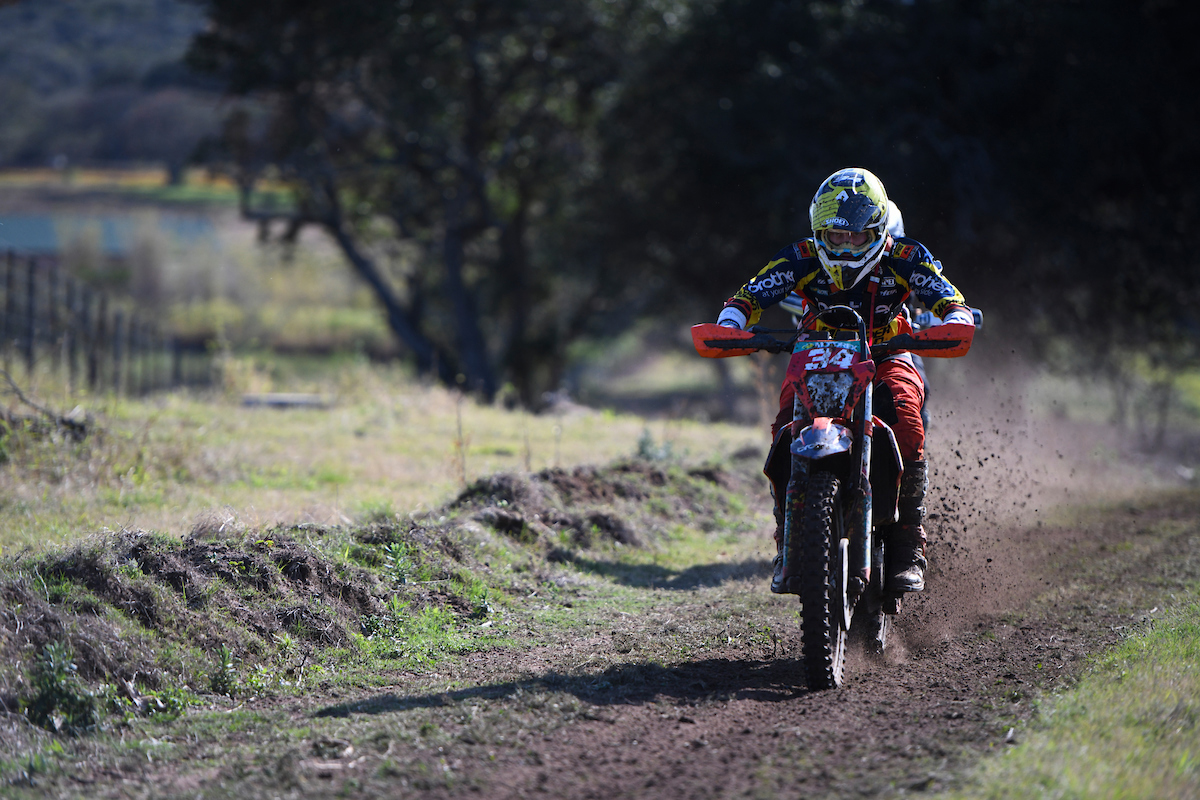
Making his mark in the sandy terrain of Dąbrowa Górnicza, Young led home Rockstar Energy Husqvarna Factory Racing’s Billy Bolt, with Red Bull KTM Factory Racing’s Manuel Lettenbichler finishing in close contention for third. Securing the runner-up result, Bolt becomes the new championship leader with two rounds remaining.
Leading into Sunday’s feature event, it was home favourite Dominik Olszowy (KTM) who topped the Saturday morning qualifier, before Husqvarna mounted Alfredo Gomez won the evening SuperEnduro in downtown Dąbrowa Górnicza.
Image source: iRideHardEnduro.com
That win from Gomez earned himself pole position for the three-hour race. But when the flag dropped, it was Lettenbichler who took the holeshot ahead of Gomez to claim an early lead in the race. As the 120 riders blasted off the start line, all the heavy hitters were quick to fight their way to the front.
Lettenbichler, Bolt, Olszowy, Gomez, and Jonny Walker (Beta) were soon joined by Young. A gamble by the South African to pit one lap later than his rivals paid off and the Sherco rider was soon out front. Clearly enjoying the rough conditions, Young put in a clinical second half of the race to claim victory at round six.
Image source: iRideHardEnduro.com
Bolt gave chase to Young but wasn’t quite able to match his pace as the track deteriorated. Knowing that by keeping ahead of Lettenbichler he would become the new championship leader, Bolt stayed on script and steered his Husqvarna home for the runner-up result. Lettenbichler came on strong during the final laps but wasn’t able to bridge the gap to Bolt and had to be content with third.
For Olszowy, hopes of a home podium didn’t quite materialise. Despite showing great pace, a broken clutch perch forced him to make an unscheduled pitstop to repair the damage. Digging deep, he ended his race just over 50 seconds behind Lettenbichler for fourth. Sherco’s Mario Roman completed the top five.
Image source: iRideHardEnduro.com
The FIM Hard Enduro World Championship now heads to Spain for the seventh and penultimate stop of the series, Hixpania Hard Enduro on October 1-3.
Wade Young (Sherco): “I’m so happy to pull off the win. I felt really comfortable out there today. My start wasn’t ideal – I got a bit boxed off – but I stayed relaxed because I knew my pace was good. Once I got with the guys, I settled in. I gambled on riding an extra lap before pitting and that gained me some time too. In the second half my flow was good. I was hitting my lines, putting in my times and took it home for the win. It’s been an awesome day.”
Billy Bolt (Husqvarna): “It was physical out there for the three hours, I don’t have much left in the tank now! I would have loved to take the win, but second place is great for the championship and now puts me in the lead by one point. I was battling with Wade at about mid distance. But I needed an extra pit stop and lost some ground. A crash then saw me lose sight of him, so I just tried to play it safe. I didn’t want to make any more mistakes and lose a position to Mani either. Hats off to Wade though, he deserved the win today.”
Manuel Lettenbichler (KTM): “I was stoked to get the holeshot. I felt pretty strong until about the fifth lap, but then began to fade a little. It was so tiring. My race was good. Towards the end I managed to get a bit closer to Billy, so I made a push on. But by that stage when I tried to up my pace I started making mistakes and wasn’t able to get on his wheel to battle. It’s been good to stay on the podium every round now and although I lost the points lead, there’s only one point in it, so it’s still all to play for.”
Results: Rnd6 – HERO Challenge, Main Race
1. Wade Young (Sherco) 7 laps, 3:03:01
2. Billy Bolt (Husqvarna) 7 laps, 3:06:48
3. Manuel Lettenbichler (KTM) 7 laps, 3:07:09
4. Dominik Olszowy (KTM) 7 laps, 3:08:01
5. Mario Roman (Sherco) 7 laps, 3:08:31
6. Jonny Walker (Beta) 7 laps, 3:13:51
7. Alfredo Gomez (Husqvarna) 7 laps, 3:14:38
8. Travis Teasdale (GASGAS) 7 laps, 3:16:35
9. Michael Walkner (GASGAS) 7 laps, 3:17:35
10. William Hoare (GASGAS) 7 laps, 3:20:52
FIM Hard Enduro World Championship standings (after 6 of 8 rounds)
1. Billy Bolt (Husqvarna) 70pts
2. Manuel Lettenbichler (KTM) 69pts 3. Wade Young (Sherco) 60pts
4. Mario Roman (Sherco) 48pts
5. Jonny Walker (Beta) 44pts
6. Alfredo Gomez (Husqvarna) 33pts
7. Michael Walkner (GASGAS) 28pts
8. Taddy Blazusiak (GASGAS) 26pts
9. Teodor Kabakchiev (Husqvarna) 21pts
10. Dominik Olszowy (KTM) 21pts
2021 FIM Hard Enduro World Championship calendar
Round 7: Hixpania Hard Enduro – Spain, October 1/2/3
Round 8: GetzenRodeo – Germany, October 29/30
It’s funny how some engine capacities go in and out of favour as the years go by. Back in the 1960s, 650 cc was the capacity for any self-respecting sporty bike, largely driven by the British and models from all the major manufacturers – Triumph, BSA, Matchless, AJS, Norton, etc.
By the 1970s, the 650s had all but disappeared, to be replaced by 750 cc engines. From there, the only way was up for sports bikes until the 600 cc capacity became popular once again in the mid-1990s for a new breed of baby superbikes from the likes of Honda (CBR600), Kawasaki (ZX-6R), Yamaha (YZF600) and Suzuki (GSX-R600). Even Triumph got in on the act with, first, the unloved TT600 and then the Daytona 600.
Photo credit: Bjorn Moreira / ZA Bikers
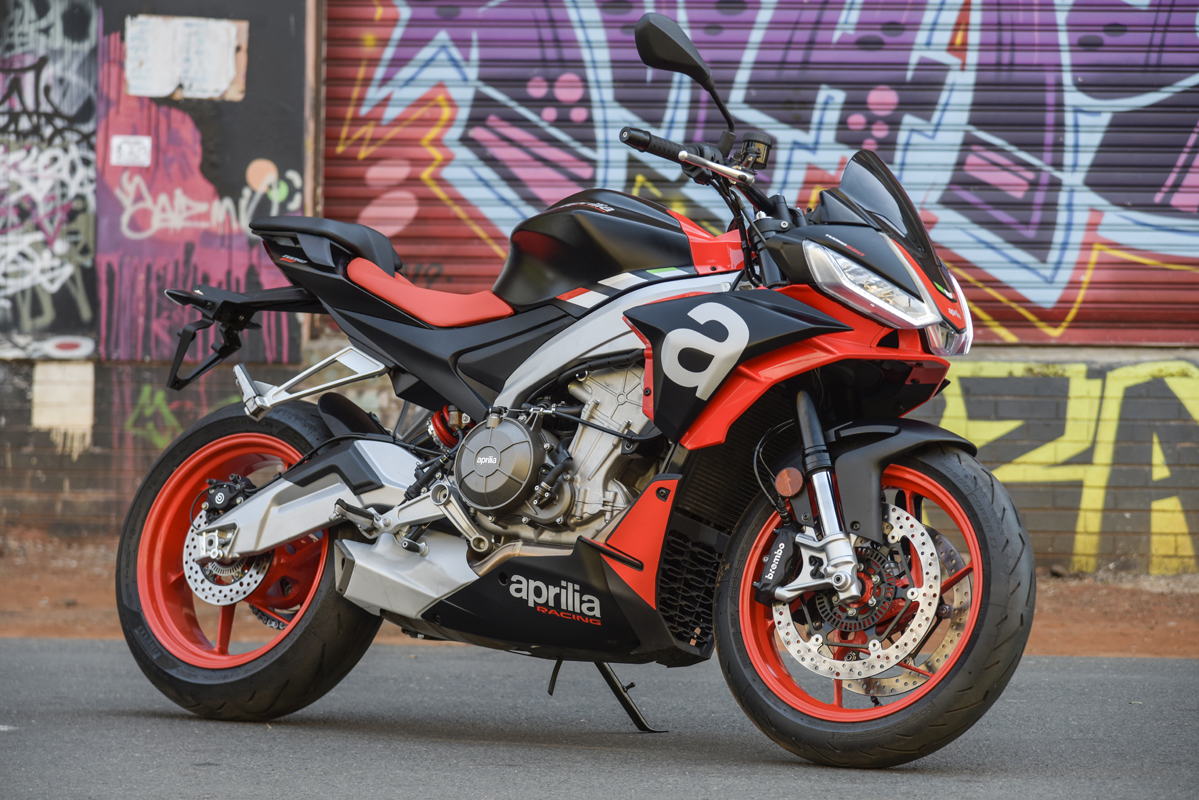
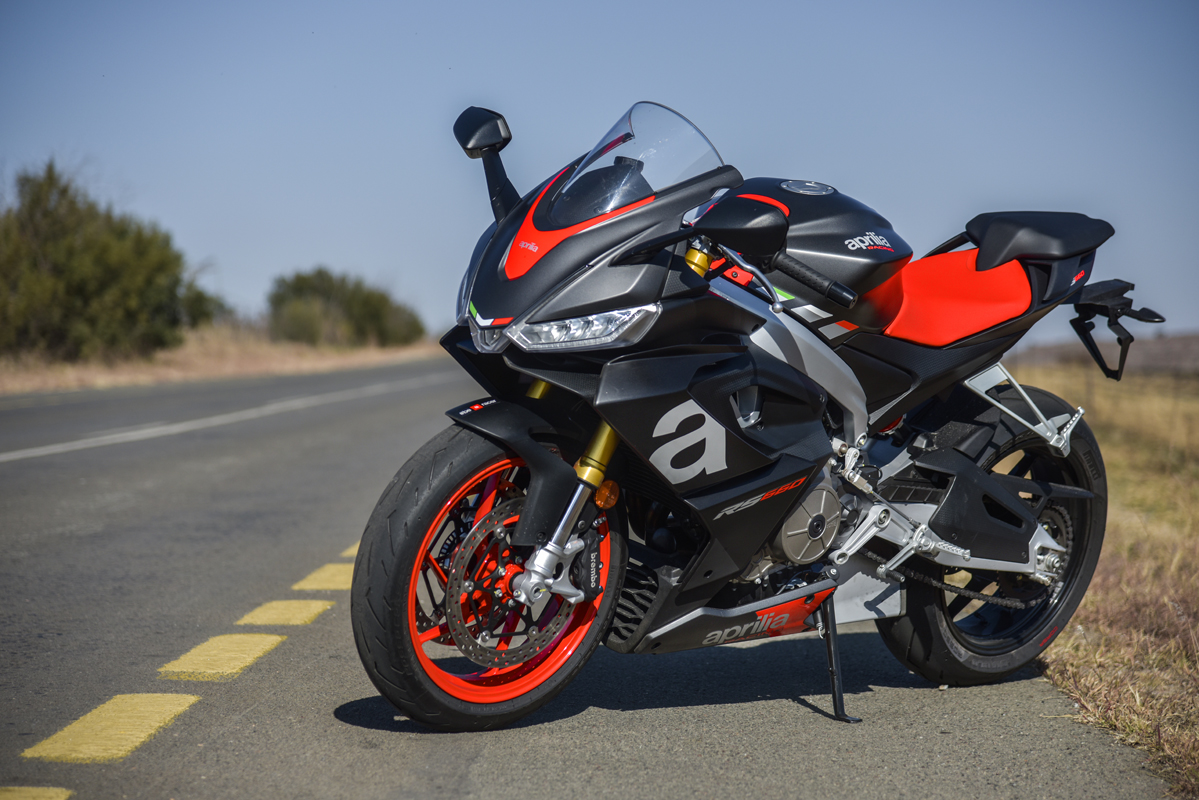
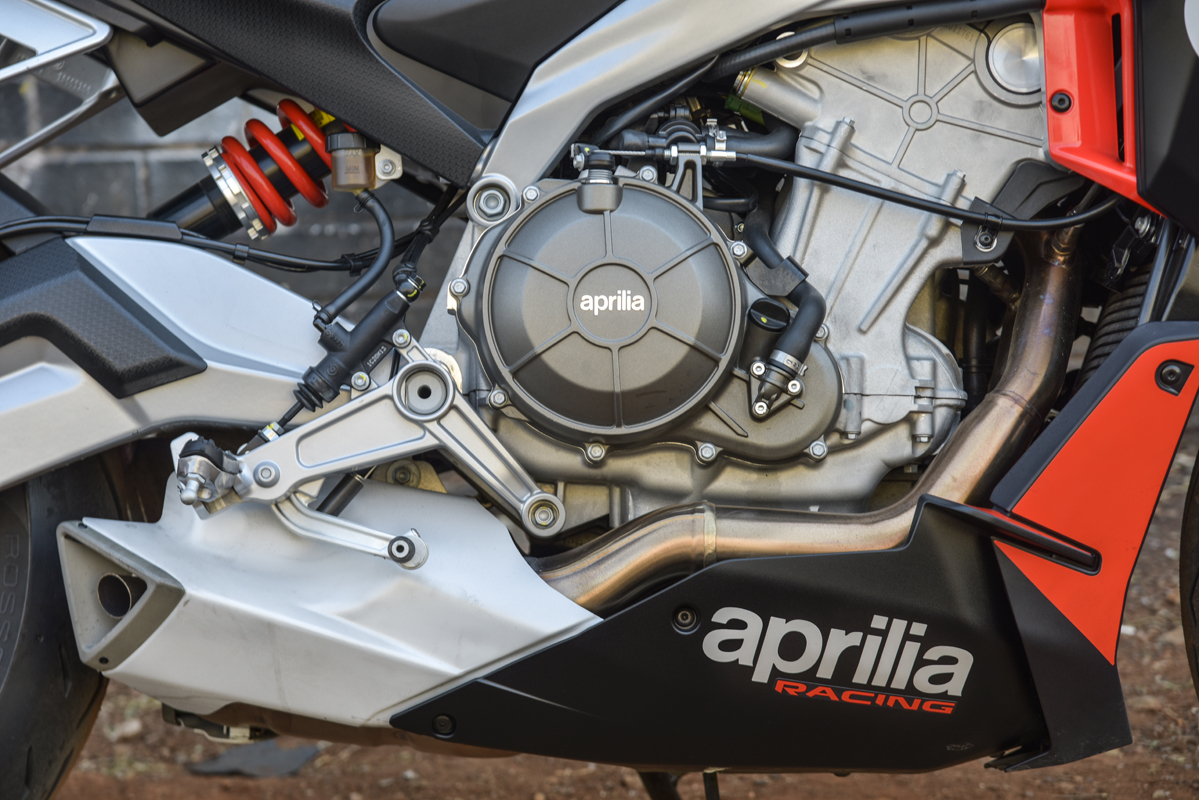
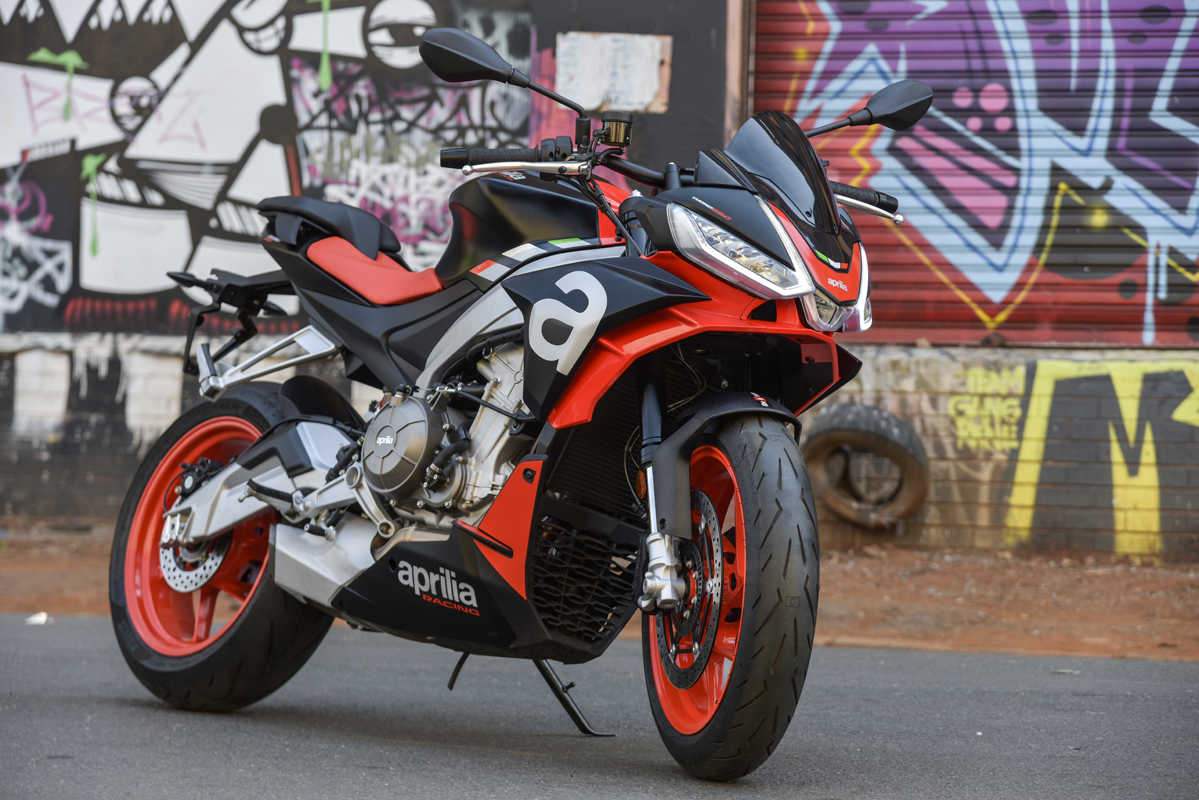
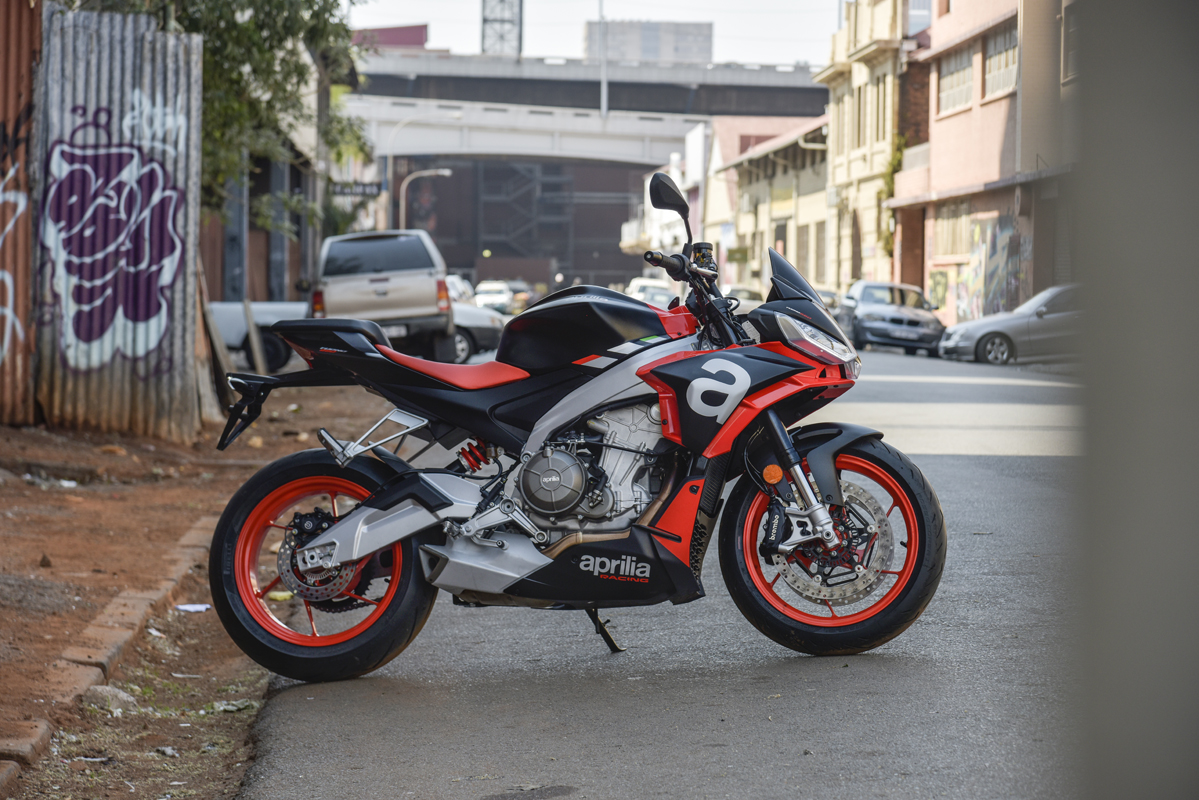
But that class largely disappeared, with few direct replacements. Then, all of a sudden, the mid-size capacity has started coming back into vogue, albeit in a slightly different form. The Yamaha MT-07 has given birth to the new R7 sports bike, with a capacity of 750 cc and Aprilia has also joined in the fray with the new 659 cc RS 660. Triumph recently brought out the Trident 660 but that was competing in a different segment, more in line with the MT-07.
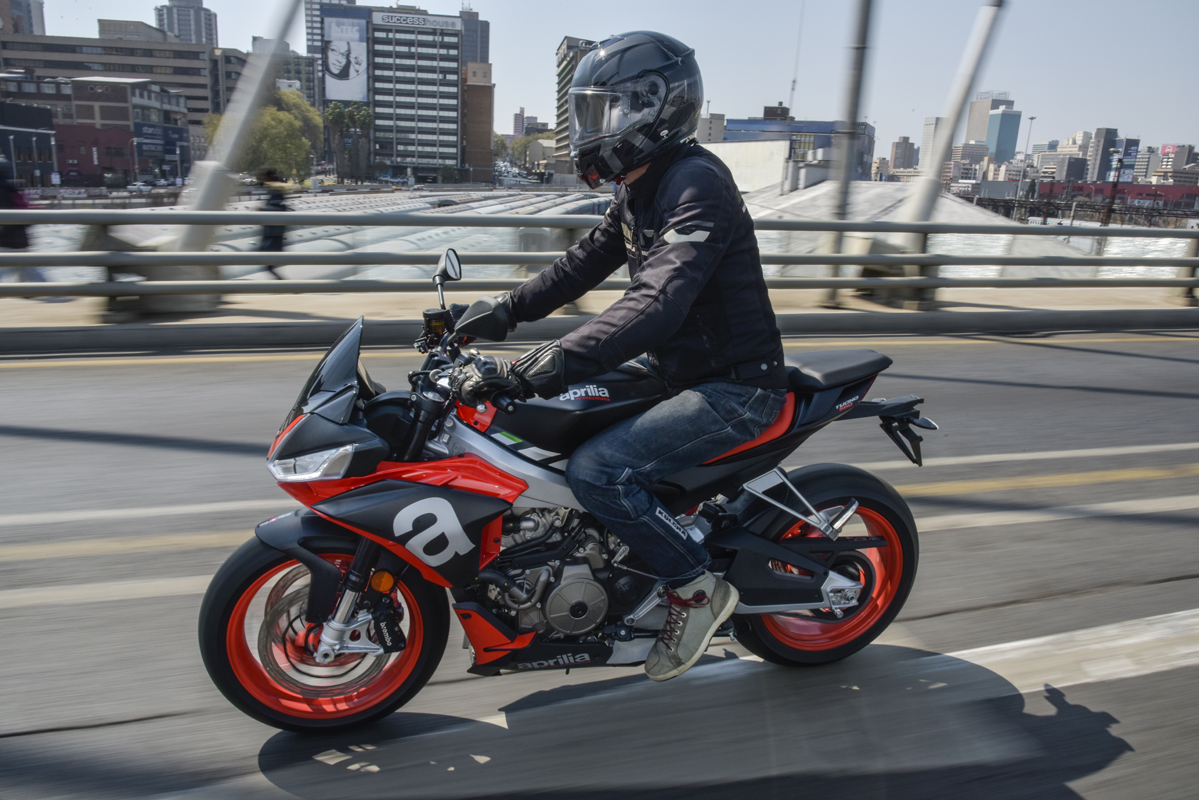
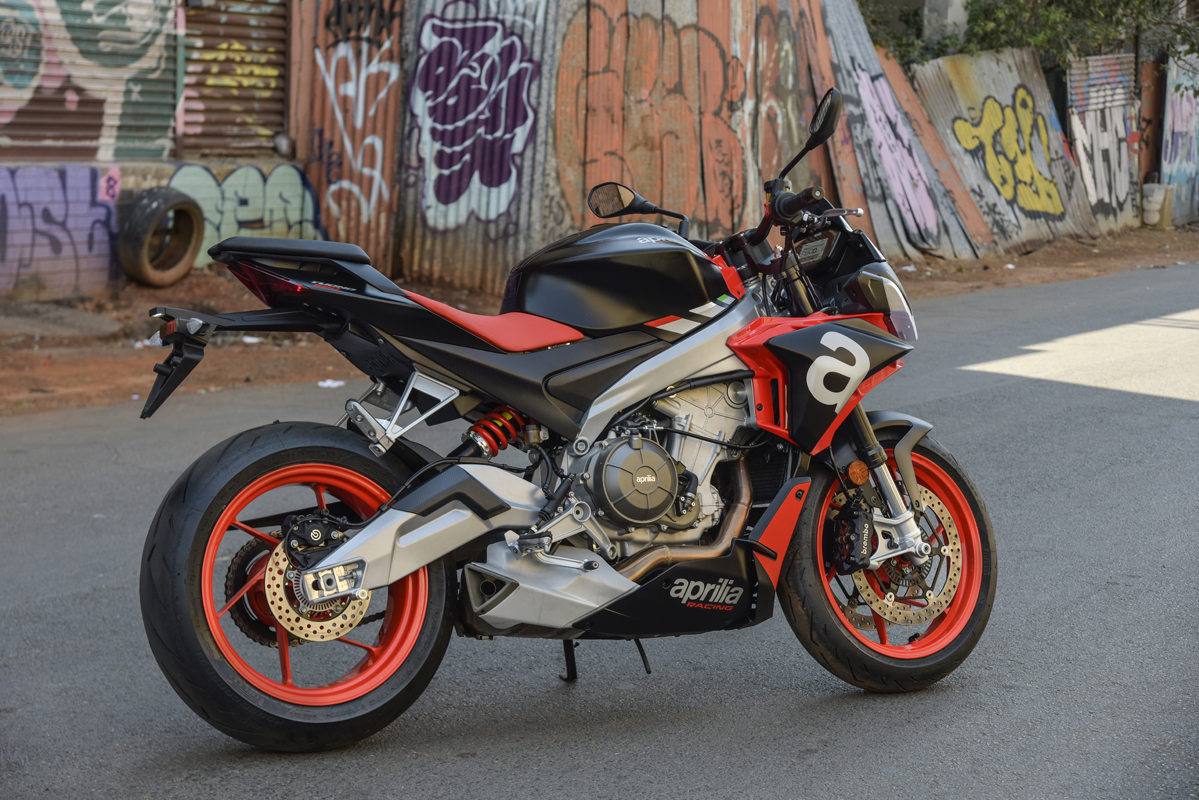
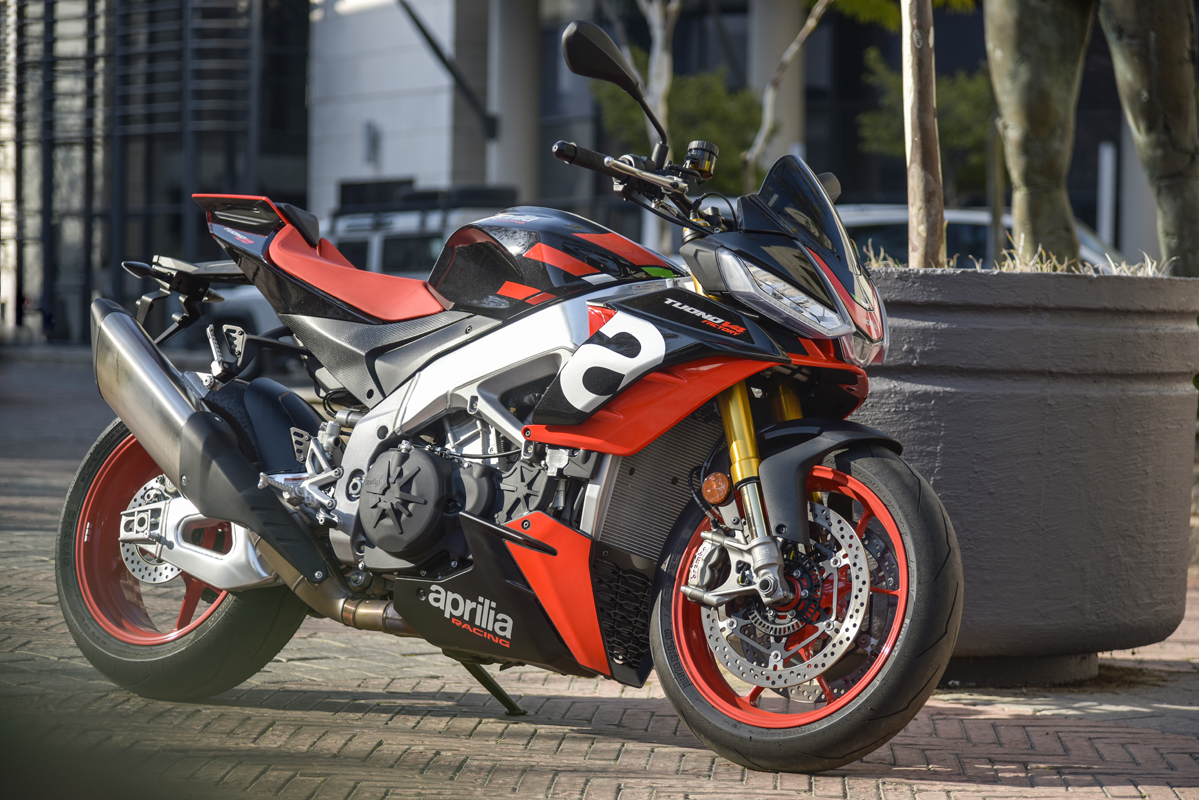
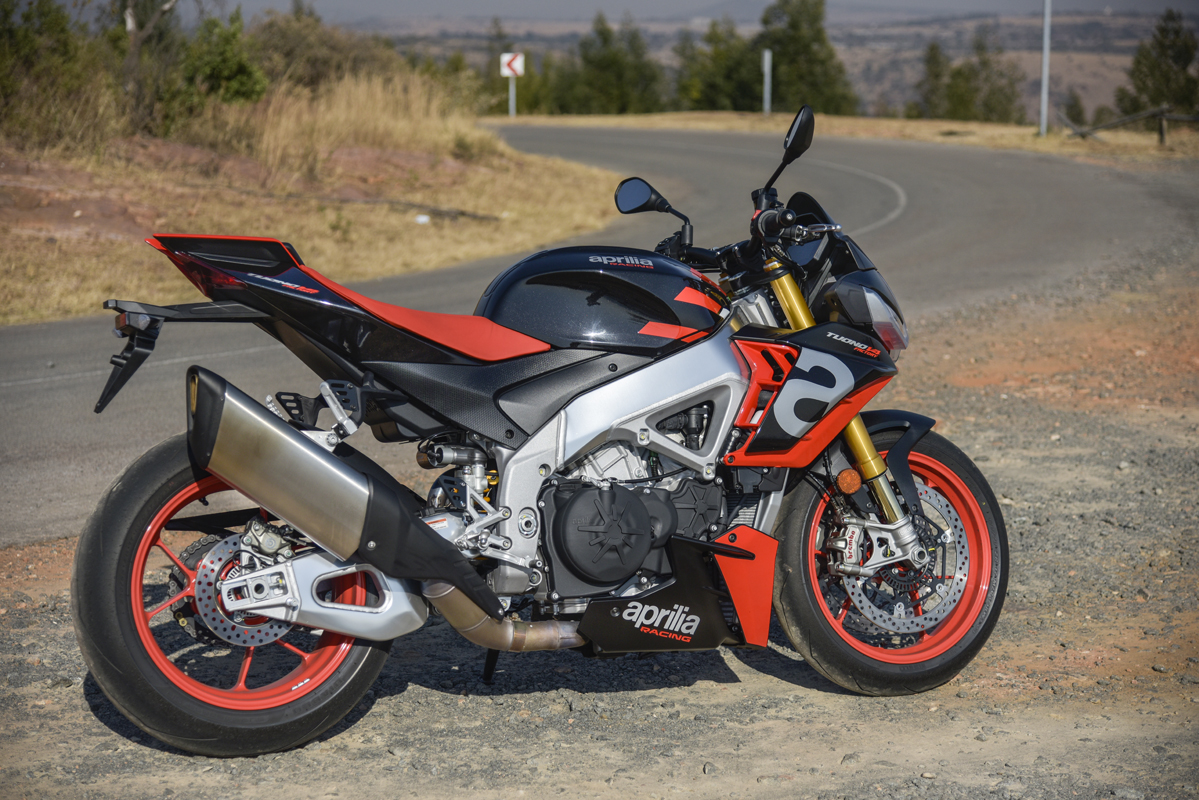
However, now Aprilia has joined Triumph and Yamaha in the naked middleweight class with the naked version of the RS 660, the Tuono 660. This follows established Aprilia thinking: a full-on sports bike accompanied by a more-relaxed-riding-position naked bike complimenting it.
Photo credit: Bjorn Moreira / ZA Bikers
The Triumph and the Aprilia might share engine displacement but, in reality, that is where the comparison ends. Whereas Triumph has built the Trident 660 to be a perfect introduction to the brand and given it less-sharp (but never soft) edges, the Aprilia 660 Tuono is as sharp as anything to come out of the Noale factory.
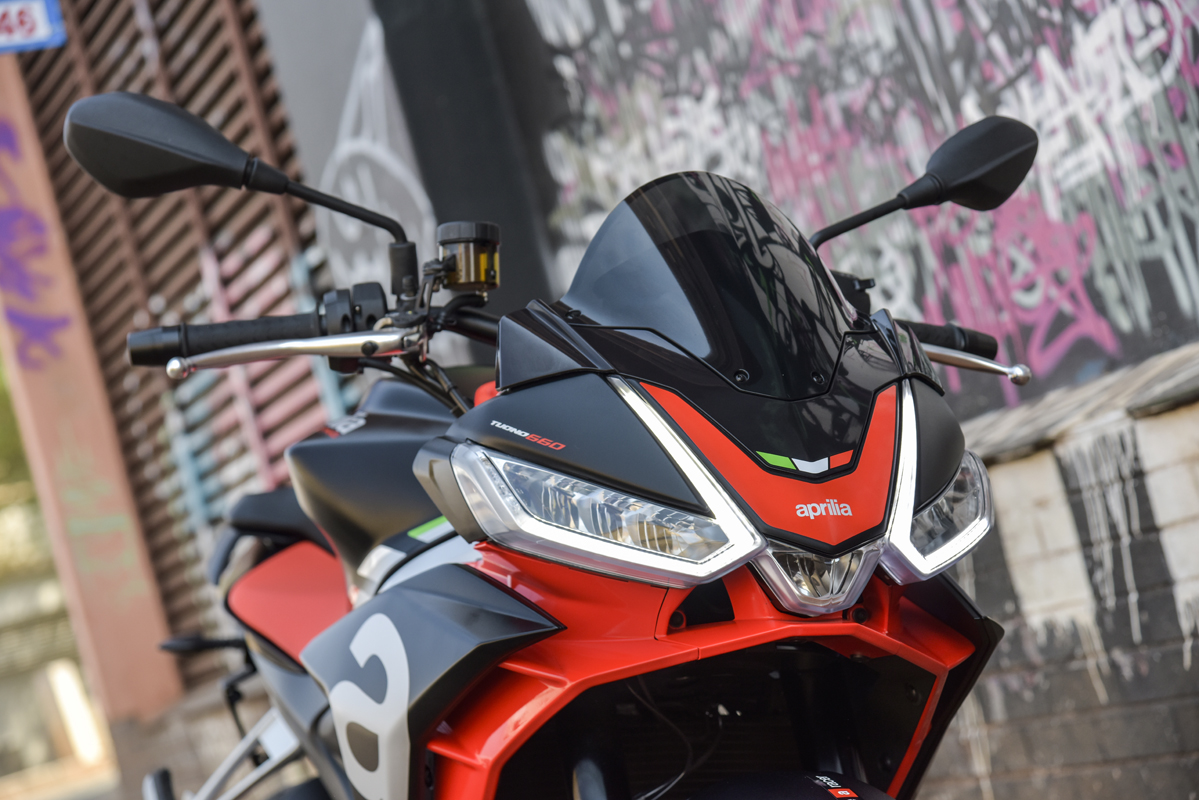
It is clear that the inspiration for the Tuono 660 is the Tuono V4 1100, that fire-breathing, bellowing beast of a bike. Walk up to the 660 and there is little at first glance to tell you that this is the smaller-engined version. The styling is virtually identical, which is no bad thing: at once aggressive and attractive. Only on closer inspection do you notice the single-cylinder bank housing the parallel-twin engine and appreciate the overall smaller dimensions.
Photo credit: Bjorn Moreira / ZA Bikers
It is this outward similarity to its bigger brother that, at first, readers the Tuono 660 a little underwhelming. At 94 hp and 67 Nm of torque, it has 80 hp less and half the torque of the 1100 V4 and, naturally, that goes a long way to tame the insanity that is a large part of the 1100’s allure.
All it takes, however, is a small recalibration of the senses to rid yourself of this unnecessary first impression and realise that you are riding an incredibly accomplished machine with more than enough punchy performance to satisfy even the most jaded hack while offering exhilaration to new riders without scaring the pants off them.
Photo credit: Bjorn Moreira / ZA Bikers
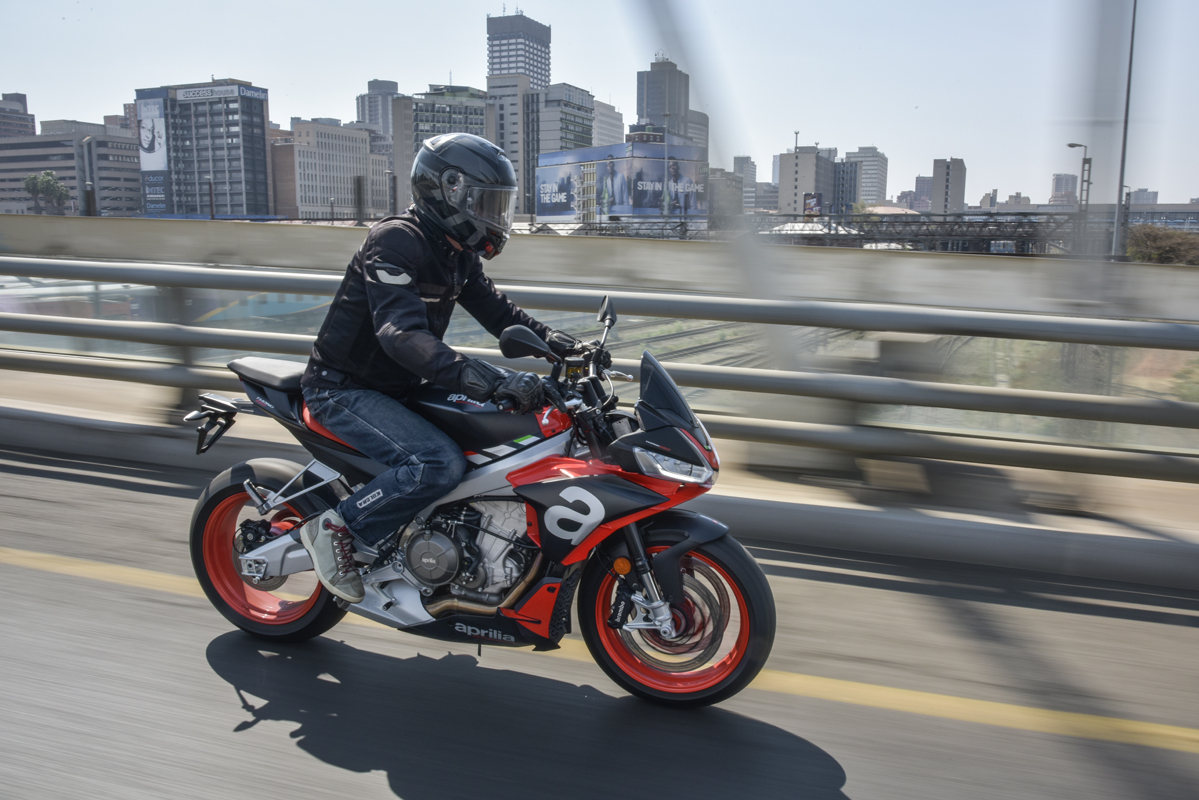
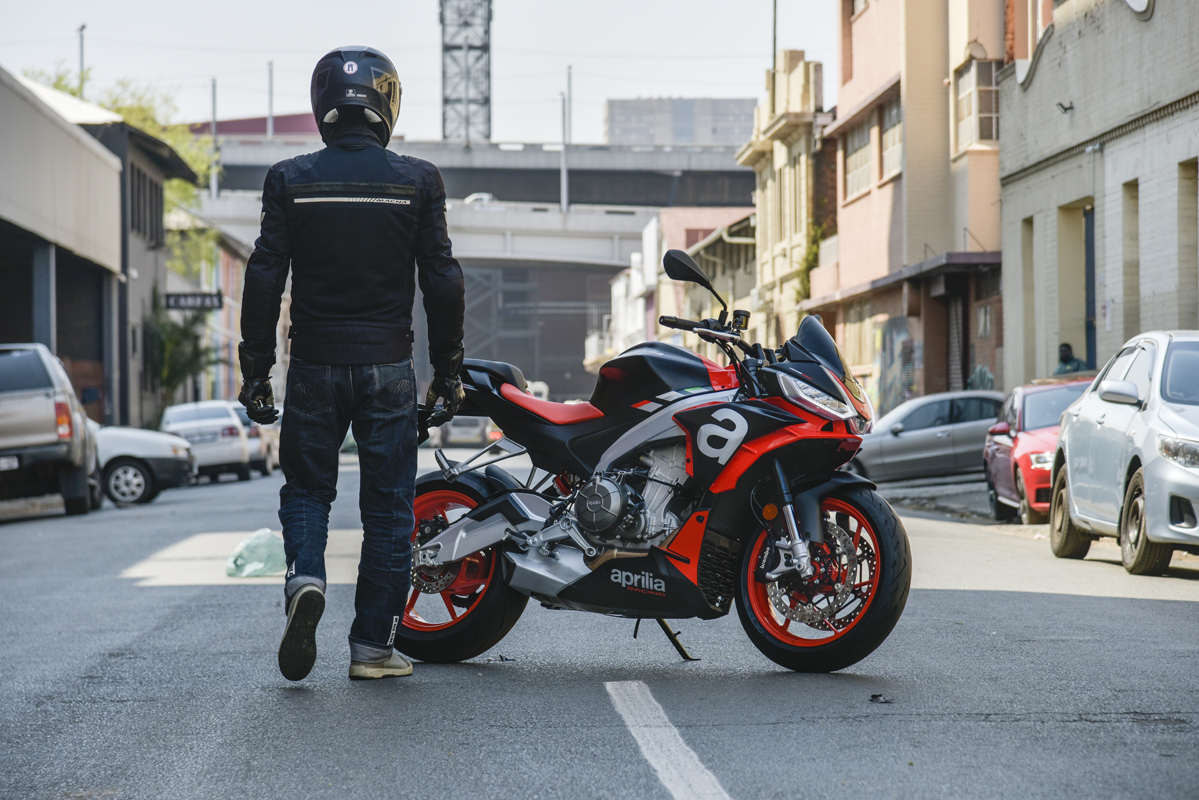
Such breadth of ability is immediately apparent in the behaviour of the chassis. It is at once sharp and beautifully balanced but also ridiculously easy to ride fast and well. At no point do you feel you need to take charge and manhandle it around: it does everything seemingly as you think about it. The wide ‘bars (well, only slightly wider than those on the RS660 but, crucially, offering a more upright riding position) give plenty of leverage and the response is instant and predictable, being sharp but forgiving. The whole riding position is very well executed with no feeling of cramp, even for a tall rider.
The engine really is a beauty. No parallel twin has any right sounding this good – at once rumbling and meaty – but the layout gives all the grunty benefits of a v-twin in a much more compact form. The engine in the Tuono 660 might have 5 hp less than the RS 660, but low-down torque has been exaggerated slightly through the use of slightly lower overall gearing, giving urge from low revs all the way to the red line. It delivers performance that will feel no different to the RS, certainly in the throttle response and acceleration fields.
Photo credit: Bjorn Moreira / ZA Bikers
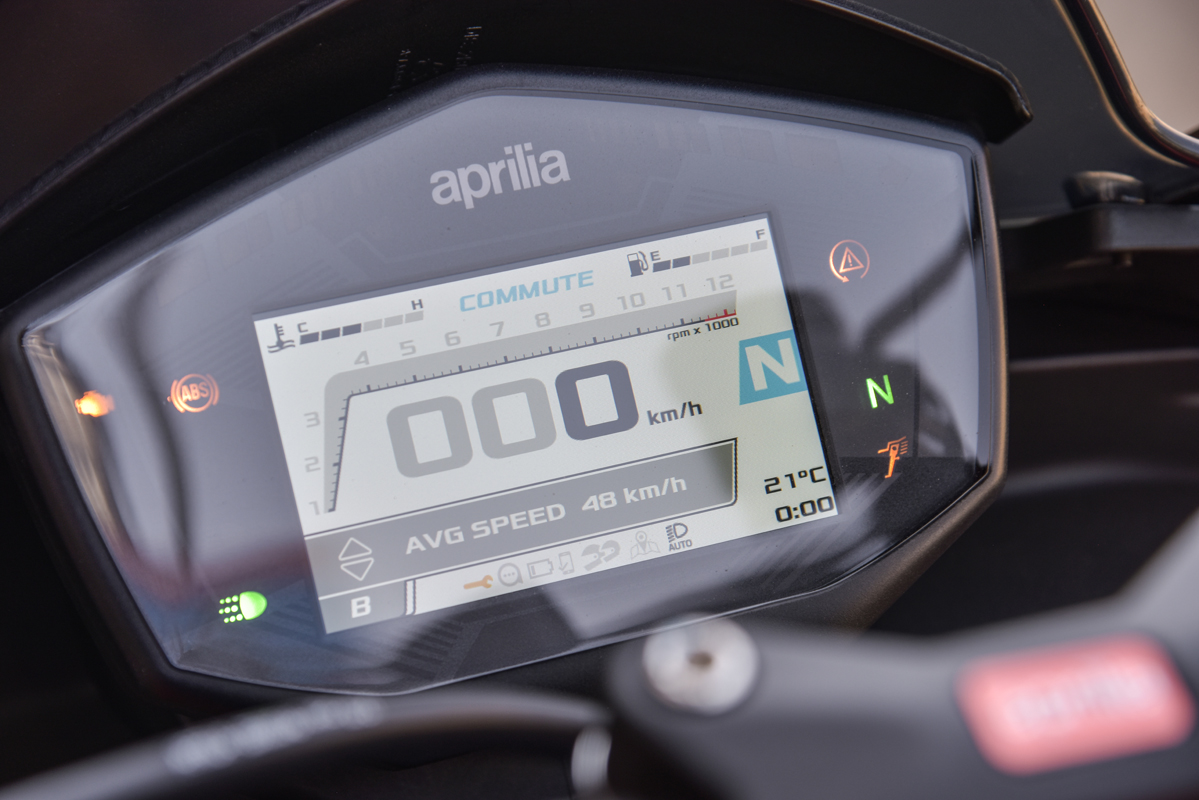
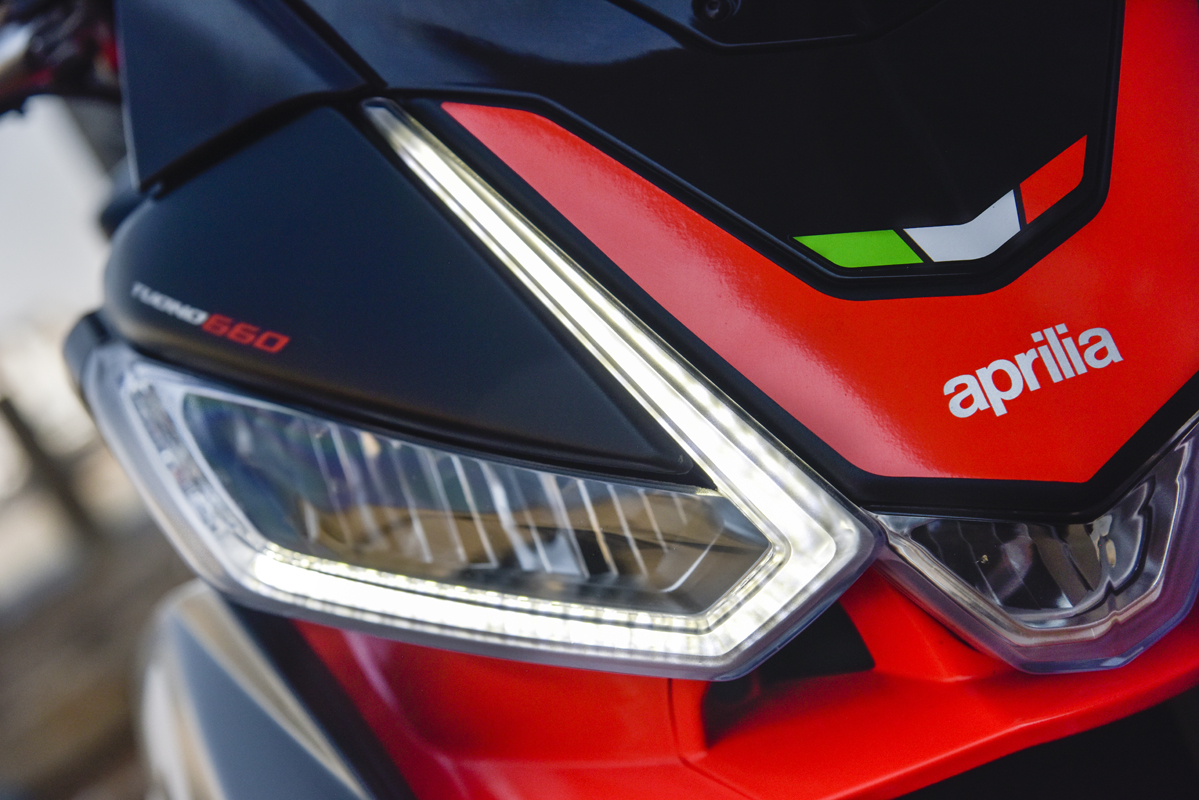
The electronics on the Tuono 660 are the perfect example of trickle-down technology from flagship models to bikes lower in the range. For a mid-sized – dare we say ‘entry-level’? – bike to have five riding modes, with one fully customisable, including traction control, wheelie control, cruise control and variable engine braking parameters, is simply astonishing. A quick-shifter is an option (as is cornering ABS) but the gearbox is so good, making clutchless shifts a doddle, that you really don’t need it. Everything is controlled via a small but clear TFT dash and LED lights illuminate your way at night.
Photo credit: Bjorn Moreira / ZA Bikers
The different riding modes give varying levels of all adjustable parameters and throttle response. At one end is ‘Commute’ which keeps everything smooth, while ‘Dynamic’ sharpens up everything beautifully, without ever feeling snatchy or nervous. Then there is the rider-customisable mode which is a nice refinement.
The Tuono 660 is the sort of bike you appreciate more and more, the longer and further you ride it. It’s just entertainment with a capital ‘E’. It would be brilliant at a track day: as it is, it’s brilliant on everyday roads. It makes even the shortest journey a bit special.
Photo credit: Bjorn Moreira / ZA Bikers
Rivals
The Tuono is, all of a sudden, playing in an increasingly crowded segment. There is the aforementioned Triumph Trident 660, which, for all its qualities, isn’t really touting for the same business as the Tuono.
Photo credit: Bjorn Moreira / ZA Bikers
Yamaha’s MT-07 has a similar engine configuration as the Aprilia with less power (75 hp) but more torque (81 Nm).
Perhaps the bike with the strongest claim to really taking it to the Aprilia is the Triumph Street Triple 765. Like the Aprilia, it’s a blatantly sporty bike and perhaps the one the Aprilia really has to be wary of. But the extra 100 cc is a slightly unfair advantage.
Photo credit: Bjorn Moreira / ZA Bikers
Other rivals are starting to push the envelope a bit, in terms of displacement, if not intent. The most obvious is the KTM 890 Duke R. Twenty more horses, again from a parallel-twin engine and with the same emphasis on the sharpness of the chassis. However, it’s hardly a fair comparison with 230 cc more capacity.
If we’re allowing the KTM in, then we have to admit the BMW F 900 R. Same horsepower as the Tuono 660, but a little more torque. But it’s a million miles away in terms of perception. Maybe it could be made to hustle as fast as the Aprilia in the right hands, but would anyone sit up and take notice?
Photo credit: Bjorn Moreira / ZA Bikers
That’s the Tuono 660’s trump card; it’s an Aprilia and that goes a long way for many riders. It’s an exotic name and rarely in recent years has an Aprilia been this accessible. The overall package is stunning with electronics and dynamics normally found on much larger capacity bikes. This deserves to sell like hotcakes.
Our thanks to Italian Motorcycle Importers in Bryanston for help with this feature. Contact them on 010 443 4596 to arrange a test ride on this or any of the Aprilias and Moto Guzzis they have in stock.
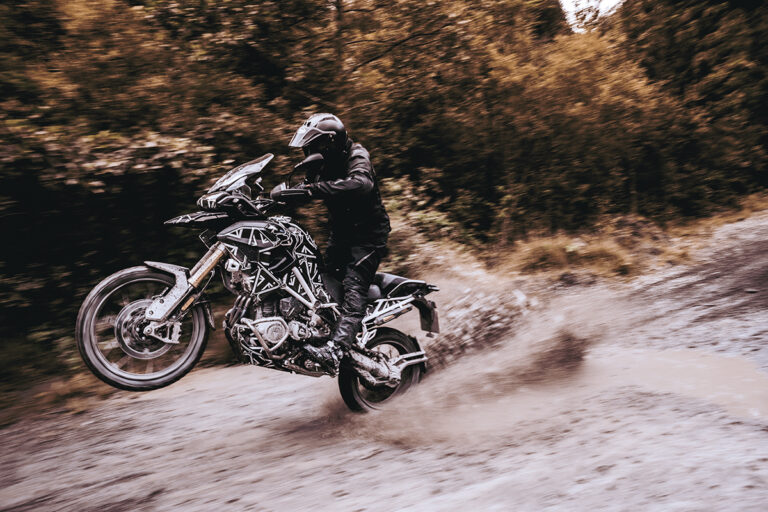
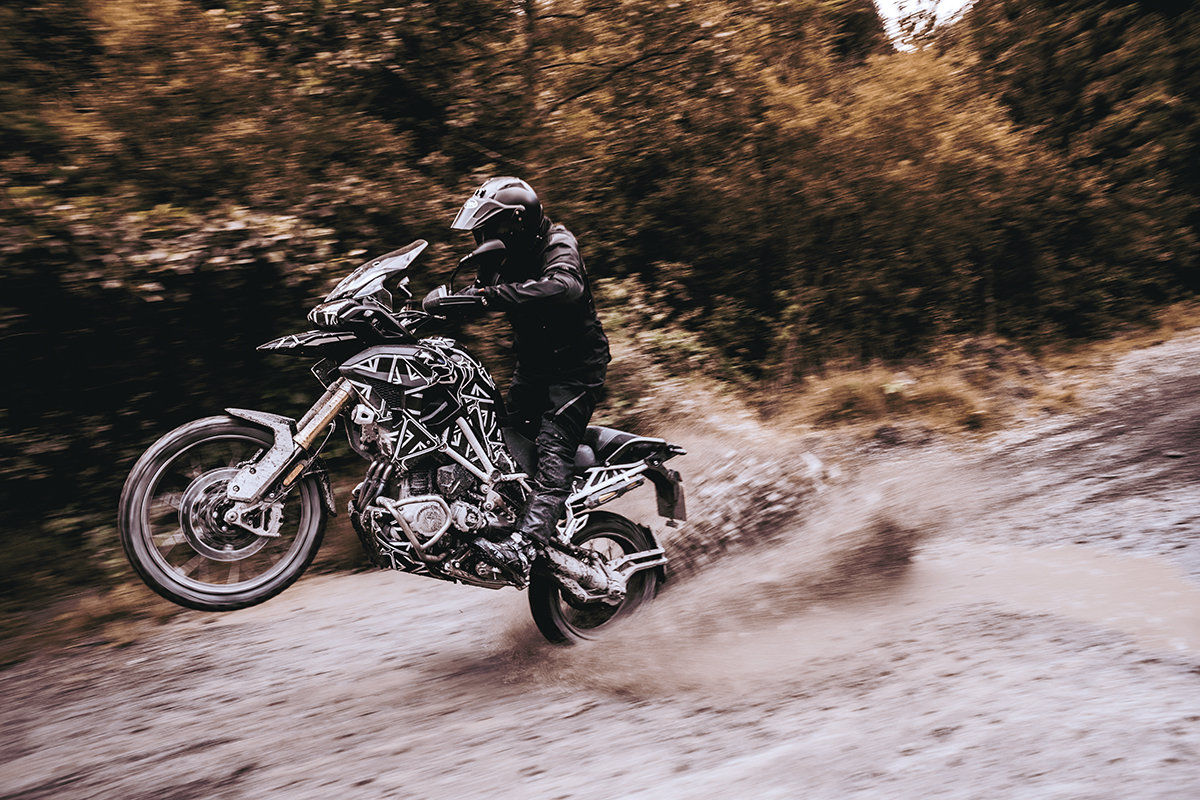
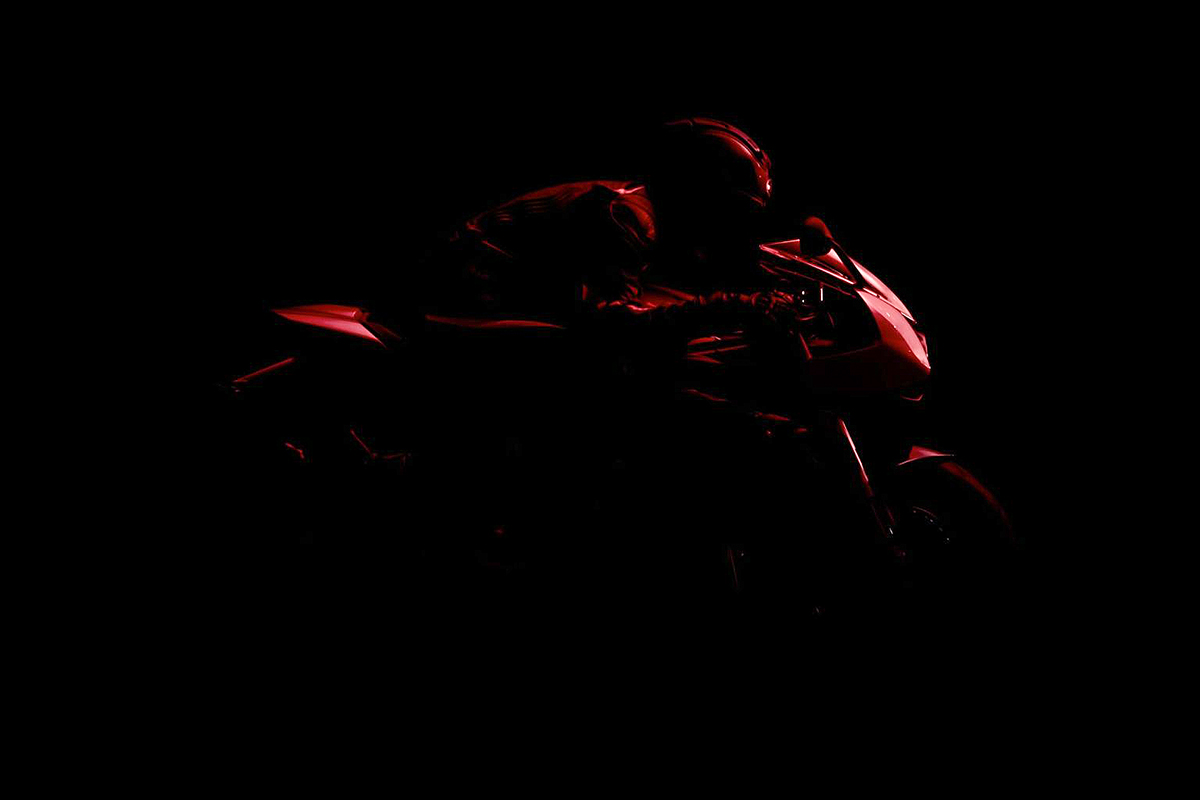
In the past couple of weeks, Triumph has been extremely busy giving vague and not-so-vague clues as to new bikes that are on the way. And the news is all extremely good.
The first hint we got was a moody video teasing the Speed Triple RR. Very little could be gleaned from the video, apart from the fact that there was a fairing in there somewhere. This led to all sorts of rumours that Triumph was re-entering the Supersport class or perhaps even the superbike class.
Image source: Triumph UK
Now, a second video appears to suggest that it will have a single-headlight, half fairing to turn it into a sort of modern cafe racer. The frontal aspect resembles the MV Agusta Superveloce but there is no way of telling if there are any styling changes to the rear of the bike. It’s likely that the mechanicals will stay exactly the same, having only recently been completely updated.
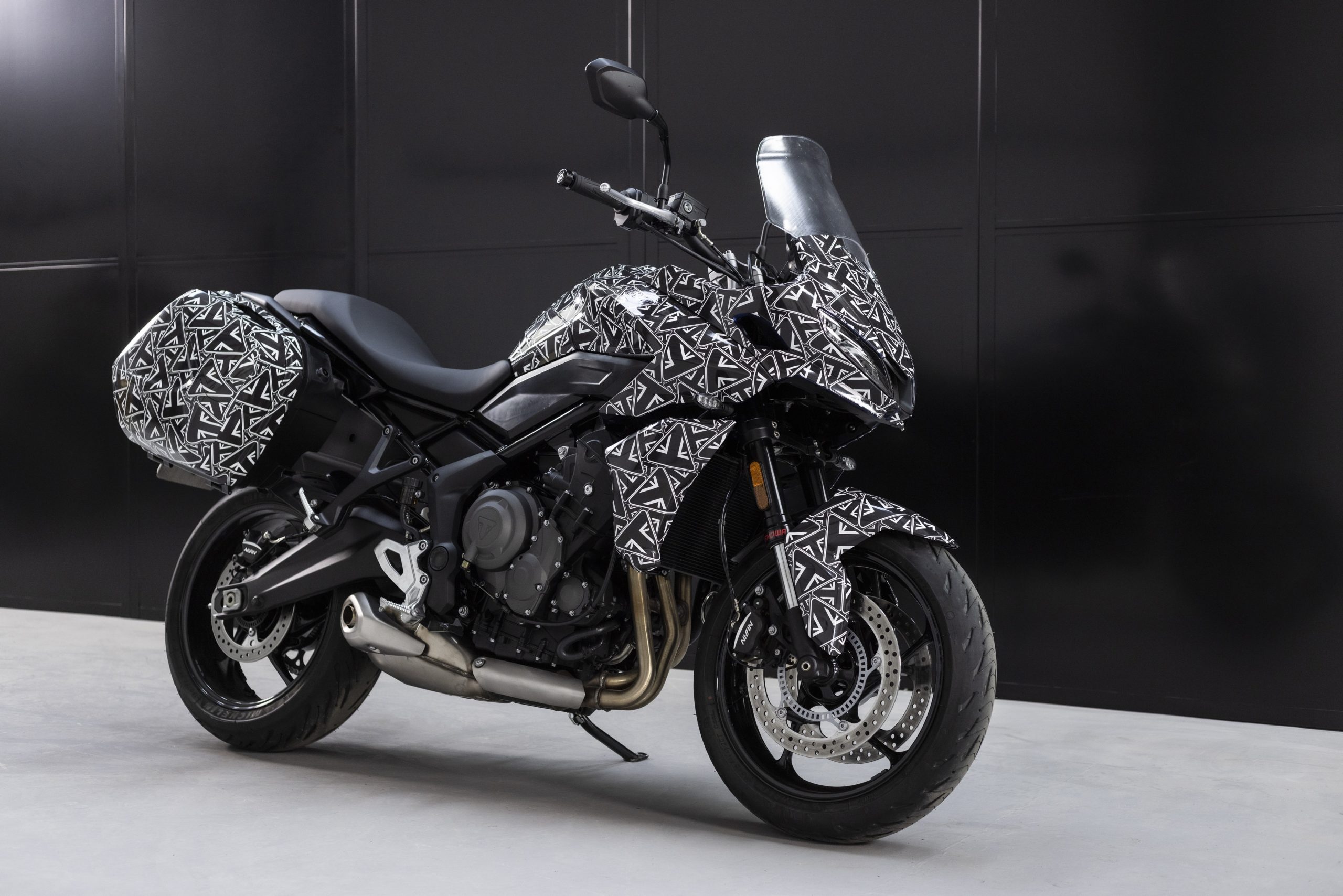
Next came news of a new Tiger Sport model, based on the Trident 660 running gear. Now, normally, when new models are being tested on the public roads, this happens in out of the way locations and all we might get are, at best, grainy spy shots.
Image source: Triumph UK
Not this time. Triumph released proper studio shots of the still-disguised Tiger Sport 660, properly whetting our appetite. Further details are sparse but, looking at the brief video and the studio shots, the Tiger Sport 660 will run on 17-inch wheels fitted with Michelin Road 5 tyres, using Showa suspension and twin front discs clamped by Nissin calipers. The Tiger Sport 660 will join the growing middleweight adventure/sport segment, currently inhabited by the Aprilia Tuareg 660, KTM 890 Adventure and Yamaha Tracer 700.
Surely this way of revealing a new bike is the way to go: the more we anticipate a new model, the bigger a splash it will make when it finally arrives. Just another way Triumph is really taking the fight to its rivals.
Lastly – and still on the Tiger theme – came news of the vastly upgraded Tiger 1200, an upgrade that has been keenly anticipated for quite some time now, by both dealers and customers.
Image source: Triumph UK
Again, details are sparse, even if images are not, but a Triumph spokesman had this to say:
“The word ‘transformation’ simply doesn’t do it justice. Designed to deliver the new ultimate large-capacity adventure ride, the incredible Tiger 1200 will bring every advantage in one all-new motorcycle family. Now significantly lighter than its closest competition, with an astonishing transformation in weight, the new 1200 will combine the triple powered engine advantage with a new dimension in class-leading agility, control and handling.”
That’s bold talk but the sort of message that needs to be heard if the Tiger 1200 is to play in the same league as the BMW GS and KTM 1290, the current benchmarks.
Again, the announcement raises more questions than it answers. For example, will the engine get the new T-plane crank? As first seen in the Tiger 900, the new crank, with a firing order of 1, 3, 2, gives the best of both worlds: the low down grunt of a twin and the powerful top end of a triple. It’s a broad spread of power that makes the engine incredibly flexible.
More news on all three bikes will no doubt be arriving in the coming weeks, with full reveals likely to be at the EICMA motorcycle show in Milan in November. Expect them to be in the showrooms in the first quarter of 2022 at the earliest.
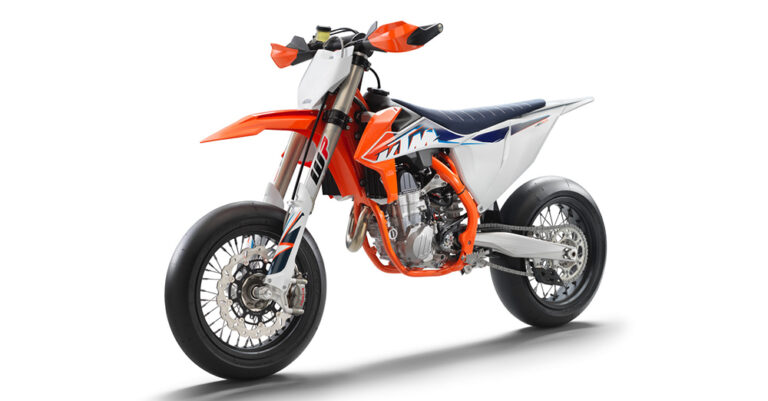
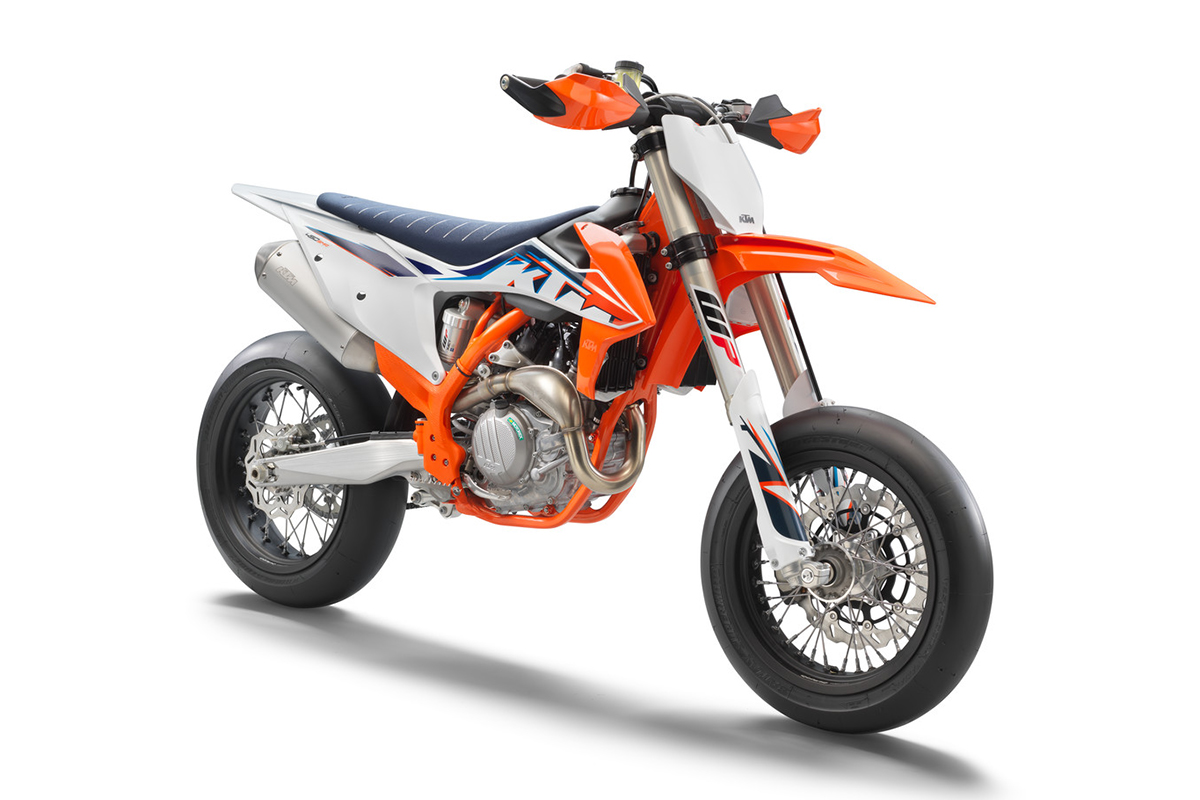
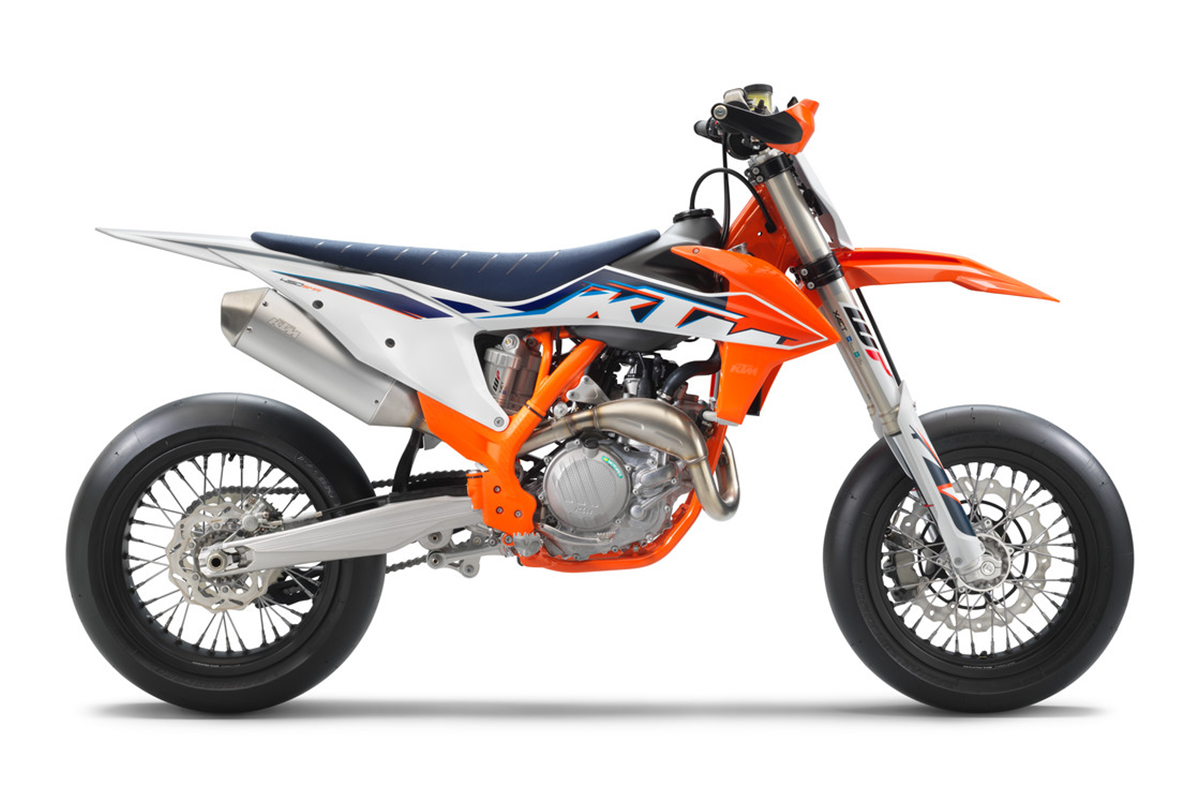
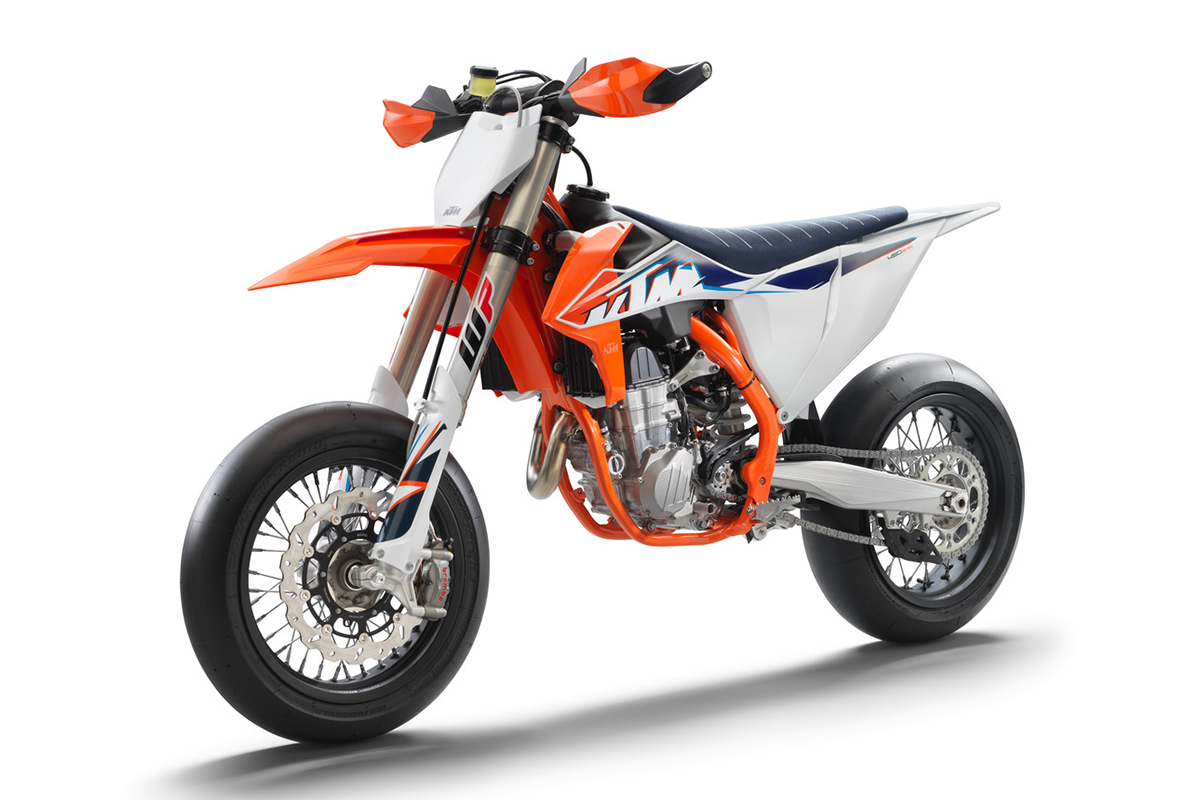
If you’re looking for the sharpest motorcycle to give you the biggest thrill, you have to look no further than the 2022 KTM 450 SMR.
It’s those three letters at the end that give the game away. SMR, as all red-blooded motorcyclists will know, means the Supermoto version of KTM’s fire-breathing 450 Motocross bike. Long a segment benchmark, the 450 SMR now moves closer to the KTM racing family with its orange frame, blue seat and new racing graphics. But, of course, that is all on the surface: it’s what happens under the skin that matters the most. And it really is all happening under the skin!
Image source: KTM
The championship-winning engine from KTM’s Supercross and Motocross machines has been modified for Supermoto use. It’s an incredible piece of engineering, weighing just 27 kg but producing a barn-storming 63bhp! This drives through a Pankl Racing Systems 5-speed gearbox that benefits from a sensor that permits a specific engine map for each gear.
Keeping all this in check is a chromium molybdenum steel frame optimised for torsion and flex characteristics, suspended by WP XACT suspension. Running on 16.5 in/17 in. super light Alpina tubeless spoked wheels and Bridgestone slick tyres, this is a chassis designed to thrill and allow you to wring the last possible tenths of a second from your lap time. Brembo brakes front and rear perform braking duties.
Image source: KTM
The 2022 KTM 450 SMR might be the most extreme motorcycle you’ll ever ride but it will also be the most capable and controlled. Available at your local KTM dealer from September 2021.
2022 KTM 450 SMR – HIGHLIGHTS:
Ultra-light Chromoly steel frame with new finishing coated in racing orange
Upgraded aesthetics with racing graphics and factory blue seat
Advanced four-stroke 450cc powerplant with 63 hp at 27 kg
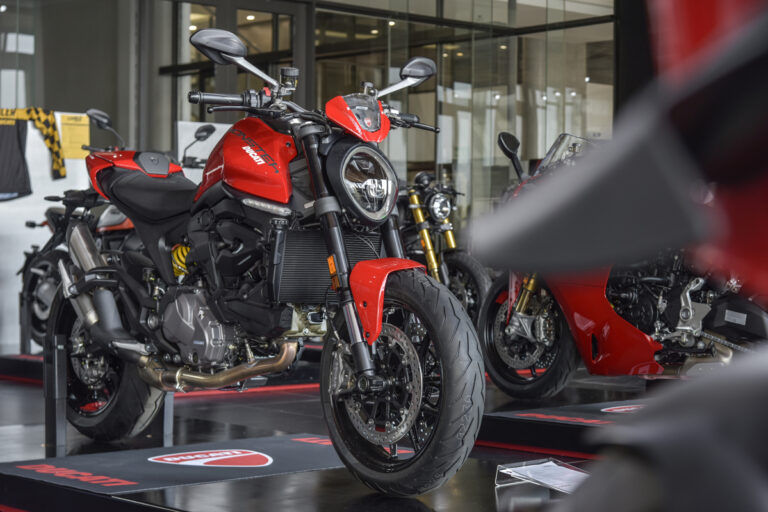
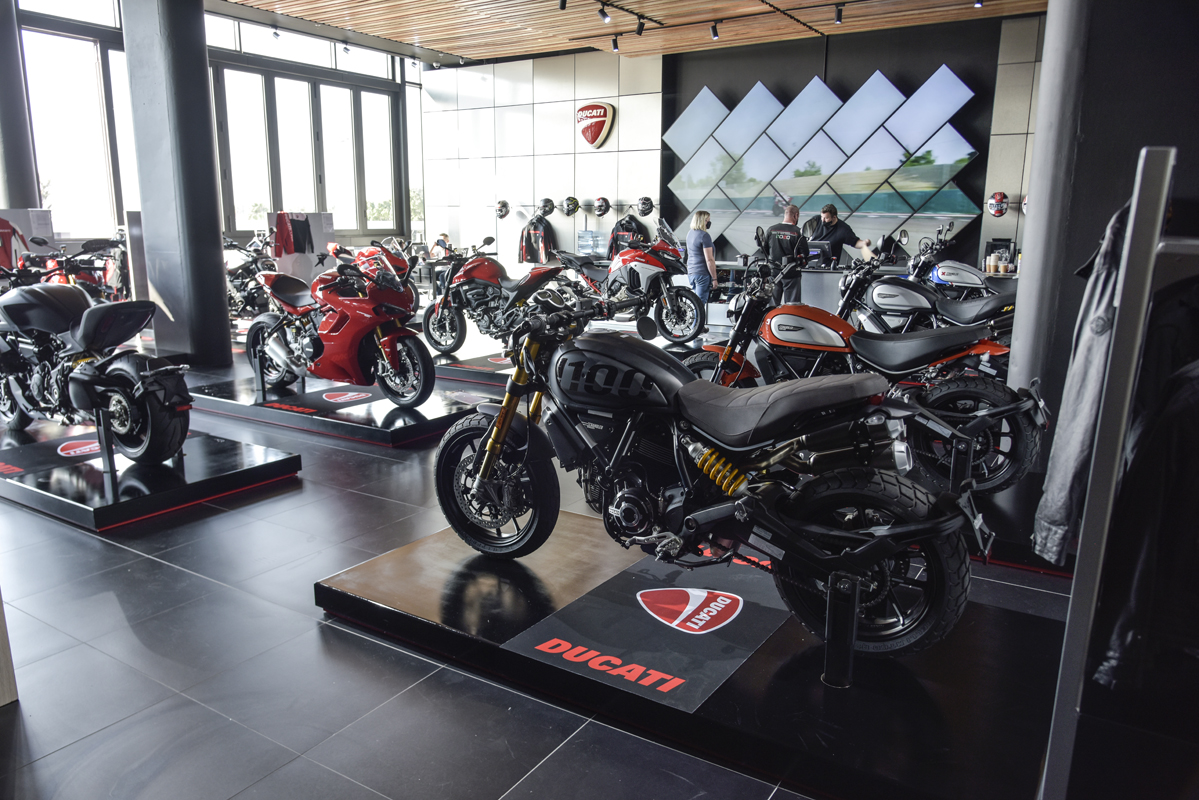
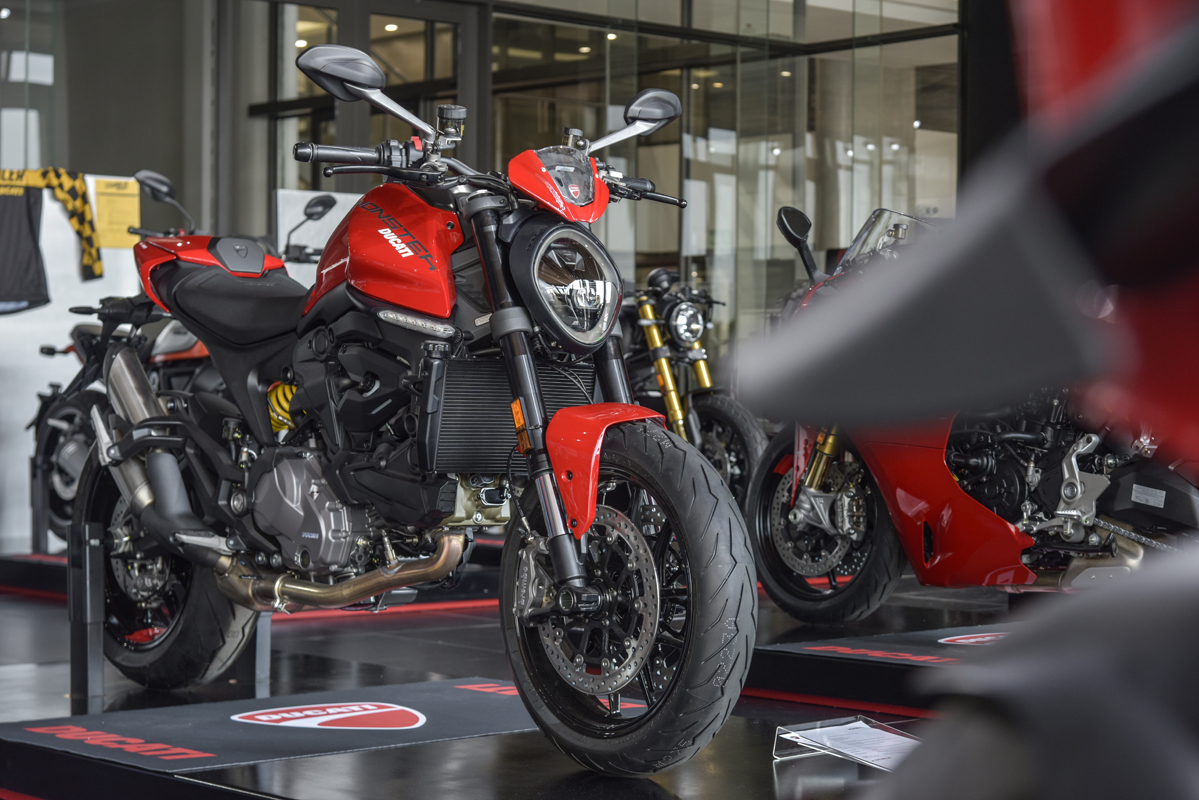
Ducati South Africa has completed its commitment to bring the iconic Italian brand back up to full strength in the country with the opening of its Sandton, Johannesburg, branch.
Photo credit: Bjorn Moreira / ZA Bikers
When Jos Matthysen took over the Ducati brand back in 2019, he chose to locate the flagship showroom in Centurion at World of Motorcycles—shortly after, World of Motorcycles opened their Cape Town store.
This was but the first stage in his plan to re-introduce the brand properly back into South Africa. Now, a few short years later, Ducati is back in Johannesburg, right in the centre of all the action.
Photo credit: Bjorn Moreira / ZA Bikers
Situated in the same building as the Fouche Motors car showroom at the junction of Rivonia Road and South Road, Ducati Sandton will become the perfect Ducati destination for all Johannesburg residents.
The full range of Ducati models will be on display, alongside a range of official Ducati apparel. No demo bikes will be available at the present time but this is something that will be addressed in future. To ride a demo Ducati, you will still need to head to World Of Motorcycles in Centurion. But, for everything else Ducati – buying, selling and servicing – your Johannesburg showroom awaits.
Photo credit: Bjorn Moreira / ZA Bikers
Well-known Ducati expert Zoki will be heading up his fully equipped workshop (ZLM) which is affiliated to Ducati South Africa, providing all maintenance, servicing, repair and tuning facilities for all Ducatis.
Photo credit: Bjorn Moreira / ZA Bikers
Ducati South Africa also plans to start arranging Ducati owner events such as Sunday morning breakfast runs once a month and, no doubt, more events will follow as demand increases.
Jos has, in the few short years he has been involved with Ducati, proven himself to be a champion of all things motorcycling in South Africa, especially in his patronage of motorcycle sport, becoming heavily involved with the WOM Racing Series and stepping in recently when the SA National Superbike Championship was left out in the cold as Motorsport South Africa (MSA) dropped it mid-season.
Photo credit: Bjorn Moreira / ZA Bikers
If he can continue in this fashion, not only with Ducati but through his involvement with motorcycle sport, then motorcycling in South Africa is being steered by a safe pair of hands.
For more information and to discuss all your Ducati requirements contact:
LW Mag and Monster Energy are excited to announce the debut of the Monster Energy Triple Threat online Dirt Bike video competition, in association with Yamaha South Africa, Liqui Moly SA, Leatt and PlayStation/ Supercross 4.
Calling all Dirt Bike Riders – beginner to pro level. No matter your discipline (Motocross, Enduro, Freestyle, PitBikes and Freeride) if you ride a Dirt Bike, we invite you to enter the Monster Energy Triple Threat online video competition. Entries are open from the 1st of September to the 30th of November 2021, and winners will be announced on 14 December 2021.
There are incredible prizes are up for grabs!
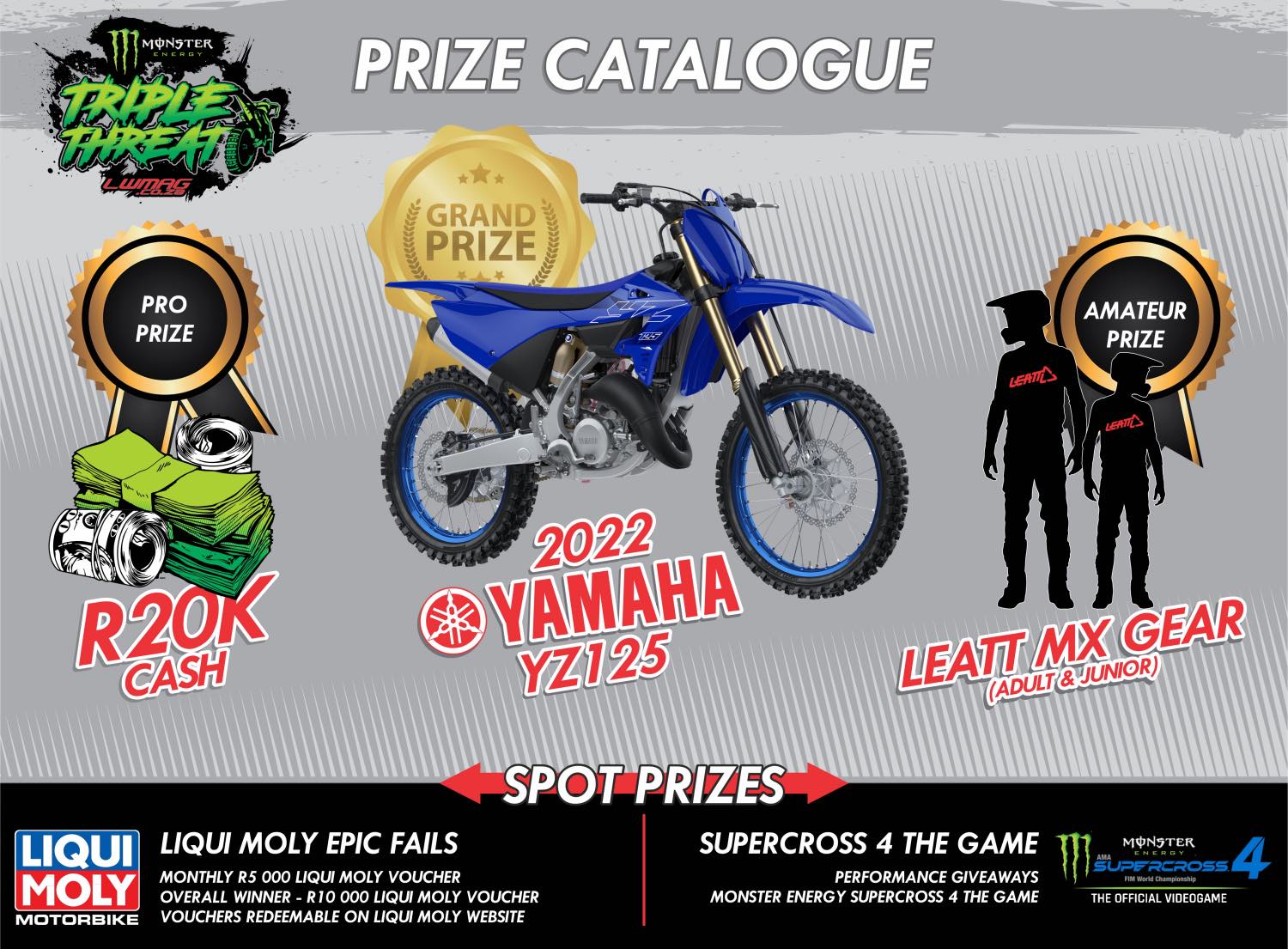
Every entry stands a chance of winning the Grand Prize of the all-new 2022 Yamaha YZ125 Motocross Bike.
The Pro Division winner will take home R20 000 in cash, and the Amateur Division winner (adult and junior) gets kitted out with Motocross gear from Leatt.
There will also be monthly spot prizes from Liqui Moly SA and Supercross 4 The Game.
Entrants have the opportunity to choose from a list of Skill Categories that suit their riding style, head out to their favourite riding spots and get their video footage. Both Smartphone footage and professionally shot footage will be accepted. It’s the riding, attempts and fun times we’re looking for.
Skill Categories Include:
Wheelie (We want to see that back wheel action)
Stoppie / Nose Wheelie (We want to see that front-wheel action)
Technical Line (For the Enduro riders – show us your technical feats)
Jump (Any jump, big or small, send us your airtime)
Whip (Turn up, turn down, old school or new school – we love us some whips)
Trick (For the Freestyle/ Freeride riders – any trick in the book counts)
Speed (We’re looking for that raw, flat-out speed)
Each entry must include either – three of the Skill Categories – or three versions of one Skill Category (Triple Threat).
For example:
Entry option 1: Video footage of a Wheelie, Trick and Jump (three Skill Categories).
Entry option 2: Video footage of three different Wheelies (one Skill Category – three times).
Epic Fails brought to you by Liqui Moly SA. In the name of fun, and a bit of laugher, we want to see your Epic Fail moments. Send in your crashes, failed attempts, and bloopers, and stand a chance of winning!
Each month a chosen winner will walk away with a R5 000.00 voucher, and the overall winner at the end of the competition will take home a R10 000.00 voucher. Vouchers can be redeemed for products and merchandise on the Liqui Moly online store.
To enter your video submissions please send the raw footage, in landscape format, to [email protected] via WeTransfer. Include your full name and contact details, and if you are entering the Pro or Amateur division, or the Epic Fails.
For all details visit the official website HERE.
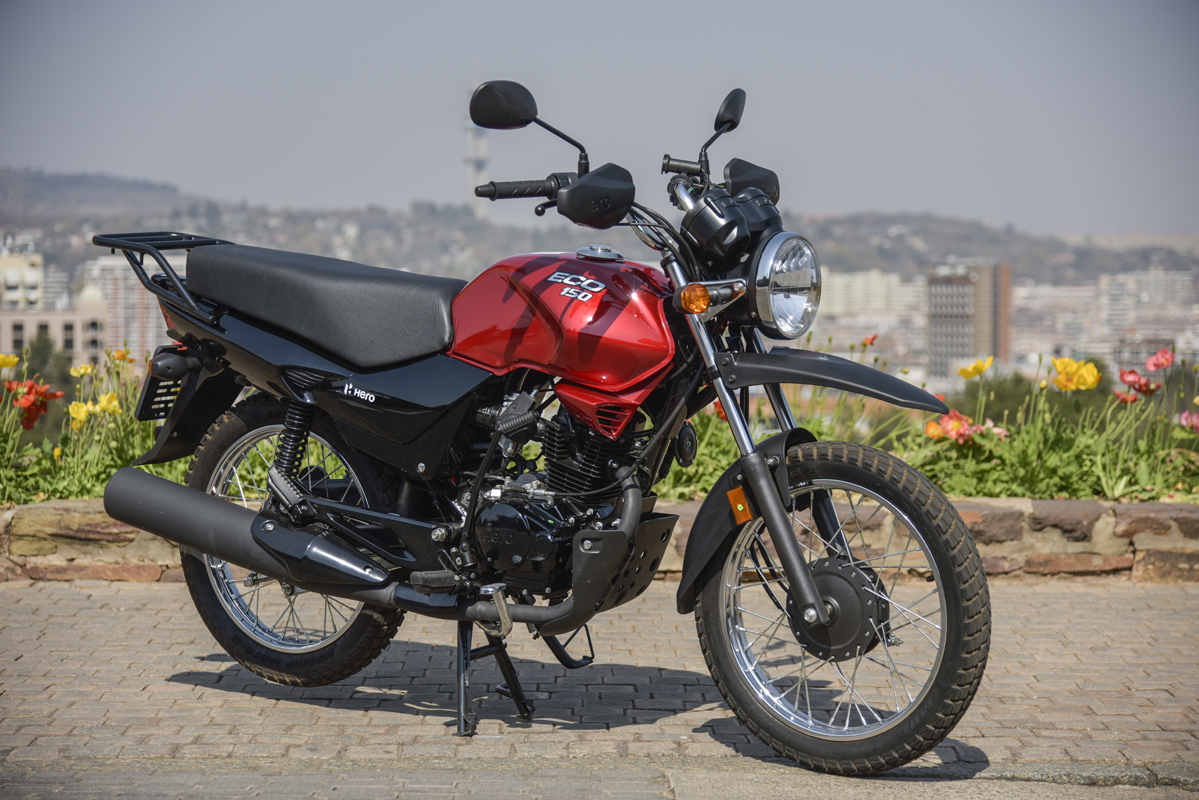
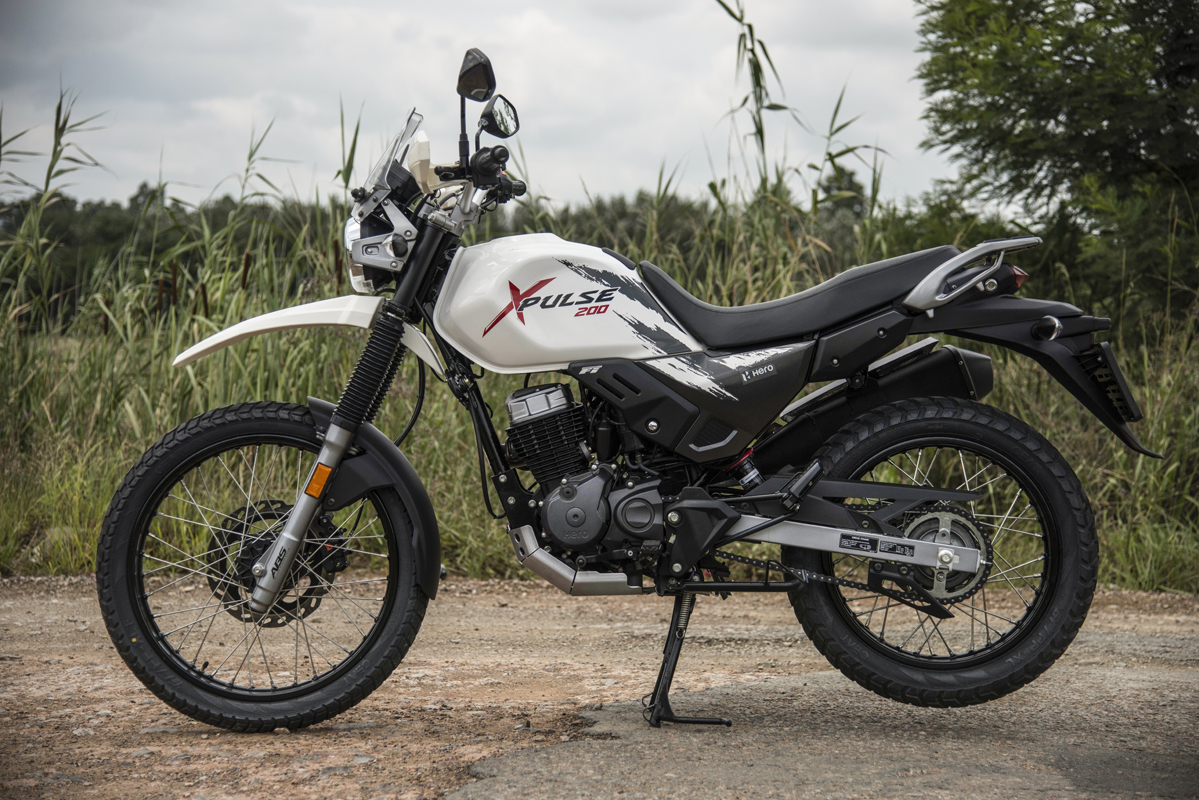
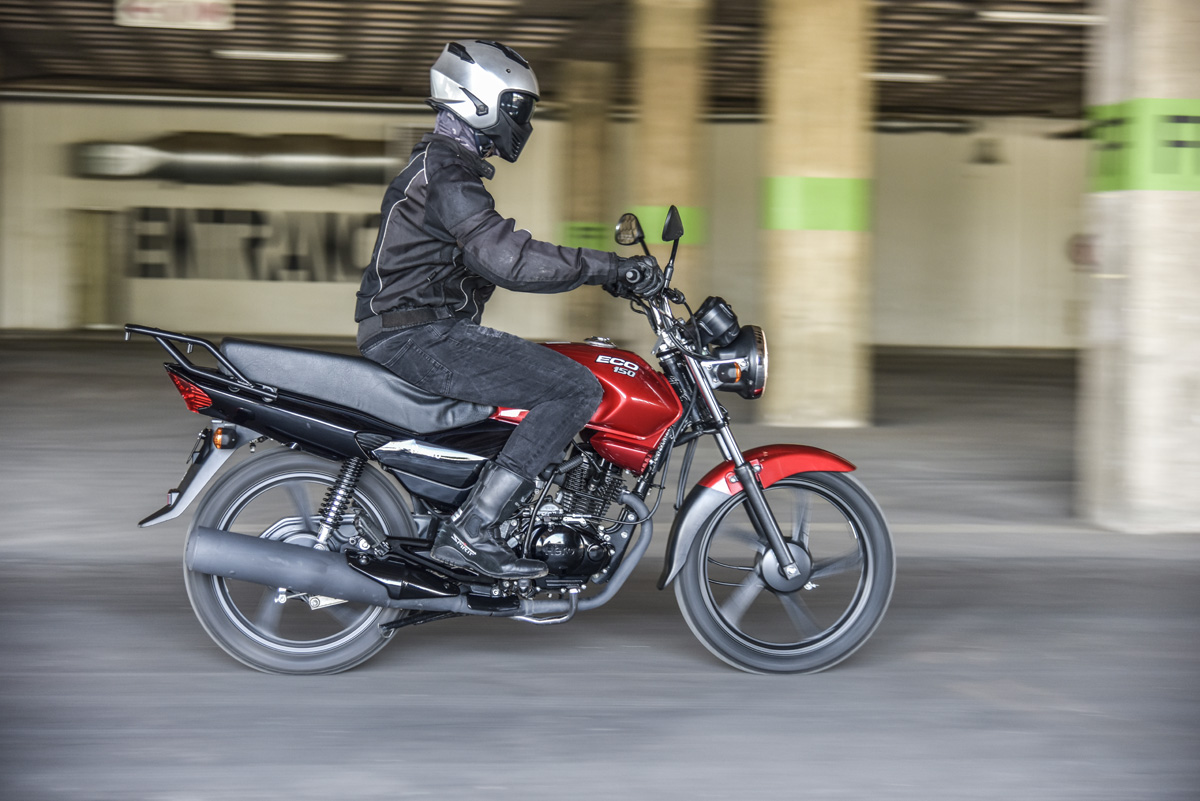
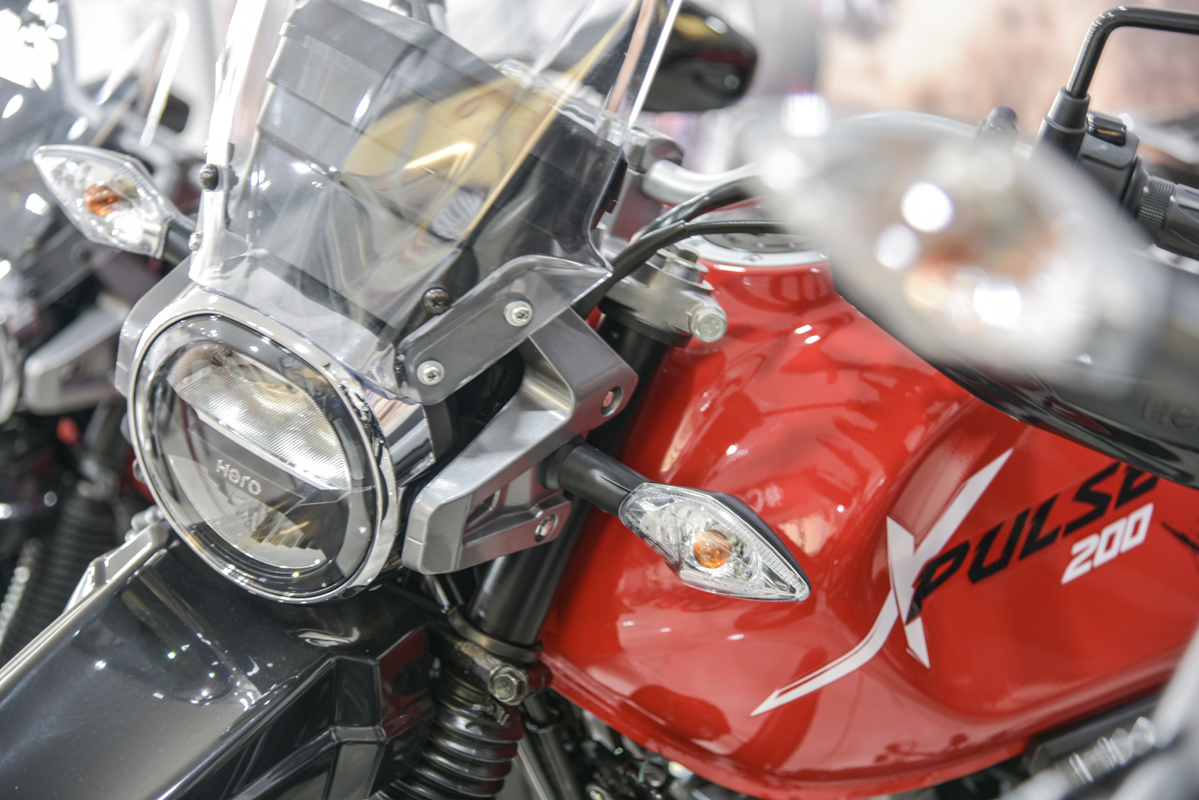
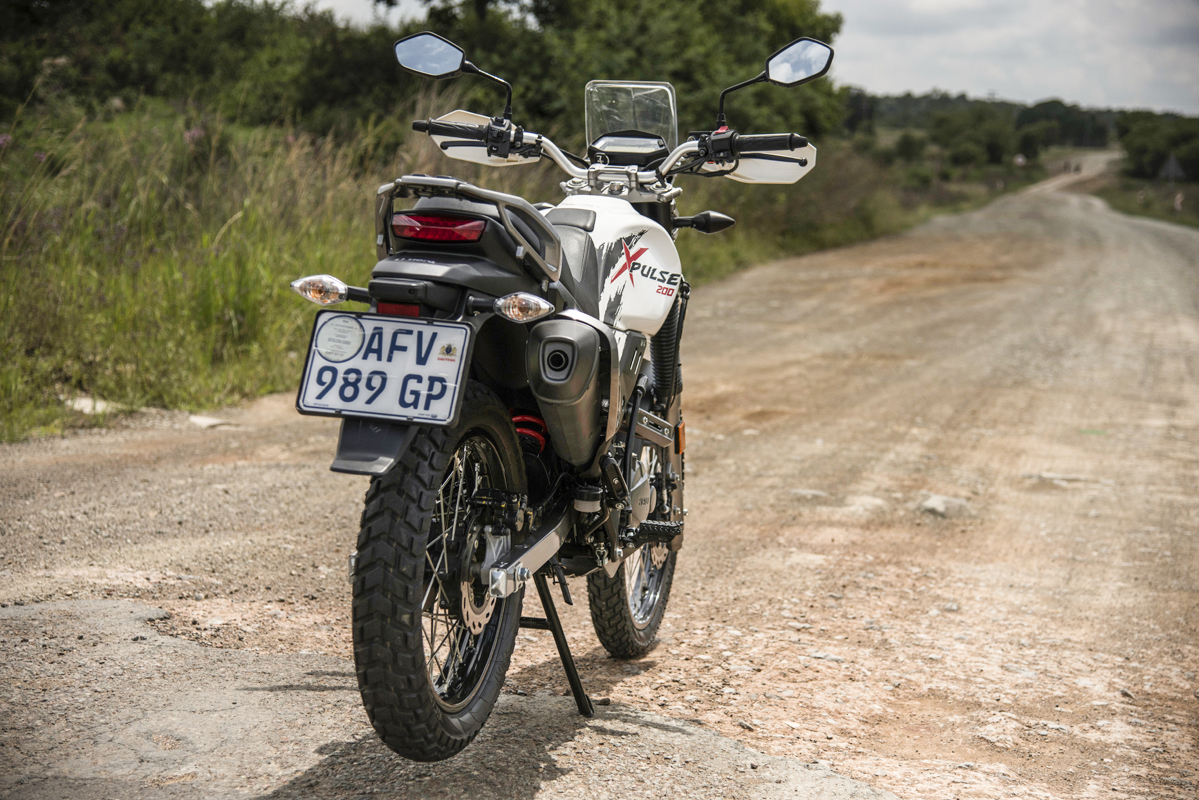
Earlier in the year, we had the opportunity to ride two of Hero’s latest offerings—the versatile X-Pulse 200 and the king of all things practical, the ECO 150. Once a leg was swung over these two models it became crystal clear that these motorcycles are quality—if Honda could put a ring on it, then so can you.
Photo credit: Bjorn Moreira / ZA Bikers
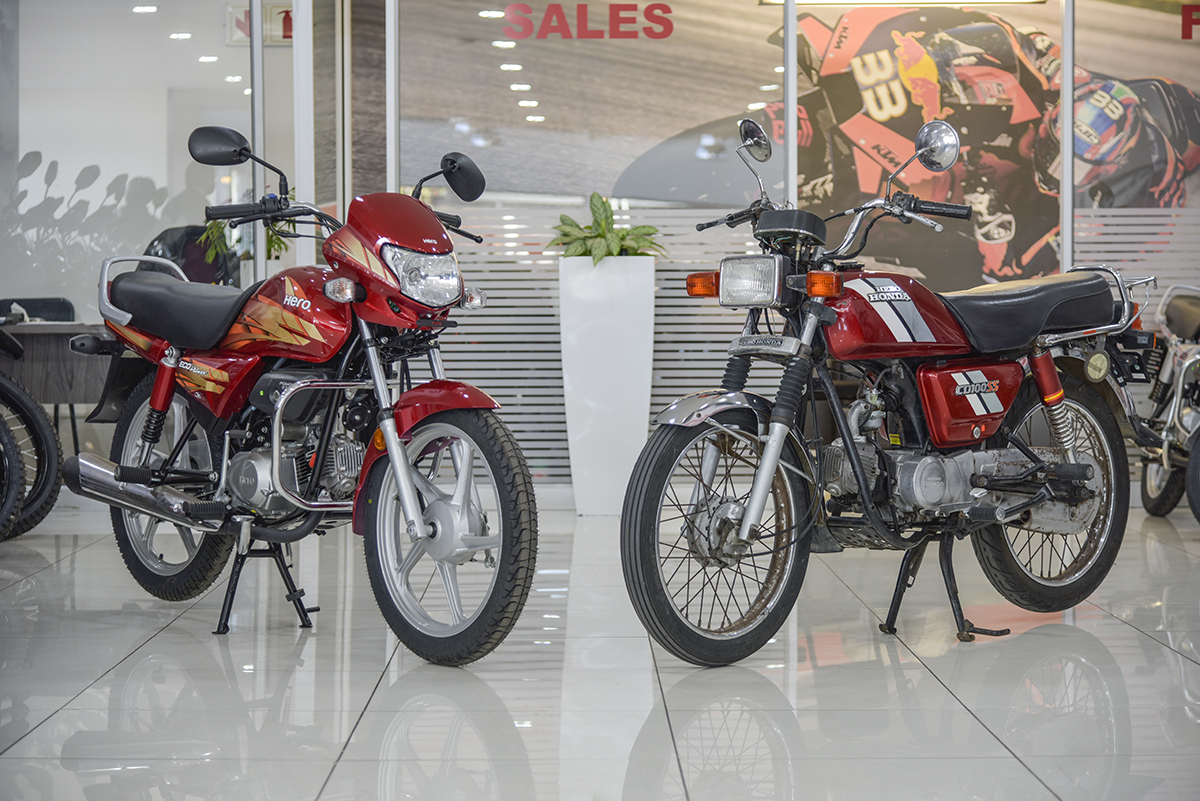
The legendary brand Hero has 38 years of experience, they’ve sold over 100 million units and after a 28 yearlong joint venture with Honda Motor Company, Hero MotoCorp
bought over Honda’s 26 per cent share and have been running a successful business for the last ten years. Yes, you heard me right, there’s Japanese blood in the Hero brand which lends itself to many design and mechanical perks including reliability.
Photo credit: Bjorn Moreira / ZA Bikers
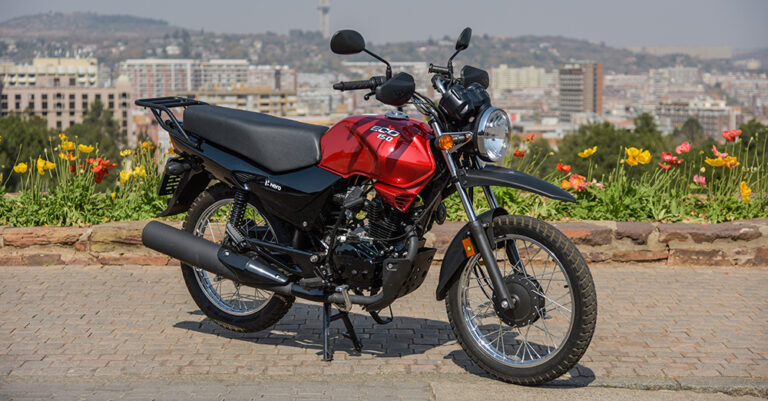
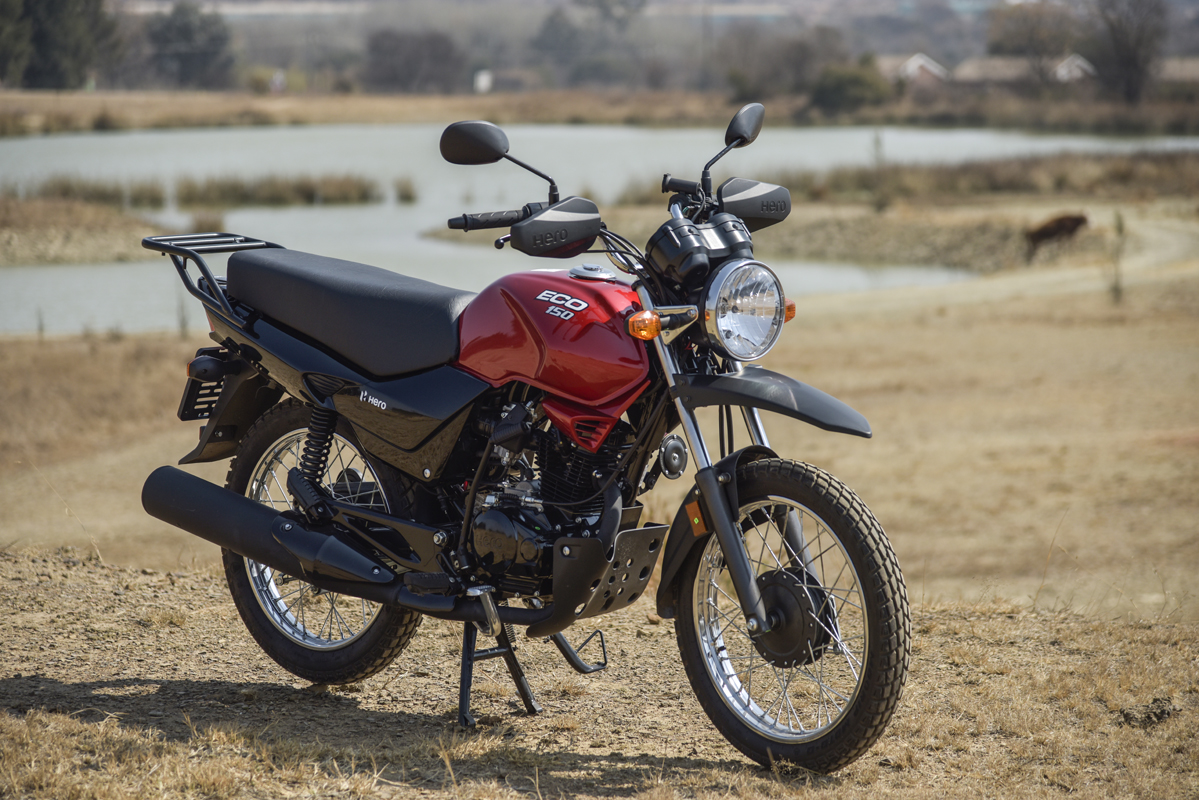
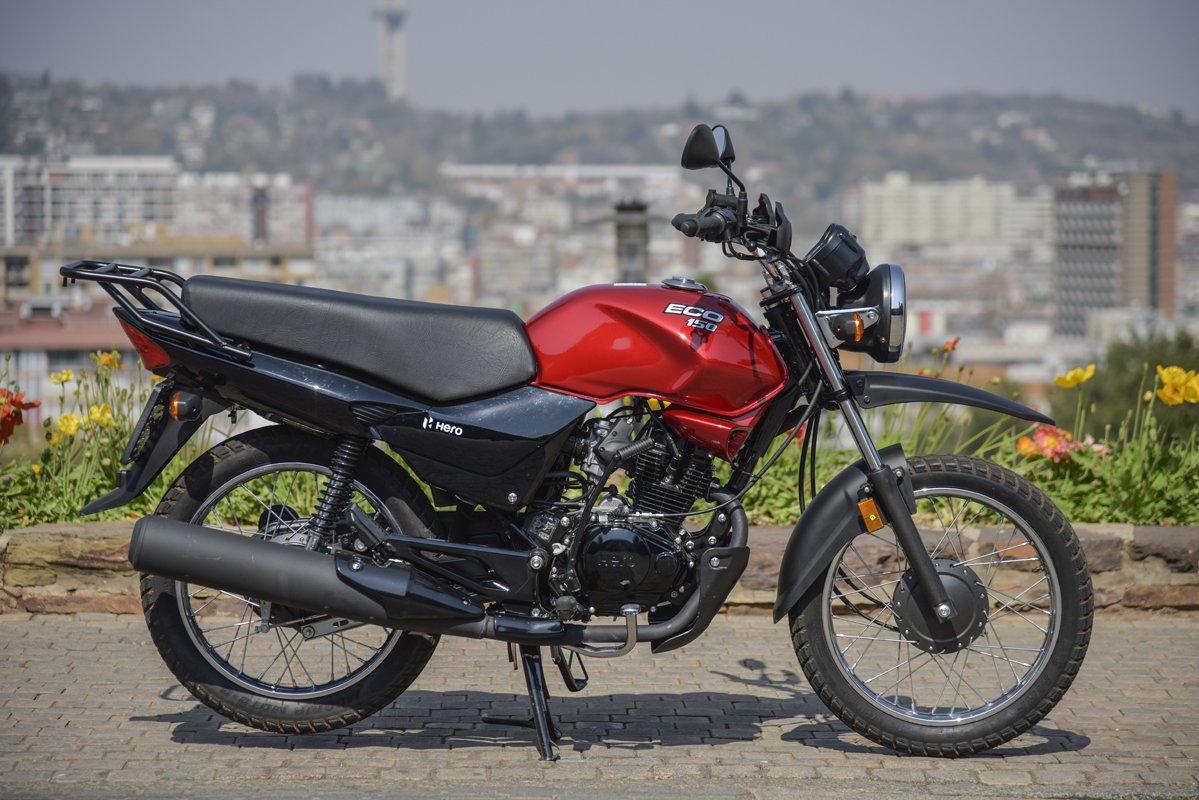
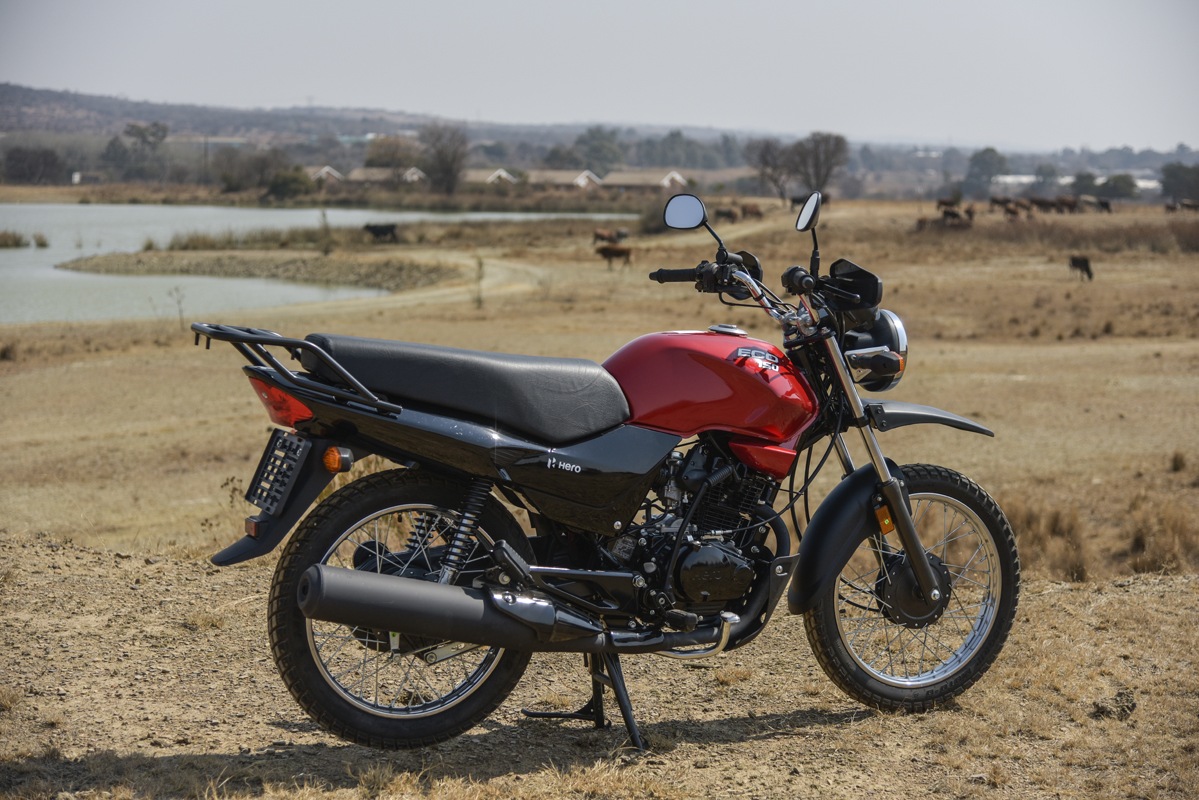
With the excitement over this Indian brand slowly starting to brew in South Africa we got our hands on the Hero ECO 150TR, the more rugged sibling of the ECO 150. The standard ECO 150 was a magnet to practicality, a bike that was developed to be affordable, durable, easy to use and offer good fuel economy.
With the ECO 150 already offering so much bang for very little buck, how much more could the ‘TR’ bring to the table?
Photo credit: Simon Morton / ZA Bikers
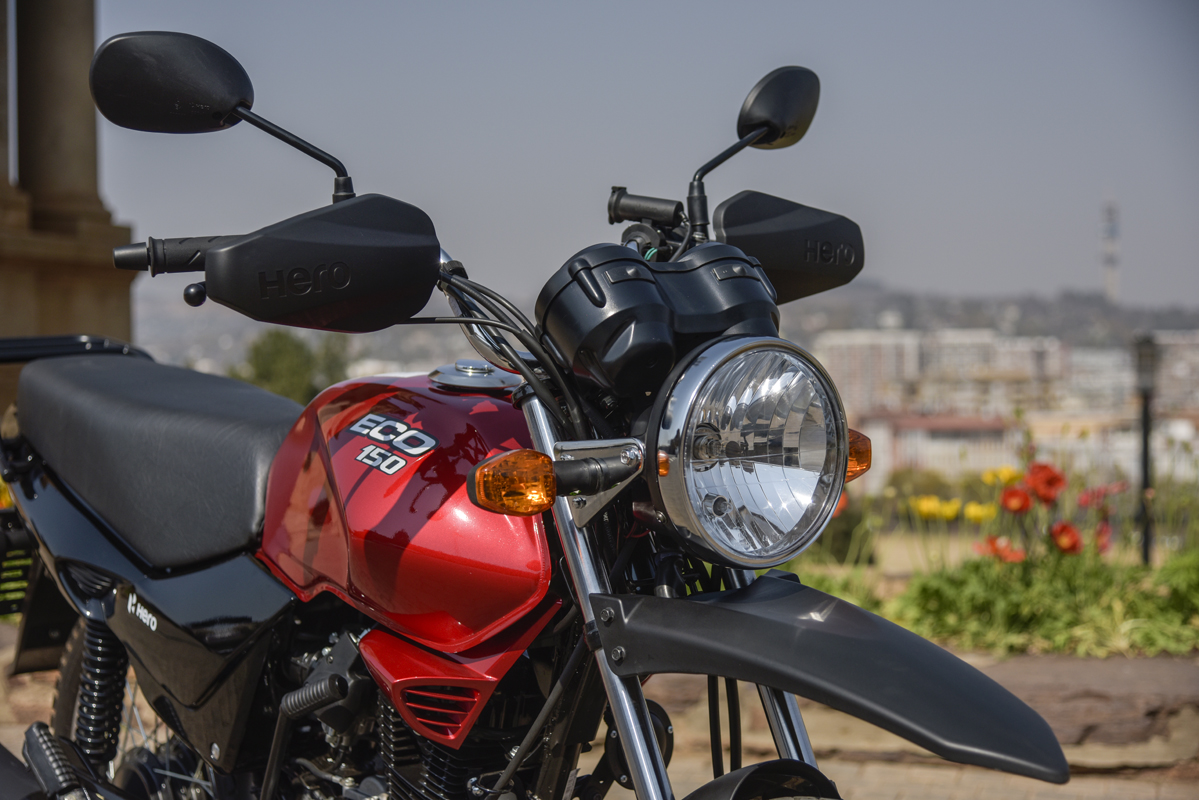
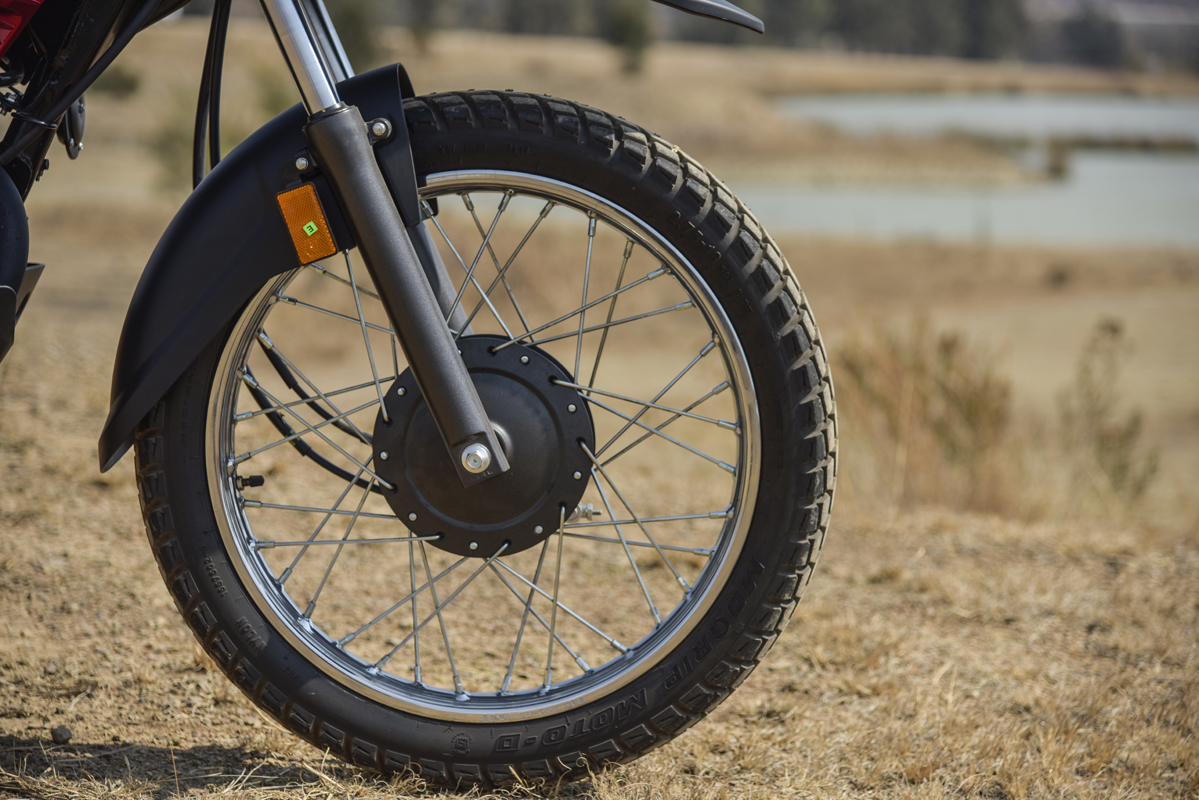
The TR takes the ‘ECO’ to the next level, it’s almost like buying a standard bakkie but then kitting it up for the purpose at hand. In this case, the TR is designed to be your all roads commercial motorcycle, with added dirt worthiness coming from its spoked wheels, semi-knobbly tyres, high mudguard, bash plate and handguards. I don’t know about you, but I prefer the more off-road look on the ECO.
Photo credit: Bjorn Moreira / ZA Bikers
Born from a city dweller the TR still has its siblings 130 mm drums at each end, plush suspension, fully enclosed chain guard, USB charge port and its 150 cc single-cylinder, eking out 13.4 hp at 8,000 rpm and 12.8 Nm at 5,000 rpm. Not changing the suspension setup has allowed the TR to keep its manners on the road as well as dampen down those harsh bumps on the rural crossings and hard-packed gravel roads. When it comes to stopping, the drum brakes work decent enough for the urban commute.
Photo credit: Bjorn Moreira / ZA Bikers
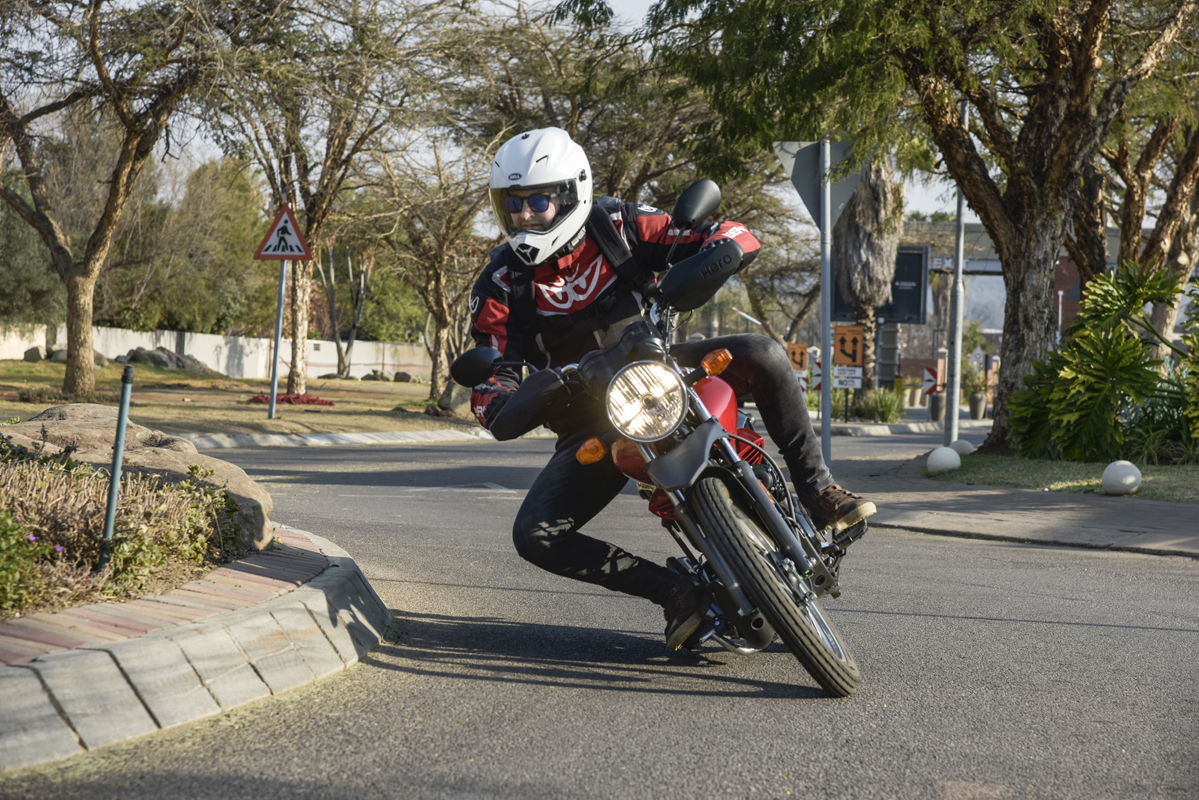
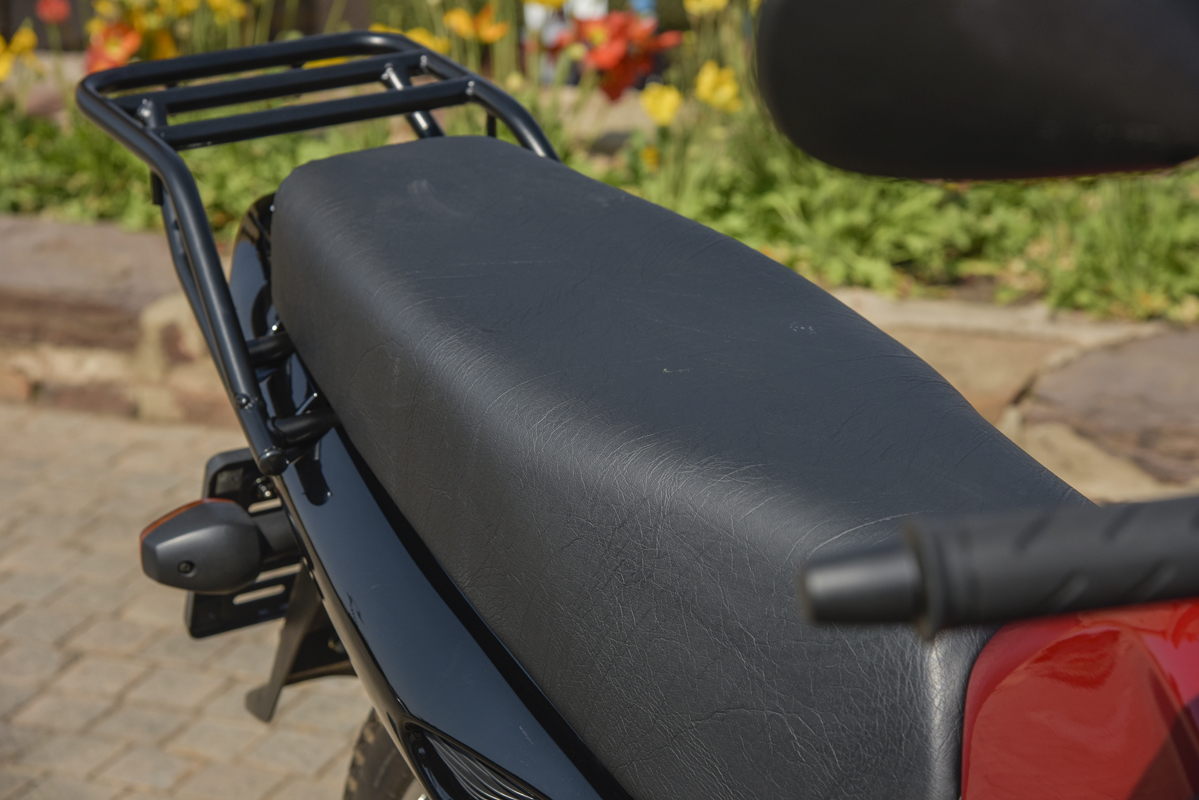
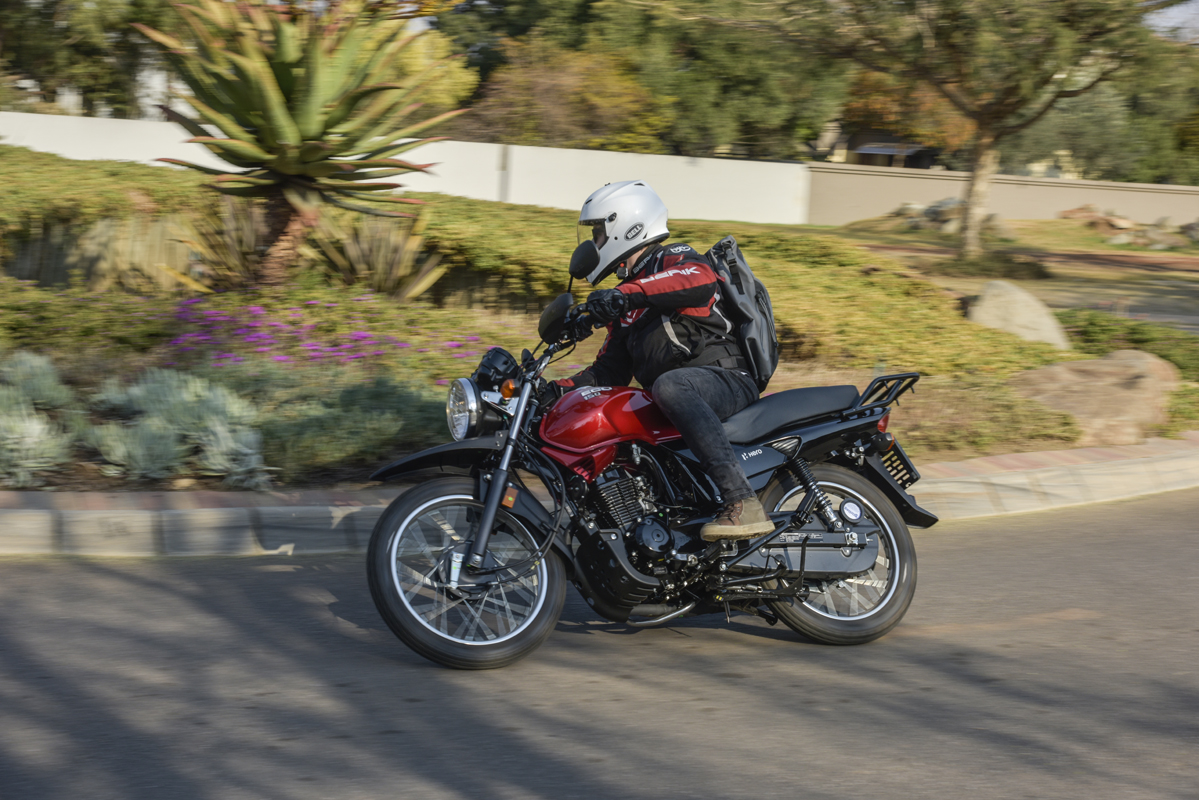
If you live in Pretoria as I do, you’ll understand how difficult it is to stay off the dirt. So, I took the TR down Boschkop road and turned onto the 20 km dirt route (R964) to Rosemary Hill. Speeds of 80 km/h to an indicated 120 km/h were achieved in comfort without feeling too dodgy or unstable. You definitely won’t be going Enduro riding on the TR, but if you need to cross a long dirt back road, the TR will happily do so, as the tall bars, soft seat and thick rubber footpegs all result in a comfortable ride.
Photo credit: Bjorn Moreira / ZA Bikers
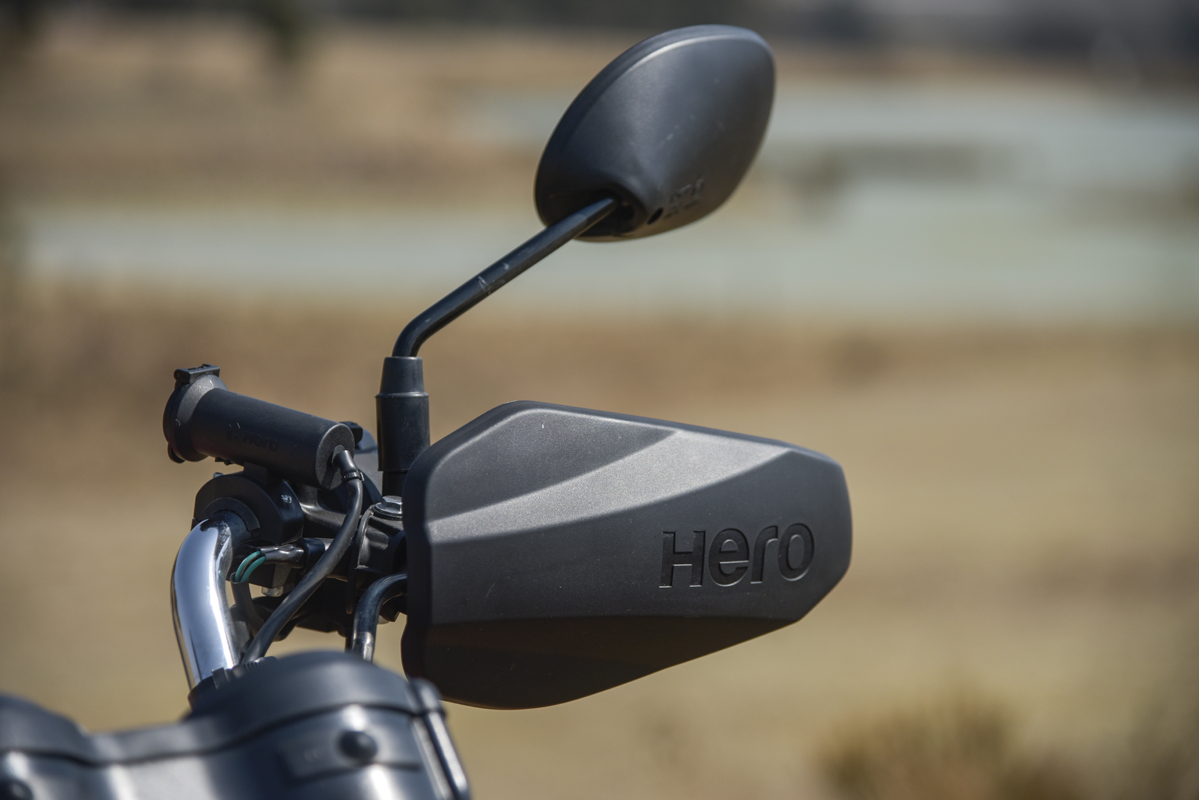
The handguards look great on the bike but function mostly as wind deflectors as they aren’t connected to the bar ends. For added practicality, Hero has fitted the TR with a centre stand for easy cleaning, maintenance and repairs too.
Photo credit: Bjorn Moreira / ZA Bikers
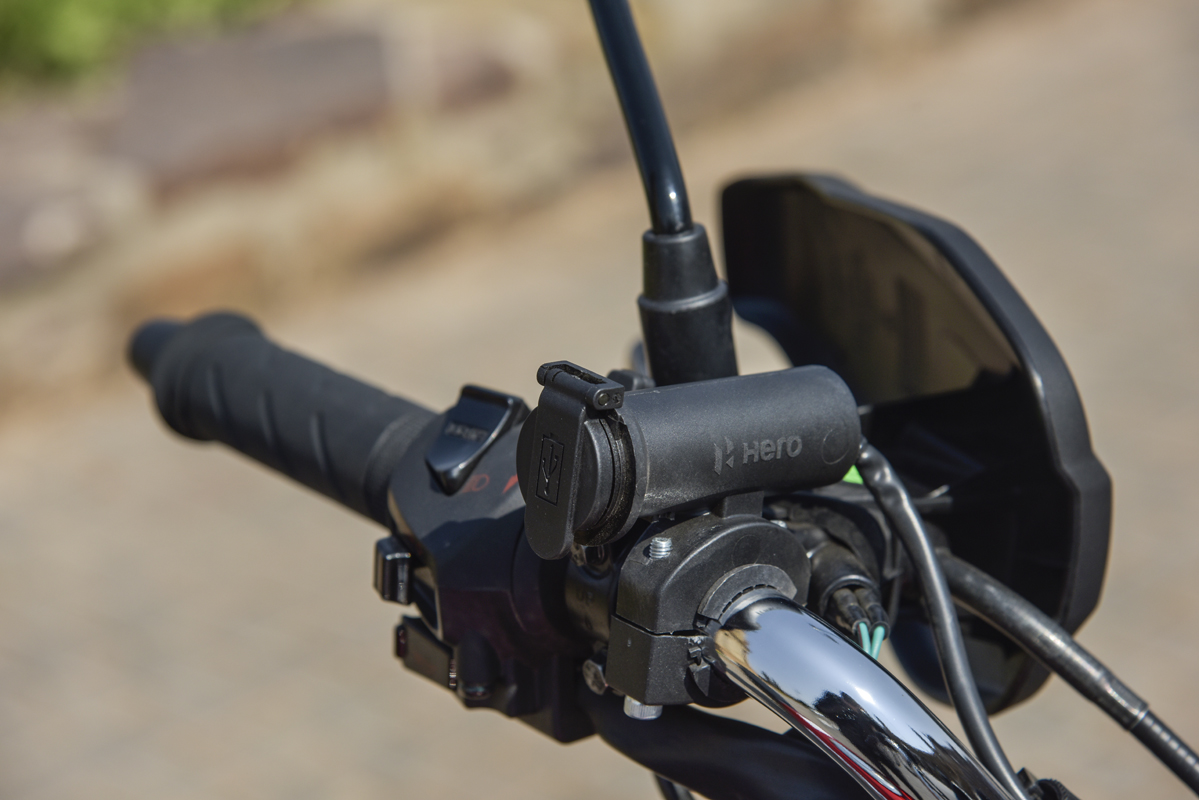
I found myself using the USB port more often than most, as we millennials usually do, but it also comes in handy for the delivery riders who can’t afford a dead GPS or cell phone battery. The TR is equipped with both an electric start and a kick-starter, so if your battery dies for some reason you can still kick the ECO back to life the old fashioned way.
Photo credit: Bjorn Moreira / ZA Bikers
In all honesty, I struggled to get the 12.5-litre tank empty, the needle barely moved after 200 km of riding and was about halfway after 350 km. My average after riding in town and out was just over 55 km/L, so that’s 680 odd kays on a tank. Keeping in mind, the TR is just as economic as the standard ECO even with its heavier spoked tubed wheels and more aggressive tyres.
Photo credit: Bjorn Moreira / ZA Bikers
Reaching these economic figures are easy going too. The little single is a smoothie that doesn’t mind being lugged around and it will still keep up with traffic even when short-shifting at around 5,000 rpm. Smoothie indeed, the vibrations are so minimal that you can hardly feel them, in fact, you can see clearly through your mirrors while on the main jet—a rarity on any single-cylinder motorcycle.
Photo credit: Simon Morton / ZA Bikers
If you are still concerned about an “Indian bike” not being reliable then Hero’s warranty should convince you otherwise. We are talking about a 5 year/100,000 km warranty, with 3,000 km service intervals costing you 500 odd rand a pop—that’s a bargain if you ask me. These bikes have been running for decades in cities that aren’t well equipped for servicing, ridden by riders that couldn’t care less about a service interval and yet thirty-odd years down the line that old Hero will still start first kick.
Photo credit: Bjorn Moreira / ZA Bikers
In summary, Hero has built an ECO that can survive Africa, a bike that will be left behind with the Nokia 1011 when we are all but dust. For R2,000 more the TR will accommodate dirt travel and if your business or travels can be broadened by that extra cost, then yes the TR is worth it. The Hero ECO 150TR is competing in a very competitive class, but for the value it offers, at just R22,995 I think it ranks way up there with the top guns.
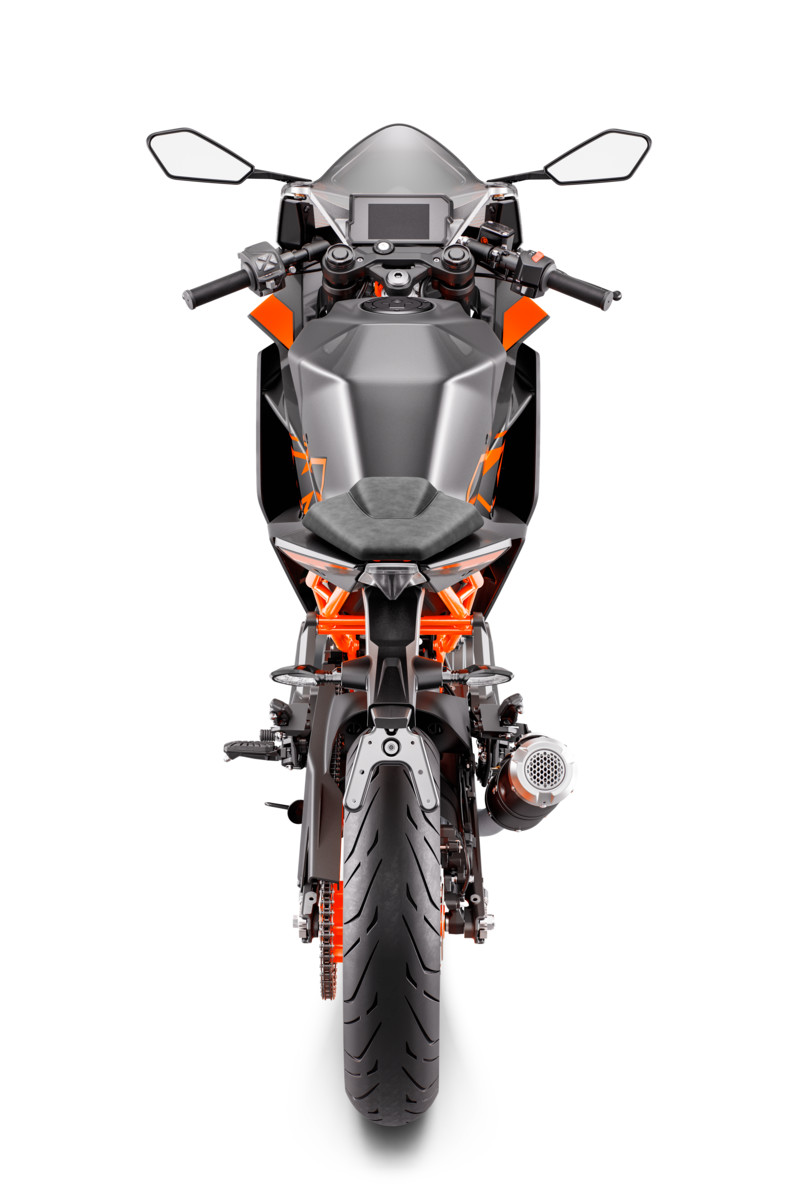
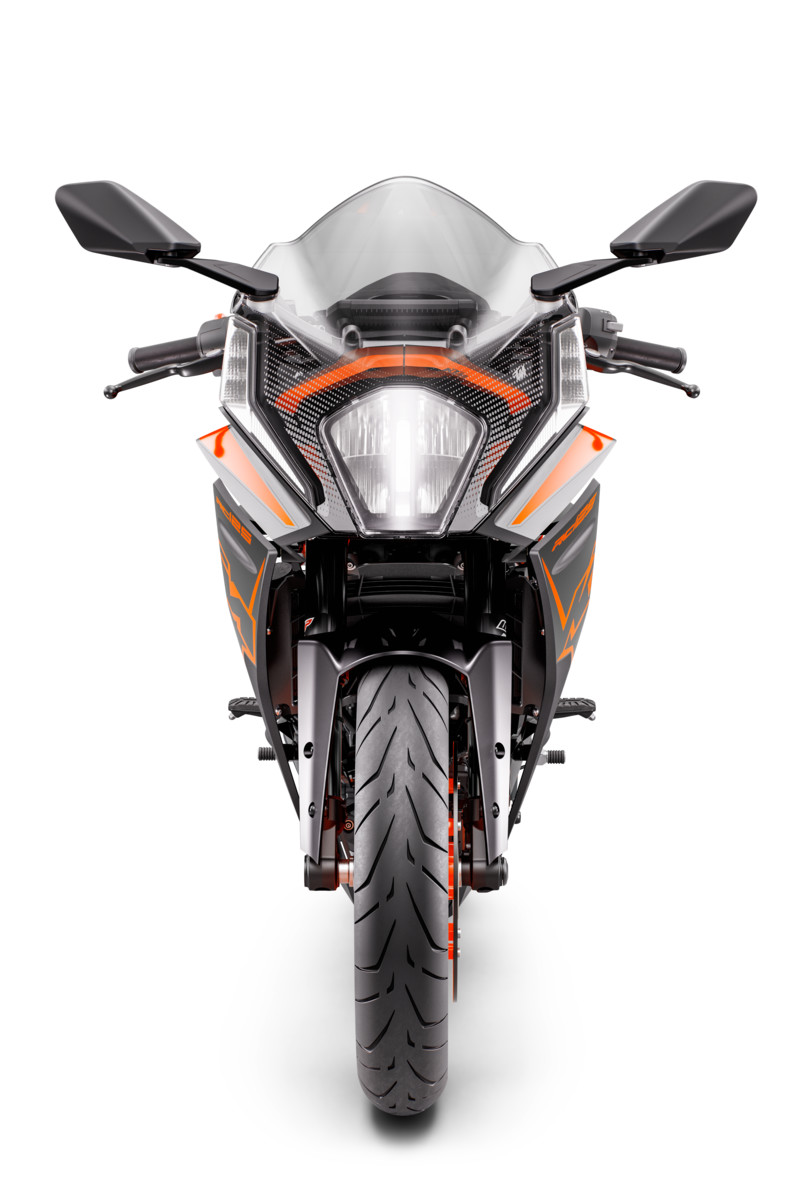
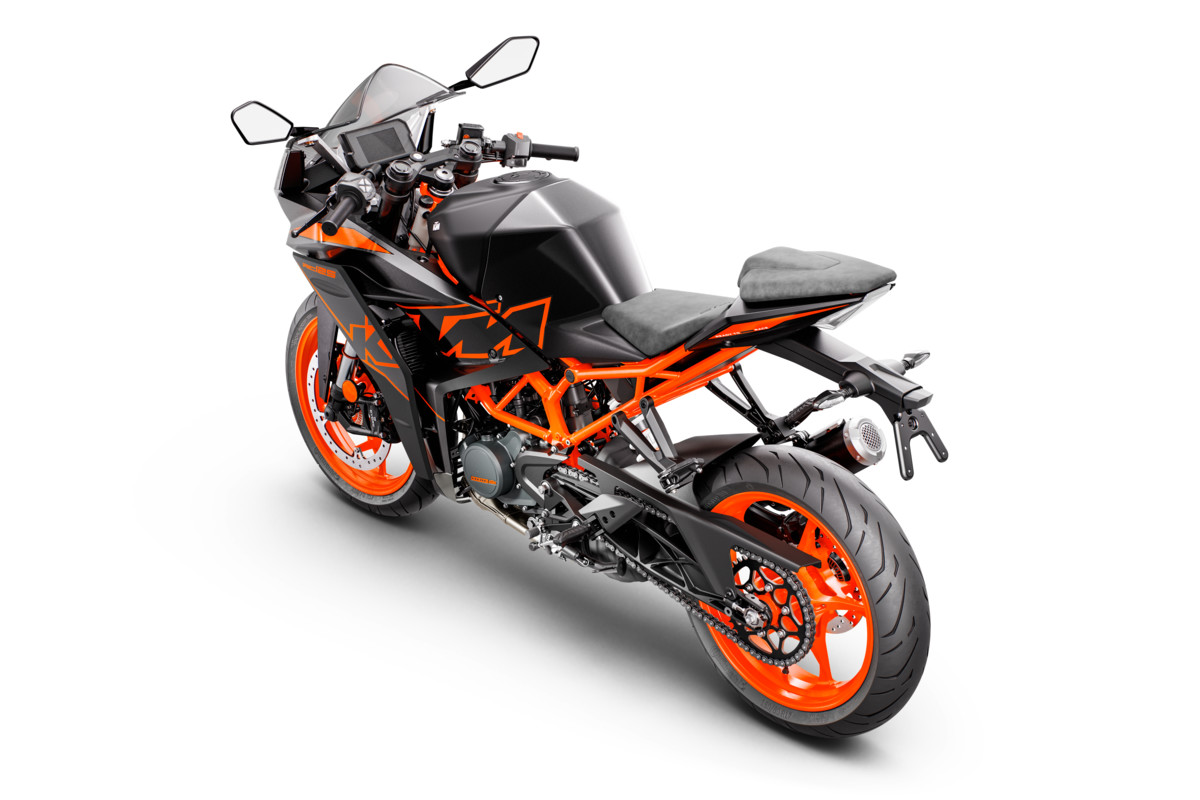
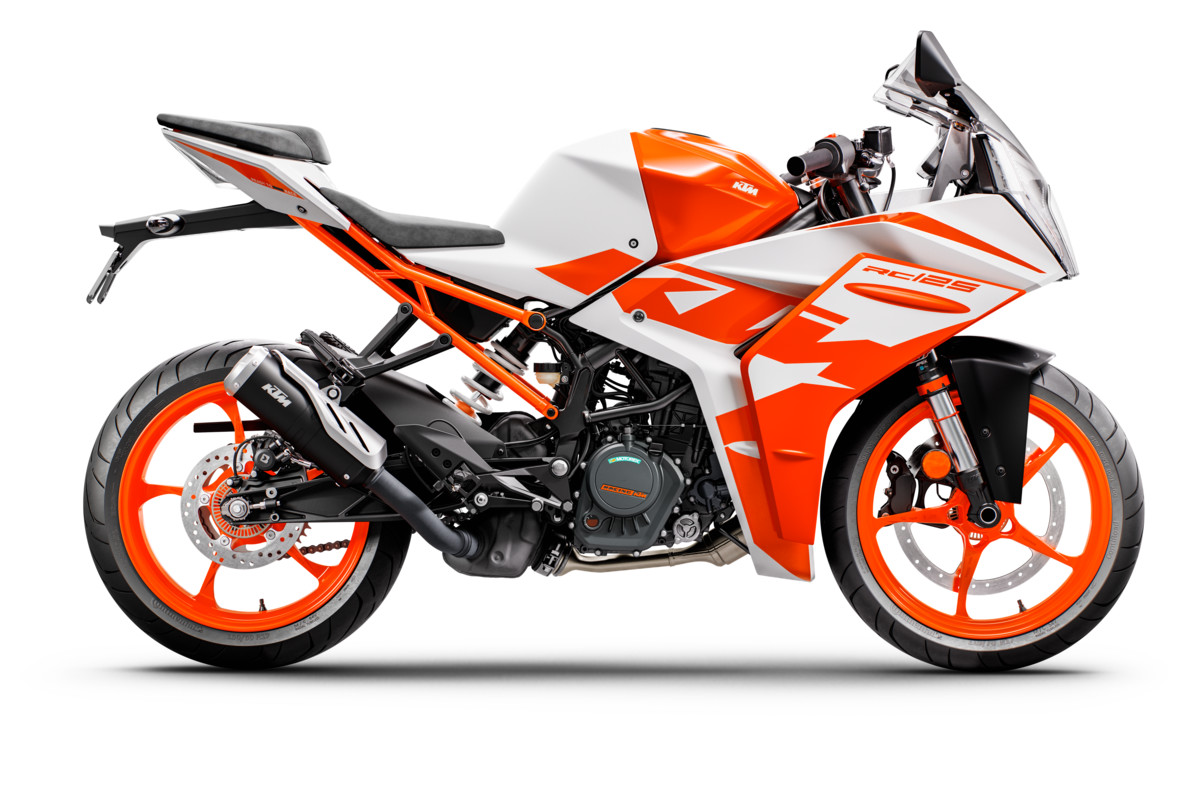
For a manufacturer who has been relatively late to the road bike market, KTM has done a brilliant job of setting the cat among the pigeons against the established leaders of the pack in every category they have entered.
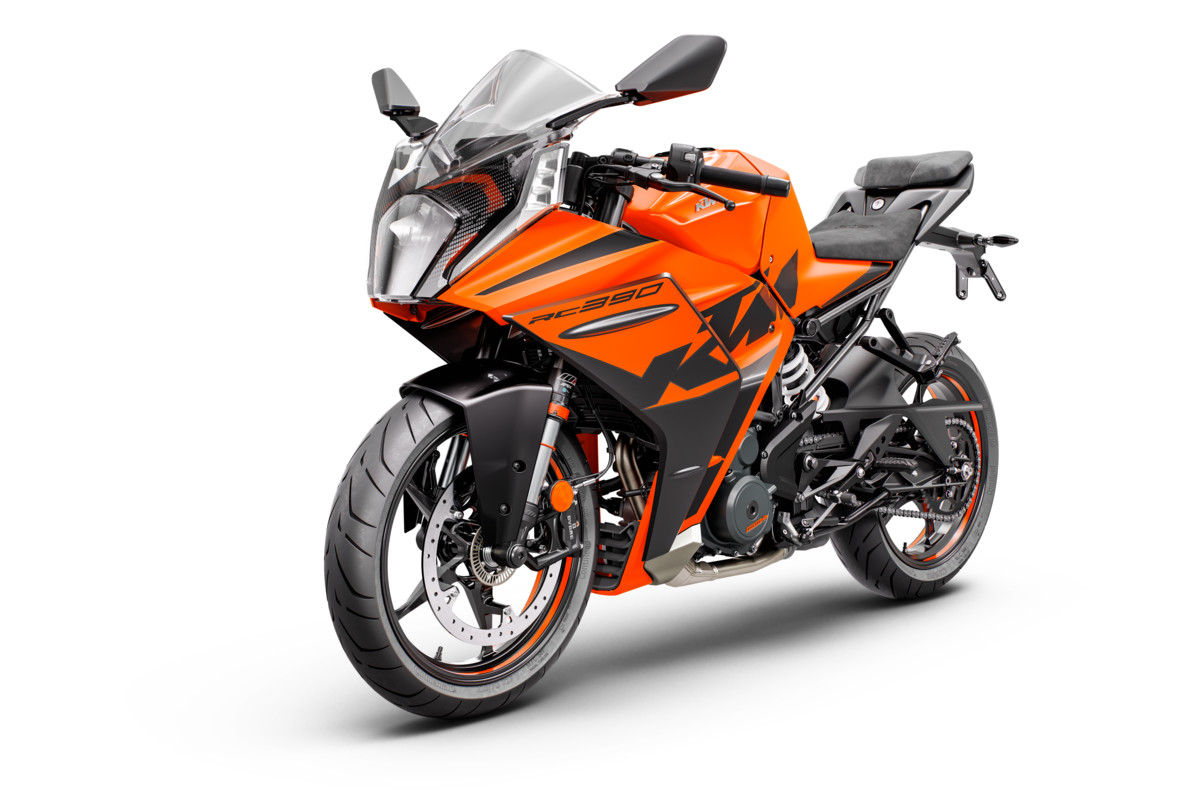
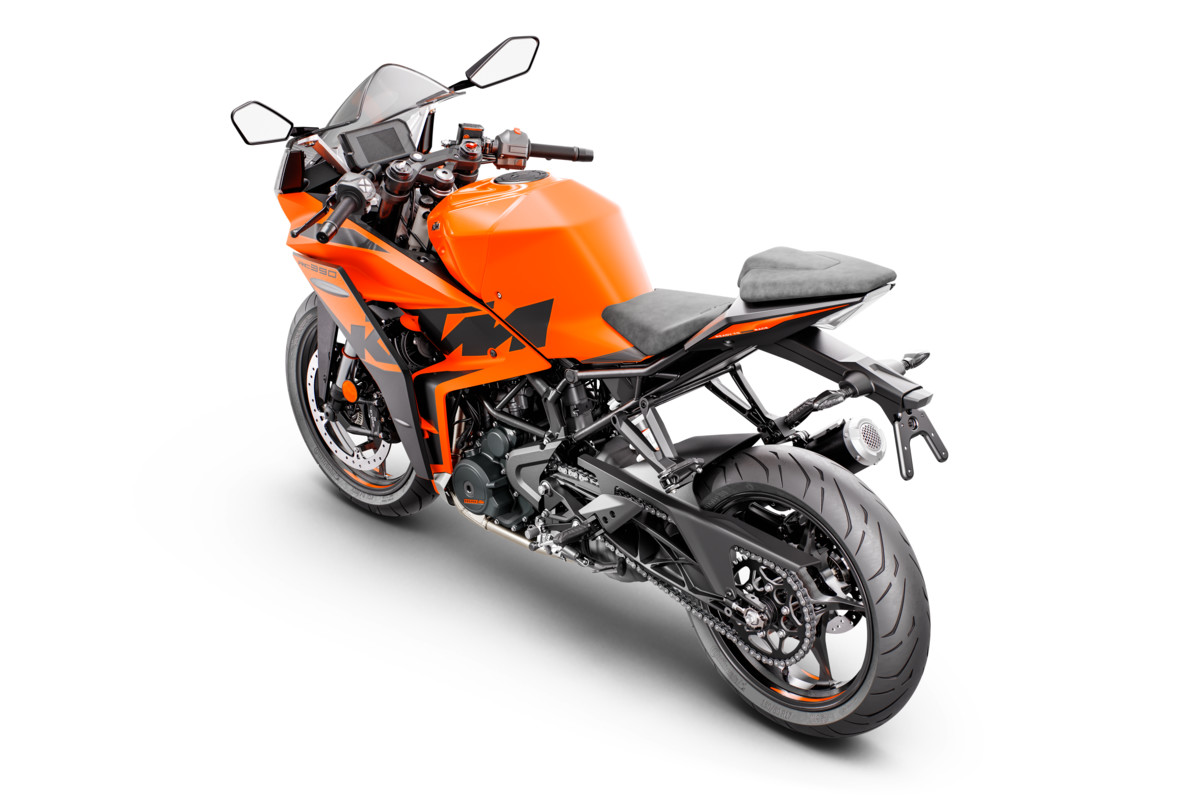
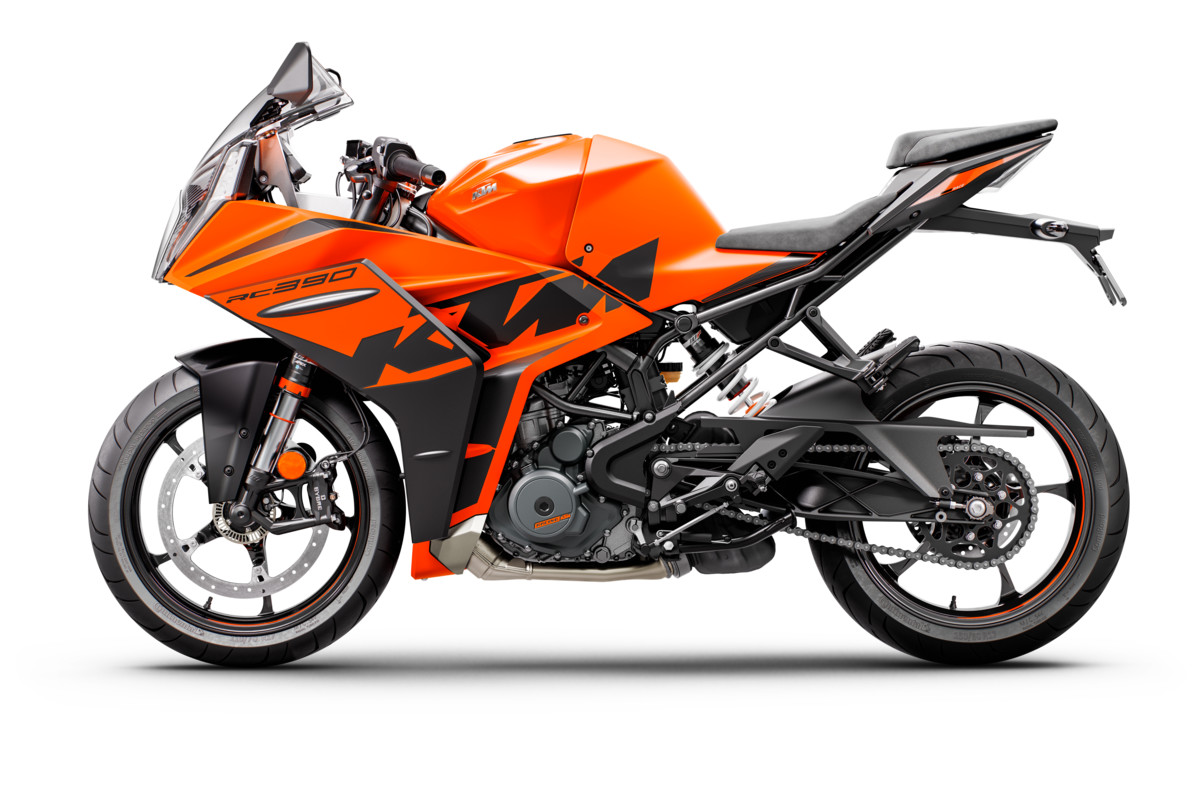
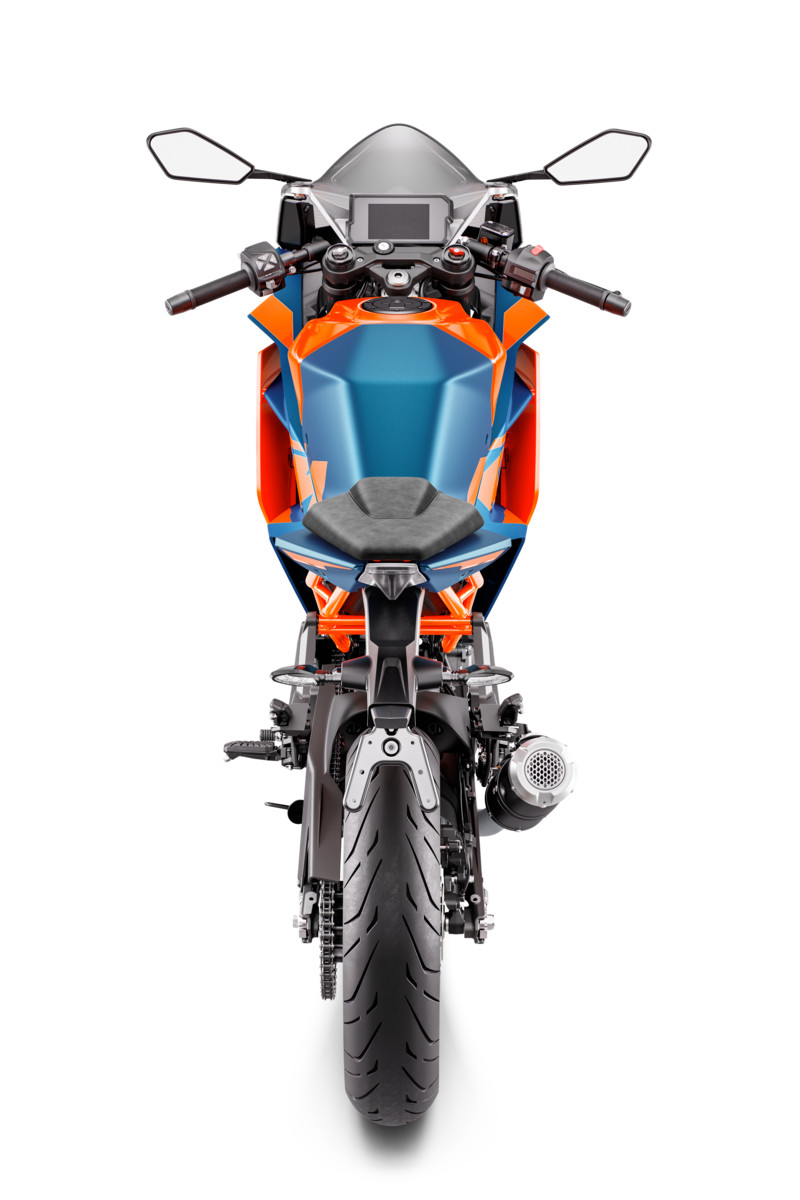
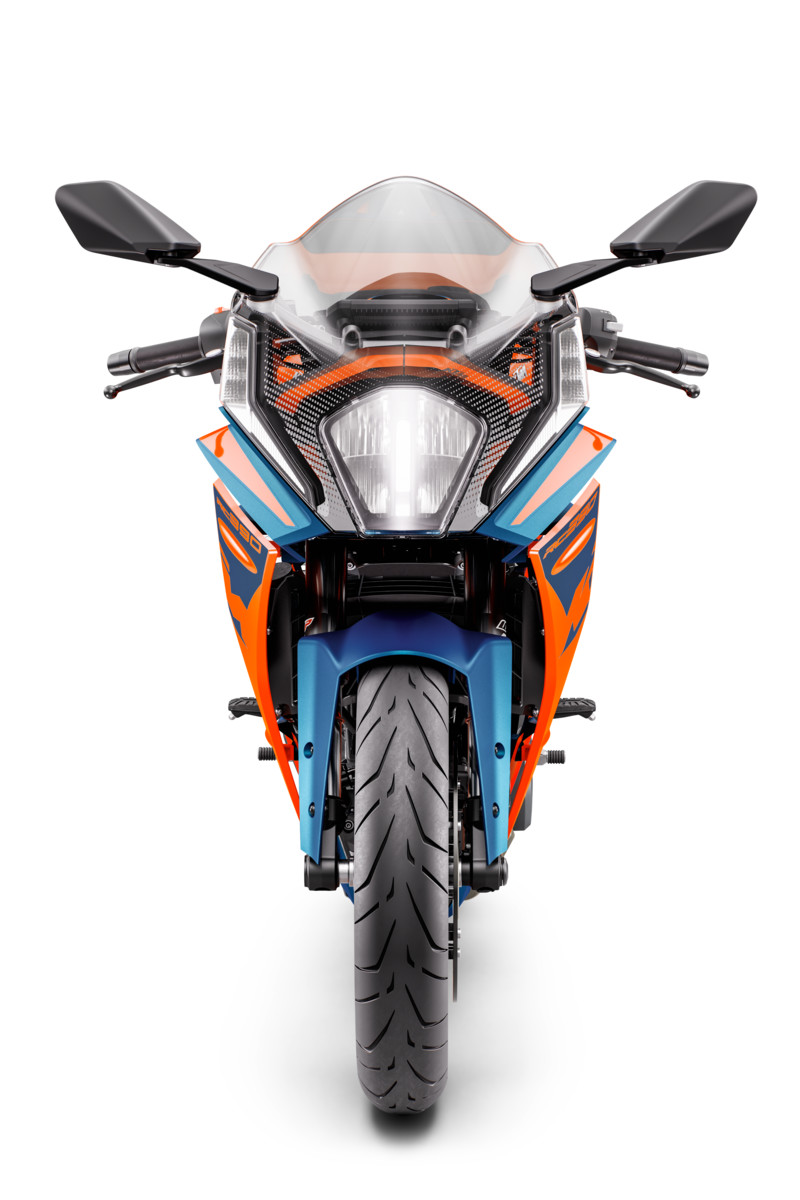
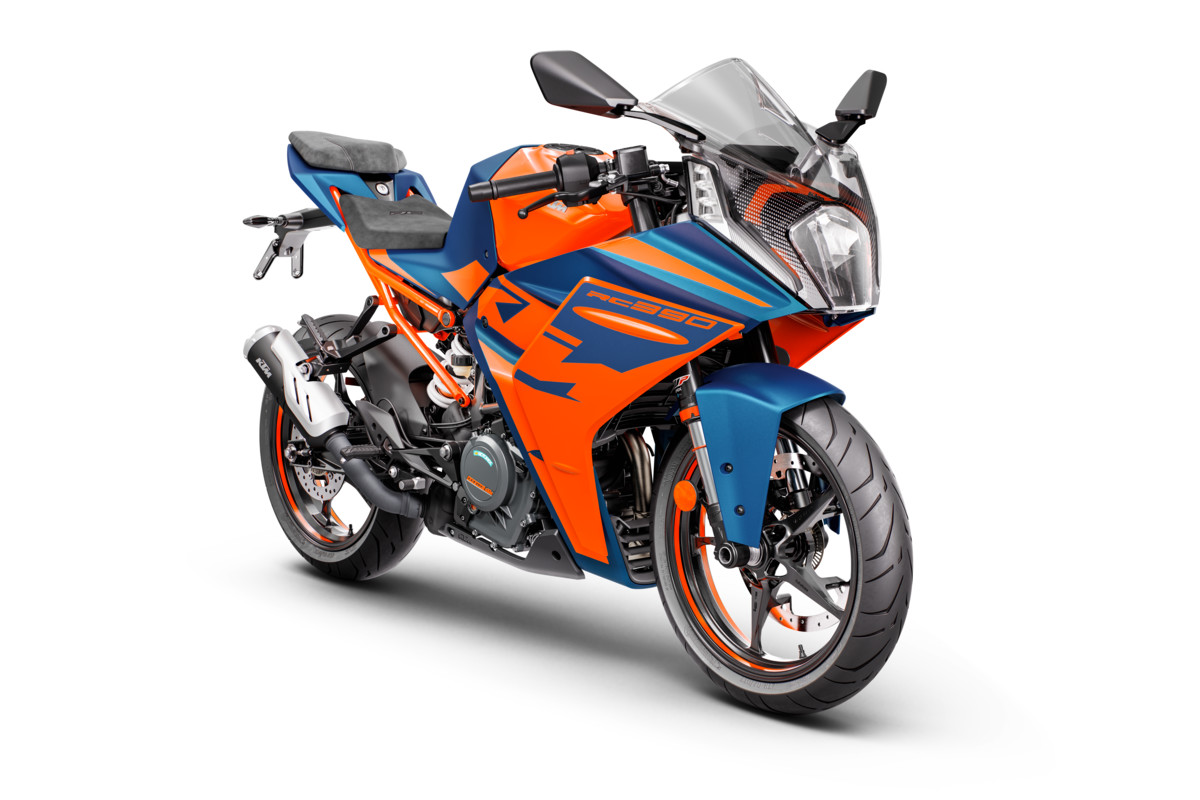
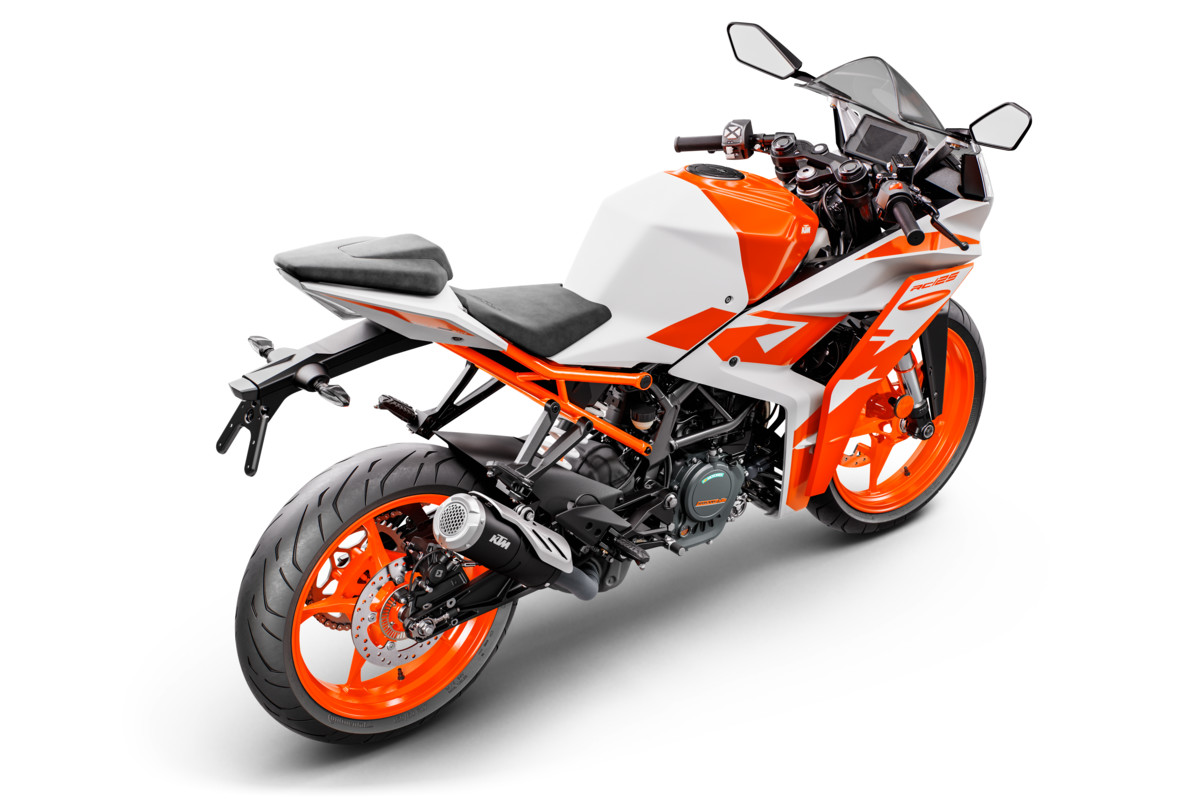
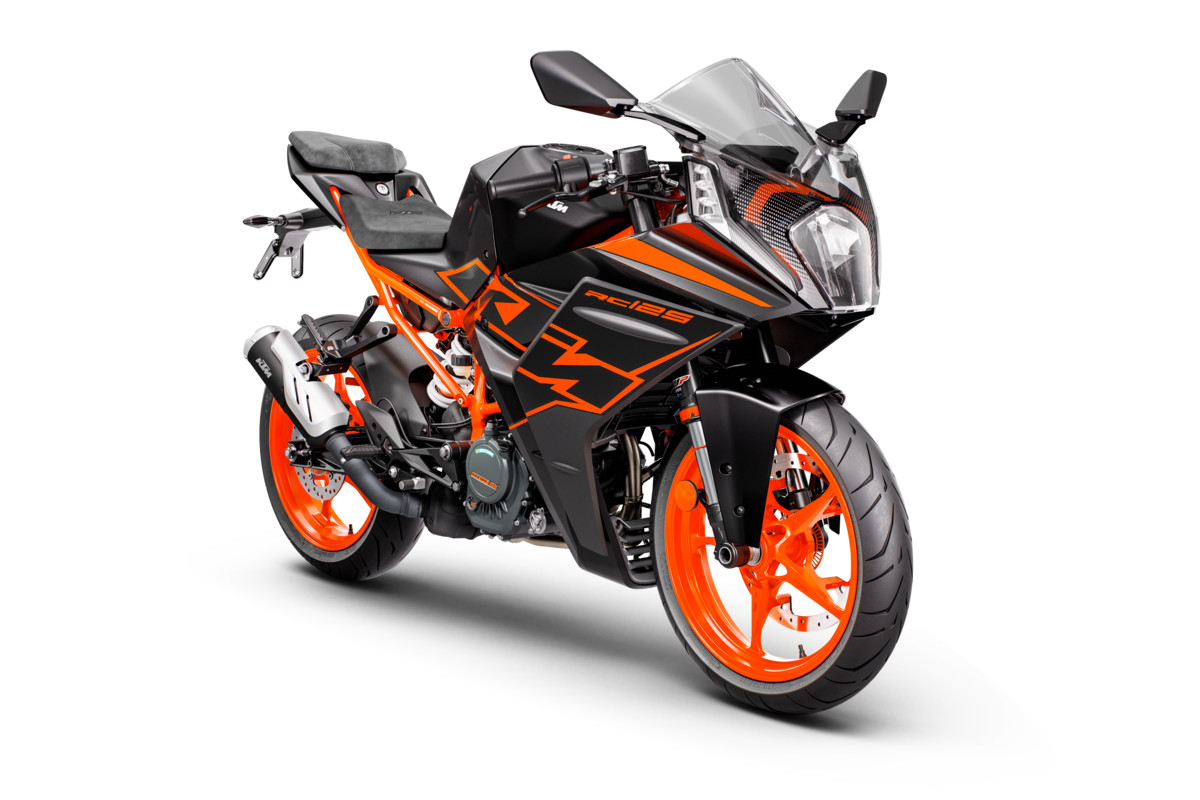
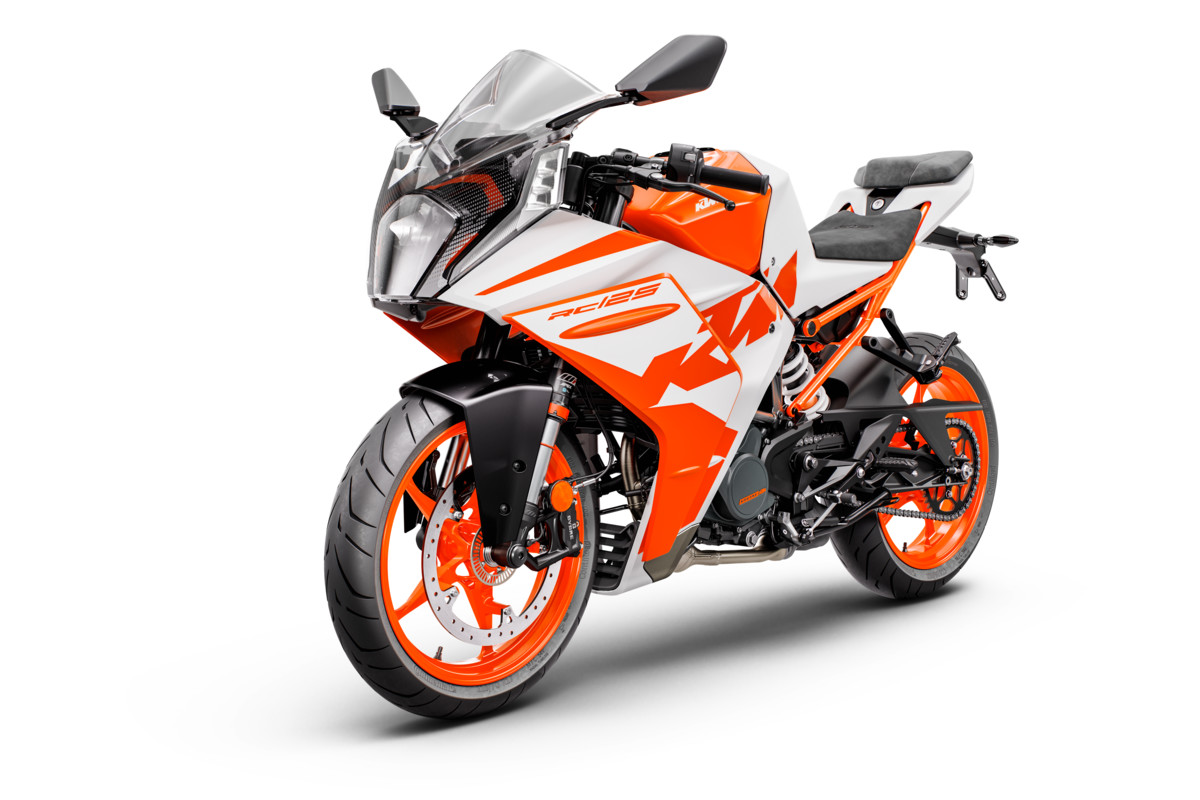
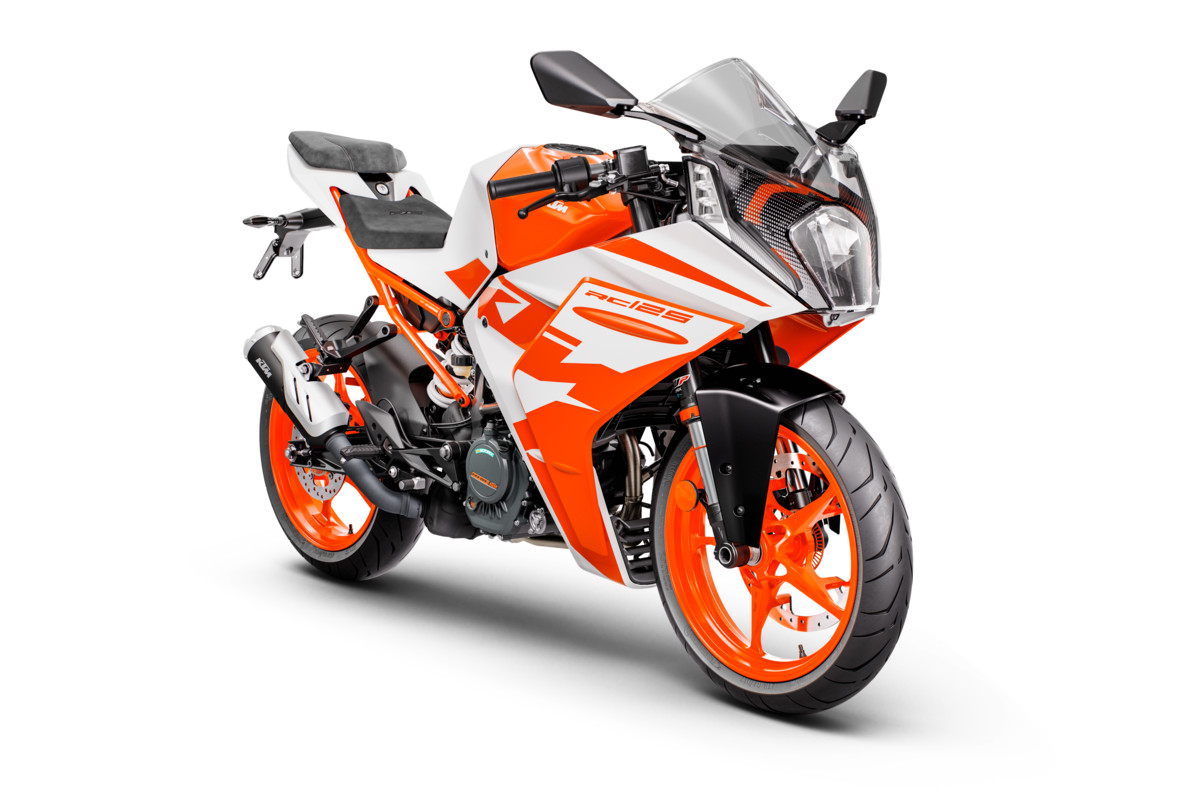
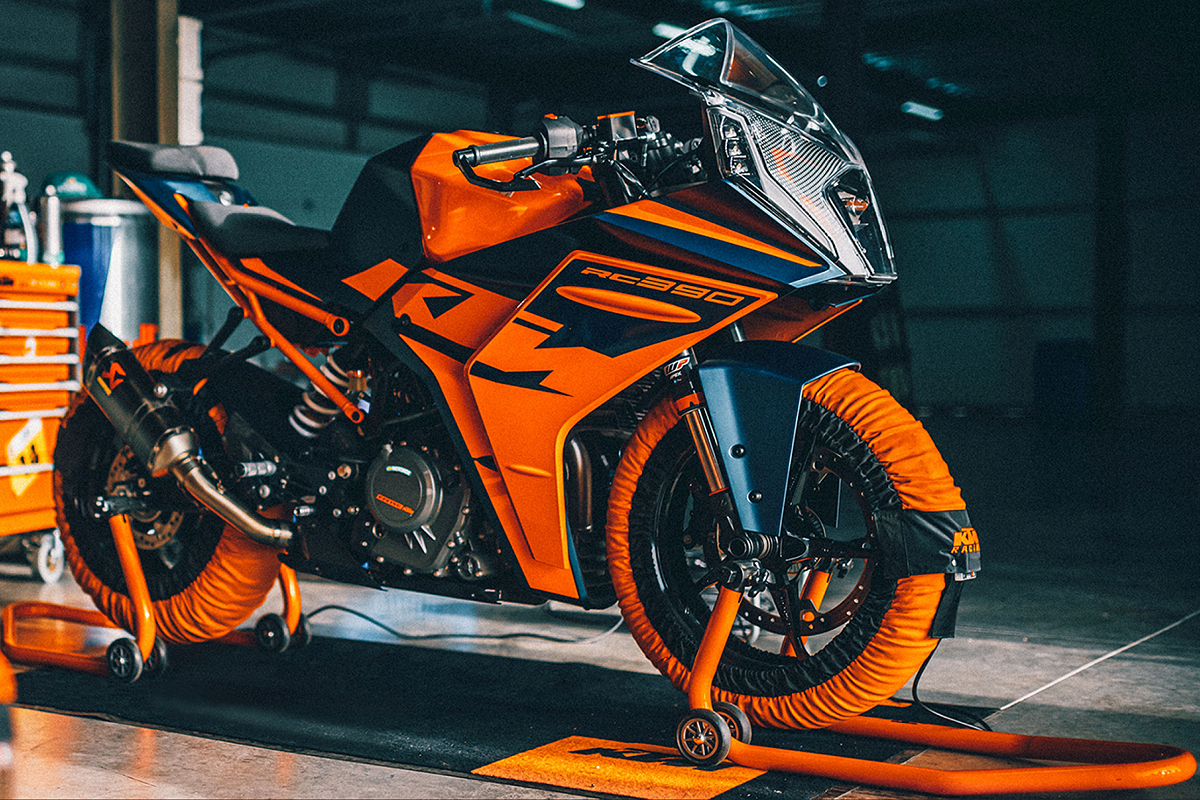
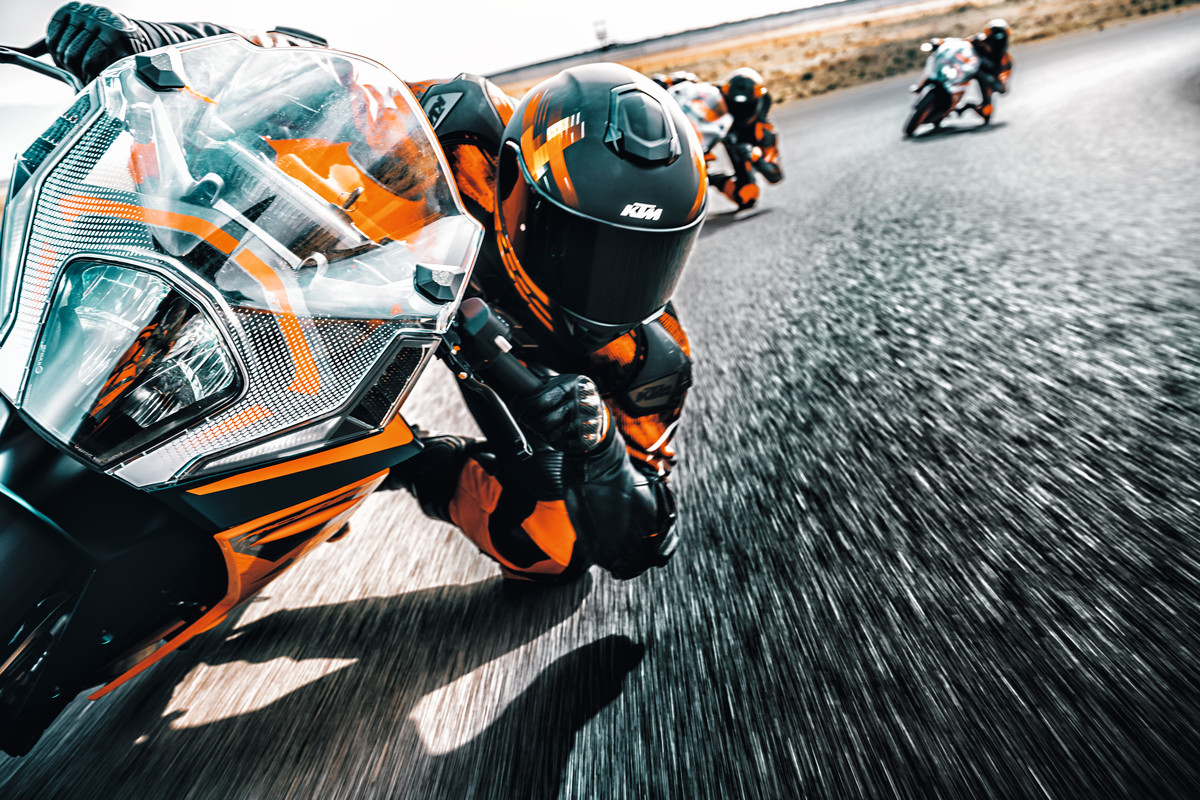
It would be fair to say that, with the R1C25, RC200 and RC390, KTM might not have invented the baby sports bike market, but they moved it along by a huge margin. Often copied, but rarely bettered, the RC range has always offered sports bike ability and looks in beginner friendly packages.
Photo source: KTM Official
For 2022, things are about to get even better as the RC125 and RC390 have been on the receiving end of an extensive raft of improvements that have taken them back to the top of the class.
1 of 14
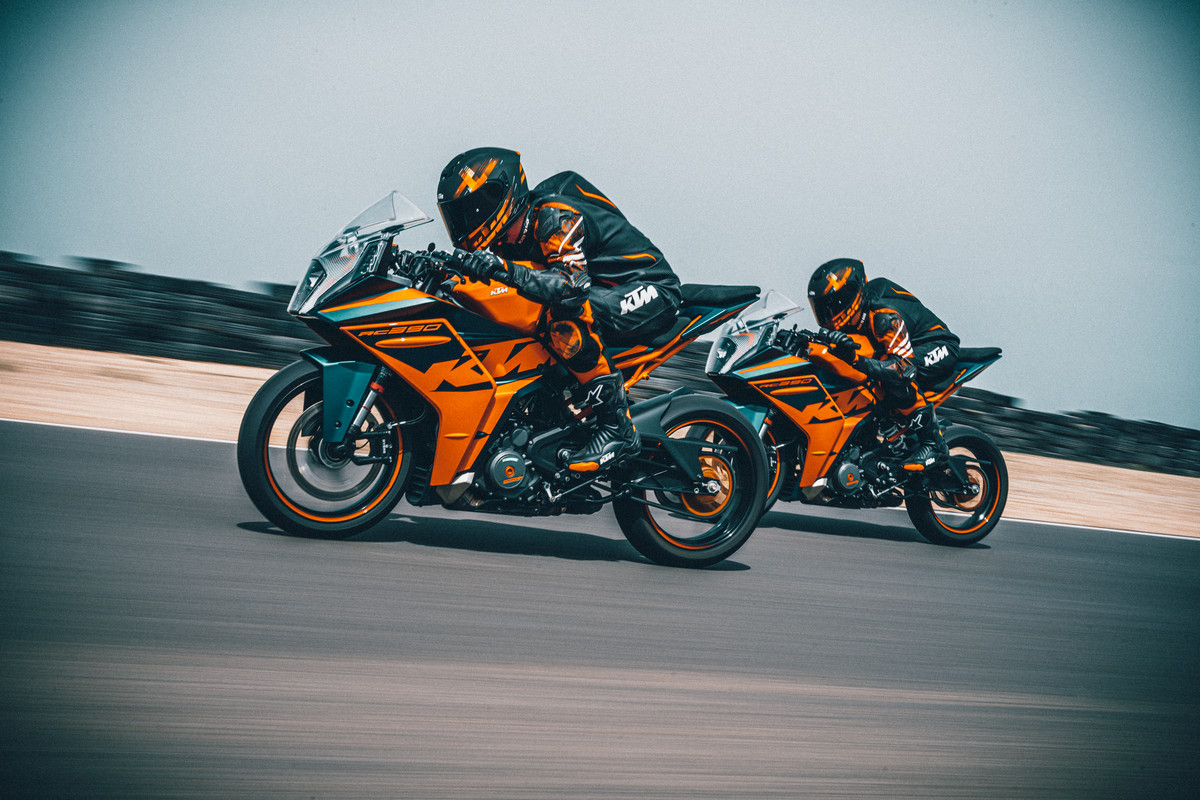
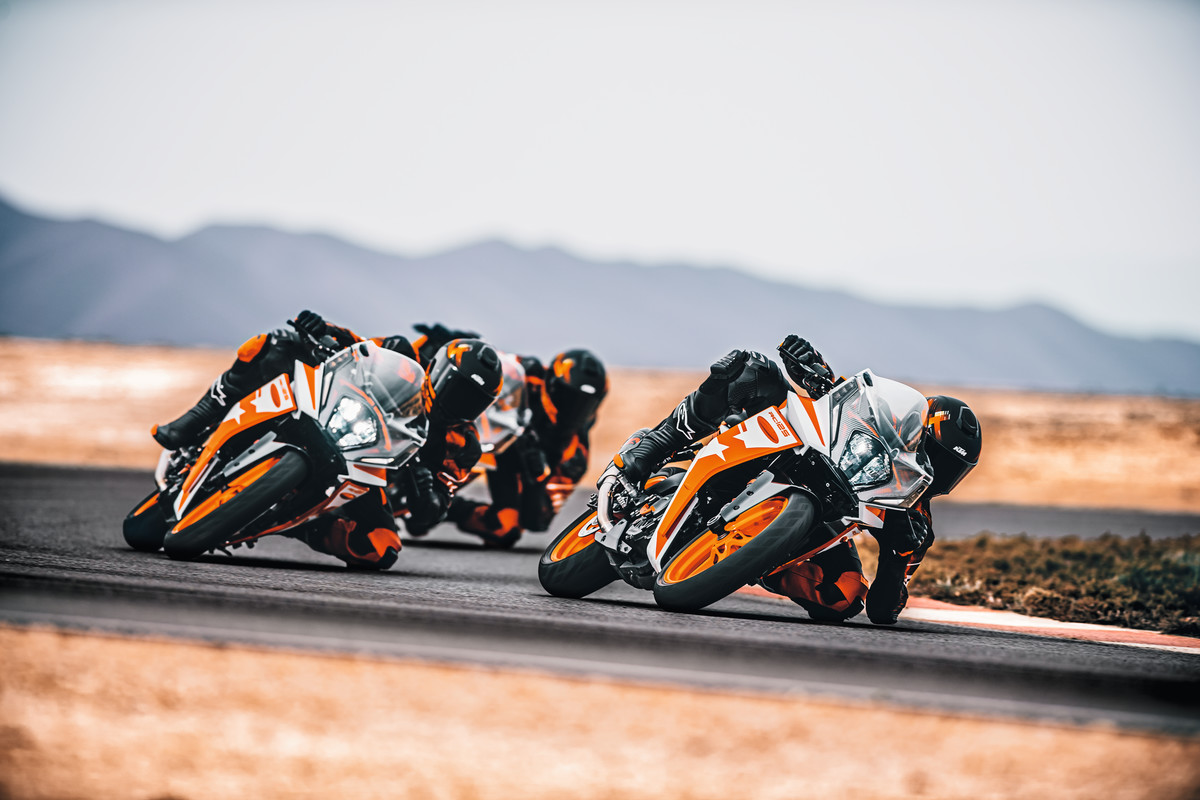
The new bikes are not only re-styled with current MotoGP thinking in mind, they have also lost a huge amount of weight and, despite Euro5 emission legislation, have lost none of the horses from the engine, while increasing torque slightly due to a new airbox design.
The first thing you notice are the looks. New, sharp-edged styling mirrors the MotoGP bikes and is aerodynamically more efficient. These are truly litre-superbikes in miniature, something that is disguised so well that, from a distance, you are not sure if you are looking at a learner-friendly small bike or a full-on superbike. It’s only the single disc on the front wheel that gives the game away.
Photo source: KTM Official
Every panel has been redesigned, with the aim of increasing overall size to not only improve appearance but also to optimise aerodynamics at higher top speeds. Another by-product is improved wind and weather protection, using a combination of inner and outer body panels to direct airflow away from the rider.
Because of this redesign, the riding position is now more contoured to the body of the rider, with improved knee room against the narrower petrol tank which, in turn, allows for easier rider movement when the going gets twisty.
Photo source: KTM Official
For those who like to work on their own bikes, the bodywork is now affixed by new fasteners and clips to aid removal and re-fitting.
But the looks hide the really important features. The chassis is all-new, offering better dynamics and more stiffness. Not only that, but it is lighter than the outgoing model by 1.5kg. And, talking of weight, the wheels have lost an incredible combined 3.4kg, while the ByBre brake calipers are lighter by almost a kilogram between them.
Photo source: KTM Official
The suspension is completely new. WP APEX upside-down forks are fitted to the RC390 and are fully adjustable for compression and rebound – one function per fork leg! The RC125 gets WP APEX forks with a factory-specified sporty setting and a new WP APEX rear shock.
Photo source: KTM Official
If that wasn’t enough, the electronics will have your eyes popping out. The RC390 is, simply, the most sophisticated small-displacement motorcycle on the market today. Sporting rider aids are normally found only on much larger bikes, the RC390 features Supermoto ABS (rear ABS switched off, front ABS working in conjunction with rear-wheel lift control to prevent the front ABS chiming in too soon), lean-angle sensitive Cornering ABS and Cornering Traction control and an optional Quickshifter.
Photo source: KTM Official
The new TFT dash controls all this electronic trickery and is now fully connectible with your phone.
What this all adds up to is a pair of the most desirable baby sports bikes ever. Brilliant not only for beginners but possessing enough talent for even the most experienced riders. The new models will be in KTM showrooms from March 2022. The only question is: can we wait that long?
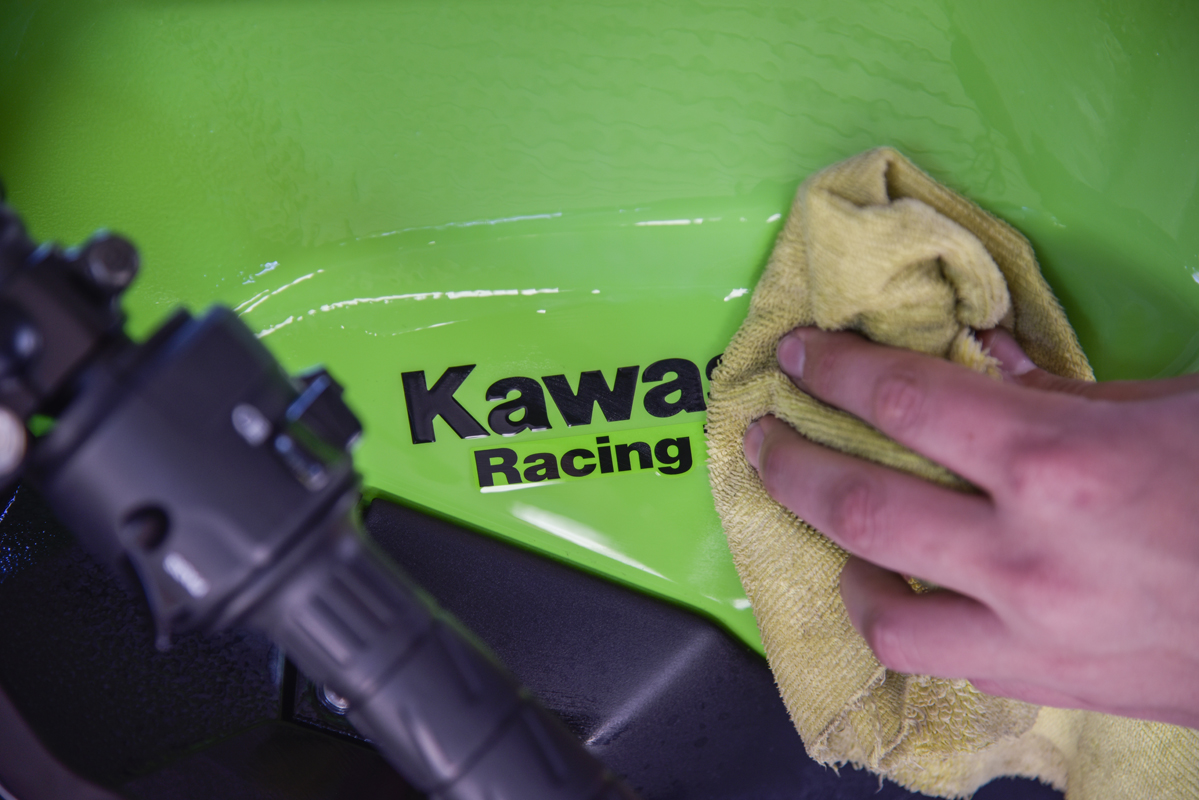
We have hopefully seen the last throes of what has been a particularly severe winter. Snow in Cape Town! Who would have thought? When we wake up to blue skies and warm weather, riding our bikes takes on a whole new appeal. So, before we hit the road, how do we get our pride and joy looking like new again? We all know that a shiny, sorted bike rides that much sweeter. For a fortunate few that problem just got a whole lot easier.
Photo credit: Bjorn Moreira / ZA Bikers
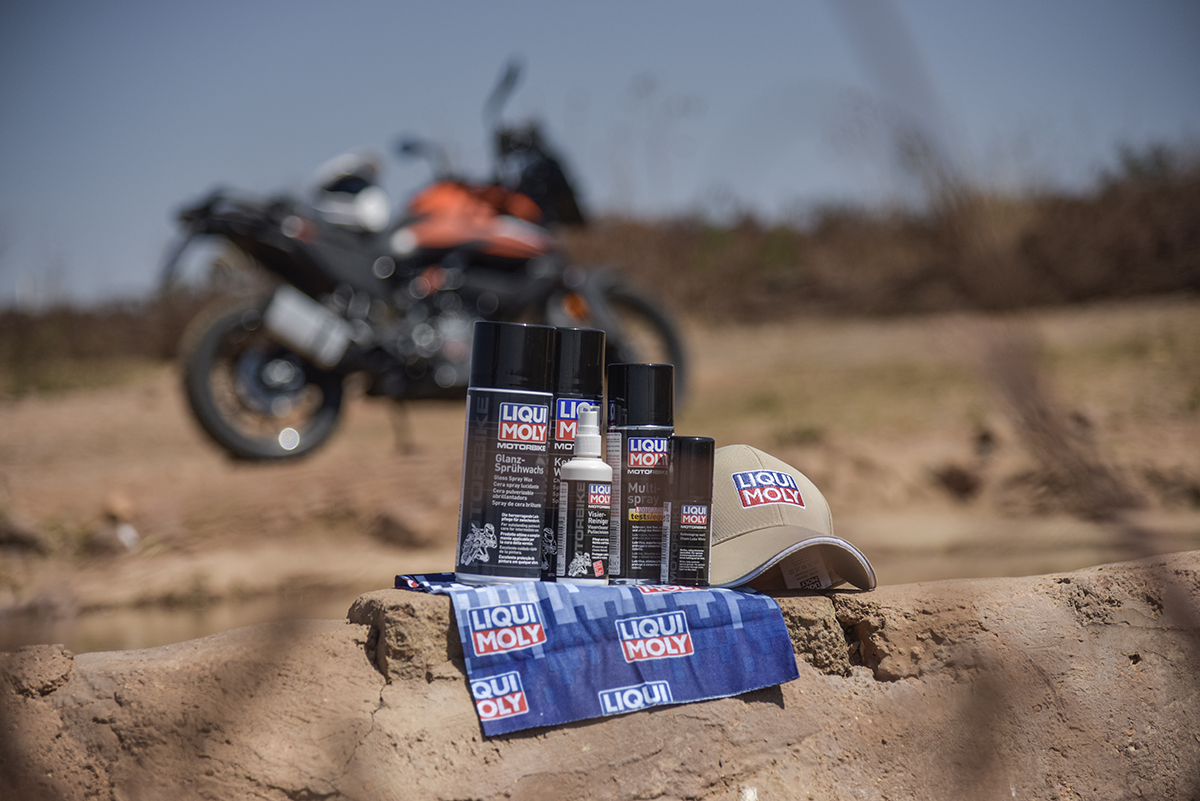
Our friends at LIQUI MOLY have put together five hampers made up of a selection of their superb bike care products. The lucky winners are going to get a cool cap, buff and the following assortment of goodies to get their beasts fit for the summer:
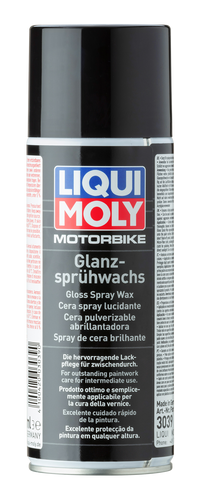
Gloss Spray Wax:
This amazing kit just gets sprayed on and then buffs up to a like-new shine, leaving your bike glossy and protected. Excellent for detailing work after a wash, or just to rid your bike of residual dust without scratching the surfaces.
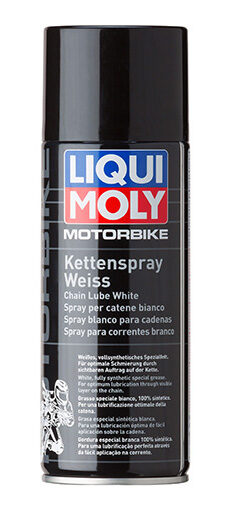
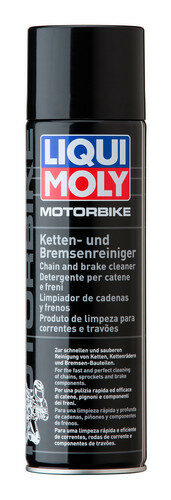
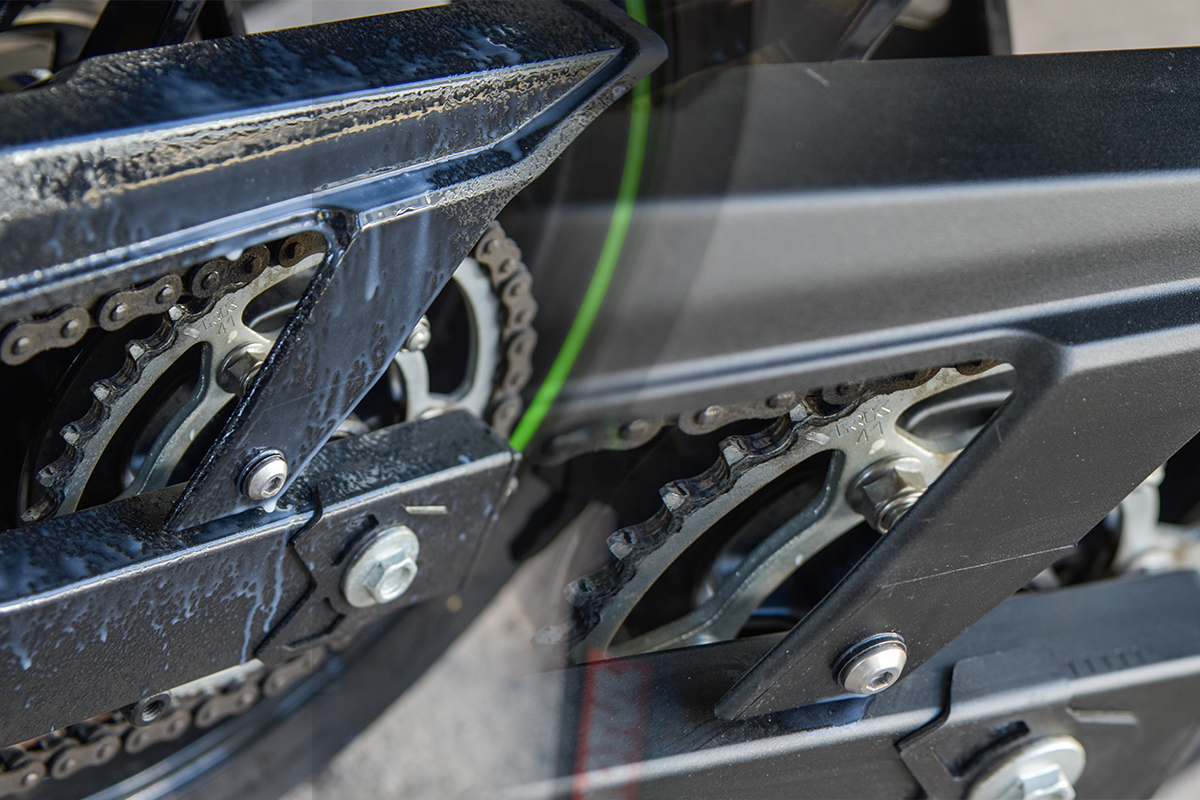
Now that your chain is spotless, you can give it that ‘from the factory’ look by applying a coat of this excellent lube that will keep both chain and sprockets as happy as the summer days are long.
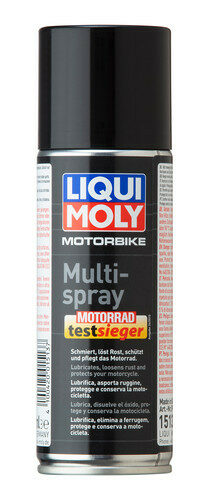
This stuff is flippen’ amazing! It has myriads of uses, displacing moisture, penetrating and protecting. Brilliant for switchgear, ignition switches, sticky footpegs, side stands and damn near everything else. Even for getting oil stains out of your wife’s jeans! I kid you not!
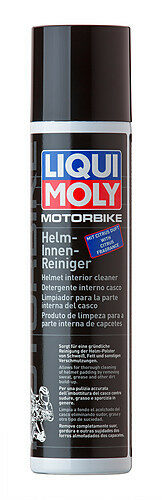
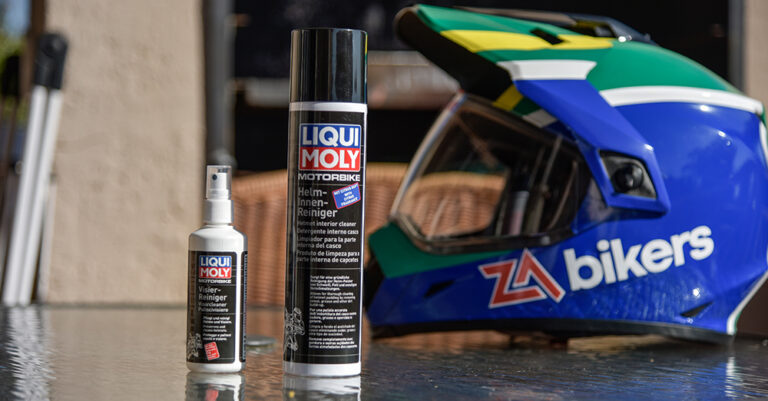
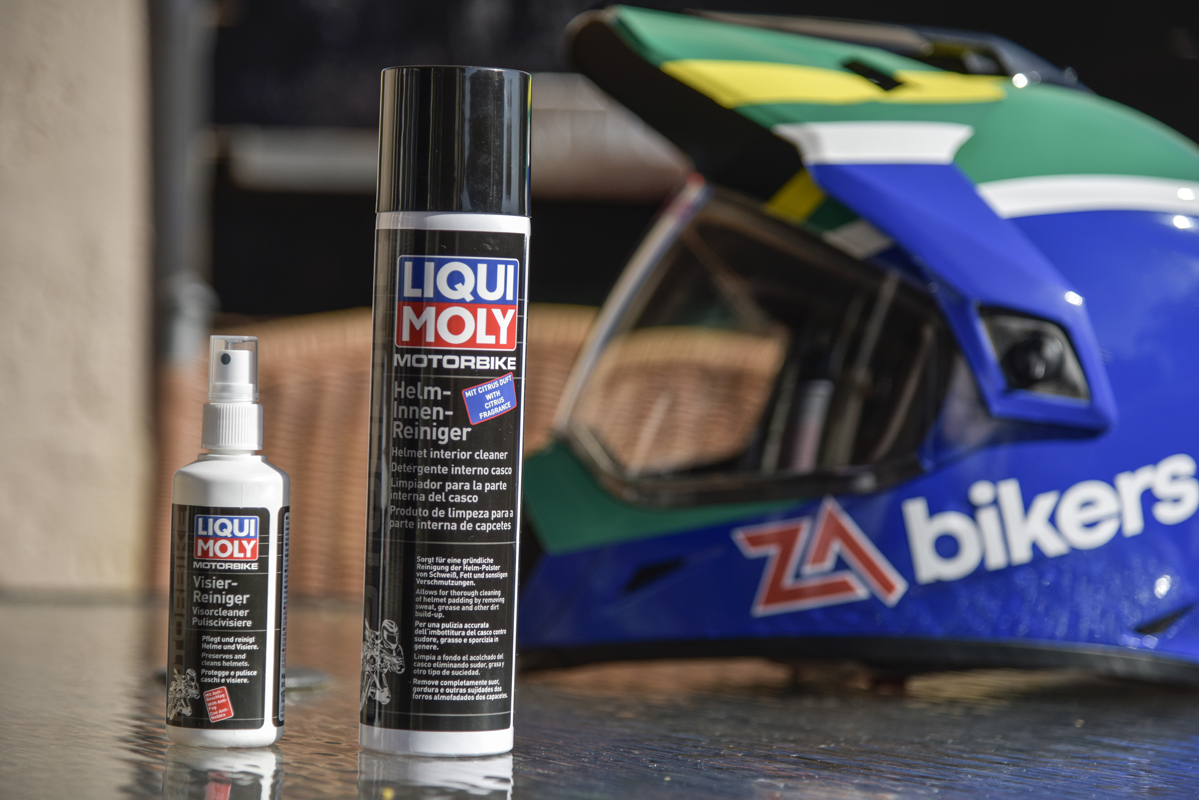
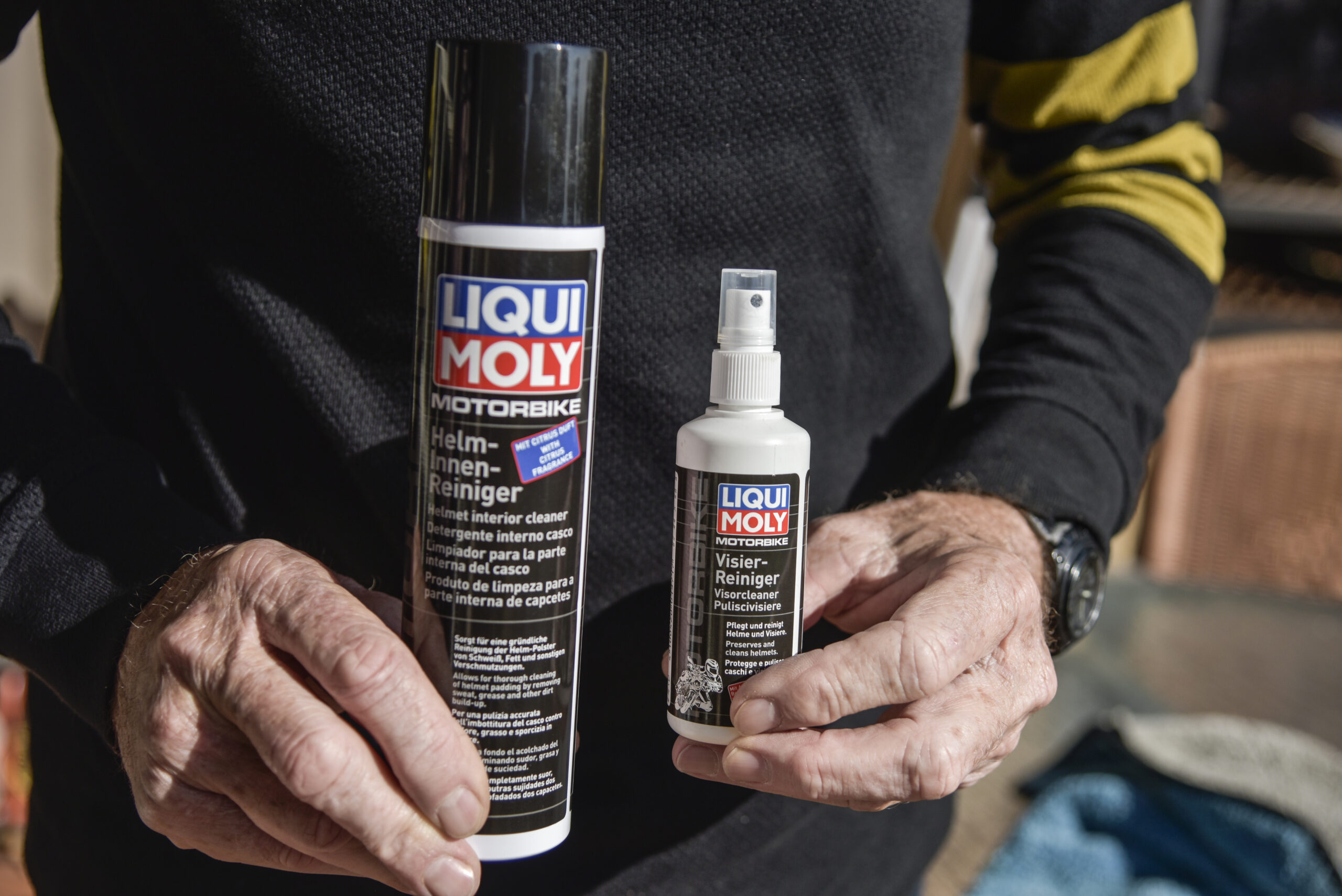
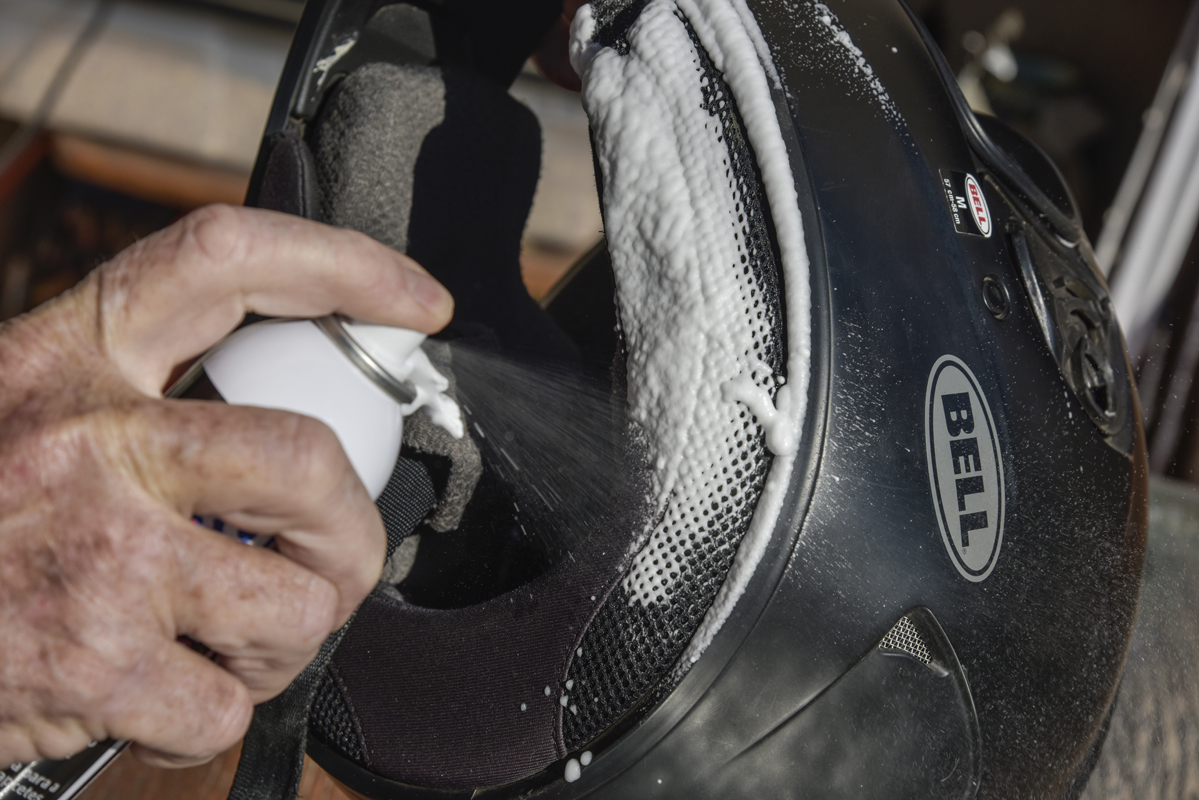
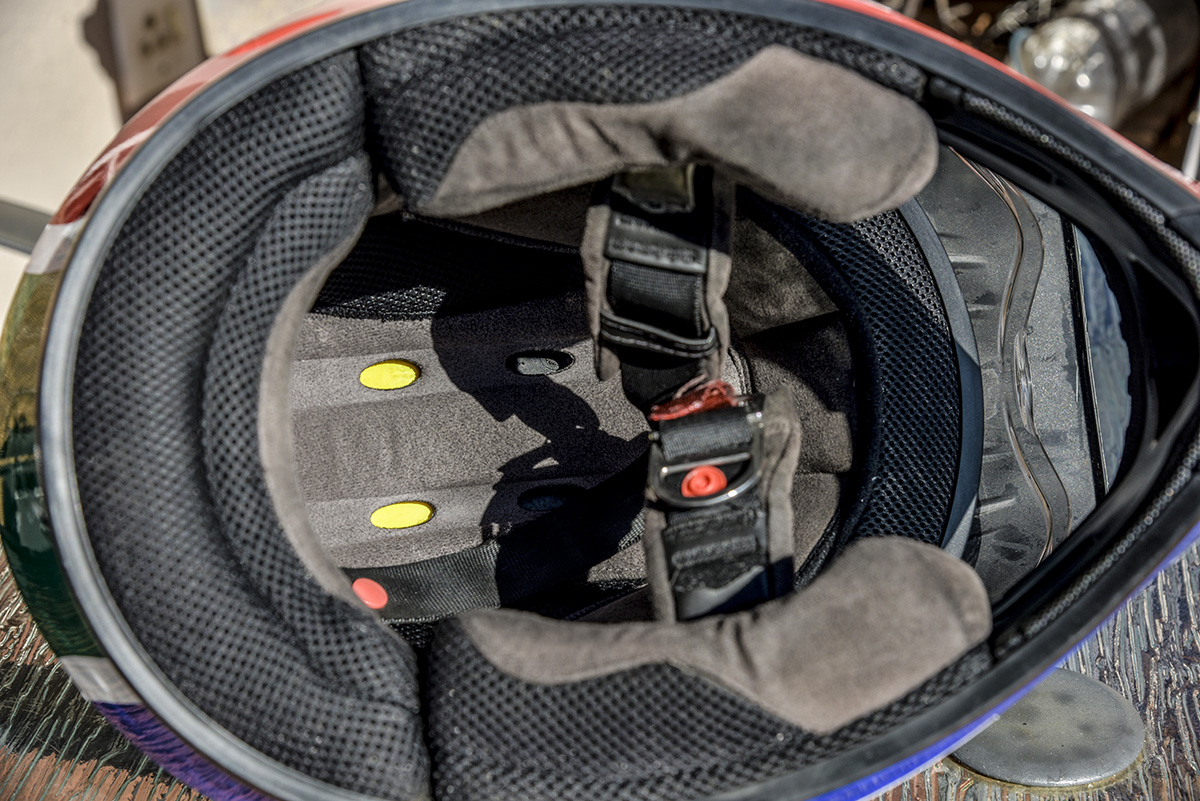
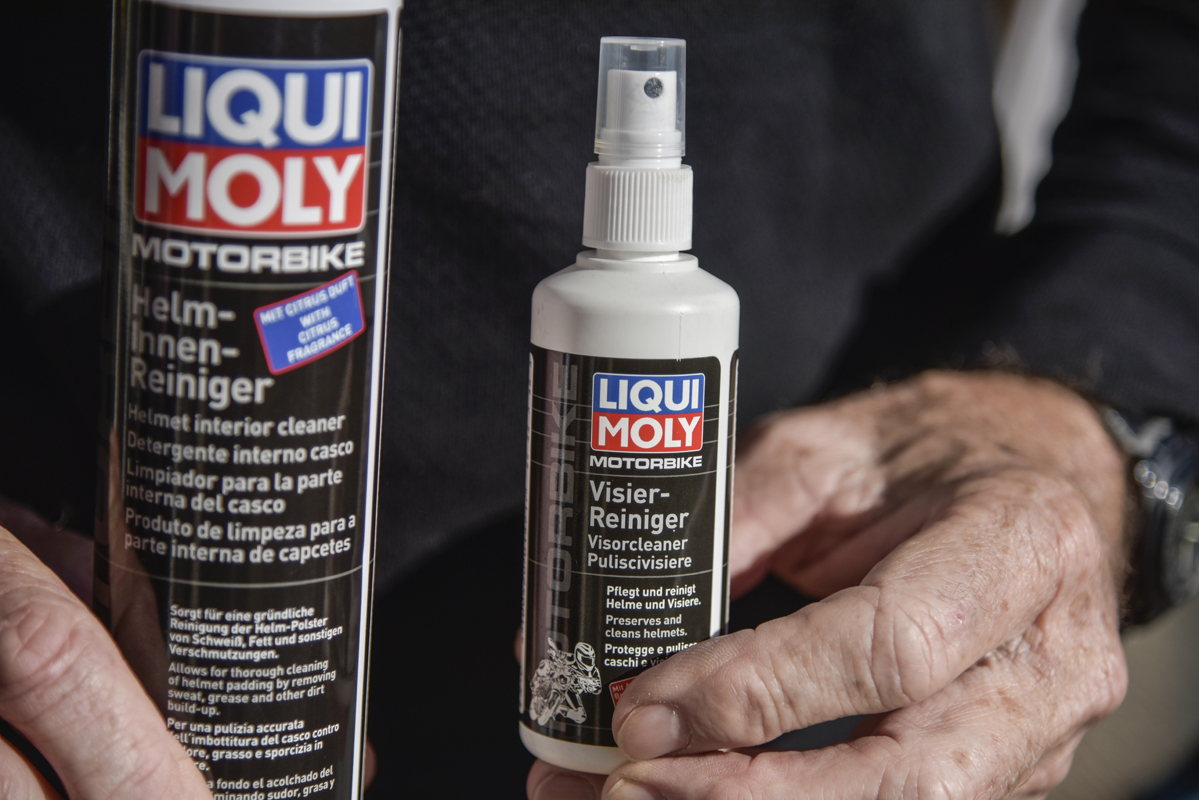
Can’t ride a spotless bike with a funky smelling helmet. Literally no sweat! The Interior Cleaner will restore your helmets lining to its former, sweet-smelling glory. Spray it on, let the foam do its magic, rub it up and allow it to dry. Done!
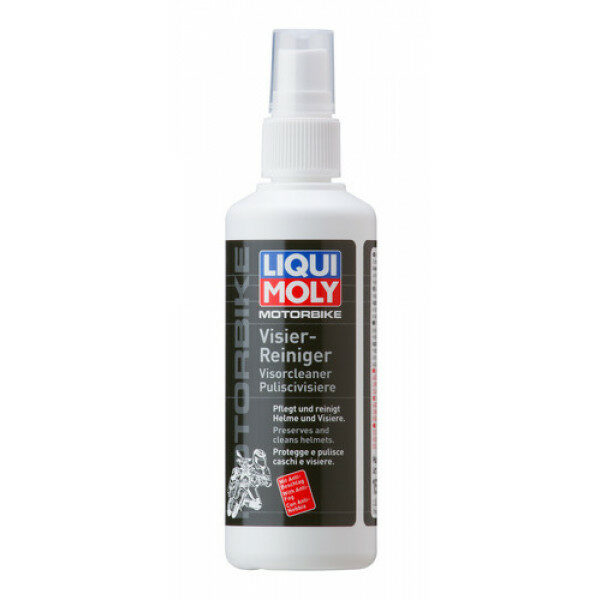
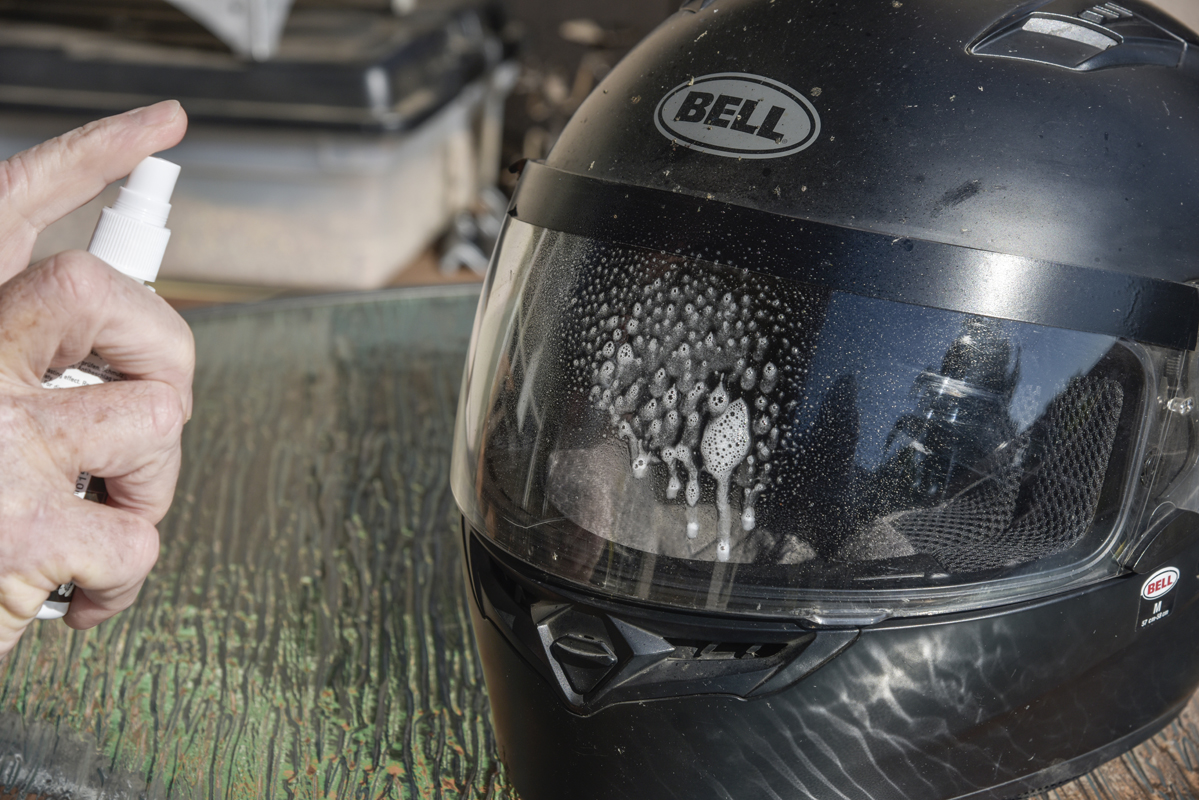
Cleans your visor to perfection and prevents misting up. Your life will never be the same again, it may even alter your murky outlook on life! While you are at it, clean your phone, tablet and computer screens too. Use it on your mirrors for ‘perfect hindsight’.
So there you have it folks, everything you and your bike need to attack the summer with gusto! Cleaning and protecting your bike properly has never been this easy!
Pietermaritzburg’s Thunder Valley lived up to its name as treacherous conditions played havoc at the Cannabis Energy Drink TRP Distributors South African National Motocross Championship on Saturday. A major cold front hit KwaZulu Natal overnight to wreak havoc as extreme cold, driving rain and even sleet in each class tested competitors and officials to the limit in the first motos. The meeting was then abandoned and the second heats scratched as conditions deteriorated.
Cape rider David Goosen shrugged the cold, wet and wind off to ride his Rockstar Energy Drink Husqvarna to the open class MX1 win. He grabbed three points back from his Eastern Cape rival, championship leader Tristan Purdon’s Red Bull KTM. Purdon’s teammates Cameron Durow and Cross Country star Bradley Cox were next up ahead of Anthony Raynard on a Tinswalo Yamaha and Jayden Proctor’s KTM.
Photo credit: Ruben Louw
KZN local Cameron Durow took a 250cc MX2 race of attrition on his Red Bull KTM, two and a half seconds clear of David Goosen’s Rockstar Husqvarna. Championship leader Tristan Purdon’s Red Bull KTM was also close behind in third to limit Purdon and Goosen’s title advances as the top three closed up in the quarter-litre championship race. Leonard du Toit was fourth ahead of reigning champion Anthony Raynard’s Tinswalo Yamaha and Jayden Proctor on a KTM.
Solo over-30s rider in ‘Martizburg, Grant Frerichs did his MX3 title aspirations no harm at all when he overcame conditions to ride his Yamaha home to the MX3 win ahead of over-40 winner, Honda rider Bruce Viljoen’s Honda. His over-40 rivals, Ian Topliss’ Out of Africa Monster Energy Yamaha, Phillip Harper on a Honda and Stewart Parkes were next up.
Photo credit: Ruben Louw
Kayla Raaff celebrated woman’s month by taking the Ladies Motocross win on her Kawasaki. Raaf’s championship hopes were aided by Jadene de Lima, who put her Husqvarna ahead of co-title leader coming into the KZN race, Leah Heygate’s KTM. Second de Lima sister Cheyenne was fourth on another Husqvarna.
Jonathan Mlimi reigned in the adverse conditions in MX High School aboard his Red Bull KTM. He extended his already handy championship advantage by beating Luke Grundy’s Husqvarna to second ahead of second in the championship race, Ethan Hoffman’s Out of Africa Monster Energy Yamaha. KTM duo Miguel de Waal and Barend du Toit, Cuan Conway’s GasGas, Blake Young’s KTM and Callan Broskie’s Ridgeway Husqvarna followed.
Photo credit: Ruben Louw
Rockstar Husqvarna lad Neil van der Vyver also mastered the treacherous conditions to take an easy 85 Pro Mini victory over Ryan Adler’s Husqvarna and championship leader Trey Cox on a Red Bull KTM and shake up that title chase. Jordan van Wyk was third on his Husqvarna ahead of Christian Berrington-Smith’s KTM and Kodi Goosen on a Yamaha. Title protagonist Emmanuel Bako was among those to opt not to race.
Caden Weise revelled the conditions to score an upset 85cc Junior win on his Husqvarna ahead of KTM trio, championship second and third lads, Matthew Correia and Andrew Venter, and Kassim Hassim KTM. Championship leader coming in to Maritzburg, Tyler Petersen’s Husqvarna was not running in fifth at the flag.
GasGas lad Blade Tilley dominated the 65cc race to consolidate his championship advantage. Aiden Henley was second on an Out of Africa Monster Energy Yamaha ahead of KTM lad Blake Frost. Riley Rocher ended fourth on a KTM ahead of Casey Tilley’s GasGas and Evan Frost on a KTM.
Photo credit: Ruben Louw
Championship leader Trenton Kretzmann took a close baby class 50cc motocross win on his Perry Husqvarna. He beat Rayden Woolls’ GasGas and Cobra rider Maxwell Fourie’s, who moved up to second in the title chase. KTM trio Brody Bircher, Ross Mackenzie and Ashton Rawlins were next up.
SA’s national motocrossers won’t have long to wait to get racing again following the disappointment of losing those second heats — the next round is at Chestnut Park in Gauteng on 18 September.
Photo credit: Ruben Louw
The 2021 South African National Motocross Championship is proudly presented by Motorsport South Africa in partnership with Cannabis Energy Drink, TRP Distributors, Prepsol, Bridgestone, Thor, Gaerne, FMF, Pro Taper, 100%, Fly Racing, Ogio, Bandit Graffix and the Race Shop.
The best dealerships are realising that it is no longer enough to simply sell motorcycles: they have to work hard to involve their community of customers in other ways.
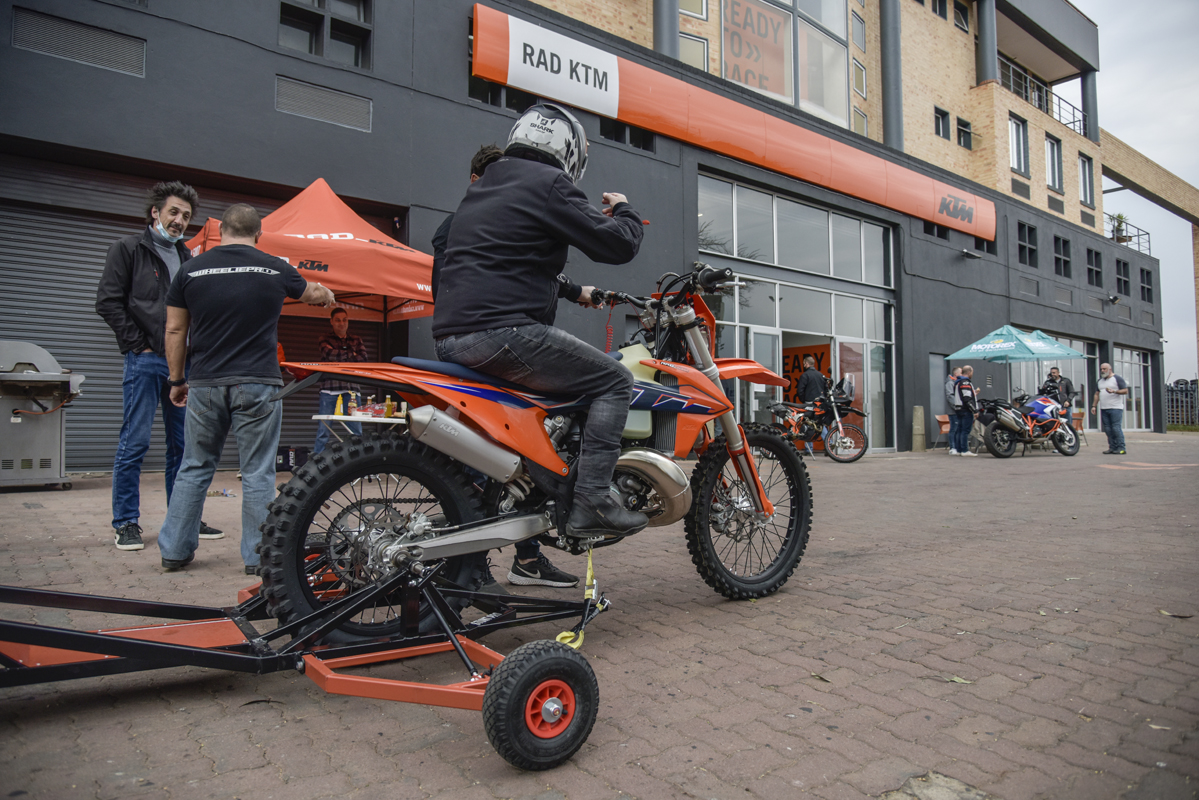
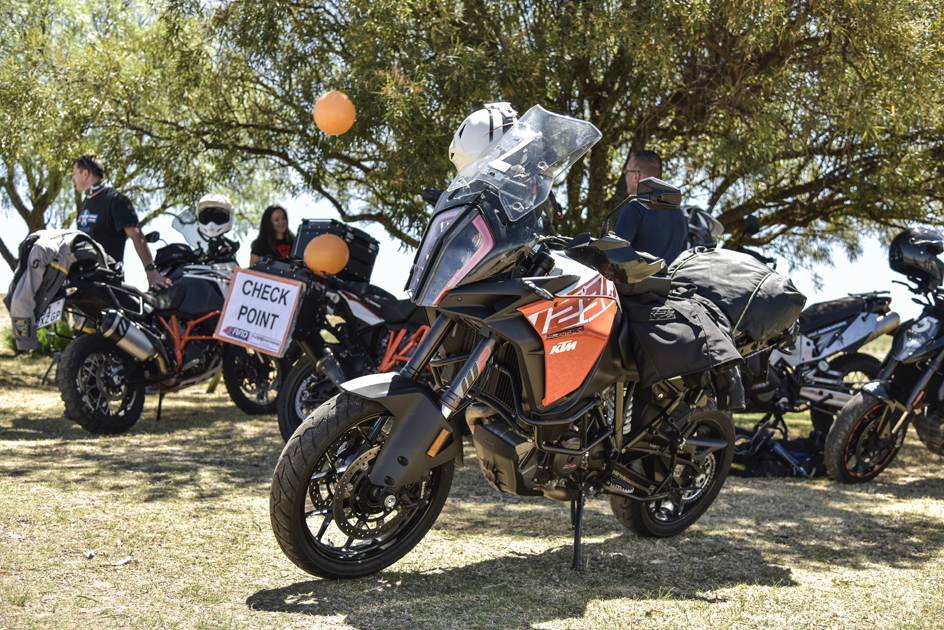
RAD KTM at the top of Rivonia Road is doing just that with a monthly programme of events and rides to bring that community together.
Photo credit: Bjorn Moreira / ZA Bikers
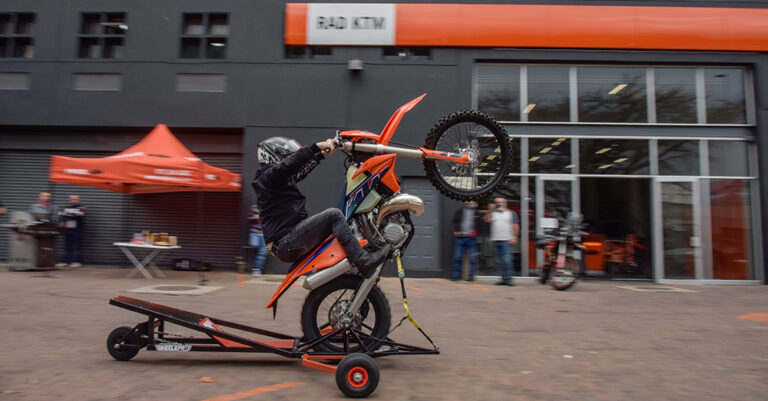
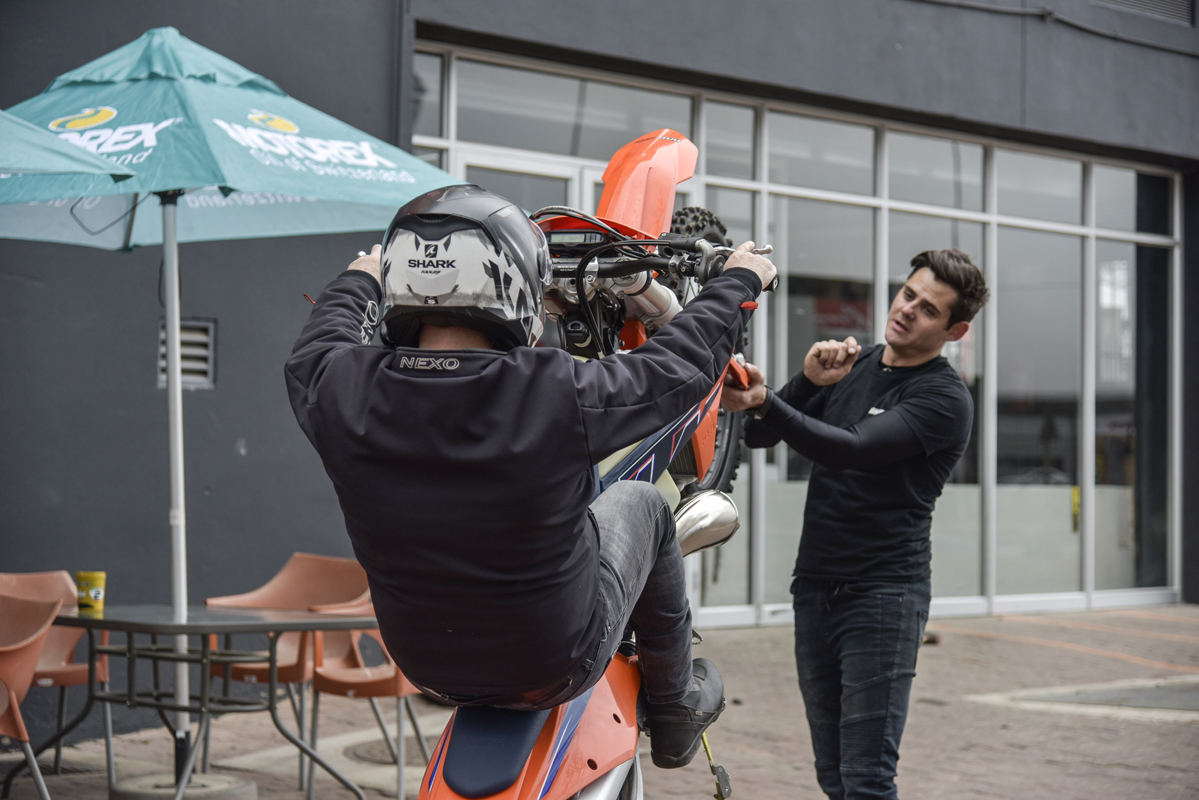
There are regular events every month – a Wheelie Day training session hosted by WheeliePro at RAD itself every last Saturday of the month and a breakfast ride every last Sunday of the month.
But there are also special events happening as well. In September there will be what they call the RAD_VENDURO, which, as the name suggests, is an enduro weekend taking place at Zingela Safari and River Company in KZN on the 23rd – 27th September. There will hopefully be another enduro weekend in September but that is to be confirmed.
Photo credit: Bjorn Moreira / ZA Bikers
In October, there is an adventure weekend on the 9th and 10th.
For details of these and all events organised by RAD KTM, you can look out for notifications on the RAD KTM Facebook page or – and this is the best way – you should contact Erin at [email protected] She will then send you all the relevant details of the events and how to book your place.
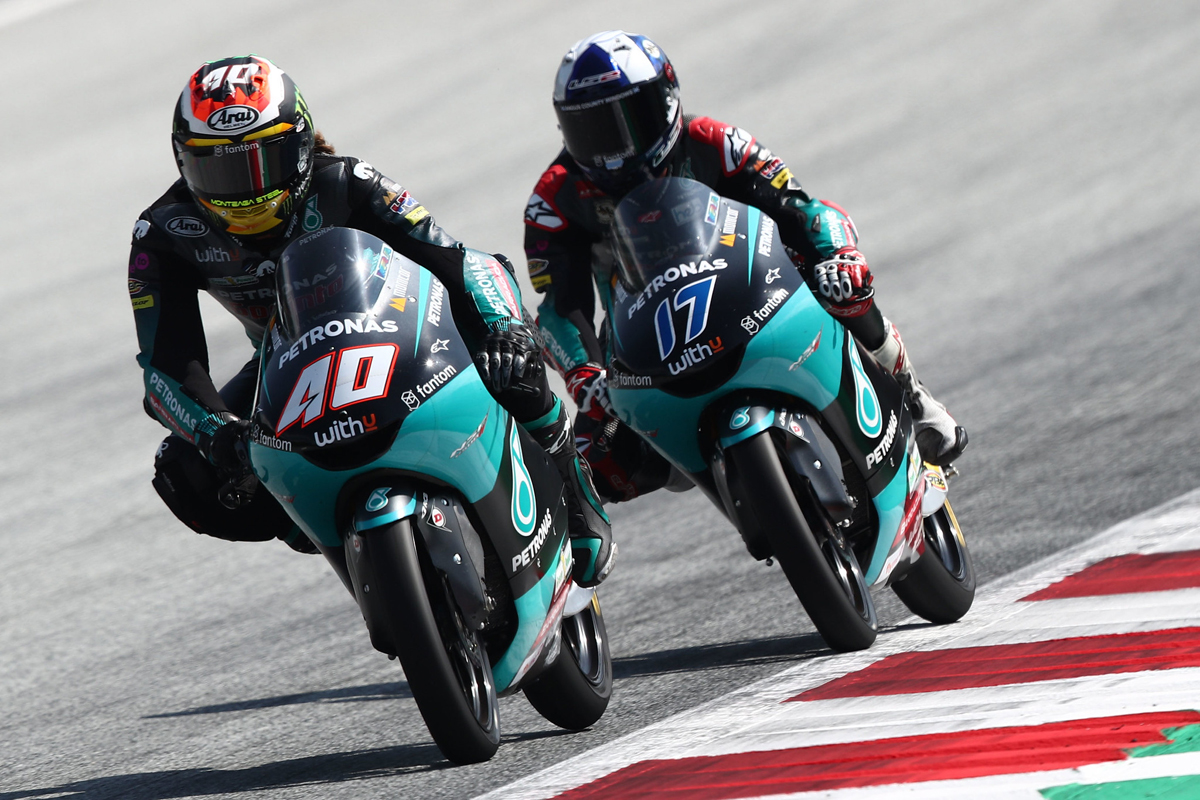
After the double-header in Austria, round 12 brought the Binder’s to the demanding course of Silverstone for a sold-out British Grand Prix. The typical cold English weather made it difficult for the teams this weekend, with bike set-up and tyre choices becoming very complicated for Silverstone’s tricky weave of 18 corners. Unlike the Red Bull Ring, Silverstone is a track that demands a constant flow between corners and not as much braking.
Darryn Binder
Darryn Binder was near the top of the timesheets throughout FP3, his best time of 2:11.415 placed him third in the session and overall, which secured him a spot in Q2. Unfortunately, Darryn only had one shot at a flying lap and admittedly his very poor strategy cost him a shot at the front row. He would have to start his Sunday morning from the sixth row of the grid, after posting the 16th fastest time.
Photo credit: Petronas SRT
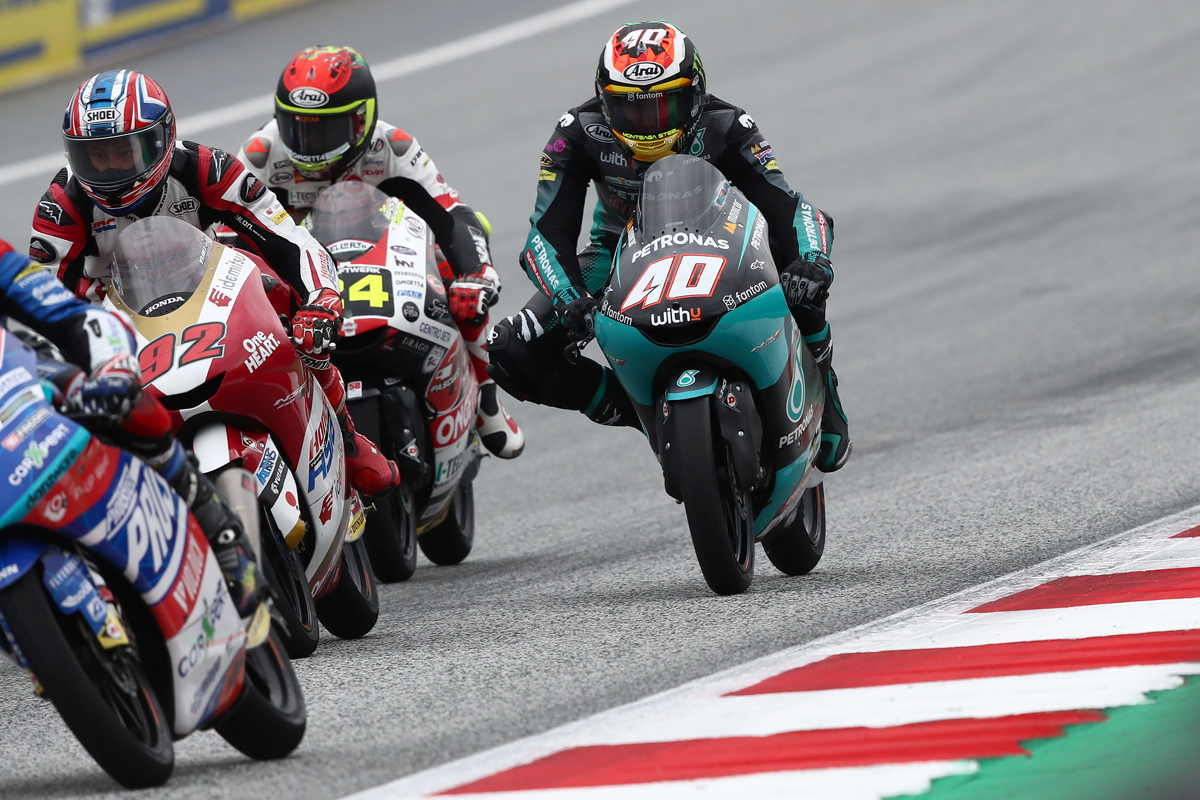
Binder shot off the line like a rocket from 16th and quickly hustled his way through the field into tenth before the end of the first lap. Our fellow South African rode the socks off of his Moto3 bike, made it into the top-five one lap later and set about closing the gap to the riders out front.
Photo credit: Petronas SRT
Darryn pushed hard and joined the podium fight with ten laps remaining. When the chequered flag waved on the final lap, Darryn crossed the line seventh and increased his world championship points to 95— leaving the BritishGP sixth in the riders’ standings.
DB: “I had a good start to the race and I was able to get towards the front quite quickly. Unfortunately, the groups of riders were really small, which meant that one small mistake and you lose the slipstream. This happened to me and I was out of the group. I am really happy with how the opening laps went and I felt really fast, but I was just missing some speed. This is something that we need to improve. Right now my goal is to be in the top-five every race, that will make me happy, so hopefully, we can do this in the next few races.”
Photo credit: Petronas SRT
Brad Binder
Last rounds winner, Brad Binder, pushed hard in the Free Practice sessions on Friday and secured a Q2 spot with a top ten performance. Brad pushed to reach the highest possible grid positions during the quick dash on Saturday afternoon but finally rested 12th—leading the KTM charge in Sunday’s race.
Photo credit: KTM
Sundays 20-lapper around Silverstone’s eighteen corners and near-6 km circuit provided a technical test for both the riders and bike set-up. Bright, windy and chilly summer conditions created a stable environment for the race, as it would be a dry and grippy one.
Brad lined up on the starting blocks as the highest qualifying RC16 rider on the grid and began from 12th. This weekend the ‘Sunday Man’ weathered a slow start to the race before rapidly picking up his speed and hovering on the edge of the top ten. From this position, Binder became faster and more decisive with his overtaking making moves past Francesco Bagnaia, Takaaki Nakagami and Johann Zarco.
Photo credit: KTM
Binder crossed the chequered flag in 6th and increased his world championship points to 108, placing him 6th overall with just 10 points behind Jack Miller in 5th.
BB: “Today was a solid day, all things considered. I had a tough start to the race and struggled a lot in the first few laps but as the race went on I got stronger and stronger. I’m really happy with the rhythm I managed to keep until the end. I want to say a huge thanks to the team; this weekend has not been easy for us and the guys have worked non-stop. We tried everything and the best bike we had all weekend is the bike we had for the race.”
Photo credit: KTM
There will now be a short break before the Binder’s action at the Gran Premio de Aragón next month (10-12 September).
ASP International is proud to announce our newest and most exciting sponsorship with South Africa’s top female hard enduro racer, Kirsten Landman. ASP International is prepared and focused to support Landman every step of the way with a full sponsorship for DAKAR 2022.
In 2022 Kirsten Landman will be taking on the toughest challenge of her life as she prepares to compete in the most difficult class of the Dakar rally, the original category known as Malle Moto.
Kirsten is more motivated now than ever before, nothing can get in her way of achieving her goals.
Together, ASPI & Kirsten Landman are changing the way the world sees female athletes!
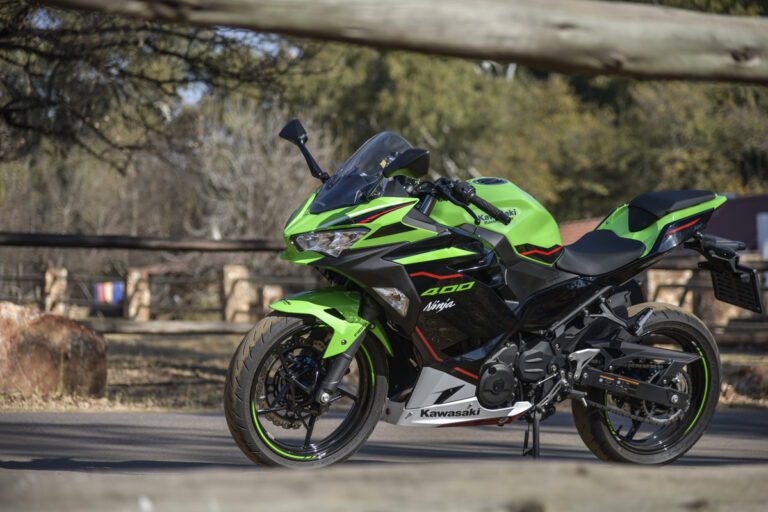
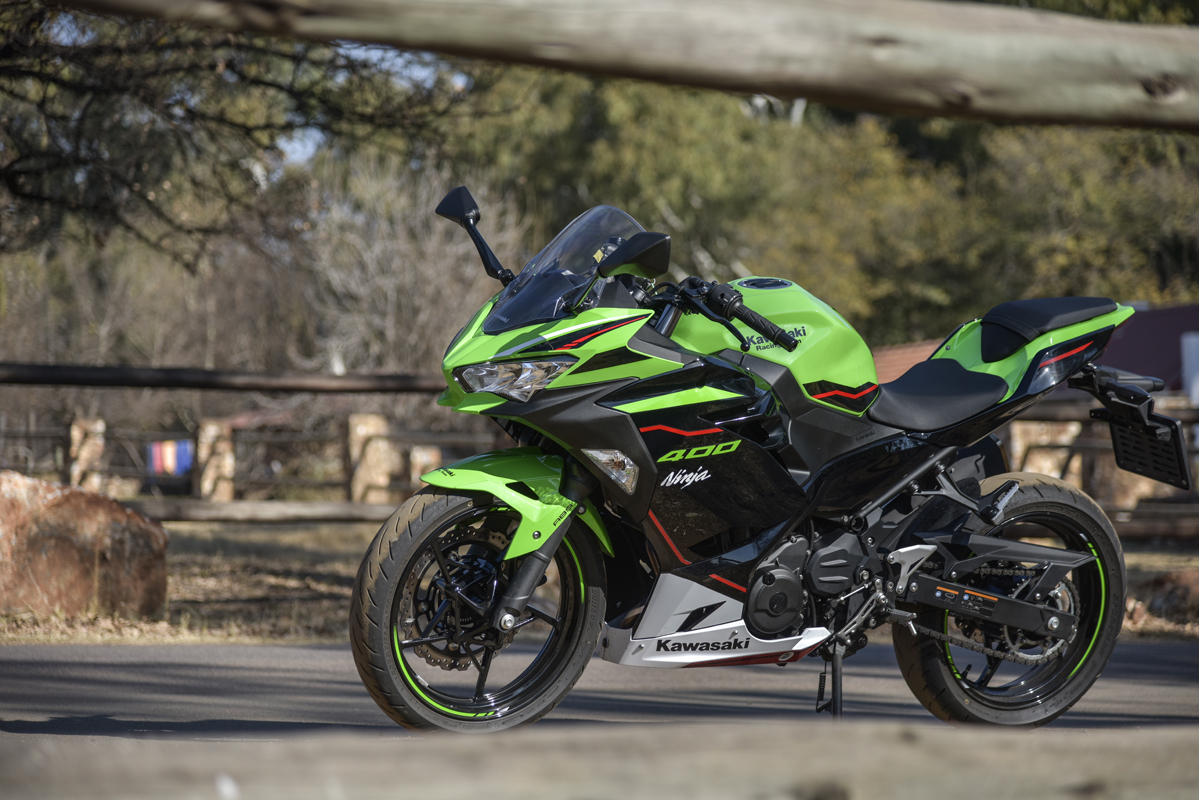
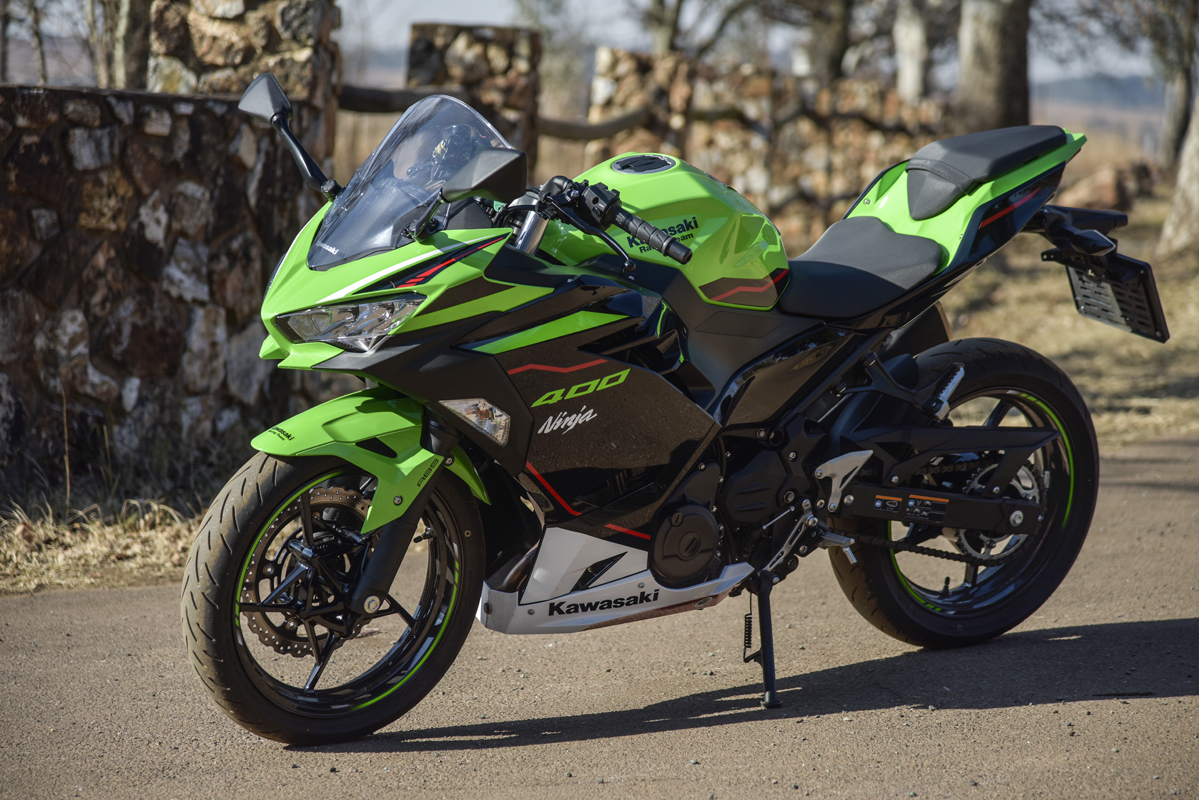
When you hear the name ‘Ninja’, two words come to mind: green and fast. 37 years down the line, Kawasaki’s favourite assassin has grown into a family name—one that describes a rather sporty range of motorcycles. The Ninja’s performance is legendary—but in recent years, Kawasaki has carried the Ninja crest onto a select few starter bikes.
Kawasaki’s Ninja 250R was one of those bikes—an entry-level sportsbike that got many newbies onto two wheels. Over the years this legendary beginner bike slowly grew in capacity, developing into the race-bred WorldSSP300 championship-winning Ninja 400—unstoppable for the last four years.
Photo credit: Bjorn Moreira / ZA Bikers
This begs the question: is the Ninja 400 still a viable option for beginners, and is it enough bike for advanced riders?
Right now, the modern sportsbike class is having a bit of an identity crisis. 600 cc inline-fours are dying a slow death, leaving a massive gap between the starter bikes and the fire-breathing superbikes. Many brands are thinking completely outside the box right now, and have started bringing back 600 cc-plus twins. But honestly, I think the Ninja 400 might just slide into this new class of sportsbike too.
Photo credit: Meredith Potgieter / ZA Bikers
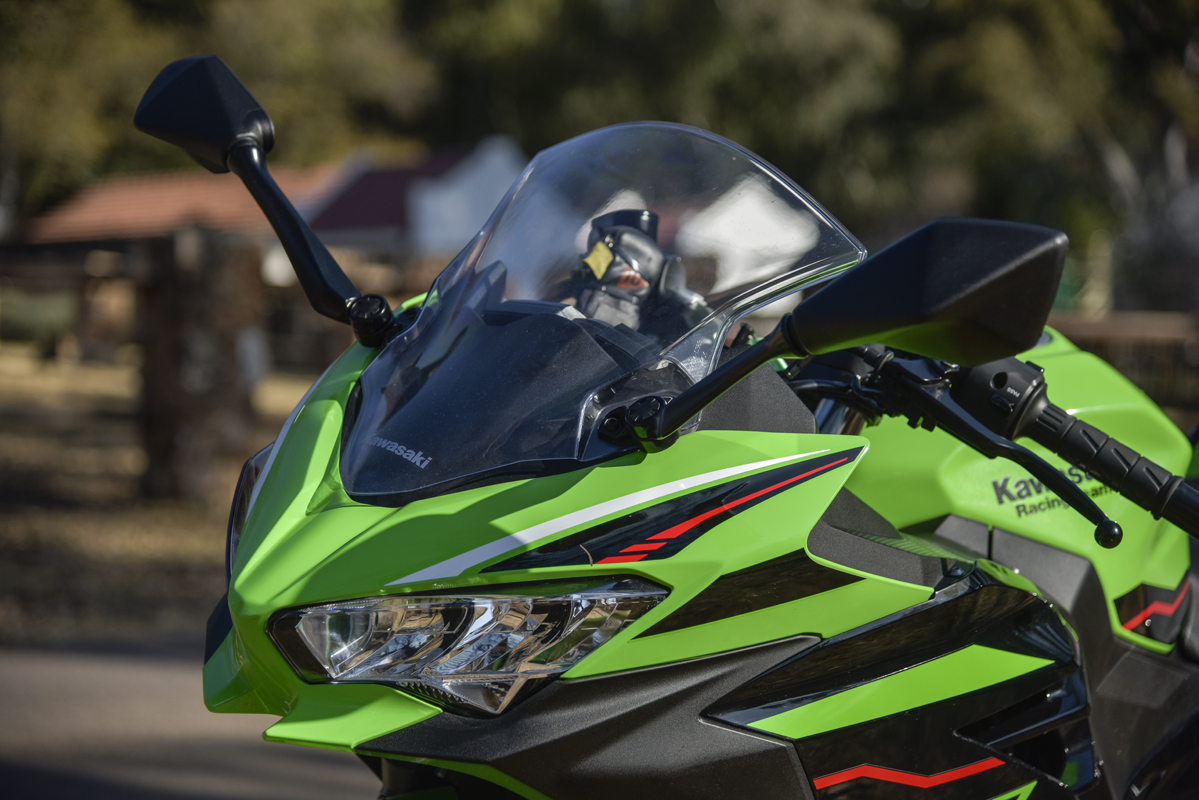
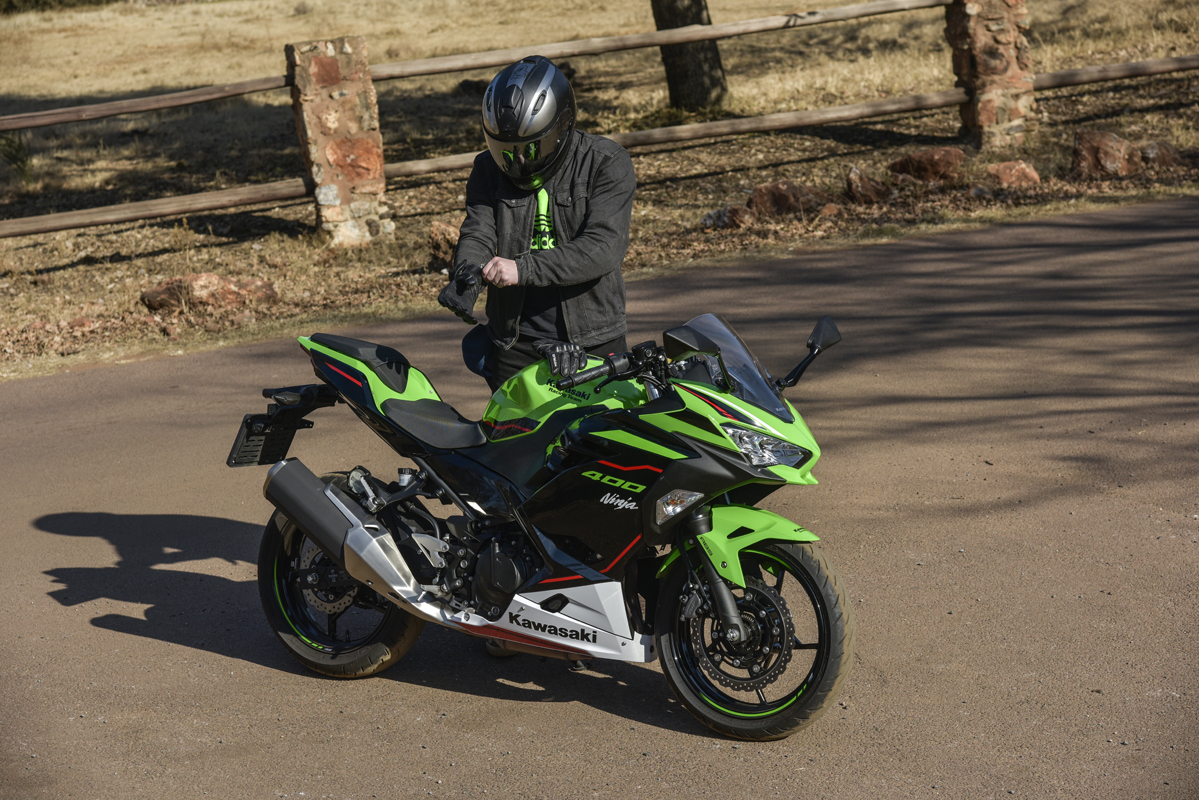
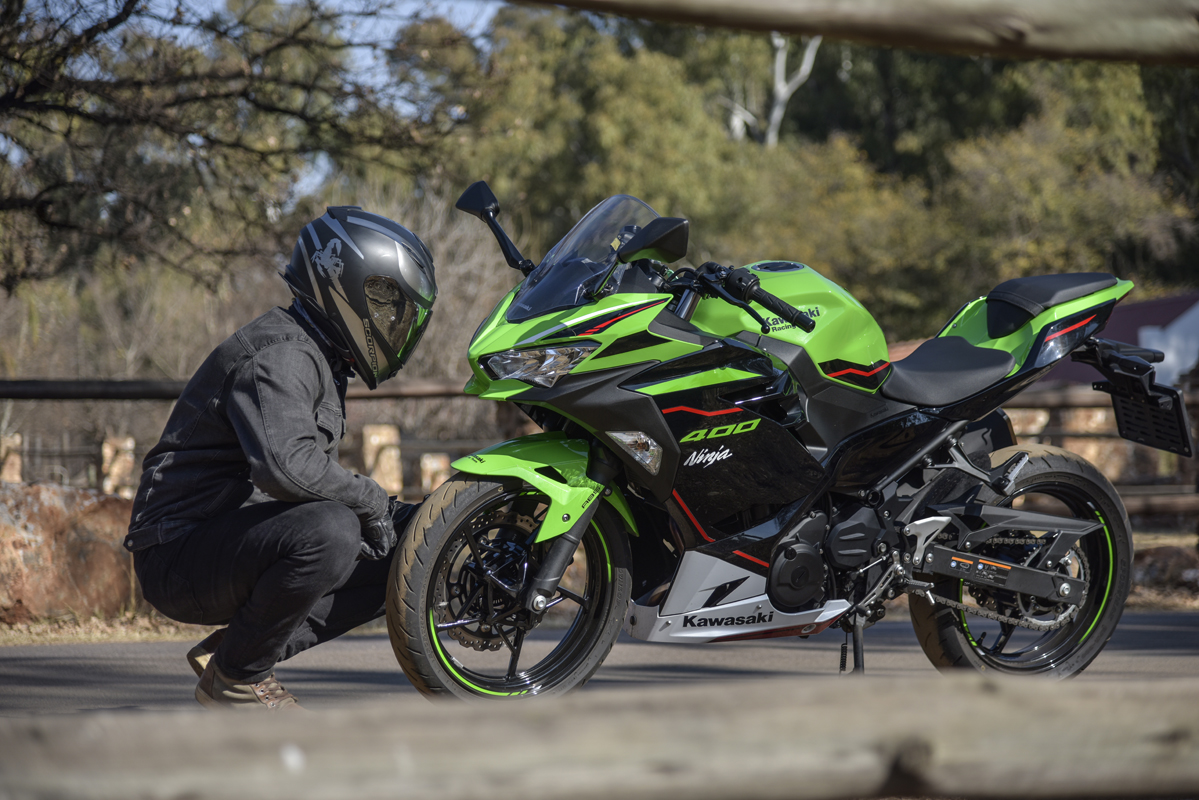
My test bike was the lovely 2021 ‘SE’ model, which comes standard with ABS brakes, and a Johnny Rea WSBK-Esque livery blending green, black and white, with subtle red and green pinstriping. When it comes to looks the Ninja gets a ten out of ten from me—mirroring the H2 and ZX-10 with its pointy fairings, LED lights, sharp tail and trellis frame. Most people can’t even tell that it’s just a 400 cc bike.
The Ninja’s 399 cc parallel-twin is a grunty motor that loves to be revved, with 44.5 hp on tap at 10,000 rpm, and 38 Nm of torque at 8,000 rpm. In town, you can shift under 6,000 rpm with its light slipper clutch and still hustle plenty quick enough, while riding economically off the Ninja’s torquey bottom end. If you ride like this, you’ll be able to get between 29 to 31 km/L—and with a 14-litre tank, that’s just over 400 km in the urban sprawl.
Photo credit: Bjorn Moreira / ZA Bikers
The Ninja has an intoxicating twin-cam growl from 7,500 rpm, and will climb all the way to 12,000 rpm, by which point you’ll be doing over 190 km/h. Its high top-end means you can also cruise comfortably at 120 km/h while only sitting at 7,000 rpm—a whole 5,000 rpm from the buzzer. The Ninja’s gearing also lends itself to ease of use at lower speeds, allowing the rider to open the throttle to a smooth and linear feed of power. You’ll average an easy 23 km/L on your daily sporty commute, which still leaves you with a reasonable range of around 320 km.
I’ve ridden the Ninja 400 in almost every kind of scenario, except on a long road trip—so that itch needed to get scratched. To test the Ninja’s long legs, I decided to hit the open road to Mpumalanga (Sabie specifically) with my buddy Dave on his Honda VFR 800. An 800-odd km single day trip on a 400 cc motorcycle sounds like hell, but the Ninja’s high clip-ons, semi-bubble screen, fully-faired sports fairing, well-positioned foot pegs and tall gearing made it all doable. The seat could have been softer though.
Photo credit: Dave Cilliers / ZA Bikers
Dave and I were both surprised at how well the Ninja took to touring, and how easily it kept up with the bigger motorcycle. I think it’s a big plus that the Ninja can munch big kays—this opens up a whole new world and style of riding that a beginner wouldn’t necessarily be exposed to.
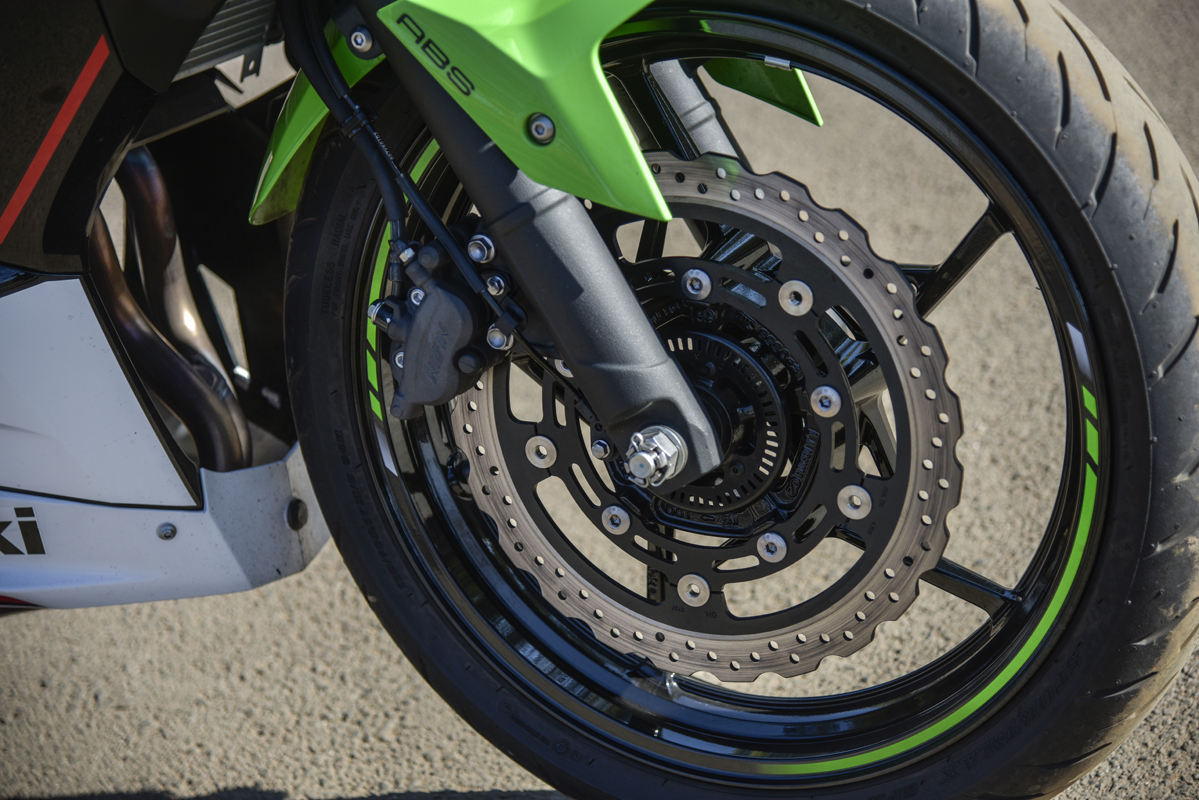
On the road, the Ninja’s suspension doesn’t disappoint. The 41 mm front forks have no adjustment, but are really dialled-in for our slick and dodgy roads. With my 75 kilos on board, the rear preload-adjustable shock worked well, although I wouldn’t mind it a tad bit stiffer. The Nissin brake callipers stop the Ninja effortlessly, and I felt like I had good modulation during braking. My only complaint is not having adjustable brake and clutch levers.
Photo credit: Bjorn Moreira / ZA Bikers
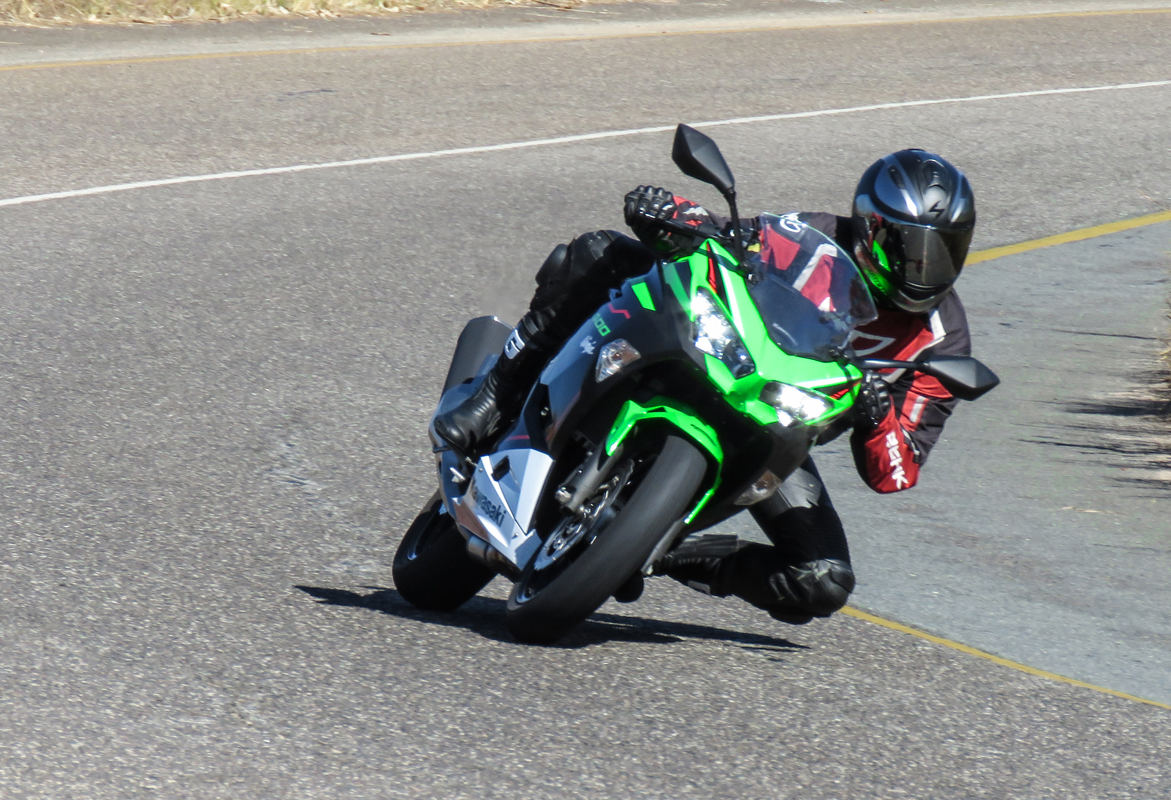
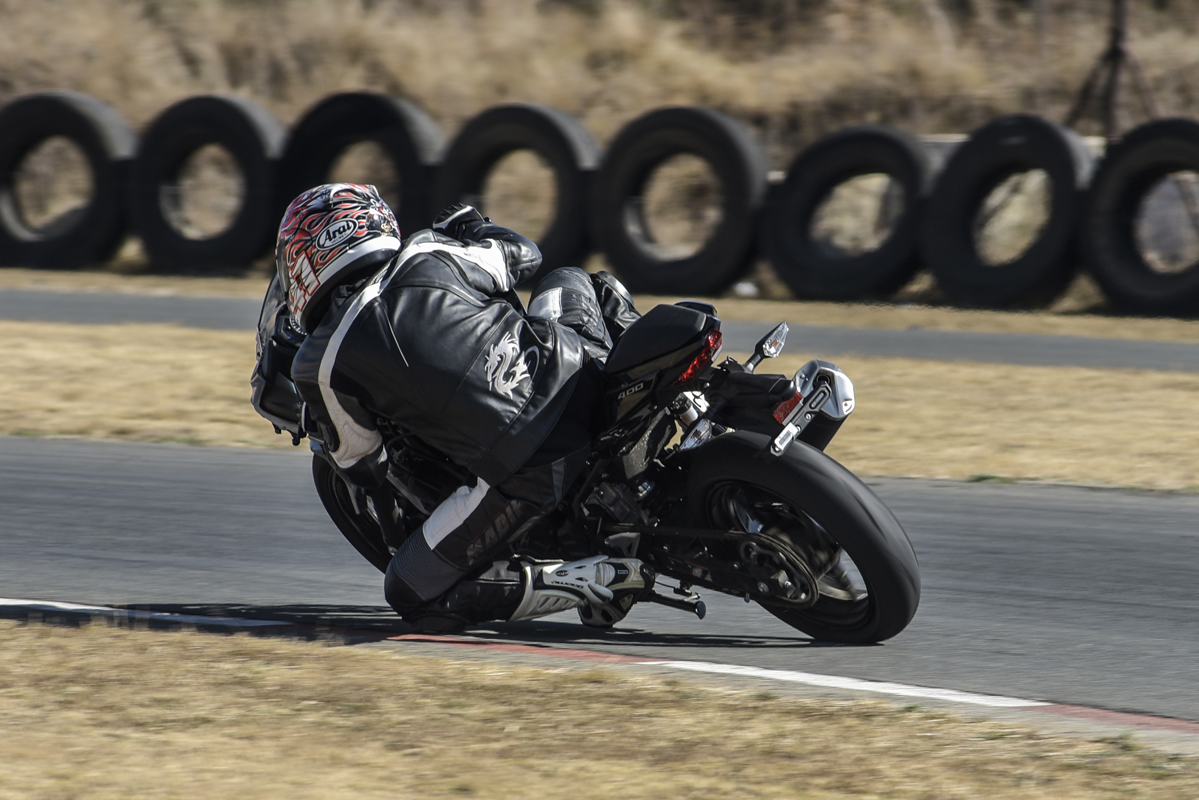
If you wanted to do a track day on the Ninja 400, you’d get a lot out of it in its stock trim. The front forks, although soft, work just fine, and provide good feel through the bends. The rear shock and ground clearance of the pegs will get in the way of setting some really quick laps—but that’s an easy and cheap upgrade to make the Ninja a short circuit weapon.
With a seat height of 785 mm the Ninja will accommodate both tall and short riders, with reasonable seat and bar reach too. Besides the motor, my favourite thing about the Ninja is its slipper clutch—making quick down-shifts stable, and pulling in the clutch an almost effortless task.
Photo credit: Julio Moreira / ZA Bikers
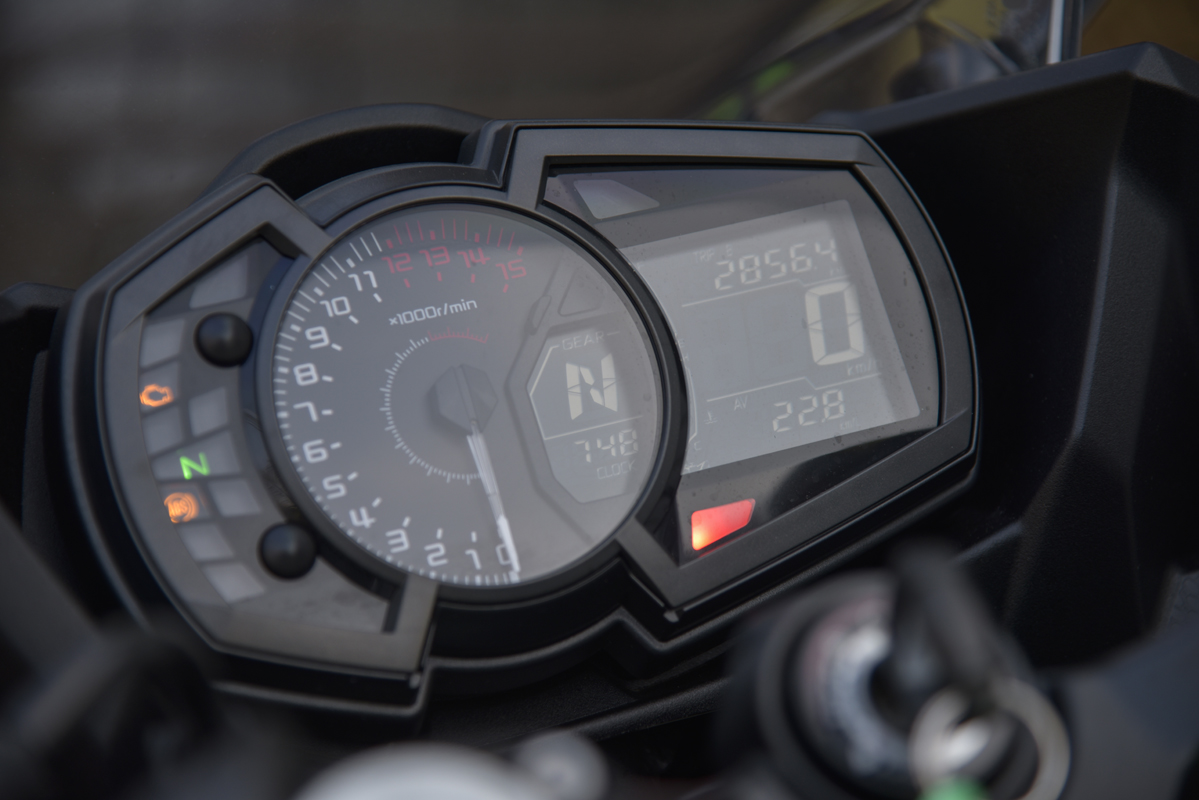
Tech-wise the Ninja is pretty old school. The display is race-like, with a cool-looking analogue rev counter, and a smaller digital display focusing on all the important riding info; trip, averages, time, gear indicator, range, fuel level and odo. Not having a TFT display with all its gadgetry isn’t a negative on this bike, as I feel the Ninja is a true rider’s bike—built to chase RPMs and apexes. (And besides, it would surely push the price up into big bike territory.)
Photo credit: Bjorn Moreira / ZA Bikers
I spent 3000 km on the Ninja on this test, and have racked up a total of almost 8000 km on it over the last few years. And I can still get on the Ninja and have a blast every time. It’s really made me realise how much I hate the whole ‘growing out of a motorcycle’ mentality—something I’ve honestly never experienced myself on the Ninja. I know more than a handful of riders who are super quick—riders who can ride a Ninja 400 faster than poseurs on bigger, more powerful machines.
In summary, the Ninja 400 is still one of the best entry points into the sportsbike world. And even if sport isn’t your thing, you’ve got an economic, lightweight, long-legged, good looking, comfortable and cheap-to-run motorcycle. The SE will set you back R104,995, and the non-ABS Ninja 400 will set you back R99,995 (it comes in black or grey).
Photo credit: Meredith Potgieter / ZA Bikers
Yes, it costs 100k or more. But we’re living in a time where everything has gone up in price… and the Ninja is still competitively priced within its class.
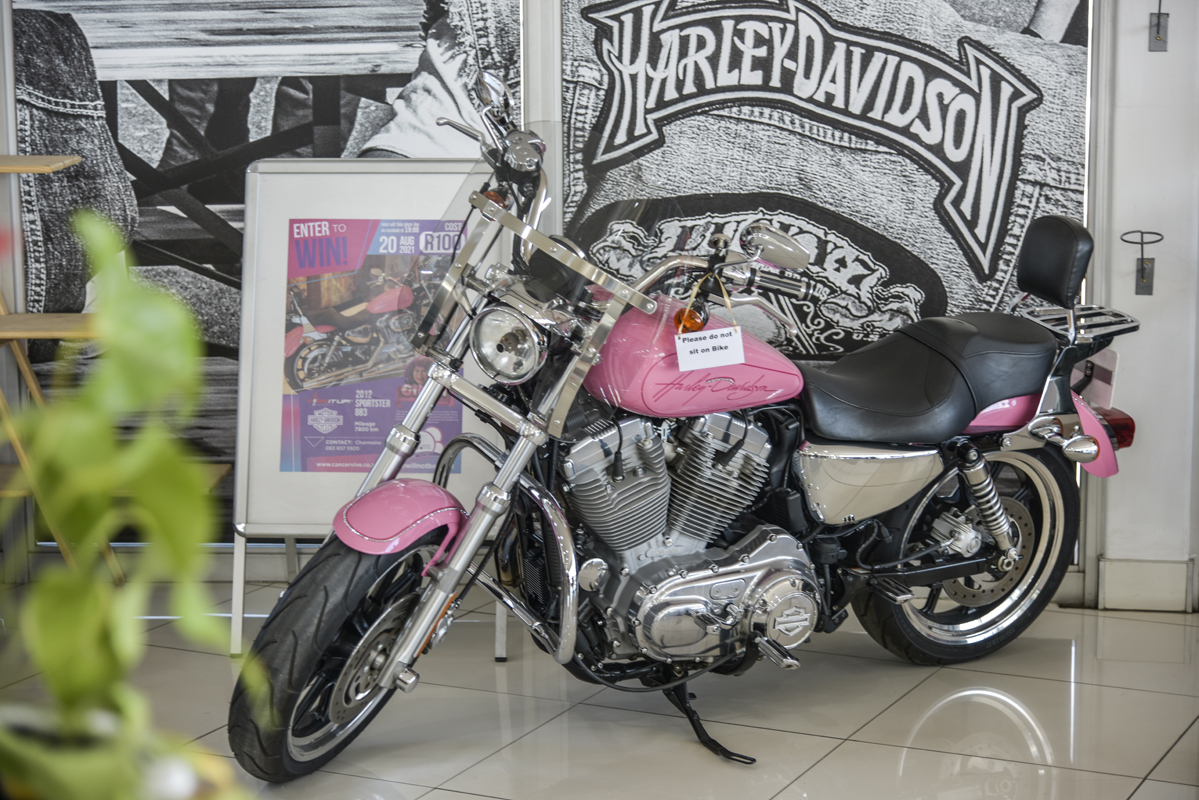
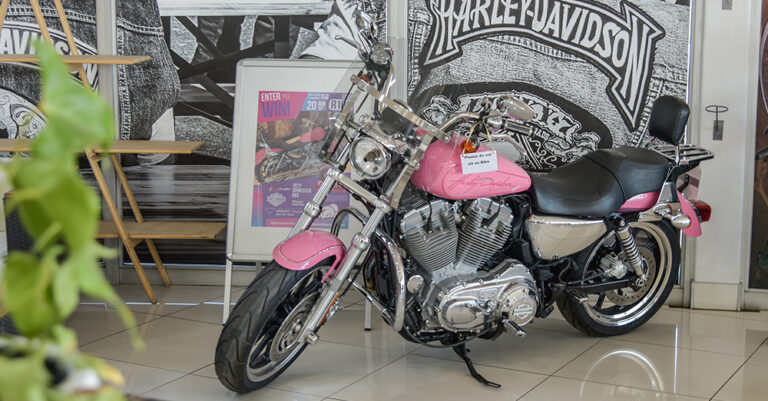
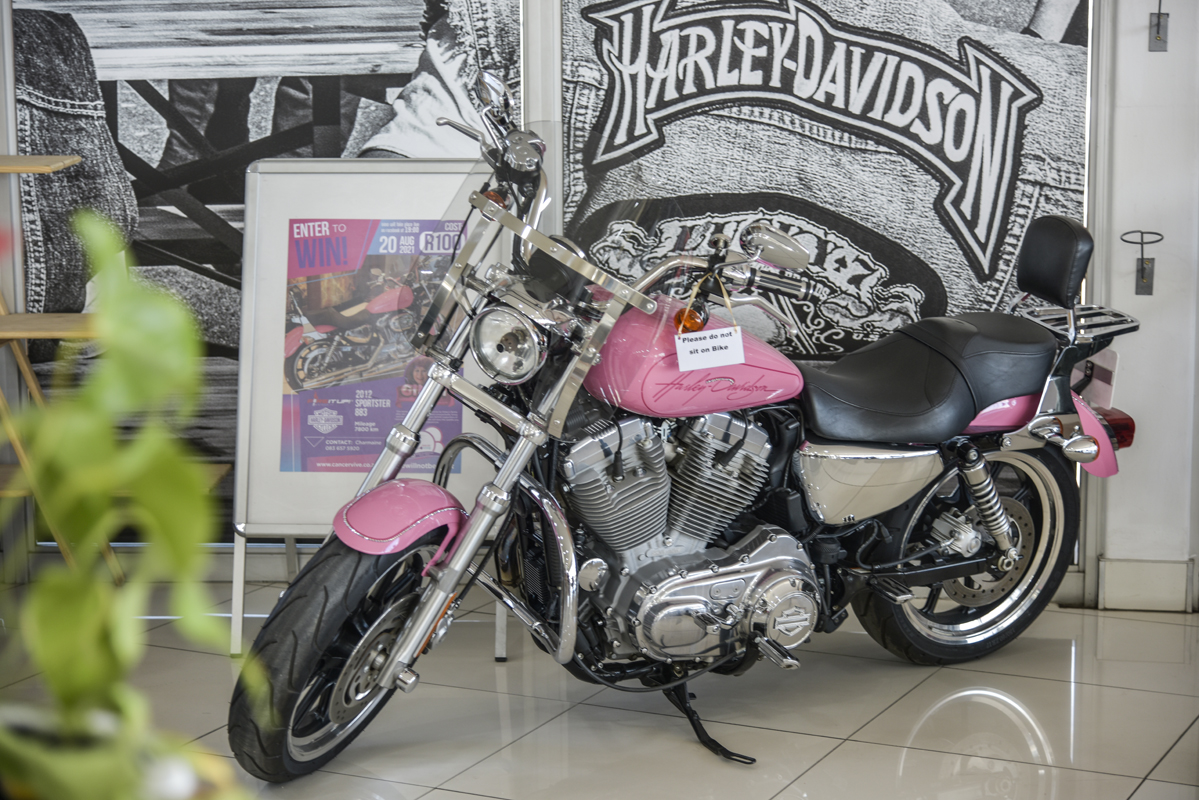
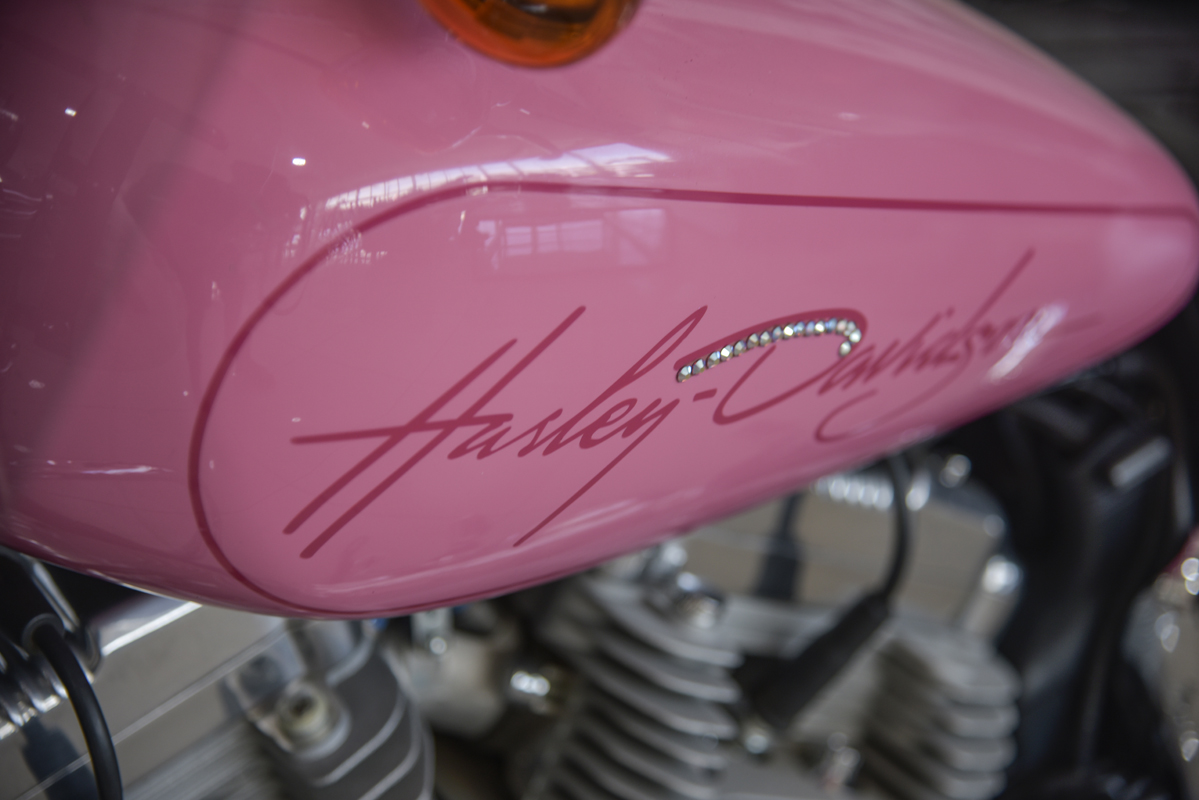
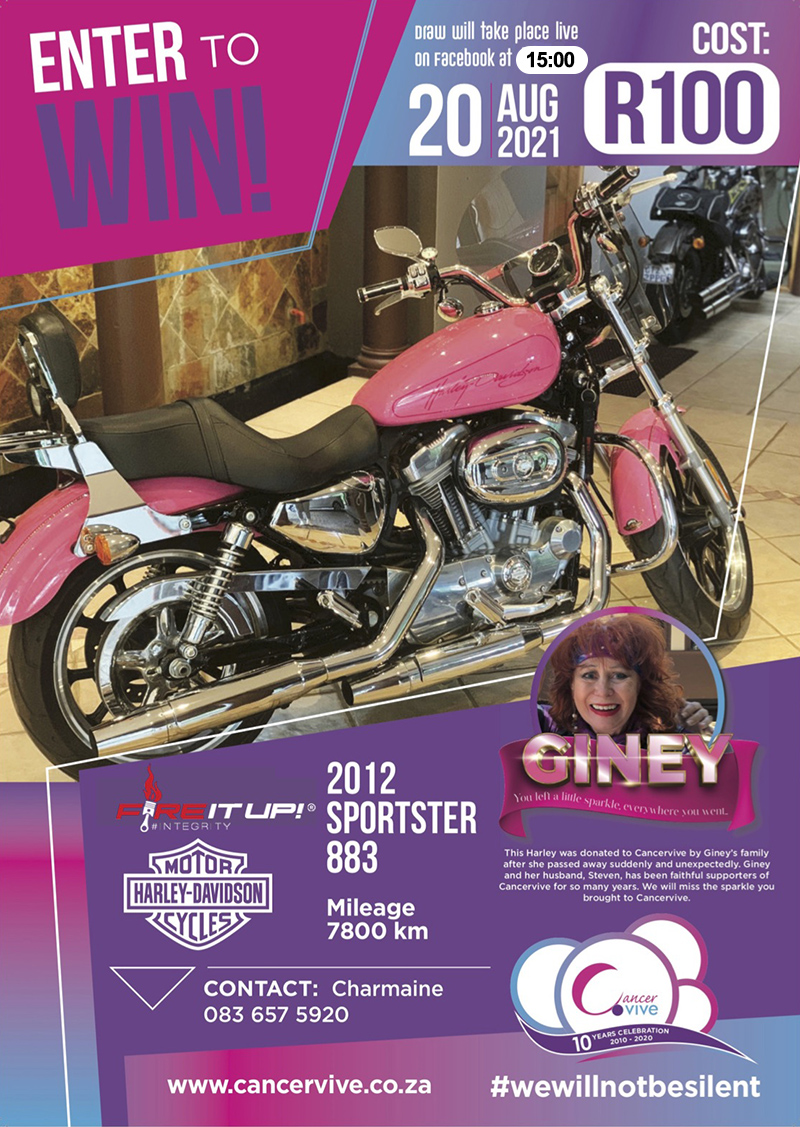
When Giney McIntyre decided to donate her beloved pink Harley Davidson Sportster to raise funds for the Cancervive Organisation, she can’t have known how fantastically successful it would be.
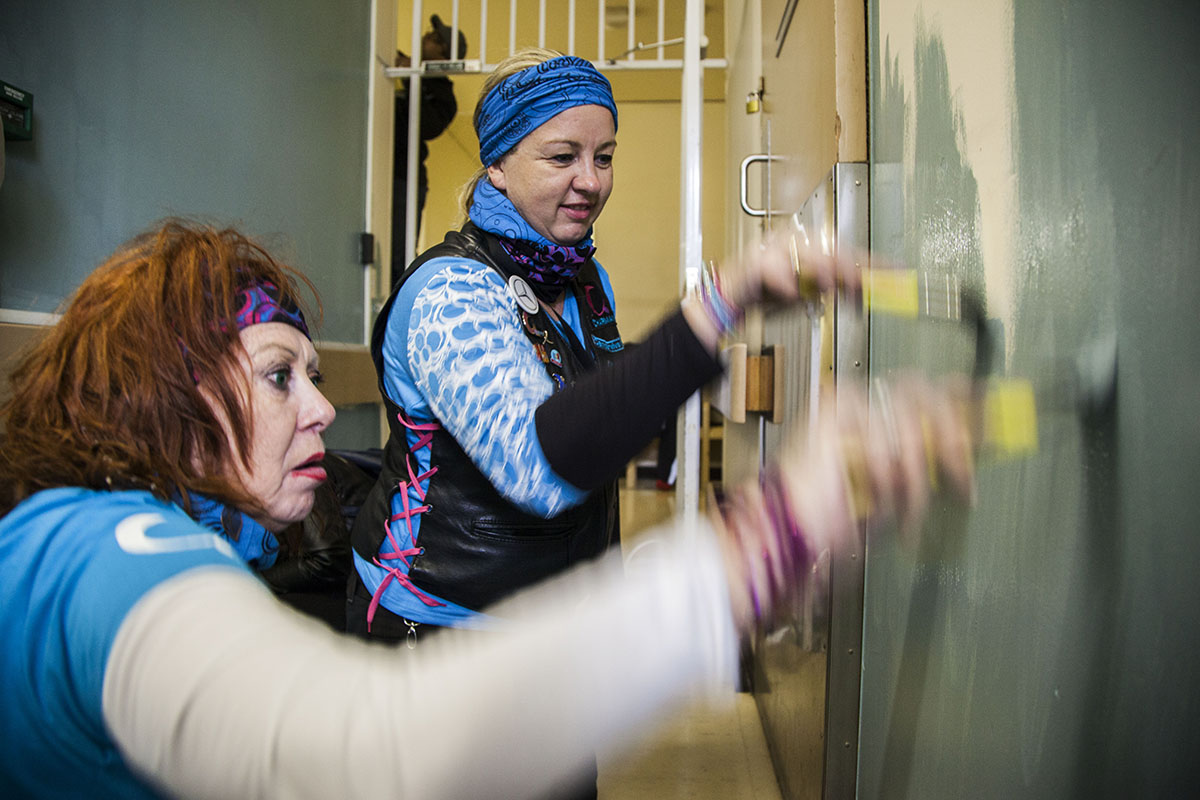
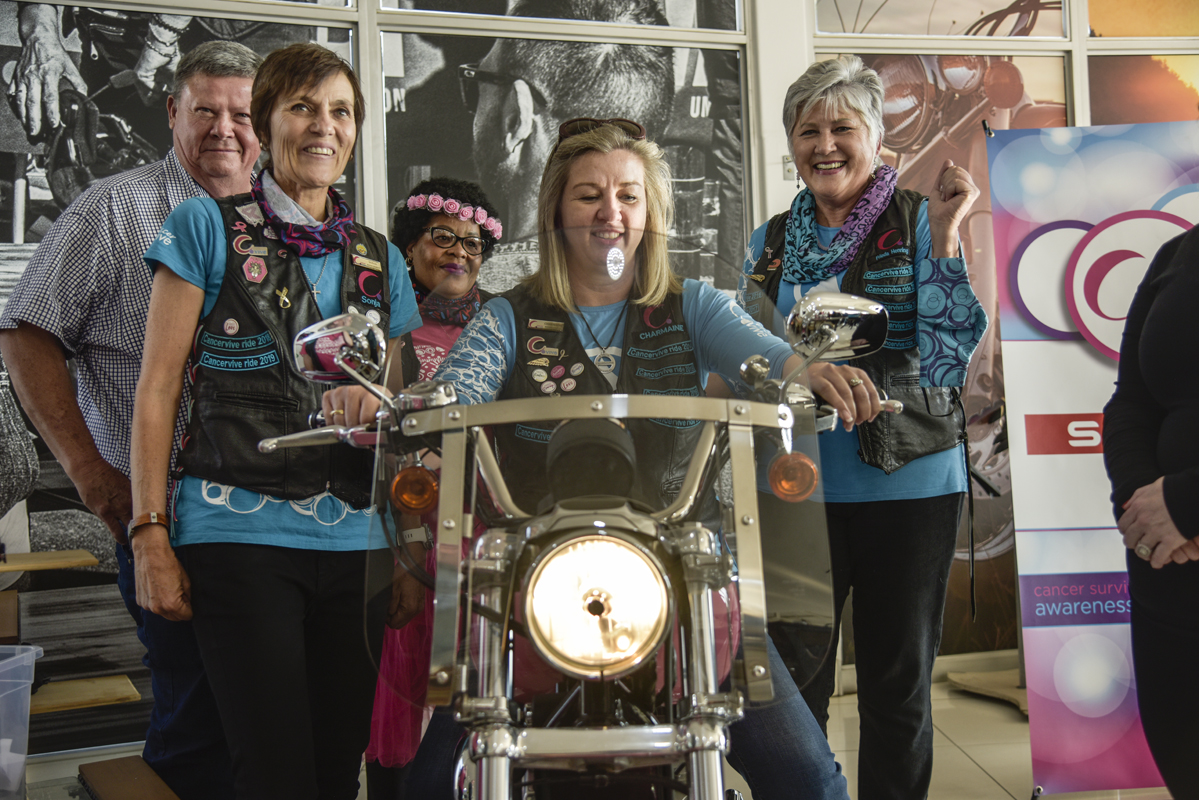
Giney McIntyre & Charmaine Rider decorating the Oncology ward at Groote Schuur Hospital Cape Town on the 2018 Canvervive Ride (Photo credit: Anelia Loubser).
Sadly, Giney did not live to see this success, passing away in 2020, but her husband Steven carried out her wishes and instructed Cancervive to go ahead and raffle the bike in honour of Giney’s memory and her untiring support of the charity over many years.
Photo credit: Bjorn Moreira / ZA Bikers
No one could have foreseen the response from the public and R228,000 was raised through the unstinting work of Cancervive and its supporters, including ZA Bikers and Fire It Up!.
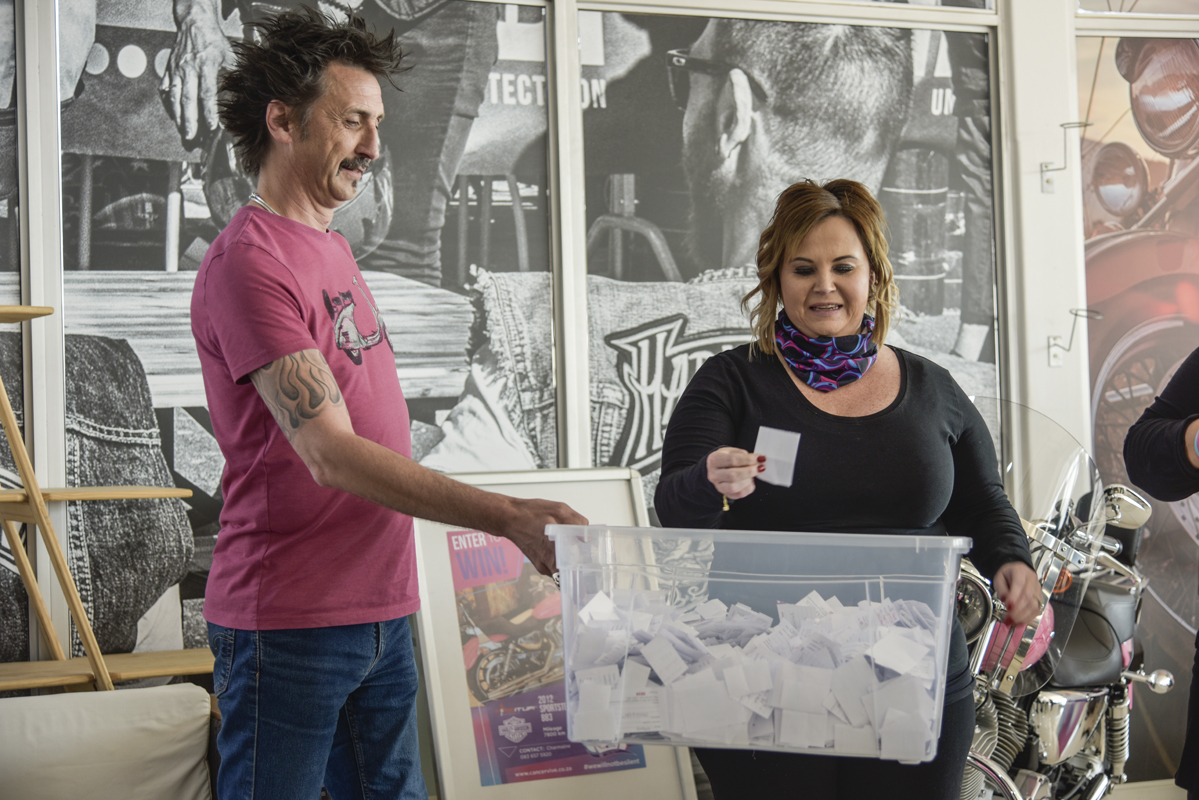
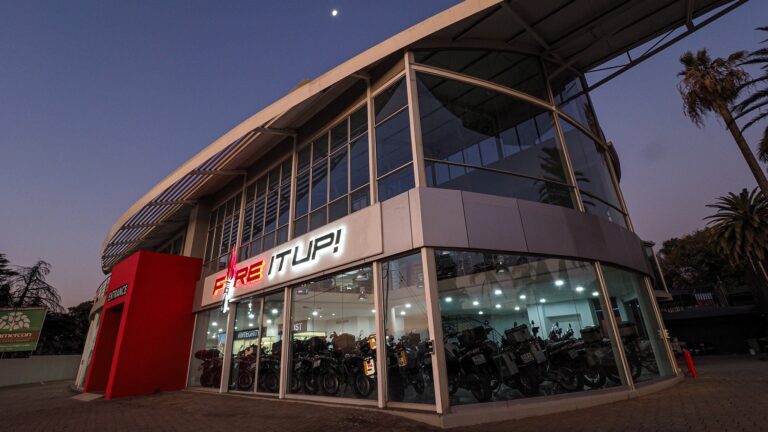
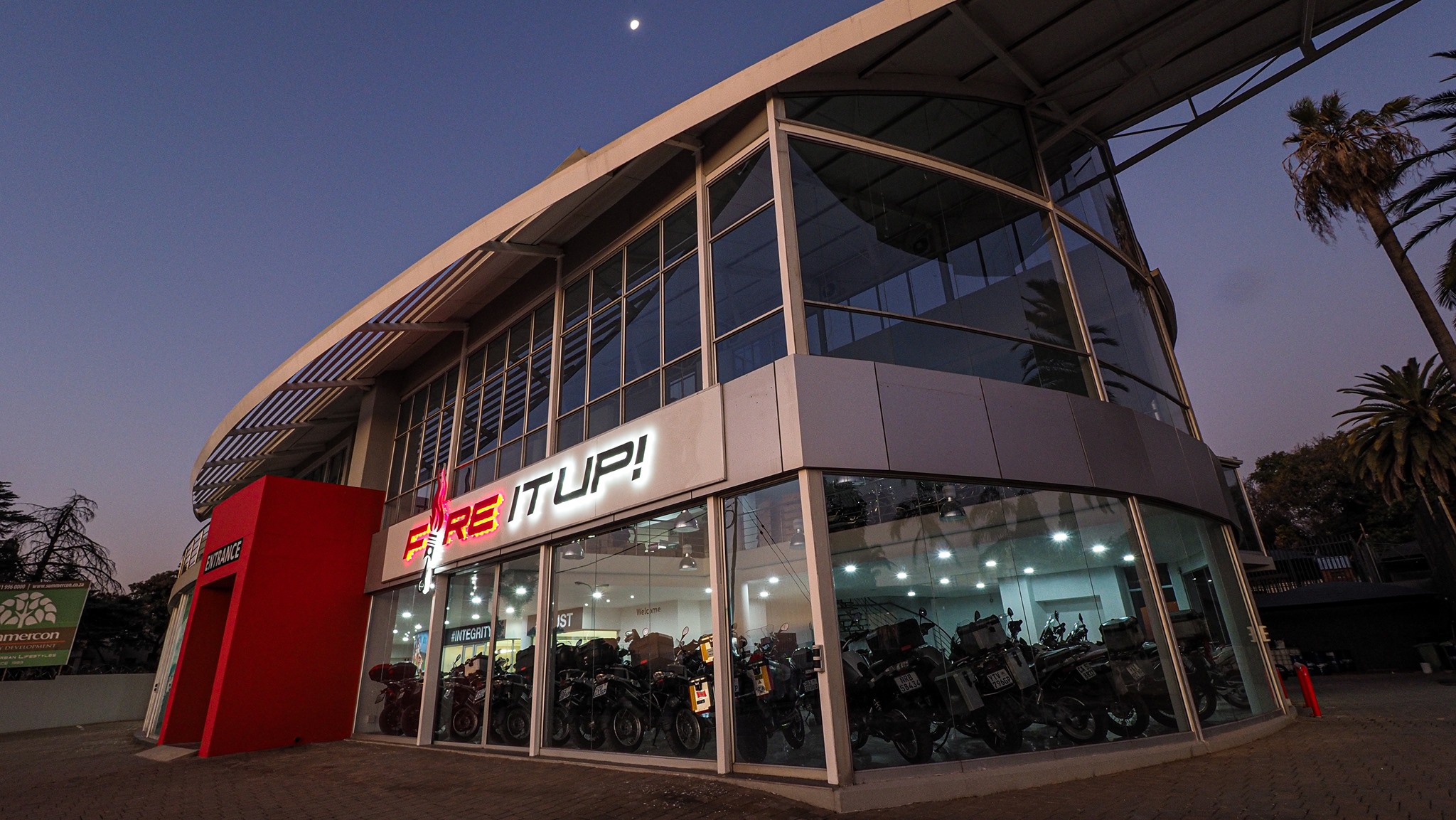
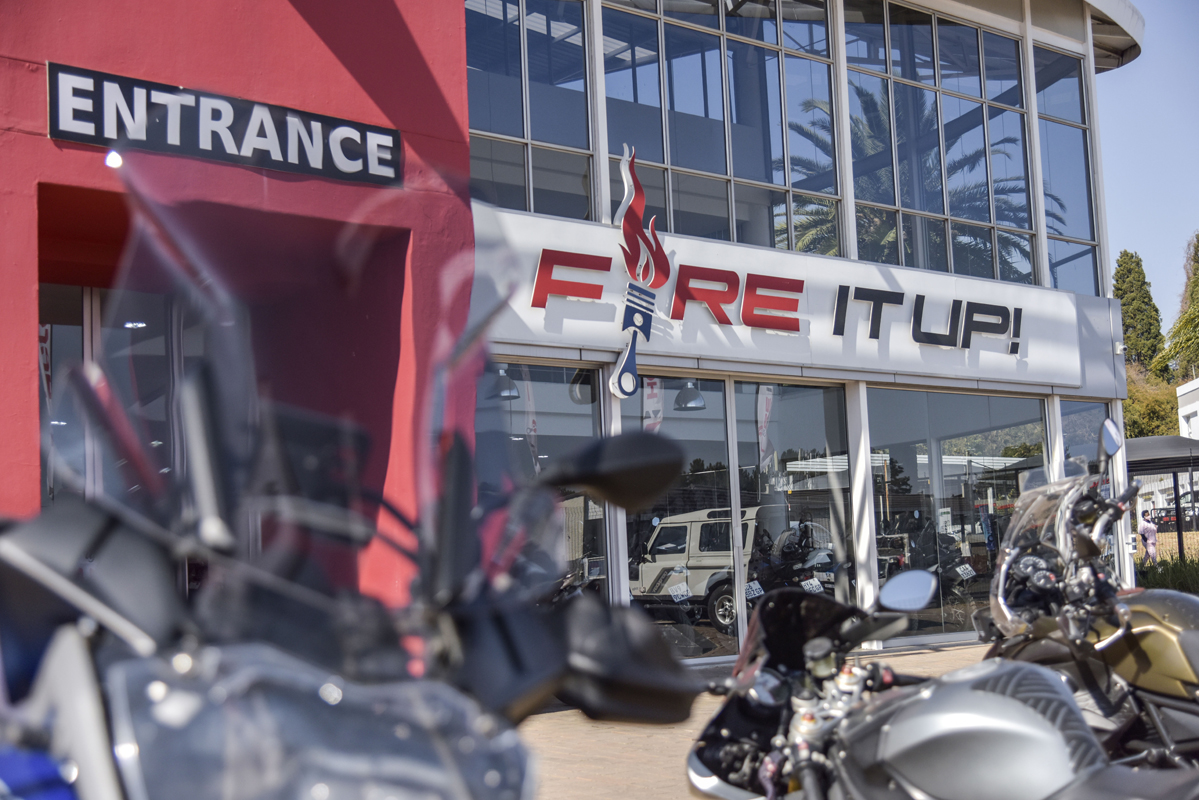
The final draw took place at the Fire It Up! motorcycle dealership in Bryanston, Johannesburg, where the bike had been on display for the two months leading up to the draw. In attendance were many members of the Cancervive Organisation, including some of Giney’s close family.
Photo credit: Bjorn Moreira / ZA Bikers
I was there (Harry Fisher from ZA Bikers) to MC proceedings and all supporters and raffle ticket purchasers were online to watch the live feed on Facebook.
After a few words from Cancervive team Leader Marlene Nortje, Giney’s daughter Lee was invited to draw the winning entry. And the winner is….. Jafta Sephachana from Virginia, Free State.
Photo credit: Bjorn Moreira / ZA Bikers
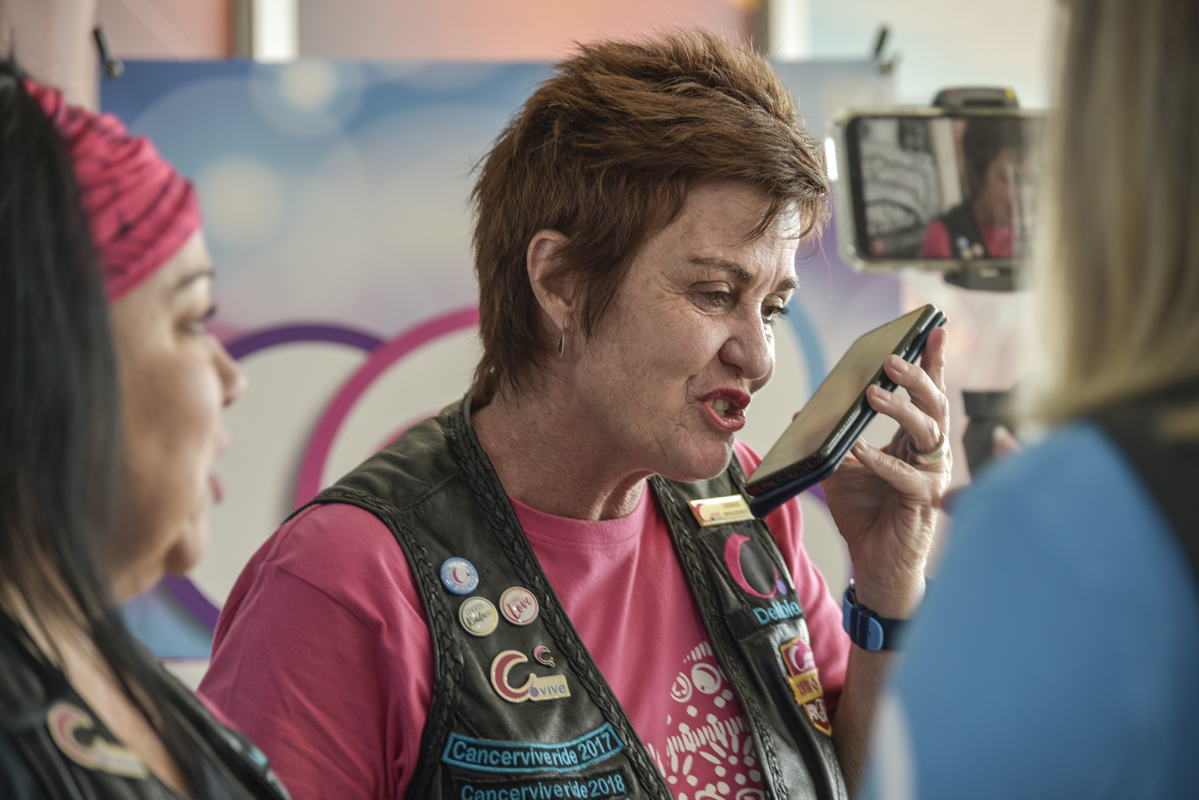
After his name had been drawn, Debbie Baillie (Cancervice Supporter) telephoned him to give him the news and he couldn’t have been more thrilled.
Photo credit: Bjorn Moreira / ZA Bikers
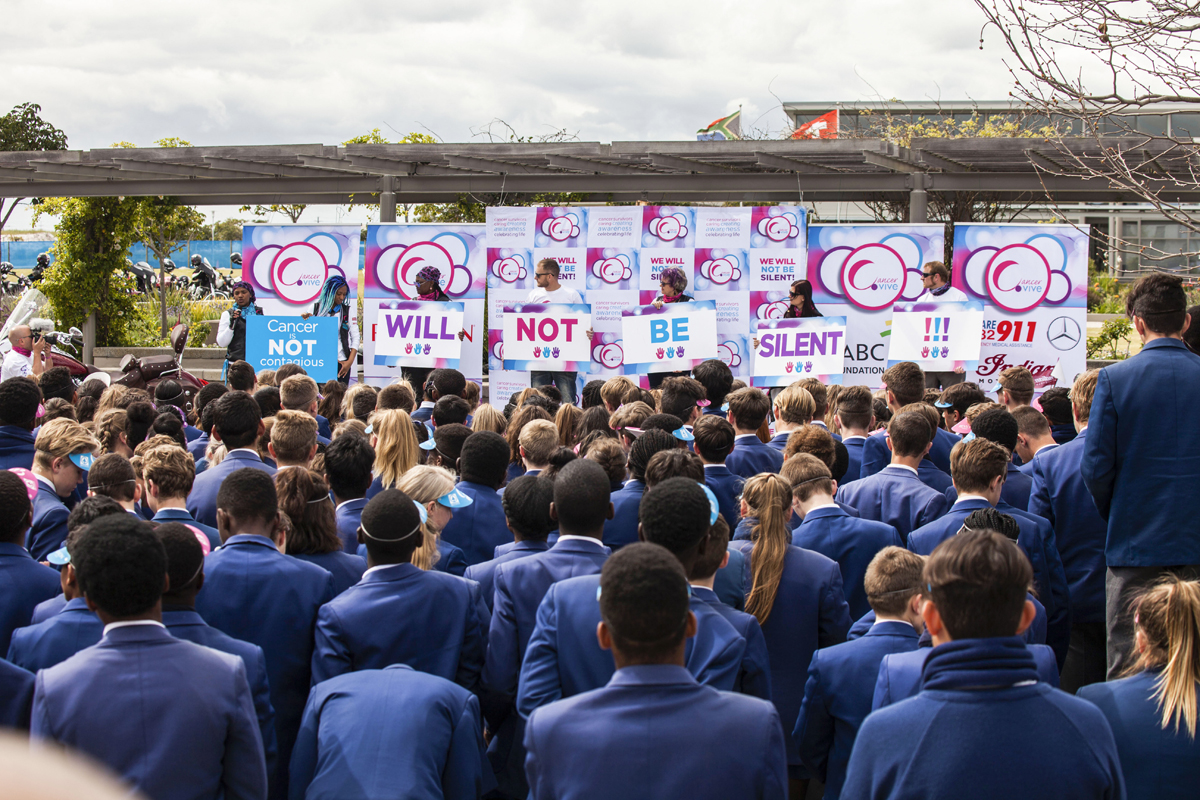
The past 18 months of Covid-induced lockdown has been difficult for Cancervive, with fund-raising events having to be cancelled along with their annual Cancervive Ride, which goes such a long way to raising awareness of the early detection of cancer throughout Southern Africa.
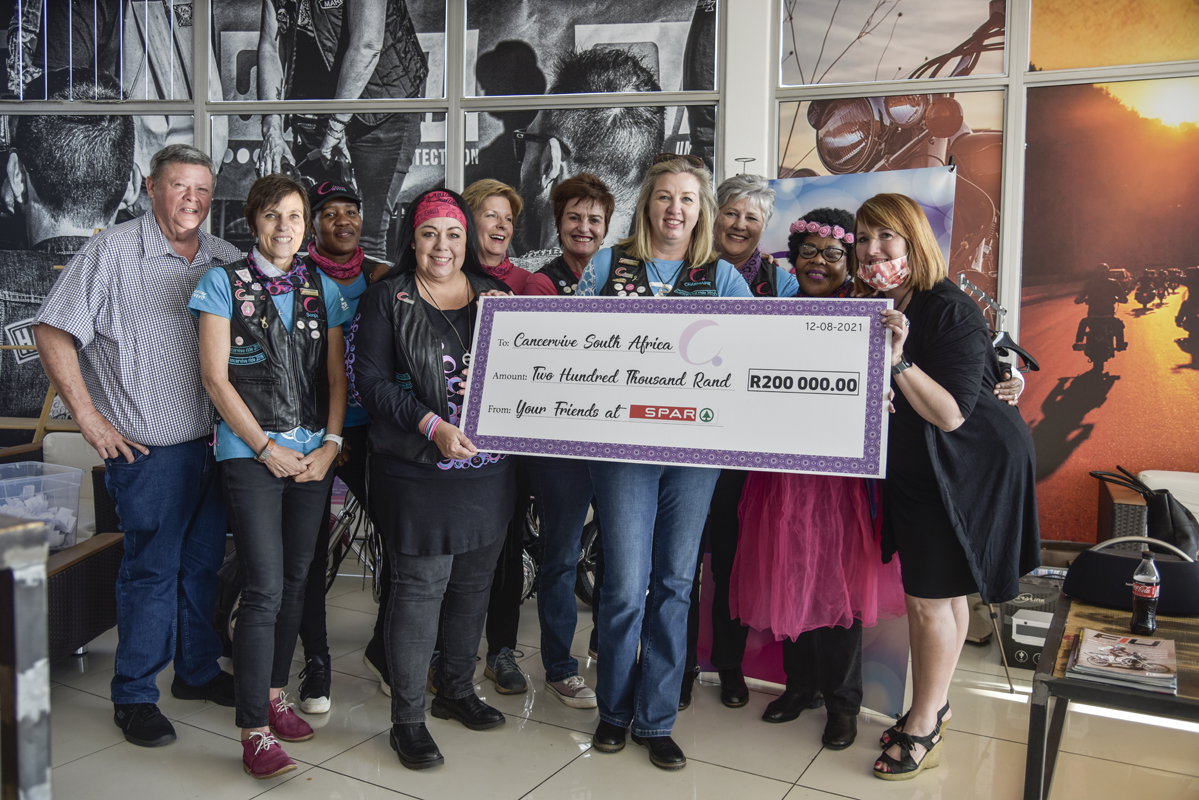
A long-time supporter of the charity has been the Spar Supermarket Organisation and Helen Barrett, National Advertising and Promotions Manager for Spar South Africa was on hand to witness the draw. She then proceeded to surprise and delight the assembled crowd with a fantastic donation of R200,000 to help keep the charity healthy in these difficult times.
Photo credit: Bjorn Moreira / ZA Bikers
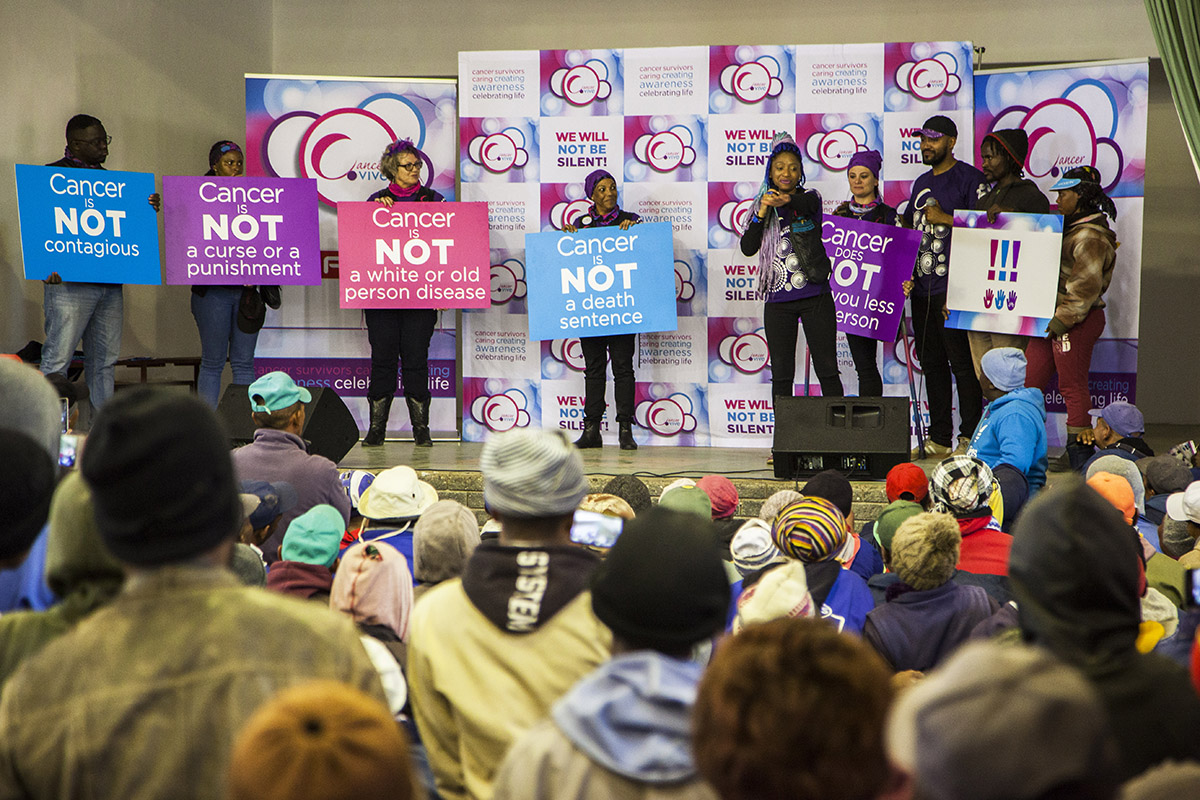
There are many charities that deserve our support, and it would be difficult to say that one does more important work than another. Having said that, there can’t be many of us whose lives haven’t been touched by cancer in one way or another. Early detection and treatment can lead to a complete recovery and a long and healthy life in the vast majority of cases and so, by promoting this message, Cancervive is fulfilling a hugely important role, especially in rural communities where the disease can carry a stigma and is largely misunderstood.
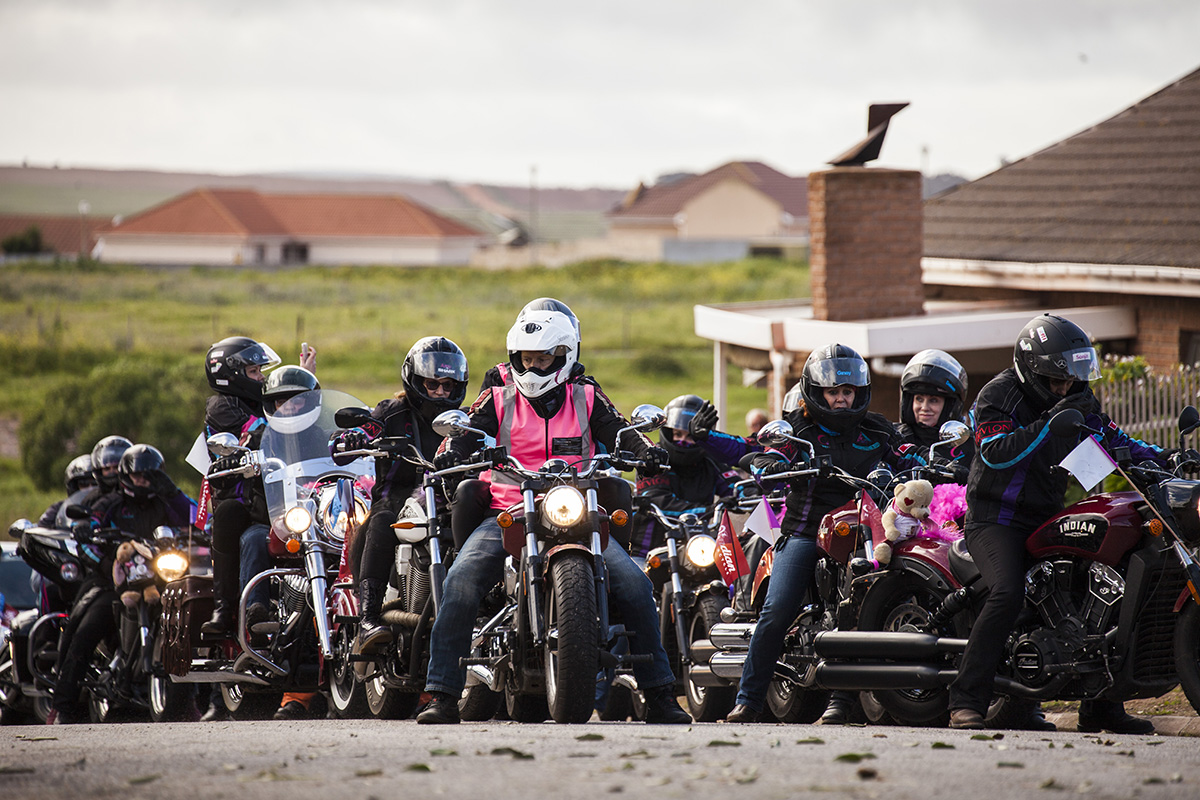
That the ladies – and gentlemen! – of Cancervive, choose to spread the word using their motorbikes to reinforce the message, only makes them even more worthy of our support.
For more information, please visit the website, www.cancervive.co.za, where you can also donate and get involved.
ZA Bikers is proud to be the media partner for Cancervive. Please watch out for further Cancervive news and announcements on ZA Bikers or visit the Cancervive Facebook page.
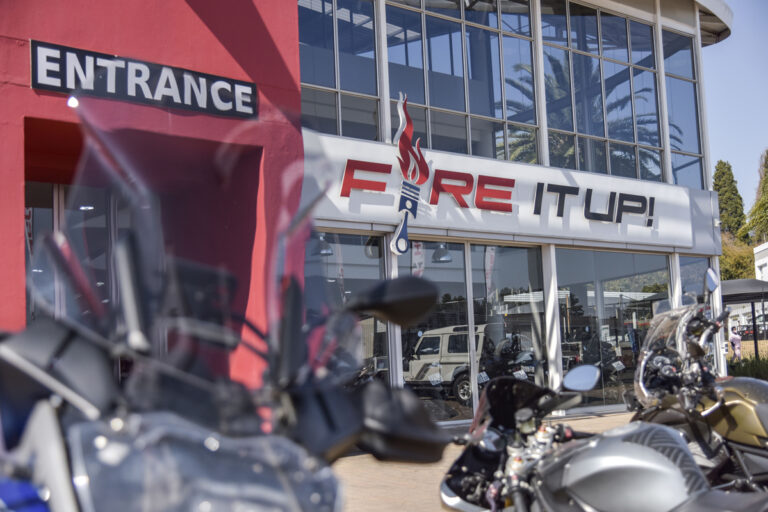
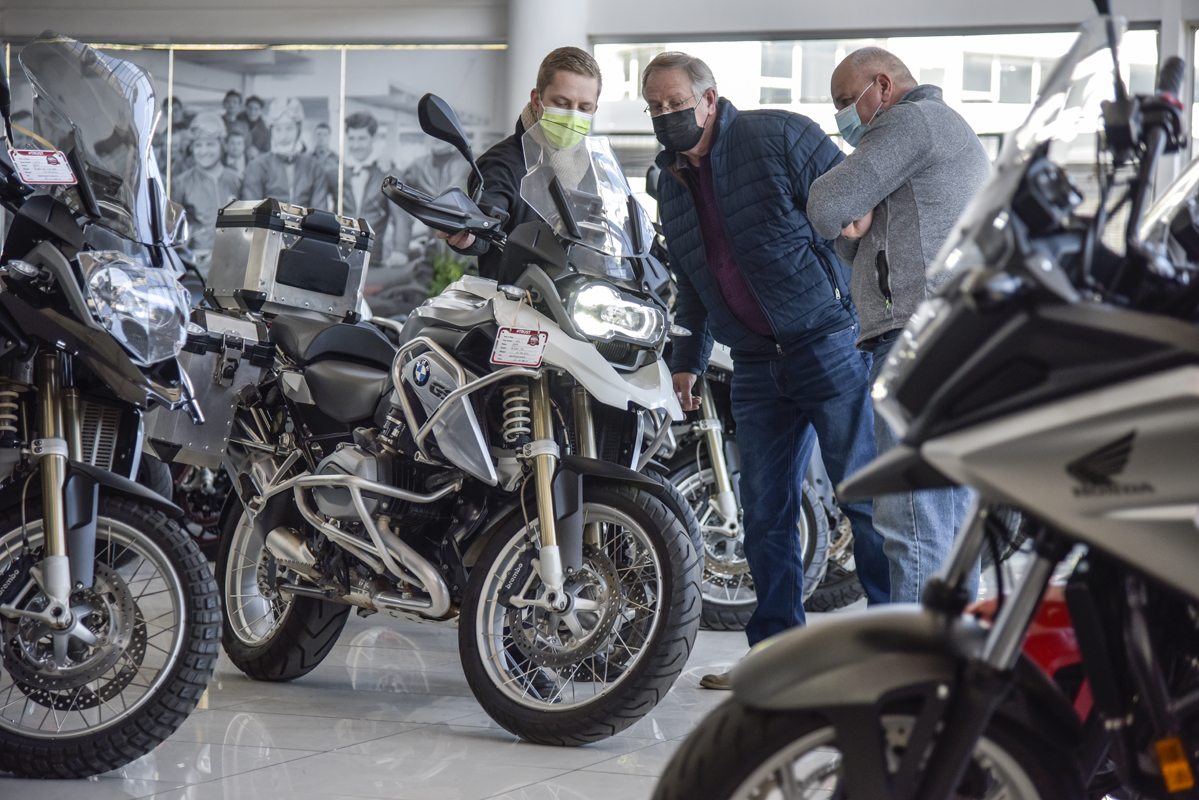
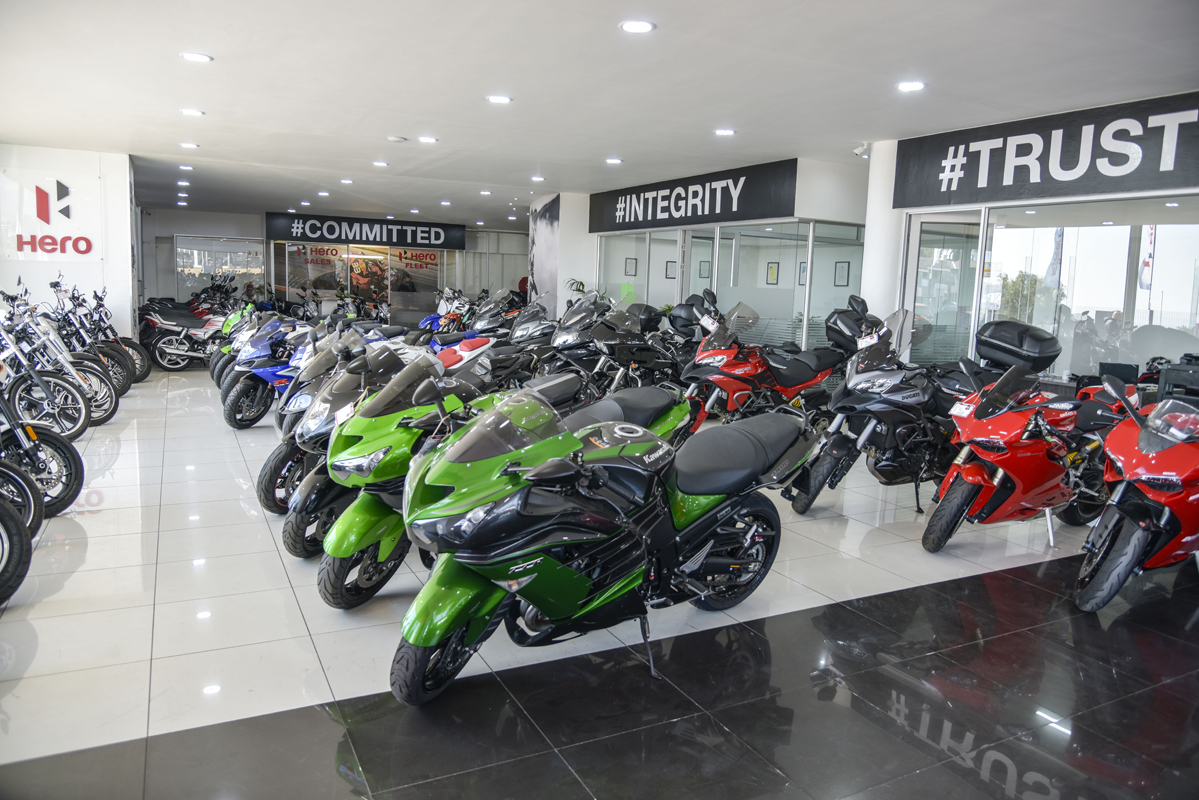
When you buy a motorcycle at Fire It Up!, you are not simply taking possession of a new means of transport, you are also joining a community of fellow motorcyclists who are not only passionate about everything two-wheeled but who will go the extra mile to welcome you into that community.
Fire It Up! knows that the journey with a customer doesn’t end when the motorcycle is ridden away: that is just the beginning.
Photo credit: Fire It Up!
Craig Langton explains…
“We want to get to know you better and we want you to know us better so that we can understand what you want from your dealership and you can understand the full extent of what we can do for you.
“All customers are invited to a monthly Customer Evening, where you can meet members of the Fire It Up! team – from sales and finance, accessories and tuning, service and maintenance, to management and workshop staff – and we can all get to know each other a bit better.
“Harry Fisher and Donovan Fourie will be there to talk about the Fire It Up! Tribe, which invites members to various events, from MotoGP Sundays, to technical evenings, Dyno days, Sunday breakfast rides and weekends away.
“Please join us at 6 pm on Thursday 26th August at Fire It Up’s premises in Bryanston for our Customer Evening. Drinks and snacks will be served and you will get the opportunity to meet the team and ask any questions that you might have.
“Motorcycling is a solo pursuit but so much more fun when you do it with others”.
The evening starts at the Fire Diner Restaurant on Thursday night at 6 pm.
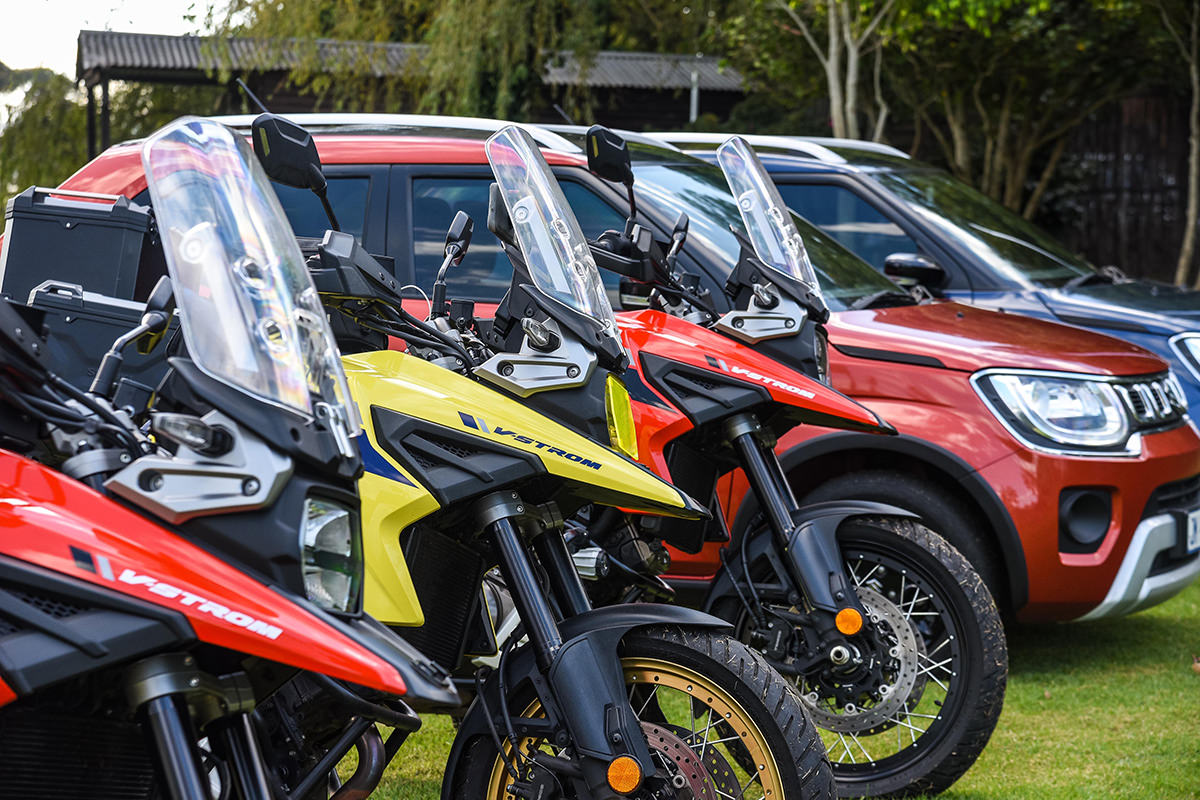
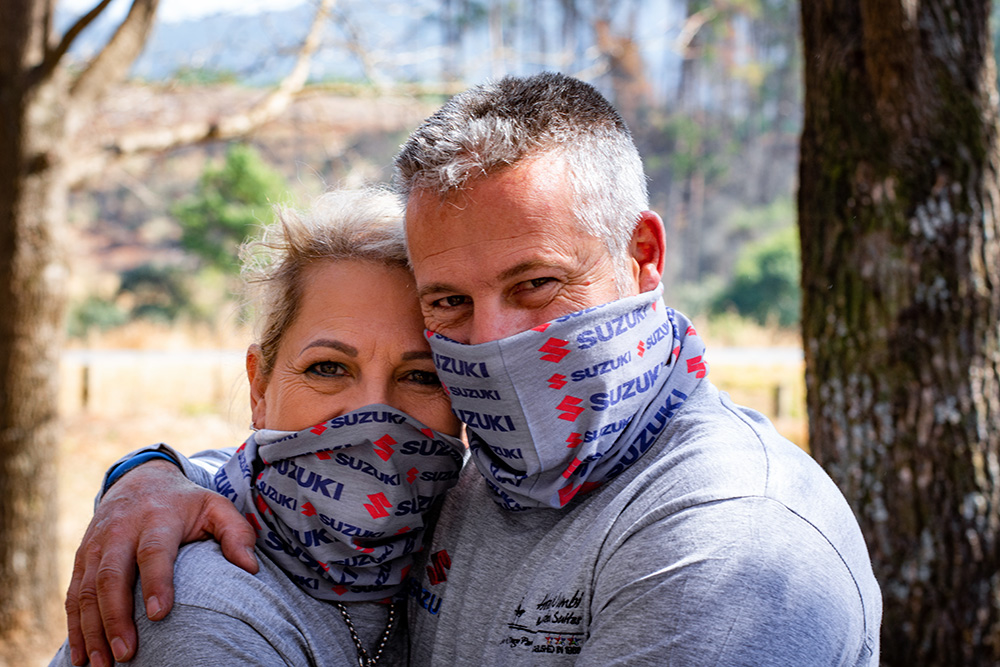
For 10 years, the Suzuki Weekend Away has been one of the best, if not the best, single make social weekends anywhere in South Africa.
Photo credit: Suzuki South Africa
Organised by Suzuki South Africa for their loyal customers and supporters, it takes place at the Hotel Numbi & Garden Suites in Hazyview, Mpumalanga, and is always hugely popular with the Suzuki riders’ community. Despite increasing in popularity over the years, this year’s event had to be limited in numbers due to the ever-present Covid protocols. As it was, the 100 attendees enjoyed one of the best Suzuki Weekends ever, helped by the weather playing the game and being perfect throughout.
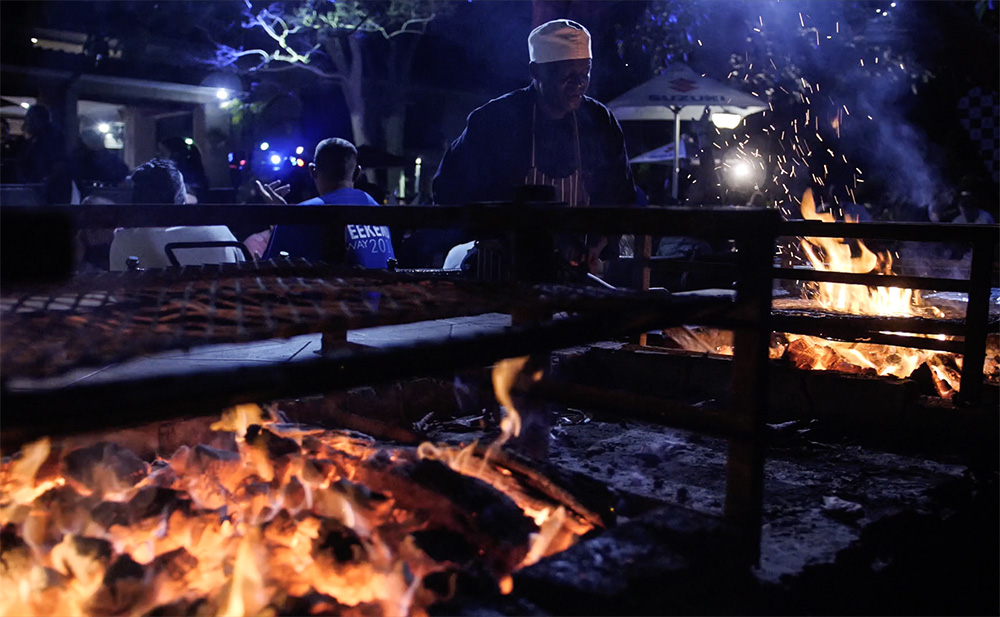
Customers, dealers and families started arriving from 2 pm on Friday, to be met with a typically warm Hotel Numbi and Suzuki welcome. Everyone soon got loosened up and relaxed as the hotel provided a superb braai-style supper and the drinks flowed.
Photo credit: Suzuki South Africa
The Suzuki Weekend isn’t just about riding through the spectacular countryside surrounding Hazyview: the emphasis is on having fun together and introducing a friendly competitive element into proceedings.
Photo credit: Suzuki South Africa
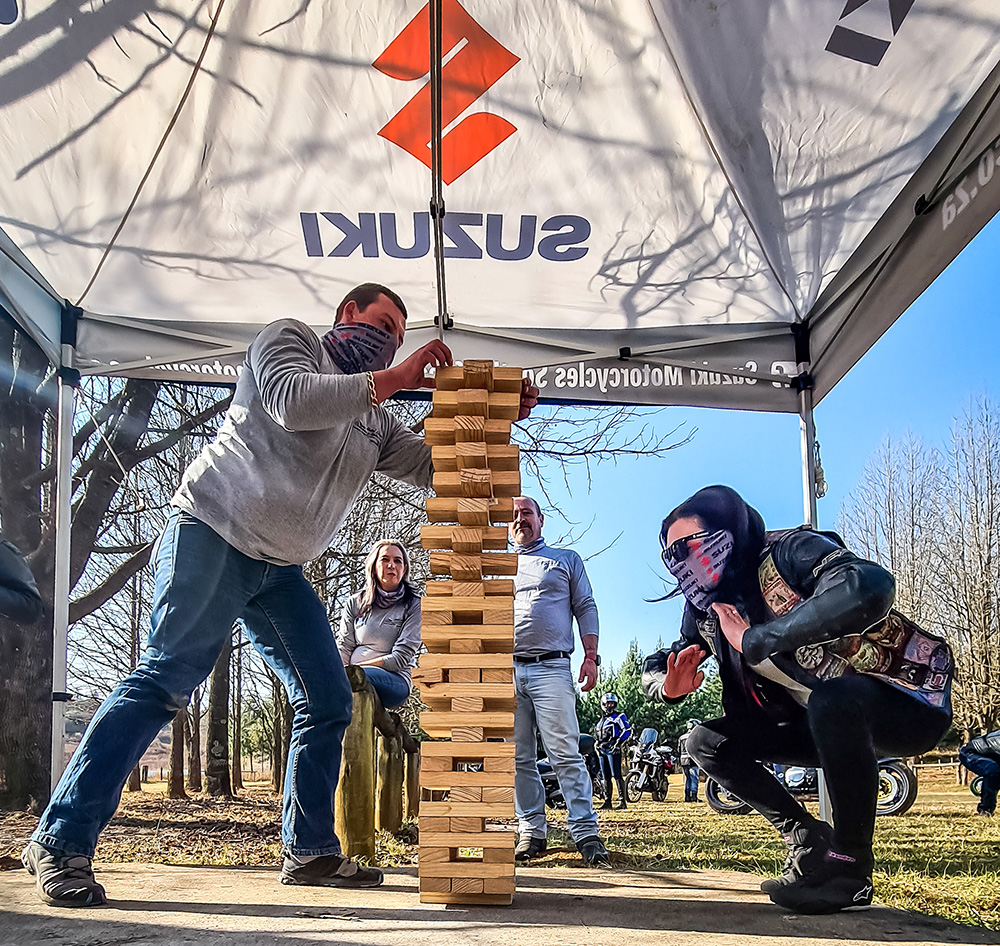
You can’t do this on an empty stomach and Hotel Numbi made sure everyone was fed properly before the riders’ briefing. The first day’s route covered 360km of some of the best riding roads in South Africa, so there was no time to hang about. There were two ‘game stations’ along the way which had nothing to do with watching animals but everything to do with trying to beat rival teams for honour and glory and prizes at the end of the weekend.
Photo credit: Suzuki South Africa
So it was that teams participated in Guess The Part at one stop and then giant Jenga at another. Also, ten items had to be collected along the route, ranging from pine Coles to a Unicorn (not sure how many got on with that one!).
Another important qualification, apart from success at the games, was the funniest and silliest stories from the day and there were many of those!
After a full and fun Saturday in the saddle, it was time to relax in the evening, sitting round the fire with full stomachs and with the air ringing with laughter as the tales got taller and more unlikely! Prizes were handed out and everyone fell gratefully into bed, to be ready for the journey home on Sunday.
Photo credit: Suzuki South Africa
And so another brilliant Suzuki Weekend Away came to a close. It is always a huge success not only because of the willing participation of so many loyal Suzuki owners but also due to the unwavering support of Suzuki Richards Bay, Suzuki East and Primrose Motorcycles dealerships, not to mention the huge effort made by Chris Kuun, Stuart Baker, Yvonne Fourie and everyone at Suzuki South Africa.
Photo credit: Suzuki South Africa
Finally, nothing could happen without the warm welcome of Numbi Hotel & Garden Suites in Hazyview. We’ll be back next year to enjoy their wonderful hospitality.
This year’s MotoGP season started after a long, four-month, raceless drought. But racing is in full swing now—and so is our hometown hero, Brad Binder.
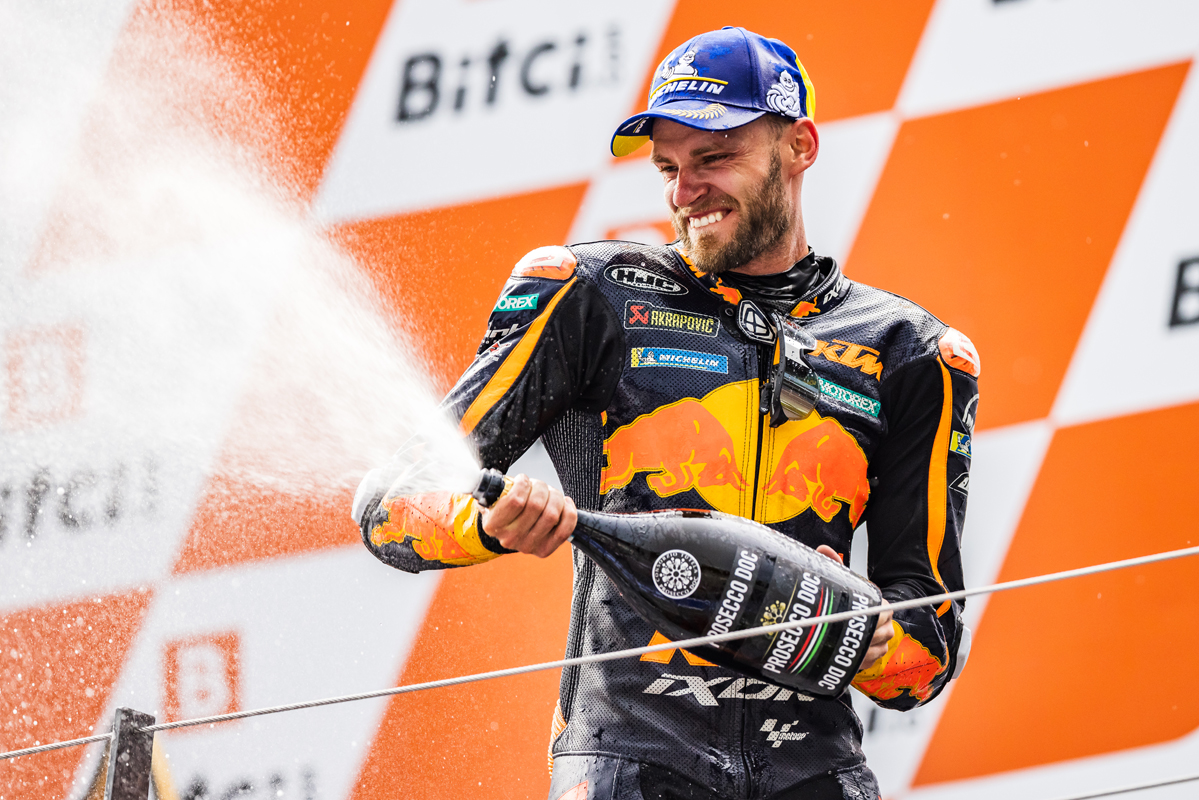
Brad pulled off a spectacular first season in MotoGP, clinching Rookie of the Year, and etching his name in the history books by winning a GP race in his first season.
Photo credit: KTM
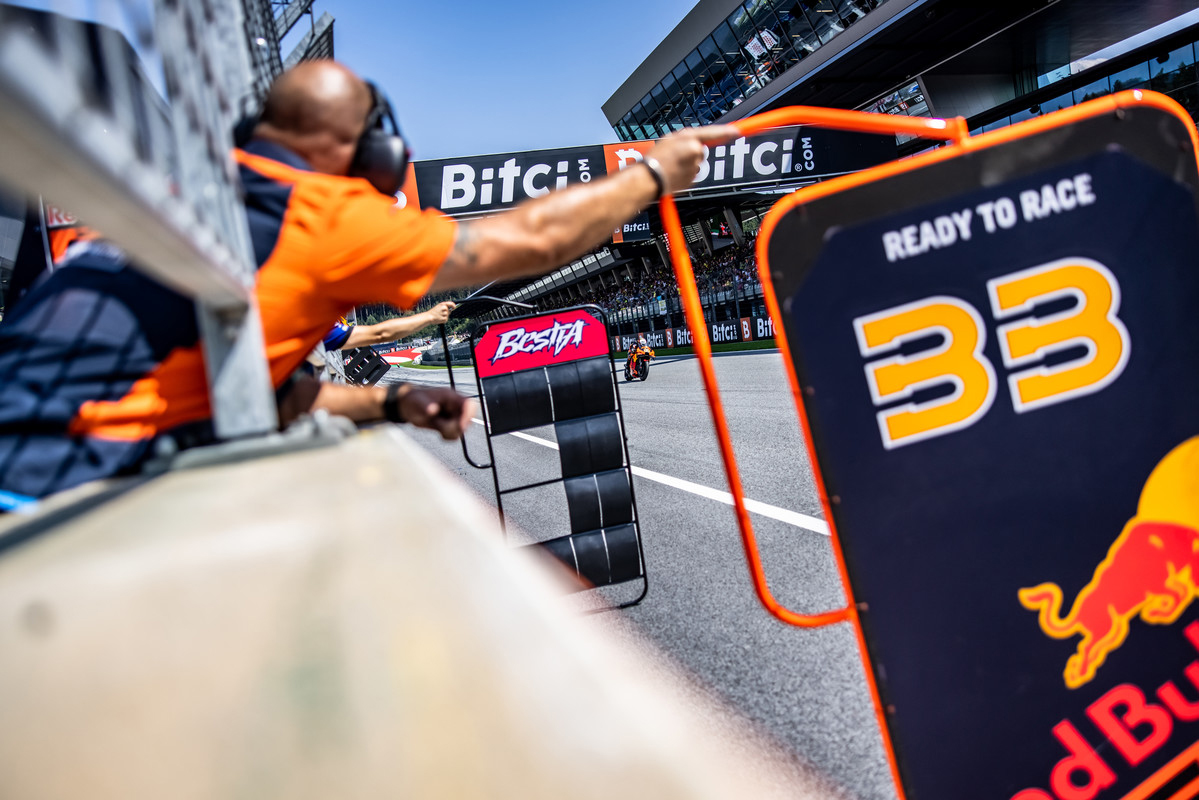
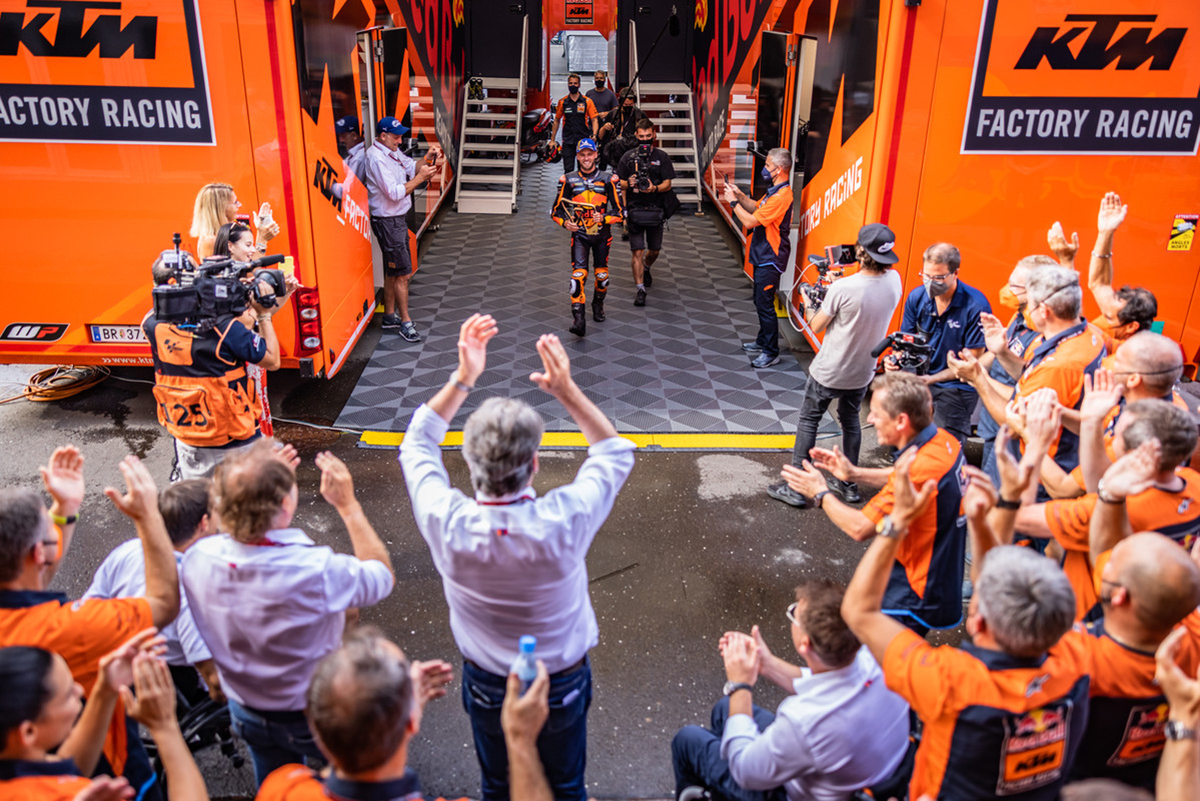
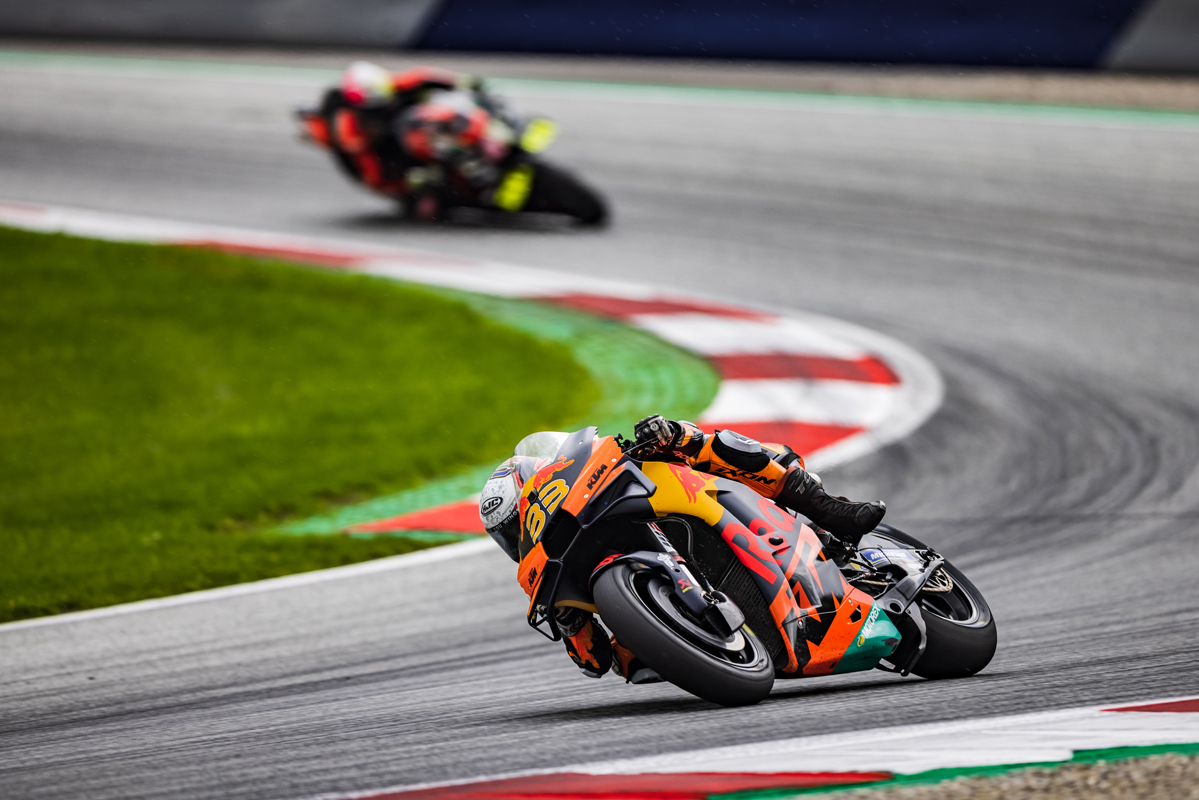
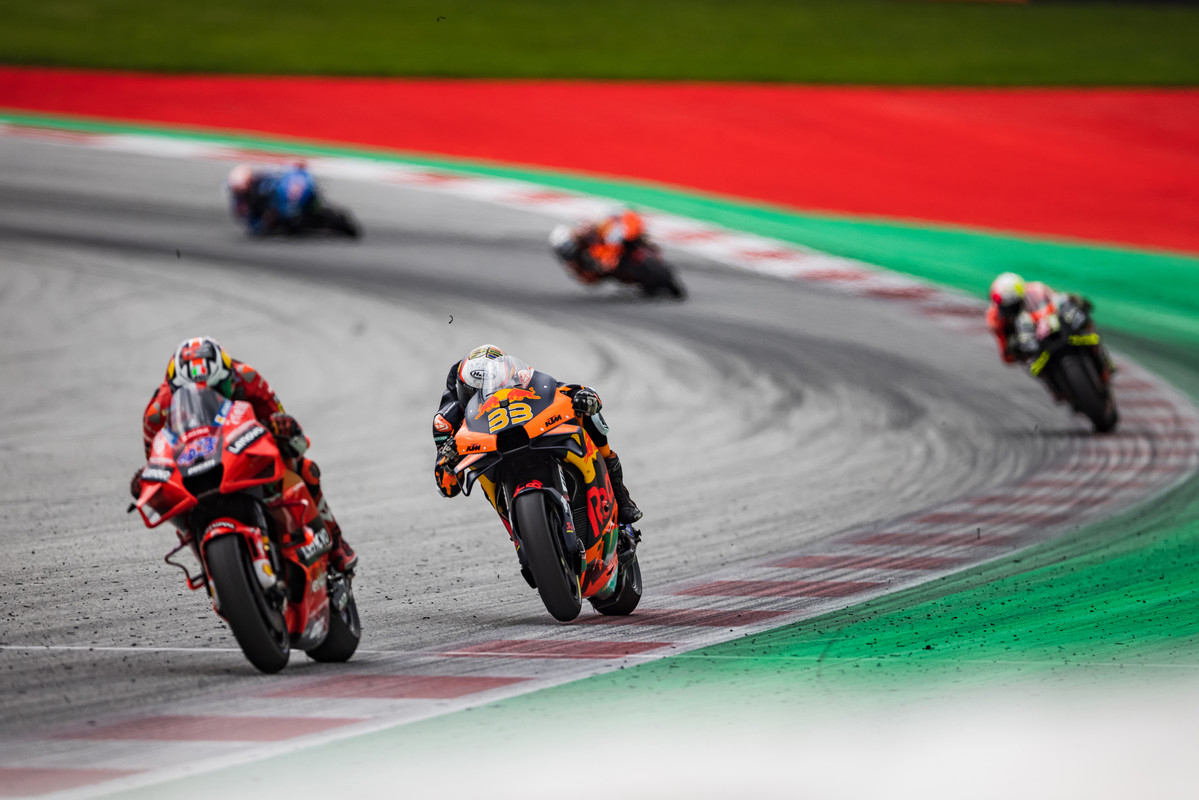
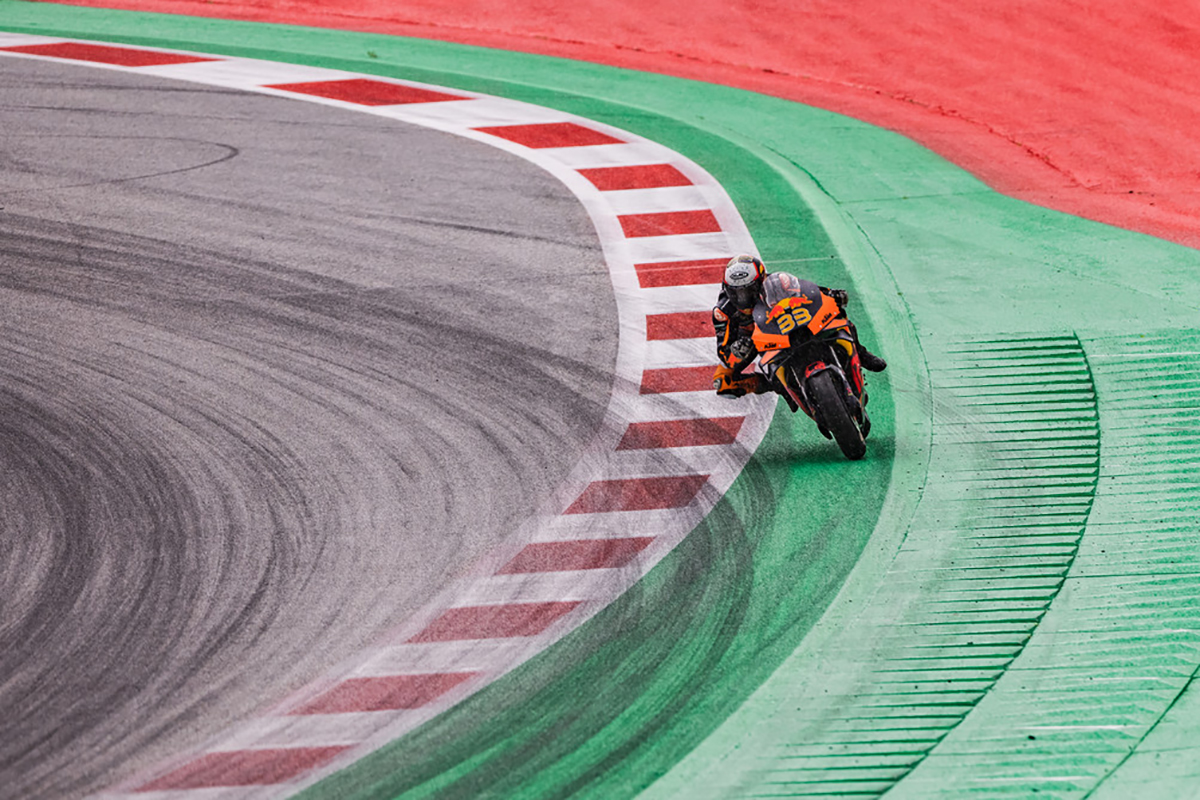
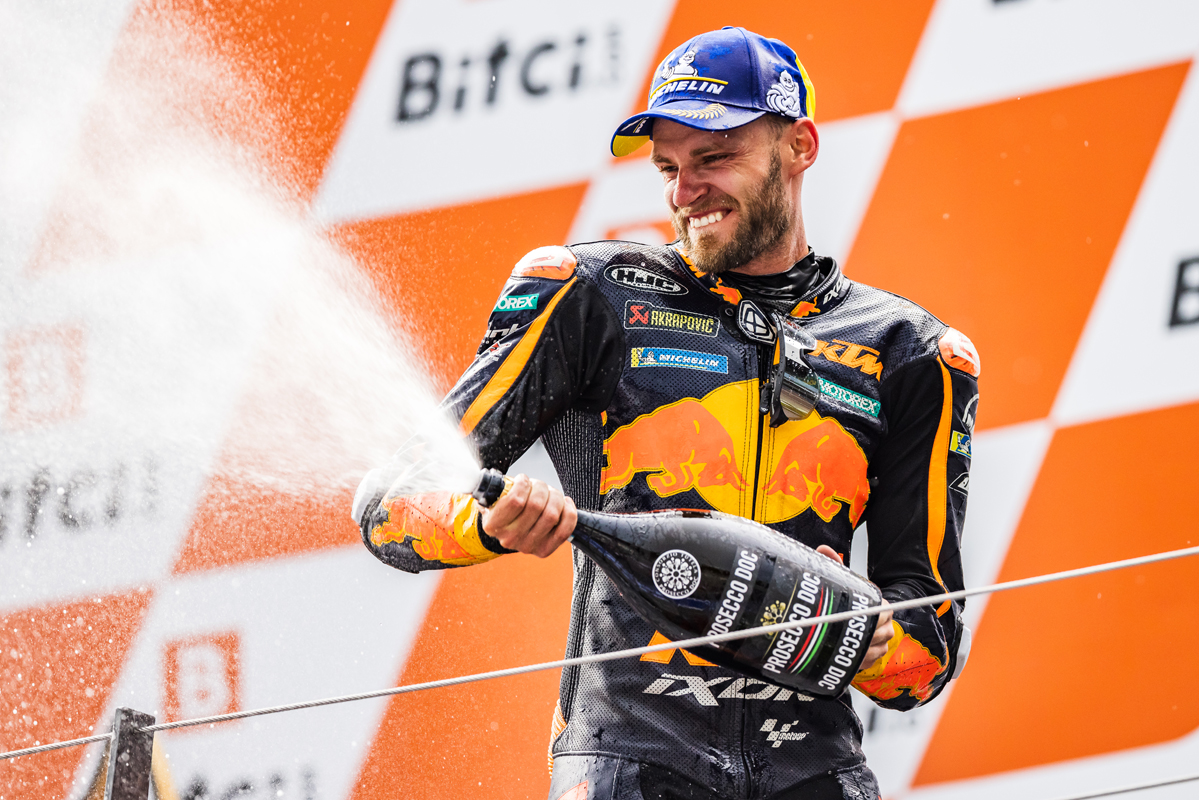
This season Brad has been pointing his front wheel at the front line, with his ‘Sunday Man’ instincts clinching him four top-five finishes and one legendary race win. Brad now sits sixth overall in the championship standings—but it’s his recent win at the Red Bull Ring, in the rain on slicks, that has everyone buzzing.
We had the opportunity to fire three quick questions at the star Red Bull KTM Factory Racing athlete. Here’s what Brad had to say:
Photo credit: KTM
ZA Bikers: At the Austrian GP you took the risky decision to stay out with wet carbon brakes and slick tyres. Was there any communication from the team, or was it a complete gamble from your side?
Brad Binder: Unlike F1 there is no radio channel team communication, the only communication we have from the team is on the pit board. I could see the rain was coming, so I quickly worked it out in my head; if I stayed out I would lose around 15 seconds over the next three laps, and I would still be faster than going through pit lane, which takes around 45 seconds, plus having to get everything back up to race temperature.
So I took the gamble, tried to stay out and the chequered flag definitely came out at the right time. I think if the race was one lap longer it would have been a different story.
Photo credit: KTM
ZA Bikers: You’ve ridden nearly two seasons in the premier class now, with respectable results and a win in each—you can’t ask for much more as a rookie. What’s your mentality heading into the rest of the season, and especially into next season?
Brad Binder: The last two seasons I have learnt a lot. It’s been difficult for me because in my opening season I was really fast. I won my first race in Brno [Brad’s third-ever race in MotoGP], but since then it’s been an uphill battle.
I feel like I’ve been trying as hard I can. I’ve been trying not to leave one stone unturned, working and training as hard as I can. I’ve been treating it too much as a job the past year rather than the way I used to; I’m trying to go back to my old ways, where enjoying racing was a big factor in my success.
Photo credit: KTM
One important thing that I have learnt is that you always have to maintain self-belief—but on difficult days you have to accept where you are and not push too hard because this can lead to unnecessary mistakes. There’s so many variables in MotoGP when it comes to a race weekend, and what I’ve noticed is that there is so much more going on behind the scenes compared to Moto2 and 3.
The on-track electronic management is another thing that I had to get used to—making changes on the fly to keep up with the front runners. So, there is so much that I have learnt and so much I still have to learn. I’m looking forward to the ride… that’s for sure.
Photo credit: KTM
ZA Bikers: Your legendary racecraft on a Sunday has earned you the ‘Sunday Man’ nickname, and last weekend’s race will go down in history as one of the greats. What needs to still click for you to take it to the next level in Saturday’s qualifying sessions?
Brad Binder: Qualifying well would be great. It’s unfortunate that I’ve never really been good at setting one fast lap—and that’s all qualifying really is. Normally if I could do it once, I could do it twenty times.
It’s been really difficult starting way back on the grid, because you lose so much time in the first few laps with all the overtaking that takes place. The big thing we were missing at the Red Bull Ring was rear-wheel traction—we didn’t have the big gain in traction like everyone else did on the new tyre, and this caused us to lose time in the smaller corners. So, that’s why qualifying has been so difficult, especially there.
A couple of times this year it’s been going to tracks I’ve never been to before on a MotoGP bike, where it always seems to take me a bit longer to find out where I’m going. Normally, by Sunday in the race I’m ok—but on Saturday afternoon I haven’t quite worked it out yet.
Photo credit: KTM
We’re looking forward to the Silverstone Grand Prix this weekend as Brad will be tackling another new track, but this time with added confidence from his recent win and with a new game plan in mind. I wouldn’t bet against him, that’s for sure.
In what was an epic back-to-back weekend of racing, Rockstar Energy Husqvarna and Brother Leader Tread KTM walked away with yet another class win. Bradley Cox claimed his second consecutive victory since the return of national racing recently. For Husqvarna, it was teammate Davin Cocker that took top honours this time around at the National Cross Country in Matatiele, KwaZulu-Natal.
Bradley Cox
In what started as a misty day in Matatiele, KwaZulu-Natal, Cox set off with a blistering pace to establish himself as the fastest rider of the time trial. With an unmatched sense of confidence, he carried his winning momentum into the main race.
The rider certainly had a target on his back being tied not only for points in the OR2 Class but also overall. In what Cox describes as an “almost perfect day of racing”, he secured the class win and second overall.
Photo credit: www.zcmc.co.za
“I was so happy to take the class win. It was almost a perfect day of racing to finish first in the time trial and in my class. I would have liked to have taken the overall win too, but there’s still a long season ahead so it wasn’t worth taking any unnecessary risks,” said Cox.
Davin Cocker
Cocker was on the warpath this weekend having lost valuable championship points in the last round due to a technical issue. Determined to claw his way back up the OR3 leaderboard, Cocker started the day with a blistering pace in the time trial. Second, only to Bradley Cox, the rider sent a strong message of his intentions for the day.
The main race had diverse terrain in-store with sandy sections, riverbeds, and tight forest trails looming. In what will be one of the stand-out performances of Cocker’s career, he raced to not only win his class but finish third overall.
Photo credit: www.zcmc.co.za
This was Cocker’s debut on the overall podium, a goal he had patiently been working towards. With the prestigious national title back within his grasp, he is now just one point behind the class leader with two rounds of the championship still to go.
“I’m so glad to be back in the fight for that title! This was my first time ever coming away with what was a very happy third place overall. The fact that I did it on my Husqvarna FC 250 proved to everyone that the ‘little’ bikes very much have what it takes to race up there with the frontrunners,” said an elated Cocker.
Photo credit: www.zcmc.co.za
Focusing on the positives, Fensham added, “Without trying all our options, which fortunately we have with our line-up of Husqvarna models, we will not learn and progress – so with that being said, the race for this OR1 championship is far from over! As for our young gun in the OR3 class, Davin and his FC 250 were simply in a class of their own. Not only did he blow everybody’s socks off with his qualifying performance, but to come home with the OR3 win and a third overall is truly amazing. We are excited and proud of this young talent, and now look forward to the next round in Delmas!”
In the world of elite motorsports, one name has been synonymous with success for the last 50 years – Motul 300V. This fully synthetic, best-in-class lubricant embodies Motul’s commitment to continuous innovation in pursuit of racing success. Motul 300V was originally developed to meet the extended racing requirements of participants in the 24H of Le Mans, which is why the latest iteration of this product was unveiled at the 2021 24h of Le Mans, the world’s most iconic endurance racing event.
The launch event also celebrated Motul’s ongoing relationship with the 24H of Le Mans, a partnership of over 60 years that has seen Motul develop a 360° partnership with the event as the official lubricant partner.
Photo credit: Motul
Through this decade-long partnership, Motul has been able to refine its lubricant products – including Motul 300V – using insights gained in real-world racing scenarios. In the same way, the latest version of Motul 300V underwent extensive testing at the 2021 Dakar Rally. The extreme conditions encountered on the Dakar, including temperature fluctuations, terrain, dust and dirt, and vehicles and engines being pushed to the limits of their performance, enabled Motul to perfect the formula of Motul 300V.
2021 marks the 50th anniversary of the launch of Motul 300V, a lubricant that takes its name from the 300 racing victories that Motul products had already contributed to by the time Motul 300V first appeared in 1971.
Photo credit: Sebastien Boue / L’Equipe
“The history of Motul 300V encapsulates the Motul story, with continuous technological innovation being applied in the quest for improved performance,” commented Mercia Jansen, Motul Area Manager for Southern and Eastern Africa. “With the new formula of Motul 300V due to arrive in South Africa in early 2022, South African drivers will once again be able to benefit from the latest race-winning lubricant technology in their own vehicles as Motul delivers on its promise of continuous product improvement,” she added.
Besides powering most of the LMP2 teams on the 24H of Le Mans grid, including 2020 category winners United Autosports, Motul is proud to be the official lubricant partner of Scuderia Cameron Glickenhaus. After testing the new Motul 300V, Jim Glickenhaus, Founder of Scuderia Cameron Glickenhaus shared his excitement about the new product: “The new Motul 300V makes a gigantic difference. In challenging racing conditions, the engine often gets stretched to its limits, therefore we need a reliable lubricant that will make the engine able to continue the race. The new Motul 300V is exactly that. We have full confidence in this lubricant.”
The new formula Motul 300V offers significant improvements:
Enhanced engine performance through reduced internal friction and proven power and torque gains across the whole powerband;
Better reliability through improved engine protection in even the most extreme conditions;
Improved compatibility with modern exhaust gas after-treatment systems including particulate filters; and
Increased sustainability thanks to organic base stocks using non-fossil renewable materials.
Motul 300V is available in three versions, including the POWER series (for maximum power; features the lightest viscosity grades, available from 0W-8 to 5W-30), COMPETITION (for the optimum compromise between power and reliability at mid viscosity grades, available from 0W-40 to 15W-50), and LE MANS (for maximum engine reliability in extreme motorsports conditions; available in 10W-60 and 20W-60 viscosities).
Photo credit: Motul
For live coverage of the 24H of Le Mans race and exclusive behind-the-scenes interviews with drivers go to 300V TV on YouTube, and for the official launch of Motul 300V. 300V TV will be aired and shared across all Motul social media channels, and to enjoy competitions and other interesting information around 300V, please check out the MotulSA FB page.
To learn more about the new formula Motul 300V and the improvements and benefits it offers, visit: www.motul.com
South African racing made its highly awaited return last weekend with both Rockstar Energy Husqvarna and Brother Leader Tread KTM swinging back into the thick of things in full force. In what was one of the most impressive races of the season, Brett Swanepoel stormed to an E2 win and Bradley Cox returned with a victory in the E1 class at the National Enduro Championship in Bathurst, Eastern Cape. Meanwhile, Heinrich Aust secured the second spot in his class to stay in the fight for the E1 Championship.
Photo credit: www.zcmc.co.za
Brett Swanepoel
Having pulled out of the first round due to an illness, Swanepoel has been relentless in his comeback this season. The rider lined up in the second row on Saturday and set off on a warpath as he fought his way up front with rival Luke Walker and Bradley Cox. When the opportunity to make his break presented itself, Swanepoel didn’t look back and opened over a minute gap on his competitors.
Photo credit: www.zcmc.co.za
Making the performance particularly impressive is the fact that this was his first Enduro race in the Bathurst terrain. Swanepoel describes his experience of racing through what was mostly virgin trails: “I absolutely loved this route. Having never raced here before, we were all very excited to see what was in store. The guys really put in a lot of work – I could see how much virgin terrain had been cut open. I really just found a groove and my bike felt amazing,” said an elated Swanepoel.
Bradley Cox
Taking centre stage was multi-disciplined star Bradley Cox, who returned to racing with a victory in the E1 Class. Cox patiently paced himself behind championship rival Heinrich Aust as he waited for the right moment to make his move.
Photo credit: www.zcmc.co.za
When the opportunity presented itself after a few laps in, the rider slipped into the lead and didn’t look back. As he sets his sights on taking the E1 Championship, Cox is relieved to have extended his points lead before the season finale: “I’m so happy to extend my points lead. I had some bad luck in the first two laps, but I managed to get back out there and make up for the lost time,” said Cox.
Photo credit: www.zcmc.co.za
Motivated by the high of the Bathurst race, both teams will now turn their focus to the National Cross Country race that is set to take place in Matatiele, KwaZulu-Natal, on Saturday. Adding an extra sense of excitement to this event is the fact that Swanepeol will line up on his all-new Husqvarna TX 300i tied for points overall with Bradley Cox.
Husqvarna is a truly iconic brand. Their logo, a gun sight atop a gun barrel, pays homage to their origins as a Swedish musket manufacturer way back in 1689. They built their first motorcycle in 1903, which puts them on a par with two fellows named Harley and Davidson, who started dabbling in two-wheelers around the same time. Husky took a different route though, building some of the finest dirt bikes, of the modern era, winning at just about everything they put their hand to.
Photo credit: Bjorn Moreira / ZA Bikers
Legends like Malcolm Smith and Steve Mc Queen were fanatical owners of what have always been motorcycles built for the really discerning enthusiast. Given this heritage and background, it is little wonder that the reveal of their concept adventure bike, the ‘Norden’, at EICMA in 2019, was met with huge positive acclaim. So much so that the Board of the Pierer Mobility Group, the owners of Husqvarna, had no hesitation with giving the go-ahead for the development of the production Norden.
Image source: Husqvarna
The brief, in typical Husky fashion, was to build a distinctive, functional, dynamic adventure bike with Rally roots, perfect for travel, and exploring wherever the fancy takes you, be it across Continents or the harshest deserts on the planet.
Adventurer extraordinaire, Mike Horn and Rally Raid legend Cyril Despres have been involved in the development of the Norden. Join them, as they take on a life-changing journey through the awe-inspiring landscapes of Ice Land.
Well, the wait is finally over! The Norden will be launched to the World’s motorcycle media before the end of this year, and on showroom floors early in 2022. With their heritage and track record, I truly believe that discerning adventure riders the world over are in for something really special!
We got our hands on a sample set of the 2022 Norden riding gear. Oh my soul, this kit is uber cool! We can’t wait for the bike to be launched in South Africa later this year.
See below for a sneak peek of what’s to come…
1 of 15
For more information on the products used in this article, click on the links below…
You think I’m joking about the “super commuter” part, don’t you? Well, I was seriously chuffed when Sean from Italian Motorcycle Importers asked us to use their Tuono 1100 Factory for a few days and report back on its ability as an ‘everyday bike’. Seeing as I habitually use bikes daily as I ply my trade, this was going to be an easy task.
So I was off like a sweaty sock to pick up the Factory. The Tuono oozes Italian flair from every angle, particularly the latest version, which has a Mille’ style to the tank, that beautiful polished aluminium frame now complete with a new under braced swingarm. Resplendent in Aprilia livery the bike makes a bold statement. A ‘naked’ as such, it does sport some side panelling and bodywork, with a surprisingly effective flyscreen.
Photo credit: Bjorn Moreira / ZA Bikers
The Factory has engine modes, as do most modern sports motorcycles, however, given that I would be using it as a daily ride I settled on ‘Touring’ mode for full power delivered in the most linear fashion. The Tuono 1100 plays in the same space as some real heavy hitters like the Ducati Streetfighter, KTM’s Super Duke R, Kawasaki’s force-fed H2 and Triumph’s Speed 1200 Triple RS, to name a few.
Photo credit: Bjorn Moreira / ZA Bikers
In fact, looking at the specs you may start thinking that the 173 horses produced by the Tuono is somewhat light in the loafers. The likes of the Ducati and Kawasaki churn out 200 odd ponies. So is it outgunned? Not on your Nellie! The RSV4 motor from Aprilia is still arguably the best engine ever slotted into a Sports motorcycle. From off idle it pours out a stream of velvety torque laden power that becomes a gushing torrent as the revs rise to a V4 wailing crescendo. The more peak powered opposition are exactly that. Peaky by comparison.
Photo credit: Bjorn Moreira / ZA Bikers
The trump card of this bike is the almost otherworldly balance of the bike as a whole. The magnificent motor is made all the more exploitable by the sublime chassis. Öhlins semi-active suspension produces a ride that is uncannily supple on the road and still manages to be a weapon on a racetrack.
Photo credit: Bjorn Moreira / ZA Bikers
Then we must factor in the riding position. My 6’3’’ frame requires no contortionist skills to fit on the Tuono. There is a subtle weighting of the wide and comfortable bars which have your torso comfortably supported by the wind blast. The seat is firm but comfy, for the rider, that is the pillion seat is a pure token to be sure. Probably purposefully done by Aprilia in the knowledge that this is a bike that you will never want to burden with a passenger! Stopping is courtesy of two 330 mm front and a 220mm back disc chomped on by Brembo’s state of the art Stylema calipers. ‘Nuffsaid!
Photo credit: Bjorn Moreira / ZA Bikers
Riding this bike is an absolute revelation. It is so user friendly that you feel at home on it in no time. That is one hell of a statement about a 177 hp cruise missile. It steers intuitively with a stable and front end feel that is nothing short of perfect. On my route home, I negotiate a right-left chicane around some Armco barrier. Approaching it accelerating from a standstill and still in first gear you feather the throttle as you flick it right then immediately go left and climb hard on the throttle to attack the straight piece of road that follows. With a clear road ahead it was business as usual. The transition from right to left is also over some patchy tar which exacerbates any flaws in a chassis set-up.
Photo credit: Bjorn Moreira / ZA Bikers
Accelerating out of the chicane on the Tuono V4 1100 Factory revealed the incredible capability of this bike. The perfect fuelling and superb chassis combine to launch the bike forward with a violence that is hard to describe. The bike finds traction in a way that I have never experienced before. I was expecting a power wheelie or wheelspin but the 200 section Pirelli Diablo Super Corsa back tyre just hooked up and rocketed the bike forward as if it was catapulted from a giant slingshot.
Photo credit: Bjorn Moreira / ZA Bikers
The back tyre on the bike was sporting some damage inflicted by one Robert Portman Esquire at a local racetrack and was really the worse for wear. Despite this, once warmed up, the Aprilia handled impeccably at all speeds. It is the most comfortable engaging Sports motorcycle that I have ever ridden. Bar none. Can you ride it day-to-day? Oh yes, and on weekends too! You probably won’t get much better than 13 to 14 k’s on a litre, but frankly, you won’t care.
Photo credit: Bjorn Moreira / ZA Bikers
The charm, performance and uncanny ability of Aprilia’s iconic naked biggie will blow you away! It even has cruise control, for heaven’s sake. The TFT display gives you all the vital information and Bluetooth connectivity and that stuff too. But who cares? All of that fades into insignificance when you have savoured the incomparable riding experience of this bike.
Photo credit: Bjorn Moreira / ZA Bikers
All of this excellence does not come cheap and at R365,000 it is serious shekels. To put it into perspective, pop into your local Specialized bicycle shop or google and check the price on their top-of-the-range full suspension mountain bike. That chap will set you back R220,000! By comparison, the Tuono is a downright steal! It is simply the best-naked Sports bike on the planet and yes, it is a demon commuter too!
Round 11 provided the Binder’s with a second shot at success, as they would be gathering at the Red Bull Ring’s fast and hard-braking course for the second time in a week. This second serving of the Red Bull Ring brought MotoGP their biggest fan attendance since the start of the pandemic.
Sunshine and decent temperatures were also part of the ingredients for an eagerly anticipated Austrian Grand Prix, but would it last?
Photo credit: Petronas SRT
Darryn Binder
Darryn Binder had a good build-up towards the weekend, despite his Turn 4 crash early on in FP3—still securing himself a spot in Q2. With Darryn not feeling completely comfortable with his bike, the South African’s initial Q2 run saw him set a lap time of 1:36.722. Unfortunately, Binder was unable to improve upon this, after exceeding track limits on his final lap, and ultimately ended qualifying in 17th place.
Photo credit: Petronas SRT
Lining up on the sixth row of the grid didn’t make it easy for Darryn, but he was going to be his usual self and push as hard as he could. A good start off the line saw him maintain his 17th place off the line, Binder quickly got to work making his way through the field and was inside the top-ten on lap 4. Settling into a good rhythm in seventh, our fellow South African started to chase down the top-six and joined the leading group at half race distance.
Photo credit: Petronas SRT
Darryn rode with team-mate McPhee for the majority of the race and was unable to stay with the riders ahead. Binder was ninth at the chequered flag and brought home some valuable world championship points (86), placing him sixth in the riders’ standings.
Photo credit: Petronas SRT
DB: “It was a difficult race. Starting 17th is never fun and I thought it was going to be easier to get to the front. Unfortunately, there was that break in the group and, although I was chasing as hard as I could, I just couldn’t catch them. Luckily John was right behind me and when he came through he brought us up to the group. Once I had the slipstream I passed two or three guys, but I didn’t have the speed to stay there. A break appeared again and I just couldn’t catch back up. At the end, I was slowly starting to get back again, but we just didn’t have the speed today. I tried my best but it is what it is. I’m now looking forward to racing again at Silverstone, after not going there for two years.”
Photo credit: Petronas SRT
Brad Binder
Brad Binder was at another level this weekend, with great speed during Q1 pushing him into Q2 with teammate Miguel Oliveira. Brad was quicker and more competitive in his second attempt at the Red Bull Ring and earned a comfortable 10th starting position for Sunday’s race, which is two rows further up than last week.
Photo credit: KTM
Sunday saw Brad line up behind his teammate and last year’s winner at the Spielberg venue, Miguel Oliveira—the highest starting KTM RC16 on the grid. The race was declared a ‘Dry Race’, but everyone sort of knew it wouldn’t be that way for long. With a hard compound slick front and a medium rear, Brad was ready to let go of that clutch and dive into Turn 1.
Photo credit: KTM
Brad had a great start to the race and slowly started picking off riders as the laps went by. Binder had moved up to 6th when the rain started to appear and the leaders grouped together as the conditions became more treacherous. All of a sudden Brad was in the mix and you could just see he was more confident than the rest as the condition started to worsen.
Photo credit: KTM
With the five riders ahead of him electing to pull into the pits to change to wet weather settings, Binder took the gamble and gingerly guided his KTM RC16 to 1st place as the rain plummeted. Our Sunday Rider almost fell, and actually ran off onto the rumble strips on the final lap with the rain at its heaviest. However, Binder had enough of a margin to make it home in first. After that last lap, wild celebrations in the Red Bull KTM Factory Racing pitbox, the Orange grandstand and the ’33’ fan club took place.
This was by far the best race of the year and a race win that just proves to us that Binder is capable of making a split decision that can win him races—some serious skills back these decisions. Who’s got the balls to get knee down in the rain on slicks? Our local boy Brad Binder, that’s who.
Photo credit: KTM
BB: “That was really scary! When I saw the rain coming I was trying to work out how many seconds I could lose per lap and when the others went in I decided to take the gamble. I could push hard on the first lap but then the rear tyre started to slide as the temperature cooled. Then I lost the carbon brakes! Wow, I think there was someone up there holding me up today because there were a couple of moments when I thought it was over. Here in front of the fans and the home race for KTM and Red Bull I felt like I had to take the gamble. To win today is insane.”
Photo credit: KTM
The Binder’s will now enjoy a short rest, before heading to Silverstone for the British Grand Prix (27-29 August).
All charity is good but, as motorcyclists, there are charities that really deserve our support. Cancervive is one of those charities.
Cancervive was founded in 2011 by a group of female cancer survivors to address the essential need for cancer education in South African communities. Since its inception, they have reached over 150 000 people face-to-face and 30 million via various media platforms, while travelling to communities on motorcycles to spread awareness, debunk myths, allay fears and eradicate stigma even in the most remote and rural areas, where early detection is crucial in saving lives.
As with any charity, while awareness is the primary goal, none of this comes cheap and a lot of energy is spent raising money for the various initiatives the charity undertakes.
If you have been to Fire It Up! in the last couple of months, you can’t have helped noticing a rather fetching pink Harley Davidson Sportster sitting in the Diner.
Photo credit: Bjorn Moreira / ZA Bikers
This bike was the pride and joy of Giney McIntyre, a Cancervive Supporter who dedicated herself to the Cancervive cause, helping to raise money and awareness across South Africa and its neighbouring countries from the very beginning. She tragically lost her life to a heart condition in 2020 and her spirit and passion will be much missed. It was always her intention to donate her pink Harley to Cancervive to help raise money and, after she died, her husband Steven, carried out her wishes.
The pink Harley is the grand prize in a raffle, the draw for which is to be held at Fire It Up! at 3 pm on August 20th, 2021. The event will be live-streamed through the Cancervive Facebook page, or you can attend in person at Fire It Up!
Photo credit: Bjorn Moreira / ZA Bikers
All proceeds from the raffle will go towards further awareness projects of this important charity. Sadly, in this day and age, there are few of us whose lives have not been touched by cancer in loved ones and here is the perfect way to honour their memory and help prevent it from touching millions more.
If you want to buy a raffle ticket, you can do so at Fire It Up! – just talk to any of the staff there – or you can WhatsApp Charmaine Rider, who is the Finance and Fundraising Manager for Cancervive. Send her a message on this number – 083 657 5920 – and she will send you bank details. When you have paid and sent her the proof of payment, she will issue the raffle ticket and send you a picture of it, showing the serial number. You are then entered into the draw.
We are proud to support this wonderful and essential initiative and we hope you will too.
The ‘Sports Touring’ class is becoming more and more relevant. As technology has advanced, these bikes have become capable of performance that was the preserve of pure sport bikes of a few years back. The difference is, they are easy to live with day-to-day or trundling huge distances with your missus on the back. Sport weapons, on the other hand, are essentially track tools only. They also come at a hell of a price premium.
You now have options like the Tracer GT, BMW F900 XR or Triumph Tiger GT Pro 900 which are huge fun and competent on a track day, yet are versatile for every other kind of riding that you may wish to do on the blacktop. Your best mate does also not have to be a Chiropractor!
Photo credit: Bjorn Moreira / ZA Bikers
When you can buy a bike this competent in so many roles, for a 100k discount over a typical Sports bike, you have to engage the grey matter a bit. The very essence of a ‘Gran Turismo’, or GT, is a vehicle capable of traversing long distances at speed, in comfort. When you stick a GT tag on your vehicle you are making some serious claims to phenomenal all-round dynamic ability.
I had the opportunity to spend a couple of days with Yamaha’s new, top of the range, Tracer GT 900. At last, Yamaha has spent a huge effort to make the big Tracer the bike it always promised, but never quite managed to be. The bike is literally new from the ground up, with every facet being seriously upgraded. The fresh styling may suggest that this is a face-lift but investigation throws light on a totally new bike. Let’s start with the heart of any motorcycle: the engine.
Photo credit: Bjorn Moreira / ZA Bikers
Yamaha’s three-cylinder CP3 engine has attained legendary status as one the greatest motorcycle motors ever built. Gruff, raspy and intense, it punches way above its weight and never fails to thrill. In the GT it has a 3 mm longer stroke which sees a gain in engine capacity to 890cc’s. This also results in a power hike to 87,5 kW (119 bhp) @ 10,000 rpm and 93 Nm of torque @ 7,000 rpm, significantly produced 1,500 rpm lower than the 87,5 Nm maximum torque of the ‘old’ motor. The CP3 motor has always felt stronger than the specs suggest and the newest version is no different. Interestingly, Yamaha have achieved this despite reducing the overall engine weight. I think that the latest styling rocks, with subtle hints of R1. Check out Bjorn’s pics and tell us what you think.
Photo credit: Bjorn Moreira / ZA Bikers
The power flows through a 6-speed gearbox, with an up and down quick shifter. Quick shifters, by my experience, seem to work better on multi-cylinder bikes than on twins. The more pulses of power that feed into the crank the less ‘shunt’ you feel when changing gear, especially from first to second. On many bikes, I tend to use the clutch for first to second shifts and then revert to the quick shifter thereafter. With the GT, the quick shifter is smooth and seamless at all engine speeds, right through the box. Nice!
Fuelling was an issue with earlier Tracers, especially in the more aggressive engine modes, where it was snatchy and ‘on-off’, making smooth-riding difficult. You can now match your mood to one of 4 engine modes from ‘rain’ to ‘sport’. Fuelling is crisp, sweet and almost like really good carb-equipped bikes of old. When you ride your bike daily as your preferred mode of transport, as I do, this is a big deal. Crappy fuel injection wears you down over time, like a nagging wife and in both cases can end with a parting of the ways. This new GT is a keeper!
Photo credit: Bjorn Moreira / ZA Bikers
All this engine, gearbox and fuel-injection goodness, can be negated when you are let down by an ‘iffy’ chassis. This was an issue with previous Tracers. When pushed, they exhibited less than perfect stability, which meant that you could not fully exploit the superb motor. Some called it ‘lively’ or ‘fun’ whereas I just felt let down. It did improve with each update over time, but only now do you get a chassis that totally compliments the CP3 unit.
Photo credit: Bjorn Moreira / ZA Bikers
Yamaha has not held back in this regard either. Every facet of the rolling chassis has been assessed and upgraded. The frame is all-new, lighter, yet more rigid where it counts. The swing-arm is 60 mm longer than the hooligan MT-09, fostering high-speed stability. Suspension is Semi-Active KYB units with 130 mm of front and 137 mm of rear travel. Rear preload is adjusted manually, but with an easily accessed remote adjuster. The ride is supple, yet firm and superbly controlled at all speeds. In fact, the high-speed stability is now a strength of this bike.
Photo credit: Bjorn Moreira / ZA Biker
The GT displays exemplary stability at all times, whether threading through traffic or negotiating a 180 kph sweep, where, on exit, the GT kind of chirps “you’re a wuss, that was a 200 kph sweep!”. The bike steers effortlessly, aided by a 120×17 front and not overly wide 180×17 rear wheel. It turns in effortlessly, yet is always composed. Now, at long last, you can ride the bike really hard, enjoying every moment without wondering if it might just turn and bite you. The seat can be adjusted between 845 and 860 mm in height, with super spacers which fill the gaps at both heights so that you are not left wondering if a part is missing.
The seats (back and front) are wide and supportive. Long days in the saddle will not be endurance events on the GT. The windscreen is easily adjusted through a significant range, allowing you to achieve a sweet spot in a cocoon of smooth air from which you can conduct the magnificent three-cylinder orchestra. Hands can be kept snug on chilly days with heated grips as standard.
Photo credit: Bjorn Moreira / ZA Bikers
Speaking of adjustment, the footpegs can be raised higher and slightly back, by re-locating four mounting bolts in drilled and tapped holes. So if your thing is scratching down back roads, the GT can be set up totally to suit.
Photo credit: Bjorn Moreira / ZA Bikers
The extent that Yamaha have gone to with the GT is unbelievable. Get a load of this. Those of you who understand chassis dynamics will know that the lighter the wheels on a bike, the better. Just chat to the guys at BST about their lightweight carbon wheels and you will get the picture. The lighter the wheels are, the easier it is to get them rotating and stopped. Think for a moment of a flywheel. The heavier it is the more inertia it has. Similarly with wheels. The heavier your wheels are, the more they want to run straight and upright, due to inertia and centrifugal force. The lighter the wheels, the easier the bike is to accelerate, stop and turn. The GT is endowed with the lightest wheels ever fitted to a Yamaha! They have used a process called “Spin Forging” which allows the wheels to be only 2 mm thick in places, without compromising strength. No wonder this beast turns and steers so effortlessly.
Photo credit: Bjorn Moreira / ZA Bikers
The cockpit of the GT is a great place to be. The ergonomics are spot on. The bars have a lovely bend and allow a perfect riding position for your upper body where you are totally neutral behind the screen. Cruise control takes the pain out of long straight stretches and an 18-litre tank allows decent range between fill-ups, giving reasonable economy (5L/100 @120 kph). Even jumping on the main jet should give you 250 k’s range.
Instrumentation is novel in that Yamaha give you all the info at a glance via two 3,5” TFT displays, which angle ever so slightly inwards, making them super readable. Info can be accessed via a knurled knob on the right handlebar cluster. The said knob can then be depressed to access further functions. Not the world’s most intuitive setup, but easy to master for a long term rider.
Photo credit: Bjorn Moreira / ZA Bikers
At 220 kg’s fully fuelled, the Tracer GT is not at all porky. It has a slightly limited steering lock, however, which does require a little planning when making a U-turn on a narrow road. The reality is, that given its design brief, the Yamaha Tracer GT is a damn near flawless motorcycle. Every issue that the Tracer has ever had has now been properly addressed. Not a band-aid fix, but rather a totally engineered solution. As a Sports Touring motorcycle, it is as good as any and better than most. The brilliant chassis now allows you to enjoy the class CP3 motor to the full.
The suggested retail price of around R229,000, is also spot-on, given the full spec of the bike. Yamaha build quality has had them top-scoring in long term reliability polls for some time now. The GT is properly fast, comfortable, good handling and sweet looking. Optional factory panniers put the cherry on the touring cake.
Photo credit: Bjorn Moreira / ZA Bikers
You know that a bike that you are reviewing is really good when the only real criticism is the fact that the indicators aren’t self-cancelling! What we have here is another absolutely brilliant bike from the Tuning Fork company!
When World of Motorcycles opened its doors in Centurion a couple of years ago, many wondered at the title, given that they were solely the official Ducati dealer for South Africa. As time has gone on, however, the name has taken on its proper meaning, first with the announcement that it was to become an official Indian Motorcycles dealer and now, with the announcement that World of Motorcycles is an official Suzuki dealer.
Big things are planned for the brand, with not only motorcycles in stock but, eventually, a full range of Suzuki four-wheelers which, of course, means quad bikes!
Photo credit: Bjorn Moreira / ZA Bikers
In a first for any Suzuki dealer in South Africa, World of Motorcycles are planning to stock a full range of original Suzuki apparel (we will update you on this as and when their stock arrives).
Not only will you be able to buy your Suzuki at World of Motorcycles, but you will also be able to have it serviced and maintained there. The workshop staff have been fully trained in all things Suzuki to give you the peace of mind that your bike will be properly looked after.
Photo credit: Bjorn Moreira / ZA Bikers
This is a huge achievement for World of Motorcycles and one that confirms their commitment to sales and service excellence.
Stuart Baker of Suzuki South Africa was confident that being part of World of Motorcycles was the right move.
“World of Motorcycles is a very prominent dealer in Pretoria and it made sense for us to team up with them on so many levels. They are ambitious and want to be the best. I’m hopeful that they will work hard to generate sales and have committed to being fully stocked with our whole range.
Photo credit: Bjorn Moreira / ZA Bikers
“We’ll be giving them our full support to achieve their goals and we know that they will support us fully in return.”
Contact them on 012 765 0600 or pay them a visit at 146 Akkerboom Street, Zwartkop, Centurion. The nearest off-ramp is John Vorster.
The 9th of August 1956, saw the revolutionary stand that 2000 women took by marching to the Union Buildings to protest against unjust pass laws. Despite a lifetime of victories, women today still experience issues that hamper their development and empowerment in various sectors. One major hurdle for a number of young girls and women across the continent is not being able to afford sanitary towels and the lack of access to these products leads to school absenteeism, health risks and exclusion from everyday social activities.
In support of Women’s Month, Yamaha South Africa is running a sanitary towel drive throughout the month of August. The aim of the drive is geared towards donating sanitary towels to underprivileged future female leaders at Olievenhoutbosch Secondary School in Olievenhoutbosch, Centurion.
Hear what Robin van Rensburg (MD Yamaha South Africa) has to say regarding the initiative…
After nearly six weeks of race-less weekends, the wait was finally over. “The Sound Of Music”, to all us petrol heads was turned up to full volume at the first of two Grands Prix around the spectacular and fast ten-corner layout of the Red Bull Ring—we aren’t talking “do-re-mi”, but rather the braap of the fire-breathing, race-bred, GP bikes.
Round ten of the MotoGP calendar, saw a decent quantity of race fans return to the MotoGP event and the customary KTM grandstand was packed with eager spectators—hyped on Dani Pedrosa’s first wildcard race and KTM’s home GP.
Photo credit: KTM
Darryn Binder
Darryn Binder started his Q2 qualifying with a strong 1:36.657 lap, which saw him stay in contention for a front row start for the majority of the session. Darryn ended his Q2 qualifying just 0.204 seconds shy of pole, placing him on the third row of the grid (8th).
Photo credit: Petronas SRT
Sunday saw Darryn and his PETRONAS Sprinta Racing Moto3 team wake up to a damp Spielberg circuit. Our fellow South African took a gamble on slick tyres, as dry lines started to appear around the track.
Photo credit: Petronas SRT
Slicks and a very damp circuit, caused Binder to lose many positions in the opening laps of the race, dropping from eighth to a lonely 17th. With a large number of wet areas on track, Darryn found himself slipping away from the leading group, corner after corner.
With the track beginning to dry, Darryn was able to start lapping faster than the leaders in the final stages, he moved into the top-ten on lap 16 and was able to cross the chequered flag in sixth. This sees him stay sixth in the World Championship with 79 points.
Photo credit: Petronas SRT
DB: “I’m pretty happy and quite proud of myself. I took the gamble because my Dad always told me: ‘luck favours the brave’ and I was pretty set on slicks. I had nothing to lose by doing it and the decision was easy. The only thing I regret is that I couldn’t make it to the top-five, because that’s what my target is for each race. Apart from that, I’m happy. If the race had started ten minutes later it might have been a different story, as the race was really coming to me at the end. It didn’t completely pay off but we live and learn. It was a good race and I enjoyed myself.”
Photo credit: Petronas SRT
Brad Binder
Brad Binder lined up with four other KTM RC16 riders on Saturday for Q1 qualifying. With warm and consistently bright weather conditions, Brad held a promising pace in the first two sectors of the Red Bull Ring but could not construct a full lap to remain in Q2 contention. After a tough Q1 session, Brad placed himself in 16th for Sunday’s race.
Photo credit: KTM
Sundays 28 lapper was shortly red-flagged, after an incident which saw Dani Pedrosa’s fallen motorcycle hit by Lorenzo Savadori and the collision ruptured the fuel tank, causing a small fire and a delay to clean the track.
After a quick restart, Binder started climbing up the ladder lap by lap and found himself running with the front runners. Our “Sunday Rider” managed his tyres and grip in a dry race and without any of the rainfall that had affected morning warm-up. Brad pushed hard and found himself up in 6th on the closing laps. Unfortunately, for us Binder fans, we were watching the race on the timesheets, as TV coverage focused on the top three—very sad stuff.
Photo credit: KTM
On the last lap, he attacked Johann Zarco and Taka Nakagami in two thrilling and well-judged overtaking moves to capture 4th with one corner remaining. This race result positions Brad eighth in the World Championship with 73 points.
BB: “Today was a bit of chaos for the first race back! I almost crashed on the Sighting Lap of the first race actually. I don’t know why but it felt like the front tyre had no temperature and for the first flying lap, it was like it was wet. We need to look and see what happened. I went down to 25th at one point because I almost ran off the track. I passed four-five guys in the next laps until the red flag. The restart was much better and I had more confidence even if we really need a harder front tyre. It is way too weak for us. I was riding on the tyre limit the whole race but managed to make a couple of moves to take 4th, which I was really happy with.”
Photo credit: KTM
The Binder’s will be back out on the Spielberg circuit in only a few day’s time, when the Grand Prix von Österreich gets underway (13-15 August).
Triumph South Africa is continuing its success story by opening a new, dedicated showroom in Pretoria. This follows the opening of the Cape Town branch last year.
The new store, conveniently situated in Hatfield, at the corner of Jan Shoba and Park Street, has the full range of Triumph products, including new and used Triumph motorcycle sales, accessories, apparel, servicing and parts. All staff have undergone full training to offer the full Triumph experience.
Photo credit: Triumph Pretoria
Also incorporated into the dealership is the ‘1902 Café’, serving coffee and light snacks.
The opening of the Pretoria store completes Triumph South Africa’s intended retail footprint in the country. In addition to the three retail outlets, there are Authorised Triumph Service Centres in Durban and Port Elizabeth, ensuring that Triumph owners have access to support no matter where in the country they live.
Photo credit: Triumph Pretoria
Limited Time Offer!
Triumph Pretoria is offering up to R15,000 worth of free accessories to make your dream motorcycle that much better.
Reserve your deal now on your dream motorcycle. Or better yet, visit them to test ride your dream motorcycle and seal the deal.
T’s & C’s apply.
The following promotion will apply to a limited number of motorcycles sold by the 30th of September 2021. This offer is inclusive of VAT and excludes fitment.
Triumph Pretoria
Contact details for the new Pretoria shop are as follows;
Address – C/O Jan Shoba and Park Street, Hatfield, Pretoria. Telephone – 012 955 4444 Email – [email protected]
Exciting news from Aprilia this weekend, as the Italian marque confirms their long-rumoured Tuareg 660 adventure bike. For now, all they’ve revealed are renders and a surface-level spec sheet… but colour us impressed so far.
The Tuareg revives a model designation last used on the single-cylinder 1991 Aprilia Tuareg 600, and it’s smaller 50, 125, 250 and 350 cc siblings in the 80s. The new Tuareg 660 is a thoroughly modern motorcycle, but it borrows its livery from the 90s bike—right down to the Tuareg logo and purple and red highlights.
Image source: Aprilia archives
As its name implied, the Tuareg 660 uses a version of the 659 cc liquid-cooled parallel-twin in the RS 660 and Tuono 660. It’s a redesigned version, making 80 hp and 70 Nm rather than the 100 hp and 67 Nm of the RS. No doubt it’ll feel way different too—Aprilia promises a “significantly boosted low/mid-range curve,” and we’d imagine it’ll be geared for adventure riding.
Looking at the chassis, it appears Aprilia mean business. Ground clearance is said to be “more than 240 mm,” with a seat height of “less than 860 mm.” Suspension travel is set at 240 mm, and the renderings imply 21F/18R tubeless wheels. The bench seat, grippy foot pegs and removable passenger peg mounts all point to a bike with off-road riding in mind.
Image source: Aprilia
Aprilia’s website also lists a tubular steel frame, a dry weight of 187 kilos and an 18 l fuel tank.
Like the RS 660, the Tuareg 660 uses Aprilia’s ‘APRC’ electronics package. It gets four riding modes, including one specifically tuned for off-road riding, and two that are customizable. And its ABS can be disabled either just at the back wheel, or at both ends. Traction control and cruise control are bundled in too, and the Tuareg will be kitted with a 5” TFT display and LED lighting.
Image source: Aprilia
It’s clear that Aprilia are gunning for the Yamaha Ténéré 700 with the Tuareg 660. It boasts a little more power, torque and suspension travel, and includes some of the electronic gadgetry that the T7 deliberately left out for the sake of making a more purist adventure bike. And it’s just as good looking too, with fewer layers of plastic than most modern dual sport bikes.
Reports of the RS 660 have been widely positive so far, so it’s safe to assume that Aprilia are onto a good thing here. If it rides as good as it looks, it should be a winner.
Image source: Aprilia
There’s no word on when the Tuareg 660 will land in South Africa, or what it’ll cost. And that’ll really be the kicker: if Aprilia bring it in under the T7’s current eye-watering price tag, it’ll be tough to say no. But if it’s pricier, it’ll have to compete with some of the bigger and more established adventure bikes on the market, and it’ll be a hard sell.
BMW Motorrad has just rolled out the next models in the gradually expanding R18 range: the R18 Transcontinental tourer, and the R18 B bagger. If there was any doubt whether the R18 was a shot across Harley-Davidson’s bow, these new bikes should put it to rest.
Both models are based on the existing R18 platform, with the same mammoth 1,802 cc boxer powering them. Output remains 91 hp at 4,750 rpm and 158 Nm of torque at 3,000 rpm, with most of its torque available from 2,000 to 4,000 rpm. They also uses the same double-loop steel frame, hooped swingarm and sleeved forks.
Photo credit: BMW Motorrad
The new R18 Transcontinental and R18 B both get a massive dose of American touring style, with wide batwing fairings, cushy two-up seats and 27l hard panniers. There are subtler differences too—both bikes wear alloy wheels, the same exhausts as the R18 Classic, and elongated rear fenders.
The two models are separated by their level of trim. The R18 B Transcontinental has a larger windshield, with additional running lights and chrome trim up front, and crash bars lower down. The R18 B’s shorter screen, slimmer seat and lack of top case give it a leaner bagger vibe.
Photo credit: BMW Motorrad
The Transcontinental also gets extra wind deflectors on each side, operable vents in the fairing to control airflow, and foot boards instead of pegs for the rider and passenger. The B’s engine block is finished in black, contrasting with the original grey colour of the Transcontinental’s motor.
Peak behind both fairings, and the kit is mostly the same. Both bikes feature a setup with traditional dials at the top, and a 10.25” TFT display at the bottom, with black trim on the B and chrome trim on the Transcontinental. Just like on the new BMW R 1250 RT, the display features smartphone connectivity with features like on-screen navigation.
Photo credit: BMW Motorrad
Both bikes are also kitted with a new bike-specific sound system from the UK company Marshall Amplification. The system features two speakers in the fairing—but there are Stage 1 and Stage 2 upgrades that add subwoofers to the panniers. (The Stage 2 system can only be fitted to the Transcontinental though.)
Storage for your phone is provided via a chromed storage compartment on top of the tank, with a pop up cover for the fuel cap just in front of it. The panniers are naturally lockable, and the Transcontinental’s top case includes a generous passenger backrest.
Photo credit: BMW Motorrad
Standard equipment includes the same three rider modes as existing R18 models (‘Rain,’ ‘Rock’ and ‘Roll’), along with BMW’s Automatic Stability Control and engine drag torque control, neither of which are particularly intrusive on the standard R18. Cruise control is standard too, with BMW’s new radar-operated active cruise control available as an option.
Other out-the-box upgrades include a keyless ignition, and an adaptive cornering LED headlight. You can also order both bikes with hill hold and reverse functions as ex-works options.
Photo credit: BMW Motorrad
Just like when the R18 first launched, the R18 Transcontinental and R18 B will be available as ‘First Edition’ models. Those get piano black paint with white pin stripes and extra chrome trim, and an owner’s box that includes swappable tank badges with a tiny keyring screwdriver, workshop gloves, a book, a cap and a leather belt.
You can also order both models in BMW’s Option 719 Galaxy Dust Metallic flip-flop paint job too, and there’s a full set of Option 719 parts, including different seats. In addition to the First Edition and Option 719 schemes, they’ll also come out in a ‘Manhattan’ metallic matte colour.
Photo credit: BMW Motorrad
It’s tempting to draw comparisons to the uber-popular Harley-Davidson Street Glide here, but I reckon the R18 Transcontinental and R18 B stand on their own merits, aesthetically. The faired touring package looks classy and suits BMW’s big boxer, arguably more than the original stripped-down cruiser styling does. It comes with a weight penalty though: the B weighs 398 kilos wet, and the Transcontinental, 427.
Photo credit: BMW Motorrad
The first R18 impressed everyone that saw it up close with its high level of build quality and finishes, and I fully expect both of these bikes to look just as good up close. There’s no word on if and when these will land on our shores, or what they’ll cost, just yet.
It also remains to be seen what they’ll be like to ride. My biggest gripe with the R18 was its uncomfortable ergonomics—will extra wind protection and a comfier seat make a difference, and turn it into a proper mile muncher? Stay tuned.
Anyone who thinks that Harley-Davidson does not have the technical ability to build a competitive adventure bike is not only delusional but downright dumb! I have followed reams of vitriolic drivel on social media, spouted by riders of the current crop of adventure bikes, slating Harley’s entry into the adventure space with their Pan America. The general drift is that Harley can and should only build overweight underpowered old tech cruisers, as that is all that they are capable of. Even making a comment like that smacks of absolute ignorance and a case of engaging your tongue before putting your brain (if you have one) into gear.
Photo credit: Bjorn Moreira / ZA Bikers
Let’s digress for a moment with a motorcycle motorsport quick quiz for these brain donors. What is the most winningest race motorcycle of all time? “Well, it certainly can’t be a Harley”, I hear these fellows say, with a derisive howl. Sorry to burst your ignorant bubble. Ever heard of an XR 750? Yeah, I thought not. Those a bit better informed about motorcycles generally, or who have watched that all-time classic motorcycling movie, ‘On Any Sunday’, will know that the Harley XR 750 has won more races over a longer period of time than any other race bike ever! The first race won by an XR 750 was in 1972 and the last was in 2008. 36 years of dominating flat-track racing, winning 29 AMA Grand National Championships. Not too shabby for builders of fat, flabby cruisers hey? So dude, if Harley says they are serious about building a contender in the adventure bike space, at least be clever enough to shut up until you have personally ridden it!
Photo credit: Bjorn Moreira / ZA Bikers
Courtesy of ROC Harley-Davidson in Alberton, I spent a mere three odd hours in the saddle of a H-D Pan America, so I am in no way qualified to speak with authority on its pros and cons, but what I did learn, is that this is a bike that needs to be taken seriously by all who consider themselves thinking motorcyclists. For those of you who want to carry on your ignorant bleating, ultimately you are the losers. Wallow on in your ignorance.
Photo credit: Bjorn Moreira / ZA Bikers
H-D knew what they were shooting at when they designed the Pan. The first step was to build a potent motor. With more experience at building V-Twins than anyone else, this layout was the obvious choice. V-Twins are particularly suited to adventure bikes in that they typically produce good torque and can also deliver a proper top-end hit. Typical 270-degree crank intervals give good traction on loose surfaces too. Enter the 1252cc Revolution Max engine powering the Pan. 150 hp at 9,000 rpm and 127,5 Nm of torque at 6750 rpm. Impressive! By comparison, the BMW GS 1250 makes 136 hp and 143 Nm. KTM’s potent 1290 makes 160 hp and 139.4 Nm, albeit at 2000 rpm higher than the Harley. So it compares favourably in the power stakes.
Photo credit: Bjorn Moreira / ZA Bikers
Weight-wise, the Pan, with a 21.1-litre tank and standard main stand and engine protection bars, is also on point, at 253 kg FULLY FUELED! A GS 1250, with its 20-litre tank, is virtually identical at 249 kg, with the Katoom 1290 at 250 kg. So, they measure up pretty well in the vital statistics stakes. How about other specs?
Photo credit: Bjorn Moreira / ZA Bikers
The Pan has a complete electronics package, as befitting a modern adventure motorcycle. Engine ride modes, being Sport, Road, Rain, Off-Road, Off-Road Plus and a custom set-up option. Cornering Rider Enhancement, controlled by the Inertia Measurement Unit, will try to save your butt when you run out of talent. Cornering ABS, Hill Hold Control, Traction Control and Cruise Control is all there and reasonably intuitive to use. Touchscreen enabled (at standstill) 6,8” TFT display, Bluetooth music and call function compatible, as well as NAV via H-D’s free App. All these features are STANDARD! You do not have to pay extra to ENABLE what the bike already has, like some other bikes I know in this class. LED lighting, adaptive cornering lights, tyre pressure monitor and heated grips. It’s all there.
Photo credit: Bjorn Moreira / ZA Bikers
On the hardware front, the Harley once again drips with the clever and good stuff. Monobloc Brembo brakes chomp on 320 mm rotors up front and a 280 mm rear. Powerful, with good feel. Suspension is semi-active and electronically adjusted Showa’s, with 190 mm of travel at both ends. Brake and clutch levers are reach adjustable. Wheels are 120/70×19 front and 170/60×17 rear and are rugged tubeless spoked chaps, shod with Michelin Scorcher Adventure tyres, developed especially for the Pan.
Photo credit: Bjorn Moreira / ZA Bikers
The motor is used as the central stressed unit, to which a front, mid and rear frame are bolted. Rigid, weight-saving and able to be individually replaced if damaged. Clever. All the typical touring accoutrements are available ex-factory too. Harley has always been exceptionally good with having a detailed and comprehensive accessories catalogue for their models. With the Pan, I am sure it will be no different. What I haven’t yet mentioned is a masterstroke innovation available as an option on the Special. For those vertically challenged individuals and shorter lady riders, large adventure bikes have been a no go zone, as they are generally just too tall. Harley came up with a fiendishly clever solution. Their Adaptive Ride Height literally has the bike squat down as you come to a standstill. Feet flat on the ground gives short riders new confidence. Pull away and up she goes, back to full height and suspension travel. Utterly brilliant!
Photo credit: Bjorn Moreira / ZA Bikers
For me, the jury was out on the styling of the Pan America. Until I saw it in the flesh, that is. The bike looks and feels, physically quite small when you ride it. From the back, it is slim and lithe. The controversial styling is the fairing. We have become so conditioned to ‘Captain Beaky’ adventure bikes that we struggle with anything not poured from the same mould. Manufacturers have worked at a distinctive style. We recognize a Bee Emm from miles away, as we do a KTM with its Transformer headlight. Guess what? The Pan looks like a Harley, so there! Parked for photos at a coffee shop passers-by commented on what they considered to be a sweet looking beast. The lady, in particular, was tickled pink when she learned that it was a Harley!
Photo credit: Bjorn Moreira / ZA Bikers
The Harley-Davidson Pan America is a seriously impressive bike to ride. I never got to venture off-road, unfortunately, but, after watching endless YouTube reports from reputable American publications, I can confirm that it is good on the rough stuff. On the tar, it is a hoot. The motor is particularly sweet, endowed with a torquey bottom end and proper top-end hit. It is really intoxicating!
It also gets me contemplating what other interesting models are going to be forthcoming from The Motor Company. We have already seen this motor being used in the recently announced Sportster S which, I personally believe will be spectacular!
In the Pan America, however, it makes for a fast, comfortable, sweet-handling Sports Tourer, with proper dirt capability. What is not to like about that?
Photo credit: Bjorn Moreira / ZA Bikers
The screen is one-hand adjustable through four settings which halter the height and screen angle. The headlight surround and screen punch a hole through the air which allows seriously rapid progress in a bubble of pretty still air. This bike will smash huge distances with minimal rider fatigue. It is composed at all speeds. I squirted it to 220 kph and it got there quickly, without any stress or strain and was still pulling like a freight train. Handling is light, neutral and stable when upright or pitched over. A steering damper is standard equipment and would really only be needed across gnarly terrain at speed.
Photo credit: Bjorn Moreira / ZA Bikers
The Pan is a fantastic addition in the adventure bike space, giving riders an option with a brand that has been carrying people across Countries and Continents for over a century. We now have a Harley that can take us cross country in the dirt too. Good job, Motor Company. Good job! This bike is a good and refreshing option in the large adventure bike space.
The motorcycling scene in South Africa has changed over the last 40 years. We’ve all told stories about how the bike sheds at school used to be full of 50cc motorbikes that we as kids used to get to school and get around on the weekend.
Nowadays, school bike sheds stand empty and the number of kids riding motorbikes on the road has dwindled to virtually nothing. There are many reasons for this, which we don’t need to go into here; they are well enough known. But the fact remains that motorcycling in South Africa has become the preserve of the middle-aged, relatively wealthy individual. Motorbikes are no longer a means of transport; they are a leisure item. Yes, I know some of you reading this use your ‘bikes to get to work but I would bet that you are in the minority of motorcycle owners.
Photo credit: Bjorn Moreira / ZA Bikers
Having said all that, there are indications that this might be changing. In recent years, the proliferation of motorcycles in the 100-150cc range has mushroomed. They are largely used for the delivery industry but, with the appearance on these shores of much better small-displacement bikes, people are starting to look at them with an eye on convenience and practicality, not to mention the economy.
Hero Motorcycles sell in huge numbers in India. They are seen as a high-end purchase among the many brands on offer there. Now the brand is here in South Africa, under the auspices of Fire It Up!
Photo credit: Bjorn Moreira / ZA Bikers
Fire It Up! CEO Craig Langton spoke to us recently about a surprising conversation that he had with a new Hero customer:
“When we landed our Hero Motorcycles in South Africa, we had a clear plan that the bigger models (Xpulse200) would be ideal for the leisure market and the Eco Deluxe and Eco 150 aimed squarely at the commercial segment.
Photo credit: Bjorn Moreira / ZA Bikers
“Recently we have sold several of our Eco Deluxe models to a younger generation motorcyclist ranging from 21 years up, who view motorcycling purely as transport, rather than recreation.
“I chatted to a young gent (23), well educated, who had just purchased an Eco Deluxe and I asked him why he had chosen to purchase the motorcycle. It was interesting to hear his perspective when he mentioned that he wanted the most economical means of transport to work, was extremely mindful of the environment and wanted to create as little pollution as possible.
Photo credit: Bjorn Moreira / ZA Bikers
“He also believed the fuel price was going to continue to rise. When I offered him membership to our TRIBE Club and to join other customers on our Economy Adventure (JNB to DBN) he showed no interest whatsoever; he viewed motorcycling purely as a means of transport!
“Being as passionate about motorcycling as I am, I was horrified at first but then wondered, are we starting to finally see the next generation of motorcyclists who choose motorcycles over cars? We might not understand it but it’s nothing new in motorcycling,” said Craig.
Photo credit: Bjorn Moreira / ZA Bikers
Before cheap small cars came along, in the 1950s, a motorcycle was the default means of transport for thousands of people who had no interest in them other than moving themselves and their families around. It is only recently that motorcycles have become a leisure purchase first and a practical means of getting around second.
If this – buying a motorcycle for purely practical reasons – is a trend that is going to continue, that’s great news for the South African motorcycle industry.
Washing a motorcycle is the most basic form of motorcycle care and it’s also a vital step to keeping the paintwork on our machines looking as good as new. However, many of us live in apartments where there’s no access to water, neighbourhoods that have water restrictions and some of us just don’t have the time to give our bikes a full wash.
This is where ‘dry cleaners’ come in handy, but is it really safe to give your pride and joy a dry clean?
Photo credit: Bjorn Moreira / ZA Bikers
When I say, dry clean I don’t mean sending it to the dry cleaners, but rather cleaning your motorcycle without using water. Now there’s plenty of dry cleaning products on the market for cars and motorcycles, but this week we’re using a bottle of Motul’s E1 Wash & Wax (W&W).
Before we get started; it’s very important to note that your motorcycle shouldn’t be more than moderately dirty when giving it a dry clean. If your motorcycle is covered in mud or any debris from an adventure ride, it’s best to rinse your bike and give it a proper wet wash. If you ride on the road and only ever get your bike covered in bugs, brake dust, chain wax and a bit of garage dust, then ‘W&W’ will work just fine.
Photo credit: Bjorn Moreira / ZA Bikers
Since there is no bucket of water needed you can use W&W anywhere, all you need is two microfibre cloths and a shaded off area. I prefer using two cloths for the job as one does the washing and the other does the drying—preventing dry lines from forming. If you don’t have a shaded off area you can still wash and wax, but you’ll have to do smaller sections at a time to prevent the soap from drying. If the soap does dry, don’t panic, just spray a thick layer of W&W on top and wipe it off.
Motul’s Wash & Wax does more than just clean, it shines and protects just about everything on your motorcycle—without needing a rinse.
Photo credit: Bjorn Moreira / ZA Bikers
My favourite thing about dry cleaning is focusing on all the necessary spots on my bike, rather than detailing and having to lube everything, just because they got into contact with water and soap. For instance, getting my bike chain wet. This causes me to unnecessarily having to put chain cleaner on and re-lube the bike chain—super annoying. So, using W&W helps me stick to my usual chain maintenance schedule.
With the necessary know-how, dry cleaning your motorcycle can be a safe, enjoyable and quick process, where both time and money can be saved. Dry cleaners aren’t just convenient for those who don’t have access to an outdoor water source, they also hold a spot on the garage shelf for motorcycle enthusiasts and Sunday riders too. The only downside to dry cleaning is washing your bike more frequently and I don’t think that’s a bad habit.
Photo credit: Bjorn Moreira / ZA Bikers
I’ve honestly never really believed or trusted in dry cleaning a motorcycle, but after using Motul’s Wash & Wax for the last few months, I will say it worked well enough for me to change my mind. As a daily rider, I tend to give my bike a wash twice a week, so for me, dry cleaning makes a lot of sense and in saying that, I’ll be keeping my bottle of W&W topped up.
Motul MC CARE ™ E1 WASH WAX
For more information on the product used in this article, click on the link below…
Alongside MotoGP, WorldSBK racing showcases the very best in production superbikes. You can buy on Monday the machine that won on Sunday, and that’s the best way for motorcycle manufacturers to show off their own ideas of excellence and performance.
Since 2015, one machine has simply outshone the competition: the Kawasaki ZX-10R. It’s what six-time WorldSBK champion Jonathan Rea rides, and it’s just been renewed for 2021.
Photo credit: Kawasaki EU
When the green beast first appeared in 2004, it followed the heritage set by the 1972 Z1, 1984 GPz 900R Ninja, 1989 ZX-R 750-H1, 1994 ZX-7R and 1998 ZX-9R—bikes dedicated to power, aggression, performance and sheer pleasure. But towards the end, the ZX-9R had difficulty pushing back the Yamaha R1 and Suzuki GSX-R1000, which were both clearly from a more modern generation.
The ZX-10R raised Kawasaki’s game to 184 hp, then in 2008 it managed to deliver 200 hp, along with a new aluminium perimeter frame and improved electronics. The Kawasaki was good enough to be a serious WorldSBK contender, firstly with Tom Sykes (2013 world champion) and then Jonathan Rea, who’s been the undisputed champion since 2015. The Ninja ZX-10R was also the FIM Endurance champion in 2018 and 2019… so it has good credentials.
Photo credit: Kawasaki EU
We can’t really call the 2021 ZX-10R a revelation. Rather, it’s had some changes in the styling, ergonomics and electronics departments—but those have made it better than ever.
Mustard and more
The city of Dijon is famous for its genuine French mustard, but around 10 kilometres away sits one of the best racetracks in the world: Circuit Dijon-Prenois. It’s never hosted a MotoGP or WorldSBK race, but it’s a bonafide F1 track! Nicki Lauda and Keke Rosberg won there, and, as a teenager, I was there to witness local racer Alain Prost win his first GP in the famous ‘yellow tea pot’ Renault.
Photo credit: Kawasaki France
The shape of the track has never changed, and yet it’s rather intimidating. It’s ‘only’ 3,800 metres long—but has 12 corners, and a 1,100 metre long pit straight where you can reach 300 km/h, since you exit the last corner, knee down, at around 180 km/h on the outside rumble strip. It also has five up-and-down hill corners, ranging from a 7 to 14 percent incline. No doubt, Dijon-Prenois is serious stuff, and comparable with Kyalami.
Standing in the pit lane is the 2021 Kawasaki ZX-10R. It’s easy to recognize a Ninja, but the front-end has changed. The shape is more aerodynamic, with winglets below the two LED headlights that are supposed to create an extra 17 percent downforce. The exhaust is also new (the bike is Euro 5 compliant), as well as the livery (I rode the green one, but I also like the black and green scheme).
Photo credit: Kawasaki France
The new spec includes a 40 mm higher windscreen and 5 mm higher foot pegs; the handlebar position is slightly more ‘open’, and since the tail has been redesigned, the rider can sit a bit backwards and get better top speed protection. At 300 km/h, every little detail counts.
Despite the Euro 5 compliance, the engine is nearly the same, with an output of 200 hp (210 with the RAM air system in play). The motor’s head is 500 grams lighter, the clutch is new and the ratio of the three first gears has been redesigned. A new six-axis IMU works with the bike’s electronics, from the four riding modes to the launch control.
Photo credit: Kawasaki EU
There’s also a new full-colour TFT dash that can be connected to your smartphone with Bluetooth—a serious improvement from the previous generation. Mile-eaters will also be grateful for cruise control, and the optional heated grips.
I rode the base model ZX-10R, but Kawasaki also offers a 500-unit limited edition ZX-10RR. The colour scheme is all-green (just like the original ZX-7R), and the race-ready machine offers special engine parts like Pankl pistons and titanium connecting rods, to push the redline 400 rpm higher. It also has lighter Marchesini wheels with Pirelli Diablo Supercorsa SP tyres, and the swingarm’s height can be adjusted.
Photo credit: Kawasaki EU
Total control, green style!
If I’m being honest, testing superbikes is not an easy job these days. In a very short space of time, you have to get confident with yourself, confident with the bike, and confident with the speed. I was lucky enough to do two other tests at Dijon the previous month—one with a CBR1000RR-R Fireblade SP, and one comparison test with the new Triumph Speed Triple 1200 RS and its competition.
Photo credit: Kawasaki France
However, on the day of the Kawasaki test, the weather was not on our side. Cold, wind, rain… we had it all. After a couple of coffees, I finally went out onto the track, a bit worried about what I’d have to struggle with. The sky was dark and cloudy, and the clouds were threatening—and there were still a few wet patches on the track.
Nonetheless, I chose ‘sport’ mode rather than ‘rain’ mode, with a bit more traction control mixed in. From the first set of corners, I feel instantly at home, already getting a knee down and enjoying myself. The rather untameable ZX-10R that I crashed at Zwartkops way back in 2006 (sorry again, Kawasaki South Africa!) was a distant memory.
Photo credit: Kawasaki France
I’ve got nothing to complain about with the revised ergonomics either. The riding position is perfect for my shape, I’ve got more space for my legs than on the Fireblade and the wind protection is also improved—especially when compared to the Yamaha R1 with its minimalist fairing.
The engine is also on my side: smooth, and easy to control. The in-line four delivers progressive power, yet strong performance, as I spotted 290 km/h on the clock in the pit straight in sixth gear. The gearing is also easier to deal with than on the Fireblade that I rode the previous month. On the slower parts of the track, I can stay in third gear on the Kawasaki without feeling like I’m losing time—while I had to work harder in second gear on the Honda.
Photo credit: Kawasaki France
Why do I mention the Fireblade so much? It’s not just because it was fresh in my mind, but also because the Kawasaki is noticeably more accommodating. I can’t recall missing a single line or any apex on the green machine, and it’s less tiring to ride, lap after lap.
The proof is that the electronics and traction control worked much less often on the Kawasaki. ‘Total Control’ was supposed to be a Honda virtue, under the influence of engineer Tadao Baba, who designed the 1992 Fireblade. But it belongs to Team Green now, as I’ve never experienced a Ninja that’s so easy to ride and so efficient.
The Brembo M50 radial brakes biting 330 mm discs do a great job, although there is a bit less initial bite than on some competitors. But even though there are three hard braking points in Dijon, I never had reason to complain. If you ride harder, you might disapprove of the non-switchable ABS.
Photo credit: Kawasaki France
I’d like to give some special credit to the great feedback from the Showa suspension too. The ZX-10R’s wheelbase has been extended by 10 mm (at 1450 mm) with an 8 mm longer swingarm—a consequence of the closer gear ratios. The Öhlins steering damper is connected to the ECU, and adjusts itself according to speed. It only really had to work at the exit of Dijon’s turn 11, when you trash the bike at more than 200 km/h to climb the uphill straight.
You never get bored at Dijon, but I always felt perfectly safe on the ZX-10R.
Photo credit: Kawasaki France
The new green machine seems to be ideal for track days and building your own speed and confidence. I only have two small complaints: at the apex, opening up the throttle could be smoother. I also had to focus on keeping it clean with the quick-shifter when downshifting from 6th to 3rd at the end of the pit-straight… and at 290 km/h I’d rather be focussing on the next apex!
Besides that, riding the new Ninja was a proper demonstration of how smooth, powerful and efficient the ZX-10R has become. No wonder Jonathan Rea is well on his way to a seventh consecutive title!
Photo credit: Kawasaki EU
Kawasaki Ninja ZX10-R
For more information on the bike featured in this article, click on the link below…
Here at ZA Bikers, we’ve been waiting a long time for the Austrian brand to introduce a new sportbike, and while the RC 8C is designed for track use only, unlike its grandad the KTM 1190 RC8 superbike, we’re still excited and applauding KTM’s latest track-only missile.
KTM is known for building “Read to Race” machines, bikes that excel at the task placed before them. So, how do you get more KTM than that? Well, you take out an LC8c engine from the KTM 890 DUKE R, fit it into a bespoke, track-ready chassis and wire it up to the best high-end racing componentry you can get your hands on.
Photo credit: KTM
With the task of making the RC 8C a track-bred bike, KTM partnered up with Krämer Motorcycles, a well-known company that builds track-only sportbikes powered by KTM engines. Krämer already had their GP2 prototype powered by the 790 Duke motor back in 2018 and had their production bike running the 890 motor as soon as the 890 DUKE R came out. So, KTM has used the GP2 as the foundation of their RC 8C, offering a track bike with top-shelf components typically found only on factory racing machines.
The RC 8C still has DUKE blood and is in the form of the LC8c engine, meaning you’ve got a claimed 128 hp and 101 Nm of torque at your disposal. While the engine is unchanged from the Duke, the RC 8C benefits from a new ram-air intake developed by Twin Air. A Krämer designed stainless steel exhaust with stunning welds, connected to an Akrapovič Titanium muffler, puts the cherry on the performance cake.
Photo credit: KTM
Having the LC8c engine in the RC 8C makes maintenance cheap, service intervals longer than your average exotic race bike and with the RC 8C weighing in at 140kg dry, it’s more than enough to raise a smile. You also get 16-litres of fuel under your bum for many laps of full-throttle therapy.
At first glance, the RC 8C can easily be mistaken for KTM’s RC16 MotoGP bike, with its striking aerodynamic carbon fibre winglets and its lightweight carbon-Kevlar fairings. The fairings aren’t just for show but offer function too, with the body panels designed to be easily removed for fast trackside service and high-speed stability.
Photo credit: KTM
KTM have gone overboard for all you apex-slayers, with fully adjustable WP APEX Pro 7543 closed cartridge forks and a WP APEX PRO 7746 shock—specially tuned on the racetrack. The RC 8C also comes fitted with a WP adjustable APEX PRO 7117 steering damper.
Along with Brembo Stylema callipers, KTM have fitted the MotoGP derived Brembo 19RCS CORSA CORTA radial master brake cylinder upfront—allowing riders to adjust the bite point to their needs. Riders can adjust the bite with an easily accessible selector on the top of the master cylinder itself. The RC 8C also offers adjustable footpegs, handlebars, headstock, fork offset and seat height, letting riders tune the ergonomics to their liking.
Photo credit: KTM
KTM haven’t just stuck on their usual TFT interface either, but rather a full-factory AIM MXS 1.2 RACE dashboard with a 5-inch TFT display, integrated GPS function and data logger. The data can be analysed in the AIM RaceStudio software, keeping tabs on track speed, position, throttle position, engine speed, gear, acceleration and deceleration—a racers dream.
Photo credit: KTM
By the time you read this, you may be already too late, with KTM only producing 100 units of the RC 8C. However, for the lucky few customers who have happily paid ‘handsomely’ for their track weapon, they’ll have the chance to take part in a private track day at Circuito de Jerez from Oct. 7-9 with KTM riders Mika Kallio and Dani Pedrosa. KTM will cover the transport expense to ship the RC 8C to Jerez where customers can get personal track setup by WP Suspension technicians. Those 25 customers will also receive a track day package with an extra set of Dymag wheels, brake discs, front and rear paddock stands, tyre warmers, and a KTM Race carpet.
Photo credit: KTM
With the RC 8C, KTM haven’t just added an exclamation mark behind their “Ready to Race” slogan, but they have rather poured their blood, sweat and passion into this project. What KTM have created is a motorcycle that allows their die-hard customers an opportunity to own a machine that is as close to a Factory race bike as possible—without the drawbacks of needing a specialist race team to maintain it.
While every racer will agree with the statement it applies to business. In the small but highly competitive motorcycle industry, all fighting over the same stock and customers the race has never been tighter.
Since starting out in 2005, Craig Langton has always tried to find a way to be innovative or add value to the purchasing experience. In 2005 it was free Nerf Bars, Shock Covers, Trailers, Exhausts and in 2010 it was parallel importing (also known as grey imports) making motorcycling more affordable and more access to immaculate motorcycles at great pricing. In 2016 he launched free warranties and other value-adds in an effort to stay ahead of the competition.
Photo credit: Bjorn Moreira / ZA Bikers
As the industry becomes more competitive and old strategies are replicated Craig has had to become more innovative in order to stay ahead. Sticking to his core values of Trust and Commitment, the whole team at Fire It Up! share the same outlook and work towards the same goals. With the launch of their new store in Cape Town, Fire It Up! will launch an all-new strategy and a new look, which Craig is excited to share with his customers.
“I know that our new strategy is unmatchable and a winner. When my sales team all agree that they would buy their bikes at Fire It Up!, I know we have nailed it. The new strategy focuses heavily on motorcycling being more affordable and our offering being made possible due to a restructure in our sales and finance departments.
Photo credit: Bjorn Moreira / ZA Bikers
“Working on as many brands as we do it has been the biggest challenge of my life to find the perfect workshop team led by someone who shares my commitment to customers. I am proud to announce that Johan Liebenberg (who is a very experienced workshop manager) has joined our team in Johannesburg and I am really enjoying working with him.
Photo credit: Bjorn Moreira / ZA Bikers
“Our new offering is ‘The Price You See is the Price You Pay’. This includes licence and registration, full-service plan, 2-year mechanical protection plan, finance rates; the list goes on.”
So, it’s out with the old and in with the new. You can expect great things from Fire It Up! as they move into the future.
WP Suspension is pleased to announce the launch of the new WP XACT PRO 6500 CARTRIDGE. The easy & effective performance upgrade is designed to push your motocross skills on a new level while using the standard setup of your bike. With maximum focus for every segment of the track and the finish line always in plain sight. The XACT PRO 6500 Cartridge allows you to simply upgrade to first-class motorsport technology. The cartridge equips your standard fork to razor-sharp precision and provides you with uncompromising feedback from the track via the WP CLOSED CARTRIDGE TECHNOLOGY. The pressurized damping unit prevents loss of damping during rapid repetitive compression and ensures a consistently solid performance. In addition, with the multiple adjustment options of the XACT PRO 6500 Cartridge, each motocross racer finds its own setting to any track and at any time.
Photo credit: WP Suspension
Improved feedback from the track in every riding- situation
Pressurized system reduces cavitation risk – no damping loss
Extreme longevity due to the use of only high-quality materials
All settings can be adjusted externally and flexibly
Specially handcrafted with highest care
Spring preload fully variable
The XACT PRO 6500 Cartridge will be available from this month. The XACT PRO 6500 Cartridge will be available for the following motorcycles:
KTM: All SX, SX-F, XC, XC-F Fullsize;
From MY21 (A460C107U002220);
MY2016-MY2020 models fit with KIT Article
No: A460C107T002220
Husqvarna: TC, FC Fullsize, TX 300, FX 350, FX 450;
From MY21 (A360C107U002220) MY2016-
MY2020 models fit with KIT Article No: A360C107T002220
GASGAS: MC, EX Fullsize; From MY21;
Photo credit: GASGAS
For more detailed information visit your nearest WP AUTHORIZED CENTER or visit – www.wp-suspension.com
Development of a brand new range of MX and Enduro models is underway, with help from two of the greatest off-road racers of all time.
Talk about ‘didn’t see that coming!’
Triumph has today announced that it is part-way through the development of MX and Enduro bikes, with a likely launch in 2022. Yes, there have been rumours that something like this was in the air and the recent appointment of Ricky Carmichael and Iván Cervantes, both legends of MX and Enduro racing, was a pretty big clue, but it has still come as a shock. A welcome shock, but still a shock.
Image source: Triumph UK
Details of the new bikes are virtually non-existent, but Triumph did say that “development is well underway on a comprehensive range of all-new motocross and enduro motorcycles.” Further details will be released in the coming months.
The important phrase is “all-new”. This indicates that Triumph will develop the chassis and engine in-house and not buy in those components from outside. It’s worked for them in the past and, given the company’s track record in developing all of its own models this way, why should it be any different this time?
The company already has supply relationships with the likes of Bosch, Showa, Ohlins, as well as tyre companies, so there will be no problem there. There is also a relationship with KTM through the likes of WP suspension, which is ironic as it will undoubtedly be KTM for whom Triumph will be gunning on the competition stage.
Image source: WP Suspension
On a business front, it also makes a lot of sense. The off-road market in the US is booming and, given the relative lack of legislation for off-road bikes, this would be a relatively cheap way for Triumph to boost its presence in that market.
Then there is the fact that Triumph already has a distribution and dealer network in place around the world, which is often the major headache for start-up brands. Triumph also has the financial resources to do this properly, cutting no corners along the way.
Triumph CEO Nick Bloor had this to say;
“Today’s announcement marks the beginning of a new chapter for the Triumph brand, which everyone at Triumph is incredibly excited to be part of. We are 100% committed to making a long-lasting impact in this highly competitive and demanding world, with a single-minded ambition to deliver a winning motorcycle line-up for a whole new generation of Triumph riders.”
Image source: Triumph Motorcycles UK
It’s no good building such bikes if you’re not going to race them. That this will happen is pretty much a given, especially with the presence of Carmichael and Cervantes on the development team. In them, Triumph has two enormously experienced and successful team members; Carmichael won fifteen motocross titles and five Supercross titles, with 150 career wins, while Cervantes won the Spanish national MX championship five times before moving to the world stage in Enduro, taking titles and competing in the Dakar Rally.
Carmichael had this to say;
“I’m thrilled to announce that I’m joining the Triumph family and even more excited to be a part of their new endeavour into the off-road product category. This is an incredible opportunity for me to join this historic brand, and I’m honoured and humbled to be a part of the development and release of Triumph’s off-road motorcycles. What is impressive to me is Triumph’s dedication and passion to develop a top-of-the-class product. Everyone who I have been involved with within this project, from the engineers, design groups, R&D department, has shown an extreme passion for what they’re doing, and that’s a recipe for success and something that I love being a part of.”
Image source: Triumph Motorcycles UK
Cervantes said;
“I’ve loved Triumph motorcycles since I was a small kid, seeing them in films and on television. So to be working with Triumph from the beginning of this project is an amazing opportunity for me – not just because it’s working with one of the world’s greatest motorcycle brands, but also for being part of building something from zero. I cannot wait to see the bikes competing at a world level, but I also look forward to when I can stand in a Triumph dealer and know I was part of this very special project.”
Image source: Triumph Motorcycles UK
Triumph has a long history of off-road racing success, albeit a long, long time ago! Almost from the company’s inception, its bikes were being used for competition. With the appearance of the Triumph Twin engine in 1939, here was an engine that was light and powerful, perfect for trials and scrambling events. Not that everyone thought so at first; popular opinion at the time said that the low-down lugging power of a single-cylinder engine was what was needed and the relatively high-revving twin would be unsuitable.
The doubters were soon proved wrong and, into the 1950s and beyond, models such as the TR5 Trophy, TR6 SC, Bonneville T1200TT and T120C, in the hands of the likes of Bud Ekins, ruled the desert races in the U.S., at least until the light and powerful two-stroke Husqvarnas came along in the late 1960s.
Image source: Triumph Motorcycles UK
Far from being dedicated off-road machines, competition bikes of that era were modified, road-going models. But, as Ekins found out, Triumph built strong, light and fast motorbikes with all the agility, responsiveness and power that made them perfect for the gruelling races, often of up to 1000 miles in length.
Today’s MX and Enduro bikes are a far cry from those simple days of ‘modify and race’. Triumph will have to develop brand new bikes that bear no resemblance to anything they currently build, including a brand new single-cylinder engine, most likely of 250 – 450cc. The good thing is that an awful lot of development has been done by KTM, Yamaha, Suzuki, Kawasaki, etc, over the years and while Triumph won’t have direct access behind the scenes of these manufacturers, it does have access to current models to compare theirs to and to gauge the state-of-the-art.
Image source: KTM
Of course, Triumph can’t use a crystal ball to see what these companies are working on for the next generation of their off-road models, but with the help of Carmichael and Cervantes, they will have a pretty good idea.
This is a fantastically exciting announcement by Triumph. Critics might say the company has no chance of de-throning KTM, Yamaha, Suzuki or Kawasaki but history shows us that Triumph has succeeded in every class they have chosen to enter. Just because this is a completely new class for the company has no bearing on the matter. Triumph will enter and they will win. It’s as simple as that!
As we all know by now, METALIZE is a South African designed brand that is dedicated to the development of a range of rider gear, to suit our local conditions. With their winning formula in mind, METALIZE had an objective behind the making of the 440 Jacket, and that was to bring South African riders an all roads and all seasons jacket, a jacket designed to handle both cold and extremely hot conditions, for a very affordable price.
We’re talking about a 4 seasons jacket that can be used in a handful of riding disciplines. So how does it tick all these boxes?
Photo credit: Meredith Potgieter / ZA Bikers
No matter the weather, my preferred means of transport is a motorcycle, which means wearing the correct gear is crucial and sometimes that means you’ll need different gear for different conditions.
That’s all good until you start to tally up the costs. What really got my attention, was hearing that the 440 had the potential of replacing four of my jackets for the price of one.
Adventure is in the name, but the 440 loves to break the rules. If you love touring, riding on the dirty stuff or even commuting, the 440 can be happily thrown on for the ride. The 440 gets this right with its soft quilted thermal liner, air draft removable panels, removable waterproof liner and its vast spread of polyester ballistic textile materials.
Photo credit: Meredith Potgieter / ZA Bikers
From a looks perspective, this jacket does have an adventure/touring style, without making the rider look like a ‘Sumo’ champ. A perfect fit is thanks to the custom waist, arm and neck adjusters, making your 440 not only fit right but look good.
Photo credit: Meredith Potgieter / ZA Bikers
You’ve got two colour options: warm grey and black. The grey has a more safari adventurer style, whereas the black looks like a stealthy touring jacket that could easily be used for commuting, without looking like a full factory adventure ride
Photo credit: Beam Productions SA
The form continues to follow function with its impressive packing space. If packing space is a need then look no further, the 440 has five external pockets for storing items, two just below your chest, two underneath those and a massive storage facility below your back protector. Inside the jacket, you’ve got two small pockets for storing a wallet and a cellphone for safekeeping.
Photo credit: Meredith Potgieter / ZA Bikers
The storage space adds so much practicality, allowing the adventurer to pack motorcycle spares, repair kits and some snacks for the road. Oh, and it also has two open pockets for the pillion to keep their hands warm, or rider when off the bike.
As far as protection goes, METALIZE has got your back, with a spine protector, CE fitted body armours and a 3M Scotchlite reflective print for extra visibility.
Photo credit: Meredith Potgieter / ZA Bikers
Airflow has always been METALIZE’s strong point and with the 440 comes much of it. On the chest area, you’ve got two magnetic flaps that can open, just below are two removable pocket sleeves, zips on either arm and lastly a massive exhaust vent on your back that can be opened or completely removed. This jacket becomes a summer riders dream and if you remove the inner, it almost feels like an airflow jacket.
Photo credit: Meredith Potgieter / ZA Bikers
Thankfully, South Africa has great weather, with plenty of sunny, dry days and very few cold ones. However, the last few months of winter have been chilly, with temperatures dropping as low as 4°C. With the 440 it only takes a few zips and a Velcro, to go from semi-airflow to full-on Eskimo. This is probably one of my favourite traits of the 440 jacket—warm in winter and cool in summer, within seconds.
Photo credit: Meredith Potgieter / ZA Bikers
In summary, METALIZE’s latest adventure jacket has all the potential to become your all in one road and off-road jacket, that go-to jacket, allowing you the freedom to focus on nothing but riding. The 440 really offers way more than its retail price suggests, at only R2,700 the 440 isn’t just a bargain but rather a must-have. After using the METALIZE 440 Adventure Jacket, it’s easy to understand why it’s one of the best-selling ‘adv’ jackets in the country.
METALIZE 440 Adventure Jacket
For more information on the product used in this article, click on the link below…
Over the years we have endured the rising cost of all our typical motorcycling kit. When it comes to helmets, which have to comply with all sorts of standards worldwide, that rising cost has been almost exponential. The old Bell helmet adage of “If you have a ten-dollar head, wear a ten-dollar helmet” still applies, so we cannot afford to scrimp and save when it comes to our most vital and essential single item of motorcycle protective gear. Funnily enough, we are a bit slack when it comes to helmet maintenance. We plonk our lids on our pips and just carry on. With the onset of the latest round of lockdown, I decided that it was the perfect opportunity to take my helmets out of their bags and give them a proper spit and polish.
Well, over the years I have found that spit and polish doesn’t work so well on the detritus that accumulates on your helmet over time. Enter Liqui Moly and two of their specific helmet care products.
Photo credit: Bjorn Moreira / ZA Bikers
My helmet lining needed some proper cleaning and freshening up, so I grabbed a can of Liqui Moly Helm-Innen-Reiniger or Helmet interior cleaner, as we would refer to it in the old colloquial. This is a 300ml can with a typical spray nozzle. First up was my Bell Adventure helmet. This chap was a bit gungy I am embarrassed to say. Just the odd wipe down through a typical South African summer, had left the ZA Bikers wrapped helmet looking travel-stained and second hand.
I stripped the peak and visor from the helmet, then shook the can vigorously. Spraying the helmet cleaner is amazing. It sprays out as a liquid, which sort of blossoms into a foam when it settles on the lining of the helmet. It is a doddle to apply.
Photo credit: Bjorn Moreira / ZA Bikers
I allowed the foam to work its magic for a couple of minutes, then took a cleaning towel and rubbed it up properly. With the towel now damp from the foam, I wiped the outside of the helmet thoroughly. The accumulated gunge on the area under the peak came off effortlessly. Turning the towel around, I rubbed the helmet into a shiny, like-new finish. I then placed the helmet on my helmet drying fan to dry the inside lining. I cannot lie, I actually got quite excited to see the results. Please understand that the better part of a years adventure riding ingrained dirt needed cleaning, so I was hoping for something of a miracle. Half an hour on the fan and I took a peek. Flippen’ Hell! Mind-boggling! My trusty Bell looked damn near new again! It now looks, feels and smells fresh. I am a believer!
Photo credit: Bjorn Moreira / ZA Bikers
The excellent results got me thinking. If it worked that well on my helmet lining, why would it not work equally well on my BMW ankle boots’ lining? You-bet-ya! I whipped out the laces, sprayed the lining and rubbed it up. I left them to dry overnight. The same result as with the helmet lining. Clean and fresh boot lining too. Just a word of caution. Alcohol is a major component used in the formula. We know from this pesky virus doing the rounds that alcohol kicks the butt of bacteria and other nasties. Don’t light up your smoke while cleaning your helmet. Similarly, allow the lining to dry out completely before putting your helmet on. You may just inhale some seriously intoxicating fumes!
Ok, so on to the visor. The visor spray has a formula that cleans off bugs, removes any dull films like silicone overspray from the visor, leaving it clear and super clean. Another huge claim is that the spray has anti-mist properties. Now that is hugely significant during the winter months, or on a rainy day in summer. For me, it is a double whammy. I wear glasses, so I have both of them (visor and glasses) misting up.
Photo credit: Bjorn Moreira / ZA Bikers
To put this to the test in a way that I could demonstrate it to all of you, I sprayed and wiped clean one of my bathroom vanity door mirrors, leaving the other untouched. The next morning I hopped in the shower. Voila, with water vapour swirling around the bathroom I could still see clearly in the treated mirror, whereas the other mirror looked like car windows after a winters night necking session.
Photo credit: Bjorn Moreira / ZA Bikers
It doesn’t stop there. Phone and computer screens, the inside of your car windscreen, rearview mirrors, spectacles, goggles, the lot! Anything glass or plastic that needs proper cleaning and de-fogging. Just do it!
Guys, these are seriously good products. They do exactly what they promise to do and they do it well. The visor cleaner comes in a handy pocket size spray bottle which makes it a doddle to keep with you.
Photo credit: Bjorn Moreira / ZA Bikers
A clean and clear visor could literally be a lifesaver! A little goes a long way too, so when you amortize the cost across the many applications and the excellent results, it is money very well spent. Get online and place your orders. Your helmets will thank you for it!
BMW dealerships tend to have a very loyal customer base, where relationships are built and maintained through the efforts of the dealer to give the customer the service they deserve and demand. Increasingly, this involves making the dealership more than a place that simply sells and services bikes; they have to be a destination that will entice the customer to spend time there, relaxing, taking meetings, having a coffee or even getting a haircut and a shave.
Bavarian Motorcycles has been a fixture in Centurion for many years and has constantly evolved to meet the demands of their customers and, it has to be said, to meet their own high standards as well.
Photo credit: Bjorn Moreira / ZA Bikers
Times and challenges change and evolve, however, and it is to meet those challenges that Bavarian Motorcycles has moved to impressive new premises; still in Centurion, but now they are situated on the corner of Hendrik Verwoerd and South Street (although the official address is 1024 Bank Avenue, Centurion). It’s only a couple of kilometres from the old shop, but a world away in customer experience.
From the outside, the dark grey walls look very smart and, once inside, this is matched by a spacious and tastefully designed interior. It’s a totally different feel to the old premises but is still unmistakably Bavarian Motorcycles. Although, you mustn’t call them that anymore! The new official name is BMW Motorrad Centurion.
Photo credit: Bjorn Moreira / ZA Bikers
Grant Thorpe, one of three partners in the business, explained that the move not only made sound financial sense – rather than renting the old premises, they now own the new premises, which has long-term benefits and ensures stability – but it was also about improving the customer experience.
“We needed a shake-up and a face-lift. The old shop was pretty corporate and this is more of a biker experience shop” Grant explained. “We wanted to change our customers’ perception of what we are and make it better for them.”
Photo credit: Bjorn Moreira / ZA Bikers
Normally, brands impose strict corporate identity rules on dealerships and it is visible here but it is certainly not so in-your-face as before and Grant acknowledged that they had been given some flexibility in the look and feel of the showroom.
“On the inside, we wanted to go to a more subdued feeling and BMW Motorrad allowed us some leeway to create something that we knew our customers would find appealing.” It’s as if BMW is allowing the different dealers to build some of their own identity into the stores, and that extends to the partners that BMW Motorrad Centurion has invited to share the space with them.
Photo credit: Bjorn Moreira / ZA Bikers
Not only can you view the full range of BMW motorcycles, accessories and apparel at the new store, but there is also a coffee bar and a fully equipped barbershop. If that wasn’t already enough, you can now buy yourself a new or used Vespa, courtesy of Clint’s Scoots, which shares floor space with the massed ranks of GS’s, RT’s, K1600’s, F-and S-models and RnineT’s.
1 of 18
That is surprising and Grant admitted that it is unusual but BMW had been generous in their support for the idea.
“It was a hard negotiation but BMW was open to us trying it. Times are changing and we have to adapt. We discussed it with them and they agreed. Of course, it helps that it is not a rival product but it is approved by the parent company and I think it will be an asset to the business.”
Of course, any dealership stands or falls not only on its customer service but on its workshop and the workshop at the new dealership is state of the art and can cope with any mechanical or cosmetic problem thrown at them, just as you would expect.
Photo credit: Bjorn Moreira / ZA Bikers
“The workshop is the hub of the operation. People will come back for the experience and service long after the initial purchase price of the bike has been forgotten. Get that right and you have a customer for life.” Bavarian Motorcycles worked hard to gain customer trust over the years; don’t expect it to be any different just because the name has changed.
With the motorcycle industry in South Africa facing tough times, an investment at this level could be seen as a risk.
Photo credit: Bjorn Moreira / ZA Bikers
“Well, there’s always an element of risk, especially in the motorcycle industry at the moment but we had to take a risk and, in fact, the cost benefits to moving into our own premises made sound business sense. We have to look to the future and we will do whatever we need to do to make this place work. We know we have to be flexible but the strategy is to be here for the long term and investing in our own premises is part of that strategy; we know it’s not a short term investment so we have to make it happen.”
Judging by what we saw on our visit to BMW Motorrad Centurion, the team have got everything just right and you really owe it to yourself to pay them a visit and see how things have changed for the better.
Electricity is being touted as the fuel of the future for motoring and motorcycling. But, is it really the answer to all the problems or is it creating problems all of its own?
Electricity is the fuel of the future, so we are being told. In increasing numbers, manufacturers and countries are declaring dates from which the manufacture or sale of vehicles powered by internal combustion engines (ICE) will be discontinued. The UK has said that no ICE-powered cars will be available from 2030 and Canada has weighed in and said 2035. Volvo has stated that 50% of its range will be electric by 2025 and 100% by 2030. That doesn’t mean that you won’t be allowed to drive your 2029 ICE-powered car after 2030 or 2035 – you’ll be able to drive them until the end of their natural life but expect the penalties to be increasingly draconian.
Photo source: Volvo
Whilst there can be no argument that this must happen, are we really sure that electricity is the way forward? Yes, in an urban environment it is clean and pollution free but that fact is only serving to hide the bigger problems.
First, let’s look at the problem of electricity production. A vast majority of electricity is still being produced in coal or oil-fired power stations. All this means is that the pollution will be away from urban centres and there will have to be more of them to satisfy demand, which will use more and more coal and oil. Nuclear, solar and wind power generation are viable alternatives but this will take many years to build and configure.
Secondly, there are the economics. Governments around the world make huge amounts of revenue from petrol levies. Do you really think they’ll give up that revenue lightly? So it is likely they will start taxing electricity massively to make up for the shortfall. Similarly, are we to expect the oil companies to roll over and play dead? Not on your nelly. They will continue to pump the same amount of oil out of the ground, but the products made from this oil will shift from petrol kerosene, diesel oil and so on, to other oil-based products such as plastic and we all know where that will lead!
Consider this, also. Is it likely that we will find alternative power sources for aeroplanes, ships and heavy industry in our lifetime? The answer has to be no, so while we may seem to be reducing our reliance on fossil fuels, in actual fact, it remains just the same; it just appears that we are saving the planet by not burning oil in our cars.
Photo source: Vespa Italy
Let’s look now at the electricity infrastructure. As it stands, there is no way it can cope with the current numbers of electric vehicles, let alone a massive increase. Of course, such infrastructure will increase exponentially as we move to an electric future but that only goes part way to addressing the problem. If we look at the idea of charging our cars or bikes while we sleep, how would that work in any major city in the world, where many people don’t have access to a garage or live on the fourth floor while their car sleeps on the street, often nowhere near the house? Unless our streets become infested with thousands upon thousands of charging points, it is just not feasible.
Then we look at the problem of charging times. Again, these will tumble as technology advances exponentially, but even ten or 15 minutes is too long, especially if it gives a range of a few hundred kilometres. Honda, KTM, Piaggio and Yamaha are collaborating on developing swappable battery technology, whereby you simply remove your discharged battery and replace it with a fully charged battery from a charging station; you’d be on your way in seconds. A benefit of such a system would be that, as battery technology improves, it could be incorporated into the existing packaging, meaning, to all intents and purposes, free upgrades as the technology improves.
Photo source: Honda
Such technology couldn’t work for cars, with their huge battery packs, but it is a reality for motorcycles.
So far, we’ve covered the production of electricity and the issues with delivering it to an increasingly large infrastructure but they are only two of the issues. If we look at the electricity we use in our homes, all we have to do is plug something in and it works. The appliances don’t move so this is not a problem; we don’t have to store the electricity. But we can’t have endless cables running to our vehicles so they can move; we have to store the electricity and that, of course, means batteries.
Current battery technology relies on lithium, an essential component. But lithium is a particularly dirty element to mine, using huge amounts of water and causing massive problems. This article in the UK Guardian newspaper goes into the problems in detail and far more eloquently than I could but this one paragraph gives some indication of the bigger issues;
“…natural resource sectors, which include extractive activities like mining, are responsible for 90% of biodiversity loss and more than half of carbon emissions. One report estimates that the mining sector produces 100bn tons of waste every year. Extraction and processing are typically water – and energy-intensive, and contaminate waterways and soil. Alongside these dramatic changes to the natural environment, mining is linked to human rights abuses, respiratory ailments, dispossession of indigenous territory and labour exploitation.”
So, whilst we are trying to save the environment and the planet with one hand, we are properly stuffing it up with the other. I mean, 100billion tons of waste every year! That’s insane. Would we not be better off sticking with oil products? But even that has its problems; at some point, we will run out of oil and to come up with alternatives when that happens, will be too late. We have to start now, but at what price to the planet? We might save our immediate consciences by switching to electricity but, as always, there are issues that we would have never thought of.
No means of providing fuel to keep us mobile is ever going to be harmless to the environment and the people who inhabit the planet and there is no doubt that we will get better at it as time goes on. Or will we? The discovery of oil brought many environmental and health issues, not all of which have been addressed nearly 200 years later. Why should we believe that a massive increase in reliance on electricity will be any different?
Photo source: BMW Motorrad
One thing that we can take from this is the rather sobering thought that we are the last generation who will have freedom of choice of what the vehicle we drive will be powered by. Never before have we been told what we can or can’t use but now that day is coming.