

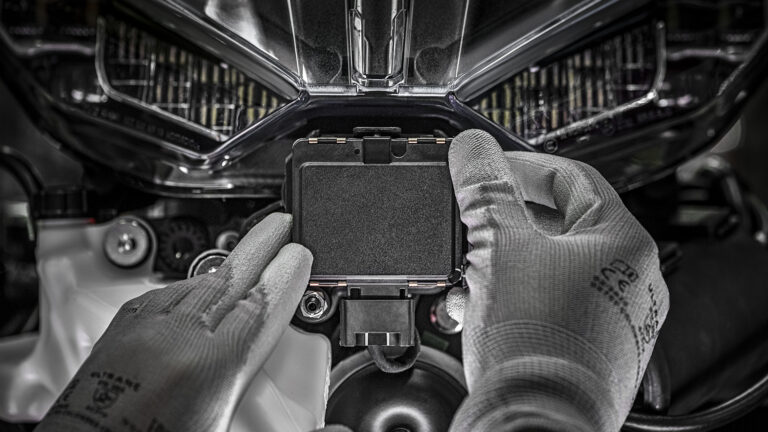
Braam Smit (Ducati SA) explains to us how the new ‘radar system’ on the Ducati Multistrada V4 works.
Sportster Reborn: The New Harley-Davidson Sportster S Breaks Cover
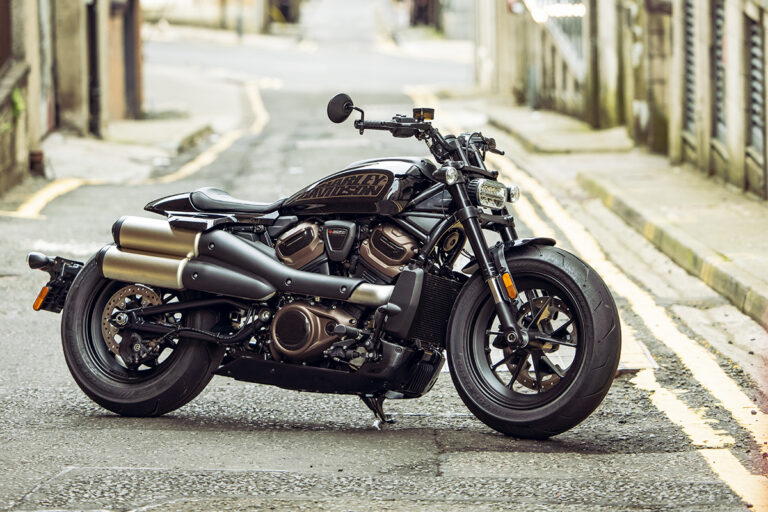
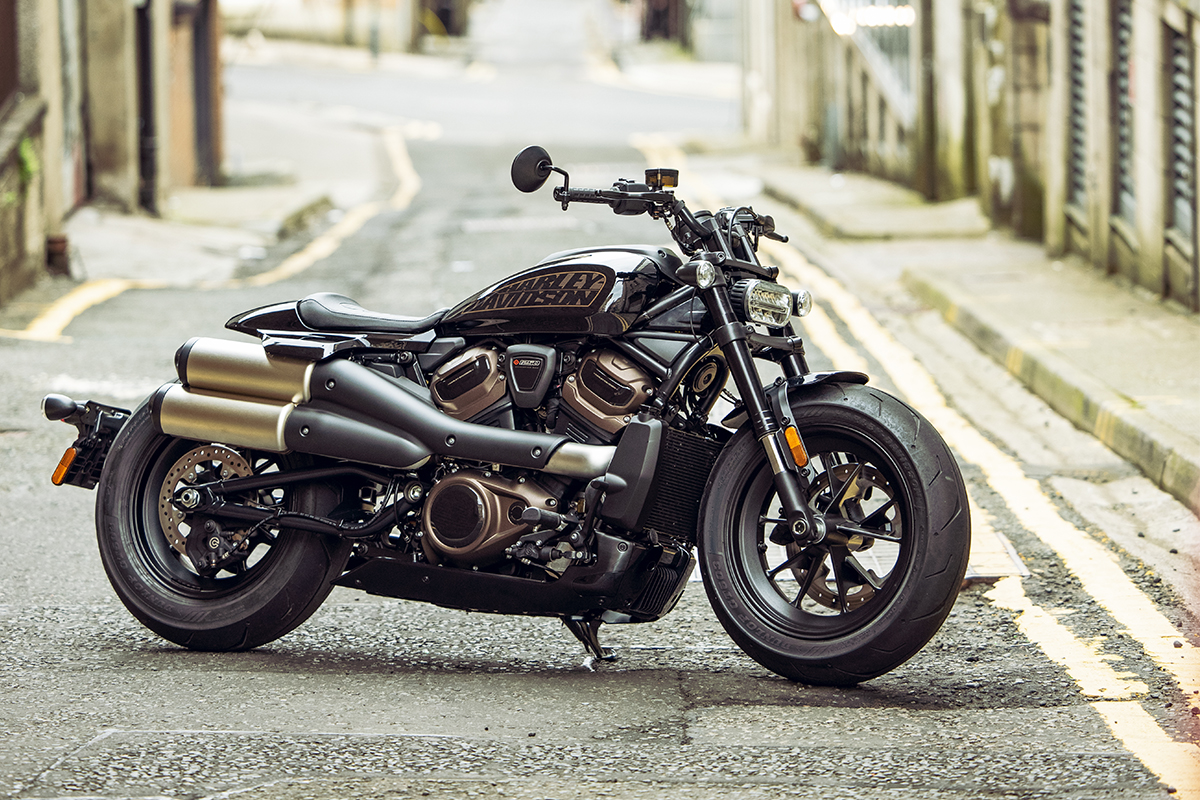
The Sportster has been one of Harley-Davidson’s best- and longes-selling models, but it’s also been long overdue for an update. And it’s just got one, in the form of the completely redesigned Harley-Davidson Sportster S.
As we’ve known for a while, the Sportster S is the second Harley to run with the company’s new ‘Revolution Max’ V-twin motor. It’s the same liquid-cooled 1,252 cc twin that powers the Pan America, but it’s tuned differently here. It now makes 121 hp at 7,500 hp and 125 Nm of torque at 6,000 rpm, with what Harley-Davidson says is a flat torque curve through the powerband. (For reference, the Pan America makes 150 hp and 128 Nm.)
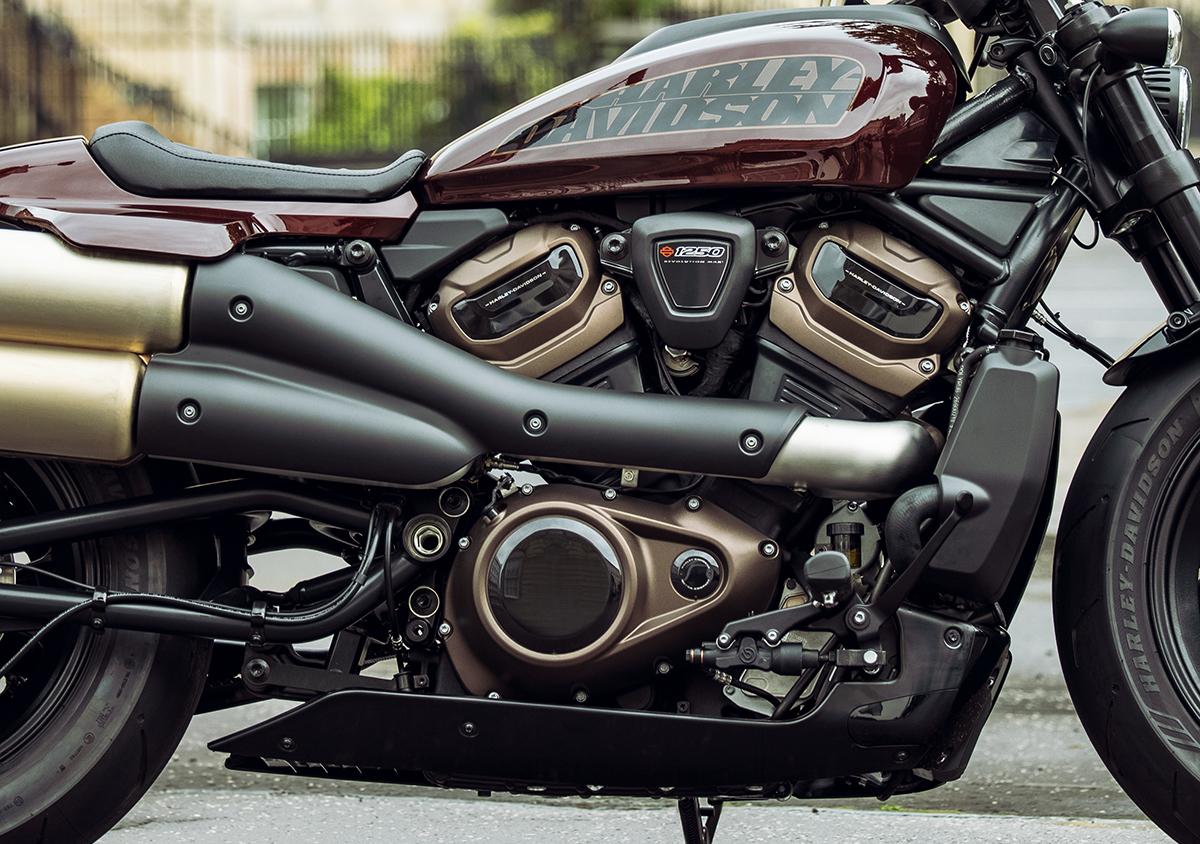
That’s not only a significant boost from the outgoing Sportster, but it’s an entirely different beast too, since it now makes up its peak numbers much higher in the rev range. Or, as per Harley CEO Jochen Zeitz puts it: “This is a next generation Sportster defined by power, performance, technology and style.”
Harley’s commitment to making the Sportster sportier carries through to the chassis and suspension too. The engine’s a stressed member of the frame, which has been designed to be stiff for better handling. Out back is a tubular steel swingarm, braced to eliminate unwanted flex.
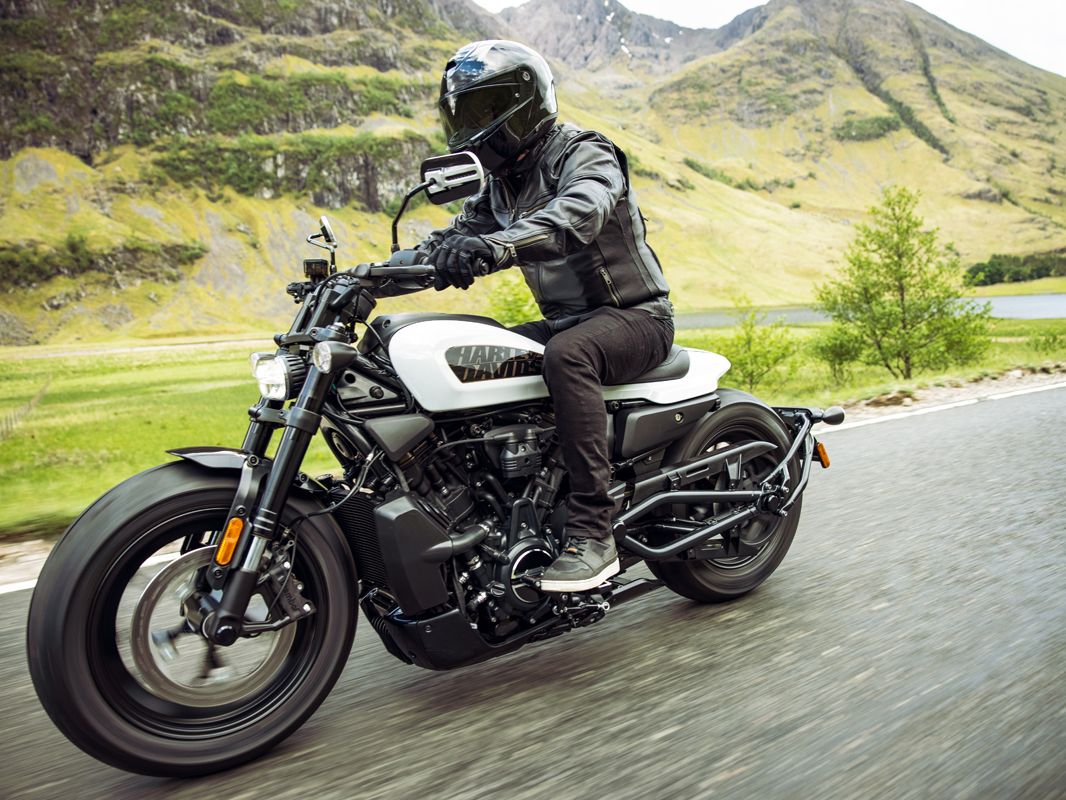
Added up, the Sportster S weighs 228 kilos with a full 11.8 litres of fuel onboard—28 kg less than the old Sportster.
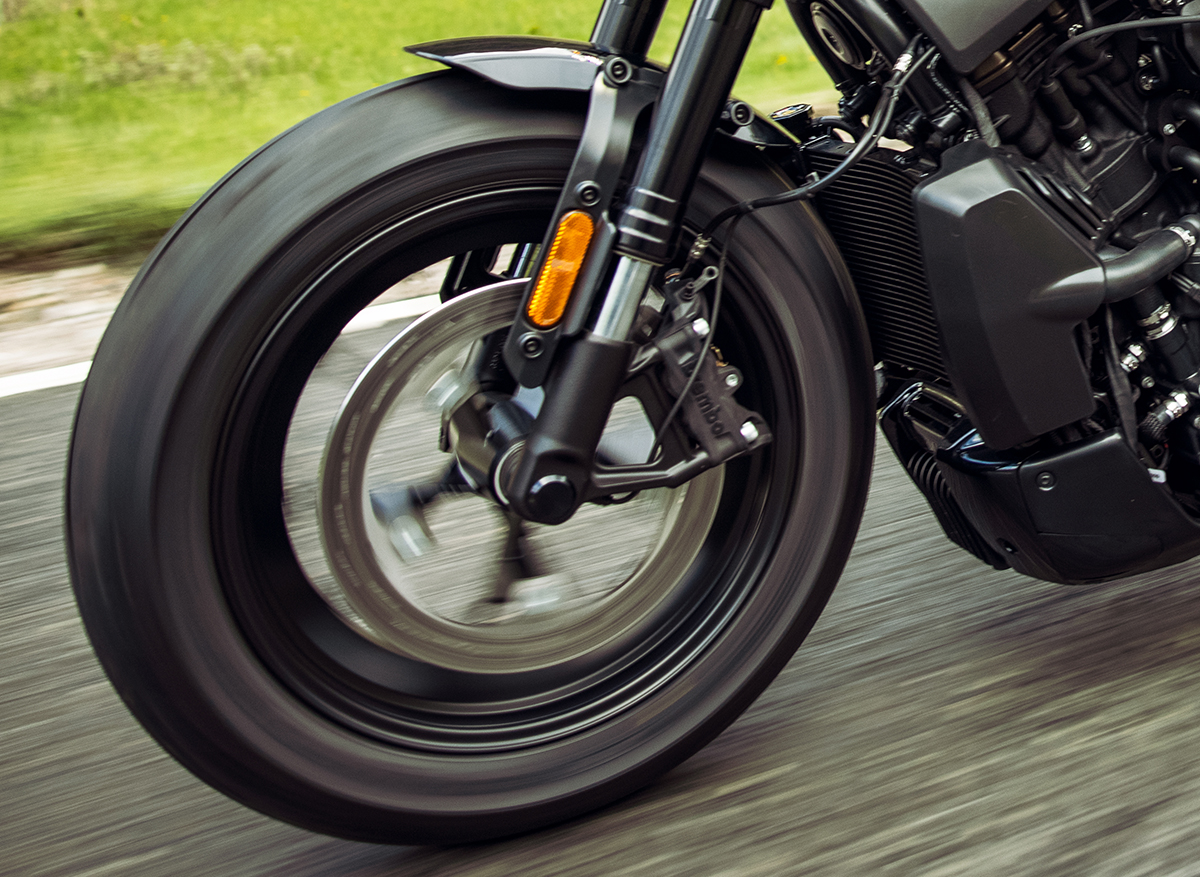
Suspension is decent too, with 43 mm upside down forks and a piggyback rear shock, both from Showa. There’s no adjustment up front, but the rear’s adjustable for preload. The wheels are five-spoke cast aluminium items, measuring a chunky 4.5×17” up front, and 5×16” at the back. There are Brembo brakes at both ends; a single (yes, single) 320 mm disc with a radial Monobloc four-piston caliper up front, and a 260 mm disc out back with a twin-piston caliper out back.
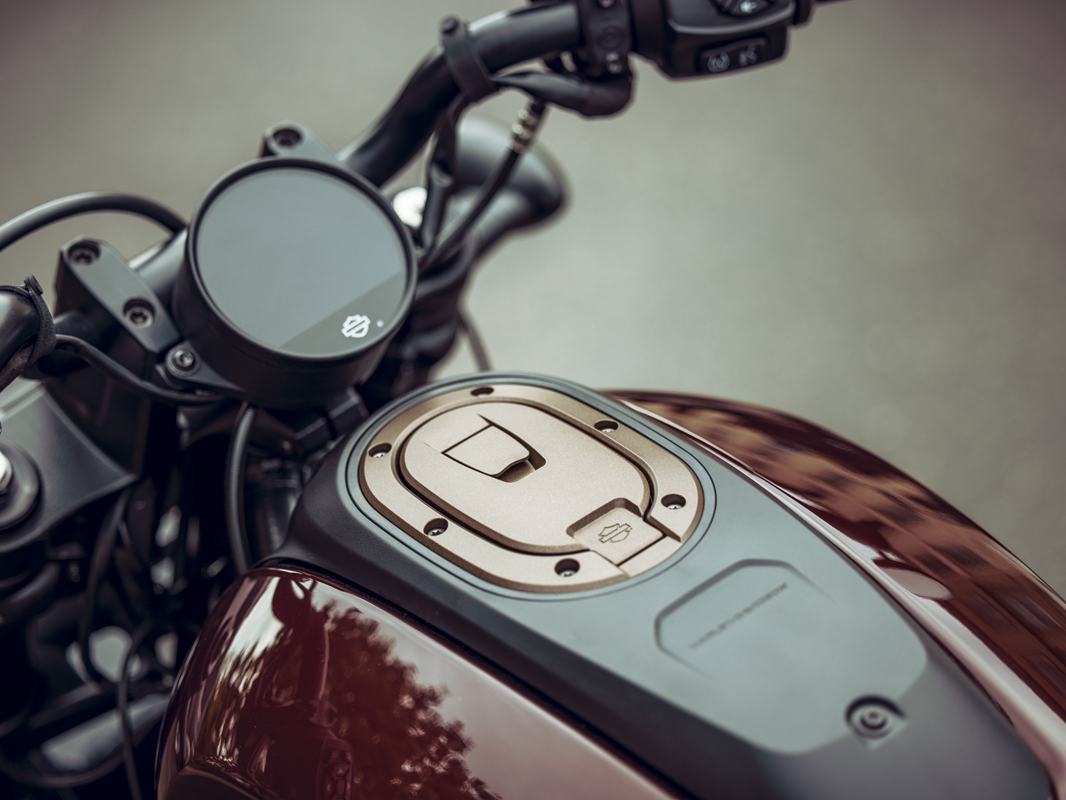
Tech-wise, the Sportster S follows the Pan America’s example by being a massive leap forward for Harley-Davidson. It now has the built-in electronic aids that consumers have come to expect as standard on bikes in this class, like cornering ABS, traction control and selectable rider modes. The Sportster S comes with three pre-programmed modes (the usual ‘Rain,’ ‘Road’ and ‘Sport’ set), plus two rider-customisable modes.
The speedo looks good too—it’s a round 4” TFT display, complete with Bluetooth integration for infotainment and navigation. Cruise control is standard, while heated grips and a USB-C charge port are optional extras.
But it’s when you look at the Sportster S’s ergonomics and styling, that things start to get weird. Harley-Davidson took inspiration from their iconic XR750 flat tracker for the tank and seat design, which hang together well. But the rest of the bike’s built like a bobber with its balloon tyres, low rear end and 755 mm seat height, narrow-and-high bars and forward-pegs.
Harley-Davidson say it’s meant to look “crouched and powerful,” but it just looks sort of awkward and bloated. It doesn’t help that the bike’s dominated by a gigantic twin exhaust system, with swathes of plastic covering the bike’s inner workings. The massive radiator and belly pan add to the bike’s visual heft, and the latter will no doubt reveal a mass of wires if removed.
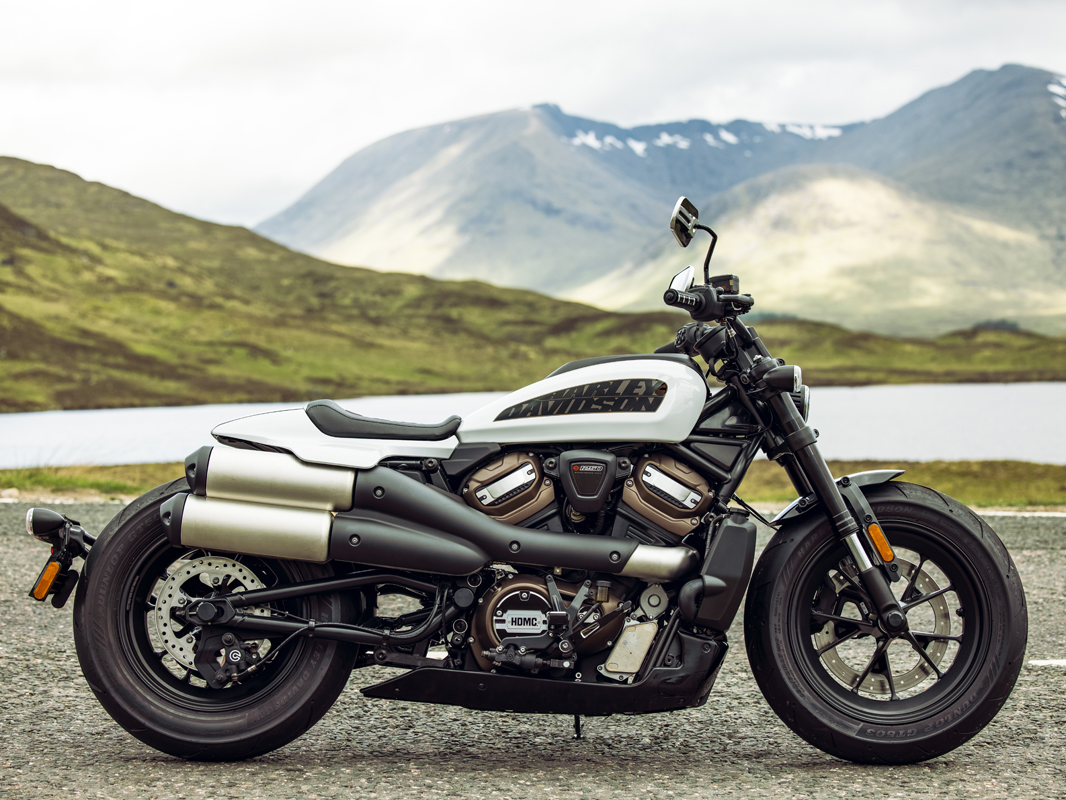
It also has just 34 degrees of lean on either side. That’s just 4 degrees more than the Harley-Davidson Fat Bob 114, and modest for a motorcycle with sporty intentions.
On the up side, the ‘Chocolate Satin’ paint on the motor looks incredible, and the liveries picked for the model’s launch are killer. We’re on the fence about the Fat Bob-Esque LED headlight, but kudos to Harley-Davidson for finally updating the Sportster’s switches, grips and mirrors.
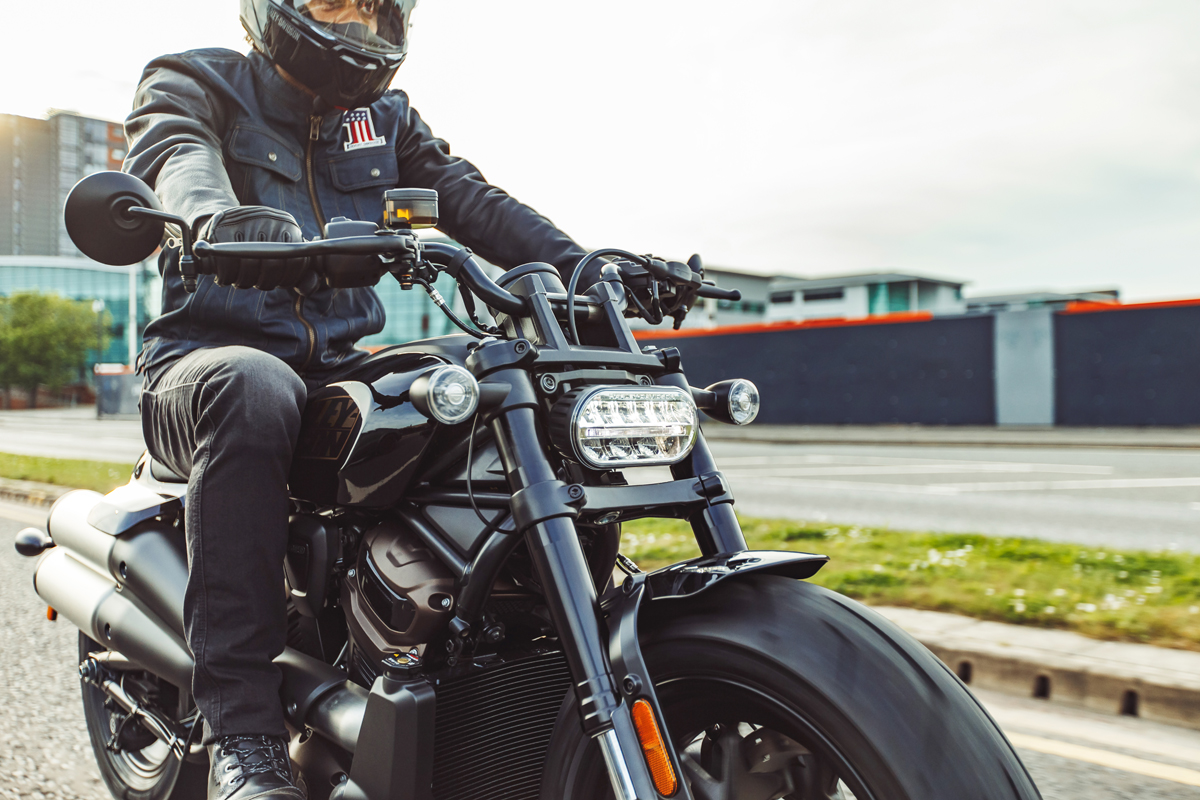
With this updated styling, the Sportster has now also lost one of its strongest characteristics; it’s no longer easy to customise. Sportster fans have long celebrated how easy it is to pull a Sportster apart and turn it into just about anything, and just how vast the aftermarket for it is. But the new Sportster S looks considerably less basic—so riders might be limit to Harley’s own catalogue of bolt-on parts (which will no doubt be extensive).
It also might struggle to find a place in today’s market. At R289,200 for black, or R293,200 for other colours, it’s considerably more expensive than the model it’s replacing and a few grand shy of a Softail Slim, which is a bike that’ll surely appeal more to Harley’s core customers.
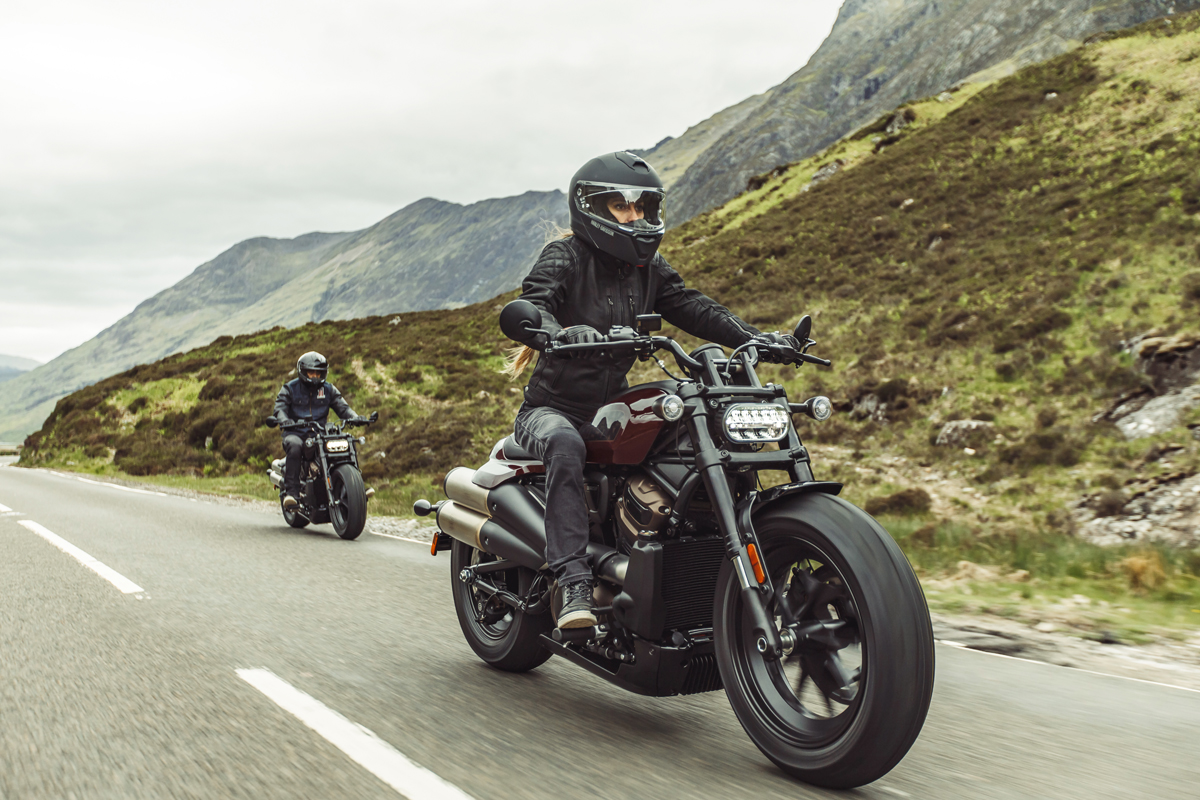
As for new (read:non-Harley) customers, the Sportster S sits in some sort of heritage-slash-power cruiser niche of its own. You can buy a BMW R nineT for less money, but it doesn’t quite have the same vibe. And more powerful beasts like the Triumph Rocket 3 or Ducati Diavel come with heftier price tags.
The Sportster S is quite obviously the first in a new line, and we’ll be watching curiously for what the Motor Co. does next. We’d love to see a cheaper and sportier version of this—like the 950 cc Bronx that’s been put on ice.
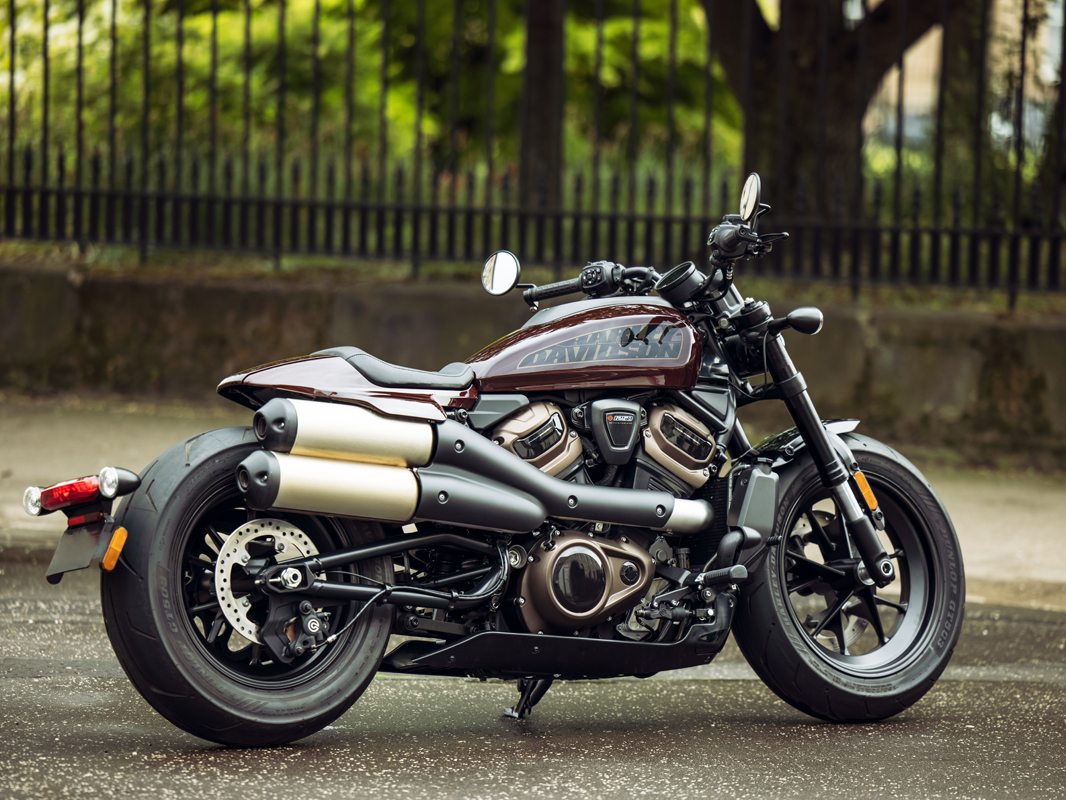
But until then, one thing’s for sure: this ain’t your grandad’s Sportster.
The New XACT PRO 7548 Fork & XACT PRO 8950 Shock
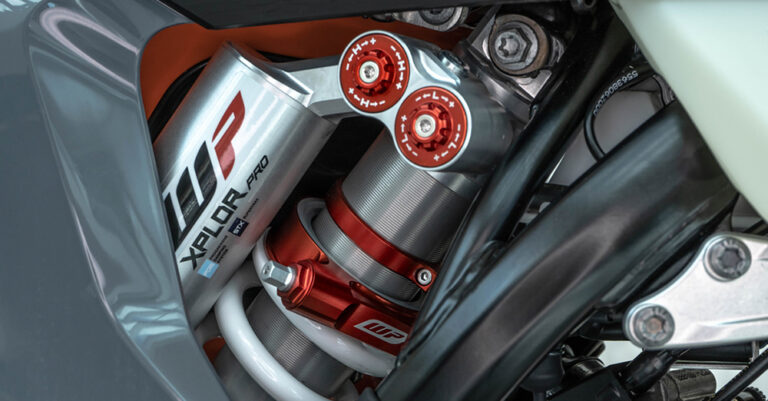
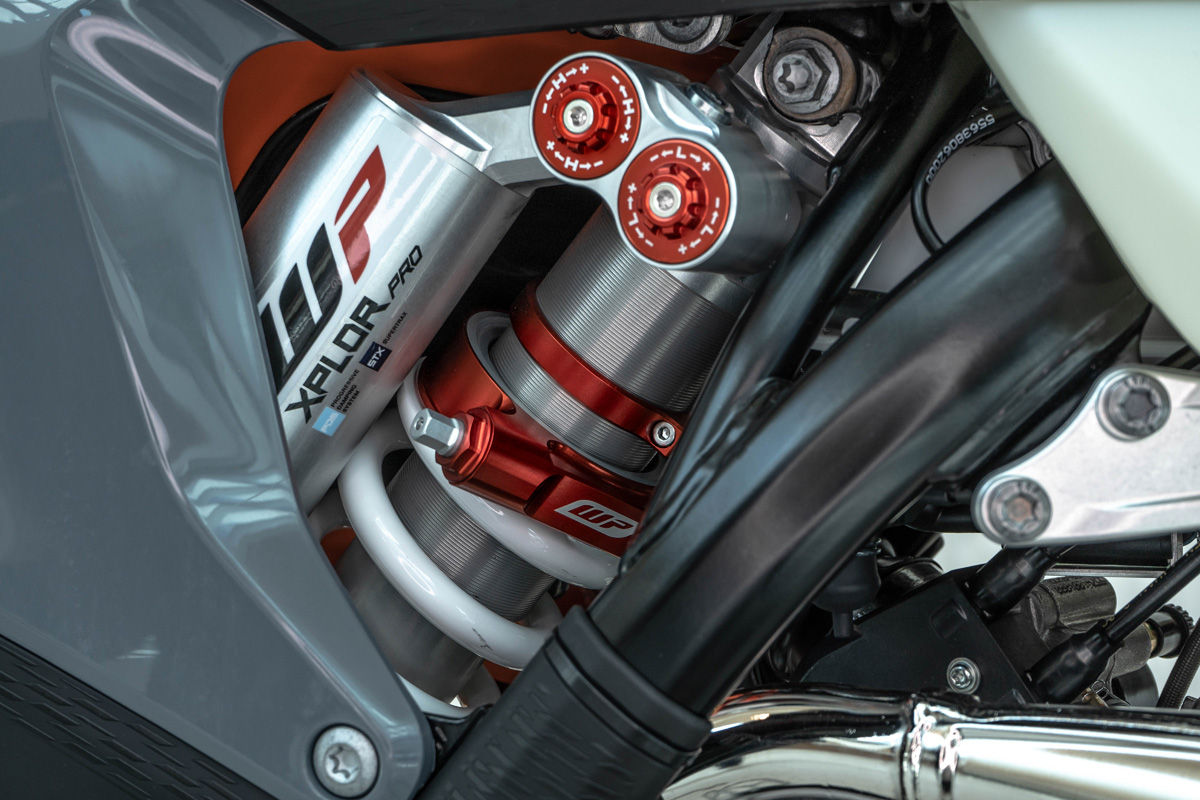
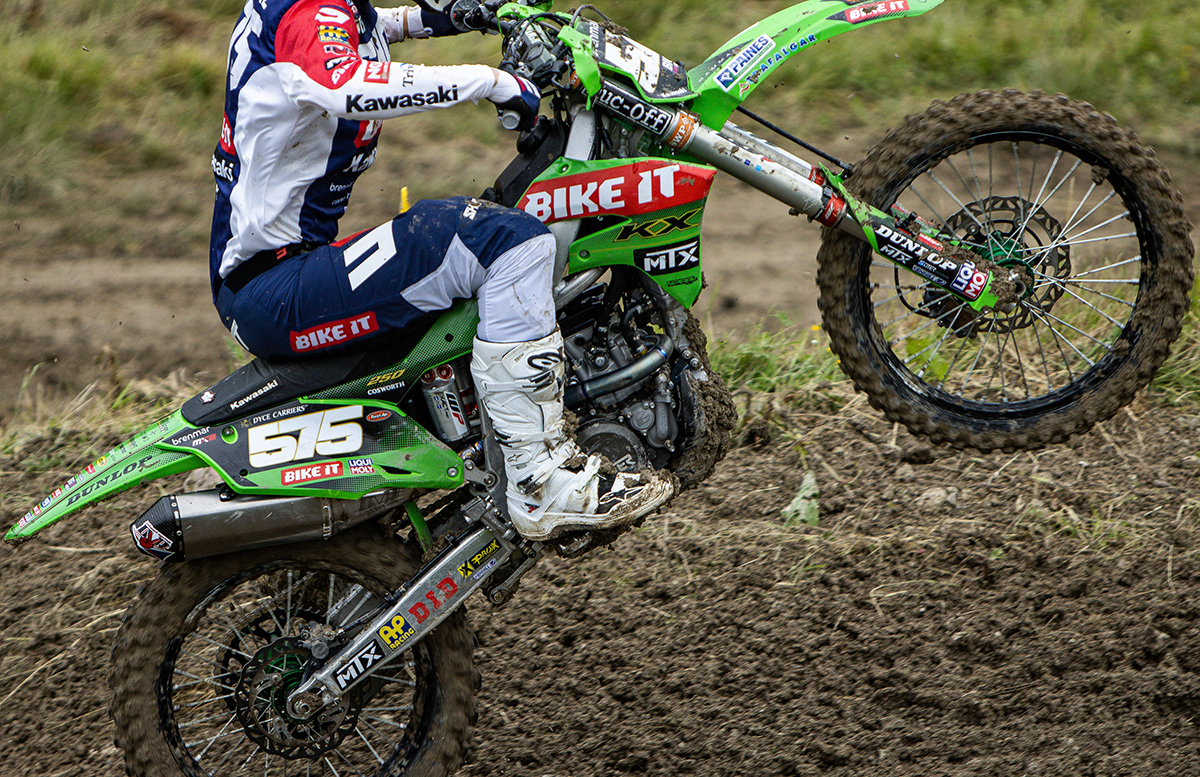
WP Suspension is pleased to announce the launch of the new WP XACT PRO 7548 Fork and XACT PRO 8950 Shock. The updated and improved suspension components for Kawasaki Motocross bikes shine with unparalleled motorsport-derived damping performance and offer that one last push to get all the way to the top.
XACT PRO 7548 Fork
With the new XACT PRO 7548 Fork, the track no longer holds unwanted surprises for you. Due to the installed WP CONE VALVE Technology and a variety of adjustment options, your machine is perfectly adapted to you and your needs. Combined with the WP CLOSED CARTRIDGE Technology, established in professional motorsport by the most successful racing teams in the world, the result is a unique riding experience with a significant increase in comfort without having to give up direct feedback and dynamic manoeuvres.
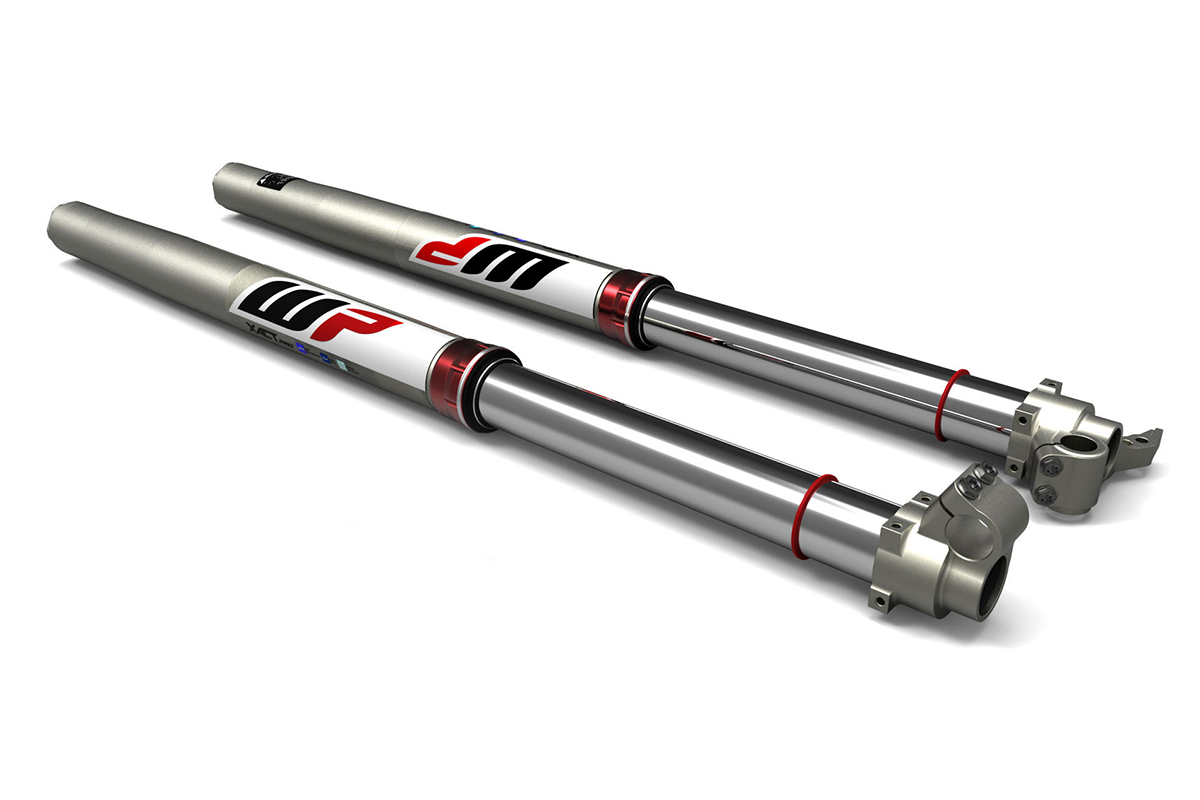
• Improved feedback from the track in every riding situation
• Pressurized System reduces cavitation risk – no damping loss
• Extreme longevity due to the use of only high-quality materials
• All settings can be adjusted externally and flexibly
• Specially handcrafted with the highest care
XACT PRO 8950 Shock
The XACT PRO 8950 Shock not only gives leading motocross factory teams a decisive advantage to the podium. Thanks to WP SUPERTRAX Technology, your rear wheel is back in the dirt faster, and you overcome any obstacle with more power, traction and control over your bike. And if the terrain suddenly demands a little more sensitivity, the rebound damping can be perfectly adjusted to suit any rider via the built-in TXN adjuster. To round off this OFFROAD Performance Package, the XACT PRO 8950 Shock’s LINKED DAMPING SYSTEM provides the necessary breakthrough reserves through a significantly optimized progression of the shock absorber.
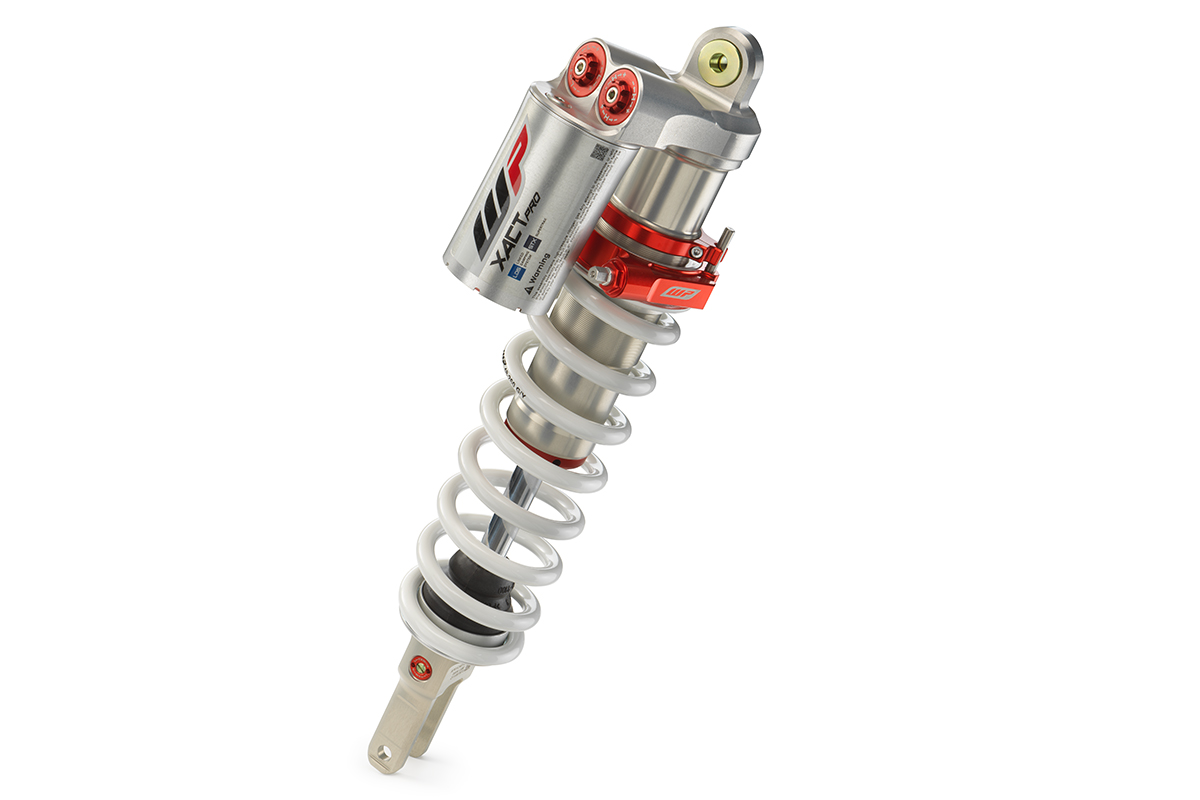
- Improved rebound damping adjustability thanks to TXN adjustment mechanism
- More traction and grip on the rear wheel and thus improved acceleration and driving stability
- Less physical strain on the rider due to reduced “Buckle-Down.”
- Extreme durability due to the use of high-tech materials
The XACT PRO 7548 Fork and XACT PRO 8950 Shock will be available from this month and they will be available for the following motorcycles: Kawasaki KX 250-F from MY21; KX 450-F from MY20.
For more detailed information, visit your nearest WP AUTHORIZED CENTER or go to www.wp-suspension.com
First Look: The new BMW CE 04 Electric Scooter
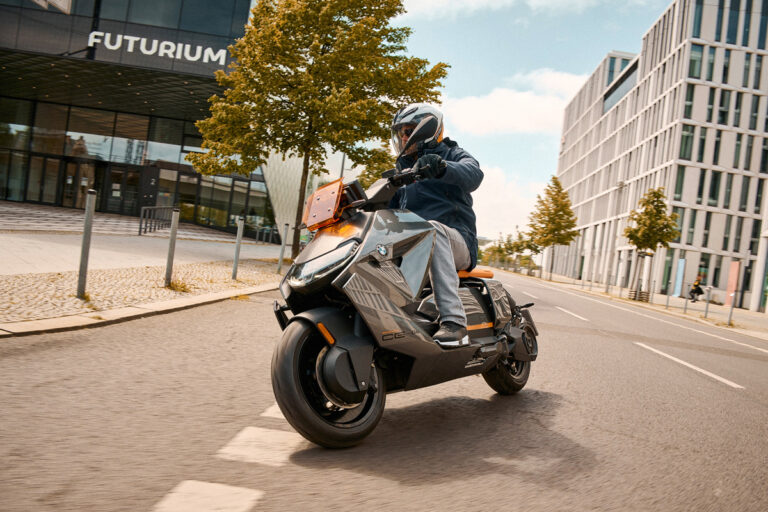
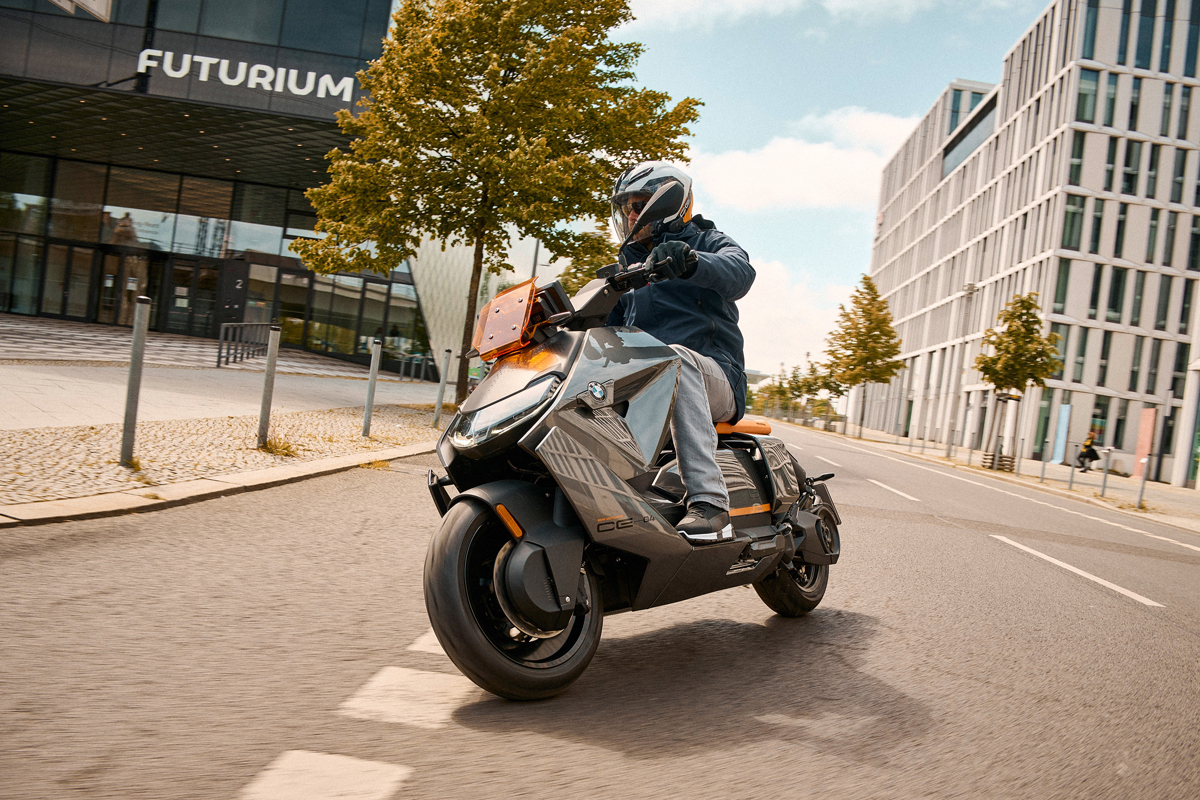
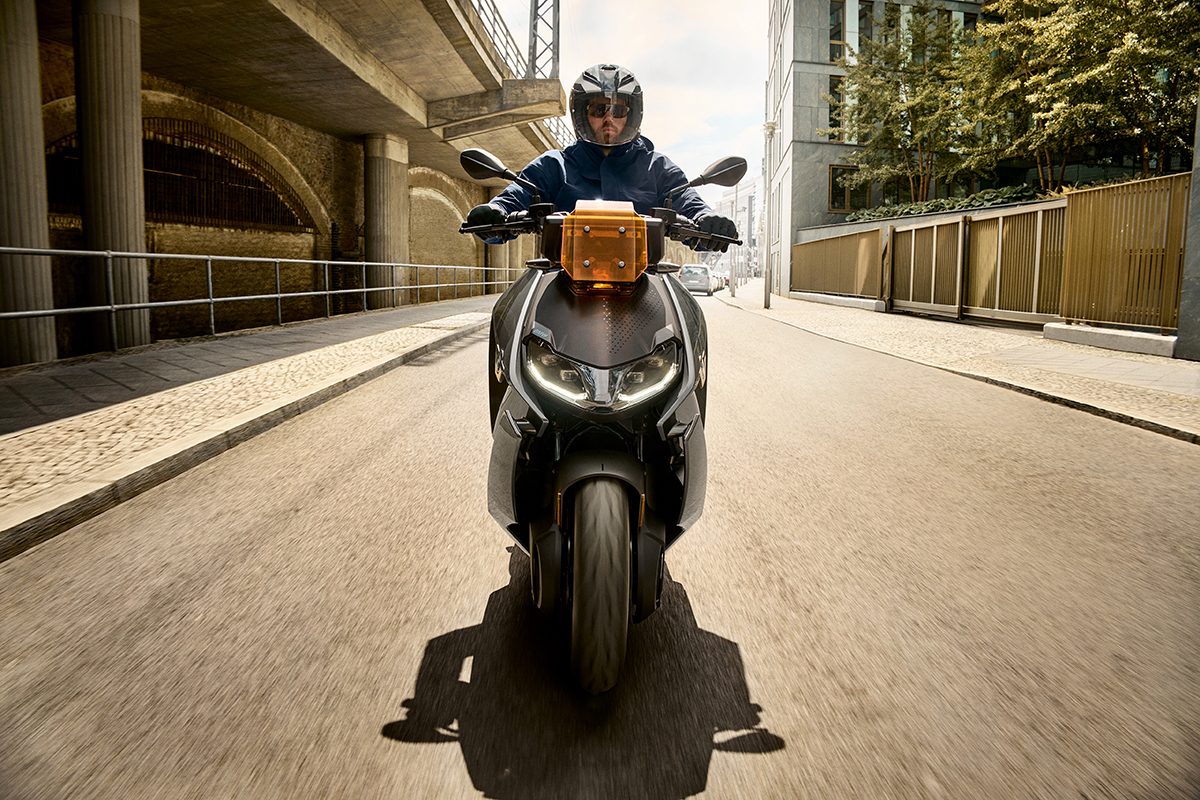
When BMW Motorrad teased their Definition CE 04 electric scooter concept late last year, they made no bones about the fact that it would eventually go into production. Now we’ve got a look at the production-ready BMW CE 04, and it’s remarkably close to the ultra-futuristic concept.
The CE 04 is a very logical move for BMW. Until electric motorcycles can go further and charge quicker, electric-powered two wheelers make the most sense in urban environments. Add that to BMW’s clear commitment to electric power in their automobile range, and an electric scooter is a no-brainer for them.
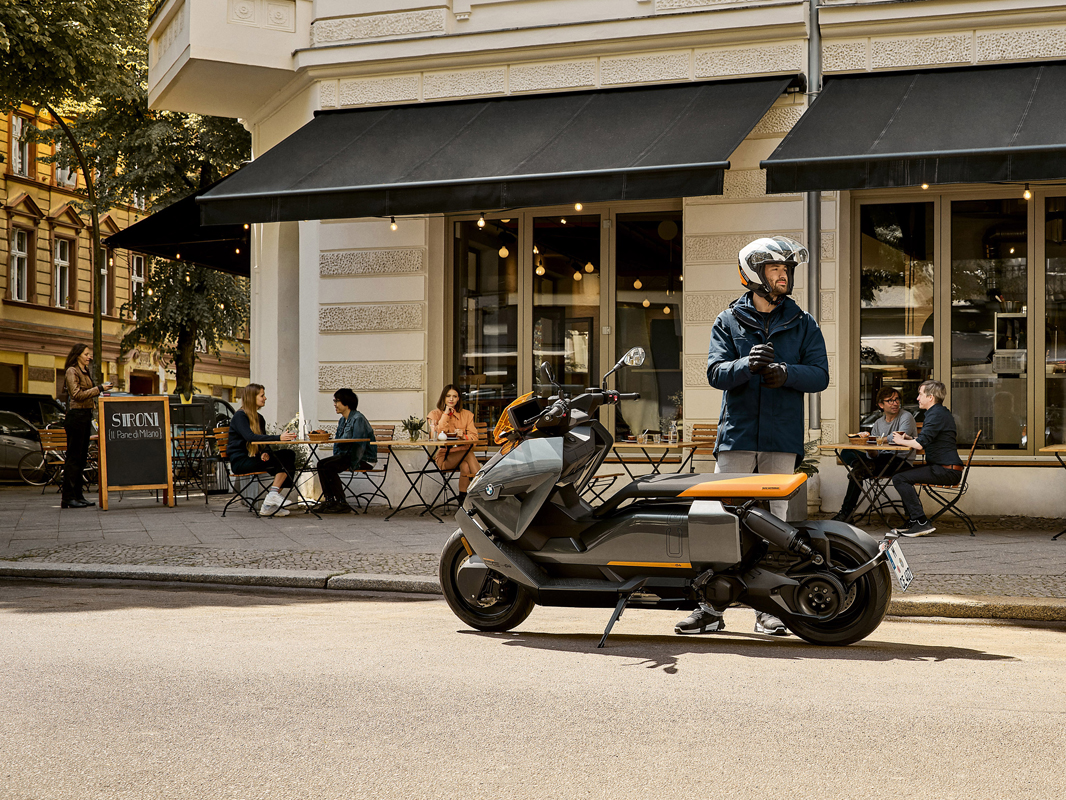
Looking at the numbers, the CE 04 is most definitely built for urban mobility. It puts out 31 kW (42 hp), with a top speed of 120 km/h and a 0-50 km/h time of 2.6 seconds. So while it’s only just adequate for highway use, it’ll excel in the city.
The powertrain itself is a liquid-cooled, permanent magnet electric motor, mounted in the chassis between the battery and the rear wheel—a design borrowed from the BMW 225xe Active Tourer hybrid. The Lithium-ion battery has a capacity of 60.6 Ah (8.9 kWh), which BMW say is good for a range of 130 kilos. That’s ample for getting to work and back, with a few detours thrown in.
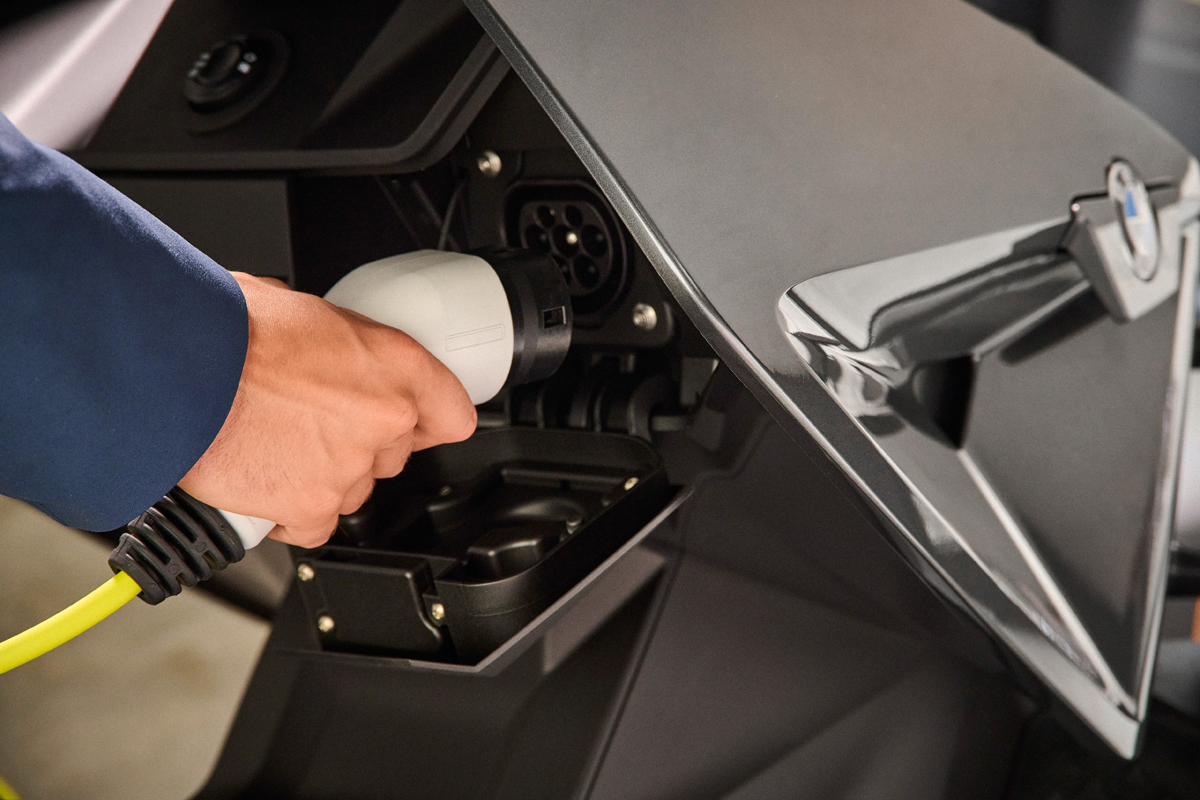
BMW have borrowed tech from their electric cars for the CE 04’s charging system. They claim a full charge from flat takes just 4 hours and 20 minutes, regardless of whether you’re using a wall socket or public charging station. And there’s an optional quick charger that’ll bring that down to 1 hour and 40 minutes.
But the real kicker is that a charge from 20% to 80% will only take you 45 minutes with the quick charger. Which makes it easier to top up enough to get home, in a pinch.
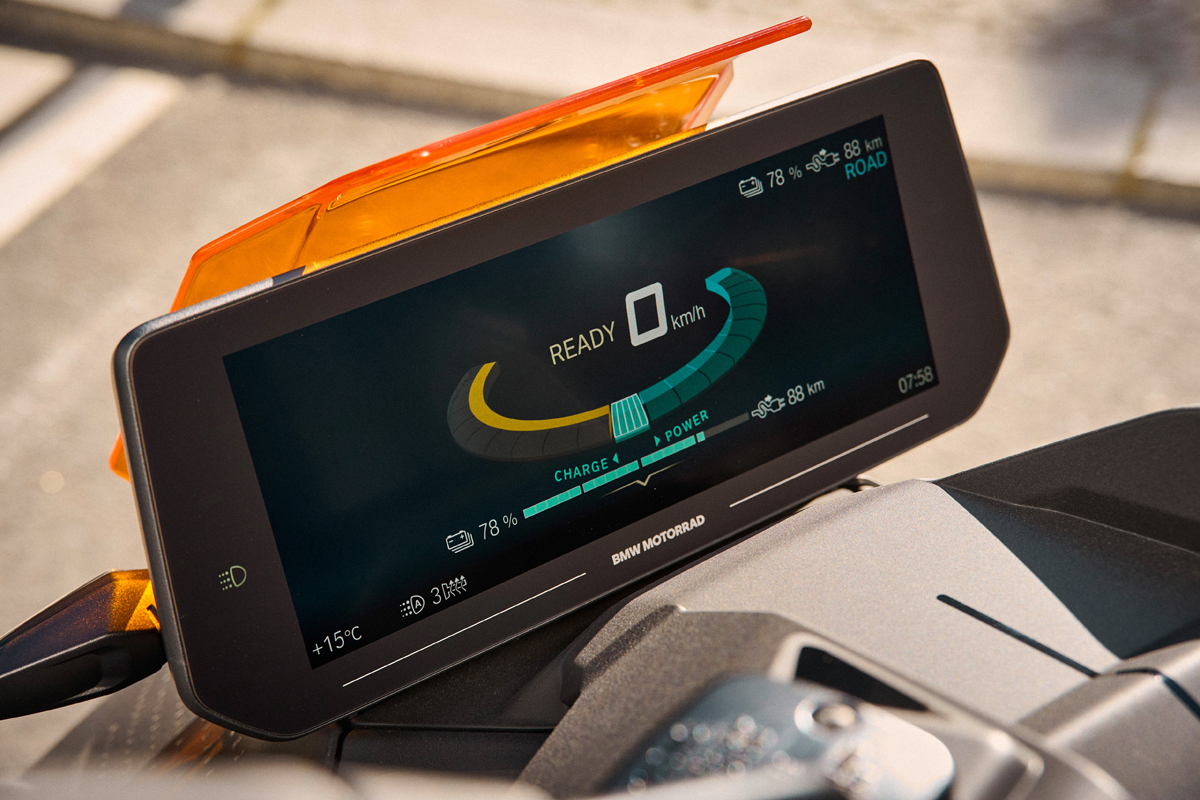
The CE 04’s also sporting the same rider modes as the rest of BMW’s motorcycles, with electric-specific features like regenerative braking baked in. ‘ECO,’ ‘Rain’ and ‘Road’ modes are standard issue, and work much the same they would on an internal combustion motorcycle. BMW’s Automatic Stability Control is included too, which limits engine torque to prevent rear wheel slip. ‘Dynamic’ mode, and traction control, are available as factory add-ons.
Everything’s packaged around a one-piece tubular steel frame, with 35 mm forks up front and a single-sided swingarm at the back. The CE 04 rolls on 15” disc wheels, with a belt drive putting power to the back. The braking system uses twin discs up front, with ABS as standard, and cornering ABS (‘ABS Pro’) as an option.
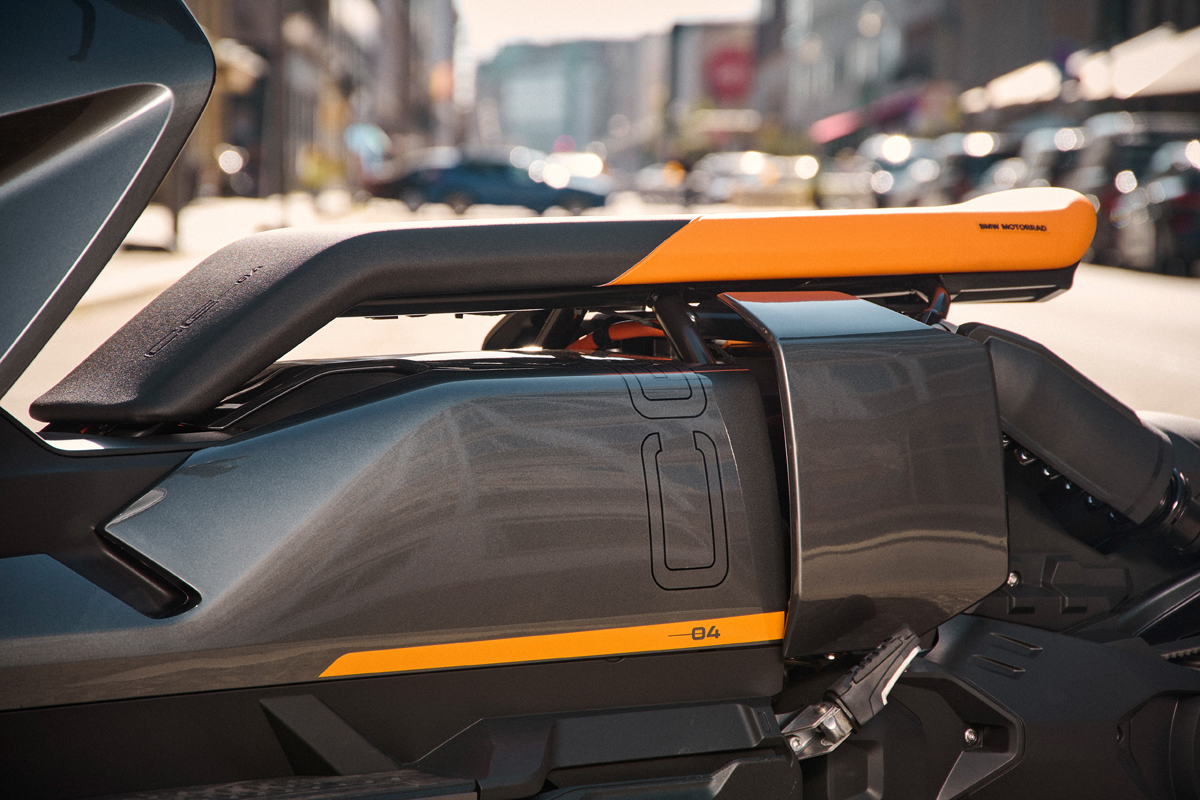
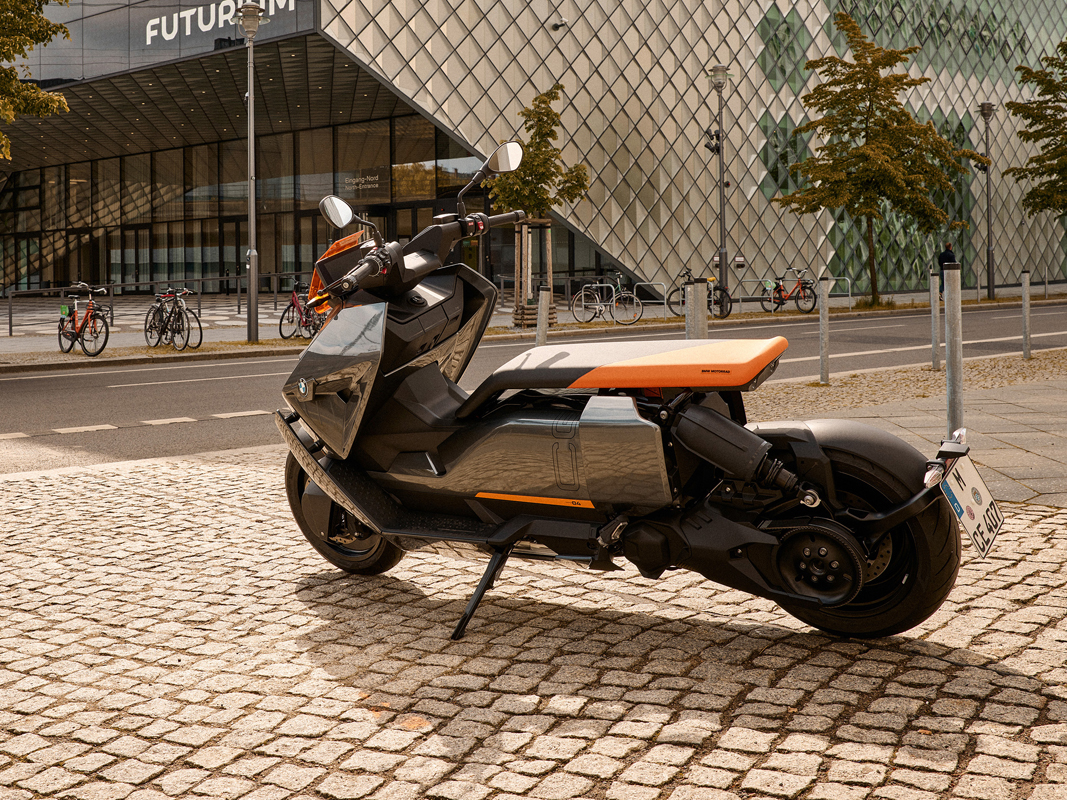
Very little has been lost in translation from the Definition CE 04 concept design, to the final bike. The vibe is borderline futuristic, with a couple of seriously bold aesthetic choices—like the ‘floating’ seat and the modernist graphics. Initial colours on offer include white, and a grey with orange accents that will no doubt cost a little extra.
It’s a sharp-looking scoot that admittedly won’t appeal to everyone… but I’d happily ride it.
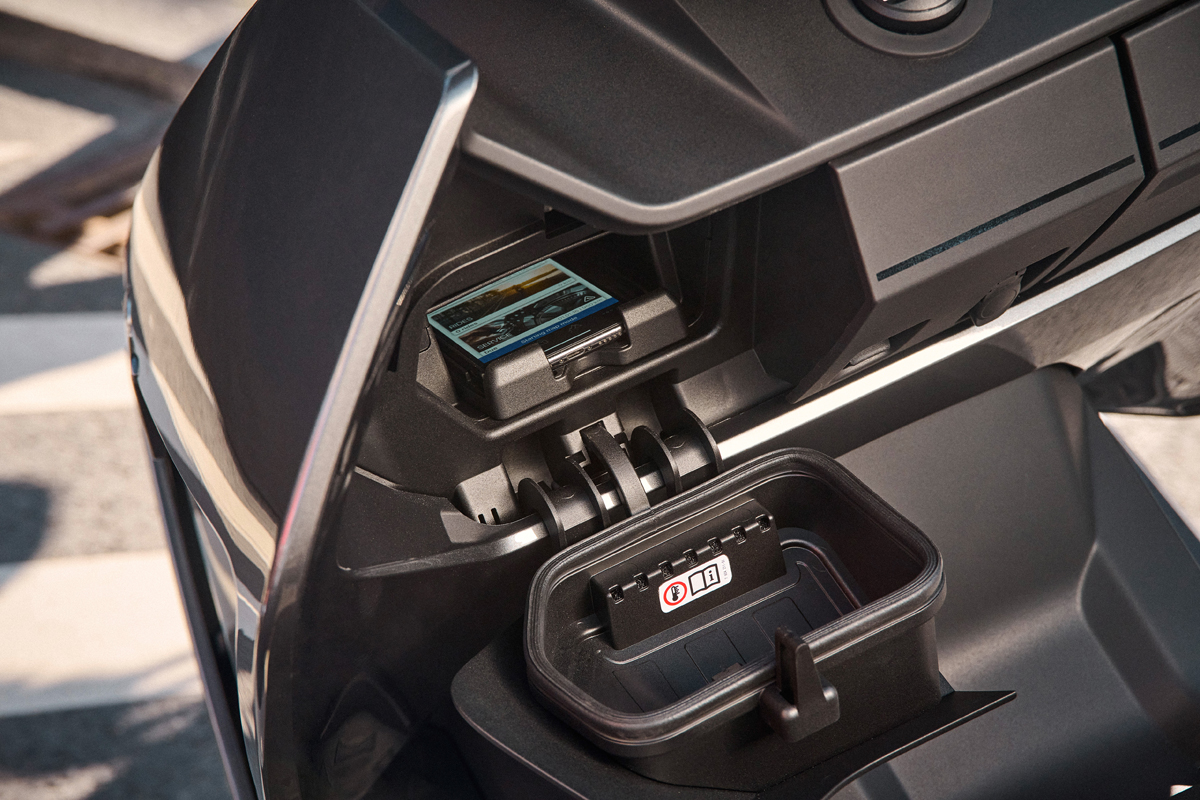
As you’d expect from a scooter, practicality’s built in too. There’s storage up front and under the seat—except the compartment under the seat’s actually accessed from the side. There’s space to store the CE 04’s charge cable onboard too, and a USB-C charging port for smartphones.
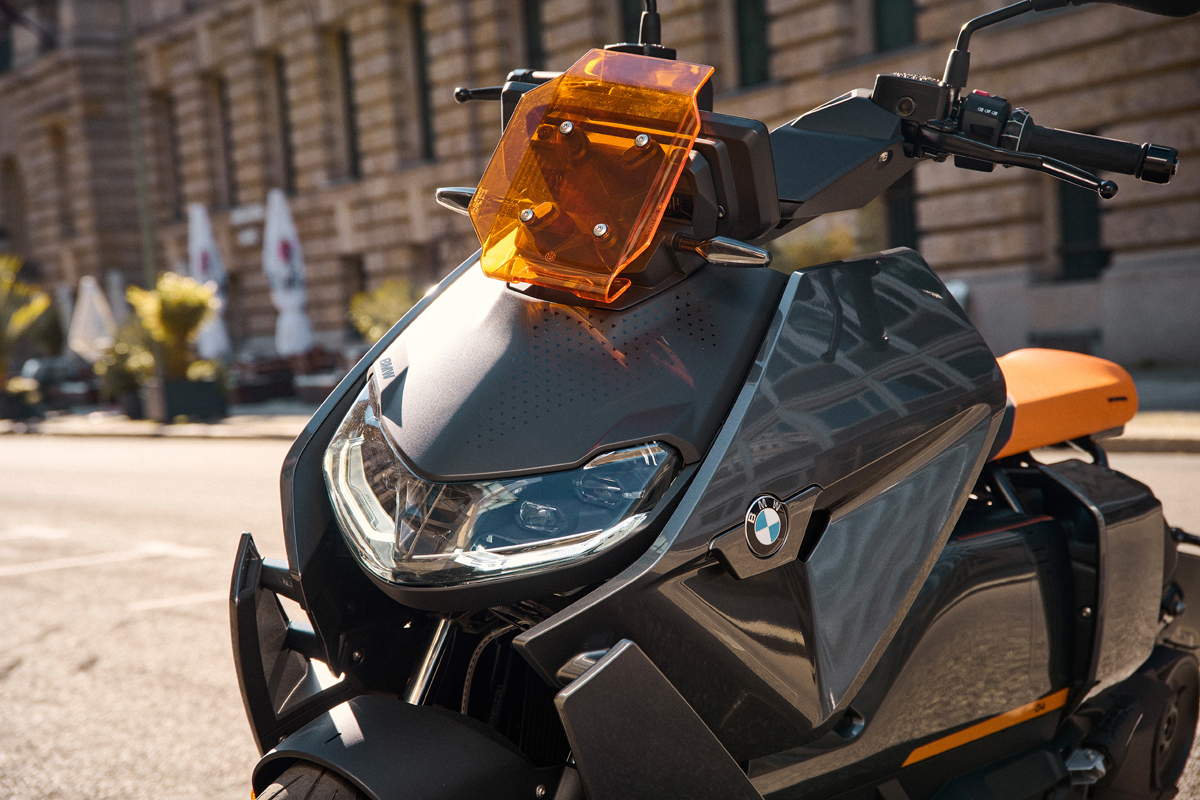
The CE 04 comes with LED lighting all-round, with cornering lights as an optional extra. There’s also a 10.25” TFT display tucked behind the svelte translucent fly screen. The display includes smartphone connectivity via Bluetooth, with integrated map navigation, similar to the setup on the R 1250 RT.
There are of course a host of add-ons for the CE 04, like a bigger screen, and various seats. And BMW have rider gear to match, too.
It’s unlikely that the CE 04 will make its way to South Africa, but it’s significant in what it represents. Although it’s not BMW Motorrad’s first foray into electric scooters, it shows a lot of consideration and intent from the Bavarian marque. And if you consider that BMW’s electric footprint (and charging network) is steadily growing in South Africa, perhaps there is a future for bikes like this here.
Besides, if this is how good BMW’s new electric scooter looks, I’d love to see what else they’re cooking up.
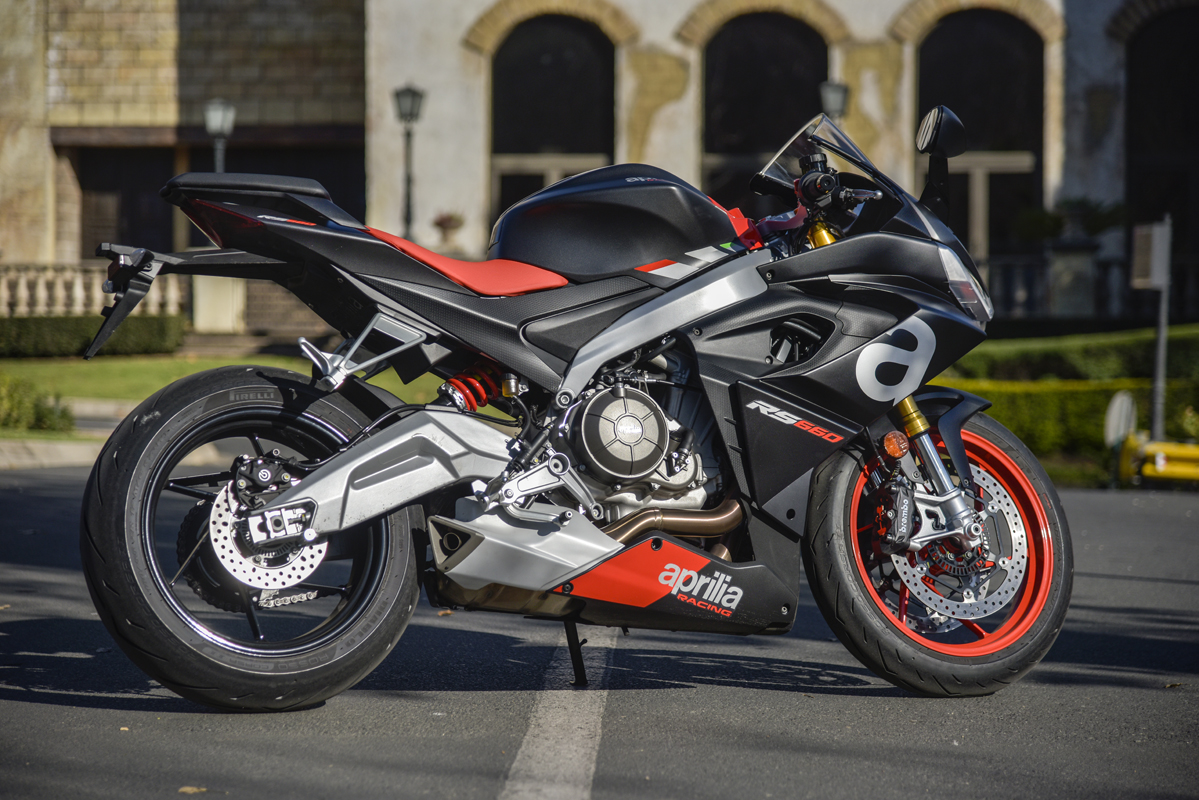
Aprilia RS 660: An RS For The Road
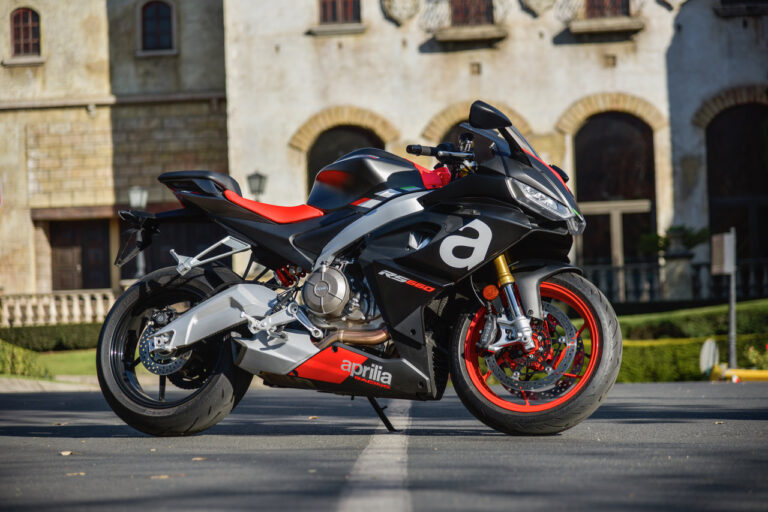
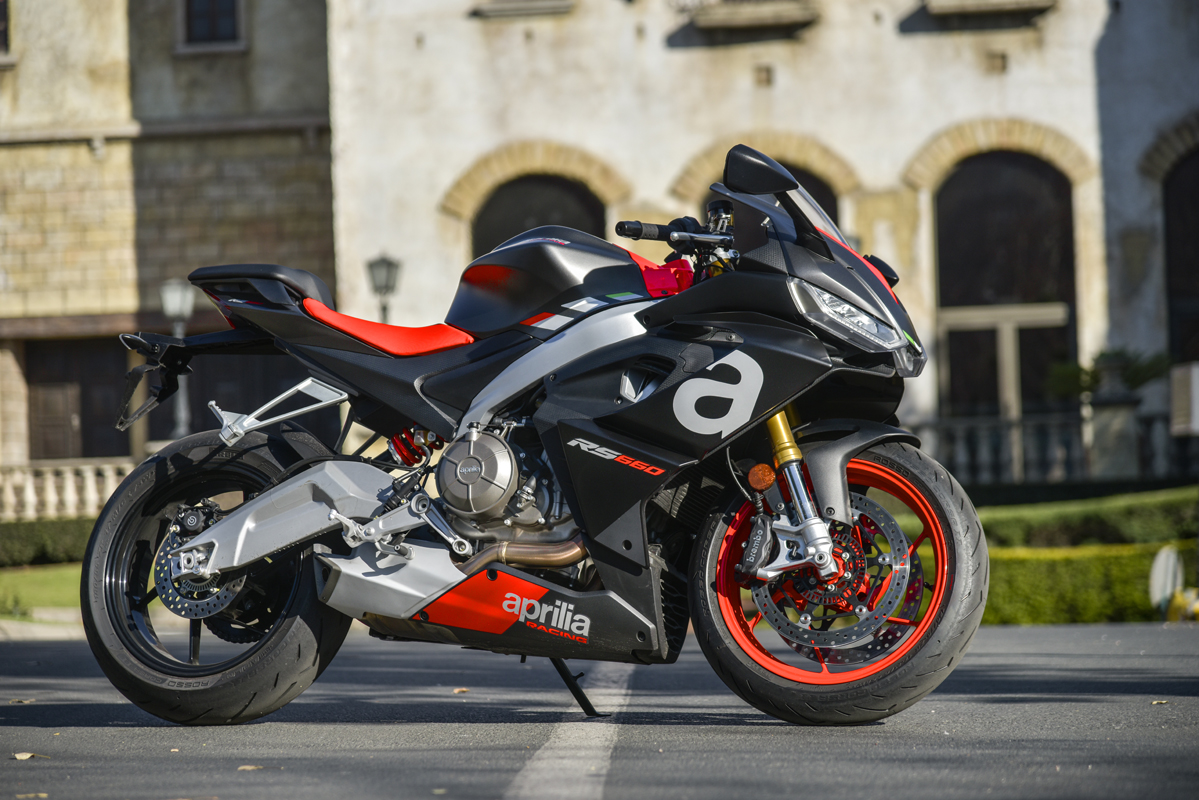
Aprilia is known for breeding thoroughbred sportsbikes—bikes that love their throttles wide open, where a flurry of revs meets corner speeds and a complete lack of self-preservation. Since the birth of the RS-series in 1992, Aprilia have brought home 45 road racing World Championships, so it’s pretty clear what the RS plaque symbolises.
For 2021 Aprilia have thrown diehard RS fans a curveball, and newcomers a gentle underarm toss, by making the new RS 660 a more road-orientated motorcycle. The RS 660 lowers the jump to the RSV4, giving riders a chance to hone their skills on a more approachable platform that combines supersport, commuter and Italian exotica all into one.
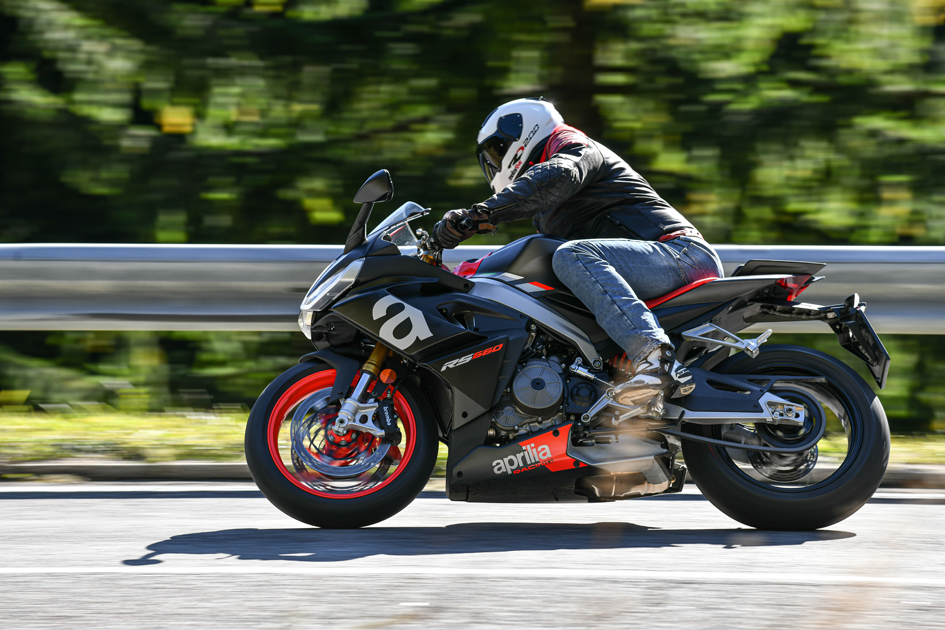
Our man in France, Philippe Guillaume, spent some time on the RS 660 in the stunning mountains of Venice last year. That left me drooling, but also questioning where the latest RS fits, and whether it would suit South Africa’s long open roads. Our local Aprilia and Moto Guzzi importer, Italian Motorcycle Importers, organised a speed date for myself and their Apex Black RS 660, to figure out exactly that.
Like any first date, you want to make it a memorable and enjoyable one. So I decided to take the beautiful RS 660 for a cruise through some local Tuscan architecture—reminiscent of Aprilia’s picturesque home town of Noale in Northern Italy. It was here that I got to admire the prowess of Miguel Galluzzi’s design team up close.
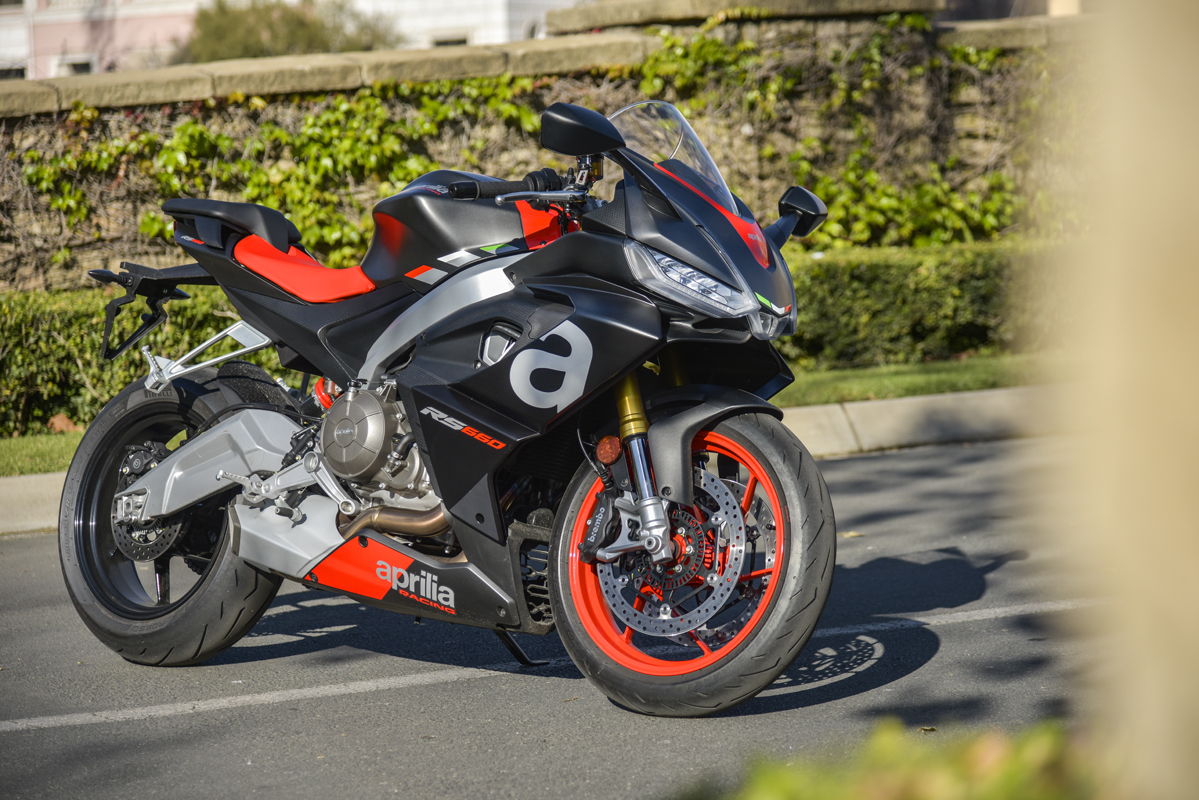
A combination of wind tunnel technology and Aprilia racing heritage form the design inspiration here. An RSV4-Esque triple headlight cluster is combined with updated LEDs and cornering lights. The RS 660 also has real-world functioning aerodynamics, in the form of ‘double layer’ fairings, which have internal winglets that disperses engine heat away from the rider’s legs. Winglet design is usually an afterthought, but here it’s integrated, with the RS 660 hiding its moustache under its fairings.
With a slim fully-faired upper body and a pointy RSV4-style rear, there’s no angle on the latest RS that’s not pretty. So, instead of wasting time looking for flaws, I hit the road.
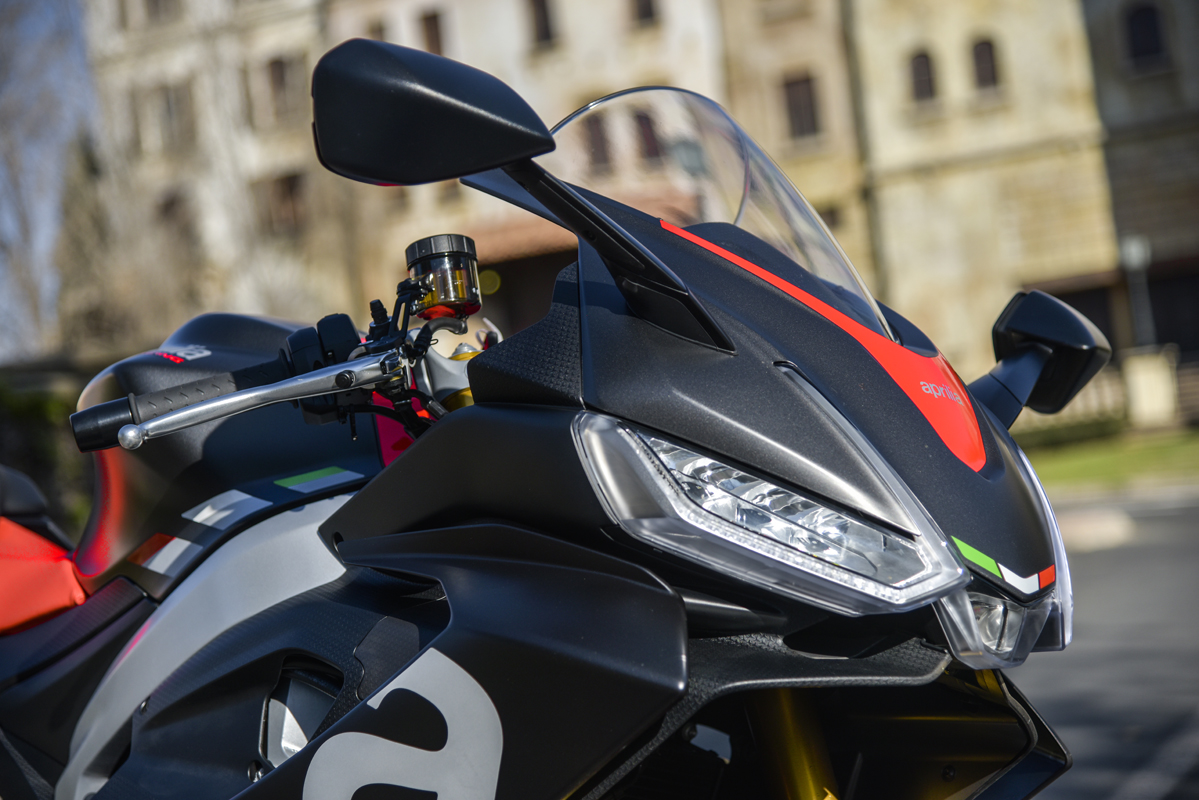
When it comes to ergonomics, the RS doesn’t feel like a supersport machine. It has a shockingly comfortable seat, easy to reach bars placed above the yokes, lots of wind protection, very little steering lock and creature comforts like cruise control. Overall the ergos scream sports tourer, which means the RS is a fun bike that’s so much easier to live with on a day to day basis than any supersport. Oh, and for lovers of all things practical, you’ll be able to order a full set of luggage too (including a tank bag, tail bag and side panniers).
The heart of the RS 660 is a 659 cc parallel-twin motor which ekes out 100 hp at 10,500 rpm and 67 Nm at 8,500 rpm. The RS 660 only forfeits a few hp compared to the fire breathing inline-fours, but gains more accessible power at lower rpms, where you’re more likely to spend time anyway. It also embarrasses every other bike that’s in its actual middleweight sportsbike category, like the Yamaha YZF-R7, Kawasaki Ninja 650 and Suzuki SV650.
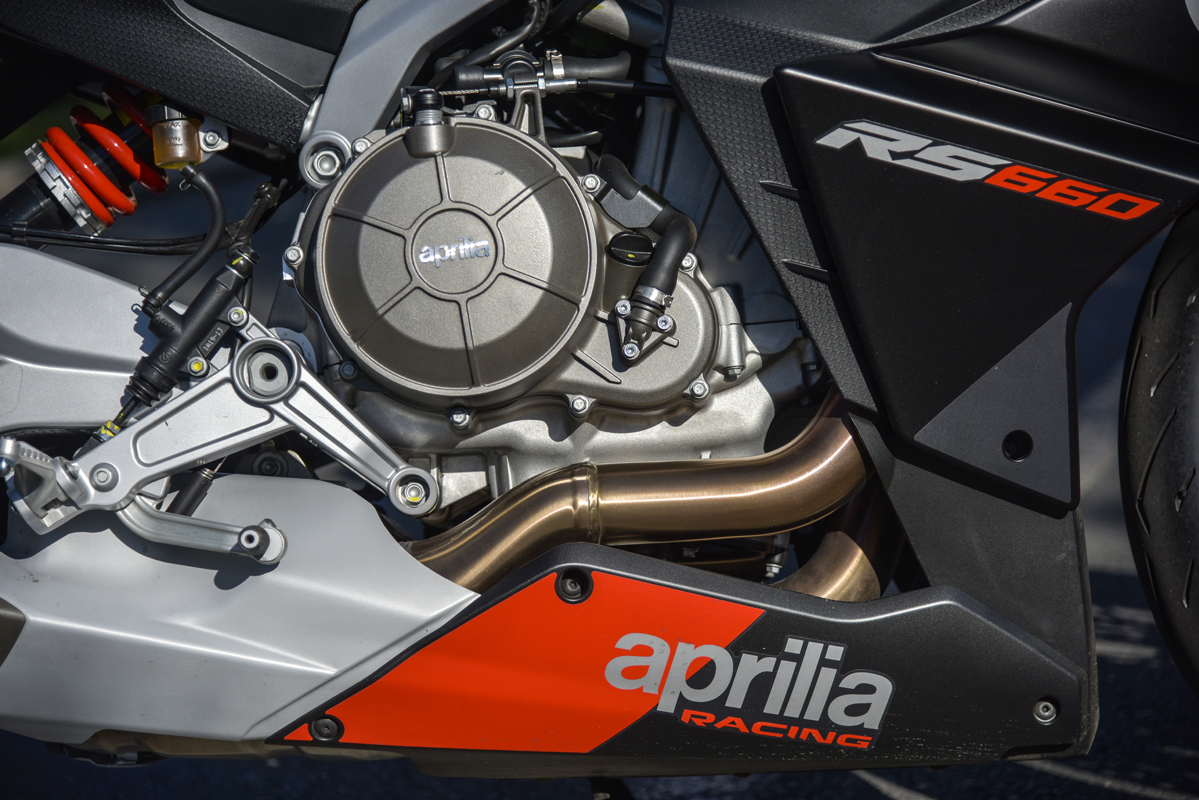
In the city, the RS is very smooth and nimble, weighing just 183 kg. That makes it a comfortable commuter for whizzing past traffic, as you listen to the pops and bangs coming from the exhaust, and quick-shift your way through the smooth gearbox. On the open road, you’ve got 6 juicy gears and 11,500 rpm of opera. The RS 660 sits at a comfy 5,500 rpm at 130 km/h for highway travel, with a top speed of 240 km/h for tarmac teleportation—more than enough for most.
The electronics package (dubbed APRC) is what pushes the RS 660 into a whole new realm, but does a 100 hp bike need any of it? We talking about cornering ABS, cruise control, an up and down quick-shifter, traction control, wheelie control, ride modes, engine braking control (something the RSV4 doesn’t even have) and even an optional pit limiter. I’m pretty sure Max Biaggi’s 2010 World Championship-winning RSV4 didn’t have as much tech in it as the RS 660.
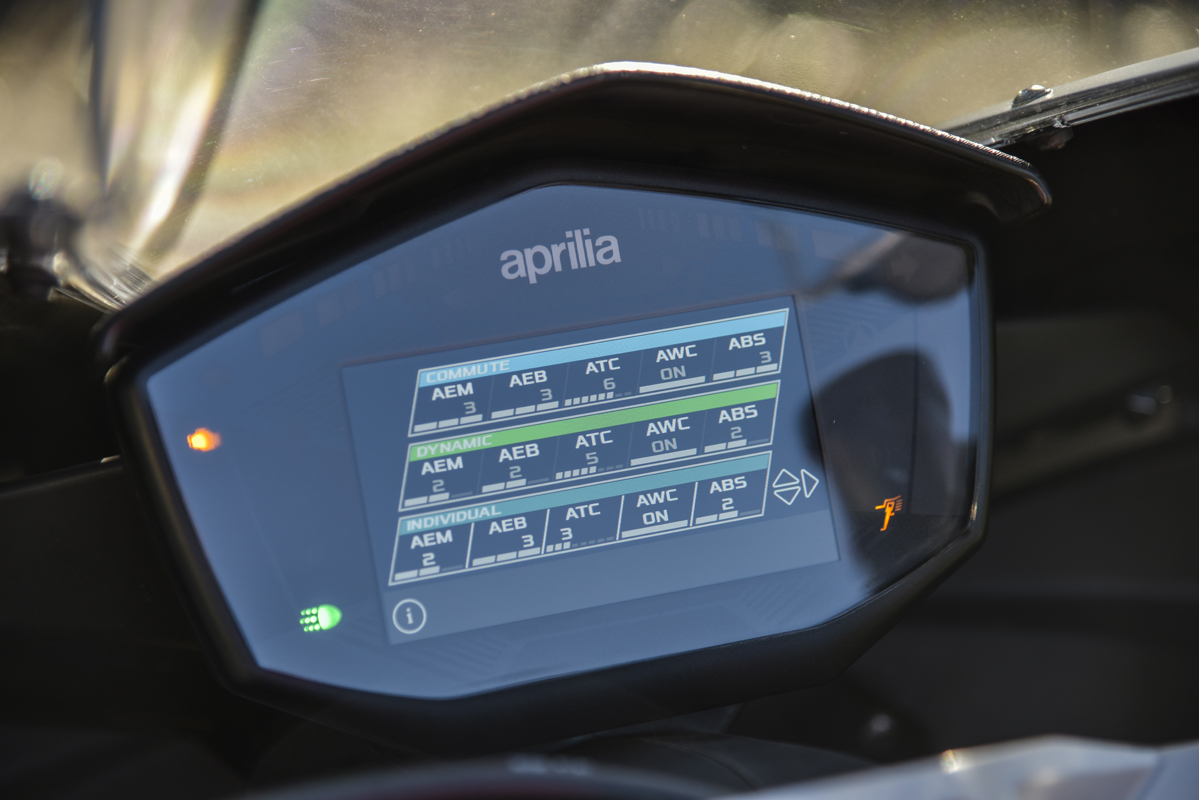
In the real world, all you need to know is ‘commute’ and ‘dynamic’—these two modes will give you the best of both worlds, where all the electronics are automatically tailored for easy commutes or sporty rides. If you feel like unlocking more of the RS, you can tweak every individual riding aid in ‘individual’ mode. And for racers, there’s ‘challenge’ mode, which unlocks a cool lap timer and more goodies.
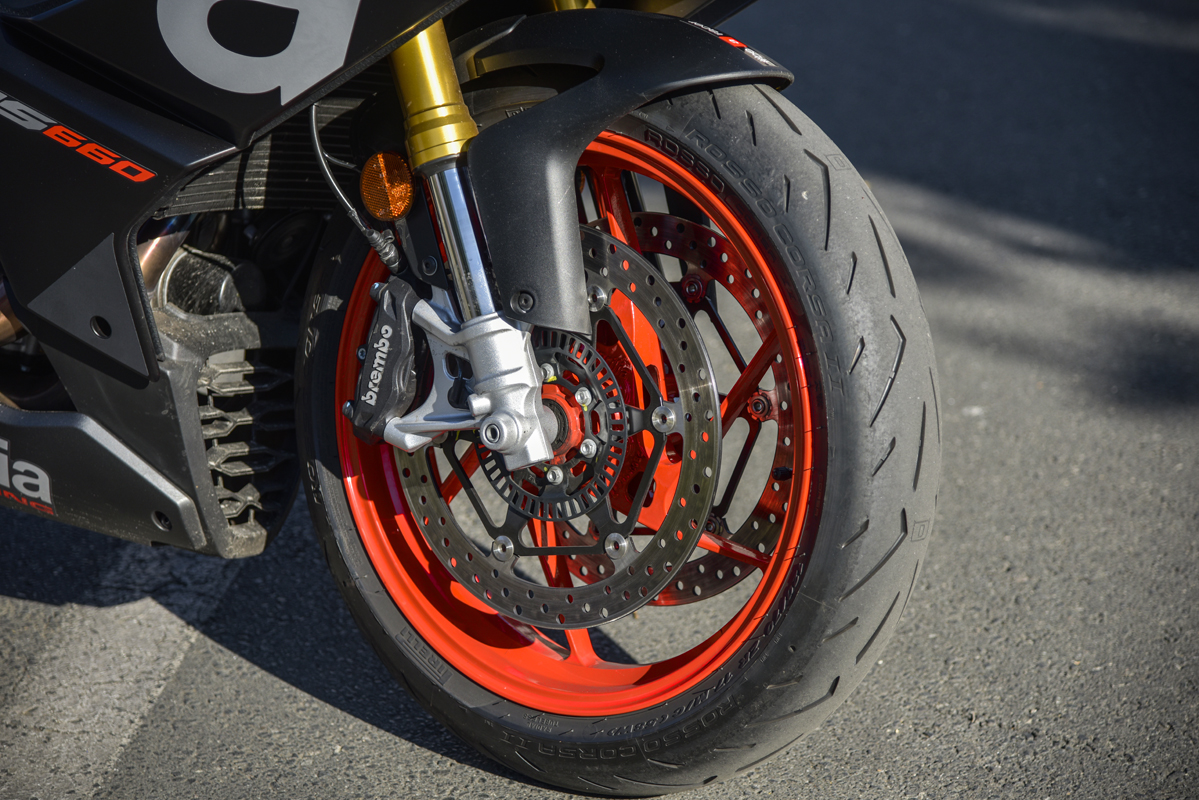
The RS 660 is a dialled-in road-biased package, which is confirmed by its not-quite-top of the range Brembos and KYB suspension. The suspension works more than well enough on our bumpy South African roads though, and with an adjustment guide provided by Aprilia, you can dial it in and hustle the RS 660 to your limits. The brakes still offer an excellent feel thanks to the braided lines, and even in ‘dynamic’ mode, you can feel the rear wheel lift slightly.
There are three colour options available on the RS: Apex Black, Lava Red and the either loved or hated Acid Gold. Personally, I love the Lava Red as it reminds me of the original Loris Reggiani RS 250 colours, a bike with so much history. The Acid Gold is a bold statement from Aprilia, but I prefer that yellow on the logo of my favourite fast food joint rather than on a bike.
After 200 km in the saddle, there were no aches or pains. And with some on-and-off sporty riding, I saw a generous fuel economy of 22.2 km/L (333 km on a 15-litre tank)—try doing that on your supersport.
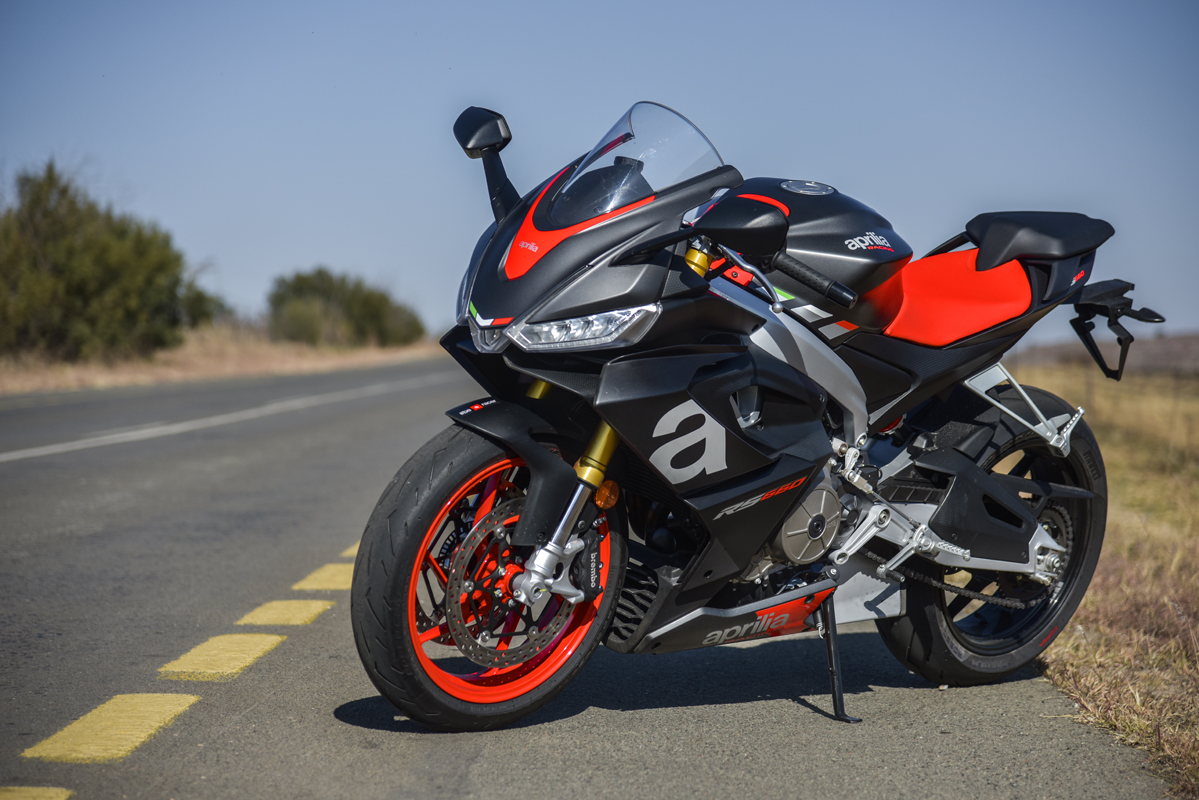
The RS 660 isn’t going to win any drag races, but you’ll achieve your knee-sliding dreams, enjoy some long sporty tours, and ace your daily commute. Don’t think of it as a traditional sportsbike, but rather a clever cross between supersport and commuter. It might not be a winner across the chequered flag, but it’s a winner across the striped lines you ride on every day.
The future seems even brighter, with the 660’s motor set to be placed in a new Tuono, and an adventure bike (the rumoured Tuareg). Would I go on a second date? Well if I had R234,660 and I was looking for a middleweight, sporty road bike, I think the RS 660 would be right at the top of my list.
Keeping it stopping with Motul’s Brake Clean
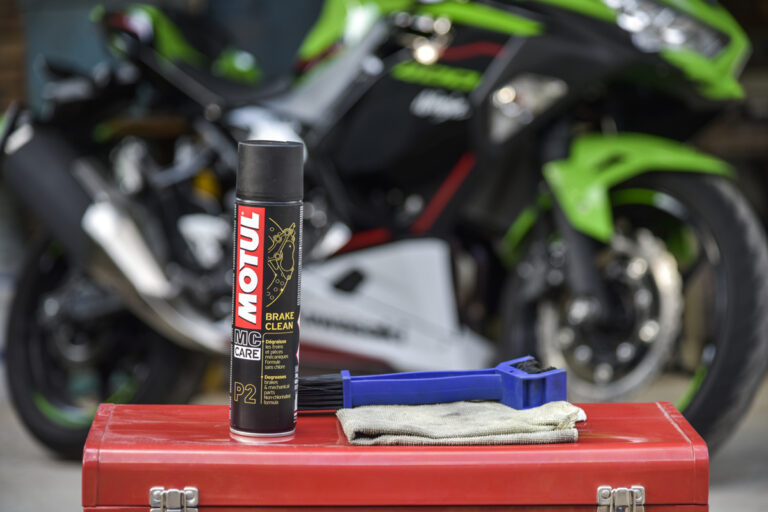
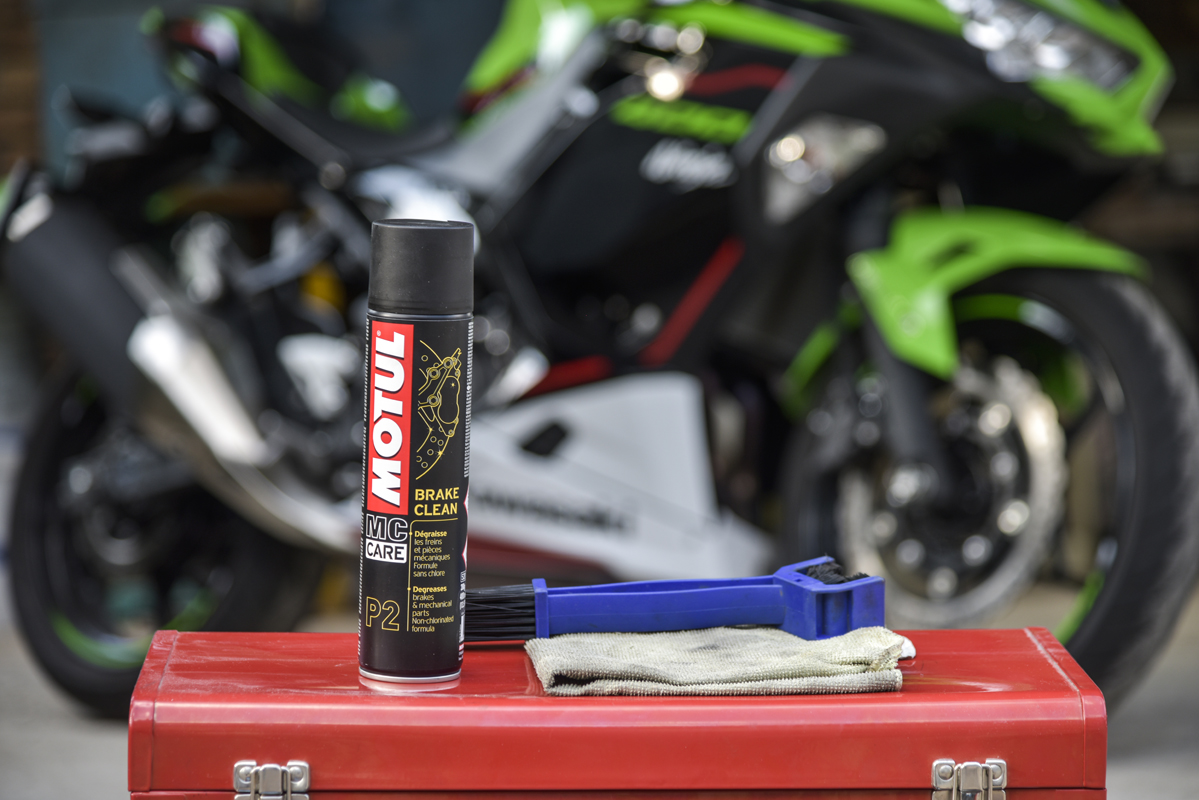
If you love your machine you’ll look after it, not just externally but internally. Now, we all have our own maintenance and care products for our bikes hidden somewhere in the garage, but nine times out of ten we’ll be missing a certain something. Brake cleaner! Horsepower is fun but braking is essential and to keep it so we need our brakes cleaned.
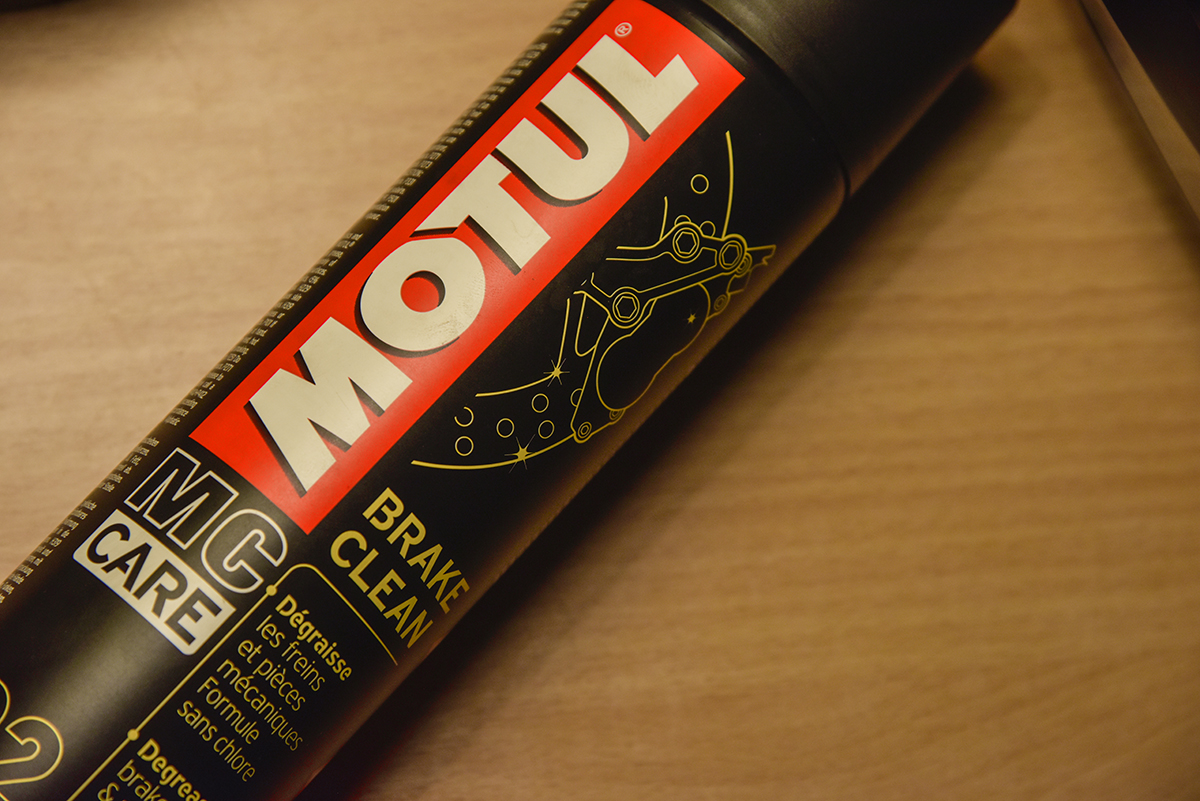
Tasked for the job at hand from Motul’s MC Care Range is the P2 Brake Clean, a very powerful non-chlorinated degreaser. Even the smallest quantity of greasy film or oily residue on brake pads or discs can cause significant problems down the road. The Motul Brake Clean blasts away layers of dusty debris, dries quickly, and leaves nothing behind.
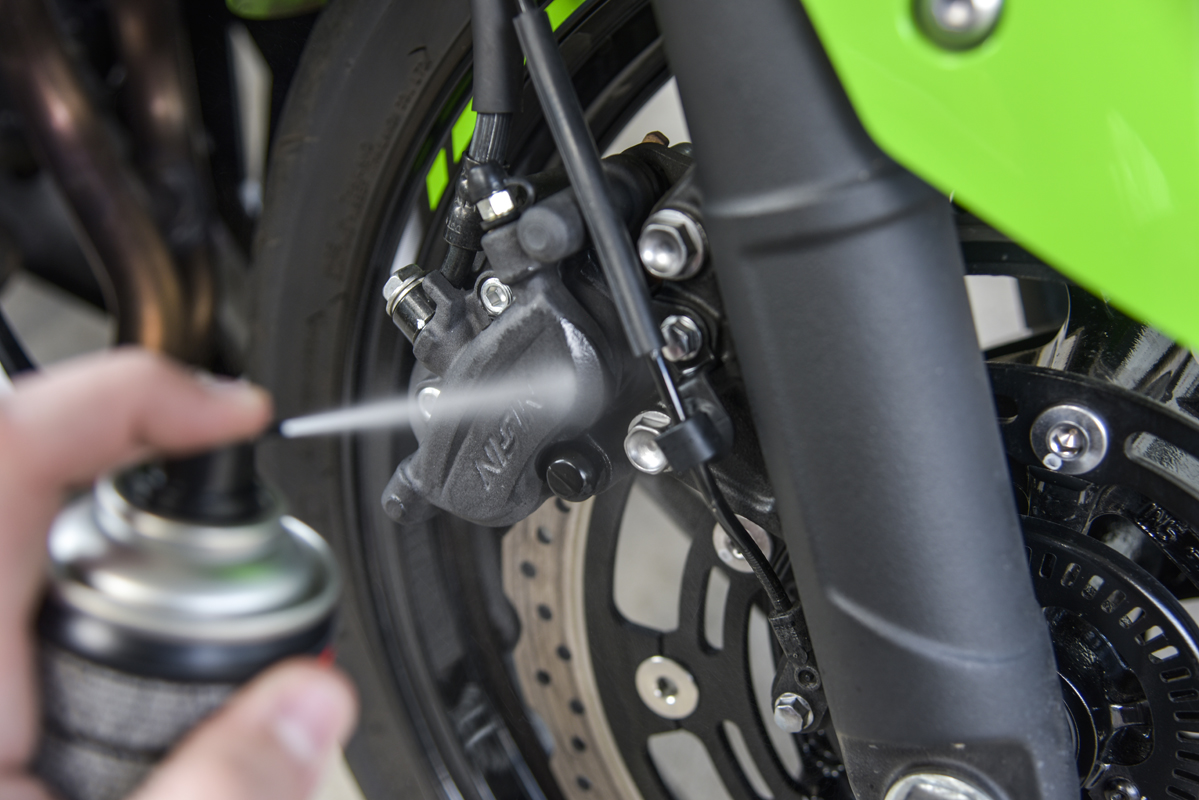
If your bike is brand new and you are on your second month or so of ownership, you can get away with a can and cloth in hand. Because your bike is still new, the chances of having a bad build-up of brake dust is very minimal. Start with a disc clean and wipe, then point the nozzle between the brake pads to spray out any last trace of debris.
Because the Motul Brake Clean is non-chlorinated, you should always spray your brakes with a cloth behind them, just to make sure it doesn’t fall onto any paint or plastic. Also, try to only apply the brake clean once your brakes have cooled down completely—when applied hot, eyebrows may disappear.
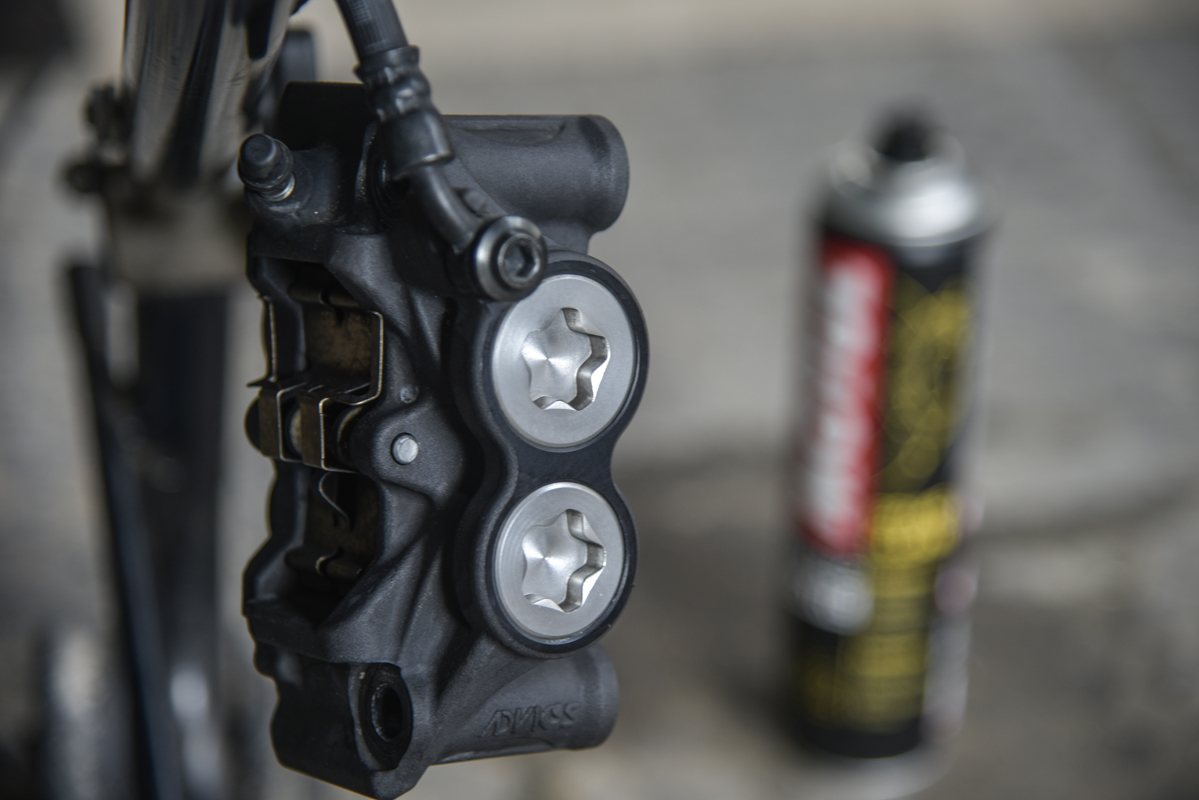
For the daily commuters and high mileage warriors, a ‘coast-to-coast’ clean is good every now and then. Crack the tools out, split the calipers, grab a brush and start to scrub. You might think your callipers look relatively clean on the outside, however, sometimes brake dust can get stuck in those confined areas causing a build-up, which could lead to seized pistons. You don’t need to get OCD about it, but I would suggest doing it every brake pad change, if you ride on the road that is. If you ride off-road, I’d give them a clean after every ride.
At the end of the day, they may not look cleaner to the eye, but you’ll be able to sleep better at night knowing that they’re in good nick.
Pro tip: one good rule with brake cleaner is to always buy more than you think you’ll need. In this case, Motul’s 400ml can, will last several cleans and only cost you around R150. So, grab a can and keep it stopping.
Motul MC CARE ™ P2 BRAKE CLEAN
For more information on the product used in this article, click on the link below…
Shift Up: METALIZE Shorty ADV Boot
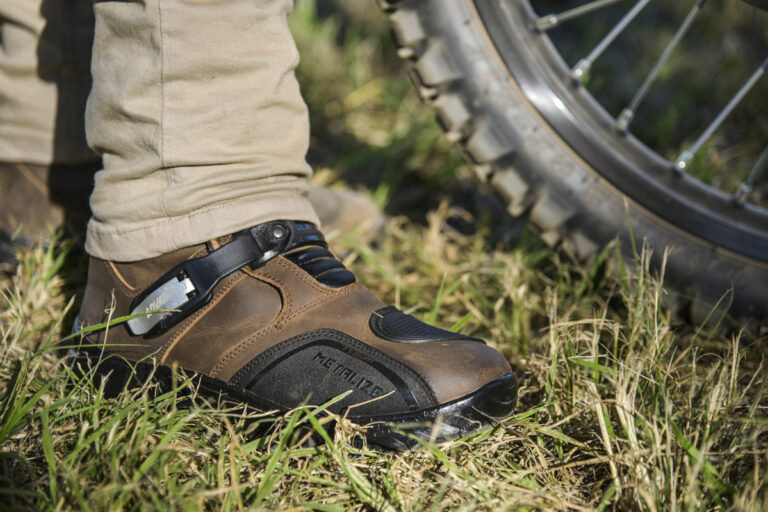
As daily motorcycle commuters, we look for comfort, safety and style when it comes to wearing gear, and in this case boots. We know that long boots are a ‘no-no’ for daily use because of their many impractical characteristics. This is where short boots come in…
We put on a pair of METALIZE Shorty ADV Boots to find out if they are a good alternative for riders looking for a cross between an everyday boot and an adventure boot.
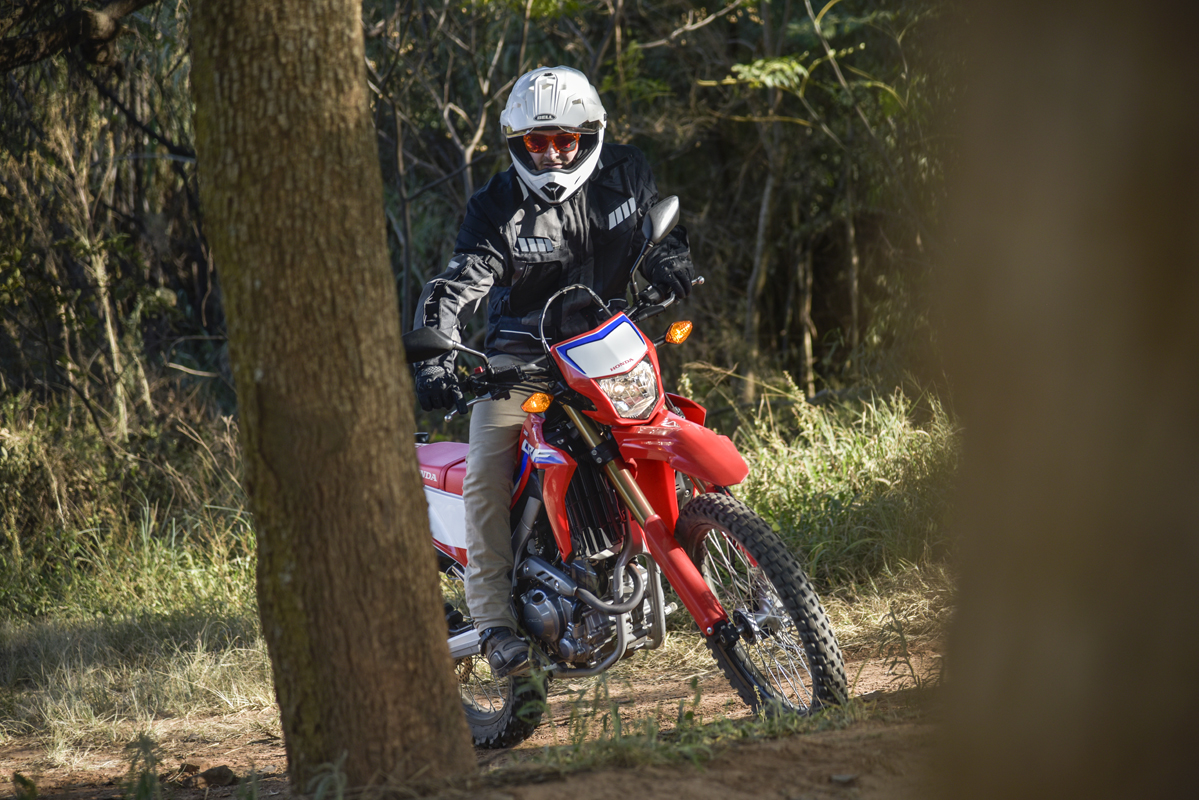
These boots are designed to work effectively as dual-sport boots with some nice features, and lightweight construction for greater rider agility and bike control. After a few months of riding some ‘adv’ routes and daily commuting, it’s fair to say that these boots offer surprising comfort, wind protection, grip and can easily be worn on longer trips and even as a daily rider.
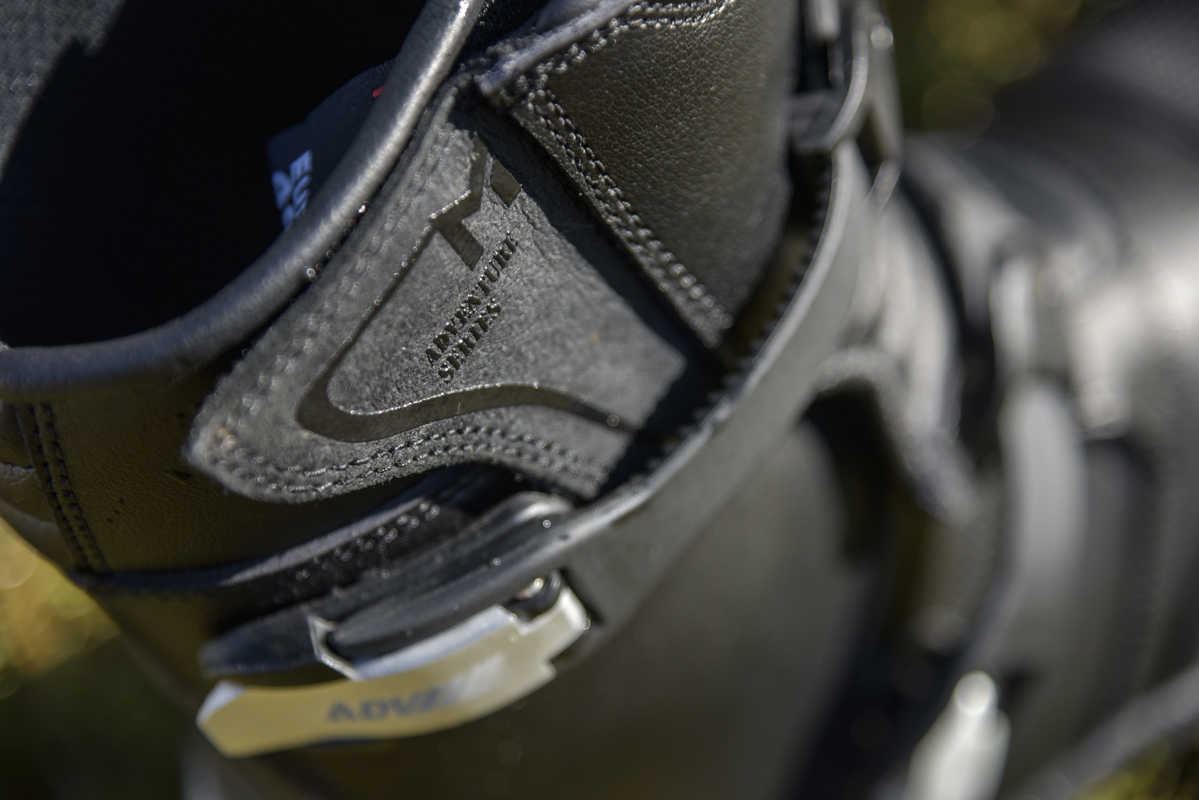
The low boot design is a great alternative for a rider who is looking for a shorter style dual-sport boot, maybe they ride in hot environments, or their calves just don’t fit tall boots. Yes, the leg protection is reduced, but they still offer more protection and performance than regular touring boots. It’s only when you start to ride more technical, where you may want to look at METALIZE‘s full-length adv boots.
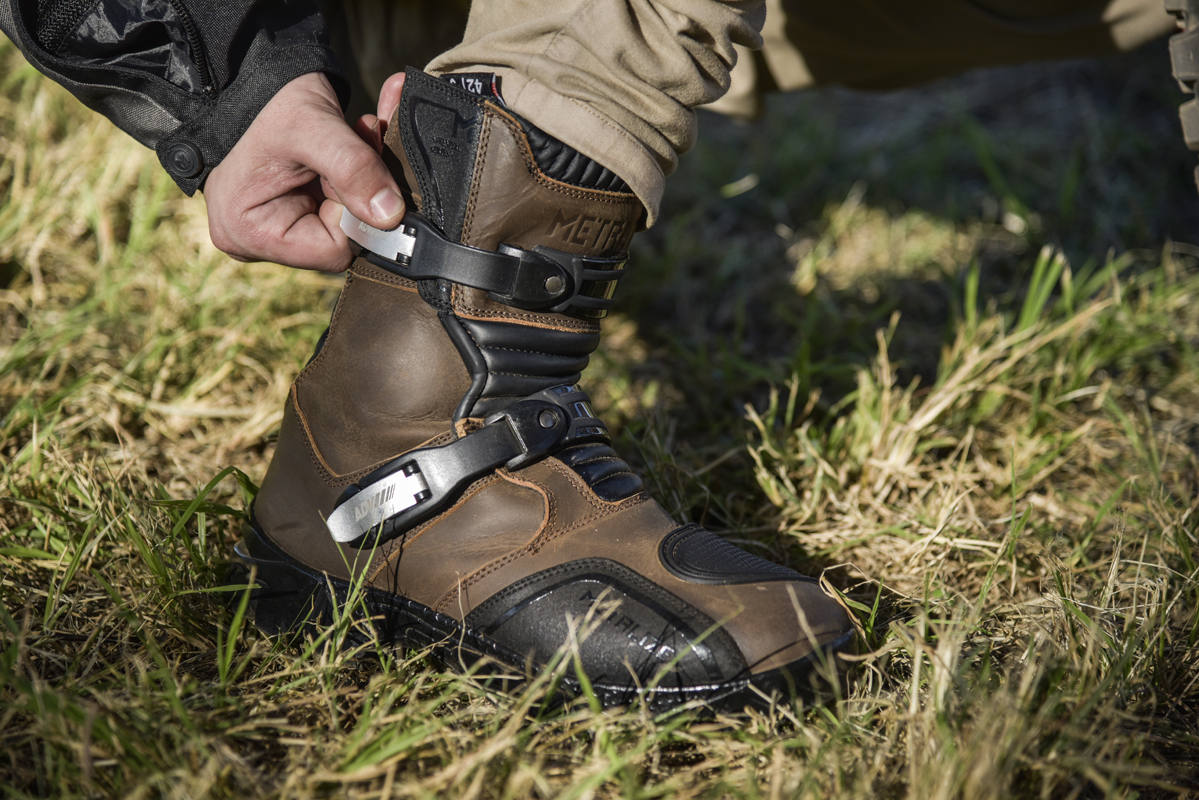
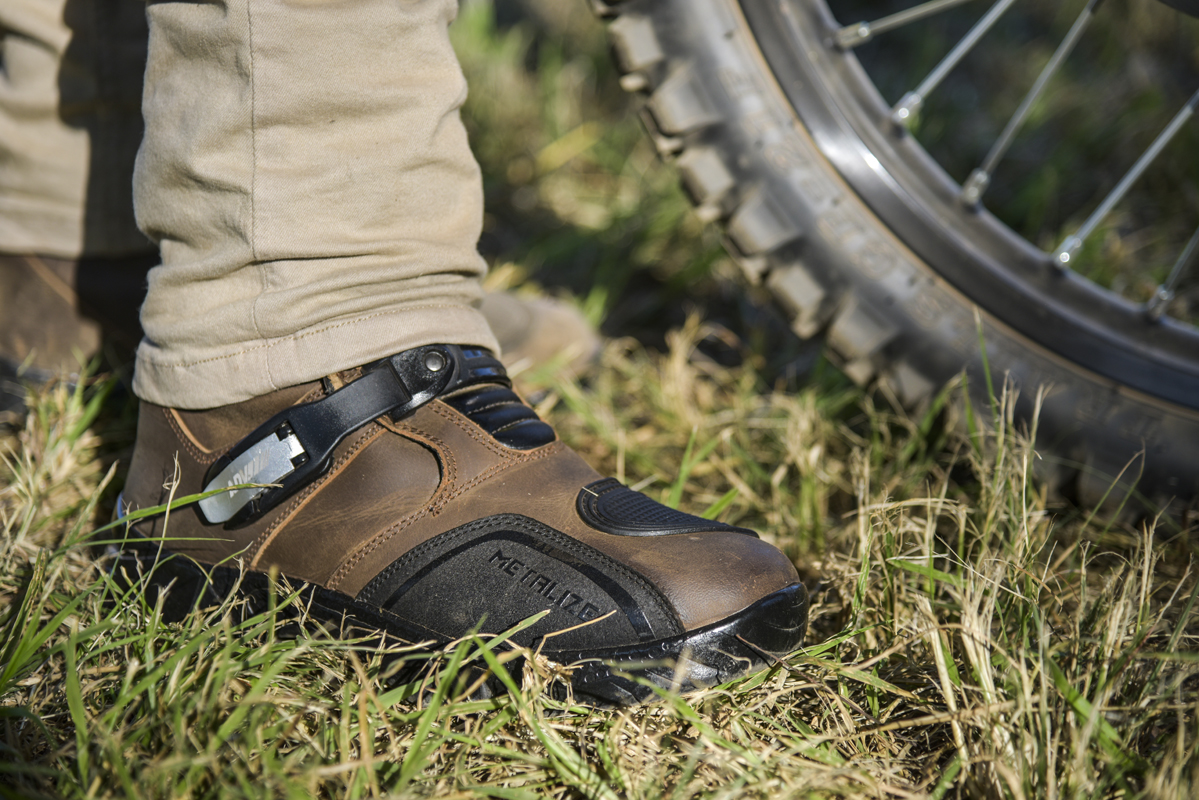
These cool kicks are waterproof and they come with two easy to use adjustable boot clips. A neat touch from ‘M’ is that the fastening system is screwed on, rather than riveted, making roadside repairs possible if needs be. The clips also make these boots very easy and quick to put on and take off vs the usual urban or laced sport boots.
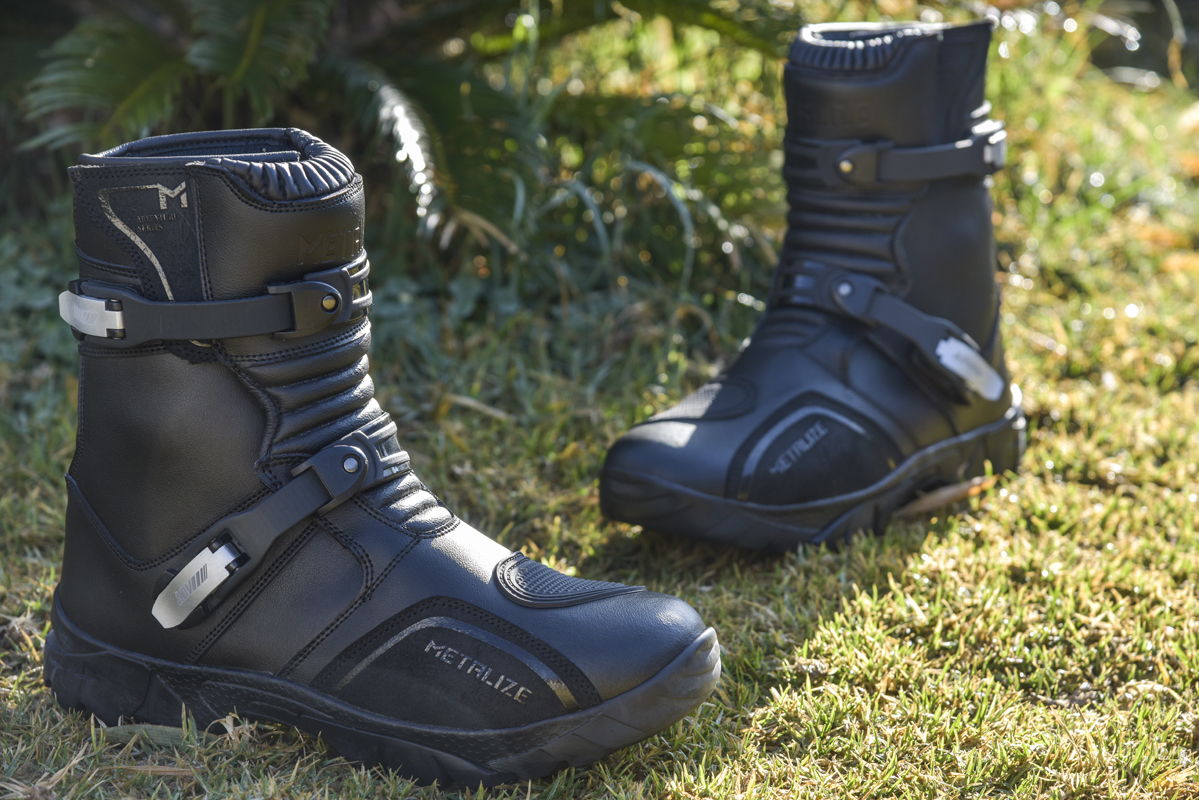
The boots are really good quality, with top-notch stitching, subtle branding, rubber toe picks and a soft reflective rear for visibility. Just like the METALIZE 440 adventure jacket, these boots are available in two colours: a classy brown and a stealthy black. I’m personally a big fan of the brown boots, as they show off more detail, they look classy and they tend to look less dirty after a ride.
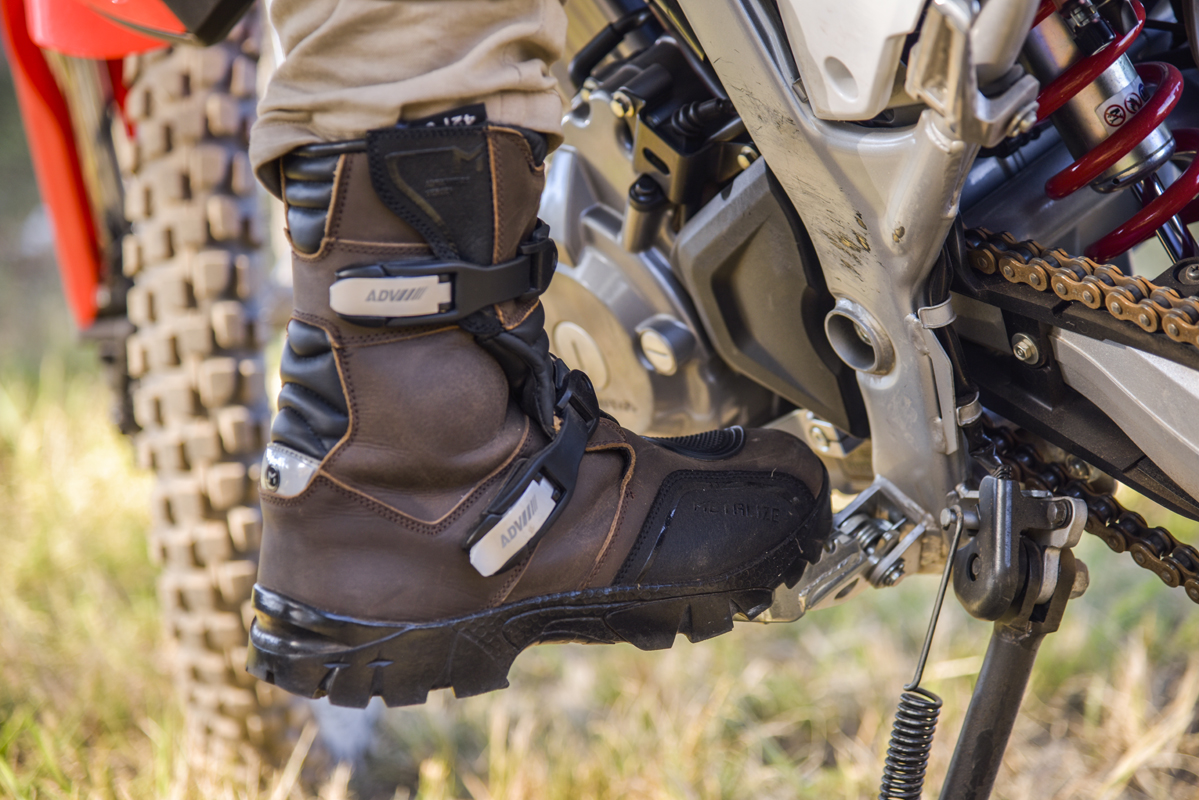
Once again METALIZE brings another quality item to their list of products and this time in the form of their shorty adv boot. These adv boots offer so much for a price that can only be described as competitive at R2,600. So, whether you’re riding around the world, or around the city, with the METALIZE shorty adv boots you will always be prepared for an adventure!
METALIZE Shorty ADV Boot
For more information on the product used in this article, click on the link below…
Staring into the crystal ball – what does the future of motorcycling look like?
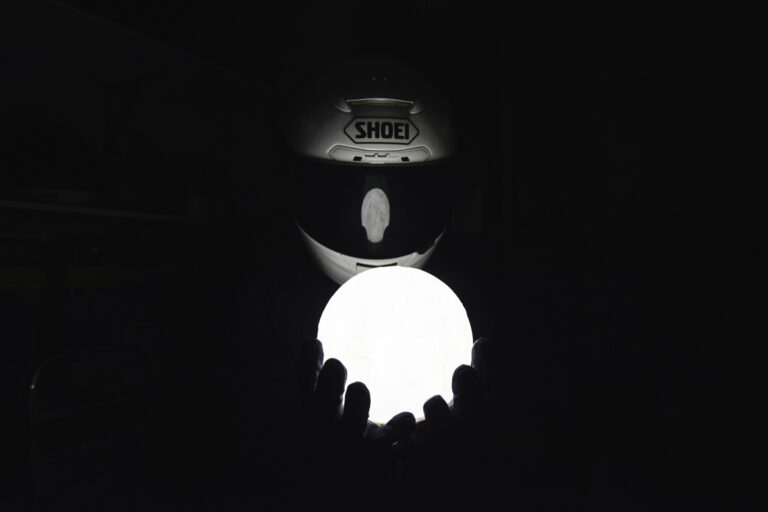
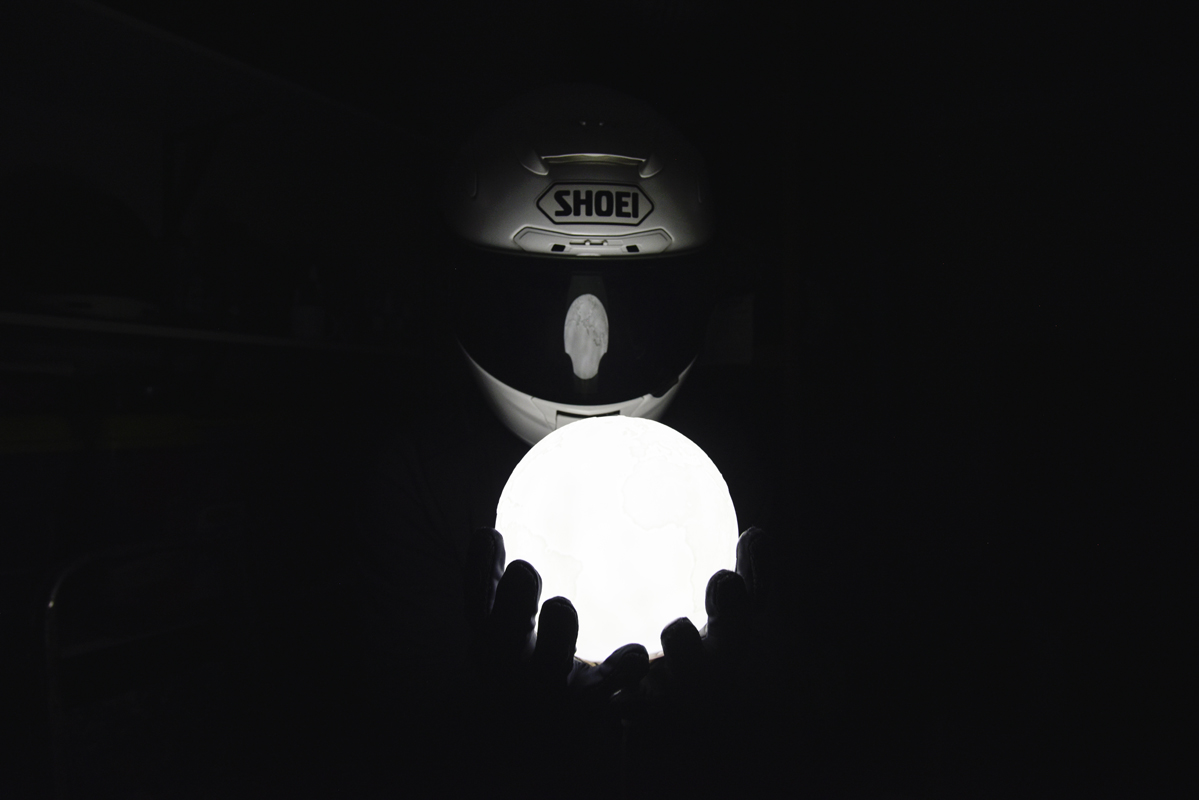
In my career, I have been blessed to learn from the biggest brains in the automotive business. These big brains are the ones that need to look into the future and start today on the development of elements that will only see the light of day many many years from now. They are the ones who stare into the crystal ball.
So, what does the crystal ball say to the industry soothsayers?
Let’s just put some T’s & c’s to this discussion first. We need to take into account the very different markets around the world, the different spending power etc. India and Europe are two very different motorcycle markets, as an example. We are looking at general industry trends. That being said, there are some interesting futurist-focused topics out there. Let’s get stuck in…
Choice of drivetrains
At the moment petrol is the dominant fuel in motorcycles, with power going to the rear wheel only. There are different drivetrains, from chain to shaft to belt drive, and the occasional experiment with turbo or supercharging.
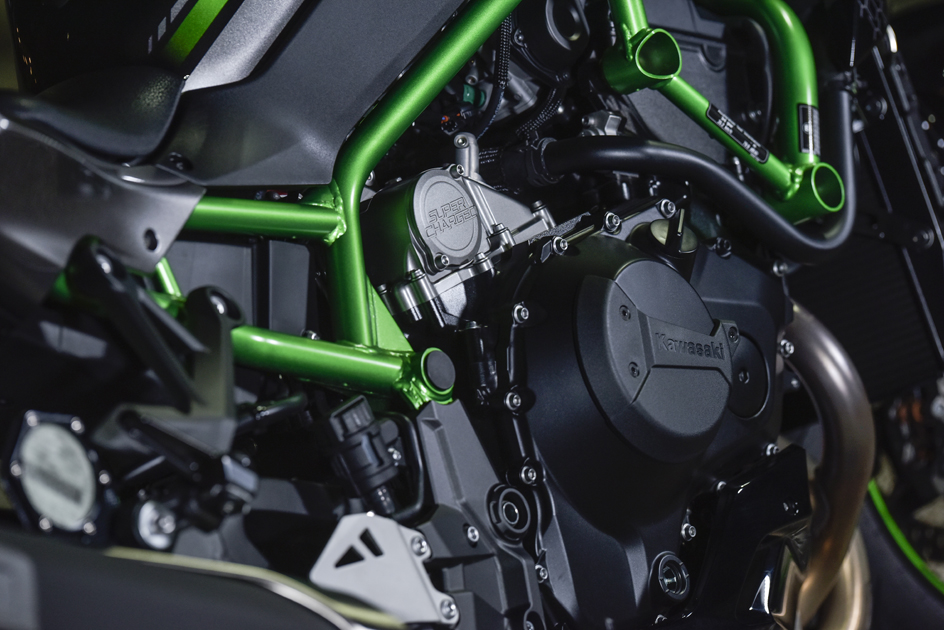
Going forward, it looks like the “power of choice” will be the dominant theme. Internal combustion engines will continue to become more efficient and have lower emissions (with ever more restrictive emissions controls on exhausts, such as the upcoming Euro7 regulations) and the rise of the electric motorcycle will continue. The energy density of batteries continues its improvement, which improves both weight and range, but there are also developments of alternative fuels such as hydrogen and synthetic fuels. Both of these can be as efficient, or if not better, than the environmental cost of electric.
In essence, we as the consumer will have a choice of what works best for our needs. But the days of the loud, screaming, 15 000rpm-at-decibels-that-make-the-next-province-cringe motorcycles may well be nearing their end.
Connected
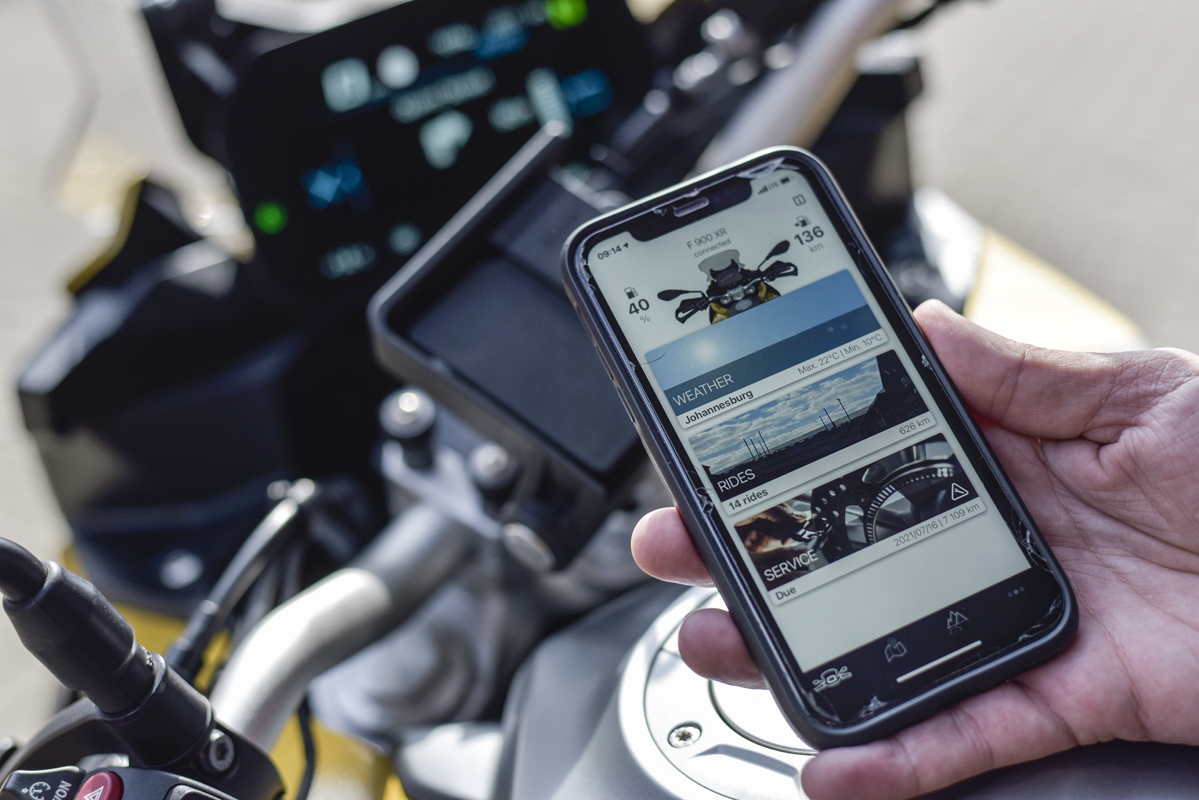
The term “connected” is intentionally broad. In essence, this talks not only to the technology on our motorcycles but also to the connection between our motorcycles, our phones and the rest of our lives! Navigation has become the norm, but this has also evolved into navigation apps on our phone sharing to a TFT screen on the motorcycle, together with route planning, downloading of maps and routes, linking of scenic images (which means accessing the photo app on the phone) and so much more. Then we have the connection of helmets and communication devices for phone calls, music streaming and talking to other helmets nearby!
The list goes on, with apps showing fuel range and riding data (not limited to location, but also lean angles, throttle position and so on). What’s next?
Keyless ride technology is already here, and the evolution of this is the phone as the key. Then you can have different profiles for different riders, taking into account all of the preferred settings from suspension to screen settings. The really big next step is new ownerships models such as ride-sharing. If we picture the old rental model, this seems quite outdated when we could see the rider approach any bike in the fleet, have the bike recognize the phone (which is the key) and then charge per kilometre of use. Drop off becomes a whole lot more flexible as well. The benefit here is that you could have your regular electric commuter but for that weekend tour you could easily and conveniently pick up an adventure bike…..
This connected world is also evolving into monitoring vehicle conditions. We can already see information such as fuel level, range and service requirements, and going forward, it will include information such as charge time left to full charge, motorcycle preparation, so when you get to your bike it will be all good to go.
A connected vehicle extends further than connecting to other vehicles. In the future, they will also be able to connect to infrastructure, to data, to predictive analytics (for traffic patterns etc) which leads us into the next topic:
Safety
Riding has always been inherently dangerous, and the responsible riders out there manage that risk as best as possible, from the way they ride to the gear they wear.
Connected vehicles that talk to each other and to the infrastructure can, in theory, become a great deal safer. Preventative action is the next big step in road safety, with big data having the computing power to proactively plan and adjust traffic conditions to make the environment safer. We have always been taught anticipation is key, and this same concept is going to be taken to a much bigger next level.
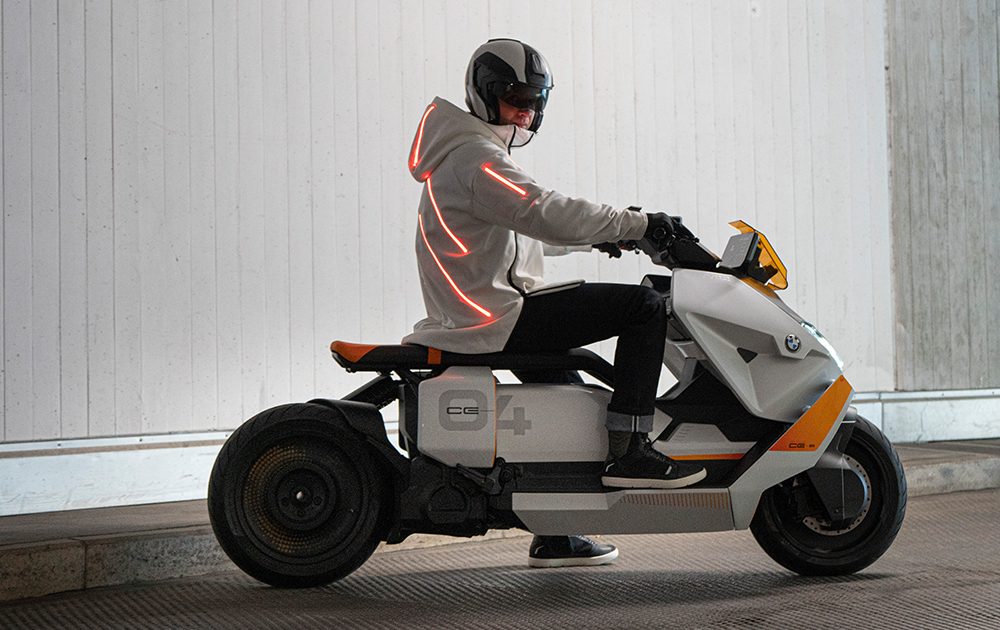
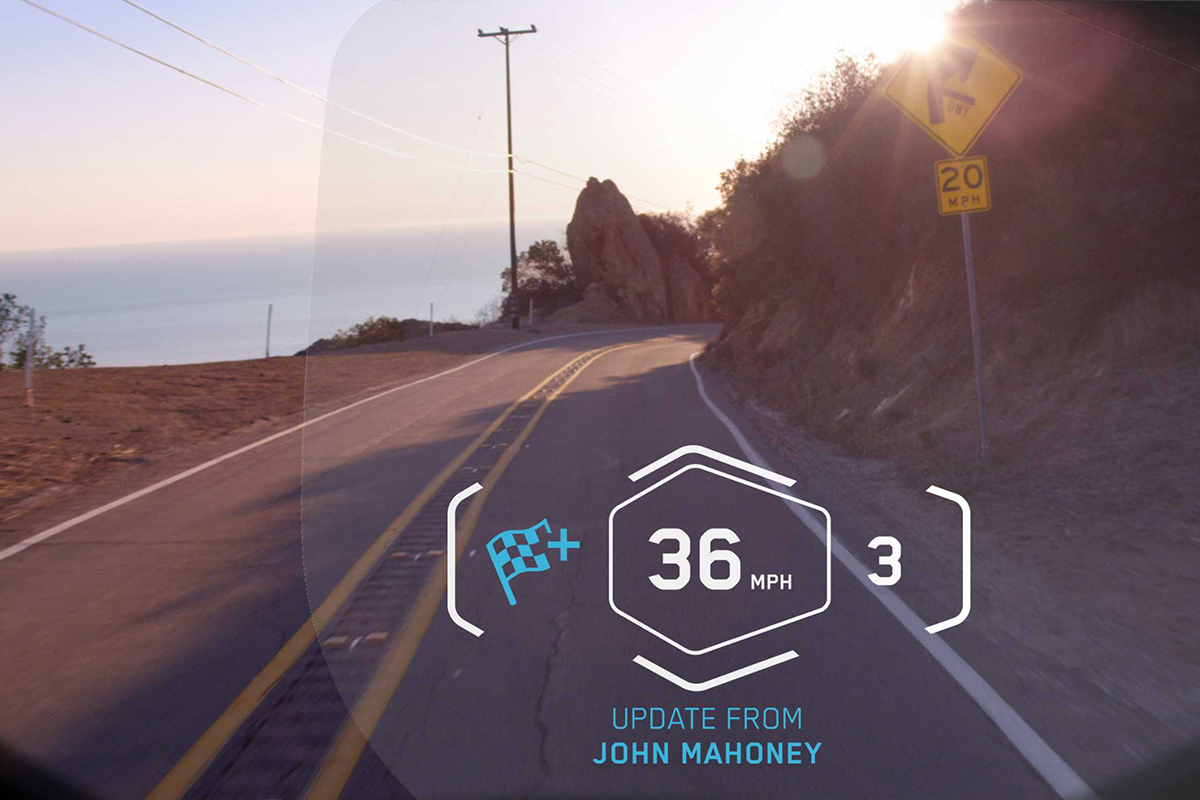
Rider gear is also evolving rapidly. The materials used have become more and more high-tech, but watch this space for integrated warning signals in helmets and jackets to warn those behind you, heads-up displays in helmets giving a great deal more accurate information such as road surface issues and traffic congestion up ahead.
Certain manufacturers have a long term vision of riding being so pro-actively safe that the riding gear requirements change dramatically, with helmets not being needed, but high-tech glasses projecting information and rider gear more focused on comfort.
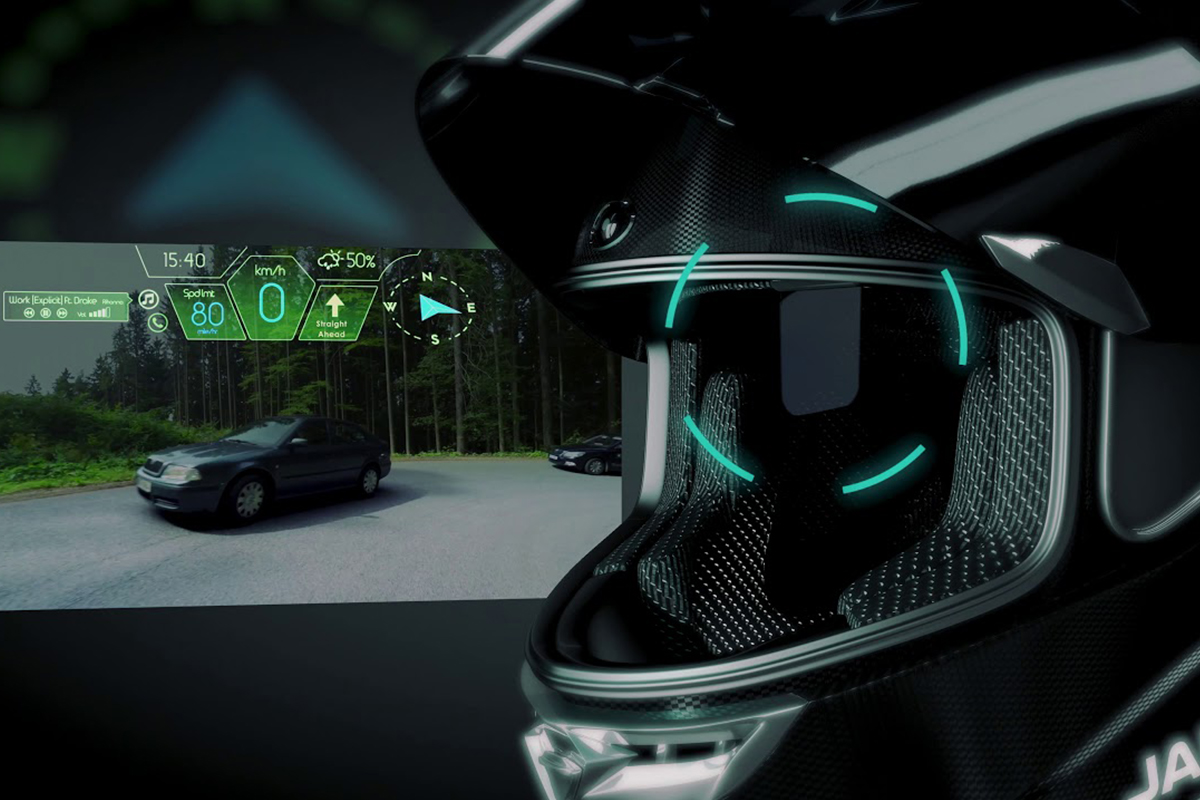
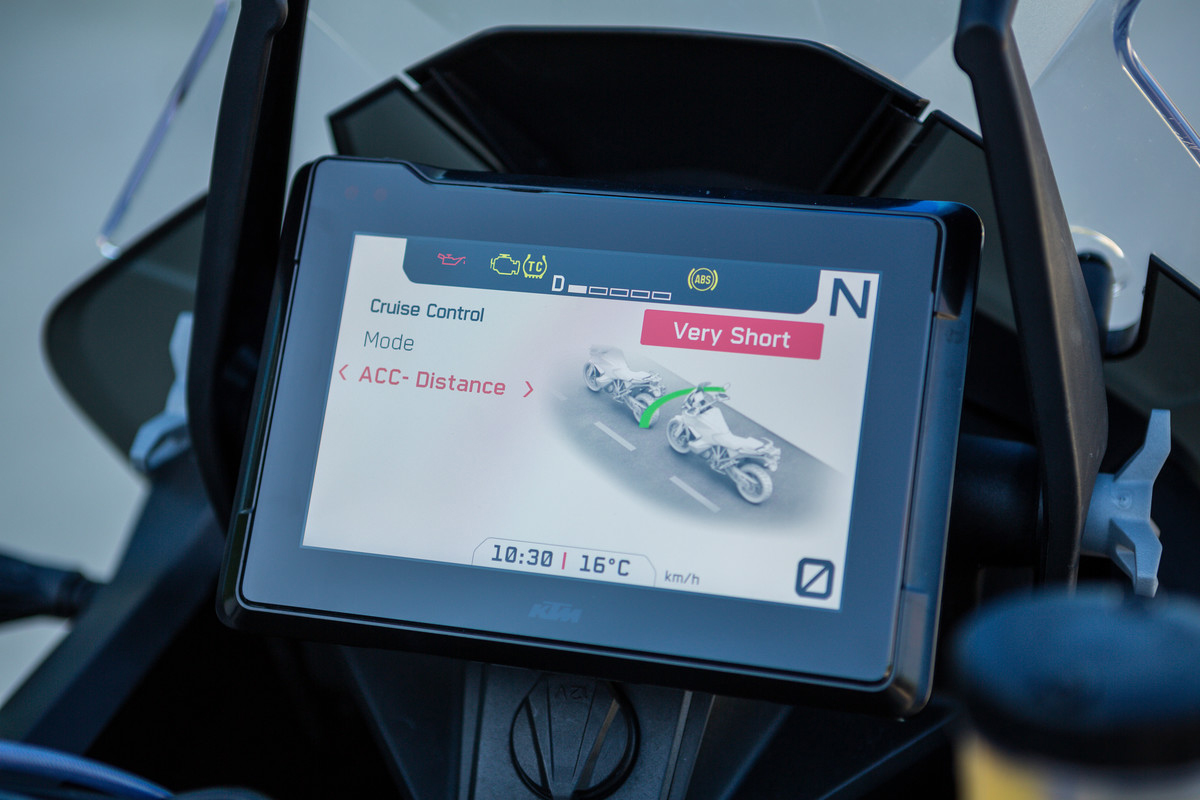
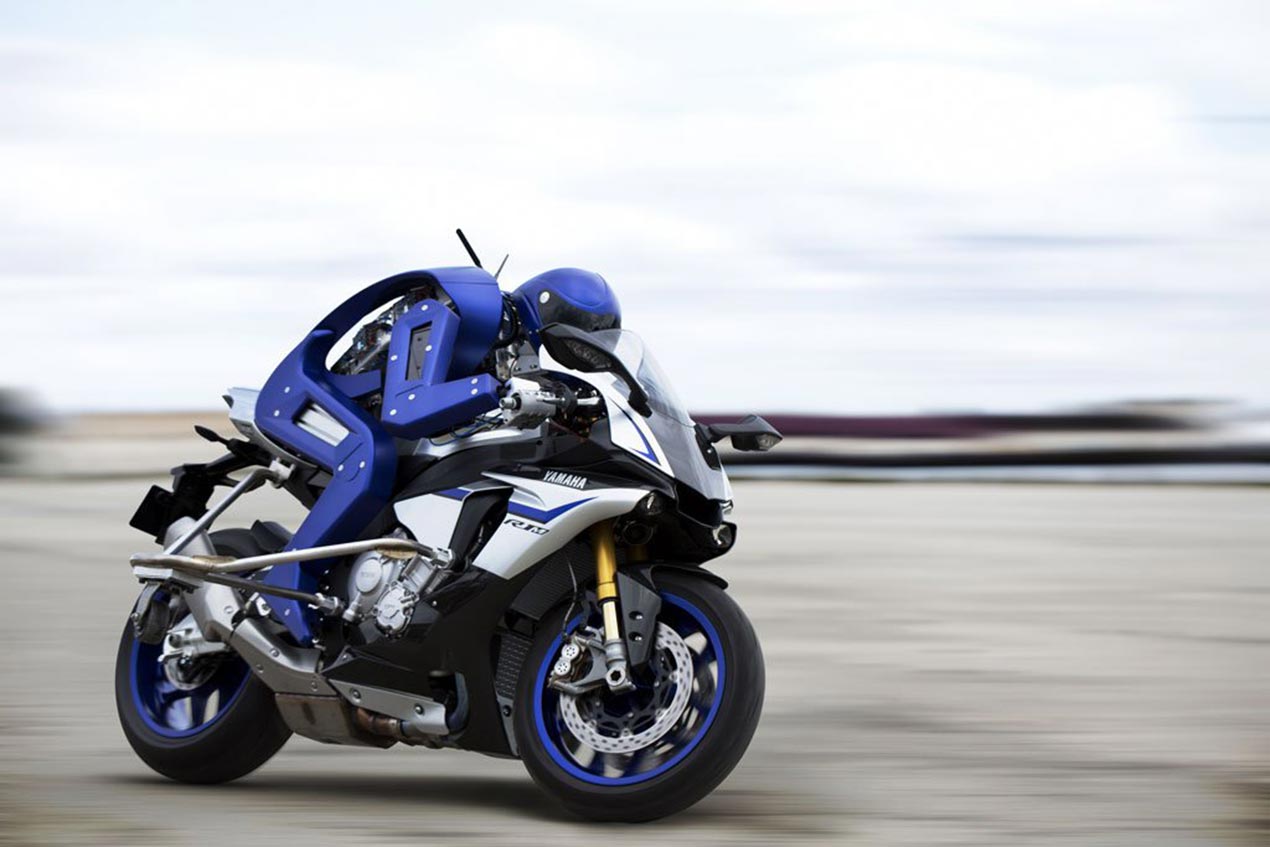
And let’s not forget the future arrival of autonomous vehicles. The motorcycle industry seems to be investing in this as well, with adaptive cruise control already here and more technology coming. What is interesting is that the purpose, it seems, is not to replace the rider, but to allow the rider to enjoy those mountain passes and let the technology take care of the boring ride home after the blast (refer to point 5…).
Pricing variances
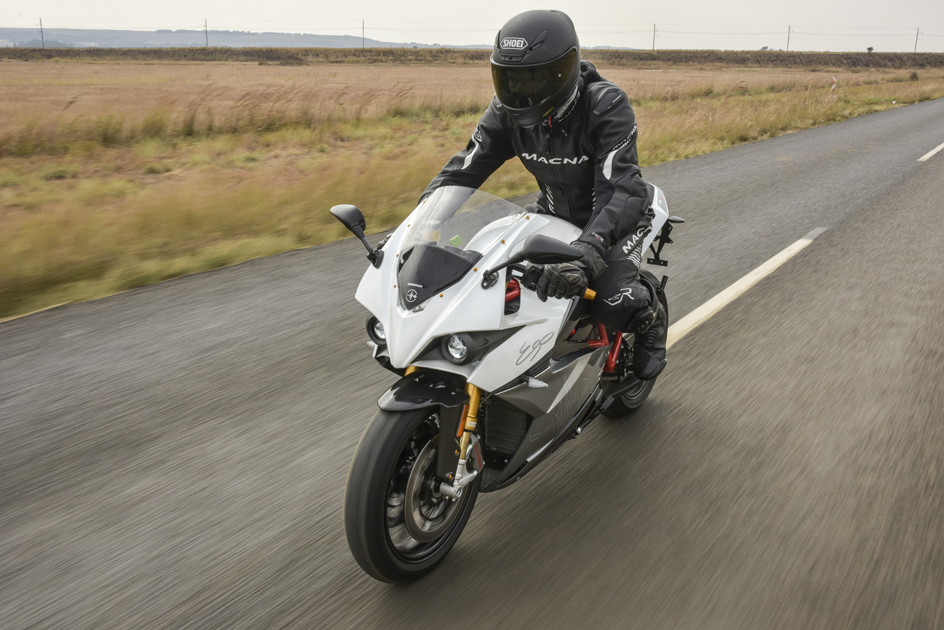
Developing and selling motorcycles has always been an expensive business. And all this new tech doesn’t come cheap. But as they become more commonplace, so the price drops, making these (currently) expensive technologies more accessible in the future. Electric motorcycles, in particular, are ever-improving in range and dropping in price.
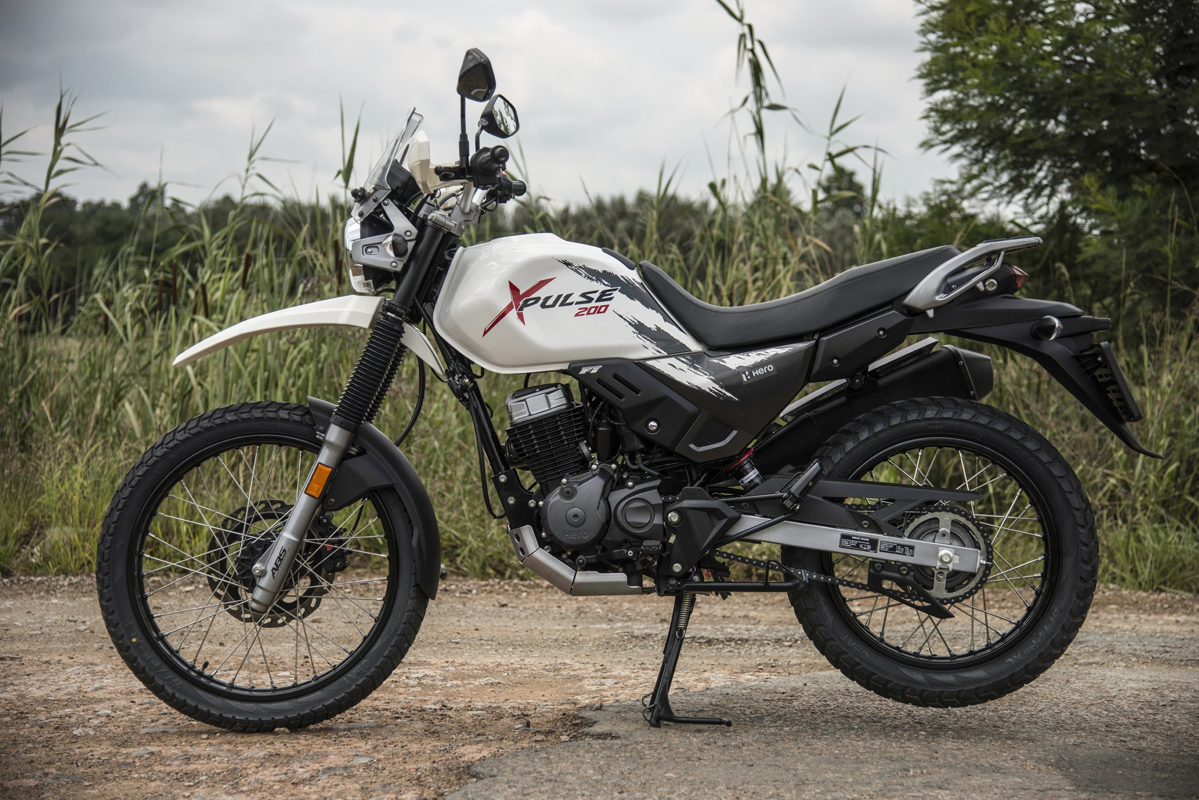
Legislation, also adds to the cost burden, but manufacturers also need to make products, that the market wants, and we are seeing the shift to more attainable motorcycles from the likes of Hero entering other markets, as well as brands like BMW further developing their 310 offerings.
The expensive bikes still sell, thus proving that the (profitable) market exists, and as all of the offerings mentioned above become cheaper, we will see the different price points get access to these as well.
Here’s the important one: Why do we ride?
It is both a social activity and commuting. Both are of ever-increasing importance and will become more and more relevant to the buying public going forward. I have previously written about the post-covid world and riding with our “tribe”, riding with our fellow bikers, is one of life’s greatest pleasures.
If we have learnt anything from this crisis, it’s that, we need to make the most of every special moment in life.
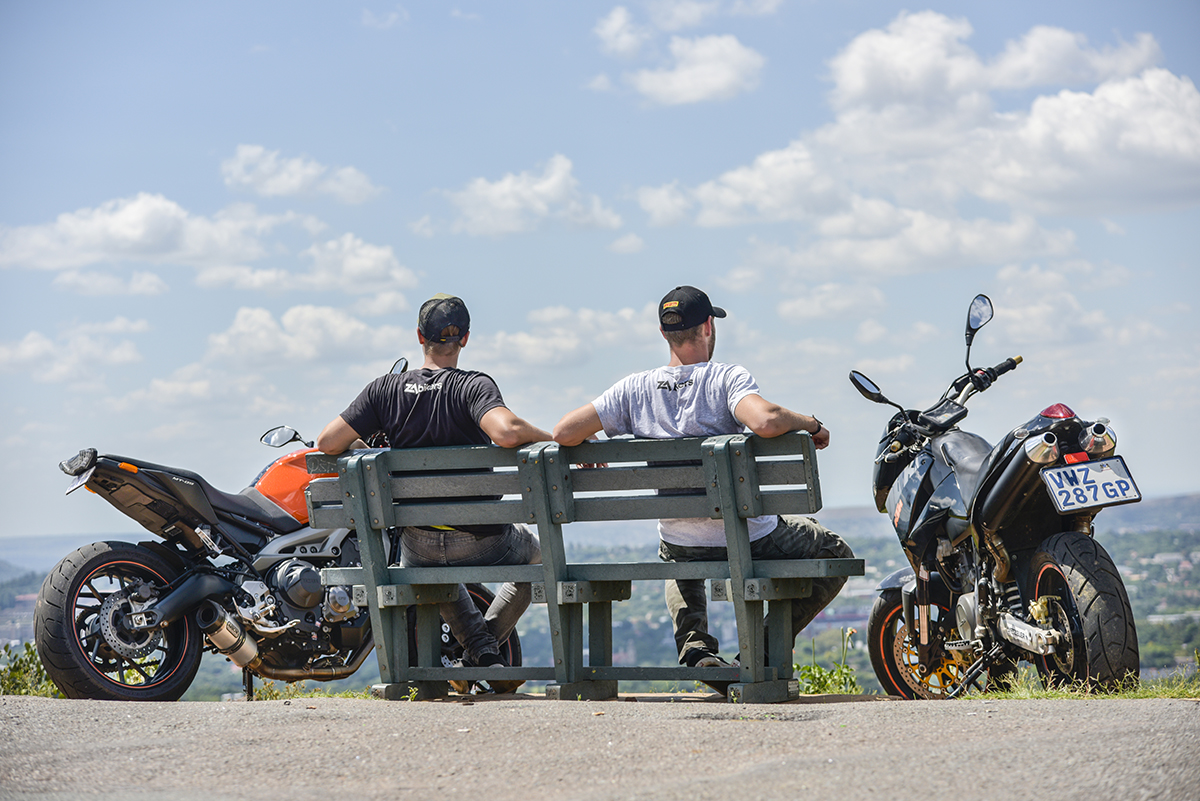
In conclusion, we see a future with a blend of digital and analogue, being connected but also enjoying the solitude of the ride. The future though is incredibly exciting, and with the evidence of the investment by the manufacturers into their future products, they seem to feel the same as well.
A great deal is here now, already….. Are we already riding in the future? Perhaps we have, just unbeknownst to us…..
Quick Hit: An afternoon with the new Triumph Speed Triple 1200 RS
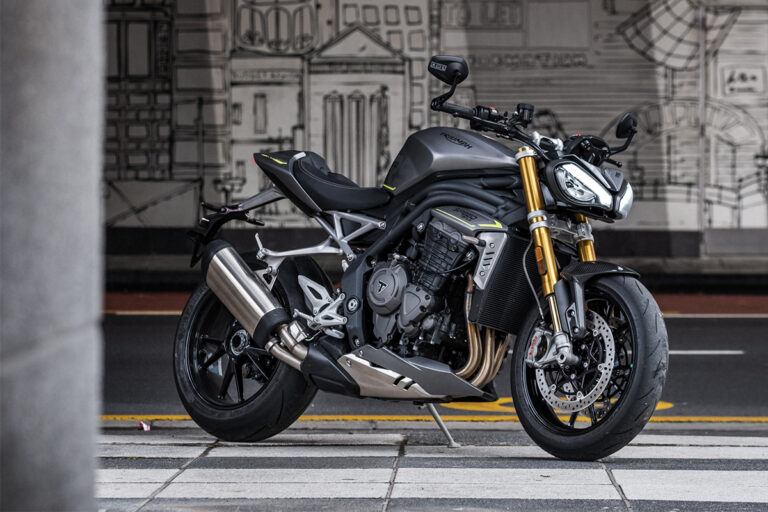
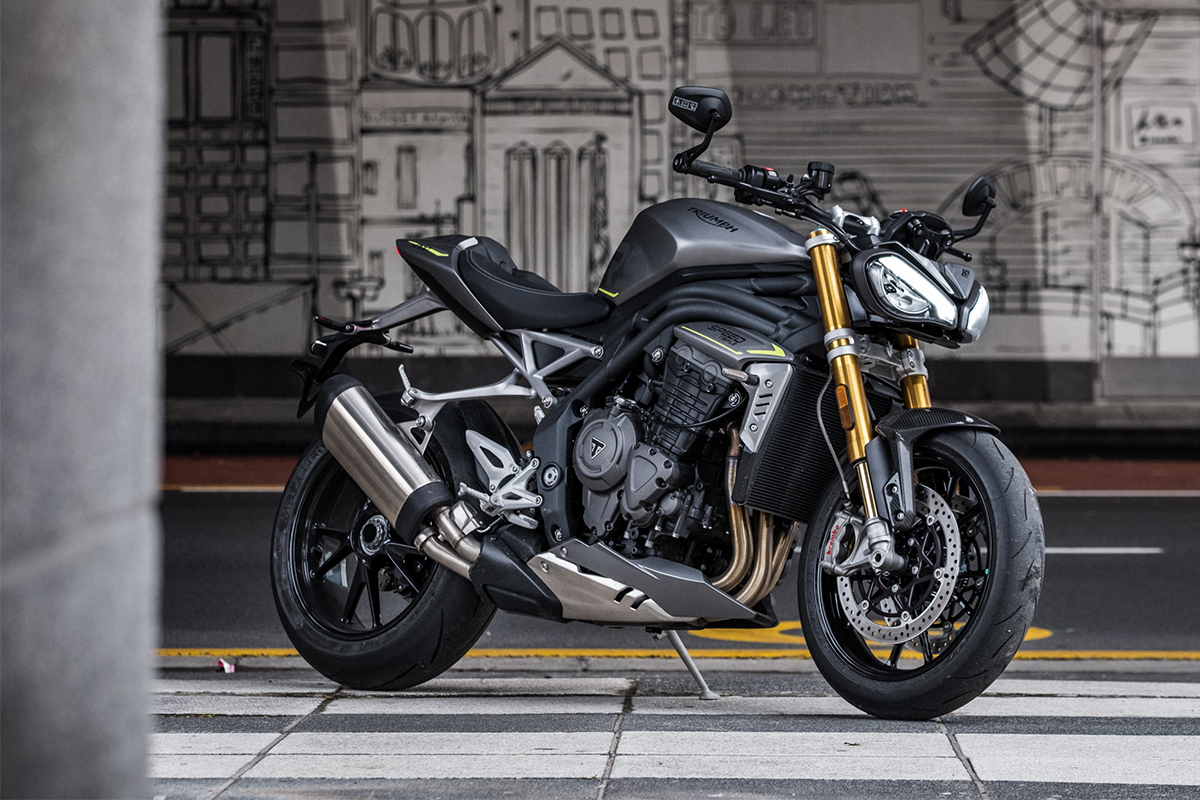
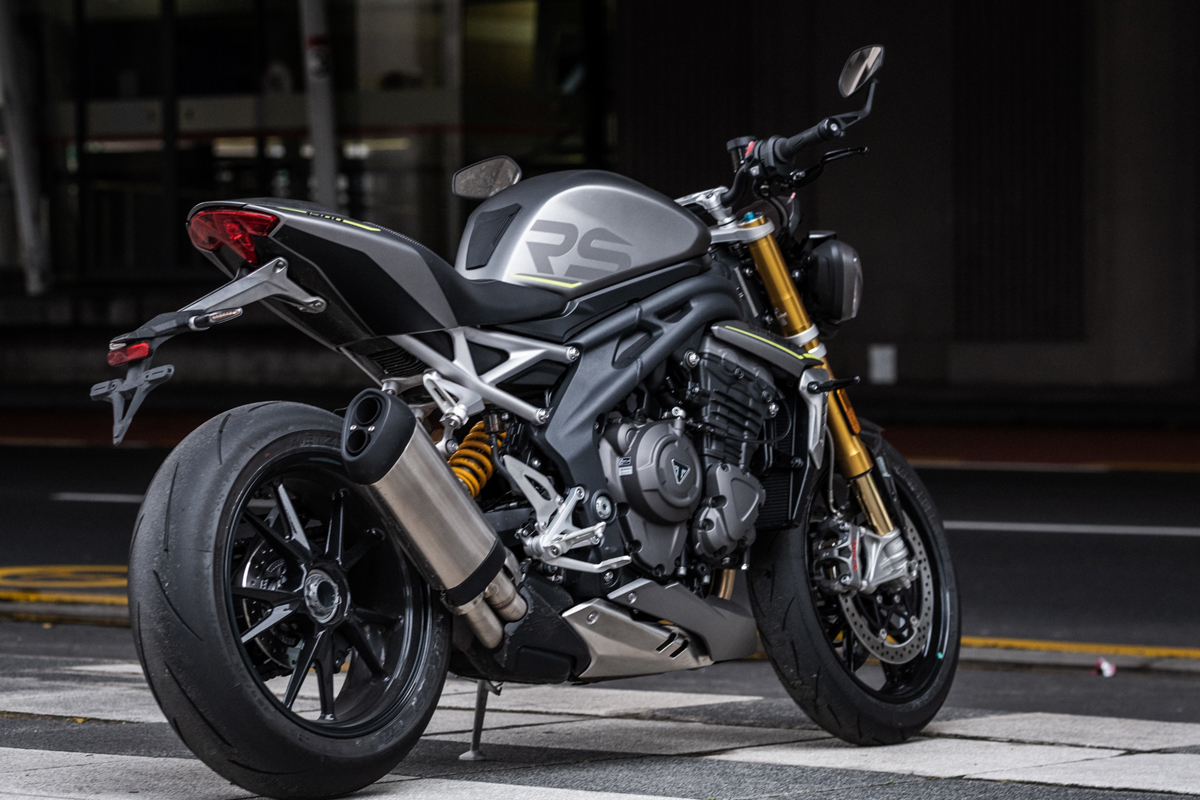
The modern factory streetfighter market is stacked with options, but few motorcycles can boast the iconic status of the Triumph Speed Triple. It’s been around since the 90s, helped define the genre, and has built an unmatched cult following. But it’s also been a little outgunned of late… so Triumph have completely redesigned it.
The 2021 Triumph Speed Triple 1200 RS is a big leap forward for the British marque, sporting 110 cc and 30 more horsepower than its predecessor. There’s more to the story than just a power bump—but it is significant, because it’s repositioned the Speed Triple among its peers.
By pushing the Speed Triple’s power to 177.5 hp, Triumph have properly thrown a cat among the pigeons. It’s now on par with the 177 hp KTM 1290 Super Duke R, and a step up from the 147 hp Ducati Monster 1200 and 165 hp BMW S 1000 R. It’s only outmatched by super-nakeds like the Kawasaki Z H2 and Ducati Streetfighter V4, and both of those are significantly more expensive machines.
The Speed Triple hits its 177.5 hp peak at 10,750 rpm, with 125 Nm of peak torque at 9,000 rpm, and the red line at 11,500 rpm. But it’s not just more powerful than before; it’s also 10 kilos lighter at 198 kg wet, and a lot more compact. That’s because it’s a ground-up redesign rather than a refresh, with major changes to the chassis, motor, clutch, gearbox and electronics package, and tweaks to the ergonomics and looks.
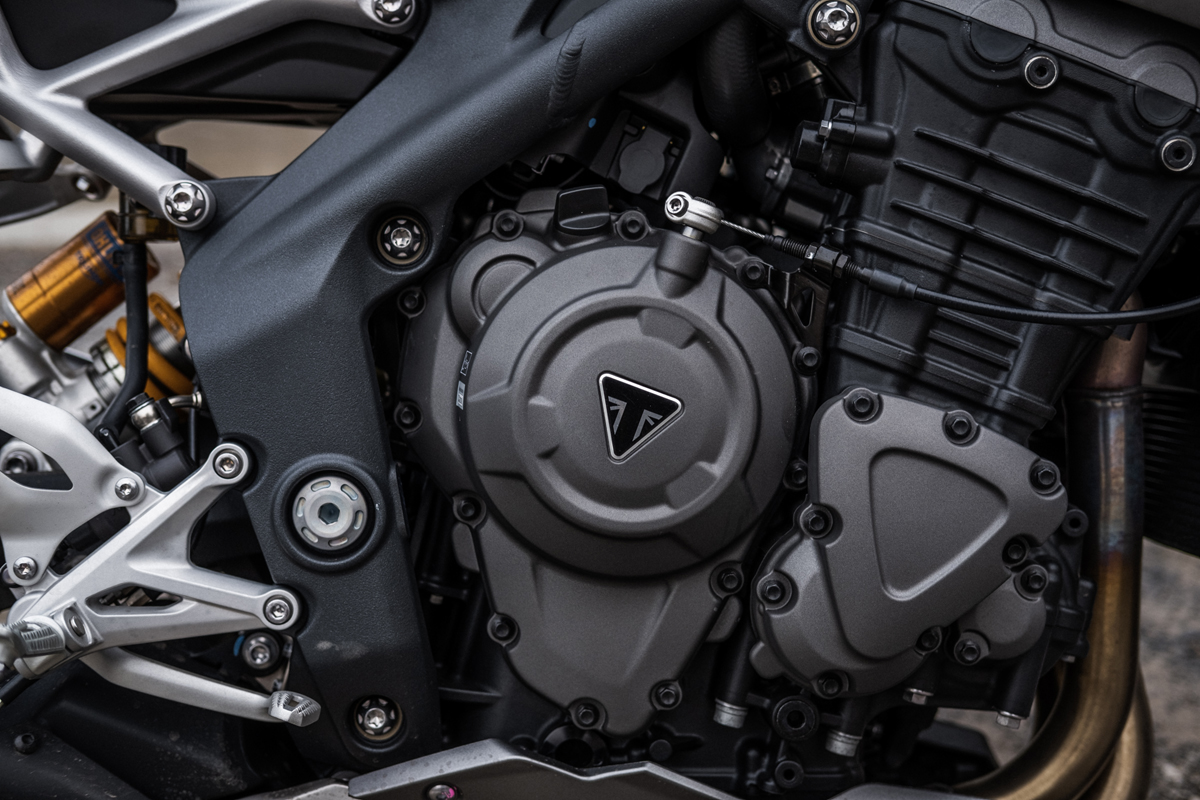
You can get the full skinny here [The Triumph Speed Triple 1200 RS is Here to Party], but the big takeaway is that Triumph have gone to town on fine-tuning everything that made the Speed Triple so popular in the first place.
Numbers aren’t everything though, and ‘good on paper’ doesn’t mean ‘good in the real world.’ So I borrowed Triumph Cape Town’s only Speed Triple 1200 RS loaner for a firsthand experience of how it’s changed, and if it’s that much better than before. Since the bike’s in hot demand, I had just one afternoon with it… giving me just enough time to answer five burning questions.
Is it overkill?
I’ll let you in on a little secret: no-one really needs 177.5 hp on the street. Here’s another one: on the street, you’re seldom revving the Speed Triple 1200 RS high enough to even hit peak horsepower. The key here isn’t that the new bike makes more power and torque at the top—it’s that it’s more powerful everywhere in the rev range, and that it’s more usable.
The throttle is smooth and responsive, and power rolls on consistently and flawlessly. That’s partly because the new motor has less powertrain inertia than before, along with a revised intake and exhaust. And it’s no doubt a result of revised fuel mapping, too.
Despite this, it’s not an intimidating machine to ride. It’s perfectly happy to be babied as you settle in, and even feels decent with the rider mode set to ‘rain.’ Flick it to ‘sport’ mode and crank the throttle, and it’s instantly wily—but never unwieldy. In short, it’ll give back whatever you put in.
Add to that the inimitable triple cylinder feel that made its predecessors so popular, and this ranks among the best motors I’ve ever sampled.
(As an aside, I’m convinced it’ll be an entirely different beast on track, where it’ll have the space to properly cut loose. There’s a ‘track’ mode just for that scenario too.)
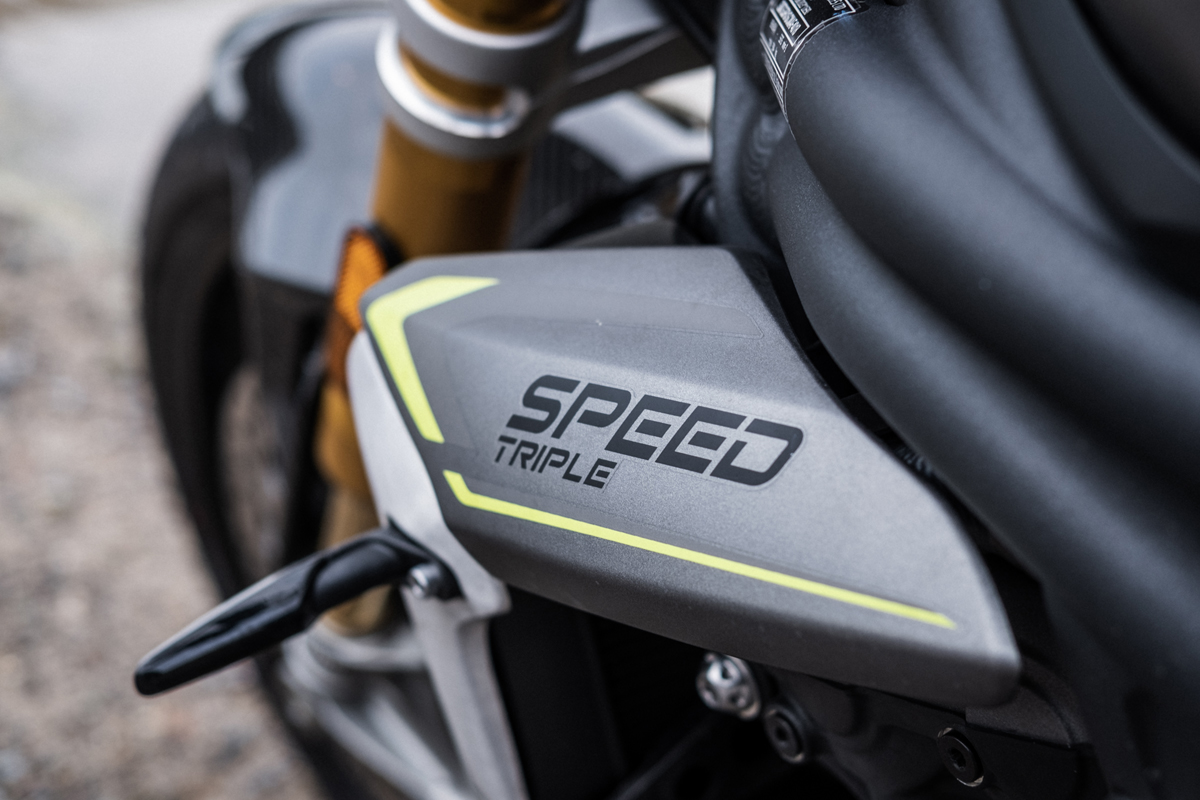
Is it too refined?
It’s noticeably more refined than the outgoing 1050, but that refinement stops short of feeling sanitised. It accelerates so smoothly and turns so precisely that it almost feels boring at first—until you realise the pace you’re riding at. There’s a more advanced electronics package now too, with multiple ABS, traction control and anti-front wheel lift interventions baked in‚ but it never feels intrusive.
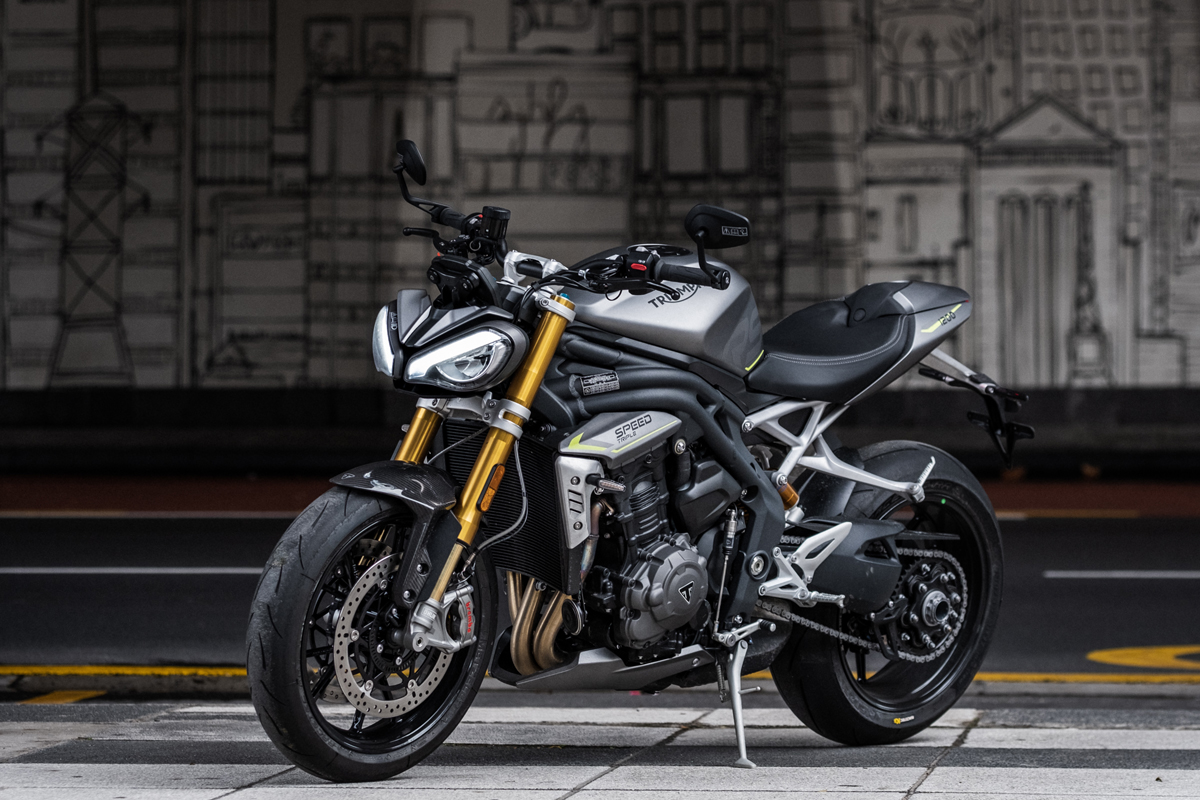
It’s not all peachy though. While the Triumph’s slip-and-assist clutch has a light enough feel and the gear ratios are spot on, the gear lever itself needs a firm foot to shift, and neutral is hard to find. It also has an up-and-down quick-shifter as standard (good), but unless you find the sweet spots, up-shifts can be jarring (bad).
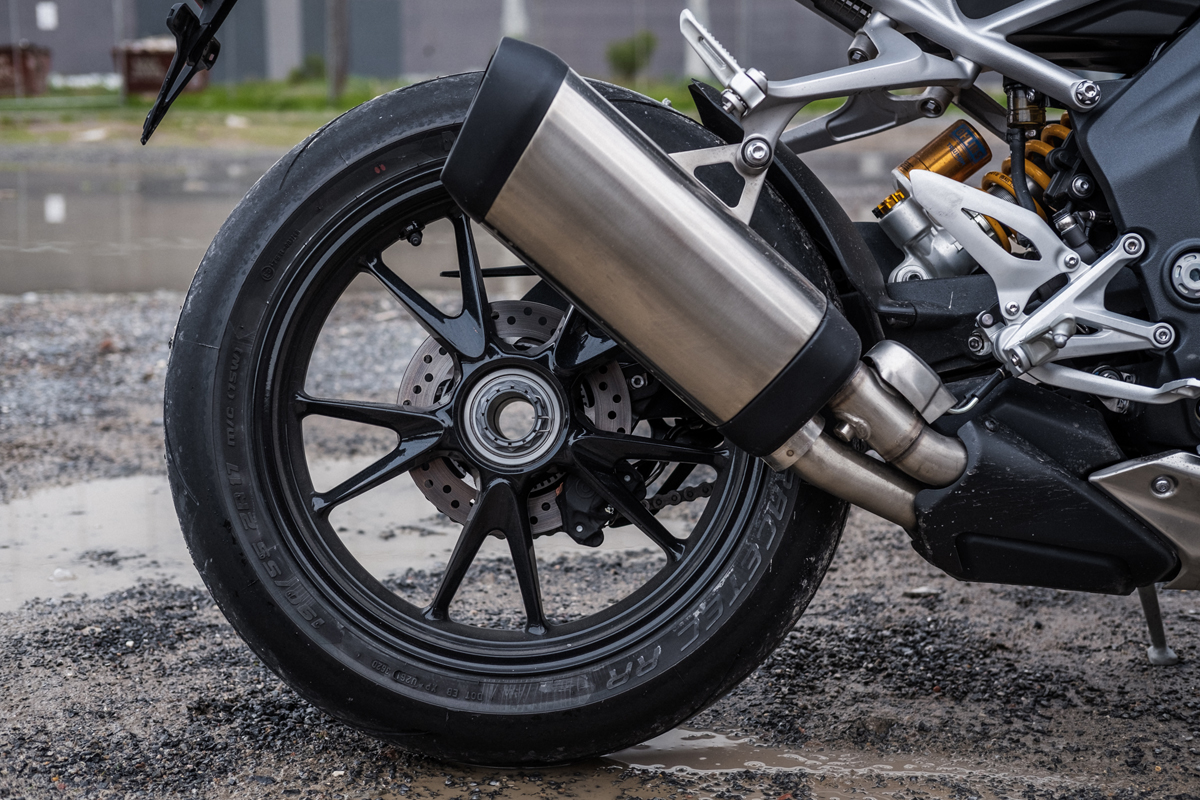
Despite Euro 5 compliance, the Speed Triple’s new motor, intake and exhaust setup all sound spectacular. Sure, the exhaust is a little muted—but the charm of triple cylinder motors has always been how they sound as they spool up, and that hasn’t gone away.
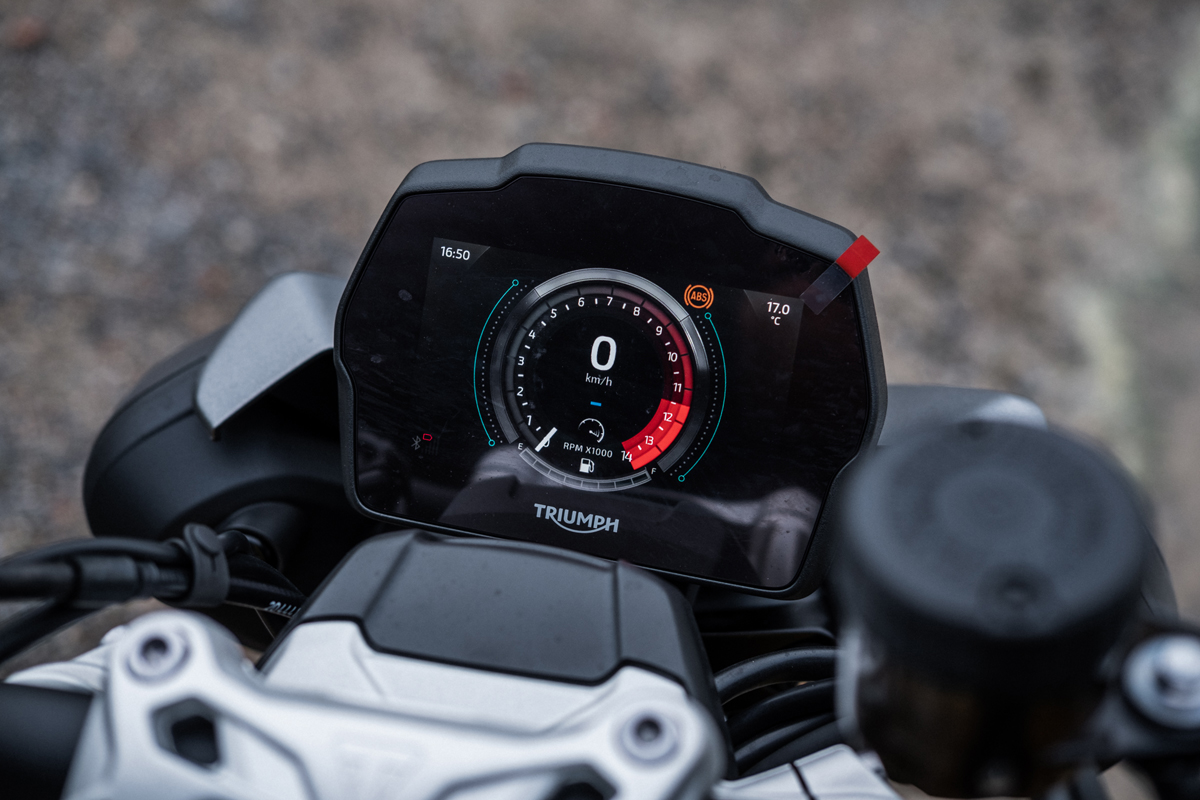
The new TFT is also a massive leap forward for Triumph, and uses a new screen technology that reduces glare, making it super-crisp in any light. It’s a remarkably vivid display, but the actual on-screen design is in desperate need of simplification. Triumph’s designers have quite literally shoved a round peg into a square hole, and the result is wasted space and information that’s so clustered, it’s hard to navigate.
There’s a lot of info available if you dive deeper—but I don’t want to be fiddling with a joystick on the switchgear and trying to decipher menus, when I should be focussing on the road.
How does it handle?
Like it’s on rails. The Speed Triple’s weight loss is tangible, and it feels just as compact as it looks. Through corners, it’s a true point-and-shoot machine.
The revised ergonomics also put your feet a little further back, and give you more leverage with wider bars—so the bike feels most natural when it’s being thrown around. But they also make it a harsher ride, by pushing you into the tank and putting weight on your wrists.
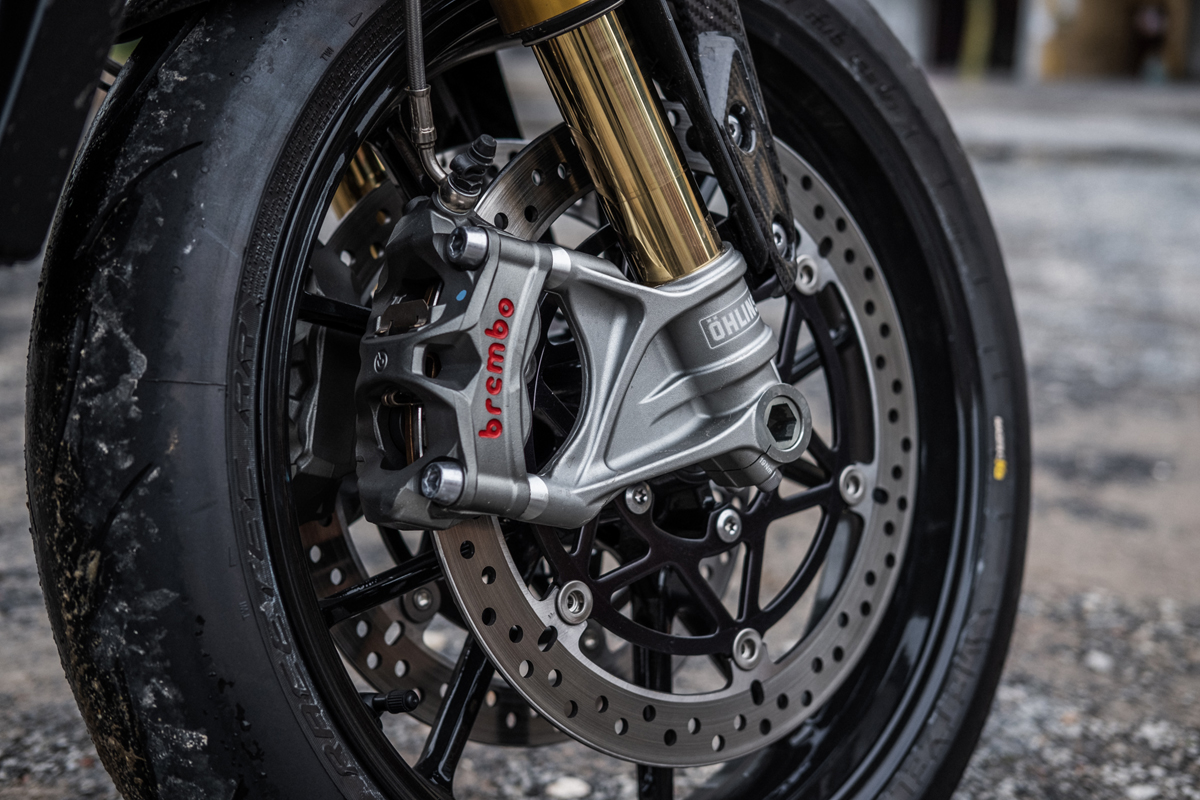
With Brembo Stylema brakes and Metzeler Racetec RR tyres as standard, there’s more than enough grip, feel and stopping power to keep things well under control.
There’s full adjustable Öhlins suspension too, but it’s very stiff out the box. So it’s stellar when the road surface is perfect, but harsh when it’s less so. You might be able to dial it in over time, but my gut says you’ll never quite tune out the harshness. The trade-off is a bike that feels eerily planted when it’s pushed hard through turns, and should excel on the track too.
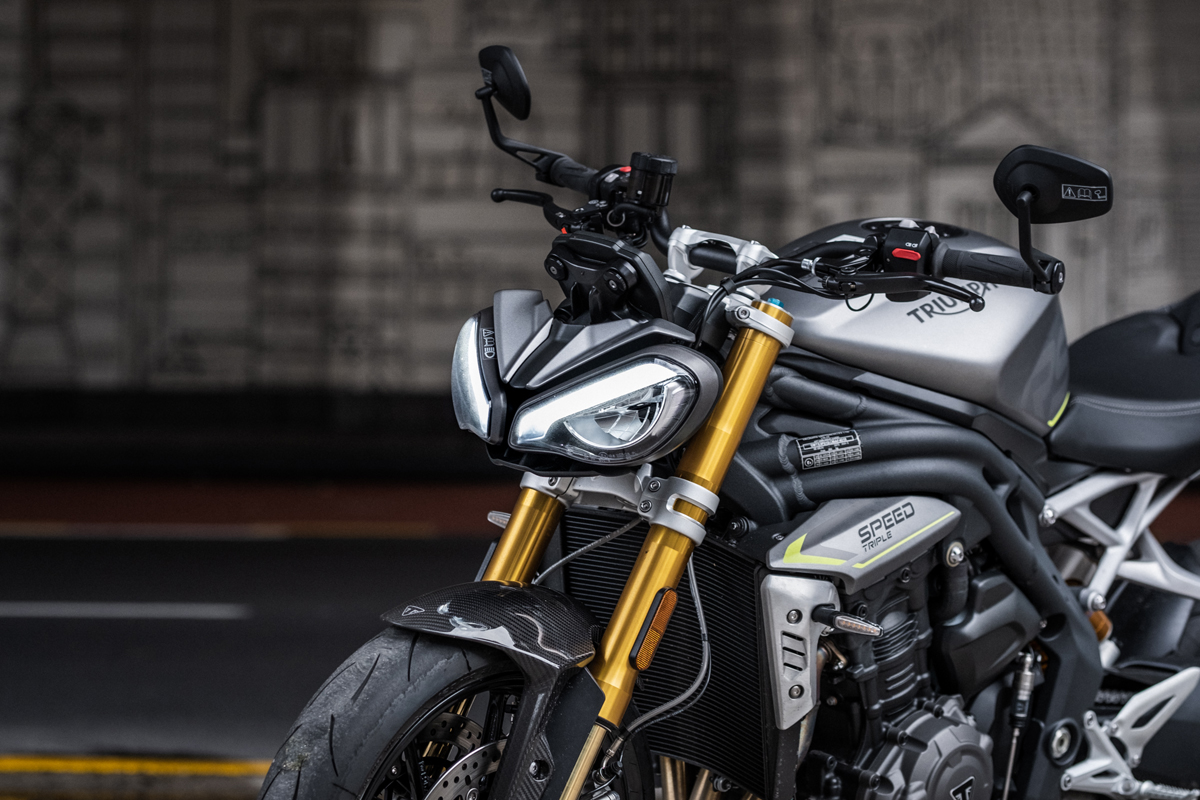
How about those headlights?
Some people hated the twin round headlights on the 1997 Speed Triple, and even more people complained when they became slanted headlights. If you’re designing a new Speed Triple and you’re not upsetting someone, you’re doing it wrong.
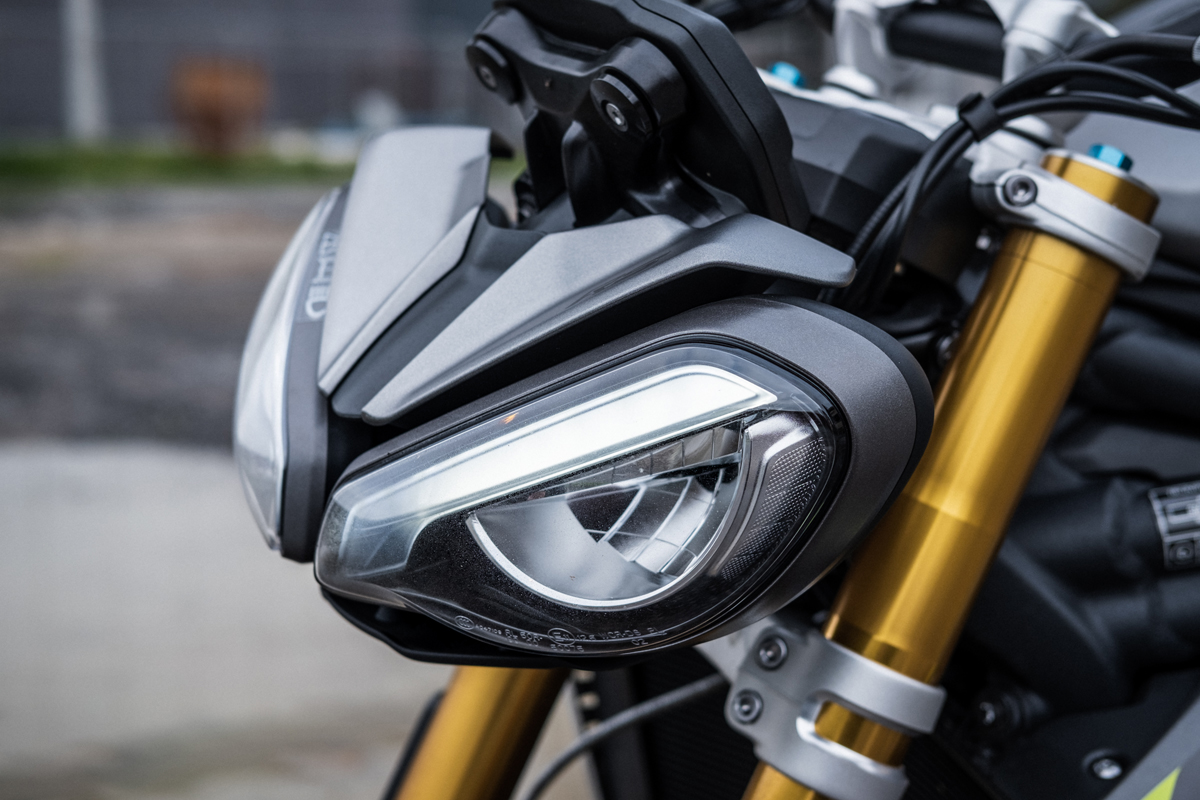
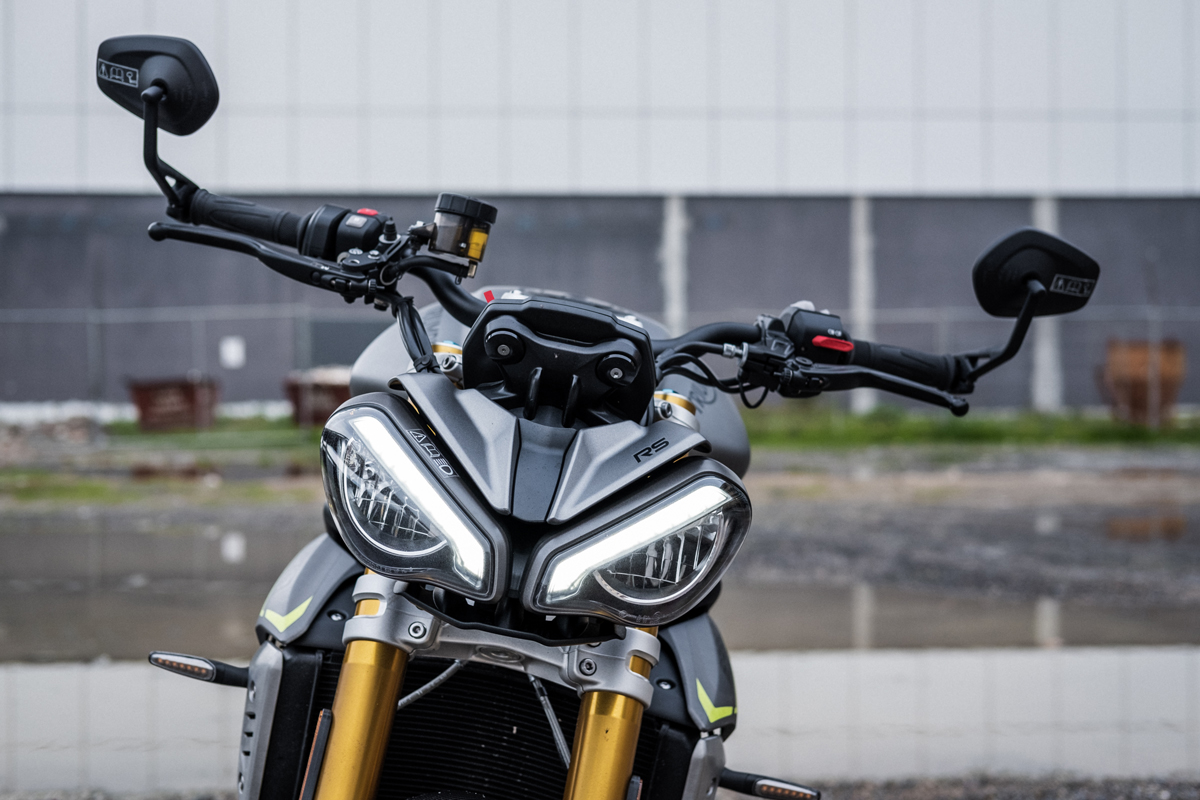
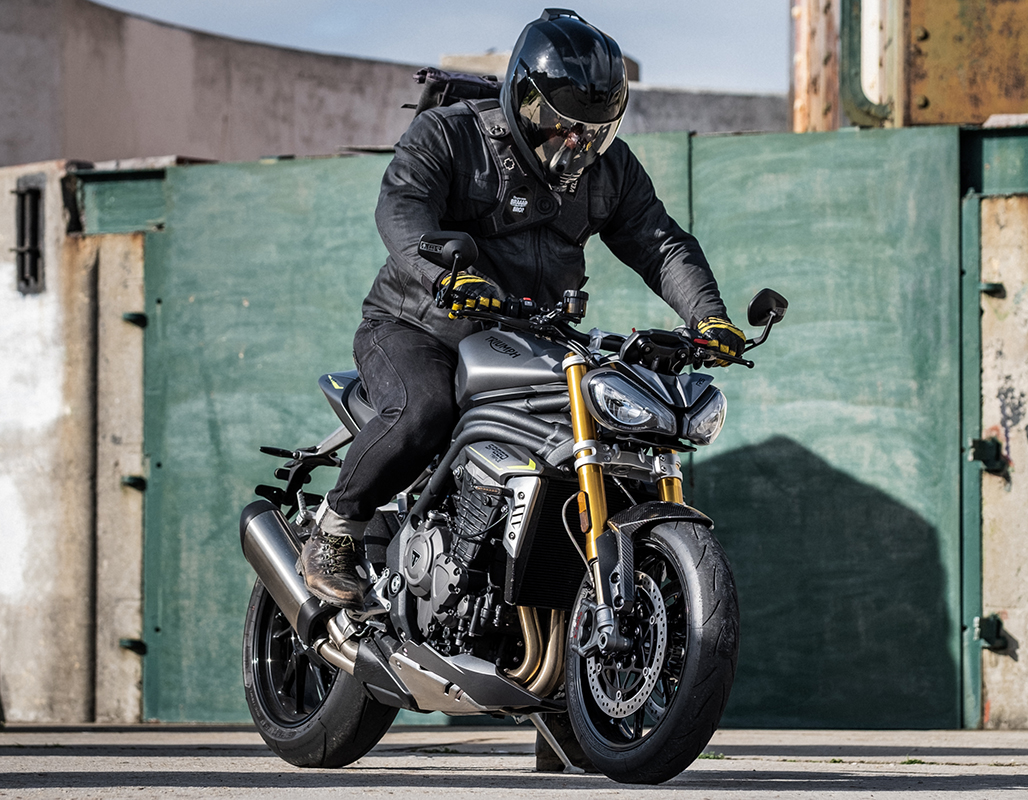
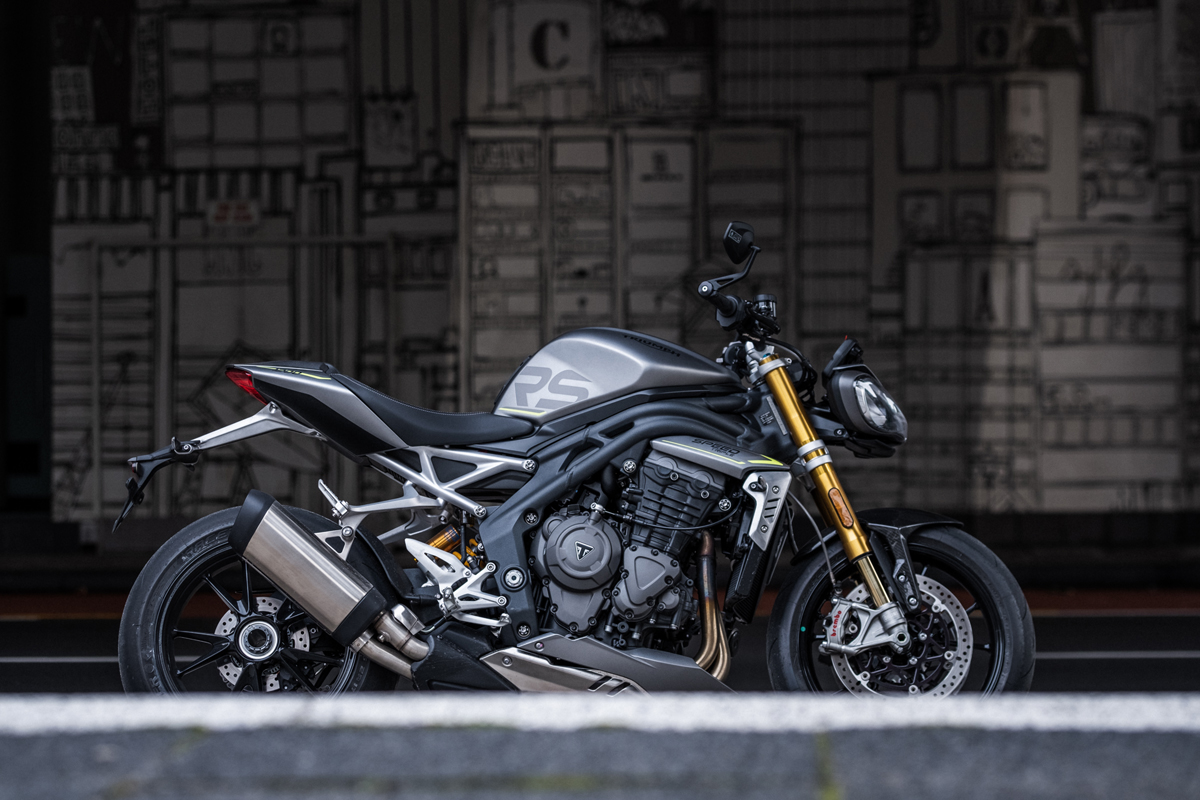
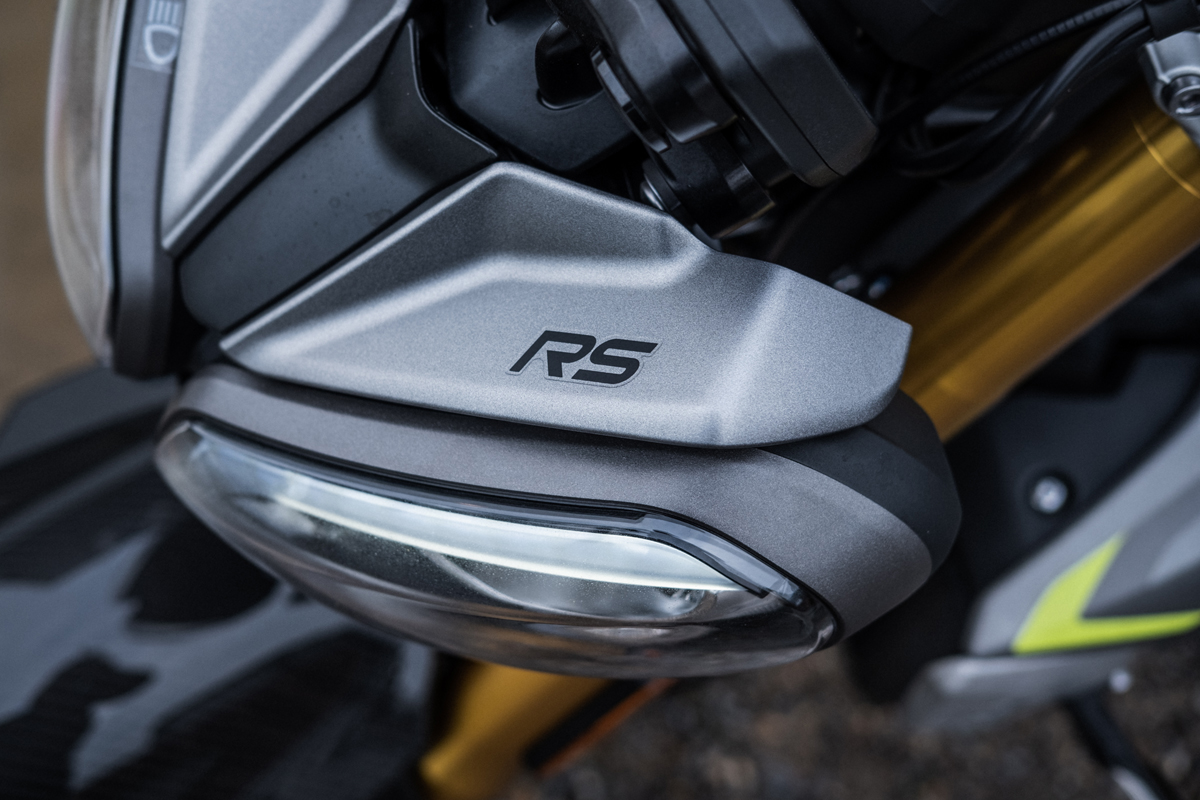
That said, I love everything about the new Speed Triple’s design. I dig the narrower headlight cluster, the slick LED running lights inside, the tiny air duct below them, the sharper angles of the bodywork, and especially the burly side-slung exhaust that harks back to early models.
There’s enough of the line’s DNA to keep it recognisable as a Speed Triple, but it’s way more svelte, and distinctly more aggressive looking.
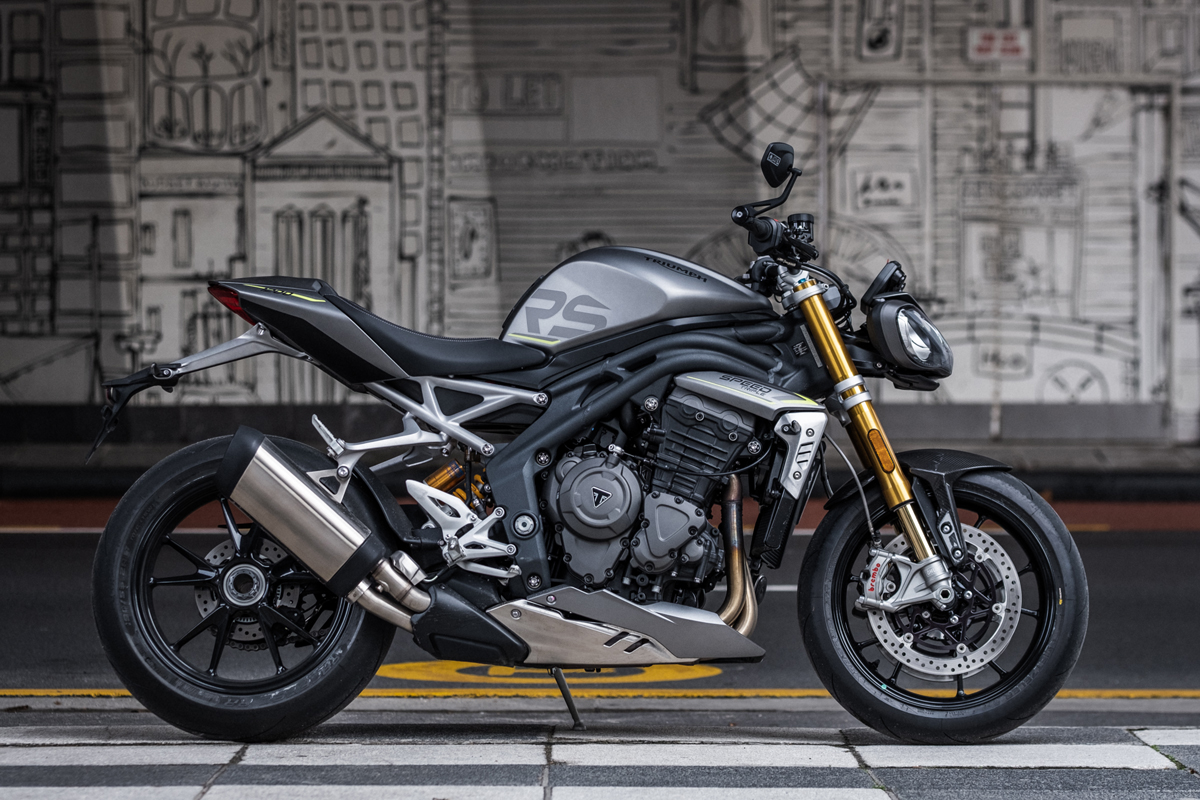
Is it worth jumping to it from the Street Triple?
There’s no clear answer here. Some people pick the Street because, at R180,000 versus the Speed’s R259,000, it offers maximum bang at much less buck. But others pick the Street over the Speed because it’s a lighter, more flickable and more manageable machine… and with the refinements to the Speed’s handling, that gap is much smaller.
Maybe you already own a Street Triple RS and are considering an upgrade, or maybe you’re buying a new bike and aren’t sure what to get. Either way, you’ll have to test ride both bikes side-by-side and figure it out for yourself.
Binder Report: Round 9 – Dutch GP
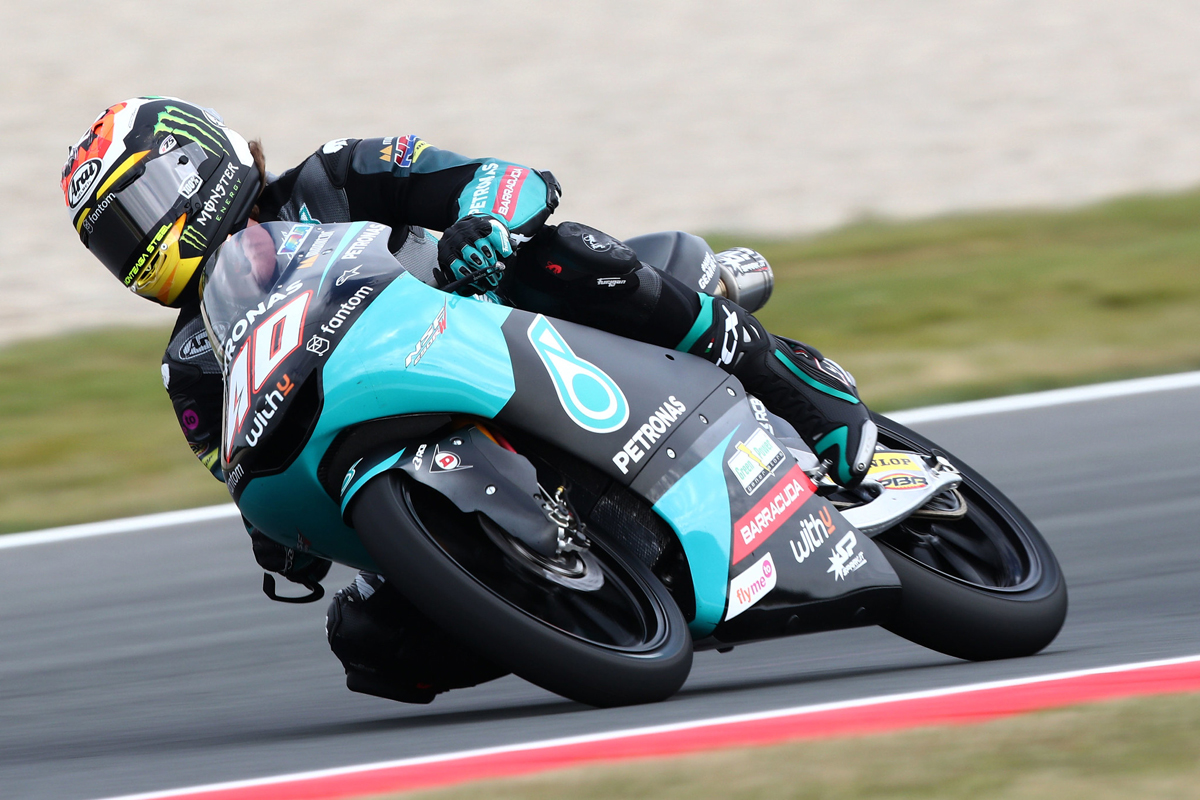
Round nine of the MotoGP calendar was greeted by 18 bends, flicks and dips presented by the TT Circuit Assen this weekend. Last year the pandemic influenced the 2020 MotoGP calendar, which meant that the championship would miss the “cathedral of speed”. Thankfully, we have returned to the rapid kinks and curves of the TT Circuit, and boy was it exciting.
Darryn Binder
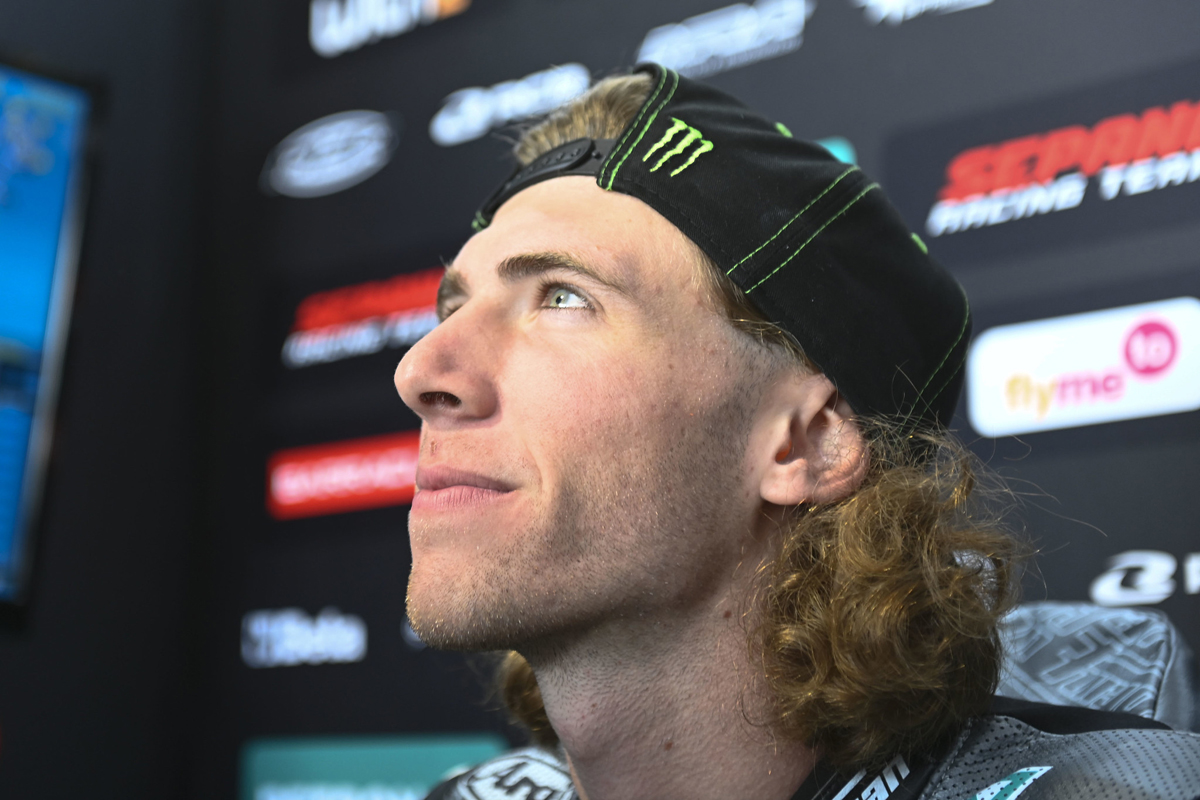
After a hair raising crash in FP3 on turn 7, Darryn still managed to remount and place himself in Q2 for Saturday’s qualifying. Opting to wait a few moments before getting his first run underway, Darryn kept himself at the top end of the timesheets and posted the eighth fastest time.
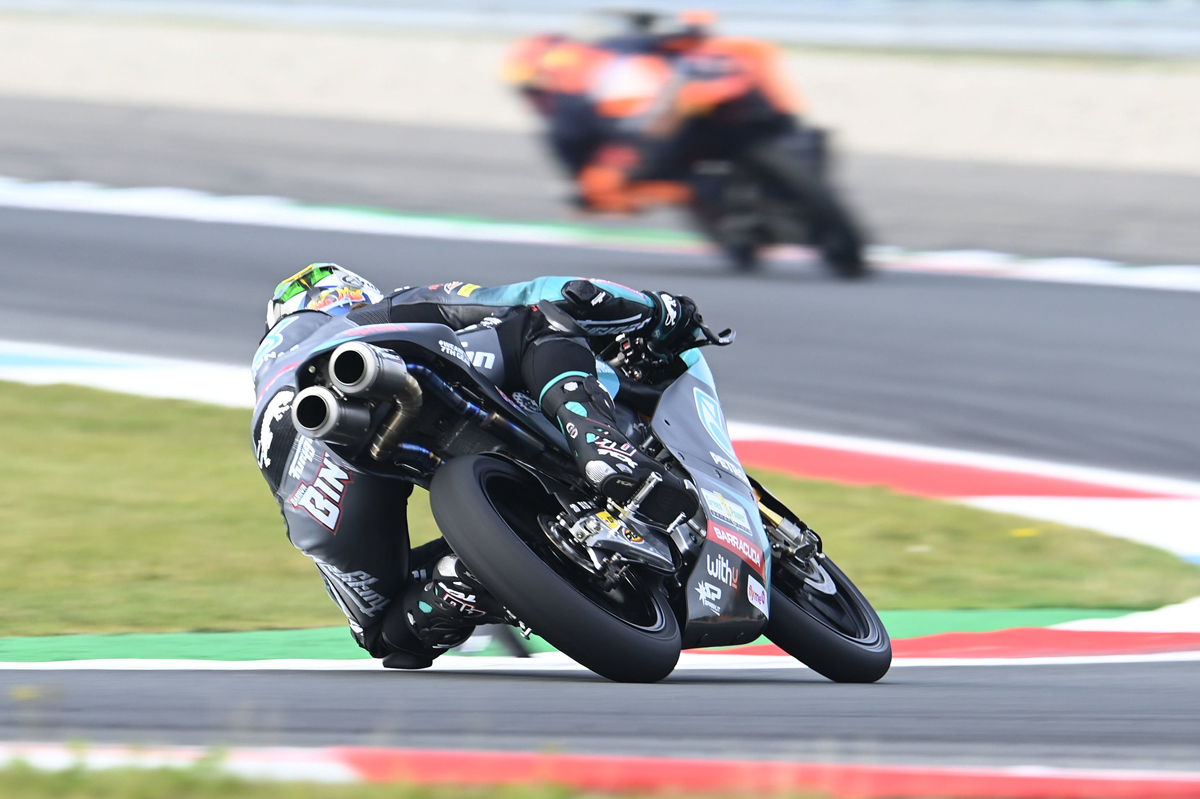
Darryn made a good start, maintained a top ten run and steadily made his way to the front line where the action was about to begin. An epic battle for the podium places took place over the course of the 22-lap race, which Darryn kept himself a part of.
With just three laps remaining, Darryn dropped back into seventh after running wide into turn 15, but an impressive final lap saw him cross the line fourth. Unfortunately, a penalty for exceeding track limits on the last lap demoted him three positions—another unfair penalty this weekend. Darryn currently sits sixth in the rider standings with 69 points.
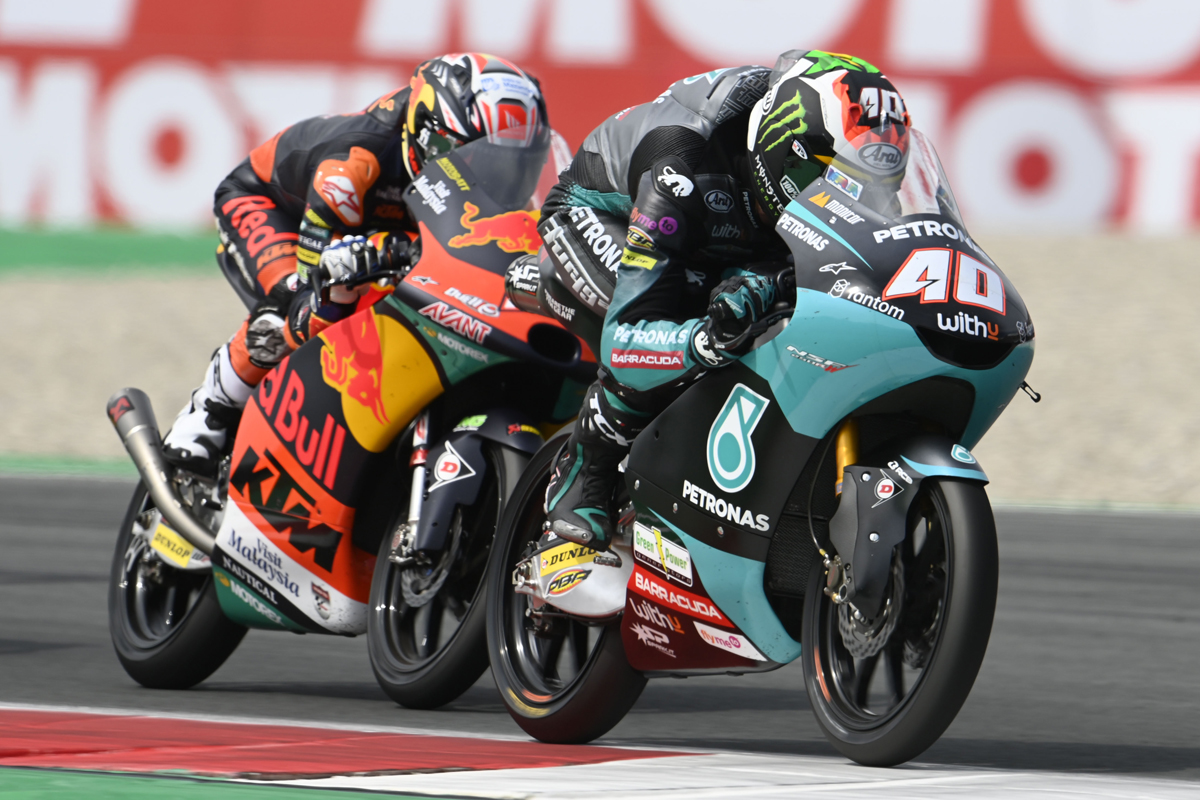
DB: “Warm Up was good this morning and I felt ready for the race. It started off really well and I was in the front group fighting for the podium all race. I was feeling really comfortable but had a moment going through Turn 15 late on, which made me lose some positions. I fought as hard as I could in the final two laps to try to get back to the podium. I managed to cross the line fourth but unfortunately, after exceeding track limits on the final lap, they dropped me three places. There’s nothing I can do, I tried my best and I’m going into the summer break feeling positive.”
Brad Binder
Brad rolled into this weekend a ‘virgin’ to the TT Circuit Assen on his RC16, he fought throughout the short Q1 session but our fellow South African was denied his fastest lap when Marc Marquez’s crash drew out the yellow flags and forced him to slow. Sadly, this meant Brad would start from 21st on the grid on Sunday.
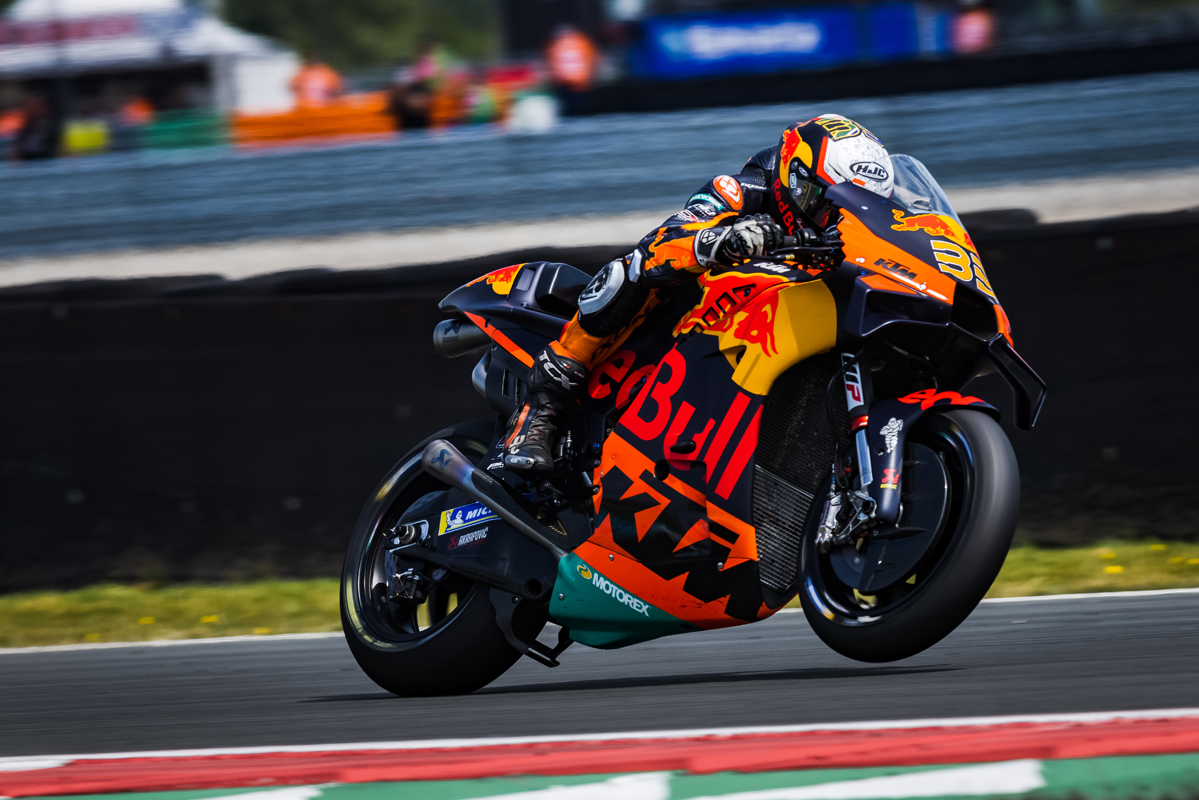
Sunday saw Binder start the 26-lap 118 km race from the back of the grid—Brad had to bustle back from 21st. After a slow start to the race, Brad slowly climbed his way through the pack and found himself battling against Alex Marquez’s and Danilo Petrucci for 14th. When the checkered flag was raised, Binder, who had made reasonable progress from the final row, took 12th.
Finishing 12th in Assen places Brad Binder in ninth overall with 60 points in the championship.
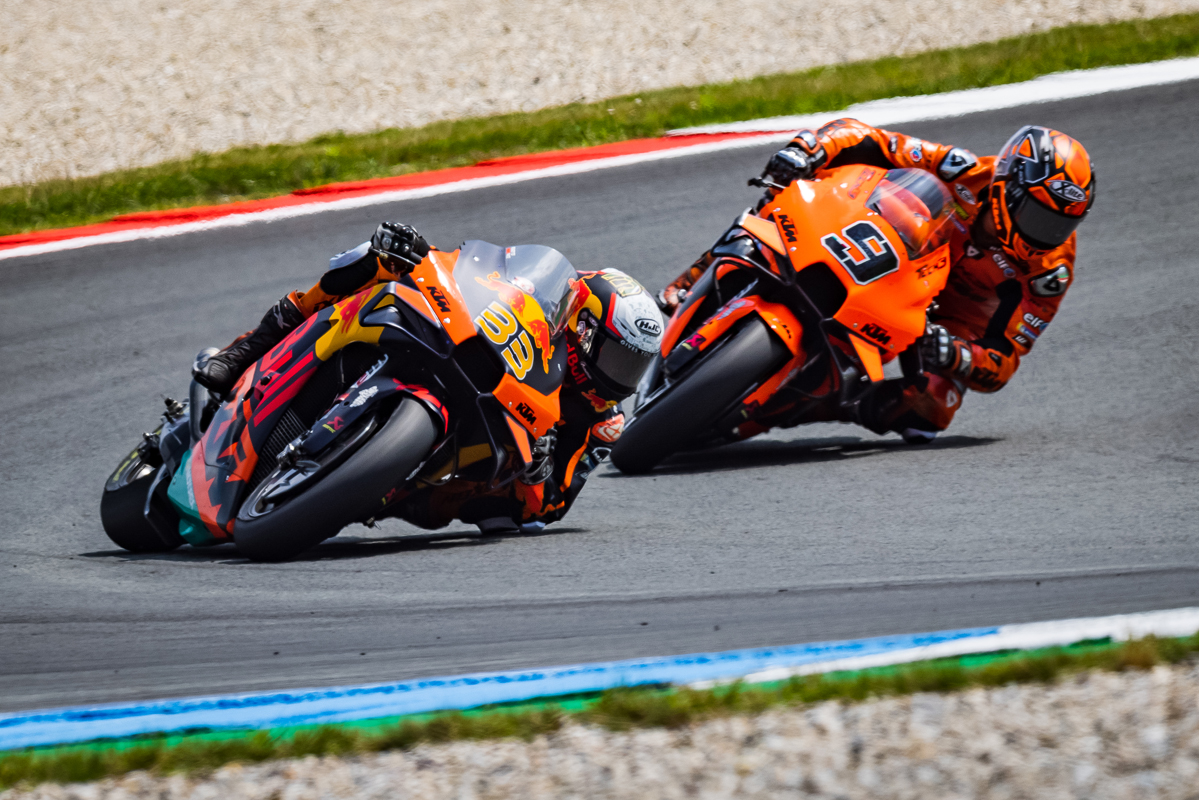
BB: “Difficult race for me. Starting in 21st and trying to pass the guys in the beginning, and then I clearly didn’t have the speed in the first stages of the race. As the laps went down I started to improve my riding at different points on the track and went quicker. At the end I could match my quickest time on the last lap. I’m glad I made an improvement, but I lost too much time early on. It was an up-and-down weekend and I got a bit lost but I gave ‘my all’ in the race. I was a bit disappointed with 12th but we’ll re-group and come back stronger in the next phase of the season.”
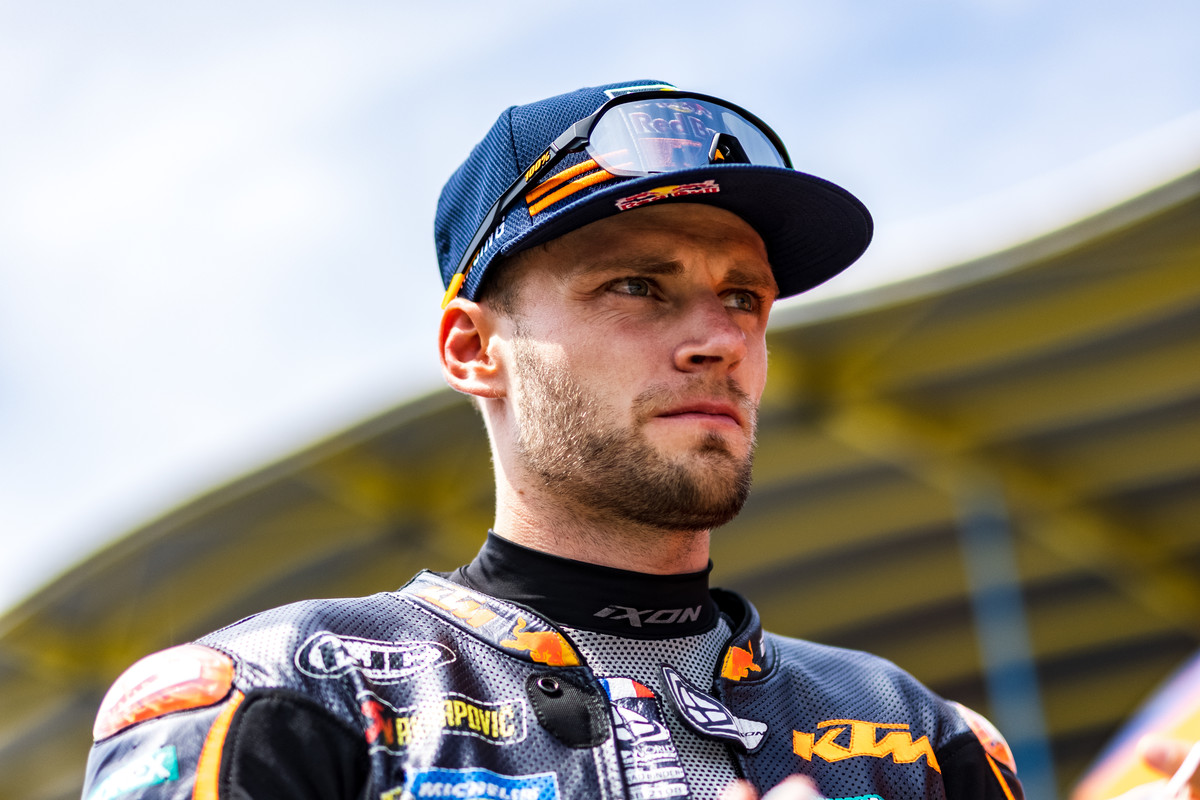
Riders will now enjoy a near six-week break before action resumes with two back-to-back races in Austria, the first of which being the Grand Prix of Styria (6-8 August).
Stylmartin Boots Now Available at World Of Motorcycles
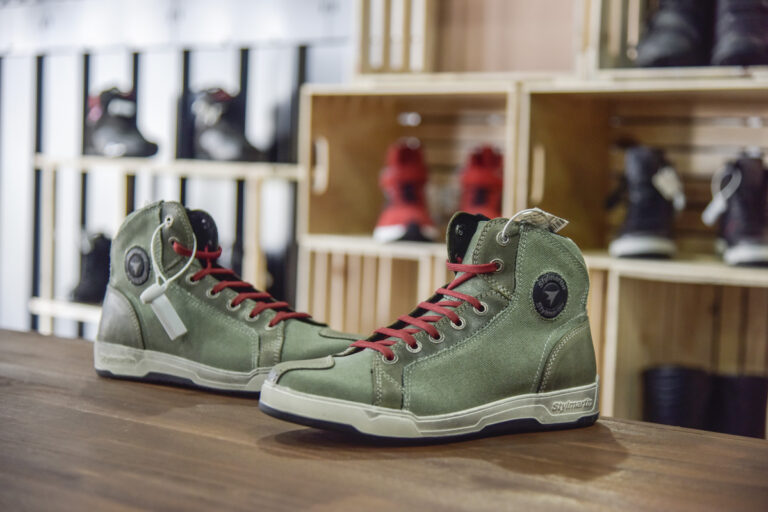
It is very exciting for us to announce that World Of Motorcycles in Centurion is now stocking the internationally renowned Stylmartin boot range.
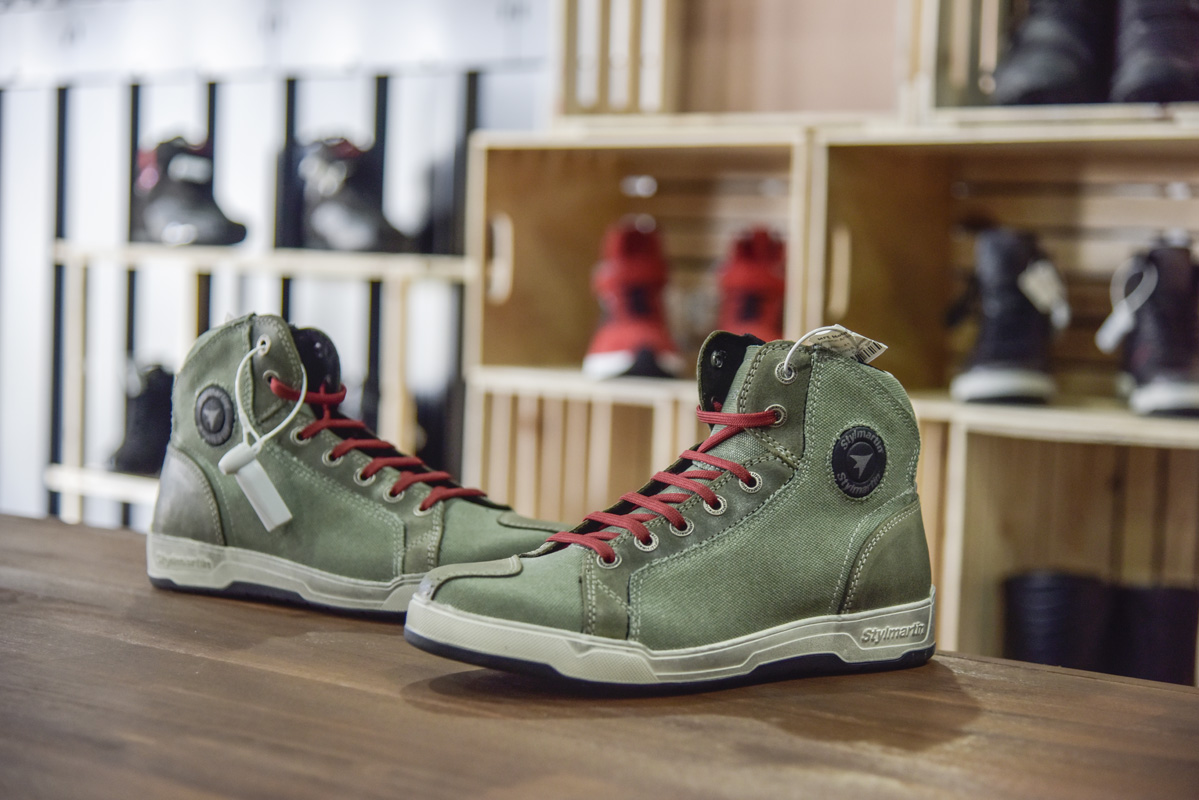
Stylmartin is one of the world’s most ambitious companies in the field of motorcycle footwear. The brand owes its rebirth to Antis, a company founded in 1970 in the heart of the Montebelluna sports footwear district. Antonio Binotto, the founder of the company, acquired the historic Stylmartin trademark in 2007, updating it and bringing it back to life.
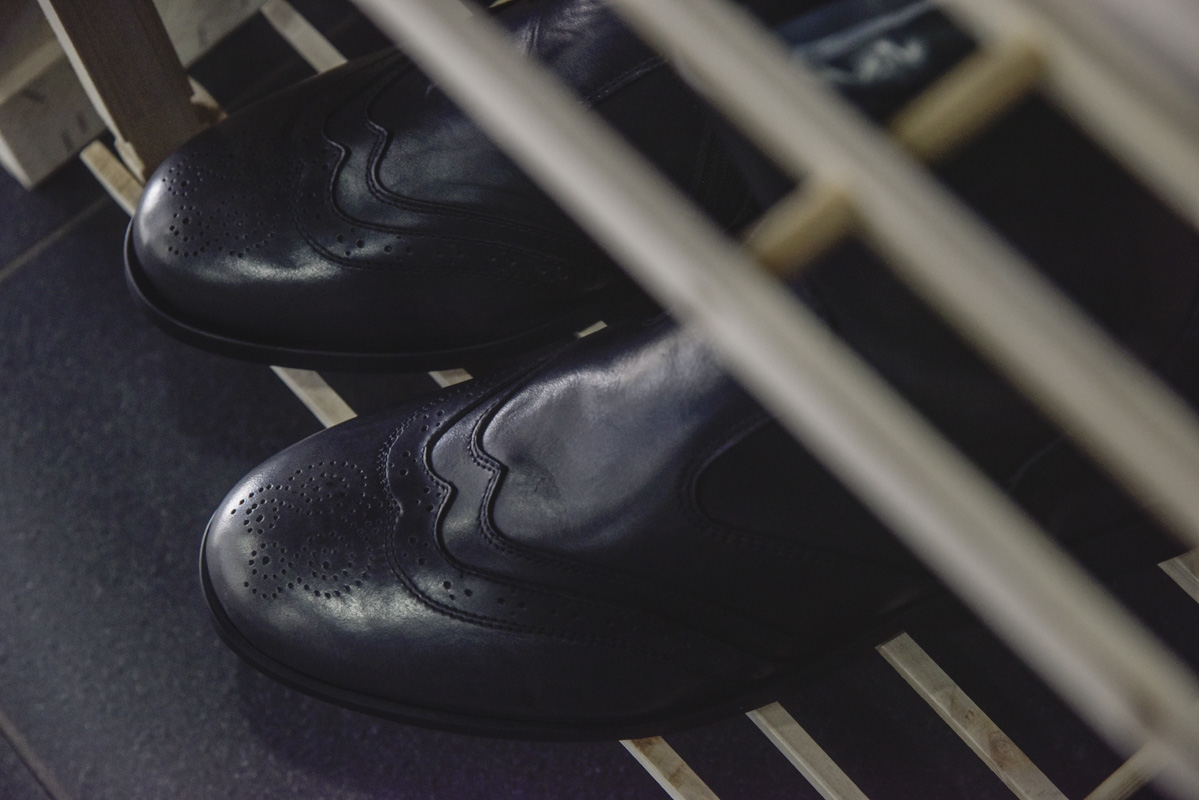
History played a decisive role in Stylmartin’s destiny, which is linked to the epic deeds of the U.S. riders of the 1990s, namely, the talented Eddie Lawson and John Kocinski, who have become legends. Champions such as Angel Nieto and Jorge Aspar Martinez contributed to the success of the brand, which, over time, has become the symbol of a passion for motorcycling. Reflecting on the past and on the brand’s values to find a new balance between the past, present and future. A renewed blend of heritage and contemporary style to pave the way for the future.
Pop into World Of Motorcycles in Centurion, and visit the dedicated Stylmartin lounge area which is situated on the second floor next to Indian Motorcycle. They stock a full range of both men and ladies footwear.
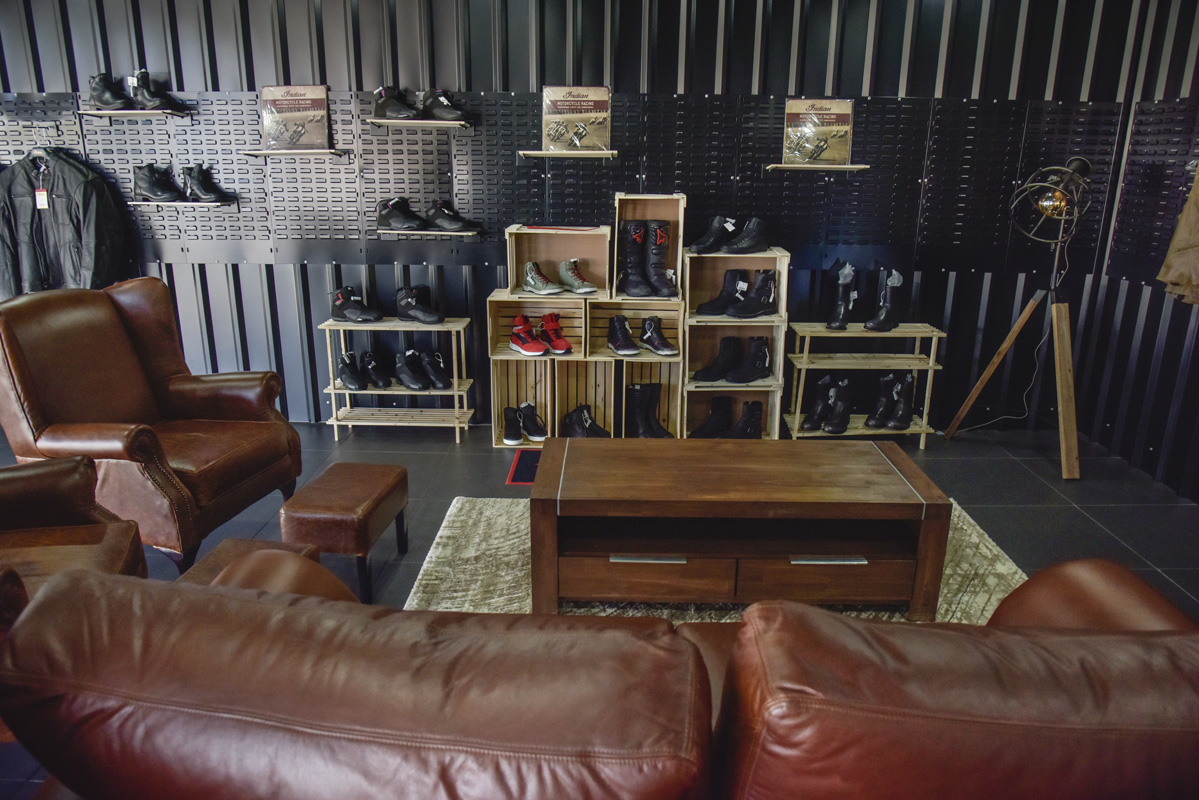
Stylmartin range that’s currently available at World Of Motorcycles:
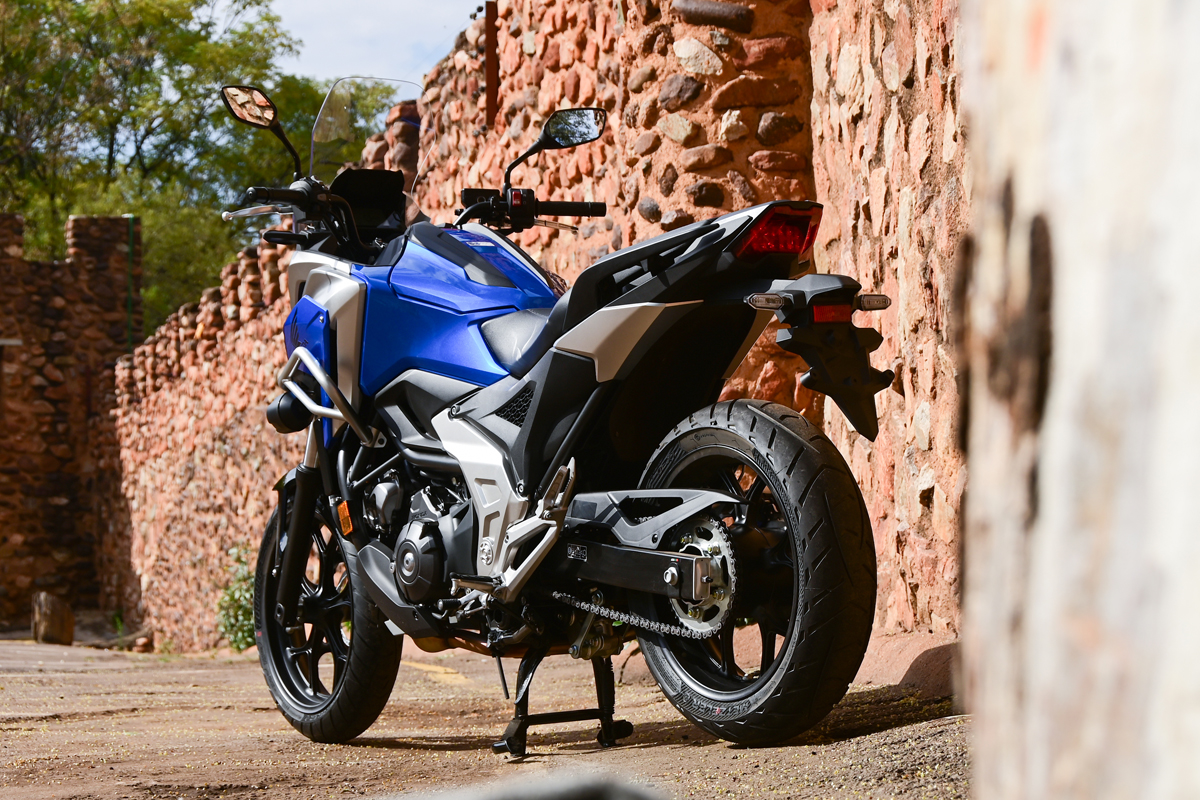
More Than a Commuter: Riding the 2021 Honda NC750X
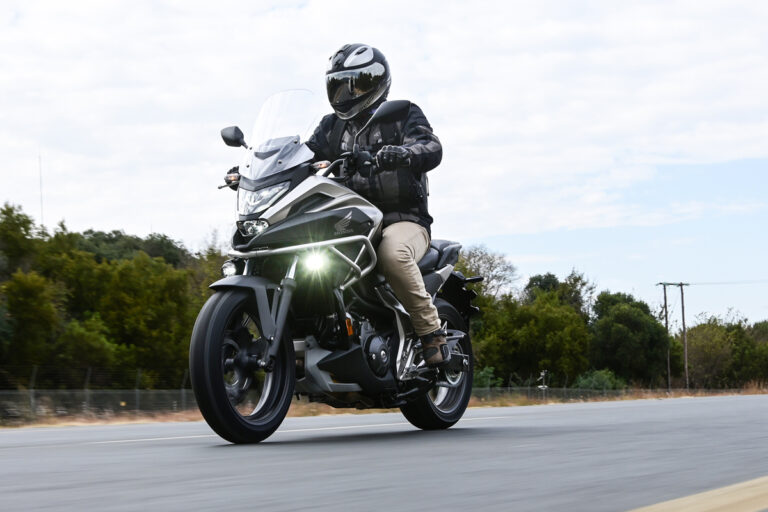
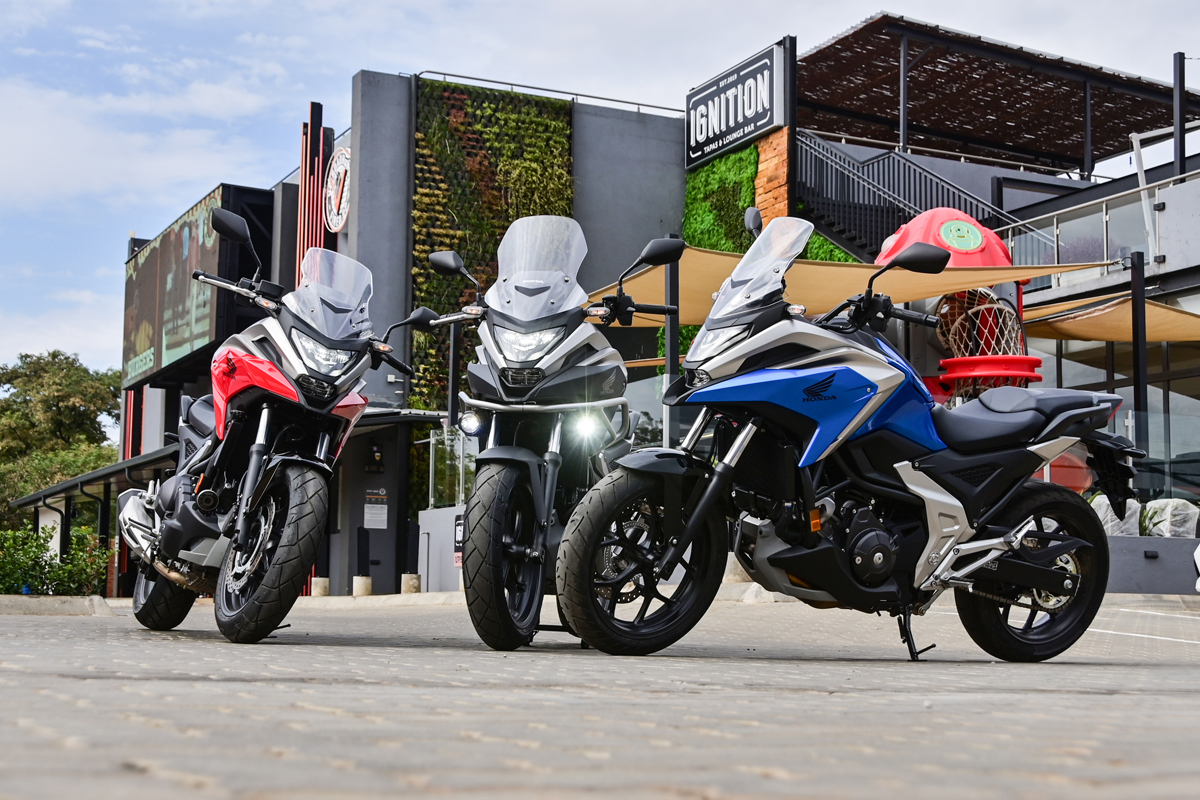
Practicality, comfort, frugality and handling—those were the original ingredients that made the Honda NC recipe so great. The NC750X’s all-round appeal and constant refreshes has made it a compelling option and given it an endearing appeal. And it’s helped Honda establish a dominance in the middle-weight commuting and touring segment.
Honda have stuck to that original recipe for 2021, and focused on improving what the NC750X already does so well. The latest evolution gets more pep in its step, a raised redline, new electronic riding modes and a stunning new design. Overall, it’s a more polished package.
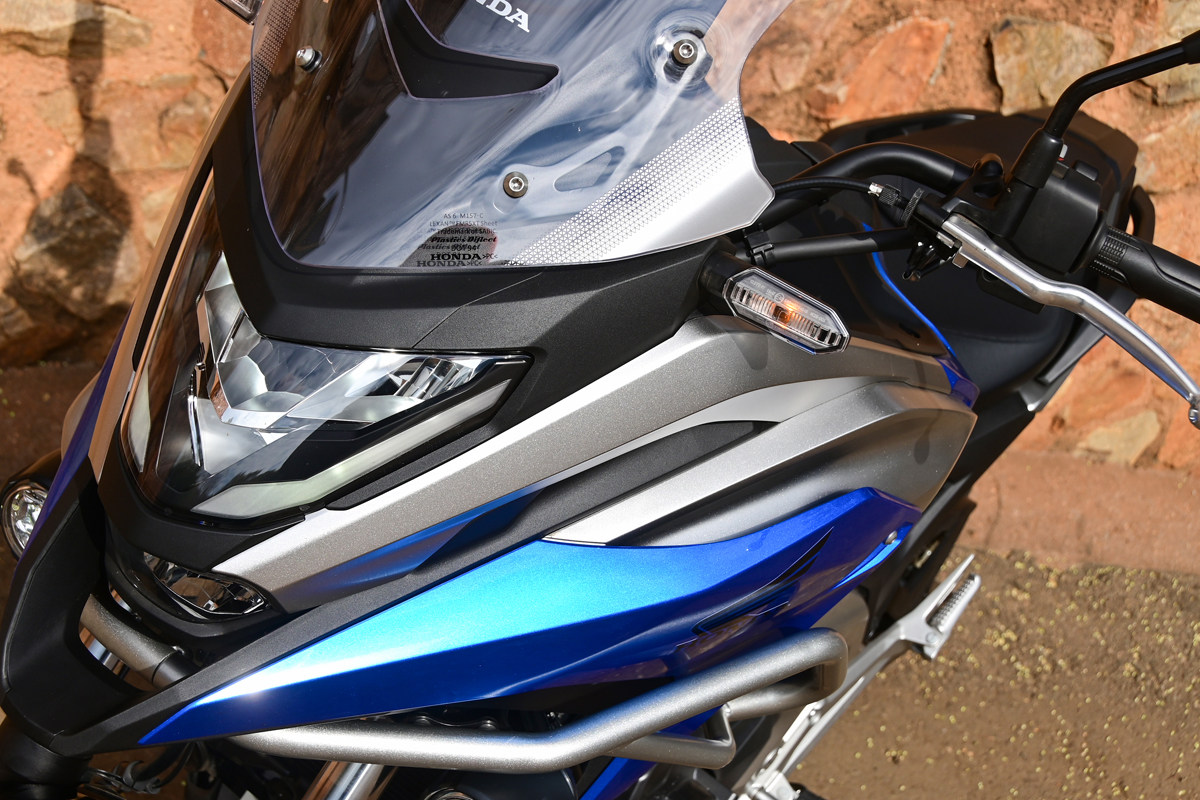
Honda South Africa couldn’t keep the latest NC to themselves any longer, so they invited us to the ADA training centre in Hartbeespoort. After a quick introduction, we got to gawk at Honda’s new creation up close, and ride a few loops around Harties’ beautiful surrounds.
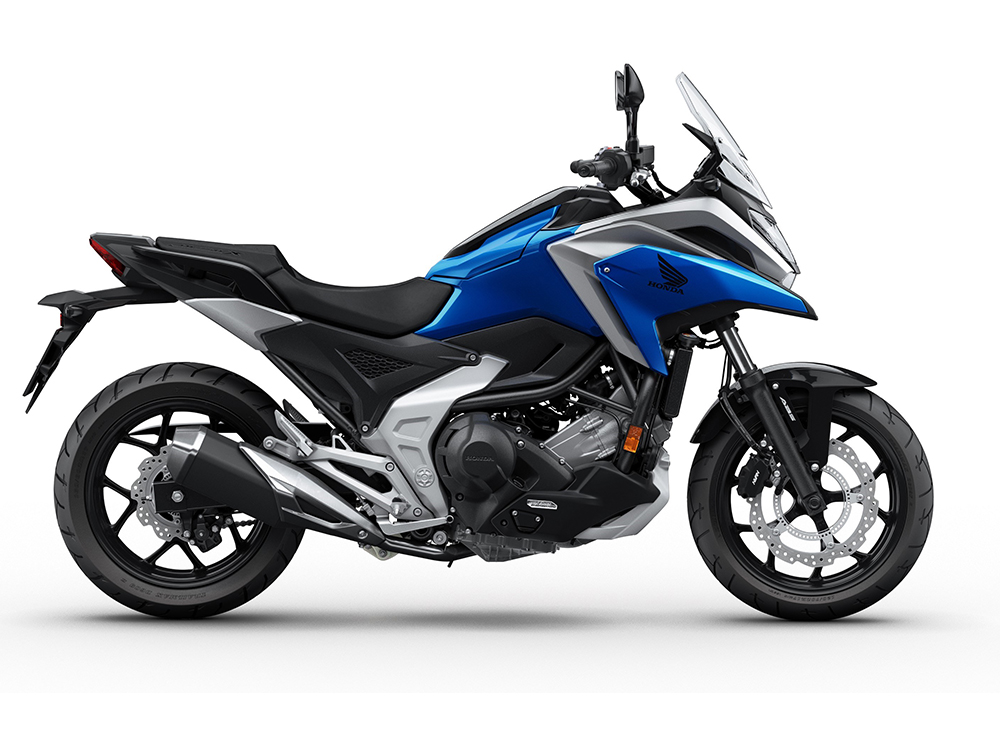
Laying eyes on the NC750X’s new sculpted bodywork, I can’t help but notice shades of Honda’s VFR800X Crossrunner. The sharper and wider stance doesn’t just give the latest NC more presence, but a more mature appearance too. But don’t let its curves fool you—the NC has shed six kilograms, and now has a larger storage compartment, a 30 mm lower seat height and a spiffy new LCD dash.
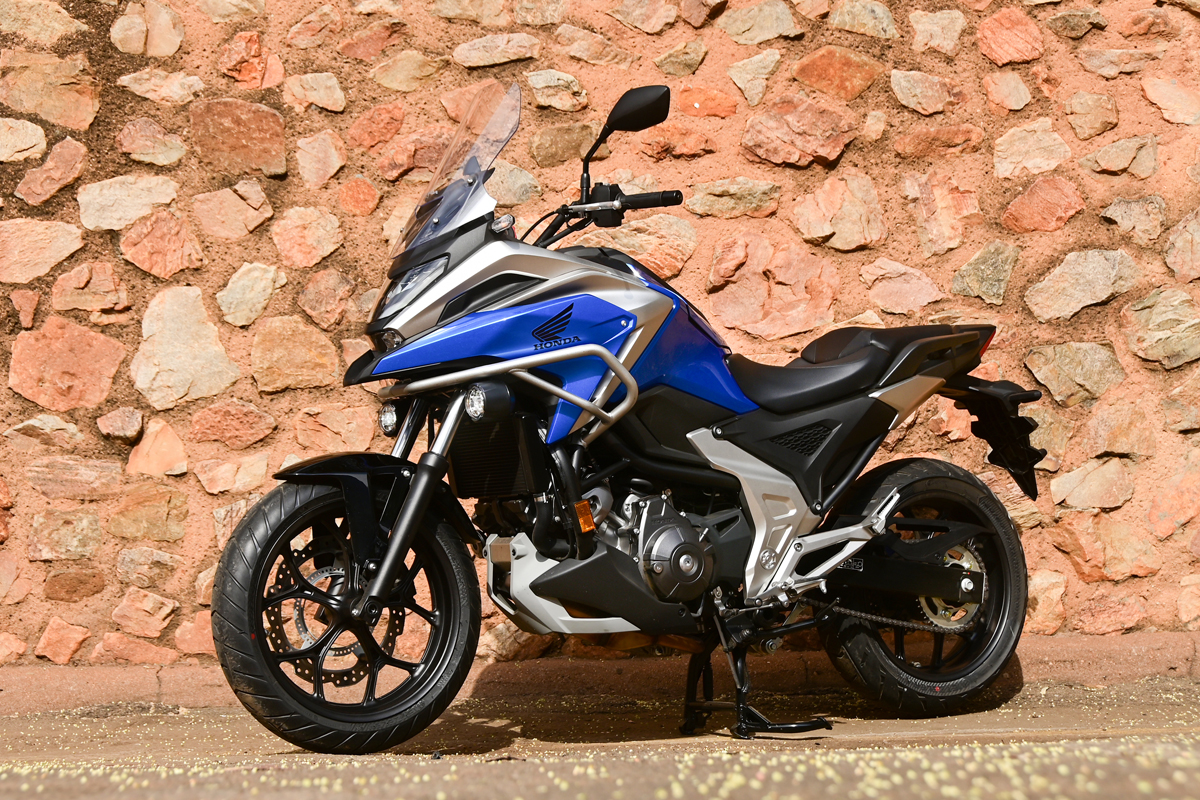
We had access to both the manual and DCT models on the day, as well as two kitted-out bikes to show off some of Honda’s must-have accessories. I don’t think crash bars, fog lights and a touring screen are a necessity on the NC, but they sure do complement the look of the bike.
Onboard, the mature appearance is matched by an equally mature cockpit and ride. The LCD is well laid out and easy to read, and the bulky switchgear makes it easy to change riding modes on the fly. But although the LCD works just fine, it’s a bit sad not to see a smaller Africa Twin-style TFT dash.
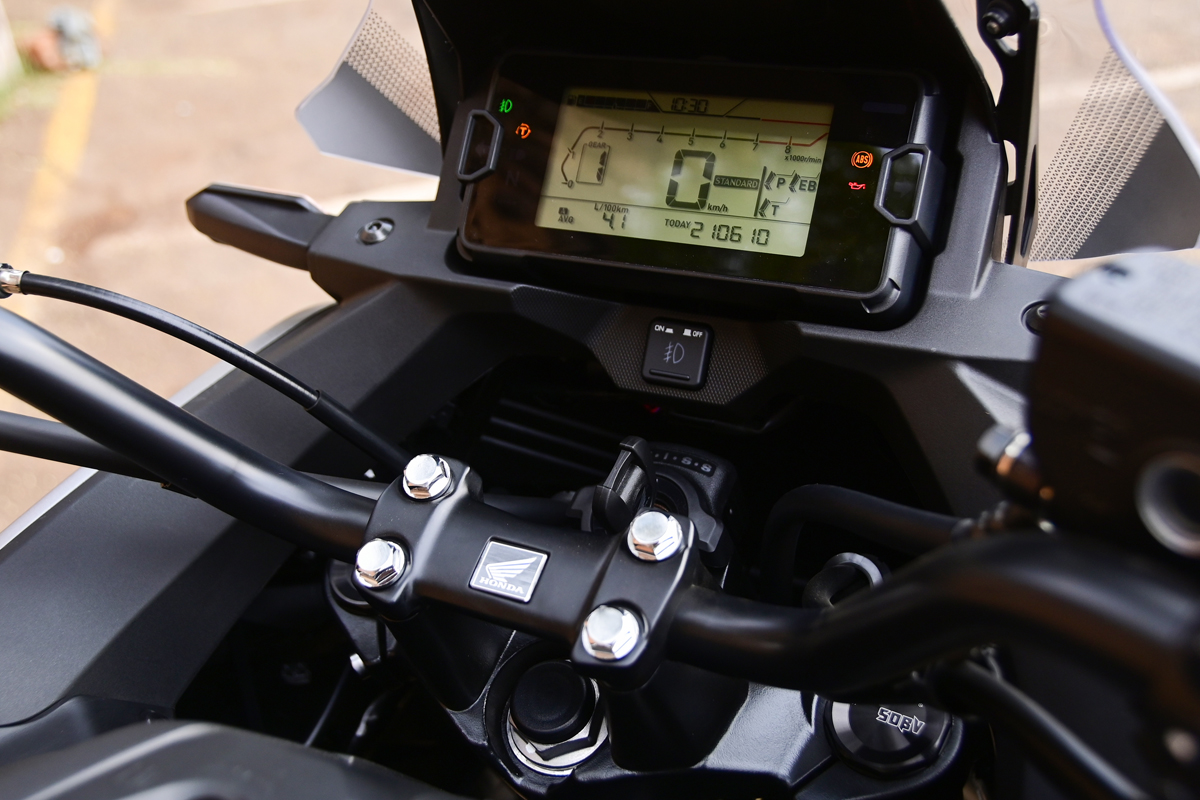
The NC750X’s parallel-twin motor has a little more clout now too. Peak power has been increased by 4 hp to 58 hp at 6,750 rpm, with max torque still cruising in at 69 Nm at 4,750 rpm. These figures aren’t much of an improvement, but Honda have shortened the first three gear ratios to improve the NC’s get up and go. For the more open stuff, the gearing has been lengthened from fourth to sixth—increasing fuel efficiency where it matters most.
On the road, unless you drag race it against its predecessor, you’ll hardly feel that increase. So if you’re measuring it on the fun meter, it lands just shy of a meagre grin.
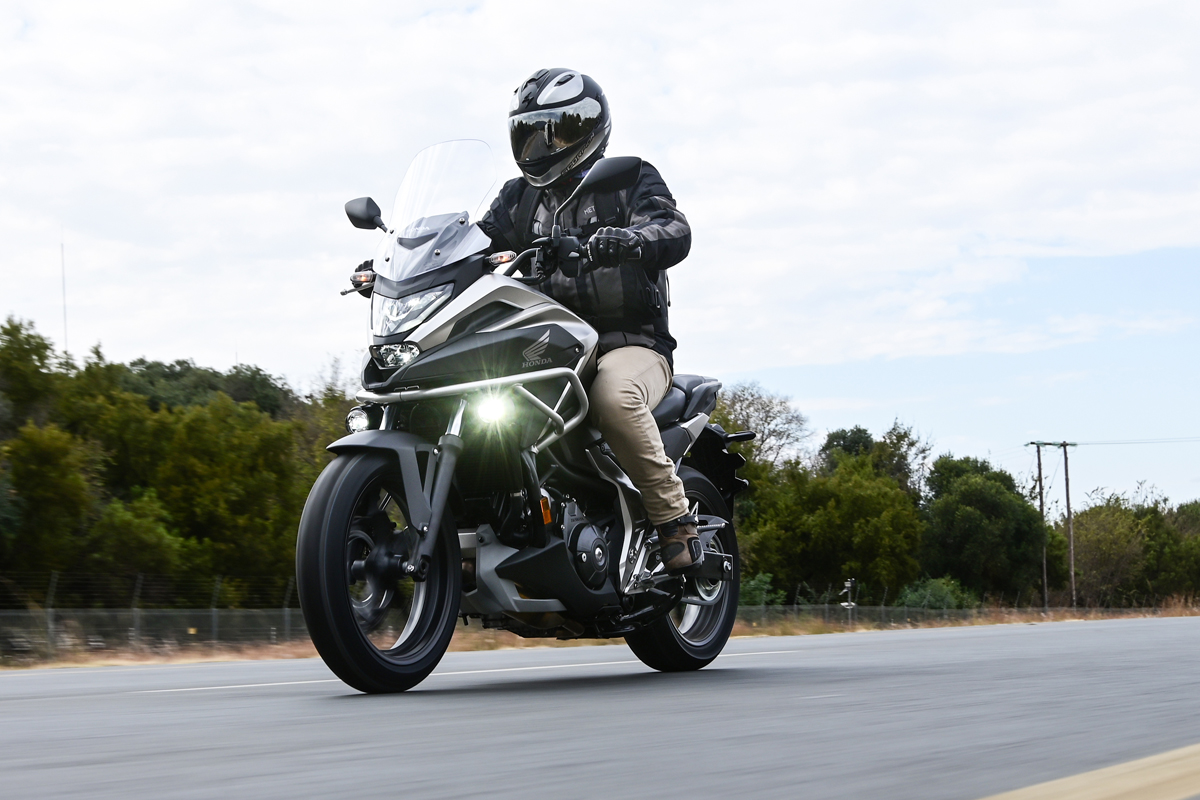
The DCT NC750X has four riding modes, which in turn change the shifting patterns. Automatic modes include ‘Rain,’ ‘Standard’ and ‘Sport,’ while the manual mode lets you shift gears yourself, using paddle-style triggers on the left switchgear. On the go, the NC’s gearbox made smooth changes right across the board. It’s seamless with even a moderate amount of throttle, never needing a blip to help.
It’s only when you begin to ride aggressively that the gearbox changes a bit slower than you’d like. It also doesn’t allow you to ride too economically in manual mode, only letting you shift above 3,500 rpm. Other than that, I can understand why sixty per cent of NC owners prefer the DCT gearbox over the manual version.
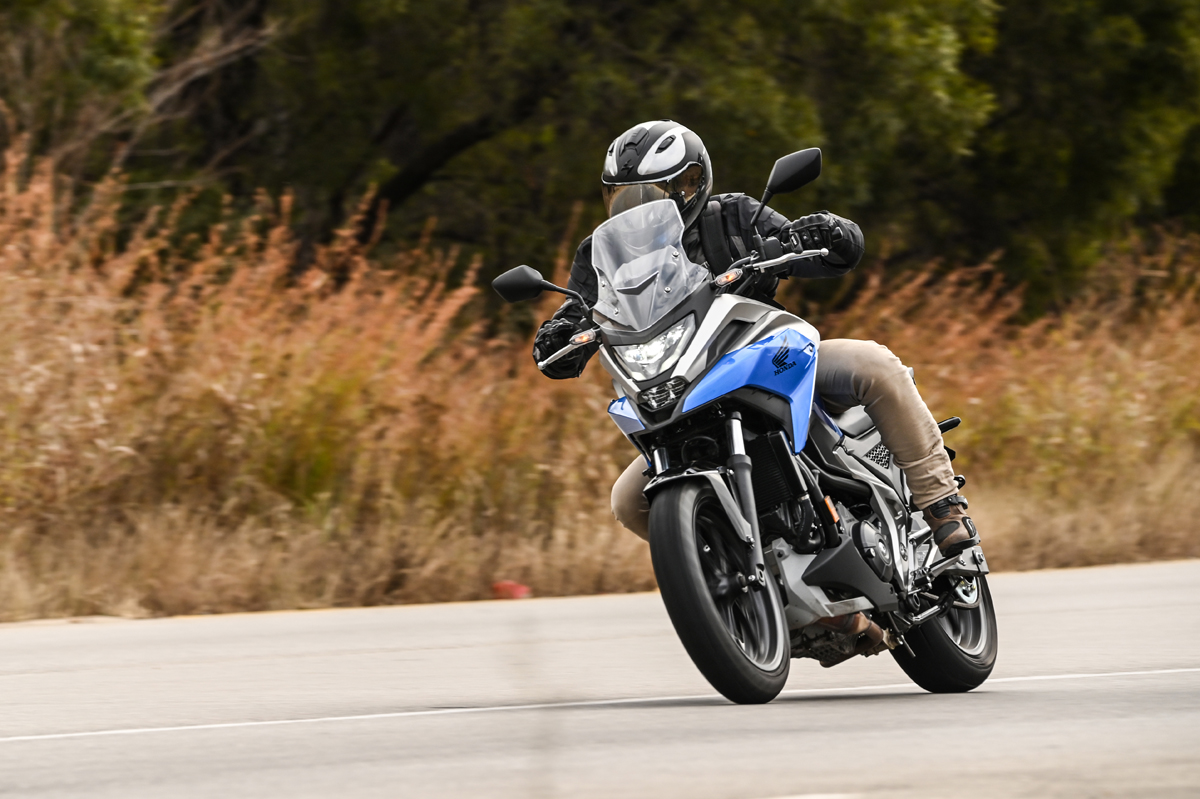
The manual (or ‘normal’) NC750X is just as smooth, if not smoother, if you know how to balance your rpms with smooth clutching. Speaking of the clutch, Honda have fitted a new slipper clutch, which reduces twenty per cent of the lever load. It won’t completely put the DCT version out of business, but it does give you an extra reason to consider manual.
You’d never say that the NC750X was due for an upgrade in the riding comfort or ergonomics department, with its comfortable upright riding position and high viewpoint for visibility. Well, Honda disagree—they’ve lowered the seat height by decreasing front and rear suspension travel by 30 mm. That means the NC should now be accessible to a wider range of riders.
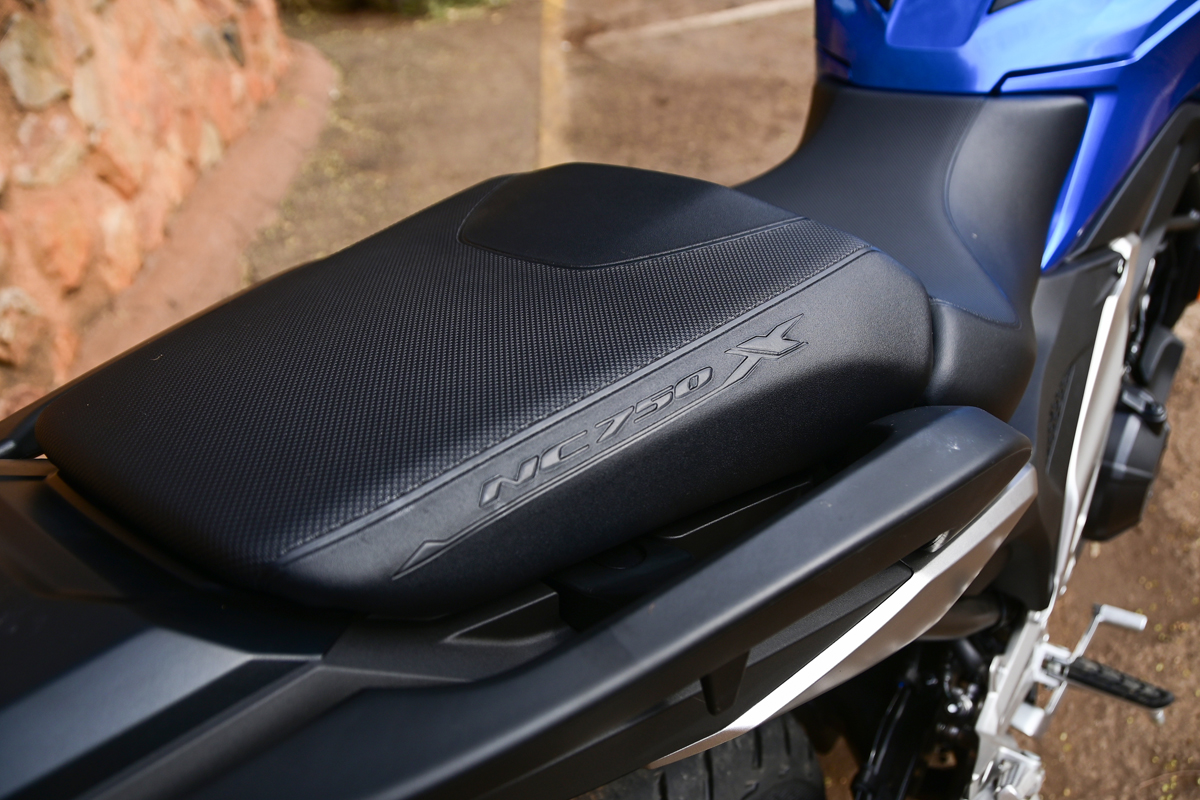
Although there’s less suspension travel, Honda have improved the ride quality and performance. The NC handles pretty well out of the box for what it is, and that means you can spend more time riding and less time adjusting. I felt like the lower seat height made the NC easier to manoeuvre at slower speeds too, almost creating a lower centre of gravity than before.
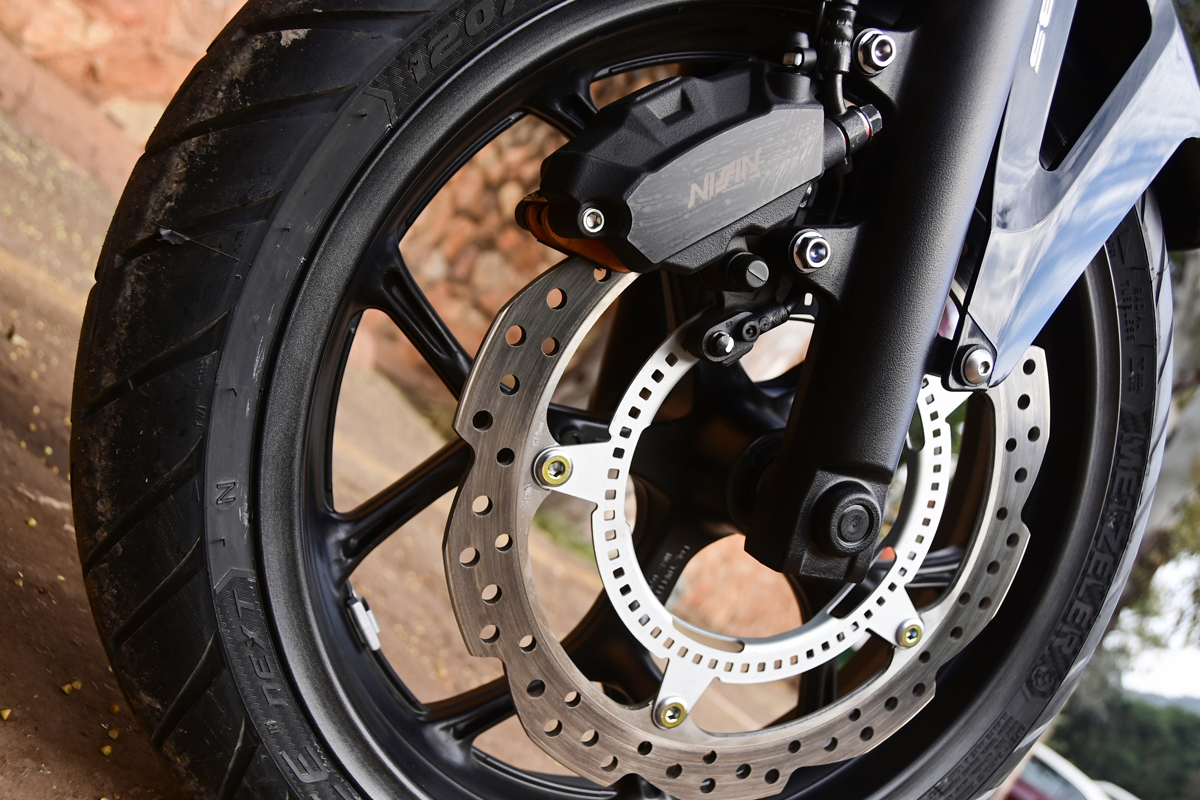
Braking is still handled by a single 320 mm disc and a Nissin caliper up front, just like before, but guess what: it gets the job done. The storage unit has grown by a full litre, now allowing for a large full-face helmet. Another nice touch is the new seat—it has a more square shape to it now, with increased comfort for longer trips.
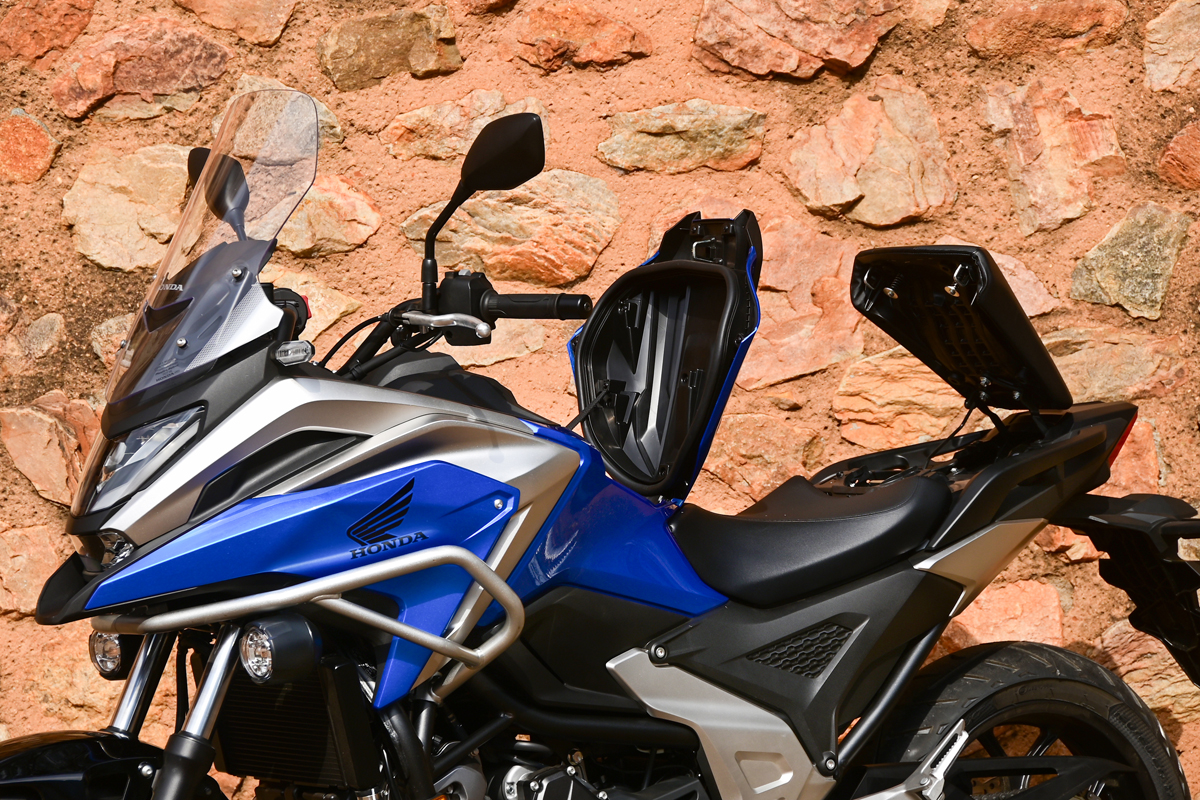
It almost feels like you’re pulling up to a JDM car meet when you need to refuel or grab something out of the storage compartment. You almost want to park the bike with both compartments wide open, so people can admire them like they would a pair of gullwing doors.
You wouldn’t be reviewing an NC750X properly if you didn’t mention its frugal fuel economy. On our ride, I rode the NC at my usual sporty commuting pace and managed to get 28.9 km/l, which means the 14.1 litre tank should get you just over 407 km. In fact, on our ride back Honda SA gave us a fuel economy challenge, where we had to ride from the Engen near Zenex Laezonia to the Broederstroom Sasol fuelling station.
I decided to ride just 10 km/h under the speed limits all the way there, in a tucked up position in 6th gear. I chose a manual NC750X, because I could shift gears at around 2,500 rpm vs 3,500 rpm on the DCT. After the 37 km ride, the NC sipped just 0.99 ml of petrol—but some guys took the challenge way too seriously, and managed to use just 0.76 ml.
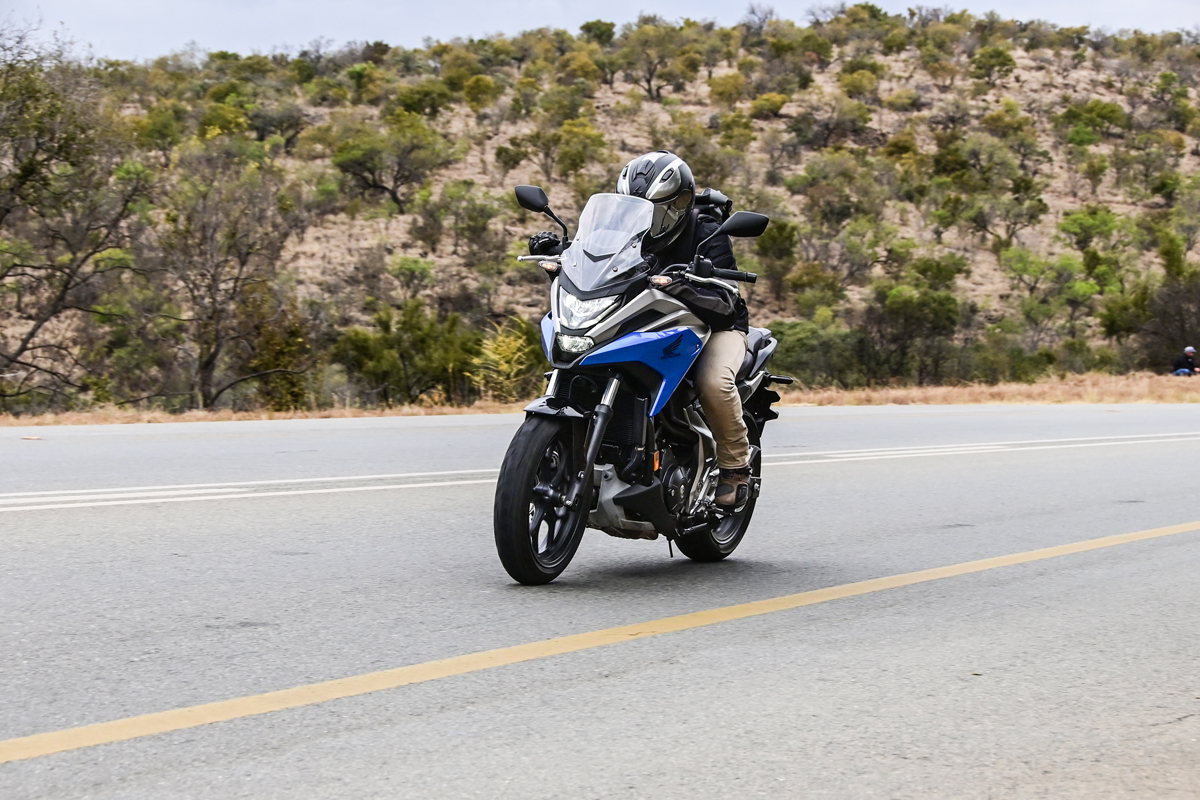
Ultimately, Honda have ironed out some of the NC750X’s shortcomings to make it a more polished ride overall. But the biggest upside is that you’re only paying 10k more for the latest upgrades, with the manual setting you back R126,000 and the DCT R135,000.
The NC750X is still a bike you buy with your head rather than with your heart… but the improvements to the 2021 model make it really hard to ignore.
For more information visit: www.honda.co.za
HONDA NC750X/(DCT)
For more information on the bikes that we tested in this article, click on the links below…
Binder Report: Round 8 – German GP
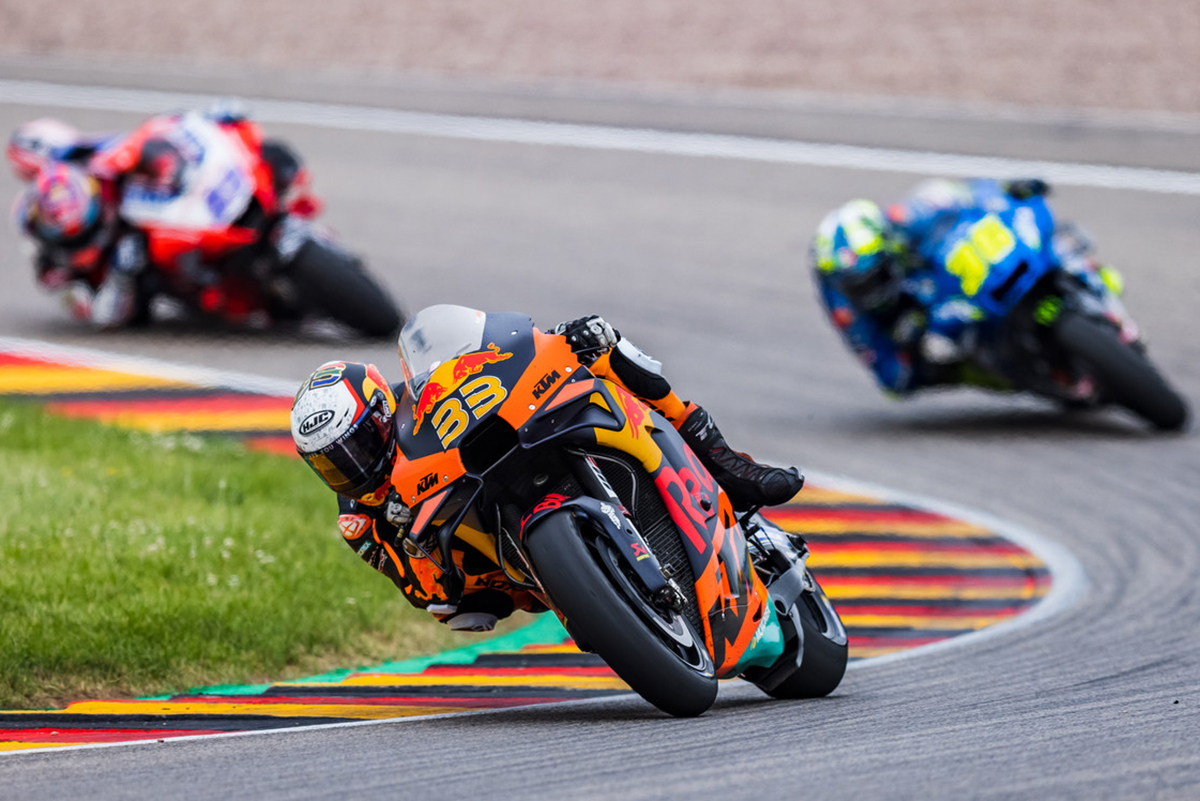
This weekend Germany hosted a memorable eighth round of the MotoGP calendar at the historic counter-clockwise Sachsenring. If facing one of the tightest, twisty and most technical circuits on the calendar wasn’t already enough, the man upstairs threw in some unpredictable weather to finish it all off. After all, this is the most exciting and unpredictable championship in the world, right?
Darryn Binder
Darryn Binder had a bittersweet qualifying after contact was made with another rider. Darryn dominated Q1 and ended it on top, despite a turn 1 crash on his final lap. Unfortunately, due to the contact made with another rider during his incident, Darryn was black-flagged from Q2. This meant he would start Sunday’s race from 18th and still have to take a ride-through penalty during the race—an unfair decision from the stewards, in my opinion.
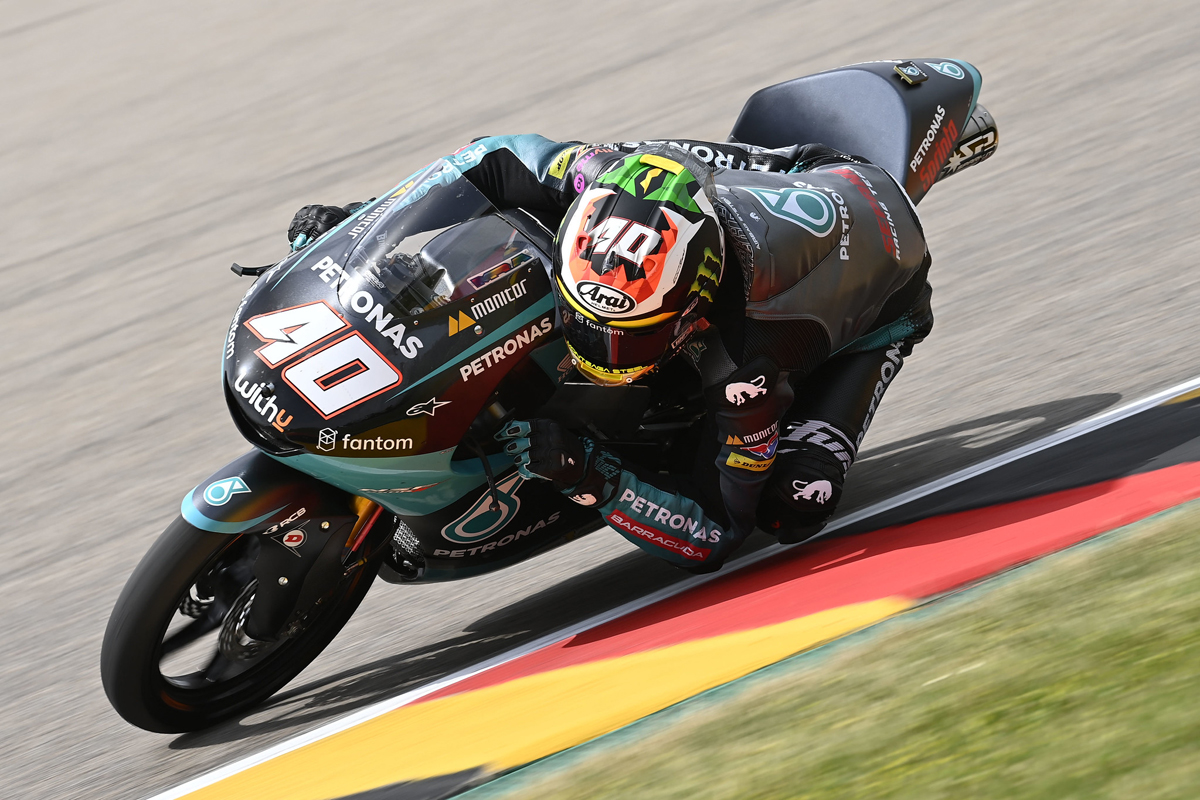
Despite all odds, Darryn was focused on riding his best race and leaving this weekend’s penalties behind him. He made a good start off the line and quickly made his way into ninth, before taking his ride-through penalty at the end of the third lap. After rolling back onto the circuit in 24th and just over 10 seconds adrift, our fellow South African pushed hard to steadily reduce the gap, joining the back of the field on lap 14.
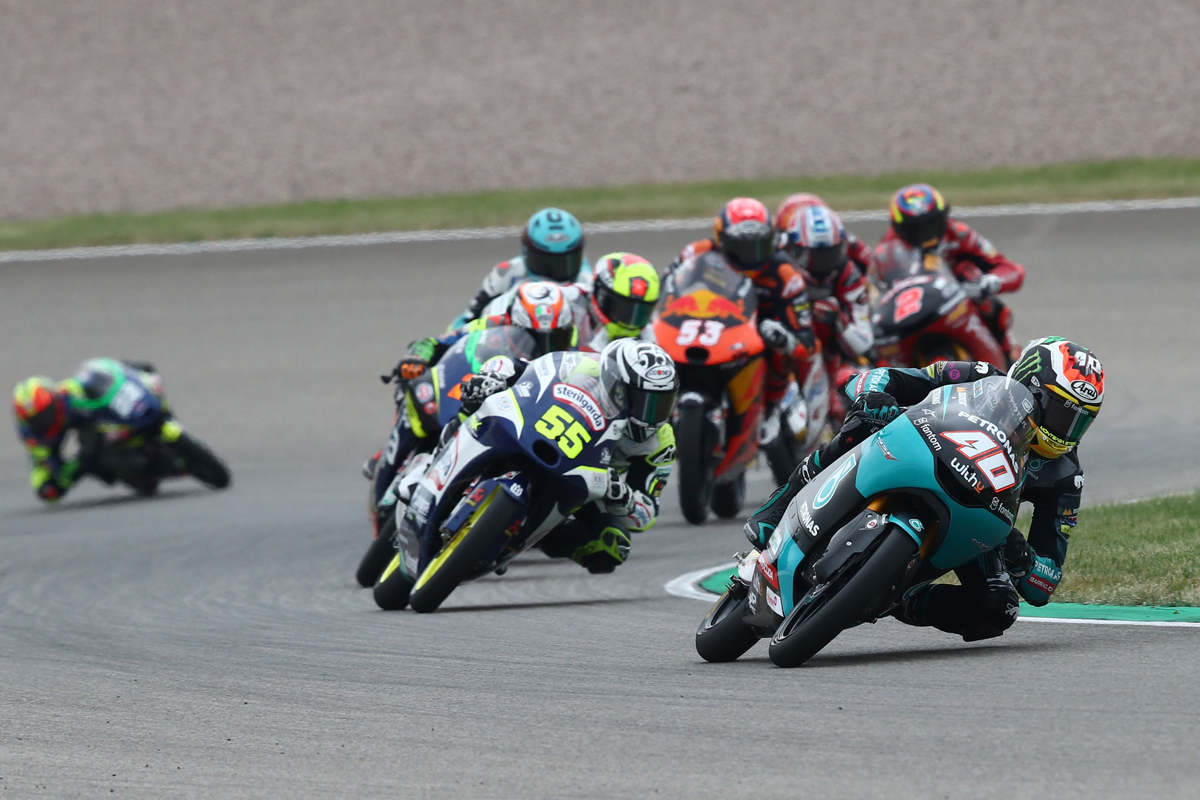
Darryn showed great pace and strength, he made his way through the pack and crossed the line in 14th. After all the drama, Darryn still managed to claim two world championship points, bringing his total to 60 and moving to seventh in the riders’ standings.
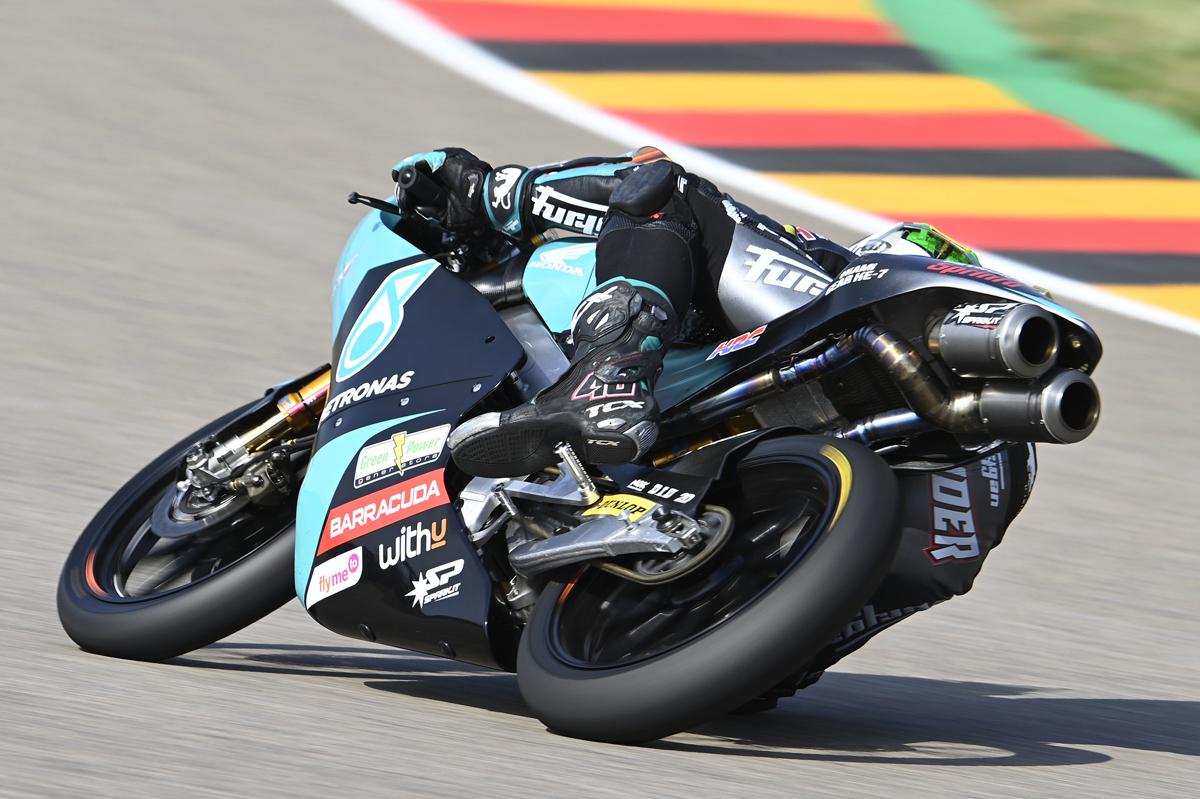
DB: “Unfortunately after a mistake in Q1 yesterday the stewards gave me two penalties: the disqualification from Q2 but also a ride-through for today. I was very disappointed because the ride-through does ruin your race, but I went out and did what I could. I was lucky enough to come away with two points, which is better than nothing! At the least the penalty is out the way, we have points in the bag and now we roll on to Assen – the last round before the summer break. I really want to be able to go into the break with something to celebrate.”
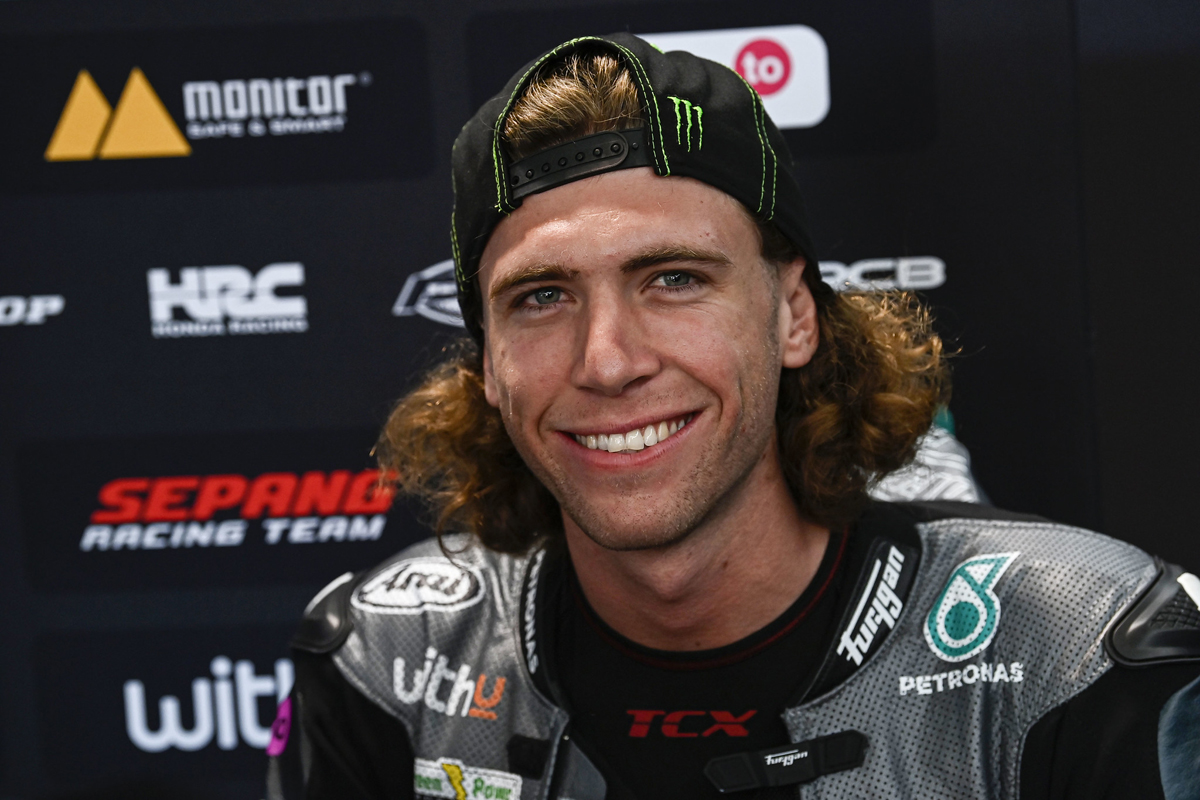
Brad Binder
Brad’s race weekend was all about finding the right setup for a good and competitive race, come Sunday. He made some good progress in FP4 but couldn’t squeeze through Q1 due to front-wheel chatter in the stifling climate—the “Sunday Rider” was just three tenths from an attempt at Q2, placing him 13th on the grid.
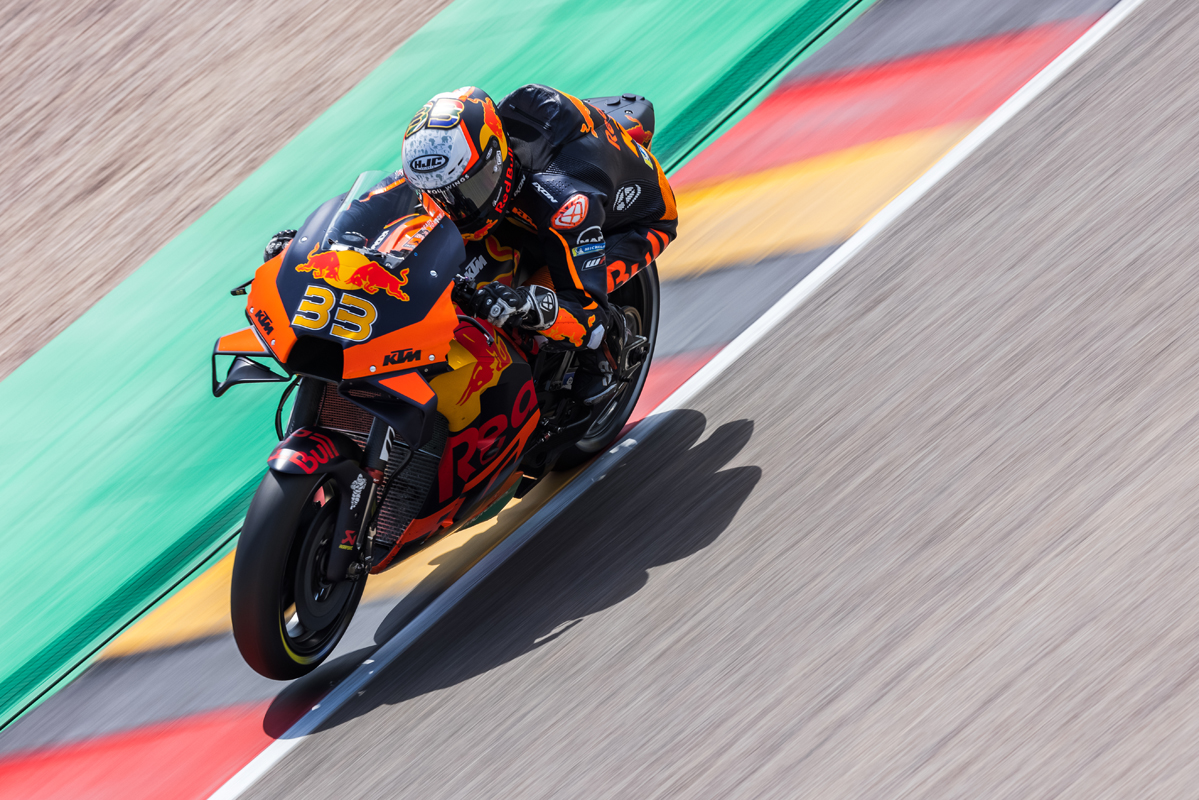
Sunday’s conditions were the exact opposite to what riders saw during free practice and qualifying in Saxony—cooler temperatures and a chance of rain were on the cards. Despite this, fans of the orange brand were backing both Miguel Oliveira (6th) and Brad Binder (13th) at full RPM.
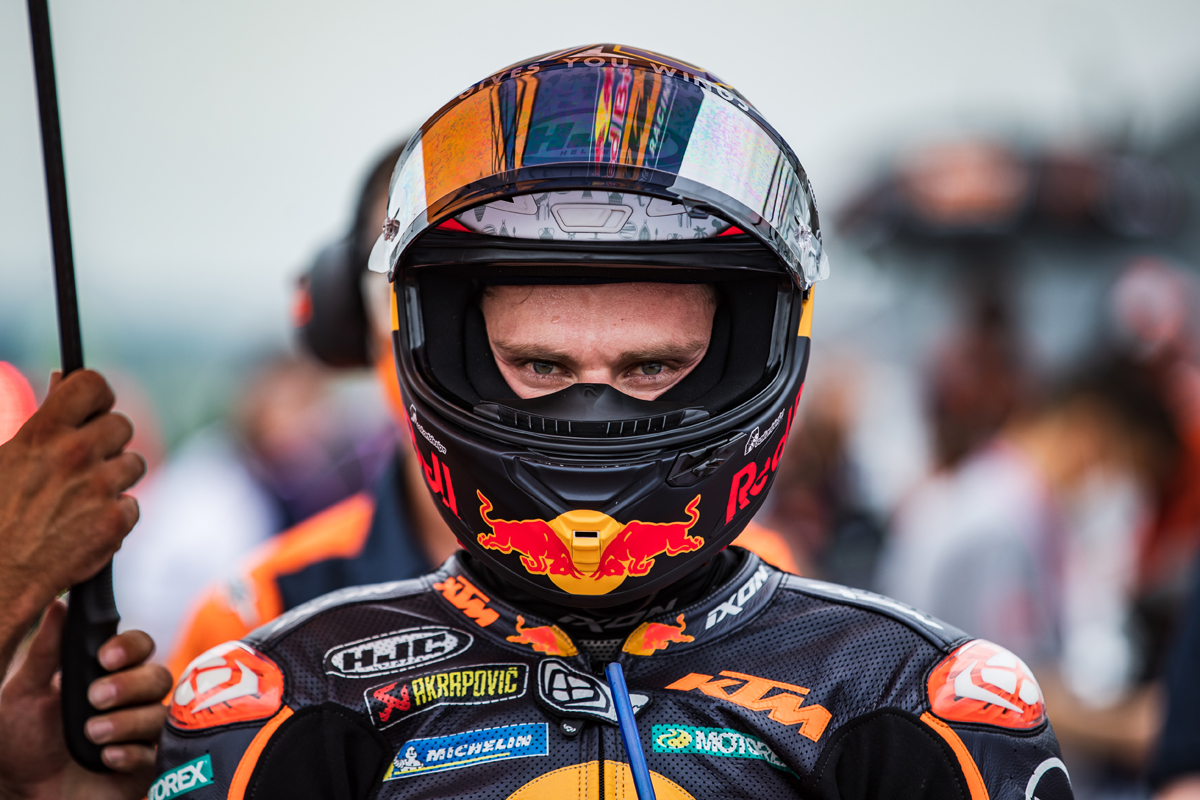
Brad made an excellent jump from the fourth row and in no time at all, slotted himself into the top seven. Binder continued to make progress and was having a fantastic race on his maiden visit to the Sachsenring on his KTM RC16. Meanwhile, teammate Oliveira made his way into second and was chasing down the “King Of The Ring” Marc Marquez.
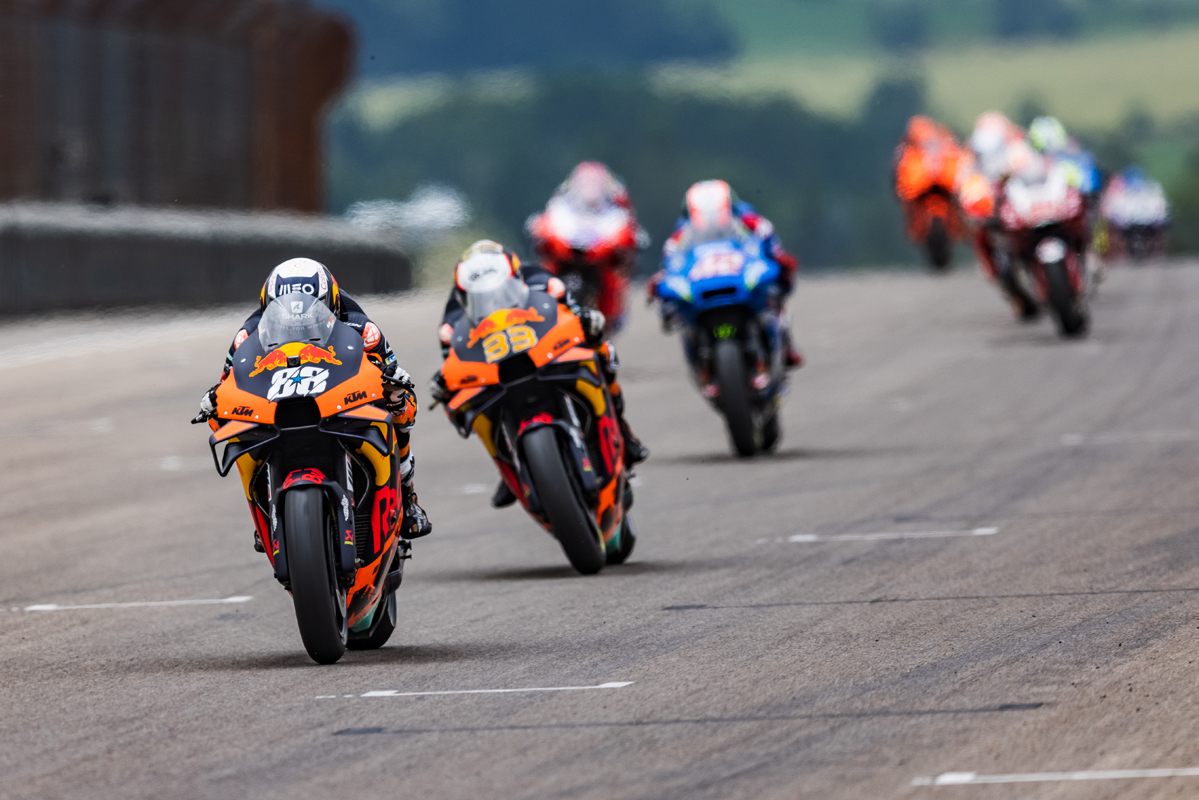
Brad managed to make a break in the last three laps and tried his best to close the gap to Fabio Quartararo in third. Unfortunately, he ran out of time and crossed the line in fourth position, earning him his third top-five classification of the season and placing him eighth in the championship—not too shabby.
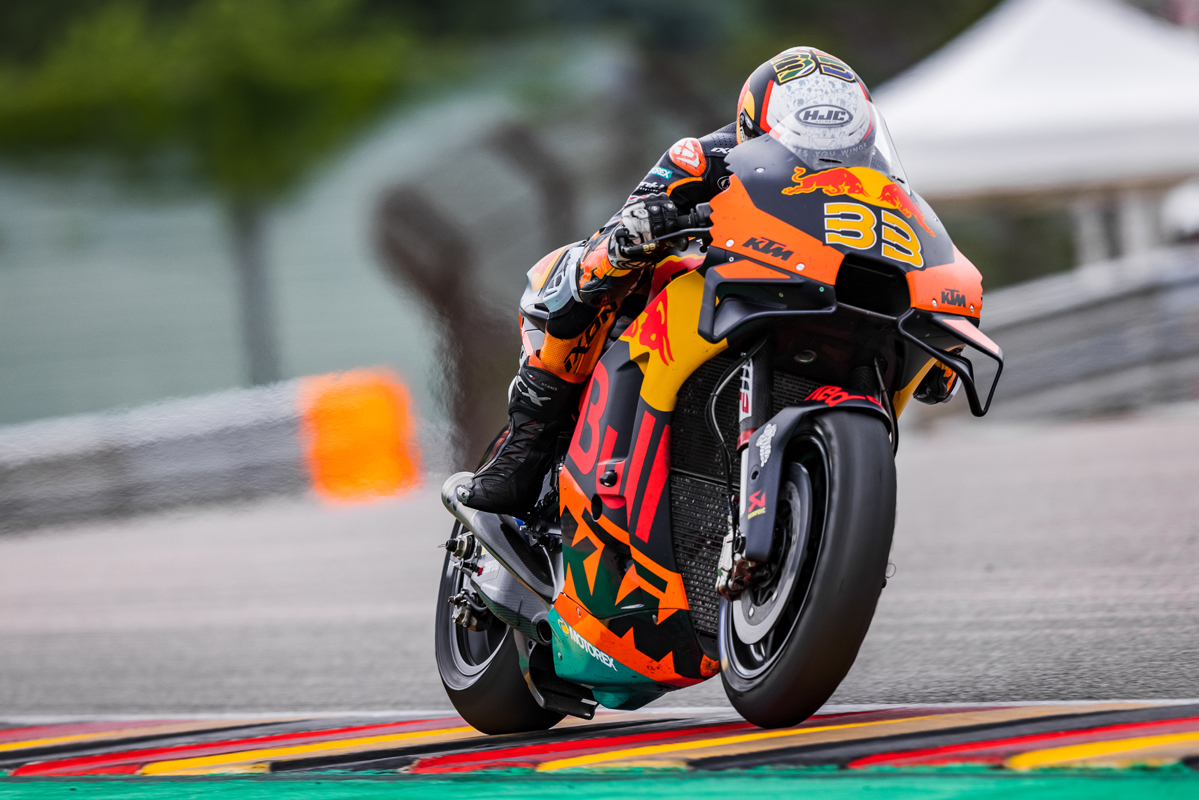
BB: “I’m really happy with 4th in the end because we started the Grand Prix by being stone-last in FP1! I slowly worked my way forward through the weekend. It wasn’t easy for me to adapt to this place on the bigger bike. I gave it my absolute ‘all’ out there today. I tried as hard as I could. I wanted the podium – and I could see Fabio – but ran out of time to get close enough. In general, I’m happy with the job we did and the team worked fantastically because when I was struggling they continued to make the bike better and better and that brought my level up. We made a big step. Thanks guys, let’s see what we can do in Assen.”
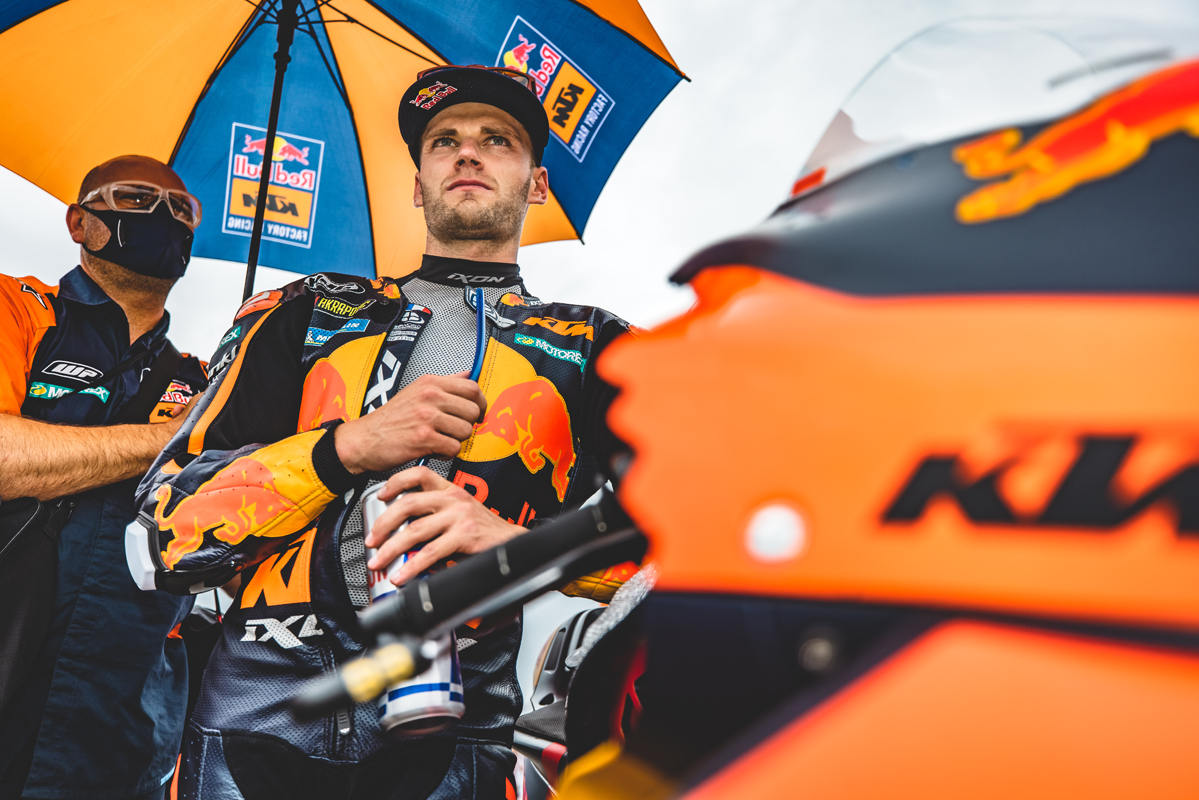
What a stunning weekend of racing, we got to see Marc Marquez get his mojo back, Oliveira continuing to prove that he is a top contender and Brad getting more comfortable on the RC16 while reeling in the top guns. The championship will now head straight to the Netherlands (27 June) for the final round before the summer break.
Report: Even More Ladies Learn to Ride a Motorcycle, Powered by Motul
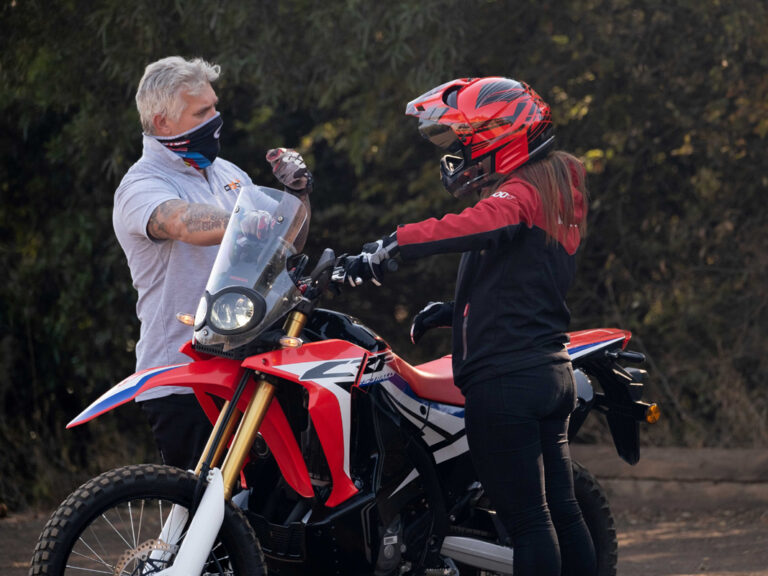
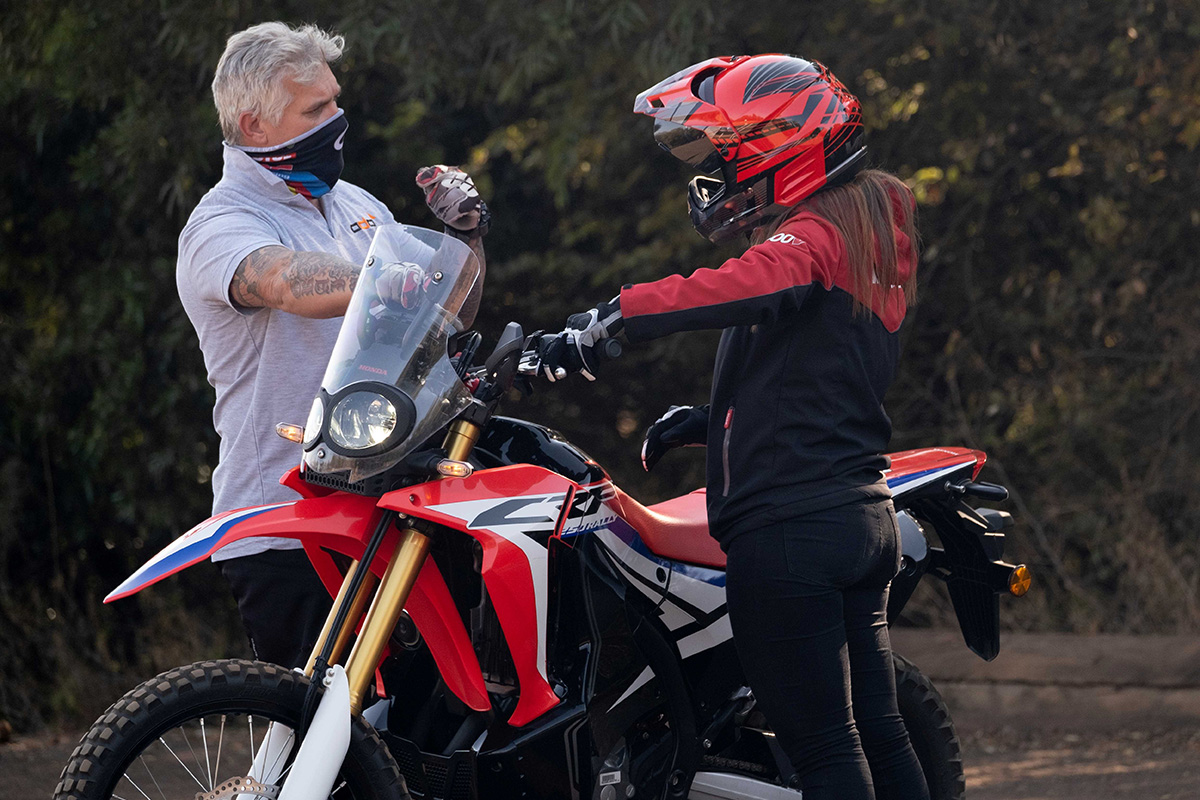
I’m talking about that wonderful initiative, launched last year by one fast lady, Paige Lindenberg, Marketing Manager of Shelby SA and the sassy blonde, Mercia Jansen, who heads up Motul in Southern and Eastern Africa, and who is at her happiest when riding motorcycles. The event I am referring to, of course, is the Ladies Learn to Ride a Motorcycle initiative. Many potential lady riders have given up trying to learn to ride due to typically unsuitable motorcycles and impatient and, dare I say, often unqualified teachers/husbands/boyfriends. The training was once again hosted at the ADA Training Facility, out on the popular breakfast run Satellite tracking station road, near the Hartebeespoort Dam
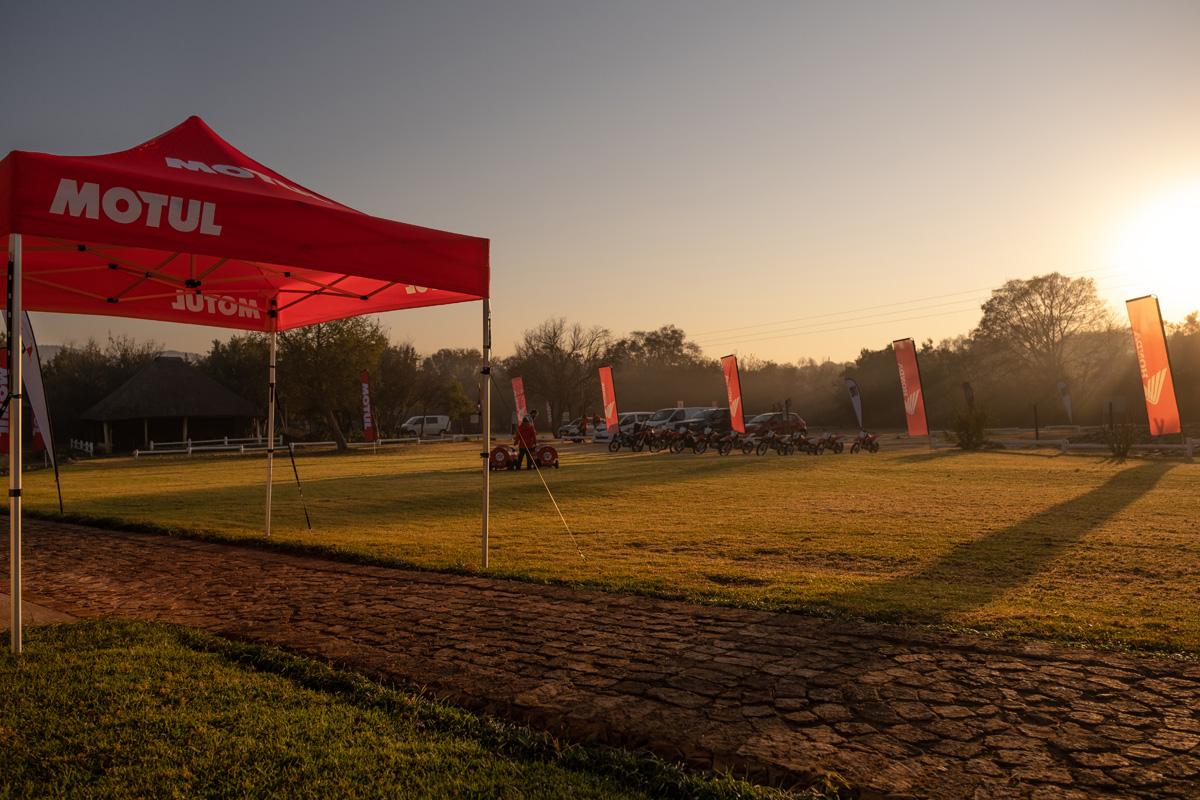
Set in the tranquillity of African bushveld, the ADA training location has expanded, undergoing significant infrastructural development over the last year and is a really jacked up training facility and pleasant place to be. Saturday the 12th of June, when the training took place, was blessed with spectacular weather. The early morning was nippy, but by mid-morning it was just wonderful to be out and about on a sunny, mild day. Honda SA once again provided a whole bunch of bikes for the training. ACE 125’s, CRF250 Rally, XR125 and CRF110 models were made available for the ladies to hone their skills. Light and manoeuvrable, these bikes are unintimidating and allow new riders to grow their confidence quickly.
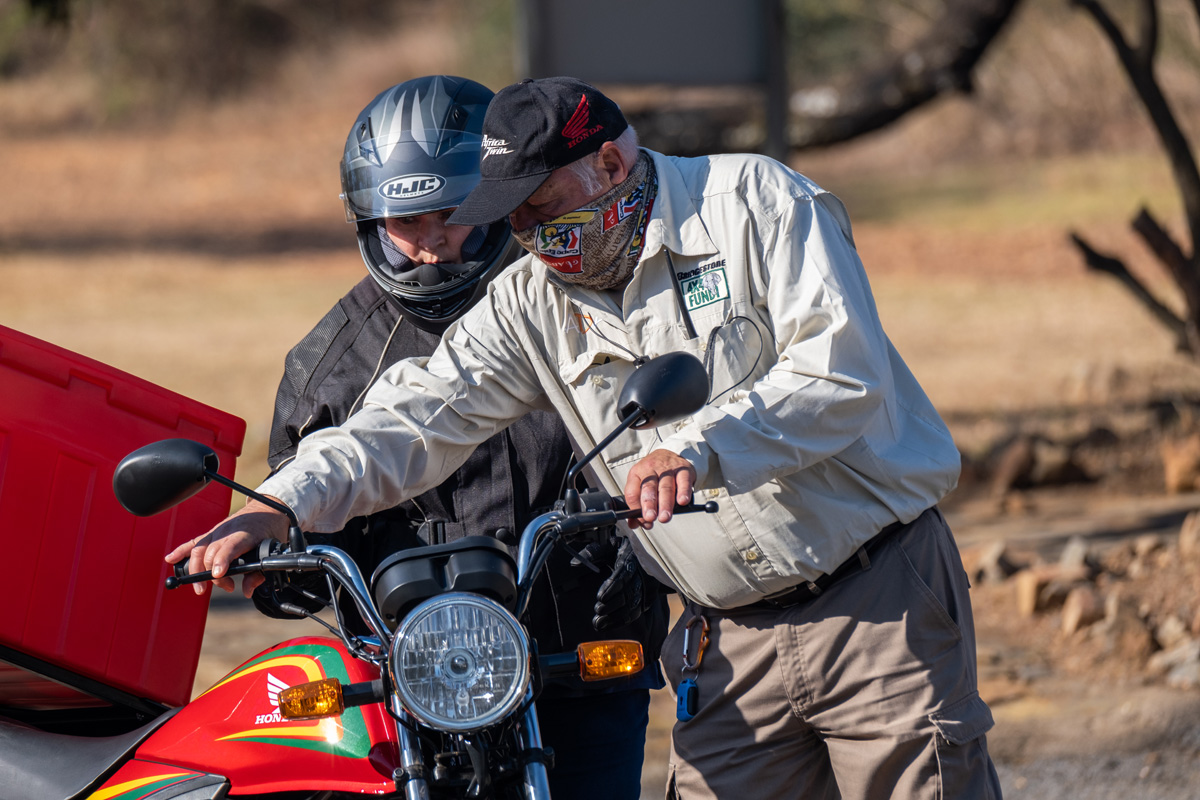
The facilities allow for different surfaces on which to ride too. The absolute newbies were on grass. It doesn’t get much easier than putting around on a huge lawn on a CRF110. The bike is super light and easy to manage and the resilient surface removes any fear of hurting yourself should you capsize at a virtual walking pace. Trainers with endless patience, coach and encouragement at all skill levels.
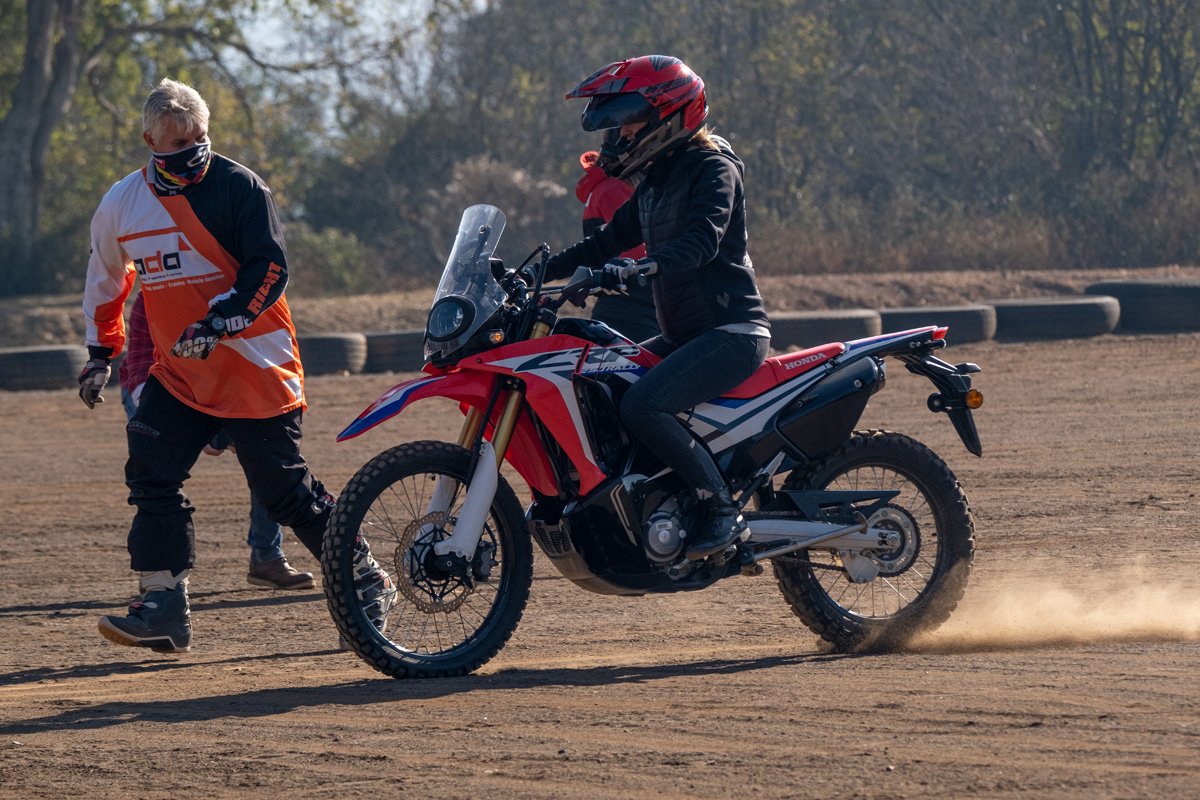
Standing at the gravel riding expanse, I watched a young lady riding a CRF 250 Rally and building her skill under the watchful guidance of an instructor. At one point she could not help herself and literally whooped with joy as she mastered another aspect of off-road riding. This was a common theme wherever we went. Ladies growing in confidence and loving every moment of it. Motorcycling in SA is endowed with some phenomenal female talent. Ladies, that have left an indelible mark on the local, and in some cases, international biking landscape. Motorcycling in South Africa needs more female riders. There is a wonderful world just waiting to be explored and exploited. It is thus so good to witness ladies learning to ride.
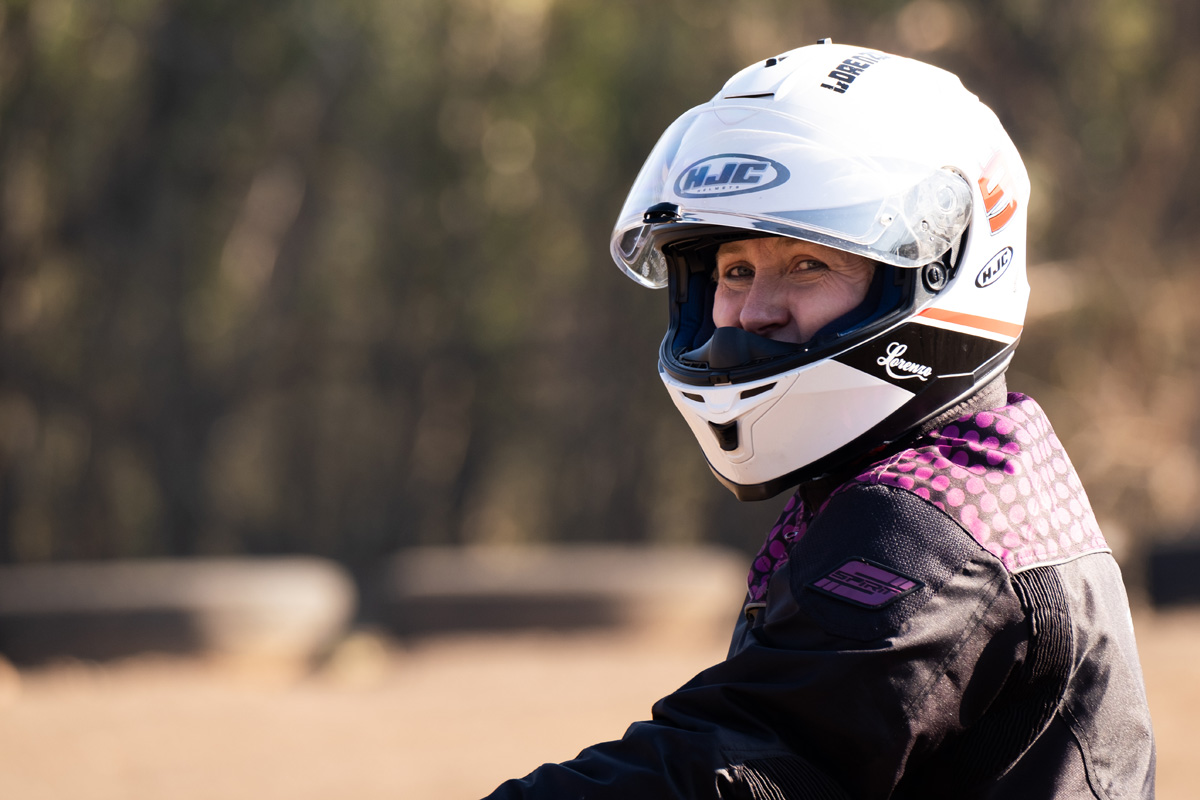
“I’ve always loved the camaraderie that you find everywhere in the motorcycling community, and there was plenty of that on display here,” commented Mercia Jansen, Motul’s Area Manager for Southern and Eastern Africa and the organiser of the event. “Motorcycle riding has been a passion of mine for many years and it was wonderful to see how much the ladies enjoyed themselves this weekend. I was also delighted to see some of my colleagues from Motul taking part and brushing up on their riding skills,” she added.
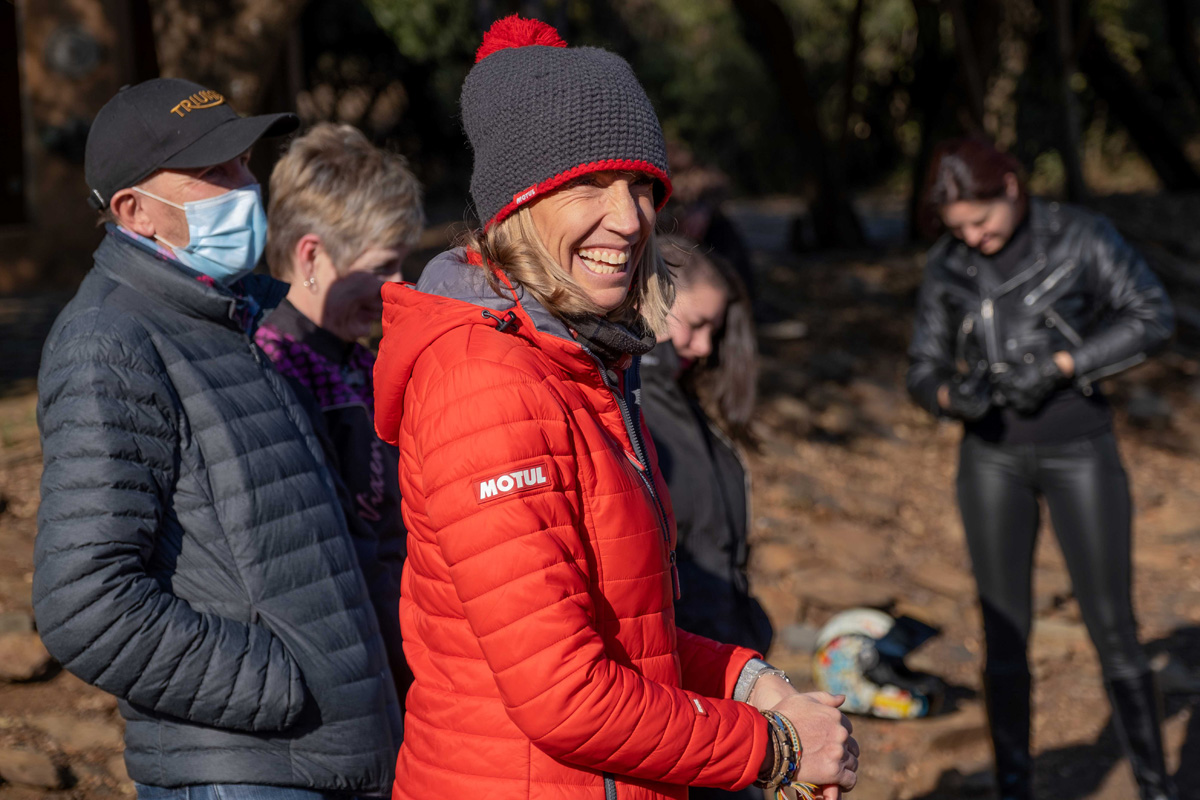
By lunchtime, there were plenty of exciting war stories being told over yummy Prego rolls, by bevies of glowing girls. “The proof of the pudding is in the eating”, as the old saying goes, or perhaps that should be ‘in the riding’, in this instance. Skills were taught, lessons were learnt and fun was had. It doesn’t get much better than that. Until this brilliant initiative, ladies were largely overlooked on the motorcycling landscape.
Shelby SA, with Paige, and Motul, with Mercia, seek to put that right. Good on you and long may this magnificent and relevant initiative prosper.
For more information on Motul visit: www.motul.com
Touring on Honda’s Africa Twin Adventure Sport 1100 DCT
I am unashamedly a fan of Big Red. When it comes to Africa Twins, I have owned three over the years. A black and gold XRV750, an HRC coloured XRV750 and then more recently, a CRF1000 L. I bought one of the very first 1000’s to arrive in SA. During my time with that bike, I had the suspension re-valved by Hylton Hayward to rectify the overly soft standard suspension, as well as all the other typical Adventure bike mods required, like crash bars, bash plate, pannier brackets for soft luggage, Barkbusters, slip-on pipe and so on. What I could not rectify was the power, which, whilst adequate, even perfect for the dirt, felt lethargic, especially if two up and loaded, on the road. This was primarily why I ended up selling the bike in favour of a 1090 KTM Adventure R.
Enter the 1100 Africa Twins. I attended the launch of the new 1100s and was chuffed to feel how peppy the new Twin was, especially in the lighter, ‘small tank’ version. I had a particularly spirited ride around the Gerotek test track chasing one Diete Engelbrecht, both on small tank 1100s with DCT. What a bike! The brief spin on the Adventure Sport simply left me wanting to explore that bike more. Move on around a year and I was planning a trip to PE to celebrate my daughter’s birthday and thought that it would be an excellent opportunity to evaluate the Adventure Sport in its touted role. The long-distance all road tourer of the Africa Twin range. Honda’s ever-obliging Riaan Fourie had just put a DCT version in the demo fleet and it was duly delivered to my door, tank filled to the brim and ready to roll.
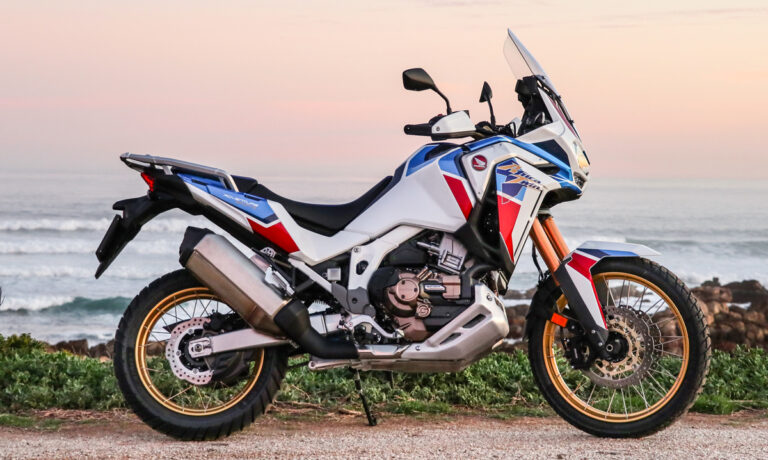
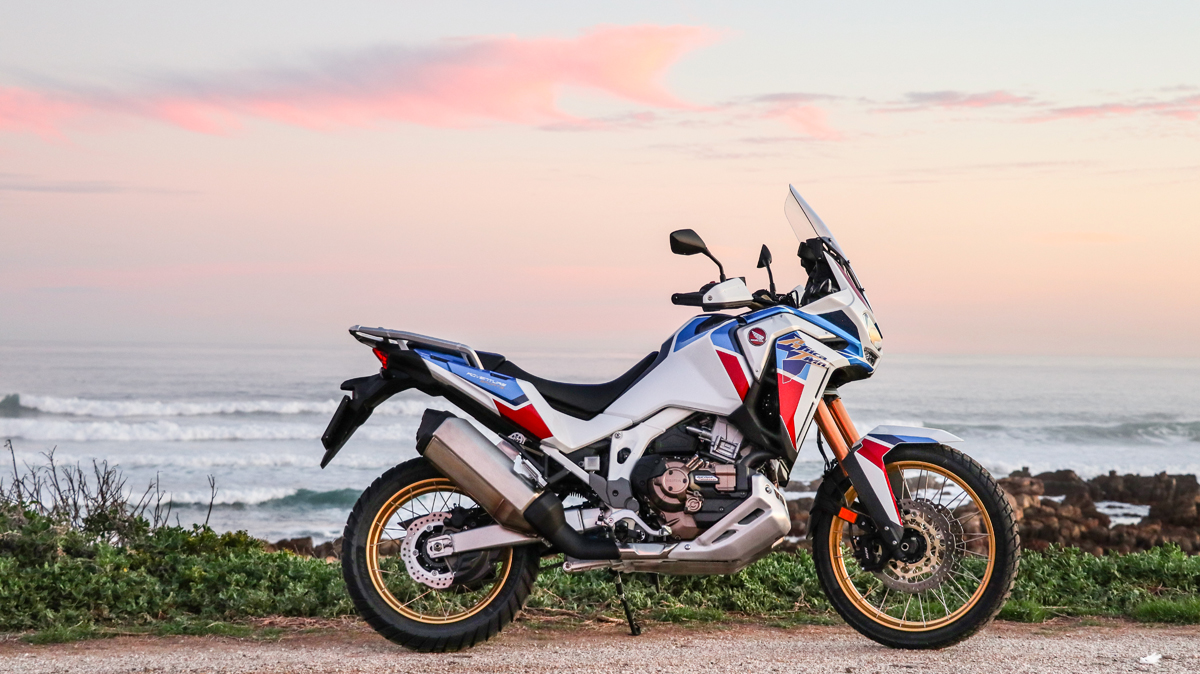
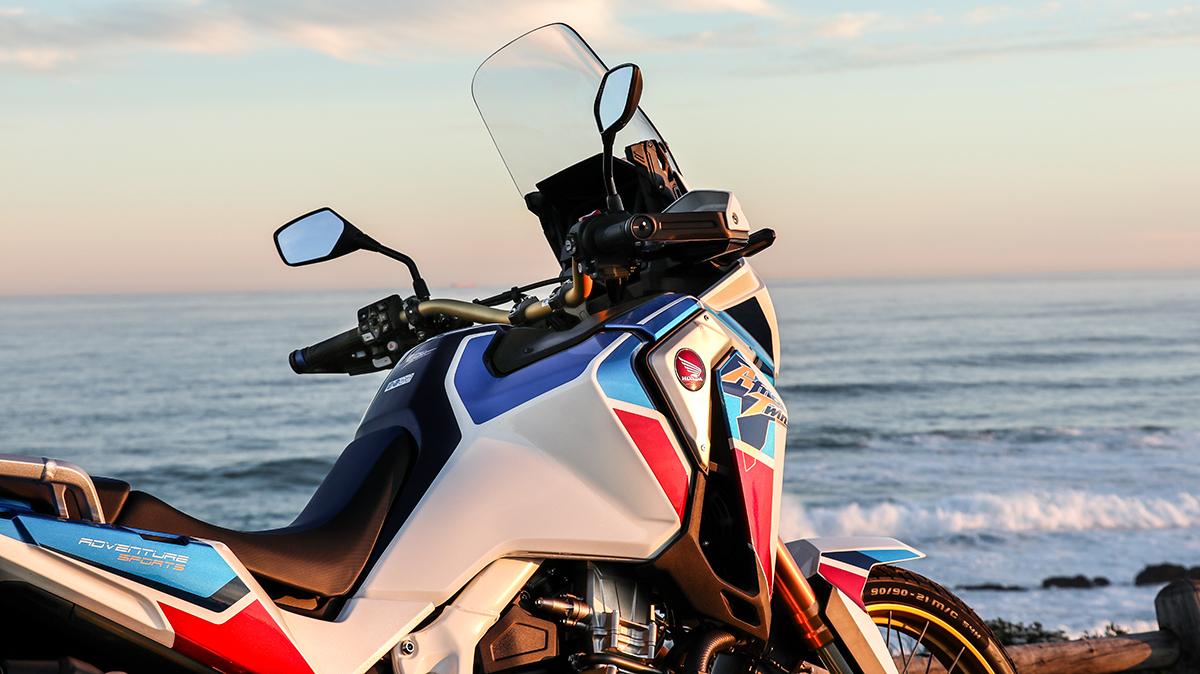
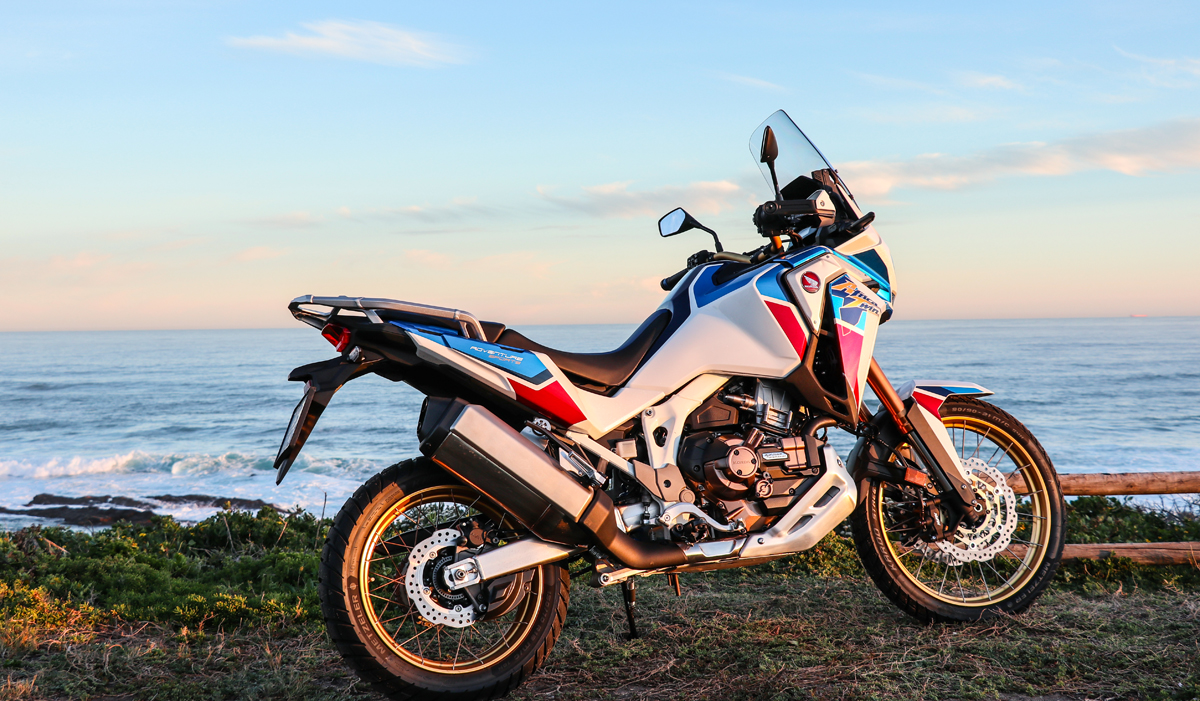
Just rolling it off the trailer and into my garage, It occurred to me, that no matter what my eventual opinion of the bike turned out to be, one thing was undeniable. It is an achingly beautiful Adventure bike. Resplendent in HRC colours, with gold rims complemented by gold USD forks and ‘Rally’ styling, it looks a treat. For me, no other adventure bike on the planet comes close. The ‘small tank’ Twin is pretty too, but the Adventure Sport is next level. That is the form box ticked then, but what about the function? I was riding the 1130 kilometres to PE in one go. No better way to test the touring ability of a bike than a really long day in the saddle.
Friday dawned with clear skies over the highveld. And cold. OK, so it is getting wintery, but, true to form, I chose to leave into the first proper cold front of the season pushing up from the Cape of Storms. There was a snow warning for Bloem to Colesburg. Crap! Riding out of Pretoria and through Jo’burg in the 5 am dark, I thought I may have dodged a bullet with the weather report. It was an almost balmy 13 degrees C. As fast as you could say “heated grips”, it started to get properly cold, hovering around 8 and 9 degrees from the Grasmere Toll Plaza and for the rest of the trip, with a brief respite into low double digits between Colesburg and Cradock. How was the Sport shaping up in these severe conditions?
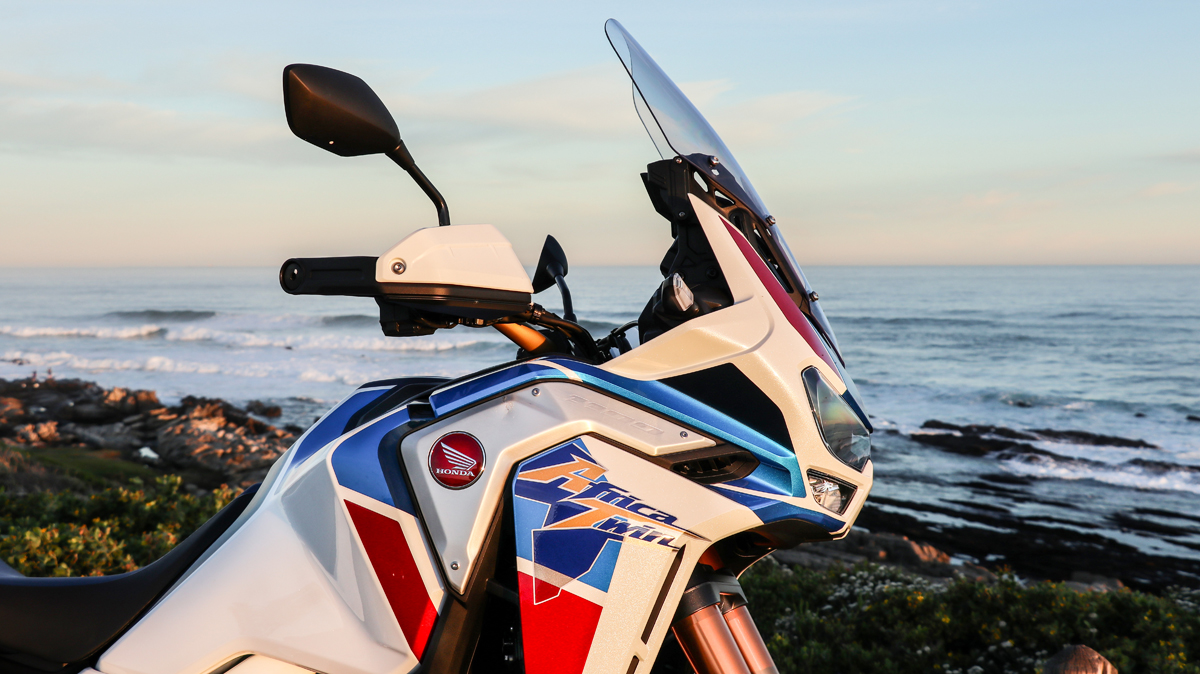
Well, for starters, we needed heated grips, with which the bike is endowed, desperately. But finding out how to switch them on is another story! No button with a little picture of a heated grip to push and voila, toasty hands! Oh no. The little kamikaze’s revenge that designed the layout of the new AT’s switchgear, did a proper job of sowing complete and utter confusion. To cut a long story short, you pull a trigger switch marked AP on the RIGHT switchgear. A heated grip then appears at the bottom of the TFT display. To actually turn up the heat to the required level you toggle the switch on top of the LEFT switchgear, also labelled AP to dial in the number of blocks of heat required. The design engineer of the various electronic interfaces should be given a Katana and asked to do the honourable thing. Nothing that hours spent poring over the owners manual won’t fix but really Honda, be real! Other manufacturers provide all the functions in a vastly more intuitive way.
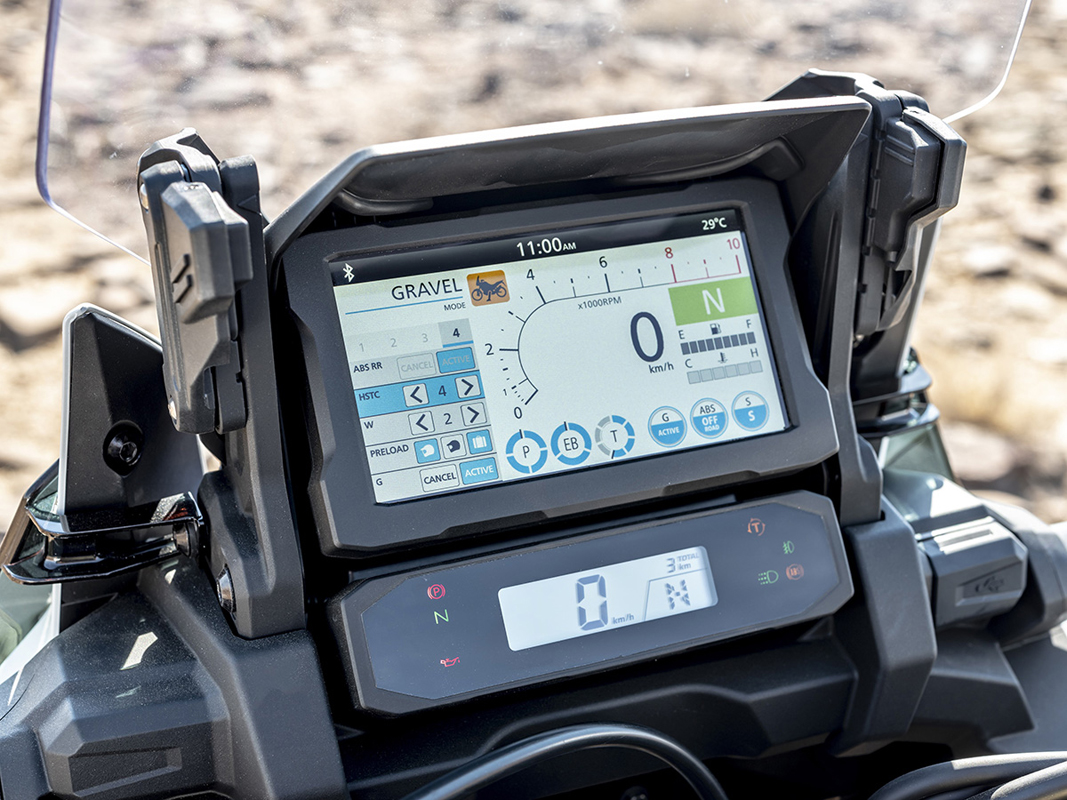
The motor is an absolute peach. It is still mildly mannered when compared to the heavy hitters from KTM and BMW, but used properly, it provides adequate and satisfying smooth thrust. The DCT system in ‘Tour’ mode changes up super quickly and smoothly. The downshifts are another matter. Whack the throttle open and it takes an age to shift down and give you decent acceleration. You have to intervene and take to the paddle shifters on the left handlebar. When I wanted to get a hurry up, I switched to manual and boogied along with the paddle shifters. This way of riding is huge fun, but, for me, somewhat negates the benefits of a pukka auto. Porsche, with their PDK double-clutch gearboxes, have perfected both up and downshifts, reacting promptly to throttle inputs.
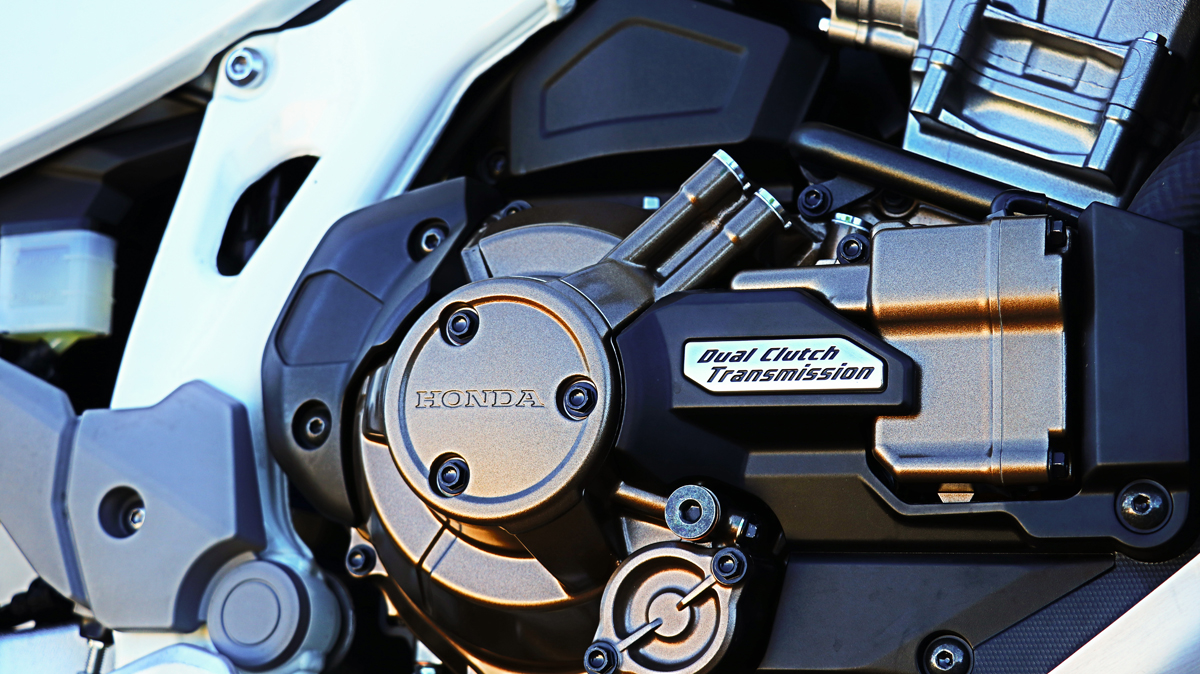
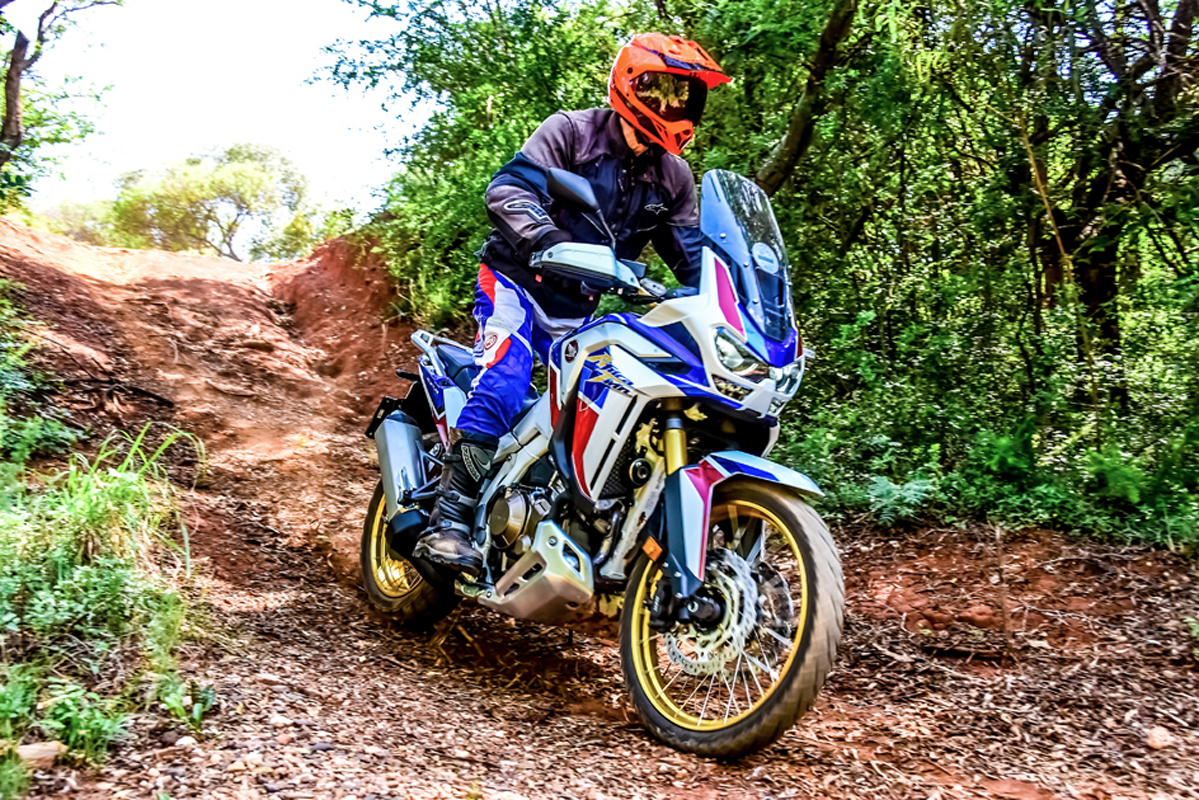
The seat feels a bit firm, but after hours in the saddle, it is properly supportive. Thumbs up for the butt perch then. The ergonomics are somewhat interesting. For my 6’3’’ frame, the footpegs feel just a tad too far forward. I would prefer them more under, rather than ahead of my tail bone. Standing up is not intuitive as you feel too close to the bars, which curve back to the rider and the bulges in the 24,8-litre tank interfere with your inner thighs. It also puts more weight on the front wheel than I personally prefer when traversing dirt. It may just be me, but I found my original AT more comfortable when smashing dirt standing up. I also don’t recall feeling this way about the regular CRF1100 which is a weapon in the rough stuff. This could also be exacerbated by the tall screen on the Adventure Sport.
Two-handed screen adjustment means that it can only be done at standstill. Even in the full low position, it is quite high. Shorter riders will experience this even more. I ended up putting it up and looking through the screen. It was good from a weather protection point as well as for minimal helmet turbulence. First prize for me is, at the lowest setting to be able to look over the screen, with the top of the screen out of my line of sight. The rack on the bike is level with the back seat, making packing the bike a doddle. It is a classy aluminium unit too.
Bikes have their ideal cruising speeds and I found that if you want to ride far and fast on the Adventure Sports, 135 Kph is the sweet spot. Sounds slow, however, the bike is really economical at this speed and if you engage the cruise control, it will take you pretty far on a tank. For example, Bloemfontein, at 460 k’s away, is done on a tank. Travel at 150, where the bike is totally happy and you have to stop more for fuel. Total travel time the same. At 135 you also chill in terms of speed traps and being more relaxed, you fatigue less. Important when you are doing 1000k plus, days.
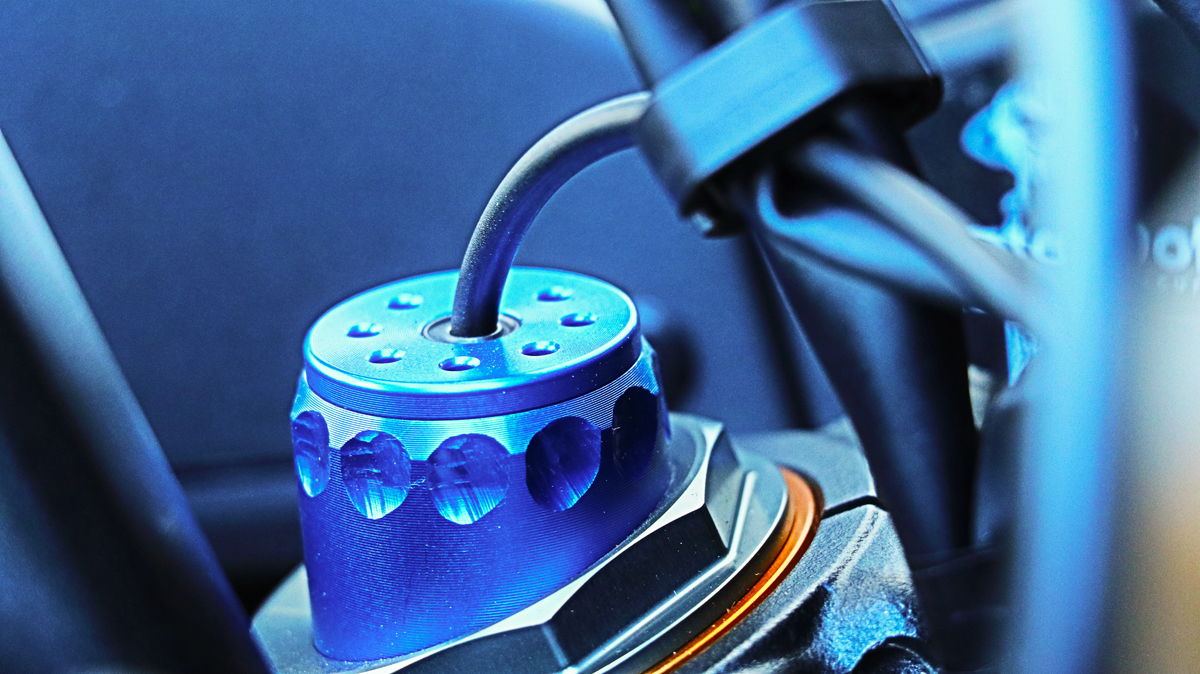
The Showa electronic suspension, with 250 mm of travel at both ends, soaks up bumps and keeps things tidy through the twisties. I would like to be able to choose my suspension setup independently of the chosen ride mode. Ride modes are Urban, Tour, Gravel and Off-Road. Throttle response tends to be a little abrupt in Tour, which is no big deal on the open road, where I engaged the Cruise Control, but Urban was way nicer in town.
It was the first long ride of my life where I kept the Heated Grips on all day to ward off the incessant chill. Traversing the mountain pass between Cradock and PE I also endured a brief shower of cold rain. The weather protection, smooth power delivery and good road manners, even on slick and treacherous roads, was reassuring. I was having a bonding moment with the big Adventure Sport. The prospect of a hot meal and shower was wildly appealing as I cruised into PE after 10,5 hours in the saddle. No question about it, this baby can smash distance! I was already anticipating a significantly warmer ride home.
And so it proved to be. Leaving at 8 am it was much warmer and peaked at a perfect 24 degrees for the bulk of the ride. This contributes significantly to your overall comfort and reduces the fatigue factor as you don’t tense up against the cold. Rolling out of Bloem under an indigo sky, with the 1100 smooth as silk at a cruise controlled 135 kph, life was sweet. Reflecting on the bike, it is an extremely competent package. The price, north of R300 grand, is quite close to some heavyweights that both outpower and out spec the Honda.
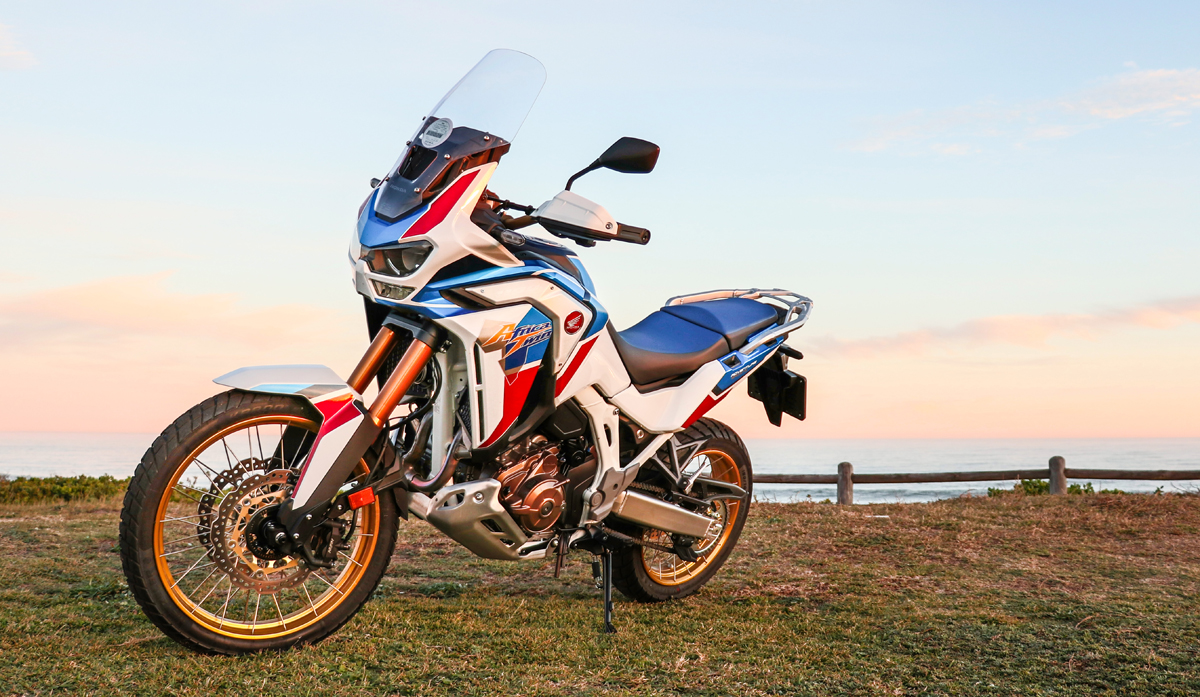
Talking of spec, I really feel that Honda are missing a trick in how they present the Adventure Sport for sale. Two glaring omissions are, firstly, a main stand. On Adventure bikes, a main stand is essential. Especially on a chain-driven bike, it is a huge bummer to try and perform chain maintenance, or just wash the bike, which you need to do often on Adv bikes, if you don’t have a main stand. Plugging and bombing a puncture on the tubeless wheels is also made much easier with a main stand. Secondly, is the lack of engine protection bars as standard. I shudder at the potential damage to the beautiful body panels and even radiators, that would result from even a slow speed capsize. It is spoiling the ship for a ha’penny’s worth of tar!
This is the flagship of Honda’s Adventure bike offering. The fit and finish are beyond reproach. It is a consummate performer too. Time will tell how it stacks up in what is an extremely competitive sector. A huge thanks to Riaan and Honda SA, for the opportunity to put the Adventure Sport to a proper touring test. It is greatly appreciated.
HONDA CRF1100 Adventure Sport/(DCT)
For more information on the bikes that we tested in this article, click on the links below…
Throttle Therapy: Yamaha MT-09 SP Review
The exciting and oh-so-affordable Yamaha MT-09 made waves when it first appeared back in 2013. Now a few years down the line, the MT has undoubtedly become one of Yamaha’s greatest success stories. But even though it was the company’s saving grace at the time, with its menacing looks and class-leading three-cylinder ‘crossplane’ motor, it wasn’t perfect.
The original MT-09 never handled well, and the throttle response was like playing a game of Russian roulette. It was one of the last ‘caveman’ bikes too; raw, unapologetic and lacking frivolous amenities like ABS.
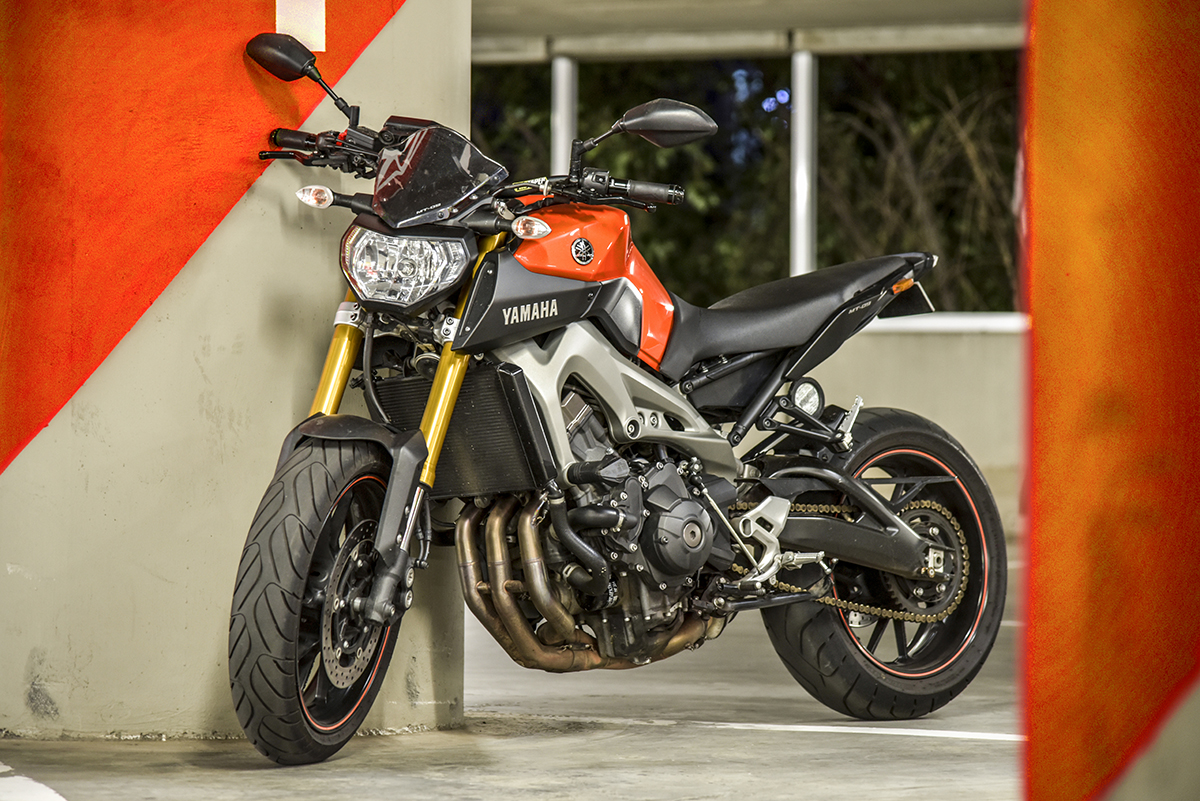
For 2021, Yamaha have sent the slightly unhinged MT-09 to therapy, and promised us a cured bike. The 90 percent-new MT sports a new engine, revised electronics and, most importantly, a more cornering-friendly chassis. We’re looking at the MT-09 SP here, which adds higher-spec suspension, fancy paint, a more luxurious seat, and, for the first time, cruise control.
All of these improvements on the third generation MT-09 beg the question: has this wily beast lost its edge and become soft?
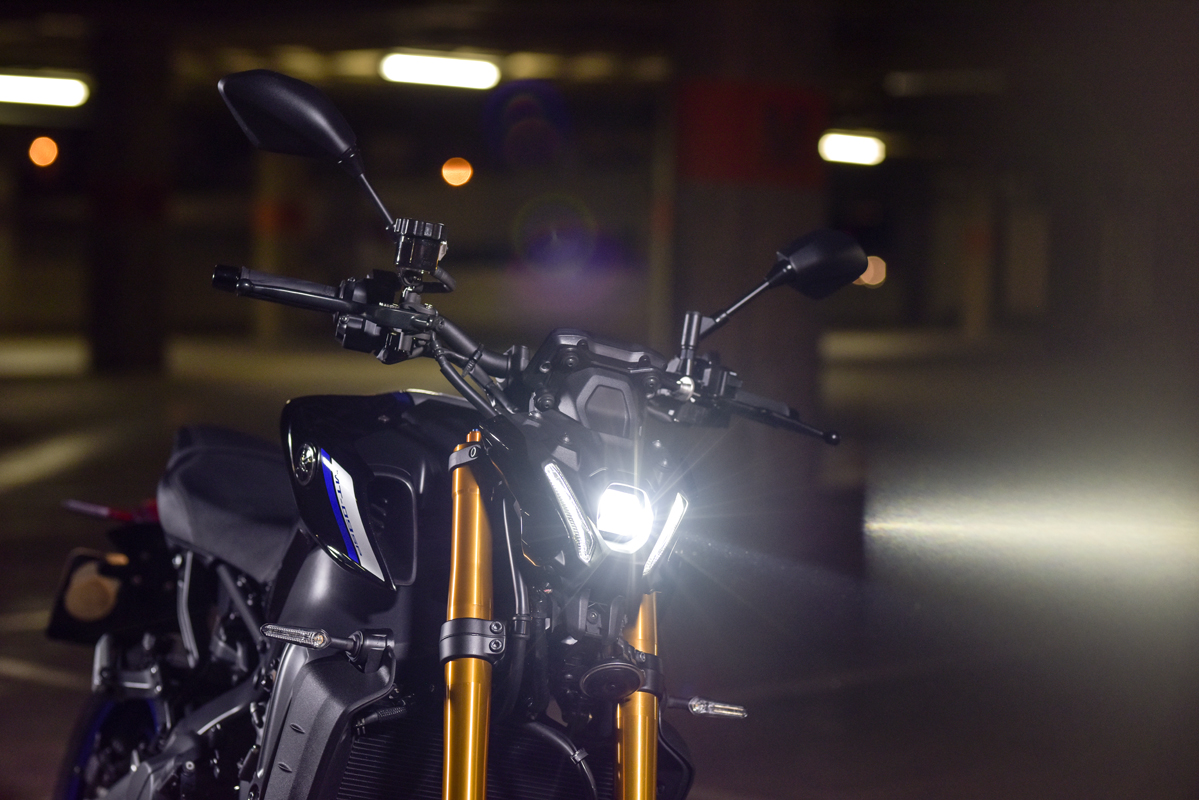
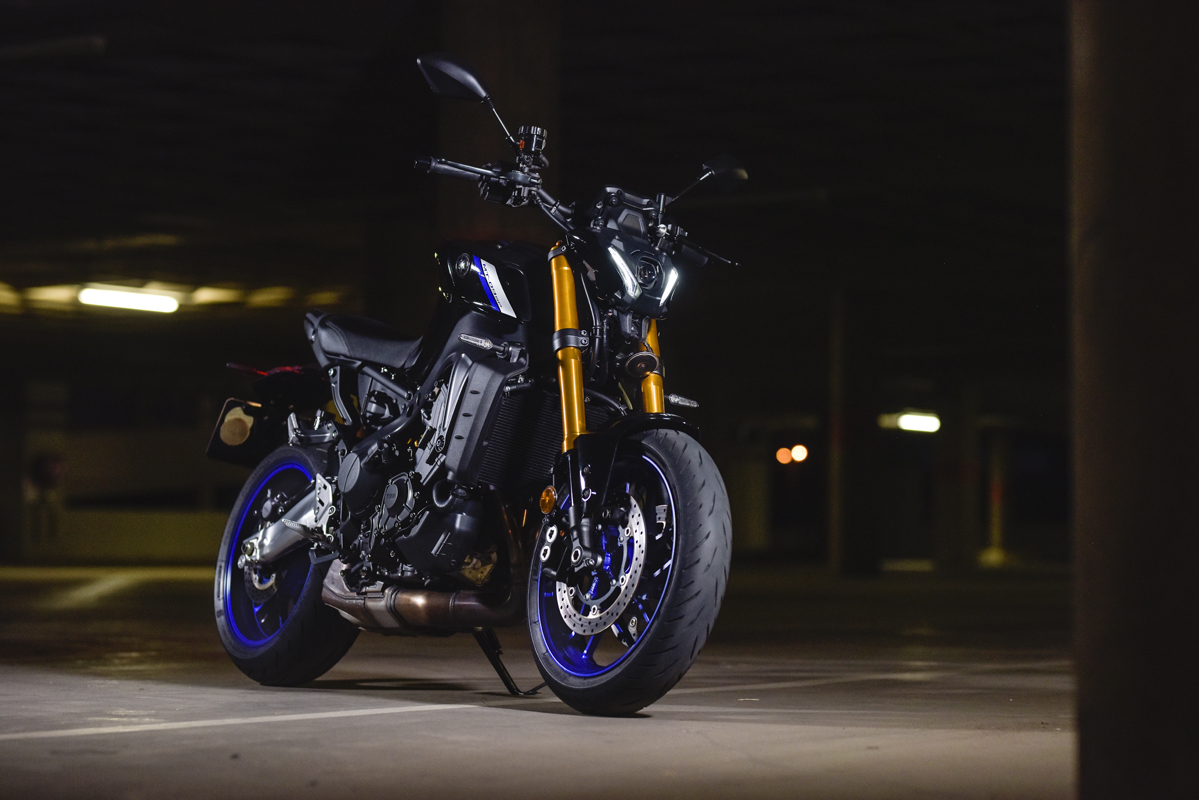
Aesthetically, the MT-09 still carries the range’s endearing ‘Dark Side of Japan’ DNA, but with a more refined appearance and build quality. When the first images hit the web, I didn’t really like the new headlight, because I felt like it messed with the bike’s proportions. But in person, it’s grown on me, with its two snake-like LEDs functioning as low beams, and its Minion-eqsue ‘eyeball’ acting as the main headlight. It also works really well, spreading a far and wide beam of light—something that previous generation MT-09s couldn’t get right.
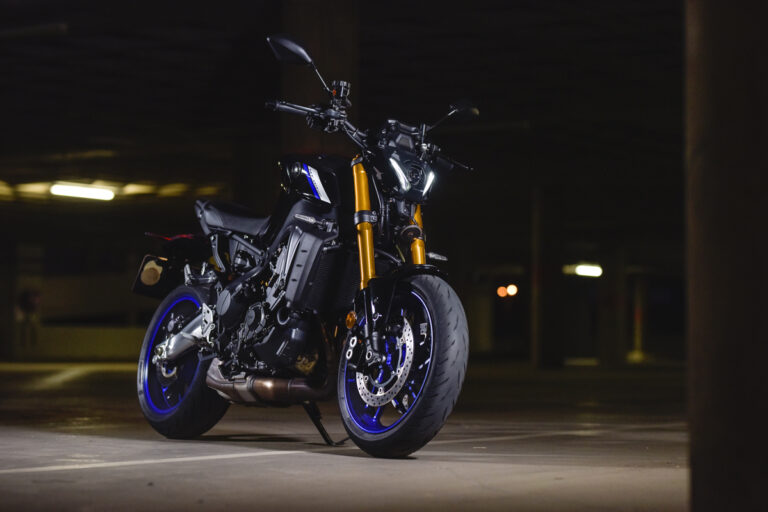
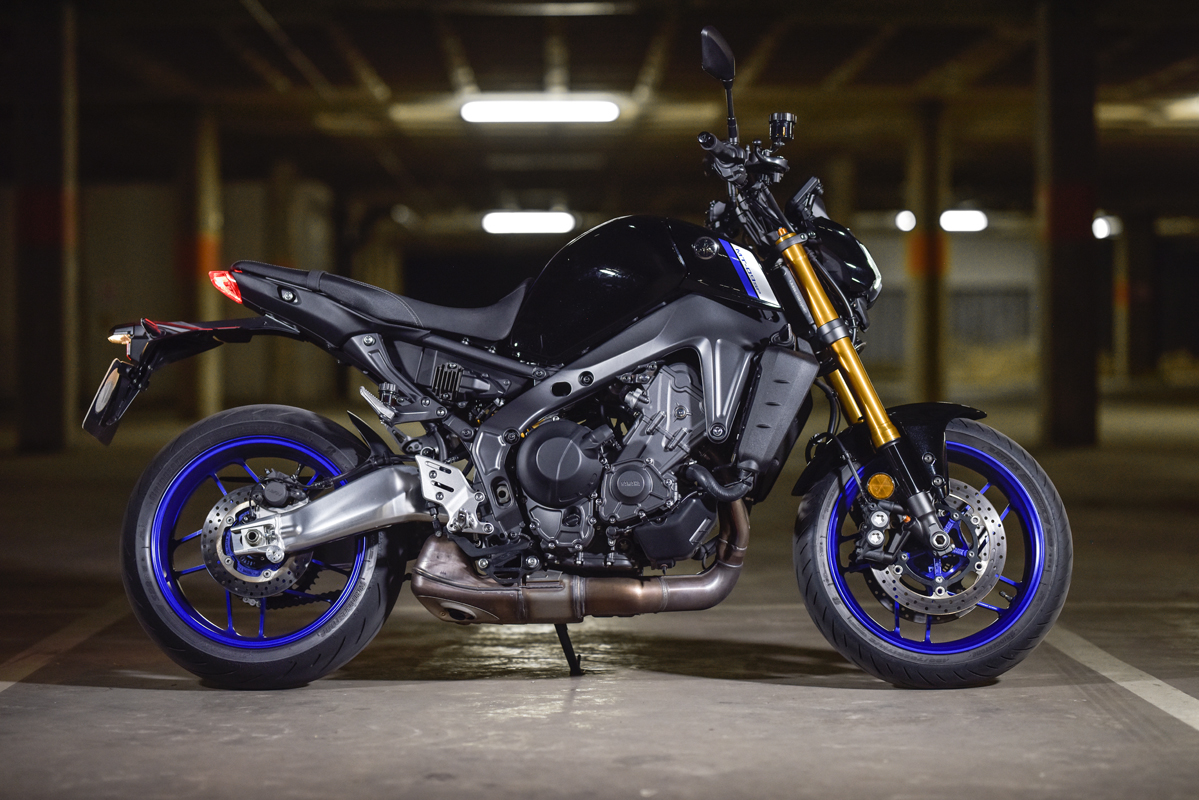
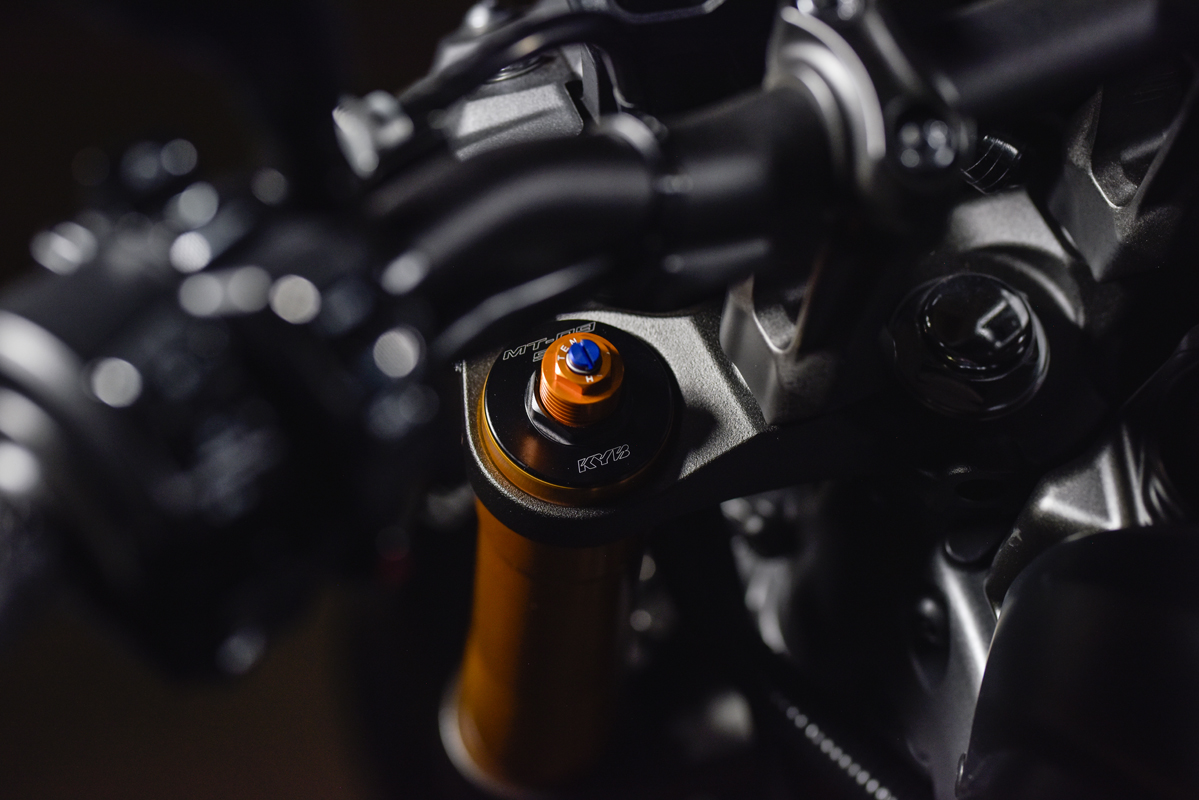
Yamaha have really paid attention to the details on the new MT-09—especially on the SP model. It gets a sexy polished swingarm, gold KYB forks with black stanchions, black levers, dark smoked brake reservoirs, adjustable foot pegs, black adjustable handlebars, and a paint job that mirrors the R1M. All these little touches make the SP so much more special, and worthy of the SP badge.
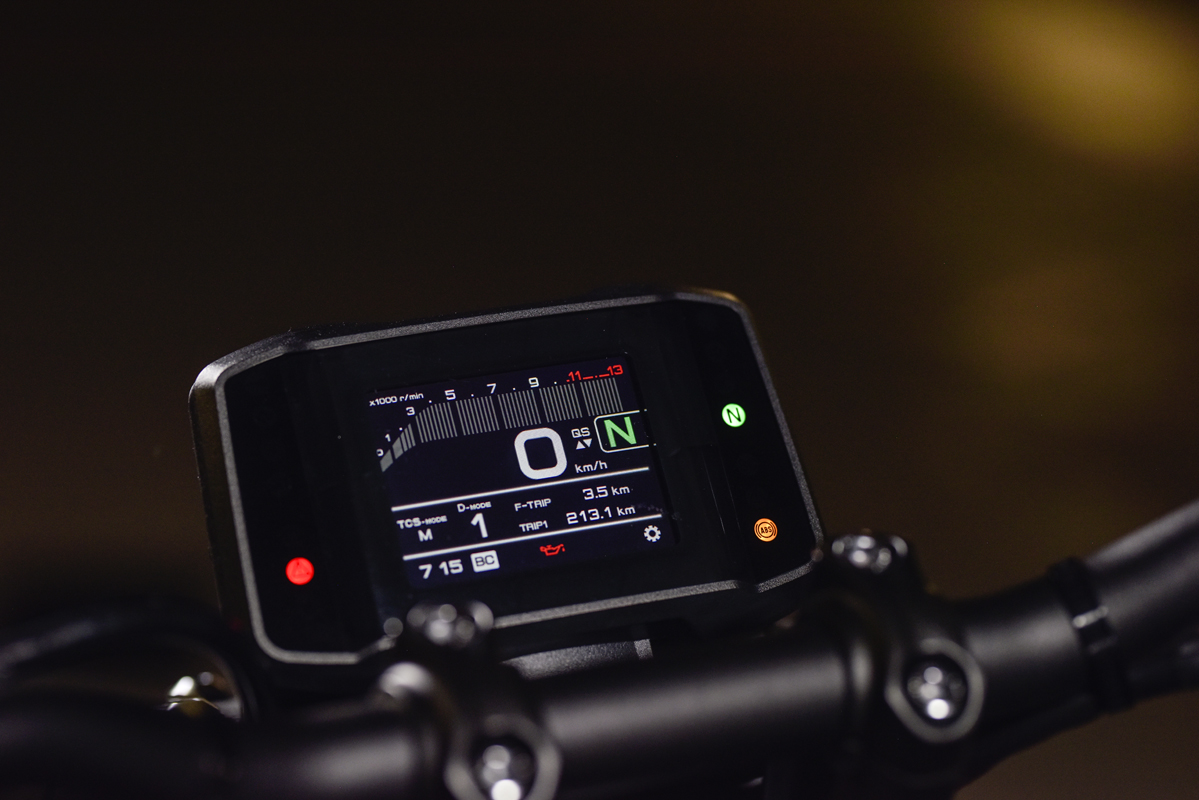
The build quality is even evident in parts like the new switchgear, which is neatly laid out and easy to understand. The new 3.5” colour multi-function TFT dash is another neat touch from Yamaha. Although smaller than its competitors, it’s readable and suits Yamaha’s minimalist style. Unlike the base model, the new SP also comes with cruise control, which actually works really well—reducing wrist ache on those long open roads.
With all these cosmetic and chassis changes, it’s very easy to gloss over the motor, and think that it’s simply been made Euro5 compliant. But the new motor has actually shed some weight, and been bumped up by 42 cc. In turn, this pushes the output up from 113 hp to 117 hp at 10,000 rpm, and the torque from 82 Nm to 93 Nm at 7,000 rpm. This doesn’t sound very flattering on paper, but in the real world, combined with its new ride-by-wire throttle, it makes all the difference.
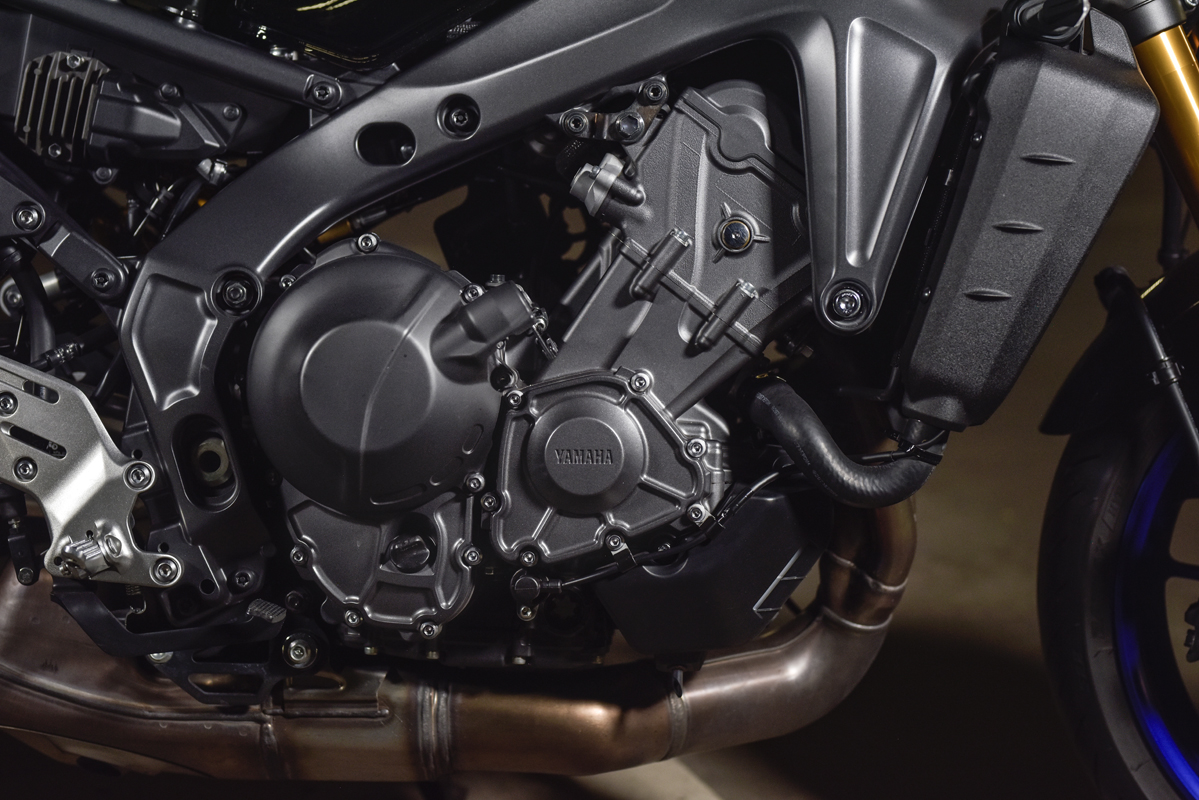
Riding the bike in urban environments, there was a feeling of composure and control from the connection between the motor and throttle—something that was missing on earlier models. With longer gearing in the first two gears, and peak torque hitting 1,500 rpm lower, it translates into a more usable and enjoyable performer for everyday riding.
Out on the open road, the MT-09 pulls like a freight train. It hovers the front wheel and roars through the new intakes as you bang through the notchy quick-shifter, turning your commute into a speedy orbit.
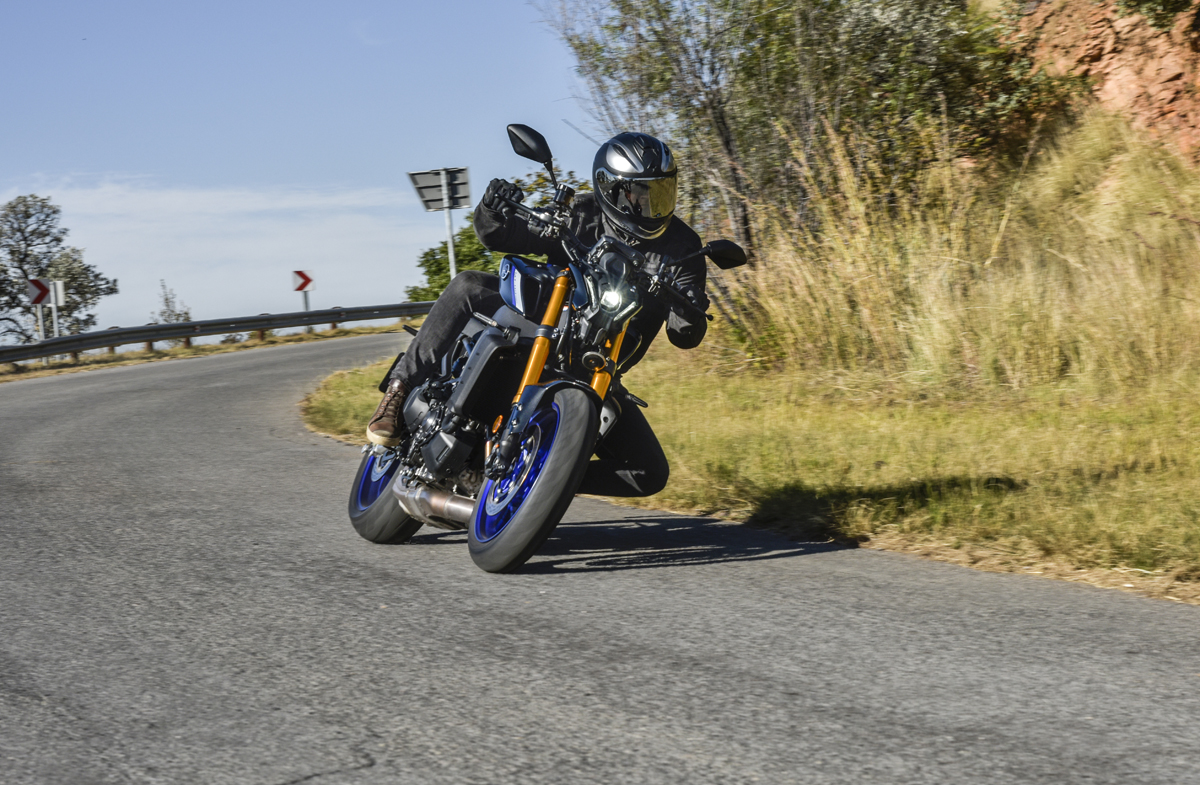
You can now change the MT-09’s personality at a press of a button. You’ve got adjustable throttle modes, ABS, traction control, slide control, lift control and even quick-shifter and auto-blipper sensitivity adjustment. If this is overwhelming then manual mode is for you. Just head into the bike’s settings, set it all up once and never touch anything ever again (it’s also known as ‘Dave Cilliers mode’).
Although the brakes are very similar to its predecessor, Yamaha have equipped the latest MT-09 with a YZF-R1 Nissin radial master cylinder. This gives it a very linear and controlled braking feel, versus the stop and go feel from before.
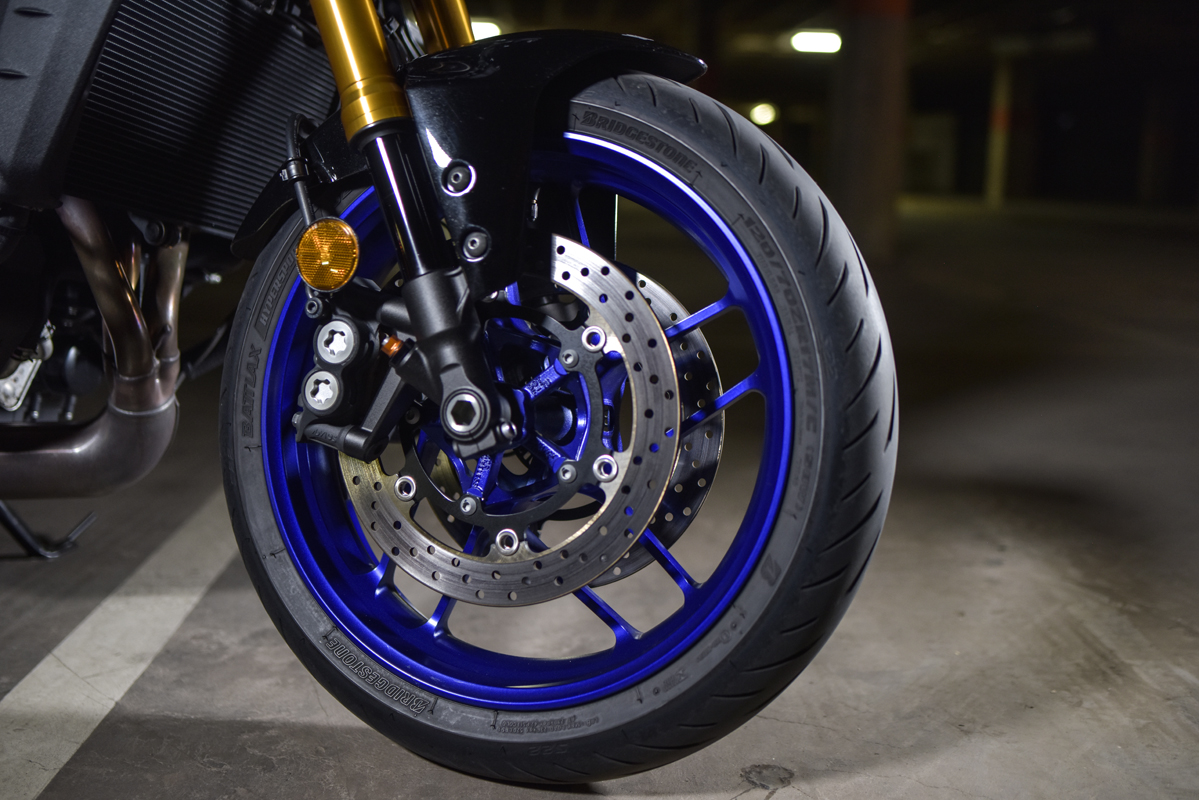
Now, I can’t say that I could feel the weight saving of the lightweight spin-forged wheels on the road, but the cornering ABS on the other hand work phenomenally well. Oh, and sorry hooligans: ABS is the only setting that can’t be disengaged.
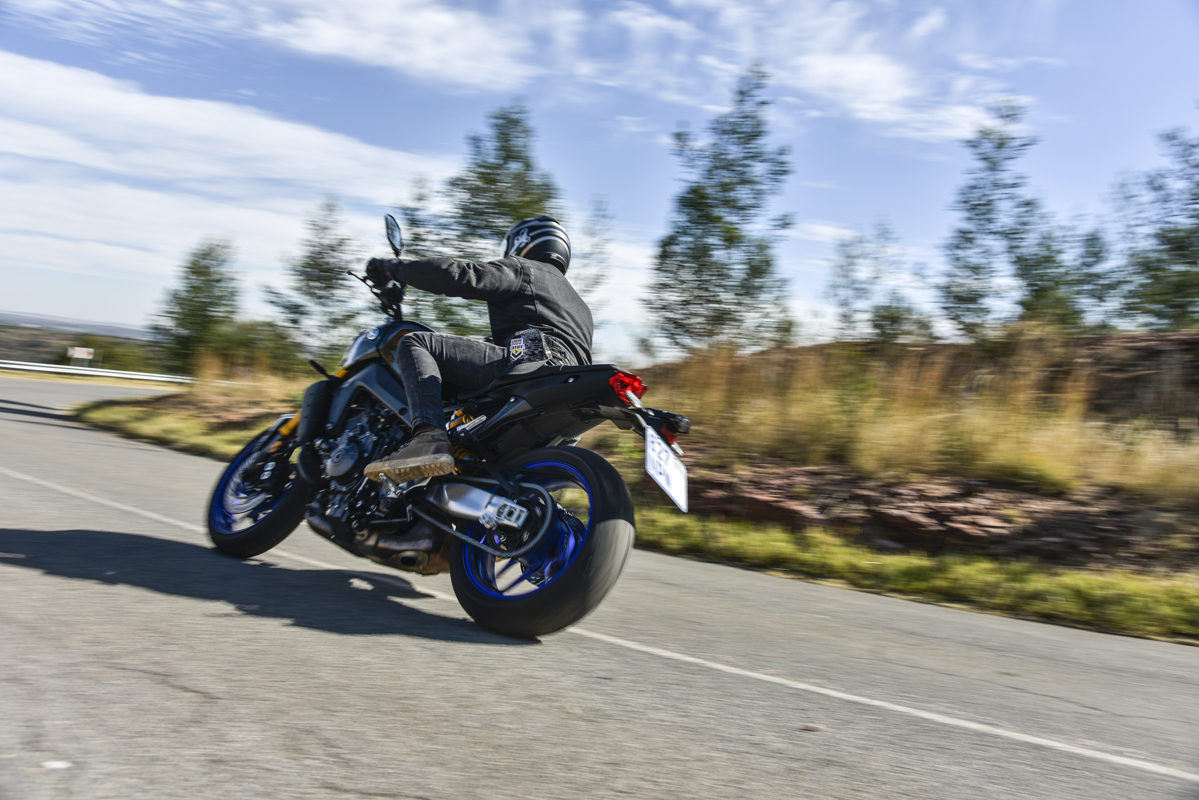
The biggest change, and one that all of us MT-lovers have been waiting and praying for, is better handling. Yamaha have finally got the formula for excellent handling right, with a fifty percent stiffer chassis and a lower front end that places more weight over the front wheel. High-speed sweeps and bumpy sharp corners have never been ridden as fast, or felt as stable, as on this latest MT.
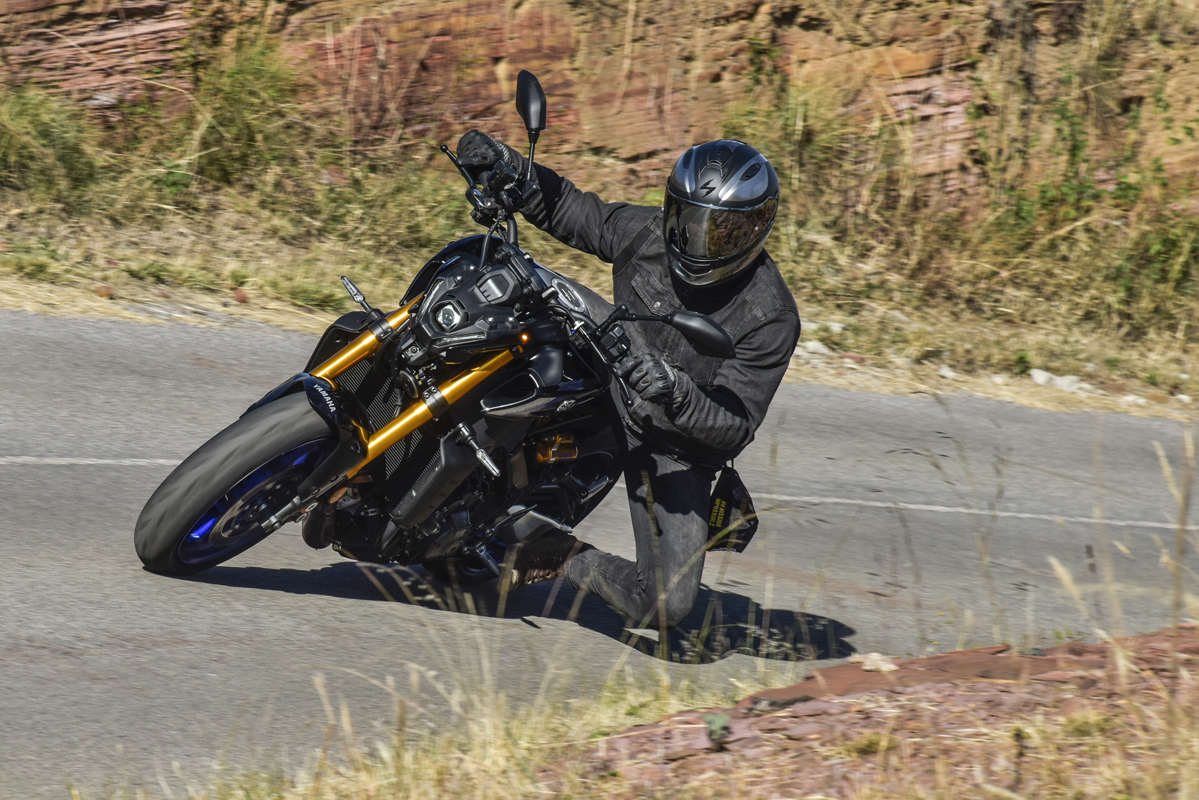
With its high tank and bar risers, it still feels like a tall, shimmying supermotard at speed. But the difference is it’s always controlled. It really is a point and shoot bike, and the SP model’s fully adjustable KYB forks and Öhlins rear shock add an extra layer of plushness and control.
My only complaint is the steering stoppers, which restrict you from doing low-speed U-turns in town. It sort of feels like a superbike with straight bars, and that’s not very practical for around town. Why not rather slap on a steering damper, and give us more steering angle?
I love a do it all bike, which is what drew me to owning an MT-09 in the first place. This latest-gen is still that wicked cool bike, but without its old defects.
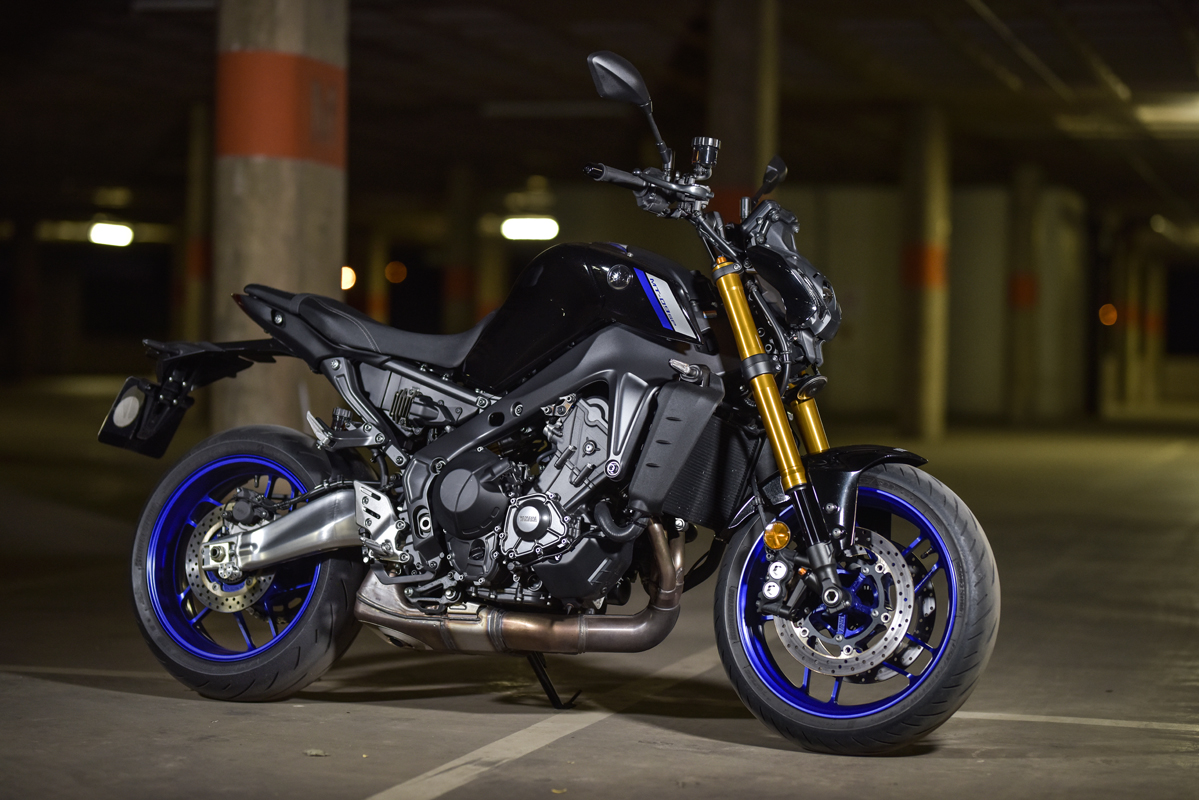
If weekend hooning is your thing, the MT-09’s exceptional motor and chassis will reward you. And with a few accessories, you could even turn it into a sports tourer. The MT offers way more comfort than a sports bike, and far more thrill factor from low down in the rev range too.
We haven’t got pricing from Yamaha South Africa yet, but if we take a look at its competitors it’s fair to assume that the standard MT-09 should be priced near the 200k mark. As a happy MT-09 owner, I can vouch that this bike blows the last two iterations out of the water. If you are still riding one of the predecessors and have a bit of savings left over, do yourself a favour and visit your local Yamaha dealer.
Westby Racing’s Mathew Scholtz Notches His Fifth Podium Result In Six Races
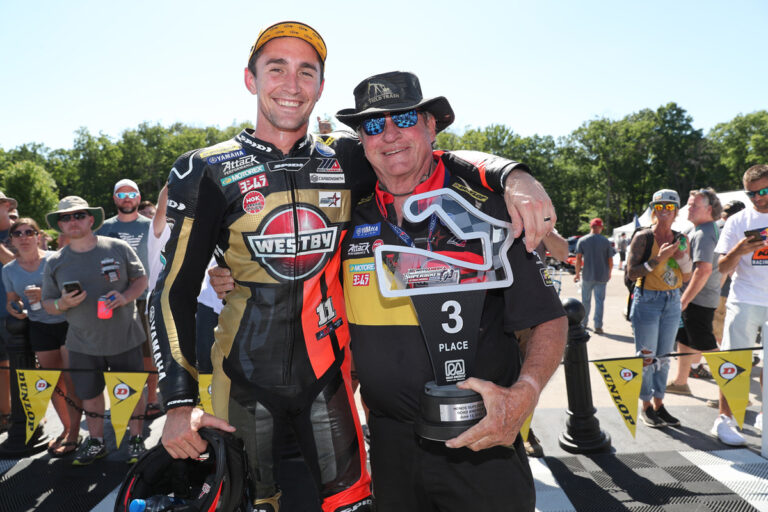
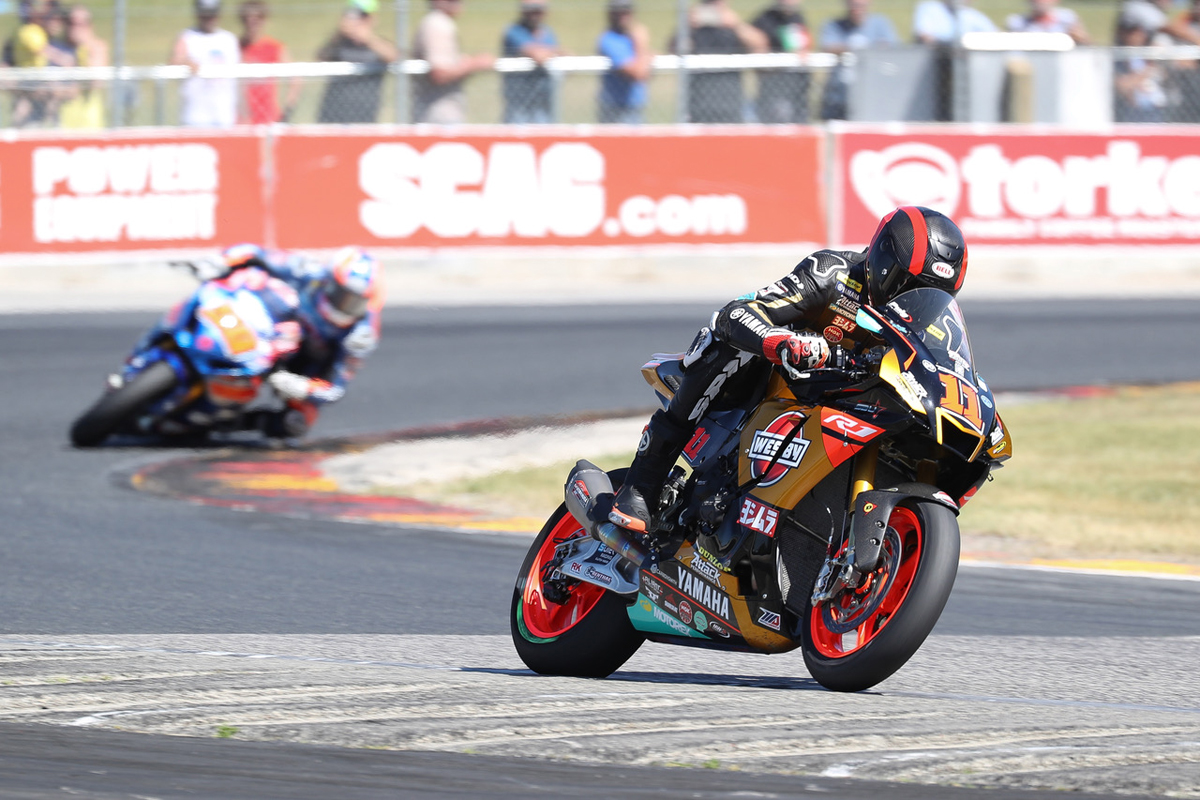
After finishing sixth in Saturday’s Superbike race at Road America, Westby Racing’s Mathew Scholtz bounced back with a podium finish on Sunday. With his third-place finish, Mathew has reached the podium in five out of the six races thus far in the 2021 MotoAmerica Superbike Championship.
Starting on the outside of row two based on his sixth-place finish in Saturday’s race, Mathew got off to a good start and quickly went to work moving towards the front. He raced the #11 Westby Racing Yamaha YZF-R1 all the way up to third place by lap three and maintained his podium position all the way to the checkered flag, while also successfully holding off a strong challenge from Bobby Fong on the run up the hill to the finish line.
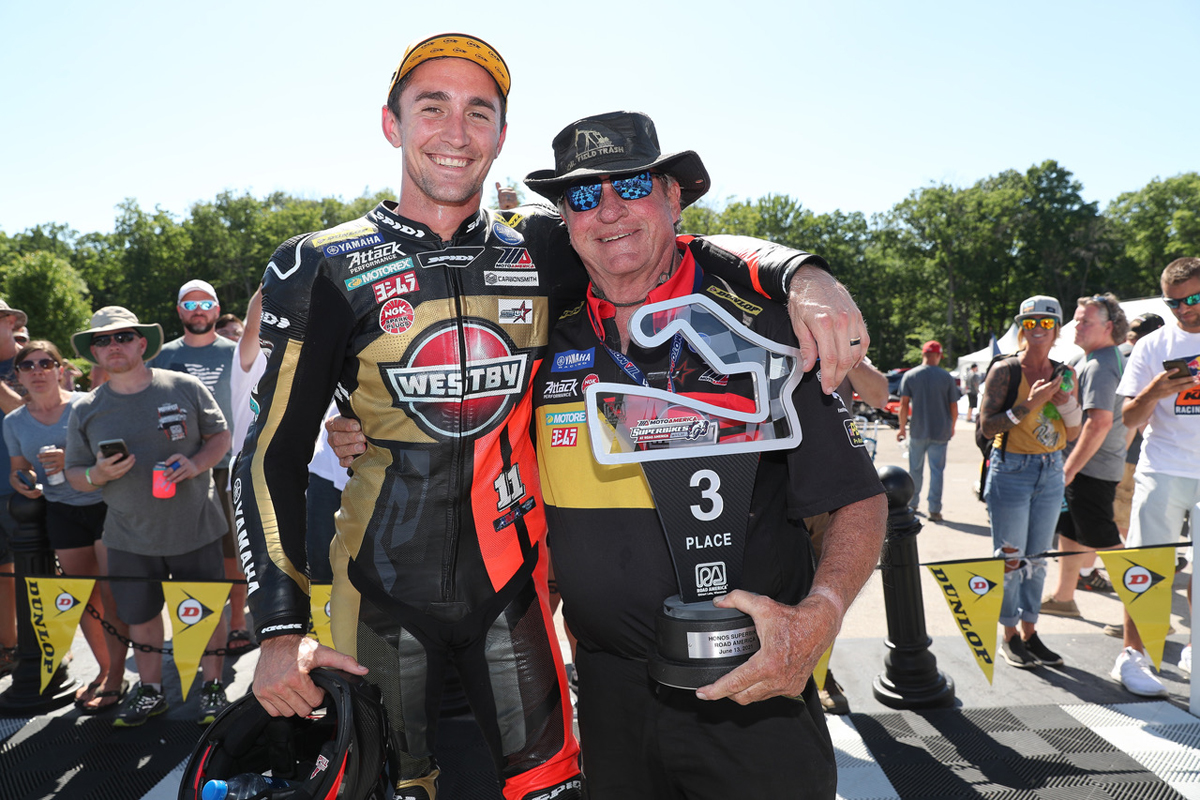
Mathew Scholtz: “We made some pretty huge changes with the traction control just to try to drive out of the corners better,” Mathew said. “Yesterday, we could see that the top speed wasn’t bad, but it was that third, fourth, fifth gear coming out of the corners where we were losing big time. So, we decided to turn off the traction control, which made it really hard, but it definitely drove better. You could see the lap times were better for the first couple of laps. It worked out perfectly that I got past (Bobby) Fong, (Josh) Herrin, Kyle Wyman, and just rode my own race from there. Then, with maybe four laps to go, something started happening. There was liquid shooting back up at me, and the clutch lever was bouncing backwards and forwards. Everything wasn’t really working well, but I managed to hold on. I’m happy to be third and back up here on the podium. Thank you to the Westby team. Everybody has been working hard. We have our work cut out for us to try to catch up to Jake, but we’re ready for the challenge.”
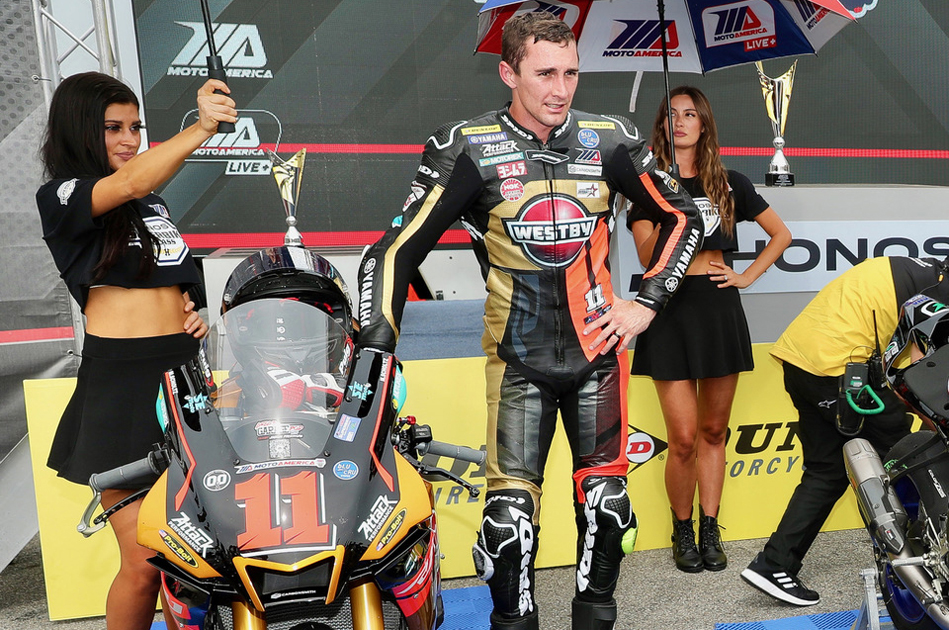
Next up for Westby Racing is round four of the MotoAmerica Championship, which will take place at Ridge Motorsports Park in Shelton, Washington, on June 25 through 27.
Monster Energy Yamaha Rally Team’s Ross Branch Wins Rally Kazakhstan
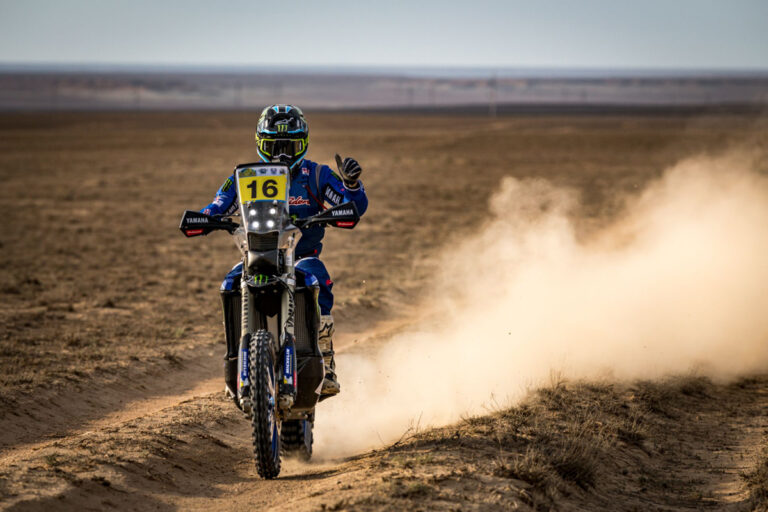
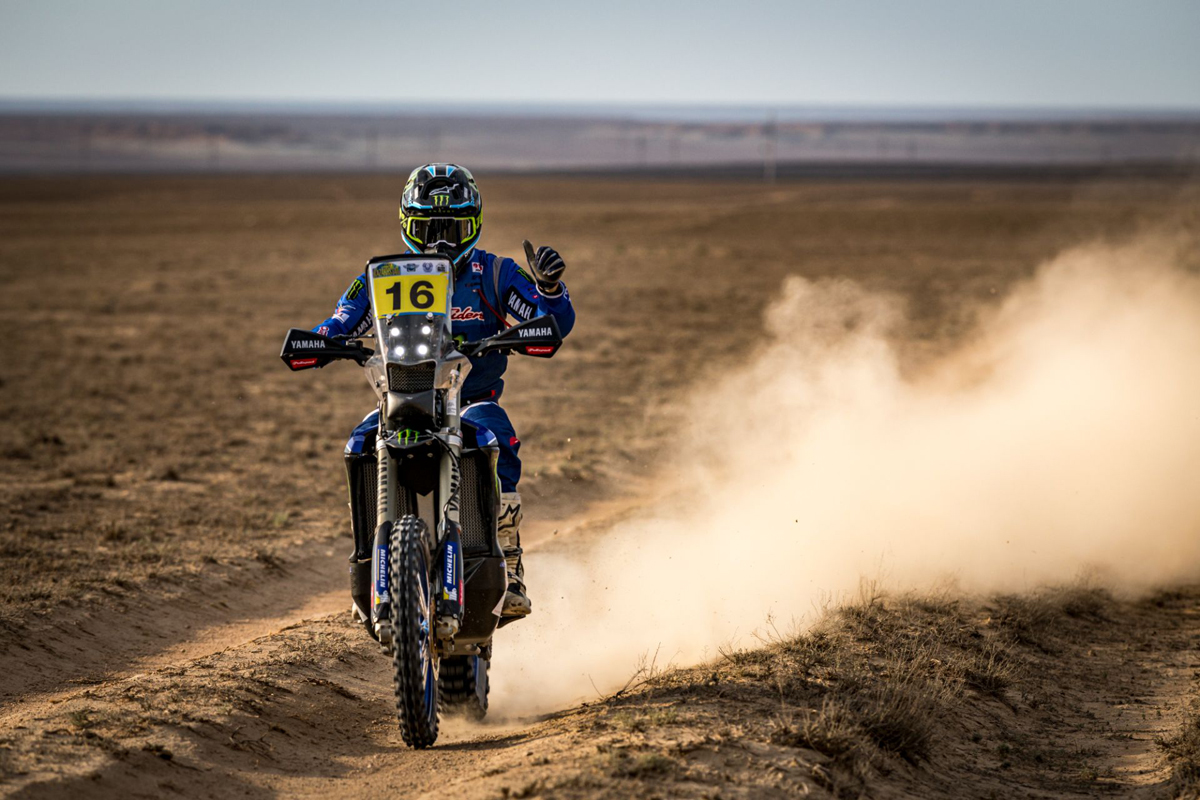
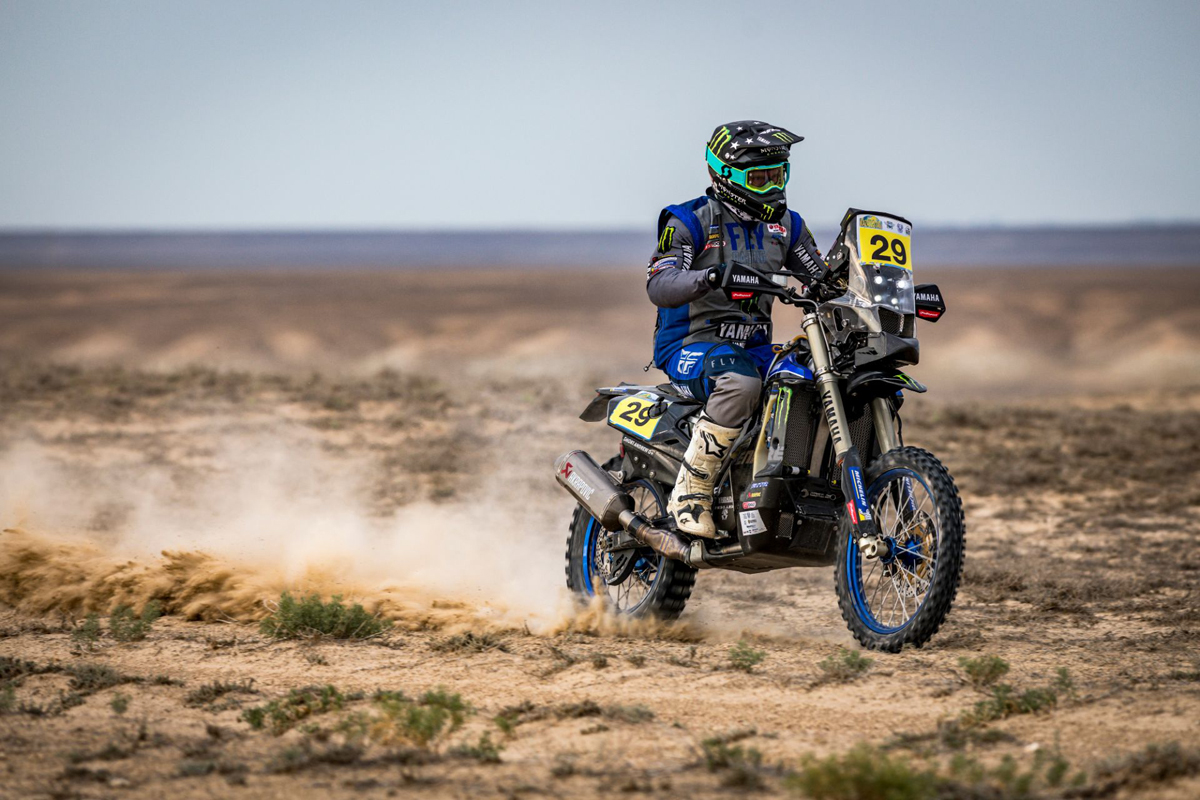
Monster Energy Yamaha Rally Team’s Ross Branch has claimed a deserving victory at the opening round of the 2021 FIM Cross-Country Rallies World Championship, Rally Kazakhstan. Finishing second on the shortened final stage of the event, Branch maintained his position at the top of the overall leaderboard, which he’d held since the close of stage three. Joining Ross on the podium was Yamaha teammate Adrien Van Beveren in third, with Andrew Short claiming fifth overall to complete a highly successful rally for the team.
The decisive fifth stage of Rally Kazakhstan was cut short 158 kilometres into the special due to an issue with the event’s refuelling equipment, which affected all riders. Nevertheless, strong and consistent rides from Ross, Adrien, and Andrew up until that point ensured their positions in the provisional overall standings were maintained, with all three finishing in the overall top five.
With a four-minute lead entering the final day of racing at Rally Kazakhstan, Ross Branch’s main objective was to deliver a consistent finish on stage five to claim the overall win. In placing second, Ross further extended his lead to just over five minutes to earn his first-ever victory in the FIM Cross-Country Rallies World Championship.
The Monster Energy Yamaha Rally Team will next be in action in just a few weeks’ time at the Silk Way Rally, round two of the FIM Cross-Country Rallies World Championship from July 1-11.
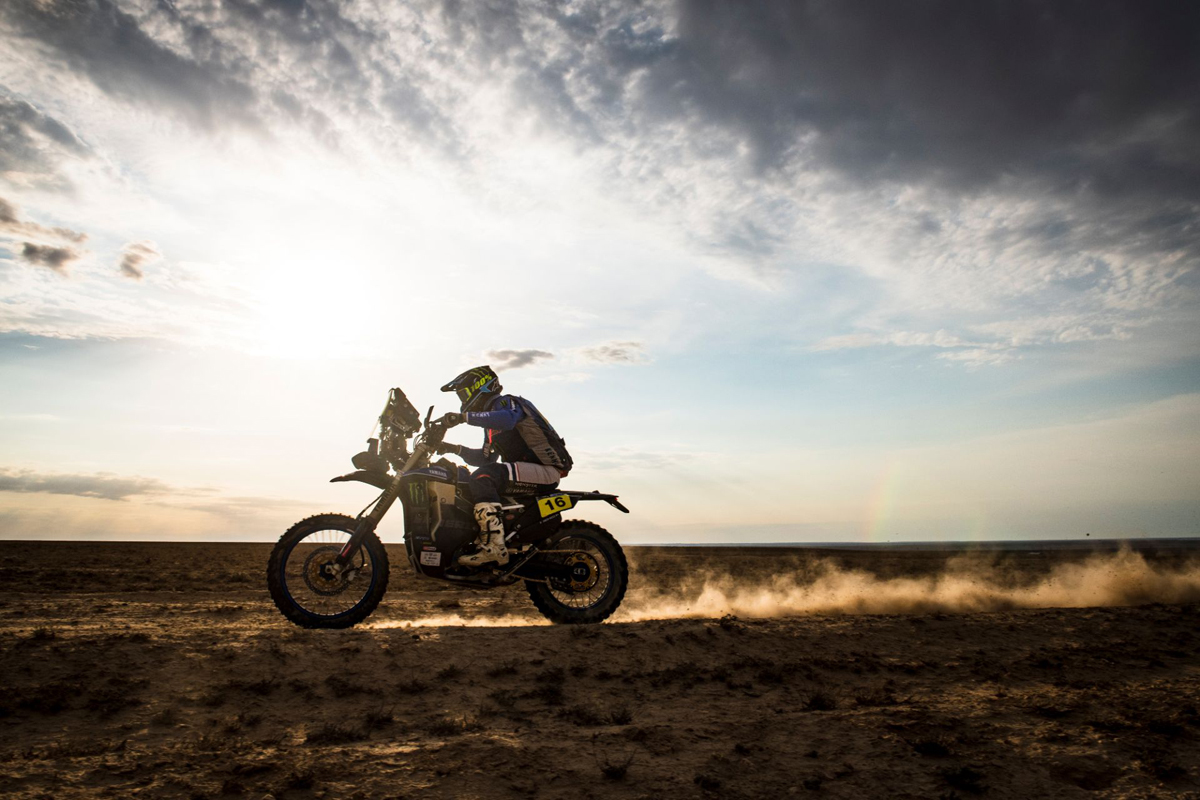
Ross Branch – Monster Energy Yamaha Rally Team: “All-in-all it’s been an amazing week here in Kazakhstan and I’m so happy to come away with the win. Before this race, I really focused on working on my navigation and it certainly worked here. I opened stages and finished upfront on each stage so I can’t ask for anything more. The goal today was to manage the lead that I had, and I feel like I was doing a good job up until the stage was cut short. Overall, I’ve really enjoyed the whole week. It’s great to be racing again and the team has done a fantastic job with the bike and it’s just been an awesome experience. I’m really happy to have won for myself and the team.”
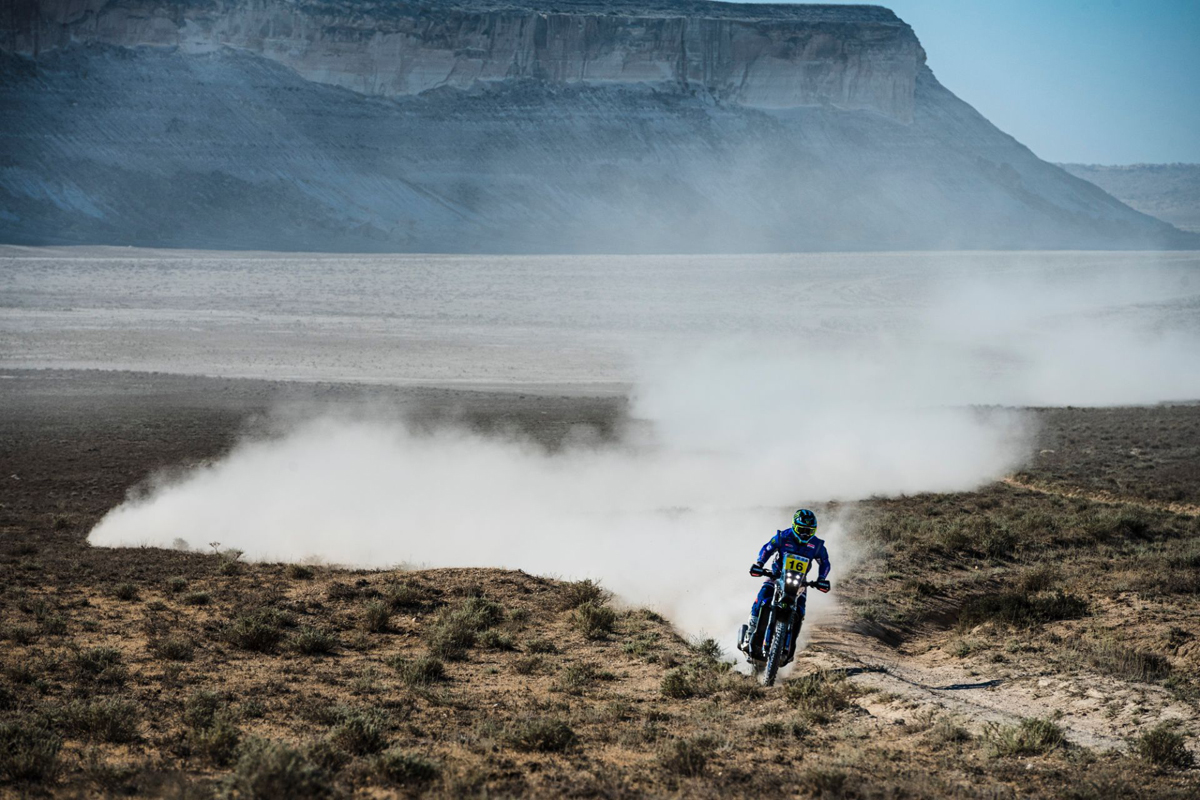
Alexandre Kowalski – Yamaha Europe Off-Road Racing Manager: “It’s been a great rally for the riders and the whole team at Rally Kazakhstan. A lot of work and changes have happened since the Dakar and for Ross to win this rally, have Adrien on the podium, and with Andrew in fifth shows that our hard work has paid off. For Ross to win is just fantastic. His goal was to win a round of the series this season and he’s ticked that box already. It was a deserving win. He was upfront all week, opened stages, and made very few mistakes. This win is great for his confidence and he has come a long way as a rider since the Dakar.”
Rally Kazakhstan Overall Provisional Classification (after stage 5):
1. Ross Branch (Yamaha) 14:39:02
2. Matthias Walkner (KTM) 14:44:09 + 0:05:07
3. Adrien Van Beveren (Yamaha) 14:49:18 + 0:10:16
4. Daniel Sanders (GASGAS) 15:10:36 + 0:31:34
5. Andrew Short (Yamaha) 15:11:23 + 0:32:21
Suzuki reveals new HAYABUSA to an excited audience at Ridgeway Race Bar
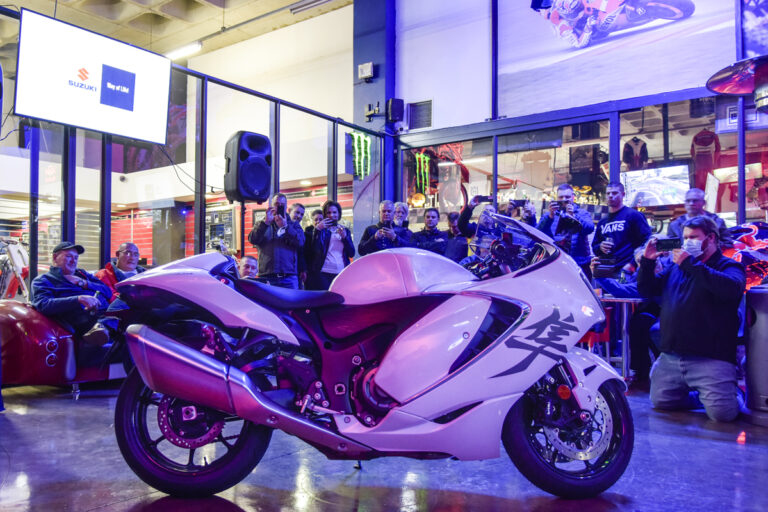
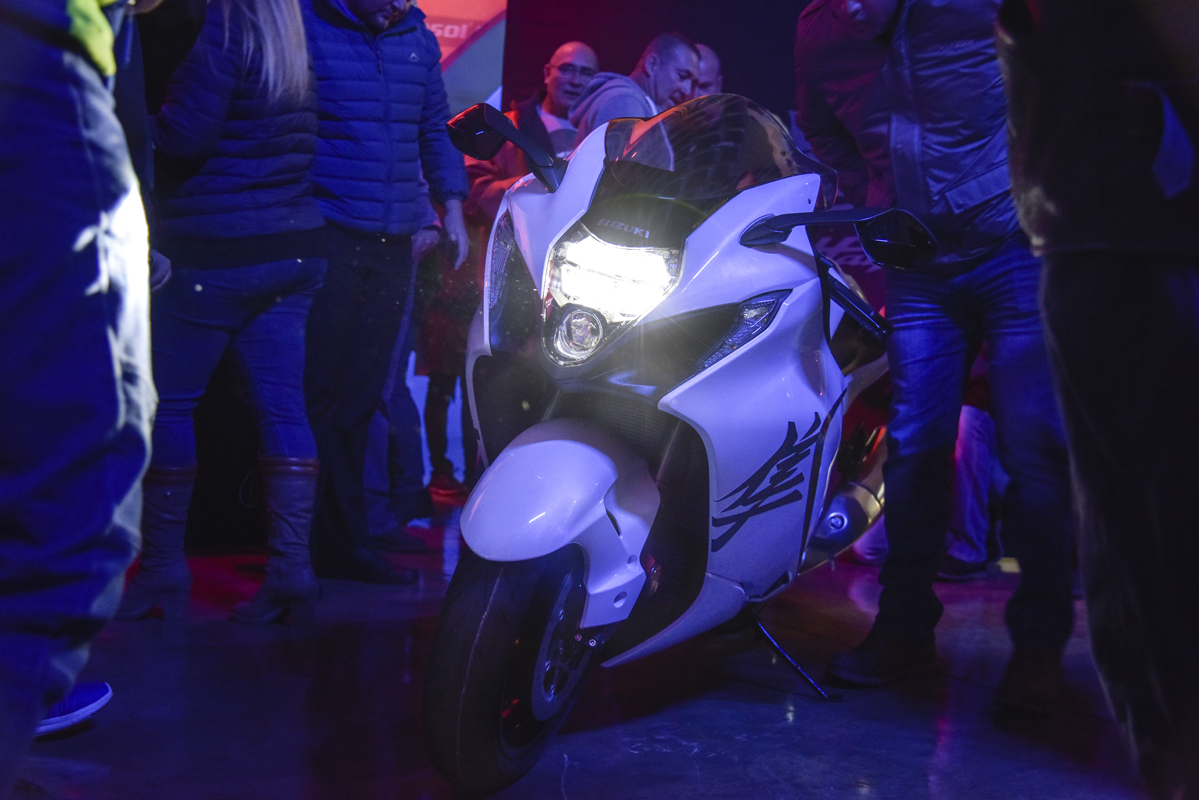
‘Hayabusa’, the name that conjures up images of Drag Strips and Top End blasts. The name that strikes envy and respect into the hearts of all those that worship at the Altar of Speed. We have been teased with videos of the newest itineration of the iconic ‘Busa on the internet for a while now. Now we got to see, touch and feel it in the metal. Suzuki South Africa gathered the clans at the Ridgeway Race Bar to unveil the new King of Speed.
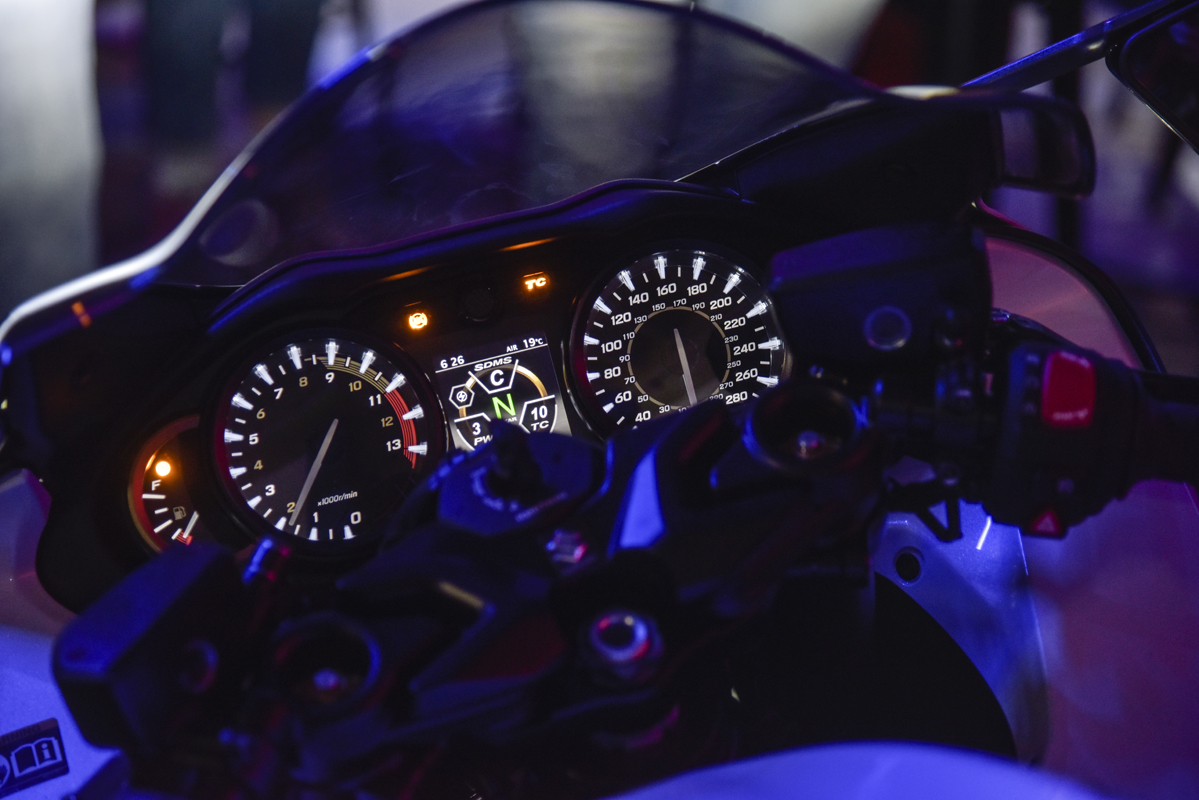
I have previously stated that whilst I have endless respect for the ‘Busa when it comes to speed, it was, to me anyway, butt ugly. It looked like a fat wax GSXR that had been left out in the sun. The perverted love child of a porpoise and a whale. Thankfully you never had to gaze on it for long, because whatever you were riding could more than likely become the platform from which you could watch the Hayabusa disappear into the distance. Well, the latest ‘Busa is way more GSXR than porpoise. Sleek, stylish and classy. Yes, it is still a big bike with a long wheelbase for warp speed stability and a bit bulky around the big motor, but you fold into it with absolute comfort. This bike will reel in horizons with the best of them. The bike on display was in a pearl white, with dark blue accents. Pure class!
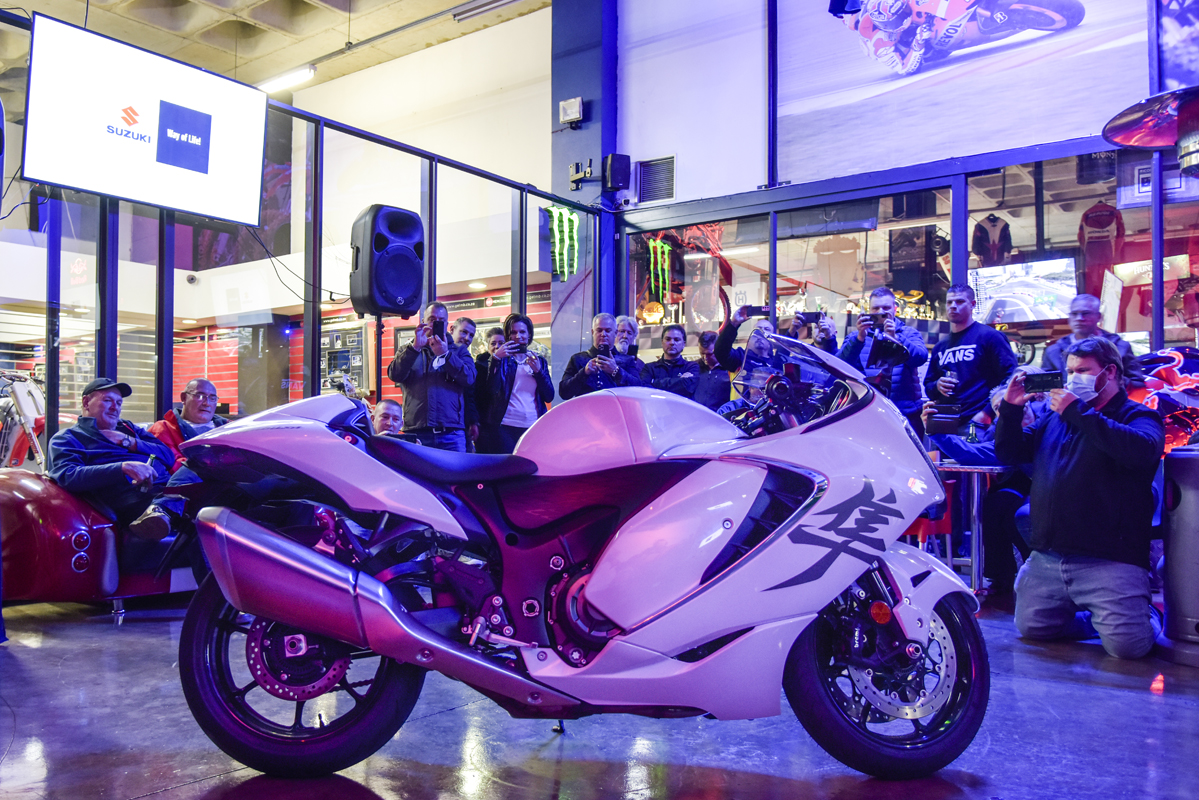
Suzuki has a tried and tested recipe for success with the Hayabusa. Put a powerful, torque-rich, big bore, normally aspirated motor in a slippery aerodynamic package and you have a wickedly fast, yet easy-riding package. The newest ‘Busa does all of these things too. I love the fact that the clocks are still analogue. If it ain’t broke don’t fix it! Seeing a needle nudging 300 is, for me, way better than watching the gauge on your digital scale show you how much lard you packed on over lockdown. The twin exhausts are large, yet sculpted, and sound great. At idle the ‘Busa whispers a deep baritone with absolutly no mechanical accompaniment. It is eerie how quiet the motor is.
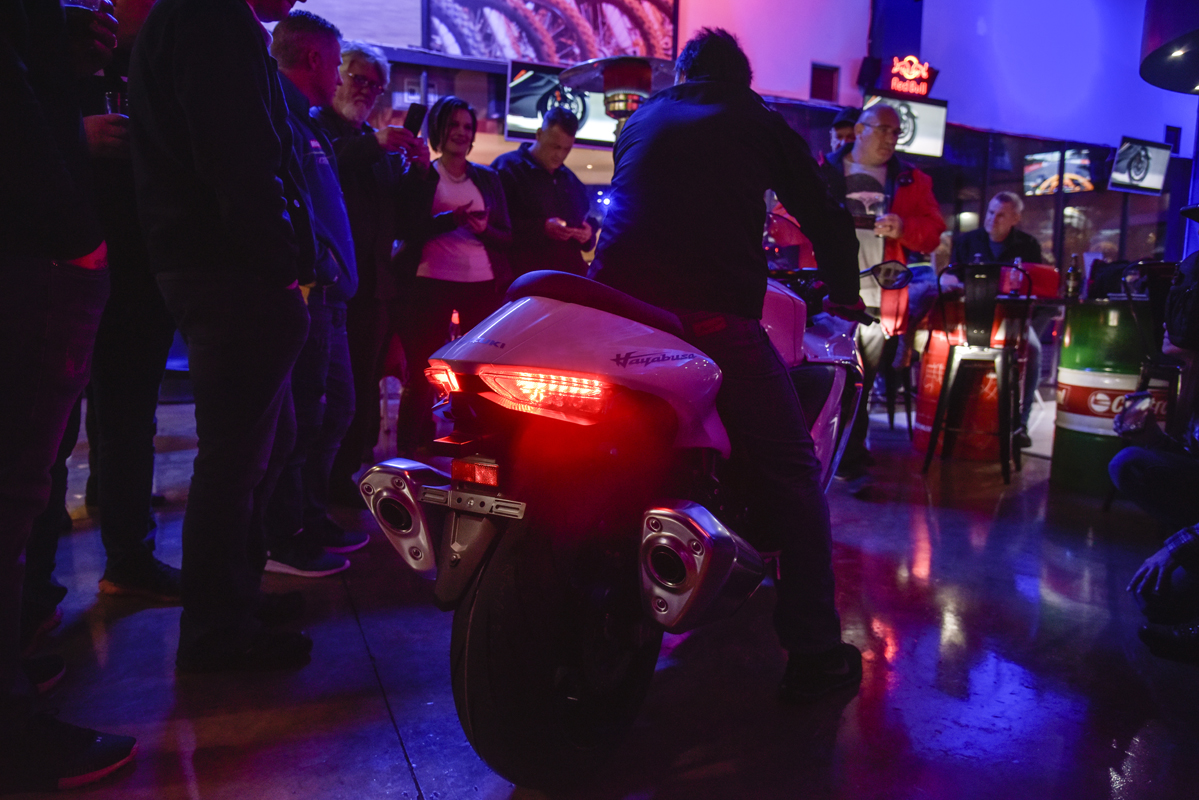
The internet abounds with specs. This is not the object of this exercise. I just wanted to tell you that SA’s favourite King of Speed is back and raring to go in its handsome new livery. It will be wickedly fast. It will be comfortable. It will be refined like never before. At around R329.000 it is a real-world riding steal. The first units will arrive in October. They are all already spoken for! As soon as we do get a chance to take the new Hayabusa for a proper thrash, we will tell you all about it. Until then, you will have to make do with Bjorn’s shots.
BMW launch their latest R 1250 GS/ADV & R 1250 RT
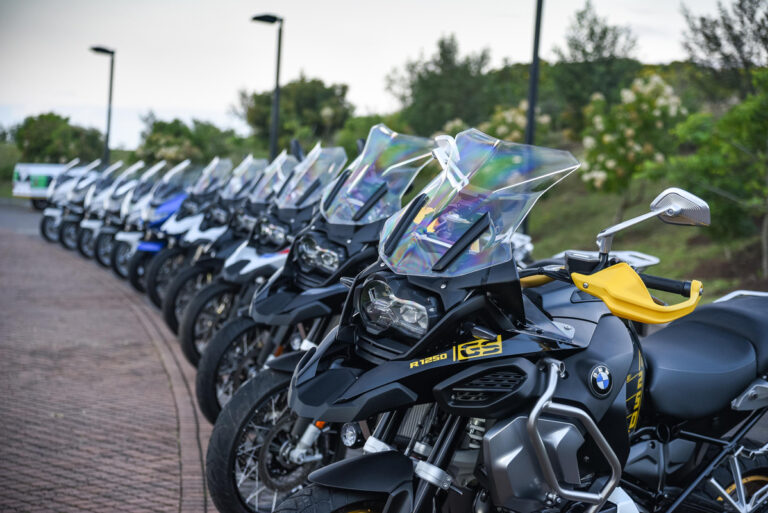
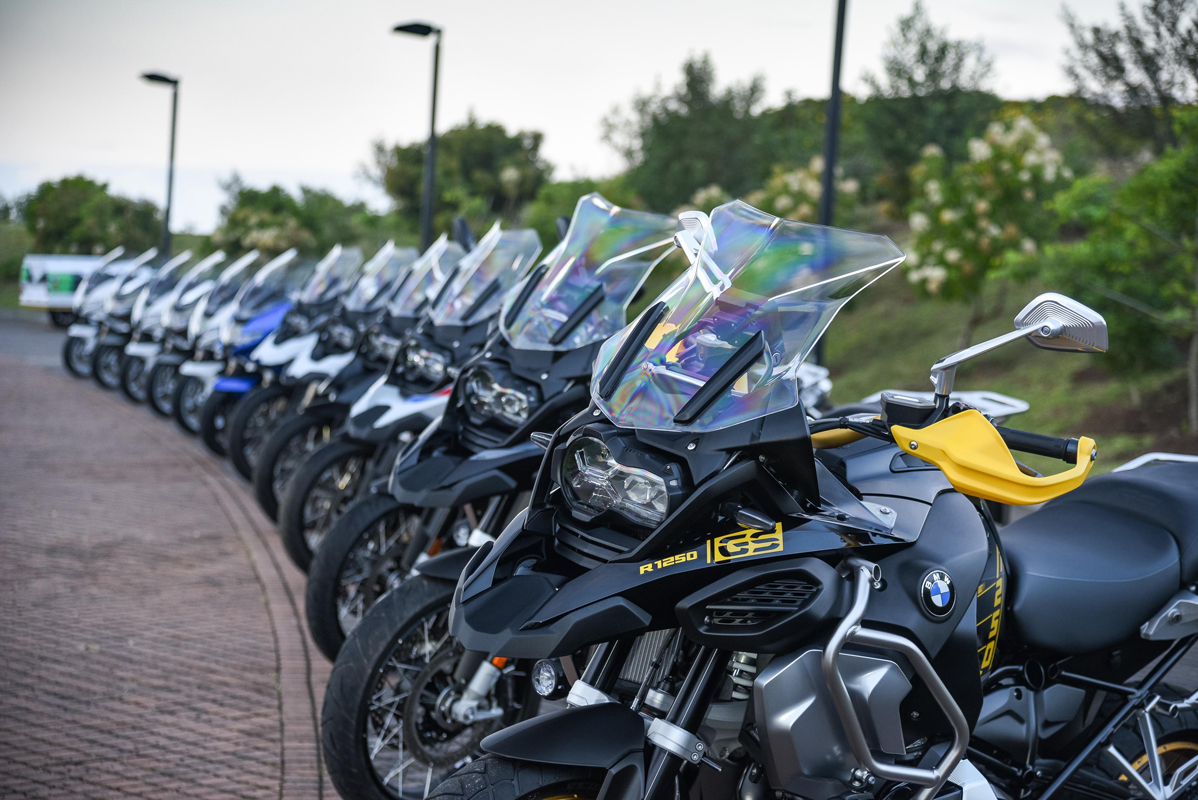
I recently hopped a plane, together with some fellow journo’s, out of Jo’burg to the beautiful town of George in the Western Cape, to attend the launch of BMW’s latest RT and GS 1250s. The event was hosted at Oubaai near Herold’s Bay, where we arrived in the late afternoon in soft drifting drizzle. Having spent a large chunk of my childhood in George, the weather was a real Deja Vu experience. The forecast for our riding day, however, was “partly cloudy and cold, but no rain”. And so it was.
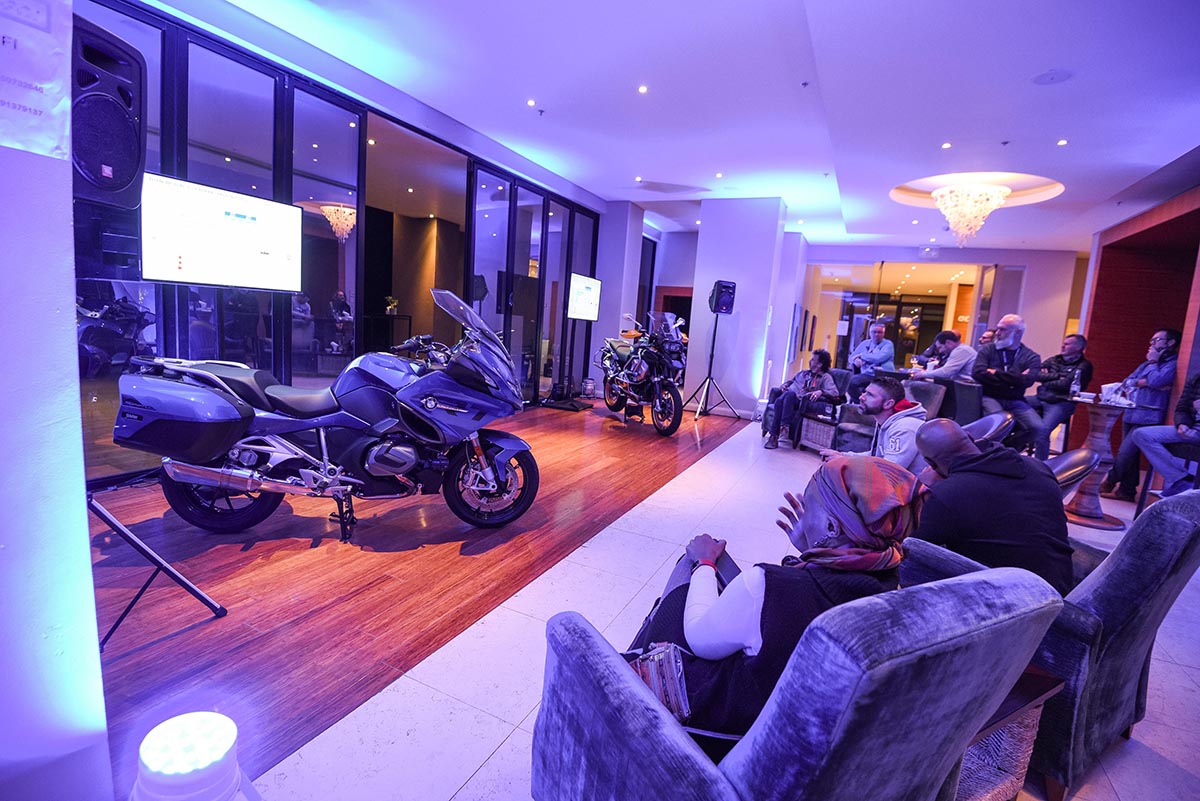
Having recently sampled the latest KTM 1290s, I was quite intrigued to see how the Bee Emm’s stacked up. We rode out onto damp roads under a weak wintery sun. I was riding a 40 year Anniversary R 1250 GS Adventure, resplendent in its yellow and black livery which looks great in ‘real life’. It was immediately dubbed the “Bumble Bee” by all and sundry. Our route took us around the outskirts of George and onto Montagu Pass, the old toll road over the Outeniqua mountains. Outeniqua (Khoikhoi for “a man laden with honey”), gives an inkling of something special and the pass is exactly that. The dirt track winds its way up a narrow gorge with splendid views of heather-covered mountainsides. Not that I was looking around too much. A couple of days of consistent drizzle had left the road in treacherous, muddy condition. The bikes were shod with street biased 80/20 tyres, so mud was not our friend.
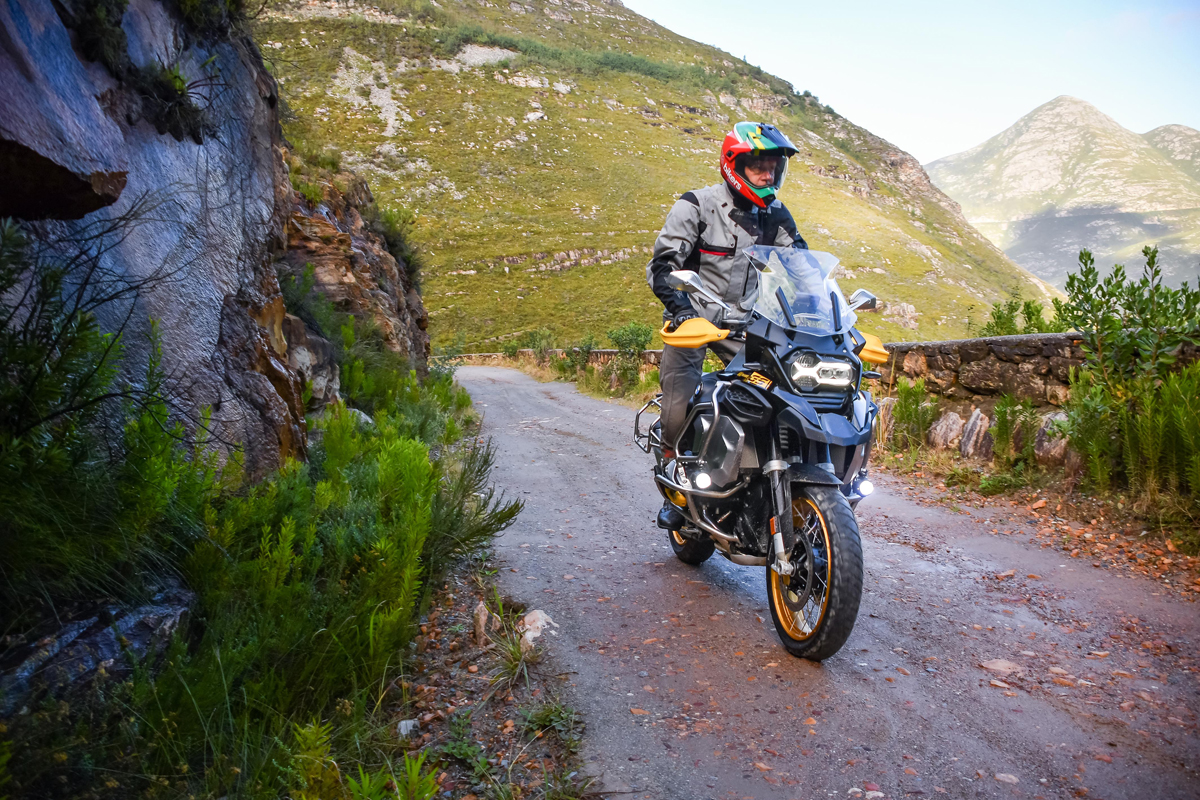
“It’s a bad workman that blames his tools”, is how the saying goes. Fact is the big Beemer was coping way better than I was. I am still struggling somewhat from a still weak, recovering dislocated shoulder, suffered during an armed robbery attempt whilst on my mountain bike last October. I needed to get my mojo back fast. I let the quicker guys past and relaxed, focussing on riding the Adventure smoothly. Ruts on the road were swallowed up effortlessly by the superb electronic suspension and the ‘Enduro Mode’ which I had selected, made the throttle response spot on. The boxer motor has, over the years, been refined into a thing of brilliant mechanical prowess. Silky smooth, torquey and powerful, it is a fantastic, user-friendly power unit.
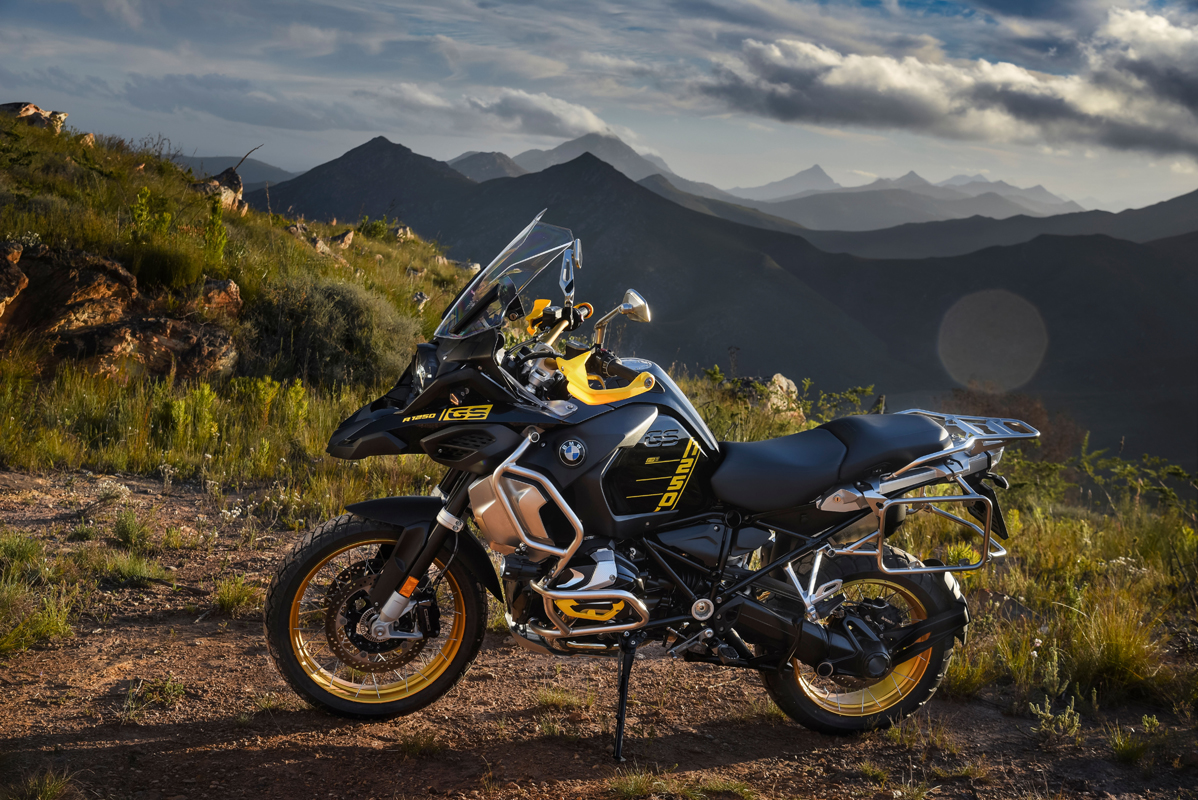
Slowly but surely my confidence built, courtesy of the brilliant GS. Carrying its weight low, the bike is supremely stable over all surfaces. Even the super slick muddy surface that we negotiated in places, resulted in few sphincter clenching moments. We crossed over Route 62 onto gravel Karoo roads, where things opened up and we could pick up the pace. The odd lurker became a non-entity as it was soaked up by the brilliant suspension. Fact is, I have never felt better standard suspension on an Adventure motorcycle of any make. The 40 years of constant fettling has developed the GS into a truly formidable Adventure weapon. Add to this the high level of creature comforts and you have the most spectacular platform on which to smash distance.
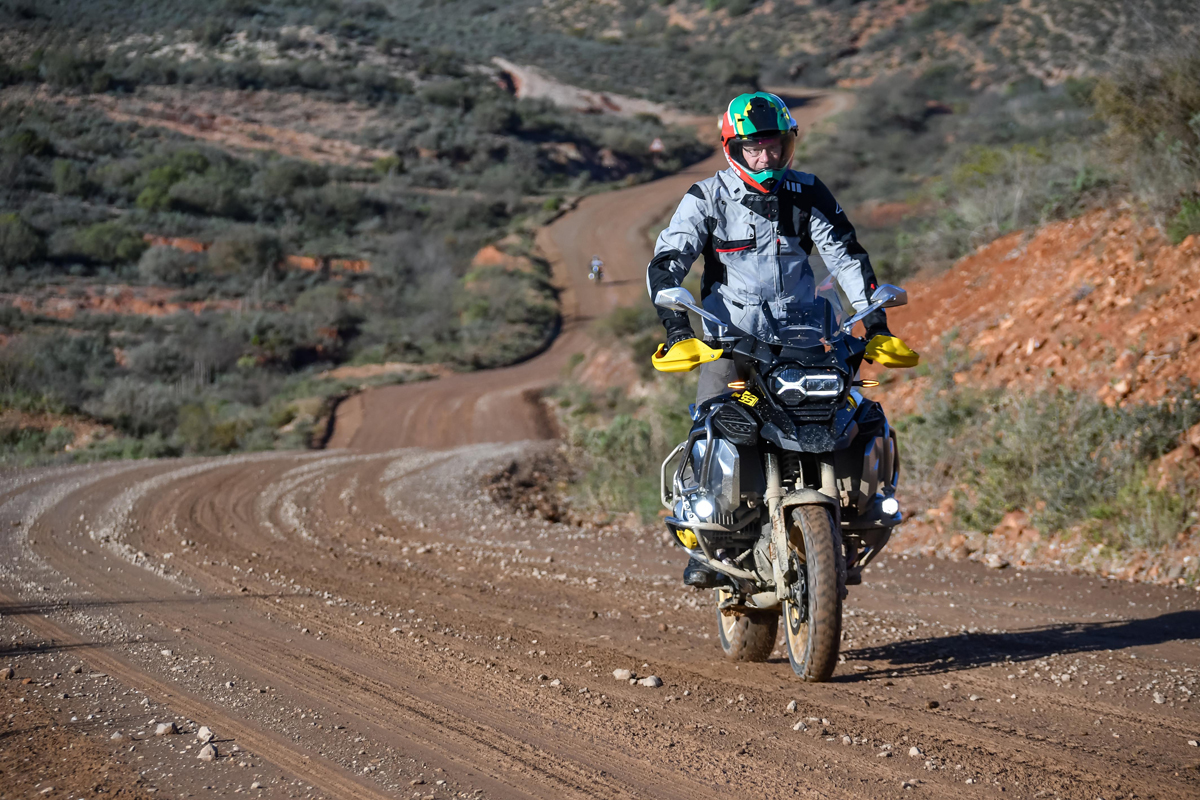
Mega comfy heated seat, heated grips, adjustable windshield and all the info you need at your fingertips via the TFT display, truly the big Adventure has it all. Seldom mentioned these days is the wonderful shaft drive which is impervious to mud, water and grime. The final word on the GS Adventure is perhaps to echo the comment made by a fellow journo (with huge off-road experience). “The Adventure is so good that it is almost boring. It is so planted that it feels as if you can do anything on it. It hooks up and finds traction everywhere”. Fair praise from a man who owns a big orange Adventure bike, legendary for its off-road ability.
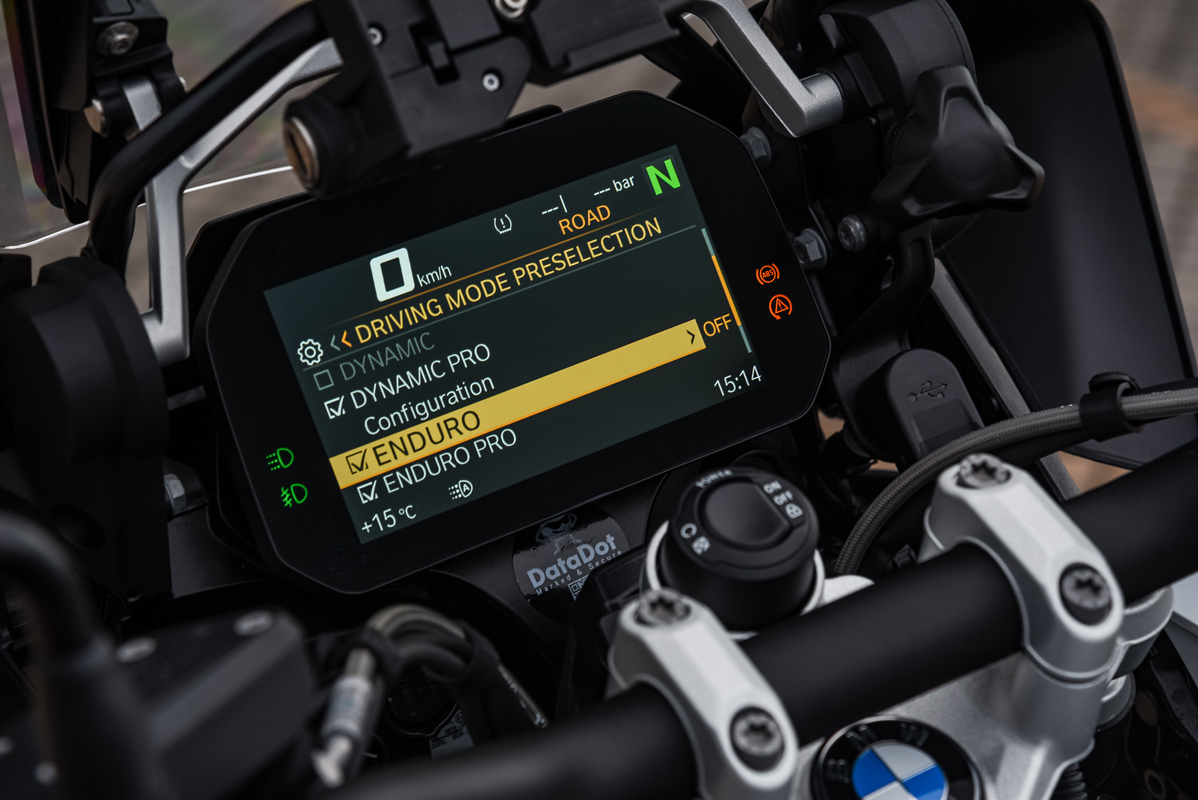
After a coffee and pastries stop at a funky little roadside coffee shop, I jumped on the regular GS. Immediately the lack of bulk is apparent, as is the lower seat height. On the dirt, the GS is really capable too. It is more chuckable than the Adventure and the shorter travel suspension works admirably, albeit with slightly less ‘plushness’ than the Big Daddy. I totally get why the GS has been the benchmark do-it-all bike worldwide, for so many years. BMW have steadily refined the bike into a truly superb motorcycle that is genuinely the Swiss Army knife of motorcycles. I admit to having been a champion for the underdog over the years and as such, almost tried to find fault, unfairly, with the GS. Having matured as a motorcyclist I am now able to be way more objective. If you are critical of the GS in this day and age, it is most likely due to the fact that you haven’t ridden one recently or because your particular brand of riding has taken you down a different path.
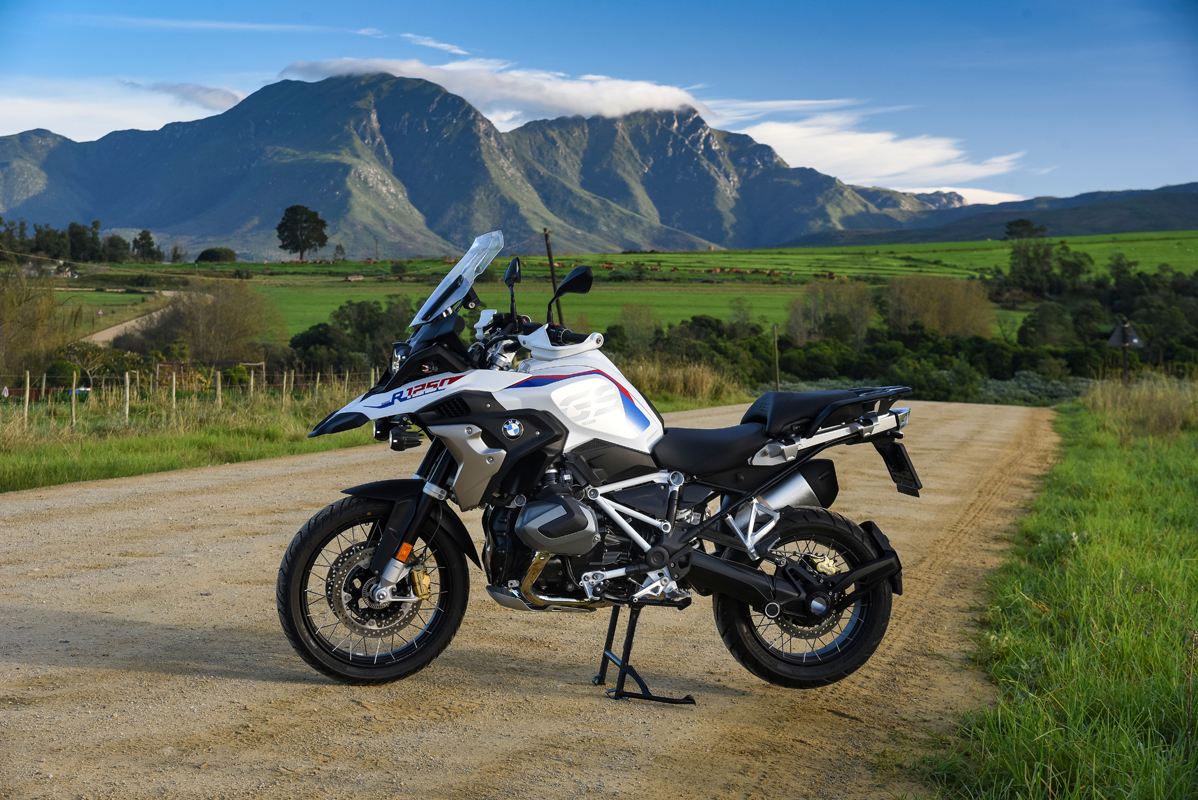
If you back up a bike that is this good with the generally excellent BMW dealer experience, then it becomes a truly formidable value proposition. Bikes with this level of specification don’t come cheap, with prices hovering around the R350 grand mark and even higher, however you get an incredible amount of motorcycle for your money. A motorcycle that has proven to be as reliable as it is competent. If you consider that this sort of money will only buy you a yawn-a-minute medium size family sedan, versus the epitome of Adventure motorcycling, then the new GS looks like a bargain. Rather live a day as a lion than a lifetime as a sheep!
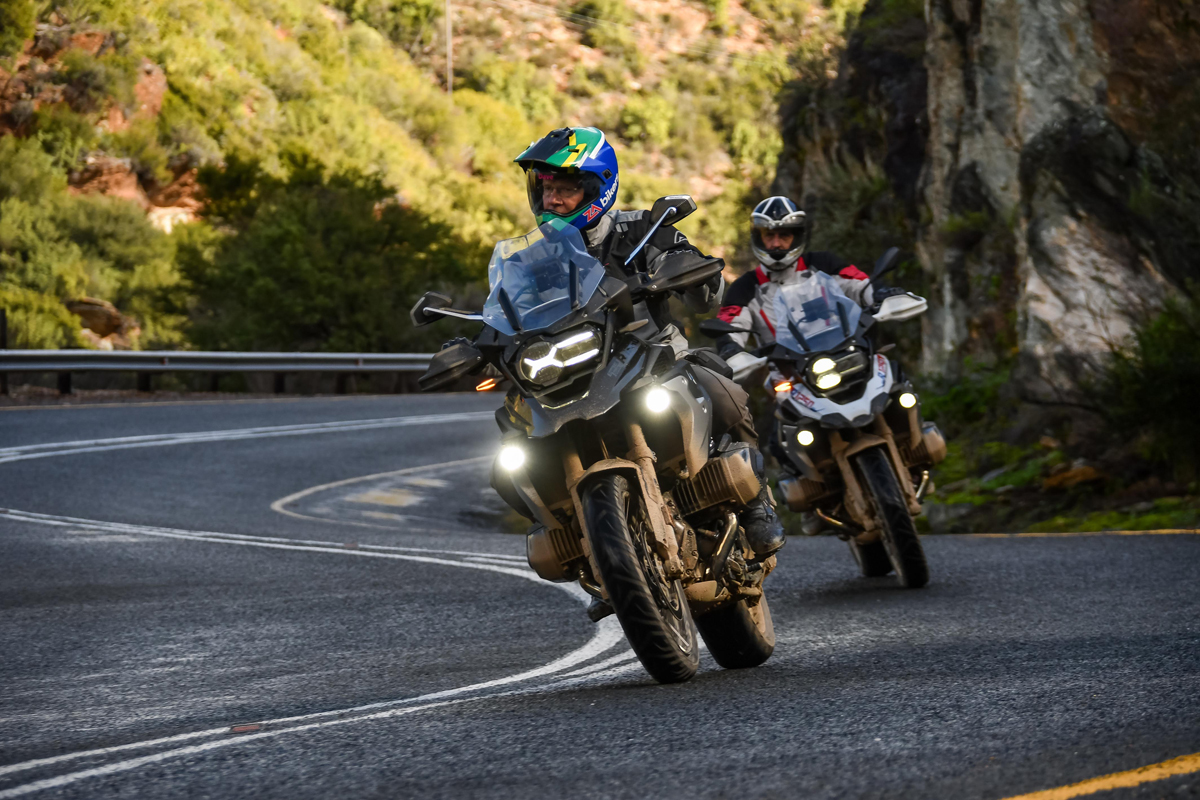
I quaffed an Ostrich steak for lunch, then hopped on the beautiful new R 1250 RT to complete my experience of the latest Beemers. I have long been a fan of the RT, believing it to be the best all-rounder in BMW’s touring range. If you are firmly tar road minded and consider going on dirt roads with your motorcycle akin to pushing red hot needles in your eyeballs, then the RT will carry you far and fast, in unbelievable comfort, better than almost any other motorcycle on the planet.
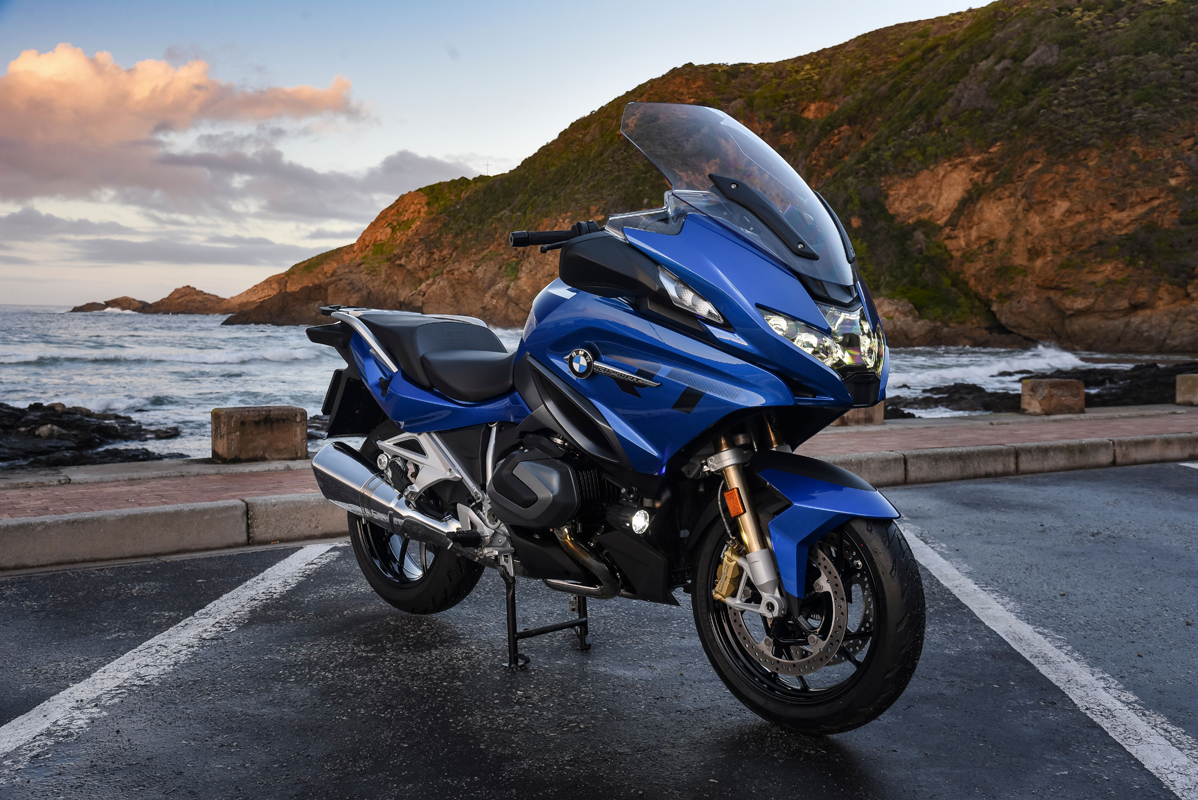
The electronic suspension is next level. It smoothens dodgy road surfaces in uncanny fashion, yet allows you to rail through high-speed twists, turns and sweeps with insane accuracy. Nothing this large should work this well. The additional grunt of the 1250 shift-cam motor propels the RT to around 240 in total comfort. This is so not what this bike is about, yet it does it so well. Your significant other will love the back seat as much as you love the front seat. Especially with the heater on in chilly weather.
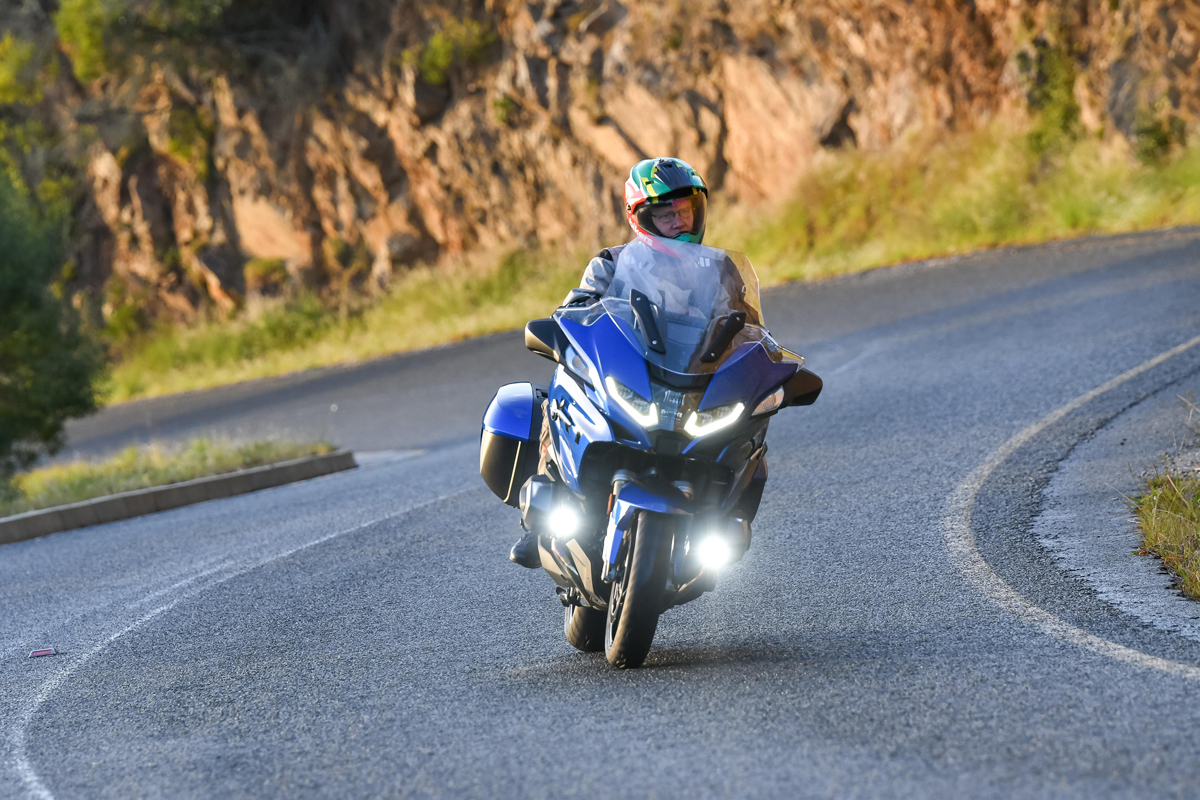
This is a truly all-day comfortable motorcycle, irrespective of the ambient temperature. The kind of bike where you don’t even bother to check the weather report before leaving on your trip. The superb fairing protection and electrically adjusted screen negate it all. The TFT display allows you to do everything that you need to do on a modern motorcycle, easily and effectively. For what it is, the RT can hardly be faulted. The adaptive cruise control on this bike is also next level. Superb!
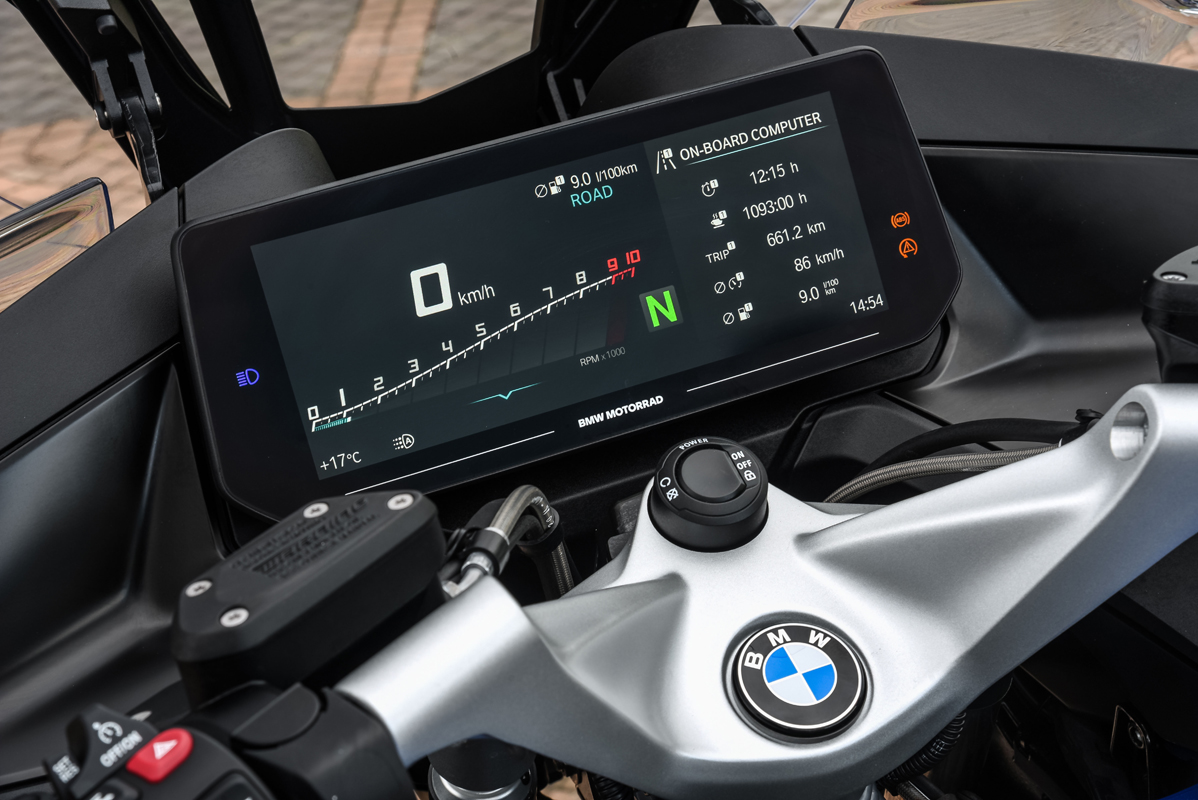
It is obvious that I enjoyed riding all the new BM’s. In fact, reading it through it is somewhat gushing. Fact is, I’m not exaggerating. The bikes are really that good. The biggest competition for the RT is the GS. The Adventure, with its 30-litre tank, can carry you just as far, just as fast. Weather protection is excellent too. The RT will suit shorter riders better, given its lower seat height. Some folk just don’t dig Adventure style motorcycles and I get that. The integrated, colour-coded panniers on the RT also come standard so packing for your trip is a doddle. On the GS you would have to pony up extra loot for panniers. Different strokes for different folks but in SA, with our thousands of kilometres of unpaved roads, the GS is a compelling option.
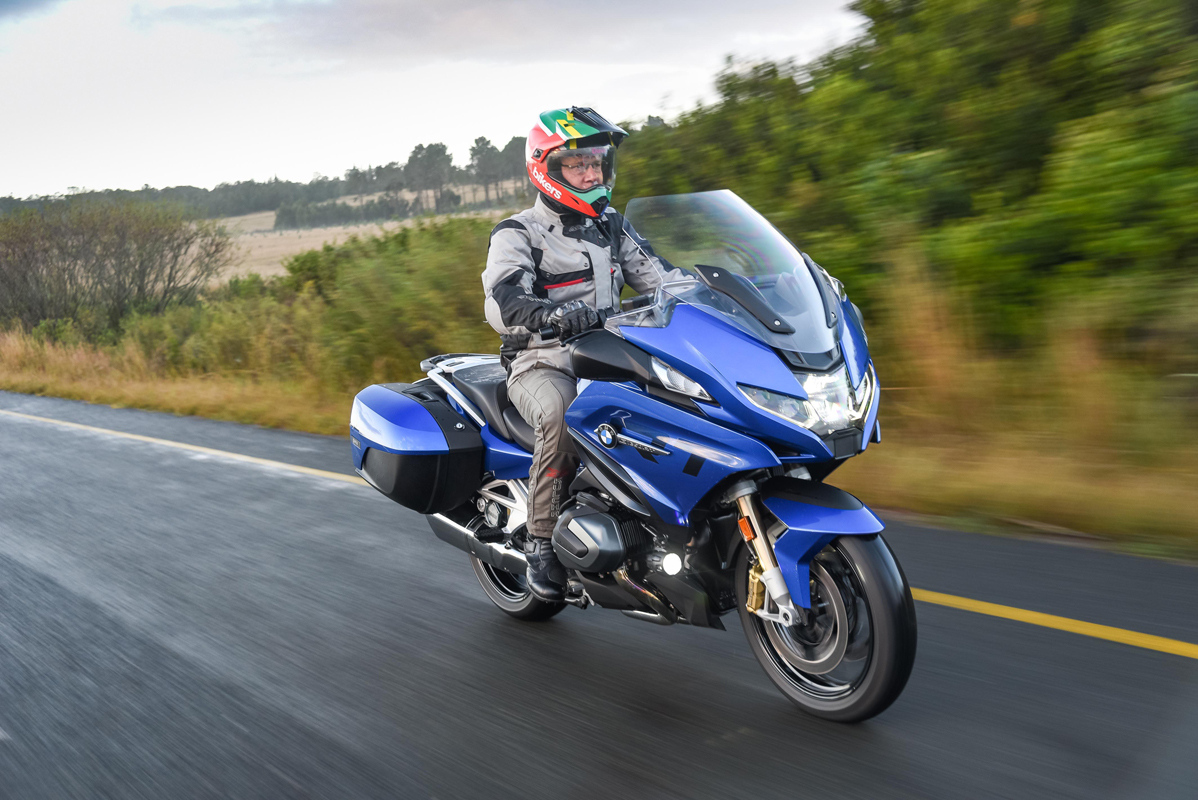
Back on the plane carrying us to the Big Smoke, I marvelled at how incredibly good motorcycles from the mainstream manufacturers have become. One thing is for sure. Fans of the blue roundel brand have never had it so good. If you are looking at buying a large capacity Adventure bike, then you will do yourself a disservice by not taking a ride on the latest version of the iconic GS. 40 years of development have resulted in something really special. Can’t wait to do comprehensive reviews on this bevy of beauties!
BMW Motorrad R 1250 GS/ADV & R 1250 RT
For more information on the bikes that we tested in this article, click on the links below…
Ross Branch Wins Stage One Of The 2021 Rally Kazakhstan
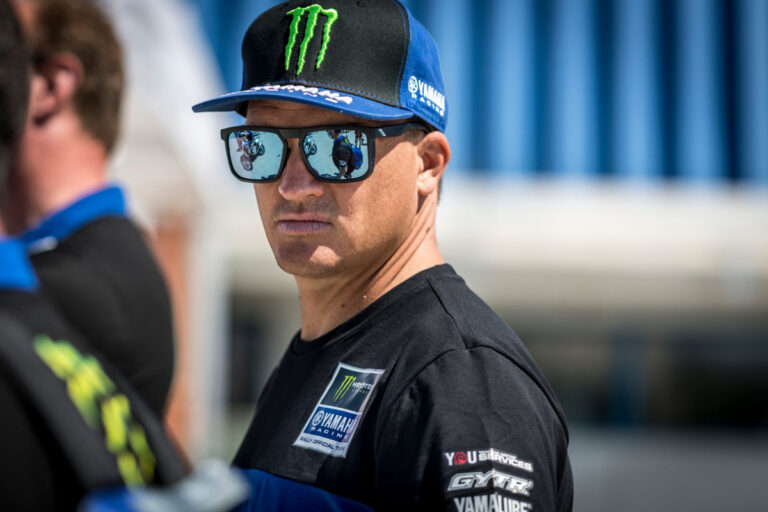
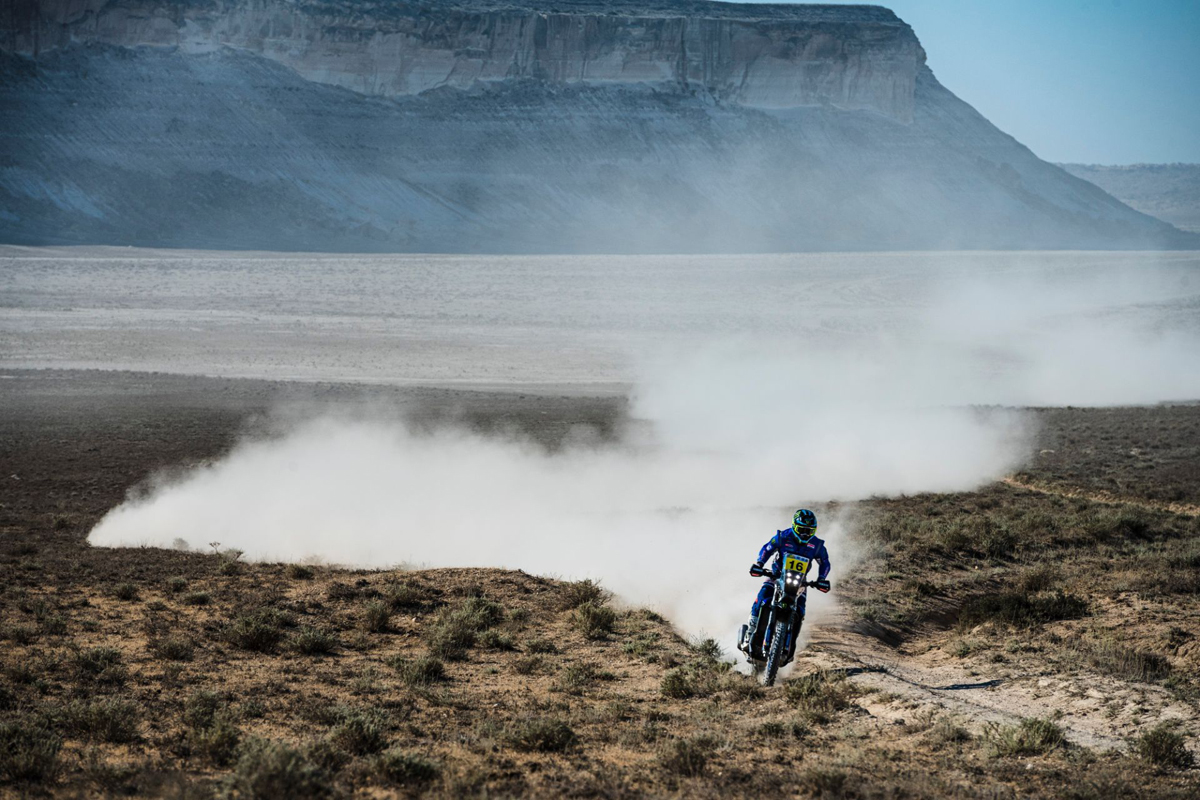
With almost five months having passed since the Dakar Rally, the Monster Energy Yamaha Rally Team riders were excited to return to action with all racers completing the opening 280 km special with strong rides, kickstarting the 2021 edition of Rally Kazakhstan in the best way possible.
Focusing on improving his navigational skills during the off season certainly paid off for Ross Branch, as he opened stage one and then raced to a deserving victory aboard his Yamaha WR450F Rally. Despite a minor mistake near the end of the special, the Botswana native had built up a comfortable margin over the chasing pack to maintain his lead and complete the stage with a two-minute gap over second place. The victory marks Ross’ first ever stage win in the FIM Cross-Country Rallies World Championship.
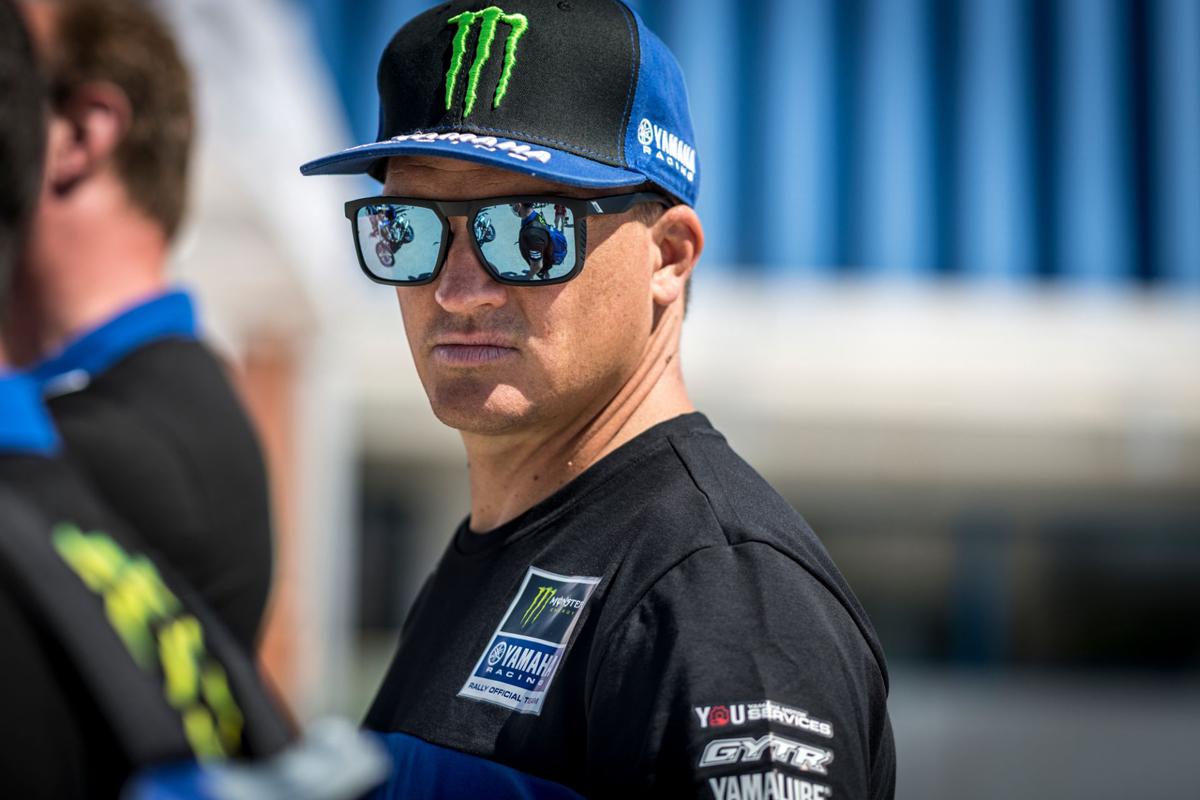
Ross Branch: A really good first day here in Kazakhstan. It was great to open the stage and my navigation was pretty good. A few mistakes here and there but overall it was on point. It was a pretty fast stage and the bike was on the limit for most of the day, so it was a good test and it’s just great to be back racing. I can’t wait for tomorrow. I’ll open the stage again but I’m confident with my navigation, myself, and the bike, so I’m really excited to get going again.
The second stage of the 2021 Rally Kazakhstan will see the Monster Energy Yamaha Rally Team take on a 279 km special located to the south-east of the city of Aktau. Ross Branch will have his navigational skills put to the test as he’ll be faced with a maze of desert tracks where mistakes could prove to be costly. At the end of the stage, the team will arrive in Bay Kendirli on the coast of the Caspian Sea.
Binder Report: Round 7 – Catalan GP
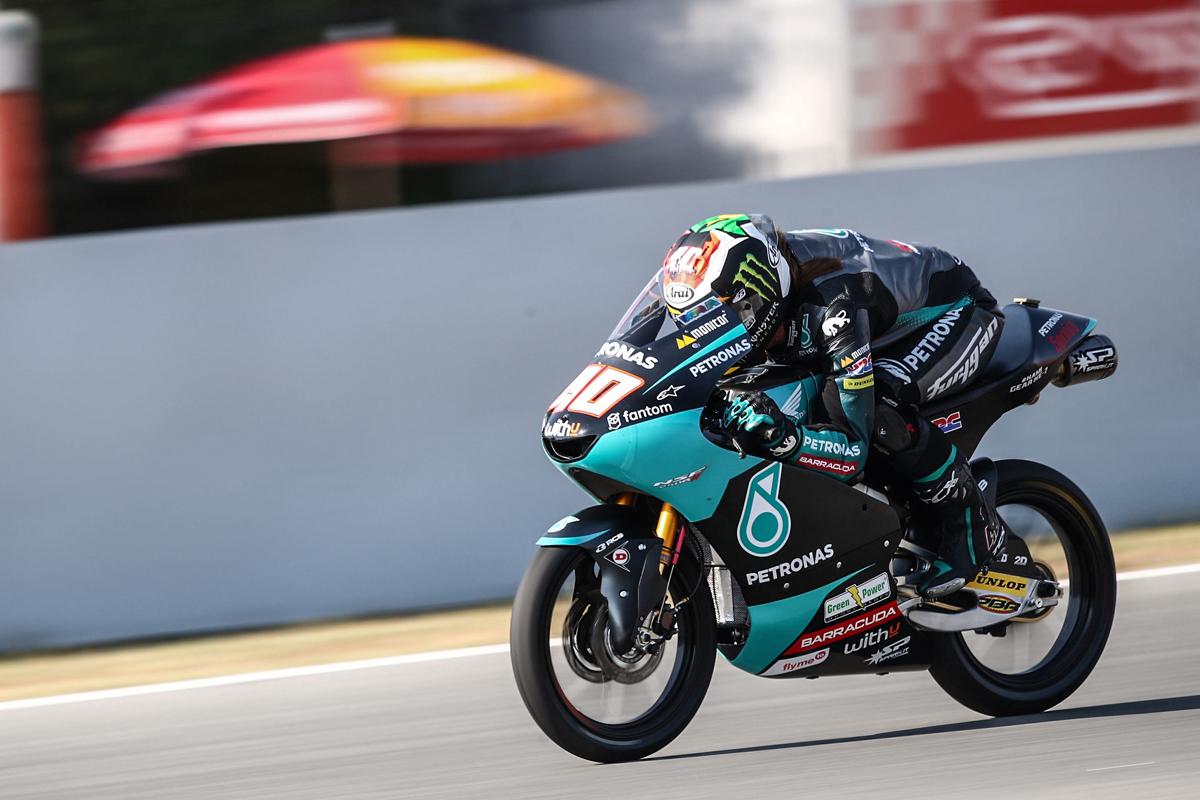
This weekend brought riders to the challenging mix of curves and speeds presented by the Circuit de Barcelona-Catalunya. MotoGP bikes have been laying rubber around this stunning circuit since its opening in 1992, and now with three decades gone by, racing on this demanding track has just gotten better. This weekend riders weren’t only experiencing Catalan’s slick and bumpy asphalt, but for the first time since our global pandemic, riders got to see a limited amount of fans sit and support from the grandstands.
Darryn Binder
Darryn Binder flew out of the pits during his qualifying session, but unfortunately had his banker lap deleted for exceeding track limits. Picking up the pace in his final run, as part of a large group of riders, Darryn was able to set a flying lap, which saw him place seventh for Sunday’s dogfight—just one place behind his teammate (John McPhee).
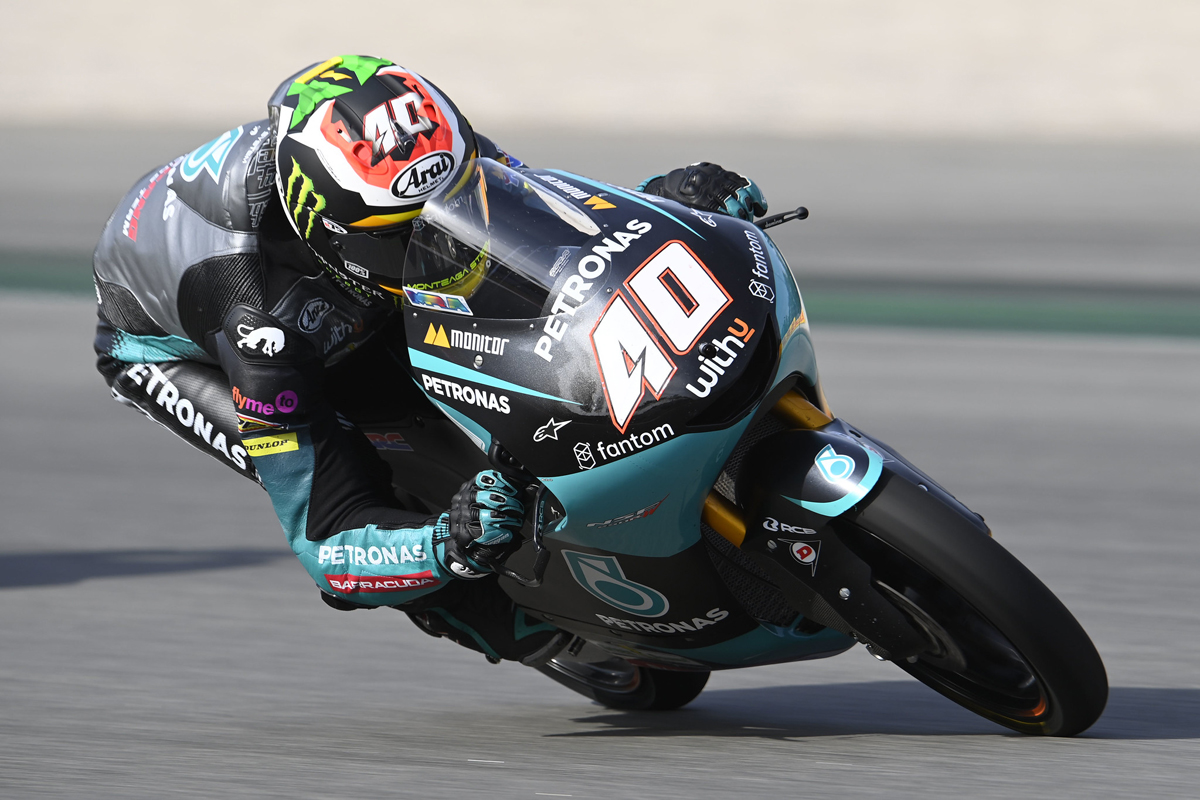
Darryn got a good start off the line and maintained his seventh position, but it didn’t take him long to fight his way into the lead. He battled with other riders slipstreaming their way past him down the straights, causing him to fall back to fifth for a short time but Darryn kept himself in the podium fight. As the 21-lap race unfolded Darryn had several short stints in the lead, as he kept himself at the sharp end of the leading group.
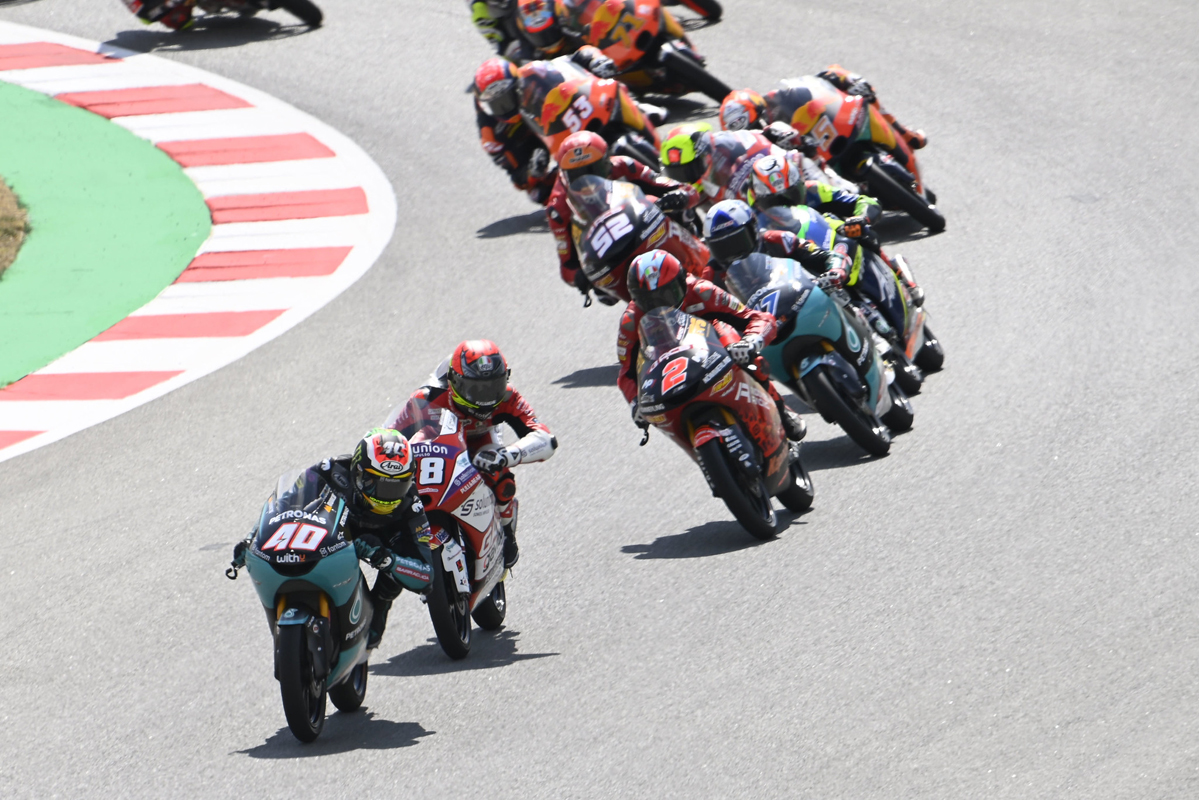
With other riders trying to employ tactics at the final corner of the penultimate lap, Binder started the last lap in the lead but was soon swamped at the end of the start-finish straight. Battling hard to recover from eighth and avoiding a few falling riders ahead, Darryn eventually crossed the line fifth, placing him fifth in the championship standings.
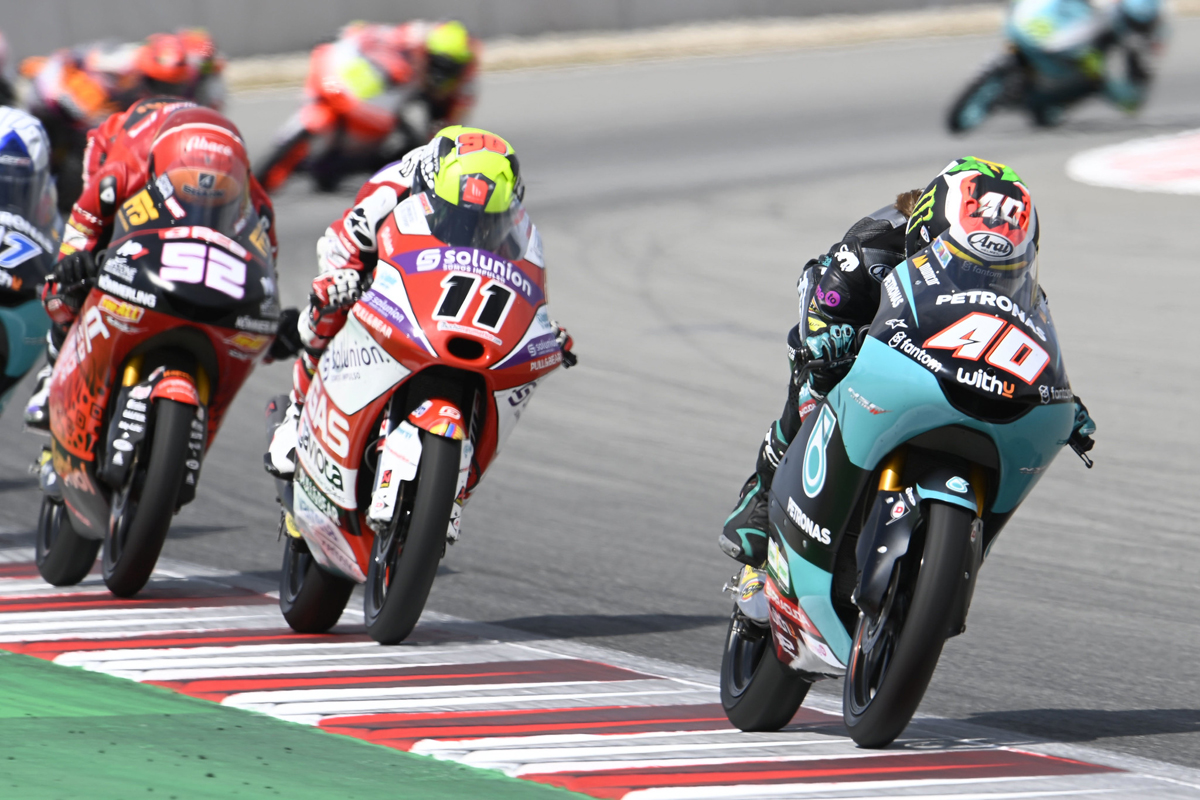
DB: “I’m actually not happy with how that race went and the antics at the end of it have annoyed me. I wanted to focus on my race, do it my way, but it wasn’t possible. On the last lap, I wanted to get my head down and get through the pack. In the end, I finished fifth and of course, I’d take that over a DNF. It is what it is. I feel like I was the strongest rider today, but when you’ve got people sitting up on the racing line it’s hard to have a good race. I’m really looking forward to getting to Germany now, especially as we didn’t get a race there last year.”
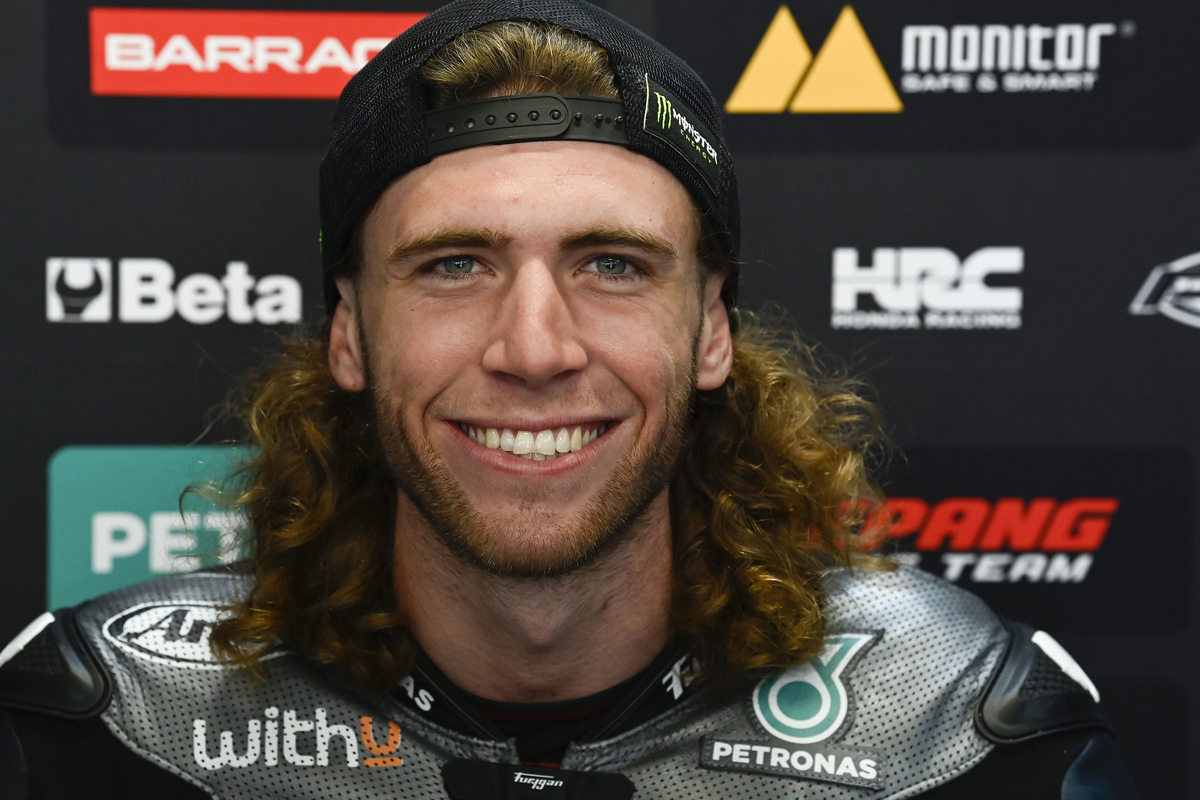
Brad Binder
Saturday morning saw Brad Binder roaming the top of the timesheets in FP3 and he soon earned a direct entry into Q2. Brad had great pace during qualifying, but his luck ran out as a yellow flag rolled out on his flying lap. The incident forced Binder to roll out during his final flying lap attempt, placing him in eighth for Sunday’s race.
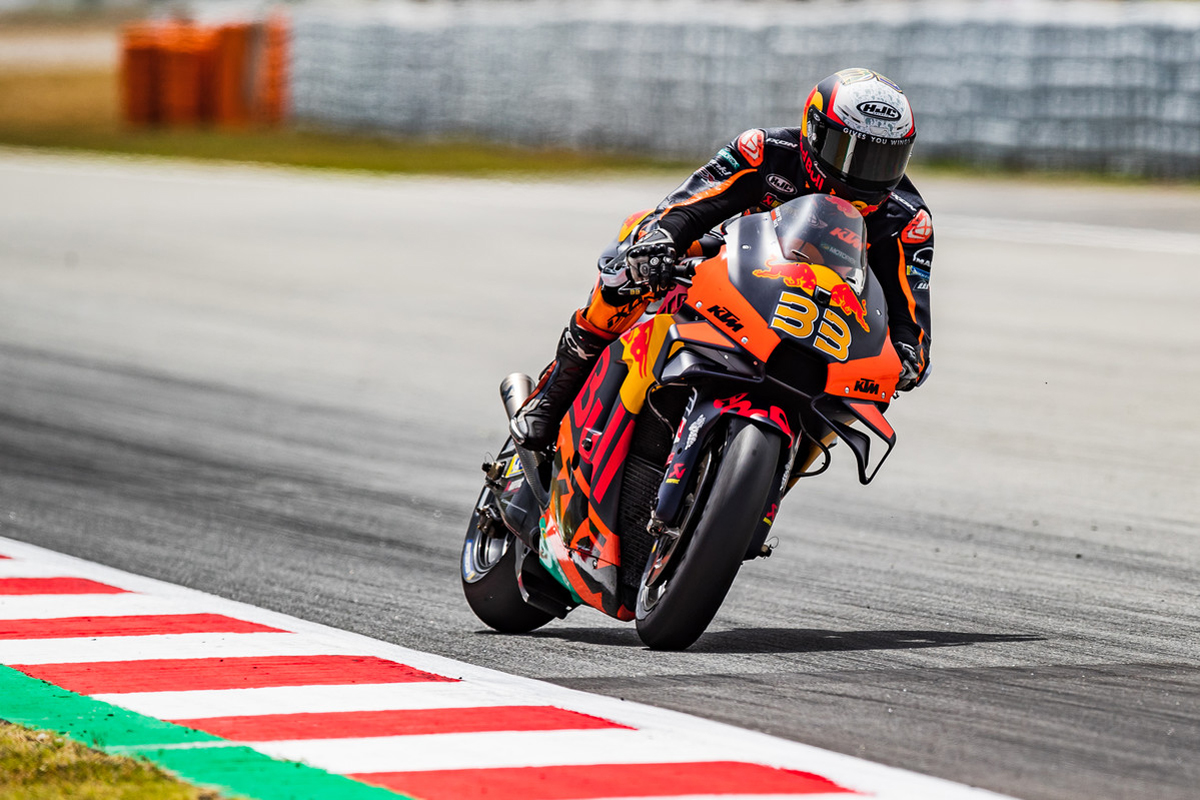
Cloudy skies covered the track on Sunday with temperatures hovering around 25 degrees as the MotoGP KTM quartet pondered between medium and hard tyre options for the 24-lap chase. Both Brad and Miguel opted for hard front and rear tyres, well the rest of the grid went for completely different setups.
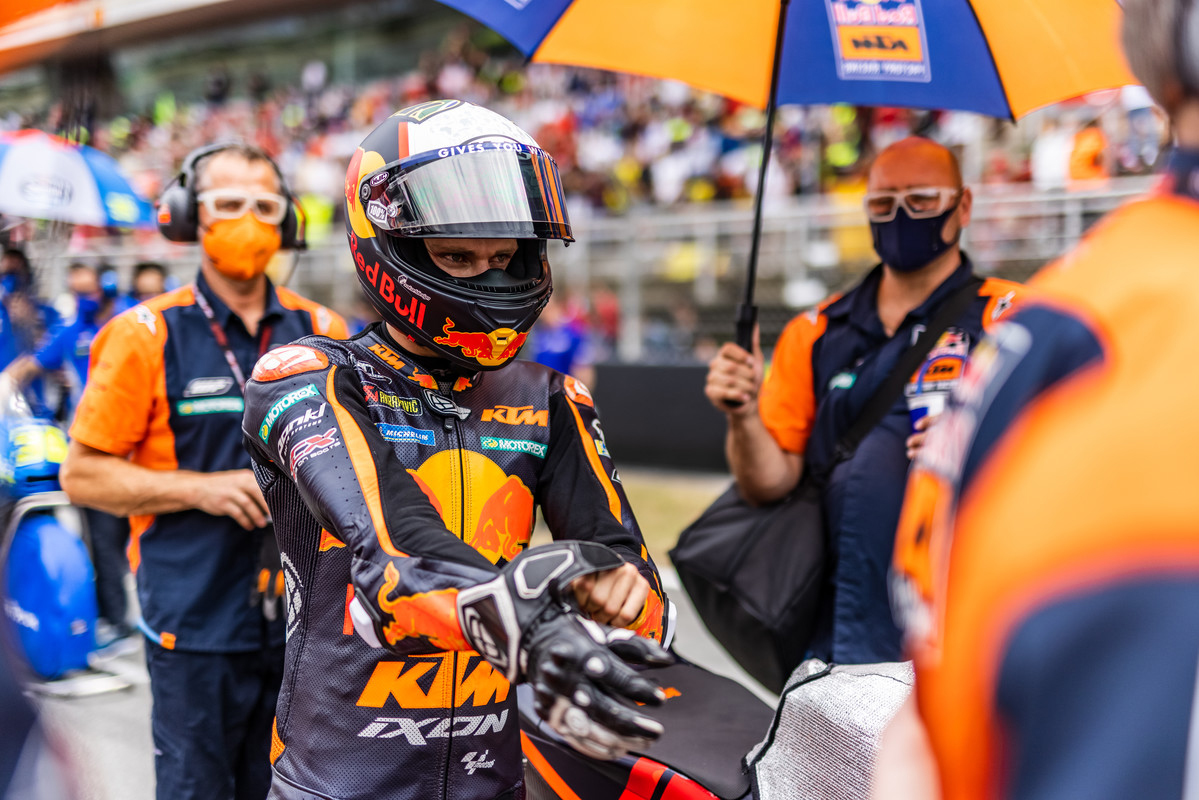
Brad got an ok start and held his eighth position on the first lap, but soon found himself in battle with Marc Marquez, Maverick Vinales and Pecco Bagnaia to round off the top ten. Brad rode a clean race inside the top ten and his battle continued with Bagnaia till the closing laps of the race. The South African lost out in the chase to seventh place but by just two-tenths of a second, placing him in ninth in the championship.
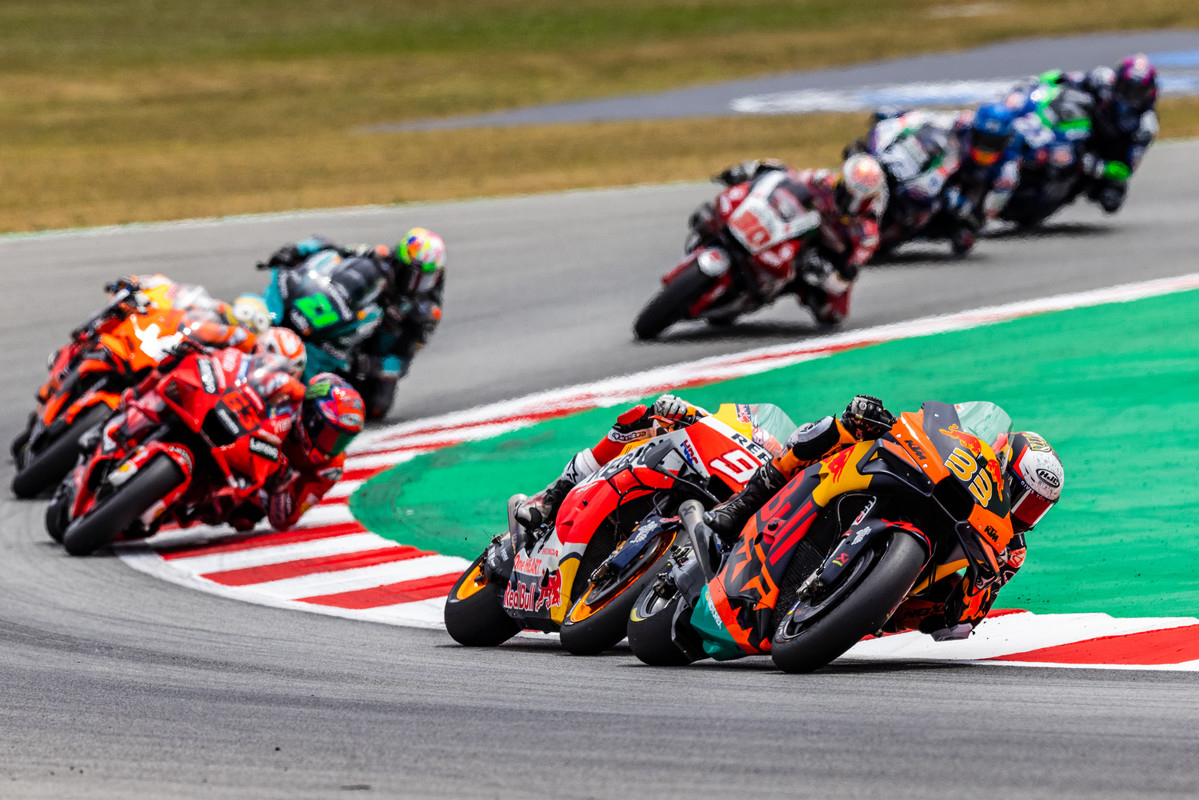
BB: “It was a really tough race. I didn’t get the best of starts because someone hit me in Turn 2 and I lost a few positions. I tried to fight my way through but I was really struggling to get out of the corners. I was catching the group in front of me but then with three laps to go my rear tire was finished and it was like my speed fell off a cliff: it was impossible to keep going forward. I would have liked to have done a lot better than eighth place because I felt we had the potential, but I struggled with that rear traction today.”
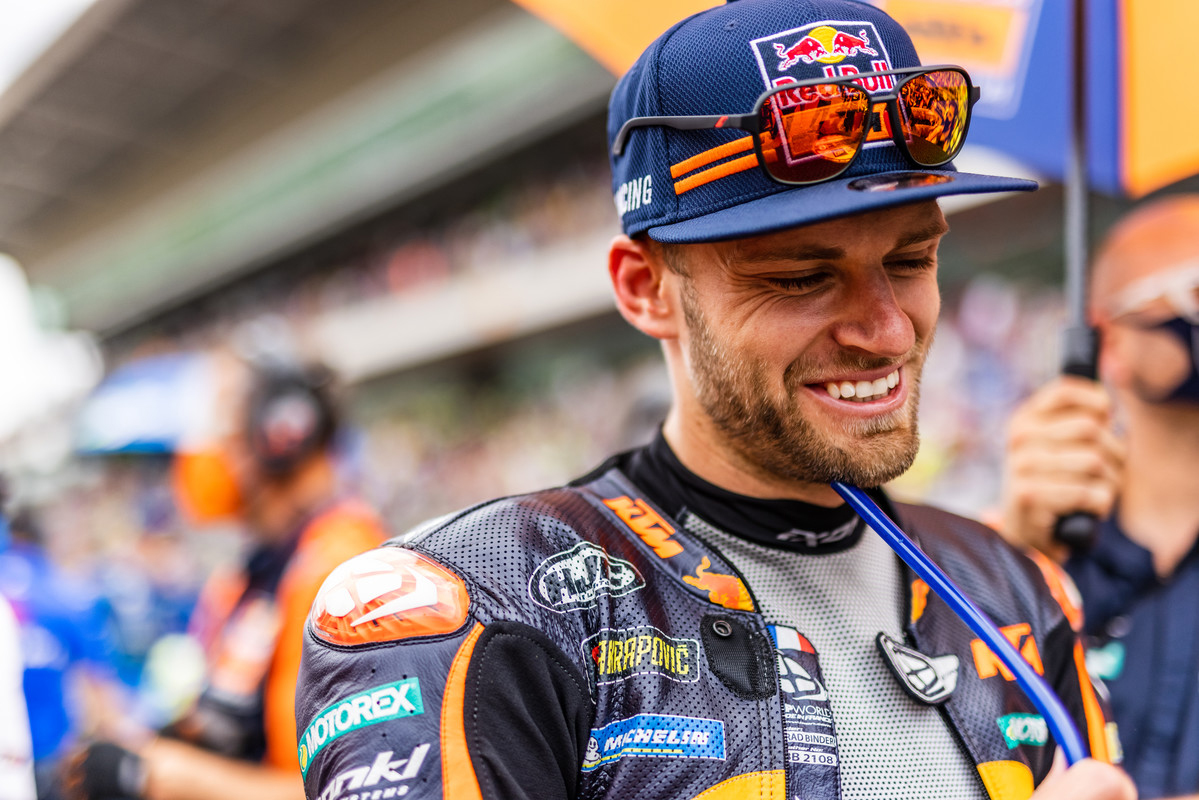
What an awesome race weekend, full of drama, excitement and confusion. Miguel Oliveira rode a flawless race and brought the KTM boys their first win of the 2021 season. Jorge Martin crashed on the sighting lap and was forced to start from the pitlane, Marc Marquez had his third DNF of the year, Fabio Quartararo got penalised for taking a shortcut and for riding with his leather suits zip, wide open. The championship now heads to the Sachsenring on June 20th for round eight.
Motul is Proud to Support the Second Edition of Ladies Learn to Ride a Motorcycle
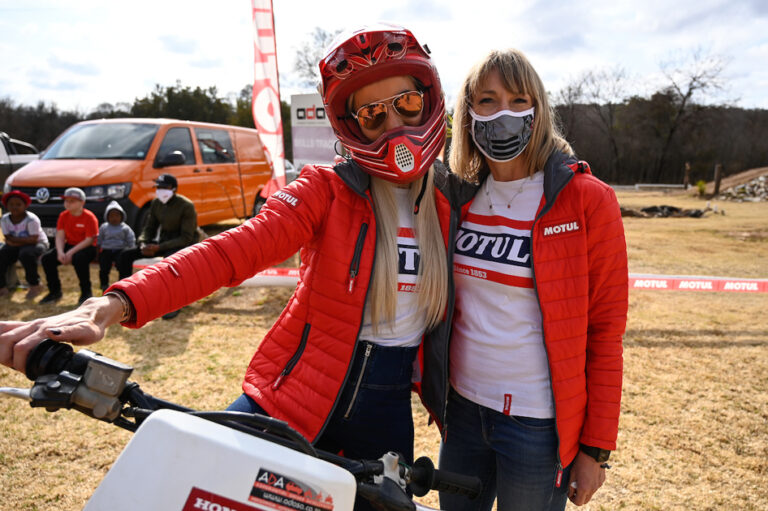
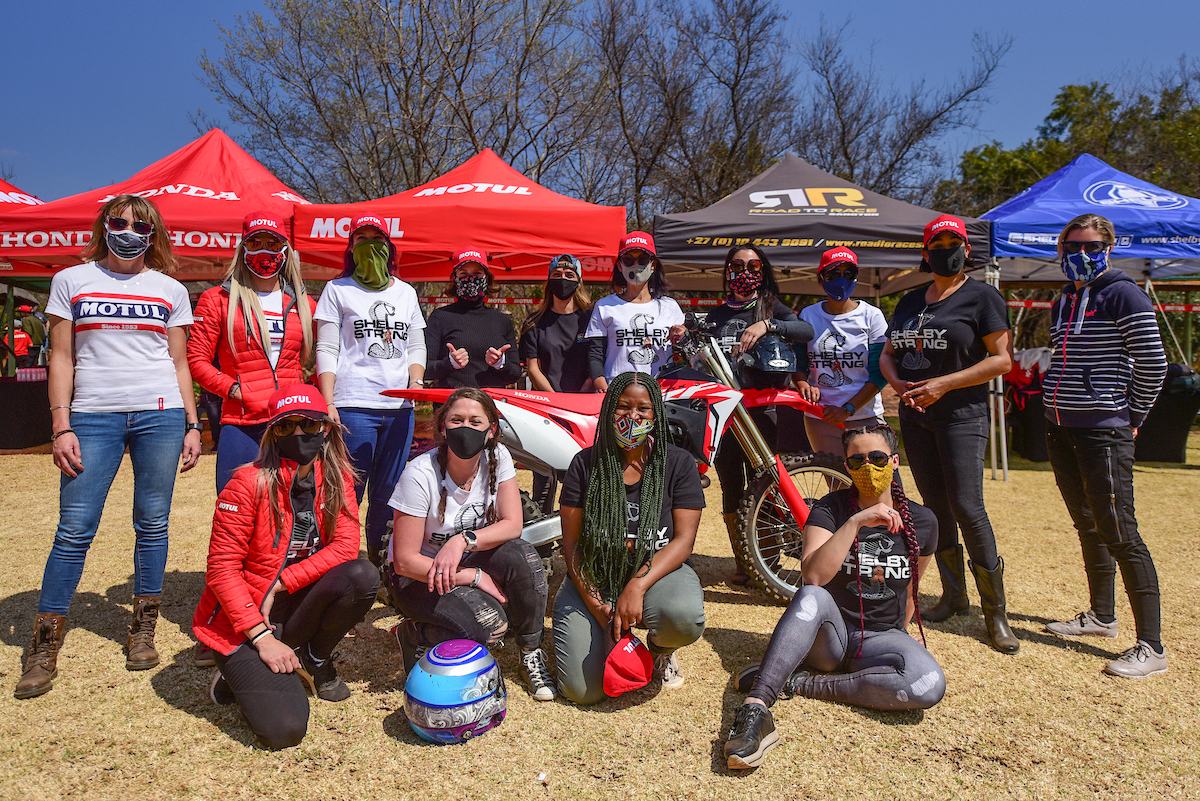
Following on from the success of the first Ladies Learn to Ride a Motorcycle event in 2020, Motul has once again teamed up with Honda South Africa and the ADA Training & Outdoor Centre to give more ladies the opportunity to enjoy expert motorcycle tuition. The feedback from the 2020 event was overwhelmingly positive, with even ladies who were nervous at first soon becoming confident riders.
“Motorcycle riding has been a passion of mine for many years,” commented Mercia Jansen, who is Motul’s Area Manager for Southern and Eastern Africa. “I meet many women who have always wanted to ride motorcycles but lack the necessary confidence or don’t know where to start. I’m delighted to be able to tell them that this Learn to Ride a Motorcycle event is the answer,” she added.
Mercia explained that during the Know Your Oil campaign powered by Motul on Mix FM, she heard from many ladies who were keen to take part in this event. They included lots of women into their 50’s who were looking to enjoy new experiences and challenges.
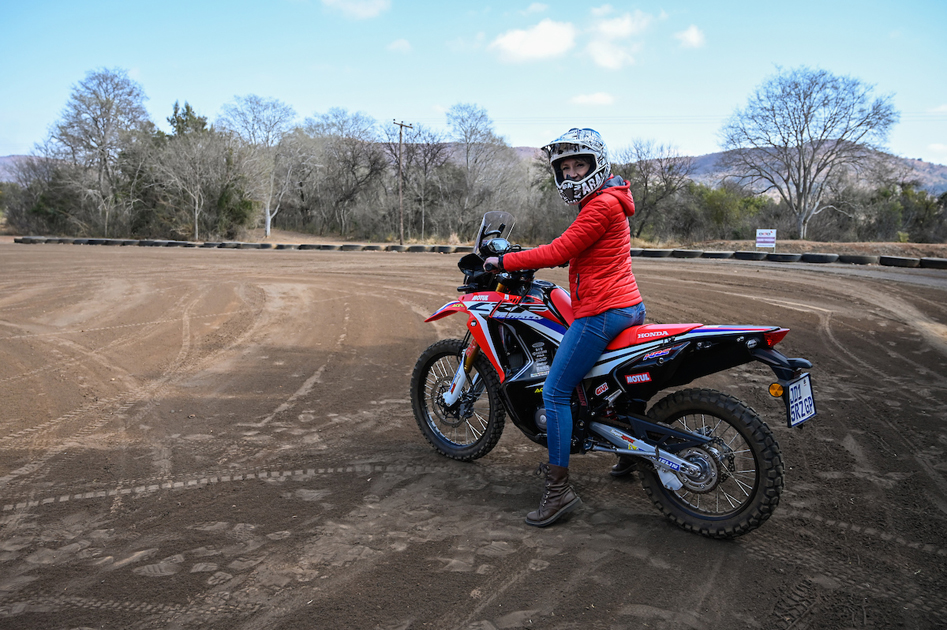
The second edition of the Ladies Learn to Ride a Motorcycle event will take place at the ADA facility on Saturday 12 June 2021. The ADA Training & Outdoor Centre is easy to find, being located just outside Hartbeespoort on the R3 (download directions to ADA here). The cost per rider is R1 090 for the full-day course including lunch and refreshments, and all that’s required is a long-sleeved shirt, long pants and closed shoes (hiking shoes or tekkies are recommended). A sense of adventure is also recommended – smiles, helmets and protective gear will be provided. Anyone who already has safety equipment can bring it along, but there’s no need to purchase anything extra.
Motorcycles for this special event will be subsidised by Honda SA, making this event even better value for riders. The combination of a safe and reputable training facility, experienced ADA trainers, world-class motorcycles and the backing of both Motul and vehicle performance specialists Shelby South Africa, will ensure that each new rider can gain skills and confidence at their own pace.
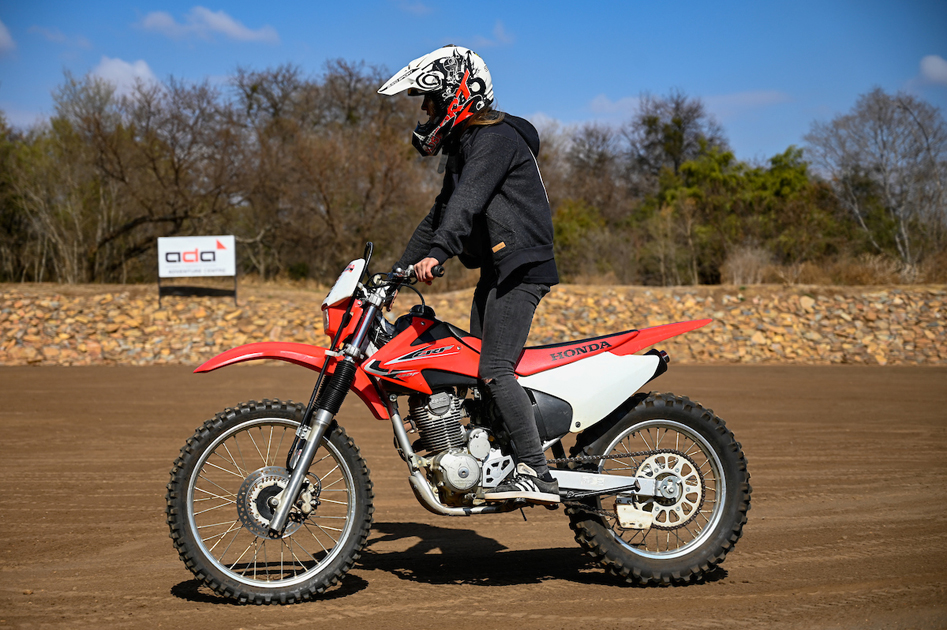
“I’m thrilled to have the chance to support Ladies Learn to Ride a Motorcycle again,” commented racing car driver and Shelby SA National Marketing Manager, Paige Lindenberg. Paige was the driving force behind the original #IconicWomen campaign which led to the first Learn to Ride a Motorcycle event in partnership with Motul and has now returned to support the event for a second consecutive year. “I’m delighted that this has grown into its own independent event, and that more ladies will be able to gain safe riding skills – and have a wonderful day out,” added Lindenberg.
To book your place at this year’s event, please send an email to [email protected] with your name and “Ladies Learn to Ride a Motorcycle 2021” in the subject line. Places are offered on a first-come, first-served basis, and only 20 spots are available.
King Price Honda Xtreme Race Report – Port Elizabeth
Sfiso Themba
“I arrived in Port Elizabeth under a lot of pressure, as I had yet to complete a race this season.
“I had an issue with the quickshifter not working in free practice and official qualifying, so I had to ride using manual shift. Thankfully, the team did an amazing job helping me find the ideal rhythm and setup of the bike.
“In Race 1, the target was to keep up with the front runners and learn the bike over a 12-lap race. The bike just got better and better, and on the second last lap, I made a pass to take the lead in my class. Unfortunately, I lost the position on the last corner, but I still finished 2nd.
“In Race 2, with a much better understanding of the bike and more confidence, I was able to push from the start. I had to find a way to keep in touch with the leader, so I made my move at the hairpin and started chasing. By the end of the race, I had closed the gap, but had to settle for second, which gave me overall 1st for the day.
“It was great to finish a full race meeting and get some points under the belt to start my championship campaign. I’m extremely proud to be with a great team, and I can’t thank them enough.”
Clint Seller
“We were excited coming into the race, as we’d done a lot of development and hard work to get the new Honda to suit my racing style. From the first practice round, we knew we were in a great position, as we were already faster than last year.
“I managed pole position in every session in Friday qualifying, and was fastest in warmup on Saturday morning. In Race 1, I got a great start, and managed to get a 10-second lead that I held to the end.
“In Race 2, we had a small tyre issue that meant I couldn’t push as hard. This resulted in a much closer race, but I still managed to end the day with two wins.
“I’m super-proud of how the team performed, and how Sfiso improved the whole weekend and got two seconds in his class. Overall, a great weekend for the King Price Honda.”
Extended: Liqui Moly South Africa MotoGP 2022 Finals Competition!
ATTENTION: Due to Covid-19 the date has been extended to 2022.
Liqui Moly South Africa is running a competition, whereby you could stand a chance to win a ‘once-in-a-lifetime’ VIP experience to the MotoGP 2022 Finals in Valencia, Spain—worth R200 000.
HOW TO ENTER:
Purchase any of Liqui Moly products (for personal use) to the value of R1000 or more. Capture your receipt on your Liqui Moly Advantage App, and you are entered into the draw.
Please note that every purchase over R1000 until the closing date gets you another entry into the draw. Closing date: 31 July 2022.
For more information on Liqui Moly products visit: www.liqui-moly.co.za
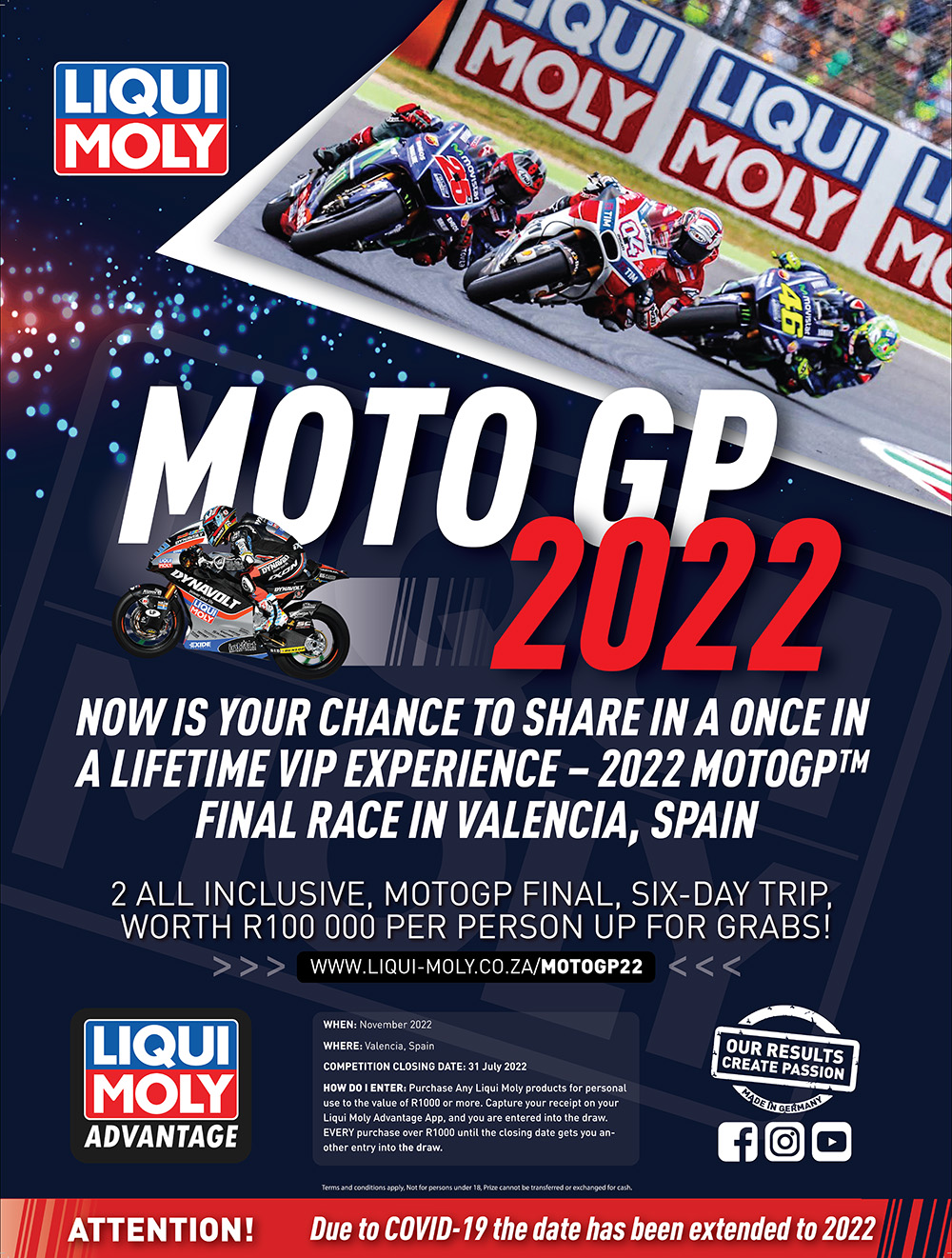
Lift The Covers: The 2022 KTM 300 EXC TPI Erzbergrodeo
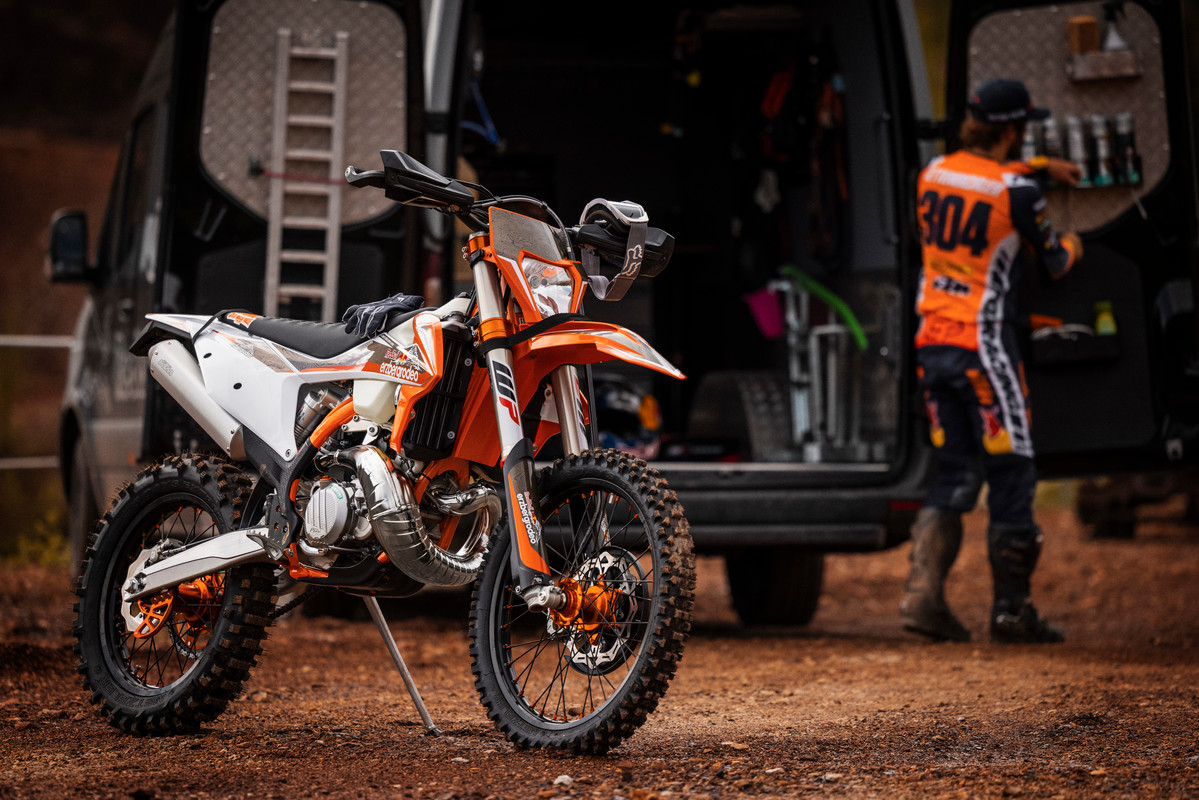
The ultimate tribute to the iconic Red Bull Erzbergrodeo, the special edition KTM 300 EXC TPI ERZBERGRODEO is built with the sole purpose to conquer the Iron Giant. With a host of race-developed parts as standard and for 2022 featuring a special Red Bull Erzbergrodeo graphic kit, it is built to power through the toughest terrain with extreme agility and ease.
KTM’s relationship with the world-known Red Bull Erzbergrodeo dates back a few decades already. This long and successful history dates to the event’s inception in 1995, with KTM riders taking no less than 16 wins since then. To celebrate the wealth of race success already achieved and with a keen eye on future victories, KTM is proud to introduce the 2022 KTM 300 EXC TPI ERZBERGRODEO as a special tribute to the iconic event.
Using the 2022 edition of the wildly successful fuel-injected KTM 300 EXC TPI as a platform, the KTM 300 EXC TPI ERZBERGRODEO steps up the READY TO RACE-ability with several race-inspired upgrades. Taking feedback from elite extreme enduro riders into consideration, the KTM 300 EXC TPI ERZBERGRODEO is specially built for the toughest offroad terrain across the globe.
Featuring a long list of special protection parts, including closed hand guards, clutch slave cylinder protection, a robust skid plate, brake disc guards and radiator protection, the 2022 KTM 300 EXC TPI ERZBERGRODEO is developed to withstand the most extreme, jagged rock-hopping scenario.
The 2022 KTM 300 EXC TPI ERZBERGRODEO also comes with further additions such as factory wheels with anodized orange hubs, enduro-specific pull straps, radiator fan, mapping select switch, CNC machined triple clamps, a grippier Factory seat and a special frame coating in orange for added racing appeal.
2022 KTM 300 EXC TPI ERZBERGRODEO – RACE-FOCUSED FEATURES:
- Special Red Bull Erzbergrodeo graphics
- Frame finishing coated in racing orange
- Factory wheels with anodized hubs
- METZELER 6 DAYS EXTREME soft tire set-up
- Closed, heavy-duty handguards
- Radiator fan & radiator protectors
- CNC-machined triple clamps
- Factory seat & lightweight skid plate
- Chain guide bracket protection
- SUPERSPROX STEALTH rear sprocket
- Clutch save cylinder protection & orange oil plug
- Front & rear pull straps
- Front brake disc guard
- Solid rear disk & disk guard
- Rear brake safety wire
- Map selector switch
Joachim Sauer – KTM Product Manager: “The KTM 300 EXC TPI ERZBERGRODEO is a bike 100% built for purpose – and that purpose is to tackle the most extreme of trails like those found at the notorious Red Bull Erzbergrodeo. Receiving all the updates of our 2022 KTM EXC model range, this special edition bike has features developed by Red Bull KTM Factory Racing riders to meet the extreme demands of every hard enduro rider. For 2022 it also comes with a unique set of Red Bull Erzbergrodeo graphics that make it stand out in any paddock. This is undeniably the most READY TO RACE extreme enduro motorcycle on the market – a bike that is fully ready to line up in the quarry and tackle the famous Iron Giant.”
The 2022 KTM 300 EXC TPI ERZBERGRODEO will be available in authorized KTM dealers from June 2021 onwards.
The New Suzuki GSX-S1000 to arrive on SA Shores
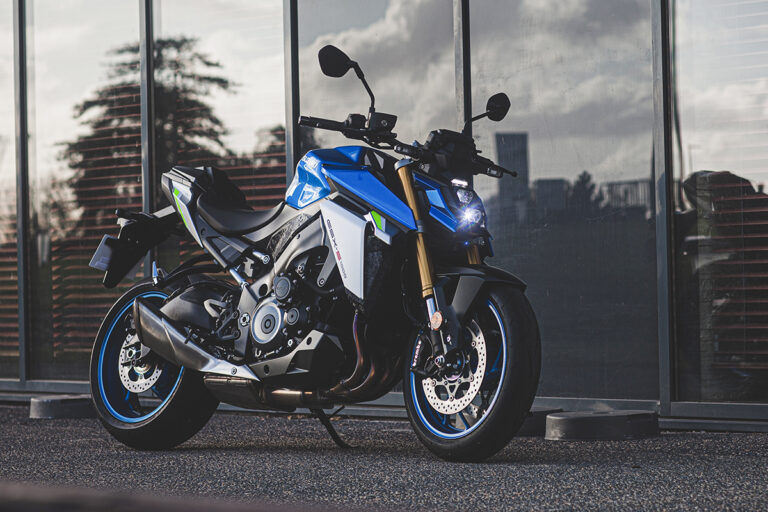
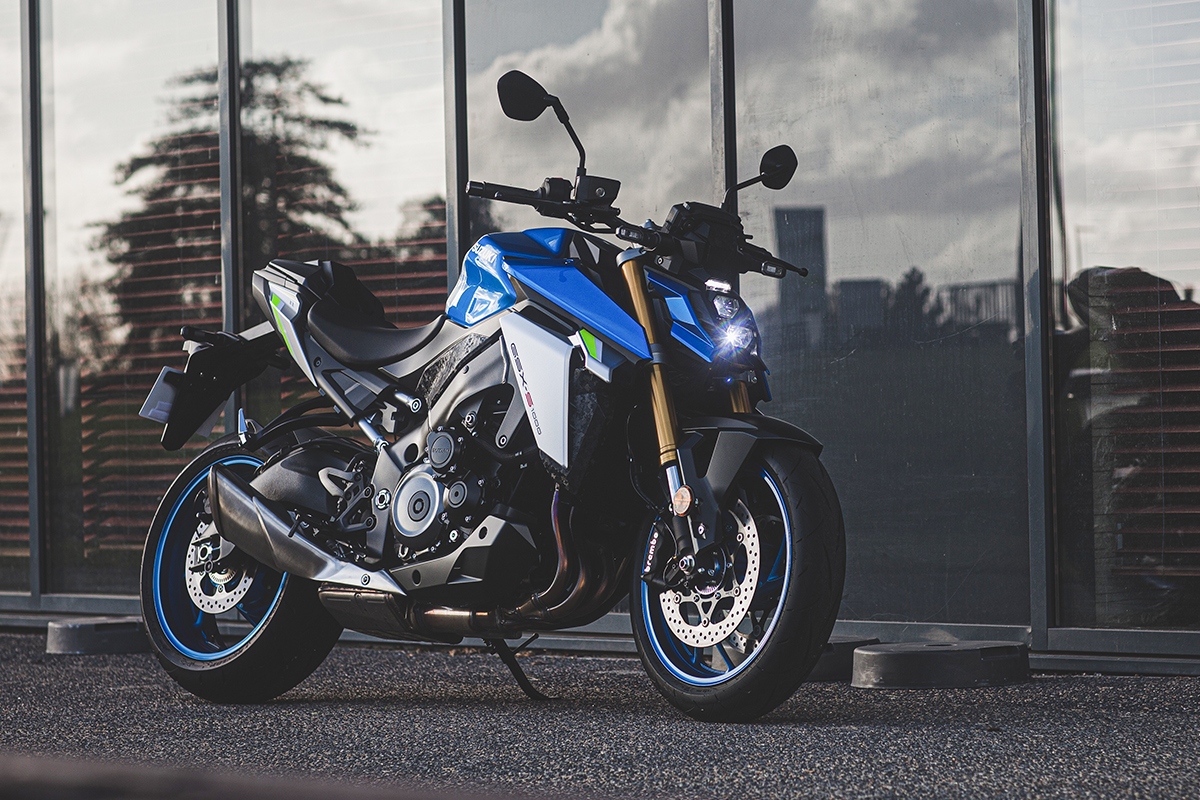
The excitement continues to grow around the world, more particularly in South Africa with the Worldwide launch of the new Suzuki GSX-S1000 which took place on the Suzuki SGMS portal in April 2021. Our Suzuki Customers are waiting in eager anticipation to see, touch and test ride this upgraded Motorcycle.
Before we get into specifications and the finer details of this beauty! We’ll take into consideration our stringent homologation laws in South Africa, and “hopefully expect our homologation to go through by the end of the 4th quarter of 2021, which means we can expect the first stock arrival and official launch of the GSX-S1000 in the 1st quarter of 2022” says Baker. South African pricing is still to be released and will be released later this year.
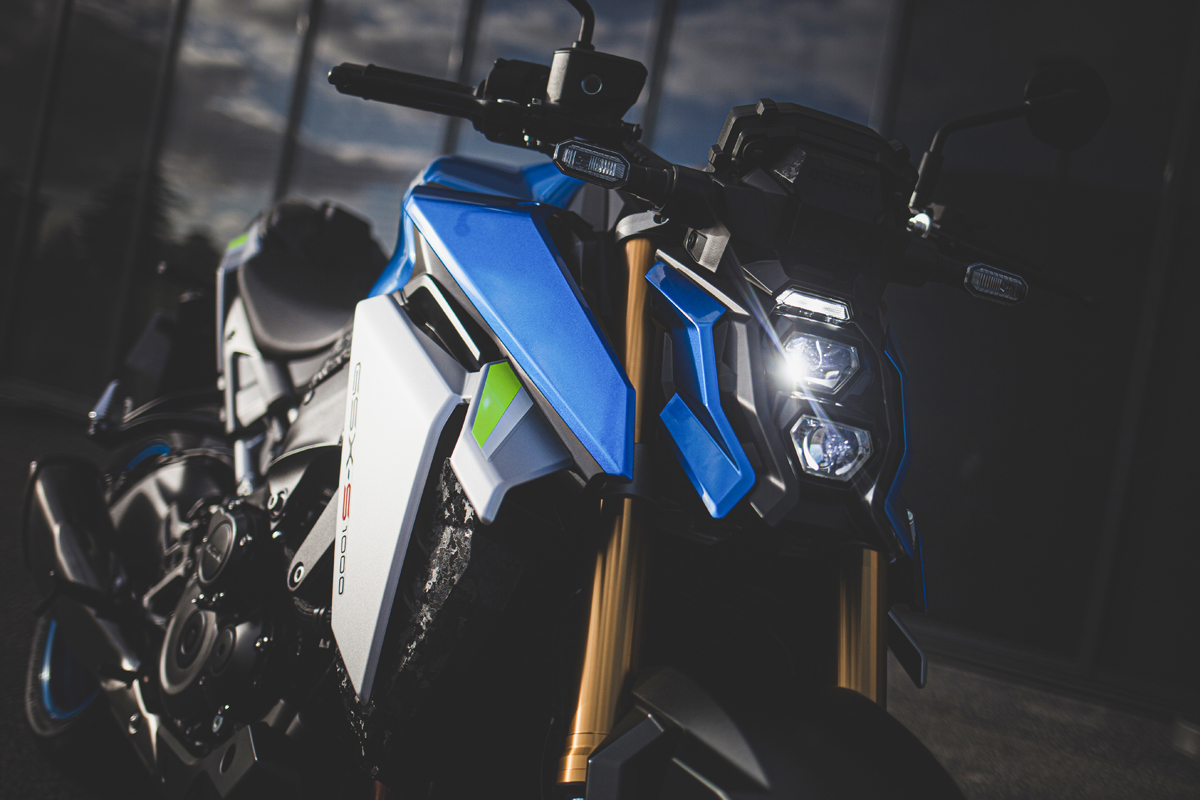
The previous GSX-S1000 A and F model did quite well in the South African market, customers just loved the power, smoothness and reliability. Laddering up to that, the NEW Suzuki GSX-S1000 now comes with an all-new electronics package and aggressive new styling.
All New electronics and Rider Mode Package.
- Suzuki Drive mode selector. (3 throttle response modes)
- Bi-Directional Quick Shift System.
- Suzuki Easy start system.
- Ride by wire Electronic Throttle System.
- Low RPM Assist.
- Five Mode Suzuki Traction Control System.
- Full LCD instrument panel.
- LED Headlights and position lights.
- Led Taillight and Turn Signals.
- An Engine that’s Ready to Rule the Streets!
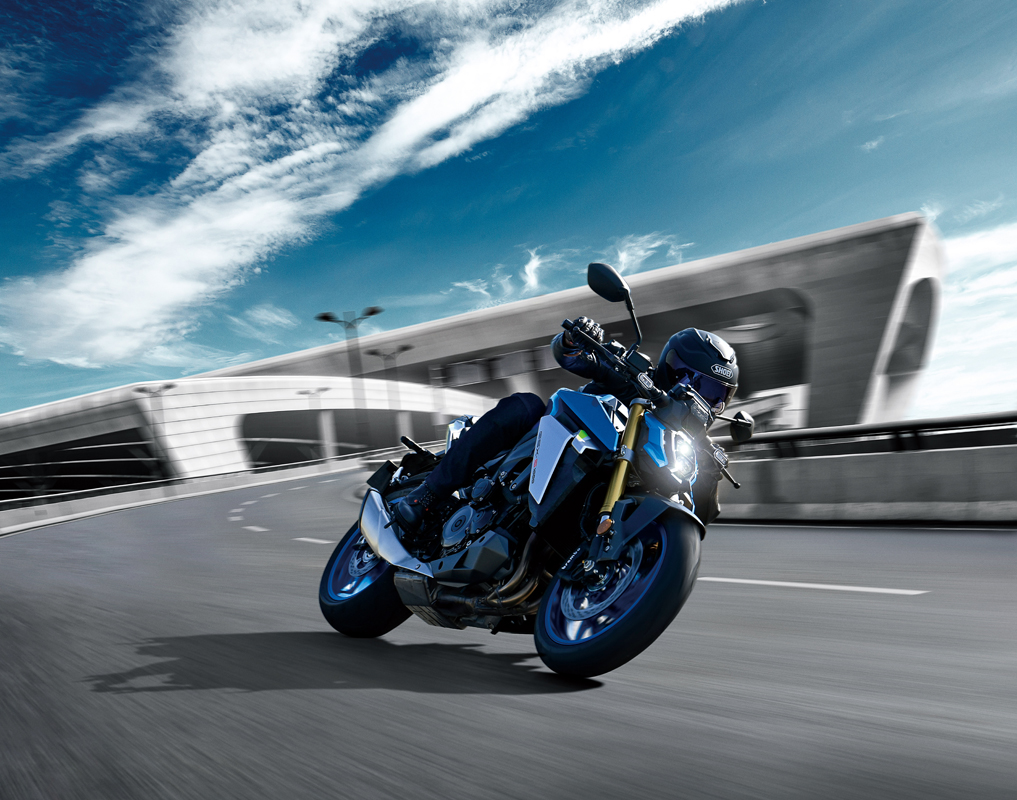
The GSX-S1000 engine power is supplied by a high-performance 999cm3 four-stroke DOHC liquid-cooled inline-four engine that inherits true winning superbike DNA.
This street-tuned engine is based on core architecture that benefits from know-how acquired over decades of developing the GSX-R1000 to win countless production race victories, as well as advanced technologies developed for MotoGP racing.
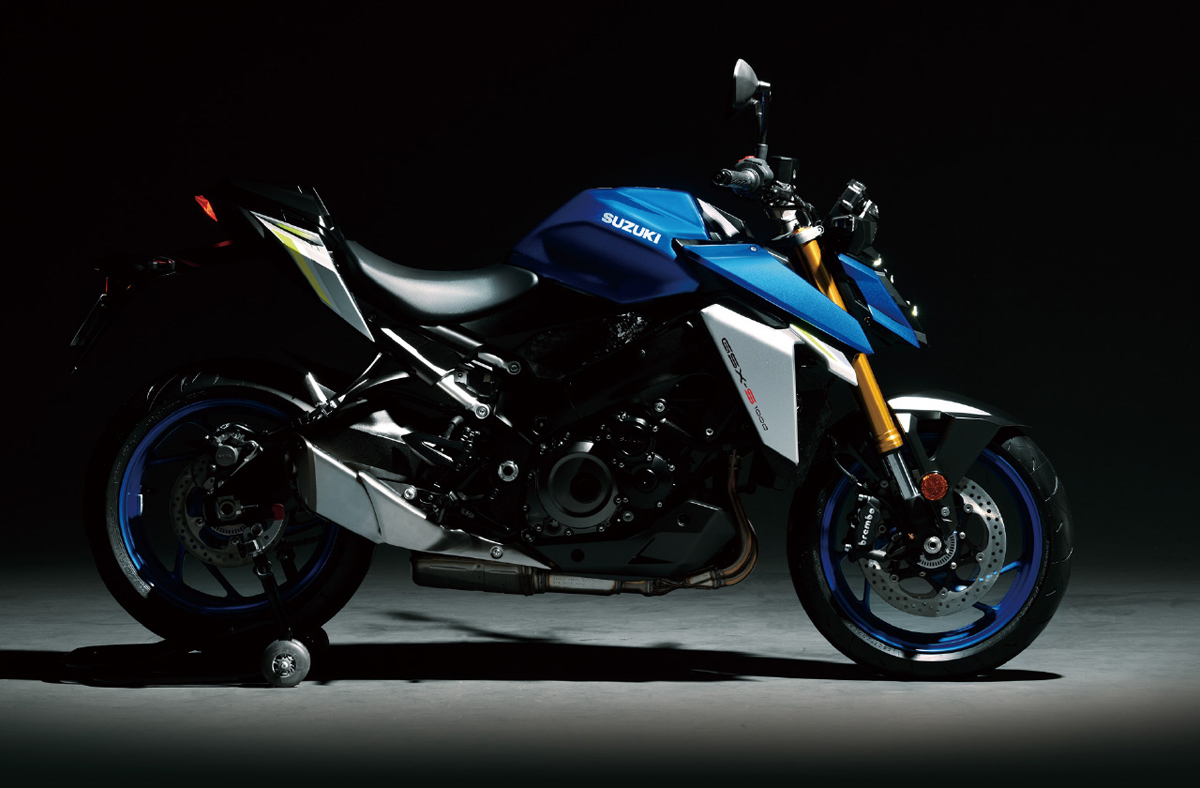
Every aspect of performance has been refined. Overall power output is increased and is stronger through the low- to mid-range engine speeds most commonly used in daily riding. A broader, smoother torque curve featuring greater cumulative torque production consistently delivers abundant power throughout the engine’s operating range and particularly shines in the mid to high rpm range.
The revised exhaust and intake cam profiles decrease the amount of lift and reduce valve lift overlap to achieve a better overall balance of performance and controllability across a broad range of engine speeds, while also contributing to improved emissions performance.
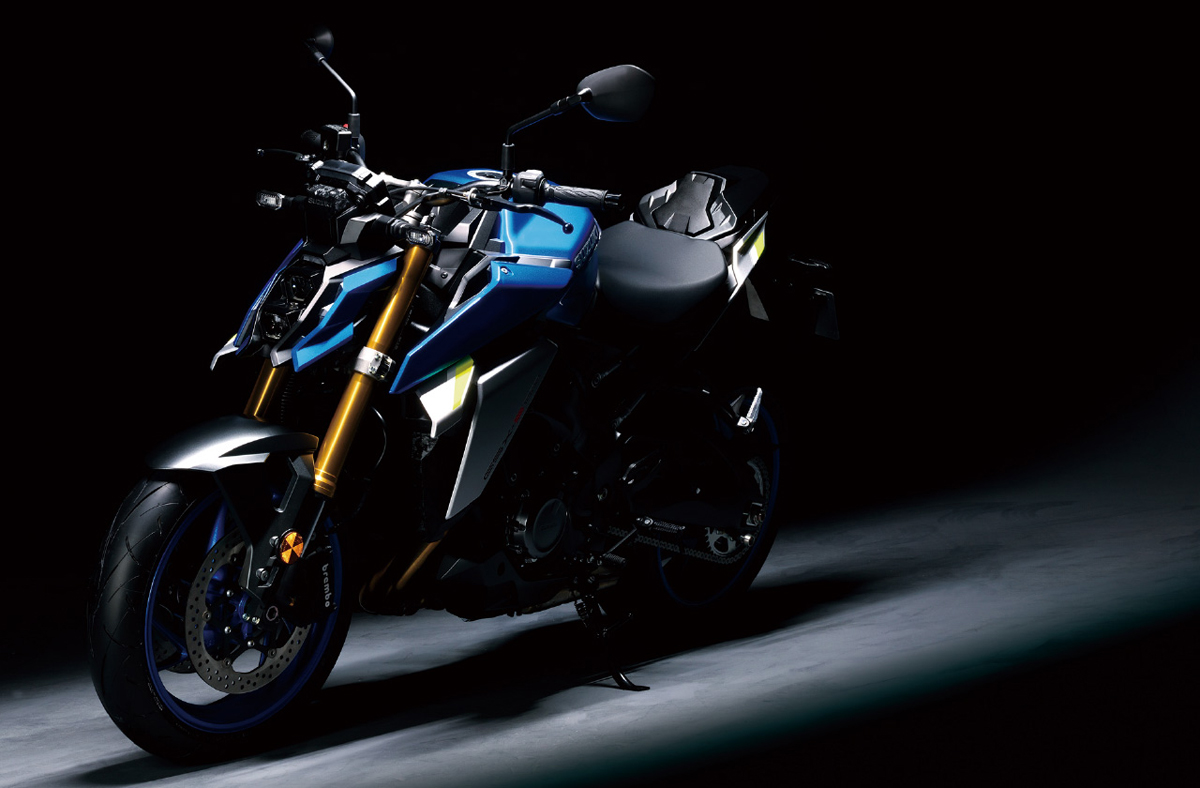
Changes to the internal structure of the new air cleaner box help improve power output characteristics. A change to the bore size of the new electronic throttle bodies helps achieve a better balance between idling throttle response and power output characteristics.
New exhaust system.
While retaining its clean, sharp looks and exciting sound, the 4-2-1 exhaust system is completely redesigned and tuned to help satisfy Euro 5 emission standards, maximize overall performance and enhance the quality of its exhaust note.
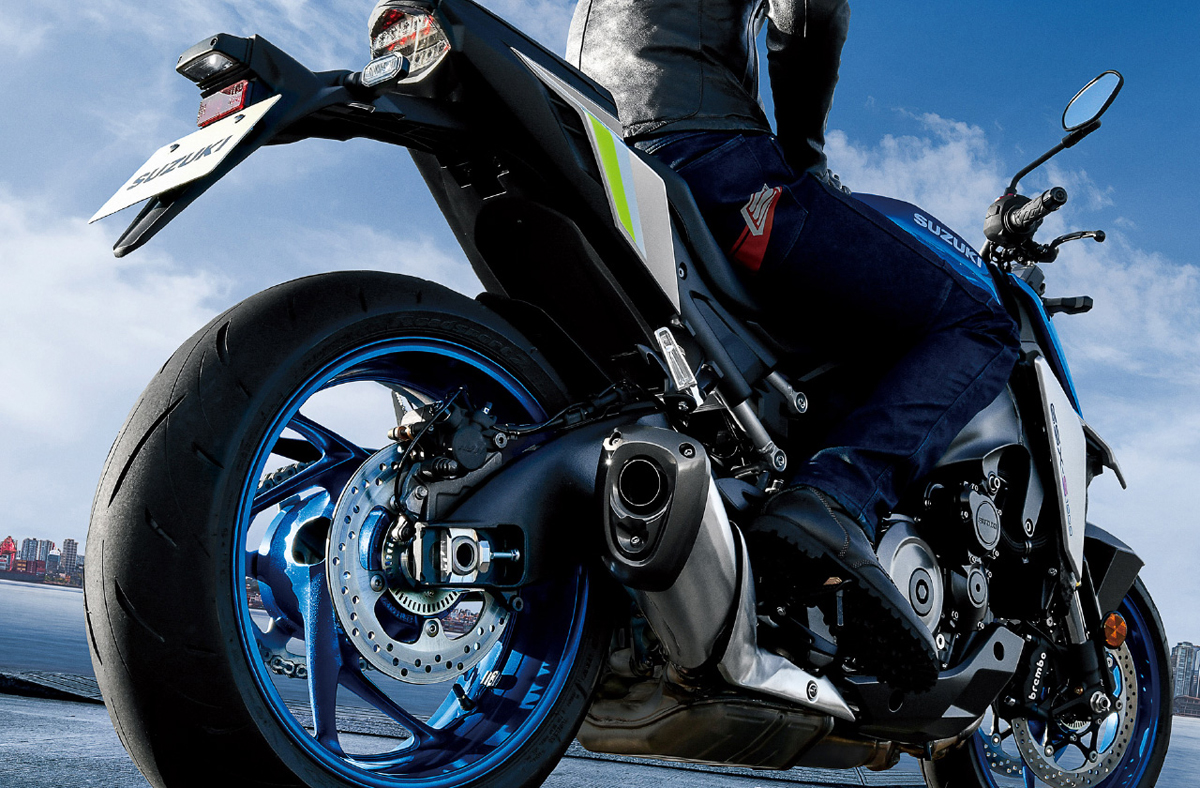
Changes include a new layout behind the collector, a new chamber structure, and the addition of a second catalytic converter inside the chamber. The redesigned structure of the connecting pipes between cylinder pairs increase the performance of the secondary air injection system, which improves the ability to purify exhaust gases. In addition, the collector is now marginally longer and the Suzuki Exhaust Tuning (SET) system positioned a little differently.
The All-new GSX-S1000 is set to be a hit in the SA Market! Pricing and South African Launch details to follow soon.
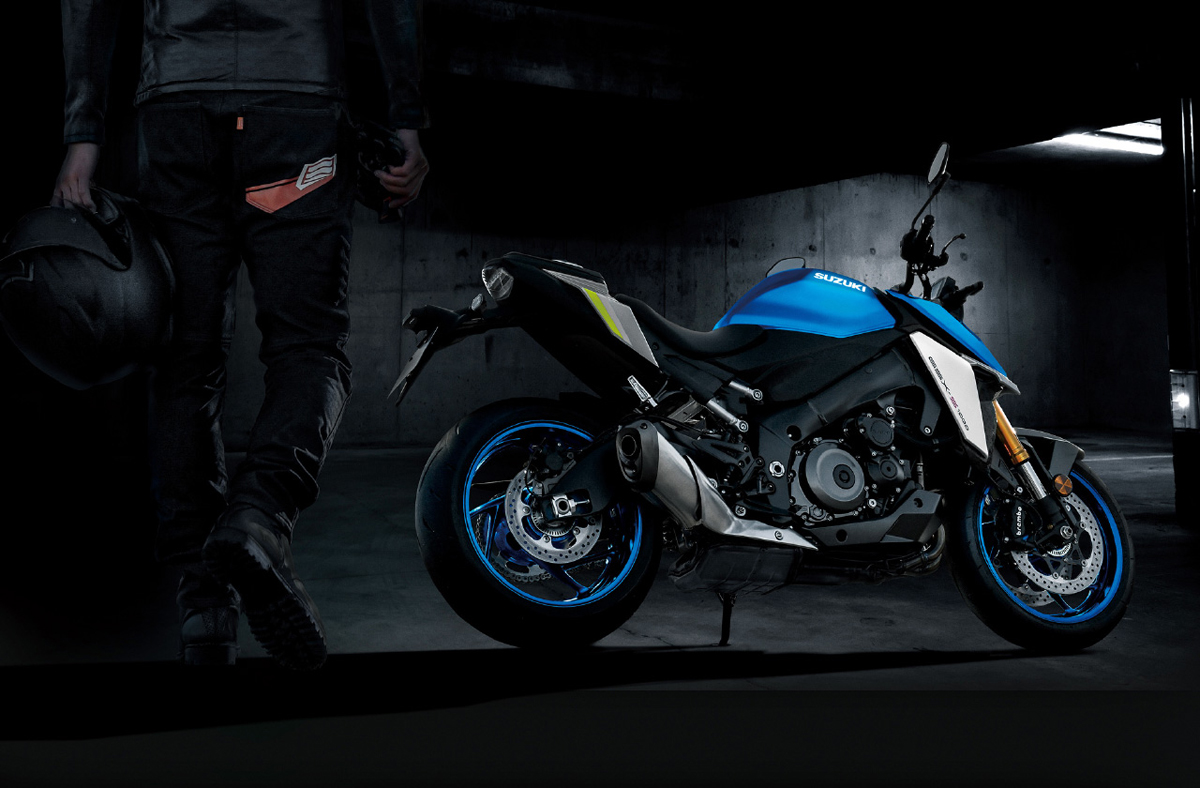
Biker’s Warehouse is proud to announce the addition of Kawasaki and SYM to their lineup
 With great success promoting Honda, Husqvarna and Suzuki, Biker’s Warehouse has established itself as one of the largest motorcycle and accessory stores in Southern Africa. The decision to expand their range to include Kawasaki and SYM was taken to further promote their passion-driven emphasis on becoming the “Ultimate Multi-Brand Destination”, catering to the needs of any road, dual-sport and off-road enthusiast.
For more information visit: www.bikerswarehouse.co.za
Brad Binder Inks New MOTOGP™ Deal Until 2024
KTM’s first-ever MotoGP race winner, Brad Binder, will remain part of the Red Bull KTM Factory Racing Team for the next three years and will celebrate ten Grand Prix seasons in ‘orange’ by the end of the 2024 MotoGP campaign.
The 25-year-old South African progressed through the KTM GP Academy structure. He competed in the Red Bull MotoGP Rookies Cup, earned Moto3™ world championship success, as well as 15 Grand Prix, wins in both the Moto3 and Moto2™ categories with the Red Bull KTM Ajo squad, and then seized the factory’s maiden victory in the premier class during his debut term on the KTM RC16 during 2020, where he also achieved the status of ‘Rookie of the Year’.
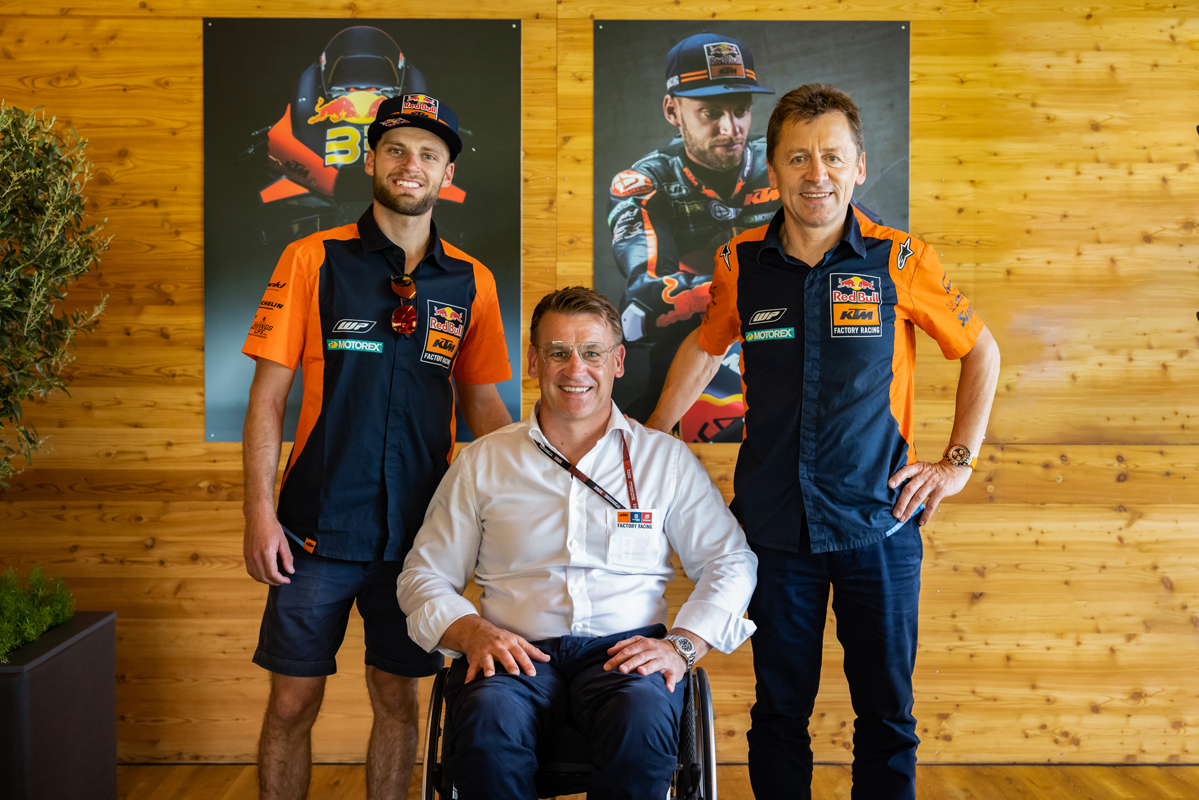
Binder posted a new milestone at the Gran Premio D’Italia last weekend by equaling the highest top speed in the history of the sport at 362.4 km/h during FP3 at Mugello.
The new contract brings extra continuity and strength to the KTM MotoGP program, and Binder’s fighting spirit symbolises the way the manufacturer brings themselves to the track ‘Ready to Race’.
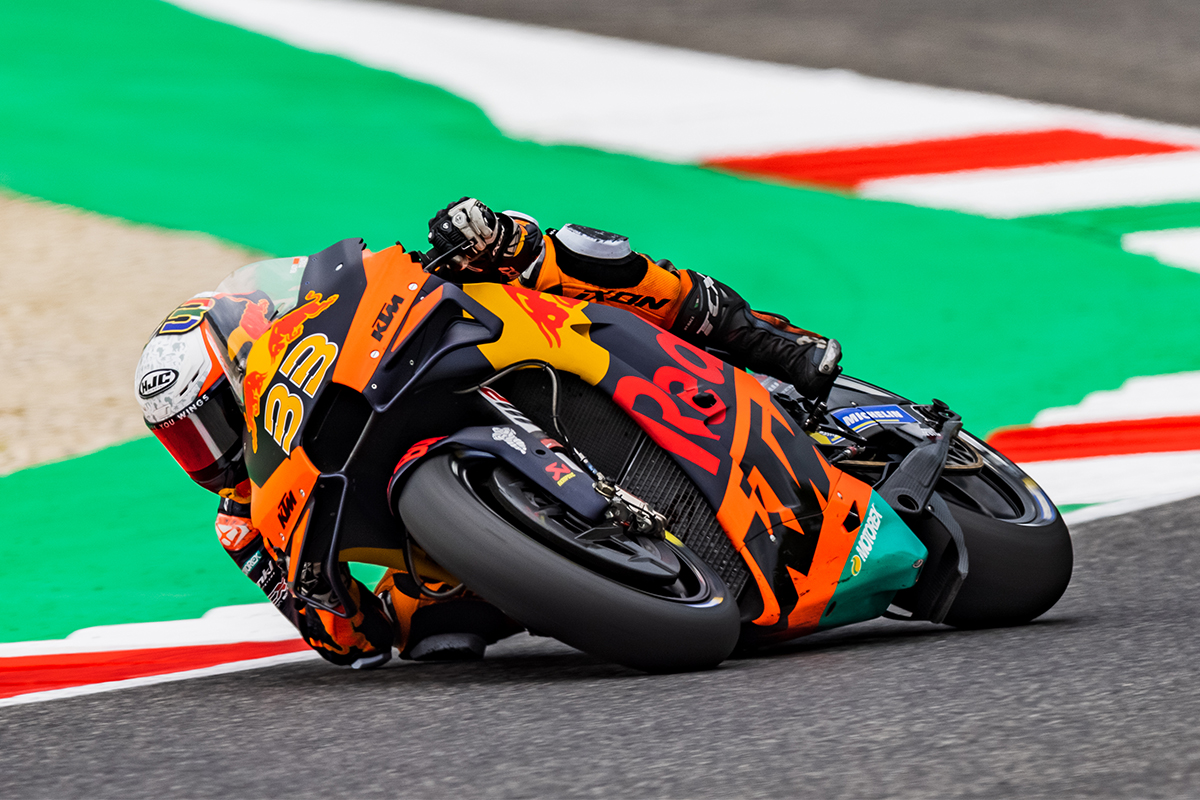
Brad Binder: “I’m super, super happy to have signed again for three more seasons with KTM and it will take us up to ten years. It’s incredible to have been with this manufacturer for such a long time now and we’ve always had a good relationship. I’m extremely happy in KTM colours so it’s extra satisfying to have a long contract signed up. It’s cool to have that belief and support from a company. It’s an honour. From here on we can focus on building ourselves towards the front. We are not terribly far away, and it would be really nice to do something great together. It’s exciting to see what these next years will bring.”
Pit Beirer, KTM Motorsports Director: “This was a very easy contract for us to do because we love Brad as a racer and what he brings to the team, the factory and the MotoGP class. He was also very enthusiastic to make a big commitment to us and that says a lot for our progression and our potential in this championship. Sometimes you find a racer and a mentality that really fits with your own philosophy and the fact that Brad has come all the way to the top with us in a ten year period is a very special story. We’re really proud to continue racing with him and to keep setting new targets together.”
Mike Leitner, Red Bull KTM Race Manager: “As Team Manager, I’m happy that Brad has placed his trust in us for another three years. He’s a very strong rider with a strong crew and a strong factory behind him. We will push together to achieve our mutual dreams and targets. It’s great we have this partnership up to ’24.”
Stop Thinking and Start Riding
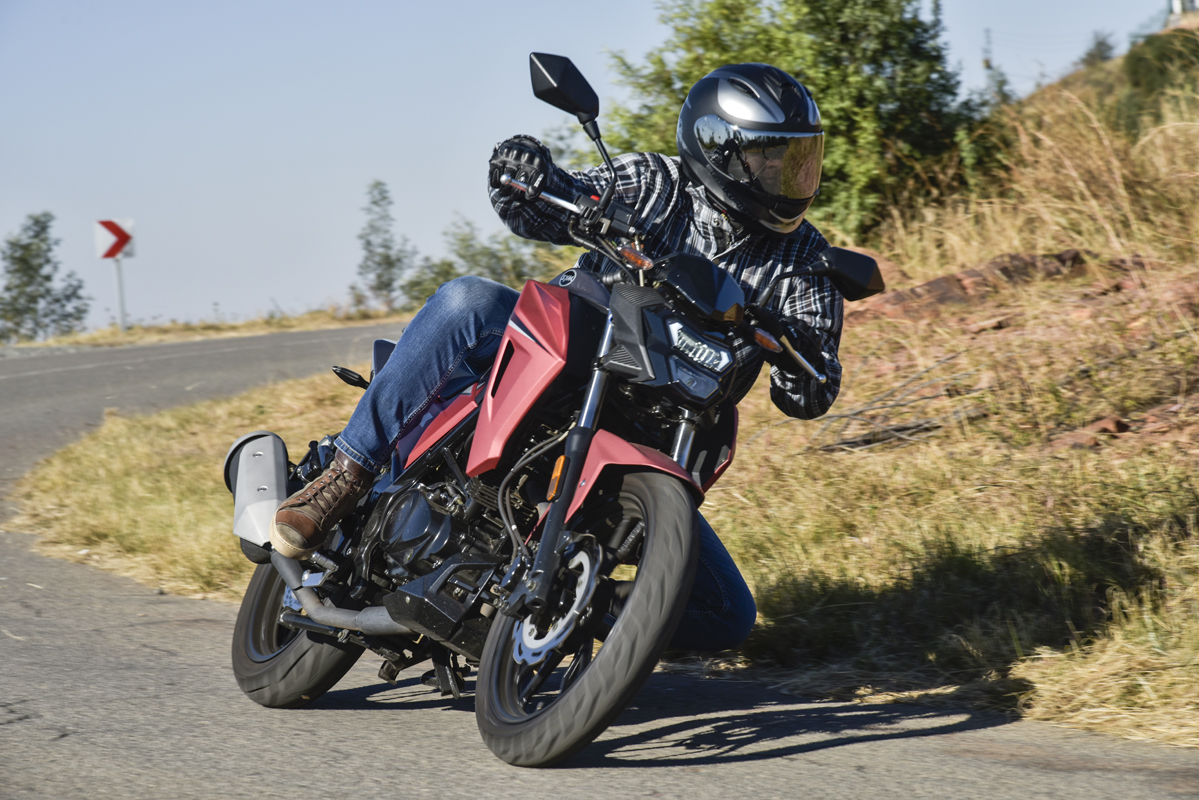
Choosing your first bike can be a daunting task, with a vast selection of motorcycle categories, engine types and sizes to choose from. If you’ve never ridden a motorcycle before, it’s very easy to head into a flat spin and overthink what your ‘perfect’ bike is. The formula is simple: instead of wasting your time watching countless YouTube videos and writeups, just pick something. Your first bike isn’t going to be your last, so you may as well speed up the process. And these days, it’s pretty rare to find a brand new bike that’s not good or reliable.
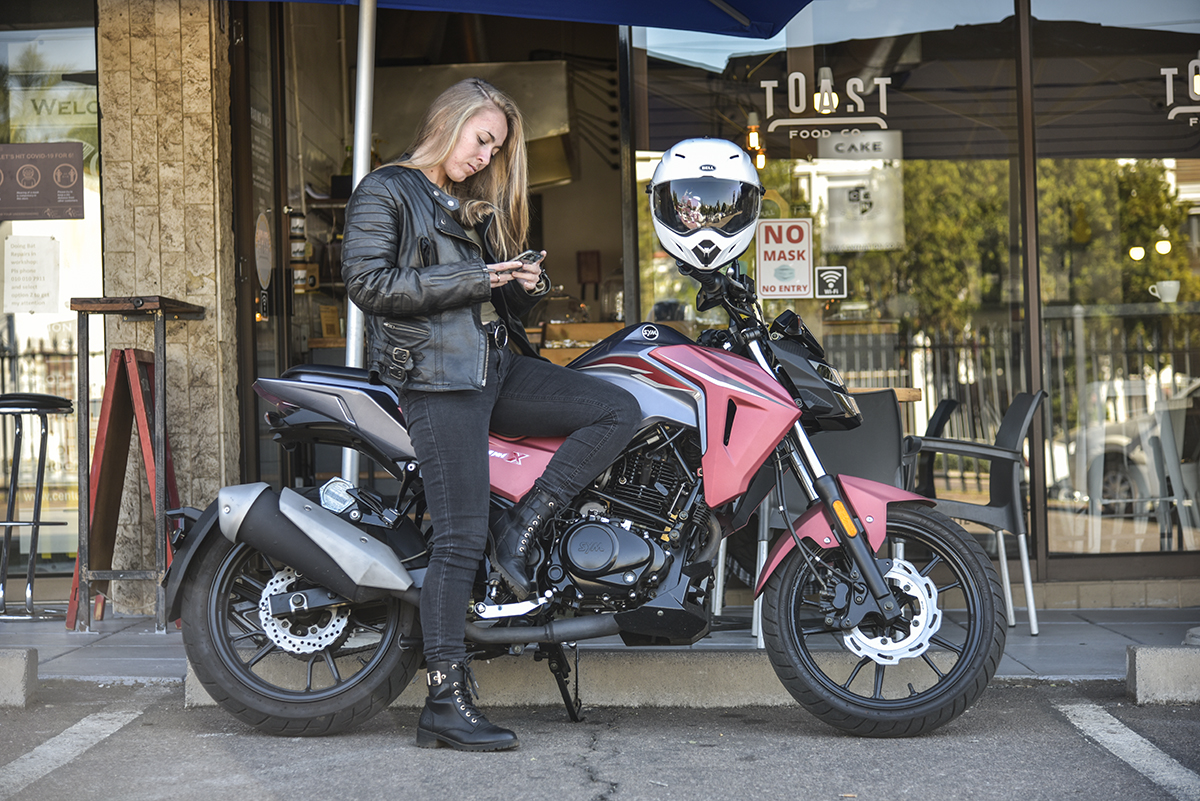
I still remember the days when riding a 125 cc 2-stroke or a Honda CBR125 as a first bike was super cool, and how lucky you were if you had one of those at 16. But 125/150 cc bikes have started to slip under the radar lately, with manufacturers focusing on 300/400 cc starter bikes. This creates a massive gaping two-year hole where a kid could be riding, but instead gets a car at 18 and never tastes the sweetness of motorcycling.
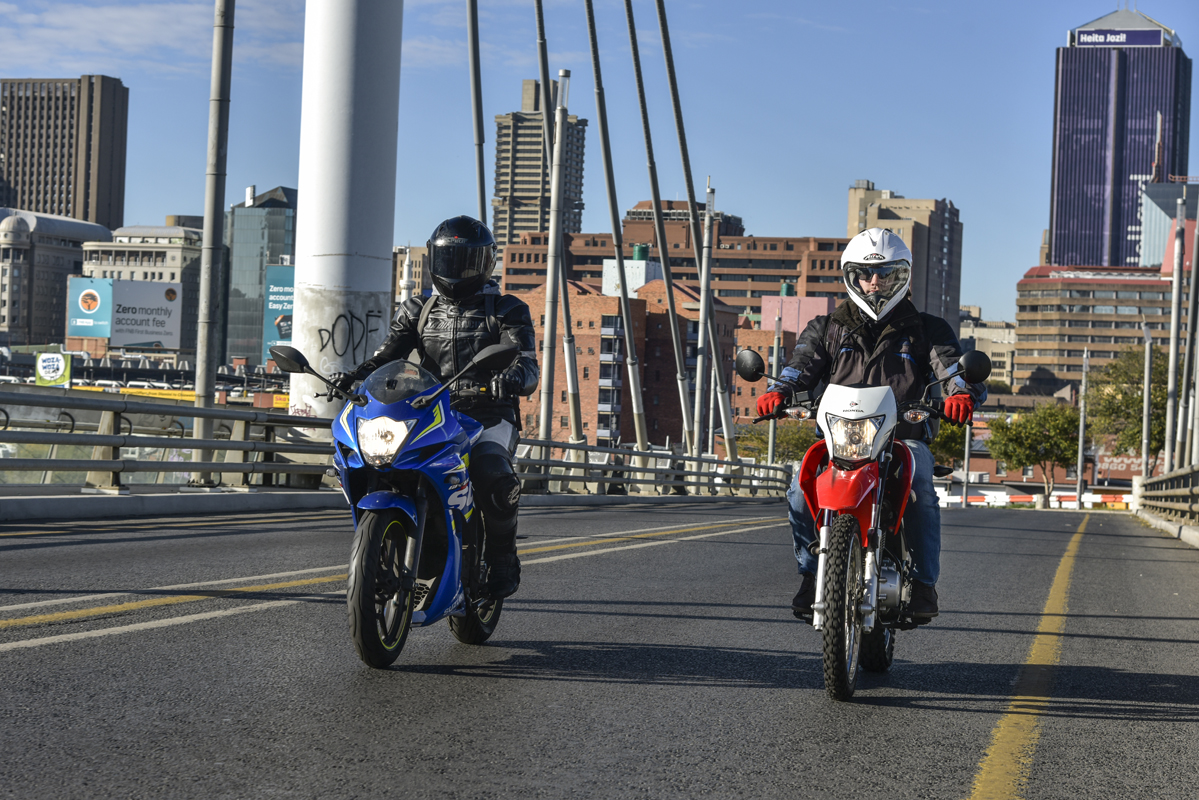
So why should you start on, or buy, a small capacity motorcycle?
Smaller motorcycles are money savers—easy to afford, light on fuel and cheap to insure and maintain. Let’s use SYM as an example, and their entry-level NHX. Although a budget bike at R29,995, the NHX has full LED lighting, a USB charge port, a combined braking system, fuel consumption of 31.6 km/L (that’s 340 km on a tank), phenomenal handling and stunning looks.
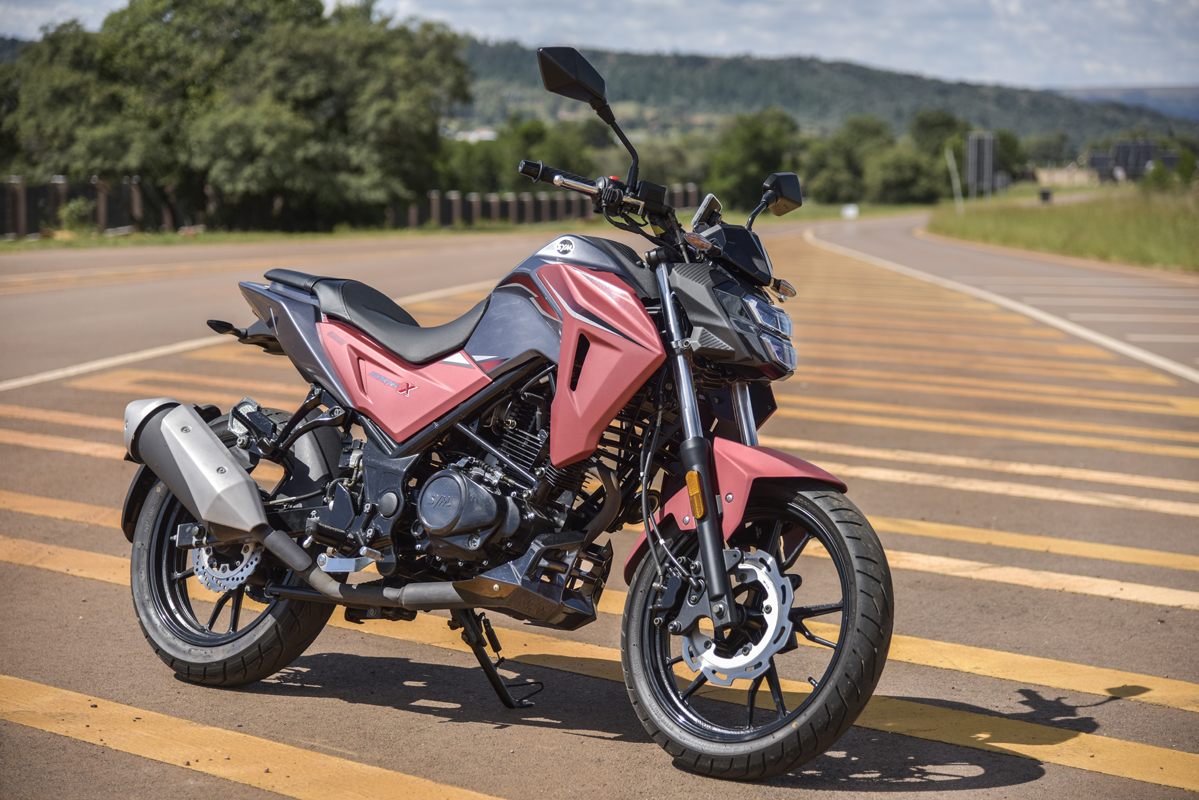
That’s all the important stuff you need to know for a first bike purchase. The rest you’ll figure out as you embark on your own motorcycle journey.
Once you’ve bought your first bike, the adventure really begins. In no time at all, you’ll find yourself in a riding group with friends that ride all sorts of motorcycles in all sorts of shapes and sizes—and this is where practical research happens. As you start spending more seat time on your bike, and swapping out with your friends on longer rides, you’ll figure out what you like and what suits your style. Whether it’s the naked, sportbike or dual-sport life, all those questions will be answered as you ride and spend time debating with your buds.
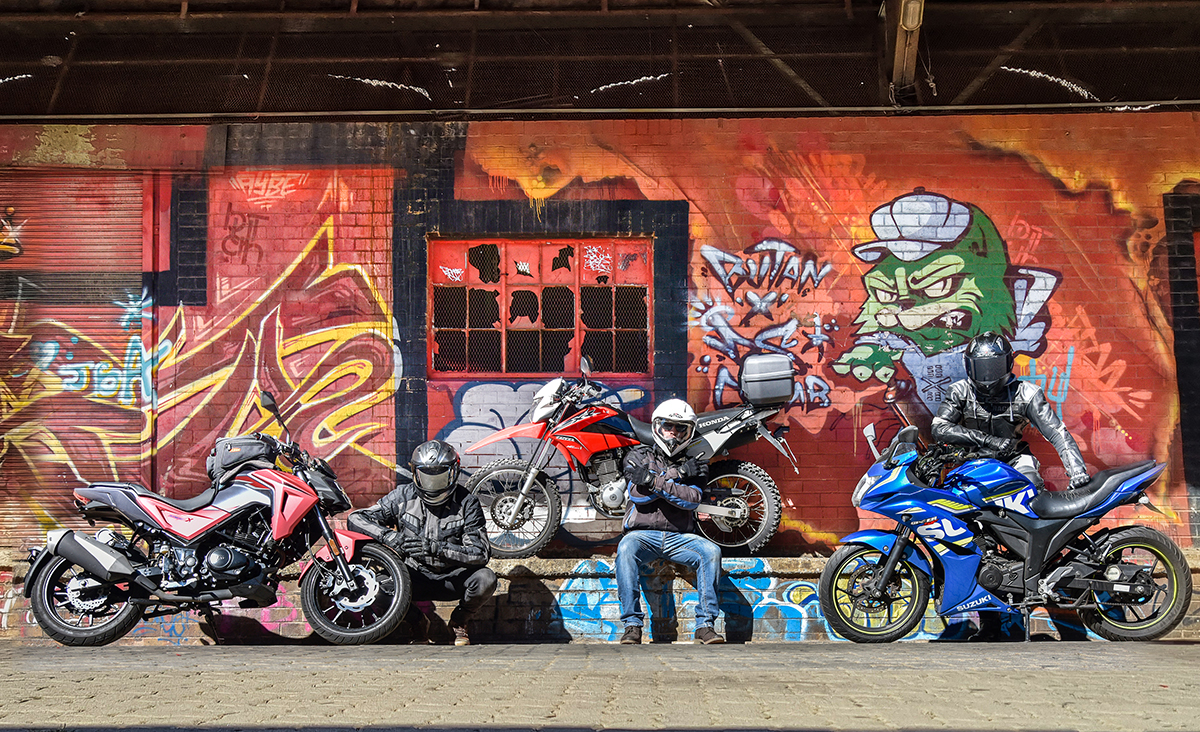
Many people think smaller cc bikes are impractical because of their short legs, making them useless for long-distance commutes. Myself and a few friends recently went on a small bike excursion, where we rode over 200 km on a Saturday morning to prove those small bike stereotypes wrong. We left central Pretoria at 7 AM, headed down Olifantsfontein, joined the R25, and snaked our way down into Arts On Main for an 8 AM coffee.
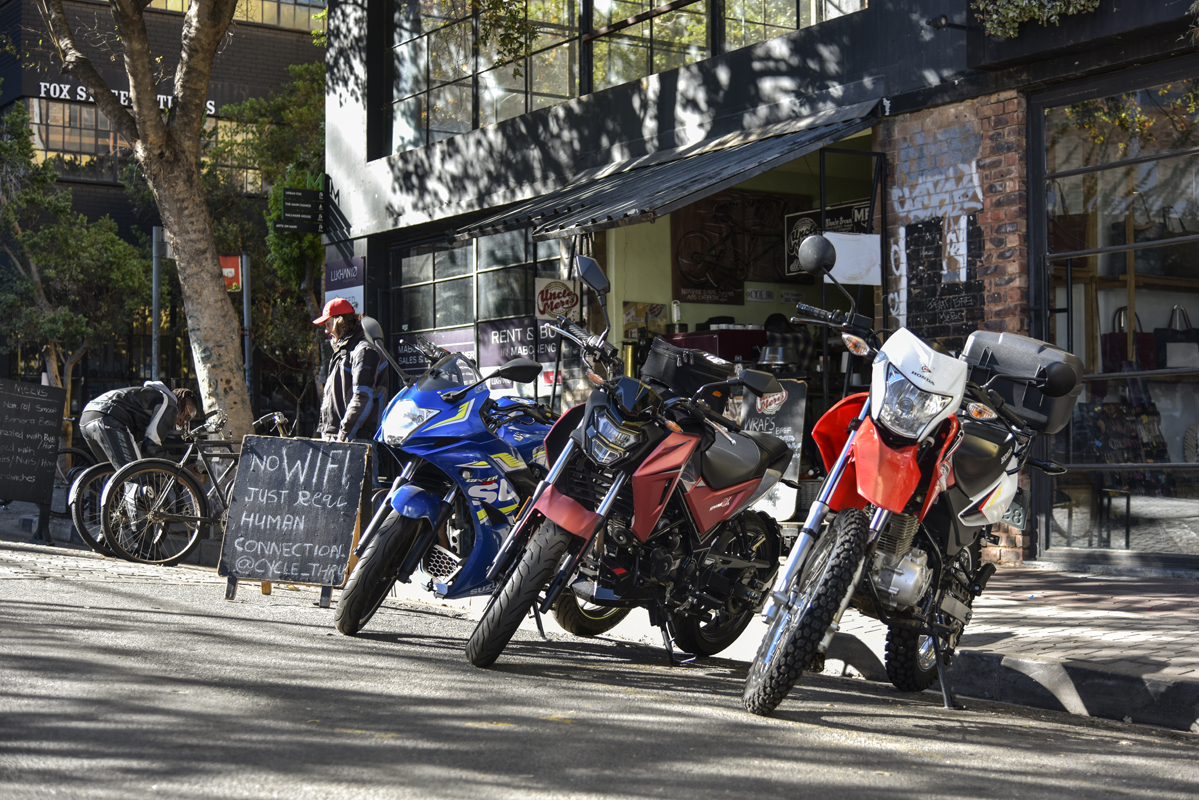
After a few cuppas and a catch-up, we headed downtown. We seriously enjoyed riding our nimble bikes through the busy Newtown traffic in search of graffiti, before heading up to Northcliff for some stunning views.
At no point on our journey were any of us wishing we had bigger bikes, and in busy downtown Joburg we slipped through traffic with no effort at all. By the time we got home, it was barely afternoon and our tanks were only half empty—leaving us enough fuel for the week’s work-and-back slog.
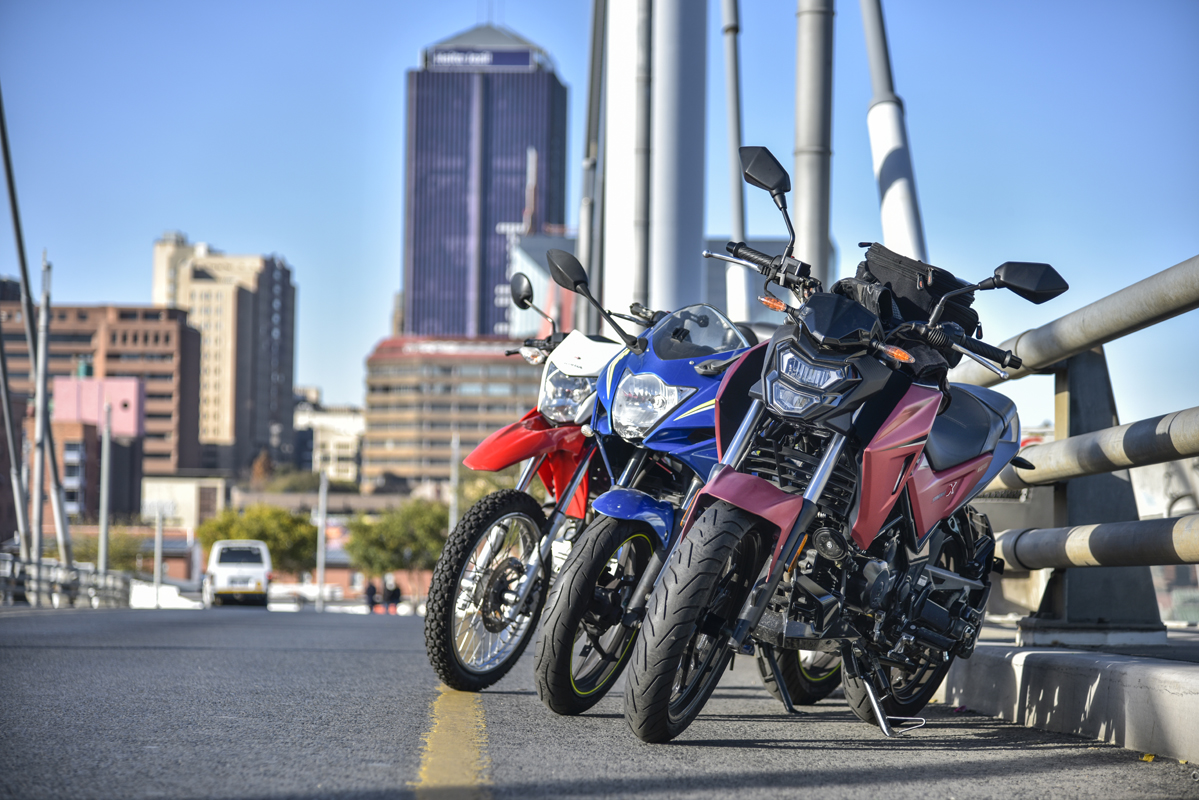
At the end of the day, it doesn’t matter what small bike you buy or why—you’ll have fun riding it and your bank account will thank you. I have personally spent nearly 2000 km on SYM’s NHX and I could easily see myself parking it in my garage next to my MT-09, taking care of the daily ride and saving kays on my big bike.
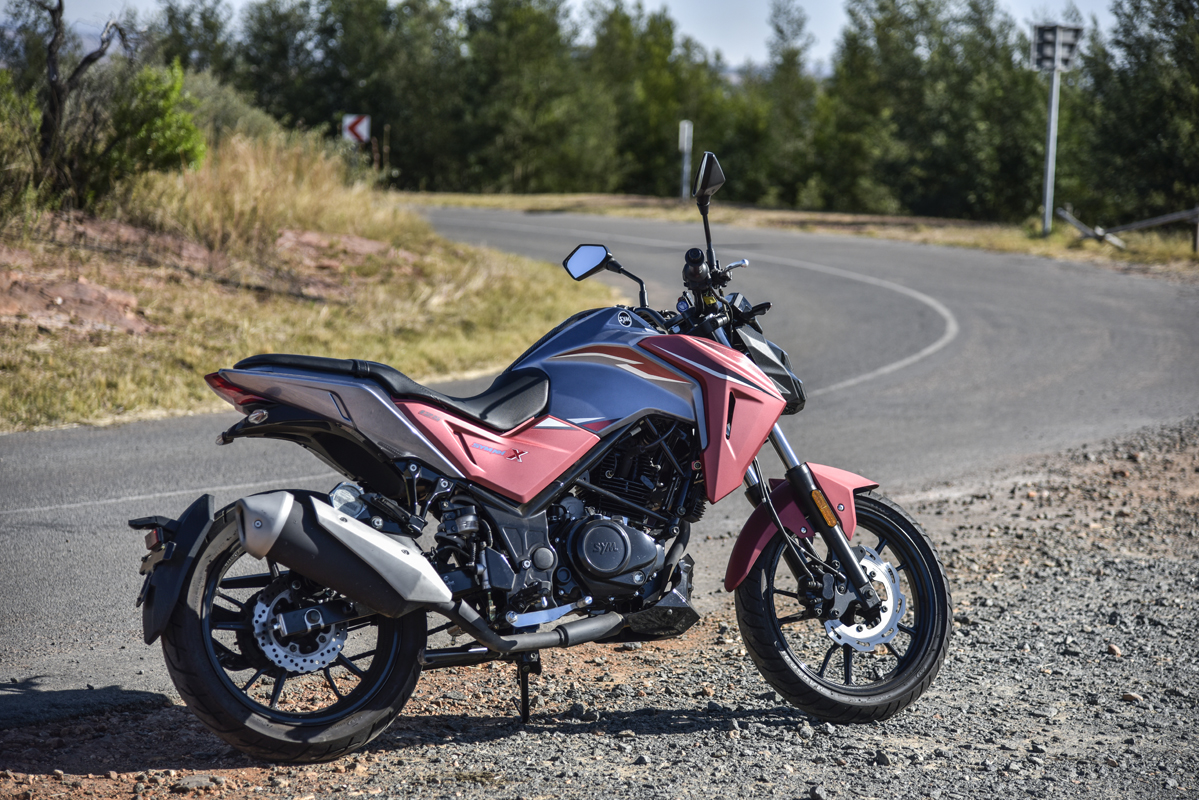
Karoo Dreaming: Adventure Touring on the Suzuki V-Strom 1050XT
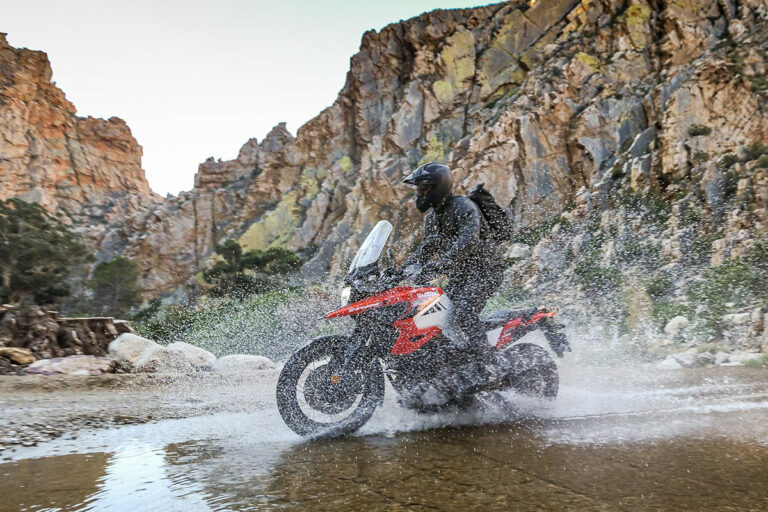
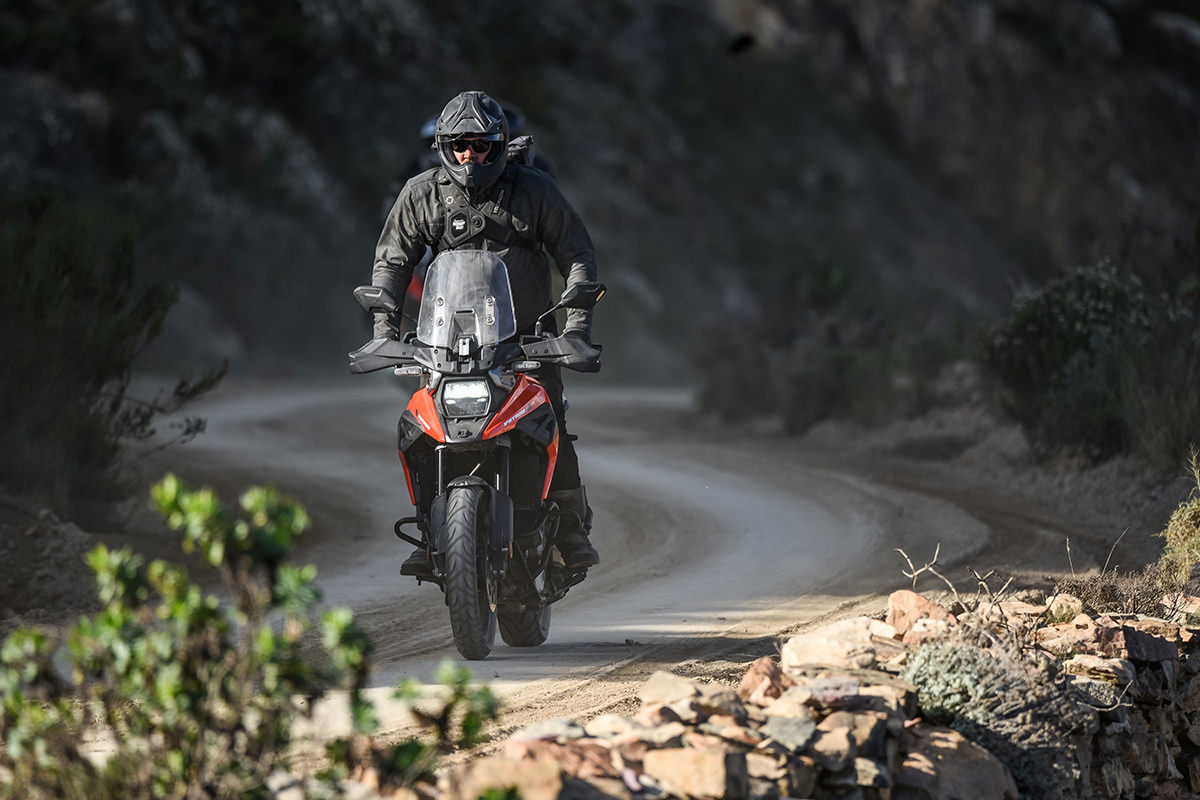
One of the perks of my job, other than riding motorcycles and calling it ‘work,’ is the travel. Towards the end of 2019 I was wrapping up a 12-month stint where I travelled to six different countries over nine separate trips. Then a global pandemic struck, and I was grounded.
With nowhere to go but within my own country’s borders, I started taking stock of all the places I’d been—and hadn’t been. I’ve done my fair share of adventure touring, but South Africa is vast, and I started itching to see places I hadn’t seen yet. Because for all the bucket list items I’d ticked travelling overseas, I had a long to-do list waiting right here, on home soil.
Locked into a hamster wheel of home schooling, Zoom calls, sweatpants and tactical snacking, I desperately needed to get out. So Suzuki South Africa’s invitation to tour the Karoo on the new V-Strom 1050XT couldn’t have come at a better time. I threw my gear into a duffel (plus a rain suit, thanks to less-than-favourable reports), and quietly angsted over whether I still knew how to corner a big adventure bike on dirt.
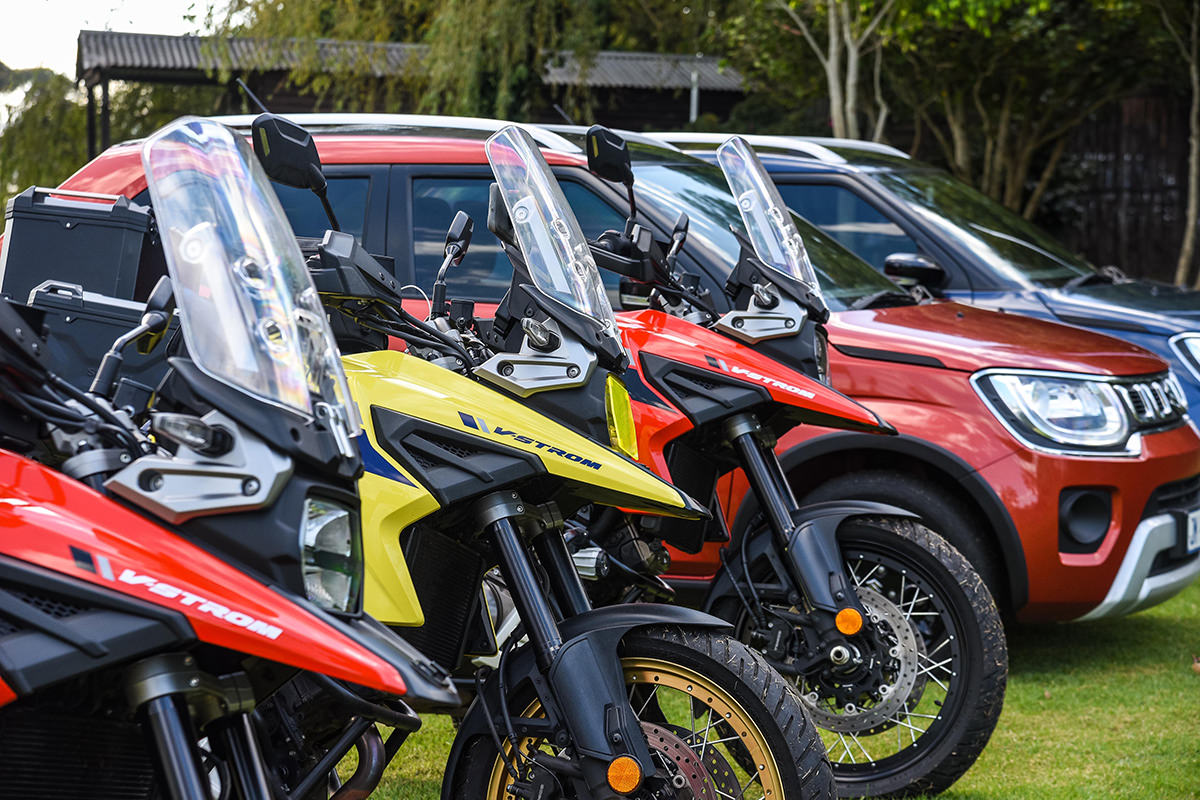
Suzuki are one of only a few OEMs that make both bikes and cars, and they wanted to flex on this point. So they brought four Suzuki V-Strom 1050XTs and two Suzuki Ignises (or is it Igni?) out to play, with a mixed bag of motorcycle and automotive journalists.
Suzuki’s play with the new V-Strom is an ingenious one. Under the hood, it’s mostly the same as its predecessor, with the new-Euro5-compliant motor good for 100 hp and 103 Nm. But for the first time in its life, it actually looks good. Damn good, in fact.
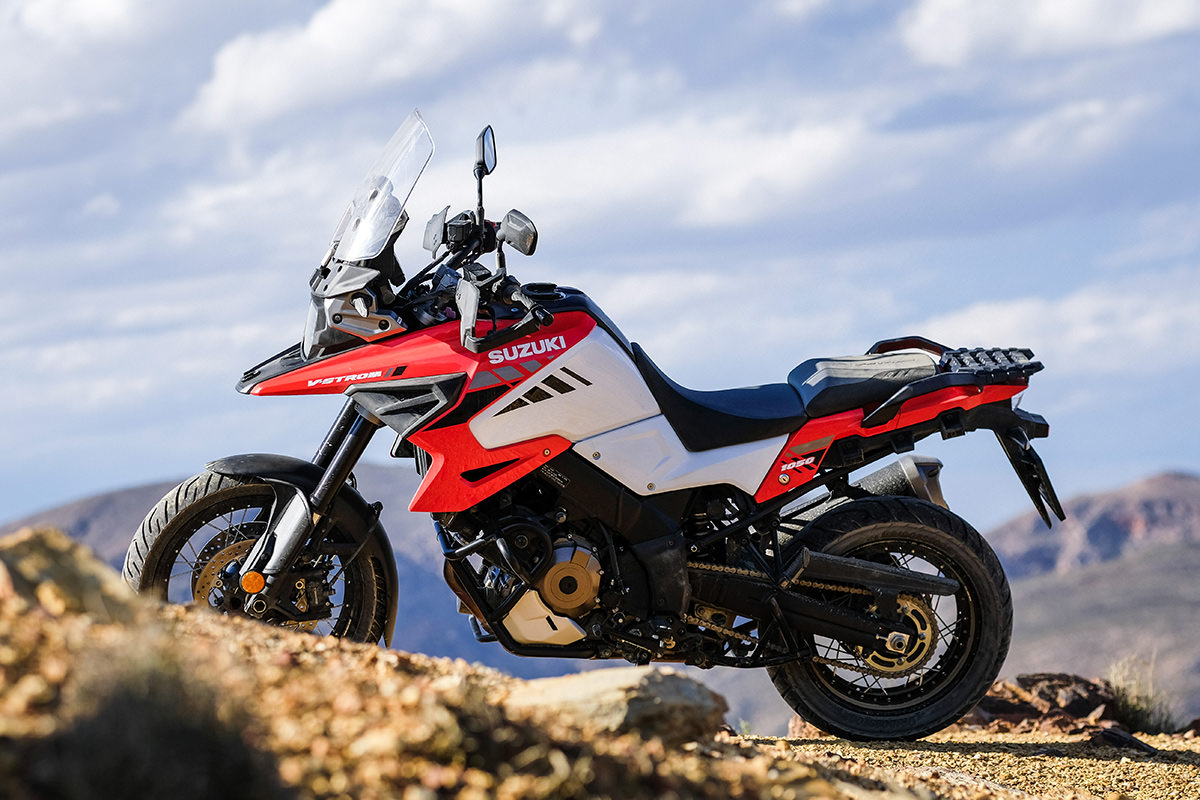
Suzuki have ditched the V-Strom’s infamously awkward vibe for a neo-retro reinterpretation of the iconic DR Big—the first adventure bike to feature the now-ubiquitous front-end ‘beak.’ You can get it in black, but our choices were yellow (a homage Suzuki’s 80s Dakar racer), or red and white (a replica of the production bike).
I bet on yellow as we set off from our starting point in the farmlands surrounding Grabouw. The first part of our route was a quick squirt up the N2, over Houwhoek Pass and onwards past Caledon. Straight out the gate, the V-Strom proved itself as a mile muncher.
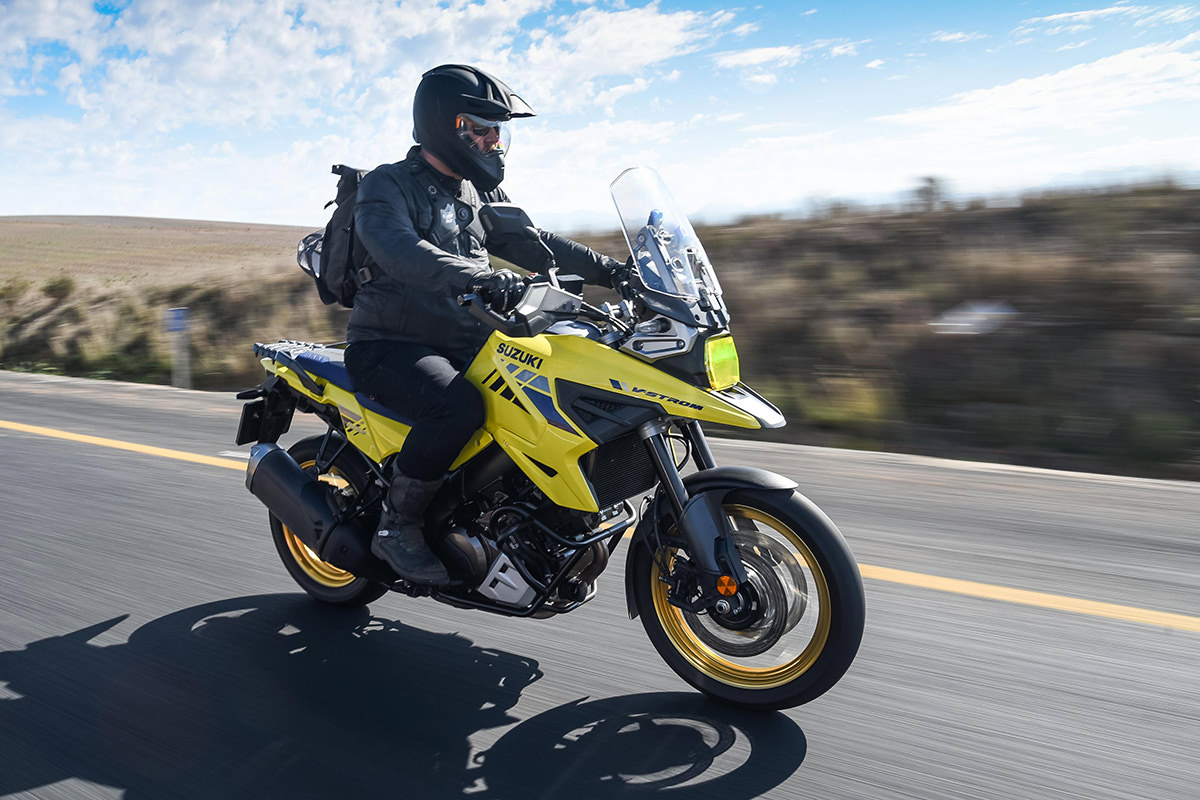
That V-twin motor is somehow very lively and slightly agricultural at the same time. But it’s also ridiculously usable and has a reputation for reliability, which is exactly why the V-Strom has the cult following it does. It’s an unpretentious and robust motorcycle that does exactly what it says on the tin—no mess, no fuss.
The rider triangle is spot-on for my 1.86 m frame, and the seat is truly all-day comfortable. The V-Strom’s adjustable screen didn’t completely eliminate buffeting (few screens do at my height), but I found a position where it brought it down to a bearable level.
Somewhere beyond Caledon we hung a left, found a long stretch of dirt, then made our way onto and over Tradouw Pass, as sparse raindrops began to fall. Now on the popular R62, we pulled into Diesel & Creme for burgers and shakes (obviously).
With foul weather looming, I wasn’t mad when I was asked to switch to the pint-sized Ignis for the next leg. (Narrowly avoiding bad weather would become a theme for the trip, and my rain suit never left its bag.)
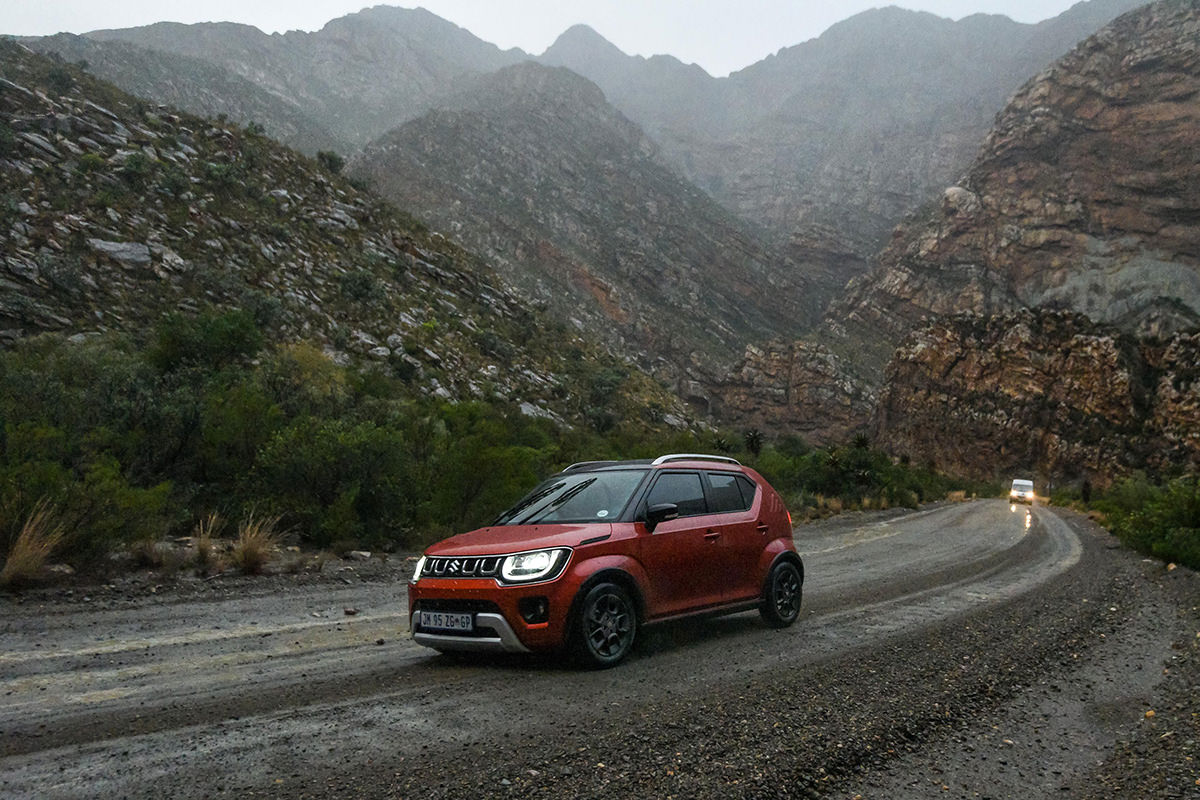
My good buddy Brian Cheyne and I piled into the Ignis, settling into the luxury of climate control and Apple CarPlay as our motorcycle-riding peers nervously scanned the sky. As we rolled down the R62 and up onto the incomparable Seweweekspoort Pass with Jimmy Eat World blaring, I felt just a tiny bit like a sell out.
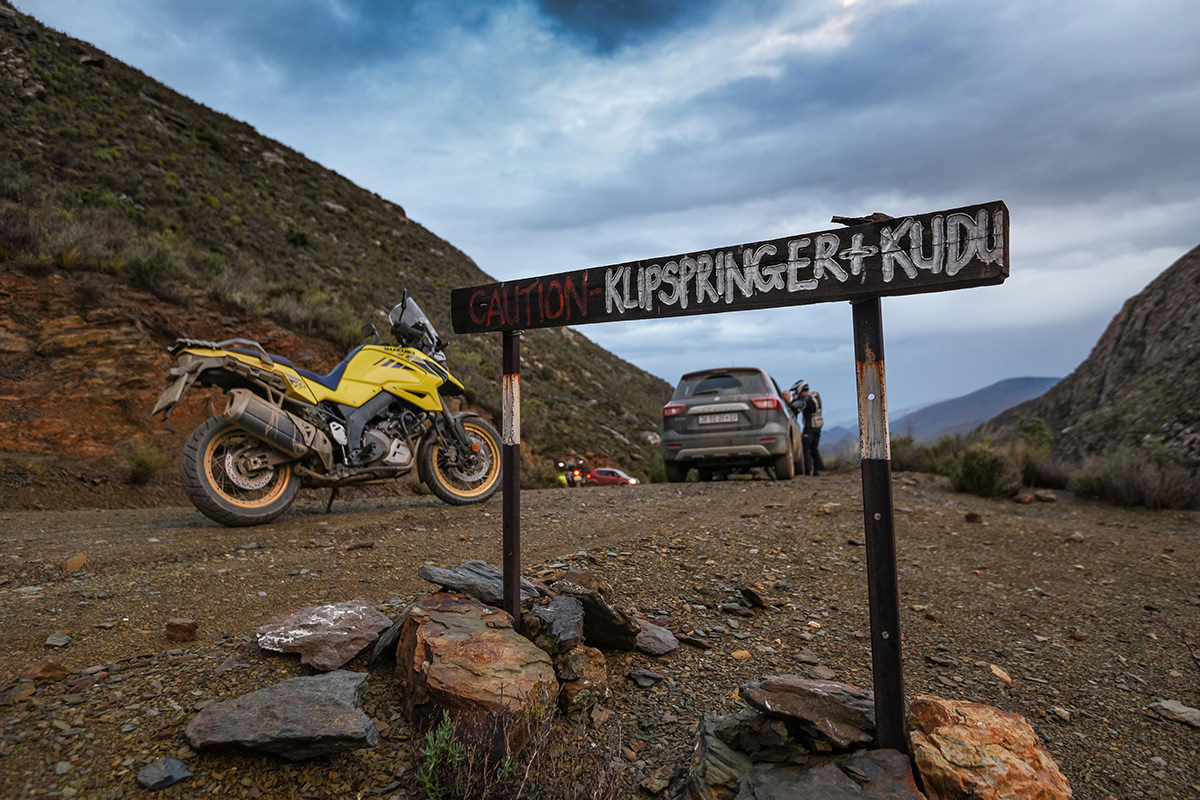
With the sun slowly setting, we diverted from Seweweekspoort into the Bosch Luys Kloof reserve. Here, the plucky Ignis’ generous ground clearance (20 mm more than the V-Strom) made short work of the tight and often loose tweespoor descent.
We spent the night basking in the opulence of the Bosch Luys Kloof Lodge. Yes, hardcore adventure riders carry their own gear and sleep under the stars—but look me in the eyes and tell me the idea of a warm bed and a backup vehicle doesn’t appeal to you…. thought so.
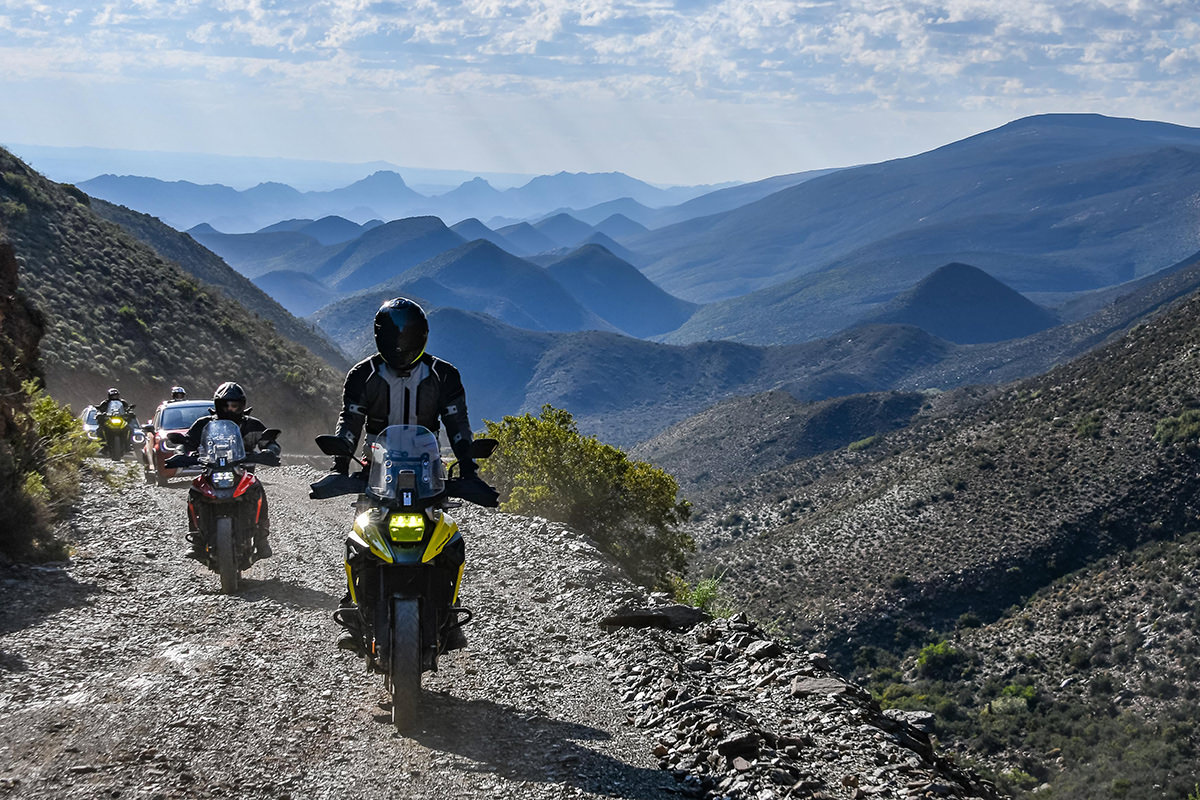
The next morning we retraced our steps out of the reserve and back down Seweweekspoort—but now, I was back on the bike (red this time). I had worried that the V-Strom’s road-biased tyres would break loose on me, but they held up surprisingly well. And just as the bike’s ergonomics and geometry had impressed me on the road, they were equally good off-road.
Standing up, there was enough room for the bike to bounce around between my legs, and the bike carries its 236 kilos well. The V-Strom’s motor and throttle are also smooth enough to point-and-squirt it out of trouble.
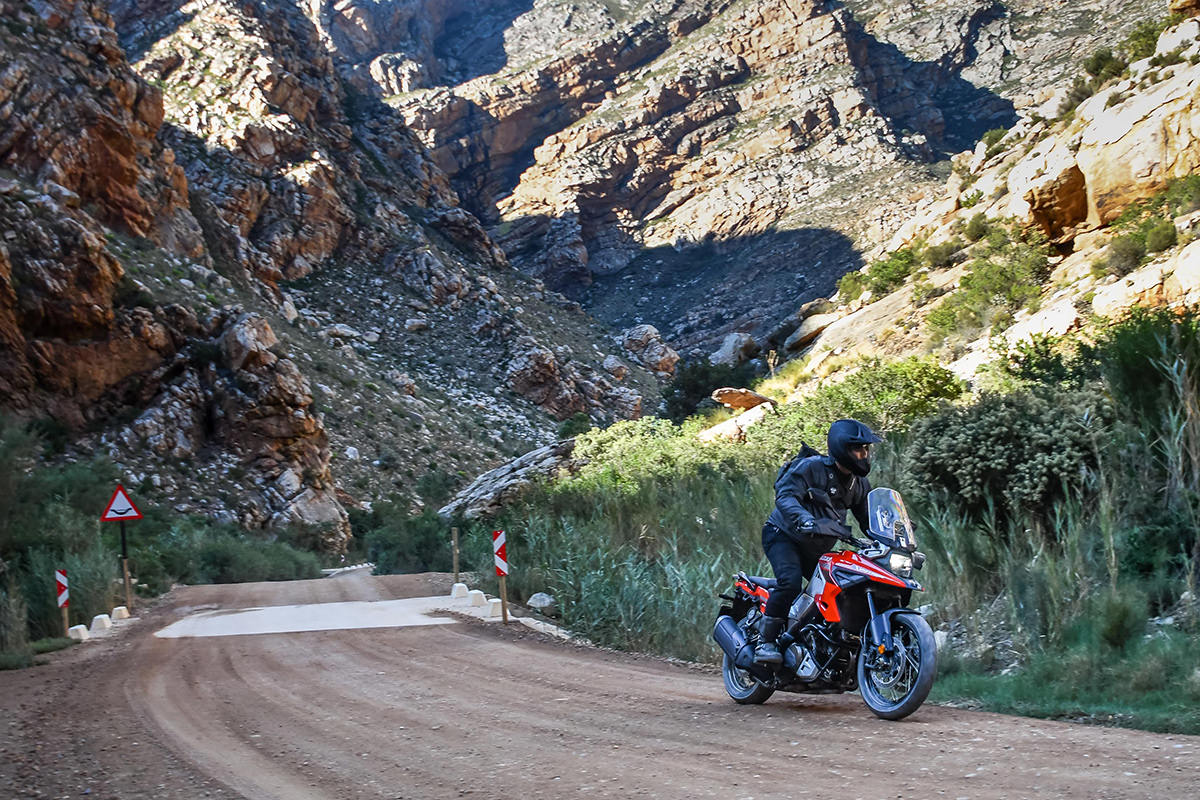
Towards the end of the Bosch Luys Kloof pass, I found the cap I’d lost the day before, while sticking my head out the Ignis’ window. Then we pulled over to yank a nail out of my rear tyre, picked up by one of the riders the day before. The V-Strom’s 19F/17R wheels are thankfully tubeless, so after a quick plug, we were back on track.
If you haven’t ridden a motorcycle on Seweweekspoort yet, do it now. It’s an easy-to-ride gravel road that sashays its way through towering rock faces that feel like they’re leaning in. I slowly pushed the V-Strom up to a comfortable pace, feeling it float over rises and through corners like a big boat.
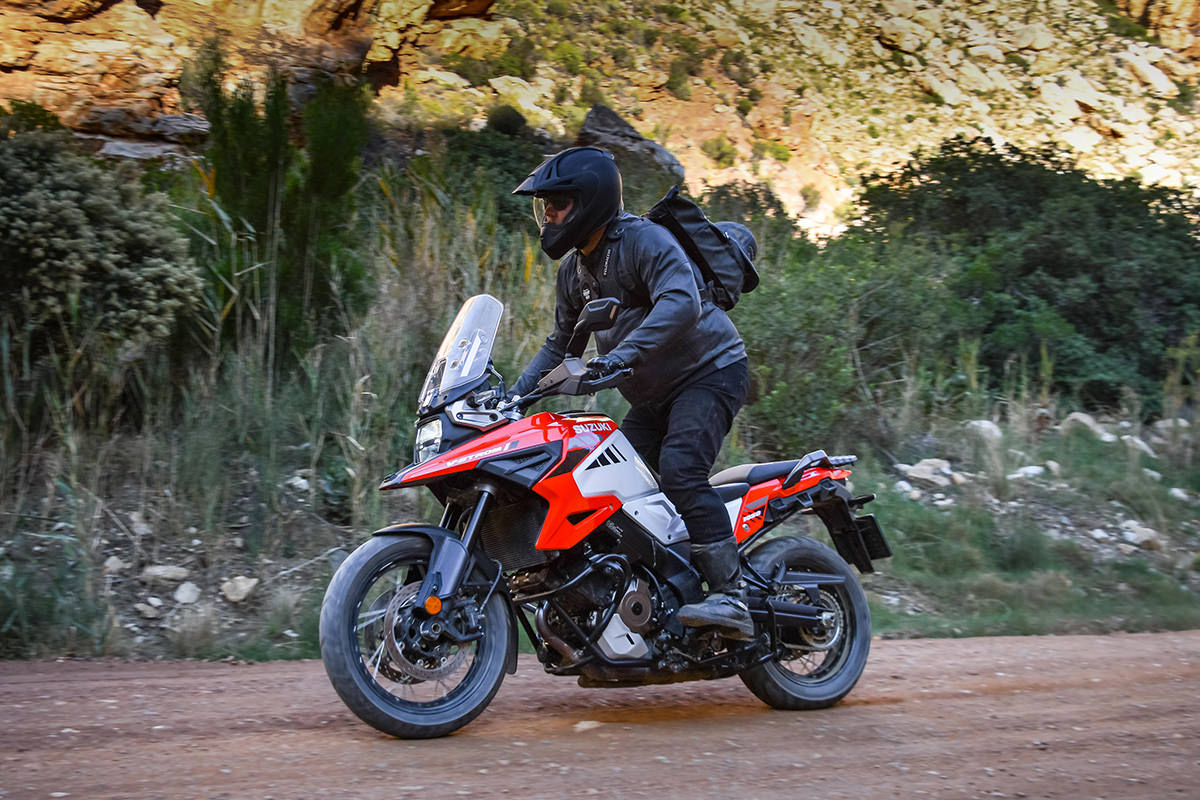
I flicked the Suzuki’s traction control back on as we transitioned back from dirt to tar again. The V-Strom’s LCD display and electronics package lacks the sophistication of some of the competition, but works well enough. You can switch between different engine map, traction control and ABS settings, but I just put everything on ‘max’ and occasionally fiddled with the traction control.
You can’t switch the ABS off either, but on its least intrusive setting, the Suzuki’s ABS performed well enough on dirt.
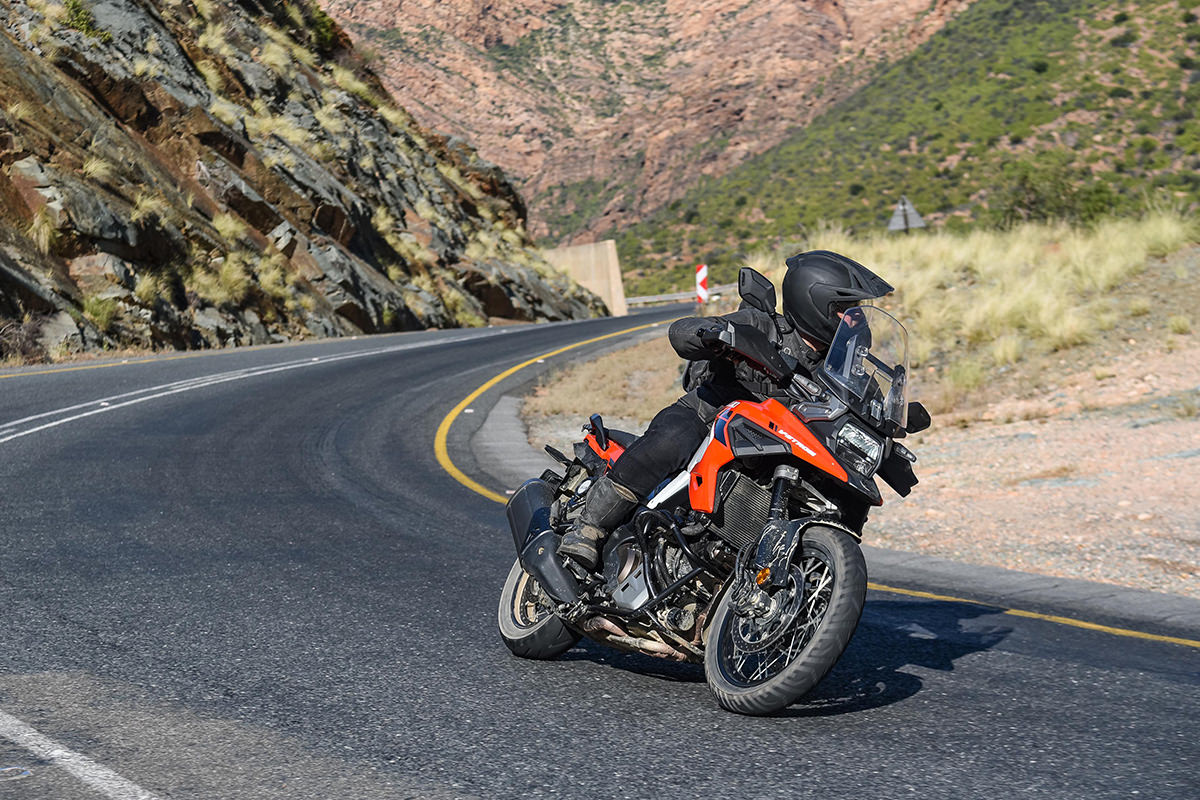
The long sweeping turns of Huisrivier Pass made for a perfect photo stop, so we pulled over and took turns as the Suzuki crew fed us snacks and coffee with condensed milk. We’d barely rolled into Calitzdorp when we took a random left, and soon ended back on another dirt road. Today was dry and dusty—so you either needed to be on top of the guy in front of you, or miles back.
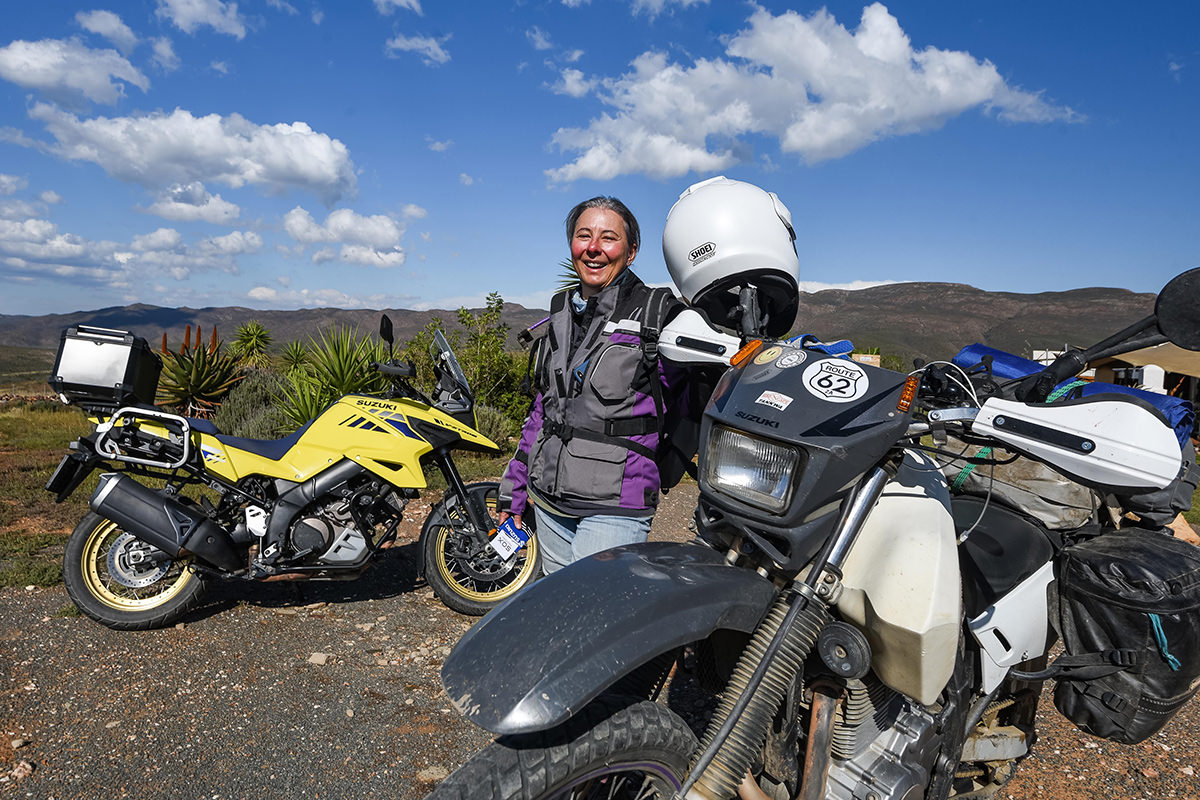
That stretch spat us out near Kobus se Gat—a restaurant where every second dish is served on roosterkoek. (We had had roosterkoek at breakfast too, and would have more at dinner. This is the Karoo, after all.) We met a solo traveller and her heavily-loaded Suzuki DR650, and two Jimny owners that geeked out over our little expedition.
I guess Suzuki has a bigger fanbase than I realised.
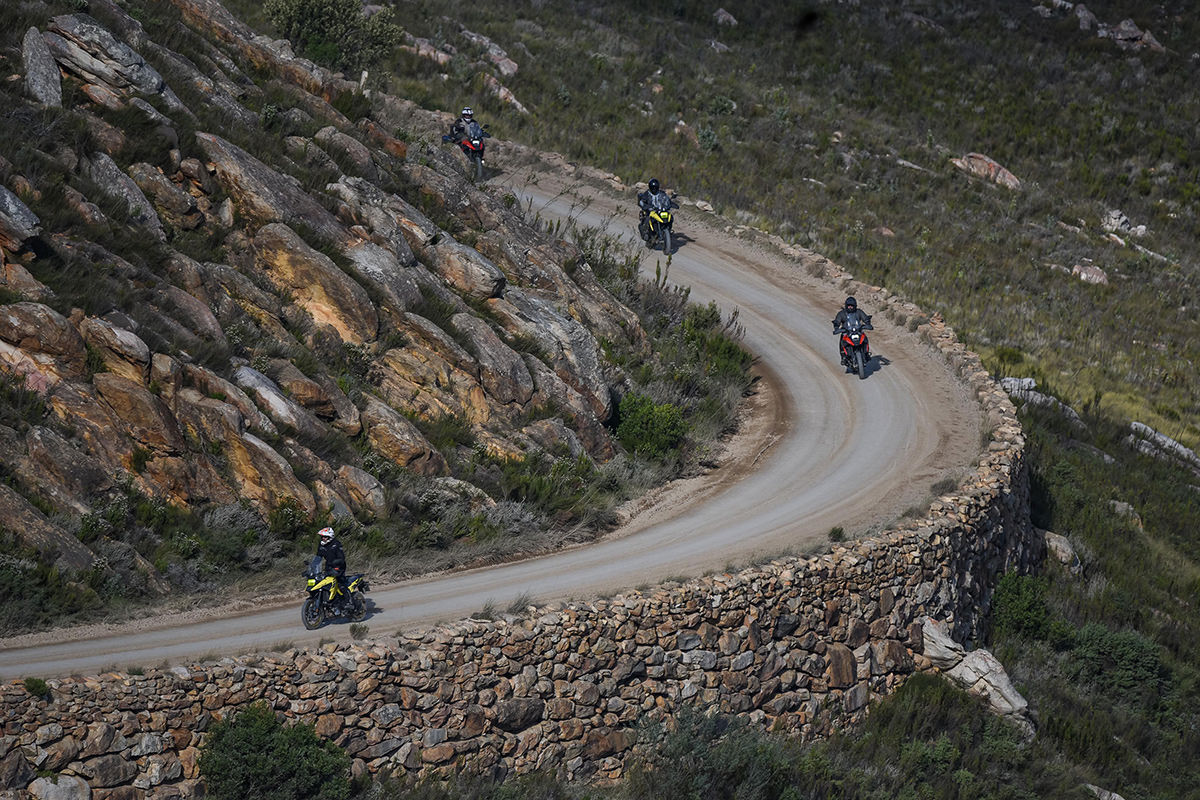
Next, it was time for me to tick a major item off my list: the majestic Swartberg Pass. I didn’t realise it was part of our route until the tour briefing a day before, and had been filled with giddy anticipation since. Because, remarkably, I had never done it until now—on two or four wheels.
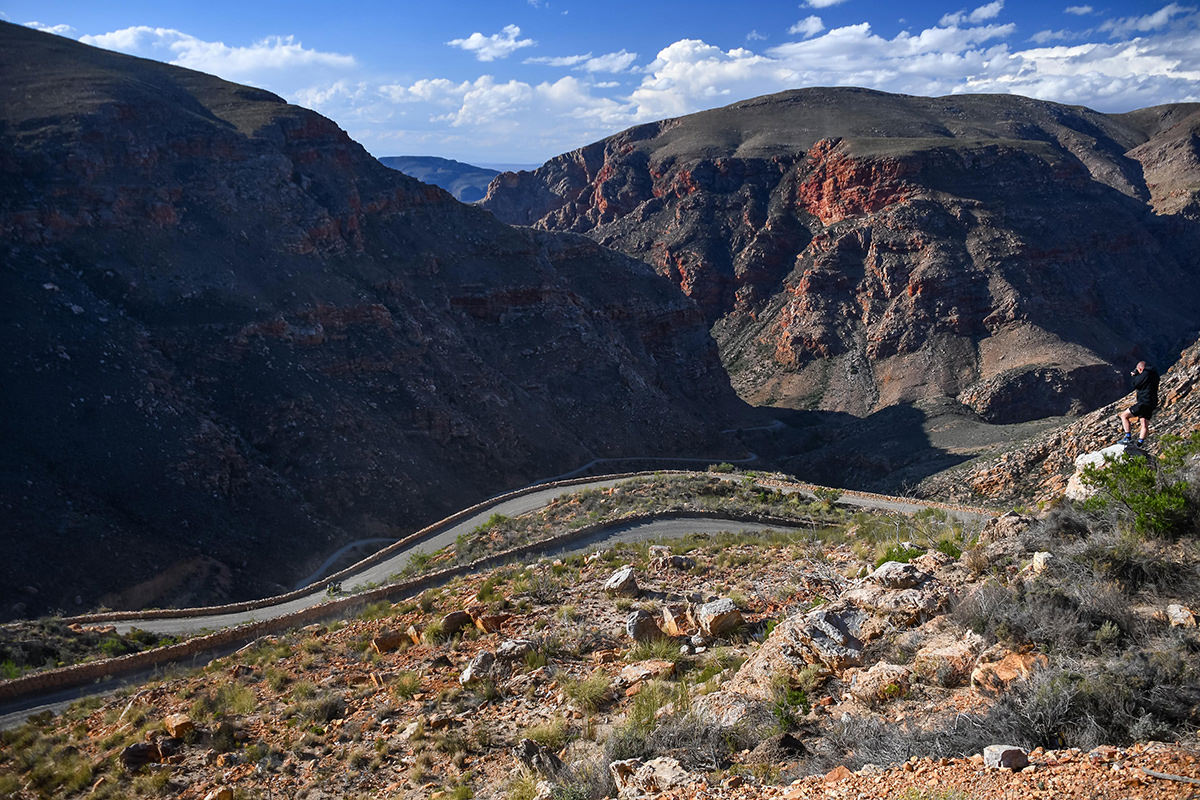
There aren’t enough column inches to describe how superlative Swartberg Pass is as an adventure riding route. It’s gravel all the way, starting with a gradual meander upwards before descending via tight switchbacks into the valley. It has more than one crest, and from each one, you can trace the road as it snakes down and into the distance, surrounded by stacked mountain tops.
It’s the sort of place that resets your soul in a way that few things can.
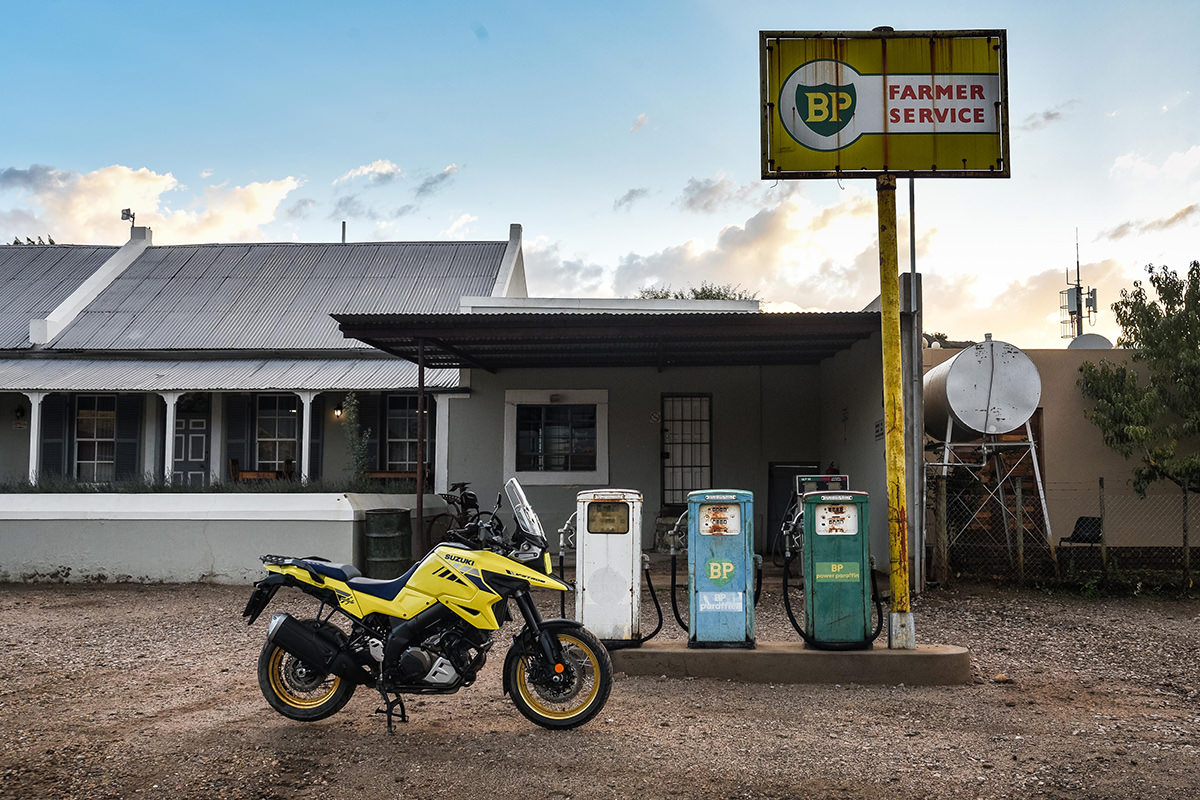
We parked at the Klaarstroom Hotel just as the weather started rolling in. Sitting on the back stoep, rinsing the dust out of my mouth with an ice-cold beer, the small-town silence was punctuated only by the squaws of a very loud parrot.
Dinner was a highlight—in more ways than one. We shuttled to an old wool-washing station nearby, converted by the owner (who also owns the 4,000 ha farm that Klaarstroom is built on) converted to a workshop for his friend. Scratch-built classic cars, Karoo home-cooking, and Chris busting out his guitar kept us engaged as the rain started pelting the barn’s tin roof.
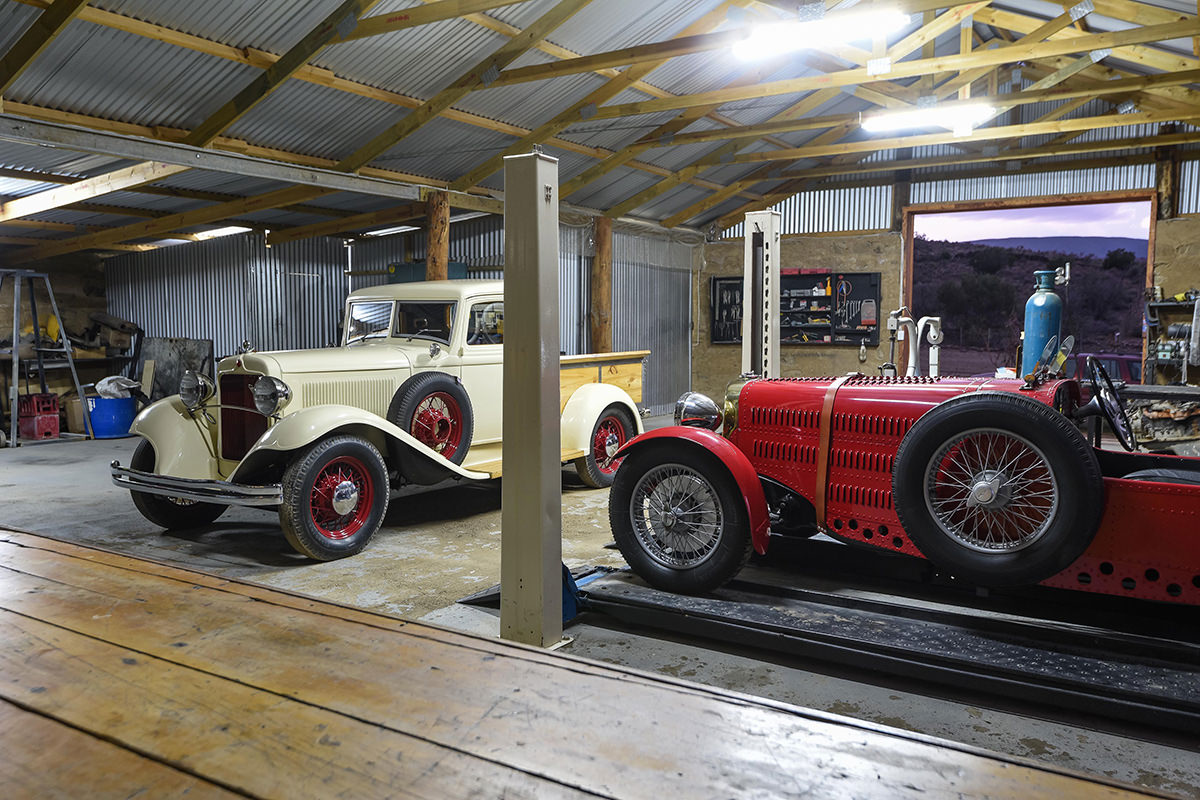
As the rain picked up pace, we realised that the river we’d crossed to get there had risen too much to cross back over safely. We heard reports that Meiringspoort, that we were planning to travel through the next day, was closed. We tried to figure out how comfy the barn would be for an entire night.
The farmer had told us how the river could rise up to nine metres if the rain got harder, but luckily it subsided enough that we could get out with 4x4s.
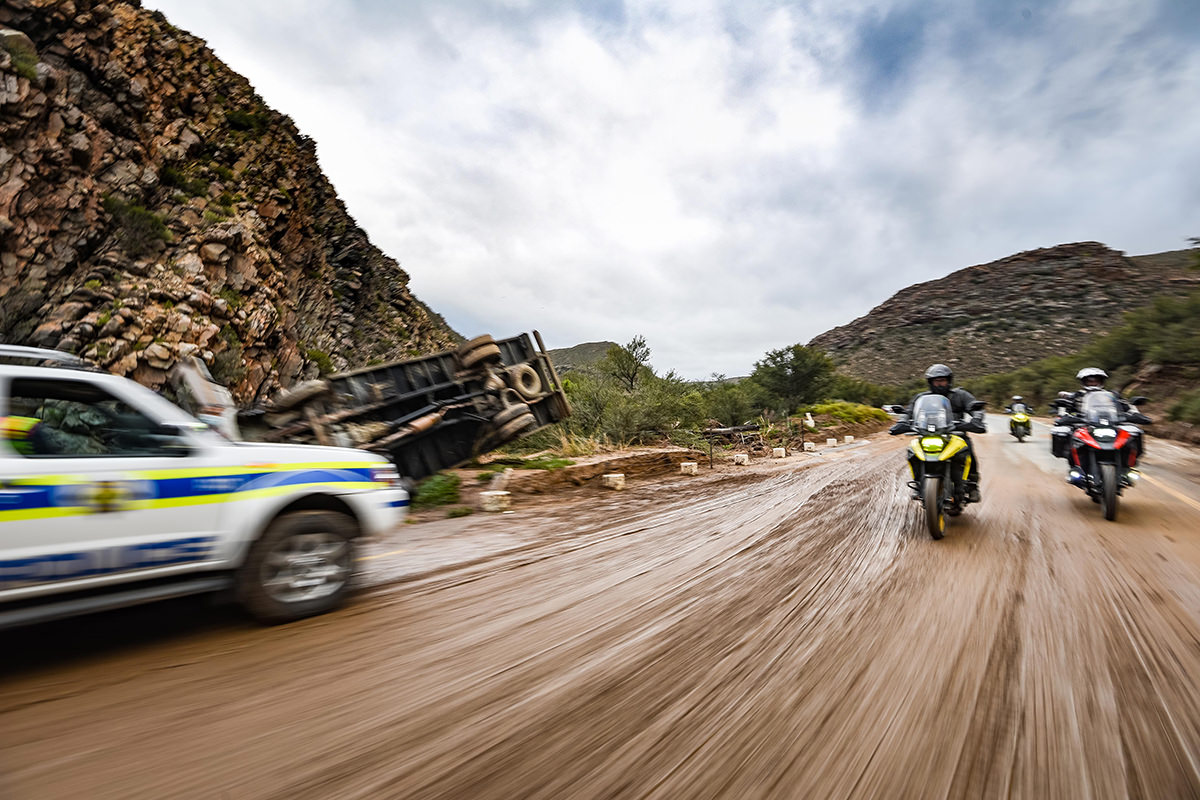
Meiringspoort was open by the next morning, but there was evidence of the storm everywhere. Its multiple river crossings were washed over with treacherously slippery mud, and we passed a truck that had left the road and flipped.
The rest of the morning was spent chasing the weather to George. Pancakes and coffee at the quaintly charming Die Tolhuis on the old Montagu pass, was followed by a misty chase down Outeniqua Pass. We split at George Airport—my Joburg-based friends boarded a plane, while I switched back to the Ignis again. (I had the option to fly, but chose to drive back with the team instead).
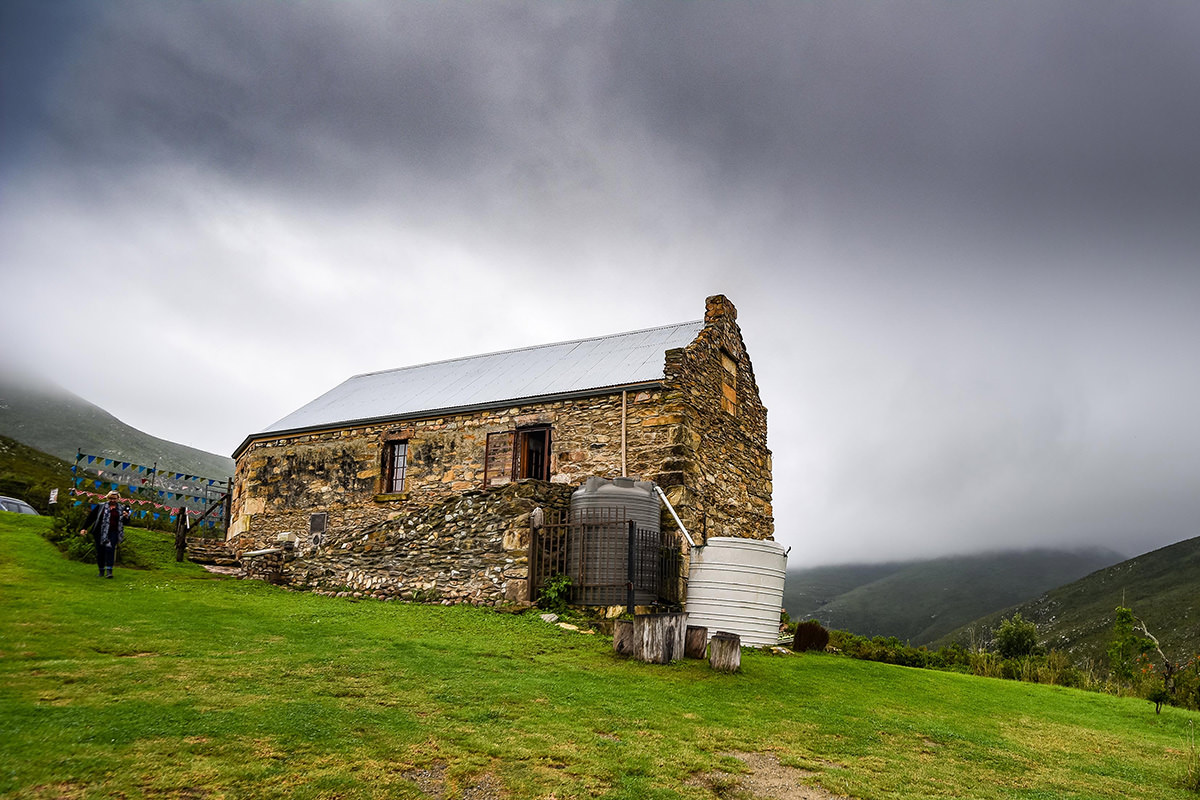
The final stretch home was a blur. Warm and snug in the Ignis as the rain wreaked havoc on the Garden Route, I sort of missed the Suzuki V-Strom. We’d spend a solid two days bonding and getting to know each other. We’d figured each other out. We’d shared good times.
Before I got home, I’d already planned my next trip.
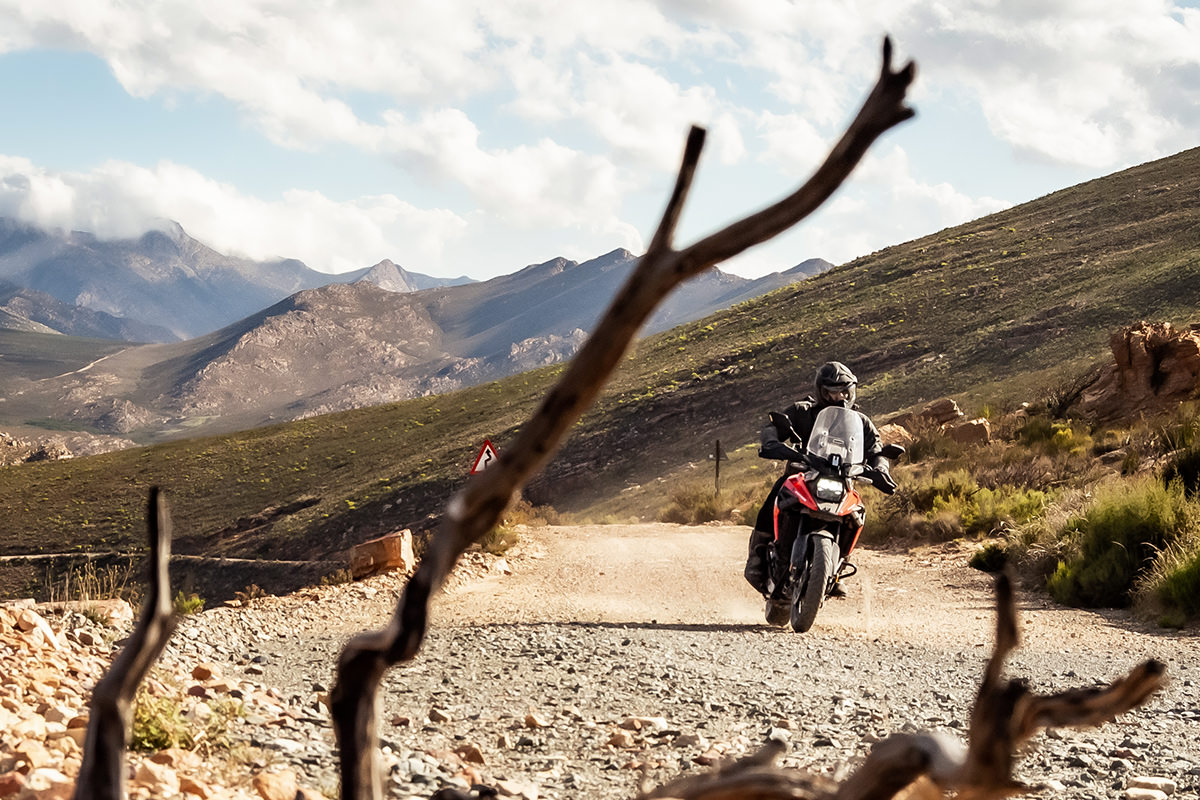
“New York steak” – A prime cut from Kawasaki, the birth of the first real Superbike!
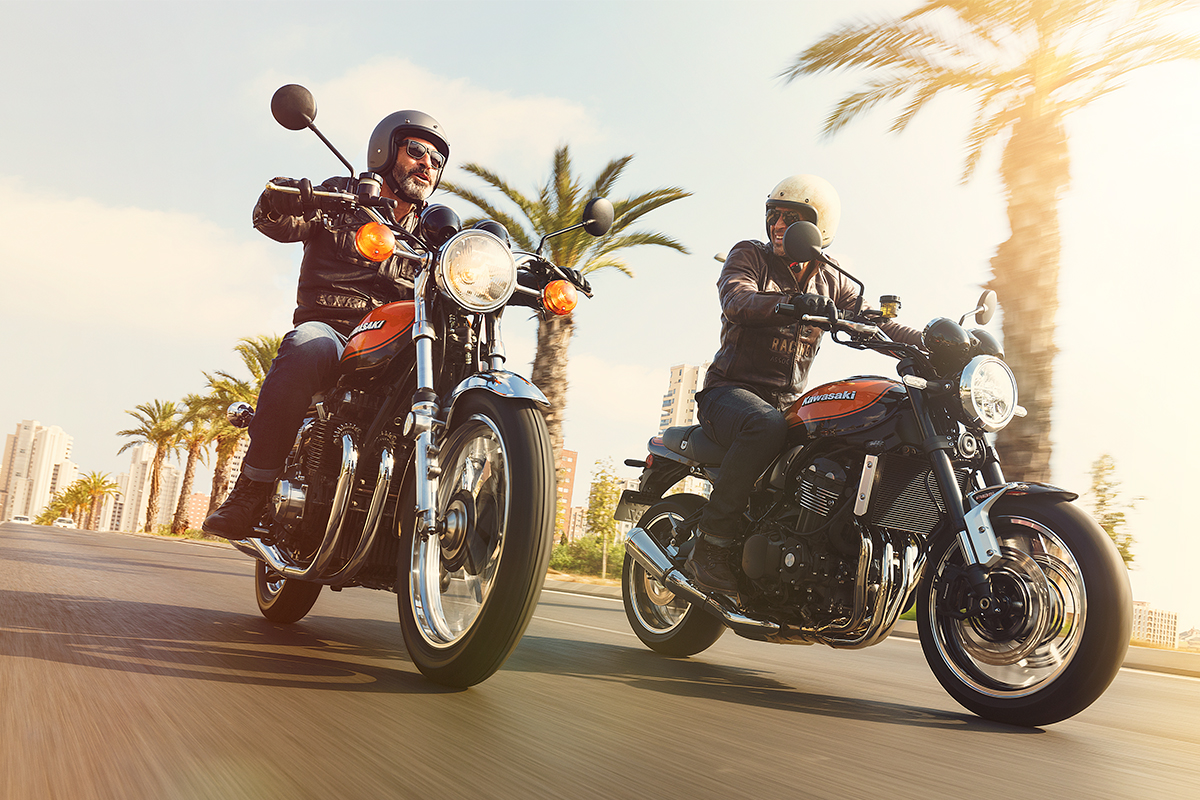
69 means different things to different people, but when it comes to motorcycling in the relatively modern era, it means only one thing – Honda CB750 Four K naught. The launch of the Honda was a gut punch to Kawasaki. They had been developing a 750cc four-cylinder four-stroke motorcycle during the late ’60s too. The launch of the Honda threw Kawasaki’s design team into a real tizz. Kawasaki has never been a company to follow. From the get-go, they developed a reputation for building exciting bikes with class-leading power. They scrapped the idea of a 750 and this gave birth to a project code-named “New York steak”. Kawasaki decided to build a four-cylinder four-stroke that would make power that was hitherto unknown from a production motorcycle.
I want to digress here for just a moment. Try to get your head around the world motorcycle landscape back in the ’60s and ’70s. It was so different to today, where new models, drowning in the latest technology, are spewed out by manufacturers like there is no tomorrow. Back then the world was still used to mainstream British bikes, which, by and large, were archaic in design. The Japanese were emerging as the dominant force in motorcycling globally, however, only Honda flew the four-stroke banner. Kawasaki ruled when it came to performance two strokes. The Kawi 750 H2 Mach 4 two-stroke triple, obliterated everything in sight in a straight line. The way it delivered its power as well as the dodgy handling resulted in many a sphincter clenching moment.
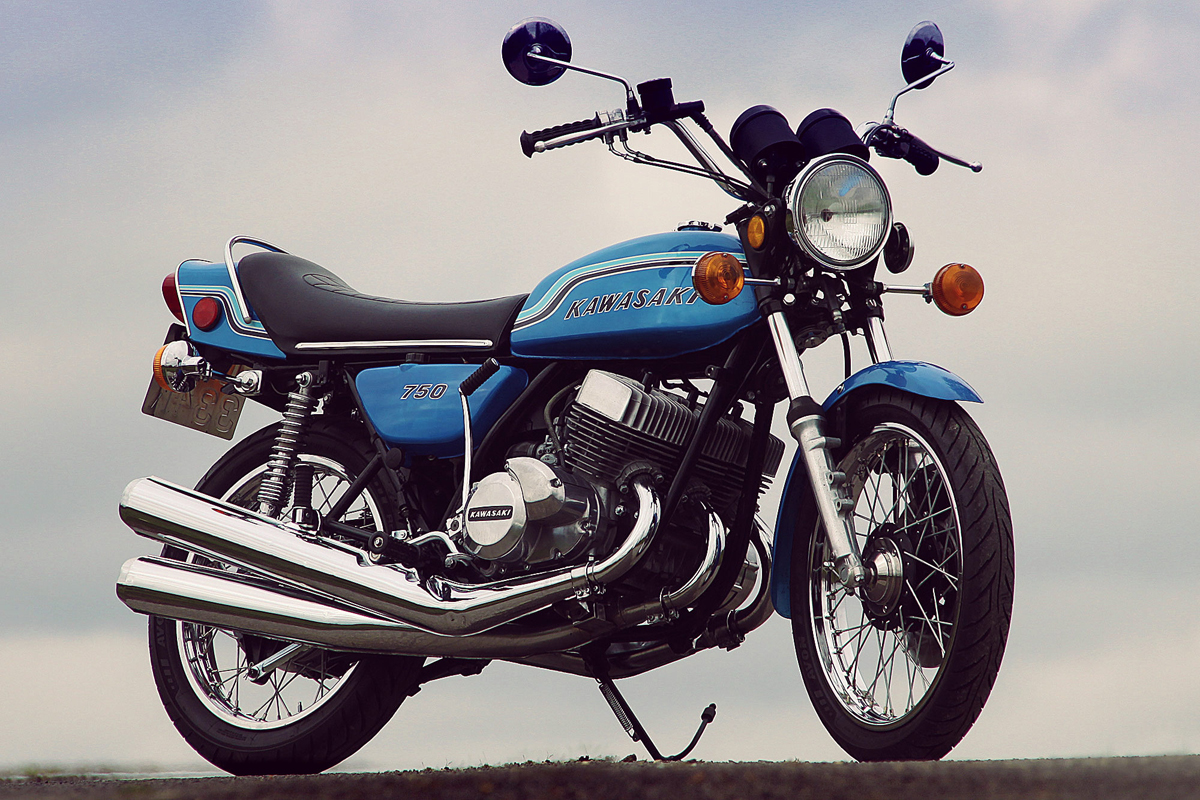
It was this raw and rough motorcycling landscape that made the purring, silky smooth and refined Honda Four, an instant worldwide success. Kawasaki was not going to be an “also-ran”. They wanted to maul the Honda, and anyone else for that matter, with a spectacular ‘tour de force’. People would literally stop and stare in awe if a CB750 rode past, revelling in the throaty four-cylinder burble. With project New York Steak, Kawasaki set about upstaging the Honda with a crushing blow that would have Big Red firmly relegated to “also-ran”. And so the first-ever Kawasaki ‘Z’ model, the legendary four-cylinder, Double Overhead Cam, four-stroke, 903cc, Z1, was conceived and birthed. In the early stage of its development, during project New York steak, it was known as the “V1 S”.
The design brief given to Norimasa ‘Ken’ Tada (senior stylist at Kawasaki), was the three S’s. The Z1 had to be Slim, Sleek and Sexy! It had to look nothing like the Honda. Tada was given a month to come up with a mock-up of the bike to present to Kawasaki Motor Corporation of America. He called home and informed his wife that she better forget that she had a husband for the next month! Working virtually round the clock, he flew to the States a month later with the mockup in a crate. The unveiling to Kawasaki America, who had the power to veto the design, if they thought that it did not have ‘American appeal’, was a nerve-wracking affair for Ben Tada. The design met with approval, albeit with the proviso that Tada “slim it down some more”.
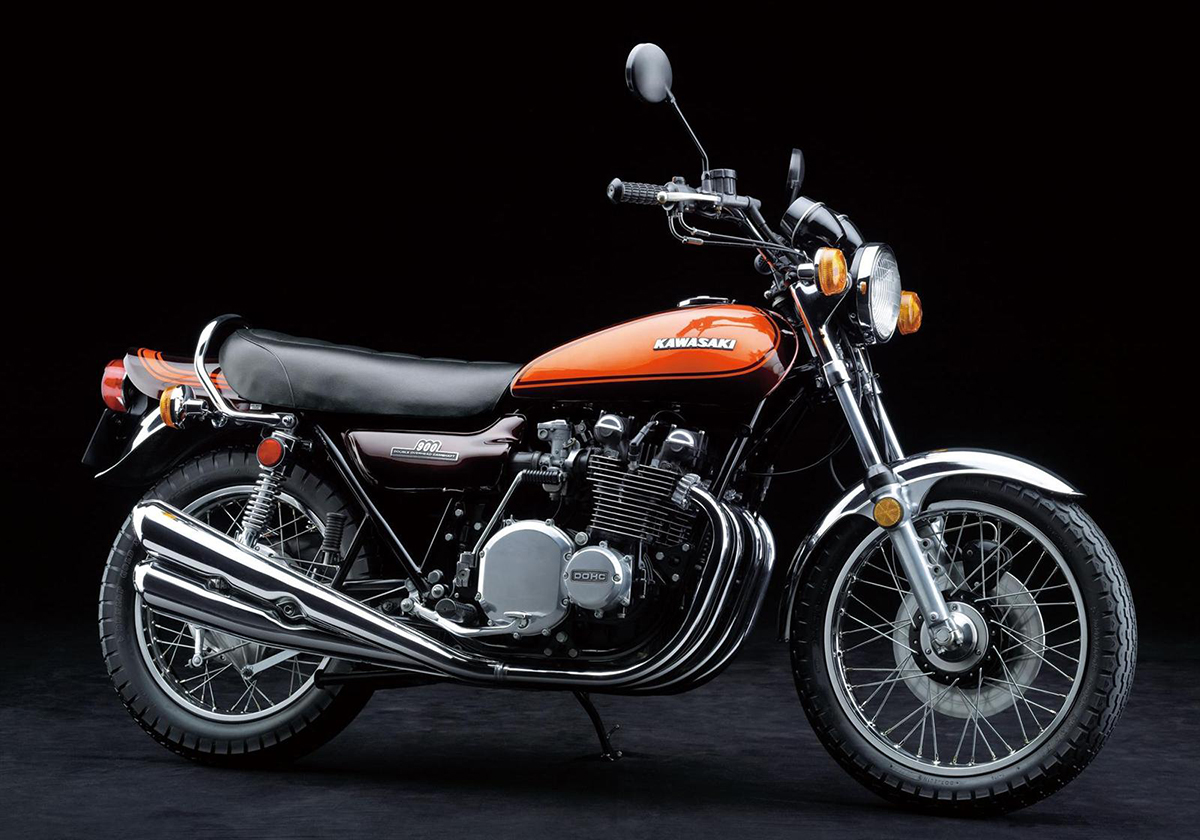
Two test mules, disguised and badged as Honda’s, were ridden far and wide in the States, often at high speed, by Bryon Farnsworth and Paul Smart. Feedback was generally positive, however, the 83 HP Z1 made short work of its chain, resulting in the standard fitment of a chain oiler. Modern riders, who often don’t even lube their chains, let alone adjust them, just don’t understand the incredible advances in chain technology that has happened over the years. Back in the day, we adjusted our chains at least twice a week and even more often on a trip. We had no fancy chain lube either. It was gearbox oil that had to do the job. The Z1 was released to the public, to instant universal acclaim, in the latter part of 1972.
Kawasaki demonstrated its speed and reliability by wailing around Daytona to set a new World record, covering 2,631 miles at an average speed of 109,64 mph. French Canadian racer, Yvon Du Hamel, circulated a Yoshimura Z1 around Daytona at an incredible 160,28 mph. Interestingly, the 24 hr speed record was previously held by a modified R69S BMW. In stock trim, the Z1 punched out 83 hp and 73,5 Nm of torque at 8,500 rpm. It paralysed the 1972 version of the Honda CB750, which made less than 60 hp. The Z1 weighed a hefty 246 KG’S fully fuelled and ran a ¼ mile in 12,2 seconds, topping out at 125 mph. Tyres, chains and rear shocks tended to wear out quite swiftly, whereupon, like the other Jap bikes of the day, it wobbled like a demon at speed. Fact is, engine technology was outstripping chassis development. The decent handling bikes of the day, like Desmo Ducati’s, were suddenly not great when you upped their horsepower to Z1 levels.
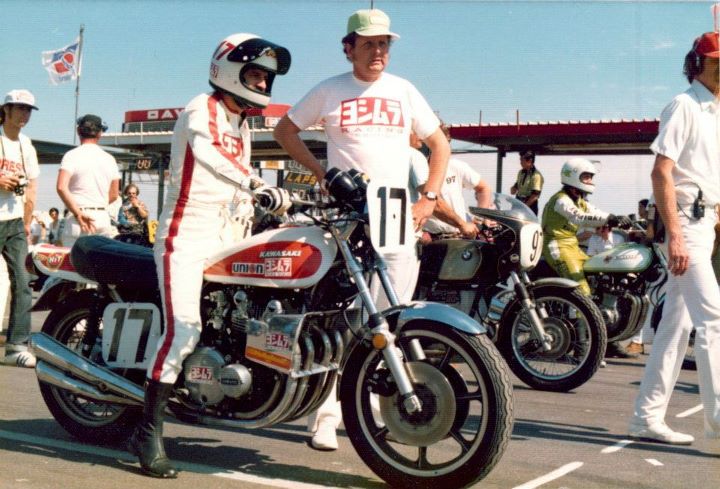
The Z1 was an instant race track success. The popular 6-hour endurance race series for production bikes in Australia, sponsored by Pirelli, were dominated by Kawi Z1’s from 1973 to 1976. In the US, Superbike racing was hectic, being an almost ‘silhouette class’. The bikes looked vaguely stock, but were highly modified. Rob Muzzy, aided and abetted by the legendary ‘Pops’ Yoshimura, became the Kawasaki race guru, building some wickedly fast Z1’s. Eddie Lawson’s Z1 was good for 150 hp at 10250 rpm. The frame was stress relieved and heavily braced, to try and keep the power under control. Slick tyres on much wider rims, with serious suspension, made these some of the most spectacular production-based race bikes ever. Watching Lawson wrestle the fire breathing Z1 through the infield at Daytona and wail around the banking, was a spectacle never to be forgotten.
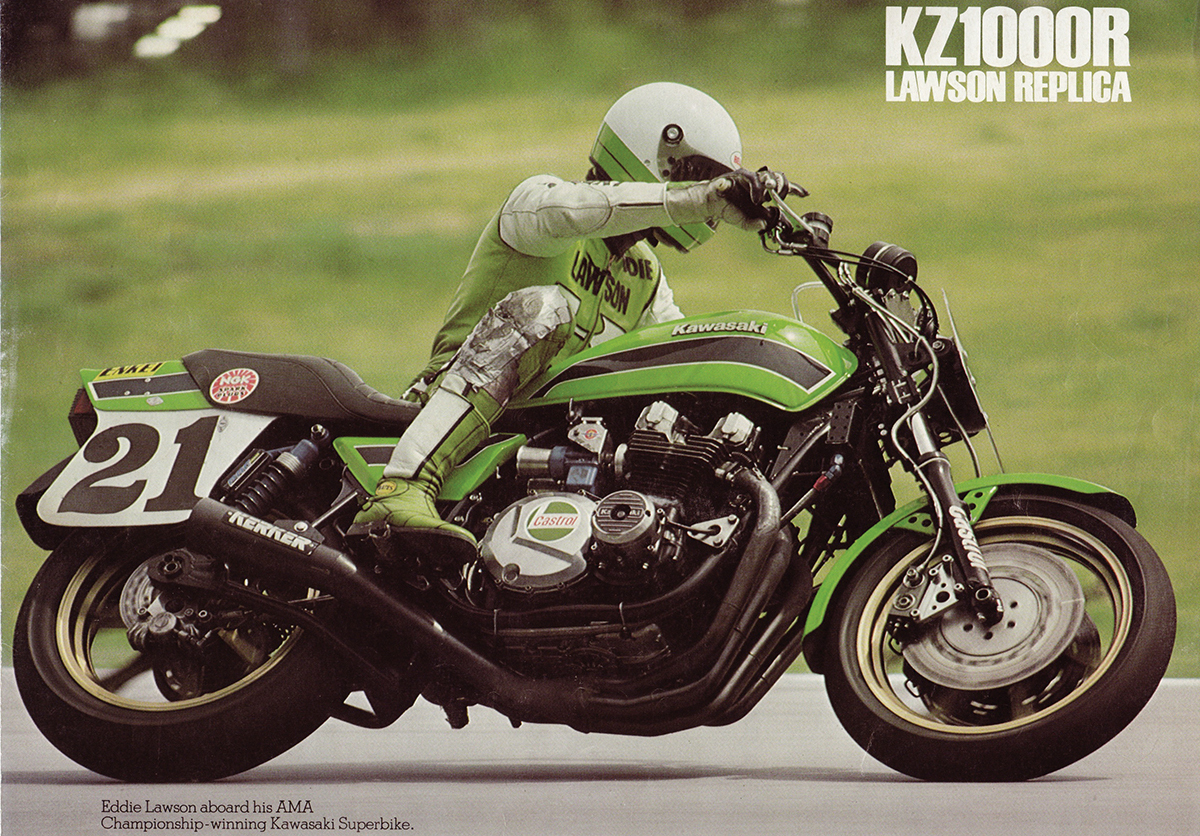
What I haven’t touched on is how stunning a looker the Z1 was. The modern Z900 RS, which pays homage to the original Z1, gives you some idea, but doesn’t quite have the same visual impact. The motor was blacked out with alloy side-covers with ‘DOHC’ cast in logos. In case you were in any doubt, the side-covers had badges with ‘900’, underlined by ‘Double Overhead Camshaft’. You were left with no doubt that this new Z1 was Big Muti! The paint job, Oh Lordy, the paint job! You could choose between Candy Brown and Orange or Candy Yellow and Green. Sounds gungy but the brown was almost more of a deep metallic burgundy. The bikes looked incredible. Ken Tada san, take a bow! Four beautiful pipes underlined the bike to perfection.
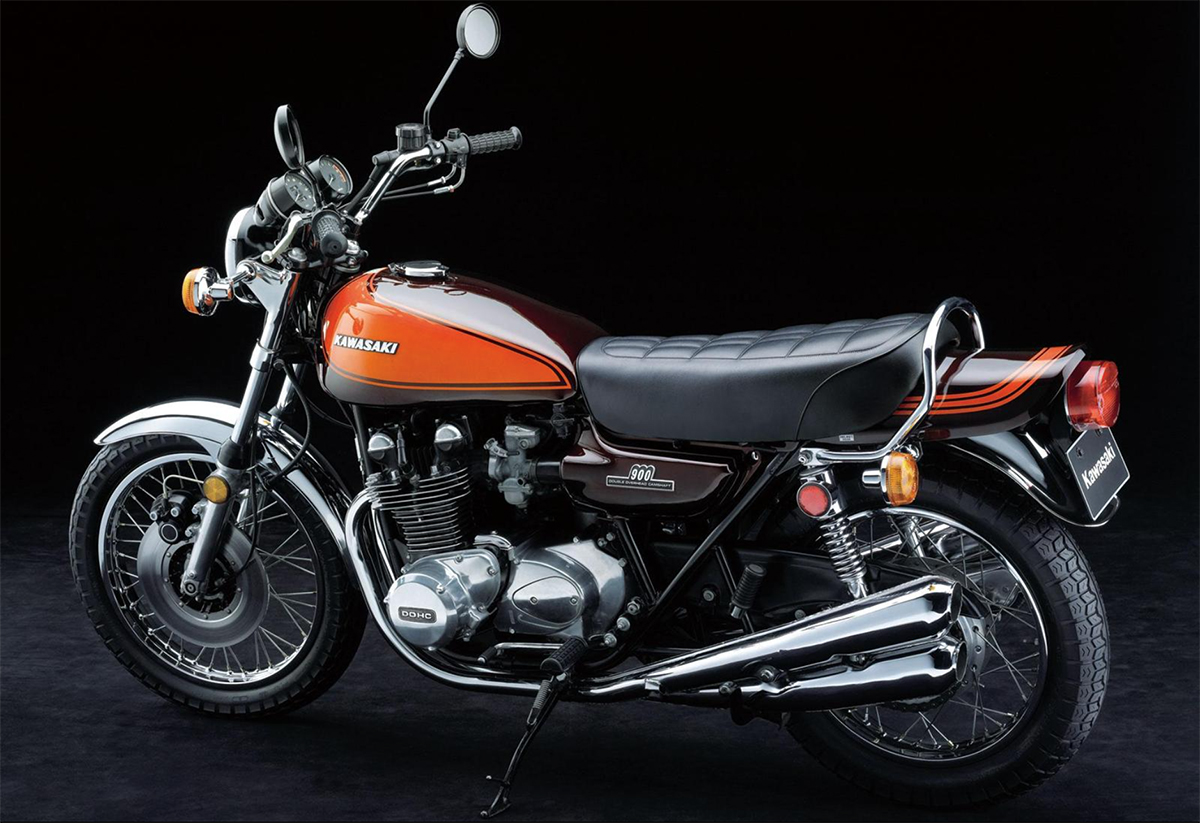
Yes, guys, those were heady days indeed! I was working for Club Motors, who were the importers of Kawasaki and BMW motorcycles at the time. Words fail me when I try and explain the incredible, palpable excitement, that the release of the Z1 elicited amongst the biking fraternity of the day. After three years, Honda’s CB750 Four had softened from the original ripsnorting K 0. We had got used to 750 fours. All of a sudden, here was a bike that violently upset our applecart. In truth, the two-stroke triple 750 Kawi, in its prime, was slightly faster than the Z1, but it could not match the way that the Z1 delivered its performance. Kawasaki, by 1973, had softened the performance of the H2, in an attempt to make it more palatable for general consumption and probably to not upstage its new Z1, in straight-line speed.
So next time you see a new ‘Z’ bike out on the road, spare a thought for the Grand Daddy of them all. The Mighty Z1, the first of the real Superbikes. It was the bike that entrenched Kawasaki as the company that you could rely on to give you really strong engines with big horsepower. Well done Kawasaki and long may that magnificent heritage continue!
Binder Report: Round 6 – Italian GP
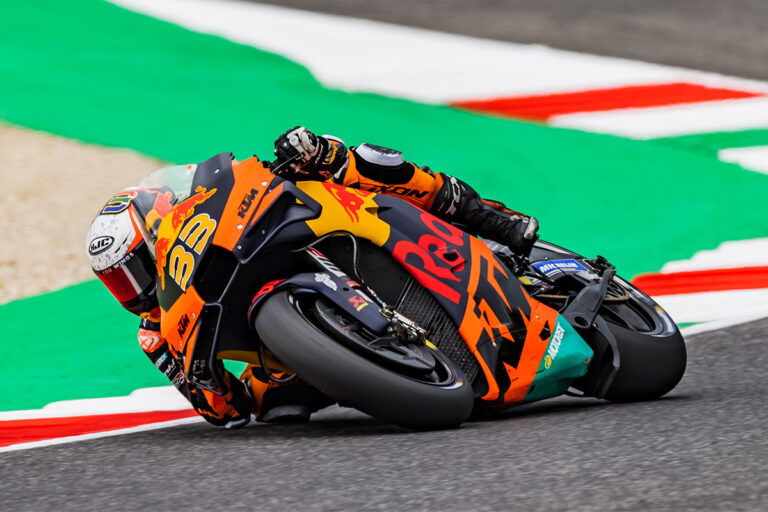
This weekend brought riders back to the sweeping corners of Mugello, a track many fans and riders missed out on last year. Mugello’s very fast 5.2 km layout staged its 35th Grand Prix for what was round six of the 2021 contest and delivered warm and dry late spring conditions.
Darryn Binder
Saturday, saw Darryn Binder roll onto the track for Q2 qualifying, setting a decent lap time on his first outing, securing him 8th. Unfortunately, his second and final flying lap at the end of the session was cut short when red flags were waved, due to an on-track incident. Prevented from improving his initial lap time, Darryn had to consolidate a 16th starting position for Sunday’s race.
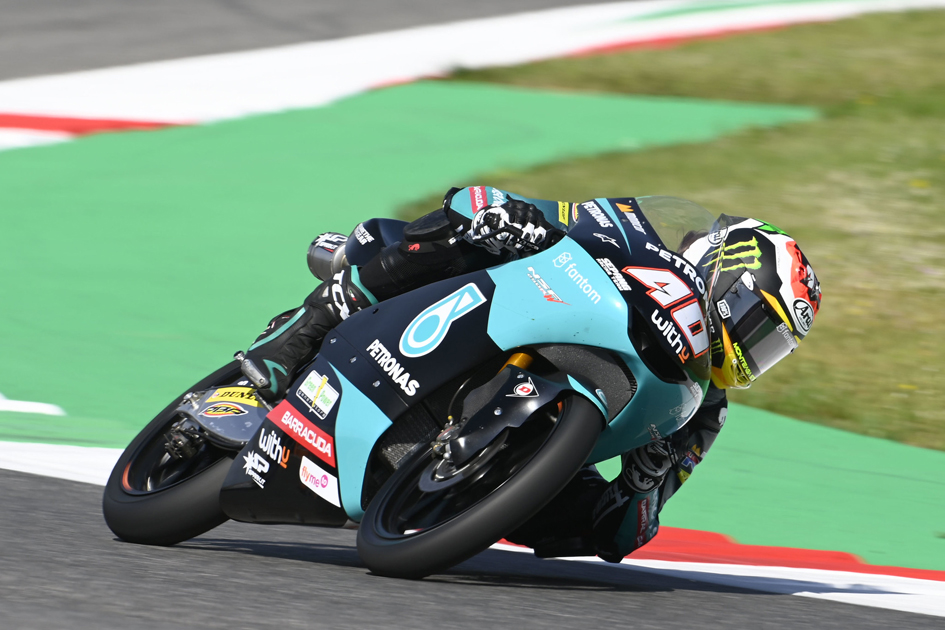
Sunday started off on a rather sad note, as the whole MotoGP paddock paid their respects to a fallen rider, Jason Dupasquier. Jason had made an impressive start to his second season in Moto3, consistently scoring points and within the top ten in the standings. Sadly, Jason was involved in a multi-rider incident in Q2 qualifying between turns 9 and 10. FIM did all they could, the session was immediately Red Flagged and he was transferred by a medical helicopter, in a stable state, to Careggi Hospital in Florence. We all soon got the tragic news as the riders lined up on the grid.
As riders and fans of the sport, we send our deepest condolences to Jason’s family, friends, team and loved ones.
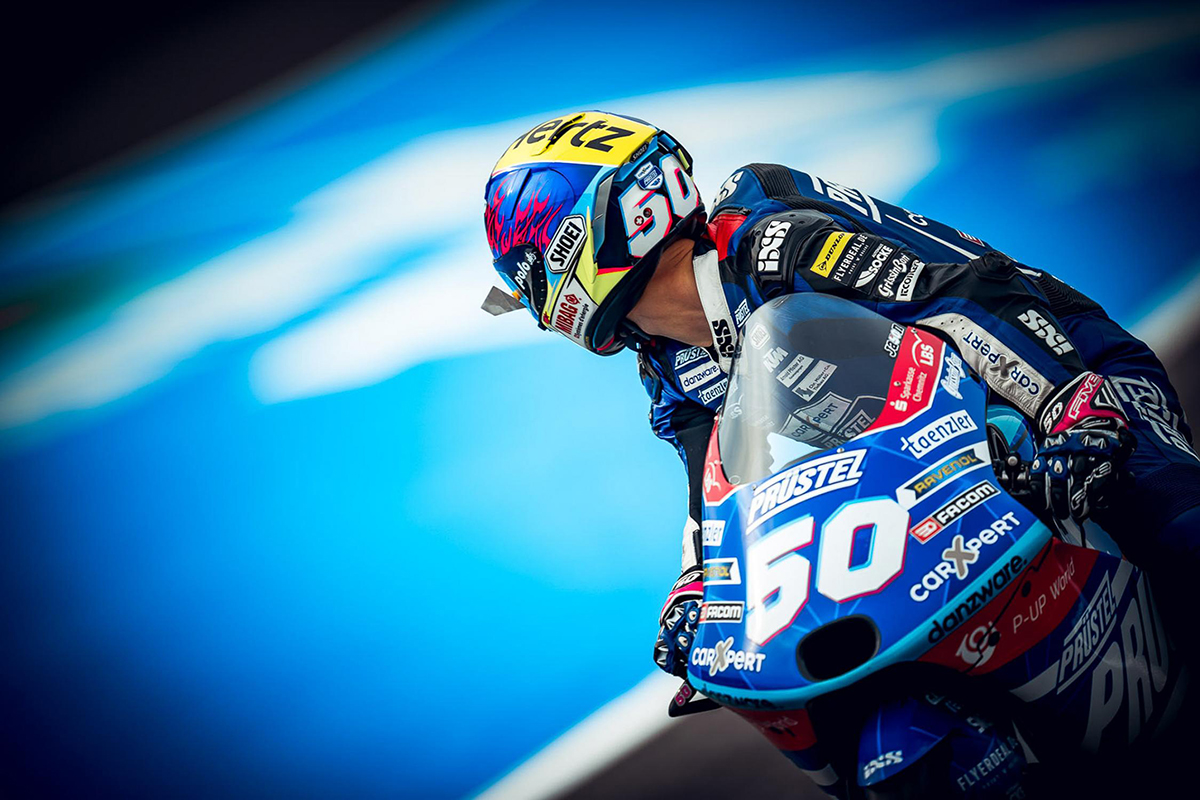
Although nearing the back of the grid in 16th, Darryn was eager to make a charge towards the front of the pack…and so he did. Darryn made a great start and slowly made his way up into the top 10—faster corner speed and some slipstreaming aided his progression. Our fellow South African soon found himself momentarily leading the race after diving into the lead on turn 1.
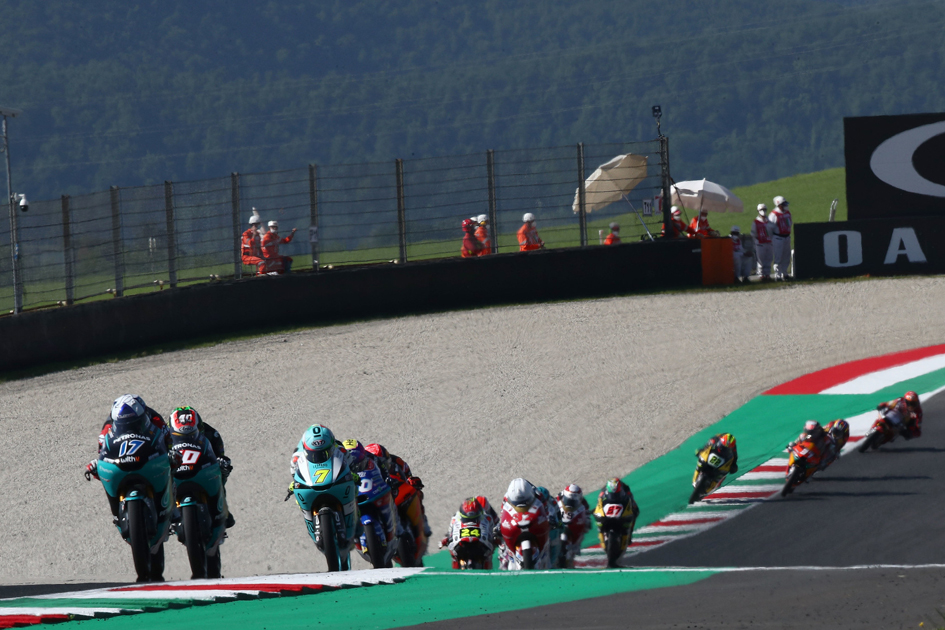
As the saying goes in Moto3, “what goes up must come down” and that is exactly how things went for Darryn. He went from being in the top 5 to just out of the top 10 and back into the top 5. Confusing, but remember this is Moto3, you can get demoted several positions on a single straightaway. Darryn Binder ended the race fifth and earned himself some very important championship points.
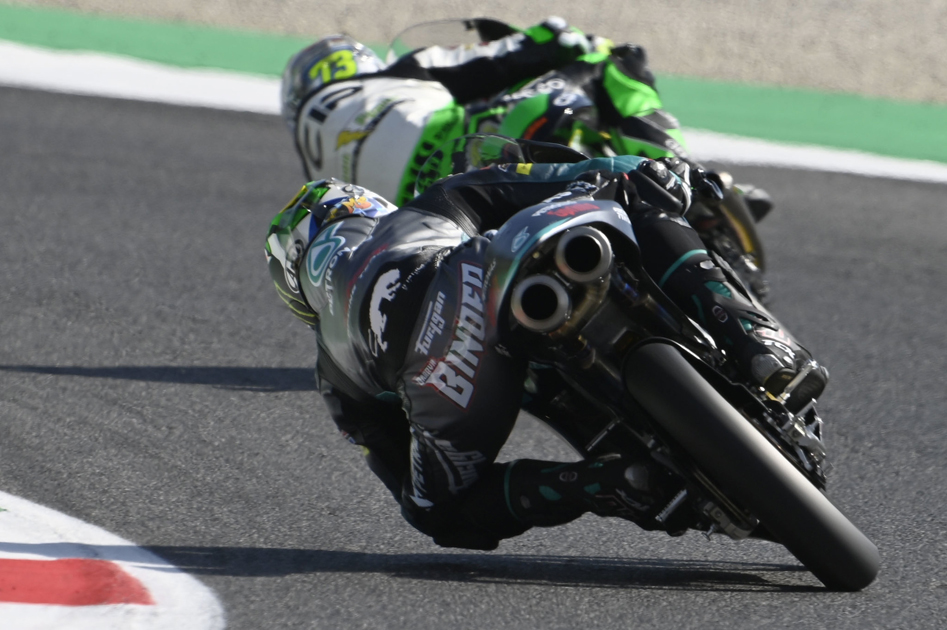
DB: “The race was the race today; it’s not something I want to talk about in the circumstances. I want to send my deepest condolences to Jason’s family, his team and his friends. I’m really sad to hear the news. Rest in peace Jason.”
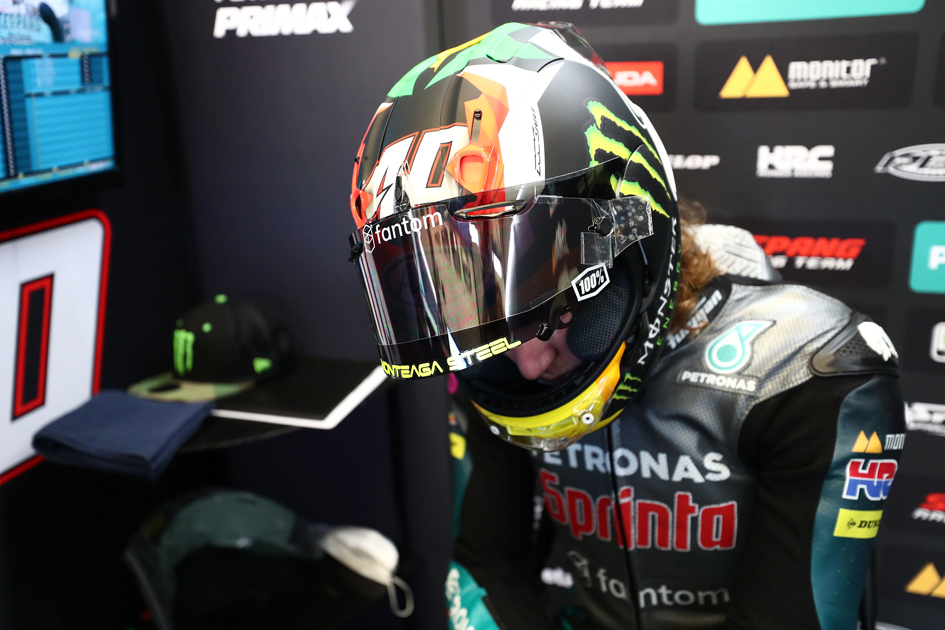
Brad Binder
Brad Binder had a cracker of race weekend, consistently hitting lap-times near the top of the leader board and equalling the fastest top speed recorded figure in MotoGP history—clocking a top speed of 362.4 km/h. In Q2, Binder reached as high as 3rd and was in contention for a front-row slot until he rested in 6th for his highest qualification placing this season, just half a second from pole position.
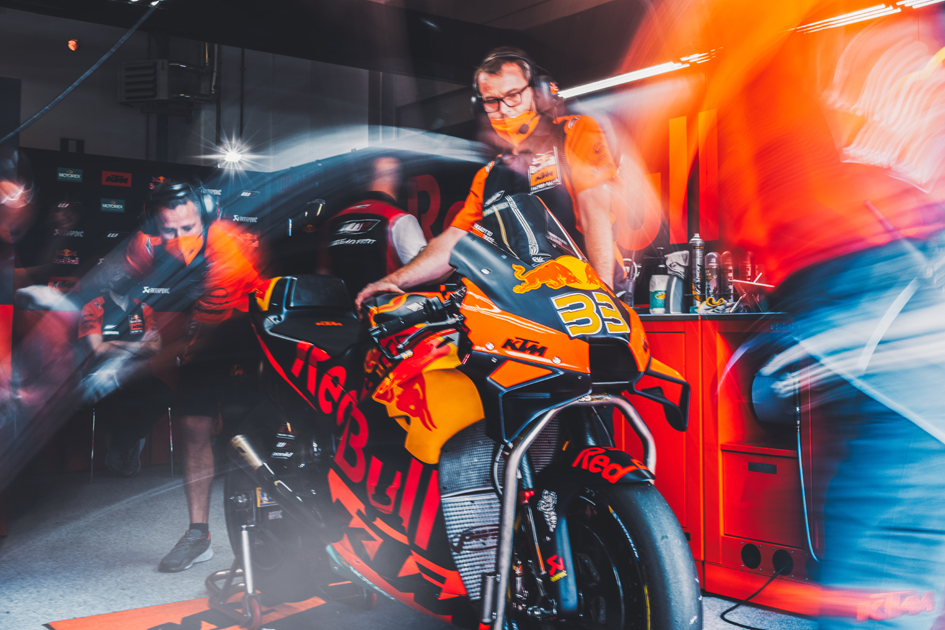
The last race of the day, saw sunshine and 23-degree temperatures graced the return of MotoGP to the thrilling racetrack in the Tuscan hills north of Florence. Brad lined up on the third row of the starting grid and was “Read to Race” the full 23-laps of Mugello.
Binder made a lively launch off the line, but lost a couple of positions, forcing him into the lower top ten, where he worked his tyres and confidence up to an effective race pace. He also had a scary moment when Marc Marquez bumped into him, causing his airbag to go off. This slowed Brad down for the next lap as his airbag slowly decompressed.
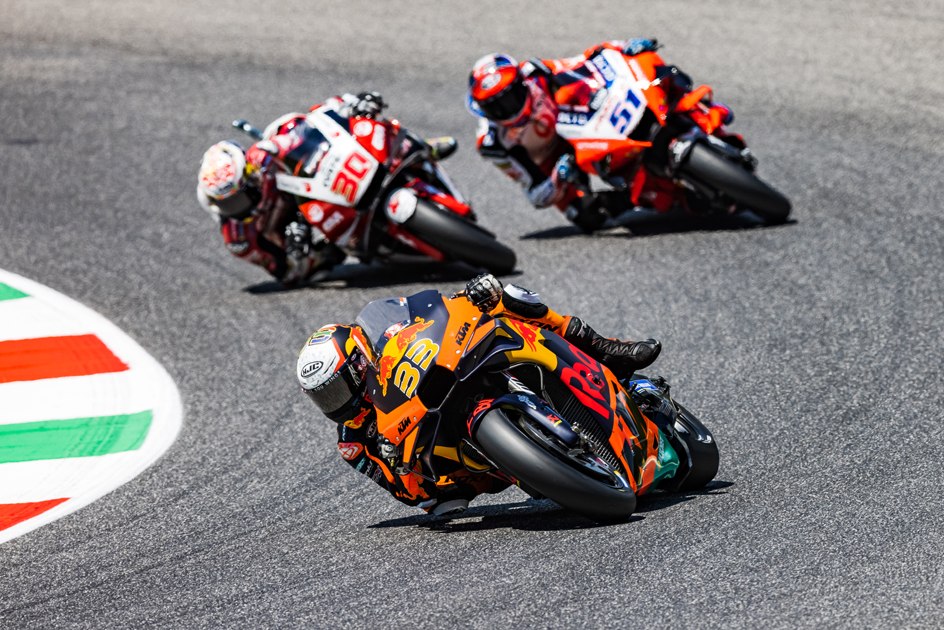
Binder slowly fought his way back to fifth and was less than 5 seconds from winner Fabio Quartararo at the flag. Brad did a phenomenal job this weekend showing the rest of the paddock that he still has that, ‘Sunday Rider’ in him.
BB: “I’m happy with 5th today, even if I did want more but I had a crazy race. I almost tucked the front on the Sighting Lap, so I was trying to work out the conditions and why I felt different. I didn’t have a perfect start and then I was cautious on the first three laps. Marc [Marquez] rode into me and my airbag fired which meant I couldn’t move for almost a lap! After that, I could finally get into a rhythm and chase the group in front of me although I didn’t quite have the pace to get through it. Anyway, I’m pleased with another top-five and we’ll try to keep this momentum for the next races.”
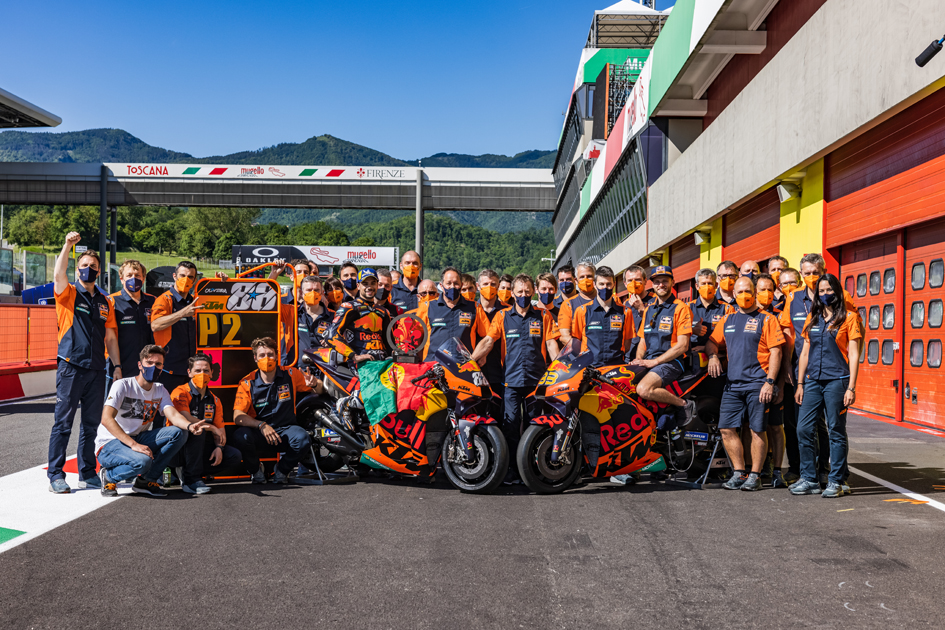
In less than seven days, the Binder’s will be back on track for the Grand Prix of Catalunya, scheduled for 4th-6th June at the Montmelò Circuit, near Barcelona.
The Win Durow Was Waiting For
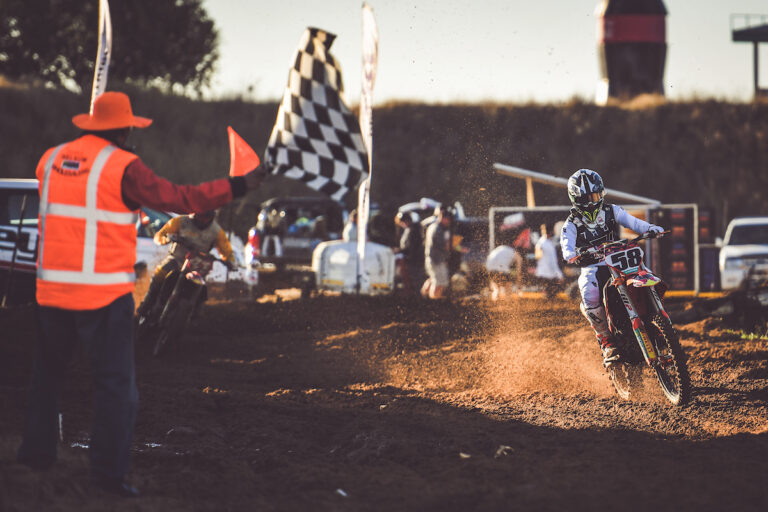
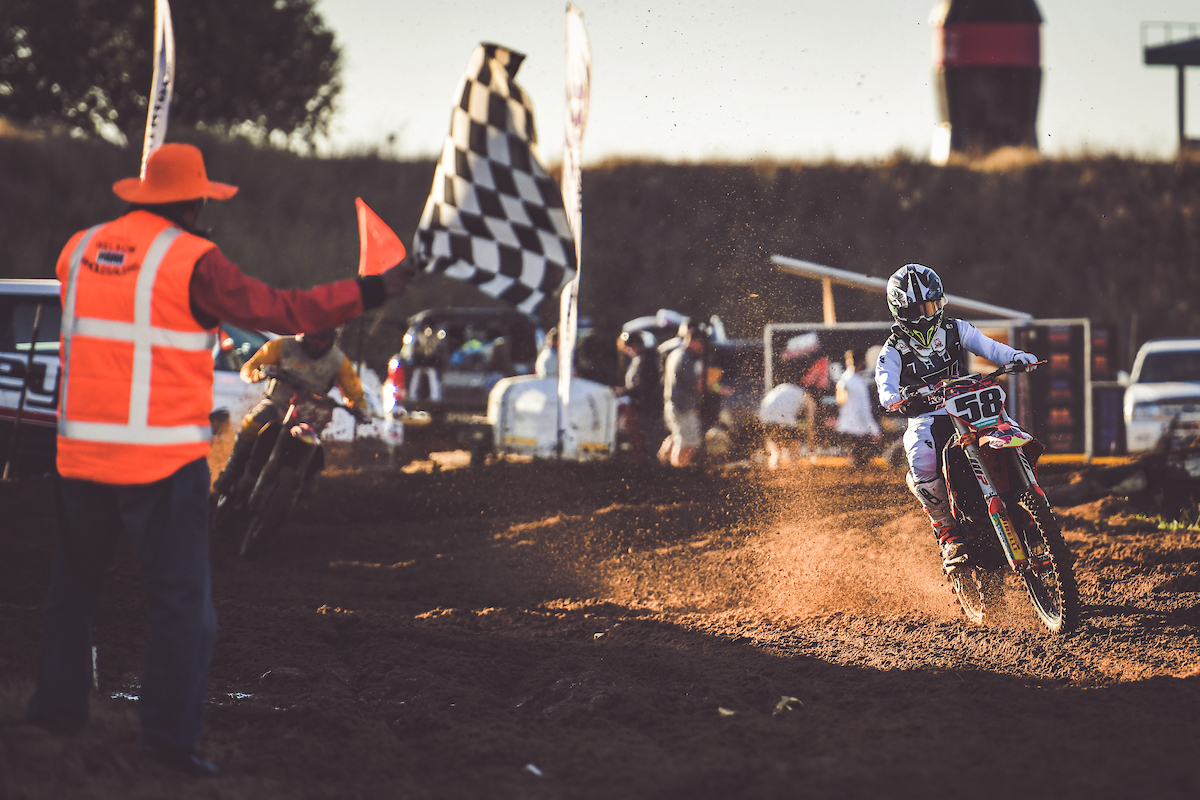
In what proved to be an unforgettable weekend of racing, Red Bull KTM snatched up multiple victories at the third round of the National Motocross Championship in Welkom. It was a day of celebration for the entire orange team with MX1 star Tristan Purdon taking top honours, new-recruit Cameron Durow snatching the win in MX2, High School Class talent Jonathan Mlimi extending his points lead, and young gun Trey Cox defending the Pro Mini red plate.
All eyes were on 18-year-old Durow on Saturday, who made it clear from the moment the gates dropped this season that he would be a force to be reckoned with. After setting the fastest qualifying time, the youngster set off to snatch the MX2 victory he has patiently been waiting for since he last won a race in this class in 2019.
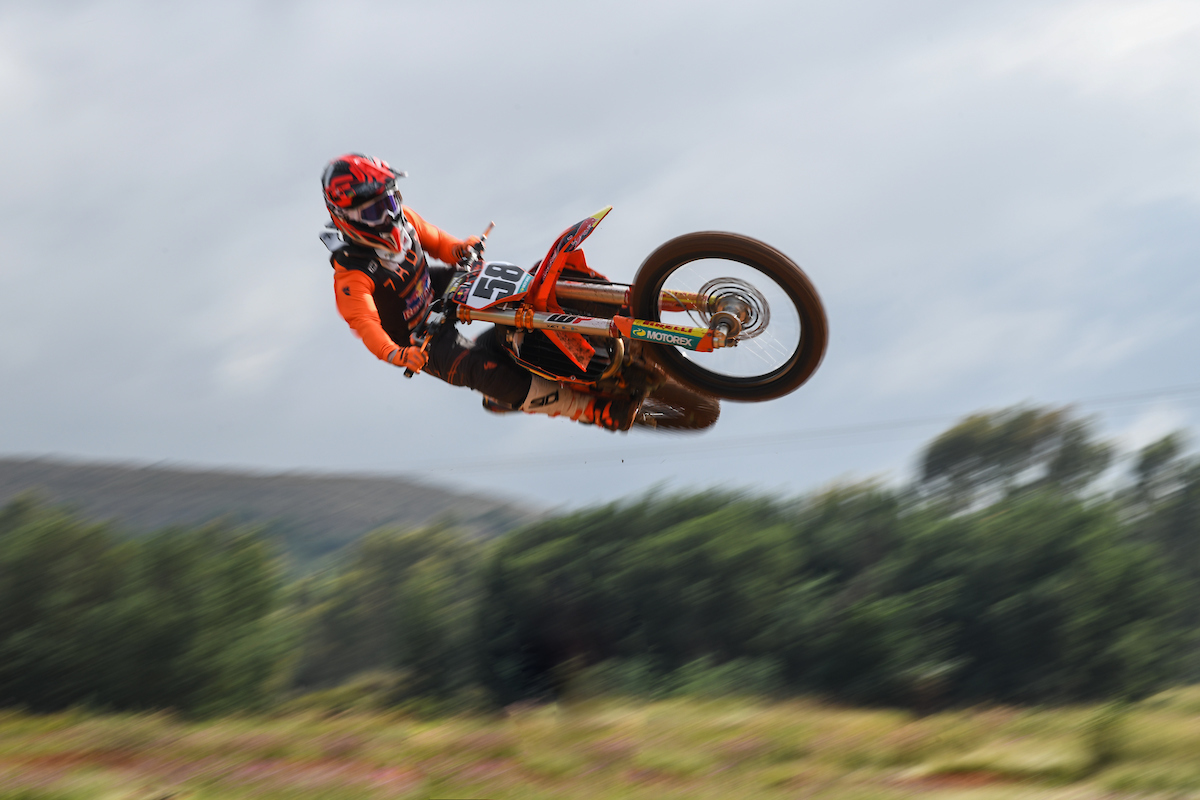
The rider started the day with a consistent pace and finished the first moto in second place. He came back swinging in the second moto and his blistering pace saw him get the holeshot. With an overall victory within his reach, Durow pulled an early lead and didn’t look back.
“This is the first time I’ve won in this class since 2019 – I’ve been injured four times since then! I even know the exact number of days since the last win and I’ve been working towards repeating that victory ever since. It meant a lot to me to finally achieve what I have been aiming at for so long,” said Durow.
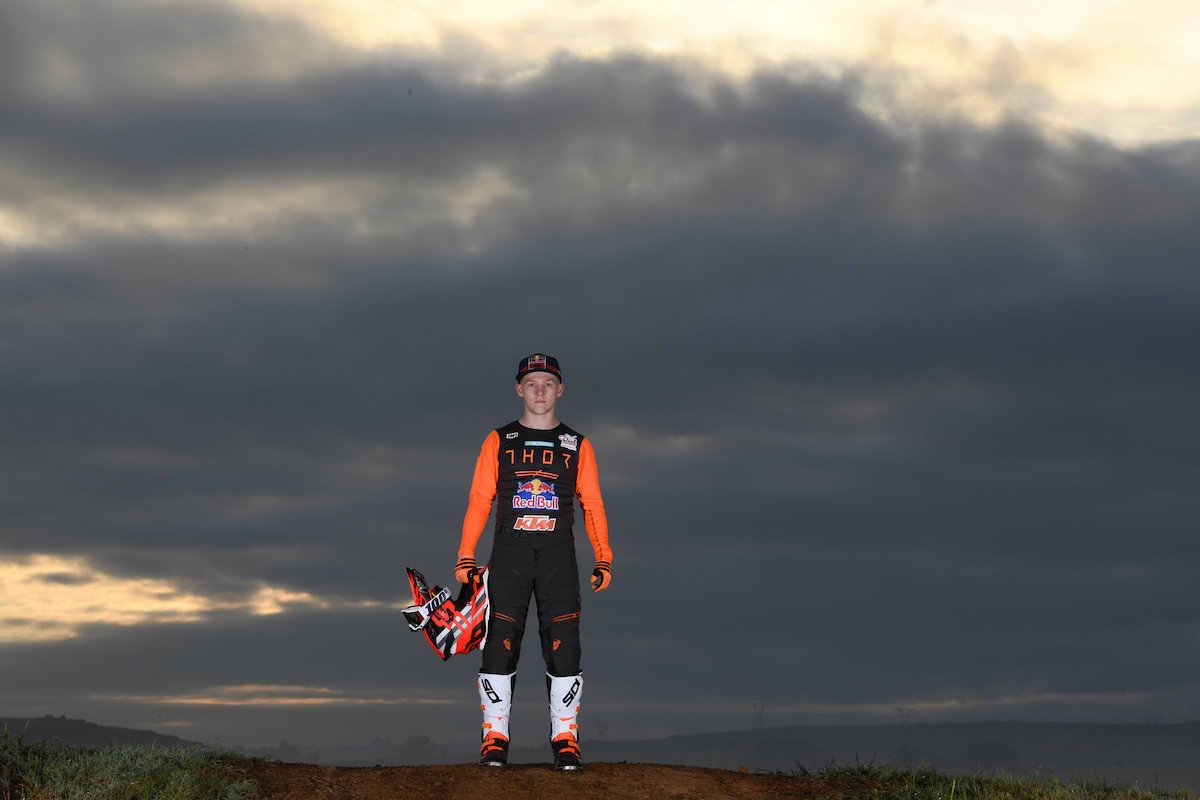
Putting on yet another eye-catching performance was Red Bull KTM teammate Tristan Purdon. The rider couldn’t have asked for a better day in MX1 when he went 1-1 to take the victory overall. While MX2 proved to be a more challenging race for the rider, Purdon managed to end the day on the podium with a third place overall.
Having defended his points lead in both classes, the motocross star will once again line-up with both red plates in the next round. With his sights set on winning both championships this season, Purdon commented:
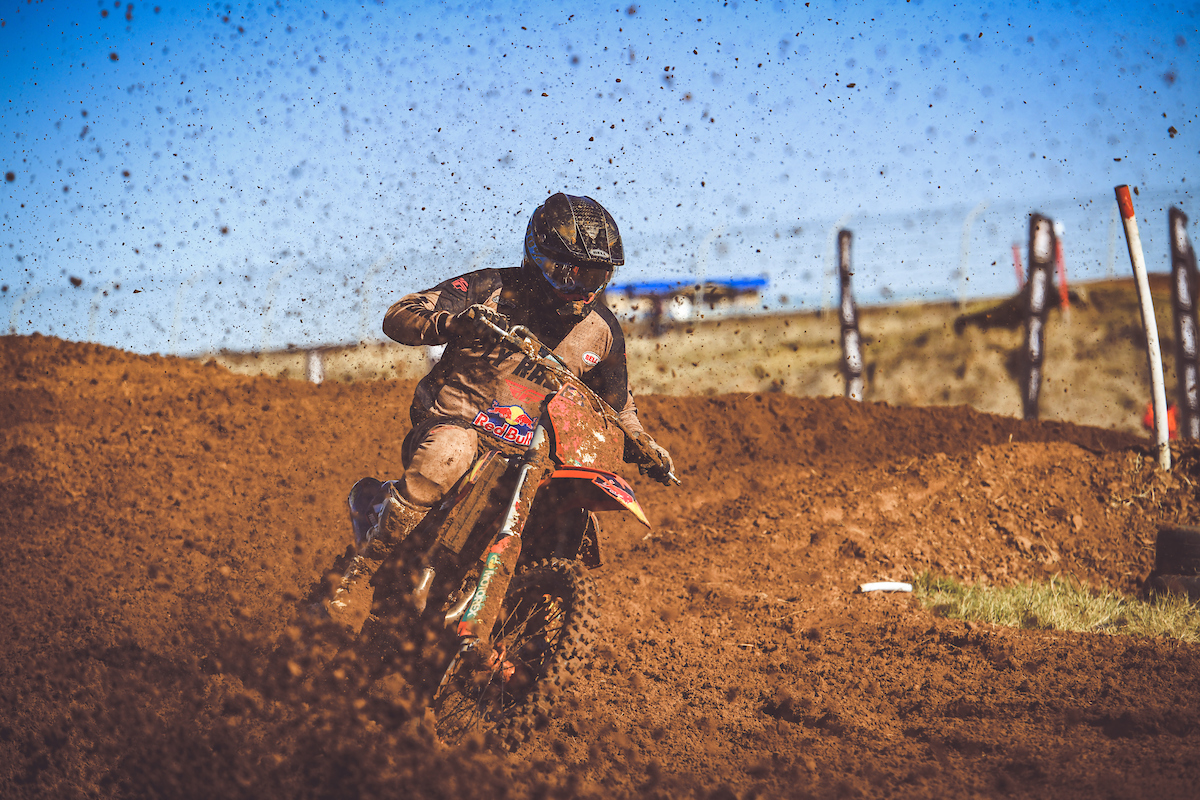
“Leading both championships isn’t easy and it comes with a lot of pressure. I’m handling it well because of the support I’ve been getting from the whole team and that makes me want to keep fighting. After MX2 this weekend I’ll be working on my starts leading up to the next round, but overall, I’m happy with the way everything played out.”
Red Bull KTM teammate Jonathan Mlimi was off to an impressive start this weekend when he took the holeshot in the first moto and lead the heat from start to finish. He had a challenging start in the second moto by his own high standards, but managed to fight his way back up to the front of the field to secure the victory overall.
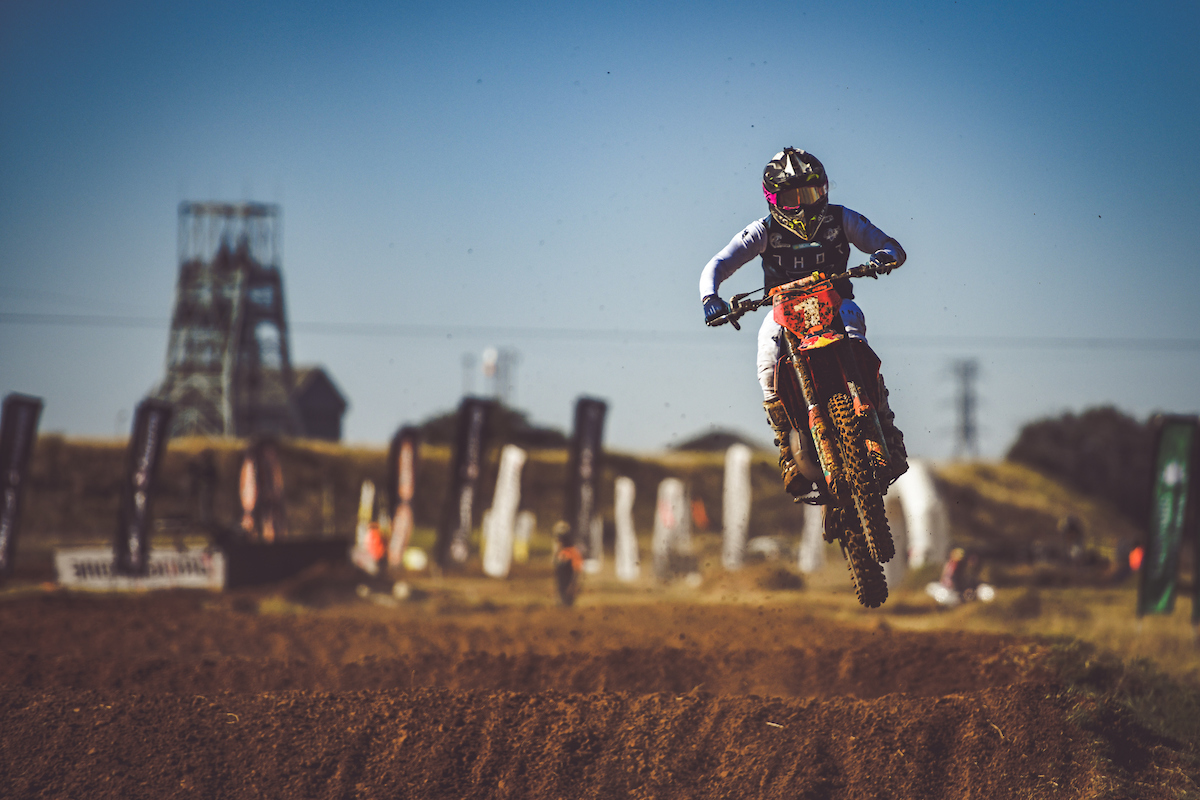
“My KTM 125 SX handled so well – the setup was perfect! I learnt this weekend to be more patient when I’m in a battle to get to the front – I find when I rush the process I tend to make small mistakes. I’m really happy with the way the season is playing out and just plan to stay consistent – that always pays off in the end,” said Mlimi.
A cherry on the top of what was a successful day of racing for Red Bull KTM was yet another consistent performance from young gun Trey Cox. After setting off with the holeshot, the Pro Mini rider had an unfortunate crash in the first moto. With a determination to defend the red plate, he fought his way back up to fourth place. He came back swinging with a solid start in the second heat and held a consistent pace to finish the moto in second place.
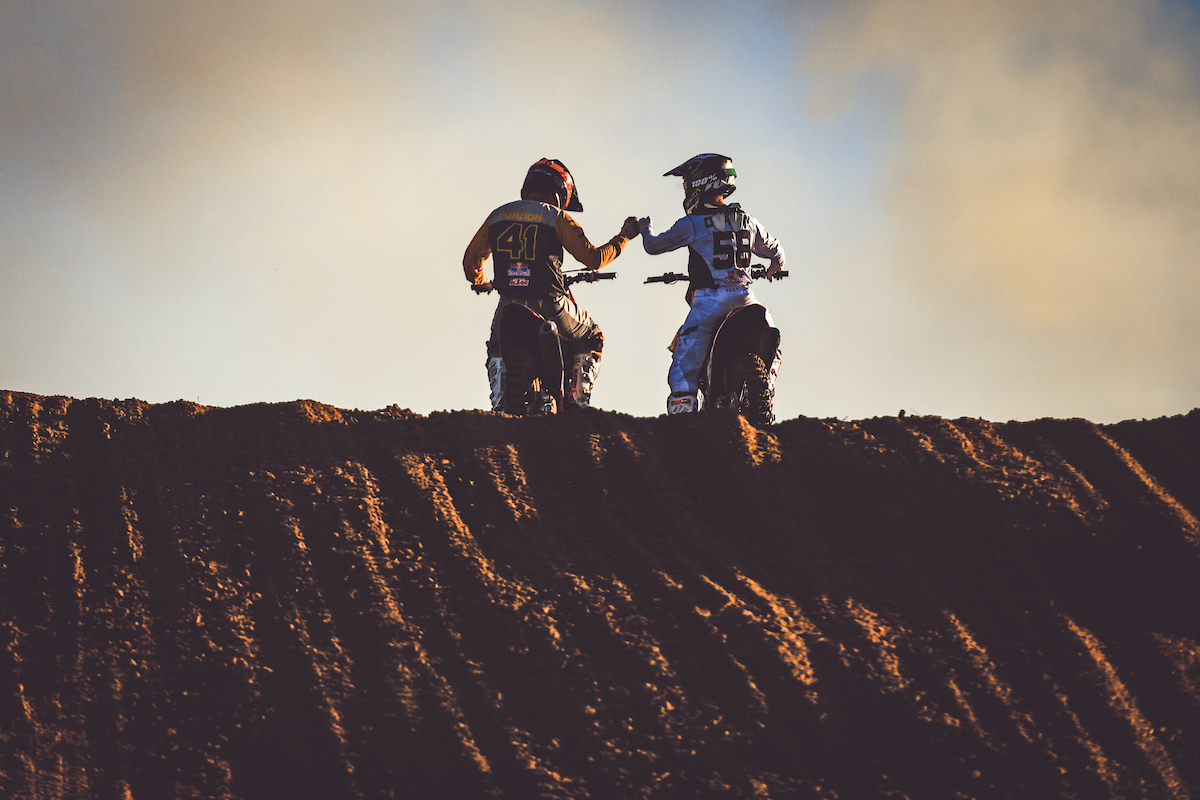
“I’m so happy to have held onto the red plate. In the weeks leading up to the next round, I’m going to work on eliminating small mistakes. I’m happy with my pace and learnt this weekend that it’s not over until it’s over – that ‘never give up’ attitude always pays off in the end,” said Cox.
Rockstar Energy Husqvarna’s Breakthrough Race
It was a breakthrough weekend of racing for Rockstar Energy Husqvarna. The motocross team took on the third round of the season in Welkom last Saturday and brought home a podium position in the MX1, MX2 and Pro Mini Class respectively.
Leading rider David Goosen admits to entering the round without too many expectations after being unable to train as hard as he had intended due to an illness. Having raced consistently at the front end of the MX1 field this season, Goosen had set the specific goal to narrow the gap on the leading riders in MX2.
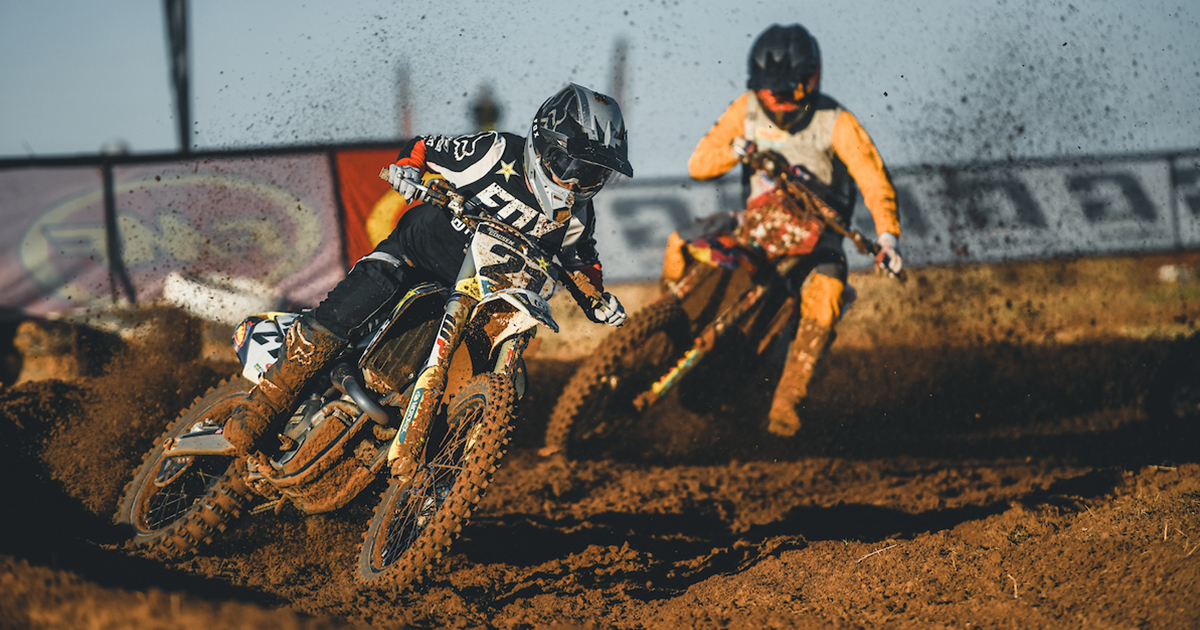
In one of his most impressive performances of the season, the rider set off with a blistering pace on Saturday to snatch up the win he had been waiting for in the first moto of MX2. With a third place in the final moto, Goosen was pleased to make progress and take second overall.
Adding to the celebration at the Husqvarna camp was yet another consistent performance from Goosen in MX1. In the highly competitive field, he described both motos as a “heated event that certainly didn’t make for easy racing.” Despite the stiff competition, Goosen went 2-2 to take second overall.
“The track conditions were great! The loam soil gets some nice lines and becomes super bumpy – which suits me quite well. My Husqvarna FC 450 and FC 250 were great – I’m really starting to find the sweet spots on both of them. At this point, I’m feeling really motivated for what you could call the ‘second half of the season’. With every race, I feel more excited to work on something new. There are things I want to fine-tune as I aim to bring home some wins, but I’m also just really happy with how consistent I’ve been,” said Goosen.
For Rockstar Energy Husqvarna teammate Neil van der Vyver, the day was off to a challenging start. After a slow qualifying time by his own high standard, the youngster made some adjustments to his setup before lining up for the first Pro Mini moto.
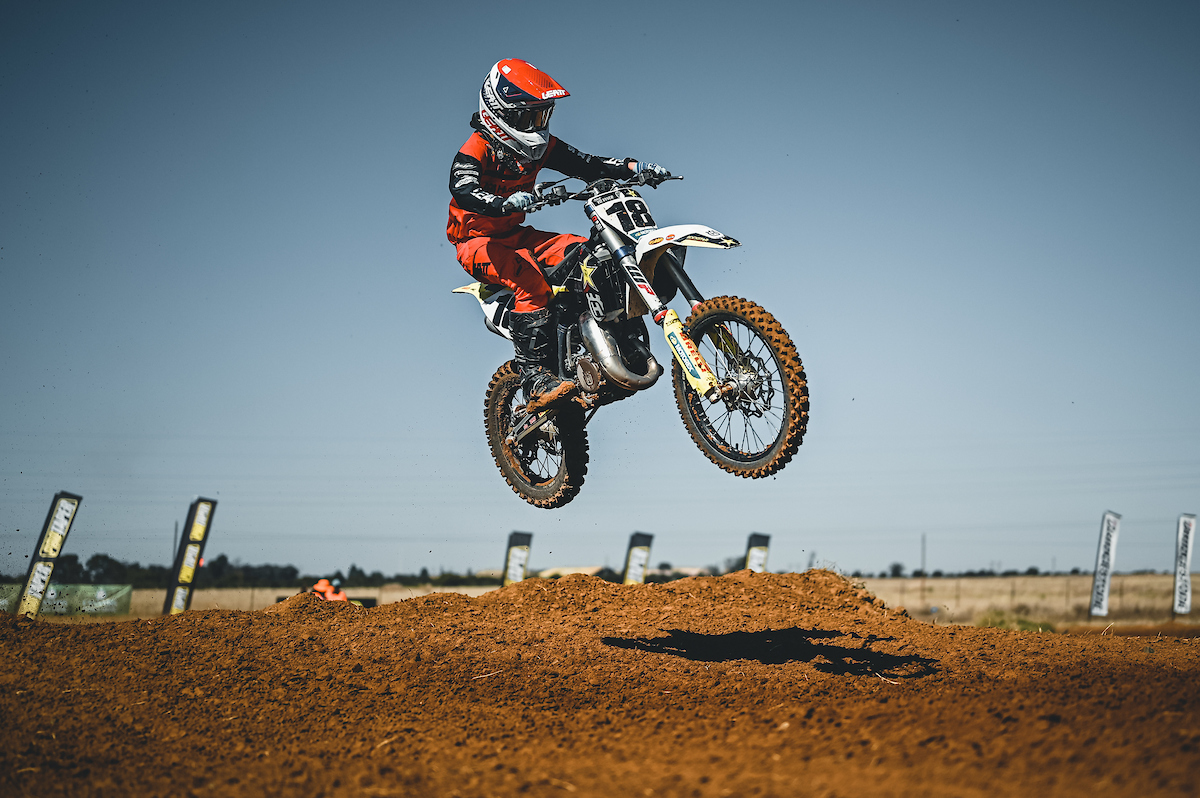
With a strong determination to come back swinging, Van der Vyver set off the take the holeshot in the first heat. From the moment he took the lead, the rider never looked back and stormed to his first win in the Pro Mini Class this season.
“It felt great to go from qualifying 17th in practise to taking my first ever Pro Mini win! It’s something I had been working towards all season,” said an elated Van der Vyver.
After a challenging start in the second moto, the rider had to dig deep to keep his composure and fight his way back to the front end of the field to ultimately claim second place overall.
“We ticked a few boxes this weekend and we’re happy with the progress! My pace felt good, my bike felt good – I’m excited to watch our plan for 2021 keep unfolding,” he said.
Husqvarna South Africa’s Brand Manager Fred Fensham gives a closing comment: “This season has been all about getting our two riders comfortable on the bikes and Welkom was proof that we are on the right track. David was super impressive despite coming off some health issues and Neil finally bagged that illusive Pro Mini win – that will certainly give him the confidence he needs to keep building on the 85cc! I am super proud of our two riders bringing home three second overall finishes against really tough opposition!”
Keeping the Shiny Side Up with Motul’s Shine & Go Spray
It’s only obvious, that the way you take care of your motorcycle reveals how much you love it. But, maybe you’ve been too busy to look after your bike or you just feel that taking your bike to a bike wash is easier. And then we get to the difficulty of keeping our bikes clean, either parking them under covers or being forced to give them a full wash, multiple times a week. Sheesh! So much effort, right?
Now, this is where Motul’s Shine & Go Spray (S&G) comes in handy.
If you are a rider that keeps your motorcycle relatively clean, only needing to give it a rinse and wipe down, then Shine & Go spray is going to be your best friend. ‘S&G’ is a silicone-based spray used to polish anything and everything on your motorcycle, even carbon fibre. It shines and revives with its protective dry sheen to obtain a new finish on faded colours. The winner is its long-lasting non-sticky protective film—the last thing you need is grime sticking to your shiny bike after a polish.
For application, you need a clean bike and a microfiber cloth to trap the leftover dust for that shiny end result. Don’t mistake S&G as a bike wash, you can’t wash your bike down with it. If your bike needs a wash, crack out some soapy water and your favourite sponge (Bob). Once your bike is washed and dried, this is when you whip out S&G to finish the job. The neat thing about using this polish, is afterwards, your bike does not end up getting as dirty. When you next give your bike a wash, your plastics still keep their shine and the dirt comes off so much easier.
I only wish Motul brought out a smaller travel-sized version, as this 400 ml can, would be too big to carry with you on a bike trip.
Using Motul’s S&G, will making cleaning and polishing your bike quicker and enjoyable, as you see a new sheen start to appear—Motul is here to keep your rides shiny side up.
So, with summer behind us now and with winter approaching, it is the perfect time to acquaint yourselves with Motul’s awesome line of maintenance and care products—it’s time to give your bike the deep clean it deserves!
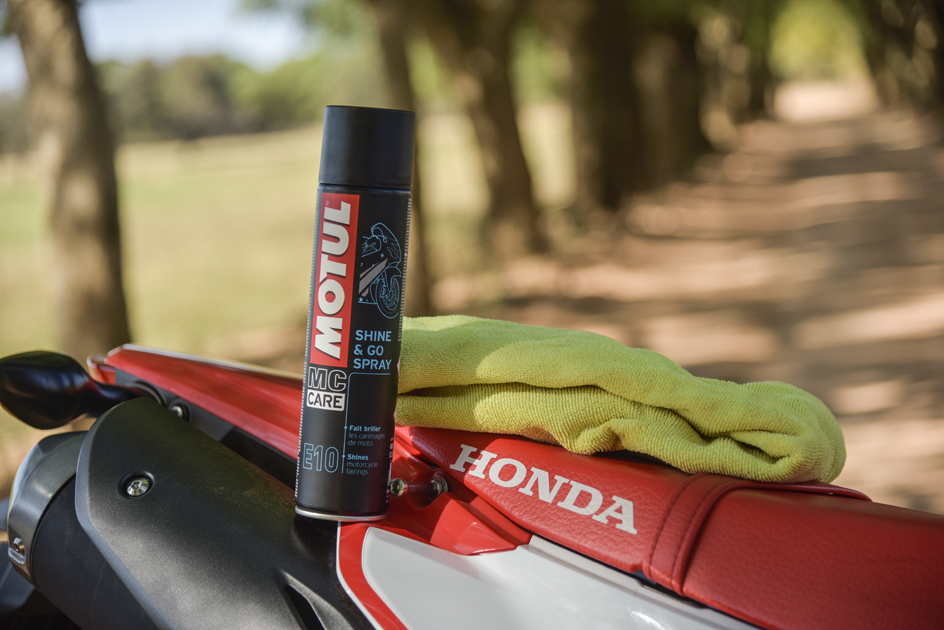
Motul Shine & Go Spray
For more information on the product used in this article, click on the link below…
Mathew Scholtz Leaves Virginia with The Superbike Points Lead In Hand
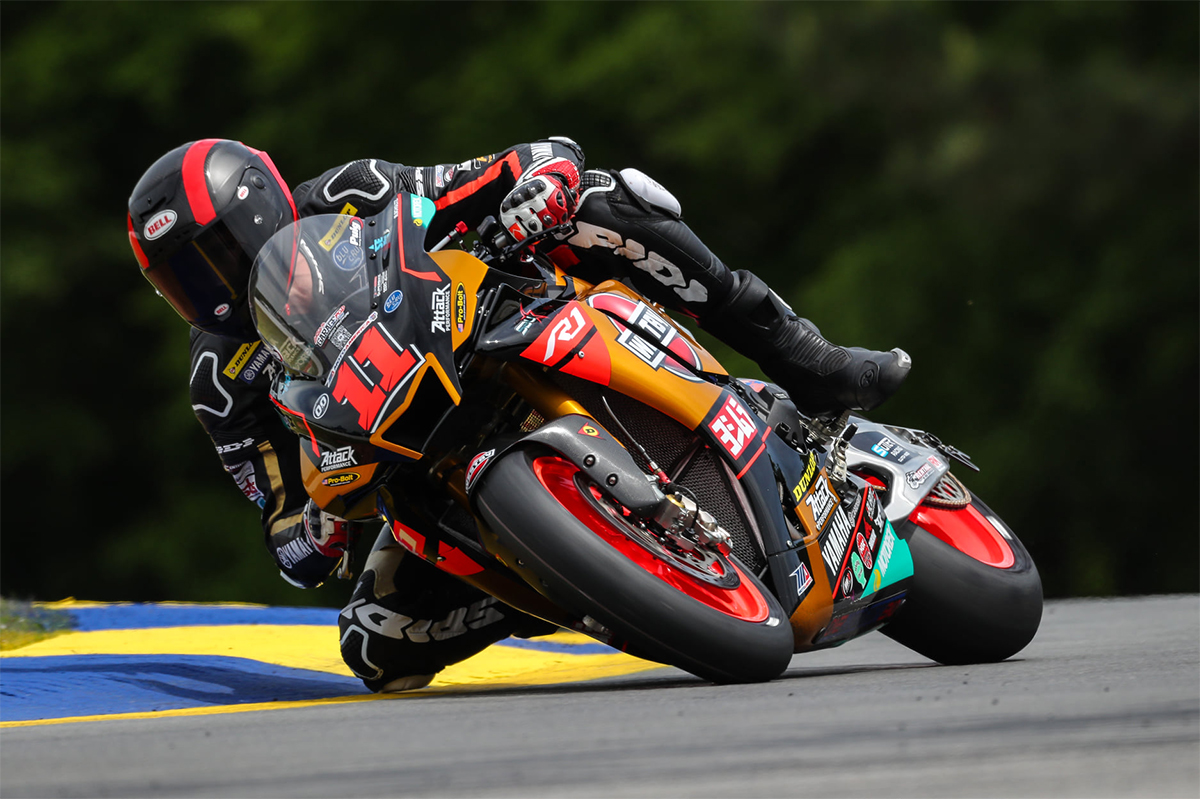
To win a motorcycle road racing championship, consistently finishing on the podium is critical. And, on Saturday at Virginia International Raceway, Westby Racing’s Mathew Scholtz took another important step towards achieving his first MotoAmerica Superbike title when he finished second in Superbike race one. It wasn’t a win, but he and the team will take it, especially at this early point of the season when there are so many races left.
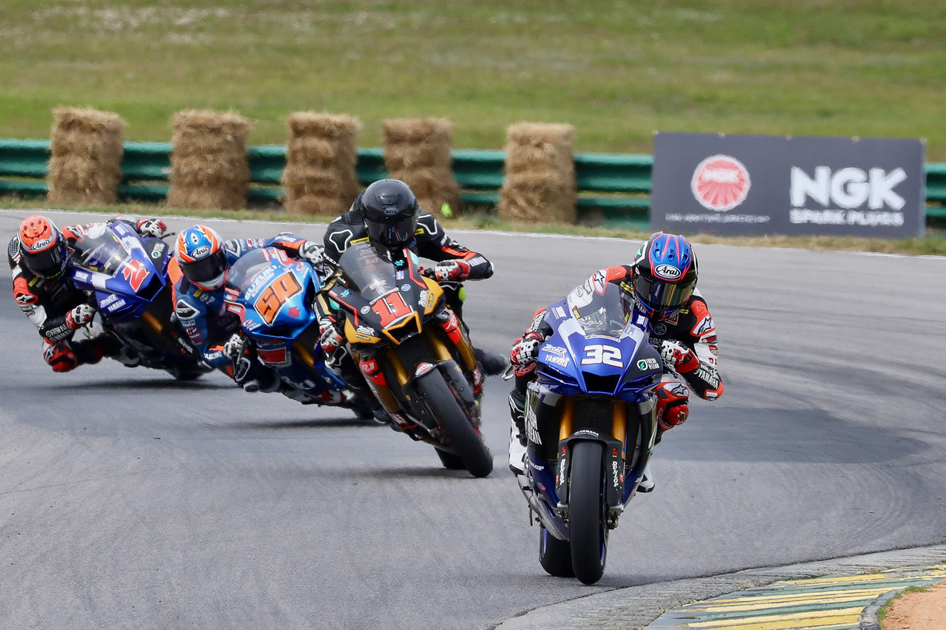
Starting from the front row, Mathew got a good jump off the line, and he immediately went to work and overtook Loris Baz, who started from second on the grid. Running his fastest circulation of the 14-turn, 2.25-mile natural road course on the second go-around of the 20-lap race, Mathew solidified his second-place position, which he maintained all the way to the checkered flag.
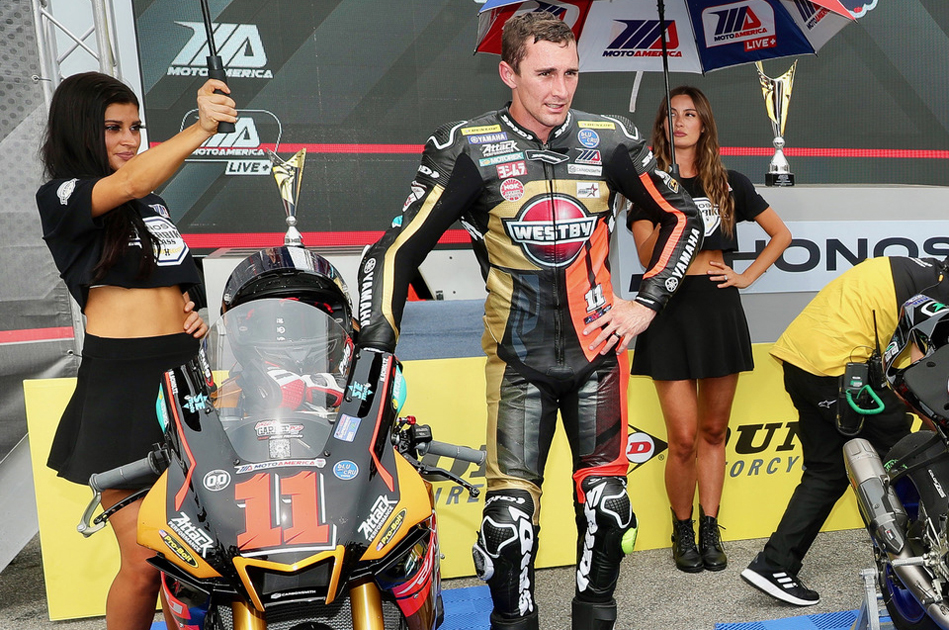
“Obviously, after winning in the first race, we were confident that we should be at least challenging Jake (Gagne) all the way through until the final lap,” Mathew said. “I just kind of feel like we have more to gain, and Jake is definitely stronger than us now. So, we just need to try and figure a couple things out. I was able to kind of follow him for the first four or five laps and already figured out where we could recover a couple of tenths and where I was catching him slightly. So, it’s not like we were miles off. We just have to fix one or two things and we should be challenging Jake. Overall, I’m happy to finish second and carry on as the championship leader. Everyone keeps talking about being championship leader, but it’s way too early on to be thinking about that. It’s always nice to be the one that you don’t have to risk everything at every single corner, every single lap. You can settle for those seconds sometimes. I know Jake is definitely coming. I know Josh Herrin, Cameron Petersen, (Loris) Baz, all those guys are picking up their pace. So just going to go back to where we were losing time and try to focus on getting a stronger pace towards the end and not worrying about being in front every single corner. I want to say thank you to my team. They’ve been great. Like I said, we need to maybe try and challenge Jake and get in front of him the first couple laps. He’s setting a really crazy pace, so just try to get it up the inside of him.”
On the opening lap of Sunday’s final race of the weekend, Mathew got caught up in traffic going into turn one. Thankfully, he didn’t suffer a tipover in the incident, but it did shuffle him all the way back to 14th. Undaunted, he went about his business and started clicking off laps as fast as, or faster than, the leaders. On lap 13, he made it all the way back up to third place where he battled with Josh Herrin for a few laps before securing the final spot on the podium on lap 17.
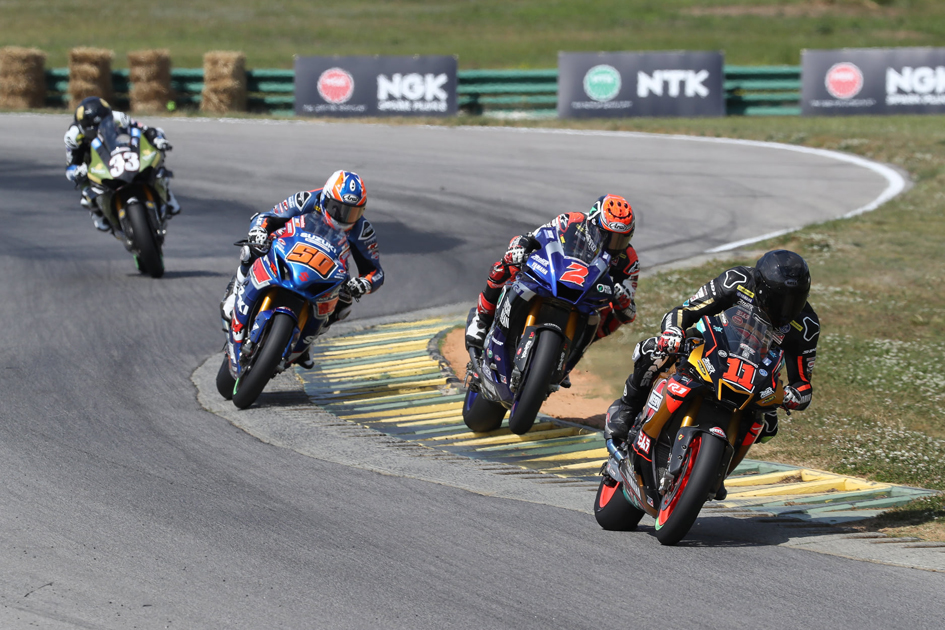
All in all, it was a hero effort from Mathew, who knows that podium finishes all season long are the key to winning his first MotoAmerica Superbike title.
“I just saw one of the M4 Suzuki bikes coming up the inside, so I gave him space,” Mathew commented. “I could have followed him, but I don’t know what happened from there. I think Cam (Petersen) ran off the track. I’m not sure if he got touched. It’s just one of those unfortunate things. I was trying to get aggressive in the first corner, trying to hang onto Jake (Gagne) because I knew if I could slot in behind him, he would pull me, and I kind of had the pace over every one else after about lap 8 or 10.”
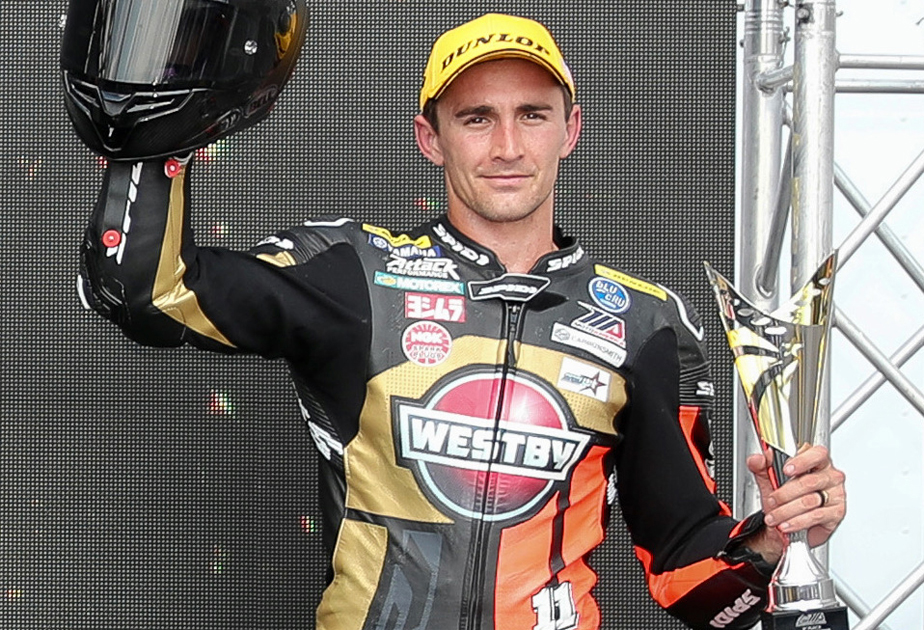
Next up for Westby Racing is round three of the MotoAmerica Championship, which will take place at Road America in Elkhart Lake, Wisconsin, on June 11 through 13.
MotoAmerica Superbike Standings:
1. Mathew Scholtz – Yamaha – 81
2. Jake Gagne – Yamaha – 75
3. Josh Herrin – Yamaha – 61
A Double Victory and a Championship Lead for Steven Odendaal
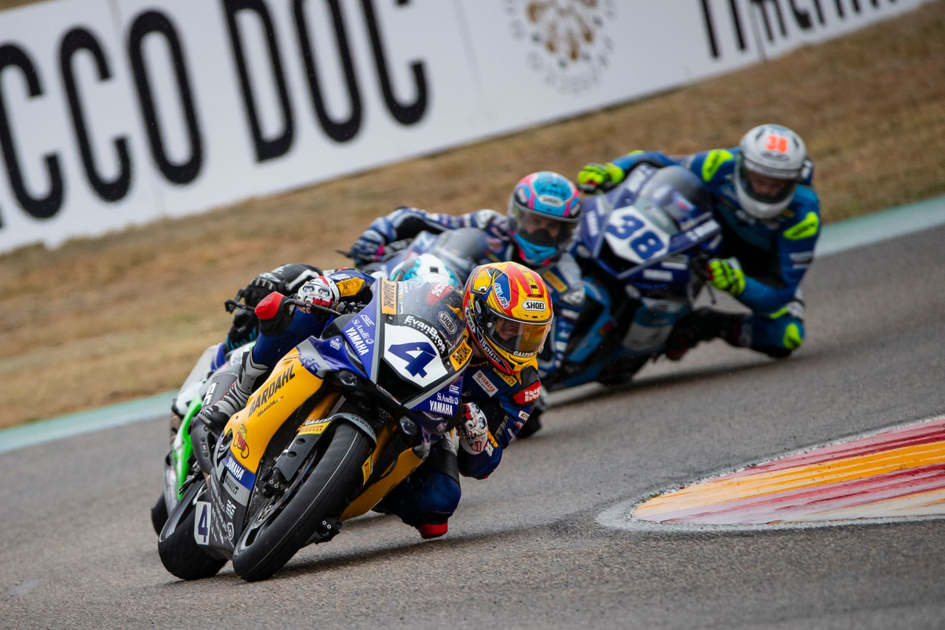
The season couldn’t have started any better for Steven Odendaal, who joined the reigning world champions (Even Bros. Racing Team) this season after his promising debut season in the World Supersport Championship last year. Odendaal claimed his first maiden victory in race 1 on Saturday after making a pass on a fellow ex-Moto2 rider Dominique Aegerter into the last corner.
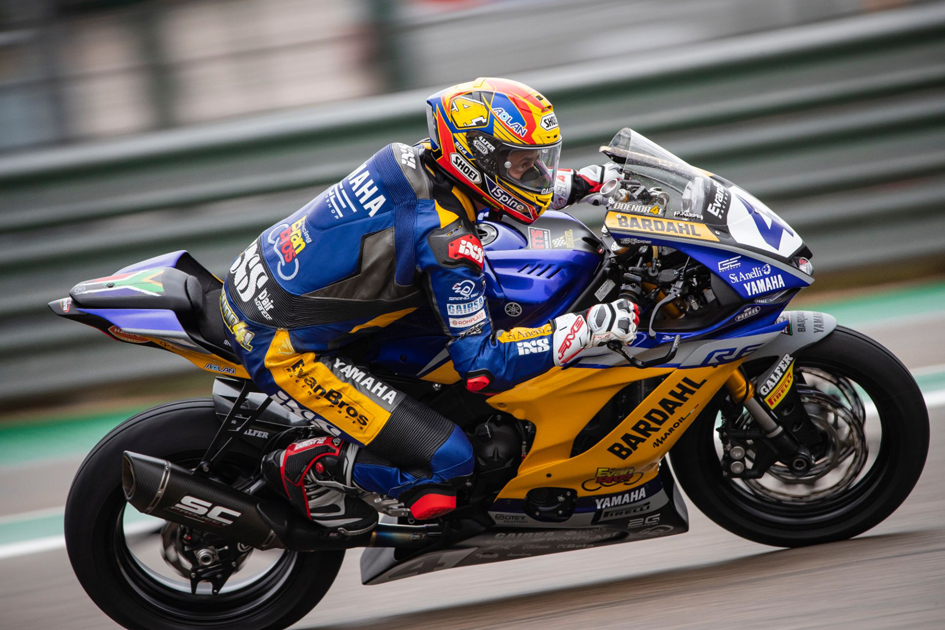
The conditions were completely different on Sunday as the rain made an unexpected appearance on the MotorLand Aragon circuit. Odendaal was able to stay calm and managed the race in an outstanding manner aboard his Yamaha R6, despite the tricky conditions, to make a decisive move once again into the last corner of the last lap and taking a double win and a championship lead with 50 points behind his belt.
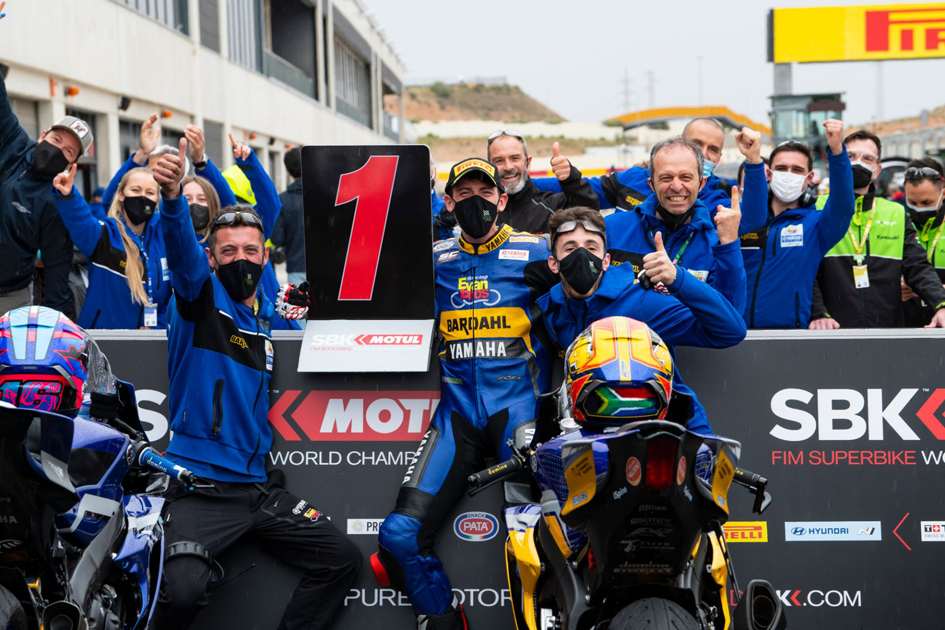
Steven Odendaal: “It is an amazing feeling to take my first win in World Supersport and to back it up with another one today was just incredible for my confidence and moral. I have worked so hard for this moment and I can’t thank those who made this possible enough, especially the team, my family and my manager Jorge Lis. We didn’t start the season in the best way with a big crash on the first day of the official Barcelona test in April, where I dislocated my right shoulder, which caused extensive nerve damage. I am still suffering with pain and lack of strength so taking that into account as well, this weekend was a dream come true. The team made a great decision to go with an intermediate tyre today. I never used this tyre in my life before so I did not know what to expect and I had to be a bit careful in the opening stages of the race. It was an incredible battle and I felt so comfortable on the bike. Huge thanks to the Evan Bros. Racing Team, they did an incredible job and I cannot wait to be racing again in Estoril new weekend.”
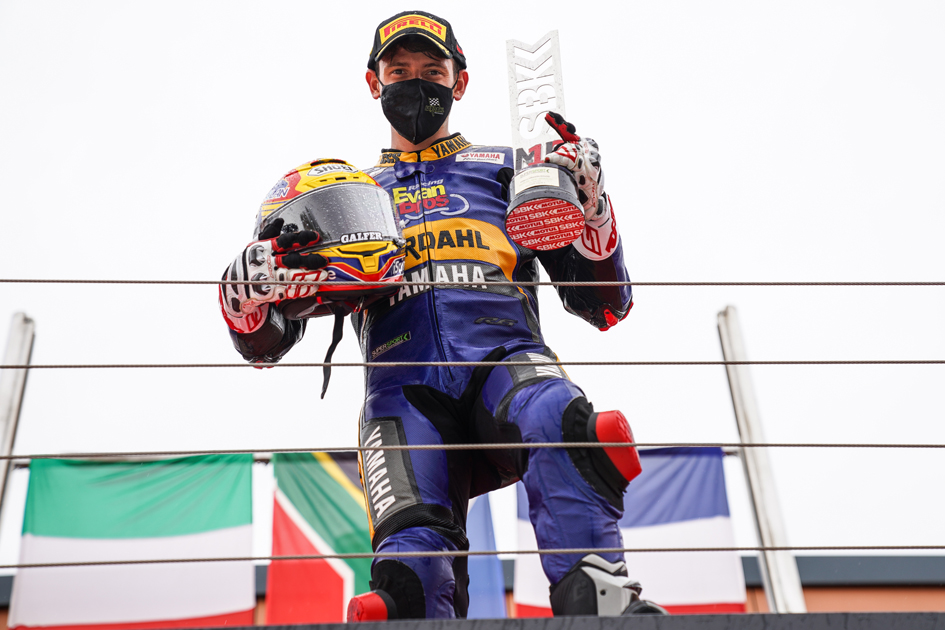
Round 2 of the World Supersport Championship will take place next weekend in Estoril, Portugal.
Triumph Trident – fun and friendly city slicker
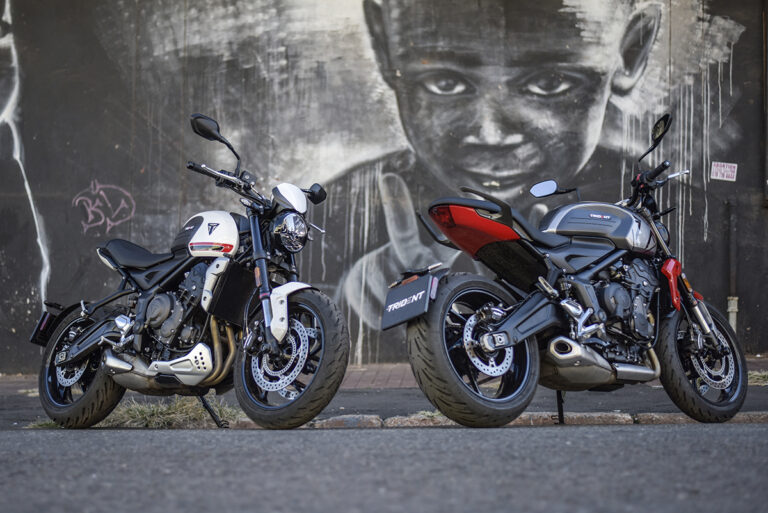
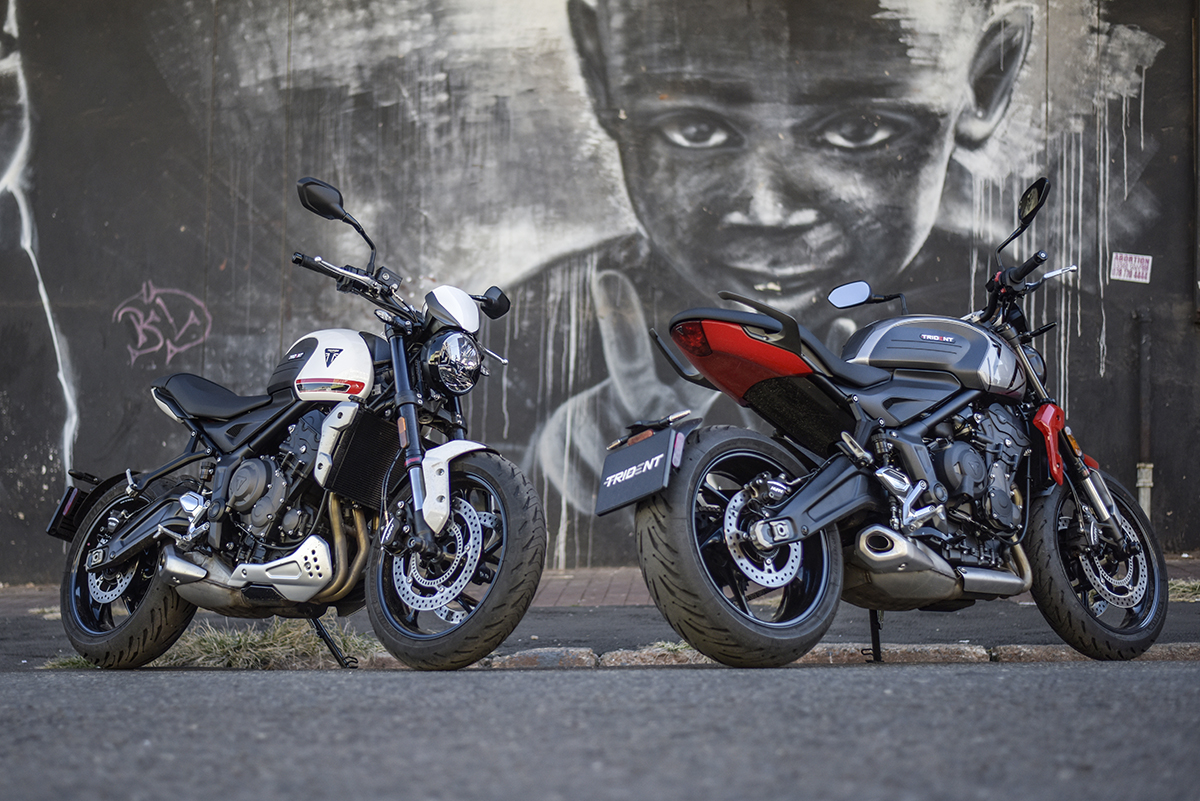
This is not the first Triumph to wear the Trident name. In 1969, Honda stunned the world with its game-changing CB 750 Four. Sporting a four-cylinder, single overhead cam engine and the first disc brake ever seen on a production motorcycle, it was destined to change the face of motorcycling forever. Birmingham Small Arms (BSA), who owned Triumph at the time, actually beat Honda to the multi-cylinder punch when they released two three-cylinder overhead valve 750 cc motorcycles at the end of 1968. The turquoise Triumph Trident and the red BSA Rocket Three. ‘Trident’, a three-pronged fork, obviously alluded to the three-cylinder engine in the new Triumph, whilst ‘Rocket Three’ was destined to get hung on Triumph’s power cruiser in years to come.
The BSA element within the Triumph/BSA coalition, insisted on their Rocket being fundamentally different to the Triumph, so slanted the cylinders 12 degrees forward, as compared to the Trident and changed the frame. This was really dumb, given the growing financial woes of the British manufacturer, where common engineering made much more sense. Let’s focus on the Trident, as it is the forefather of the bike that we are going to talk about. The three-cylinder motor produced 58 hp, propelling the bike to a 190 kph top end, a smidgen faster than the new Honda Four. The styling was different to the traditional Bonneville look that characterised Triumph’s of the day. A slab-sided tank and side covers framed the three-cylinder pushrod motor, which was underlined by the weirdest three-into-two exhaust that the world had ever seen. The flattish oval silencers terminated in three little ray-gun type outlet tubes. Weird as they looked, they worked well.
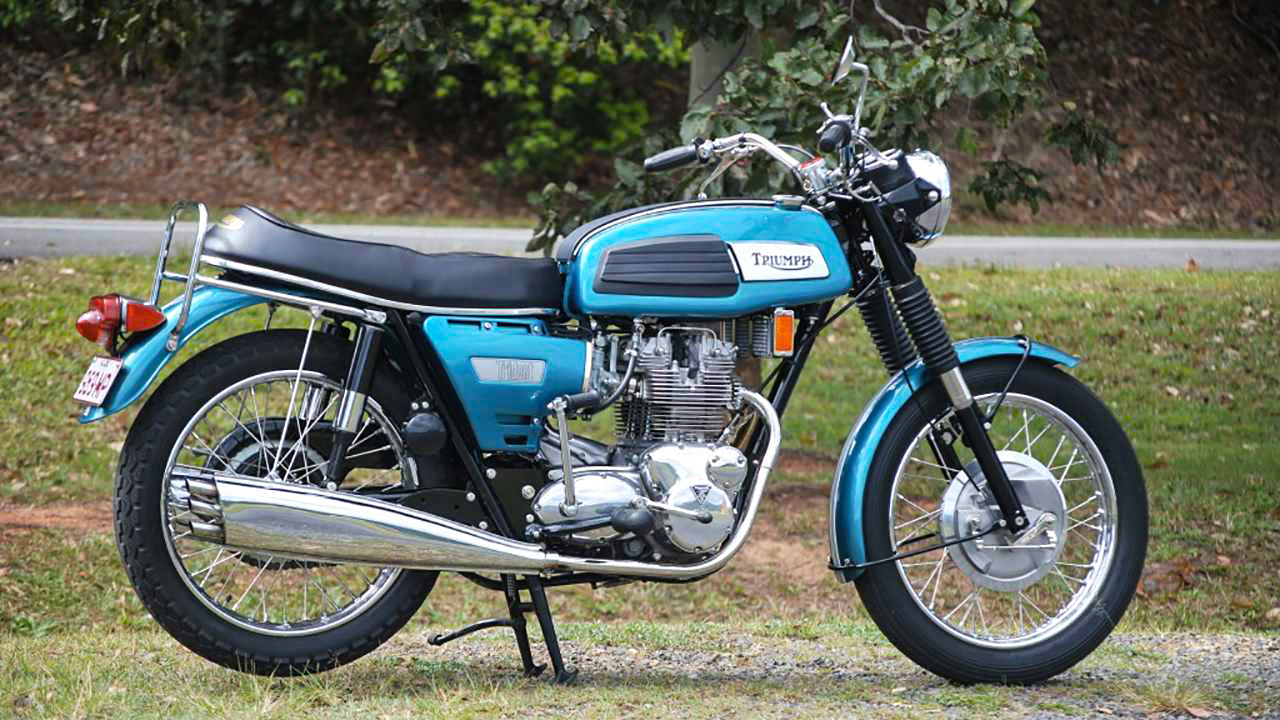
Faster and better handling than the Honda four, it was no match for the Honda’s immaculate fit, finish and general build integrity. Where the Honda’s engine was wonderfully oil-tight, the Triumph had a sponge lined sump tray to catch the oil that seeped from the engine. The writing was clearly on the wall for the British manufacturer. I have a lasting memory, however, of one John Surmon, riding his Triumph Trident from Jo’burg, to the Buffalo Rally, held in Bathurst, in the early Seventies, in record time. One day, I mused, I too would undertake such epic rides. The Trident got Quasi Bonneville styling to try and break into the American market, but it was too little, too late and the last of 28,480 triples was built in 1975.
Back to the future. I was intrigued to have the opportunity, in another time and hugely successful age for Triumph motorcycles, to ride and review the modern motorcycle which carries the legendary Trident name. The new Trident sports a 660 cc motor loosely based on the iconic 675 Street Triple mill. 80 hp sounds tame considering the 125 hp of the ‘old’ 675, however, it produces the power where it matters, more in the mid-range, with gearing that gives proper go in real-world riding.
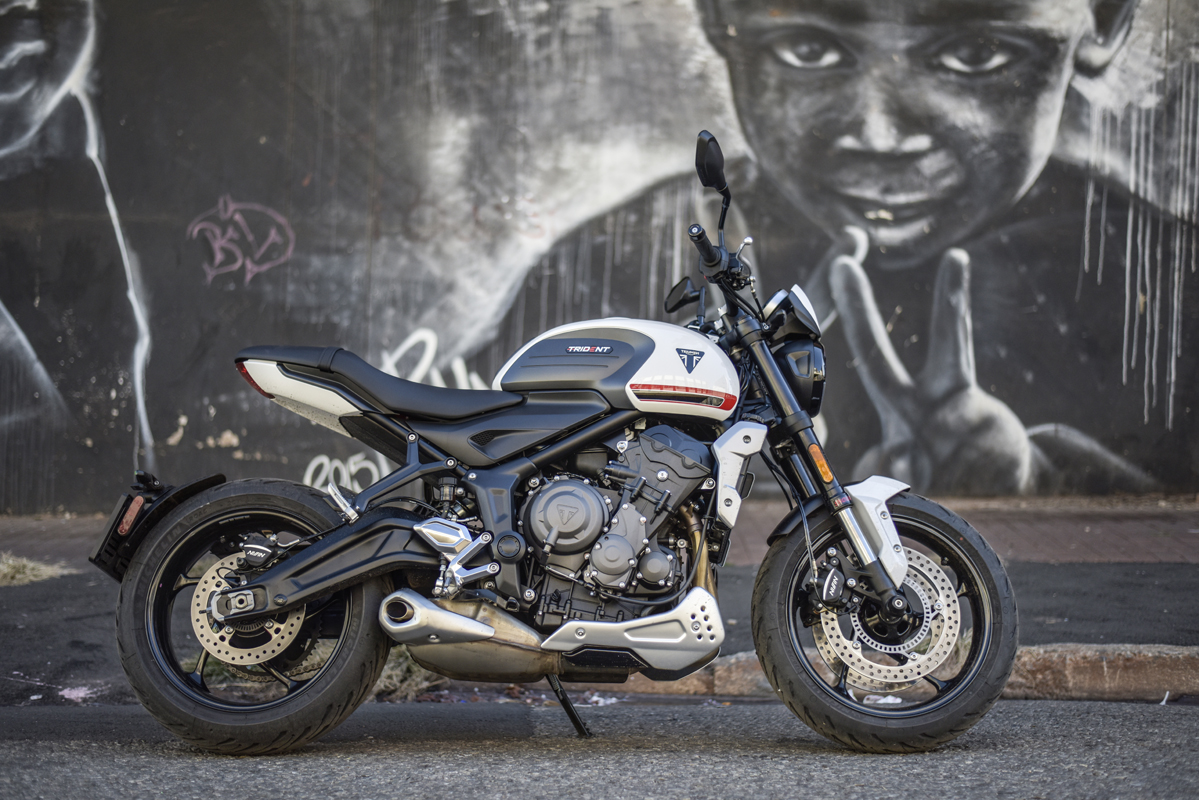
A feather-light 189 kg’s gives it a decent power to weight ratio, propelling the Trident to a 210 kph top end. The milder tune requires less frenetic servicing, with service intervals of every 16,000 kays. A vital consideration in these cash strapped days. A huge part of the appeal of the Trident is in its funky packaging.
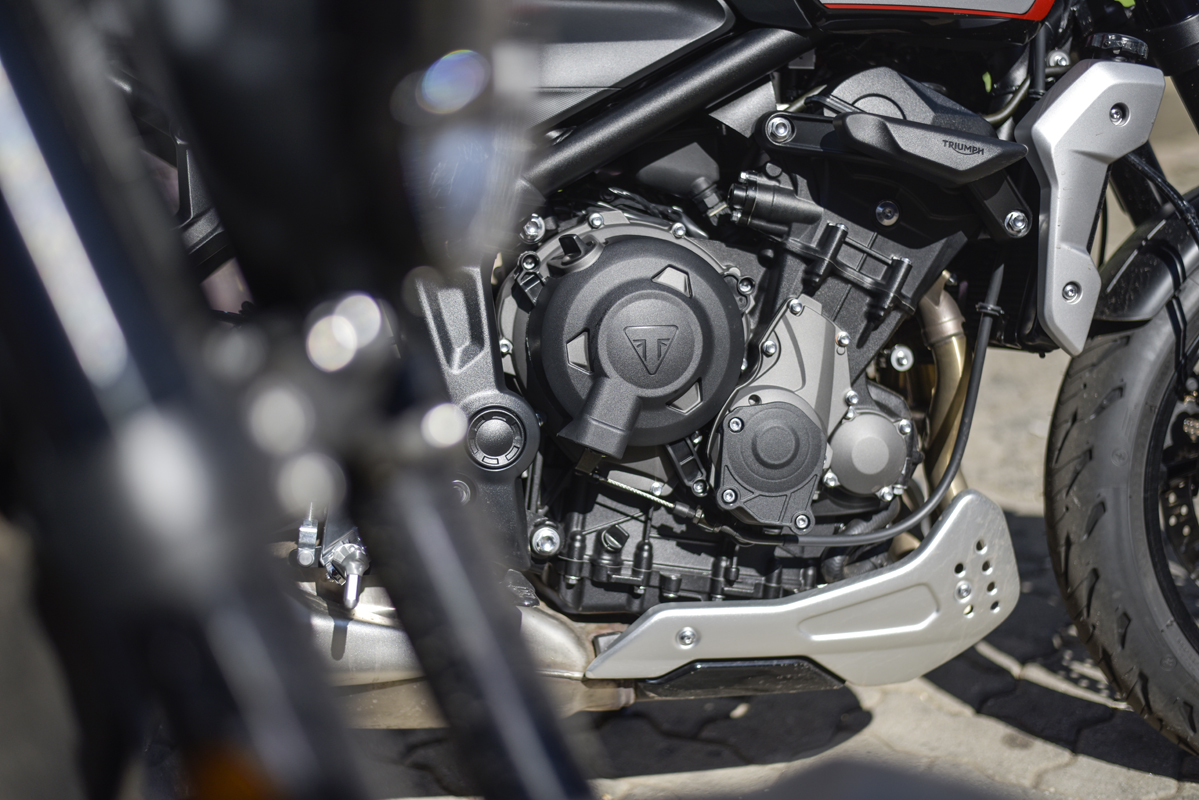
The styling is fresh, functional and super funky. The tank has a stubby rounded ‘British Bulldog’ look with arty styling and Union Jack graphics in some options. The seat is contoured and looks shorter than it is, as the rear mudguard, with taillight, indicators and number plate ride on a swing-arm mount.
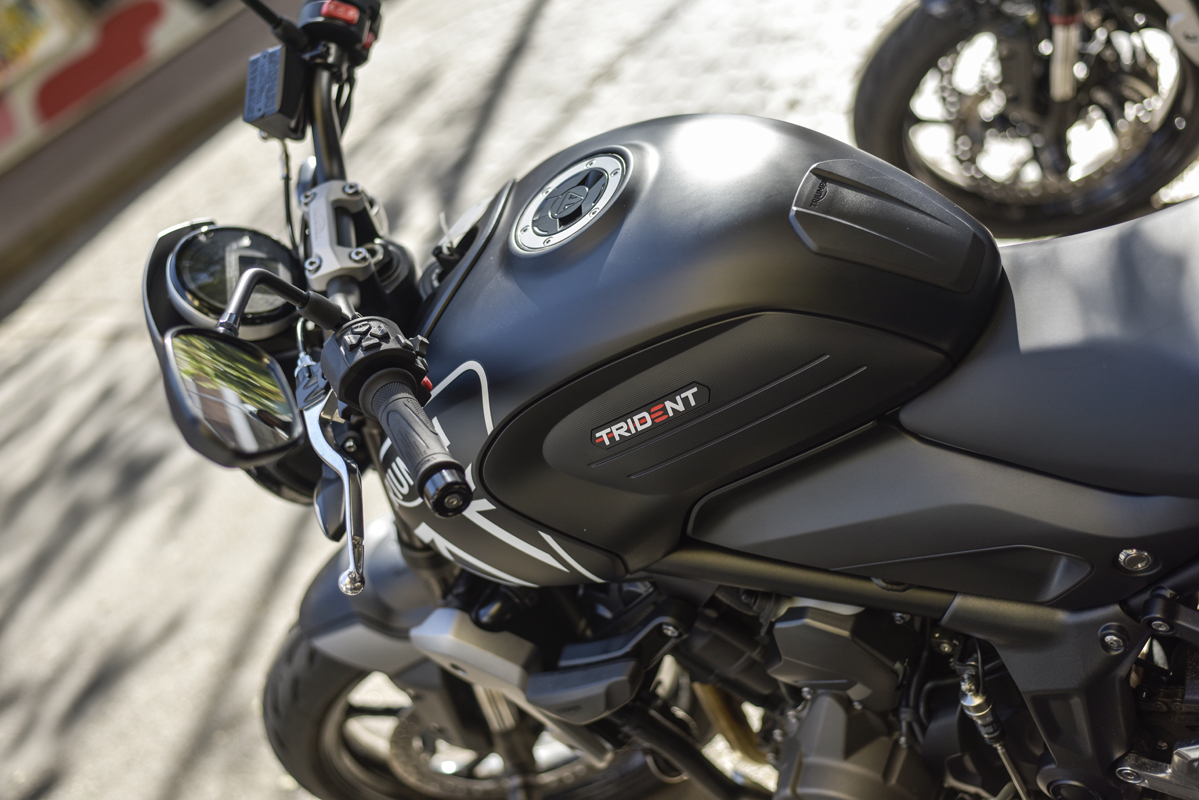
Lights are all LED and instrumentation is a simple round TFT display, giving all the usual info (trips, speedo, rpm, gear, clock and download the Triumph app for turn by turn navigation). The frame is tubular steel and the suspension is non-adjustable USD Showa forks and a preload only adjustable rear shock. Handlebars have a mild bend, giving the rider a comfortable cockpit with pleasant, sporty ergonomics.
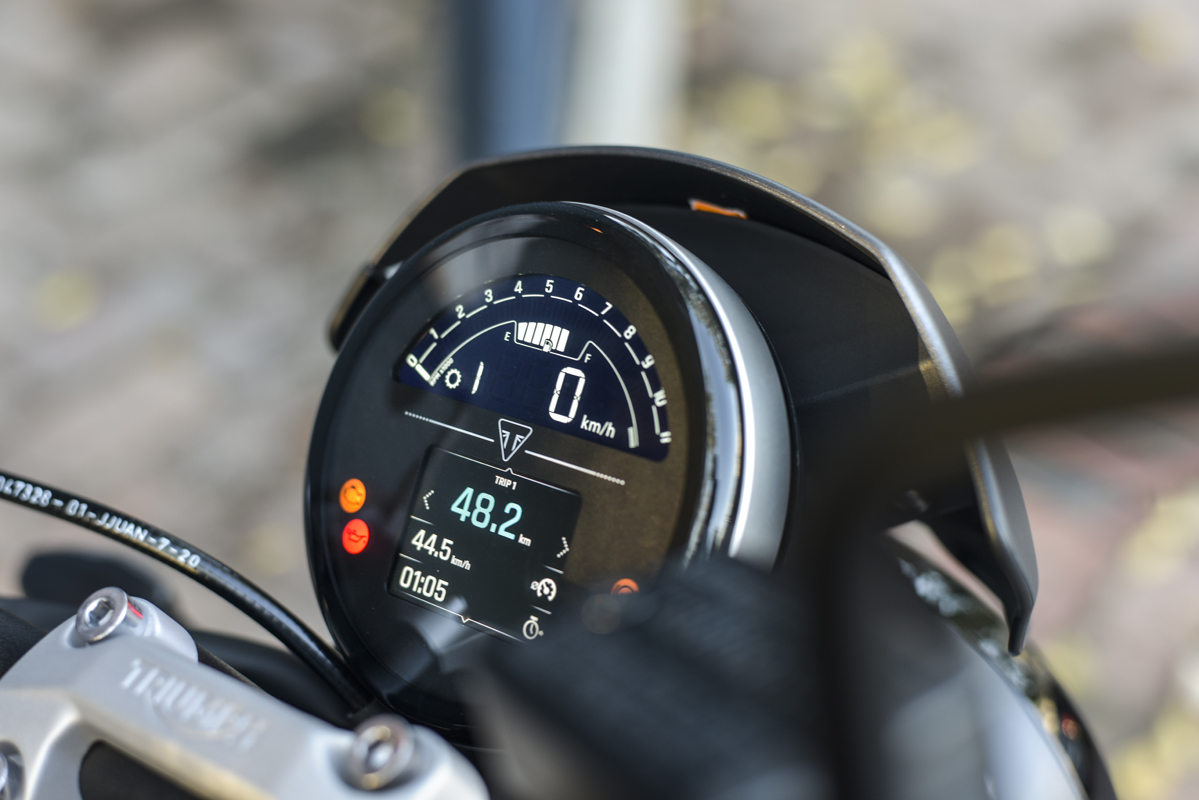
We took a spin into central Jozi’s funky, arty, Maboneng district, to scope out some of the amazing graffiti. The Trident is a weapon in the traffic. Light, agile and endowed with a punchy motor which is never short of poke, it is effortless to ride. The suspension, whilst essentially being preload adjustable in the rear shock only, speaks to Triumph’s excellent setup. It is firm yet compliant over the typical urban minefield that we deal with daily in city riding. This might be the Trident’s reason for being, but it is no one-trick pony. It is so easy to ride that it appeals to all types. Newbies will revel in the safe and easy manners, yet there is plenty to keep experienced riders entertained.
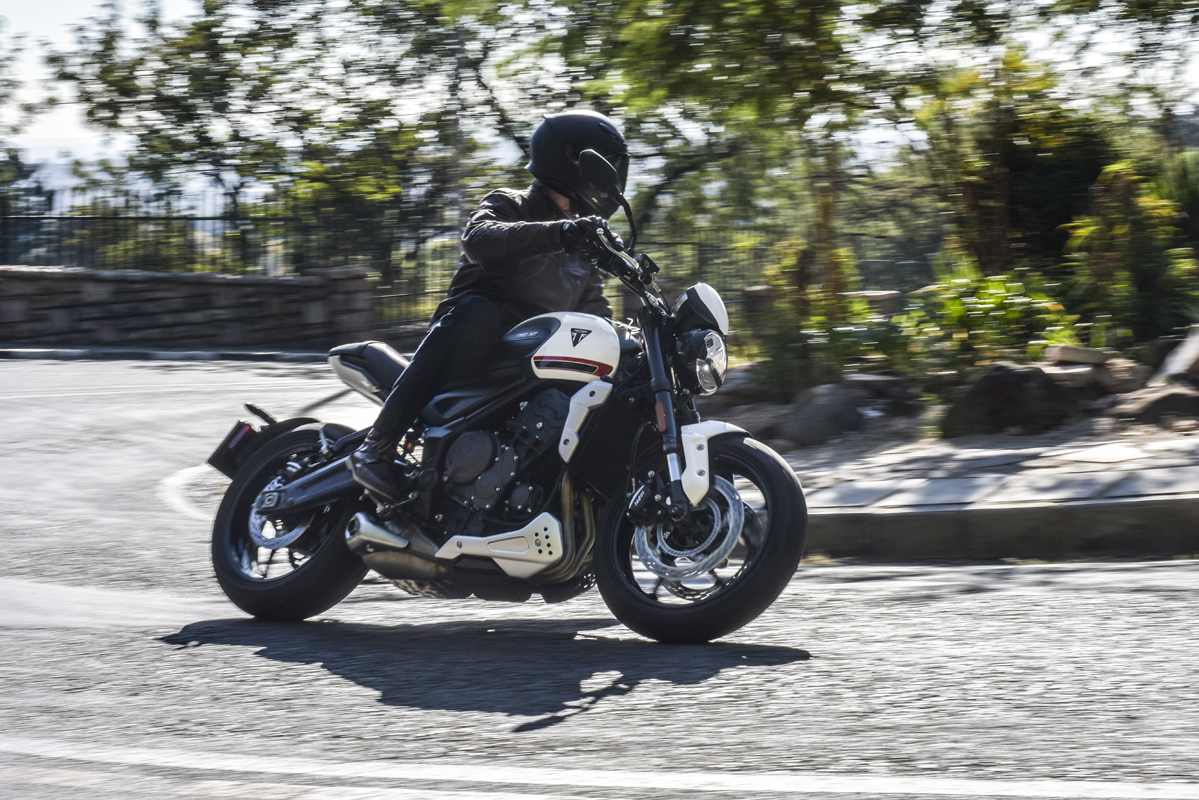
I spent a few days with the Trident, using it as typical owners would. Negotiating traffic or commuting between cities, the Triumph takes it all in its stride. The handling is accurate and stable at all speeds. This makes it a blast to ride anywhere and everywhere. Push it hard around a racetrack, or traverse some really grotty tarmac and you will find that the damping and spring rates are not perfect but then that is not what this bike is about. For the typical Trident owner, the bike is brilliant.
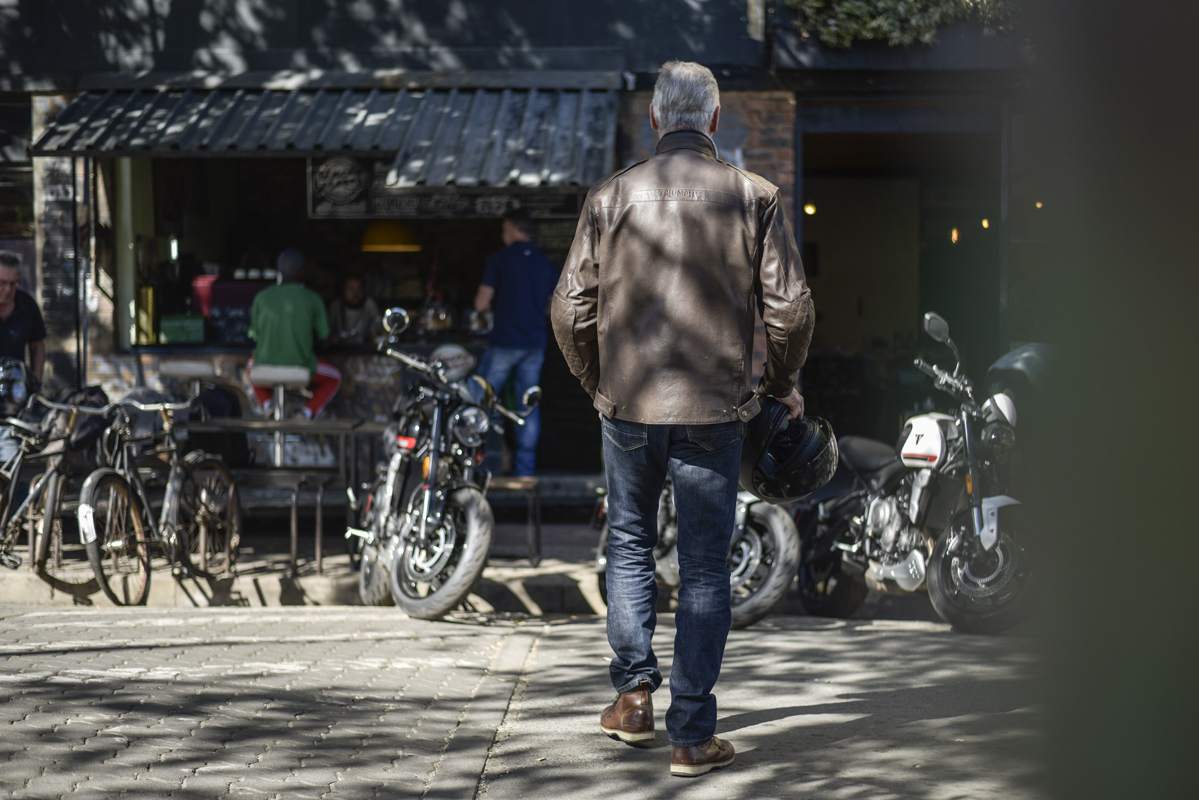
Triumph have endowed the bike with relatively short gearing. At 125 kph the engine is revving at 6000 rpm, which feels somewhat busy, until you recall that the redline is 10250. What the gearing has done is give it power everywhere. Acceleration is sharp and roll-on is impressive.
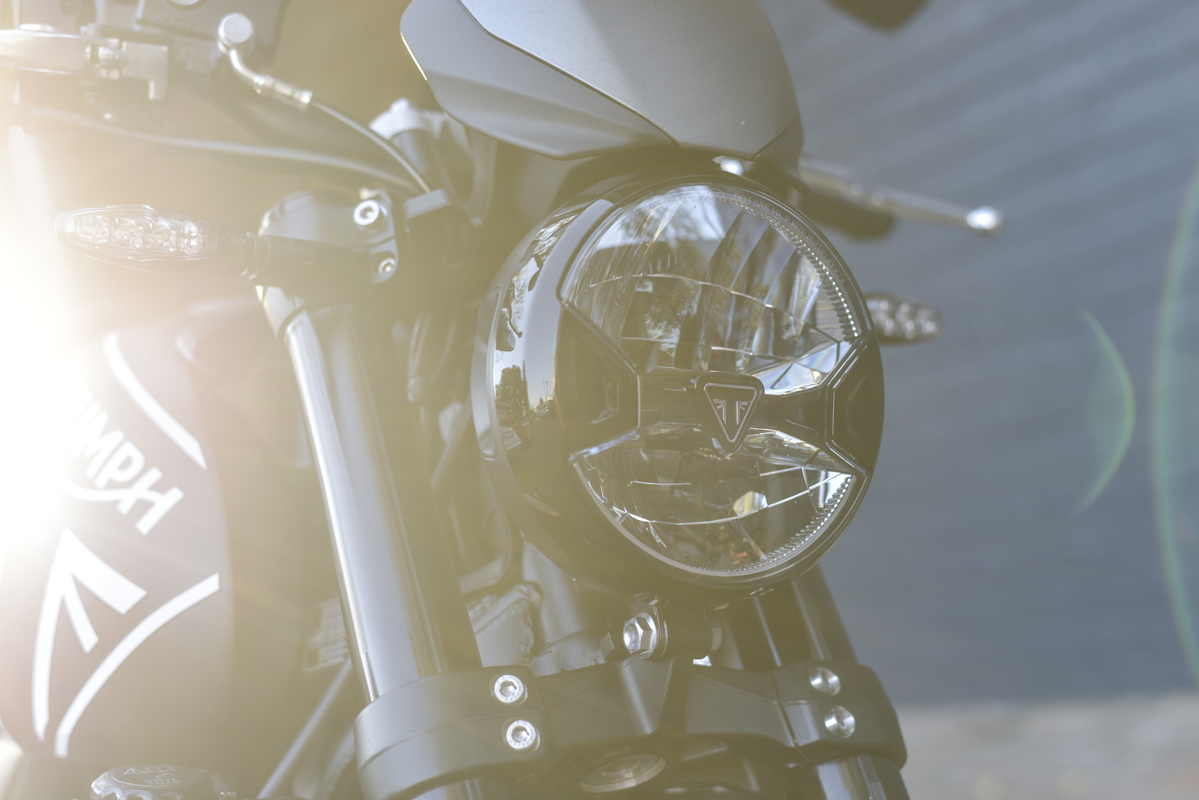
Nissin triple discs and callipers ensure decent braking performance. The six-speed gearbox is typically Triumph. Light and crisp. A Quickshifter is available as an option. There are actually 47 accessories in the catalogue with which to pimp your ride. Tail pack, tank bag, bar-end mirrors etcetera.
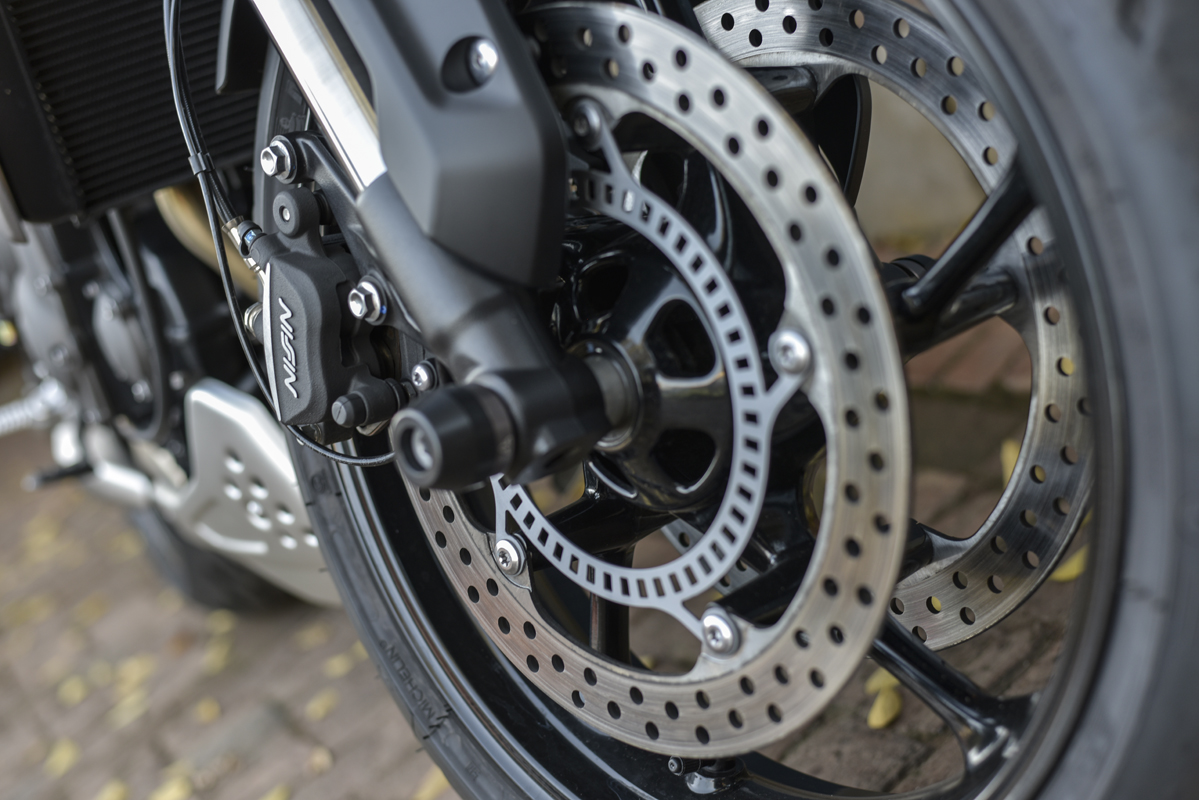
A 14-litre tank allied to the Trident’s fuel economy allows for a decent range of over 250 kays. The seat is definitely touring friendly and at 805 mm is accessible to most riders. The bike really has few drawbacks, given its purpose and price point. The signature cammy triple whine at low speed can irritate some, however, it disappears as speeds rise. For me, it is a characteristic of the excellent triple and a non-issue.
Triumph’s new Trident is, at around R150,000, at the top end of the class in which it competes, however, it has a character and general funkiness and function which makes it worth every cent. Parked in front of some of Jozi’s street graffiti, it comes across as an art form in its own right. Toss in a heap of fun and function and I think Triumph have a worthy successor for the legendary Trident.
For more information visit: www.triumph-motorcycles.co.za
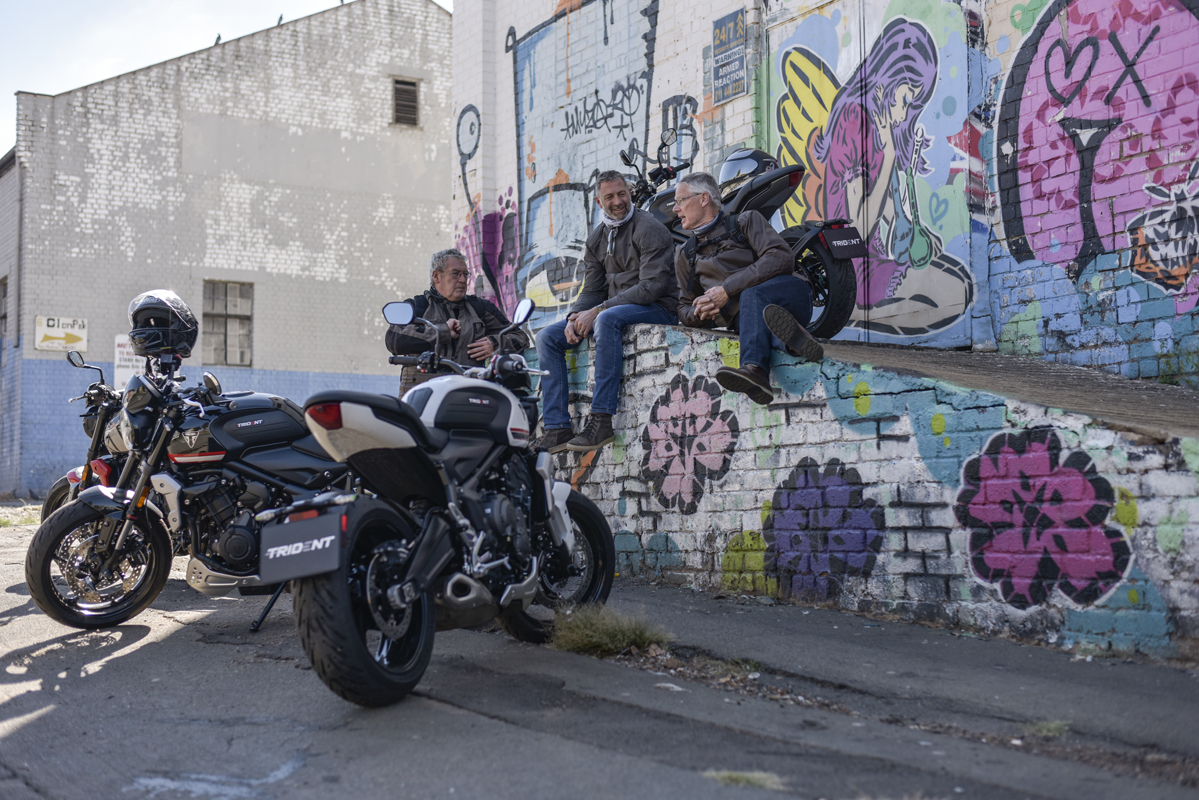
Back to Basics: Riding the Honda CRF300L
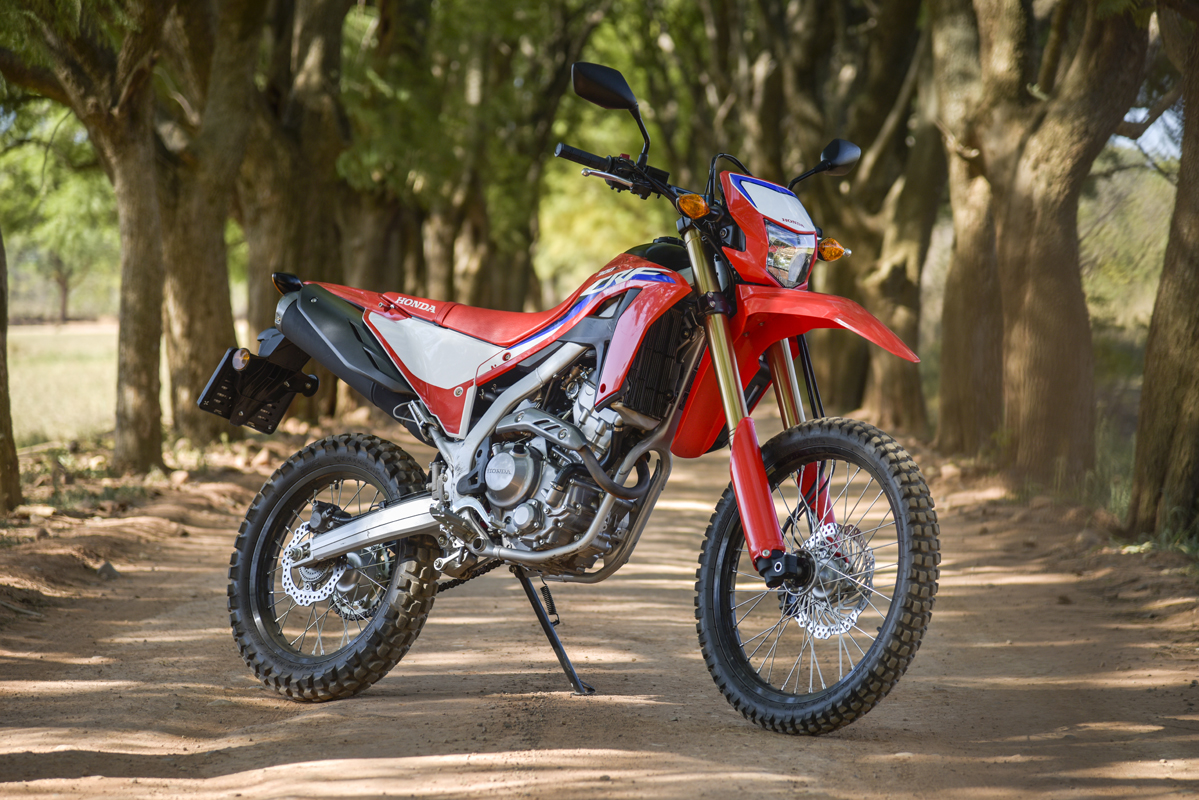
You can’t escape Honda’s mammoth legacy in the adventure riding genre, and you can’t deny that their dual-sport bikes are consistently versatile and reliable. The Honda CRF250L was a testament to that—a pint-sized street-legal dirt bike that, despite being a little underpowered, turned out to be massively popular.
Now Big Red have thrown just the right measure of updates at the CRF, including a capacity bump, to bring us the all-new CRF300L. But how does it stack up? Is it a big enough jump over its predecessor to warrant a look? I rode one to find out.
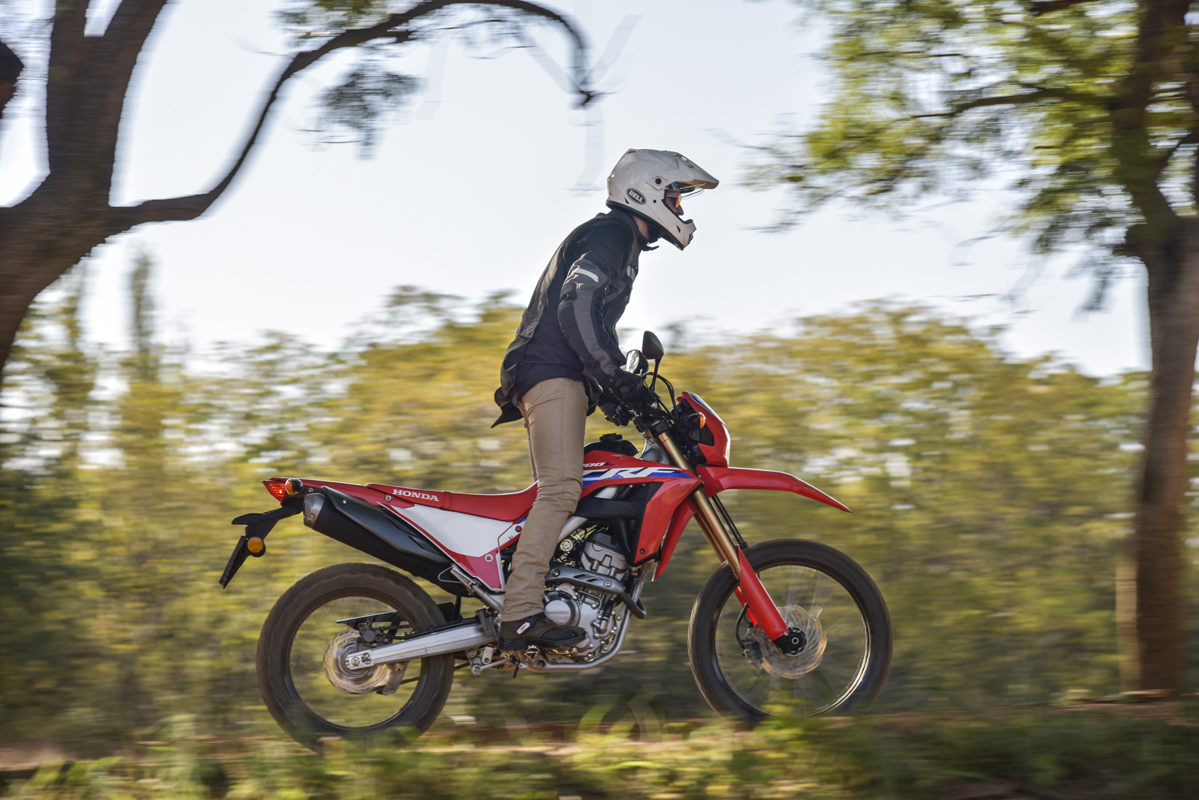
There’s no beating around the bush: Honda’s CRF250L/Rally weren’t perfect, mostly due to soggy suspension and a lack of power. But they had the bones for improvement, and killer looks that always drew my attention. After spending much time on the 250, I was intrigued and seriously excited to get my hands on the new 300.
Honda’s brand-new street legal CRF300L has more power, less weight, several chassis upgrades and a bunch of styling improvements compared to its predecessor. The latest L-model seems to have matured all over, but without losing its funky and peppy character.
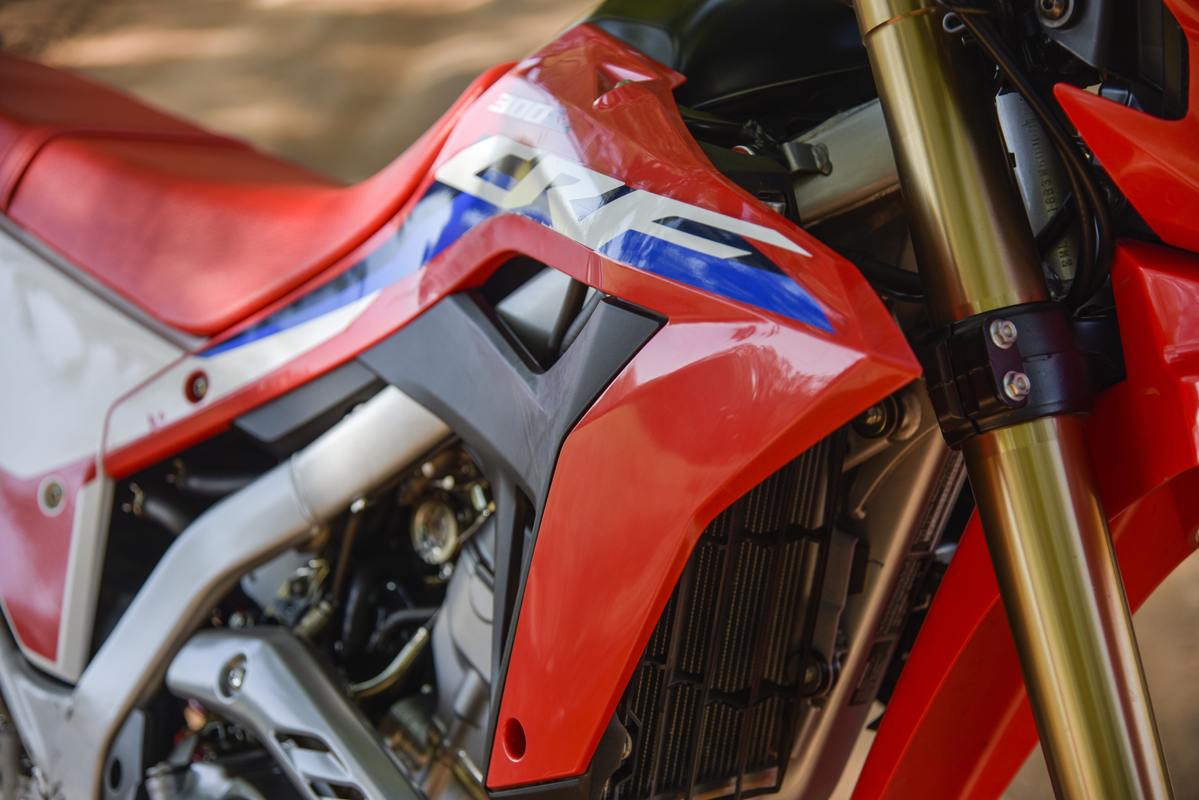
Visually, the CRF300L was love at first sight for me. It’s drop dead gorgeous, with some styling brought over from the CFR450L, including a selection of factory racing Honda graphics. I know that white number boards are pointless on a street bike, but boy do they look awesome.
Another nice touch from Honda was finishing the aluminium rims in black, rather than leaving them polished—a detail that made the bike look cheap before. But the CRF300L still comes fitted with a standard bulb headlight, which really is a shame in these modern times.
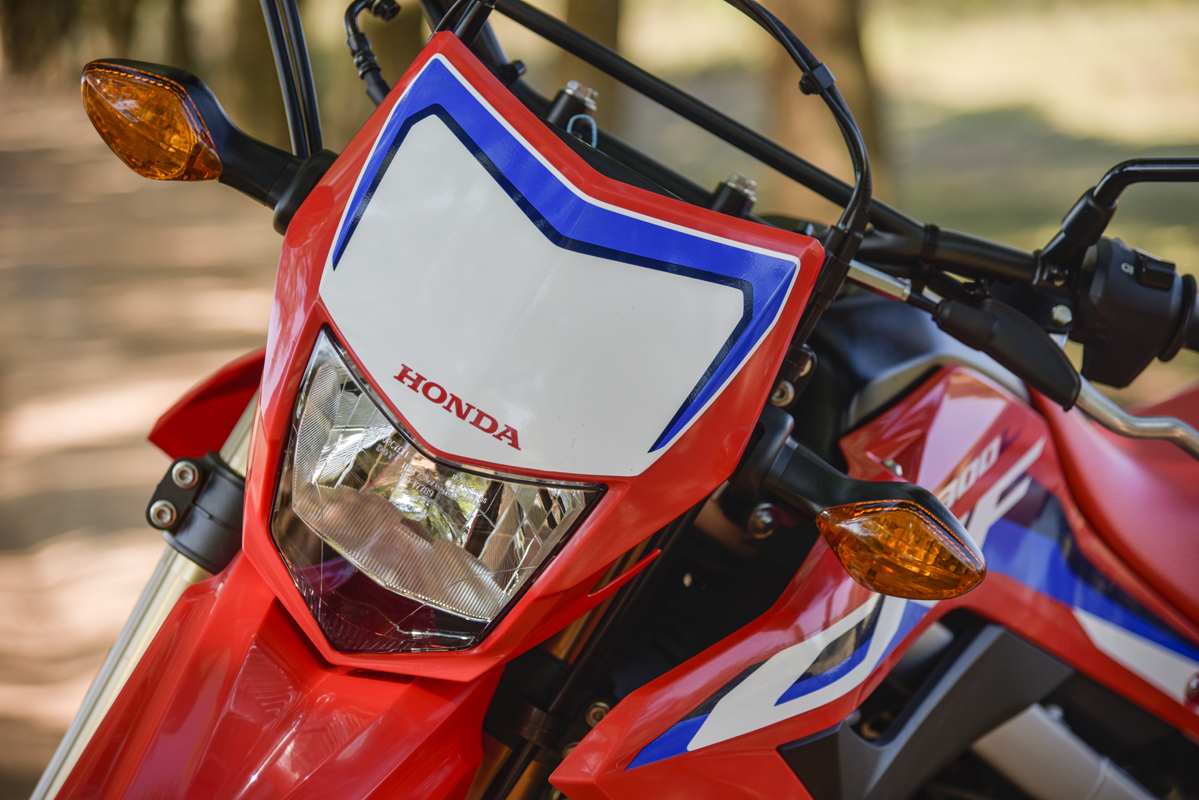
As far as tech goes, you’ve got two-channel ABS that can be deactivated, and a neat LCD display. The display shows the usual info, plus a gear indicator, average speed, stopwatch and rev counter. There’s also a fuel gauge, and a readout that will show you your consumption—a nifty feature that’s usually reserved for more expensive bikes.
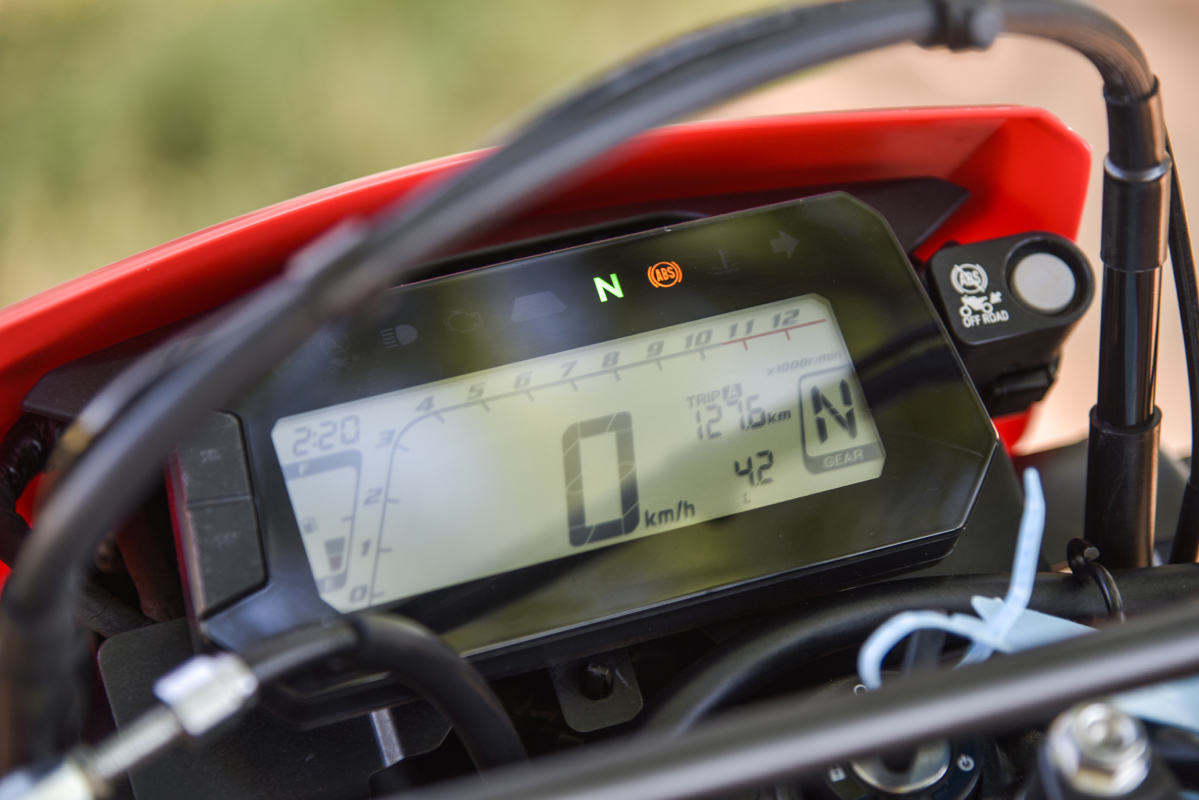
On the go, I immediately felt the difference in top-end pull and low-down torque from the engine’s extra 36 cc. Bumping the motor to 286 cc has pushed its power output to 27 hp (20.1kW) at 8,500 rpm, with 26.6 Nm of torque at 6,500 rpm.
That’s helped the CRF300L spring to life, but the biggest and most significant change is the new gearing. The gear ratios have been shortened from first to fifth, to help squeeze the full potential from the motor. And once you rev your way past fifth, there’s a taller sixth gear to help you utilise the power band to its fullest.
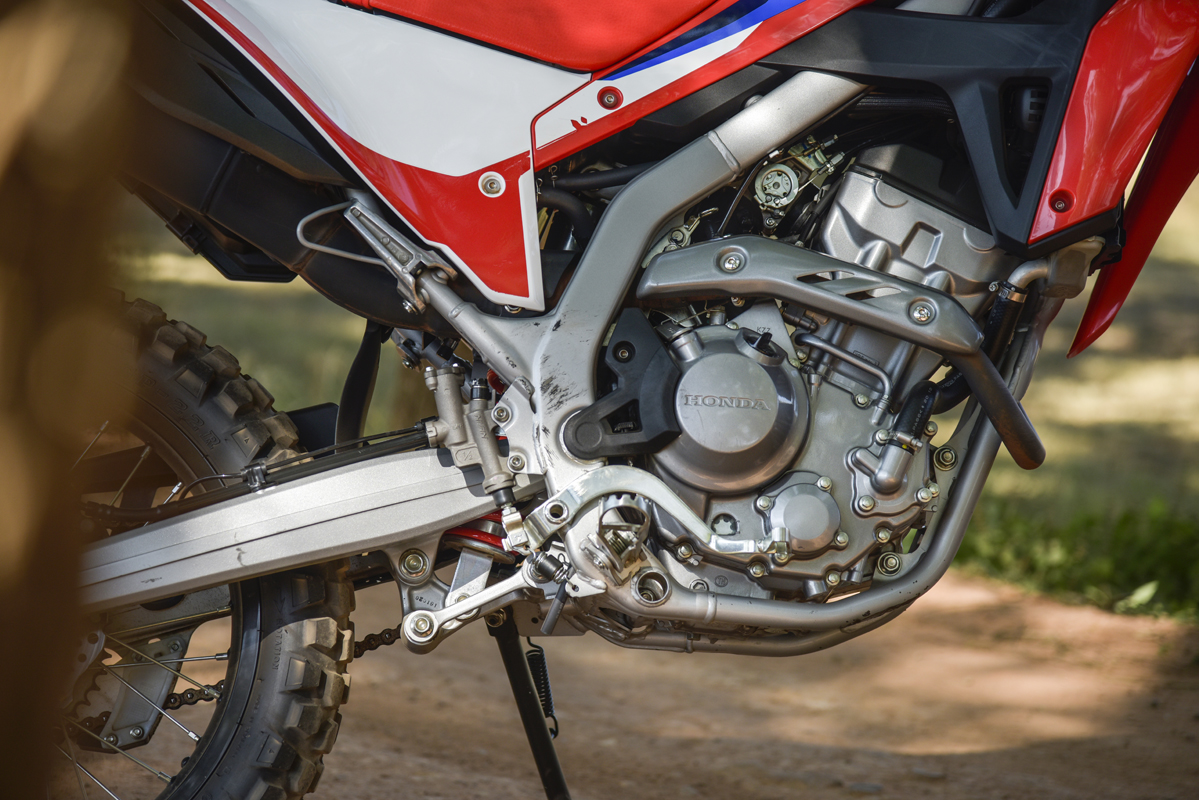
Once you’re cruising on the open road and kick up into sixth gear, the motor will rev at a comfy 6,500 rpm at 120 km/h and will rev out just past 8,500 rpm with a top speed of 140 km/h. Although the 300 can do the odd highway stint, it far prefers short-shifting around town. Every time I took a spin through town, all I could think about was ordering a set of motard rims for city shenanigans. (Dear Honda: please make this happen!)
The more time I spent with the bike, the more time I spent riding off-road. Once the ABS is off, the 142-kilo curb weight and remarkably slim ergonomics make it even more manoeuvrable than before. The clutch is 20 percent lighter than before too, and that makes it awesome in the tight stuff, turning everything into an effortless one finger affair. That means it’s great for beginner riders, and less tiring on those technical rides.
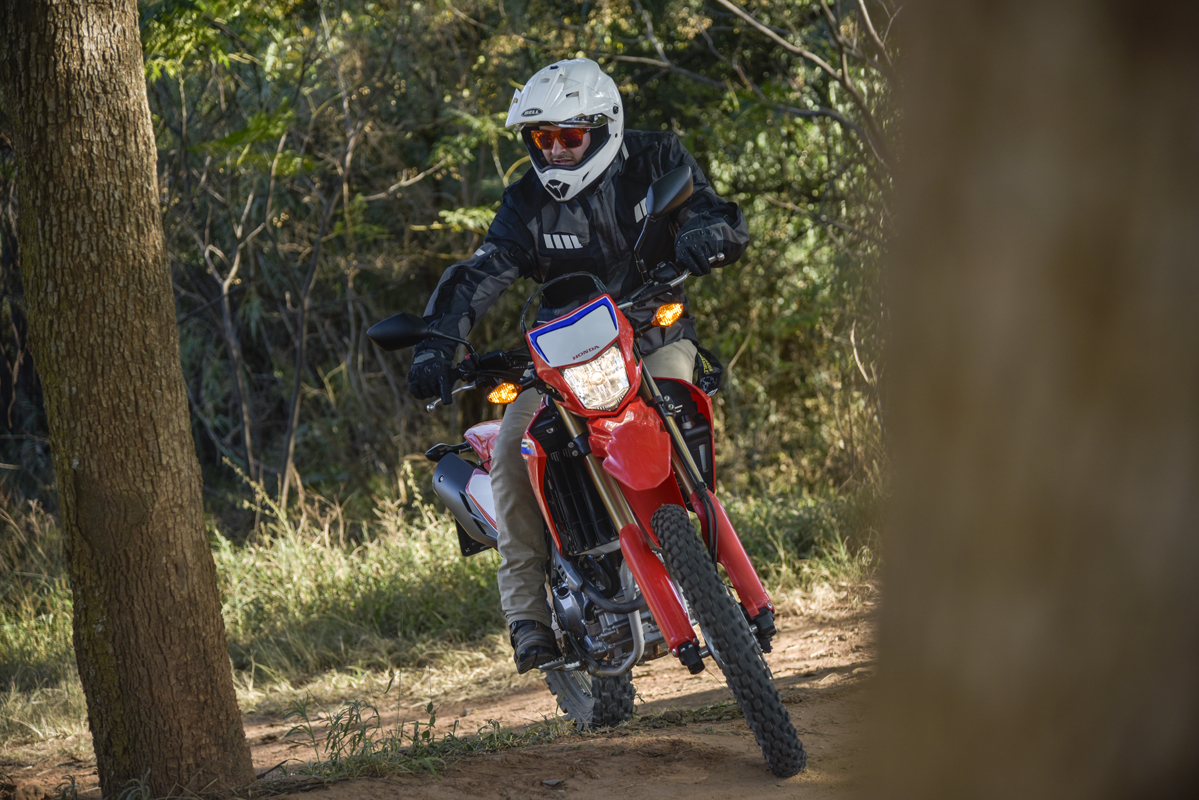
Once the trail broadens and speeds get up there, that’s when the budget bike nature of the CRF300L’s suspension starts to show. Even for my fully-kitted-up 80 kg weight, the suspension uses far too much sag, and sucks up half the travel from just sitting on the bike. In the slow stuff and around town it’s a joy, but when you start pushing it around bends, the back end will break traction and then find it and then lose it again; very unpredictable and unsatisfying.
Up front are non-adjustable 43 mm Showa upside-down forks with 260 mm of travel. I actually enjoyed the feedback from them, and only felt them bottom out on slower, rockier terrain. The only flaw for faster riding is the Pro-Link rear suspension, which actually has some serious travel (260 mm), but fails to impress when pushed hard.
Honda have pushed the 300L’s seat height up by 5 mm from the 250L, but it still sits at a reasonable 880 mm. The 300L’s seat is more comfortable than the 250L’s, with softer materials and a slimmer design. For the adventurer, you’ll find a nifty toolbox at the rear of the bike and bungee mounts on the rear mudguard for those light weekend away trips.
For braking, Honda paired a two-piston Nissin calliper with a 256 mm front disc taken directly from the CRF450R. Between the self-cleaning disc and Honda’s two-channel ABS, stopping is a breeze. Deactivating the ABS only disengages the rear, keeping the front hunkered down at all times. I did give the front brake a full squeeze for ‘research’ purposes, and to my amazement, I think this may just be the best dirt-focused ABS yet.
Despite its small 7.8 L tank, the 300L can ride pretty far. I averaged 31 km/L, which in turn set me up for a comfy 240 km-plus ride. If you go for the ‘Rally’ model, its 12.8 L tank should do just shy of 400 km. And you’ll get extra perks like wind protection, hand guards, a plastic bash plate and oodles of Dakar style. But that’s only if Honda South Africa import the Rally—there’s no word on it yet.
Sure, the CRF300L might not match the 300 cc twin-cylinder bikes like the Kawasaki Versys 300 for highway cruising, but it makes up for it when tar turns to gravel. And at R84,999, with 12,000 km service intervals and free rider training, it’s massive value too.
For more information visit: www.honda.co.za
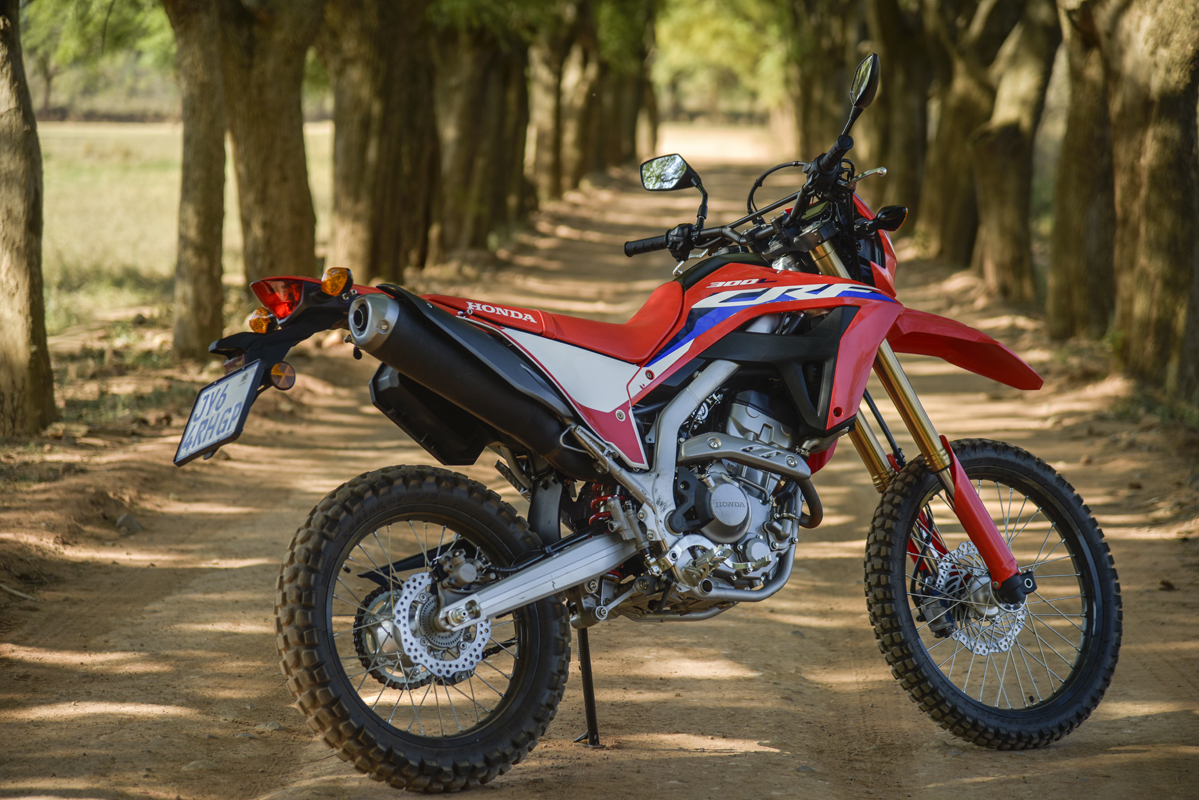
HONDA CRF300L
For more information on the bike that we tested in this article, click on the link below…
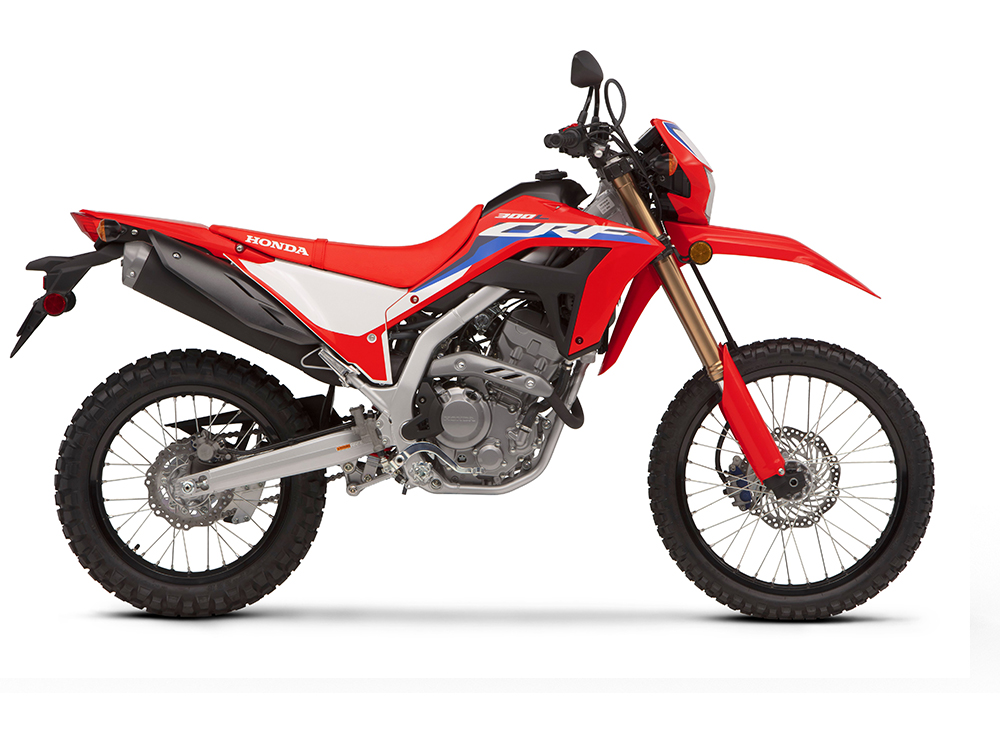
Journey to the GS Trophy – taking everyday South Africans on an extraordinary journey
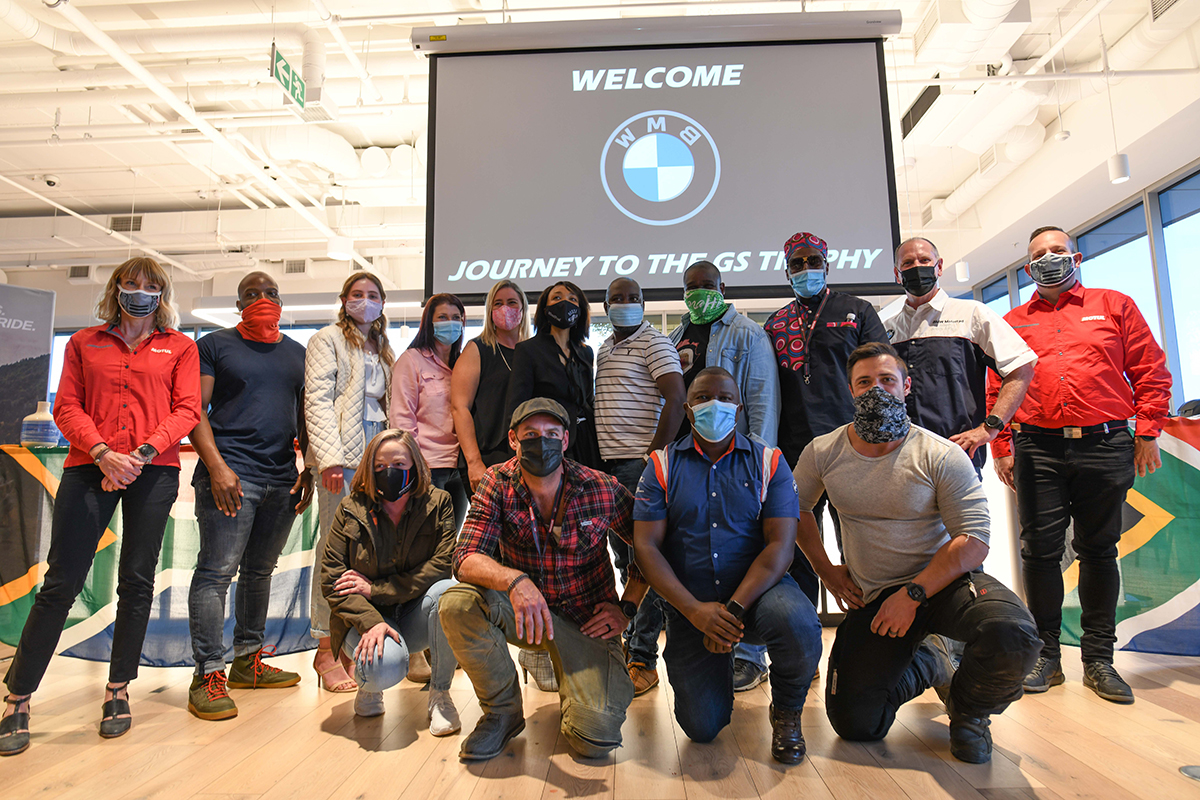
Motul has always been a passionate supporter of motorcycle endeavours, be it racing across deserts in the Paris Dakar, or tearing up race tracks around the world. So no surprise then to learn that Motul SA are sponsoring the Journey to the GS Trophy.
On Sat 15 May we attended the “Journey to the GS Trophy team Launch” in Rosebank, where we got to meet some of the folks who will be undergoing a stringent training programme to prepare themselves for the upcoming GS Trophy regional qualifying event later this year.
This is what it is all about…
The International GS Trophy is a biennial adventure motorcycle event that takes place in a different country each time it is held. It’s an opportunity for a team of three South African BMW GS adventure motorcycle riders to represent their country and build on a legacy that has seen Team South Africa emerge victorious in the last three events.
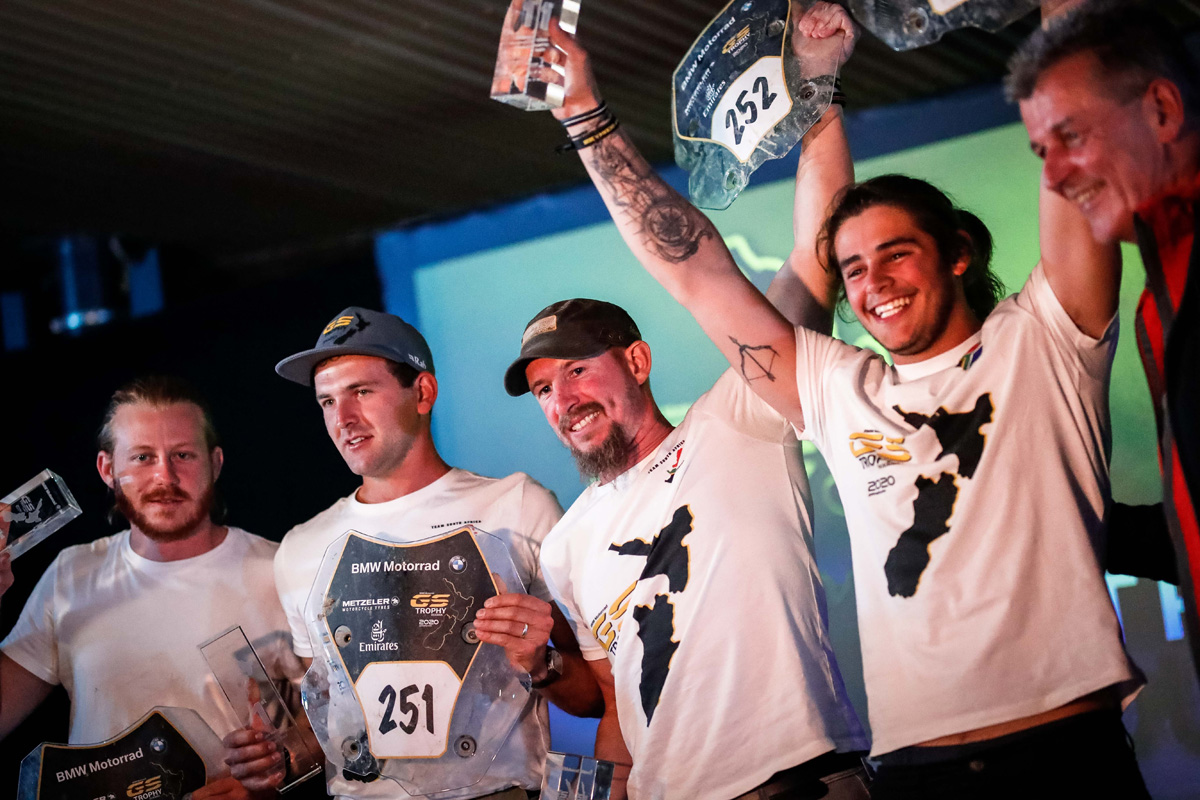
The International GS Trophy 2022 will be held in Albania, and the build-up and selection process will be the most inclusive ever, with ordinary South Africans embarking on the Journey to the GS Trophy.
This concept – the Journey to the GS Trophy – has been launched by certified BMW motorcycle instructor Andre Visser, in partnership with BMW Fourways and Motul. Andre has over 15 years experience as an adventure motorcycle trainer including with the GS Trophy: he was the Event Director of the 2010 SA National GS Trophy Qualifier and helped prepare the team for that year’s event, when, riding on home soil, they came second overall.
“The Journey to the GS Trophy team features 13 men and women, all with different skill levels – and none of whom have any previous experience with the GS Trophy. This unique training experience will help them prepare for the regional qualifiers, and, if they make the cut, for the final national selection event,” explained Andre. “In partnership with Motul, we’ve developed a challenging but rewarding syllabus that will give them the best possible chance of making it onto the SA team,” he added.
“Helping a group of everyday South Africans who share a passion for adventure riding and further growing the motorcycle industry is an opportunity that Motul simply couldn’t pass up!” commented Mercia Jansen, Motul Area Manager for Southern and Eastern Africa. “Even if the riders on this Journey don’t make it all the way to Albania, they’ll have gained new skills that will help them enjoy their riding even more – and that’s something we’ll always get behind here at Motul,” added Jansen.

The riders on the Journey to the GS Trophy team will participate in four dedicated training sessions as they prepare for the Gauteng regional qualifier on 19 June 2021. This will take place at the purpose-built BMW X-Drive facility in Midrand.
Andre outlined the content of the four training sessions that make up the Journey to the GS Trophy and explained how each session will help the riders gain in confidence. The first session will see them master the basics of off-road riding including getting to grips with the U-turn manoeuvre; the second will focus on overcoming obstacles; the third will introduce elements of strategy, planning and navigation; and the fourth training session will help the riders to combine all these elements to achieve a smooth, fluid adventure riding style.
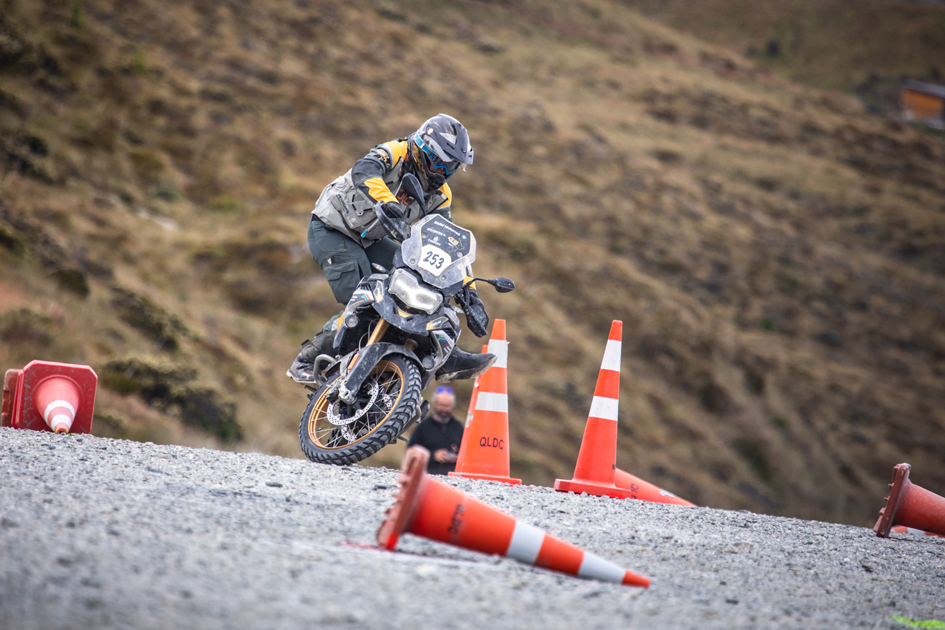
Qualifying competitors from each of the regional qualifiers will progress to the national qualifier, which is projected to take place in September or October 2021 and will see the selection of the three riders who will go to Albania next year.
There will also be an unofficial in-house competition for the Journey riders that will culminate in a final event to determine which riders have improved the most during the training.
For more info about the GS Trophy visit – www.bmw-motorrad.co.za
Revealed: The 2022 Yamaha R7
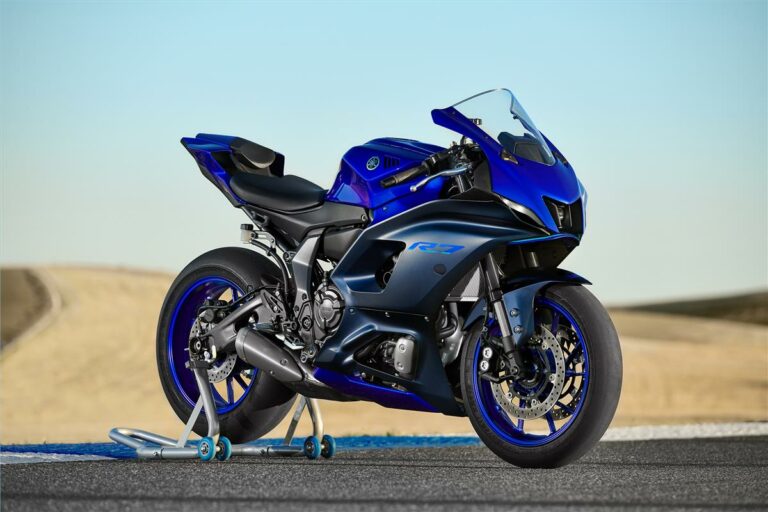
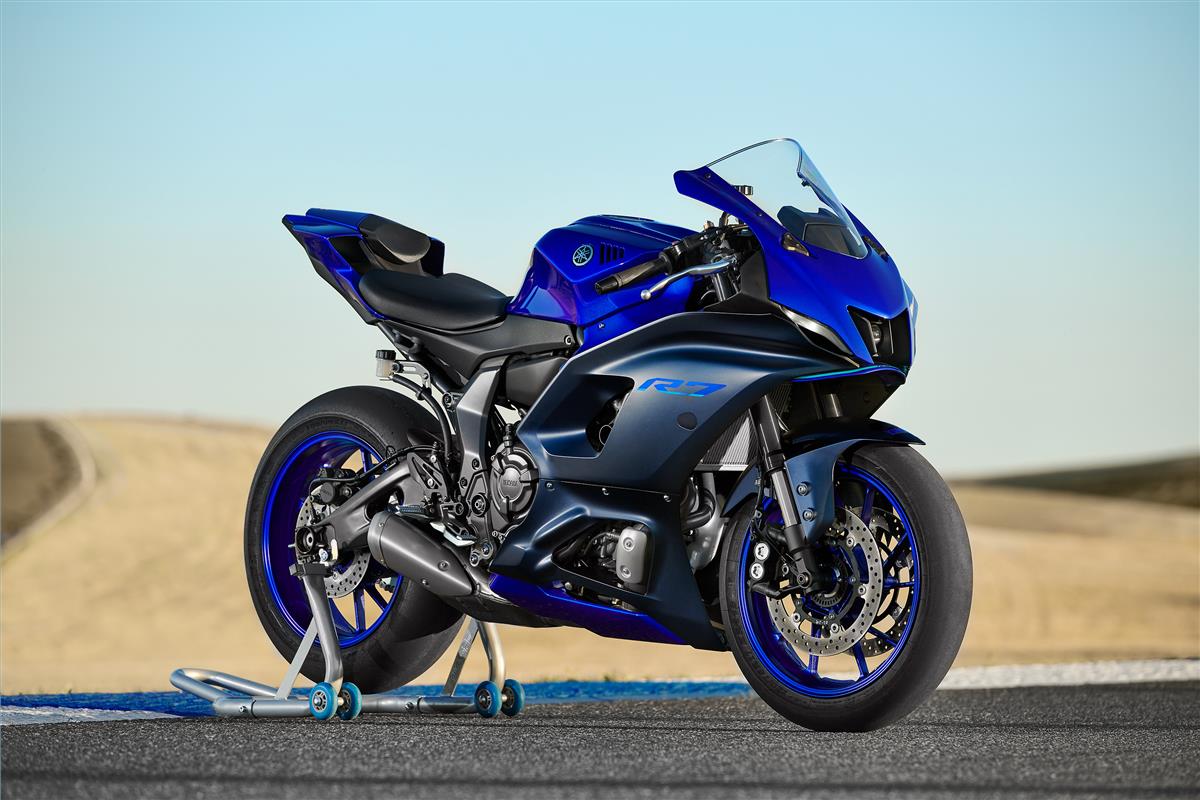
Yamaha’s 689 cc twin-cylinder ‘CrossPlane’ motor will go down in history as one of the company’s greatest hits. It’s lively without being unruly, and offers up mounds of usable torque for a wide range of applications. But is it fit for a superbike?
We’re about to find out, with the release of the much-anticipated Yamaha R7.
Although this new bike bears the iconic R7 name, it has little in common with the YZF-R7 homologation special that launched in 1999. By popping the ‘CP2’ engine in a supersport package, Yamaha are pitching the R7 as a middleweight to sit between the R3 and R1, rather than an outright performer. They say they’re aiming at younger riders here, but given the popularity of the MT-07, Tracer 700 and Ténéré 700, we’d say the appeal is much wider.
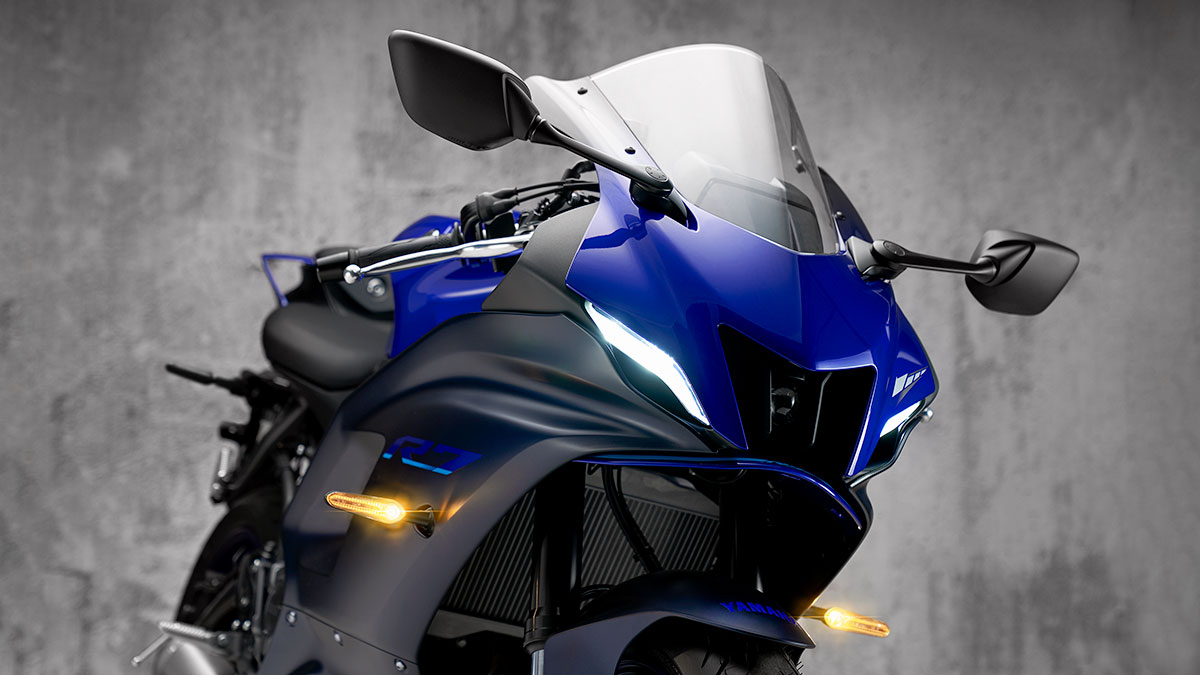
At the heart of the R7 is the same 689 cc parallel twin as the MT-07, along with its 270-degree firing interval. Maximum output is 54 kW at 8,750 rpm and 67 Nm at 6,500 rpm. This motor’s now Euro 5 compliant too, thanks to a revised exhaust design, new air intakes and tweaks to the fuel injection. Yamaha also fettled the secondary gear reduction ratio, to give the R7 more poke off the line. Other upgrades include a new assist and slip clutch, and there’s an optional quick-shifter too.
Looking at the chassis and parts spec, it’s clear that Yamaha see the R7 being used on the street and track. Everything’s packaged into a backbone-style frame, with a rigid-mounted aluminium centre brace. The focus here was on handling, to make the R7 as responsive and agile as possible.
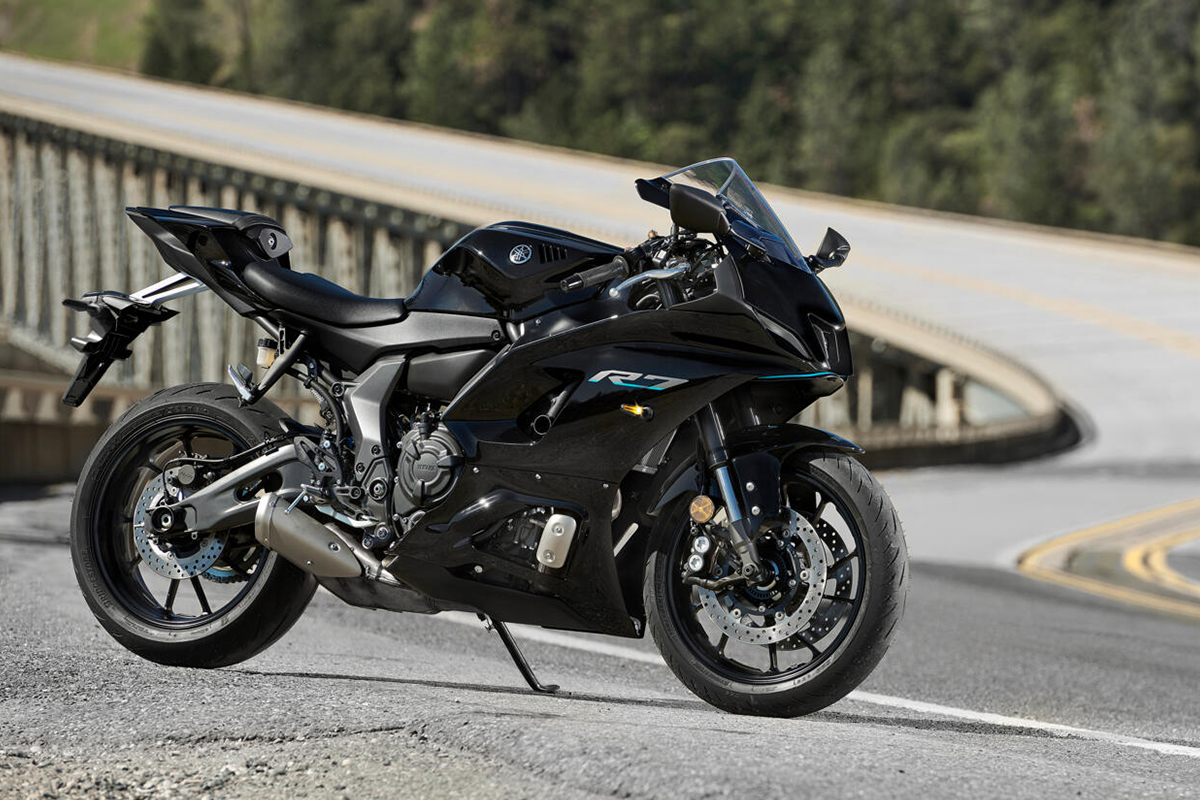
The suspension package includes fully-adjustable 41 mm upside-down KYB forks, and a new linkage-based rear suspension design. It uses a horizontally-mounted shock that’s both adjustable for preload and rebound damping.
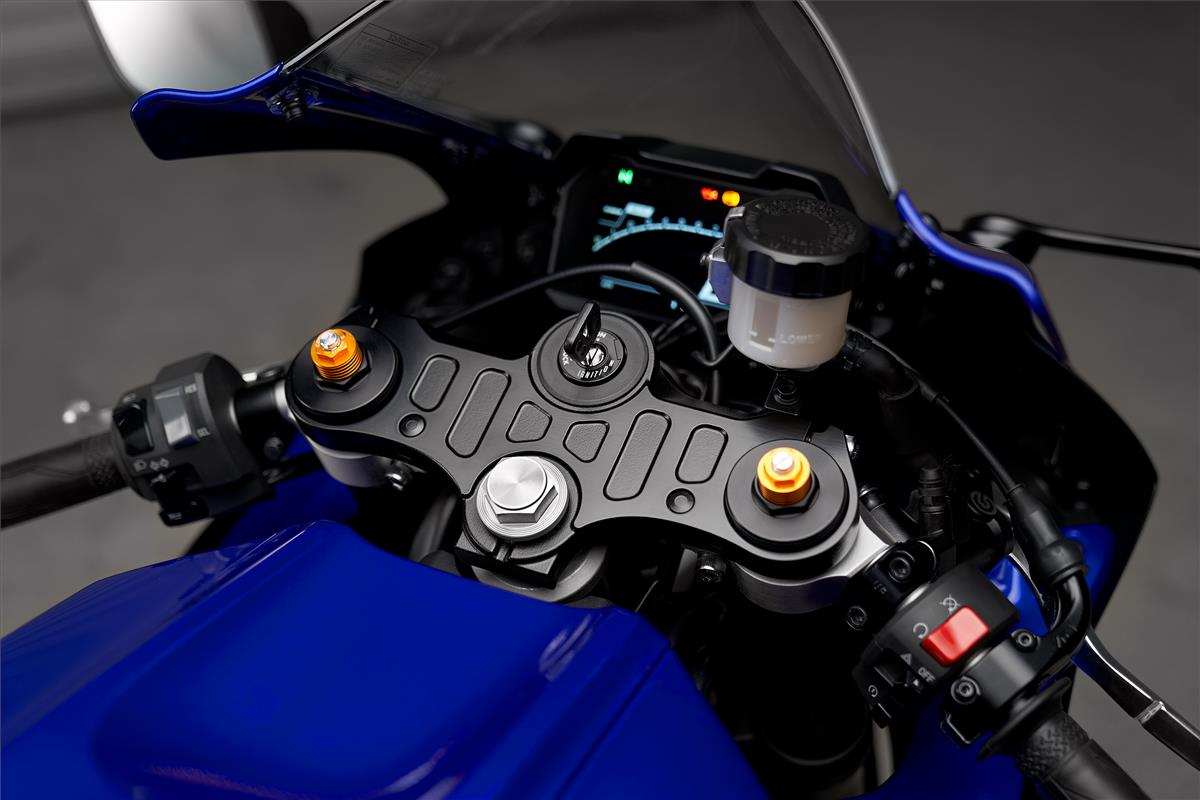
If you want to geek out over geometry, the R7’s front end has a steering angle of 23.7 degrees, 90 mm of trail and a 1,395 mm wheelbase. The weight’s distribution is 51/49 front to back… in other words, the R7 is built to corner.
The R7’s wheels are lightweight 10-spoke alloy units, with a 120/70 R17 tyre up front, and a 180/55 R17 at the back. The front brake setup includes twin four-piston calipers, engaged via a Brembo master cylinder.
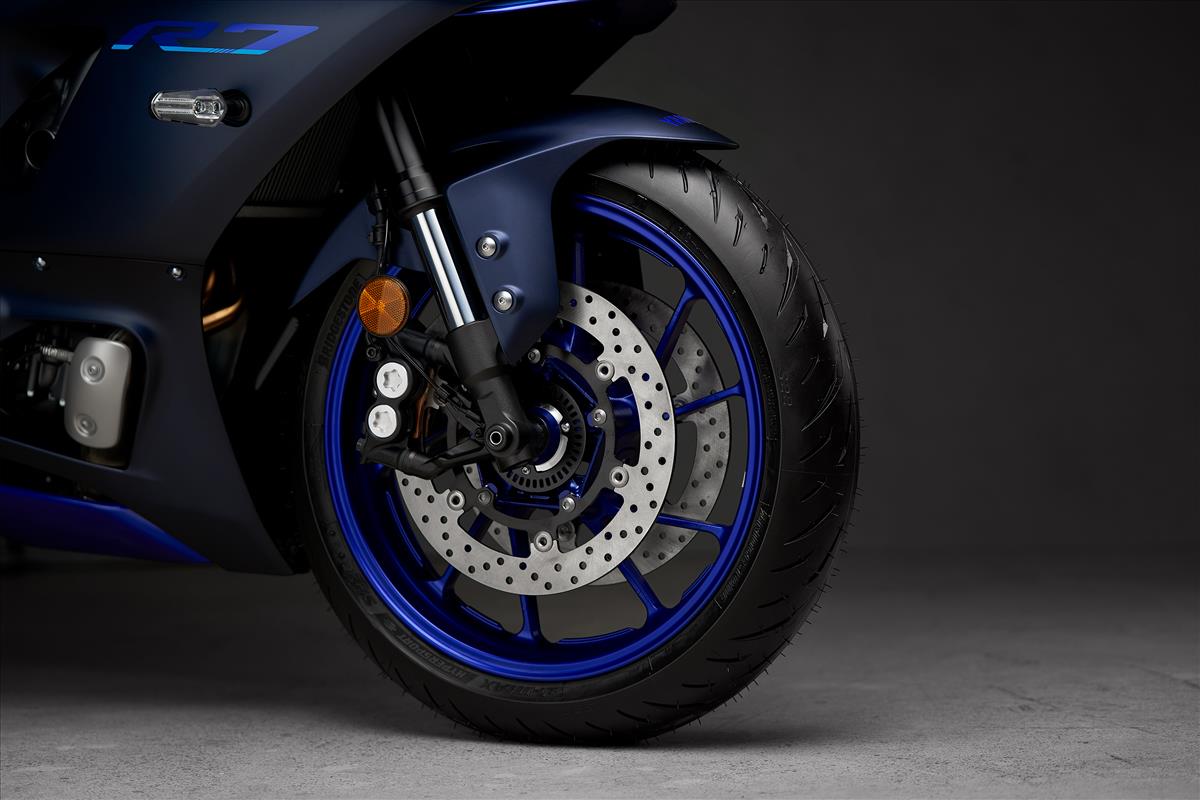
At a glance, there’s no denying the R7’s intended use. The overall package is compact and aggressive, with a wet weight of 188 kilos and a design that focuses on mass centralisation.
Control points include low-slung clip-ons, rear set foot controls, and a seat that tapers to the front for maximum rider movement and control. Deep indents on the sides of the Yamaha’s tank cover mean you can tuck in tight and grip the bike with your knees when you need to. There’s a slim pillion seat at the back too, but Yamaha will sell you a rear cowl to cover it if you want a sportier effect.
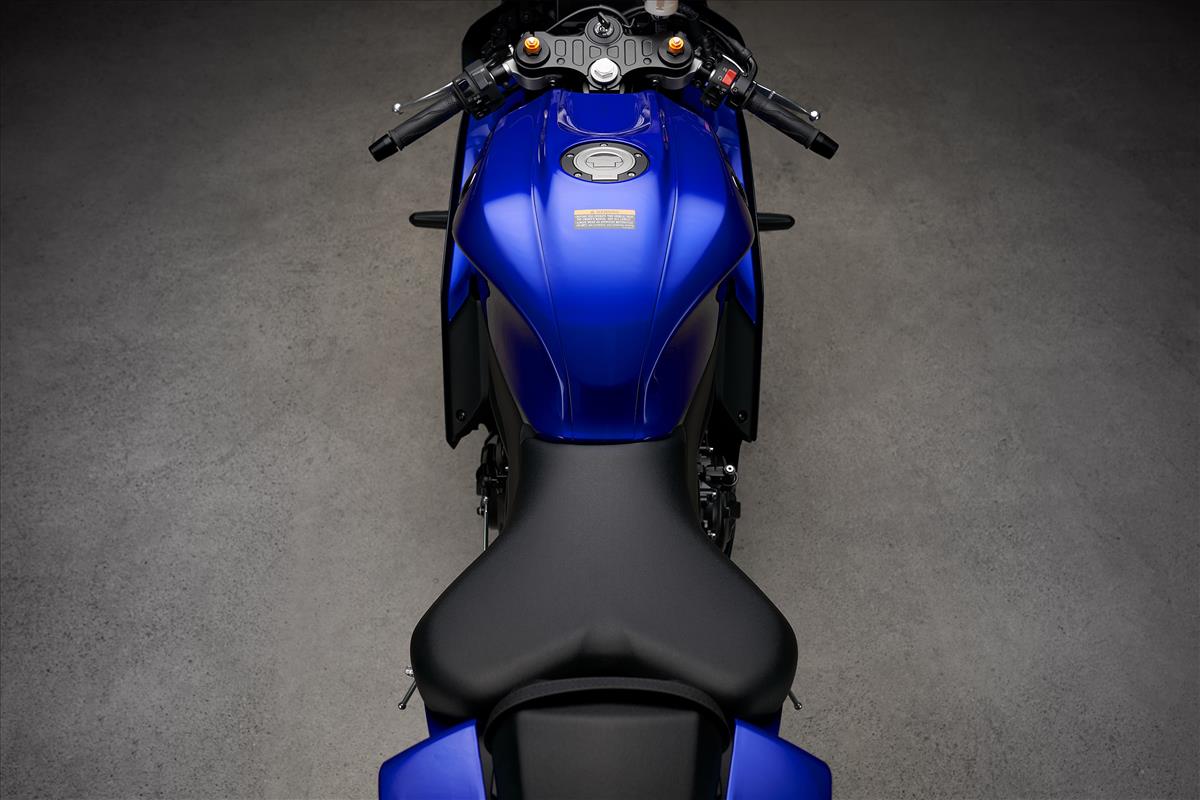
Visually, the R7 looks the business too. Borrowing a ton of aesthetic cues from the R1, the R7 sports a fairing that feels flowy in some spaces, and aggressively sculpted in others. There’s a ton of detail upfront—from the MotoGP-style ‘M’ shaped air intake that hides an LED projector, to the subtle spoiler that’s placed just underneath it. Tucked behind the fairing is a digital display, complete with a high-contrast ‘negative’ mode. Connectivity with Yamaha’s MyRide app comes bundled as standard.
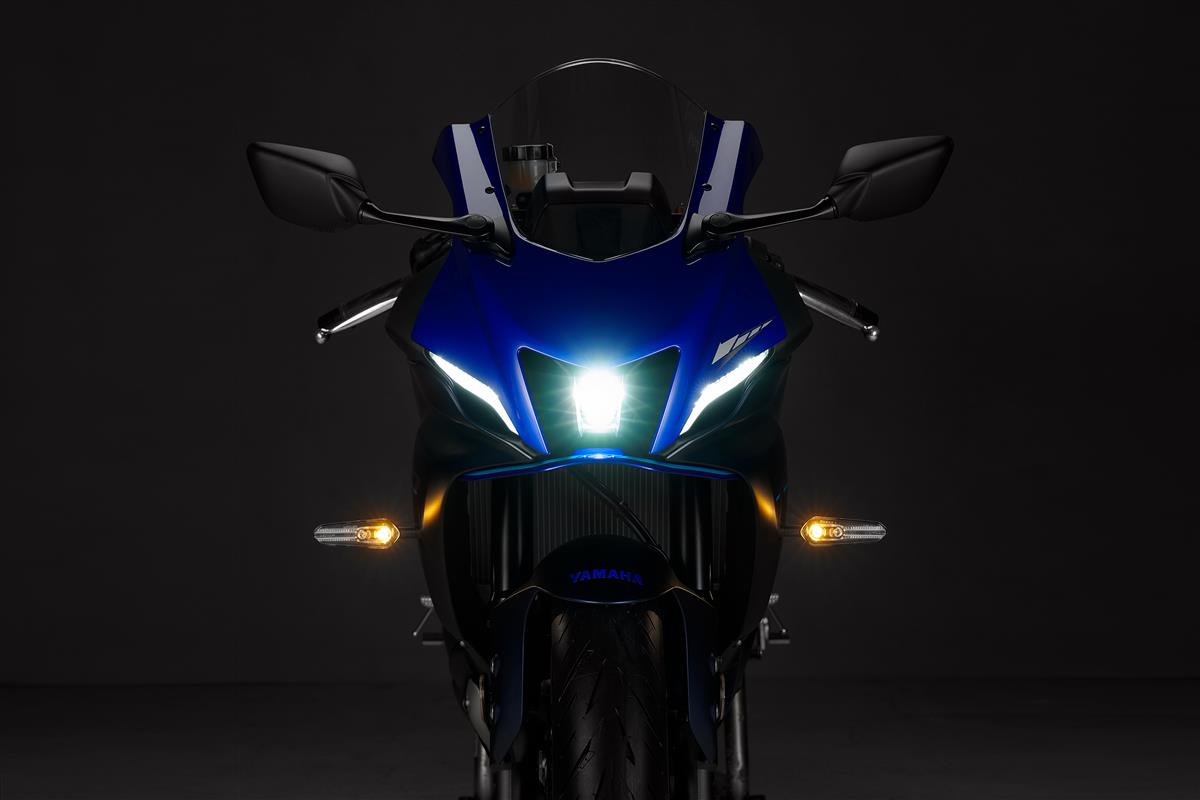
It’s impossible to overstate just how slim the R7 is. In fact, Yamaha claim that it’s even narrower than the R3 or R125, which makes it the slimmest R-series bike they’ve ever made.
It’s a good looking bike too—especially in the signature Yamaha blue livery, which extends down to the aluminium belly pan and wheels. It’s available in black too, with extremely subtle Petronas turquoise accents.
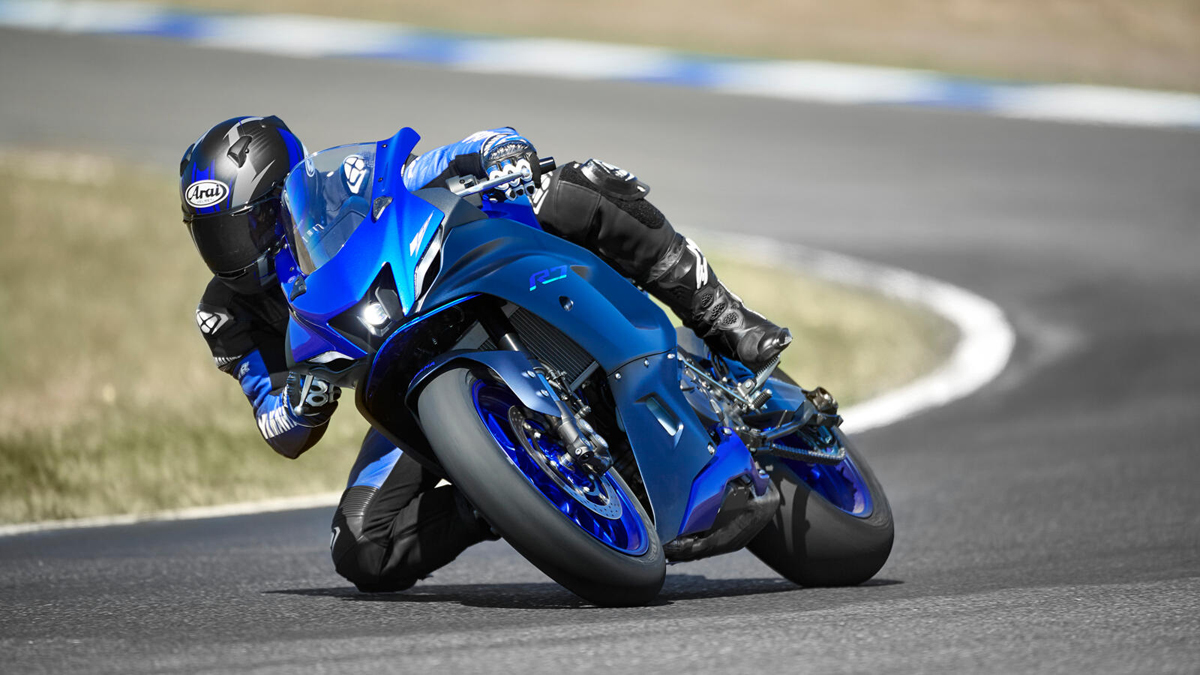
Yamaha are also releasing a line-up of track-focussed parts, including a titanium Akrapovič exhaust system, a billet engine cover kit, and radiator and engine protectors. Road-focussed aftermarket bits include a shorter license plate bracket, LED indicators, tank pads, and a range of billet parts and protectors.
The R7 will be available in Europe from October 2021, but there’s no news on if and when it’ll land on South African shores. There’s also no word on pricing yet, except in the US, where the R7 is listed at $8,999. That’s a bit more than the MT-07’s $7,699, and less than the $9,999 Ténéré 700, but as we’ve seen with the Ténéré, it’s impossible to predict how those numbers will translate in South African Rands.
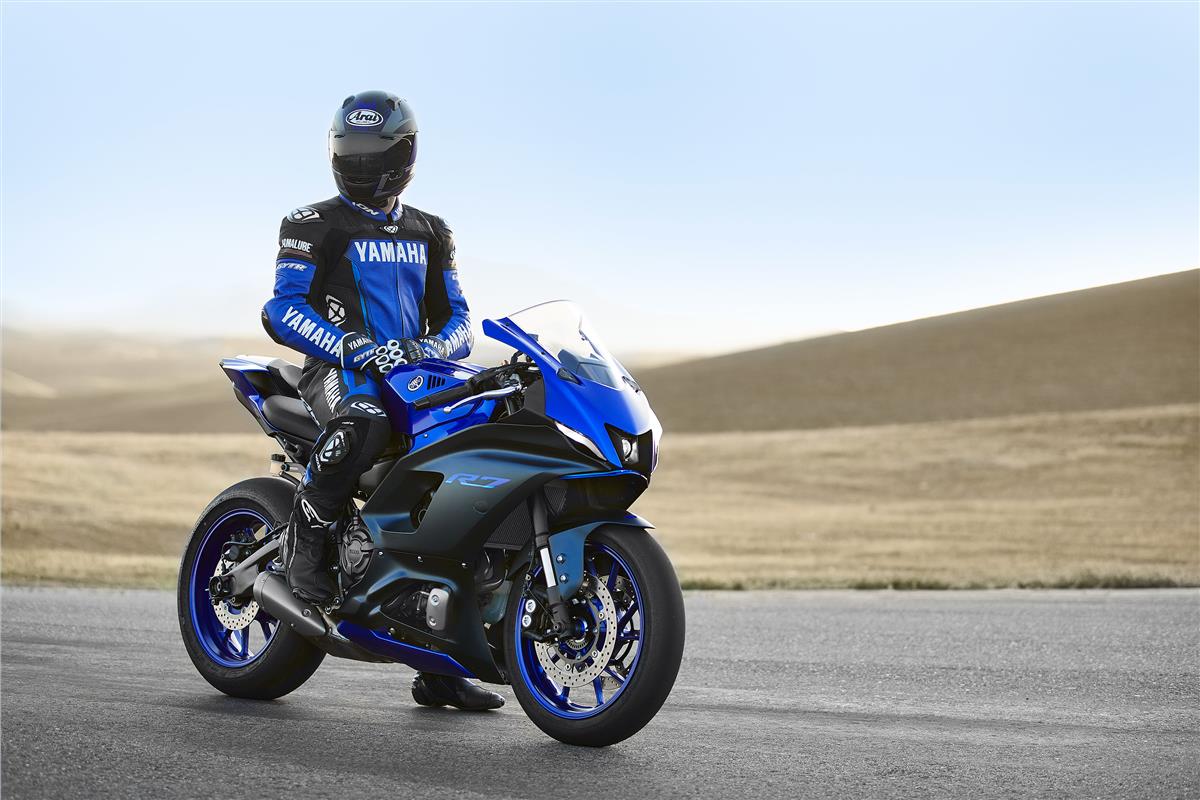
Fresh At Dealers: The 2022 KTM EXC Range Is Ready To Master All Extremes
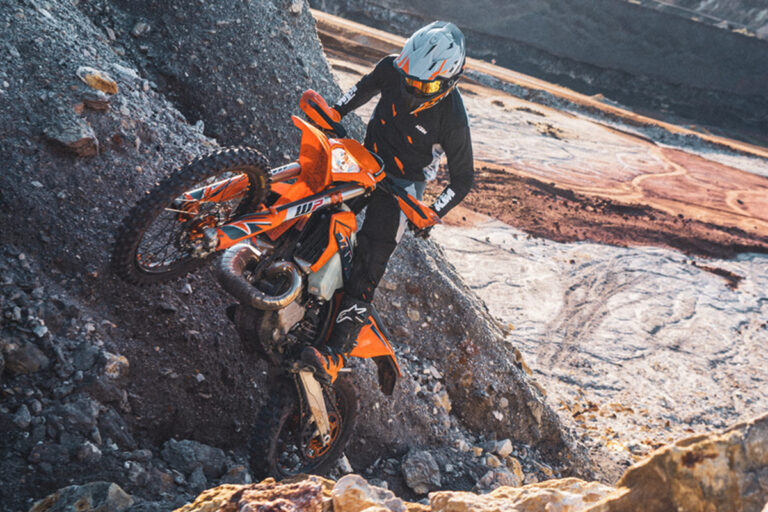
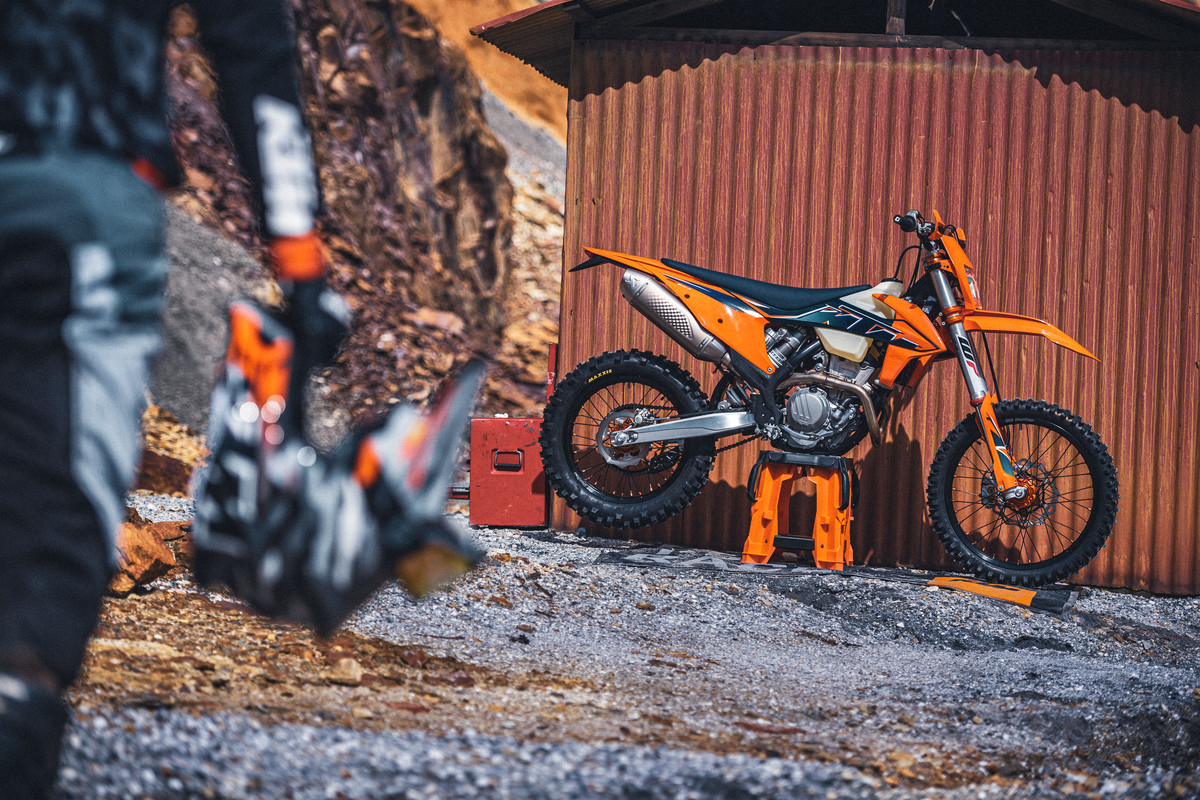
Getting key updates that elevate performance across the range, the updated 2022 KTM EXC model line-up is landing at authorised KTM dealers now. Perfectly mixing cutting-edge technology with enviable handling and READY TO RACE offroad performance, the new line-up is here to master all extremes.
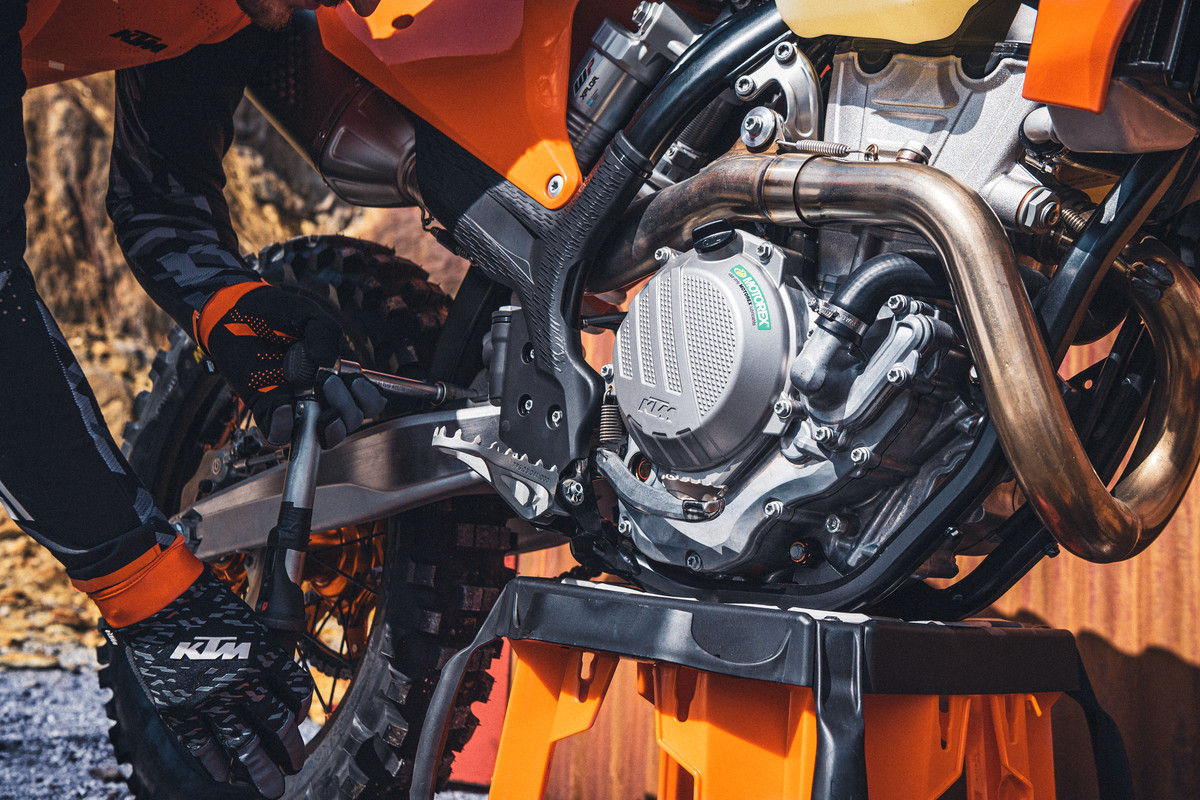
With the 2022 EXC line-up, KTM reconfirms its status as the provider of the most comprehensive and exciting set of offroad bikes on the market. Whether riders are searching for a peerless motorcycle to ace any terrain or equipment to find those extra race seconds, there is no reason to think anything but ‘orange’. The key to this bar-setting versatility is the high standards and the quality that is injected through the updated 2022 KTM EXC range.
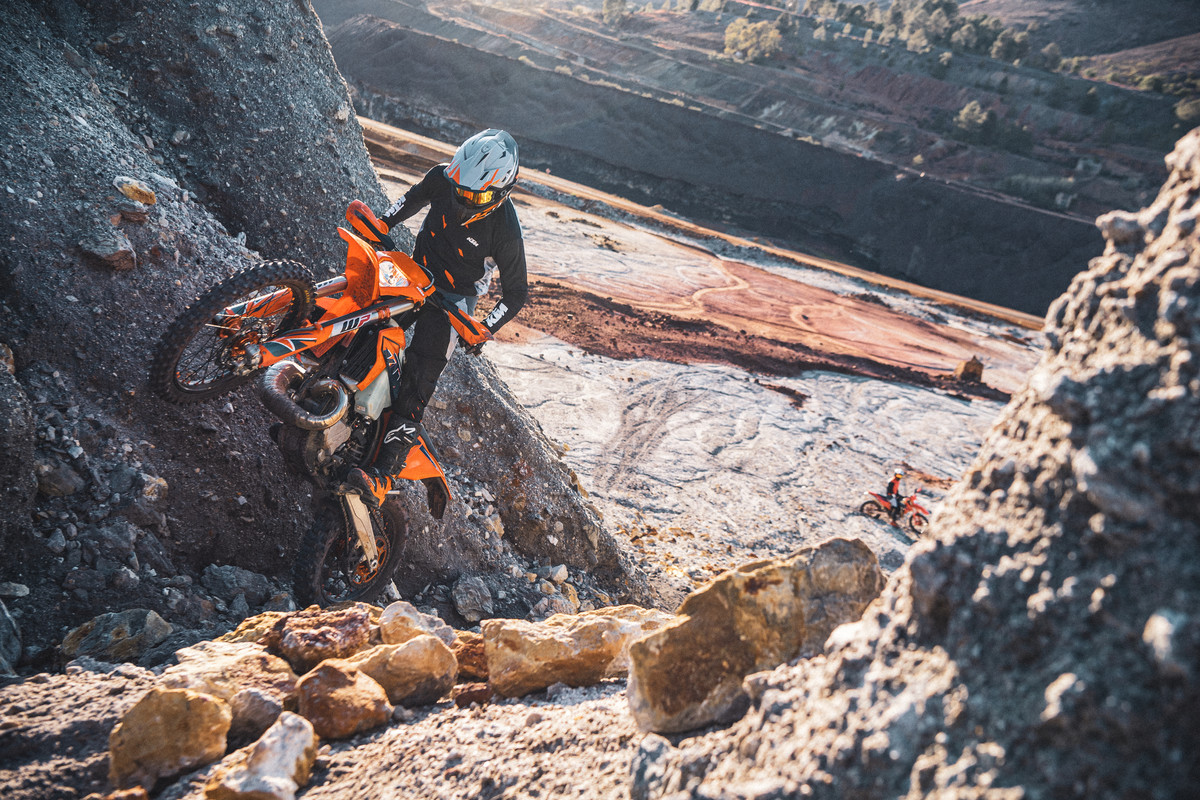
Across the new line-up, there are two key upgrades to boost performance. All new models receive updated WP suspension settings aimed at offering a firmer and even more planted feel while riding across the gnarliest terrain. The second key upgrade is the addition of new MAXXIS MaxxEnduro tyres. After extensive testing, the new tyre combo showed improved durability and puncture resistance and will provide even comfort for extended hours across a myriad of surfaces.
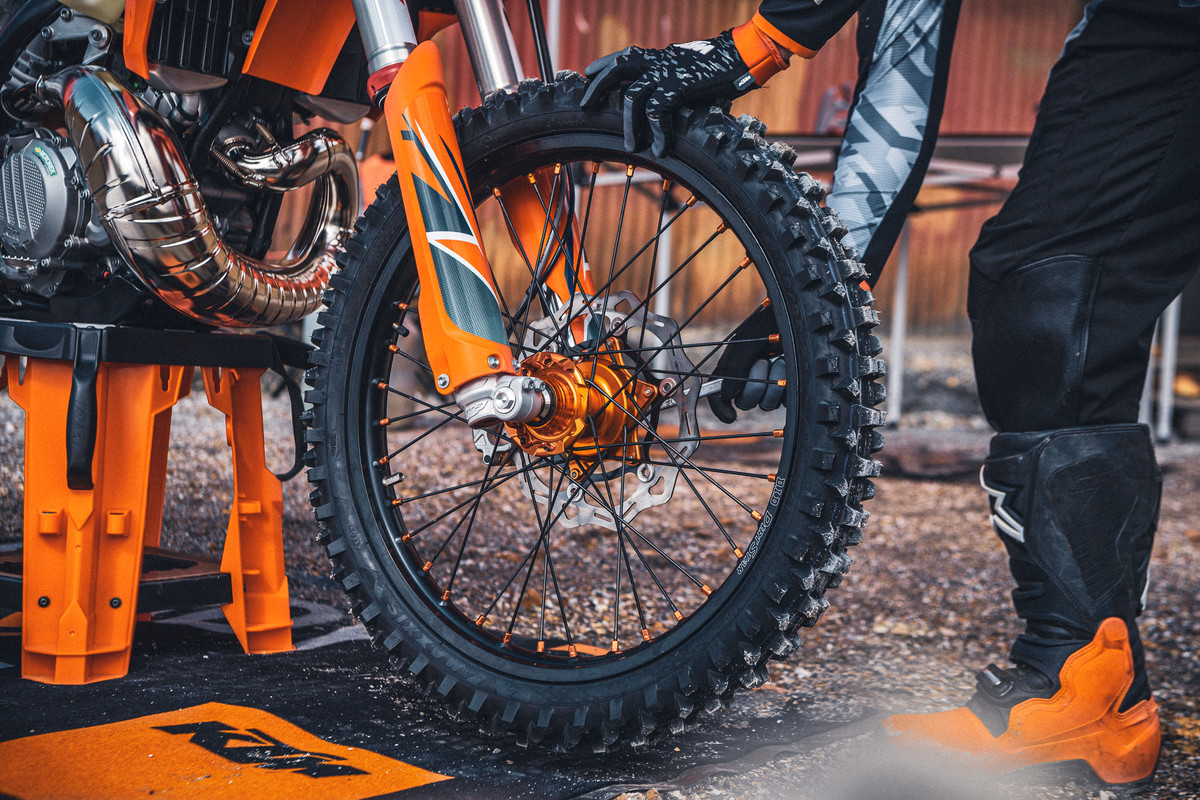
Innovative Transfer Port Injection (TPI) engineering means KTM EXC 2-Strokes are perfectly meeting the increased demands of the modern offroad rider. The three motor capacities guarantee the best choice of horsepower and torque capabilities to suit the rider’s preferences. With the KTM 300 EXC TPI being the flagship model to satisfy any Hard Enduro ambition, it is the 2022 KTM 250 EXC TPI that has come under the R&D microscope featuring revised 13:52 gearing. This modification will help the quarter-litre in terms of traction and front end lift on the most technical sections.
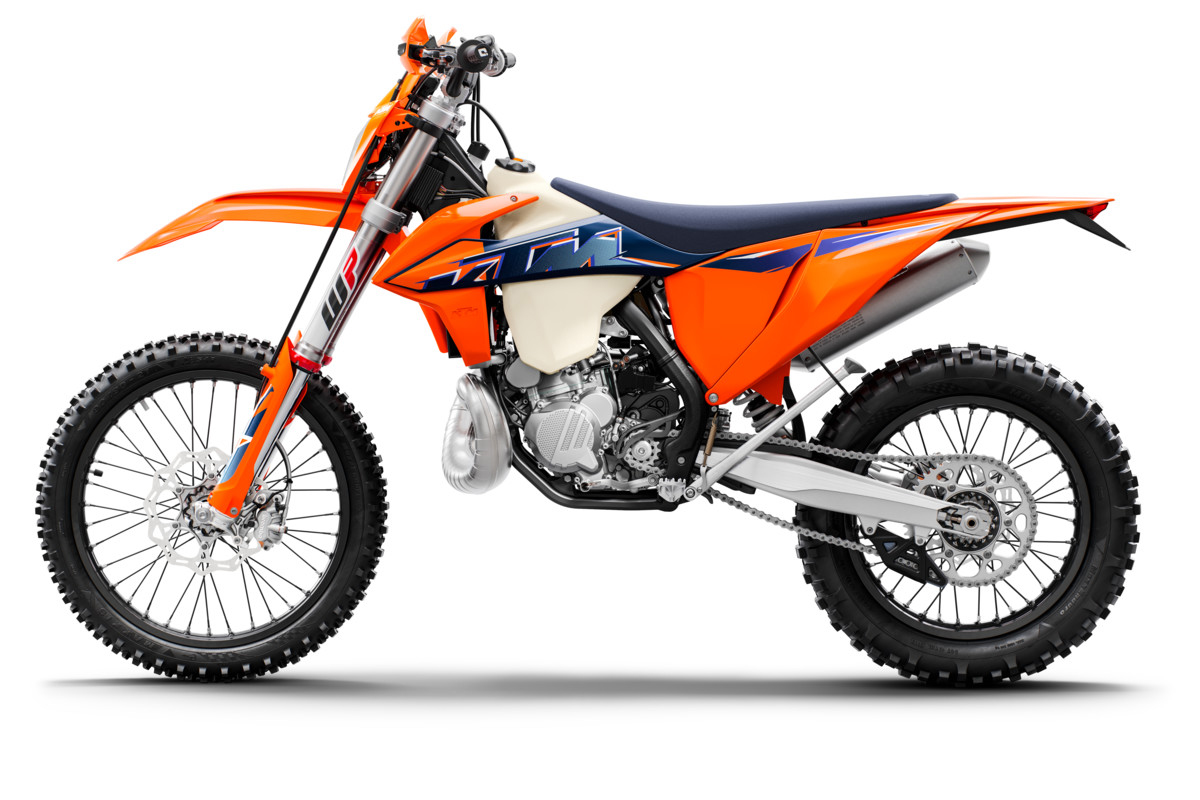
The 4-Strokes KTM EXC-F models talk the torque as dependable, reliable, accessible and thrilling fuel-injected machinery. For several years, the symbiosis of 250 handling and 450 power characteristics has positioned the KTM 350 EXC-F as the definitive offroader and the crown remains steadfastly in place. With the now firmer, sportier settings on their WP fork and rear shock, all-new KTM EXC-F models come with improved high-speed performance.
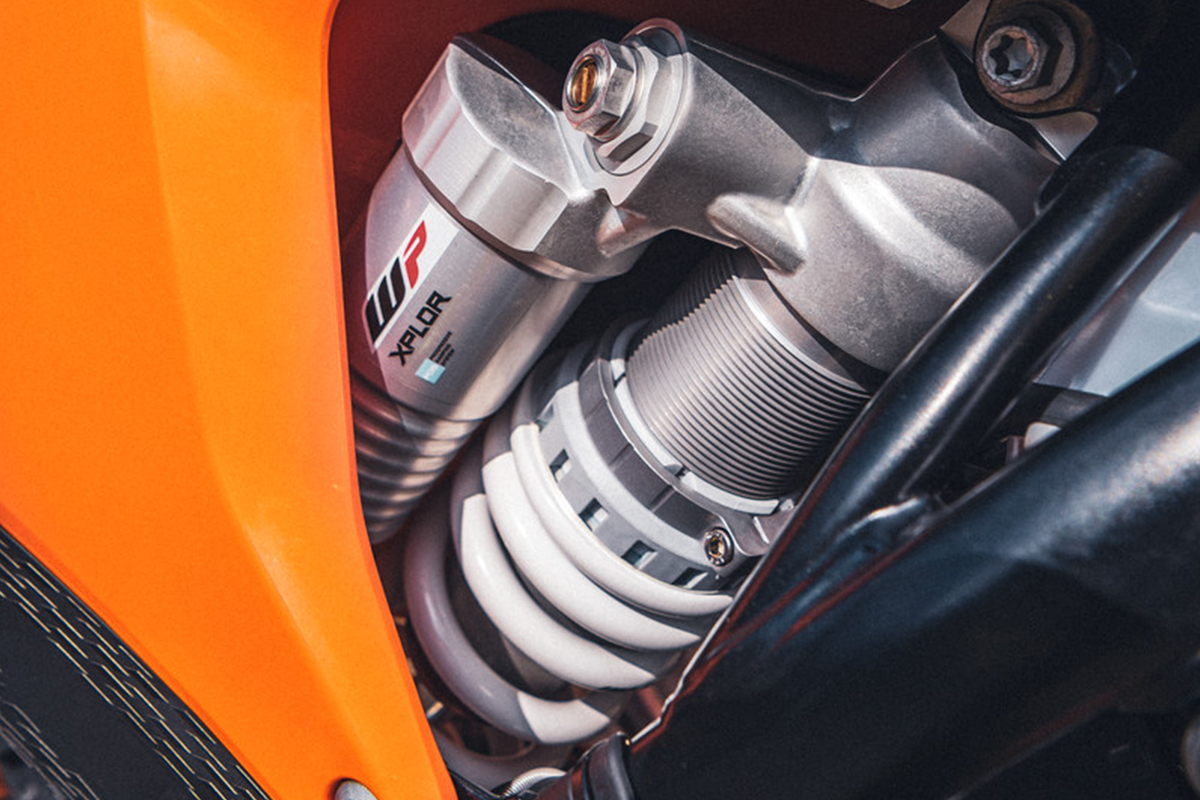
KTM’s READY TO RACE mantra is a vital development pathway and the endeavours of racers like Manuel Lettenbichler and Josep Garcia help sculpt the KTM EXC models that make it into the hands of riders around the world. For 2022, KTM has visually emphasized the connection with competition even further through the incorporation of blue colours and the blue seat. The graphics and race plastics ensure that any KTM EXC will not be missed right at the front of the pack.
Inherently involved with top-level offroad competition for decades, KTM reaffirms its support to the massively popular amongst racers FIM International Six Days Enduro with the release of the full line-up of revamped 2022 KTM EXC SIX DAYS models. For 2022, KTM designers have gone bold with the introduction of a striking new colourway that perfectly mixes elements of a modern world map with a head-turning retro style. Featuring a long list of race-inspired parts as standard, the 2022 KTM EXC SIX DAYS models are ready to take on the gruelling week-long event out of their crate.
2022 KTM EXC – KEY RANGE UPGRADES
- Revised WP suspension settings for a firmer & more responsive feel
- Improved oil circulation in the suspension for more consistent feedback
- New MAXXIS MaxxEnduro tires for unmatched grip in all terrains
- New 13:52 gearing giving the KTM 250 EXC TPI added bottom end punch
- Head-turning 2022 colours inspired by the Factory bikes
- Bold design & retro colours for the revamped KTM EXC SIX DAYS line-up
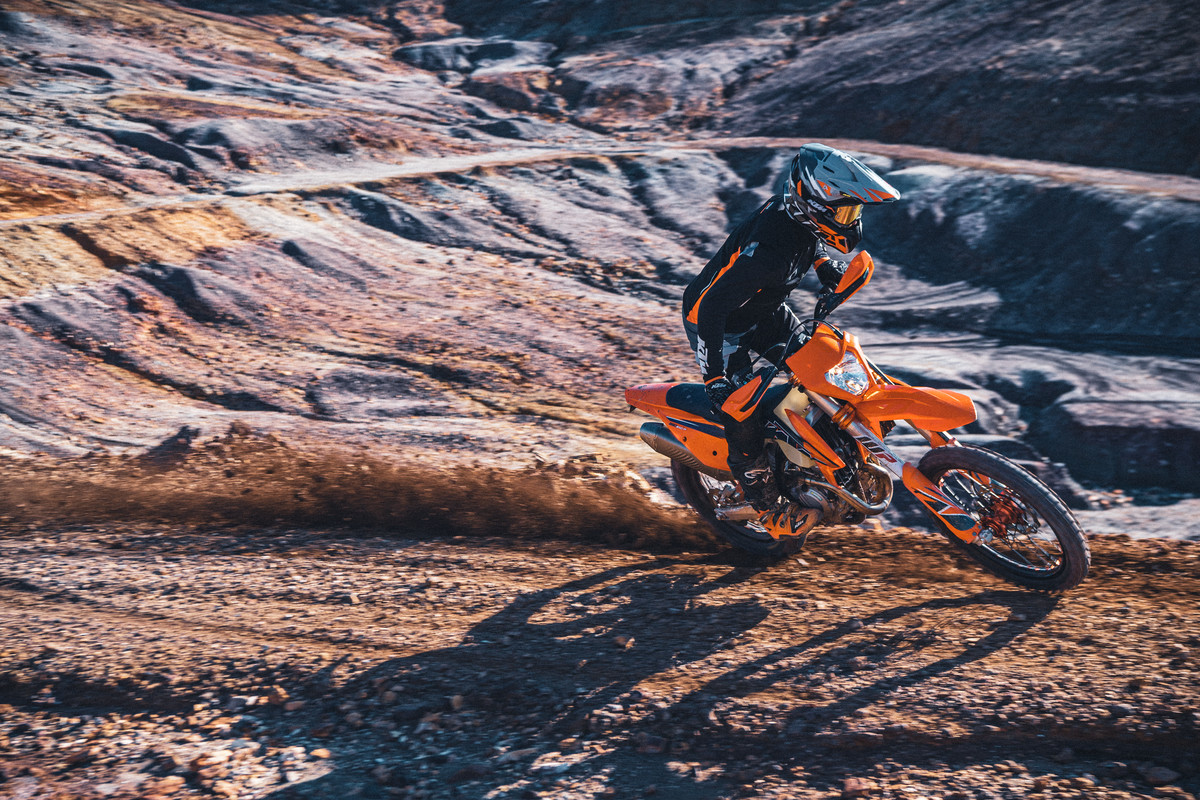
Joachim Sauer – KTM Product Manager: “It gives us great pride to know that our KTM EXC models can once again supply any offroad rider with the excitement and the performance they need. In their updated trims, these bikes are technical masterpieces and there is something to suit every rider across the globe. For 2022, with the new WP suspension settings we are offering the bikes a more firm and even more consistent feel. Matched with the new MAXXIS tyres, these are two key upgrades that elevate the overall offroad performance. Our design team have also stepped up with their work for this year and the bikes look exactly like what they are supposed to be: winners in all conditions.”
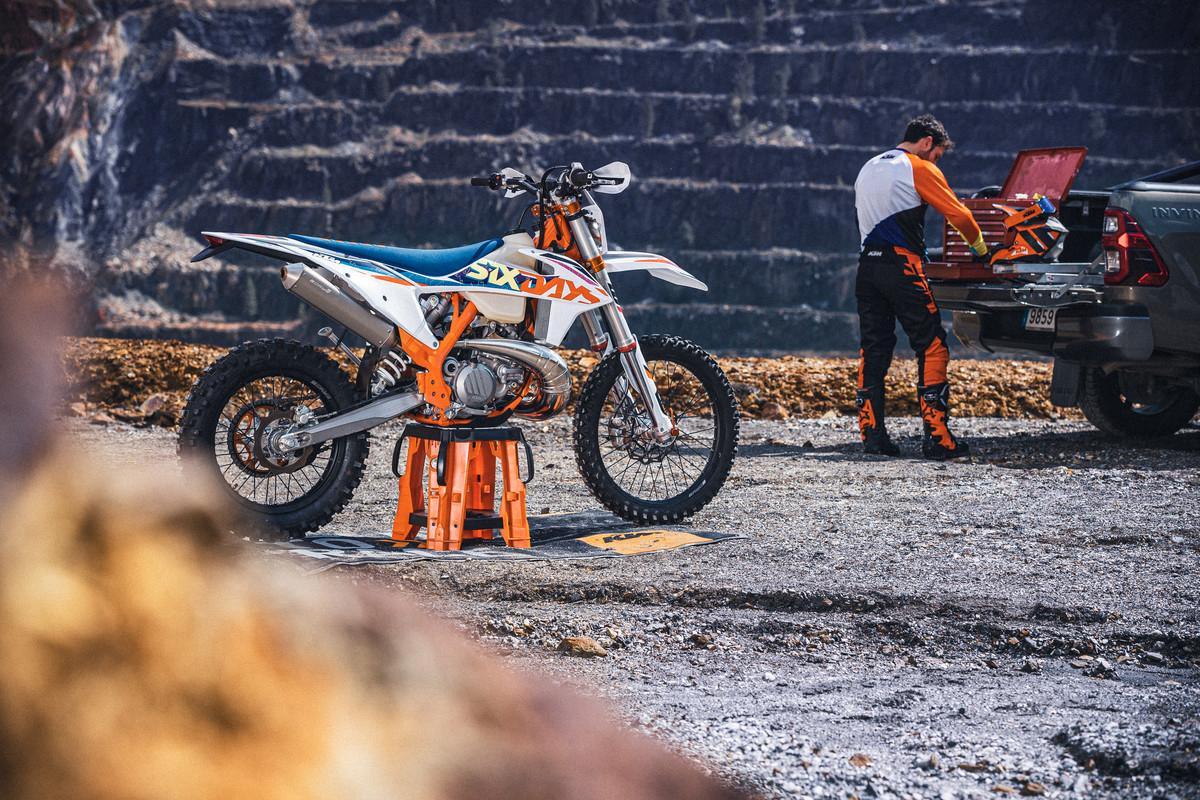
The 2022 KTM EXC models will be available in authorised KTM dealers starting May 2021.
Binder Report: Round 5 – French GP
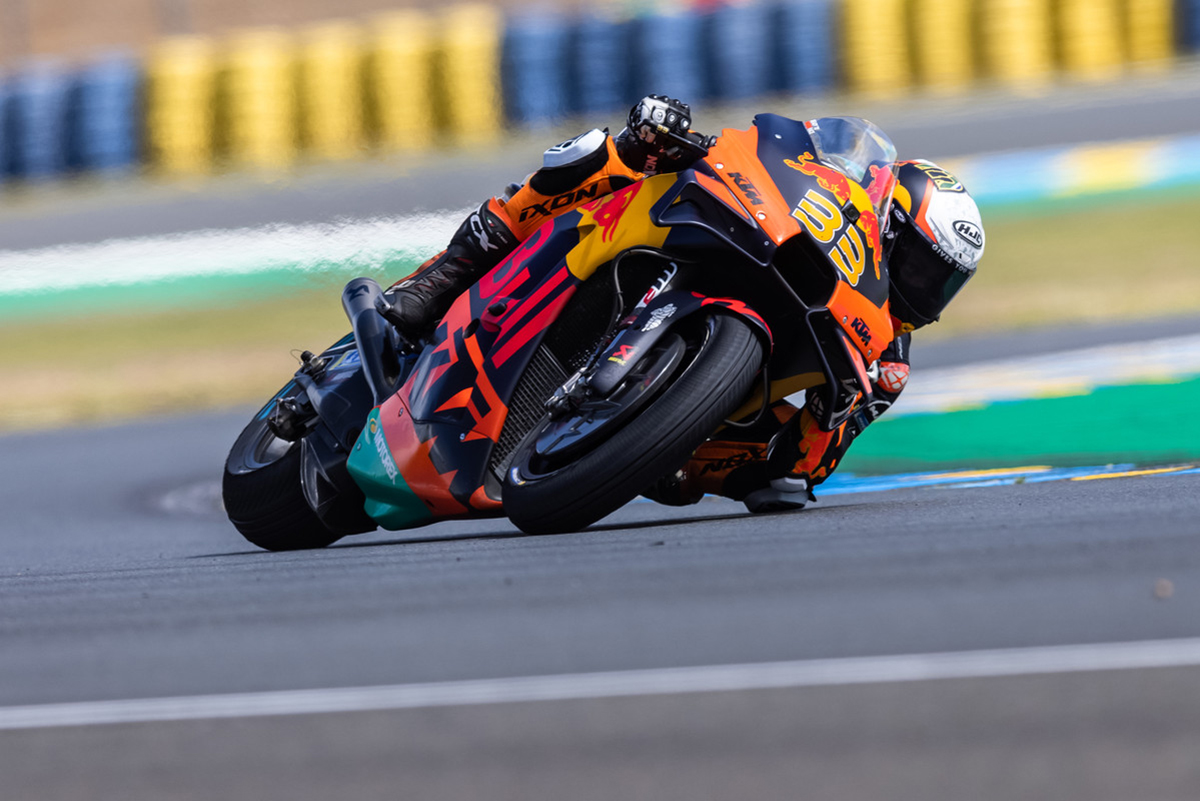
Round 5 of the MotoGP calendar saw riders line up at the legendary Le Mans circuit this weekend for an action-packed and unpredictable SHARK Helmets Grand Prix of France. After round 1 of the MotoGP championship in Qatar, we already knew ‘GP’ had returned with an almighty bang for the 2021 season, but gee… did this French GP shock us.
Darryn Binder
Saturday, saw Darryn Binder roll his Petronas Sprinta Racing Moto3 bike onto a wet Le Mans circuit for Q2 qualifying. Darryn opted to use wet tyres during his run, but was unable to make his set-up work for him, with the first sectors still drying and conditions improving. At the end of qualifying our fellow, South African pushed hard and crossed the line with a 1:52.511 lap, placing him in 16th.
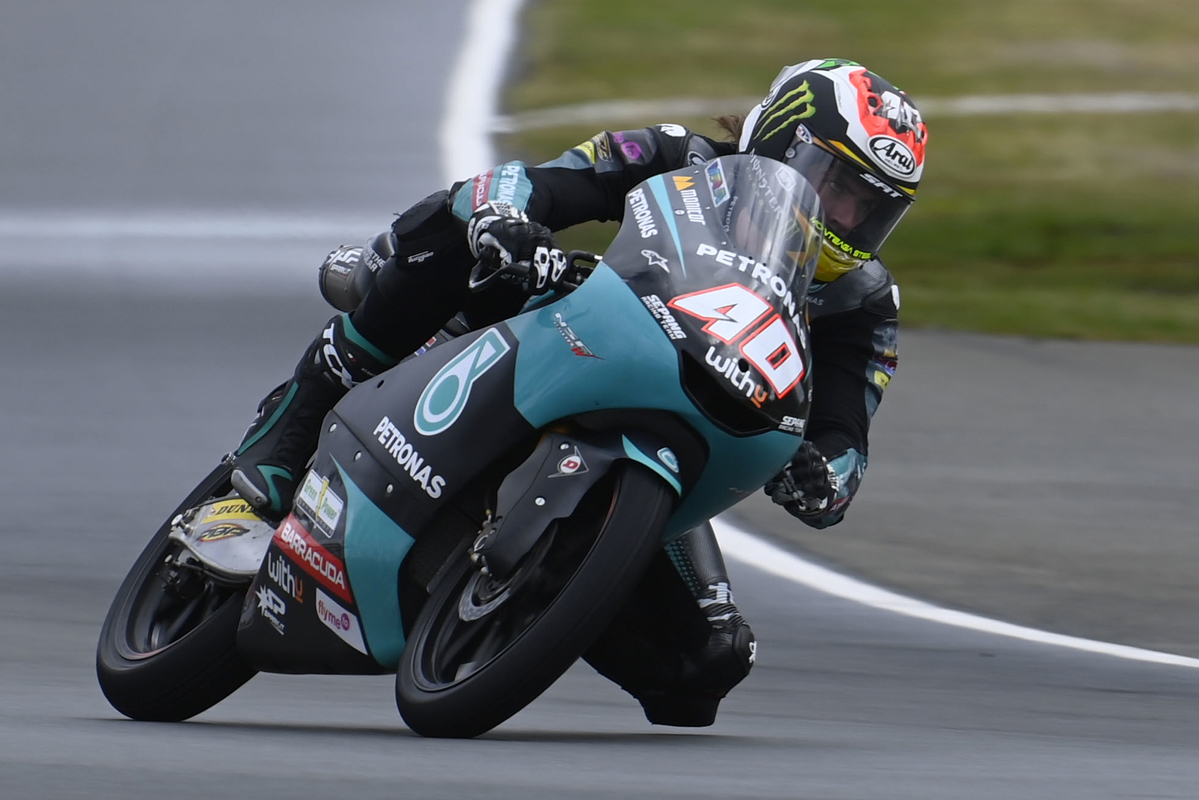
If getting a good start wasn’t hard enough, just imagine your airbag randomly deploying. Well, now that’s how Darryn Binder’s race started. After his airbag deployed, Darryn ran wide at turn 2 and found himself at the back of the field (24th) by the end of the first lap. After some deflation, Darryn started making his way through the pack and into sixth by lap five.
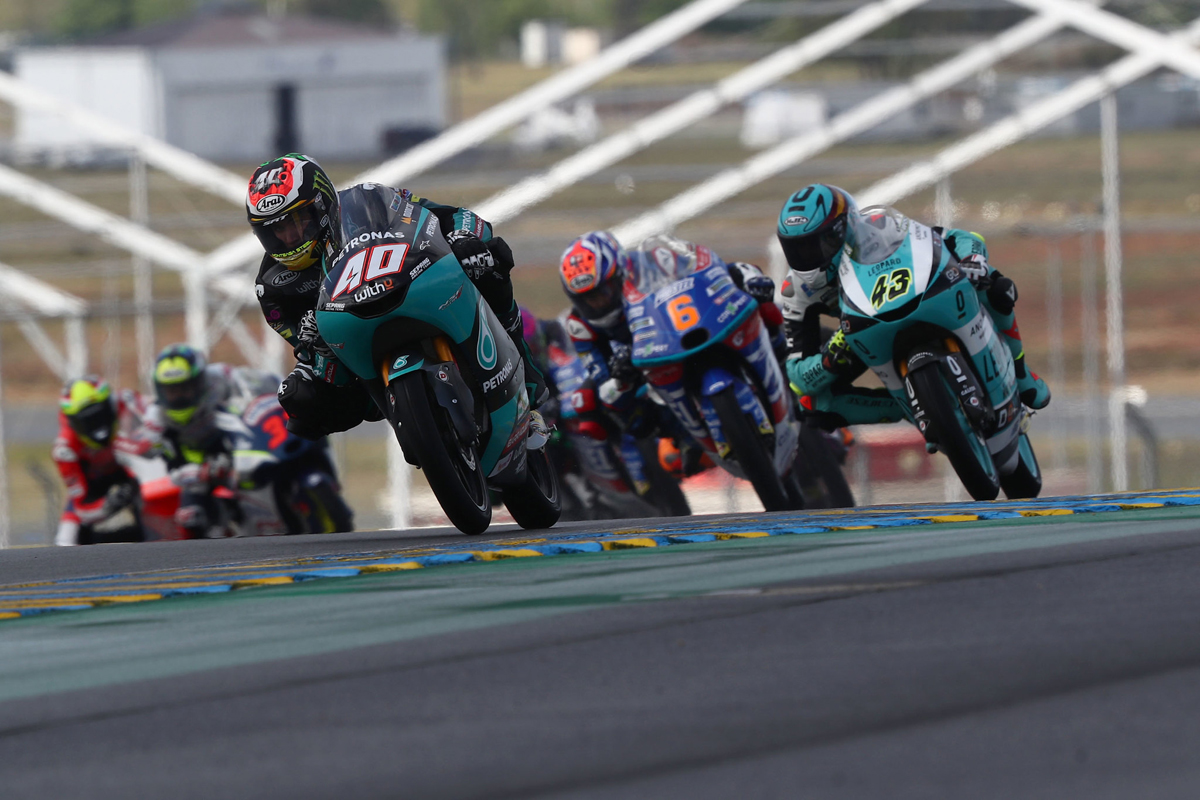
With a large gap between him and teammate John McPhee in fifth, Darryn pushed hard to close it down but had a turn 3 crash on lap seven. He quickly rejoined the race in 21st place, but the gap to the main field proved too big to bridge and he crossed the line 20th. Binder now sits 8th in the championship with 36 points.
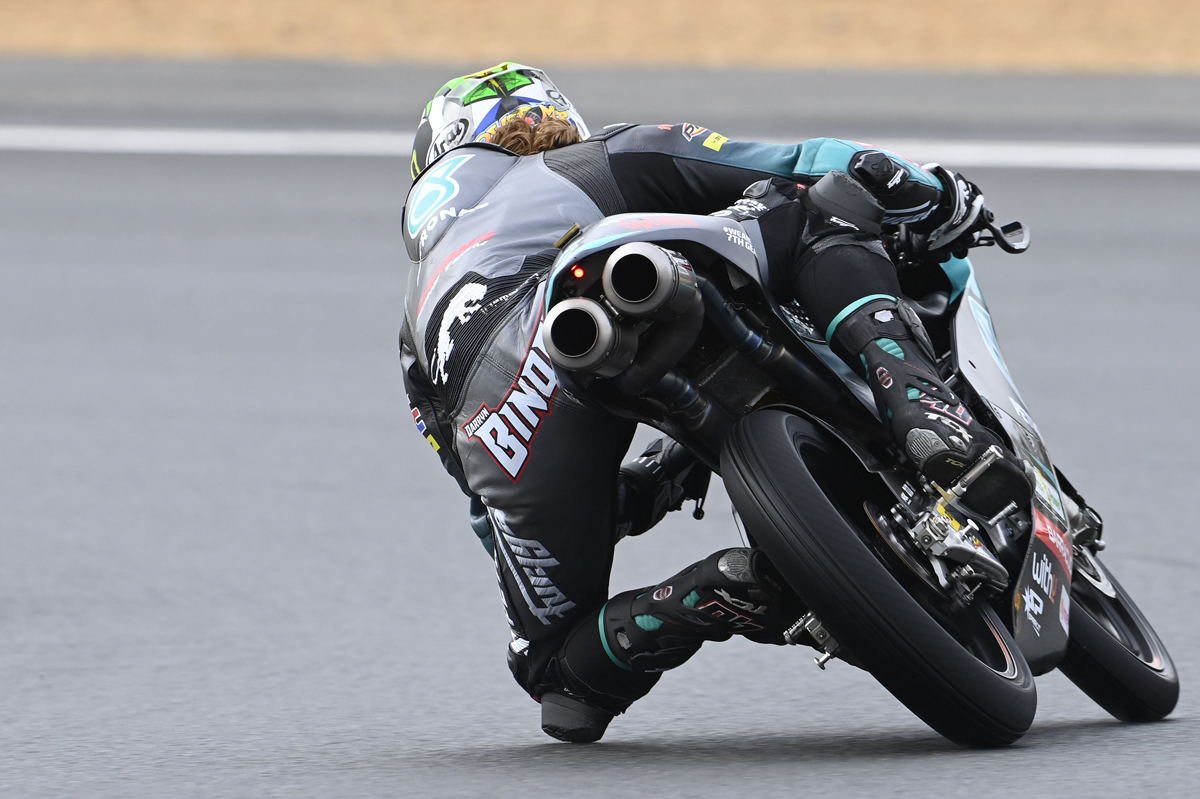
Darryn Binder: “Unfortunately that result wasn’t what I had in mind today. I had a good launch off the line but my airbag went off going into the second corner, which nearly caused me to go into another rider. I ended up cutting the chicane and had to drop back. I made a really good comeback and passed a lot of riders. I felt good, had a decent rhythm and I was just keeping my pace. Unfortunately going into Turn 3 I lost the front and there was nothing I could do, although I continued riding it was pretty much the end of my race. I’m just looking forward to getting to Mugello now.”
Brad Binder
Brad Binder, had an unlucky qualifying session and struggled to find his feeling in the conditions. Qualifying saw Brad get stuck behind some yellow flags for two laps, forcing him to sit up and not cook the rear tyre—leaving him no time to set a fast lap. This all meant, Brad would have to start from 21st on race day.
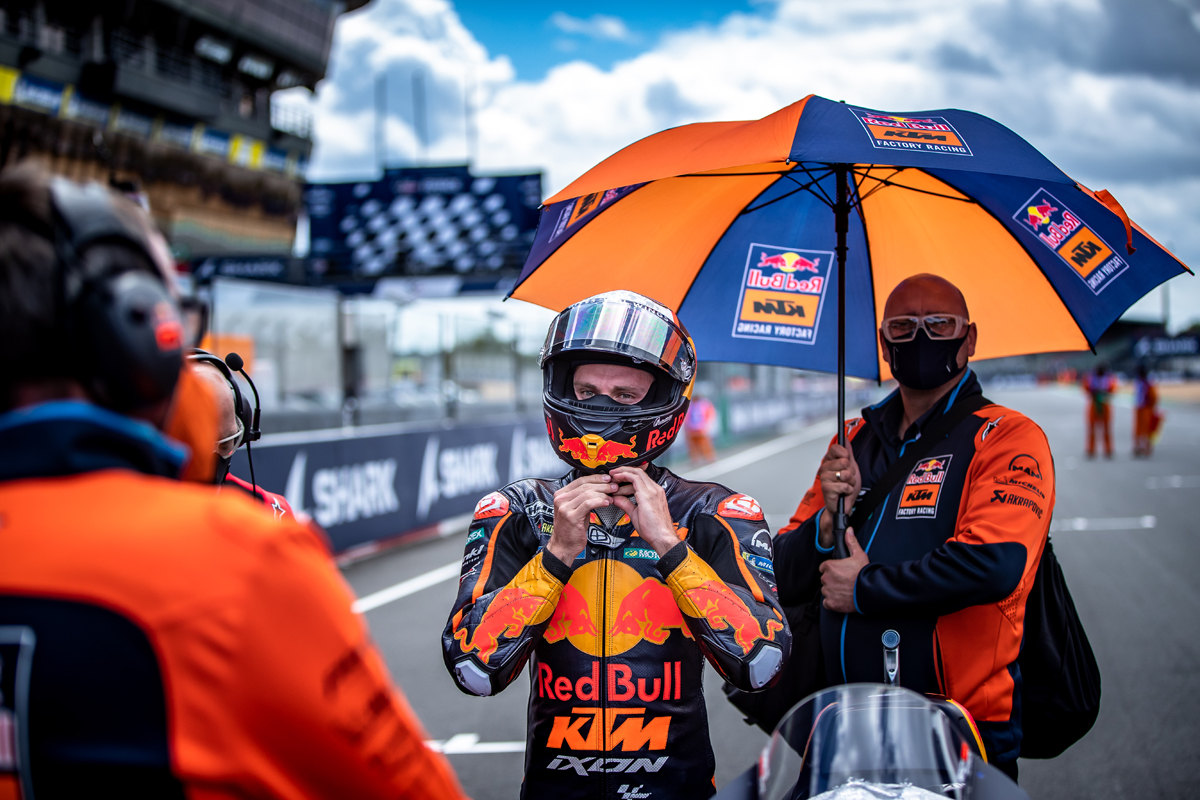
The last race of the day, saw more unstable weather conditions at the forefront, creating busy, tricky and bizarre scenes for the 27-lapper of Le Mans. Although confusing, the race was declared a dry race, but with some looming dark clouds in the surrounds, we all knew a flag-to-flag sprint was beckoning. With the cool conditions, the entire field had selected the soft-soft slick Michelins to begin the race on, with some forecasts suggesting there might be some rain on the way—drama was on the way.
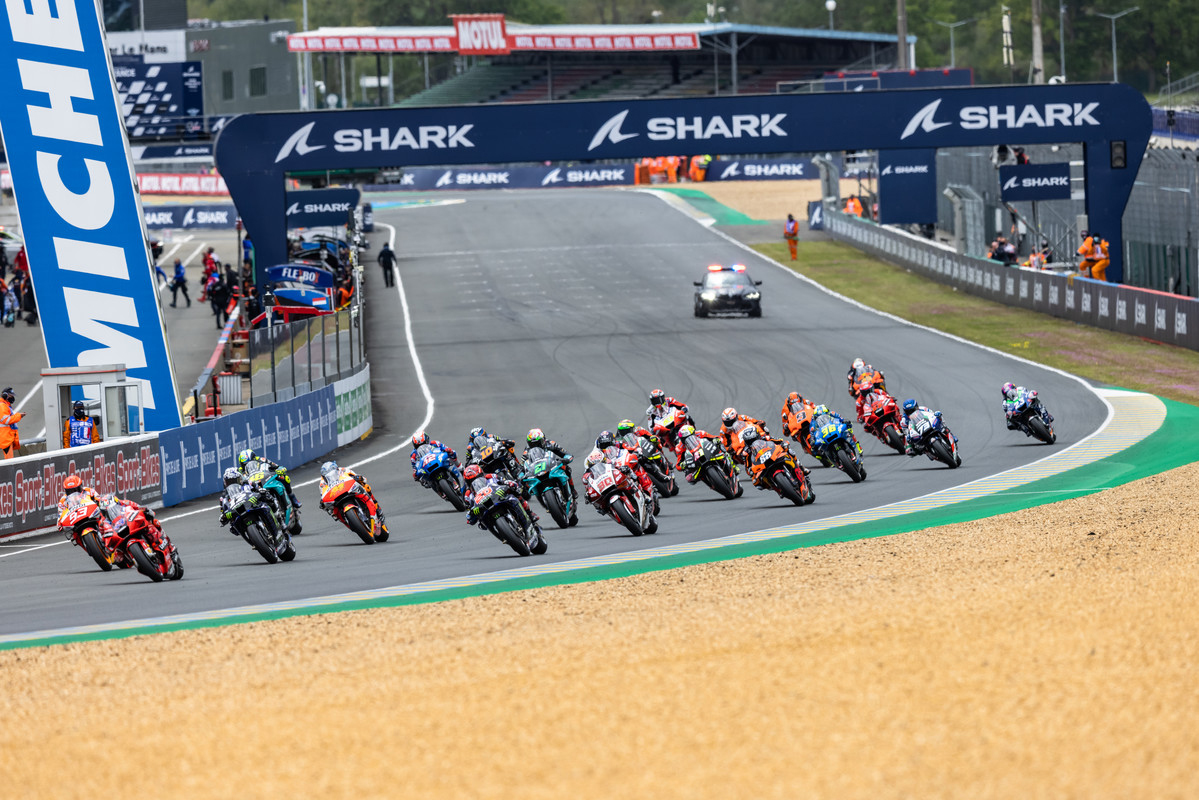
Off the line and as expected, the big red propelled their way to the front well Brad had some problems launching his RC16, forcing him to filter into last place. He quickly made his charge forward and managed to get past a few guys. Before you knew it, the dark clouds had rolled in and some rain spots started to appear on the camera lenses.
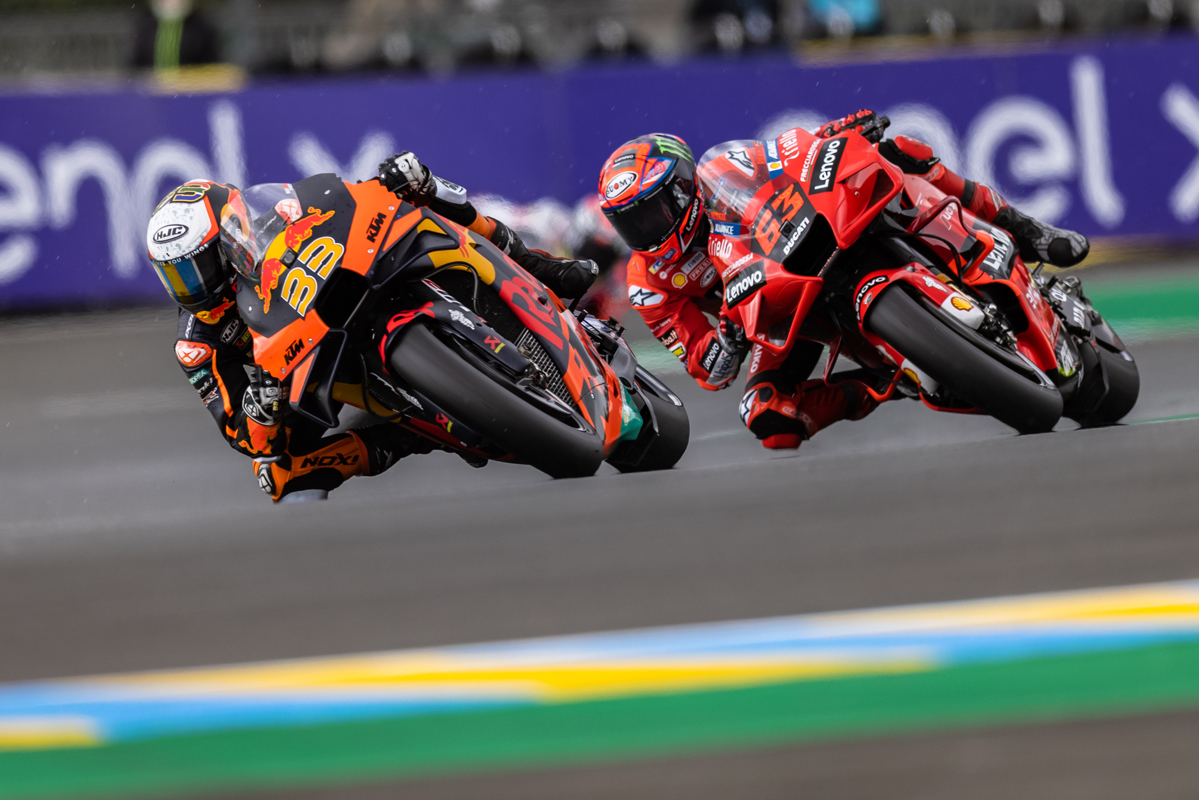
The heavens opened on lap 5 as the riders headed into turn 3, making the decision an easy one—get to pitlane. For Brad and a few other riders, this non-stop flag-to-flag format would be a first. With no grip at all, number 33 guided his machine into pitlane and exited onto a very wet track.
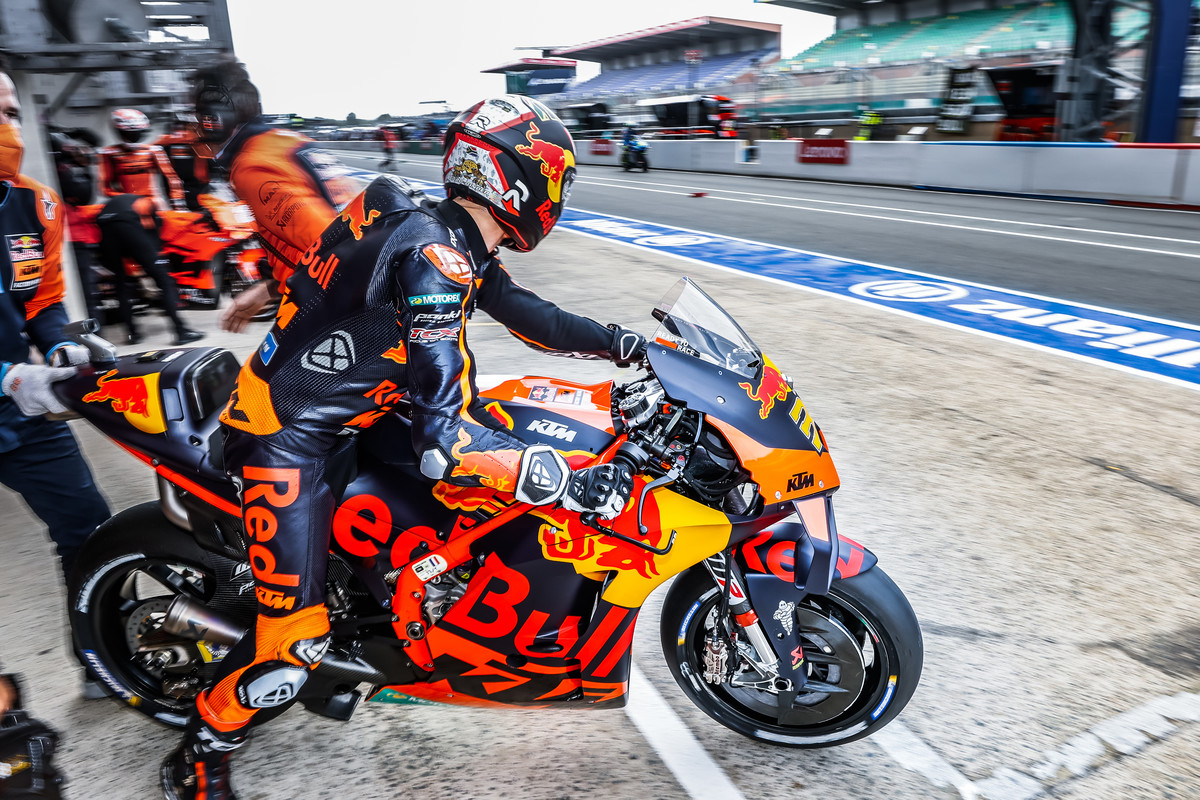
He rode within his limits well rider after rider met the gravel including teammate Miguel Oliveira. Brad crossed the line in 13th after surviving 27 very difficult laps around Le Mans.
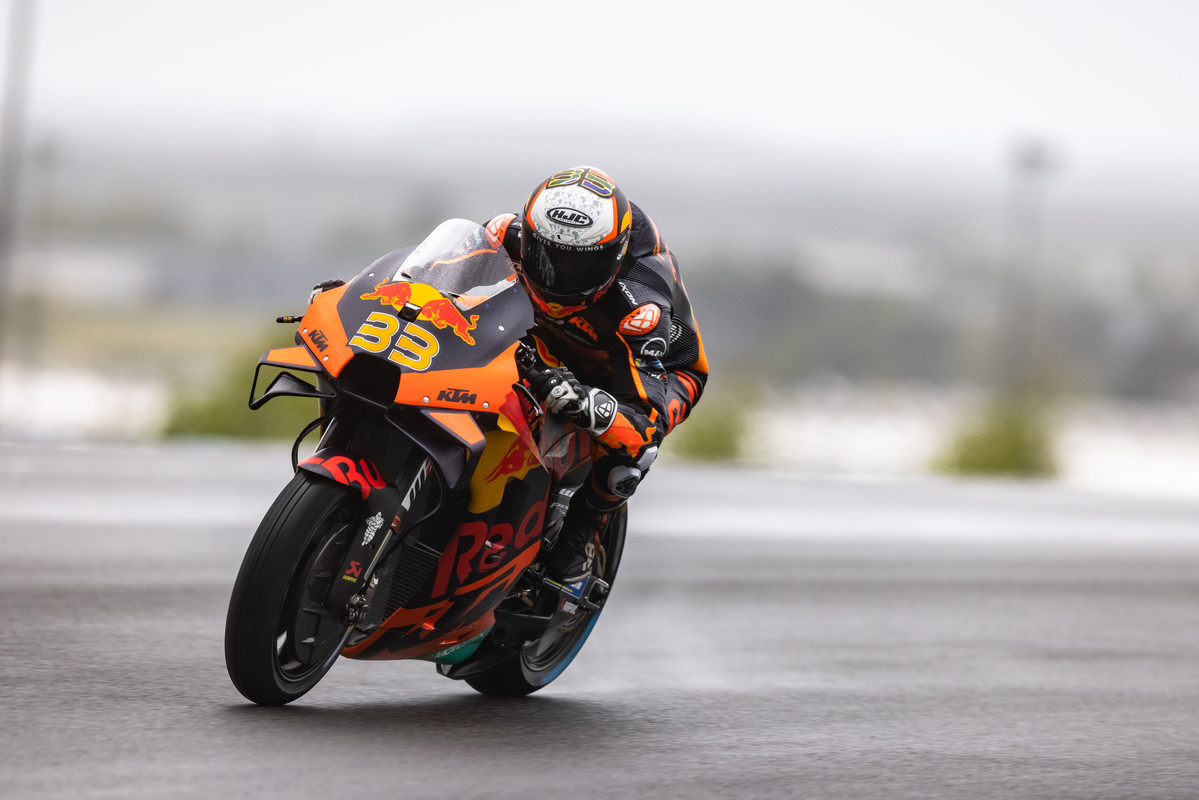
Brad Binder: “A crazy race today. I had some problems at the start and ended up last into Turn 1. I managed to get past a few guys but then a few laps into the race we saw really dark clouds and some rain spots. It then really started pouring as we went through Turn 3. It was hard to get back to the pitlane because there was no grip at all. It was pretty dangerous. Starting again on wet tyres the grip was the worst we’ve had in the wet all weekend. It was my first flag-to-flag. A difficult race, a difficult weekend. I was glad to finish but not the position we wanted.”
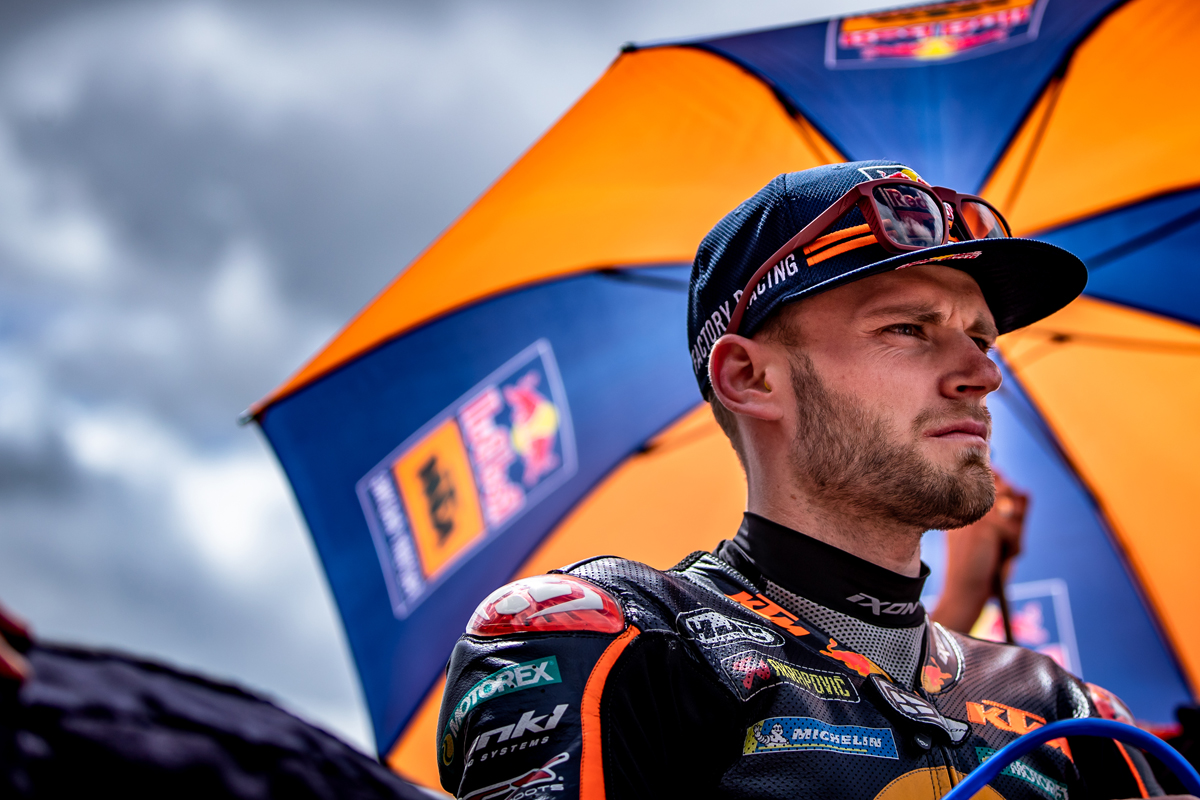
Another absolutely breathtaking MotoGP race and our first flag-to-flag in four years. An awesome afternoon in France sees the top four in the title race sit just 16 points apart (Quartararo leading the way from Bagnaia, Zarco and Miller). Riders will now enjoy a short break, before moving to Mugello for the Gran Premio d’Italia (28-30 May).
Motorcycle Helmet Import Duty Reduces to Zero
Issued by AMID (Association of Motorcycle Importers & Distributors in SA).
Motorcycle helmets (a major piece of safety equipment for motorcycle riders) have been allocated a new import tariff code, by the passing of a recently published Government Gazette (No. 44546 of 7 May 2021). A process that was started by AMID almost exactly four years ago, has led to the Department of Trade, Industry and Competition reducing import duties for helmets to zero from its previous rate of 25%.
The essence of AMID’s application was that there is no local helmet manufacturing industry in South Africa that requires protection. Additionally, unfavourable exchange rates made the purchase of a new helmet, less affordable and riders were using their helmets for longer periods than what was deemed safe. A further concern was the noticeable use of aged, unsafe and unsuitable helmets used by the growing population of commercial riders which had seen a major upswing since the start of the COVID-19 pandemic.
Although it may take some time for helmet stock presently in the country to find its way off the shelves, Importers have already indicated that the reduction in duties will positively affect the costs of helmets and the benefit of such will be passed on to consumers. AMID is confident that this will make the purchase of a new helmet more affordable and will encourage riders, whether it be for commercial or recreational purposes, to no longer use helmets that are past their useful life span.
It must however be noted that the import duty was but one component of a helmet’s costing, so the removal of duty will not result in a 25% reduction of the retail price.
MotoGP 21 Game Review: A Tough First Lean, But A Winner Across The Line
Here at ZA Bikers, we follow the MotoGP race season like it’s a religion—but what about those boring weekends where no racing happens? Or the long lockdown months in the off season? To cure our lockdown blues, our good friends at Gamefinity (the guys behind KOODOO) sent us a PlayStation with the latest copy of MotoGP 21.
In the last couple of years, there’s been an increase in race simulation games being used for realistic training in sports like F1, MotoGP, WRC and even the 24 Hours of Le Mans. Athletes use them to work on track memory and race reflexes—and regular gamers benefit from games that bring a whole new level of realism.
For 2021, Milestone continues to develop their popular MotoGP racing sim with a host of improvements and new features. MotoGP 21 brings with it an improved connection to the bike’s moving parts, quicker load times, enhanced lighting and an improved dynamic resolution. New additions include long lap penalties, brake temperature and bike retrieval features.
With 20 official tracks to choose from (including three historic tracks), and six motorcycle classes (MotoGP, Moto2, Moto3 and the legendary 800, 990 and 500 two-stroke classes)—you are spoiled for choice before the lights even go out.
The only question is: is this new chapter of MotoGP gaming for experts only, or is it enjoyable and playable for newbies and kids too?
If you, like myself, have spent hundreds of hours playing Milestone’s long-running bike sim, and have every braking zone from Silverstone’s Turn One to Jerez’s Lorenzo Corner memorised, MotoGP 21 is still going to be a challenge. But fear not—if you’ve played the last two versions of the game, it’ll only take you a few hours to get settled in. And for the newbies, it’s loaded with tutorials to bring you up to speed.
The tutorials are a great intro for first-time MotoGP players, and while experience gamers will have no need for them, it’s still nice to see Milestone catering to newcomers. Beginners can switch the ideal trajectory line on, which projects a coloured line on the track, indicating the exact line to take and when to brake. As a firm believer in not being babied, I’d suggest rather using the curve indicators—they work excellently for showing you braking, apex, and exit points, leaving you to figure out the rest.
Once you’ve mastered this, there are three main playing modes in MotoGP 21: Online Races, Career Mode and three quick modes (Grand Prix, Time Trial and Championship). I spent most of my time in the quick modes, clocking in some serious time trial laps to dial in my riding style and test all the bikes, before switching to career mode.
Once you’re riding, smoothness is the word of the day. Any harsh braking, stabs of throttle or heavy steering usually results in absolute disaster—unless you do everything smoothly and under modulation. Having all the assists turned to max helps, but where’s the fun in that? Even while riding as buttery smooth as the legendary Max Biaggi you can still ‘feel’ the bike alive underneath you, especially as you start to peel the assists off.
My main struggle at first was the increased sensitivity under braking. Too much braking would cause stoppies, too little and I’d be off the track. Finding a balance took a while, but what eventually worked for me was using 80% front brake when hitting the initial braking marker, and pulling the rider’s weight back with the L3 button. Then I’d smoothly progress into the corner with very little trail braking.
I usually don’t use the back brake unless I want to get closer to the apex mid-corner, and I also like to have my engine braking on the max setting so that I’m less likely to lose the front. That also helps preserve tyre life which, even though this is a video game, actually matters.
MotoGP 21’s live dashboard adjustments are hyper-realistic too. On your dash, you’ll see TCS (Traction control system), AW (Anti-wheelie), EBS (Engine Braking System) and PWR (Power Mapping). These are your safety nets as well as your means of staying on track and finishing a race. It’s all good setting the lap record and riding flat out during qualifying, but come race day and fuel/tyre management can make or break your race.
The realism is also felt in actual tactile feedback, via the vibrations coming from the remote. The left side of the remote seems to be connected to the front tyre and the right to the rear, so when it comes to putting down the power and breaking traction you can feel it all. Where I enjoyed that the most, was when the front end started to break loose—in previous games, you wouldn’t know when it was going to tuck, but, with the increased sensitivity you can get on the gas earlier and prevent low-sides.
While bike retrieval may be a cool feature, it’s quicker to just re-spawn after a crash (the AI players don’t actually use the retrieval feature either). Obviously, the AI players are faster or slower at various difficulty levels, but the interesting thing to me was where they were faster. The only difference between the easiest and most difficult setting is straight-line speed, while corner speed appears to stay exactly the same. So it becomes a cat and mouse game for beginners—catching up down the straights and getting dropped in the corners.
Annoyingly, when the AI players cut corners or bumped other riders out the way, they wouldn’t inherit any penalties. I’m nearly done with my nit-picking, but this next one is a biggie: there’s no rubber being leftover on the track when power-sliding out of a corner or when backing it in during braking. Heartbreaking stuff, especially since even MotoGP 4 had this!
But, besides these little gripes, and a chassis being wrong on a bike or two, the gameplay is spot on.
Once you’re well familiar with how to ride a virtual MotoGP motorcycle, switch to career mode. You’ll have the neat option of doing the full 2021 calendar as it should have been, and if you want some nostalgia you can do last year’s tweaked calendar.
From there, the game has a familiar feel to MotoGP 20, with the signing of personnel and the chance to start a new team and pick your colours. (You can even take part in the Red Bull Rookies Cup.) Pick your development paths, assign and budget your staff, and get racing.
If personalising your kit or bike, is your kind of thing, then you are going to love MotoGP 21’s customisation section. I gave it a try, starting off with some sticker designs and then moving onto a multiple-layer Scorpion R1 helmet design. There’s lots of fun to be had here, if you’ve got the time and imagination that is.
Overall, MotoGP 21 is a fantastic game that might be daunting to newcomers, but can be mastered with patience and practice. If you like motorcycle racing, gaming and a good challenge, then MotoGP 21 might just be your match.
Competition time!
Fill in your name and email address in the form below to stand a chance of winning a copy of the MotoGP 21 game on any of these selected consoles: PlayStation 4, PlayStation 5, Xbox One or Xbox Series X|S. The winner will be announced on 31 May 2021!
[vfb id=12]
Review: BMW F 900 XR
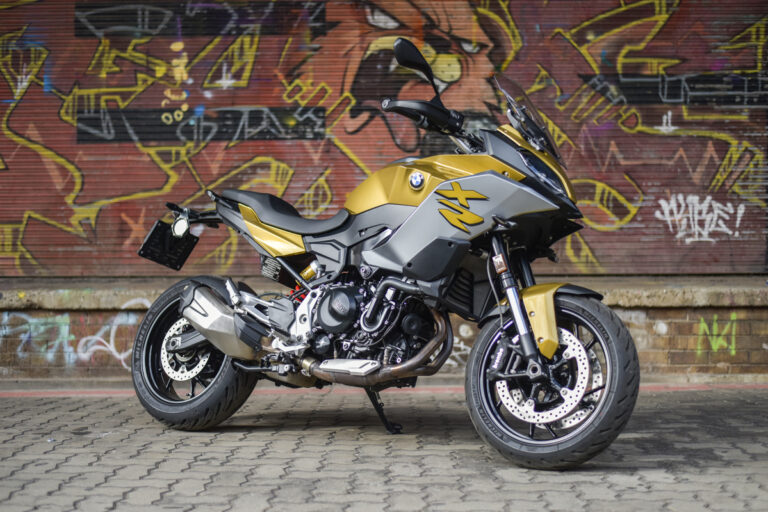
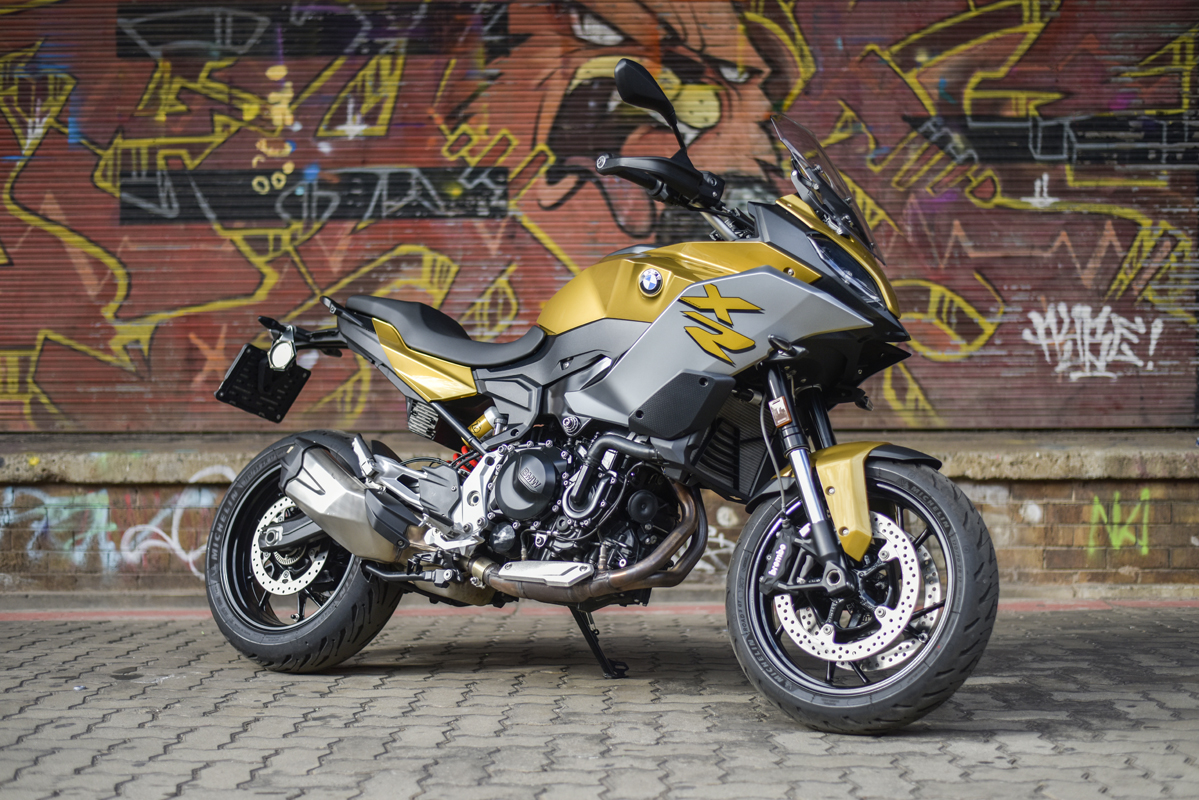
Does BMW Motorrad have a recipe crisis? If we look at their spread of motorcycles they have a mix of R, RR, RS, RT and let’s not forget GS, and more. And then there is XR. This is listed as an Adventure bike in their segmentation, but where does this fit in, and who is it for?
Having a week with an F 900 XR I decided to use the bike in as many different scenarios as possible to see what the mix is, with themes all the way from city bike to tourer. For those of you who don’t want to read further let me give you the summary: This is the sporty side of road adventure riding, and it’s very, very good.
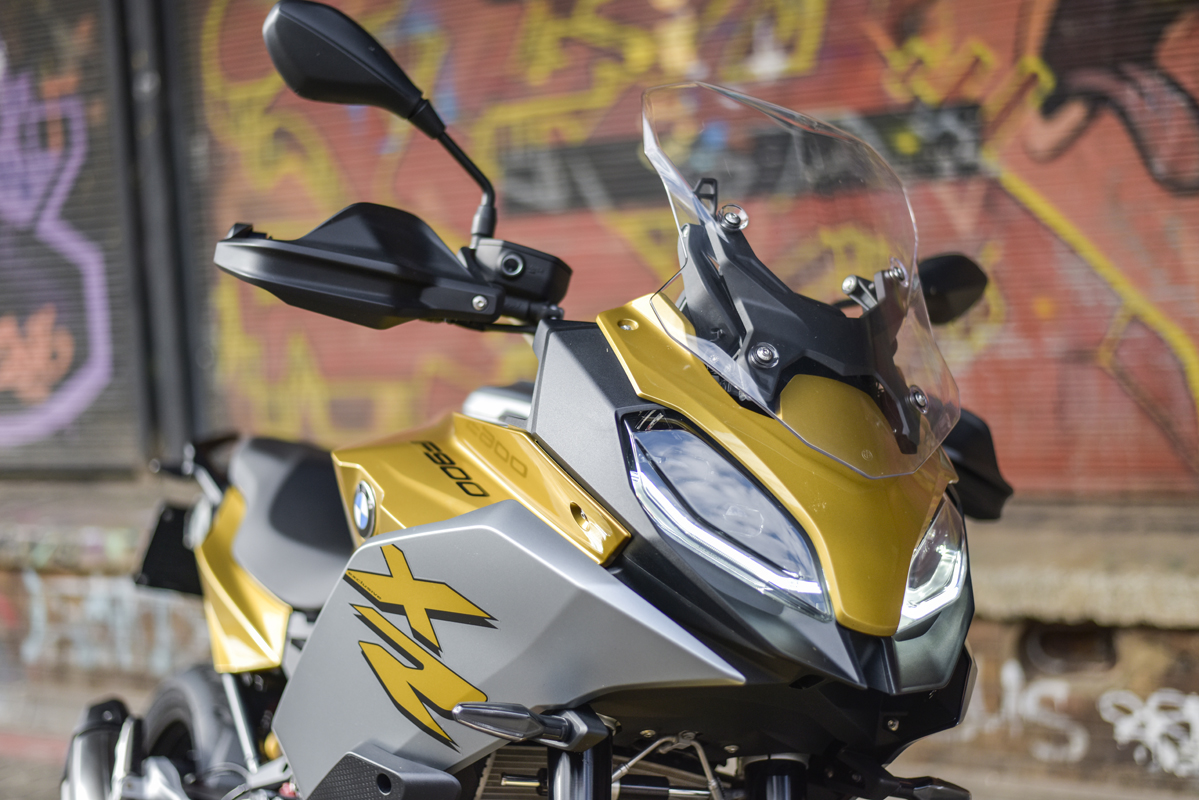
BMW’s move from squint eyes to the symmetrical headlight design results in an attractive, if perhaps not as unique, look. From the front, in particular, there is an almost “Multistrada” look, yet there is an aggression to the bike that is quite appealing. It definitely has a sporty appearance, yet with a more comfortable and upright riding position, and this is where the recipe discussion starts. It is not a GS with off-road ability, yet it isn’t an R or RR which are on the other side of the sporty spectrum.
Our test bike arrived in Galvanic Gold, with Racing Red & Light White also available, with Granite Grey finishes on all (how about those colour names?!). All the colours work on the bike, with a definite sporty (there’s that word again) style and even with the upright position the bike looks like it’s ready for the twisties all the time.
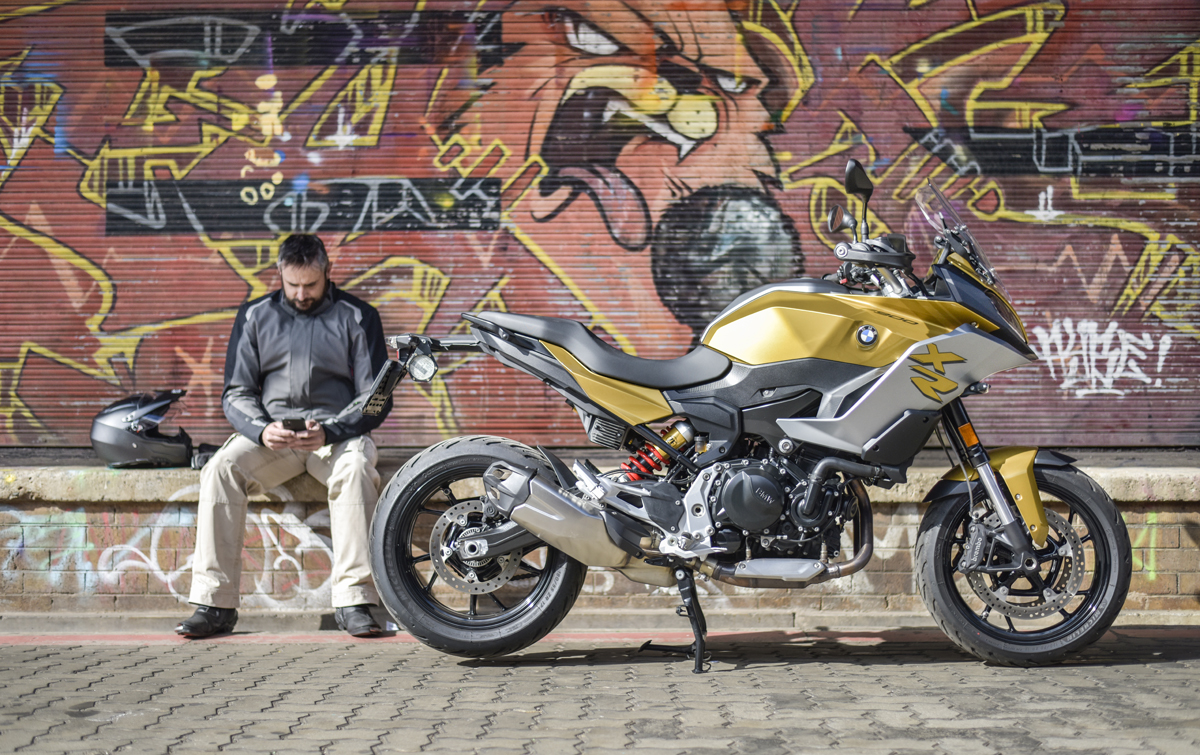
An element that I always appreciate is clever design and, as is the BMW Motorrad way, there are some clever design touches, such as the wheel valve that sits in the spoke of the wheel rim rather than the outer rim itself, and there isn’t a tool bag but rather a neat and tidy storage area under the seat where the tools clip-in. Clever.
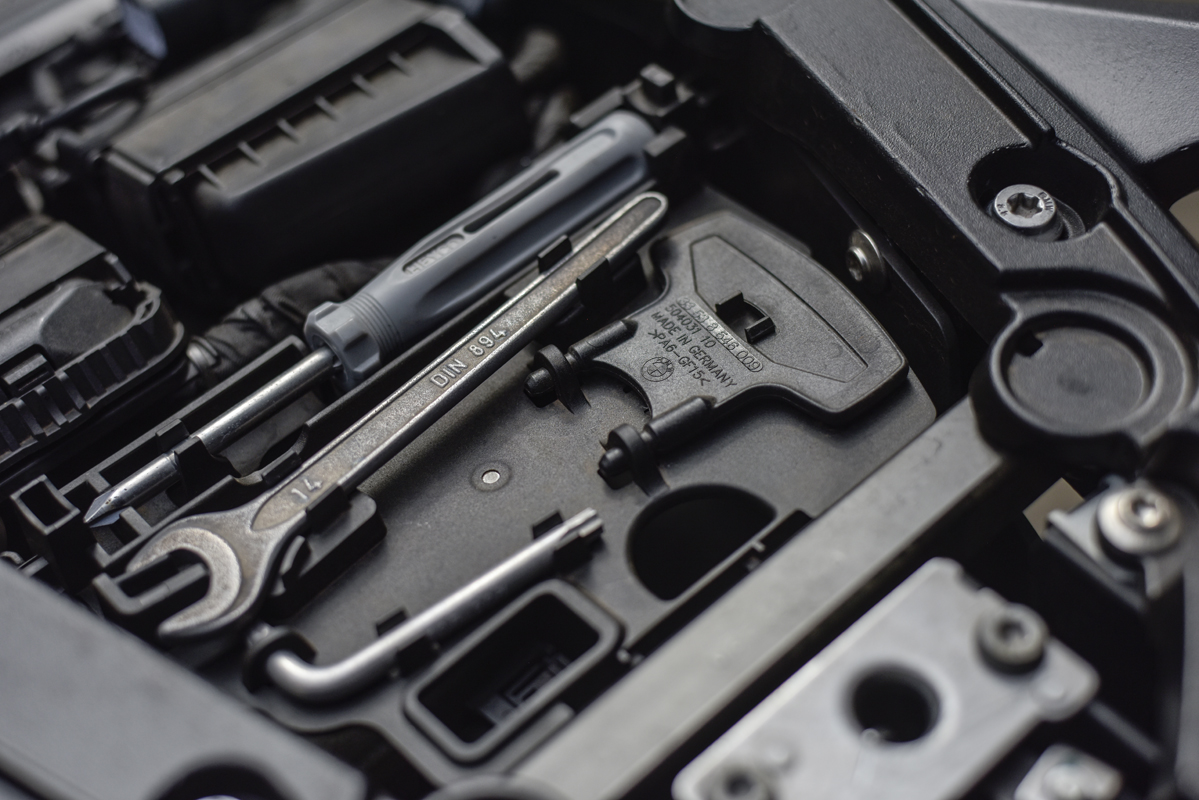
The defining, and most dominant ingredient in this recipe is the riding. And I will admit to being pleasantly surprised. If we start with the engine, this was a highlight. Previous parallel twins have had a functional but not-to-much-inspiration feel and sound to them, but this new engine with the 270-degree crankshaft has a greater personality to it, from a low rpm off-beat nature to a lovely almost v-twin-like note towards the red line. Rated at 77kW and 92 Nm, the torque delivery is smooth, but more importantly, this motor can happily live at low rpm for the conservative ride or live at high rpm for those higher-speed blasts.
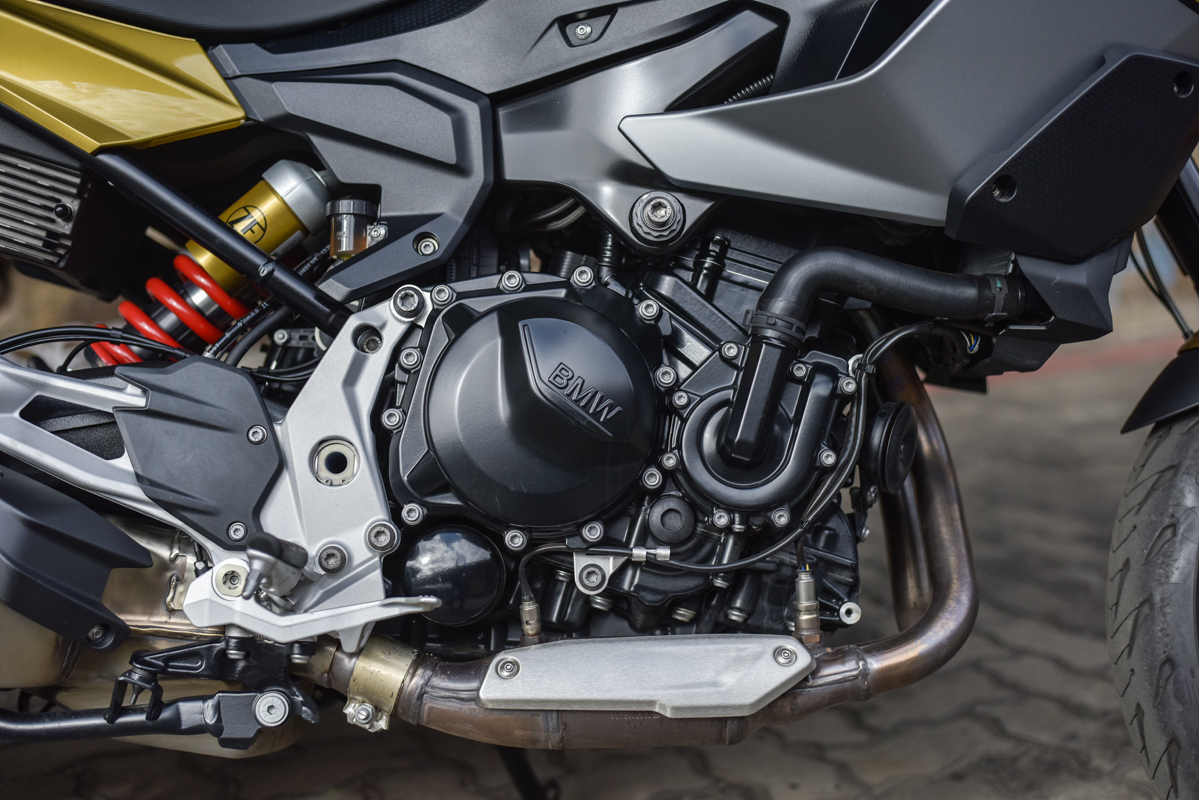
If you’re gentle this engine can sip fuel, with test numbers below 4 l/100km (according to the tell-tale onboard computer), up to a highest of around 5,3 l/100km. WMTC is rated at 4,2l/100, by the way. The Fuel tank size is 15,5l, so you’re looking at a range, depending on riding style, of around 300 km.
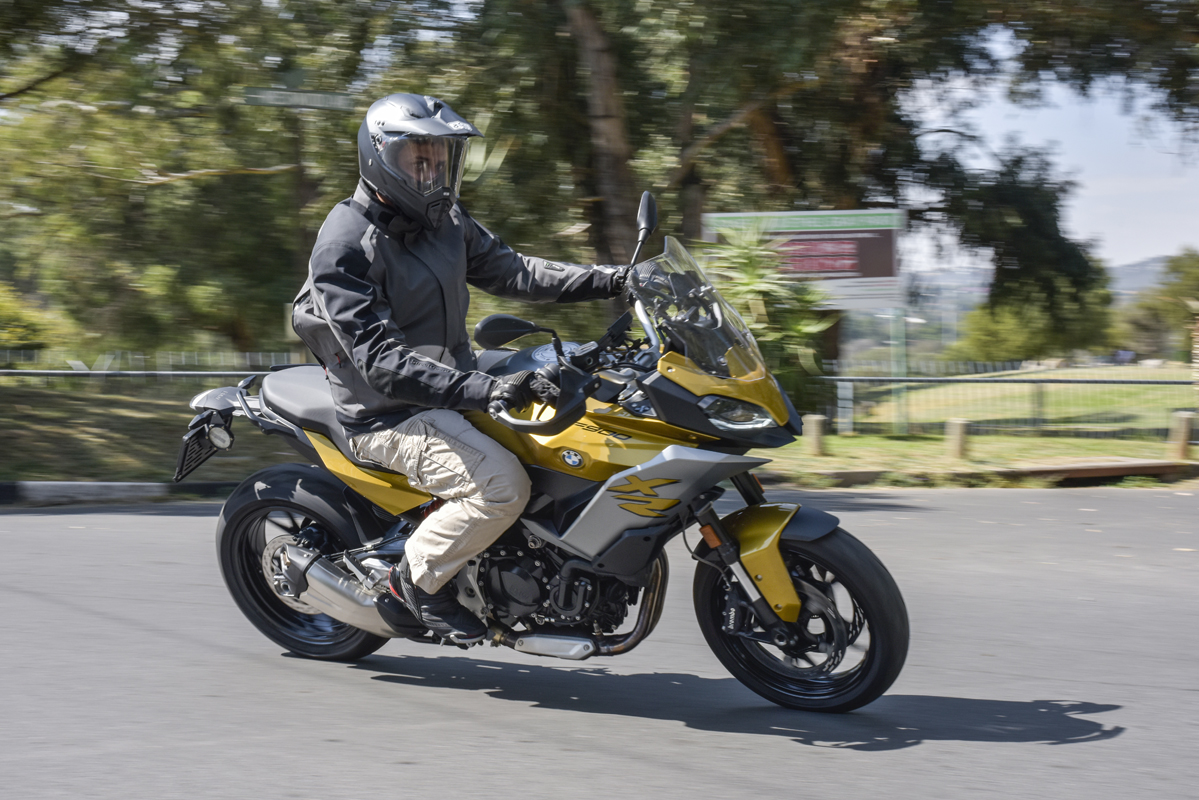
I mentioned the upright seating position earlier, and it is certainly a comfortable and well-designed riding space. Controls are well placed, the digital display is superb with a great deal of information, and the screen has a two-position adjustment depending on your height and does a fair job of deflecting the wind. There are different seat heights available, standard at 825 mm, with a range from 775 mm up to 870 mm, so have a chat with the dealer.
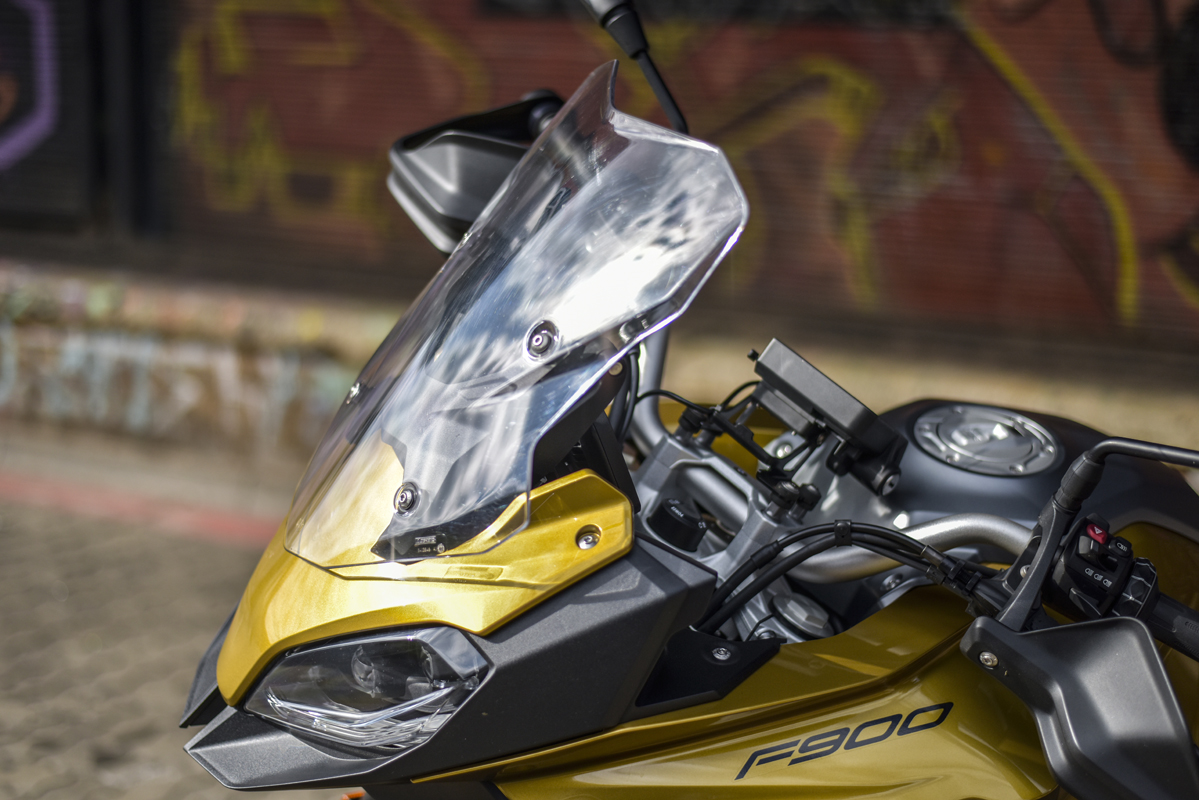
It must be mentioned though, on longer trips numb bum definitely sets in, with the seat itself being quite firm. The sporty design seems to be moulded around the rider who would like to move around on the bike while cornering, very much in the sports bike genre.
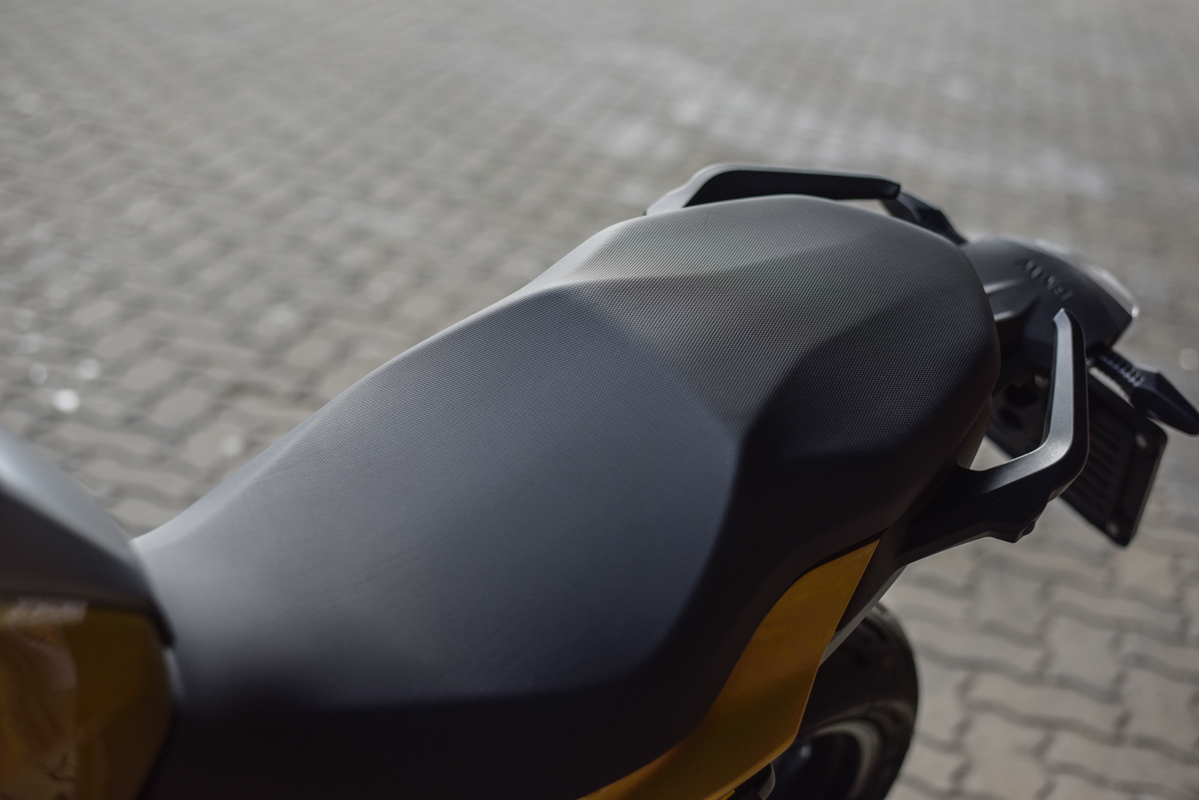
The bike itself weighs in at around 219 kg, depending on toys. The XR certainly didn’t feel heavy, with an eagerness to turn in (the tall type of motorcycle setup certainly aids this) and there was impressive high-speed mid-corner stability as well. Again, as befitting a sporty bike (that word again….).
Further specification to highlight include BMW’s Dynamic ESA, which has a noticeable impact on bike set up and feel, and the quick shifter. I found this to be perfect changing down the gears but sometimes not consistently smooth on the way up, so I tended to help on occasion. Full throttle changes were on the money though. A further highlight was the superb headlights, some of the best I’ve ridden with. The lighting is superb, together with adaptive cornering lighting I found it a pleasure to ride at night.
What has certainly impressed me is BMW Motorrad’s Connected App. I don’t have the space to list all the features here, but I get a sense that BMW have designed this specifically for bikers and are using the best of their car technology (including small details like displaying speed limit info) and keeping rider-focused (trip recording with data such as lean angles and integrating pictures taken), all of this giving a certain premium experience, which is to be expected from BMW.
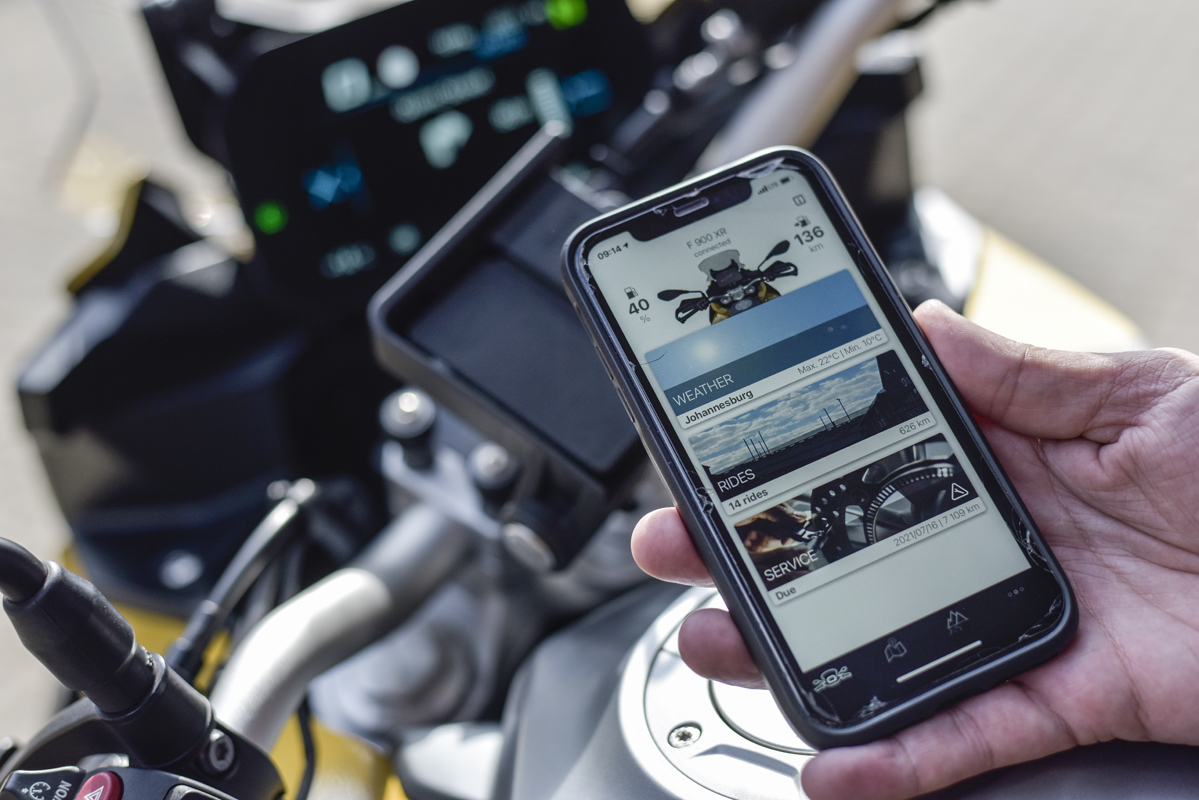
My favourite ride of the test period was a Sunday afternoon impulsive ride. I just felt like a long relaxing ride to clear the mind and refocus for the week ahead, so I hopped on the bike and went for a long ride which had both fast and cruising moments, and a spectacular coffee stop halfway. In that environment, I felt that the bike had found its sweet spot: fast enough, stable, comfortable, fun at the right moments. The recipe is starting to make sense.
The official pricing starts at R 185 000, according to the BMW Motorrad website, and the motorcycle as tested it came to R 213 000, with toys such as the Comfort Package, Touring Package and Dynamic Package. Interesting though, deals seem to be below this price point so take a look at the offers.
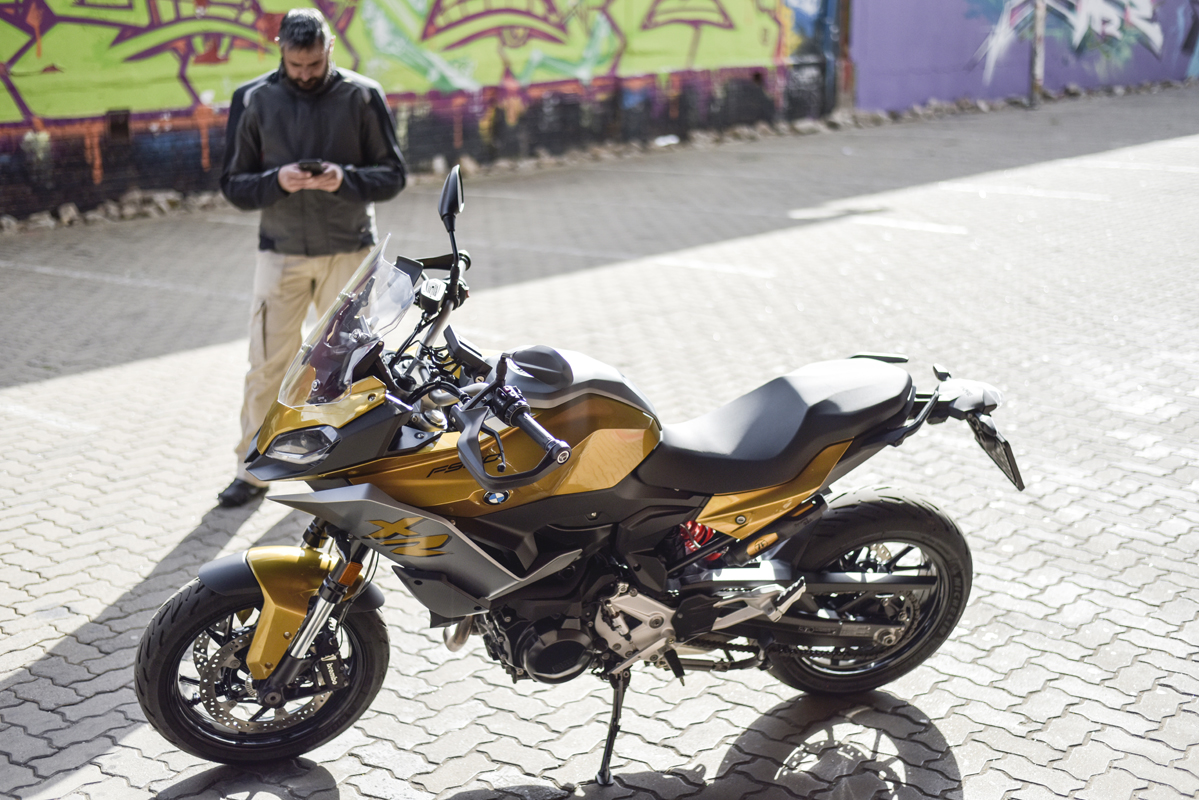
When it comes to Value-for-Money this motorcycle makes a good case for itself, with BMW’s 5-year warranty and a top-notch dealer network. It may not be the cheapest in the segment but these factors, together with the build quality and the features on the motorcycle, make it appealing.
The question at the beginning was one of “recipe”. Each motorcycle has a mix of ingredients that, once mixed, baked and served, create a unique taste for the consumer. In a market full of superb motorcycles, and from a brand full of segment defining products such as the GS, I can fully understand the confusion on the menu (to perhaps push this analogy to its limit).
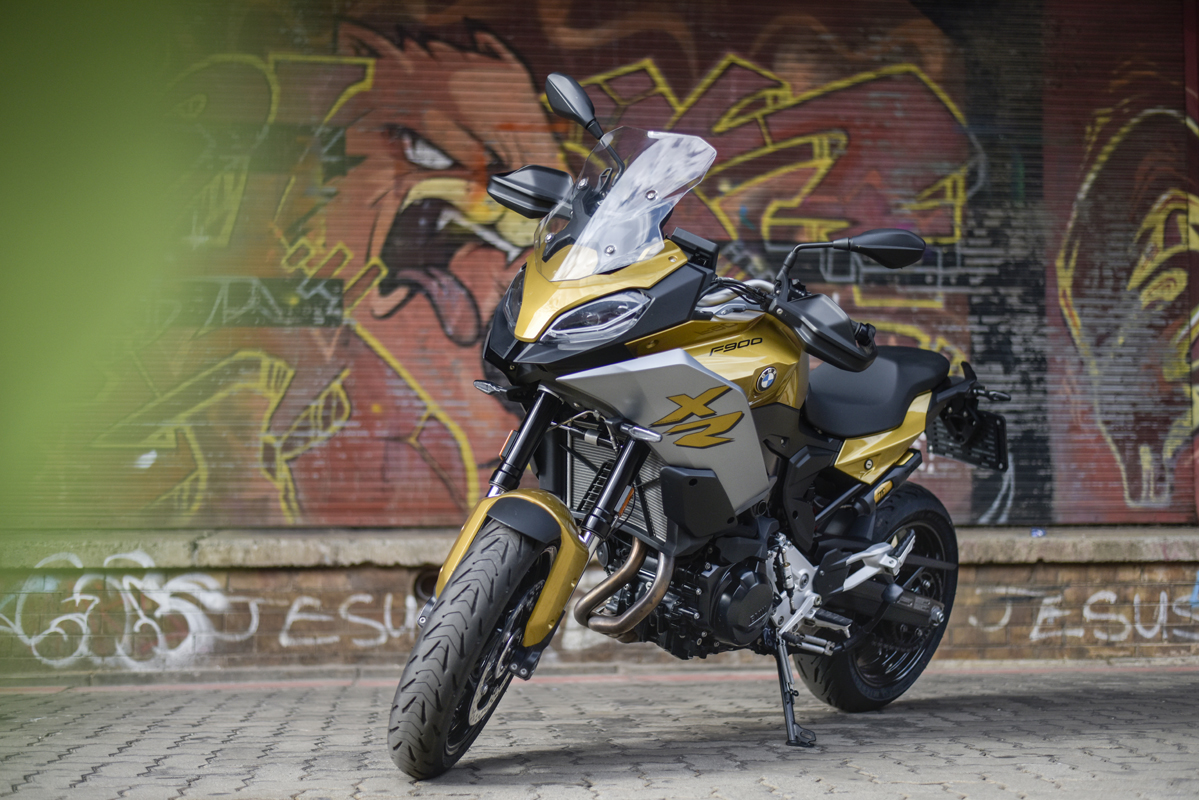
This is the kind of motorcycle you need to research and then ride to fully understand. If the bike you are looking for needs to be relatively sporty, looks great, needs on-road performance and doesn’t need to go off-road, then this bike must be on your short-list.
From a BMW Motorrad model line-up point-of-view, the recipe here is the F 900 XR is all the bike you need, whereas the extra power, performance and noise of the S 1000 XR is all you want. For those riders who don’t want the extra spice of the 1000’s, the F 900 XR will taste superb.
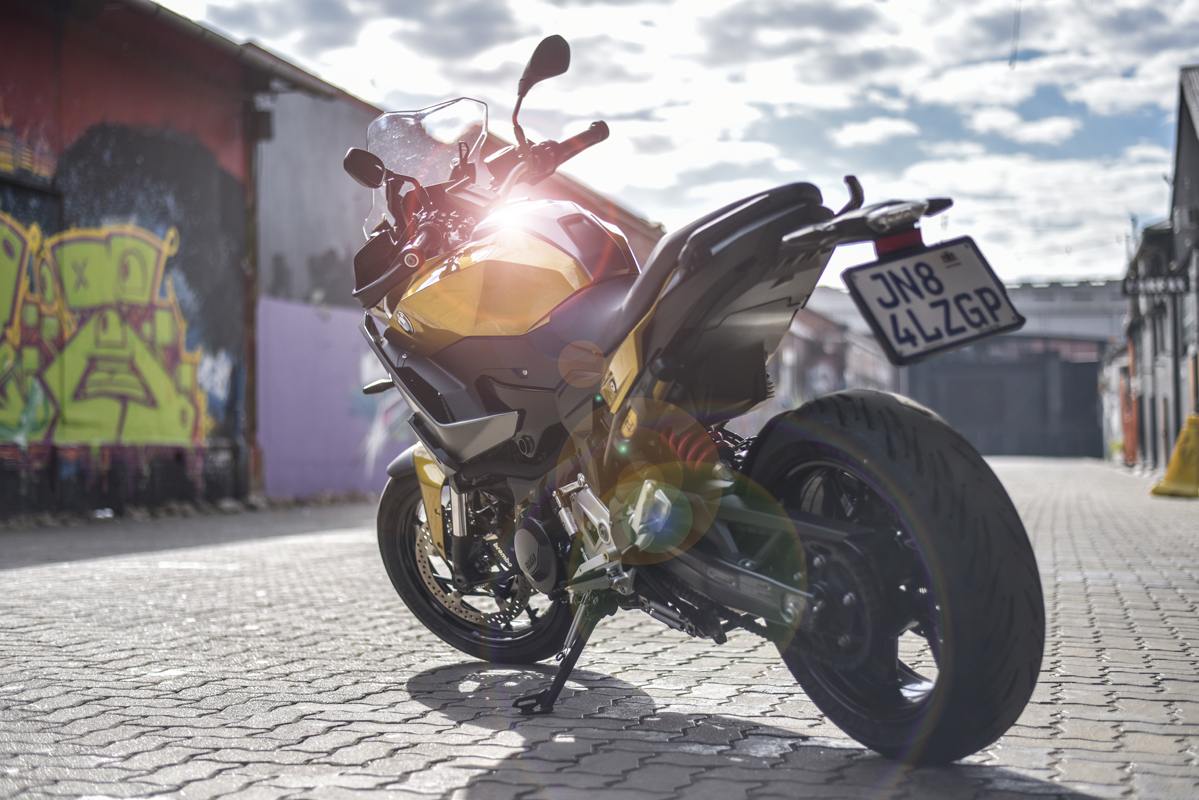
For more information visit: www.bmw-motorrad.co.za
Fast KTM hosts Adventure Training Guru, Bret Tkacs
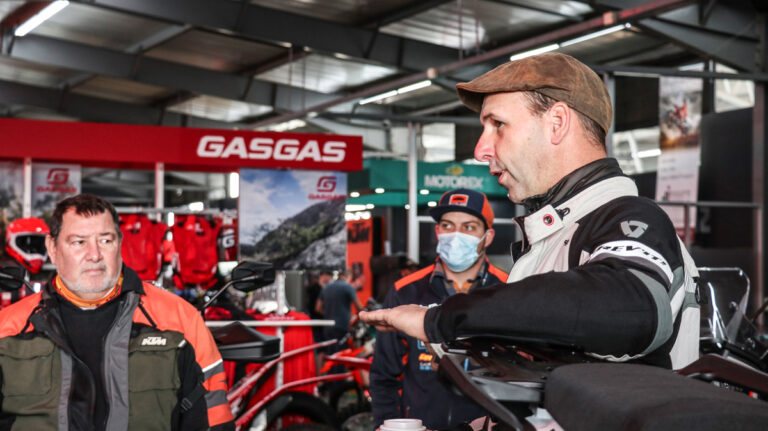
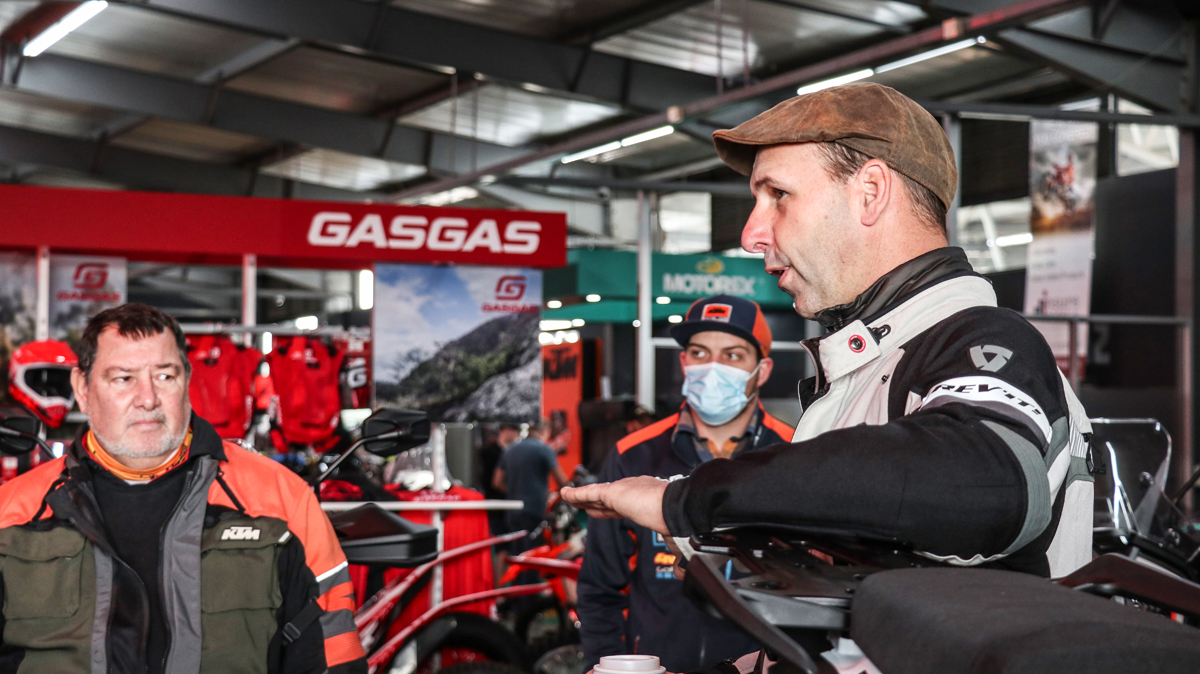
If any of you have trolled YouTube for Adventure motorcycle riding tips, you would have almost certainly come across the fellow with the unpronounceable name, Bret Tkacs. I first made his acquaintance on a YouTube channel called Mototrek, which is dedicated to various aspects of Adventure bike riding. Bret was pretty much the ‘main man’ there for quite some time. He has travelled the globe on a variety of bikes, over many years and acquired a vast amount of experience and motorcycling skills. You only need to watch one of his training videos to understand that this guy is particularly gifted. He swears that he was an ordinary rider who upskilled himself in the school of hard knocks, but I am not so sure.
For the last few years, Bret has done his own thing, which has involved predominantly training Adventure, road and even Police and Military motorcyclists to up their skills. The objective is to be more competent and therefore safer, saving both man and machine from coming to grief. This obviously makes riding way more enjoyable. Visit his website at brettkacs.com. I learnt of his impending visit to SA to offer some training courses, as well as explore Southern Africa for a future tour that he plans to host here. Dave Griffin, from Fast KTM in Alberton hosted Bret on Saturday 1st of May, where he had an informal chat with some local Adventure riders, keen to hear what he had to share.
Bret is one of those uniquely gifted trainers who analyses techniques and equipment and then not only tells you what to do, but importantly why to do it that way. He encourages trainees to continually analyse and think, before tackling obstacles or riding challenges. “Why”, should be the question ever-present on your lips. Adventure riding is much more than “look up, stand up and open up”. I am often asked what Adventure bike is best in sand, or whatever. The fact is that off-road riding is a very particular and acquired skill. No big Adventure bike is “good” in sand, per se, however, by understanding the physics involved and practising the necessary technique, you can acquire the skill to allow you to master sand riding, or any other off-road obstacle within reason.
On the subject of “what bike is best”, I love Bret’s answer to that particular question. He describes himself as a “bike whore”, who has owned numerous bikes over the years, pointing out that every bike has strengths and weaknesses. He rides what works for him, with no allegiance to any particular make. The one that is right for you is the one that ticks the most boxes for what you need from your bike and the type of riding that you prefer. As a bit of a ‘bike slut’ myself, I totally get it. 350 odd bikes later, my wife Irene, calls it an obsession.
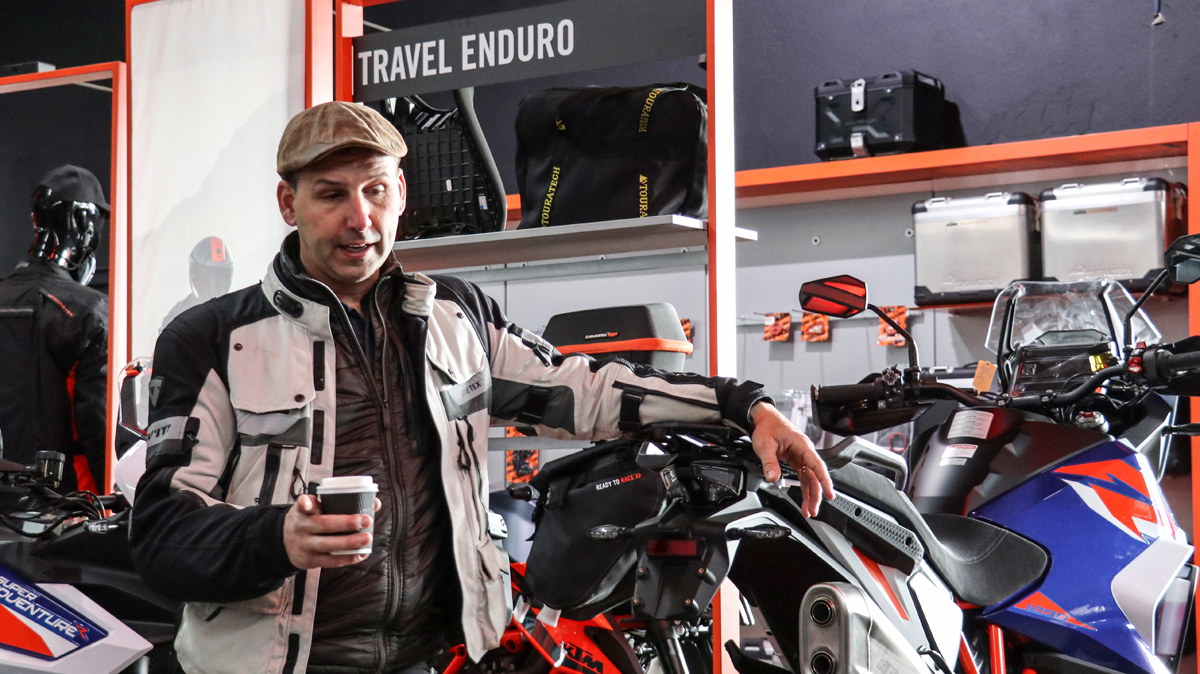
The long and the short is that if your ego renders you unteachable, (because you know it all) you are limiting your enjoyment of motorcycling. You are probably also exposing yourself to unnecessary danger too. Motorcycling is an acquired skill which gets better as your skill evolves. The fact that you have ridden for years may simply mean that you have become set in your ways and got away with it. Listening to Bret at Fast KTM, really reminded me that as motorcyclists, we should always be teachable and seek to raise our skill level. Huge shout out to Dave Griffin and his Fast KTM team for hosting this World Class trainer and motorcycle personality.
First Ride: The new Harley-Davidson 1250 Pan America Special
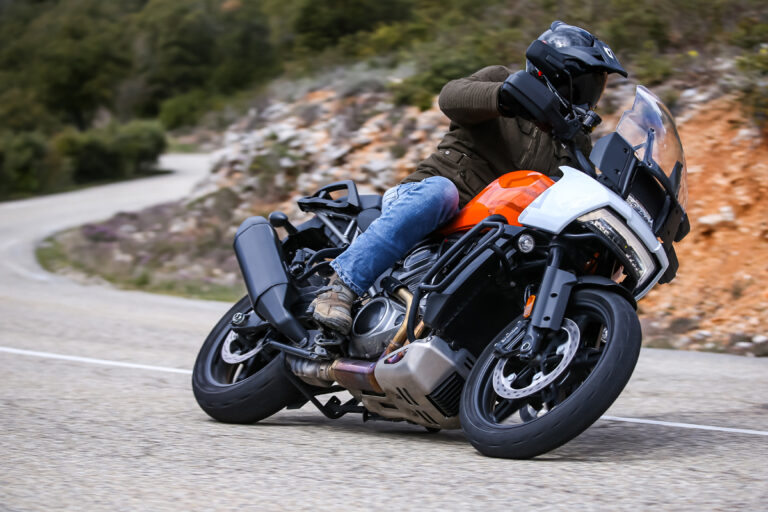
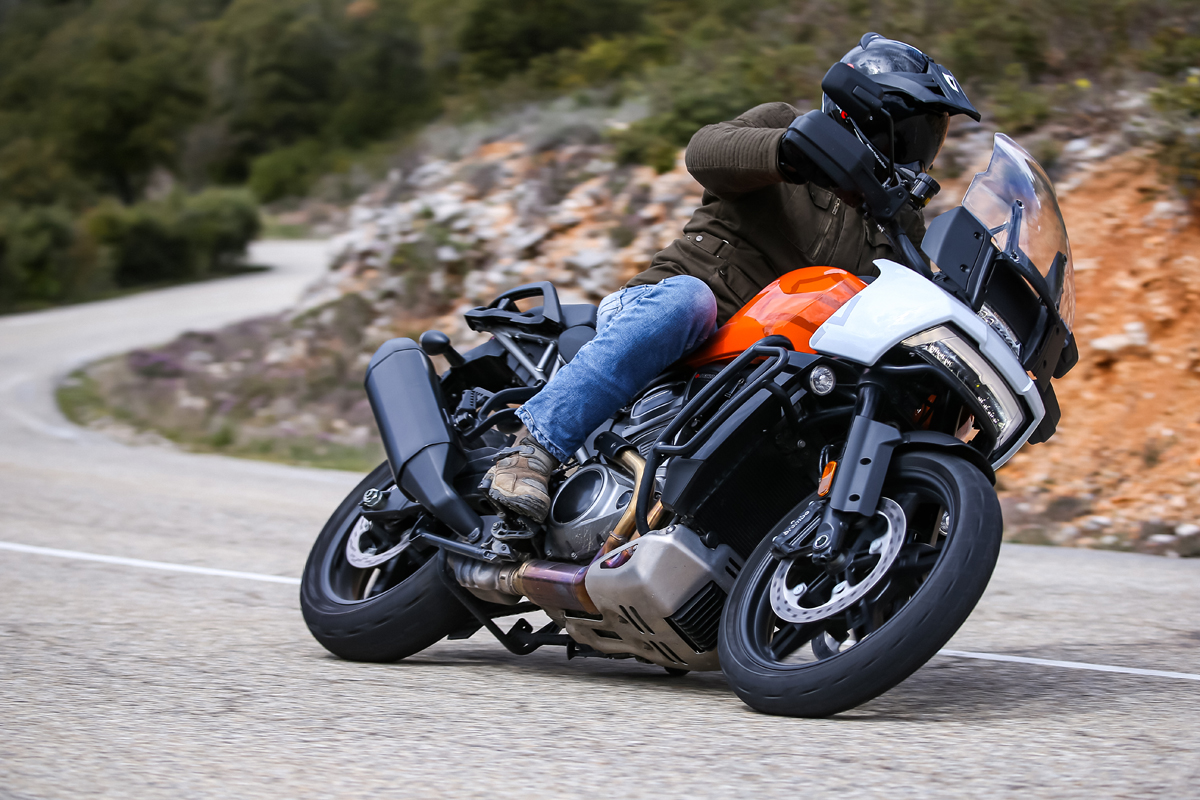
With 150 hp and a modern electronics package, can an American dual-sport machine threaten established adventure bikes from BMW, KTM, Honda and co.? Our man in Europe spent two days aboard the new Harley-Davidson Pan America 1250 Special, in the French region of Luberon, to find out.
Is the Pan America pretty? Ugly? Interesting? Just plain weird? I can’t really answer that question. But on the other hand, I’ve never considered the BMW GS to be a remarkable piece of design, and KTM’s Kiska-designed machines aren’t really to my taste.
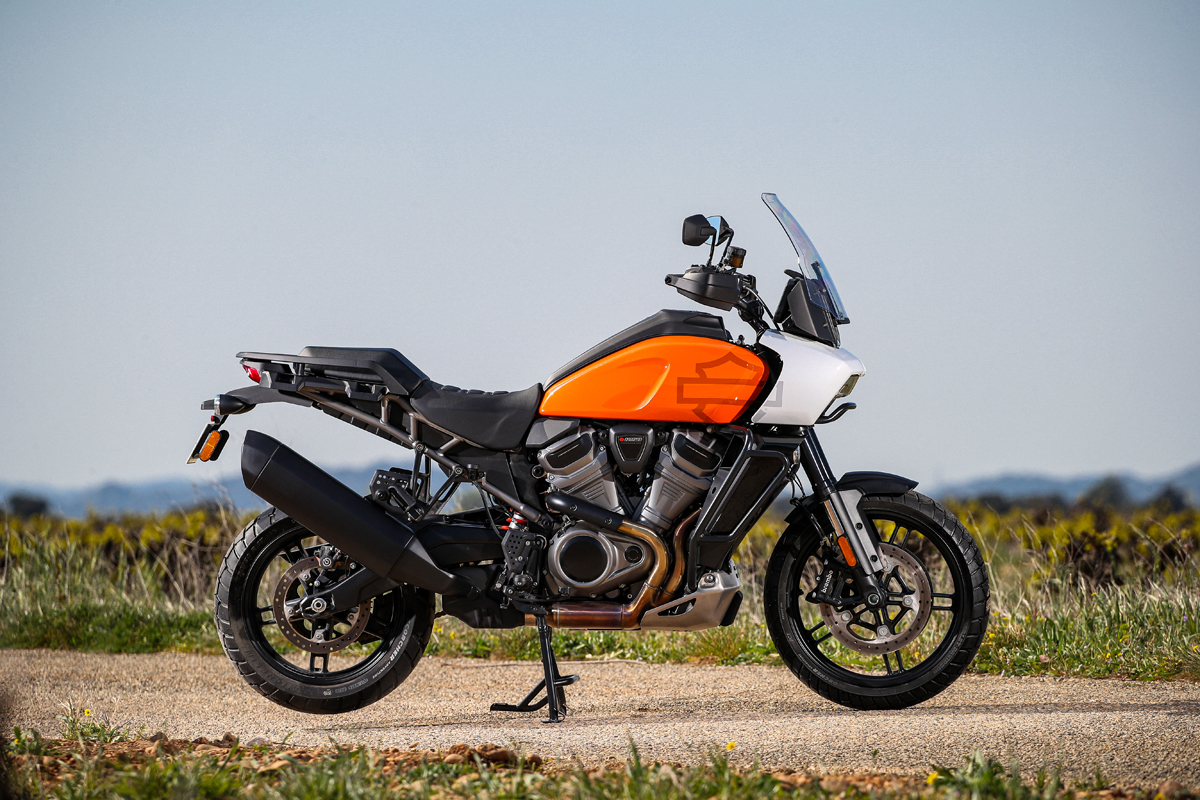
In fact, I’ve never considered big adventure bikes to be chefs d’oeuvre of motorcycle aesthetics. They have to deal with function over design, and that’s fine with me.
I had the chance to chat with Harley-Davidson’s lead designer, Brad Richards, at the 2019 EICMA motor show in Milan, Italy. Brad designed the Pan America, and is perfectly happy if you don’t like, but he did explain the thinking behind its design. Take the fuel tank and draw a line just underneath it—under that line is the mechanical section; above it is function and design.
Richards wanted the Pan America’s visual identity to be very American: the front end, for instance, is a mix of a Road Glide ‘shark nose’ front end, with the visual impact of a Jeep’s radiator grill, enhanced by modern LED lights. At least the Pan America isn’t wrapped in weird plastic panels all over, nor does it have the same ‘duck bill’ that’s been part of dual-sport design since the 1988 Suzuki DR 750.
Love it or hate it, at least the Pan America has its own personality.
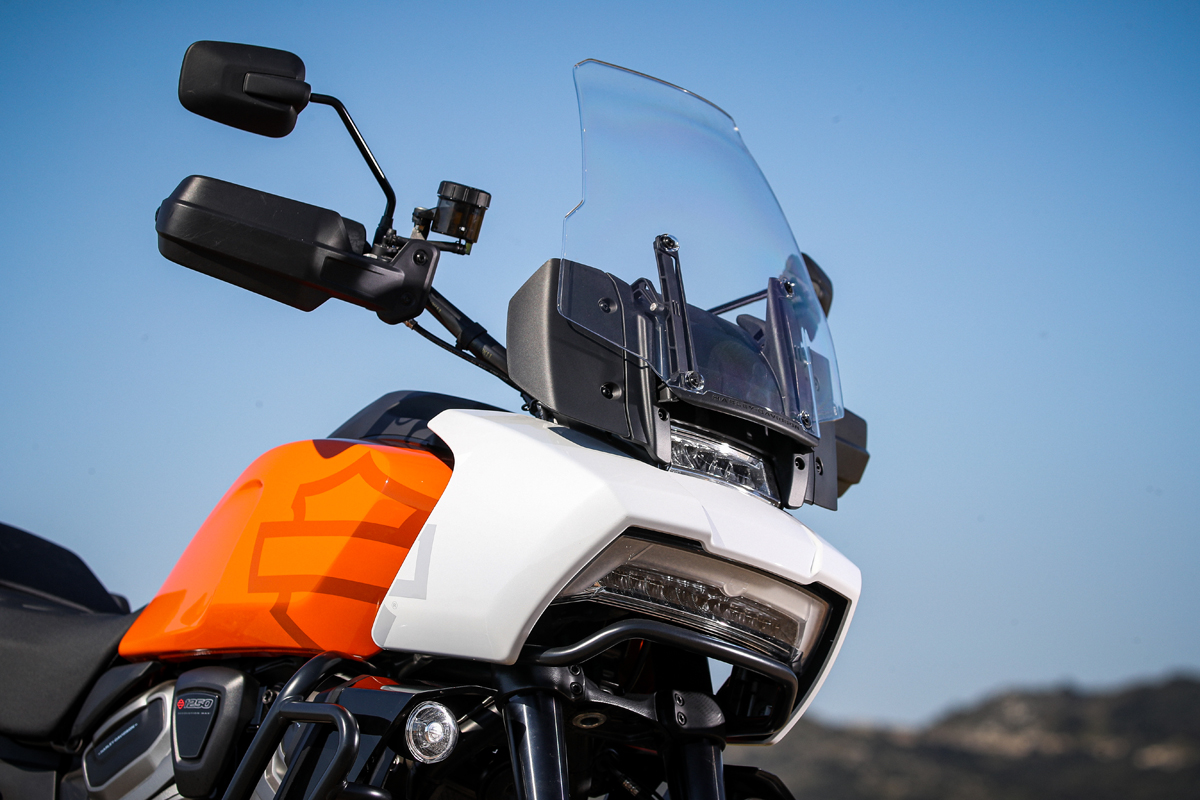
1.6 million kilometres of testing
The Motor Co. has developed a brand new engine, and no, it doesn’t make the archetypical ‘potato-potato’ sound. The 1,252 cc V-twin has been through more than 1,6 million kilometres of testing, half of them on off-road sections.
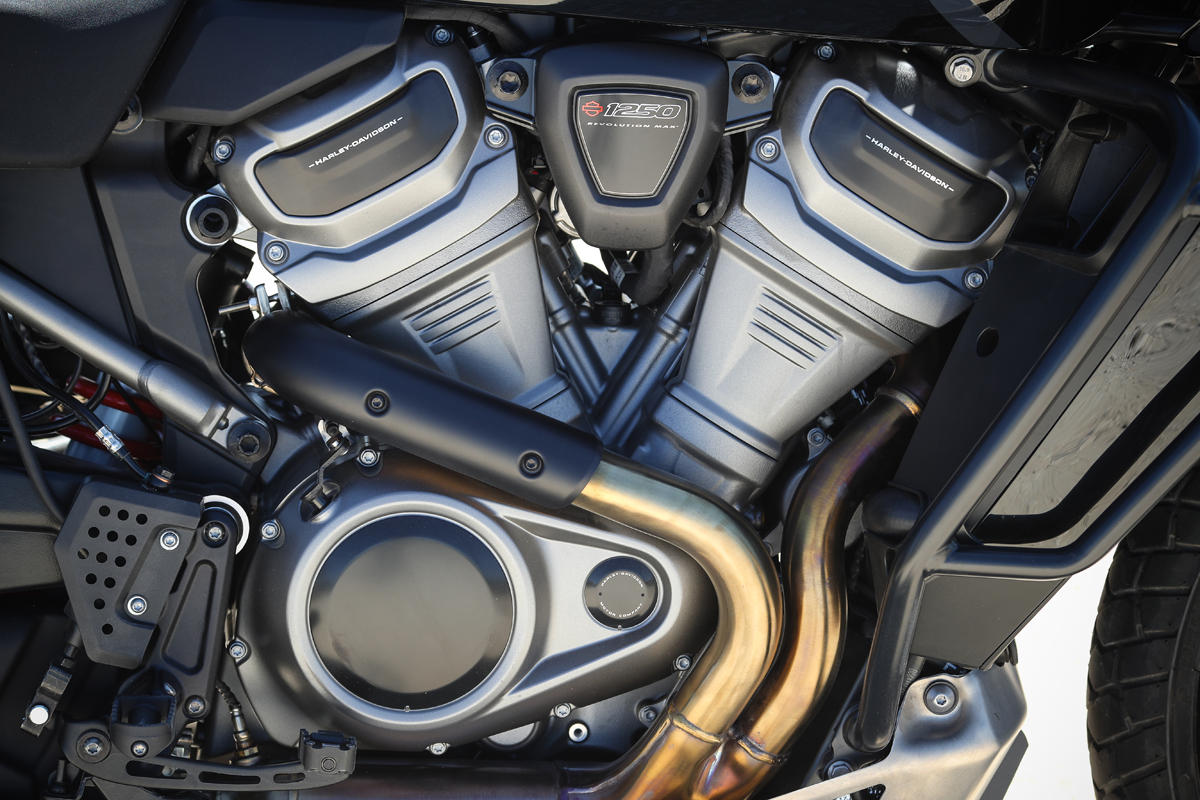
The technology is interesting, and so are the figures: with 150 hp, the liquid-cooled ‘Revolution Max’ engine is more powerful than BMW’s big boxer, but torque is a bit lower at 128 Nm. (The BMW GS makes 143 Nm, the Ducati Multistrada V4 makes 125 Nm.)
The tech department has been busy. The short stroke (105 x 72 mm) is unusual for a Harley, opened at 60° with a 90° firing order, and running with a twin spark system, 8 valves with hydraulic valve clearance, variable valve timing, and two countershafts for reducing vibrations. That sounds very good, but big miles-eaters might think twice, since the service intervals (8,000 km) seem comparatively short against the competition.
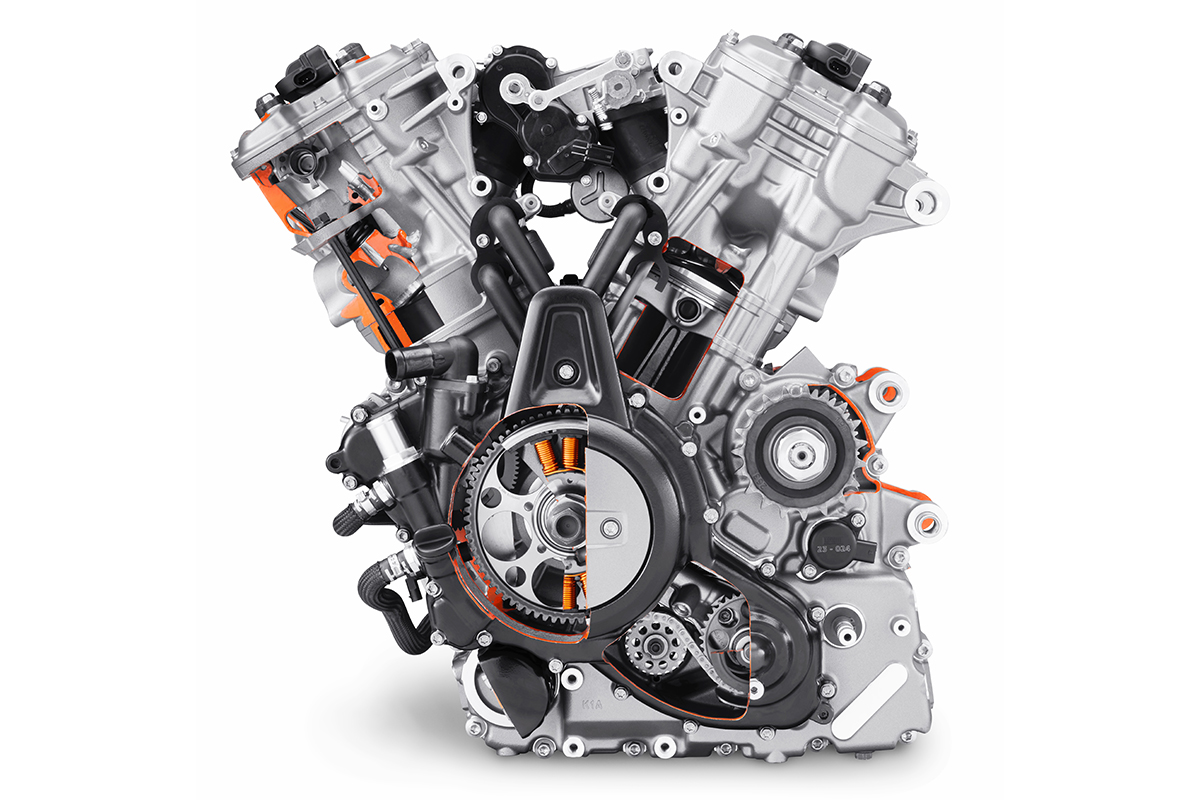
The Pan America’s engine is smooth and, at standstill, makes the sort of sound that you’d expect from Aprilia Mille or the Rotax 1125. It sounds better when you hear it passing by than when you’re on board, but the optional Screamin’ Eagle improves the soundtrack without being too loud. It also appears to be very smooth at low revs, with a fair amount of oomph from mid-range, depending on which engine map you’ve selected.
Full electronics package
As a modern machine, the Pan America 1250 comes with a full electronics package. Available engine modes include Rain (where the power delivery is limited to 110 hp), Road, Sport, Off-Road and Off-Road Plus. Throttle response and traction Control settings are different from one mode to the next, and the Pan America has different personalities depending on what you pick.
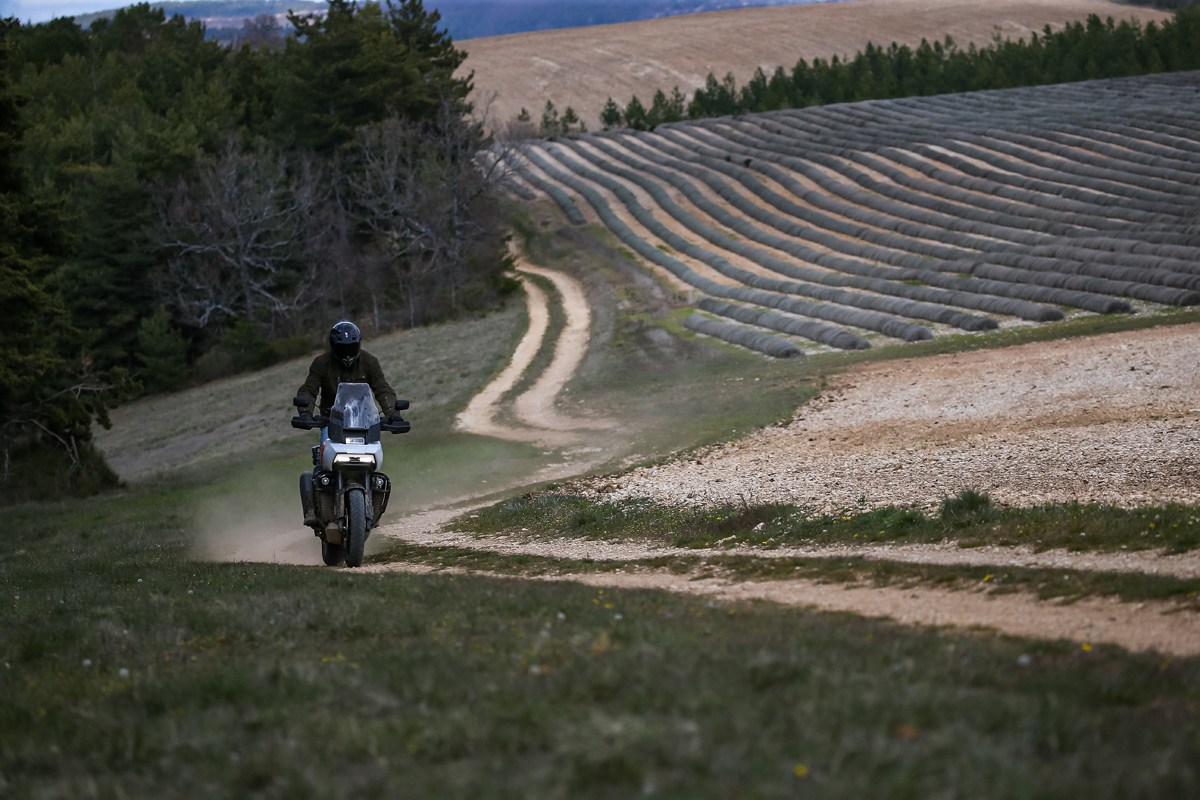
There are also two ‘user’ modes, where you can mix your own recipe. I quickly chose Sport mode, with the semi-electronic suspensions set to ‘comfort’ mode. And if you’re wondering about long off-road stretches, the ‘Off Road Plus’ mode allows the traction control and the ABS on the rear wheel to be deactivated.
The 6.8” colour and tilt-able TFT screen is easy to read and is more than stacked with info—although some bits of info were a bit too small for my old eyes. Besides that, the ergonomics are great, as the touchscreen and logical switchgear make for a great combo.
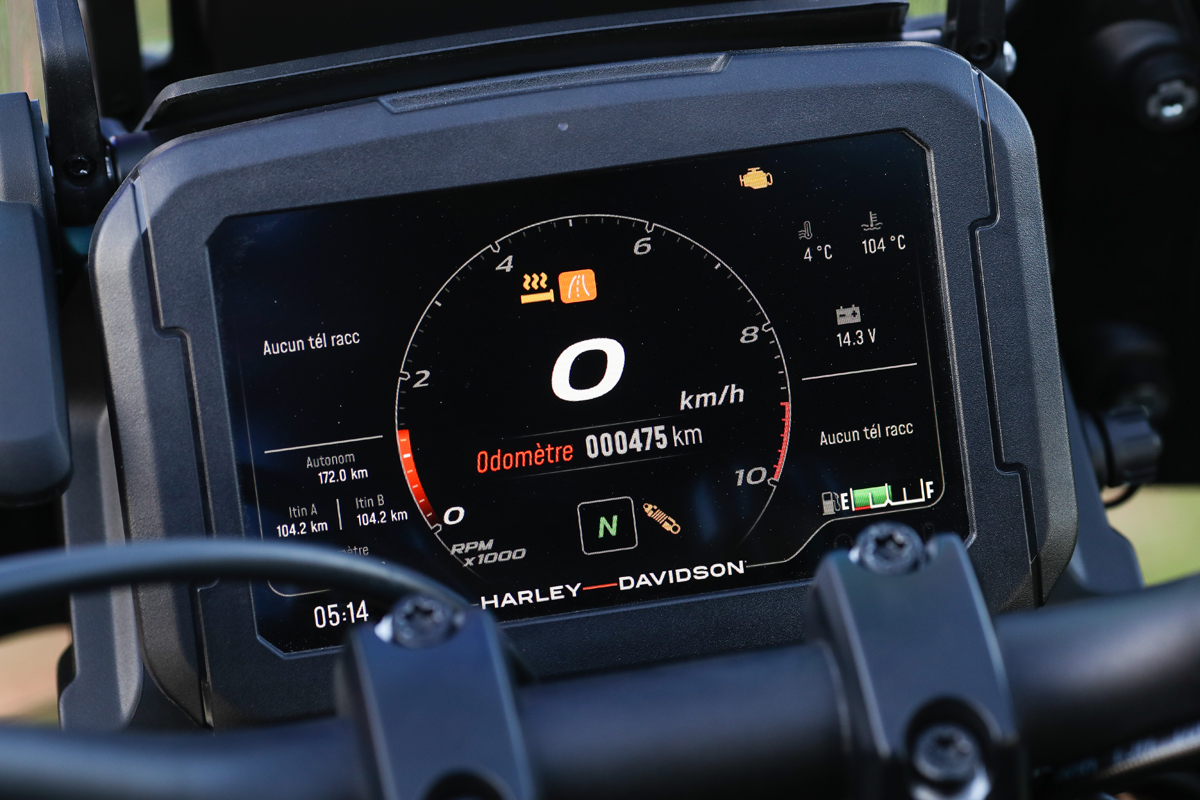
Another great function is Harley’s new ‘Adaptative Ride Height’ (ARH) system, which comes as an option on the Special model. When selected, the semi-electronic suspension works on the preload to reduce the seat height by 20 mm, making the Pan America’s seat height as low as 830 mm (instead of the normal 850 / 875 mm). A handy option for shorter riders.
Easy, fun, comfortable
When I saw the first pictures of the Pan America, it looked as big as half a Hummer to me. In reality, I’d say its dimensions are more or less in the vein of the Yamaha XTZ 1200… which means it’s more compact than a GS Adventure or a Multistrada Enduro. That’s good for city riding and parking the bike, while still offering a great level of comfort.
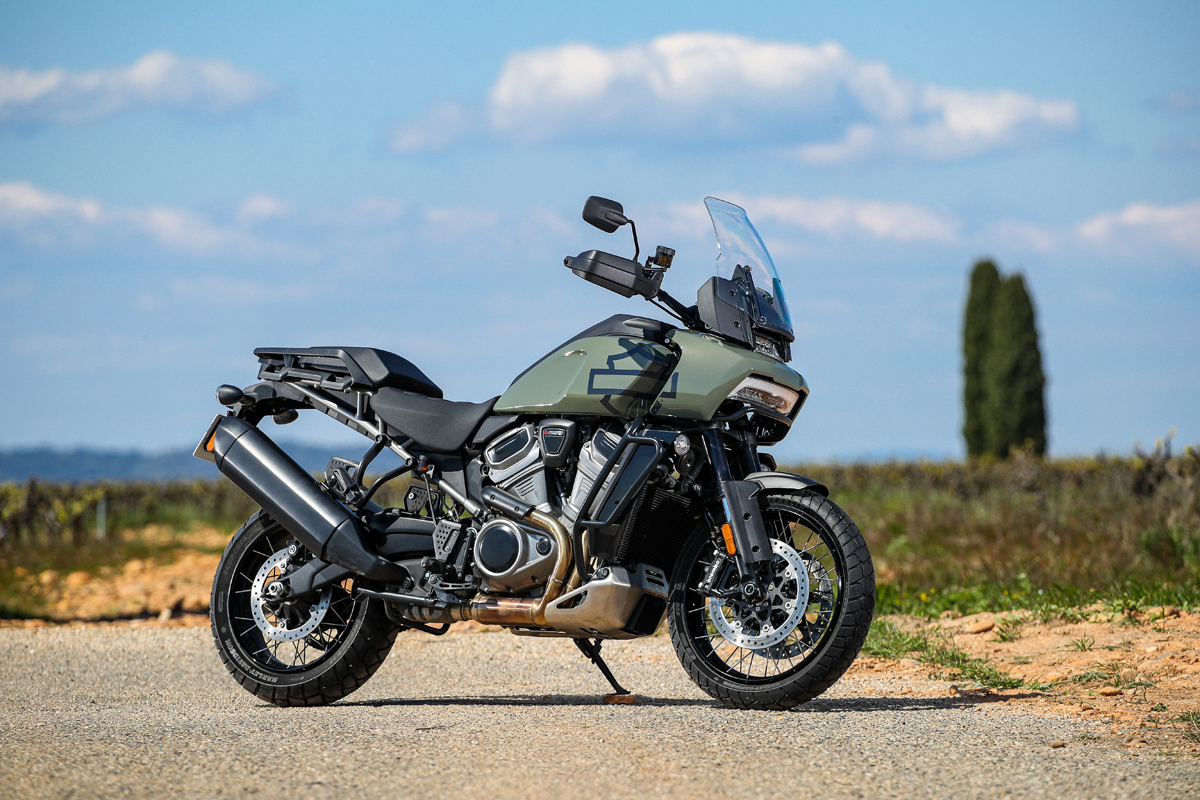
The riding position is perfectly natural and on par with what you expect from a dual-sport bike, and the fuel tank is not too wide. The windscreen is adjustable by hand with a 45 mm range; at 1,88 m tall I had some wind on the upper half of my helmet, but my shoulders were correctly protected on the open road. Hand guards and heated grips are also welcomed additions, as well as cruise control.
On the road, the Pan America has a very reliable front end—this is the kind of bike that makes you smile when comes to the twisties. The brand new Michelin Scorcher Adventure tyres are excellent and provide great grip and feedback. And the Brembo radial brakes deliver power and progressive feel, and don’t affect the bike’s handling when you drag them into a corner.
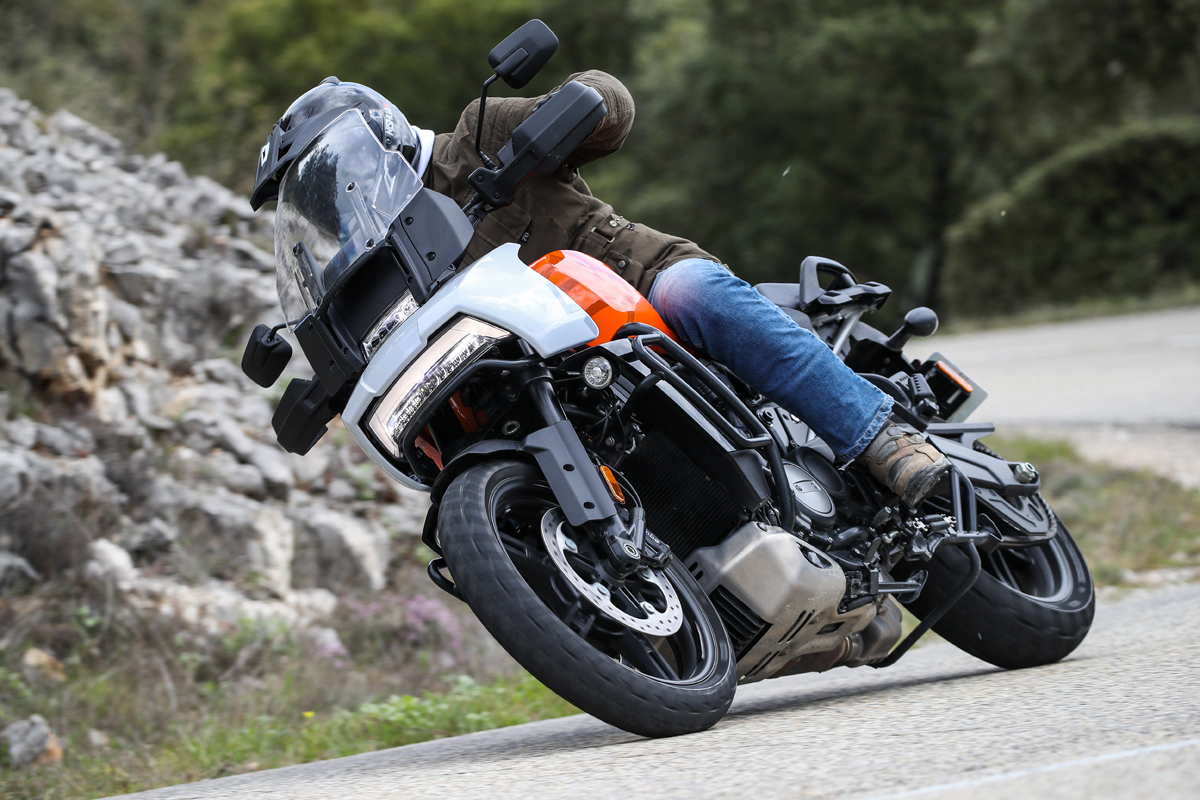
The chassis is exceptionally neutral and forgiving too. With a 42° lean angle right and left, you can ride hard without scratching the pegs all over the place. With a bit of riding skill, the Pan America will be a top mountain pass contender, with the 150 hp peaking tangibly in the zone between 6,500 and 9,000 rpm.
At a more sedate pace, the V2 engine relaxes at 4,000 rpm at 110 km/h in sixth gear, with a low level of vibration. The seat and suspension are on the plush side, so there’s no doubt that the Pan America will make a great tourer.
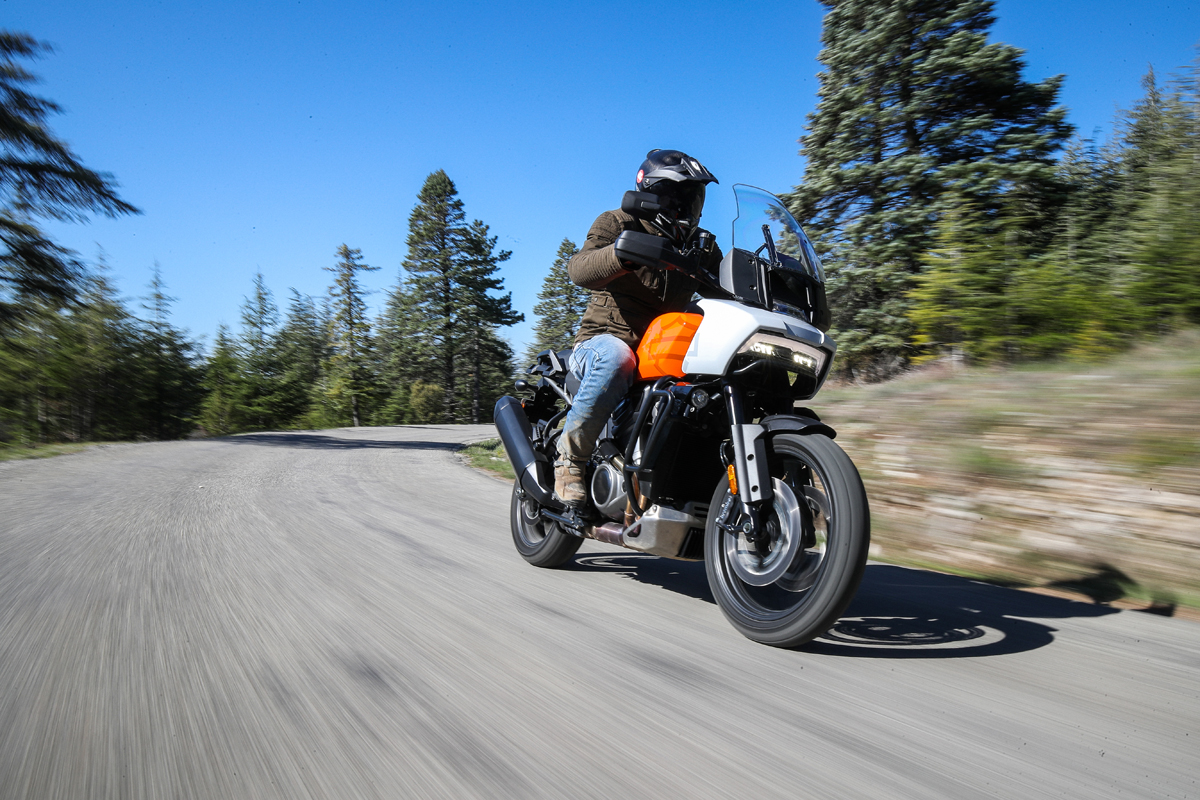
Off the beaten track
As we get around Mont Ventoux, of which the 1910 meters-above-sea-level peak can be seen from kilometres away, our guide decides to take us off-road through pine tree forest and lavender fields. This is one more Pan American magic trick—getting us close to this great scenery.
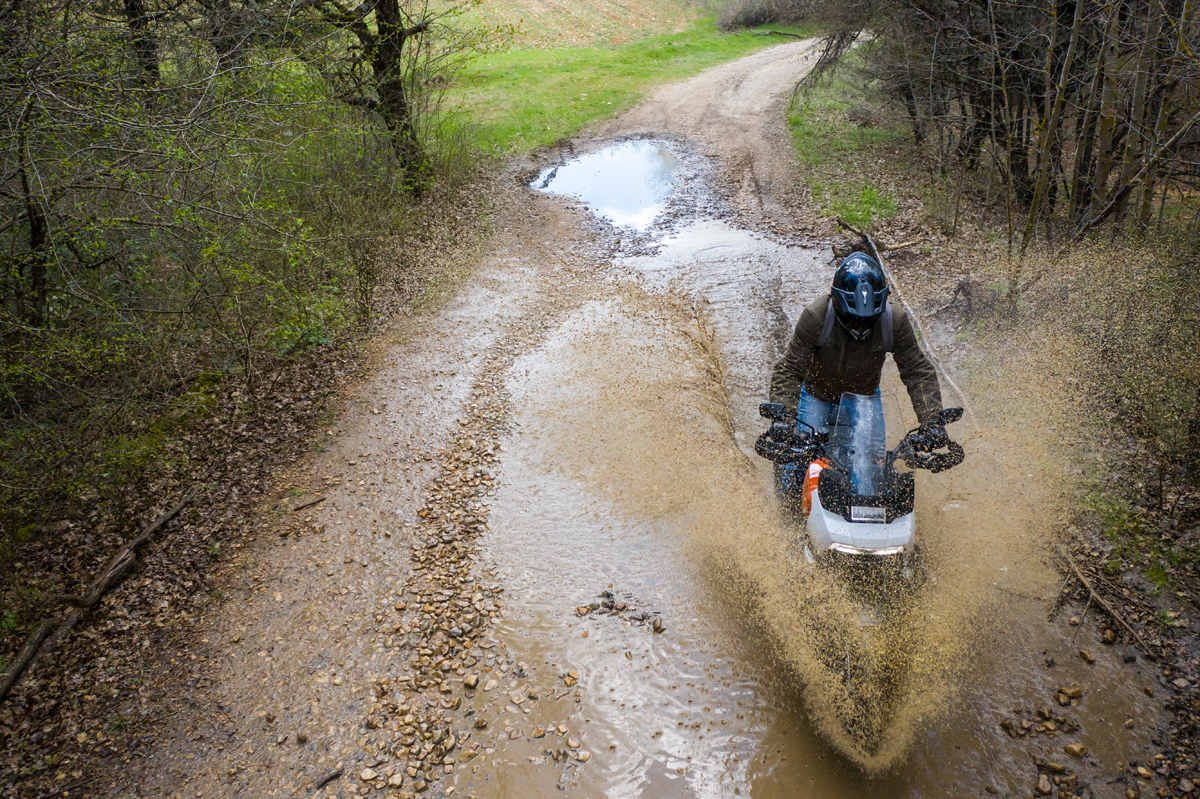
We had to make a small stop to put the bike into ‘Off-road’ mode, and even ‘Off-road Plus’ for some dirt riders, where the ABS is disengaged on the rear wheel and the traction control is off. Since my South African nickname is ‘Fearless Flippie,’ I went all in!
I found the standing riding position very comfortable, and didn’t feel the need for handlebar risers. And the rather narrow fuel tank helps a lot for control. I had one close call when my Forma off-road boot slipped away from foot peg—but it was my fault for not removing the rubber insert that makes it more comfortable on the open road.
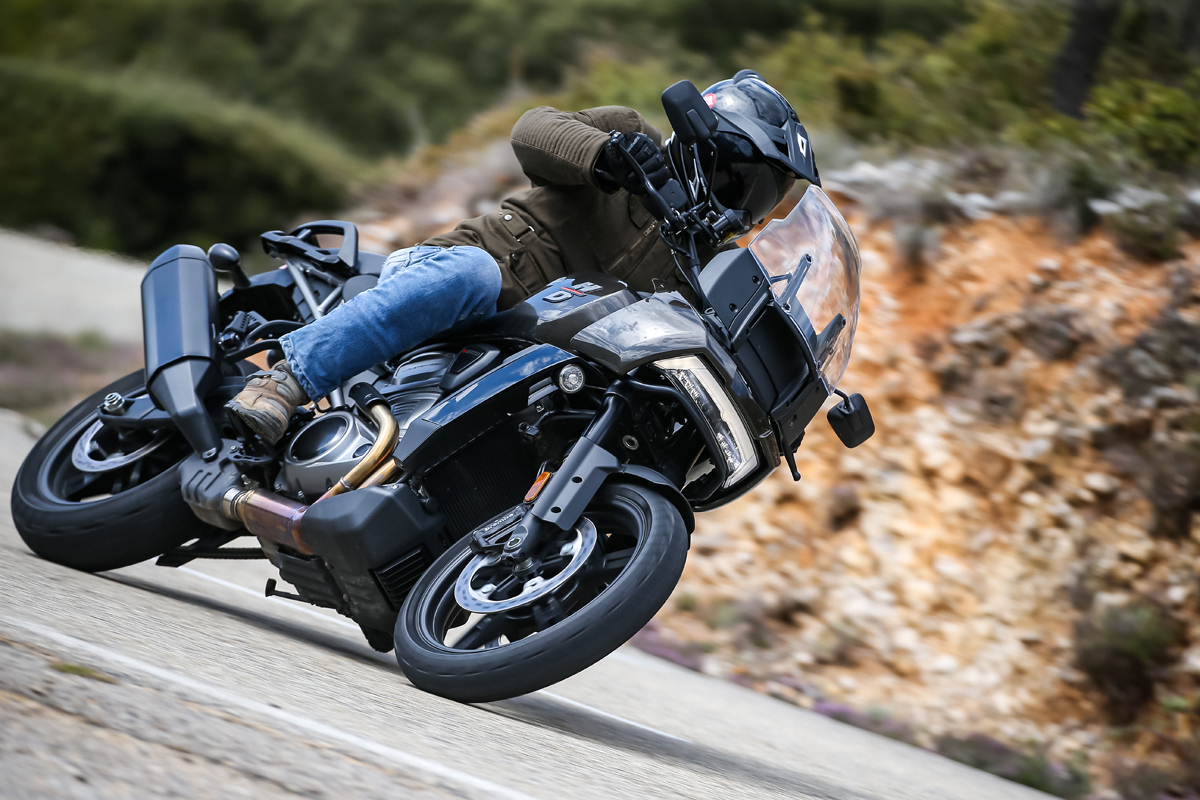
A couple of seconds later I was trashing the throttle, to discover the perfect stability of the Pan America, and the great composure of the suspension. The rather linear personality of the V-twin engine also helps for subtle traction and acceleration control. While I was missing a quick-shifter on the road (I wasn’t actually missing it, but since the competition offers it, it feels like it’s missing), it was possible to gear up without using the clutch on the gravel.
My only concern is seeing the voltage regulator grill quite exposed in the middle of the aluminium bash plate… will the Pan America’s 210 mm ground clearance be enough in rocky sections?
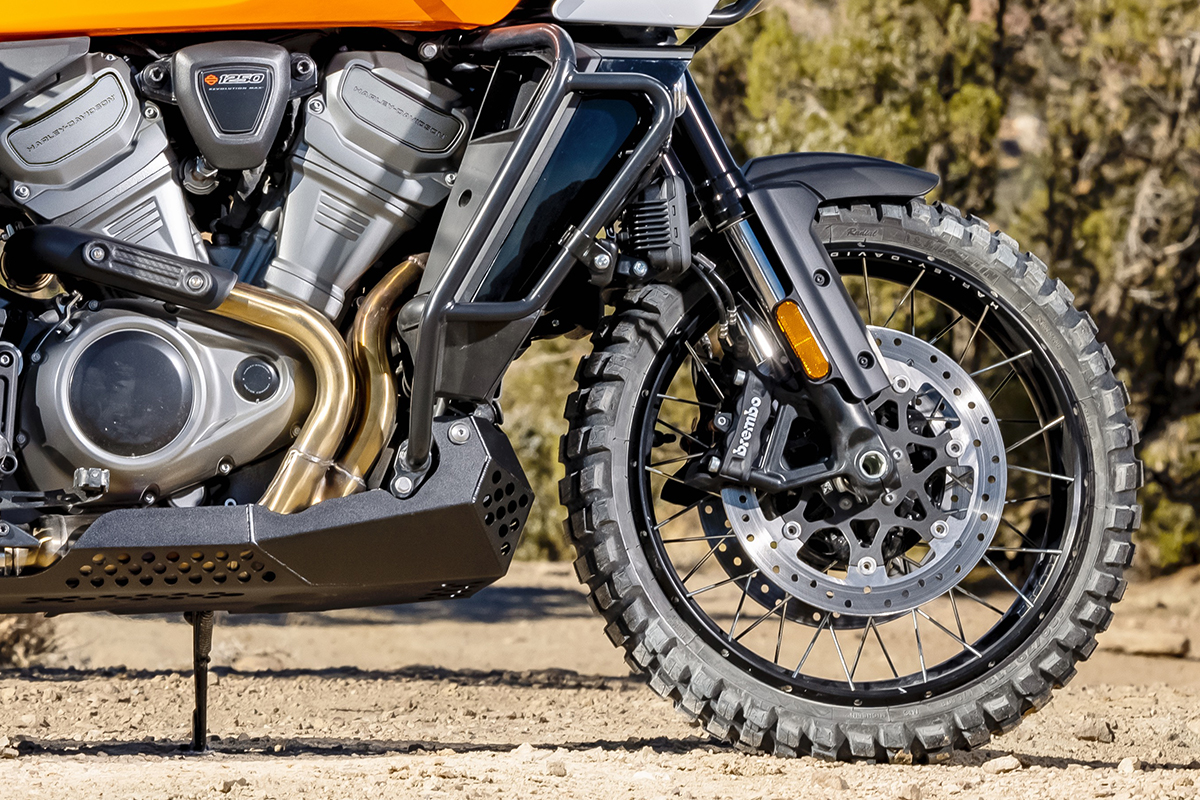
And what about the ‘standard’ version?
I also had the chance to ride the standard version of the Pan America 1250, which appears to be a bargain at R310,900 when compared to the R352,800 of the Special. Of course, you’ll then have to deal with a lower level of equipment.
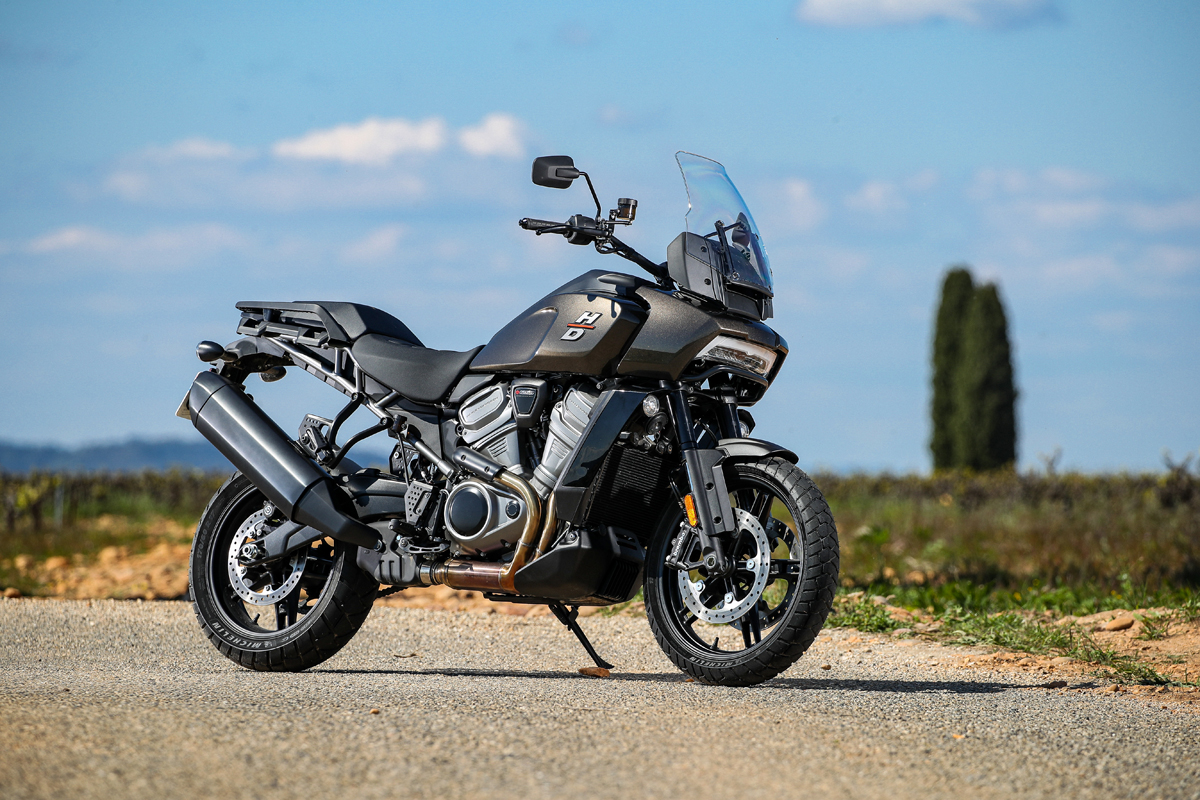
The standard Pan America does not feature the adaptive suspension system, cornering lights, hand guards, heated grips, crash bars, aluminium skid plate, centre stand and a few more small items. You also can’t spec it with factory options, like spoked wheels or the ARH system. There are less colour choices too, and the tank logo is an actual badge rather than the painted logo on the Special.
There is one up side: if you go for the standard version, you’ll save R40,000 and 15 kilos. Want another? The standard version doesn’t have a steering damper, and that makes the front end feel much lighter at small and average speeds. It’s the kind of feeling that makes us love trail bikes in the first place, because they feel more nimble and intuitive to ride. So ultimately, the standard version has a lighter and more fun front end.
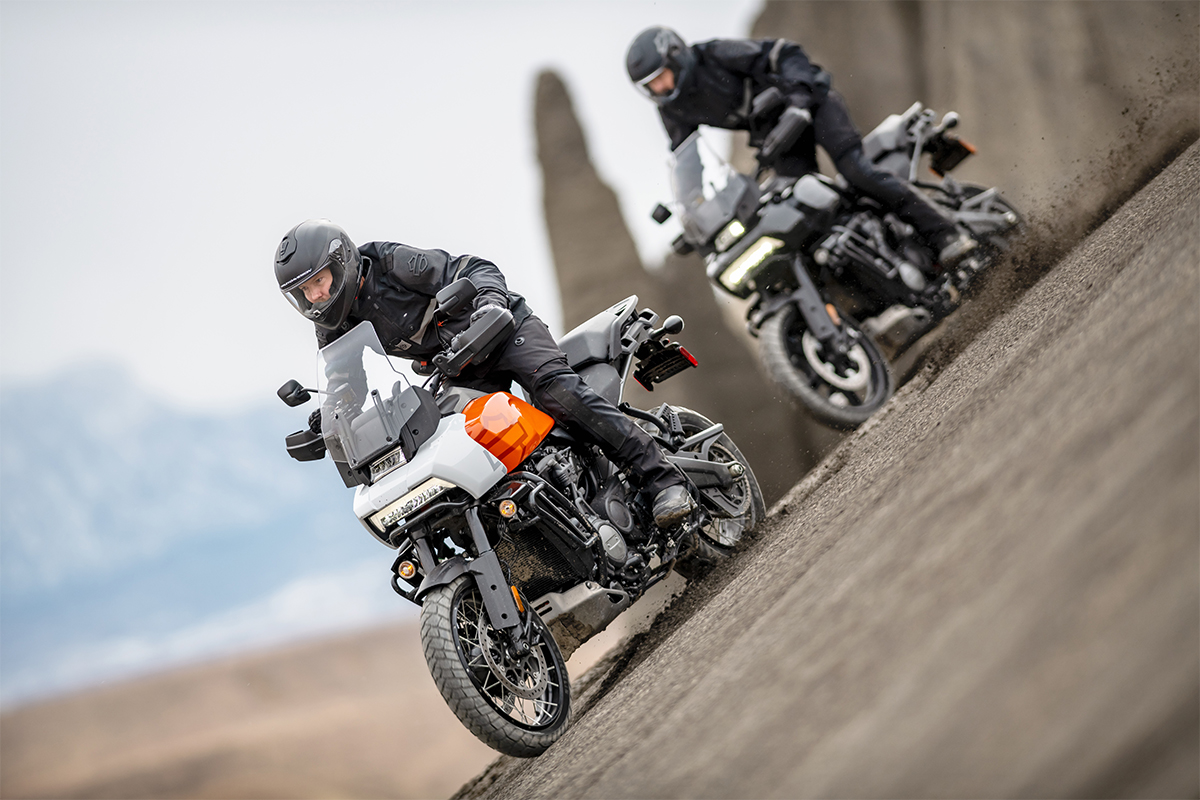
Will you miss the steering damper? It’s hard to say, because, during two days of riding, which included some road sessions at a rather fast pace (since one of our marshals was an FIM Endurance world champion), as well as a fair time of off-road, we never experienced any sort of head shake from the Special. So it clearly has some effect.
The Special’s semi-electronic suspension is versatile, delivering sporty road-holding in ‘Sport’ mode and softer characteristics off-road, and can handle a pillion and luggage equally well—all by pressing a button. But on the other hand, if your riding is more or less the same most of the time, the Showa equipment on the standard Pan America 1250 is more than adequate.
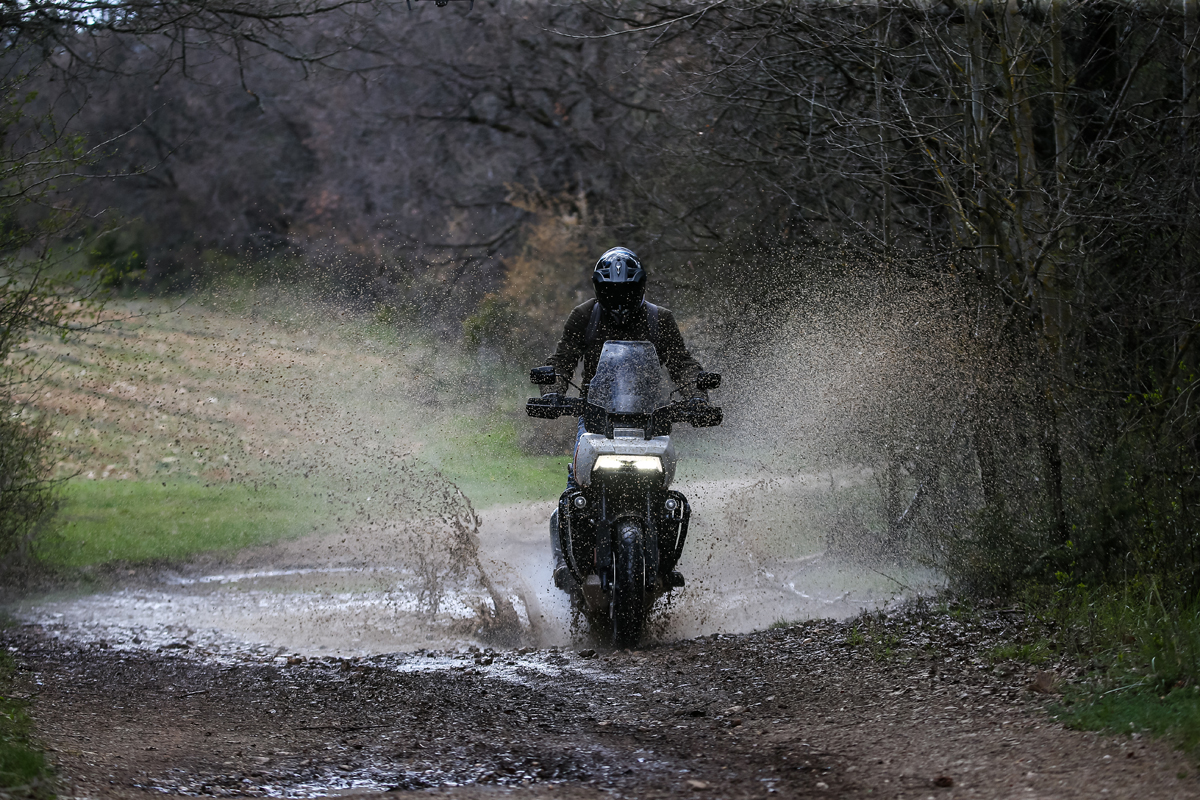
For my money, I’d choose the standard issue Pan Am with two extras: hand guards and heated grips.
Overall, I reckon the American machine offers one of the best fun-for-Rands and touring packages in its class. One thing’s for sure: it’s worth a test ride.
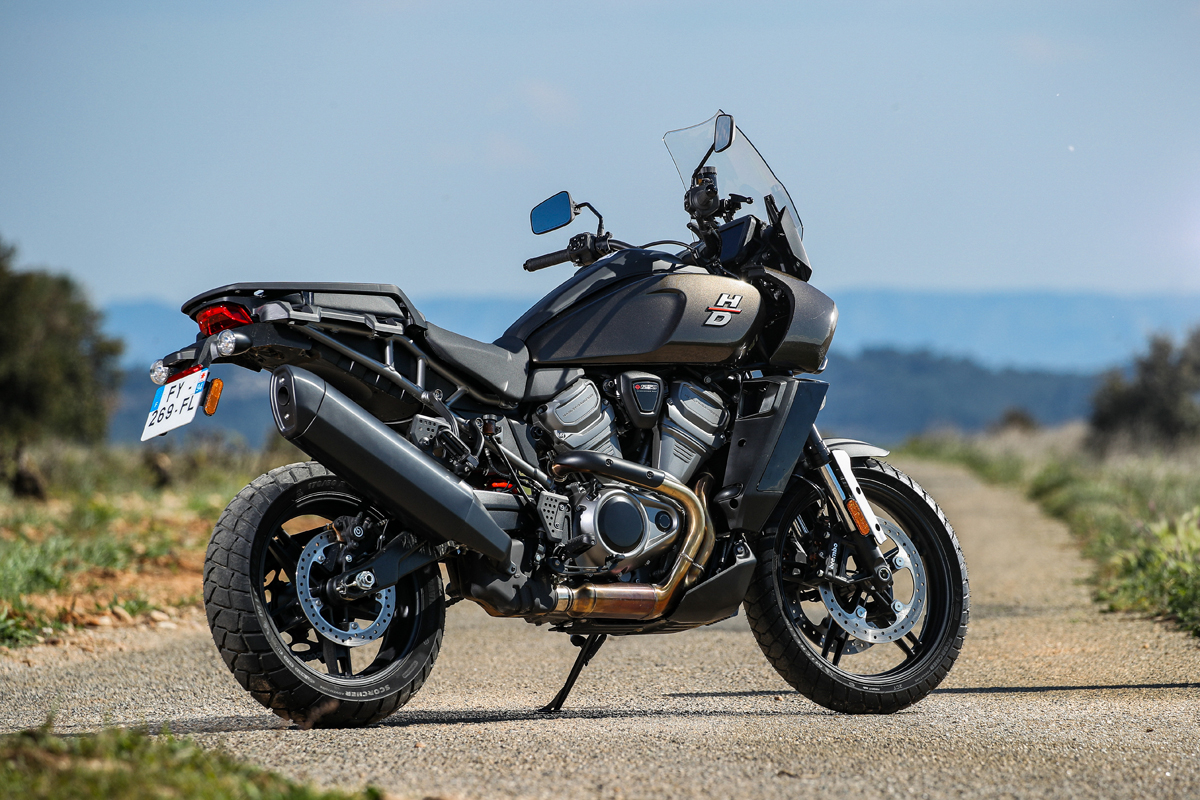
For more info contact: www.roc-hd.co.za
Liqui Moly Chain Spray – put to the test!
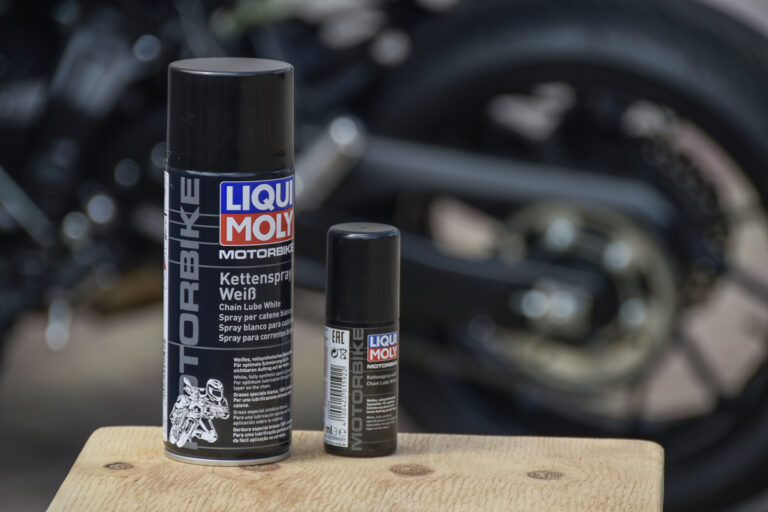
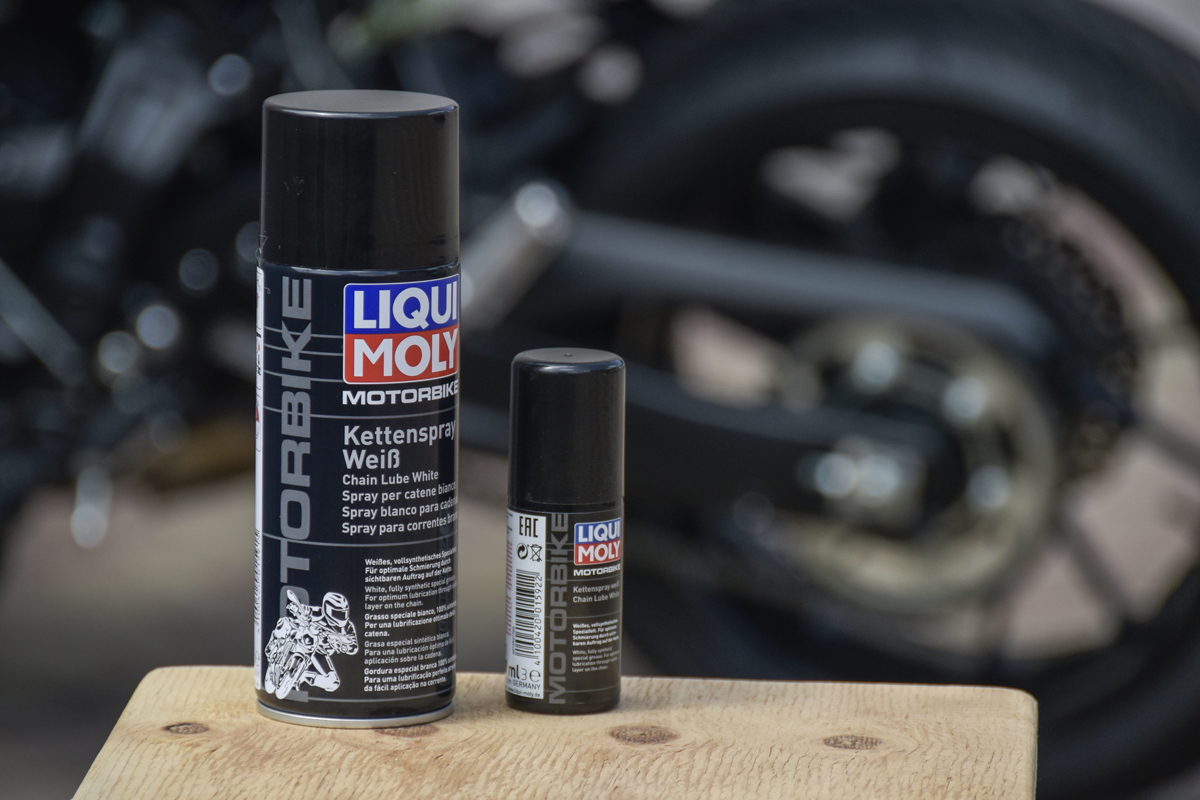
I have owned over 340 motorcycles over the years, most of which utilised chains to transfer the engine power to the back wheel. Put like that, it makes you realise that without a chain, your 200 and plenty horsepower crotch rocket is pretty damn useless. It also suggests that if you can keep that chain in optimum condition, it will transfer the maximum amount of power possible, to your back wheel. Chain design has advanced tremendously over the years. Introducing ‘X’ and ‘O’ ring chains have helped extend chain life and reduce friction, with resultant power loss, to a minimum. The seals on the individual link pivots use the seals to keep grease in the chain roller internals, allowing them to rotate freely. So why do we need chain lube then? For two primary reasons. Stop the chain rusting and lubricate the metal on metal surface between the rollers and the sprockets.
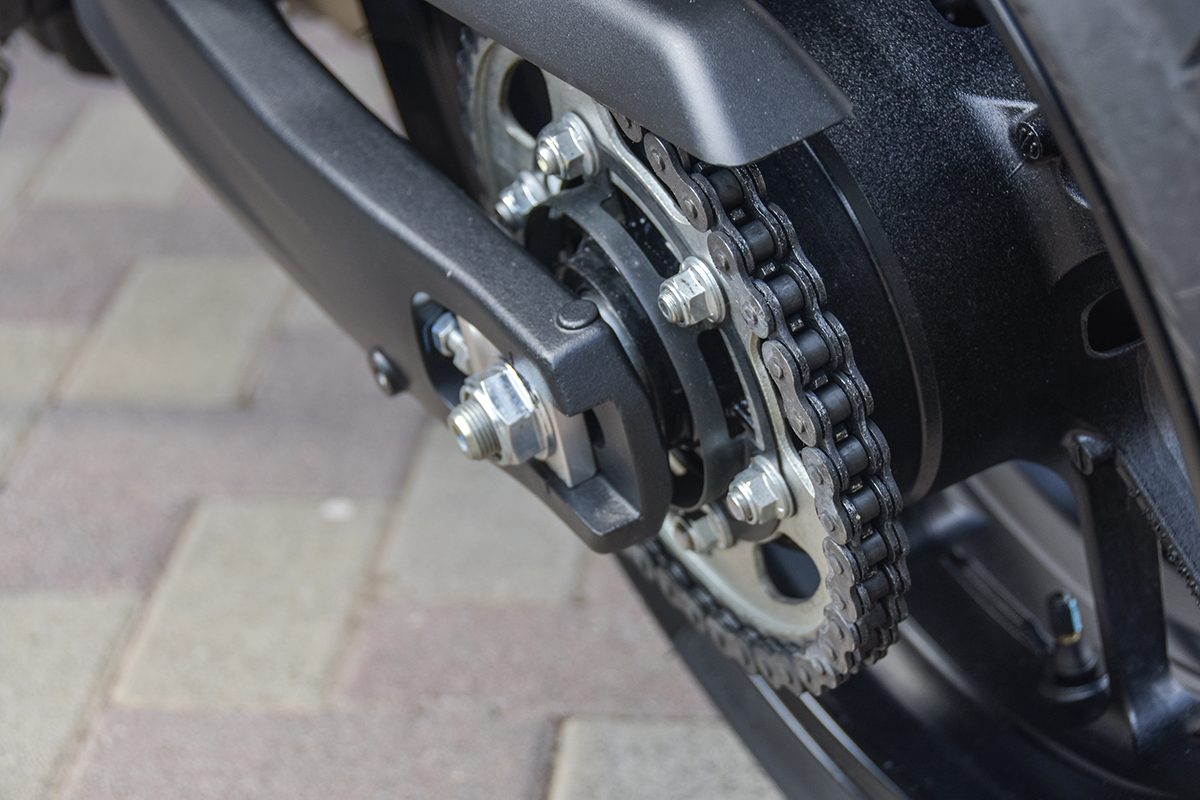
Sprockets? Forgot those didn’t you? Chain Spray should actually be called Chain and Sprocket Spray, because that is what it preserves and protects. By regularly applying a decent lube to your chain you will significantly extend the service life and enhance the power delivery properties of your running gear. Enter Liqui Moly’s fully synthetic Chain Spray.
I recently rode down to the Champagne Sports Resort in the Berg. This was a perfect opportunity to put Liqui Moly Chain Spray to the test. From a rider’s perspective, I want a chain spray or lube to do a few things. Owners manuals suggest the use, by and large, of “gear oil” to lube your chain. A typical thick, probably 90 weight, oil. Back in the day, before the serious advance of technology, this is what we used. It works damn well too! On the chain, back wheel, spokes, tyre, frame and last but not least, your pants.
‘Adhering quality’ is thus a biggie for me. The lube I use must stick to the chain and not fling off. By staying on the chain, it also lasts longer, requiring less frequent re-application. By reducing friction, also keeps temperatures down, again extending the life of the chain. I also rate the ease of application. A spray is easy and quick to apply and goes on evenly. So, before I left for the Berg, I applied an even, uniform coat of Liqui Moly to the chain on my MT-07 Tracer. Just have to pack my stuff bag and hit the road.
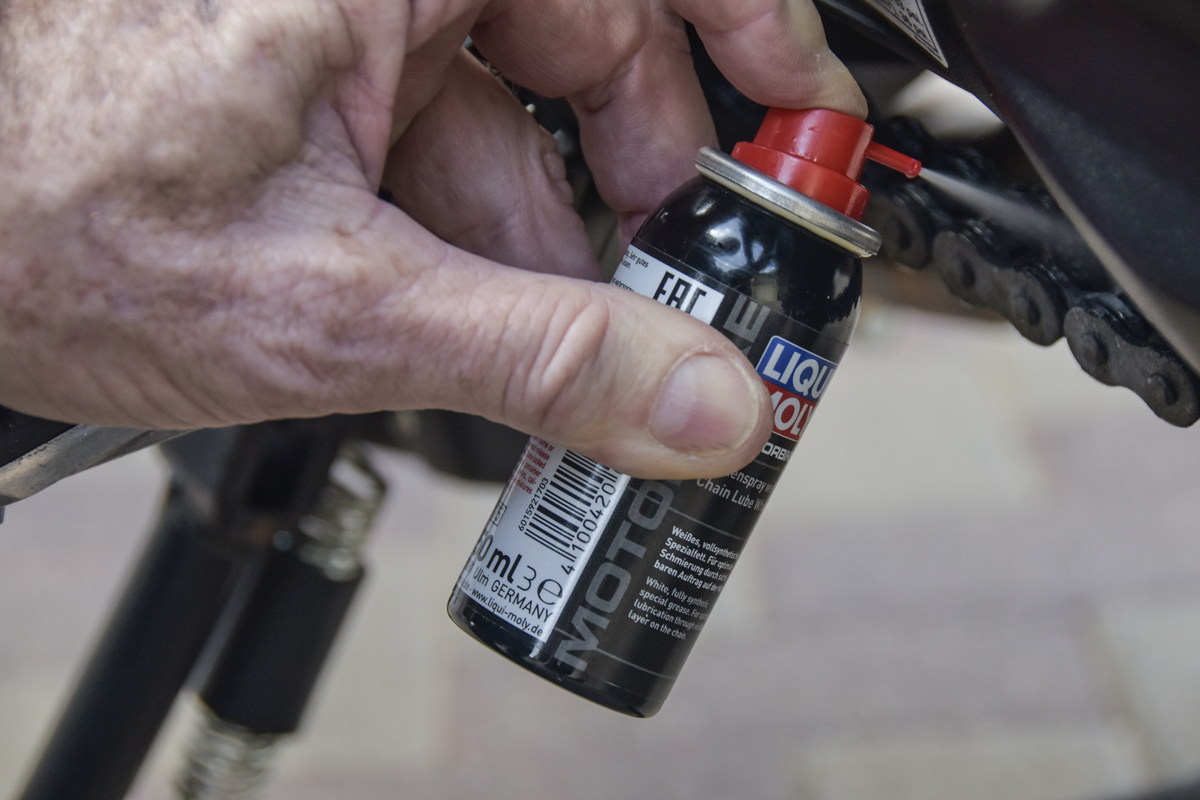
Here is where Liqui Moly have pulled an absolute Coup. We obviously need to pack the chain lube for our trip. Thing is, I don’t need to lug a 250 ml can along to apply a single squirt to my chain for the return journey. Liqui Moly have come up with a simple solution, possibly prompted by a cross-pollination from their excellent range of bicycle products. Cyclists have no way of carrying huge cans along, so Liqui Moly makes a tiny 50ml can that can be stuffed in the pocket of your cycling shirt, or for us motorised bicyclists, in a jacket or pants pocket. “Is that chain lube in your pocket, or………” tee hee.
This also means that you don’t have to open your luggage to get to your lube. You got more than enough for a return trip to Cape Town, literally in your pocket. Wait!, the cleverness doesn’t stop there. Pop the nozzle off your big can and little can, invert the small can and in the same way, you fill a lighter with fluid, you fill your tiny can from the Big Momma! The male/female nature of the two nozzles make it a fuss-free, mess-free doddle. Damn, that is so clever.
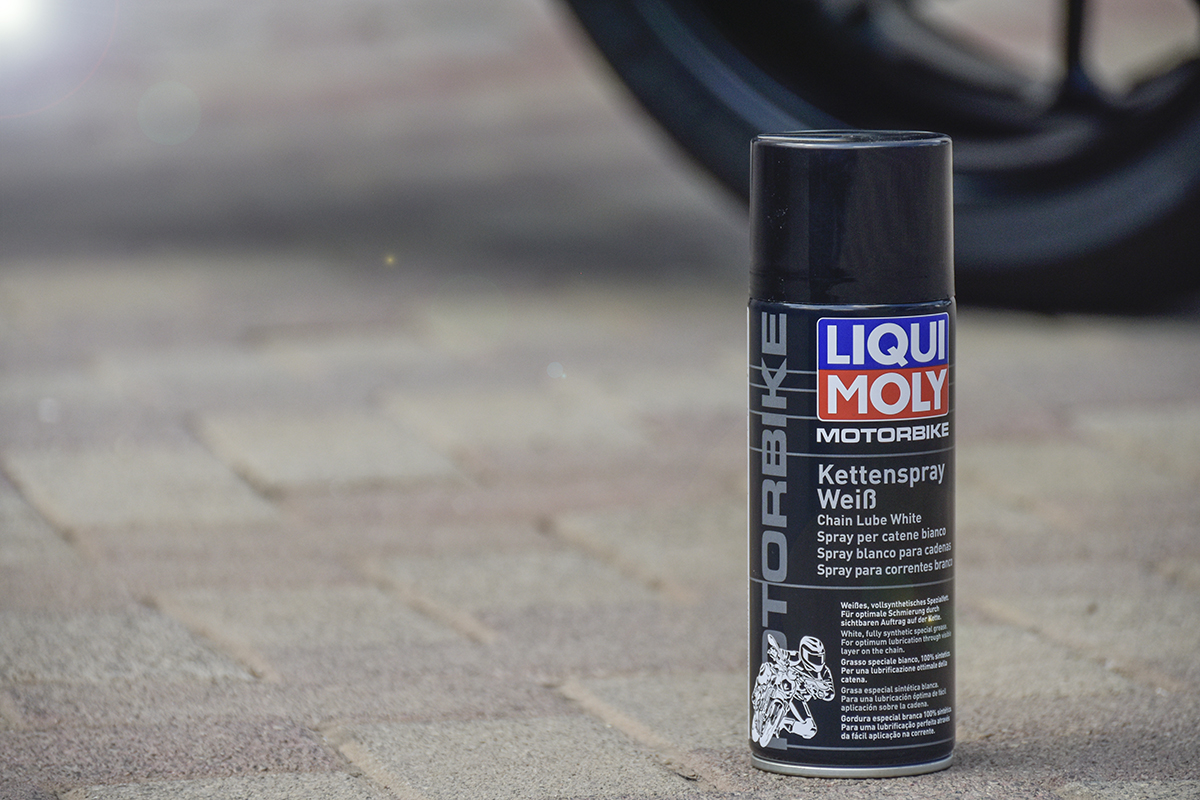
To check how well your lube is working you spy your chain from behind your bike, where it runs around your rear sprocket. You want to see dull, lube coated, rather than shiny rollers. After 400 kays the lube was still perfect. A sure sign of a spray that is not flinging off, breaking down but rather doing its job. I didn’t ride in the rain, so I can’t report on the water resistance, however, it is part of Liqui Moly’s recipe. This is what makes the small pocket can such a boon. If you need to apply regularly, you can. The lube is designed to penetrate, lubricate, resist flinging off, specifically at high speed and is at its best when the propellant has dried completely. Ester technology, which involves stable molecules, good solvency and superior extreme-temperature performance, at its best. I lube my chain when I can let it ‘rest’ a while, like when you lash a quick Wimpy burger and coffee.
For me, the quality of the lube and the convenience of the re-fillable pocket-sized can, is a game-changer. It almost goes without saying that Liqui Moly Chain Spray is suitable for all conventional high performance, as well as O and X ring chains. Another cutting edge product from Liqui Moly.
Liqui Moly Chain Spray
For more information on the product used in this article, click on the link below…