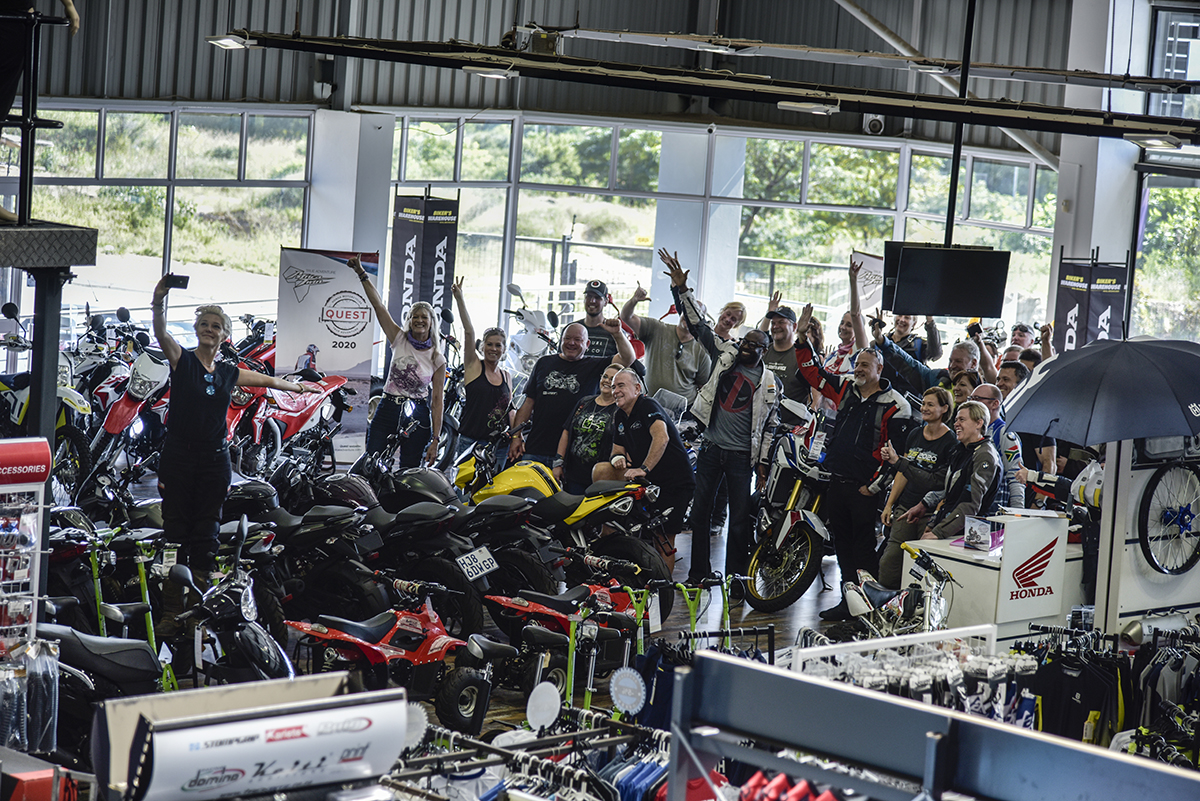
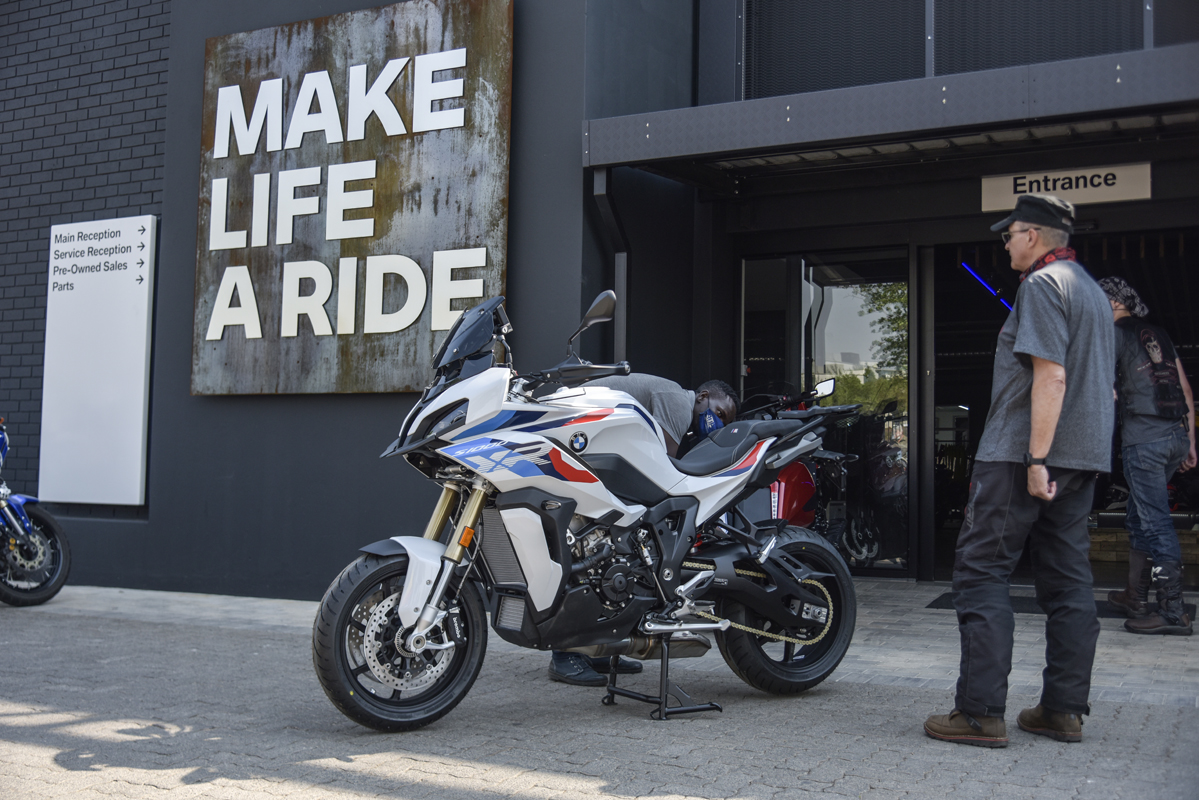
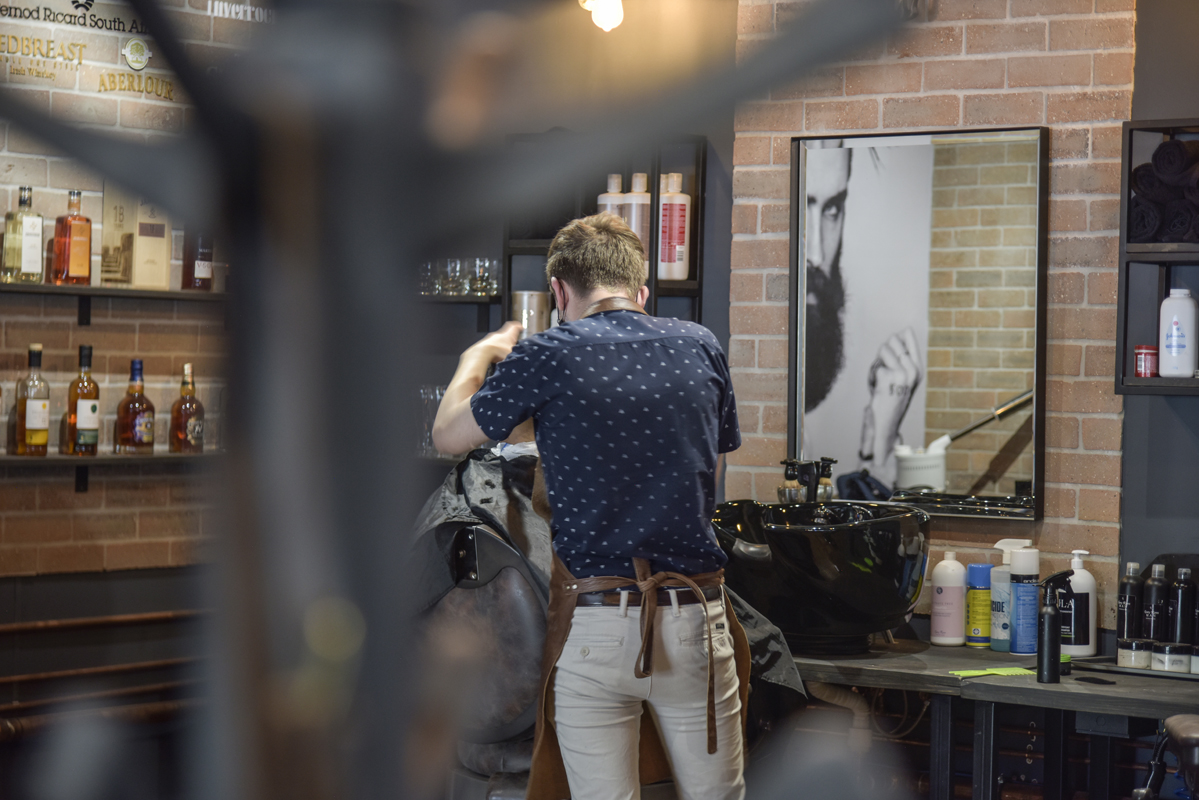
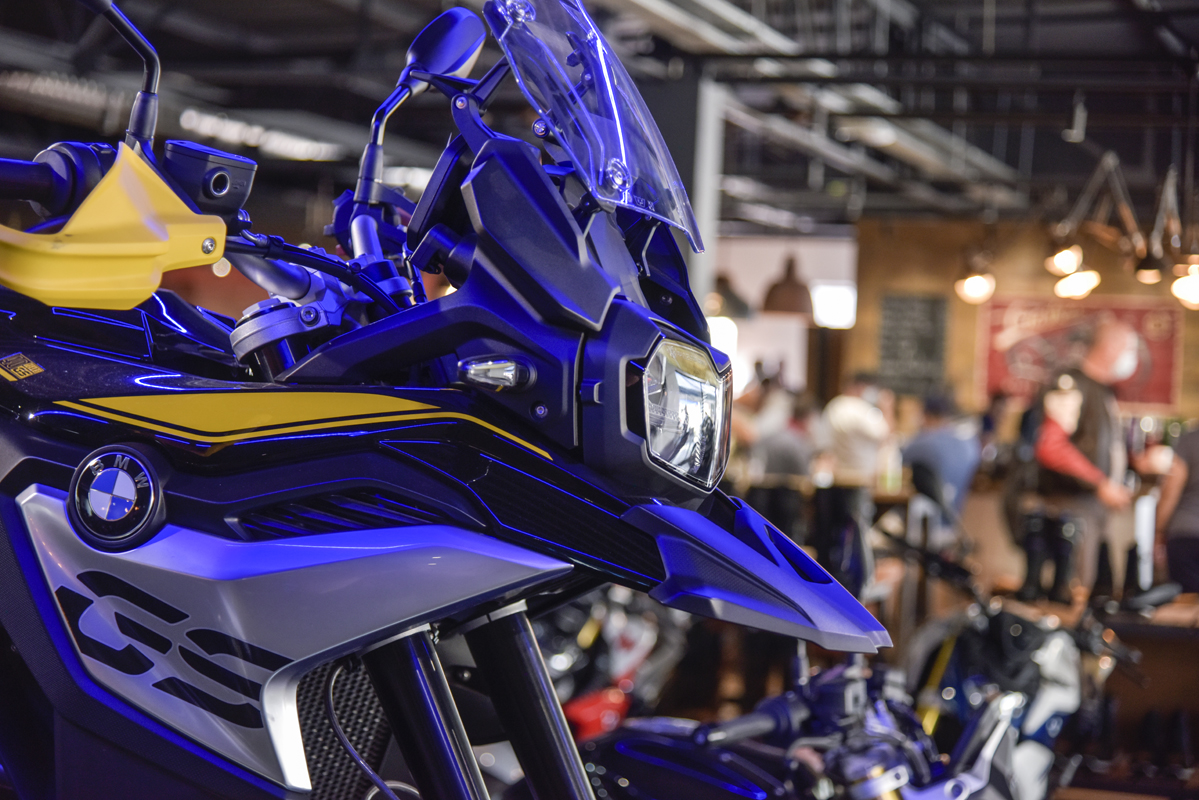
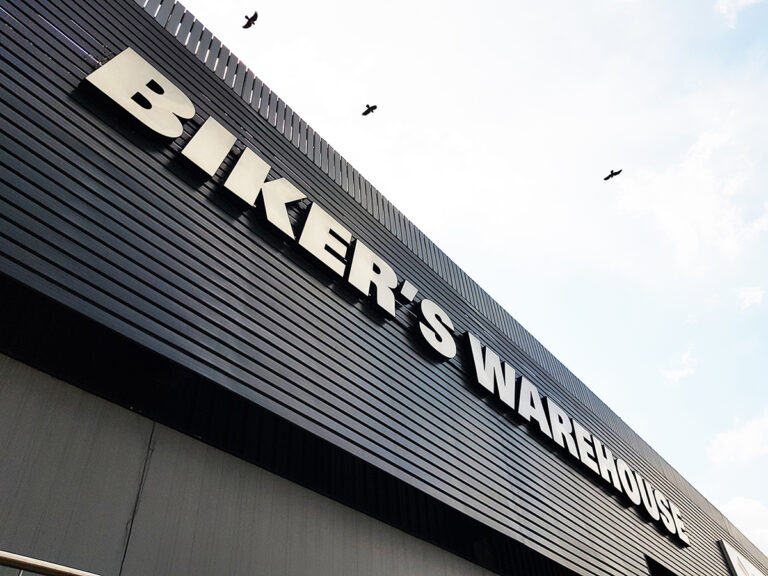
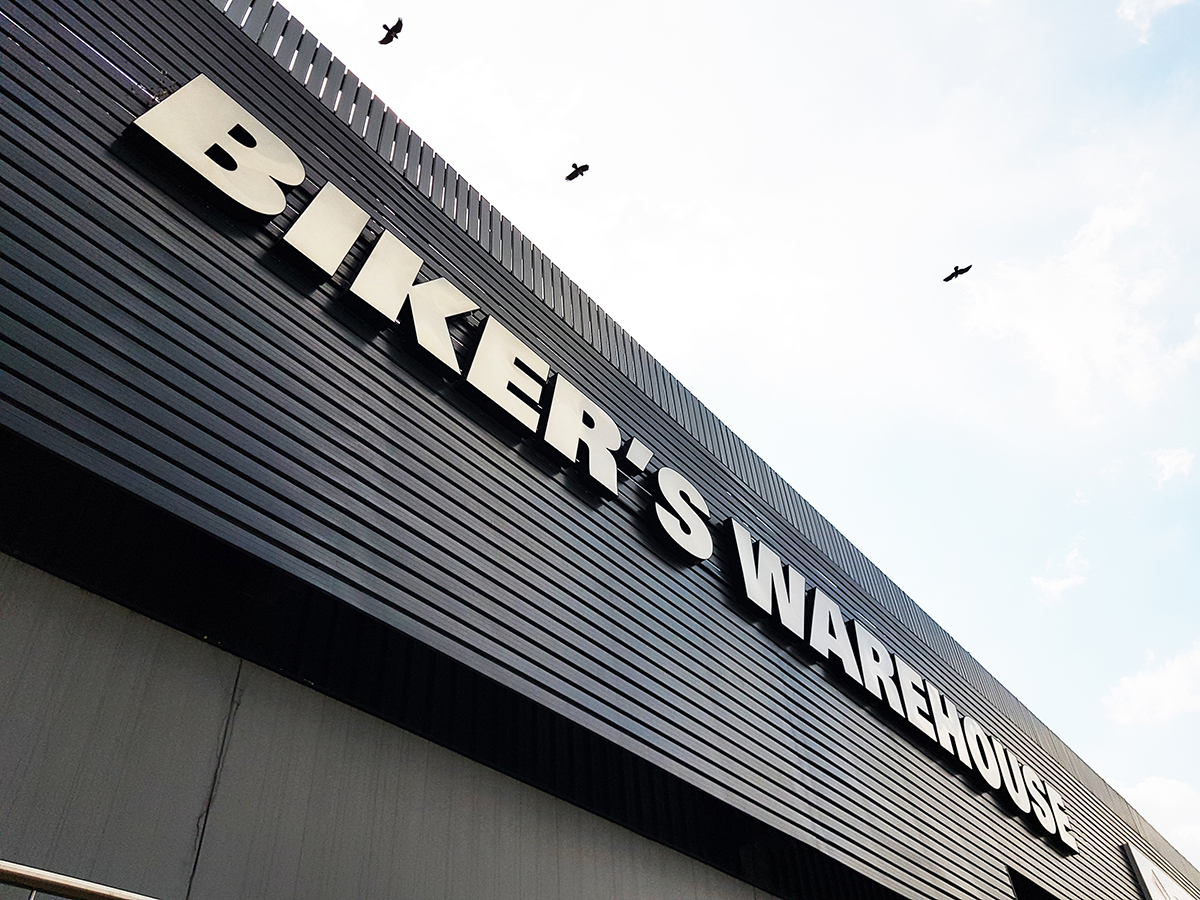
Any business stands or falls on the quality of its staff. That quality isn’t just how efficient they are or how good they are with customers, but a belief in the company they work for and the loyalty that engenders.
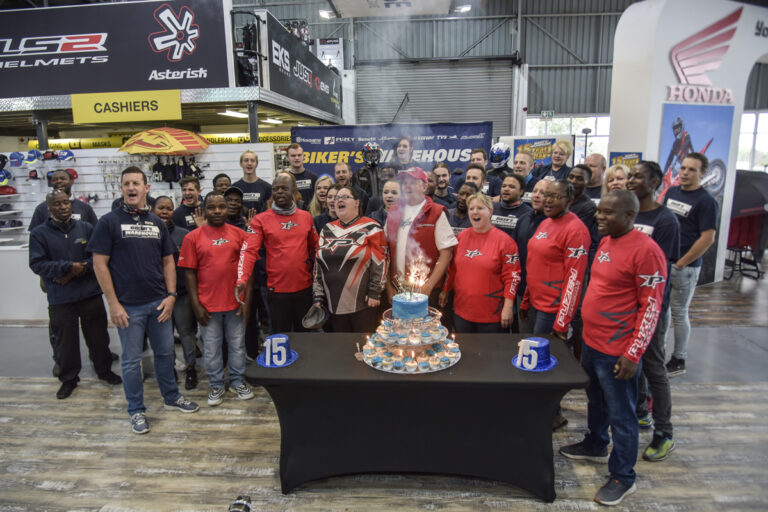
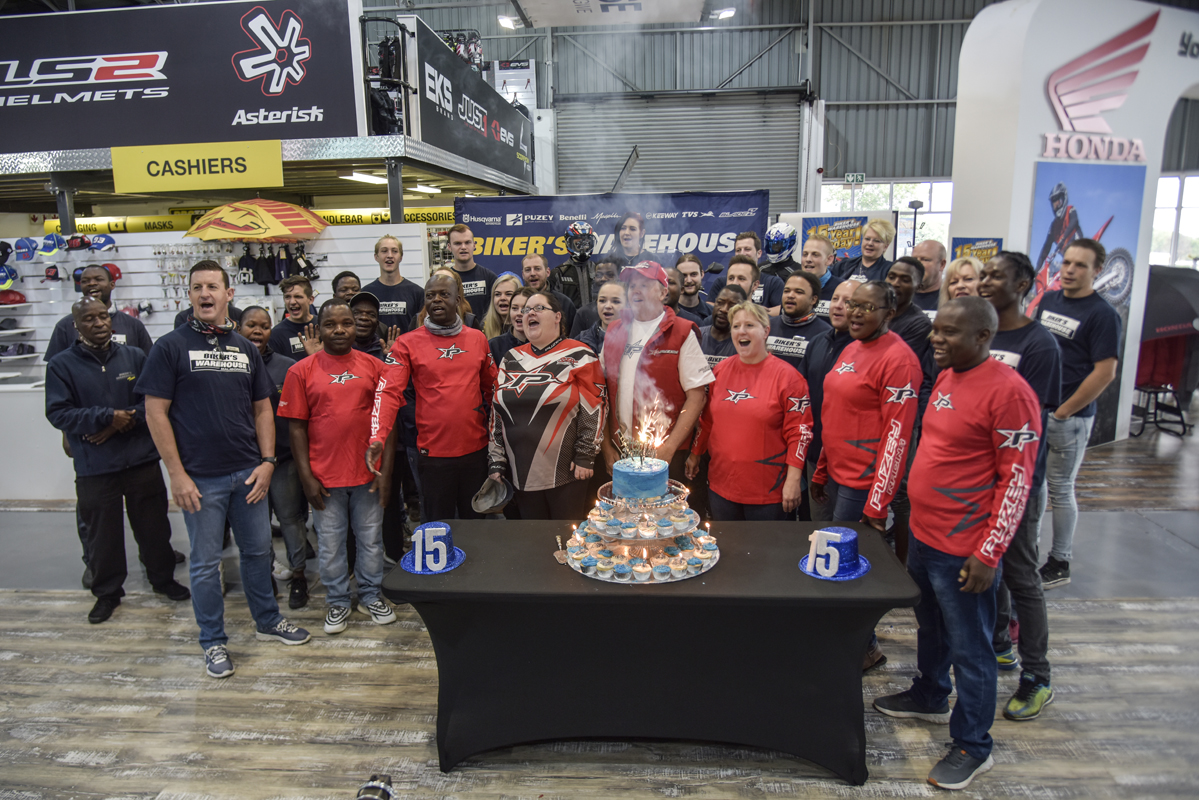
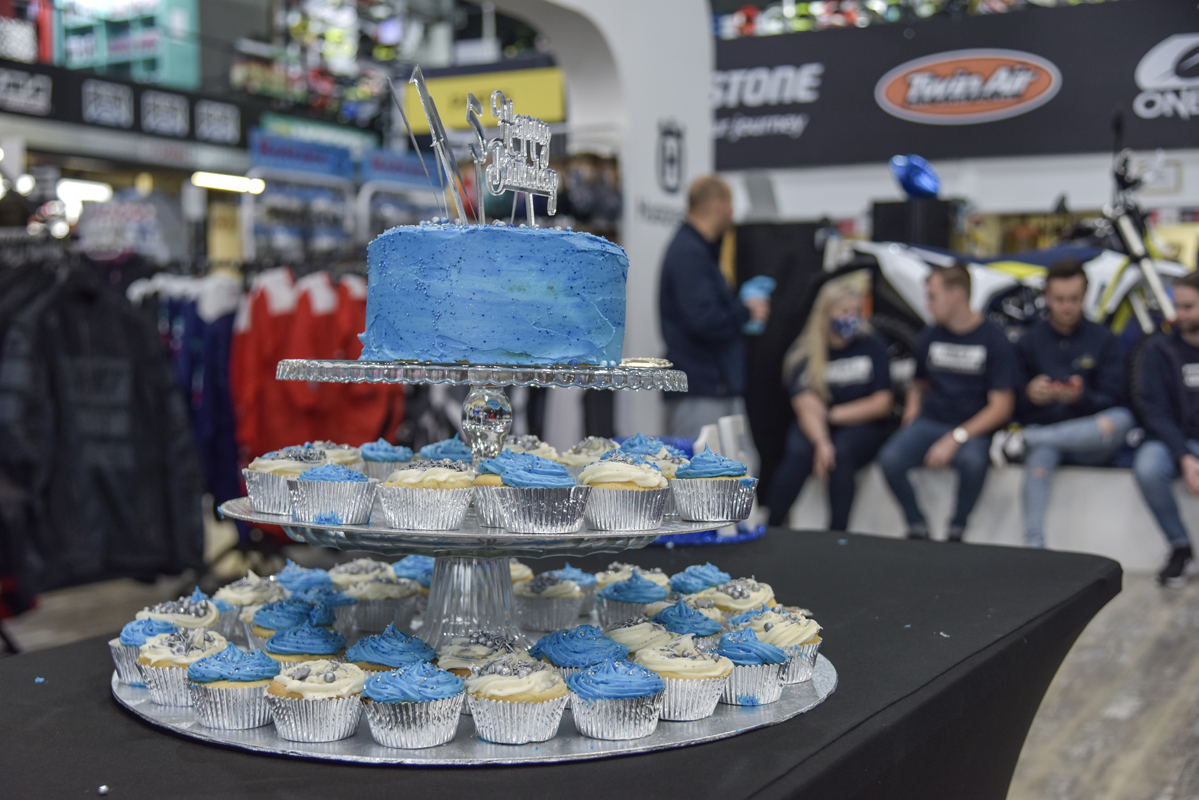
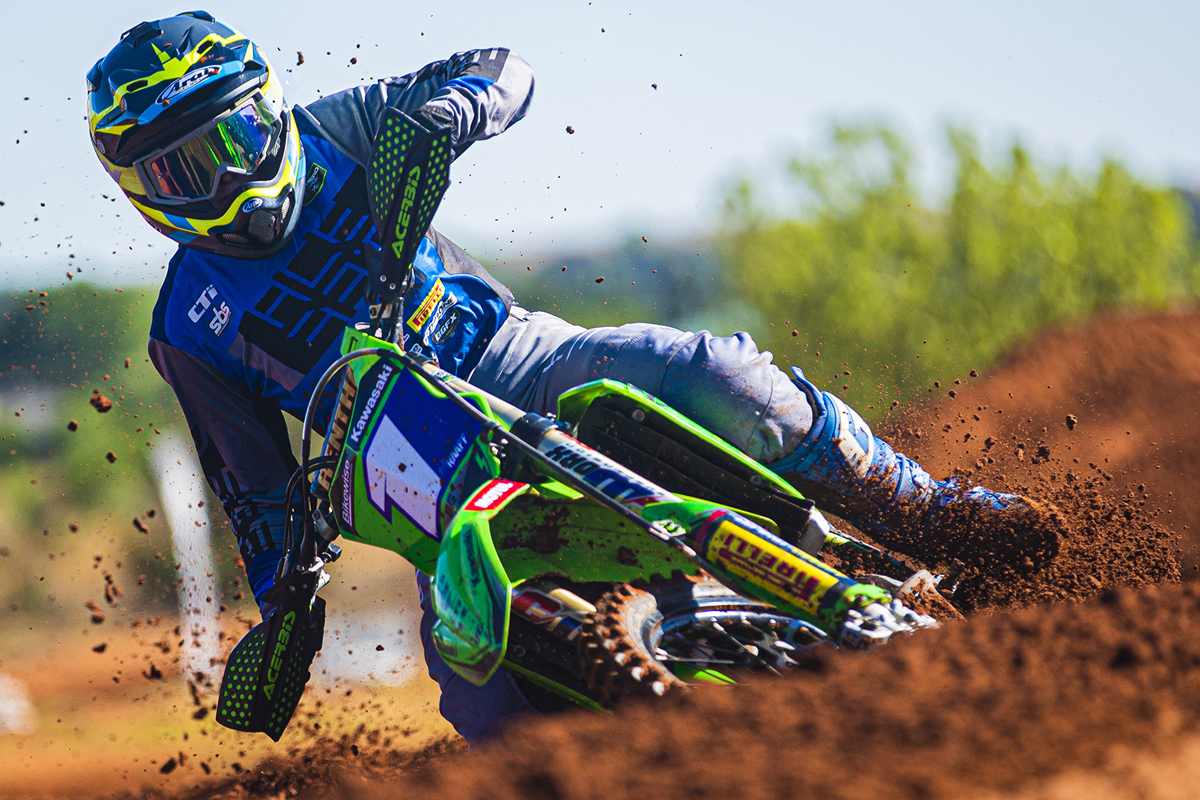
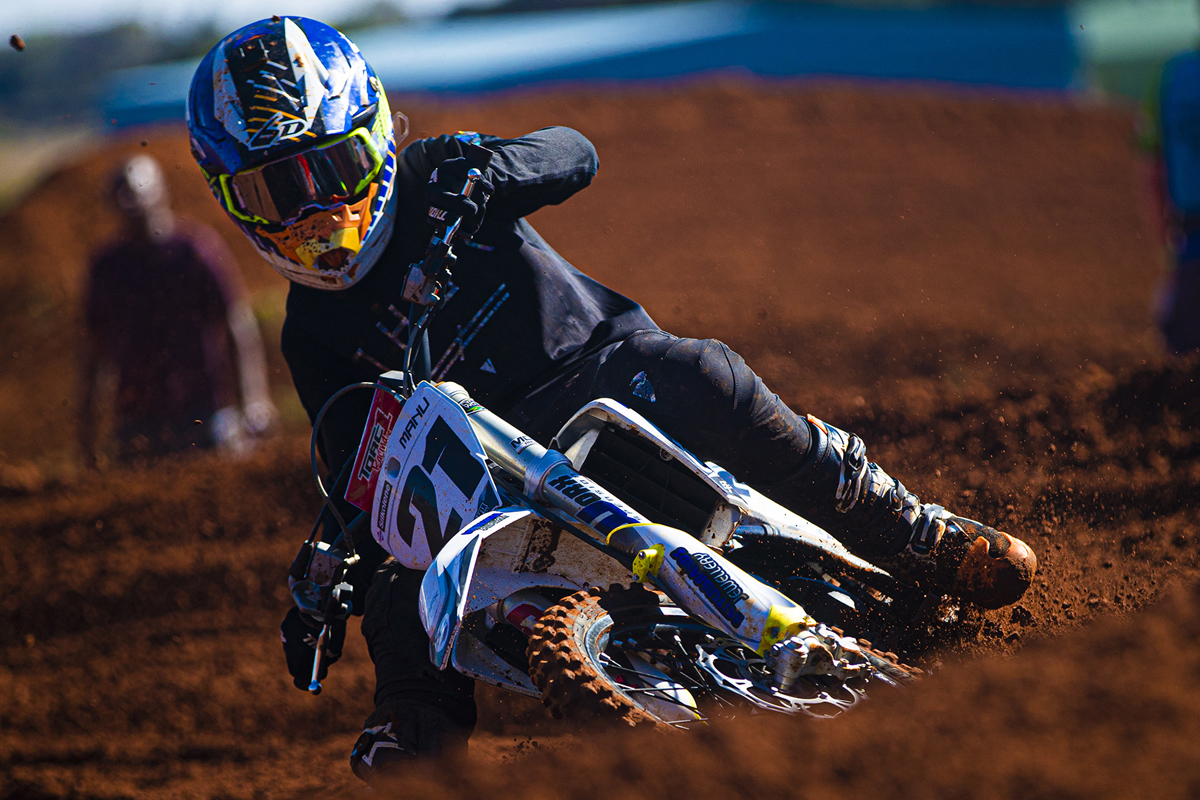
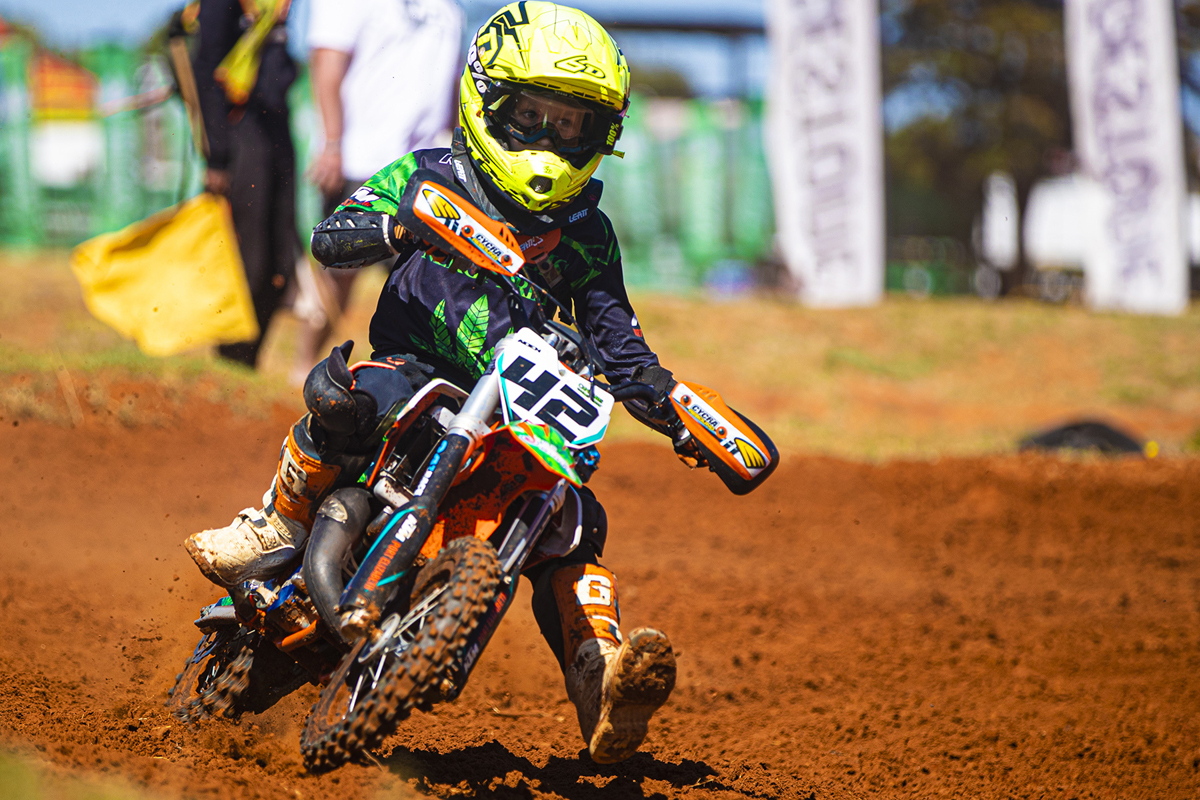
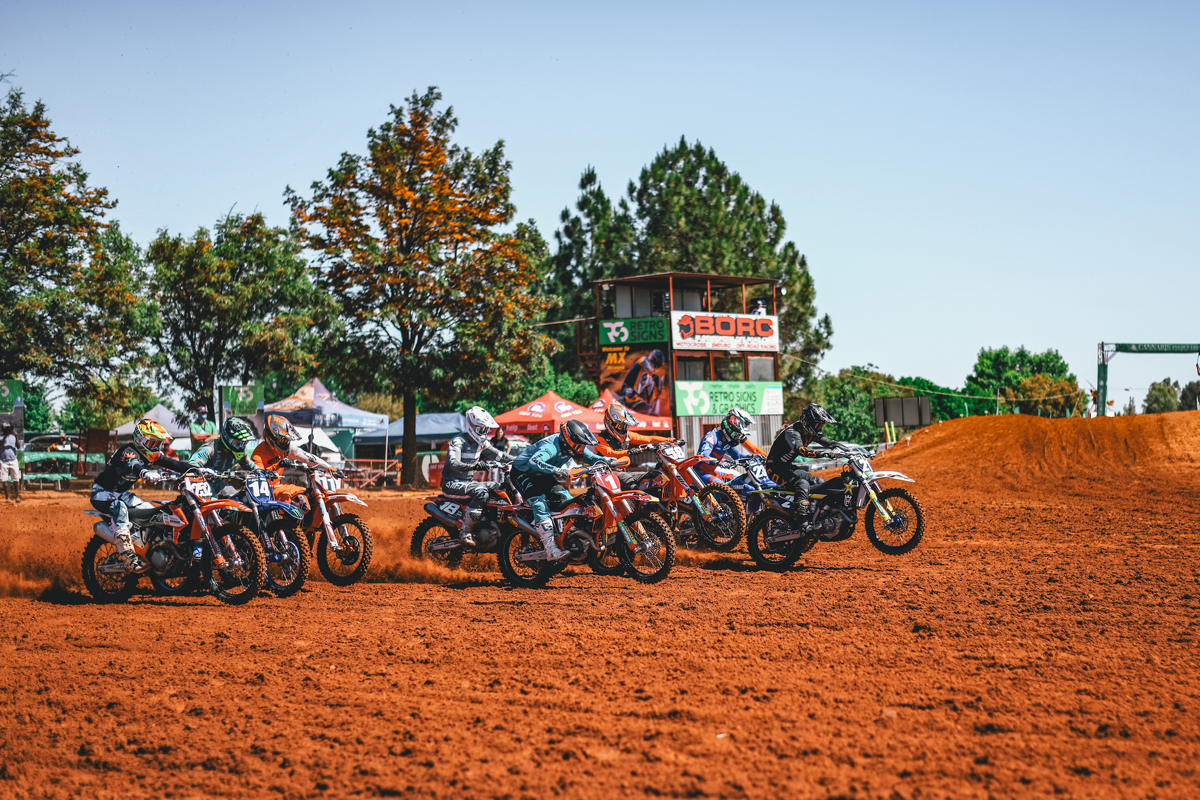
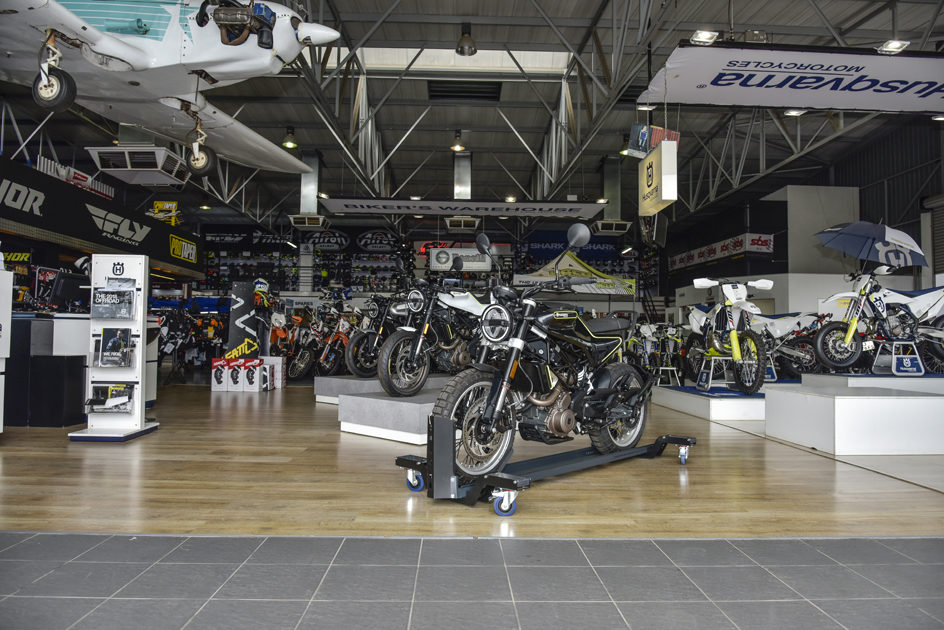
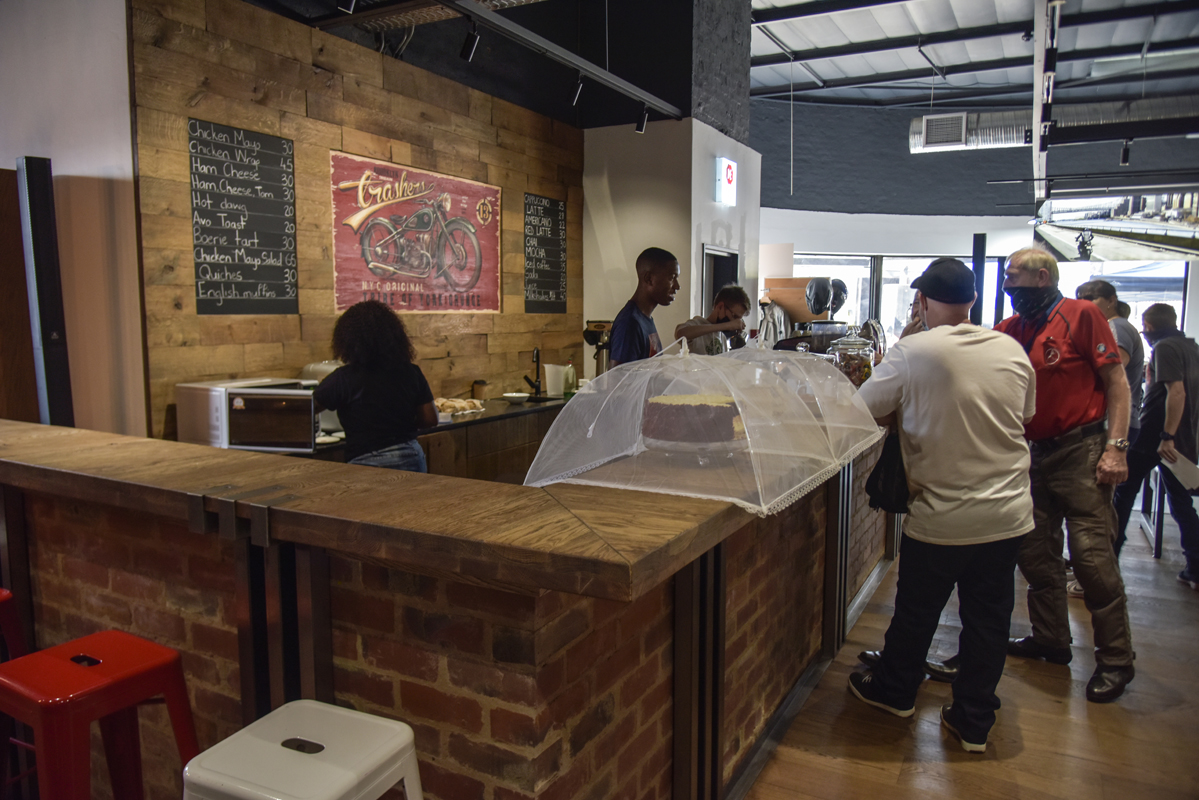
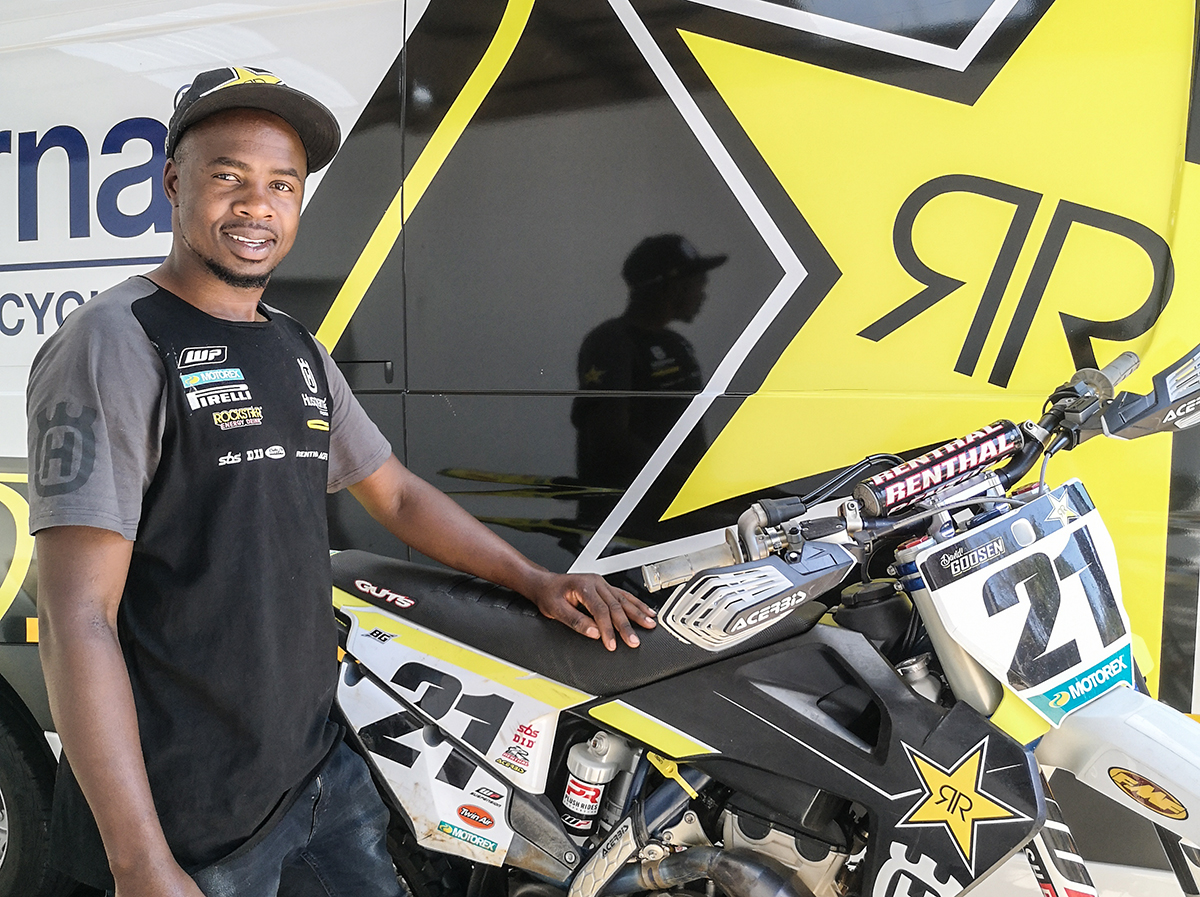
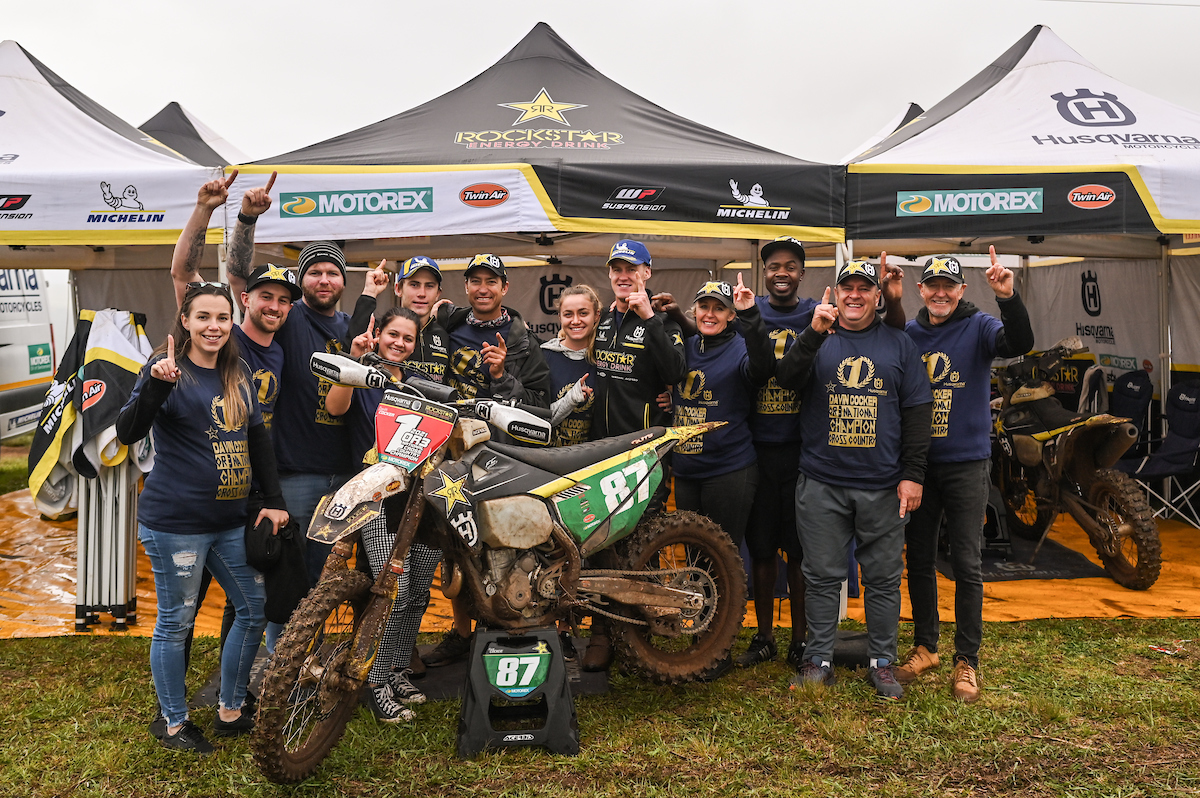
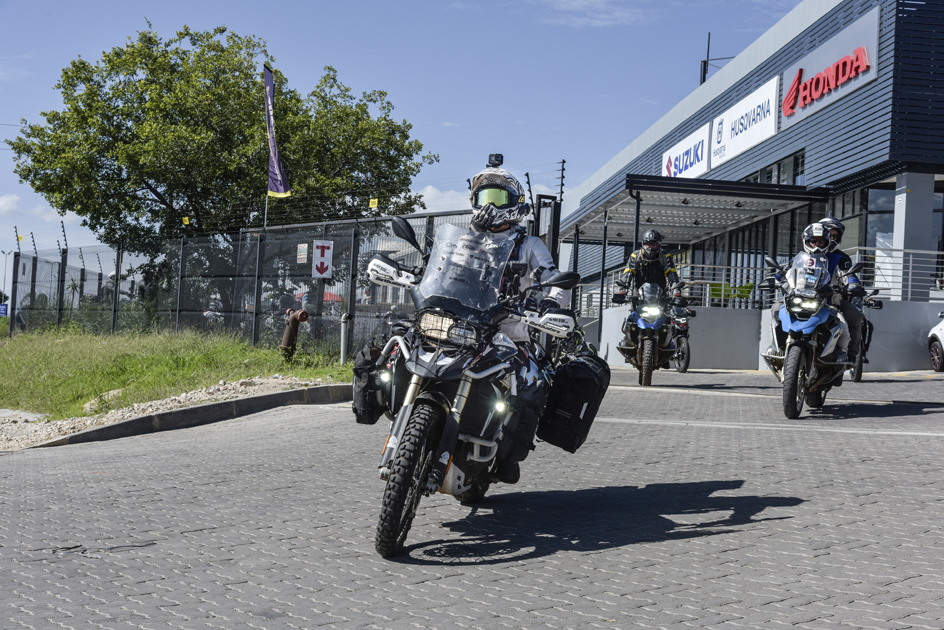
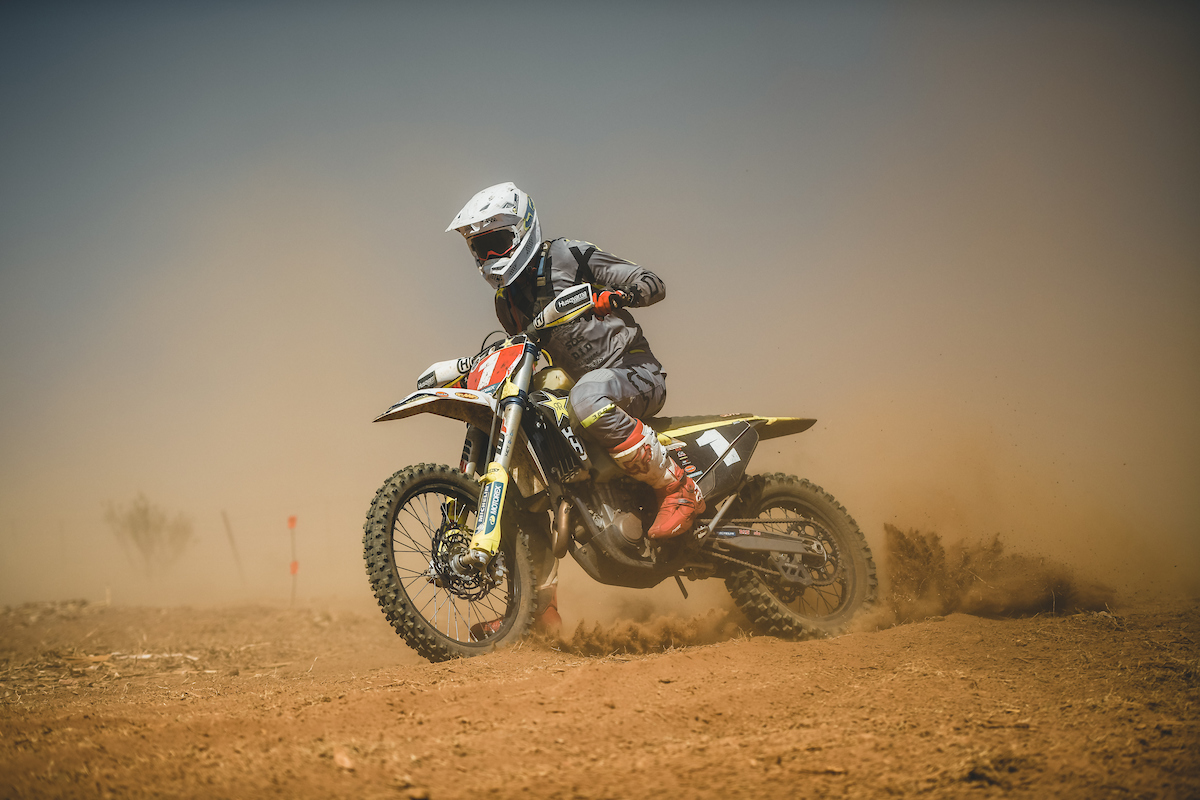
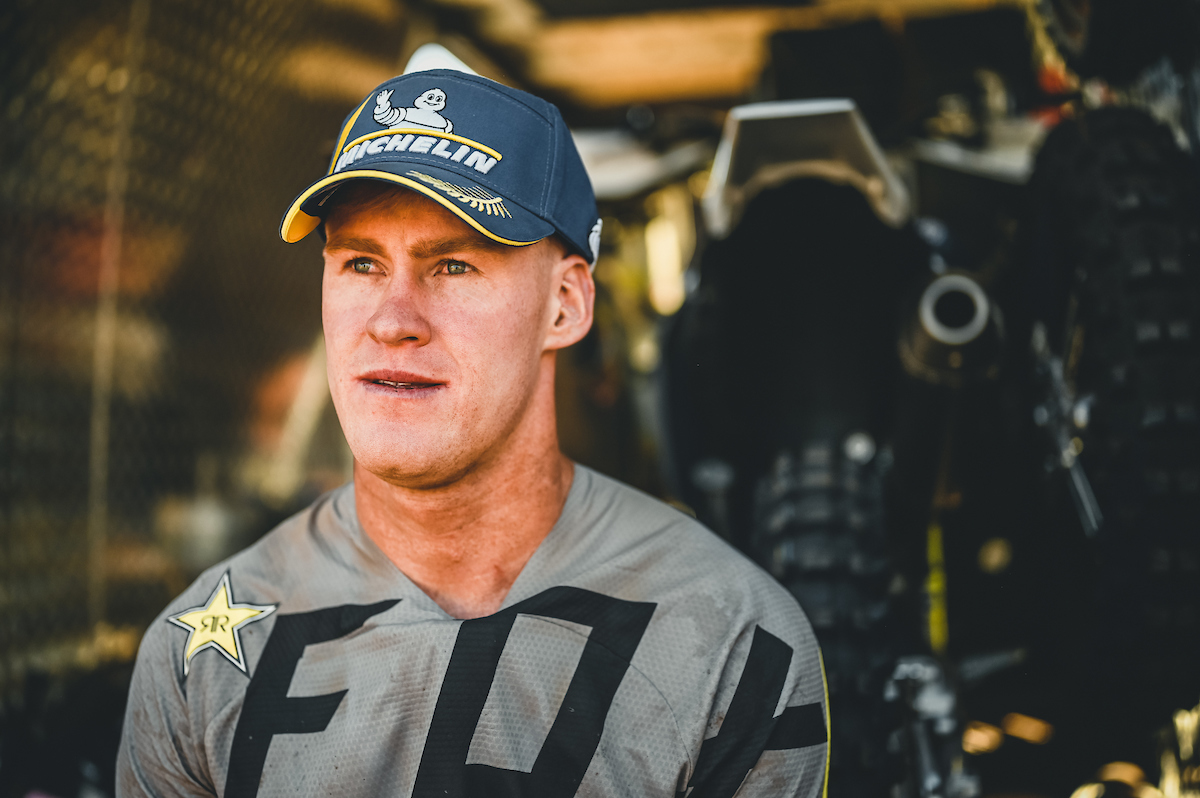
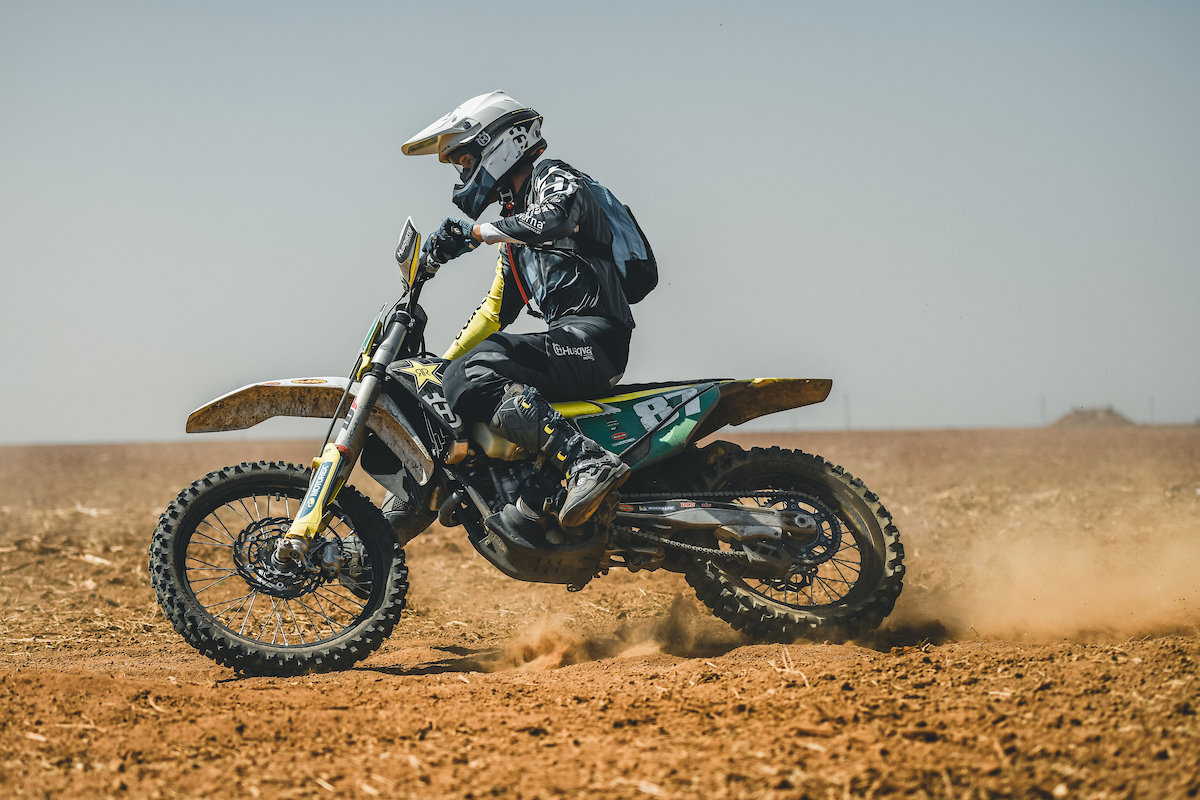
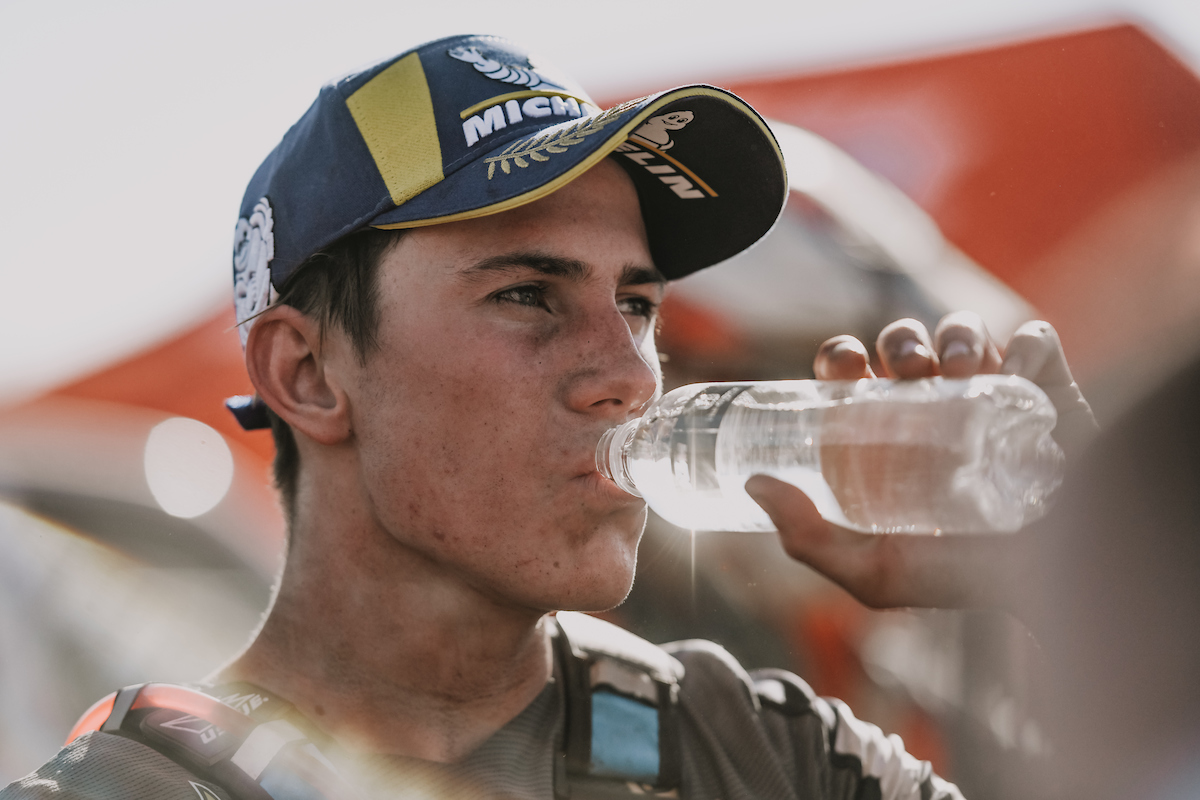
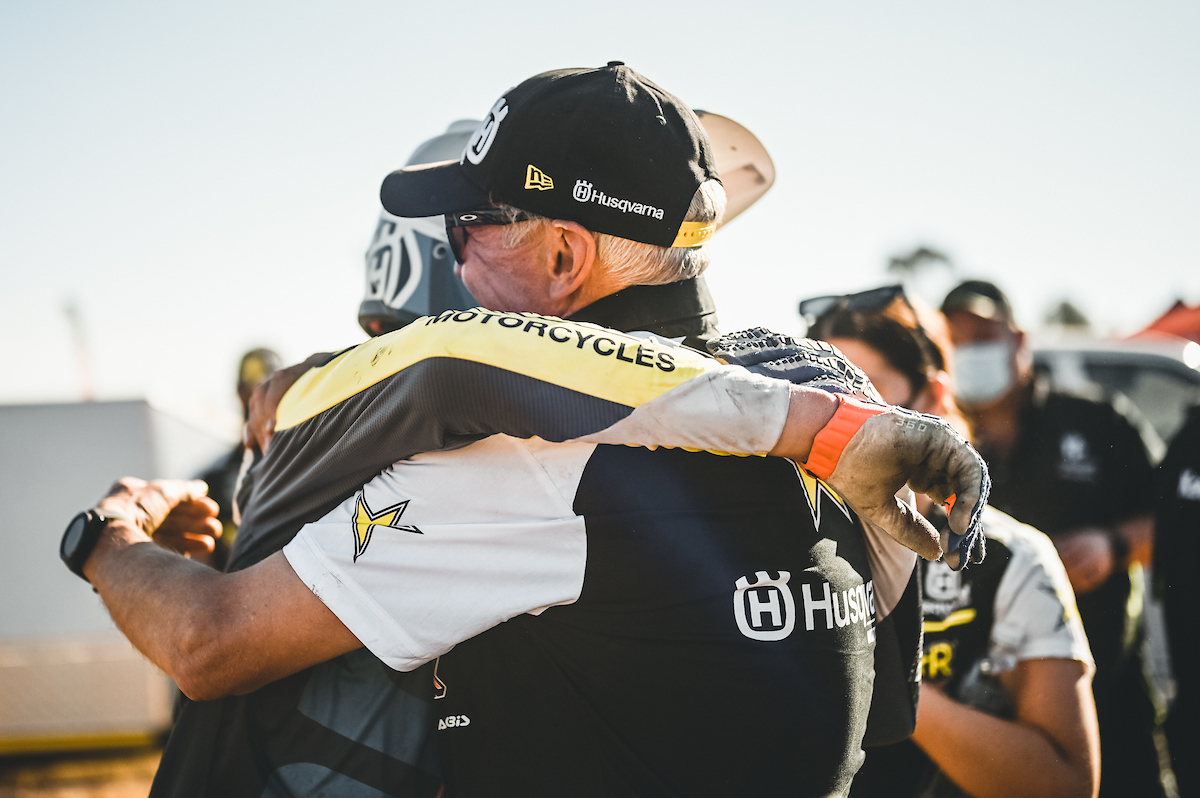
With Biker’s Warehouse celebrating its 15th anniversary, it’s remarkable to find that the so-called ‘first five’ employees are still with the company; Dudu Sansole, Israel Kazembe, Joseph Grayson, Diane Breinstampf and Elium Mchinguwe have been there right from the beginning and therefore have a deep understanding of the business, not to mention a deep friendship with Mike and Kerry Puzey.
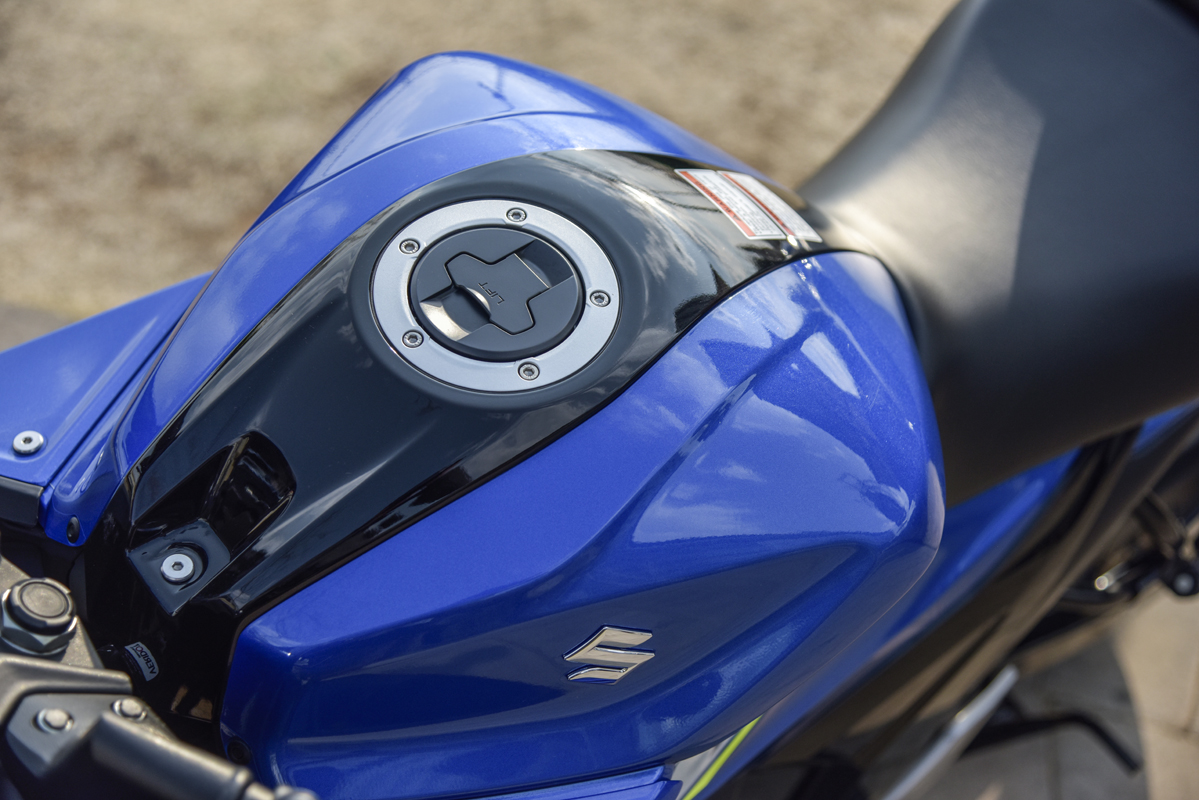
Photo credit: Bjorn Moreira / ZA Bikers
It’s this kind of longevity that provides a stable platform for the business to grow and thrive and provides continuity.
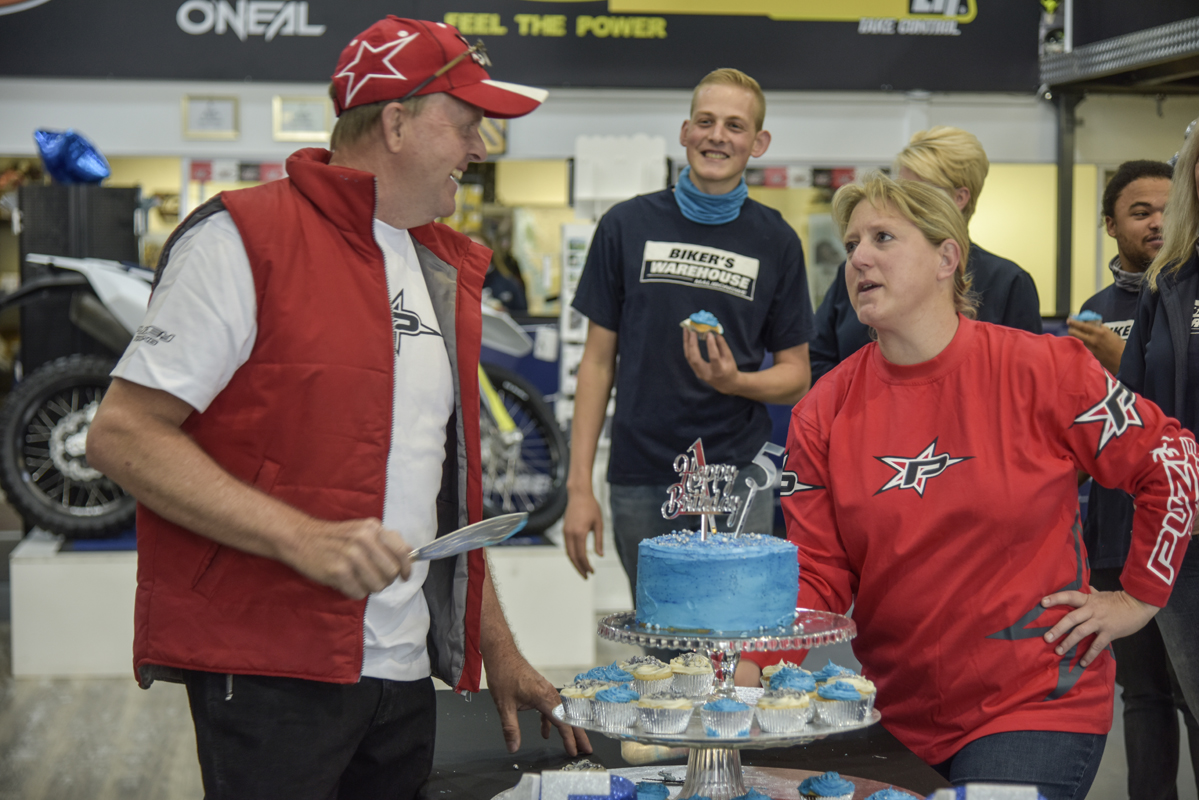
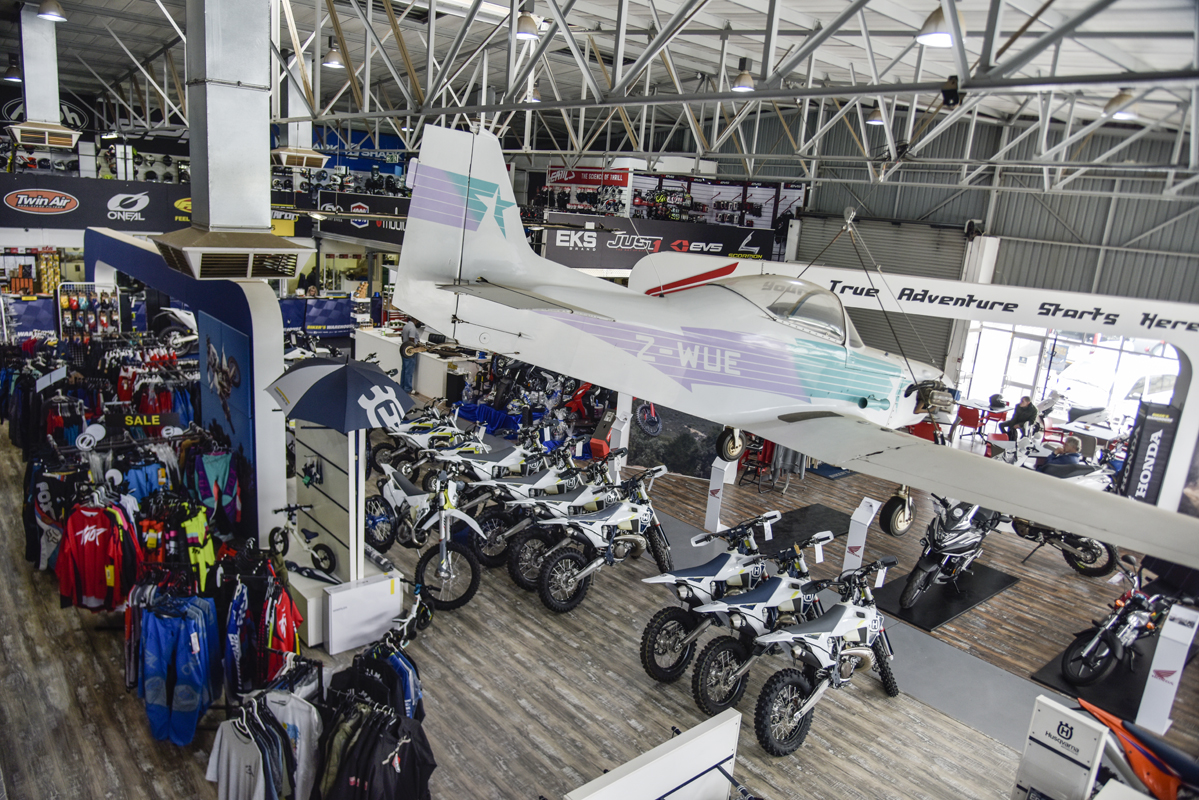
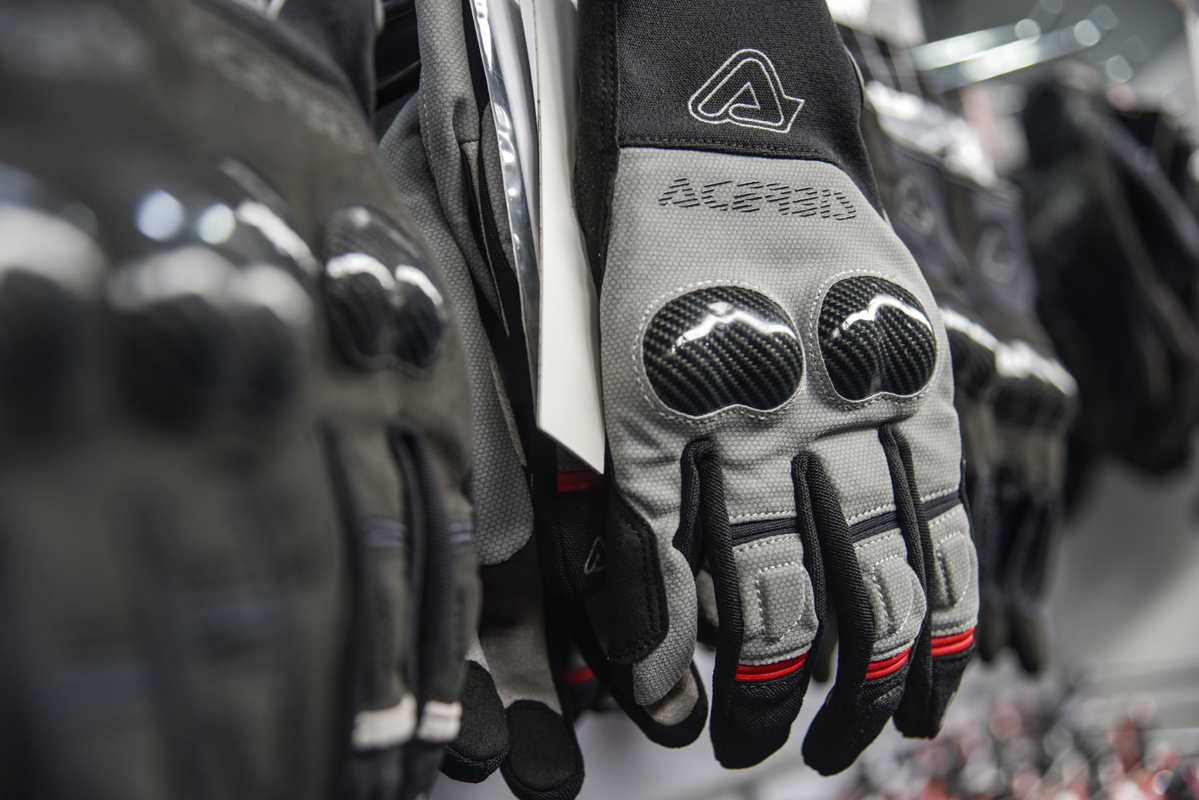
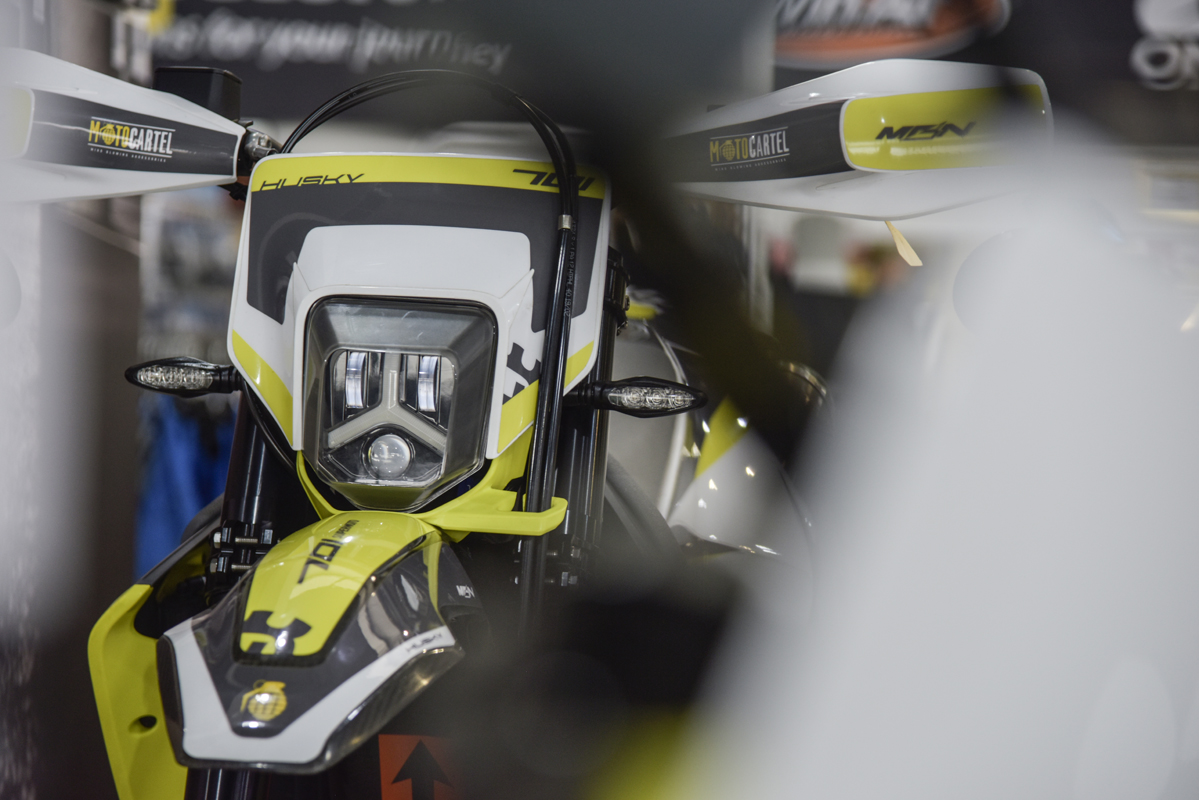
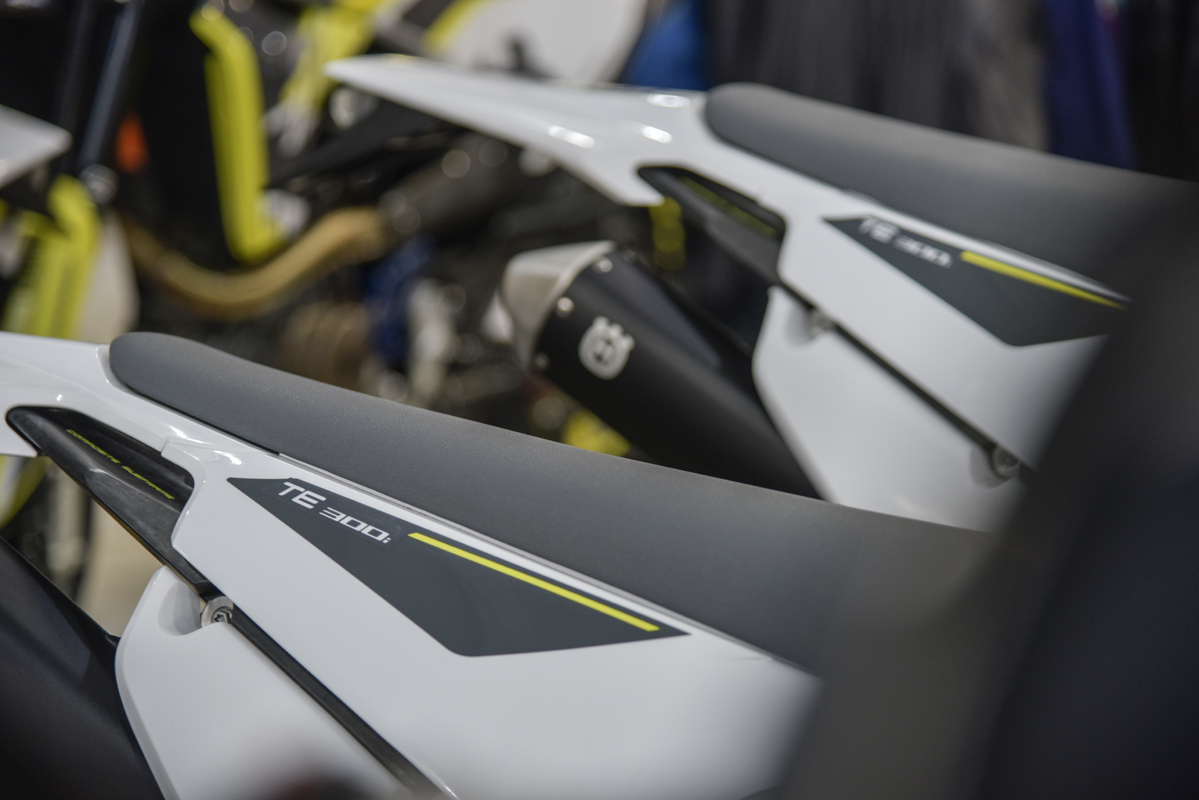
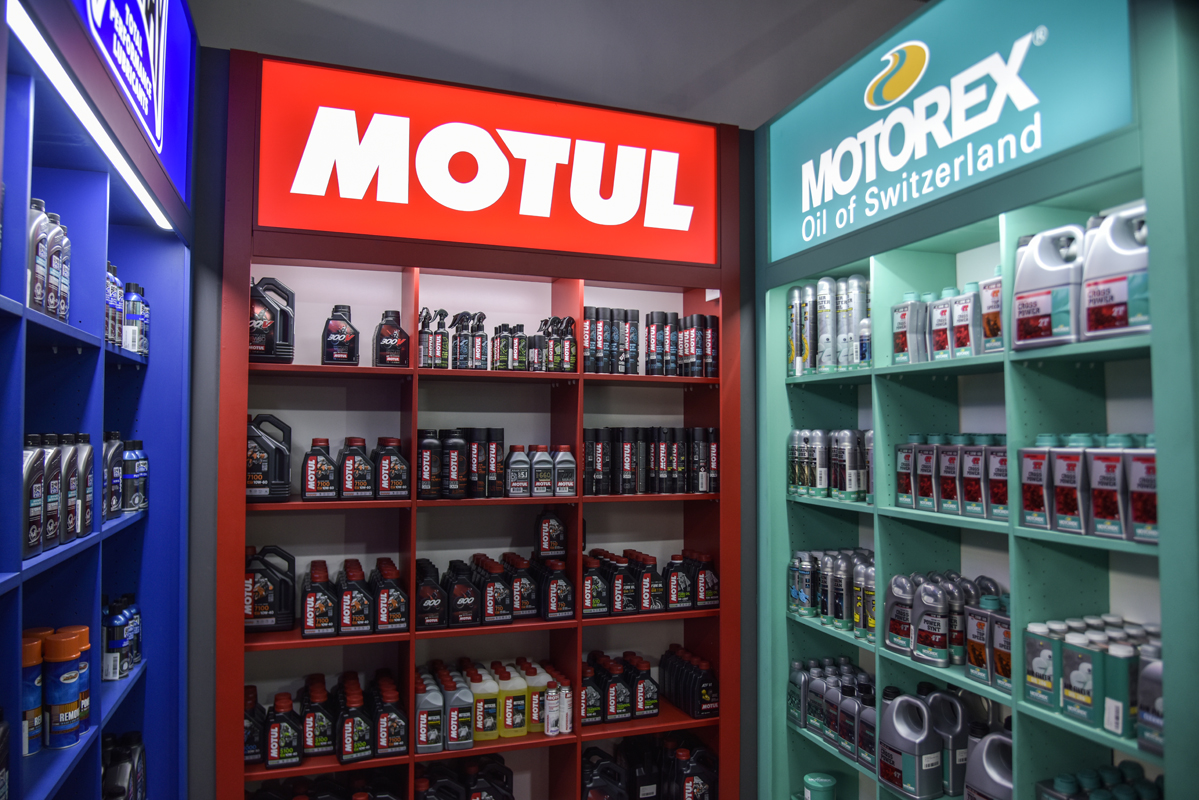
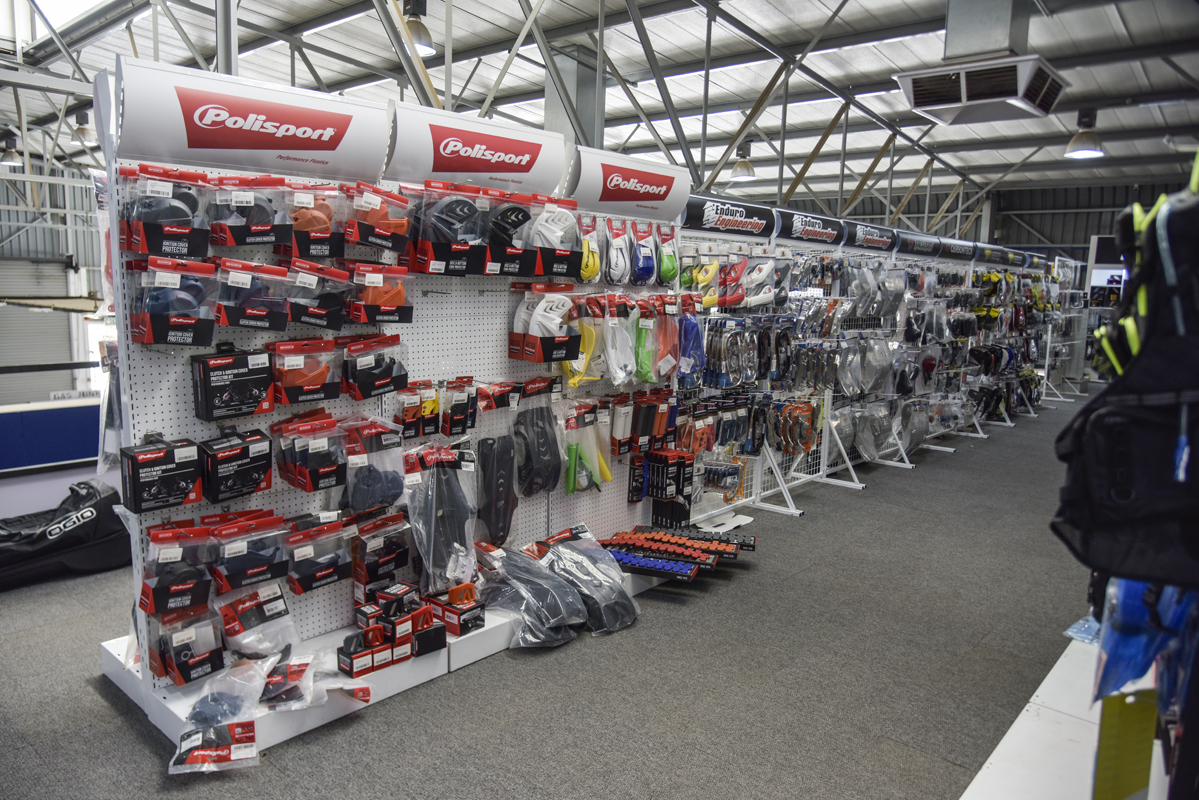
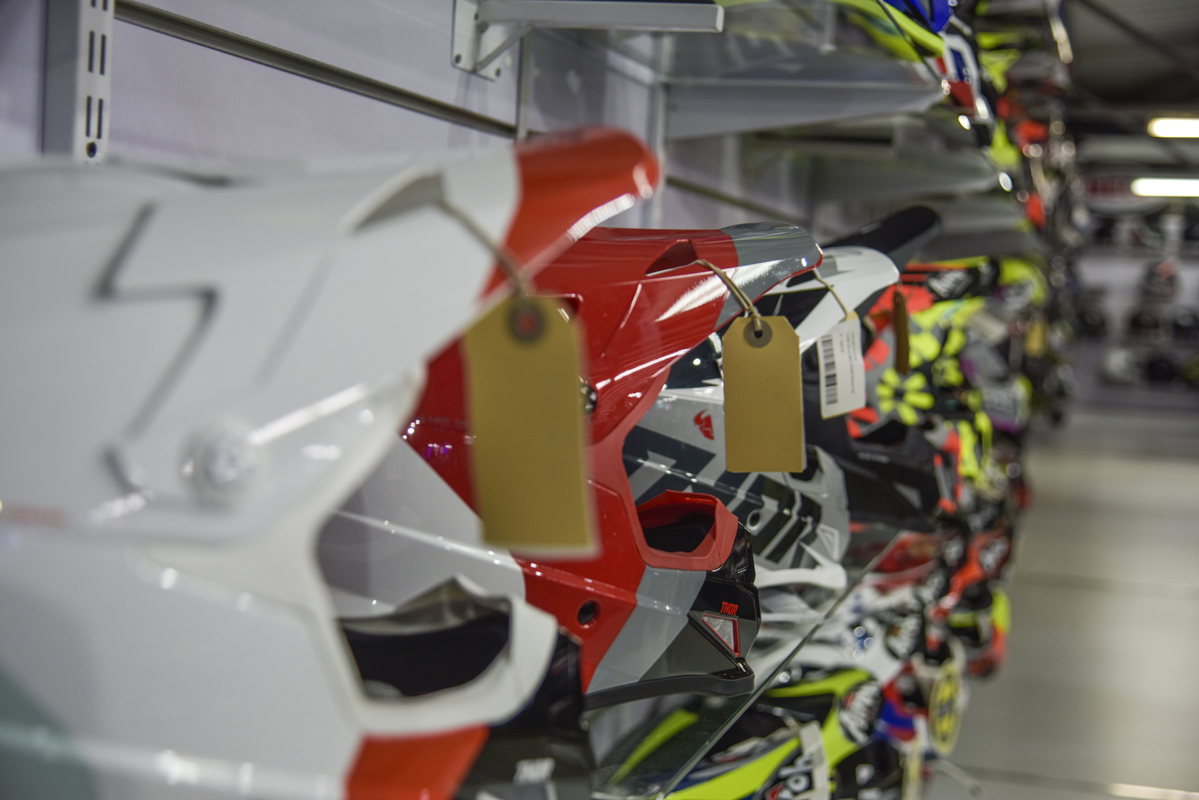
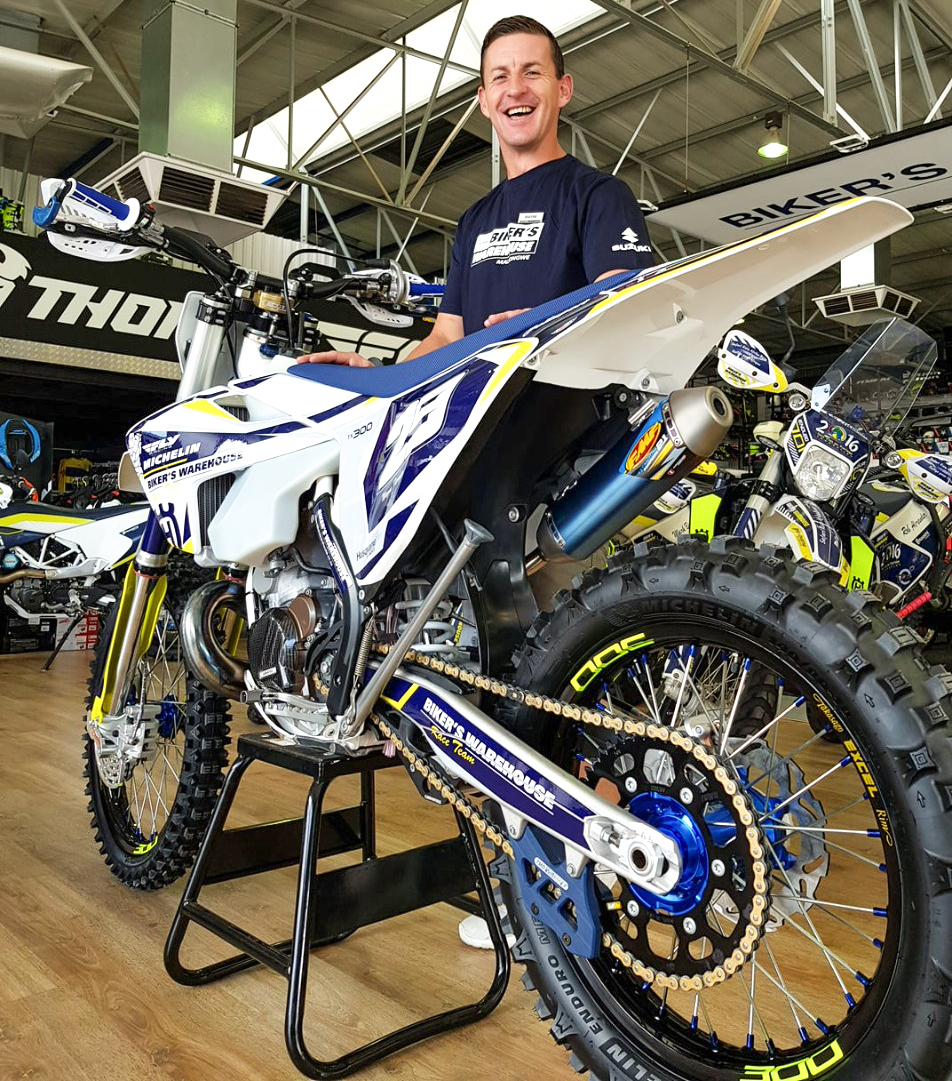
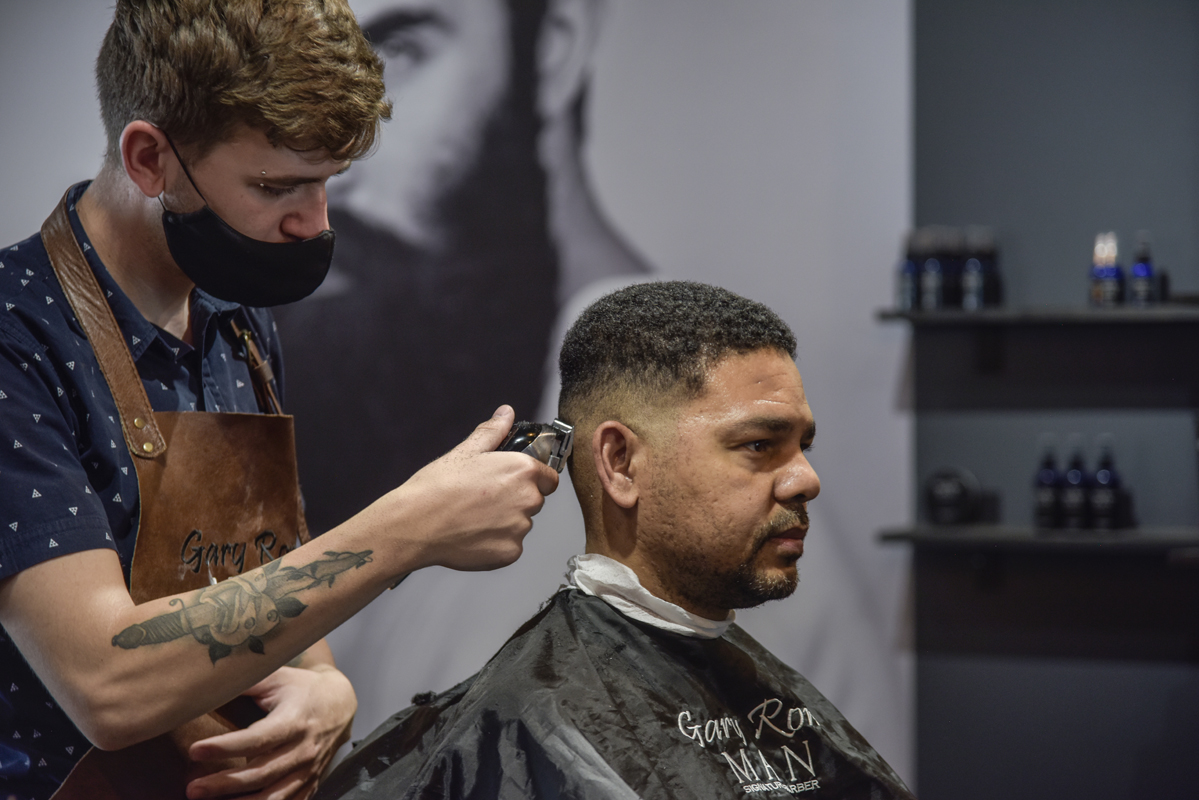
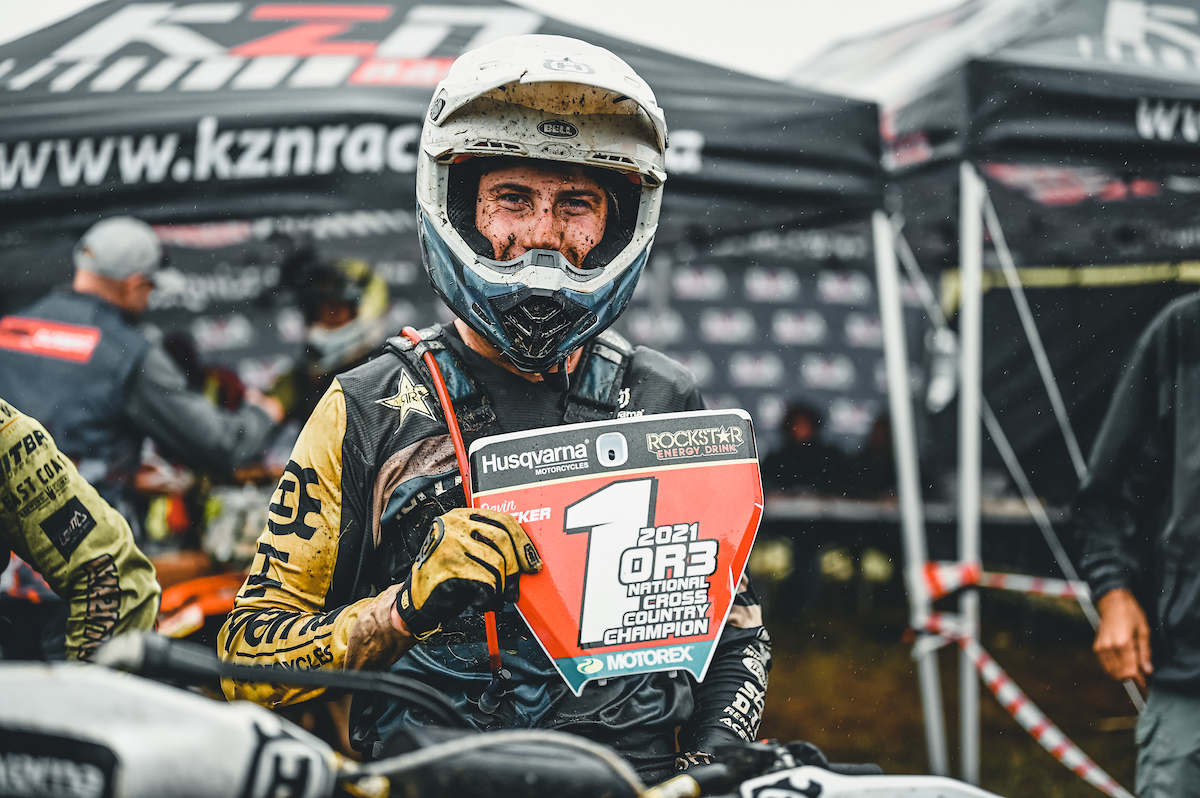
With a total of 43 employees now, it’s not all about the ‘first five.’ In 2015, Wayne Farmer brought his 30 years of industry experience and 32 years of racing experience to the table when he was appointed to head up and expand the accessory side of the business. If you’ve been to Biker’s Warehouse recently, you’ll know he has been successful in doing just that, with all top brands, both international and local, represented.
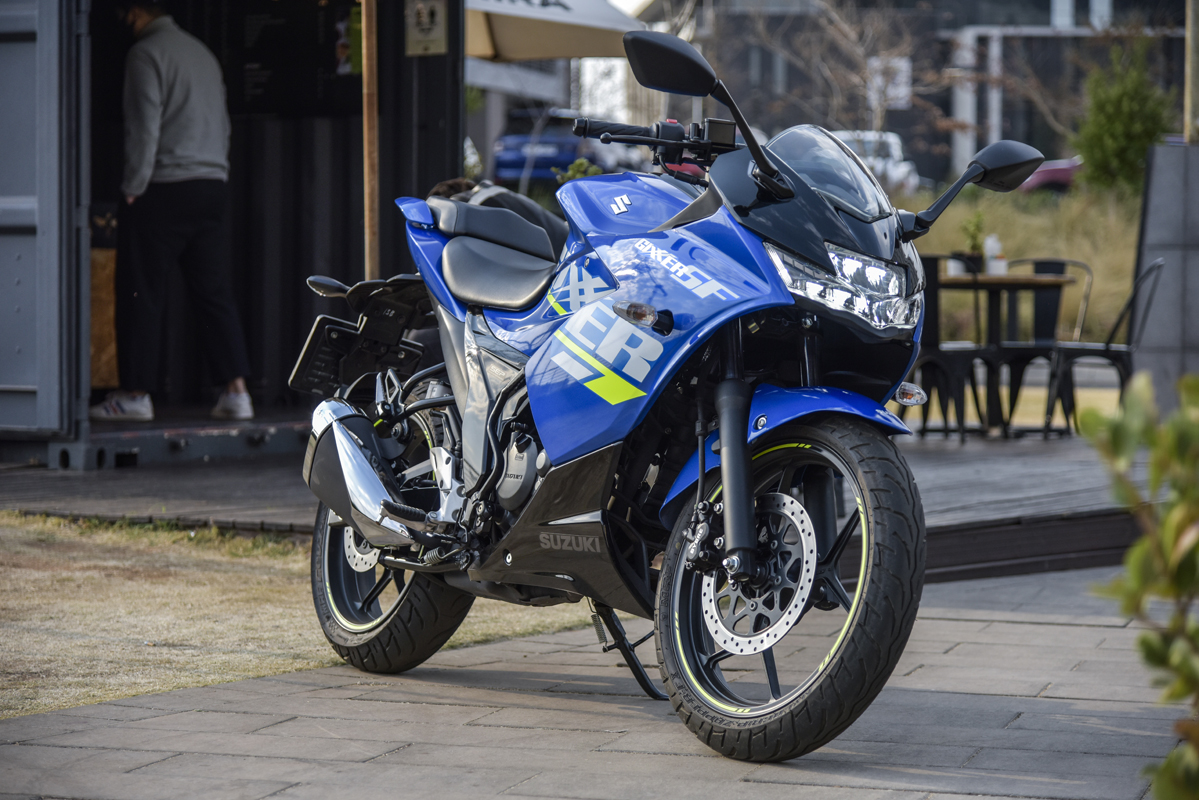
Photo credit: Bjorn Moreira / ZA Bikers
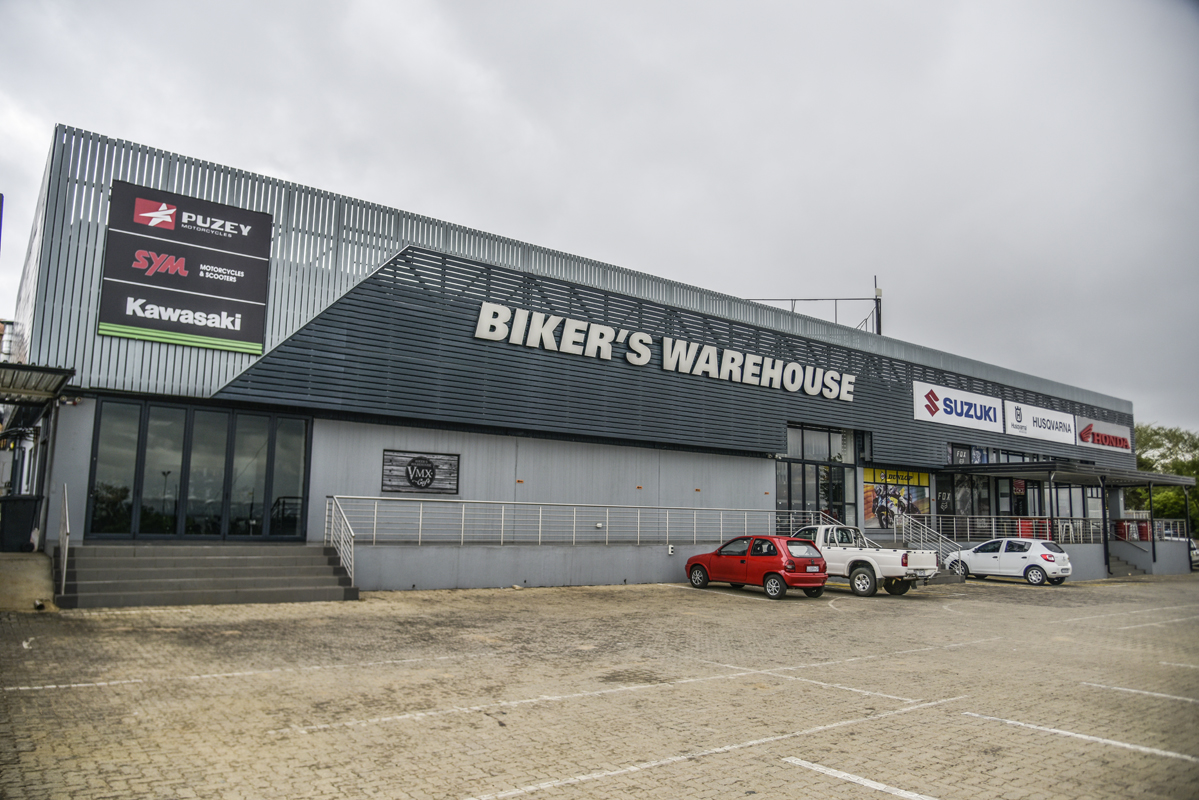
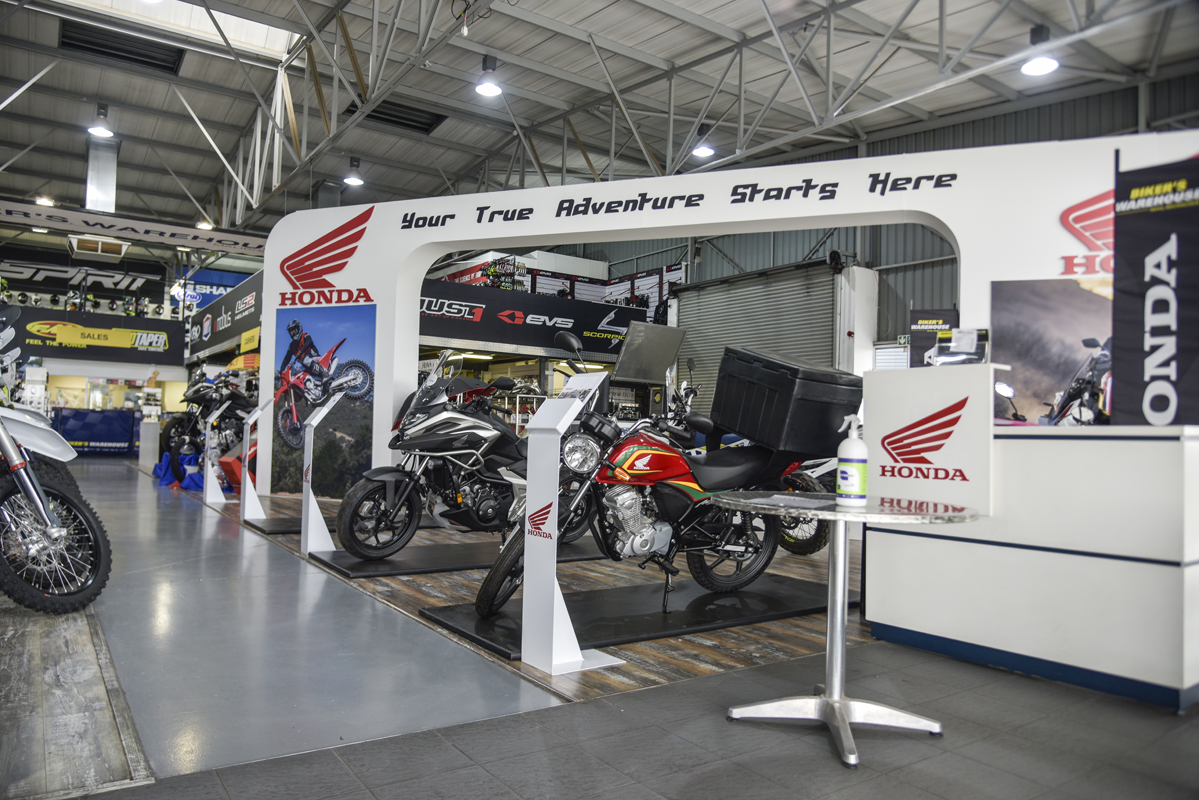
In 2018, Helena Harrison was brought in to expand the commercial bike sales sector but has such a presence in the industry for 19 years that many private buyers want to deal with her in order to buy their new Kawasaki, Honda, Suzuki, Husqvarna or Sym.
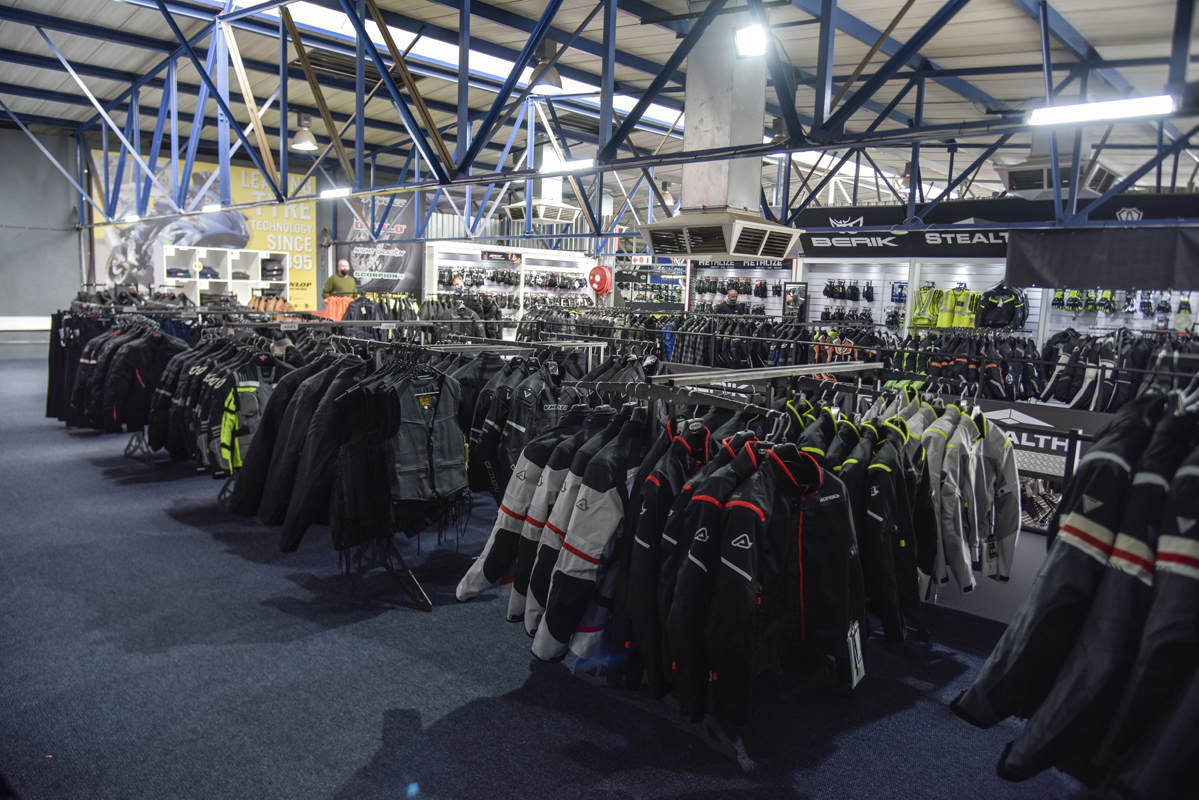
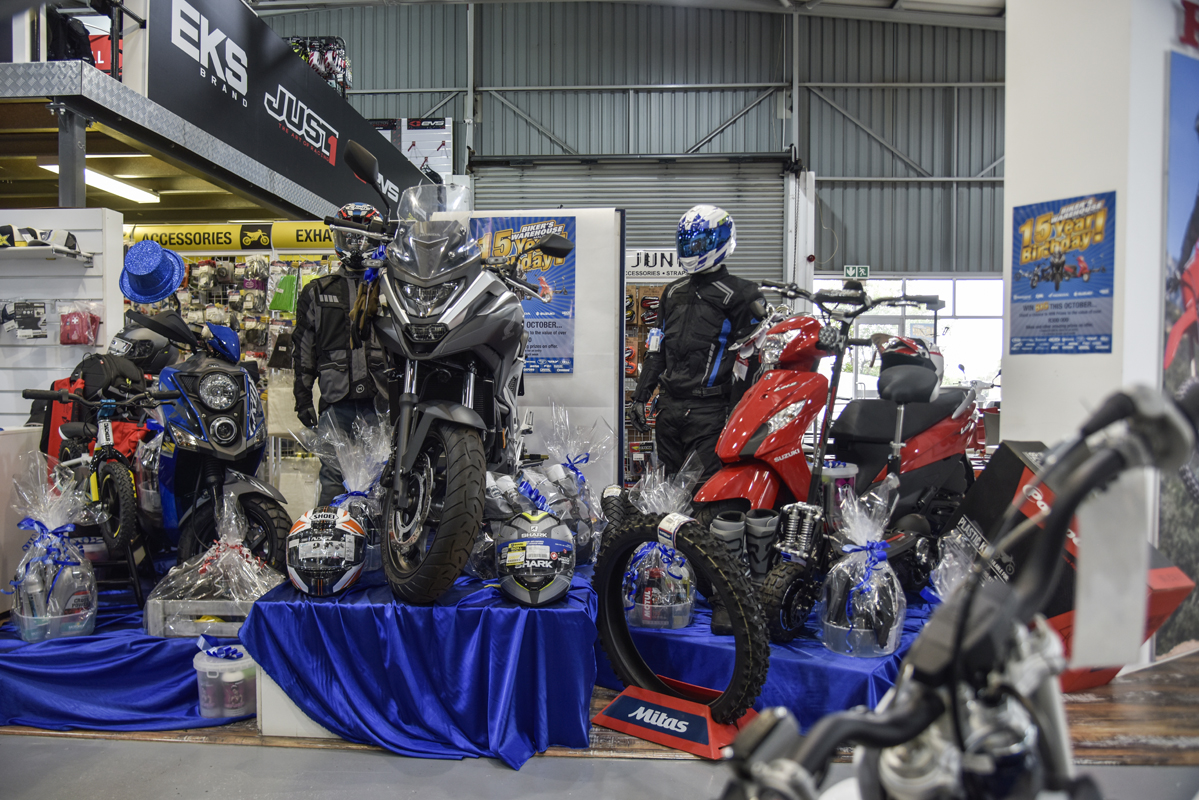
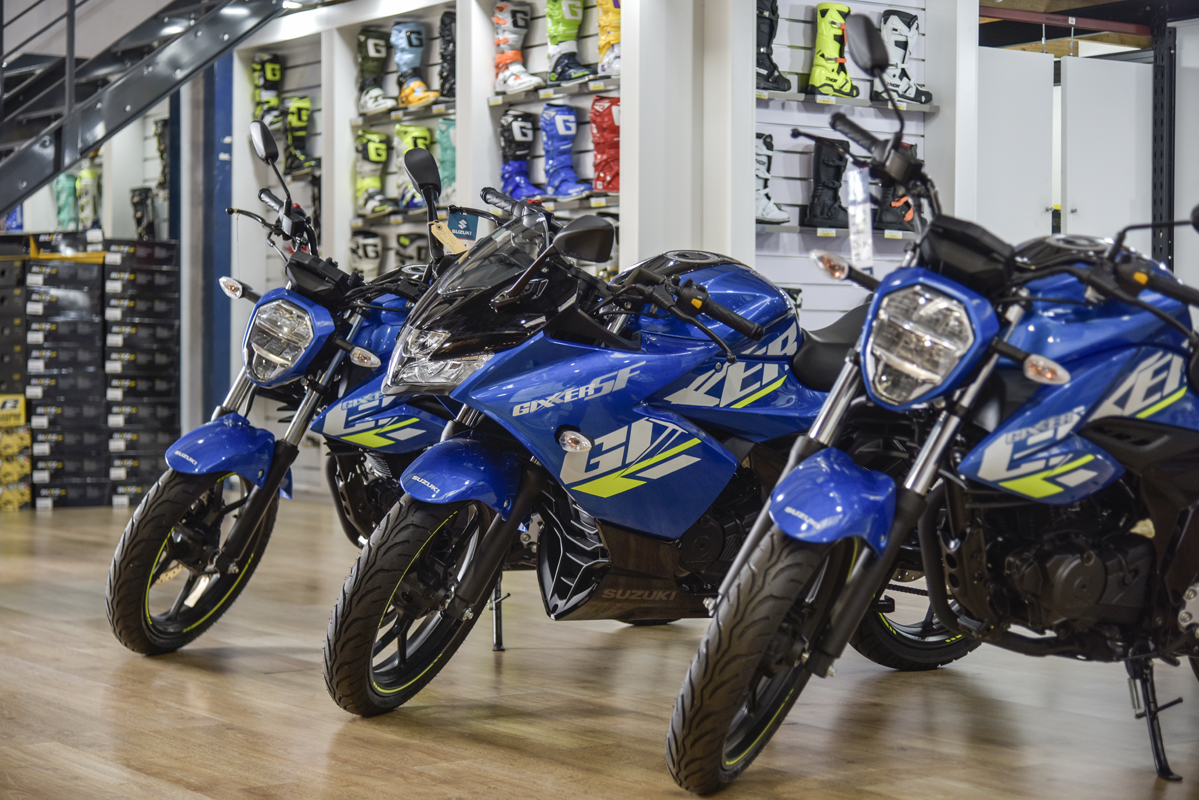
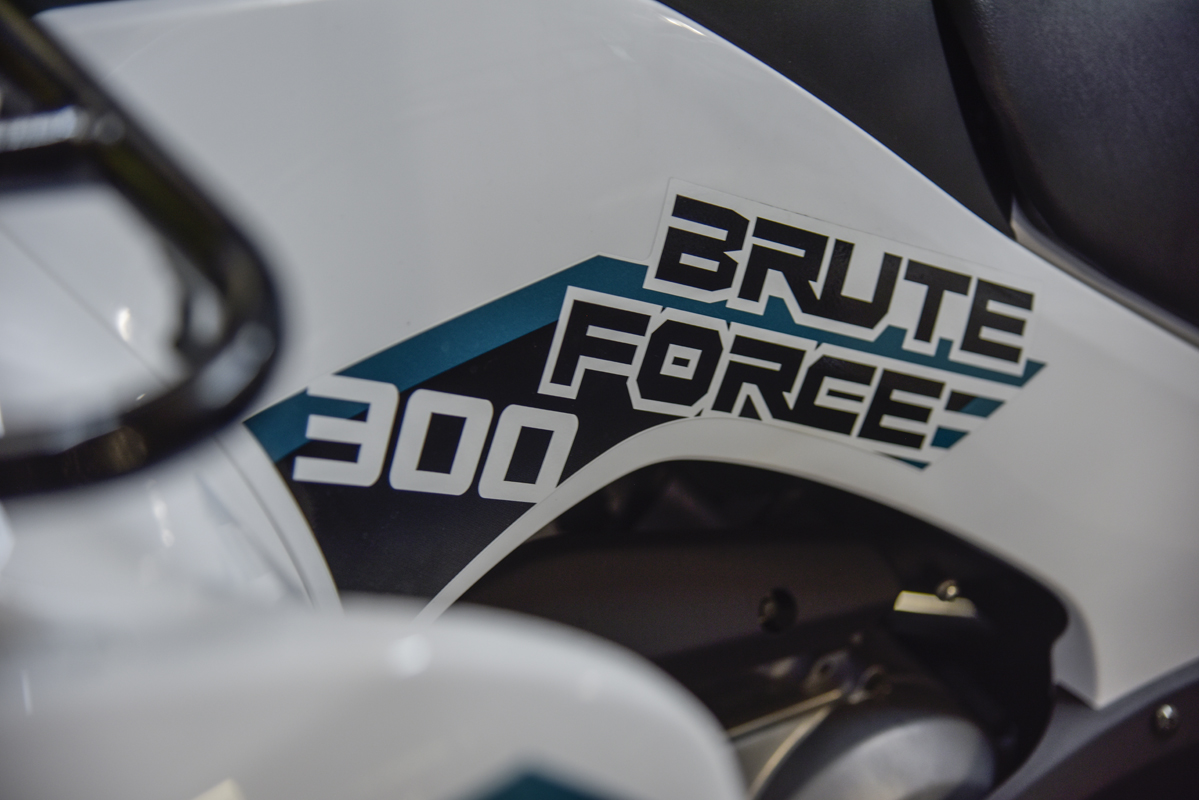
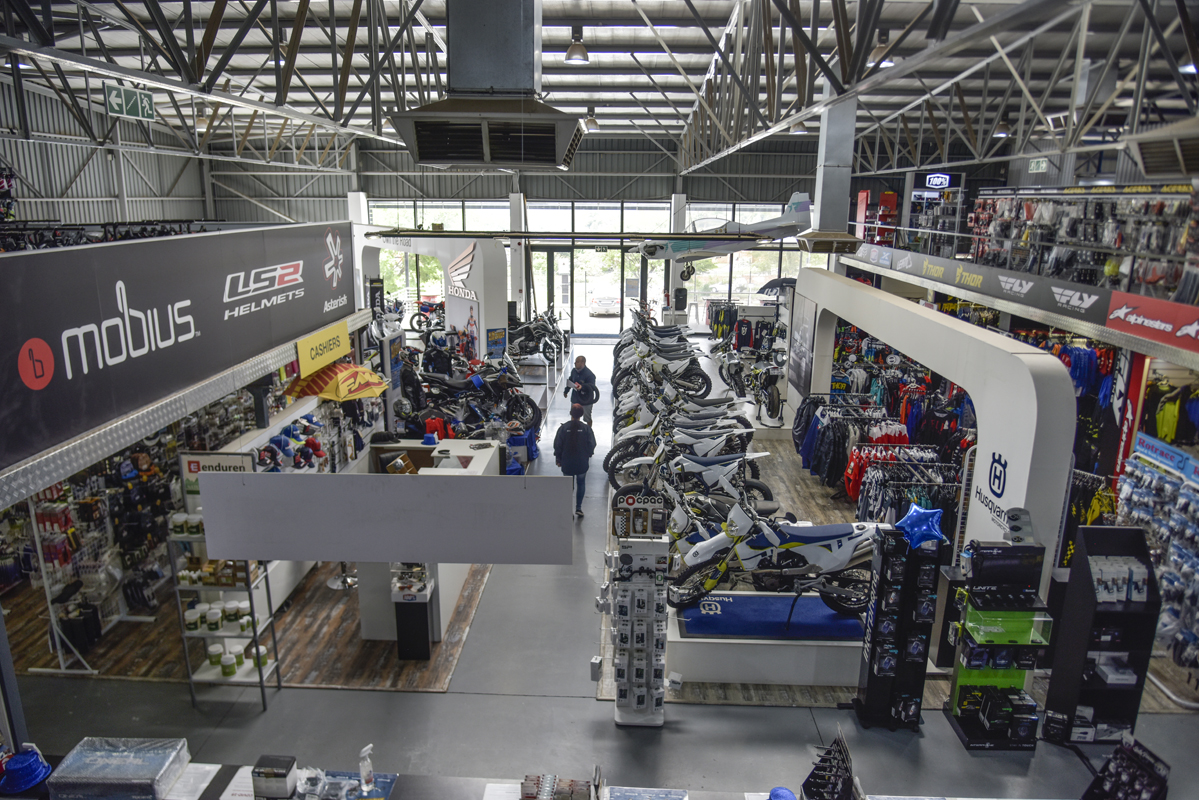
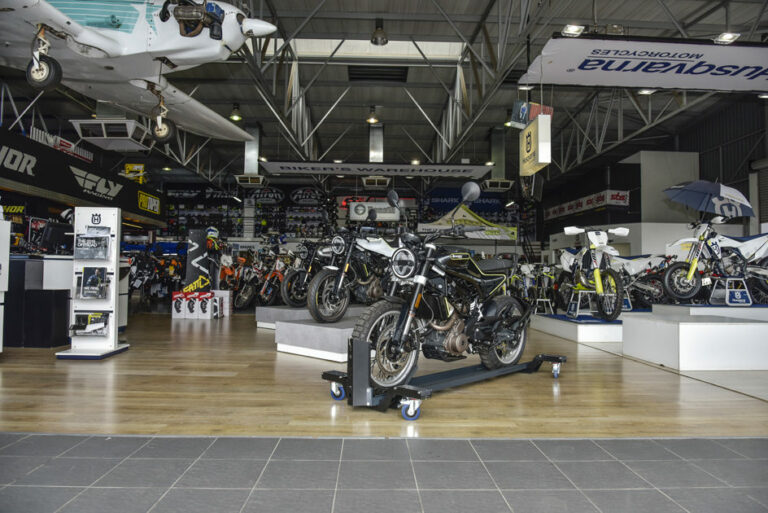
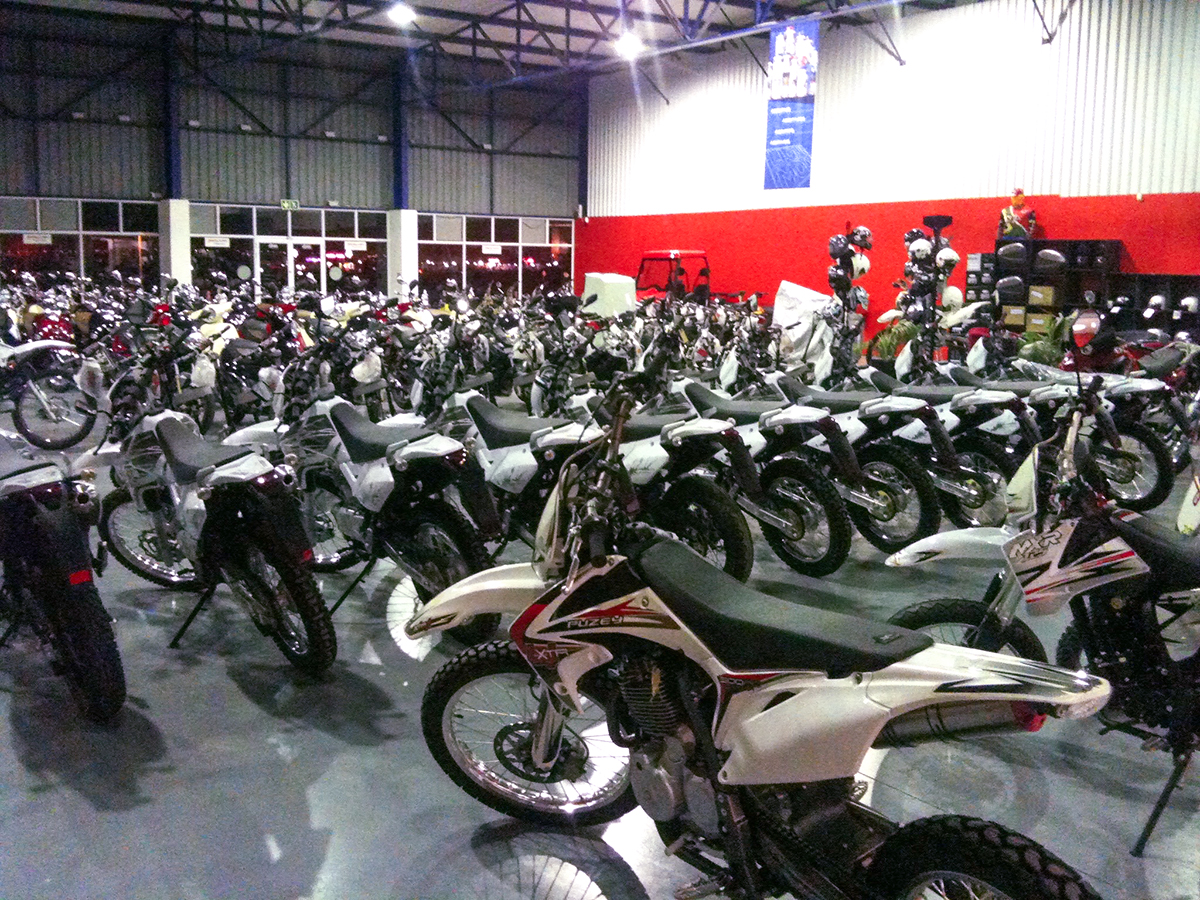
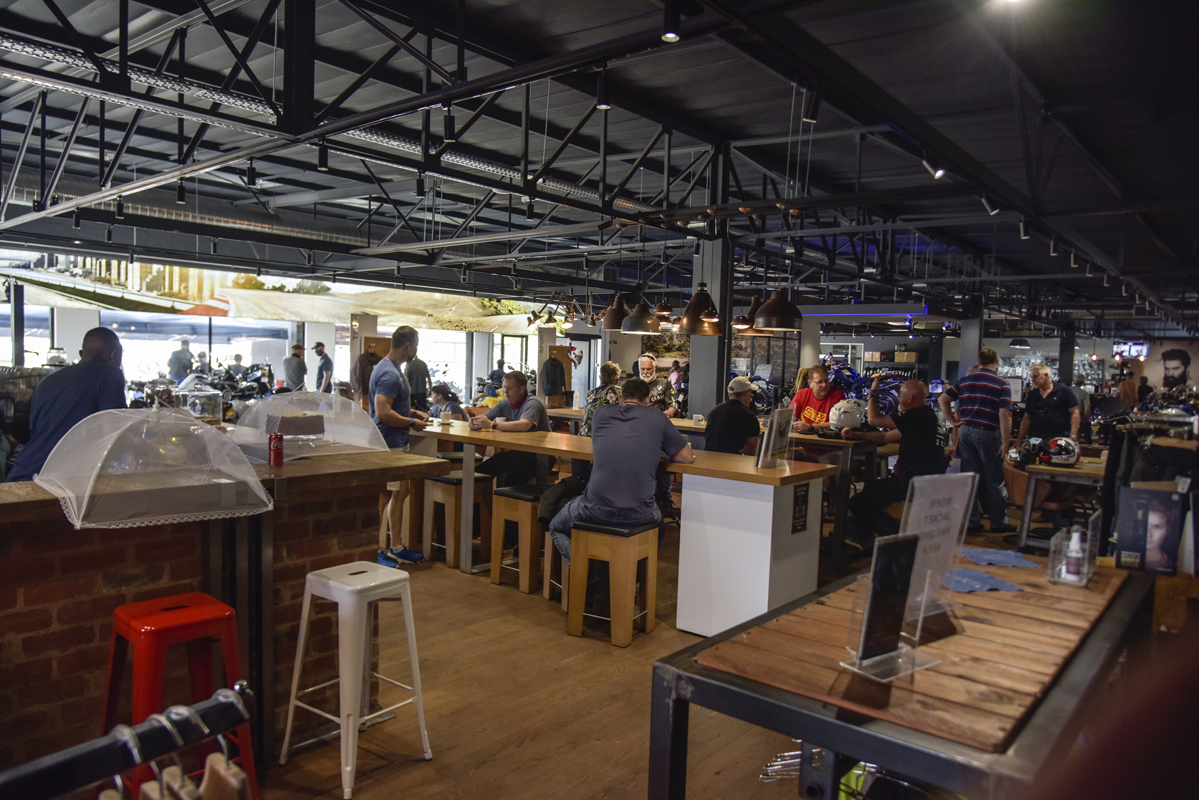
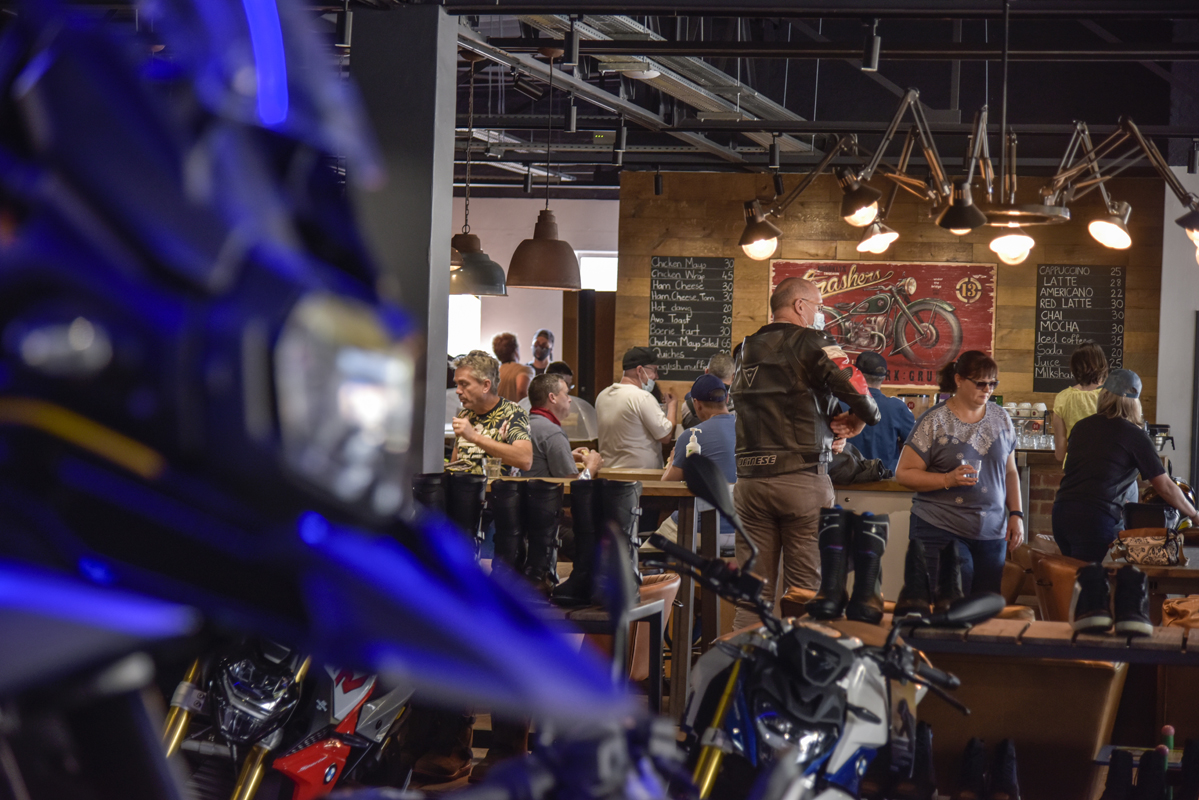
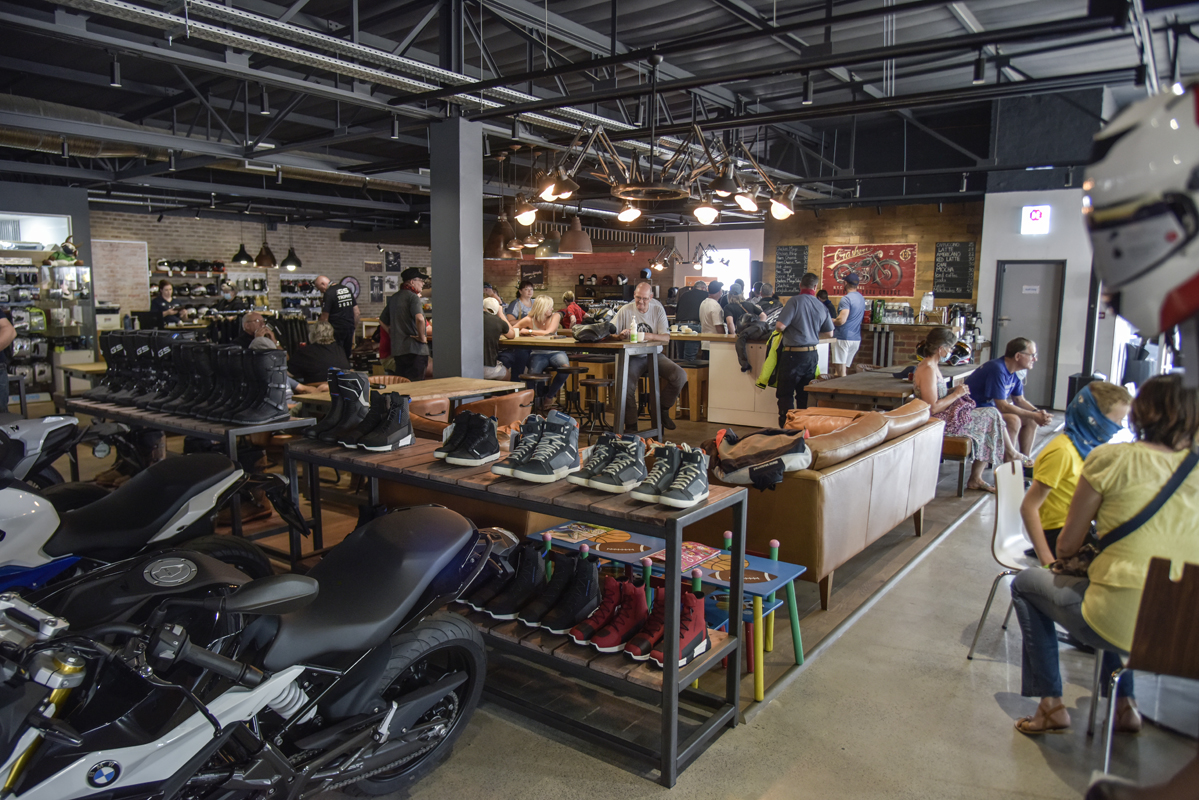
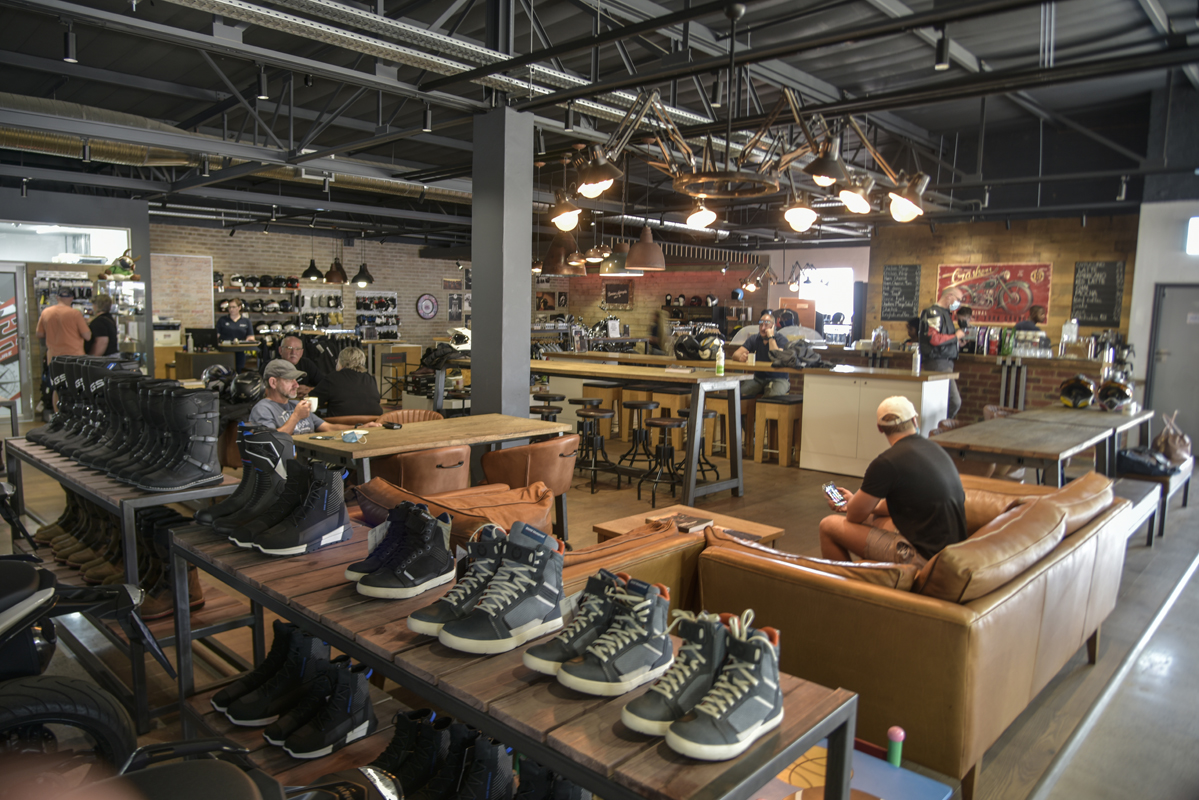
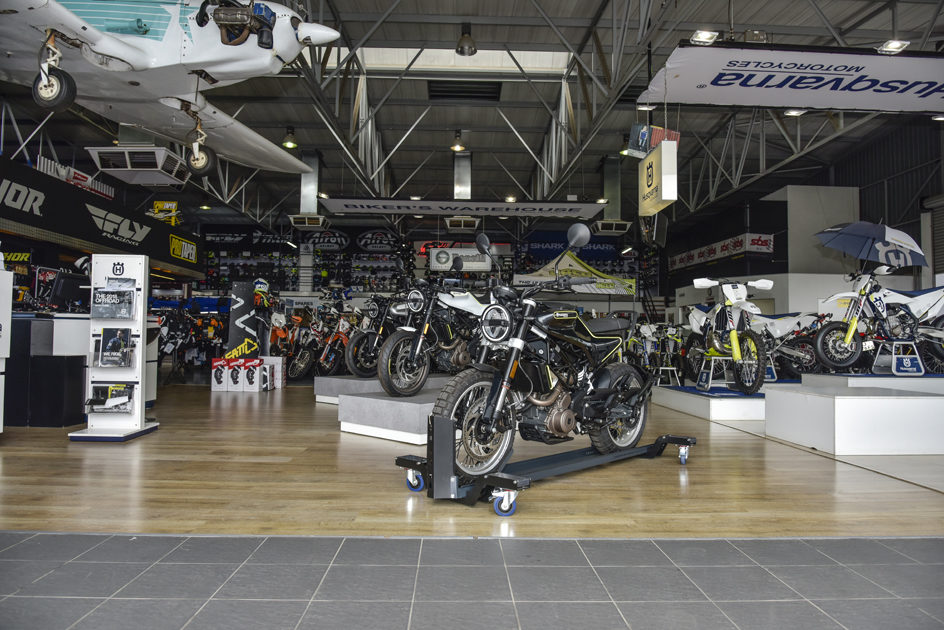
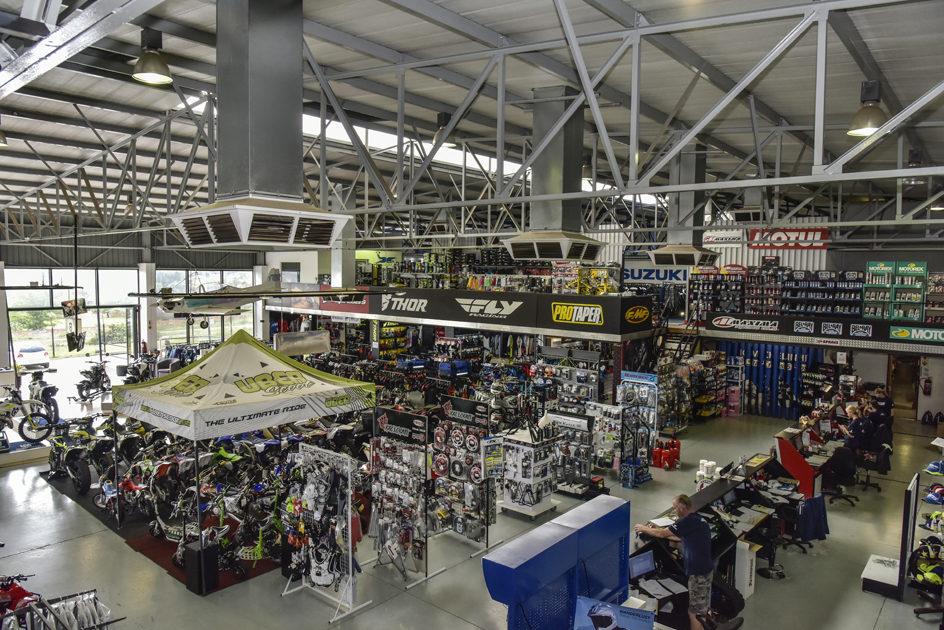
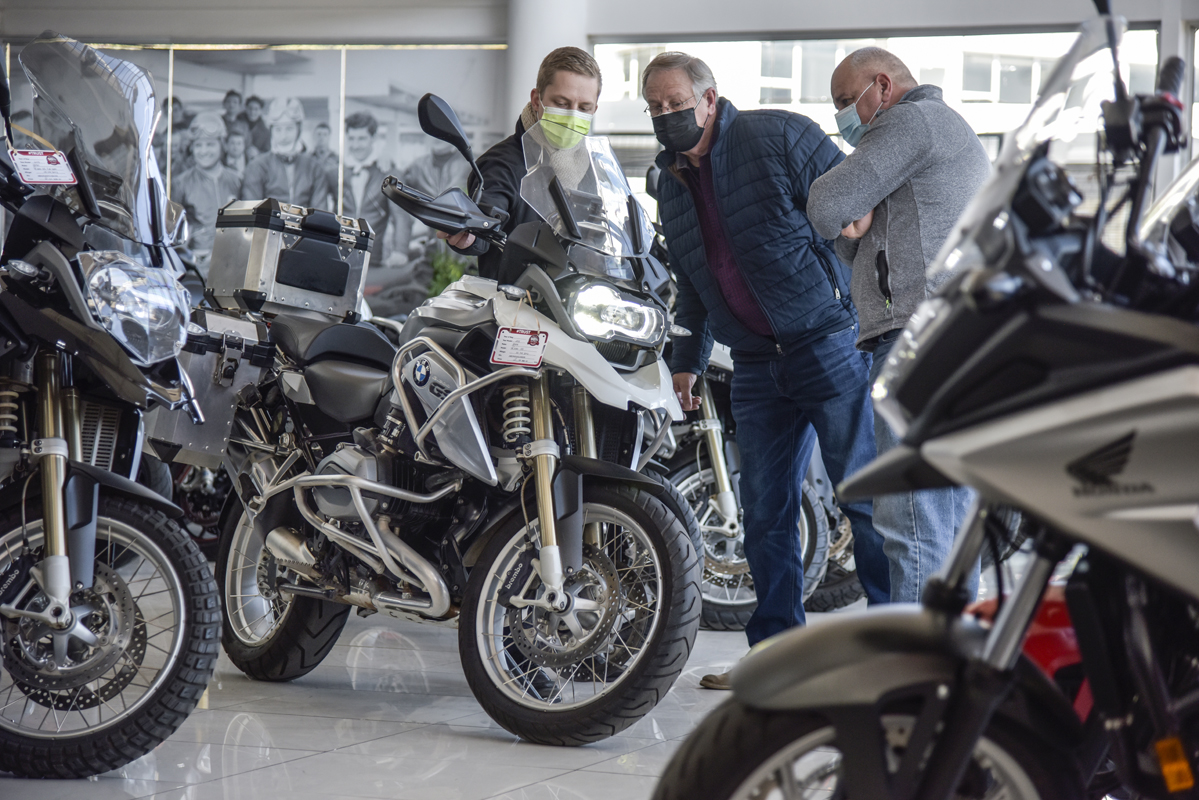
The 2500 sq.m retail space is a far cry from the first 400 sq.m that Mike and Kerry occupied way back in 2006. This expansion was necessary to accommodate the ambitions they had for the business, which were to be a multi-franchise, one-stop-shop for the best in motorcycles and accessories, something they have achieved.
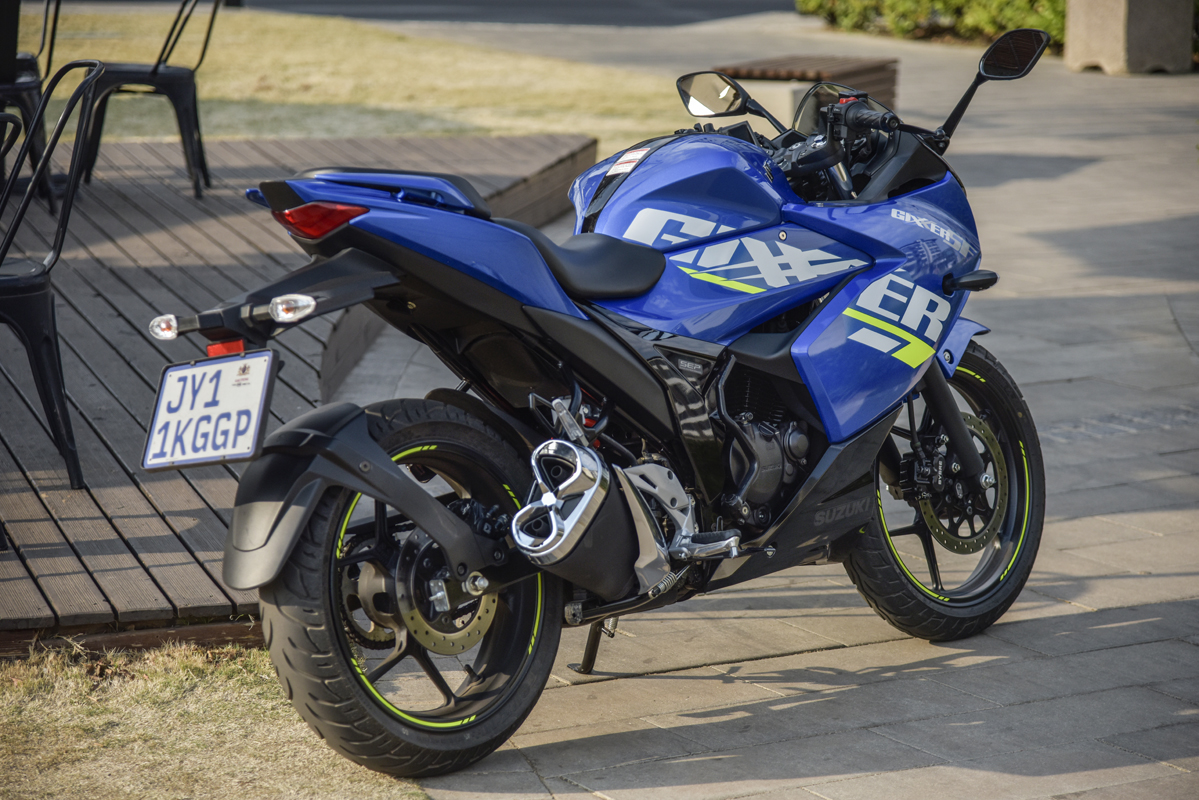
Photo credit: Bjorn Moreira / ZA Bikers
And what of the future? Well, there are no signs of slowing down just yet. Plans are afoot for new branches in Cape Town and Pretoria, still adhering to the multi-franchise model. There are also plans to add more motorcycle brands to the complement.
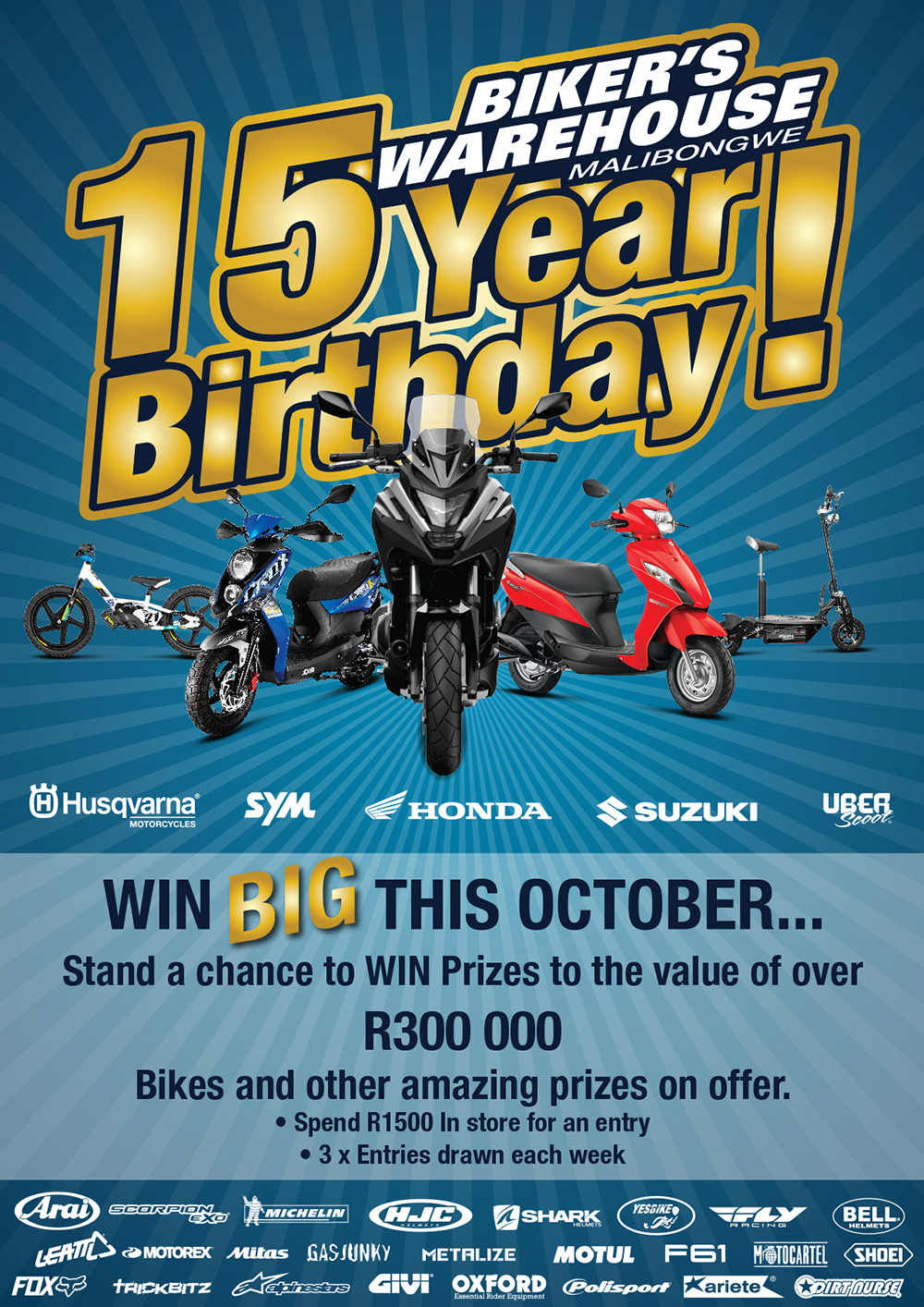
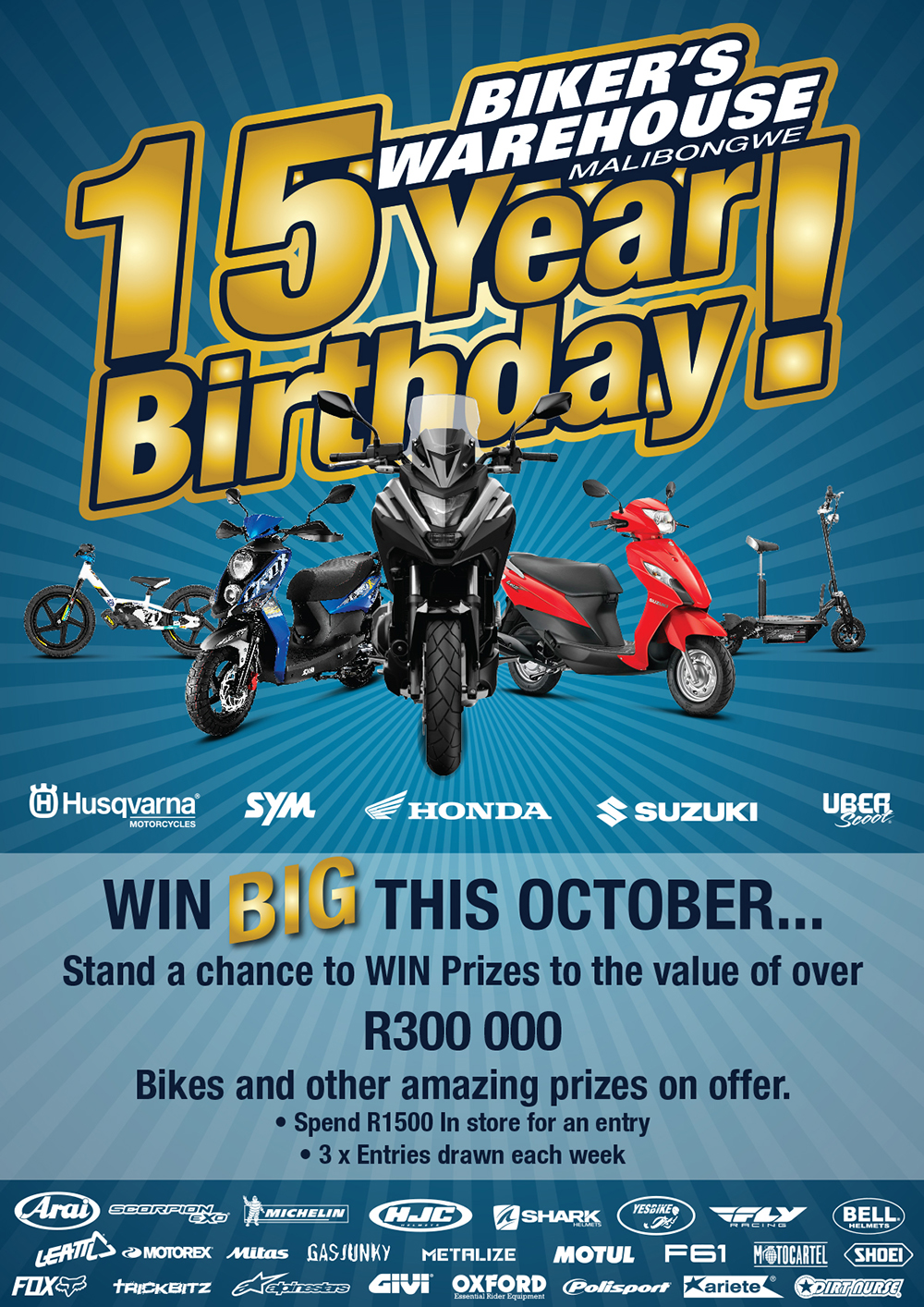
Remember, to mark the 15th birthday, Biker’s Warehouse is running a fabulous competition with some amazing prizes. The last finalist will be drawn on the 30th of November, so make sure to get your entry in.
T’s & C’s Apply. For more information, please contact Biker’s Warehouse on +27 (0)11 795 4122. Or simply pay them a visit and take your wallet!
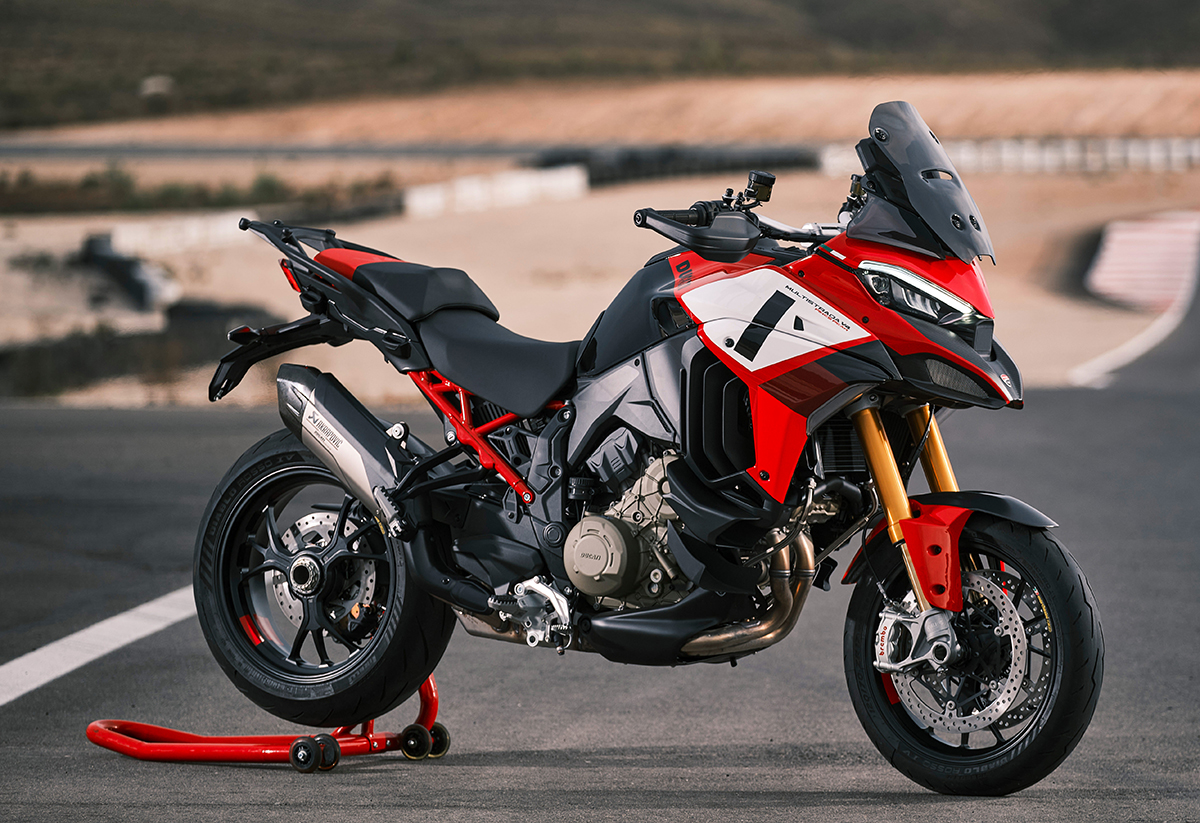
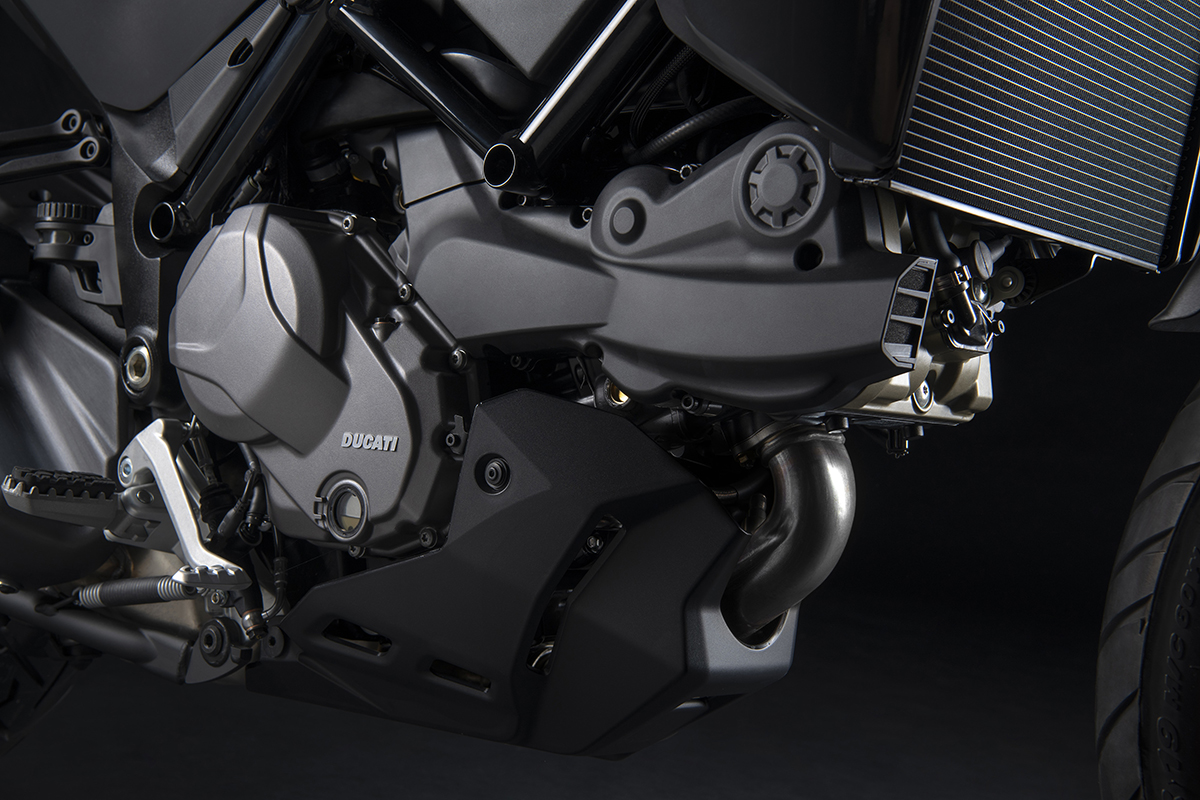
It’s slightly ironic that Ducati chooses to call its sportier versions of its adventure bike the Pikes Peak, when it was a crash on a pre-production V4 Streetfighter that not only cost Carlin Dunne his life at the race in 2019, but which also led to the banning of motorcycles at the famous hill climb.
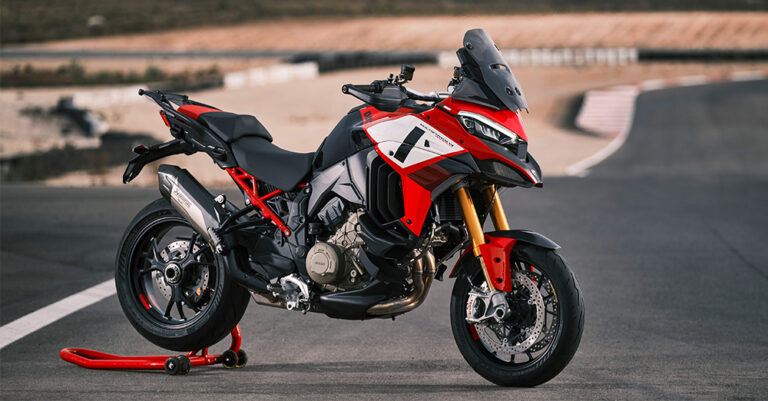
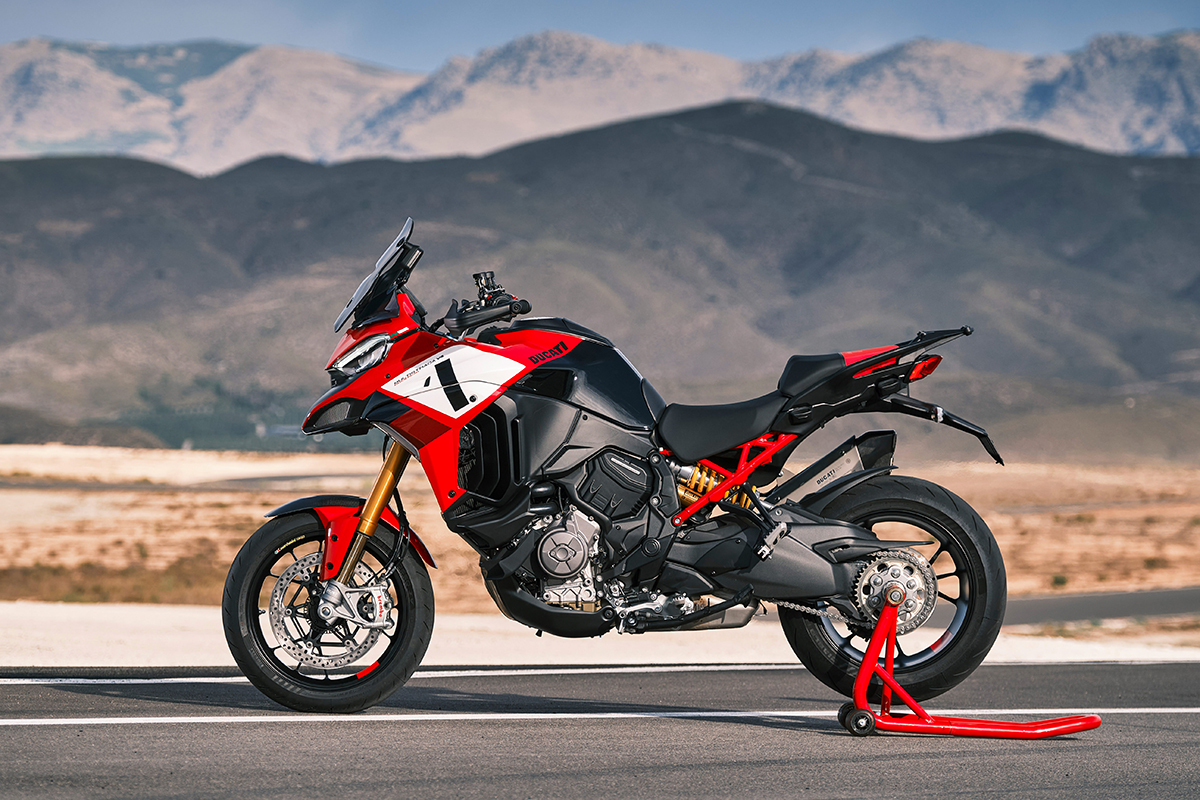
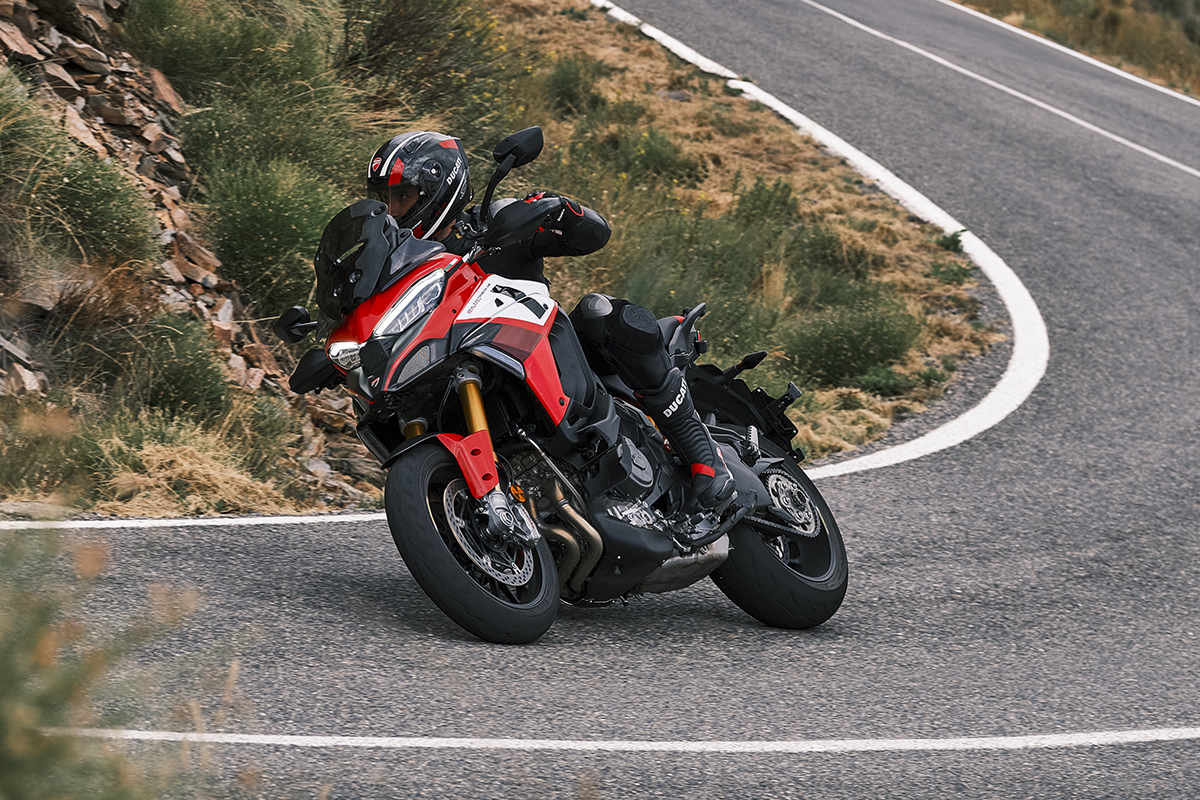
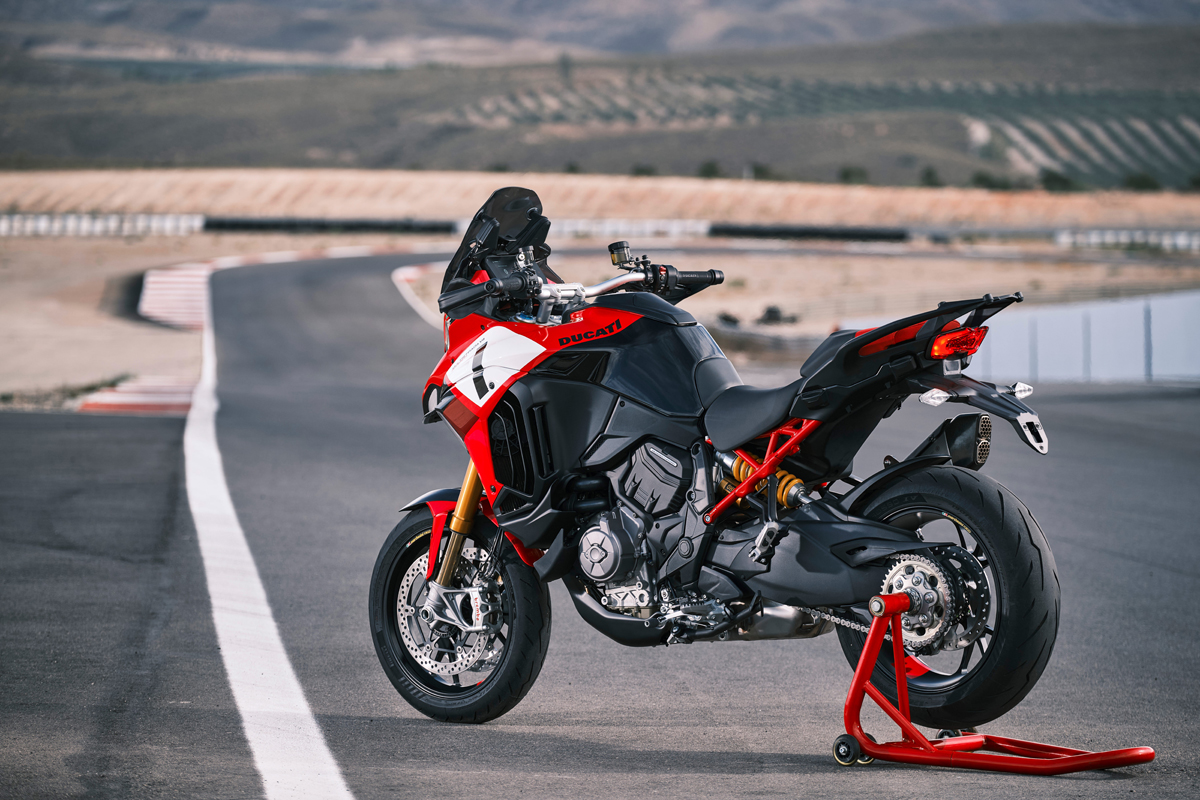
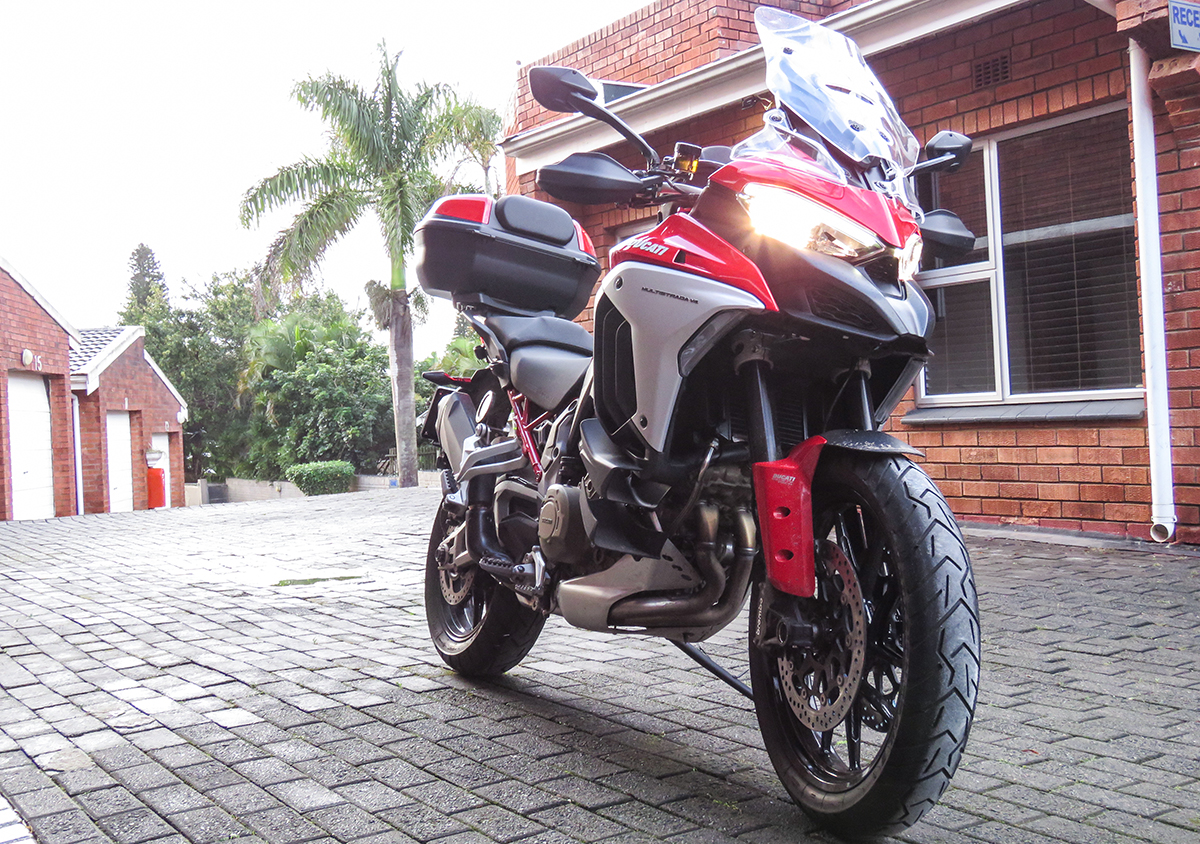
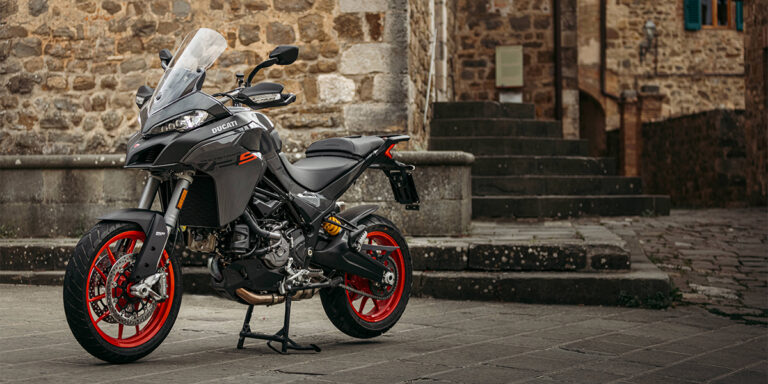
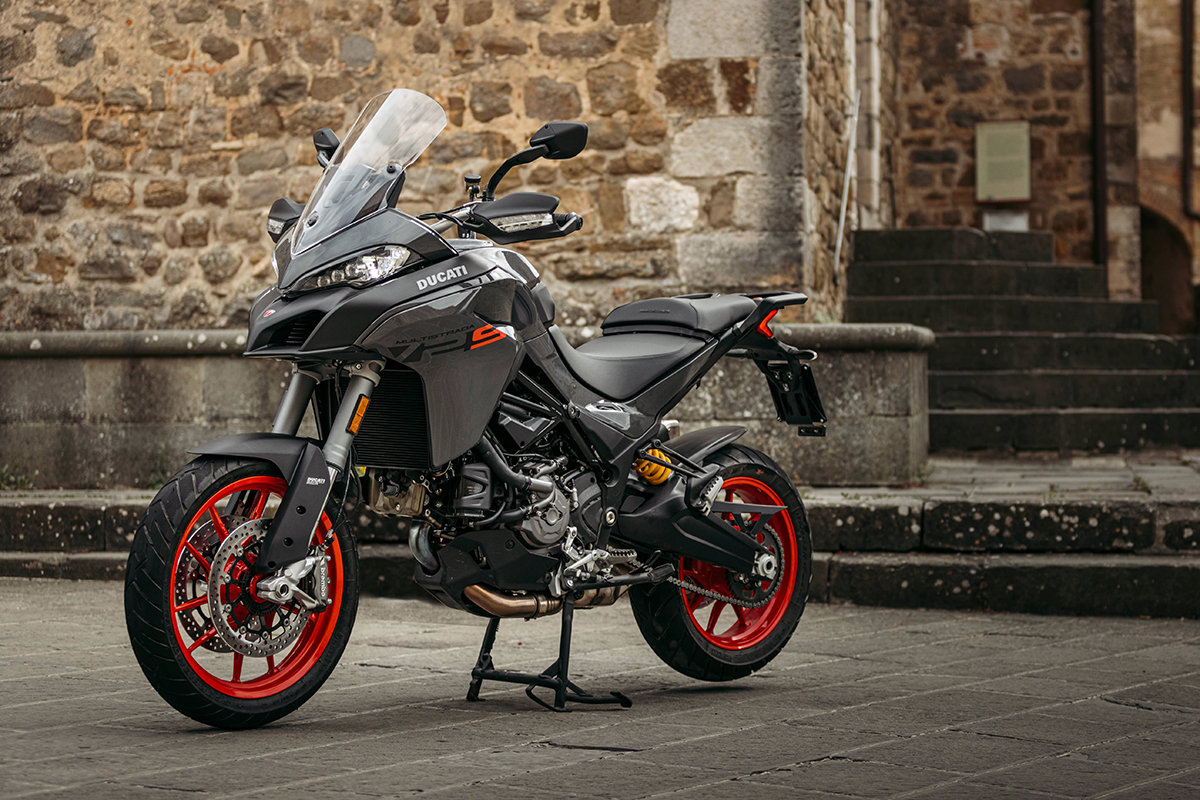
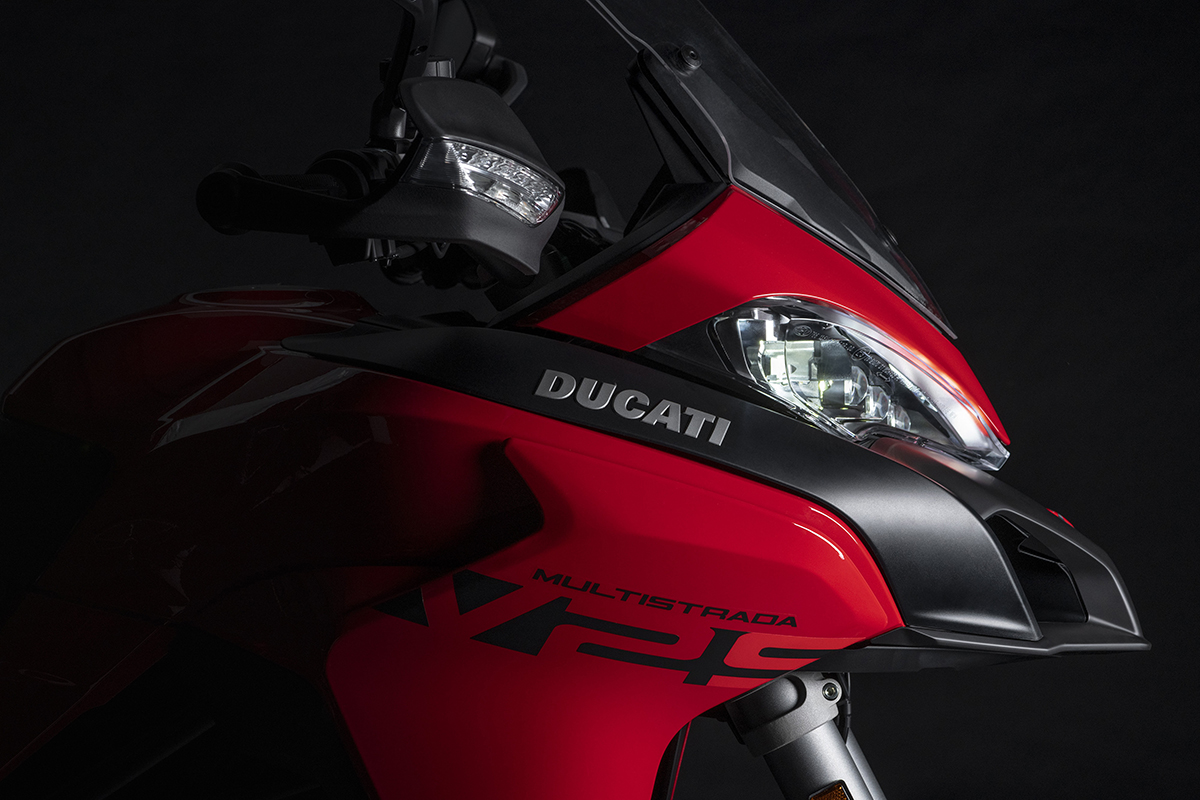
Whatever the logic, Ducati has now released the 2022 Multistrada V4 Pikes Peak, an altogether more road-focused and sportier version of its adventure model. It’s been a year since the Multistrada V4 hit the showrooms, a high-tech, high-performance adventure bike. While the Pikes Peak version might have lost that rugged appeal, it steers closer to Ducati’s core heritage by being a super-sharp and dynamic road machine.
Photo credit: Ducati
Running on 17-inch wheels, as opposed to the 19/21-inch ones used on the standard Multistrada, the Multistrada Pikes Peak looks more like a road bike, an impression that will be helped by the more sports bike-like riding position. Think of it as the Italian version of the Triumph Tiger Sport or the Yamaha Tracer 900.
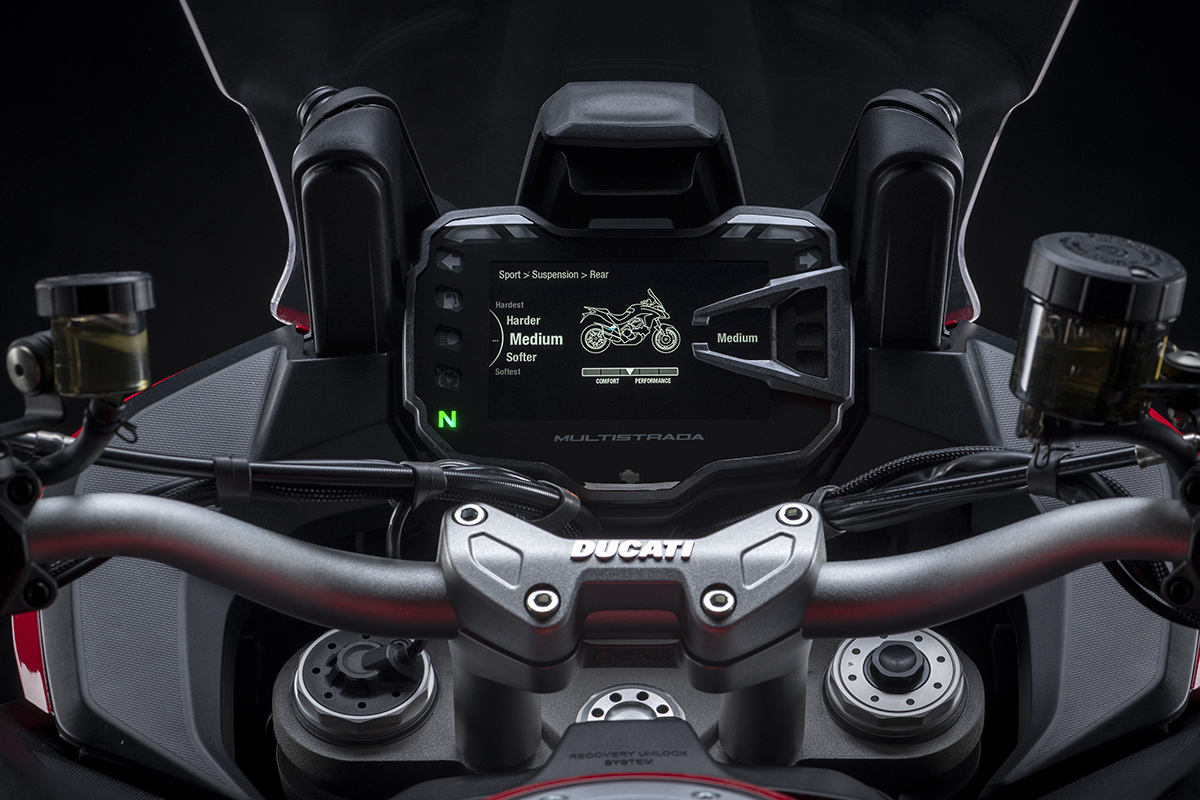
The V4 motor now pushes out an impressive 170 hp, while chassis and electronics have been tweaked giving the overall impression that this is a Panigale in adventure clothes. Despite this, 4 kg has been shed by the use of lighter Marchesini alloy rims, Brembo Stylema calipers and Ohlins Smart EC 2.0 suspension.
Photo credit: Ducati
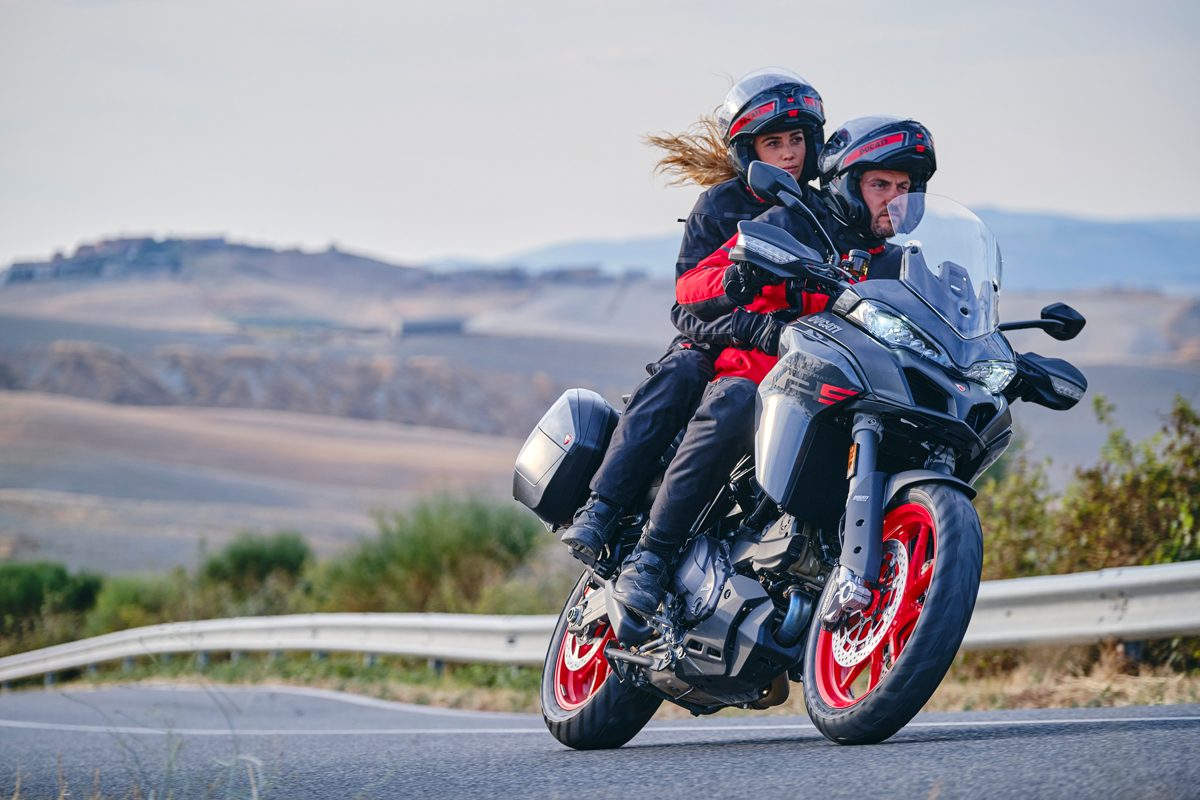
All this points to a definite sporting pedigree for the bike. It’s a beguiling mix: comfort for long distances, but the engine and chassis to satisfy any track day warrior or back lane scratcher.
The electronics are dazzling: front and rear radar system, allowing adaptive cruise control and blind-spot monitoring. ABS and traction control is, naturally, lean and cornering sensitive, while the wheelie control and ABS have revised programming to allow for the change in geometry and smaller wheels.
Photo credit: Ducati
The bike will be physically launched at the EICMA show in late November. So, we hope to see it in South Africa in the first quarter of next year.
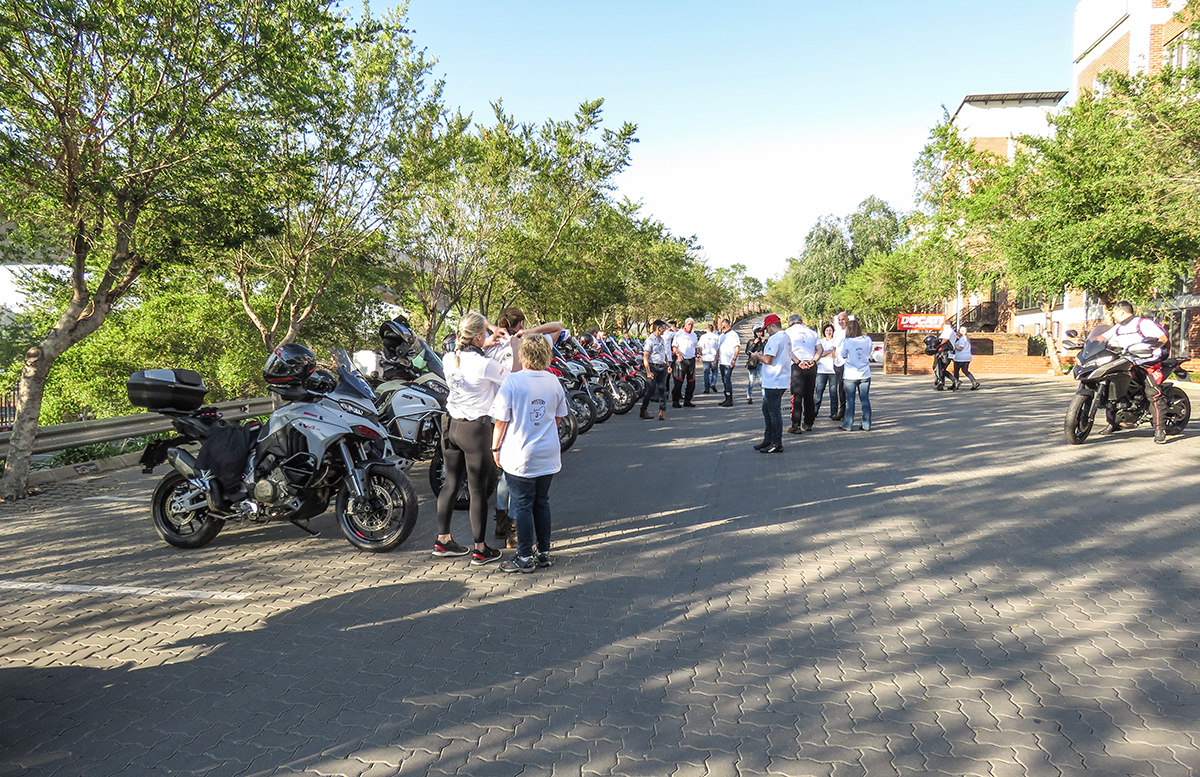
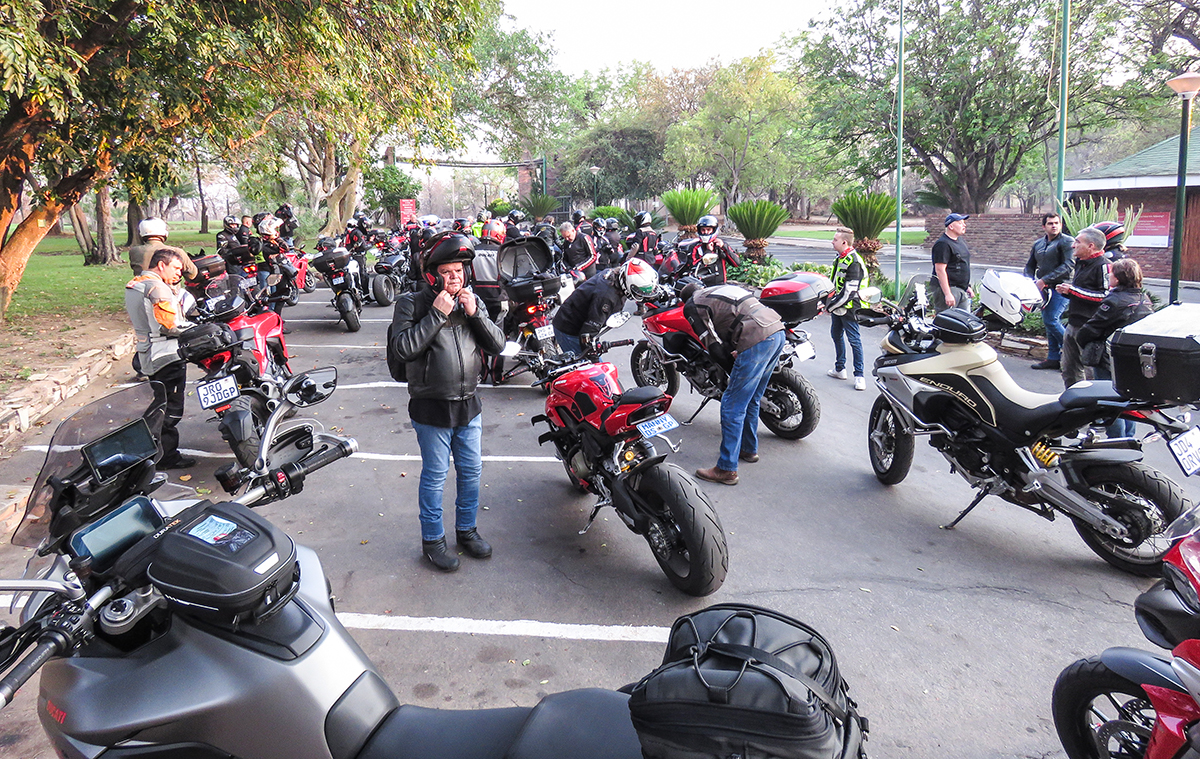
You may remember from my story about Mystery Tour 2, how the Mystery Tour works. It is Ducati Supremo Jos Matthysen’s way of thanking and building relationships with current owners as well as getting massive exposure far and wide for the Ducati brand. Essentially Jos decides on a route for the four-day tour, with the last day returning to the starting point at World of Motorcycles in Centurion. Participants try to figure out the destinations based on distances per day provided by Jos, as well as some cryptic clues that he feeds on the Mystery Tour WhatsApp group prior to departure. This serves to build excitement exponentially as the departure date approaches.
Photo credit: Dave Cilliers / ZA Bikers
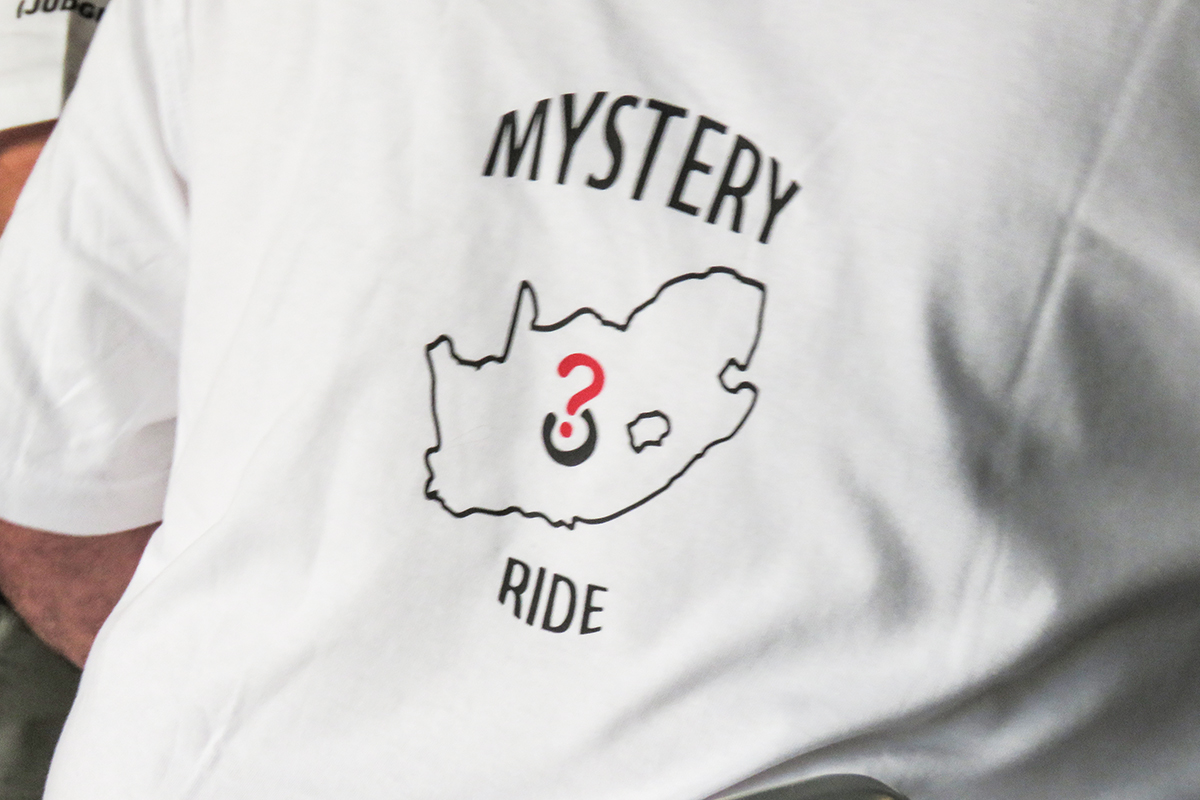
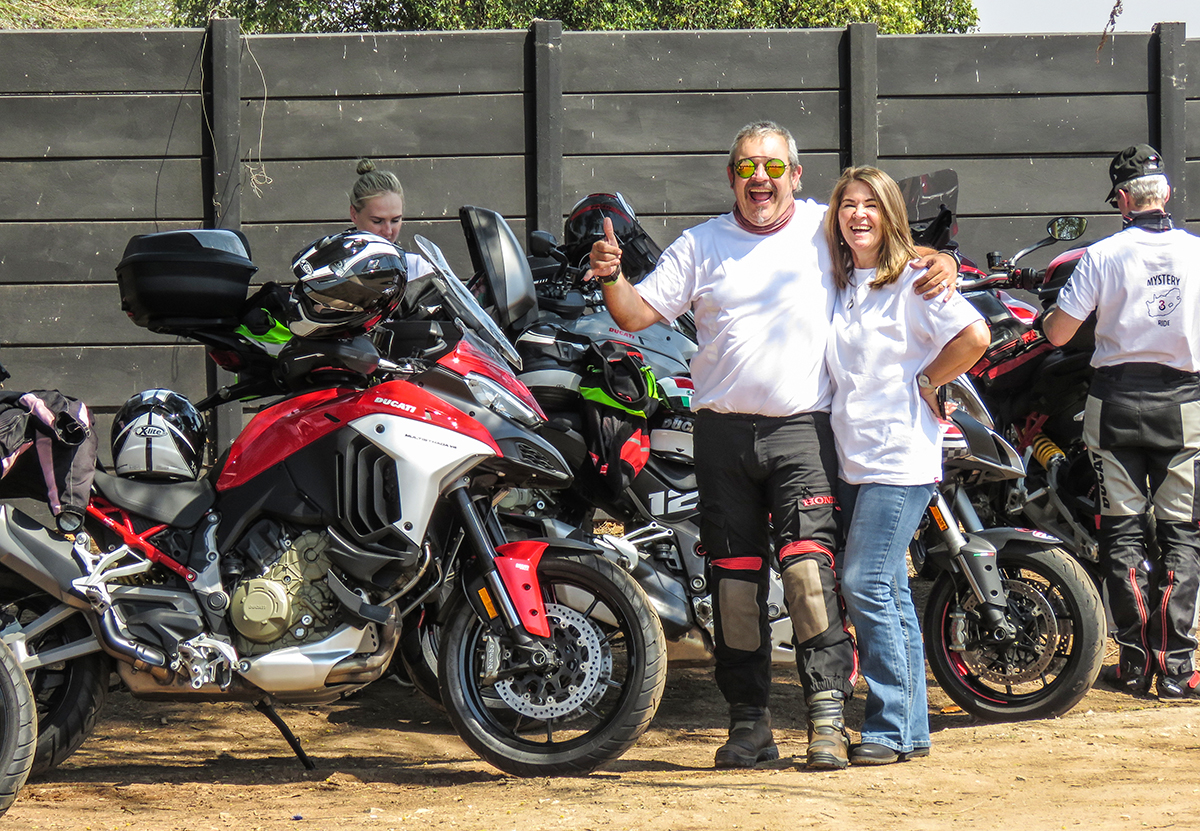
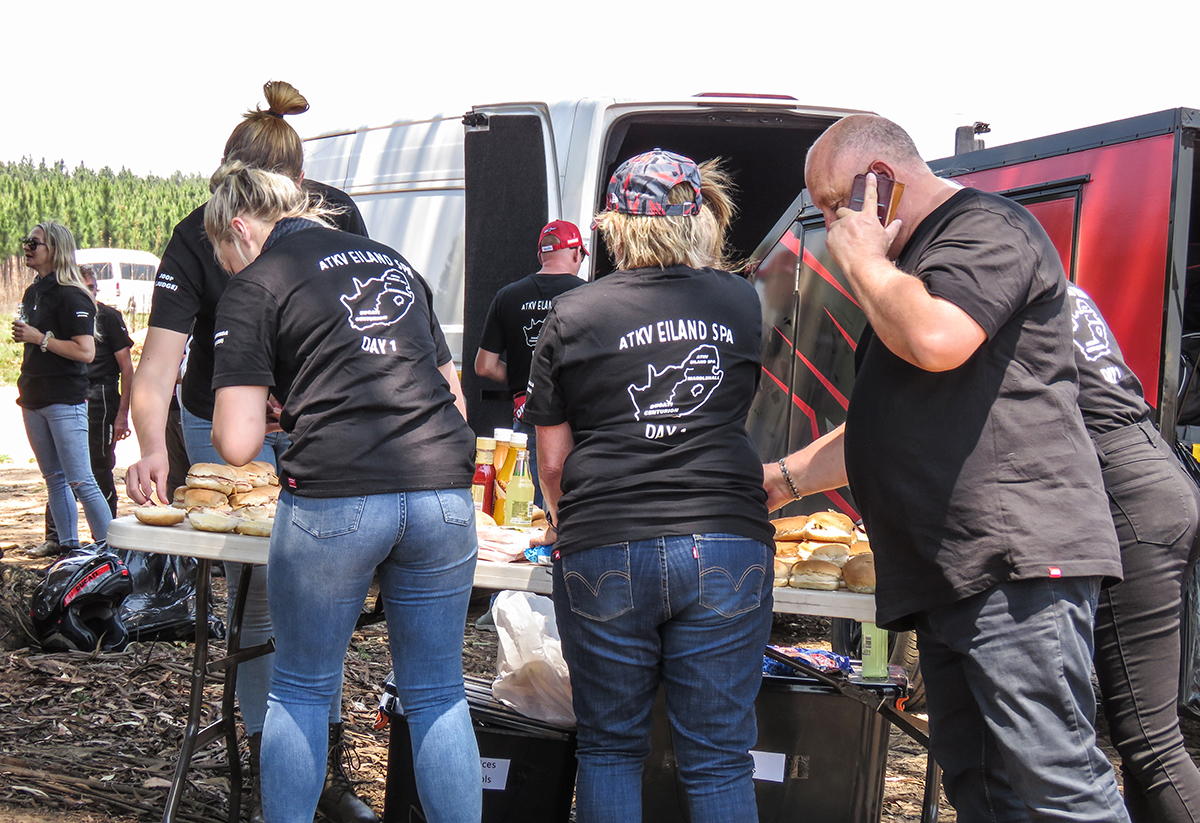
A week before departure there is a briefing lunch, or should I say feast, at World of Motorcycles for local tour participants. This is also when ‘goodie bags’ get handed out filled with an all manner of awesome kit. The day 1 t-shirt is also included. Every day on tour a different coloured branded T-shirt is supplied at the end of each day with the map of the previous days ride on the back.
Photo credit: Dave Cilliers / ZA Bikers
On this ride, the tours t-shirts had a particular significance. Each sleeve carried the name of Tour 2 legends who succumbed to the pandemic that has devastated our lives in the recent past. Joop, a man amongst men, and the ‘Judge’ of the final night on tour ‘fines committee’, and Laurinda, the life and soul of every gathering, as well as the baker of banana bread with magical joyful properties. A Dakota Sioux saying comes to mind when I think of these two giants that have fallen… “We will be known forever by the tracks we leave”. Their tracks are indelibly woven into Mystery Tour DNA. And so, on a bittersweet note, the count down to departure day began.
Photo credit: Dave Cilliers / ZA Bikers
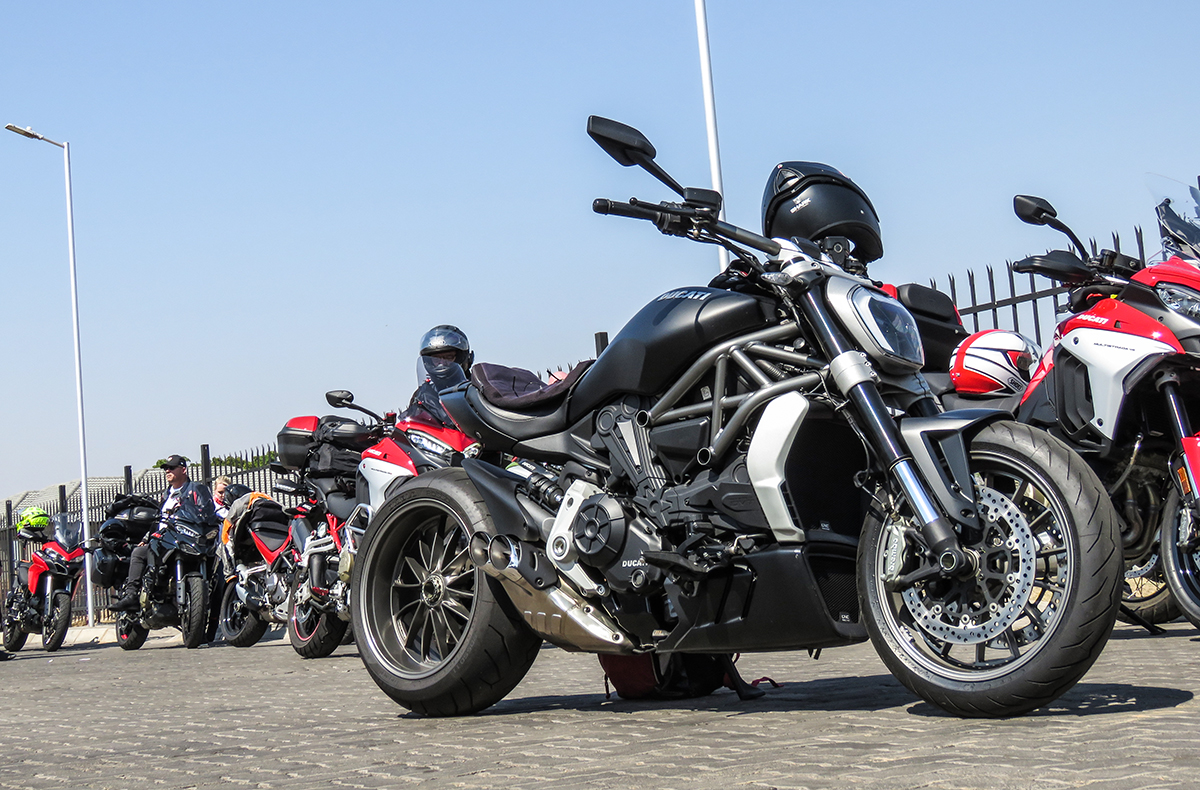
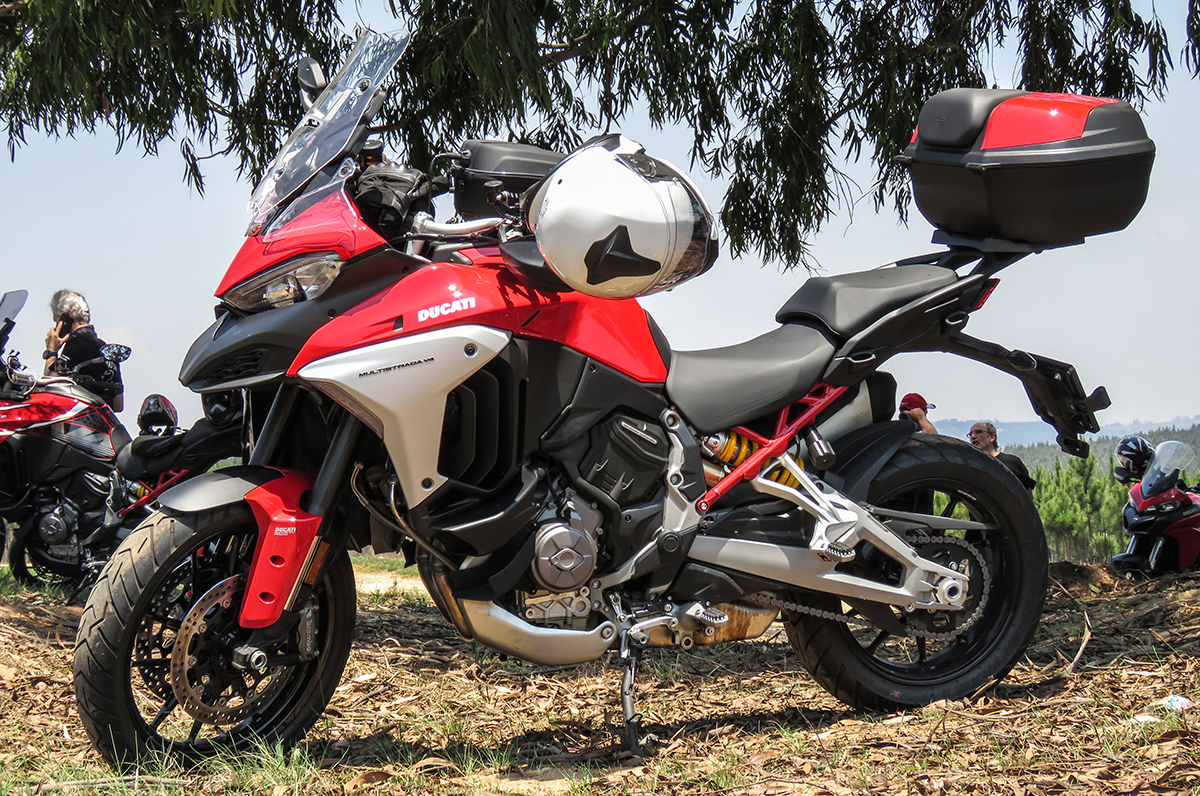
Friday dawned with the promise of a really hot October day. And so it was. We rode north out of Pretoria, immediately dashing the dreams of those who had chosen destinations in other directions. A short stint on the highway took the 40 odd Ducati’s off and onto the Moloto road. Jos hates highways! And so we progressed north, stopping for juice for the riders of bikes with smaller tanks. On that score, there was a wide array of different Ducati’s on tour. A brace of Diavel’s, Steve on his 1100 Scrambler, a Streetfighter or two, a solitary 1098, RESPECT! And Multistrada’s of every persuasion. Speaking of Multi’s, I was privileged to be riding a V4. Oh Lordy, what a bike! More on that later. The Multistrada’s, endowed with bigger tanks and decent consumption, only fuelled at every second fuel stop.
Photo credit: Dave Cilliers / ZA Bikers
We cruised the back roads, which proved to be pretty quiet, until we T-junctioned at Moria, between Polokwane and Haenertsburg. The Bologna Bullets came into their own on the sweeping road down the mountain, with Jos setting a cracking pace upfront. His better half Lida, as she always does, hung on for all she was worth as Jos annihilated the hero blobs on the tyres of his Multistrada V4 S. Albie Eagar, a guest along for the ride, with his wife Jackie riding pillion, dropped a gear with the seamless quick-shifter on his loan V4 and pitched it on its ear as his eyes lit up with the prospect of strafing some curves on the Italian thoroughbred. His joy was short-lived, as the governor intervened rather abruptly in the form of a short right jab in the ribs from Jackie, who did not feel comfortable with the sudden close proximity of her helmet to the tar. He was forced to let sanity prevail and settled into a slightly less frenzied pace.
Photo credit: Dave Cilliers / ZA Bikers
I absolutely revelled in the handling of the V4 down the mountain and then through Magoebaskloof. I played a game of very enjoyable high-speed tag with Roy on his 1260 Enduro, with us running in tandem through the sweeps and tighter bends of the Kloof. A short hop into Tzaneen for a splash ‘n dash before continuing to the Eiland resort, 60 odd kays down the road. It was a group of hot and bedraggled riders that settled into their comfortable air-conditioned rondavels in typical late 30-degree Lowveld heat and humidity. The pool and a cold one was suddenly a major priority. Chilling around the pool was the perfect opportunity to build or renew friendships with fellow Ducatisti. A special bunch of people this Ducati Familia.
Photo credit: Dave Cilliers / ZA Bikers
Early evening had us together in the boma to share war stories and enjoy some “tjop en dop”. Lida had lamb chops chilling in a marinade on their way down in the back up van and trailer, once again driven by Mystery Tour stalwart, Rob accompanied by the ever willing and helpful Ronel. The two worked tirelessly to ensure that luggage was delivered timeously and the van was in the right place at the right time to dispense food and drinks at various points on our daily journeys. The chops went down singing hymns with the pap and sous. Tender and tasty, a perfect meal to end a perfect day. Day two was to be the longest of the tour at just over 800 kays, so it was relatively early to bed so as to be locked and loaded for a 6:00 am start on the morrow.
Photo credit: Dave Cilliers / ZA Bikers
Bright-eyed, well mostly, and bushy-tailed, we rode out under a big blue sky through spectacular bushveld scenery, skirting Tzaneen then on to Hoedspruit, Hazyview, White River, Nelspruit and towards Barberton. The bends are so tight on the steep descending mountain pass towards Barberton that the fast guys got glimpses of their own taillights railing through the bends. Genuine! Jambila mountain pass to Badplaas was despatched in no time and then it was a left turn towards Swaziland and a right towards Lochiel and then Amsterdam.
Photo credit: Dave Cilliers / ZA Bikers
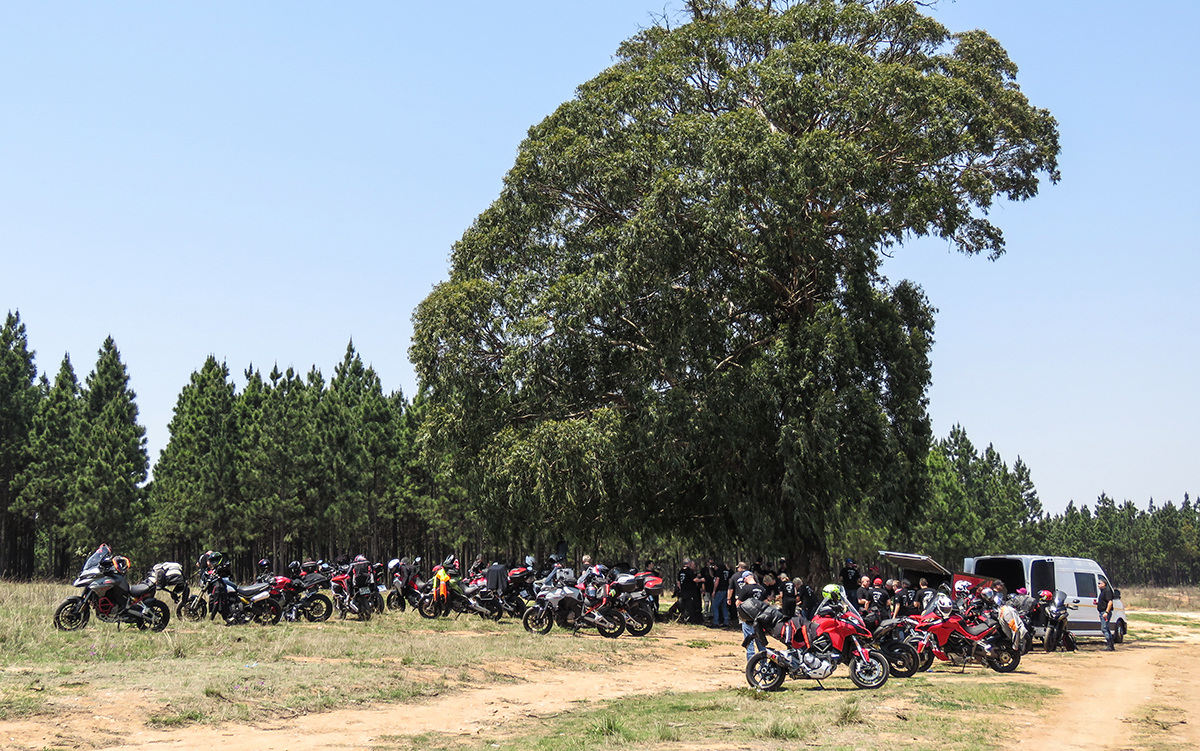
We stopped under a massive shady tree for a lunch rendezvous with the van. Once again an oft-repeated scenario played out. While we were doing our thing, travellers passing by were captivated by the plethora of magnificent Italian Stallions. They pulled over and wandered around the bikes, feasting their eyes and taking selfies by the score. This happened wherever we stopped. The allure of Italian beauty seems universal. Piet Retief, Pongola and Mkuze flew by under our spinning wheels and as we pulled into St. Lucia under a darkening sky, we were greeted by a soft coastal drizzle kissing our visors. In no time at all, we were settled in at our guest house and holiday flat accommodation, before gathering at the Ski Boat Club for the evening’s festivities.
Photo credit: Dave Cilliers / ZA Bikers
And how festive it was! Being the typical family that the Ducati crew is, regulars in the form of Cilliers, Brian and a couple of others rolled up their proverbial sleeves and helped Rob to braai a mountain of meat which was utterly demolished by the hungry hordes, washed down with a good few well-chilled chaps. All the while a significant wet weather system was rolling in and the drizzle gathered in intensity. This caused what in Rallying terms is known as “Force Majeure”. When nature intervenes and scuppers the best-laid plans of men then we just have to roll with the punches. The rain persisted throughout the night and as a result, the ride planned for day three was cancelled.
Photo credit: Dave Cilliers / ZA Bikers
A decision made easier by the fact that Jos had planned a circular route back to St Lucia. Sneaky fellow! Those who wanted to venture out in the rain were free to do so, however, we all got together the next morning at the local Wimpy for a slap-up brekkie. Given the long previous day, I think there were more than a few folks, especially pillions, thankful for a respite from riding. Local beaches and other haunts were frequented and a really good time was had by all. It was then back to the Ski Boat Club for our last night on tour festivities.
Photo credit: Dave Cilliers / ZA Bikers
Last night on tour comes around with some trepidation. The Judge presides over fines committee court proceedings with an iron fist. The newly appointed judge was Cilliers and the softest part of him proved to be the enamel on his teeth! He meted out justice without any mercy. Sentencing was to an allotted number of “Straf Doppe” and/or “Magic Chocolate Brownies”, which were delicious, but came back to haunt you a little later, with bouts of inexplicable mirth. Funnily enough, no perpetrators seemed to mind their sentencing and took their punishment manfully. The van ferried merrymakers to and from their places of abode to ensure the safety of all concerned. The superb Ducati’s remained stabled till the ride home the next morning. It was a happy and content bunch of Mystery Tourists that settled into comfy beds for a good nights rest.
Photo credit: Dave Cilliers / ZA Bikers
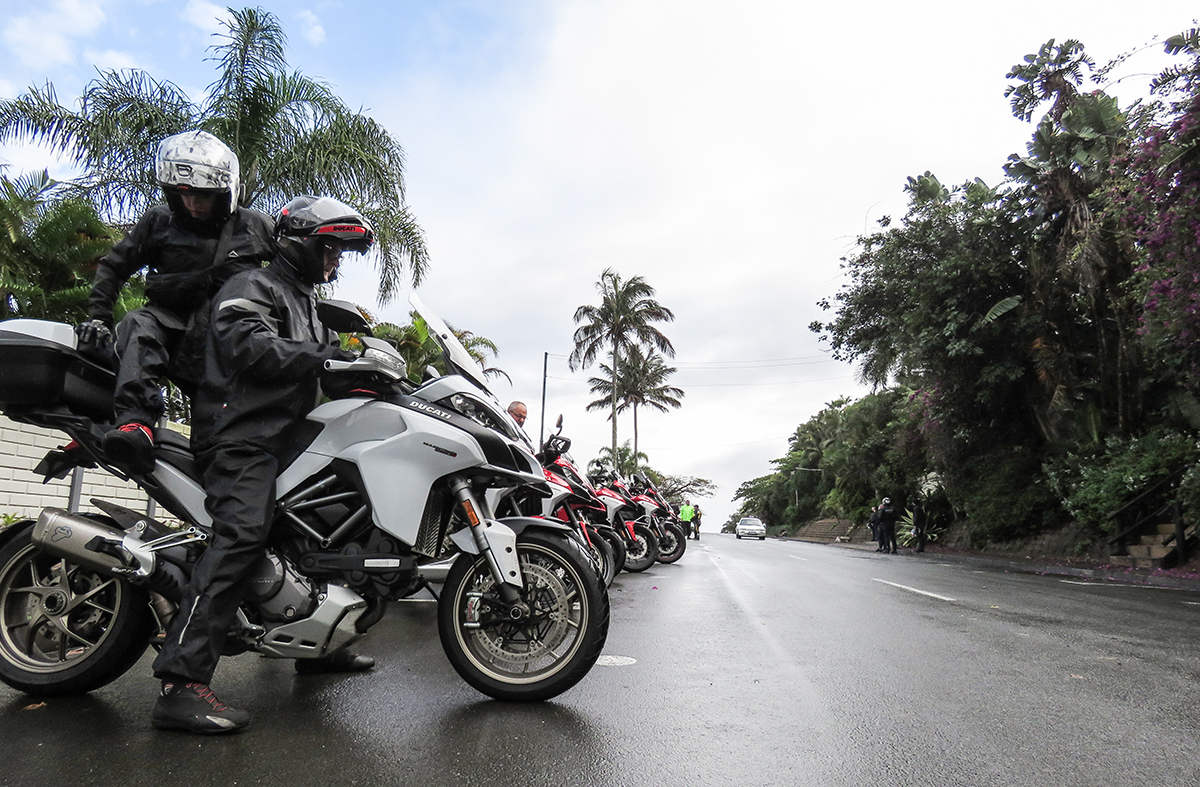
Our last day dawned in typical coastal fashion. I rode the 1 kay to fill my bike in the sunshine and then literally did the return journey moments later in rain! Go figure? It was rainsuits on when we departed in damp and cool conditions. The temperature remained low all the way to Pongola and got even chillier as we climbed away from the coastal plain to Piet Retief. The Ducati’s were revelling in the cool dense air that they were greedily sucking into their motors. My V4 was pulling like an absolute raped ape! Cruising at an effortless 140 plus and needing to pass a row of trucks, of which our roads are now inundated since the railways became defunct, I prodded down twice on the slick quick-shifter, listened to the muted exhaust note rise to a spine-tingling howl and then pinned the throttle.
Photo credit: Dave Cilliers / ZA Bikers
The Multistrada launches past traffic so fast that you short shift back to sixth surfing the wave of smooth torque and horsepower whilst it reels in the horizon. You really don’t need to downshift, but why would you not conduct that magnificent V4 Italian symphonic delight at every opportunity? Despite this excessive enthusiasm, the fuel consumption remained very acceptable, hovering around 17 km/L. The V4 Multistrada is an incredibly good Adventure Sports Tourer, with flair and good looks unique to Italian motorcycles. The S variant raises the bar even further, with a wad of high tech extras. As Glen, an airline Captain by profession, riding his V4 S with his lady Colleen on the pillion, puts it, “riding the V4 S long distances is like flying Business Class”. Well said, Captain Glen!
Photo credit: Dave Cilliers / ZA Bikers
In the interest of getting home reasonably early and to avoid the appalling Bethal road, Jos apologetically led us onto the N4 near Middelburg. We ran swiftly and smoothly back to World of Motorcycles, still feeling fresh despite having just despatched over 600 kays in iffy weather, over some less than perfect roads. The Ducs did not even raise a sweat! A short while later, after a debrief and farewell session, we went our separate ways. Another Mystery Tour is done and dusted. As always, after an epic ride, there is the slight downer as you think back on the good times and you part company with mates both old and new. God willing we will reunite for Mystery Ride 4. Words seem inadequate when it comes to saying thank you to Jos and his team, as well as to all the participants who, in effect, help to make these rides the amazing experiences that they are.
Photo credit: Dave Cilliers / ZA Bikers
In a world becoming more and more “corporate”, with big, successful companies becoming more rigid and almost, dare I say, arrogant and condescending in their dealings with their customers, Jos and his recipe with Ducati are a breath of fresh air. Strong relationships build brand loyalty better than anything else. Bikes are as much objects of the heart as they are the head. The Ducati Familia is a perfect combination of both.
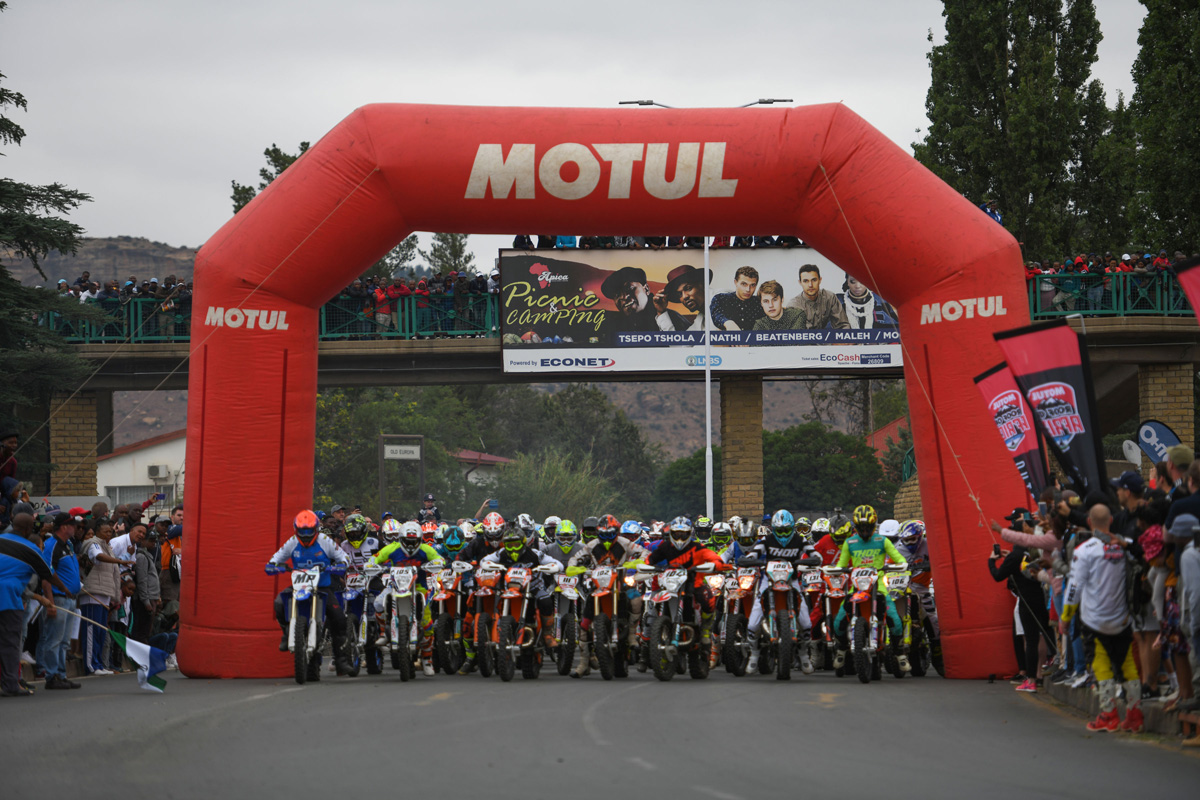
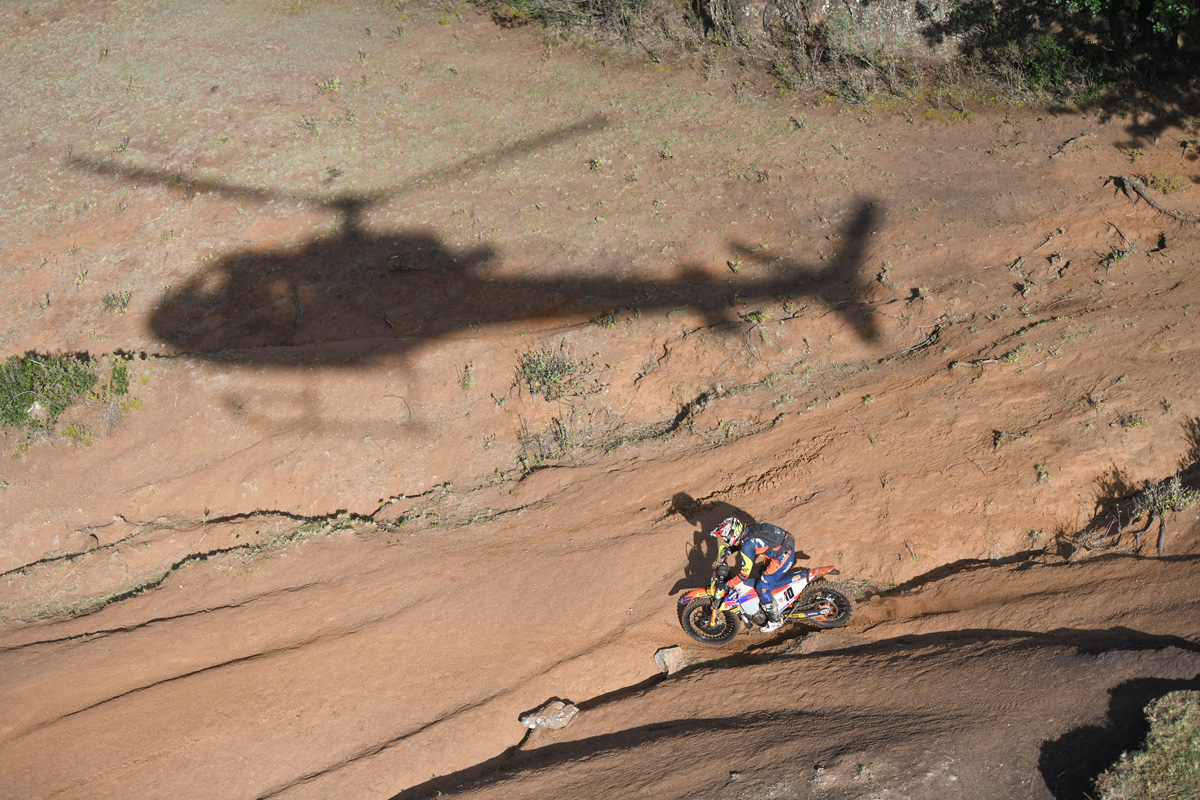
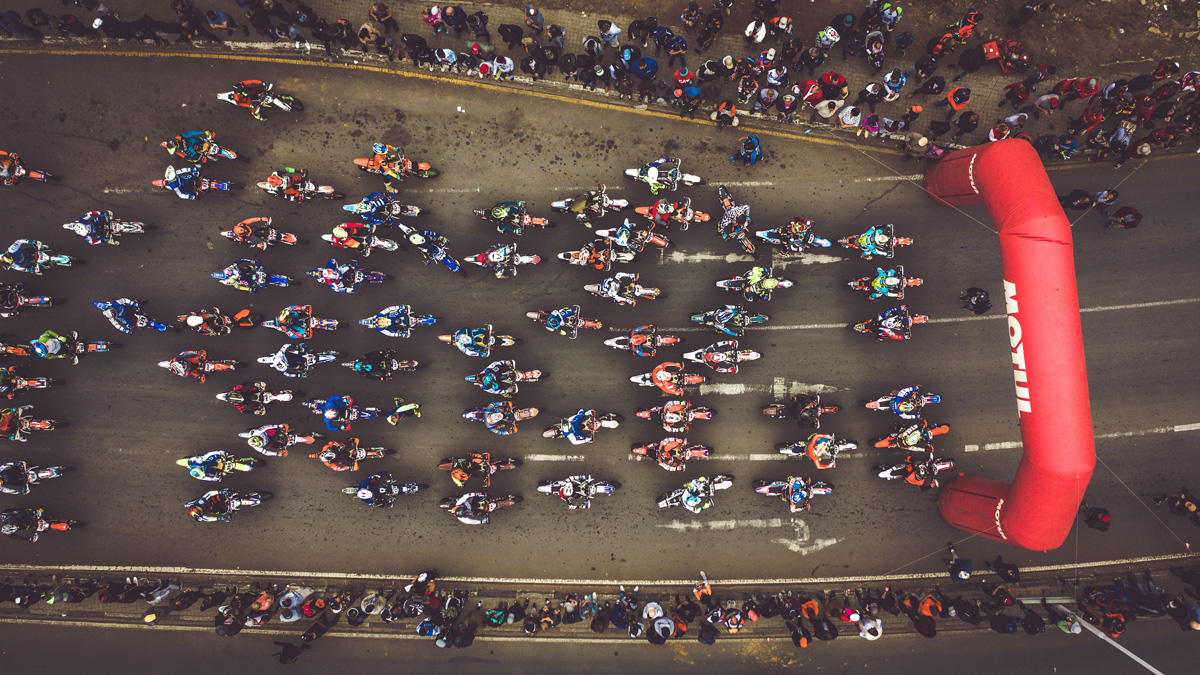
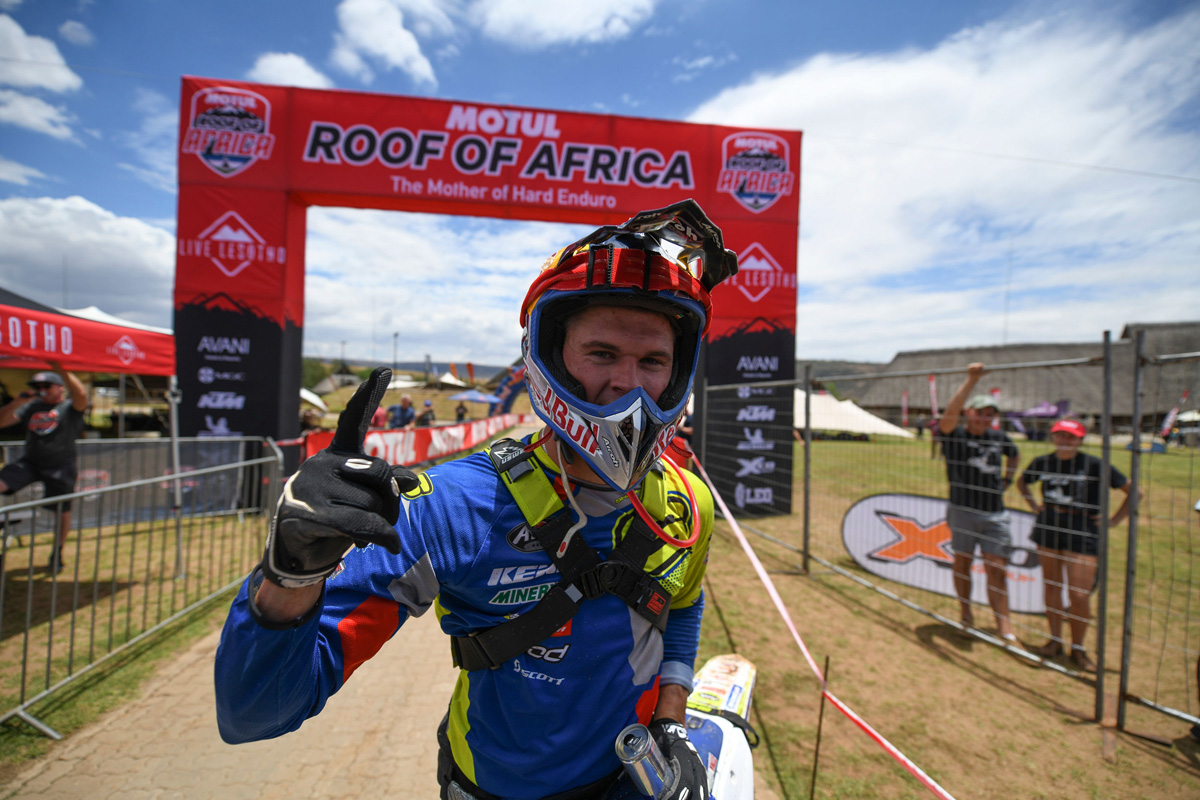
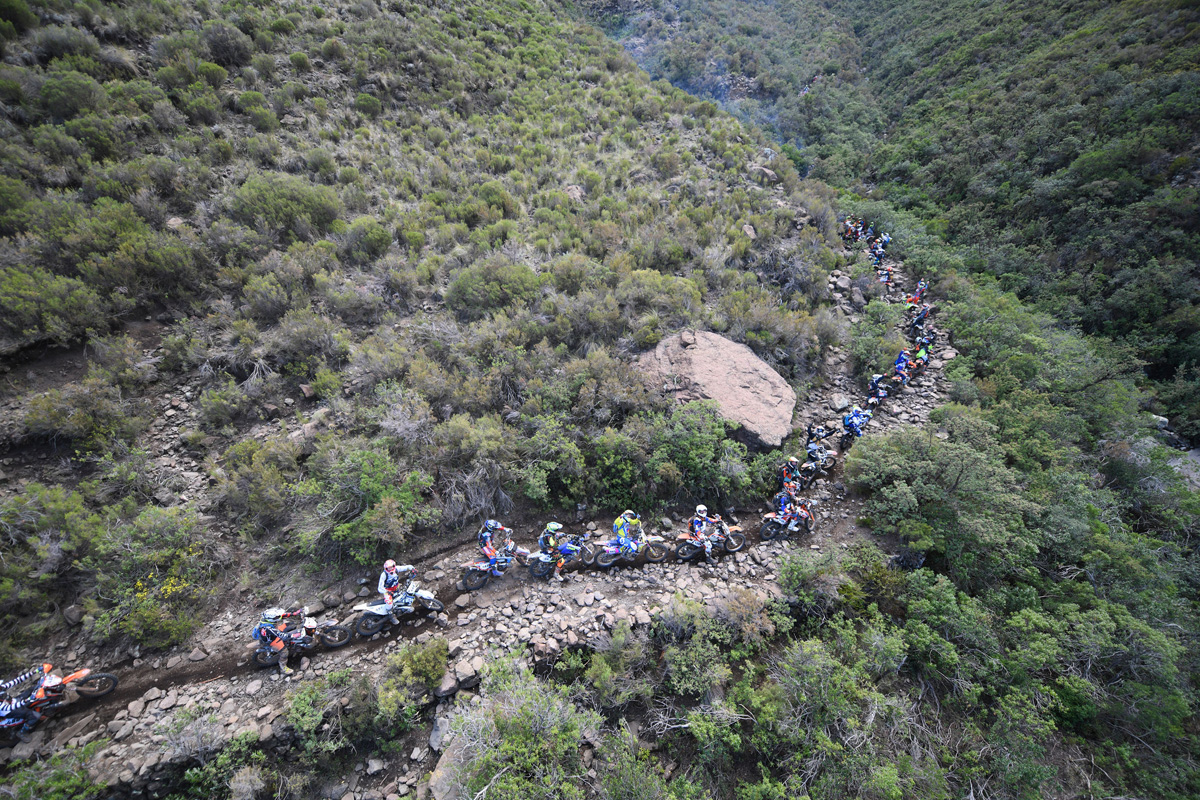
This year’s Roof is now just a month away (24 – 28 November 2021), and organisers are putting the finishing touches to what will be a very welcome return for one of Africa’s most iconic Hard Enduro events.
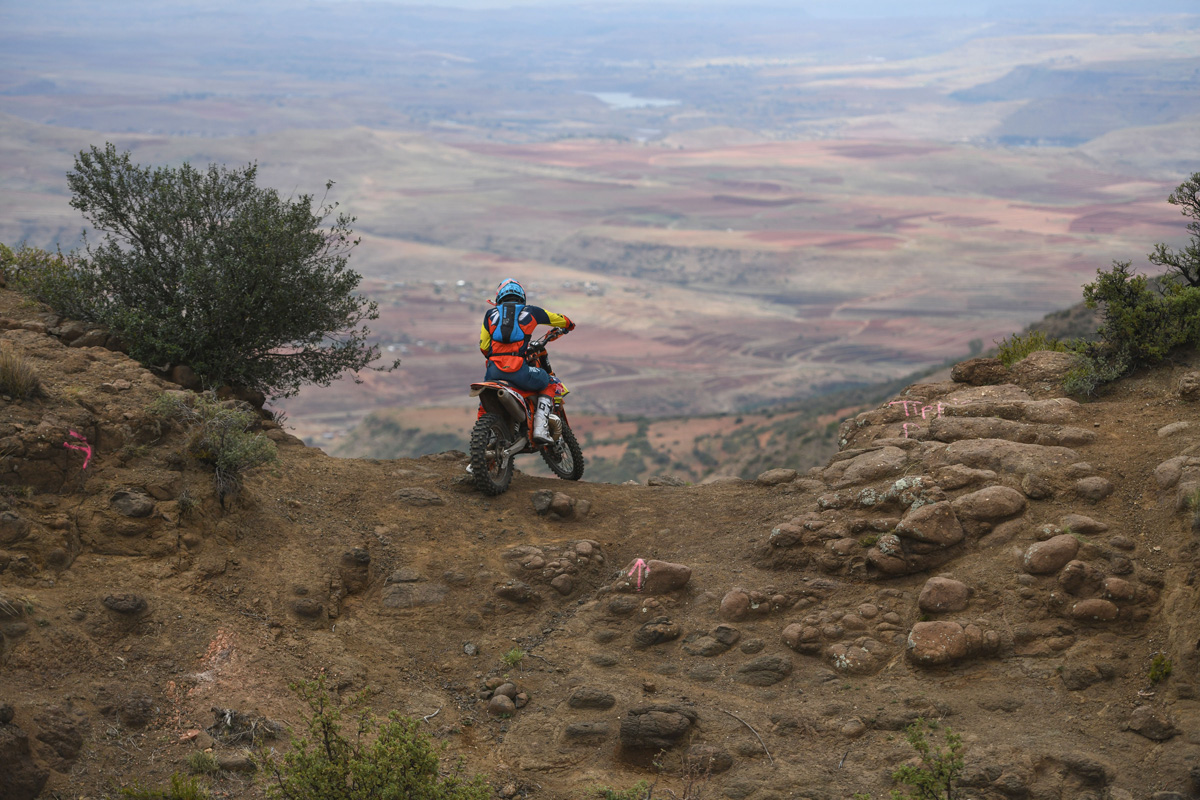
2019 Motul Roof of Africa captured by Zoon Cronje from – www.zcmc.co.za
The buzz around the return of the Motul Roof of Africa – after only its second-ever postponement – can be judged by the fact that over 400 entries have already been received for this year’s event. Alongside the established Gold, Silver and Bronze Classes, a new Iron Class has been added to give ‘weekend warriors’ the chance to experience the mountains of Lesotho from the saddle.
As the event approaches, organisers Live Lesotho have further refined the format to achieve a perfect balance between challenging elements and striving to ensure the safety of riders and their support crews. This will see each rider limited to just five support crew members.
2019 Motul Roof of Africa captured by Zoon Cronje from – www.zcmc.co.za
The format this year will be similar to 2019, but with the notable exception of the EnduroX component. This decision was taken by Live Lesotho in an effort to avoid mass gatherings while COVID-19 is still a consideration.
On Wednesday 24 November, riders will need to go through the required documentation and scrutineering sessions. The process will take place at the Avani Lesotho Hotel & Casino (top hotel) and will be streamlined to facilitate social distancing – without being in any way less rigorous.
On Thursday 25 November, the program will run as follows:
Round the Houses through the streets of Maseru
Followed by a Time Trial at Thaba Bosiu, for all classes
2019 Motul Roof of Africa captured by Zoon Cronje from – www.zcmc.co.za
Friday 26 and Saturday 27 November, will be Race Day 1 and 2 respectively, and the start/finish will be a Thaba Bosiu, headquarters for the event.
“This year’s Motul Roof of Africa will be the result of two years’ planning and plotting new routes, so we’re certain that riders will feel it was worth the wait,” commented Charan Moore, Motul Roof of Africa Route Director and Manager of Live Lesotho. “We can confidently promise both Roof rookies and returning riders a rewarding, challenging course – something they will never forget,” he added.
2019 Motul Roof of Africa captured by Zoon Cronje from – www.zcmc.co.za
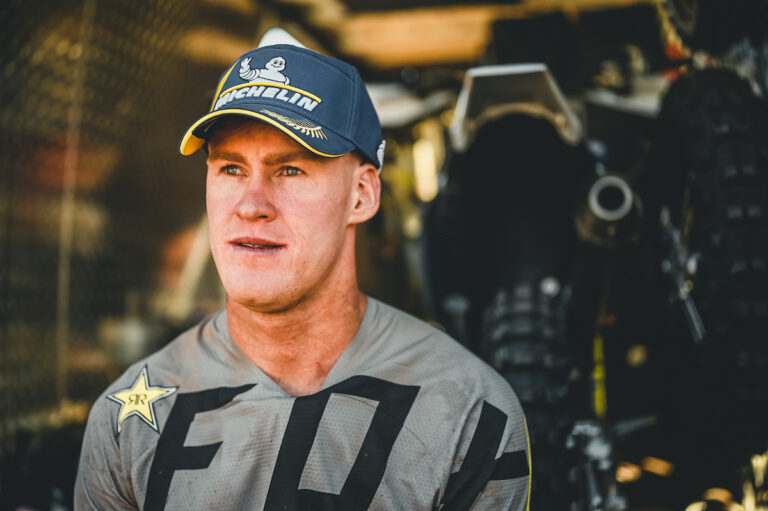
Speaking of returning riders, this year’s field will be headed by defending Roof champion Wade Young of the Sherco Racing Factory Motul Team. When he lines up at the start of the Mother of Hard Enduro, Young will be hot off the international circuit – he’s reportedly delighted to have the chance to try and retain his crown in the face of stiff Gold Class competition from the likes of Travis Teasdale (Trax GasGas), Brett Swanepoel (Rockstar Energy Husqvarna), Matt Green (Matthew Green Racing), Luke Walker (McLarens bLU cRU Yamaha), Kerim Fitzgerald (Red Bull KTM) and Heinrich Aust (Rockstar Energy Husqvarna). Kirsten Landman (Brother Leadertread KTM) will be tackling the Gold Class as training for next year’s Dakar Rally.
2019 Motul Roof of Africa captured by Zoon Cronje from – www.zcmc.co.za
Confirmed participants in other classes include riders from the Netherlands, Germany, Australia, Egypt, Malawi, Botswana, Namibia and Swaziland, as well as a strong showing of Basotho riders. The Roof is therefore providing a welcome boost to a local tourism sector that has been hard hit by the pandemic.
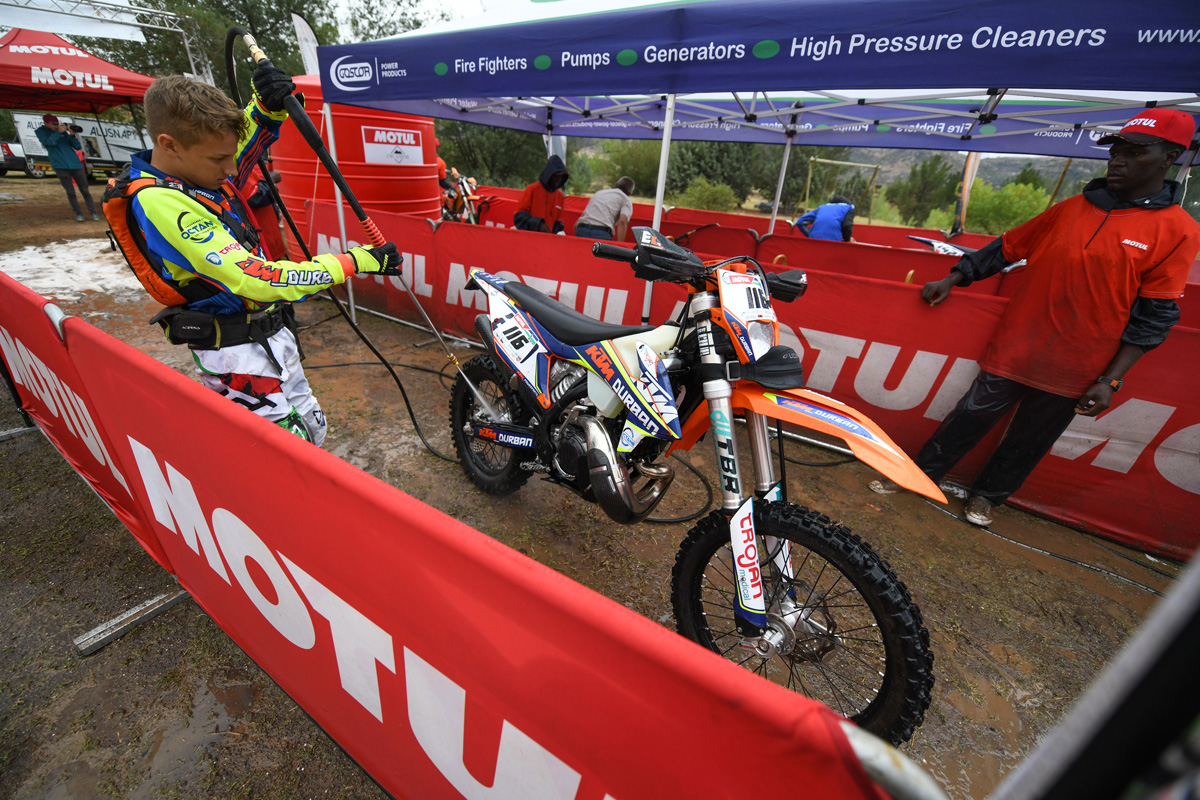
To make life a little easier for competitors, Motul will be sponsoring the Bike Wash facility in partnership with Eco Tanks and Goscor Power Products, with Craig Kruger and his team providing facility management. While motorcycle manufacturers will endeavour to support teams and individual competitors during the event in ways that are aligned with COVID protocols.
2019 Motul Roof of Africa captured by Zoon Cronje from – www.zcmc.co.za
“We are very much looking forward to reconnecting with our friends in the Enduro community – whilst still respecting social distance guidelines,” commented Mercia Jansen, Motul Area Manager for Southern and Eastern Africa. “Last year’s postponement left a gap in our diaries, so we’re especially looking forward to returning to Lesotho and the Maloti Mountains,” she added.
Lesotho’s management of COVID-19 has led to borders being re-opened for tourists (and riders). Only one negative PCR test is required for entry into Lesotho, and this must be within 72 hours of crossing the border. This negative result is then valid for 14 days, meaning that no second test is required within Lesotho. Rapid tests are available at the border, but this needs to be repeated on exit. Lesotho has also implemented drive-though border formalities, although South Africa has yet to follow suit.
2019 Motul Roof of Africa captured by Zoon Cronje from – www.zcmc.co.za
The hard work of all stakeholders, including sponsors and the Lesotho Government, has contributed significantly to the excitement that is building around the Motul Roof of Africa 2021. For more information about this year’s Roof, including the COVID-19 measures that will be in place, visit the official Motul Roof of Africa Facebook page.
For further information and to enter the event, visit the official Motul Roof of Africa website: www.roofofafrica.co.ls
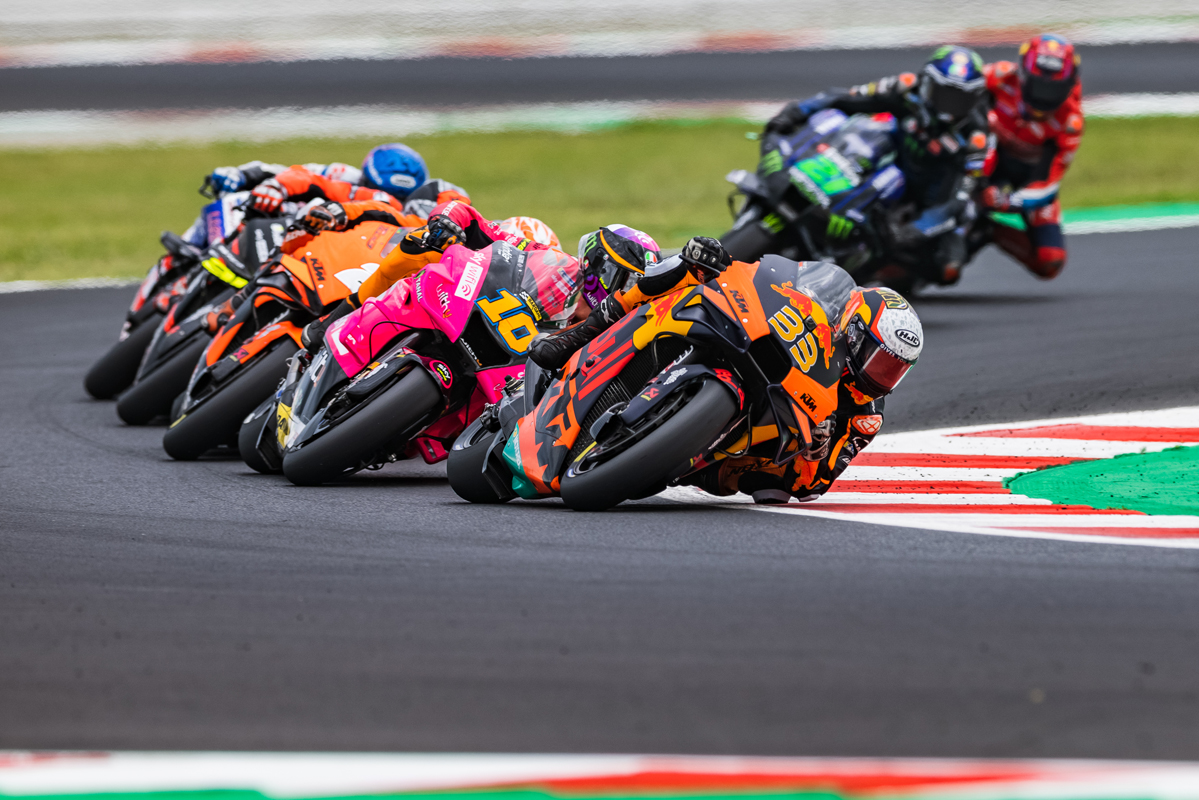
After burning some rubber on the bumpy Circuit of the Americas, the Binders headed back to Misano in San Marino for another round of the Moto3 and MotoGP world championship. This weekend marked the sixteenth Grand Prix on the 2021 racing calendar, with only two rounds now remaining. This weekend brought with it chilly autumn conditions, making it difficult for the riders to get around the flat coastal circuit of Misano.
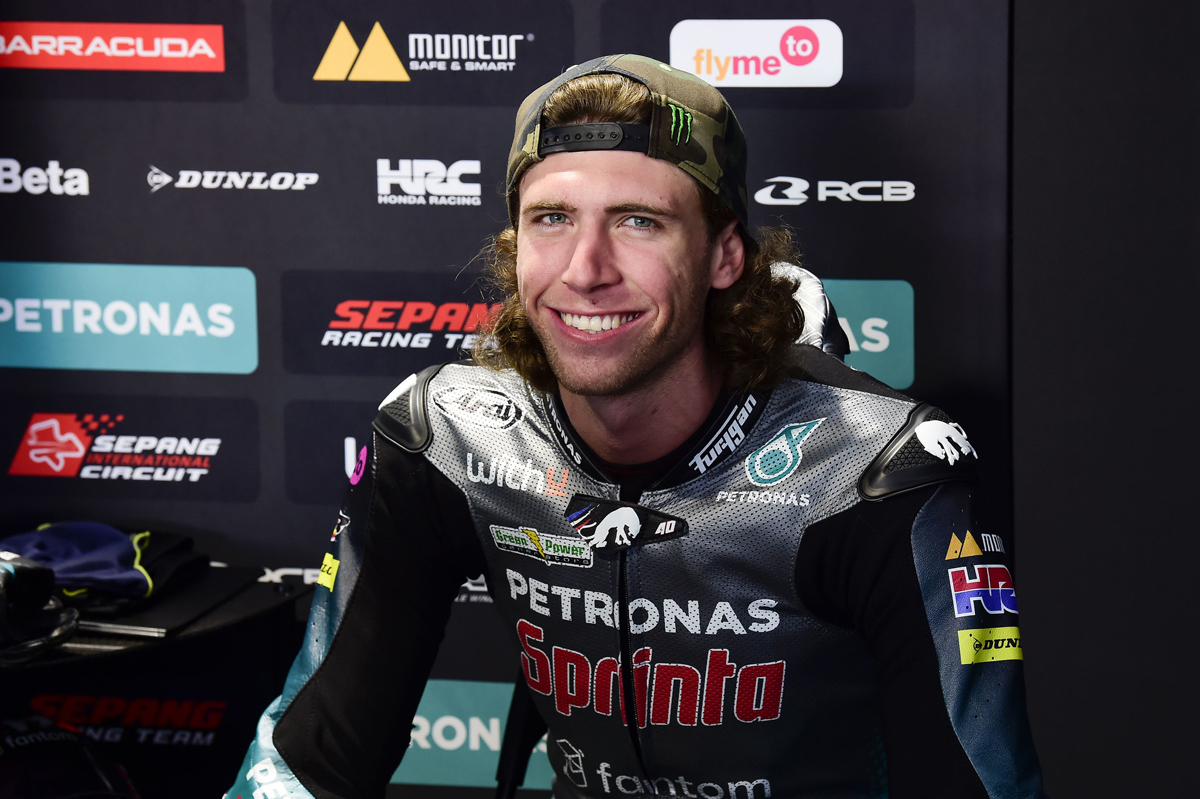
Darryn Binder
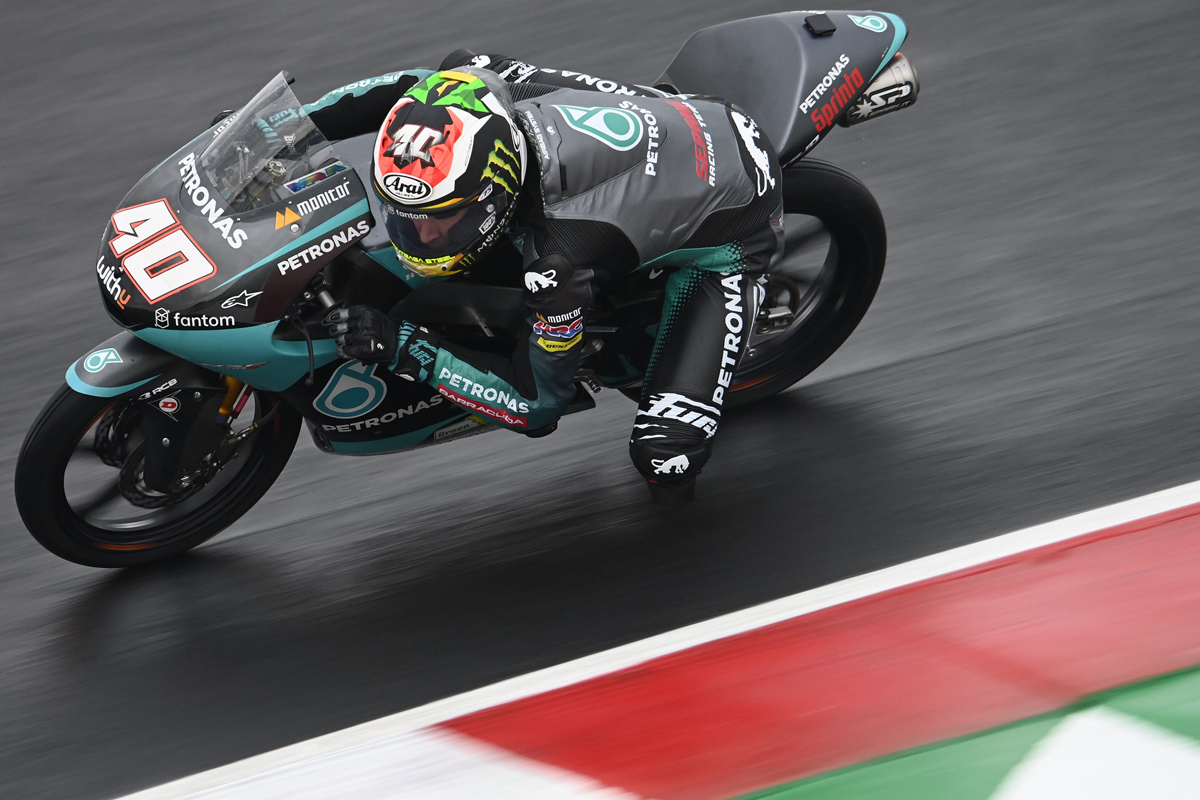
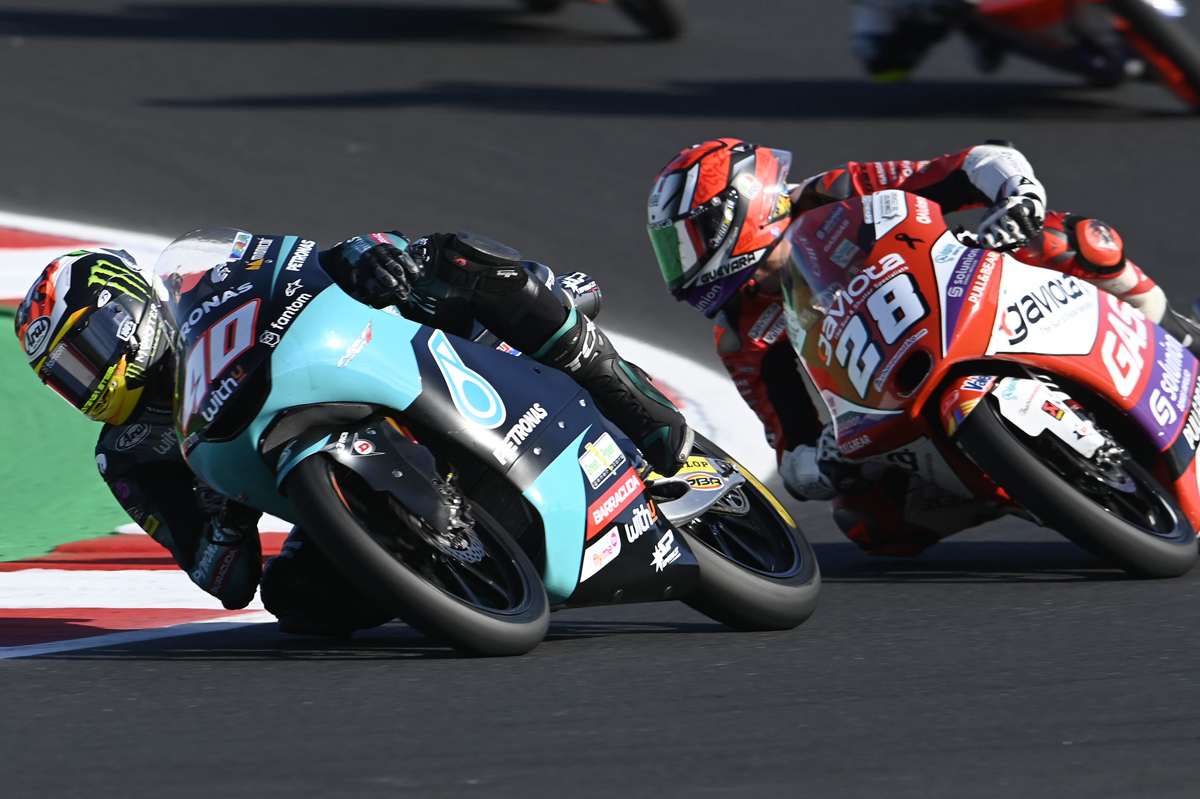
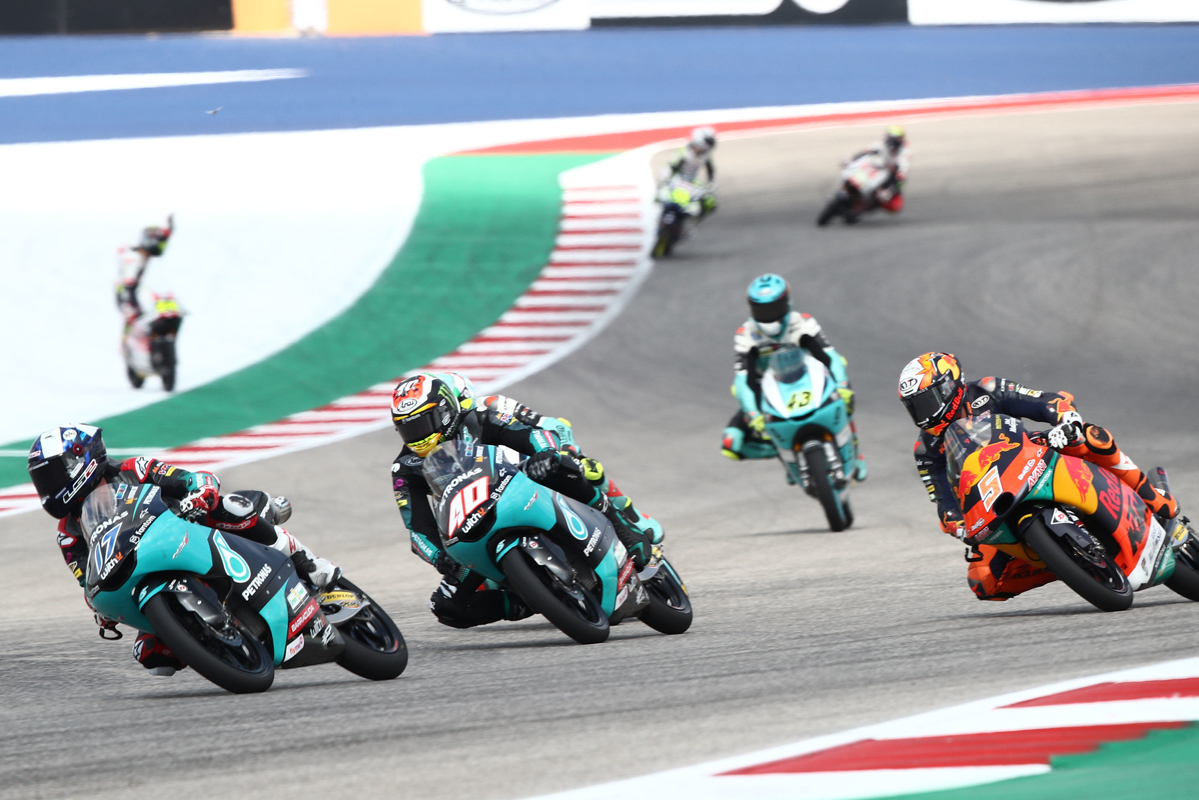
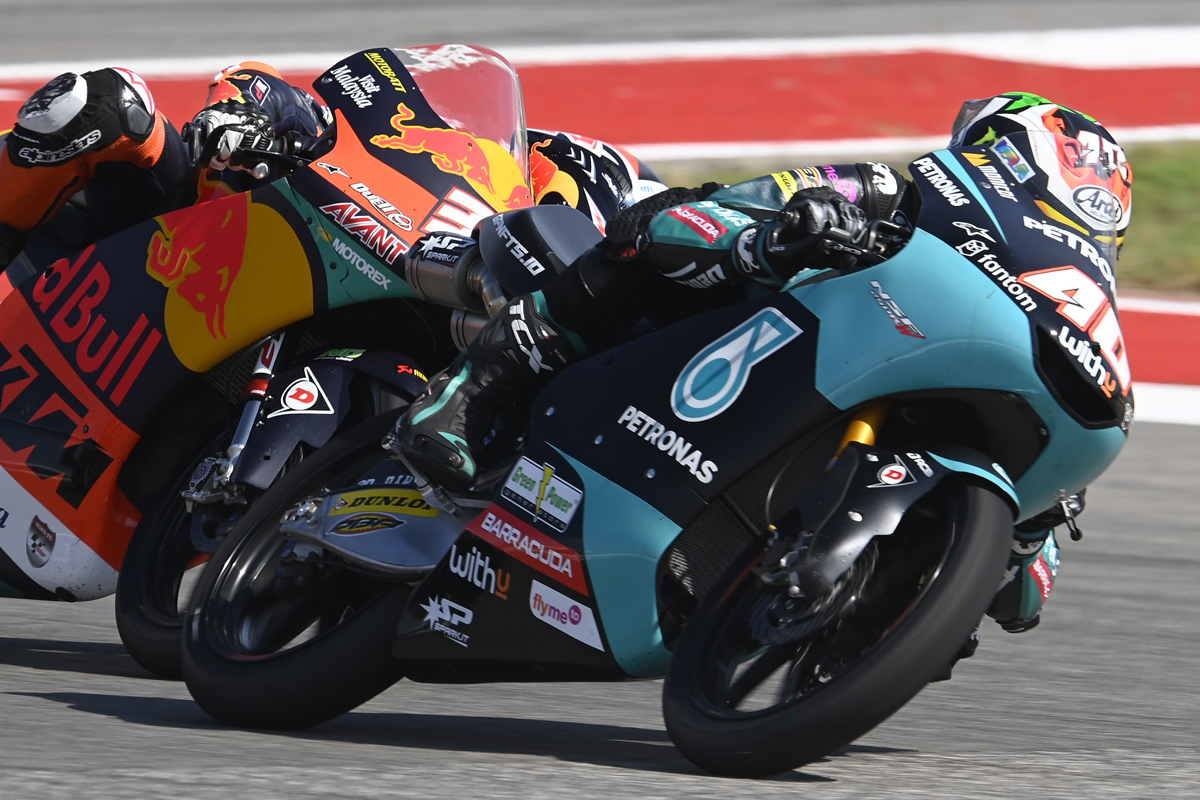
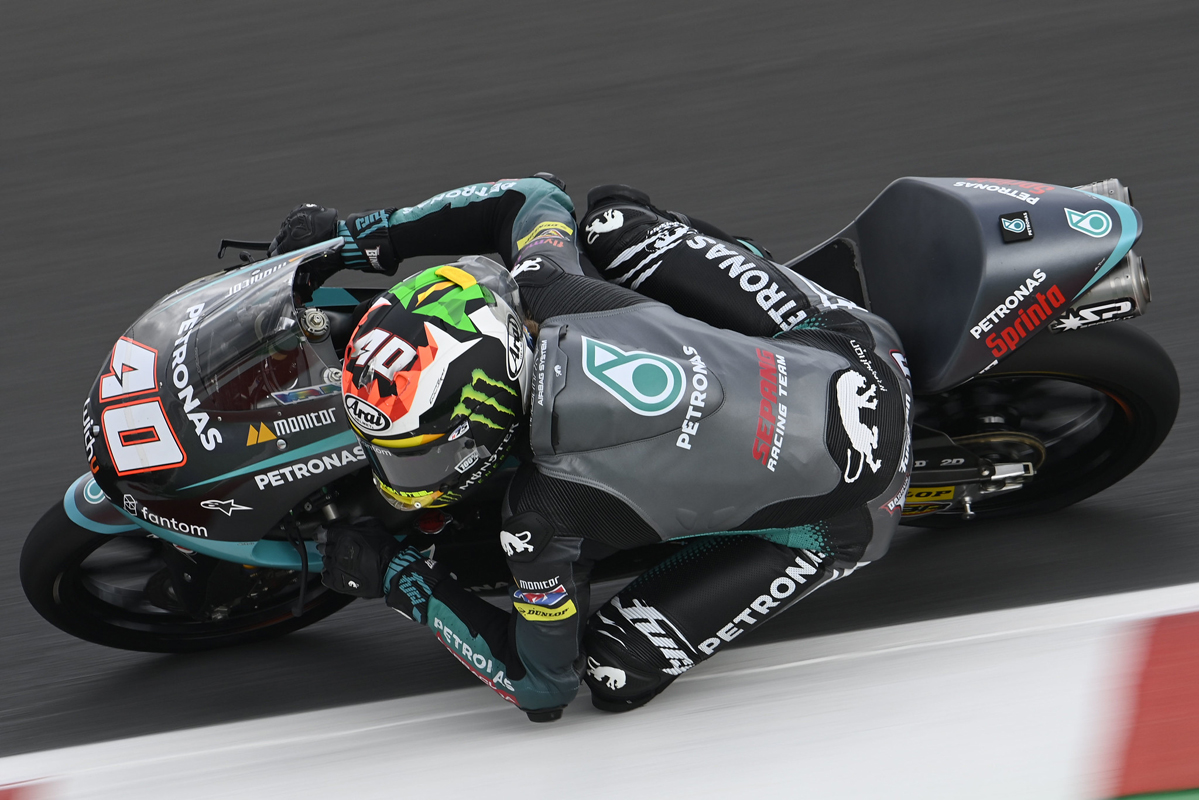
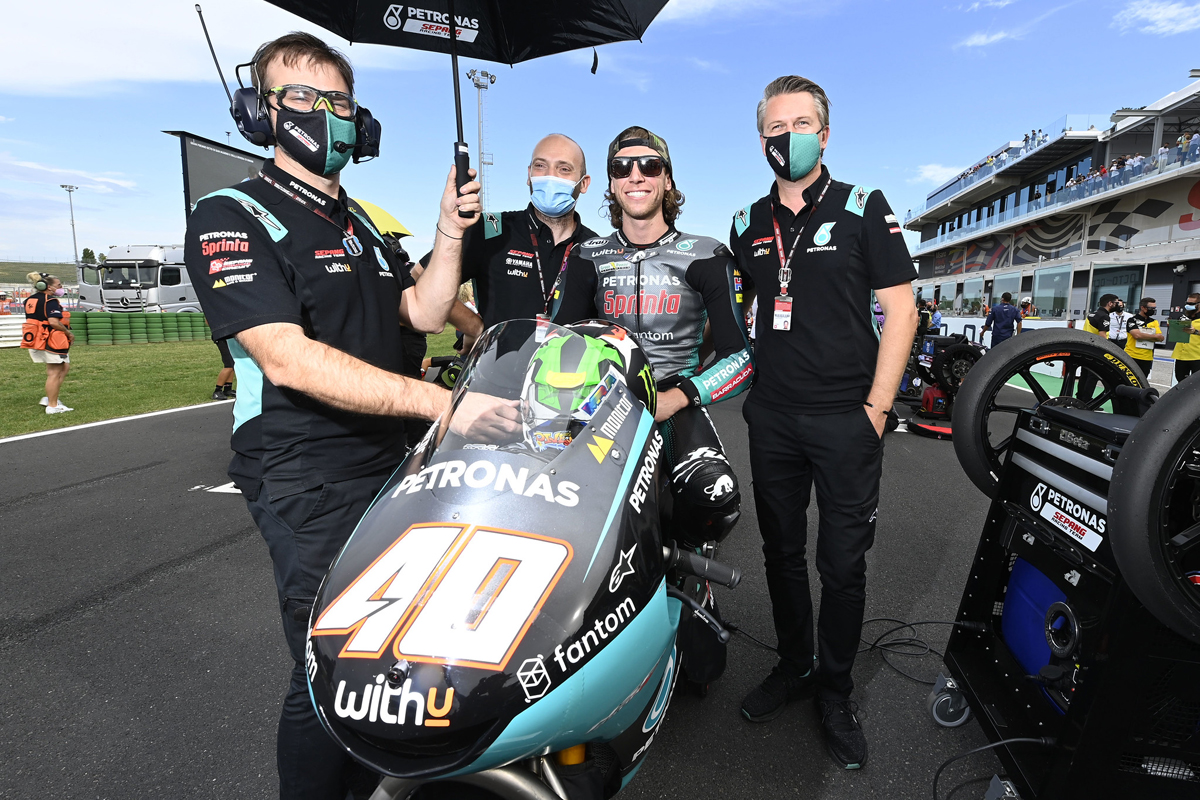
The weather conditions on Friday’s free practice couldn’t have been any different to Saturday’s qualifying. Despite the mist and light rain in free practice, Darryn Binder put in consistently quick lap times and ended FP3 in 10th, securing a place in Q2. Qualifying on the other hand proved to be a struggle for Darryn and this resulted in him lining up in 16th for Sunday’s race.
Photo credit: Petronas SRT
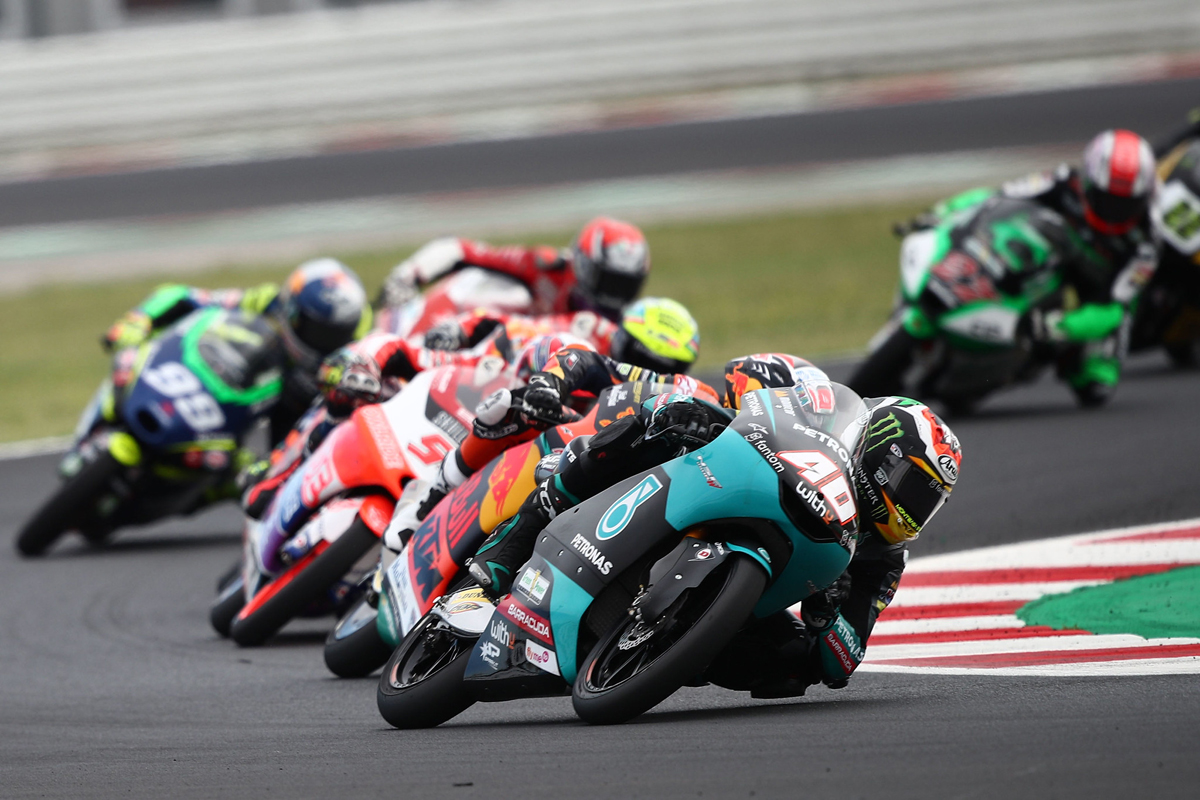
Sunday saw Darryn set off like a rocket, making his way from 16th on the grid to tenth by the end of the opening lap, and by the third lap he was up to seventh. By the halfway point, Darryn was in the thick of the podium fight.
Just when we thought Darryn was going for the top step, he got caught in the final laps and ultimately missed out, crossing the line in fourth. With 136 championship points, he sits sixth in the championship standings.
Photo credit: Petronas SRT
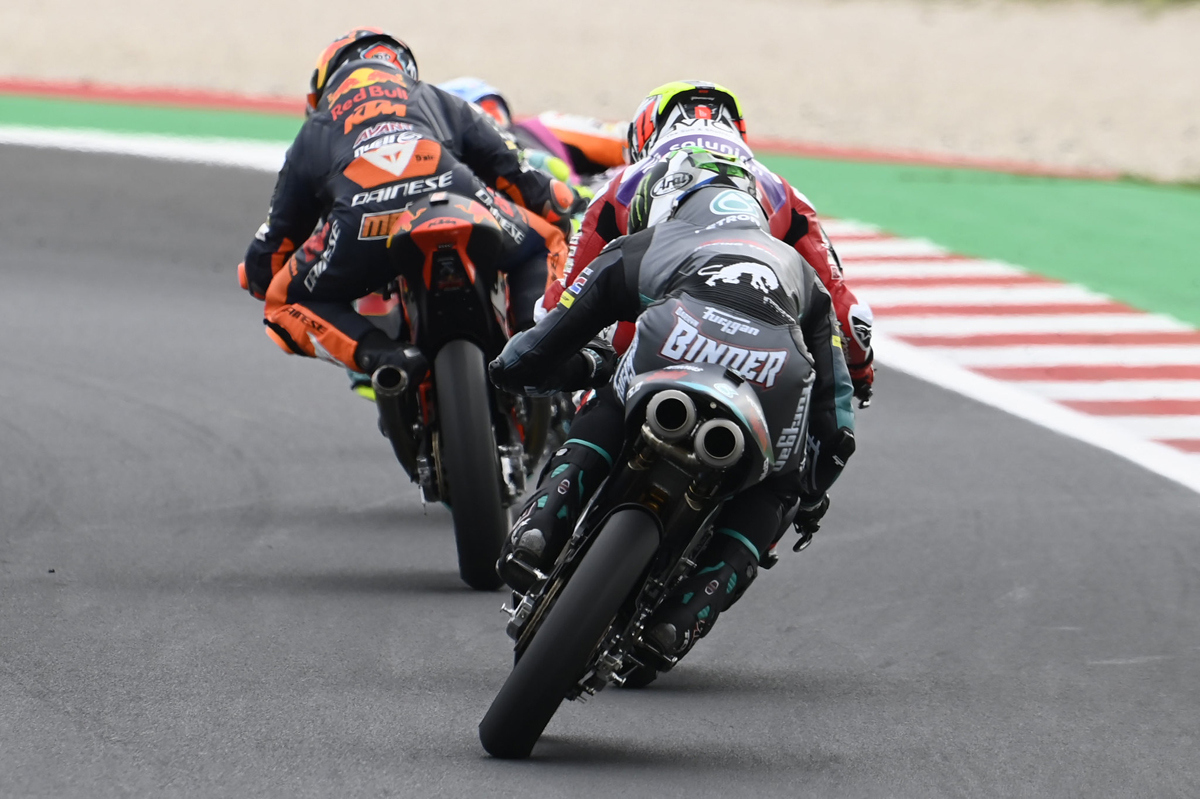
Darryn Binder: “It was a strange race because the first time we got out on the slicks was the out lap going to the grid! Going into the race, I was confident because I had a good race here last time and I knew that our set up was good in the dry. I started off in the group and made my way to the front slowly. When Dennis [Foggia] arrived at the front I knew he would have good pace, so I got behind him. However, I felt like I was pushing just to hang on to the back of him and unfortunately when I avoided [Izan] Guevara’s crash it broke the slipstream. I’ve been struggling with speed and I started drifting back. I was hoping I could hold on to a podium, but it wasn’t possible. Fourth is a bit disappointing but at the end of the day it is what it is.”
Photo credit: Petronas SRT
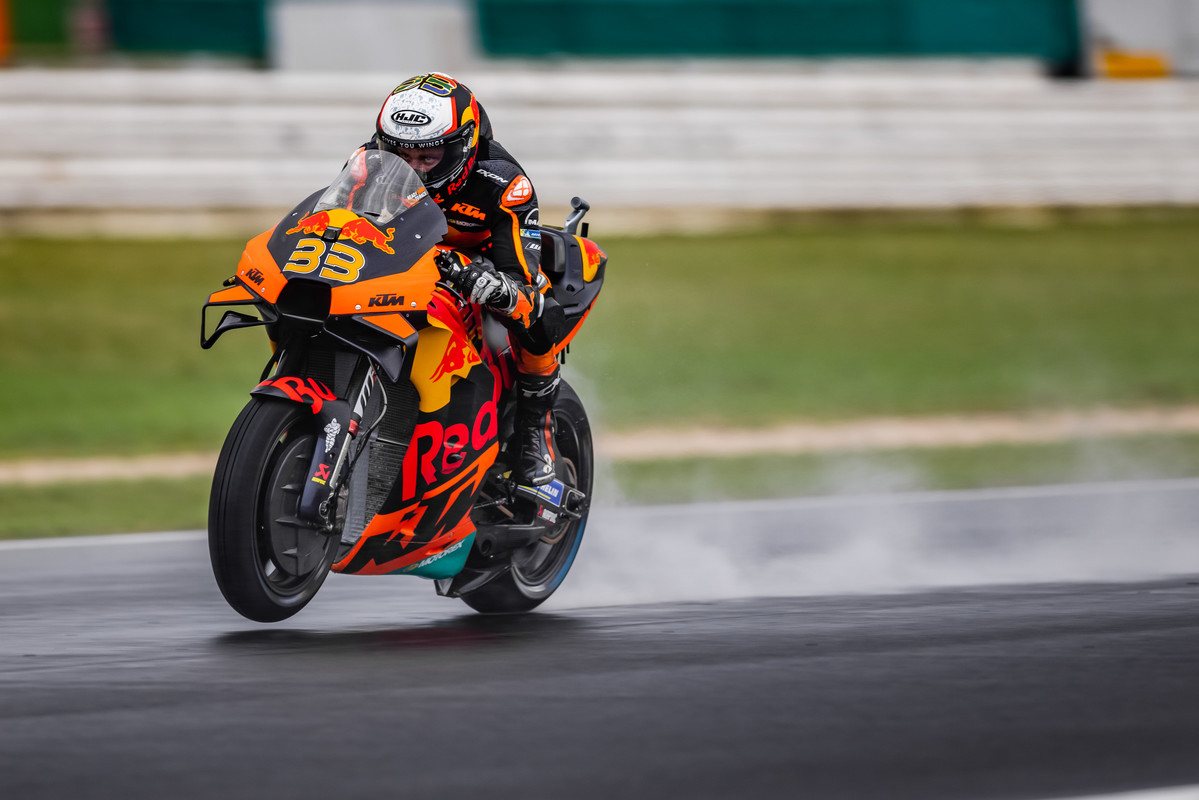
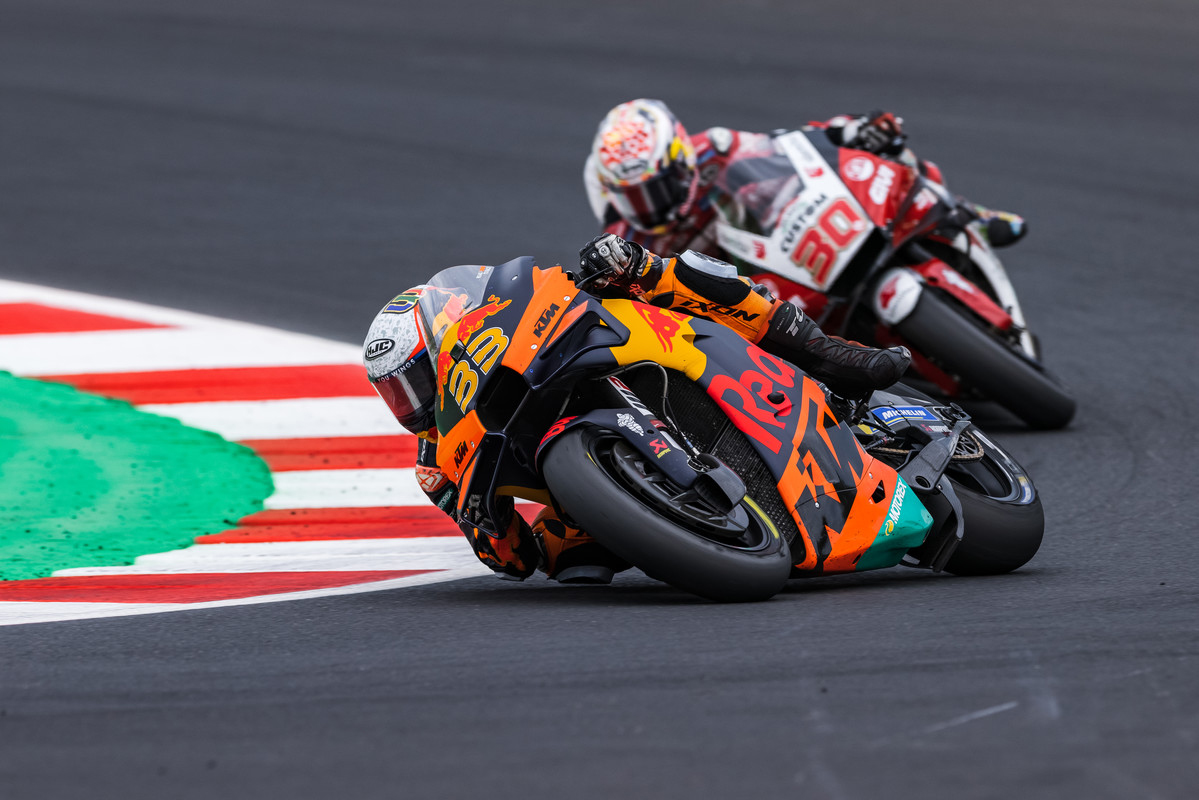
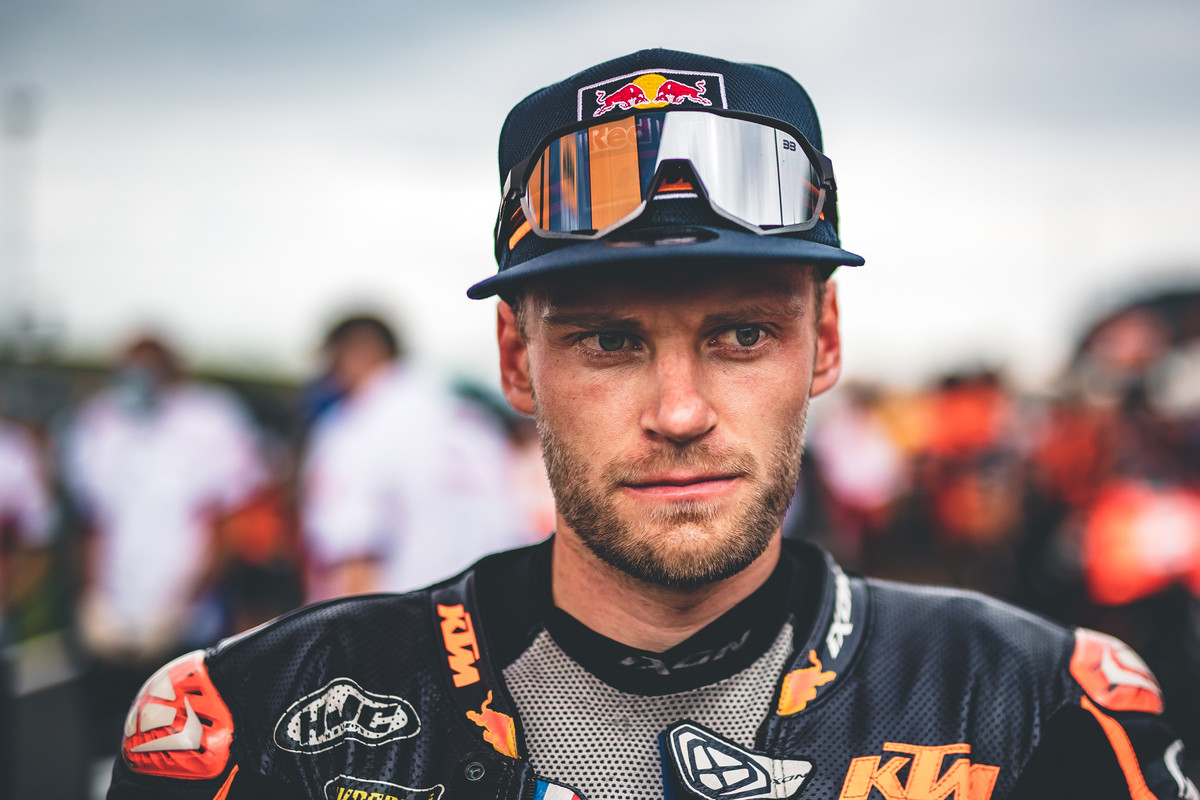
Brad Binder
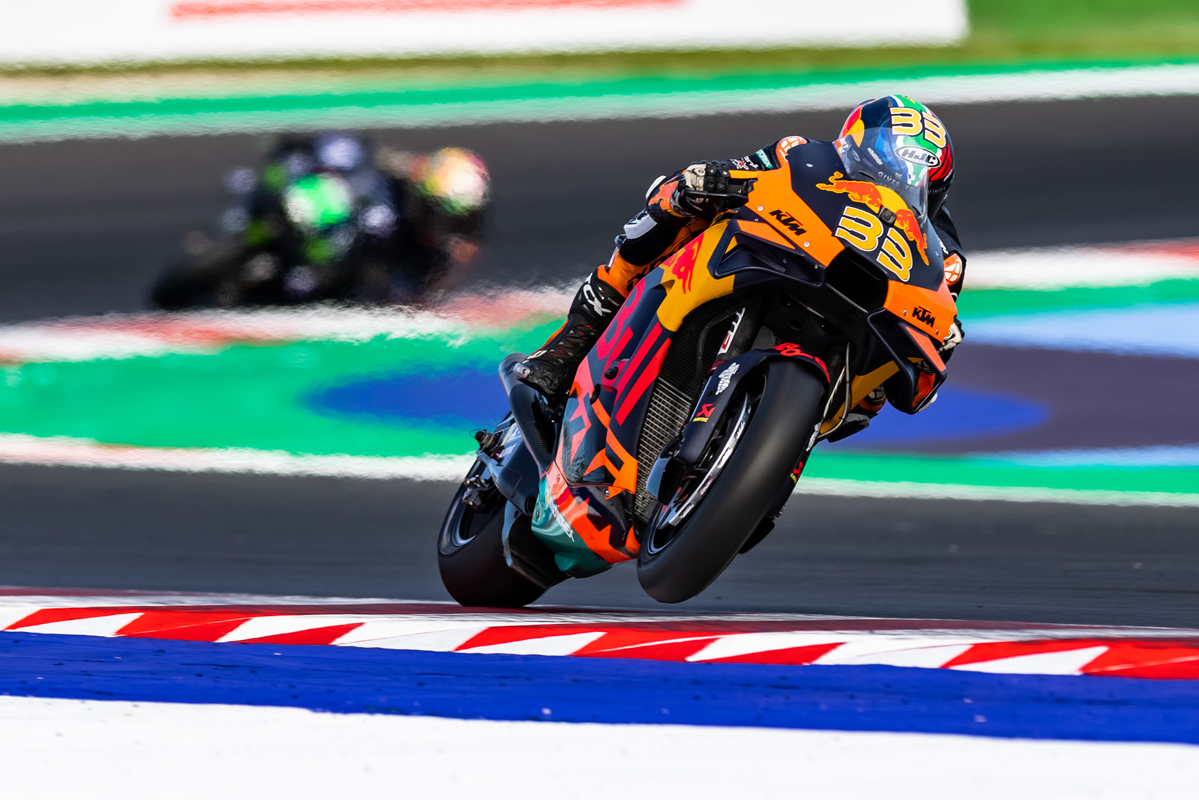
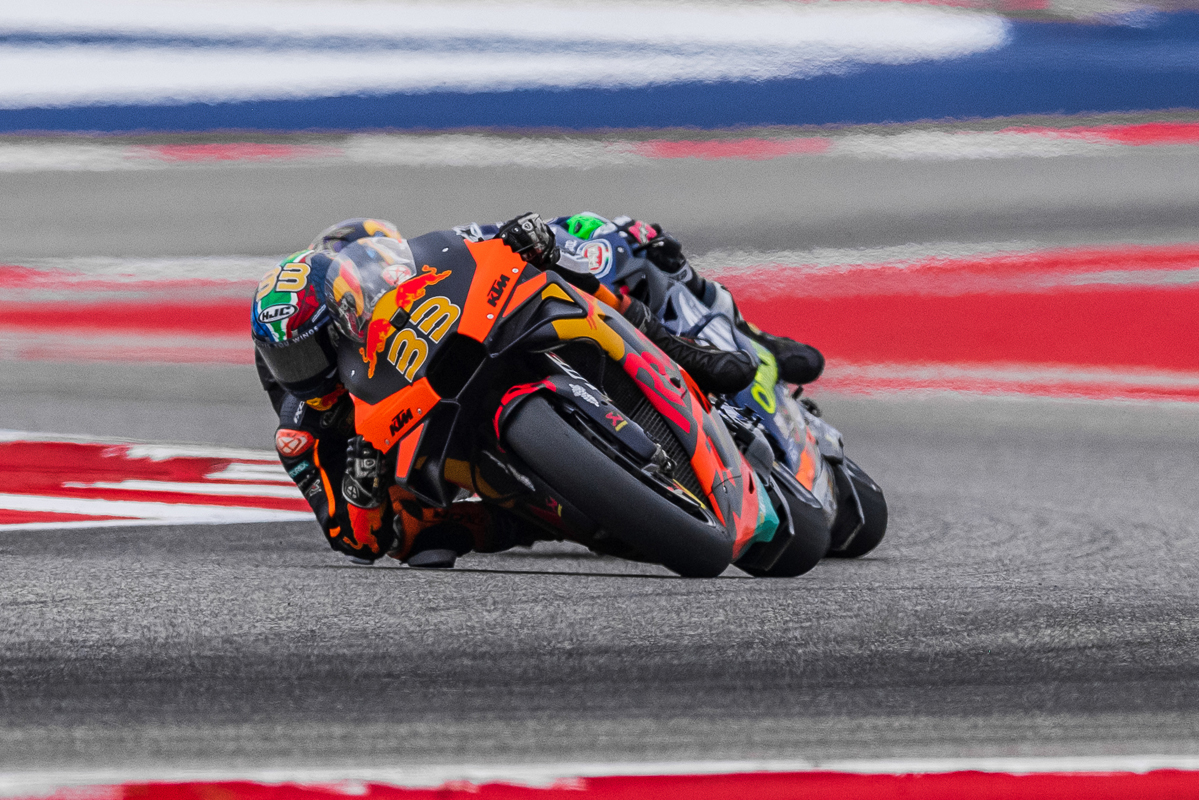
Just like brother Darryn, Brad Binder had a tricky qualifying Saturday morning with the track drying in some places and staying wet in others. Brad just couldn’t find enough pace and his small mistake and crash in Q1 meant that he would start the Grand Prix from 20th.
Photo credit: KTM
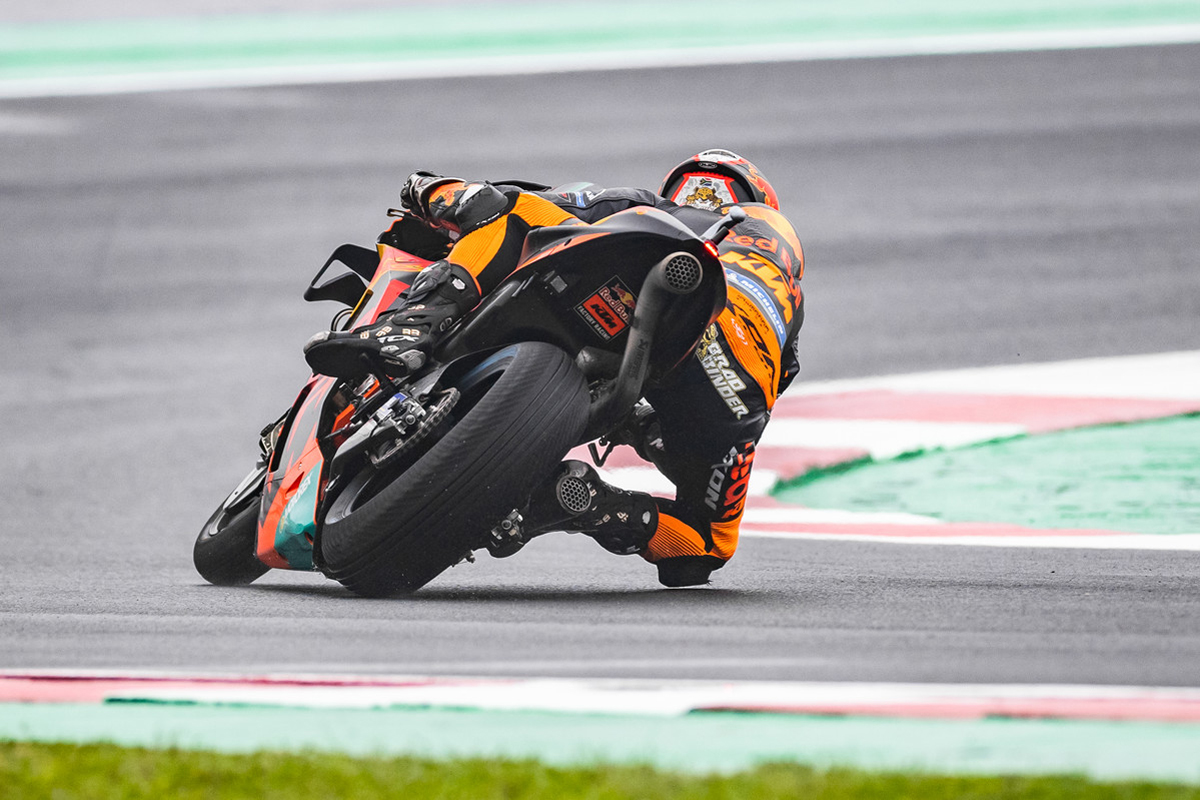
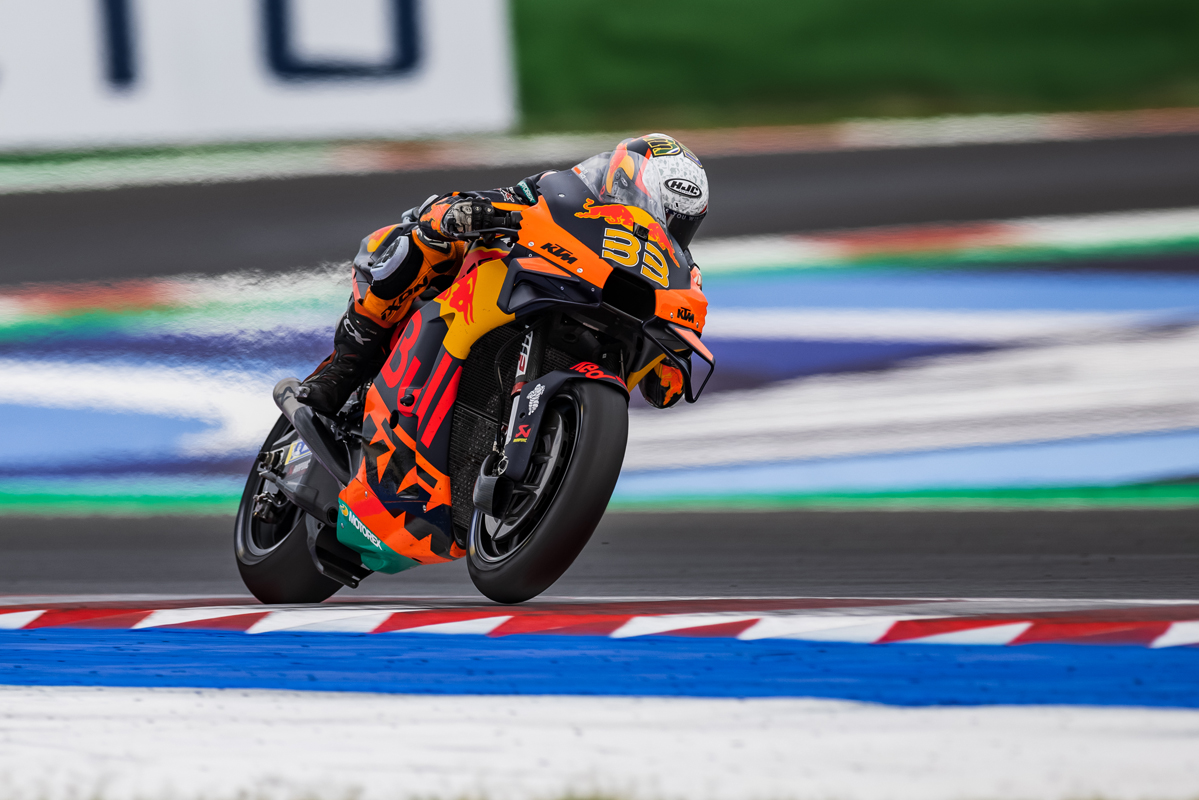
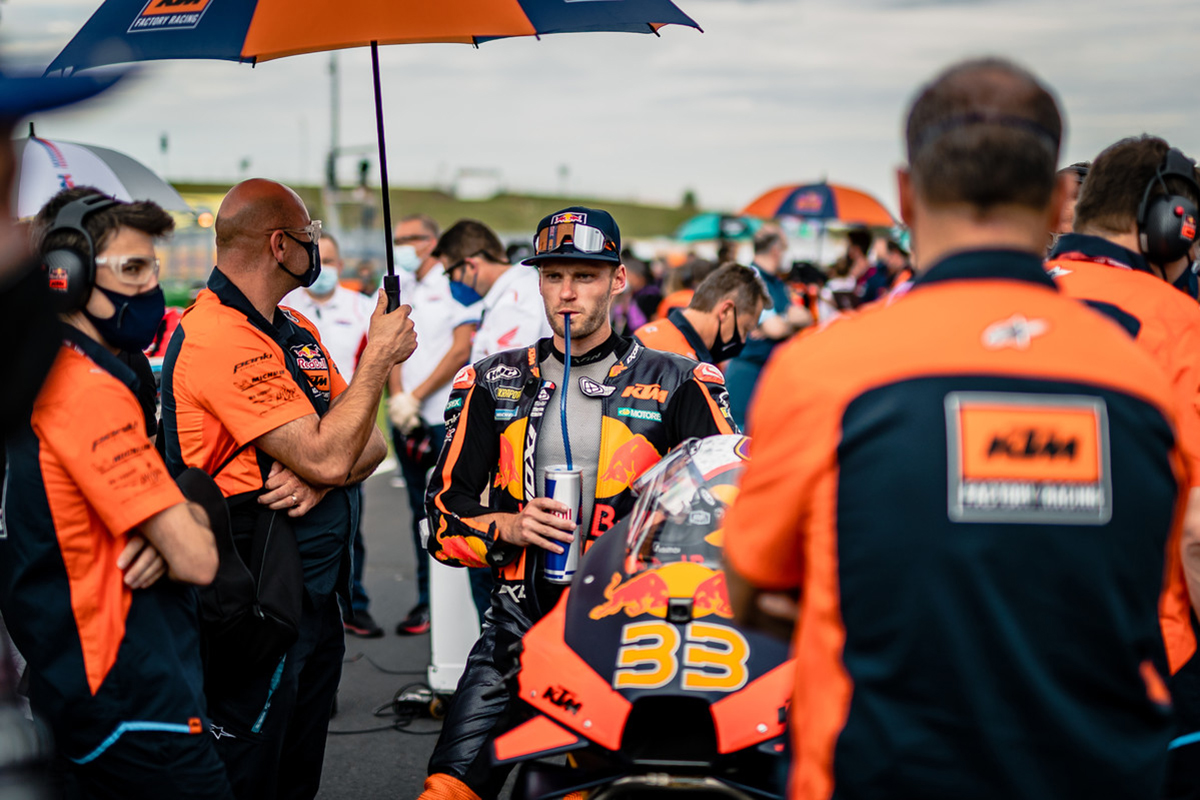
More drama unfolded on race day as Brad took a tumble on the sighting lap, before making his way to the grid. He had to quickly make his way back and jump on his second bike to set off from 20th—thank goodness he didn’t have to start from the pitlane.
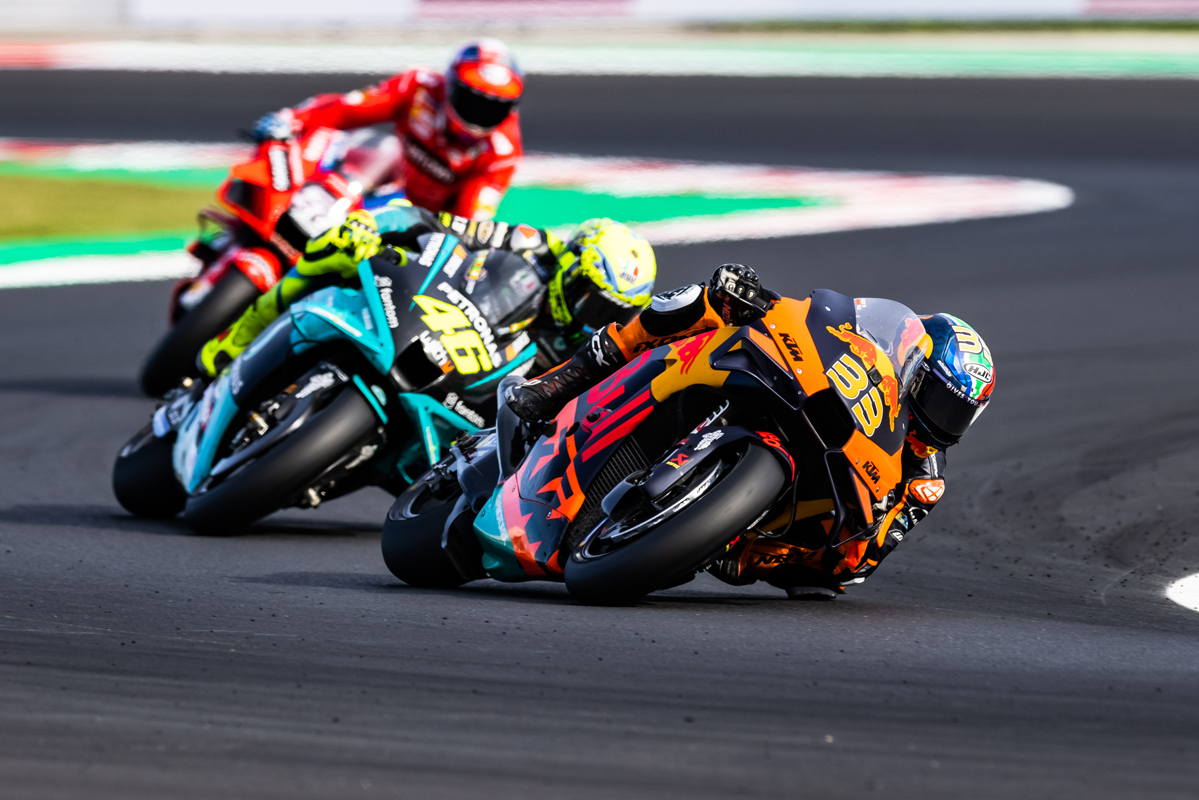
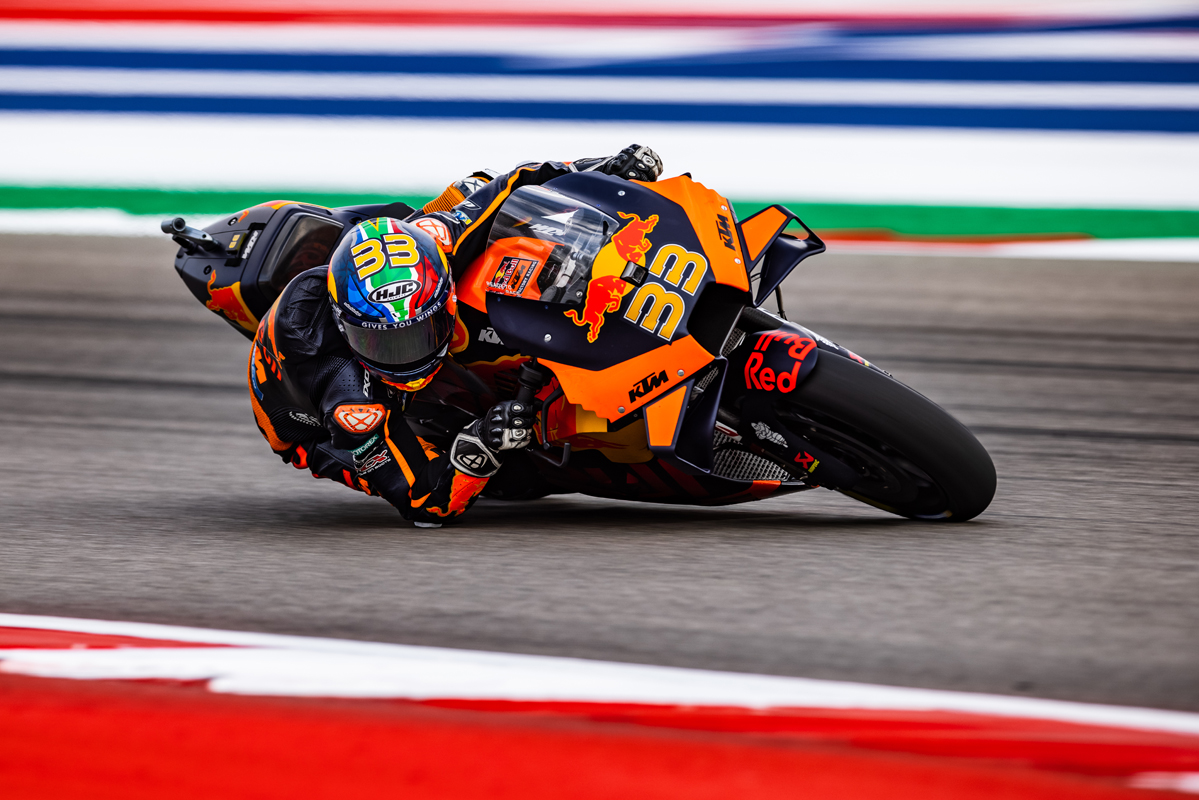
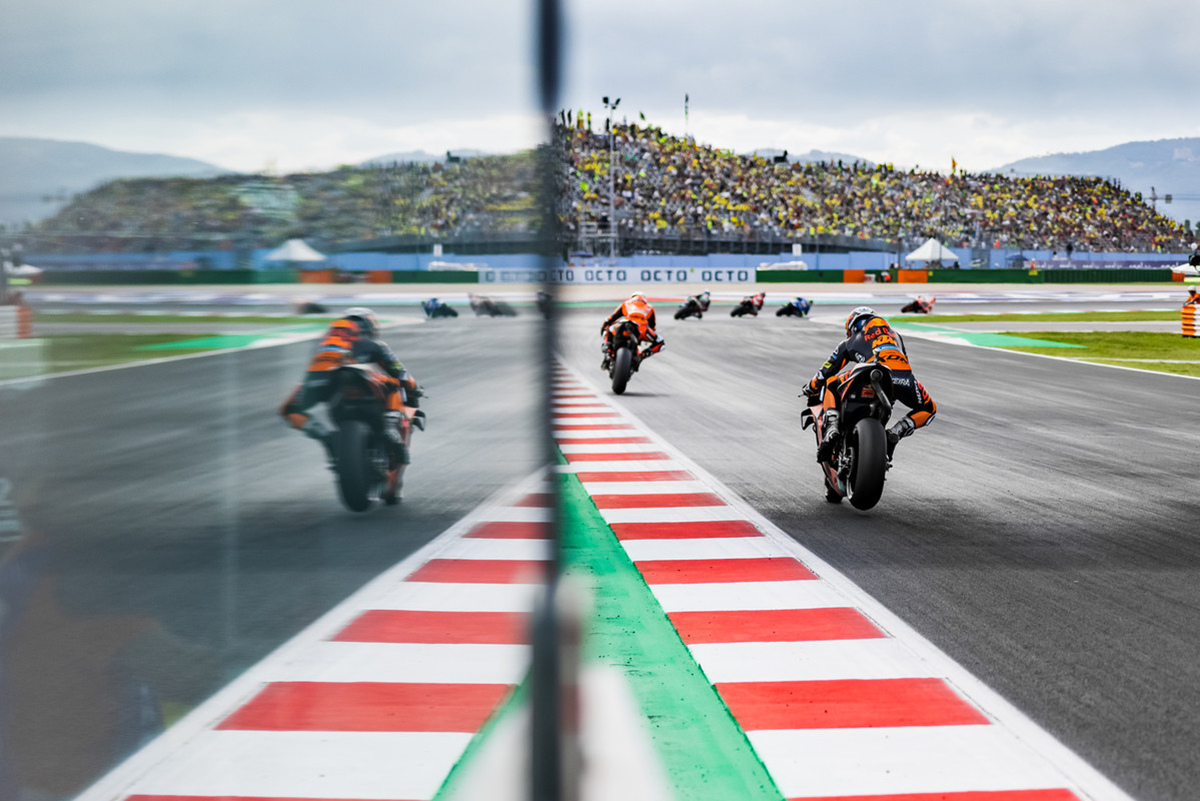
Brad made an early charge through the pack, reached 15th and continued to search the limit with his set-up, even sustaining a long lap penalty for touching track limits. A late surge from Valentino Rossi prevented Binder from finishing in the top ten. With 136 championship points, he sits seventh in the championship standings.
Photo credit: KTM
Brad Binder: “All in all, I’d say today is a day to forget. I felt quite good for the race and chose the harder tyre option. I wanted to feel what it was like on the Sighting Lap but I didn’t have my brakes warm enough going down the back straight and I locked up the front wheel. Not clever. That’s the first time I’ve ever crashed on the Sighting Lap: not good at all. I tried hard in the race and I felt like I was coming along but I wouldn’t describe it as solid. I’d like to know where I touched the green limits for the Long Lap. I’m really sorry to the team and all the guys for the confusing weekend. I’m glad Misano is over and we’ll do better in Portimao.”
Photo credit: KTM
The Binders will now have a one-week break before the final two rounds of the season get underway, starting with the Grande Prémio do Algarve in Portugal (5-7 November).
All eight classes racing in the 2021 Cannabis Energy Drink TRP Distributors South African National motocross championships will go down to the wire at the Pretoria finale in November after another utterly spectacular weekend of racing at Bloemfontein’s penultimate races on Saturday.
Red Bull KTM star, Eastern Cape hero Tristan Purdon put one hand on the SA national MX1 championship with a double win on the day. His title charge was further boosted by title rivals, Red Bull KTM teammate and Cape rider David Goosen’s Energy Drink Husqvarna sharing out the second and thirds to allow Purdon to extend his top class title advantage over Goosen to 29 points. Anthony Raynard’s Yamaha ended fourth for the day ahead of Johan Vogelesang’s KTM and Yamaha lad Jesse Wright.
Photo credit: Sage Lee Voges / www.zcmc.co.za
Cameron Durow however kept the 250cc MX2 title wide open with a double win over Tristan Purdon each time as Goosen and Raynard followed in third and fourth in both races too. KTM trio Jayden Proctor, Stav Orland and Leonard du Toit and Dalton Venter’s Yamaha ended in that order after fighting it out for the minor placings. Durow’s win saw him close his title deficit down to 10 points behind Purdon with Goosen also still in with a shout in third.
Over-30s Husqvarna rider Grant Frerichs took MX3 honours to further open up his title advantage over Ian Topliss’s Yamaha. Over 40 Honda duo Bruce Viljoen and Philip Harper were next up. So that one’s going on to the Pretoria final too. Kayla Raaff’s Kawasaki did the Bloemfontein Ladies Motocross double, but KTM lass Leah Heygate kept her championship odds alive with a double second over the Husqvarna-mounted de Lima sisters, Jadene and Cheyenne.
Photo credit: Ruben Louw
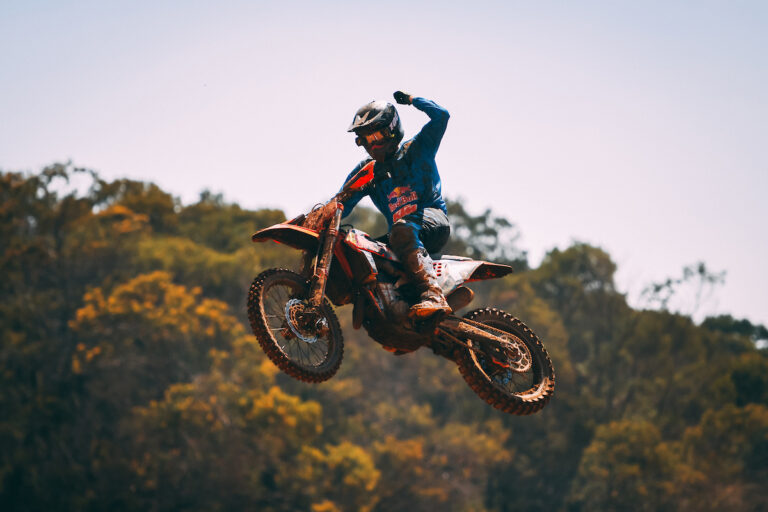
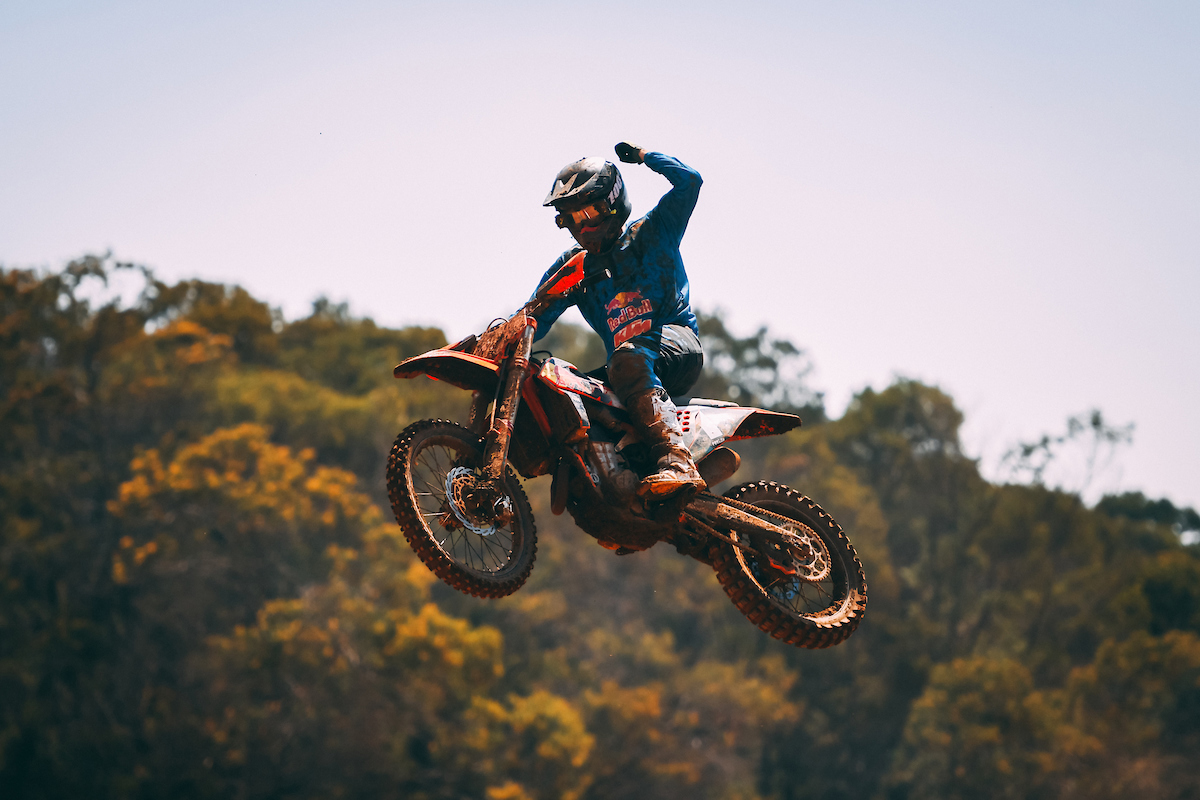
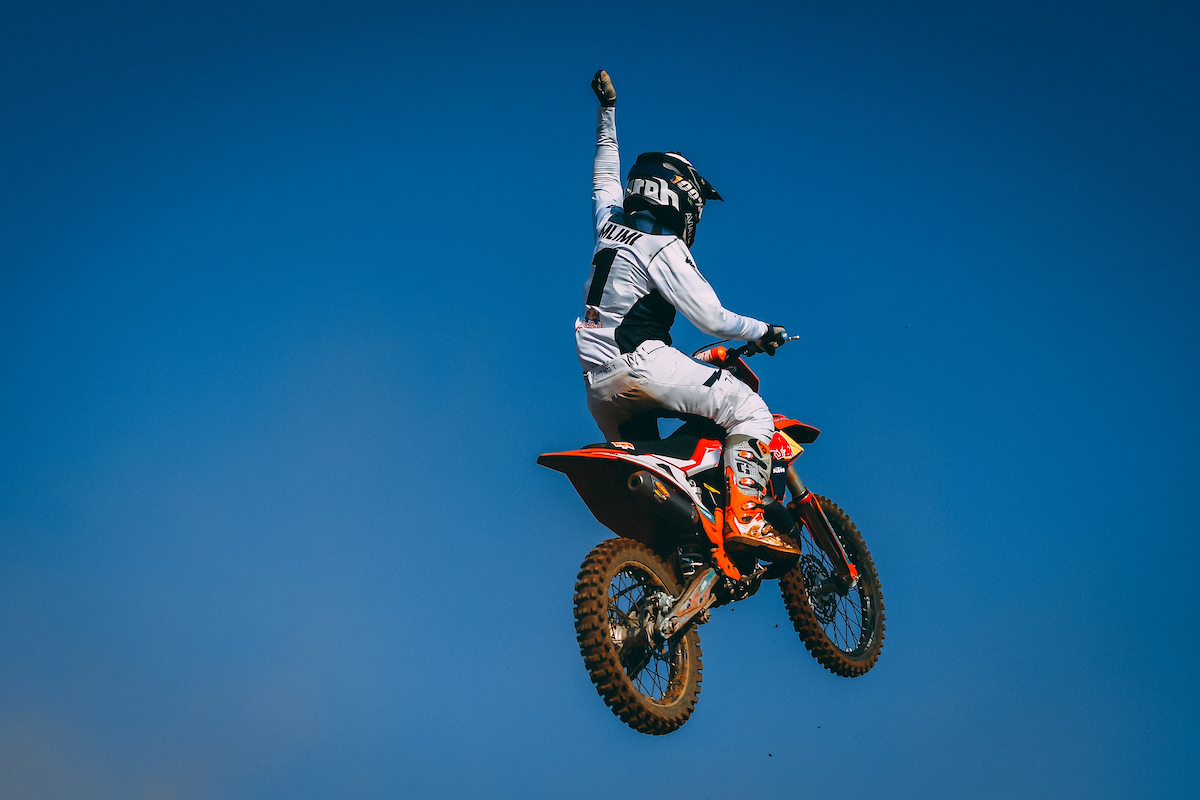
Red Bull KTM lad Jonathan Mlimi did his 2021 High School 125 cc Motocross title hopes no harm at all with another double win to extend his title advantage in Bloem. He now needs to just score a handful of points over the final weekend to wrap up the championship. Title rival Ethan Hoffman was the best of the rest with a second and a fourth on his Out of Africa Monster Energy Yamaha, ahead of Barend du Toit and Miguel de Waal’s KTMs and Luke Grundy and Wiaan du Plooy’s Husqvarnas.
The 85 cc Pro Mini title chase is however one of the closest in this year’s championship and its even closer after Bloemfontein. Emmanuel Bako now on a Husqvarna blasted himself back into title contention with a double win over Rockstar Husqvarna lad Neil van der Vyver. Ryan Adler was third on another Husqvarna with Trey Cox’s Red Bull KTM next from Alon Orland’s GasGas and Damien Venter’s KTM. Van Cox provisionally leads that title chase by a couple of points from der Vyver and Bako.
Photo credit: Sage Lee Voges / www.zcmc.co.za
Tyler Petersen’s Husqvarna took the 85 cc Junior win with a double moto success over championship leader Matthew Correia and Andrew Venter’s KTMs in Bloemfontein. Caden Weise was fourth on a Husqvarna with Kassim Hassim and Mienke Cawood’s KTMs next up. That has allowed Petersen to close up to 21 points behind Correia with Venter hanging in there in third in the title chase.
Blake Frost’s KTM and Blade Tilley’s GasGas shared out the Bloemfontein 65cc motocross wins and seconds. Husqvarna lads Sven Larsen and Nicol Smit each took a third place to end up third and fourth for the day ahead of Even Frost’s KTM and Aiden Henley’s Out of Africa Monster Energy Yamaha. All of which had a null effect on the top of the 65cc championship table, where Frost and Tilley remain separated by 14 championship points.
Photo credit: Ruben Louw
There was a bit of a shake-up in baby 50cc motocross, where Aiden Retief’s KTM took a double win with Rayden Woolls’ GasGas second and championship leader Trenton Kretzmann second and third each time. Lou Rademayer’s Husqvarna ended fourth for the day from KTM duo Ross Mackenzie and Kaylin Oosthuizen. That has little effect, but to slightly close up the title top three as Kretzmann continues to lead Wools and Retief in the championship chase.
All of which means that with 50 championship points still on the table in each class, it is now down to the championship finale at the Legends Motocross Park at Rhino Hills in Pretoria on Saturday 20 November to decide all eight 2021 Cannabis Energy Drink and TRP Distributors TRP Distributors South African Motocross champions…
Photo credit: Sage Lee Voges / www.zcmc.co.za
The 2021 South African National Motocross Championship is proudly presented by Motorsport South Africa in partnership with Cannabis Energy Drink, TRP Distributors, Prepsol, Bridgestone, Thor, Gaerne, FMF, Pro Taper, 100%, Fly Racing, Ogio, Bandit Graffix and the Race Shop.
Where did that come from? Of all the major manufacturers, Ducati has been the most reticent – some would say silent – about its electric future. Almost every day there is another story about the latest reveal of what the future will look like. But never from Ducati. It seemed as if the manufacturer from Bologna was destined to be the last stronghold of the petrol engine in the world: thumping great V-twins and V4s burning up the world’s resources in a wall of speed and sound.
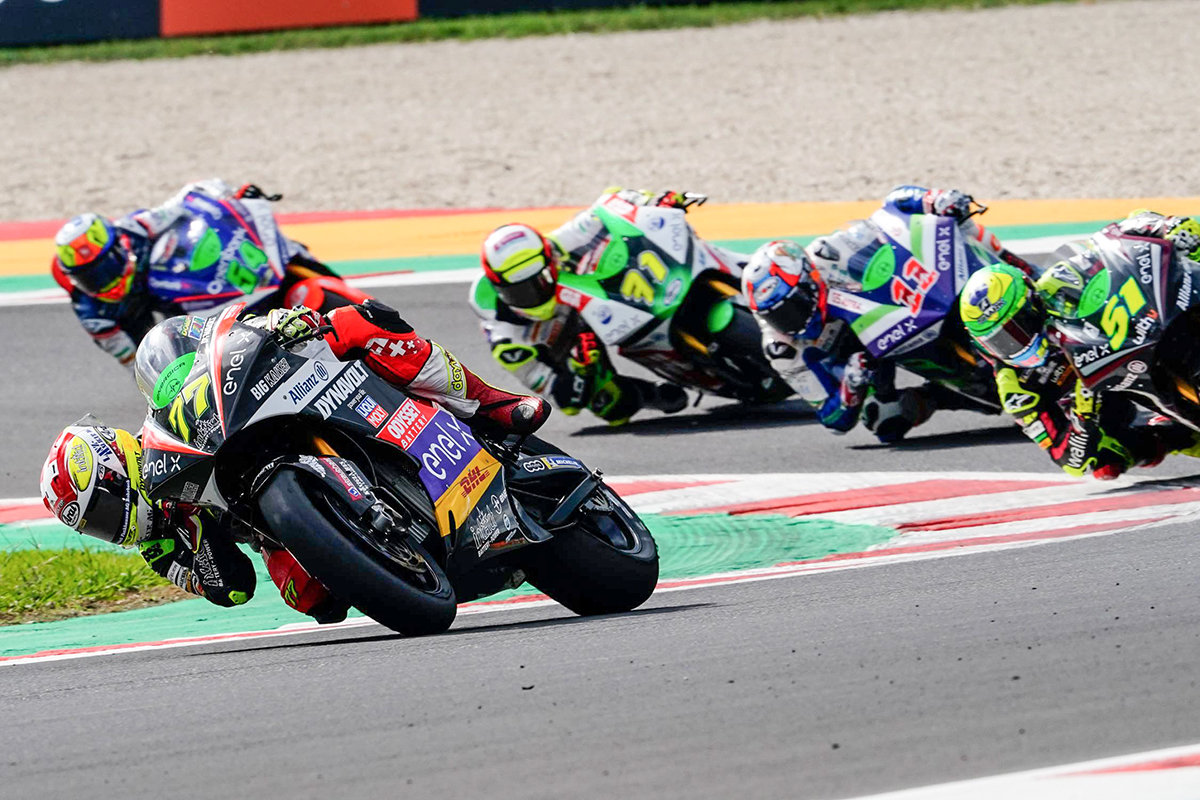
But, now comes the news that, firstly, Energica – who has supplied Ego Corsa bikes since 2019 – will cease to be the supplier of motorcycles to MotoE from the end of 2022 and, secondly, that Ducati will take over the supply of electric racing motorcycles to the series!
I mean, where did that come from? When Energica announced its withdrawal, there were two options: the series might cease to exist or that one of the MotoGP manufacturer teams would step up to the plate. Well, one of them except Ducati. That was about as likely as Vespa entering MotoGP. but, here we are: Ducati will field a whole grid of electric bikes from 2023.
Image source: Ducati Italy
What is not clear is what form the supply will take. MotoE has, up to now, been a production-based series, although that might be simply because no-one was prepared to spend the money developing a prototype which might have no relevance to road machines or it could be simply because there, in Energica, was a manufacturer with a sports bike already in production.
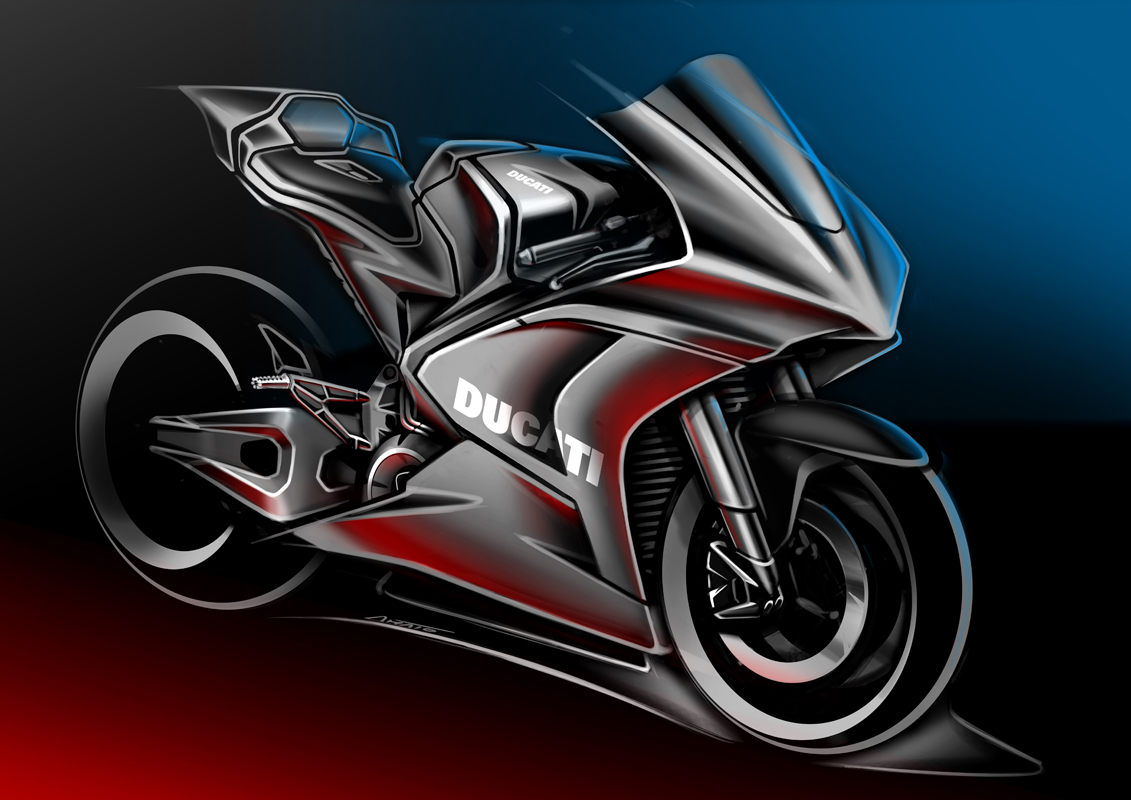
So, will Ducati use an existing model as the basis for an electric bike or will they develop a completely new machine solely for racing and acting as a test bed for future road models? The sketch that accompanied the press release shows a bike with more than a passing resemblance to the Panigale, suggesting it could be intended to be a production model for sale to the public.
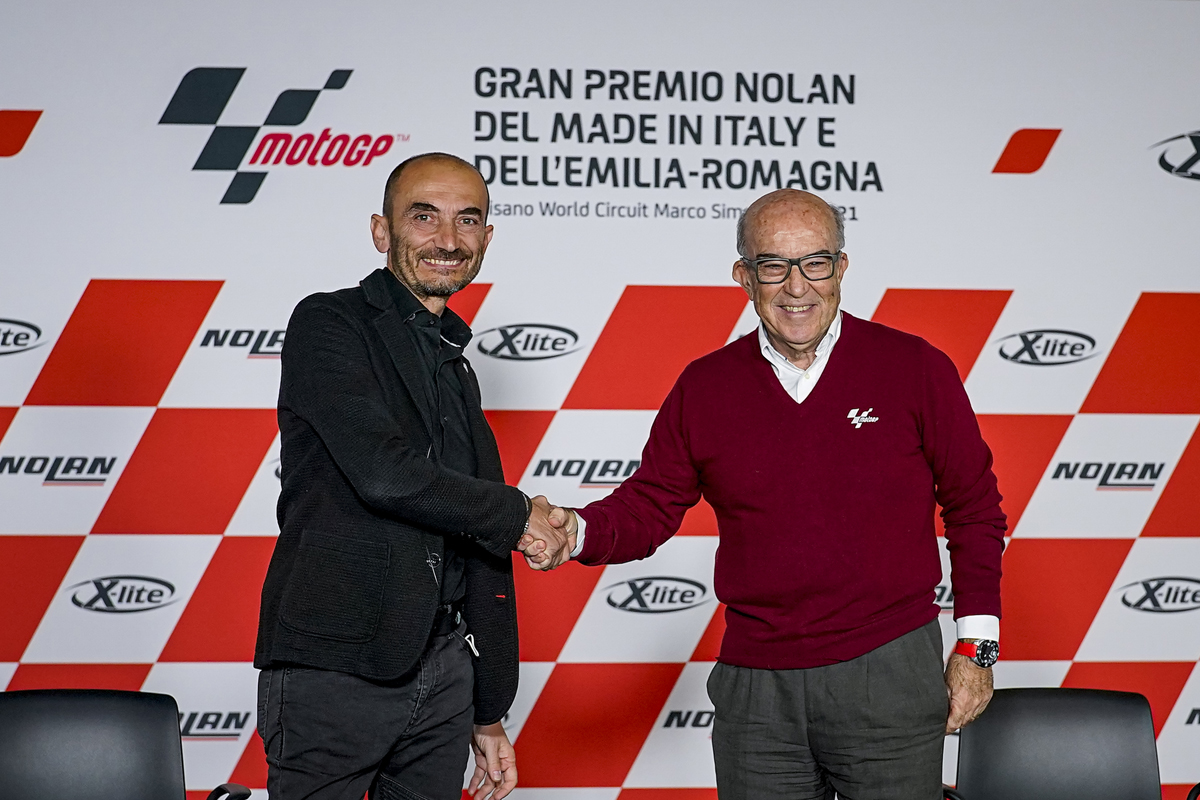
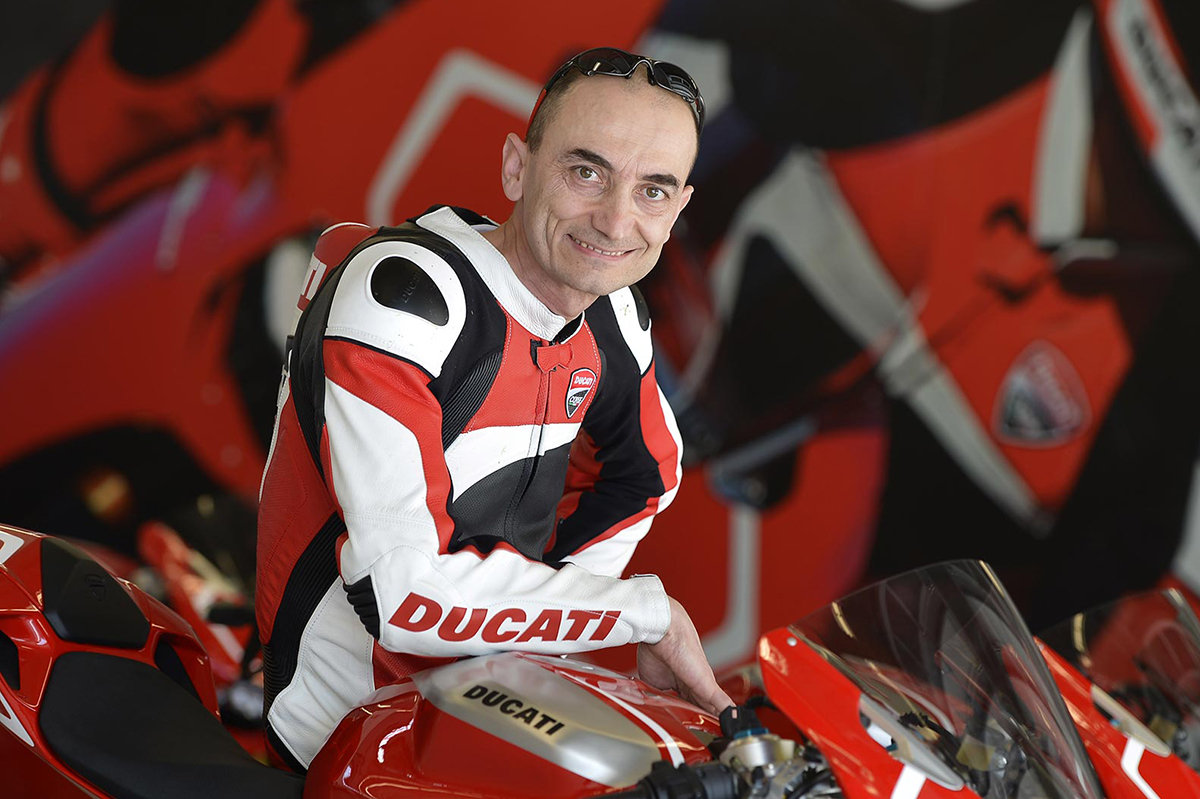
“We are proud of this agreement because, like all the first times, it represents a historic moment for our company,’ said Ducati CEO Claudio Domenicali. ‘Ducati is always projected towards the future and every time it enters a new world, it does so to create the best performing product possible.
Image source: Ducati Italy
“This agreement comes at the right time for Ducati, which has been studying the situation of electric powertrains for years, because it will allow us to experiment in a well-known and controlled field like that of racing competition. We will work to make available to all participants of the FIM Enel MotoE World Cup electric bikes that are high-performance and characterised by lightness. It is precisely on weight, a fundamental element of sports bikes, that the greatest challenge will be played out.
“Lightness has always been in Ducati’s DNA and thanks to the technology and chemistry of the batteries that are evolving rapidly we are convinced that we can obtain an excellent result. We test our innovations and our futuristic technological solutions on circuits all over the world and then make exciting and desirable products available to Ducatisti.
“I am convinced that once again we will build on the experiences we have had in the world of racing competition to transfer them and apply them also on production bikes.”
Image source: www.motogp.com
So, there you have it. The most surprising news so far this year and we haven’t even got to the EICMA show. Looks like the 2021 motorcycling year might go out with a bang!
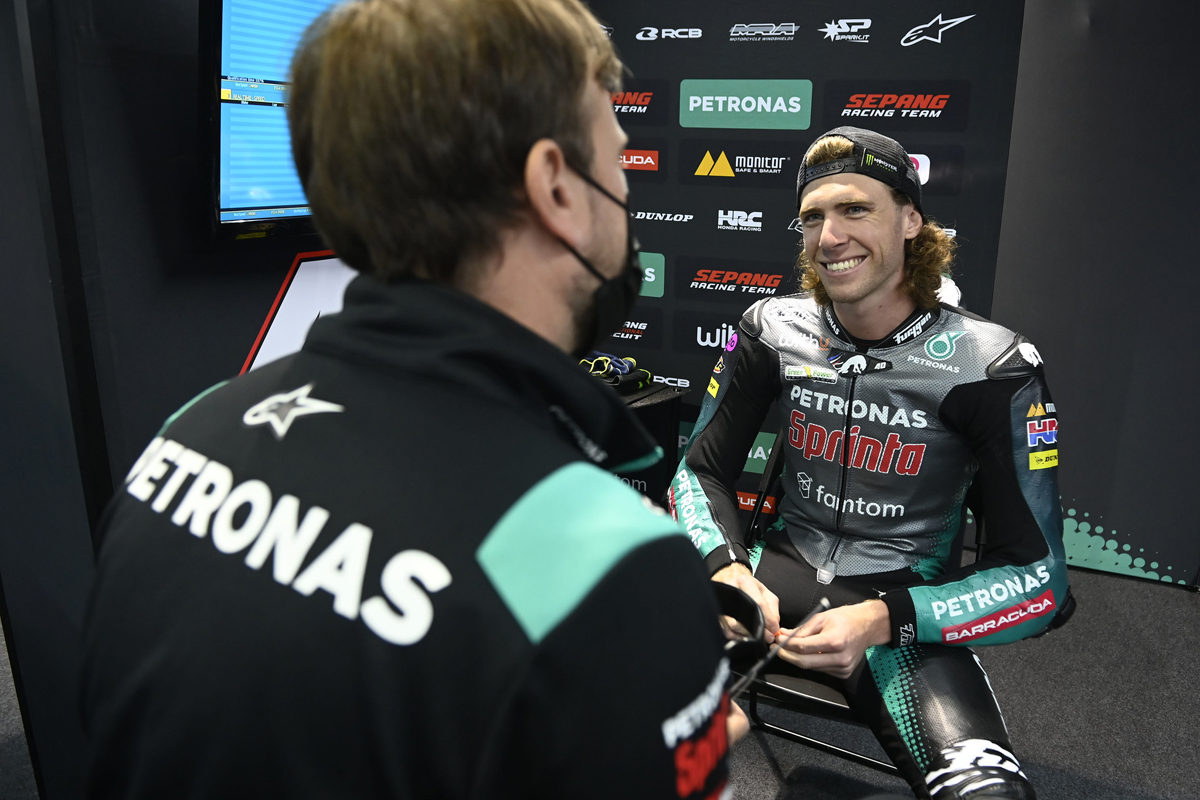
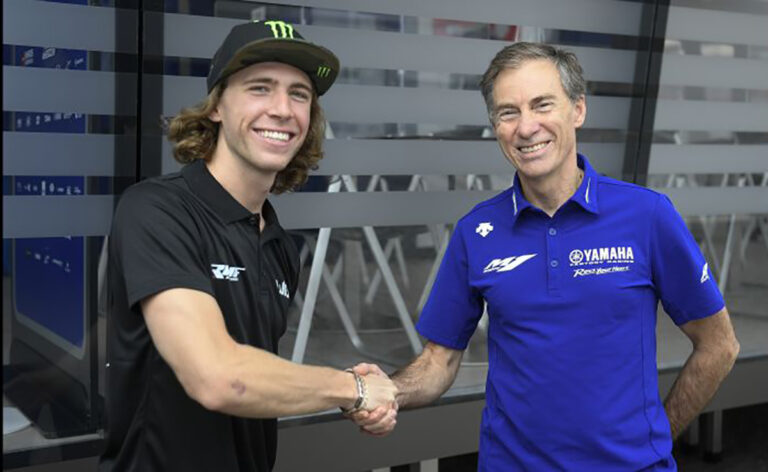
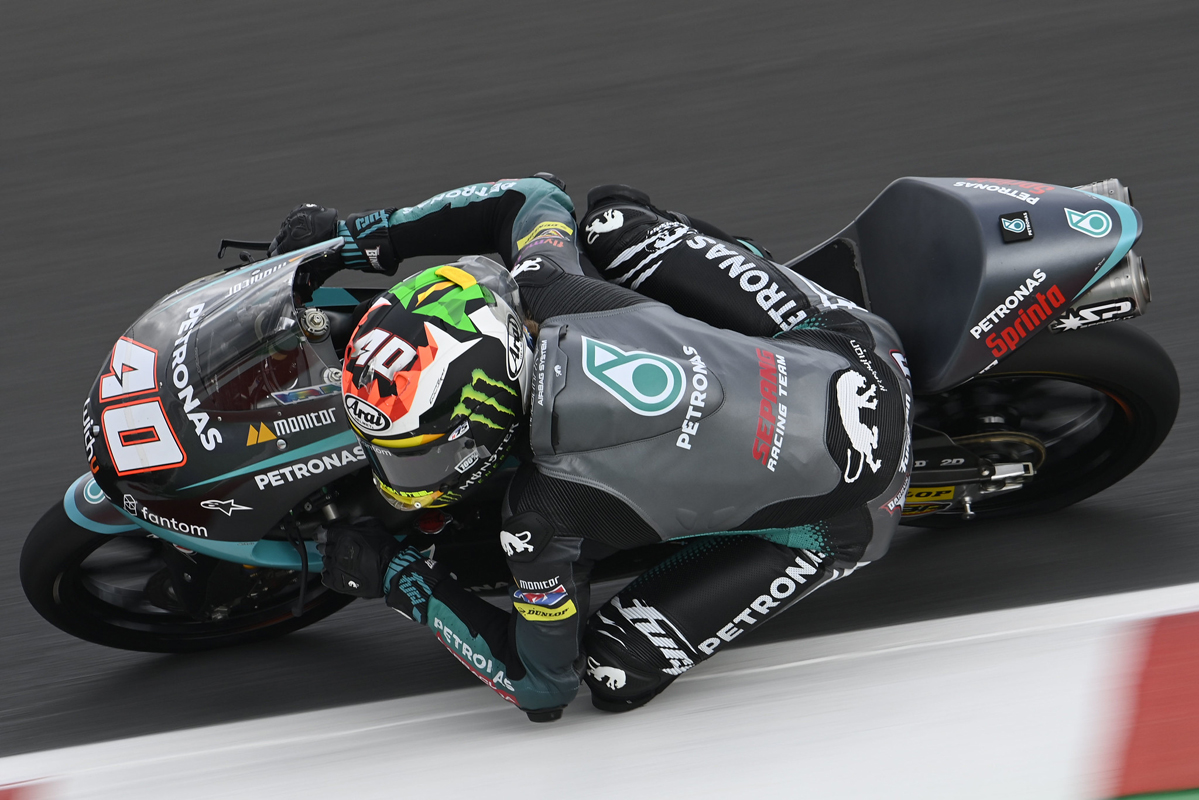
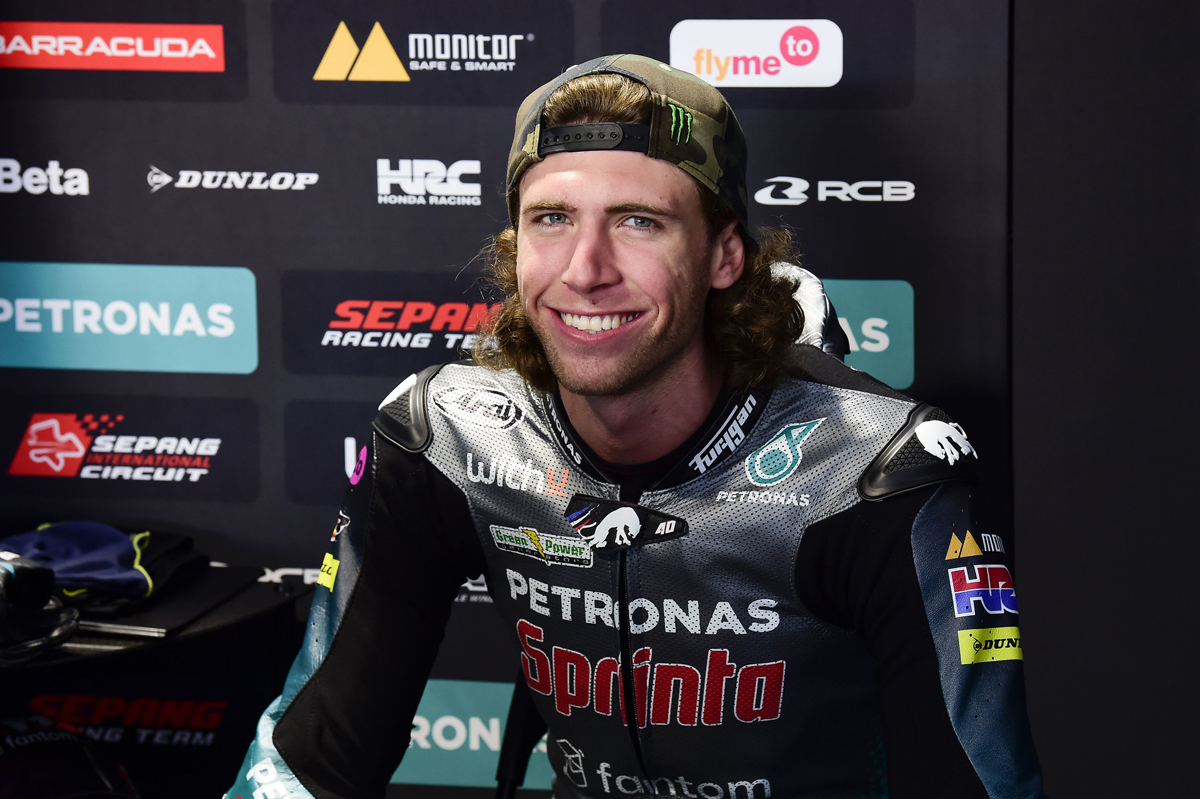
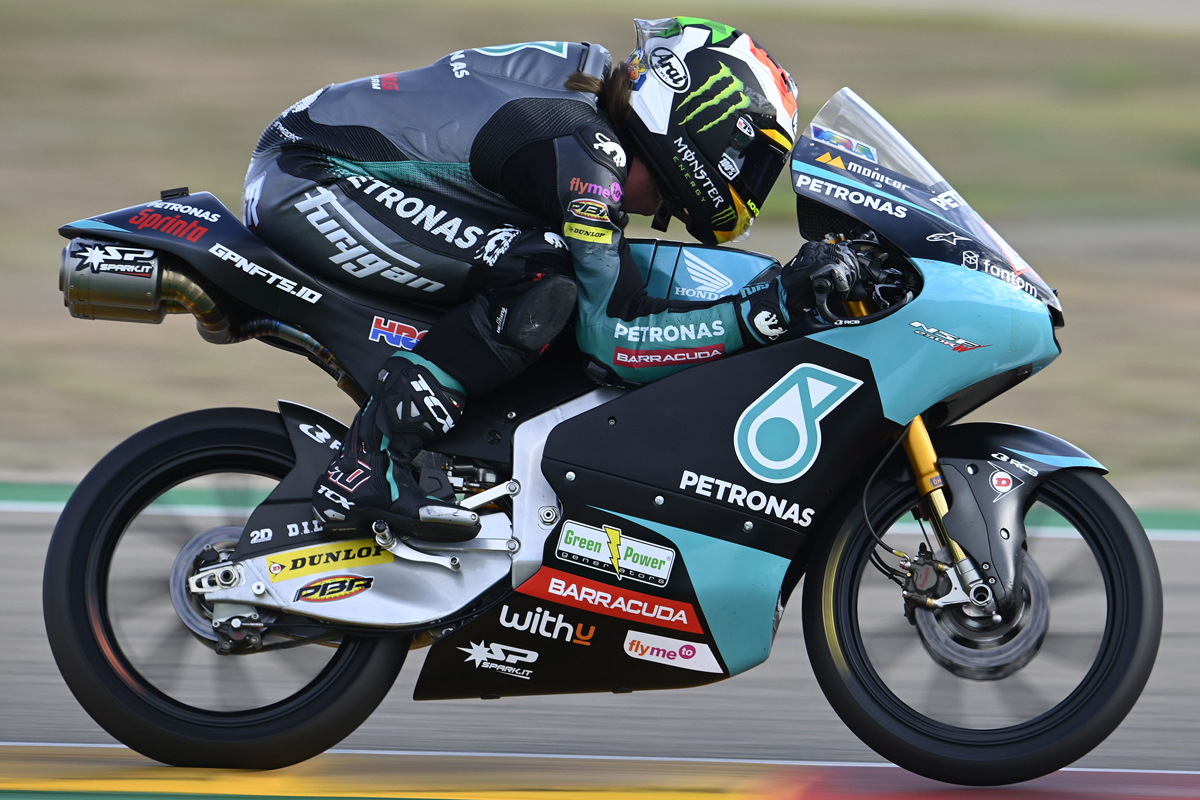
Yamaha Motor Co., Ltd. is pleased to announce the signing of Moto3 talent Darryn Binder. He will be joining Yamaha‘s rebranded RNF MotoGP Team‘s rider line-up for the 2022 MotoGP season, with an option to stay on for 2023.
Following two years of riding in the Red Bull Rookies Cup, the South African started his full-time Moto3 class career in 2015. That year Binder became a well-known name thanks to his brother (Brad Binder) who went on to become the 2016 Moto3 Champion. However, Darryn has since long proven that he is an exceptional racing talent in his own right. Known for his hard racing and making use of any and every available gap during a race, the 23-year-old has ridden to six Moto3 podiums so far, including a win at the 2020 Catalan GP.
Photo credit: Petronas SRT
Furthermore, Darryn Binder‘s eagerness, feistiness, and seven Moto3 seasons of experience make him a perfect teammate for the vastly experienced Andrea Dovizioso, as the rebranded RNF MotoGP Team start their new and exciting chapter.
Lin Jarvis (Managing Director, Yamaha Motor Racing): “I want to give a warm welcome to Darryn. We are delighted that he is joining the Yamaha line-up next year. We‘ve had many conversations about who would be a good match for the new RNF MotoGP Team set-up. It‘s a fresh start for the Yamaha satellite team and that makes it all the more fitting to have a young and eager rider like Darryn join them, as Fabio and Franky did before him.
“For Yamaha, the primary mission of the satellite team is developing future MotoGP talents. Darryn has already shown on numerous occasions what he‘s made of in the Moto3 class. We know he is a fast and determined rider who has got what it takes to battle at the front of the pack. Obviously, the step up to MotoGP is significant and will take some adjusting, but we feel that he‘s ready, and Yamaha and the RNF MotoGP Team will fully support him for this new and exciting challenge.”
Photo credit: Petronas SRT
Darryn Binder (RNF MotoGP Team Rider): “I‘m extremely grateful for this opportunity, as it has been a lifelong dream to race in the MotoGP category. I definitely didn‘t expect to make the jump straight from Moto3 to the highest class, but I do believe I‘m up for the challenge, and I‘m ready to put in all the hard work for 2022.
“My target at the beginning will be just to find my feet in the big class and learn as much as possible to get stronger and stronger throughout my rookie season.
Photo credit: Petronas SRT
“I would like to say a really big ’Thank you‘ to Yamaha and the RNF MotoGP Team for everything they have done to make this possible as well as everyone who has been involved in getting me to this point.
“I‘m now just looking forward to riding the Yamaha YZR-M1 for the first time at the end of this season.”
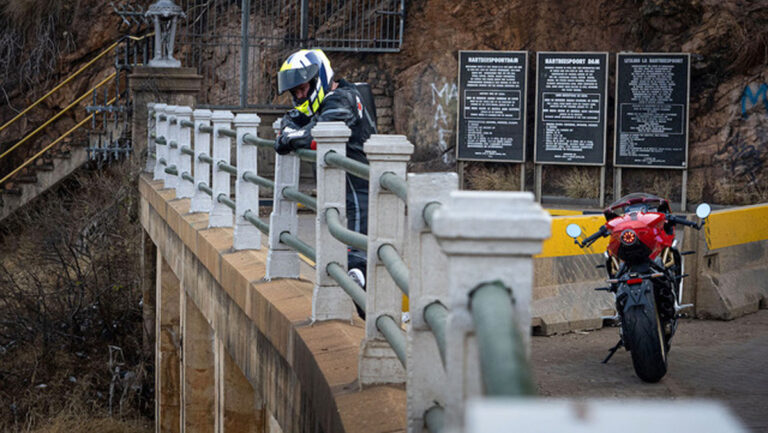
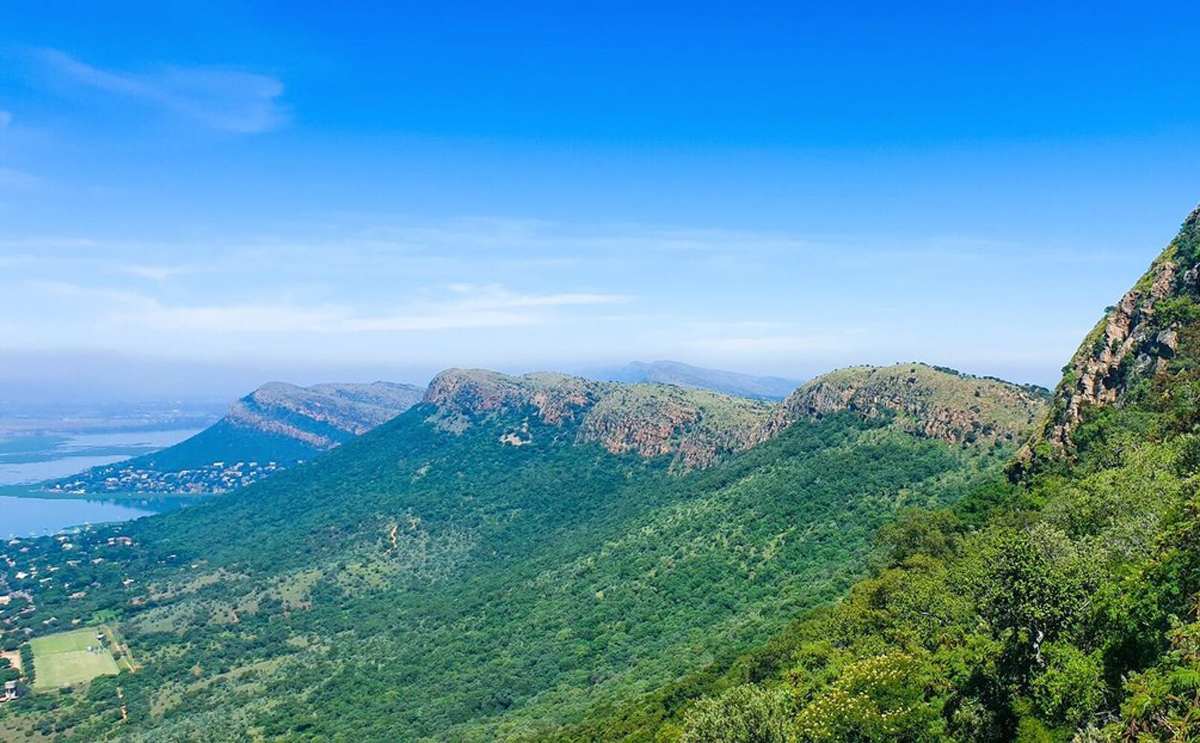
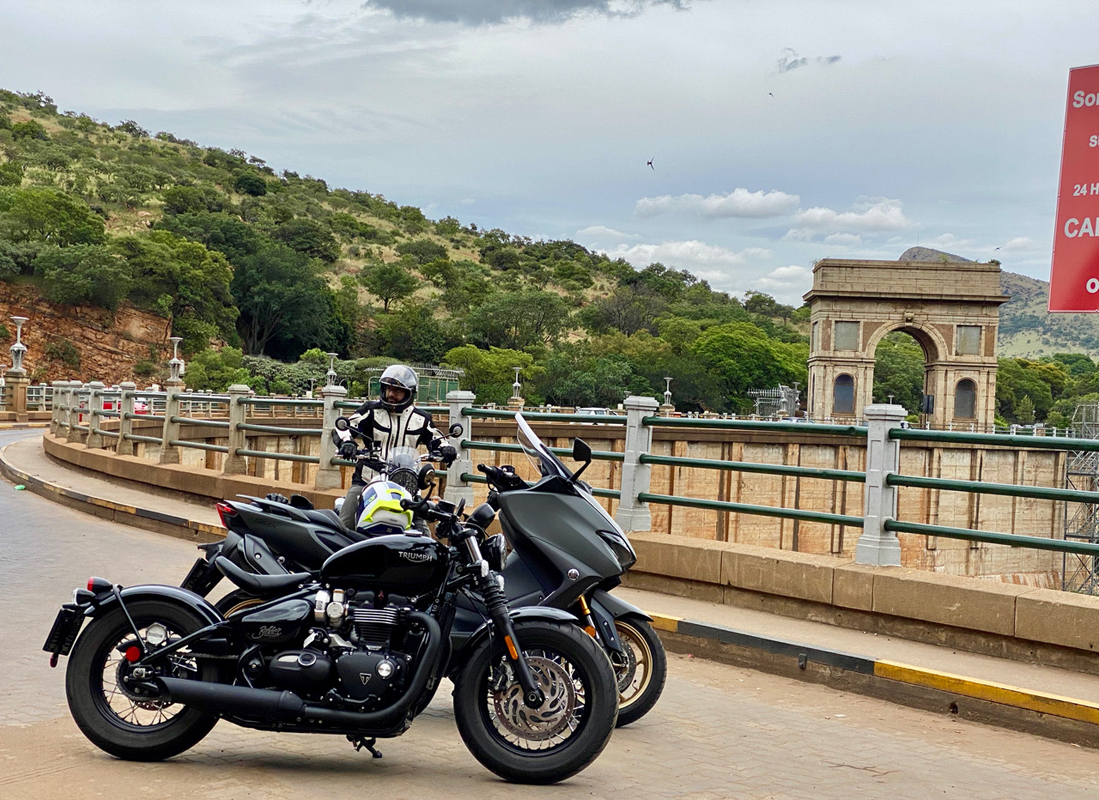
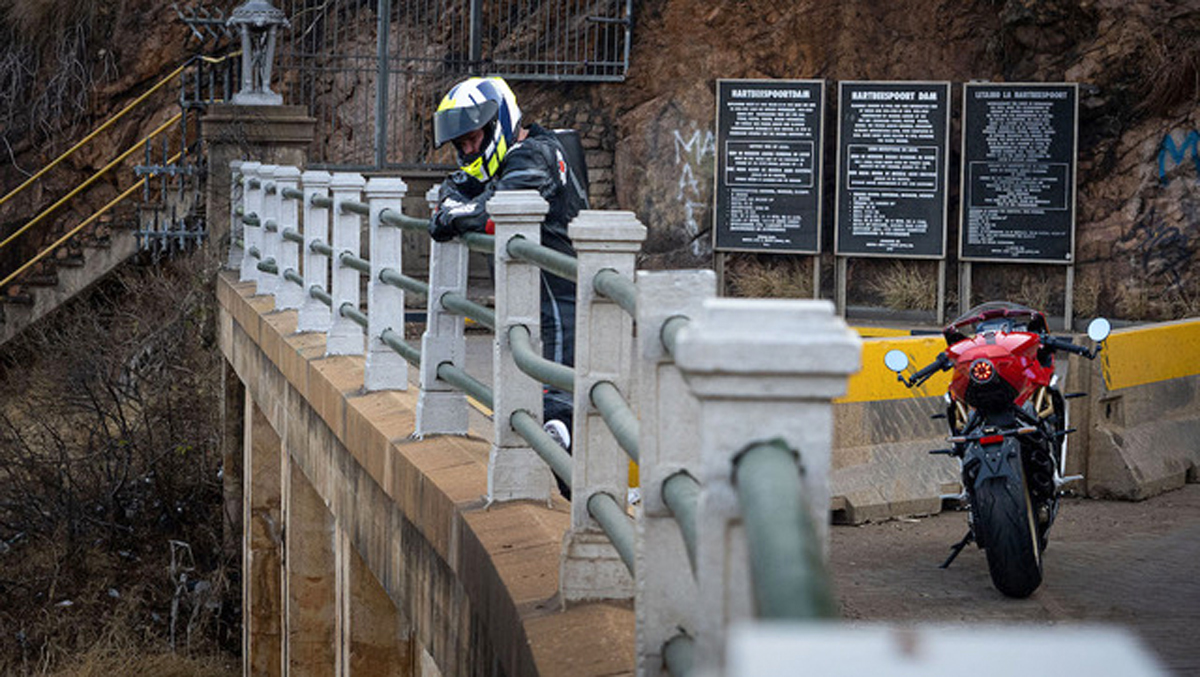
The Rotary Club of Brits Hartbeespoort is organising the Dam Bike Meander around the famous Hartbeespoort Dam on 21 November 2021—engines will be warming up at 9:00 am.
The event is a new concept for motorcycling and stems from the club’s previous Classic Car Meander that started with just a few cars at the first event but grew to more than 100 cars at the most recent one. They have described it as something like a treasure hunt mixed with The Amazing Race, where teams will ride to various famous or historical places around the mountainous area and complete tasks.
Image source: The Dam Bike Meander
It starts at the Hartbeespoort Holiday Resort, the venue of the last Impala Rally, Rhino Rally and Pretoria Toy Run. Registration costs R130 per person and can be done either upon arrival or beforehand via the Rotary website – rcbh.org.za. Each entrant receives a free metal badge, bandana, and complimentary ticket to the famous Hartbeespoort Cableway valued at R240. Muffins and coffee will be for sale during the morning from Cafe 2 Go.
At 9:00 am, the event starts with the various teams each receiving their first location. Once the groups arrive at these locations, they will be given a task – these range from finding something, playing a hole of putt-putt, shooting a bow and arrow, and various others.
Once the task is done, each team will receive the following location and task. Each team will have to complete five tasks before returning to Hartbeespoort Holiday Resort. The last activity will be a slow race, and everyone is free to socialise.
Image source: The Dam Bike Meander
Food at the venue is provided by Kuierkerk, with all proceeds going to the church. The resort will have a bar on hand together with a Coke Truck. Live music will be played by Costa until 14:30 that afternoon.
Prize giving will start once everyone has returned, with prizes going to both teams and individuals, including a raffle for a wheelbarrow of booze – tickets for the raffle go for R25 each.
Image source: The Dam Bike Meander
Of course, as is the way with all events organised by The Rotary Club, all proceeds from the event will go towards charity – in this case, lesser privileged children. It will be a fun day out with friends, riding motorcycles and doing it for a good cause.
For more information: Glen – 083 263 5326 Web:rcbh.org.za
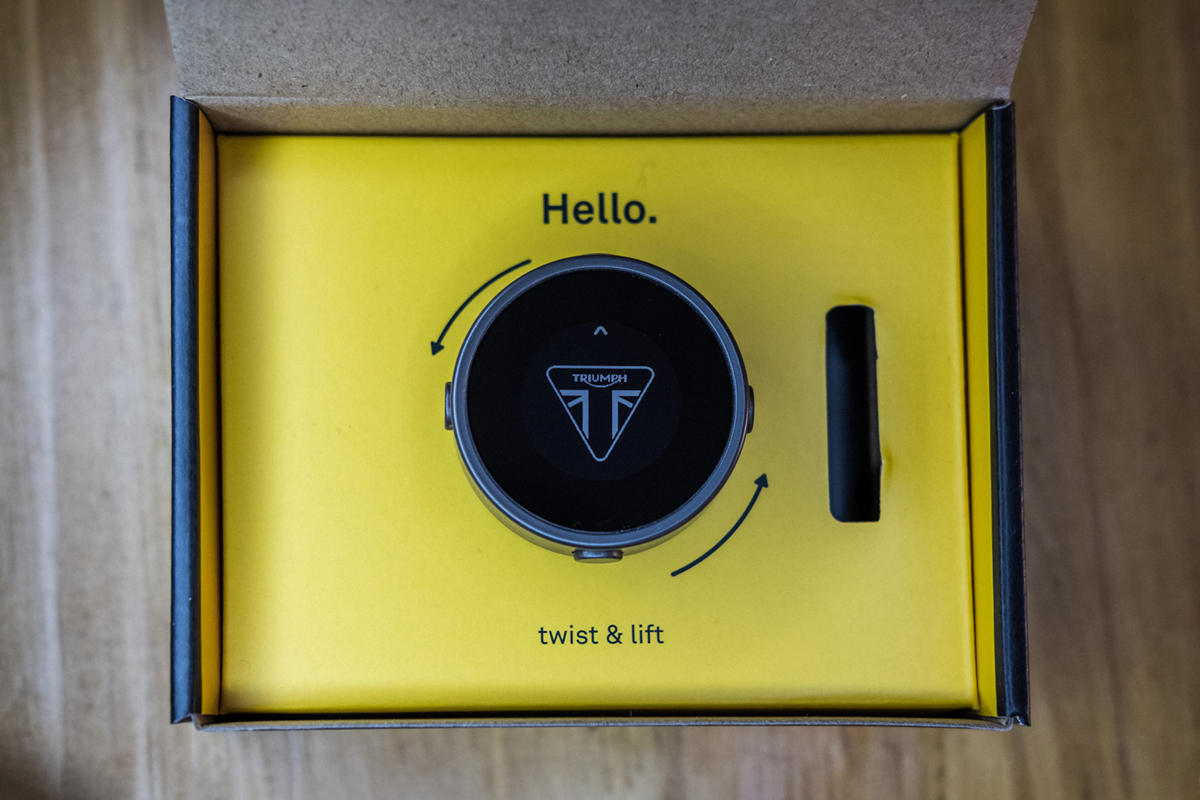
Back in the 80s, my dad explored the Richtersveld with a map so big, it stuck out of the top of his generously-sized backpack. Just last week, I navigated the urban sprawl with my smartphone and the Triumph Beeline—a puck-shaped navigation unit, smaller than a roll of insulation tape. Technology, right?
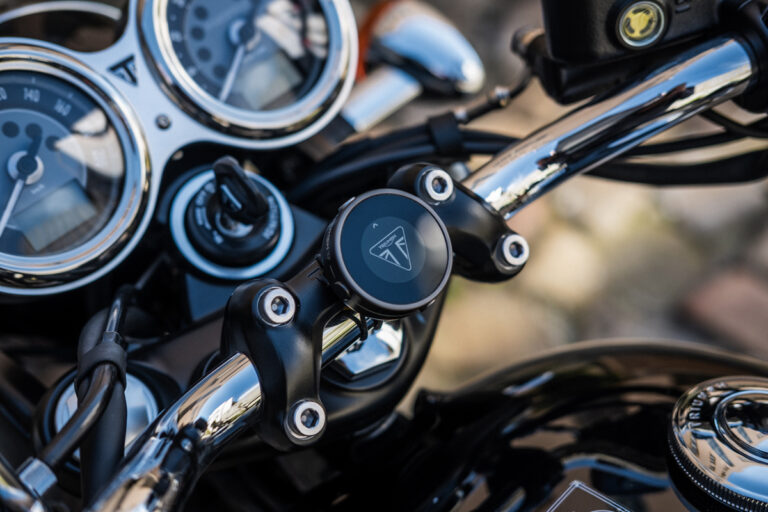
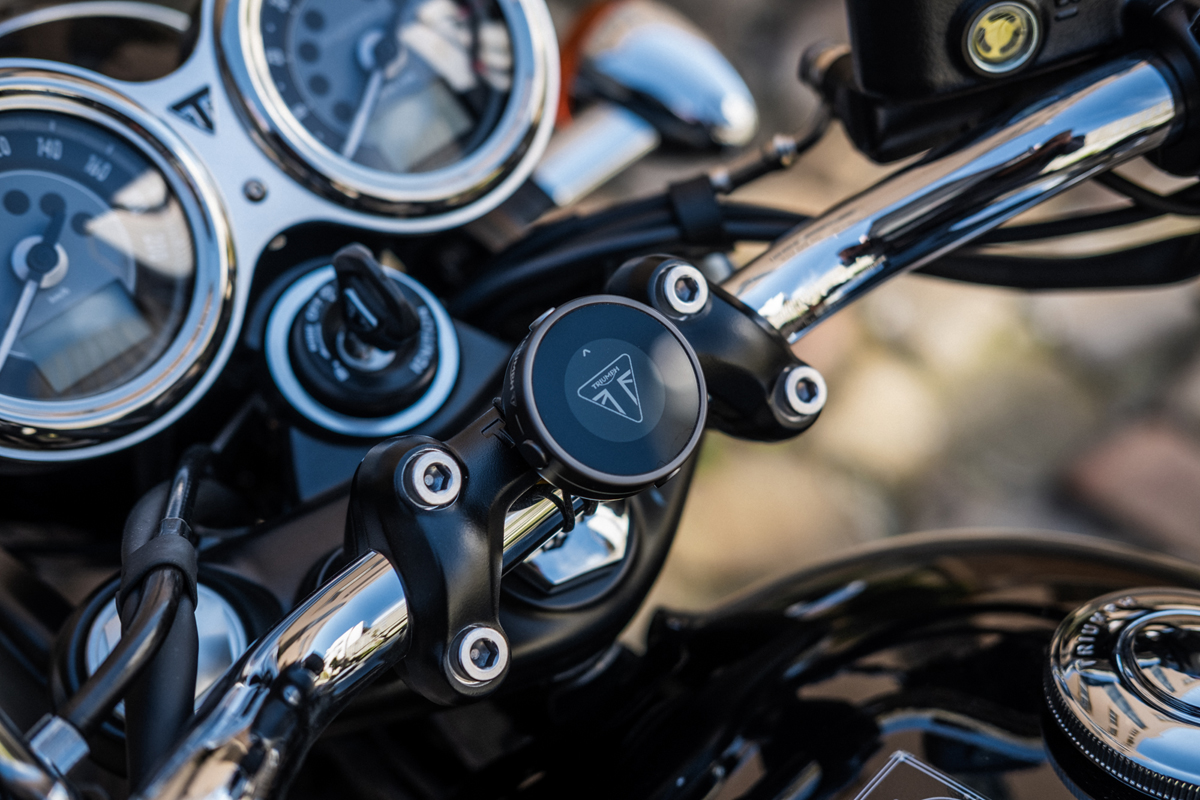
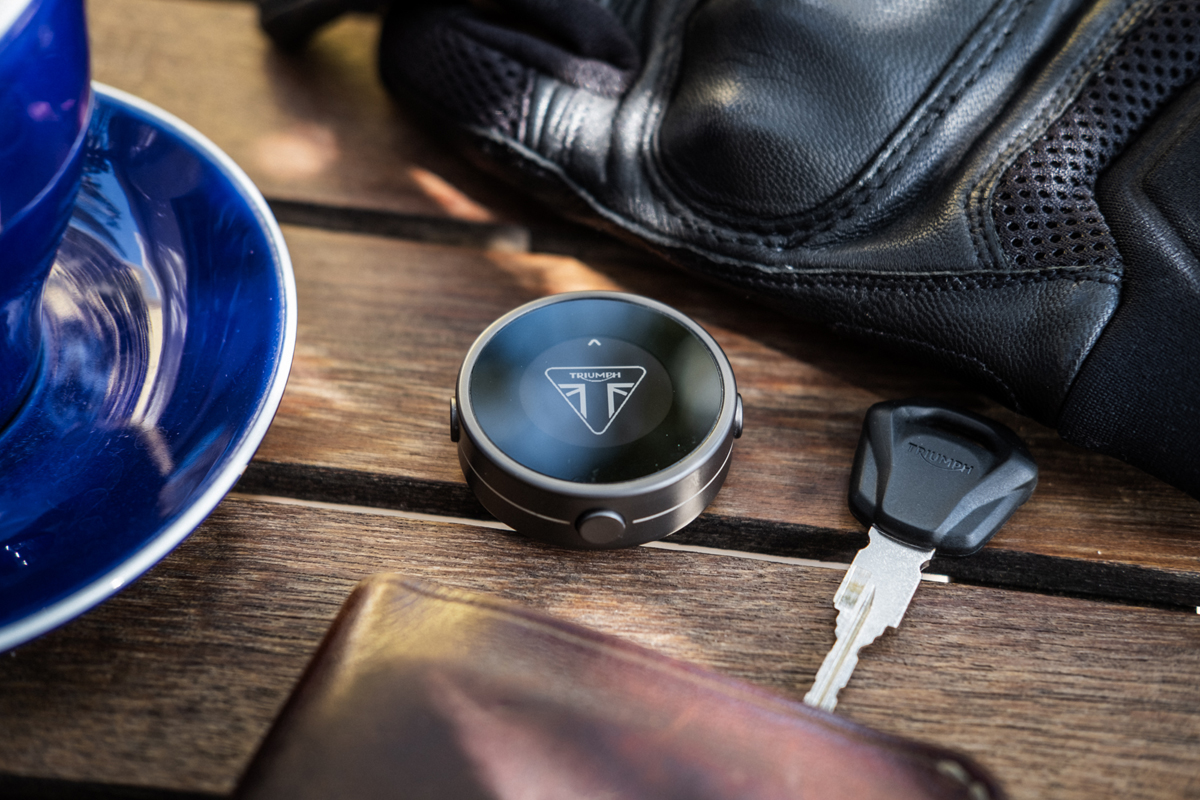
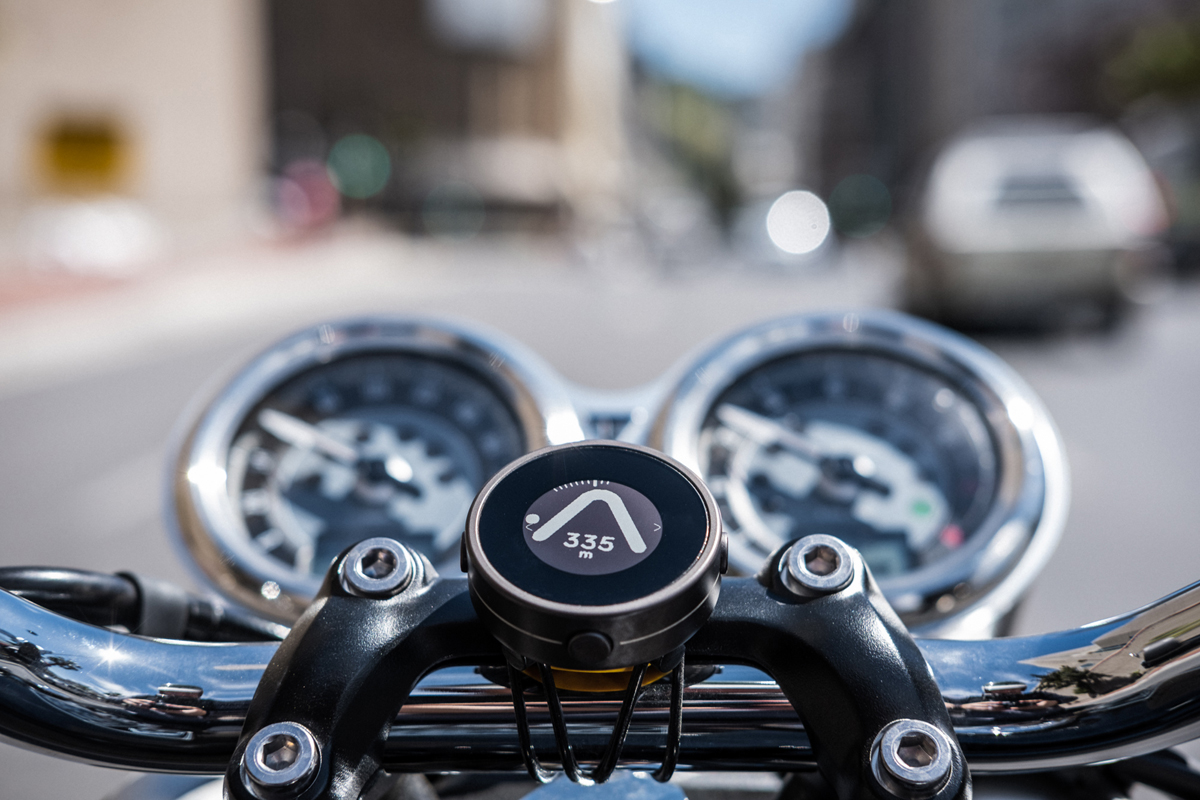
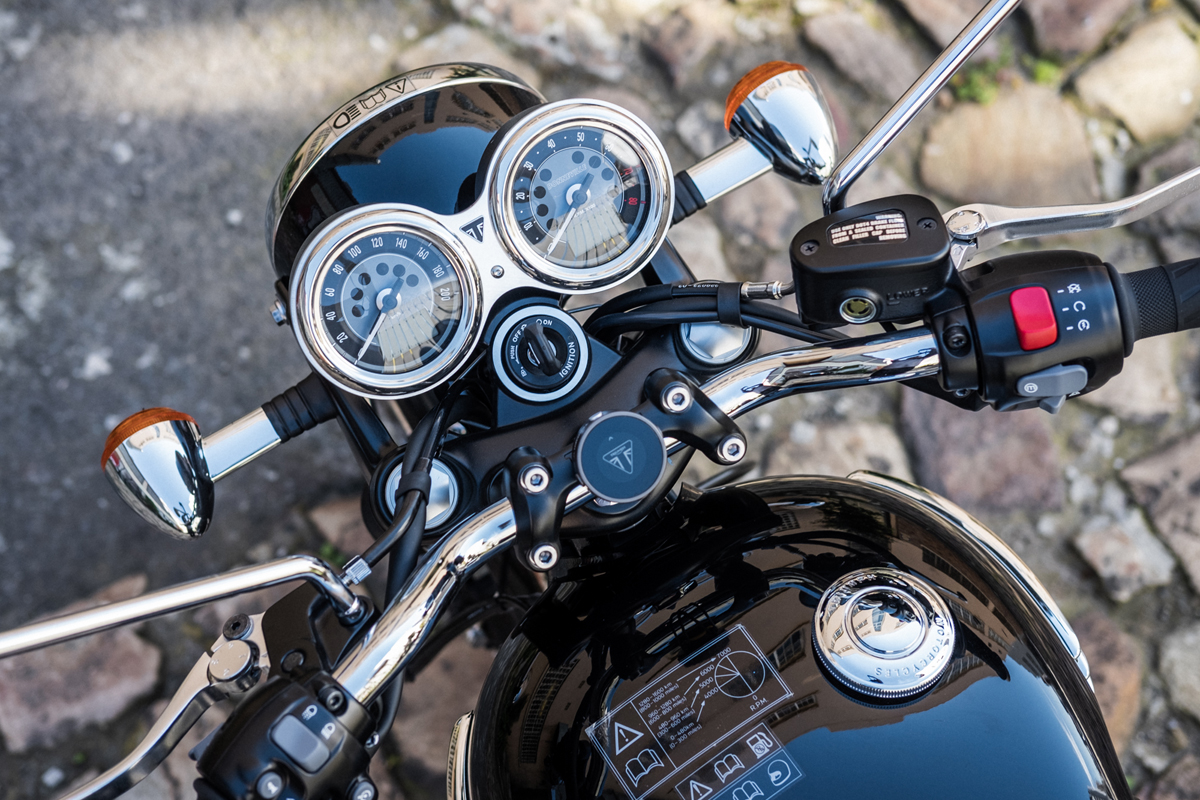
The Triumph Beeline device is on-board motorcycle navigation distilled down to its simplest, smallest, and most stylish form. Working with a smartphone app via Bluetooth, the tiny round device spits out basic turn-by-turn directions. It’s not unlike the built-in navigation on Triumph’s high-end TFT displays, albeit with a slightly different execution.
Photo credit: Wesley Reyneke / ZA Bikers
Priced at R3,995, it’s a chic alternative to traditional GPS devices. And since it’s built waterproof and shockproof, it’s a safer alternative to mounting your phone to your bars (especially with reports of iPhone cameras conking out from motorcycle vibrations). So if you’re riding something classy like the Triumph Bonneville T120 I’m testing here, don’t need a full map in front of you, and don’t want to clutter up your cockpit, it’s worth a look.
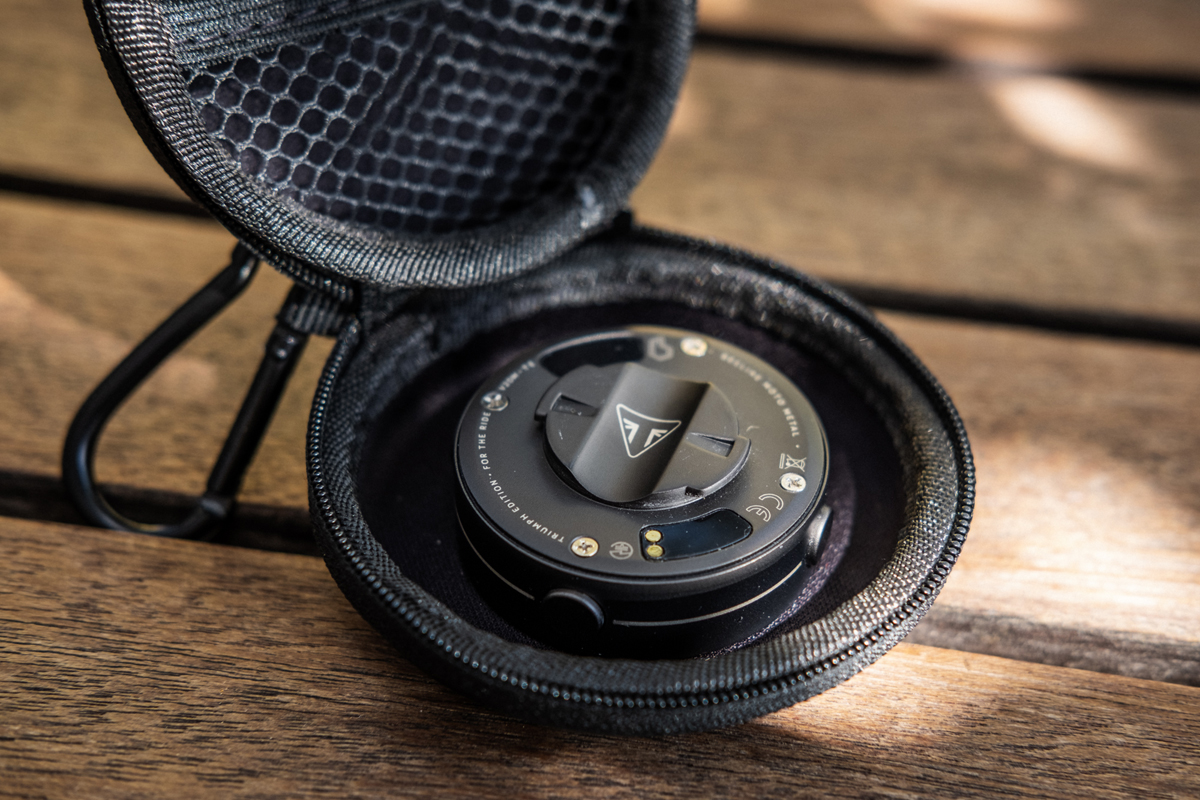
The unit is made for Triumph by the UK-based company Beeline, and is effectively a badged version of their ‘Moto Metal’ product. The Triumph version’s metal casing comes in a gunmetal grey finish, with the addition of a pinstripe and a Triumph logo laser-etched into it. There’s more branding in the form of Triumph’s triangular logo on the bottom, and on the display itself (when the unit is powered on in sleep mode)—but inside, it’s identical.
Photo credit: Wesley Reyneke / ZA Bikers
It’s also branded subtly enough that you could use it on any bike. And the smartphone app that it runs with is from Beeline, not Triumph themselves—so there’s nothing tying you to the brand.
So what’s it like to use? In a word: easy.
The Beeline device’s biggest selling point, hands down, is how user friendly it is. It took me less than 10 minutes from opening the slick packaging, to having the unit attached to the bike, paired with my iPhone and ready to navigate. There’s a quick start guide in the box that outlines just a few steps—like installing the app, creating a profile and connecting it up to your nav unit via Bluetooth—but you’ll breeze through it quickly.
Photo credit: Wesley Reyneke / ZA Bikers
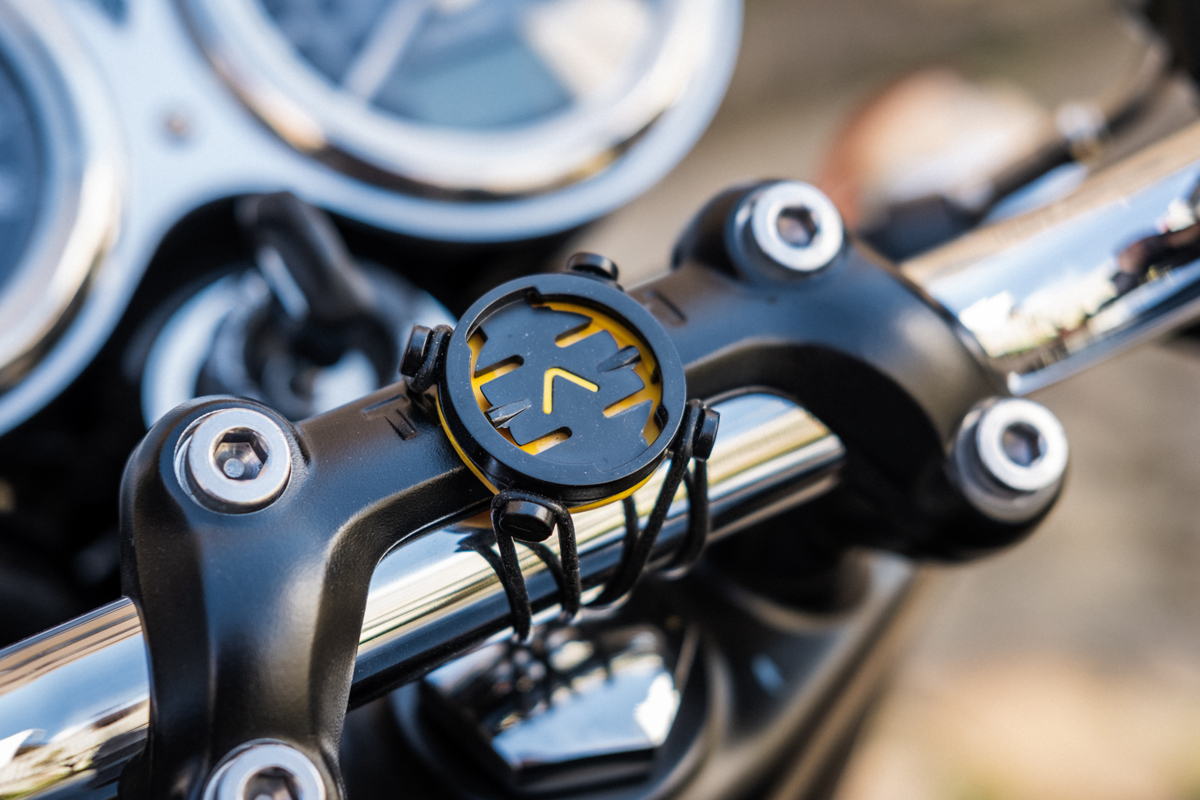
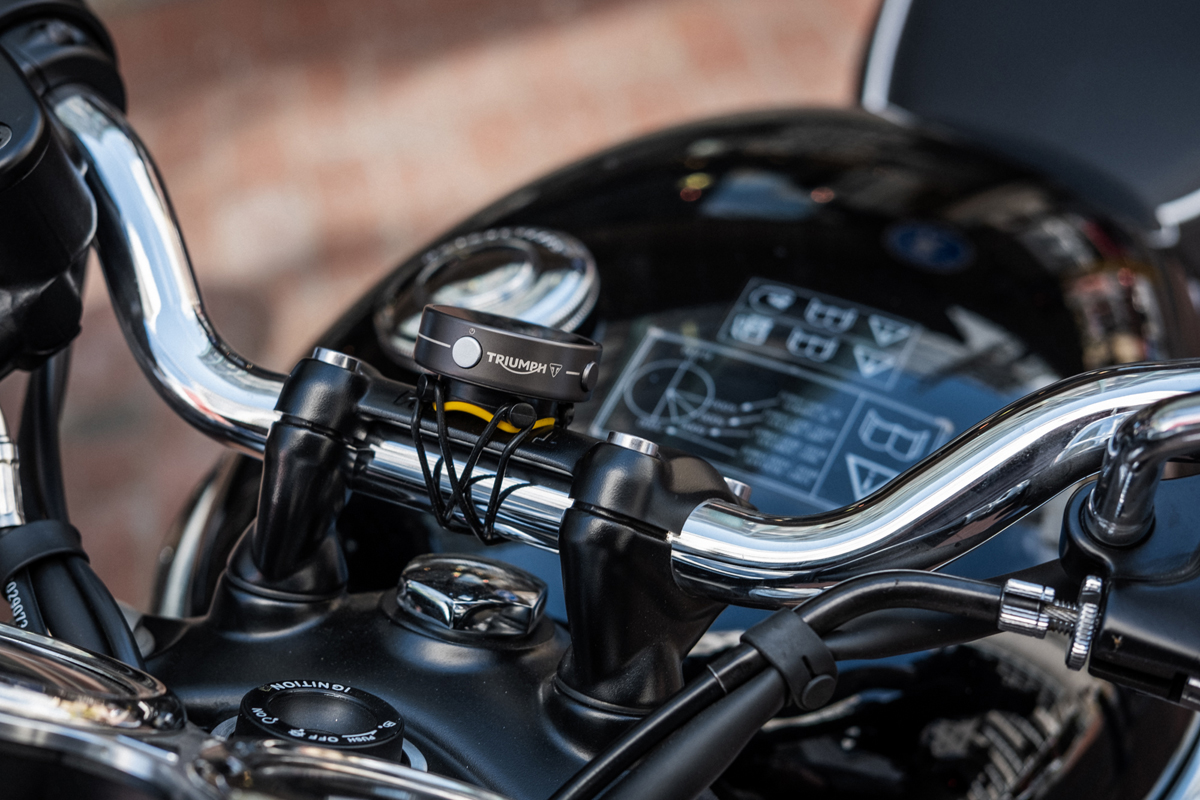
In the box are the nav unit, a USB charging dock, and a very cleverly designed universal mount. It consists of a hard plastic ‘socket’ for the unit to clip into, with a foam backing that’s moulded with multi-directional contours, to fit a wide range of surfaces. The most logical place to attach it is the handlebars, but it even sits nicely on top of the T120’s solid top handlebar clamp. A pair of rubber o-rings holds it down (the kit comes with two different sizes).
The unit clips into the mount with a press-and-twist motion, and only fits one way—so it’s impossible to get wrong. Beeline have even made the power button silver, unlike the other buttons on the unit, so that you can quickly orientate it when you’re attaching it.
Photo credit: Wesley Reyneke / ZA Bikers
To start navigating, open the app, tap on “Plan ride” and punch in your destination. The app will figure out two different routes—pick one, hit “Go” to start navigating. Beeline uses Google Maps within the app, so I had zero issues finding locations, and functionality like the ability to avoid highways or tolls, and view the map in satellite mode, is baked in.
Once you’ve set a route, the Beeline unit’s display will point you in the right direction via a simple, but easy to understand, set of graphics. An arrow tip dominates the display, pointing you in the general direction you should be heading, and a small dot along the perimeter indicates your next turn.
Photo credit: Wesley Reyneke / ZA Bikers
There are also icons to denote intersections, like circles or highway on and off-ramps, and a progress bar that shows you how far through your journey you are. The whole affair is delightfully minimalist and ridiculously intuitive. The graphics are a soft grey colour against a black background (there’s a high contrast black-on-white setting too), and are so crisp that they have an almost analogue feel to them.
Finding your way with the Triumph Beeline unit is a cinch, and the ability to glance down and digest basic info, rather than follow a marker on a map, helps you stay focussed on the ride. The unit does get a little baffled with parallel streets running near each other, or multiple turns that are in close proximity, but it’s not the only nav system on the market that struggles here. And the usual route recalculations after a wrong turn or detour are adequately quick.
Photo credit: Wesley Reyneke / ZA Bikers
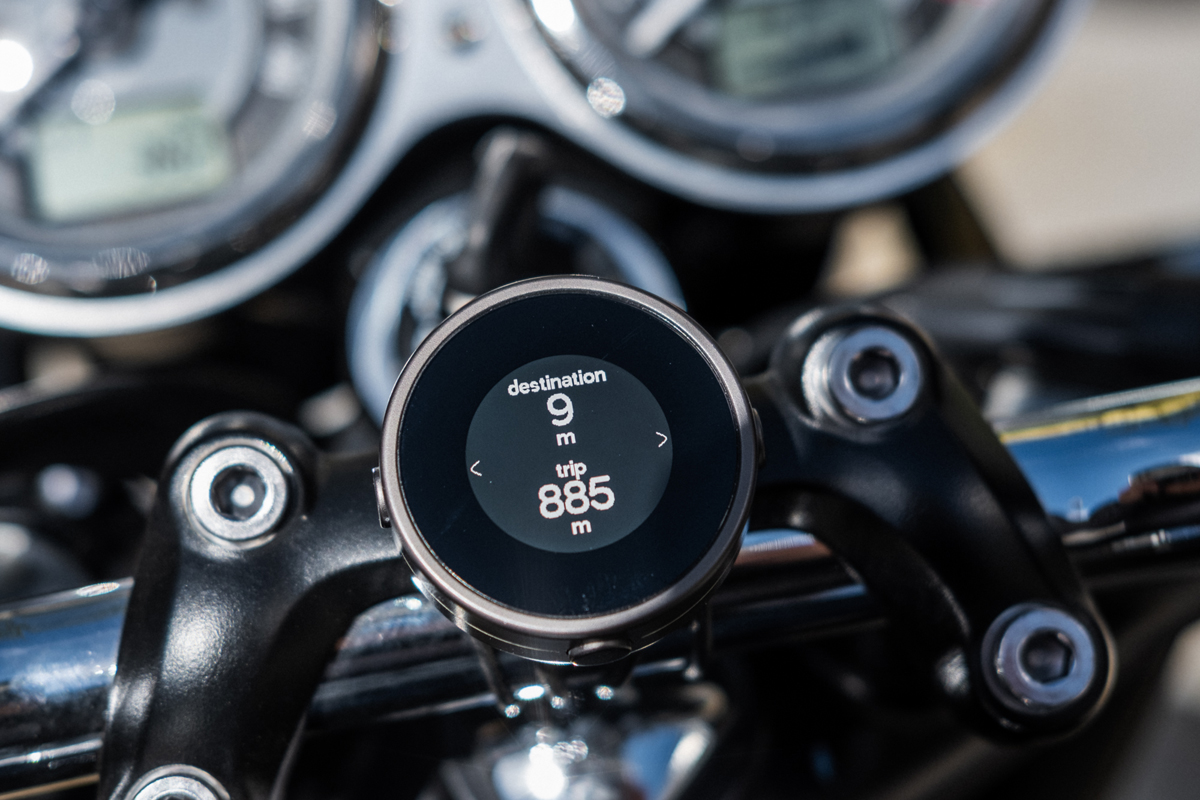
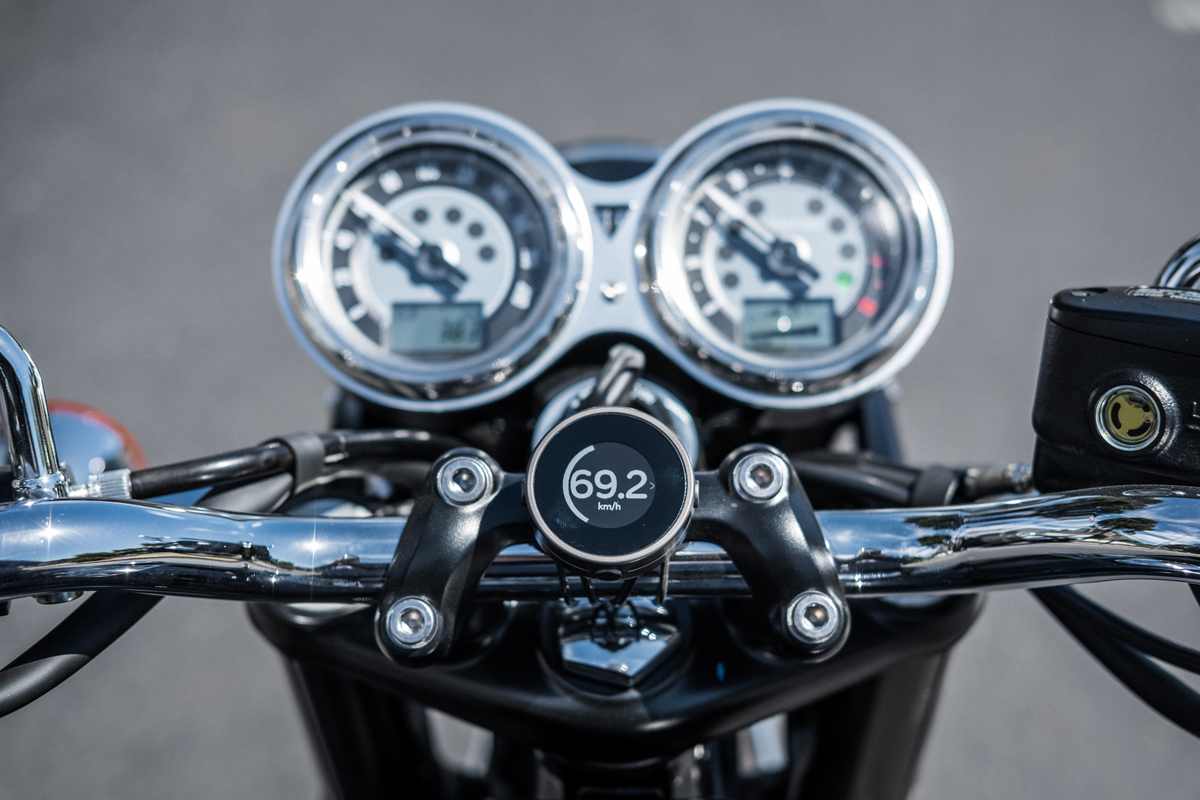
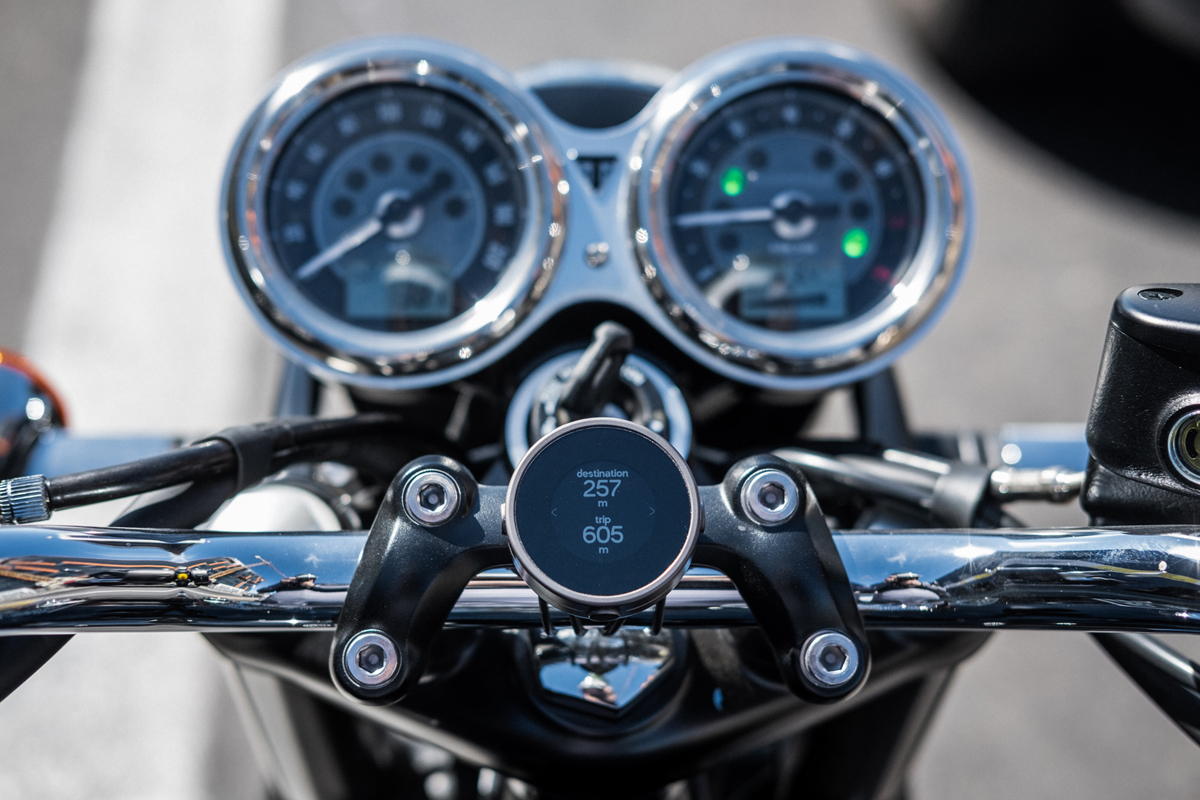
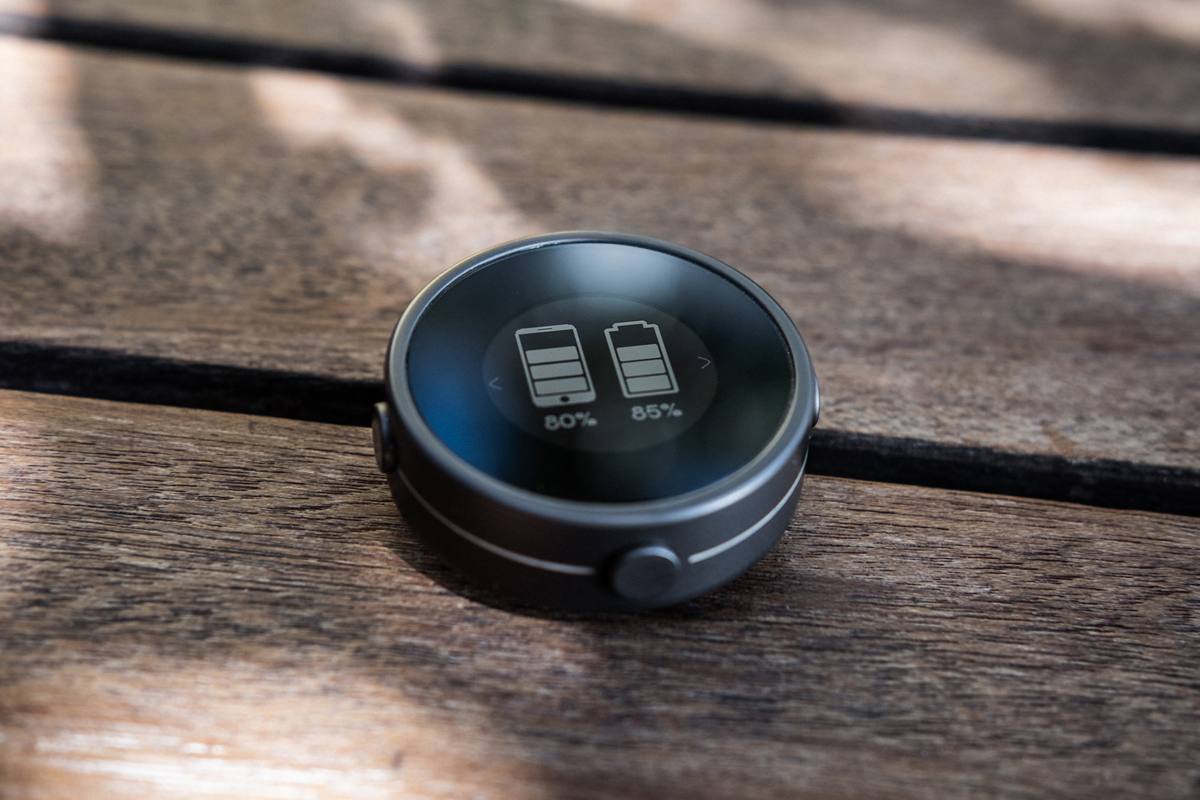
The buttons on each side of the unit let you scroll through a few different screens. There’s a clock, a battery indicator that shows levels for both your phone and the unit, and a simple settings screen that lets you adjust a couple of things on the fly. There are more readouts available while you’re actively navigating; a trip meter that also shows the distance to your destination, a time-based trip meter, and a speed indicator. And you can also end navigation via a couple of button presses on the fly.
That speed readout is only available during navigation—and that’s a pity, because it’s a super handy feature, particularly on a classic bike with a dodgy (or no) speedo.
Photo credit: Wesley Reyneke / ZA Bikers
There’s another feature built into the Triumph Beeline device: a ‘compass’ mode. Rather than offer turn-by-turn instructions, it simply points to your destination and tells you how far away it is, as the crow flies. It’s fun enough if you’re in a treasure hunting sort of mood, but ultimately it’s more gimmick than useful tool. And it won’t stop you from heading down roads with no thoroughfare, either (I speak from experience).
The app itself can do more than just pick a destination and take you there. You can save your favourite destinations, import and export GPX files, see your previous rides, save those rides to your favourites, or plan a route and store it for later use.
Photo credit: Wesley Reyneke / ZA Bikers
You also have the ability to plan complex routes, with multiple destinations or alternate ways of getting there—but it takes some serious fettling. The option to add an extra stop isn’t immediately apparent; it only seems to appear once you choose your first destination and flick between the two calculated route options.
When you have added multiple destinations, there’s also no obvious way to re-order them. And once you start riding a route with multiple waypoints, the unit itself is obsessed with hitting each one. So if you decide to take an alternate route and miss a stop, it’ll keep trying to point you back that way rather than giving up and focussing on your final destination.
Photo credit: Wesley Reyneke / ZA Bikers
If you’d prefer to manipulate your route rather than add multiple stops, the Beeline app does give you the option to tap-and-drag the actual route onto other roads, just like Google Maps. But it takes a lot of practice to get this right.
The system also tracks your rides, so that you can recall them later. It’s a nifty feature, but it’s another area where the app could use improvement. For starters, it only tracks rides while you’re actively navigating, and it would be super useful if it did it every time you ride and the unit is connected.
Photo credit: Wesley Reyneke / ZA Bikers
Secondly, when you recall a ride and ‘replay’ it, it ignores the actual path you rode, and recalculates the quickest route between the start and end points of your ride. So if you’ve spent an afternoon exploring backroads and want to follow the same route again, you’re out of luck.
It’s worth mentioning the unit’s stellar battery life too. I used it on and off for about a week, and hardly put a dent in the power level. So it should get by without a rigorous charging schedule.
Photo credit: Wesley Reyneke / ZA Bikers
When it comes down to it, the Triumph Beeline unit does the important stuff very well, and in a really clever and intuitive way. My only hangups with the system are centered around its frills, and the functionality of the app. But apps are updatable, and so is the actual unit’s firmware—which means the system is future proof, and, with a few refinements, could be a true powerhouse.
The story of Biker’s Warehouse is really the story of Mike and Kerry Puzey and their combined journey to becoming one of the fixtures of motorcycling in South Africa.
Photo credit: Biker’s Warehouse
As so many stories often start, the story of Biker’s Warehouse has its origins in a bunch of friends sitting around a table, reminiscing about their youth and the fun they had. Thoughts turned back to the time when they all rode small bikes that were cheap to buy and run and which provided simple transport.
Photo credit: Biker’s Warehouse
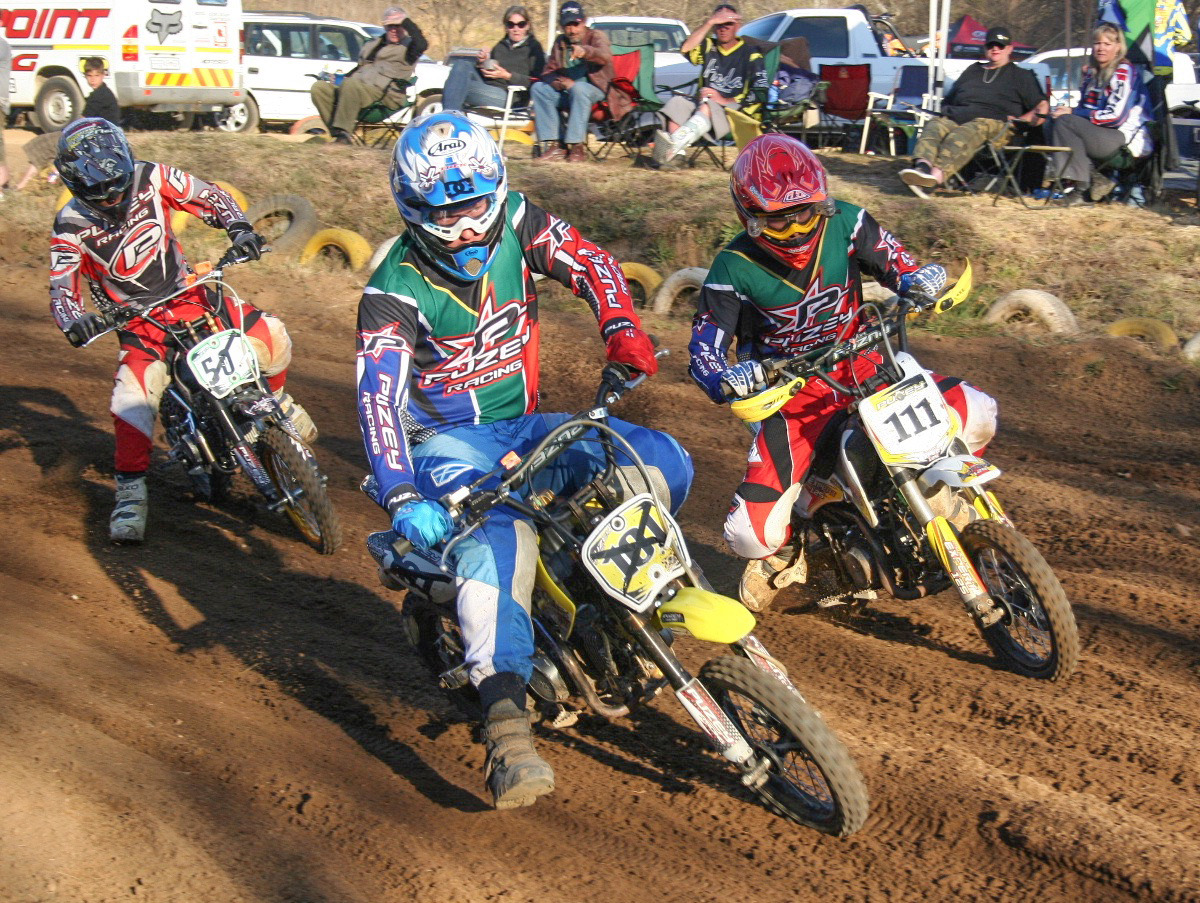
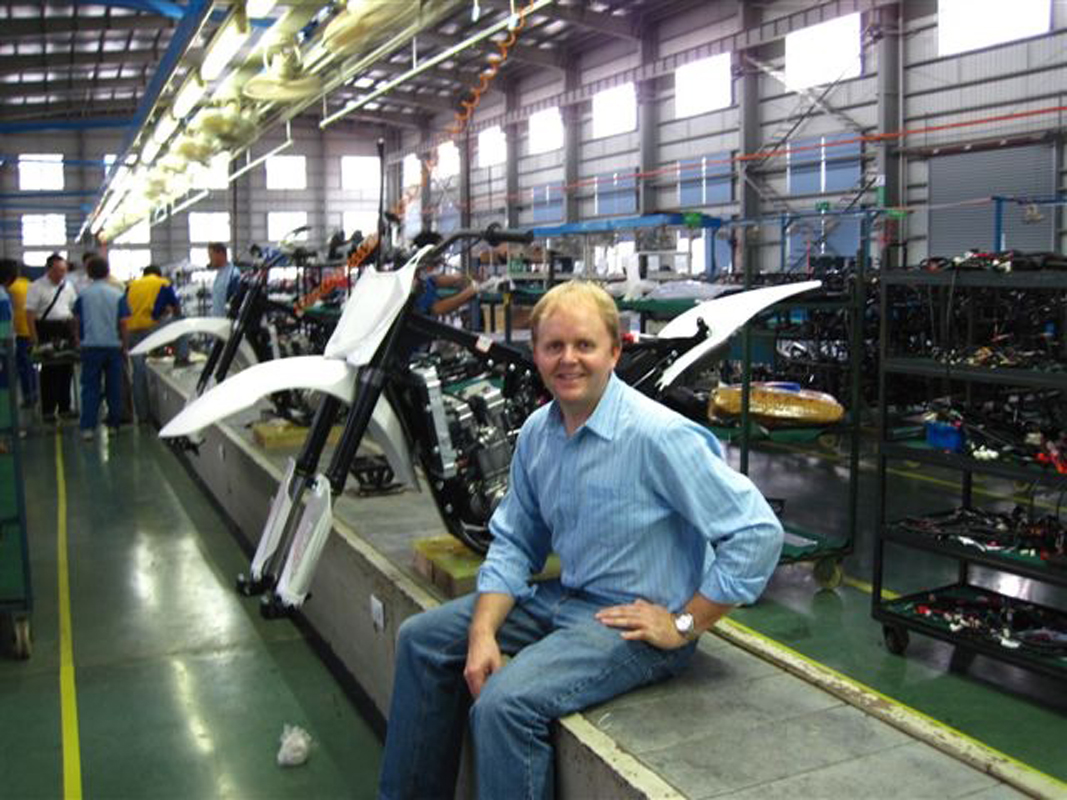
They all realised that they missed those days and wanted a way of re-creating them through access to cheap, small bikes. Thus started the pit bike craze, at the head of which was Mike Puzey himself, designing and importing such bikes and finding a ready market for them outside of his circle of friends.
Photo credit: Biker’s Warehouse
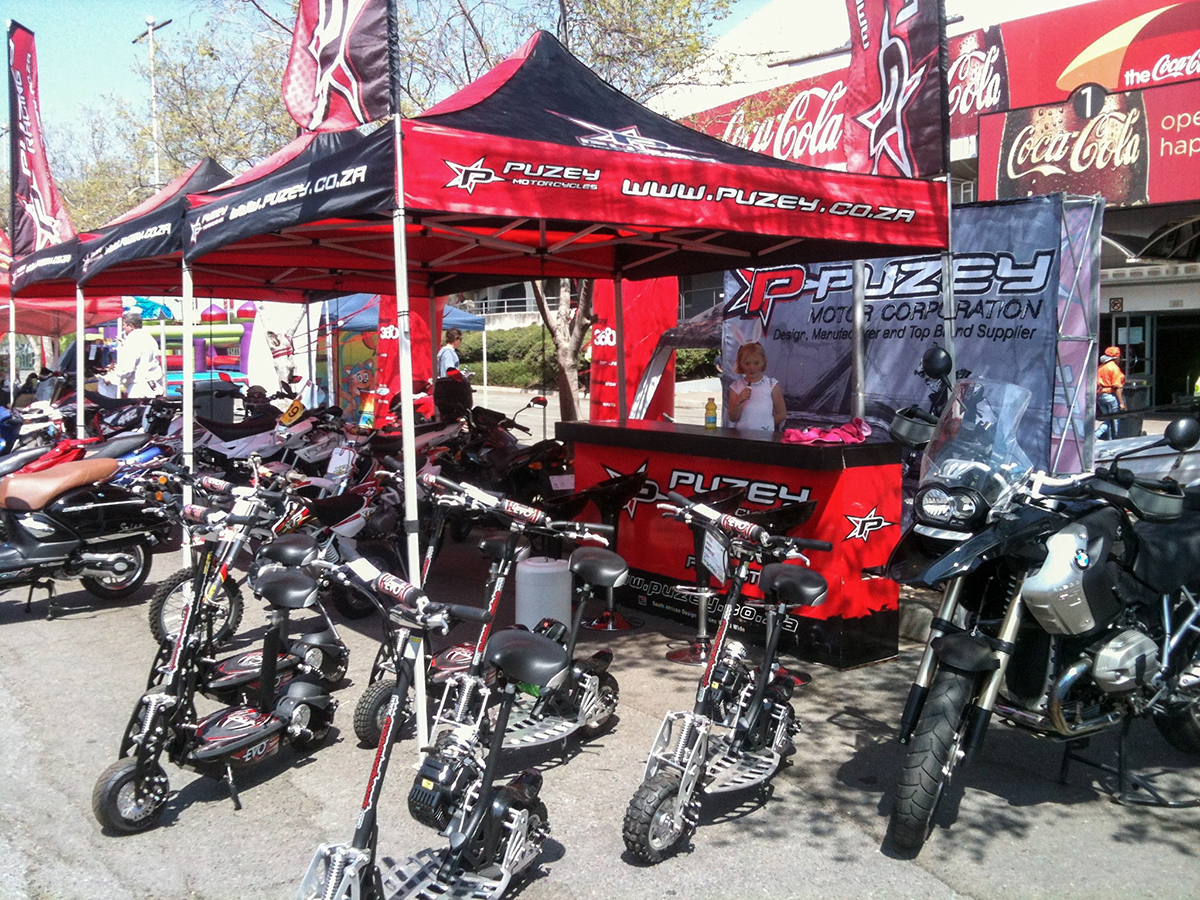
Mike and Kerry formed the Puzey Motor Corporation in 2006 selling pit bikes and stand-up scooters, branded Big Boy. The company had humble beginnings, with a workshop and showroom at their property in Malanshof, Randburg. In addition, they established a dealer network throughout South Africa.
Photo credit: Biker’s Warehouse
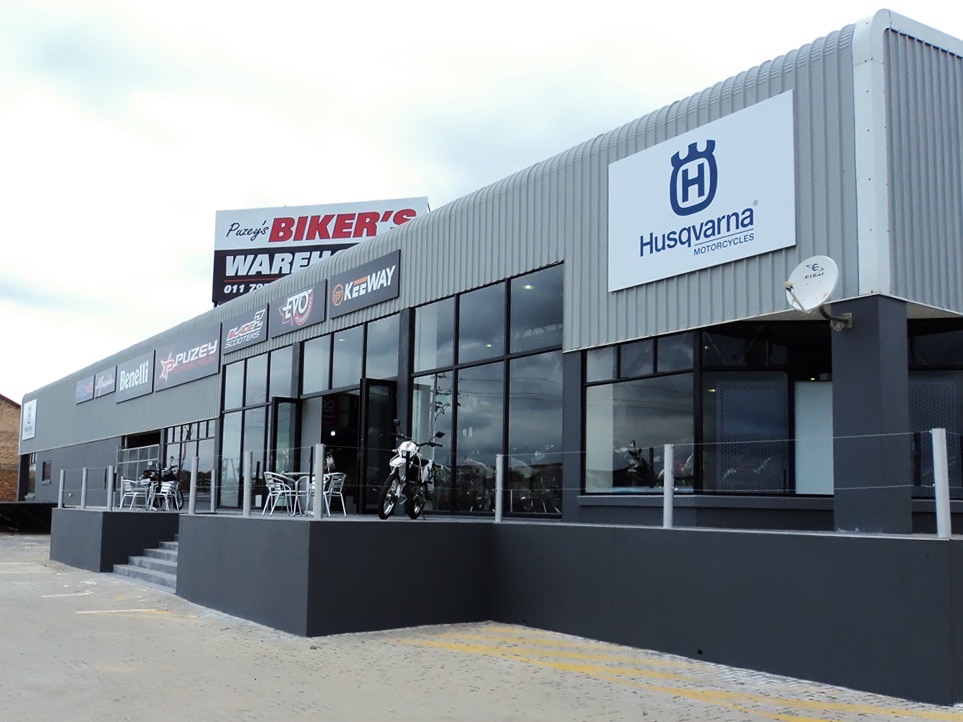
In 2008, the company had outgrown their home-based setup and they moved to the current location on Malibongwe Drive, Northriding, although in those days, they made do with 400 square metres and not the huge, multi-brand dealership we know today.
Photo credit: Biker’s Warehouse
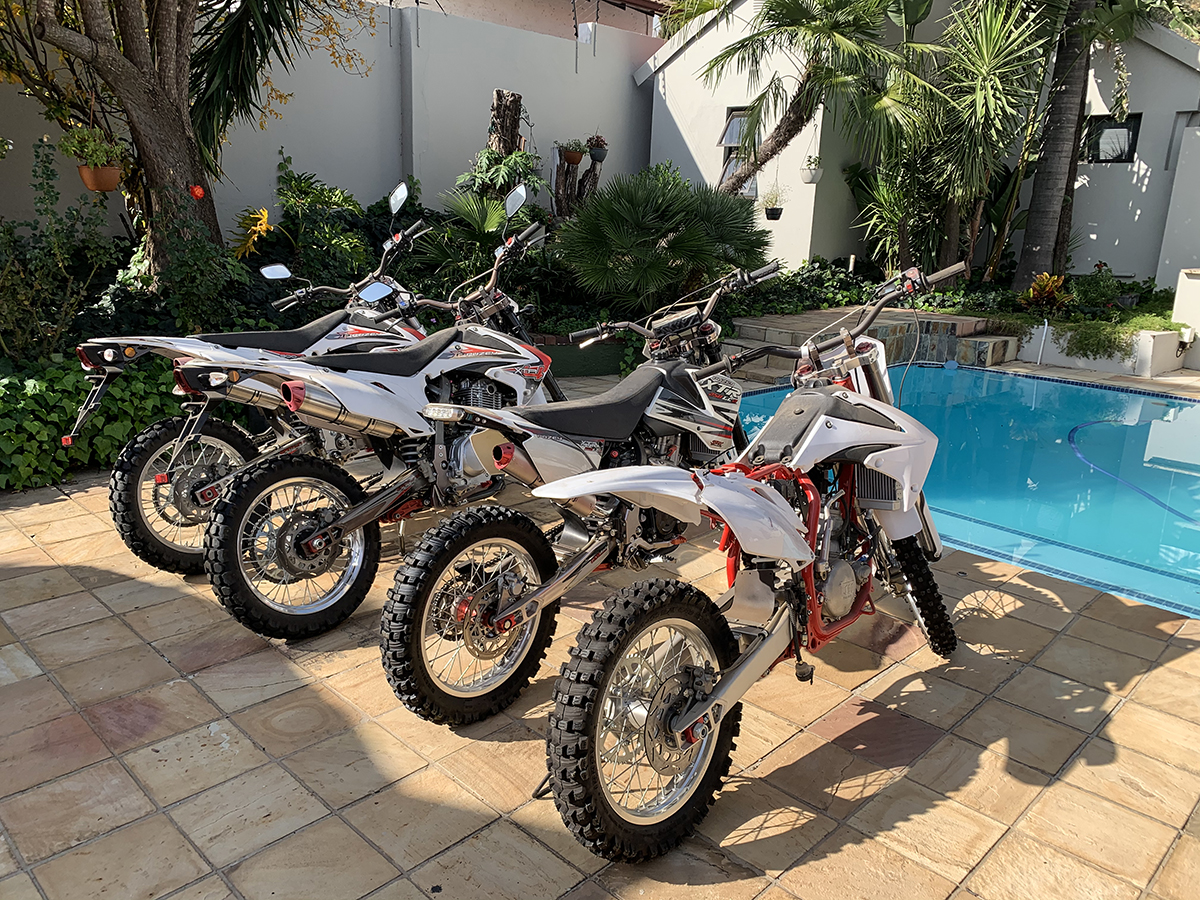
New products were continually added to the range on offer: first of all the Bladez Scooter and then venturing into 250cc off-road motorcycles, developing and manufacturing their own range of XTR-brand motorcycles.
Photo credit: Biker’s Warehouse
In the years 2010 to 2013, focus shifted from wholesale into retail, with the Puzey Motor Corporation premises continually growing to eventually take over the whole warehouse building.
Experiencing life in the U.S. in the early 2000s showed them how multi-franchise dealerships could work and Mike and Kerry decided to bring this concept to South Africa. In 2013, they became a Husqvarna dealer and, at the same time, the name of the company was changed to Biker’s Warehouse: a whole new concept was born.
Photo credit: Biker’s Warehouse
Next job, was to grow the accessory and apparel side of the business and Wayne Farmer was brought in to oversee this transformation. The fact that Biker’s Warehouse has become the acknowledged premier ‘one-stop shop’ for all your motorcycling needs in Gauteng, whether for racing or everyday riding, is a testament to his vision and leadership.
Photo credit: Biker’s Warehouse
All the time, the store was expanding, with a seemingly constant stream of expansions and add-ons, not least of which was in staff numbers. The 43 employees who now work so hard to meet international standards of stock and service have become one big happy family and are a large part of the success of Biker’s Warehouse.
The dealership covers all brands of accessories and apparel across all riding spectrums from kids and teens to adults, for on or off-road, adventure or commuter riding. They can even facilitate fleet motorcycle orders.
Photo credit: Biker’s Warehouse
In 15 short years, Biker’s Warehouse has gone from strength to strength, with more and more brands being added. In addition to the Puzey brands, Husqvarna, Suzuki, Honda, Kawasaki and Sym are all represented.
If you have never been to Biker’s Warehouse, you should do yourselves a favour and pay them a visit. We don’t think you’ll be disappointed!
Keep an eye out for Part 02 which will be published next week…
This was the winter of our discontent. Lockdowns, curfews, shuttered restaurants, booze bans, working from home, anarchy, arson and looting, the coldest, most miserable winter in more than a decade. Small wonder the mood in the country was pessimistic at best and desperate at worst. There was only one remedy, a long ride in the company of good maats on roads less travelled to warmer climes.
The pinnacle of male bonding! Hanging with maats in a faraway boozer and especially if there’s a donkey involved…
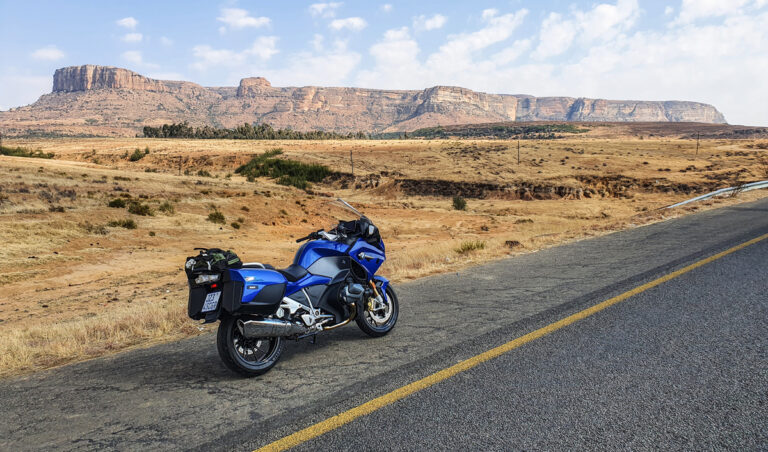
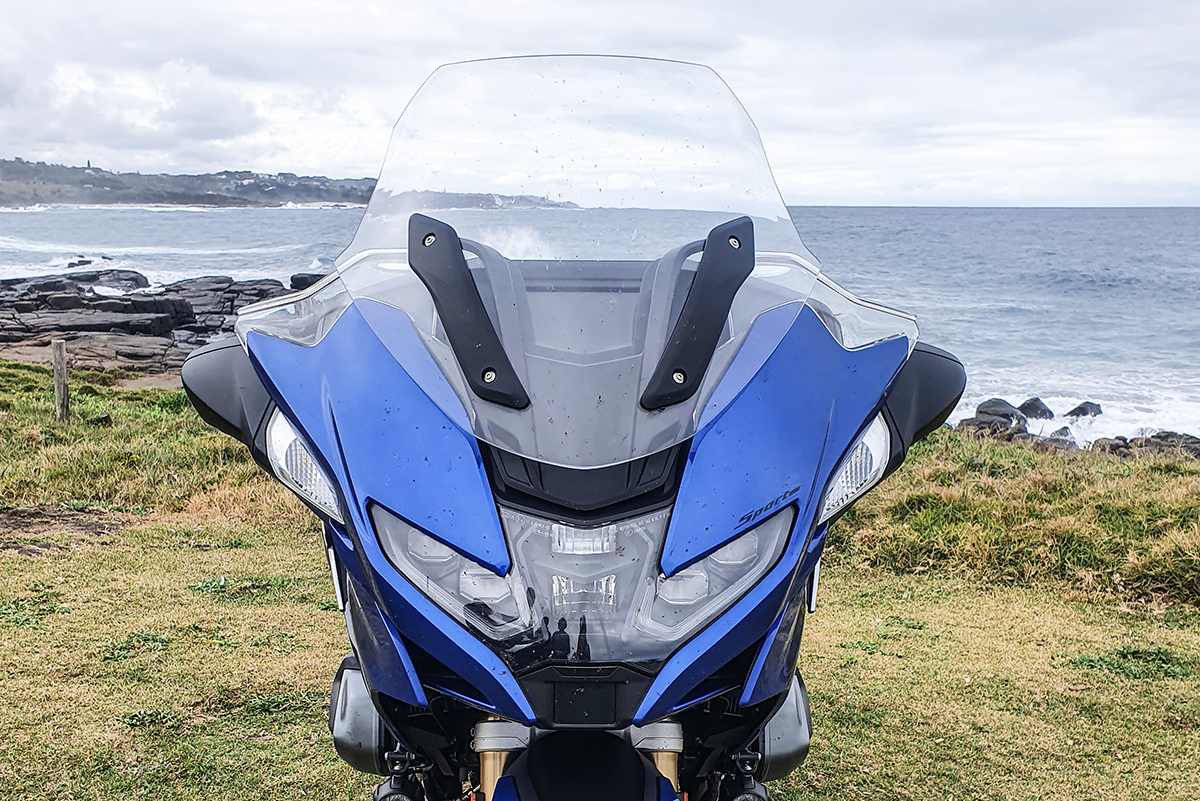
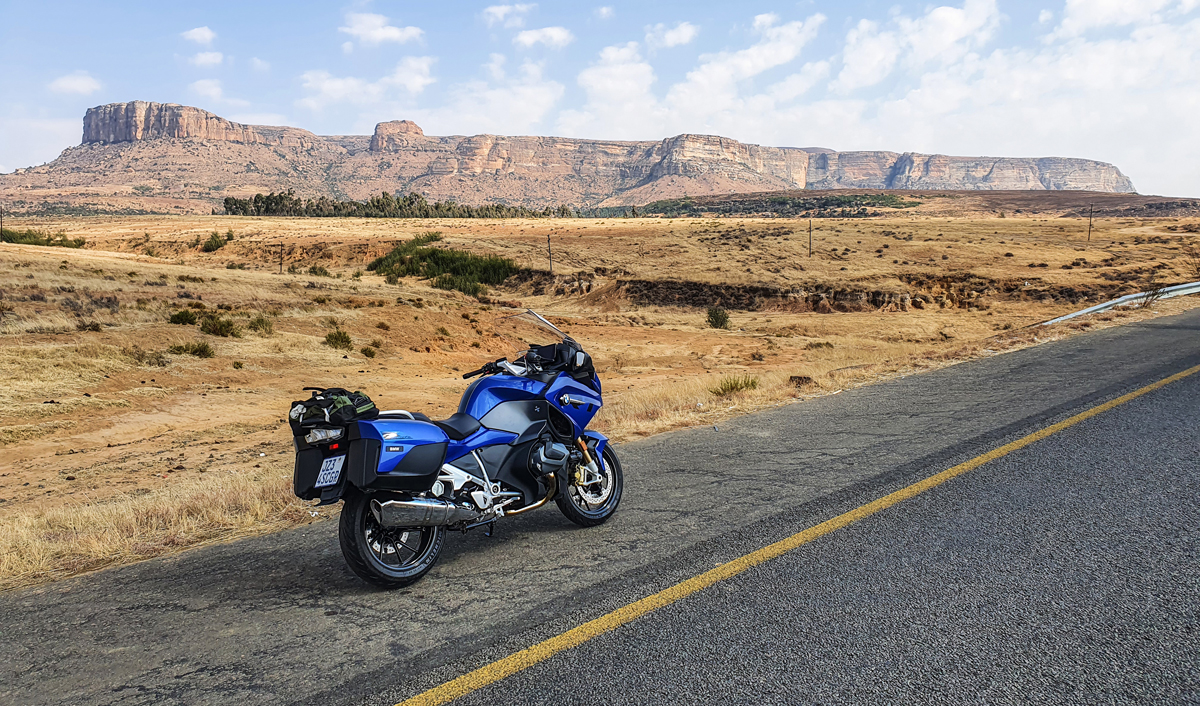
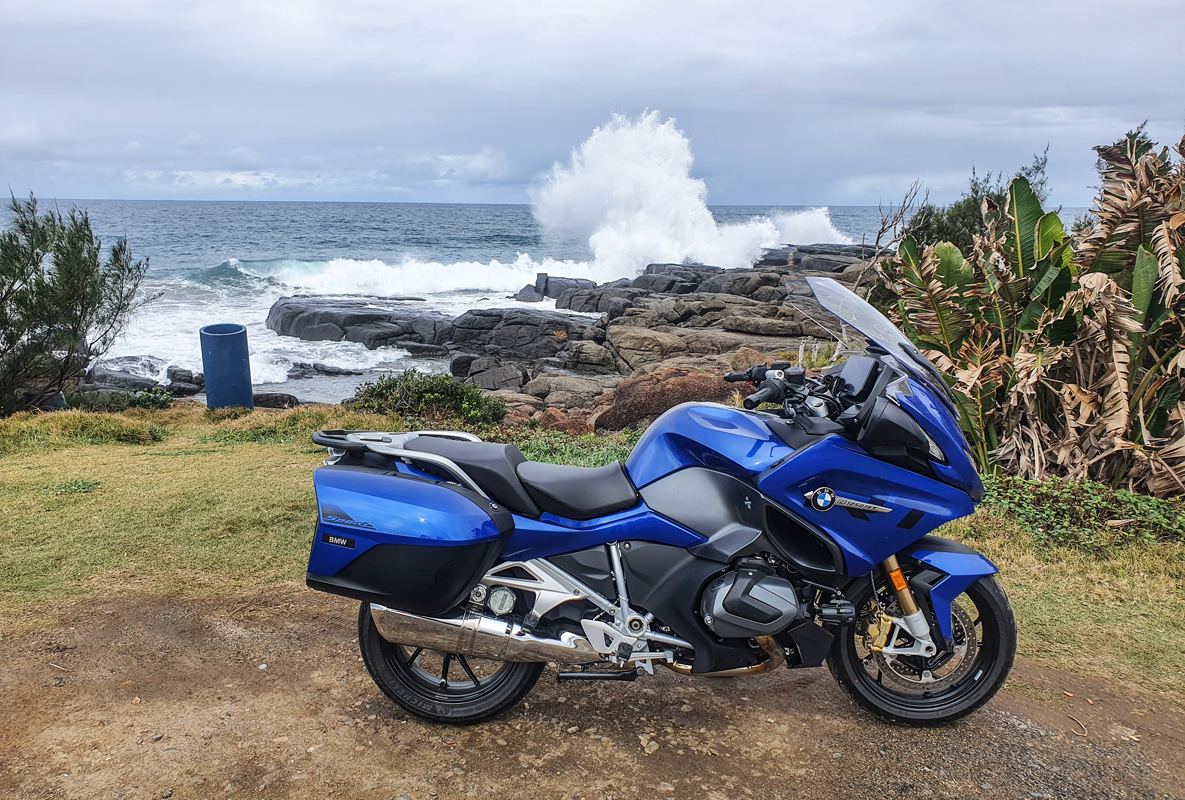
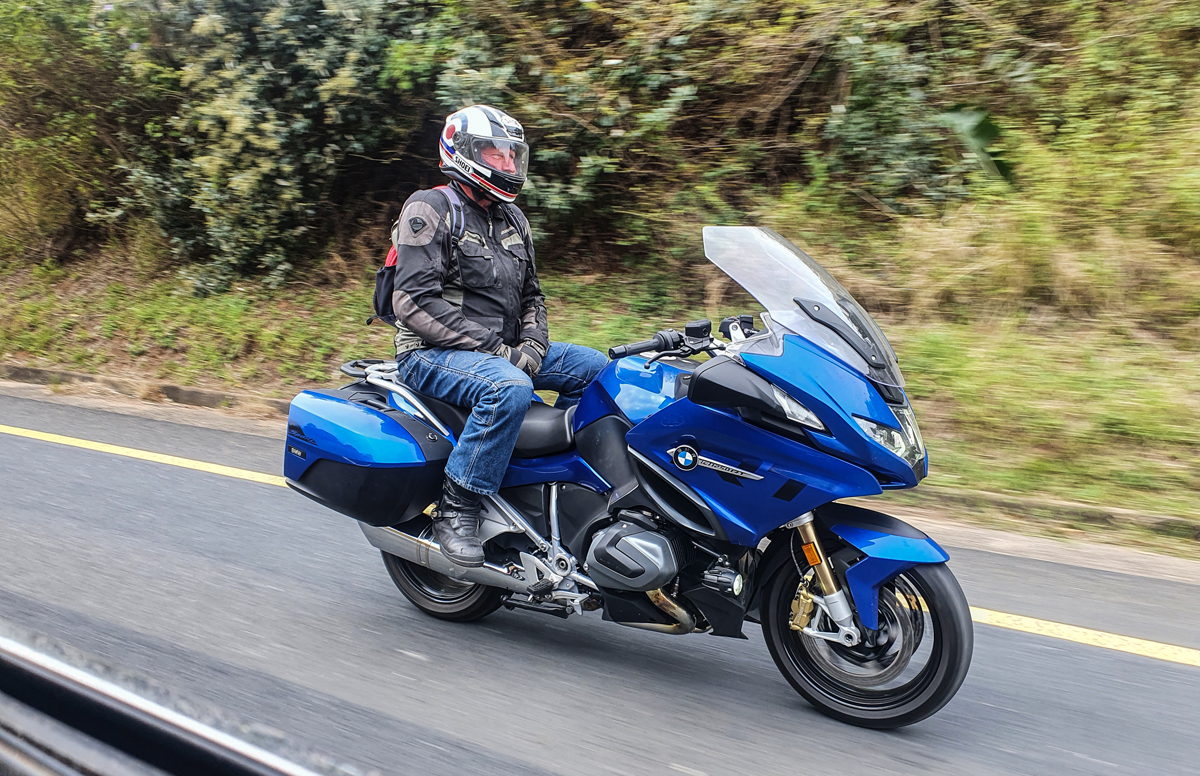
I called the friendly folk at BMW and asked if I could ride their R 1250 RT demo and they kindly agreed. There are four colour options in the new RT range. The colour I hoped for was Racing Blue Metallic and that’s exactly what I got when the motorcycle was delivered on Tuesday morning. I parked the bike in the sunshine and spent many minutes examining it in detail, drooling over its magnificence and the new (for 2021) features. The most striking enhancement is the new LED headlight cluster which fundamentally redefines the RT’s face giving it a more aggressive and purposeful look in keeping with BMW’s intent to brand the RT as a sports tourer as opposed to a sedate touring machine.
Fierce and handsome. The RT’s new face redefines the bike and its sporting nature.
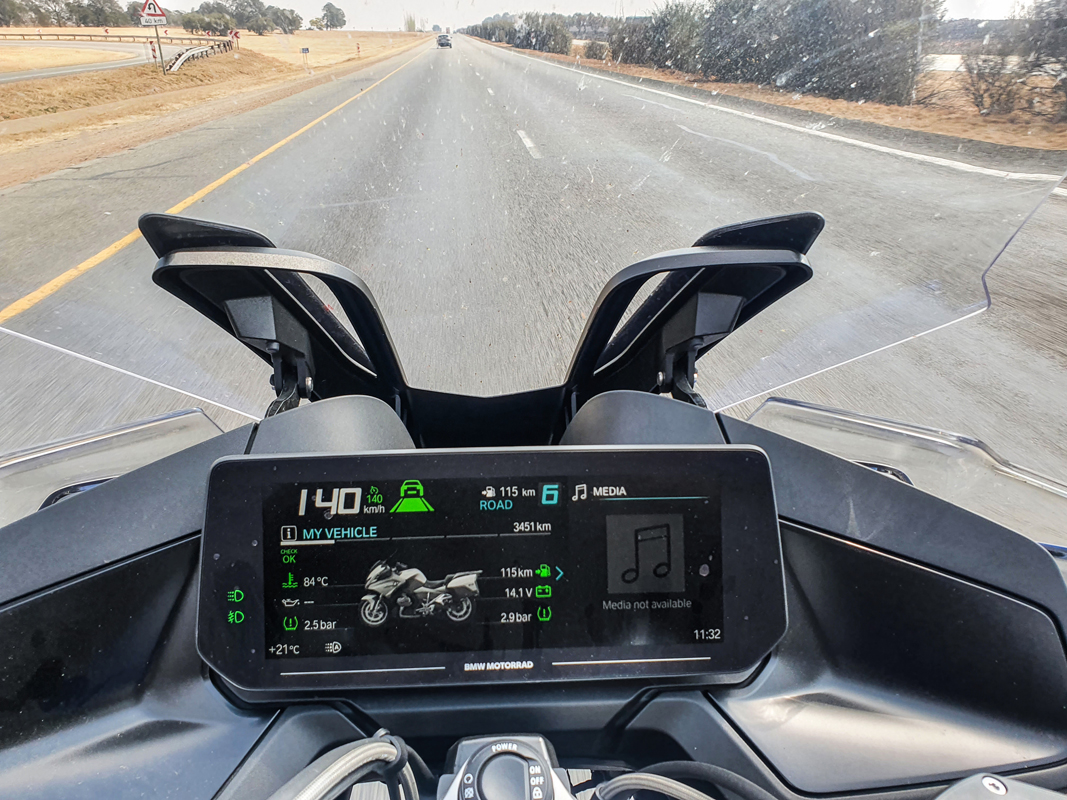
The other obvious upgrade is the 10.25-inch TFT display. The screen is so wide it reminded me of watching Cinemascope movies in my 1960s misspent youth. The display provides every conceivable data point from the electronic engine management system and in addition, gives the option to display maps and music selections when connected to the BMW Motorrad Connected App. Download the app, place your phone in the right-hand cubby hole where wireless or USB charging ensures you are always connected and ready for action.
An enormous TFT display provides all the info you could ever need.
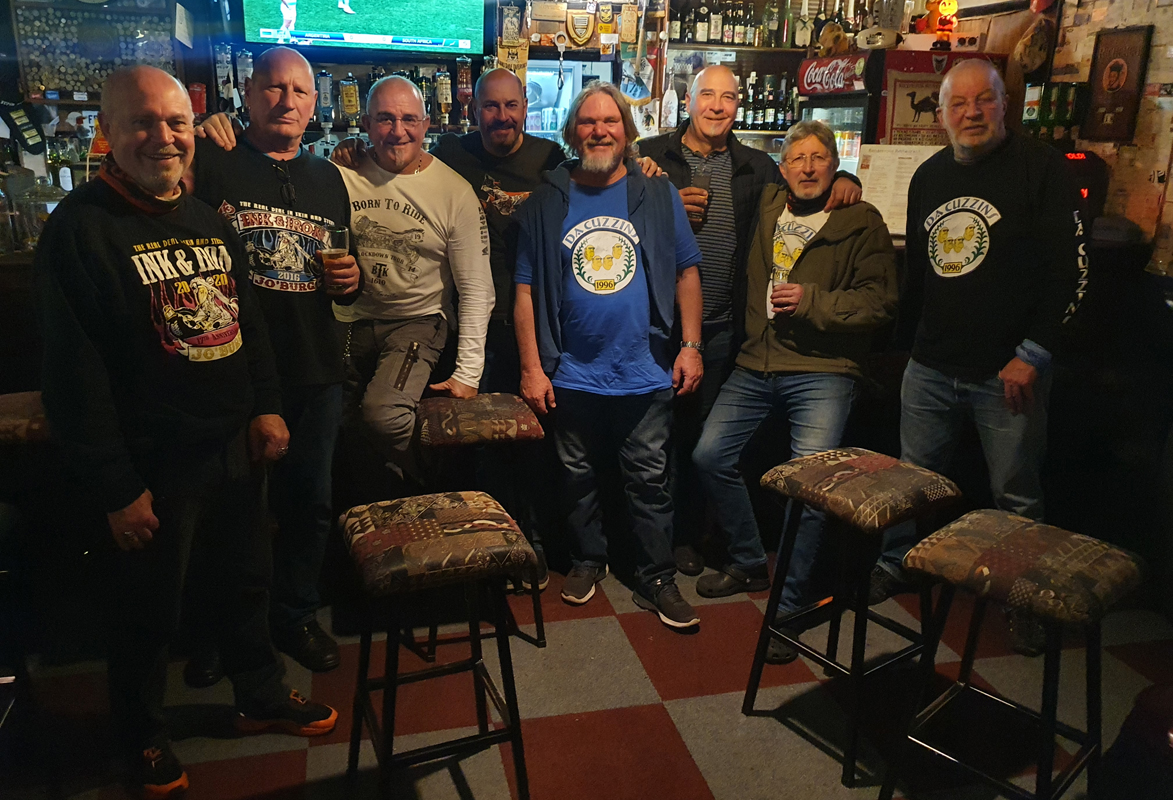
On a beautiful Wednesday morning, our rendezvous was the Total Petroport on the N3 between Alberton and Heidelberg. Gus and Laurence were both riding their previous generation R 1200 RT machines, Jamie was on his R 1200 GS Adventure and Mikely was styling on his brand new KTM 1290 Super Adventure S. There was some debate about our route south. I wanted to ride the backroads and the others wanted to haul straight down the N3. We agreed to go our separate ways and to meet on the outskirts of Warden where the R103 and the N3 converge.
On the far side of Heidelberg, our routes diverged. I left the N3 and rode the R23 to Balfour and then hooked right to Grootvlei on the R51. I made it to Villiers in double quick time and crossed the Vaal River into the Free State but still, I was pretty sure the others were ahead of me. Just before the Villiers tollgate I picked up the R103, gunned the RT through the gears and settled into high speed, distance demolition mode. It’s 110km from Villiers to Warden and for most of that distance, the RT and I easily maintained 180km/h with the odd foray to ‘warp speed’ where the road beckoned faster, faster. It was an exhilarating ride. The RT was in its element and carried me in absolute comfort and safety across a landscape of golden fallow fields.
Only bikers can truly appreciate the call of the open road.
In places the R103 surface is rutted and there are some potholed sections but overall it’s no worse than most R roads in the country. Of course, the surface is not as smooth as the N routes but the electronic suspension insulated me from the irregularities and, frankly, 180km/h felt pedestrian. I experimented with the electrically adjustable windscreen and soon found the ideal height where there was minimal wind noise around my helmet and I could see over the top of the windscreen. I chose the display setting which provided all the information I needed on the long road: ambient temperature, time, range, engine coolant temperature, tyre pressures and speed. At a glance, I always had the assurance that all was well with the bike and my enjoyment of the blue missile grew with each passing kilometre.
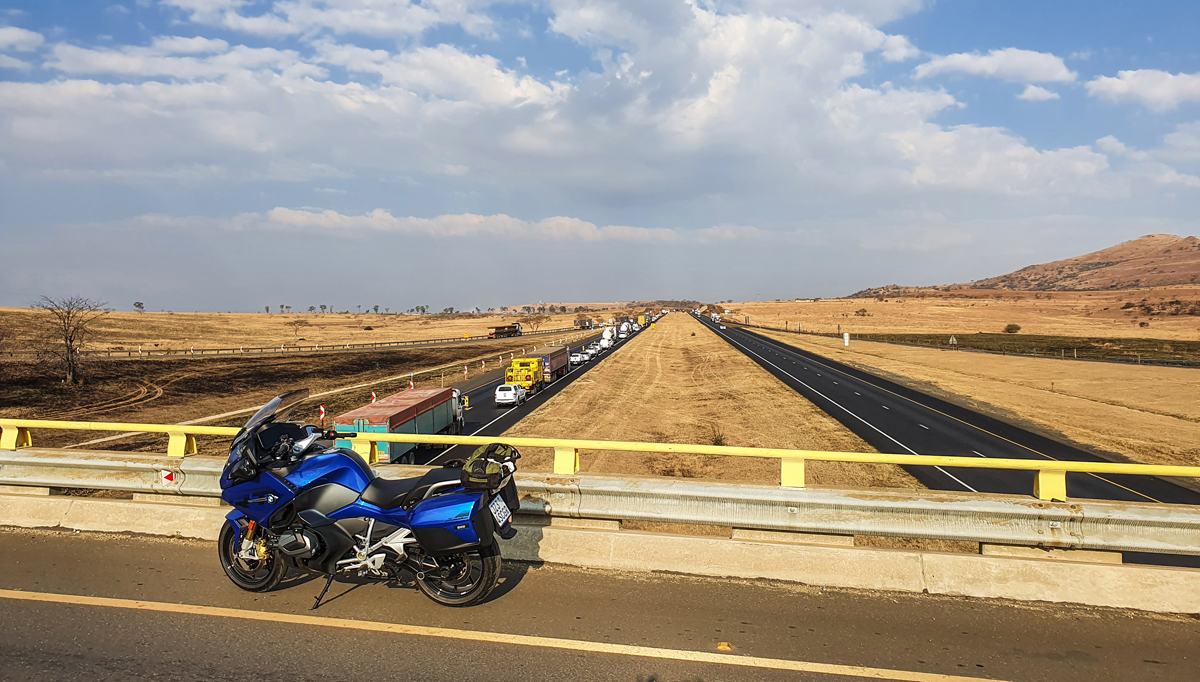
As I neared the convergence of the N3 and the R103 I looked to the north and was delighted, yet not entirely surprised, to see four headlights approaching. It was a moment of purest serendipity as the group reformed and the five of us swept down the hill into Warden laughing in our helmets and giving high fives and thumbs up all round. We took the offramp to Bethlehem and stopped on the bridge over the N3 to rehydrate and compare notes. Gustav said, “You must have been flying because we were doing 150km/h down the N3.” “180” I replied in my most nonchalant tone.
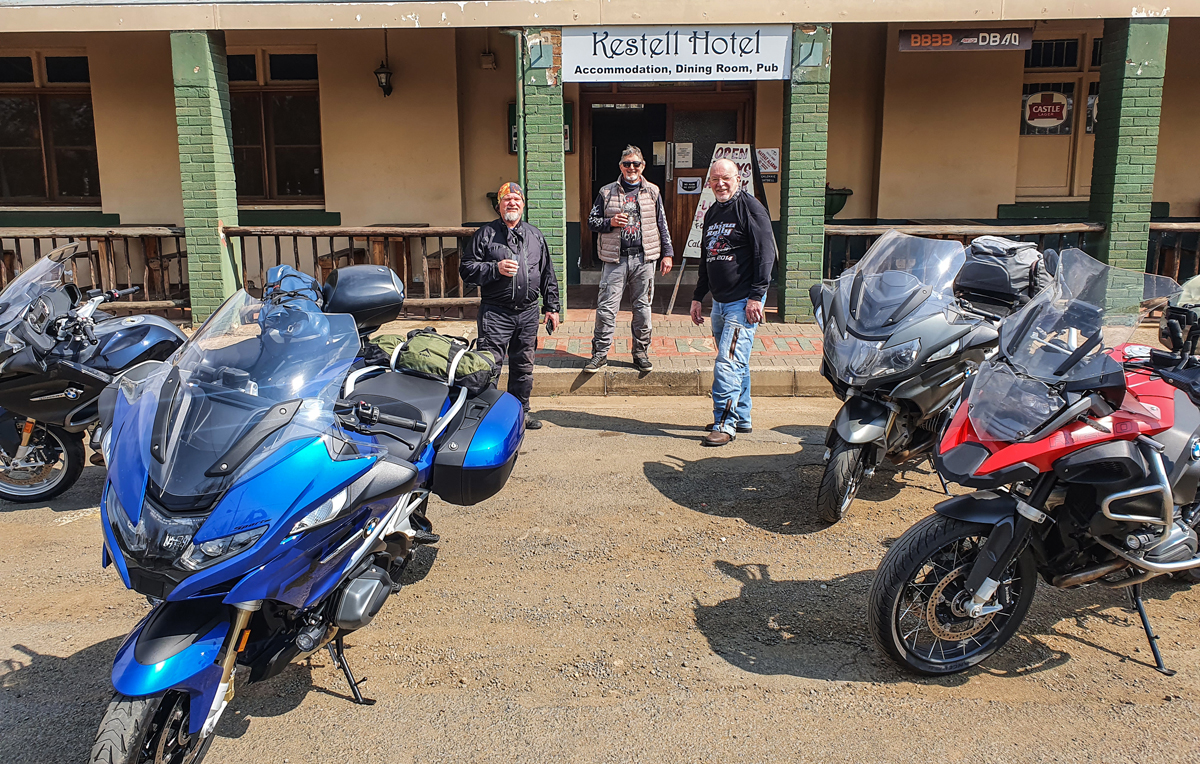
Biker friendly Kestell Hotel.
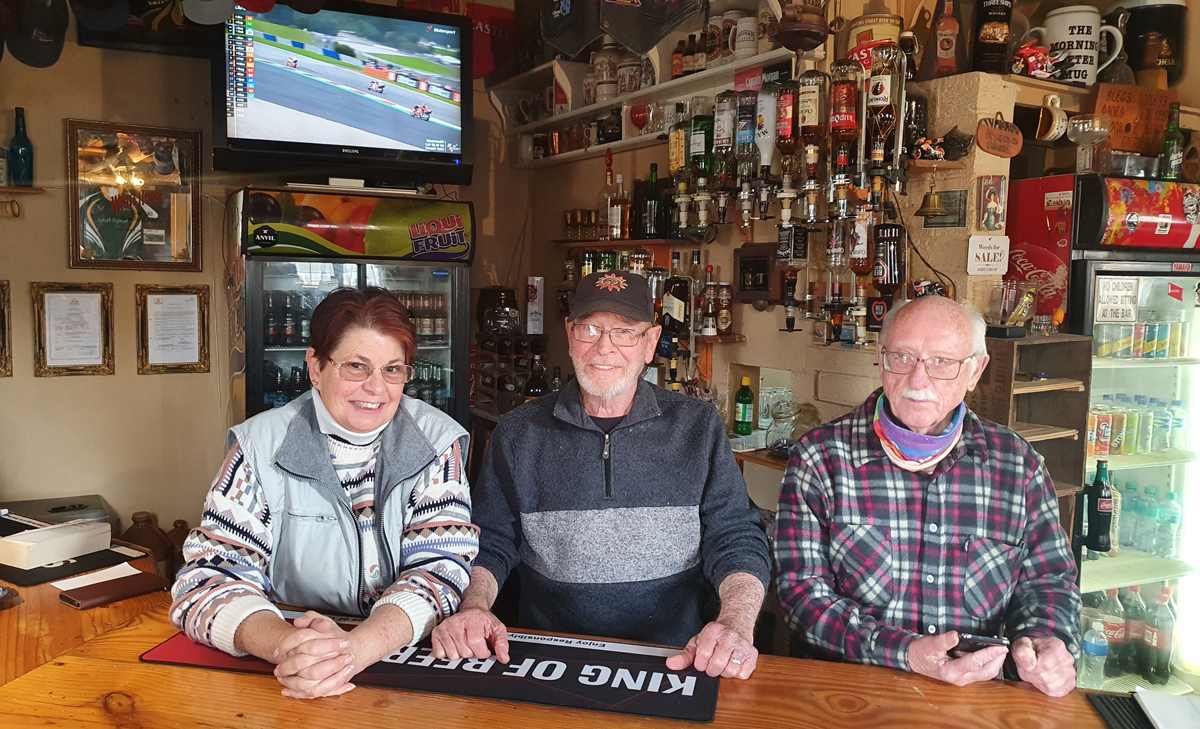
Our midday destination was the Kestell Hotel. We rode southwest past Afrikaskop and short before long settled into the bar at the hotel for an early lunchtime snack. The hotel is owned by Martin and Elaine Potgieter and managed by their friend Andy Haramis. The bar is decorated with motorcycle memorabilia and bikers are assured a warm welcome.
Your hosts Elaine and Martin and Andy.
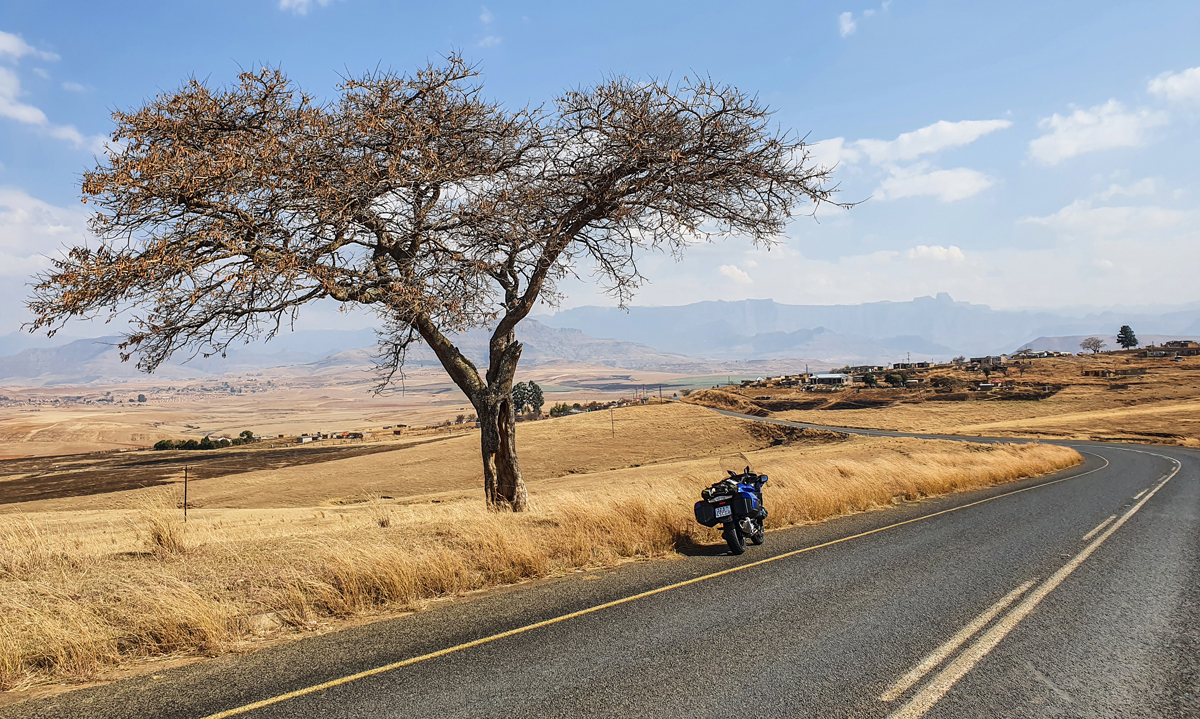
From Kestell we rode south towards Phuthaditjhaba and then east towards Harrismith before riding the lovely flowing road that runs along the picturesque shores of Sterkfontein Dam to the summit of Oliviershoek Pass.
Magnificent Free State scenery near Phuthaditjhaba.
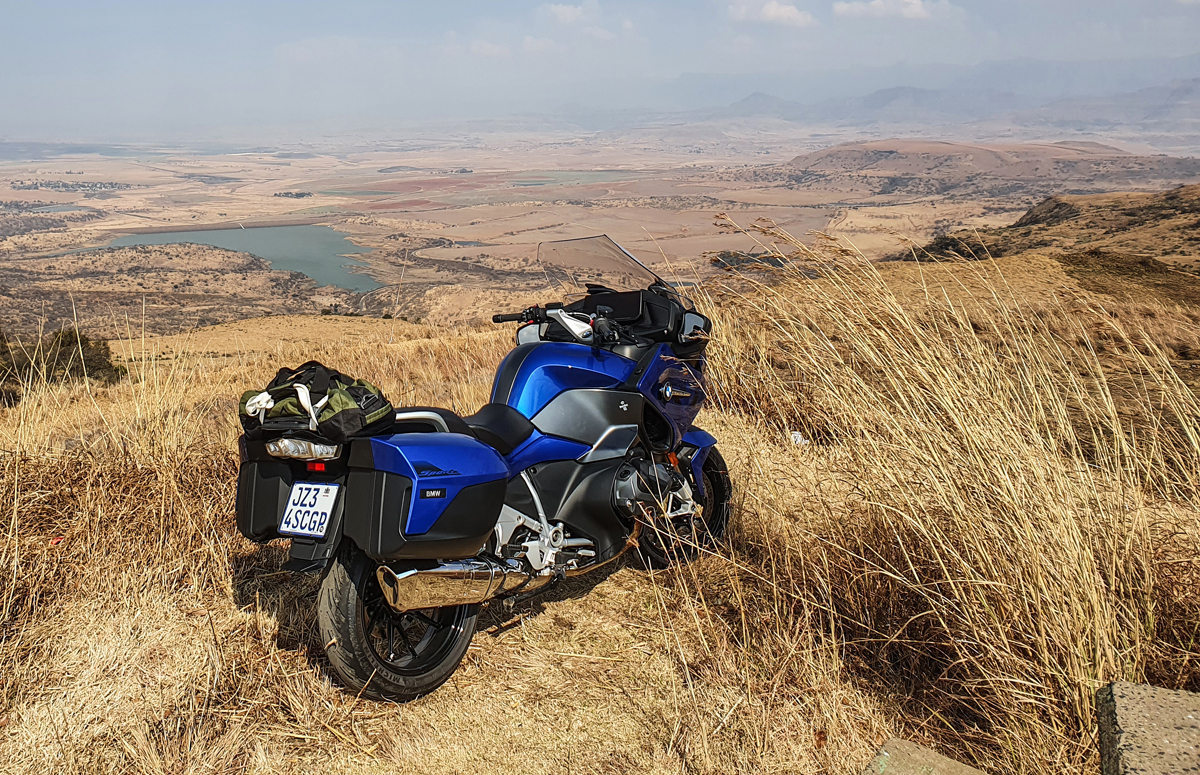
We stopped at the viewpoint to wonder at the vast fawn coloured landscape that stretched below us into the distance where land and sky met on an indistinct horizon. Oliviershoek Pass is a riders’ road, a challenging ribbon of tar which has been the ruin of many a poor boy and demands respect. It’s a thrilling ride and when you reach the foot of the pass it’s full-tilt riding across the rolling foothills of the mighty Drakensberg. We rode in a high-speed convoy and soon Bergville and Winterton were behind us. But the thrill of blasting down the R74 ended abruptly when we joined the N3 north of Estcourt.
The summit of Oliviershoek Pass. On a clear day, you can see forever.
The N3 was a mess. There were roadworks everywhere and in many places, the freeway was restricted to one lane in each direction with the velocity of the traffic determined by the slowest 26 wheeler. Every time I ride a bike I have reason to be grateful for two wheels as I weave my way through the chaos and pity the poor baastids trapped in their cages with no escape in sight. This was one of those occasions. We cruised sedately through the roadworks, sometimes in the yellow lines and sometimes in the lane which was closed for repairs. It wasn’t stressful riding but it wasn’t pleasant either so we left the N3 and rode the R103 to Mooi River. The R103 is a narrow, winding country road and sixty years ago it was the main route from Johannesburg to Durban. Of course, that was in the days when South African Railways was a symbol of national pride and there were no juggernauts and far fewer cars on the roads.
The N3 was a mess. Instead of joining the chaos, we rode the R103 which was the road from Johannesburg to Durban sixty years ago.
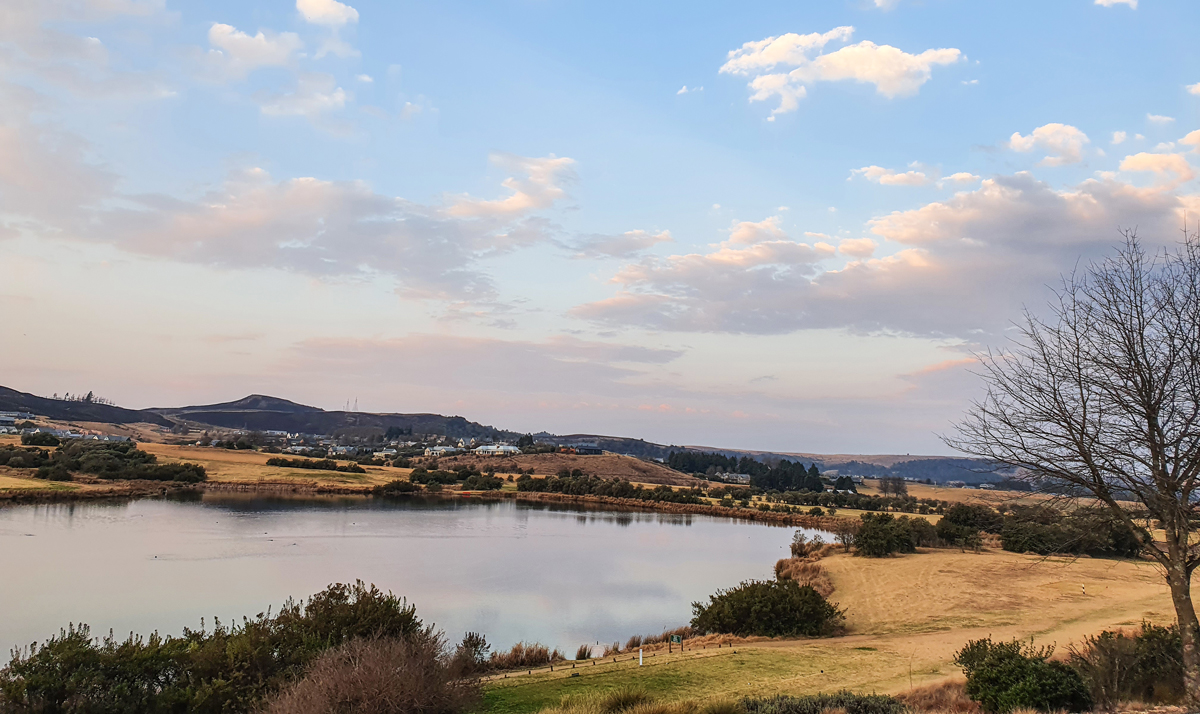
From Mooi River, we continued on the R103 through Rosetta to the legendary Notties Hotel for a cold one. We had planned to sleep at the Nottingham Road Hotel but unfortunately, there was no room in the inn so once we had quaffed our drinks we rode two kilometres to Gowrie Farm Golf Course where we had booked for the night. What a swanky joint! The members’ lounge, clubhouse and hotel looked brand new, the rooms were beautifully appointed and exquisitely furnished. In the twilight, the view from the lounge was an incomparable Natal midlands scene, the lake surrounded by manicured fairways and greens and rolling emerald hills blending into the purpling sky. All of this, for R850 bed and breakfast. When next you’re in the midlands spend a night at Gowrie Farm.
A room with a view. Gowrie Farm Golf Estate is a magnificent destination.
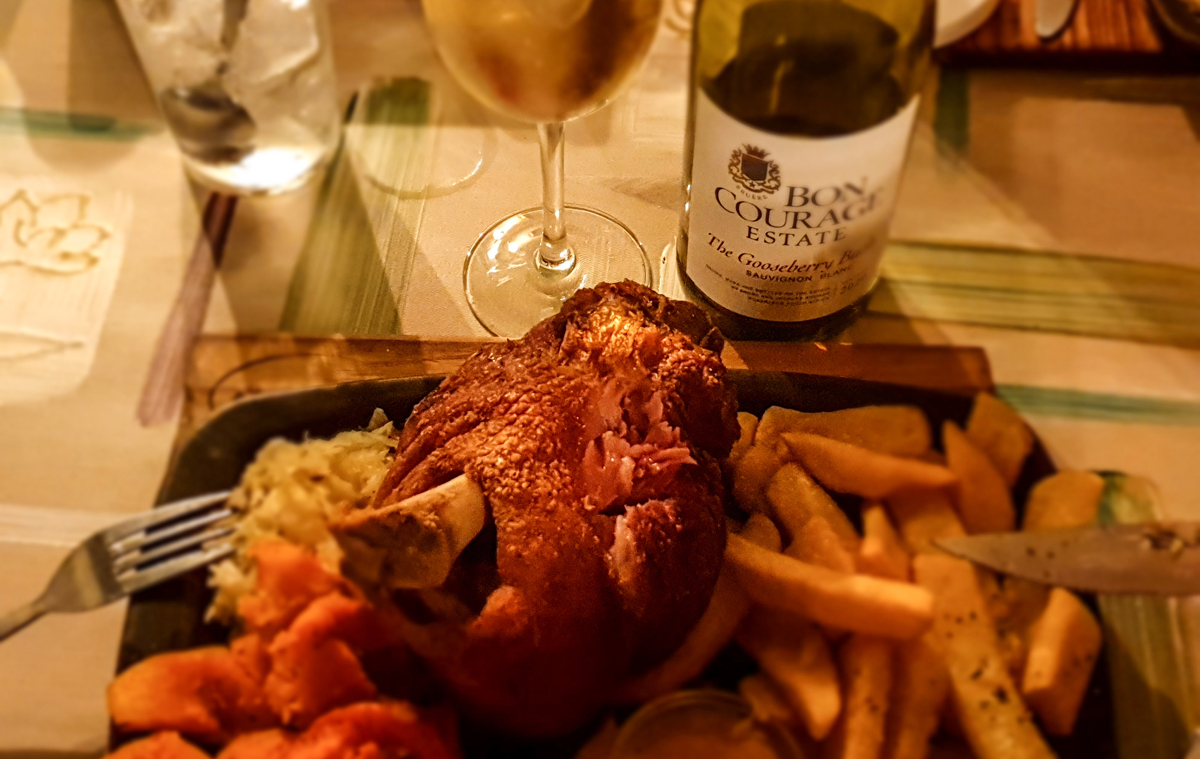
You’ll love it. That evening we dined like kings at Bierfassl renowned for its authentic German dishes. We all tucked into delicious 500-gram “ladies” Eisbeins which none of us could finish. Bierfassl portions are large! On the menu, there’s a 1.2-kilogram Eisbein but I think only a hungry lion could finish such an enormous slab of Shweinefleisch.
Bierfassl Eisbein! A culinary extravaganza.
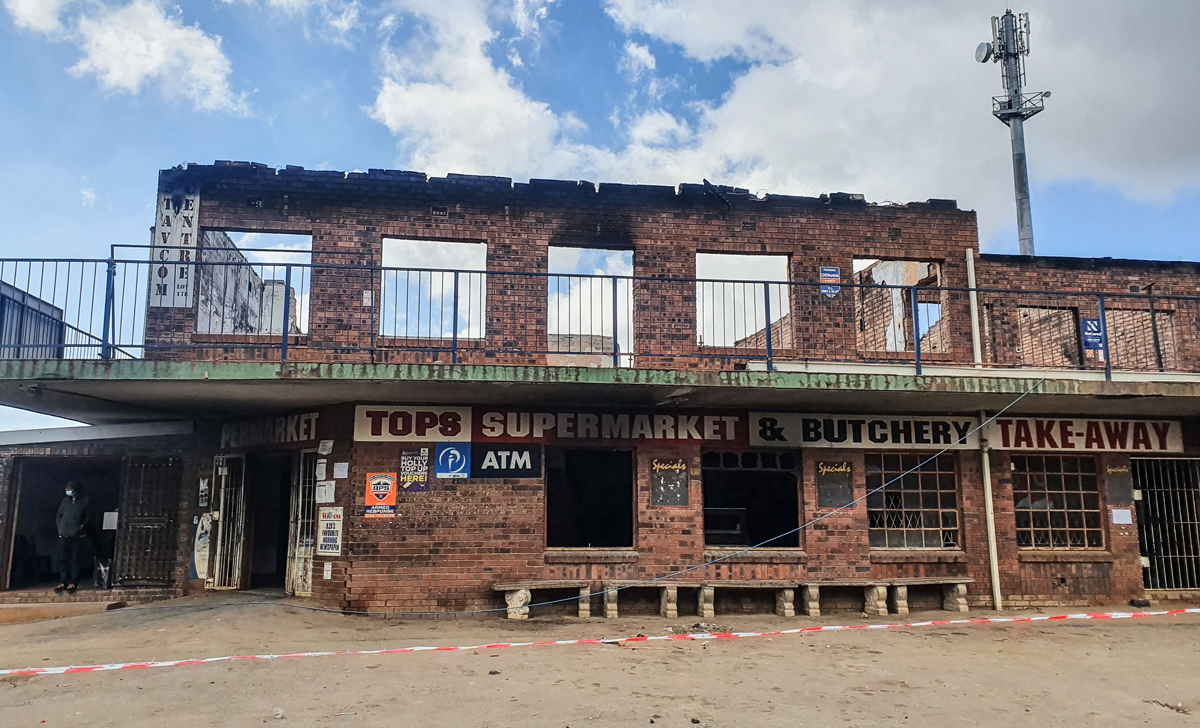
After breakfast on Thursday morning, we took the serpentine backroad that runs down the mountain past Balgowan and Lions River to Howick. We followed the N3 south and just before Hilton took the R617 westward into the mountains. The weather was perfect, the road was in good condition and we made excellent time with the mighty bulwarks of the Drakensberg looming ever larger on the western horizon. In the July orgy of looting and violence, Bulwer was badly affected. Most of the shops in the main street were burned-out shells and when I stopped for photos it was clear that photographers weren’t welcome so I got the hell out of Dodge City.
The aftermath!
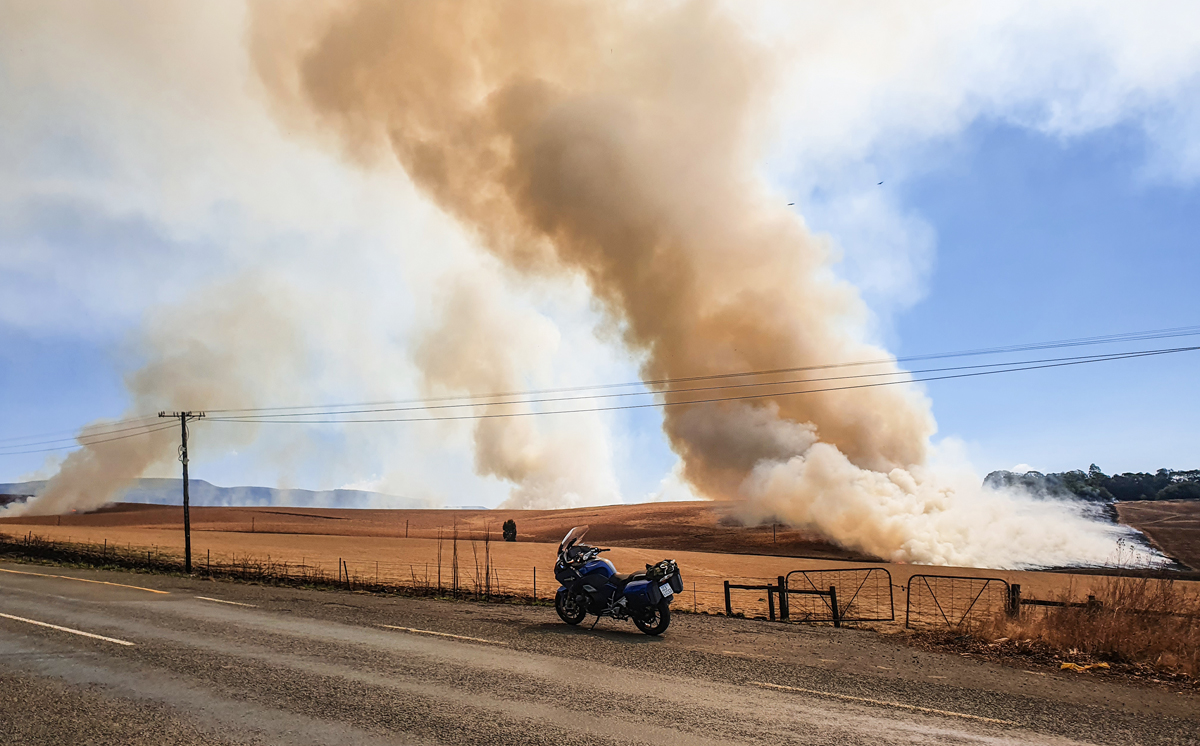
The road to Underberg was as beautiful as always even though the trees were bare and there were massive veld fires raging, sending towering columns of smoke into the sky. The R617 from Underberg to Kokstad is one of my favourite roads in all the land. It’s 110km of biking heaven characterised by flatstick straights, delicious sweepers and uninterrupted views of the Drakensberg to the west. My riding companions had stopped for lunch in Underberg and I didn’t see their bikes so I rode alone, ace pilot in a vast landscape, feeling like the last man on earth. It was a magical afternoon.
Massive veld fires on the road to Underberg.
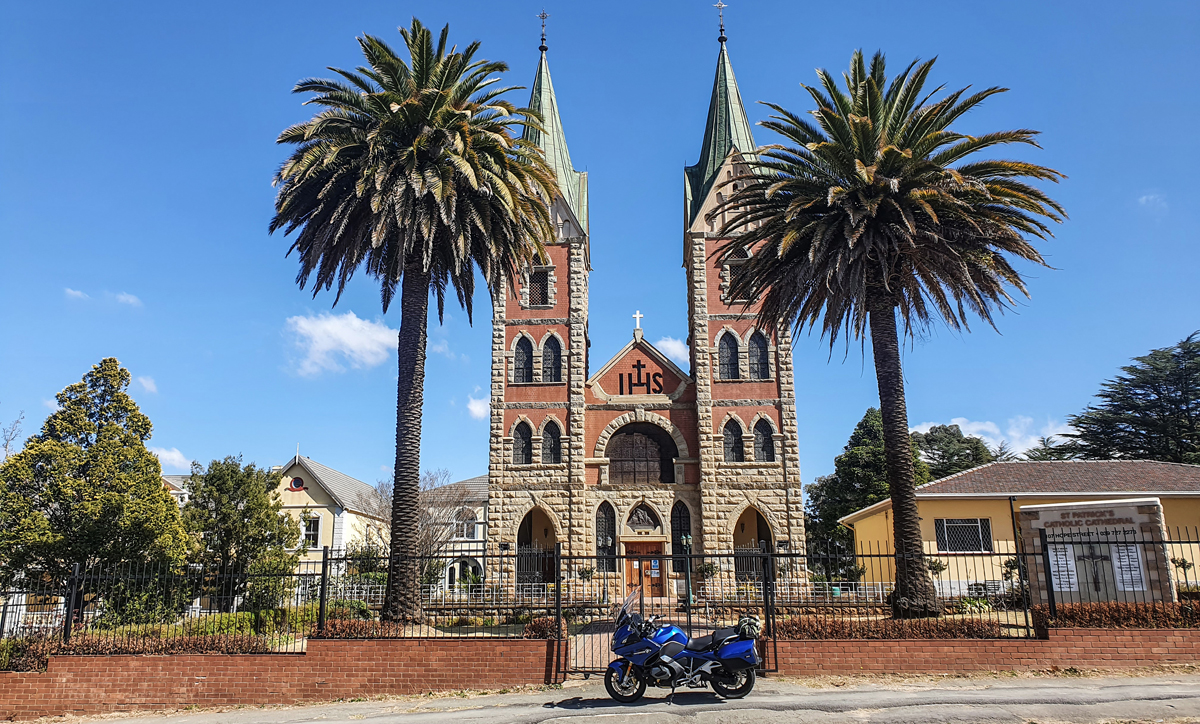
We regrouped in Kokstad and followed the N2 eastwards to the Indian Ocean. Soon after we left Kokstad the weather closed in and we rode under a low scudding cloud for the next 120km. It was pretty chilly, there was rain in the air and the N2 was unexpectedly busy so we took it easy as we ticked off the landmarks; Stafford’s Post, Harding, Izingolweni and Paddock.
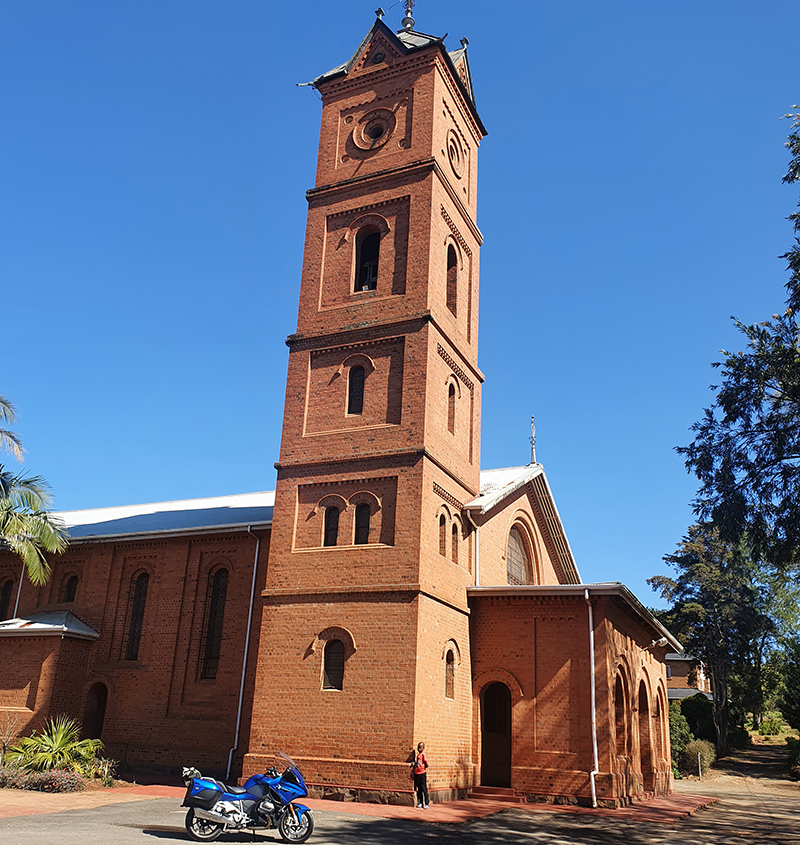
St Patrick’s Catholic Cathedral, Kokstad.
As we approached Port Shepstone the clouds disappeared and we rode to Pistols Saloon in Ramsgate in brilliant late afternoon sunshine. After a good day in the saddle that first Castle Draught slid down effortlessly.
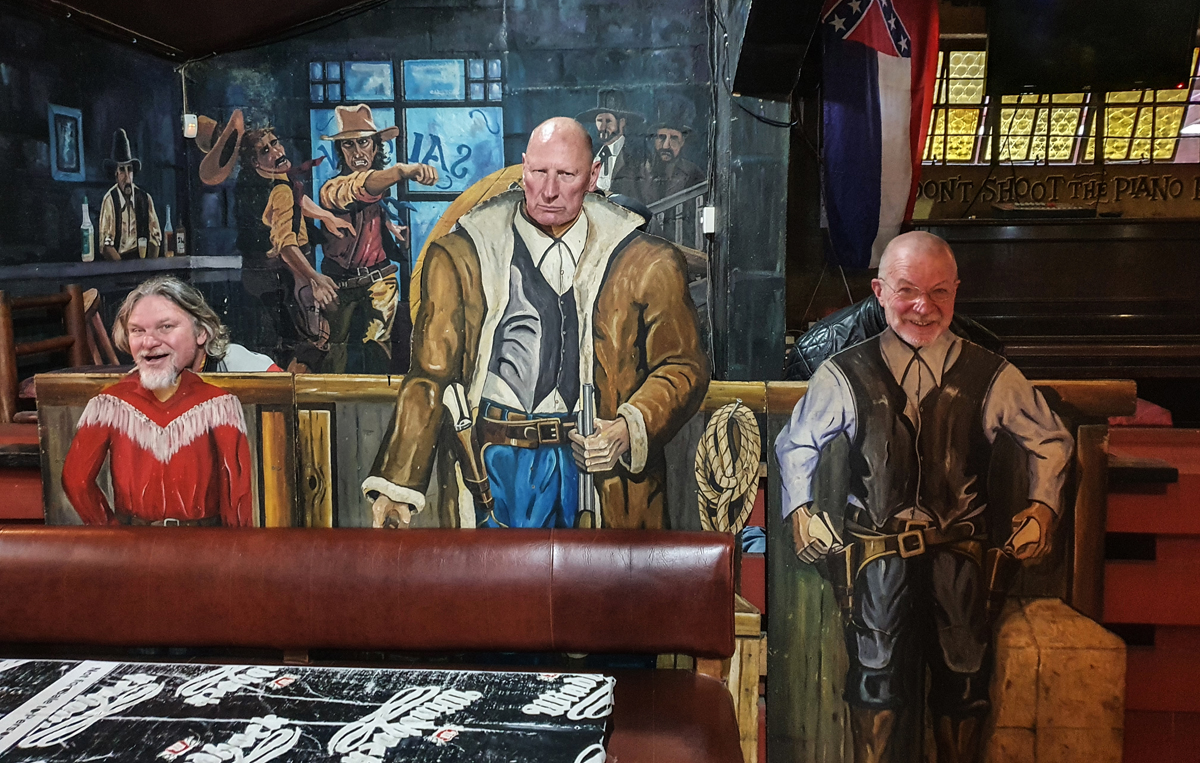
Pistols Saloon. A favourite south coast watering hole.
Laurence owns a magnificent home in Palm Beach and this was our slaap plek for Thursday and Friday nights. Standing on the deck we had 180-degree views of the moonlit ocean as we braaied, drank our wine and swapped stories like old maats do. Friday was a slack day. After a late breakfast, we cruised the coastal peripheral roads, stopped at Splash Rock for pictures and visited the memorial to the Portuguese vessel the São João which ran aground in 1552 near present-day Port Edward. We ate lunch at the Blue Lagoon in Ramsgate and after such a hectic morning I, for one, thoroughly enjoyed an afternoon siesta at Chez Laurence.
Splash Rock, Port Edward.
Saturday was supposed to be a relatively easy day in the saddle but it didn’t quite work out as expected. We left Palm Beach shortly after 09:00 and followed the N2 north. We stuck to the speed limit because we didn’t want to get gripped by the cops in Zero Tolerance land. At Park Rynie we struck inland on the R612 into the heart of rural Zululand and this is where things got a bit weird. The road winds up through hills covered in sugar cane plantations that stretch as far as the eye can see. The road is littered with cane stalks that fall from the trucks that transport the harvested cane to the mills. This was high concentration riding as we dodged the cane and the slippery patches where cars had crushed the stalks. There are dozens of small villages each with its set of bloody awful speed bumps to stop you from ploughing into the goats and cattle that wander across the road. We stopped in Highflats for fuel.
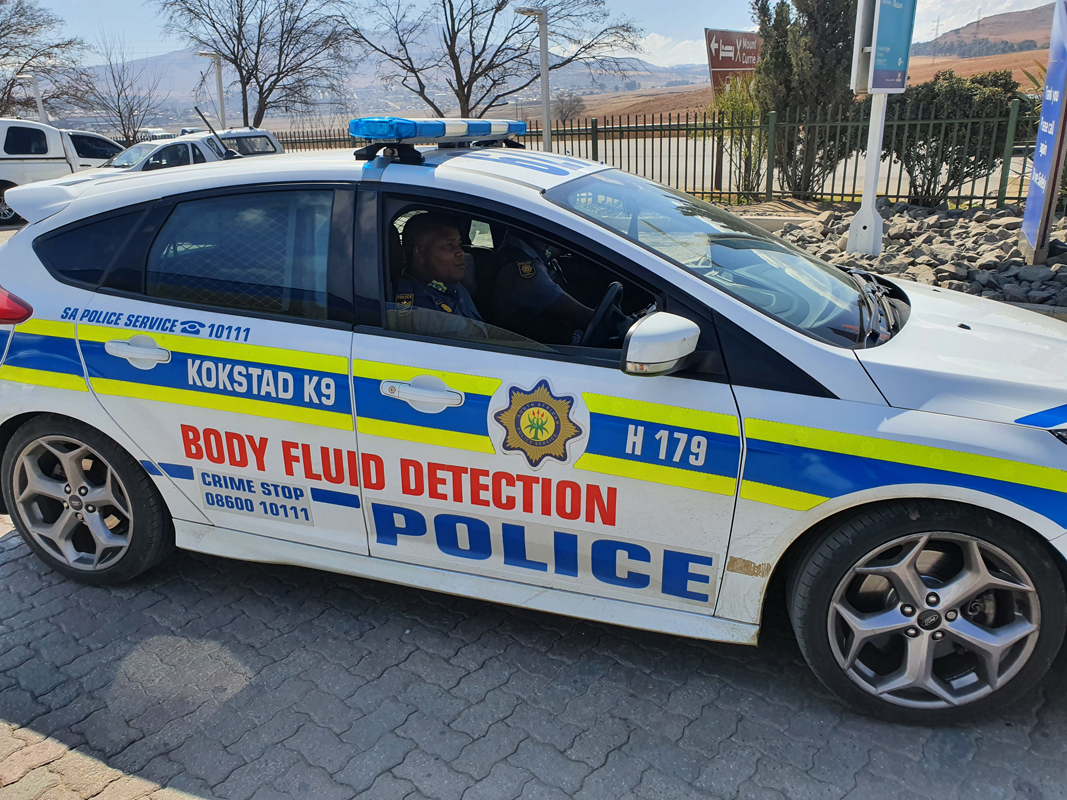
Must be rather unpleasant to be apprehended by the Body Fluid cops.
On a Saturday morning that town was bedlam, the road choked with taxis, pedestrians and stray animals. And after Highflats the 25km to Ixopo just got worse. There were three long Stop/Go sections where one half of the road had been excavated. I’ve never cared for Stop/Go nonsense so Mikely and I rode straight through and had no problems dodging oncoming traffic. We stopped on the far side of Ixopo at the Mariathal Mission and when the others caught up we followed the R56 northwest to Richmond through the valley of the Umkomazi River. The R56 is a special road that begs to be ridden briskly. Long sweepers and steep gradients deliver an exhilarating ride. We rode in a fast, tight gaggle relishing that ineffable camaraderie only long-distance bikers can know.
Mariathal Mission near Ixopo was founded in 1887.
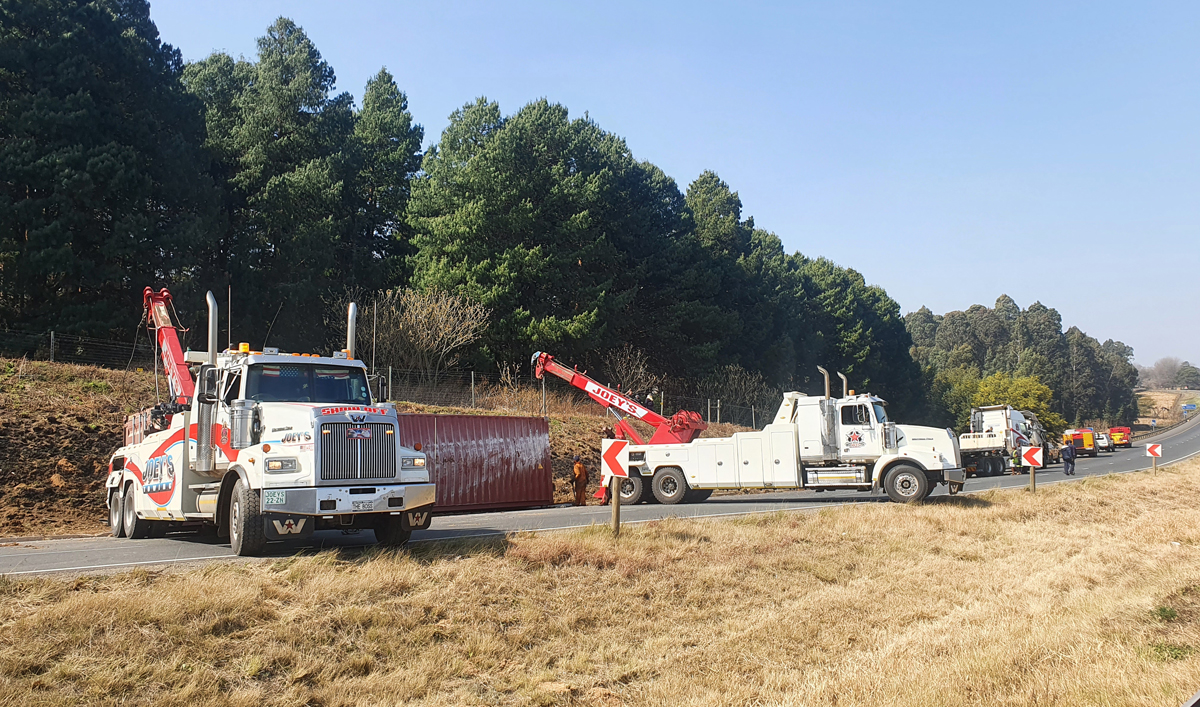
On the outskirts of Pietermaritzburg, the traffic was a shambles and the group got separated. Mikely and I rode together and ploughed a path through the dense downtown traffic hoping we would find a sign pointing to the N3. It was hot and horrible and we soon discovered that red traffic lights meant nothing to the locals. Fifty years ago Maritzburg was fondly known as Sleepy Hollow. Those days are long gone. Now it’s a nasty, decaying, overcrowded slum. We eventually found an onramp to the N3 and rode north to our lunchtime rendezvous at the Notties Hotel. It was an uneventful cruise up the freeway but it wasn’t a happy time for the travellers on the N3 South. A 40-foot container fell off a truck and blocked the freeway. Two monster recovery trucks were attempting to move the container and the freeway was closed. The queue stretched for 10km and heaven only knows for how many hours the poor bliksems were stuck on that godforsaken road.
Groot kak N3 style. A truck lost its container and the N3 South was closed. The traffic was backed up for 10km.
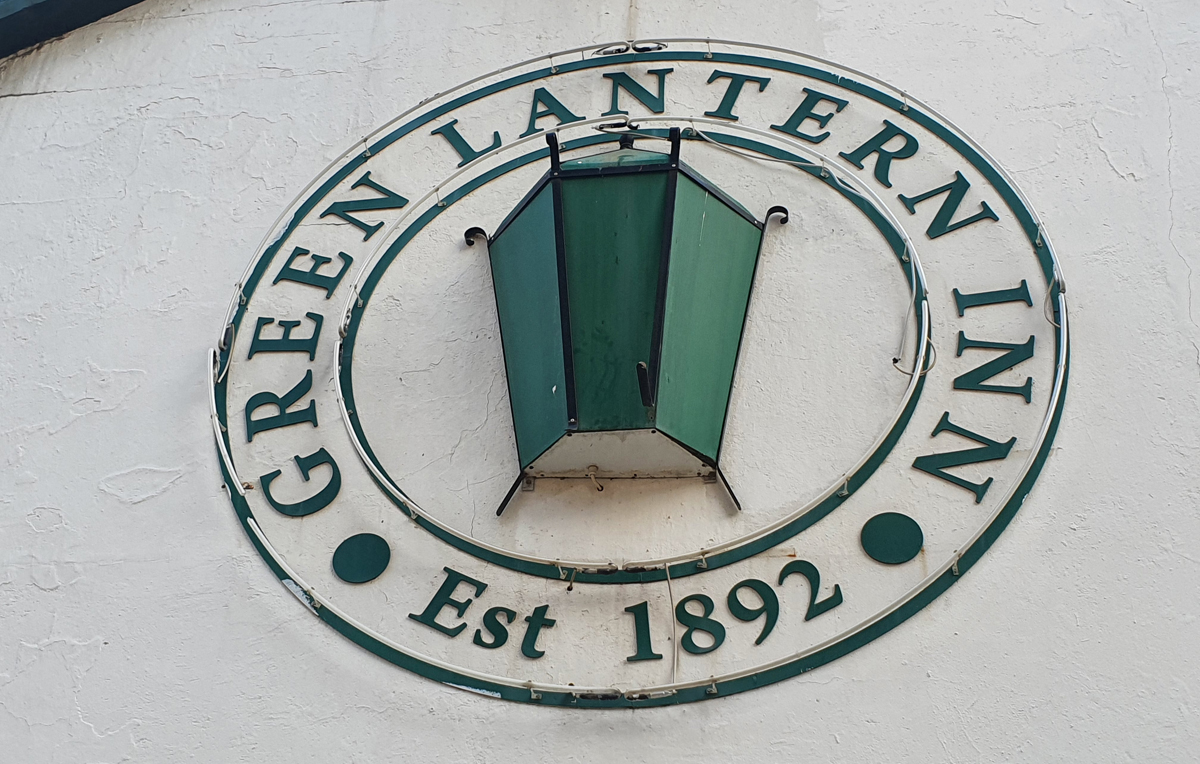
After lunch, we rode the N3 north at a leisurely pace and mid-afternoon parked the bikes in the grounds of the Green Lantern Hotel at the top of Van Reenen’s Pass. The Green Lantern has become a friendly destination for bikers and a motley crew of maats had ridden in from Joburg for a one-nighter with us. Before settling into the bar with the boys I walked around Van Reenen town taking photos.
The Green Lantern. Biker friendly Olde world hotel.
The railway station used to be a busy place but now it’s derelict and vandalised, a poignant metaphor for the decay of this country. We spent a happy evening in the bar and fortunately, the bar closed early so the staff could get home before curfew. On Sunday morning after breakfast, we rode the N3 home to Joburg. For much of the journey, I set cruise control at 150km/h and relaxed on the pillion seat while steering with my knees.
Riding pillion with the invisible man.
The total distance for the ride was 1775km. The average fuel consumption was 16.6km/L. The RT was absolutely flawless; comfortable, swift and safe. It’s the motorcycle of choice for many men who love the long road. Priced from R341,600 your new RT awaits you at BMW Motorrad.
BMW R 1250 RT
For more information on the bike that we tested in this article, click on the link below…
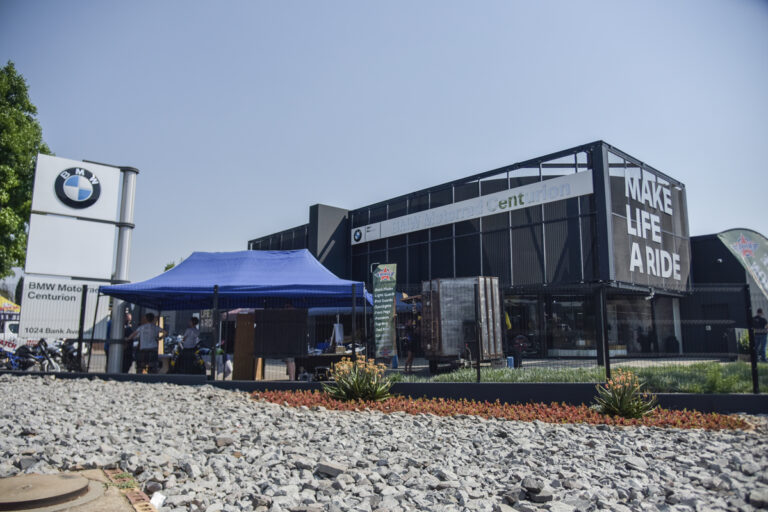
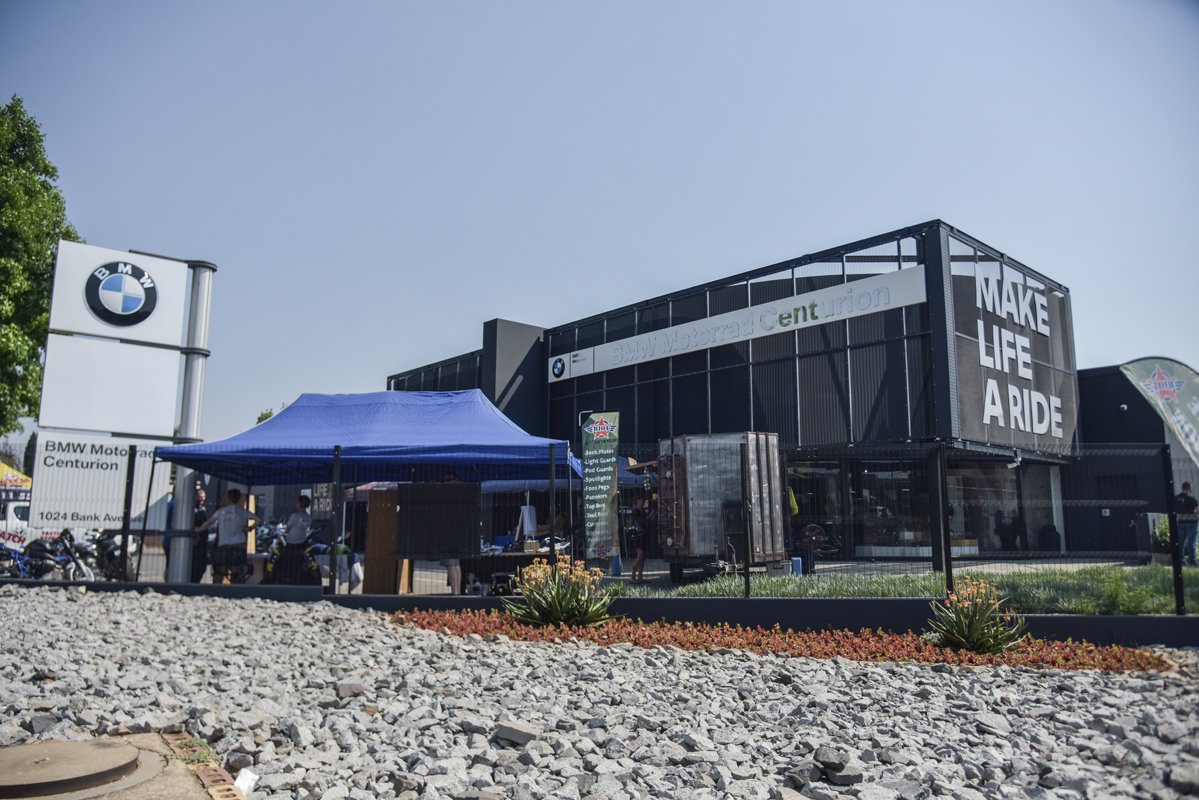
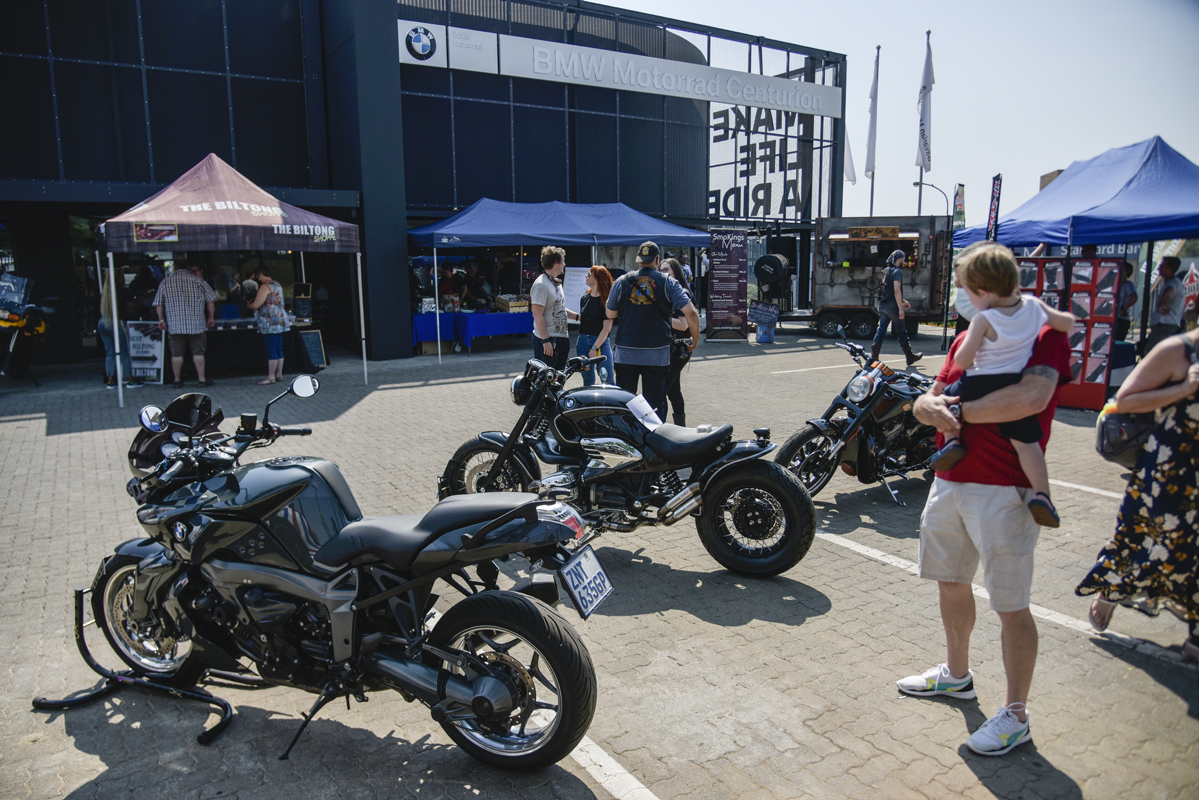
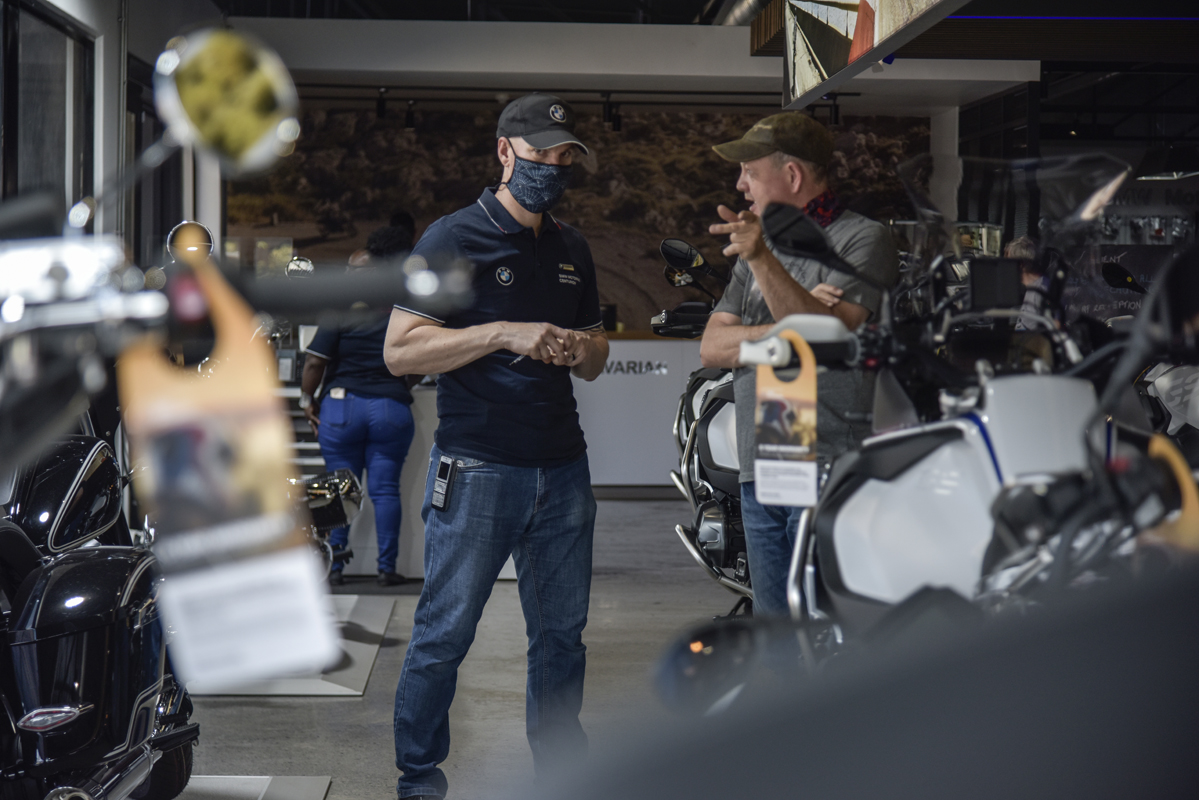
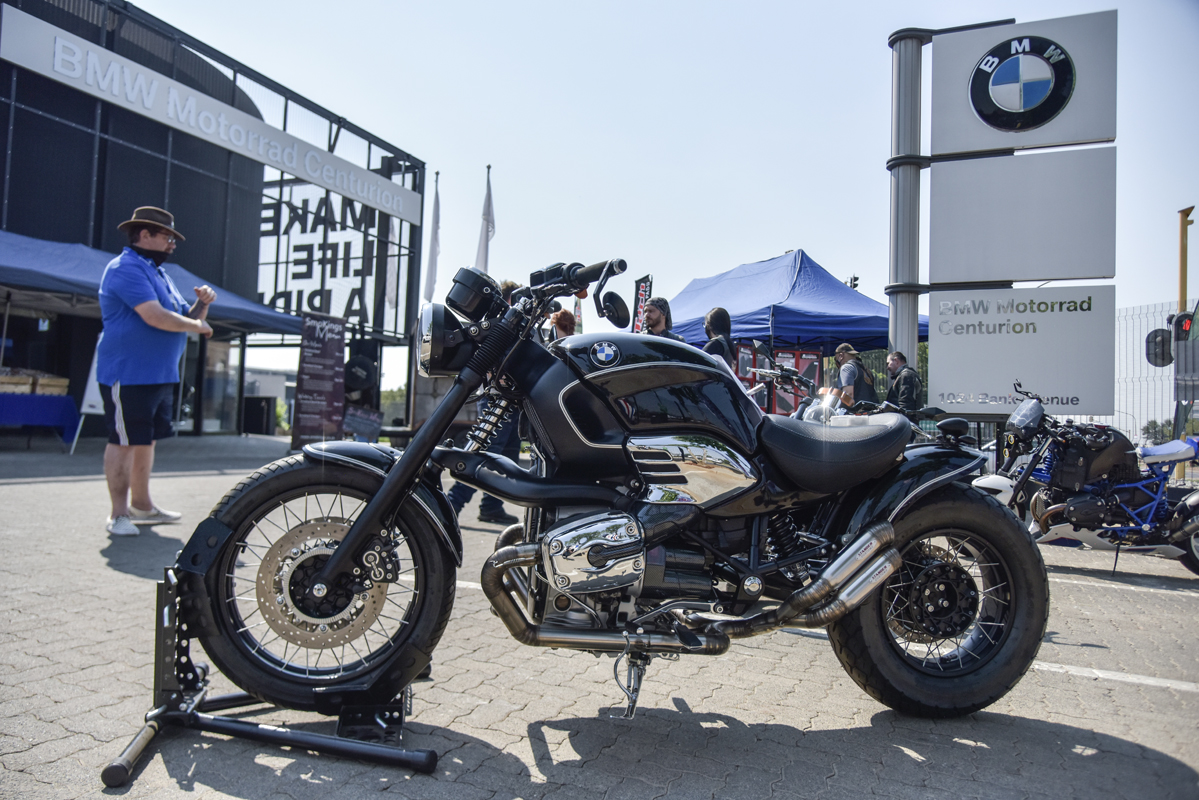
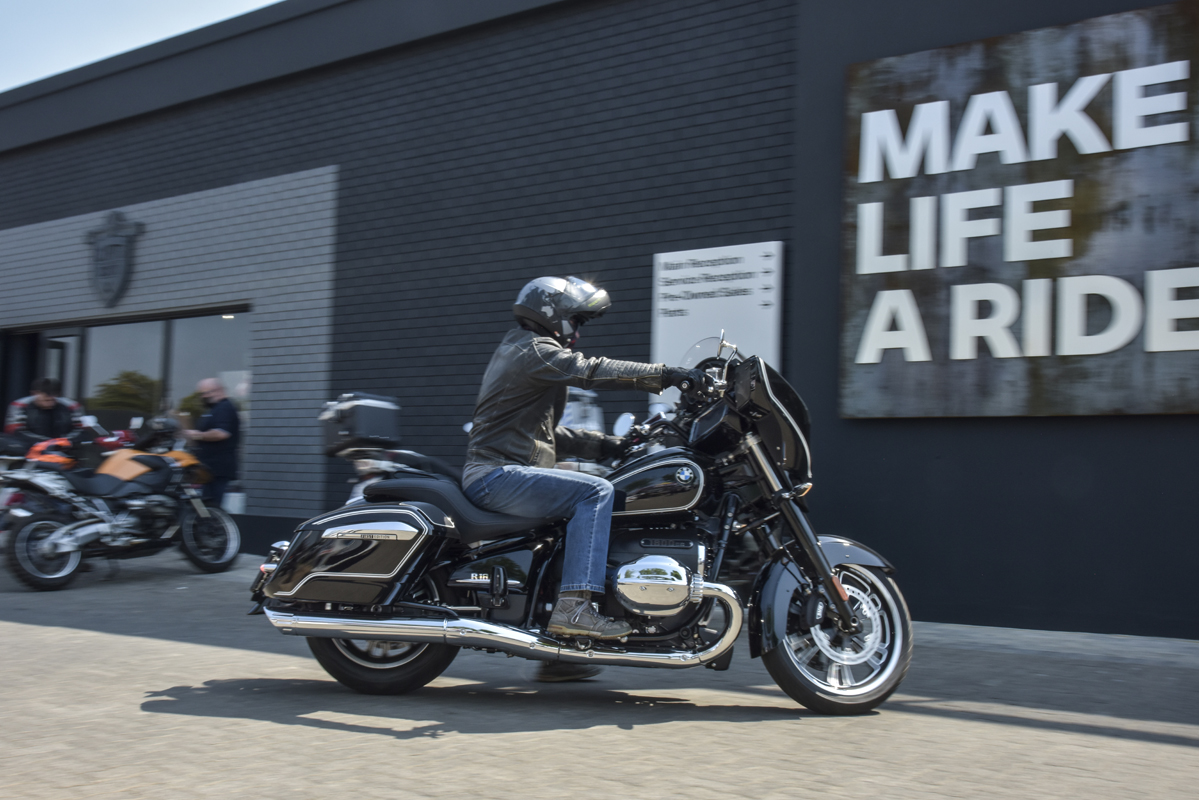
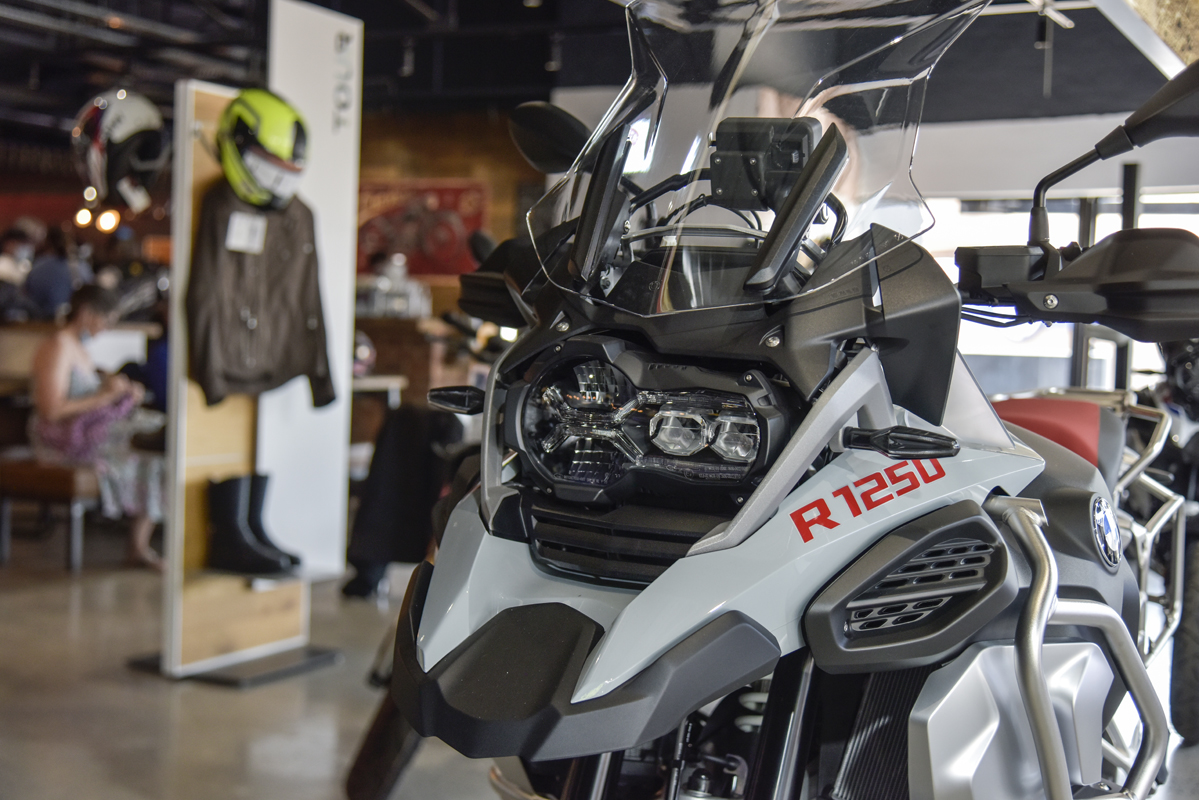
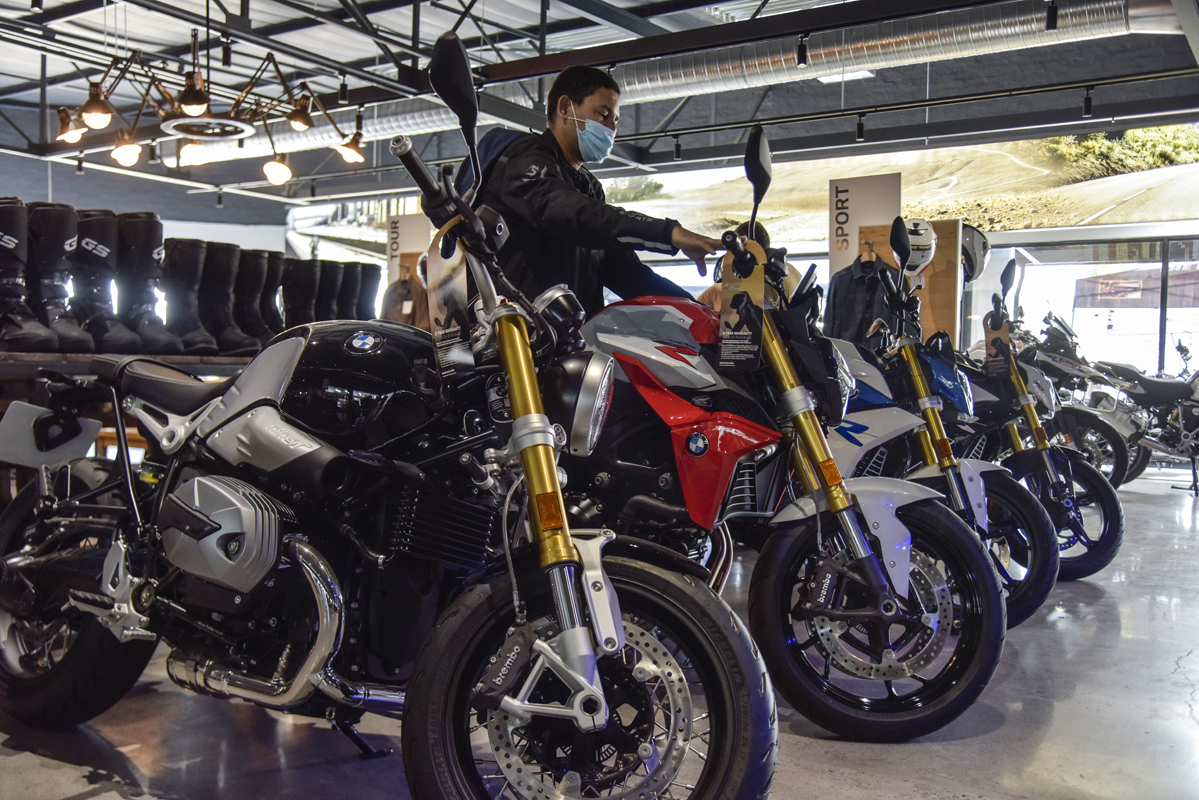
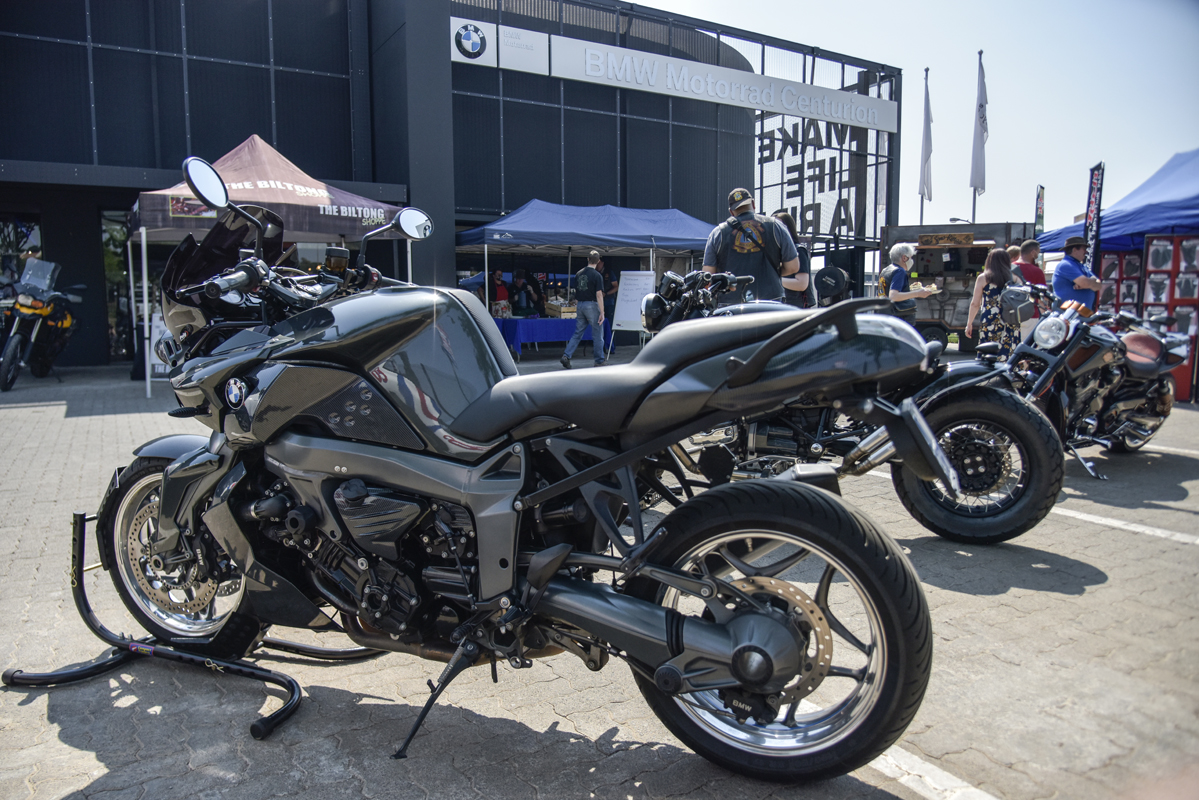
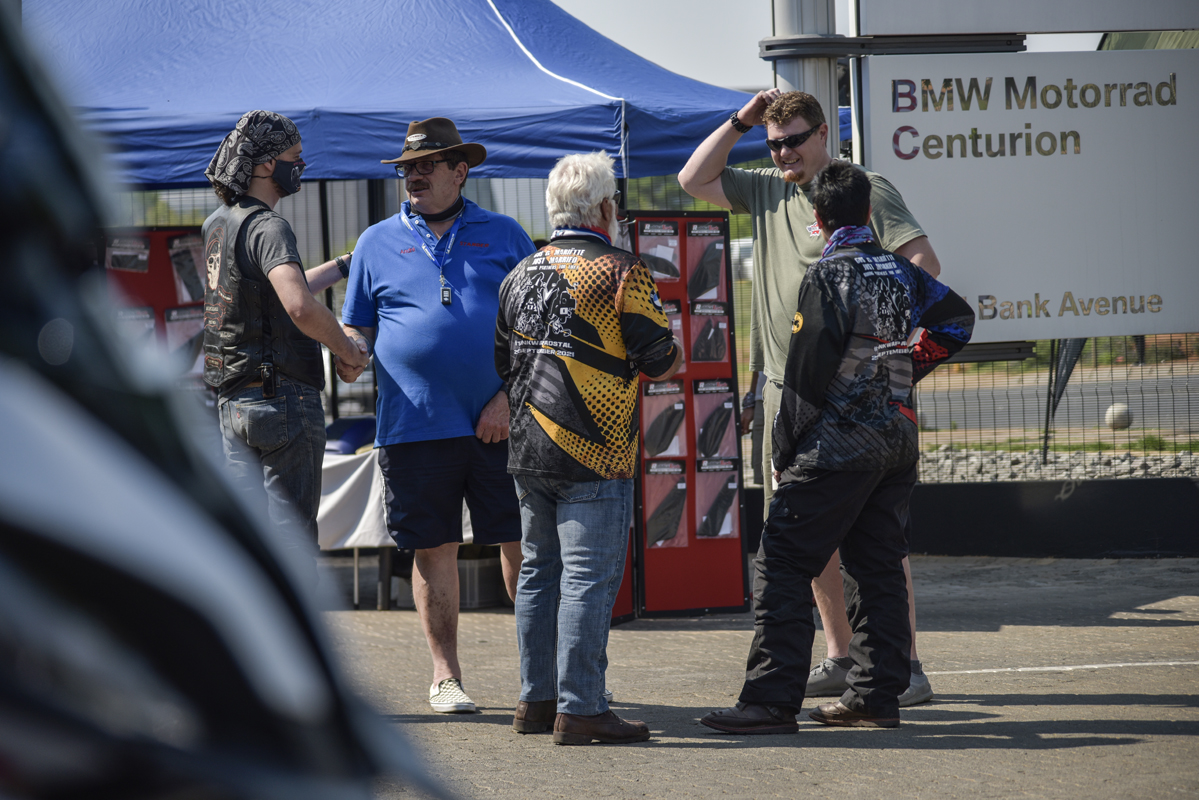
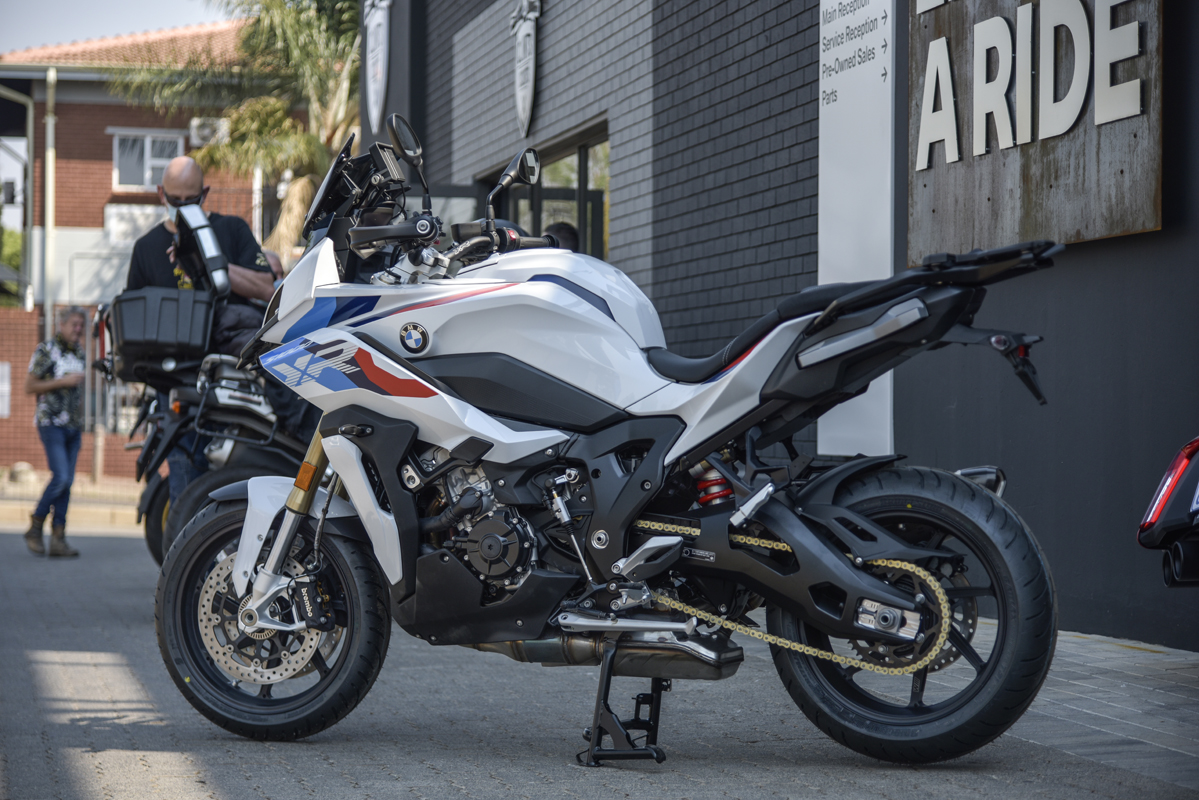
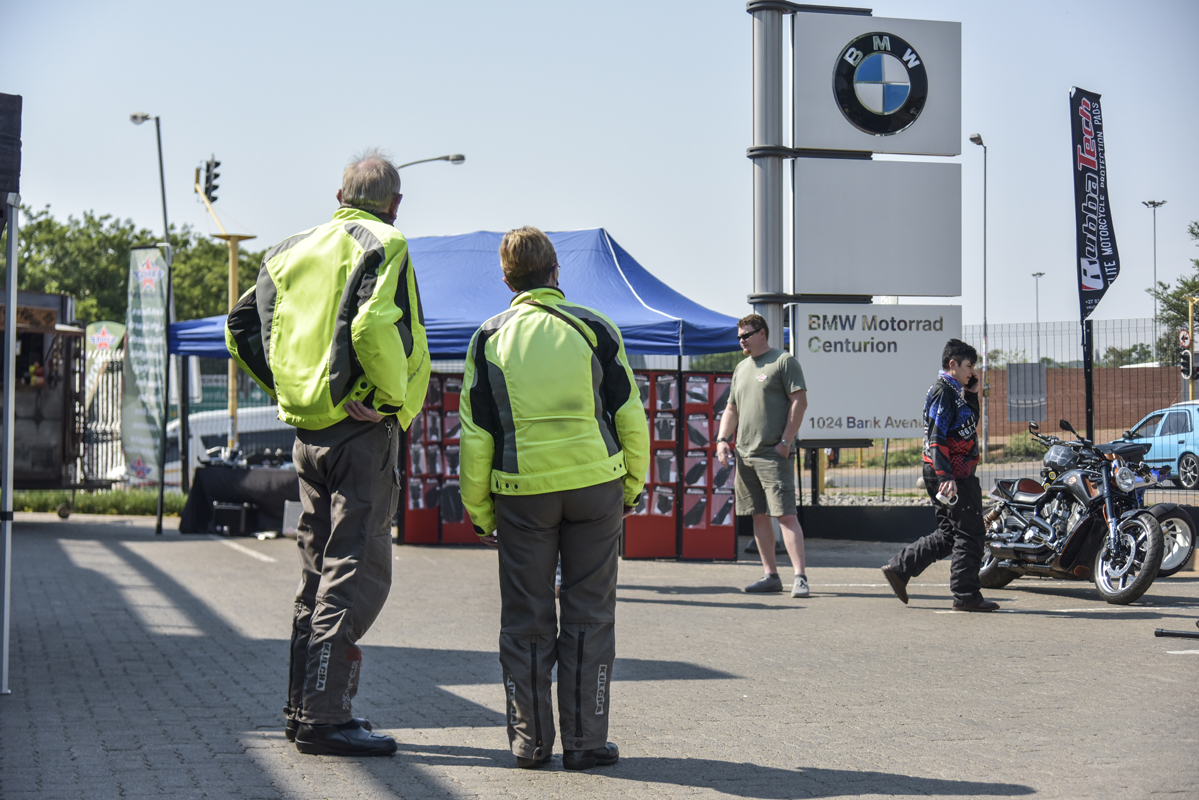
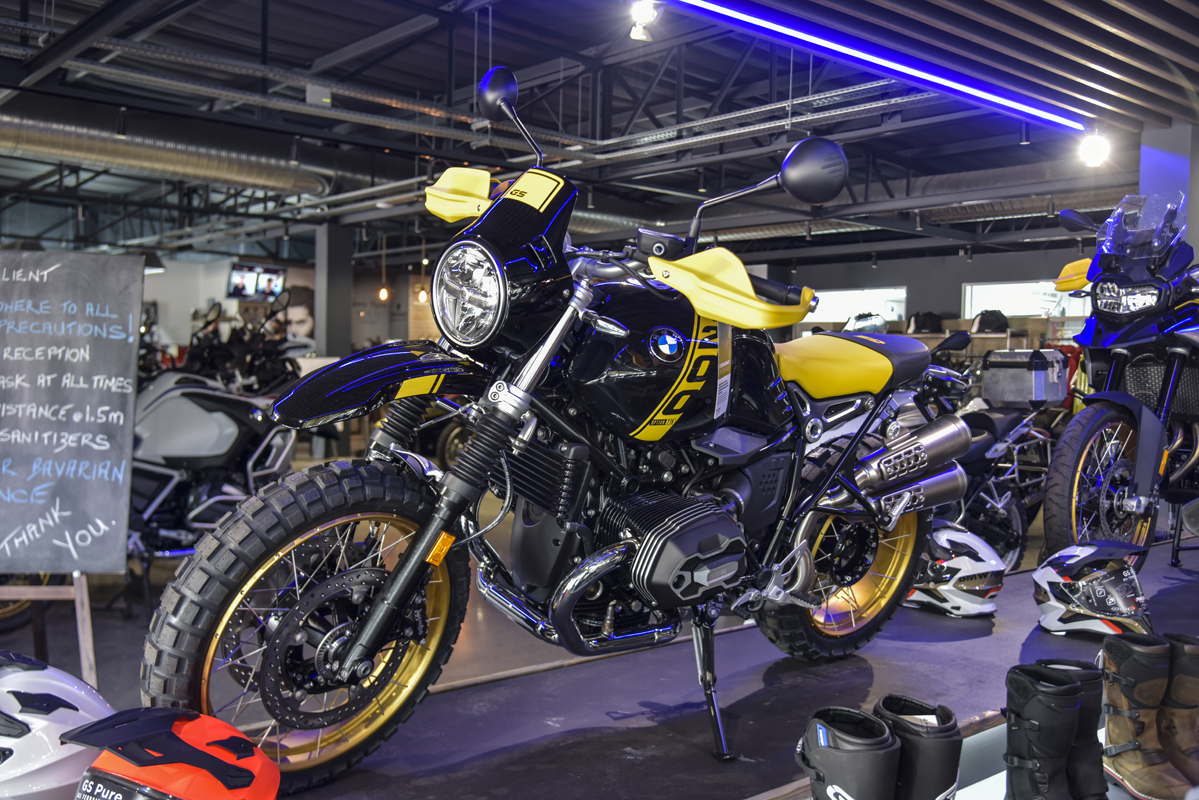
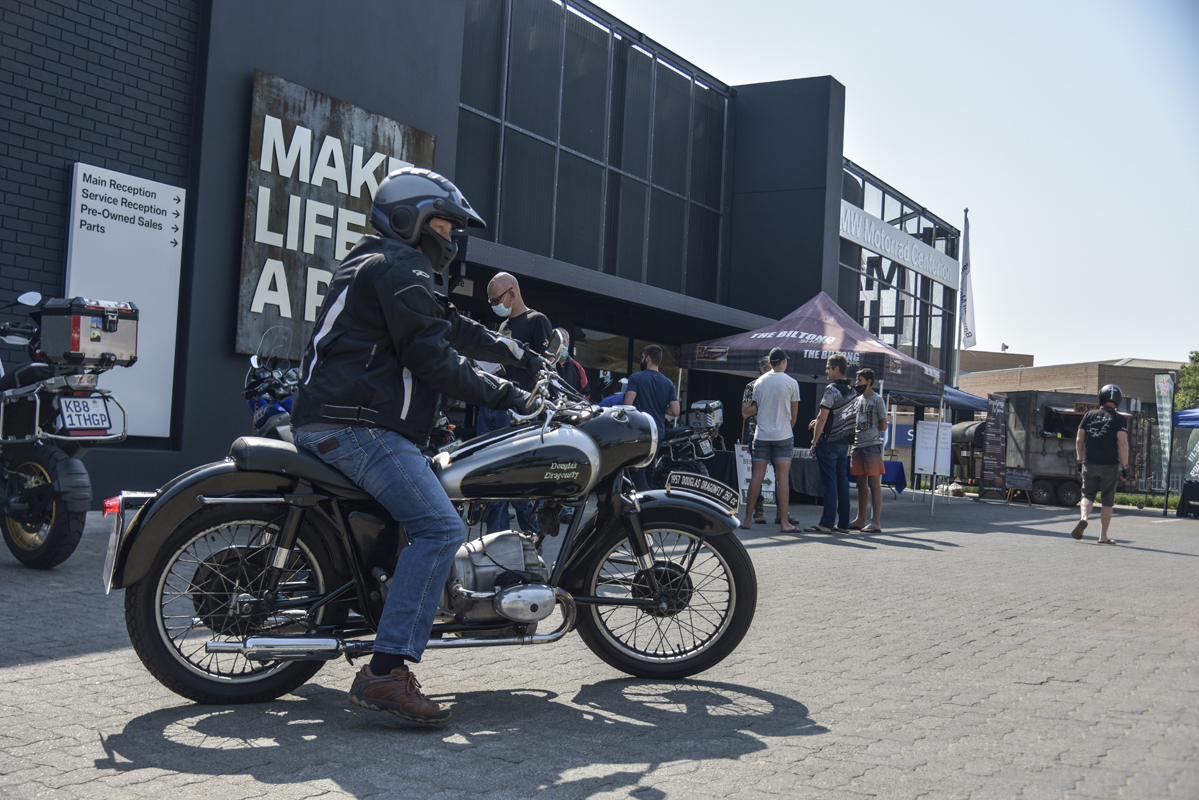
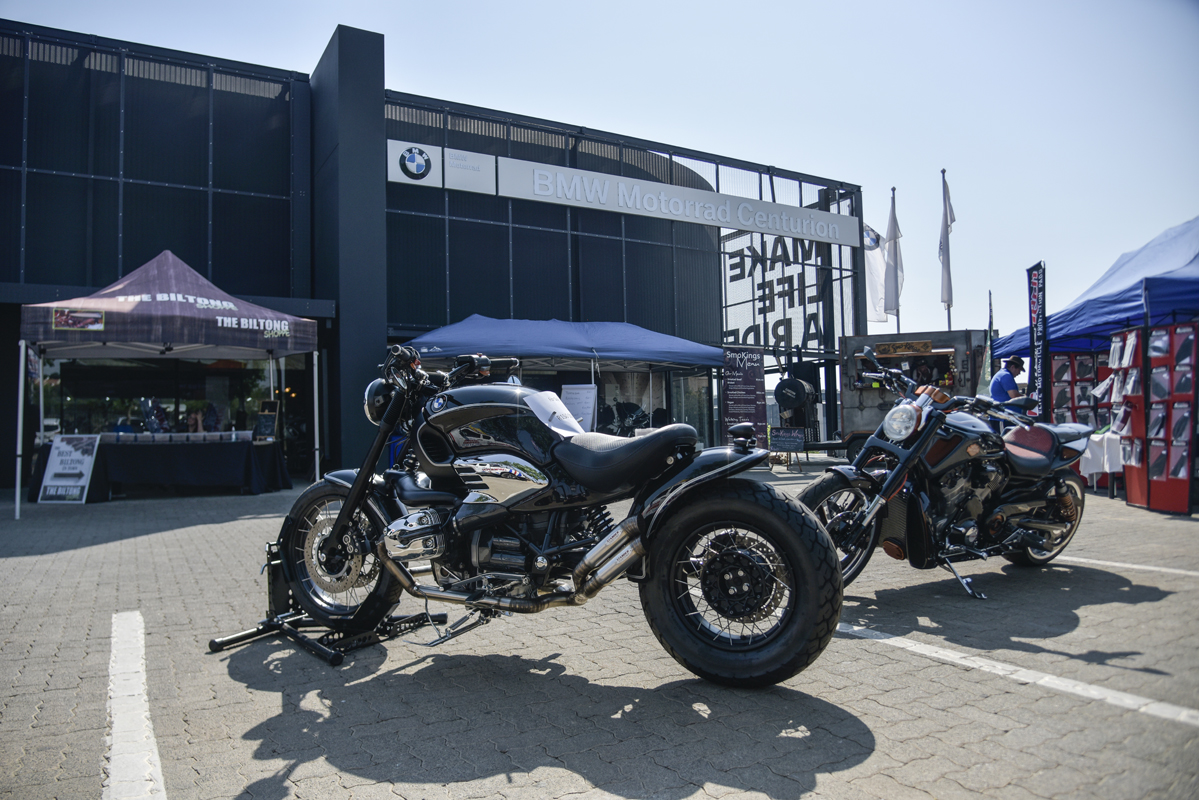
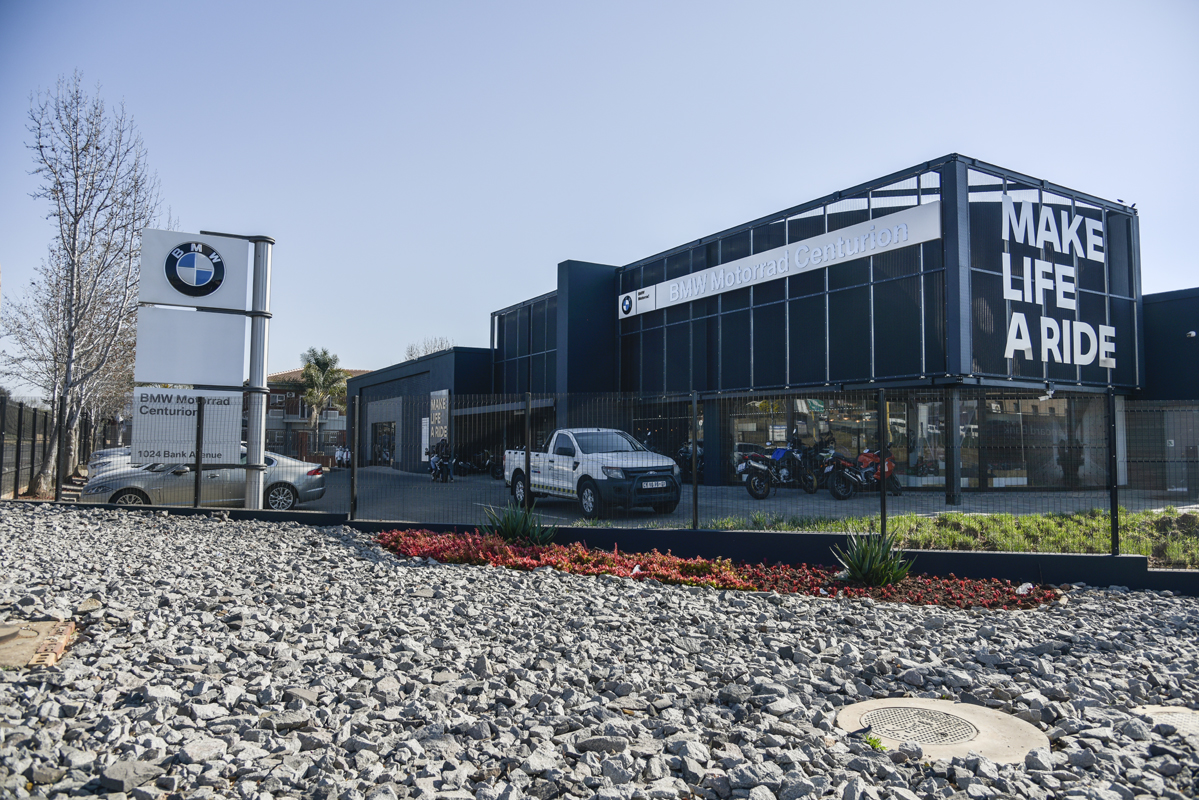
Saturday 16th October saw BMW Motorrad Centurion (formerly Bavarian Motorcycles) celebrate their move to new premises in proper style by giving all its customers and supporters an excuse to get out of the house and enjoy some like-minded company for a few hours on a Saturday morning.
Photo credit: Bjorn Moreira / ZA Bikers
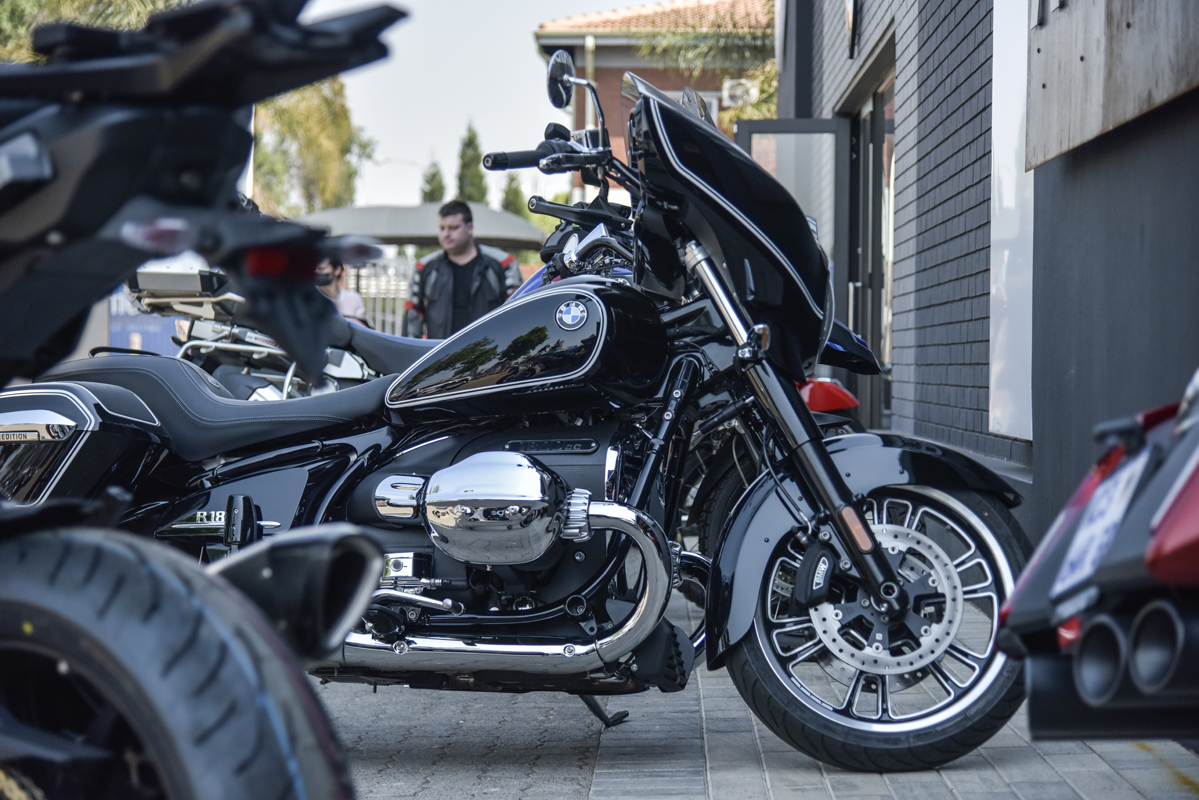
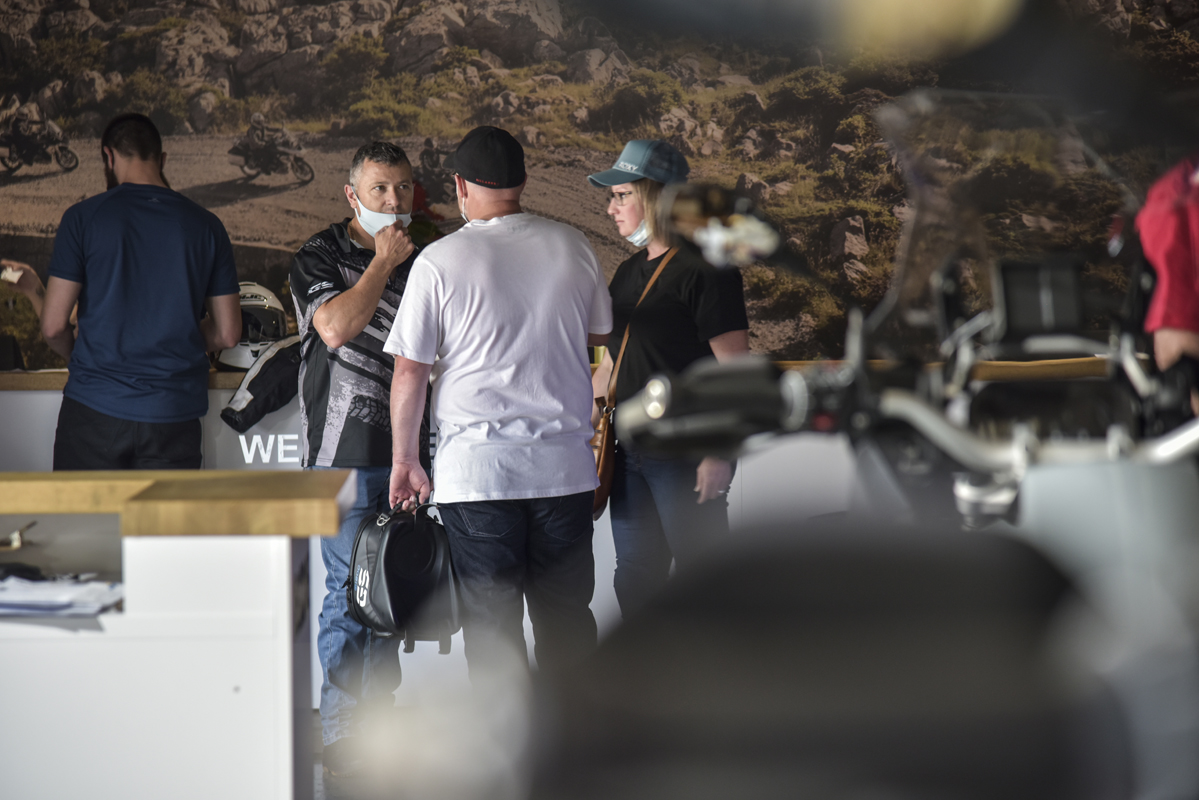
The October Fair was the event, and it was a great social morning in the sun. Not only were there food and accessory stalls, but there were demo rides available on a variety of BMWs, while Clint Cunningham entertained the crowds with some brilliantly performed tunes.
Photo credit: Bjorn Moreira / ZA Bikers
For many people who hadn’t had the opportunity to visit the new premises, October Fair was the perfect opportunity to do just that and to say hello to some familiar old faces.
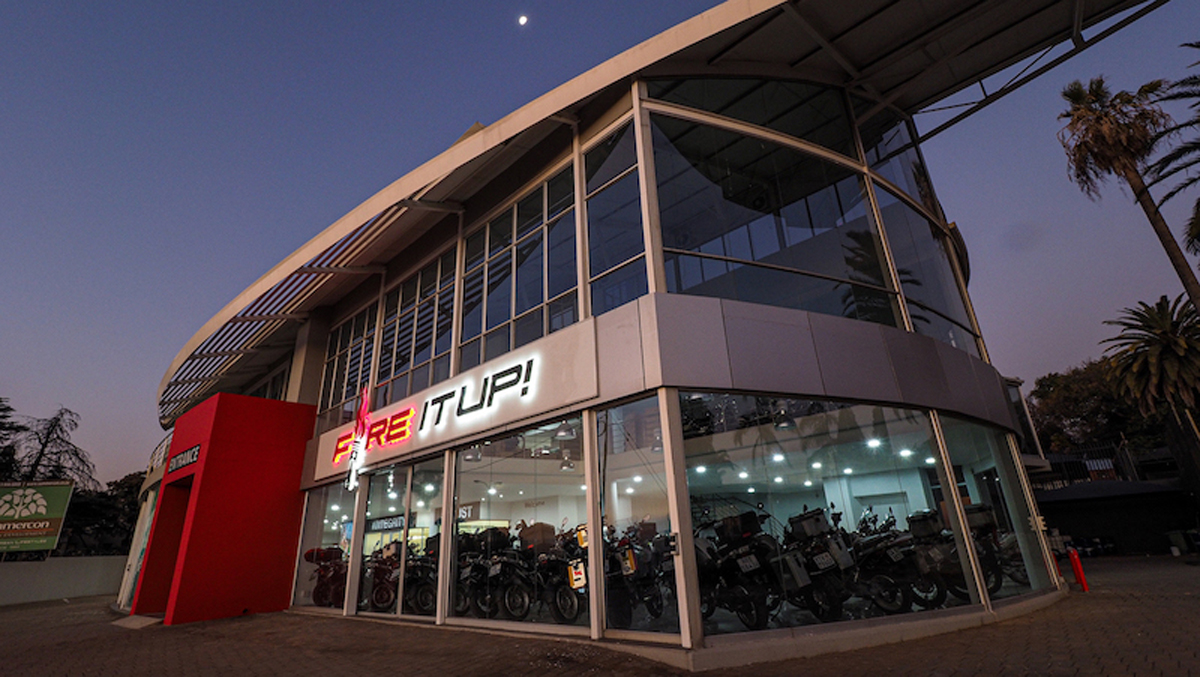
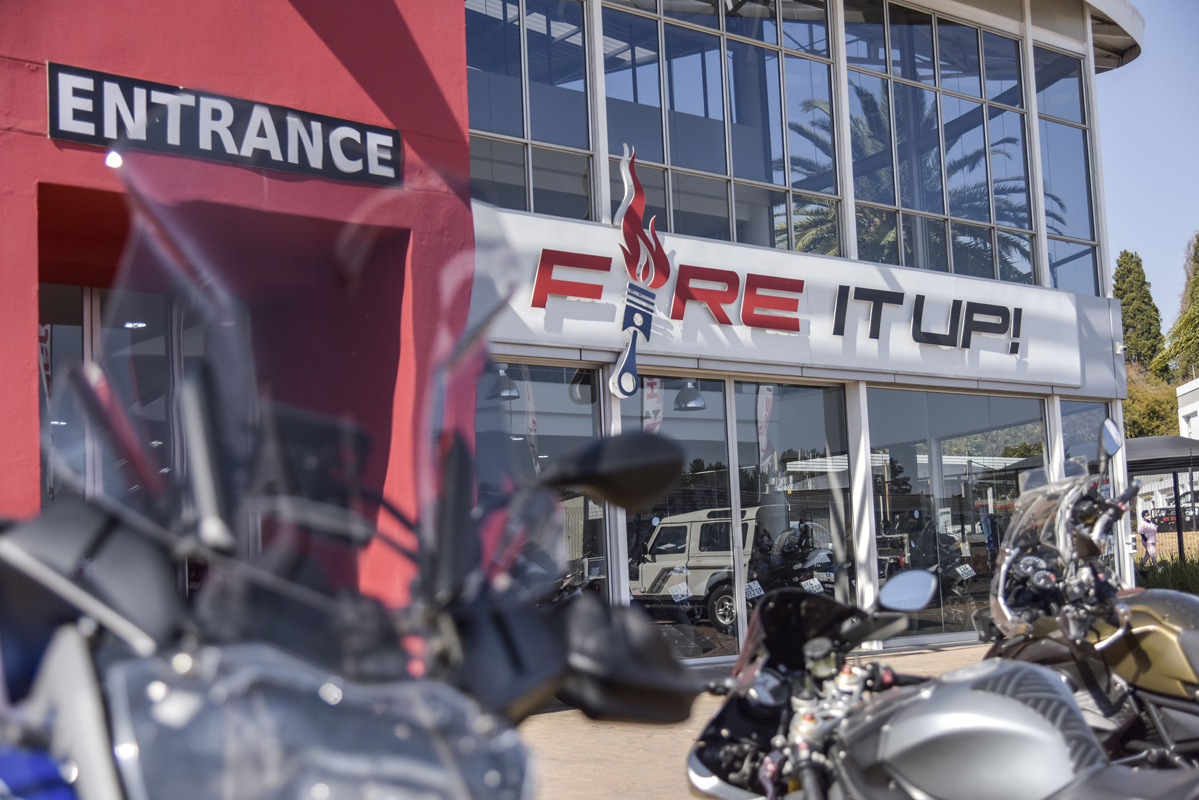
Fire It Up! has a busy October in place for all of its customers and whether you have bought a helmet or a motorcycle, you are invited to join in the fun.
The Fire It Up! Tribe is an informal group of like-minded people who get together regularly to ride, eat, watch MotoGP and simply enjoy being part of a motorcycling community and everyone is welcome to join in.
October is going to be a great month and it kicks off with a Night Breakfast Ride to Upper Deck bar and restaurant in Hartbeespoort on Wednesday 20th. Meet at Fire It Up! in Bryanston at 5:00 pm, ready to leave by 6:00 pm. The ride is about 58km and everyone is welcome, no matter what bike you ride or what pace you want to ride at.
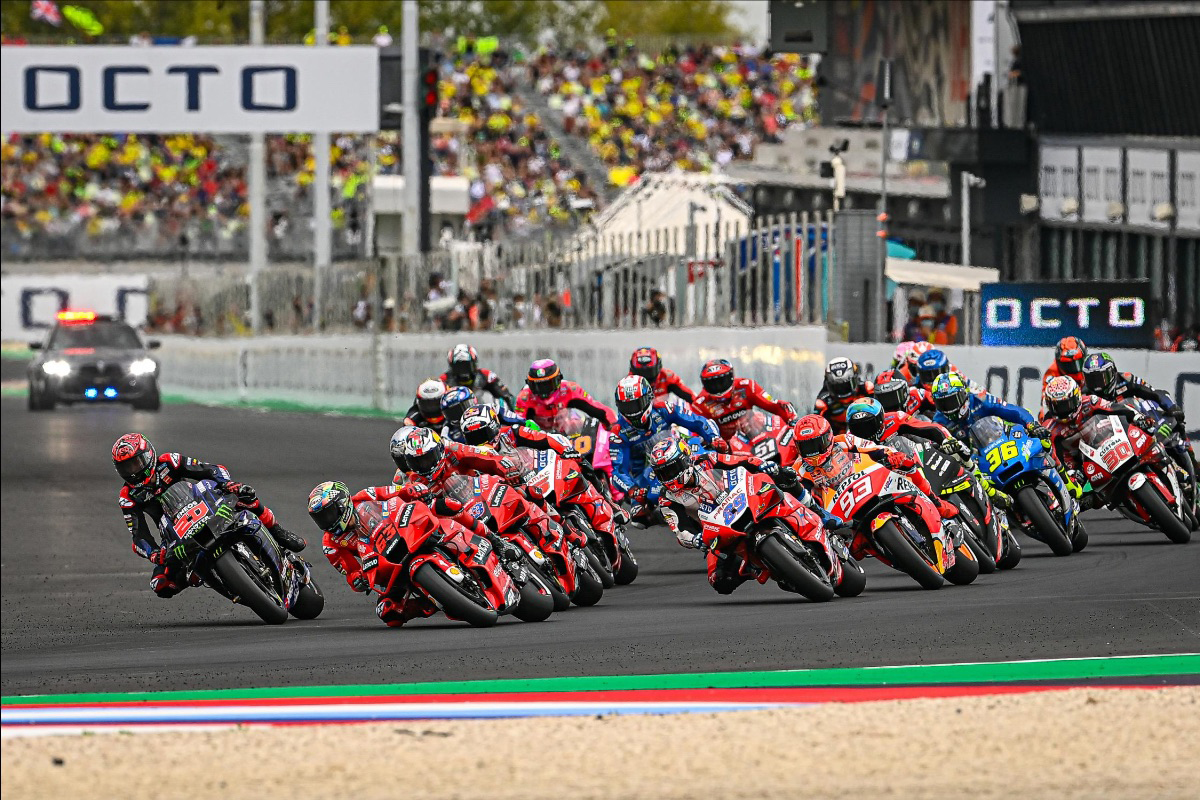
Then, on Sunday 24th, why not join the Tribe at Fire It Up! to watch the Misano MotoGP? The Fire Diner will be open serving food and drinks and they’ll be showing all three races from 11:00 a.m. This will be Rossi’s last race on home soil so expect the atmosphere at the track to be electric.
Image source: www.motogp.com
Thursday 28th sees a Customer Evening which is an informal meet and greet occasion for all Fire It Up! customers. If you have any questions on any subject to do with Fire It Up! or your motorcycle, then this is the time and place to ask them, or simply come for a drink and a snack and a chat. The evening starts at 6 pm.
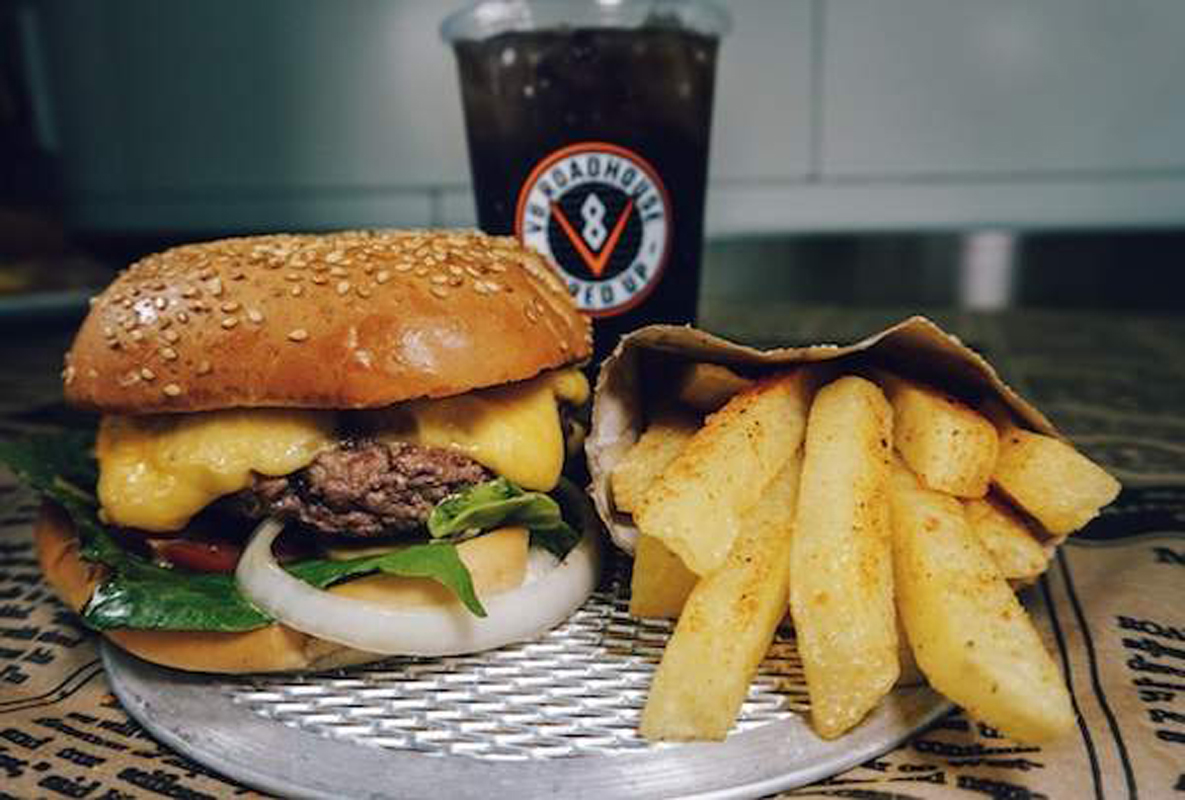
Finally, on Sunday 31st, there’s a Halloween Ride to V8 Roadhouse in Hartbeespoort. Meet at Fire It Up! at 8:30 a.m. to leave by 9:00 a.m. As always with the FIU rides, all riders on all bikes and of any skill level are welcome: you’ll not be left behind and there will always be someone behind you to make sure you are safe.
Image source: Ride to V8 Roadhouse
So, there you have it, a busy month ahead. For more information, contact Fire It Up!
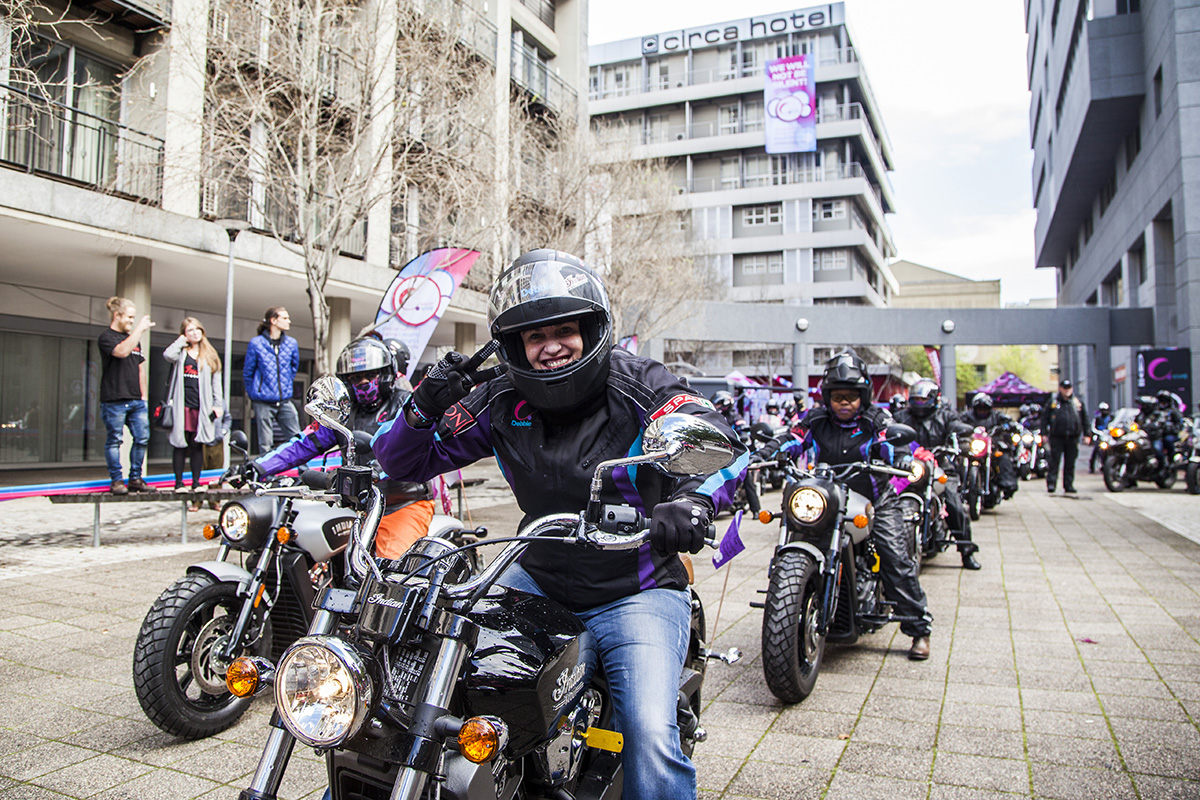
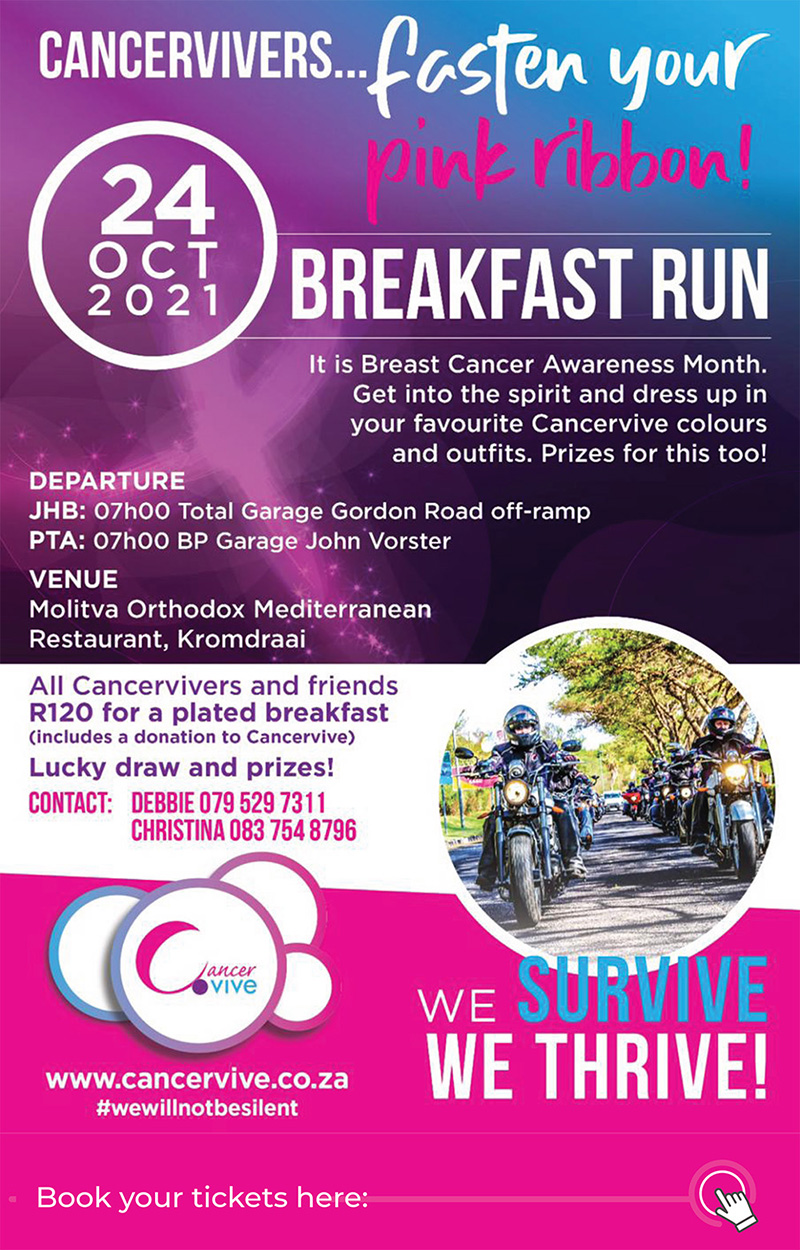
October is Breast Cancer Awareness Month and to mark this important occasion, the amazing people at Cancervive are organising a breakfast run on the 24th of October.
But this is no ordinary breakfast run. First of all, there are two departure points, one at the Total Garage at the Gordon Road off-ramp on the N1 highway and the other at the BP Garage at the John Vorster off-ramp, also on the N1 highway, but this time in Centurion.
Meet at 6:30 a.m. to leave at 7:00 a.m. from both locations and ride to Molitva Orthodox Mediterranean Restaurant in Kromdraai. R120 will buy you a plated breakfast and the price includes a donation to Cancervive. For catering purposes, Cancervive would appreciate it if you could pay for your breakfast online. You can book online HERE.
ALL WELCOME (Bikes, Cars, horses, donkey carts, etc…) You can go straight to the venue to be there by 8:00 a.m. or join one of the rides (Jhb or Pta).
There will be a lucky draw and other prizes, including one for the rider who wears their Cancervive colours with pride. Get into the spirit and dress up! We know you want an excuse to wear your tutus and crowns.
For more information contact Debbie on 079 529 7311 or Christina on 082 753 8796
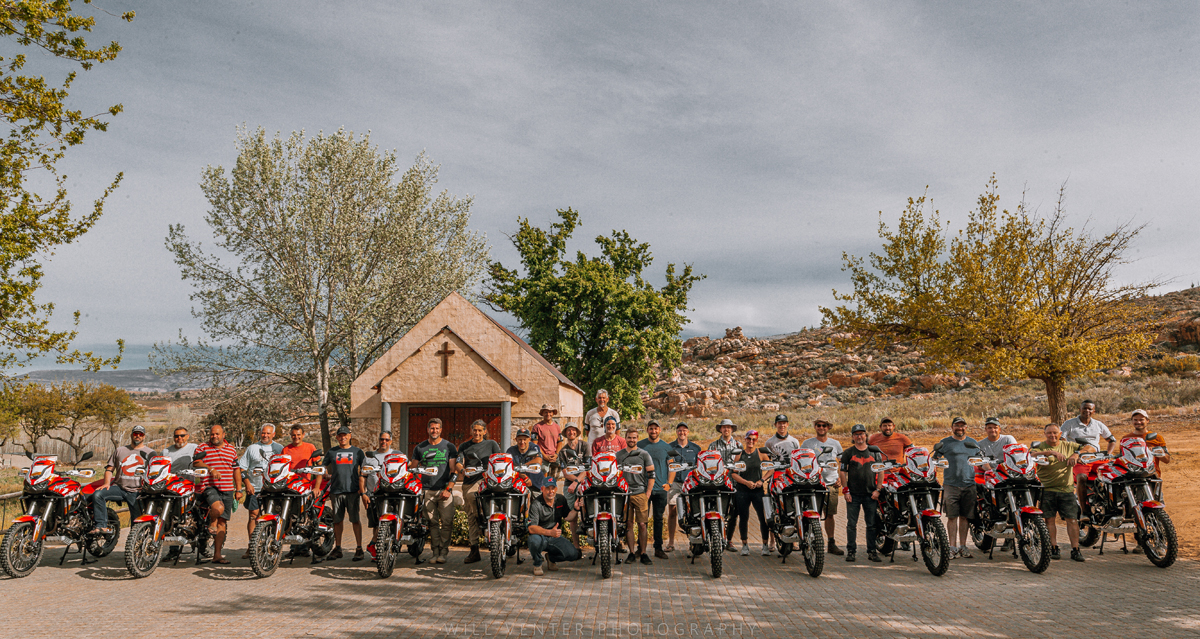
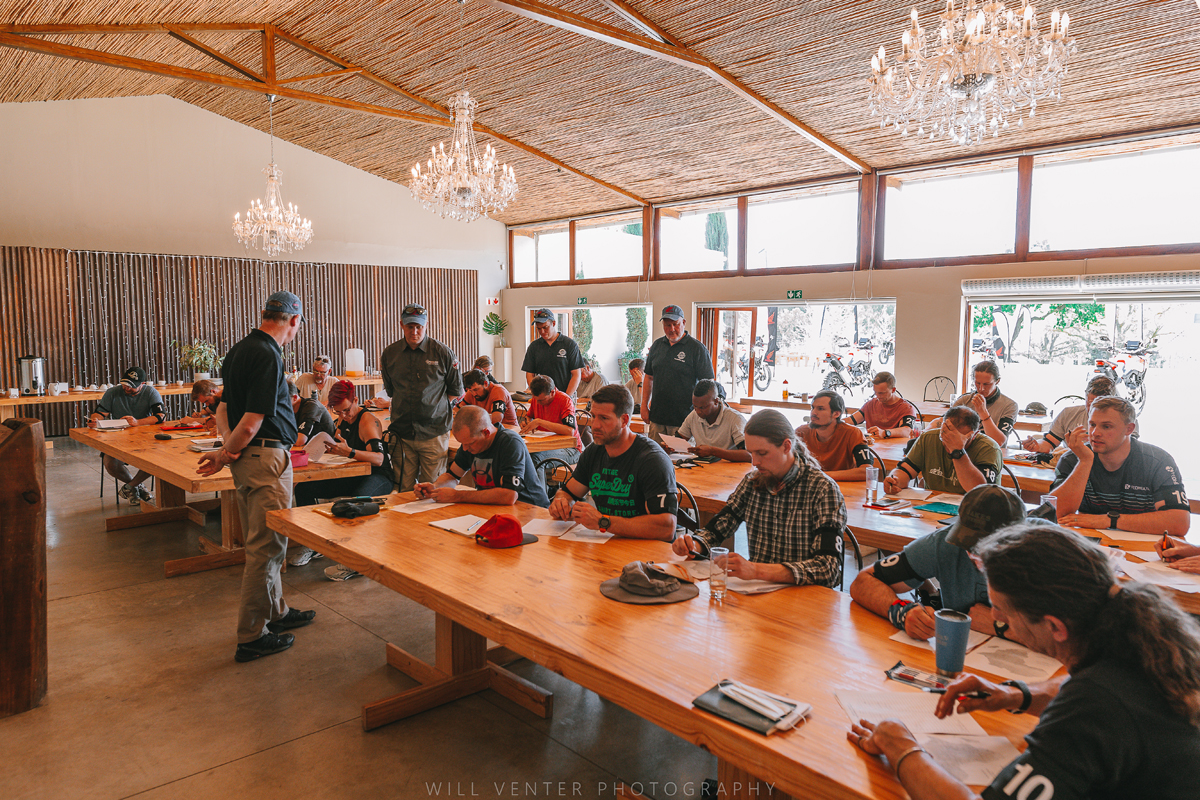
The 28 semi-finalists were put through their paces during an extensive 3-day bootcamp which tested them on various tasks that involved more than just riding a bike.
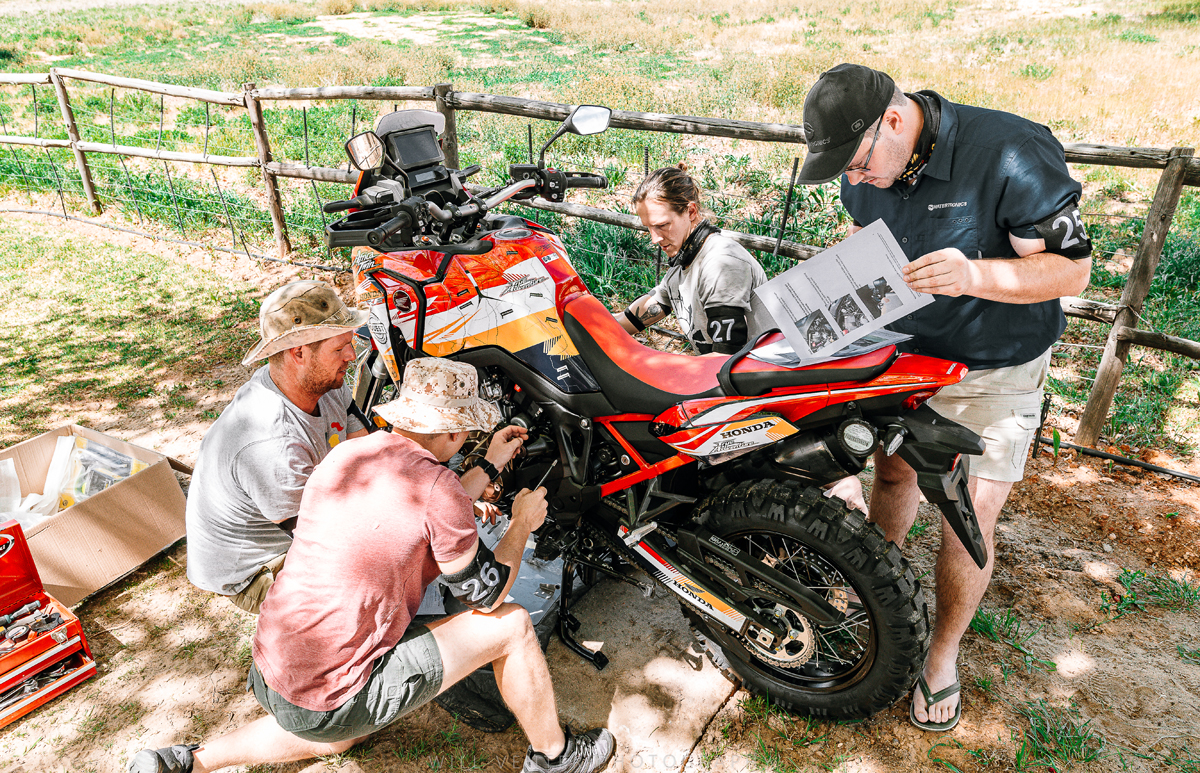
The selection panel had the arduous task of eliminating 14 of the 28 hopeful semi-finalists by conducting theoretical and practical tests that varied from adventure related general knowledge questionnaires to African geography quizzes. The semi-finalists were also asked to perform various practical and mechanical tasks with the added pressure of time limits per task.
Photo credit: Honda South Africa
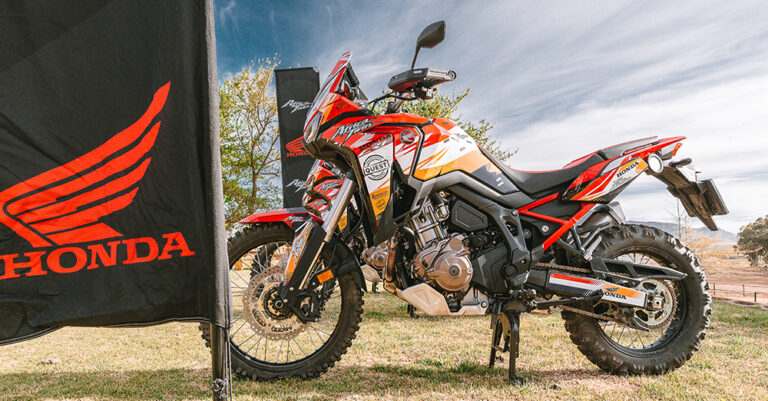
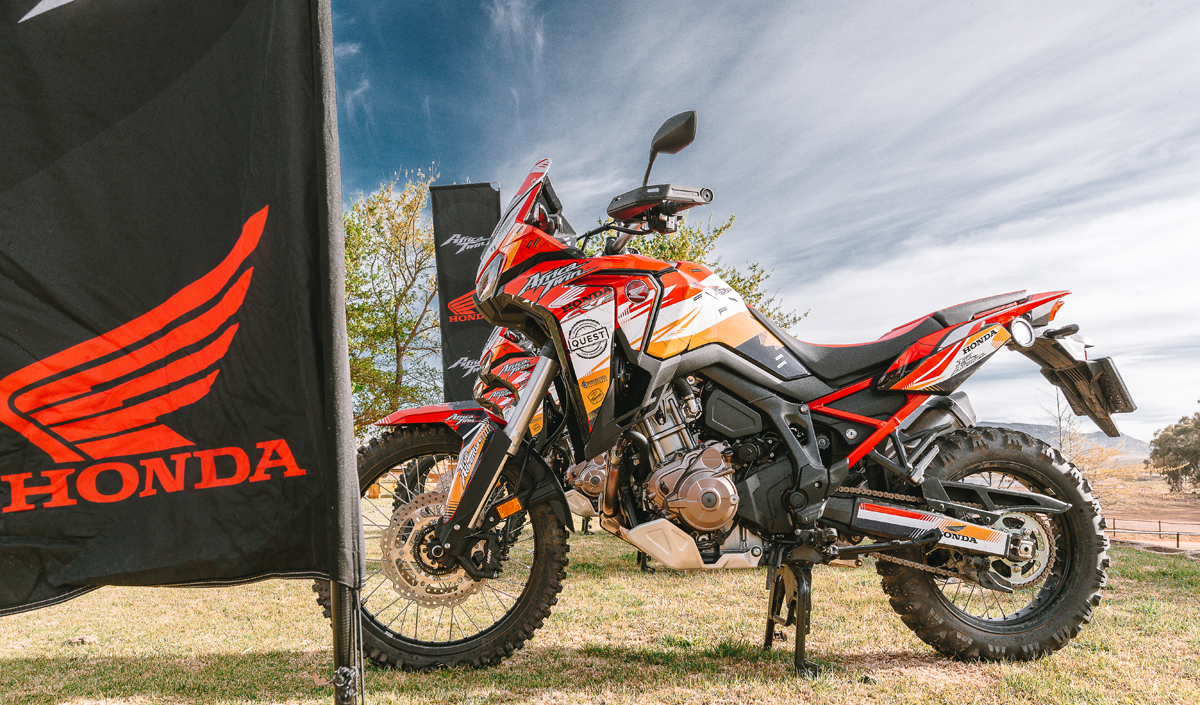
The individual tasks also included the assembly of adventure essential accessories to the CRF1100 Africa Twins, one of the finest adventure motorcycles, and the bike they will be using to compete in the Honda Quest 2021 competition. Additional tasks over the 3 days included the assembly of a camp, motorcycle maintenance, tyre and tube repairs among others.
The selection panel were constantly on the lookout for individuals who demonstrated the competitive spirit and determination to complete the necessary tasks that would stand them in contention to compete in the final of Honda Quest 2021. Individual interviews were also conducted with each of the 28 semi-finalists which gave the panel insight into the behavioural responses of each semi-finalist.
Photo credit: Honda South Africa
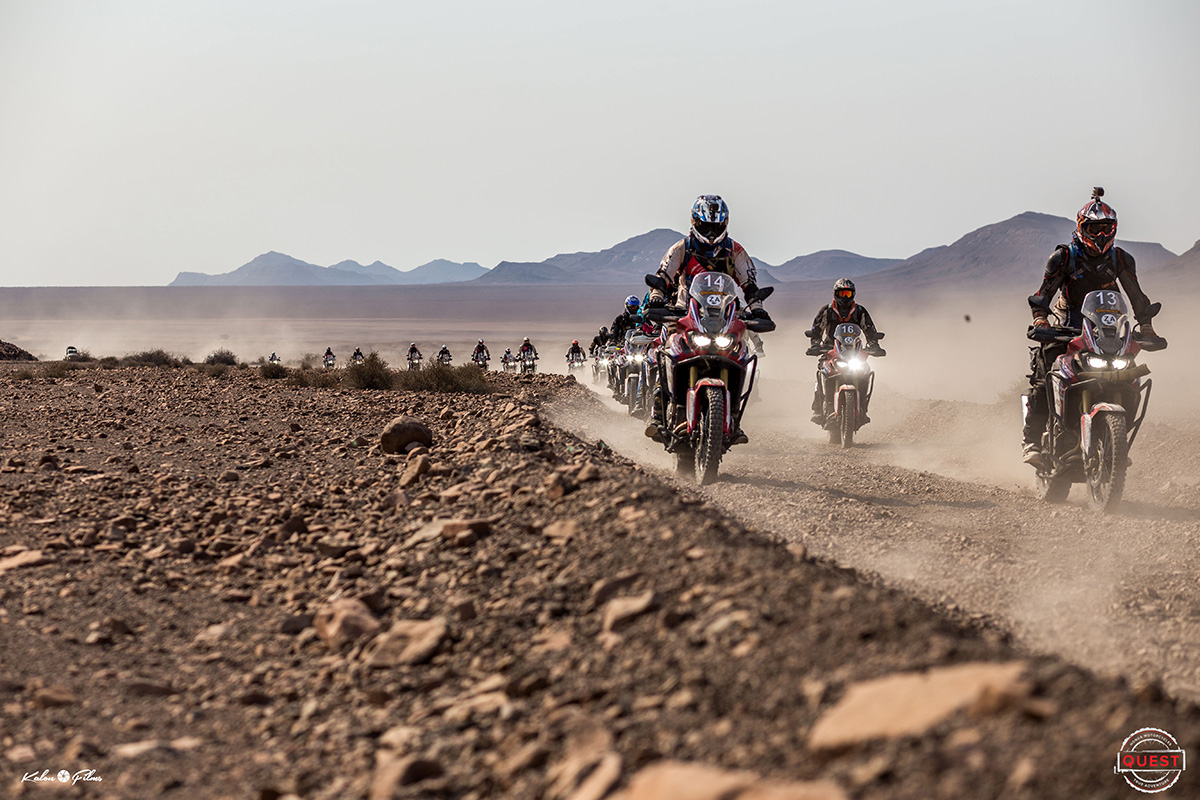
The seven teams of two will now have the opportunity to embark on a life changing adventure from 1 – 10 November as they navigate through the challenging terrain in the Northern Cape’s Richtersveld, Namakwa Eco Trail, Tankwa Karoo and Cederberg whilst competing for the title of Honda Quest True Adventure 2021. The winning team will ride off on the very bike they will have competed on.
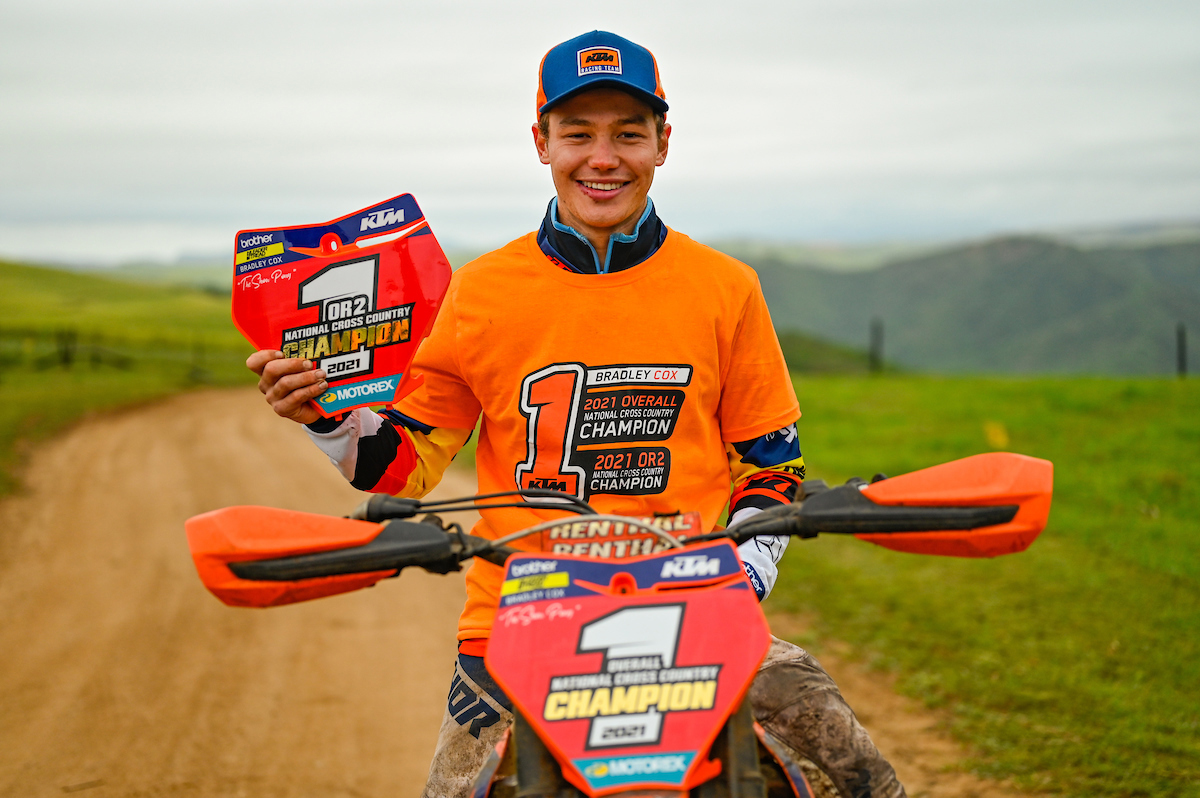
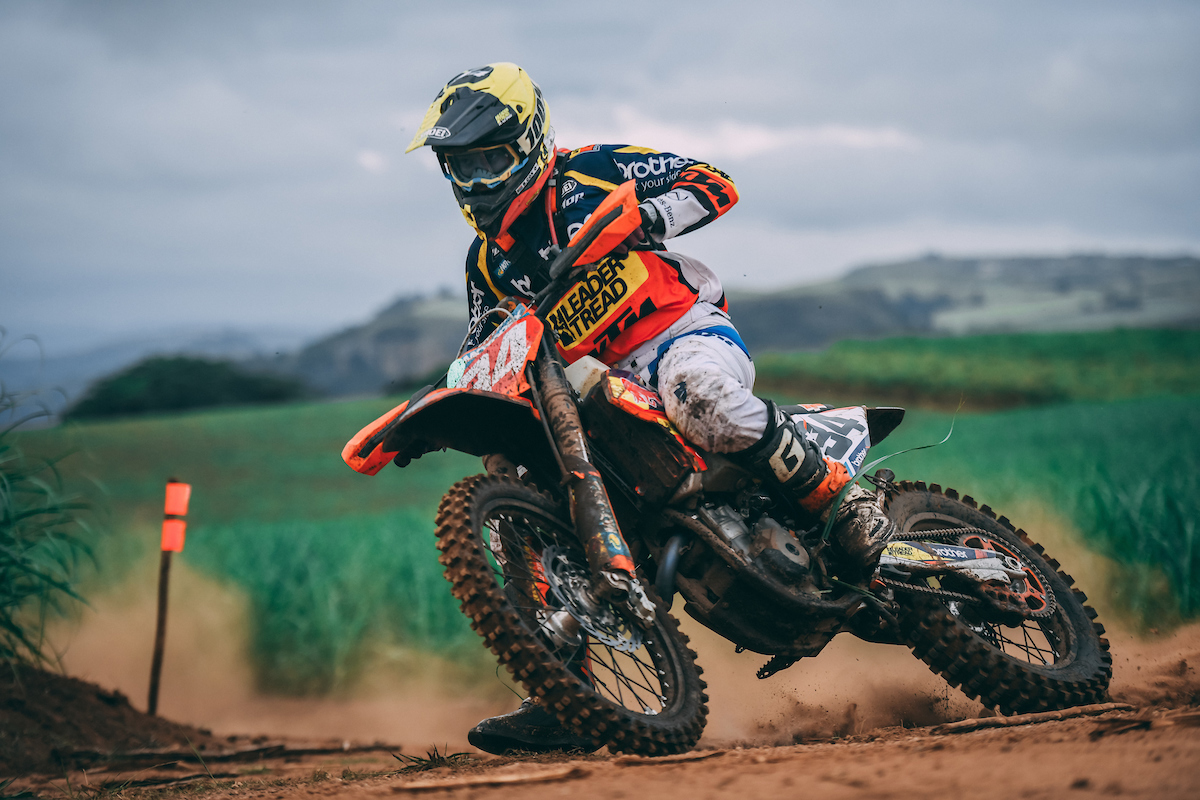
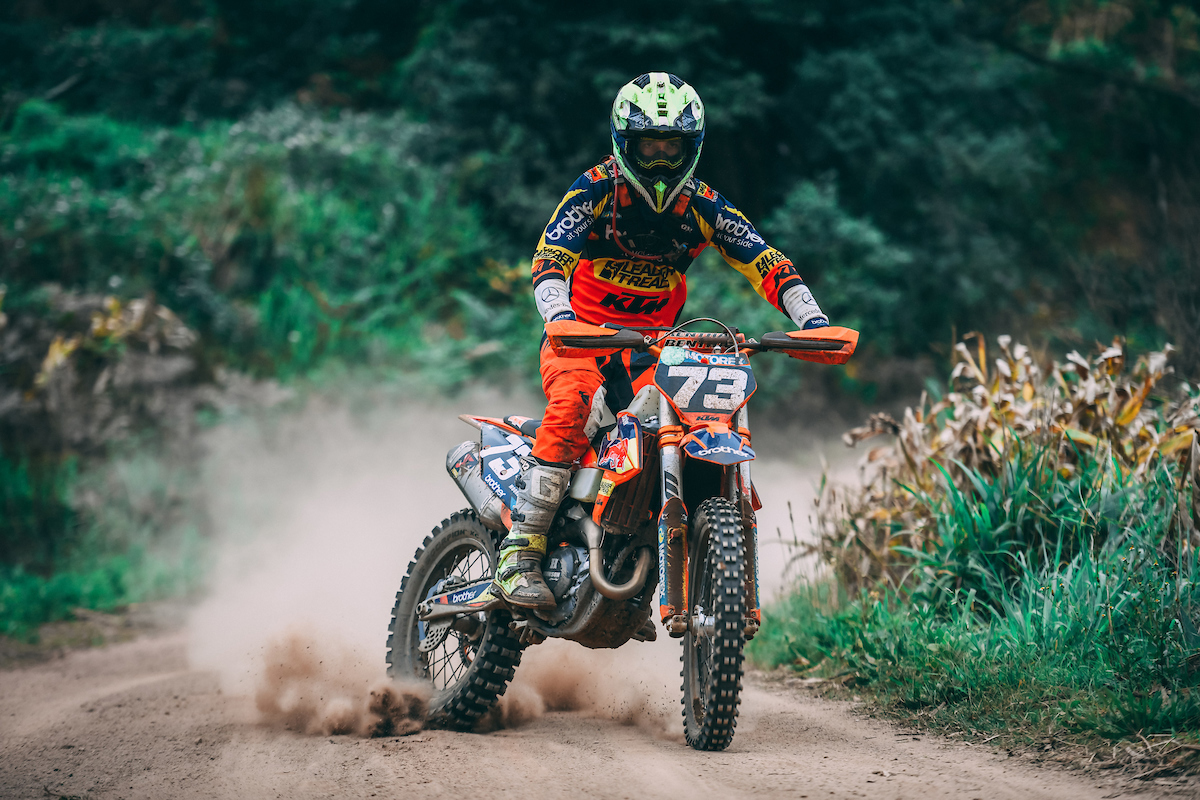
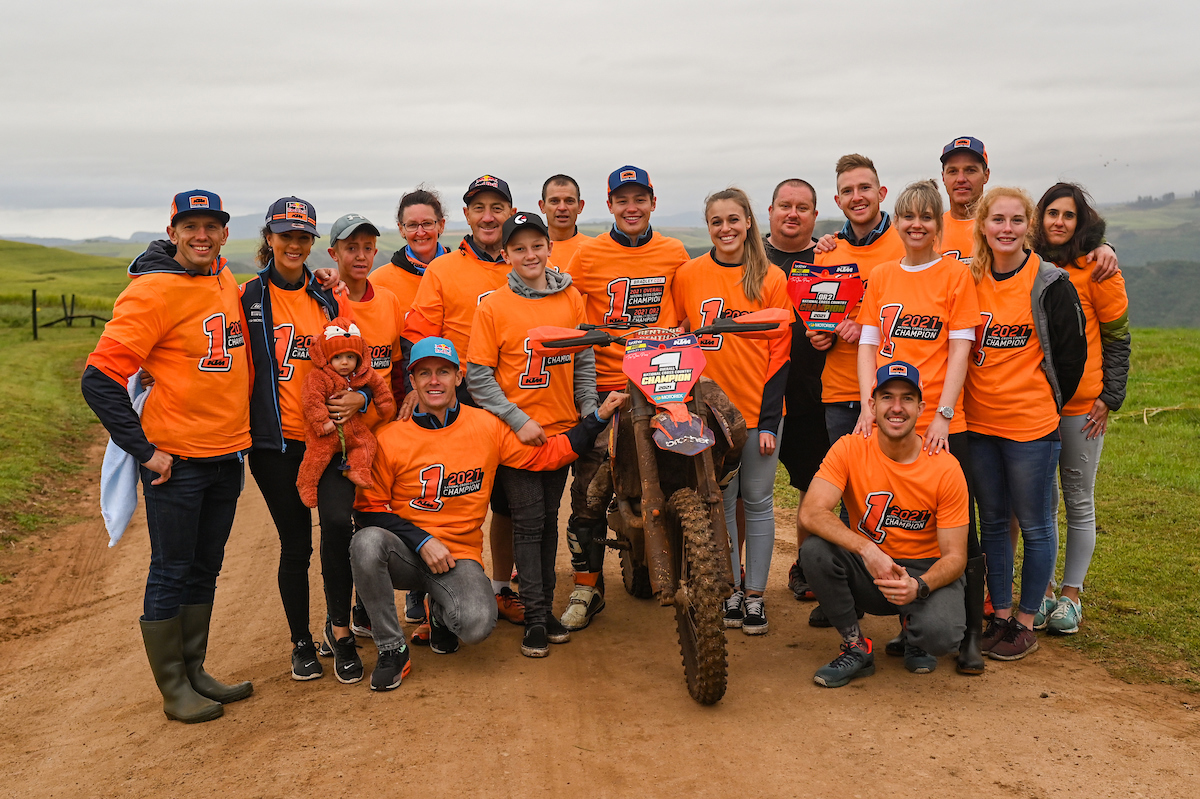
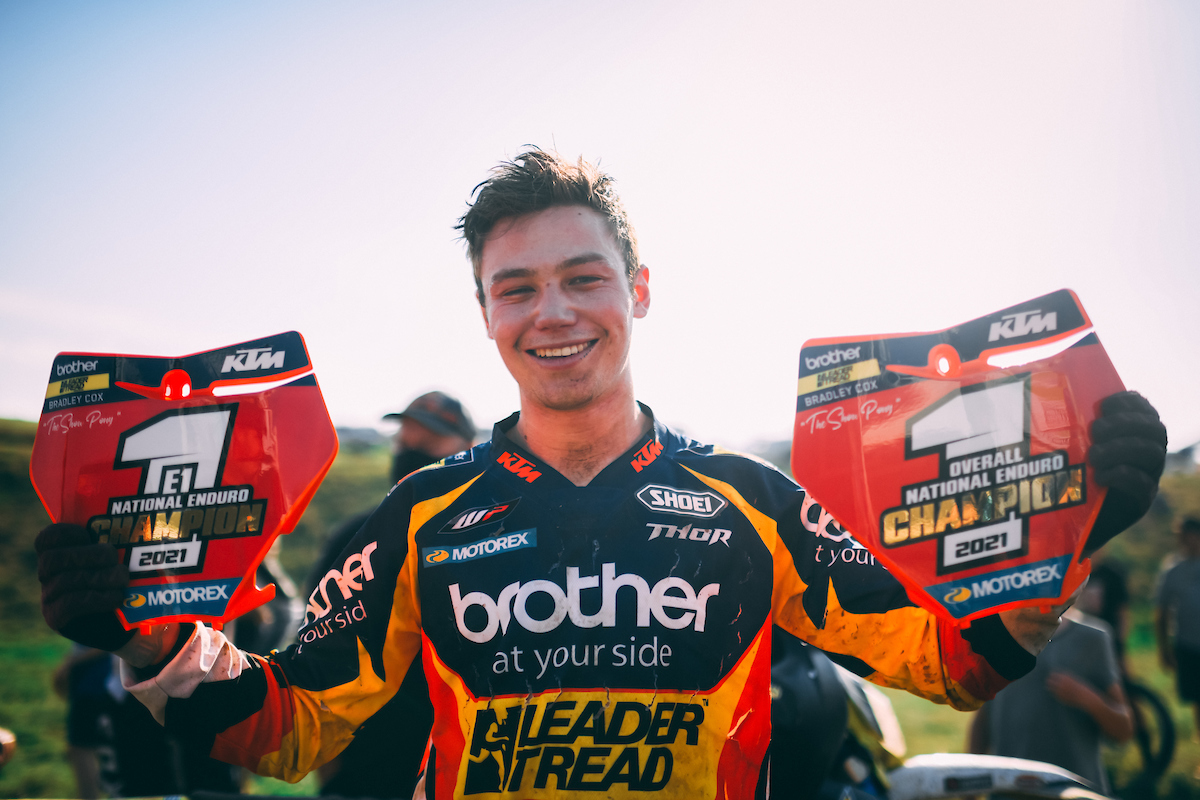
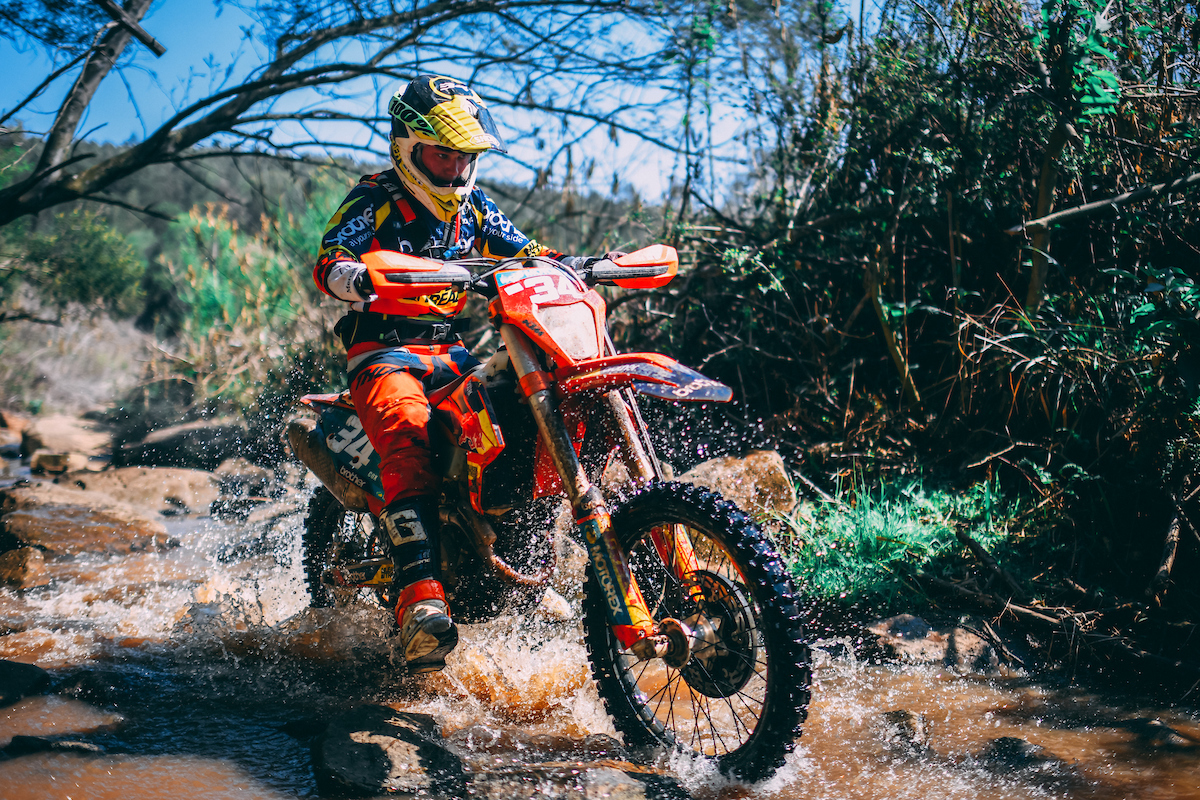
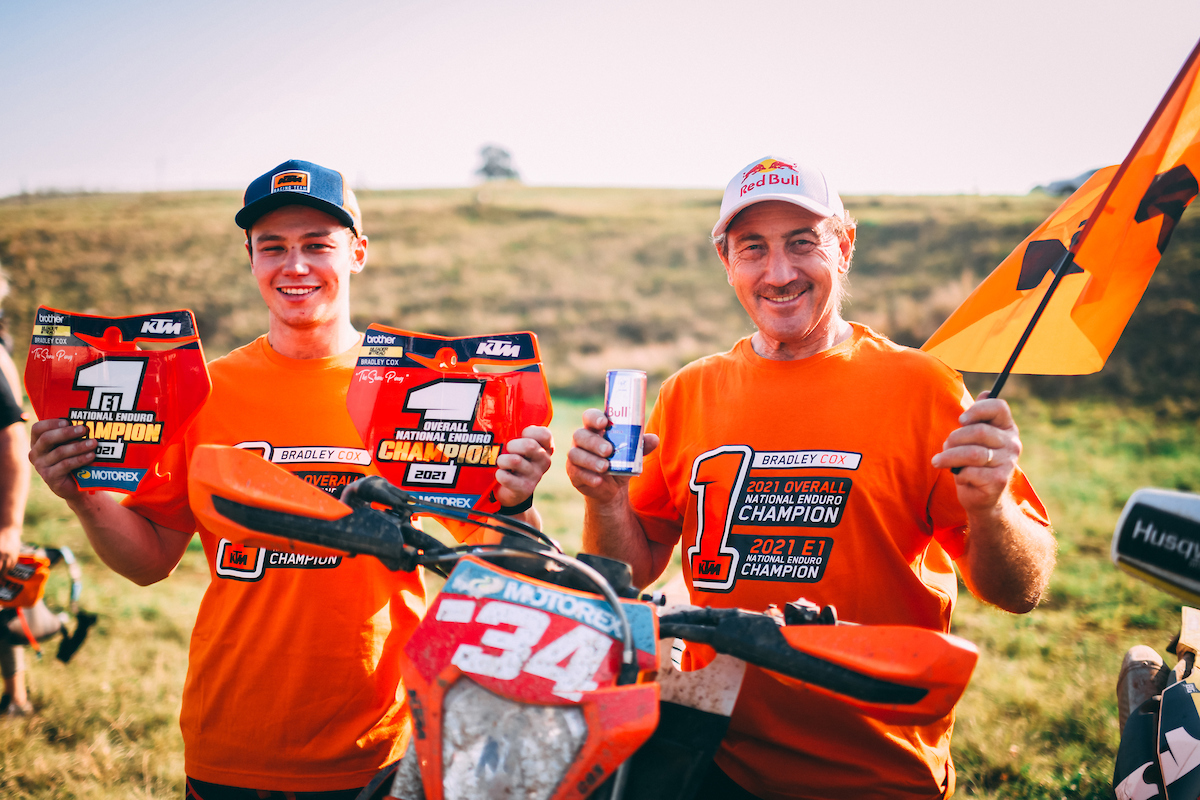
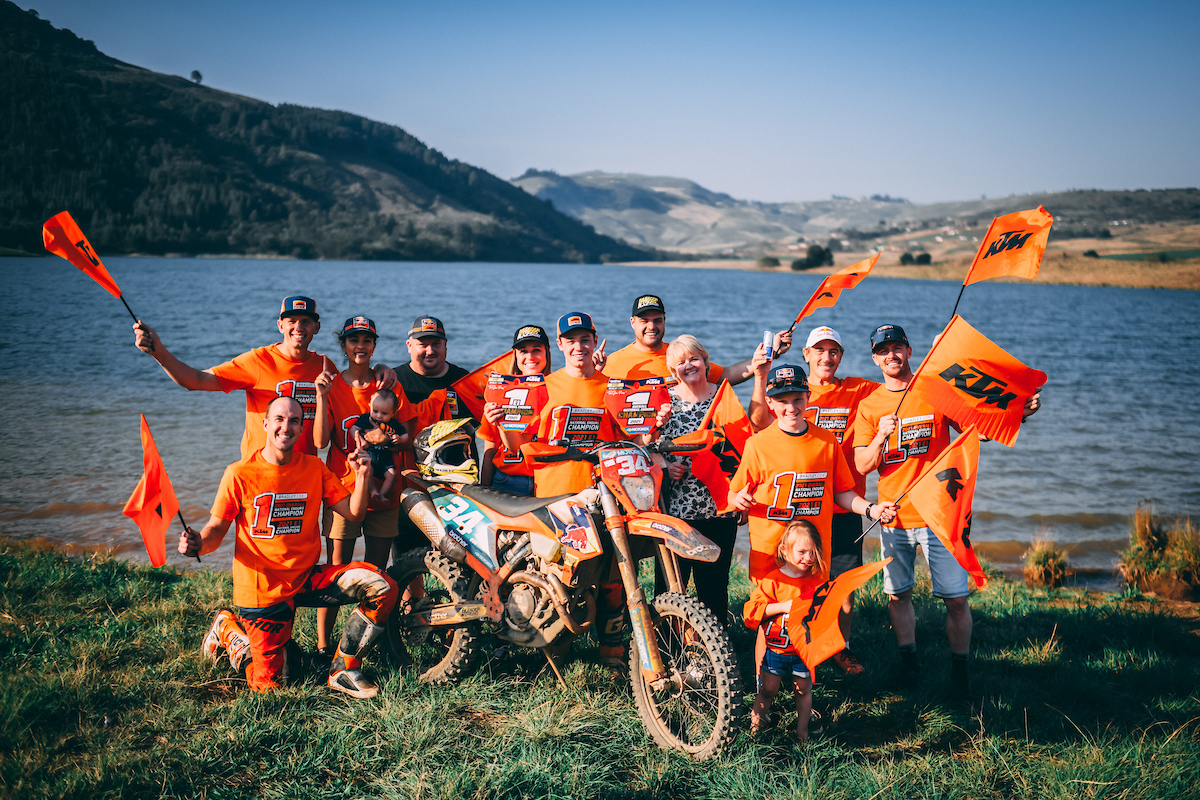
Brother Leader Tread KTM took top honours when leading rider Bradley Cox snatched up the overall National Cross Country Championship on Saturday. Fresh off his National Enduro E1 Championship title, the victory comes especially sweet for the multi-disciplined star.
The nail-biting season finale took riders to Virginia Trails in KwaZulu-Natal, where a confident Cox had the home ground advantage. After a consistent performance in the OR2 Class throughout the season, a third place overall was all it took for Cox to claim the title in his class and overall.
“It’s been a dream year! I’m so thankful for everyone that has been a part of my success because without their support, this wouldn’t even be possible,” said an elated Cox.
Photo credit: Sage Lee Voges / www.zcmc.co.za
The rider’s racing dreams are only just starting to unfold as the ultimate event of them all loomslarge – the Dakar Rally. Cox has been hard at work as he prepares to step onto the international stage and represent his country in his debut Dakar event.
With the help of Dakar legend and father, Alfie Cox, the future looks bright for the rising talent. His recent trip to Morocco to compete in Rallye Du Maroc has put the rider in good stead for the Dakar dunes. With a third place in Rally 2, Cox used the event to showcase his potential to achieve great things in the sport.
While the season didn’t unfold as Brother Leader Tread KTM teammate Charan Moore had hoped, the rider describes feeling grateful to share in the team’s successes. Moore had a tough day in the saddle on Saturday after a crash set him back by almost 50 minutes.
Photo credit: Sage Lee Voges / www.zcmc.co.za
“It’s been tough year for me with a whole bunch of bad luck. The race started off very tentative in the conditions, but I got into a good flow and worked my way back into the top ten. I had a crash in the dust and the bike slid off a steep mountain ridge, I was so stuck that I spent almost 50 minutes getting back up to the track!” commented Moore.
While he was frustrated by the event, he is more determined than ever to come back stronger next year. He said, “It’s been a difficult year for me personally but I’m happy to share in the team’s success and be a part of such a great family. I am so motivated to come back fitter, stronger and ready for 2022. This season taught me resilience and to keep going and push through, even when things don’t go your way!”
Photo credit: Sage Lee Voges / www.zcmc.co.za
Like Cox, Moore will represent South Africa as he makes his debut in the Dakar Rally next year. It’s full steam ahead for the rider as he shakes off his disappointment and prepares to race for the greatest title of them all – a finisher’s medal at the prestigious event.
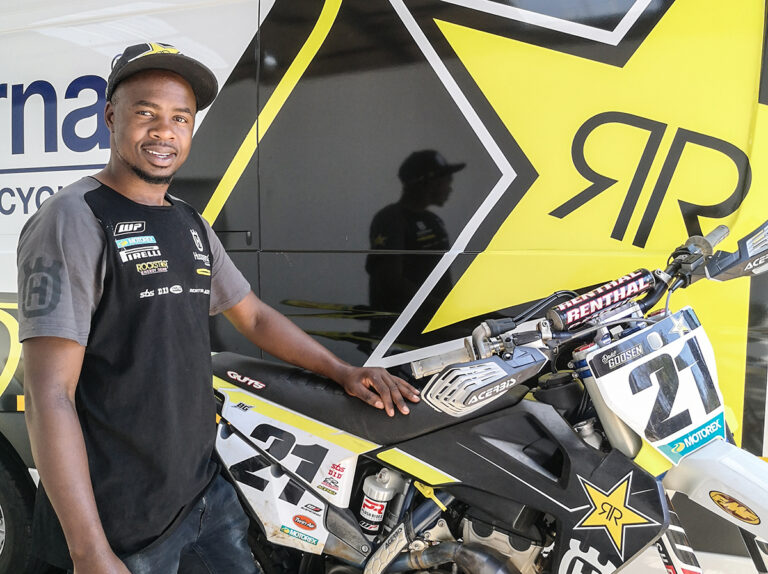
Husqvarna motorcycles SA wishes to welcome Junior “Pritchard” Ngwenya onboard as their esteemed race technician. Junior has been working within the dealer network for the past 15 years and has come on board as the official race technician for the Rockstar Energy Husqvarna Race Team. His experience is second to none and his attention to detail is something Husqvarna motorcycles SA, as a company, appreciate beyond measure.
The team look forward to sharing many championships with Junior at the helm of the technical side of their race machines.
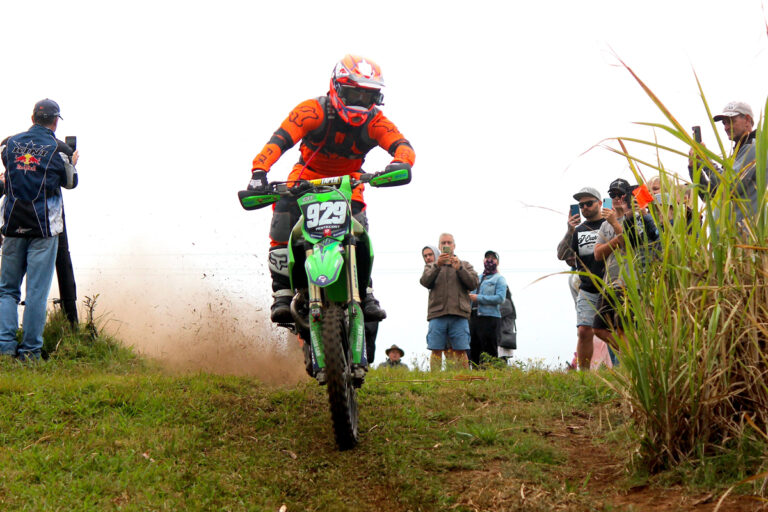
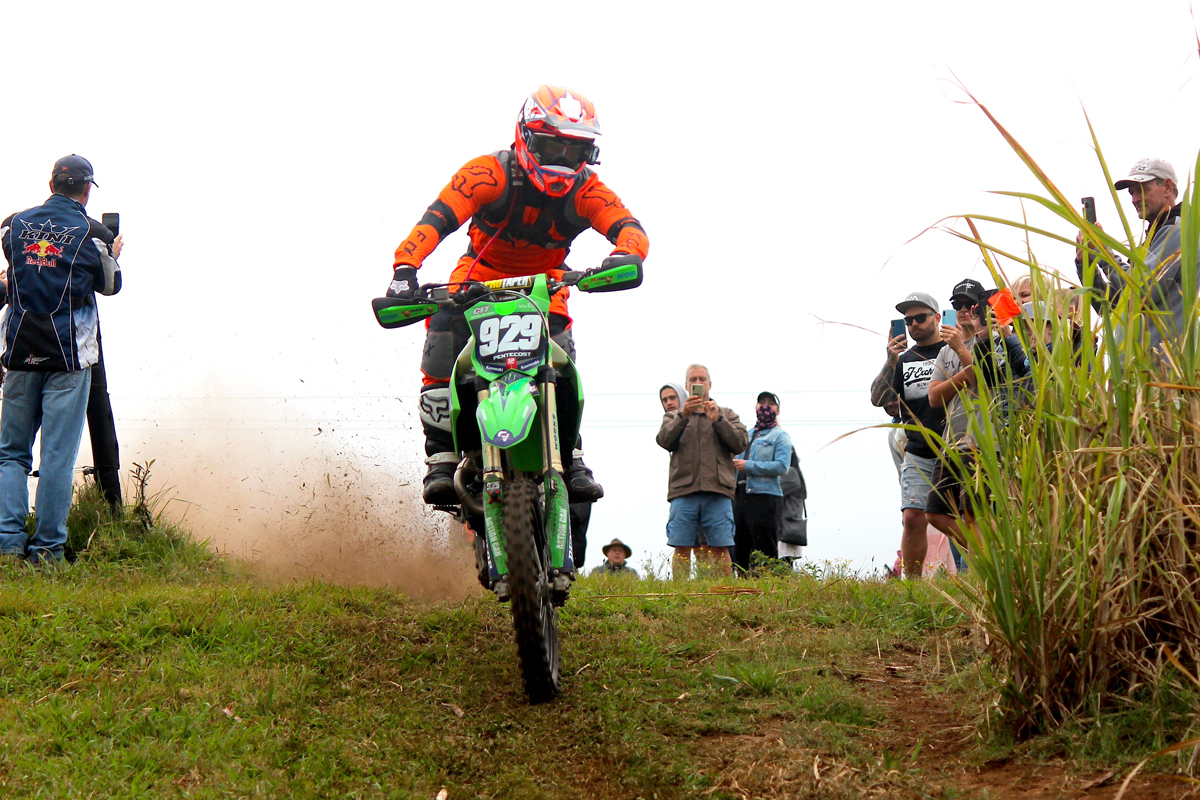
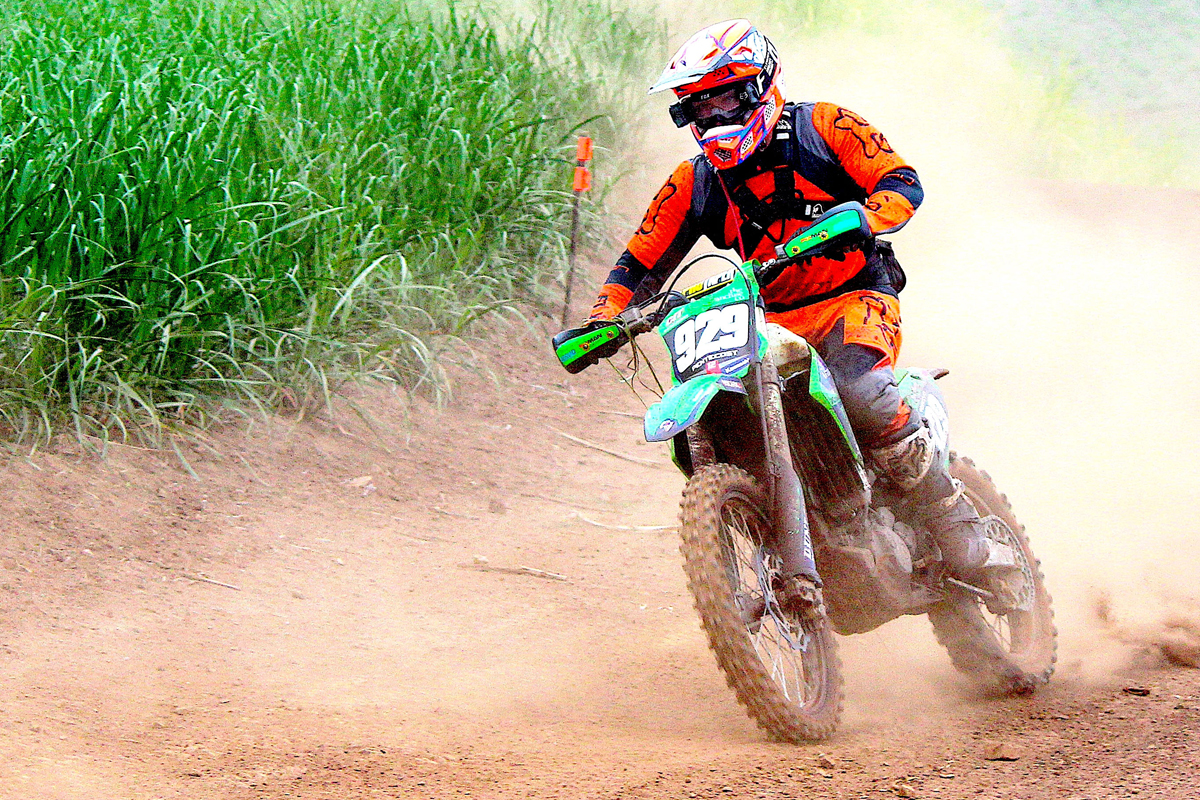
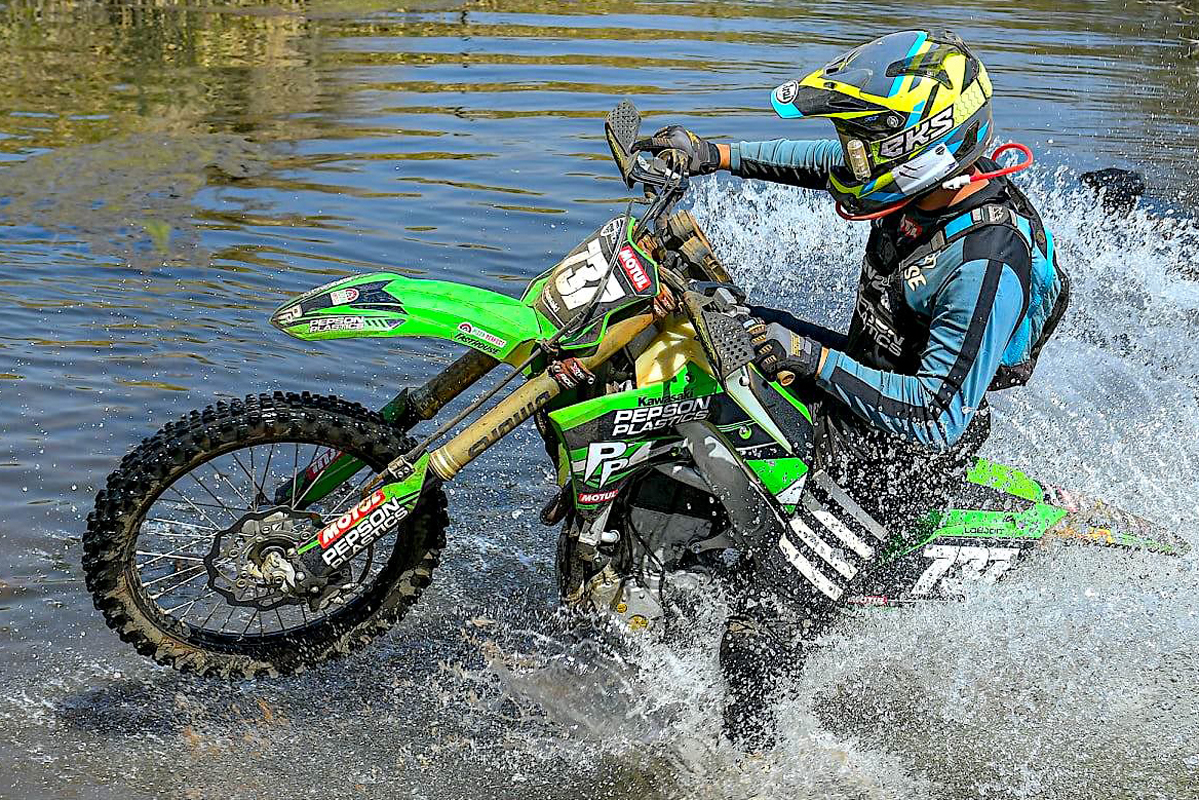
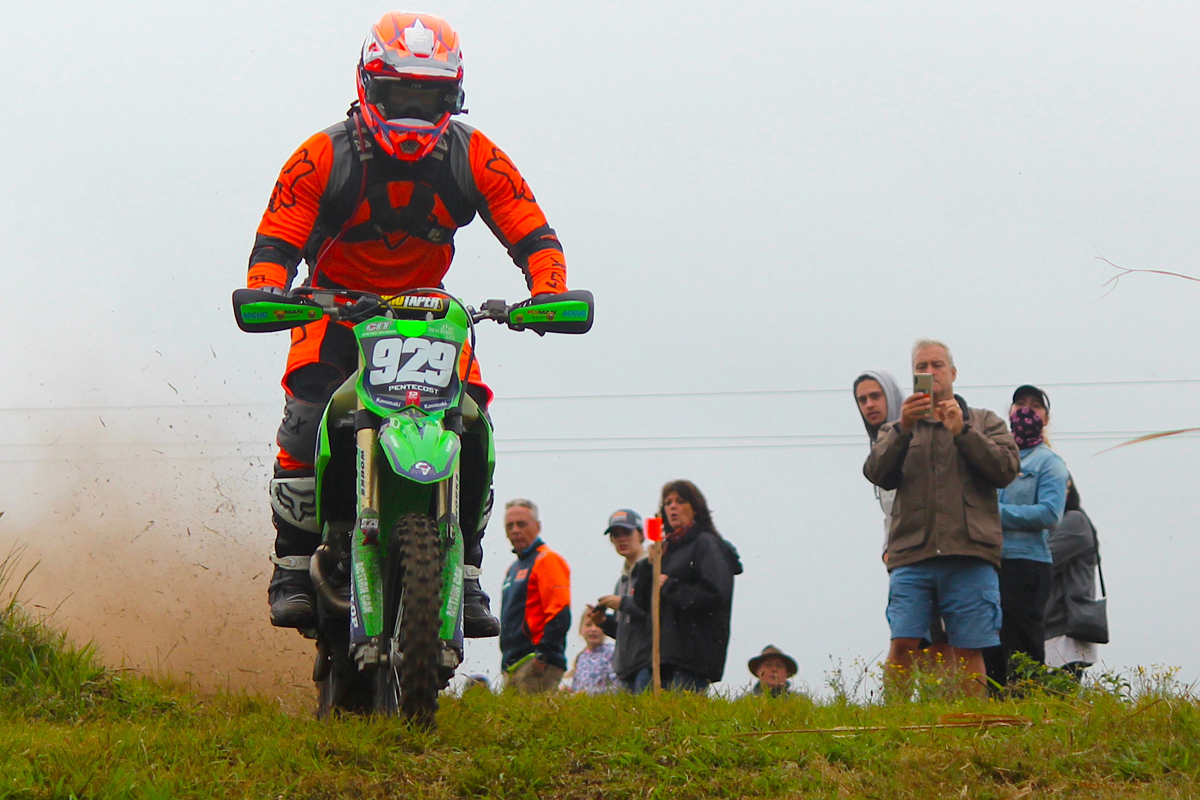
The 2021 South African Cross Country Motorcycle Championship may have been Kawasaki’s comeback year, but few would have imagined that the green machines would dominate as they did as the season progressed. It started quietly and without much expectation earlier in the year, but come championship time, not only is Kawasaki hero Mike Pentecost the 2021 OR1 champion, but he also dominated the class to take all three of the final open wins in a row.
Pentecost was also the only double overall Cross Country winner of the year as he led the way on his CiT Franchise Company Kawasaki KX450X in the Virgina Trials finale at Eston KZN. D’Artagnan Lobjoit added to the delight when he made it an OR1 title 1-3 on his Pepson Plastics Motul Kawasaki KX450X, while motocross refugee Wyatt Avis impressed on his Cross Country debut, coming home fourth in Seniors in the tough KZN finale on his KX250X.
Photo credit: GXCC / www.motorsportmedia.co.za
“We came, we saw and we conquered,” a delighted Pepson Plastics Kawasaki Motul team principal Iain Pepper confirmed. “Kawasaki only brought its new KX X range to market this year and we jumped at the opportunity to race the new machines. “I don’t think even I would have expected to be telling you that Mike is the national OR1 title with Dart third in our first season. “Mike has also won every race since he switched to his KX450X to make it a proper dream come true!”
“This was such a stressful week knowing Brett Swanepoel and I were tied on points and having it all to do to win the championship,” newly crowned South African OR1 champion Mike pentecost explained. “So I had sleepless nights and then I pulled number 1 in the time trail start position draw. “That made me even more nervous! “But I had a killer time trial and won, so I was even more stressed knowing I had to open a 56 km loop with long grass and very little else to follow!
“I knew when Brad Cox caught me on the first lap that I had to push, so I just went for it. “But I bogged down on lap 2 and by the time I had the bike out the mud, I had my championship rival Brett all over me. “More stress!. “So I fought back again and opened up the lead, but then I had a massive crash on the third lap and my bike was all twisted up. “Knowing it was a 10 minute DSP stop, I limped back to the pits and the guys did a great job straightening the bike.
Photo credit: GXCC / www.motorsportmedia.co.za
“When I got going again, Brett was right back behind me and that stressed me out again! “So I pushed like hell to get away! “Then my exhaust broke and I had no power, a hell of a lot of noise. “I was so worried Brett would catch and pass me after all that, so I pushed like hell, worrying all the way that I’d hurt a valve. “Yet my KX450X made it through and I was still by a minute and a half ahead. “I had won the race and I am OR1 champion!
“It has been an incredible and stressful year — I came back to racing with no funds and was using old parts to keep my own bike going. “By the glory of God, however, I was picked up by the CIT Franchise Company team to ride the new Kawasaki KX450X midway through the season. “And now I am champion! “I actually have no words, besides to thank my team for an incredible opportunity. “And for Kawasaki — what a season — I am so proud to be part of it!”
“What a fantastic day and debut national season!” D’Artagnan Lobjoit admitted. “Third in OR1 in a Kawasaki 1-3 is beyond our wildest dreams, but my Pepson Plastics Kawasaki Motul team made it happen and my KX450X ran like a rocket right through the season and across the country! “We’re not done yet — there are still two GXCC Gauteng races to go so it’s eyes on that prize. “Special thanks to Iain and my incredible team — this was a national year to remember!”
Photo credit: GXCC / www.motorsportmedia.co.za
Former international motocross star Wyatt Avis enjoyed a challenging Cross Country debut. “I had an absolute blast!” Wyatt admitted. “The team was awesome and so helpful, although I felt like I could have done better had I not had an issue with my helmet on lap 2. “I really appreciate the opportunity, so big thanks to Iain and the Pepson Plastics Kawasaki Motul team for making it happen!”
The trying conditions at Eston saw Pepson Plastics Kawasaki Motul OR1 man Craig Alcock end a lap down and also claimed two of the team’s title protagonists. Neither OR3 lad Kyle Mackenzie and CIT Franchise Co Senior man Deon du Toit made the distance.
“We have had an incredible season,” Iain Pepper added. “A national title in our national debut year is more than we could ever have asked for, so huge props to Mike and Dart and the whole Kawasaki Cross Country team. “That was mega! “We are still not finished though — we still have the last two Gauteng GXCC regional rounds to race and we are in a strong position there. “So it’s all eyes on Verena on 30 October. Let’s do this guys!”
Photo credit: GXCC / www.motorsportmedia.co.za
“This is just the beginning!” CIT Franchise Company team owner and manager Harry Grobler concluded. “2021 is a great foundation for Kawasaki Racing’s future will be working hard together as two teams with one goal next year. “All our CIT Franchise and Pepson Plastics Motul riders will only be Kawasaki mounted in every class we take on and we are already counting down to the new 2022 national season.”
The National Cross Championship has ended in victory for Rockstar Energy Husqvarna. Rising talent Davin Cocker, who was recruited by the team at the start of the year, stormed to the OR3 Championship title on Saturday. Also finishing the season with a stellar performance was leading rider Brett Swanepoel, who placed second overall in the prestigious OR1 Class.
The season finale took riders to Virginia Trails, a venue in KwaZulu-Natal with classic cross country terrain. After a solid time trial performance, Cocker lined up near the front of the pack for the main race. He set off with a blistering pace to take the class lead early into the race and held his composure until he crossed the finish line.
Having snatched up the first national title of his promising career, an elated Cocker commented: “This is the first national title I’ve ever won. It really has been the best season I’ve had in my career so far, but it certainly hasn’t been smooth sailing. After some bad luck that cost me a lot of points, I had to fight hard to get back to the top. Having worked so hard for this title, it’s made the win even more rewarding.”
Photo credit: Sage Lee Voges / www.zcmc.co.za
After an unforgettable debut season with the Husqvarna team, he added: “Racing for Husky this year has been a dream come true and it wouldn’t have been possible without everyone putting so much effort into supporting me. It will be very interesting to see what next season has in store and I can’t wait to get stuck into it!”
While a podium finish is something Swanepoel is proud of, it’s no secret that second place wasn’t what he had been hoping for. After a slower time trail than expected, the rider had his work cut out for him as he chased down rival Michael Pentecost in the main race.
Photo credit: Sage Lee Voges / www.zcmc.co.za
“I found it difficult to take risks in the long grass in the first lap and lost about a minute. By the second lap I found a good rhythm and started to make up some time. I put in so much effort but unfortunately had a crash in the last lap and couldn’t narrow the gap. It’s a really tough pill to swallow because I never imagined myself walking away from this event without the championship.”
After the first two rounds of the season, Swanepoel had established a healthy 14-point lead. A bout of bad luck set Swanepoel back, however, and left him fighting to catch up for the rest of the season. As he shakes off the disappointment, he will jump onto his TE 300i and focus on extreme Enduro riding for the rest of the season.
Photo credit: Sage Lee Voges / www.zcmc.co.za
“I have so much to look forward to this year still. There’s the National Extreme season finale coming up, where I have a good chance of winning the championship. Soon after that is the Roof of Africa. – I’m excited to see what I can do there and look forward to ending this year on a high note,” said Swanepoel.
Husqvarna South Africa’s Brand Manager Fred Fensham gives a parting shot as the season draws to a close: “What a roller coaster ride this Cross Country season has been. As always, some hard lessons were learned that will certainly be taken into account going forward. My thanks goes to our riders and crew, who together fought back and gave me 100% at all times. Brett carried the number one plate with pride and was a star throughout the season, just missing out on the OR1 title. We do, however, know he will fight even harder in 2022.
Photo credit: Sage Lee Voges / www.zcmc.co.za
“As for our young gun Davin – we were all excited about this young athlete at the team announcement back in January and look at him now – the OR3 Champion and winner of his first South African title! I feel it’s the start of an amazing career and there is so much more to come. We certainly look forward to 2022, so watch this space!”
At the second of six Ducati digital launches that will be taking place over the next couple of months, it was the turn of the Scrambler to be under the spotlight.
The first launch gave us the new Multistrada V2 and this one introduced us to the new Scrambler 1100 Tribute PRO and Scrambler Urban Motard. The ‘Tribute’ is a homage to Ducati’s first twin-cylinder engine and the Urban Motard takes on a modern look to target a younger generation.
Photo credit: Ducati
With these two new models, the Scrambler range expands to a total of ten models with two engine sizes – 800cc and 1100cc.
The Tribute PRO, as mentioned, is a throwback to the very first V-Twin Ducati to go on sale in 1971, which followed the trend of the time by being a naked sportster of 750cc. The Scrambler 1100 PRO tips its hat to that first bike by wearing ‘Giallo Ocra’ yellow paint and the iconic Giugiaro-designed Ducati logo and typeface. The seat is a dark tan colour, the trellis frame is black and the wheels are wire-spoked.
Photo credit: Ducati
The engine remains the venerable air-cooled V-Twin of 1079cc, which pumps out 86bhp. As with the other three models in the PRO line-up, the Tribute has the usual bells and whistles, including riding modes and Ducati Traction Control along with the single round headlight with LED inserts.
Photo credit: Ducati
The Ducati Scrambler Urban Motard is aimed at a younger demographic, which is never a bad thing. Ducati calls the styling a ‘contemporary refresh’ with cues taken from the Ducati Hypermotard.
Photo credit: Ducati
The red and white livery is a nod to the original Marlboro-sponsored MotoGP motorcycles, while it borrows the side-mounted number plate panel, flat seat and beaked front mudguard from other Scrambler models. The Urban Motard is powered by the 73bhp, 803cc version of the V-Twin and claims to have some off-road ability, while being light and nimble in the urban jungle.
With both models coming with Ducati Multimedia System, you can pair your smartphone with the bike via the clocks and there is a USB socket under the seat.
Photo credit: Ducati
No word on pricing for South Africa, nor arrival times, but keep in touch with Ducati South Africa for all updates.
Nearly 30 years old, and with more than 350,000 units produced, the Ducati Monster is a true icon. For 2021, Ducati have radically redesigned the legendary Monster—ditching its signature trellis frame in the process, and upsetting legions of fans. Is it still worthy of the Monster name though? We rode it to find out.
Never say never! Ferrari is close to producing SUVs and electric cars, BMW has gone front wheel drive, and even Moto Guzzi is working on a liquid-cooled V-twin. So, from that perspective, why should we consider the signature Ducati trellis frame eternal?
Photo credit: Jürgen Muntzeroli
With apologies to those who think the Monster has lost its identity and now looks like an updated Suzuki SV650, it was actually quite a brave move from Ducati to let go. But it’s still a Monster nonetheless.
It’s also just called Monster now, with no numbers in the name. Forget about the previous Monster 821, and don’t call it Monster 937 (its real engine capacity) or a Monster 950 (like the Hypermotard, which shares the same power plant). Ducati says the new bike is the essence of the Monster. I was cautious at first; but after riding the bike, I truly believe them.
Photo credit: Jürgen Muntzeroli
Let’s start with one specific figure: 166 kilograms. That’s 18 less than the previous Monster, and, to paraphrase a certain Colin Chapman, the “light is right” concept is as meaningful as ever when it comes to motorcycles. It’s an impressive weight reduction.
Like a Panigale!
No trellis frame? Yep, just like the Panigale, the Monster uses its V-twin engine as a stressed member, with an aluminium frame running up to the front end. Out back, a composite (read “plastic with reinforced fibre”) subframe supports the rear section.
Photo credit: Jürgen Muntzeroli
Weight has been reduced everywhere; 1.7 kg saved on the wheels, 2.6 kg saved on the engine, and 1.6 kg saved on the swingarm. Besides that, the Monster’s geometry is mostly the same. Compared to the previous Monster 821, the wheelbase has been reduced from 1480 to 1474 mm, and the rake from 24,3° to 24, which is, actually, not such a revolution.
Nonetheless, the loss of the trellis frame has another benefit: the steering angle has been improved by 7°. Now the Monster can handle traffic jams, and you don’t need to struggle to do a simple U-turn anymore.
Photo credit: Jürgen Muntzeroli
The engine offers 111 hp and 93 Nm of torque. I’m old enough to recall memories of the first 1993 Monster—the 903 cc unit produced 73 hp and 80 Nm then, and with a dry weight of 184 kilos, everyone was subdued and considering it a real beast! Since power is nothing without control, the new Monster offers features that the first 900 couldn’t dream of: three riding modes, eight levels of traction control (plus “off” for wheelies) and three levels of ABS, all there to help riders control the beast.
Photo credit: Jürgen Muntzeroli
Its light weight is not the Monster’s only asset—the ergonomics are good too. The seat height is 820 mm, but the 14-litre fuel tank is very narrow, the handlebars are 70 mm closer, and the foot pegs are slightly lower (10 mm) and further back (35 mm) than before. I used to like the old Monster’s riding position (legs folded like on a superbike, arms wide open and head low), but I feel very comfortable and confident on the new one.
I also like the new LED headlight’s visual identity, although it does look rather similar to the light on the latest MV Agusta Brutale. The colour TFT dashboard offers plenty of information, and while setting it up takes some time, it’s worth it, as the character of the Monster can be transformed. Let’s go ride it then!
Photo credit: Jürgen Muntzeroli
A smooth Monster in town
In town, the new Monster is as easygoing as any UJM (Universal Japanese Motorcycle, for the young folks). Gone are the days where you needed to train like a lumberjack to pull a clutch that was so noisy that it would wake up the neighbourhood! Even the exhaust note is a tad softer, thanks to Euro 5 regulations.
Photo credit: Jürgen Muntzeroli
Once again, I appreciate the bike’s lightness and its narrow tank. The V-twin is relatively smooth, it can handle 50 km/h in fourth gear at approximately 2,500 rpm. The ‘Urban’ riding mode is dedicated to commuters—it smooths out the ride-by-wire throttle response and reduces power to 75 hp. In that configuration, the Monster is as easy as a beginner bike, like the Honda CB500, for instance.
One downside, though: the engine releases quite a lot of heat, which you can feel at your knees. Be warned if you ride in a dense urban environment.
Photo credit: Jürgen Muntzeroli
A mean Monster on the road
166 kilos, 111 hp: those are great figures, and once on the open road, the Monster shows its full potential. If you love fun bikes like the Yamaha MT-09 and KTM 890 Duke R, you’ll love the new Monster.
Photo credit: Jürgen Muntzeroli
With its low weight, responsive V-twin and natural ergonomics, you just need to look through corners, and the bike will draw the perfect line. On board, you are fully in control, and the work Ducati did to shed all sorts of mass (like the wheels) is immediately noticeable. The Monster is a kind of a Moto2 bike on the open road, with great corner entry speed. The power is more than decent, yet delivered in a reasonable way and always usable (forget the aggressiveness of the late Monster S4RS).
The new Monster is also, in its own way, very comfortable. Unlike the wooden suspension settings of some of its predecessors, the 2021 Monster feels plush even in the first few millimetres of suspension travel.
Photo credit: Jürgen Muntzeroli
I wouldn’t be surprised to see a Monster ‘SP’ coming into the range, as the current suspension settings are limited, and, in harder riding conditions, some riders might like a bit more precision. But we are talking about some speeds that start to be unreasonable on the open road—also made possible because the Pirelli Diablo Rosso III tyres deliver great confidence, and warm up very quickly. I feel the same about the Brembo radial M4.32 callipers and 320 mm discs; they have all the power and feel you need, under the control of a cornering ABS unit.
Photo credit: Jürgen Muntzeroli
A different kind of Monster, but still a Monster
Yes, the 1993 Monster is a legend. But to be honest, its difficult carburation settings, harsh suspension, the clutch lever that gave your left arm muscle cramps and the lack of any turning circle made it an unwieldy beast. The new Monster is softer and easier—that’s a fact—but it also delivers much better performance.
Has it lost its Ducati identity? Slip into an average speed corner, get hard on the throttle, open your ears and you tell me.
Photo credit: Jürgen Muntzeroli
Ducati Monster +
For more information on the bike that we tested in this article, click on the link below…
Imagine for a moment that you can only own one motorcycle. For the sake of this exercise, consider too that you use this bike as everyday transport, not just as weekend entertainment. What bike would you buy and why? Obviously, the kind of riding you do is going to be a huge motivating factor determining your choice. I did such an exercise and this is kind of how it all went…
Thinking about the kind of riding that I do these days, it was soon apparent that an Adventure bike was going to best meet my needs. Not that I necessarily do that much off-road riding, but we have just too many stunning dirt roads to ride to have a bike that has no real off-road capability. If you are only going to own one bike, then Swiss Army like versatility is a massive plus. I have a serious soft spot for ‘Retro’ bikes, but as I carefully weighed up my options I soon realised that this decision had to be driven as much, if not more, by the head than by the heart. Modern Adventure bikes have become so hugely capable in various roles that they make a compelling argument for ‘one and only’ status.
Photo credit: BMW Motorrad SA
So what were my considerations? I put together a ‘filter’ by which I would sort of score the bikes under consideration. I love long, open road trips to faraway places, so these are the factors which I realized were really important. Reliability. This is absolutely non-negotiable. I need to know that I can get there and back with the highest degree of certainty. Comfort. 1000 kay plus days mean at least 10 hours in the saddle. Wind/weather protection and seat comfort are essential. Tank capacity and fuel economy. When you do long days in the saddle, your overall travel time is impacted more by the number of stops you are forced to make, than the speed at which you ride.
Weight. The heavier the bike that you ride, the more effort expended to ride it. Adequate performance. The bike must be able to cruise effortlessly at the speed limit ‘plus VAT’. Simple to run and maintain. The fewer electronics the better. Value for money. Covid and a weak Rand have made affordability a big issue. The less you have to pay for the bike and travel accessories the more money you have for trips. The value of your bike also has a huge bearing on the cost of comprehensive insurance.
Photo credit: Bjorn Moreira / ZA Bikers
So what bikes came up on my radar? Perhaps the best way to start is to say what obvious choices did not make the cut. All the big-bore Adventure bikes. Too expensive to buy, equip and maintain. Endowed with excessive performance. Never thought I would say that, however, when I honestly analysed the riding that I do, I realised that road and traffic conditions simply don’t enable us to ride the way that we used to. These bikes are also all a bit porky.
At the other end of the spectrum is what have become known as ‘Dual Sport’ bikes. Street legal dirt bikes. Whilst they rock off-road they are just not able to smash big distances without severely punishing the rider.
Photo credit: Bjorn Moreira / ZA Bikers
Retro’s such as Scrambler Ducati’s and Triumph Scramblers are uber cool, but just need too many add-ons to make them work. Very much a heart buy. Tank size is also a severely limiting factor. The same applies to another old favourite of mine, the Triumph Bonneville T120. So what about mid-range Adventure offerings? Candidates are BMW 850 GS, KTM 790/890, Honda Africa Twin, Ducati Multistrada, Triumph Tiger 900, Suzuki DL1050 V-Strom and the Yamaha T7 Tenere. These are, by and large, all good bikes which tick most of my boxes, with one vital exception. Price! The Yamaha is the ‘cheapest’ at R200 000. The others are all R220 000 or more.
The Yamaha had me looking long and hard. It scores on simplicity, has great off-road ability (perhaps more than I need though), a CP2 engine with reliability, economy and reasonable, if not great, long-distance comfort. But, compared to the rest of the world we have still had to pay a premium for its pleasures… Honda’s NC 750 got some serious consideration, ticking all the boxes except real off-road ability due to its 17” wheels. What else is there? Damn, then it hit me! Why do these bikes so often fly under the radar? Consider, if you will, Suzuki’s venerable DL650 V-Strom!
The ‘Strom has been around for almost 20 years. The V-Twin motor has evolved into an incredibly reliable and one of the all-round most pleasant motors in all of motorcycledom. Bulletproof, economical and endowed with decent performance, it dispenses with highway miles effortlessly, topping out at around 200 kph, not that that is in any way a requirement. It strikes a great balance between road and off-road with suspension that provides on-road comfort and the ability to traverse dirt tracks, albeit slightly slower than it’s better, for off-road, suspended opposition.
On the road, where it is likely to spend most of its time, it is more planted, with its 19” front wheel than the 21” crew. Comfort is truly exceptional, with a brilliant seat, good screen and comfy ergonomics. The tank is a full 20 litres, giving a range of over 400 kays at speed limit touring. The XT version has strong, tubeless spoked wheels. Great for plug and play convenience. Anything you ever wanted to bolt, or hang on your motorcycle is also available for the DL. Now for the real kicker. All of this comes at a price of only R145 500. Considering how I intend to use this bike it is, for me, a no brainer!
Photo credit: Dave Cilliers / ZA Bikers
I happened to come across a YouTube channel called Adventurism.
It features a Dutch girl named Nora, who has recently completed a trip from the northernmost Cape (in Norway)to the Fairest Cape of them all. You know the one with a certain Table shaped mountain? A 35,000k trip through Africa, together with her boyfriend, on two DL650 XT’s. They really toughed it out, visiting some truly gnarly places. The two ‘Stroms performed absolutely faultlessly. Prior to this adventure, Nora travelled from Holland to India and Thailand, racking up over 80 000 kays on her DL 650 with nary a hiccup. See what I mean about reliability and all road ability?
I hope to take delivery of my new Silver Grey, with stunning metallic blue wheels, Suzuki DL650 V-Strom XT in the course of the next week. What will follow is a series of ‘Strom Stories’, where I share some of the Adventures undertaken on the DL. As Covid fades, cross-border travel opens up and, God willing, my new beast is going to carry me far and wide. Botswana and Namibia, here we come. I cannot wait!
Photo credit: Dave Cilliers / ZA Bikers
I will also be bolting on a few essentials to make the ‘Strom even more suitable for its future life with me. I will share that process too. Watch this space and come along for the ride. Till next time then…
Hero South Africa, in partnership with Hero Bryanston, was thrilled to be chosen to take part in an important Hero MotoCorp initiative called ‘Ride for Real Heroes’. This initiative is dedicated to supporting ‘Real Heroes’ who make a difference to the lives of people less fortunate than themselves, asking for nothing in return and who are often not recognised for the amazing work they do.
Hero MotoCorp in India select 100 cities annually to take part in the initiative and this was the first year that South Africa was chosen to take part, a rare honour for such a young business.
Hero South Africa chose 10 customers to ride 100km, starting at Hero Bryanston and travelling first to the Door Of Hope charity in the South of Johannesburg, which does such important work raising orphaned and abandoned babies, and then on to the Bru House near Krugersdorp for an early brunch.
Unfortunately, the weather was not great but Mikael Cloete, National Sales Manager for Hero South Africa, had nothing but praise for the participants: “I really appreciate the fact that customers were prepared to ride through hail and rain to support the cause and honour the real heroes,” he said.
“Hero MotorCorp are well known for their initiatives which are aimed at giving back to the community. These are values that align perfectly with Hero South Africa. The initiative will be an annual event and we shall commit to donating to various charities and organisations and thank them for the selfless work performed.”
For more information on Hero Motorcycles in South Africa, contact Mikael Cloete at – [email protected]
Morocco is a spectacular place with amazing terrain over which to ride or race a motorcycle. Desert and dunes with mind-blowing sunrises and sunsets. Rallye du Maroc (Rally of Morocco) is particularly significant, because it is where the factories roll out their big guns and fire their first salvos in the countdown to Dakar. KTM have also unveiled their latest 450 Rally bike. I don’t care if you have never ridden a dirt bike of any kind. Any pure factory racing motorcycle is certain to get the pulses of any petrol head racing. To see a machine that is created with only one purpose is always special.
Image source: ASP Rope Access International
Apart from the factory teams, which include our own [well sort of, OK?] Kalahari Ferrari, Ross Branch on his Yamaha, Kirsten Landman, who finished third lady overall at her first Dakar attempt, is also there. Teaming up with BAS dakar KTM racing team for support, she will contest the Malle Moto class. Known as ‘Original by Motul’ at Dakar, this is where you totally do the race ‘on your own’. On completion of your stage, when the factory riders are chilling, literally, in air-conditioned comfort while the technicians prep their bikes for the next stage, you are servicing, repairing and cleaning your own bike. Only when your bike is sorted do you hit a shower and consider eating. If you still have the energy, that is.
Image source: ASP Rope Access International
The Rally kicks off today, so we plan to keep you posted on developments. Get a good grip on the bars, it’s going to be a wild ride!
We all should know by now how vast the Indian motorcycle market is and the mind-boggling numbers of motorcycles that are sold there every year. In 2011, total motorcycle sales were in the region of 11 million. By 2019, that had risen to 21 million sales. To date in 2021, the number is sitting at 15 million. Whichever way you cut it, those are massive numbers and it’s no wonder that companies such as Hero sell more motorcycles every year than almost every other motorcycle manufacturer in the world combined (leaving out the Chinese, perhaps).
Being India, there is a great temptation to assume that the factories producing these motorcycles are relics of a century ago: dark, dirty and relying solely on manual labour, with no automation whatsoever.
Image source: Hero India
Well, it’s time to reassess that assumption, as these two videos show. They profile two of Hero’s factories – Neemrana and Vadodara – and they make any other motorcycle manufacturing plant you care to mention look positively last-century.
Hero Motocorp Neemrana
Hero Motocorp Vadodara
The level of automation is one thing but it is the ecological aspect that really catches the eye. Huge efforts are made to offset carbon emissions, harvest sunlight, recycle water and provide working conditions beyond anything we’ve seen in western factories. They grow food to support the workers and their families and appear to take the welfare of their staff very seriously indeed. And they do all this while producing a motorcycle every two seconds (in the case of the Neemrana factory. That slows to one every 18 seconds at Vadodara).
Photo credit: Bjorn Moreira / ZA Bikers
We should have guessed that such production levels weren’t achieved without significant investment in automation but it is the non-production line aspects of the factories that really surprise. They show that it is time we changed our perceptions of the motorcycle industry in India and maybe start learning lessons from them.
It is interesting to see how the world of motorcycling has developed over time. There was a time where motorcycles were simply an economical, versatile form of transport. To a certain degree, it is still so in some countries. Take India for example. With a crazy number of people, urban congestion is a fact of life. This is true for many Asian and a few African countries too. Factor in a high percentage of the population that has to make do on a moderate income and small motorcycles start to offer a viable and practical solution for urban mobility. They are affordable to buy and cheap as chips to run and maintain. Over time, as technology has progressed, motorcycles have evolved into a unique form of lifestyle vehicle. The World has been conned into thinking that bigger is invariably better and small capacity bikes tend to be scoffed at. Apart from the aforementioned Asian and African countries where they are still incredibly popular.
Photo credit: Bjorn Moreira / ZA Bikers
KTM has, for a long while, built what are widely considered to be the most off-road capable adventure bikes around. Large capacity bikes have become extremely complex and technical innovations with companies trying to make them usable for a wide audience. Electronics can tame the crazy performance and make them safer for the less experienced riders out there to use. The penalty is cost, complexity and the nemesis of adventure bikes, weight. Current thinking is aiming at an increasing number of ‘middleweight’ bikes that are more user friendly, less complex and lighter, making them easier to use. A forgotten fun factor is also re-emerging. Enter KTM’s smallest adventure bike, their 390.
Photo credit: Bjorn Moreira / ZA Bikers
Is this bike up for serious adventure riding and user friendly enough for day to day riding, or is it a window-dressing exercise by the Austrian manufacturer to lure wannabe adventure riders? I convinced KTM to give me two weeks with their little Adventure to find some answers.
Photo credit: Bjorn Moreira / ZA Bikers
We in South Africa are blessed with amazing weather and endless countryside to explore. Bikes with the ability to traverse varied terrain, therefore, make huge sense. We are also suffering the dire economic effects of a global pandemic. A weak rand has caused our fuel price to soar to over R18 a litre. Filling my Suzuki Vitara’s 66-litre tank sets me back a staggering R1200 rand odd. By comparison, my little Datsun 1200 GX cost R12 rand to fill back in 1973. Durban was ¾ of a tank away at a fuel cost of R9! Our cost of living has way outstripped the official quoted inflation rate. How viable is it to consider a motorcycle and dispense with the second family car? I know I’m preaching to the converted, but really guys, do the maths.
Photo credit: Bjorn Moreira / ZA Bikers
Your average commuter cage will give you around 10 k’s to a litre in urban sprawl. During my two weeks with the 390 Adventure, I effortlessly got three times that! The punchy 373cc liquid-cooled, 4–valve Twincam single generates a fit 43,5 horses at 9500 revs and 35,3 Nm of torque at 7,000 rpm. To put that in perspective, the 2022 fuel injected KLR 650 makes 40 horsepower. The much loved Suzuki DR400 makes 37,5 horses. 120 kph has the 390’s motor spinning at a smooth 6,500 revs, so if you need to overtake you accelerate right into the meatiest part of the torque curve.
Photo credit: Bjorn Moreira / ZA Bikers
Highway performance is effortless, with the Katoom feeling sweet and unstressed at a 120/130 cruising speed. A 14-litre fuel tank ensures decent range too, in line with your 40 litre tanked small car. Needless to say, traffic congestion is a nasty memory for 390 Adventure commuters. The light and nimble steering and easy handling makes short work of threading through urban snarl. You arrive at work smiling rather than scowling. The screen takes the bulk of the blast-off your chest, leaving your helmet in clean air. The seat could be a tad softer, however, that only becomes an issue on longer rides. More on that later.
Photo credit: Bjorn Moreira / ZA Bikers
For what has to be considered a ‘budget’ bike, the 390 is very well specced. The TFT dash gives you all the info at a glance and even offers Bluetooth connectivity for the millennials who consider such stuff relevant. Personally, I love the solitude and ‘me time’ in my helmet when I ride my bike. Music or phone calls become an irritating, and potentially dangerous distraction.
Photo credit: Bjorn Moreira / ZA Bikers
A slick six-speed box keeps the motor in its happy zone and a full 3,000 revs from the redline at 130 kph. A quick-shifter is available as an option for those who feel it necessary. Sloppy downshifts are dealt with by a slipper clutch. A steel trellis frame is adorned with WP Apex suspension fore and aft. Front forks are sturdy 43 mm numbers with both compression and rebound damping adjustment and offering 177 mm of travel. The WP back shock is adjustable for preload and rebound damping.
Photo credit: Bjorn Moreira / ZA Bikers
The standard settings are firm unlike some of the wallowy, under sprung and under damped suspension on many other small capacity bikes. I actually found the front forks too firm in the standard damping settings, but 4 clicks off the compression damping sorted things out. The adjusters sit atop the fork legs, making adjustment on the fly a doddle.
Photo credit: Bjorn Moreira / ZA Bikers
Brakes are another area of concern on entry-level bikes. The Bybre 4 piston callipers and 320 mm twin discs up front, and 230 mm 2 piston rear are excellent as regards feel and power. Proper! The spec doesn’t end there. The 390 Adventure sports traction control as well as cornering ABS. Both functions can be switched off for off-road riding. Perhaps superfluous for a 43,5 hp bike, but remember this may be an obvious choice for newbies or inexperienced riders who are venturing off the beaten track for the first time.
Photo credit: Bjorn Moreira / ZA Bikers
The cast wheels are tubeless, which means punctures are easily repaired when out on the trail and believe me you will have to be a special kind of dumb to buckle one of these rims. The bike weighs around 165 kg’s fuelled, so it is not as prone to damaging the wheels as a heavy adventure bike. Front-wheel is a 19”, which is the best compromise for tackling tar and doing dirt duty, with a 17” on the rear. The Adventure comes standard with TKC 70 tyres.
Photo credit: Bjorn Moreira / ZA Bikers
A 1430 mm wheelbase and aggressive (for an adventure bike) head angle provides quick steering which, until you get used to it, may feel slightly twitchy. This is also due to the wide tapered alloy handlebars which provide plenty of leverage for off-road antics. 200 mm of ground clearance is adequate for everything short of rock hopping, which you shouldn’t be doing on an adventure bike anyway.
Photo credit: Bjorn Moreira / ZA Bikers
The bike is accessible to most riders, with a seat height of 855 mm. This also allows riders to dab a foot down if necessary, when traversing uneven terrain. Taller riders may need handlebar risers for standing, as bent knees can become a bit of a workout for the thighs. A skid plate and charging port further enhance the general usability of the bike. So here is the thing. You can virtually fund the purchase of your 390 with your fuel savings.
Photo credit: Bjorn Moreira / ZA Bikers
What you get thrown in is a passport to a world of travel and adventure that you cannot imagine. You find yourself poring over a map book, planning trips to weird and wonderful places hitherto unseen. Your mates with their big adventure bikes will be gobsmacked that you cruise along with them and, courtesy of the Quinn Cody (BAJA 1000 winner) developed suspension, have fun in off-road conditions which have your buddies sweating up a storm. Sharing your fuel consumption figures may also result in them sobbing quietly into their beer!
Photo credit: Bjorn Moreira / ZA Bikers
Bigger, when it comes to off-road motorcycle travel, is certainly not better. The incredible commuting qualities of the KTM 390 Adventure make it the ideal day to day ride. Your partner/parents will be way more easily convinced than if you suggest an 890 or 1290. It’s only a ‘little 390’ you say, nudge nudge, wink wink. The economy, versatility and general ability of the 390 make it an absolute steal at just shy of R110 000. It is time that we bury our egos and engage our brains. Fun has never been so accessible!
KTM 390 Adventure
For more information on the bike that we tested in this article, click on the link below…
For 15 years, Biker’s Warehouse in Northriding has been catering to the increasingly demanding needs of motorcyclists in Johannesburg.
On the 1st October 2006, a small but well-stocked motorcycle store opened its doors for business, focussing on customer service and stocking only the best accessories and apparel on the market.
Over the next 15 years, the dedicated and ever-growing team, led by the dynamic Mike and Kerry Puzey, were committed to product and service excellence and, as a result, have grown into one of the largest motorcycle and accessory stores in Southern Africa. Evidence of this growth can be seen not only in the huge range of motorcycle and rider accessories and apparel, but also in the fact that Biker’s Warehouse is an official Kawasaki, SYM, Husqvarna, Honda and Suzuki dealer.
Photo credit: Bjorn Moreira / ZA Bikers
Having survived – and thrived – for so long, it seemed only fitting to celebrate this milestone in proper fashion to say thank you to their legions of supporters for 15 years of loyalty and trust.
To that end, Biker’s Warehouse is proud to announce a fantastic competition with some incredible prizes, in partnership with its world-class suppliers, with a total value of R300,000!
Photo credit: Bjorn Moreira / ZA Bikers
Any customer who spends R1500 or more on a motorcycle, apparel or accessories, between the 1st and the 31st October 2021, will automatically be entered into a weekly draw. Each week, three entries will be drawn and, on the 6th of November 2021, all 15 finalists will be entered into the final, prize-winning draw. And what an amazing prize list it is!
The three top prizes are:
A Honda NC750
A Suzuki UR110
And a SYM Crox 125
In addition, there are many more prizes:
Husqvarna Stacyc 12”
UberScoot 1600W
Arai, Bell, HJC, Scorpion, Shark or Shoei helmets
Fox Comp X boots
Leatt neck brace
Alpinestars gloves
Michelin tyre combo
Mitas tyre voucher
Givi saddlebags
Oxford roll bag
Ariette grip and tank pad voucher
Metalize voucher (pair of jeans, gloves and jacket)
Fly F16 voucher (pair of pants, gloves and shirt)
Yes Bike voucher (pair of road pants, gloves and jacket)
Trickbitz major service kit voucher (includes HiFlo filters, sprocket set, sparkplug)
Trickbitz bit and bobbins voucher
Polisport / R&G voucher
Motul, Motorex, Gas Junky, F61, Dirt Nurse or Motocartel hampers
Every finalist will win a prize and Biker’s Warehouse would like to extend their sincere thanks to all their suppliers for making this possible.
Photo credit: Bjorn Moreira / ZA Bikers
Entries are unlimited so, the more you spend, the more chances you have of winning.
T’s & C’s Apply. For more information, please contact Biker’s Warehouse on +27 (0)11 795 4122. Or simply pay them a visit and take your wallet!
BMW Motorrad has always hosted brilliant events for owners and fans alike and its dealers are no different.
Bavarian BMW recently completed a move from its old home to a sparkling new facility in Centurion and changed its name to BMW Motorrad Centurion in the process.
Photo credit: Bjorn Moreira / ZA Bikers
Now, to celebrate the month of October, they are hosting an October Fair on the 16th October, running from 8:30 am to 1 pm.
There will be food stalls and live music outside and, inside there will be mystery discounts on selected rider gear and accessories.
Photo credit: Bjorn Moreira / ZA Bikers
Already confirmed for the day are SmoKings, Biltong Shoppe and a pancake stall, with more vendors to be announced as the day draws closer.
Clint Cunningham will be providing the entertainment from 10:30 to 12:30. While you are there, why not take the opportunity to test ride some of the latest BMW models?
Photo credit: Bjorn Moreira / ZA Bikers
It will be a great morning out for the whole family so pencil the date in your diary.
BMW Motorrad Centurion 1024 Bank Avenue
Centurion, Pretoria
Gauteng
South Africa
Tel: 012 643 1680
Web: www.bavarianmc.co.za
Triumph don’t work too hard to hide their upcoming model releases these days, and we love them for it. After just the tiniest bit of teasing, we’ve already got our first full look at the upcoming Triumph Tiger Sport 660.
The Tiger Sport 660 takes the Trident 660’s punchy triple-cylinder platform, and repackages it as a middleweight adventure sport bike. ‘Adventure sport’ is Triumph-speak for “adventure bike-ish but designed for street use.” So it’s much like the Yamaha Tracer 700, or the wildly popular Kawasaki Versys.
Image source: Triumph UK
It should give both of those bikes a decent run for their money too. Like the Trident, the Tiger Sport 660 boasts a power figure of 81 PS (about 80 hp) at 10,250 rpm, and 64 Nm of torque at 6,250 rpm (and it’s Euro 5 compliant). For reference, the Tracer makes 74 hp and 68 Nm, and the Versys 68 hp and 64 Nm.
But the kicker here is that the Tiger Sport 660 is the only triple in this class. We’ve ridden the Trident, and we’re big fans of how it delivers its power, and how usable that motor actually is. (It also only needs to be serviced every 16,000 km.)
Image source: Triumph UK
Power’s delivered to a six-speed gearbox via a slip-and-assist clutch, and the clutch lever feel has been lightened too. ABS and switchable traction control are standard issue, along with two rider modes: ‘Road’ and ‘Rain.’
It’s all managed by an unusual TFT display, that seems to work with two separate displays embedded in the dash, and flanked by an array of warning lights. It’s odd, but it seems to arrange all the necessary info in an easy-enough-to-read format. Triumph’s regular Bluetooth-connectivity functionality can be added as an optional extra, enabling turn-by-turn navigation, GoPro control, and phone and music control.
Image source: Triumph UK
Triumph have designed the Tiger Sport 660 with nippy handling in mind, equipping it with 41mm upside-down Showa forks up front with 150 mm of travel, and a Showa monoshock out back. The shock features a dual rate spring to cope with solo or two-up riding, along with a remote hydraulic preload adjuster.
The wheels are 17” cast alloy numbers, hooked up to Nissin brakes with twin 310 mm discs up front. Michelin Road 5 tyres are specced for all-round road use.
Image source: Triumph UK
The Tiger Sport 600’s seat height measures 835 mm, and although the pillion seat isn’t gigantic, the bike does come with grab rails and removable passenger pegs. It also features very cleverly hidden mounts for optional panniers, adding some touring capability. The sculpted fuel tank holds 17 litres, so you should be able to eke out respectable distances between refills.
Other amenities include a one-hand-adjustable screen, and LED lighting with self-cancelling indicators.
Image source: Triumph UK
As we’ve come to expect from Hinckley’s finest, the Tiger Sport 660’s styling is helluva sharp too. Available in blue and black, graphite and black or Triumph’s unmistakable ‘Korosi Red,’ it has a sculpted vibe to it that stops just short of being overdone. Crisp details like the radiator shrouds and underslung exhaust recall the styling of the Trident 660.
There’s a smorgasbord of accessories available for it too, from luggage (with colour coding options) to smaller protection items. It all points to the bike’s versatility; it should be good for everything from commuting to weekend playtimes, with a little light touring thrown in.
Image source: Triumph UK
Triumph South Africa tell us the Tiger Sport 660 should be here in the first quarter of 2022, but pricing hasn’t been set yet. But if they can price it competitively, we’re sure it’ll prove to be a popular model. The middleweight category is sorely underestimated and is set to grow in the near future, as the prices of top tier bikes reach ludicrous levels.
We’ll get back to you when it lands, to let you know if it rides as good as it looks.
This weekend saw the Binders visit the epic Circuit of the Americas for the first of four final outings in the 2021 MotoGP championship. It has been two years since ‘GP’ rubber has touched down on the Texan asphalt, but luckily round fifteen this year has brought riders back to the fast and very demanding Circuit of the Americas.
Darryn Binder
Darryn Binder started his race weekend with some bad luck in FP3, where his first few laps were deleted for exceeding track limits, but he quickly improved upon his times and ended FP3 19th with a 2’17.554 lap. Binder pushed hard in Q1 but couldn’t match the pace of the leaders and found himself outside of the top-15 for the majority of the session. After trying his best, Darryn would start the race from 17th.
Photo credit: Petronas SRT
Finding himself nearly right at the back of the grid, Darryn had to make a good start at all costs and that he did. An aggressive start from 17th on the grid was made by Darryn and he continued to make up positions until finding himself in 7th after just one lap.
Photo credit: Petronas SRT
As the race continued to unfold, Darryn ran alongside his team-mate McPhee and the pair continued to cut through the field. Unfortunately, a red flag threw a spanner into the works, cancelling the progress he had made to second overall, meaning he would finish the race in 7th.
Photo credit: Petronas SRT
DB: “It’s been a really difficult weekend for me – I’ve been struggling to find one-lap speed, but in the race I knew that if I could just get my head down and keep chipping away I could get to the front. Just before the first red flag came out I’d actually got myself into fifth which I was happy with but when the flag came out we went back a lap so I restarted seventh. I really knew I was in with a shout and I was really keen on a five-lap sprint race. I got off to a great start and was sitting in second place. I don’t know what happened to Guevara’s bike but the next corner I was a bit sceptical if there was something on the track so I got passed for third. I was back into second when the second red flag came out which was a real shame. Still, I’m happy because the team just kept working so hard and we kept improving. I mean we came through Q1 and qualified 17th but on Sunday we managed to pull everything together, and the same with John too. It was so nice to be fighting for the podium with my team-mate again, and I feel it’s the way it should be. Congratulations to John! It’s exactly what we all needed and I feel like the team especially really deserve these results.”
Photo credit: Petronas SRT
Brad Binder
Brad Binder had a great start to his race weekend with his last flying lap of FP3 placing him straight into Q2. The Styrian GP winner had some difficulties during FP4, but by using a hard/soft tyre combo for his final attempt, Binder clocked his best lap and landed 11th.
Photo credit: KTM
Race day saw Brad roar away from 11th on the start grid and enjoy an intense fight with world champion Joan Mir for most of the distance. The 26-year-old started to slowly drop away from the tussle for 6th in the final stages and finished the race in a respectable 9th.
Photo credit: KTM
BB: “Going into the race, I felt that we hadn’t done a lot of quality laps this weekend. I didn’t have the best rhythm and I was missing a bit of speed but in the end, I gave my best and the team did a fantastic job to give me the best available package for the race. We are nowhere near where we need to be – and where we want to be – but it was P9 today. There was not much more I could have done. We’ll keep working and try again in Misano.”
Photo credit: KTM
MotoGP journeys back to Europe for the final trio of Grand Prix events in San Marino, Portugal and Spain. The Binders will get two weeks off before reconvening at the Misano World Circuit on October 23rd and 24th.
Over the next twelve weeks, Ducati will be hosting six live, online presentations to introduce us to new models in the 2022 lineup. Apart from the last one, in December, where we know the new middleweight Desert X adventure bike will be revealed, we can only guess at the new models from the rather cryptic titles given to the ‘programmes’.
The titles are: Your Everyday Wonder, Mark Your Roots, Rule All Mountains, A New Fighter in Town, The Evolution of Speed and Dream Wilder – Desert X. Reading between the lines (leaving out the first one as we’re going to talk about that one in a moment), they could mean, respectively, an updated Scrambler, Multistrada Enduro, Streetfighter V2 and updated Panigale V4, although that is all just guesswork.
Image source: Ducati
Whatever, we now know that the first – Your Everyday Wonder – is the new Multistrada V2, replacing the Multi 950. In essence, it is the same bike but with evolutionary, rather than revolutionary, changes.
With the rise of the V4 engine in Ducati’s line-up, the company is obviously keen to emphasise the fact that the V-twin engine is still going to play as large a part in its future as it has in its past. The V-twin is so indelibly linked to Ducati and part of its DNA, that to abandon it would alienate a lot of enthusiasts and re-naming some of its bikes V2 helps prevent that. We already have the Panigale V2 and now there is the Multistrada V2. Expect more models to fall into line with this new naming game.
Image source: Ducati
For now, though, the first 2022 model to be launched is the Multistrada V2. This is Ducati’s Swiss Army Knife of a bike. Despite the tall ‘adventure’ styling, it is definitely a road bike, as evidenced by its 19” front wheel, an all-rounder sports-tourer (or adventure-sports-tourer if you like), very much in the mould of its predecessor, the Multi 950, and going head-to-head with Triumph’s Tiger Sport 850, the MV Agusta Turismo Veloce and Yamaha’s MT-09 Tracer.
Powering the bike is the 937cc Testastretta engine, as found in the Panigale V2 and the Monster, developing 113bhp. The main focus on engine development has been to concentrate on longevity and durability. Oil change intervals are now 15,000km and valve checks are now at 30,000km intervals. The whole bike is 5kg lighter than the 950 Multi.
Image source: Ducati
The styling has been mildly tweaked but retains the sharp-nosed look. The chassis is unchanged and why not? It was already a brilliantly dynamic chassis so why mess with the recipe?
There are two models; Standard and ’S’. The S gets the Skyhook Evo semi-active suspension and two-way quick shifter and both bikes have four riding modes, 3-way adjustable cornering ABS and 8-way lean sensitive traction control, Hill Hold Control, cruise control and cornering LED lighting at the front. Fuel capacity is 20 litres which should give a decent range if ridden sensibly…but it’s a Ducati and when is it ever possible to ride one sensibly?
Image source: Ducati
No word on pricing yet but we can expect it to be in Ducati showrooms in South Africa in the first quarter of next year.
The small bike topic has been preached on our platform time and time again, and for good reason, too. Times have changed, and the motorcycle industry is trying to evolve with the times. The goal is to get youngsters onto affordable motorcycles, delivery riders onto reliable scoots and now, with fuel costing nearly R20 a litre, daily commuters onto more economical rides.
Suzuki has always played an important role in all of these segments, and hit the mark in 2014 with their Gixxer 150 SF. The original SF was good-looking, economical, affordable, easy and cheap to maintain, and quick enough to keep up with daily traffic. The only questionable thing was its Suzuki racing blue livery—as the SF shied away from sporty activities and focused more on commuting.
Photo credit: Bjorn Moreira / ZA Bikers
The new Suzuki GSX 150F, also known as the Gixxer SF, gets a rather sporty update, and this makes me wonder: have Suzuki injected some racing DNA into the next-gen Gixxer?
With the new 150, Suzuki have ditched the old curvy fairings and focused on a sleeker design that resembles the Gixxer SF 250. It’s way sharper now, with a more aggressive stance. Along with the sportier design language, the Gixxer SF has newfound amenities like LED lighting, split seats, a sculpted fuel tank and clip-on handlebars.
Photo credit: Bjorn Moreira / ZA Bikers
Even the paint job is sportier, with blacked-out upper and lower fairings, and a three-stripe yellow rim tape design. You can’t even tell it’s just a 150 cc motorcycle.
Once you climb onto the bike you immediately feel more pitched over the tank, almost like you would on a 300 cc supersport. Even with the new ergonomics, the low pegs and soft seat still provide a comfortable ride. As for the instrument cluster, the Gixxer SF gets a standard LCD screen that indicates information like odo, trip A and B, time, fuel level and gear position. You can even adjust your rev limiter flasher (yes, really).
Photo credit: Bjorn Moreira / ZA Bikers
On the road, the Gixxer SF still soaks up bumps with its very compliant suspension. But it also offers a sportier ride than before, meaning you can enjoy the curves without any reservations. The lowered handlebars give you more feedback and commitment when leaning into the bends. Another difference between the new and old bike is the increased wheelbase, which adds to overall stability at higher speeds.
Photo credit: Julio Moreira / ZA Bikers
I’ve ridden plenty of sub-200 cc bikes, and many of them just struggle when it comes to balance and suspension quality. I’m happy to report that this isn’t the case on the Gixxer SF. Quite the opposite actually: it’s rich in ride quality, thanks to its rigid frame, chunky 41 mm front forks, and its adjustable mono-shock. I can confidently say it’s the best handling bike in its class.
Photo credit: Julio Moreira / ZA Bikers
When it comes to slowing down, Brembo-made Bybre disc brakes get the job done extremely well on the lightweight Gixxer SF (139 kilos wet). You also get grippy MRF tyres, a super-light clutch, centre stand and a smooth gearbox. (My riding buddy clocked 50,000 km with his Gixxer on MRF tyres before needing a fresh set.)
Photo credit: Bjorn Moreira / ZA Bikers
With emission laws starting to tighten up all over the world the Gixxer SF has lost some power to its predecessor. Although weaker, you still have 13.4 hp at 8,000 rpm and 13.8 Nm at 6,000 rpm. The motor will happily cruise at 100 km/h at 7,000 rpm and will max out at just over 125 km/h. This is perfect for a beginner, and will get the job done for an inner-city commuter.
Photo credit: Bjorn Moreira / ZA Bikers
I found myself cruising around town between 60 and 90 km/h without making the motor work much at all, and that’s really where you want to be for good fuel returns. After two weeks of riding the Gixxer SF I only filled up the tank twice, and that was after covering a distance of 800 km. I managed to average just over 35 km/L and there are rumours of riders hitting 45 km/L—but with the sporty riding in mind and at our altitude, I think 420 plus kilometres out of a 12-litre tank is damn good.
Photo credit: Bjorn Moreira / ZA Bikers
The Gixxer SF is super easy to live with, and when it comes to maintaining your ride, you can just pop it onto its centre stand and get spanner-ing. Chains, brake pads and tyres hardly get worn down, and if you’re only spending a short stint on it, then chances are that serious part replacements might only become the second or third owners’ task.
Photo credit: Bjorn Moreira / ZA Bikers
It’s obvious that the latest Gixxer SF has become a more appealing motorcycle, and with its change in identity, I think it’s become a better all-rounder too. It’s a bike that a youngster can take pride in owning, and even keep as a commuter when the time comes for an upgrade. I’ve got three friends that still use theirs as commuters and one, in particular, has just done over 60,000 km with utter mechanical reliability.
Photo credit: Bjorn Moreira / ZA Bikers
Ultimately the latest Gixxer has all the good characteristics of the previous model, packed into a more enjoyable all-round package. The best part is you aren’t even spending that much more for all updates—at only R35,750 you are truly getting a value package.
Suzuki GSX-150F
For more information on the bike that we tested in this article, click on the link below…
For a brand with a deep heritage and a laundry list of iconic models in their back catalogue, Kawasaki has surprisingly few modern classics in their current range. But that line-up’s just grown by one, with the announcement of the 2022 Z650RS.
The Z650RS follows the same formula as the muscular Z900RS: take a capable donor, and make it look retro. It gets its motor and basic chassis from the middleweight Z650, but adds throwback styling that recalls the 1977 Z650-B1 in a refreshing accurate way.
Image source: Kawasaki
Kawasaki are pitching the Z650RS as a ‘Retrovolution’ (‘retro evolution,’ get it?), which is just a groan-inducing way of saying it combines classic looks with contemporary tech. But the overall aesthetic isn’t entirely classic—there’s no disguising the Z650’s modern parallel twin motor and radiator, and the Z650 exhaust looks terribly out of place here.
But the rest of the Z650RS looks just as good as the Z900RS does, with a similar tank, seat and ‘duck tail’ rear end, and the same style alloy wheels. Kawasaki are showing it off in a green livery with gold wheels, a mostly-black option, and a black and grey paint job with subtle gold highlights. And they all look pretty spectacular, but it’s hard to resist the 70s vibe of the green and gold combo.
Image source: Kawasaki
Other styling cues include a round LED headlight, twin dials, slim LED indicators, and a round LED tail light that’s the perfect modernisation of the original Z650’s unit. The dials follow an analogue style, with a digital centre panel.
Powering the Z650RS is the exact same 649 cc parallel-twin four-stroke mill that you’ll find in the Z650 and Ninja 650. It doesn’t seem to be tuned any differently here, and makes a claimed 50.2 kW (67.3 hp) at 8,000 rpm and 64 Nm at 6,700 rpm. It shares the same six-speed box as the Z650 too, with identical gear ratios.
Image source: Kawasaki
Comparing both bikes’ spec sheets reveal the same running gear too: 41 mm conventional forks with 125 mm of travel, 130 mm of rear shock travel with adjustable preload, 17” wheels with a respectable 160-wide rear, and twin 300 mm front brake discs, with dual piston calipers. ABS is standard, and the RS gets round discs instead of the usual petal-shaped units. The Z650RS also has a higher seat height than the Z650 (800 mm), takes slightly less fuel (12 litres), and weighs a hair less (187 kilos).
We’re not sure if and when Kawasaki South Africa will be importing the Z650RS, but we hope they do. The Zed’s power and weight put it in the same broad class as Triumph’s new Trident 660, but with styling that pitches against more expensive bikes like the Bonneville T120, Ducati Scrambler and BMW R nineT. It looks damn fine in stock trim, and if it’s priced reasonably (the Z650 is currently listed at R122,995), it should sell like hot cakes.
The curtains of the National Enduro Championship have officially drawn to a close. The season couldn’t have ended better for Brother Leader Tread KTM who walked away with top honours as leading rider Bradley Cox stormed to the victory overall.
The final event of the season took riders to Creighton, Kwazulu-Natal, where Cox had the home ground advantage. While the race was off to a shaky start by his own high standards, Cox held his composure to cross the finish line and officially snatch up the overall win that he had been waiting for.
Photo credit: Sage Lee Voges / www.zcmc.co.za
“The actual race this weekend was really tough for me – I was just so nervous and so much was at stake. After a shaky start, I managed to claw my way back to finish fourth for the day – I felt so relieved to cross that finish line! I’m excited about my future in Enduro and I plan to keep putting KTM on top!” said Cox.
Having only started racing Enduro four years ago, Cox describes putting in tremendous work behind the scene to establish himself as a frontrunner in this sport. He added: “When I consider the fact that I only started Enduro four years ago, to achieve the overall win is really something special. It took a lot of hard work, but as I saw myself progressing over the years, I truly believed that the overall win was possible. Now I get to ride with the number one plate next year, which is unreal!”
Photo credit: Sage Lee Voges / www.zcmc.co.za
Cox will now turn his focus to finish off the National Cross Country Championship, where yet another overall victory looks promising for the multi-disciplined star.
Brother Leader Tread KTM teammate Charan Moore had a solid finish to his debut season with the orange team. While the rider faced his fair share of setbacks this year, he secured an impressive fourth place in the prestigious E2 Class and sixth place overall.
Photo credit: Sage Lee Voges / www.zcmc.co.za
Having only narrowly missed a podium spot in his class, Moore will return more determined than ever next season as he looks to shake off his rookie status in Enduro. With a wealth of experience under his belt, the rider commented: “For my first ever Enduro season, I’m really proud to have finished where I did. I also know what it takes to get to the top now. Something I really want to work on is my pace so that I can narrow the gap on the leaders in my class.”
Rounding out the orange squad was Kirsten Landman, who was set to race her last national event for the Brother Leader Tread KTM team. While the Enduro queen had hoped to close this chapter on a high note, she was forced to pull out of the event due to an unfortunate illness. Landman is proud, however, to have spent the last nine years of her life representing the prestigious team and looks forward to racing for them at the Roof of Africa later this year.
Photo credit: Sage Lee Voges / www.zcmc.co.za
As the national season comes to an end, KTM South Africa’s Marketing Manager Louwrens Mahoney commented: “I cannot be prouder of not only our riders but everyone involved in the team. It has been a long season with many of ups and downs, tears and sacrifices, but to end the season with a double championship and the number one plate makes it all worth it. The work already starts for the 2022 season as we learn from all our experiences and find ways to improve – race by race.”
The National Enduro Championship came to an unforgettable close for Rockstar Energy Husqvarna this weekend. The double-header event saw teammates Brett Swanepoel and Heinrich Aust take a clean sweep, winning the race in both the National Extreme and Enduro Championship.
The weekend was kickstarted with the Extreme event on Friday, where both Swanepoel and Aust lined up tied for points in the E2 and E1 Class respectively. With their renowned technical skills and unparalleled sense of grit, the riders were untouchable on the unforgiving KwaZulu-Natal terrain. The pair have now edged their way closer to being crowned the 2021 Extreme Champions with only one round of the series remaining.
Photo credit: Sage Lee Voges / www.zcmc.co.za
While the Extreme race may have taken a toll on Swanepoel physically, he lined up for Saturday’s event with his confidence soaring. He explained: “It was never going to be easy racing two events back-to-back, but the way we dominated on Friday gave us a massive confidence boost. Heinrich and I were both so determined to keep that winning momentum going.”
Swanepoel set off with a blistering pace on Saturday and wasted no time in making his attack. He took the lead in the beginning stages of the race and established an impressive 15-minute lead by the end of the day.
Photo credit: Sage Lee Voges / www.zcmc.co.za
Having pulled out of the first round due to an illness, he was no longer in contention for the championship title overall. He was pleased, however, to finish second in the E2 Class: “Like they say, how you finish something is as important as how you start. I had a bit of bad luck this season, but I’m hoping to grab that championship next year,” he said.
As he turns his focus to the Extreme season finale and the Roof of Africa later this season, he commented: “Winning the Extreme race this weekend is a big confidence booster for me. A lot of my competitors see me as a ‘faster rider’ but I proved that I’m equally as competitive in the technical stuff. I’m really excited to see what I can do at the Extreme season finale and then also at Roof later this year!”
Photo credit: Sage Lee Voges / www.zcmc.co.za
It was a nail-biting end to the National Enduro season for teammate Aust this weekend, who entered the event less than 10 points behind championship rival Bradley Cox. While Aust took the event win, it was Cox who got the upper hand with more points overall this season.
With the national title only narrowly evading his grasp, Aust will undoubtedly return more determined than ever next year. The rider has had an exceptional debut season racing for the Rockstar Energy Husqvarna team and has given but a glimpse of what he is truly capable of.
Photo credit: Sage Lee Voges / www.zcmc.co.za
He will now focus on refining his technical skills for the final round of the Extreme Championship. Like Swanepoel, Aust has also signed up for the Roof of Africa this year. His last time competing at the ‘Mother of Hard Enduro’ was in 2019, and with a wealth of experience since then, he will certainly be a force to be reckoned with.
“It’s been such a privilege to work with a team that supports me in the way that Rockstar Energy Husqvarna has. I look forward to the future with them and what we can still achieve together this season,” said Aust.
The digitally-led 2021 ULTIMATE DUKE RIDER campaign asked riders to show the world why they deserved the title by uploading a maximum of 4 photos or videos on social media and starting your caption or description with “I’m the #UltimateDukeRider because…”
Over 1500 DUKE-riding hopefuls uploaded their entries, showing everything from elbow-dragging track antics to telling epic video stories. But in the end, 10 DUKE riders from all walks of life made the final cut and were asked to meet in Salzburg, Austria.
Photo credit: KTM
While many had to navigate international airports, PCR tests, and vaccine certificates in order to board flights, others simply saddled up their own motorcycles and hit the road. One finalist even delayed his engagement party to be a part of it, which perfectly illustrates the dedication shown by DUKE riders.
After jumping many hurdles, the ULTIMATE DUKE RIDERS arrived in Austria on the 9th of August and settled down for the night in preparation for an epic few days on the road that would cover over 1800 km.
Photo credit: KTM
The morning of the 10th saw the group head to Mattighofen for a private tour of KTM Motohall, with KTM legend Jeremy McWilliams and Dakar hero Joey Evans in tow. It’s fair to say that the experience blew them away, with both McWilliams and Evans talking the finalists through the finer details of their favourite machines.
The 11th of August saw the finalists saddle up and hit the long road towards the Pannonia-Ring in Hungary. The route would see the finalists traversing some of Europe’s finest mountain passes, aboard a fleet of KTM DUKES. The next day, and under the watchful eye and guidance of DUKE maestro Jeremy McWilliams, the riders headed out on track to learn from the very best. With many finalists having never been on a track before, they quickly got up to speed and were soon pushing respectable lap times.
Photo credit: KTM
Another 330 km led them to the Austrian Grand Prix in Spielberg, where the finalists had the opportunity to mingle with KTM top brass in the VIP area of the KTM Grandstand, watching the best in the world during free practice and qualifying.
Sunday saw the weather being temperamental, with a rain-soaked main race that will go down in the history of Grand Prix racing, spectacularly finished off with Red Bull KTM Factory Racing’s Brad Binder crossing the line in first place.
Photo credit: KTM
The finalists saddled up once again for a 255 km ride back to Mattighofen the following day, bringing a close to an epic week and one that these ULTIMATE DUKE RIDERS will never forget.
The SA motorcycle racing world was shocked when the South African Superbike Championship was cancelled with little fanfare halfway through the 2021 season.
In truth, it was a merciful end to a series that had, for various reasons, become a shadow of its former self, reduced to grids of just six bikes and offering little or no competition for the top riders, nor spectacle for the dwindling spectators.
Photo credit: Jeff Latham
Clinton Seller and his King Price Xtreme Honda team was one of the riders and teams who were impacted. Already a seven-time SA Superbike Champion, his chances of adding an eighth title had been dashed. But, out of the ashes has risen a new and much healthier championship which promises to be a much better measure of a team’s and rider’s talent than was possible with the old series.
Chatting with Clinton, his enthusiasm for the new series soon became clear, even though, for 2021, it is merely a three-race championship. First, however, there was a need to understand exactly what had happened to the SA Superbike Championship.
Photo credit: Jeff Latham
“The rules package and the organisation (of the SA Superbike Championship) excluded a lot of the SA superbike racers so there simply weren’t enough riders willing to participate in it,” said Clinton. “Grids of six bikes, which incorporated both 1000cc and 600cc competitors, just wasn’t good enough.
“So, myself, the organisers of the series and MSA had a very frank discussion where we all asked what the future of the series was and I said I didn’t see it as viable for my team to compete anymore and I knew I spoke for the other teams who were competing, few as they were.
Photo credit: Jeff Latham
“Covid wasn’t necessarily the catalyst for the demise of the series but it certainly didn’t help and it brought into focus the failings of the Superbike Championship as it stood.”
The new championship is called the NGK Ultimate Superbike Shoot-Out and is being run under the banner of the World Of Motorcycles (WOM) Series, WOM of course, being the home of Ducati South Africa and owner Jos Matthysen has put a huge amount of effort into stimulating motorcycle sport in South Africa.
Photo credit: Bjorn Moreira / ZA Bikers
Clinton is by no means the organiser of the series, although he is definitely a driving force behind it and it soon becomes clear that there is a strong personal motivation behind his participation.
“For four years, I’ve really wanted to have a superbike shoot-out: who is the fastest rider in SA?’ he said. “I’ve won seven SA national titles but the competition I’ve faced has, in some years, been compromised, usually through MSA not allowing certain bikes to compete, therefore preventing some riders from going against me head-to-head.
Photo credit: Jeff Latham
“There’s always been an element of, ‘well, yes, Clint’s fast and he’s won seven titles, but….’ and it is that ‘but’ that has always bugged me. The fact that certain riders weren’t able or willing to compete due to certain bikes not being allowed to race – the BMW HP4, for example – always gave them the ammunition to devalue my achievements.
“I always wanted to get rid of that ‘but’ and here is the chance for not only myself to prove what I can do, but for all the talkers to put their money where their mouth is and come and race against me and prove what they can do. If we can, as a result, get good close racing with a definitive result at the end of it, then it’s job done, no matter who wins.”
Photo credit: Jeff Latham
A key element is that there will be no restrictions in terms of what each rider is prepared to spend to be competitive. The feeling is that by making it an open championship, it will encourage more riders to take part. Without the talent, it doesn’t matter what you spend and, at the end of the day, the talent will rise to the top and the Ultimate Superbike Shoot-Out Champion will be crowned.
When asked if this free-for-all would reward the wealthy riders and ultimately cause the series to collapse as riders pulled out due to not being able to compete, Clinton firmly denied this. “It’s not cheque-book racing at all. We are trying to create something that is so viable that the bike and component suppliers need to be a part of it because, if they’re not, their competitors are going to take all the glory. So, not only will the component companies benefit from riders buying their products, they’ll also see the value in supporting individual riders and the series overall and the stronger the series gets, the more support is available from manufacturers who want the publicity.”
Photo credit: Jeff Latham
The series kicked off at Aldo Scribante Race Circuit in Port Elizabeth earlier this month, with a further two rounds planned for the remainder of 2021 (dates/venues are TBC).
The differences to the National Superbike Championship were immediately apparent, with 30 riders lining up to take the start in P.E. and the quality of the racing was right up there. Also, a huge depth of talent was on display.
Photo credit: Jeff Latham
“Saturday night we were talking in the pub,’ said Clint, ‘and I was asking guys how the weekend was going. One guy told me that he had done his personal best lap time in the race, a very respectable time around 1 minute, 2 seconds, which wasn’t much slower than my best. I asked him where he finished and he replied, ‘Twelfth!’ Now, I know what it takes to do a 1:02 – it’s quick! – so to still finish 12th doing that lap time just shows you how many guys we have in South Africa that can go really fast and to give them the opportunity of showing that is brilliant. It means those guys are going to start putting more effort in because they know they have a chance of doing better next time.”
Clinton is fortunate to have King Price Insurance as a team sponsor – the full title is King Price Xtreme Honda. “It’s hard every year to get the money to go racing but King Price have been really cool and supportive and, above all, massively enthusiastic.
Photo credit: Jeff Latham
“They get excited about the racing: they get excited when I send them pictures from the weekend and they just think it’s such a great thing to be involved in. They see the bigger picture of the sponsorship and that’s such a refreshing approach that makes it so much easier for me to do my job properly.”
With the new series, there will not only be gains in terms of recognition for the competitors, but also financial reward as well. It is important, feels Clinton, for the series to give back to the people who have put so much into the sport through participating.
Photo credit: Jeff Latham
To that end, there is a prize-money fund has been built up through the generous support of sponsors such as King Price, who put in R5,000 per round to the prize fund. Each race has a R20,000 prize fund, with R5,000 going to the winner of the Superbike race, R3,500 to second place and R1,500 to third place. In addition, there is R500 for the pole winner and fastest lap of the race.
In the Supersport (600cc) category, there is R3,500 for first, R2,000 for second and R1000 for third, with the same pole position and fastest lap prizes. There is also, across both classes, R2,000 for Rider of the Day and R1,800 for the Spirit of the Day award. So there are plenty of chances for riders to come out of the weekend with some cash in their pockets.
Photo credit: Jeff Latham
Asked whether the series will continue next year, Clint is realistic: “Small dreams, small dreams! The first dream was the first race and the second dream will be the second race and so on. There are a lot of people who are excited about it and a lot of people who are prepared to put their money where their mouth is to support it so the dream is that it will gain its own momentum and we can run a full series next year. But, for now, it’s taking each small step as it happens. The dream was to have a shoot-out and that’s happening now. The next big dream is to repeat it next year.”
Photo credit: Jeff Latham
This could just be the shot in the arm that South African racing needs to get it back on its feet. Thanks to the efforts not only of Clint Seller and King Price, but series sponsor NGK, Jos Matthysen of World of Motorcycles and all the participants, this really could be the start of something big. The best thing you can do is to get to the race weekends and support the sponsors, teams, riders and all the other elements that go into making a successful race weekend.
Watch Round 01 highlights video by 2WheelsTV below…
At ZA Bikers we are constantly innovating new ideas to assist our site visitors with researching their next motorcycle purchase. In summary, we’ve taken the original ‘Static’ Buyers Guide concept found at the back of most popular car/bike magazines, and created a 21st Century digital version of this, whereby site visitors can select different bike models that they are interested in and compare them against each other.
Let’s take a look inside…
When you arrive on the Buyers Guide landing page, you can search either by ‘Model Category’ or ‘Model Brand’. If you select a ‘Model Category’ for example ‘Adventure’, you can then further filter down your search by selecting your desired brand/s of choice. You can also refine your search further by ‘Price’ and ‘Engine Capacity’. Once your desired search is ready, click the search button.
Now you can compare your selected bike models in a visually friendly layout. Here you’ll be able to see ‘Standard Features’ and ‘Specifications’ for each model selected.
At the bottom of each column, you can dive down even further into a particular bike by clicking ‘View Product’.
From here more information such as; Product Overview, Specs, Video is available for furthering your research. If you are wanting that third-party opinion on the bike, an independent ‘Review’ (by ZA Bikers) is available for your reading pleasure (when applicable).
Finally, when you’re sold on what bike is for you, then follow the link to the ‘Brands’ website, for more information on your closest dealership and buying process.
If you are looking for that finishing touch for your restoration or rebuild, or even inspiration to start a project, then Fire It Up! has the solution for you.
Photo credit: Bjorn Moreira / ZA Bikers
On the 25th and 26th September at Fire it Up! in Bryanston, there will be a flea market selling all manner of motorcycle parts from an A-Z of manufacturers. OEM seats, exhausts, body panels, tail tidies, screens, levers and rear sets are there in abundance.
Photo credit: Bjorn Moreira / ZA Bikers
There will be used engines, engine and suspension parts available as well. If you fancy something more challenging, there will be some project bikes for sale.
Alongside the flea market items will be huge savings on new exhausts from Akrapovic and Two Brothers for Harley Davidson, Honda, Suzuki, Yamaha, Ducati, BMW, Kawasaki and so on. Every exhaust sold comes with free performance tuning to ensure your motorcycle runs at its optimum. Also available will be Sprint Air Filters and Rapid Bike Systems at flea market prices.
Various furniture vendors will be present and you can round off the day with food and drink from the Fire Diner.
Fire it Up! has always been known for offering the best trade-in and cash prices when selling your motorcycle. Now, with the expansion of the Fire It Up! dealer network to new stores in Pretoria and Cape Town adding to the flagship store in Bryanston, Johannesburg and the buying hub in Durban, Craig Langton and the team have brought a new concept to market.
Called Ride In & Cash Out, this is designed to make the whole transaction of selling your motorcycle that much easier while guaranteeing you the best price possible.
Photo credit: Bjorn Moreira / ZA Bikers
For example; you are a customer in Cape Town and you want to sell your motorcycle. When you take it into the Cape Town branch of Fire It Up!, it will be loaded onto FIU’s new system, where partner dealers around the country will be able to view and bid for that motorcycle. The highest bidder ‘wins’ the right to buy that motorcycle. You, the owner, will be paid immediately and given a lift home. The stores will still collect and pay at your home using the same technology, should you not wish to travel.
There are very good reasons for such a system. It might be that a particular motorcycle will attract a much higher premium in one province than in another. So, a motorcycle that is worth one price in Durban, for example, might be worth more in Gauteng, owing to demand. This way, the customer gets the best price.
Photo credit: Bjorn Moreira / ZA Bikers
When testing the system over the last few weeks, customers were surprised that they received more than they had realistically hoped for with the motorcycle being offered.
Contact your local Fire It Up! partner store for more details.
The wait is finally over. Call to entries for the much-anticipated Honda Quest 2021 will officially open on Wednesday, September 22, 2021.
Photo source: Honda South Africa
South Africa boasts some of the most spectacular landscapes in the world. The 2021 Honda Quest True Adventure proudly hosted by Honda Motor Southern Africa will give contestants the opportunity to explore some of these breath-taking sites as they navigate through the challenging terrain in the Northern Cape’s Richtersveld, Namakwa Eco Trail, Tankwa Karoo and Cederberg whilst competing for the title of Honda Quest True Adventure 2021 on the ultimate adventure motorcycle, the Honda CRF1100 Africa Twin.
Do you have what it takes?
The main aim of Quest will be to test human endurance and adaptability, combined with the continent-crossing abilities of the Honda Africa Twin CRF1100.
We are looking for true adventure riders who can adapt to the journey with good humour and grace. Are you a resourceful and dependable team member when adventure turns challenging? Do you have a love for the places further off the beaten track? Are you willing to try your hand at all the challenges a desert will offer up – sand and river beds, rocky trails, muddy gravel and nights under the stars? Then Honda Quest True Adventure is for you.
Honda Quest is not a race, nor is it a rally. Honda Quest is simply a chance to be able to compete together with a teammate in the most beautiful of spaces, living for a brief condensed moment, the epitome of adventure aboard one of the finest adventure motorcycles on the planet the Honda Africa Twin CRF1100.
What happens next?
Call to entry will commence from 22- 26 September 2021. Simply visit the Honda Quest website to enter: www.quest-trueadventure.com
30 semi-finalists will then be announced on the 28th of September and will attend a Boot Camp from 12-14 October, during which the fourteen finalists will be chosen. The finalists will be announced on October 18, 2021, and will embark on this life-changing Honda Quest True Adventure from 1-10 November 2021.
The Prize
The winning team will not only be crowned champions of Honda Quest True Adventure 2021, but they will also get to keep the bikes they competed in the 2500km adventure ride on.
The safety of our guests is paramount and Honda Motor Southern Africa and Specialised Adventures will take all the necessary precautions at all Quest events to prevent the spread of Covid-19.
We do request that semi-finalists and finalists adhere to all safety rules and regulations as outlined by the South African Government, Disaster Management Act.
In an effort to curb the spread of Covid-19 we humbly request that participants (if selected to attend the Bootcamp and final event) who experience symptoms associated with Covid-19 namely fever, cough, sore throat, redness of eyes or shortness of breath (or difficulty in breathing); body aches, loss of smell or loss of taste, nausea, vomiting, diarrhoea, fatigue, weakness or tiredness refrain from attending the Bootcamp and final event.
In response to the outcry of young girls missing school due to the lack of sanitary towels, Yamaha SA collaborated with staff and customers to play a vital role in eradicating period poverty. Timed with the nation’s appreciation for women in August, Yamaha SA selected the month as the ideal one to dedicate to the donation of sanitary towels. Drop off points were located at World of Yamaha, Yamaha Linex Randburg, Yamaha Linex Lynwood and selected Yamaha retailers where staff and customers were encouraged to donate sanitary towels.
With the slogan #FutureFemales, the drive aimed to encourage the young ladies at Olievenhoutbosch Secondary School in Olievenhoutbosch, Centurion that their dreams are possible. The second part of the campaign aims to benefit the young ladies at the school in the long term too. The long-term plan involves a career mentorship program that encourages and informs female teenagers of their valuable skills and abilities required in the workplace.
In so doing, Yamaha SA is on the verge of launching a career mentorship program to empower selected matric girls at the donor school. In this program, the selected girls will have the opportunity to shadow a specific staff member to decide which career path is best suitable for their strengths and personality.
The career shadowing program is scheduled to kick off by the end of 2021. Yamaha SA is excited to be playing a role in eradicating period poverty and welcoming more females into previously male-dominated sectors.
South Africa’s rising motocross star Neil van der Vyver put on yet another eye-catching performance at the fifth round of the National Motocross Championship. Securing a back-to-back victory, the Rockstar Energy Husqvarna rider stormed to glory at Chestnut Track on Saturday, edging his way even closer to the top of the Pro Mini leaderboard.
Van der Vyver was off to a blistering start in the first heat where he quickly established a comfortable lead. A small mistake in the second last lap cost him two places, however, which ultimately saw him finish the moto in third.
Photo credit: Sage Lee Voges / www.zcmc.co.za
Having faced his fair share of setbacks this season, Van der Vyver has been working relentlessly behind the scenes to improve his start out the gates and his overall consistency. With a determination to see his hard work pay off, the rider regained his composure for the second moto and left no table unturned in his pursuit of victory. After yet another impressive start, Van der Vyver battled his way to the front and held his lead until the finish line.
“It’s so good to see the stuff I’ve been working on behind the scenes pay off. While a little mistake cost me in the first moto, I held my nerve and fought my way back to the front and stayed there until the finish line. I bagged some valuable points and will be back for more at the next round!” said an elated Van der Vyver.
Photo credit: Sage Lee Voges / www.zcmc.co.za
Adding to an eventful outing for the Rockstar Energy Husqvarna camp was another consistent performance from David Goosen. Having found the technical track quite challenging, the rider finished fourth and third overall in the MX2 and MX1 class respectively.
Photo credit: Sage Lee Voges / www.zcmc.co.za
While the results weren’t what Goosen was hoping for by his own high standards, the rider was grateful to have secured some championship points. Fully aware that the race for national titles is far from over, he commented: “Looking back, I believe I didn’t take enough chances this weekend. The new #MY22 Husqvarna range is running like a dream and I couldn’t be happier with the performance of my motorcycles – I just rode too conservatively, which doesn’t pay off in motocross. There are still two rounds left and plenty of points up for grabs, so the season is far from over.”
Photo credit: Sage Lee Voges / www.zcmc.co.za
Shaking off the disappointment, Goosen will now turn his focus to Motocross of Nations where he will represent his country on the world’s biggest motocross stage. The prestigious event will take place in Mantova, Italy, this weekend where he will be joined by South African teammates Tristan Purdon and Camden Mc Lellan.
As he prepares to put his skills to the test against other world-class athletes, Goosen is undaunted and will fall back on years of international racing experience. Husqvarna South Africa’s Brand Manager Fred Fensham commented: “Another bitter-sweet day at a new venue for our team. With the move from Zone 7 to Chestnut Hill, it meant our Cape Town-based riders came to a new track that they only had seen once before. This was not ideal preparation, but we had to make the best of the situation.
Photo credit: Sage Lee Voges / www.zcmc.co.za
Neil was outstanding and showed his class. Again, he closed in on the championship leader and will go to Bloemfontein full of confidence. David, understandably, has given up so much to grab the opportunity to go to Italy and certainly approached the day in a conservative mood. Sadly, in this sport it’s no risk no reward – at the end we dropped a few points but still have five heats to chargeback!”
Leading rider Tristan Purdon took a clean sweep for Red Bull KTM at the fifth round of the National Motocross Championship when he stormed to victory in both the MX1 and MX2 class respectively. With the class win having narrowly evaded his grasp in the last few rounds, the rider came back swinging to take top honours in all four heats he competed in.
As the curtains of the prestigious series slowly start to draw to a close, it’s full steam ahead for Purdon as he prepares to defend both red plates. The double victory comes at the perfect time for the rider who is about to compete in the biggest motocross race of the year, the Motocross of Nations. The pinnacle event gives Purdon the opportunity to test himself against the very best in this sport and will put him in good stead for the final two rounds of the South African championship.
Adding an exciting element to the race for the MX2 title has been the battle between Red Bull KTM teammates Purdon and Cameron Durow. The riders have fought tooth and nail for points this season with Durow edging his way to the top of the leaderboard in the last few rounds.
Photo credit: Sage Lee Voges / www.zcmc.co.za
Durow came off second best this time around after two unfortunate crashes in the first MX2 heat. Regaining his composure, he managed to salvage the moto to finish in fifth place. He set off with a blistering pace in the second moto before Purdon made his move, but held onto his pace to finish in second and ultimately secure second place overall.
While the result was not what Durow had hoped for by his own high standards, the race for the prestigious championship is far from over. While getting his hands on the MX2 title is his main focus, Durow has also been getting valuable experience racing in the MX1 Class. This weekend he put on an eye-catching performance when he placed second overall in the competitive class – his best MX1 finish this season.
Photo credit: Sage Lee Voges / www.zcmc.co.za
Once again, Red Bull KTM’s Jonathan Mlimi stole the show in the High School Class. It was a perfect race for the rider who finished first in everything from qualifying to the two heats he competed in.
The event didn’t come without its challenges, however. After setting off with the holeshot in the first heat, Mlimi had a slight tip over in a corner. Shaking off any unsettled nerves, he fought his way back to the front to secure the win.
Photo credit: Sage Lee Voges / www.zcmc.co.za
The second moto started off with yet another holeshot, and Mlimi didn’t look back. He explained: “After the holeshot, I controlled the race from the front to bring home another win for the day. This was a very memorable race as it was my first 1-1 of the season!”
A seemingly elusive Pro Mini victory only just evaded the grasp of Trey Cox. Having secured the holeshot and the win in the first heat, a victory overall looked promising for the rising star.
Photo credit: Sage Lee Voges / www.zcmc.co.za
With only two laps to go in the second moto, Cox had a crash that kept him from the top step of the podium. The results were enough to defend his championship lead, however, and Cox will line up with the red plate in the next round.
Round fourteen saw riders visit San Marino for the first of two races at the flat and winding Misano World Circuit Marco Simoncelli. The fifth last race weekend of the GP calendar (round 14 of 18) was a tricky one for teams and riders with sunny and warm conditions mixed with a threat of stormy showers. Friday afternoon was a wet mess and looming clouds by the time of the MotoGP race on Sunday afternoon caused concern that there would be another radical change in the climate.
Darryn Binder
The third practice session brought with it two red flag periods, after a turn five crash with four minutes to go. Darryn Binder was able to head back out in the final two minutes, following a second red flag—with the pressure on he posted the eighth fastest lap.
Photo credit: Petronas SRT
Darryn made a strong start to Q2, posted a fast lap time that kept him inside the front three rows for the majority of the session. Unable to improve it further, Darryn would find himself on the fifth row of the San Marino grid, after ending Q2 14th.
Photo credit: Petronas SRT
This was more than a good enough performance, as Darryn was yet to fully recover from a massive high side crash in FP2…
Darryn made an epic start, muscled his way from 14th and claim five places in five corners, before moving into seventh by the second lap. Just when we thought the charge was over, Darryn battled even harder with those around him and was in contention for the podium, after having moved into third with nine laps to go.
Photo credit: Petronas SRT
With the effects of his crashes from Friday and Saturday starting to catch up to him, Darryn was unable to stay with the leading group and ended the race sixth. He now sits seventh in the championship with 114 points.
Photo credit: Petronas SRT
DB: “It’s been a difficult weekend for me, as I had a really big crash in FP2 and that left me feeling terrible yesterday. I wasn’t able to qualify very well and I was still struggling in Warm Up this morning because of it. I gave it everything I had to get to the front at the start of the race and I felt strong. I was fighting for the podium positions, but with five laps to go I couldn’t block out the pain anymore. It was difficult to keep concentration in those last laps, I was making silly mistakes, and I just couldn’t hang onto the back of the group anymore. I still managed to finish sixth, which is good, and I had good pace at the beginning of the race. I’ve got to take the positives with me as I go home to recover, and come back stronger in America.”
Photo credit: Petronas SRT
Brad Binder
Saturday’s FP3 saw the top sixteen riders split by less than a second. Brad Binder put in a good performance considering the tough conditions, but he just couldn’t quite find the right setting to be comfortable, in order to improve his feeling on the bike.
Photo credit: KTM
Binder came so close to escaping Q1 and was less than half a second from making the cut, despite a small tumble in the final minutes of the session. In the end, he classified 7th, meaning 17th on the grid.
Worry was still in the paddock come Sunday as many teams and riders made their way to the grid, not knowing if the event would remain dry…
Photo credit: KTM
The Austrian machines lined up on the opposite end of the grid this weekend with riders lining up on the sixth, seventh and eighth rows of the grid with Binder the further forward in 17th place. Despite this, Brad and the team made some good setup changes during the morning warm-up, which seemed to later benefit Brad during the race.
Photo credit: KTM
Like always, Brad’s tactic is to take advantage of the start of every race, and in Misano, it was no different. Number ‘33’ was quickly off the line, push his way up the order and hovered on the edge of the top ten. As other riders made mistakes and faltered Binder arrived in 10th and then sought to attack Takaaki Nakagami for 9th and made his move with five laps to go.
Photo credit: KTM
Unfortunately, the laps ran out before Brad could pounce on Aleix Espargaro’s Aprilia in 8th. He now sits sixth in the championship with 124 points.
Photo credit: KTM
BB: “I gave my max today from lap one until the end. I feel we made an improvement from yesterday to today and that was clear from the morning and warm-up. We finished 9th when I struggled to break through the top 17 all weekend, so hats off to the boys, they are working hard. We need to keep grafting. We have the test coming up so we need some more understanding and then we’ll be back to where we need to be.”
Photo credit: KTM
The Binders will now turn their attention to the first ‘overseas’ round of the year since the Doha GP: the Grand Prix of the Americas in North America (1-3 October).
Battle drums were beating as riders lined-up for the penultimate round of the National Cross Country Championship on Saturday. With two national titles within their reach, Rockstar Energy Husqvarna’s Brett Swanepoel and Davin Cocker navigated through the unforgiving Delmas dust to secure every championship point they could get.
Adding an extra element of excitement to the event was a mass start – something that would offer an advantage for riders who managed to get ahead of the dust first. When Swanepoel missed the opportunity for a holeshot, he describes feeling like he was racing with his eyes closed for most of the route.
Photo credit: Lee Voges / www.zcmc.co.za
“Within 500 metres from the start line, I couldn’t see anything. I had to make the decision to play it safe instead of passing other riders blindly. With one more round left, the risk of losing the championship by riding recklessly wasn’t worth it,” explained Swanepoel.
For the second consecutive race, the rider was hit by what can only be described as another bout of bad luck. As he raced to get up front, he heard a loud noise and realised that his exhaust had broken. He managed to hold his composure until he reached the pits where his team did damage control and repaired the issue.
The fight for the OR1 Championship will now come right down to the wire as Swanepoel lines up for an ‘all or nothing’ season finale tied for the lead. He commented: “Big ups to my team for making a plan this weekend so I that could salvage the championship and get to the finish line. It’s all or nothing now – everything depends on the final race of the season and I’m going to give it everything I’ve got.”
Photo credit: Lee Voges / www.zcmc.co.za
Rockstar Energy Husqvarna teammate Davin Cocker put on yet another eye-catching performance as he stormed to victory in the OR3 Class and fourth place overall. An impressive start set the rider up for success and put him in a prime position to stay ahead of the dust.
“I started off in second overall and was later passed by two bikes. I managed to hold onto fourth for the rest of the race despite the challenge of racing in the dust. It was intense, but I found the track really enjoyable – my Husqvarna FC 250 handled it so well and never missed a beat,” said Cocker.
Photo credit: Lee Voges / www.zcmc.co.za
Cocker’s performance puts him back in the points lead as he heads into the season finale. As the nail-biting event looms large, Husqvarna South Africa’s Brand Manager Fred Fensham gives a parting shot:
Watching a dynamometer (or ‘dyno’ to give it its popular name) in action, with a motorcycle being revved to its maximum in a closed space, is something everyone has to witness at least once in their lives.
Rapid SA, the tuning and motorcycle electronics re-calibrating arm of Fire It Up!, operates the state-of-the-art DimSport dyno located in the Fire It Up! premises in Bryanston. Not only is the dyno state-of-the-art, but so is the diagnostic and tuning equipment. Of course, all of this is no good without skilled operators, which Rapid SA has in Dean Michau.
Photo credit: Bjorn Moreira / ZA Bikers
If you’ve ever wondered how Rapid SA tunes and reconfigures a motorcycle’s electronic brain to unlock all the available performance, then get yourself to Fire It Up! on Thursday 16th September at 6 pm. Dean Michau and Craig Langton will be demonstrating the tuning skills that have not only made them the go-to team for tuning in South Africa but also around the world through the sale of their tuning ‘maps’ developed right here in SA.
Entrance is free and snacks will be served. Drinks are on sale at the Fire Diner.
Photo credit: Bjorn Moreira / ZA Bikers
Then, on Sunday 19th September, please join them to watch the continuing excitement of the 2021 MotoGP season unfold at the San Marino MotoGP round, held at Misano World Circuit Marco Simoncelli.
The championship might appear to be going Fabio Quartararo’s way but that doesn’t stop every race being capable of throwing up surprise results, with insane on-track action. Last time out it was Pecco Bagnaia who took his first MotoGP win after a brilliant tussle with Marc Marquez. Who will prevail this Sunday?
Image source: Ducati Lenovo Team
As this circuit is a stone’s throw from Rossi’s home town and this is Rossi’s last season in MotoGP, expect the atmosphere to be one big party!
All three races will be shown on the big screens and food and drink will be available at the Fire Diner. Everyone is welcome and entry is free. Moto3 starts at 11 a.m., followed by Moto2 and MotoGP.
I know that a gradual migration to electricity to power our personal transport is inevitable but can’t it just happen without us having to report it? How many more times do we have to write about range or re-charge times? Have we forgotten that motorcycles should be fun to ride? Why is no one talking about that when they launch a new bike? It’s just so boring!
Yes, some electric bikes have impressive performance – for about three minutes – but they’re heavy, take many hours to re-charge and cost a lot. Hardly something to get excited about.
Image source: Piaggio
But, the thing is, they keep on coming and there’s precious little to report on that is in any shape or form exciting or newsworthy. Have all the manufacturers got bogged down in a mire of social do-goodery? Can they no longer lead us into temptation by telling us how good they are to ride? Is that not allowed anymore?
So, what has brought about this rant? It was the announcement of the new Piaggio 1 and 1 Active scooters. If there was ever a press release that made me want to never ride a new bike, it is this one.
Image source: Piaggio
The Piaggio 1 features a 1.2 kW motor, which is the equivalent of 1.6 hp! One-point-six! Hold me back! But it gets better. It tops out at 43 km/h and will travel 54 miles on a charge! Hang on while I get my helmet.
But all is not lost. The 1 Active adds a whole 1 bhp to the power, giving a heady 2.6 hp, a top speed of 59 km/h and a city-crushing 65-kilometre range. Well, that’s all right then!
Image source: Piaggio
Then Piaggio has the nerve to give the bikes two riding modes: Eco and, wait for it, Sport! Eco limits top speed to 28 km/h while Sport (the irony is not lost on me!) unleashes the full 2.6 hp for a heart-stopping ride. My only fear is that, with so little battery power, there won’t be enough to jump-start my heart after an 8-kay blast to the shops.
What is even more worrying is that there is a Kinetic Energy Recovery System (KERS) that will re-charge the battery during deceleration, thus prolonging the agony of riding it. Mind you, you’ll never need to decelerate from 28 km/h so it will never be activated.
Image source: Piaggio
When you get to work, the battery is removable so you can carry it into your office to recharge it and show everyone how sad your life has become.
Now, I know that in many European cities, top speeds and excessive range are not all that important but does that mean we have to ignore the fun of motorcycling completely? I can’t imagine any teenager lusting after a 2.6 hp scooter.
Suzuki SA recently embarked on a road trip around the country with their new Hayabusa, to introduce it to their dealers countrywide. Various members of the motorcycle media joined them along the route to ride the bike. Probably a good idea, as the thought of letting a whole lot of journos loose on a press fleet of Hayabusa’s, would be ridiculously expensive and probably downright foolish! I was fortunate to crack the nod for the ride around the “Fairest Cape of them all”.
The latest version of Suzuki’s iconic Hayabusa hyperbike is literally like nothing else in the world of motorcycling. 1340 cc’s of DOHC four-cylinder, four-stroke power and torque, wrapped in a chassis and bodywork dedicated to worshipping at the Altar of Speed. To be frank, I am amazed that in the sterile world in which we currently find ourselves, we can still buy a bike like the ‘Busa. Peak power is slightly down from the last generation, now at 187 hp (previously 194) and toque is also 4 Nm shy of the old ‘Busa at 151 Nm.
Photo credit: Chris Kuun / Suzuki SA
Cunningly, Suzuki has totally reworked the engine and transmission, improving oil flow and pressure, with new cams, pistons, conrods and crank to bump the midrange (between 4 and 6,000 rpm) significantly. The toughness of the motor is now enhanced even more. The result is a harder accelerating ‘Busa with massive midrange stomp. In theory, the top speed is down, but on real-world roads, riding with a buddy on his ‘old’ ‘Busa, you are unlikely to ever find that out.
What is also instantly apparent, is the new ‘Busas level of refinement. The motor is rheostat smooth, delivering urge in top gear, at virtually any speed, that makes your typical Superbike feel limp by comparison. In theory, Superbikes with more horsepower and much less weight, should best the ‘Busa performance-wise. Not on your Nellie! The 264 kg Suzuki is endowed with reworked KWB suspension which is absolutely superb. The long wheelbase, weight and supple suspension allow you to traverse bumpy open roads at a pace that would have a typical, super rigid Superbike tying itself in knots. In addition, you would have to fan the Superbikes gearbox like a gunslinger of old, to try and match the massive grunt of the ballsy ‘Busa out of bends.
Photo credit: Chris Kuun / Suzuki SA
Comfort-wise, the new ‘Busa has an incredible seat. It makes you wonder why, if Suzuki can get that incredible seat foam compound so right, what is the excuse for all the crappy seats out there? The bars are 12 mm closer to the rider, so less of a stretch there too. This means less wrist pressure and a less acute neck angle. I found that the clean windblast over the screen kept my head supported and in smooth air, minimising neck strain once up to speed. Tall riders will find their legs with quite an acute bend at the knee, however, having said that, I found my 6’3” frame wrapping quite comfortably around the bulky ‘Busa.
Whilst still instantly recognisable as a Hayabusa, Suzuki have, in my opinion (for what that is worth) turned the iconic bike into quite a looker. Gone are the ‘melted in the sun GSXR looks’. The 2021 variant has sleeker, less ‘jelly mould’ like lines, which are easy on the eye from all angles. Our bike was pearl white, with a glimmer that looked amazing in the sun. Cruising the internet to see how the world has received the 2021 ‘Busa, I was amazed to see just how iconic this legendary bike is. Hits on articles score in the millions! So it was with a real sense of wonder and privilege that I climbed aboard this latest version of the legend to put it to the test on some incredible Cape roads.
Photo credit: Chris Kuun / Suzuki SA
Suzuki’s affable Chris Kuun, riding a DL 1050 V-Strom (which he pedals with serious skill) rode along to accompany me on the ‘Busa. We rode from our overnight accommodation at the lovely Houw Hoek Hotel on a route around the edge of the Theewaterskloof dam. The rain with which the Cape has been blessed, has not only filled the dam, it has transformed the countryside. We traversed patchwork farmlands and stunning yellow Canola fields on a route that undulated and swept across the countryside. Cape roads are miraculously free from the potholes that plague our up-country roads. They are a little bumpy, however. The first noteworthy feature of the ‘Busa is the phenomenal quality of the suspension. It soaked up irregularities in the road, keeping the bike eerily stable at all speeds. Talking speed, the Hayabusa is still the unequivocal King of Speed. In fact, to be blunt, the ‘Busa makes speed its bitch!
Photo credit: Chris Kuun / Suzuki SA
Watching the speedo needle sweep around the analogue clock is mind-blowing! It moves so fast that you do a double-take to make sure that you are not watching the rev counter. There is none of the low rev hesitance of a litrebike. The massive torque, already apparent just off idle, simply endows the bike with warp speed thrust last witnessed with the Starship Enterprise! The fuelling is flawless in the ‘A’ mode. Once in sixth, you really don’t need a gearbox. Opening the throttle has the bike gathering speed like no other.
If you have never ridden a Hayabusa you have missed out on one of motorcycling’s most amazing experiences. The brakes on the previous generation ‘Busas tended to be OK, but nothing more. The 2021 chap boasts Brembo Stylema callipers, chomping on bigger, 320 mm discs. Problem solved. Open road sections are dispatched by engaging the standard cruise control. Funny though, using ‘cruise’ and Hayabusa in the same sentence seems odd!
Image source: Suzuki
The other big change with the new Hayabusa, is the introduction of all sorts of electronic aids to assist in taming the beast. A six-axis IMU endows the bike with 6 riding modes, cornering ABS, 10 stage anti-wheelie control, 3, stage engine braking, hill hold assist and 3 stage launch assist. A colour TFT display between the analogue speed and tacho give you all the relevant information. Fact is, the mountainous midrange allows you to ride the ‘Busa with all the electronics switched off and still make incredibly rapid progress. This is testimony to how incredibly well the bike works.
Photo credit: Chris Kuun / Suzuki SA
Riding the mountain passes, I tried to ride decent lines, rolling on and off the throttle smoothly, surfing the crest of the wonderful midrange. The bike steers slowly, given its long wheelbase and bulk, which gives an enhanced sense of stability. It, therefore, prefers long sweeps to tight twisties. This has always been a Hayabusa characteristic. High-speed straights, interspersed with sweeps, are its reason for being. It devours distance like a rabid hyaena does meat on a kill. Living on the main jet will also drop the fuel gauge extremely fast! Use some restraint, however, and stay under the warp speeds that the ‘Busa is capable of and you will cover at least 300 k’s on the 20-litre tank.
Photo credit: Chris Kuun / Suzuki SA
Reflecting on my day spent riding this incredible bike I felt more than a twinge of covetousness!. This is R329,000 well spent. No one who buys this bike will be sorry. Current owners may be wondering if it is worth upgrading. Without doubt. The exceptional refinement of the new Hayabusa makes its otherworldly performance seem even more effortless. It is now also seriously handsome. Seems you can now have your cake and eat it. Huge shout out to Stuart Baker, Chris Kuun and Clint Lake from Suzuki SA who spared no effort in making my Hayabusa experience an absolute pleasure! You boys rock!
Suzuki Hayabusa
For more information on the bike that we tested in this article, click on the link below…