

Home Blog Page 27

A Dakar of Drama

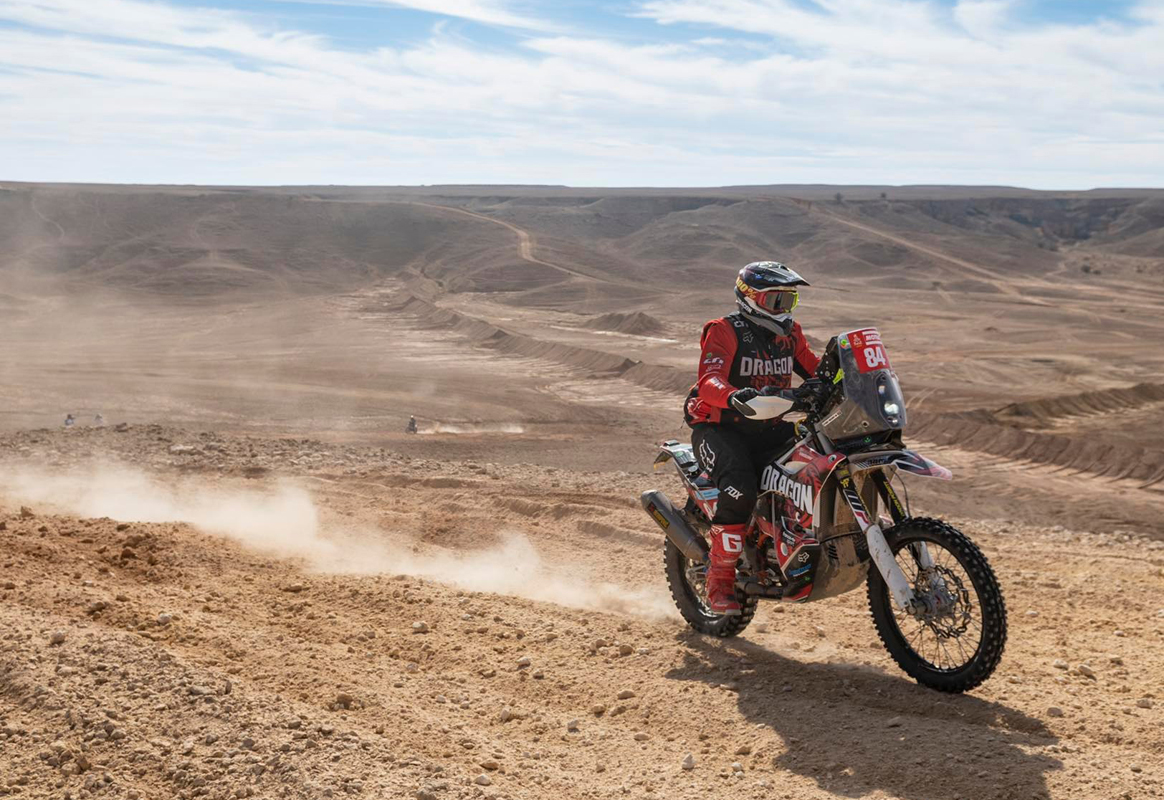
Photo credit: A.S.O. / Horacio Cabilla

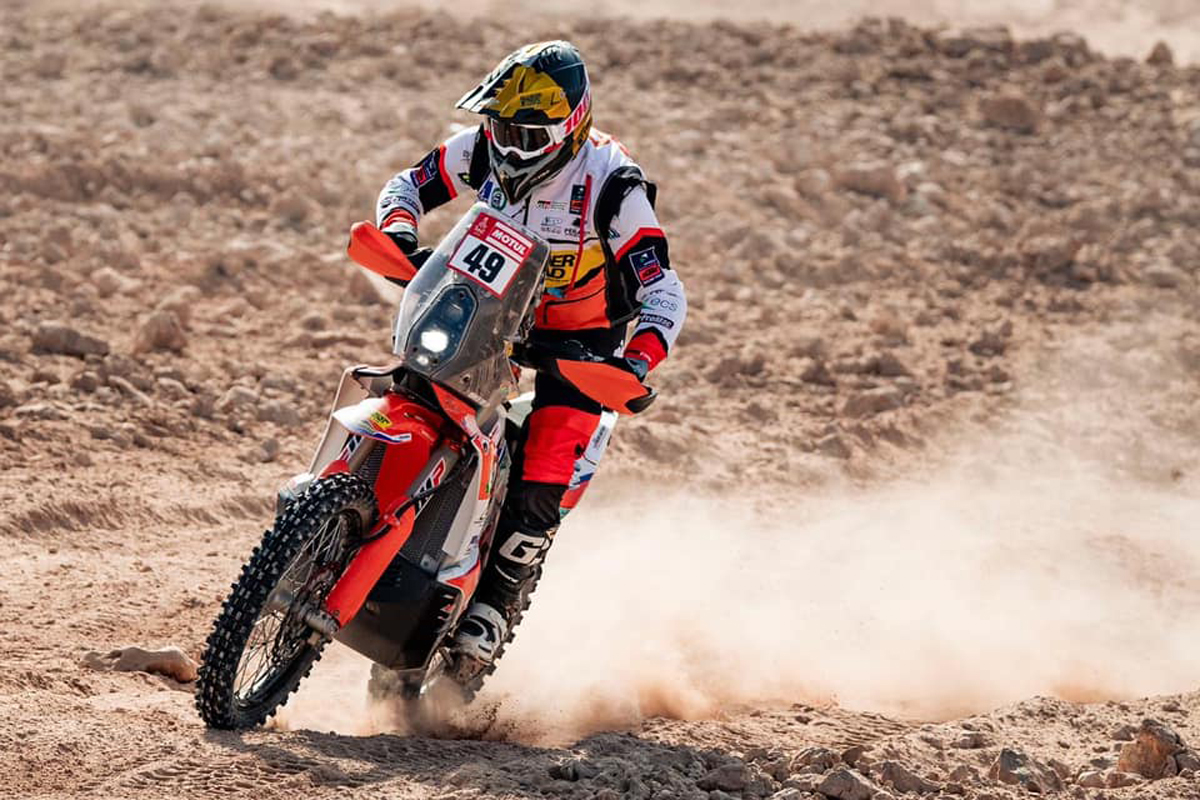
The Dakar is known for fortunes that ebb and flow for competitors, but this year seemed to be especially hectic. All the usual Rally Raid stars were there, but there were a few interesting developments right off the bat. The big news in the pre-season was Kevin Benavides, last years winner on a Honda CRF450 Rally, defecting to KTM. Given the HRC budget, I would imagine that KTM must have made him an eye-watering offer. The other noteworthy entry was the 2017 KTM mounted winner, Sam Sunderland, on a GasGas. The Spanish outfit was bought by Pierer Mobility, KTM’s holding company in 2019. Not traditionally Rally bike builders, it would be their third bash at Dakar. They were obviously serious with their signing of Sam as well as promising young Aussie, Daniel Sanders.

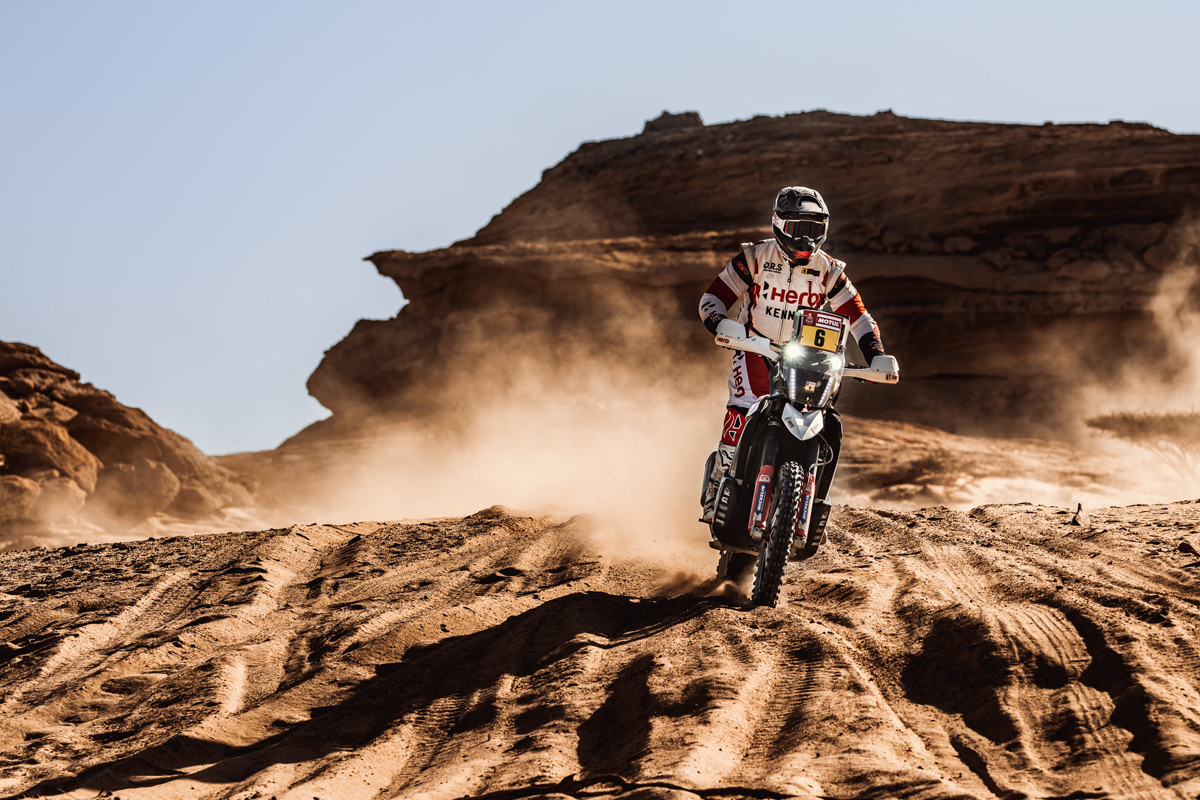
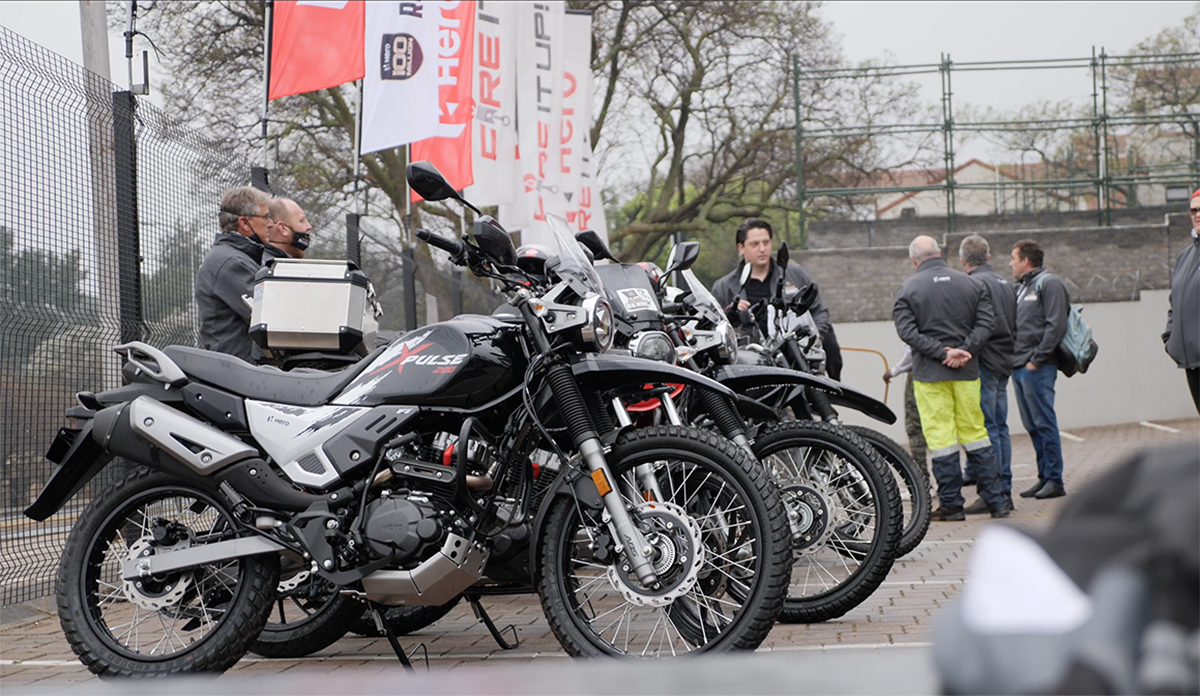
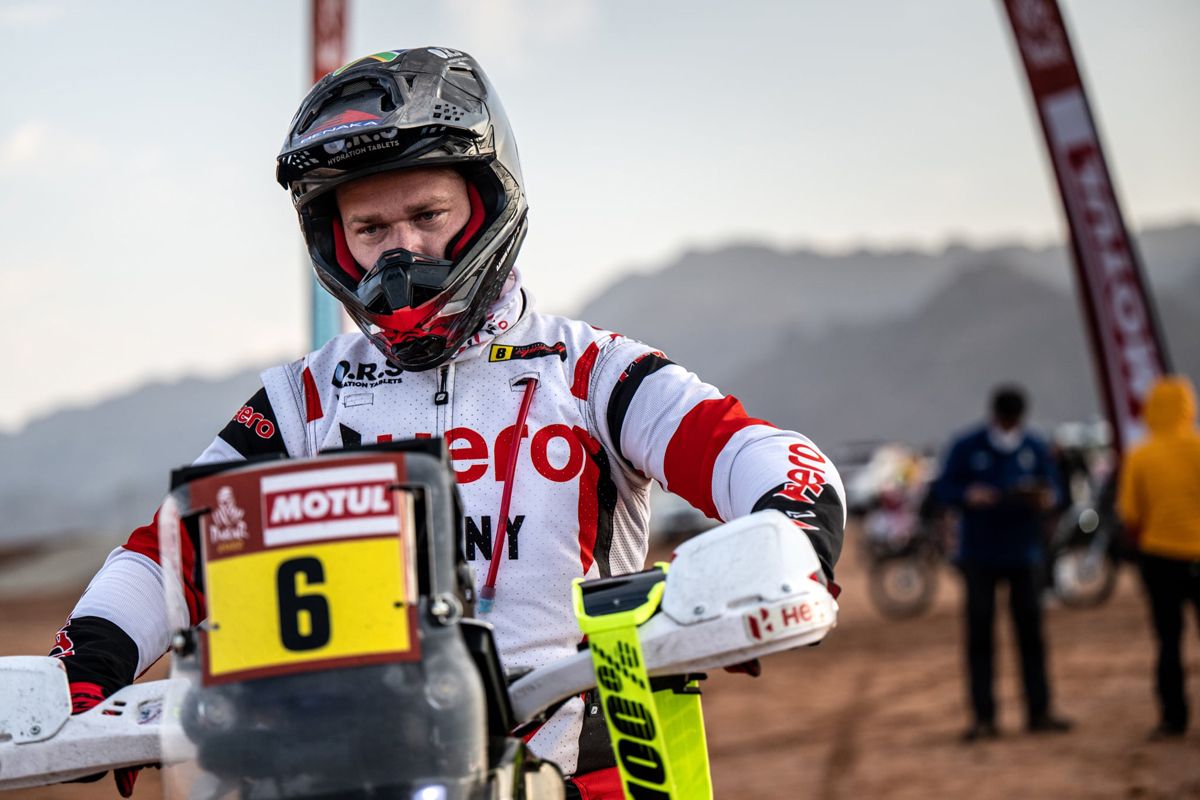
Also showing intent were the Indian mega motorcycle manufacturer Hero, with Joaquim Rodrigues, brother in law to Dakar legend Paolo Goncalves, who tragically succumbed to injuries suffered after a crash in the 2020 Dakar, as their top rider. His wingman was Dubai based South African Rally rider Aaron Maré.
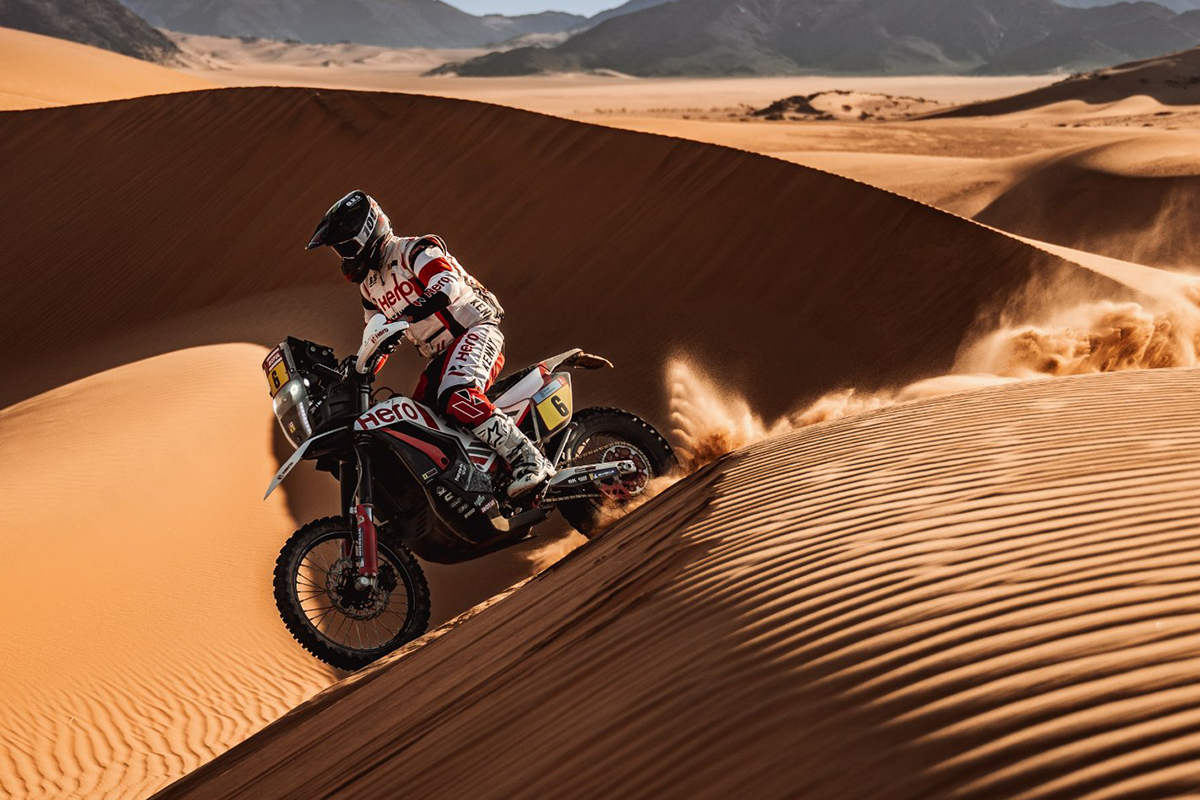
Photo credit: Hero MotoSports

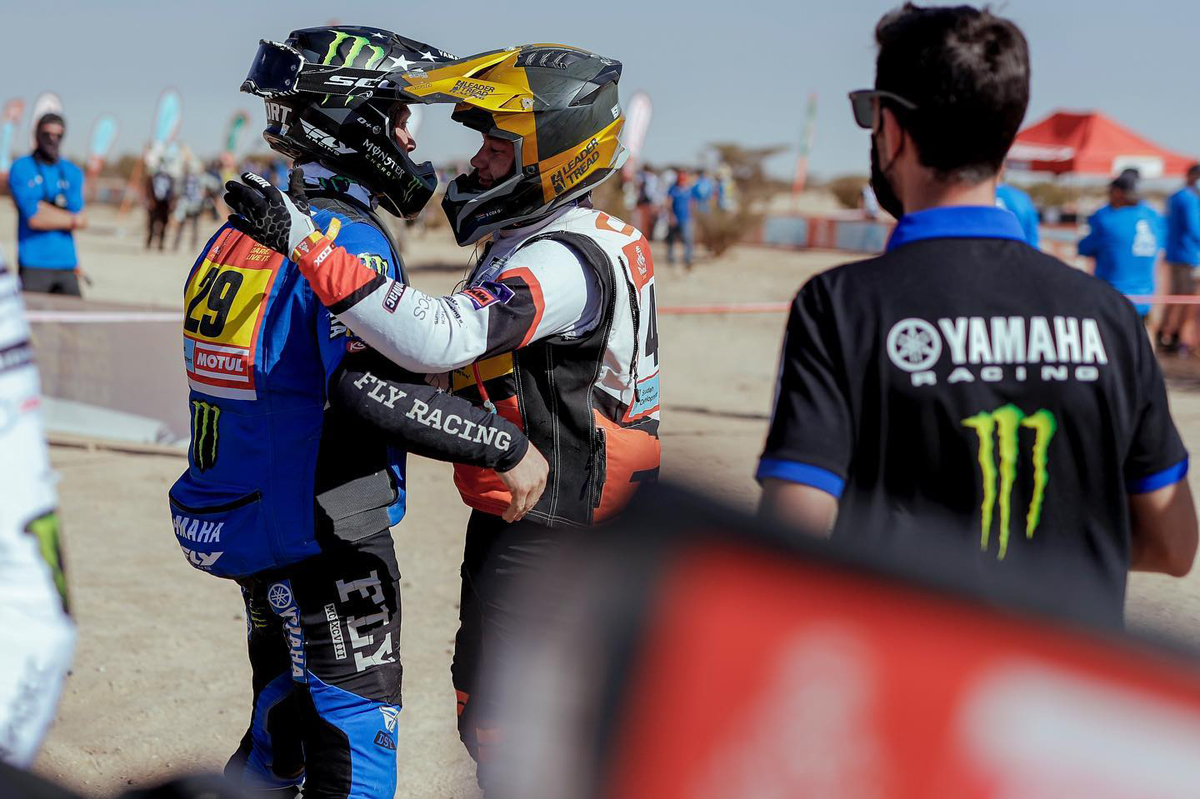
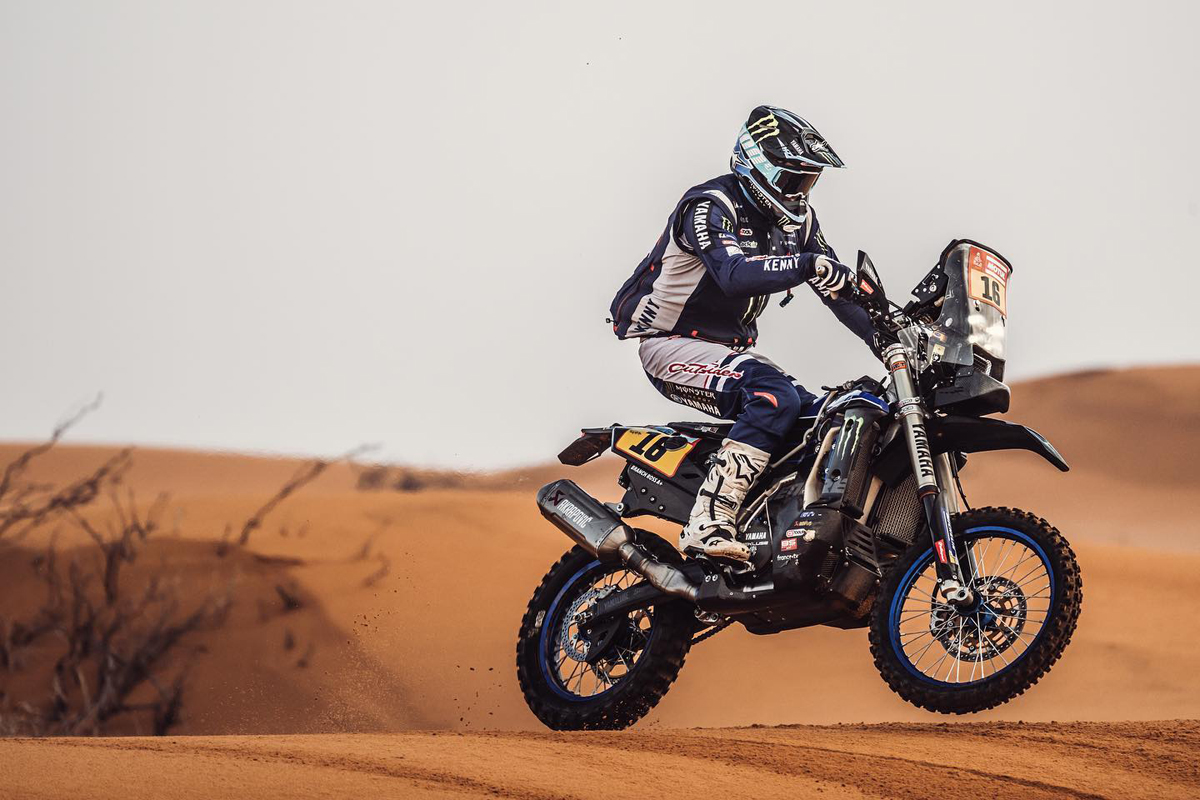
Yamaha strengthened their team with the addition to their ranks of the vastly experienced 39-year-old Andrew Short in 2021. Adrien Van Beveren, Ross Branch, our very own much loved Kalahari Ferrari (OK so he’s from Botswana, but that’s close enough!) and Short, had unfinished business after their Yamaha’s all expired in 2021 from ingesting contaminated fuel. KTM rolled to the line with 2018 winner and reigning 2021 Cross Country World Champion, Matthias Walkner and Aussie stalwart and two times winner Toby Price, shouldering their hopes.

Honda too rolled out their big guns. Ricky Brabec (1st in 2020 and 2nd in 2021), Pablo Quintanilla, lured away from Husqvarna and already with a Dakar 2nd, 3rd and two 4th’s to his name. As if that wasn’t enough Joan Barreda Bort, the Spaniard with 27 Dakar stage wins and José “Nacho” Cornejo Florima, brought in to replace Paolo Goncalves, were also in HRC colours. Talk about a stars studded cast. With a bit of good fortune (always a Dakar pre-requisite) any of these riders can win Dakar.
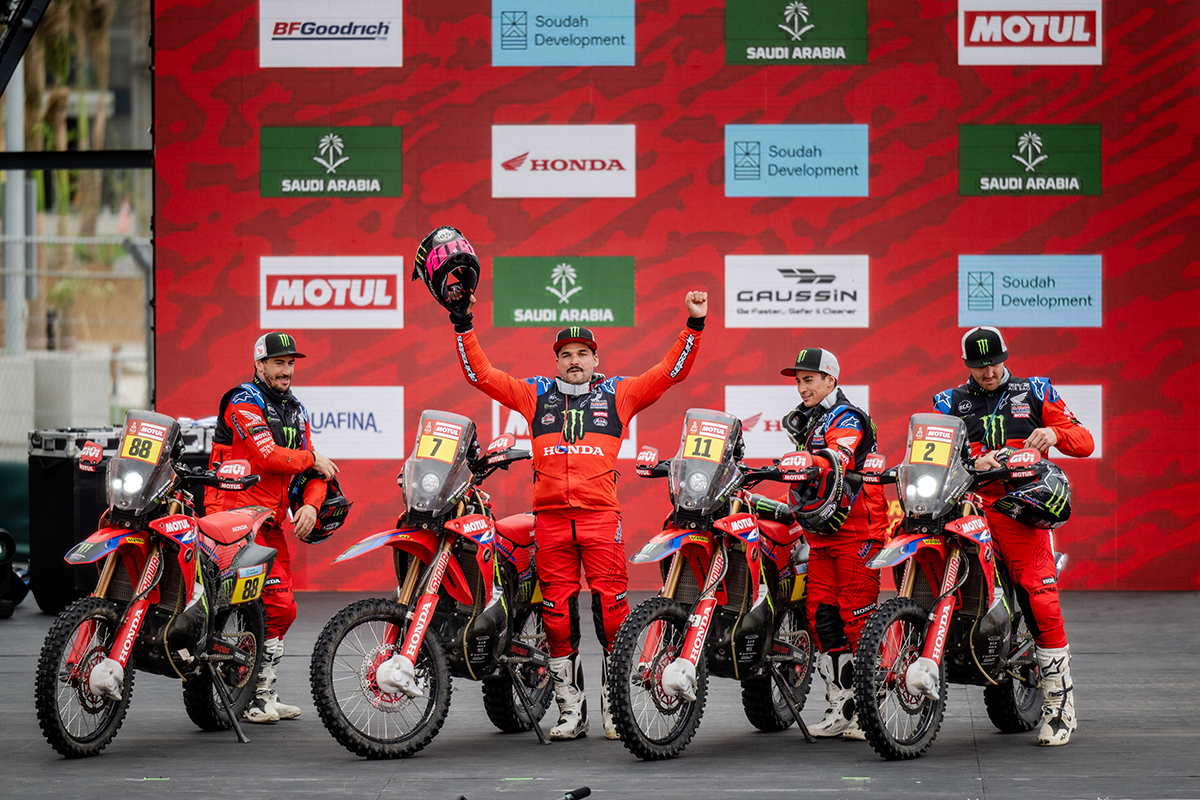
Photo credit: HRC

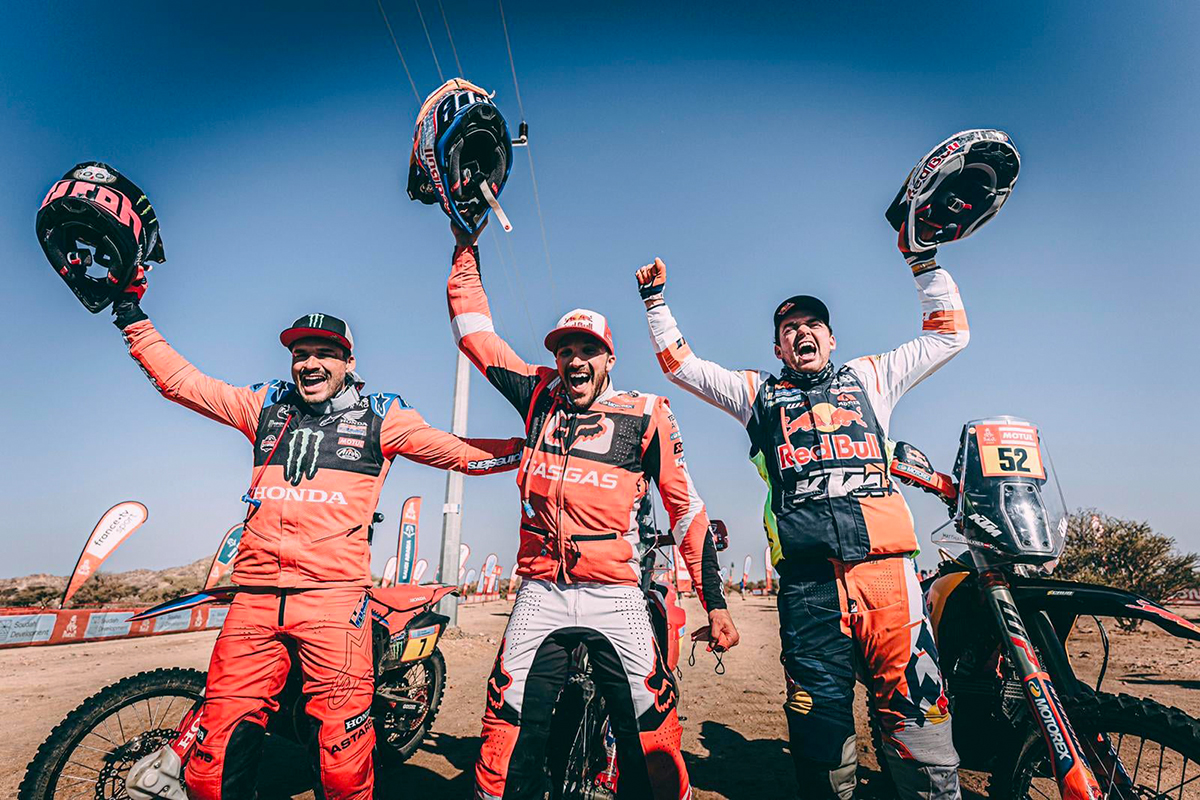
The rest, as they say in the classics, is history. 12 stages later, with the closest winning margin in 34 years, Sam Sunderland, making history for GasGas, stood on the top step of the podium, with runner-up Pablo Quintanilla on his Honda, a mere 3-min 27-sec adrift! Matthias Walkner filled the third spot, also only 3-min 20-sec behind Pablo. The figures don’t even begin to tell the story…the first stage was won by Daniel Sanders on his GasGas, showing the capability of the machine in the right hands, right from the get-go.

This stage then set up the drama that was going to unfold for the duration of the race. Some of the big stars had a nightmare with navigation and lost huge amounts of time right up front. Notably, Joan Barreda, Andrew Short, Toby Price, Nacho Cornejo and Ricky Brabec, who ended up between 40-minutes and a full hour behind the leaders. For these riders, the rest of the Rally would be about minimising mistakes and trying to pull back time. They had a mountain to climb in more ways than one.
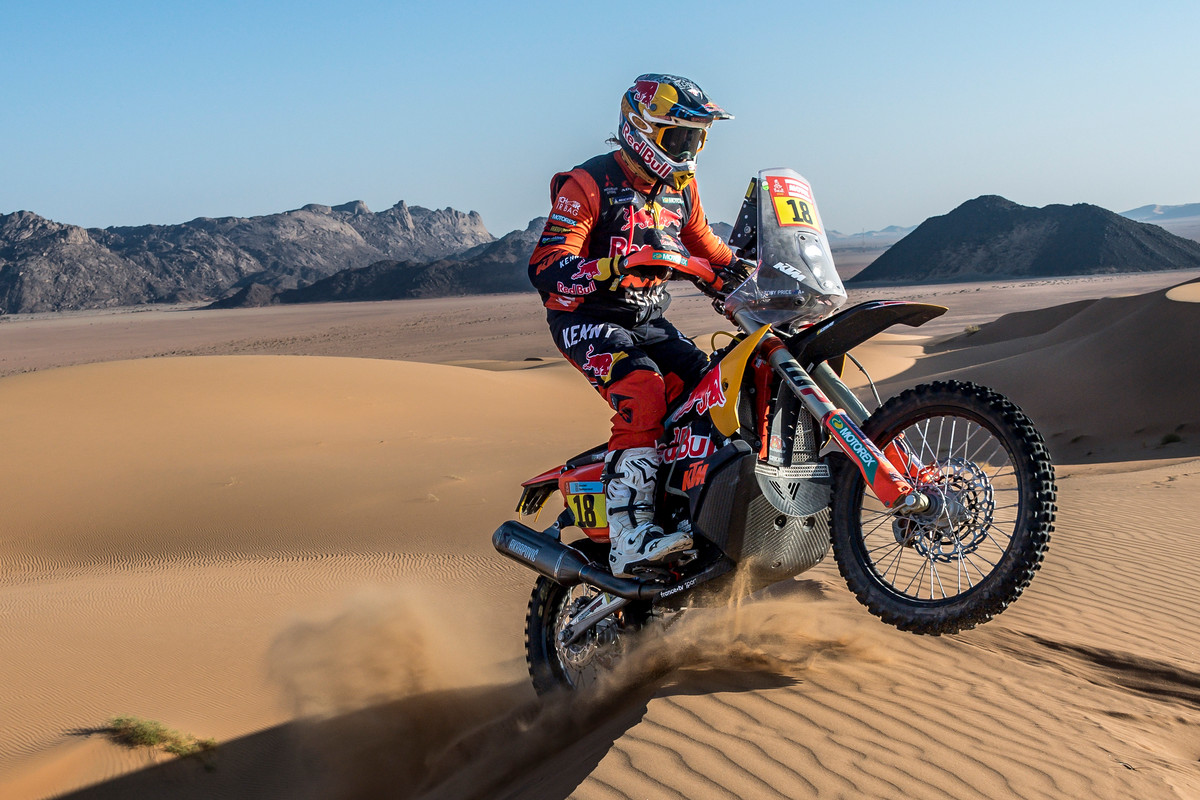
Photo credit KTM

Serving notice, and in the top ten at the end of the stage were Quintanilla (2nd), Walkner (3rd), Van Beveren (4th), Mason Klein, 20-year-old American rookie on a Bas KTM 450 Rally Replica (5th), Sunderland (6th) and our boykie, Ross Branch in 9th. What unfolded over the next 11 stages was something that has emerged as a pattern over the years and doesn’t seem fair. You don’t want to win a stage at Dakar, because that means that you start first the next day with a huge target on your back. You have to be on point with your navigation and at the same time ride really fast. The fellows following you just jump on the main jet and follow your tracks. You kinda want a top ten, rather than win. This means that you can make up time daily by focussing more on riding and a tad less on navigation. The Honda boys really capitalised on this and started to ride back into contention over the rest of the rally.

Adrien Van Beveren is a case in point. Going into the penultimate stage of the rally he was leading overall by six minutes. A waypoint would not register for him and he saw other riders ‘registering’ riding the same route as him. It eventually picked him up and now, having lost a lot of time crisscrossing the route to try and get the waypoint to register, he rode, in his own words, at 200% resulting in two crashes. Also running low on fuel he had to cool it to make the end of the stage, losing almost 20-minutes and the rally lead. Such are the highs and lows of the Dakar. He rode himself back into 4th place by the end of the race. He must rank as one of the best riders to have not yet won a Dakar.
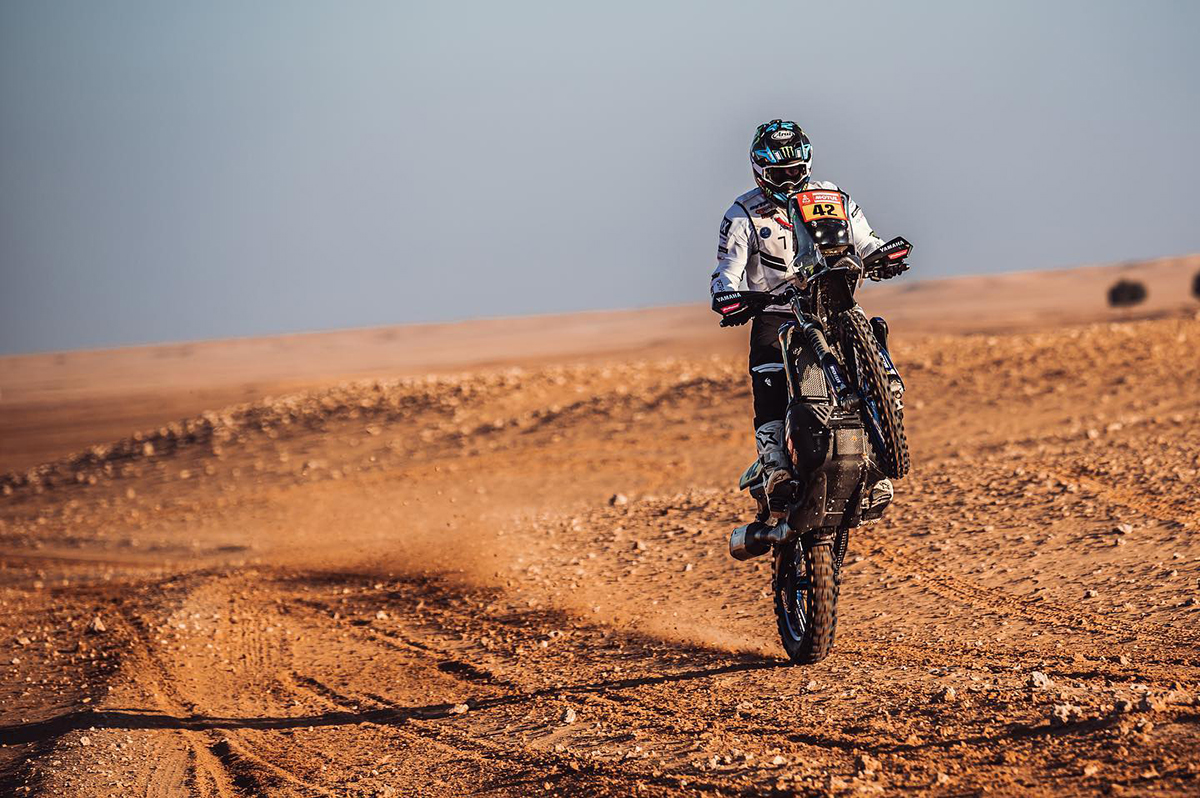
Photo credit: Yamaha Racing

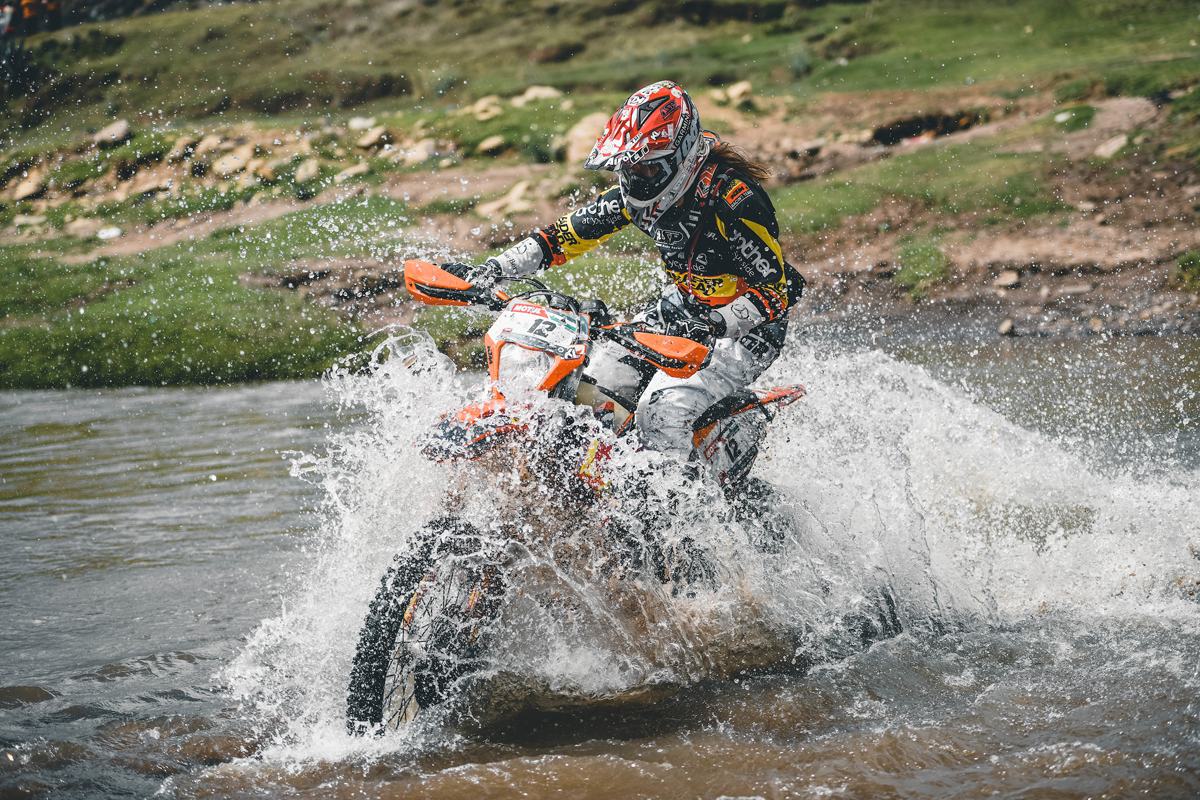
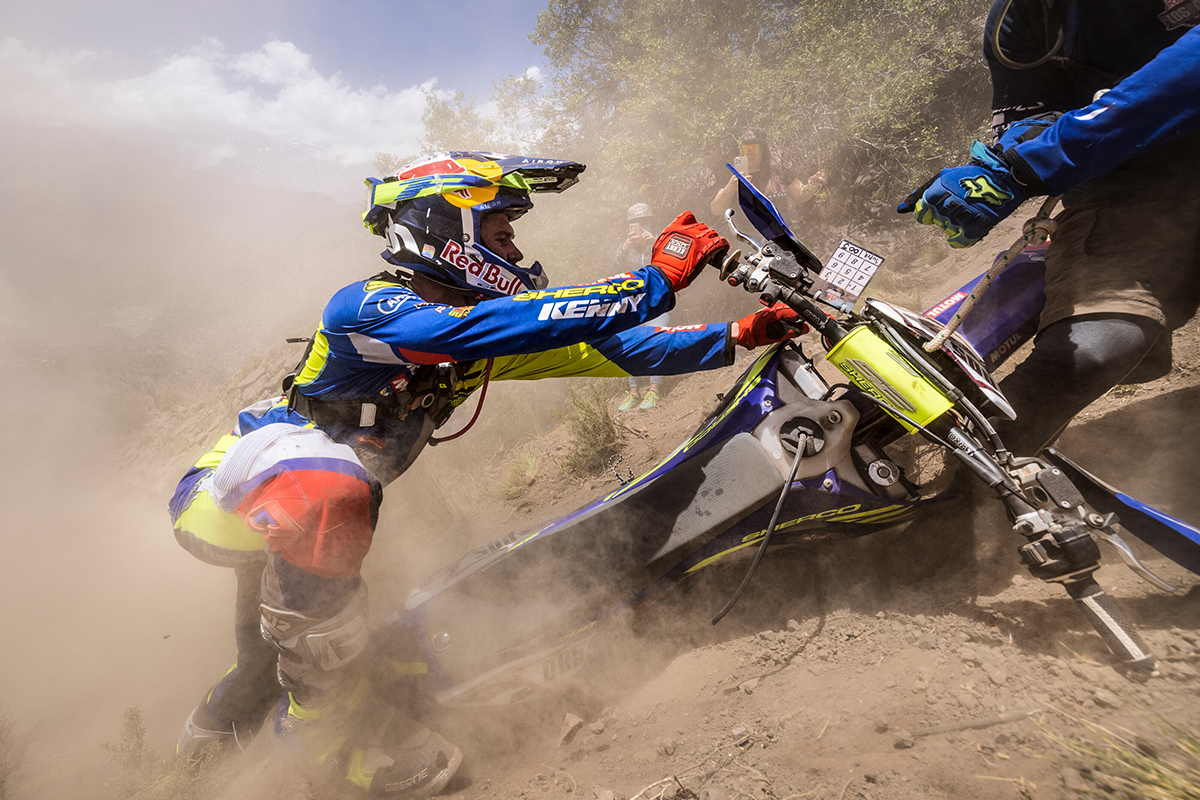
Our Ross Branch rode a brilliant rally up to stage 6. He was one of the leaders coming onto the stage due to an excellent stage 5. The route was over the truck route from the previous day which resulted in such churned up ground that the organisers ultimately deemed it “too dangerous” and shortened the stage to just 100 kilometres. Unfortunately, it had already cost the Kalahari Ferrari his race. He had a huge off, bruising his body so badly that he was forced to withdraw from the race. In true Ross fashion, he tried to continue the next stage.

There is a Facebook clip of him trying to get on his bike which virtually moved me to tears. He is clearly in immense pain, so much so that a fellow competitor has to help him get his leg over the bike. He lost feeling in his one side from nerves pinched from the excessive bruising and had to call it quits. Knowing Ross as I do, to say he was gutted is a huge understatement. If there was an award for guts and determination, he would be the leading contender in my book. He has shown he has the ability to compete with the best. He was running consistently in the top 10. Like a number of other riders, he just needs a small run of good fortune.
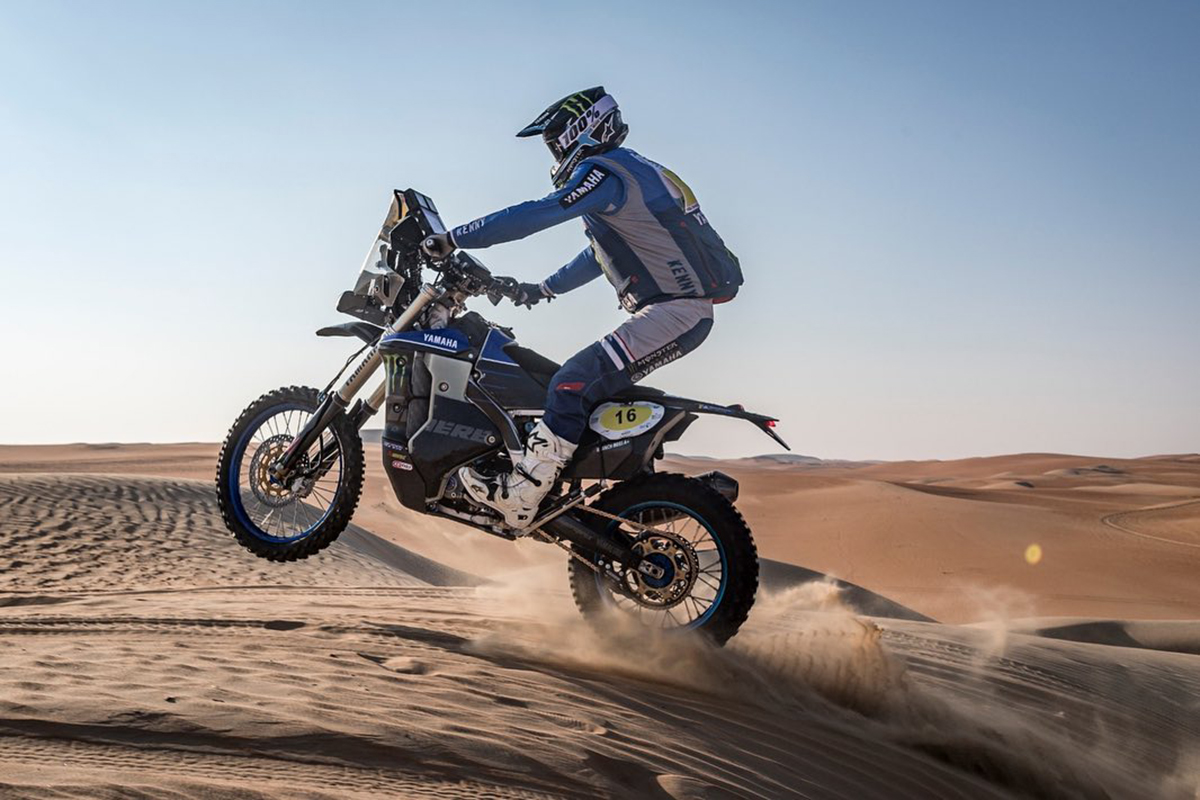
Photo credit: Yamaha Racing

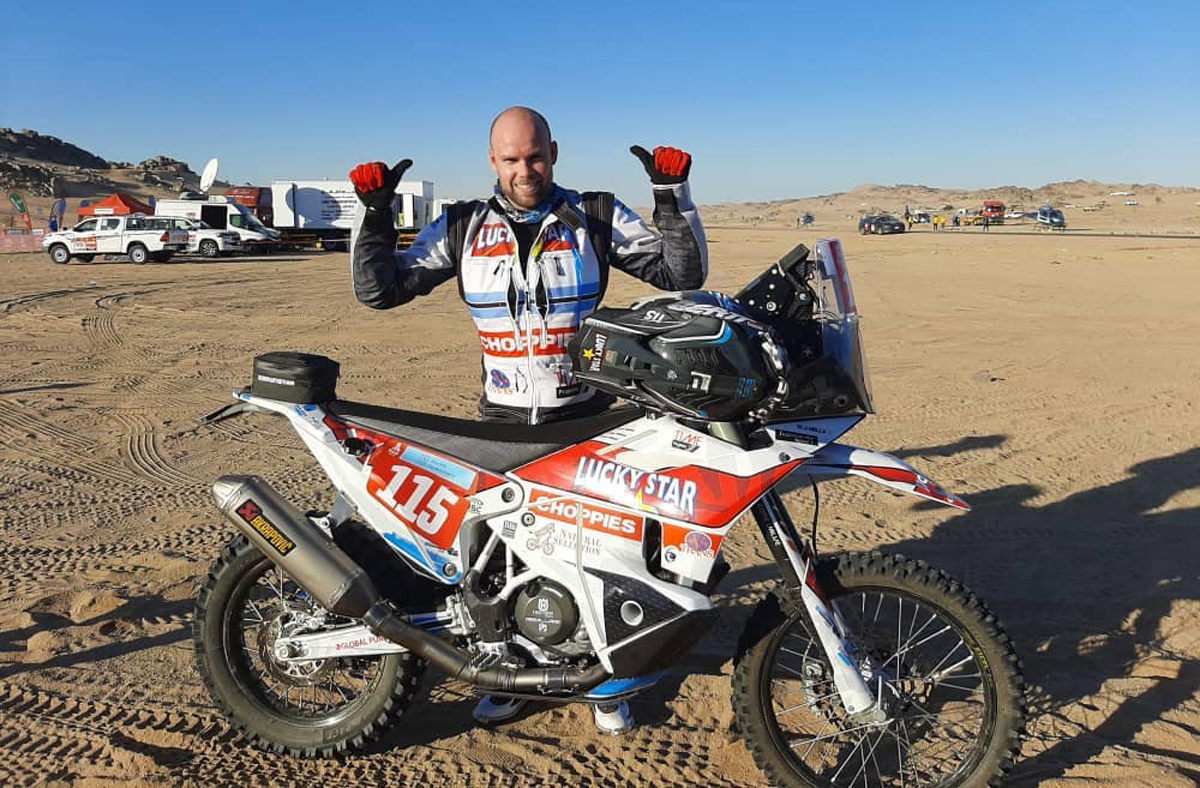
A number of South Africans deserve an honourable mention. Aaron Maré rode a great Dakar, performing consistently and riding his Hero to 16th place. Dakar legend Alfie Cox was supporting his son Bradley, riding his first Dakar. Brad rewarded him with a level headed and excellent result, coming home 25th overall. Charan Moore, riding in the “Original by Motul” class finished a creditable 34th overall. These guys are the unsung heroes of the Dakar. Unsupported, they ride, then have to service and repair their own bikes for the next stage. Supermen!. John Kelly and Stuart Gregory are two such fellows, finishing 46th and 65th respectively.
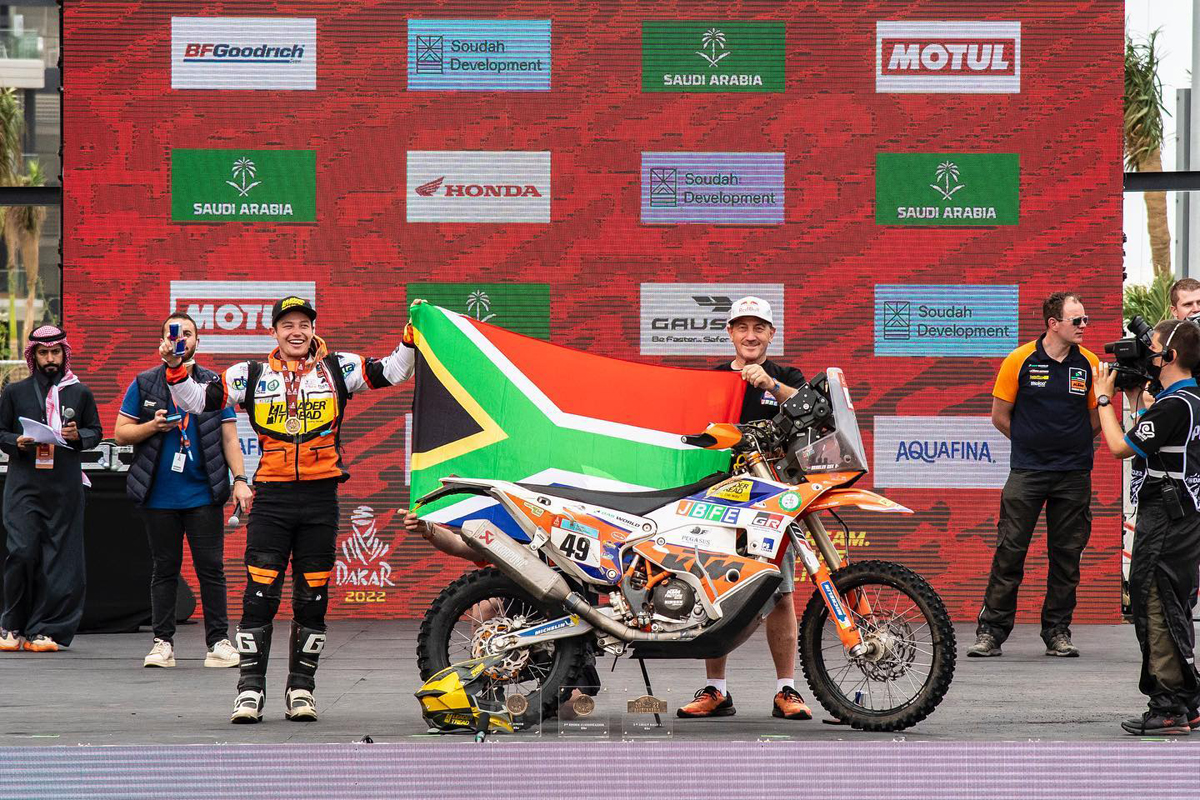
We cannot mention the Dakar without speaking about MotoGP star Danilo Petrucci. Riding his first Dakar, he was competitive from stage one. His KTM, unfortunately, expired on stage four, forcing his retirement. He continued, albeit just for the experience, winning stage five overall! Frikken unbelievable! As the race drew to an end it was the Hondas which, from a team point of view, impressed. Every day they clawed their way back up the leader board.
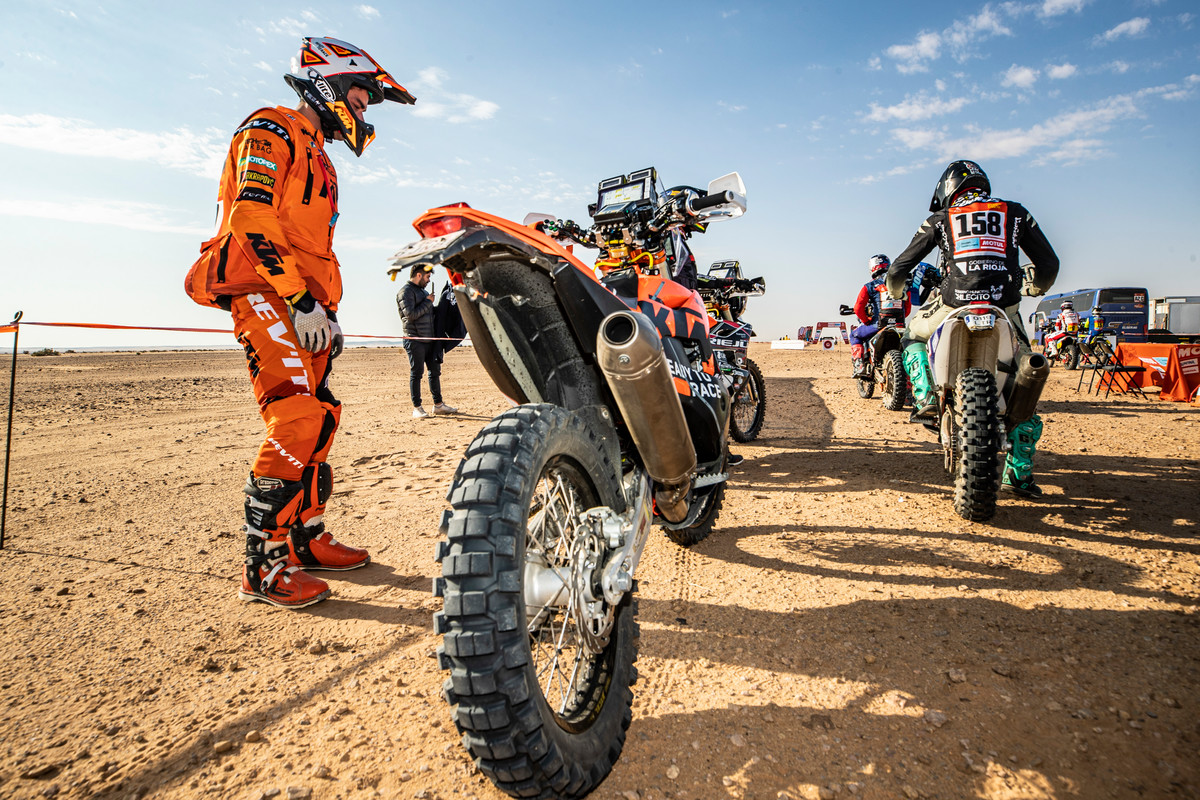
Photo credit KTM

When the checkered flag dropped, all four factory Hondas were in the top ten. Quintanillo pipped into 2nd, Joan Barreda 5th, Naco Cornejo 6th and Ricky Brabec 7th. Adrien Van Beveren, who, in his own words, “regained my desire to take risks”, rode into a so well deserved 4th, having led the rally for a number of stages. KTM rookie Mason Klein, who started well, ended well as well, with a fantastic 9th place, just pipping Aussie ace Toby Price, who rounded out the top ten.

Van Beveren, who by the way, is Sam Sunderland’s brother-in-law, maybe hit the nail on the head with his quote. No one will win the Dakar without being willing to take risks. The 450 Rally bikes hit speeds of up to 180 kilometres an hour, across some of the roughest and most inhospitable terrains on the planet. To risk life and limb is without equal. To illustrate this, just Google historic results. There is not a single winner who has not had to throw in the towel in a Dakar due to physical or mechanical issues. They simply swallow it up and try again the next year. To every single modern-day gladiator who straddles a bike at Dakar, you are my absolute heroes and I salute you! Bring on 2023…
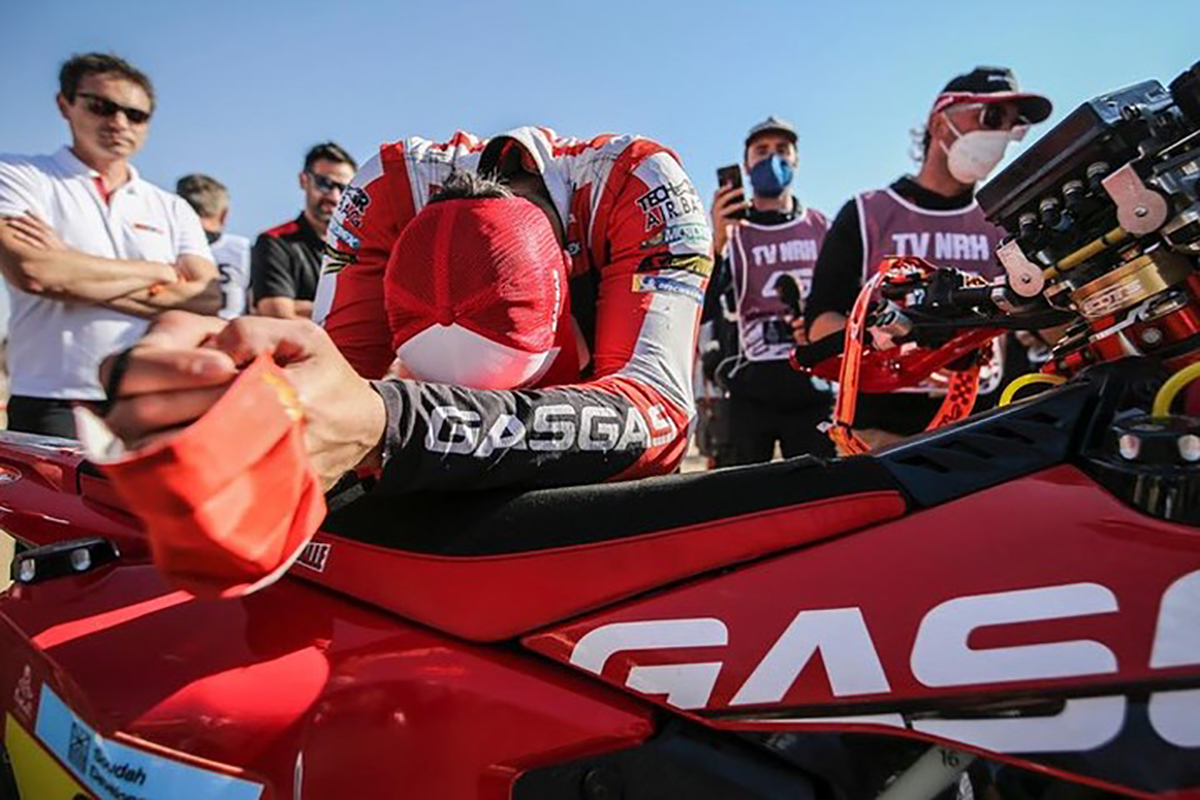
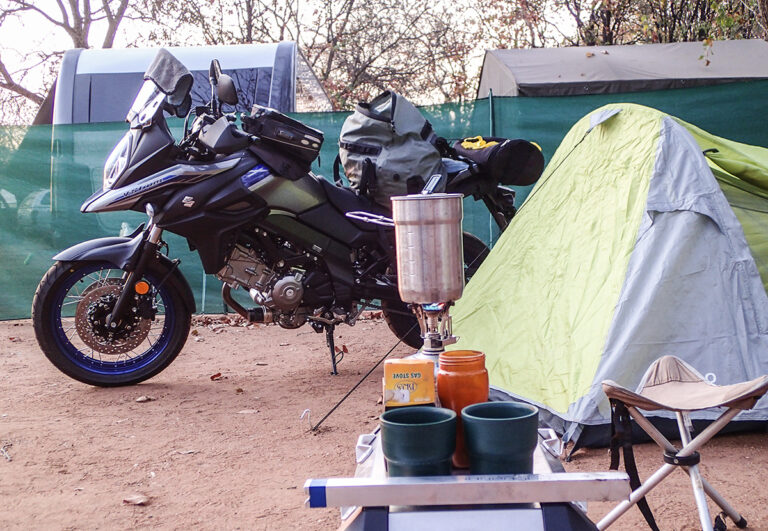
Photo credit: gasgas.official

V-Strom Stories – Chapter 1

Photo credit: Bjorn Moreira / ZA Bikers

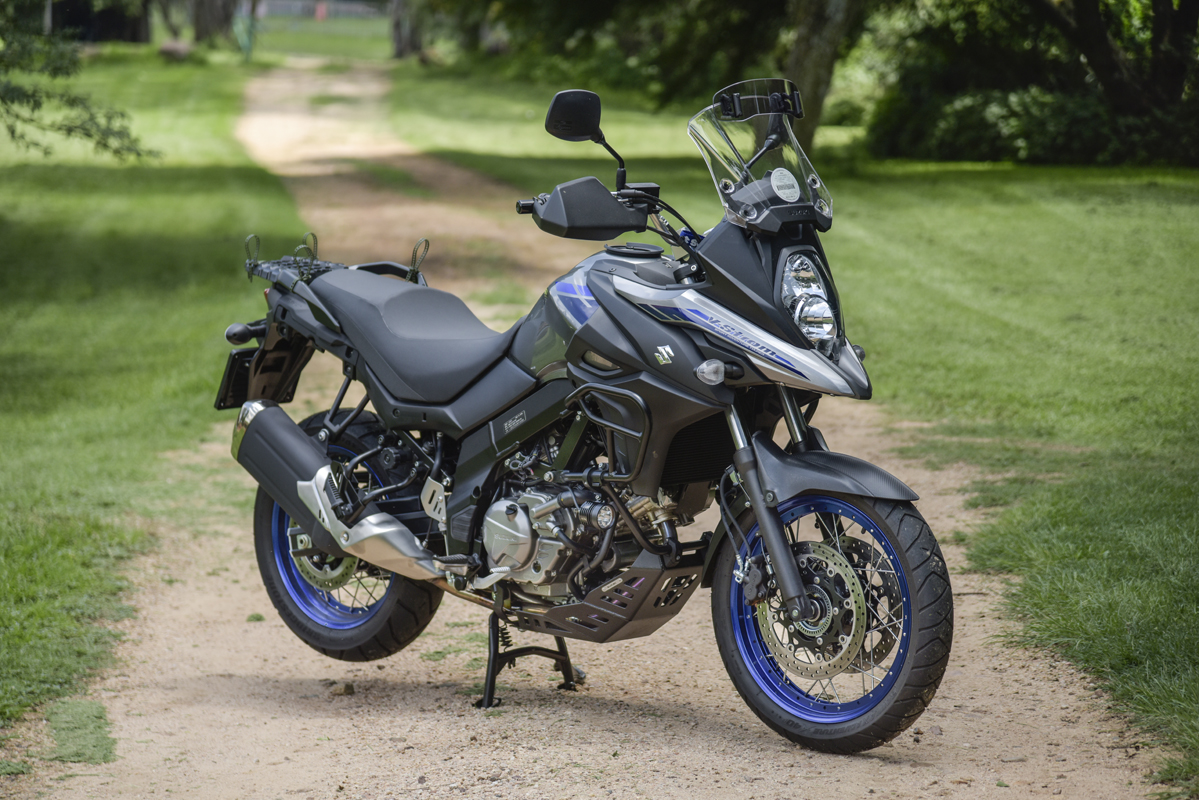
Heeha! I took delivery of my Suzuki V-Strom DL650 XT. I had the perfect opportunity to do some running in towards the end of last year. Nothing better to bond with a new bike than by undertaking a road trip. I have also discovered that you can only learn a certain amount about a bike ‘second hand’. Reading reviews and watching YouTube clips, can only reveal certain aspects of owning the bike. To really form a considered opinion you have to plant your butt in the seat and spend some hours in the saddle. Only then is all revealed.

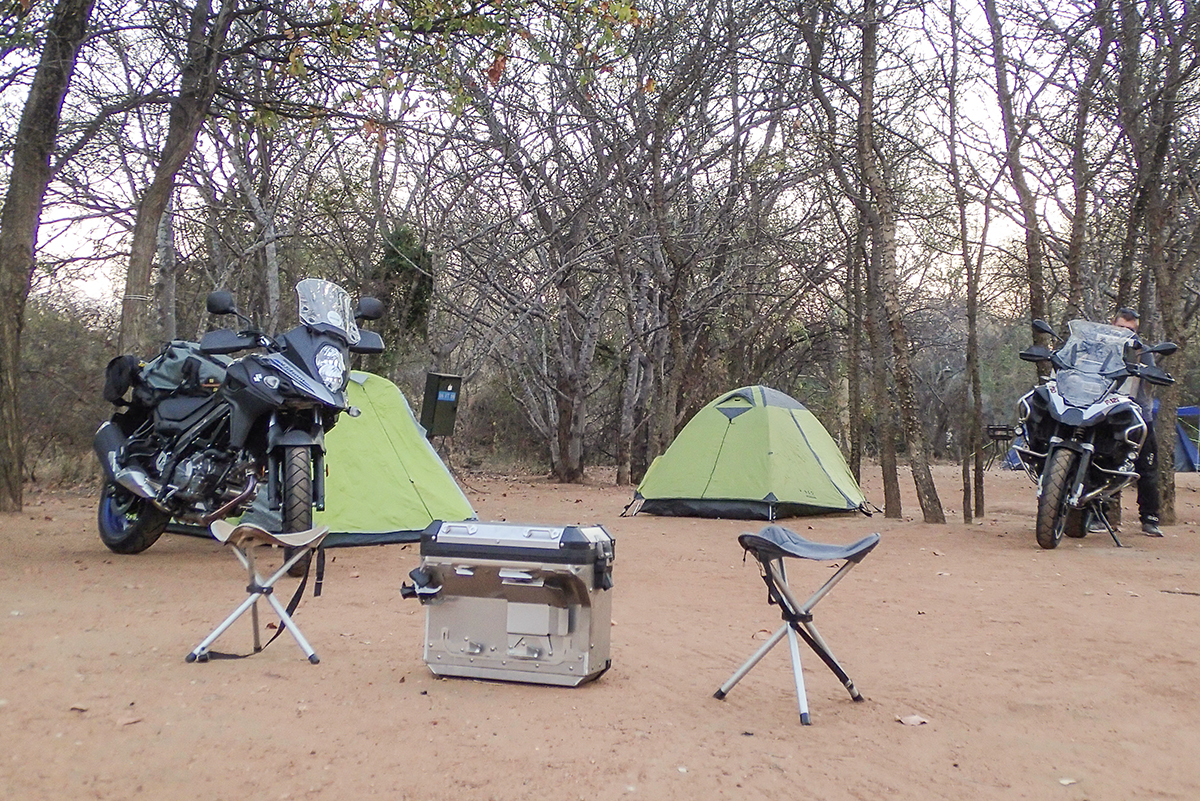
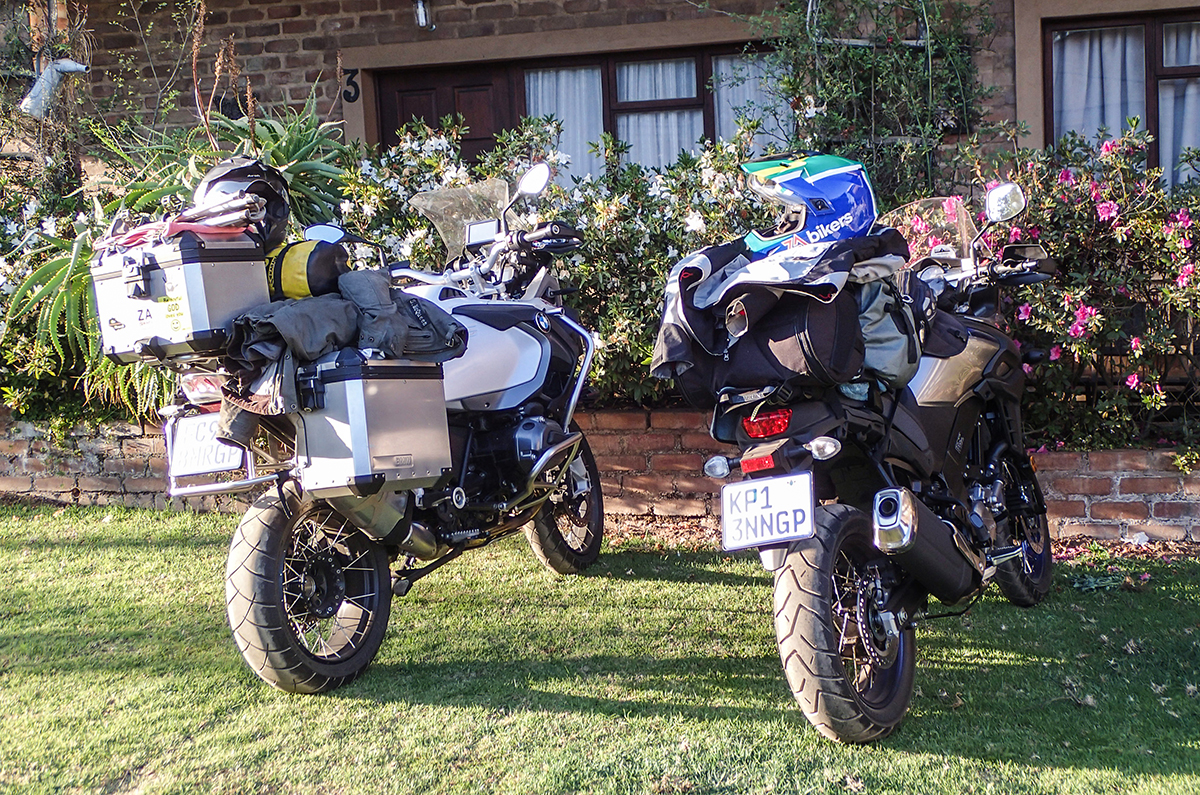
My son, also Dave, on his BMW R 1200 GS Adventure, needed no convincing that he needed a road trip where we could pitch our tents after a long ride, get a fire going and sip on a decent red in front of our ‘bushveld TV’, whilst contemplating the wonders of life in general and riding motorcycles in particular. We rode north out of Pretoria early on a Friday morning onto an already busy highway. Before Bela-Bela we peeled off onto the old road north. At the best of times, I abhor highways, but especially when traffic is hectic. Wherever I have the option I take to the road less travelled.

Photo credit: Dave Cilliers / ZA Bikers

The Suzuki was already winning me over with its smooth and willing motor and general comfort. Keeping the revs under six grand still allowed 130 kph cruising. We stopped for a Wimpy brekkie in Modimolle before continuing on our way to a more scenic old road. Lower traffic volumes have kept the surface in pretty good condition, making for really pleasant riding.

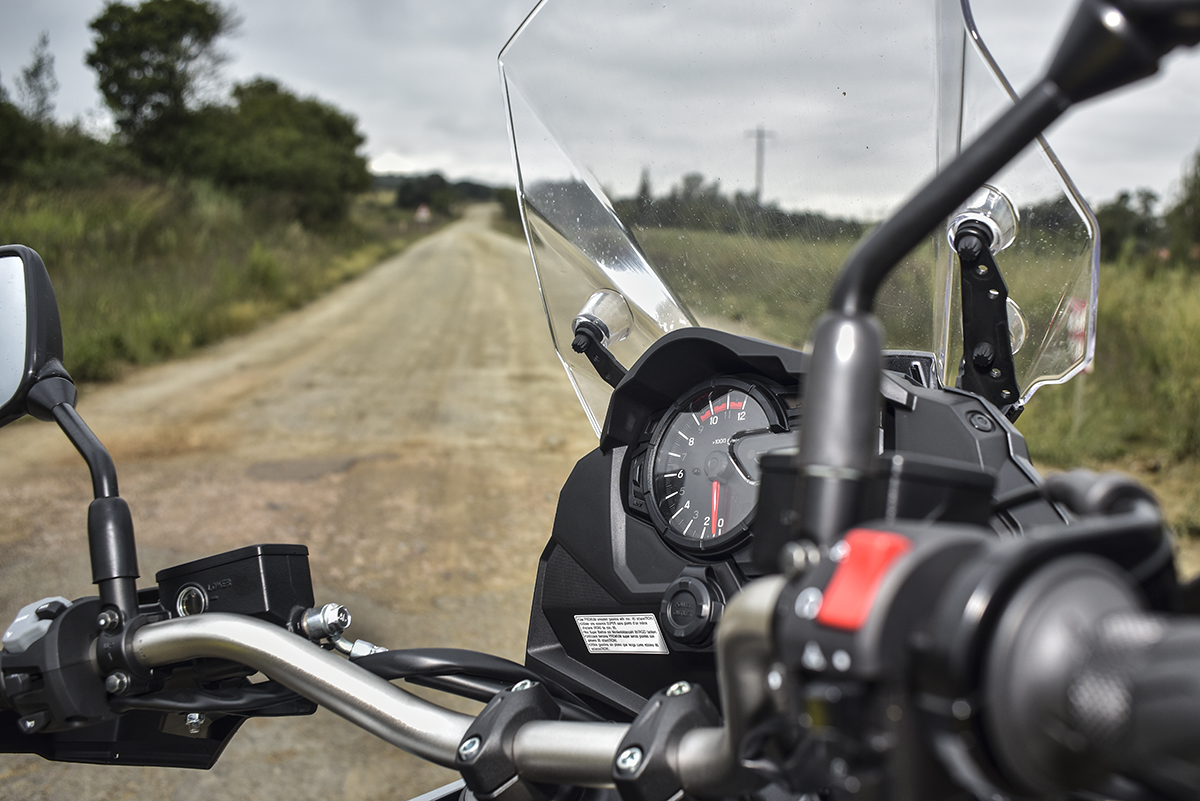
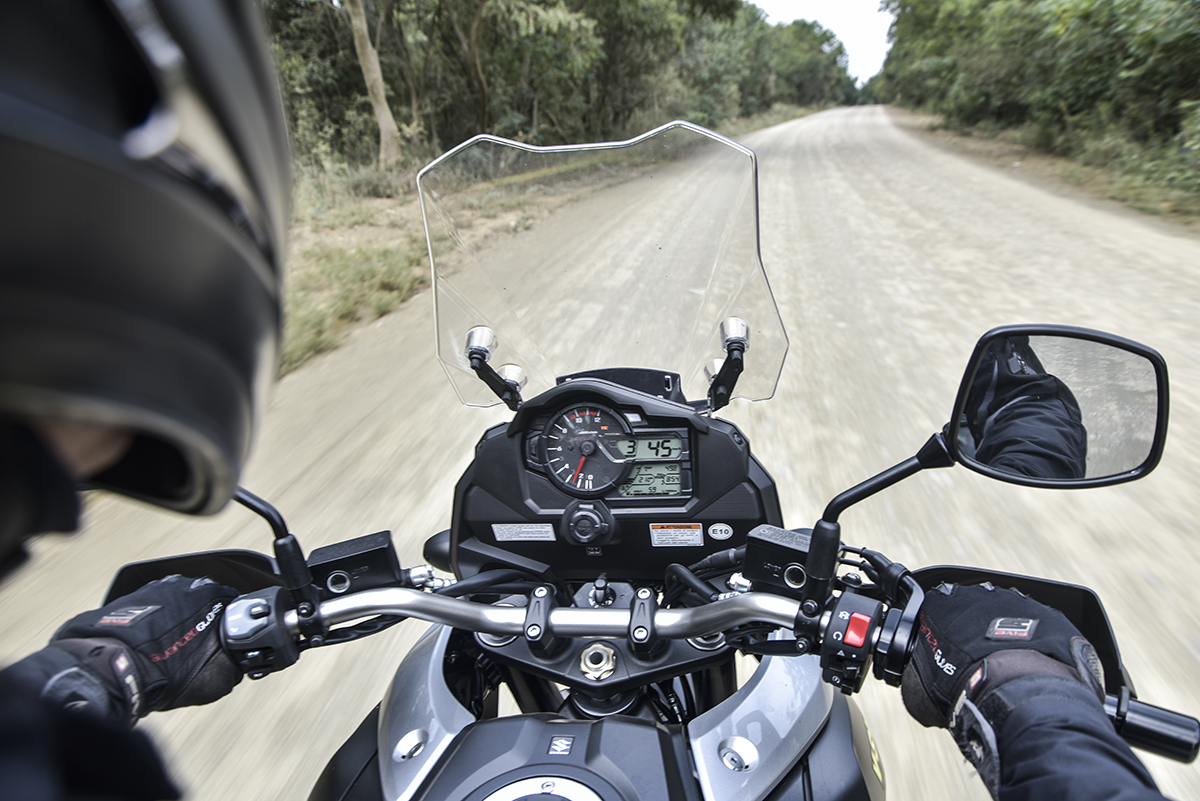
Checking the vital info on the dash of the V-Strom confirmed my opinion that the current crop of TFT displays may tick the box for Generation X, but in terms of functionality, they don’t come close to a logical display like that on the DL650 XT. Scrolling through menus and various screens to try and access information or reset readouts is way more work than on a logical display. The Strom has an analogue rev counter with a side screen giving all the information in digital format. A large digital speedo and gear indicator keep you informed and other info is changed by a simple toggle switch on the left handlebar.

Photo credit: Bjorn Moreira / ZA Bikers

To reset, simply hold the button for a mo. TFT displays distract you for yonks trying to figure out how they work. In theory, we should suss them out before we ride off, however, in practice most riders will try and figure them out on the fly. Guaranteed someone has already become a bumper sticker as a result. We are being conditioned to a future where we just clip our mobiles into a recess on the ‘dash’ and use the ‘app’ to turn it into our display. Mark my words.

We hooked a right in Polokwane and rode to Haenertsburg. I had done nothing to adjust preload or damping on the rear shock. The ride is firm yet compliant enough over uneven surfaces. Some reviews I have read suggest the suspension needs upgrading. I am not so sure. The Strom turns beautifully and holds a perfect line through long sweeps. Bumpy bends are despatched without fuss. I have subsequently dialled in a bit more rear preload, easily achieved with the knurled knob, then upped the rebound damping to suit. The back shock is now well controlled and surprisingly good over poor surfaces.

Photo credit: Bjorn Moreira / ZA Bikers

The front is slightly harsh over small bumps but gets better when it receives harder hits. All in all, it is more than adequate and has moved to the… “This year? Next year? Sometime? Never” list. I will let everything settle, then play with the preload and damping with shims and different weight fork oil. I’m pretty sure I’ll be able to get it sorted to my liking. I may look at a fork brace too. Bottom line, it is quite acceptable straight out the box.
Haenertsburg has a Swiss chalet type spot on the left as you roll down the hill into the village. Perfect for a tasty chow or, dare I say, an ice-cold draught craft beer on a toasty summers day. We proceeded down Magoebaskloof to Tzaneen. The little ‘Strom devoured the tighter bends faster than a dog bolts down biltong! The totally neutral and light steering makes the bike a pleasure in the twisties.

Photo credit: Dave Cilliers / ZA Bikers

I was shadowed down the mountain by a red Porsche GT3 RS. I managed to use the agility and slim stature of the Suzy to sneak past slower traffic and gap the Porsche. As the road straightened out he flexed the cars considerable muscle and blasted past with a flat-six wail which set my pulse racing. If only I had been on a ‘Busa, then it would have been a more fair fight!

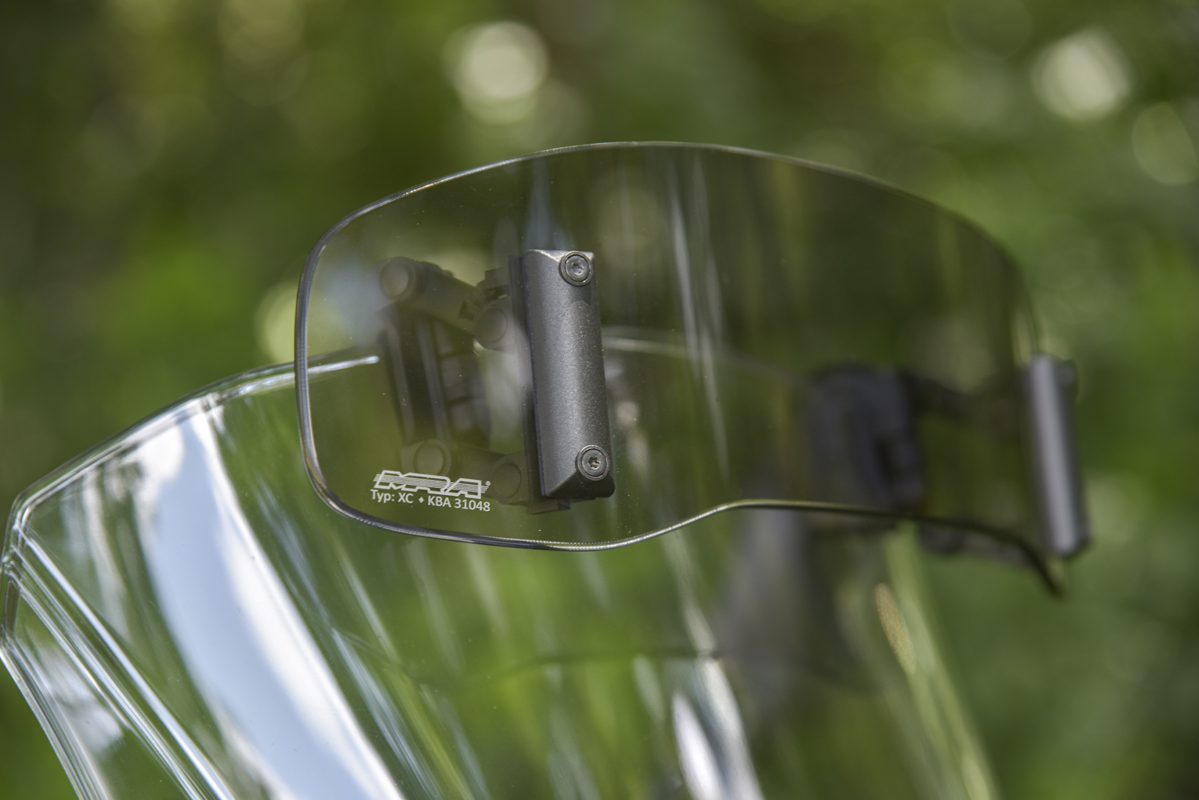
It was now early afternoon and properly hot. We refuelled in Gravelotte. The little Suzi had done 422 kays on a little over 18-litres. A 20-litre tank gives it really good range. The screen works really well on its highest setting, taking all the windblast off your chest and head. An MRA screen extender subsequently fitted smoothed the airflow wonderfully. I now have absolutely no turbulence around the helmet. My tip? Don’t bother with aftermarket screens. Buy an MRA screen extender and transfer it from bike to bike.

Photo credit: Bjorn Moreira / ZA Bikers

They work on a wing principle, speeding up the air under the extender and smoothing the airflow superbly. You can adjust the height and angle to perfection. With tanks topped up, we rolled into Phalaborwa and set up camp in the Forever Resort bordering on the Kruger National Park. This is uber cool because you get to hear hyena cackling, jackals howling and lions roaring at night. We changed into some cooler kit and strolled across the road to a chilled little boutique hotel where we smashed some cold ones. The beers and subsequent meal that we scoffed went down singing hymns.

We watched the sun turn the bushveld gold, then a burnished bronze, before a gentle darkness enveloped us. I will never tire of these spectacular African sunsets. Back at camp, we got a fire going, simply for the unparalleled ambience as we drew our camp stools nearer and cracked a good bottle of red. Sipping and chatting, we spoke of trips done and those bucket-list ones, God willing, still to do. I sensed the silent ‘Strom pricking up its ears, keen to hear what is in store for it.

Photo credit: Dave Cilliers / ZA Bikers

By the time the red was done and the flickering flames had settled into a bed of red coals, we were ready for bed. It was two extremely happy and content campers that settled into their tents. We fell asleep to a cacophony of sound from the Park. As we called quits on a perfect day the night creatures were hitting their straps. What a wonderful place we call home I mused, as sleep overcame me.

The sun rises early when you are this far east. I am pretty much a morning person so I was up at first light, before the sun peeked its fiery head over the horizon. First priority is always coffee, so I fired up my little gas stove and got some water on to boil. Dave and I sipped on a strong brew as the sun appeared as a big red orb through the treeline. Early mornings and late afternoons, what a special time in Africa! The rising sun chases away the shadows of the night and bathes the bush in a glorious golden glow.

Photo credit: Dave Cilliers / ZA Bikers

We showered and then broke camp before the heat of the day. Early morning riding is my absolute best. We meandered out of town, riding south to Hoedspruit. The road takes you along the edge of Kruger. The bikes were revelling in the cool morning air. It was one of those rides where you don’t even look at your speedo. You are so busy taking in the bushveld splendour that you are literally idling along at less than 100 kph, in a silent, smooth, happy bubble.

Once through Hoedspruit, we had to contend with the urban sprawl that is Bushbuckridge. Luckily traffic was not yet too hectic, so we turned towards Graskop and out of town. The bushveld had made way for wooded mountain vistas and the road swept and undulated across the land, marred only by some potentially disastrous potholes. Having ridden these roads for many years it is so sad to witness the decline of the once amazing infrastructure. As the cynical saying goes, “Africa wins always”. Up Kowyns Pass we went and into Graskop.

Photo credit: Dave Cilliers / ZA Bikers

The early morning cloud had lifted revealing spectacular views of the mountains and valleys. Needless to say, it was to the original Harry’s Pancakes we went for breakfast. Our original plan was to sleepover in Graskop, making for a really leisurely day, however, we were enjoying the riding way too much. Fortified by coffee and pancakes we rode towards Sabie enjoying strafing the sweeping roads at a healthy clip. Kaapsehoop was our new destination, so we rode up towards Long Tom Pass and then, before the pass turns proper, we turned left on the road to White River.

This road is not that potholed but it has become particularly bumpy. We then turned towards the Sudwala caves and then left to Montrose. This route was amazing sportbike riding a few years ago. The deteriorating road surfaces are now only really rideable on an adventure bike with longer travel, softer suspension. Taking the road to Waterval Onder, you turn left to Kaapsehoop at Sappi’s Ngodwana Paper mill.

Photo credit: Dave Cilliers / ZA Bikers

We caught up with a mixed bag of bikes as we started up the hill. GS’s, Harley’s and who knows what. The guys (and a few lady riders too) were all over the road, so we picked up the pace to dispense with the mobile chicanes. If you haven’t been to Kaapsehoop yet you got to go there. It is a bit otherworldly. You ascend the mountain from a hot and humid Lowveld to get to the wonderfully cool little village at the top of the mountain. Gold was discovered here back in the 1800s before the fabulous wealth of the Reef goldfields was discovered. It was a little boomtown till the prospects of wealth in Barberton and Pilgrim’s rest lured miners away.

A few of the miner’s horses stayed behind and formed the core of the herds of feral horses which graze the hills around the village. They stroll through the village and drink from the decorative fountain. Riding up the mountain you need to keep a lookout for these wild horses on the road. Sipping on a cold one at the downtown pub, we phoned around and secured the last available accommodation in town. The mood in town over the long weekend was particularly festive.

Photo credit: Ashleigh K Photography

Funny how things turn out. The room we got was at a B+B called Angel Mist, which is on your left as you turn into the town from the main road. It is owned by an affable fellow named Abrie Visser, who has farmed in the Lowveld for most of his life. He takes Enduro and Adventure bike riders on little bespoke rides in the area, tailor-made to the sort of riding that they enjoy. His intimate knowledge of the area will blow you away with some of the sights, generally unknown, that he will show you. He showed us photos of some of the rides. Awesome!

He has ten rooms in his spot, so he can accommodate decent groups. If you would like to enquire further, phone Abrie on 083 359252.

Photo credit: Dave Cilliers / ZA Bikers

An afternoon snooze set us up for a most pleasant evening. The weather was spectacular for the whole weekend. Kaapsehoop can get chilly at night given its altitude, but the evening was perfect. We washed pizza’s down with a couple of cold beers before strolling up into ‘bo-dorp’ to an intimate little pub run by the ex-editor of the Lowvelder. He has some amazing photos adorning the walls of news events over the last thirty-odd years. We whiled the evening away, shooting the breeze with some locals whilst sipping on some good whisky, before strolling back to our digs.

The next morning we smashed a good breakfast before hopping on the already packed bikes for the ride home. Riding the quiet Waterval-Boven road, with its flawless surface, was truly special. It meanders through a valley bracketed with magnificent mountain views. With the Suzy now having over 700 kays under its belt we kept the revs at 6 grand and got home in no time. Spring is such an amazing time for road-tripping. Warm but seldom wet, it makes for magnificent riding. As always, it is bike wash time when getting back from a trip.

Photo credit: Bjorn Moreira / ZA Bikers

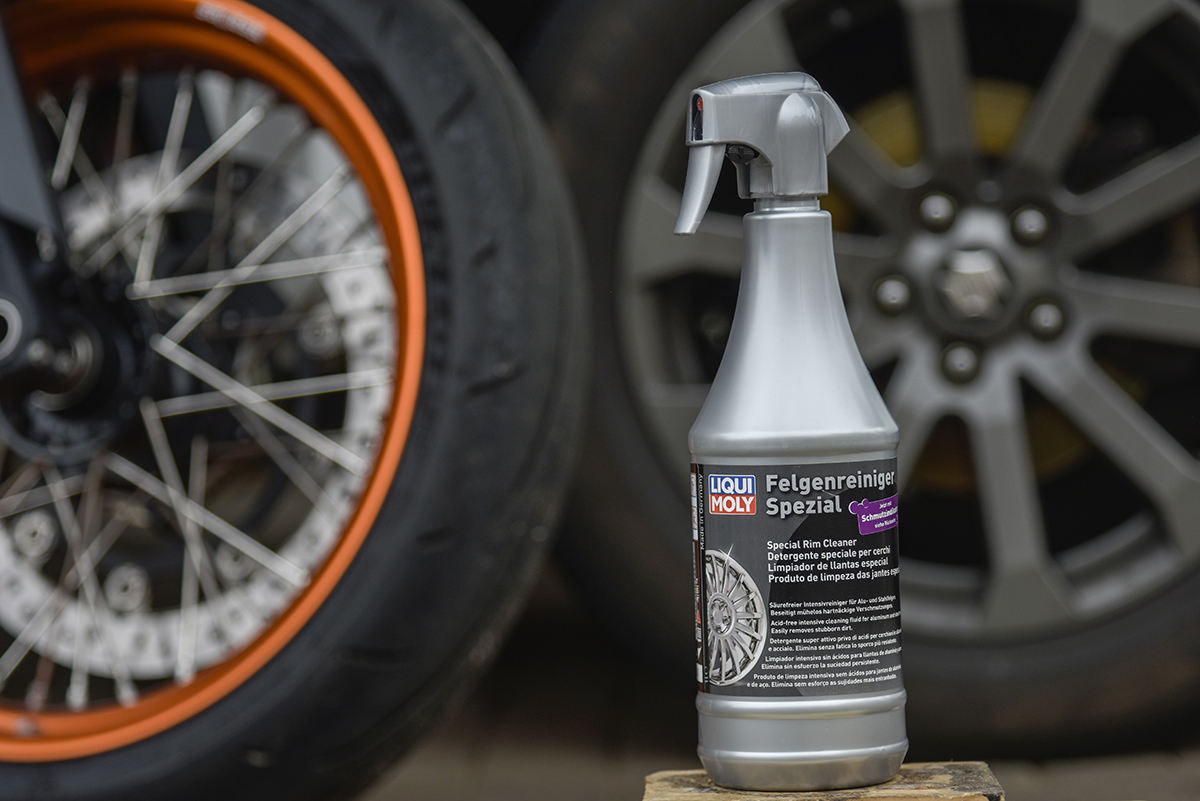
What I am also going to be doing in the “V-Strom Stories” is to share what bike maintenance products I use for cleaning and general maintenance. In this instance, it is going to be Liqui Moly’s excellent bike care range. So watch this space. I’ve got to tell you I’m really looking forwards to riding far and wide on the DL650 XT. The V-Twin has such a relaxed demeanour, it just reels off the kays effortlessly.

From time to time, I’m going to ask Suzuki SA for the loan of their DL1050, to see if, in this day and age, with deteriorating roads, we really need litre bikes. Having said that, if you habitually ride two-up, then the 1050 is definitely the go-to ‘Strom. These V-Stroms are Adventure bikes for the real world. Let the games begin…
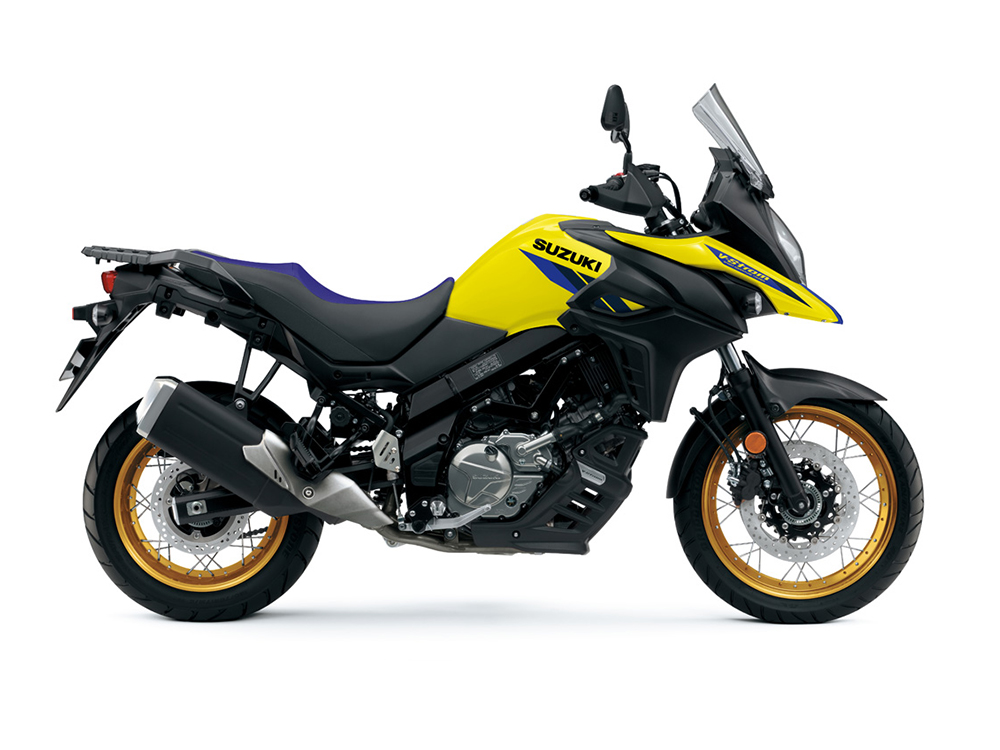
Suzuki V-Strom DL650XA

For more information on the bike that we used in this article, click on the links below…

2025

Suzuki V-Strom DL650XA

Pricing From R166,650 (RRP)


Brand: Suzuki

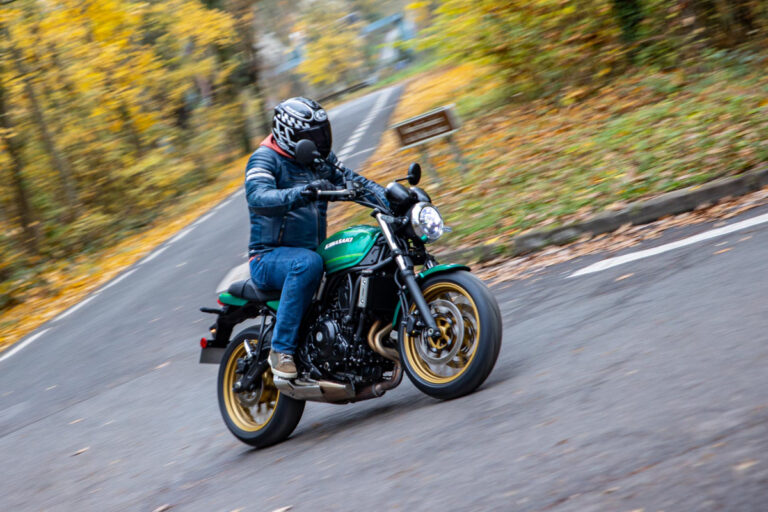
First Ride: The New Kawasaki Z650RS Modern Classic

Photo credit: Jürgen Muntzeroli

The Z model line has been an incredible success for Kawasaki—but the edgy ‘sugomi’ design language doesn’t appeal to everyone. Bikers that fancy a bit of a retro-style might prefer the Z900RS version. Three years after releasing the Z900RS, Kawasaki have opened the time machine once again with the Z650RS. We had the chance to ride it.

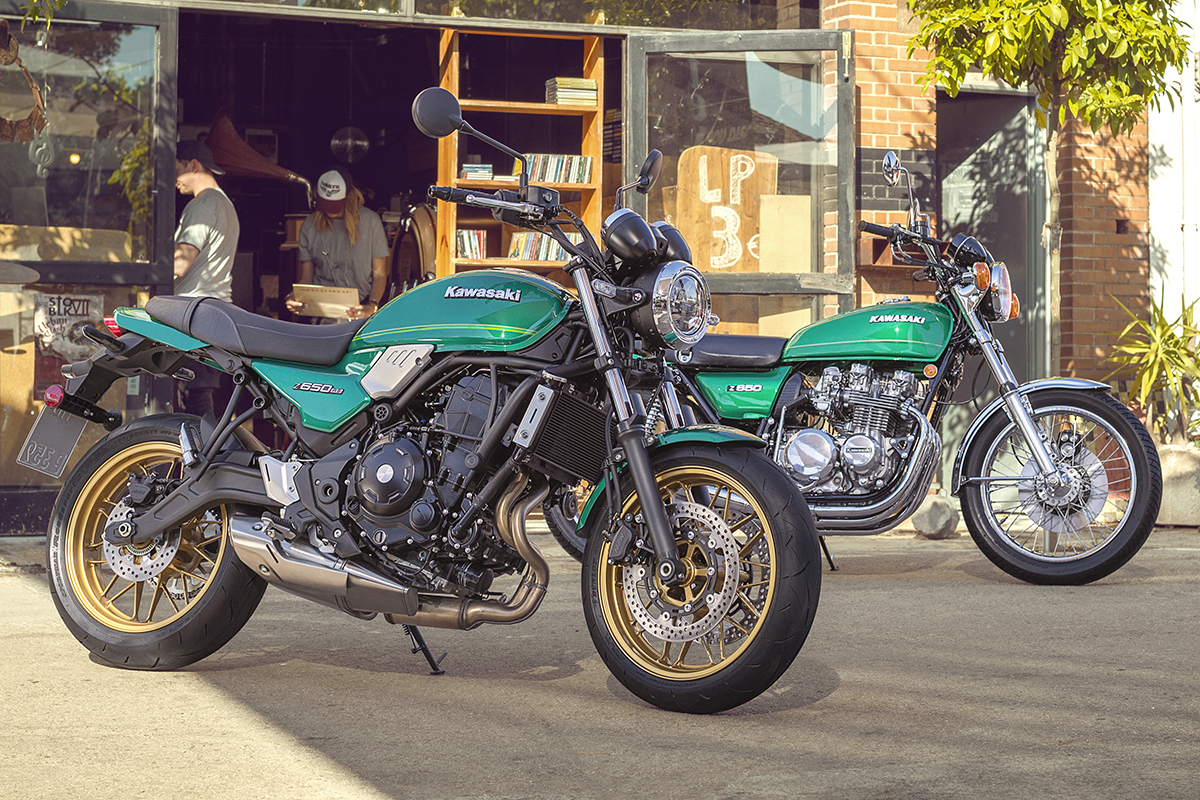
His name was Gyoichi ‘Ben’ Inamura, and he’s credited with designing one of the most iconic Japanese motorcycles of the 70s: the 1972 Kawasaki Z1. It was the first superbike ever, with its rock solid 82 hp in-line four-cylinder engine. A couple of years later, Inamura-san did it again; the 1977 Z650 was a smaller copy of the Z1 and was a great middleweight motorcycle.

Image source: Kawasaki EU

A bit heavy, but with 64 hp on tap, the Z650 was able to clock a solid 190 km/h, and its road holding was more than decent for the time. The bike had quite a long career, getting cast wheels from 1978 and electronic ignition from 1981, a year where the engine also got a black treatment.

The Z650 was a great bike (I had one, a green one with a very loud four-into-one exhaust, when I was a broke student and I loved it), and it’s now moving from its status as a cheap bargain to collectable. In Europe, mint samples can now go for nearly ZAR 90,000!

Photo credit: Jürgen Muntzeroli

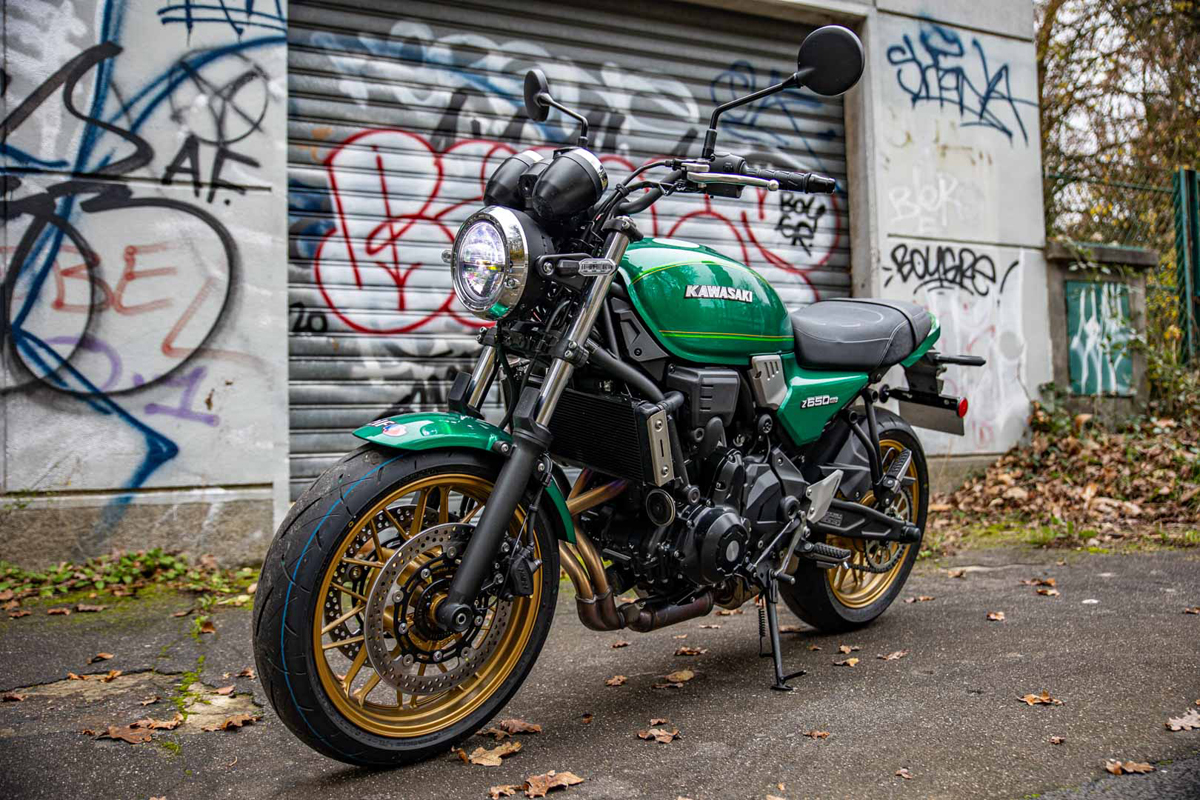
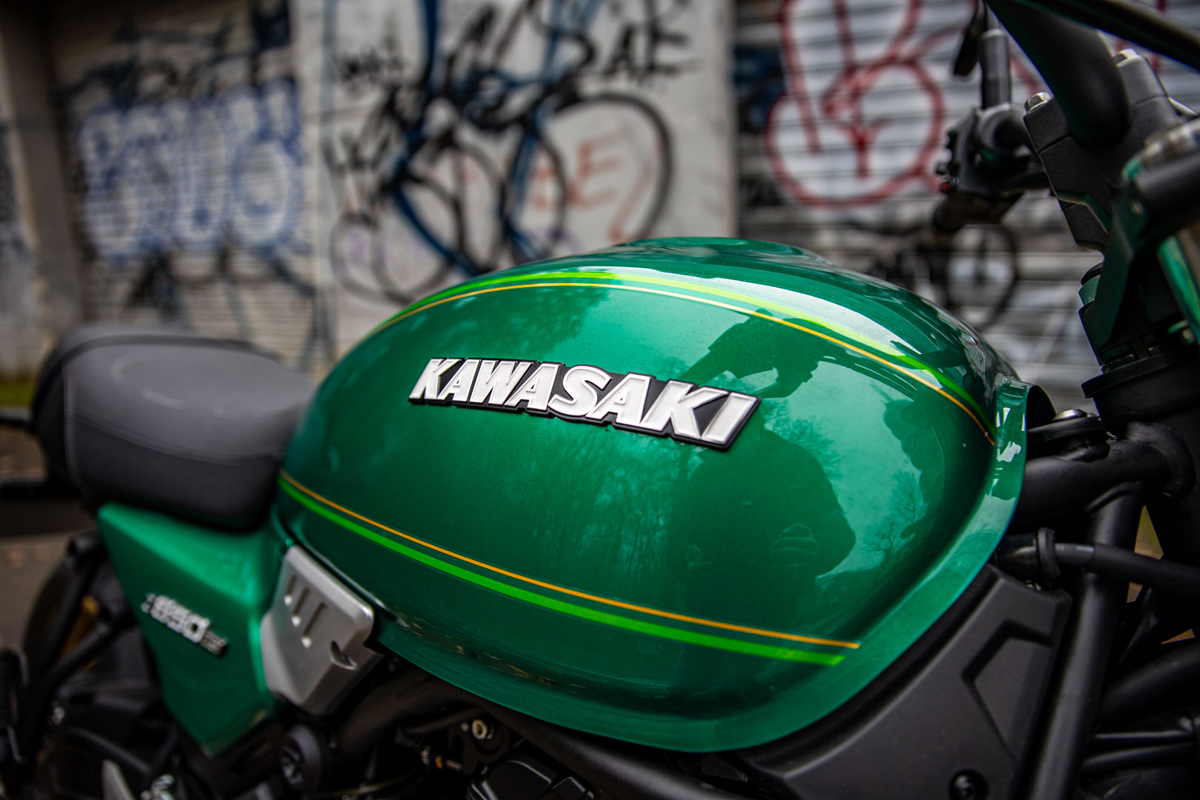
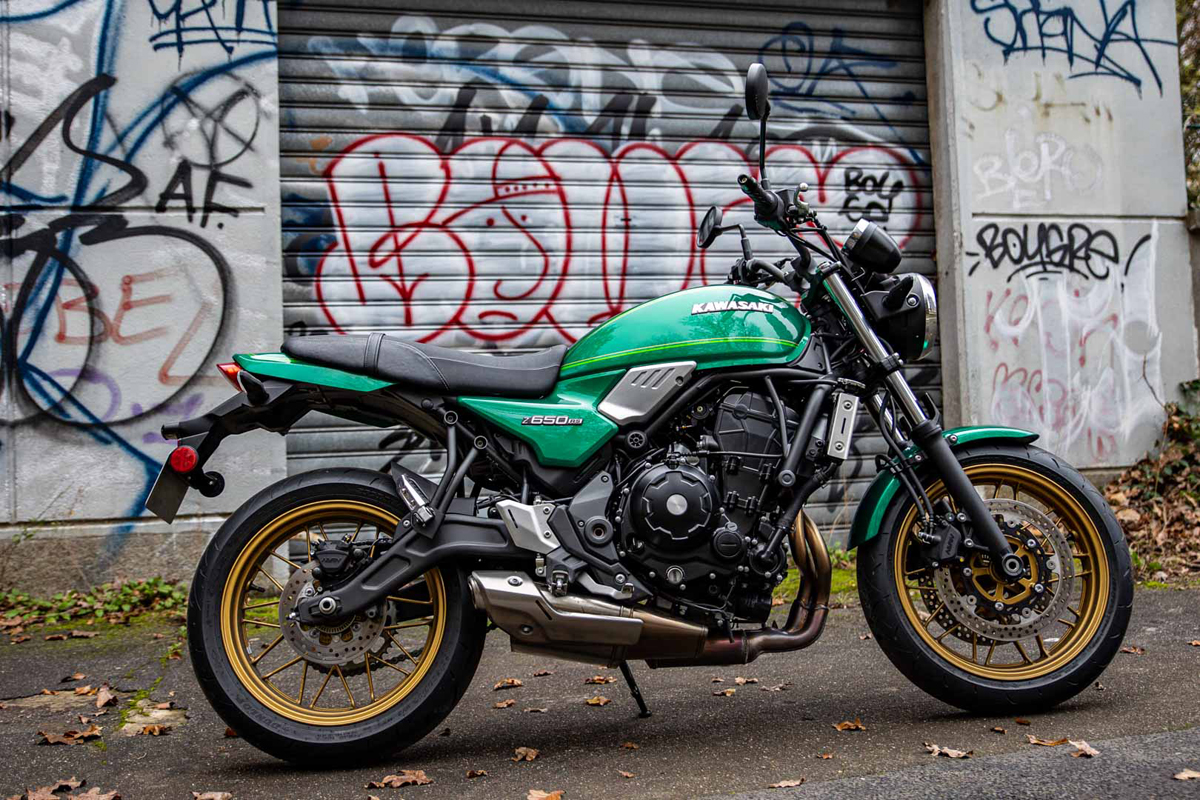
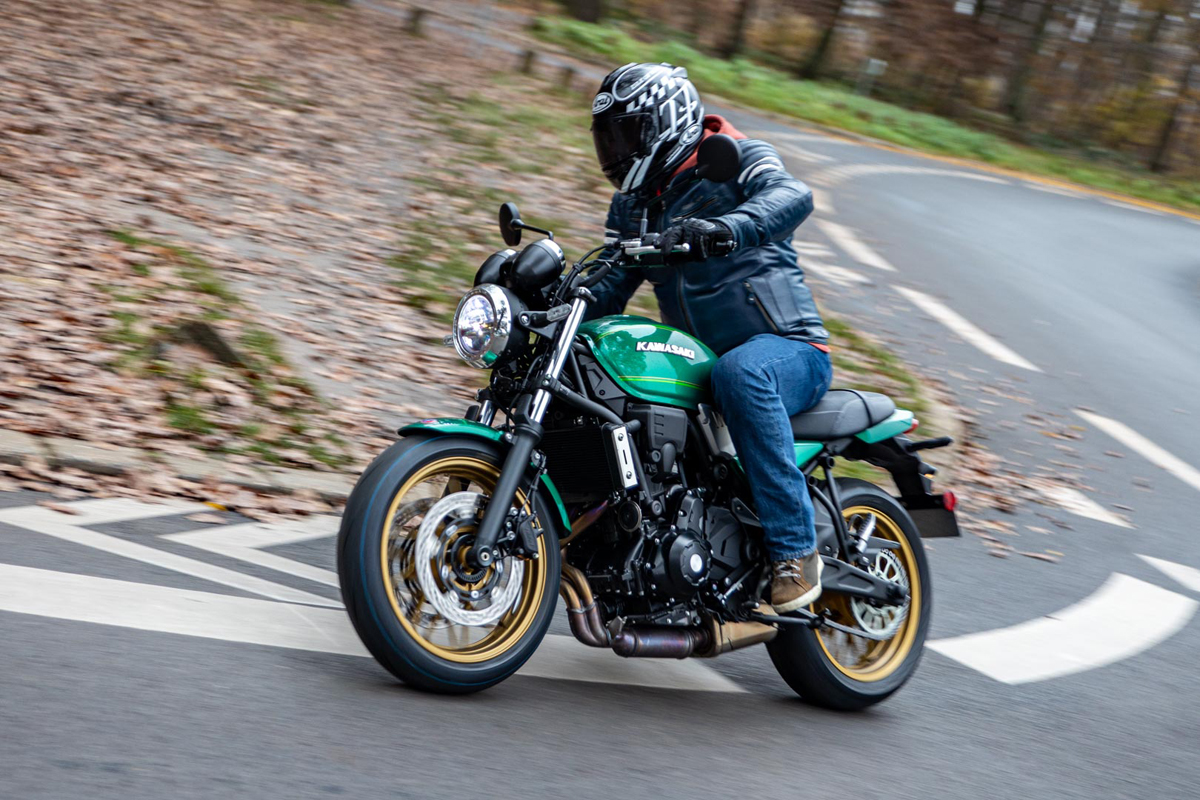
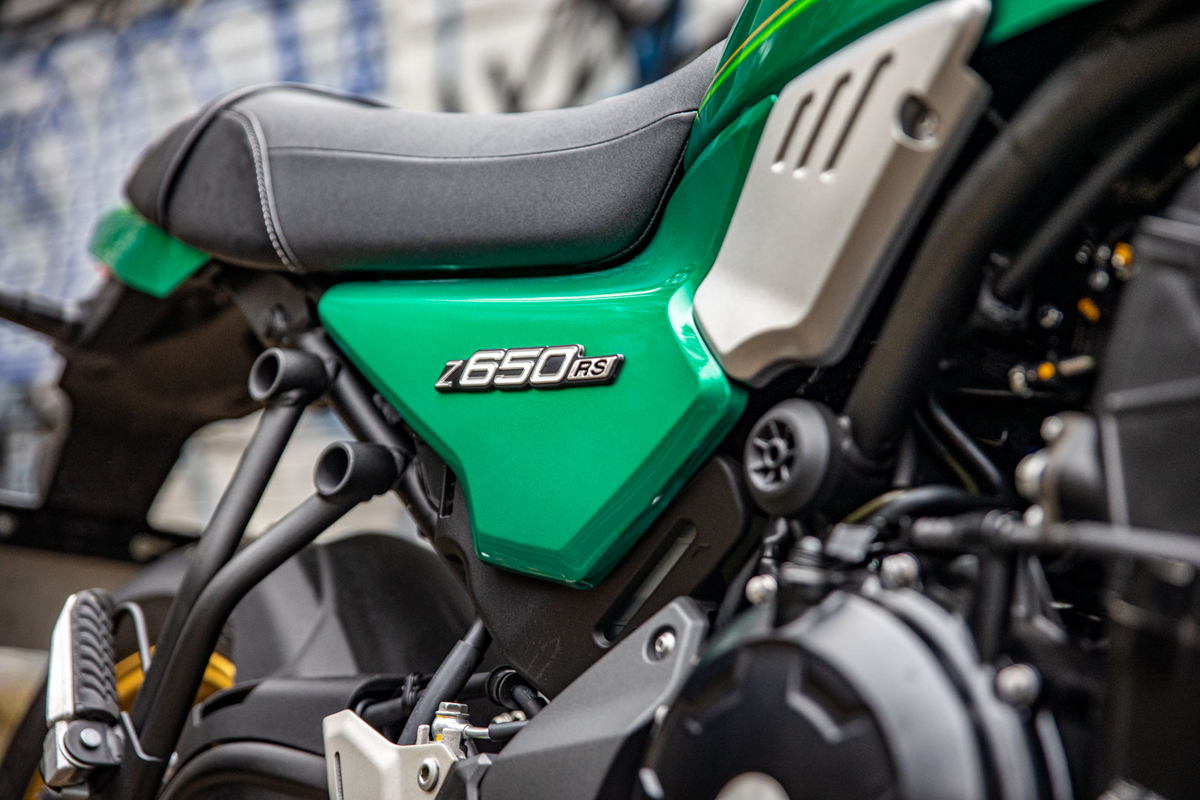
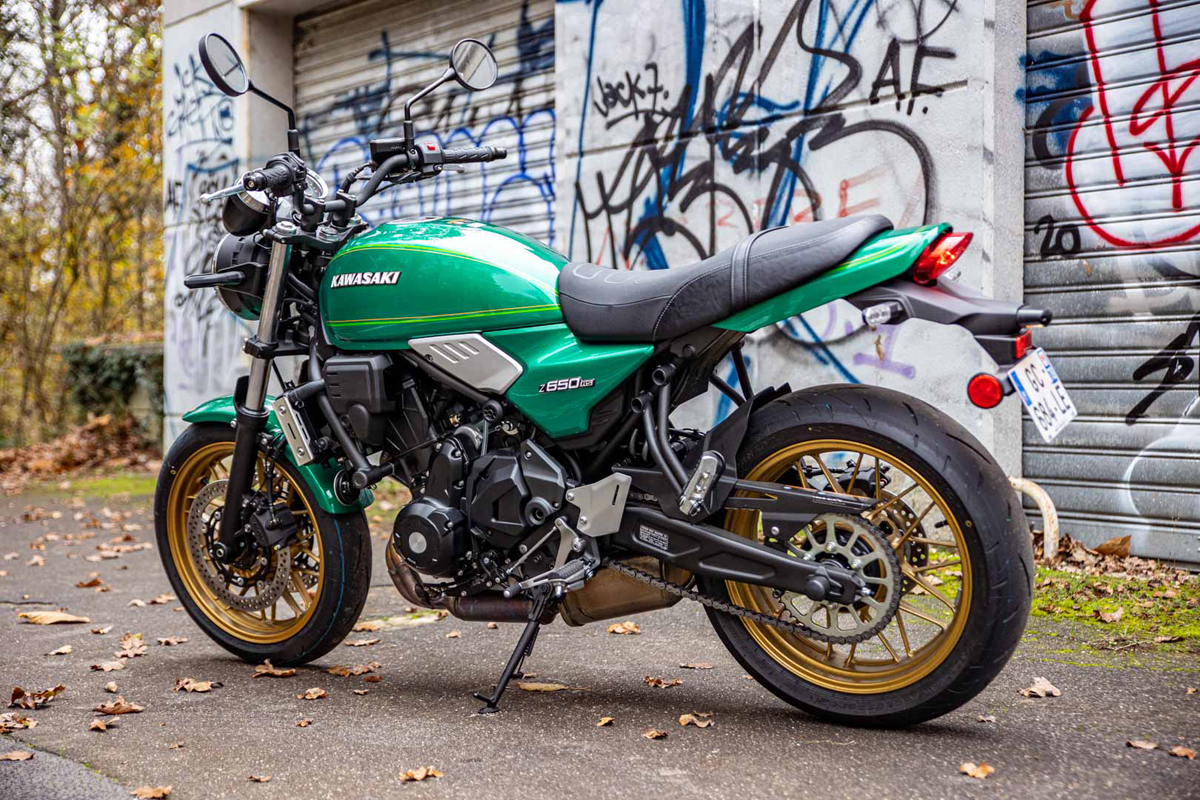
It’s amazing how much the brand new Z650RS looks like the 1977 Z650, especially in the green colour scheme. Kawasaki’s designers had the talent to transform a standard Z650 into a timeless machine… but how?

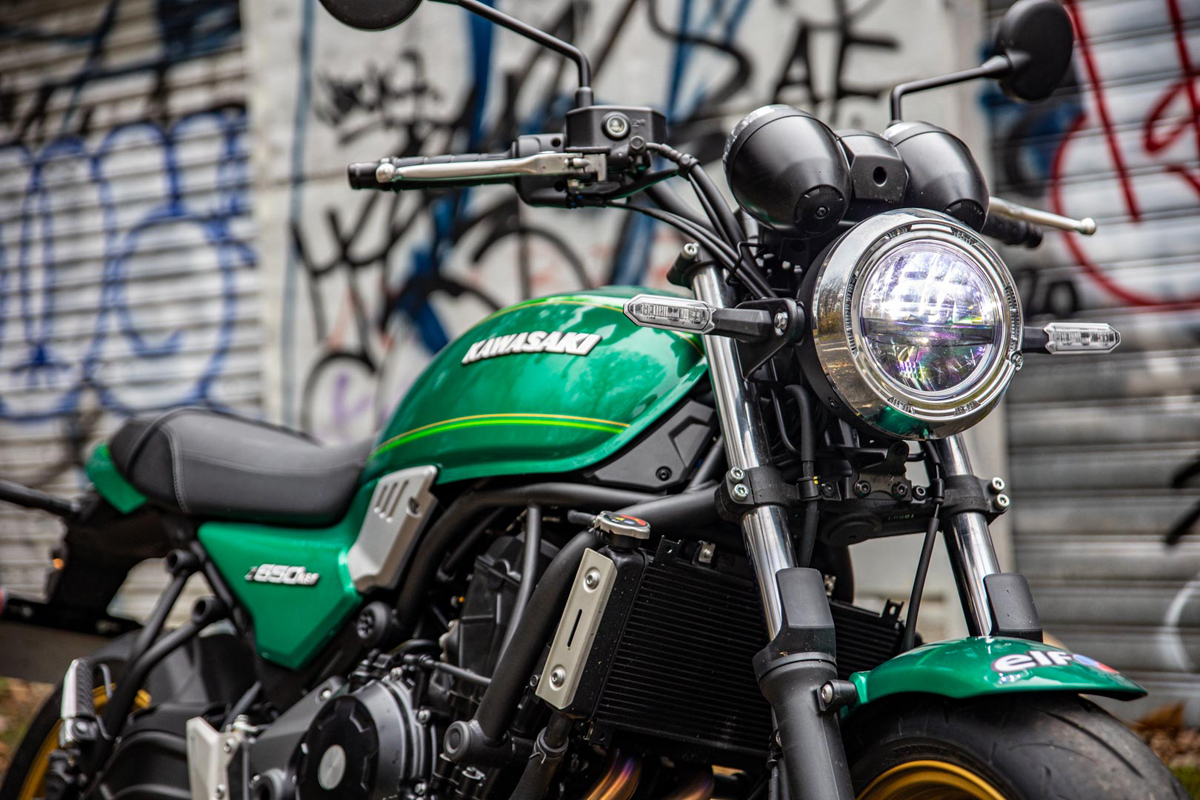
The colour, of course, but also the shape of the fuel tank, which echoes Kawasaki’s design from the 70s. Its capacity is only 12 litres, but we’ll get back to that later. The retro look of the Z650RS is also sustained by its comfy seat, round LED-powered headlight and ducktail rear piece. The tail light is also round, like in the good old days, but if you want grab rails, you’ll need to dig into the aftermarket catalogue.

Photo credit: Jürgen Muntzeroli

New clothes, same old tech

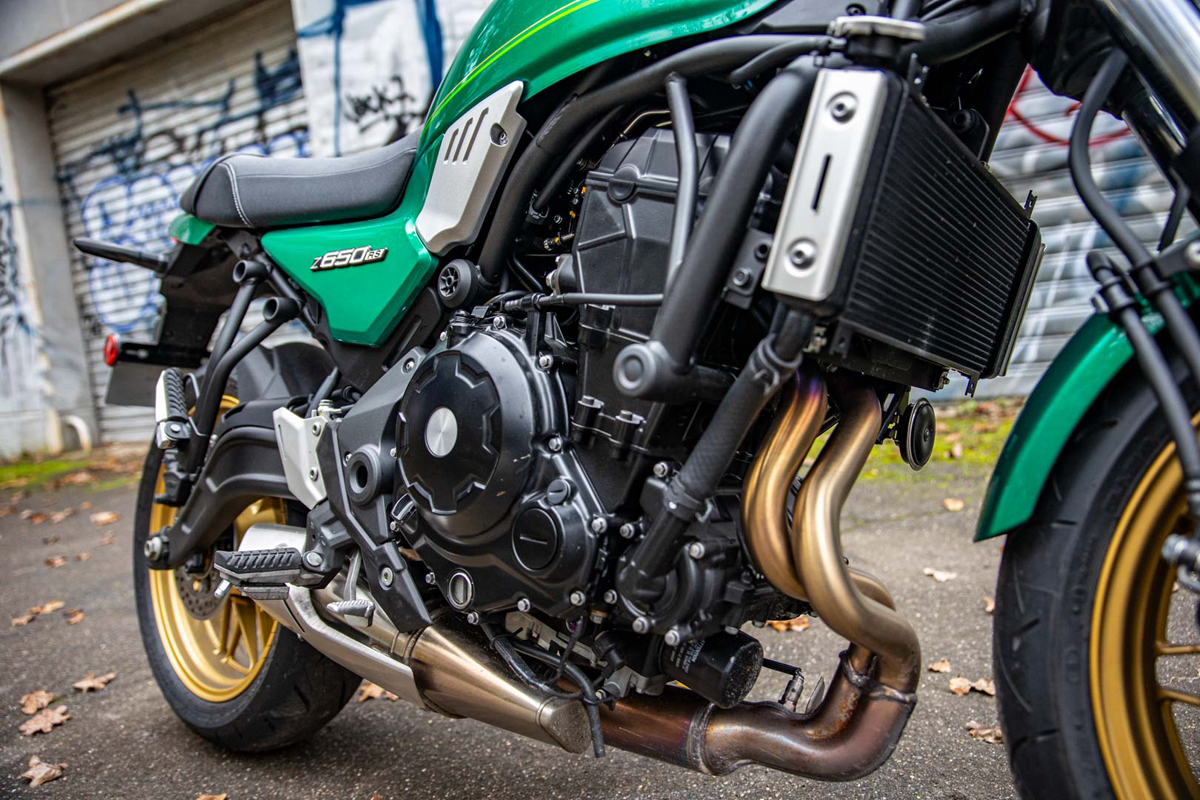
There’s no need to overanalyse it: the Z650RS is basically the well-known Z650, dressed up. The engine is a stressed member of the trellis frame (13,5 kilos), and the 649 cc vertical twin (83 x 60 mm) delivers a bit less power than before, thanks to Euro 5 regulations. It now clocks 68 hp at 8,000 rpm and 64 Nm of torque at 6,500 rpm.

Photo credit: Jürgen Muntzeroli

Since 2020, the Z’s service intervals have been upgraded to 12,000 kilometres—something that daily commuters will appreciate. The engine remains old school: there is no ride-by-wire throttle, nor any riding modes. But the reality is that we don’t really need those on the Z650RS.

The geometry is the same on both versions of the Z. A 1,405 mm wheelbase, 24-degree rake and 100 mm trail make for neutral, yet dynamic, handling. The 20-spoke cast wheels are new to this model too, and the Z650RS weighs just 188 kilos with a fuel tank (as verified by yours truly).

Photo credit: Jürgen Muntzeroli

A standard Z650 has a 790 mm seat height and the handlebars are quite narrow. The RS version takes the seat up to 820 mm (an 800 mm seat is available as an optional extra), and the handlebars are 50 mm higher and 30 mm closer. The top triple tree is also 20 mm higher—but those small numbers make a big difference. The old cramped riding position has now given way to a much more natural one, and from the first minute, I felt at ease on board the Z650RS.

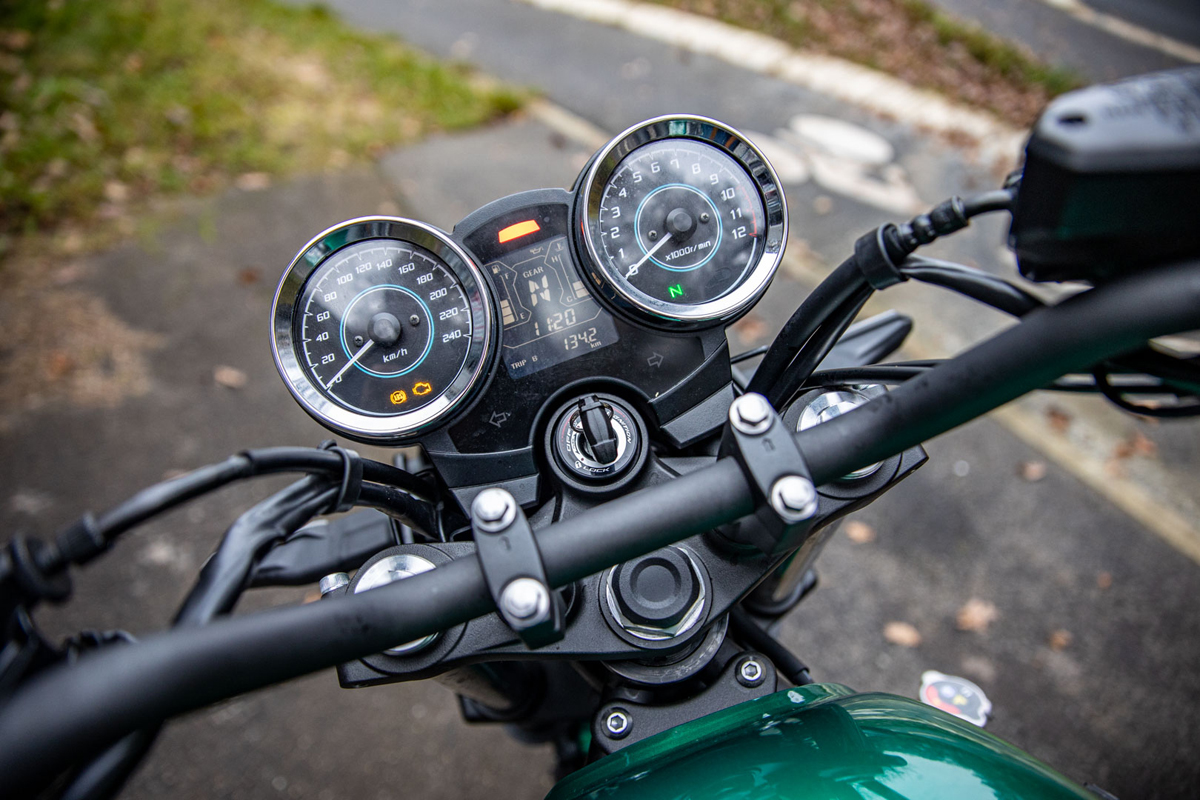
Before giving it a go, I took some time to adjust the levers (both have 5-position adjustment), and to get comfortable with the dash, where a small digital screen divides two classic analogue dials (speedo and tacho). That digital display shows you just about all you could ask for; fuel gauge, water temperature, gear indicator, fuel range and more.

Photo credit: Jürgen Muntzeroli

I’m old enough to have been at the launch of the first 2005 Kawasaki ER-6. The bike was fun—a hundred times more fun than the previous generation ER-5—but the vertical twin engine was not very smooth at low revs. Time has passed, and now the Z650RS can cruise city boulevards at 2,000 rpm in fifth gear.

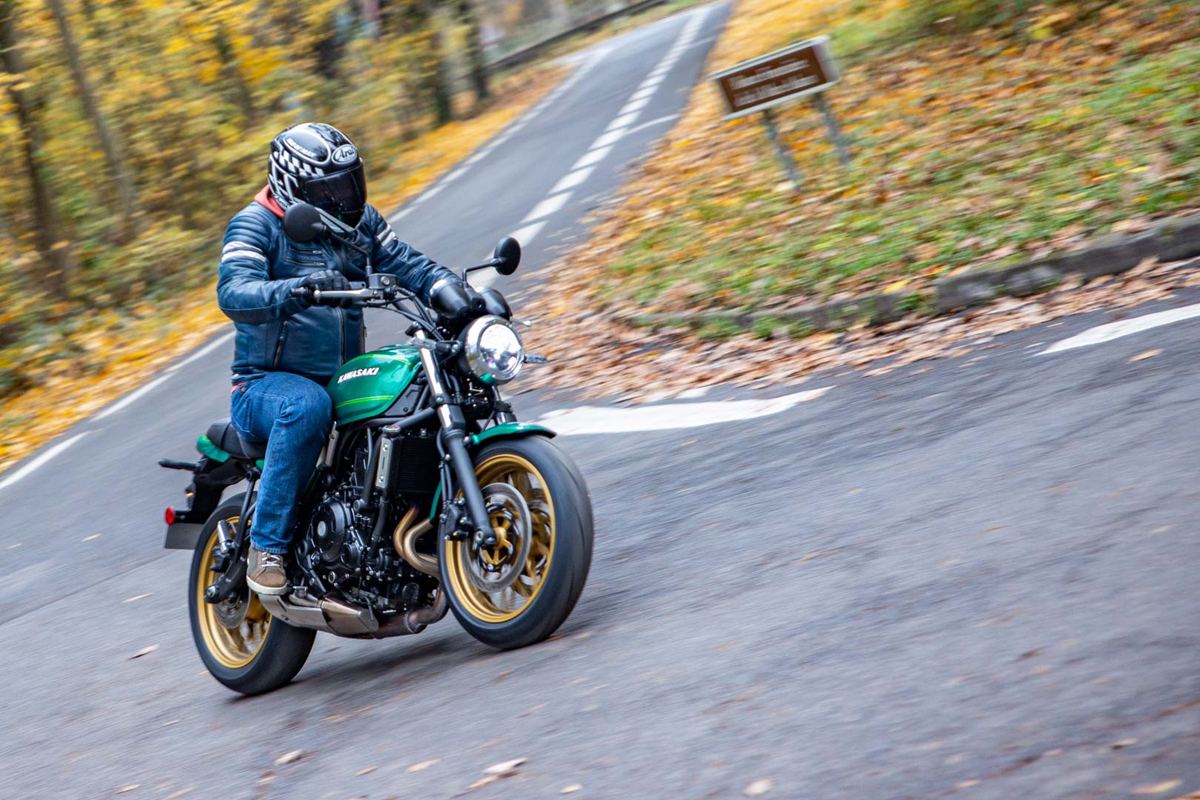
It’s truly a peach in town—and also on the open road. The power delivery is decent from 4,000 rpm and consistent from 6,000 rpm. There’s no need to keep it near the redline either, as the little Kawa is torquey enough to provide tons of fun on South Africa’s plentiful twisties.

Photo credit: Jürgen Muntzeroli

I had a chance to ride this Z650RS alongside a more expensive Triumph Bonneville 900. If you enjoy a bit of dynamic riding, the Kawasaki is definitely for you, with the sort of agility, ground clearance and braking reliability that you’d expect from a Japanese bike. The Dunlop Roadsmart 2 tyres create confidence on dry tar, and the suspension delivers a surprisingly great level of comfort.

Lack of wind protection aside, the Kawasaki can handle several hundred kilometres of highway riding—which I did for this test, without much pain, thanks to the thick seat and plush suspension. At 130 km/h on the speedo, the fuel consumption is around 6 l per 100 km, which doesn’t give you much more than a 200-kilometre range. And that might be a little short for some of us who like to munch miles.

Photo credit: Jürgen Muntzeroli

A class of its own

I love the Z900RS, which I almost consider the best Kawasaki of the range (supercharged H2 machines aside). So I rate the Z650RS as another great success from Kawasaki—especially because it doesn’t have much competition.

Photo credit: Jürgen Muntzeroli

Classic Triumph 900s are more expensive and a bit less fun to ride into corners, the Honda CB650R is not imported in SA (and its four-cylinder motor is a bit peaky), and the Yamaha XSR is less comfortable, and doesn’t have the same retro appeal. There’s also a Chinese brand on its way called CFMoto. Their 700CL-X Heritage is, ironically enough, powered by a 693 cc vertical twin-engine, which is derived from a made-under-license Kawasaki engine. But it’s more peaky and not as smooth as the Kawasaki one.

No doubt: for retro-style commuting and a hassle-free motorcycle experience, the Kawasaki Z650RS is definitely a winner.

You can expect to see the Z650RS in South Africa around July 2022.

Photo credit: Jürgen Muntzeroli

2022 Dakar Rally Contestants Prepare to Perform with Motul

With each year that passes, the legend of the Dakar Rally grows – and Motul is proud to be an ongoing part of the world’s most renowned rally-raid event.

Photo credit: Motul

The 44th edition of the Dakar Rally will take place from 1 – 14 January 2022, entirely within the borders of the Kingdom of Saudi Arabia (KSA). By returning as the main partner for the Dakar for the fifth consecutive year, Motul is underlining its commitment to motorsport in general, and to the rally-raid format in particular.

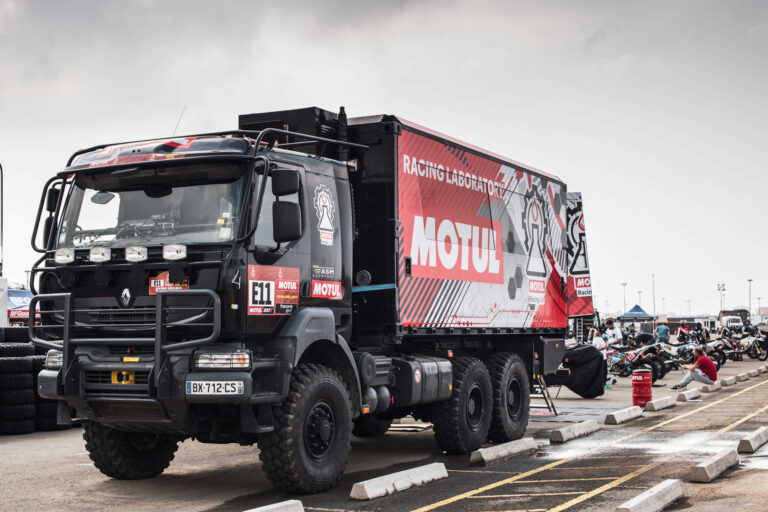
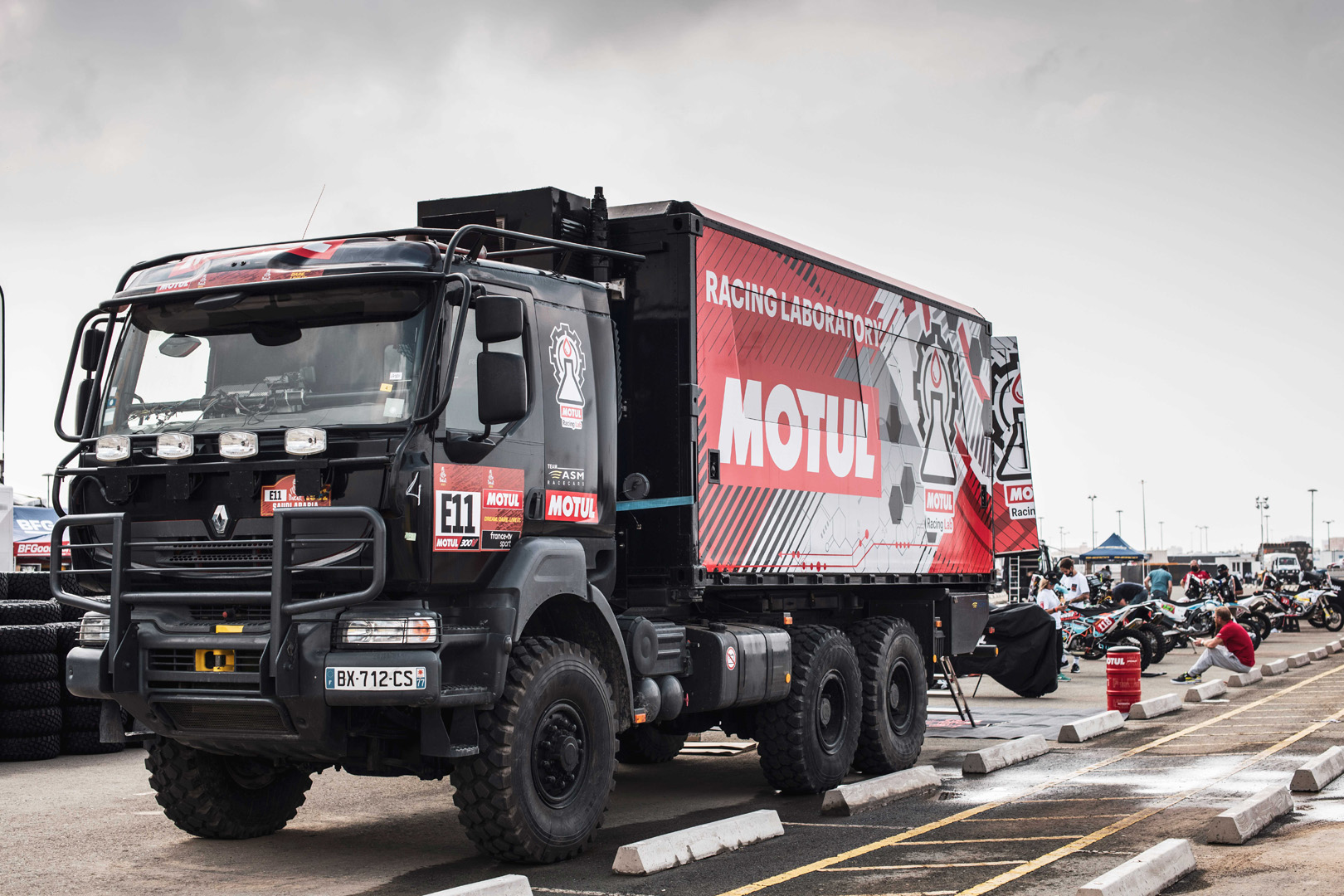
The Dakar also offers the ultimate test of the performance and reliability of Motul’s products and a strong technical team from the Motul Lab will be present in the bivouac throughout the event, collecting and analysing data that will not only assist all the competitors in the 2022 Dakar Rally, but will also feed into Motul’s continuous product improvement initiatives. Products that can deliver a winning performance in the deserts of KSA will equally be able to perform under all conditions that Motul customers are likely to encounter in their day-to-day lives.

Photo credit: Motul SA

As well as being the main partner for the Dakar once again, Motul will also be supporting individual teams and competitors and providing products for the competitors in the Original by Motul category – riders who are otherwise unsupported for the duration of the race.

Bike-Category teams sponsored by Motul at the 2022 Dakar Rally will include the Monster Energy Honda Team, featuring 2021 Dakar winner Ricky Brabec; the Sherco Racing Factory team led by 2021’s sixth-placed rider, Lorenzo Santolino; and Hero Motorsports. Each of these sponsored teams will be using Motul products including the recently relaunched 300V 4T Factory Line Off Road 15W60.

Naturally, Motul’s involvement in the Dakar extends beyond the Bike Category, and they will also be sponsoring the exciting South racing Can-Am team in the SSV Category, plus two of the top three finishers in the Quad Category from 2021, namely Manuel Andujar (2021 winner) and Pablo Copetti (third place).

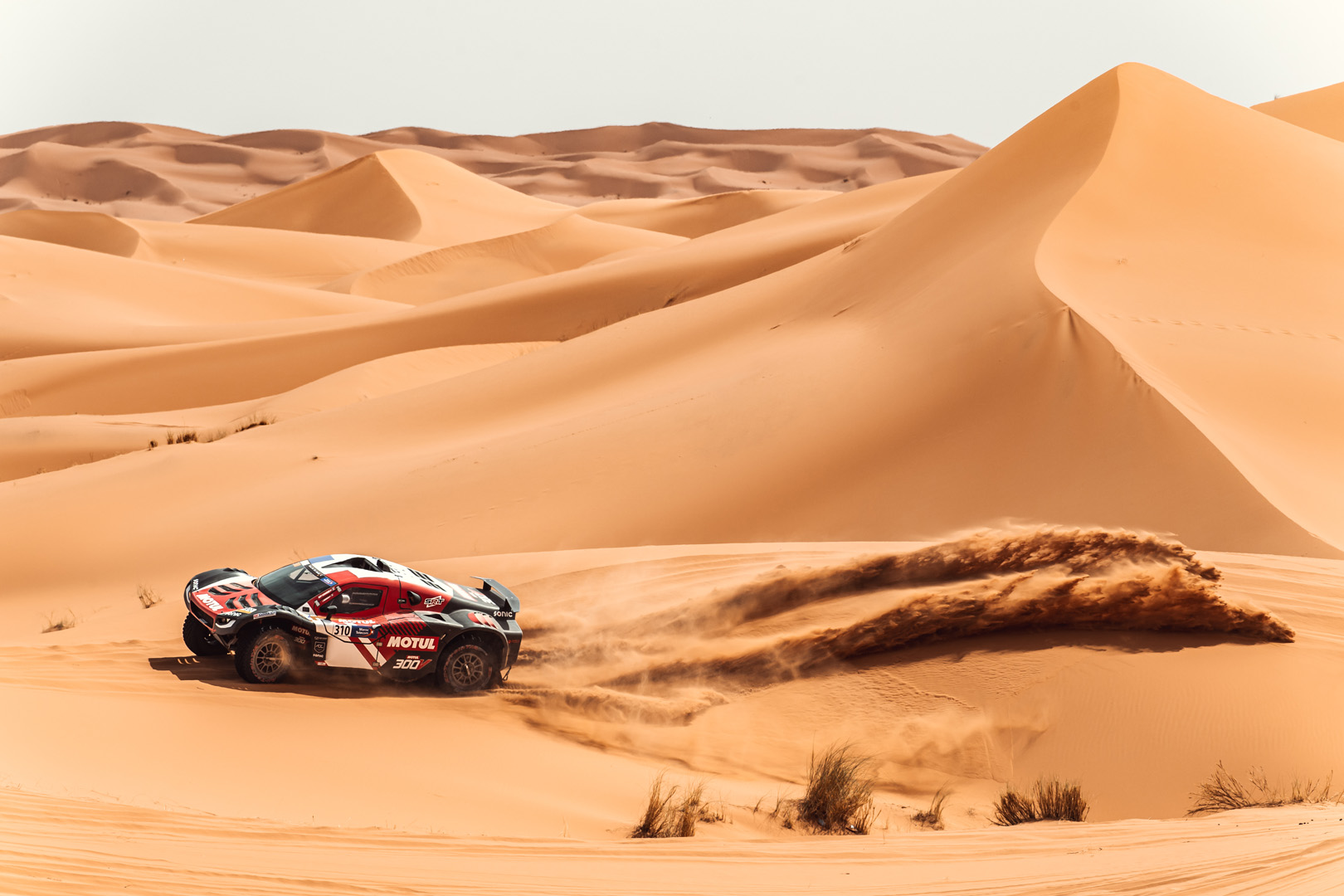
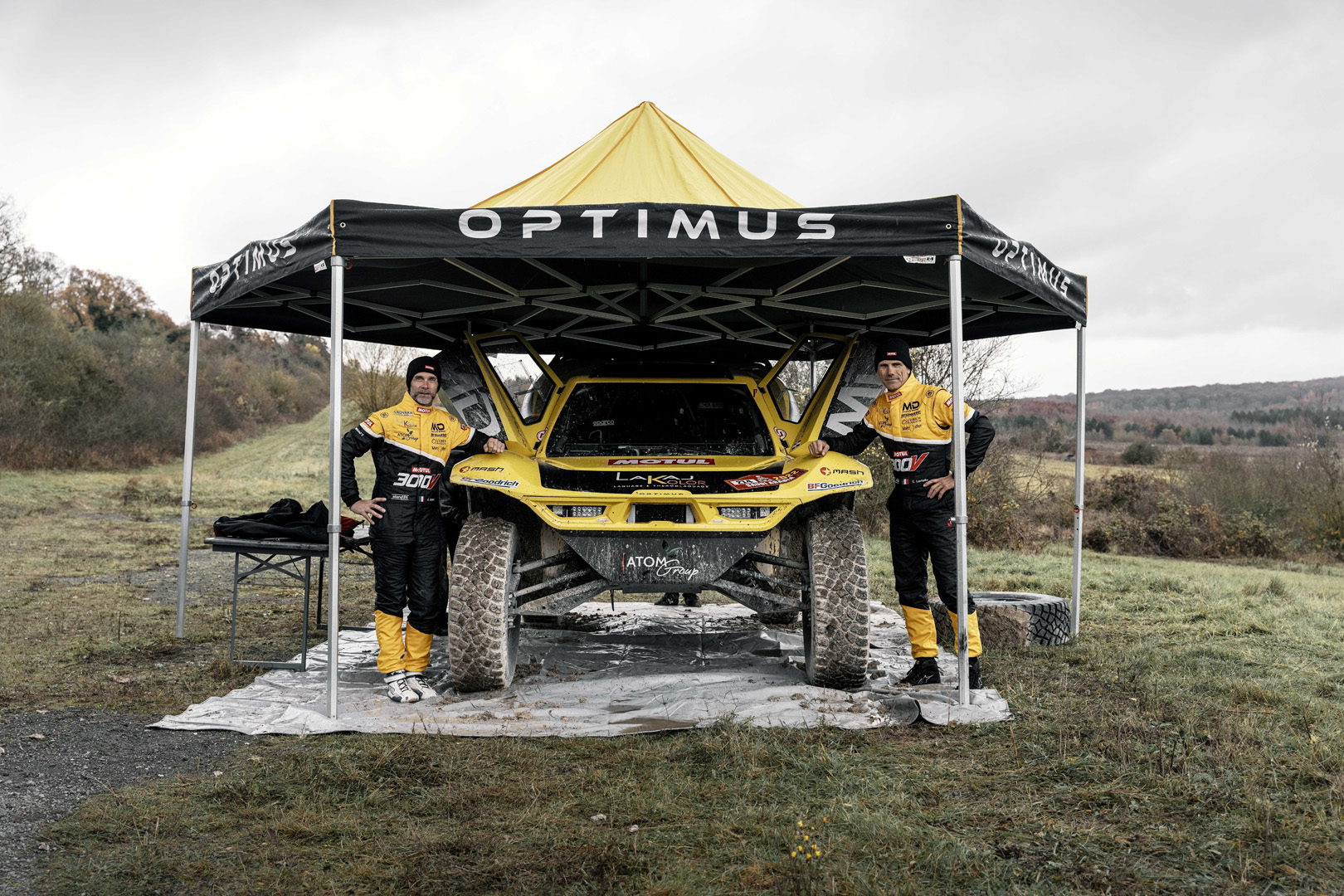
In the Car Category, Motul will be backing the Toyota Land Cruisers of Team Land Cruiser Toyota Auto Body, the Optimus Evo 3 and Evo 4 Buggies of the MD Rallye Sport team and the SRT Serradori Team, stage winners from Dakar 2021. The roster of Motul-sponsored teams will be rounded out by two all-French contingents: RIC Rallye in the Truck Category and Team Elite au Dakar in the Classic Category.

Photo credit: Motul SA

As has often been the case, the Original by Motul Category will have a strong southern African presence, with three SA riders including Dakar veteran Stuart Gregory, who will be looking for a second consecutive Dakar finish – something he knows is far from guaranteed. They will be joined by Werner Kennedy and Live Lesotho’s Charan Moore, plus John Kelly who will be looking to follow in the tyre tracks of fellow Botswana citizen and previous Dakar competitor, Ross Branch.

Photo credit: Motul

“I’m very much looking forward to swapping the Race Director’s chair for being a competitor myself,” commented Moore, fresh from organising the latest edition of the Motul Roof of Africa. “The dunes of Saudi Arabia may be very different to the mountains of Lesotho, but motorsports fans can look forward to outstanding action, made possible once again by the support of Motul,” he added.

Motul’s media team will be reporting daily from the Dakar under the theme of “1001 Stories – the Dakar stories never end”. This approach is inspired by the stories told by Scheherazade in the classical Arabic work of literature, “One Thousand and One Nights”. Just like the emperor who cannot wait to see how each story unfolds, Motul is confident that the narrative threads that come together to weave the rich patterns of the Dakar will keep rally-raid fans spellbound for the duration of the event.

You can follow all the Dakar action via Motul’s Facebook page. For other great content around this and other Motul sponsored events closer to home, go to Motul SA’s Facebook page and Instagram profile.

Coming Soon: Hero Dash 125 FI Scooter

Image source: Hero

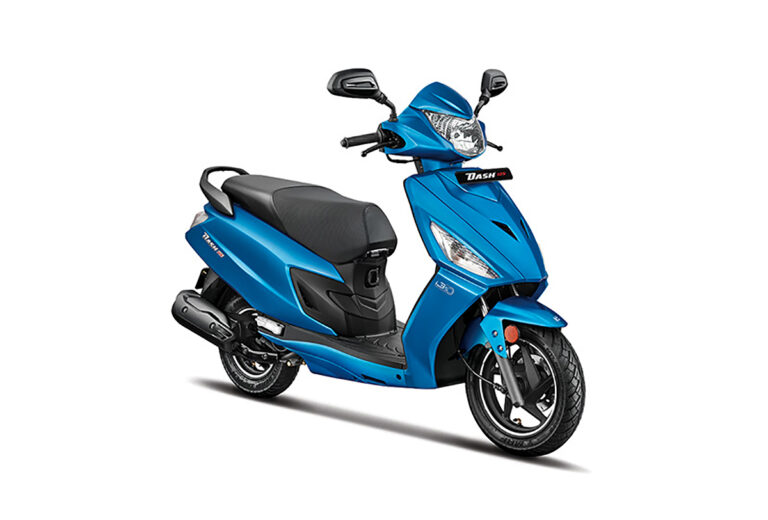
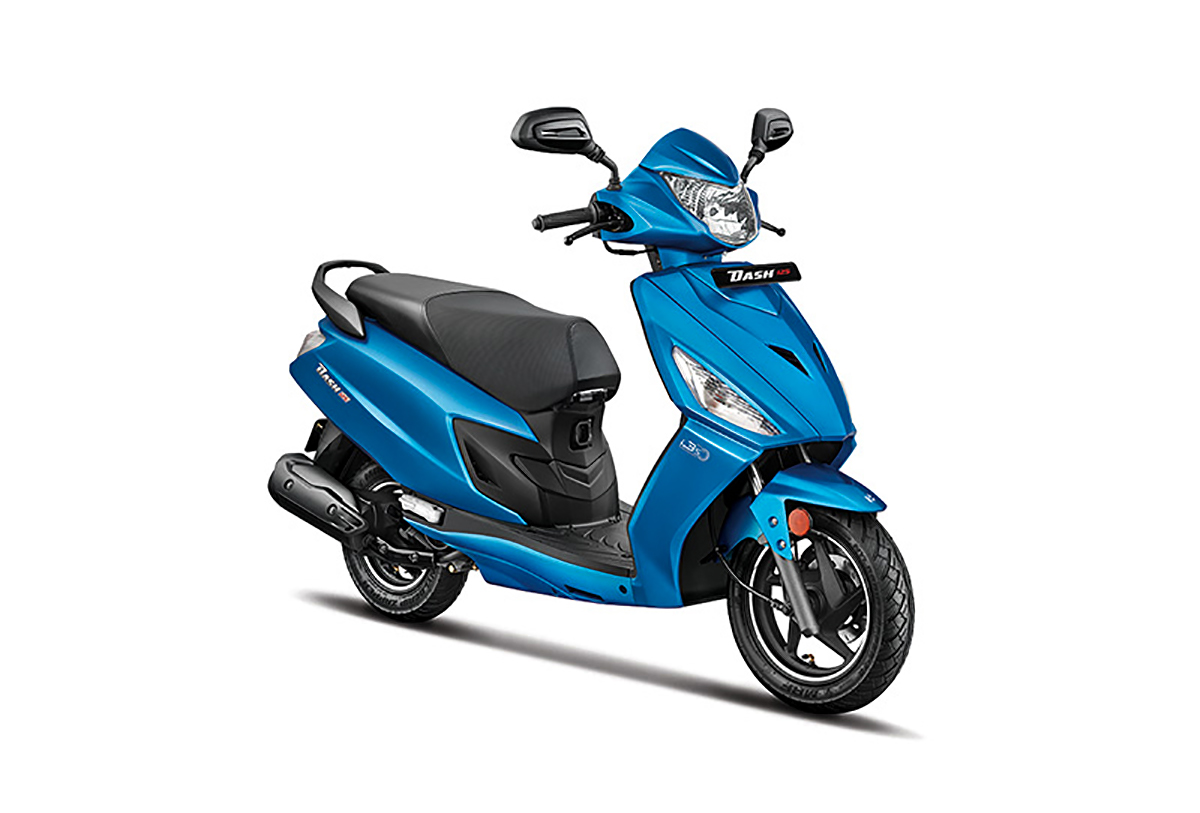
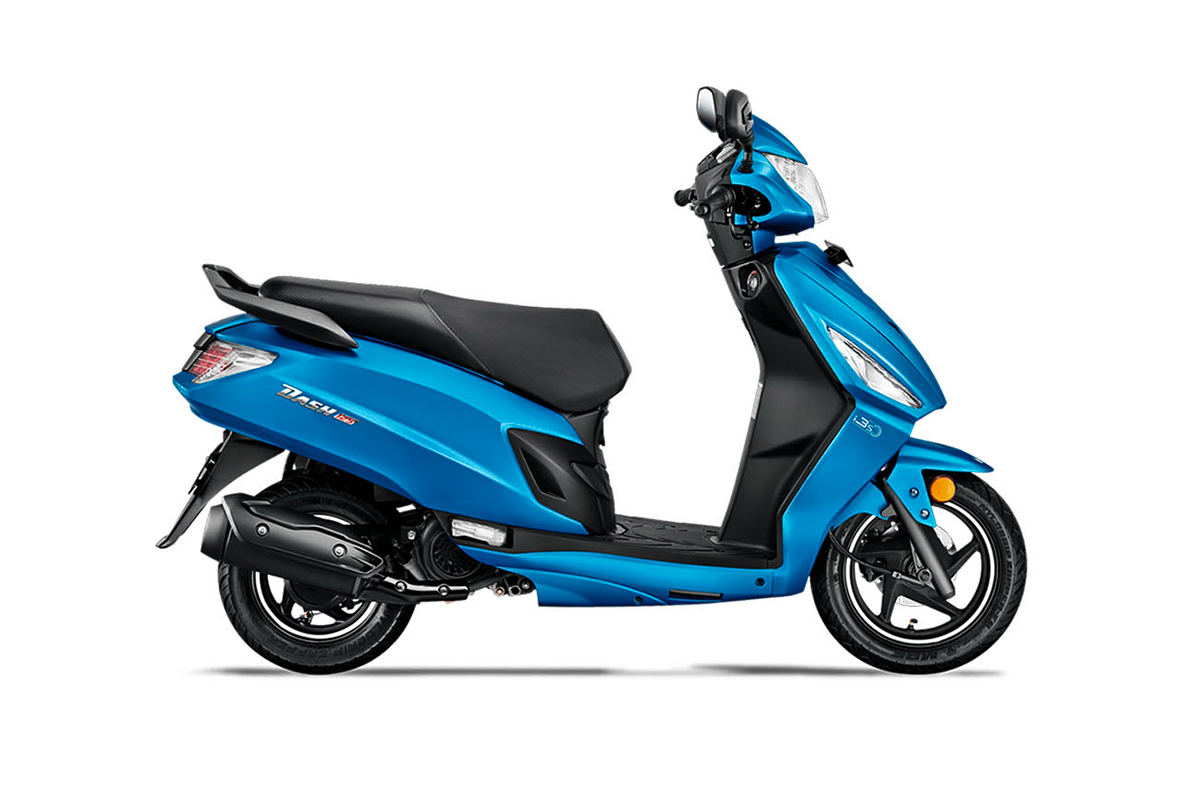
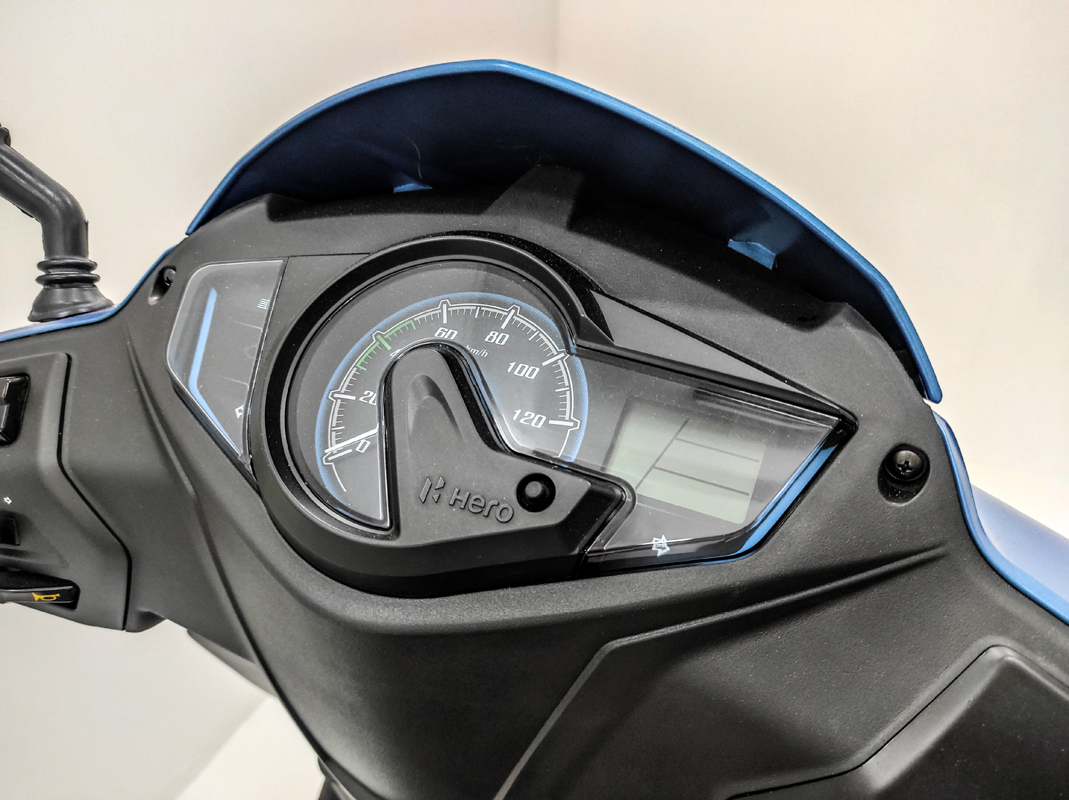
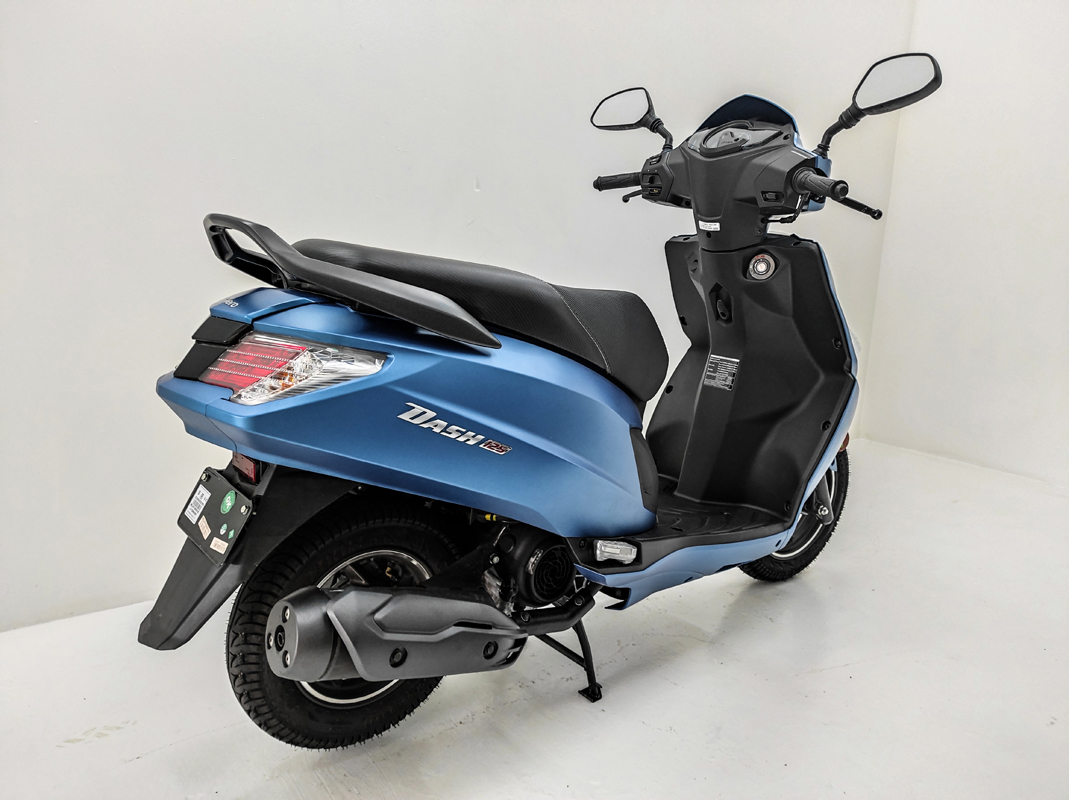
Hero South Africa has announced the latest model in the Hero range to hit the shores and that is the Dash 125 FI Scooter. Highlighting the quality and attention to detail that is a hallmark of all Hero products, the Dash 125 has features not often found on scooters.

The big news is the adoption of Keihin Fuel Injection which not only aids cold starting and smooth-running throughout the rev range but also give remarkable economy. The 5.5-litre fuel tank might not sound big enough but it will give the Dash a range of 275km at a cost of only R110 (at current fuel prices). That is serious economy in every sense of the word.

Image source: Hero

Safety was a priority in the design stages and the Dash 125 FI has an integrated braking system with ABS, featuring ByBre brake calipers. LED lighting is employed all round, giving bright illumination, especially from the headlight. Amazingly the tyres are claimed to be puncture-proof, being of six-ply construction and will be the perfect tyre to cope with South African road conditions. The footboards are covered in non-slip rubber.

There is even an LED light under the seat to illuminate the space in the dark. Also under the seat is a USB charging point. Normally, on scooters, the seat has to be raised to access the filler cap, but on the Dash, the fuel door is accessible without having to touch the seat and can be opened from the ignition switch.

Image source: Hero SA

Instrumentation is comprehensive, the digital display showing fuel level, mileage including trip and service interval indicator as well as speed. Talking of service intervals, an oil change is required only every 6,000km.

Stepless automatic transmission makes the most of the available torque while enabling the engine to work in its most economical rev range.

Image source: Hero SA

Looking closely at the Dash 125, typical Hero quality of materials and build are evident and this, combined with all the other features, makes this one of the most sensible scooters to come onto the market in a long time.

For more information, contact Hero South Africa at Fire It Up! in Bryanston.

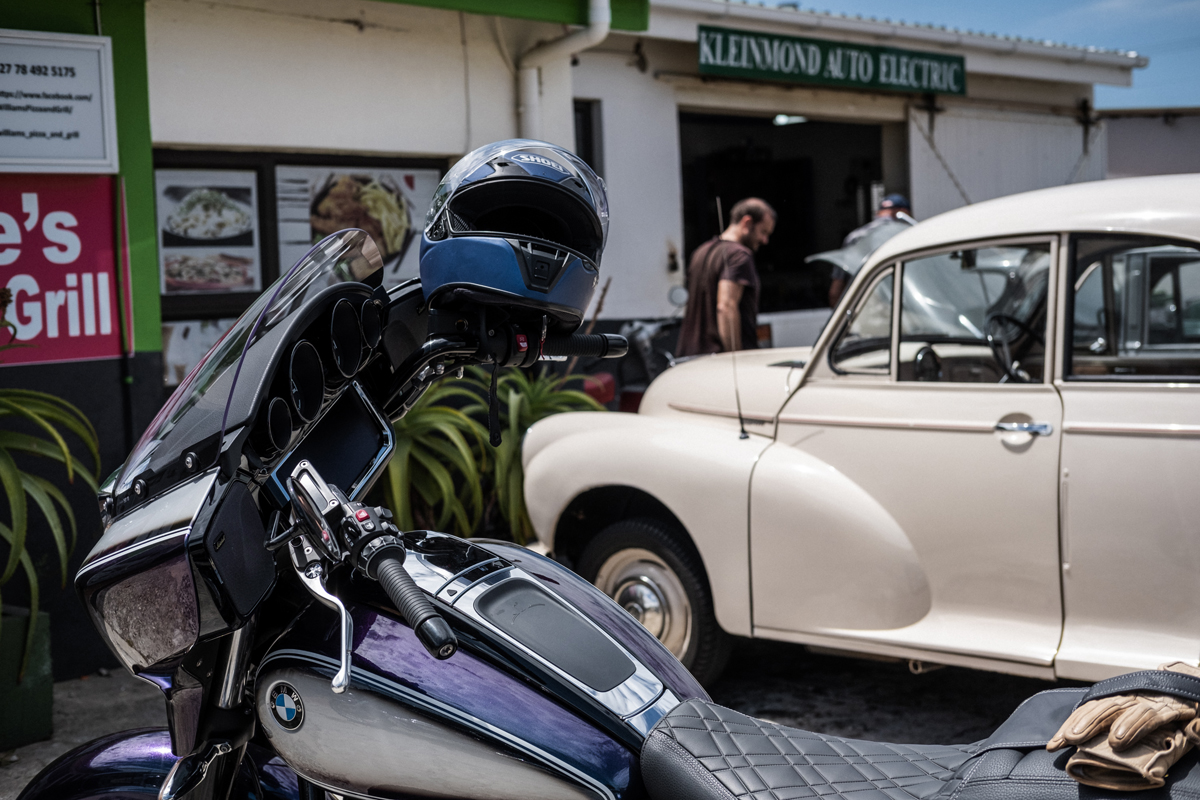
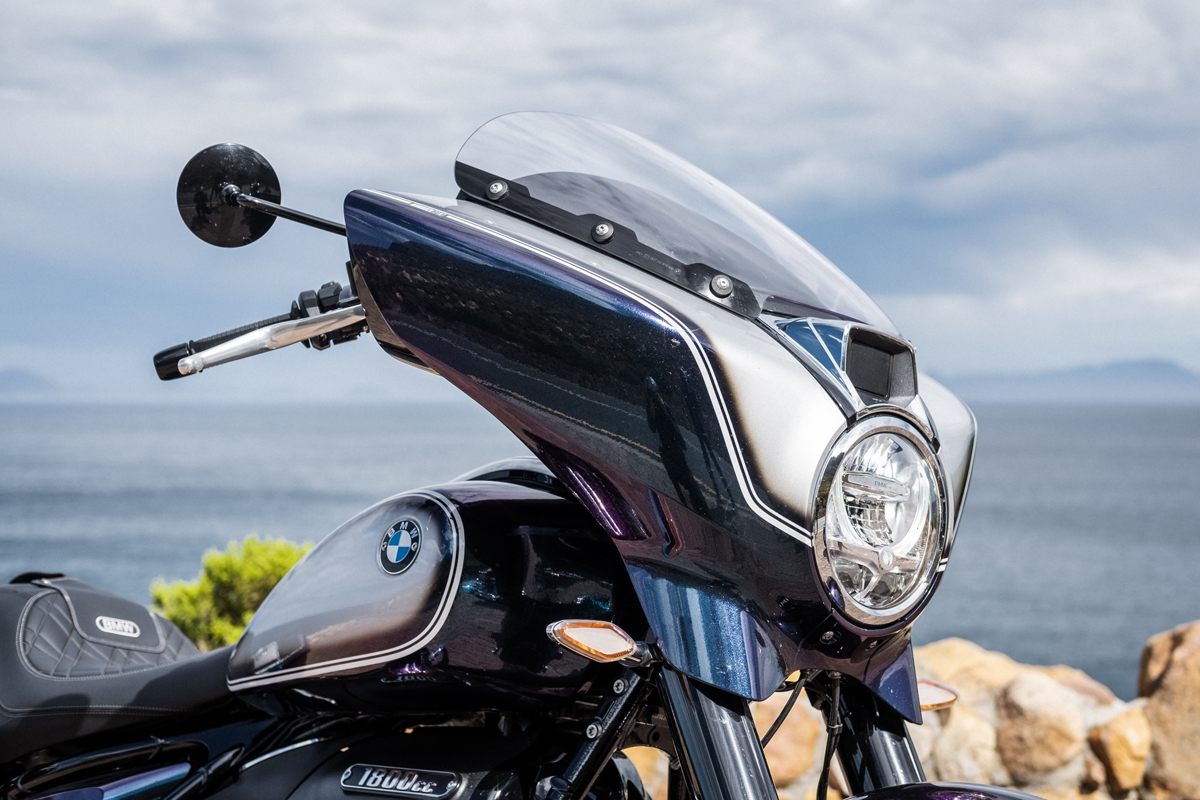
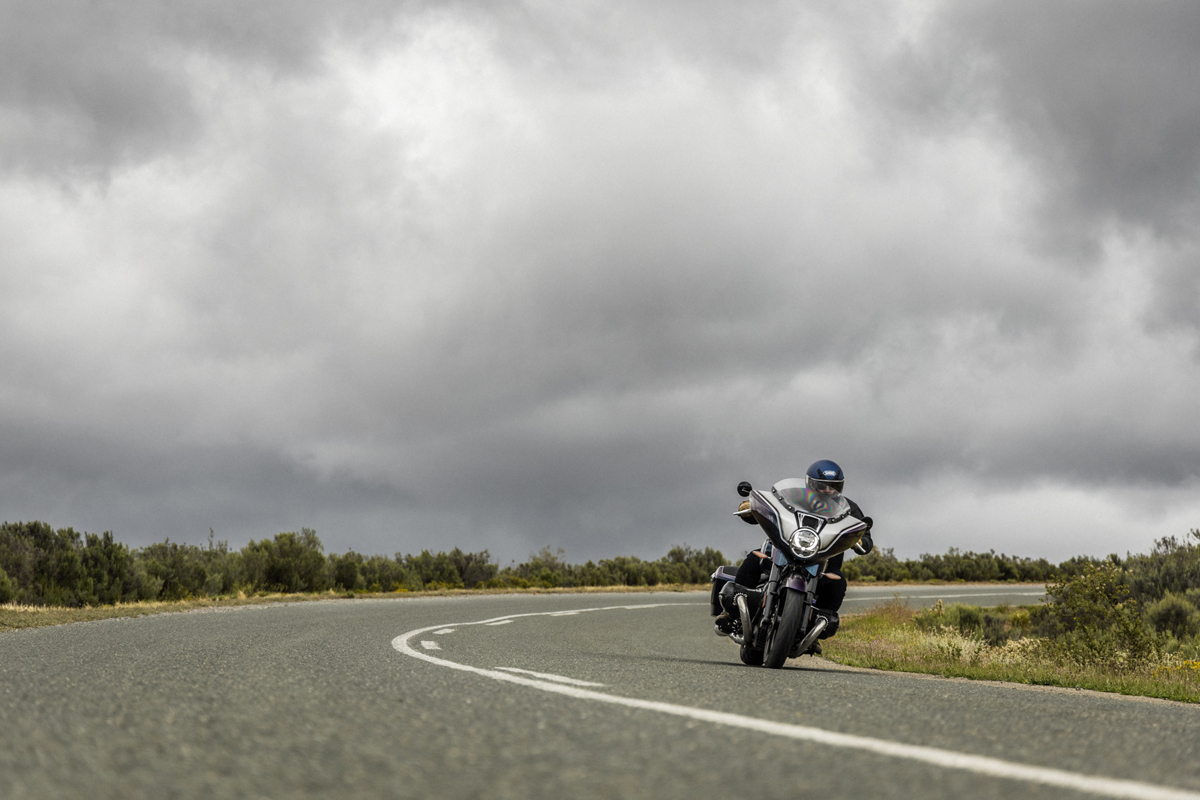
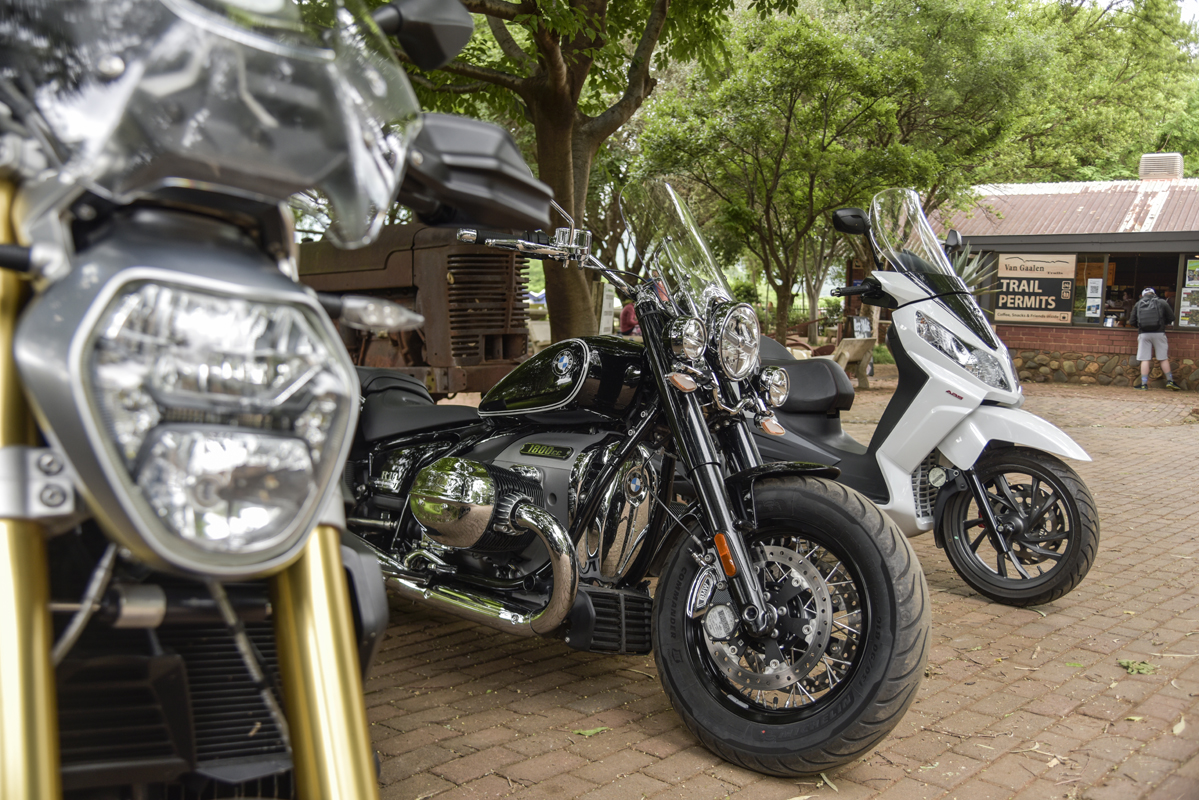
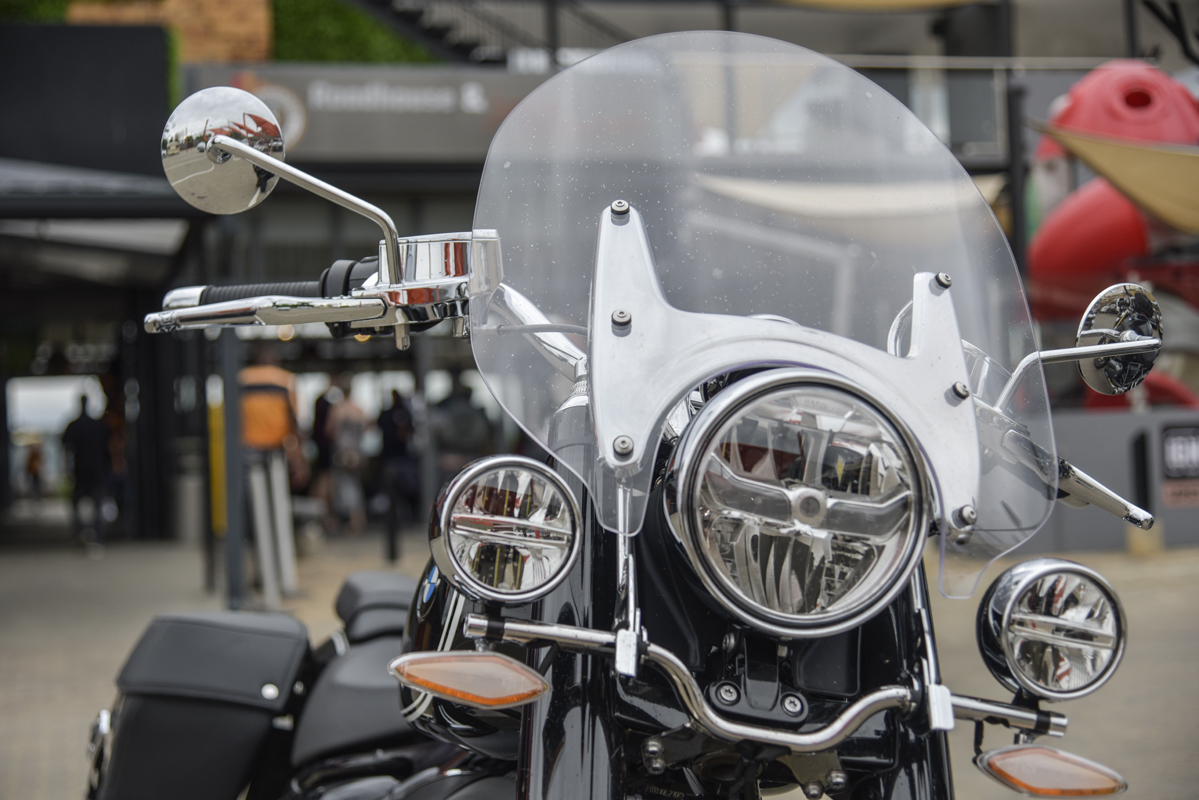
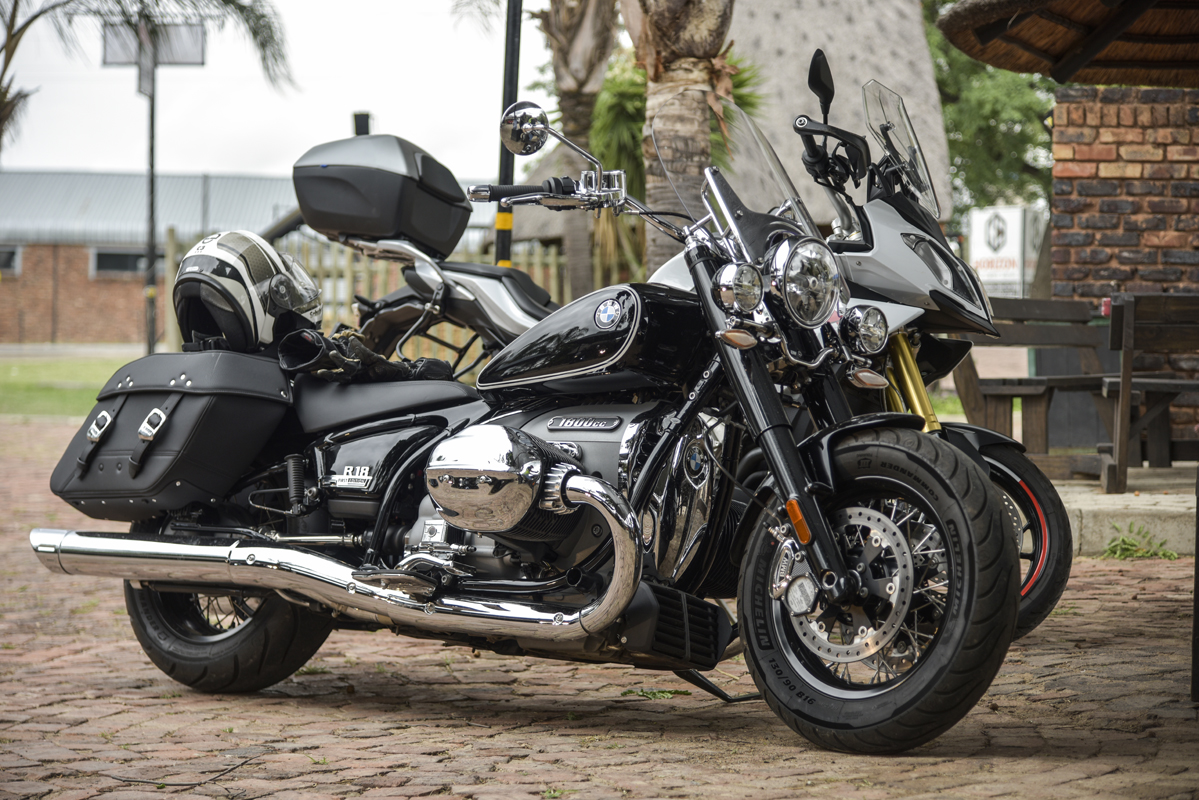
On the road with the BMW R 18 Transcontinental and R 18 B

Photo credit: Brian Cheyne

The first time I rode the R 18, it left me lukewarm. By the second and third rides I’d started wrapping my head around it—but I never truly got off the fence.

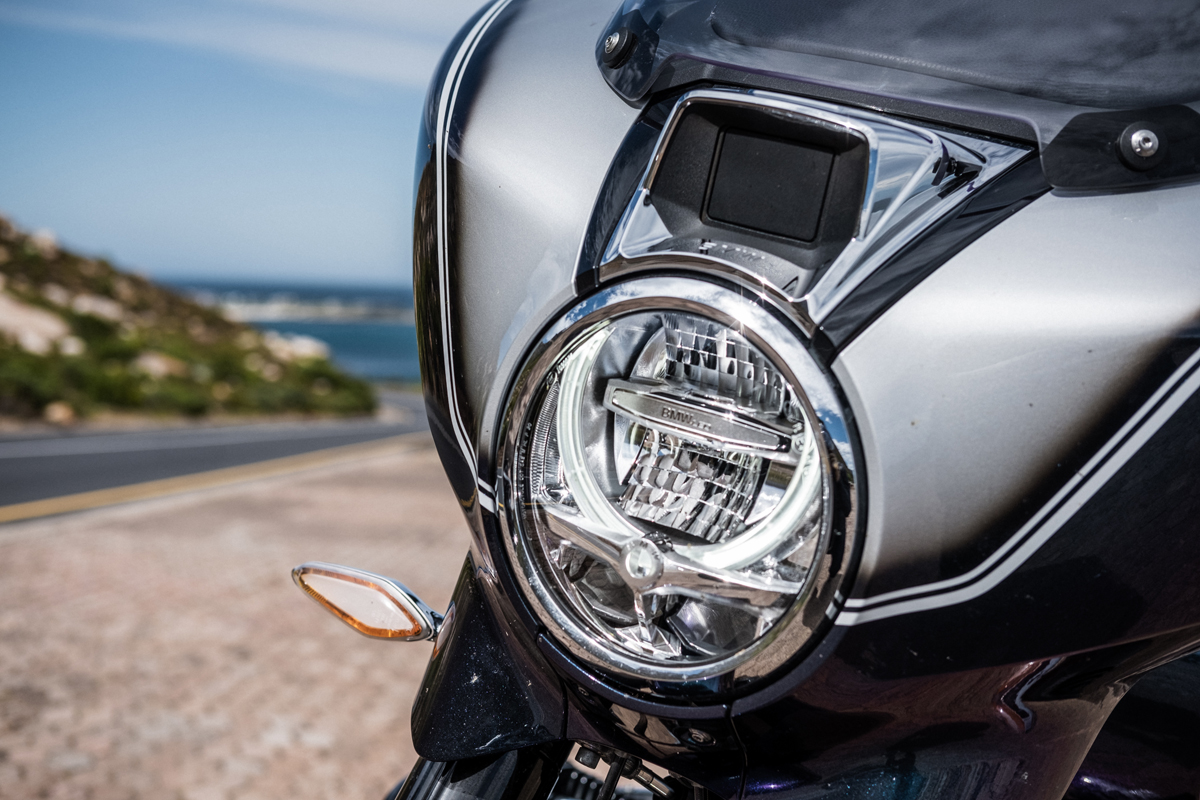
The R 18 scores high on looks, build quality and the sheer presence of its massive boxer motor. But it’s a harsh ride, has very limited cornering clearance, and ultimately struggles to define itself. The cruiser market is a tough nut to crack, after all.

Photo credit: Wes Reyneke / ZA Bikers

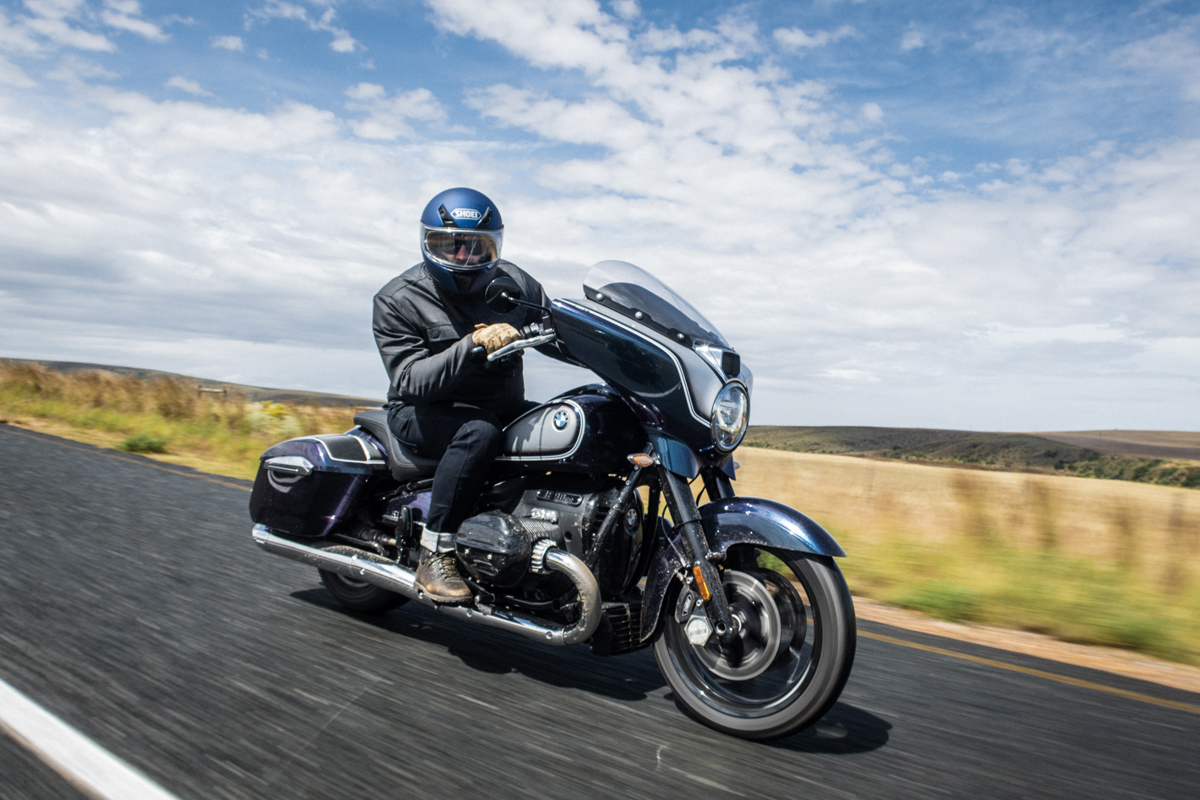
But what if you stuck BMW Motorrad’s biggest boxer into a touring-focussed package instead? That’s what they’ve done with the R 18 B and R 18 Transcontinental. And now that I’ve ridden both, I can confirm that these versions of the R 18 make a lot more sense.

These two tourers are built on the same basic platform and 1,802 cc boxer motor as the rest of the R 18 range. To recap, that means they make 91 hp at 4,750 rpm and 158 Nm of torque at 3,000 rpm, driven to the back wheel via an exposed shaft drive.

Photo credit: Wes Reyneke / ZA Bikers

Like the ‘base’ model R 18 they roll on 19F/16R wheels—but they’re cast aluminium items instead of spoked. The Transcontinental and B also have a slightly steeper steering angle and shorter wheelbase, and a little more rear suspension travel. They weigh more too: 398 kilos wet for the B, and 427 for the Transcontinental.

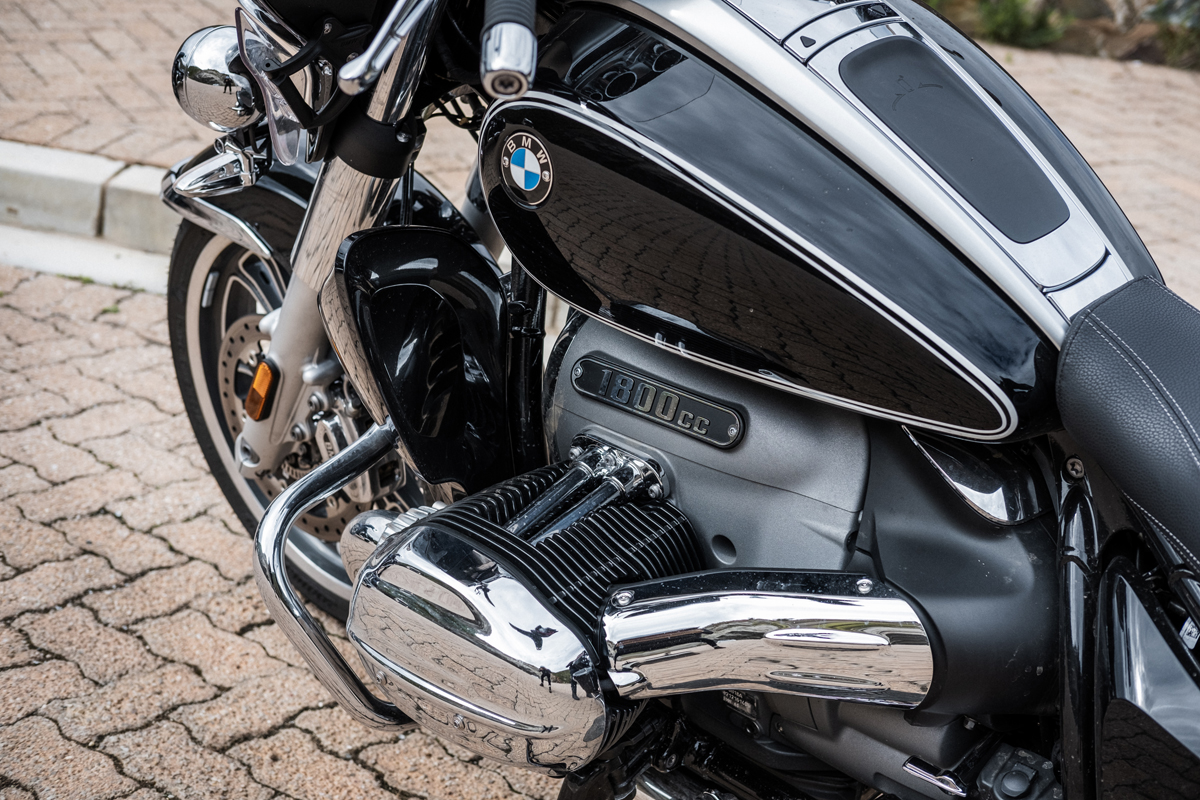
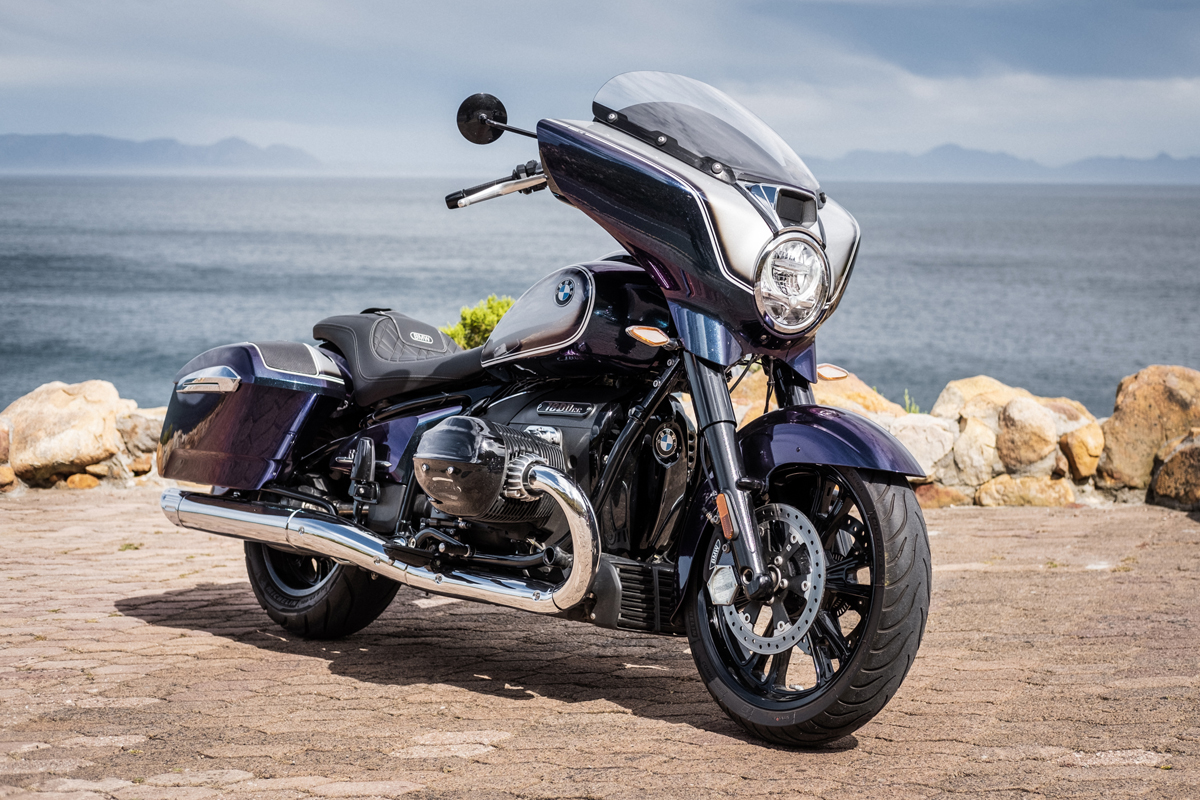
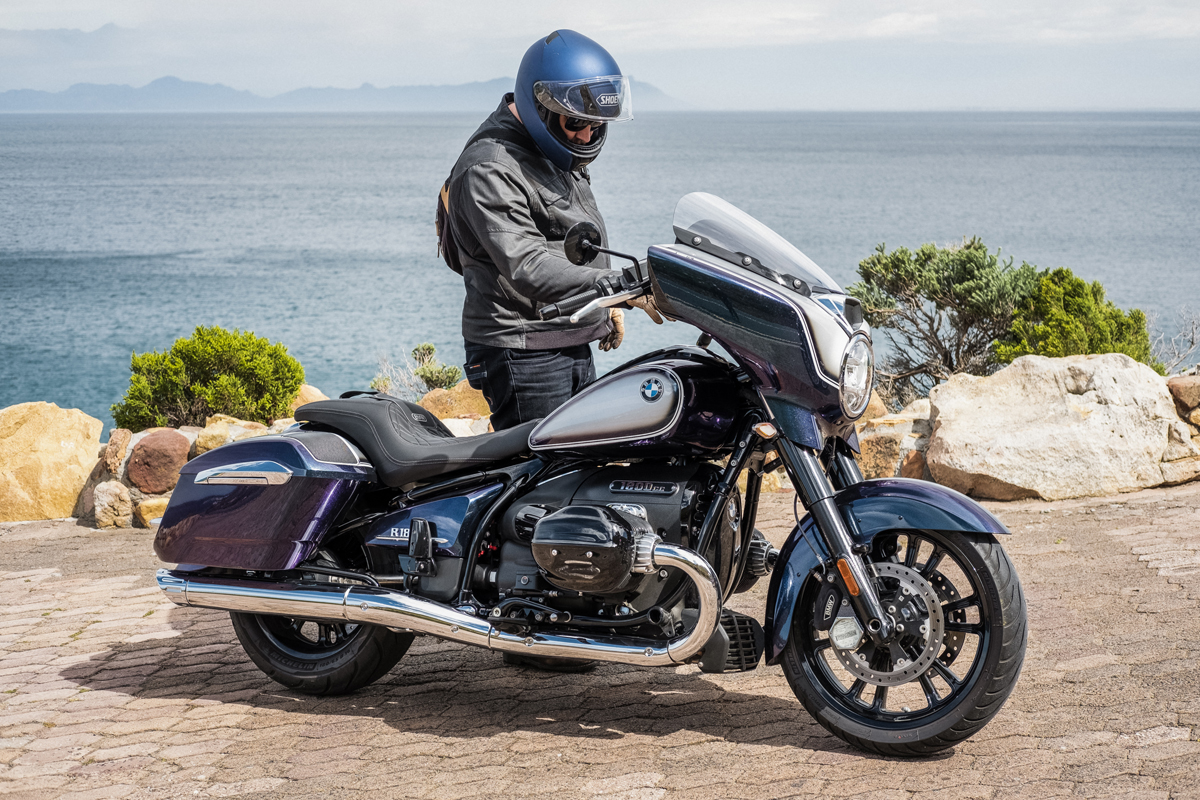
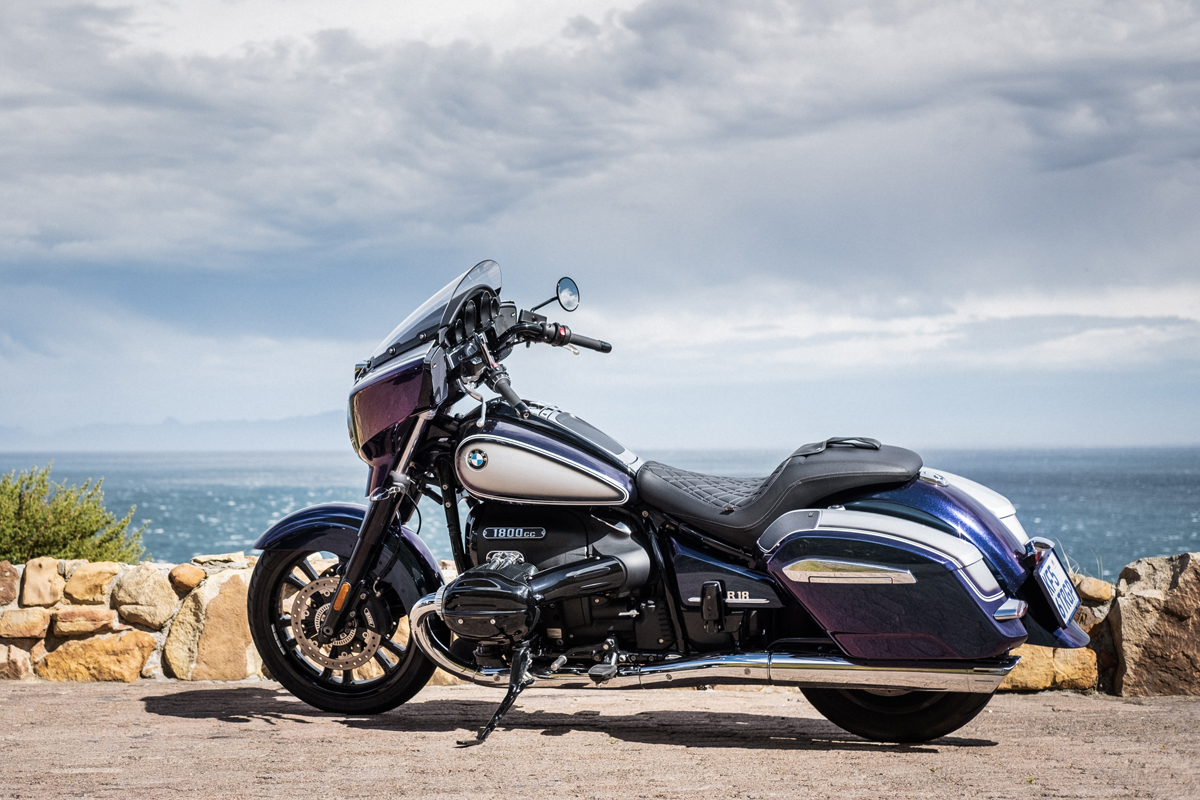
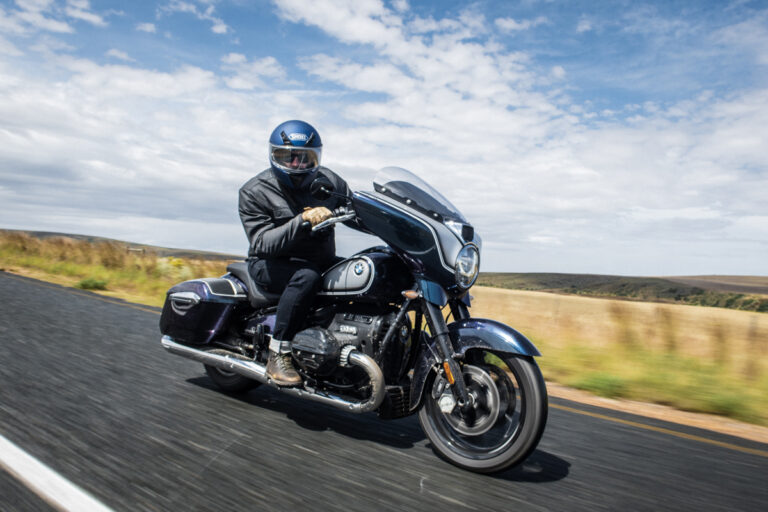
The original R 18 design draws inspiration from BMW’s history, but there’s no reference material for the Transcontinental and B. This is new ground for the Bavarian marque, and both bikes are dripping with Americana thanks to their batwing fairings, scooped two-up seats, hard panniers and stretched rear fenders.

Photo credit: Wes Reyneke / ZA Bikers

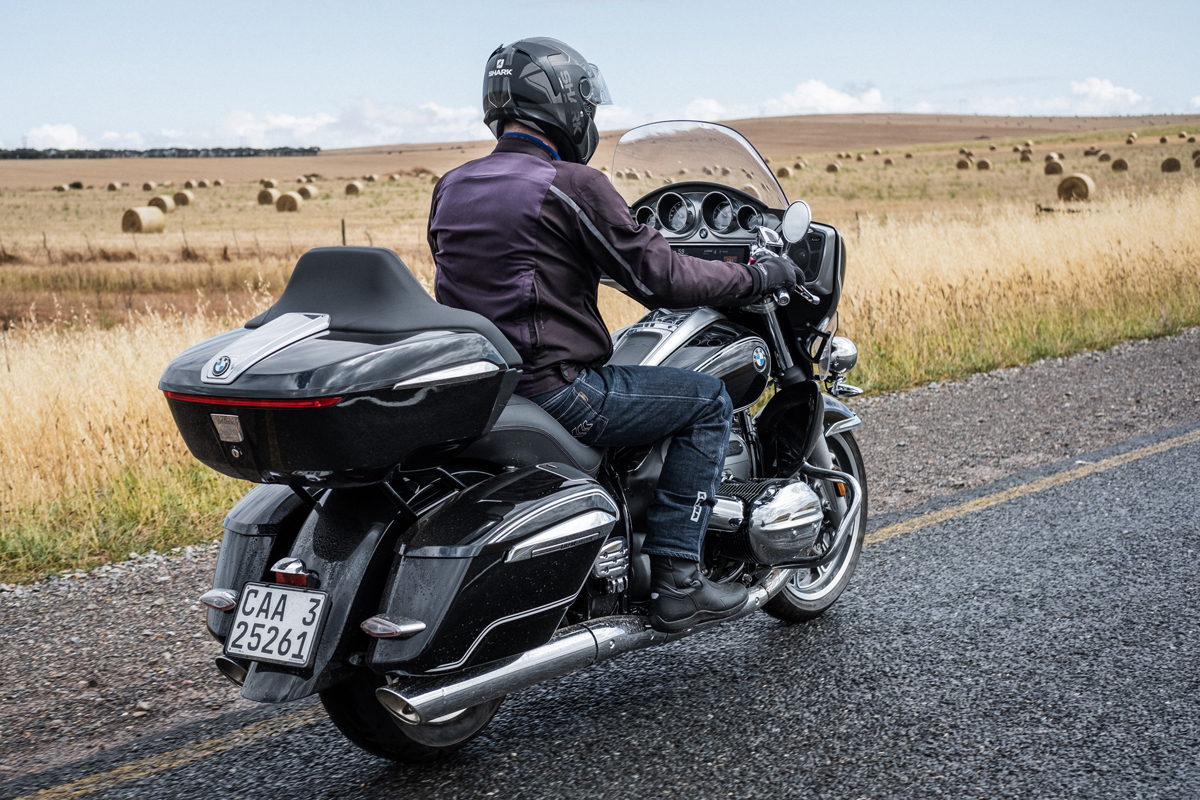
The Transcontinental is a full dress tourer, with a taller windscreen, and a top case with an integrated backrest. The B is a traditional bagger—pared down, with no top case and a shorter windscreen. Both have bigger fuel tanks too (24 litres instead of 16).

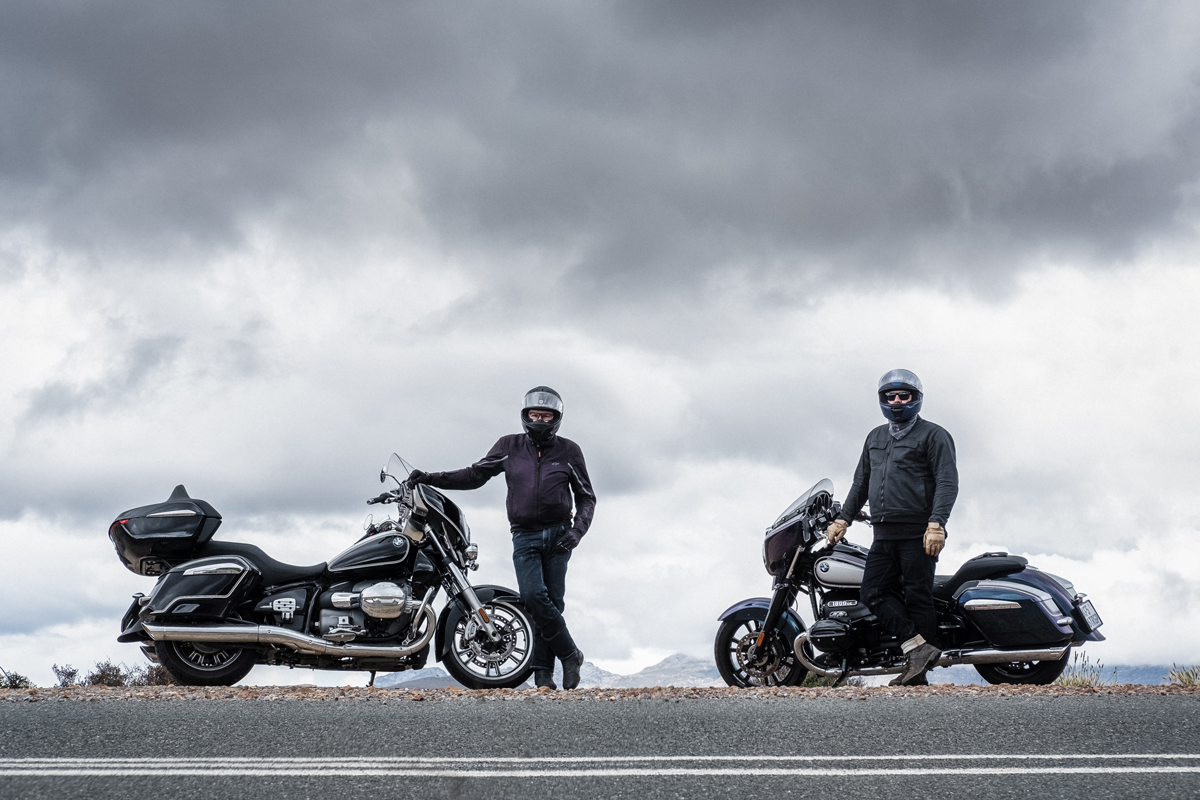
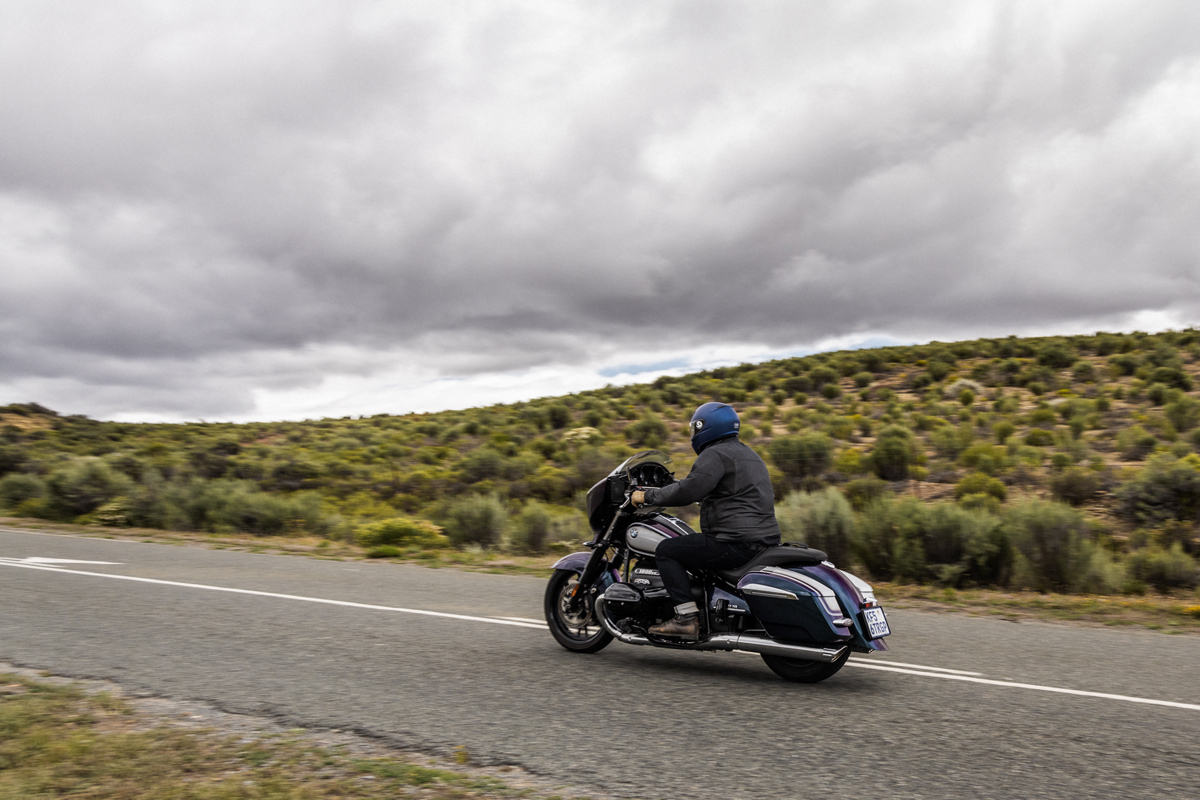
Figuring that the only way to properly sample these new tourers would be to actually tour with them, I plotted a slightly relaxed and hella scenic three-day route through the Western Cape. BMW Motorrad South Africa and BMW Motorrad Cape Town supplied the motorcycles, while my good buddy Brian Cheyne supplied the company. Armed with a healthy blend of scepticism and curiosity, we set off.

Photo credit: Wes Reyneke / ZA Bikers

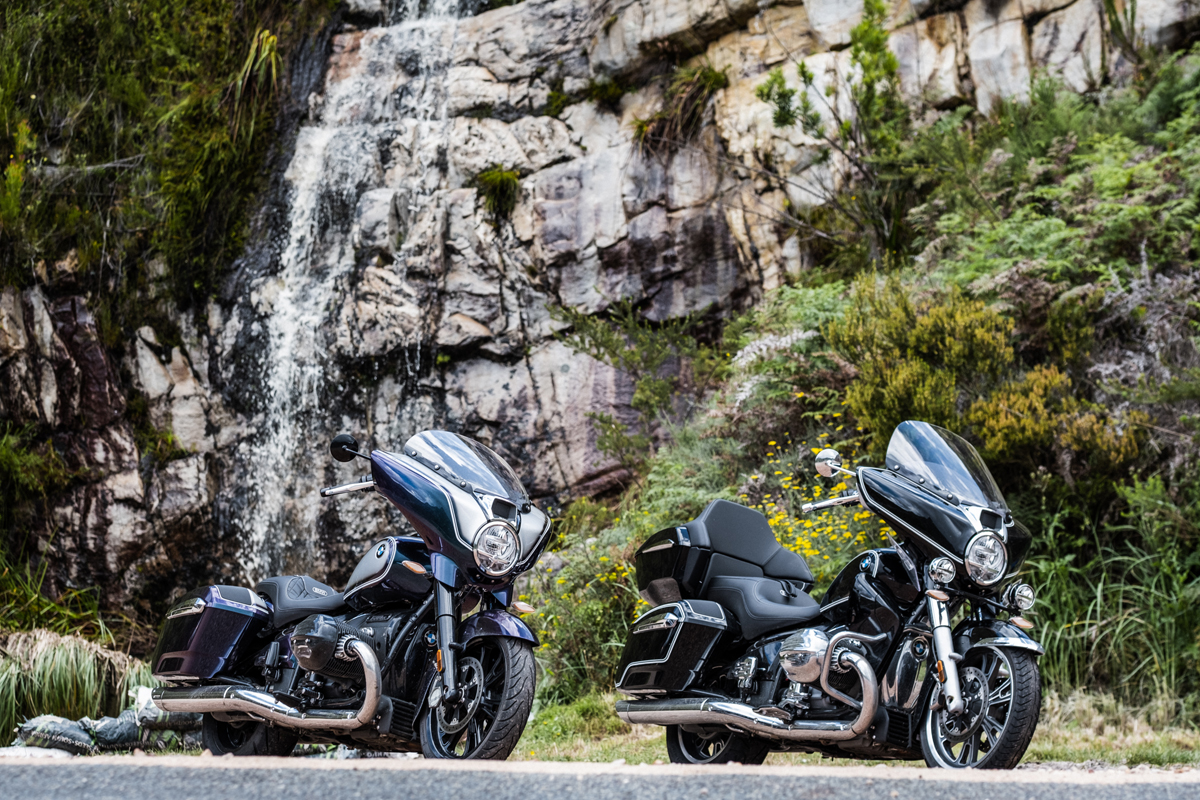
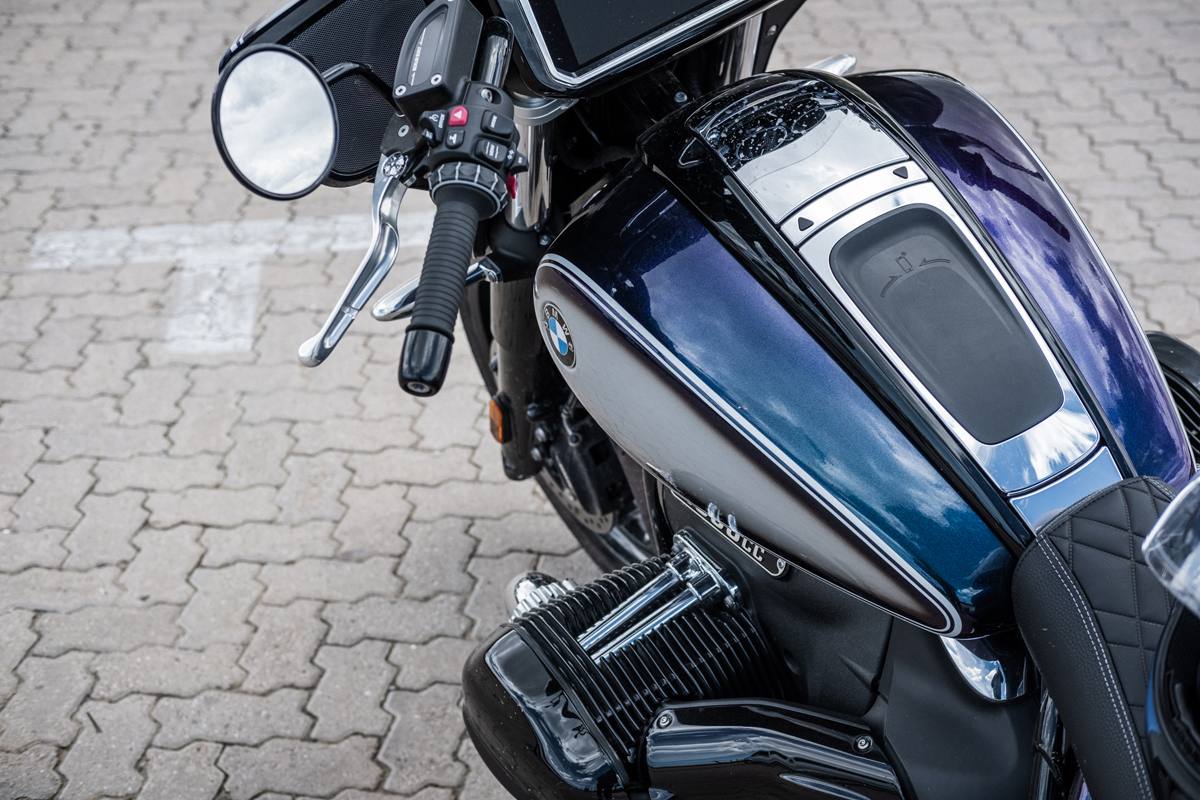
Confession time: I have a thing for baggers. I immediately gravitated towards the R 18 B’s tapered lines, and its mesmerizing ‘Option 719 Galaxy dust metallic’ paint job. It’s one of the best liveries I’ve seen on a production bike, with a metal flake finish that flips between blue and purple depending on how the light hits it. It also has a blacked-out motor, which serves to highlight the sparkly paint even more.

Our Transcontinental came in BMW’s ‘First Edition’ colour scheme—a classic black-with-white-pinstripes design. But Brian picked it for another reason: it has a top box.

Photo credit: Wes Reyneke / ZA Bikers

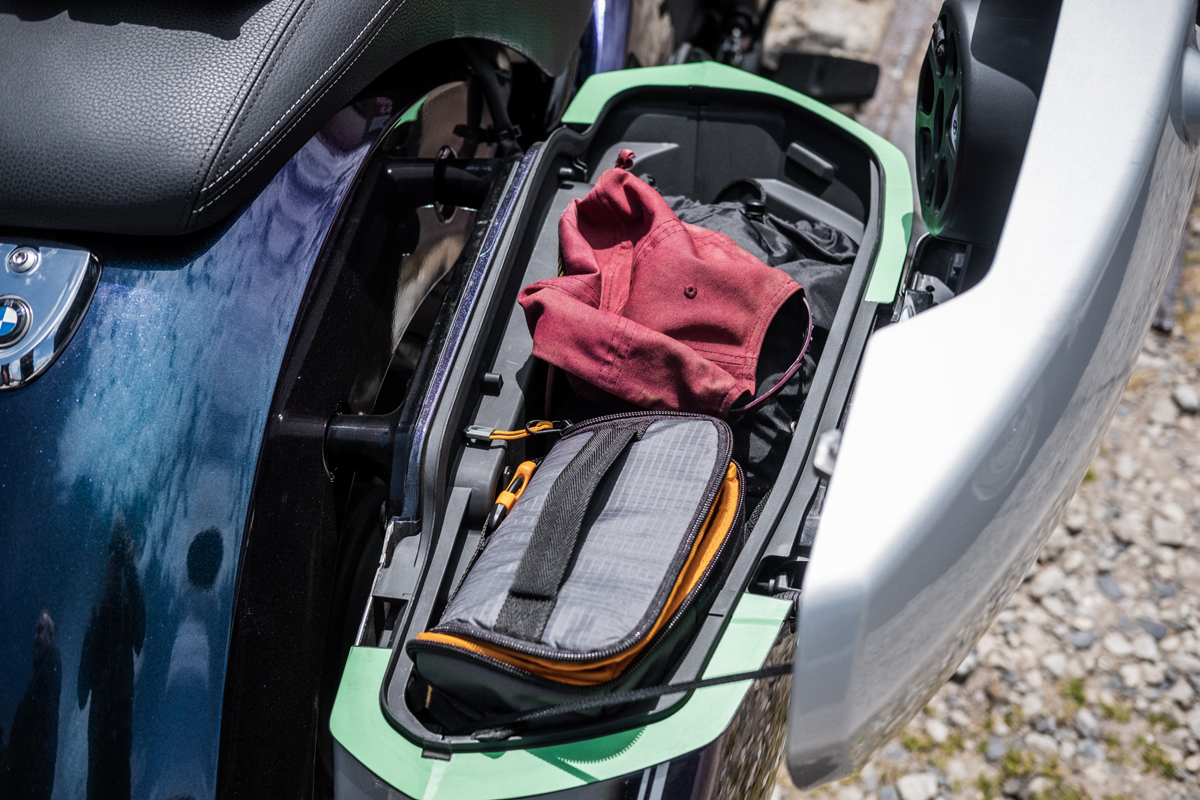
BMW’s design team did a stellar job of designing slim panniers that blend neatly the R 18’s silhouette, but at 27 L a side they’re barely adequate. I packed light for the trip, but also brought a rain suit and my camera kit, so I ended up having to stick a couple of small bits in the Transcontinental’s box.

So while the more equipped tourer has enough packing space for most trips, if you’re taking the B out for a few days you’ll need to toss an extra bag on the back.

Photo credit: Wes Reyneke / ZA Bikers

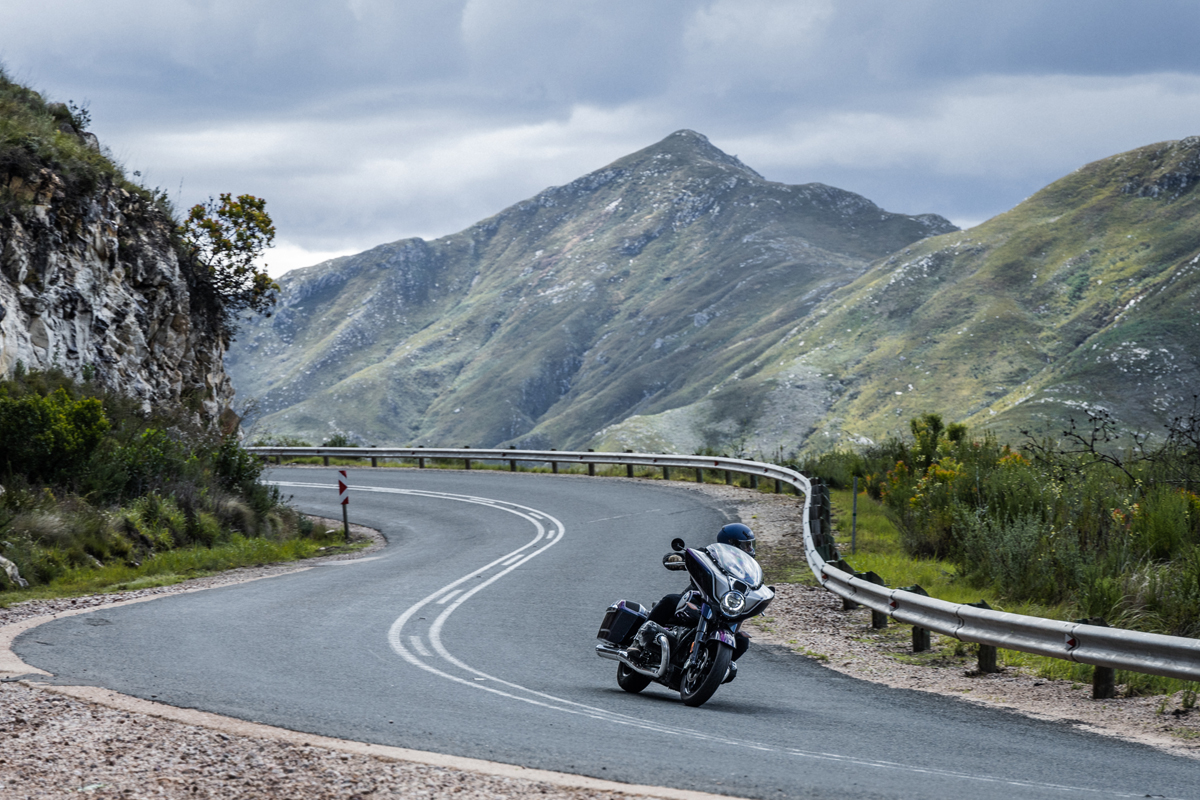
We set off along the only boring slog of our entire trip—the N2 from Cape Town to Somerset West. From there, we diverted to Gordon’s Bay and onto the breathtakingly good winding ribbon that is Clarence Drive. Flanked by the ocean on one side and mountains on the other, and pummeled by the wind, I got to terms with the porky bagger’s cornering ability.

Photo credit: Brian Cheyne

For a bike that weighs two fifths of a ton, the R 18 B handles turns surprisingly well. The base model R 18 has so little clearance that it scrapes its pegs at the mere thought of a corner. But the R 18 B impressed, touching down only a handful of times on the entire trip.

BMW don’t list lean angle or ground clearance figures for either bike, but I suspect the bagger has a little more of both than its cruiser sibling. It has slightly revised geometry too, since the frames aren’t totally identical. And it has different foot pegs that have more surface area, but a slimmer profile—so perhaps that made a difference too.

Photo credit: Wes Reyneke / ZA Bikers

Our first day took us via Pringle Bay for breakfast, then onto Hermanus where we briefly gate crashed a Harley-Davidson rally. Brian’s touring pace is the same as mine: take it easy, stop often, eat a lot.

Whenever we stopped, both bikes drew stares, compliments, questions and even photo requests. Both the R 18 B and Transcontinental have massive amounts of presence, and there’s a newness to them that seems to draw people in. Even at the Harley rally, Brian and I were inundated with queries about the two BMW’s that we’d stuck between all the hogs.

Photo credit: Wes Reyneke / ZA Bikers

Our last stint on the first day took us via Elim to Bredasdorp, and through some of the gnarliest winds I’ve ever ridden in. Riding a land yacht makes you a large target for gusts, but the R 18 B’s sheer weight kept it planted.

Day two started with a casual meander to Swellendam. After a roosterkoek breakfast at the must-visit Oude Post Bistro at Buffeljagsrivier, Brian and I finally swapped bikes for the first time. By the time we reached Hartenbos, I insisted on swapping back.

Photo credit: Wes Reyneke / ZA Bikers

Both bikes fix one major problem with the original R 18: its seat. The Transcontinental’s perch is slightly cushier than the B’s, but both bikes managed 1,080 km over three days without either of us complaining of a numb butt. But it’s their screens and foot pegs that set the two bikes apart for me.

The Transcontinental’s taller screen isn’t quite tall enough for my 1.86 m frame, so it caused crazy buffeting around my helmet. The B’s stubby bagger-style windshield merely kept the wind off my chest—so I got ‘clean’ air around my helmet, which was totally manageable. An adjustable screen on the Transcontinental would have been great.

Photo credit: Wes Reyneke / ZA Bikers

The Transcontinental also comes with floorboards instead of the wide pegs that the B has, and a heel-toe shifter. I’m usually a fan of this arrangement on tourers, but here it locked my feet in a weird position, with the toe end of the shifter hard to get to. Some adjustment of the shifter would no doubt have helped, and ultimately my personal preference skewed towards the B.

Oh, and if you’re wondering what it’s like to ride a bagger for three days with mid-mounted pegs, the answer is perfectly fine. Although highway pegs are useful, I didn’t really pine for them. If there’s one major drawback though, it’s the vibration from the R 18’s behemoth of a motor.

Photo credit: Brian Cheyne

The way the boxer lurches to the left on startup, and the way it shimmies at idle, is great for a giggle. But at anything between 2,500 and 3,000 rpm, the vibration through the bars and pegs is a huge bane. And that’s precisely where the revs sit at average highway speeds.

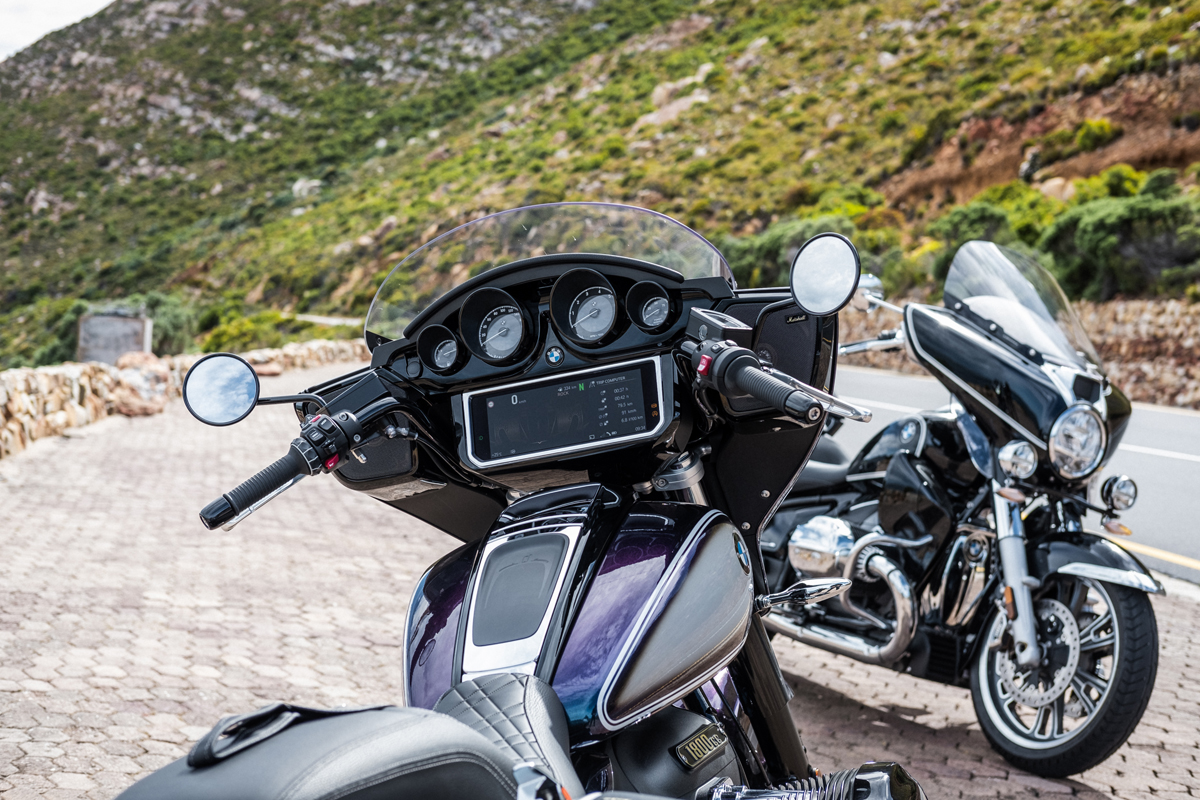
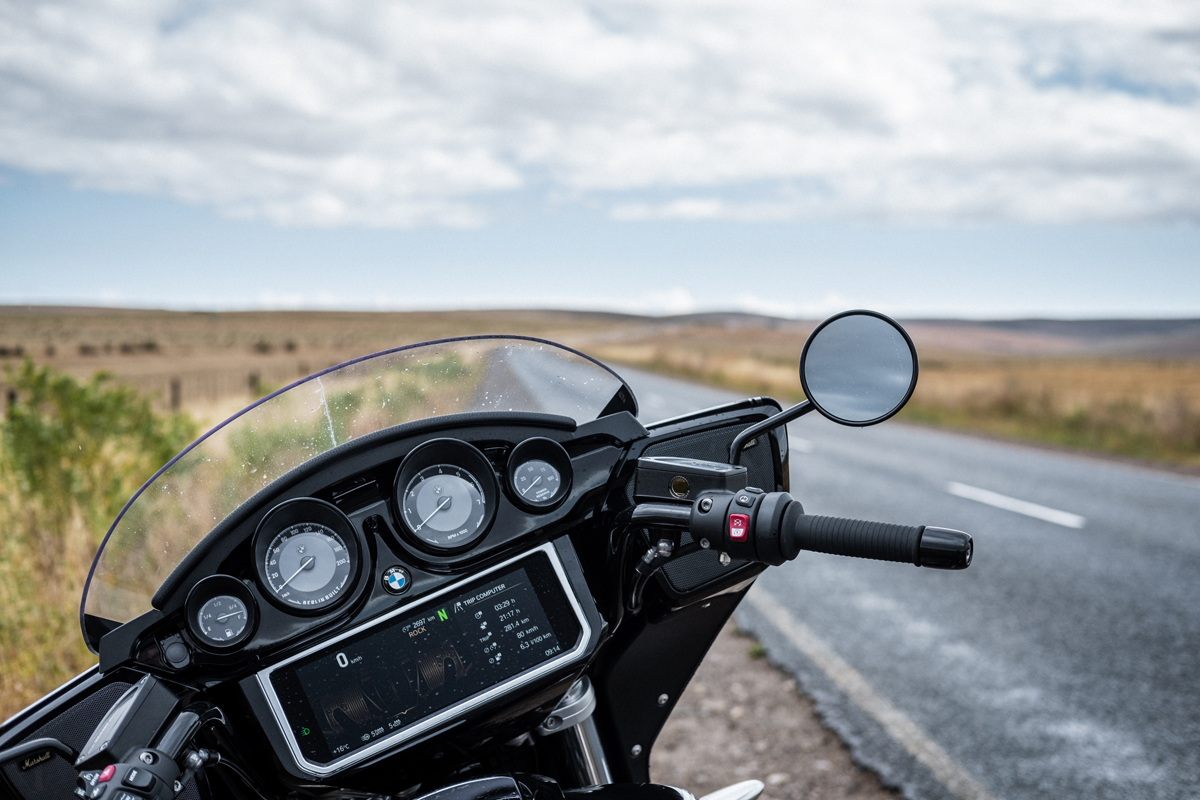
Back on the bagger and with my Spotify road trip playlist spooled up, we left Hartenbos and headed north towards the R62. Connecting a smartphone via the R 18’s whopping 10.25” TFT is a cinch, and the sound from the onboard Marshall speakers is decent—at slow speeds. By 100 km/h the wind starts drowning things out, and at 120 and up it becomes barely audible. (The Transcontinental’s stereo has a little more kick, thanks to its extra speakers and taller screen.)

Photo credit: Brian Cheyne

These tourers are nothing if not high-tech. You get the same three riding modes as the basic R 18, plus the option of radar-controlled cruise control (which both of our bikes had). Kudos to BMW here, because the system works extremely well—detecting vehicles well in advance and slowing you down without being jarring.

We also had the luxury of heated grips and seats, and a reverse gear. The R 18’s TFT screen and accompanying smartphone app allow for live map navigation too—but the app’s a bit fiddly in that particular mode, and could use some refinement. There’s also a handy storage space on top of the tank for your phone, but in light of recent reports of iPhone cameras breaking due to vibration, I wasn’t going to chance it.

Photo credit: Brian Cheyne

Shortly after leaving Hartenbos, the ominous grey clouds we’d earlier dismissed as innocuous unleashed a downpour on us. I ironically donned my Harley-Davidson rain suit as we pushed on, and by the time we hit the picturesque curves of Robinson Pass, the rain had cleared.

The road from Robinson Pass to Oudsthoorn is a stunning piece of Karoo real estate—a plateau of sorts with sprawling vistas in all directions. Heads down, we pinned it through one more cloud burst, looking back as we reached the R62 at the ominously dark patch that we’d just ridden through. Our second day ended with a final squirt to Calitzdorp.

Photo credit: Brian Cheyne

We spent the last day of our tour meandering over Huisrivier Pass, along the R62, and up through the Koo Valley—storm clouds looming over us, but never quite catching us. With three days of perfect riding behind us, we ended with a last push from De Doorns along the N1 home, giving me plenty of time to gather my thoughts.

I’ll be the first to admit that writing about motorcycles for a living skews your perception of reality ever so slightly. In standard trim, the B and Transcontinental’s prices start at R399,700 and R429,150 respectively. I can’t afford either price tag—but my job means that I don’t have to in order to experience them.

Photo credit: Brian Cheyne

I operate in a world where I can judge a motorcycle on its merits without the hypothetical scenario of actual ownership. And honestly, riding bikes through the best parts of the Western Cape makes it hard to separate what’s good about the bike itself, from the sheer pleasure of just riding.

But I managed to figure a few things out—like the fact that I felt way more at home on the B than I did on the Transcontinental. And that while both bikes could use some refinement, they’re probably the best versions of the R 18 that BMW has made so far.

Photo credit: Wes Reyneke / ZA Bikers

I guess the inevitable question, is whether the R 18 Transcontinental and B will entice potential Harley-Davidson customers away from their Street Glides and Road Glides. But that’s not my call to make—that’s for the market to decide.

With thanks to Penny Sterley, BMW Motorrad South Africa and BMW Motorrad Cape Town.

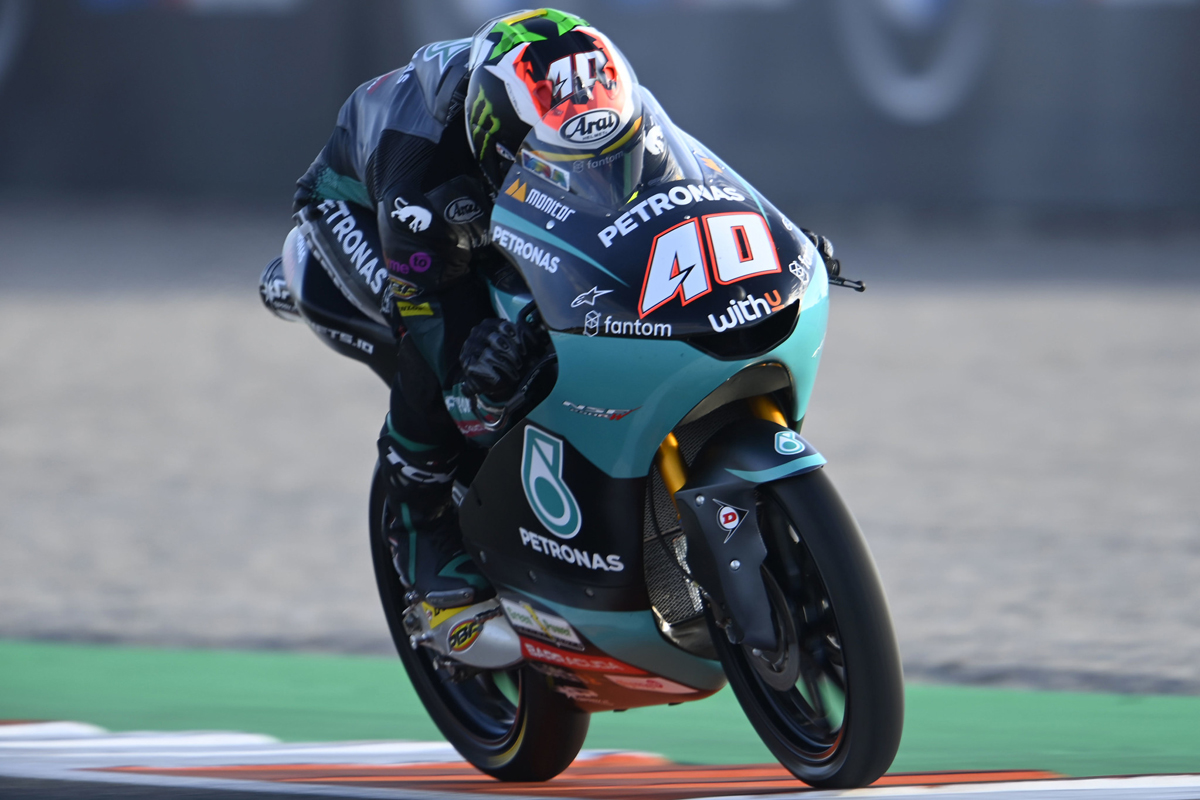
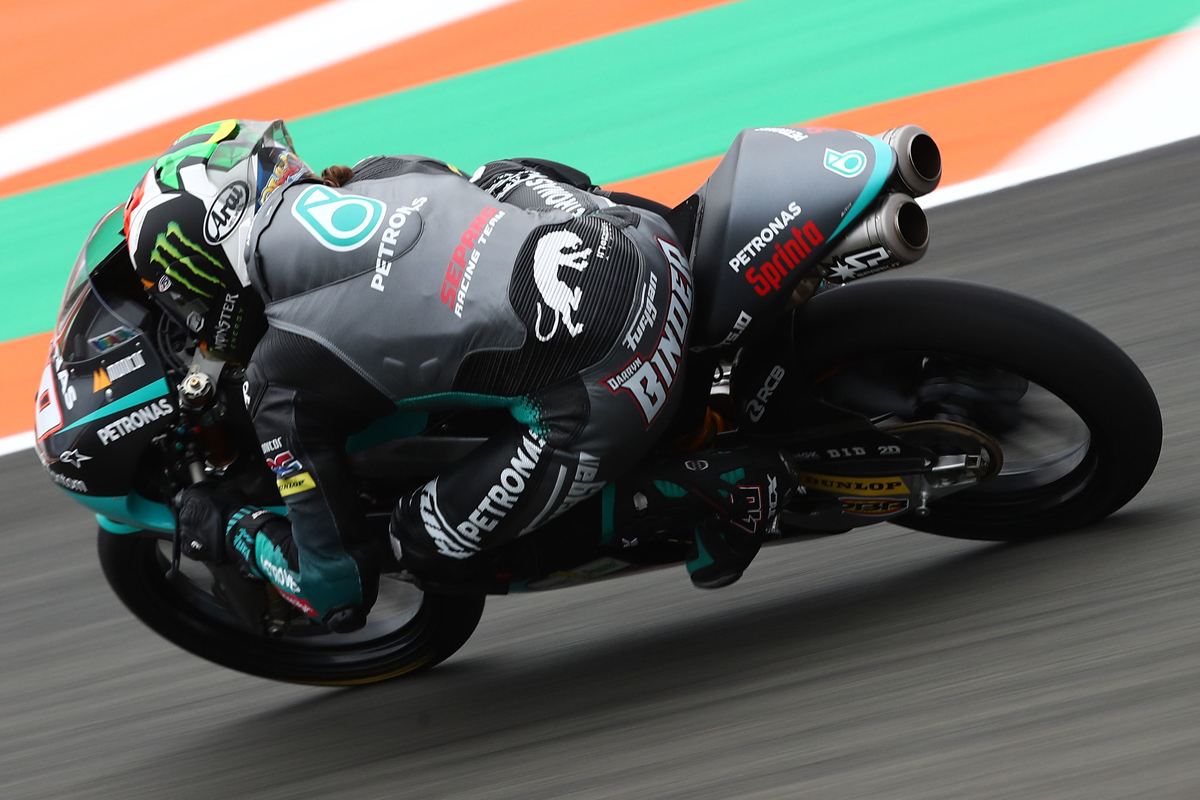
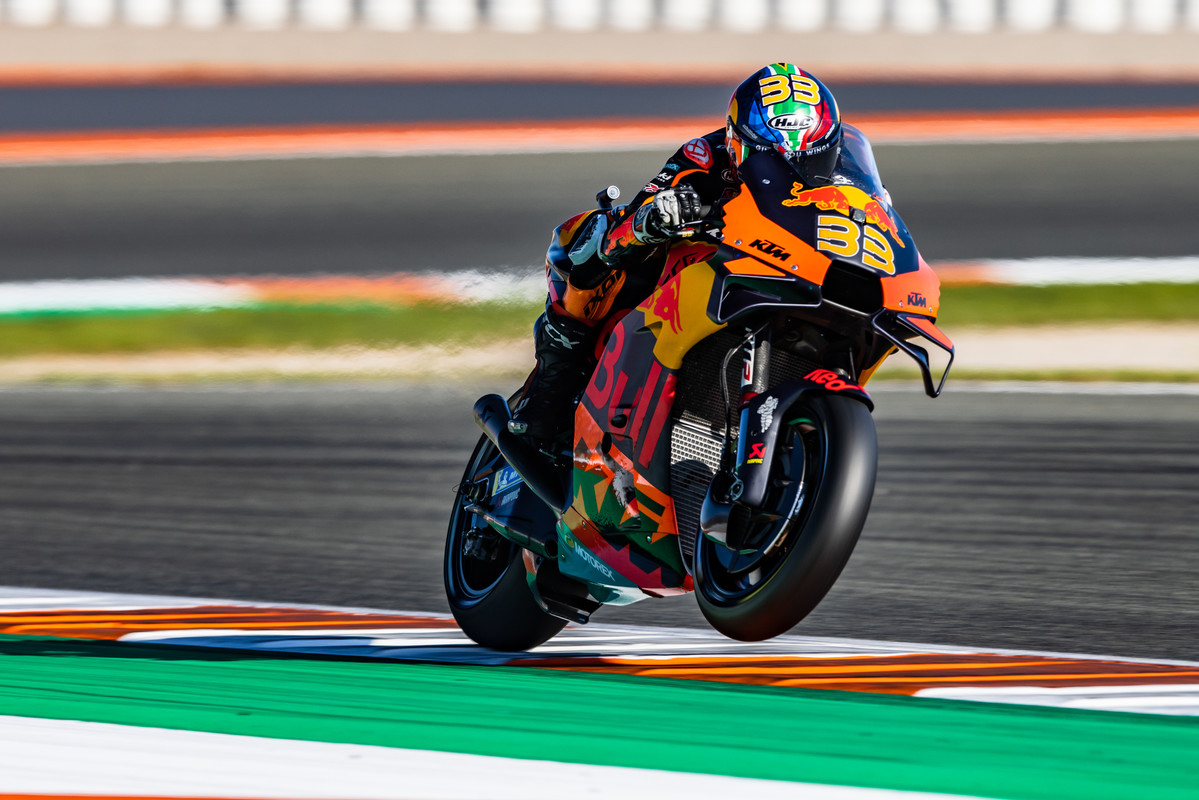
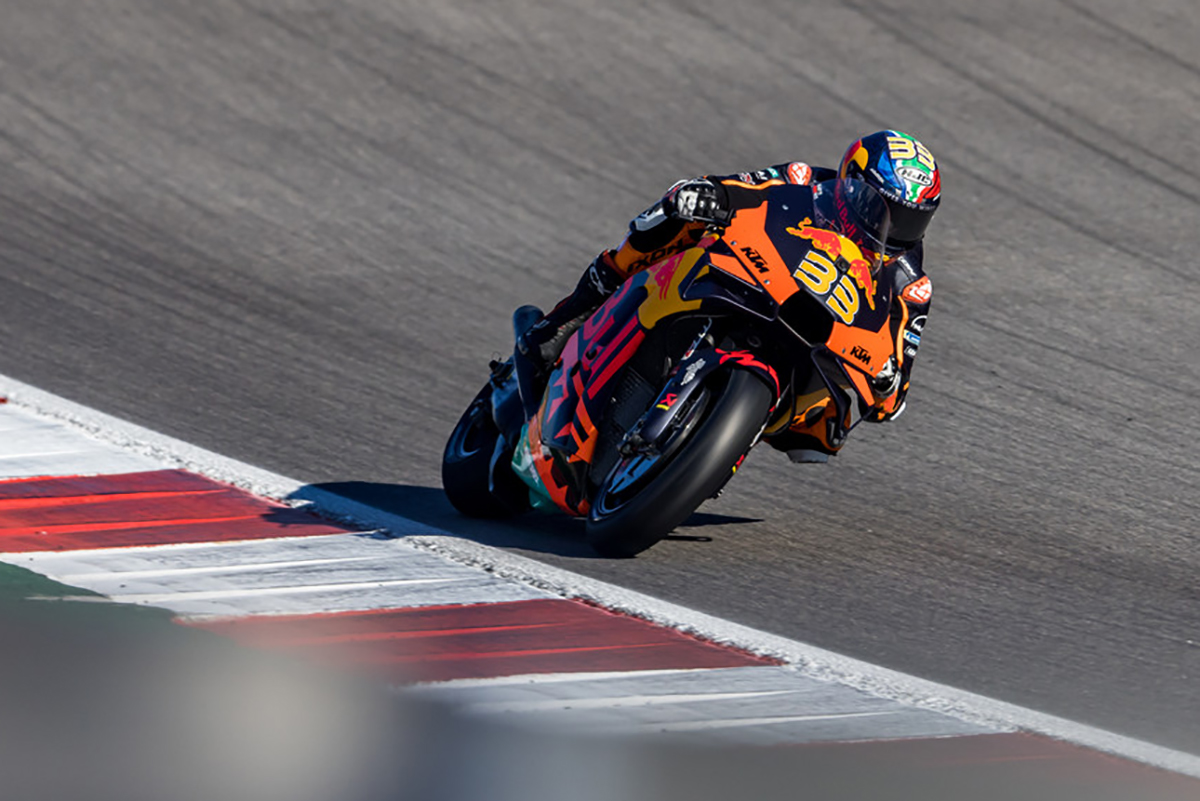
Catching up with hometown hero Brad Binder

Photo credit: Red Bull KTM

With a further three years to go on his current contract, factory KTM rider Brad Binder heads into 2022 with a stability that not many of his rivals on the MotoGP grid can enjoy. Not having to worry about fighting for a seat along with the rest of the grid gives him an enviable edge, enabling him to concentrate on the job at hand.

We caught up with Brad via a Zoom link while he was relaxing in South Africa at the end of a hectic season. While he is not allowing himself much of a break, even a couple of weeks will enable him to recharge his batteries and then it’s back to the grindstone in preparation for 2022.

Sixth in the 2021 championship was satisfying and, obviously, included that remarkable victory in the wet in Austria, a result that will not be forgotten for a long time, not least in terms of the manner in which it was achieved.

Photo credit: Red Bull KTM

“The highlight of the year was definitely Austria. It was fantastic to win at the teams home Grand Prix: a very special day. Sixth in the championship was great: my best finish in MotoGP so far. We all wanted more – the team and myself – but I made a good improvement this year and finished all races bar one which is a huge improvement on my 2020 season. I have to walk away happy and we can only look forward to 2022 with high hopes.”

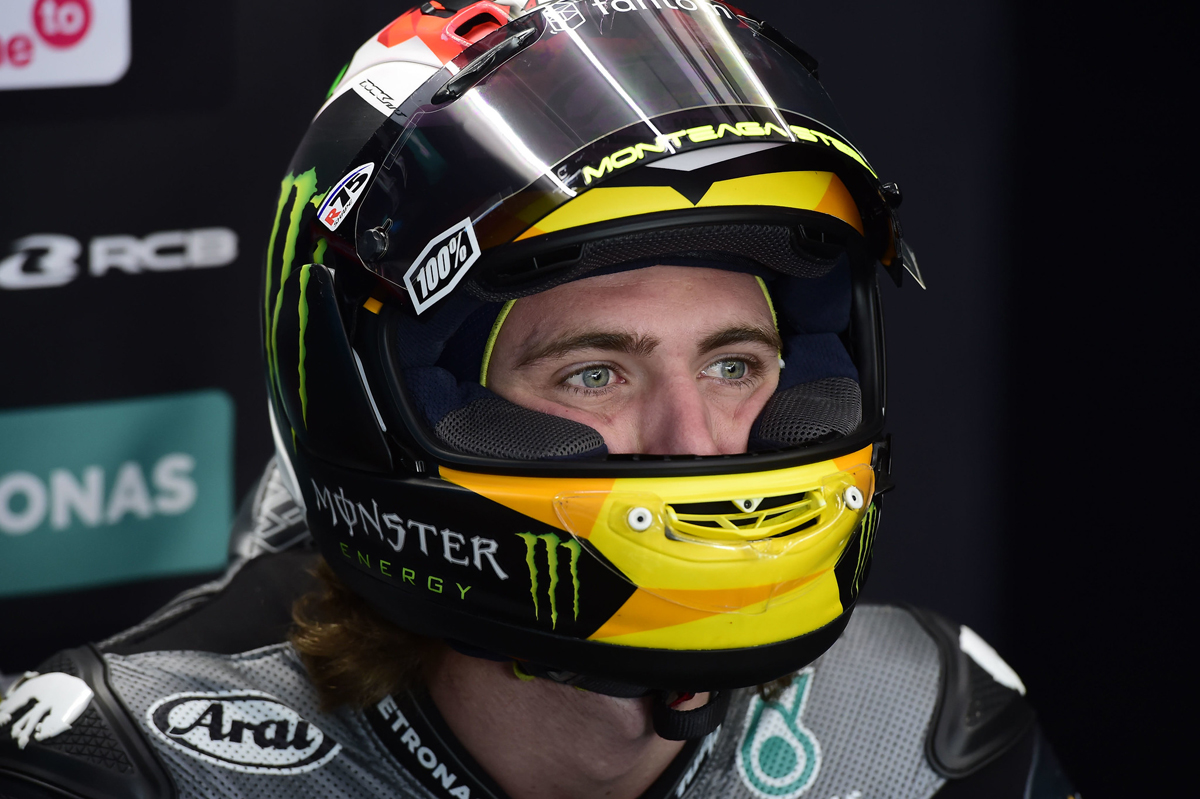
Of course, 2022 will see brother Darryn joining Brad on the MotoGP grid on a satellite Yamaha. How does Brad feel about that?

“It’s going to be awesome to have him there. He’s got a big task ahead of him, jumping straight from Moto3 to MotoGP. He did really well at the first test and he can have a strong season but it will take him time to find his rhythm. But I know he’ll do well, mainly because he’s now on a bike that physically, will be a lot better for him because of his size. As a family, we’ve worked so hard on our racing for so long and to have Darryn there at the top with me will be fantastic.”

Photo credit: Petronas SRT

What does KTM have to do to close the gap to the other teams?

“Firstly, at the moment things are so tight in MotoGP. Two or three-tenths of a second would take us from where we are to fighting for podiums at every race. We’re looking for small improvements and there are two areas we need to work on: finding more grip at the rear, which is spinning coming out of the corners. That means we lose drive. Also, we need to reduce the tendency for the bike to wheelie – we’re not getting as much power as we need down to the ground.”

Photo credit: Red Bull KTM

It’s all very well to know the problems, but how do you achieve an improvement in the relationship between the bike and the tyre?

“When you are looking for different things – turning or stability – you change one thing in the chassis only to find it has an adverse effect on another aspect of performance. We have improved the turning of the bike enormously since I first sat on the bike but we’re not able to take full advantage of it because of the lack of traction coming out of corners – the rear wheel is spinning up from the first touch of throttle to going flat out and we need to fix that.

“We got an updated chassis just before Mugello and immediately Miguel Oliveira, (his teammate) got three podiums in a row (a victory and two-second places) and I was also able to fight amongst the top five. I wasn’t riding my best at the start of the season and we were excited to get into the second half of the season because of this new chassis. There were three tracks – Mugello, Barcelona and Sachsenring – that hid our lack of traction really well – they have much faster, flowing corners so no big acceleration zones: corners where you just keep speed flowing, not having to drive out of corners hard. It hid our problems and later in the year they really came back and it was only analysing the races that we understood much better what was happening. While we haven’t solved the problems, the upgrades we’ve introduced have improved things.

Photo credit: Red Bull KTM

“There are so many things to try to do that and it’s just a case of working methodically through them at the tests to try and find the best compromise. With all the information from this season, the guys back at the factory will be working hard during the off-season to make the bike better.”

While Brad has shown great race pace, his races have been compromised by the inability to qualify well, leaving him too much work to do in the race and spending too much time getting past other riders.

“I’ve been working hard on trying to improve qualifying. Not just qualifying but putting in strong laps each practice session. I have improved but it’s not solved yet. You have to understand the bike and how far you can push the tyres to get those last two or three tenths and there are certain tracks I managed to do that without crashing. It’s not just the bike or the tyres, but me as well and I have work to do to fix that.”

Photo credit: Red Bull KTM

I asked him if getting faster over the course of the race was down to the bike or Brad himself.

“In qualifying it’s difficult due to the traction issues. But the important thing to remember is that I race the same as I qualify, meaning that, while other guys’ race lap times might be a second slower than their qualifying time, my race lap times are the same as my qualifying times and if I do drop, it’s less of a drop than others. That’s one point that’s helped me come through on a Sunday. But, it’s a complete mess starting further back as you lose so much time in the first three or four laps as you can’t push and do clean laps: there’s too much traffic and you lose so much time. If we can qualify better, it takes so much stress out of the start of the race.

“The KTM is good on tyre life so we can run harder compounds which come into their own at the end of the race where maybe my competitors are starting to struggle on their softer tyres so we can pick them off and move forwards through the pack.”

Photo credit: Red Bull KTM

It’s difficult to not keep referring to the Austrian race and that do-or-die last lap of Brad’s in the wet, on cold slick tyres and with no brakes, due to them being well outside of their operating temperature window. How did he balance speed and safety, potential success and the prospect of imminent disaster?

“Austria was one of those days when you just get lucky and things going your way. When I saw the rain coming and decided not to come in for tyres I just really had to try and not fall off. I had a big gap but you never know if the people coming behind you are on slicks or wets. If they’re on slicks, you know you have a cushion, but if they are on wets, you know they’ll catch you in a couple of corners.

“I almost fell off a few times: it felt like people were holding me up at some points. I was so happy to bring it home. Sometimes you take a chance and if they work, you’re a hero and if they don’t, you’re an idiot. But it did work and to walk away with a win – my only one of the season – was great.”

Photo credit: Red Bull KTM

With a couple of weeks off before he starts training to be prepared for 2022, Brad Binder can look back on the 2021 season with satisfaction. If the KTM team can match his levels of preparation – and they will – we can expect to see Brad mixing it with the leaders at each round in 2022.

Want to go racing? Learn from the experts.

Photo credit: Bjorn Moreira / ZA Bikers

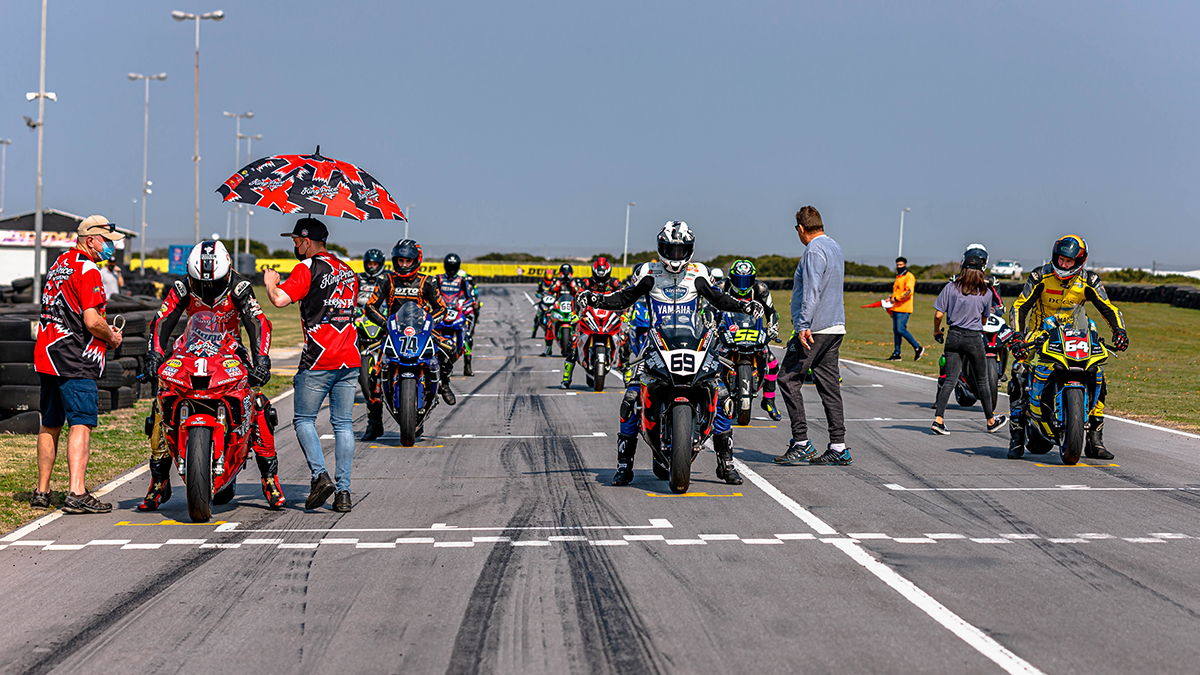
So, you want to be a motorcycle racing legend? It’s an attractive thought, being better than anyone else and winning championships. Even if you don’t manage to do that, it’s still an incredible feeling to be able to race with the best and hold your own.

Of course, there can only be one championship winner each season and not everyone can run at the front in every race – someone has to come last – but still, people put a huge amount of time and effort into their racing careers without even a sniff of a chance at a podium or race win. For every champion, there are thousands of riders below who just don’t make it, despite having the skill and ability.

Photo credit: Jeff Latham

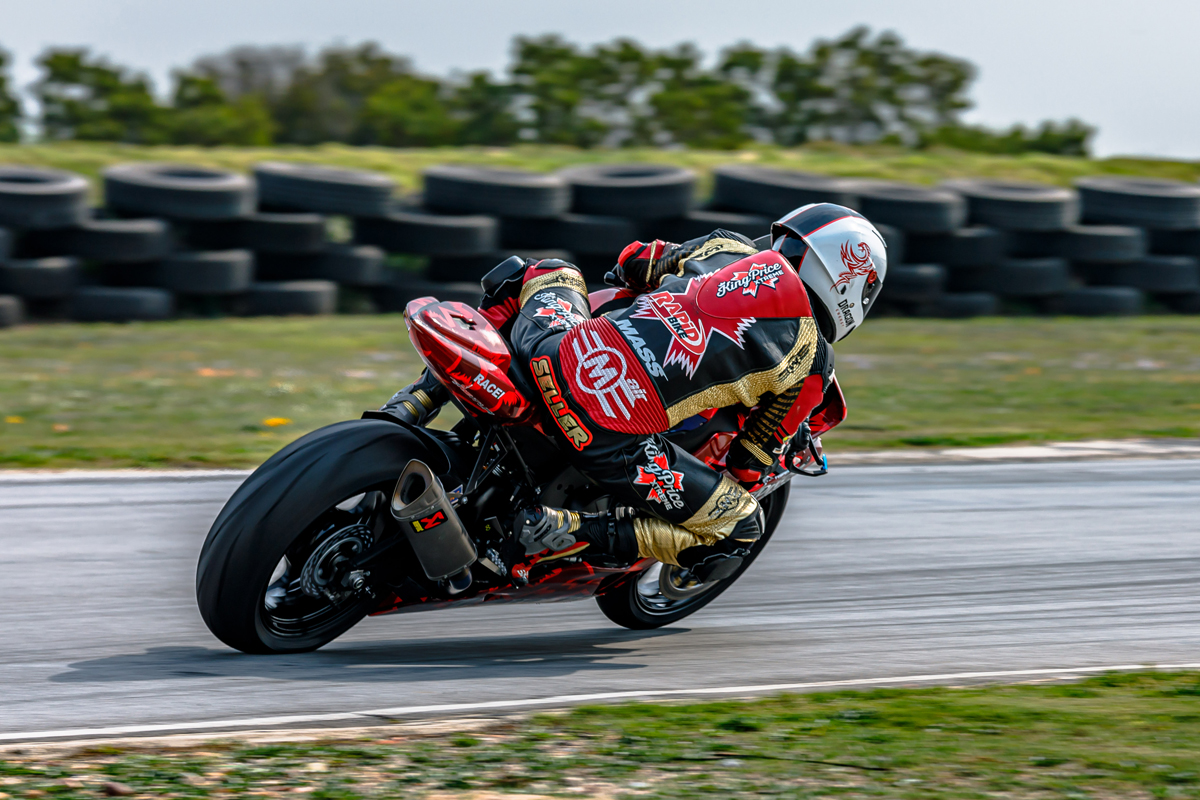
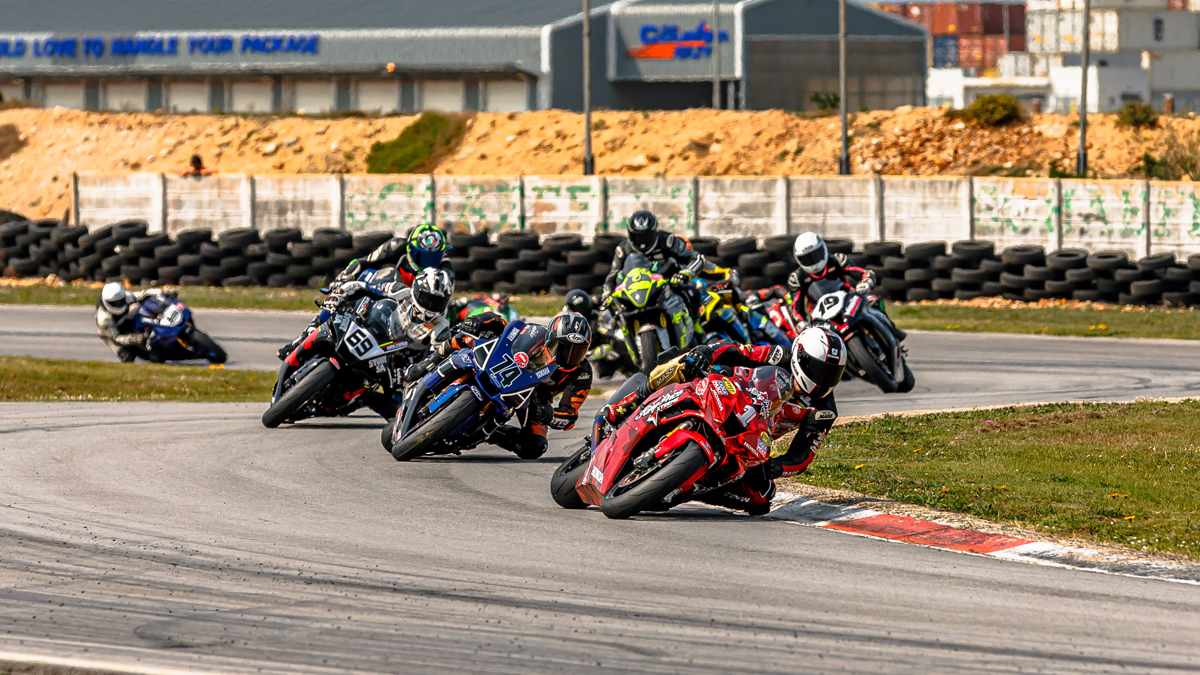
Never mind why people do it. Let’s rather concentrate on how they do it. It’s not enough to simply buy a bike and turn up to the race and think you are going to blow everyone into the weeds. Racing takes commitment, time and money before skill is even taken into account and no one knows this better than multiple SA Superbike Champion, Clint Seller.

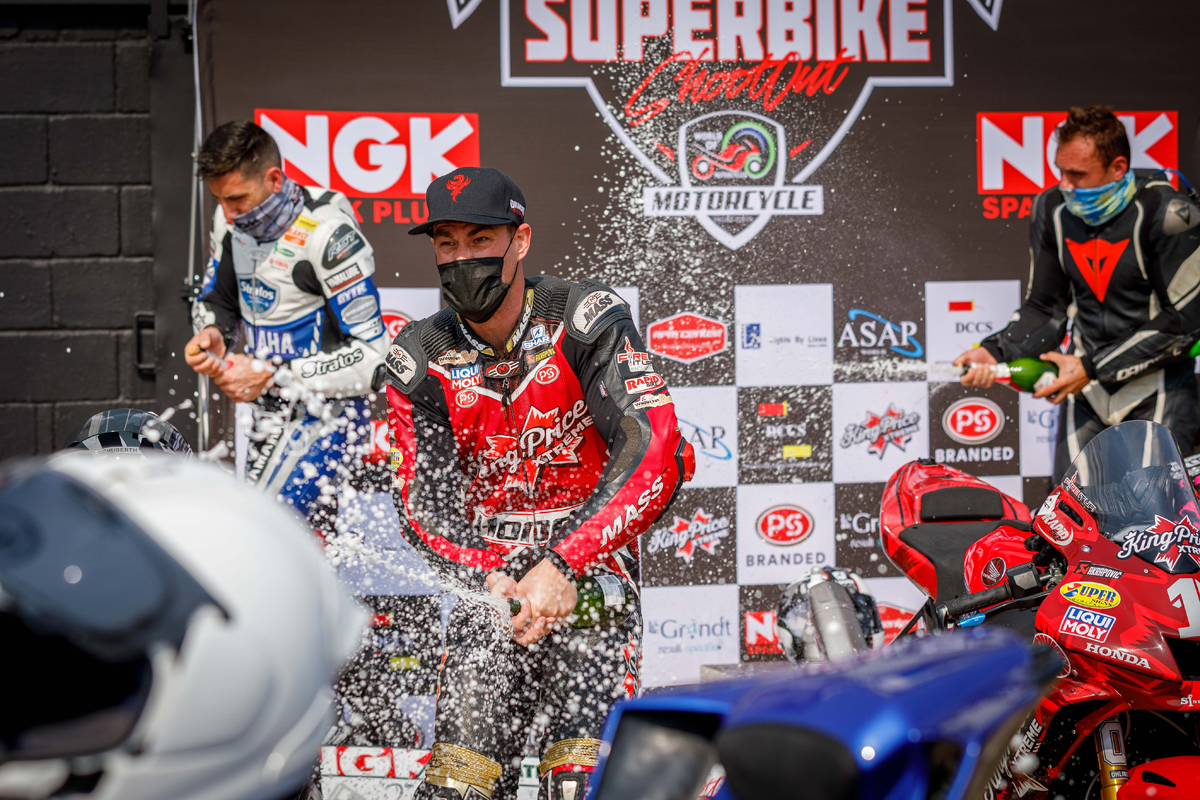
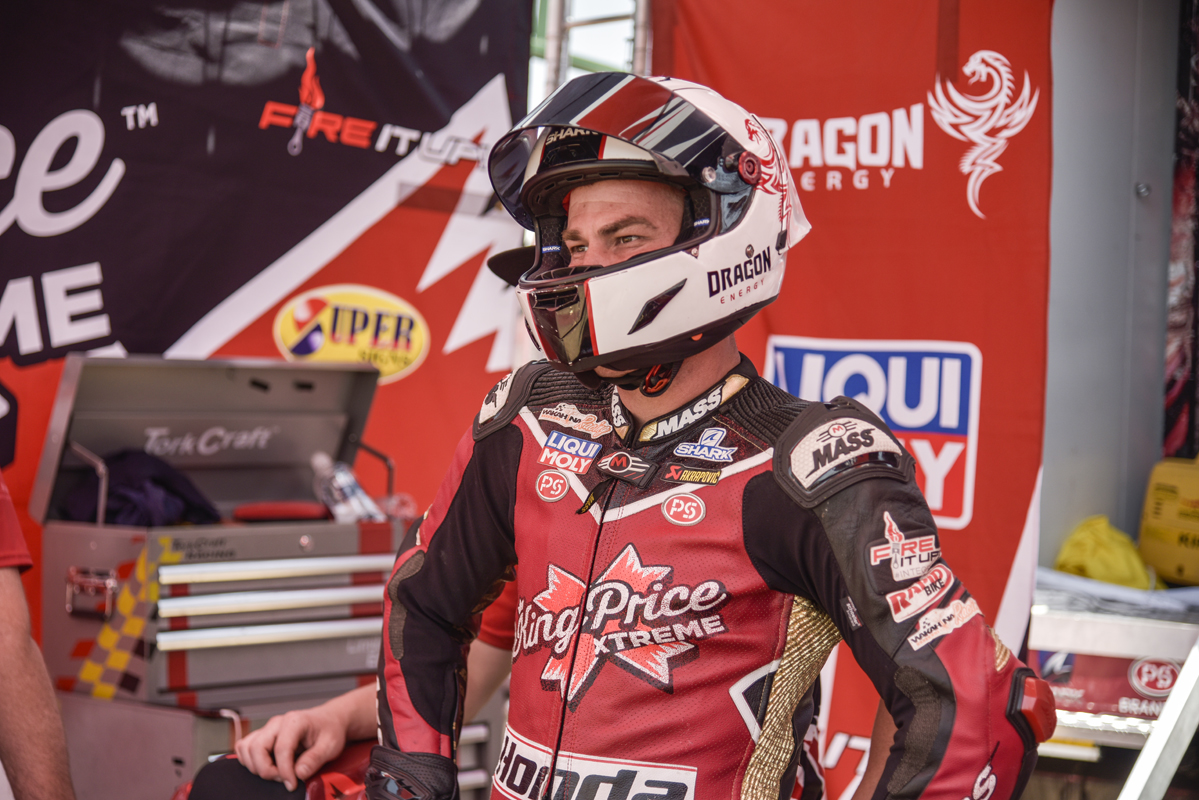
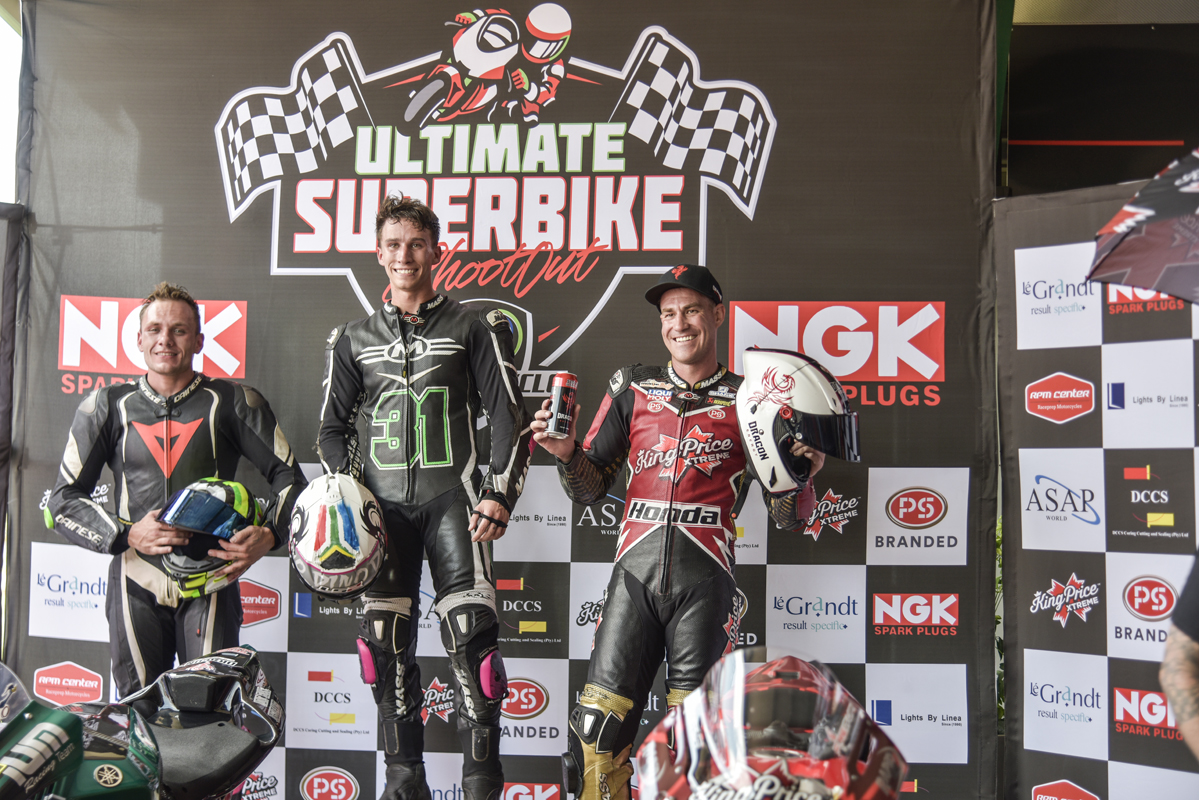
Over the years and eight championships, the most recent being wrapped up only last month, Clint has forgotten more than some people know about going racing and how to succeed and here, he shares some of his knowledge with us.

Photo credit: Bjorn Moreira / ZA Bikers

1. Get yourself a sponsor

You are never going to make it to the top by financing everything yourself, so find yourself a sponsor. If you’re going to make it at all in racing, you’re going to need someone to back you financially. For example, tyres are one of the major costs involved: a set of tyres lasts a top team roughly 15 mins on track, which means that virtually every time the bike pulls out, it has a new set of tyres.

Photo credit: Jeff Latham

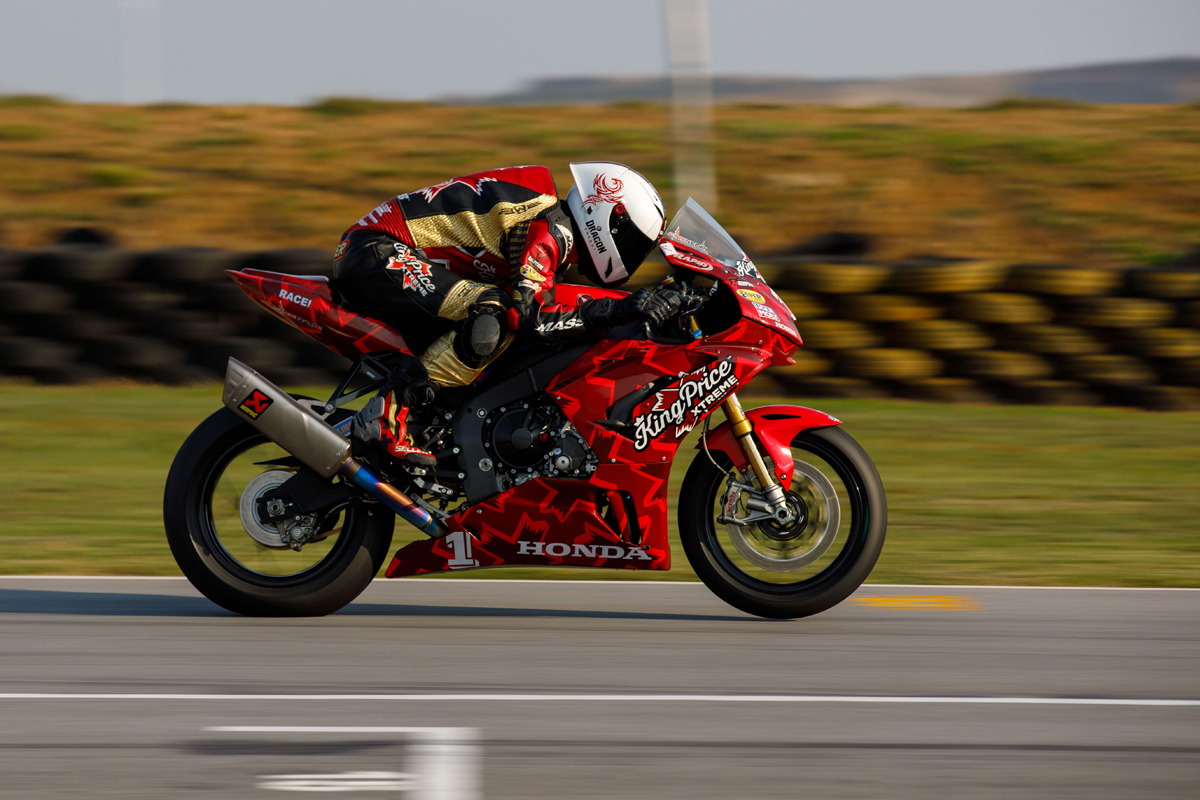
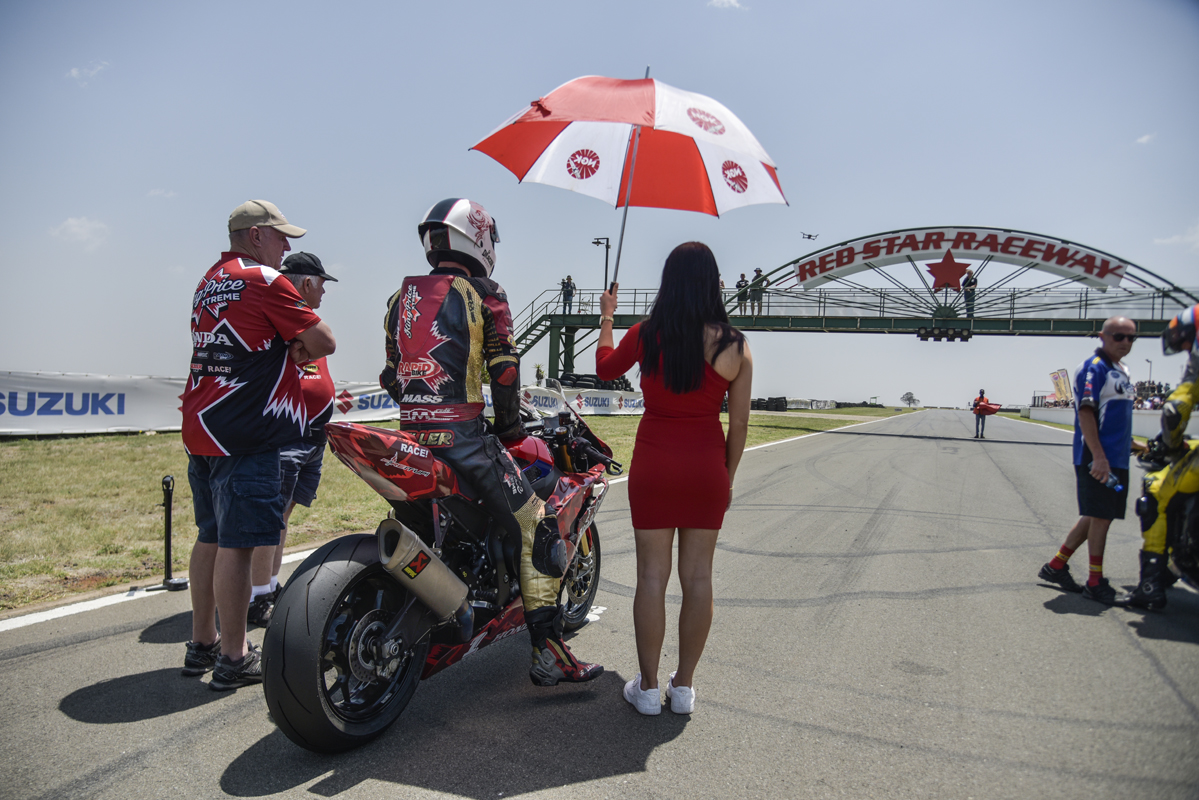
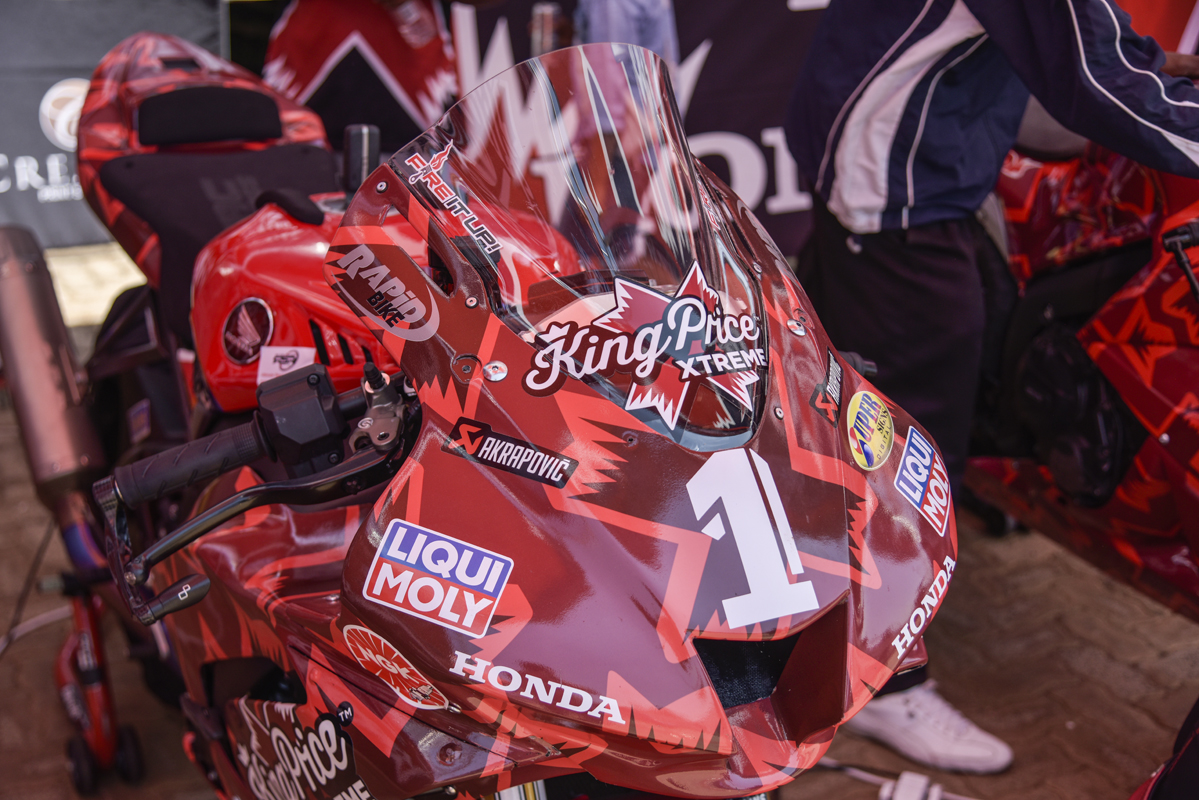
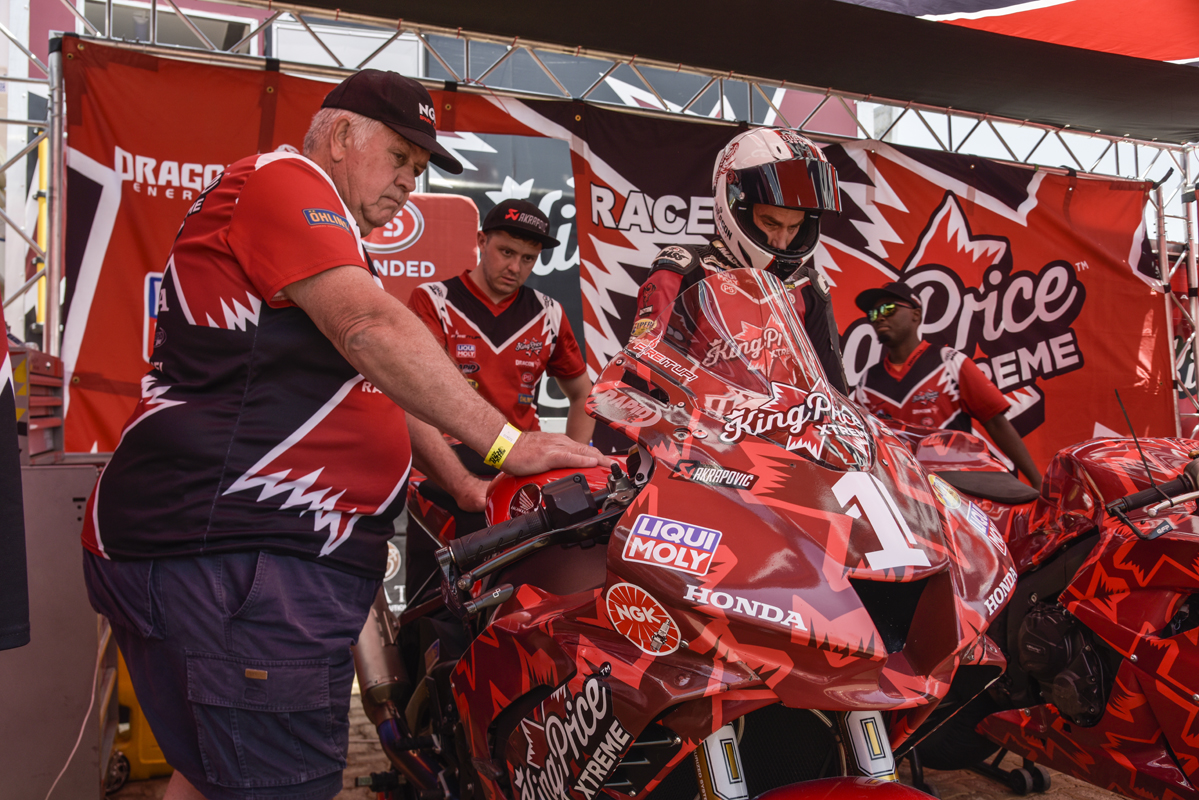
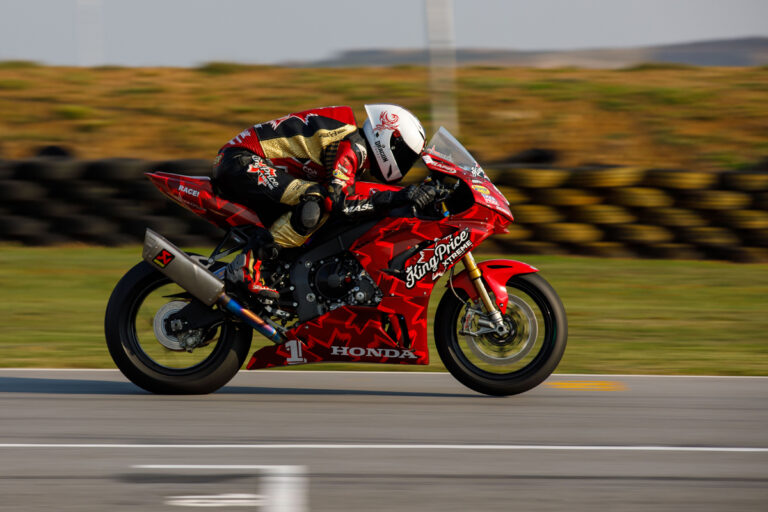
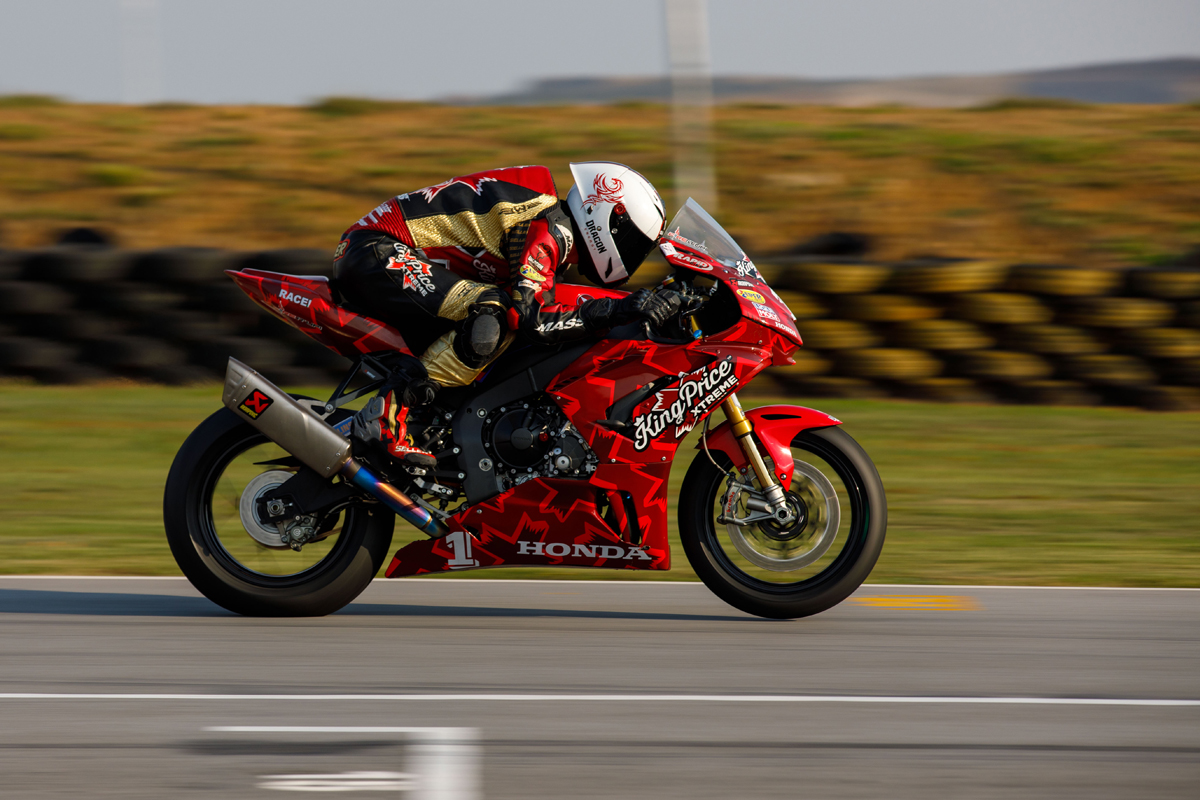
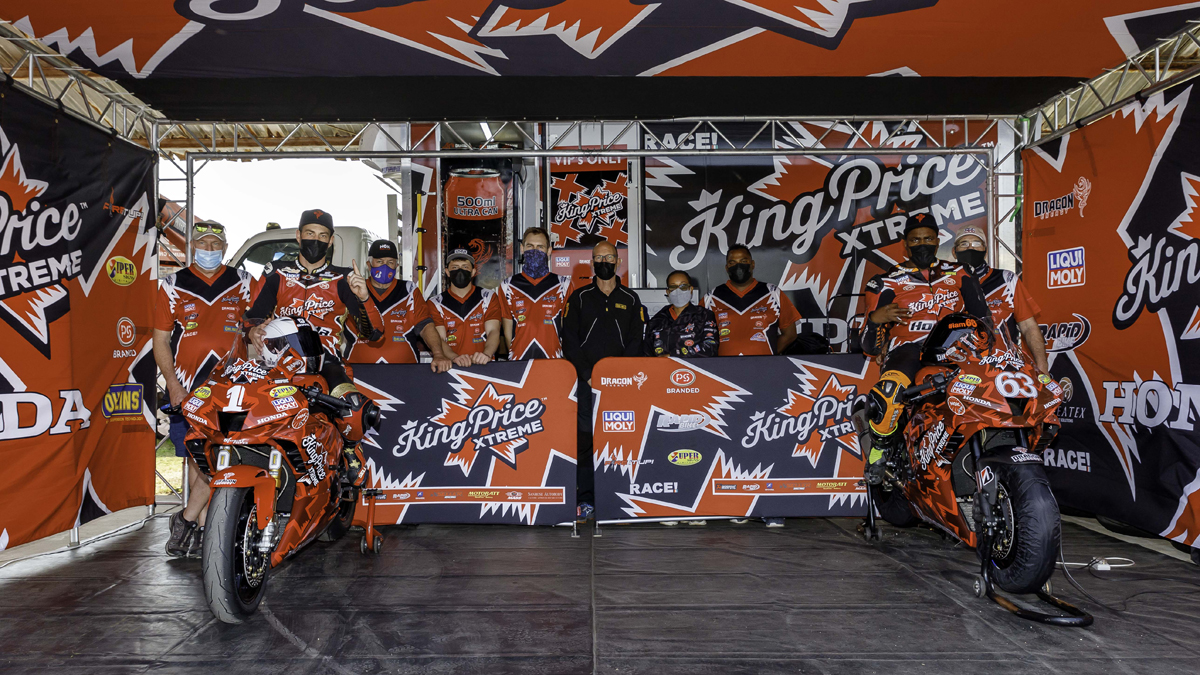
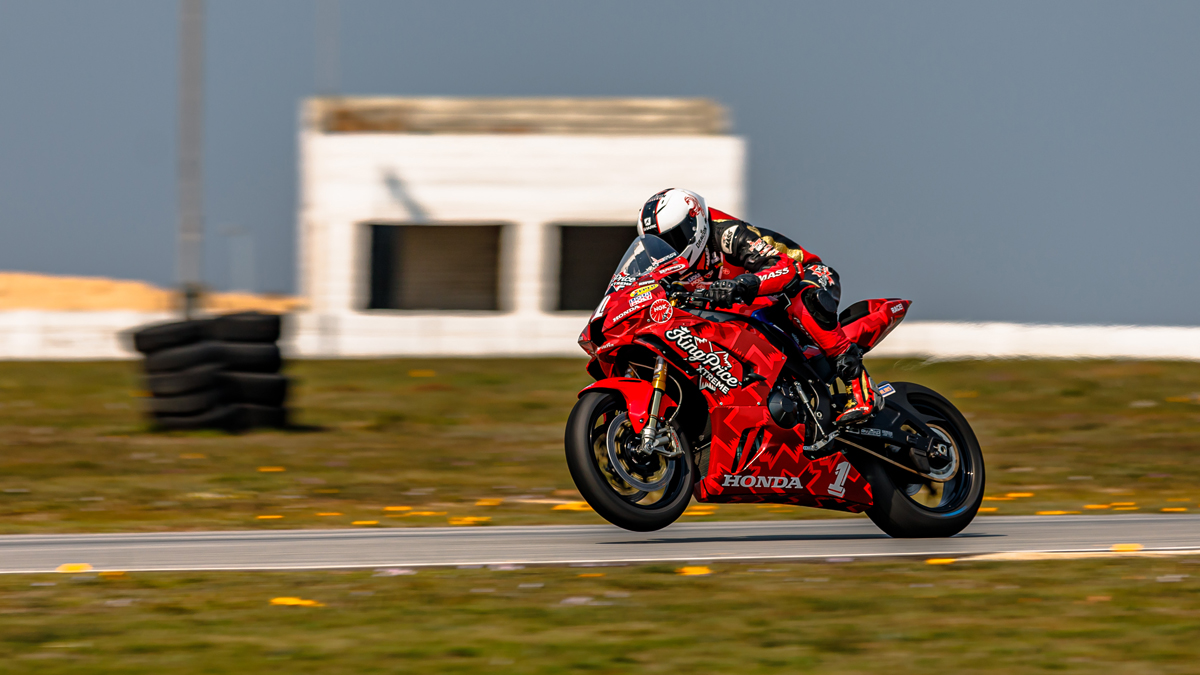
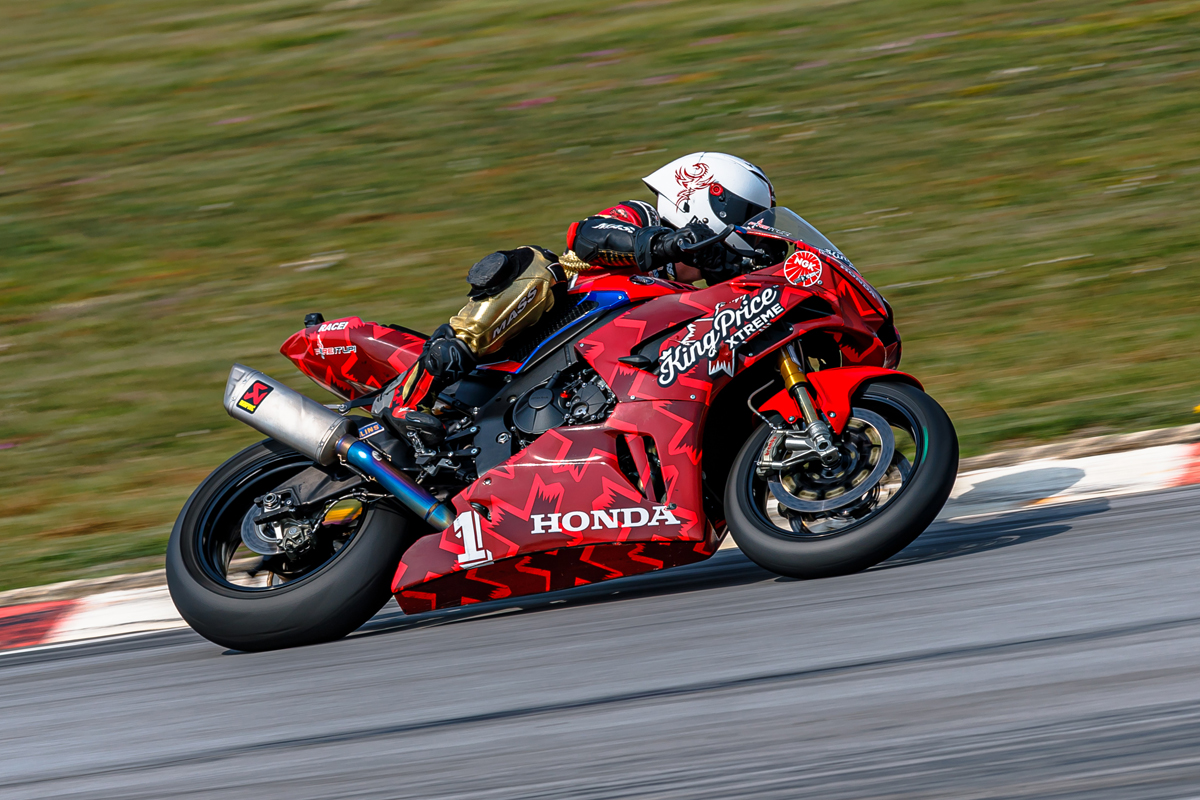
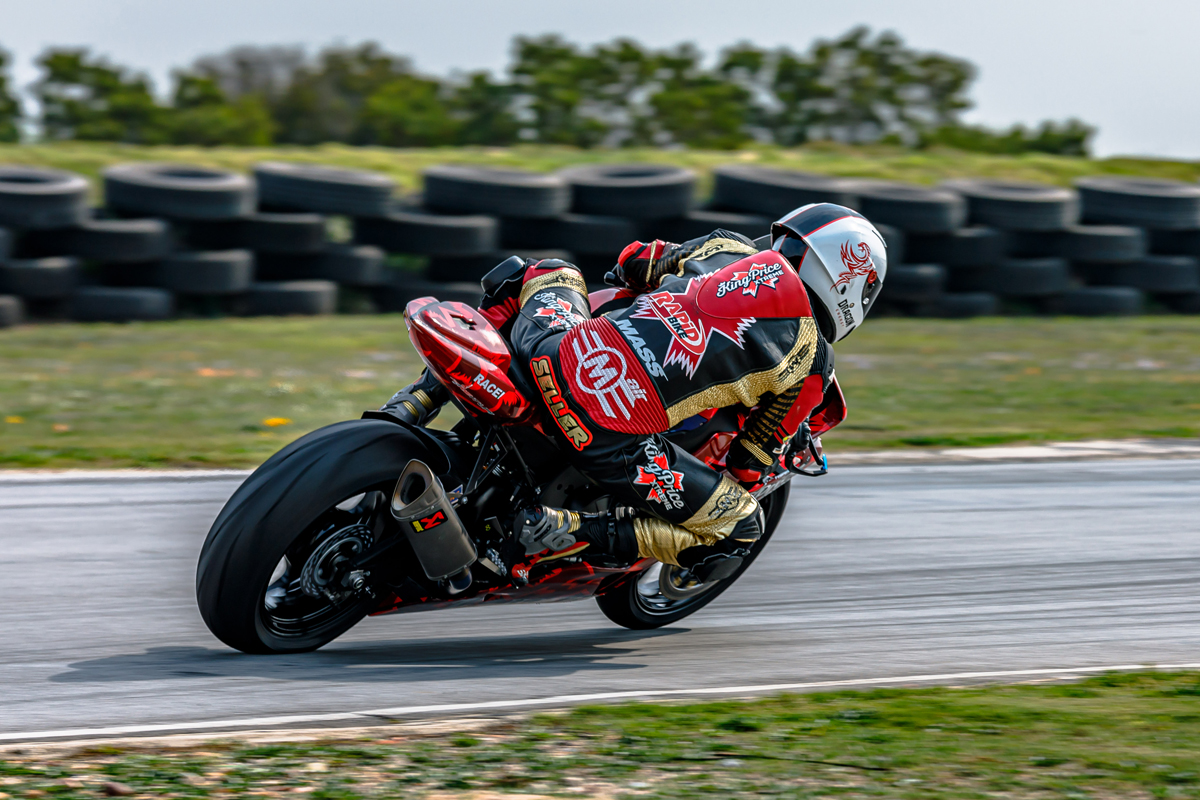
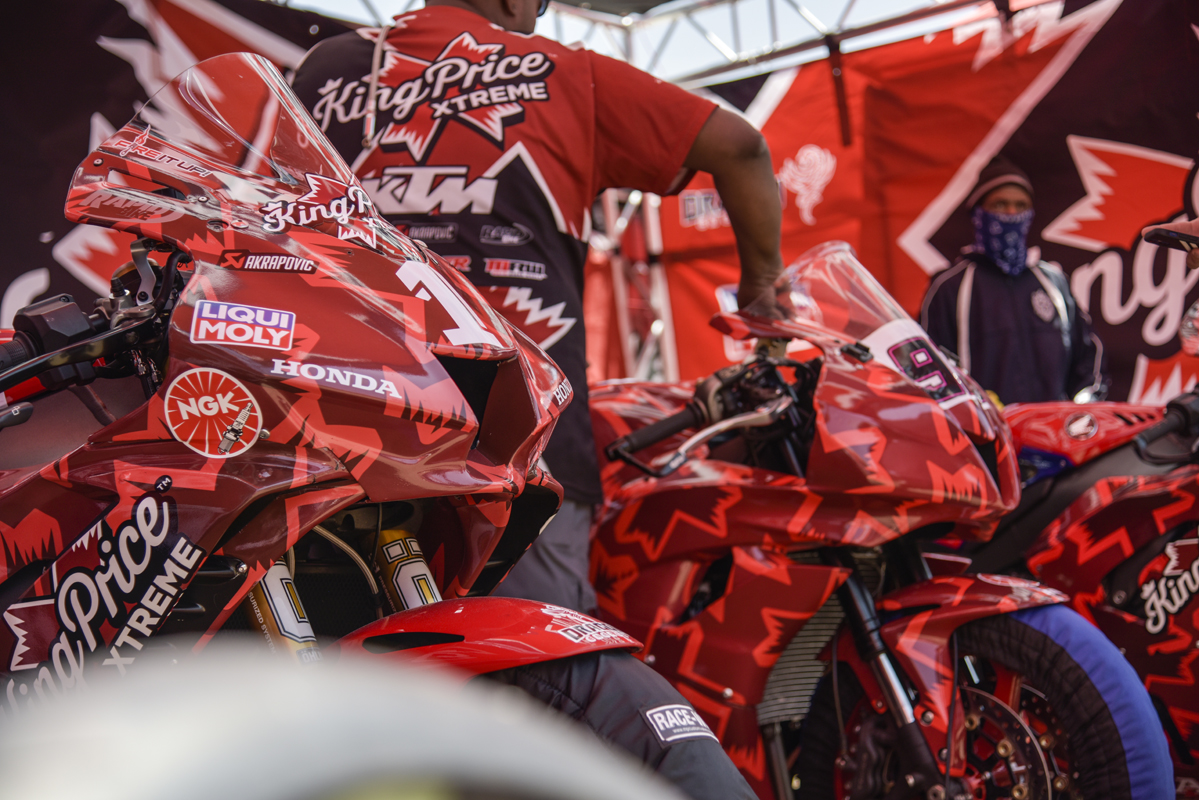
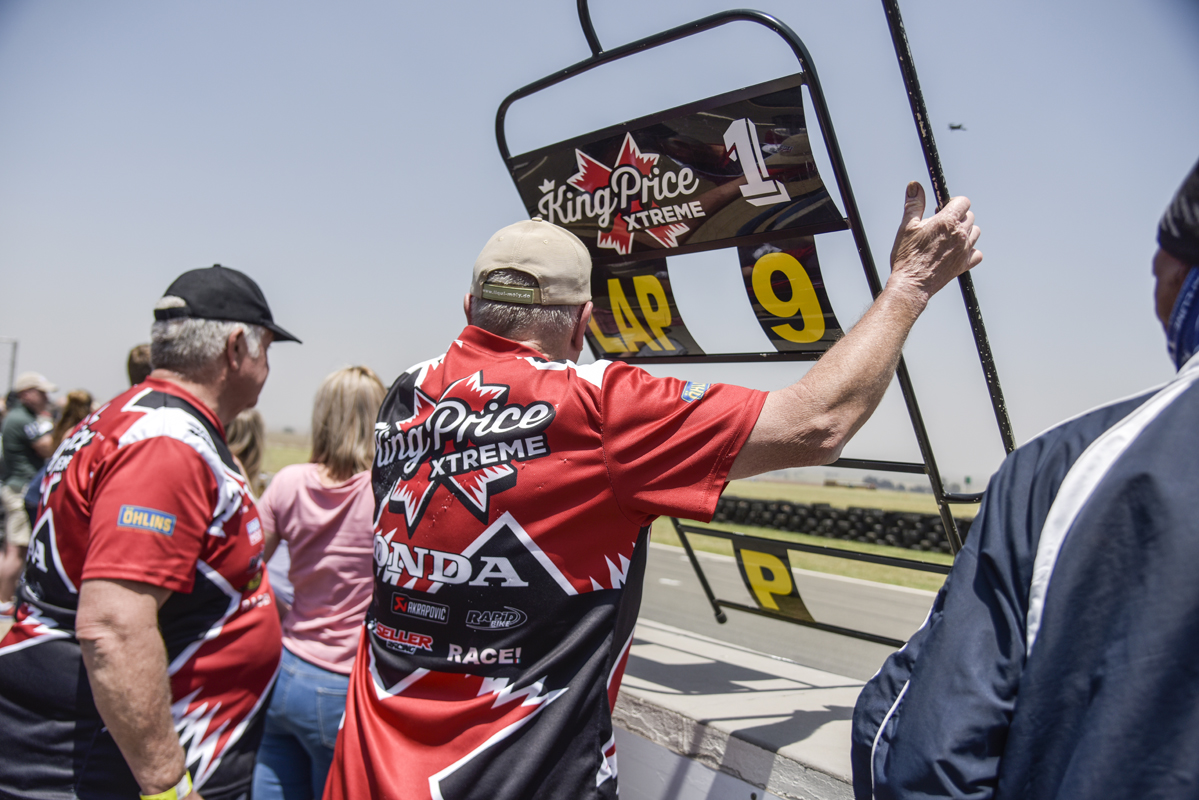
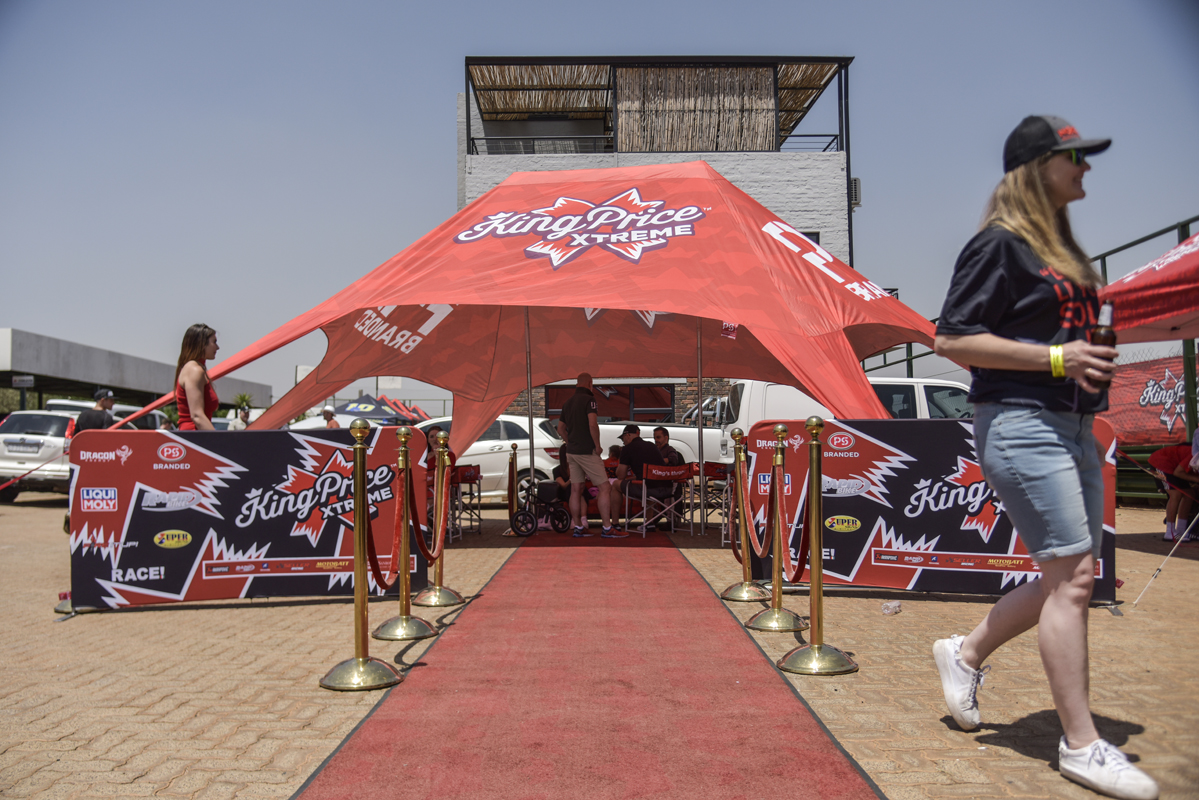
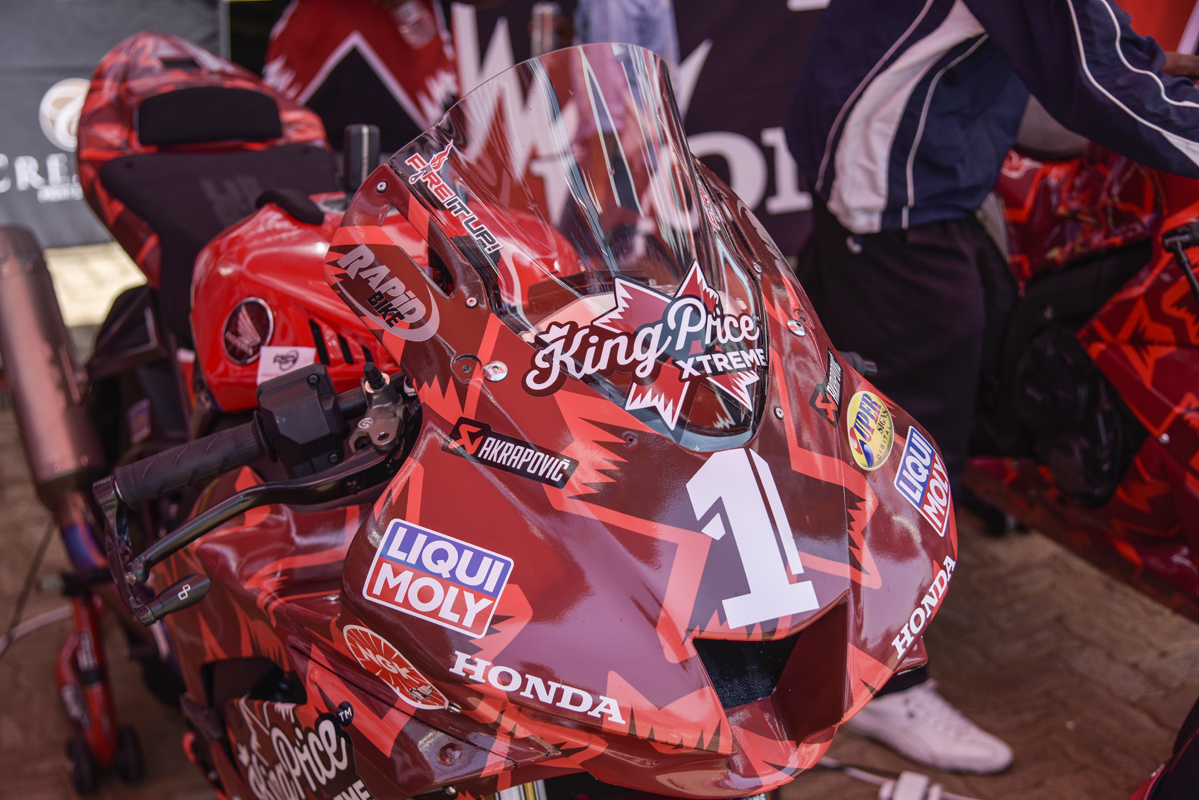
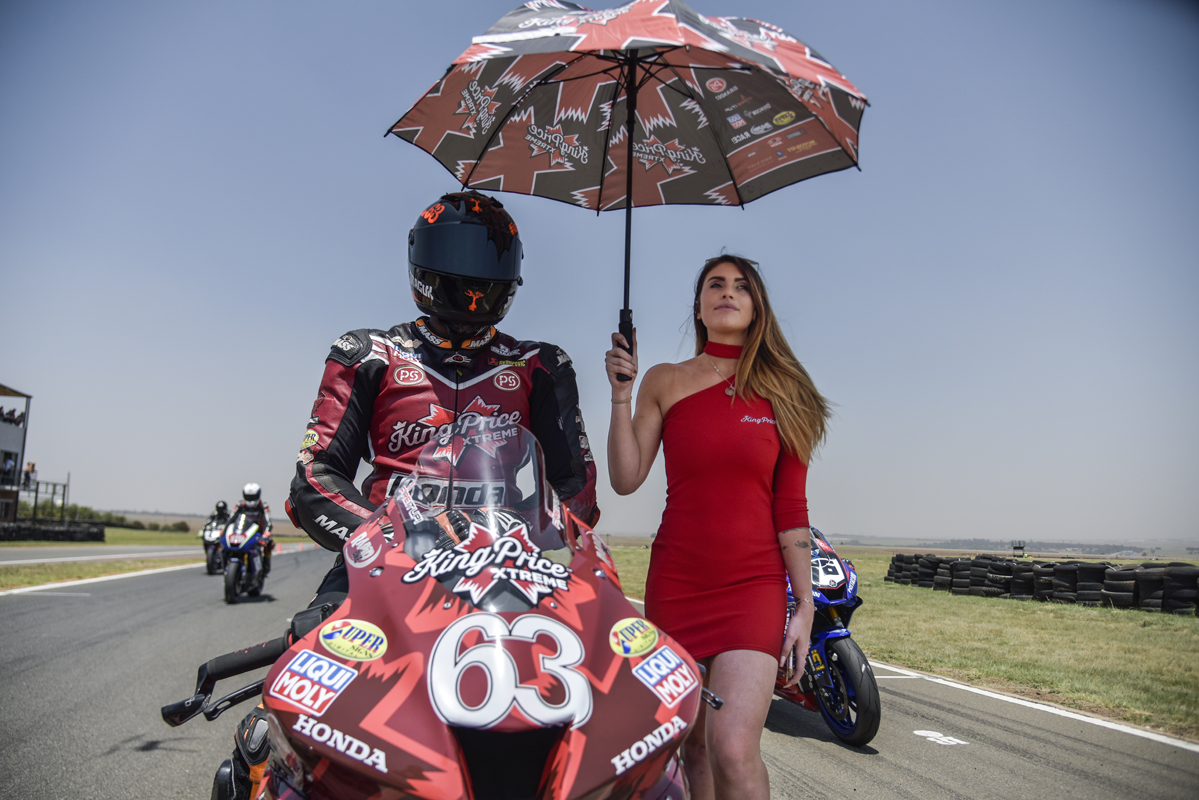
“If I had to put a number on running a 1000cc superbike for a year, it would be around R1.6 million,” said Clint. “That’s why we’re incredibly fortunate to have a sponsor like King Price Xtreme, who understand what it takes to run a racing team, and is a true partner to us.”

OK, so not everyone will be able to pull in a major sponsor such as King Price Xtreme but finding a way of covering some of the costs will make life so much easier for you: it’s one less thing to worry about.

Photo credit: Bjorn Moreira / ZA Bikers

2. Spend as much time as possible on the bike

It’s no surprise that all the top riders in the world are riding motorcycles every day of their lives, in addition to all the fitness training. There’s no substitute for riding fitness to help you get better results.

Photo credit: Bjorn Moreira / ZA Bikers

“The best way to learn to ride is by riding. And it doesn’t necessarily have to be all track riding, either: a good motocross or off-road background, or even mountain biking helps young riders develop the muscle memory they need to ride without thinking, so that they can focus on racing tactics.”

3. Keep in good shape

Point 2 leads directly onto point 3. Your fitness is the one thing you can do for yourself that doesn’t cost anything (other than a gym membership) but which can give you the edge over your rivals. And it’s not just physical fitness, either: mental fitness is just as important and one feeds off the other.

Photo credit: Bjorn Moreira / ZA Bikers

“Racing is extremely physical. To be a good, fast and safe rider, you need to be in great shape. It takes a lot of dedication and motivation to become a good racer. You can’t just focus on riding the bike, but you have to pay attention to your whole lifestyle, even on days that you’re not riding. Once you have this focus, the mental side falls into place,” says Seller.

4. Get the best bike you can afford

As anyone who watches motorsport will know, to be the best, you have to be on the best. “Bikes are so advanced and high-spec these days, you need to start with a great bike to be at the sharp end of the grid. That’s why we run the Honda CBR 1000,” says Seller.

That’s not to say that just because Clint is winning on the Honda, you will too. Different bikes suit different riders and what works for one rider, won’t necessarily work for another. Then again, by riding the same bike as the championship winner, you can learn from their mistakes – and their successes – on the same machinery: they have done some of the R&D for you. Sure, they’re not going to give you all their secrets but it’s a start.

Photo credit: Bjorn Moreira / ZA Bikers

But not everyone can afford the best, so just go for the best you can afford. If you have a natural talent, you might be able to perform miracles on a bike that no one else can. It might not mean you’re winning but good performances can attract attention and possible sponsorship opportunities.

5. Keep your bike and kit covered

You are spending a fortune on your bikes and your riding gear. Accidents do happen and, when they do, you’ll have to throw away your helmet and leathers, maybe gloves and boots and start again. And that’s before we even address the damage to the bike and the costs involved there.

Photo credit: Bjorn Moreira / ZA Bikers

This can get extremely expensive and you should insure them accordingly. “Whether being used as an everyday mode of transport or an adrenaline rush on the weekends, insurance on your asset is an absolute must-have – and the same applies to your gear,” says Seller.

Some of these points, maybe all of them, are obvious but it never hurts to point out the obvious. Many young riders are so keen to get out on track, that they’ll take shortcuts which can turn round and bite them in the long term. Better to take your time and look at the whole picture rather than one small piece of it. Preparation is the keystone to success and there is no easy way: you have to put the effort in so you can get the maximum out.

Photo credit: Jeff Latham

At the time of writing, the 2022 racing calendar in South Africa is still to be finalised but keep your eyes on www.zabikers.co.za for all the news, as it happens.

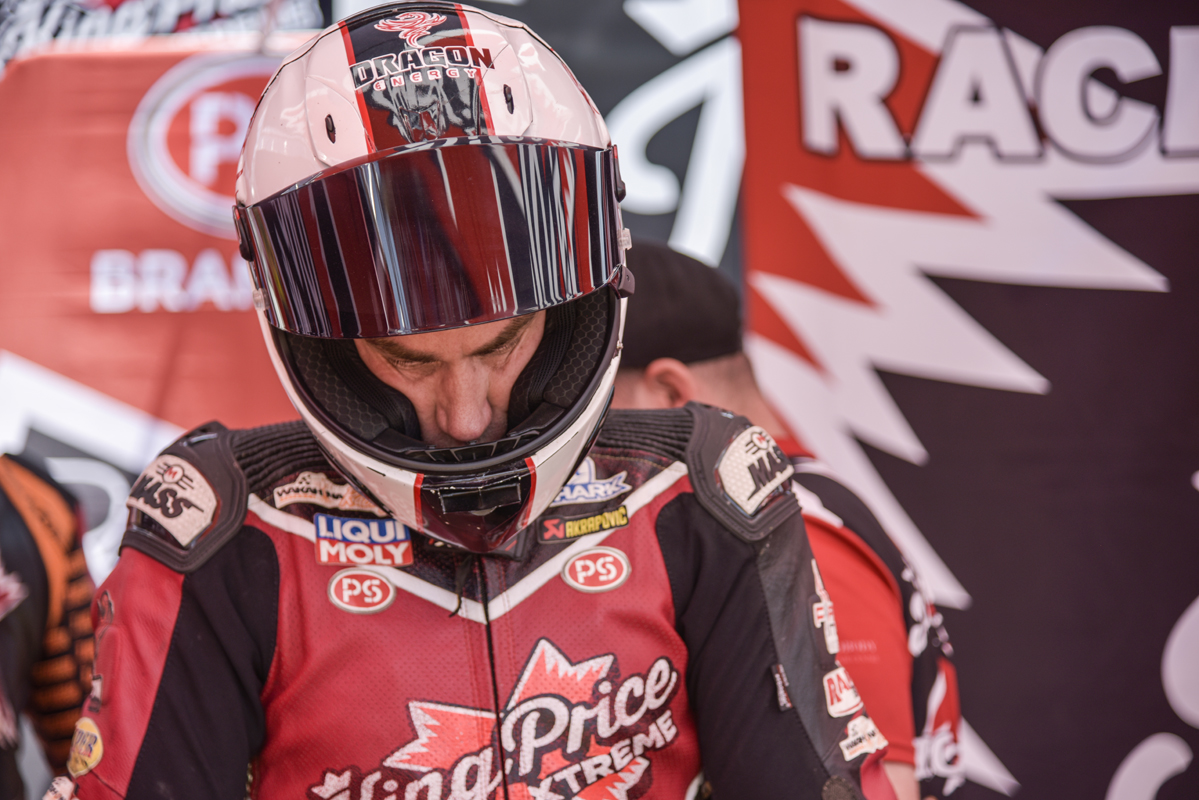
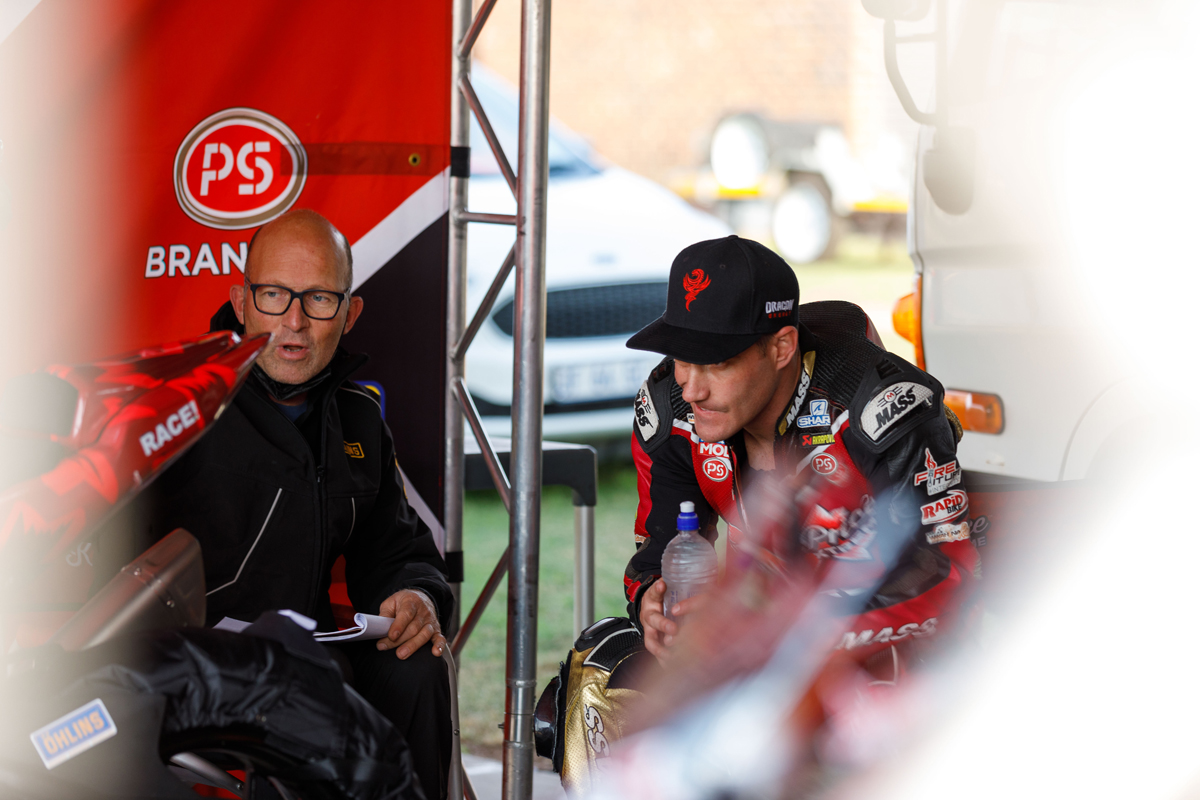
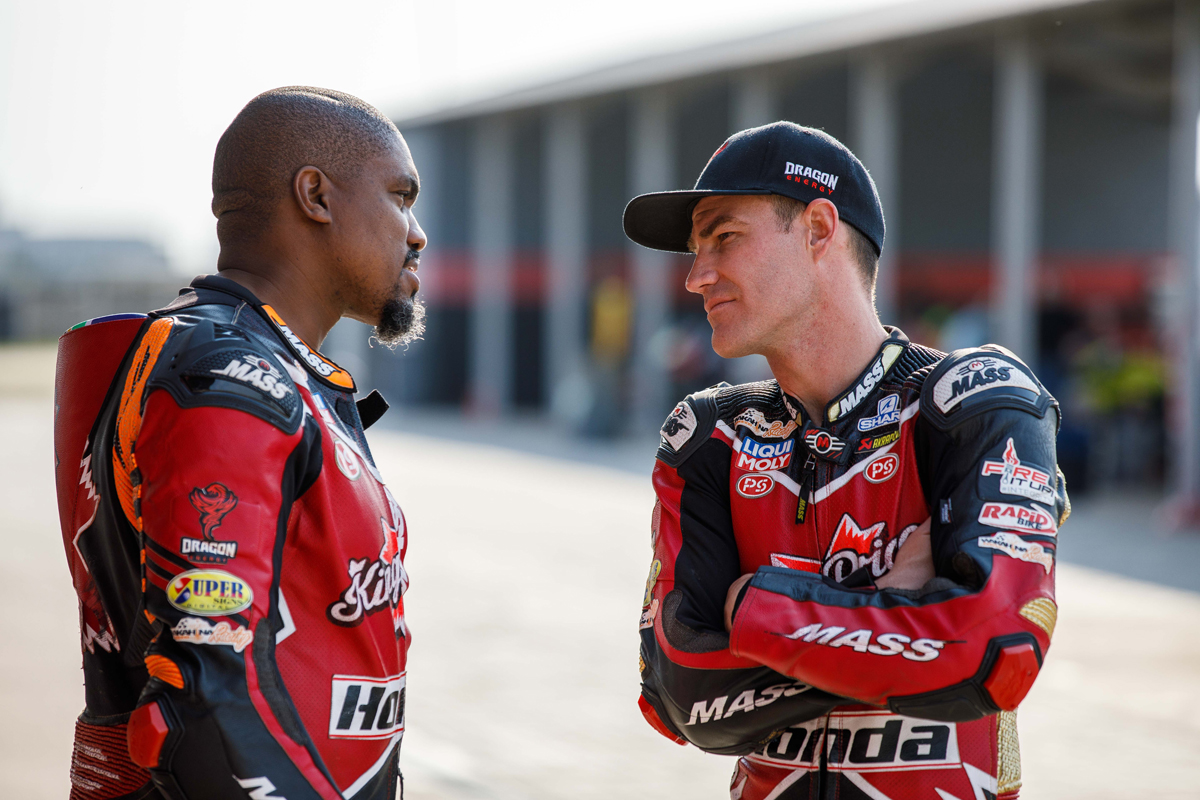
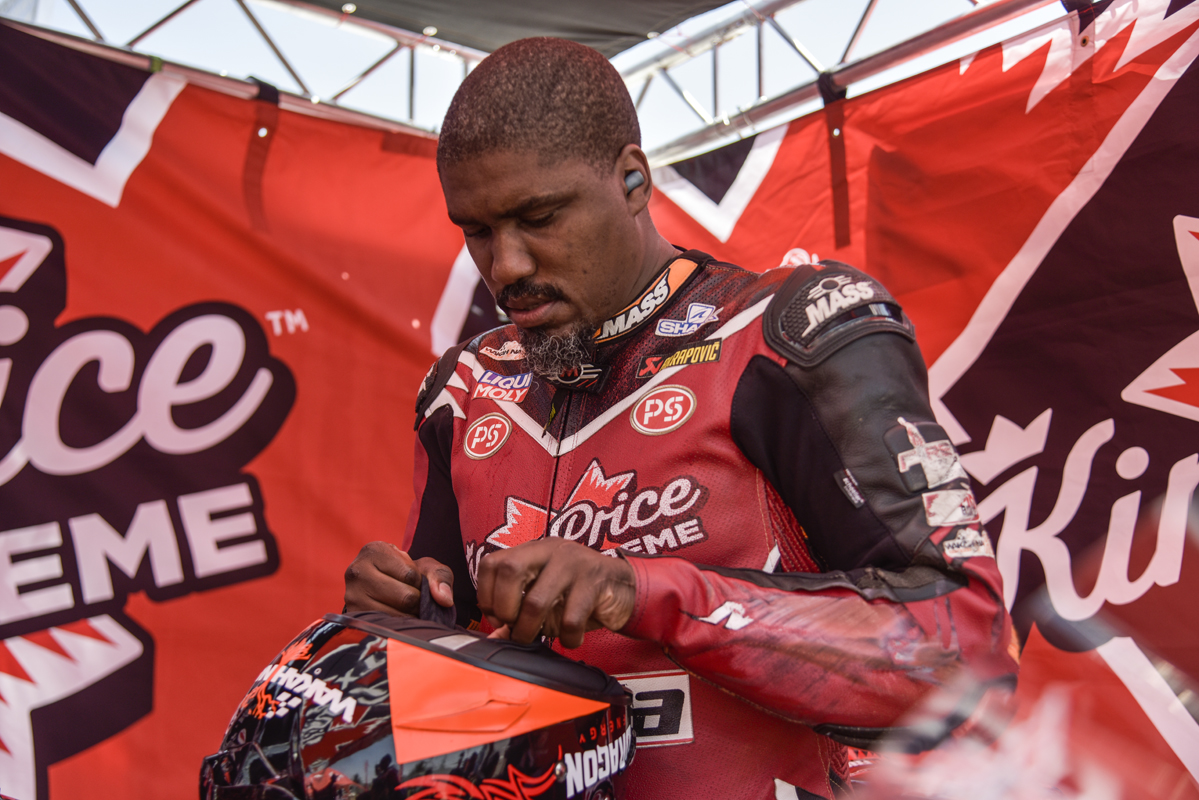
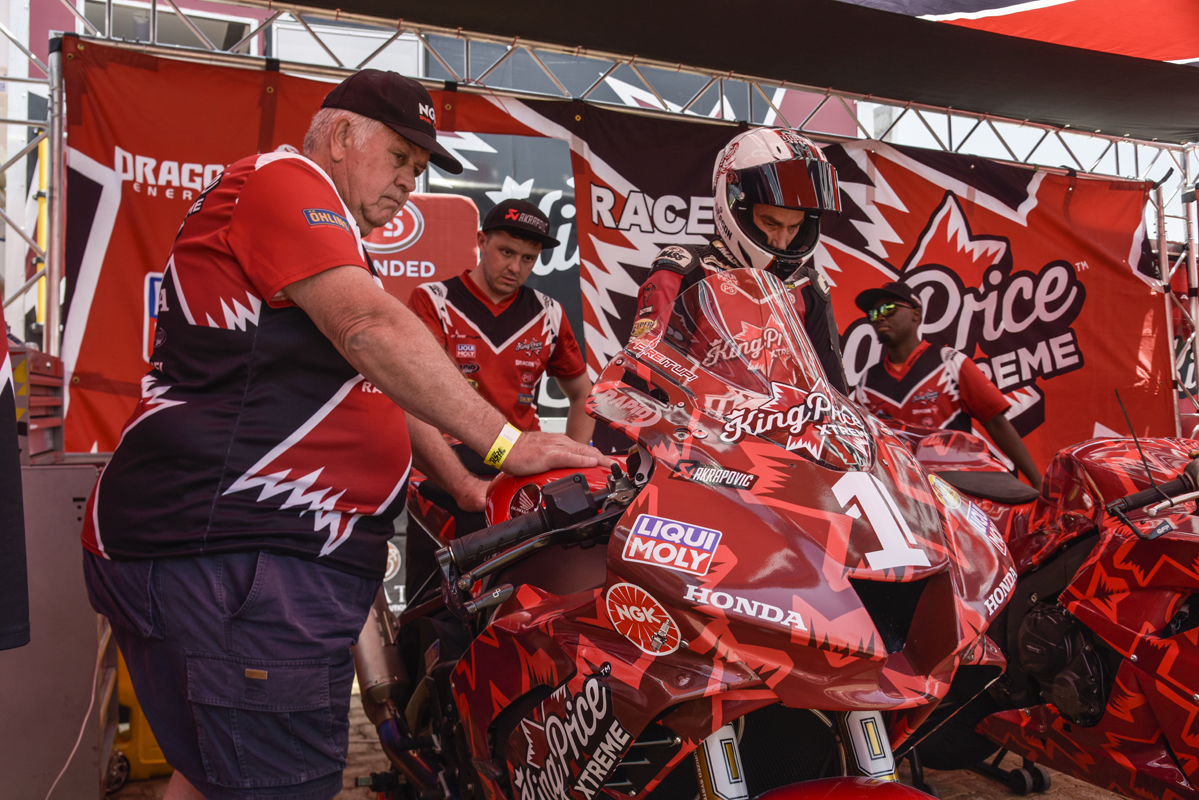
A special thanks from the team goes out to all their sponsors – King Price Xtreme, Liqui Moly, Dragon Energy Drink, Super Signs, PS Branded, Honda SA, Shark Helmets, Akrapovic Exhausts, Fire It Up! & Rapid SA.

Kawasaki Ready To Build On Their Winning Comeback

Photo credit: GXCC

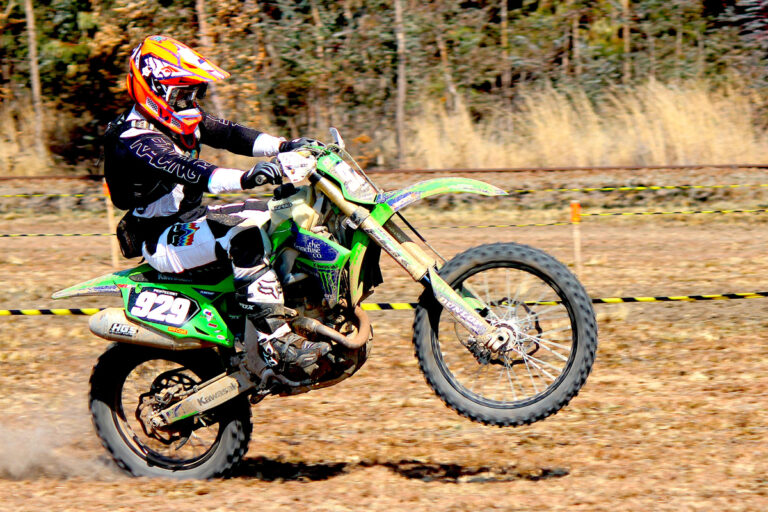
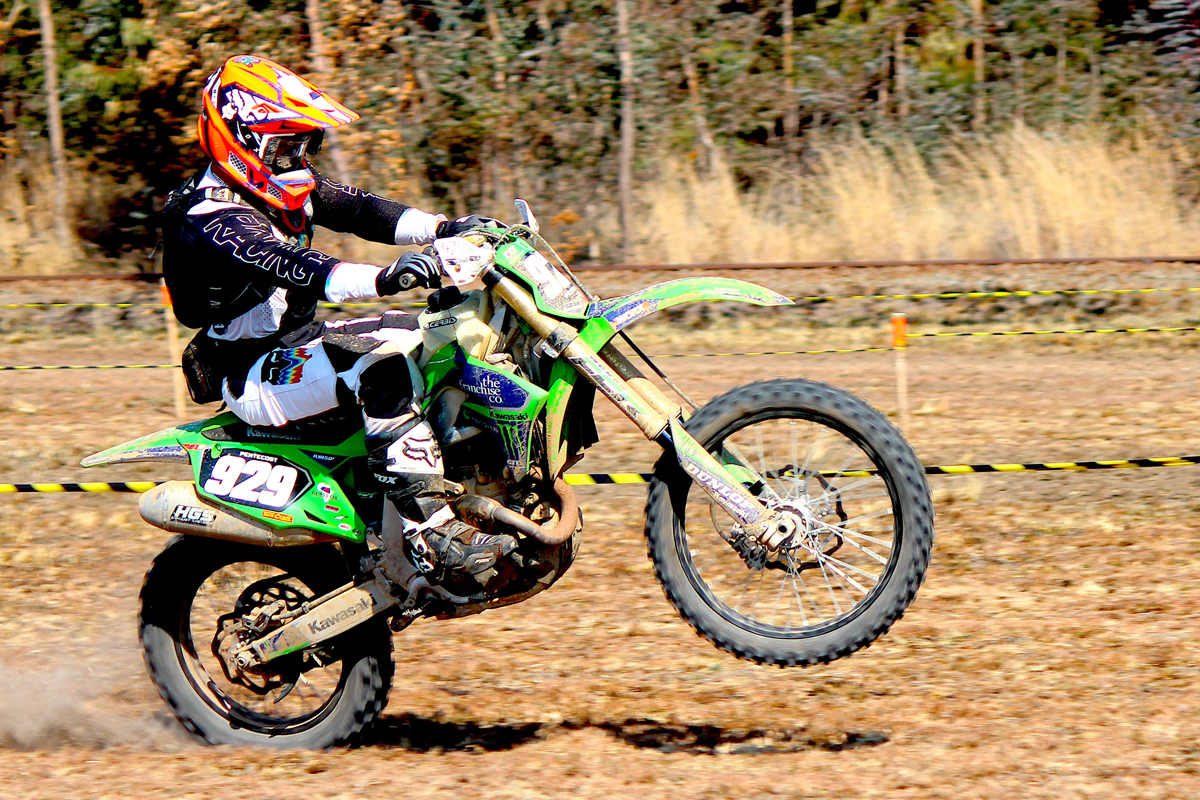
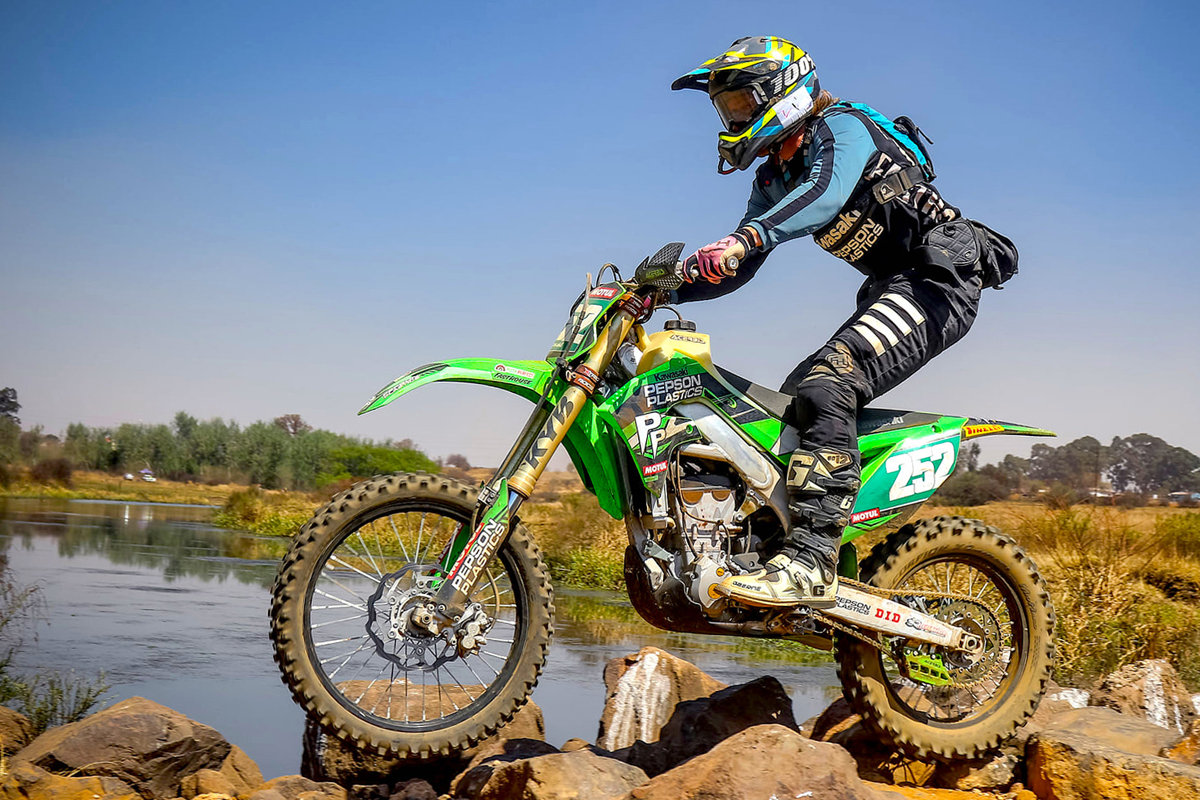
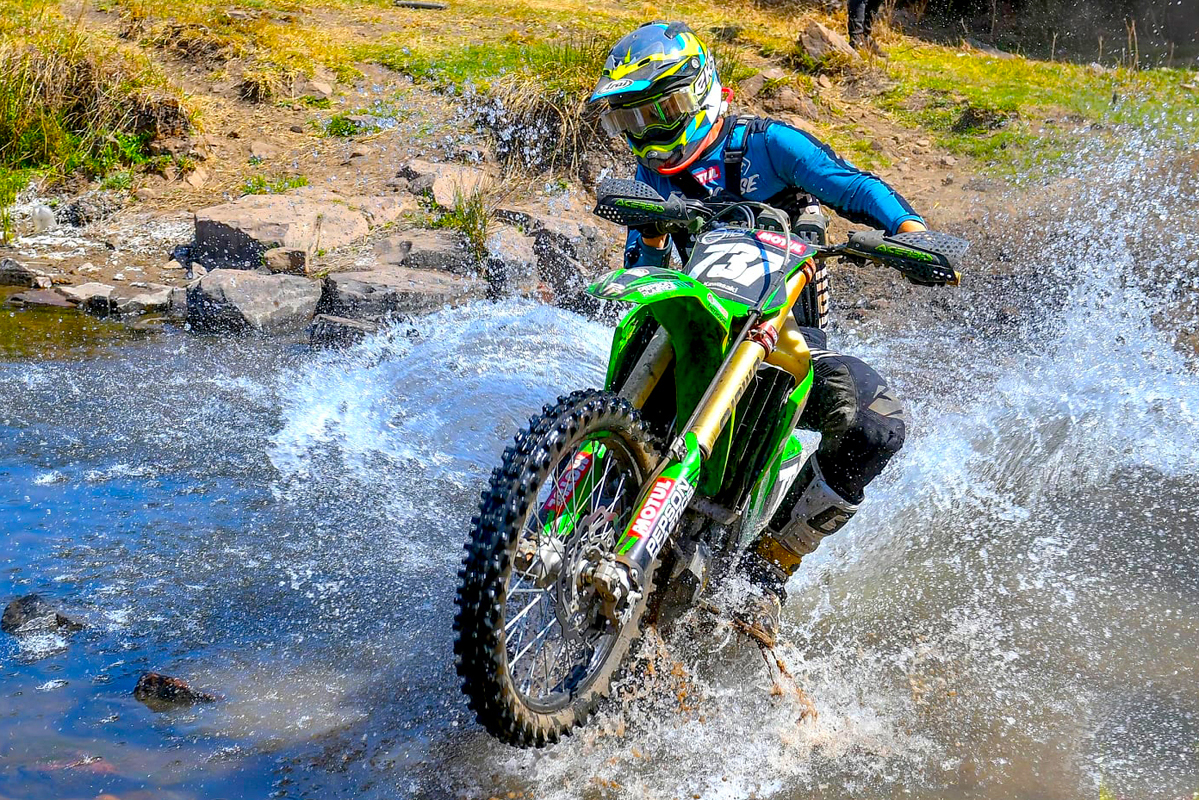
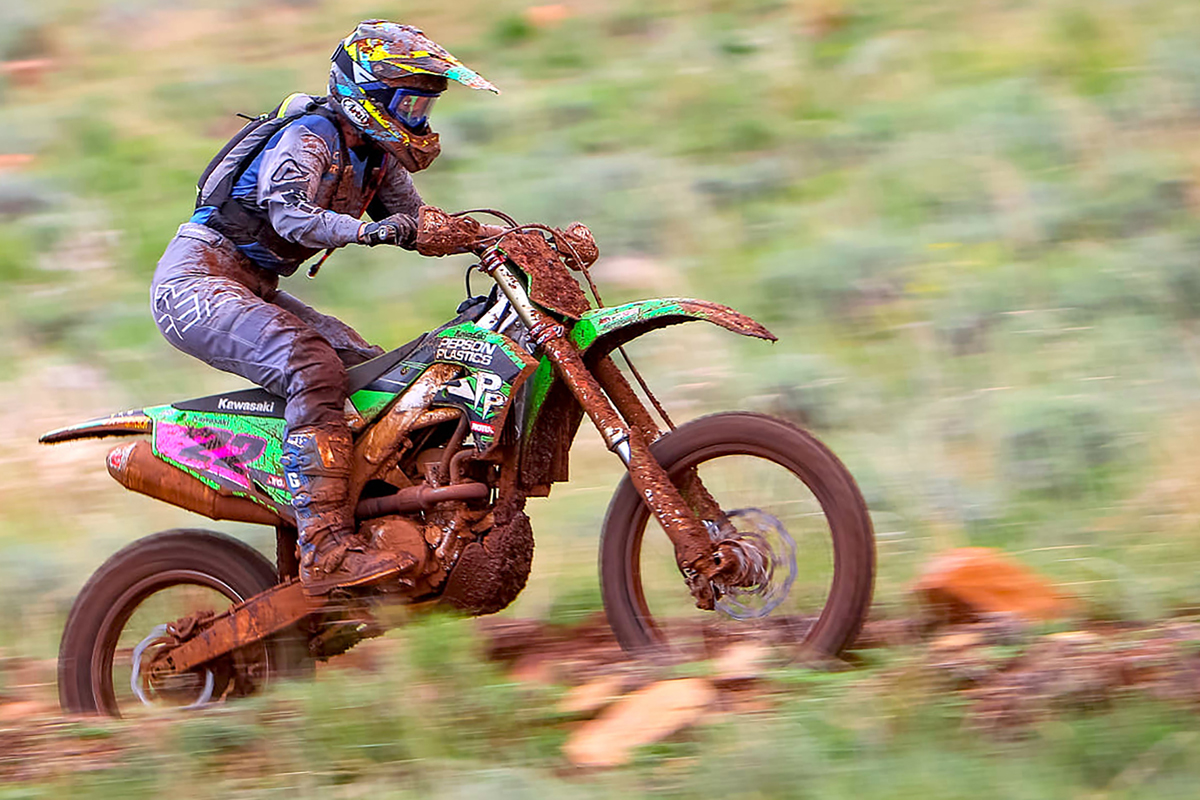
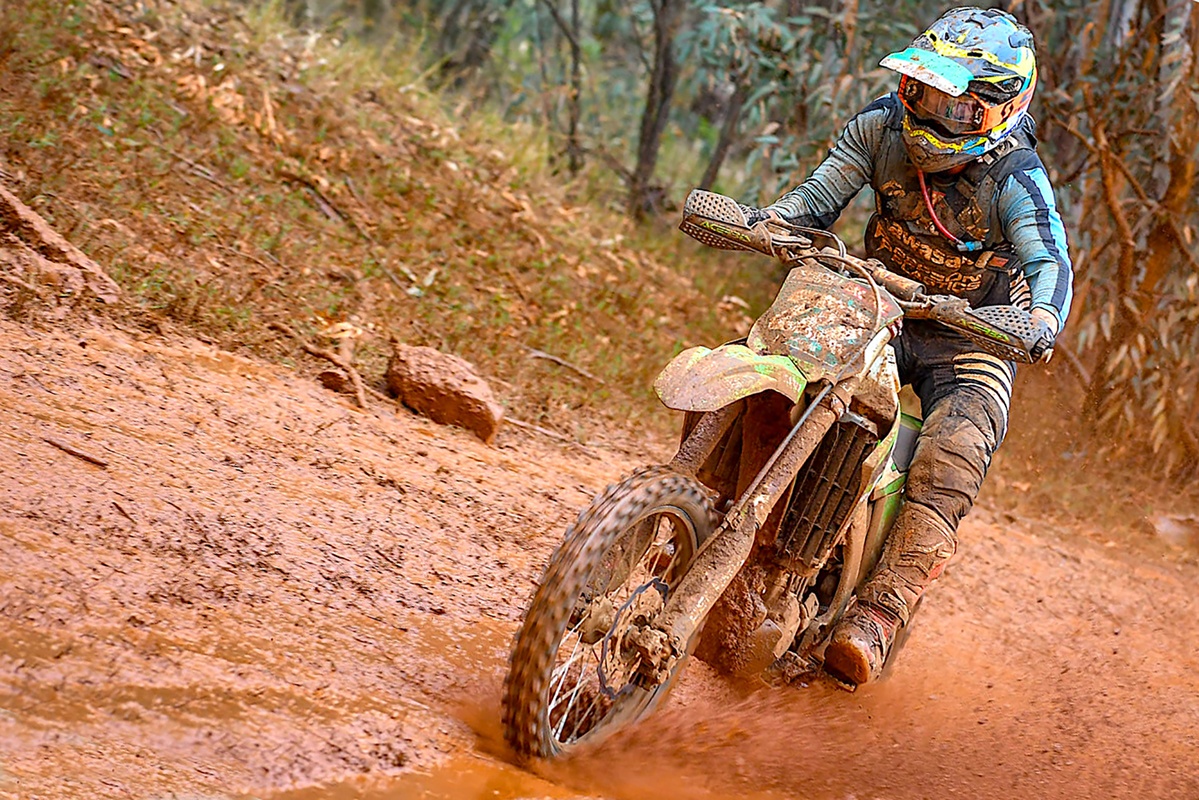
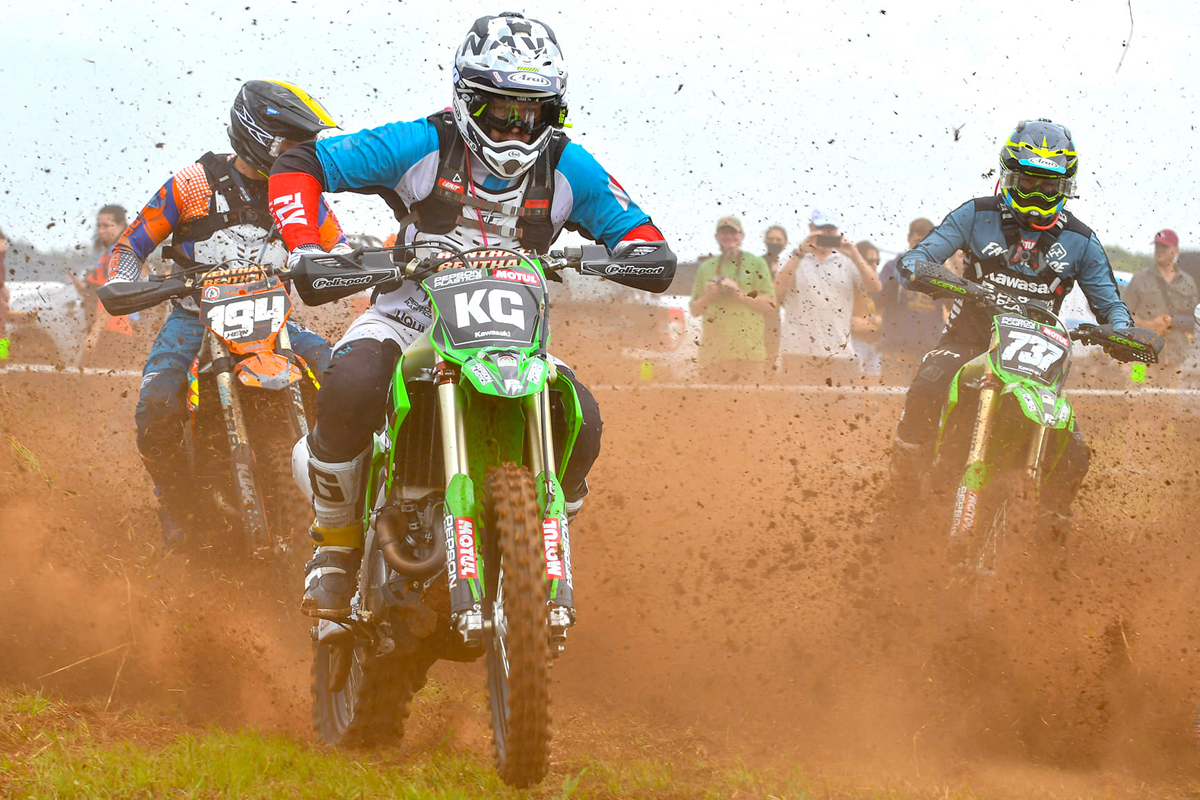
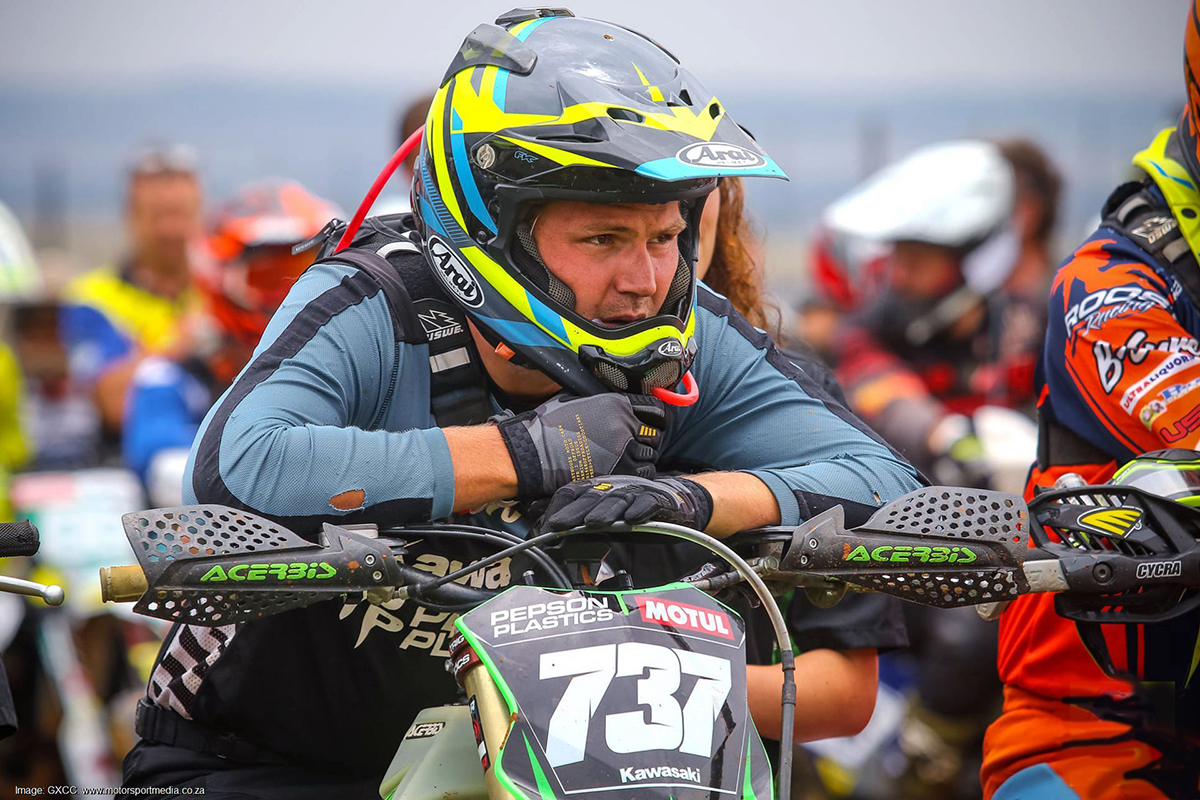
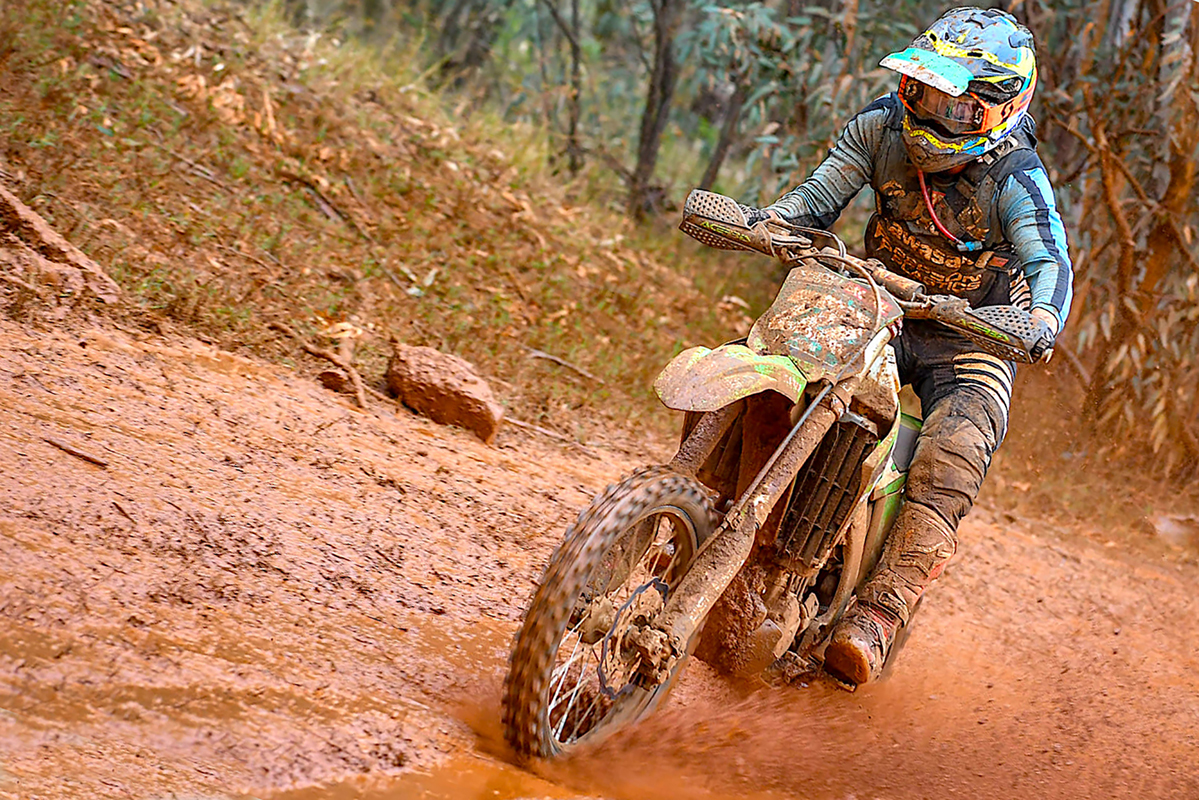
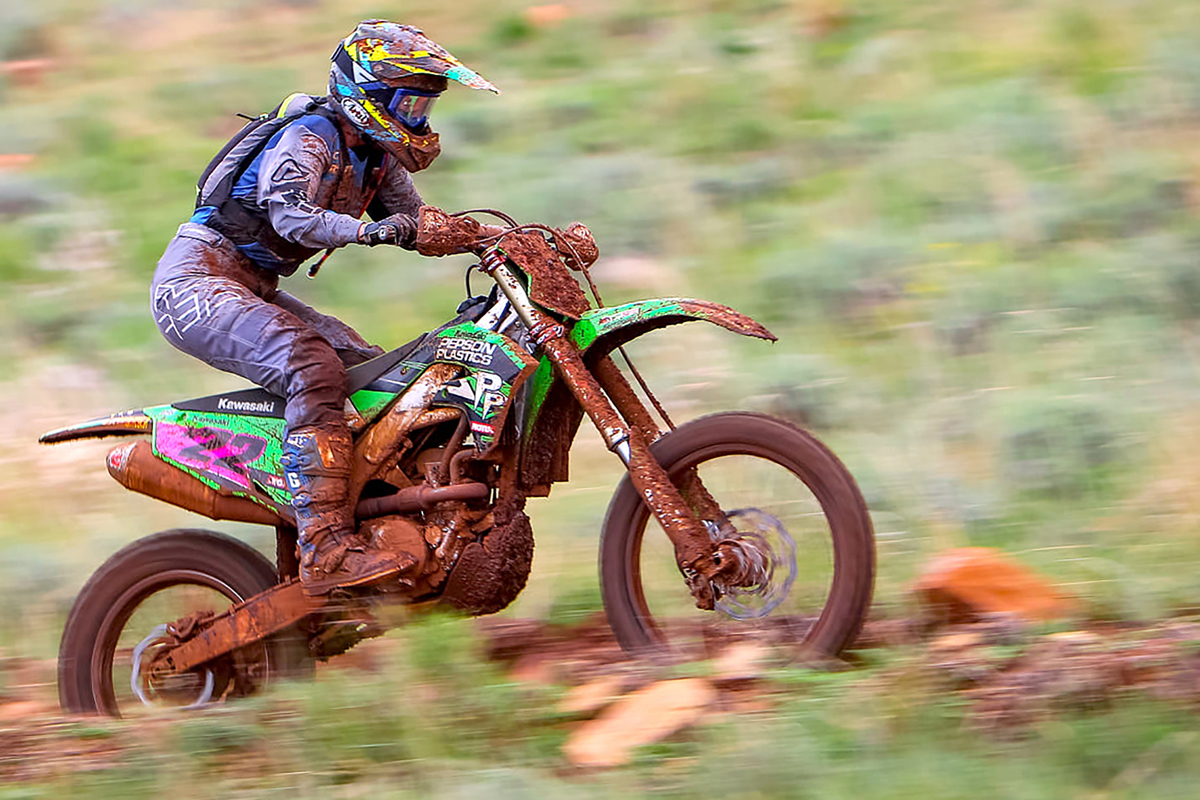
Kawasaki certainly came, saw and conquered in South African National and GXCC Gauteng Cross Country racing in 2021. Now the green machines will be back with a star-studded 20-bike twin Pepson Plastics Motul and Franchise Company Tork Craft team attack on the 2022 championship.

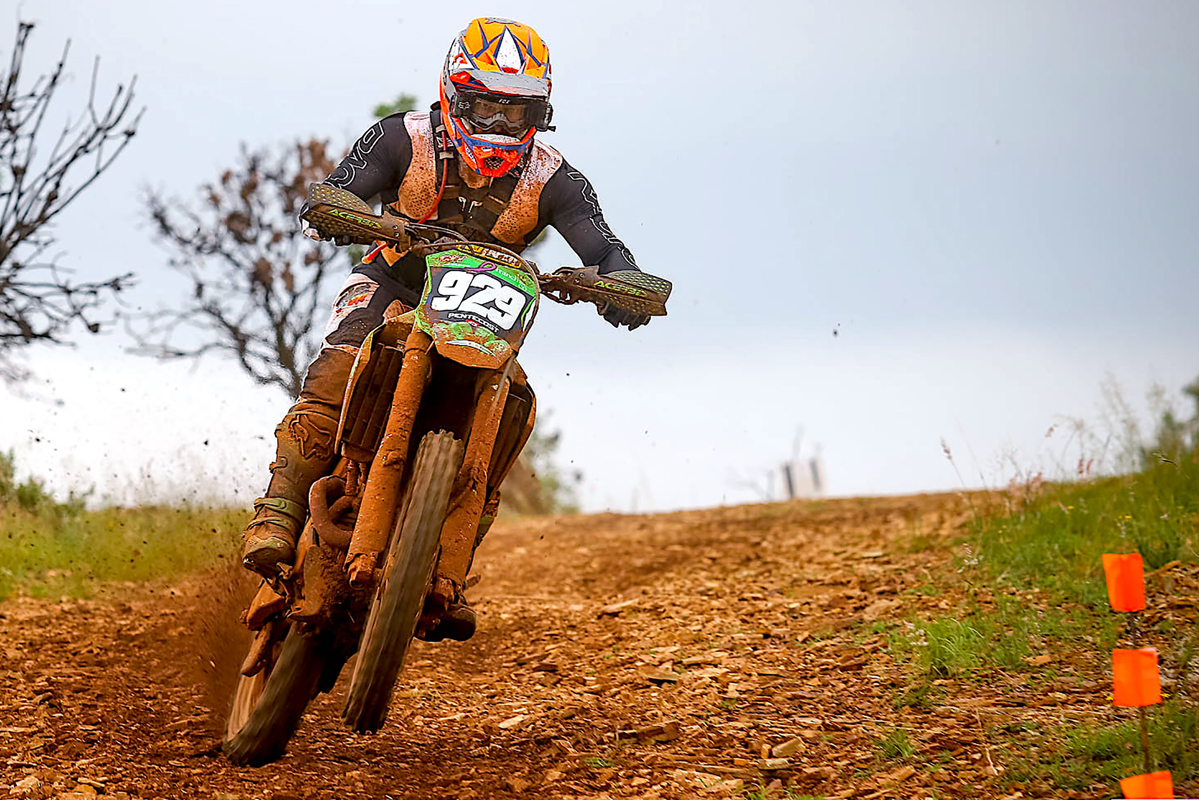
Kawasaki made a quiet return following a few decades out of cross country racing at the beginning of 2021 with the brand’s all-new KX X cross country machines. D’Artagnan Lobjoit however soon made his mark on the OR1 grid aboard his Pepson Plastics Kawasaki Motul KX 450 X, while Taki Bogiages and Kyle Mackenzie were immediately competitive on their KX 250 Xs in OR3. Then Franchise Co. CIT took delivery of a KX 450 X, signed Michael Pentecost to ride it and the rest is history.

Pentecost immediately dominated, taking three of the final four open class OR1 wins to steal the ’21 title with Lobjoit third. The pair doubled up with first and second in the Gauteng GXCC chase as Pentecost took the overall title too. Bogiages bounced back from a bout of Covid to take second in the Gauteng title chase with Mackenzie, who took third in the nationals, fifth in GXCC.

Photo credit: GXCC

“We came, we saw and we conquered with Kawasaki’s brand new KX X range in 2021,” Pepson Plastics Kawasaki Motul team principal Iain Pepper confirmed. “It was a bold move and we need to thank all involved, but now it’s time to look forward, onward and upward. “We are delighted to confirm a splendid 20-bike twin-team effort for 2022. “Harry Grobler will be running nine bikes under the Franchise Company Tork Craft banner and I will have eleven machines out in Pepson Plastics Motul colours.”

“We will be racing hand in hand as two teams in both the National Cross Country and Gauteng Regional GXCC Regional championships with Kawasaki’s backing next year,” Franchise Company Tork Craft Kawasaki Racing boss Harry Grobler elaborated. “Kawasaki will be fielding riders in the 450cc OR1 and 250cc OR3 classes, as well as in the Ladies, Masters, Seniors, 85cc Juniors and 65cc Juniors.”

“Our aim is to work together with the help of Kawasaki to defend our titles won this year, and to win every class we enter,” Iain Pepper added. “2021 was our learning year, which turned out way better than expected. “We won both the OR1 national and regional titles with Franchise Company star rider Mike Pentecost. “He was backed up on the podiums by Pepson Plastics Motul man, Dart Lobjoit. “They will be back and supported by Tyron Beverly and Craig Alcock in 2022.

Photo credit: GXCC

“Our Pepson Plastics Motul OR3 riders also had a good learning year. “Taki and Kyle starred in both the nationals and regionals and while wins eluded us, we have plans to stand on top of that podium next year. “To that end, Franchise Company Tork Craft Racing has drafted regional High School champion John Botha to ride an OR3 machine alongside Wian Wenzel, to take it to SA champion Davin Cocker. “Those shoes are going to be big to keep full, but we are all up to the challenge!”

“The big news is however in the Senior class, where we have two big names joining the Kawasaki ranks,” Harry Grobler confirmed. “Multiple South African Cross Country champion King Kenny Gilbert and cross country debutant, but multiple SA motocross champion, Wyatt Avis will be back on a pair of Pepson Plastics Kawasaki Motul machines. “Kenny will ride a 450 and Wyatt a 250 and these two should without doubt be front runners for overall National wins.”

Kenny will be supported by Lee Thompson in Regional Seniors, while National and Regional Masters class Franchise Company Tork Craft regular Carel ‘Mielies’ Le Roux and his will take the fight to the likes of Wayne Farmer. Kawasaki also has exciting Ladies Regional Pro Am news, where four-time National Ladies MX champion Kayla Raaf will be out on a Pepson Plastics and reigning Pro Ladies champion Che Dee Grobler will race in Franchise Company colours, backed by Danel Delport in Pro Am.

Photo credit: GXCC

Kawasaki will also chase 85cc Senior and Junior class victories with Jaden Els and Johandre Vermaak riding for the Franchise Company. “They will be supported by Pepson Plastics Motul novice rider Clayton Human. Pepson Plastics lad, Jake Pretorius and Dylan Human will chase the baby 65cc title, and on the other side of the scale, expect team boss Iain Pepper to make some Veteran Regional class appearances too

“We have no shortage of talent in both our Franchise Company Tork Craft, or Pepson Plastics Motul teams,” Iain Pepper concluded. “That, coupled with Kawasaki’s incredibly powerful and robust KX 450 X and KX 250 X machines leaves us with no reason to doubt that any of our 2022 cross country racing aims cannot be achieved.”

Photo credit: GXCC

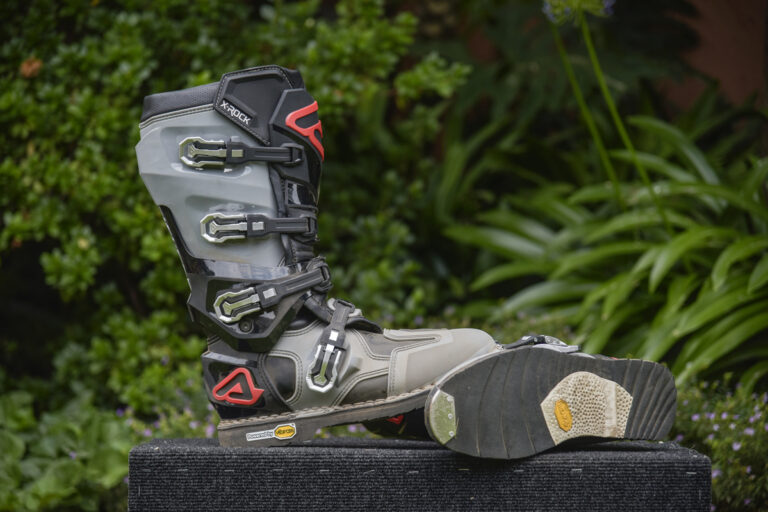
Acerbis X-Rock MX boots & FS–606 Enduro helmet

Photo credit: Dave Cilliers / ZA Bikers

Almost from when I started riding bikes Acerbis has been a household name in off-road protective gear and accessories. Founded in 1973 in Bergamo Italy, this brand has become synonymous with quality products. I still have an Acerbis Header tank which I had on my Honda XR 500 in the seventies. I mounted it on my KTM 690 45 years later and it still performed faultlessly with the cap still sealing perfectly. That is what I call customer satisfaction. Over the years there product offering has expanded extensively.

I have always been a stickler for wearing the right gear all of the time. Sometimes we mess up. Take my last big off as a case in point. Riding a dirt road sodden with 14 hours of rain near Colesburg on my KTM 1090 I got a bit impatient. Having a long way to go, and shod with road-biased tyres I pushed the pace up a bit on the last 10 kay’s before the tar. A succession of whoops were filled with water and as I hit them they started to bounce me out of shape. I went down in an unceremonial heap with the Katoom landing on my lower left leg. The lower part of the crashbar nailed my ankle fair and square. Picking my bike up, I felt a grinding in my ankle that felt ominous. Then the pain set in as the adrenalin wore off. What followed was the most painful 700 kay’s of my life riding home.

Photo credit: Bjorn Moreira / ZA Bikers

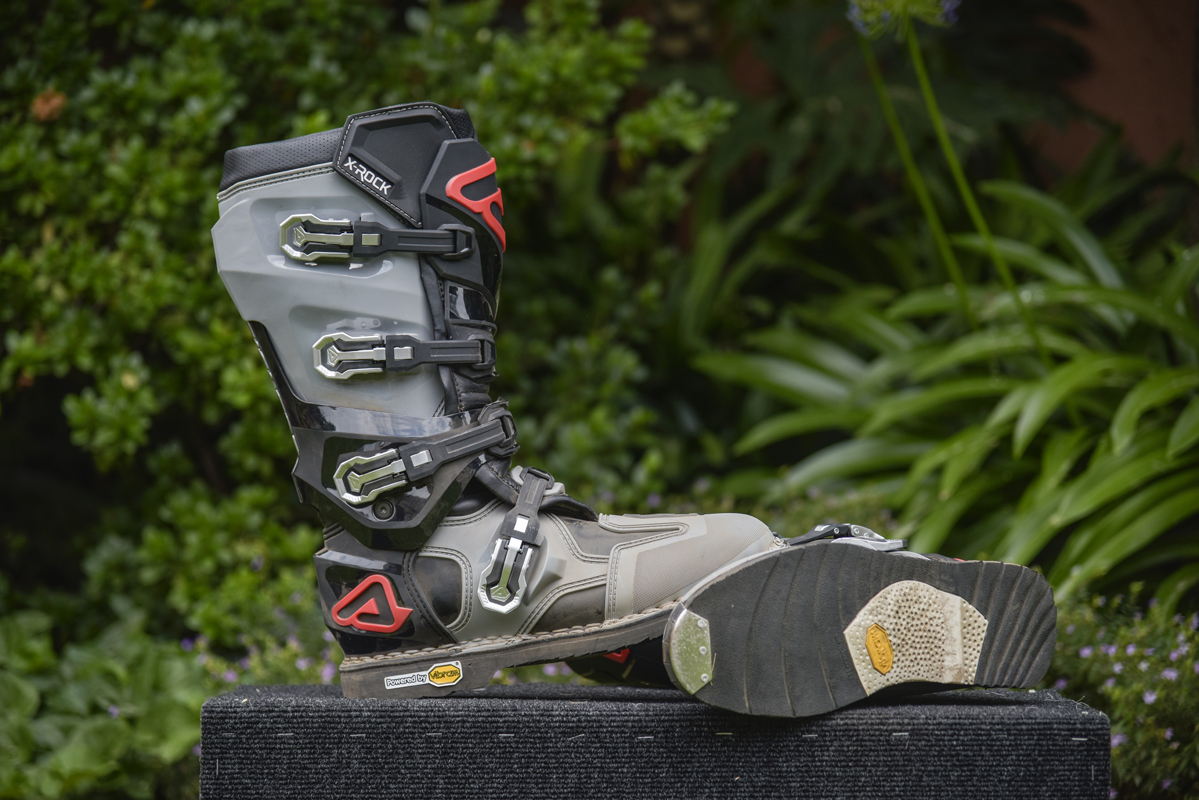
Yes, I was wearing boots, however, they were ‘adventure boots’, albeit a really good make. Rigid sole, toecap, shin protection, the lot. What was missing was a hard shell over the ankle area. Not paying attention to this vital area cost me dearly. Since that time I have vowed to not venture off-road again without boots with serious all-over protection. Enter my Acerbis X-Rock MX boots.

Photo credit: Bjorn Moreira / ZA Bikers

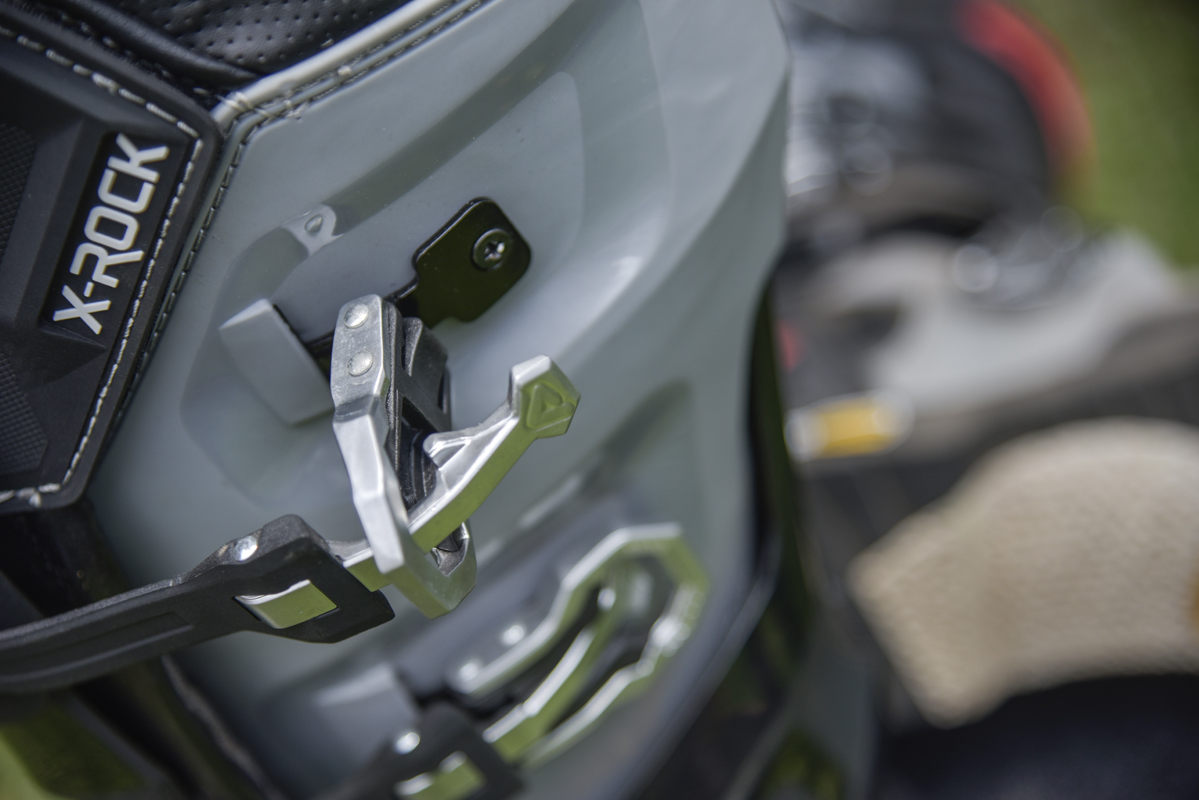
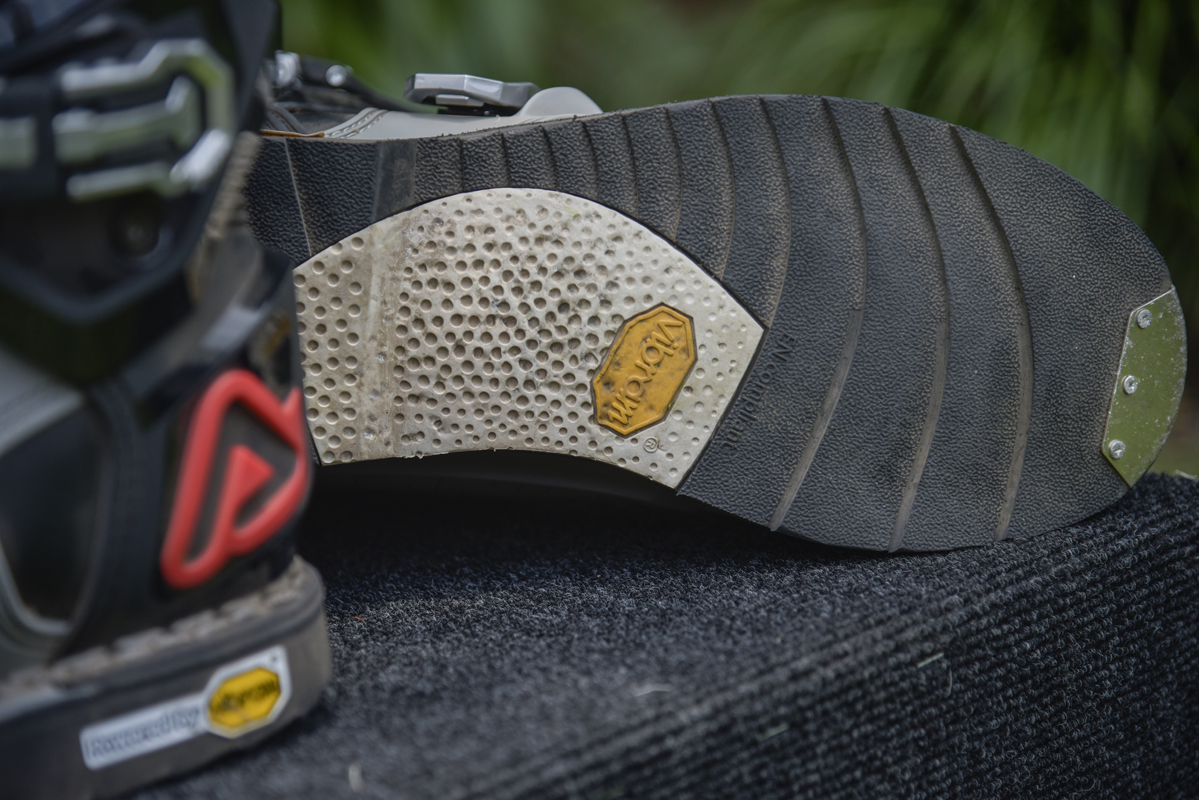
These chaps are built of leather and microfiber uppers with a hinged ankle area. Upper and lower shin guards are anatomically shaped for both protection and comfort. The heel guard is shaped to facilitate gear changes even when standing. The midfoot and toe area has plastic protection for energy absorption. A TPU insert helps with gear changes. The soles are vulcanised burn resistant rubber by VIBRAM which are both wear-resistant and shockproof. Four quick-release buckles with aluminium levers keep the boots firmly in place.

Photo credit: Bjorn Moreira / ZA Bikers

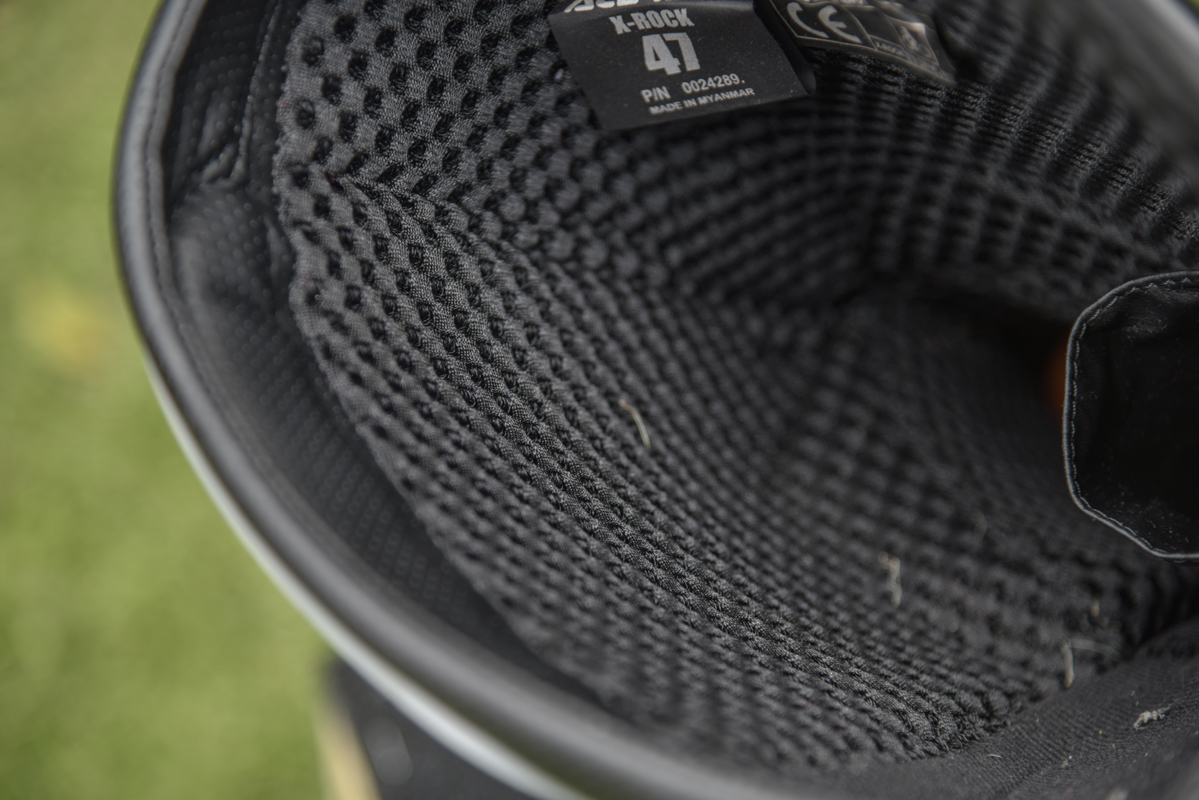
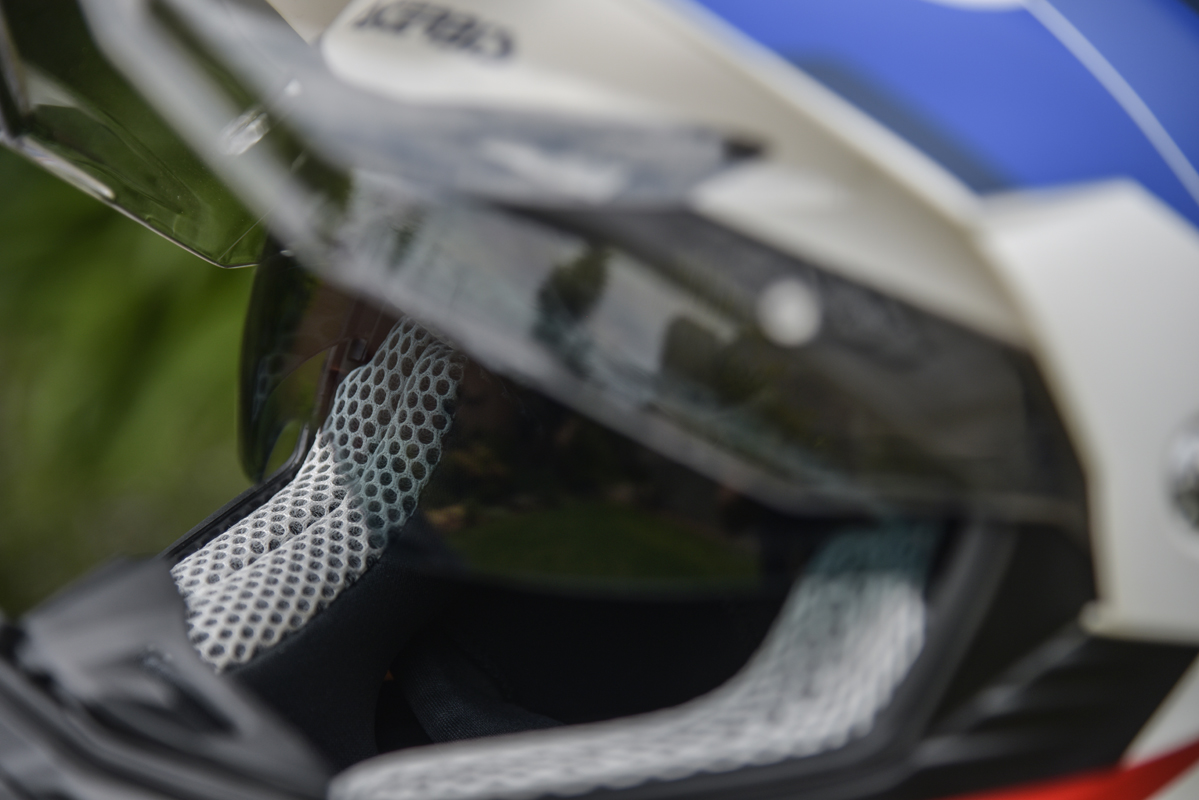
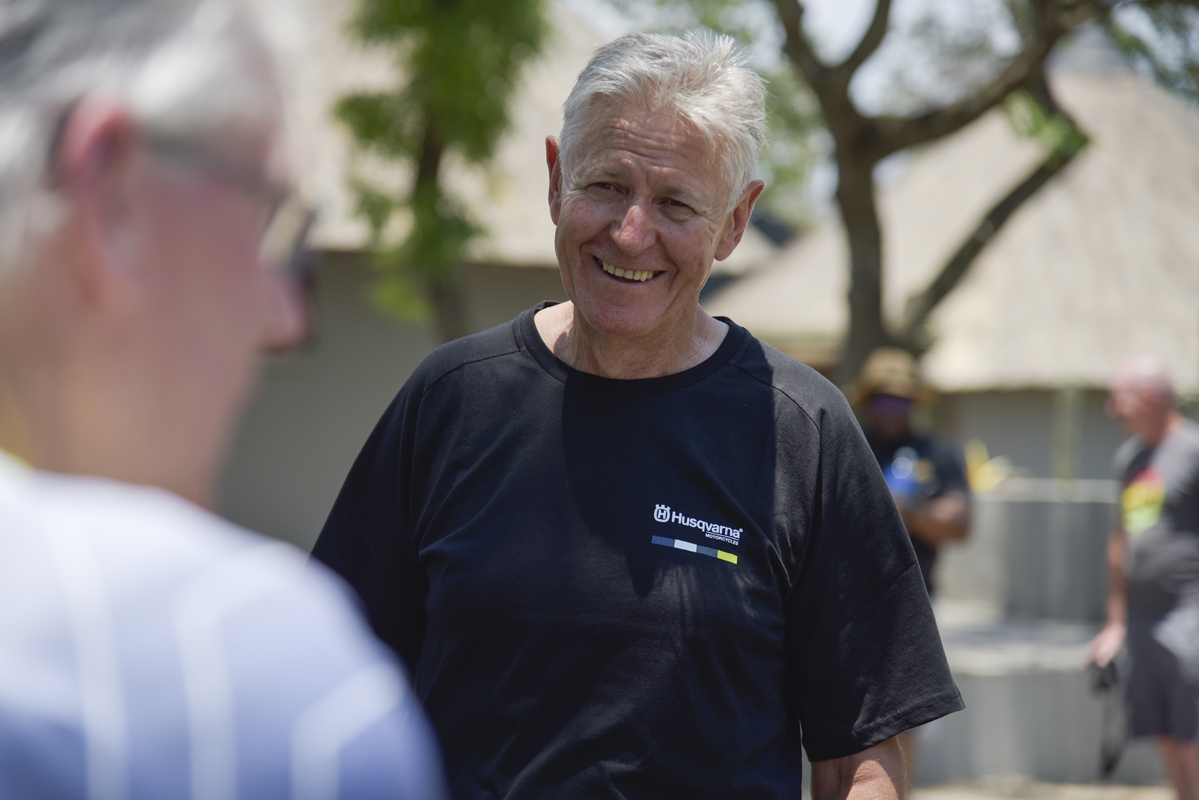
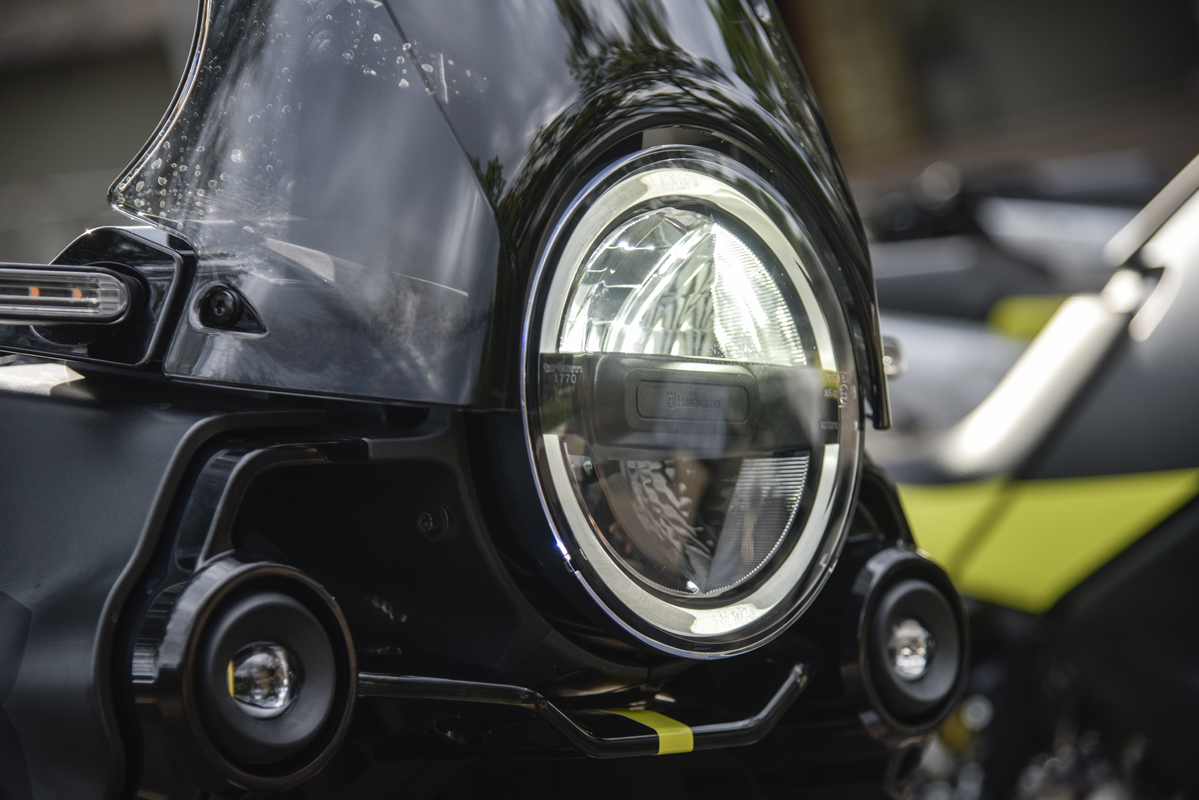
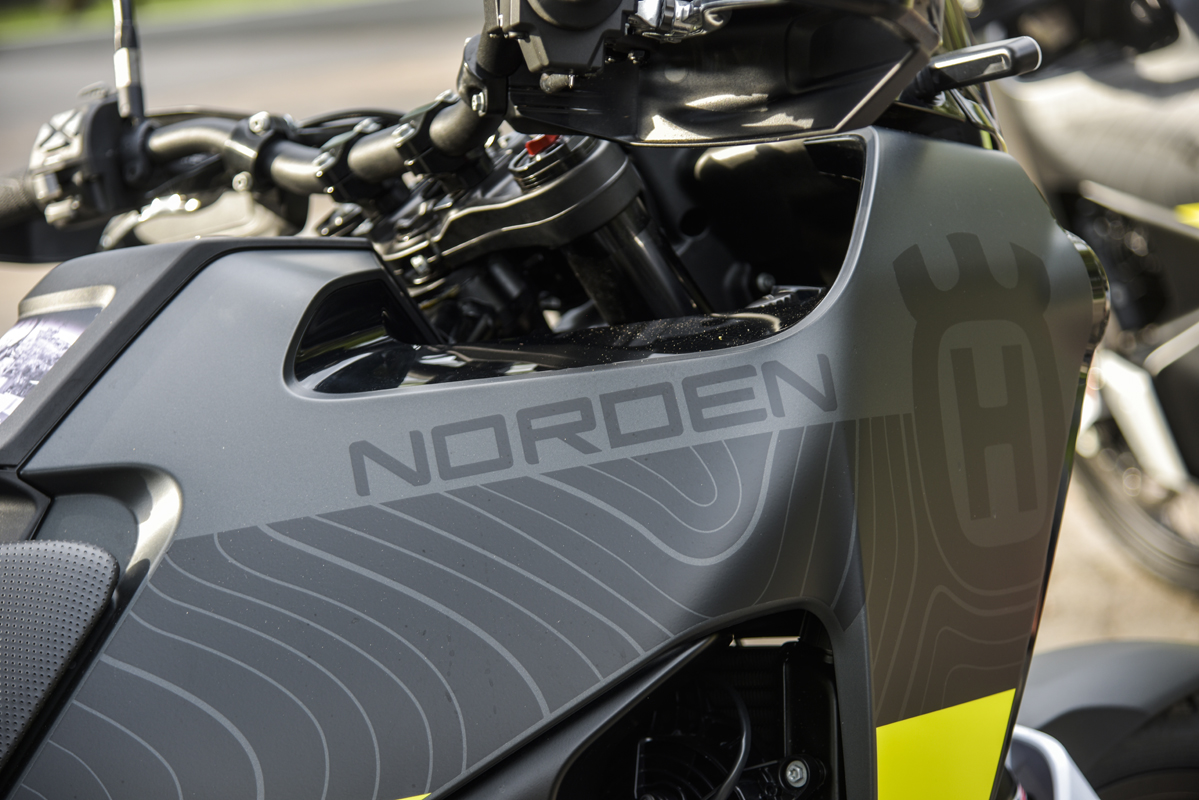
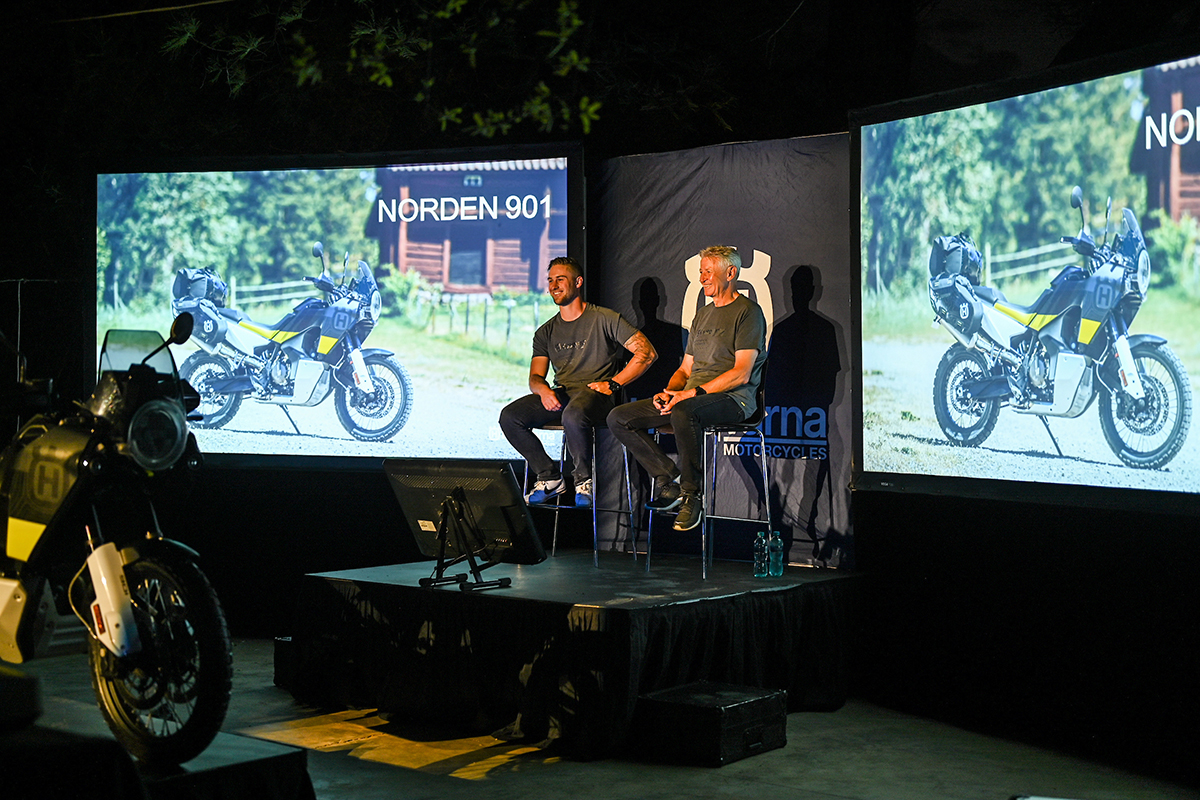
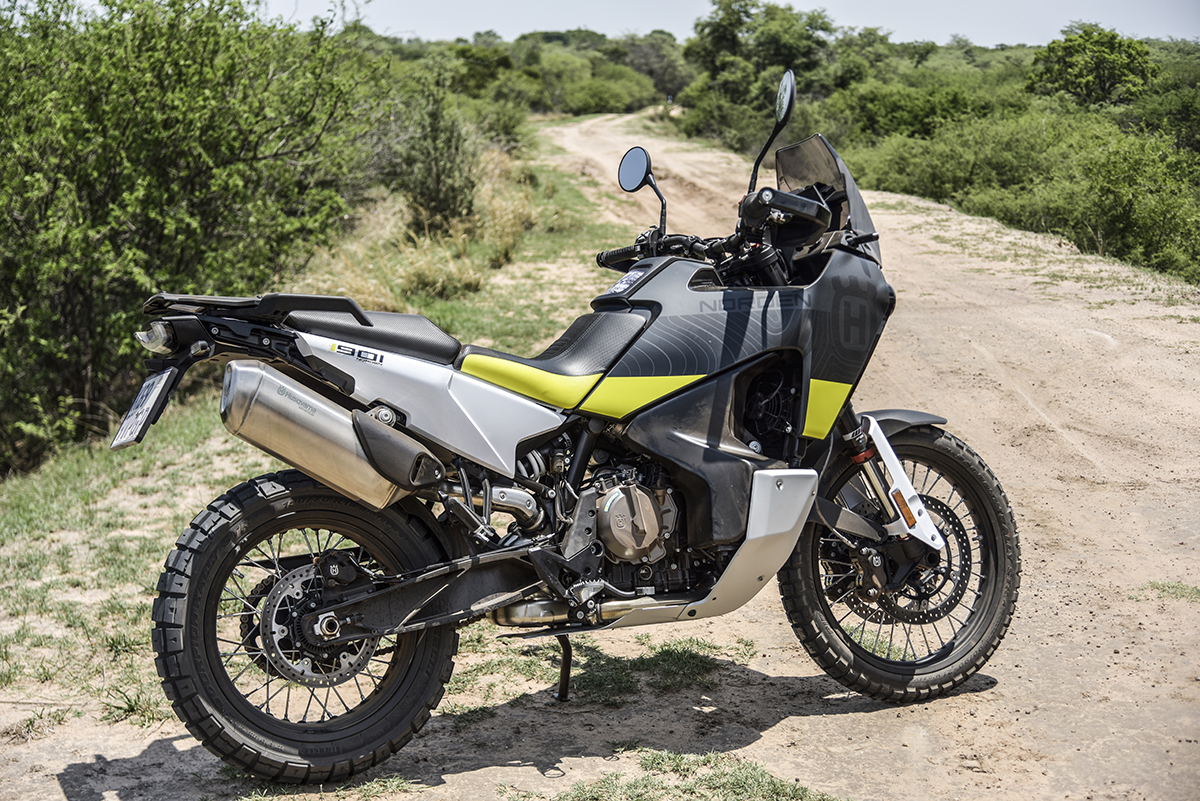
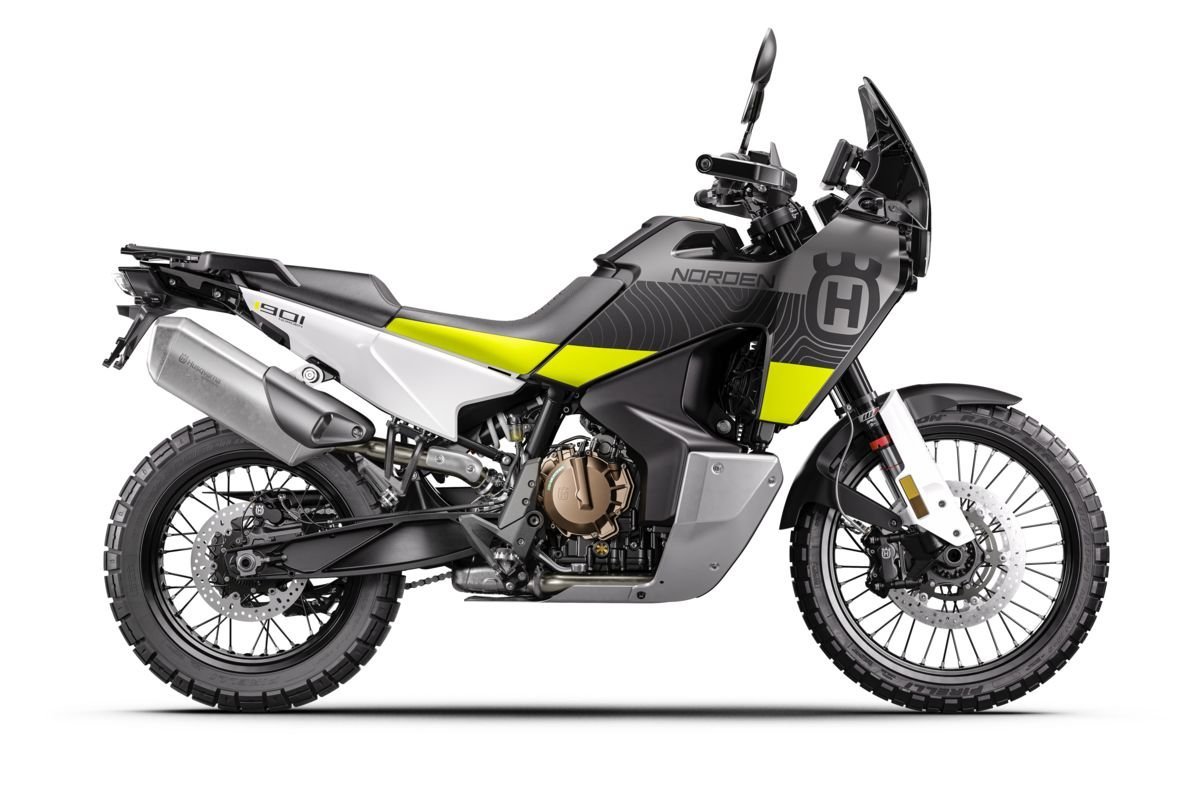
Outside protection is one thing but the lining is crucial for comfort. The X–Rocks have permeable microfiber shin gaiters an inner, made of 3D mesh for comfort and sweat absorption. I wore my boots on the launch of the Husqvarna Norden 901. The bushveld is hot and humid at this time of year so boot comfort is more of an issue than on a cool day. I also did a fair amount of walking during the course of the morning. For MX boots they are amazingly comfortable. After a full morning of riding including traversing deep sand with a bit of paddling the boots performed faultlessly.

Photo credit: Bjorn Moreira / ZA Bikers

The high levels of protection give you way more confidence to “ride it like you stole it”. You soon realise that this is a premier product which stands up to the closest scrutiny. At a recommended retail of just over R7,000, they offer, to my mind, decent value for money. My ankle has never been quite the same since the Katoom treatment. The Acerbis X–Rocks not only protected my ankles but their comfortable fit stabilised my lower leg completely. Highly recommended.

Photo credit: Bjorn Moreira / ZA Bikers

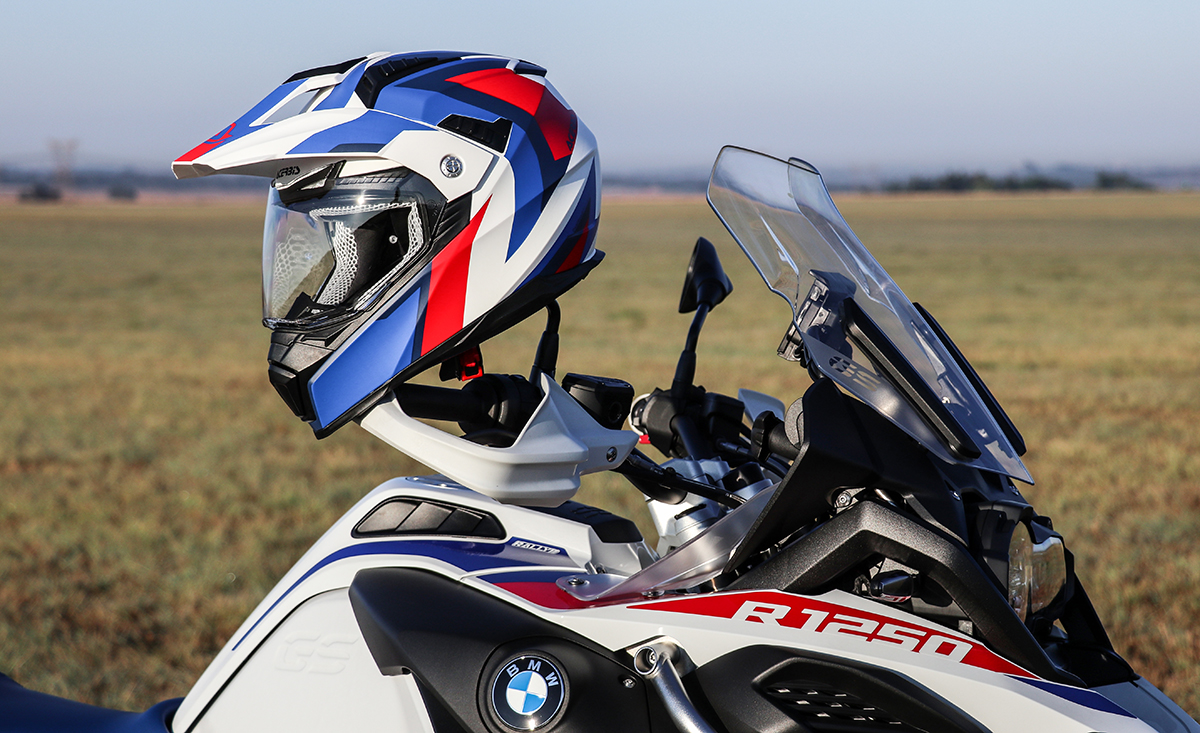
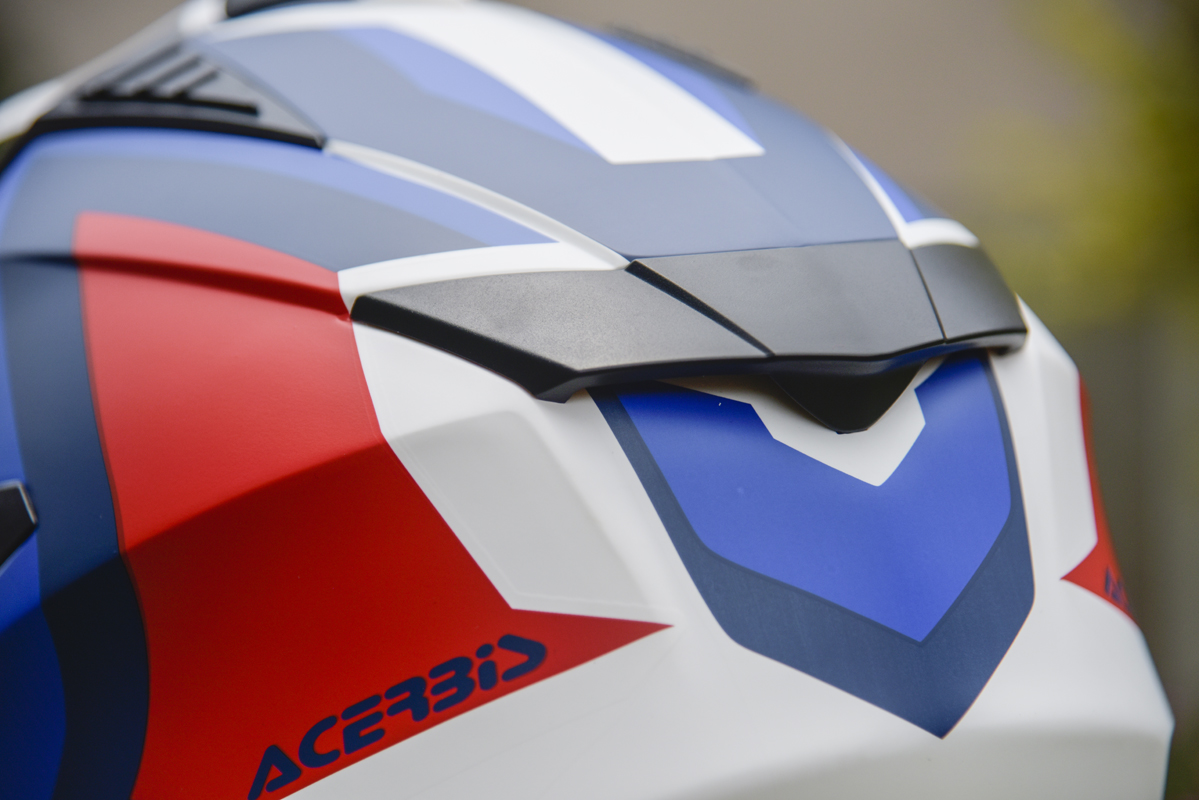
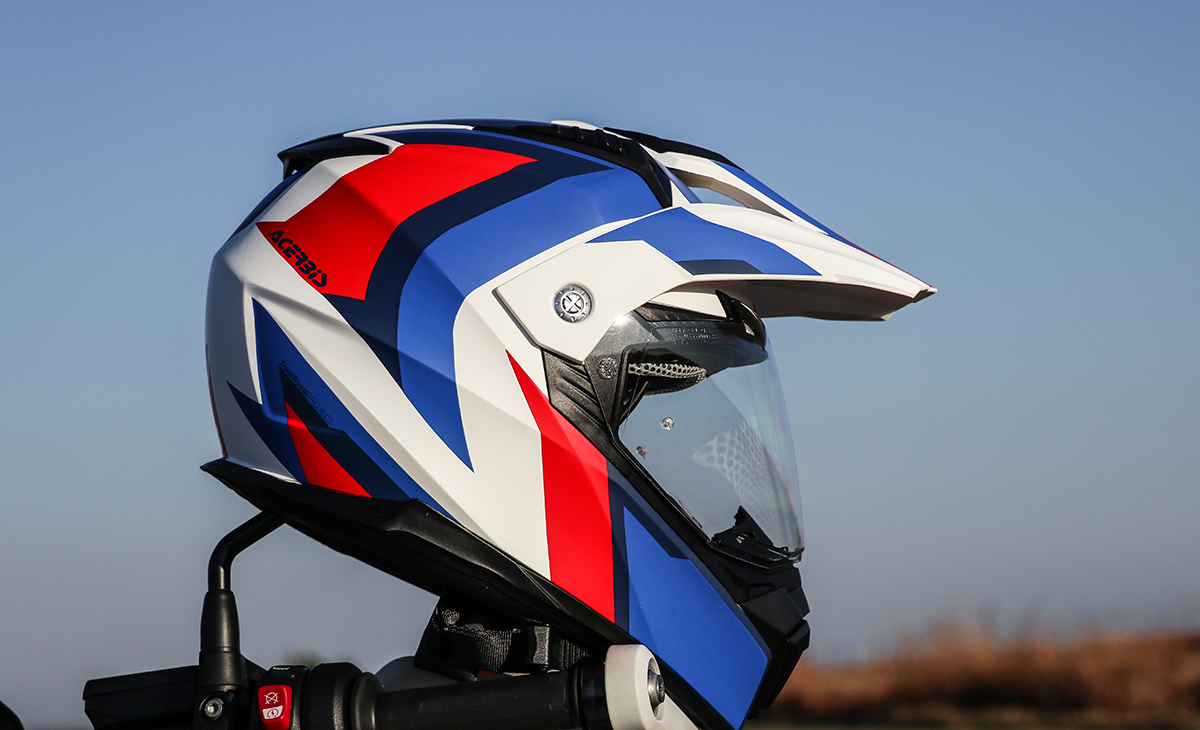
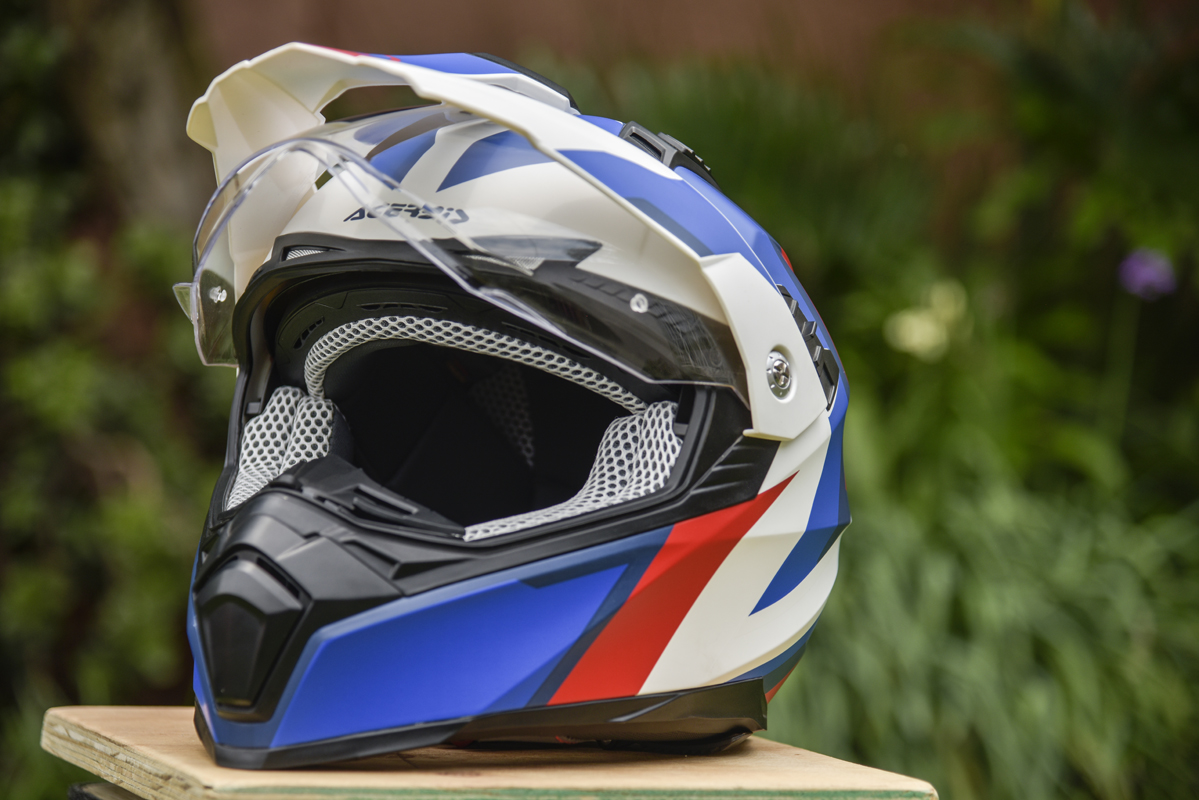
The other end of the body is the old pip. I often spend really long days in the saddle so a comfortable helmet is non-negotiable. I was drawn to the Acerbis FS–606 Enduro helmet for a number of reasons. Let me not lie, it looks flippen’ cool! The fact that Acerbis make it, speaks volumes for the quality. Like most of their stuff, it is brilliant value for money too.

Photo credit: Dave Cilliers / ZA Bikers

The helmet is also relatively light, at 1560 grams, a big issue for neck fatigue on a long day. The helmet sports an inbuilt sunscreen, or dark visor which drops down via a slider on the side of the helmet. A great feature for bright days, especially if, like me, you wear glasses. The fit is absolutely spot on. I know that this is “different strokes for different folks”, as our head shapes differ. I definitely have an Acerbis friendly noggin.

Photo credit: Bjorn Moreira / ZA Bikers

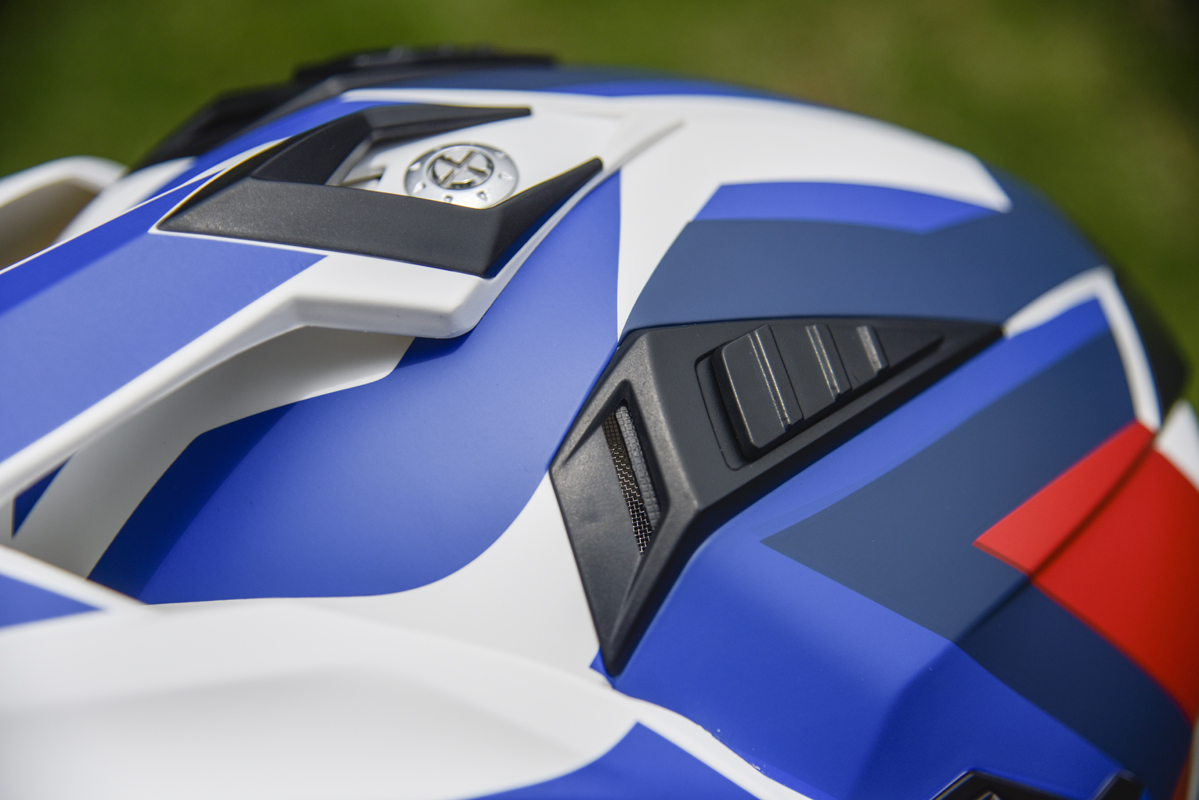
The other issue is noise and stability. Large peaks are great for sun etc… but can try to rip your head off in the airstream. The peak on the FS–606 is firm and well vented allowing the wind to pass over the helmet without becoming an air brake. The lining surrounds your ears without pressing on them. This contributes to comfort and relative quiet.

Photo credit: Bjorn Moreira / ZA Bikers

Technical features and specs:

  • Thermoplastic shell
  • Micro-adjustable outer visor in polycarbonate
  • Adjustable vents – top and bottom
  • Removable and washable liner
  • Quick-release adjustable strap buckle
  • Removable chin strap
  • Removable visor to use goggles
  • Inbuilt dark sun visor

What you have in the Acerbis FS–606 is a helmet that is well built, with all the features that you want in an adventure helmet without having to break the bank. If it performs as well as the other Acerbis products that I have used over the years, then it is an absolute winner! The price, at around R2,200, is a steal!

Photo credit: Bjorn Moreira / ZA Bikers

So there you have it. Two decent products made by a company with an enviable reputation for quality and excellence. Do yourself a favour and check these, and other Acerbis products out. Their clothing range is equally impressive. I have an Acerbis adventure jacket which is super comfortable and properly specced with all the features that you want in a premier adventure jacket. A brand, well worth recommending!

Ducati gets Down and Dirty

Photo credit: Ducati

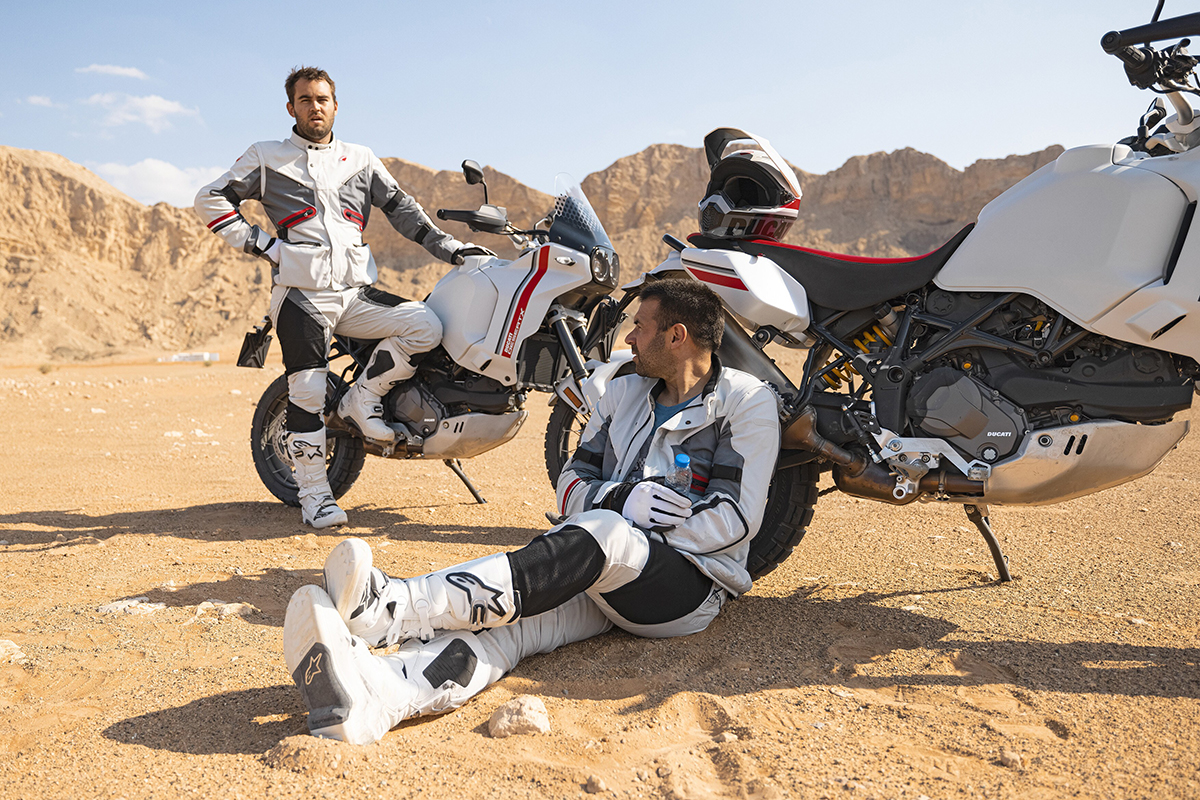
Ducati is a road bike manufacturer, right? I mean, even the Multistrada, as good as it is, isn’t really an adventure bike you’d want to take into the wilds of Africa, is it? It’s an adventure tourer. Even in Enduro guise, the Multi is just another gargantuan adventure bike that needs the skill of an Alfie Cox or Wade Young to get the best out of and, even then, they’d prefer to go for something smaller and lighter if they really wanted to enjoy themselves.

Nothing wrong with adventure bikers per se, but they are becoming the Range Rovers of motorcycles: more likely to be seen in the city than the bush, despite their ability.

Photo credit: Ducati

So, Ducati, as we have established, is primarily a road-bike manufacturer. Even the Scrambler range really has nothing to do with off-road prowess and more to do with stylish urban cruising.

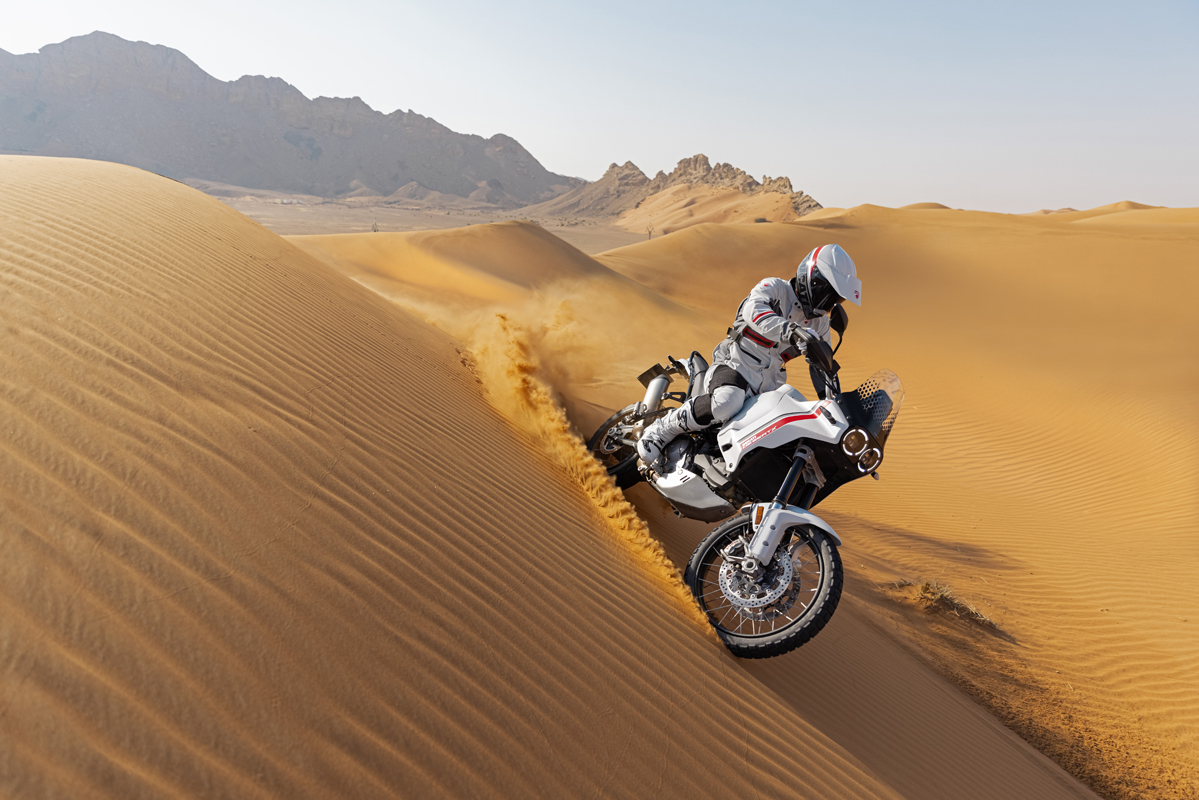
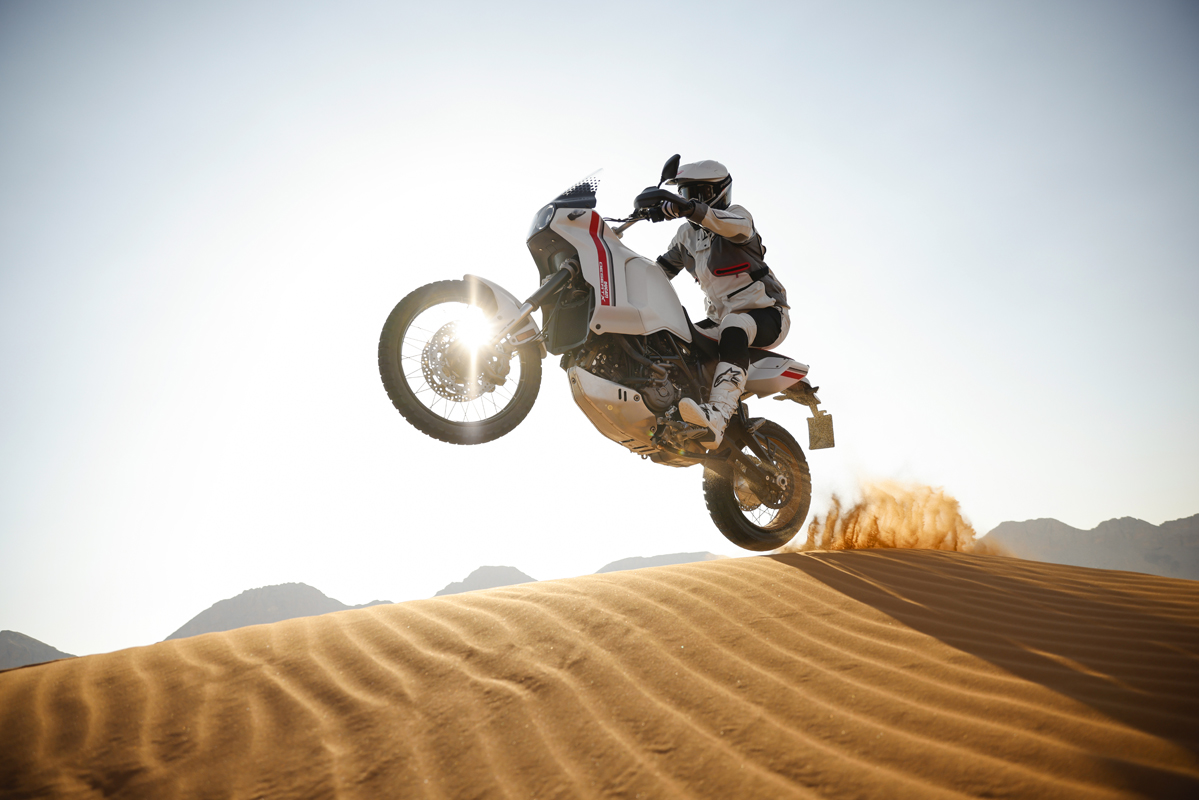
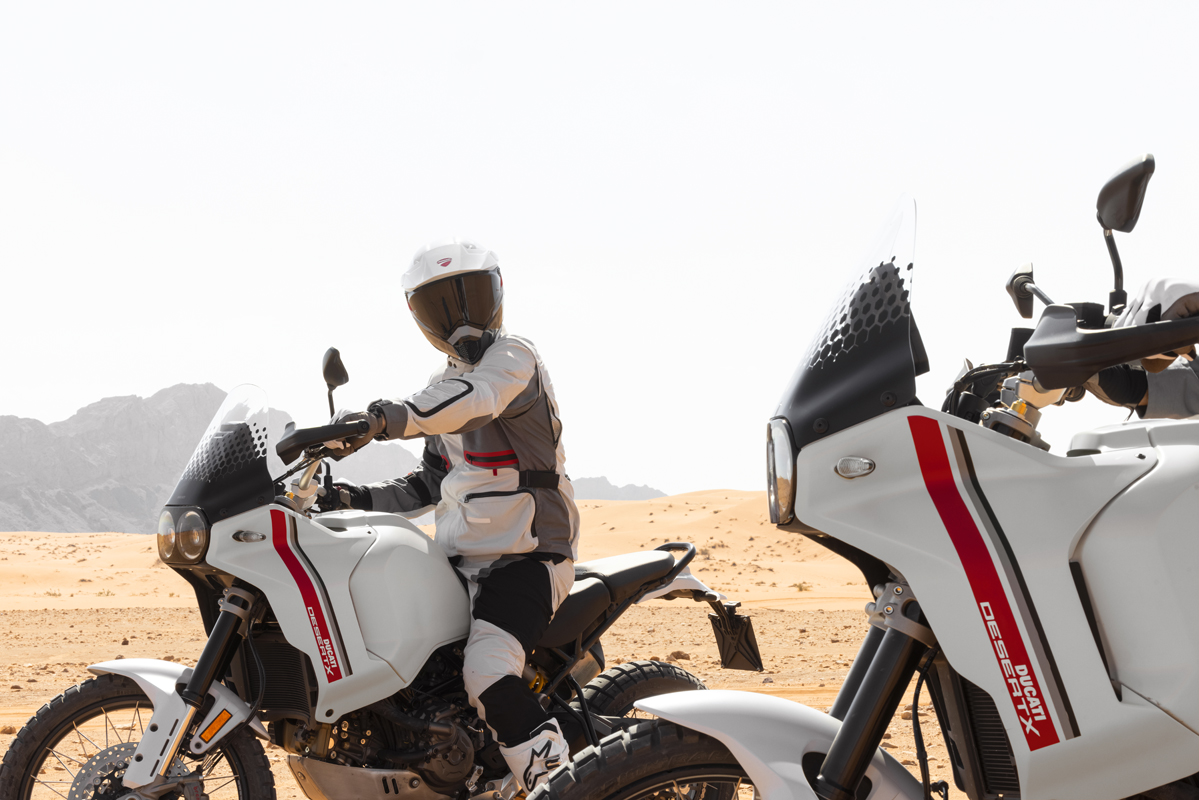
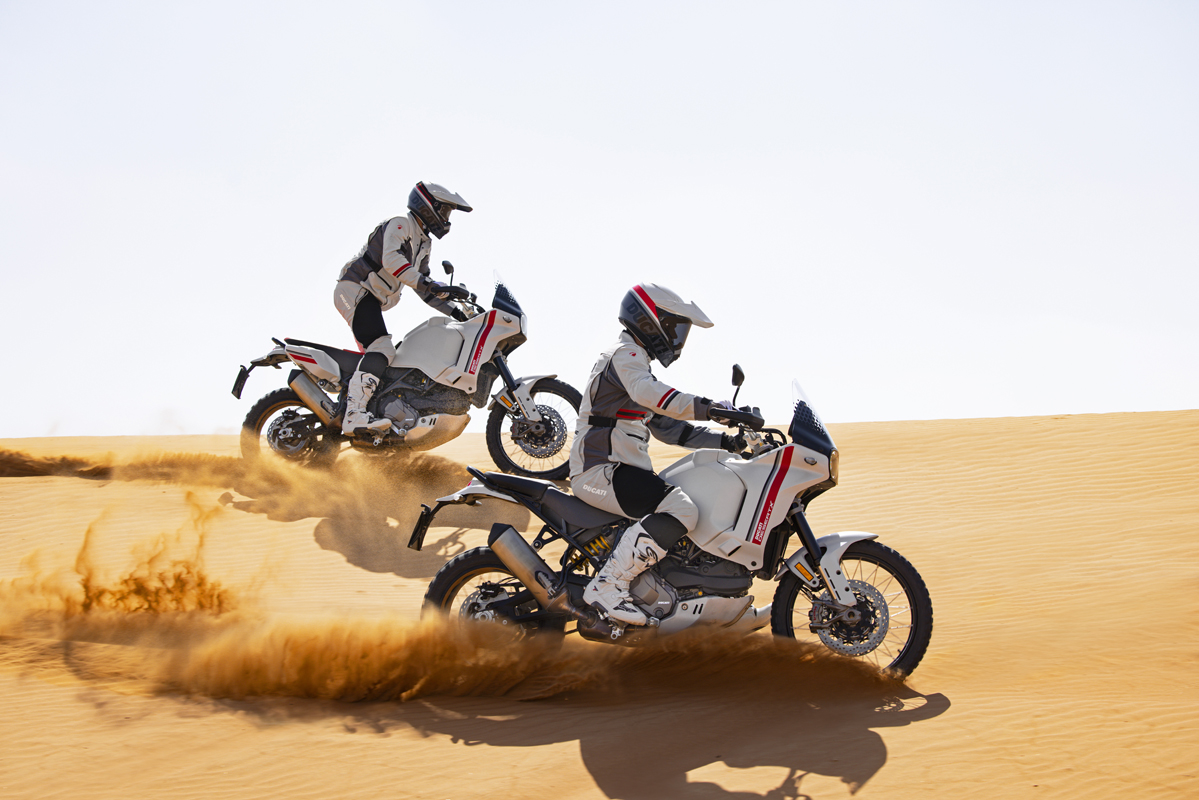
Well, not anymore! The launch of the DesertX model is about to put Ducati firmly in the ‘advenduro’ market.

Photo credit: Ducati

Based on the Multistrada V2, it has the 937cc Testastretta liquid-cooled engine as opposed to the air-cooled unit in the Scrambler. This means 108bhp and 92Nm of torque, more than enough to do what’s necessary. Gearing has been lowered overall to enhance off-road playtime, while sixth gear is longer for more relaxed road riding.

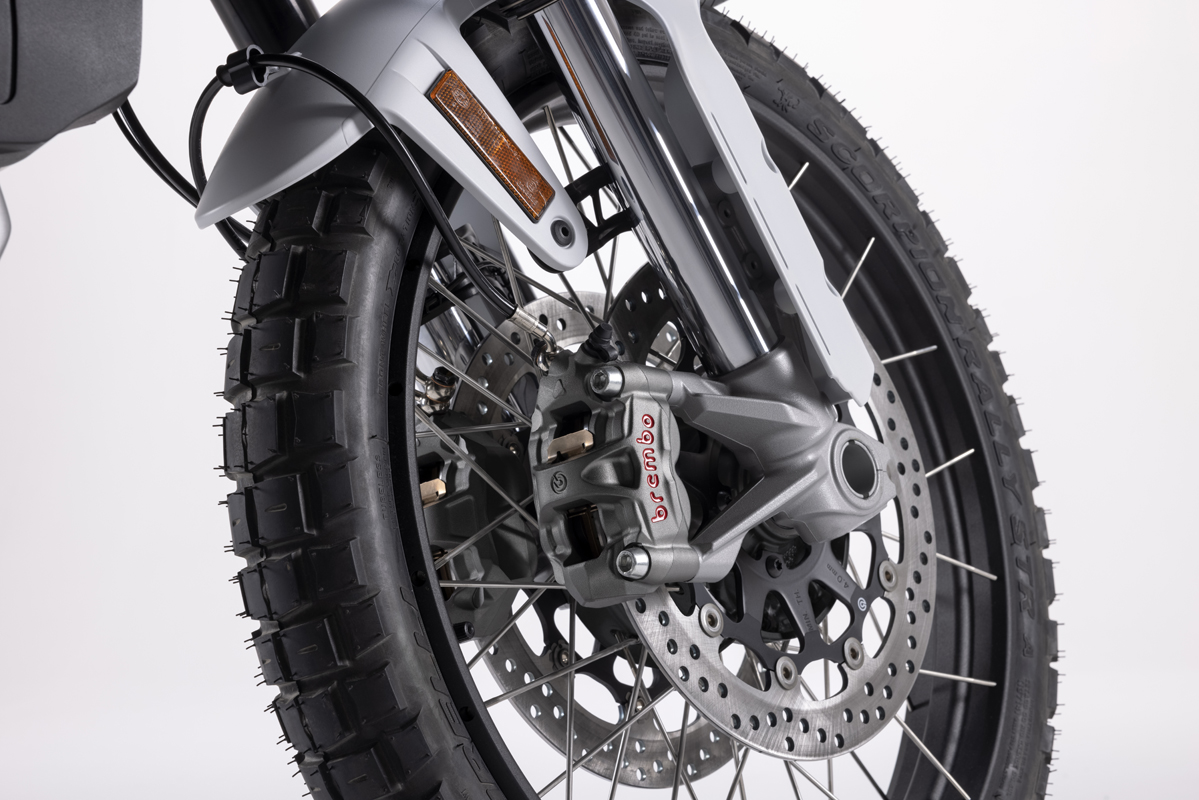
A big clue to Ducati’s intended role for the DesertX is that it runs on 21” front, 18” rear wheels – the first Ducati to be so equipped – opening up a whole range of off-road tyres to fit (it comes with Pirelli Scorpion Rally STR as standard). Suspension is by Kayaba, with 230mm travel at the front, 220mm at the rear and ground clearance of 250mm.

Photo credit: Ducati

All this does make the seat height a little tall at 875mm but a lower seat option is available. Mind you, if you want full-on off-road ability, height is non-negotiable.

Braking is by Brembo monobloc M50 calipers but the system has been tuned for off-road sensitivity rather than tarmac shredding stopping power. Make no mistake, they’ll be powerful enough for road riding, but with greater feel to stop you going over the handlebars off-road.

Photo credit: Ducati

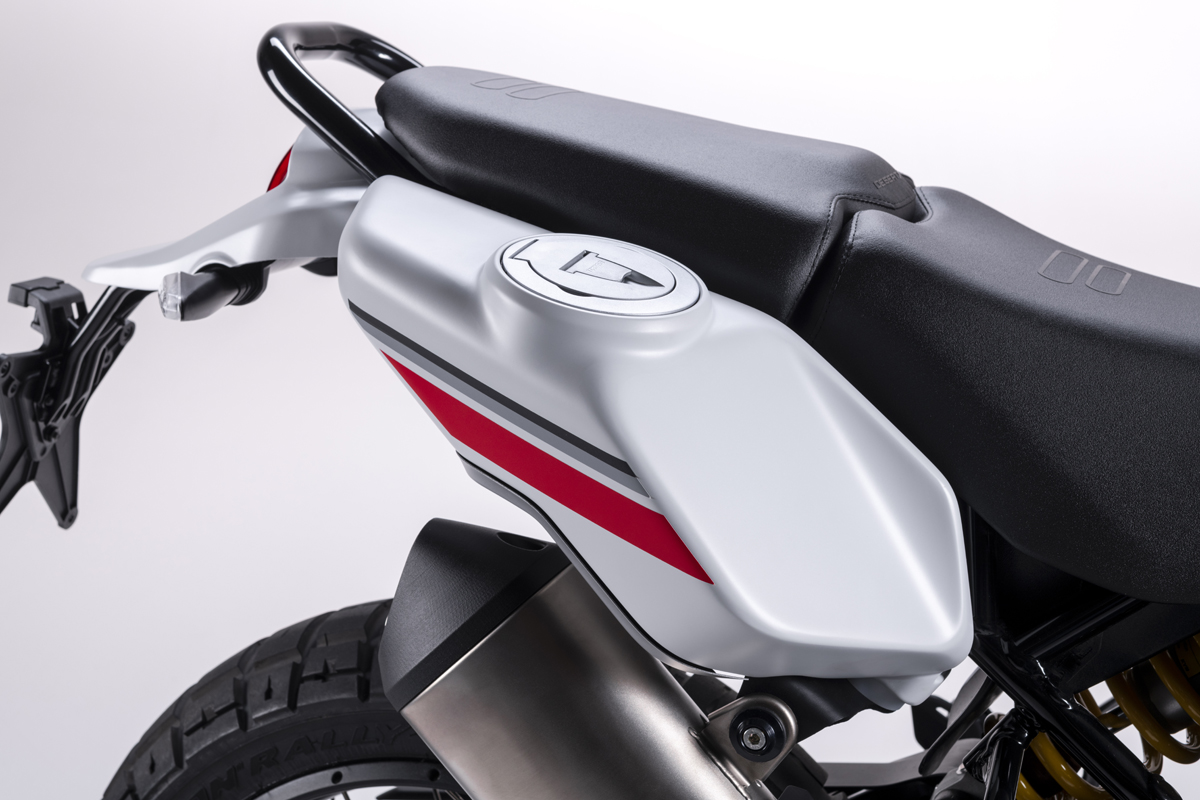
A claimed dry weight of 201kg is right on the money and the petrol tank holds 21-litres, with an additional 8-litre supplementary tank available as an option. That means it could have the same tank capacity as the BMW R 1200 GS Adventure or the upcoming Triumph Tiger Rally Explorer and will give the DesertX serious range.

Photo credit: Ducati

The riding position has been carefully calculated to offer a good standing riding position without having to stoop to the handlebars. The emphasis has been on narrowness between the legs and the seat has had a lot of attention paid to it to make sure it is comfortable for long, seated distances.

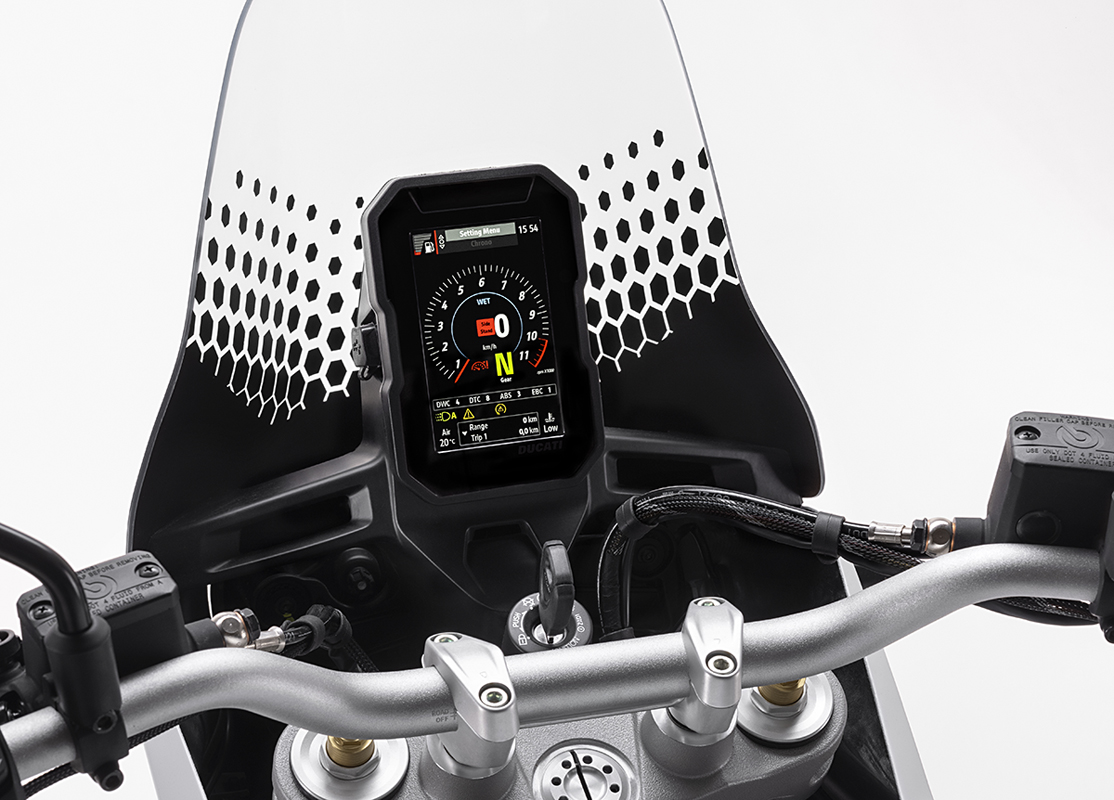
Naturally, the electronics are top-notch: a Bosch IMU (internal measurement unit) allowing a whole array of rider aids – engine brake control, wheelie control, cornering ABS, traction control and a quick-shifter. There are four power modes and six riding modes, including two off-road modes with preset power, TC and ABS intervention levels. All this is adjustable via the 5″ TFT dash.

Photo credit: Ducati

But it is the looks that are going to garner most of the attention. In short, it looks like no Ducati that has been before. It actually looks like a Dakar Rally contender and the specification suggests that this is no idle impression. It doesn’t take too much of a stretch of the imagination to see the DesertX mixing it on rally raid special stages.

This is a real departure for Ducati and a welcome one at that. If Ducati has nailed the concept at the first try, then it’s a massive feather in the Bologna manufacturer’s cap.

Photo credit: Ducati

World of Yamaha and Linex Yamaha Launch New E-Commerce Sites for Motorcycle and Marine Accessories

Image source: Global Yamaha

In response to the changes in consumer behaviour due to digitization, Tuning Fork t/a Yamaha SA Distributors has as of 8 December 2021, launched three e-commerce sites for all three company-owned retail stores applicable to motorcycle and marine accessories, across a variety of brands. The retailers include Linex Yamaha Lynnwood, Linex Yamaha Randburg and World of Yamaha.

This latest venture aims to understand customer purchase requirements and to ensure those customer expectations are delivered upon, with a further intent to exceed these expectations.

‘Online shopping is a key component of any successful retail business, as it exposes our fantastic range of products to a broader customer base’ – Robin van Rensburg, Managing Director: Tuning Fork.

Photo credit: Bjorn Moreira / ZA Bikers

Through collaborating with a reputable technology firm to build the sites, Yamaha’s latest e-commerce platforms are designed to provide the customer with a seamless user journey in terms of ease of purchase of various accessory brands. The state-of-the-art technology allows the customer to make secure payments facilitated by PayGate. At the heart of creating and maintaining an effective e-commerce site is customer-centricity. Therefore, the collection and delivery of products are made convenient through our relationships with top tier logistics service providers.

This additional perk provides the customer with the option to either collect the order in-store or to have orders delivered to their address of choice. With high-resolution images of reputable marine and motor accessory products, customers enjoy the thrill of visually connecting with various accessory brands without leaving the comfort of their homes or other spaces.

Image source: Global Yamaha

The Yamaha SA websites have been long in the making to ensure that we respond innovatively to change and continue to connect with customers at all touchpoints.

Visit the new retailer e-commerce websites using the links below:

World of Yamaha e-commerce website: www.worldofyamaha.co.za
Linex Yamaha Randburg e-commerce website: www.linexyamaharandburg.co.za
Linex Yamaha Lynwood e-commerce website: www.linexyamahalynnwood.co.za

Kawasaki Ninja 650 – Putting the fun into your commute

Photo credit: Bjorn Moreira / ZA Bikers

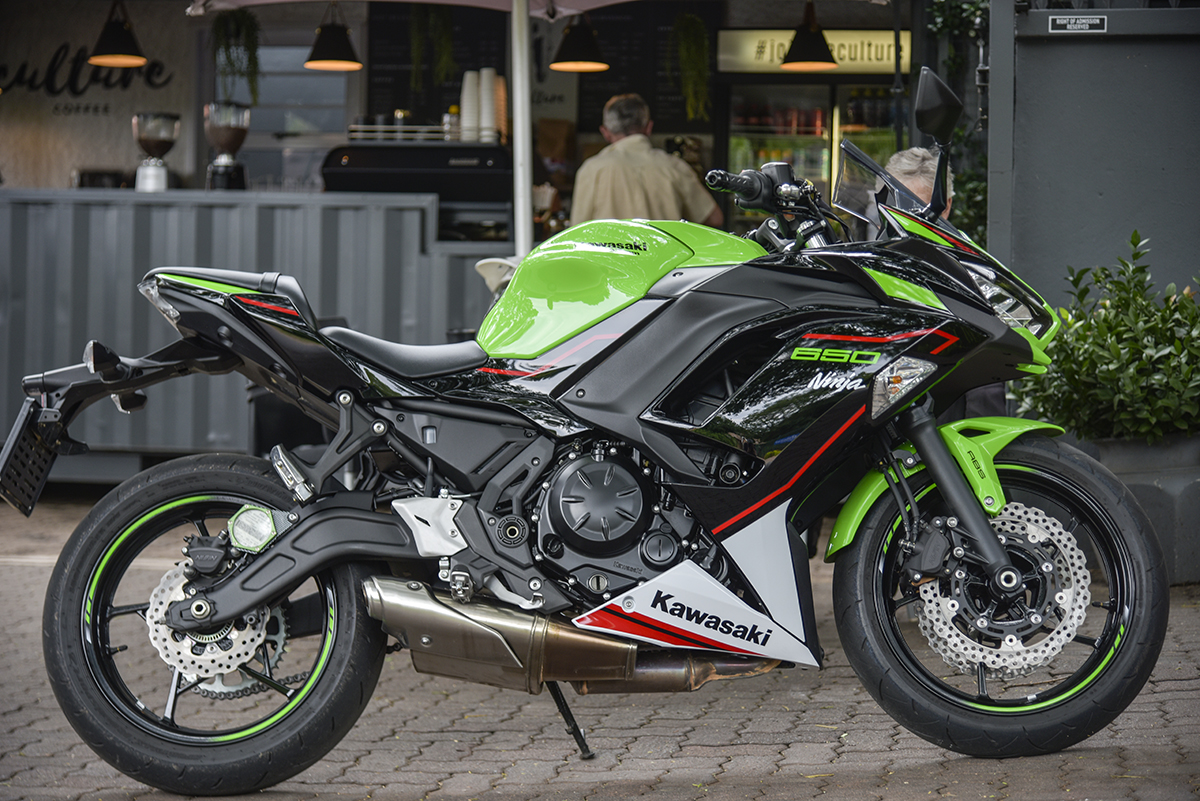
We are so spoilt for choice and inundated with excellent bikes these days, that it is easy to get dismissive of the current crop of middleweight options. The bikes that make up this class, like the Yamaha MT-07, Triumph Trident, Honda NC 750, Suzuki 650’s and Kawasaki’s 650’s, offer very well balanced packages that are really brilliant options for all-round motorcycling.

We are dealing with burgeoning fuel costs and, if you are a city dweller, stupid traffic congestion. Motorcycles alleviate so much stress and strain in the daily commute. This is where the middleweights really shine. Light and nimble, with decent performance, they make short work of negotiating the urban sprawl. The only possible downside is that they can be a trifle bland. This is not something that Kawasaki’s Ninja 650 can easily be accused of.

Photo credit: Bjorn Moreira / ZA Bikers

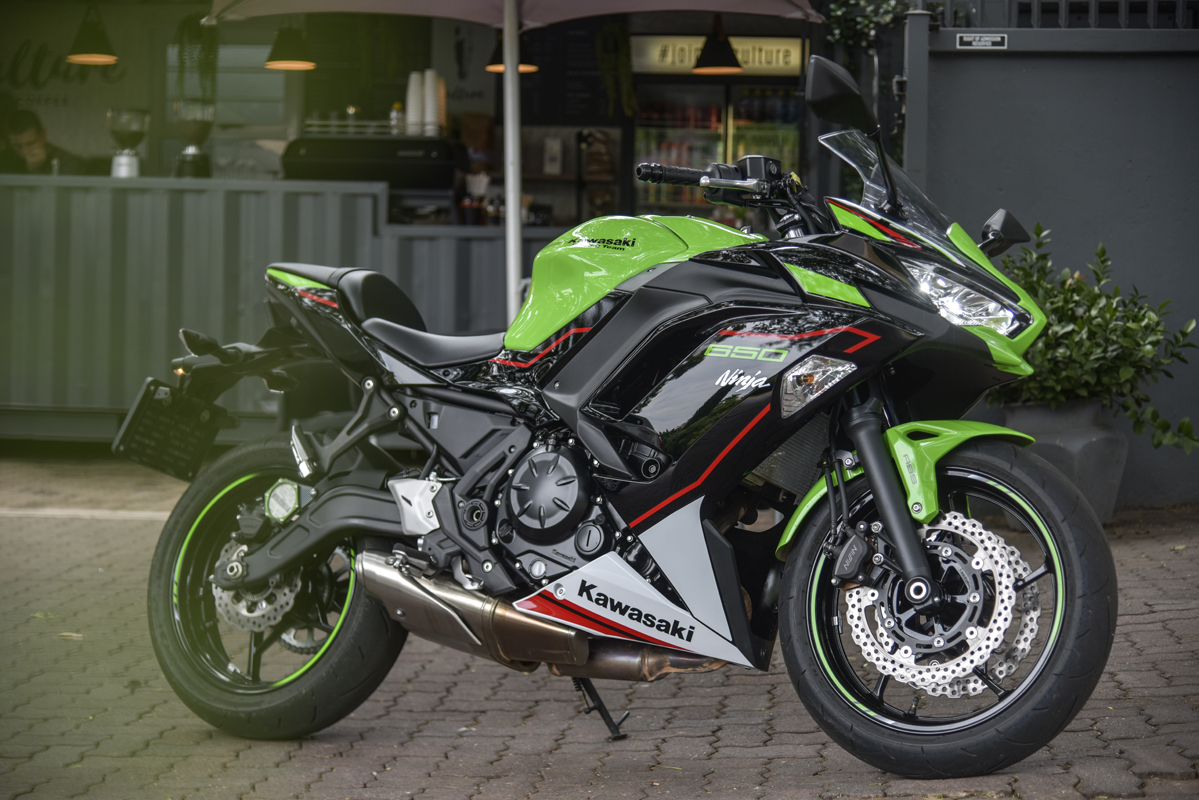
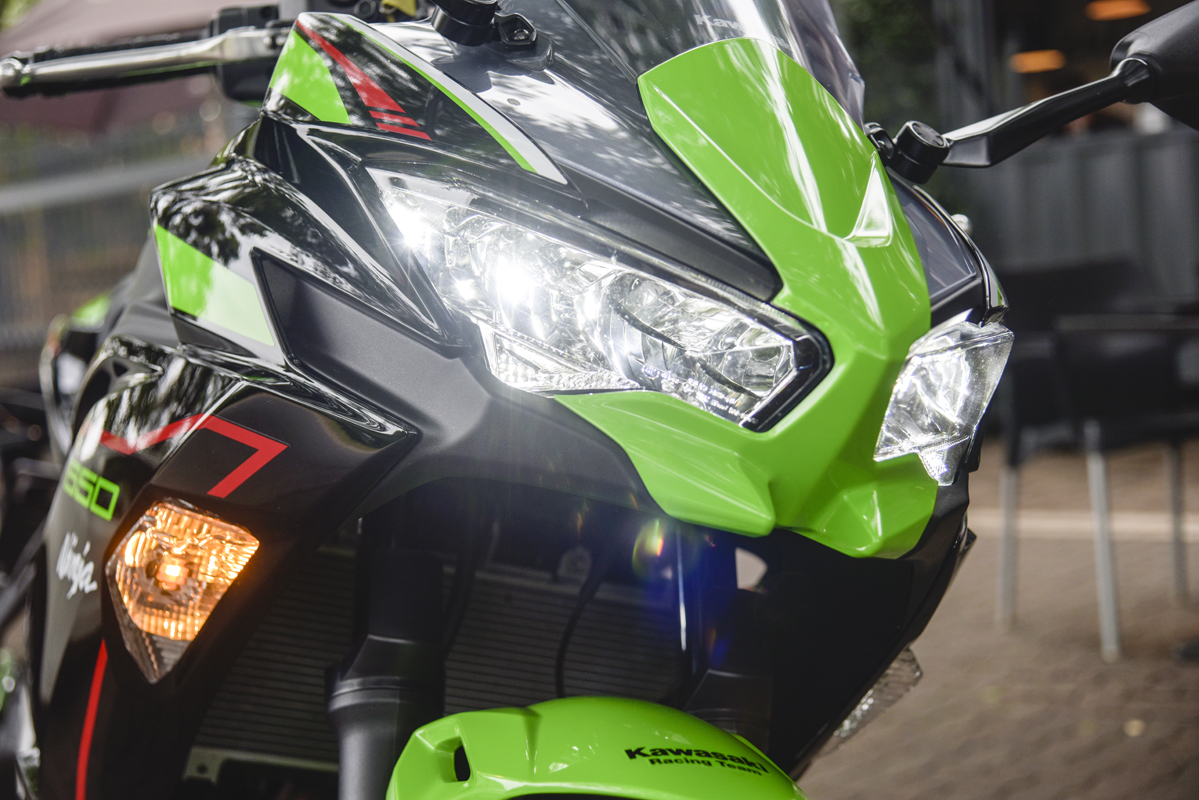
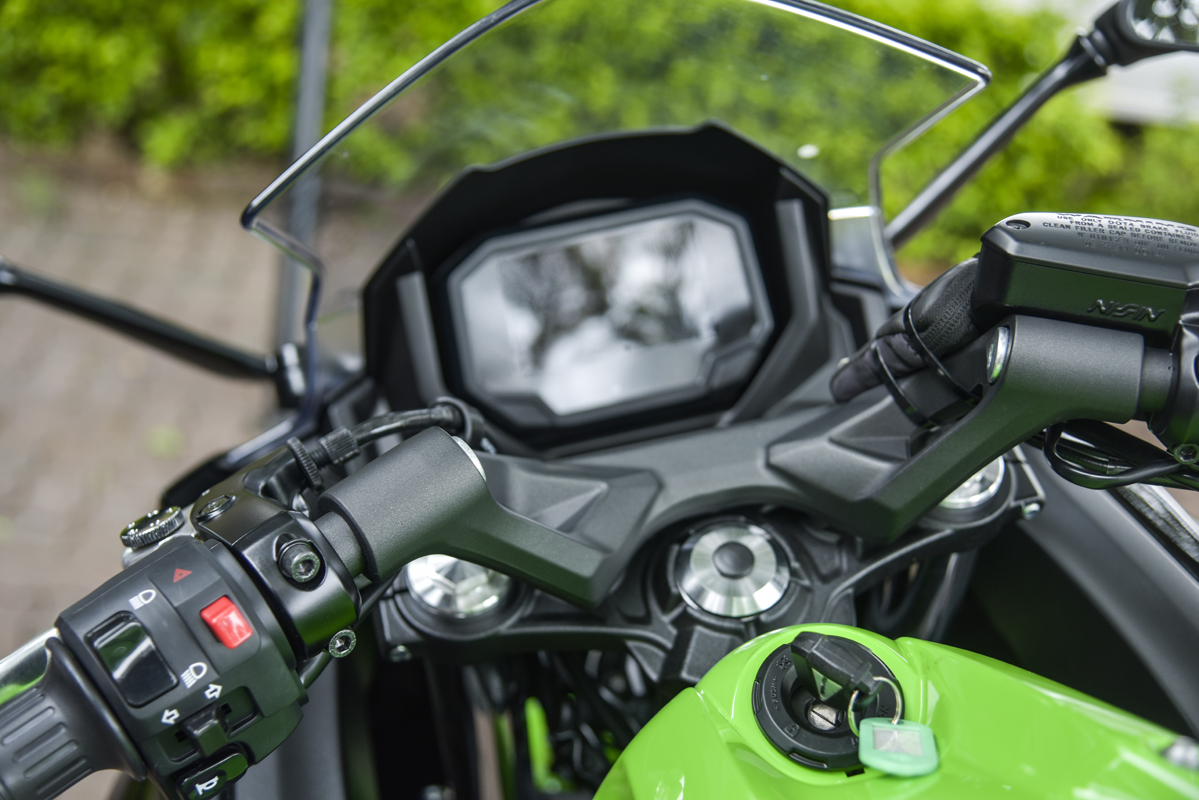
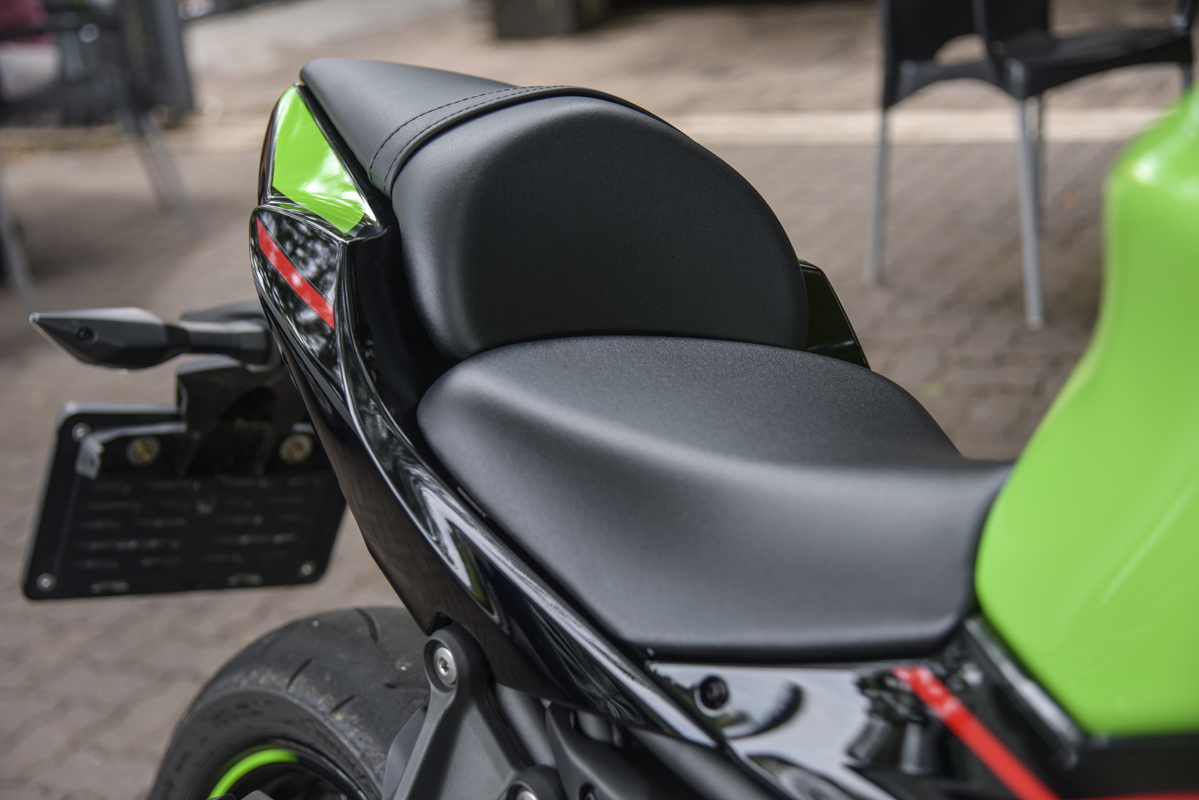
The Ninja 650 has huge street cred courtesy of its absolutely stunning styling. You have to do a double-take to make sure it’s not Johnny Rea’s race bike. So who is the Ninja aimed at? At R124 995 it is a compelling argument for anyone shopping in this sector. Don’t be fooled by the race bike looks as the ergonomics on the Ninja are spot on, with bars that look super classy but don’t drag you onto your wrists.

Its tidy dimensions make it really manageable by pretty much everyone. New riders will enjoy a stunning looking bike which is a doddle to ride and enjoy day-to-day. Sports bike riders who are getting long in the tooth and struggling with the power and weight and intimidation factor of modern-day sports bikes will appreciate the dynamic abilities of the Kawa. It can really hustle down a winding road. It is one of those bikes that works better than the sum of its parts.

Photo credit: Bjorn Moreira / ZA Bikers

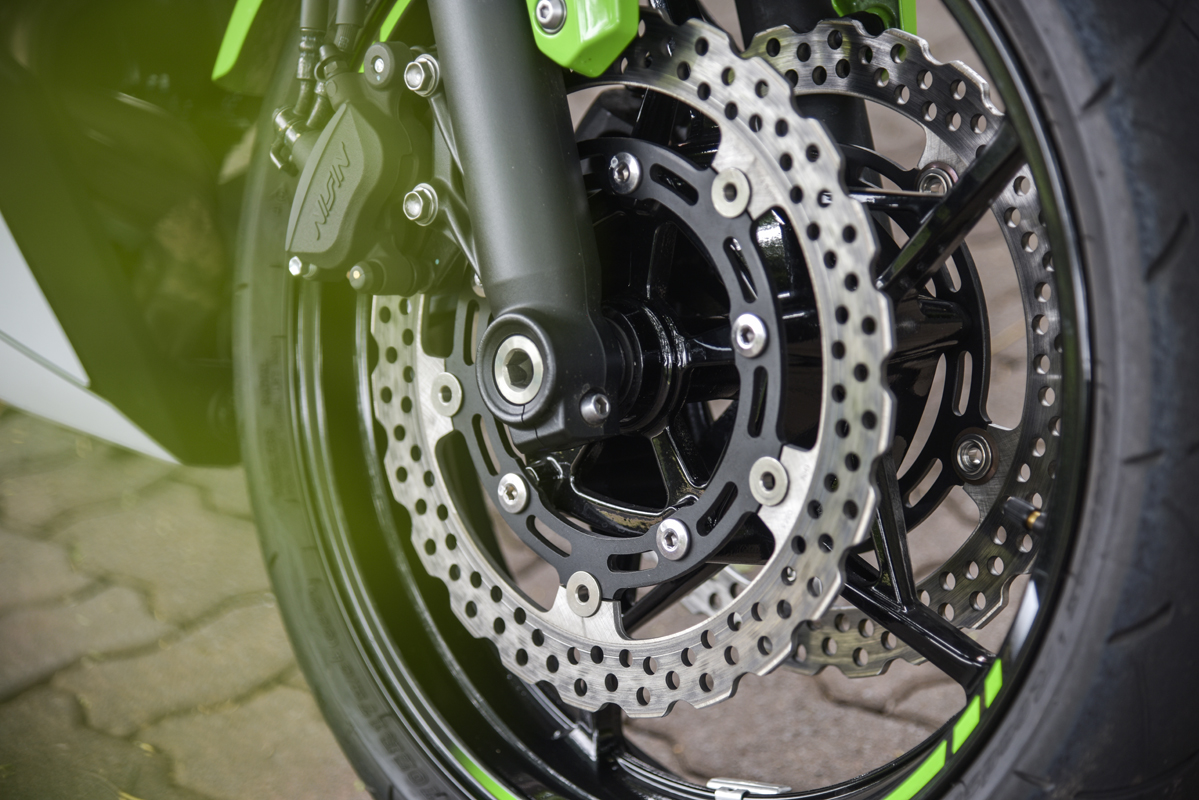
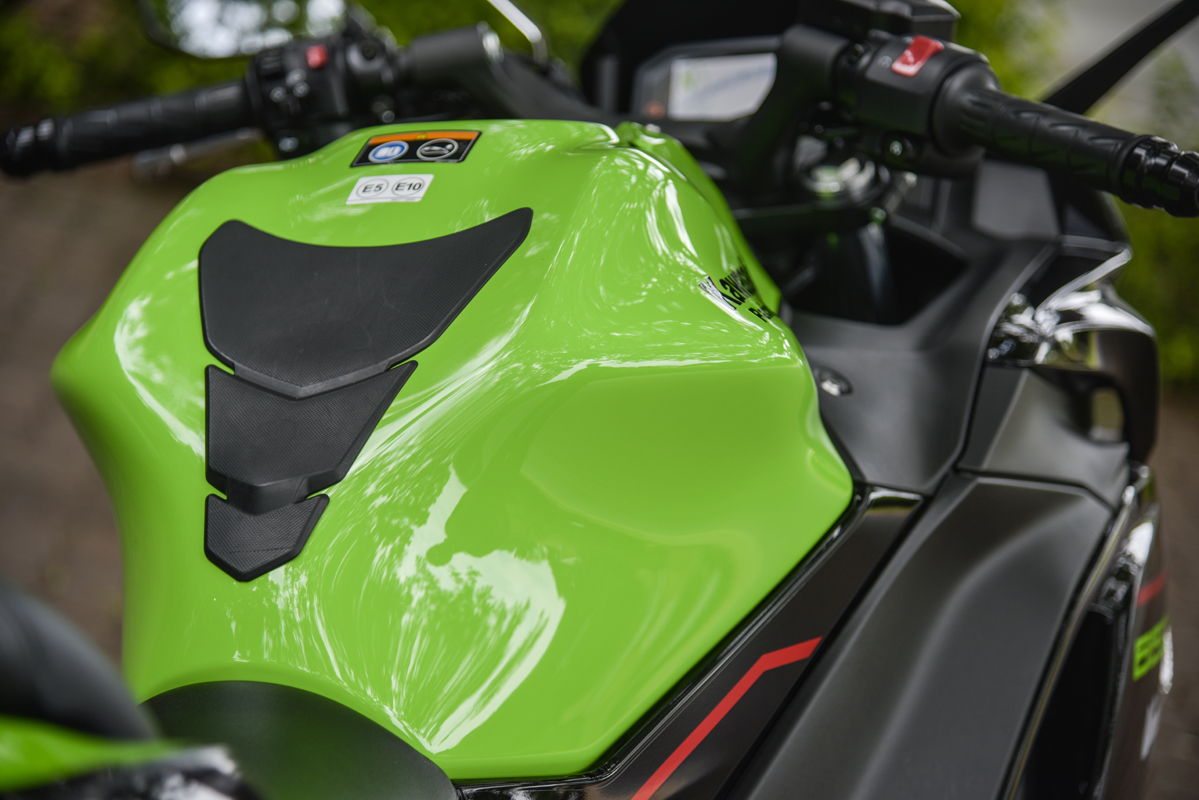
The detailing on the bike is actually quite special for a bike at this price point. The clutch and brake lever are both adjustable for hand size. The handlebar ends are not just the regular tubular jobbies but rather fluted pieces that look really cool. A thick red pinstripe runs the length of the bike, just accentuating the handsome lines. The five-spoke mags are gloss black with green rim tape to make them pop.

A hugger rides on the swing arm keeping crud off the rear shock. The mirrors are handsome and functional, giving you a decent view, which remains blur-free at all engine speeds. The brake discs are wavy too. Even the nut on the rear axle has a rubber cap over it to neaten it up The overall fit and finish on the bike is superb, with surprising attention to detail. The handlebars aren’t just regular clip-ons, but a beautiful alloy casting. Well done Kawasaki!

Photo credit: Bjorn Moreira / ZA Bikers

The heart of the Ninja 650 is the familiar Double Overhead Cam, 649 cc, fuel-injected Parallel Twin that has established a formidable rep for reliability and general efficiency. It feeds the power through a slick six-speed gearbox. It is engineered for midrange punch (which is really what you want in the real world) with 50 kW @ 8 000 rpm and a healthy 64 Nm @ 6 700 rpm.

The motor is a stressed member in a tubular ‘Diamond’ chassis with an aluminium swingarm controlled by a single preload-adjustable shock. Upfront are conventional ‘right side up’ non– adjustable forks. Wheels are handsome magnesium 17 inches, with a 120/70 front and a 160/60 rear. A slipper clutch caters for ham-fisted downshifts to prevent rear wheel chatter.

Photo credit: Bjorn Moreira / ZA Bikers

Kawasaki’s catchphrase for their Ninja 650 is “Fun, Style, Easy” which sums up the bike in a nutshell. We get so seduced by big horsepower we become like addicts who are permanently in search of a bigger ‘fix’, no longer satisfied with a balanced life. You can use every smidge of power that the Ninja makes and the twin 320 mm front discs backed up by the 186 mm rear provides powerful backup if you get carried away.

Suspension that feels too soft when you first hop on the bike translates into a decent real-world ride with really good handling. 193 Kg’s of all in weight results in light and accurate steering and a decent power to weight ratio. It turns in effortlessly and is perfectly stable through 160 kph plus sweeps. It is one of those bikes that always works with you, maintaining great composure. Kawasaki have done a great job dialling in the ‘one size fits all’ suspension.

Photo credit: Bjorn Moreira / ZA Bikers

When the weekend rolls up you can venture out into the countryside for some really brisk and rewarding riding. Bungee a stuff bag on the back seat and do some “credit card” touring. The Ninja will be a willing and able accomplice. The 15-litre tank and good economy give you a decent range.

The midrange also means that the bike is more than capable of some two-up riding too. The screen takes a fair amount of wind blast off your chest and your legs tuck in with some protection from the full fairing. The seat is comfortable, although the slight slope tends to settle you in one spot. Luckily it is a comfy spot.

Photo credit: Bjorn Moreira / ZA Bikers

The motor has a gruff character with some intake honk when under hard throttle. A low amplitude vibration, which is not bothersome, is evident through the seat and pegs when you accelerate hard, but smooth’s out to almost imperceptible levels when cruising at 120 plus VAT. Kawasaki employs a solution to footpeg vibes, which I last noted on Honda’s VFR800. Each footpeg has a counterweight attached to its underside which changes the amplitude of the vibration. This is the same reason weighted bar ends are used. The exhaust note from the neat and tidy underslung exhaust is, typical of Euro 5 compliant bikes, rather muted.

Kawasaki’s Ninja 650 offers a solid sporting offering in the middleweight space, at a price that is super competitive. With full LED lighting and a functional TFT display giving you all the vital info that you need, it is a thoroughly modern motorcycle which scores highly in both form and function. A minor issue is that all the info can only be accessed by pushing two buttons on the TFT dash. A remote switch on the bars would be a nice touch.

Photo credit: Bjorn Moreira / ZA Bikers

Similarly, self-cancelling indicators should be a standard issue on all bikes in this day and age. The Ninja will perform your weekly commute with aplomb, tour to your heart’s delight and work with you to punch way above its weight at your next track day. When compared to its peers, it looks almost ‘exotic’, thanks to its crackerjack styling. Go ride one. Fun, never looked this good.

Kawasaki Ninja 650

For more information on the bike featured in this article, click on the link below…

Revealed: 2022 Triumph Tiger 1200

Image source: Triumph UK

We’ve had teaser shots, spy shots, leaked details and increased anticipation but, finally, the new-for-2022 Triumph Tiger 1200 has been revealed in all its glory.

This really is an all-new model and not merely a breathed upon 2021 Tiger 1200. Nothing remains from the old, apart from the already-impressive long-distance comfort and off-road ability, both of which have been significantly upgraded.

Image source: Triumph UK

There are five main models: GT (not coming to SA) and GT Pro, which are the more road-biased models and the Rally Pro, which is the more off-road focussed model. Then there are two new models each having 30-litre petrol tanks, the GT Explorer and Rally Explorer.

Triumph is making barely concealed reference to the BMW R 1250 GS in the announcement. As both are shaft driven, Triumph is at pains to say that the GT Pro is 17kgs lighter than any other shaft-driven equivalent model (which means the GS!), running on cast wheels.

Image source: Triumph UK

The Rally Pro is a huge 25kg lighter than the outgoing model and this has helped the 2022 Tiger 1200 attain a new level of off-road agility.

The engine is all-new. Now running the T-Plane crank as first seen in the Tiger 900, this gives the best of both worlds: low RPM grunt for plugging over rocks and through mud or snow and high RPM power for the open road. Power is up to 148bhp, a rise of only a few horses but, when combined with the improved rideability of the new crank, it should give a whole new feel. Torque is 130Nm.

Image source: Triumph UK

Suspension is now Showa semi-active, automatically adjusting pre-load and damping, depending on terrain and riding style. Suspension travel is longer on the Rally Pro than the GT Pro. Braking is handled by Brembo Stylema calipers.

The electronics package has been given a full overhaul, with blind-spot radar detection developed in conjunction with Continental. Six riding modes adjust throttle response, traction control, ABS and suspension, while there is an Advanced Off-Road Pro in which all parameters can be selected by the rider via the 7″ TFT dashboard.

Image source: Triumph UK

All lighting is LED, there’s keyless ignition, tyre pressure monitoring, cruise control, hill hold control, heated grips and seats and an up-and-down quick shifter while the Rally Pro and Rally Explorer get a full set of crash bars.

The whole bike is slimmer and more compact, while the twin radiators are carefully ducted to push hot air away from the rider.

Image source: Triumph UK

If you want to accessorise your Tiger 1200, there are over 50 items in the catalogue to enable you to tailor the bike to your needs. Service intervals are 16,000km and there’s a three year, unlimited mileage warranty.

Bikes should be in showrooms by the second quarter of 2022. Prices have been announced as follows:

Tiger 1200 GT Pro – R285,000
Tiger 1200 Rally Pro – R305,000
Tiger 1200 GT Explorer – R315,000
Tiger 1200 Rally Explorer – R335,000

Image source: Triumph UK

Can it hold a candle to BMW and KTM? That is something only time and riding them all back to back will tell but don’t expect Triumph to have gone off half-cocked on this new model: the stakes are too high.

History is on Triumph’s side: every time they have launched a new generation of a model, it has been significantly better than the old generation. So much so that it makes you wonder what they were thinking about with the old model.

Image source: Triumph UK

Let’s hope it’s the same with the 2022 Tigers.

For more information visit: www.triumph-motorcycles.co.za

Hero conquers the Motul Roof of Africa

Photo credit: Bjorn Moreira / ZA Bikers

Hero South Africa is certainly not afraid of a challenge. Having proved the fuel economy with a one-tank run from Johannesburg to Durban, the next challenge was to prove just how rugged and capable a Hero could really be.

The gruelling Roof of Africa has become known as the Mother of all hard enduro events and is not a challenge lightly undertaken. The best riders from around the world on the best machinery available have tackled the Roof and not every one of them has succeeded.

Image source: Hero SA

So, what better way of proving a product than by entering the Roof of Africa and completing it? And, while you’re at it, why not do it on a single tank of petrol? Impossible, you might say, but the people at Hero SA are nothing if not ambitious.

Taking a completely stock Hero XPulse 200 FI, the suspension was changed for that found on the new Hero Rally model. An after-market exhaust was fitted, as were new handlebars, additional guards. The engine was not touched at all.

Image source: Hero SA

And, if you’re going to take an untried bike to the Roof, why not complete the picture with a Roof first-time rider as well? Brandon Grimsted offered to compete on the Hero and, in an utterly remarkable display of riding, reliability and economy, he finished the Iron class in 12th place, despite a combined human/GPS mistake on day one causing him to start in last place. At the end, there was still petrol left in the tank.

What other road-legal bike costing just over R40,000 could handle the daily commute, the occasional adventure ride or the Mother of Hard Enduro events, the Roof of Africa?

Image source: Hero SA

Far from being a dedicated enduro bike, Brandon and Hero SA’s achievement proved that an XPulse 200 FI can be used in the harshest conditions at the weekend and still be ridden to work and back on a Monday.

For the 2022 Roof of Africa, Hero SA will be entering a group of Hero customers on their Heros with full support.

Photo credit: Bjorn Moreira / ZA Bikers

For more information on Hero motorcycles visit: www.heromotorcycles.co.za

Pentecost + Kawasaki: Dreams do come true!

Photo credit: GXCC

Kawasaki put the finishing touches to an incredible comeback cross country season. CIT Franchise Co. star Mike Pentecost added the overall GXCC Gauteng, OR1 and Northern Regions titles to his national OR1 championship with overall victory at a muddy Carletonville on Saturday.

It was a winning weekend all-round for Kawasaki, as Pepson Plastics Motul trio d’Artagnian Lobjoit came home second in OR1 and Taki Bogiages, Kyle Mackenzie and CIT lad John Botha ended second, third and fourth in OR3 as Taki and Kyle took second and fifth in that title chase.

Photo credit: GXCC

“What a wonderful way to end an incredible year,” Pepson Plastics Kawaski Motul Racing team boss Iain Pepper admitted. “We made a brave call to race Kawasakis this season and to say that paid off is an understatement. “Then Mike Pentecost approached us and we made a plan to accommodate him. “The rest is history. ”To Mike, Taki, Kyle and to everyone else who came together to make this happen, a huge thank you. “We came, we saw and Kawasaki conquered. “Fantastic!”

“I had a lot to prove to a lot of people who probably thought I was a has-been!” Mike Pentecost explained. “I reached out to so many people who were never interested. “Then I told Iain Pepper what I wanted to achieve and without hesitation, he introduced me to Harry Grobler. “I must thank Iain for that. “Thanks to Harry and Chris at CIT Franchise Co, not just for their backing, but for setting an example of what a champion should be and leading our team to all these titles.

“My Franchise Co CIT Kawasaki KX 450 X proved itself beyond doubt. “Thanks also to the man with a plan, Mr. Roger Bergstrom from FCR Suspension, who put so much time and effort into my bike to give me that little edge that I needed from the get go. “To my family, who have never ever doubted, and always backed me through thick and thin, thank you! “And to my Kawasaki family, my OR1 teammate, D’artagnan Lobjoit and everyone else, well done. “2022, here we come!”

Photo credit: GXCC

“Wow, that wraps up a brilliant Cross Country racing season,” D’artagnan Lobjoit explained. “To add a Kawasaki GXCC championship 1-2 to our national OR1 1-3 is a brilliant achievement in our maiden season! Thanks so much to Iain and my incredible Pepson Plastics Kawasaki Motul team. “My brilliant KX450X ran like clockwork throughout the season — this was a superb year all round!”

It was also a landmark race for Taki Bogiages, who bounced back second in OR3 after missing much of the late season to Covid. “I so enjoyed racing in great conditions with no dust after the rain,” Taki explained. “My Pepson Plastics Motul KX 250 X was awesome on the choppy, fast track and my team flawless with really fast stops. “I am also delighted with my first finish more than 3 months since Covid affected my lungs. “Now we focus on the off season — and 2022!”

Photo credit: GXCC

Kyle Mackenzie likewise enjoyed a strong finish to his season right behind his teammate in third in OR3. “That was a fine, muddy weekend,” Kyle Mckenzie pointed out. “My Pepson Plastics Kawasaki Motul KX250X felt amazing and I had a good run to end up third to close off a close fifth in the championship. “I am delighted with my progress as a rider this season and I’m hugely thankful to my whole Pepson Plastics Motul team for a brilliant season. “Bring on 2022!”

High School star John Botha was fourth on his OR3 debut for CIT Franchise Co Kawasaki and Pepson Plastics Kawasaki Racing Motul ran two guest riders in Carletonville. SA ladies motocross champion Kyla Raaff swapped her regular KX 250 MX machine for an X version and enjoyed a great battle to second with MX rival and cross country regular Leah Heygate. And multiple SA champion, cross country King Kenny Gilbert made a most popular return to the saddle, running in the OR1 top three for much of the race.

Photo credit: GXCC

“In closing, I must thank our entire Kawasaki cross country operation for making our first season in green a dream come true,” Iain Pepper concluded. “Rest assured, we will be back, bigger and better in 2022!” CIT Franchise Co. Kawasaki team boss Harry Grobler added, “We have great plans for Kawasaki in Cross Country racing in 2022. “Watch this space for more news on our new season plans soon!”

Spending some time aboard the R 1250 GS Triple Black and R 1250 GS Adventure

Photo credit: Bjorn Moreira / ZA Bikers

What can you say about Bee Emm’s venerable big boxer engined GS’s that hasn’t been said already? Some people seem to have forgotten that the whole adventure bike genre started when BMW brought the first R80 GS to market in 1980. The bike was cutting edge for 1980. Shaft driven with a single cantilever rear shock, it was unlike anything that the world of motorcycling had ever seen. You would expect a bike that has evolved over a 40 year period to be good, and it is. What surprises me every time I ride the latest-generation GS, is how they manage to actually improve the package from already excellent levels. I was fortunate to spend a week on the BMW R 1250 GS Triple Black and a week on the R 1250 GS Adventure, to really get a feel for what it is like to own a big GS. In truth, I do kinda know, given that I have owned an R 1200 GS LC Adventure for a while now. Let’s start by stating the obvious.

The top of the range 1250’s are shaft driven and feature a suspension setup unique to BMW. The front suspension has fork sliders with a single shock controlling their movement called ‘Telelever’. The rear suspension is configured to the familiar ‘Paralever’ setup. It is designed to separate steering forces from suspension forces. The result is light steering that makes the bike extremely agile at low speeds without sacrificing high-speed stability. The only trade-off is, slightly less front end ‘feel’ when the bike is pitched on its ear. Riders of GS’s learn to trust it and manage to ride their GS’s very rapidly through the twisties. To understand how well it lightens up the steering you need to ride a GS back to back with the lighter R 1250 R which has normal USD front shocks. The GS’s feel significantly lighter despite their greater heft.

Photo credit: Dave Cilliers / ZA Bikers

The other feature for which the big GS’s are renowned is their hassle-free shaft drive. If you have owned chain drive bikes your whole life, you become so used to chain maintenance that it just becomes a fact of life. You pack your chain lube and chain adjusting spanners and off you go. Cleaning stubborn chain wax of your back rim and elsewhere is just what you do. I did a 1037 kay day on the GS and just rode. No chain lube packed, no thought to chain adjustment and no crud to clean off the bike afterwards. What an absolute pleasure.

With the mechanical sympathy that I have, it bugs me when traversing mud and gravel, or riding distance in rain, as to what is happening to my chain. With the GS’s you don’t have to give it a thought. Just ride and enjoy. A driveline service when you service your bike may cost you a few extra bucks, but it means you literally never even give the drive to your back wheel a thought. Much like the prop shaft on your car, it just does the job. Weirdly, you only appreciate it when you are relieved of the responsibility of maintaining and cleaning it.

Photo credit: Bjorn Moreira / ZA Bikers

The other standout feature of the GS is the boxer motor. Horizontally opposed flat-twin, transversely mounted. It makes sense on a number of levels. Your cylinders are in the airstream where ‘air’ circulates around them cooling them to optimum effect. The weight is carried low, contributing to the light feel and low centre of gravity. Noticeable when you ride the bike and, for an adventure bike, when you have to pick it up after capsizing.

The jutting out cylinders don’t allow the bike to fall flat on its side, making picking it up a lot easier. It does get in the way when you stick your leg out, but not to really bother you. It also washes warm air over your boots, which is great in winter, yet not really an issue in summer. So there you have it. A unique recipe that is like no other.

Photo credit: Bjorn Moreira / ZA Bikers

The motor is identical in both the normal GS and the Adventure. It is a simply spectacular unit. It does not develop class-leading power but rather abundant real-world thrust that should satisfy damn near everyone. The 136 horsepower (100Kw) at 7750 rpm gives the bike great top-end hit, but it is the 143 Nm of torque at 6250 rpm that really steals the show. Silky smooth throughout the rev range, the GS bolts forward when you give it some throttle.

The new ShiftCam variable cam timing results in an even more eager engine, which feels raring to go at all times. The Achilles heel of older GS’s was the clunky gearbox, made more so by the dry clutch. This wet clutch setup is infinitely better with a smooth, light and positive action. The clutch is smooth as velvet. What doesn’t quite match up, is the quick-shifter, which BMW probably rightly call “Shift Assist”. It works OK at higher revs, but is not great at lower revs. Not a biggy for me, as “Mr Mechanical Sympathy” likes using the clutch anyway! Definitely room for improvement though.

Photo credit: Bjorn Moreira / ZA Bikers

The suspension was a stand out feature of both bikes. Dynamic ESA, or Electronic Suspension Adjustment, was an option selected on both the Triple Black GS and the red, white and blue GS Adventure. The Adventure has 20 mm more travel both back and front, than the 190 mm front, and the 200 mm rear, of the normal GS. What a magic carpet ride you get.

Whatever the application, you can set up the suspension, via the menu on the large colour TFT display, to suit. The end result is a supple and controlled ride, which is probably better and definitely as good, as I have ever felt on any bike. You tense up for lurkers, or a rippled surface, which is then dispensed disdainfully by the GS suspension. Phenomenal. It has an automatic damping and levelling function which equates to a wonderfully controlled ride over all surfaces.

Photo credit: Bjorn Moreira / ZA Bikers

I have been vocal in my criticism of TFT displays primarily because they sometimes make minor issues into major ones. The GS’s were delivered without their handbooks, so I couldn’t swot up on all the functions. OK then. Let’s see how intuitive it all is to someone who is admittedly somewhat BC (Before Computers). Reset the trip meter after filling up. How hard can that be?

Into the menu, RESET, OK, cool, hit the set button and the TFT says something like “default to factory settings”… Sounds overkill, but let’s see. Nope, no go. The trip is still not reset. Eventually, I figure it out. Sorted. Ten kay’s down the road I notice that my butt is getting seriously warm. What the……? Eventually, with a now medium rare ringpiece, I pull over to try and put off the heated seat inadvertently set on three by factory default. Trial and error gets everything dialled in and I’m back on my way. My point is, all of that gets done by pressing one button on my R1200 RS, then just holding it to reset. Heated handgrips…same issue.

Photo credit: Bjorn Moreira / ZA Bikers

Seriously, all that could have been prevented by reading the manual before the operation, yet the fact remains, what was a simple function, is no longer simple. This is common to ALL manufacturers using these fancy-schmancy TFT dashes. A bit like the world we live in, there ain’t nothing simple no more! The TFT displays have brought bikes into the PlayStation generation, with navigation and connectivity that the younger generation demand. Apple or Android devices can all be accommodated.

The GS’s have three rider modes, Eco, Rain and Road and an additional four optional modes, Dynamic, Dynamic Pro, Enduro and Enduro Pro. This pretty much caters for however and wherever you wish to ride the bike. Tuneable Traction Control and various ABS settings are all there, as are Hill Start Control and Inclination Assist, all courtesy of a 6–Axis Bosch IMU.

Photo credit: Bjorn Moreira / ZA Bikers

Lighting is LED with a ‘cruise’ setting for daytime which illuminates the indicators and puts a bright outline of LED lights on the headlight. The bikes were both fitted with factory auxiliary spots as well. No problems with riding in the dark then. Brakes are twin 305 mm discs with 4 pot callipers up front and a single 276 mm rear disc with a 2 piston calliper. They work flawlessly. Powerful, but with good feel. All of this translates into bikes that are superbly refined and capable.

The level of comfort offered by a GS is simply unparalleled. I needed to have some documents signed in Howick, so I hopped on the Triple Black and rode there. 520 kay’s no sweat. An hour later I was back in the saddle on the return journey. At the foot of Van Reenen’s Pass, it was 38 degrees, yet the GS was totally unfazed. Trucks were passed without fuss, simply rolling open the throttle and letting the abundant torque launch me past. Fuel consumption was 4,9 L/100km going down, and 5,9 L/100km coming back into the mother and father of a headwind. The seat is all-day comfortable and the wind management is superb.

Photo credit: Bjorn Moreira / ZA Bikers

I played a bit of a game, counting the number of trucks passing me in the other direction every minute. The least was 9 and the most was 24, with an average of around 15 trucks a minute. This, folks, is a mind-numbing 900 trucks an hour! Little wonder that our roads are deteriorating at such a rate! The GS rocks in these conditions where you have to, at times, launch past 6 semi’s nose-to-tail.

You crack the throttle and fly past, with a fruity boxer burble from the exhaust. This highlighted the universal strength and appeal that has resulted in BMW selling so many GS’s. They have never laid claim to being the best at any one motorcycling task, but, Oh my Soul, they are such superb and capable all-rounders. Truly the Jacques Kallis of motorcycles!

Photo credit: Bjorn Moreira / ZA Bikers

You may be that fellow that is a covert Dakar racer, and adventure riding for you is about how technical and fast you can make it. The truth is, born out by the stats, most riders want to just be able to get there, dependably and in comfort. In many cases, they also want their significant other on the pillion, resplendent in matching riding gear. They want every possible accessory that compliments their bike and a dealer network that delivers on its promises.

If this is you, then the BMW R 1250 GS will be just the ticket to a whole new world of adventure. The only real choice will be in which flavour. Adventure, with its 30-litre tank and beefed-up suspension, or standard, with its lighter weight and better agility. Either way, you will not be disappointed.

Photo credit: Dave Cilliers / ZA Bikers

The bike that created a new genre 40 years ago stays at the forefront of that class thanks to cutting edge technology, brilliant build quality and excellent real-world performance.

Cancervive Christmas Ride

Photo credit: Bernice Burke

Christmas is certainly the time for being thankful and what better way of celebrating than to acknowledge the amazing work done by the lovely Cancervive people?

On December 12th, Cancervive will be hosting its last ride of 2021 out to the Bru House Diner in Krugersdorp.

There will be two meet-up venues, one in Pretoria and one in Johannesburg. The Pretoria meet-up is at the BP garage on John Vorster Drive: arrive by 8:00 a.m. to leave by 08:30. The Johannesburg meet-up is at BMW Motorrad Fourways, cnr, Witkoppen and Cedar Roads. Meet at 07:45 a.m. to leave by 08:15.

Snacks and coffee will be available at both starting points and then, for R120, you can book a plated breakfast, tea or coffee at the Bru House.

If you are interested in taking part, please register before the 10th December here:

For more information, please contact Debbie on 079 529 7311, Christina on 083 754 8796 or Zanele on 084 044 7867.

More information about Cancervive can be found at – www.cancervive.co.za

EICMA 2021 Round Up!

Image source: Honda Global Motorcycles

So, another edition of the EICMA motorcycle show in Milan has come to an end all too quickly. Having missed out on the show last year due to you-know-what, this year’s event was highly anticipated and many manufacturers took the traditional step of revealing both new and updated models. Of course, some are not relevant to South Africa but, here, I’ll detail the ones that are.

Honda brought an updated CBR1000RR-R Fireblade and Fireblade SP to the show. No big changes, other than to the gearing, which had been criticised for being too tall, affecting in-gear acceleration out of corners. To fix this, Honda have fitted a rear sprocket with 43 teeth as opposed to 40 teeth. The SP gets a limited edition version with a paint job paying homage to the original Fireblade 30 years ago.

Image source: Honda Global Motorcycles

Moto Guzzi certainly drew attention with the brand new V100 Mandello. It features a brand new liquid-cooled transverse V-twin engine, of 1042cc capacity, which is an incredible 10cm shorter than the air-cooled V85 motor. 113bhp might seem a little on the low side for a litre-plus engine but 104Nm of torque is good and 90% of that value is available from 3500rpm.

The bodywork is attractive and features wind deflectors built into the fairing at the side of the petrol tank. When in the open position, Guzzi claims a 22% reduction in wind pressure on the rider.

Image source: Piaggio group

The electronics are also like nothing ever seen on a Guzzi: a six-axis Internal Measurement Unit coupled to a ride-by-wire throttle gives four riding modes, three engine maps, four levels of traction control and three levels of engine braking on top of the cruise control, cornering ABS and cornering lights. If that’s not enough, then the top-of-the-range V100 will have Öhlins Smart EX 2.0 semi-active suspension, Bluetooth connectivity and a quick-shifter. It’s a Moto Guzzi for the 21st century.

Yamaha revealed a Tenere 700 Raid prototype, which is a much more hardcore version of the bike, designed to tackle the hardest of enduro events.

Image source: Yamaha EU

As you would expect, it’s much more off-road focussed than the standard model. The suspension is the area that has received most attention: front and rear is now equipped with Kayaba forks and shock respectively. They offer more adjustability and 60mm more travel, giving 270mm front and 260mm rear. Custom made yokes and linkages are used. In anticipation of hot climates where the bike might be ridden, an oversize radiator with twin fans is fitted alongside an oil cooler. A heavy-duty Rekluse automatic clutch is fitted as is a full titanium exhaust system from Akrapovic.

To save on unsprung weight, a single disc is used on the front wheel while a large rear disc is used on a skinnier rear rim, used to be able to fit a 140/80 tyre.

Image source: Yamaha EU

The rear sprocket is larger, lowering the overall gearing. Twin fuel tanks – one at the front and one at the back – are fitted, along with a rally screen, carbon fibre bash plate, rally seat, a Scotts steering damper and a full complement of navigation gear from RNS.

There was no indication that a production version would go on sale to the public but expect demand to be high so maybe Yamaha will capitulate.

Also new from Yamaha is an updated and improved MT-10 and MT-10 SP. The MT-10 gets more power – 6bhp more, to be exact, taking it to 164bhp. The torque curve has been flattened from 4 – 8,000rpm and fuel economy is improved. Apparently, it also sounds better.

Image source: Yamaha EU

The cross-plane crank already gave a distinctive sound but Yamaha has worked on the airbox, titanium exhaust and given it something called Acoustic Amplifier Grilles. Yamaha says it has achieved a ‘rumbling growl at low rpm and a high pitched roar at high rpm’. The original MT-10 sounded incredible: if this sounds better then we’re in for a treat.

The MT-10 SP has the same engine and electronics as the standard model, but benefits from the latest semi-active suspension from Öhlins. Yamaha claims that the system is the most sophisticated chassis technology on a production motorcycle – better even than that fitted to the R1M. The SP also gets a three-piece belly pan and braided brake hoses.

Perhaps the biggest news was from MV Agusta, who have brought out not one but two adventure models. Called the 5.5 and the 9.5, they are full adventure bikes and not adventure-sports or adventure-touring models.

Image source: MV Agusta

The 5.5 is powered by a 550cc parallel-twin engine made by QJ in China, who are in partnership with MV. The larger 9.5 model is powered by a 930cc version of MV’s famous 800cc triple-cylinder engine.

Image source: MV Agusta

The 930cc engine produces 121bhp at 10,000rpm and 101Nm at 7,000rpm and can run a standard hydraulic clutch or a Rekluse automatic clutch. No power figures have been released for the 550cc unit but we expect it to be around 50bhp.

Both engines are housed in a steel dual loop cradle frame and clothed in bodywork with a ’Lucky Explorer’-inspired paint job. This was last seen on the Cagiva Elefant in 1999. The styling is pretty conventional adventure bike, which some might find a little disappointing given the looks of other bikes in the MV range. The front wheel is 21-inch.

Kawasaki announced cosmetic changes to the Versys 650 but no changes to the mechanical specification, but the big news was significant updates to the H2 SX SE.

Image source: Kawasaki

Radar-assisted adaptive cruise control is now paired with blind-spot monitoring. Collision detection has been incorporated and the whole package is now called Advanced Rider Assistance Systems, or ARAS for short.

Image source: Kawasaki

The radar system is the same as that used by Ducati, KTM and BMW and will maintain a set distance to the vehicle in front, while at the rear of the bike, a radar detector will warn of vehicles behind and in the blind spot. Warnings will flash up in the mirrors using LEDs set into the mirror face and these will also flash if the bike’s indicators are switched on when a vehicle is alongside. if the vehicle in front slows rapidly, a forward collision warning will flash up on the new 6.5-inch TFT dash.

The electronic suspension has been upgraded to incorporate Showa’s Skyhook technology to give the perfect ride for any road conditions. This is an active real-time rebound damping system that constantly reads the suspension movement and adjusts the damping accordingly.

Image source: Kawasaki

Then there’s something called Kawasaki Intelligent Proximity Activation Start System. This is basically a keyless ignition system and it also activates the fork lock. Vehicle Hold Assist applies the rear brake when you come to a stop, allowing the rider to release the front brake and take the foot off the rear brake pedal.

Elsewhere, there is a wider seat for rider and pillion, a USB port and heated grips as standard. Weight has risen slightly – 6kg – to take overall weight to 268kg total and, worryingly, Kawasaki has incorporated a silencer in the supercharger intake to reduce noise, which is a shame as that sound was one of the things that made riding the H2 so special.

KTM might not have been present at EICMA, but that didn’t stop them from announcing upgrades to the 1290 Super Duke GT touring model.

Image source: KTM

The engine is now Euro5 compliant but loses no power as a result and the figures remain at 175bhp and 141Nm of torque. The wheels have been changed for those fitted to the Super Duke R and weigh a combined 1kg less.

A new 7-inch full-colour TFT dash is now fitted and the turn-by-turn navigation has been revised so that changes can be made via the screen, eliminating the need to take your phone out of your pocket to make the changes. Strangely, KTM has not fitted the radar-assisted cruise control as found on the 1290 Super Adventure S, which seems a strange omission.

Image source: KTM

Last, but not least, Suzuki has refreshed the Katana for 2022. The new-for-2021 GXS-S1000 is the base for the Katana. The engine remains the 2005-based K5 unit, widely regarded as one of the best engines Suzuki has ever built and, as well as now being Euro5 compliant, it actually produces 2bhp more than last year’s engine, bringing the total to 150bhp. This has been achieved with new intake and exhaust cams, valve springs, exhaust and air box. A broader spread of mid-range torque is now available.

Image source: Suzuki

The ride-by-wire throttle has been revised to give smoother power delivery and a new slipper clutch and quick-shifter/auto-blipper is fitted. There are three riding modes and five-way traction control controlled through a new dash which has a red night mode. Two new colours are available: dark matt blue with gold forks and wheels or dark grey with red wheels.

It is interesting to note that some manufacturers chose to launch new models online leading up to EICMA, rather than at the show itself; Triumph and the Speed Triple 1200 RR and Ducati and a whole raft of new models, for example. Also, where was the new Triumph Tiger 1200? Triumph have made big noises about this in recent months and it was widely expected to appear at EICMA, but it didn’t. Well, it did, but only in prototype form, which we have all seen in pictures and video footage.

Image source: Triumph UK

In fact, Triumph’s presence there was fairly low-key and small: the Speed Triple 1200RR was there but crammed in with the other new/revised models.

Be that as it may, EICMA is definitely a show you have to see at some point in your life. As well as all the major manufacturers, plus some you’ve never heard of, there is an incredible array of apparel, helmet, accessory and tuning manufacturers in attendance and, really, three public days are barely enough to see it all properly.

Image source: Honda Global Motorcycles

This year might have been compromised by Covid, but let’s hope that next year’s event happens and that it will be bigger and better.

Wade continues his winning streak at the Motul Roof of Africa

Wade Young out on the route during the final day of the Motul Roof of Africa Photo credit: ZCMC

Wade Young (Sherco Factory Racing powered by Motul) made it 4 in a row and his sixth Roof win overall, by winning the 53rd edition of the Motul Roof of Africa in a wet and windy Lesotho on Saturday. Young was followed home by the Gas Gas duo of Travis Teasdale (Trax TT Racing) who ended up just over 28mins behind the leader with Matthew Green (TT Racing) a further 44mins behind Teasdale.

Travis gets to the finish line at the end of the Motul Roof of Africa Photo credit: Kevin Sanders

The day didn’t go completely to plan for Young as a navigational issue saw him forced to return to the DSP and re-run a section of the route that had been missed. Following the treacherous conditions experienced by competitors on Race Day 1, organisers, Live Lesotho, made a change to the format for the final day to avoid riders being caught out in torrential rain once again, whilst still preserving the true spirit of the Roof.

Wade Young out on the route during the final day of the Motul Roof of Africa Photo credit: Kevin Sanders

“I’m really happy to win my 6th Roof, it was a proper test with the changing weather conditions and a wet Roof is always going to test the mind and body, I’m just relieved it’s over and now it’s time to celebrate a long year!” said Young.

Matt Green was also happy to see the finish line and was overcome with emotion, “It was a really long weekend, the guys did a great job again this year and I’m very happy to be on the podium. ”

Matt Green out on the route on the final day of the Motul Roof of Africa Photo credit: Kevin Sanders

Fourth and fifth places in the Gold Class, respectively, were taken by William Slater (TBR Suspension) and Blake Gutzeit (Brother Leadertread KTM). All the riders agreed that the weather conditions and a tough route, made this one of the most challenging Roof’s that any of them could remember.

It was tough on the route on the final day of the Motul Roof of Africa Photo credit: ZCMC

“On behalf of Live Lesotho, I’d like to extend my congratulations to all competitors who came and conquered this year’s event,” commented Race Director Charan Moore. “I also want to thank all of our team members who worked really hard in extreme conditions to deliver this year’s Motul Roof of Africa and ensure that it was a worthy successor to the iconic events of the past,” he added.

Gold Podium, Wade Young (middle), Travis Teasdale (right) and Matt Green (left) Photo credit: Kevin Sanders

“I think this year’s event was a very good reflection of what the Motul Roof of Africa is all about,” said Mercia Jansen, Motul Area Manager for Southern and Eastern Africa and the Indian Ocean. “The performances of all of the riders that finished shows how the human spirit can triumph over adversity, and that’s something we’ll always celebrate at Motul,” she added.

Wade Young crosses the finish and takes the overall win for the 2021 Motul Roof of Africa Photo credit: Kevin Sanders

Young’s triumph was the big news of the day, of course, but other remarkable achievements were unfolding in his wake.

The Silver class saw only 9 finishers from 89 starters and it also happened to have the closest podium finish of the event. Sage McGregor took a well-deserved victory over Jason Stay by less than 7 minutes and despite setting the fastest time of the day, Whitey Oosthuisen (One Nine Auto) came in third overall, less than 2 minutes behind Stay.

Silver Podium, Sage McGregor (middle), Jason Stay (left) and Whitey Oosthuisen (right) Photo credit: Kevin Sanders

Meanwhile, in the Bronze Class, Rory Gower led the class from start to finish to take first overall, followed by father and son duo Pieter Holl (Bert Smith All-Stars) and Jukka Holl in Third. The Bronze class fared the best in the race against attrition with 131 finishers from 199 starters.

Bronze Podium, Rory Gower (middle), Pieter Holl (left) and Jukka Holl (right) 2 Photo credit: Kevin Sanders

Tiaan Rabe made Motul Roof of Africa history – his will be the first-ever name on the Iron Class trophy and he was followed home by Manuel Ferreira and Kowie Lombard

Matt Green and Brett Swanepoel congratulate each other at the end of the hard day riding Photo credit: Kevin Sanders

Follow all the latest action and find awesome Roof images and video on the Motul Roof of Africa Facebook page throughout the race.

Yamaha SA Acquires Rights to Distribute Indian Motorcycle South Africa

Photo credit: Bjorn Moreira / ZA Bikers

Indian Motorcycles has been a distinctive element of the motorcycling scene in South Africa for a number of years. First through the showroom in Boksburg and latterly through the boutique store in Melrose Arch, Indian Motorcycles has brought a diversity to the American presence in SA that was as welcome as it was necessary.

A press release this week has reassured that the Indian name will continue to be represented in South Africa for the foreseeable future as Tuning Fork (Pty) Ltd, trading as Yamaha Distributors South Africa are the new distributors of Indian Motorcycles in South Africa. Since Yamaha has discontinued the 1200 cc range, the addition of Indian Motorcycles to the existing catalogue is an excellent acquisition and will not interfere with the current Yamaha offering.

Image source: ZA Bikers

The new custodians of the iconic American brand promise to deliver premium service to, and further engage with, existing and new Indian customers through a broader network provided by three Yamaha dealerships situated in Gauteng as well as increased marketing and activation initiatives. Along with prospects of additional dealerships opening in Cape Town and Durban in the pipeline, Tuning Fork promises to reach customers in the coastal regions.

Robin van Rensburg Managing Director of Tuning Fork (Pty) Ltd, said: “We have ordered our first container of Indian Motorcycles, which will be the first new models sold in South Africa in over a year. We are also involved and invited to the Sapa Yopa rally which, is an event driving awareness for our brands as well as interaction with our stakeholders.”

Photo credit: Bjorn Moreira / ZA Bikers

This is a significant move for the Yamaha distributors, who are looking to establish a broader footprint in the SA motorcycling market and the acquisition of a brand such as Indian will not only give them that but will also give Indian the exposure through increased outlets that the organisation behind Yamaha can give. It’s a win-win for all parties.

The 2021 Motul Roof of Africa Race Day 1: Wade Young Tightens his Grip on the Title in Slippery Conditions.

Wade Young heads out onto the route for Race Day 1 of the Motul Roof of Africa, by ZCMC

The heavy overnight rains that continued into Race Day 1 at the 2021 Motul Roof of Africa proved to be a decisive factor. Along with low cloud, a sense of nervous anticipation had settled over the start line by the time the first Gold Class riders headed off at 6 am.

Traditional Hard Enduro wisdom holds that ‘a wet Roof is the toughest Roof’, and this old adage was certainly borne out by today’s events. Intermittent rain throughout the morning made conditions more treacherous – a state of affairs exacerbated for the run from the second unassisted fuel stop back to the DSP when the rain began to fall in earnest.

Travis Teasdale chasing down the leader during the first Race Day, by ZCMC

Gold Class Time Trial winner Travis Teasdale (Trax TT Racing) and defending champion Wade Young (Factory Sherco Racing) were involved in a duel all morning with Young managing to claw back time and overhaul Teasdale to lead by some 5 minutes by this fuel stop. Matt Green (Teasdale’s TT Racing teammate) was a mere 2 minutes back down the route and still properly in the hunt.

In previous editions of the Roof, Young has shown an ability to thrive in exactly this kind of inhospitable weather, and today proved to be no exception. Heading into the aptly named ‘Emotions’ pass, with the rain falling harder still, the five-times Roof winner put the hammer down and accelerated away from his rivals.

Wade Young out on the route and leading the pack at the end of Race Day 1, by ZCMC

By the time he reached the DSP, Young had extended his lead over Teasdale to an impressive 32 minutes, with Matt Green another 18 minutes behind. The top 5 was rounded out by stellar performances from William Slater (TBR Suspension) and Luke Walker (McLarens Yamaha Racing).

“This morning we stayed together for quite a while but when the bigger passes and the rain arrived, I was able to make up some good ground,” commented Young. I’m happy with my time of 7:40:15 for today – it was a tough one because it was so cold, but I’m looking forward to tomorrow,” he added.

With no sign of the rain abating, the organisers were forced to change the planned route for the day and move the finish line for the Gold, Silver and Bronze Classes to the DSP, shortening the day’s Gold route by around 62km.

Luke Walker getting through cold streams and slippery passes during Race Day 1 of the Motul Roof of Africa, by ZCMC

This decision was vindicated by the fact that as of 5pm, only 8 of the Gold Class riders had finished – and the last of these had spent almost 12 hours in the saddle. At the time of going to press, only 5 Silver Class riders had completed the curtailed course.

At this stage, today’s results are still provisional, but the top 3 places in the Silver Class were occupied by Jason Dames (GBJ Developments), Bryden Foster and finally Sage McGregor.

Over a hundred of the 200 Bronze Class riders were still out on the course at 5pm; of those that had crossed the line, the best time was recorded by Rory Gower, followed by Pieter Holl and Jukka Holl.

Matt Green heading up one of the toughest passes during Race Day 1 of the Motul Roof of Africa, by ZCMC

The newly introduced Iron Class was the only one in which riders continued on the original course, with Tiaan Rabe being the first to reach Thaba Bosiu.

With much more rain forecast for Saturday’s Day 2, a great deal remains to be decided. However, looking at the commanding lead that Wade Young has established, it would take something of a slip-up for him not to retain the Motul Roof of Africa title again this year.

Blake Gutzeit making his way through the tough rainy conditions during the first Race Day of the Motul Roof of Africa, by Action in Motion

Follow all the latest action and find awesome Roof images and videos on the Motul Roof of Africa Facebook page throughout the race.

The 2021 Motul Roof of Africa Day 1: A Right Royal Send-Off as the Mother of Hard Enduro Returns

Dylan Jones during the Time Trial stage of the Motul Roof of Africa, by ZCMC

There was a palpable sense of excitement at Thaba Bosiu, Lesotho on the morning of Thursday 25 November 2021 as the 2021 Motul Roof of Africa got underway. The adrenaline was tempered by relief – not only by the threat of rain, which held off the entire morning, but also because the Roof might have not happened at all.

This lent itself to a warm and genuine sense of community as old friends and rivals met up again – in many cases, for the first time since the last running of the Roof back in 2019.

King of Lesotho, King Letsie III drops the flag to officially open the Motul Roof of Africa, by ZCMC

Once the pleasantries had been observed, the serious business of the Time Trial got underway. This year, the signal for hostilities (of the riding kind) to be resumed was a wave of the iconic blue, white and green Lesotho tricolour by the King of Lesotho, King Letsie III. His Majesty was accompanied by the Prime Minister, the Right Honorable Moeketsi Majoro and a delegation from the Lesotho Government.

“Despite the clouds, all the Gold, Silver and Bronze Class competitors got to enjoy a nice, dry, clear run, as did most of the riders in the newly introduced Iron Class. With a mix of fast, flowing sections and some more challenging technical areas, this was 55km of classic Lesotho riding and served as an excellent curtain raiser for this year’s event,” commented Charan Moore, Race Director and Founder of Live Lesotho.

Kirsten Landman during the Time Trial of the Motul Roof of Africa, by ZCMC

Occupying the podium at the end of the Time Trial were Travis Teasdale (Trax TT Racing) who recorded the fastest time of the day with 1:28:51. In the process, he edged out defending champion Wade Young (Sherco Factory Racing) who took second place, just 20 seconds behind Teasdale. Matt Green (TT Racing) finished in third, a further 3 minutes 35 seconds behind Young. Coincidently, all three riders on the Gold Class podium have recently returned from competing on the European Hard Enduro circuit and it showed in their performances today.

“We’re delighted to be back at the Motul Roof of Africa and to see that the standard of riding is as high as ever,” commented Mercia Jansen, Motul Area Manager for Southern and Eastern Africa and Indian Ocean. “Today’s Time Trial really delivered when it came to excitement, and the stage has been set for an epic showdown in the Maluti Mountains from tomorrow – exactly the sort of racing that has made the Roof a Hard Enduro legend,” she added.

Wade Young coming in second today during the Time Trial of the Motul Roof of Africa, by ZCMC

The competition was equally fierce in the Silver Category, with 2019’s Bronze Class winner Austin Stuart (Orange County KTM) making his intentions clear with a blisteringly quick time of 1:42.19, almost 10 minutes quicker than second-placed Anthony Abrahamse (Roost KTM).

Similarly in the Bronze Class, Time Trail winner Rory Gower came in almost 10 full minutes ahead of veteran Pieter Holl (Bert Smit Allstars).

For the first time, the Roof included an Iron Class for ‘weekend warriors’ and this naturally generated a lot of interest, as well as giving rise to some excellent performances – not least Tiaan Rabe who finished ahead of Chris Weideman (Zenga Plant Hire).

The Motul Roof of Africa supported by the friendly and welcoming people of Lesotho, by ZCMC

“With rain predicted for the next two days, it’s safe to say that the 2021 Motul Roof of Africa will represent a formidable challenge to all those who have entered,” concluded Moore. “The Mother of Hard Enduro is back!”

Follow all the latest action and find awesome Roof images and videos on the Motul Roof of Africa Facebook page throughout the race.

Clint Seller and Honda Take Ultimate Superbike Championship

Photo credit: Jeff Latham

That motorcycle racing has been suffering in recent times in South Africa is no secret, culminating with the abandonment of the SA Superbike Championship half way through the 2021 season.

Adversity breeds innovation, however, and hard behind-the-scenes work by those with vested interests in keeping racing alive culminated in the Ultimate Superbike Shoot-Out, comprising a new format and new participation rules to breathe new life into the ashes of the old.

Photo credit: Jeff Latham

With title sponsorship from NGK and significant prize money on offer, the three round shoot-out saw unprecedented numbers of entries, ensuring full grids and the promise of close racing from lights to flag.

(You can read our interview with Clint Seller at the start of the ‘season’ here, where he outlines the details.)

Photo credit: Jeff Latham

That early promise was fulfilled and culminated in a fine Championship for Clint Seller and Honda. But lest you think that the result was predictable, when you look closer it is clear that Clint didn’t have it all his own way and had to fight hard for the title, not necessarily something he has had to do for a while and proof that the new format is worth pursuing for 2022 and beyond.

The shoot-out started in Port Elizabeth and Clint did his title hopes no harm by taking pole position and winning both heats and setting fastest lap time.

Photo credit: Jeff Latham

Round two at Red Star Raceway didn’t go at all according to plan: a practice crash saw the bike needing not-too-extensive repairs and, in the races something clearly was not quite right with Clint’s Fireblade following the repairs and he could only manage a third and a fifth, with Dino Iozzo taking both victories.

By the time of the last round at Dezzi raceway in Port Shepstone, Clint’s team had found the problem and the bike was back to as near-perfect as it could be. In the first heat, however, Clint was finding it difficult to stay with pole-sitter – and championship rival – Morne Geldenhuys, until a machine failure took the leader out, leaving Clint free to cruise to another double victory and the Ultimate Superbike title.

Photo credit: Jeff Latham

Another factor to consider is that the Honda isn’t necessarily suited to all the tracks. With it producing so much power and being so fast, it is brilliantly suited to tracks with big, fast, open sweeping corners, such as P.E, Killarney in Cape Town and Phakisa in the Free State. But the NGK Ultimate Superbike Shoot-Out only visited one of those favoured tracks. The other two – Red Star Raceway and Dezzi Raceway – are much tighter, calling for punch out of slow corners, a characteristic that suits the cross-plane crankshaft engine of the Yamaha R1, for example. So, for Clint to perform well at those two tracks was doubly satisfying.

So, those are the bare bones of the story but, as we all know, there’s a lot more to winning a championship than what happens on the track. A huge amount of work goes on behind the scenes, not only by the team personnel but, in Clint’s case, by Honda as well, for whom Clint has only the highest praise.

Photo credit: Jeff Latham

“The support Honda has given this year is beyond what I’ve had the last ten years of racing. The last time I was so well supported was, coincidentally, ten years ago when I raced for Honda!

“Honda came in this time and said, ‘We want to win; we understand it’s not going to be easy but that’s why we’re doing this.’ They put their money where their mouth is and gave me every spare I asked for, the bike I asked for, every bit of information I asked for. At every turn, it was ‘how can we help you so we can achieve this together?’ And their belief in SA motorsport is such that they backed me to the hilt, understanding that SA motorsport is worth investing in, that it can pay dividends in the long term.

Photo credit: Jeff Latham

“That was the big thing for me: Honda were hungry to win and were prepared to do what it took and I really think they are going to reap the rewards. The bike that wins is the bike that other riders are going to want to race next time.”

Talking of next time, I asked Clint what the plans are for 2022 and beyond.

“Next year is going to be a six-round championship, run to the same rules and with the same prize money and support. It seems there are a few manufacturers who weren’t in this year but who are showing interest in backing some teams and riders next year, which is fantastic news. At the moment Suzuki, Kawasaki and BMW are making noises about being on the grid in some shape or form and that can only be a good thing for the series and SA motorsport as a whole.

Photo credit: Jeff Latham

“As for me, well I really want to continue with Honda and I think they feel the same way. No contract has been signed yet but everyone is really happy and excited about what we have achieved and it would add even more validity to this year’s achievement to come back against stronger opposition and do the same again next year.

“I’ll keep the same bike I used this year: it’s at a really early stage of development and there’s still a lot we can do to it, given more time. It’s a really good platform on which to build.”

Photo credit: Jeff Latham

Clint has been fortunate to have a strong team around him this year. Riaan Fourie and Paul Jacobs of Honda have given him the support he has asked for, while King Price has continued its loyal financial support. Liqui Moly, Dragon Energy and Fire It Up! have all played essential roles in the team’s success and, while Clint will ride the wheels off the bike to take the win, it’s not much good if the wheels can’t turn, and for that, Steve Cannon takes the credit.

So, there you have it: Clint Seller is the NGK Ultimate Superbike Champion for 2021. The real winners, however, are you and I, the fans, who finally have a decent championship to get behind, and the South African motorcycle sport and motorcycling industry who can only benefit from wider exposure.

Photo credit: Jeff Latham

2022 is going to be a great year for South African motorcycle sport.

Triple Black Friday at Fire It Up!

Get down to Fire It Up! for their extended Black Friday deals (23 – 30 Nov).

Keeping track of the Motul Roof of Africa riders with Twoobii and JustTRAC

Photo credit: ZCMC

If you are part of the support crew for one of the riders in this year’s Motul Roof of Africa, we have some great news for you. Tracking solution specialists JustTRAC and Smart Satellite Services provider Twoobii have joined forces to provide the technology necessary to live-track any rider, no matter where in the Maluti Mountains of Lesotho they may be.

The terrain in Lesotho isn’t just challenging to traverse; it’s also a notoriously difficult area in which to get reception via conventional networks. That means that as a support team member, you may well struggle to know exactly where your rider is.

This optional extra private service means that with a JustTRAC tracking device attached to their Enduro bike, or included in their kit, riders can focus on the route knowing that their every move can be easily monitored.

Photo credit: Twoobii

The JT300 battery-operated personal GPS tracker has been engineered to meet the specific needs of off-road event participants. Intuitively easy to use, it offers a two-day battery life, unlimited coverage and an SOS alert function.

During the Motul Roof of Africa, the connectivity for JustTRAC devices will be provided by Twoobii’s Always-on Anywhere VSAT (Very Small Aperture Terminal) service. The Twoobii trailer will be stationed at Thaba Bosiu, HQ and start/finish for the race, and a mobile unit will be positioned at the DSP each day. This means that support crew members in the mountains will be able to follow the progress of their rider and prepare food, fuel, spares or a pep talk in advance of his or her arrival.

“I’m just as passionate about off-road riding as I am about telco solutions,” commented Dawie de Wet, Group CEO of Q-KON, the leading satellite engineering enterprise behind Twoobii Smart Satellite Services. “Both VSAT and the Roof involve technology and human ingenuity coming together to overcome the challenge of topography, and I’m thrilled that, together with JustTRAC, we can help make the Roof safer for riders and more enjoyable for fans. As a loyal supporter of the Mother of Hard Enduro I’ll be following our JustTRAC riders through the internet app for the duration of the event,” he added.

Photo credit: ZCMC

For more information and rental options about rider tracking solutions visit: www.justtrac.co.za and to discover how Twoobii’s Smart Satellite Services can offer satellite broadband for your connectivity needs, please visit: www.twoobii.com.

Megan Jonker Working Hard to Make a Difference

Photo credit: Megan35 Media

It’s very easy to spot the special people in life: the people who go the extra mile to help others: the people who take their own fortune – good or bad – and turn it into lessons for others to learn from; the people who love what they do so much that all they can think of is helping others achieve the same satisfaction. People like Megan Jonker.

Megan, aka Megan35, first swung a leg over a motorcycle at age 14. This was back in 2015. I think it is important to stress this point: Megan is only 20 years old. I stress this because what she is doing to promote her sport – what you will read about in a moment – is what a rider who is reaching the end of her career would start to think about doing, not one who is just at the beginning.

But I digress. A Honda CRF230 was that first bike and from there a love for the sport was born. In 2016 she dipped some toes tentatively into the racing scene and obviously showed promise as, for 2017, she was inducted into Louwrens Mahoney’s Development Team and commenced a full season of MX Nationals and the GXCC (Gauteng Cross-Country Championship).

Photo credit: Megan35 Media

In 2018 and now with the sport well and truly under her skin, she went to America to take part in a seven-week MX training camp at the Millsaps Training Facility in Georgia. That seven-week course was intensive and tough but Megan worked hard and learned: learned so well that, upon returning to South Africa, she won her first MX race! At the very next race, Megan crashed and badly injured herself, tearing ligaments and tendons in her knee that would normally need a year to recover from.

Racing does nothing if not make you resilient and she was riding again in seven months, only to crash again and do the same thing to her other knee! When again she returned, in May 2019, she broke her scapula!

Finally, in 2020 and fully fit, she participated in the Ladies class for GXCC and The Inland MX series and managed to take the Championship in both! What was I saying about resilience?

Photo credit: Megan35 Media

This year she entered the GXCC Pro-Am class and raced the men, winning the 2nd GXCC at Modimolle, but sadly a broken arm has put her out of contention for any championship glory in 2021 but even this has not damped her enthusiasm. With the 2021 season well underway, most riders would be content with concentrating on the next race – or recovery, in Megan’s case – but not Megan. Like all great sportswomen, she had a burning desire to give back to the sport she loves and, not content with waiting until she retired, she decided the only time was now. That was the genesis of the Megan35 Camp and because this was a story that was too good to miss, I was only too happy to catch up with Megan to get the details.

ZA Bikers: What was the inspiration behind the camp; was there anything that has happened to you in your career that prompted you to do it?

Megan Jonker: I love this sport; it is one of my passions. I wanted to find an affordable way to grow this sport, and at the same time, give exposure to all my sponsors. At the start of my career, in 2018, I was privileged enough to attend a 7-week training camp at one of the world’s most renowned MX Facilities: Millsaps Training Facility in Georgia, USA. There we were trained by some of the best trainers in the world, including Davi Millsaps’ mom, Colleen Millsaps. My dad stood next to these trainers every single day, listening and learning. With this information, we teach the same technique and methods to our own SA riders, with confidence and affordability. I have been blessed with amazing sponsors; without them, these camps would not be possible. Each child gets a gift bag from the sponsors. All the waters were sponsored by Tanya Jonker, and all the snacks were sponsored by Tracey!

(For the record, Megan’s sponsors are Leatt, Motul, JustTrac, ShockLogic, MargieSmith, Fulvic Health, FRLSS Clothing, Imagine Graffix and Polisport).

Photo credit: Megan35 Media

ZAB: Where did you host your camp in South Africa?

MJ: Area69 MX Track in Bothaville, Freestate. Benja and Yolanda Cawood put 150% effort into this camp, prepped the track, watered the track, organised a proper wash bay, everything you can possibly think of. We easily transported the kids up and down from the guesthouse to the track. The bikes stayed at the track in a big warehouse, with the kids’ kit bags and petrol. Locked up every night. The guesthouse was the perfect fit for our camp, enough rooms, and a big kitchen and eating hall, reminded me of a boarding school!

Food catering was done by 2 local women, Chantell and Antoinette. Their food was phenomenal, and their service outstanding, they became these kids’ 2nd moms for the week.

Photo credit: Megan35 Media

ZAB: Are you teaching solely MX or do you include enduro?

MJ: My camp teaches the basic riding technique on an MX track, flat track and rut track. We had a split of MX and Off-road kids, but it’s an all-round technique.

ZAB: How did you come up with the programme for the week? Personal experience or feedback from participants before they came?

MJ: Originally from my own experience at MTF, and then also from trial and error from my first camp in 2019.

(This is an important point that would be easy to overlook. In 2019, Megan had been riding for only four years and competing for only two. To start a training camp at such an early stage in your career speaks volumes for the type of person Megan is).

Photo credit: Megan35 Media

ZAB: Is the camp part of an ongoing training programme for the participants or was it designed to be a one-off event for each rider?

MJ: Most of my riders from my 2019 camp attended again. We doubled our intake this year, from 10 riders to 25 riders. It is a one-off event, but kids come back.

ZAB: Is this going to be a regular thing? Is there a calendar for future courses?

MJ: Yes, definitely a regular thing. At the moment, we are trying to do it once a year but I hope to have 3 a year in the future, to coincide with school holidays.

Photo credit: Megan35 Media

ZAB: Are there any plans to roll the idea out to other parts of the country?

MJ: For now, we found the best place to host these camps, with the track (Area69 MX Track) being one of the best in SA, and the guesthouse “Op n Stasie” being close nearby so it’s really convenient. I’m not saying that there aren’t great tracks in the rest of the country but, from a logistics point of view, it makes sense to keep it to one track, where we know the facilities and the people so well that the course can run like clockwork and everything is in place.

Talented, young, resilient, generous, inspiring, and all by the age of 21! If Megan can just stay in one piece she is sure to make a big mark on the MX tracks and Enduro trails of South Africa. Often, however, it is what one achieves off-track that defines a person and, on the evidence of the first Megan35 Camp, her legacy will be felt in the sport for many years to come.

Photo credit: Megan35 Media

In closing the interview, I had to ask why: why go to such lengths to help others when she could quite easily and without any blame be concentrating on herself?

Her answer was that of a true leader: “The only reason I try and try after what I have been through, is for the kids in this sport. The moment I think “NO MORE” I find myself surrounded by all these kids, their parents and my sponsors who constantly remind me why I do, and actually, love this sport”

For more information on the Megan35 Camp, follow Megan35 on Facebook and Instagram, email: [email protected]

KTM BOLSTERS ITS RANKS WITH THE BEST IN THE BUSINESS

KTM South Africa is proud to announce a star-studded line-up of riders that have been added to the Brother Leader Tread KTM and Red Bull KTM team for 2022. In a massive scoop for the team, Blake Gutzeit will be stepping onto a KTM 300 XC-W TPI from November 2021.

Photo credit: ZCMC

Hailing from the small town of Oslo Beach on the South Coast of KwaZulu-Natal Natal, Gutzeit has rapidly become one of the most technically gifted riders in the world. Gutzeit’s first memory on a motorbike is at the age of three, but his racing career only actually started from about the age of 14. The rider is a former Junior World Champion in SuperEnduro and currently lies fifth in the World Championship Prestige Class.

His glittering resume includes a National Enduro title, a fourth place at the Roof of Africa and finishing the Erzberg Rodeo. By his own admission, he mentions that his performances in the extreme Enduro races around the world haven’t quite lived up to his own lofty expectations – something he will be desperate to set right with his new team at the Roof of Africa. While Gutzeit has had minimal time to switch his preparations from the upcoming SuperEnduro season to training for this year’s Mother of Hard Enduro, he reveals his plan to win the prestigious event.

“Joining an official factory team is going to make it so much easier to focus all my attention on winning at the Roof, which is my number one focus with the team. I just love to win and it is one hundred percent my goal to stand atop the podium at the Roof of Africa next year and to attempt to do the same this year,” he said.

After the call to join the team from KTM CEO Franziska Brand, he added: “Brandl has been instrumental in bringing such a fire back to KTM and also the National Enduro Championship. She is a big part of the reason why the sport is going through a revival in South Africa.”

Brother Leader Tread KTM have also managed to capture the signing of the hugely exciting Enduro prospect Matthew Stevens, who will be riding in the J1 class on the KTM 125 XC next season. Stevens is the youngest ever finisher of the Gold Class at the IMPI Enduro and is already a two time national Enduro Champion.

Photo credit: ZCMC

Stevens has massive dreams and tells the story that at the age of nine he wrote his goals on the ceiling above his bed in permanent marker – one of those goals being to win the Roof of Africa in 2023. Stevens has a hugely impressive work ethic and he stands by the ethos that his father has put in place for him: “Any goal is 100% doable if I have a plan, put in the work, surround myself with good people, and have a never-say-die attitude,” he said.

In the highly competitive field of Cross Country riders, Brother Leader Tread KTM will unleash the flying Zambian, Scott Heygate. The rider will represent the orange squad in the OR2 Class aboard a KTM 350 XC-F.

Photo credit: ZCMC

The 20-year-old lives on a farm on the outskirts of a small town in Zambia called Chingola and practically grew up on a 50cc that his grandfather bought him at five years old. Heygate has since gone on to win the Zambian Motocross Championship the last five years in a row and in 2021 finished second in the South African National Cross Country Championship in the OR3 class.

The team will also be adding young gun Matthew Wilson to their cross country roster, who will be competing in the OR3 Class next season. The 17-year-old has been winning championships since the age of nine with multiple Gauteng Regional and National Championships under his belt.

Photo credit: ZCMC

Wilson first stepped onto a bike at the age of three and by age eight was already going bar to bar with his rivals on a 65cc. The rider does most of his riding at Rhino Park and is also dedicated to putting in the work off the bike with a rigorous gym schedule.

Joining the fray on the motocross scene is Luke Grundy. The young gun will represent the Red Bull KTM team in the High School class in 2022 aboard a KTM 125 SX with his sights firmly set on being crowned the National Champion next year.

Photo credit: ZCMC

Grundy lives in Amanzimtoti, Durban, and does the large majority of his training at Cato Ridge, Thundervalley and Hammersdale. The prodigious young talent has represented South Africa at the FIM Junior World Championships in Italy in 2019 and attributes his already lengthy list of successes to a relentless work rate.

Grundy expressed his immense admiration for the Red Bull KTM team and admitted that he is honoured to race for what he considers the best racing team in the country. Grundy will bring a massive dose of youthful energy and pace to the team and he will be frothing to fight for his first holeshot for his new team.

The remaining riders of the Red Bull KTM and Brother Leader Tread KTM team will be announced at a later stage.

Husqvarna Norden 901 – for the Above and Beyond Adventurer

Photo credit: Bjorn Moreira / ZA Bikers

Bjorn (Junior Editor at ZA Bikers) and I were part of a privileged few to be invited to Monate Lodge in the Waterberg, to get up close and personal with Husky’s first big bore Adventure bike offering, the Norden 901. In what constitutes nothing short of a coup, KTM supremo Franziska Brandl and Husqvarna SA brand manager Fred Fensham, managed to get a bunch of pre-production Nordens’ shipped to SA prior to the production dealer stock arriving in the new year. This would give the opportunity for journos and dealers to get to grips with the Norden before they land on dealers’ floors.

Photo credit: Bjorn Moreira / ZA Bikers

The Norden elicited serious interest when it debuted as a concept bike. The almost universal acclaim that the concept bike received, convinced Husqvarna that they were on to something good. Fast forward a year or two and here we are, sitting in an amazing bush venue, about to pull the covers off a real ‘live’ Norden 901. Husqvarna is owned by the Pierer Mobility Group, owners of KTM and Gas Gas too. How then, will the 901 be positioned, given the existing 890 KTM Adventure bikes? Will it be a weapon, like the KTM 890 R, or more of an all-rounder, like the 890 Adventure?

Photo credit: Bjorn Moreira / ZA Bikers

The teaser videos put out by Husqvarna and aired on ZA Bikers hint at the answer. Cyril Despres, five times Dakar winner and SA hardcore Adventurer Mike Horn, riding the 901’s predictably perhaps, north, as the name Norden implies. Mike is a motorcycle newbie, but clearly got some serious coaching from Cyril, as we witnessed some hectic riding over rugged terrain. I’m not sure that I believe them when they say that “no Nordens” were hurt in the making of the videos’. What they put across was consistent with the locally produced video footage that we were shown prior to the unveiling. Two Nordens doing what they do best. Travelling big distances across varied terrain and taking it all in their stride.

A 21-inch front wheel suggests a more offroad bias set-up, with suspension travel falling somewhere in between the KTM 890 Adv and 890 Adv R. So what we have is a bike for all-road exploration. A ‘forget the ego and plan an adventure’ kind of bike.

Photo credit: Bjorn Moreira / ZA Bikers

When the cover was pulled off the display Norden, it revealed, to my mind anyway and echoed by Bjorn, a seriously sweet looking bike. The muted charcoal colour scheme with subtle logos has flashes of yellow which make the bike ‘pop’. The bodywork is perhaps more traditional, but super functional. It looks all-day comfortable. The bikes’ parts hang together nicely, with everything looking balanced and in proportion.

Photo credit: Sage Lee Voges / ZCMC

The standard exhaust even looks good, although not as sweet as the optional Remus slip-on. Akrapovič also makes a pipe for the Norden, but for me, the stubby Remus is the Mac Daddy. We studied every aspect of the display bikes to try and get a hint of what would only be answered properly on the next days ride. It was a well-fed and watered bunch that went to bed, raring to get to grips with the Norden on the following day.

Photo credit: Bjorn Moreira / ZA Bikers

The next morning we split into two groups as there were not enough bikes to go around. Bjorn and I were keen to ride together to compare notes ‘on the fly’, so we elected for the second rotation. Thankfully it was still overcast, tempering the sultry bushveld heat that we had experienced on the previous day. We rode out mid-morning on a combination of gravel roads, with a stretch of tar thrown into the mix, a rock climb and some proper deep sand for an encore. So what did we learn about the Norden from the time spent in the saddle?

Photo credit: Bjorn Moreira / ZA Bikers

It has comfy ergos. The saddle has some height adjustment and the seat is firm yet supportive and potentially good for extended periods. The screen is effective and works with the bodywork to give a sheltered ride, reducing rider fatigue. Footpegs are suitably wide with removable rubber inserts. Standing is comfortable, however, as a ‘length job’, I would need the bars to be a tad higher. The bend of the bars is good, with everything falling easily to hand.

Photo credit: Sage Lee Voges / ZCMC

Switchgear is legible, uncluttered and backlit. Really a pleasant place to smash distance. With the superb 889 cc parallel-twin, 77 kW, 100 Nm motor, distance can be dispatched at speed as well as frugally. A 19-litre ’ala KTM’ low-slung tank, keeps the weight low and allows 400 kay fuelling intervals when touring at the legal limit, ‘plus vat’. At 150 kph you still have 2000 rpm to spare. The motor is up for whatever you want to do. You will never wish for more poke.

Photo credit: Bjorn Moreira / ZA Bikers

WP APEX suspension, with full adjustment and 220 mm travel up front and 215 mm in the rear copes admirably with all you throw at it. It is plush over rough surfaces and rock steady at really high speed on tar. I did experience some head shake over hard, rough surfaces. This can be attributed, in my opinion to running excessive tyre pressure in the front tyre. A bit of fettling and this will not be an issue at all.

Photo credit: Bjorn Moreira / ZA Bikers

Smooth gravel allows some rear-wheel steering where you can trust the traction control and ride with some gusto. The bike is also impressively nimble when the trail tightens and never feels cumbersome. Even the deep sand didn’t faze the nimble Norden. Discerning adventure riders will find a lot to like with the 901.

Photo credit: Bjorn Moreira / ZA Bikers

The Husky has a comprehensive electronics package. Street, Rain and Offroad riding modes as well as an optional Explorer mode (Nine levels of adjustable traction control). Cornering ABS with an excellent Offroad setting. Husky call their quick-shifter ‘Easy Shift’ and it certainly is that, complimenting a slick and accurate gearbox. The throttle is ride-by-wire and the clutch has a slipper function. Instrumentation is TFT with full information and offers typical current connectivity with features like turn-by-turn navigation, music and phone functions.

Photo credit: Bjorn Moreira / ZA Bikers

The chrome-moly chassis uses the engine as a stressed member and interestingly has a slightly different geometry to the KTM 890. The spoked wheels are tubeless and shod with Pirelli Scorpion Rally STR tyres. All the current Adventure bike mod cons are either standard or available as options. A welcome standard feature for a long-distance bike is cruise control. Brakes are a Husqvarna branded J.Juan four-piston front and two-piston rear system which offer good feel and power. 320 mm front discs with a 260 mm rear.

Photo credit: Bjorn Moreira / ZA Bikers

So, typical of the current crop of premium Adventure bikes, the Husqvarna Norden 901 has all the bells and whistles that you may want. What it also has is an indefinable air of exclusivity. The styling is both fresh and functional, tailor-made for its intended purpose of being a faithful long-distance travel companion. A bike that will not limit, but rather enhance your wildest adventures. Discerning riders have a very viable and capable option with a proud Husqvarna heritage.

Photo credit: Bjorn Moreira / ZA Bikers

Whilst not finalised, indications are that pricing will be highly competitive, so if you are shopping for a premium adventure bike, pop into your local Husqvarna dealer and give the Norden the once over. It may just be the start of a fulfilling and adventurous relationship.

Husqvarna Norden 901

For more information on the bike that we tested in this article, click on the link below…

2023

Husqvarna Norden 901

Pricing From R246,699 (RRP)


Brand: Husqvarna

Meandering Around Harties

Photo credit: Bjorn Moreira / ZA Bikers

Meander (noun): a journey that has no particular direction.

I love the word meander. It suggests such a relaxed manner of doing things, whether it be thought or deeds or a journey; a river that meanders across the countryside is not in a desperate hurry to get to the sea, a motorcycle ride that meanders, in the same way, might have a final destination but there is just no hurry to get there.

Photo credit: Bjorn Moreira / ZA Bikers

Of course, the joy in this lack of haste is that you see so much more than if you were speeding along. Now, speeding in itself is great – a motorcycle comes alive dynamically when it is pushed – but you can’t have both at the same time and sometimes, it is great to throttle back and take a look around.

I might have lived in Johannesburg for 20 years, but there are still pockets of Gauteng that I have never explored fully, even though they are popular motorcycling destinations. Hartbeespoort is one such area. Oh yes, I have passed through and alongside and stopped for refreshments at one or two places but these moments have never built up a full picture of the place.

Photo credit: Bjorn Moreira / ZA Bikers

That is why, when the big boss at ZA Bikers told me he had entered me for the Rotary Club of Hartbeesport’s Amazing Race-type event, in and around the area, I wasn’t entirely dreading it. As it turned out, it was a really good morning’s ride and, if the threatening weather kept attendance down, it didn’t dampen our enthusiasm.

Joined by fellow ZA Bikers scribe Dave Cilliers and photographer Bjorn Moreira, the premise was simple: get a clue for a destination, ride there, perform a simple task, get another destination clue, ride there, etc, etc.

Photo credit: Bjorn Moreira / ZA Bikers

Now, most of this wasn’t challenging in any way – playing snakes and ladders, which was one of the challenges at Chameleon Village, has never been the most cerebral of games – but what was great was exploring the area in more detail than I ever have.

Photo credit: Bjorn Moreira / ZA Bikers

The area is rich in interesting restaurants and hotels, one such being the Van Gaalen cheese farm on the R560 running away from the dam, where they specialise in Gouda cheese. This shouldn’t come as a surprise as Gouda is a Dutch cheese and the Dutch, as we all know, have a long history in South Africa but finding a dairy that makes the cheese on our doorstep, so to speak, was a pleasant surprise.

Photo credit: Bjorn Moreira / ZA Bikers

Simon Fourie hosted the start and finish at the Hartbeespoort Holiday Resort in his own inimitable manner; live music, food stalls and enthusiastic Rotary Club members officiating both there and at all the stops along the way, which included the V8 Roadhouse, Venue Hotel, Femsus Pub and Grill and the aforementioned Chameleon Village and Van Gaalen restaurant and dairy. All in all, an interesting voyage of discovery.

Photo credit: Bjorn Moreira / ZA Bikers

My transport for the event was the large and imposing BMW R18 Classic, which adds a screen and soft panniers to the recipe of the standard R18. Long and low, you ride on a mountain of torque which makes for relaxed cruising and the chassis is sufficiently competent and sorted to be entertaining when the roads twist and turn through the hills. Just remember to budget for new footboards every several thousand kilometres, they being liable to scrape on the ground in anything but the mildest of cornering.

Photo credit: Bjorn Moreira / ZA Bikers

Somehow, the rain held off for the duration of the event but the overcast skies and threat of rain meant that many people who would normally have attended this worthwhile event erred on the side of caution and stayed home, which is a shame but understandable. We get so used to planning events such as these with impunity, assuming – correctly for the most part – that the weather will be kind, it is unfortunate when it doesn’t play the game. As the money raised by the Rotary Club is going to underprivileged children, it would have been nice to see a large turnout but there is always next time.

For more information on upcoming Rotary Club events visit: rcbh.org.za

In Celebration of an Engine

Photo credit: KTM

The engine is, arguably, the heart and soul of a motorcycle. It not only provides the manner of the forward motion but also the distinctive soundtrack, not to mention a visual iconography that becomes as important as the badge worn on the tank.

Across the history of the motorcycle, there have been many manufacturers that have been defined by their distinctive engines; Triumph and the parallel-twin and, later, the triple-cylinder; Ducati and the 90° V-twin; Harley Davidson its own take on the V-twin and not forgetting BMW and the horizontally-opposed boxer twin, while the Japanese made popular the inline four-cylinder motor.

Photo credit: KTM

There is another engine, however, that is nearing its 20th anniversary and that has become an indivisible element of the identity of the manufacturer that developed it and uses it in an increasingly diverse range of its products.

It was in the late 1990s that Austrian manufacturer KTM began the development of a new engine that would power an ever more successful range of motorcycles from the beginning of the 21st century. The resulting LC8 V-twin motor would quickly establish itself as a potent yet accessible power plant and the engine upon which KTM’s future success would be built.

Photo credit: KTM

The year was 2003 and when KTM took the covers off the 950 Adventure, powered by a new V-twin motor, little could they predict how the engine would catapult them into the winners’ circle so effectively. It became an engine that could be adapted to fulfil many different roles in a wide range of bikes, from adventure, to superbikes, naked sports bikes and sports touring bikes.

Following on from the 950 Adventure came the first of the ‘hooligan’ Super Duke machines, the 990 Super Duke, in 2005. Then followed the remarkable – and sadly short-lived – RC8 superbike. Later still, the LC8 engine found a new niche in the Super Adventure models – 1050, 1090, 1190 and 1290 – as well as the Super Duke GT sports touring model. Rounding off an impressive CV is the insanity that is the 1290 Super Duke R.

Photo credit: KTM

From the outset, the story was not simply one of massive power outputs – culminating in the 180bhp of the 1290 Super Duke R – and the monstrous torque, but the way that torque was delivered; a ton of low-down grunt that was such a characteristic of the engine and that made riding it such an experience.

It says a lot that all other manufacturers have taken the LC8 as the yardstick for the development of their own engines. BMW has pushed the boxer-twin to ever greater capacities and power outputs in an effort to stay on the same page while Triumph has been forced to alter the character of its triple-cylinder motor as found in the Tiger range of adventure bikes from refined smoothness to a rougher-edged personality to match the power delivery of a V-twin: not just any V-twin, but the LC8!

Photo credit: KTM

Another factor attributable to the LC8 engine is the development of increasingly sophisticated electronics to harness the power and torque. What these developments have done is enable the LC8 to adopt different personalities: from fire-breathing, track-melting performance, to mountain and obstacle-scaling controllability, via long-distance fuel economy and reliability.

Into 2021 and the fact that the LC8 engine was adapted to comply with Euro5 emissions legislation without losing any of its power or personality is testament to the initial design. That KTM continues to develop the engine, shedding weight and increasing service intervals along the way shows us that the story of the LC8 engine has many chapters still to be written.

Photo credit: KTM

Adriaan Sinke, Head of Motorcycle Product Management: “As we come up to almost twenty years of the LC8 we felt it’s important to highlight how important and just how impressive this piece of engineering has been for both our R&D and of course some of the flagship bikes in our portfolio. Our goal was to have one of the lightest but most powerful V-twins on the market and the fact that we’ve been able to turn to the LC8’s basic outline, again and again, flip it around and still push it to new limits is testament to its brilliance. Riders are mostly using all that amazing low-end torque that the LC8 generates: that’s another strong asset and such a mark of KTM’s DNA. We’re looking forward to bringing riders and KTM petrolheads many more visions of how we can use the LC8 in the years ahead.”

First Ride: the new Harley-Davidson Sportster S

Photo credit: Jürgen Muntzeroli

“Nothing compares to you”, sang the Irish singer, Sinéad O’Connor. Since 1957, the Harley-Davidson Sportster has been an icon in its own right, and most of us have loved its true iron horse character. It’s never been fast, dynamic, practical or particularly comfortable—but there are many good memories of Sportster rides.

Even yours truly got himself one, a 2003 Custom 100th Anniversary Edition, and really loved it. But to be honest, over the last couple of years I rode machines such as the Triumph Bonneville Bobber and the Indian Scout. And I had to admit that the Sportster was now struggling to hide its age—at least in the engine performance, suspension and braking departments.

Photo credit: Jürgen Muntzeroli

The new Sportster S is, quite obviously, a risky move by Harley-Davidson. They can play it Steve Jobs-style by saying that “this is a revolution.” But on the other hand, with their traditional customers (and they have plenty), it might be a case of “haters gonna hate.” After all, the new Sportster S has nothing in common with its predecessor, apart from its name.

With the new Sportster, Harley-Davidson have moved out of their comfort zone. And if we look at previous attempts at delivering ‘performance’ machines, like the V-Rod or the XR 1200, they haven’t been hugely successful. But the Sportster S is different.

Photo credit: Jürgen Muntzeroli

Plastic is fantastic; Revolution is, too

The original Sportster used an Ironhead motor, but not this one. The new Sportster S features the ultra-modern Revolution Max 1250 engine, with variable valve timing, as seen on the Pan America 1250.

It’s not precisely the same motor though. The Sportster S has its own character, with more torque at low and mid revs (10 % more from 3000 to 6000 rpm). And it has different forged pistons, smaller valves and different timing. Figures now stand at 121 hp at 7,500 rpm and 125 Nm at 6,000 rpm, very far away from the approximate 60 hp delivered by the previous generation Sporty.

Photo credit: Jürgen Muntzeroli

The engine is a stressed unit, so the ‘traditional’ frame is gone. The benefits are clear: the old Sportster weighed 252 kilos, but the new one clocks in at 228. Great, especially since rigidity and mass centralization are also much better now.

The Sportster’s shocks and brakes have never been that good, but now there’s a 43 mm upside-down fork up front, and a piggy-back shock at the rear. And they’re all adjustable for preload, compression and rebound! The front brake may just be a single unit, but it features a beefy 320 mm disc, and a four-piston radial unit made by Brembo.

Photo credit: Jürgen Muntzeroli

There are also a lot of electronic aids in the new Sportster. Five riding modes (rain, road, sport and two personalised functions) are available, each of those offering different settings for ABS, traction control, anti-wheelie control, engine braking, and, of course, power delivery. A six-axis inertia measurement unit controls the whole thing.

The copper treatment on the engine looks good, particularly from the right-hand side. But once you’ve climbed on (easy work, thanks to the 755 mm seat height), there are a lot of cables and plastic thingies around the nice looking 4’’ digital dash. Shocking!

Photo credit: Jürgen Muntzeroli

The bike is small and compact, but the riding position is surprisingly accommodating for a big bloke like me. I had the opportunity to ride the Sportster S alongside the Harley Softail Standard, and the bizarre-but-good Honda Rebel 1100 (not sold in SA), and the Sportster S was the one I felt most comfortable on.

A new sense of dynamism

Gentlemen, start your engines! Gone are the good old ‘potato-potato’ vibrations and sound from archetypal Harley engines. The 1250 has its own character, which I’d describe as a mix between a Rotax and a Suzuki V2 engine. Controls are smooth and precise, and the new Sportster S is easy to get along with.

Photo credit: Jürgen Muntzeroli

Another surprise comes from the front end. Despite its size (160/70×17!), the front wheel doesn’t feel that heavy in town and during manoeuvres. And the engine is smooth enough to cruise at around 2,000 rpm in town, on a high gear (not in sixth, though), without the engine getting too hot. Good news from those who commute from Randburg to Sandton.

If you go further, you’ll be happy to know that the Revolution Max V-twin does 130 km/h at 4,400 rpm in 6th gear. It has long legs, undoubtedly. And with the handlebars set quite far forward, the Sportster can also handle long straights.

Photo credit: Jürgen Muntzeroli

Corners? The Sportster ticks that box! The lean angle is 34 degrees, so you can eventually scrape the pegs—but most of the time you won’t. That’s because the Sportster is more dynamic than you’d think.

Select the ‘sport’ riding mode and the V-twin will stretch your arms badly! The level of performance is without comparison from the archetypal air-cooled V-twin. The Sportster S is fast, and the front end is relatively precise.

Photo credit: Jürgen Muntzeroli

Somehow, the Sportster reminds me of rides on the older Ducati Diavel: you sacrifice a bit of corner speed, but you compensate by reaching twisties in cannonball mode. I’d like it if the ride-by-wire throttle was a little more direct and responsive though. And the radial front brake, although good, isn’t as good as the one on the Honda Rebel.

It won’t be non-stop, long-distance fun, though. Comfort levels are on the firm side (the rear shock travel is only 51 mm), and the small-ish fuel tank (11,8 litres) does not offer more than a 160 km range.

Photo credit: Jürgen Muntzeroli

History repeats itself

1957, USA. In many pubs, war veterans, true bikers and proud owners of Harley-Davidson WL750, Panhead and KH900 models are discussing rumours of the Motor Co. working on a compact motorcycle, with an overhead valve engine and a unit gearbox. Many see it as a betrayal, and we hear them say “Harley-Davidson will lose its soul by wanting to compete with European motorcycles,” or “nothing like a side-valve engine, that’s the true American spirit!”

Photo credit: Jürgen Muntzeroli

Sixty-four years later, the Sportster S does it again, just like the 1957 Sportster. Yes, it bothers the historical Harley fanatics. Yes, it’s much faster and more fun than before. And yes, it will appeal to new customers.

Wondering if the Sportster S is a true Harley-Davidson is not relevant. As another great American brand once said: think different!

Photo credit: Jürgen Muntzeroli

MX titles come to a head at Rhino Park

Photo credit: Sage Lee Voges / ZCMC

Tristan Purdon was the star of the day as he wrapped up both the 2021 Cannabis Energy Drink TRP Distributors South African MX1 and MX2 senior motocross titles at Rhino Park near Pretoria on Saturday. Grant Frerichs meanwhile won the MX3 title, Kayla Raaf is the ’21 SA Ladies and Joshua Mlimi the High School champion. Emmanuel Bako, Matthew Correia, Blade Tilley and Trenton Kretzman meanwhile took the four Junior SA MX titles.

Red Bull KTM hero Purdon romped to a back-to-back MX1 title with yet another premier class double over teammate and closest title rival Cameron Durow. David Goosen clinched the title third for Energy Drink Husqvarna with a tie-on points for third for the day with Yamaha lad Jesse Wright as they shared out the third and fourth places. Jayden Proctor’s KTM, Arnu Saaiman on a Honda and Johan Vogelesang’s KTM were next home.

Photo credit: Sage Lee Voges / ZCMC

Cameron Durow did the 250cc MX2 double, but all teammate Tristan Purdon had to do was follow him home to take his second ‘21 title. This is precisely what he did to take it by a handful of points. David Goosen took both third places too, to end third in the title chase behind Durow, with KTM duo Leonard du Toit and Jayden Proctor who were next up following a day-long duel with Cross Country refugee Davin Cocker’s Husqvarna.

Husqvarna rider Grant Frerichs wrapped up the MX3 title with a double win over Ian Topliss’ Yamaha, with the Hondas of Bruce Viljoen and Philip Harper next up.

Photo credit: Sage Lee Voges / ZCMC

And Kayla Raaff rode her Kawasaki to another South African Ladies Motocross title with a double win over KTM lass Leah Heygate. The de Lima sisters, Jadene and Cheyenne were next up on their Husqvarnas.

Photo credit: Ruben Louw

Jonathan Mlimi put the finishing touches to another SA High School 125 cc Motocross championship with another double win on his Red Bull KTM. Miguel de Waal’s KTM was second in both motos. Husqvarna rider Luke Grundy and out of Africa Monster Energy Yamaha lad Ethan Hoffman shared out the thirds and fourths ahead of Callan Broskie’s Husqvarna and Blake Young and Bryce Perersen’s KTMs.

Photo credit: Sage Lee Voges / ZCMC

In the Cannabis Energy TRP SA Motocross title fight of the year, Emmanuel Bako completed a remarkable comeback from behind and took the championship win with double 85 cc Pro-Mini victories over Neil van der Vyver and Ryan Adler in a Husqvarna 1-2-3. Championship leader leading into the finale, Trey Cox’s Red Bull KTM tied for fourth with Jordan van Wyk on another Husqvarna on the day, ahead of Cobus Bester.

Photo credit: Sage Lee Voges / ZCMC

KTM kid Matthew Correia played it safe en route to his 85cc Junior title. He simply followed Tyler Petersen’s Husqvarna home to second in each race. Tyla Sheppard emerged a surprise third in the small-wheel 85 cc class ahead of regular frontrunners Andrew Venter’s KTM, Caden Weise on a Husqvarna and KTM kid Kassim Hassim.

Aiden Henley’s Out of Africa Monster Energy Yamaha was unstoppable en route to a double 65cc motocross win over title contender Blake Frost’s KTM and Husqvarna lad Sven Larsen. But none of that was enough to prevent Blade Tilley’s GasGas from scraping home to take the title with fourth on the day. He fought off Chris Brindley and Nicol Smit’s Husqvarnas for those vital points.

Photo credit: Ruben Louw

And a win and a third en route to second on the day behind Rayden Woolls’ GasGas, was enough for Trenton Kretzmann to wrap up the baby 50cc motocross title. Yamaha lad Cassie van Zyl held Aiden Retief’s KTM off for third ahead of Lou Rademayer’s Husqvarna and Hendrico Barwise on a Gas Gas. James Riley was next up ahead of Kaylin Oosthuizen’s KTM.

2021 proved after another challenging SA Motocross year that evolved as lockdown once again caused the calendar to adapt through the season. Still, SA’s finest put on a stellar show throughout, with most teams and riders already flat out in preparation for the 2022 season. All eight Cannabis Energy Drink and TRP Distributors South African National motocross champions mentioned above remain subject to MSA ratification.

Photo credit: Sage Lee Voges / ZCMC

The 2021 South African National Motocross Championship was proudly presented by Motorsport South Africa in partnership with Cannabis Energy Drink, TRP Distributors, Prepsol, Bridgestone, Thor, Gaerne, FMF, Pro Taper, 100%, Fly Racing, Ogio, Bandit Graffix and the Race Shop.

First Ride: The 2021 Suzuki GSX-S1000

Photo credit: Jürgen Muntzeroli

A GSX-R frame, a GSX-R engine—even when they’re old or detuned, they mean serious business. And so does Suzuki, with the brand new GSX-S1000: a 150 hp naked motorcycle that is not for the faint-hearted.

The GSX badge is over forty years old already, and can actually trace its lineage as far back as 1976. Before that, Suzuki was a two-stroke fanatic, with a decade of mighty two and three-cylinder smokers, and with the GT750 seen as the apex. However, pollution and emission regulations made Suzuki turn to four-stroke engines, which they did in 1976 with the GS450 twin cylinder and GS750 four-cylinder.

Image source: silodrome.com

Those machines were good—very good, even. But they came after the competition: Honda had a four-stroke in the mid-sixties, as did Kawasaki with the 1966 W1. Even Yamaha started in 1970 with the XS650. Suzuki waited until 1976, but at least they made some great bikes. They also won some great championships, with Wes Cooley in the USA—which helped to revamp the brand.

In 1980, Suzuki switched to their 16-valve engine. In 1981, the controversial Katana, designed by the legendary Hans Muth, gave the brand a more aggressive image. And in 1985, the GSX-R750 brought the superbike into a new era.

Image source: www.moto-data.net

Since then, the ‘GSX’ name has set the standard. And the 2021 GSX-S1000 pays tribute to that.

GSX-R inside (nearly)

A naked bike with a powerful engine—that’s nothing new for Suzuki when you recall the good old GSX1100, or the more recent Bandit 1200. Both offered maximum power-for-bucks, not to mention reliability that was probably the best of the era.

Photo credit: Jürgen Muntzeroli

The GSX-S has been redesigned for 2021, and its new twin vertical headlights are a kind of audacious bet from the designers. A historical point of view recalls the Yamaha XJ750 Seca or the French Voxan VX-10—both of which were fugly, and massive commercial disasters. At least Suzuki’s lights are well integrated into the bike’s overall design, and give the machine some credit and character.

Compared to the previous version, the fuel tank is 2 litres bigger at 19L, and its silver side panels also add some attitude. So let’s put it frankly: the new Suzuki GSX-S1000 looks good.

Photo credit: Jürgen Muntzeroli

Its heart, however, comes from the 2005 GSX-R1000. That was a serious engine, but it’s now detuned to 152 hp and 106 Nm. Those are great figures for a naked bike, though—Italian stallions offer more, but at a much premium price. To get those figures, the 2005 superbike engine had to go through some changes, such as smaller throttle bodies and a new airbox. At least we all know that the engine is rock solid.

The GSX-S has no IMU (pity!), but the power is controlled by Suzuki’s proprietary SIRS (Suzuki Intelligent Ride System), which offers three engine maps, plus a quick-shifter and five levels of traction control. The Suzuki Easy Start system (one push on the start button) and low RPM assist are also provided.

Photo credit: Jürgen Muntzeroli

152 hp is a serious figure for a naked bike. But we can be reassured knowing that the swingarm comes from the 2014 GSX-R, with suspension from Kayaba. The 43 mm forks have 120 mm of travel, with a 130 mm travel rear shock that’s adjustable for preload and rebound. Brembo mono-bloc calipers handle stopping duties.

Owns the streets, is fun in corners

The Dunlop Roadsmart 2 tyres on the new GSX-S are much better than the D214s fitted on the previous version, and provide some serious confidence. Confidence is the keyword, since the new GSX-S offers a cooler riding position than before. The handlebars are 20 mm closer and 23 mm wider, and the front brake lever is adjustable; we like that.

Photo credit: Jürgen Muntzeroli

But look ahead, and there’s bad news. The LCD instrument panel is the same as on the V-Strom 1050 and the Katana, and honestly, it’s quite difficult to read. Suzuki needs to do better here.

And it’s especially a pity since the GSX-S 1000 is, actually, a very good bike. It’s not fancy like a three-star Michelin meal, but rather enjoyable, like a good old juicy Eisbein.

Photo credit: Jürgen Muntzeroli

In town, the GSX-S1000 is rather smooth. The four-cylinder engine can handle 40 km/h in 6th gear if needed, but, the bike has some downsides. The clutch is not that smooth, and the throttle response is on the sporty side. Afterall, the GSX-S1000 is a sportbike!

Do you want proof? Third gear goes up to 175 km/h, and fifth gear to 245 km/h. I know this, because our lead riders on this test ride were Endurance World Champions Sylvain Guintoli and Gregg Black. On the open road, the GSX-R-derived four-cylinder delivers some serious oomph from 4,000 rpm, and starts stretching your arms from 6,000 rpm.

Photo credit: Jürgen Muntzeroli

The GSX-S1000 is not a game-changer. But if you like good old Japanese motorcycles with some meat to them, it’s for you. Personally speaking, I love it.

To conclude

The brand new Suzuki GSX-S1000 is truly the kind of naked superbike that we used to love. We can’t call it a game-changer, but it’s a reminder of why we’ve always loved well-priced and powerful naked bikes from Japan.

Photo credit: Jürgen Muntzeroli

Could the 2022 Yamaha MT-10 and Ducati Streetfighter V2 be serious challengers? We’ll have to wait and see…

Motorcycle Sales Figures Report

Photo credit: Bjorn Moreira / ZA Bikers

AMID (The Association of Motorcycle Importers and Distributors) has released sales figures for year-to-date October 2021 and they make for encouraging reading.

Whilst making comparisons with 2020 earlier in 2021 (first and second quarters) was difficult due to trading and registration shut-downs in the same periods in 2020, by October 2020 things were returning to normal and, therefore, comparisons between October 2020 and October 2021 are more relevant.

Looking at those figures, they show a 25% increase at 21,608 units sold in the first ten months of 2021 over the same period in 2020. As we have said, trading conditions in 2020 were not really representative but what is encouraging is that if we look at the same period in 2019, 2021 sales are up 15%.

Photo credit: Bjorn Moreira / ZA Bikers

If we forecast forward to the end of December 2021, it is estimated a total of 24,850 units will be sold, which will make it the best year since 2016.

If we look at individual segments, percentage increases range from 3% to 40%, the exception being in the 250-500cc class, where sales are down 30%.

One might have expected electric motorcycle sales to have risen but, despite being a very small portion of the market, sales have remained flat. On the other hand, used motorcycle sales are up 15% on 2020 but down 6% on 2019.

Photo credit: Bjorn Moreira / ZA Bikers

It will be a positive sign if 2021 can end on the predicted sales figures and there are many exciting models on the horizon for 2022 giving the industry hope that growth can be maintained into 2022.

A Hero’s DNA…

Photo credit: Bjorn Moreira / ZA Bikers

We had a really fascinating morning last week. Craig Langton called us and asked if we would be interested in riding a 24 odd-year-old Hero Honda, which shares an amazing similarity to the current Eco Deluxe. Loving tiddler bikes the way I do and intrigued by such an old, yet still rideable bike, Bjorn (Junior Editor at ZA Bikers) and I were off to Hero Bryanston in a heartbeat. To recap Hero’s history very briefly. Hero started up in 1984 and entered into a joint venture with Honda (Hero Honda) producing their first bike at the time the Hero Honda CD100.

Photo source: Bike Pics

Over the years they grew to the number 1 selling brand in the huge Indian domestic market. It is thus no coincidence that many current Hero models show technology that is clearly derived from Honda.

Photo credit: Bjorn Moreira / ZA Bikers

2011 saw the parting of the ways, with Hero dropping the Honda part of their name. Hero powered to new heights which must have had the Honda management weeping into their saké at having agreed to a split. February 2018 saw Hero sell 769,000 motorcycles in, wait for it, one month! 2,1 million bikes in three months. Flip, I can’t even begin to imagine what distance that would cover if we parked them nose to tail! Probably just short of 40 kilometres of Hero’s?

Photo credit: Bjorn Moreira / ZA Bikers

I digress, sorry, I just get amazed by the scale of it all. Back to the nub of this story. The Eco Deluxe sports a 97,2cc OHC air-cooled single which develops 8,36 PS and 8,05 Nm of torque at 5,000 rpm. Anyone a little long in the tooth like myself will see the Honda roots of this motor immediately. It has a derivative of the motor used in various capacities from 50cc to 125cc in bikes like the legendary unkillable C50 Step through, to the Grom in their current line-up.

Photo credit: Bjorn Moreira / ZA Bikers

Following the “if it ain’t broke don’t fix it” philosophy, Hero have developed this motor even further. It has an amazing fuel-saving feature, utilized in premium cars, where the motor cuts at idle, like when waiting for a robot to change. Pulling in the clutch to engage 1st gear immediately fires up the motor and off you go. In order to do this, the bike has a robust starter motor which dispenses with the need for a kick starter.

Photo credit: Bjorn Moreira / ZA Bikers

What amazed me when looking at the new Hero Eco standing beside the ‘old’ Hero Honda, is how good the old bullet looks. It has the obvious patina of age, yet the styling, for this genre of bike, is pretty spiffy, even when compared to its young whippersnapper 2021 upstart. I cannot even begin to calculate what distance the old bike has travelled, but it has to be at least 100,000 kays. Look at the photos, and see for yourself.

Photo credit: Bjorn Moreira / ZA Bikers

The CD100 SS, as it was called back in the day, is still a sprightly and dapper old fellow. We decided to take the bikes for a spin in their natural habitat, the urban sprawl of greater Jo’burg to see how they stacked up. Ok, it’s not a fair fight, I concede, but somehow something told me that the old codger was going to surprise us. And so it was.

Photo credit: Bjorn Moreira / ZA Bikers

I dibsed the first ride on ‘Uncle Hero’ as I rode out the gate of Hero Bryanston. I was amazed that there was still decent damping in the suspension. I really expected a pogo stick on two wheels. The old boy still rides surprisingly well. The engine, can you believe it, does not sound like a bag of bolts being shaken. It picks up its skirts and gets going with a hint of verve.

Photo credit: Bjorn Moreira / ZA Bikers

Granted the new bike is smoother and more refined, especially in vibration felt through the footpegs, but closer inspection of the Uncle revealed footpegs that are definitely not original. The footpeg rubbers on Honda’s of the day were substantial, and I suspect that with the original rubbers it would be quite an old smoothie too.

Photo credit: Bjorn Moreira / ZA Bikers

The new Eco Deluxe obviously has more punch, but the Uncle does not give away that much. It is actually quite hard to believe that it is as old as it is. It speaks volumes for the inherent quality of these Indian motorcycles. I am not so sure that bikes from the land of the Coronavirus would fare so well. Time will tell. I must say, disc brakes have certainly upgraded braking ability on motorcycles. I realized after riding the drum braked Hero’s why I was such a demon into the corners on my Honda SS50 GT with its little drum brakes. The biggest change when pulling on the brake lever on the old Hero is the expression on your face.

Photo credit: Bjorn Moreira / ZA Bikers

I would imagine that the brake shoes resemble some Karoo fossil by now, they certainly do not have any proper friction properties anymore! The youngster feels like good Brembos by comparison, but certainly could do with a disc brake upgrade. We do need to remember that these bikes were designed to provide the most economical and reliable option available at a basement price.

Photo credit: Bjorn Moreira / ZA Bikers

All in all, it was a huge amount of fun riding these bikes around the ‘burbs. With modern lubricants and even more accurate manufacturing ability, there is every reason to expect even better service from your modern Hero. No wonder they are prepared to offer decent warranties on their products. Thanks, Craig, we had a blast!

For more information on Hero motorcycles visit: www.heromotorcycles.co.za

African Dream Adventures – ‘ADA’ to you and me

Photo credit: ZCMC

ADA has arguably evolved into the most advanced motor industry and vitally, motorcycle training facility in Gauteng and probably the country. I rode out to their stunning training facility laid out amongst the bushveld on the ‘Satellite road’, near Hartebeespoort Dam, to chat with the original founder of ADA, Heine Engelbrecht. I have known Heine for a good few years now and he is one of a rare breed, not that common in the world that we live in today. He is an absolute gentleman with unshakeable integrity. He has lived a really interesting life. Growing up on a farm in KZN nurtured in him a deep love for the great outdoors. He went off to Agricultural College after his National Service, but then, as life so often does, his life took a different turn. Typically, there was a girl involved. A certain Bronwyn Parker to be exact. Bronwyn became Mrs Engelbrecht and Heine found himself assisting Bronwyn in her new Pharmacy.

Photo credit: ZCMC

Heine tried to get his ‘outdoor fix’ by dragging Bronwyn along on camping trips. They say that necessity is the mother of invention, so in his attempt to make camping more comfortable for Bron, he modified a trailer into a ‘Camping Trailer’ which spawned an industry that is booming in SA today. Seeing a commercial application for his brainchild, he started building off-road trailers under the B’Rakhah banner, together with his buddy Gideon du Plessis. This also fostered a relationship with Land Rover, who had Heine lead an Expedition to the Serengeti to celebrate Land Rover’s 50th anniversary. Little did he know at the time, but it would be the first of many Corporate events that he would host. It is today also a major component of the ADA offering.

Photo credit: ZCMC

Motorcycles have been a lifelong passion for Heine. His first bike, a Honda SS 50, was bought with pocket money earned by selling newspapers. The rest, as they say in the classics, is history. Over time this morphed into an XR500 Honda, which took him and a mate on a DR500, all over Lesotho and Mozambique. Bronwyn drove ‘back-up’, carrying the camping equipment in their ‘two and a quarter petrol’ Landy pickup. Feeling drawn to the Events business, Heine sold his share in B’Rakhah and started African Outdoor Group [AOG] with Derek Lategan. A couple of years later, in 2005 and largely at the behest of Honda’s Basil Forsmann, Heine sold out of AOG, and ADA was born. Initial training was for then, the booming ATV market.

As the need for training expanded, Heine found, rented and subsequently bought, the property where his current facility is located. Whilst Honda have remained a valued and loyal client, with ADA providing training for their cars, bikes and marine, they have, by popular demand, built an impressive client portfolio which services the motor industry at large. This includes doing work for the likes of Harley-Davidson, Suzuki, KTM, BAIC, Peugeot, Bridgestone and IVECO. Honda still invests heavily in training, with all buyers of new Honda’s offered training. Honda also initiated an excellent training initiative to upskill riders of commercial bikes too.

Photo credit: Kevin Sanders

Ever the professional, Heine has gone to great lengths to maintain an extremely high standard of training. ADA is currently the only training facility to enjoy Transport Education Training Accreditation (TETA). This has enabled him to provide training to the Metro Police, PMPD, Military Police and the Road Accident Fund. Heine attributes ADA’s success largely to the quality of his trainers.

Johan Gray, a legend in Adventure Motorcycle training, has helped immeasurably in raising the standard of training, using an outcomes-based approach.

Photo credit: Bjorn Moreira / ZA Bikers

Heine has attended Harley-Davidson training in the USA, which he rates as up with the best courses he has ever attended. Harley utilises technology whereby instructors have comms with the students via earphones and correct their techniques on the fly. Heine’s son Diete, who heads up ADA these days, was sent to Japan by Honda to attend their International Instructors training course and competition at Suzuka. Diete was blown away by the skill levels and generally high standard of the Honda ‘Factory Trainers’. With his extensive off-road training experience in harsh African conditions, he did manage to show them a thing or two during the off-road phase of the competition.

Photo credit: Honda South Africa

Training and facilitating launches and Corporate events are all-in-a-days-work for this professional and efficient ADA team. Heine undertook extensive additions and upgrades to the facilities during the Covid lockdown. For me, this typifies the commitment to world-class service and excellence that is all-pervasive at ADA. Bronwyn finds herself as the solitary ‘rose’ amongst the ‘thorns’ represented by Heine and their four strapping sons. Having said that, the scales have tipped ever so slightly to the rose side with the addition of Diete’s wife Carli to the Engelbrecht clan. Diete’s brothers Eckardt, Reinhardt and Elrich all lend a hand should their schedules allow.

Photo credit: Bjorn Moreira / ZA Bikers

Motorcycling is a totally acquired skill. Unfortunately, if we do not receive professional instruction, we think that the way we ride is the ‘right way’. Our egos get in the way too. We don’t always admit that our skill levels are less than perfect. This sometimes ends in tears, or worse. I believe that to progress as riders, we need to constantly endeavour to increase our theoretical riding knowledge and apply it practically to our everyday riding. This will make our beloved past-time both safer and more enjoyable. ADA plays a vital role in providing top-class facilities and instructors to assist us in honing our skills.

I cannot recommend them more highly.

For more information visit: www.adasa.co.za

Wade Young wins Red Bull Los Andes 2021

Image source: Red Bull Content Pool

Hard Enduro and Red Bull Athlete Wade Young has been crowned winner at the 7th edition of the Red Bull Los Andes 2021 in Nido de Condores – Chile, this past Saturday.

Renowned as one of the toughest races in Latin America, the event returned to Nido de Condores after a 3 year hiatus, hosting more than 170 participants across 3 circuits.

Image source: Red Bull Content Pool

Young, who participated in the 34.4 km ‘Super Expert’ circuit, claimed victory in 3 laps on the obstacle-riddled race, which is reserved for elite riders.

WY: “I am very happy to get the win. It was a very difficult race, especially from the second lap when I ran into a lot of laggards. I thank the public for all the support they gave me during the race” said the South African.

Image source: Red Bull Content Pool

Binder Report: Round 18 – Valencia GP

Photo credit: KTM

Round 18 on the race calendar brought riders to sunny Spain for the last race of the year. If we thought last weekend was packed with spectators then we weren’t ready for this weekend! The Circuito Ricardo Tormo welcomed over 70,000 spectators for the Valencia GP and the second event in the space of a week.

Now, to be fair this weekend wasn’t just any last race of the season, but rather an emotional and exciting one. We saw an awesome farewell for the “Doctor”, Remy Gardner finally earning his last name by becoming the Moto2 champion and a few goodbyes from riders who will be moving classes next year.

Image source: www.MotoGP.com

After a wet start on Friday, the Gran Premio Motul de la Comunitat Valenciana developed into a mild, dry and sunny event for the final run of practice and qualification.

Darryn Binder

Darryn Binder waited FP3 out and set his flying lap right at the end of the session, he was unfortunate to have his fastest lap time deleted—this left him in 26th. However, his FP1 lap put him ninth overall and secured him a place in Q2. Q2 saw Darryn change his strategy, he got out early during qualifying to set a banker lap of 1:39.810. Unfortunately, our fellow South African made a mistake and was unable to improve upon his time, meaning he would line up 16th on the grid come Sunday.

Photo credit: Petronas SRT

Sadly the final race of the season did not end in the way Darryn would have wanted, or expected, it to. Binder, who started from 16th on the grid, was in the process of making his way through the field when he experienced a turn 4 highside on the opening lap. This meant that the Valencia GP came to an early end for Darryn and the team.

Photo credit: Petronas SRT

DB: “It’s definitely not the way I wanted to end the season. Unfortunately, I didn’t have the best Qualifying yesterday, but I still felt pretty confident going into the race today. I got off to a good start, made some good passes in the first and second corners. Unfortunately in the exit of Turn 4, I had a really big highside and that was the end of my race. I’m so disappointed to end the season like this. It’s the first big mistake I’ve made at the beginning of a race this year, so I have to say sorry to the guys. It’s not the way I wanted to say farewell to them, but that’s racing sometimes. I can’t thank them enough for what has been a great season; thank you to everyone who has been involved this year and I wish them all the best for whatever their future holds.”

Photo credit: Petronas SRT

Brad Binder

Q1 began with Brad Binder hunting down one of the top two slots. Brad was the most proactive KTM rider on the track and clocked two laps to consolidate second place and earn his entry into Q2. In Q2 Binder registered seven laps and his fifth effort was the standout, just half a second away from Jorge Martin’s pole position lap time.

Photo credit: KTM

With a 7th place at the end of qualifying, Brad was able to stamp his second-highest grid spot of the season—after having qualified 6th in Mugello earlier in the year.

Sunday saw Binder fly the orange flag on the third row of the grid—the most advanced KTM rider on track. Brad made an awesome start to the race, slid into the top five during the opening lap and engaged in a battle with Valentino Rossi and Aleix Espargaró.

Photo credit: KTM

After mid-race distance, Brad planted himself into the mid-top ten where he managed to stay ahead of Enea Bastianini and tried to close the gap to Johann Zarco. By the flag, he was only 1.5 seconds from 6th for his thirteenth top ten finish of the year.

BB: “I’m happy with where we finished in the championship and the race was a lot harder than I expected. I thought I’d be stronger and, unfortunately, I was missing a little in a few places and the gap was too much to make up in some corners. It was a tough race but I tried my absolute best from lap one to the end. I have to leave here happy because I left it all on the table. It has been my most consistent year and a level-up. I have to thank the team. Even though we had some tough times they never stopped working. 6th in the championship is good and now five to go.”

Photo credit: KTM

Action and work end with a final two-day test at the Circuit de Jerez-Angel Nieto this coming Thursday and Friday where teams will evaluate ideas and components for their 2022 set-up.

The Streetfighter family grows by two with the 2022 V2 and V4 SP models

Image source: Ducati Italy

While no rider would care to admit that a bike is a bit too much for their skill level, it is only sensible that manufacturers cover all bases and offer slimmed-down versions of their flagship models to cater to as broad an audience as possible.

With the arrival of the Panigale V4 superbike, Ducati signalled its intent for the future of its sports bikes, realising that the V-twin had probably been stretched as far as it could be. That didn’t mean, however, that there wasn’t still a huge demand for a Ducati V-twin-engined sports bike, so the Panigale V2 filled that gap.

Image source: Ducati Italy

It’s the same with the Streetfighter V4. It’s an astonishing bike but likely too much for some people. What can’t be discounted, either, is the fact that, to many people, Ducati {is} a V-twin. To own a Ducati with anything else is unthinkable. It’s like Harley Davidson abandoning the V-twin: it would cease to be a real Harley.

So, just as it did with the Panigale, Ducati has released the Streetfighter V2. It uses the 955cc Superquadro engine that does service in the Panigale V2, although it has been slightly re-tuned for use on the Streetfighter. It loses a little power and torque over the Panigale V2 (153bhp and 74.8lb-ft as opposed to 155bhp and 77lb-ft) but gearing has been tweaked to mask this slight drop. If that really bothers you, you can opt for a full titanium Akrapovic exhaust system that adds 7bhp to the tally.

Image source: Ducati Italy

The engine is a stressed member of the chassis, as with most of Ducati’s models, and a new subframe gives rise to the possibility of fitting luggage, perhaps. The swing arm is longer than that on the Panigale V2 and that will help with stability. The suspension remains as on the Panigale V2 – fully adjustable Showa and Sachs at the front and rear respectively – but the settings are completely revised to give a slightly softer ride. Pirelli Diablo Rosso lV tyres are fitted as standard.

Ducati has gone to some lengths to make the bike easier to get the most out of. So, while Brembo M4 calipers are fitted, softer pads are used to be a little more forgiving. The cornering ABS has been re-calibrated to achieve the same end.

Image source: Ducati Italy

Naturally, the riding position is much more relaxed than on the Panigale V2: the pegs are lower, the ‘bars higher and the seat wider.

Electronics are as you would expect: the aforementioned cornering ABS and lean-sensitive traction control, wheelie control, engine braking control and an up and down quick shifter. Three riding modes offer variations in the above and a dedicated power mode.

Image source: Ducati Italy

In case you were worried that the new Streetfighter V2 might lose some of the visual impact of the V4 model, then you need not worry. The V2 version has all the insectoid angularity of the V4 and retains the front winglets, which are claimed to add 27kg (59lbs) or downforce at 264 km/h (because we all go that fast on the road…!)

In summary, this is a Streetfighter that promises to be just as brilliant to ride as the V4 but without the need to be a MotoGP-class rider to get the best out of it. It could just be the best of the pair.

Image source: Ducati Italy

Expect to see the Streetfighter V2 in showrooms in the first quarter of 2022.

Round 2: The Streefighter V4 SP

While you might think that the 205bhp Streefighter V4 was all the bike you could ever possibly want, Ducati would beg to differ. At the same time as the Italian company launched the Streefighter V2, it also took the wraps off the completely bonkers V4 SP, a limited numbers version of the Streetfighter V4S.

Image source: Ducati Italy

The V4 SP is not only lighter than the V4 S, but it is even more track-focussed, if that were possible. The unique paint job and single seat might set it apart visually, but it is the components taken from the Superleggera V4 superbike that really take the V4 SP to the next level.

Image source: Ducati Italy

The engine remains the same, which means 205bhp, but it has shed a further 3kg from the V4 S, meaning an all-up weight of 196kg (432lbs). The main weight reduction comes in the form of five-spoke carbon rims that alone shed 1.4kg along with a whole bunch of inertia, making the bike even sharper at direction changes. Brakes have been uprated to Brembo Stylema R units as fitted to the Superleggera.

Image source: Ducati Italy

Suspension is the Ohlins Smart EC 2.0 electronic system and the clutch is an STM-EVO SBK dry unit to help with aggressive downshifts, while the foot pegs are CNC-machined and adjustable.

Image source: Ducati Italy

If it’s still not light and powerful enough for you, a full titanium Akrapovic exhaust shaves off 6kg and raises power to 217bhp. Should be just about enough!

Image source: Ducati Italy

Being what it is, the V4 SP goes head-to-head with KTM’s limited run 1290 Super Duke RR. That bike sold out within minutes of going on sale so expect the Ducati Streetfighter V4 SP to do exactly the same despite the eye-watering price tag, which is 28,459 English pounds, no SA price having been announced as yet.

Biker’s Warehouse Birthday Celebrations

Photo credit: Bjorn Moreira / ZA Bikers

And so the 15th birthday celebrations at Biker’s Warehouse in Northriding have come to a fitting end. Throughout the month of October, anyone who spent R1500 or more at Bikers Warehouse was entered into a weekly draw to pick 15 finalists, all of whom would win a prize, with three lucky winners riding away on brand new motorbikes.

The draw took place over the first weekend of November and all fifteen finalists were present, guaranteed to leave with a prize. All of Biker’s Warehouse’s suppliers had joined in the celebration and donated prizes, ranging from accessory and cleaning hampers to a Honda NC750X, brand new, out of the box.

Photo credit: Bjorn Moreira / ZA Bikers

Bophelo Seoe rode away on the Honda NC750X and took a Motocartel hamper with him. Dean Horner rode away on the SYM Crox 125 and took a Dirt Nurse hamper with him, while Johan De Beer won the Suzuki UR110 and an F61 hamper.

Amelia Brits won a Husqvarna Stacyc 12” electric balance bike and a Motocartel hamper. Sean de Villiers won an Uber 1600W stand-on scooter and a Dirt Nurse hamper. Dylan Eriksen-Miller won an Arai TX4 helmet and a Motul hamper and Brent Pienaar won a Scorpion EXO 150 helmet, Metallize jacket, jeans and gloves and an F61 Hamper.

Photo credit: Bjorn Moreira / ZA Bikers

Louis Visser won a Leatt 5.5 neck brace, a pair of Fox Comp X boots and a dirt nurse hamper. Jordan Frankish won a Polisport plastic kit voucher, Fly F16 shirt, pants and gloves, a Motorex hamper, a Motorcartel hamper and a Dirt Nurse hamper.

Jakkie Evert won a Shoei NXR helmet and a Motorcartel hamper, while Thinus van Rooyen won a Michelin tyre combo, a set of Givi saddlebags and a Motocartel hamper.

Photo credit: Bjorn Moreira / ZA Bikers

Mark Lubbe won a Shark Riddle helmet, Alpinestars gloves, an Oxford roll bag and a Dirt Nurse hamper, while Renier Burger won a Bell MX9 helmet, Motocartel hamper, a Mitas front tyre voucher and a Fly F61 hamper.

Finally, Pieter Strydom won a Yesbike jacket, pants and gloves, an HJC CS15 helmet, an R&G bobbins voucher and an F61 hamper, while Dean Cook won an air and oil filters, spark plug and sprocket set hamper, an Ariet grip and tank pad voucher, a bobbins voucher, a Gas Junky strap hamper and a Motocartel hamper.

Photo credit: Bjorn Moreira / ZA Bikers

The value of all the prizes was approaching R300,000 and even the last-placed winner received prizes worth in excess of R5,000!

Mike and Kerry Puzey and the staff at Biker’s Warehouse, would like to thank all its suppliers for the amazing prizes that were donated, not to mention all their customers who continue to support both Biker’s Warehouse and the individual supplying companies by shopping there.

Photo credit: Bjorn Moreira / ZA Bikers

Perfect Seat: We test a seat cleaner from Motul

Photo credit: Bjorn Moreira / ZA Bikers

We all have a special way of cleaning and maintaining our motorcycles, but who really pays attention to their seat? Clearly Motul do, because they’ve got just the right product in their “MC CARE” range called, Perfect Seat.

Now many of you and myself included have been washing our vinyl seats with a hosepipe for years and just drying it off, maybe even spraying the seat with silicone spray to make it look brand new. There is nothing wrong with hosing down your motorcycle seat with water, but what you put on afterwards is important, especially if you are looking to preserve your seat and keep your passenger from slipping off the back.

Photo credit: Bjorn Moreira / ZA Bikers

Motul’s Perfect Seat has actually been around for nearly 11 years now—if that’s not a testament to how good the product is, then I don’t know what is.

Perfect Seat (‘PS’) is a vinyl-only seat cleaner that comes in a 250 ml bottle with a neat open and close function near the trigger. PS is more than just a cleaner, it restores, prevents fading (UV protection) and it offers a non-slip formula. Oh yes, it also smells like oranges.

Photo credit: Bjorn Moreira / ZA Bikers

Before we get started; it’s very important to note that your seat shouldn’t be more than moderately dirty when directly spraying PS onto the dry surface. If your seat is covered in mud or any debris from an adventure ride, it’s best to hose it down and then spray the product on. If you are a daily commuter and only ever ride on the road or dirt highways, then Perfect Seat will work just fine.

All you need is a microfibre cloth, a shaded area and a bottle of the good stuff. As mentioned above, if your seat is relatively dirty, I’d definitely use two cloths for the job as one does the washing and the other does the drying. You can choose to do smaller sections at a time or the entire seat at once by spraying the whole seat. Make sure you let the cleaner soak for a minute or two and then dry your seat.

Photo credit: Bjorn Moreira / ZA Bikers

After a few months of using Motul’s Perfect Seat, I saw a major difference, the colours started to pop on all my bikes seats and even the stitching started to stand out like new.

As daily motorcycle commuters, we know how difficult it is to stay presentable when going out with friends or going to meetings—there is nothing more embarrassing than having dirty jeans when everyone else is dressed to kill. Keeping your seat clean and oil-free, allows you to avoid such situations.

Photo credit: Bjorn Moreira / ZA Bikers

It is clear to see why Motul has kept Perfect Seat on the shelves for so many years. It just works and for just over R100, it’s a no brainer.

Motul MC CARE ™ E4 PERFECT SEAT

For more information on the product used in this article, click on the link below…

Are scooters the answer for our practical city transport needs?

With the current crazy fuel price, hovering around R19,50 per litre, it costs close to R900 to fill a 50L fuel tank in the average car—this will give you around 400 km of city travel assuming a fuel economy of 10 km/L. A mid-sized (300cc) scooter will average you at just over 30 km/L. This means you can reduce your fuel bill by two-thirds by scooting around the city. Not to mention, the massive saving of time and frustration of trying to negotiate city traffic by car. This is something that European commuters discovered ages ago.

Photo credit: Bjorn Moreira / ZA Bikers

At ZA Bikers we wanted to take a closer look at this concept. So, we spoke to our friends at SYM South Africa, who kindly provided us with a spanking new SYM CityCom 300i ABS.

Over the coming weeks ahead, we will be evaluating the following points.

Costs:

  • The purchase price
  • Fuel economy
  • Service/Maintenance

Performance:

  • Urban/highway usagage
  • Handling

Practicality:

  • Storage
  • Journey time
  • Ease of use
  • Ergonomics
  • Navigation
  • Device charging

These are not questions that can be answered properly after riding around the city for just a week. So, to arrive at a proper conclusion we have the use of the CityCom for a full 6-months period, whereby it’ll get used extensively by our team at ZA Bikers.

Photo credit: Bjorn Moreira / ZA Bikers

We will keep you posted on the pros and cons of using a typical mid-sized scooter as a daily means of transportation over an extended period of time.

Stay tuned!


Fire It Up! Announces their all-new 360 Warranty!

Photo credit: Bjorn Moreira / ZA Bikers

The benefit of being in business for many years is that you build up a detailed picture of what your customers need and demand. Also, as motorcycle technology develops, your business needs to adapt and grow to meet new challenges that are thrown up in terms of servicing and repairs.

Craig Langton has been involved with the motorcycle industry in South Africa for more years than he would probably want to admit, but those years have given him not only a deep inside knowledge, but enabled him to build up excellent credentials and working relationships with any and every business, institution or organisation that is also involved in the world of motorcycling.

One element of motorcycle ownership that has changed and not necessarily for the better is the cost of repairs, either through accident or breakage or malfunction. With the increasing electronic complexity of bikes, not to mention the mechanical elements that get more and more impossible for the home mechanic to work on, has come a huge hike in workshop prices, something that not many of us can afford.

Photo credit: Bjorn Moreira / ZA Bikers

The simple answer is a warranty, but these are often too expensive or too limited in what they cover. Craig Langton and Fire It Up! have, after years of customer feedback on how they would like their motorcycle protected and close consultation and partnership with one of SA’s largest insurers, engineered a solution.

From the outset, the aim was to build a warranty that covered every area or situation with the motorcycle. To that end, they have come up with the ‘360 Warranty’ as it offers up to R360 000.00 worth of cover and also covers the complete 360° of the motorcycle. For the cost of a major service you can enjoy the benefits of the following:

  • Engine Cover
  • Gearbox Cover
  • Suspension, electronic suspension including fork seals
  • ECU or Engine management cover
  • Ignition and lost key cover
  • Fuel system including pump, injectors, throttle body and related sensors.
  • ABS braking system including pump, speed sensors, master cylinder and Brake calliper seals
  • Clutch basket, hub and plates
  • Wheel Bearings and seals
  • Neck bearings.
  • Radiator and thermostat
  • Water Pump and seals.
  • Instrument cluster
  • Tyre and Rim warranty
  • Body – scratch and dent cover
  • Headlight and screen polish
  • Roadside Assist unlimited – No excess

Normally, a warranty such as this would cost in excess of R20,000. By working on an exclusive deal with the insurer, Fire It Up! can offer this warranty for a once-off fee of R8,900.00 for 12 months. If there is no claim within those 12 months, you get a further six months added on for free. If you sell your motorbike back to Fire It Up! in that 12 month period, you will get 50% of the premium back.

Photo credit: Julio Moreira

Now, that seems like a lot but consider that a full service, complete with all service items and fluids, could easily cost that much. Now consider the possibility of something going wrong with the electronics, or any other part on the bike. The replacement costs can be eye-watering. All of a sudden, the price of the warranty doesn’t look too bad, does it?

Although the warranty is exclusive to Fire It Up! customers, bikes can be serviced or repaired at any RMI approved dealer.

Photo credit: Bjorn Moreira / ZA Bikers

The 360 Warranty is just another way that Fire It Up! is looking after motorcyclists and leading the way in the South African motorcycle industry.

For more details, contact Fire It Up!


Tel: 011 467 0737
Web: www.fireitup.co.za
ZA Bikers Profile: Fire It Up!
Email: [email protected]
Social: Facebook / Instagram
Address: 1 Halifax Street, Bryanston, Sandton

Binder Report: Round 17 – Algarve GP

Photo credit: KTM

Sunny Portugal greeted the Binders for the second time this year, as the Portimao course hosted round three of the series back in April. Good weather, 28,000 fans and twenty-plus laps around Algarve’s 4.6 km layout of climbs, drops and diverse corners were awaiting the riders for the second-to-last race of the year.

Photo credit: KTM

Darryn Binder

Darryn Binder jumped straight into Friday’s FP3 with an impressive pace and he momentarily held the top spot on the timing screens—Darryn booked himself a spot in Q2 instantly. Q2 saw Darryn head into his first run with a blisteringly quick lap but found himself held up in a group. With a last-lap dash, he managed to squeeze himself onto the third row of the grid (7th).

Photo credit: Petronas SRT

Sunday saw Binder make a great start, immediately moving his way up the grid—taking two off the line, moving into fifth by the end of the first lap, and into second one lap later. Once he got himself up into the top three, a fierce fight for the podium places unfolded and lasted until the final stages of the race.

With just three laps remaining our fellow South African was forced to avoid another rider’s incident, which dropped him to eighth, but he was able to recover to fourth. However, the drama was not yet over for Darryn. Binder was later disqualified from the race after he braked too late on the final lap heading into a turn, nudging Dennis Foggia out of the championship fight.

Photo credit: Petronas SRT

DB: “I just want to apologise. I was trying to overtake [Sergio] Garcia, was braking and suddenly saw [Dennis] Foggia in front of me. I had nowhere to go. I’m really sorry to him, his team and Garcia for the crash. Obviously, it’s the last thing I wanted to happen, especially with Dennis fighting for a championship title, and was definitely not my intention. Again I just want to apologise to everyone involved.”

Photo credit: Petronas SRT

Brad Binder

Despite amazing weather during Free Practice and Qualification on both Friday and Saturday, Brad Binder ran into some drama last minute. Brad’s Q1 was ruined by a lowside crash on turn 3 that saw number 33 run out of time during another time attack. Brad and the team tried their best, put a new rear tyre on, but again it was just too late and Binder just couldn’t get a decent lap done. Binder would start from 19th on the grid come Sunday.

Photo credit: KTM

Race day saw Binder make a steady start to the race, making his way up the field and slowly increasing his pace as the tyres warmed up. Soon an orange trio began to form with Miguel Oliveira leading the pack in tenth followed by Iker Lecuona and Brad. Lecuona started to have tyre issues towards the end of the race which allowed Brad to close in on his fellow KTM rider.

Unfortunately, Lecuona took an ambitious plunge down the inside of Oliveira on turn 13 and caused both riders to fall out of the race which saw the red flag bring proceedings to a premature halt. With three-quarters of the Grand Prix complete, the results were declared and Binder ended the day 10th.

Photo credit: KTM

BB: “A difficult weekend for us in general. The team did a great job overnight and in warm-up I was much happier with my set-up. I felt stronger and more confident going into the race but it took me too many laps to understand how to ride well. I made too many mistakes and it took too long to come up to a good pace. By the time I got a good rhythm and made some passes, the red flag came out. A tough time but the team worked so hard. We’ll definitely be stronger next week.”

Photo credit: KTM

There will be no rest for the Binders as they head straight to Spain for the final round of the season: the Gran Premio de la Comunitat Valenciana (12-14 November).

First Ride: Testing the 2022 Yamaha R7 on the road and track

Photo credit: Yamaha EU

Can you call a motorcycle a ‘sportbike’ if it only makes 73 hp? Yamaha seems to think so. We went to Spain, to test the new Yamaha R7 on the road, and on the demanding Almería race track, to find out just how much fun we could wring out of this new machine.

This is not the first Yamaha to bear the R7 name. Launched in 1999, the original YZF-R7 was a proper race replica in the style of the mighty Honda RC30. Yamaha hoped to rack up some famous wins with it, and they came close. In 2000, Noriyuki Haga won five races of the World Superbike Championship—but failed an FIM drug test, was banned, missed a couple of races, and handed the title to Colin Edwards on the Honda VTR 1000 SP. Close, but no cigar, for the R7!

Image source: www.sportbikes.dhs.org

The 1999 and 2022 R7 share little more than a name, but Yamaha says it doesn’t matter. The new model targets riders between 25 and 35 years old—and they would barely have known the 1999 R7.

Times are also hard for superbikes, twenty years on. In Europe, strict speed laws have seen the segment drowning over the years. Worldwide, superbike sales figures have dropped from roughly 140,000 units per year to 30,000 these days. Conversely, sales figures for small capacity sportbikes are good, says Yamaha, who sells the R125 and R3 in many markets.

Photo credit: Yamaha EU

But when those riders want to upgrade, there is a gap between those small capacity machines, and the expensive and intimidating R1. That’s the R7’s mission: to offer something between an R84,950 R3 and an R333,950 R1!

More than a kitted-out MT-07

Take the naked MT-07, put a fairing and some clip-on handlebars on it, and you have the R7, right? It’s not as simple as that. Yamaha has put a lot more work in here.

Photo credit: Yamaha EU

Yes, the engine is exactly the same. Well, nearly; the CP2 engine delivers the same output, which is 54 kW (73,4 hp) at 8,750 rpm and 67 Nm of torque at 6,500 rpm. But the R7 features a slipper clutch, better cooling and a lighter battery. The gear ratio is slightly longer (one more tooth on the sprocket, for a top speed close to 220 km/h) and the throttle feel is more direct. The ECU has also been modified to feature an optional (up only) quick-shifter.

There are more modifications in the chassis department, focused around rigidity. The tubular frame has been reinforced in the centre with an aluminium brace, and the silent block between the frame and swing arm has been removed.

Photo credit: Yamaha EU

The fully adjustable upside-down 41 mm Kayaba forks are new, while the triple clamps are more rigid than on the MT-07. At the back is a new Kayaba shock, adjustable for preload and rebound. The wheelbase is 5 mm shorter, with weight distribution now 51% over the front.

The tyres are also different from the MT-07, with Bridgestone S22s as standard. The brakes feature a new Brembo master cylinder, which seems to bite callipers from the older generation R6.

Photo credit: Yamaha EU

As for the fairing, Yamaha claims it’s the most aerodynamic amongst the R-Series range! And it’s certainly the most expressive too, when you look at the signature LED headlights.

Like an R6… or not?

Yamaha decided to make the rider fully committed to riding the R7, with a sporty riding position comparable to that of the R6. The handlebars are quite low—and once you get over the 835 mm seat height, you feel ready to race.

Photo credit: Yamaha EU

The instrument panel, is an LCD unit, with a big gear position display. The clutch lever is not adjustable, but the front brake lever is; Yamaha did not neglect these sporty details.

Despite those racing handlebars, the R7 is not that extreme to ride, and is much more accommodating than an old R6. We started our test with some city riding, and on the sunny Spanish Mediterranean coast, the steering angle is very decent for a sportbike. The suspension is quite plush, and the CP2 engine is torquey from low revs—very far from the peaky and screaming nature of a 600 cc four-cylinder engine. The R7 will be much easier to handle for commuting than a proper sportbike.

Photo credit: Yamaha EU

Fun on the road, fun at the track!

Flat out, the shift light flashes in 6th gear at 225 km/h on the speedo. Not bad for a 73 hp motorcycle, and fast enough to get into trouble with the wrong police officer.

Photo credit: Yamaha EU

Although sporty, the riding position is not cramped, and there is room on the seat to move a bit backwards. But we all know that motorcycle pleasure is not just about speed. Near Almería, there are some very nice twisties that look a lot like the stretch between Sabie and Hazyview. It’s not slow, but not too fast either, and that’s the perfect setting for the R7.

I can tell you frankly: I had a lot of fun on the road, because the R7 is light, has super brakes and is incredibly easy and agile. The torquey nature of the CP2 engine makes it easy to exit corners, and it doesn’t take long for you to forget about the gear you’ve engaged, and focus only on the ride, your lane, and your braking points.

Photo credit: Yamaha EU

This commendable nature is also relevant at the racetrack. Yes, the rather limited power output won’t make it the best tool for fast tracks such as Kyalami or Welkom, but I believe it will do great at Zwartkops or Killarney.

I had the chance to test ride it on the new Andalucia racetrack, a more than 5-kilometre layout with many difficulties, from blind corners to triple-apex curves. Yamaha gave us Bridgestone R11 tyres, so grip was not an issue. Easy, agile and stable, the R7 is the perfect sportbike for beginners—and for experienced riders too, because it’s so much fun! Thanks to the perfect track riding position, I had no issue moving around on the bike and putting my knee down.

Photo credit: Yamaha EU

The brakes were sharp and precise all through the three sessions I had on the bike, and, thanks to the bike’s weight, you can really work on your cornering speed. On the downside, the gear shifter is not the sharpest and quickest I have ever seen, and the CP2 engine has some vibrations at high revs; it also requires a bit of space to reach 200 km/h.

Besides that, the R7 is safe, even when the pace gets faster, although the suspensions start to feel a bit soft (especially the rear) when you push harder. For the occasional track day, or for those who wish to learn the subtleties of track riding progressively, the new R7 is the perfect tool.

Photo credit: Yamaha EU

To conclude, the R7 is a bit of a unique offer on the market. Although it will be a bit more comfortable, a Kawasaki Ninja 650 is not as rewarding to ride. Want a four-cylinder machine? A Honda CBR 650 R is more powerful (95 hp), but heavier, and I bet you won’t take corners as fast as on the R7. The Aprilia RS 660 offers more power and more electronics, but it’s also more expensive. There’s no doubt that Yamaha has hit the right mark with the R7.

Honda Quest 2021: And so it begins

Photo credit: Honda SA

The 14 deserving finalists that were selected after taking part in an extensive 3-day Bootcamp which evaluated them on various theoretical, practical and mechanical tests will now have the opportunity to compete for the title of Champions of Honda Quest 2021.

Photo credit: Honda SA

Honda Quest is not a race, nor is it a rally, it is simply a chance to be able to compete together with a teammate on the ultimate adventure ride.

Photo credit: Honda SA

The finalists will now embark on a life-changing experience as they navigate through the Northern Cape’s Richtersveld, Namakwa Eco Trail, Tankwa Karoo and Cederberg’s challenging terrain aboard one of the finest adventure motorcycles on the planet the Honda Africa Twin CRF1100.

Photo credit: Honda SA

Great care has been taken to pair Honda Quest finalists into teams so that they complement each other in this competitive environment. The teams for this year’s event are particularly strong and the seven teams will have to bond fast to work together as they navigate the Northern Cape’s interesting landscape.

Photo credit: Honda SA

The Prize:

The winning team will not only be crowned champions of Honda Quest True Adventure 2021, but they will also get to keep the bikes they competed in the adventure ride on.

Photo credit: Honda SA

The team selections can be viewed on – www.quest-trueadventure.com

Close-Up: 2022 Husqvarna Norden 901

Image source: Husqvarna

I think it’s fair to say, Husqvarna and their latest adventure bike the Norden 901, have been teasing inner motorcycle enthusiasts and travellers for the last two years. Finally, this foreplay has come to an end and the real stuff is out in the open—not far from the concept bike we saw at EICMA in 2019.

Image source: Husqvarna

The Norden shares the same engine, suspension, wheels, mainframe and fuel tanks as its Austrian cousin the KTM 890 Adventure, but the Norden promises to be more than just a dressed-up KTM.

Image source: Husqvarna

When it comes to looks, Husky has kept the round headlight alive, mixing a lot of modern design with a splash of heritage. The heritage part of the design is heavily inspired by Husqvarna’s Rally machines. After watching the Husqvarna Motorcycles series of Norden 901 prototype episodes featuring legends like Lyndon Poskitt, Mike Horn and Cyril Despres, it becomes clearer to what and who the Norden is suited for—built to cover long distances across challenging and diverse landscapes.

Image source: Husqvarna

The Norden 901 is expected to be a riot to ride with its 889 cc twin-cylinder engine making 105 hp and about 100 Nm of torque. A ride-by-wire throttle allows the Norden to help you engage more with your ride in the form of three selectable modes, Street, Rain and Offroad. Its braking system, with Bosch Cornering ABS, will also have selectable Street and Offroad modes. The Norden combines fast, fun and capable in a nimble package that only weighs 204 kg.

Image source: Husqvarna

Onboard you’ve got two seat height adjustments, starting at 853 mm and going up to 874 mm. Between the front forks, you’ve got a 21” front tubeless spoked wheel wrapped in Pirelli Scorpion Rally STR’s, followed by an 18” rear. The suspension comprises of adjustable WP Apex forks with 220 mm of travel and a WP Apex adjustable rear shock with 215 mm of travel.

Image source: Husqvarna

Quality hardware on an adventure bike is nothing without a good range and cruise control. Luckily for you travellers the Norden’s got both—the 19-litre fuel tank provides a claimed range of 400 km.

Image source: Husqvarna

The Norden is loaded with tech, yet Husqvarna provides an optional Connectivity Unit which provides turn-by-turn navigation, telephone call reception and music selection functionality from the rider’s smartphone. If that’s too much ‘faffery’ then you could always just make do with the standard TFT display that already indicates more than most middle-weight adventure bikes anyways.

Image source: Husqvarna

As far as the eye can see and the specs can specify, this bike is meant to be equally at home on the road as it is off. It will probably be as capable as its Austrian cousin when tar turns to dirt, but the Norden should be the more comfortable bike on the long open road as its fairings suggest.

Image source: Husqvarna

Husqvarna Motorcycles South Africa has invited us on an exclusive launch (Trust In The North), to piece the stunning visuals with mechanical function. It should be a typical all-out show by the local importer, so stay tuned as our first ride will be roosting you from the North soon.


King Price Xtreme Honda Race Report: NGK Ultimate Superbike Shootout Round 2

Photo credit: Bjorn Moreira / ZA Bikers

After the birth and the first round of the ‘NGK Ultimate Superbike Shootout’ at Aldo Scribante Race Circuit in Port Elizabeth last month, the itch of joining and watching a live race was beginning to get unbearable. Lucky for us King Price Xtreme helped us scratch that itch by kindly inviting us to join them trackside for some petrol sipping and tyre ripping action at Red Star Raceway.

Photo credit: Bjorn Moreira / ZA Bikers

Delmas is known for its unpredictable weather conditions and its strong winds, now couple that with one of the twistiest tracks on the calendar, and you’ve got yourself an exciting race day. An awesome site that was seen this weekend was a massive turnout in spectatorship and riders—it almost felt like the good old ‘BC’ (Before Corona) days.

Photo credit: Bjorn Moreira / ZA Bikers

Before Sunday’s proceedings kicked off, King Price Xtreme had set up their impressive lounge for their VIP’s to watch the racing and to enjoy face to face time with the team.

Photo credit: Bjorn Moreira / ZA Bikers

Clint Seller

Despite Red Star Raceway being one of Clint Seller’s favourite tracks, he knew he would face some tough challenges heading into the race weekend—after having a big crash in testing the week before and damaging his CBR1000RR-R Fireblade SP.

Photo credit: Bjorn Moreira / ZA Bikers

Clint Seller: “last week I made a small error that had put us on the back foot, but thanks to my team for all the hard work and especially Steve Cannon and Honda SA for jumping in to get us all the parts we needed.”

Qualifying was a tough time for both Honda boys as 20 km/h plus winds made corner entry and hitting those apexes a challenge, especially with the setup that worked so well the previous week. However, Clint still managed to post the third-fastest time of the session but as soon as his helmet came off, the team knew he was looking for more.

Photo credit: Bjorn Moreira / ZA Bikers

Race one, Clint got off to an ok start and slid into fourth place just behind Garrick Vlok’s Yamaha YZF-R1. A group soon started to form with Morne Geldenhuis leading the charge followed by Dino Iozzo in second. A few laps in saw Garrick highside in front of Clint meaning the Honda rider would clinch third place. Clint hung on and tried as hard as he could to catch the front runners, but managed to cross the line in third.

Photo credit: Bjorn Moreira / ZA Bikers

Race two saw Clint finish in fifth…“Today was a hard day but we learnt a lot about our bike and that data is extremely valuable for the next race.” commented Clint.

Sfiso Themba

Qualifying saw Sfiso run into similar problems as his teammate Clint, this meant the team had their work cut out for the race. Heat one saw Sifiso line up on the back of the grid, but as usual, he was going to push as hard as he could. Lights out and number 63 was climbing positions, he even set a personal best lap time for the day. Sfiso did what he could considering the conditions and made up 3 positions before crossing the checkered flag.

Photo credit: Bjorn Moreira / ZA Bikers

Sifiso got off to a slow start in heat two and struggled with the strength needed to muscle his bike around the winding and demanding corners of Red Star Raceway. After a few front end slides, he decided to pull in rather than make a mistake.

“Although a tough day for the team, it was a great day for motorsport and motorcycle racing, seeing the people filling the stands and getting behind their favourite rider was fantastic,” said team leader Roy Gardner.

Photo credit: Bjorn Moreira / ZA Bikers

A special thanks from the team goes out to all their sponsors – King Price Xtreme, Liqui Moly, Dragon Energy Drink, Super Signs, PS Branded, Honda SA, Shark Helmets, Akrapovic Exhausts and Rapid SA.

Photo credit: Bjorn Moreira / ZA Bikers

Round 3 will be held at Dezzi Raceway in Port Shepstone on the 19th and 20th of November.

Hero South Africa Diwali Celebration

In case you didn’t know, the Indian Diwali celebration is comparable to our Christmas celebrations, but on a much larger scale. Spreading over five days, it recognises the triumph of light over dark, bringing in the new year.

Day 1 of the celebration was historically a day of purchasing gold and silver, to gift to family and loved ones. As times have changed, gold and silver coins have been replaced with gifting items that represent good fortune, togetherness and prosperity.

Motorcycles have become a popular Diwali gift and, with Hero being one of India’s largest motorcycle manufacturers, it is natural that a Hero motorcycle has become a popular gift. So much so that Hero expects to sell at least 500,000 motorcycles a day over the five days! People have been standing in long queues since June to make sure they got their order in.

Hero South Africa and its dealers countrywide will be a part of the global celebration, offering a Diwali gift parcel to customers who purchase a Hero over the five days of Diwali. The gift box includes a Ganesh coin, candles, scented oils and a Ganesh statue. Each client’s parcel will be sent directly to their house with a courier and a note of thanks from Hero.

For more information on Hero Motorcycles in South Africa, contact Mikael Cloete at – [email protected]

STAY CONNECTED

74,000FansLike
10,500FollowersFollow