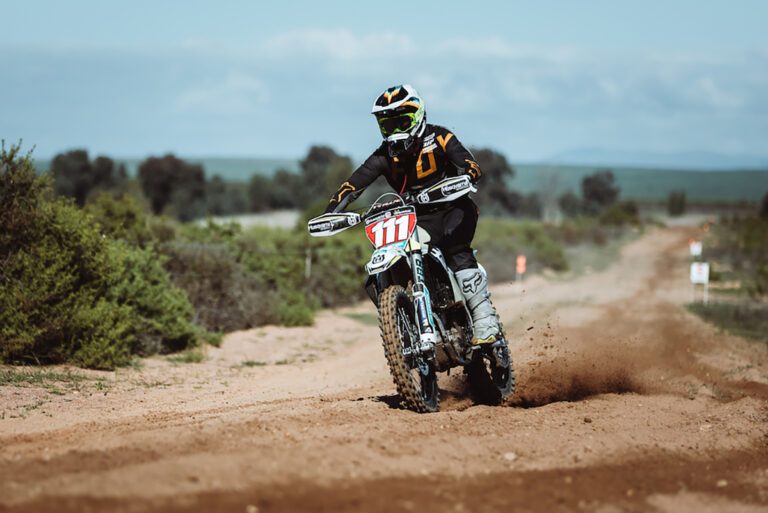
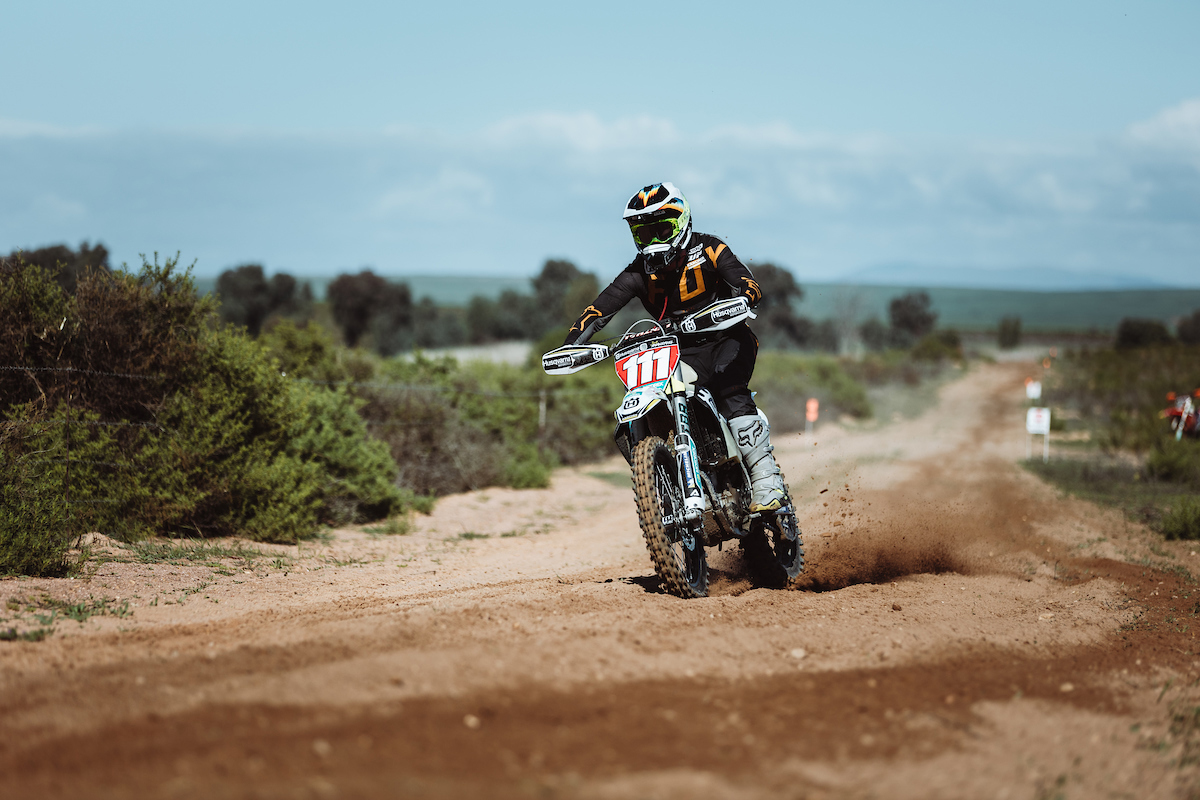
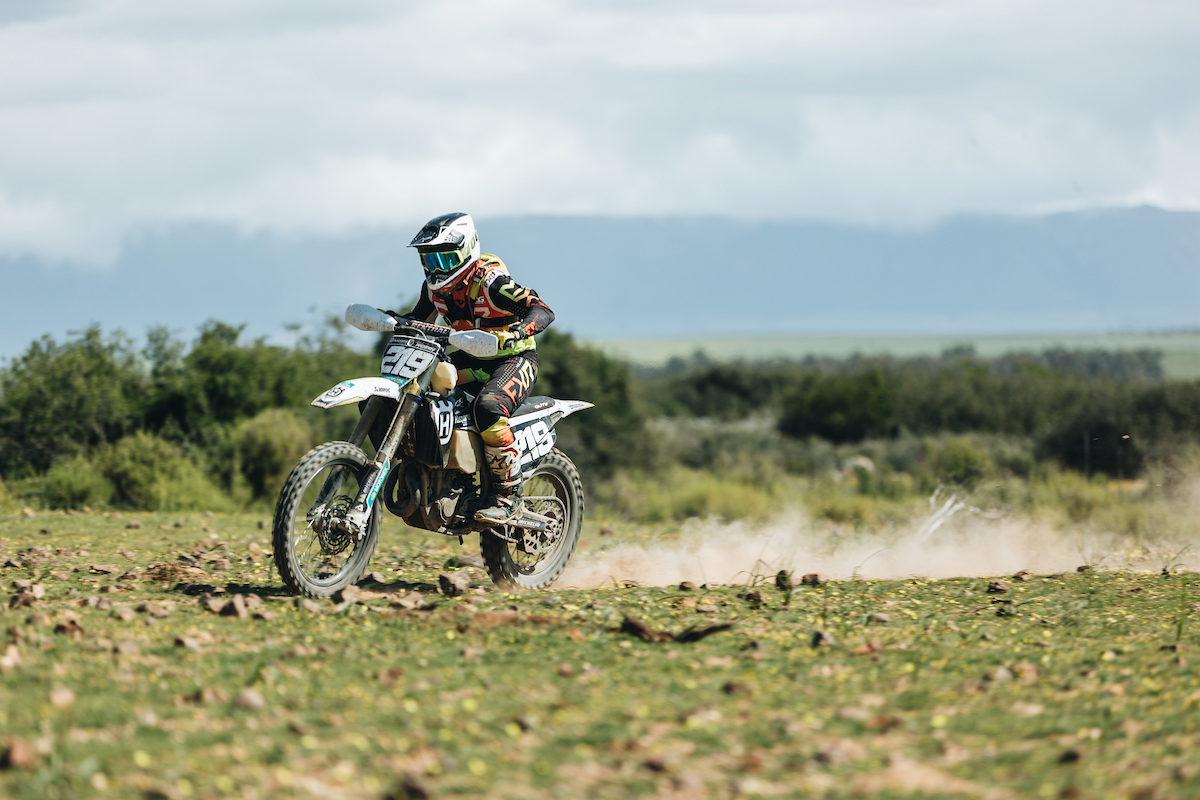
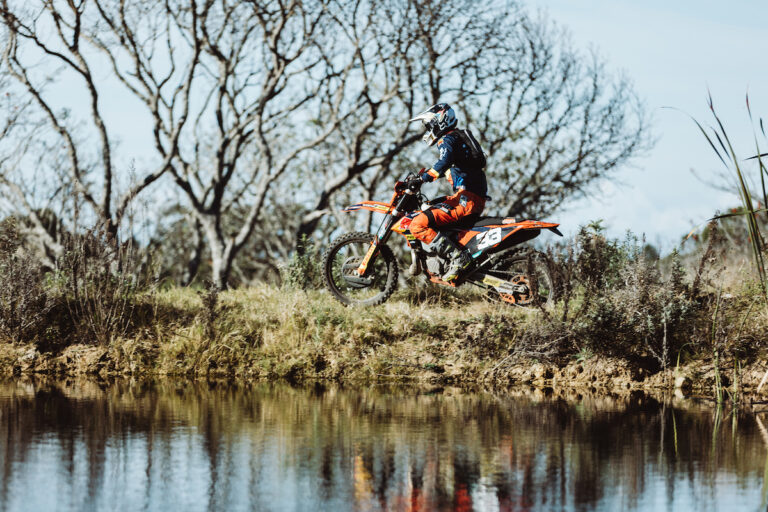
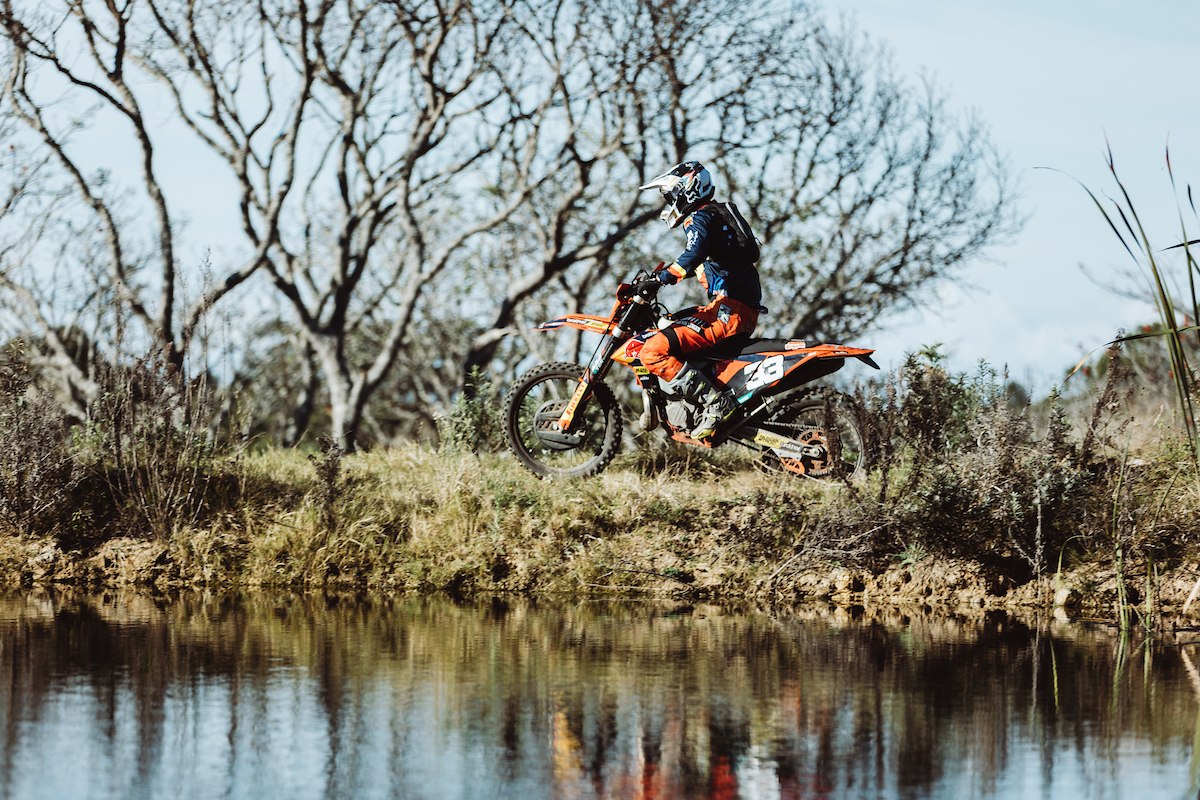
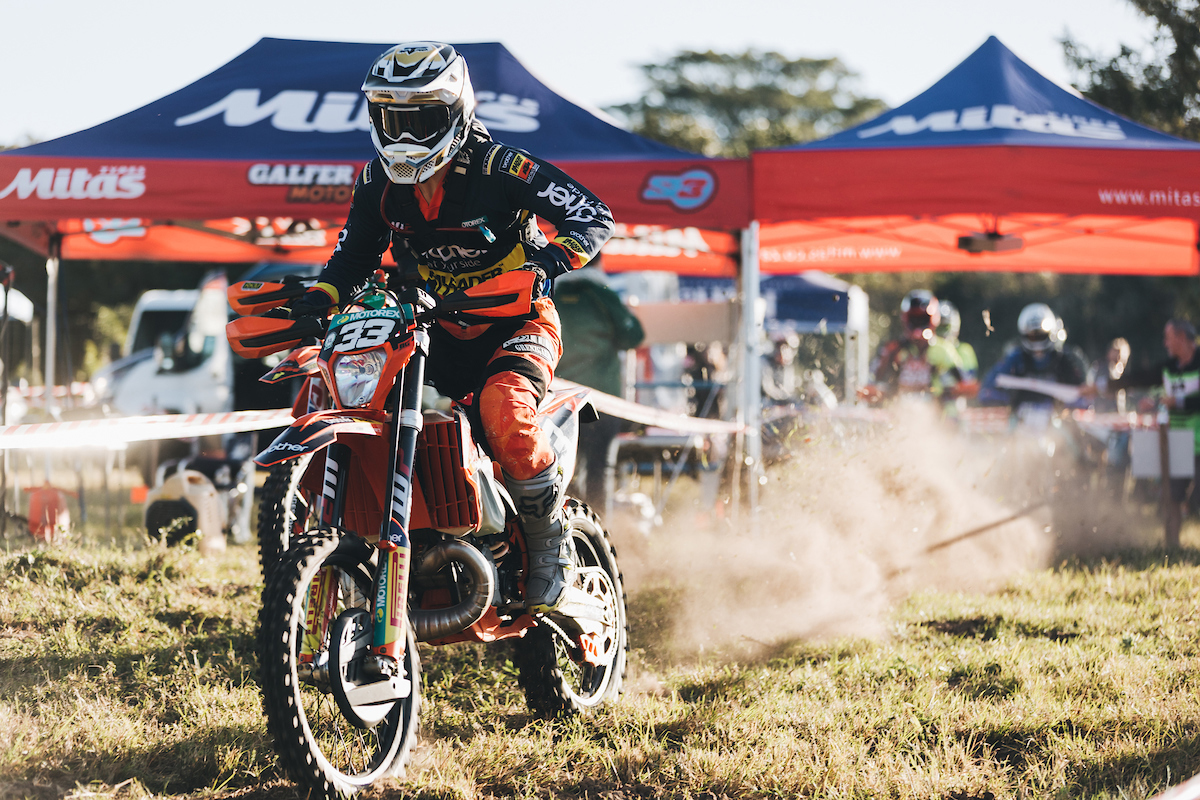
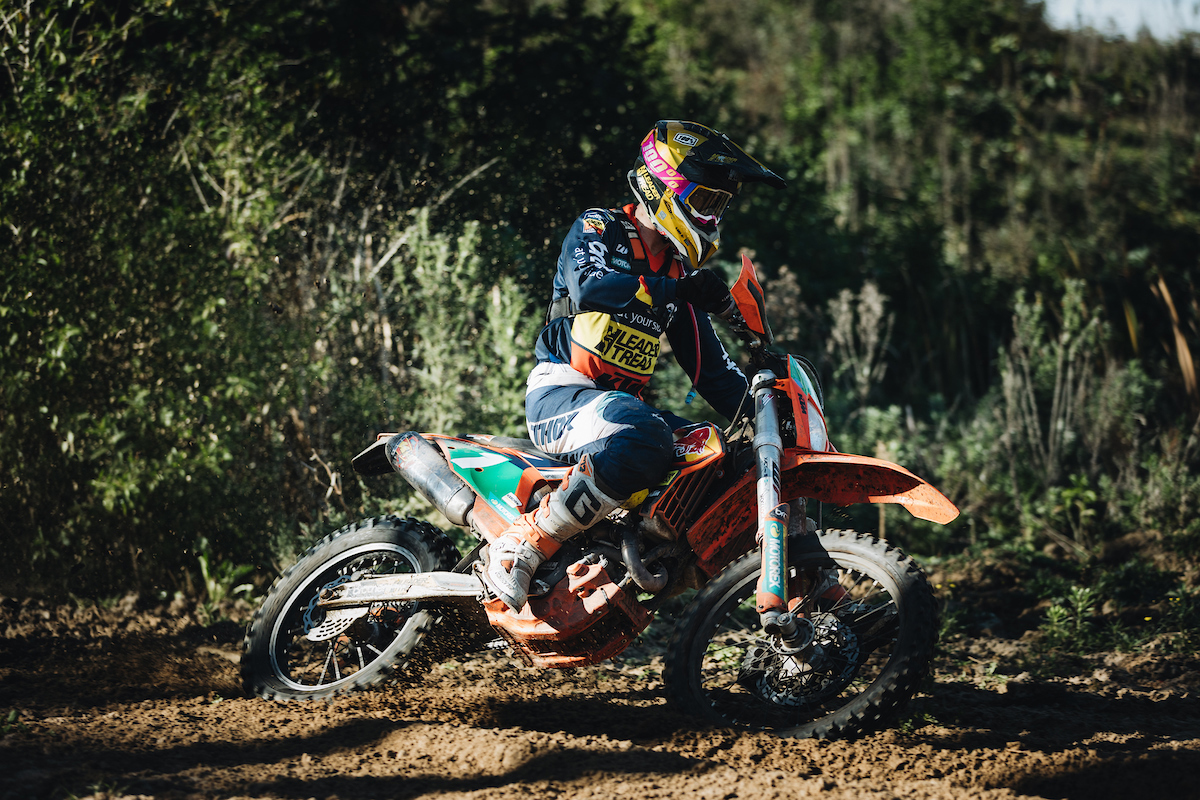
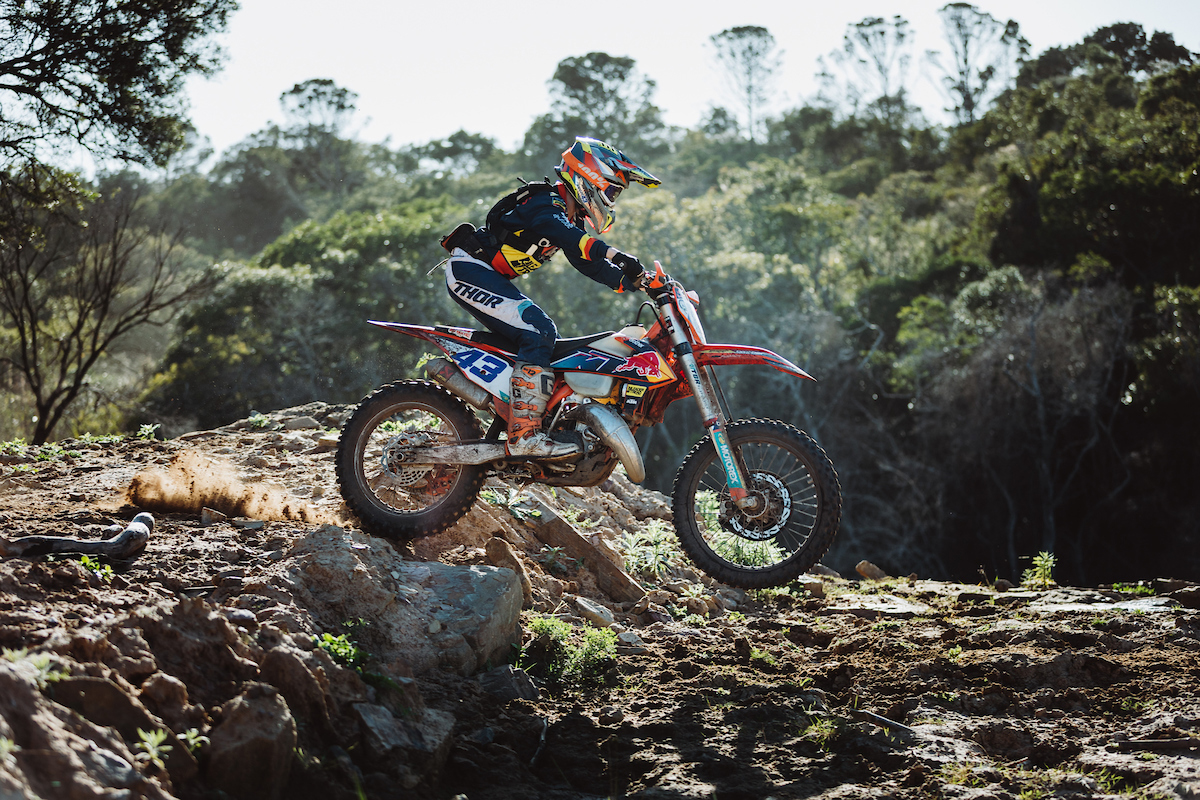
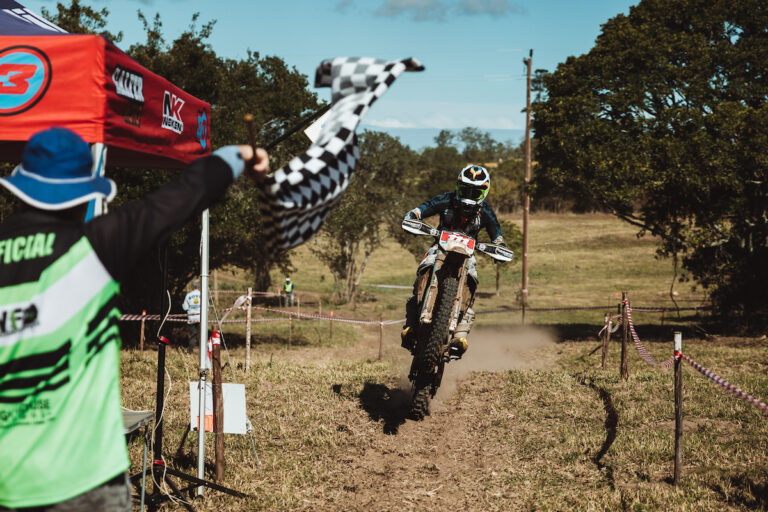
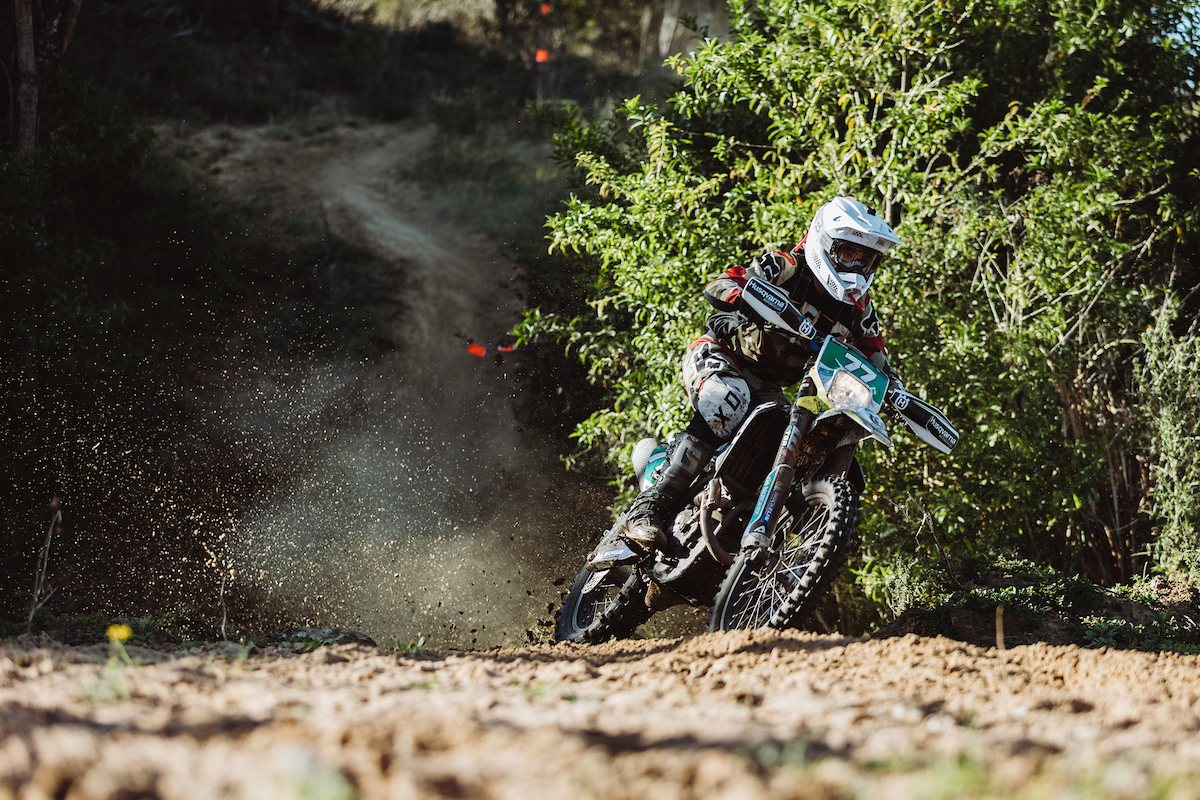
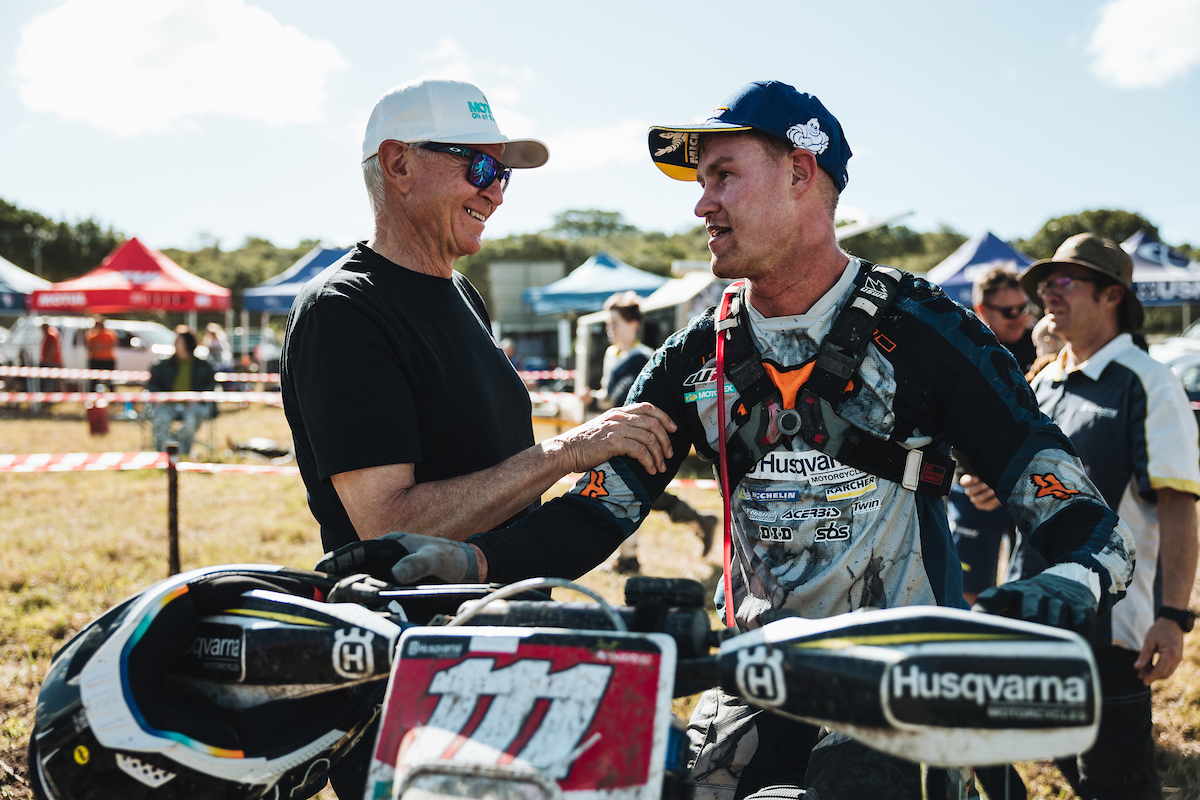
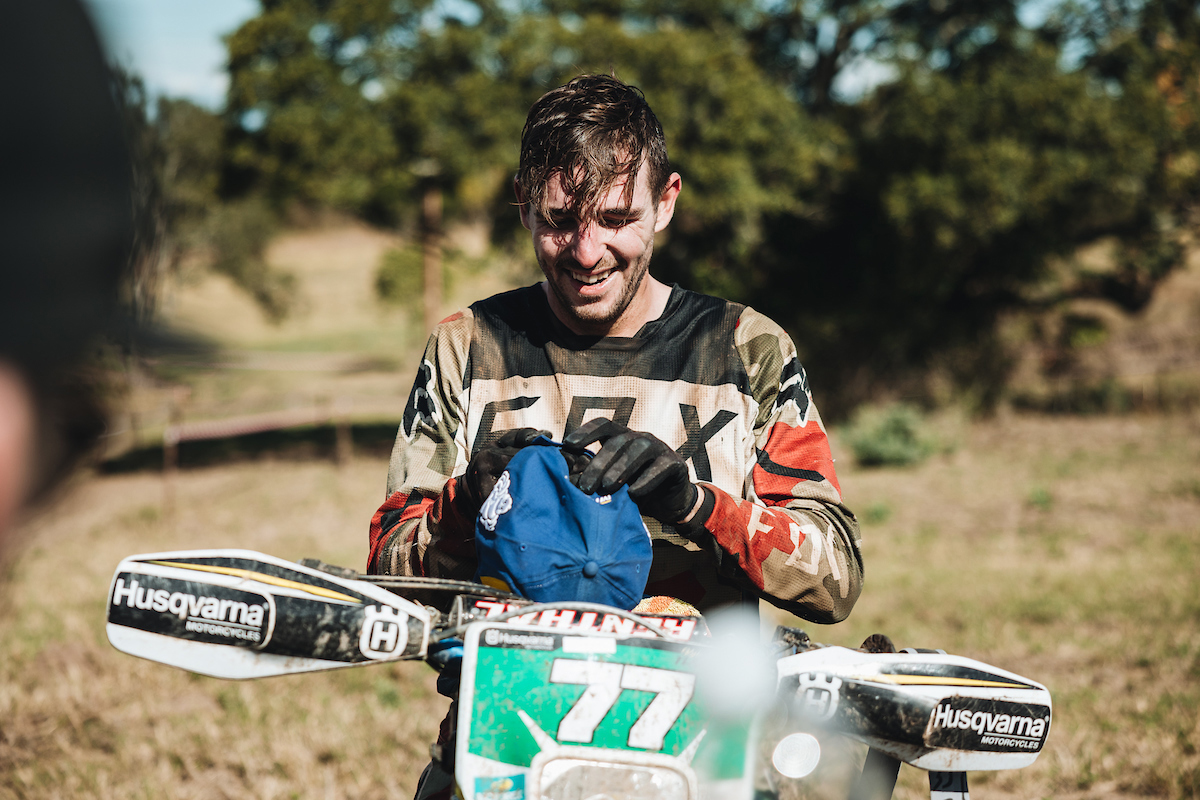
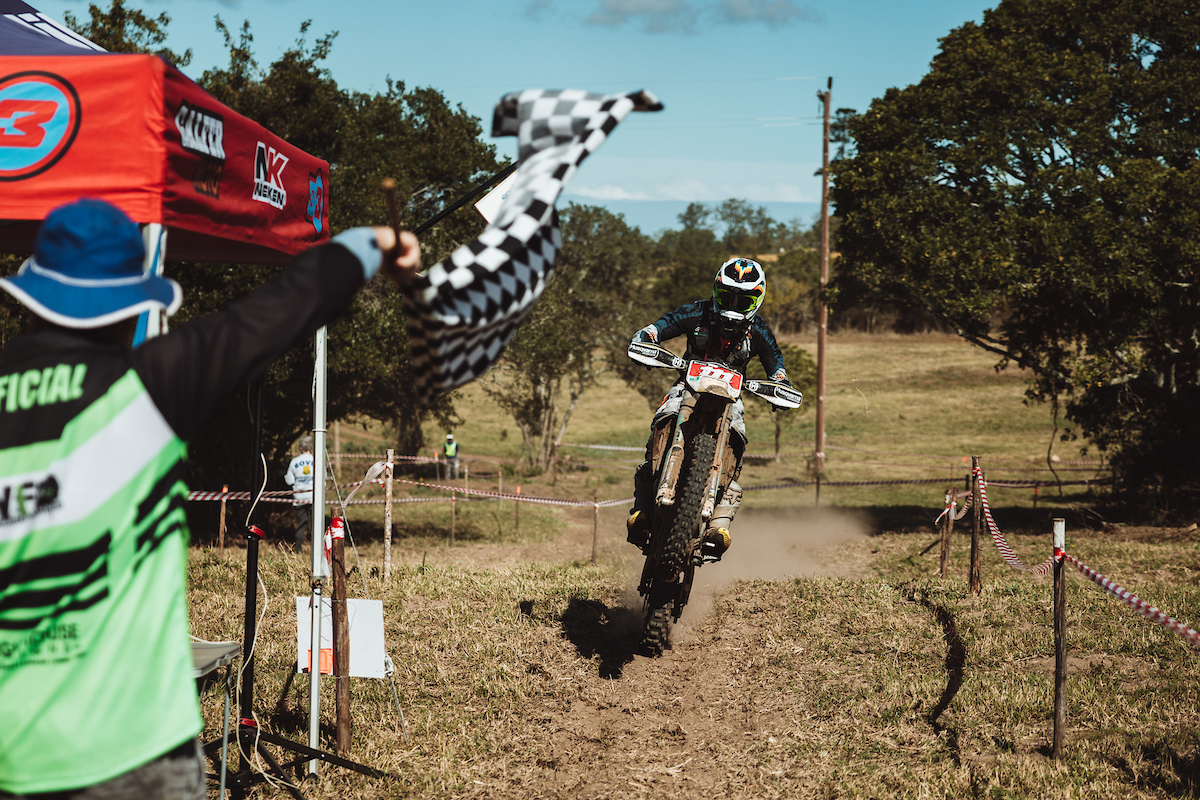
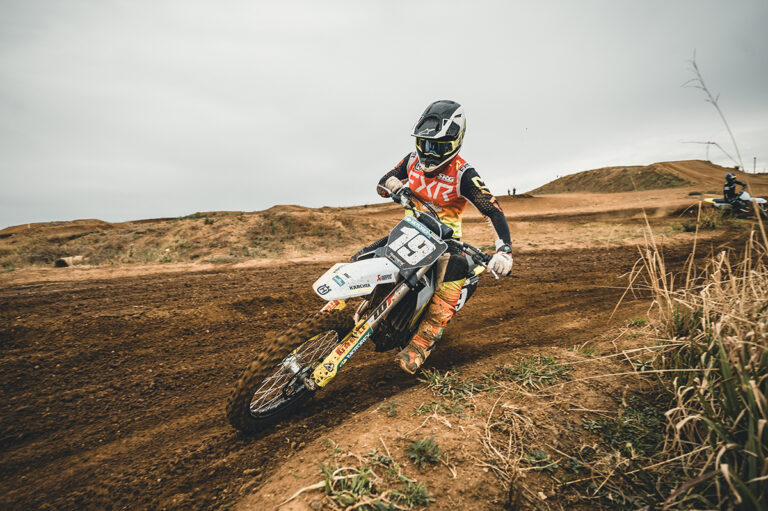
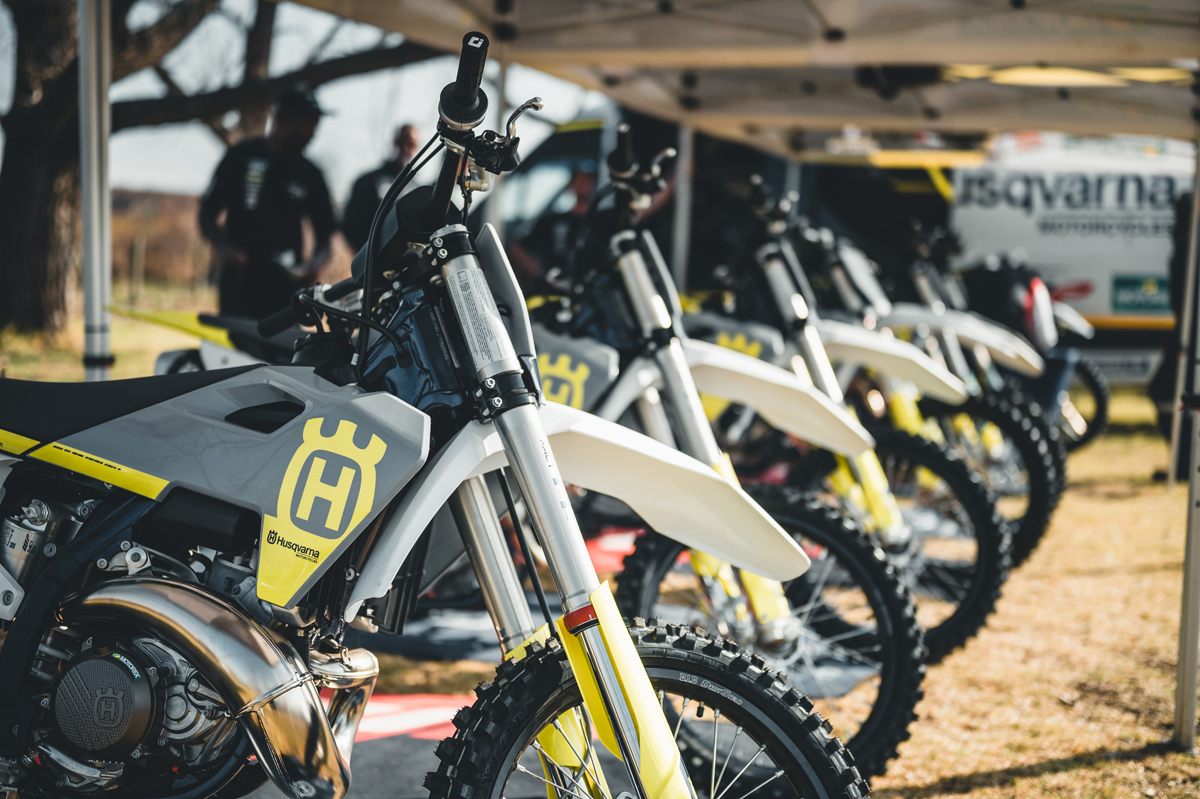
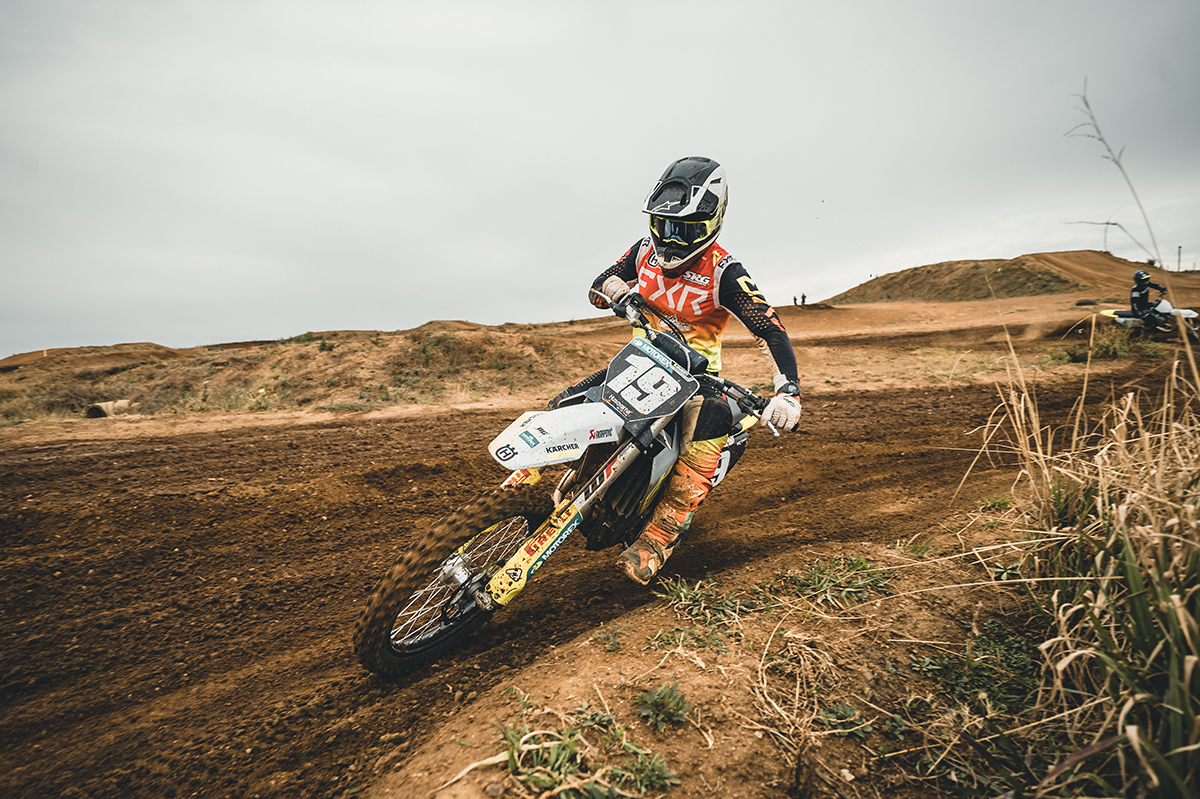
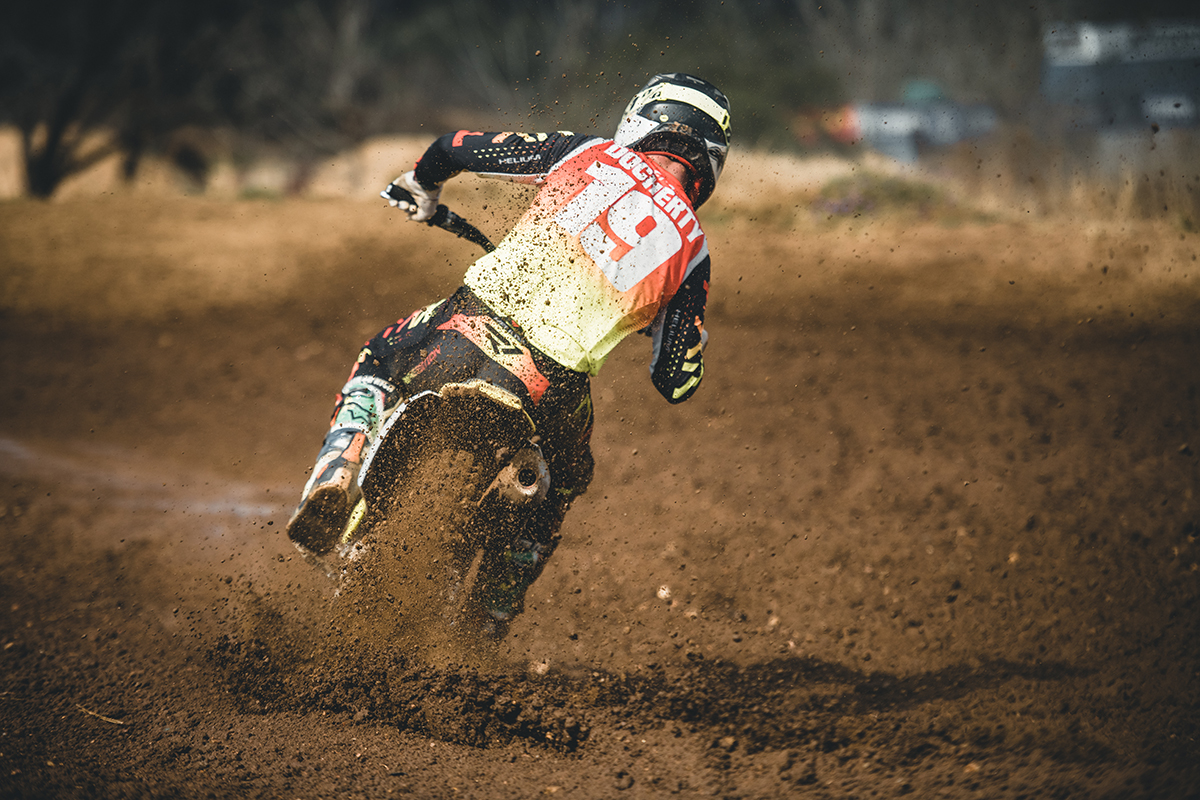
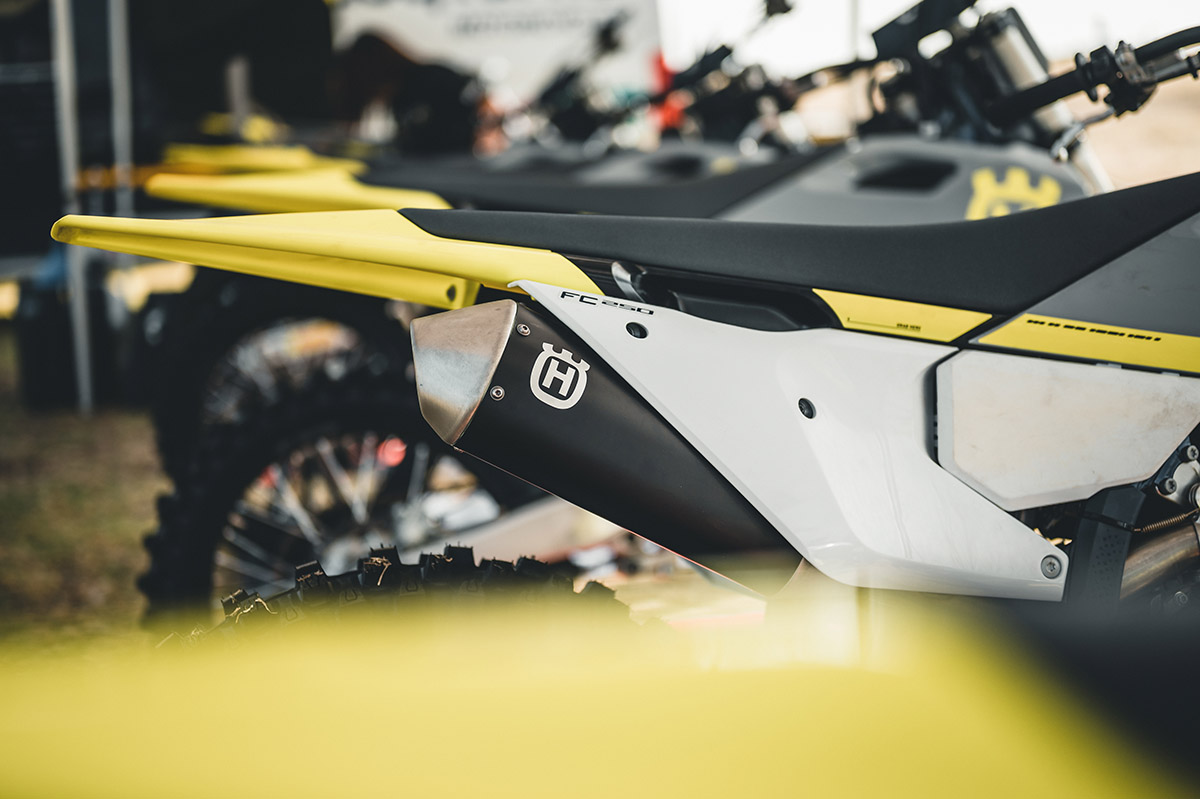
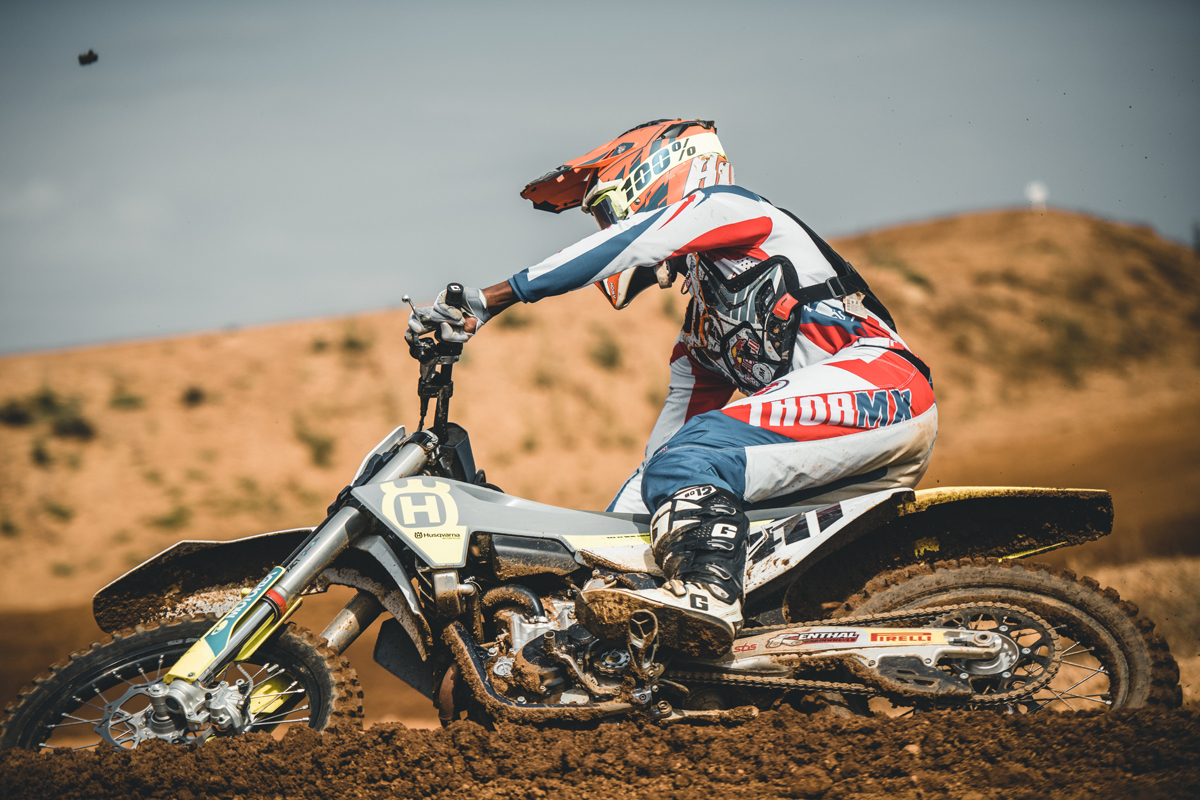
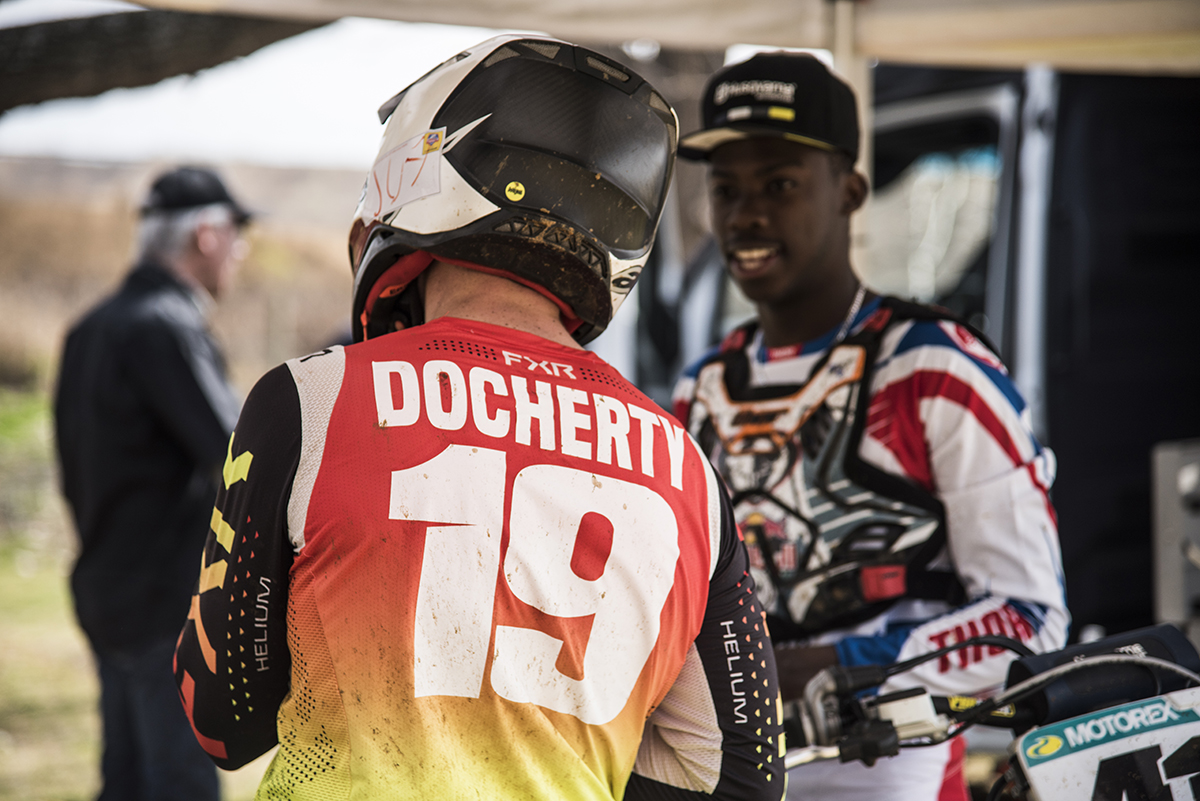
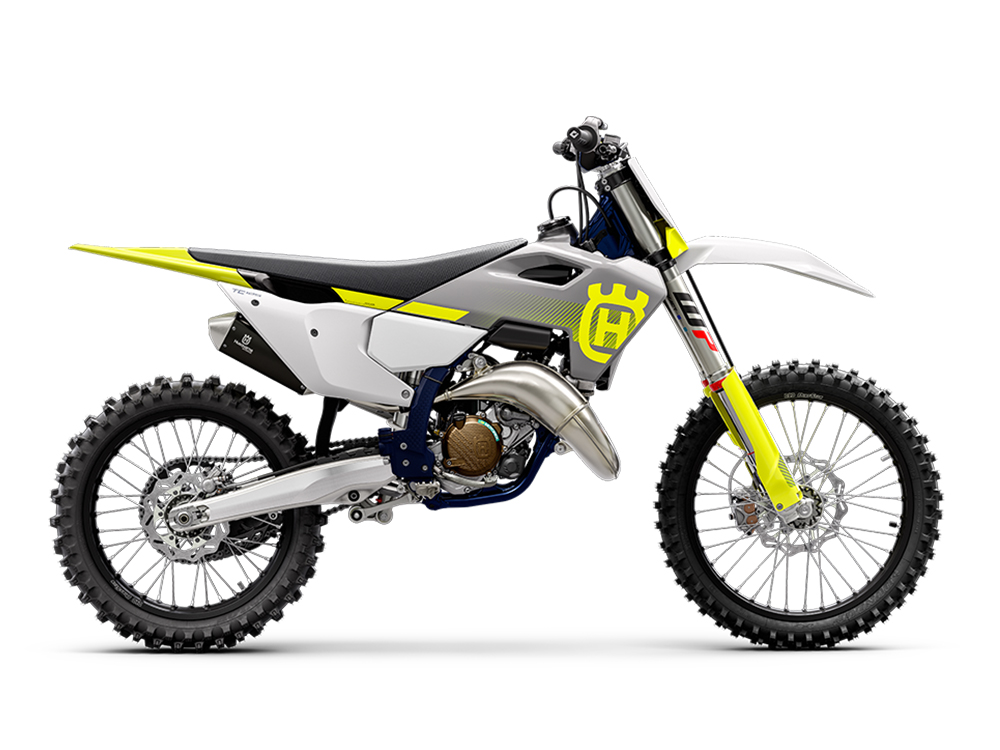
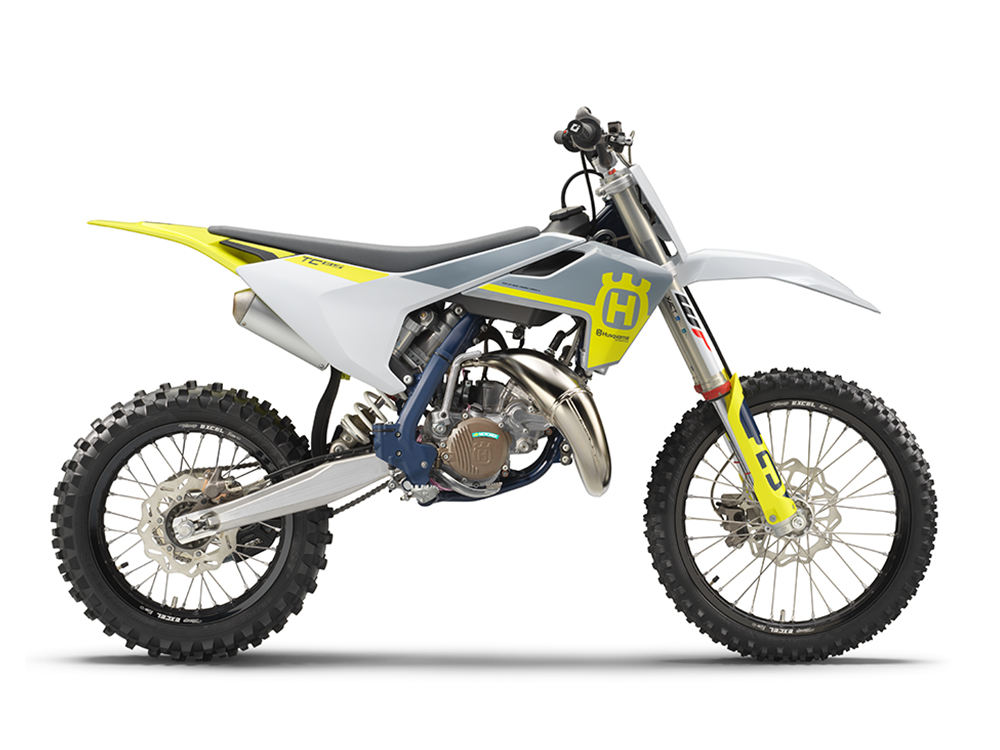
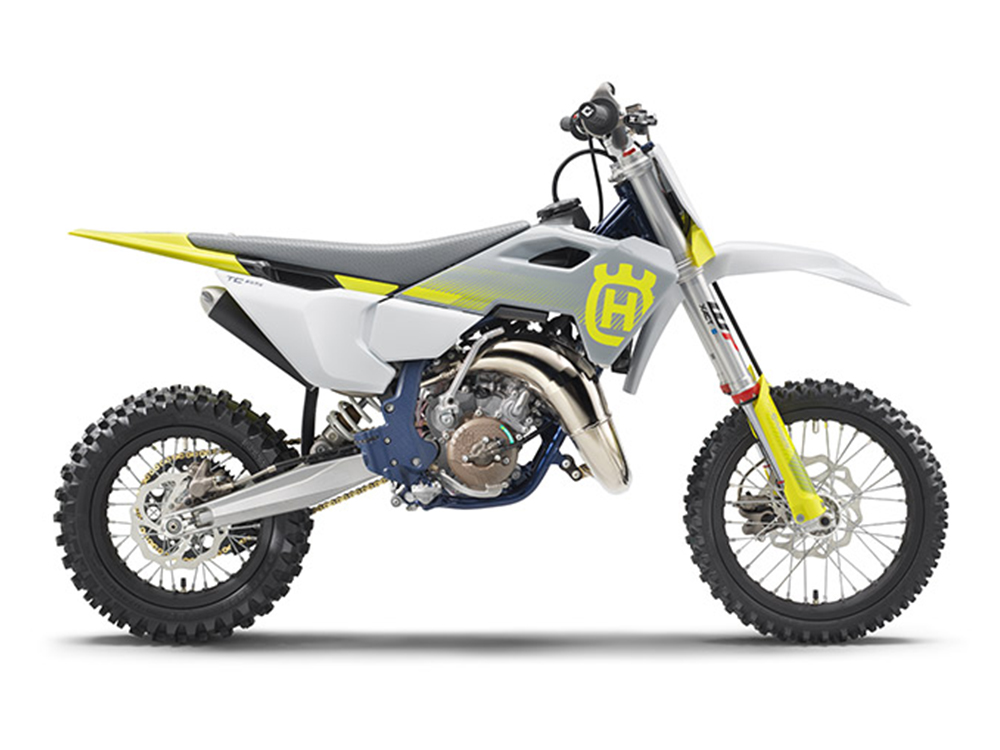
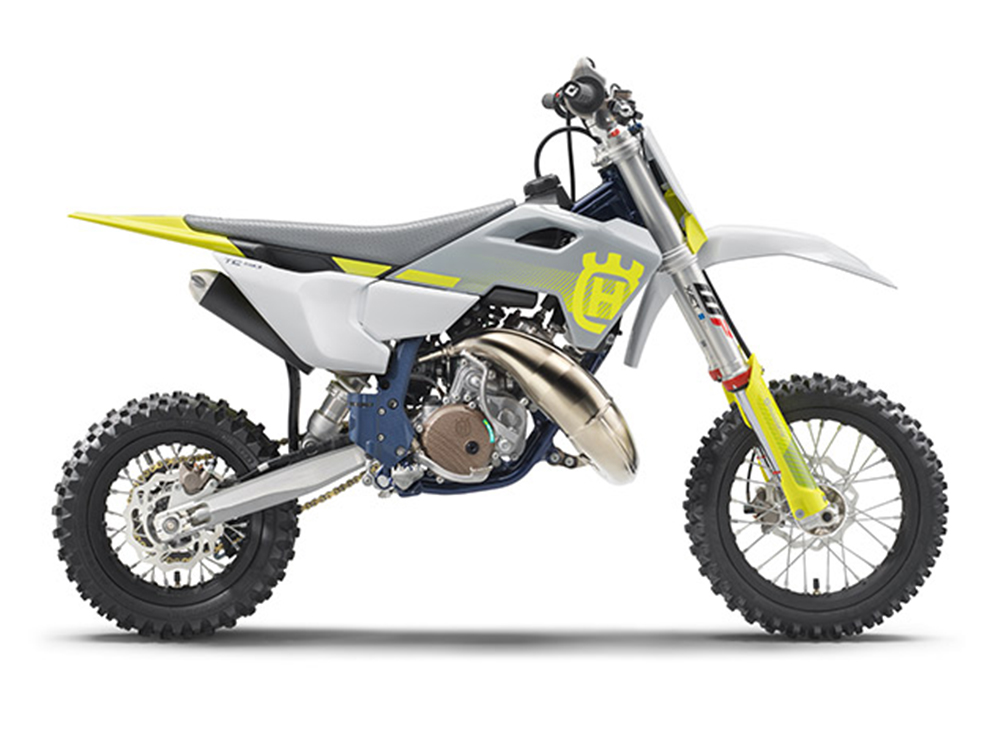
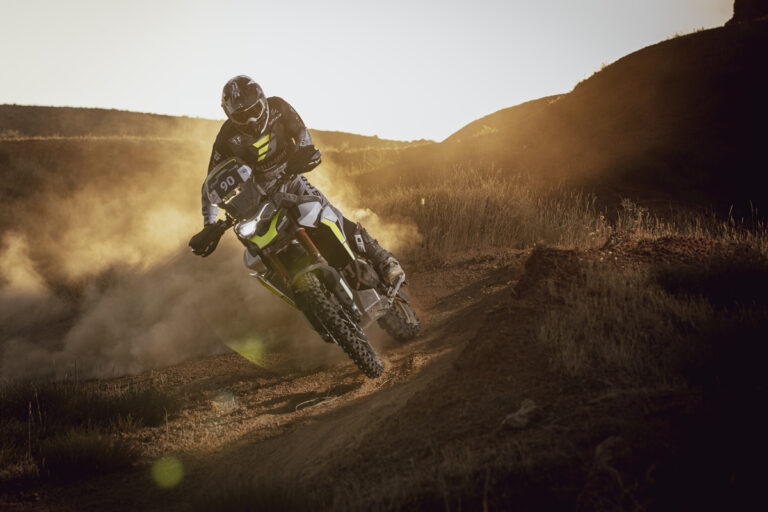
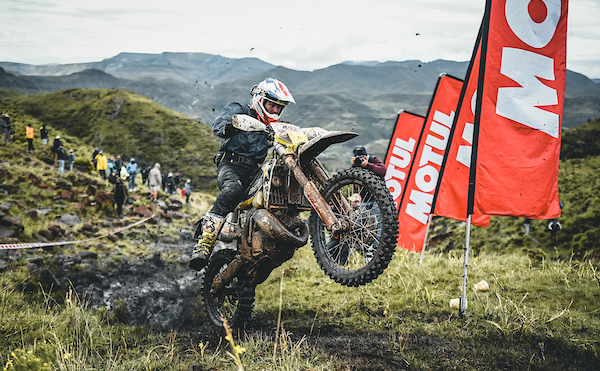
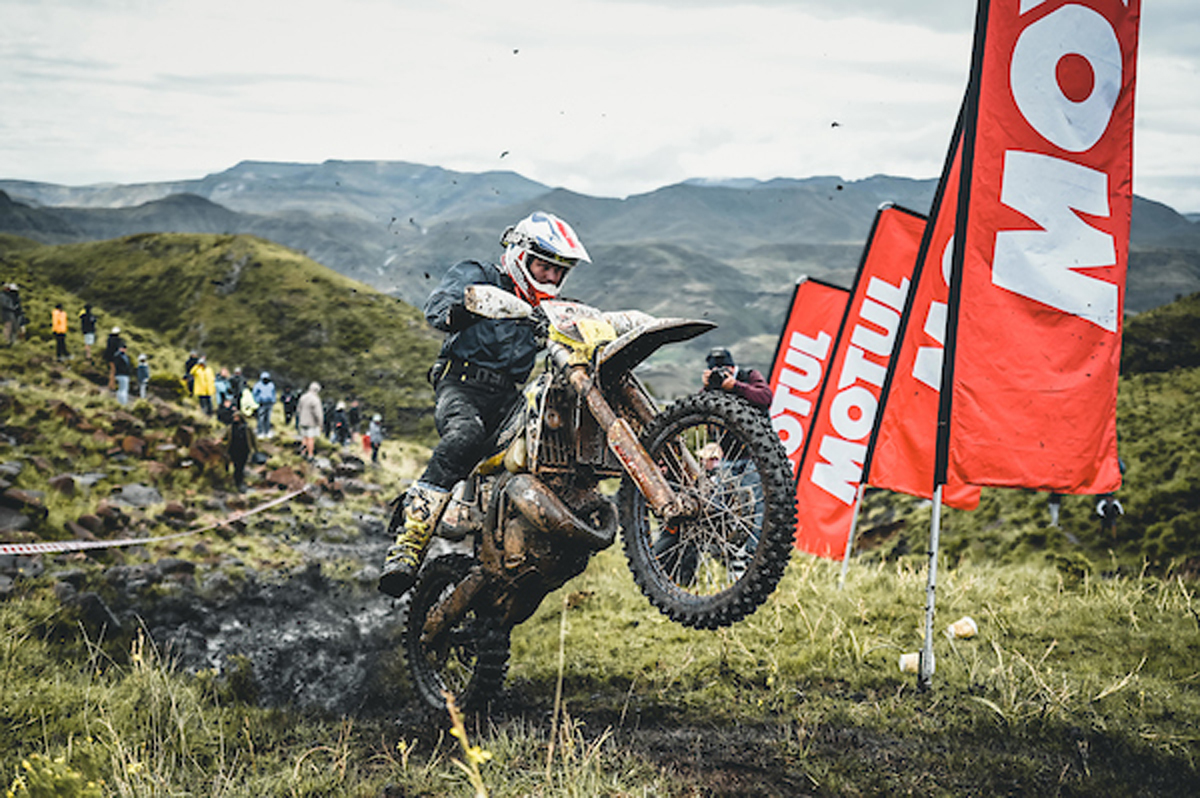
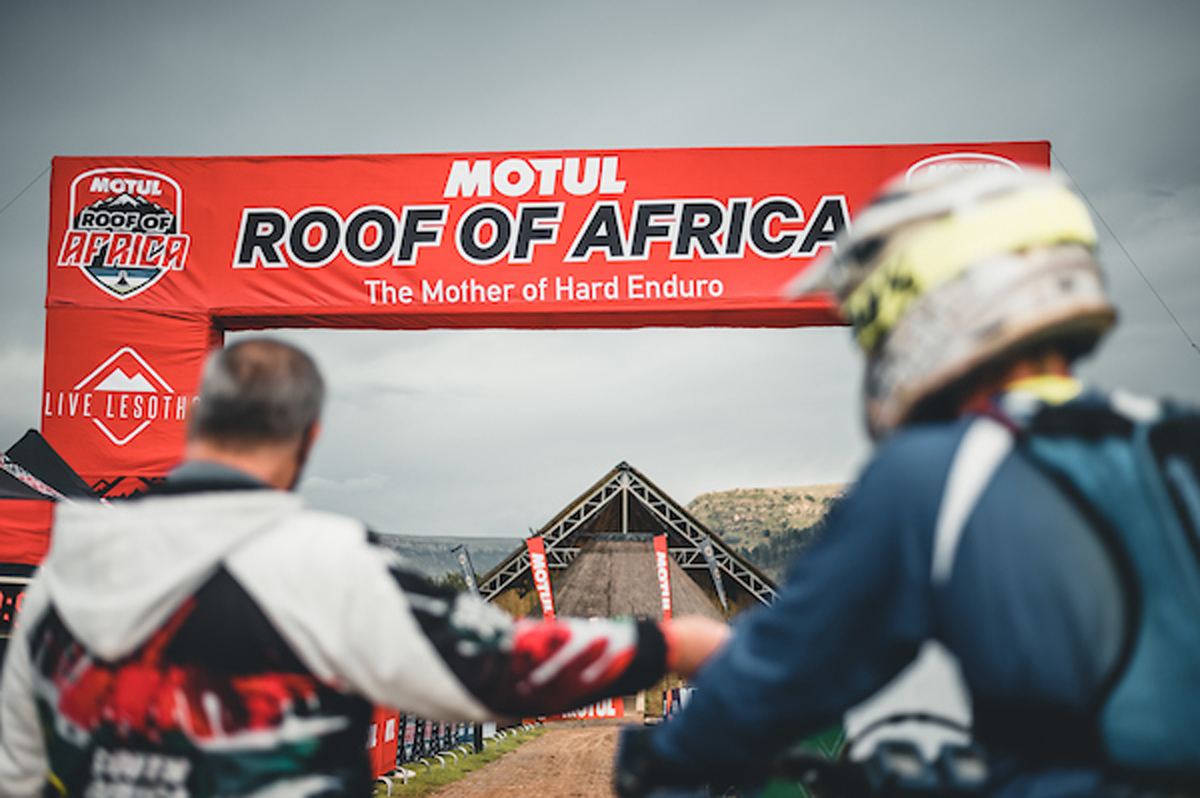
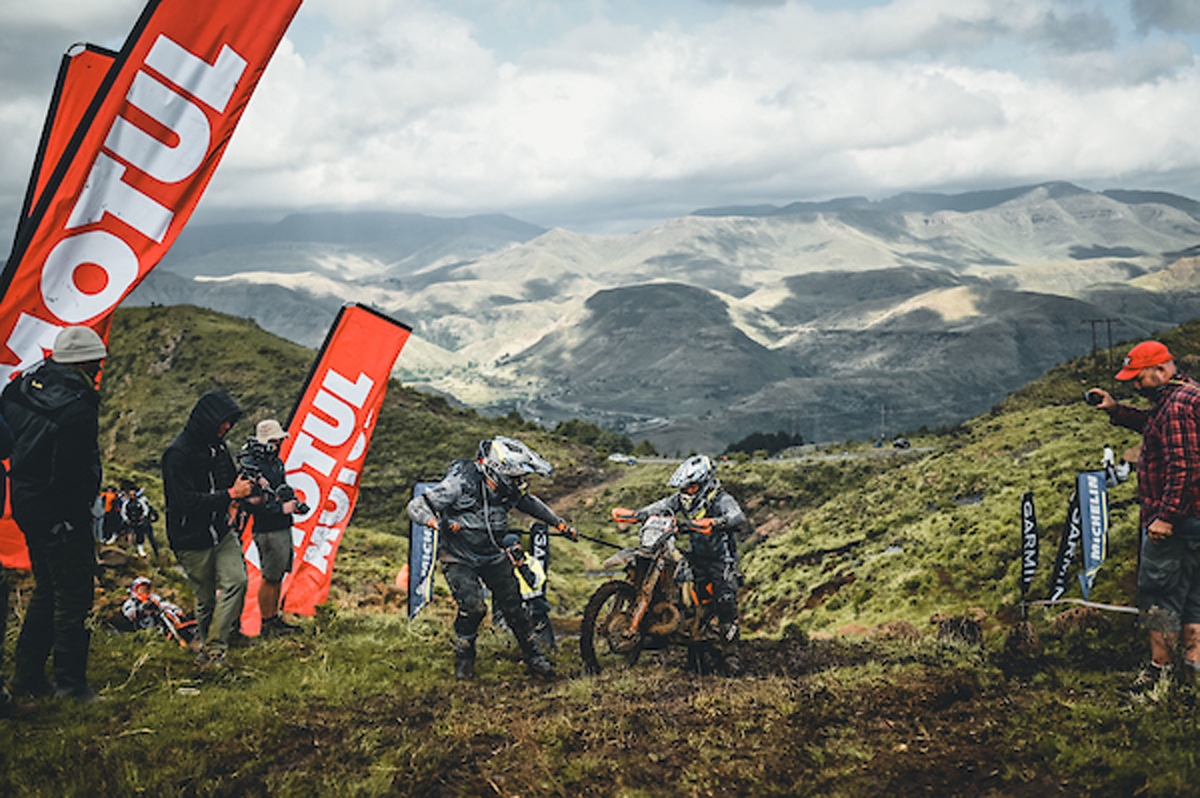
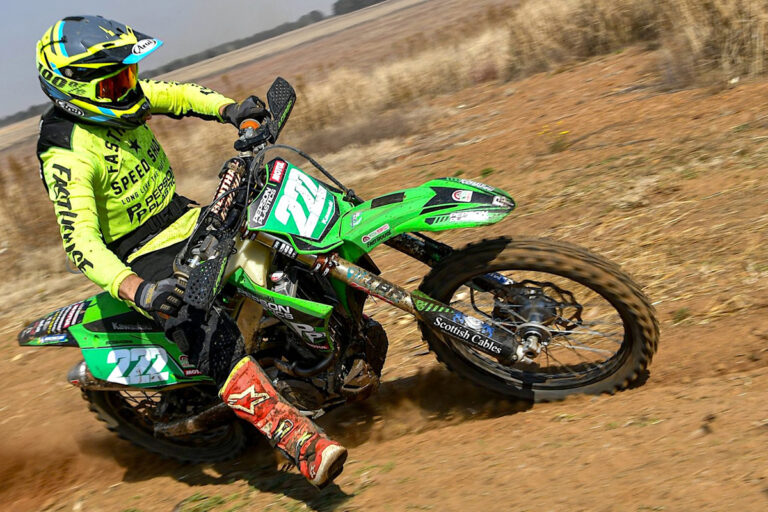
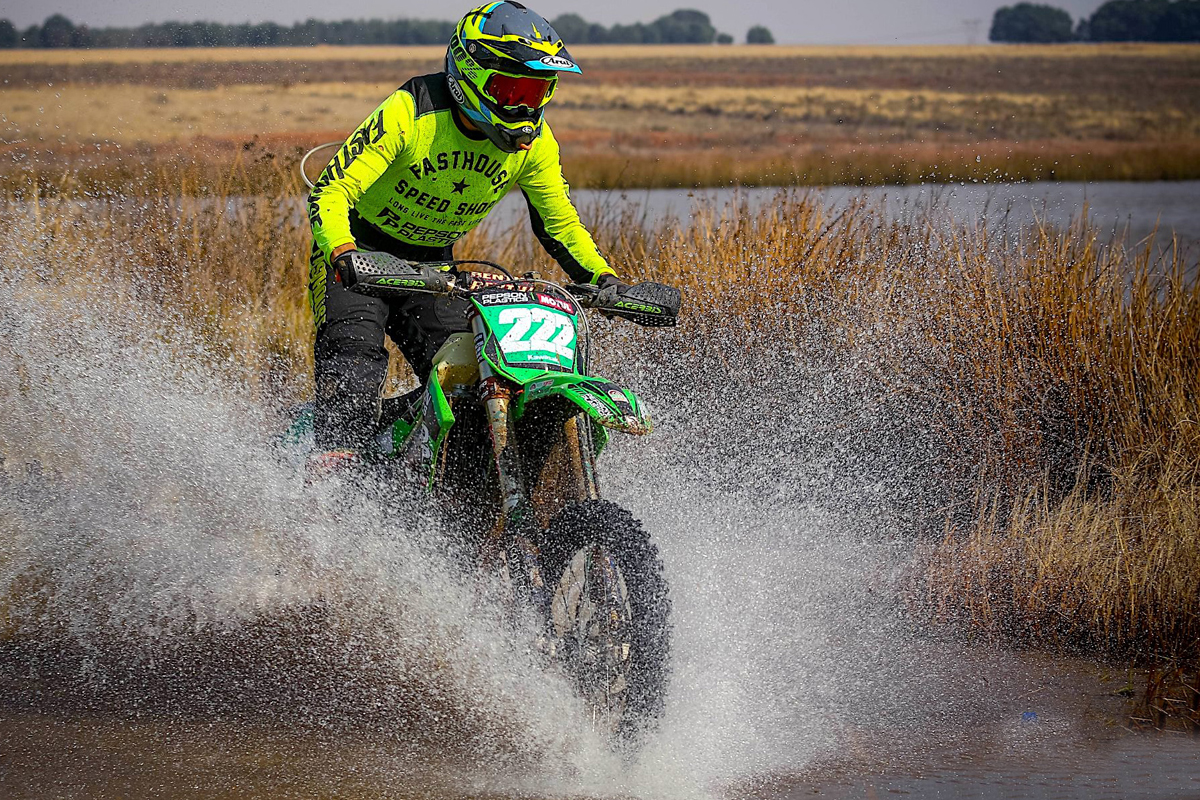
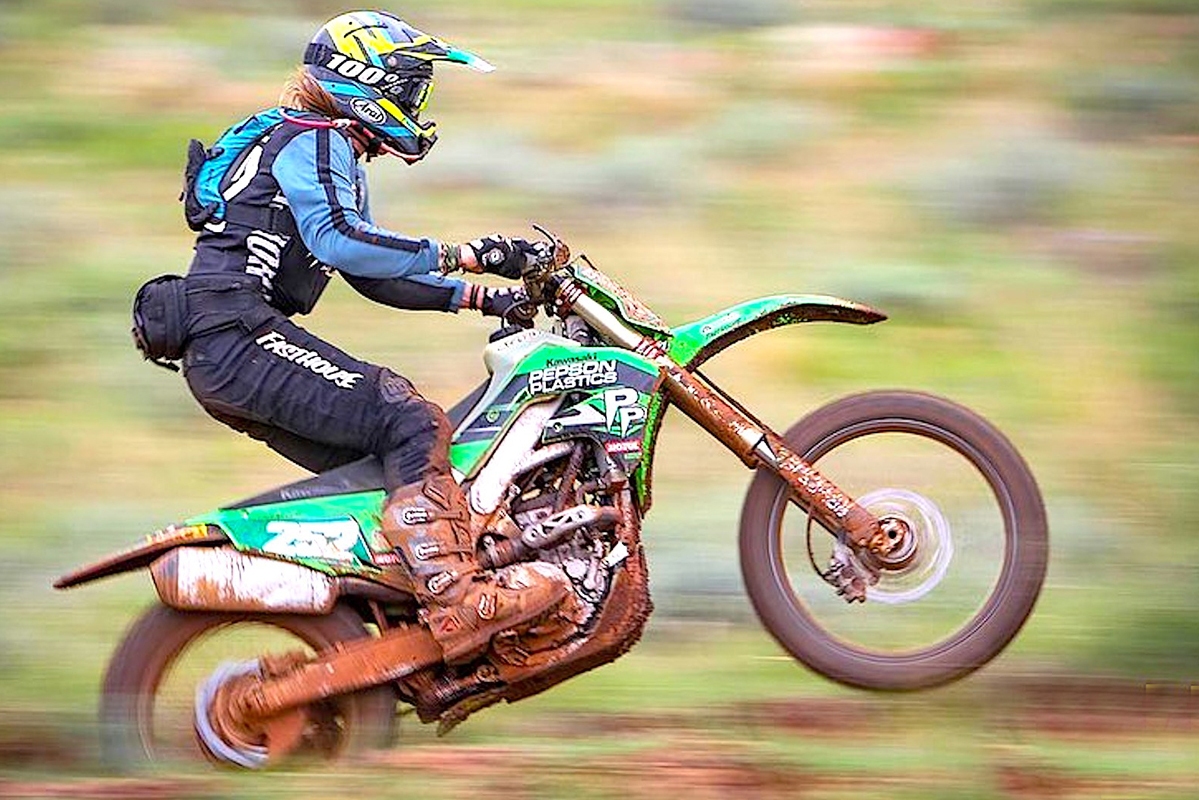
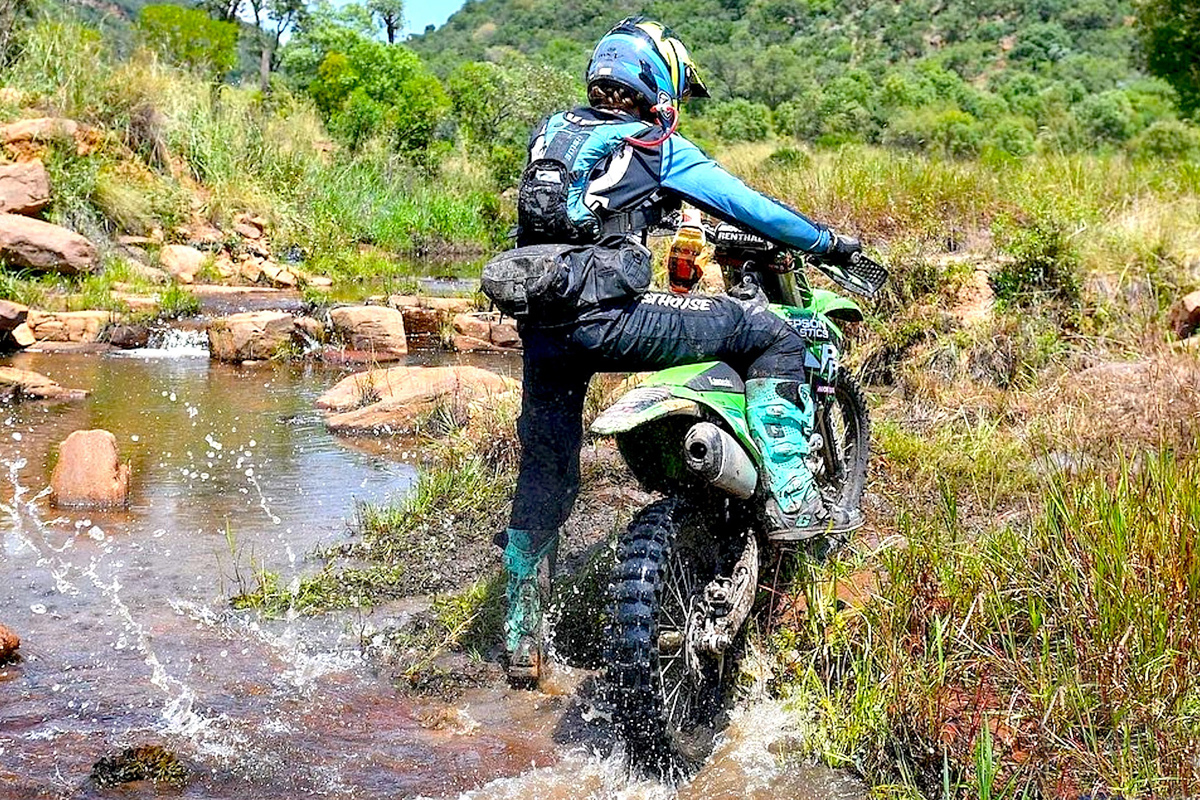
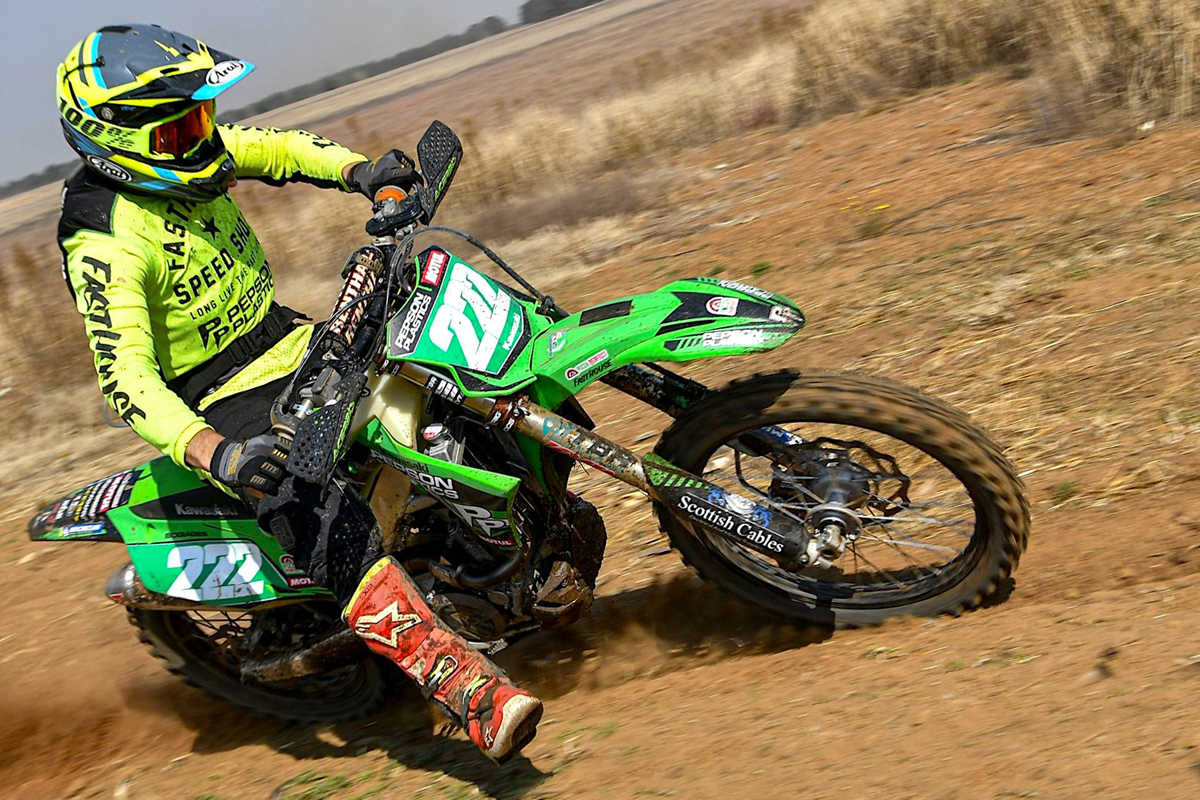
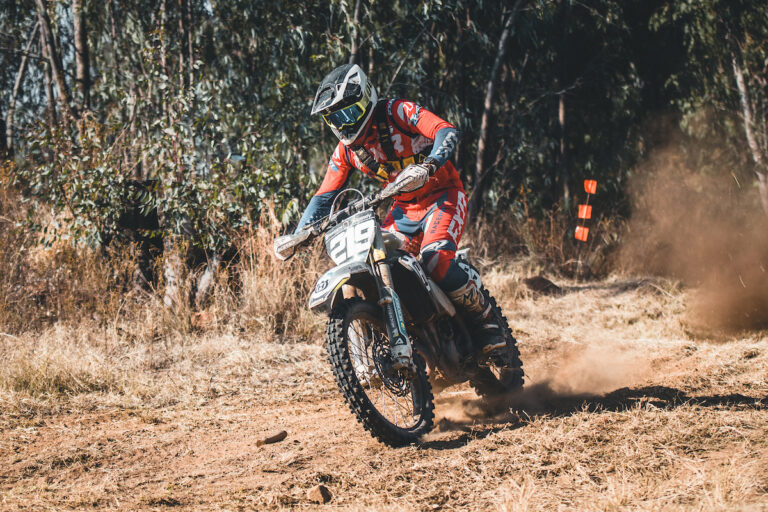
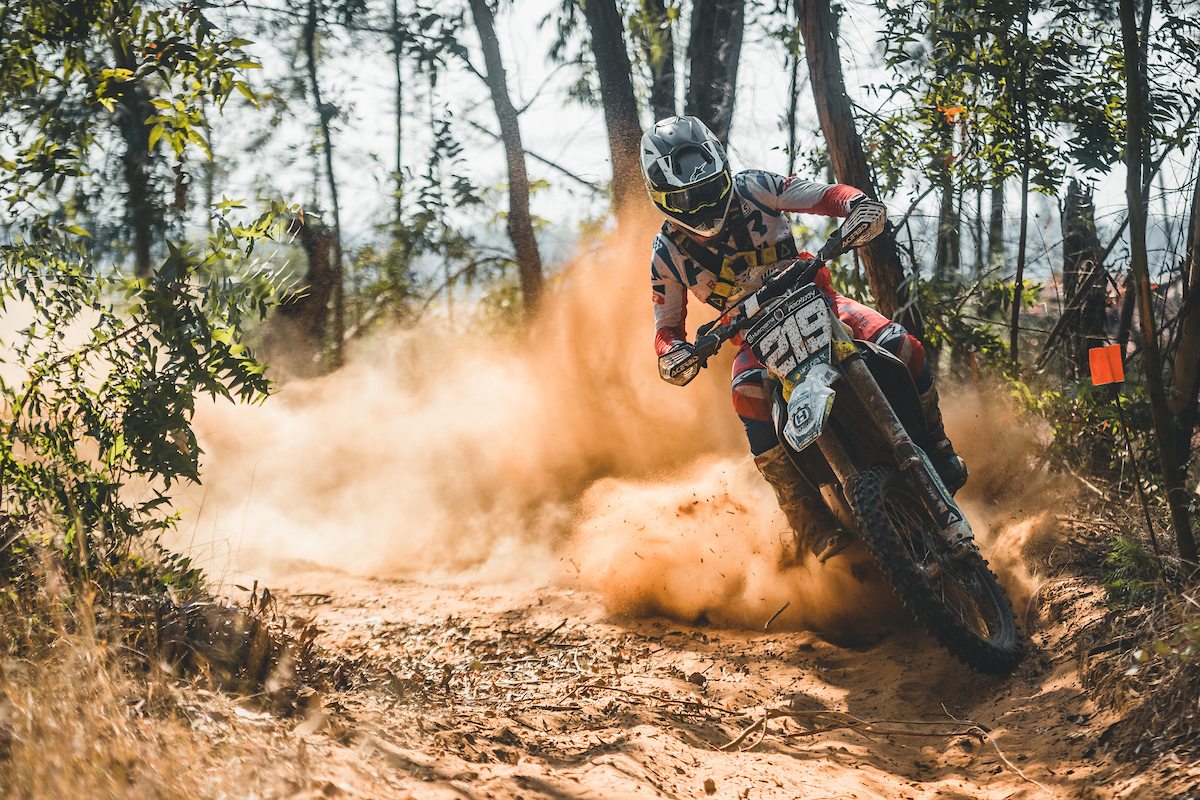
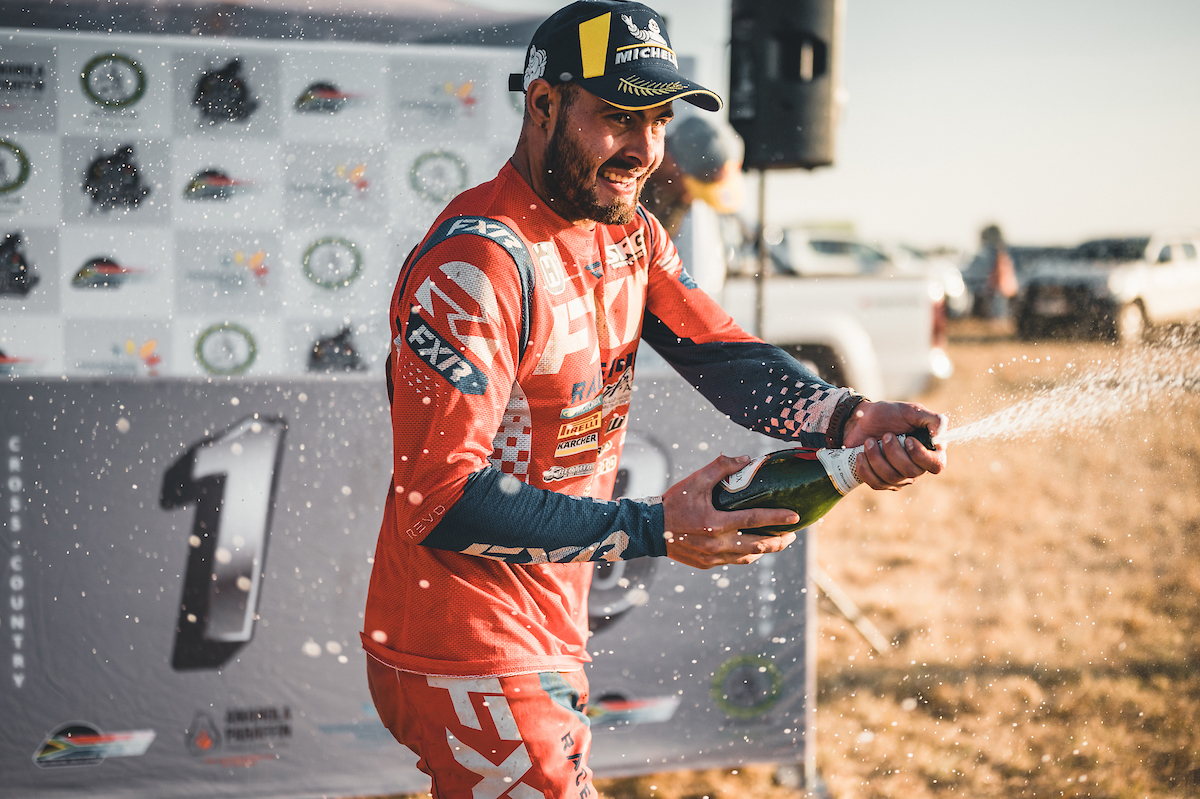
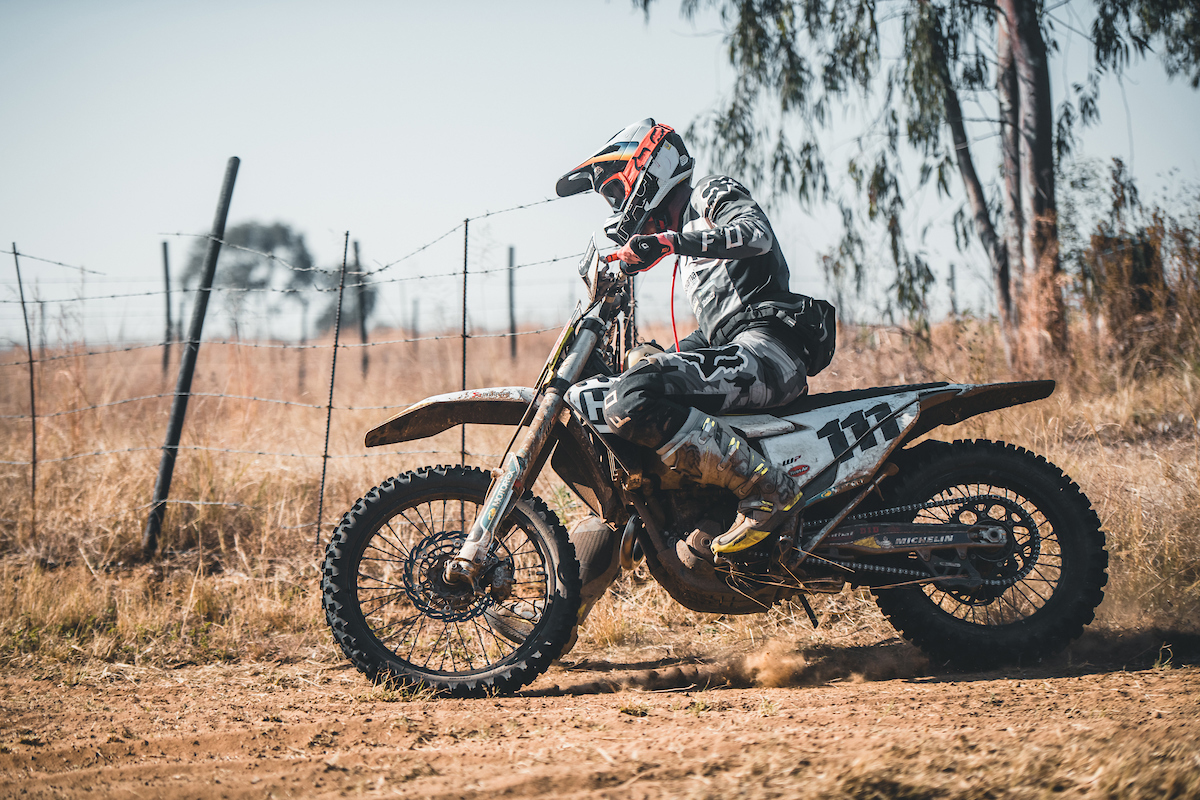
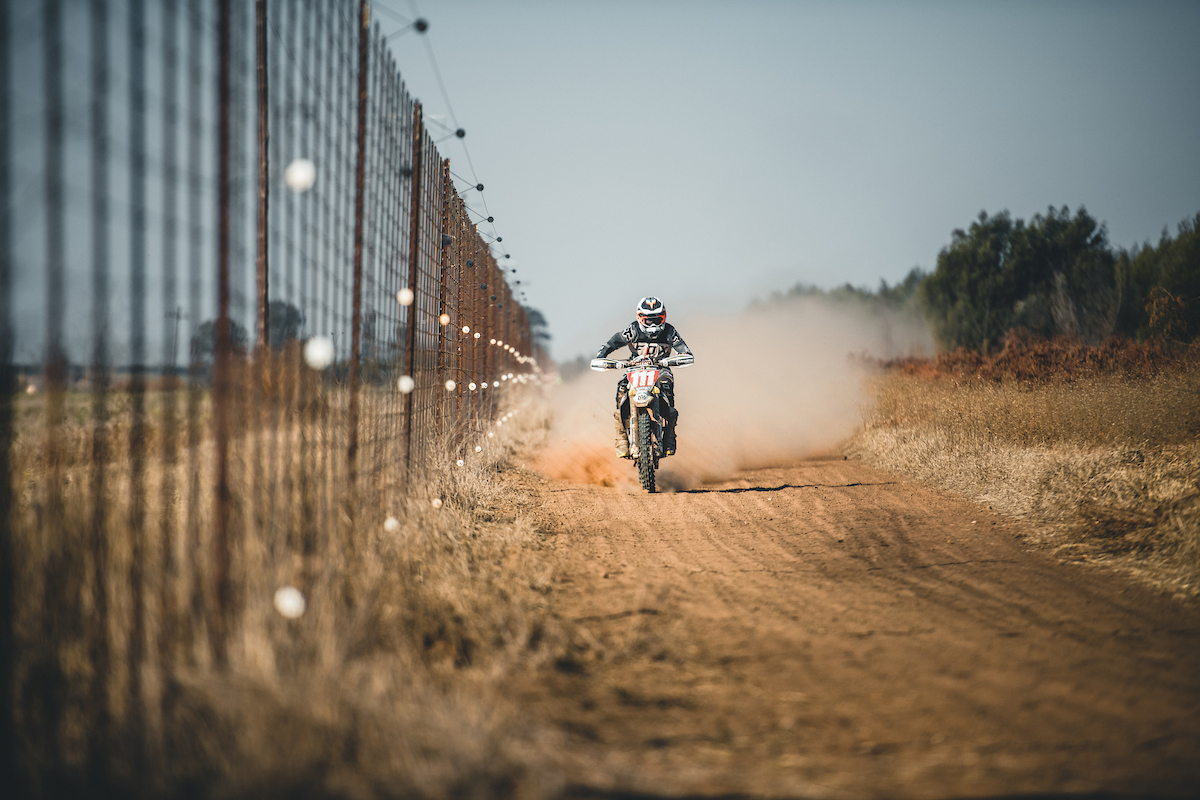
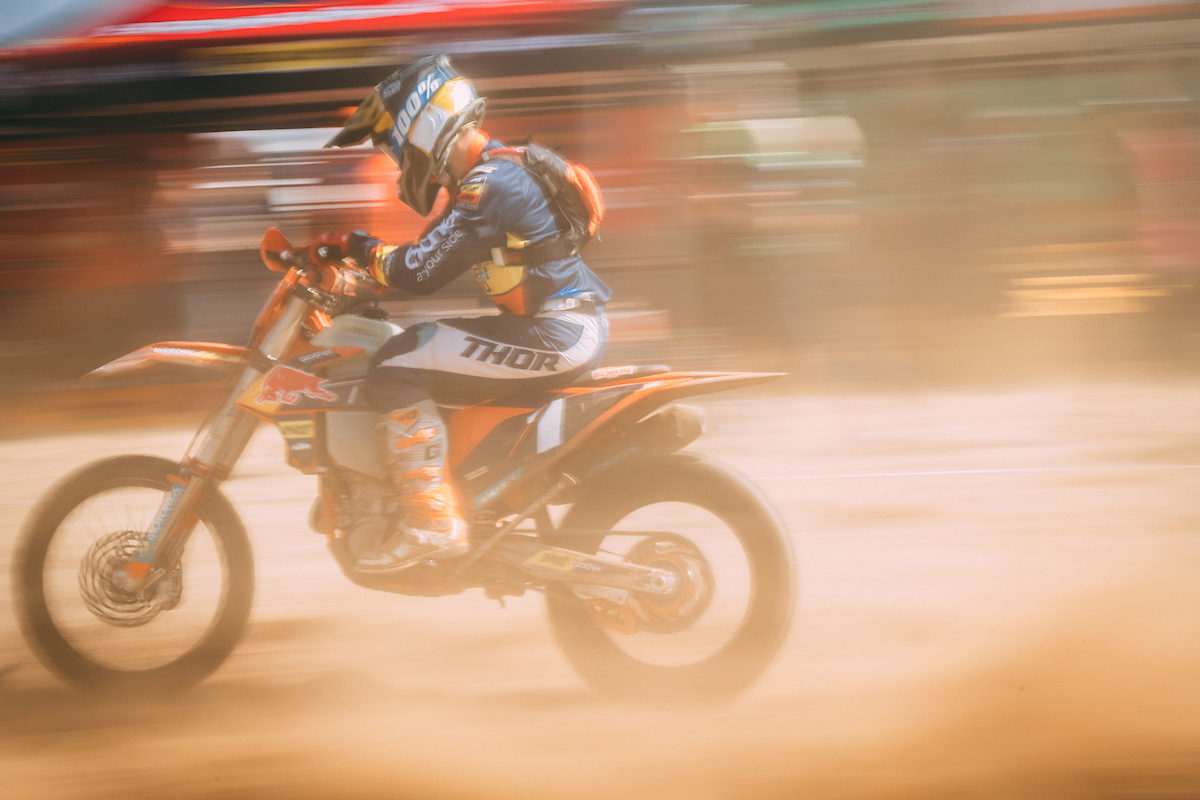
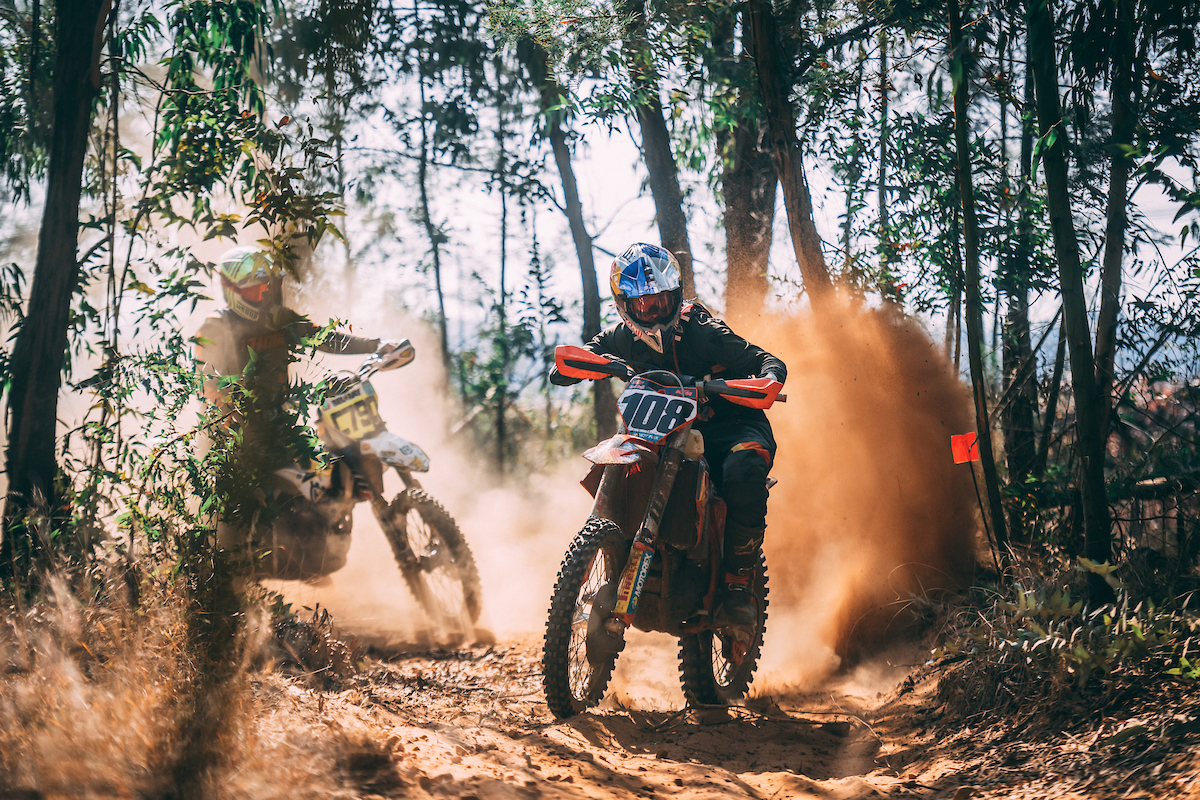
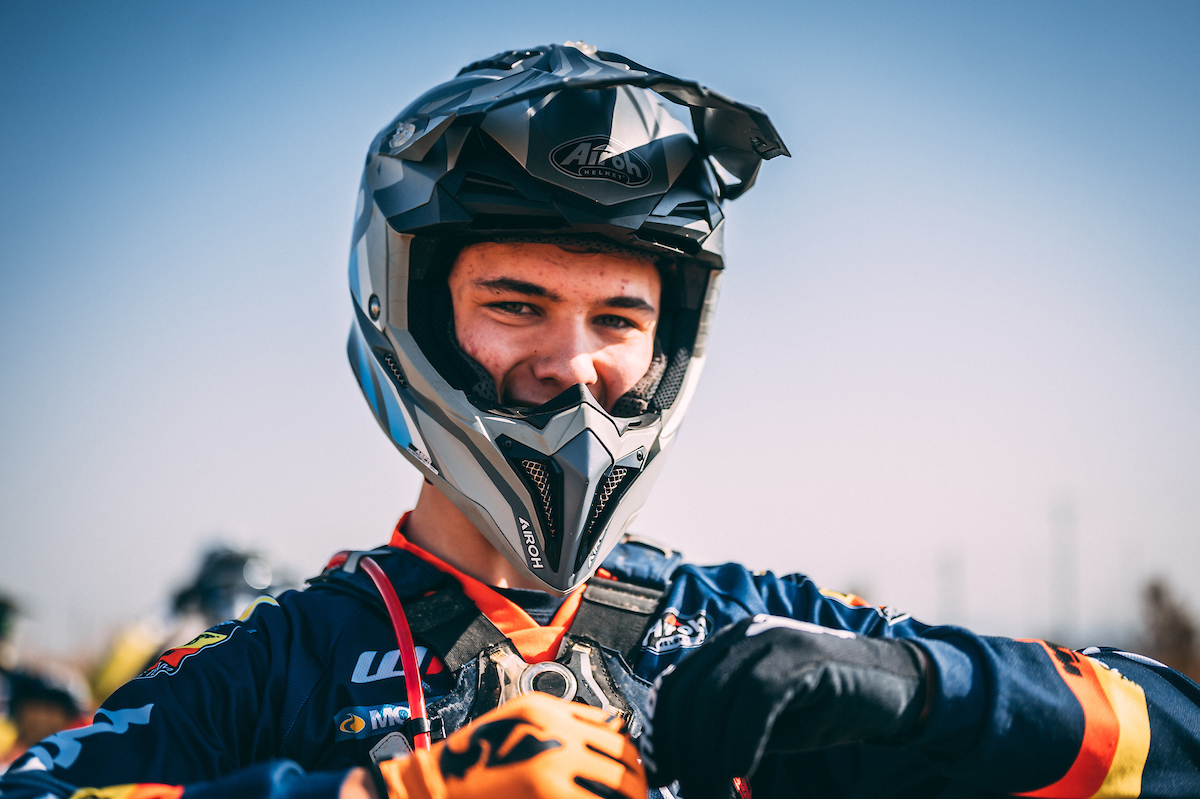
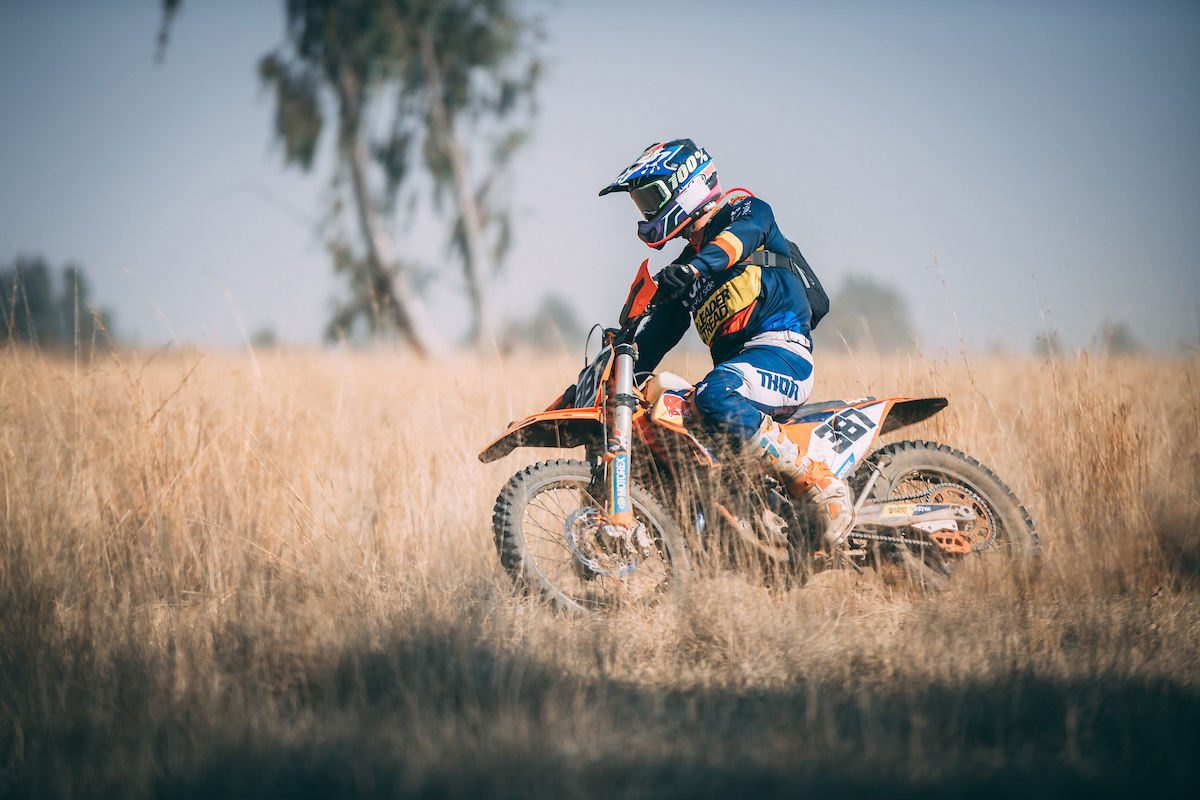
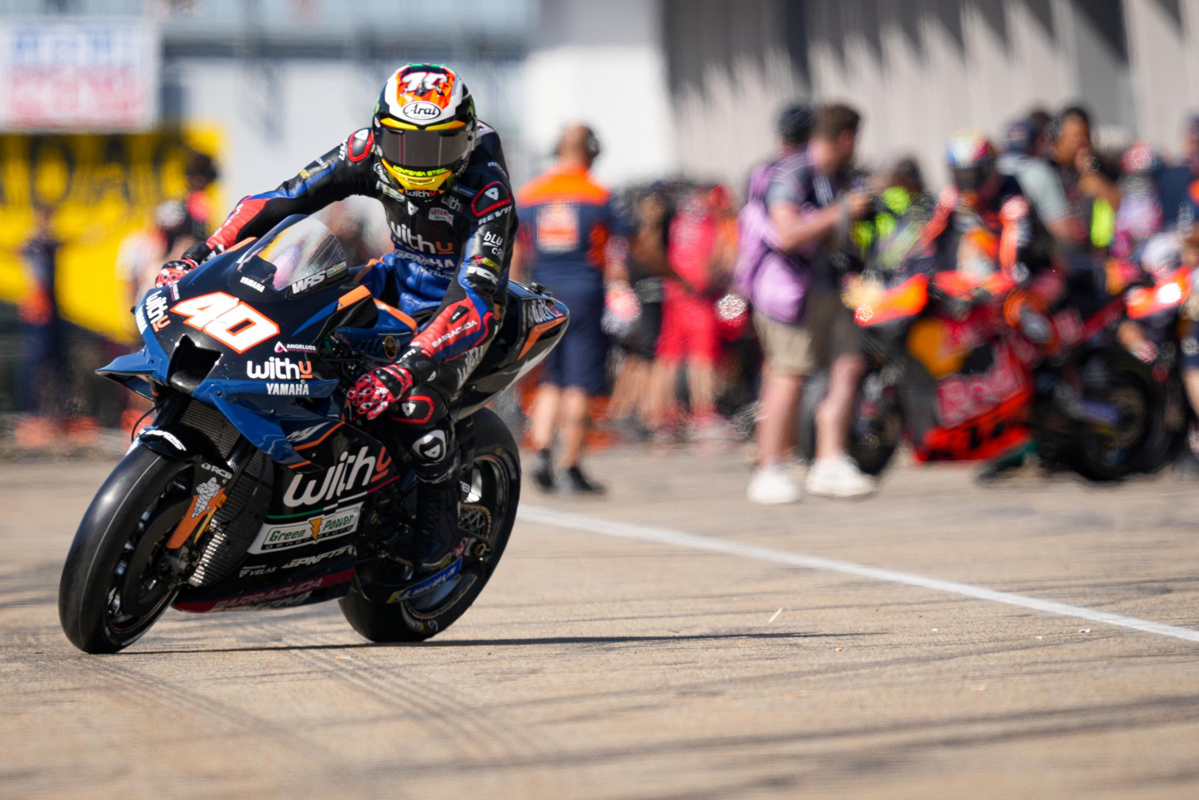
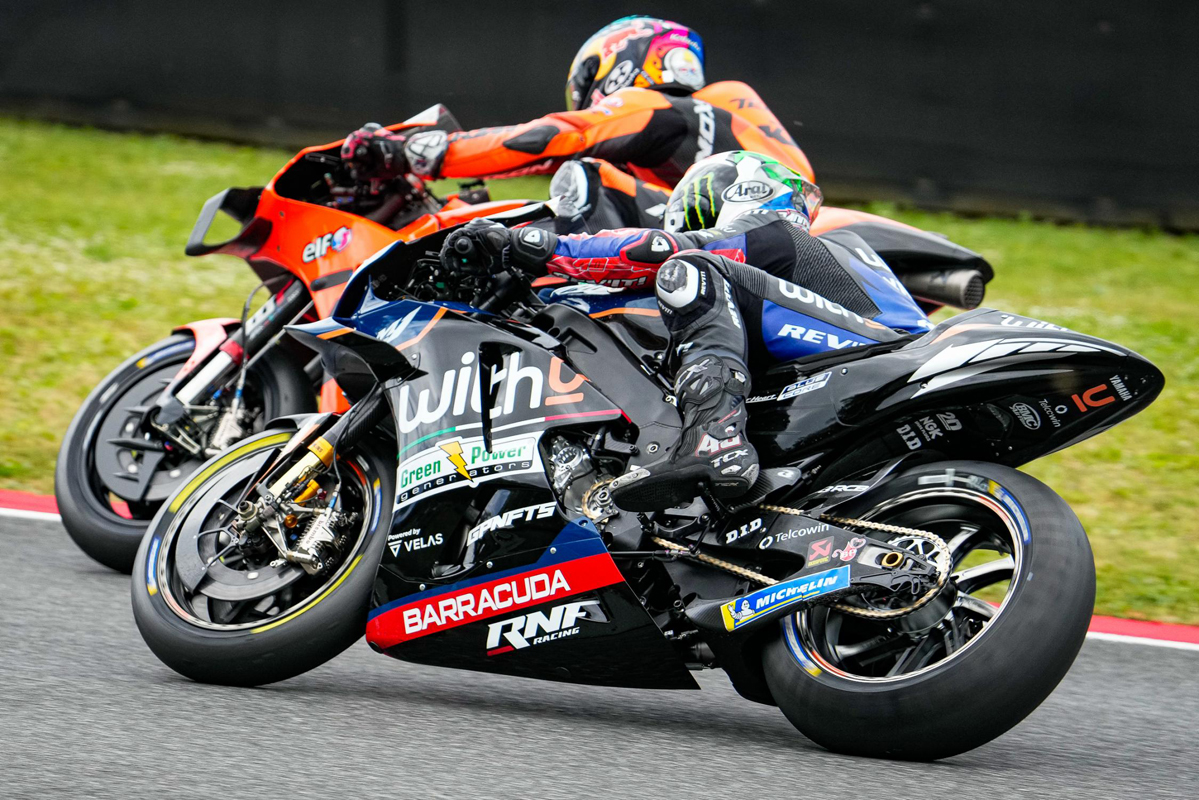
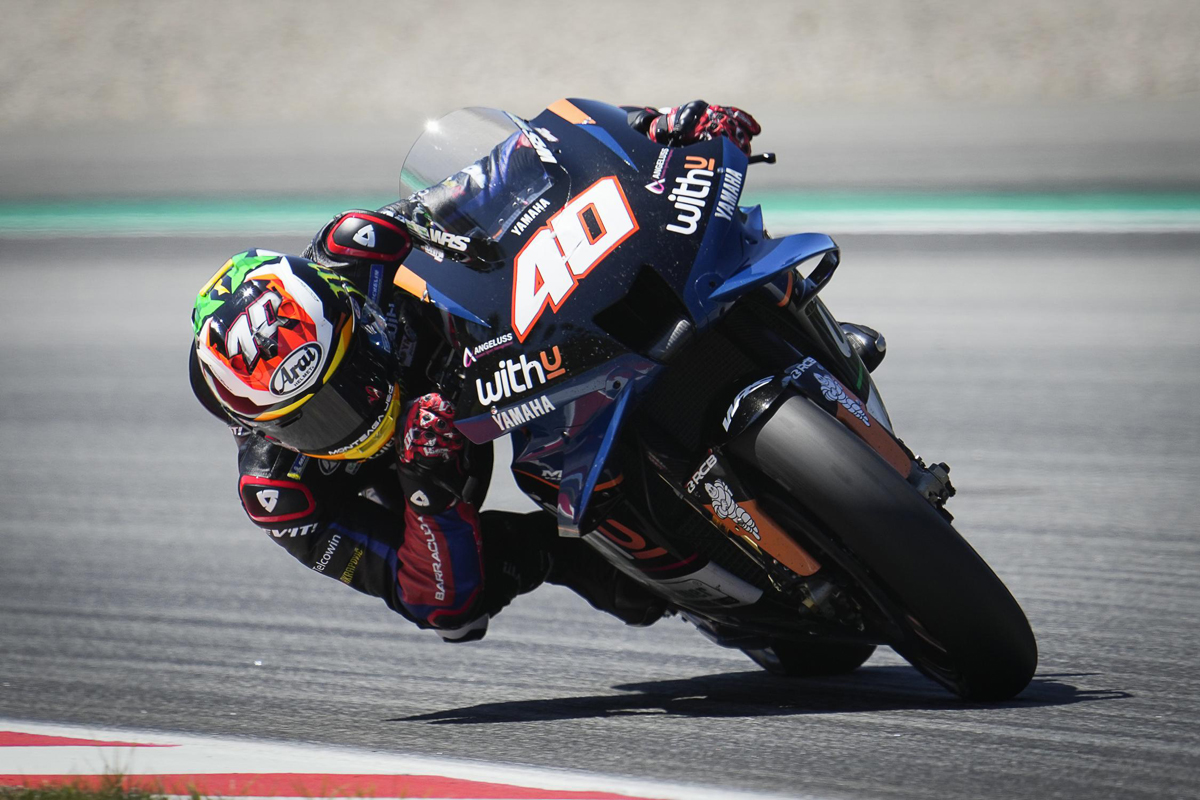
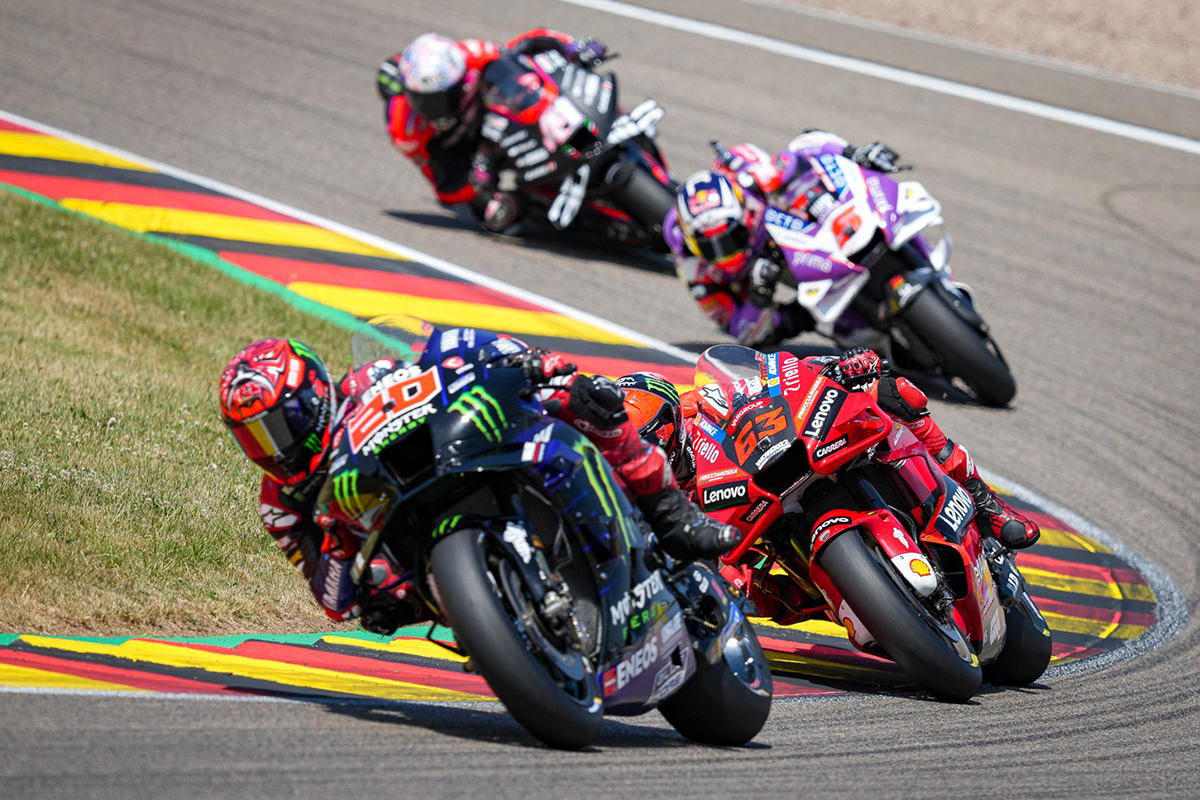
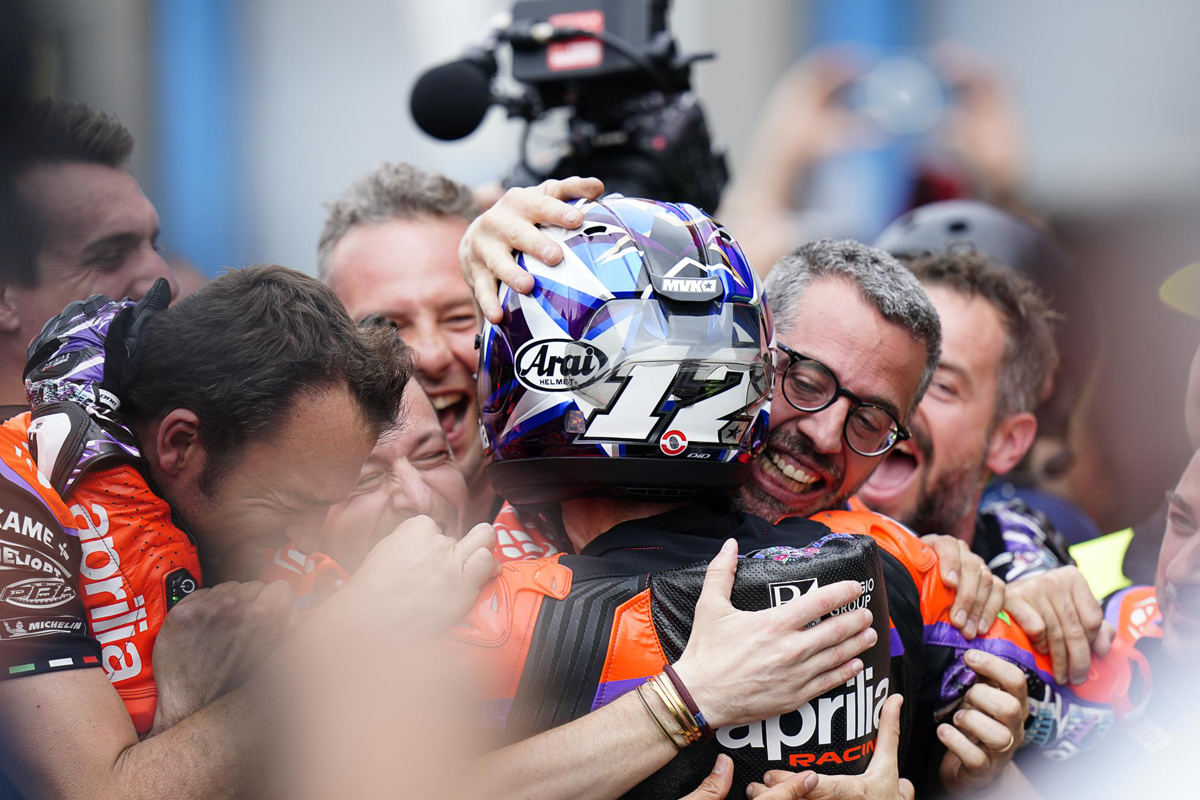
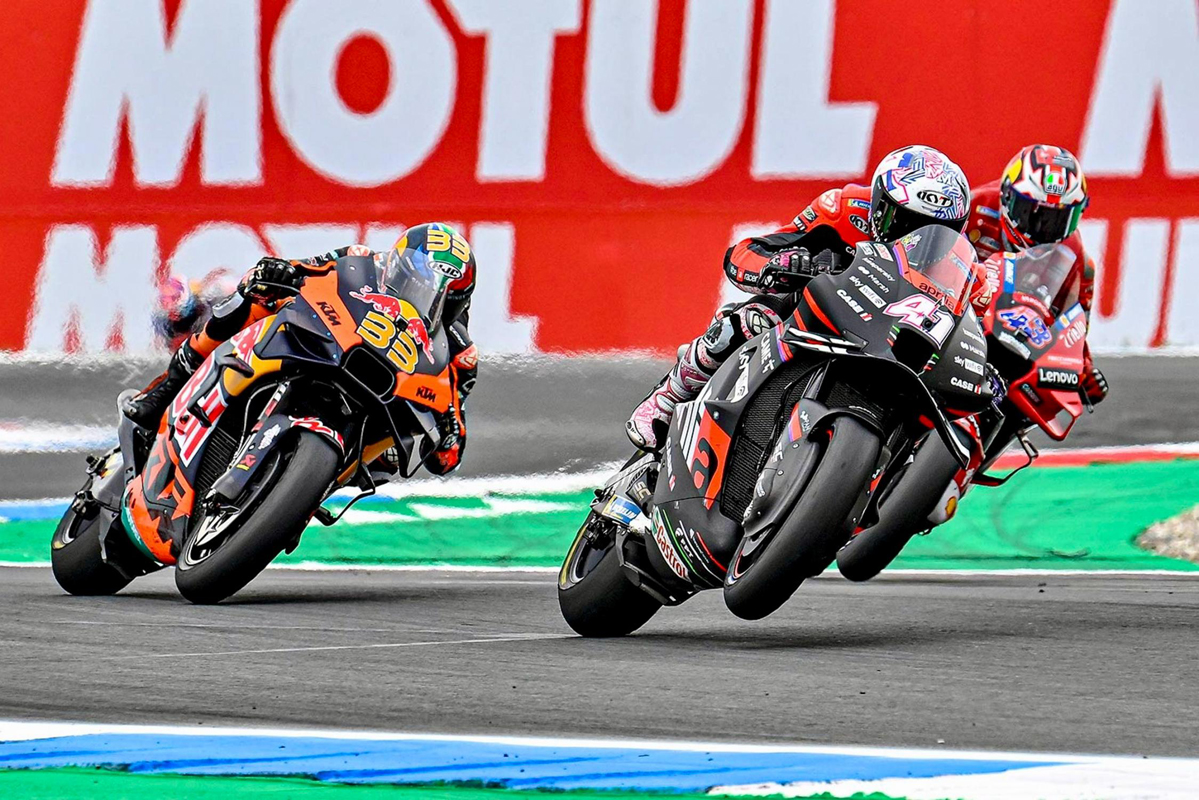
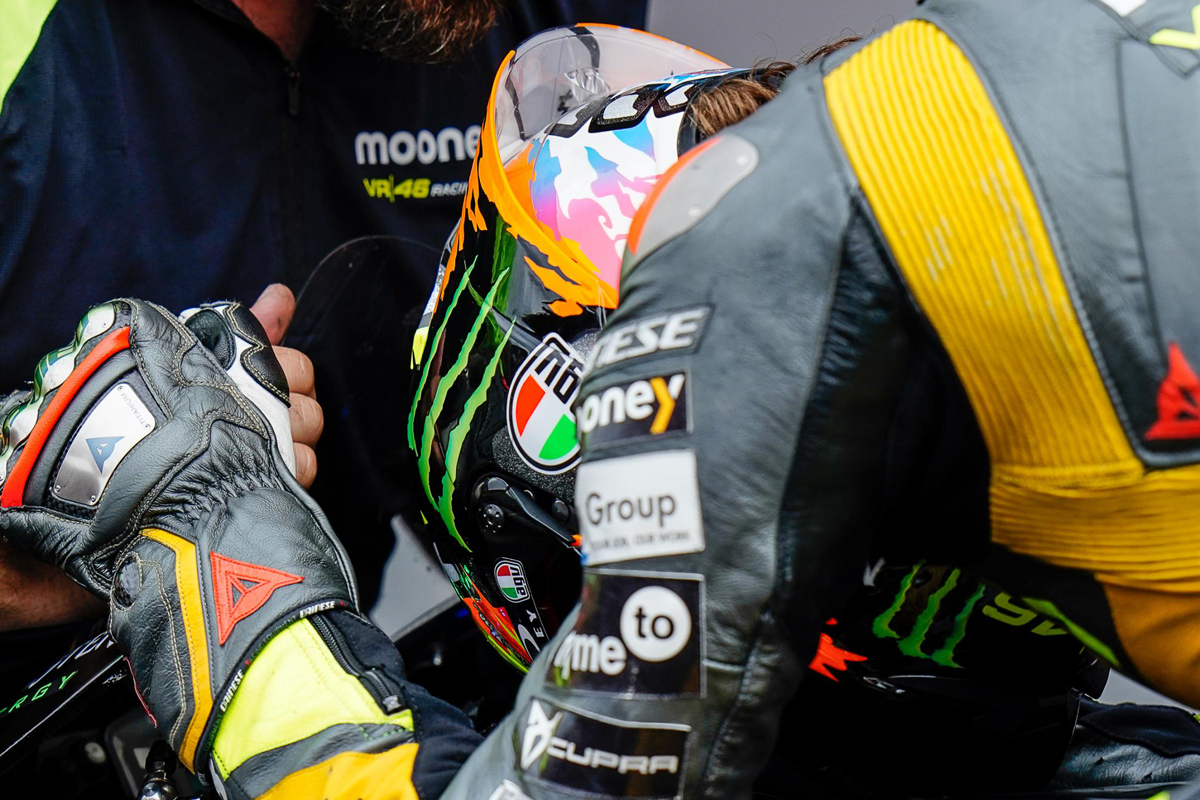
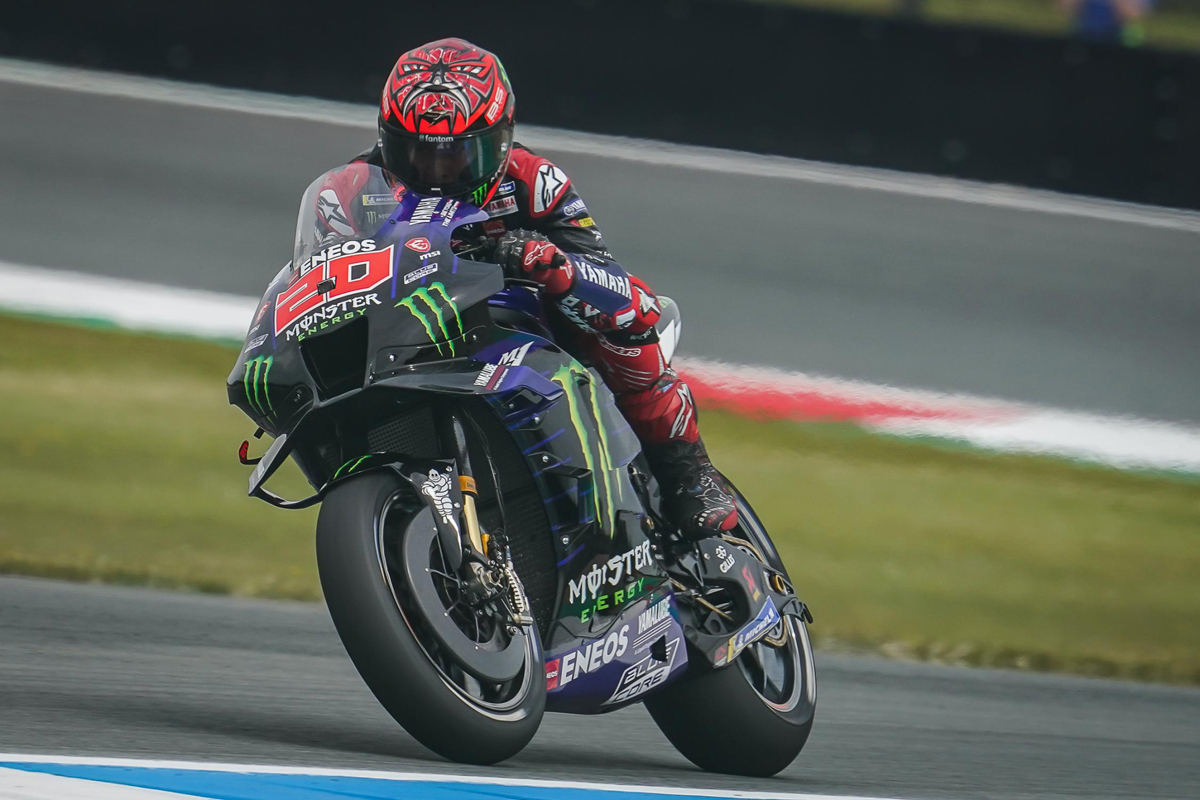
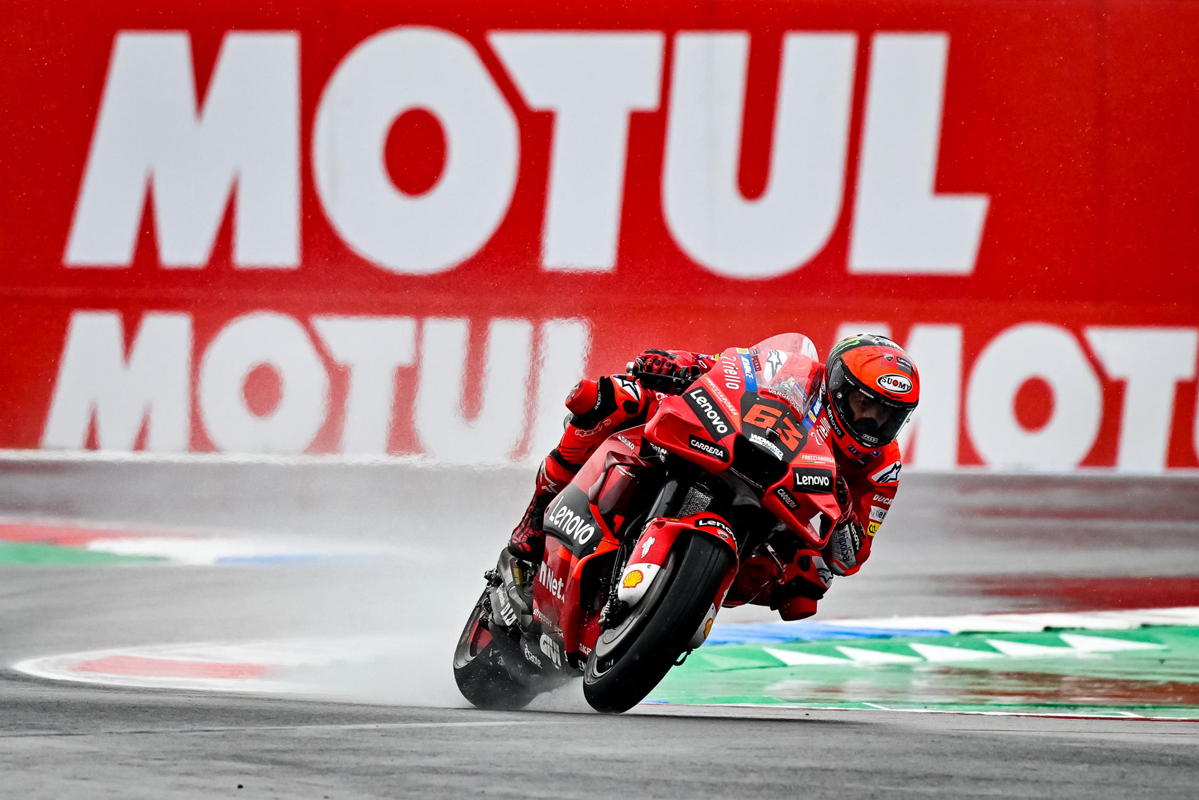
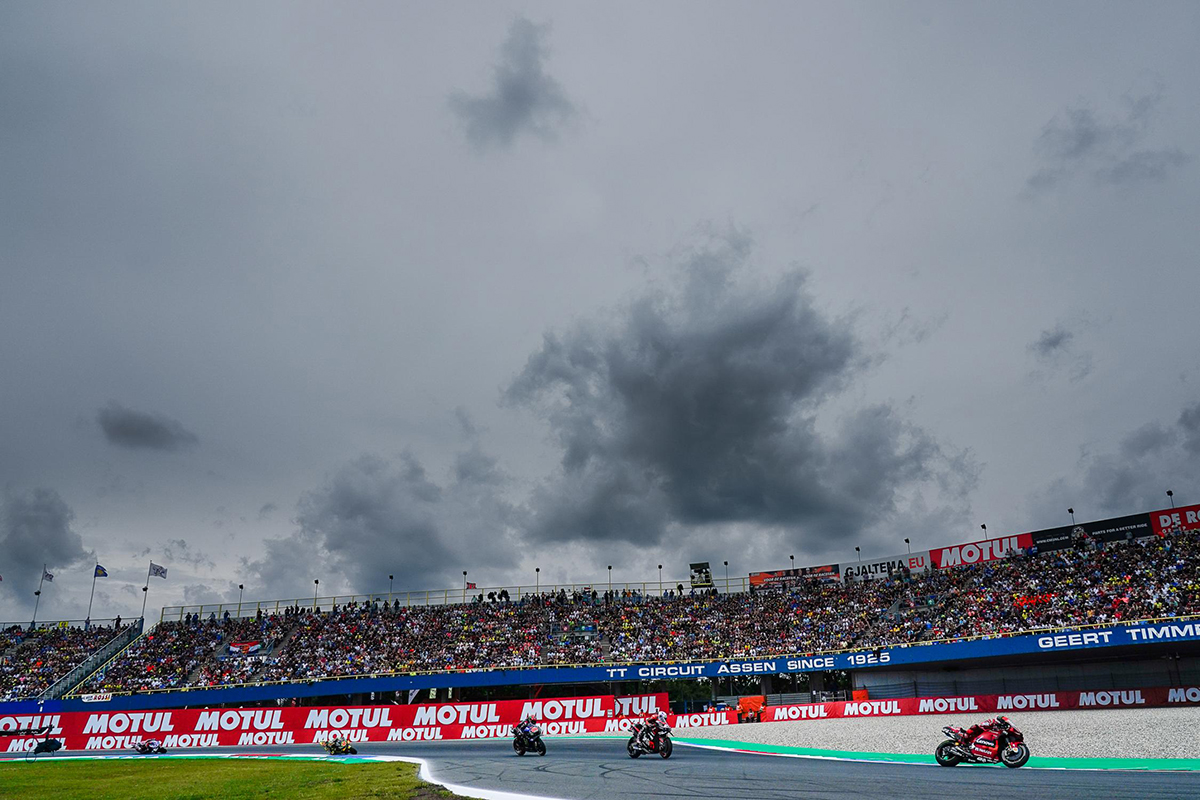
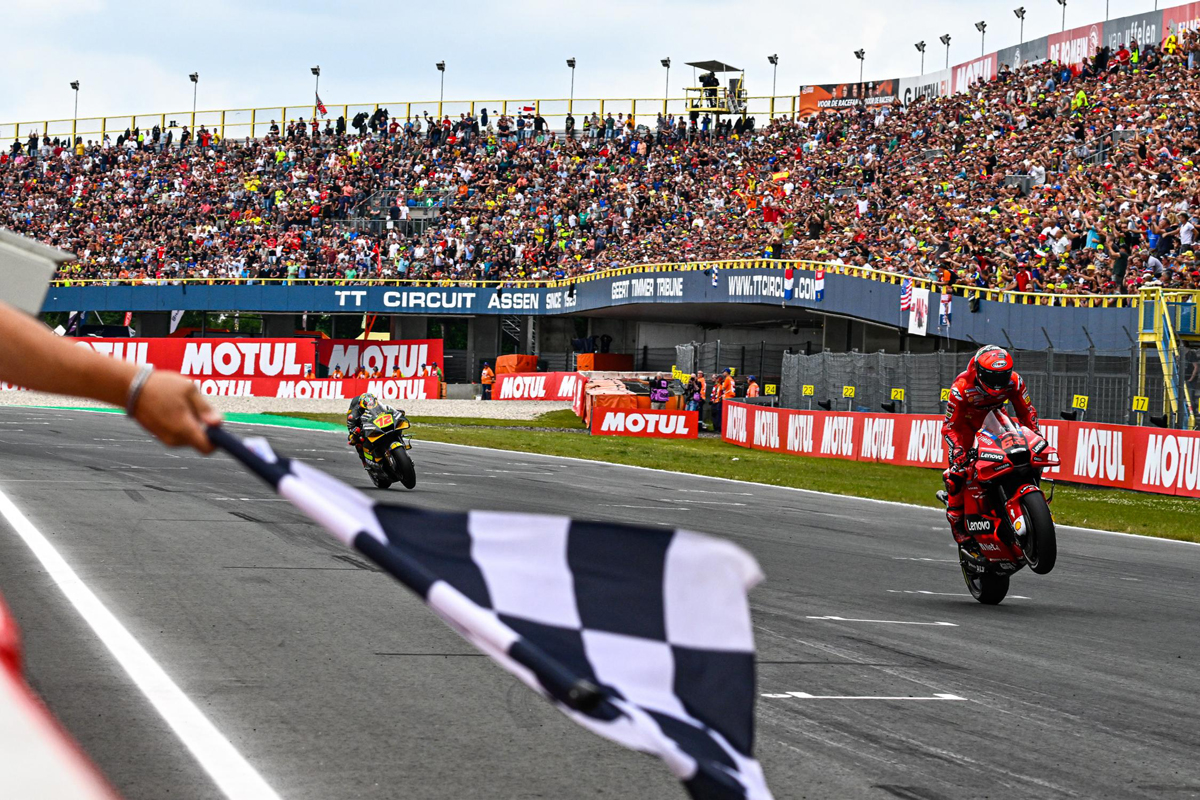
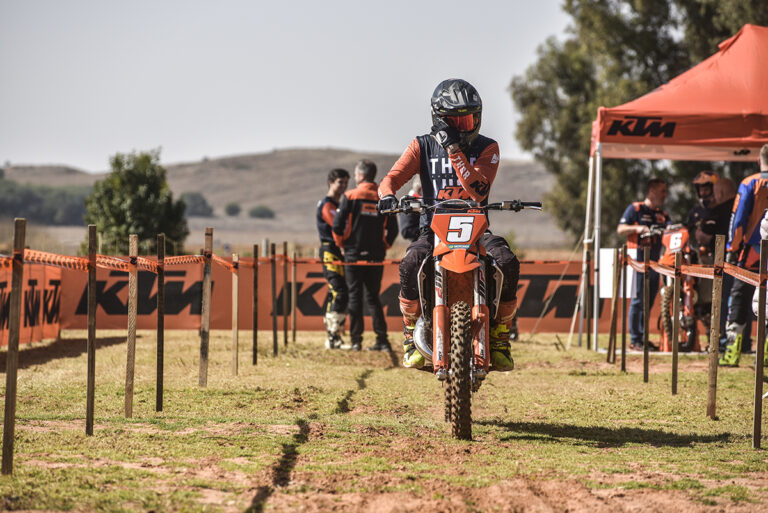
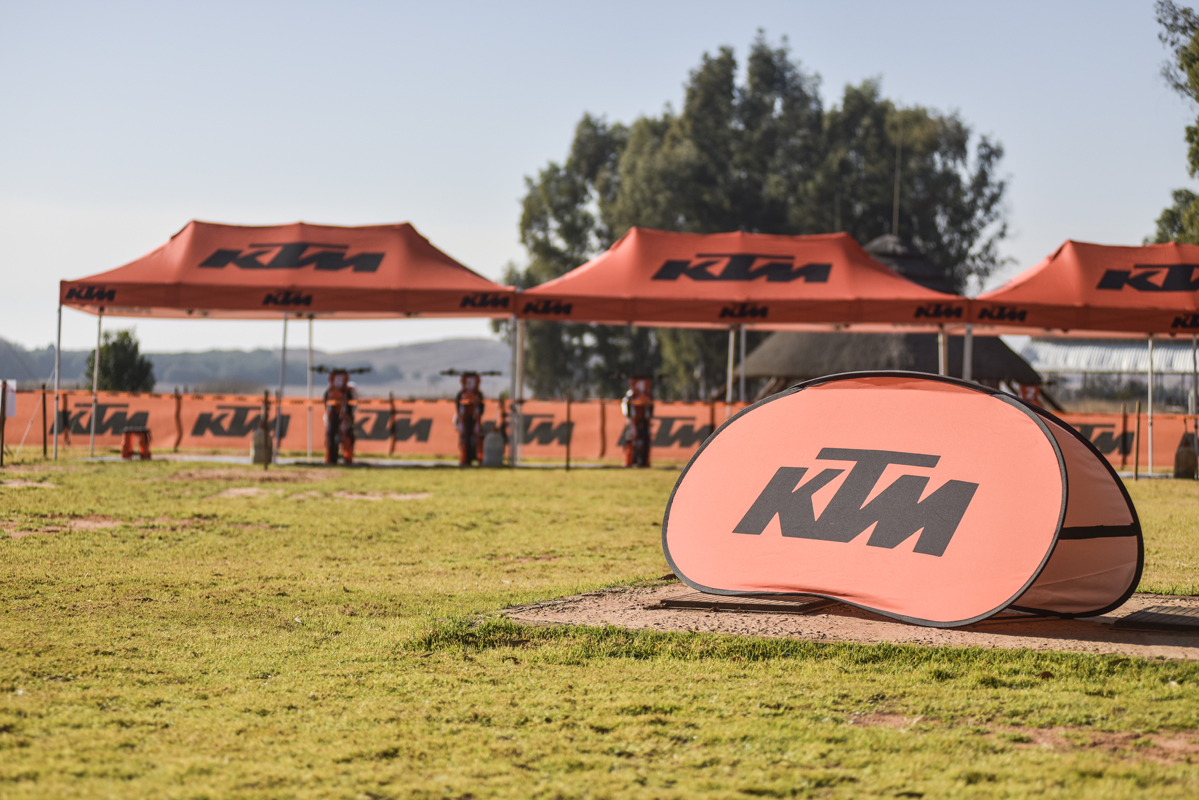
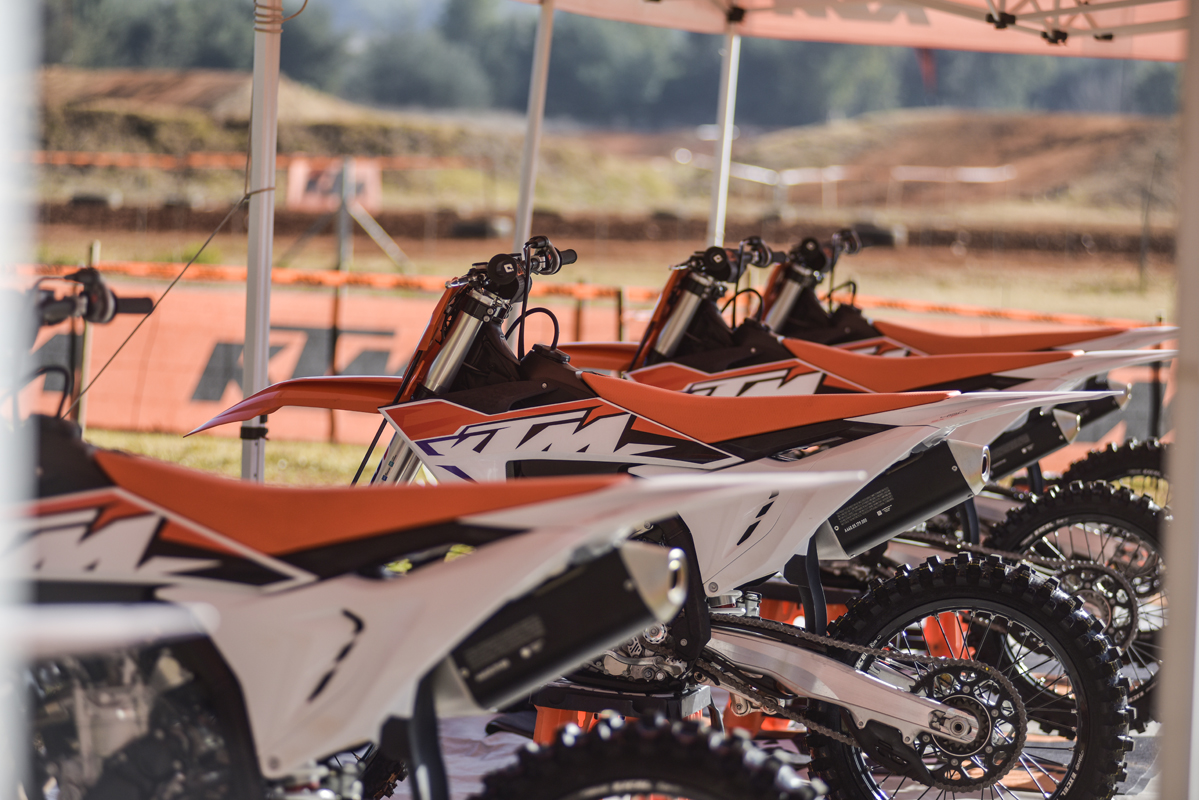
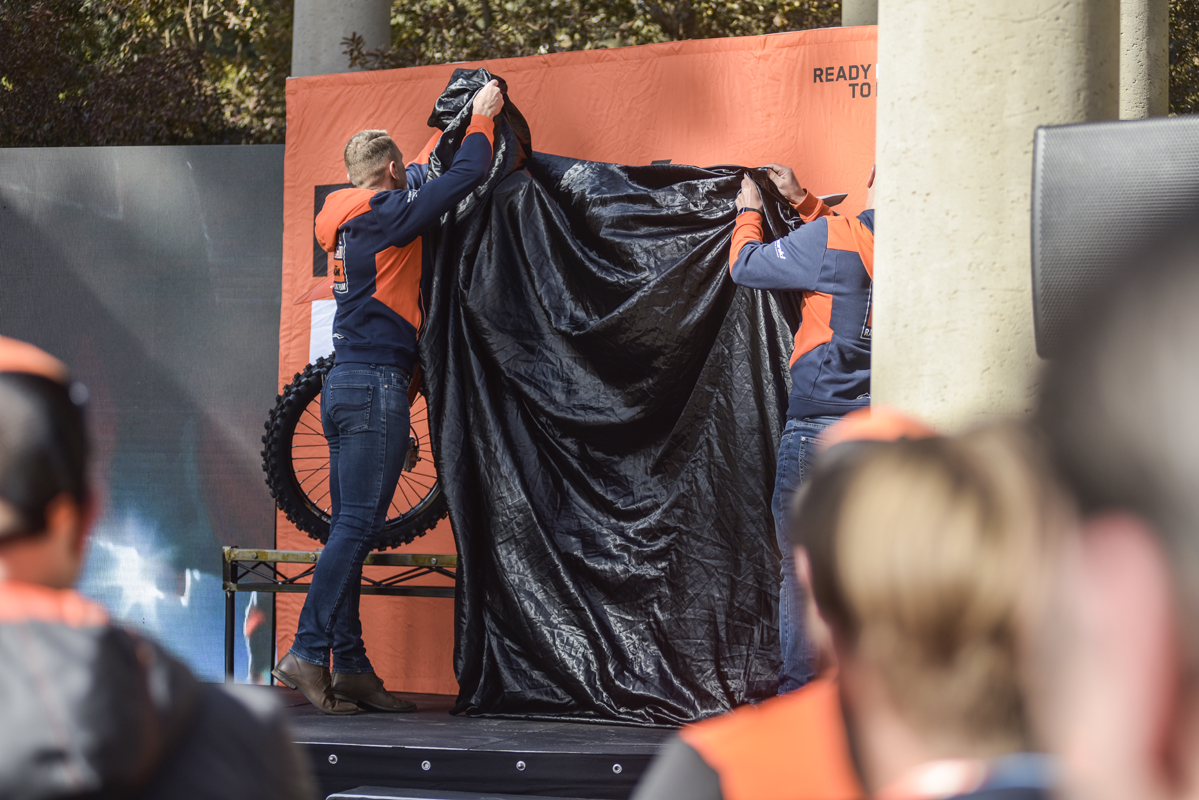
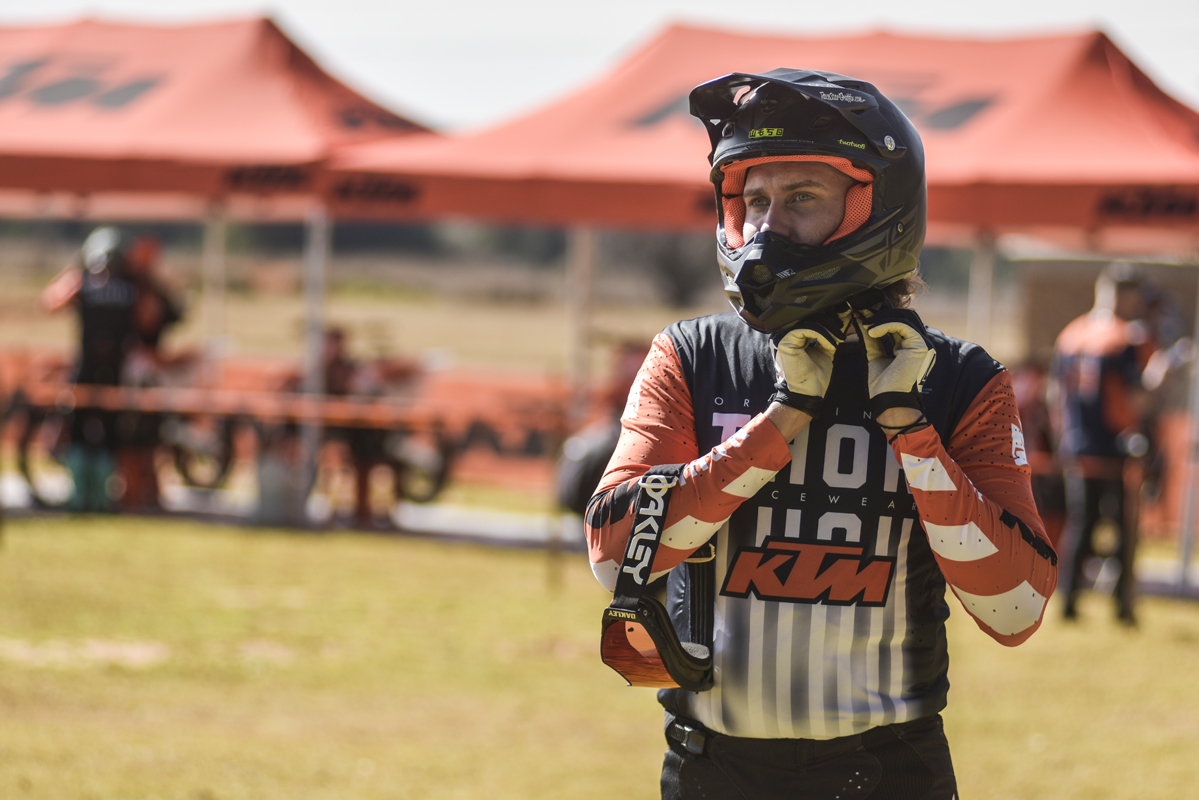
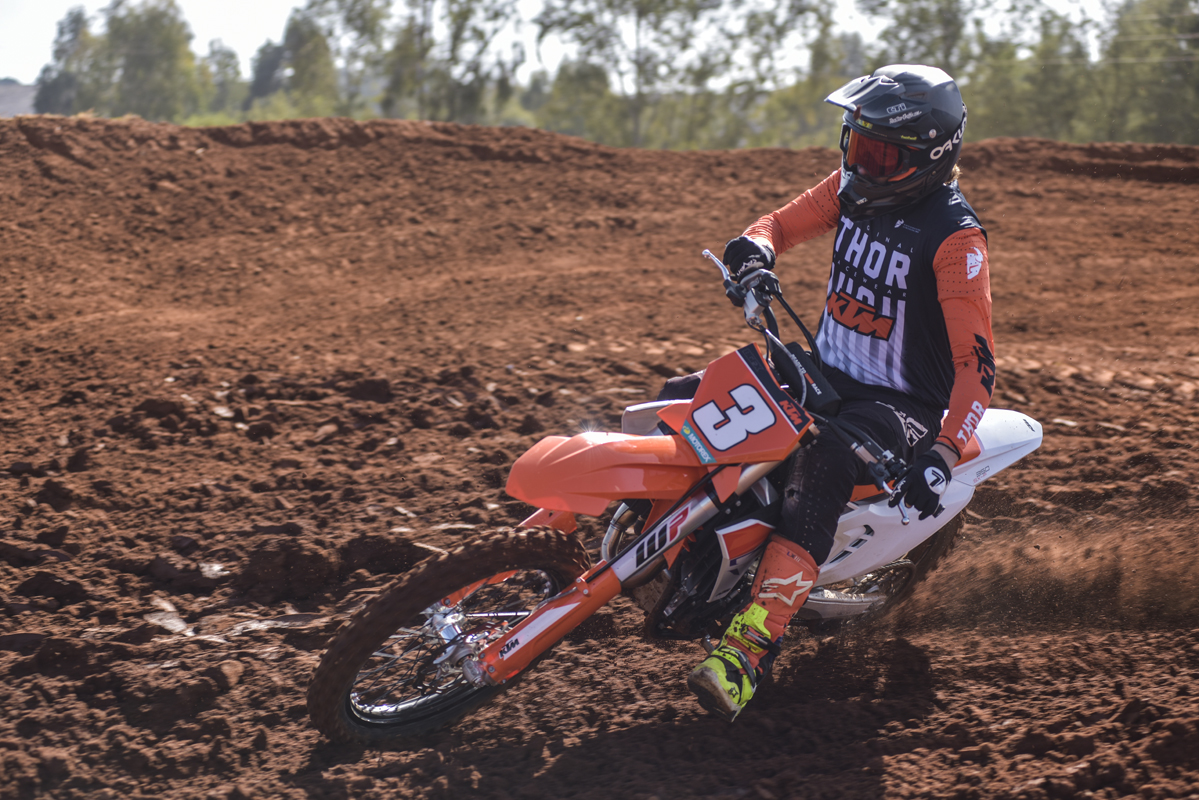
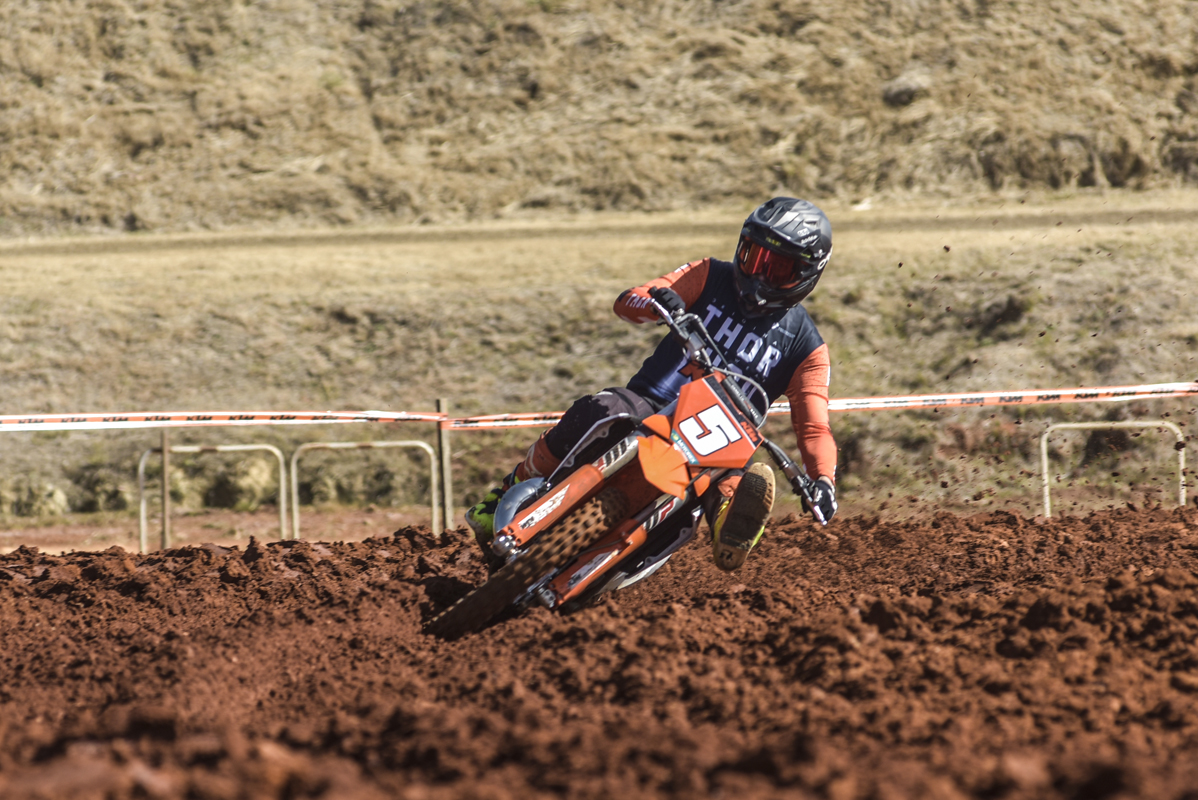
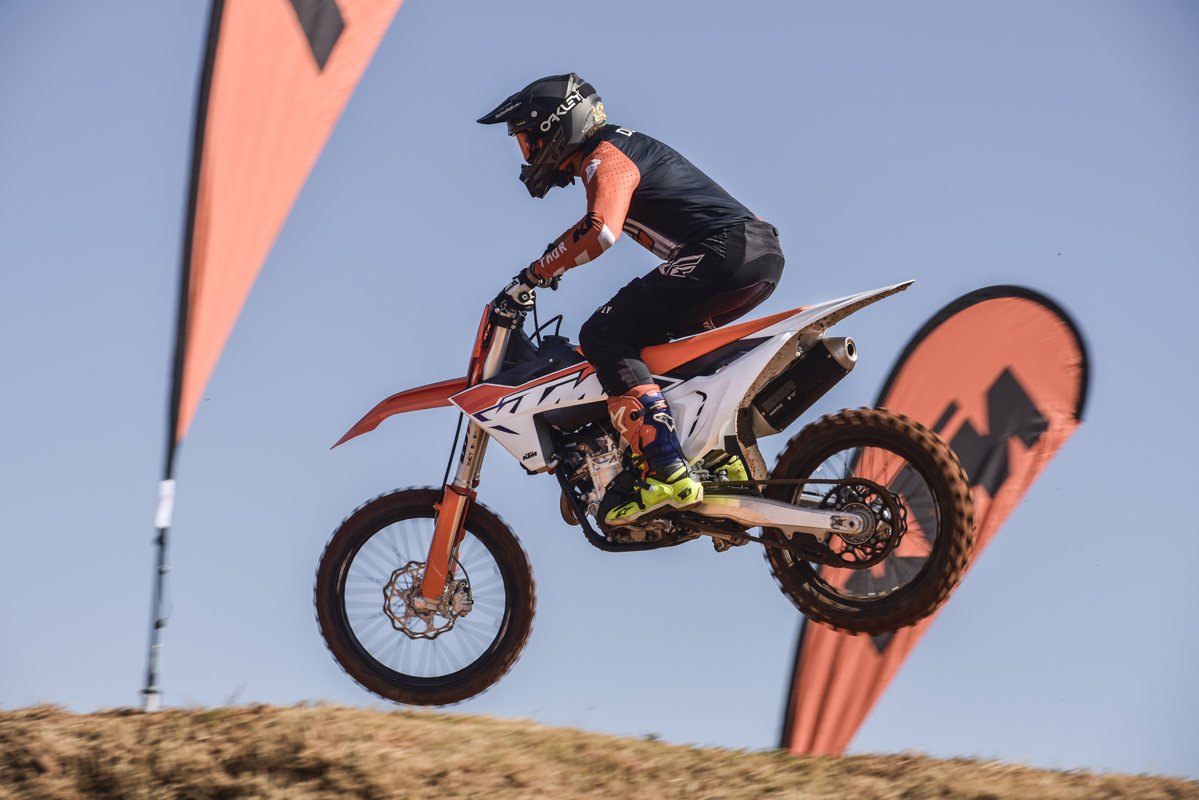
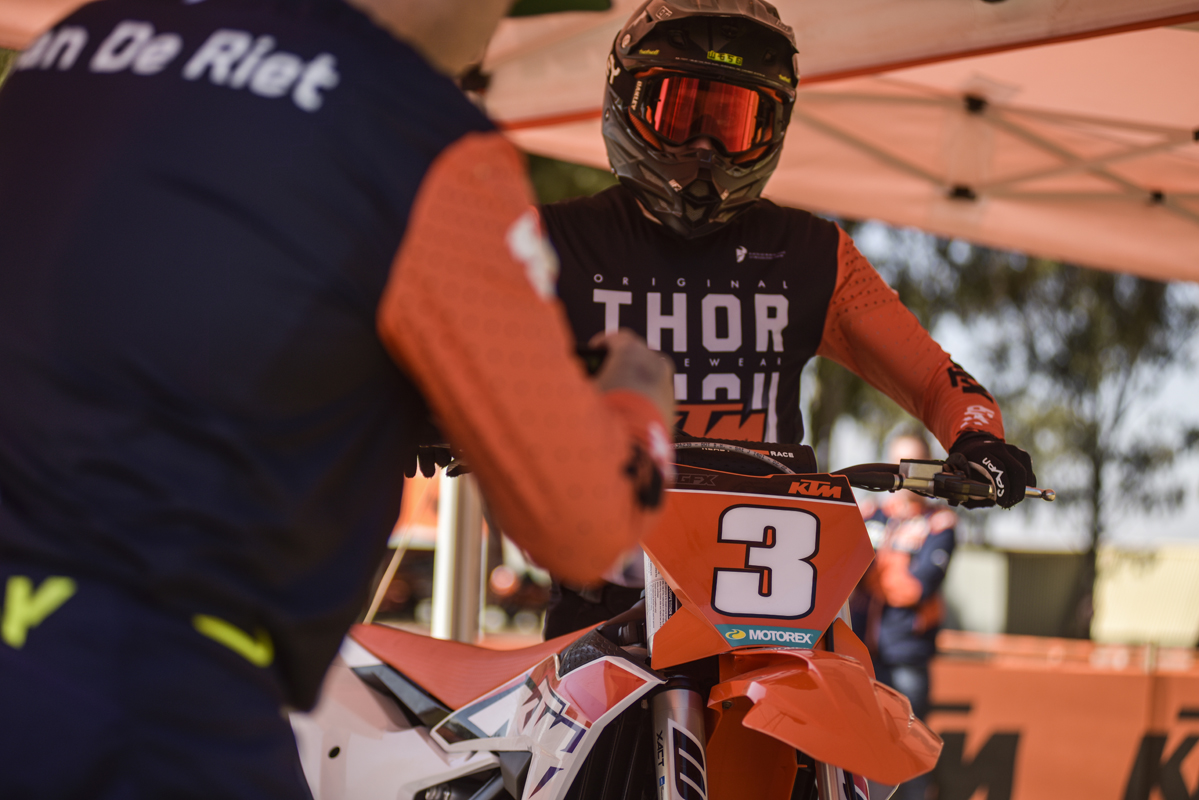
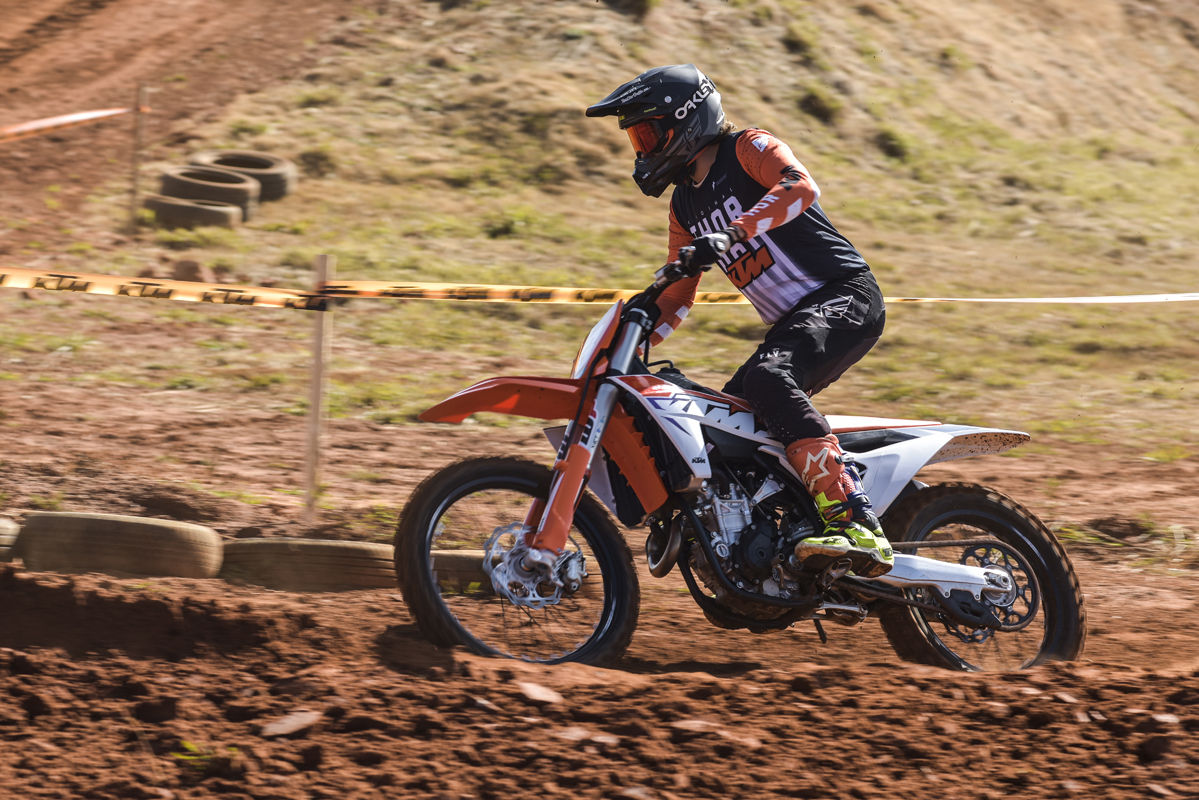
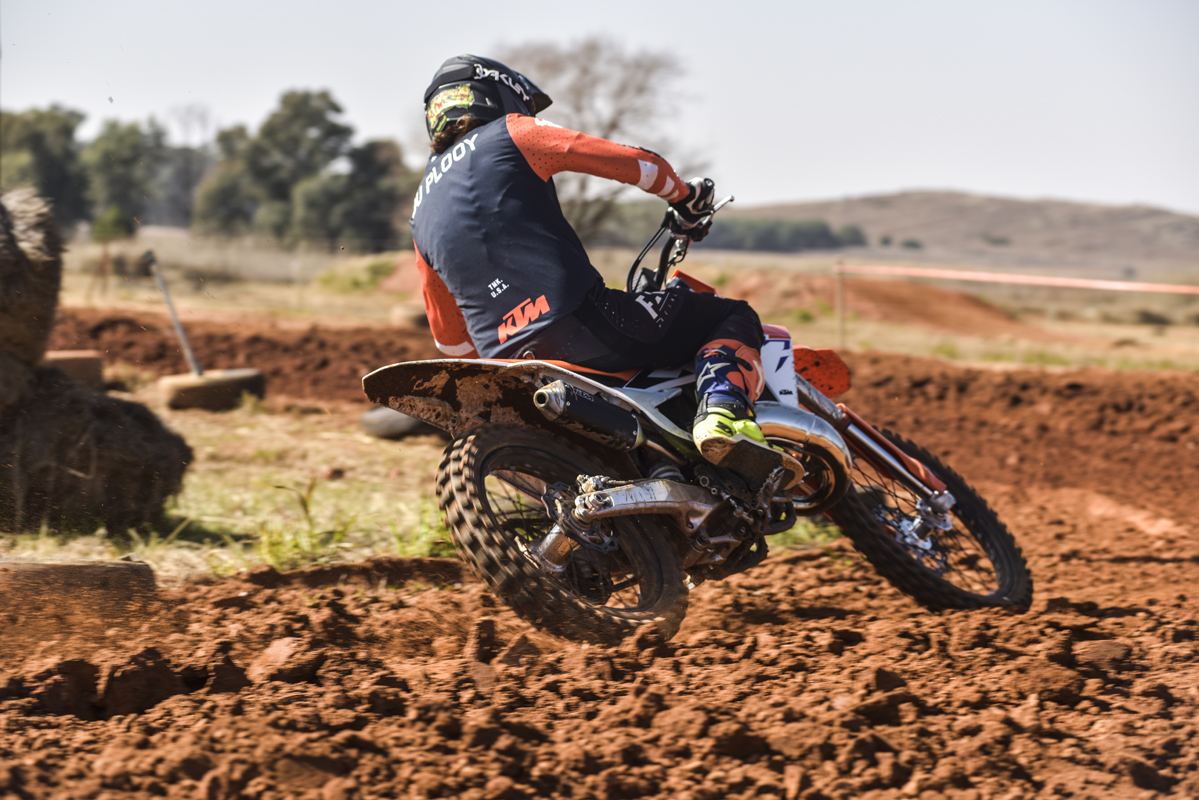
The penultimate round of the Cross Country National Championship that took place near Porterville in the Western Cape this weekend was a bittersweet one for Husqvarna Racing.
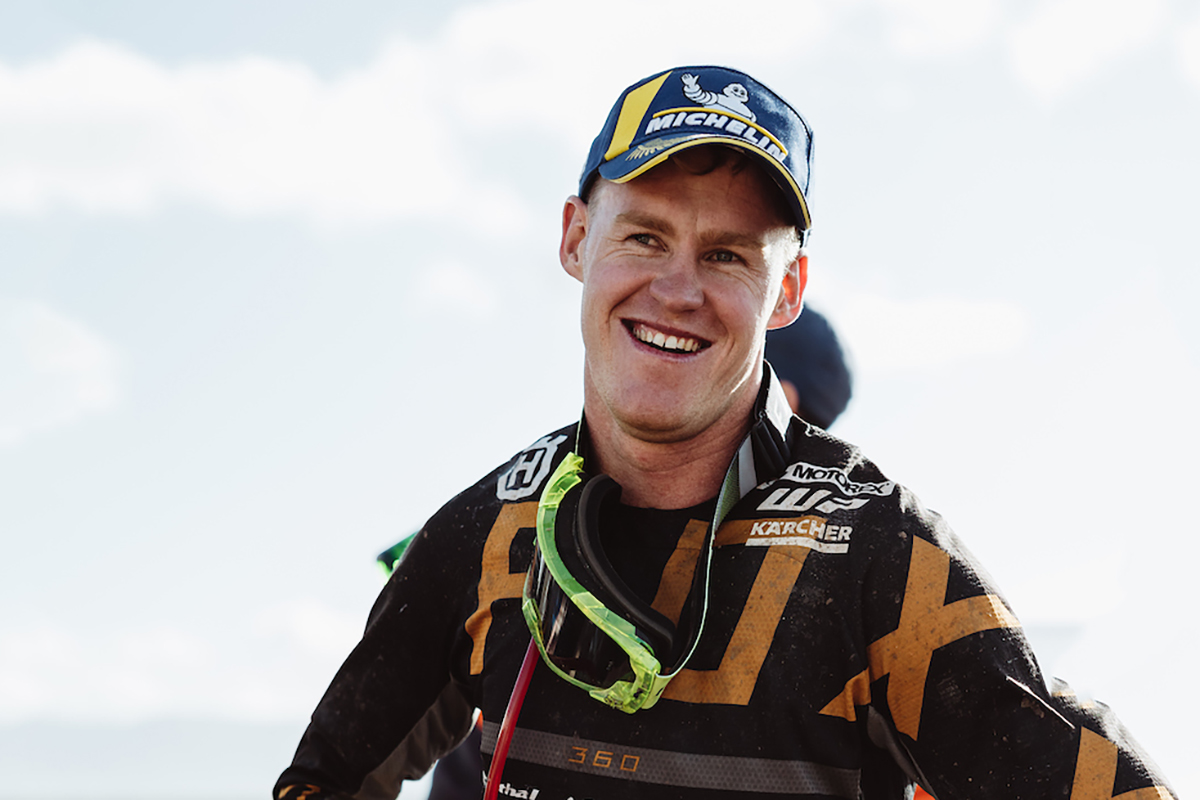
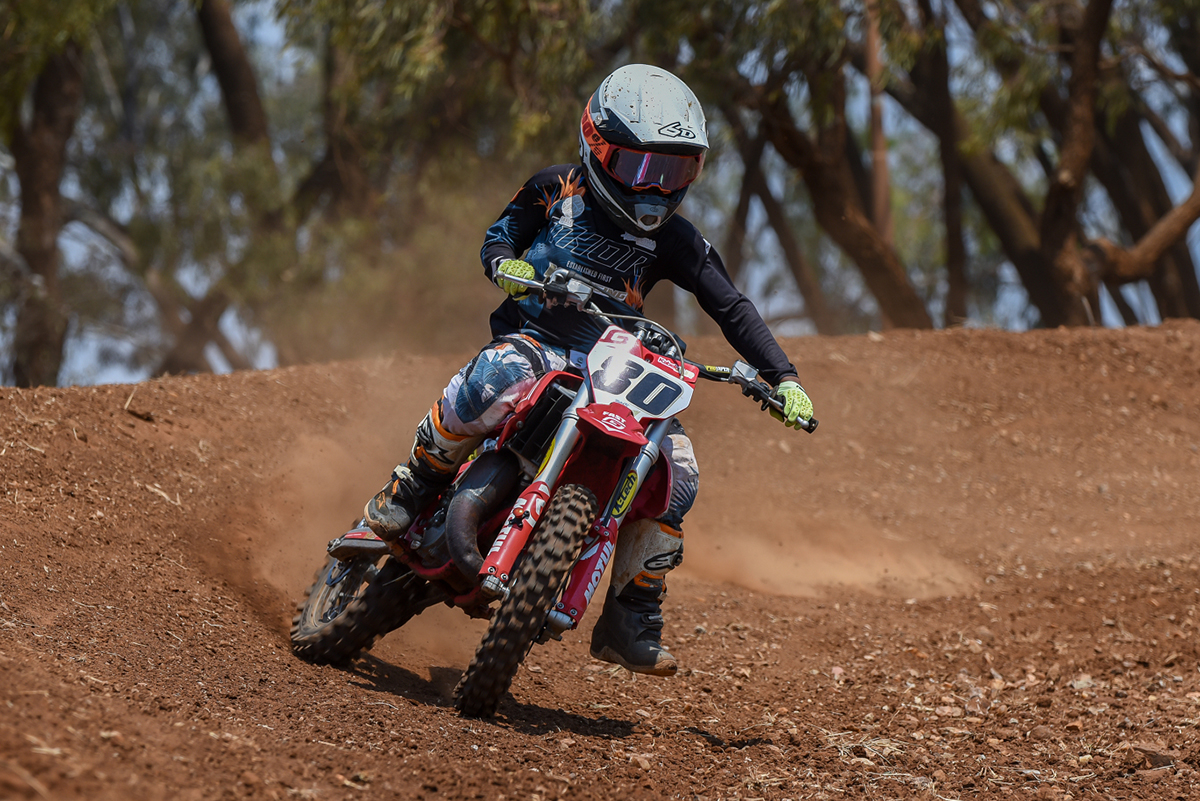
In what was described as a very challenging weekend on many fronts ranging from fuel shortage problems due to longer and faster than expected laps. “It was Brett Swanepoel’s crafty approach and smart race craft that saved the day and he fought back to claim the overall win once again,” said Grant Frerichs from Husqvarna Motorcycles South Africa.
Image source: www.zcmc.co.za
“We came away from Cape Town National with a good points lead, it was a real challenging day in all aspects but we managed to put up a good fight to the end and bring home the overall,” a clearly relieved Swanepoel said. Heading into the final round it bodes well for him to retain the red plate when the championship heads to Virginia Trails KZN.
Image source: www.zcmc.co.za
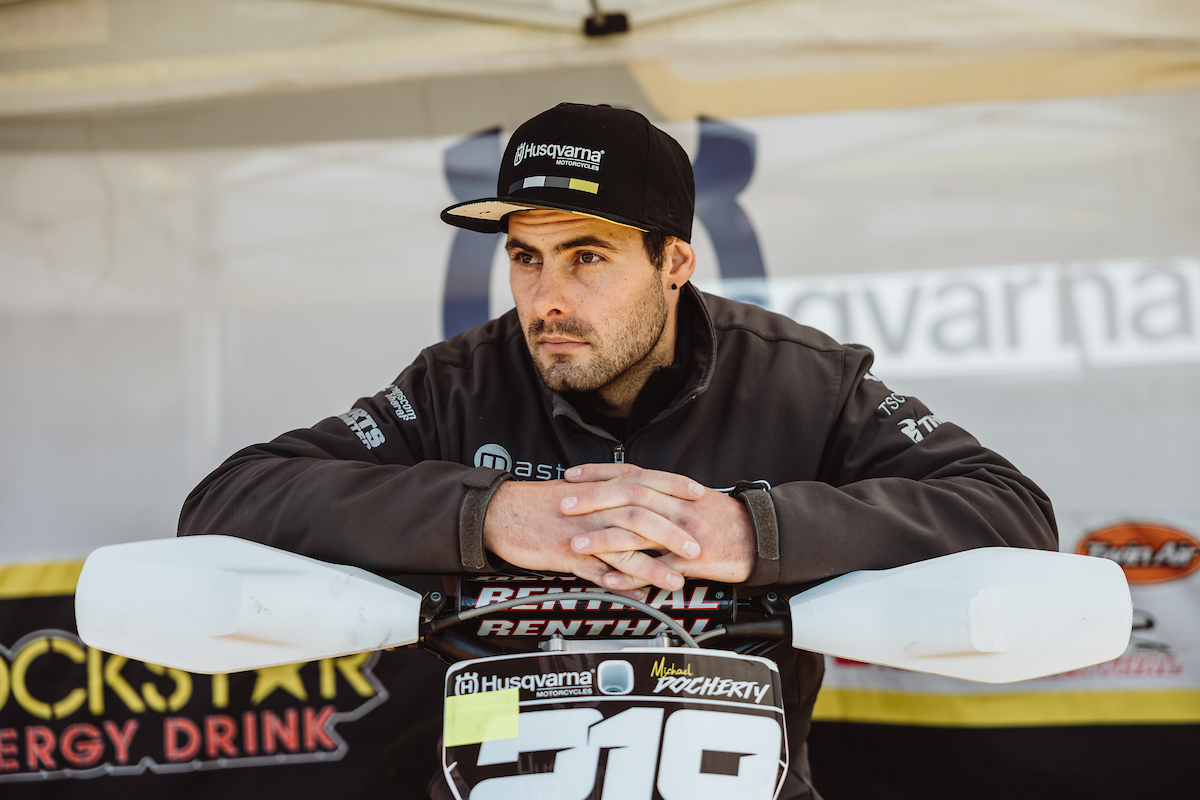
“Another challenging weekend with a whole host of bad luck but I showed I have the speed in time trial lapping a minute faster than anyone else but the fuel was a problem for us and unfortunately ruined my chance for another overall win but there is 1 more round left for redemption and I will make sure I give myself and the team the best chance possible” commented a despondent Michael Docherty.
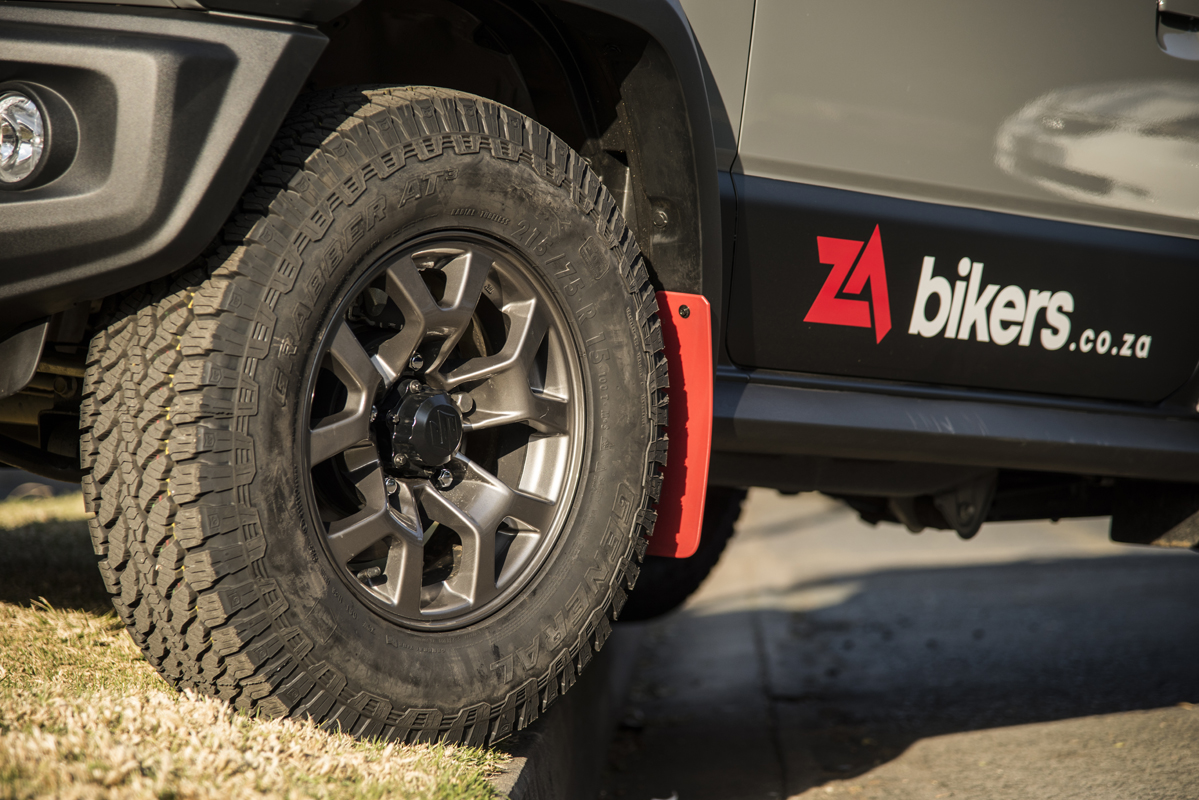
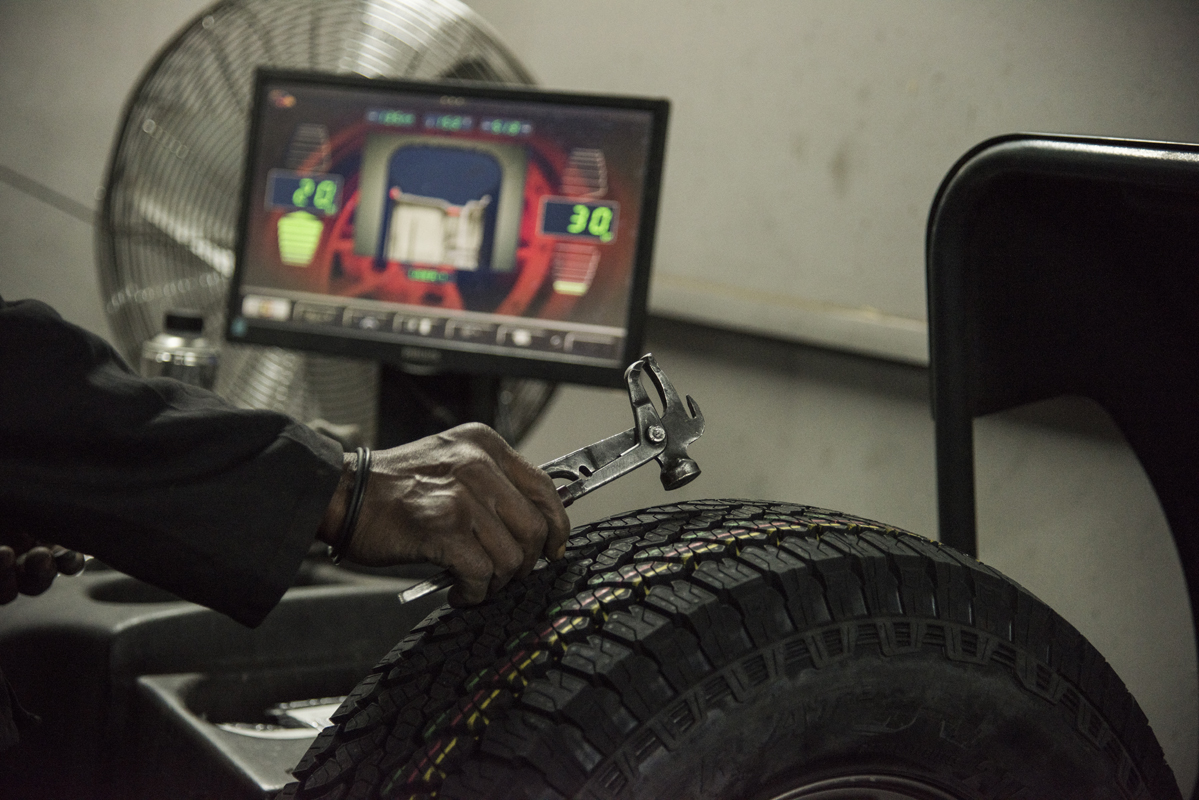
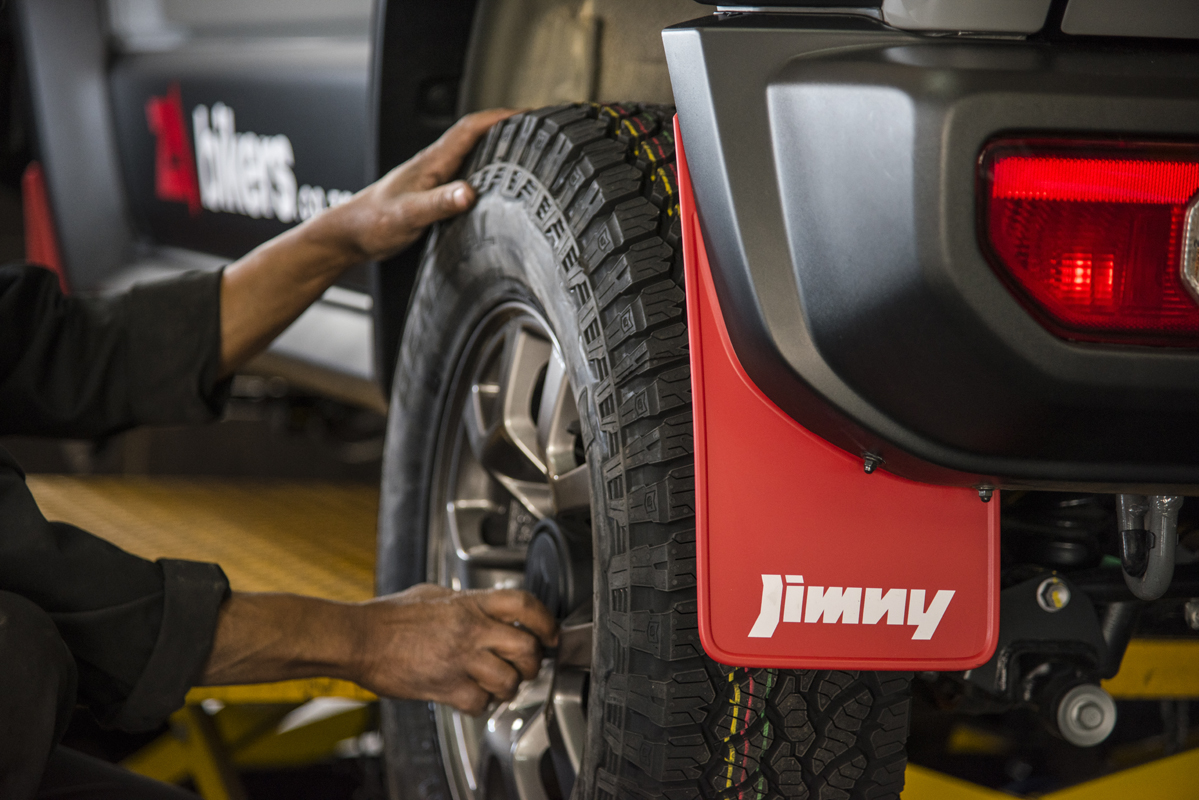
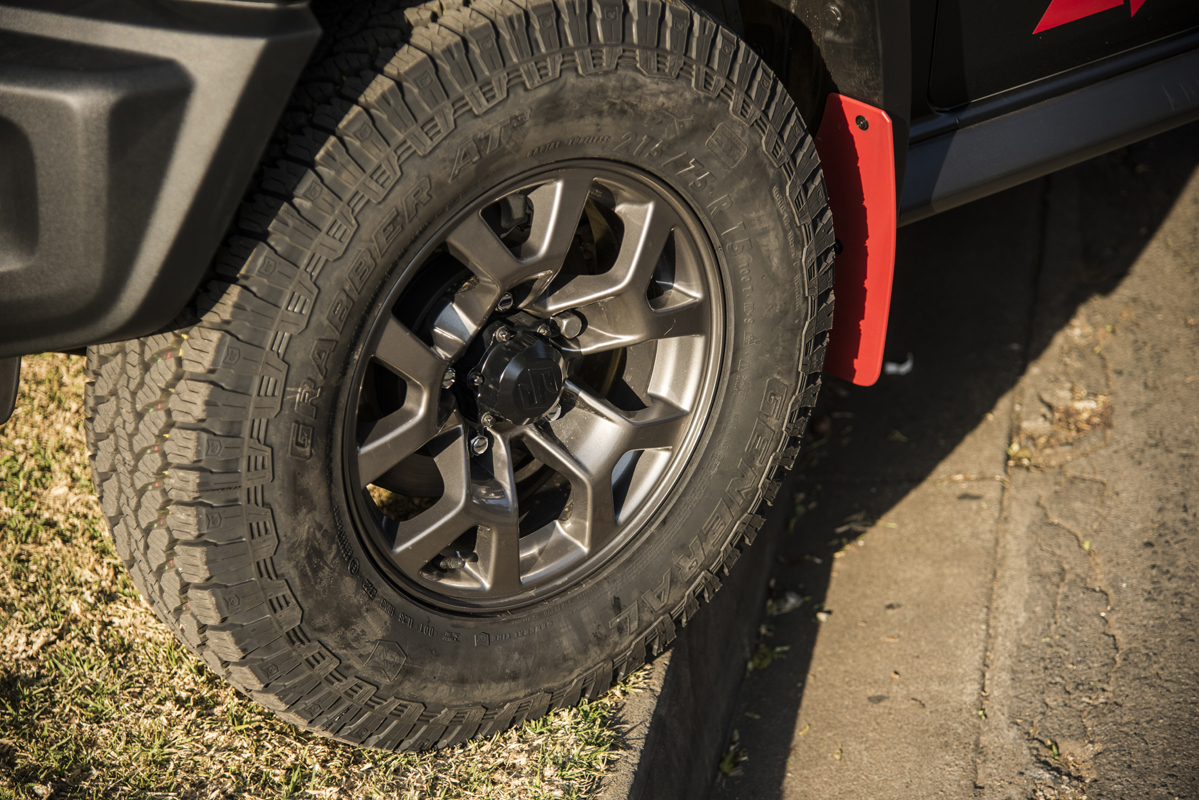
We told you about the Suzuki Jimny that has joined the ZA Bikers vehicle fold. We go to some weird and wonderful places in the course of our content creation, so the capable Jimny is an excellent go-anywhere support vehicle. Like most SUVs, the Jimny comes standard with what are essentially highway spec tyres. Considering the places our Jimny will be going we needed to equip it with more capable ‘shoes’. After much research, we settled on General’s highly rated Grabber AT3s. Like with bikes, the right tyres for the application are vital for performance and safety.
Photo credit: Bjorn Moreira / ZA Bikers
We considered function primarily, but also form. We needed tyres that would fall within Suzuki’s specification for the Jimny, but that would up the ante when we ventured off the beaten track. The General Grabber AT3s are perhaps best described as the ‘GS’ of All-Terrain tyres in that they are not necessarily the best at any one thing, but really capable across all typical applications. Whilst we wanted off-road performance, it couldn’t be at the cost of road manners. Chunky ‘Mud Terrain’ type tyres might look cool, but the incessant howl they emit on the highway will have you doing push-ups on your penknife after an hour or two. The Generals ticked all our boxes in that the enhanced performance would not have any real trade-offs.
Photo credit: Bjorn Moreira / ZA Bikers
General Tires is part of the huge Continental Tyre group. The Grabbers feature three new technologies that enhance the overall performance of these versatile tyres. ‘TracGen’ is an open shoulder design aimed at enhancing grip properties. ‘DuraGen’ is a rubber compound that enhances rip resistance for durability offroad without sacrificing traction. Lastly, they have what General call ‘ComfortBalance’. This is a technology to enhance ride comfort and reduce vibration on the road, achieved by a specific tread block design. We also love the look of the Grabbers on our Jimny. The tyres really enhance the ‘tough little Dude’ attitude of our Jimny.
Photo credit: Bjorn Moreira / ZA Bikers
So there you have it. In the fullness of time, we will report back, on our experience with our Jimny’s new hiking boots. I can already tell you one thing… it’s going to be a lot of fun!
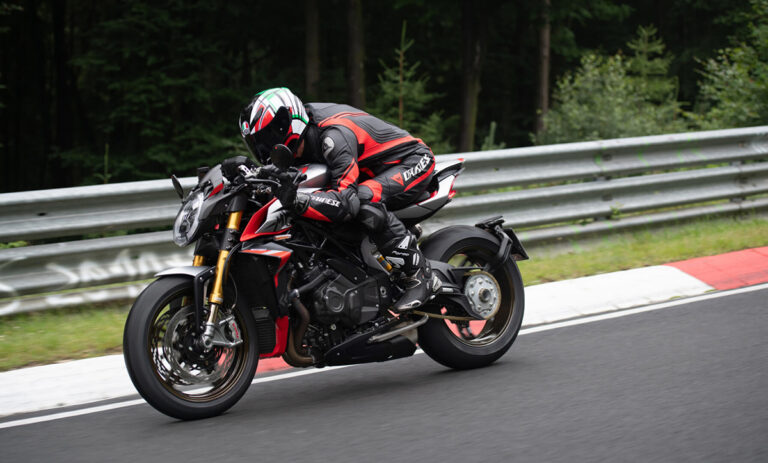
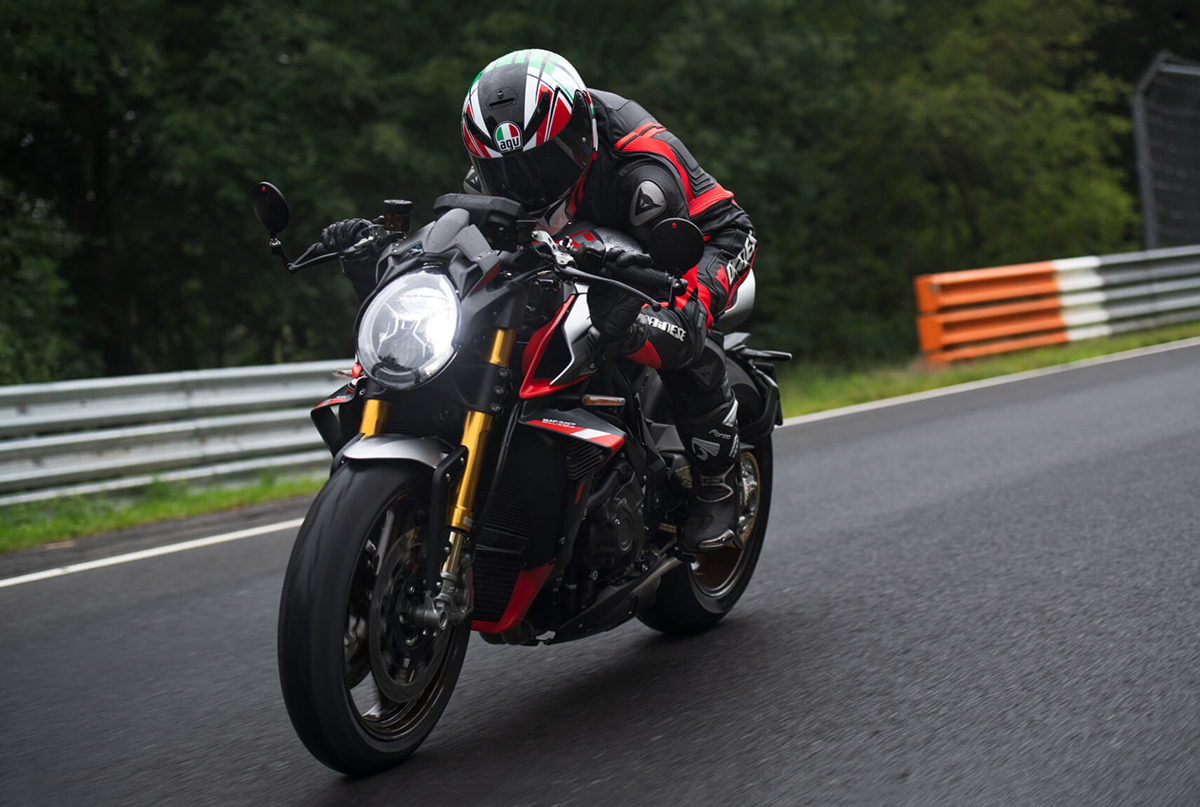
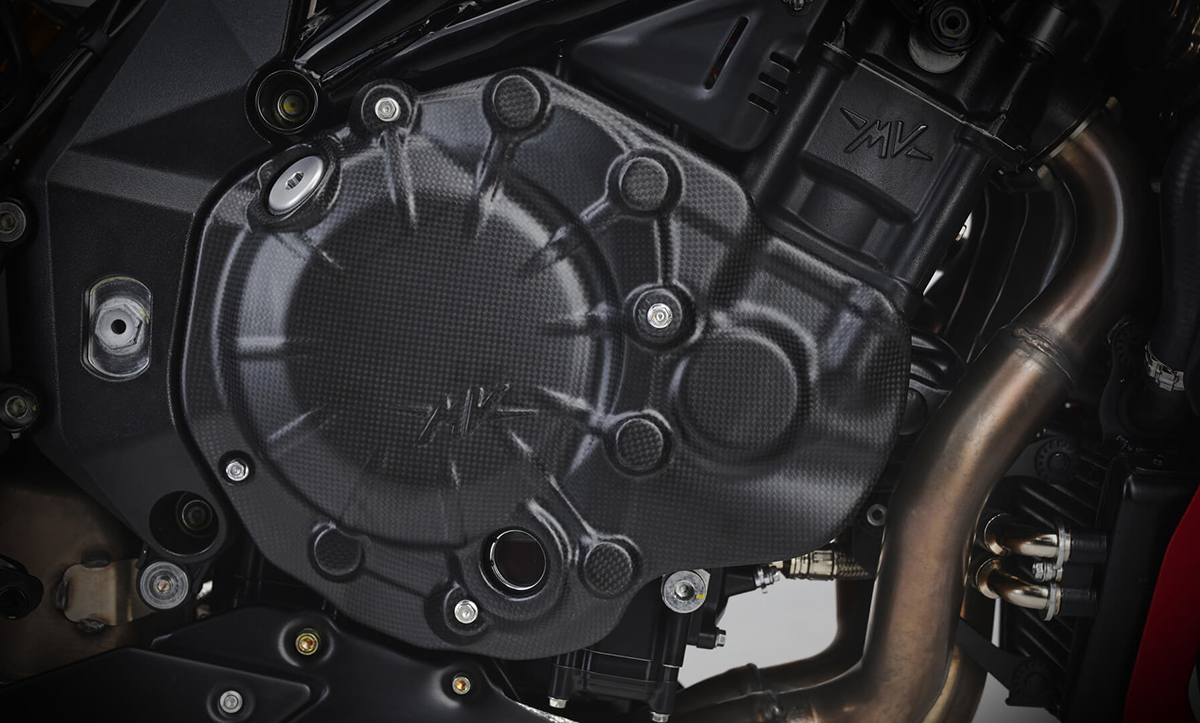
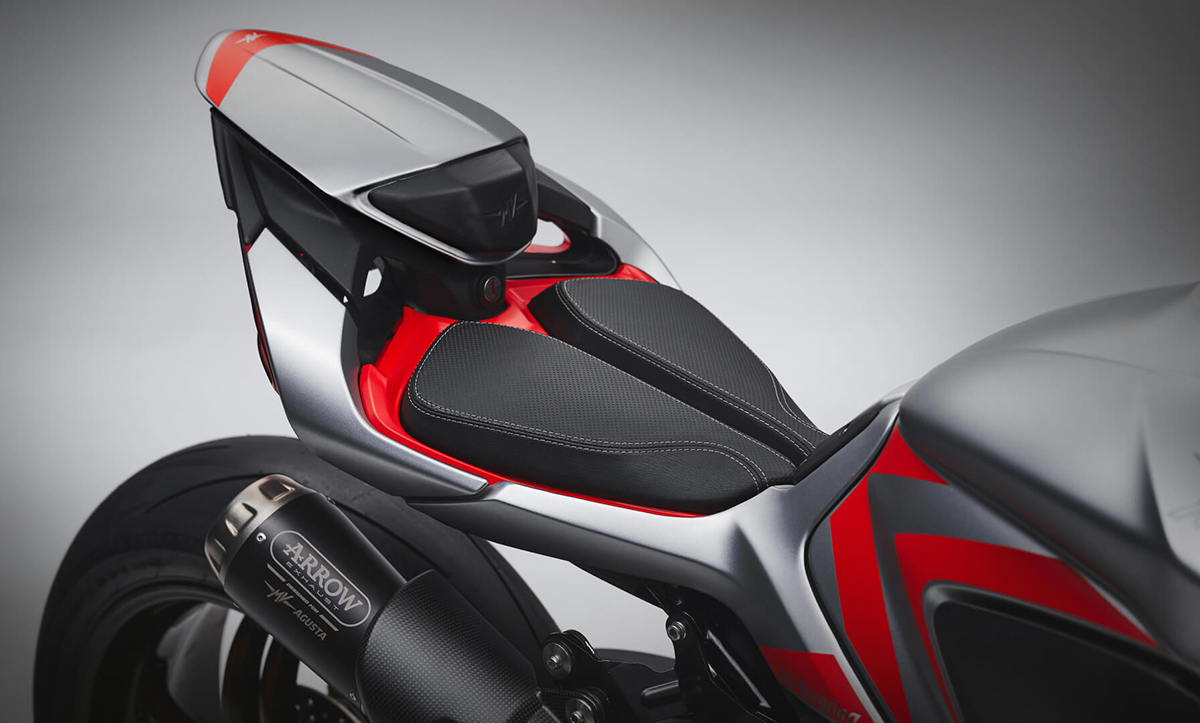
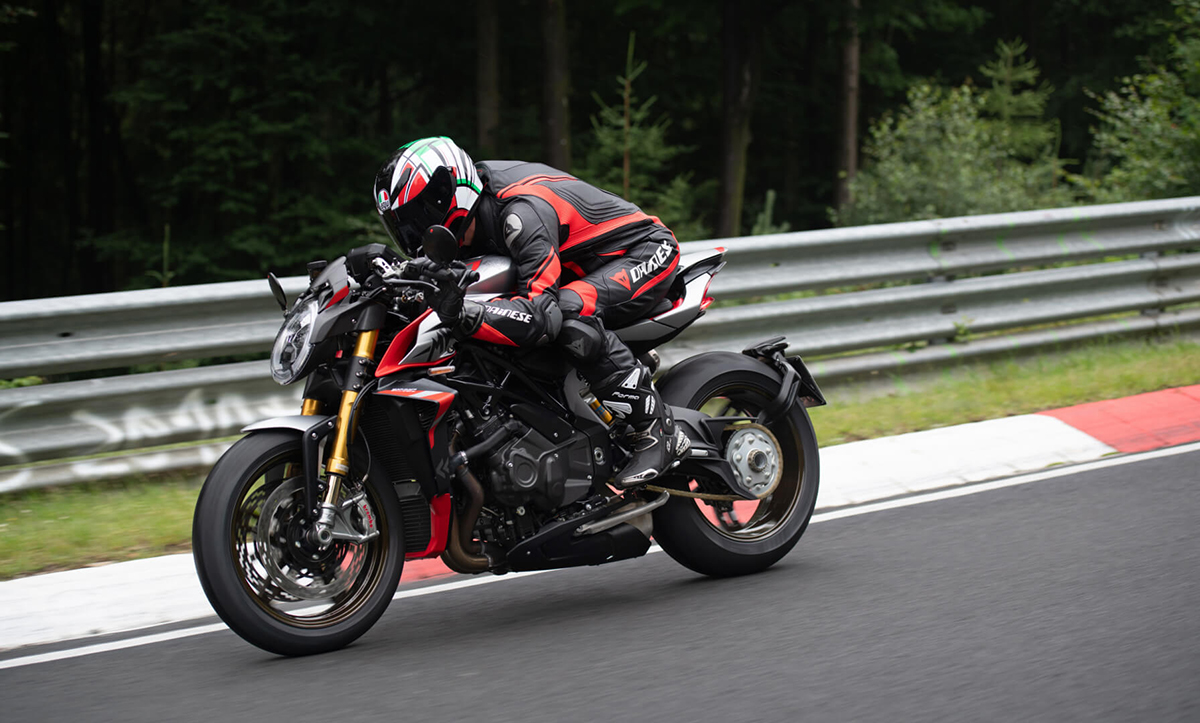
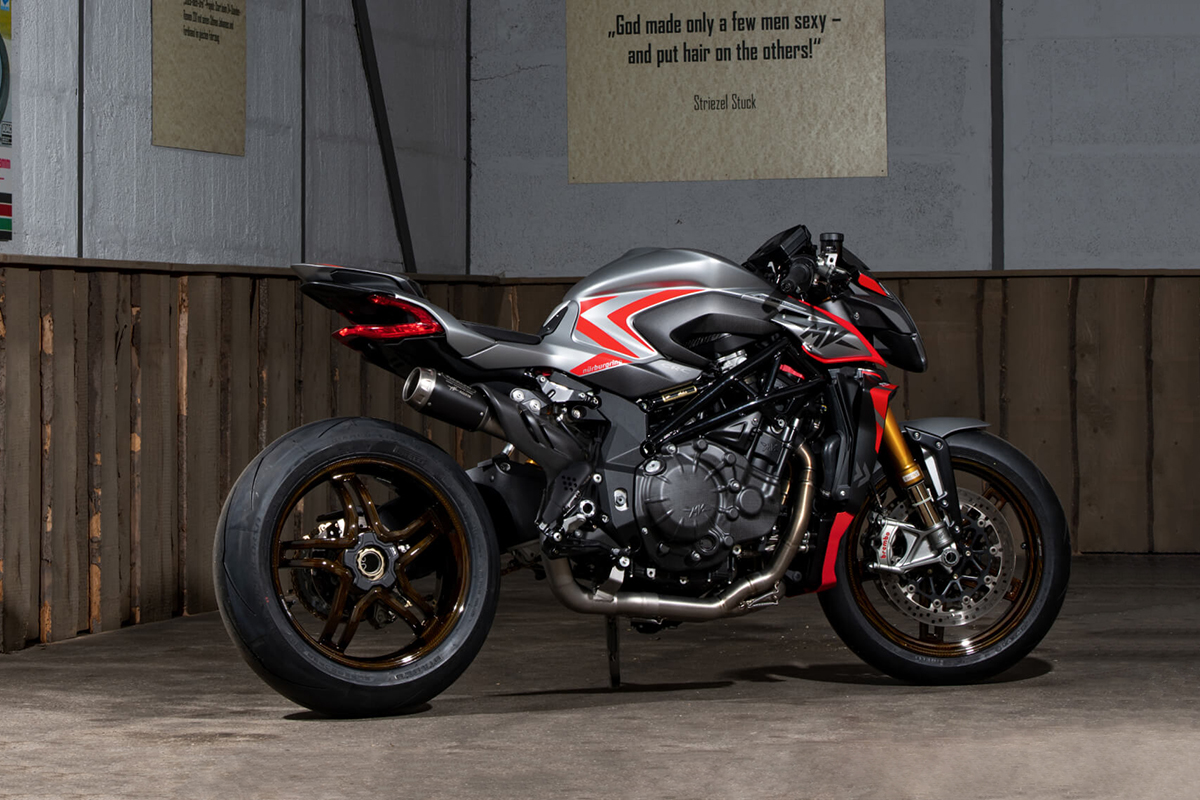
MV Agusta South Africa is honoured to offer the only Brutale Nürburgring 1000 that will be available in Africa. Limited to 150 units worldwide, number 134 will be coming to South African shores soon but don’t expect it to be in the showroom for long!
The Brutale Nürburgring 1000 is the most extreme MV Agusta built to date with the emphasis on making the motorcycle as light as possible. The Nürburgring 1000 shares the same electronics package as standard as fitted to all the new MV Agusta’s, including Cornering ABS, Inertia Platform, New Colour 5.5” TF Dashboard, GPS and Bluetooth, MV RIDE APP, Navigator integrated Dashboard, Full LED Lighting, Wheelie control, Rear wheel mitigation, Launch Control, NEW EAS 3.0 up/down shift and Cruise Control.
Image source: www.mvagusta.com
The new Brutale engines as fitted to the 1000RS/RR, RUSH and Nürburgring have undergone several high-performance enhancements. The Nürburgring comes with the Race Kit which includes a full titanium exhaust, Performance ECU, BST Carbon wheels, forged adjustable footpegs, carbon fibre silencer cover, carbon fibre airbox, and carbon fibre engine covers and carbon fibre boy kit.
Image source: www.mvagusta.com
The point of building this extreme MV Agusta was to make the motorcycle as light as possible matched with 215HP with superb handling making it incredibly quick around the Nürburgring in Germany with a top speed of over 300km/h.
Image source: www.mvagusta.com
The chassis features fully adjustable Öhlins front and rear electronic suspension, Öhlins electronic steering damper, while the engine features new sintered valve guides, DLC Coated Tappets to reduce friction, 16 Radial valves and new camshaft profiles to optimise the torque curve.
Although the New 2022 MV Agusta range of motorcycles looks familiar they are all completely redeveloped offering superior performance, reliability and exclusive look and feel.
Image source: www.mvagusta.com
MV Agusta Brutale Nürburgring 1000
For more information on the bike featured in this article, click on the link below…
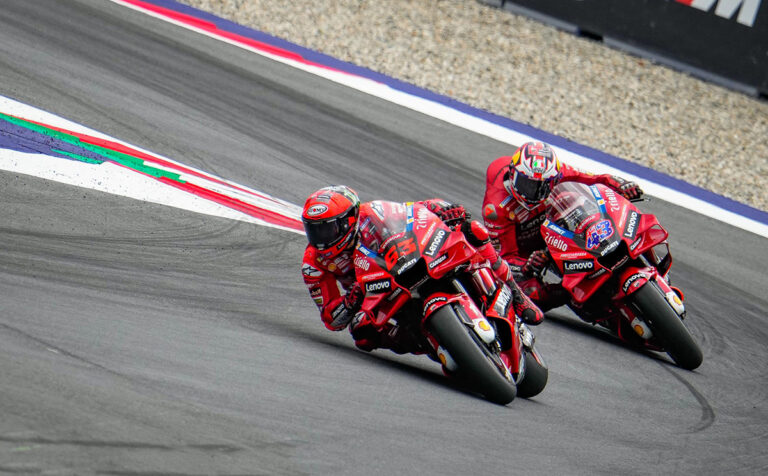
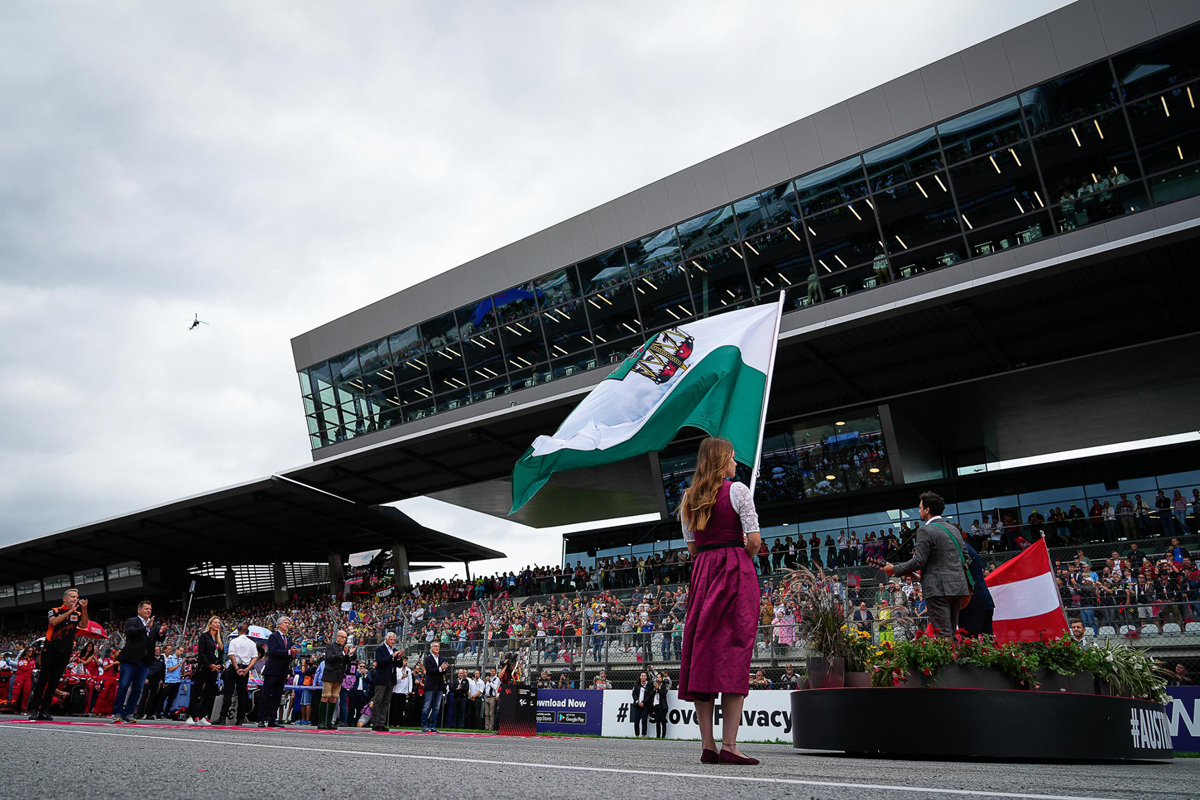
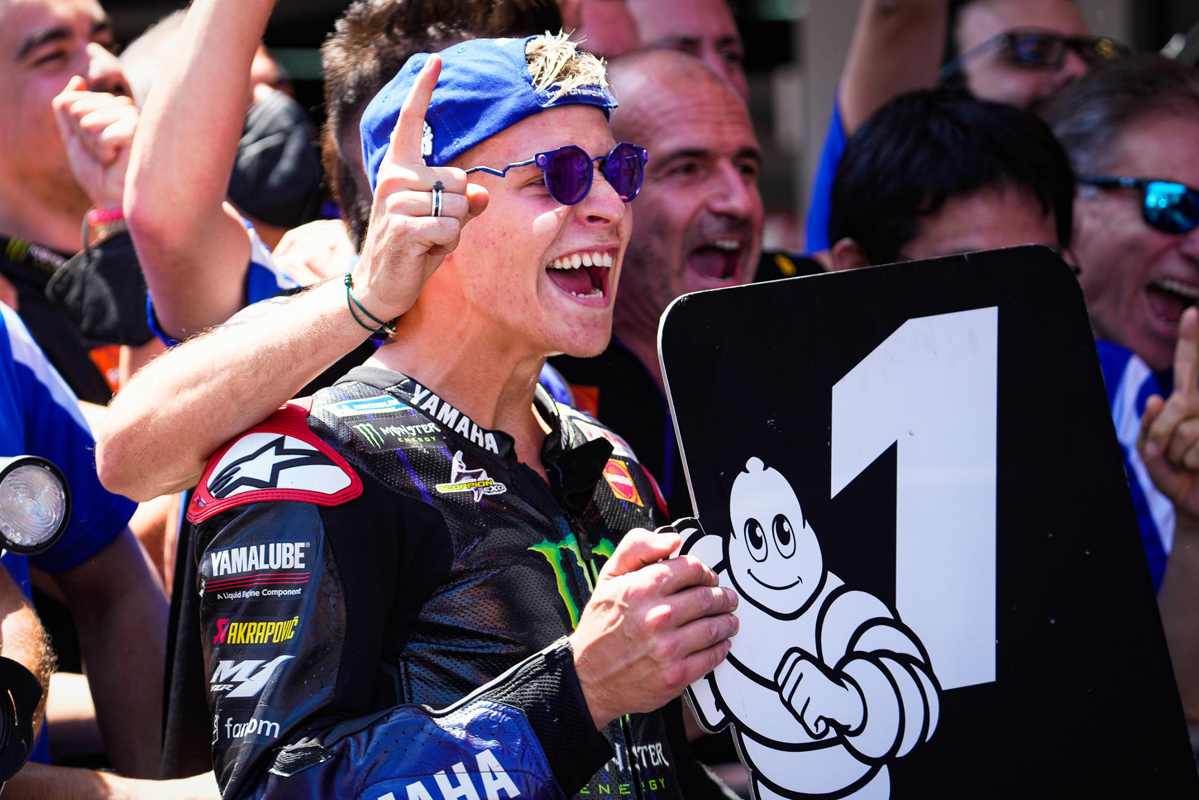
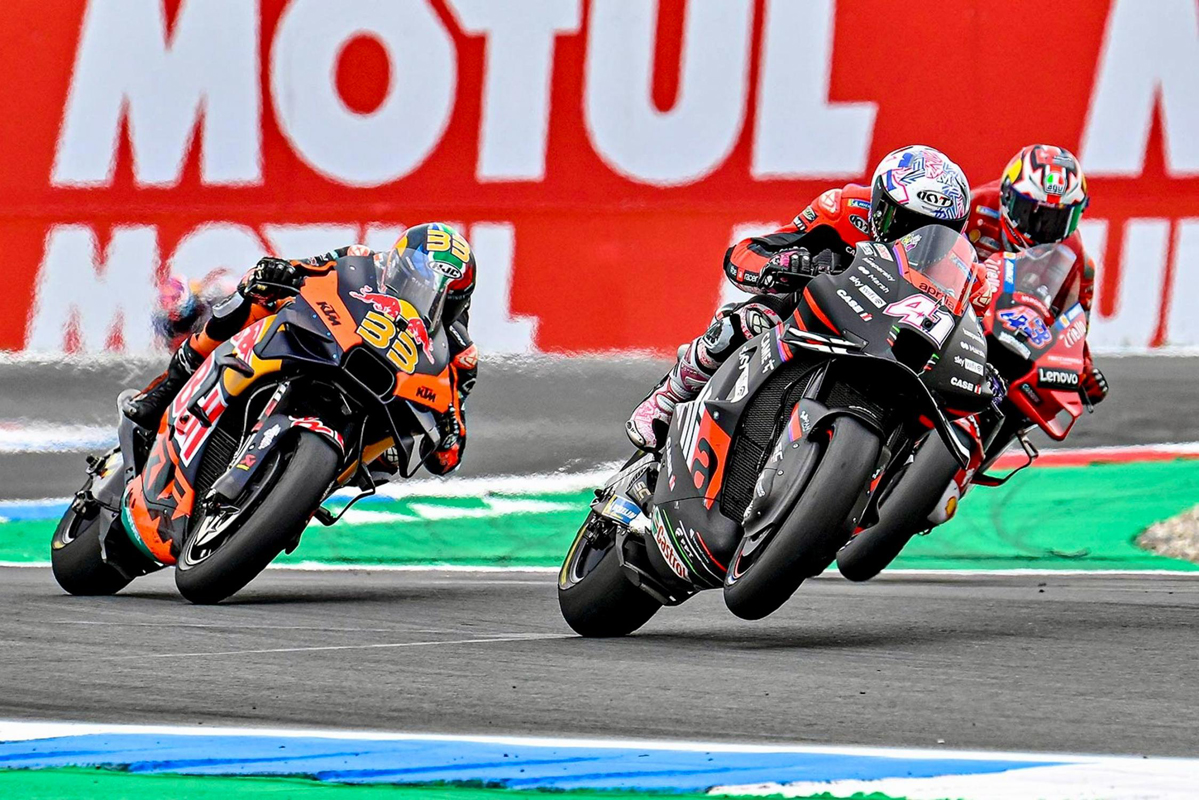
For sheer excitement, it would be hard to beat the Austrian MotoGP race of 2021, which ended with a nail-biting final lap as Brad Binder skated to victory wearing slicks on a wet track with wet-tyred rivals catching him hand over fist.
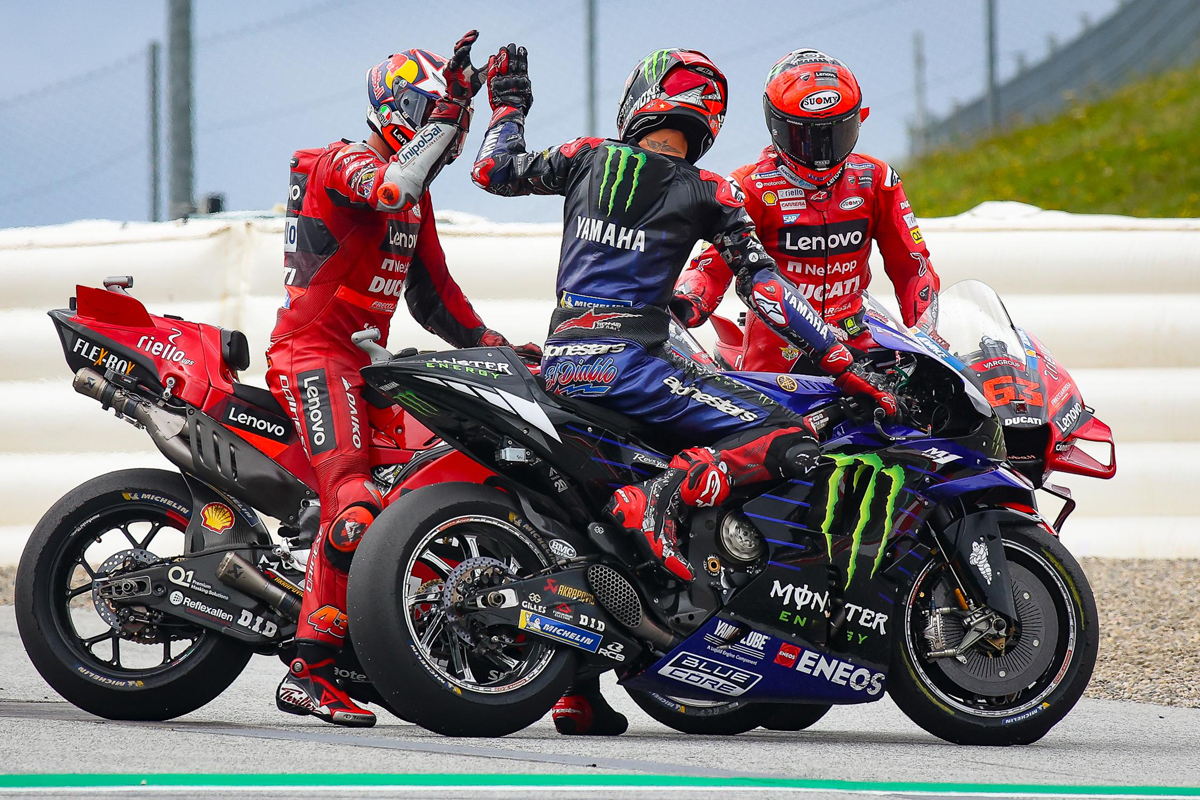
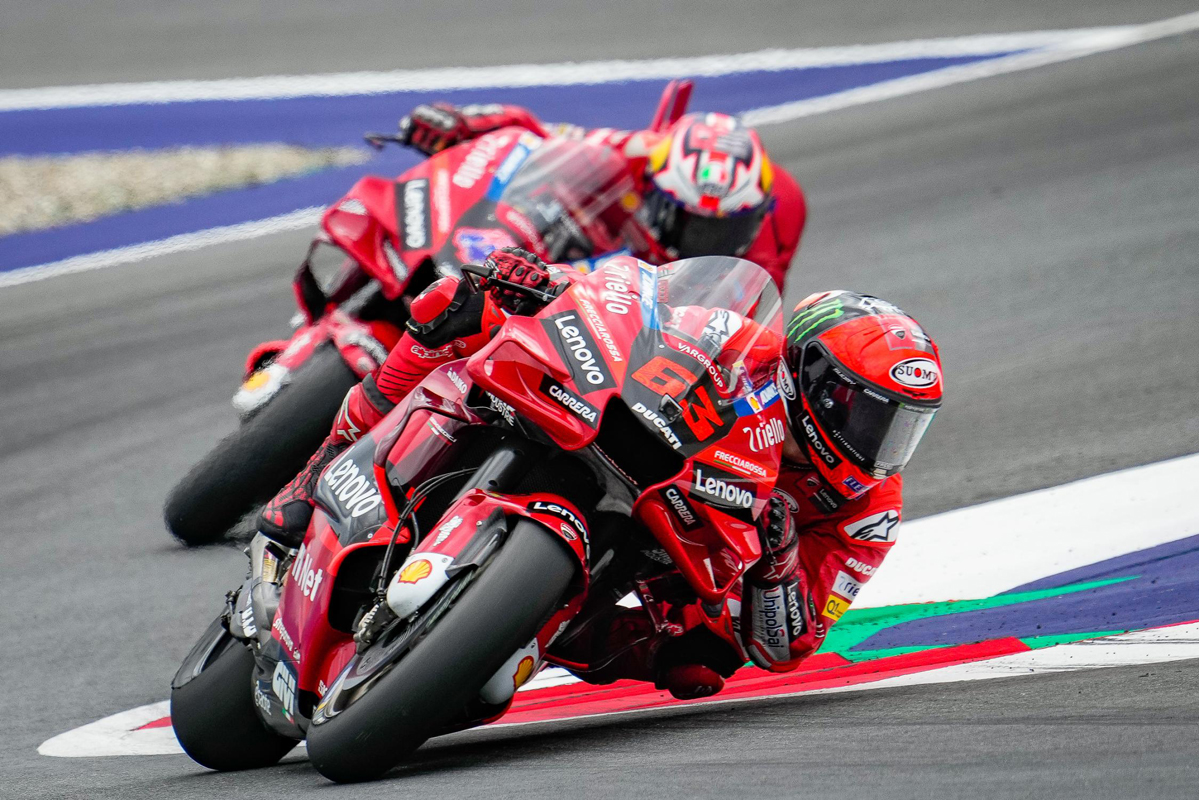
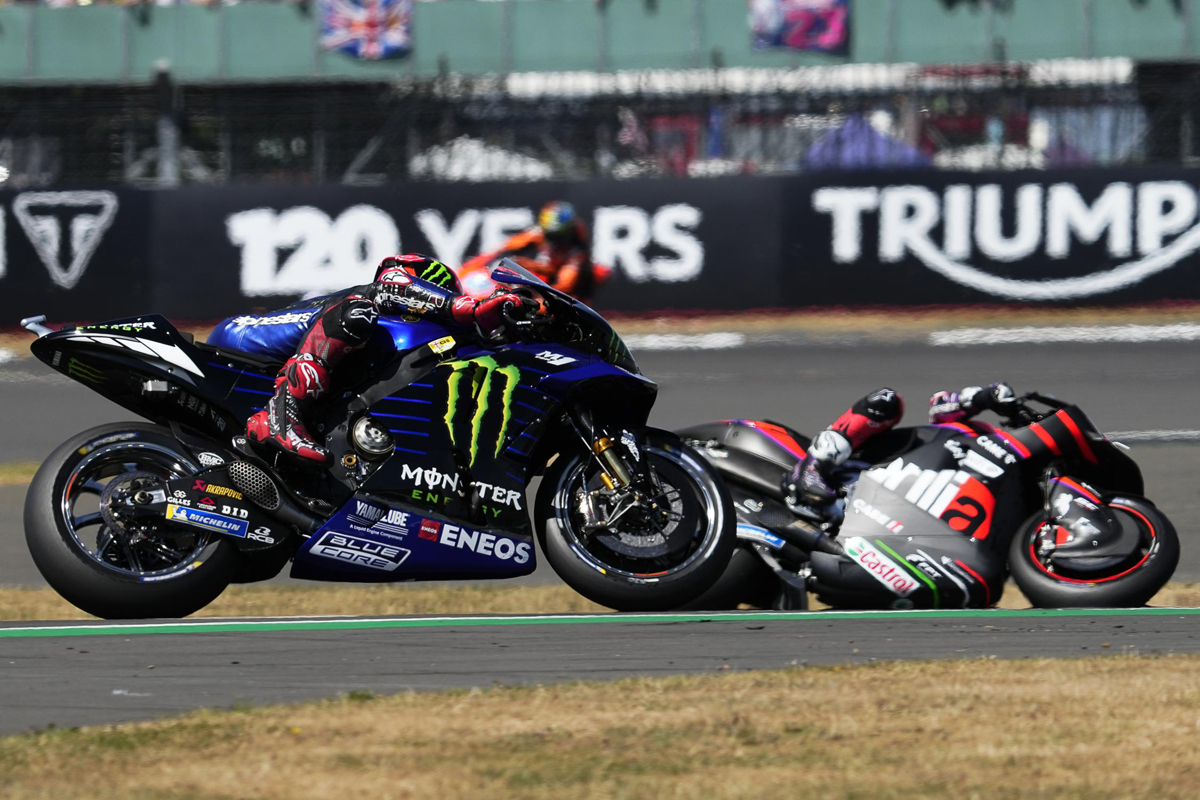
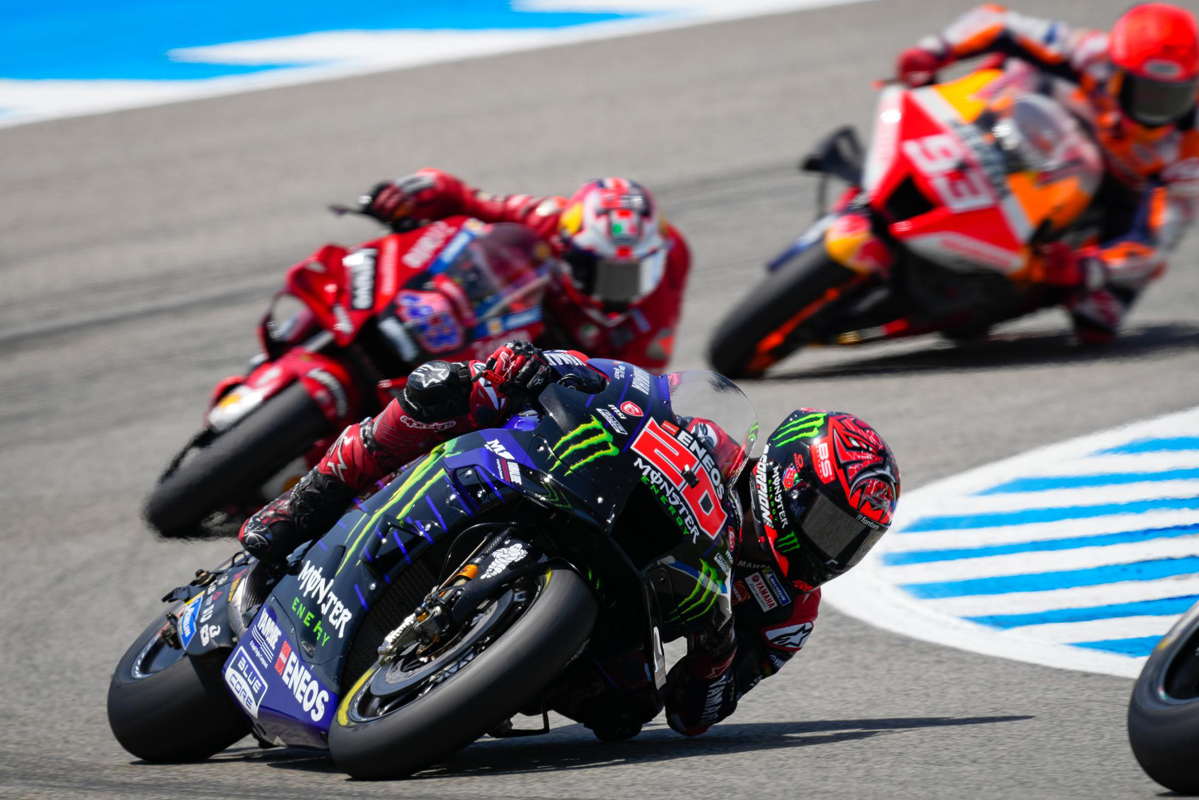
If 2022’s race was never going to match 2021 – and, indeed, it didn’t – that’s not to say it wasn’t a good race. Perhaps not the most overtaking or close fighting but enough to keep things interesting for 28 laps, including one of the most audacious overtakes of the season when Fabio Quartararo got past Jack Miller’s Ducati at the new chicane on the curving uphill section after turn one.
Image source: www.motogp.com
A Yamaha challenging a Ducati for second place in Spielberg was something no one could have predicted; a rider overtaking another between the two corners that comprise the chicane, as opposed to under braking for the first corner of the chicane was something else altogether. It was simply astonishing, all the more so when you consider that the next Yamaha was languishing down in 13th position (Morbidelli, whose dreadful season continued when he crashed out at the same chicane where Quartararo showed his genius.)
It was such a topsy turvy race. If a Ducati victory was almost guaranteed and Bagnaia subsequently made it look easy, that hid an awful lot of ups and downs, crashes, run-offs and retirements, all of which affected the final result more than overtaking.
Image source: www.motogp.com
For too long now, overtaking has been increasingly difficult as riders are on the ragged edge of front tyre performance. Michelin has come under constant criticism for the performance of the front tyre for a long time now but it would be unfair to lay all the blame at their door.
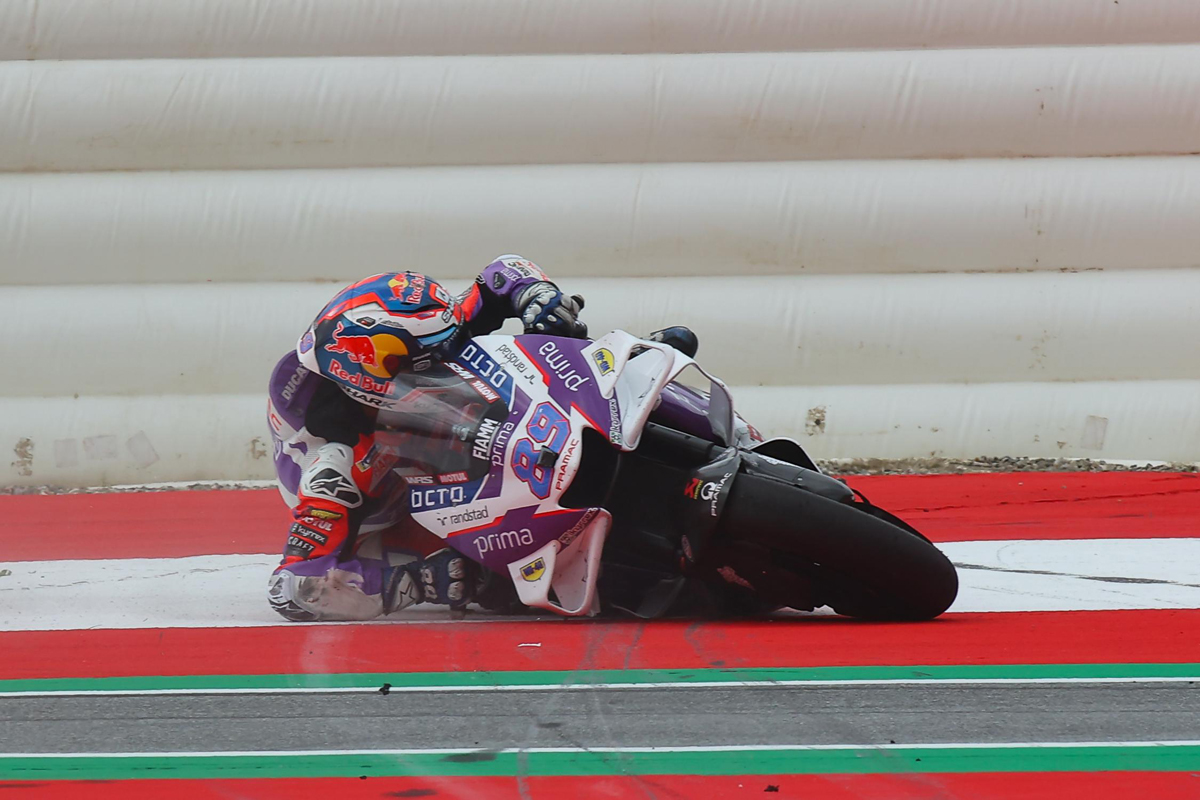
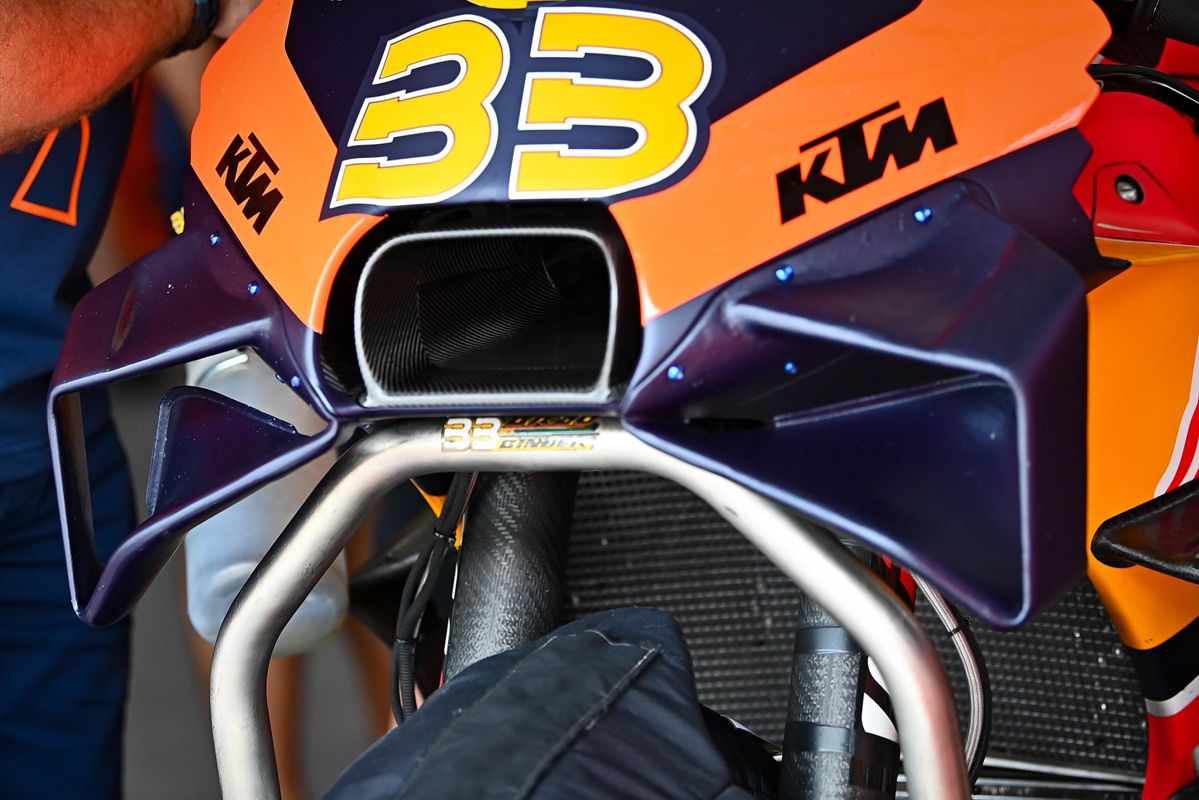
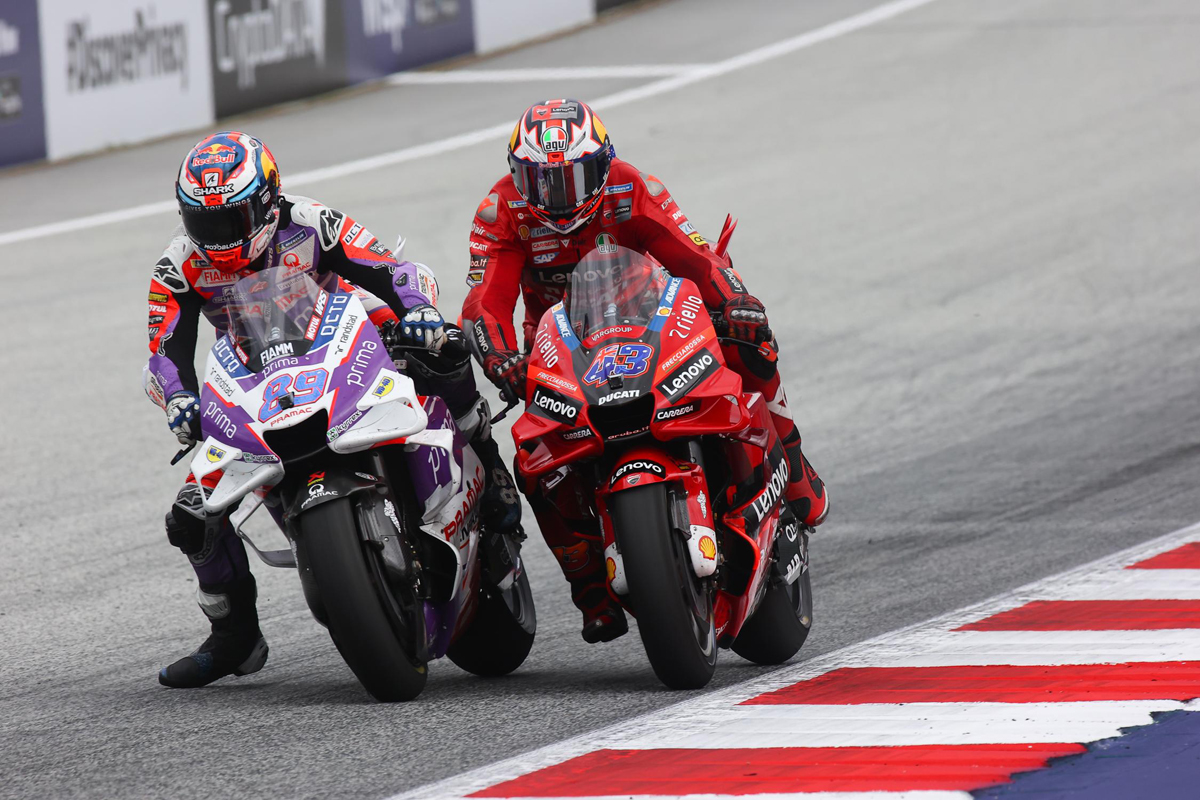
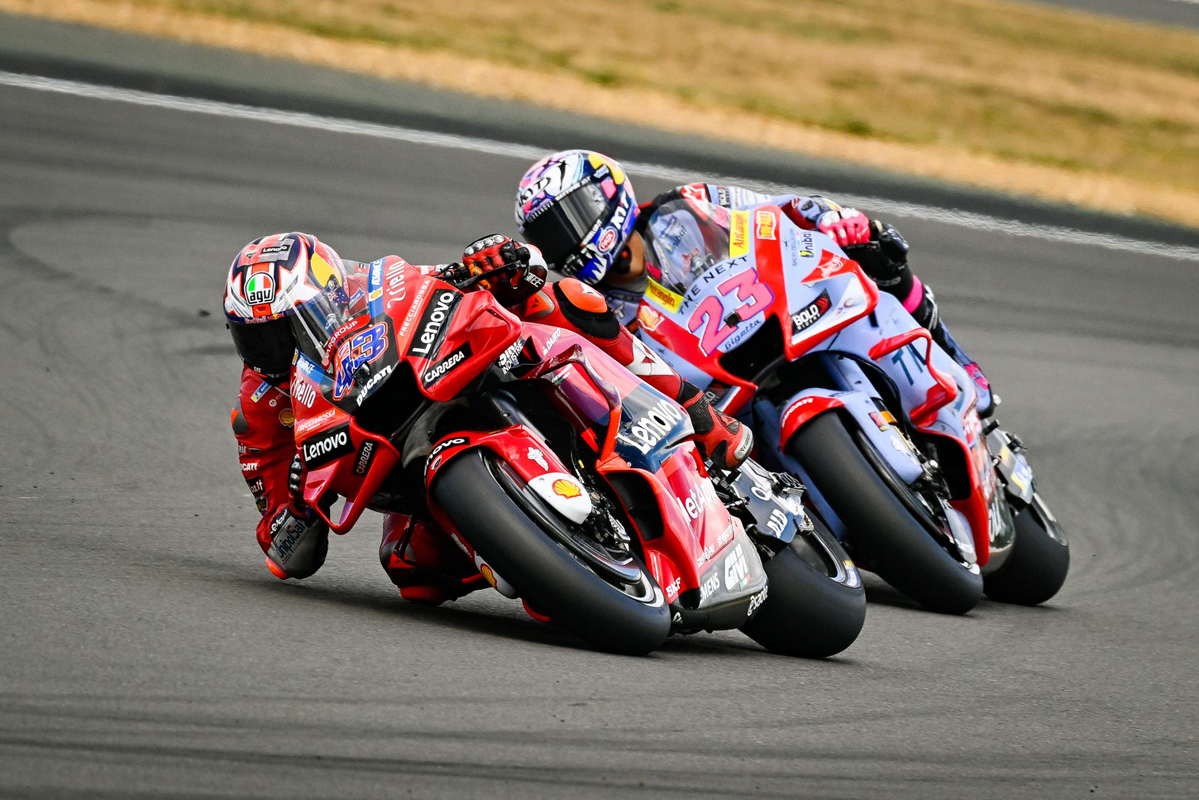
The Michelin front tyre was designed for a certain set of load parameters but developments in downforce aero technology have overloaded the front tyre. That means that when a rider gets close to the bike in front in order to attempt an overtaking manoeuvre, the front tyre overheats and loses grip as the pressure rises inside the tyre and the rider simply has nothing left with which to make a pass. Look at what happened to Jorge Martin when he tried to out-brake Jack Miller into turn one after following him closely for a lap or two: he just lost the front end and slid off the track, luckily not taking Miller with him.
Image source: www.motogp.com
“When you have a control-tyre championship, then the manufacturers have to design their motorcycles around the tyres,” Piero Taramasso, Michelin Motor Sport Manager said. “But by adding all the aero and the devices, then they aren’t designing their motorcycles around the tyres.”
So, for riders to complain that the tyre doesn’t match the motorcycle is a little unfair as the motorcycle has been developed out of all recognition to the motorcycle the tyre was designed for.
Image source: www.motogp.com
One temporary solution is to try and make a tyre that can run at lower pressures. Michelin is working to reduce the minimum tyre pressure than can be run on the current front tyre.
“I’d like to say that next year you can go to 1.8 or 1.7 bar with the tyre we use at the moment,” revealed Taramasso. “But we cannot go lower than this. When we started using this tyre five years ago the minimum pressure was 2.1 bar, then we went to 2.0 and then to 1.9…
Image source: www.motogp.com
“The goal (for the brand new tyre that might appear in 2024) is 1.7 bar and to make the tyre less sensitive to temperature and pressure changes,” said Taramasso. “The tyre will be very different, with a new profile and it will be made with different materials.”
It’s not going to be an instant fix but at least the problem is being addressed.
Another bombshell was dropped by Dorna in Austria. From 2023, MotoGP will follow other motorsport categories – Formula One, World Superbike, Touring Cars – in including Saturday sprint races over the MotoGP weekend. These would take the form of roughly half race-distance races, offering half points to the top nine finishers: 12 points for first, nine for second, seven for third, six for fourth, five for fifth, four for sixth, three for seventh, two for eighth and one for ninth.
Image source: www.motogp.com
Where will the sprint race fit into the overall schedule and how will both riders and machinery be able to stand the extra strain and pressure?
The two Friday practice sessions will now decide who has to qualify in Q1 and who will go straight through to Q2. Saturday’s early morning Q3 session now becomes like the current free practice 4, which is the race-pace session directly before qualifying where the rider can further fine-tune the race set-up rather than the out-and-out qualifying speed set-up.
Image source: www.motogp.com
Q1 and Q2 will take place earlier on Saturday, with the sprint race starting at 3 pm on Saturday. Overall track time will remain the same as in current race meetings so no extra strain will be put on engines or affect tyre allocations.
What might the concerns be? Well, it could be argued that having a practice session, two qualifying sessions and a race on the same day is a bit much but the great god television likes the idea of more coverage to keep people watching and looking at the advertising hoardings, let alone getting more people through the gates at the track on the Saturday.
Image source: www.motogp.com
Also, while the race start is one of the most exciting moments of any race, it is also one of the more dangerous moments and no one wants to be ruled out of the main race (or, worse, for a few races) because of another rider’s mistake in the sprint race.
Naturally, there are dissenting voices in the paddock, with some riders hating the idea and others loving it.
Image source: www.motogp.com
Aleix Espargaro: “I want to believe that the management of the championship thinks that this is the best thing for the sport, for the show, for the popularity of the championship. I don’t share this idea, but it’s just my opinion.
“I think it’s not the solution because I think the risk is going to be too high. I think that 42 starts (assuming a sprint race at every round in the championship, currently 21 races) in a season is too many. Dorna says that we will have the same track time, so nothing changes, but this is bullshit because there’s a big difference (in risk) between FP4 and a race, where they give points for the championship.
“But they choose what they want and we have to adapt. Let’s try, maybe it’s a good solution…”
Jack Miller was one of the voices that were unequivocally up for the idea:
Image source: www.motogp.com
“I’m a massive fan – it’s another chance of a bonus! Why not try it? I’ll enjoy it – it’ll be all or nothing. As a rider, it’ll make you want to risk more, but you won’t have to worry about tyres, fuel, or physical condition because in a lot of races you can’t push yourself to the absolute maximum the whole time, but for half-race distance, you should be able to. For sure it will increase the risk but at the end of the day we race motorcycles, we don’t do ballet. Why not (try sprint races)? Give it a crack and reassess at the end of the year.”
Image source: www.motogp.com
While the likes of Formula One currently has sprint races at selected races in a season, it looks as if Dorna is intending their system to be a permanent part of every race weekend. If that is the case, then the only thing to do is try it and reassess at the end of the season, as Miller suggests.
Personally, I think we are just going to have to wait and see if it is a good thing. The current system of one race on Sunday has been in place since the championship started way back in 1949. Change is inevitable but we have to be careful it is not solely driven by commercial pressures and that it is good for the sport as a whole.
Image source: www.motogp.com
It is no good being a stick-in-the-mud traditionalist as much good has come in the past from shaking up the status quo and it’s not as if Dorna is suggesting a change to the race-day protocol.
Perhaps more racing to enjoy is what many fans want. As long as the teams and riders can cope and it doesn’t dilute the Sunday action, then why not give it a go?
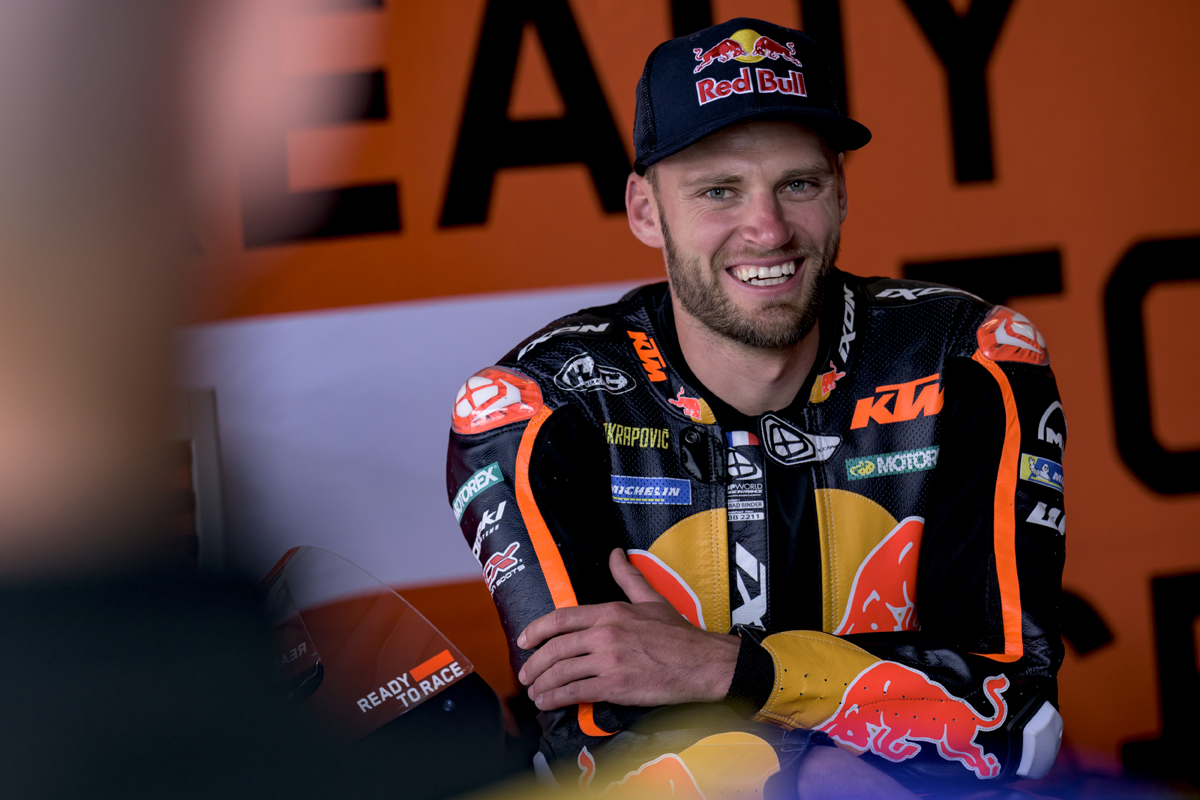
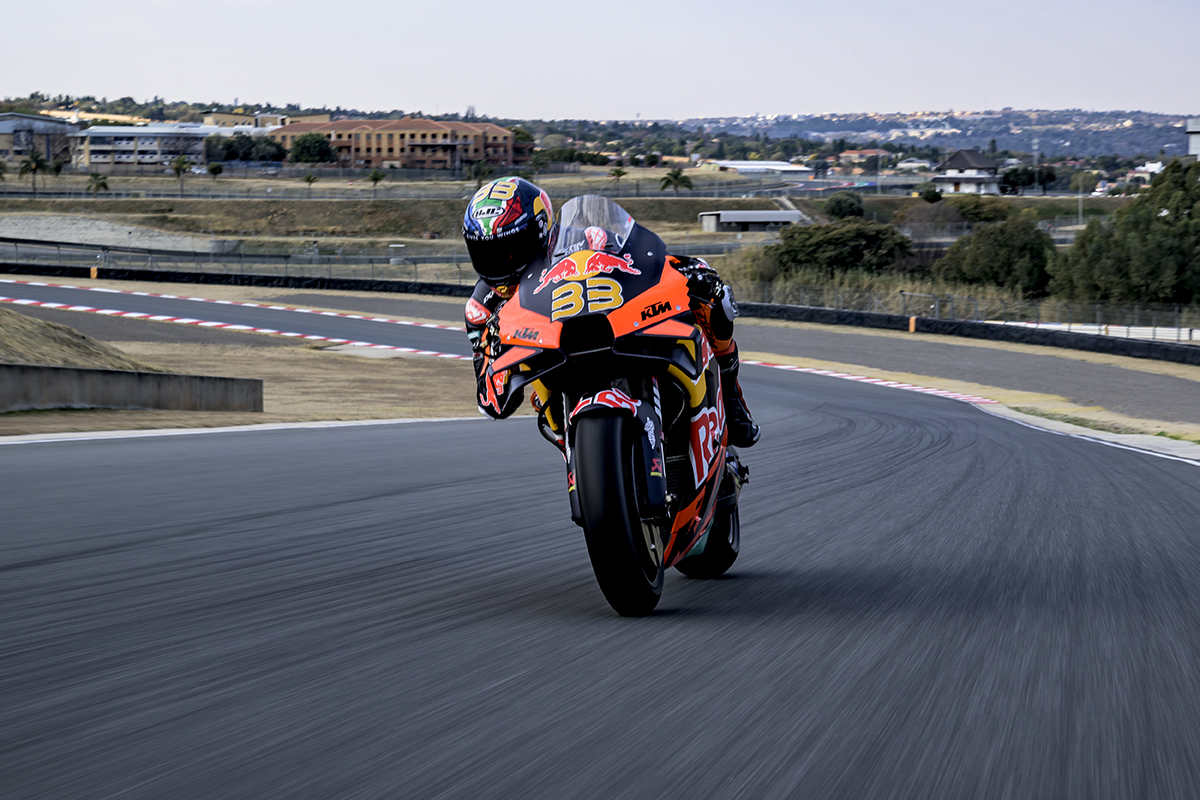
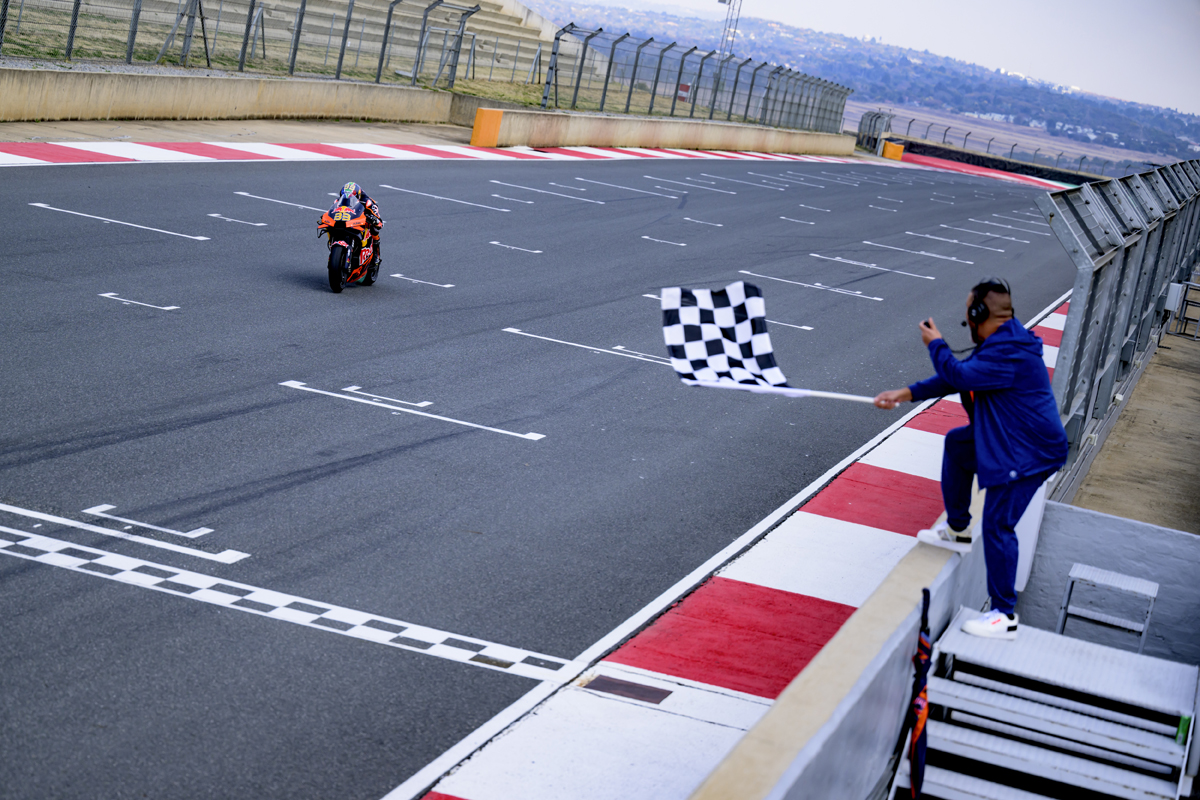
Brad Binder recently returned home to South Africa to set a new benchmark lap record around the newly refurbished Kyalami racetrack on board his KTM RC16 MotoGP bike. The project was driven by Red Bull and a 9-minute feature film was released showing a sequence of events culminating in the Superlap.
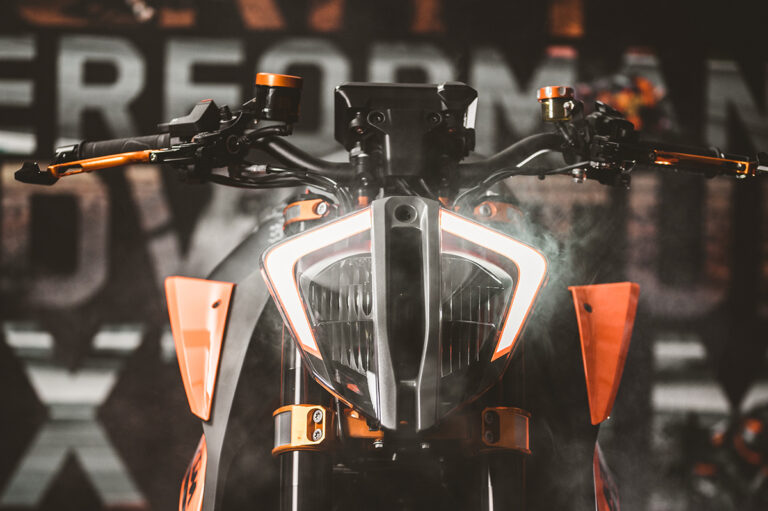
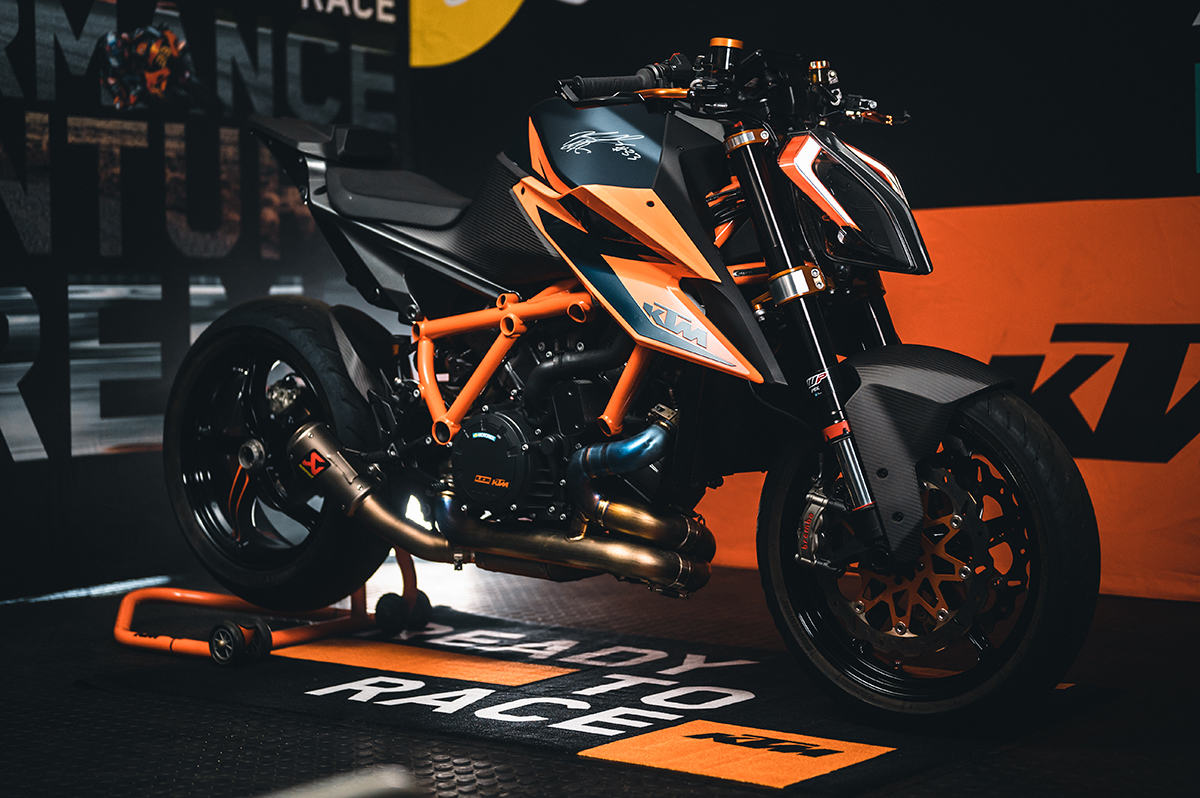
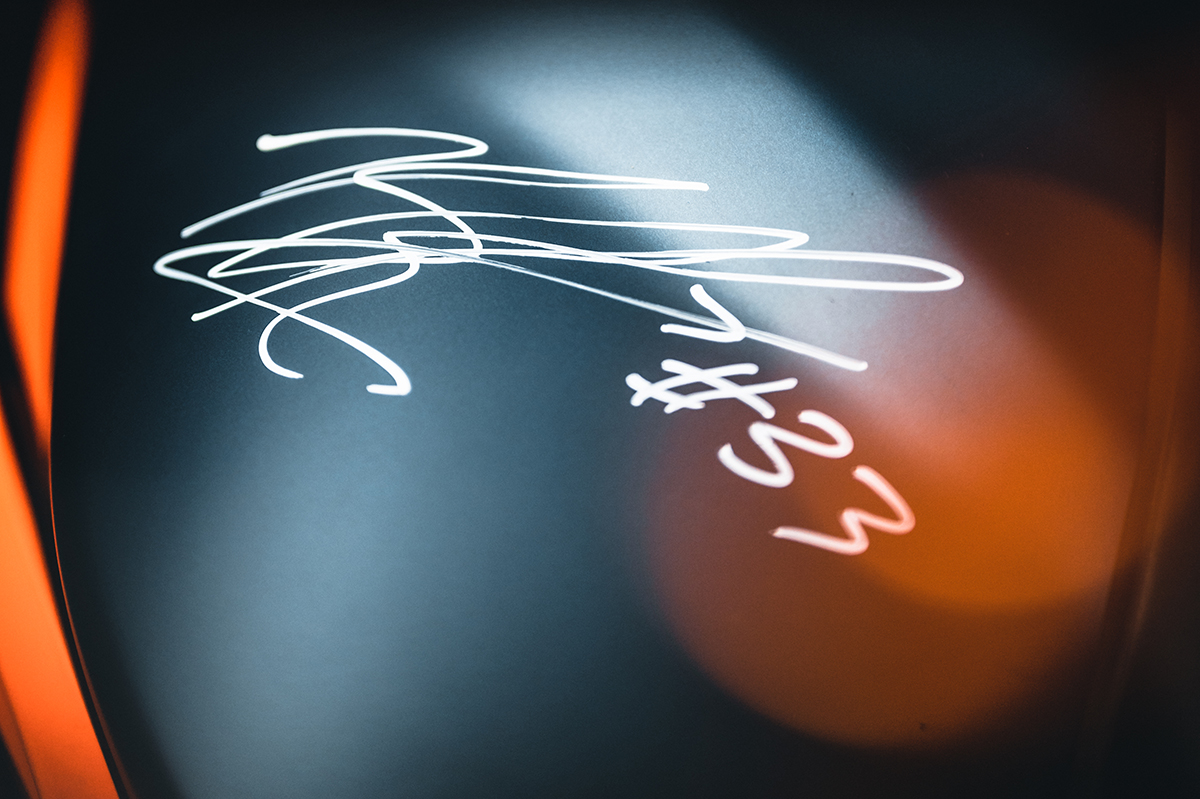
The film shows a very special 1290 Super Duke R being thrashed around Kyalami in the lead-up to the Superlap. The Super Duke is littered with a whole host of KTM PowerParts accessories, making it the ultimate track weapon and it’s adorned with Brad’s signature on the tank.
Image source: www.press.ktm.com
The Super Duke will go on auction through Facebook for 7 days starting at 12:00 Monday (22/8/2022) and ending at 12:00 Monday (29/8/2022). All bids need to be placed within the time frame mentioned and must be on the original post pinned to the top of the KTM South Africa Facebook page. The highest bidder will take delivery of the motorcycle through his/her KTM dealer of choice.
South African becomes the first rider to set a record lap at the track since 1992
Brad Binder is a two-time MotoGP™ race winner and the first South African to ever win in the premier class. Now he has also become the first rider in 30 years to set a benchmark lap time around Kyalami Grand Prix Circuit, a track that lies north of Johannesburg and just an hour from Binder’s hometown of Krugersdorp. Here is all you need to know:
Over the past decade, Binder has been rising through the world motorcycle Grand Prix racing ranks, winning the 2016 Moto3 World Championship and finishing runner-up in the 2019 Moto2 world title race. Since 2020 he has been a spearhead of Red Bull KTM Factory Racing in MotoGP, taking a maiden win at the 2020 Czech Grand Prix and a second victory in trying conditions at the 2021 Austrian Grand Prix.
Image source: www.redbullcontentpool.com
In the lead-up to this year’s edition of the Austrian event, Binder had the chance to return to South Africa to set a ‘Superlap’ on the current 4.529km layout of Kyalami Grand Prix Circuit. Using a 2019 KTM RC16 the 27-year-old had the chance to lap his home circuit at speed, an experience he described as “incredible”.
“Today was incredible, it was so much fun to go out and get the chance to ride the MotoGP bike around such an amazing track. A track that I grew up riding on,” Binder said.
Image source: www.redbullcontentpool.com
“Just to go through Turn 1 at this track is quite special because it’s quite unique, there’s nothing else like it out there and it feels cool to be sixth gear flat out and lean over on a MotoGP bike. It’s special to know that we will hold the record for a while I would imagine.”
Image source: www.redbullcontentpool.com
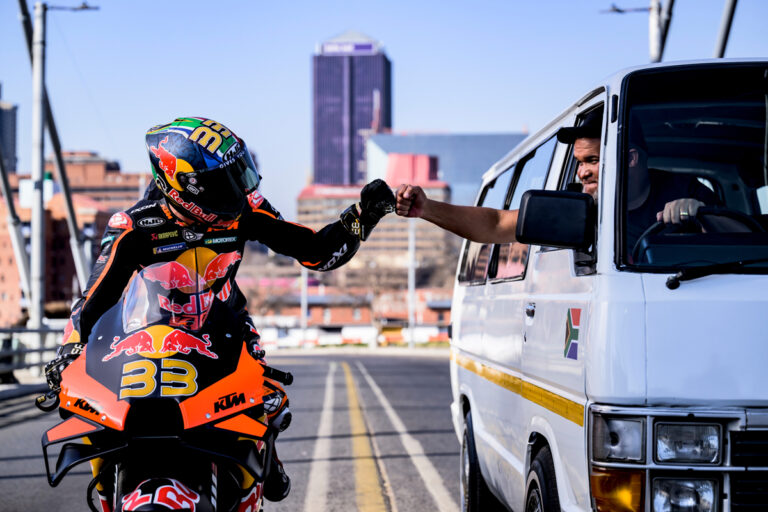
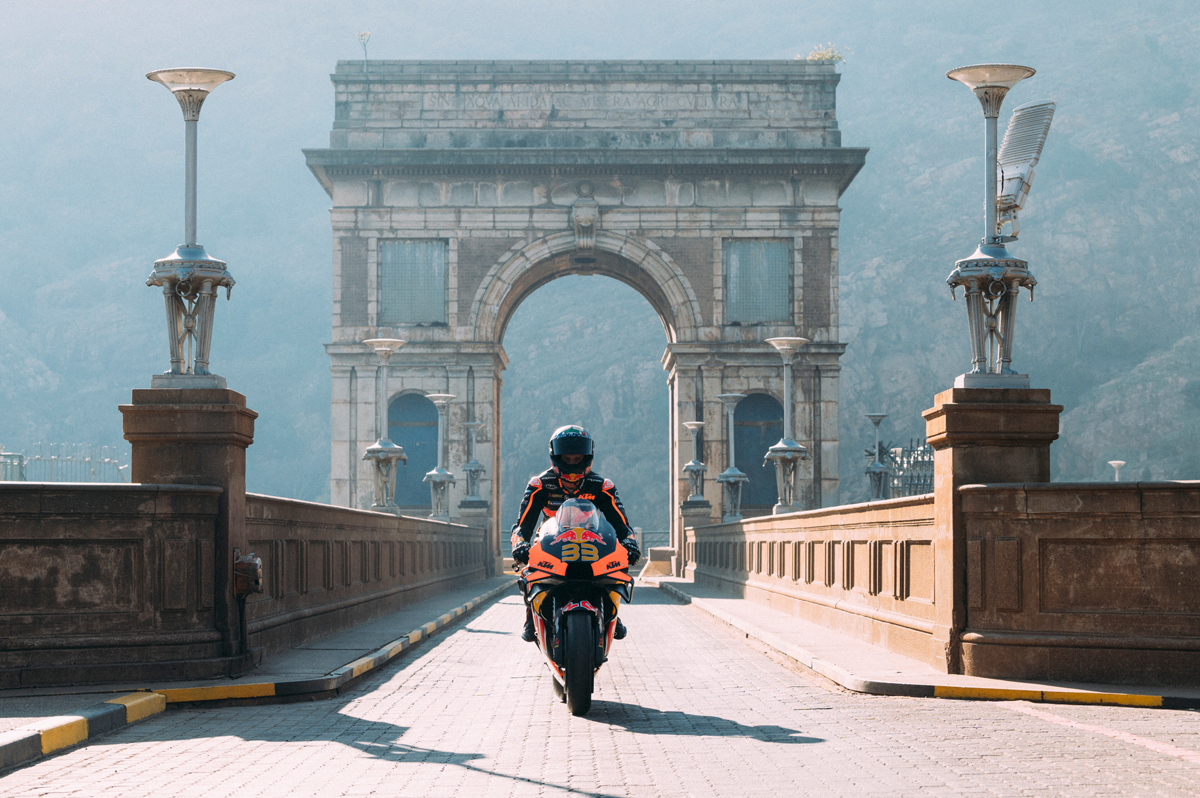
In addition to lapping Kyalami in a new fastest time, Binder was afforded the opportunity to ride the race-spec bike on South African roads as part of a light-hearted action edit that followed his preparation for the lap.
“It’s been super fun, it’s something I never thought I would do in my life, riding a MotoGP bike around in some iconic spots all over Johannesburg,” Binder added.
Image source: www.redbullcontentpool.com
Also appearing in the action edit are South African rugby captain Siya Kolisi, 13-time F1 Grand Prix winner David Coulthard and local comedian Jason Goliath, the latter describing the project as more than a racing event. “What this does is, it shows our beauty, it shows our culture,” Goliath praised.
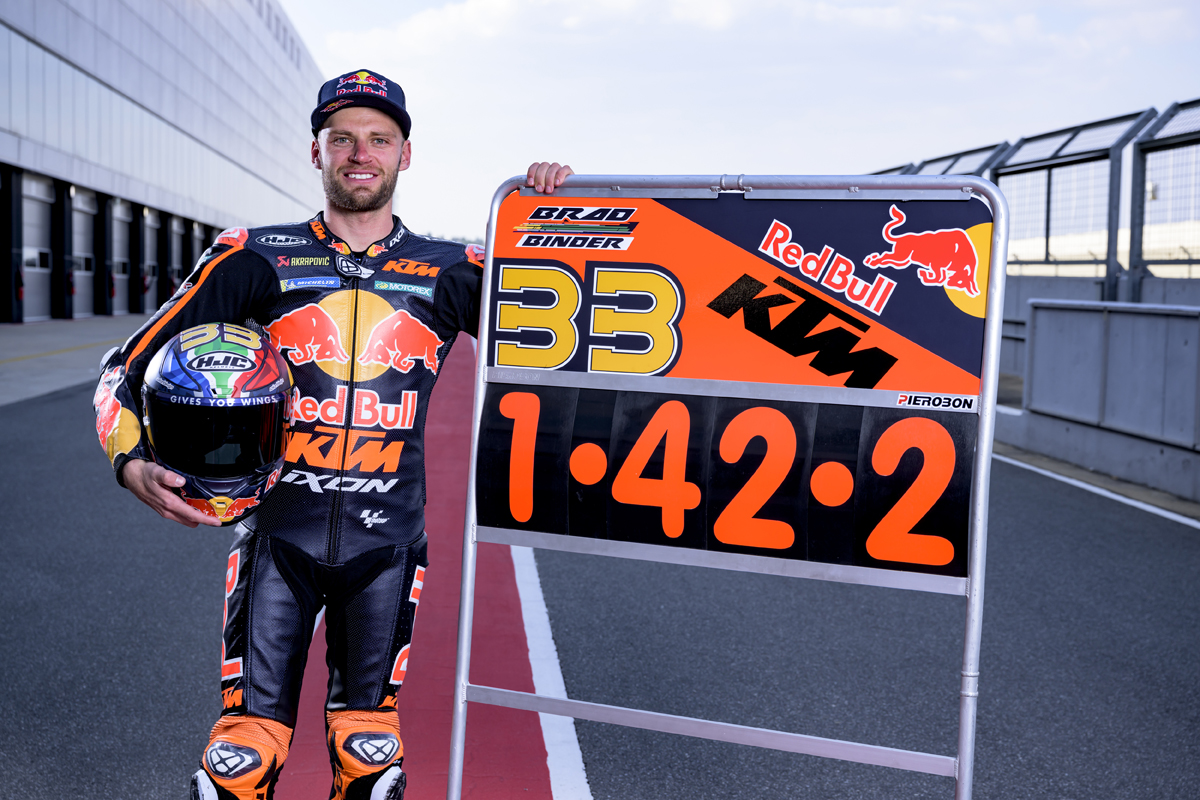
The last rider to set a record lap around Kyalami on a premier class bike was Australia’s Wayne Gardner at the 1992 South African Motorcycle Grand Prix. On a different track layout to that raced by Gardner, Binder set the standard for a modern-era MotoGP bike at 1m 42.260s.
Image source: www.redbullcontentpool.com
This weekend Binder and his Red Bull KTM Factory Racing team return to the Red Bull Ring for the Austrian Motorcycle Grand Prix. The South African is the defending winner, after sealing an astounding victory in 2021 when he remained on dry tyres in wet conditions to cross the line ahead of his rivals who had pitted for wet tyres.
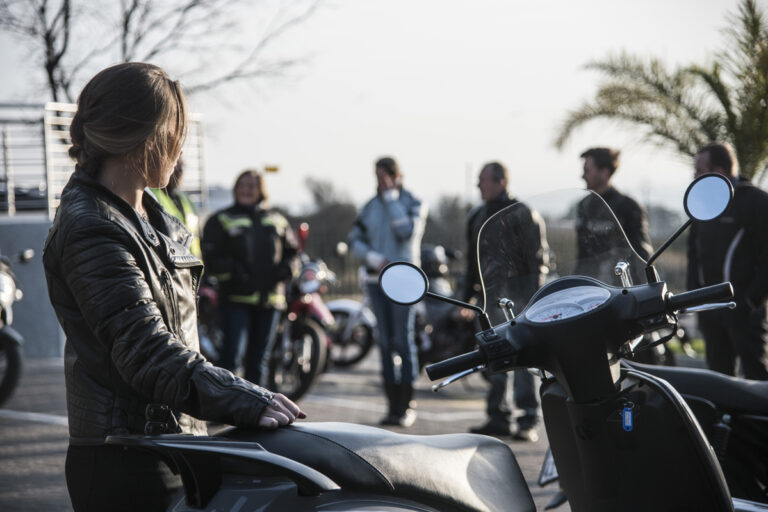
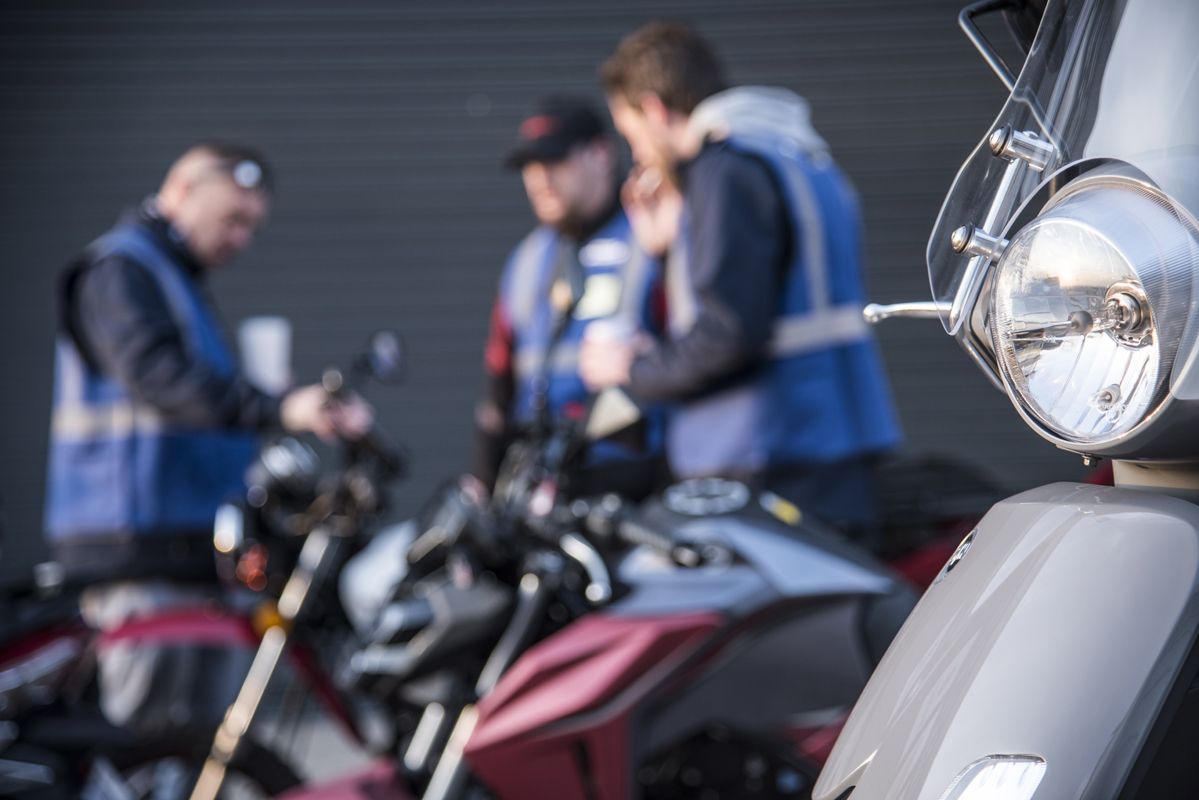
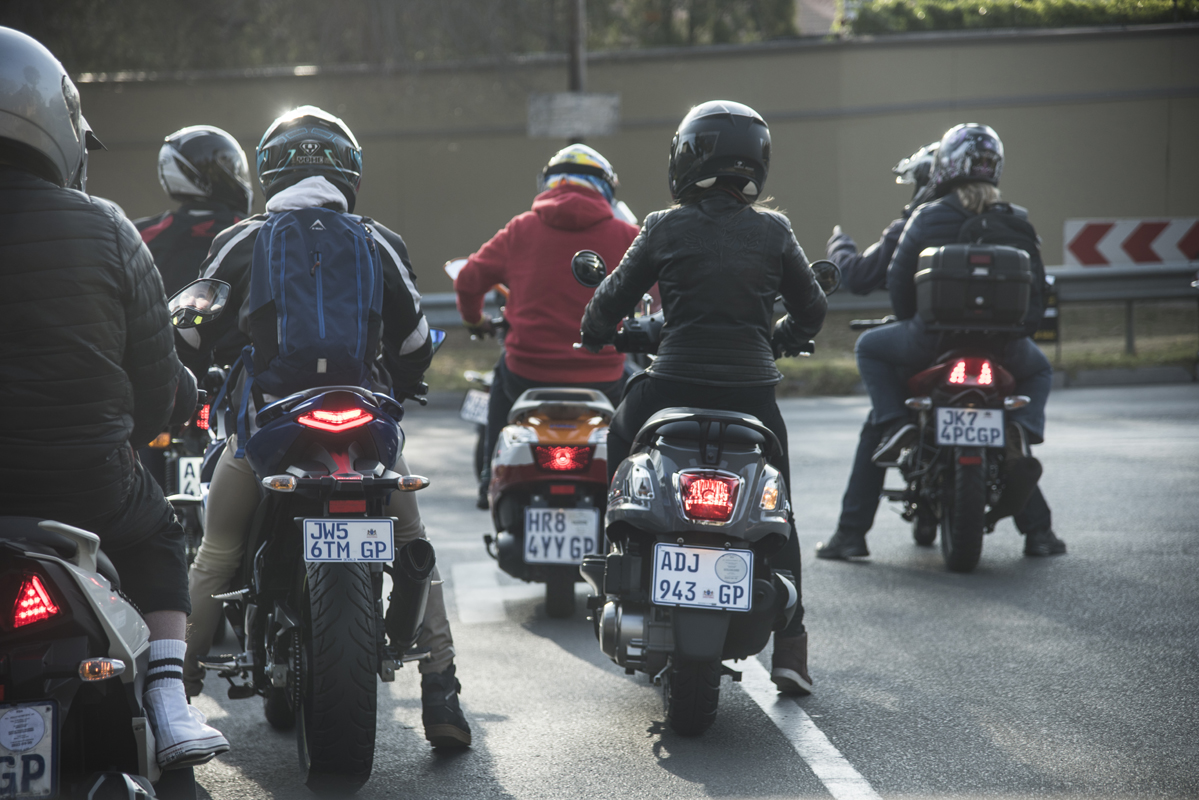
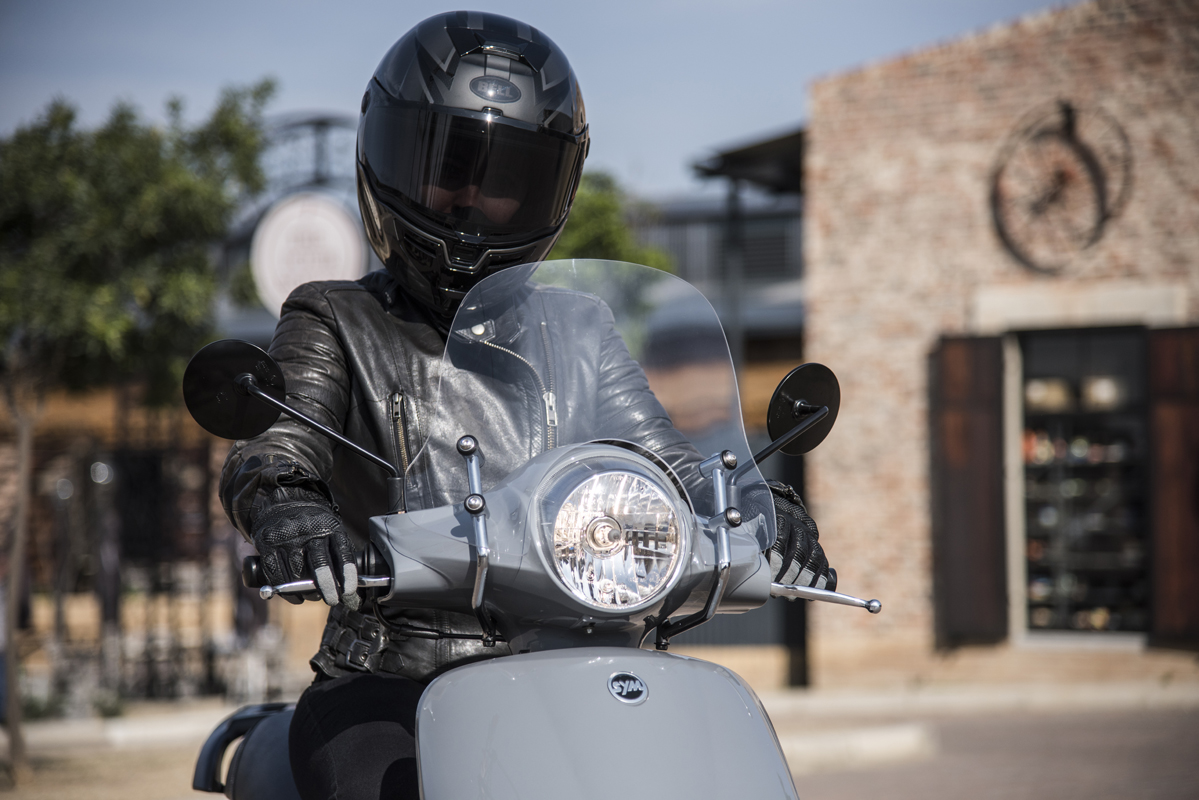
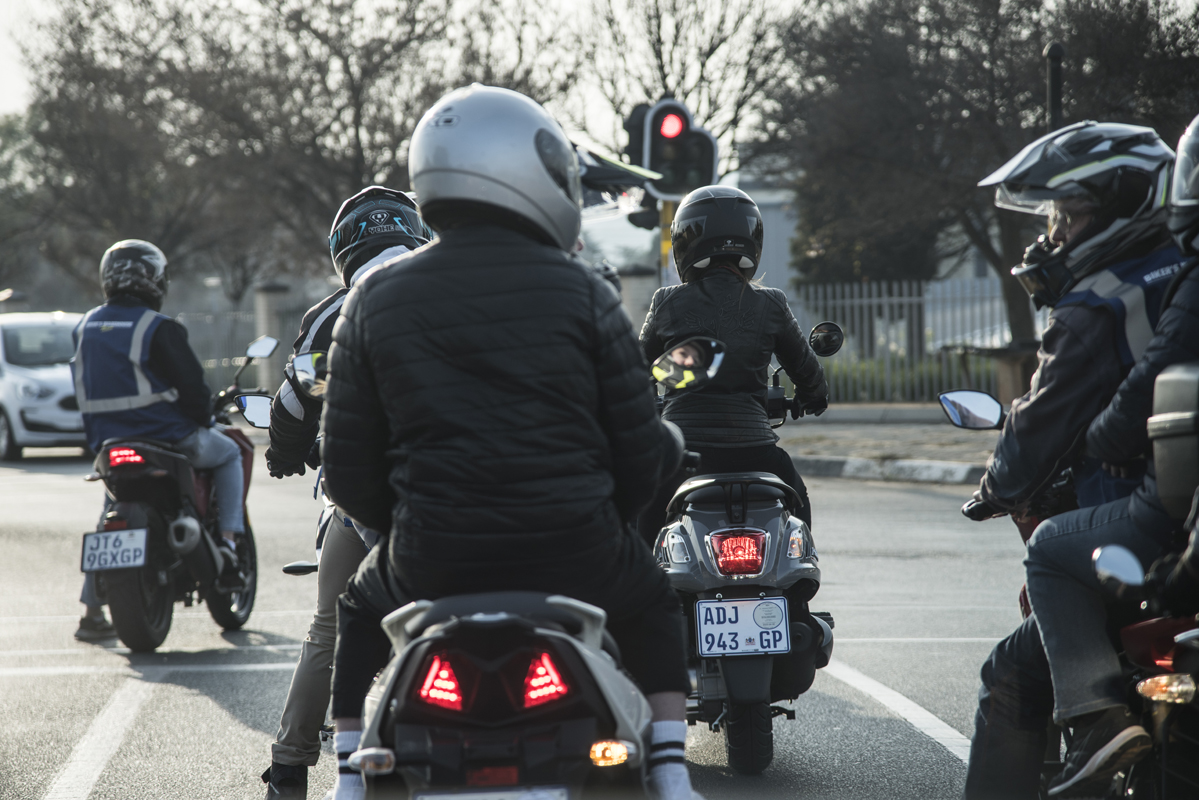
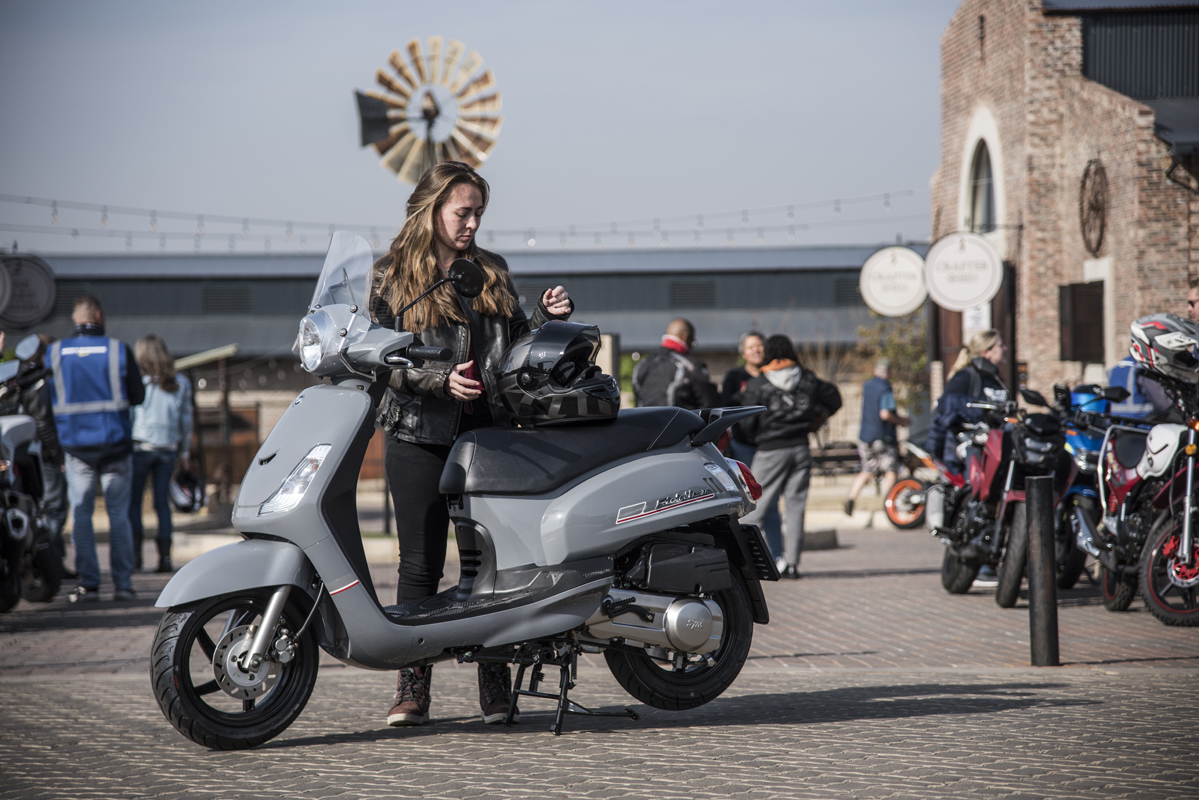
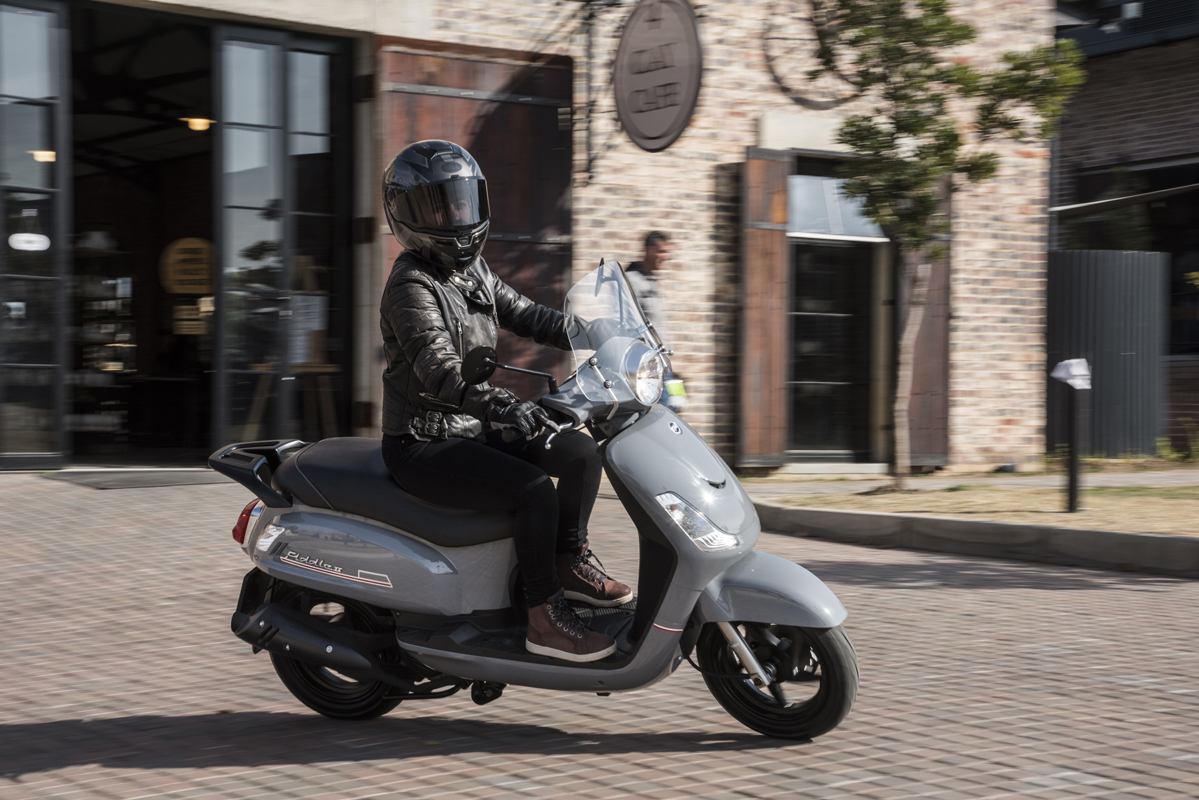
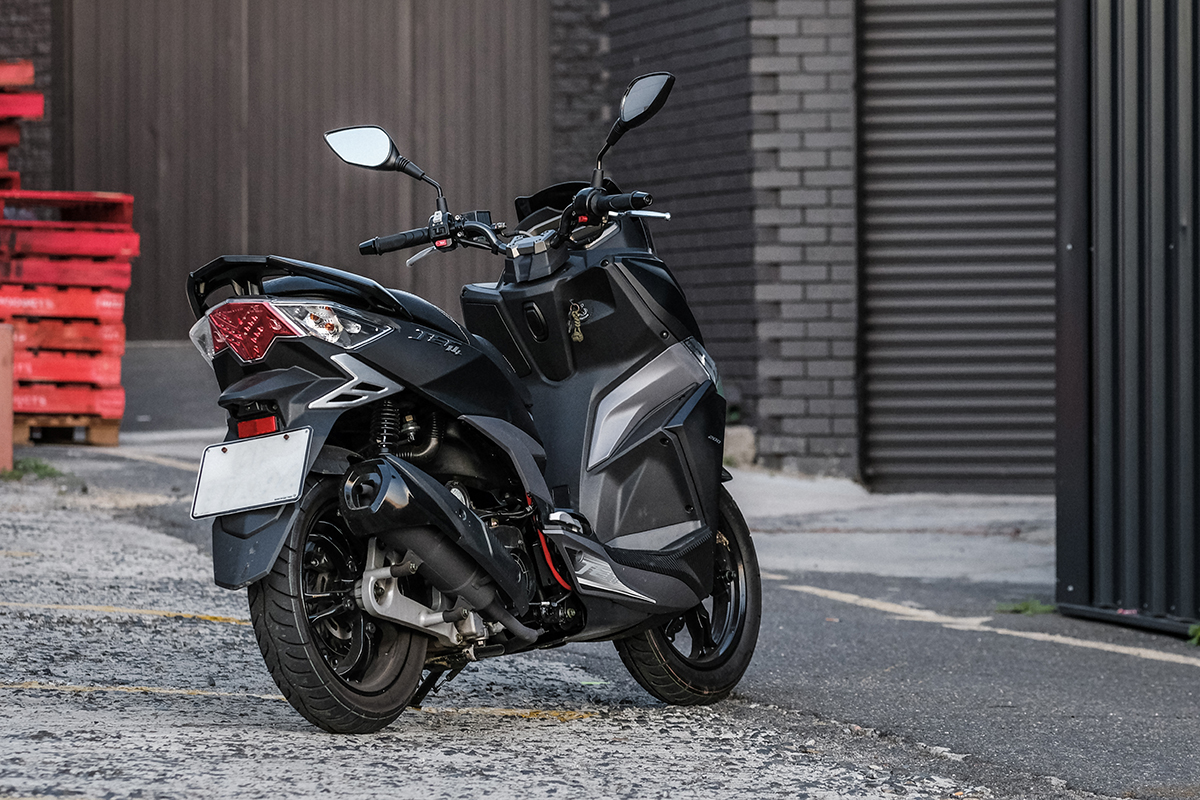
The Urban Commuter Run is an initiative started by the Biker’s Warehouse team, an initiative that creates a safe and relaxed atmosphere for new riders and for those that have been off of two wheels for a while. As human beings, it’s common for us to formulate excuses in life, excuses that stop us from doing the things we love. Some of us may even go as far as convincing ourselves that it’s too intimidating to ride a bike and that we might even get judged for riding a smaller cc bike or scooter.
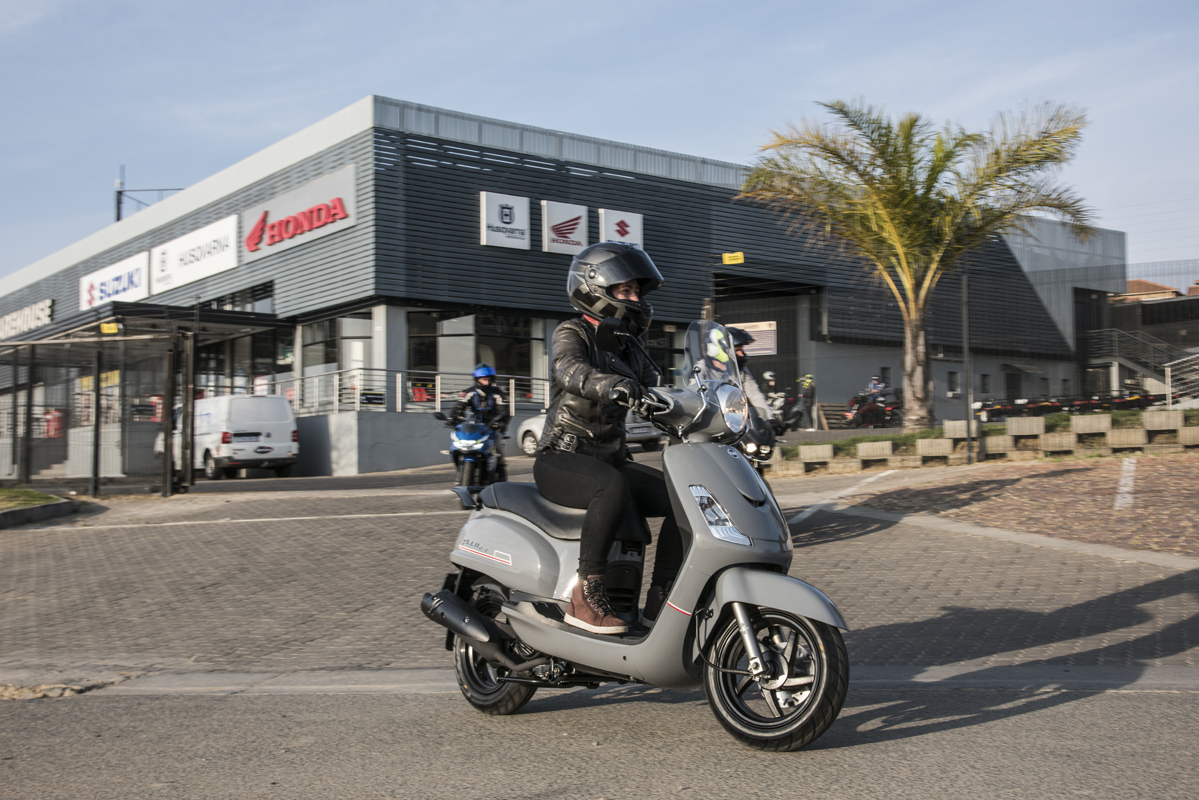
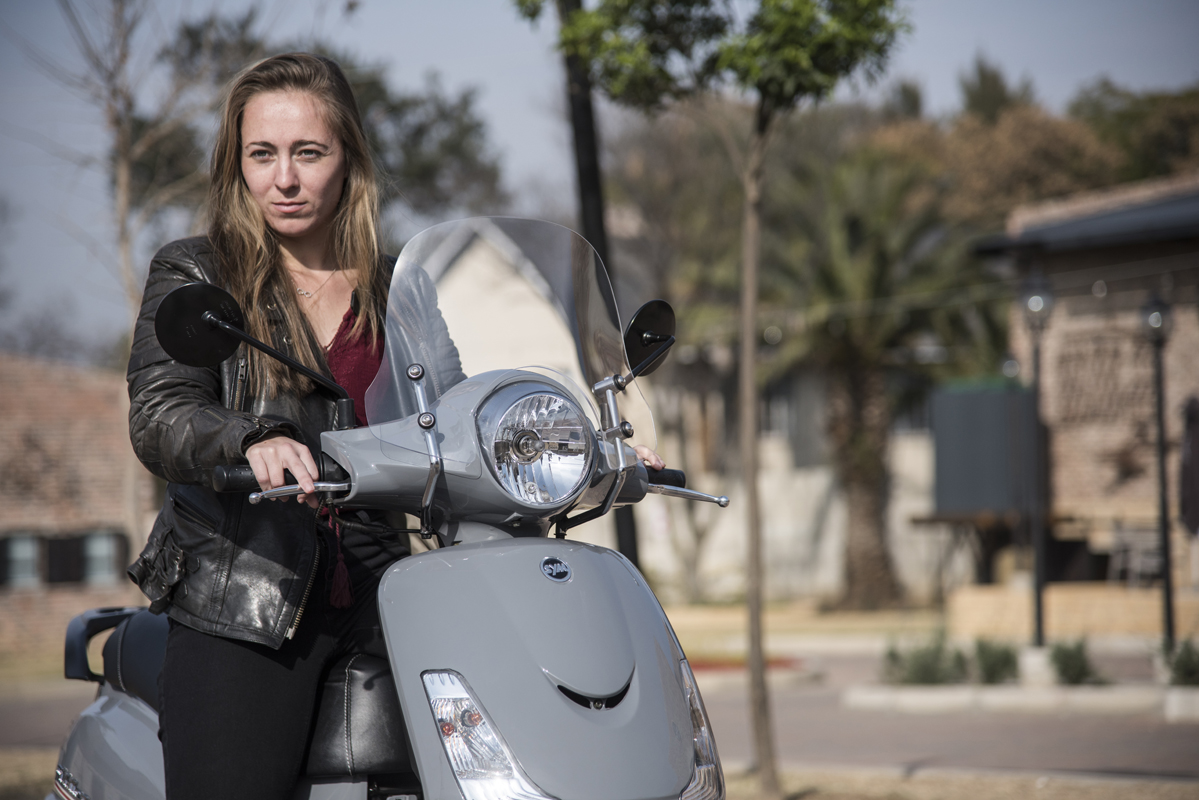
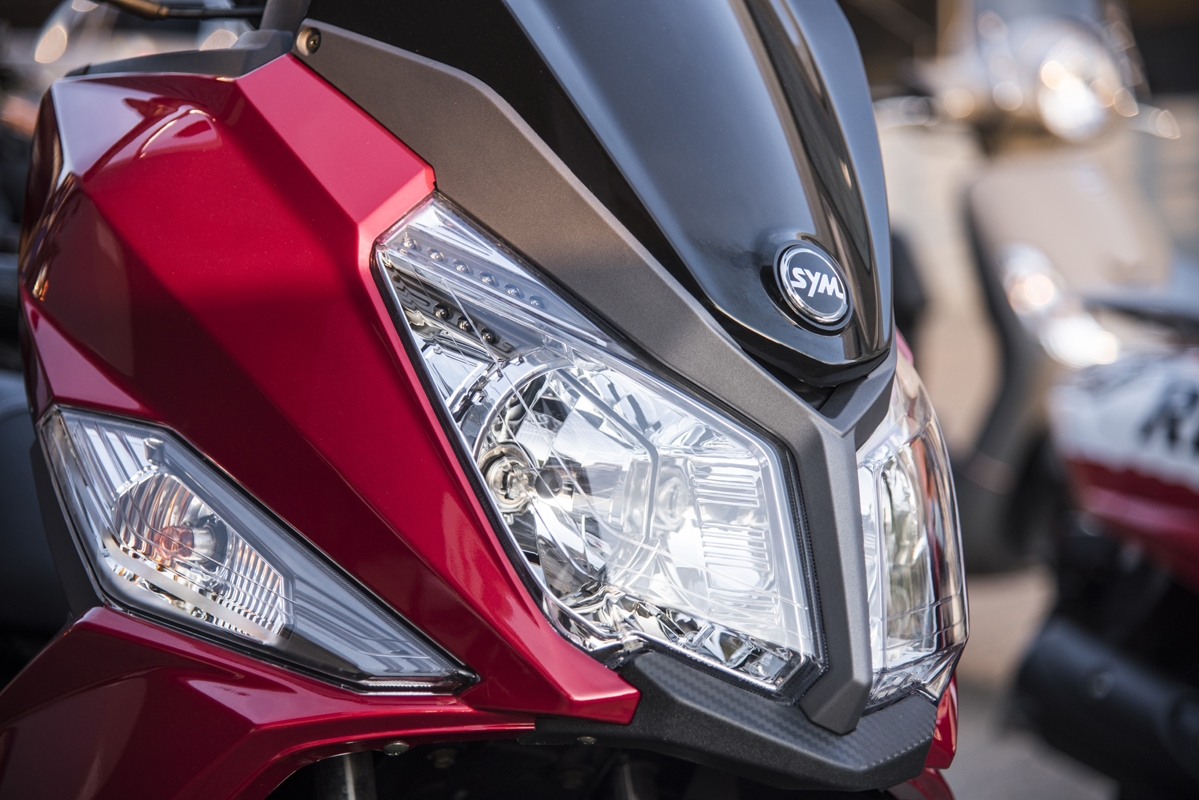
So, with Biker’s Warehouse being a SYM dealer and the ride being open to all model bikes under 250 cc, we wanted to get rid of the excuse of not owning a bike and that was by making a few of our SYM demo bikes available for the riders without rides—everyone deserves to join in on the fun.
Photo credit: SYM South Africa
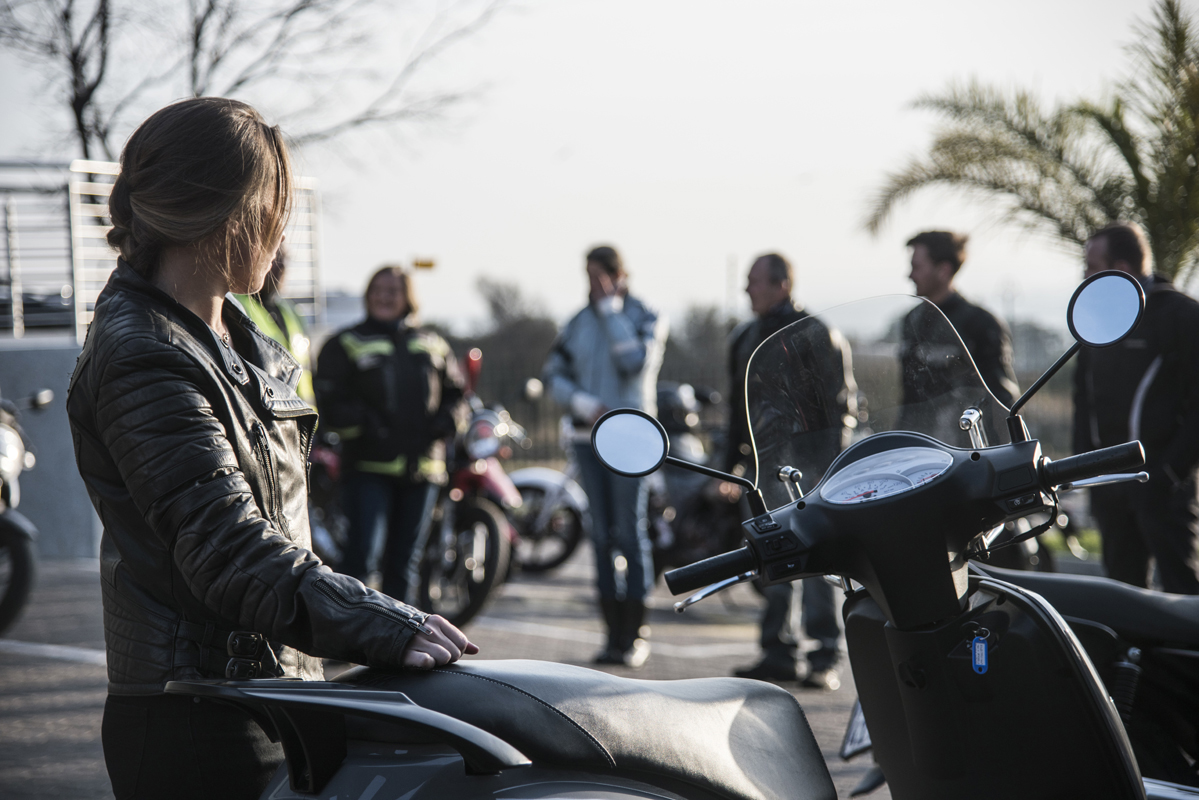
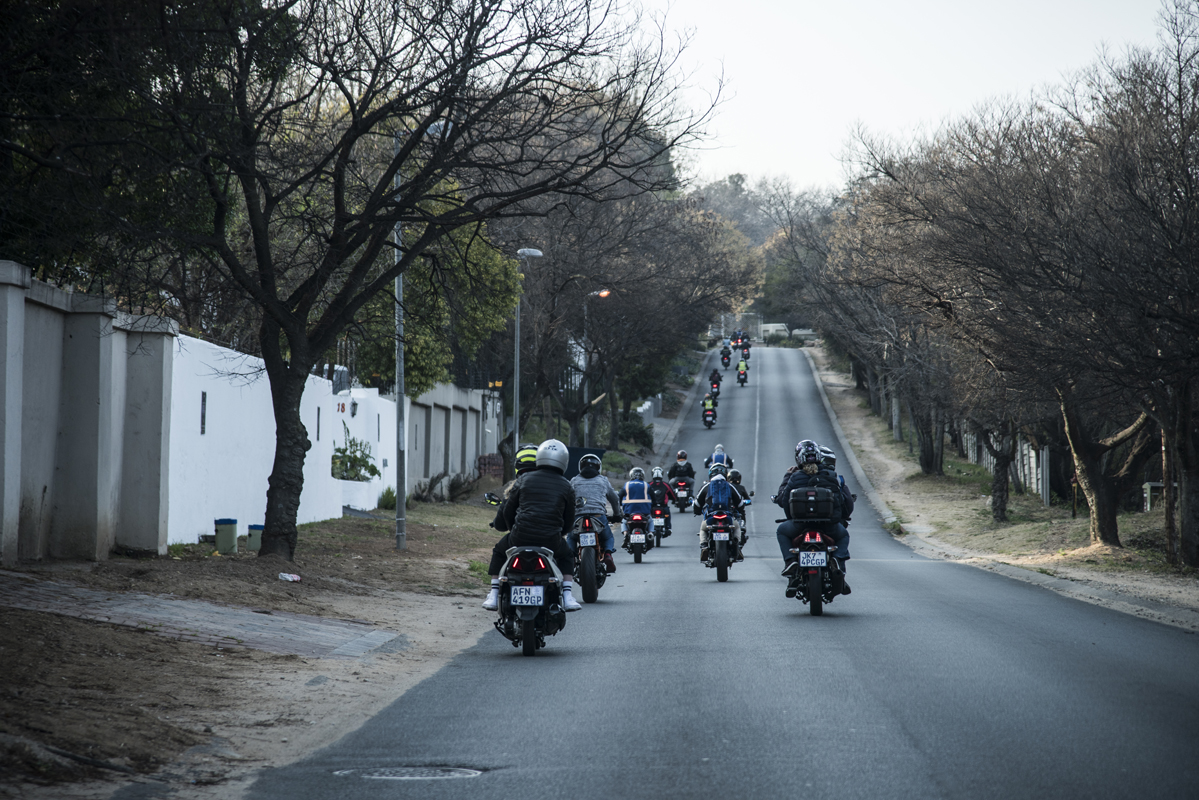
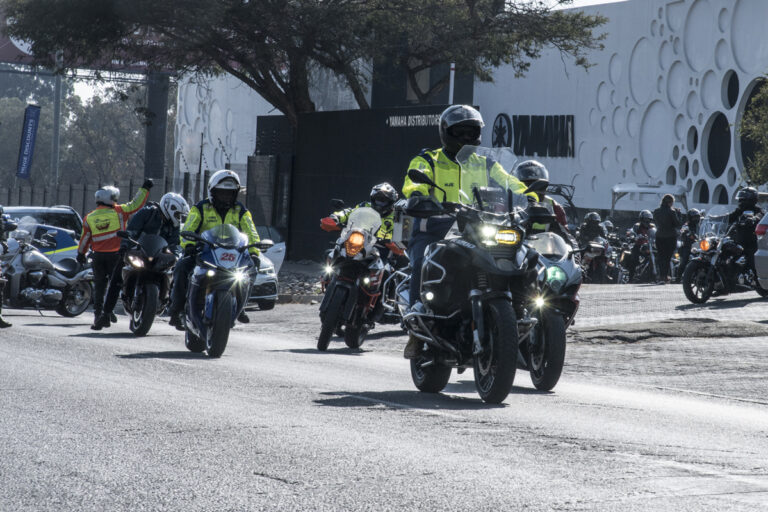
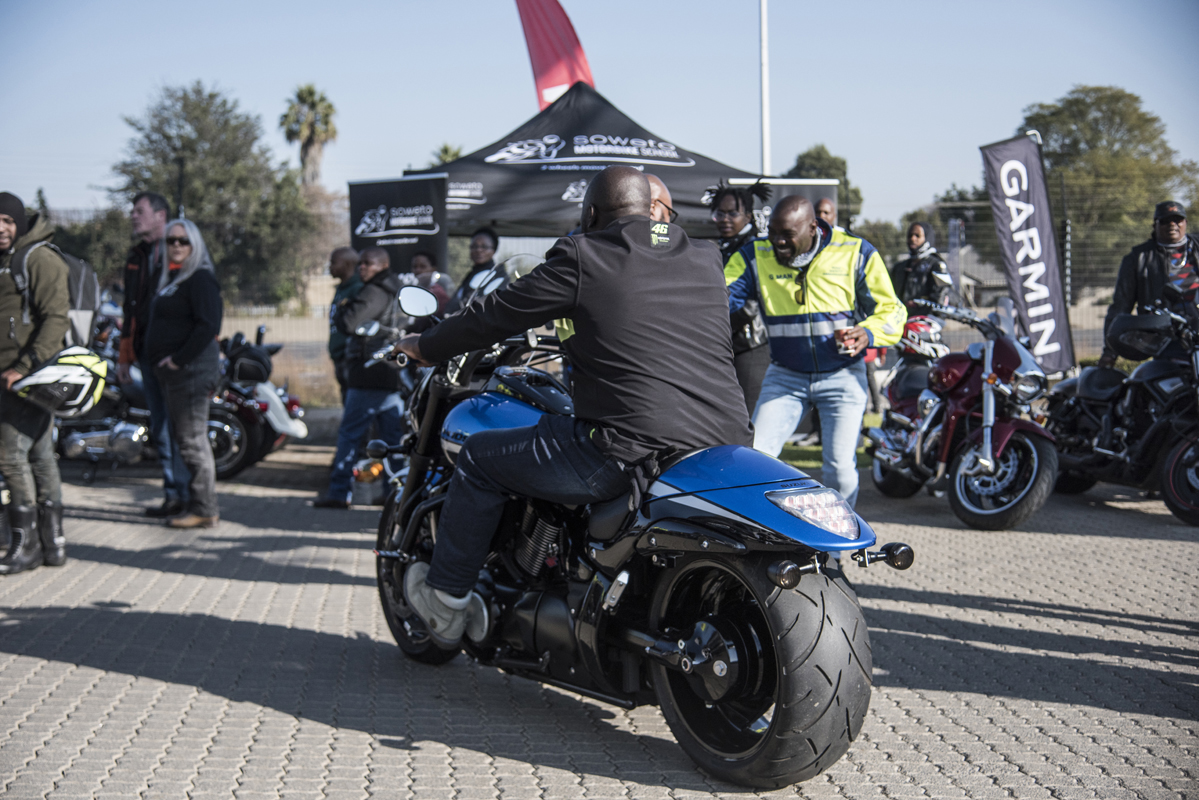
After a warm coffee and some friendly banter between the 25 odd riders, we all rolled out of Biker’s Warehouse at 07:30 and onto a chilled and social ride through the suburbs. The sun slowly started to warm up the ride which lead to some fun and smiles for miles. We rolled into our next coffee stop a few km down the road at Higher Ground in Sandton where we got to take in the view, a few muffins and some good chats were had amongst the riders.
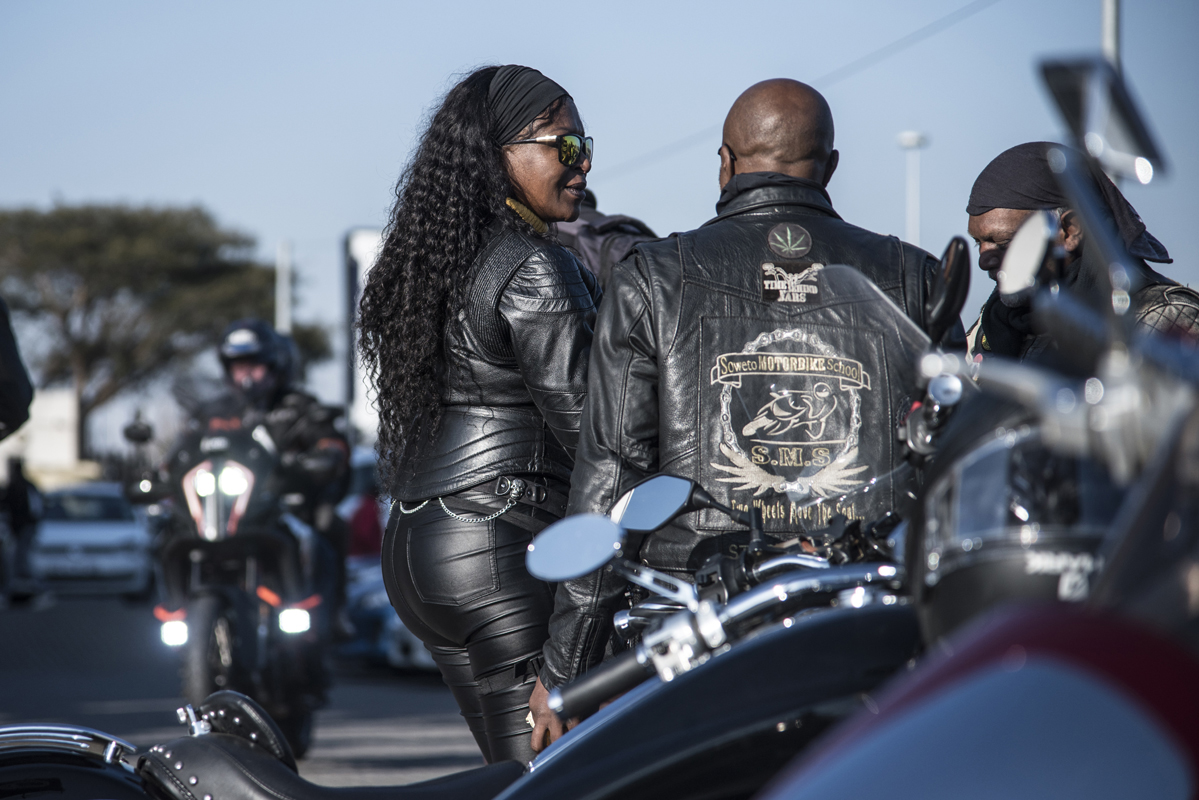
There was a sense of camaraderie between all the riders even though they had just spent a few minutes riding together—this is what riding motorcycles is all about. When you’re a motorcyclist you instantly become a part of the family tree, a family that shares the same passion for riding.
Photo credit: SYM South Africa
The second and final stop of the day was Prison Break Market in Lonehill where everyone got to do their own thing, whether it was chasing some eateries down or just enjoying the entertainment before parting ways. There’s just so much to do at the market, and with the early days cold out of the way the ride was pleasant for all who attended the ride.
Before the end of the day, we caught up with a new group rider by the name of Meredith Potgieter. Meredith’s love for riding sadly came to a halt during the first lockdown back in 2020, and a recent fire inside was sparked after seeing the Urban Commuter Run advertised on social media.
Photo credit: SYM South Africa
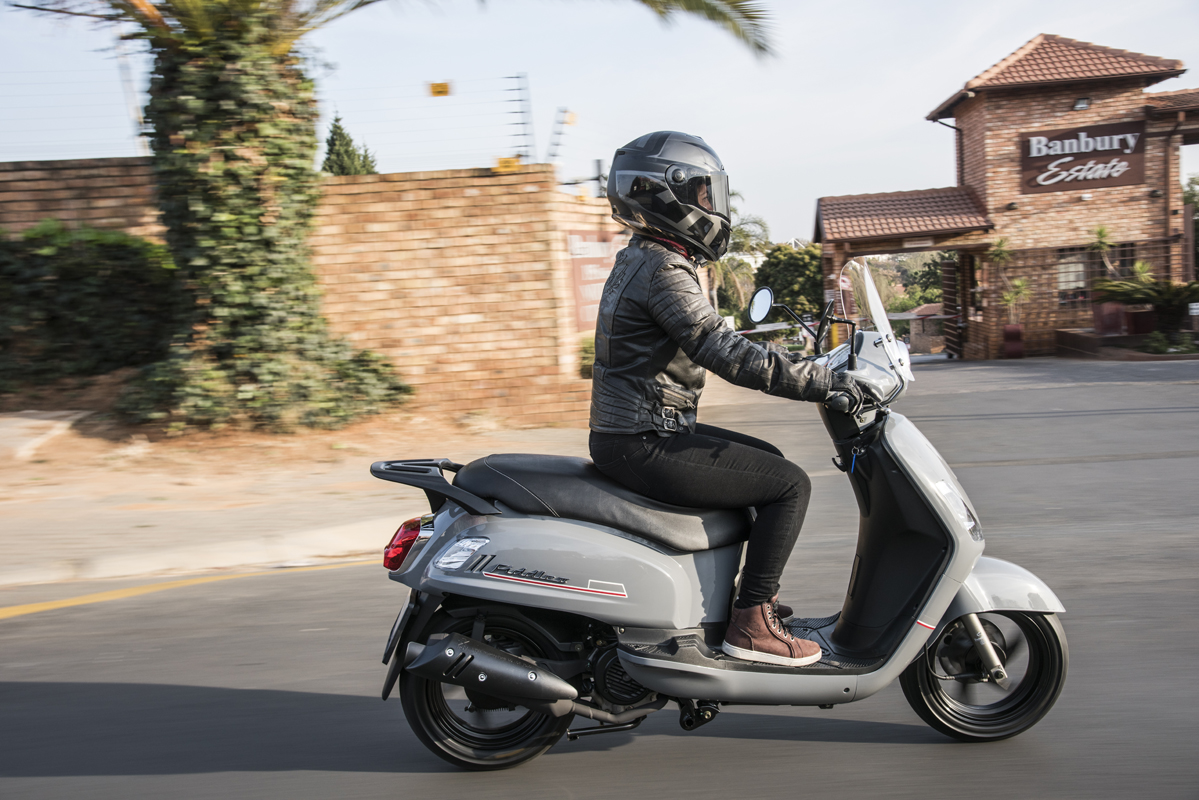
Meredith: “I have always loved riding, but when lockdown hit, I had to sell my beautiful Kawasaki Ninja 300 and I regret it to this very day. I heard of the Urban Commuter Run and I simply had to join, I have been longing to get back into riding and this was the perfect opportunity. I hopped on a demo SYM Fiddle 150 and started rolling again! Not having ridden a bike in a little over two years, the relaxed atmosphere of the ride was the perfect solution to ease back into it. I loved every second of it, and I personally think that starting off on a scooter is a whole different experience as the intimidation of speed and ego is pushed out of the equation, allowing you to simply enjoy the ride to the fullest. I urge every lady out there to join the next ride, whether you’re a beginner, haven’t ridden in a while or looking for a relaxed ride out, this might just be the ride you needed. I know for me; it was the perfect introduction back to motorcycling.”
So, there you have it a successful event organised by Biker’s Warehouse where an approachable means to riding again was created. If you are inspired by Meredith’s story, then we encourage you to visit one of our many SYM dealers and let them guide you down the path towards two-wheeled freedom.
1 of 8
SYM Fiddle II 150
For more information on the bike featured in this article, click on the link below…
Whenever I travel anywhere, I always carry a few essentials with me. For short runs, I obviously only carry my phone and wallet. However, for longer runs that involve a sleepover, there are a few more items that make it into my daily survival kit. Apart from the essential tyre repair kit, I have a complete cleaning regime going on.
Firstly, I have three individually packed cloths with me. One is half of a chamois, neatly folded and damp. This is for those colder mornings when you are greeted by a wet seat. There is simply nothing pleasant about sitting down on that. The chamois can clear most of that away in a jiffy. I also use it to clear away some of the bug residues on my bike.
Photo credit: Brian Cheyne / ZA Bikers
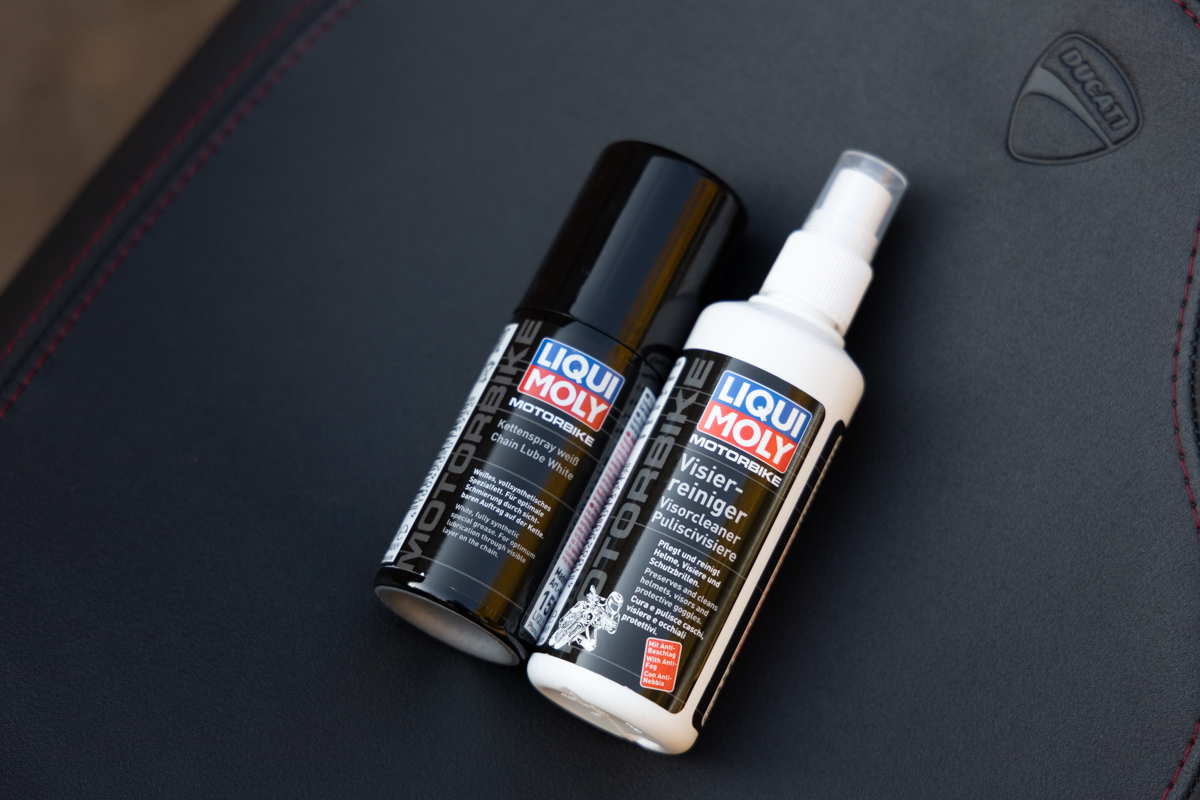
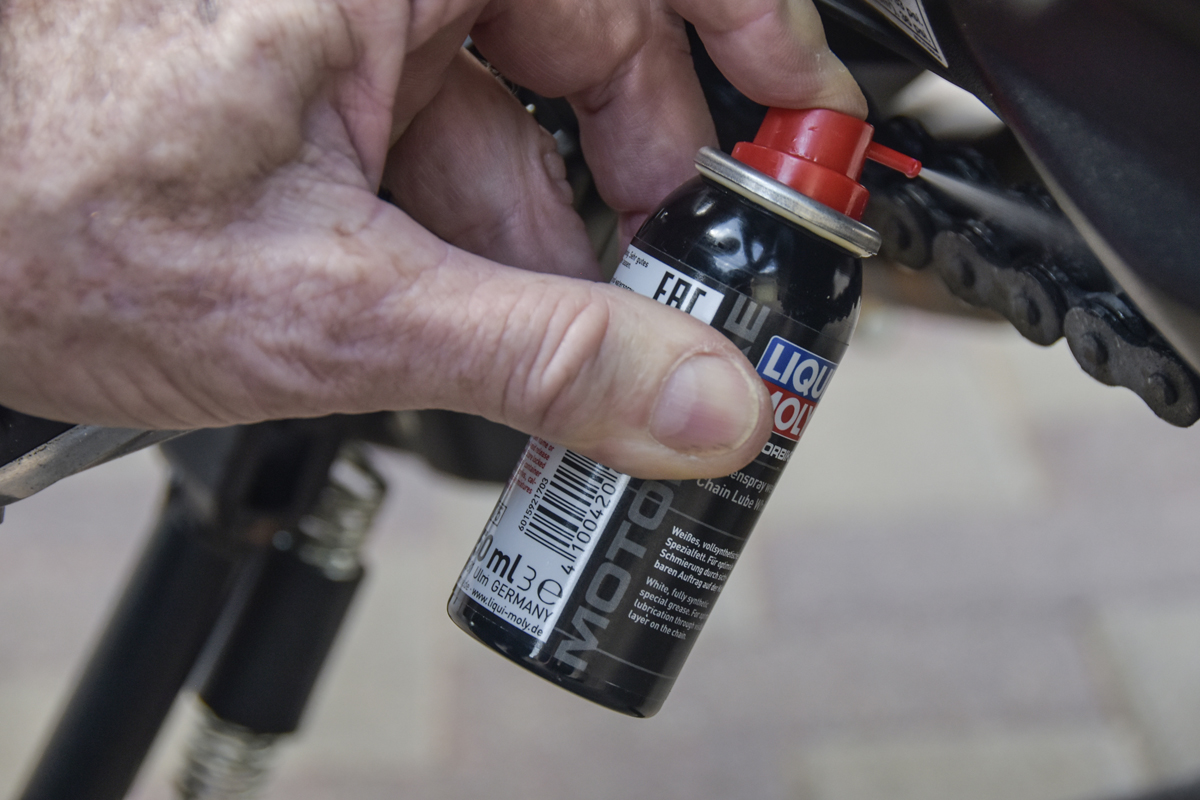
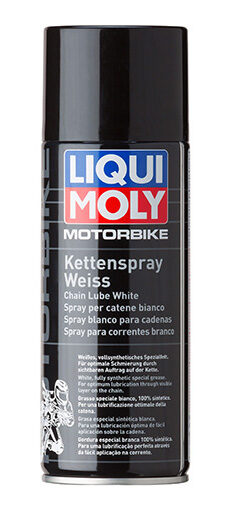
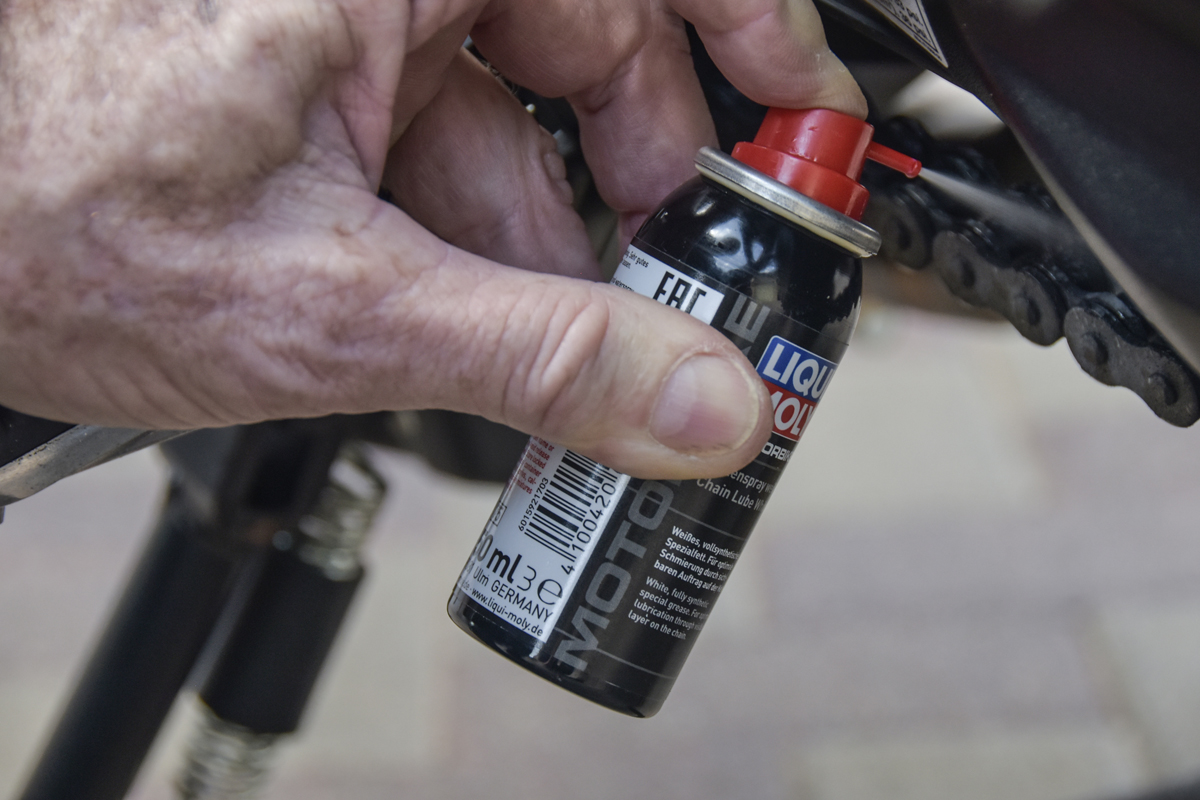
Secondly, properly stowed in its own plastic bag, is my “dirty” rag which is first used to clean the chain as best I can. I also carry some chain lube with me, which I then use to lube the chain before breakfast. This gives the lube a chance to settle while I enjoy my bacon and eggs. A quick wipe with the rag before I set off is sufficient enough. Packing an entire can of chain lube is impractical. Fortunately, Liqui Moly has a more compact solution. Their Liqui Moly Chain Lube is supplied in a small bottle that you can store in your jacket pocket if need be. Once empty, you can refill this smaller container from the larger one. Ingenious!
Photo credit: ZA Bikers
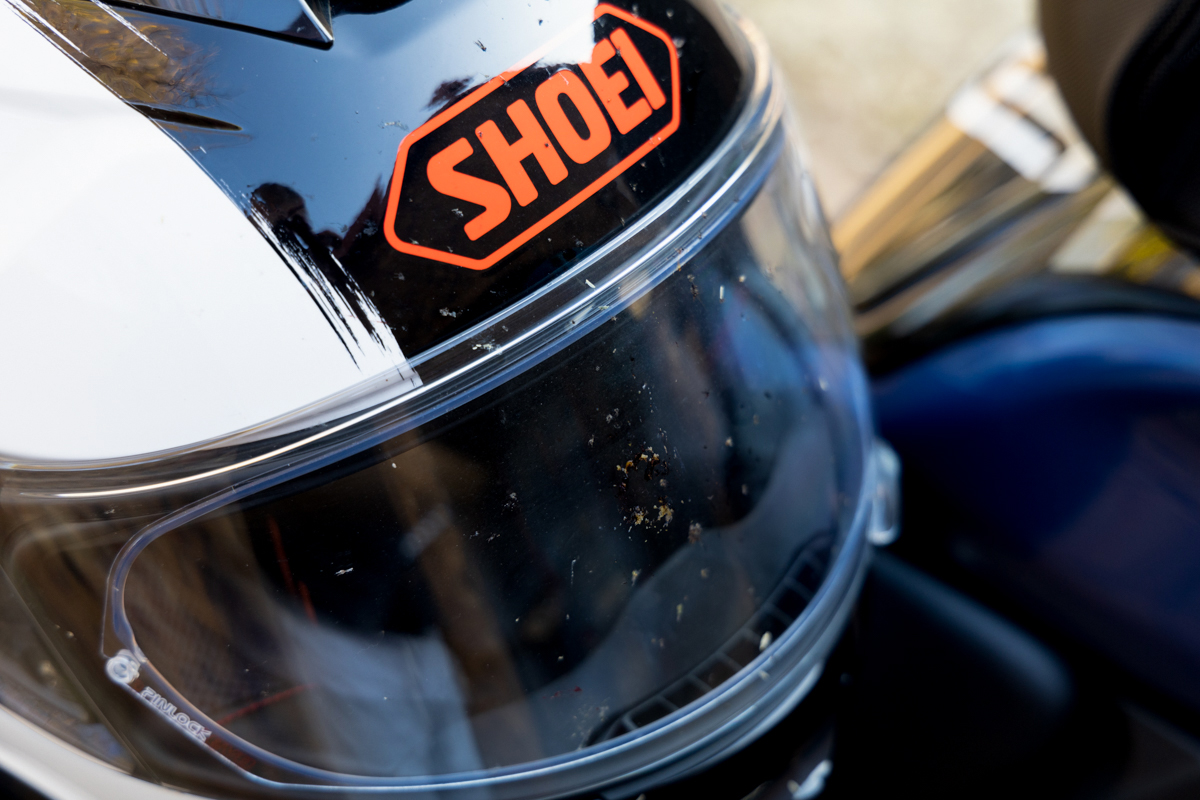
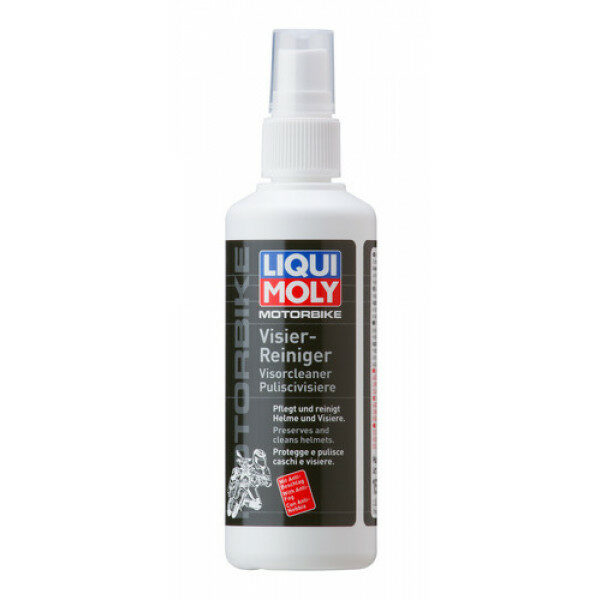
Lastly, I carry a clean microfiber cloth. Murphy is not a nice fella. You can be riding along nicely and hit one single bug, but that bug will hit you on the visor, exactly in your line of sight. It will obviously happen when you have just left your overnight stop which means that you will be staring at bug intestines for miles on end, while you should be looking at the road. Liqui Moly also supplies a small visor cleaner that you can carry with you at all times. The Liqui Moly Visor Cleaner can clean up any bug splatter in no time. This ensures a clean visor with no distractions. I cringe when I see people using a garage squeegee to clean their visors, so rather opt for the microfiber cloth and Liqui Moly’s dedicated visor cleaner.
Photo credit: Brian Cheyne / ZA Bikers
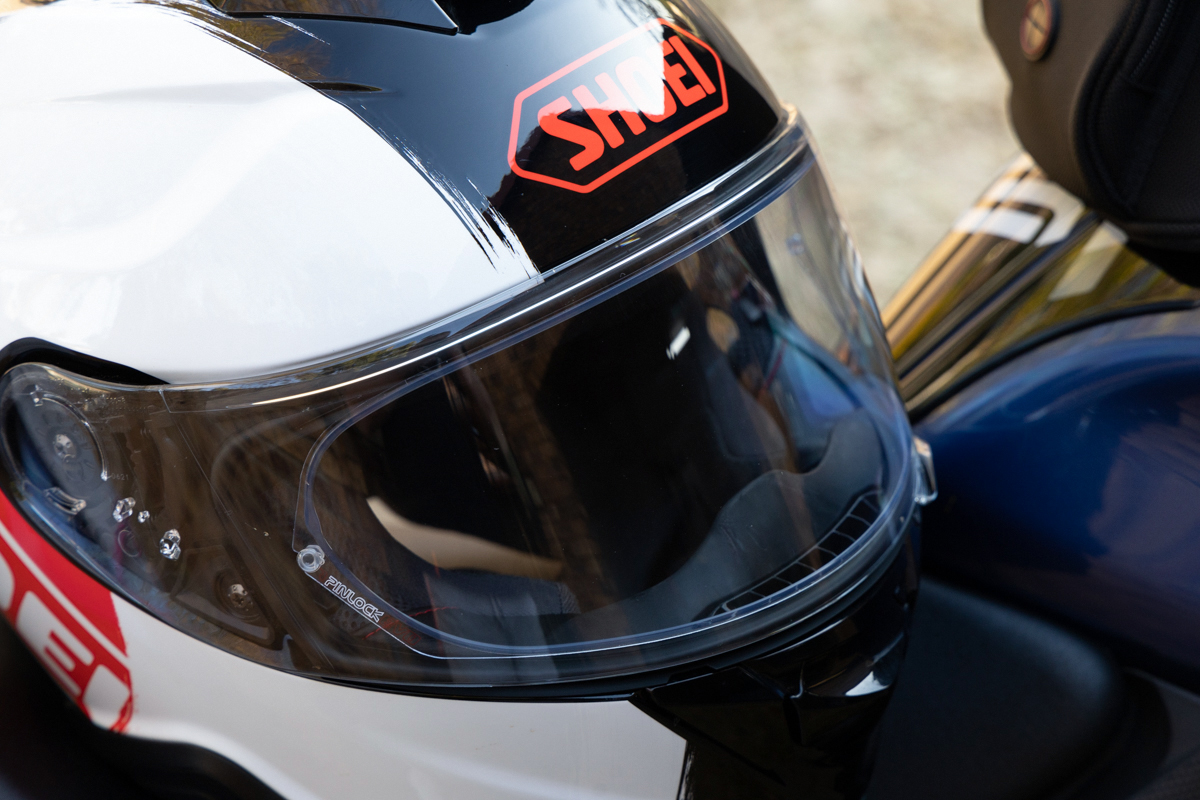
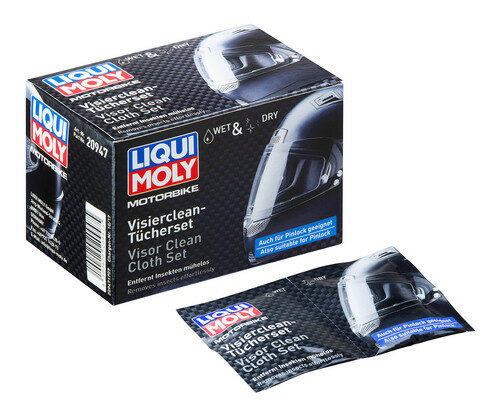
Liqui-Moly’s range of products feels like they have been thought out by someone who actually rides a motorcycle and understands the space restrictions that a bike has. Take the Liqui Moly Visor Clean Cloth Set, for instance. This is packaged in a small sachet that you can carry in your jacket pocket when you go on a breakfast run. The set consists of two separate cloths: a wet cloth for cleaning your visor and helmet, and then a dry one to wipe it all off. Both are made from material that won’t scratch your precious visor.
Photo credit: Brian Cheyne / ZA Bikers
Thanks to Liqui Moly’s compact solutions, you can properly care for your bike and gear when you are away from home.
For more information on the products used in this article, click on the links below…
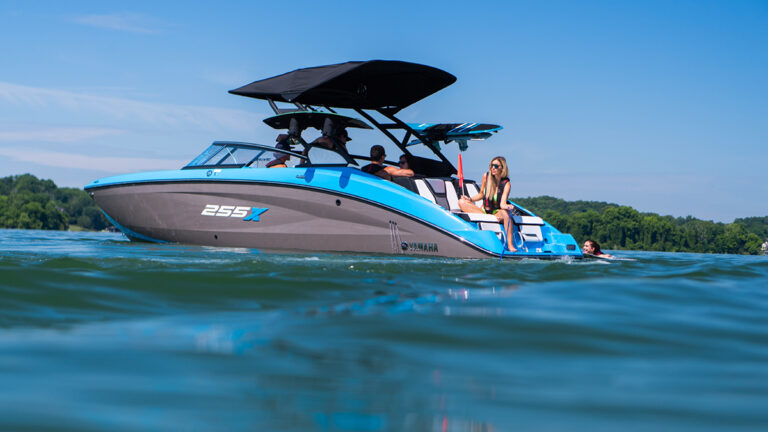
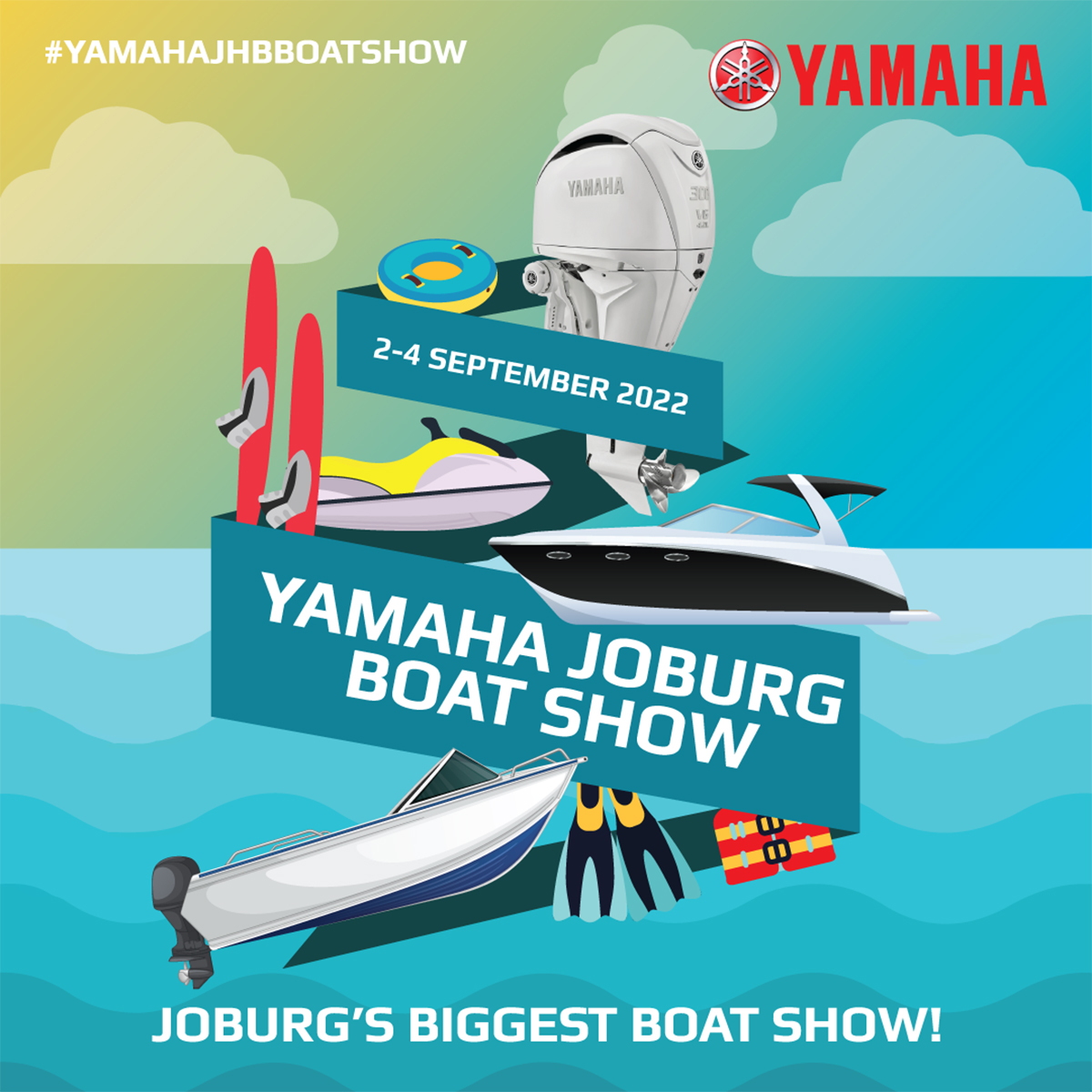
This year’s boat show is taking an interesting twist with Linex Yamaha Randburg, Linex Yamaha Lynnwood and World of Yamaha Sandton joining forces to bring you the biggest boat show in Joburg.
Taking place on the 2nd to 4th of September 2022 at the World of Yamaha in Johannesburg, the organisers boast that more than 60 boats will be on display, ranging from new and used offshore boats, to imported boats and more with trusted personnel and experts in the leisure industry to provide you with all the information you need. With a day fit for the entire family, children’s entertainment will range from various activities including jumping castles, face painters and games for all ages.
Guaranteed to be a weekend decked out with numerous sporting activities, MotoGP and Rugby enthusiasts can catch all the sports action broadcast inside World of Yamaha’s state-of-the-art Theatre. Making sure, you never miss a catch in a sea full of fish, renowned angler Mark de la Hey will be on the line-up dishing out all the privileged fishing tips you will ever need.
Entrance is free with spot prizes on all days. Grab your beer jug, family, and friends because you do not want to miss Joburg’s biggest boat show.
How do you even begin to report on the incredible day’s racing at Silverstone? Moto3, Moto2 and MotoGP all produced some of the best racing we’ve seen all year, and it’s not been a bad year of racing so far.
It was just one of those days that left you with a smile on your face, all the wider for being five long weeks since the last one. If we had to wait, then it was worth it and it wasn’t even as if we had to make excuses for finding it so exciting: it genuinely was.
Image source: www.motogp.com
If the championship is still Quartararo’s to lose, then at least Bagnaia’s victory closed things up a little and Aleix Espargaro minimised the damage to his points score by finishing right behind Quartararo in ninth, a heroic ride considering the pain he must have been in with what was later diagnosed as a fractured heel after a nasty high-side in practice.
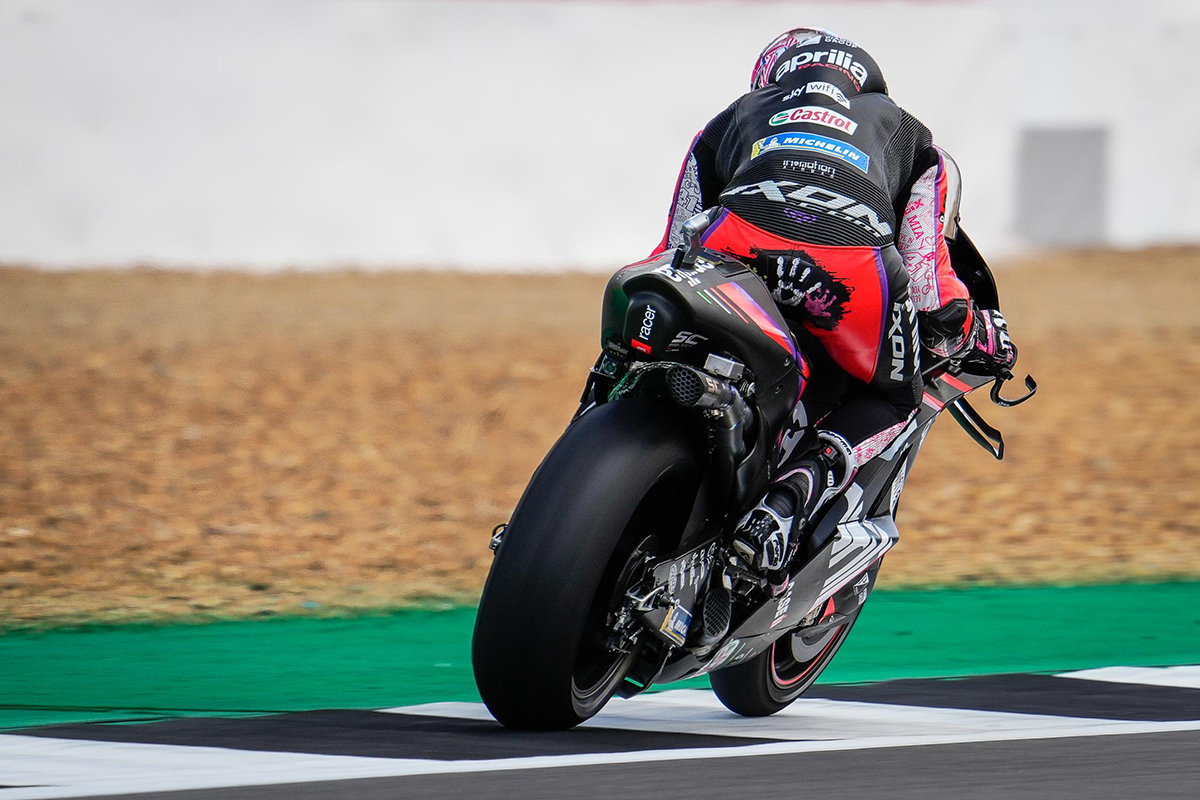
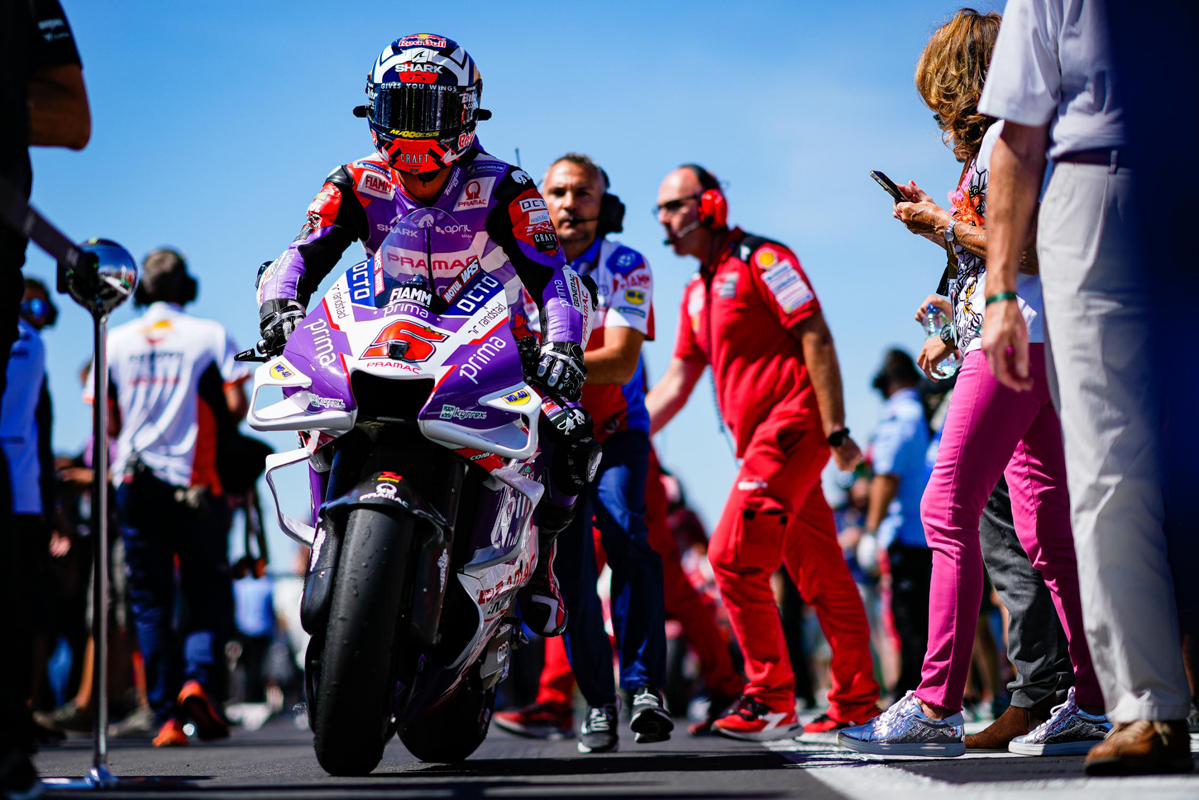
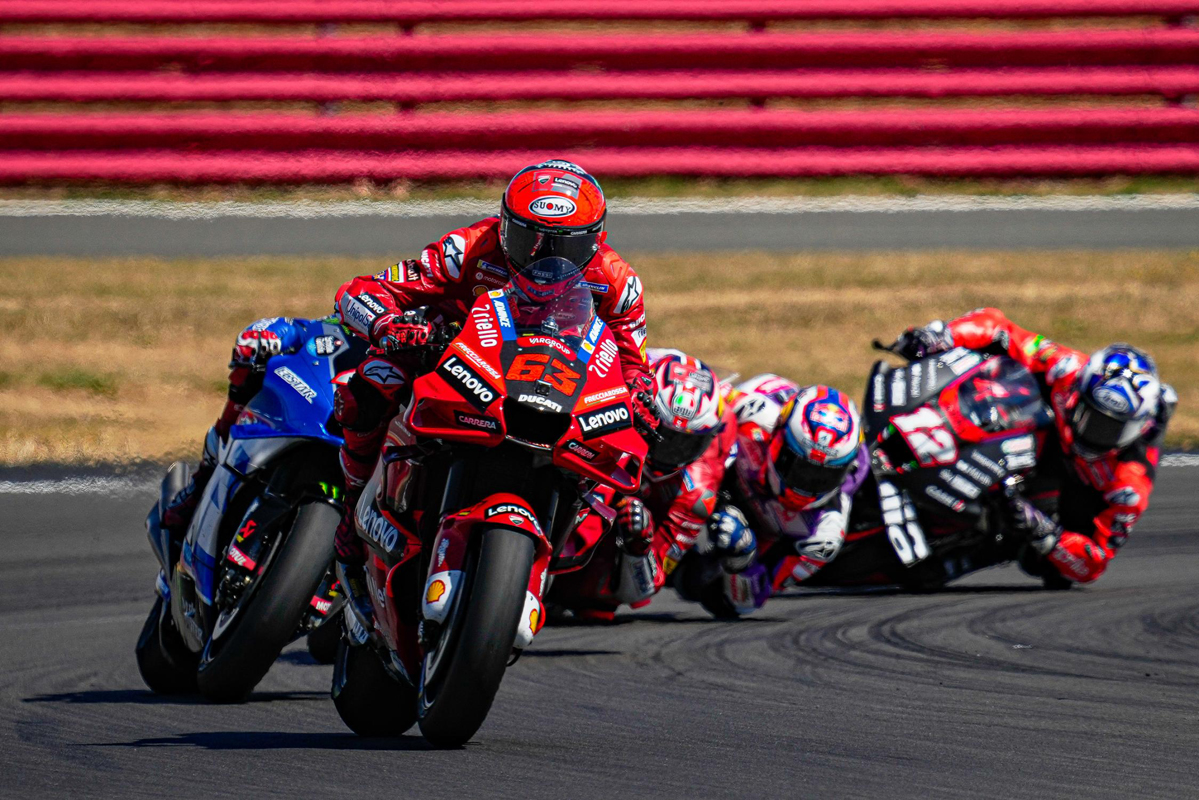
For a few laps, it looked as if Johann Zarco might finally win his first race, after converting pole position into the lead. Quartararo slotted into second and Miller third, Bagnaia fourth and Rins, something of a Silverstone specialist, fifth.
Image source: www.motogp.com
It was going to be one of those races where the order was never the same on consecutive laps. Rins started to look quick and got by Bagnaia, while Quartararo took his long-lap penalty and slotted back in fifth.
Then Zarco yet again threw away his best chance of victory in many races as he slid out leaving Miller leading, with Rins in second, which he would convert to first place on the same lap. Meanwhile, Jorge Martin passed Quartararo for fourth, who in turn, had Viñales breathing down his neck.
Image source: www.motogp.com
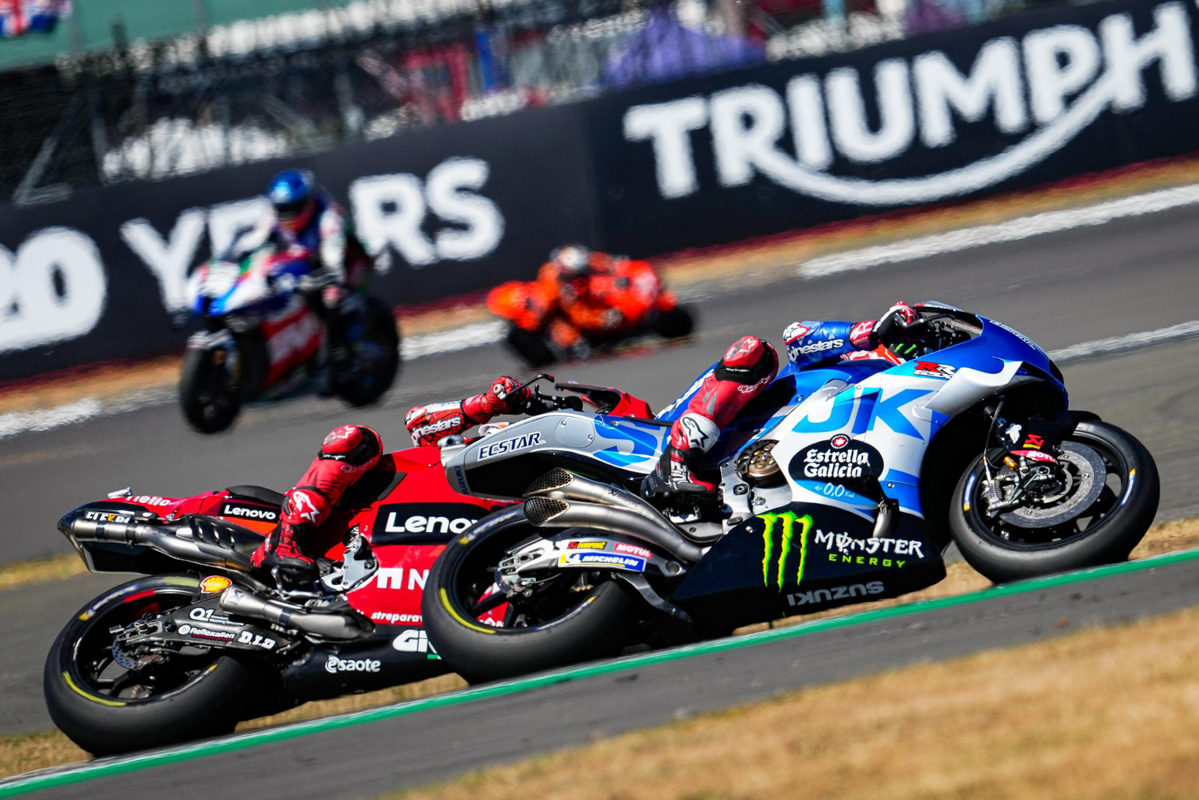
No one was managing to get away from the rider behind and one second covered the top five runners. Bagnaia disposed of Miller and then got past Rins who would continue to sink down the order as the race went on with tyre troubles. Then Viñales started to make his move as he passed Martin for fourth, which would become third soon after as Rins slowed, followed by second when he passed Miller.
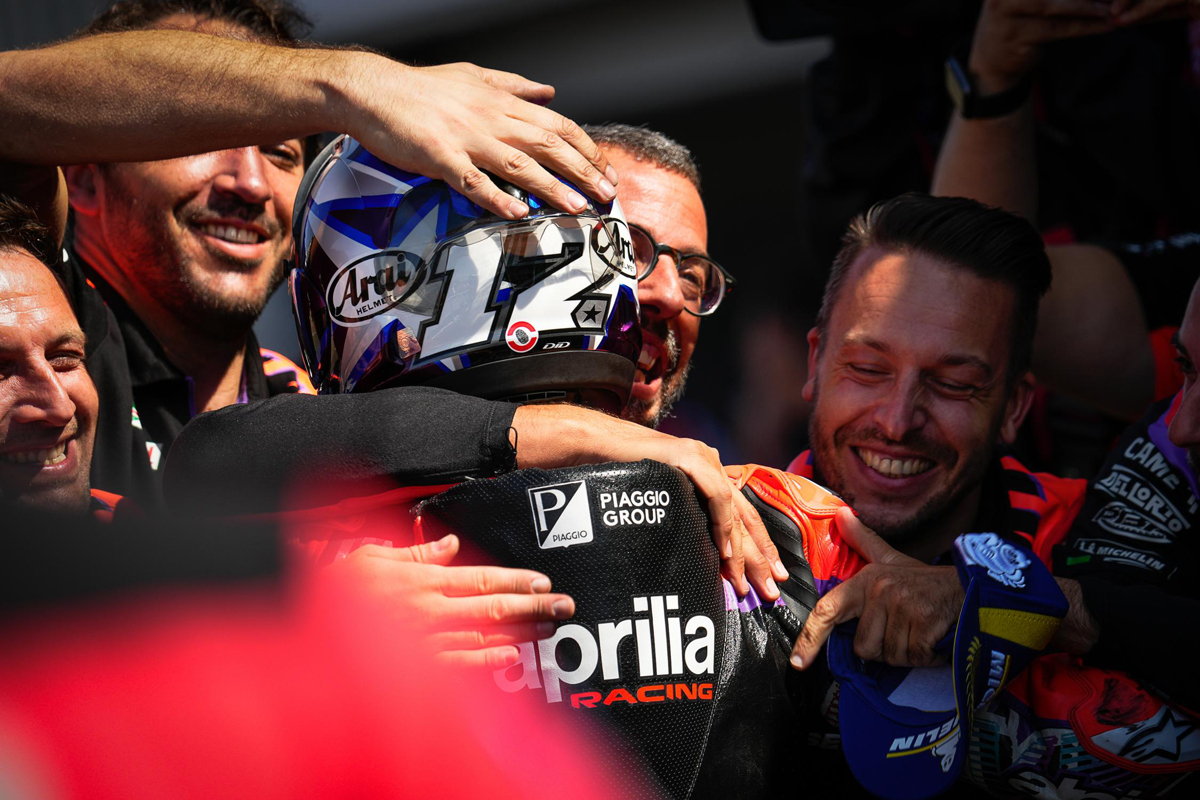
The result was in doubt right up to the last lap. Maverick Viñales showed that he too is starting to gel with the Aprilia as he hounded Bagnaia in the closing stages and was even ahead for a brief moment on the penultimate lap before settling for second – his second podium in a row. It was, by any standards, a brilliant race by a clearly rejuvenated Viñales.
Image source: www.motogp.com
Much had been made of the brevity of the long-lap penalty that Quartararo had to take, his many practice efforts showing that he lost around 0.8 seconds off his lap time. In the race, however, it was enough to drop him to fifth, from where he simply could not make up any ground to those ahead of him. We all assumed that it was a return of the front tyre temperature issue the Yamaha suffers from when following other riders but, in actual fact, it was his rear tyre that was giving him the problems, running far too hot.
Image source: www.motogp.com
Bagnaia’s victory was all the more unexpected as he had given no warning of his potential during practice and qualifying, as he had done in Assen. Even at the beginning of the race, he was overshadowed by Zarco and Miller’s Ducatis but, as the race went on, he just got stronger and stronger and was able to repulse Viñales’ attack.
Image source: www.motogp.com
Bastianini had a great race to fourth, including passing his rival for the second factory Ducati seat, Martin, in the closing stages, Martin, for his part, had a high-profile race, including holding the fastest lap for a while. Oliveira on the KTM also shone, while his teammate Brad Binder was left to rue the wrong choice of the rear tyre.
Image source: www.motogp.com
It didn’t matter where you looked, there was some great racing going on. Was this really the race track that had to cancel all the races in 2018 on race day as the track simply wouldn’t drain away the torrential rain properly after being re-surfaced? Having said that, this is Silverstone that saw the epic battle between Rins and Marquez in 2019, Rins taking the victory by mere centimetres at the line.
It’s a brilliant track, at once fast and flowing but with some technical bits: if your bike works well at Silverstone, it should work well anywhere and that has to be a worry for Quartararo, as the Ducati has now shone at two tracks that are supposedly not great Ducati tracks: Assen and Silverstone. If Miller and Bagnaia – and Martin and Bastianini – can continue this form into the next few races, the championship certainly isn’t over by a long shot. Add into the equation Quartararo’s new-found calm approach to relentlessly rack up the points even when a win isn’t on the cards and we are in for a hum-dinger of a race to the championship and what a way Silverstone was to kick-start that race.
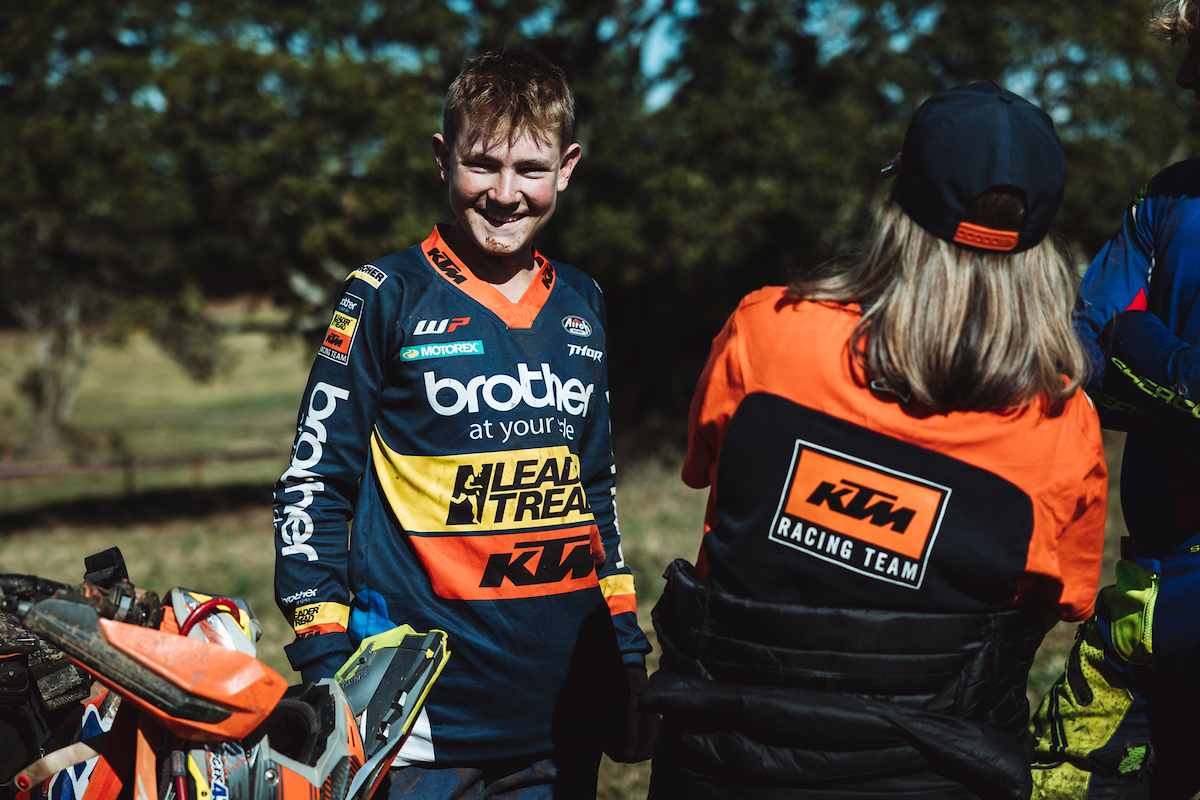
The second last round of the 2022 National Enduro Championship was a battle for the Brother Leader Tread KTM squad.
Blake Gutzeit set the field alight with the fastest time of the first lap after starting in the second row. “It was really difficult to fully charge from the second row because of some technical bits and riding in Brett’s dust,” Gutzeit said afterwards.
Image source: www.zcmc.co.za
Gutzeit commented the roads were very fast and after trying to pass for some time, the jeep track took a sharp left into some natural bush which he did not see coming “I went straight into a wash away ditch and the bike stopped abruptly sending me flying over the bars”.
Team mechanic Kevin Tyrer said “Blake really had his bell rung there” and Gutzeit was forced to retire due to injuries to his wrist and the hit to his head. “That was it for me, which was obviously not what we were looking for as I felt really good at the start and KTM South Africa supplied me with everything I needed, really such a great bike and such a great team to be part of” Gutzeit commented. He went on to say: “I can’t thank Franziska enough for putting everything in place and really just believing in me, but it’s time to regroup and move forward onto the next race.”
Image source: www.zcmc.co.za
Brad Cox back from injury struggled in the early hours of the race but managed to claw his way back after regrouping at decontrol. “I’m not super stoked with 2nd of course but that’s all I had out there today so I’ll take it as it comes,” he said. “The bike was really amazing and it was so good being back with my orange family on the weekend” he added.
Image source: www.zcmc.co.za
Young Matthew Stevens said the Winterton event was another awesome event and that it was the perfect enduro loop that encouraged close racing. It was evident after four hours of racing with just 10 minutes separating the top 5 riders. “I really felt strong all the way through and I’m happy with my progress keeping the gap close to the big boys in front,” Stevens said. “I’m pleased with my P5 in J1 and it feels like I’m getting there,” he said in closing.
The National Enduro Championship travelled to the Eastern Cape town of Bathurst this weekend for the second to last round of the season. Husqvarna Racing secured a significant feat with both riders finishing top of the class as well as sliding into an impressive 1, 2 on the overall results of the day.
The route out at Bathurst is a rider favourite on the National Championship circuit and it was clear that Brett Swanepoel felt the same, wringing his FE350 unchallenged to Winterberg’s top spot. “I started off first and managed to stay out in front all day, though I normally struggle to find speed on the first lap but I have been trying to get that sorted and seems to be working,” Swanepoel said smilingly.
Image source: www.zcmc.co.za
Swanepoel went on to say: “The track was awesome and definitely one of the best Enduros I’ve raced, the guys down here are really passionate and there is also a lot of racing heritage at the Winterberg and that shows.”
Teammate Kyle Flanagan was also beaming after the event and went as far as saying he even had some gas left in the tank. He continued: “the track was really cool, in CPT we have pretty limited riding places and the terrain doesn’t change too much, so to be back in a wet, slippery river bed made me feel at home!”
Image source: www.zcmc.co.za
“I think that kept me going even when I started getting a bit tired on the last 2 laps,” he said. He finished by saying: “Overall, the bike was a lot of fun to race, I think the organizers did a good job of putting the event together and it was great to be back banging bars with the boys!”
Grant Frerichs, Group Marketing Manager commented: “Winterton was a perfect day for Husqvarna racing. Brett cemented his dominance in the 2022 season by winning once again and extending his championship lead and the fill-in ride for Kyle Flanagan couldn’t have gone any better with a class win and second overall. We are extremely happy with the weekend’s results and look forward to the last round of National Enduro where Brett Swanepoel looks to claim his 8th South African championship.”
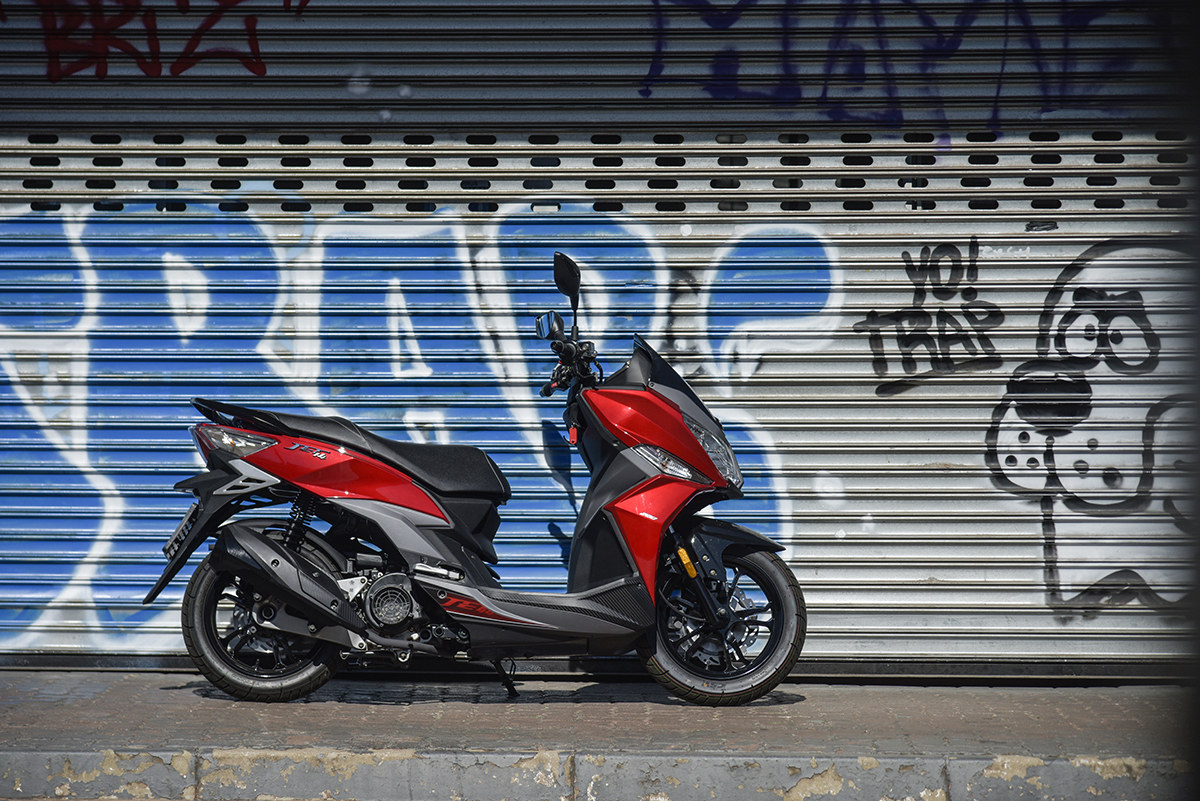
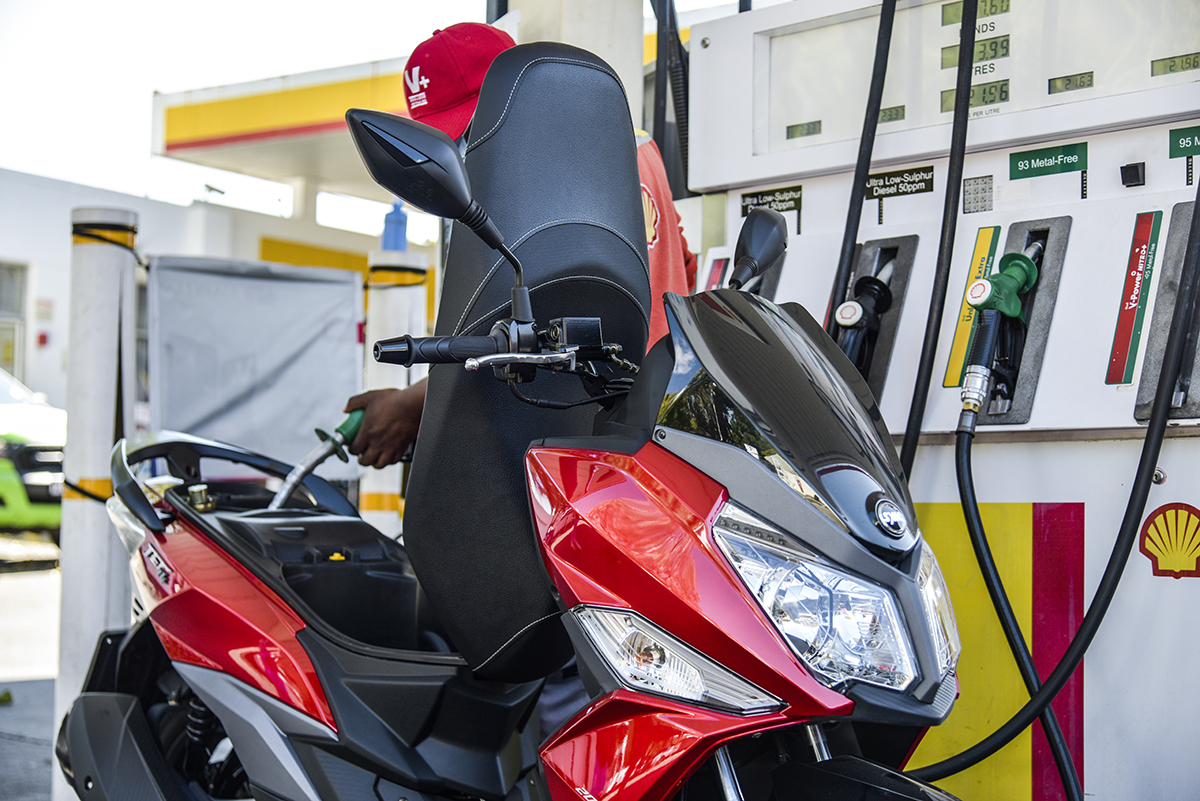
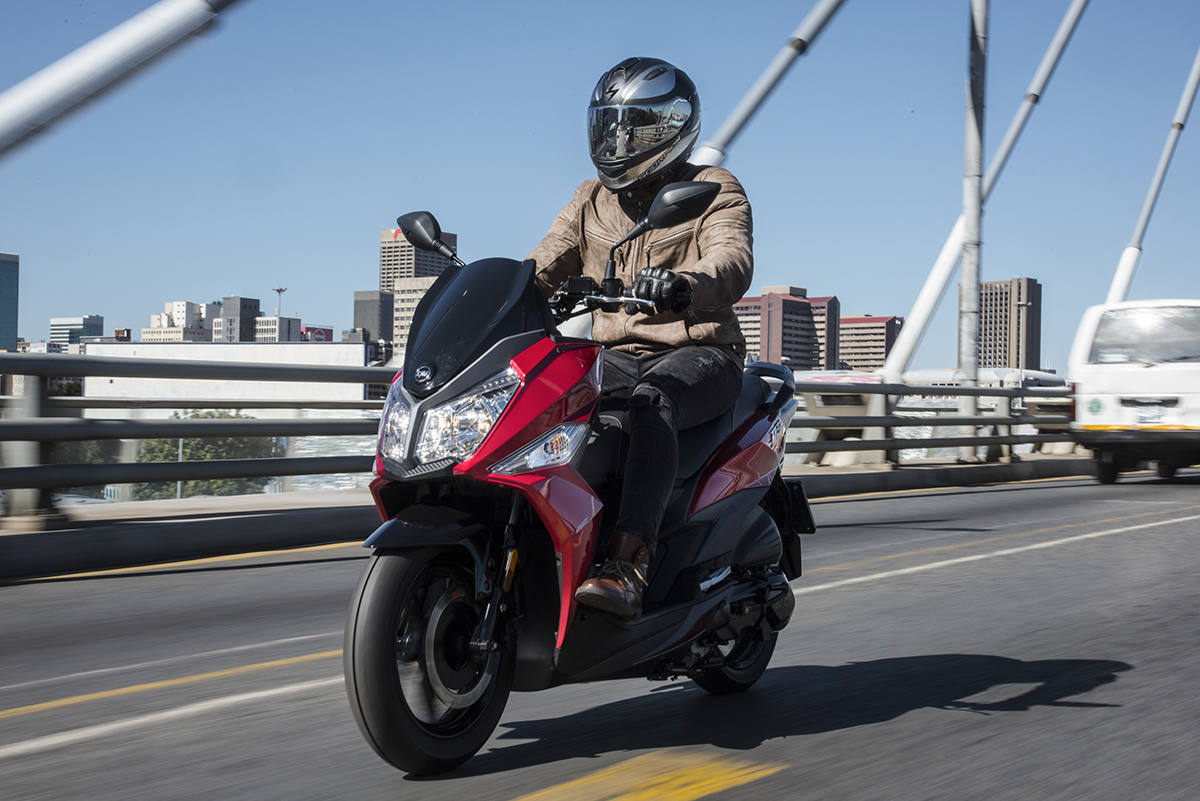
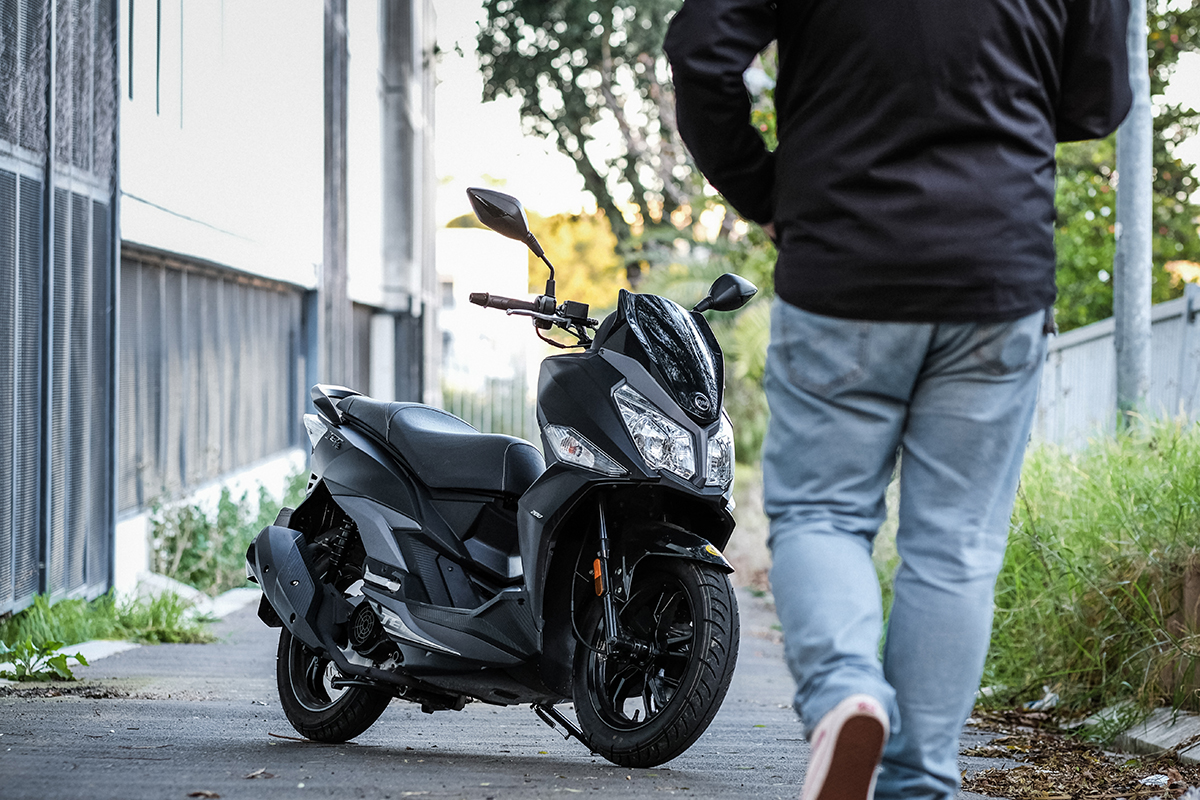
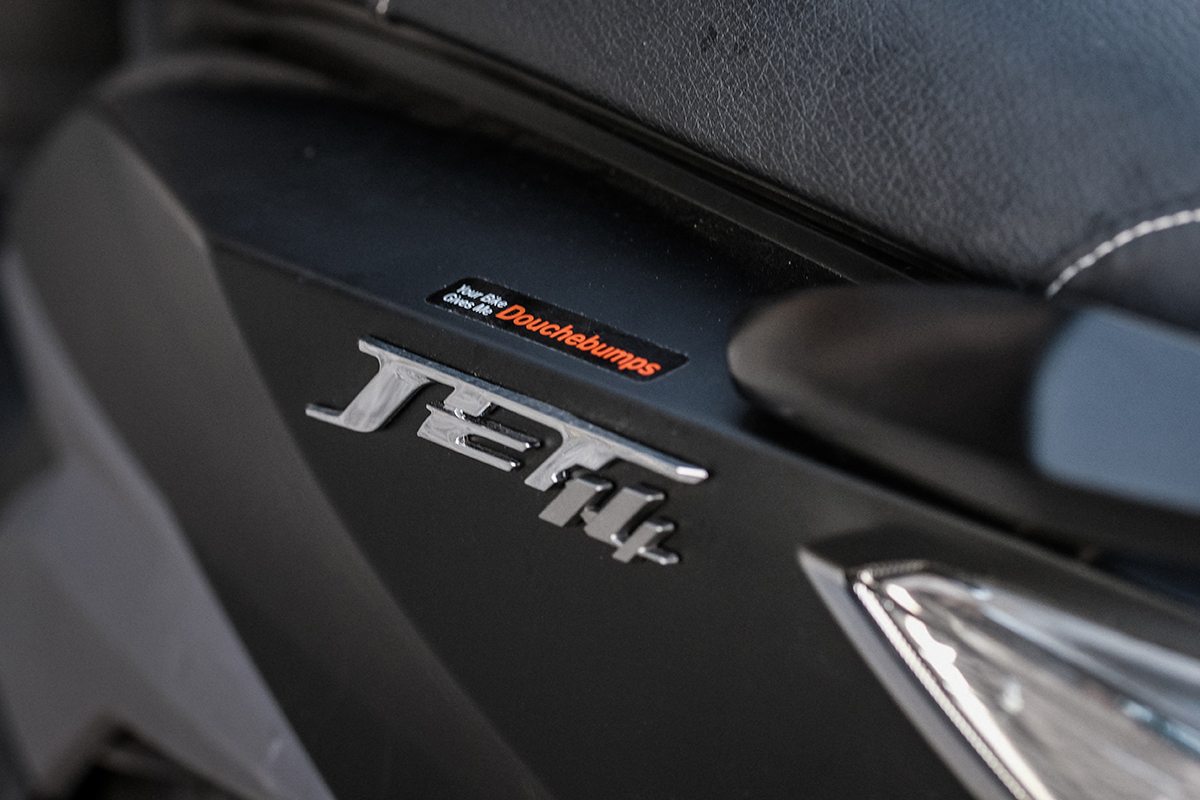
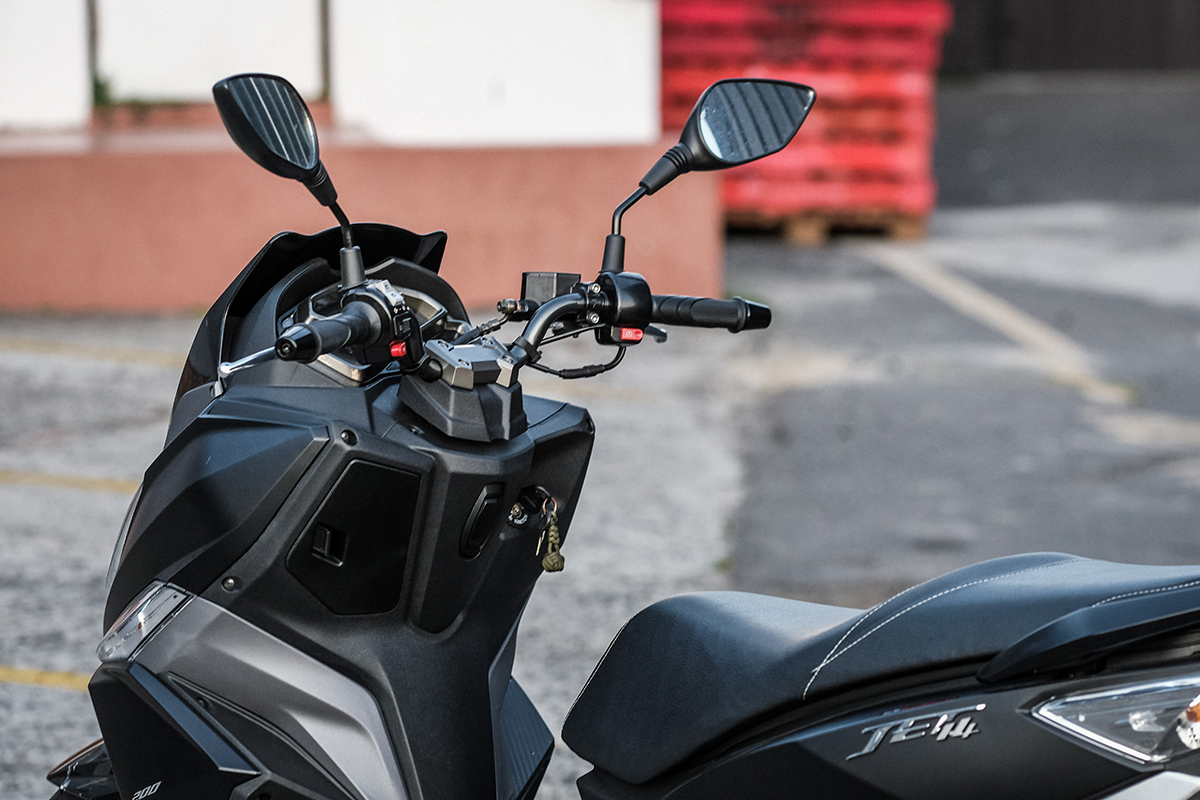
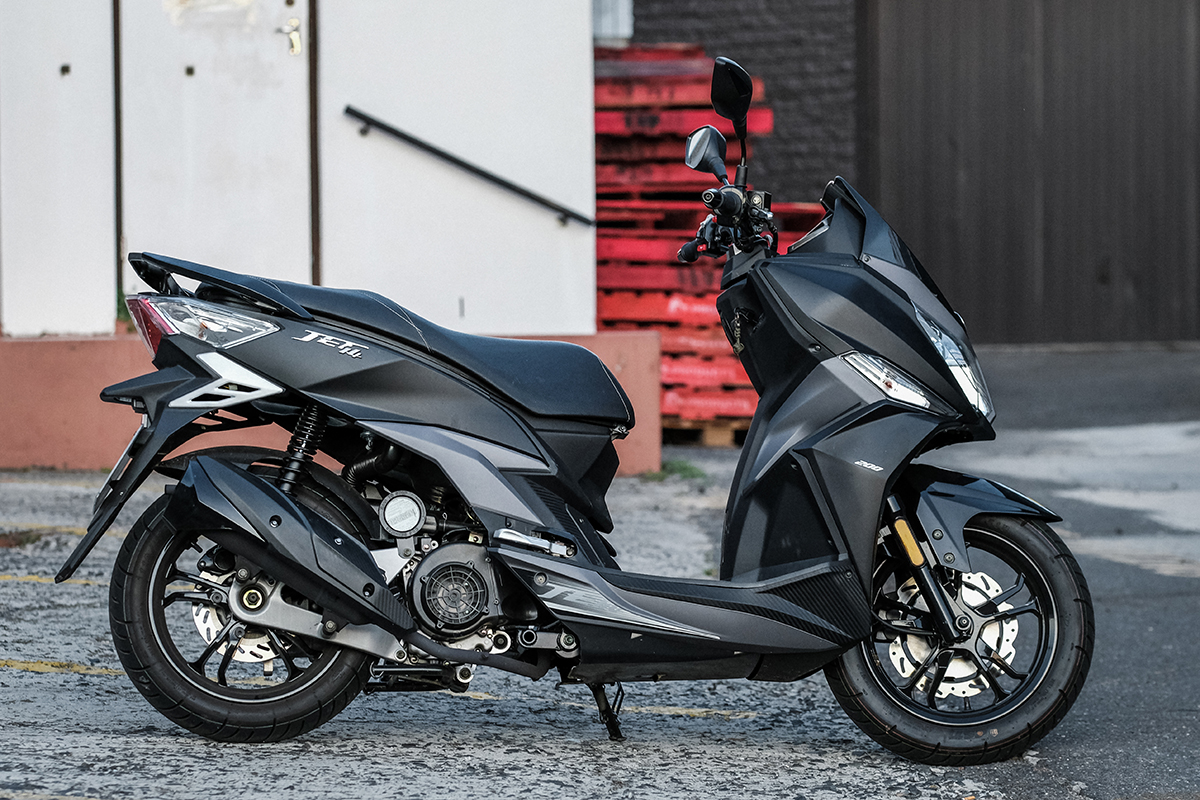
A sure-fire way of knowing that the dreaded and deadly Covid Pandemic is largely a thing of the past is by venturing out into the city. Traffic volumes are absolutely hectic, exacerbated as it often is, by regular ‘load-shedding’. Negotiating the urban sprawl is a totally unpleasant and frustrating experience. But does it have to be? I may just have experienced the solution. Enter SYM’s Freedom of the City machine, the SYM Jet14. Part of its allure is right there in the name—Jet14. It has 14” wheels which, for me, are a game changer.
So here is the thing. You don’t have to sit in your car, idling away fuel at around R26 a litre, getting anxious as your meeting deadline approaches. The Jet offers an affordable, practical and hugely economical answer to your commuting woes. In terms of form and function, scooters are the bee’s knees!
Photo credit: SYM South Africa
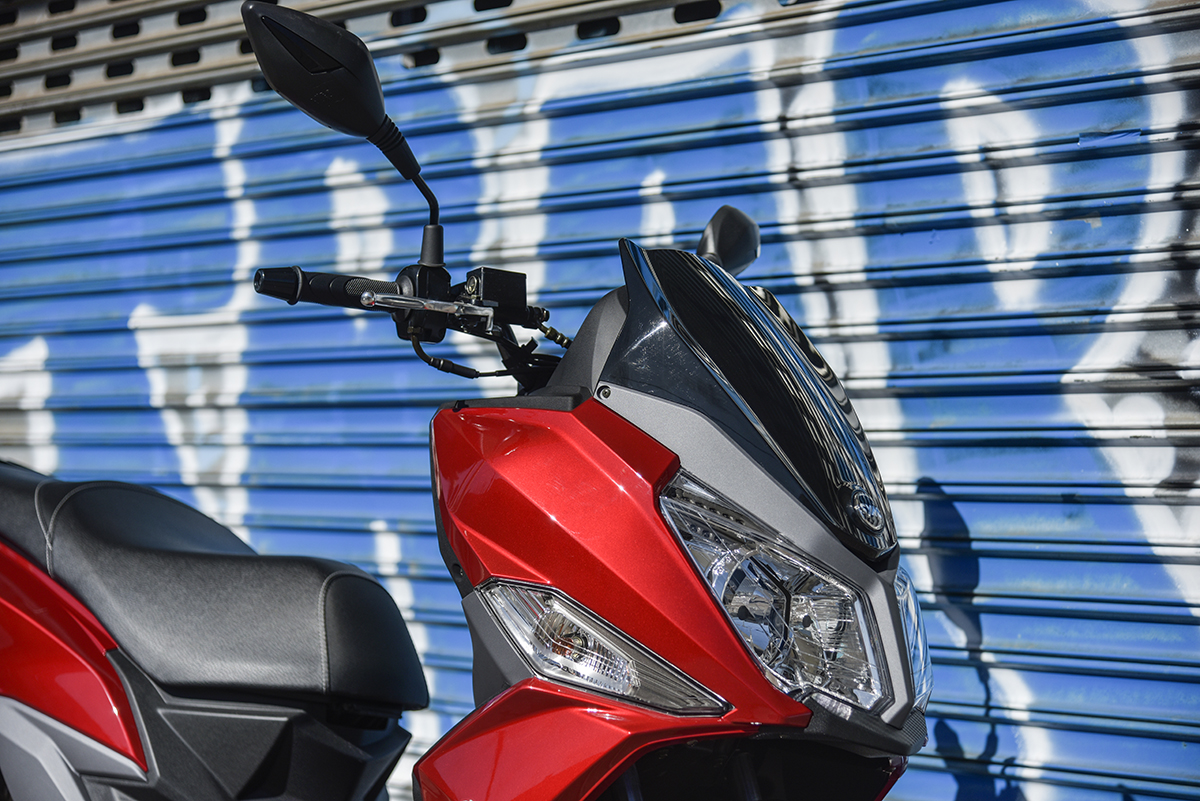
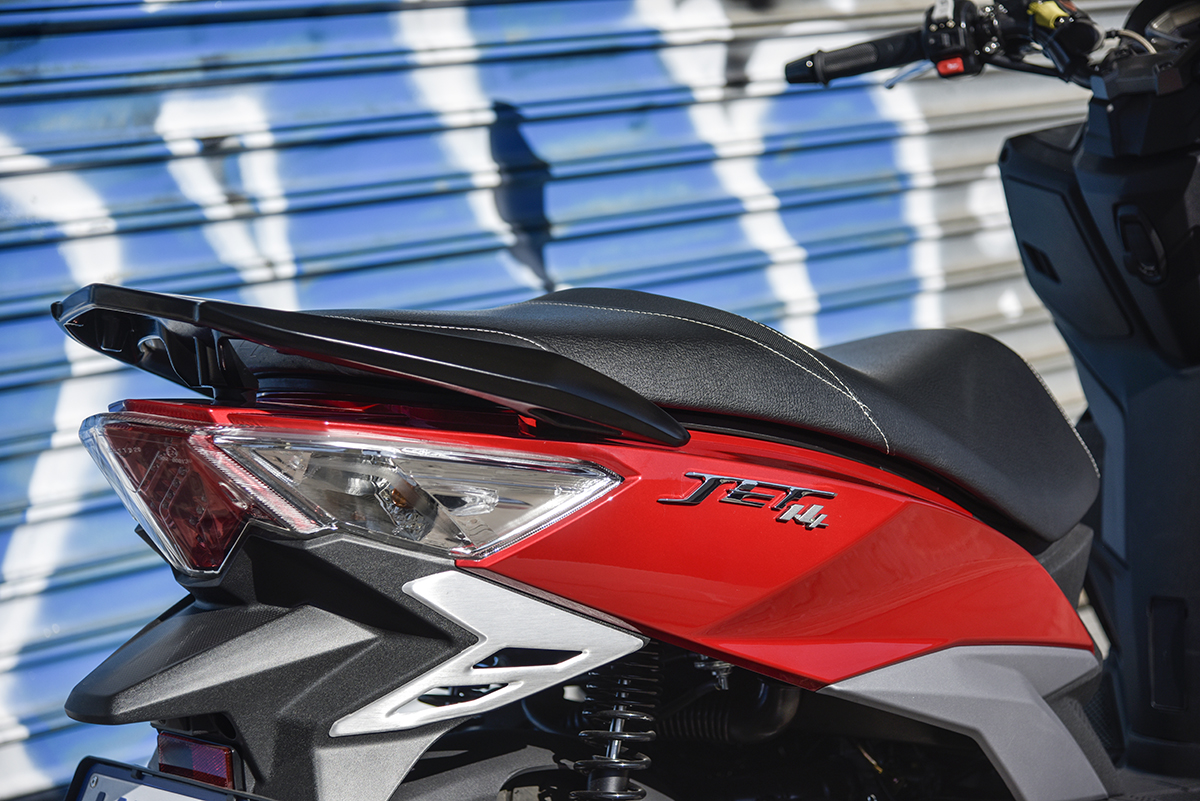
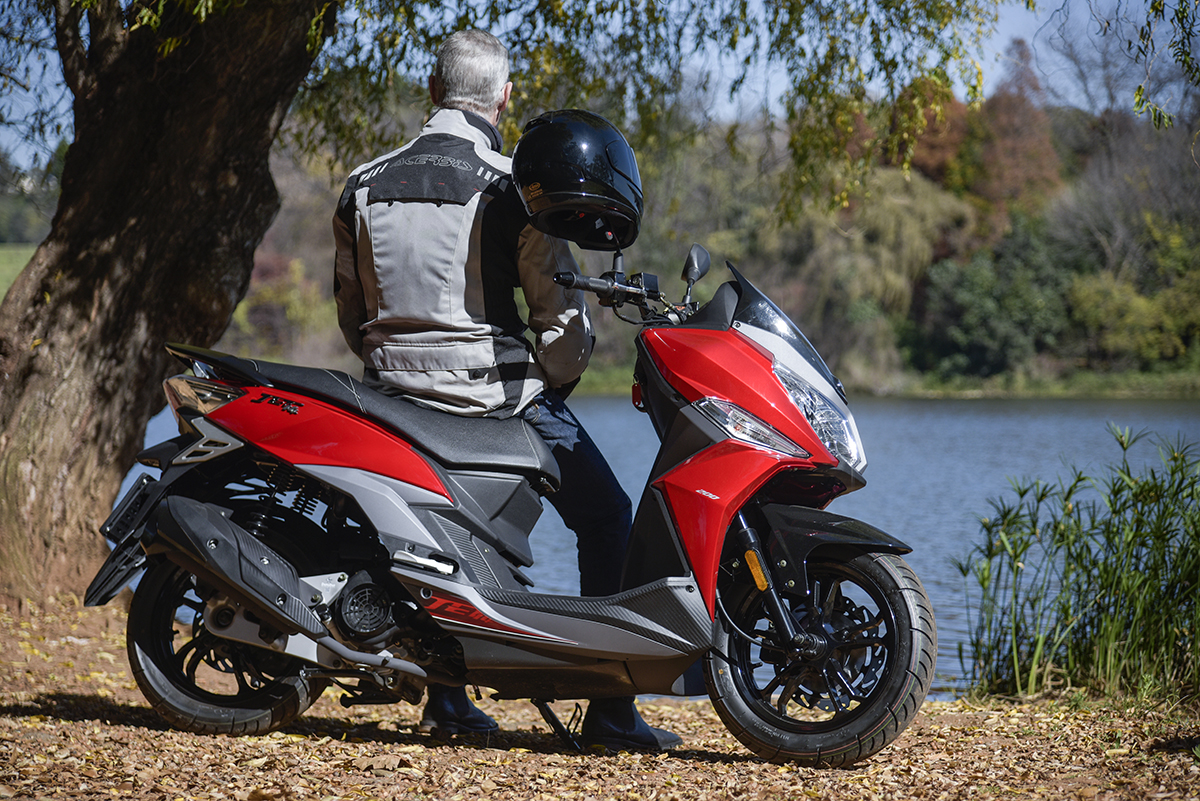
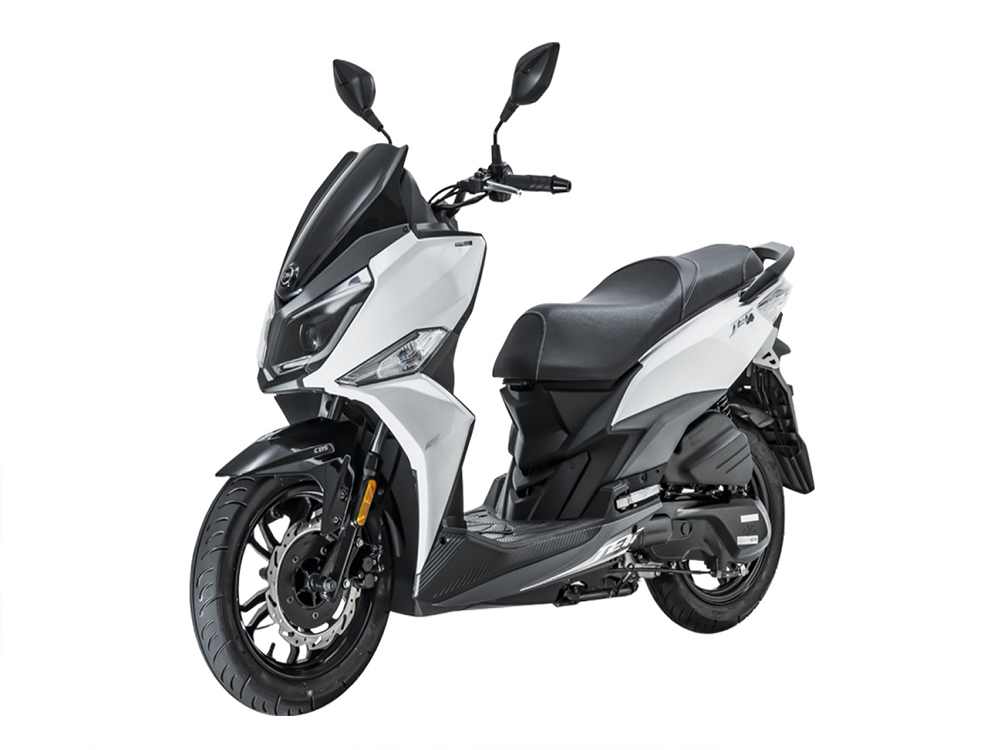
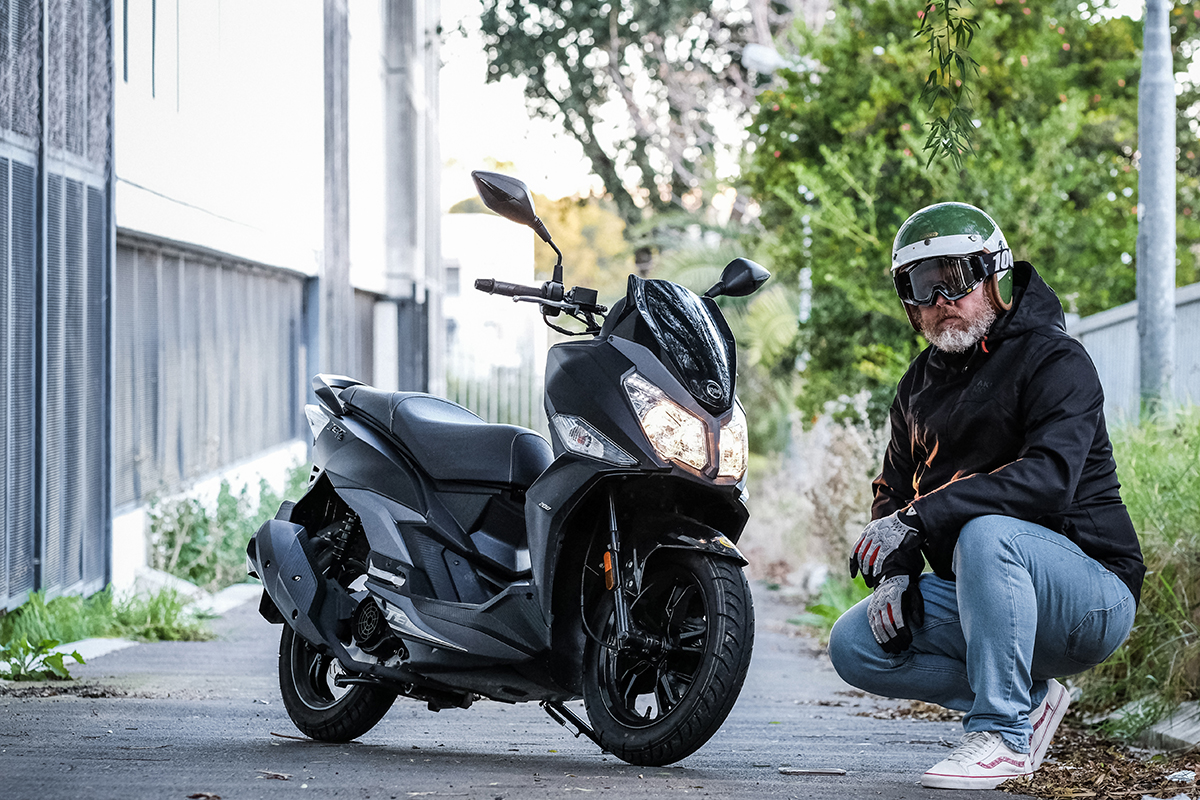
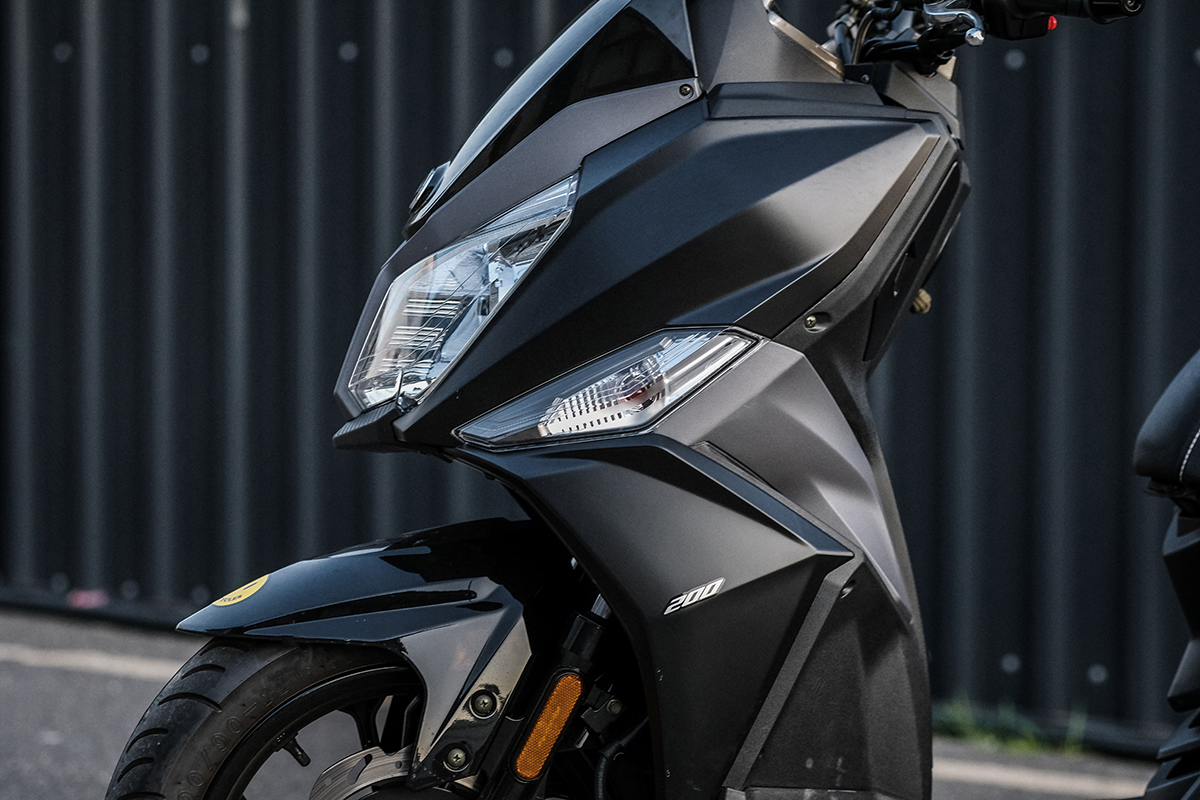
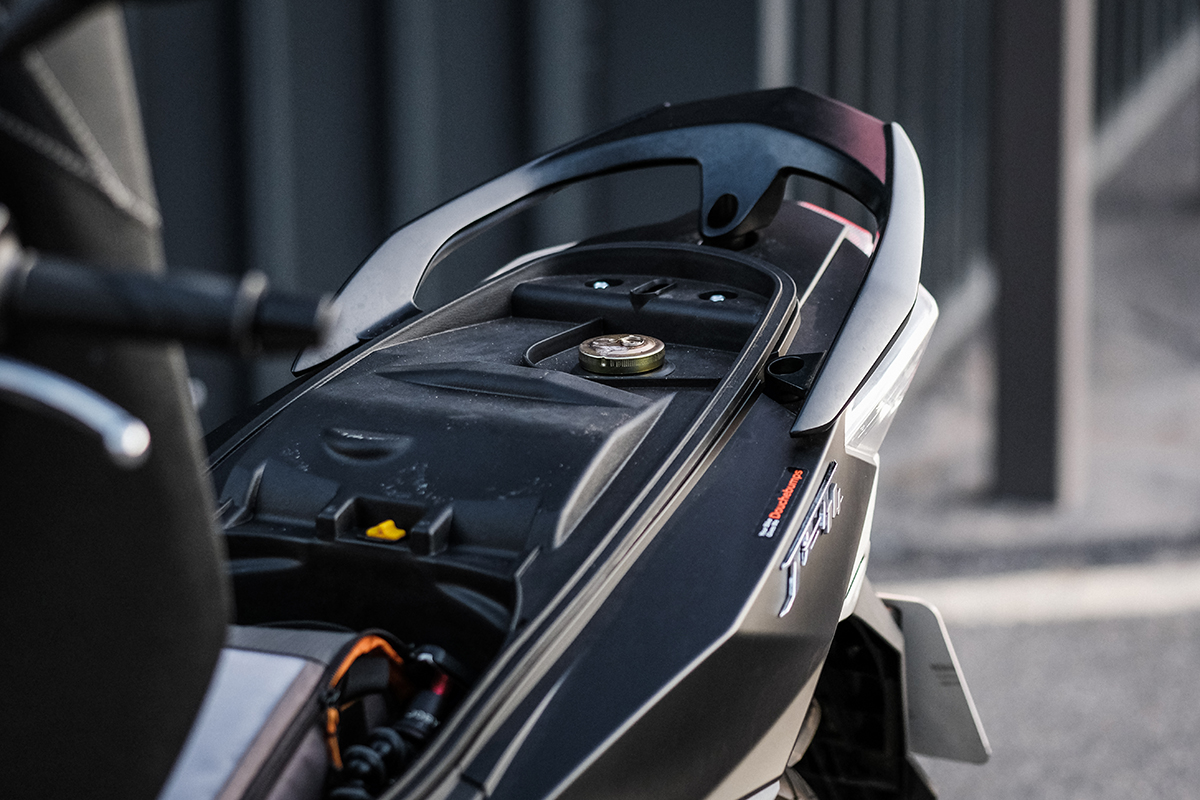
The Jet14 is super stylish from any and every angle. Sleek and lithe with LED lights that are both practical and functional. See and be seen. It is high on practicality too. Under-seat storage gives you space to stow your helmet and rain suit, or the bread and milk your partner asks you to pick up on the way home. Your house keys and phone are locked in the oddments cubby in front of you, and the Woolies packet with your supper is hanging from the bespoke hook between your legs.
Photo credit: SYM South Africa
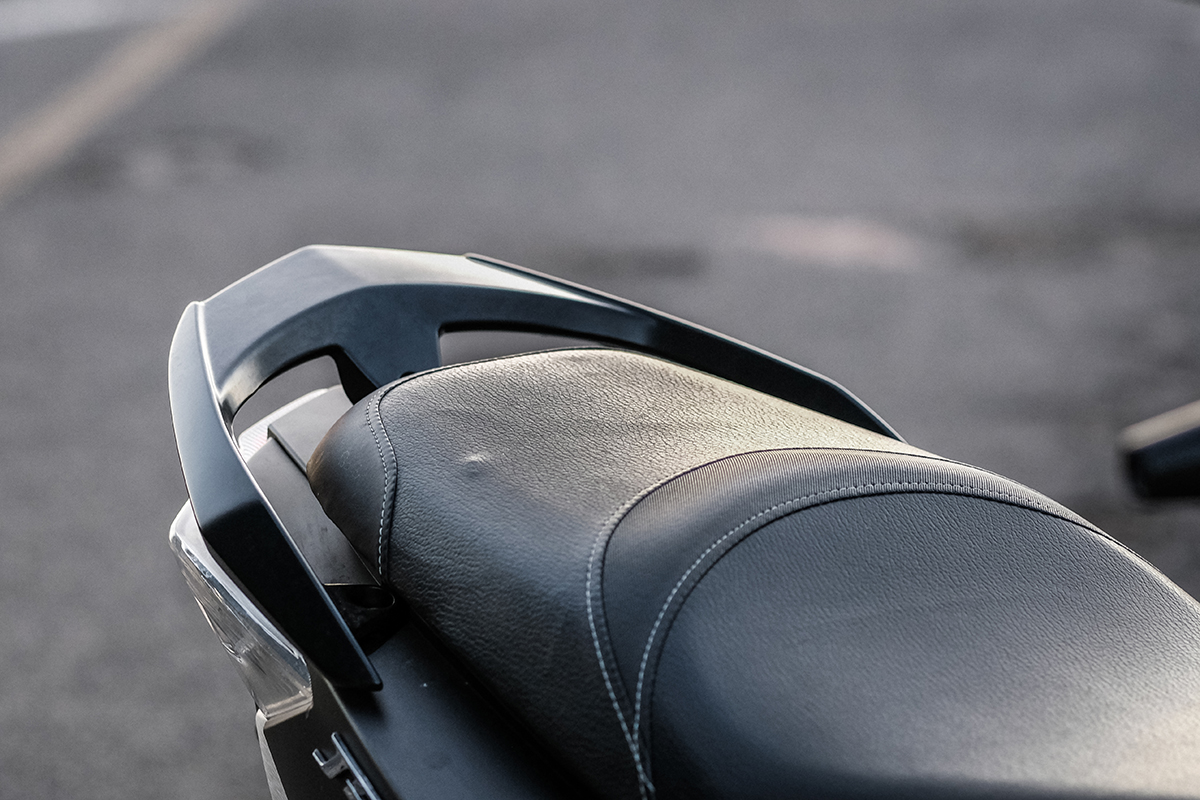
The seat is comfy and roomy enough to easily drop Junior at school on your way to work. No problem power-wise either. The 8,8 kW @ 8,000 rpm and 12,2 Nm of torque from the 169 cc 4-stroke single will punt you off the line ahead of the traffic and keep you there.
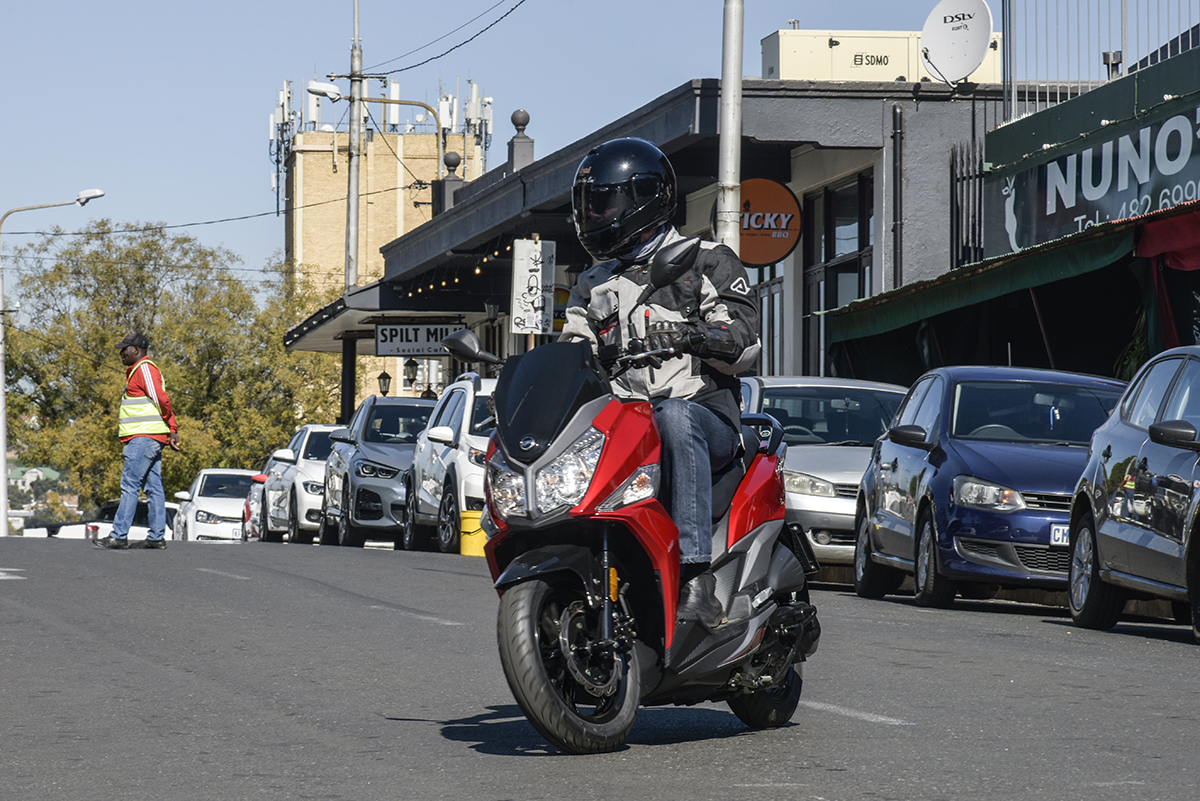
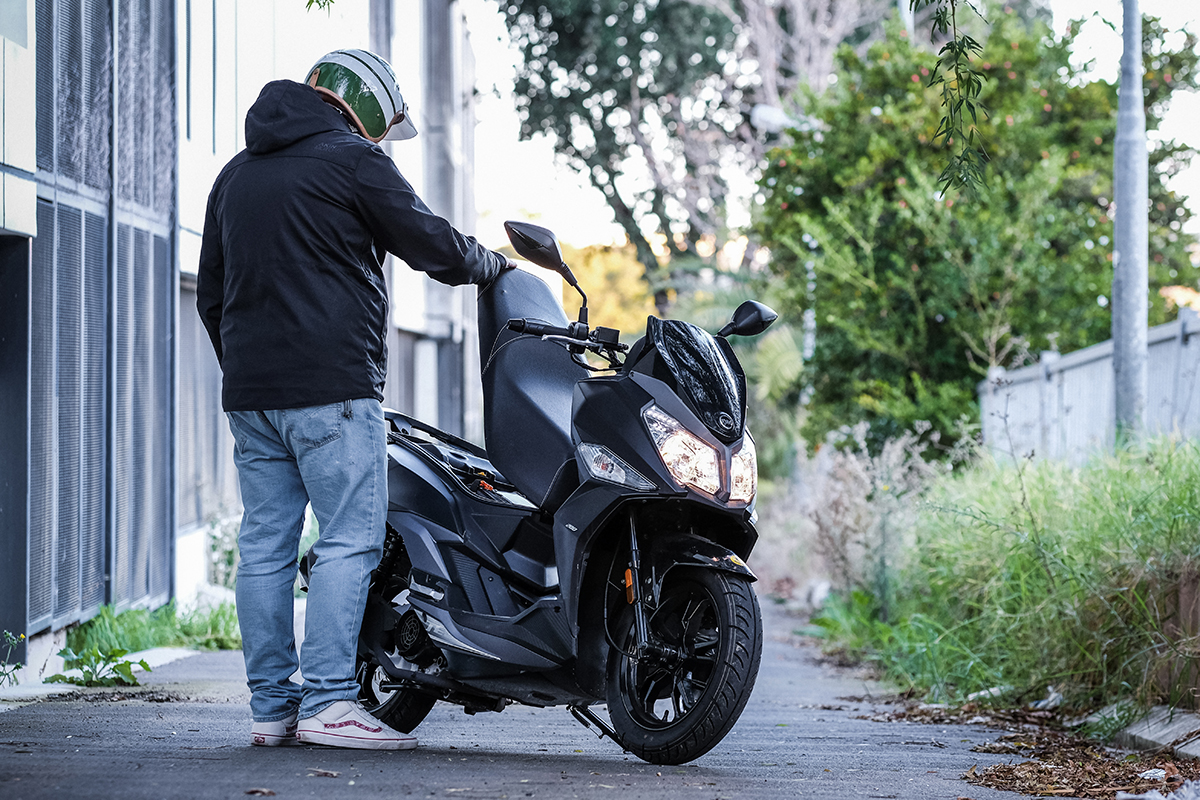
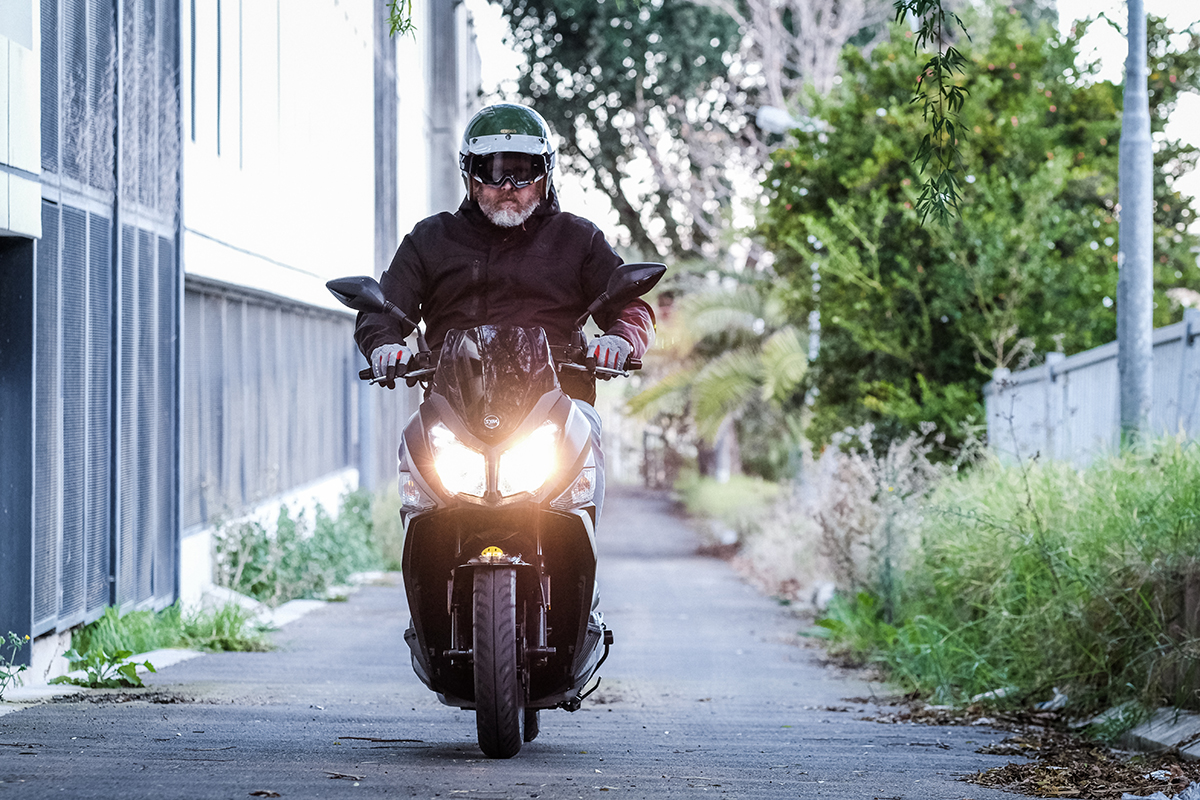
The slim body allows for effortless threading through traffic aided by the feathery 134 kg weight which is all super low in the chassis. This is the thing. Anybody can ride the Jet14. It really is that easy. Point and squirt and the Jet does the rest. No issues with stopping either. The disc brakes for and aft are excellent, bringing you to a halt without sweat or bother. Damn, this beastie is a blast around town!
Photo credit: Bjorn Moreira / ZA Bikers
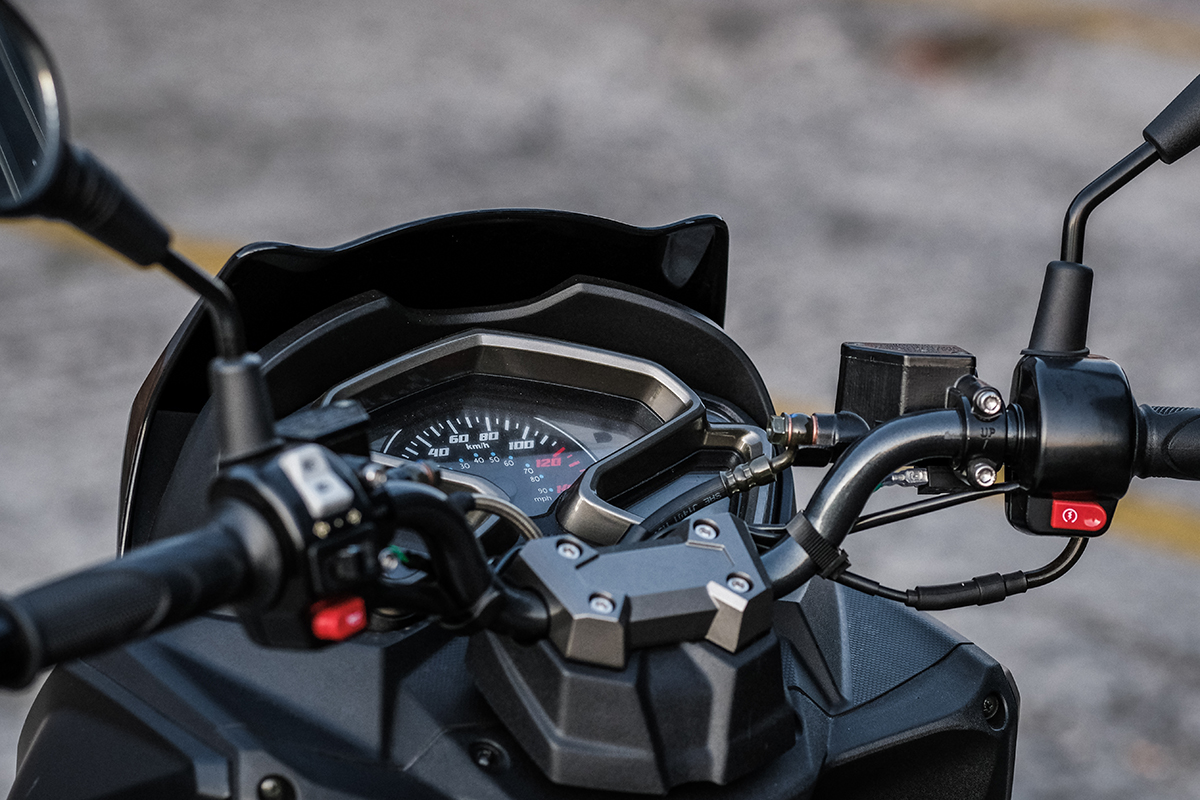
Well-laid-out gauges keep you informed of all the vital statistics that matter. Fuel level in the 7,5-litre tank, revs and speed, as well as how far you’ve travelled. I’ll tell you what. You’ll start thinking of which cool coffee shop on the other side of the city you can pull into. Just because it’s suddenly so easy.
Photo credit: SYM South Africa
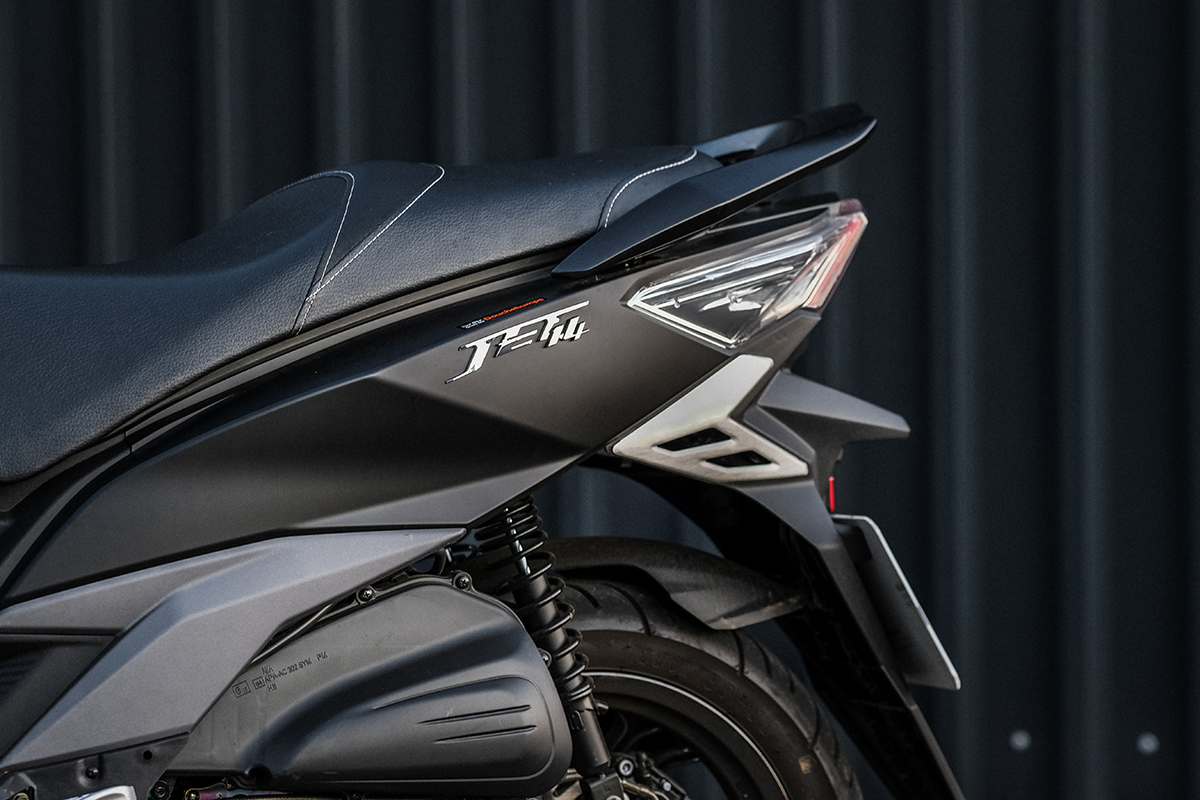
Conventional non-adjustable front shocks are well dialled in and, together with the 14” wheels, make scooting around town totally effortless. Twin rear shocks with adjustable preload do the same at the back and allow you to adjust for Junior’s weight if needs be. When you have emptied a tank and are refuelling after around 200 k’s just think for a moment what a doddle it has been.
When you research on the Net you soon discover what an enviable record SYM has earned for value for money, practical and reliable products. In SA we have the reassurance of the backing of a decent dealer network, who are in turn backed by KMSA. People read the odd blogs on Facebook about guys who do hectic trips on their SYMs. The one fellow, seeing as how the subject is the Jet14, rode his from Cape Town to Durban and back. Absolutely no issues. As the journey progressed, his enjoyment of and respect for his plucky SYM grew and grew. Now that is a proper adventure!
Photo credit: SYM South Africa
The question should not be “should I get a Jet14 and save myself a load of money and time?”, but rather “what is stopping me?”. OK, let’s address the Elephant in the room… Is it dangerous? Absolutely not!! There is no ego involved in commuting, so riders do not do stupid ego-driven things that land them in trouble.
The Jet14 allows you to keep up with, or stay ahead of the traffic. You then literally only concern yourself with the traffic in your immediate vicinity. The mirrors keep you informed of what is behind you. I have already told you how good the brakes are. Decent situational awareness, which should be encouraged with all road users from pedestrians up, is all that is called for. The SYM does the rest with its bright body, decent lights and dynamic ability. This my friends is the answer to your urban mobility dilemma. At under R33,000, the solution could not be more simple.
Photo credit: Bjorn Moreira / ZA Bikers
SYM JET 14 200
For more information on the bike featured in this article, click on the link below…
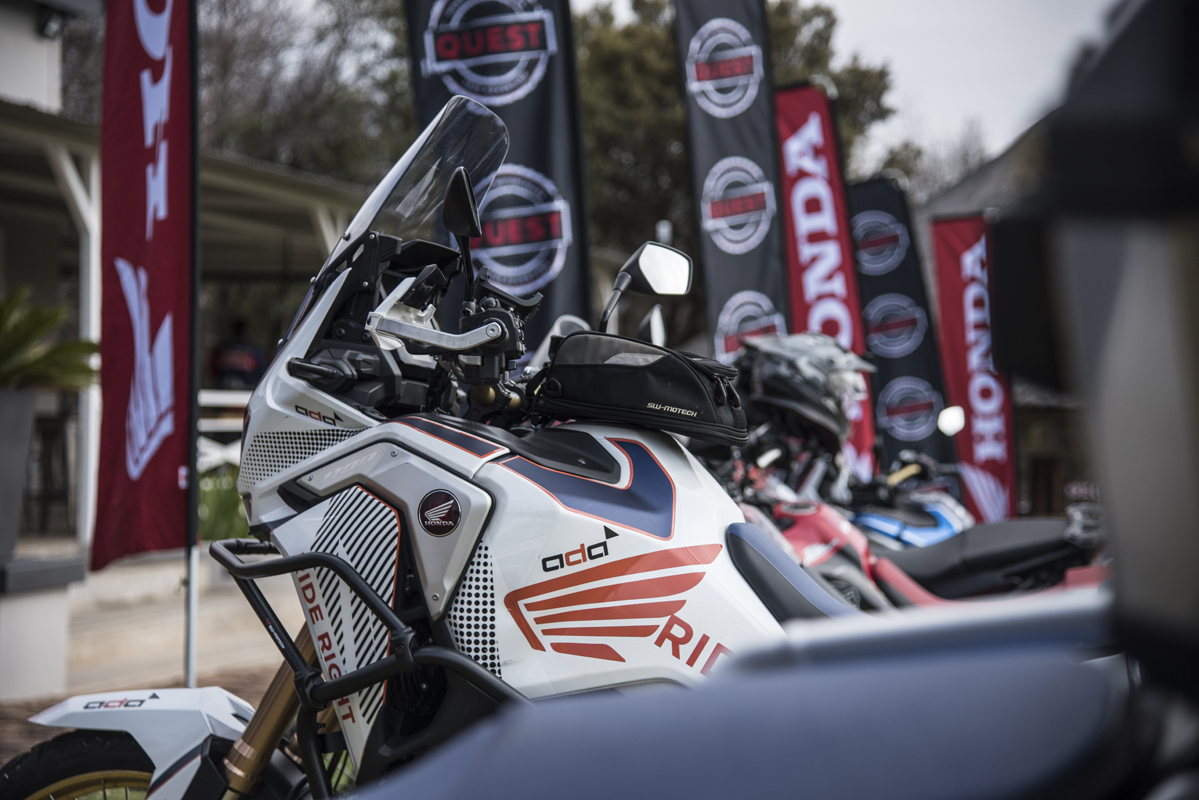
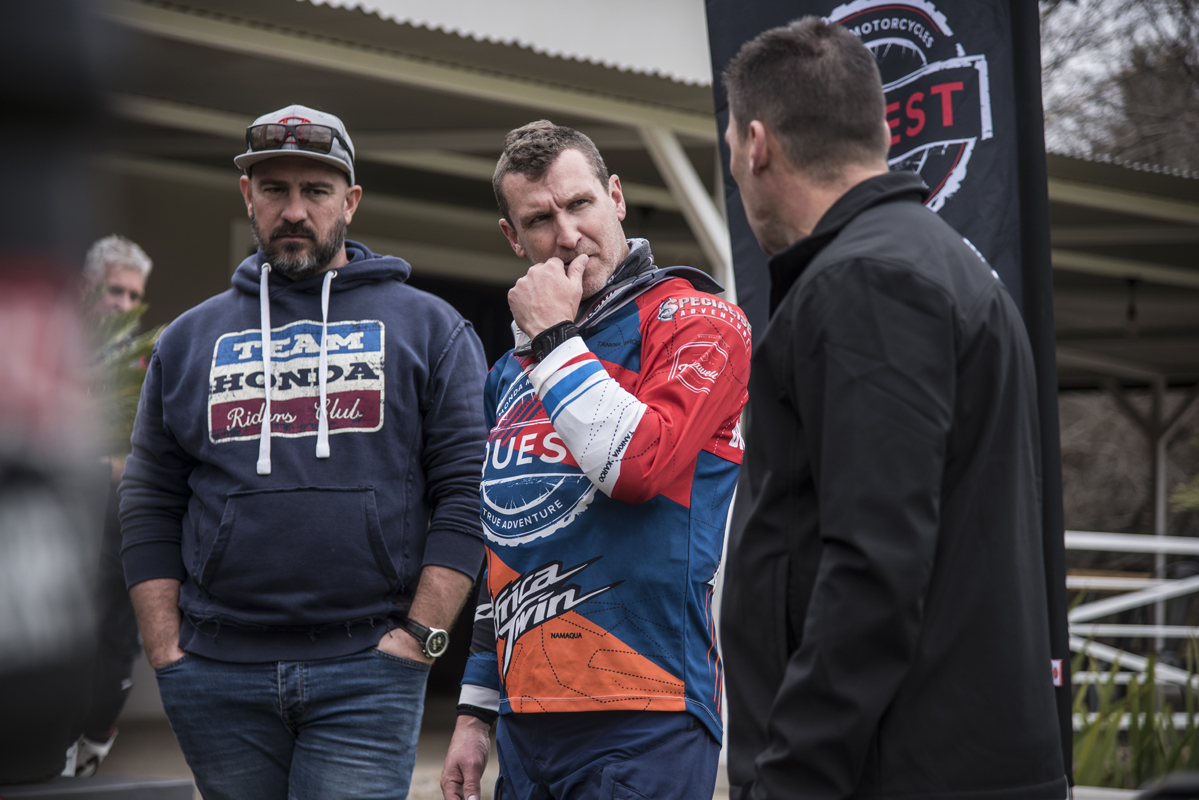
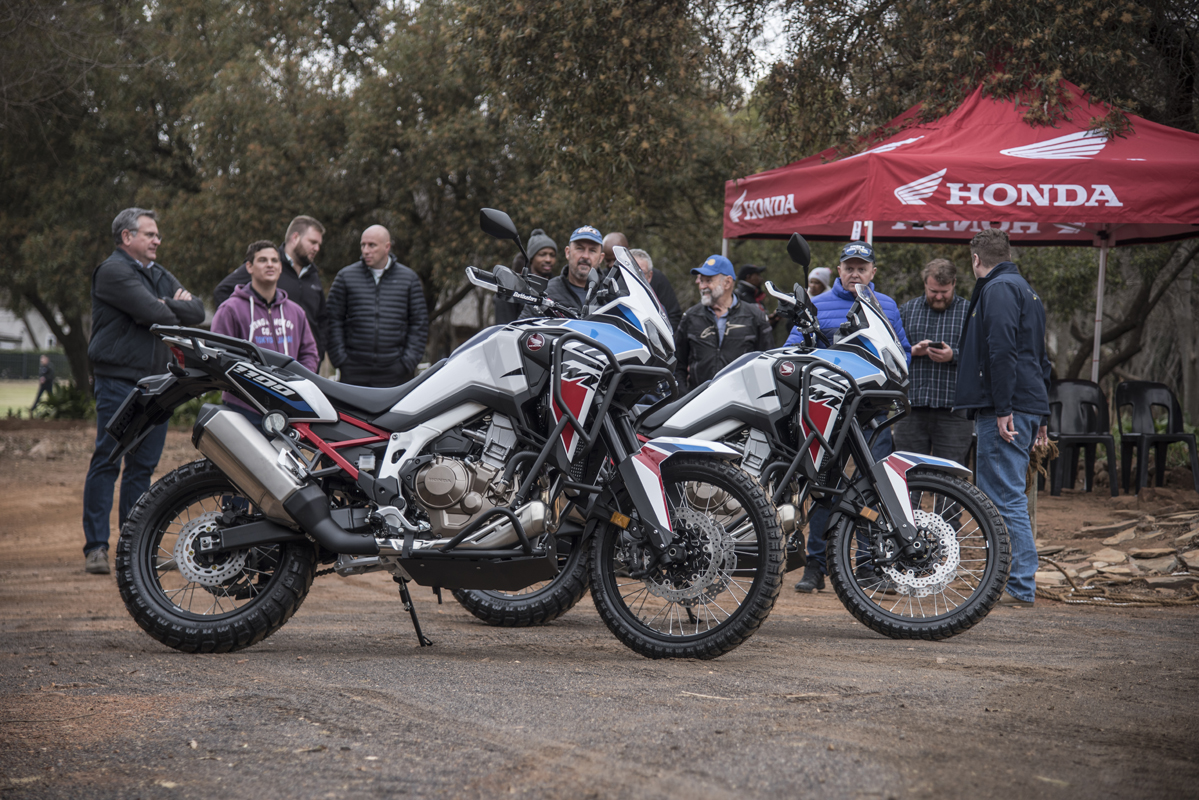
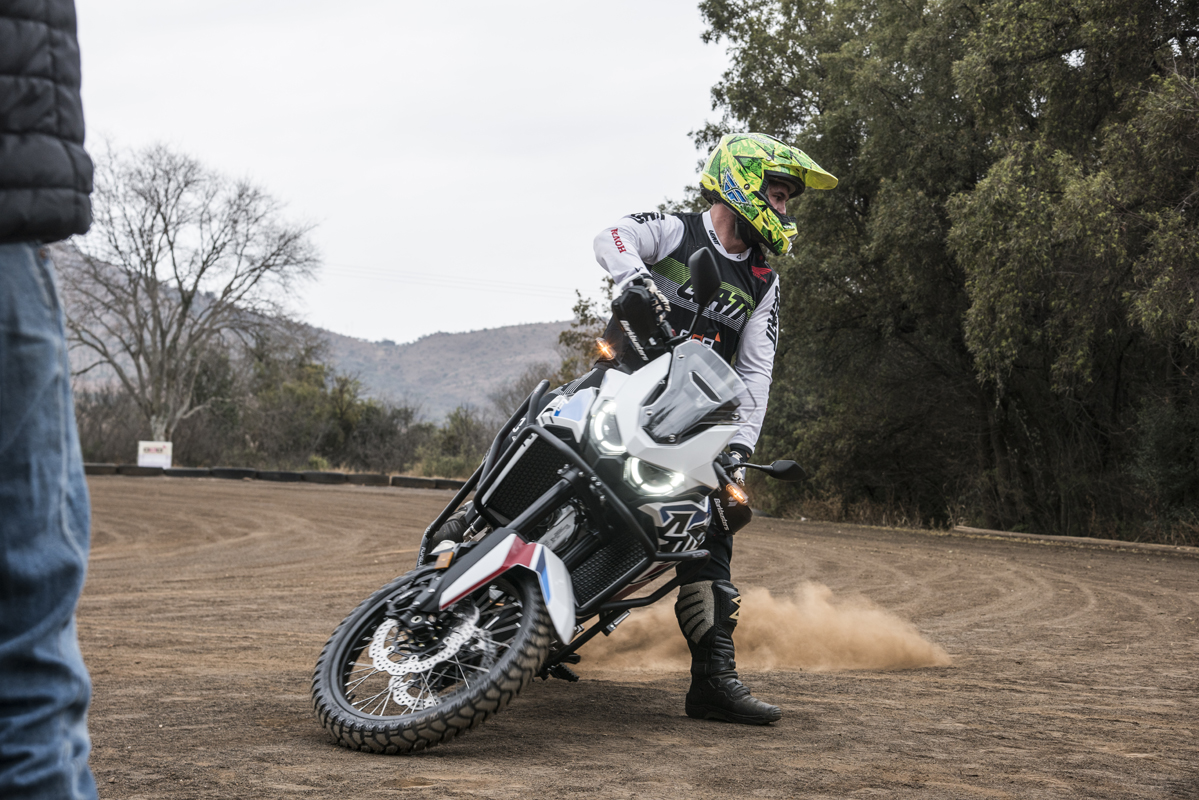
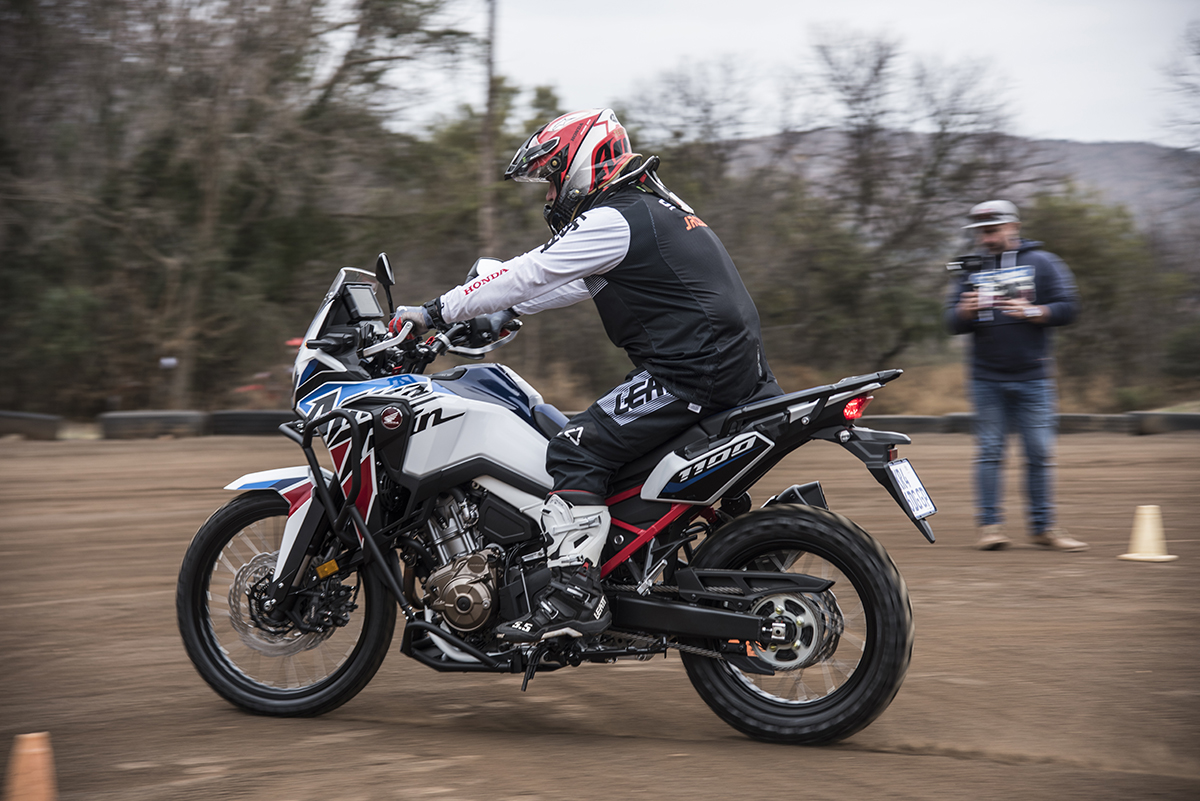
On the 3rd of August, Honda SA invited some of their local Honda dealers and motorcycle journalists to the launch of Honda Quest 2023, at the brilliant ADA Training Facility situated on the Satellite road near Hartebeespoort Dam.
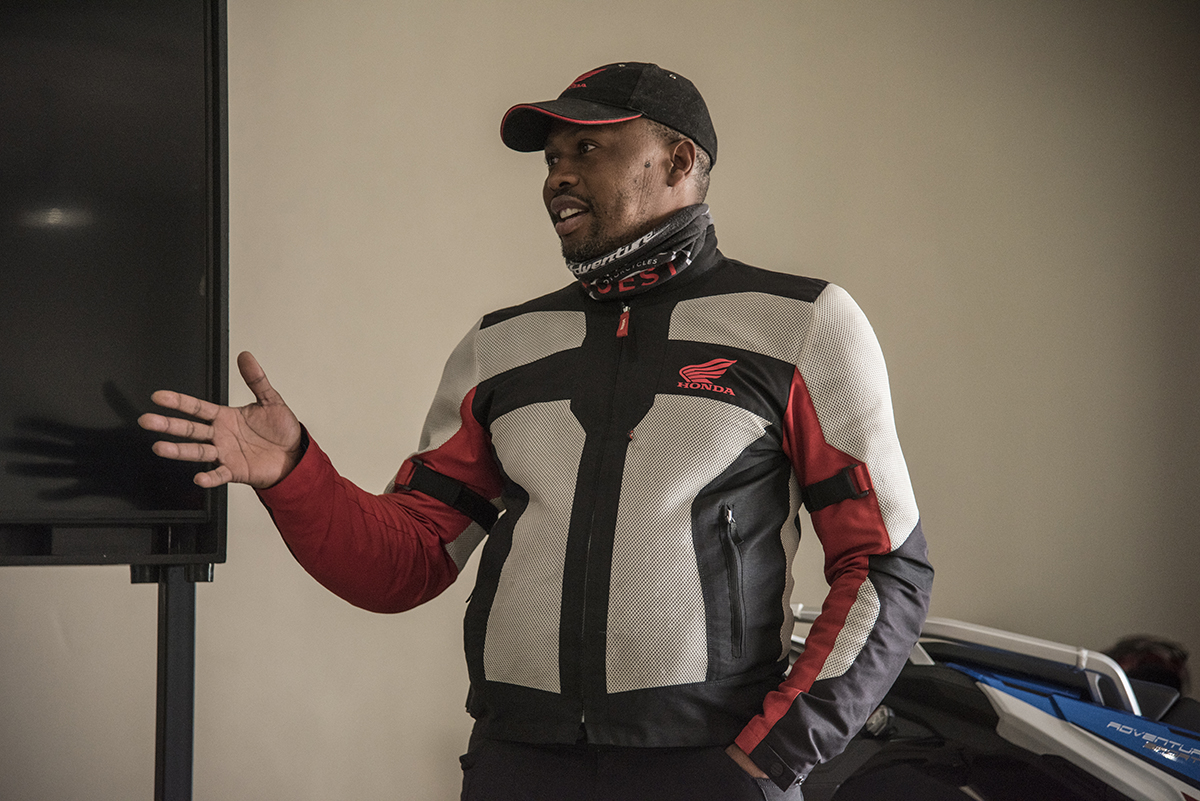
Riaan Fourie from Honda SA Motorcycle division started proceedings by saying that Honda wanted to take a slightly different approach with Quest 2023. He announced a media partnership with Fanie Scholtz and Pierre Breytenbach (a Quest 2018 contestant) who have built quite a following with their ‘Footpeg Diaries’, to promote Quest with Honda dealers, and the riding public at large. What is Quest about exactly?
Photo credit: Bjorn Moreira / ZA Bikers
The catchphrase for Honda’s Africa Twin has always been “True Adventure”. Quest was the initiative that Honda embarked on to show Adventure bike riders that the new Africa Twin was not just African by name, but African by nature too. They hold a selection course that whittles 30 applicants down to an eventual 14. The 14 make up 7 two-man teams that embark on a proper African adventure riding Africa Twins. They look for men and women who are resourceful, independent, mindful of others (team players) and have a serious sense of adventure.
Skill on an Adventure bike is not a pre-requisite. They take the finalists on an extended ride through some of the harshest and most barren desert areas that Namibia and the Kalahari can throw at them. 2023 will be in the Tankwa Karoo and southern Kalahari. Who will buckle and who will get forged in the furnace of testing into unbreakable steel? The winner is selected by tallying the votes of all and sundry involved in the logistical and backup team. Essentially it is a test of character, not skill, where the contestants are the raw metal and the Africa Twins are the anvils on which they are beaten into shape.
Photo credit: Bjorn Moreira / ZA Bikers
In the past, Honda has not got the mileage out of Quest that was intended or deserved. Riaan wants to change this by engaging and including Honda dealers and their customers at every stage of the build-up to Quest. The Footpeg Diaries duo, with backup training by the ADA Training team, will take the Quest Roadshow to Dealers around the country on weekends, promoting Quest and the Africa Twin. You need to watch Honda Wing SA on Facebook and Instagram for details of when they will be at a dealer near you.
Photo credit: Bjorn Moreira / ZA Bikers
Pierre Breytenbach and Mojaki, the winner of Quest 2018, shared some of their experiences. The pressure of 1800 k’s of hectic riding and serious endurance turned a field of coal into diamonds. It seems that Quest is one of those rare events that has life-changing consequences. Many of the competitors owned different brands of bikes. After the last Quest, 10 riders chose to buy their Africa Twins, with the winner also claiming his bike as the grand prize. This is an incredible testimony to the abilities of the Africa Twin.
Photo credit: Bjorn Moreira / ZA Bikers
In Pierre’s words, he witnessed an Africa Twin get retrieved from where it landed upside down after an unplanned excursion off the side of a steep incline, get put right side up, and ridden away. Tougher than a tough thing! Mojaki, with complete humility, shared how he was filled with trepidation at what he had to face. To say that Quest plucked him out of his comfort zone is a massive understatement! Essentially a road rider with limited experience, he toughed out, kept smiling when he felt like crying, and served his teammate and others as best he could, putting their interests above his own. A worthy winner indeed!
Photo credit: Bjorn Moreira / ZA Bikers
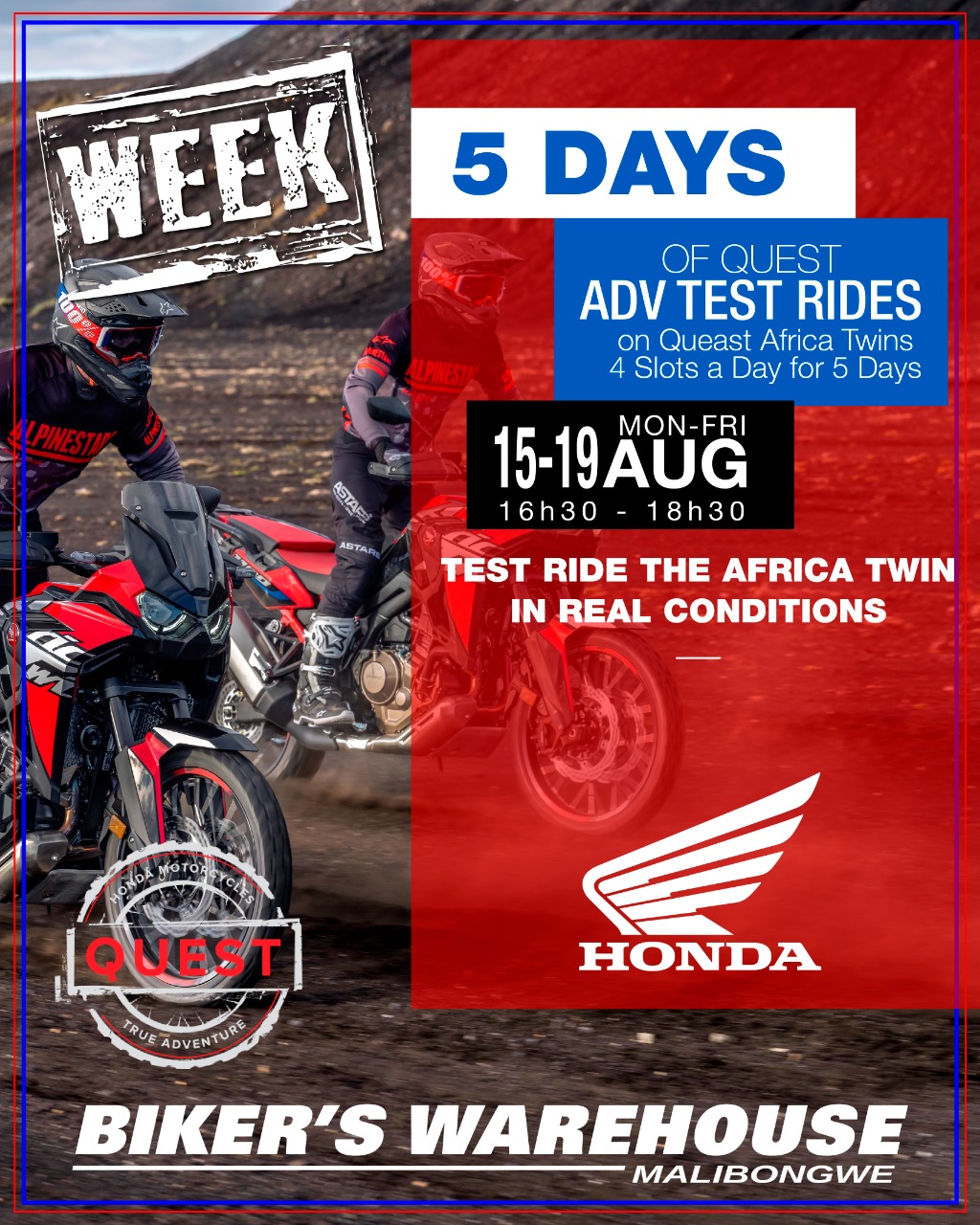
Quest is a story that needs to be told. Entrants will be assessed and reduced to 30 individuals who will then attend ‘Boot camp’, where a final selection of the fourteen 2023 contestants will take place. Who will win though to participate in what Pierre describes as “a long journey to a seemingly unattainable goal?” The first Roadshow is at Honda Wing Randburg (Biker’s Warehouse) on 15-19 August. Let the games begin…
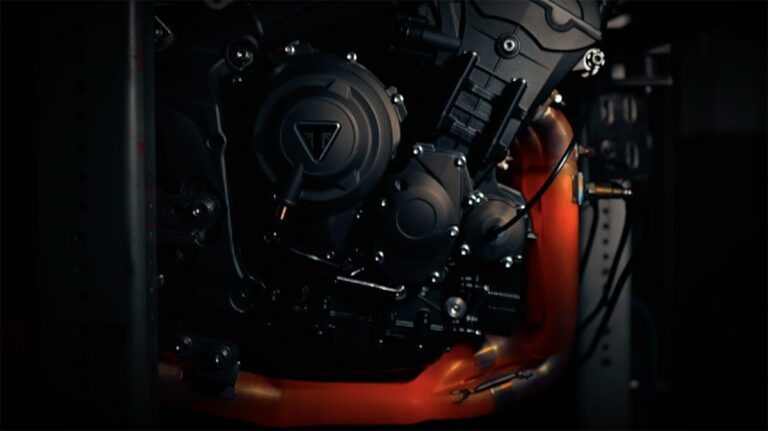
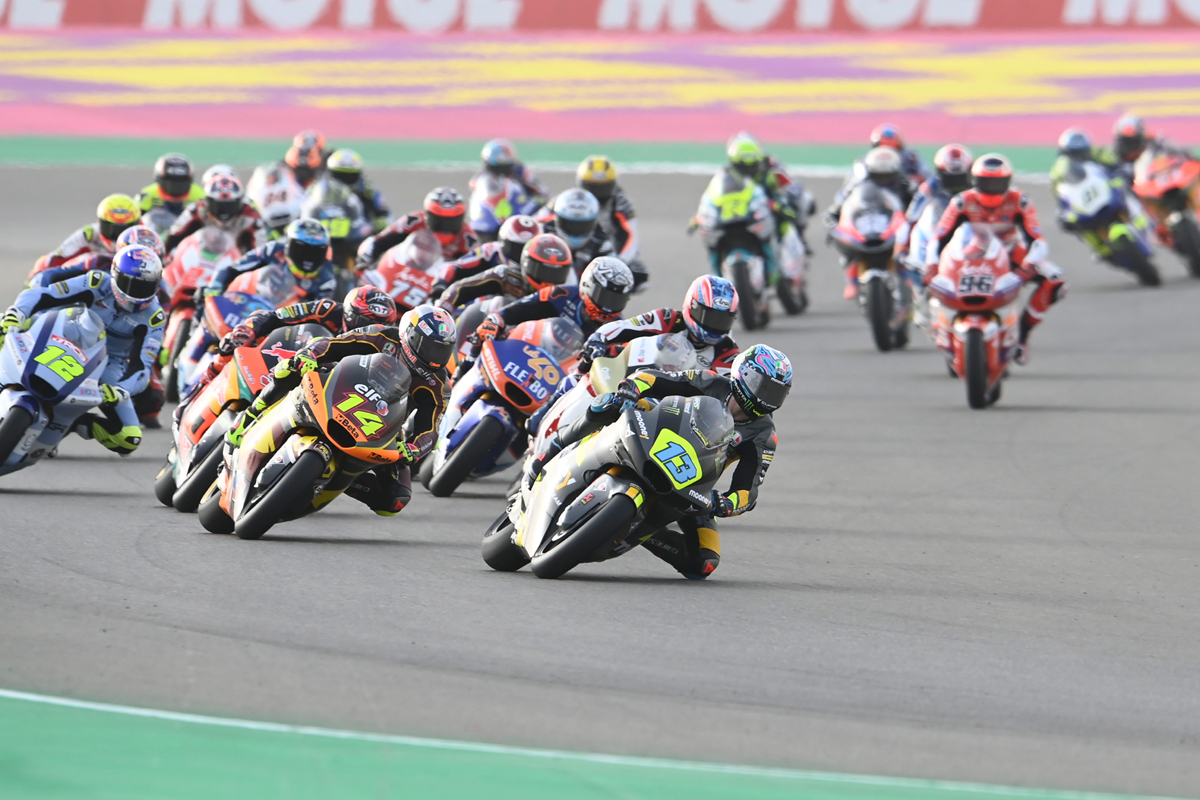
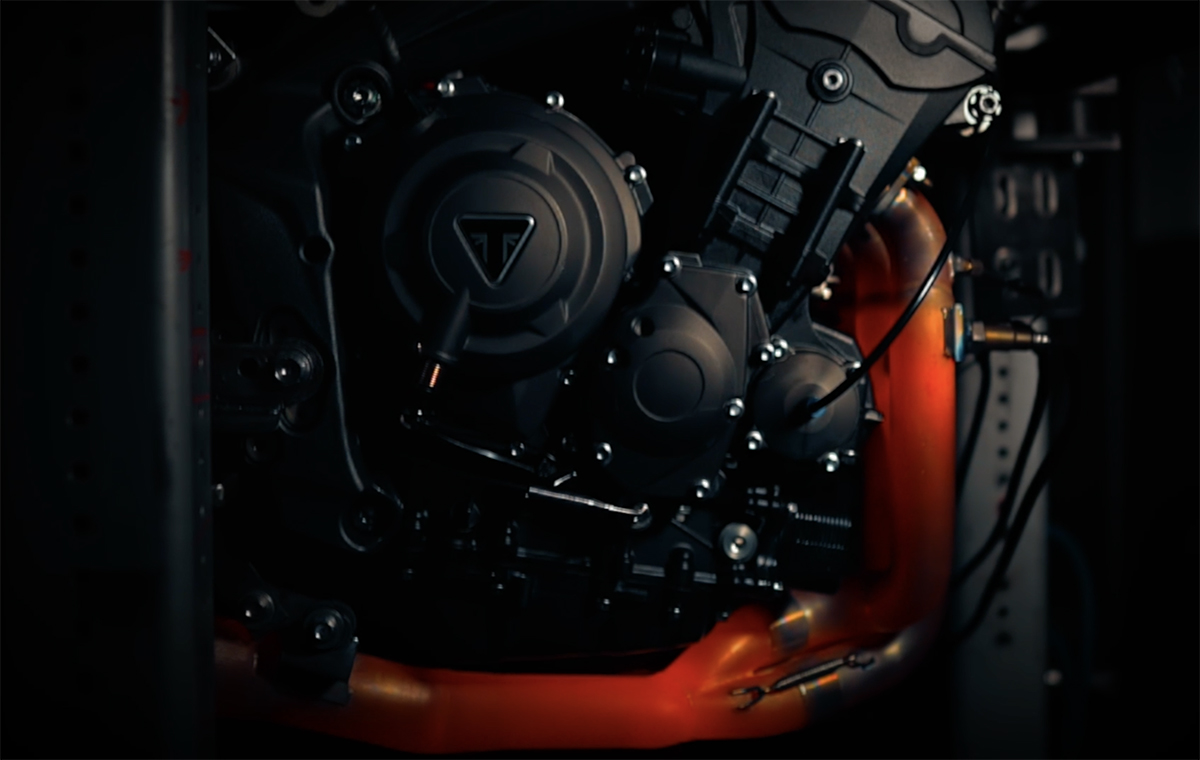
Whilst Triumph has resisted the temptation to enter Grand Prix racing in its own right as a manufacturer, that hasn’t stopped the company from making a huge impression on the sporting world by signing a three-year contract to supply its signature triple-cylinder engine to the Moto2 World Championship.
Image source: Triumph SA
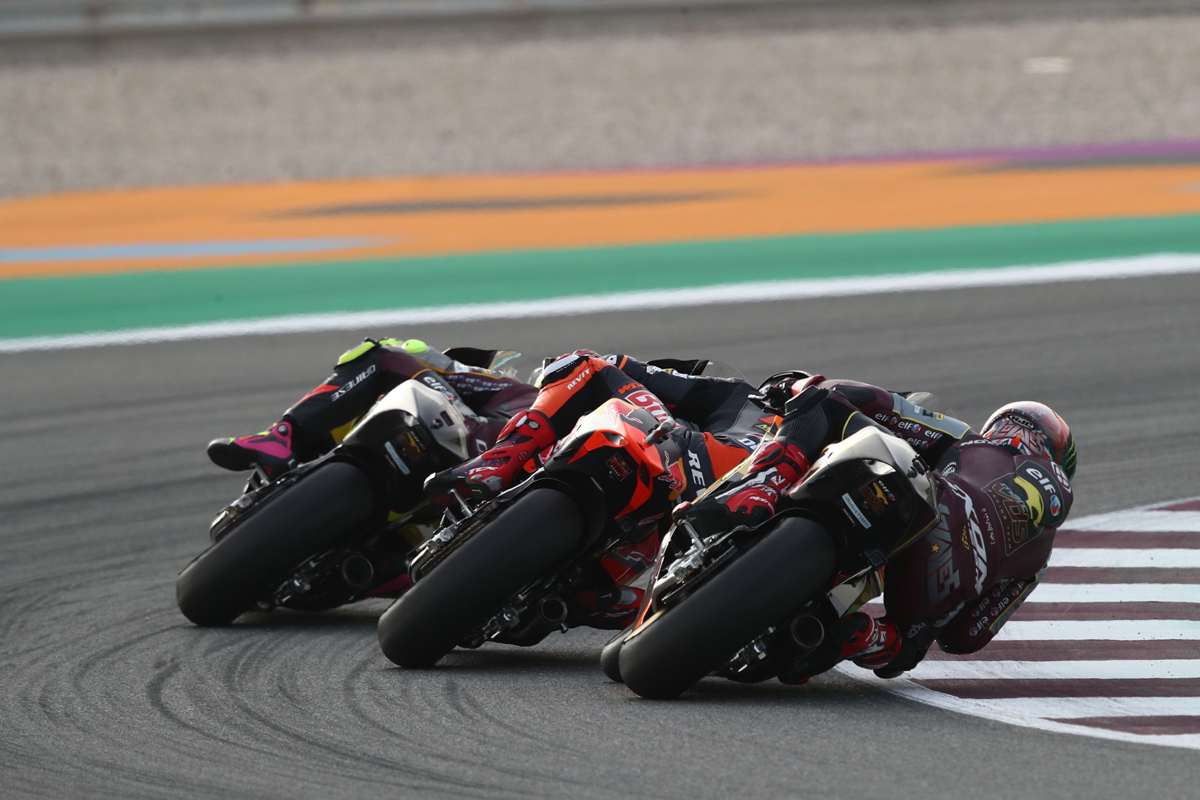
So far, the 765cc engine, which was derived from the production engine found in the Street Triple RS, has proven itself to be brilliantly powerful and, more importantly, reliable, complete with a spine-tingling exhaust note. The engine has been praised by riders and teams alike for making the racing in Moto2 much closer and for being an extremely easy engine to ride.
Already four years into the contract, Triumph certainly isn’t resting on its laurels and development of the engine continues, the aim being to find more power to enable Moto2 riders to continue to set more lap and speed records.
Image source: Triumph SA
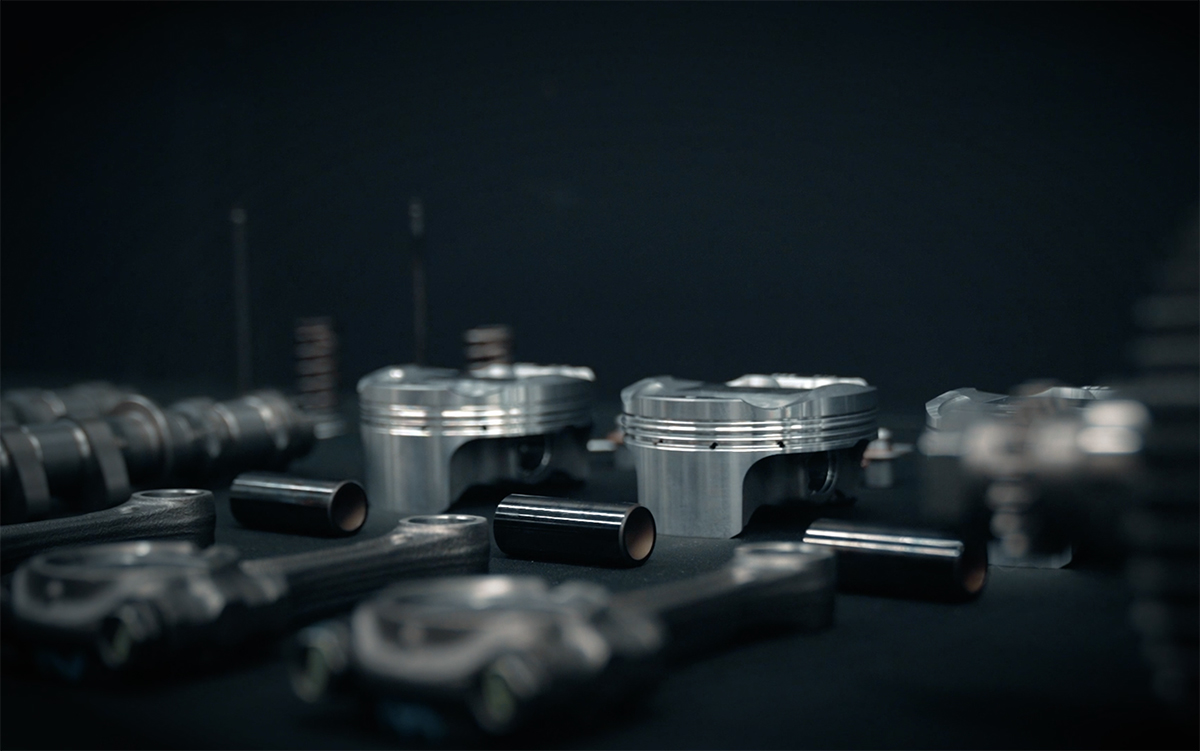
The latest developments are aimed at improving the top-end power of the engine, with a new cylinder head, revised valves, valve springs and camshaft. To maintain reliability in the face of higher power output, the pistons, conrods and crankshaft have all been revised.
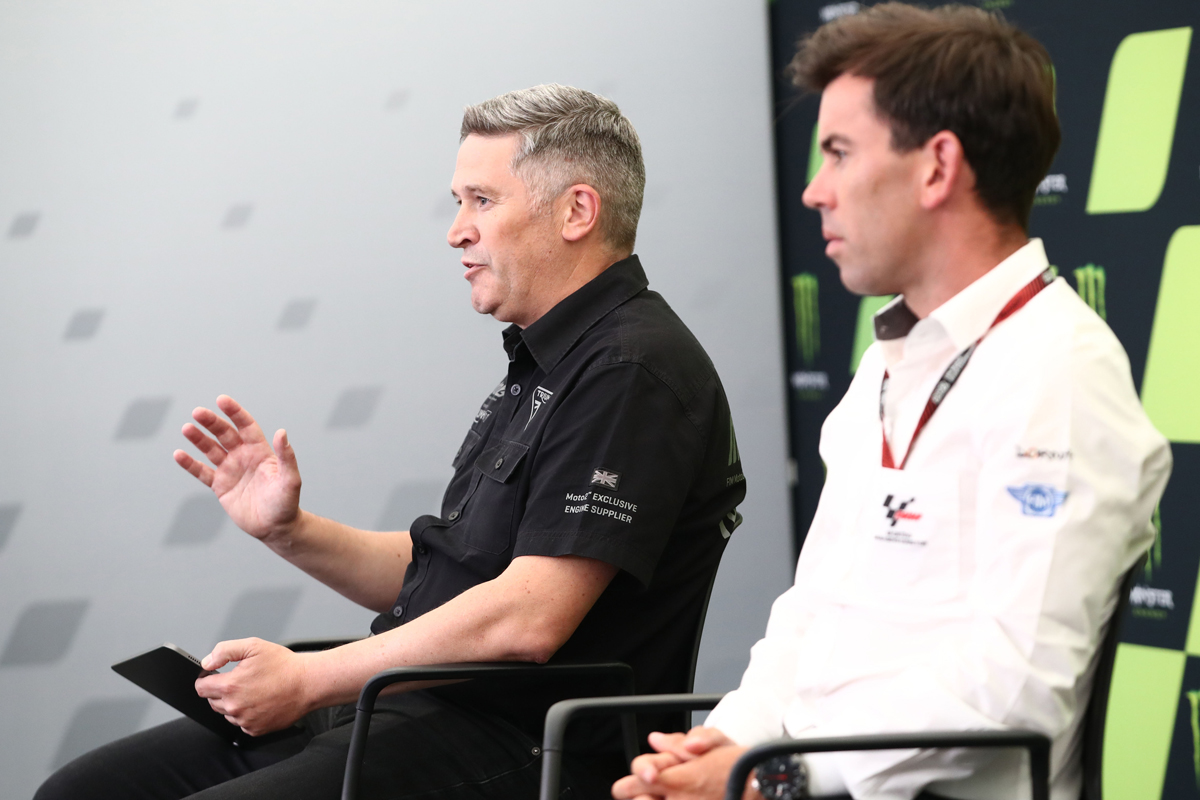
Steve Sargent, Triumph’s Chief Product Officer, said: “We are incredibly proud of the way that our 765cc triple engine has redefined the Moto2™ category, making it faster, more competitive and better sounding. To have achieved so many lap records, and a top speed equivalent to more than 100km/h per cylinder, is something we are very satisfied with since Triumph started powering the class from the 2019 season. When there’s such a fundamental change to a category everyone embarks upon a journey of learning – the riders and teams in terms of becoming attuned to the characteristics of the triple and optimising the overall package of engine, electronics, and tyres, and us as Triumph in terms of performance potential and reliability. We have achieved very nearly 1 million competitive kilometres on the current-spec 765cc Moto2™ engine and that gives us enormous confidence as we take this next step to give the riders something they all want – more revs and more power. We look forward to seeing yet more lap records fall as lap times get faster, and how more power gives riders more freedom to create overtaking opportunities and are excited to begin the next chapter of Moto2™ powered by Triumph.”
Image source: Triumph SA
Carlos Ezpeleta, Dorna Sports Managing Director, added: “Since the start of the Triumph era in Moto2™, we’ve been very satisfied with the performance of the Triumph 765cc triple and the lap records speak for themselves. It’s important that Moto2™ is a spectacle in its own right and that it provides a relevant platform to develop the next generation of MotoGP riders and this new announcement of more engine power goes even further in achieving both of those objectives. We’re very happy with the work of Triumph in powering Moto2™ and to see the way that they are constantly evaluating and improving.”
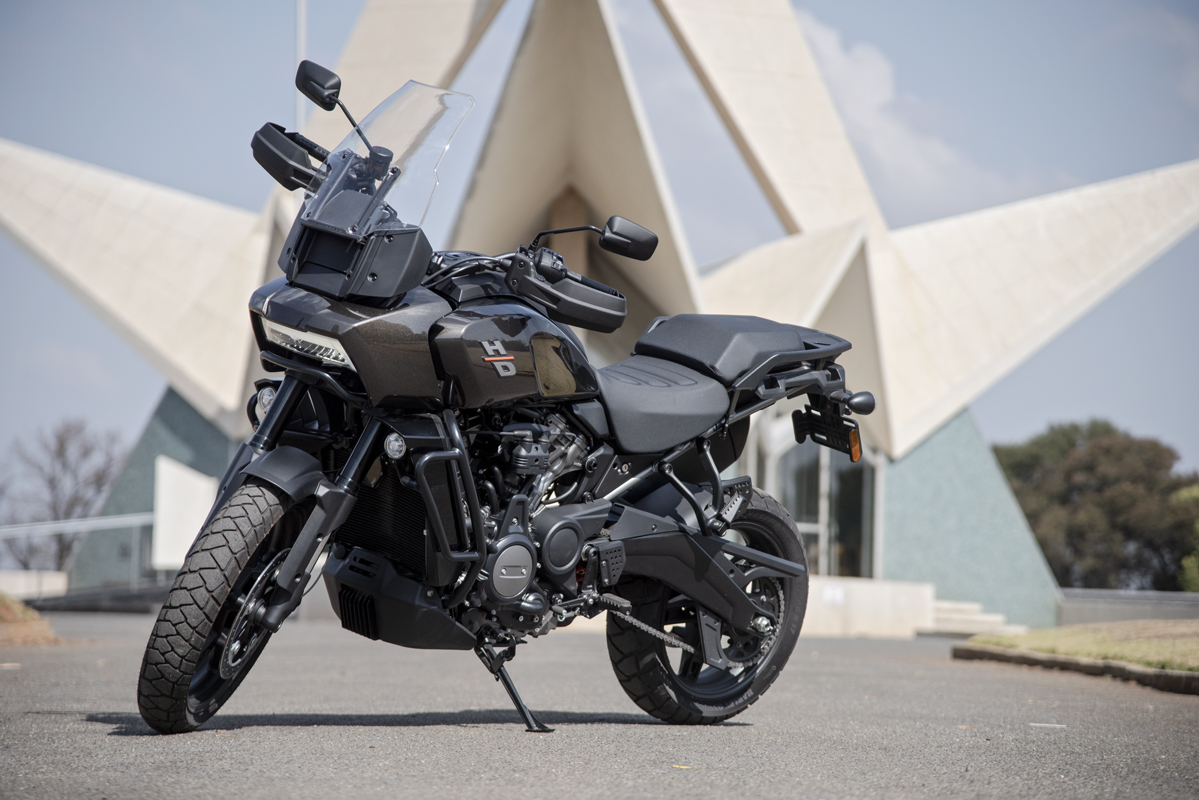
The idea of embarking on a motorcycling adventure is not exactly new to Harley riders. Way back in 1928, when motorcycling was still in its infancy, a fellow by the name of Zoltan Zulkowsky talked his buddy, Gyula Bartha, into taking a bit of a ride with him on his new Harley. 170,000 k’s and years later, after cruising the globe, they returned home.
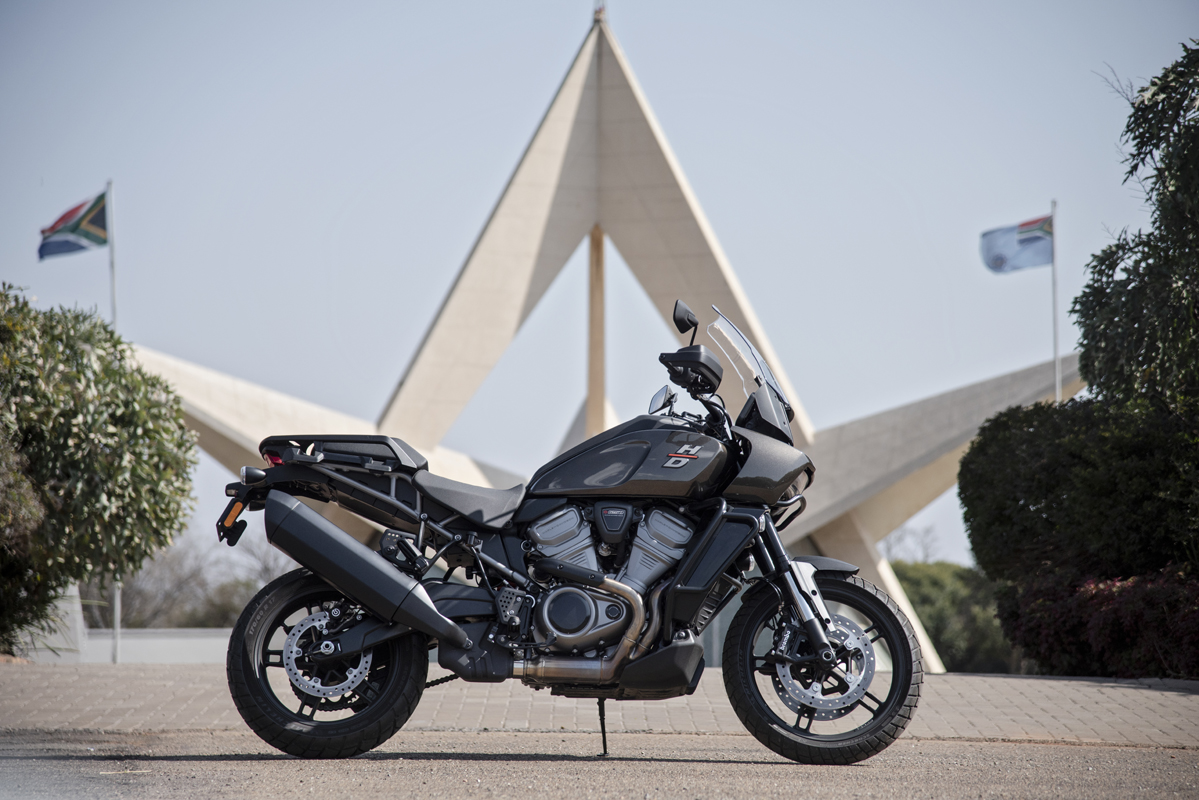
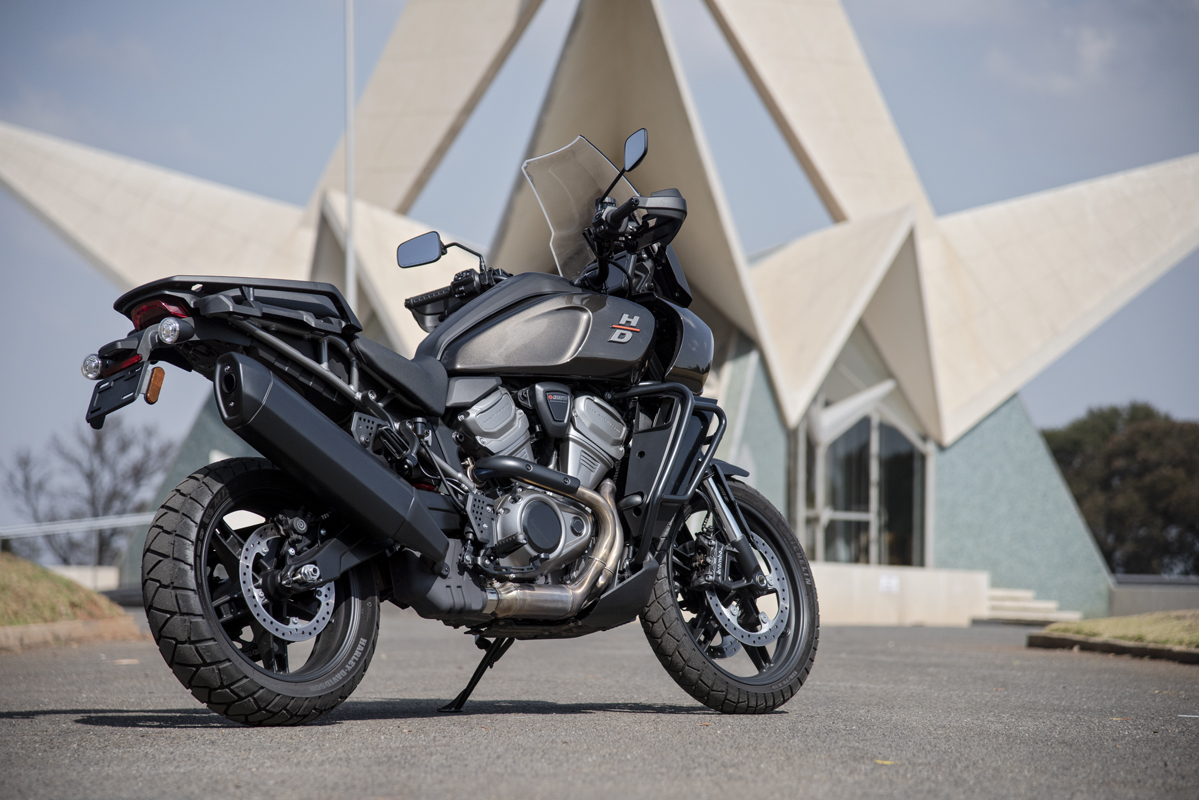
Considering the lack of infrastructure, tar roads and spares outlets and even fuel availability at the time, this was an incredibly brave (or stupid) undertaking. It makes our most hardcore motorcycling adventures fade into total insignificance. In the fullness of time, motorcycle manufacturers started building bespoke motorcycles designed with adventuring in mind, and so it was with Harley-Davidson. 120 years after they built their first bike, enter the Pan America, the first dedicated adventure bike built by The Motor Company.
Photo credit: Bjorn Moreira / ZA Bikers
The Pan that is the subject of this review is the base model, as opposed to the Pan America Special which has enough bells and whistles and unique features to choke a mule. This Pan is the kind of model that floats my boat. Generally speaking, manufacturers want us to just pay for every feature which they build into the bike, whether we actually want it or not.
We even brag about the bike’s features in the pub as if they really matter, as opposed to actually evaluating the pros and cons of each feature. This has filtered down from the car industry. You can even start your new Ford Ranger remotely from your cell phone. This might be the bee’s knees to a millennial, but to me, it is indicative of how uncommon sense has become.
Photo credit: Bjorn Moreira / ZA Bikers
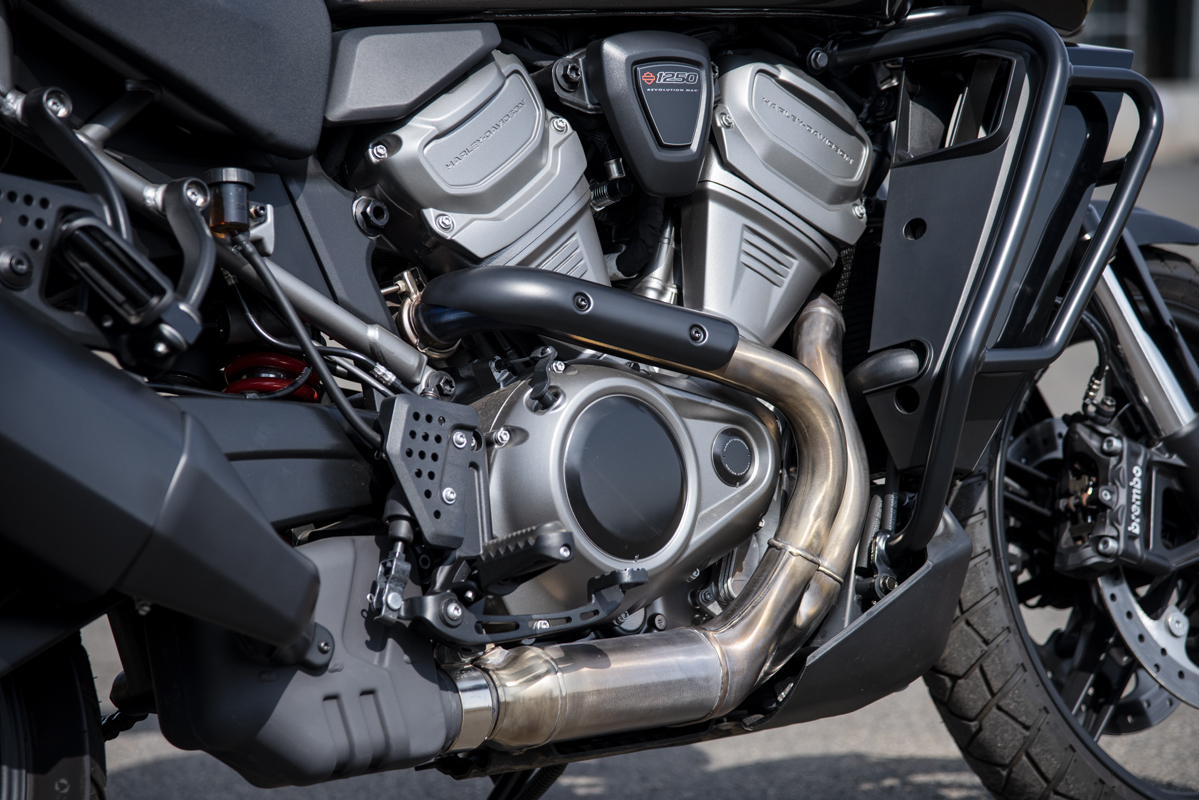
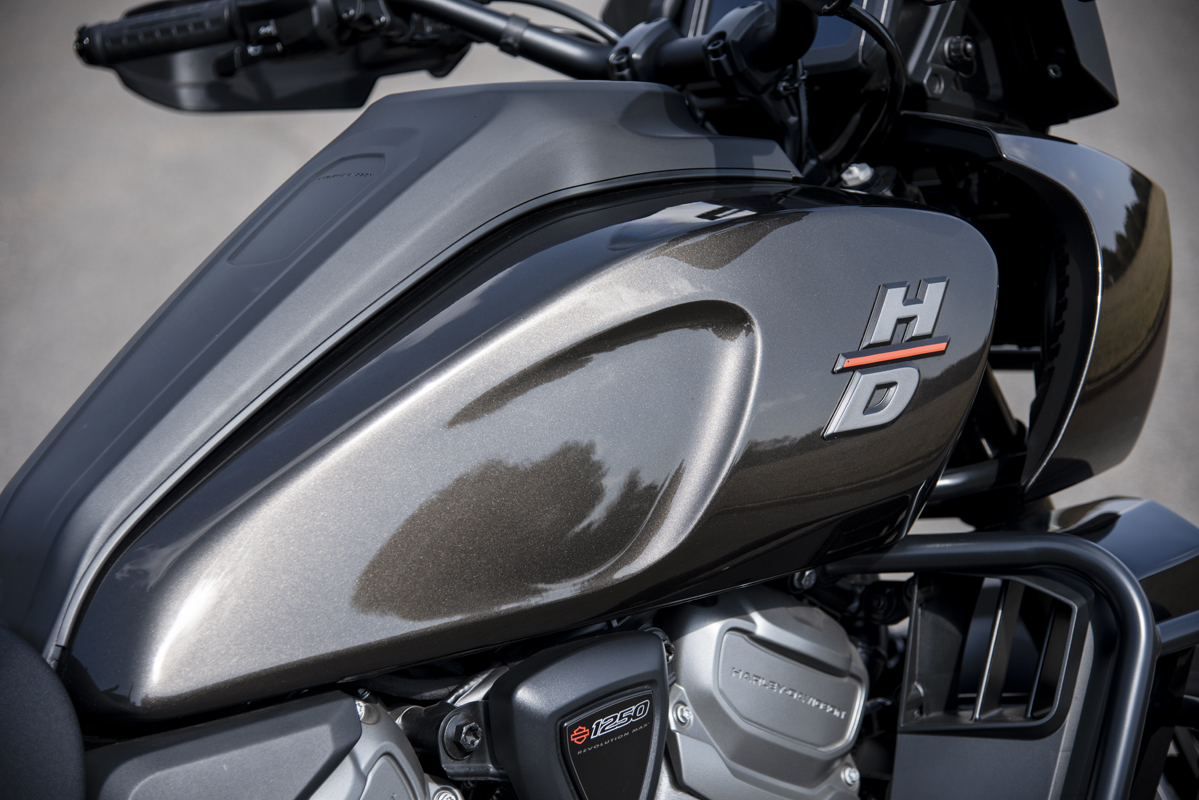
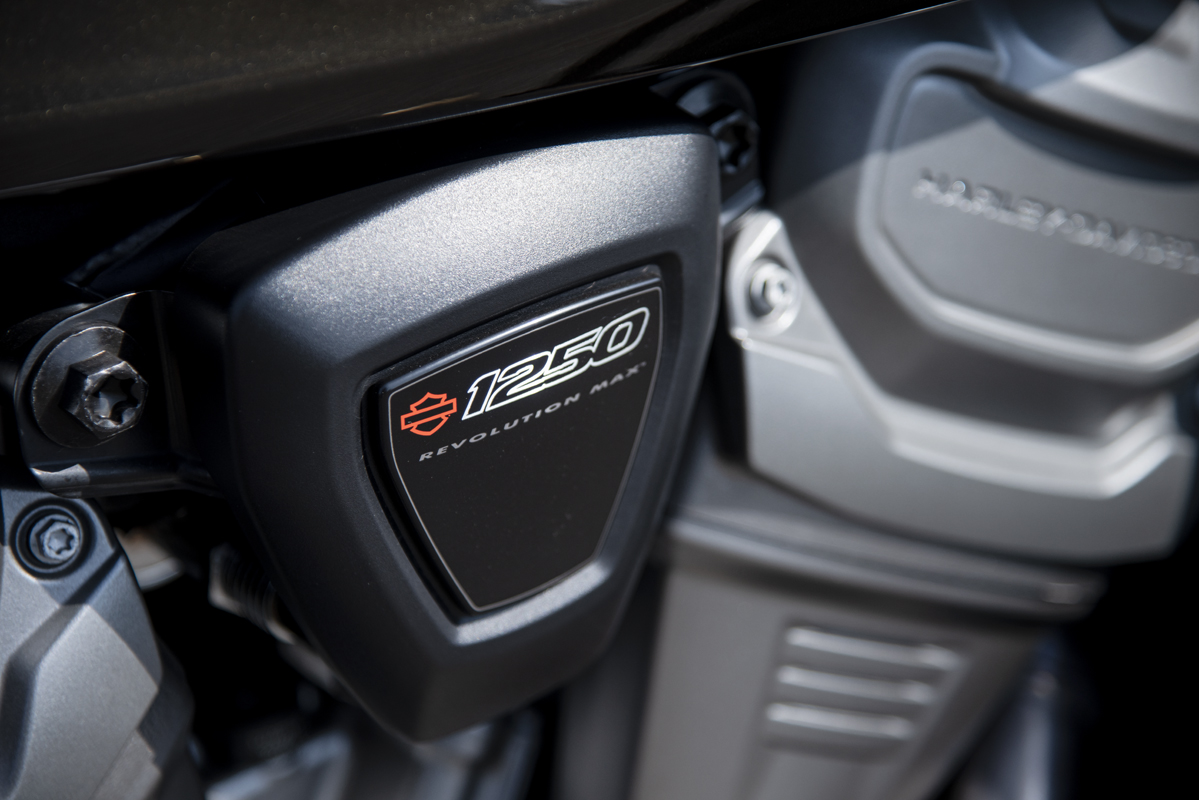
To term, the Pan which I rode as ‘base’ is an injustice as it suggests that the bike is in some way lacking, which is absolutely not so. The heart of the bike is the excellent new 1252 cc 60-degree V-Twin, pumping out 150 hp and 128 Nm of torque, utilised as a stressed member to reduce weight and size. The motor is a gem, feeling KTM responsive but, dare I say it?—more refined. More on that when we chat about how it rides.
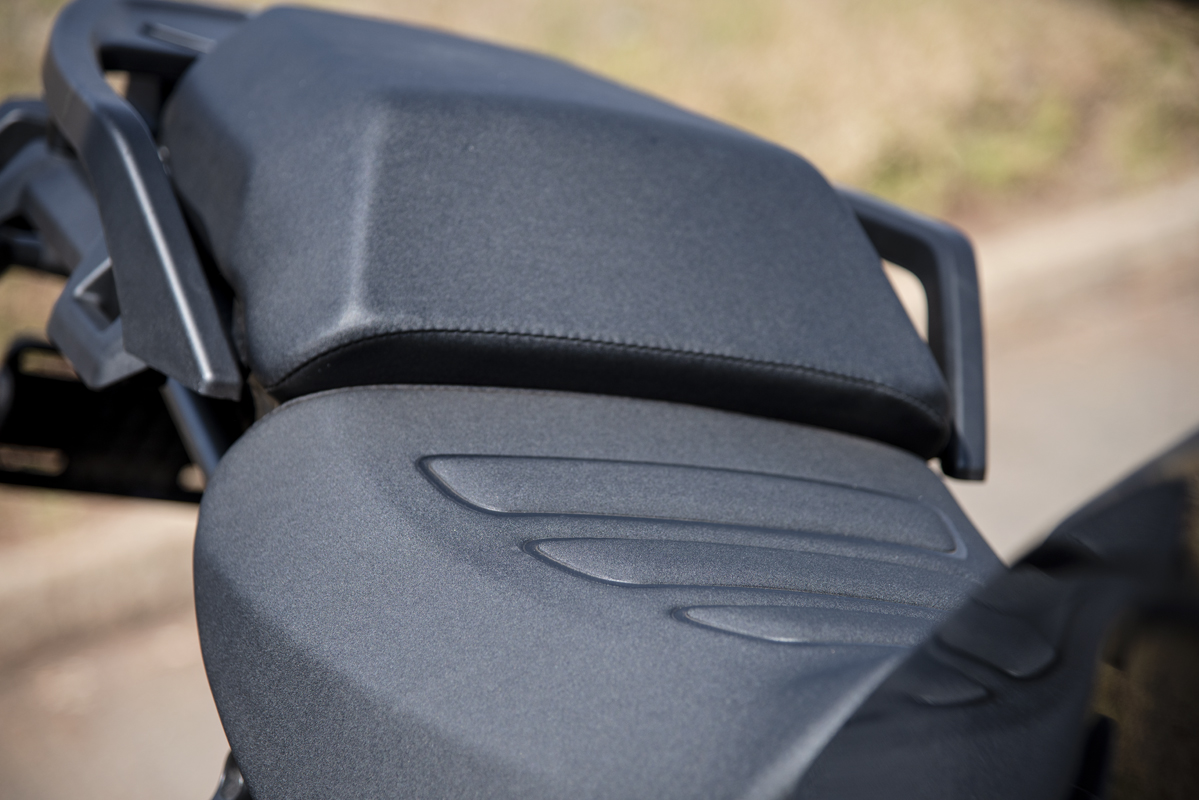
Speaking of size, the Pan America is quite compact, yet enjoys spacious and extremely comfortable ergonomics. Comfort which is enhanced by a firm, yet all-day comfortable saddle, for both rider and pillion. It is flat, with a fantastic foam density rivalling the best seats out there. This is a vital feature for any bike on which you are likely to spend extended time. Bars are wide and fall comfortably to hand, giving you a feeling of control.
Photo credit: Bjorn Moreira / ZA Bikers
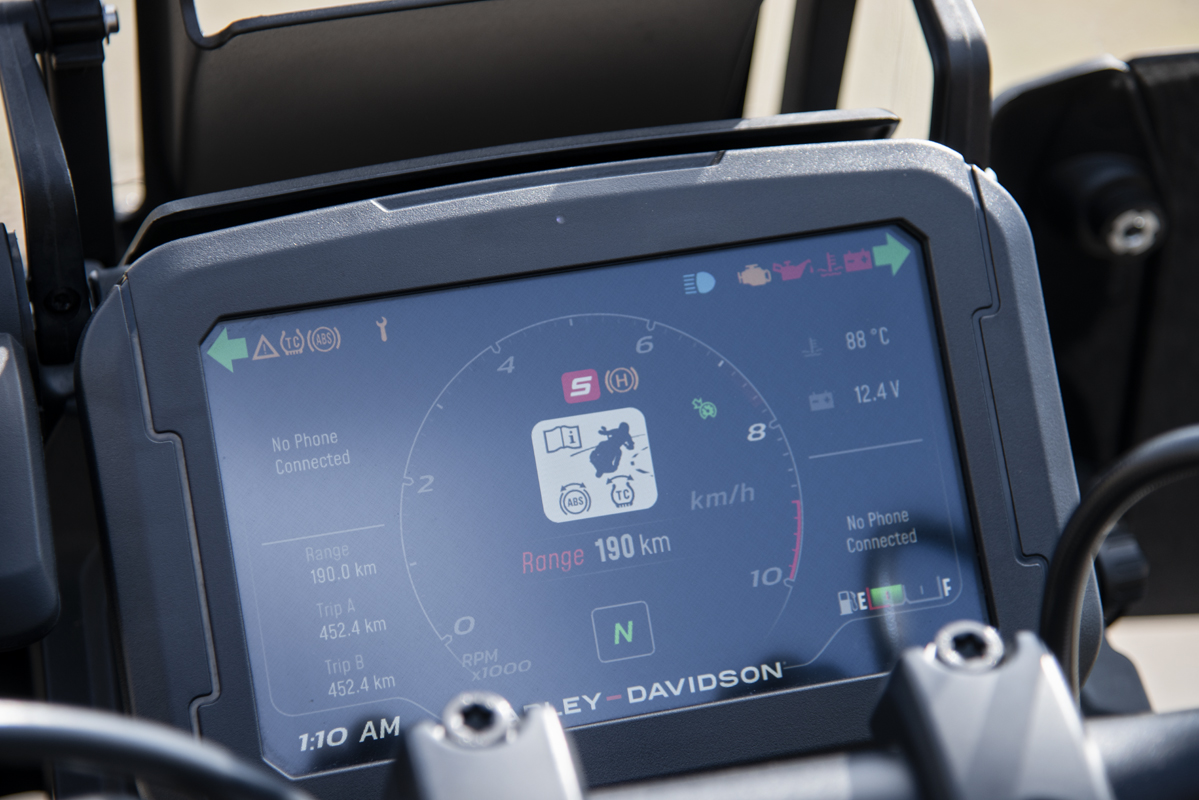
I have now become accustomed to the looks of the Pan and I dig it. If you are shown a picture of all the Adventure bikes on the market, this is the one that clearly has Harley DNA. It is tall and slim with a functional cockpit housing a 6,8” TFT display and a one-hand adjustable screen. It has a lever and trigger mechanism, which once mastered, allows easy ‘on the move’ adjustment. The screen does a great job of weatherproofing the rider and making high-speed cruising effortless. Both the seated and standing positions are intuitive and spot-on.
Photo credit: Bjorn Moreira / ZA Bikers
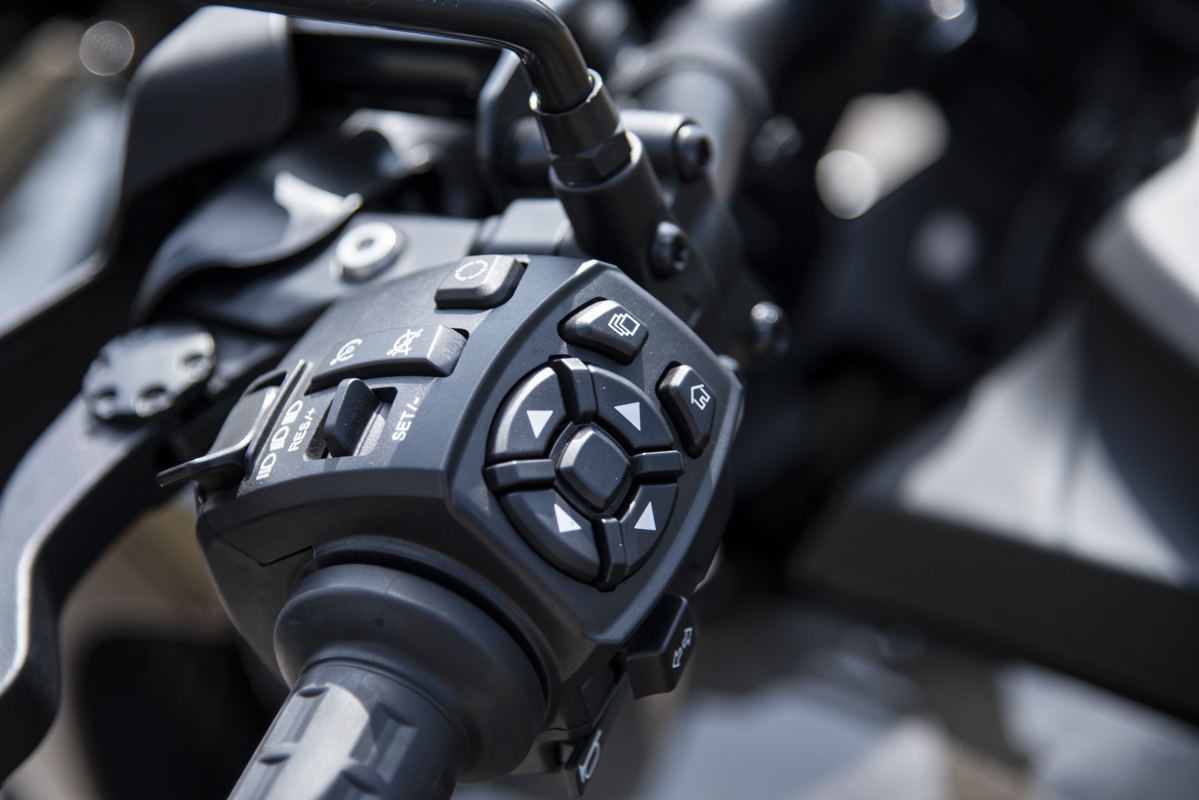
The TFT display tells you everything that you need to know. Speed, gear, odometer, trips, temperature (and low-temp warning), side-stand warning, cruise, range, rev counter and phone paring for music and calls. Satnav is available via the Harley app and Bluetooth from your smartphone. Battery voltage is also displayed. The non-reflective screen stops unwanted reflection, but in truth, also makes the screen illegible in direct sunlight. The info is accessed via a touch screen at standstill, or the left-hand switchgear whilst on the move.
The 6-speed gearbox shifts accurately and precisely but does require a firm foot. Similarly, the clutch takes up sweetly but is just a trifle heavy. This is a man’s bike after all. In both cases, these are things I noted when I rode off on the bike and after an hour’s riding was irrelevant. Probably because I was just so enjoying riding what is honestly a very good motorcycle.
Photo credit: Bjorn Moreira / ZA Bikers
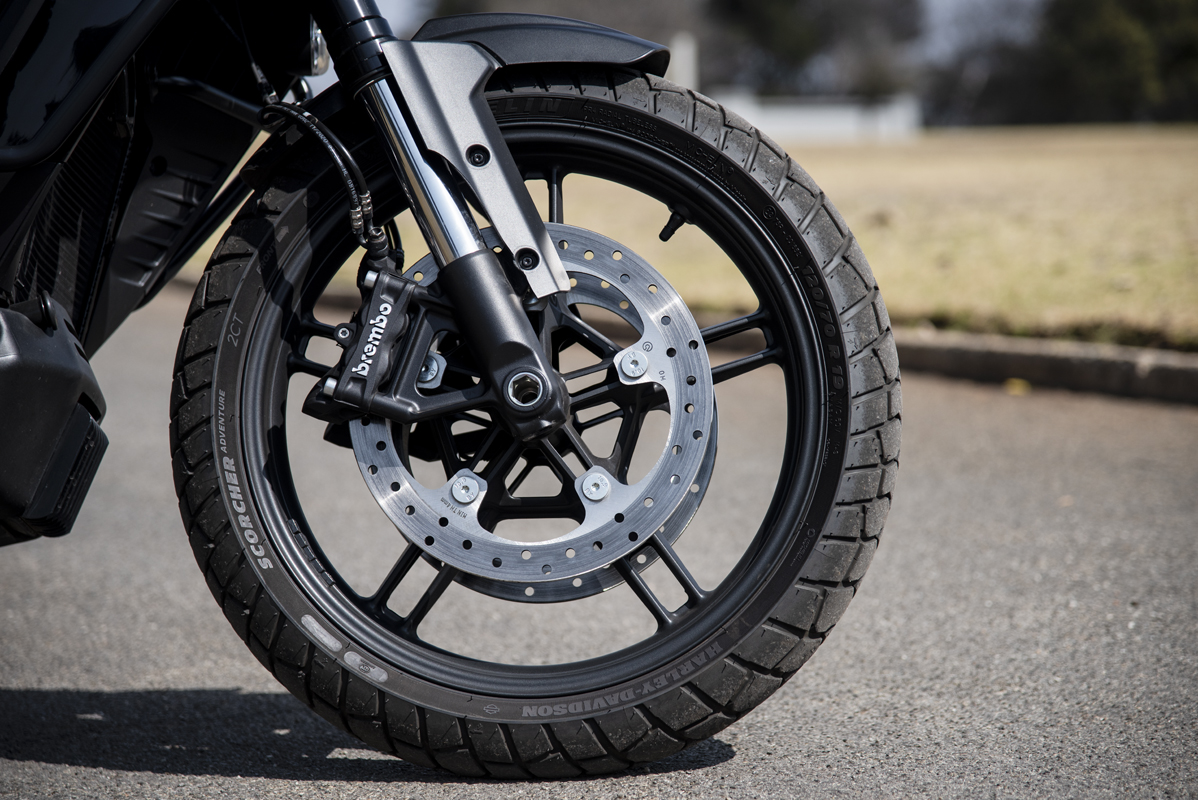
This Pan rolls on a 120/70×19 front and a 170/60×17 rear wheel and tyre combo, mounted on alloy mag wheels. I hear all you naysayers chirping but honestly unless you do really dumb stuff or run crazy low tyre pressures, you will never have an issue, given the intended use of the bike. I love the simplicity of plug and bomb to fix a flat over the concern of maybe dinging a rim in the small potential time that these bikes will spend off-road. If you absolutely must, you can pay a hell of a premium for the ‘Special’, which has spoked rims (Also tubeless).
Photo credit: Bjorn Moreira / ZA Bikers
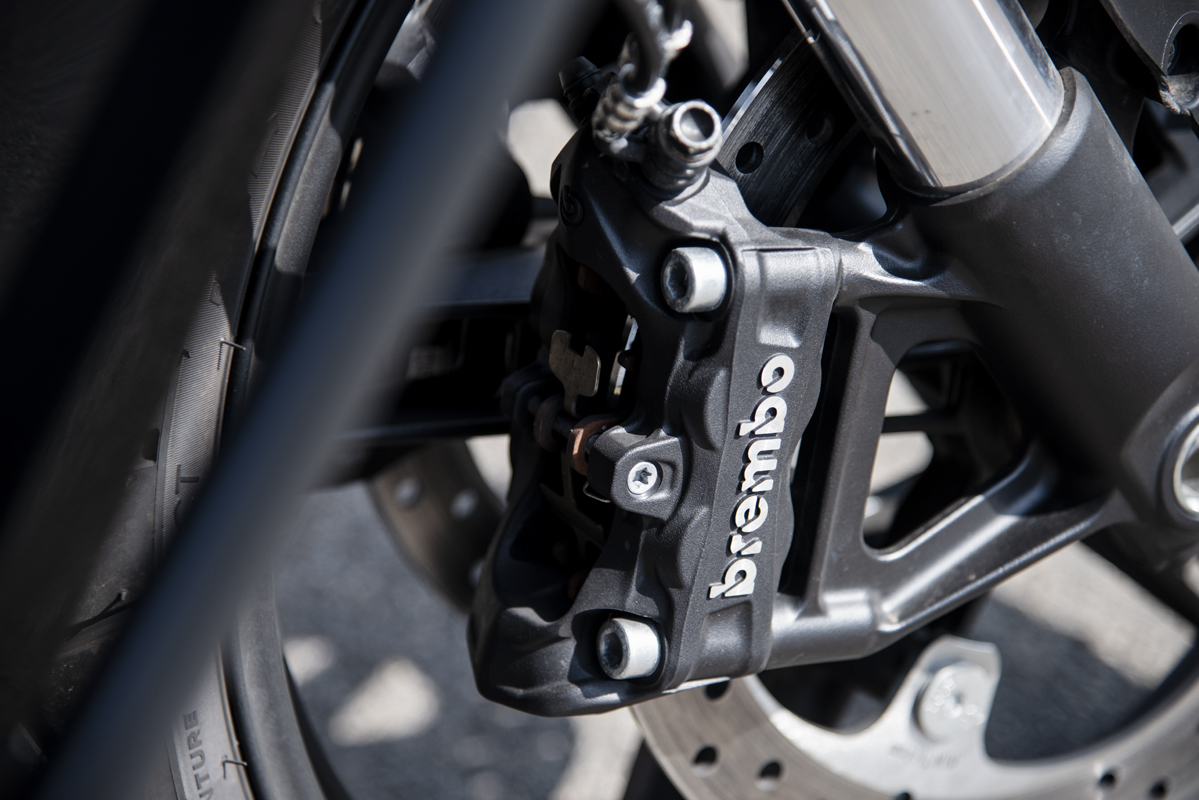
21,2 litres of fuel allows for a decent fuel range given the 5,5 to 6,5 l/100 fuel consumption which you will experience in general riding. At an all-in weight of 242 kg, the Harley is in the ballpark with its competition. Radially mounted 4-pot Brembo callipers and 320 mm front discs, aided by a single pot 280 mm rear disc, give powerful and predictable braking performance with a typical Brembo feel. Good brakes are pretty damn important on the Pan America for the simple reason that this bike really hauls!
Photo credit: Bjorn Moreira / ZA Bikers
The bike is endowed with brilliant dynamic ability. Various engine modes allow for mapping to suit how and where you ride. Road, Sport, Rain and two Offroad modes. (One with Offroad ABS and the other with ABS switched off totally) I rode mainly in Sport mode and loved it. On a couple of occasions, I did feel as if the throttle position was not quite in sync with what the motor was doing. A bit like the fly-by-wire throttle on Yamaha’s Super Ten. It would probably be imperceptible to most riders, however, given the different bikes that I ride and evaluate, I am probably more critical than most.
Photo credit: Bjorn Moreira / ZA Bikers
The Harley Pan America is a revelation to ride. It is fast, agile and utterly stable, even at the ‘inappropriate’ speeds which the bike attains so effortlessly. It has an almost ‘Motard’ like quality. It begs to be ridden briskly and responds brilliantly. The Showa suspension has full manual adjustment. It is firm, well-damped and keeps the bike tracking straight and true, even over the dodgy surfaces that unfortunately are the norm in SA today.
The motor contributes wonderfully to this frivolity. It is smooth and punchy right through the rev range. The power and torque curves allow you to not need to rev the motor mercilessly to get a hurry up. Changing up in the upper mid-range has the bike rocketing forward effortlessly. It is definitely an all-round match for its competition. It revs with the same urgency as your big KTM’s but with a little more refinement. Power delivery is also Katoom-like, with less really low down torque than a 1250 GS, but revving out in a lusty fashion. It actually reminded me a lot of the Indian FTR in terms of proper riding enjoyment, albeit with more power.
Photo credit: Bjorn Moreira / ZA Bikers
This bike is incredibly relevant. It is multi-talented and very capable. It offers a great alternative to what is available in this space, but with a heritage second to none. It gives you a few bikes in one, with no real compromise, a recipe that BMW has used for their GS range to such good effect. I would tour the Tankwa as happily as I would do a track day.
If you dare to be different, go ride the Pan America. Pricing just north of R300K is totally competitive. You owe it to yourself. It is that good. Hats off to The Motor Company! I would love to own a Pan. I’ll have the basic spec in black, please…
Photo credit: Bjorn Moreira / ZA Bikers
Harley-Davidson Pan America
For more information on the bike featured in this article, click on the link below…
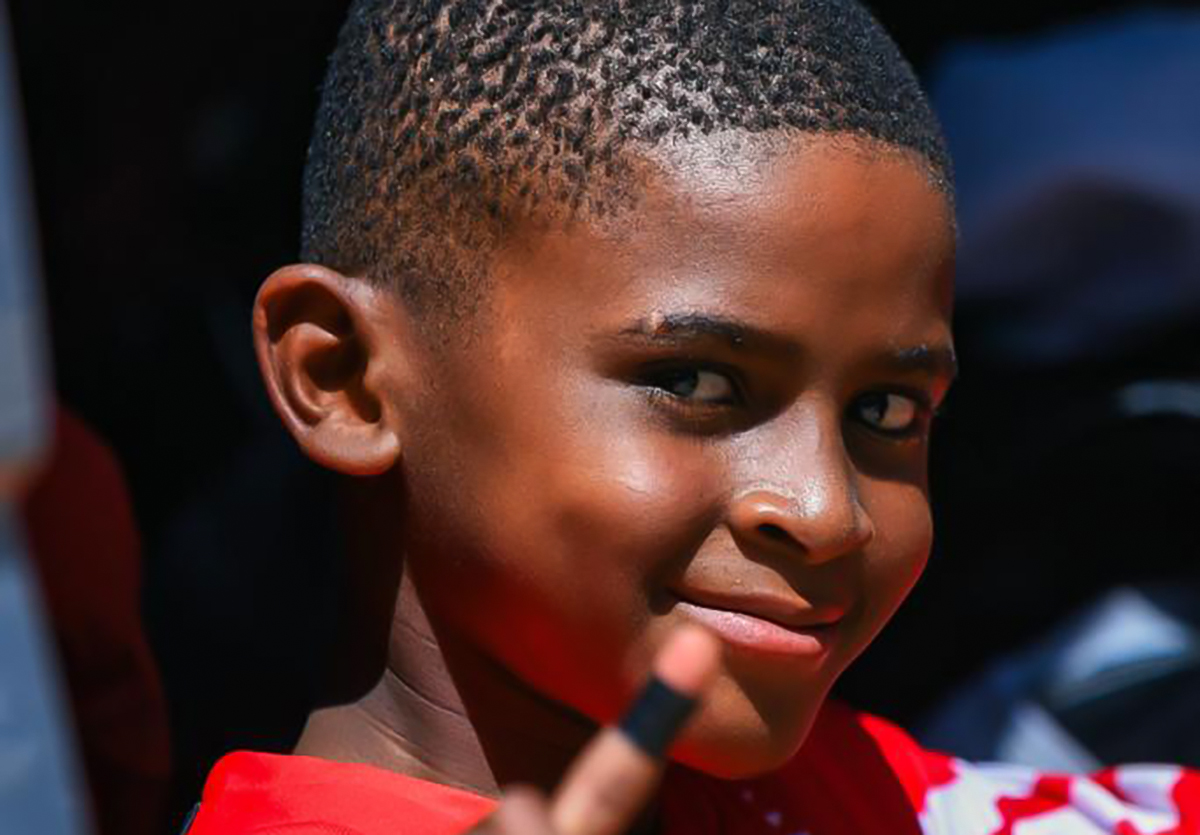
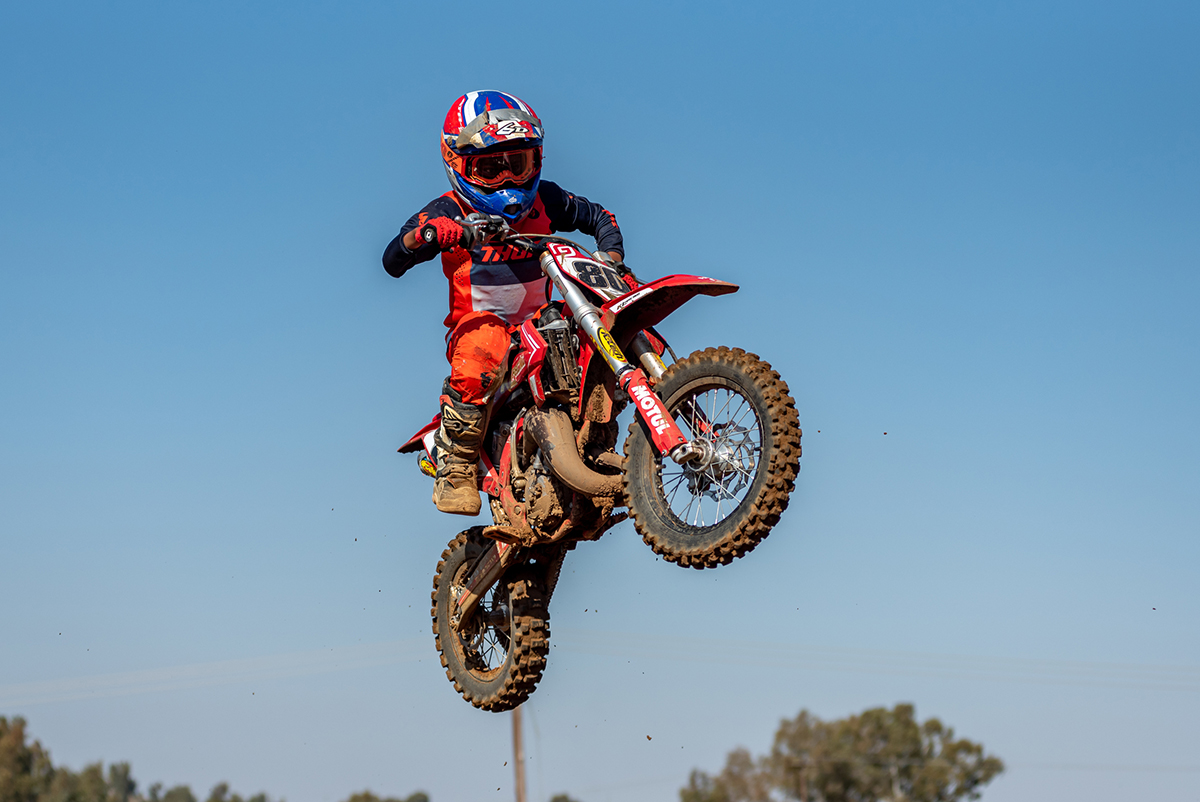
As the saying goes, dynamite comes in small packages – and few young sportsmen have had such an explosive start to their careers as 11-year-old Kabelo Ledwaba. Kabelo JNR, as he’s known, is already making waves in his chosen event, Motocross, and has been selected to represent South Africa at this month’s FIM Junior Motocross World Championships in Finland.
The final selection for the South African team to travel to Finland was made by Motosport South Africa (MSA) and comprises just 14 riders who will compete in the 65cc, 85cc and 125cc classes. Despite only having 3 years’ racing experience under his belt, Kabelo JNR has made the team ahead of some of his more experienced peers thanks to his natural ability, tenacity and track record of podium finishes in the South African Motocross Championships.
Image source: Motul SA
Kabelo JNR will be flying the flag in the 65cc class he first joined in the 2021 season after cutting his teeth in the 50cc class during his first year of racing.
His recent results more than justify his inclusion in the team, having secured a second-place finish at the Cape Town SA Motocross Nationals and another podium finish in Gqeberha, Port Elizabeth. His ambition and determination are underlined by the fact that during lockdown, he requested the construction of a training track so that he would not lose any of the progress he had made since taking up the sport.
His young age hasn’t prevented Kabelo JNR from already gaining valuable experience in racing on the very competitive European circuit. Earlier in 2022, he spent a month racing in France during which he came seventh overall in the French round of the European MX Championship.
Image source: Motul SA
Kabelo JNR will depart South Africa soon, heading to Austria first to fine-tune his skills and further familiarise himself with European racing conditions before the World Champs in Scandinavia on the 26th of August.
In addition to his other achievements, Kabelo JNR is also a Motul Powersport Ambassador, and the company is especially proud that he is attending the FIM Junior Motocross World Championships, as they are one of the principal sponsors of this major event.
“On behalf of everyone at Motul, I’d like to wish Kabelo JNR and his teammates every success at the World Championships,” commented Mercia Jansen, Motul Area Manager for Southern and Eastern Africa and the Indian Ocean. “As an SA brand ambassador for Motul, Kabelo JNR embodies many of our brand values, as shown in his passion, his pursuit of excellence, and his determination. This event will give him the opportunity to gain invaluable experience which will contribute to a foreseeable successful career in Motocross,” she added.
To learn more about Kabelo’s achievements and racing goals, visit his website. To learn more about Motul’s range of high-quality oils and lubricants, visit – www.motul.com
That there is a market for inexpensive motorcycles is obvious: your Uber Eats delivery wouldn’t be possible without them. But, even though the delivery market might be the raison d’être of these motorcycles, is there an argument that can be made for owning one of these bikes for personal, everyday use?
Big Boy are well established in South Africa as purveyors of Chinese-sourced, small displacement motorcycles, ideal for small businesses and, indeed, larger businesses operating in the delivery sector. It is this market alone that is keeping motorcycle sales figures buoyant while the major manufacturers suffer from decreasing sales of their large and expensive models.
Photo credit: Bjorn Moreira / ZA Bikers
Whilst undoubtedly built down to a price, that doesn’t necessarily mean that they are cheap and nasty. Yes, there are compromises but they needn’t be deal breakers if you are looking for a simple and inexpensive runabout for everyday use and if you don’t want to add thousands of kilometres to your main bike every month simply getting to work and back.
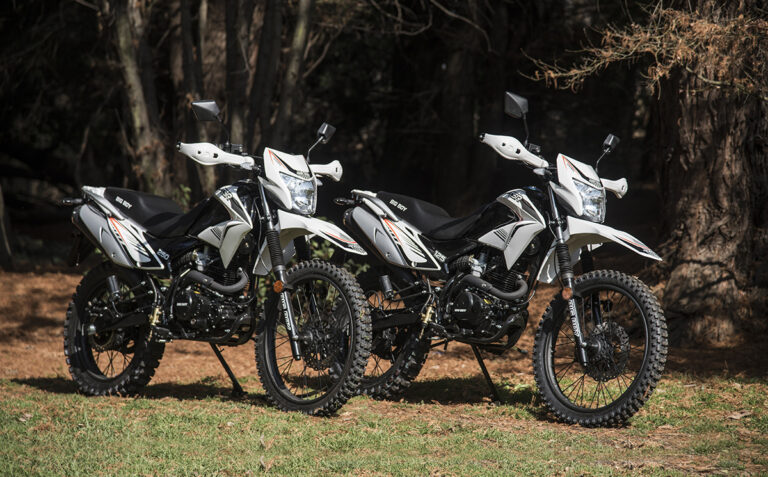
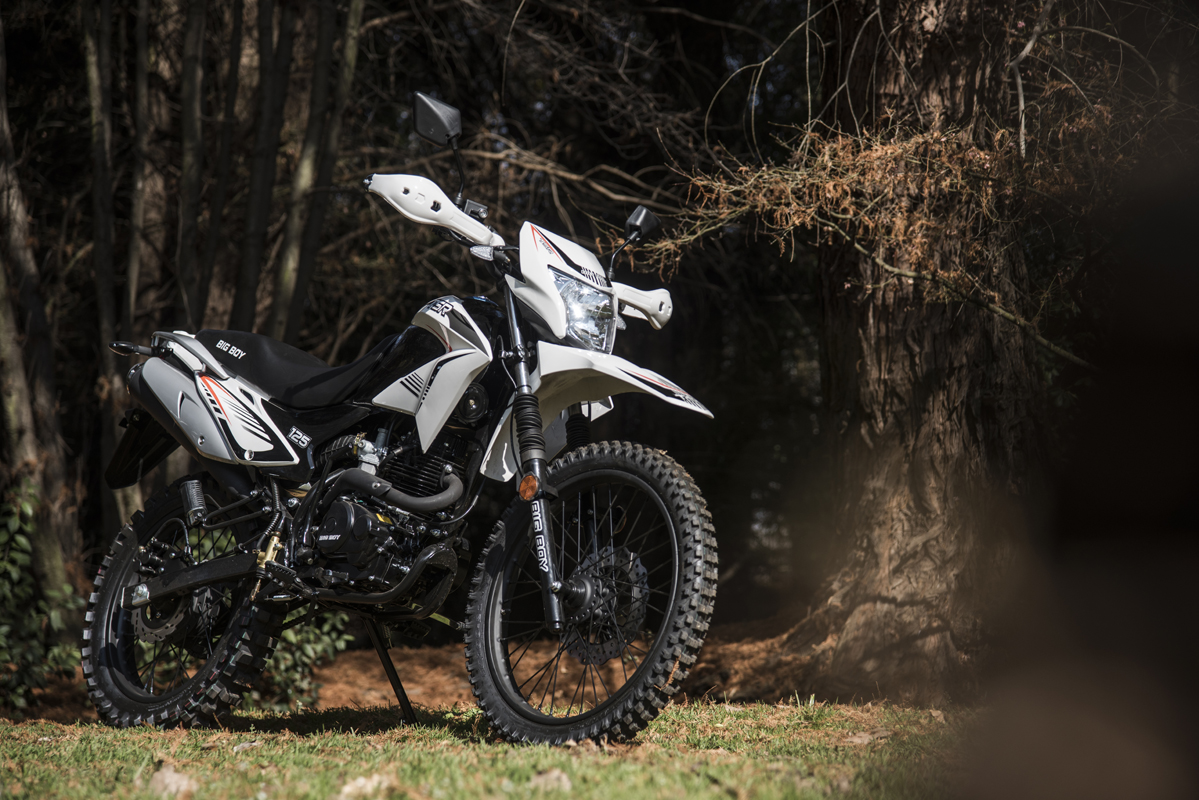
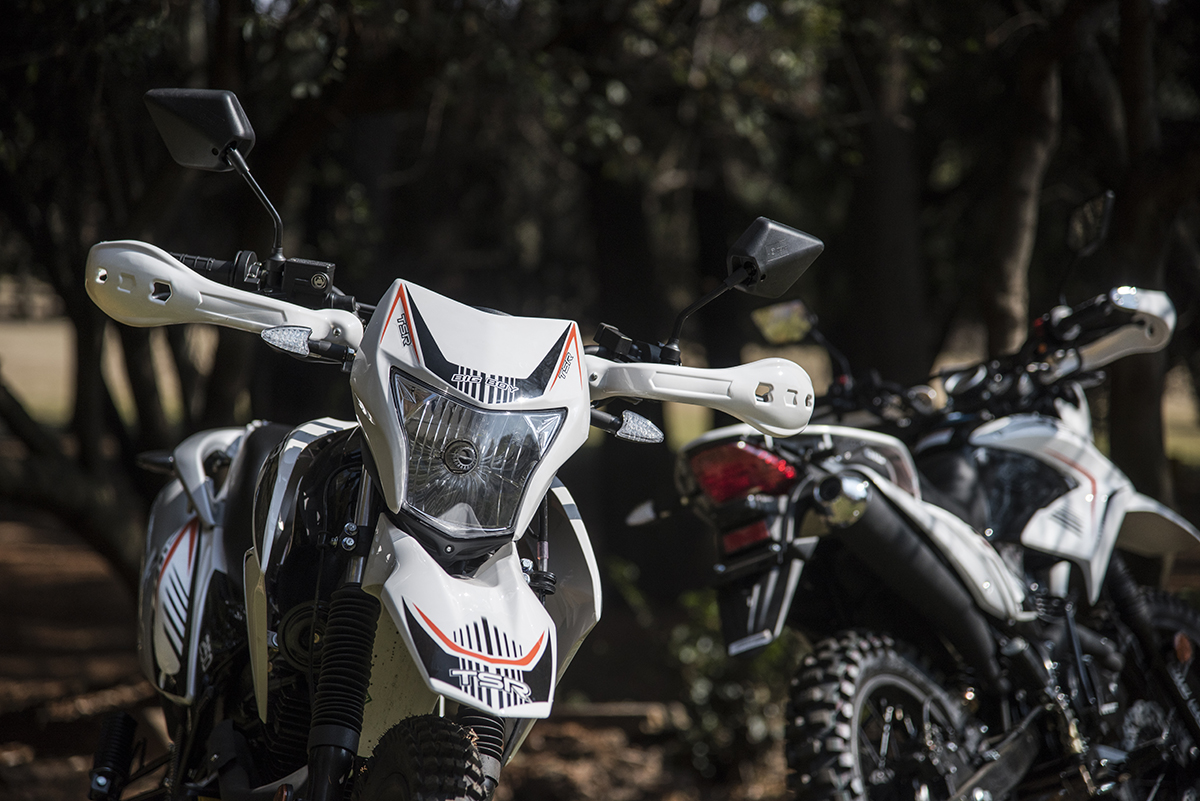
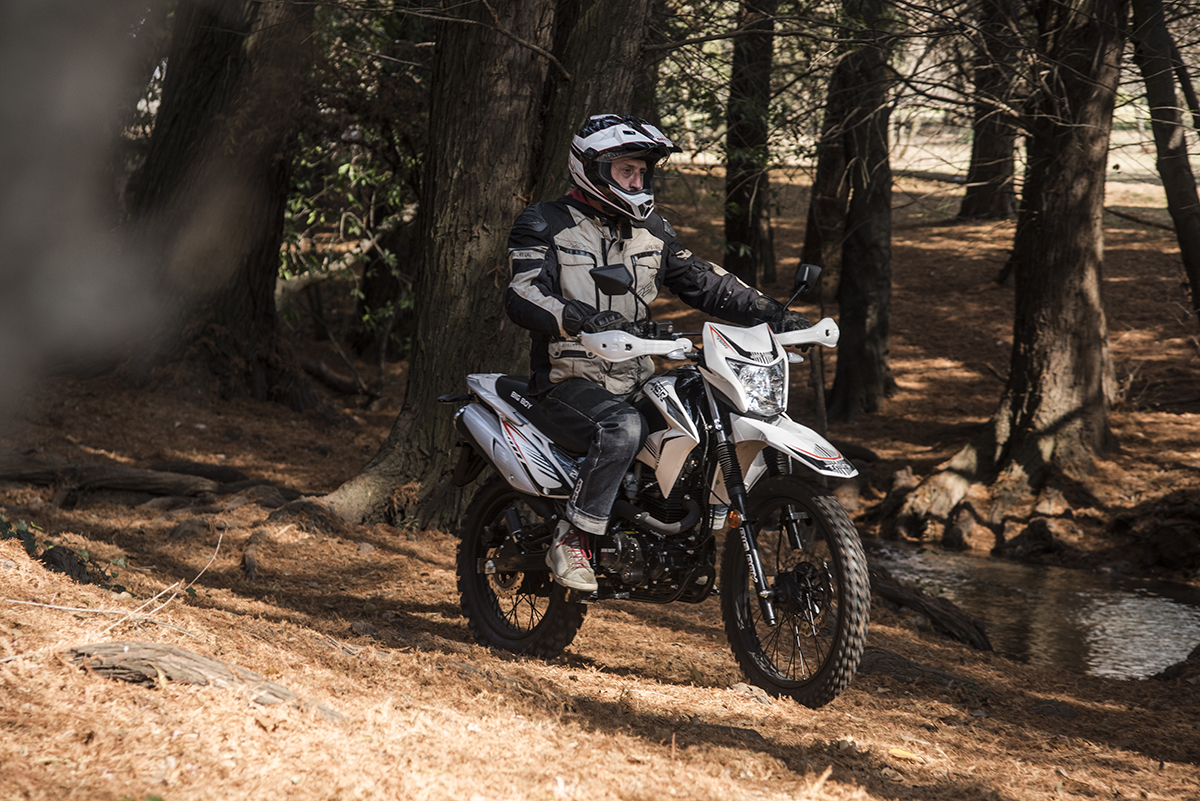
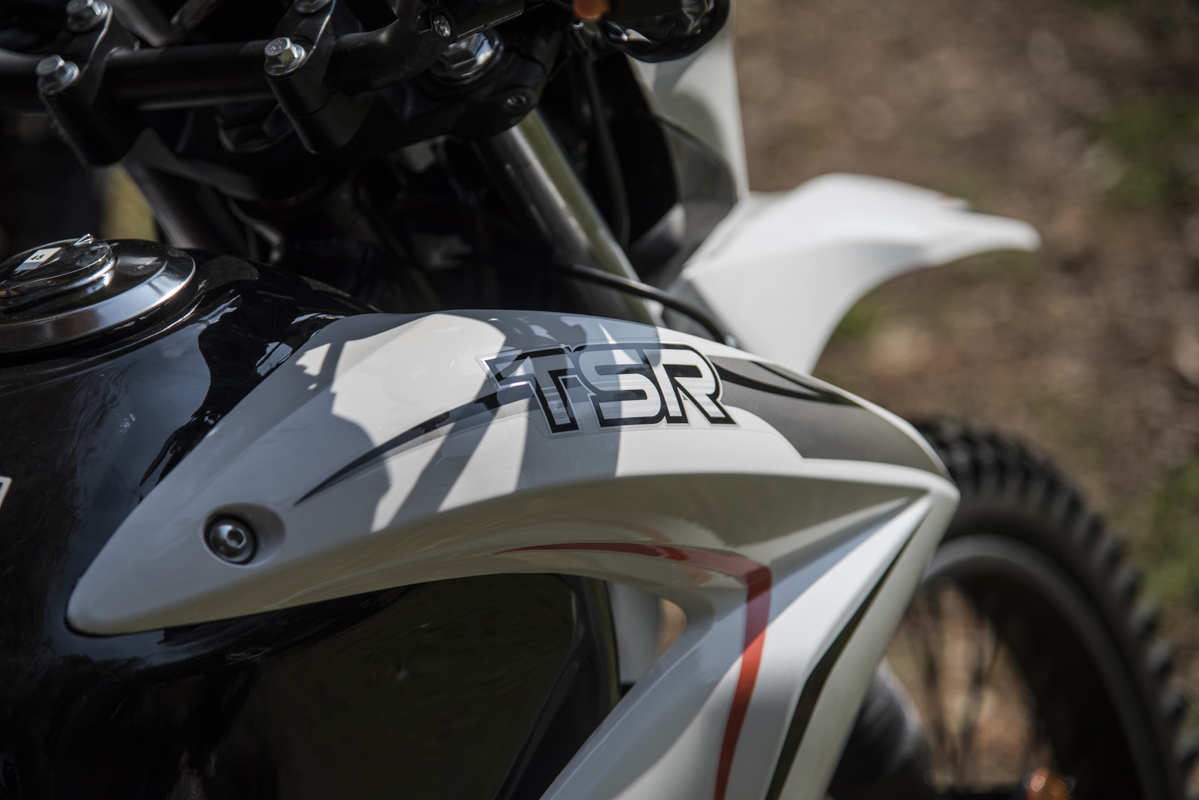
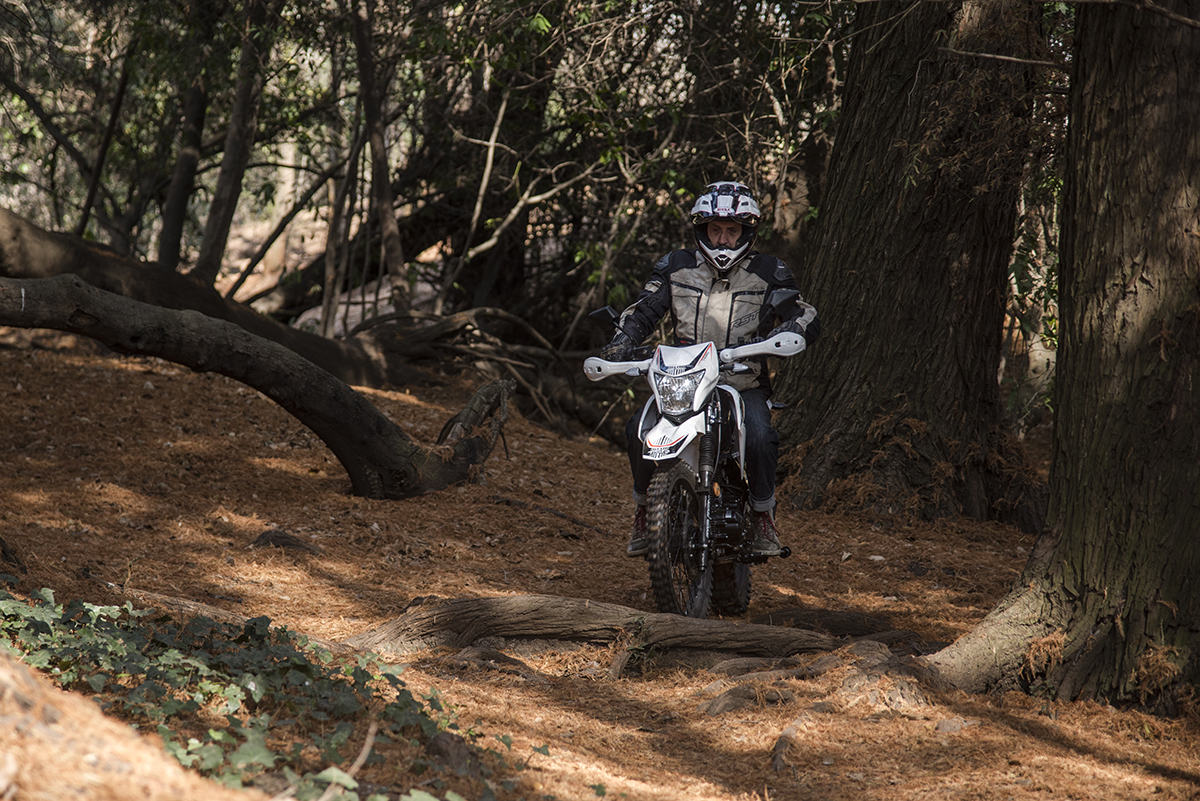
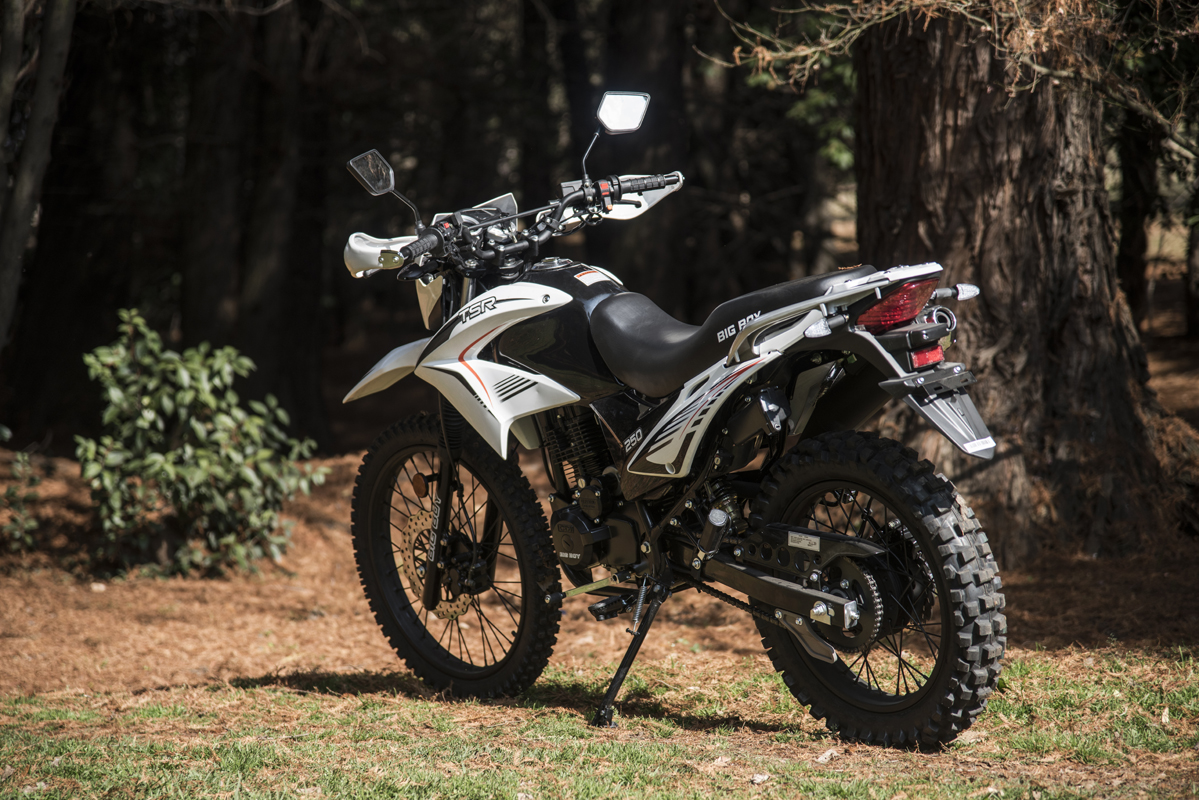
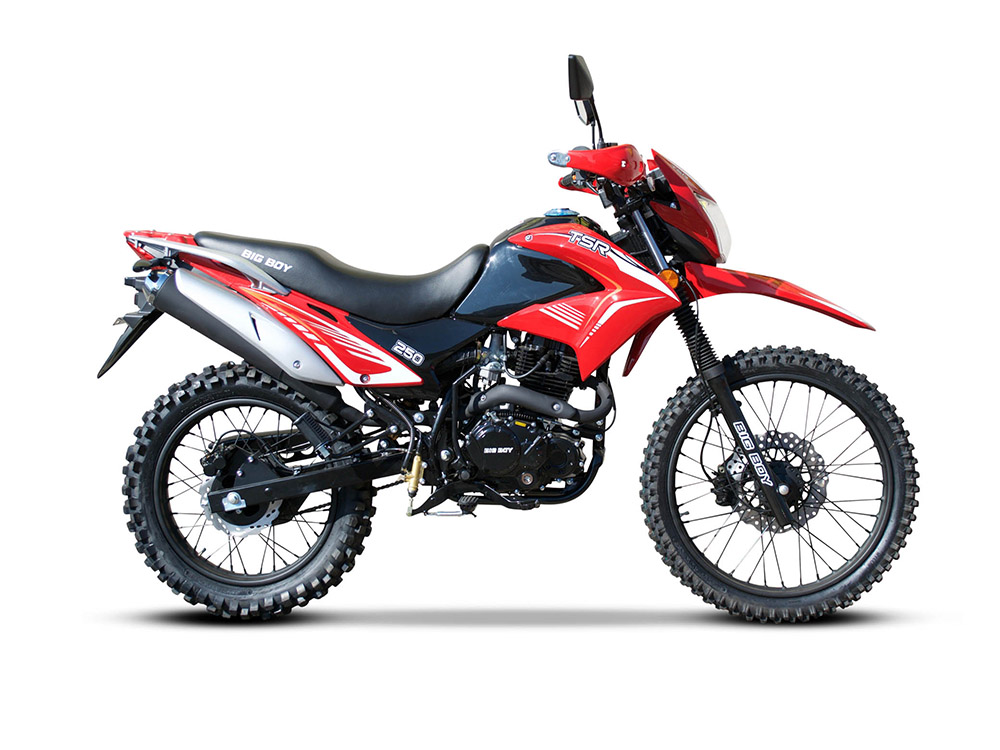
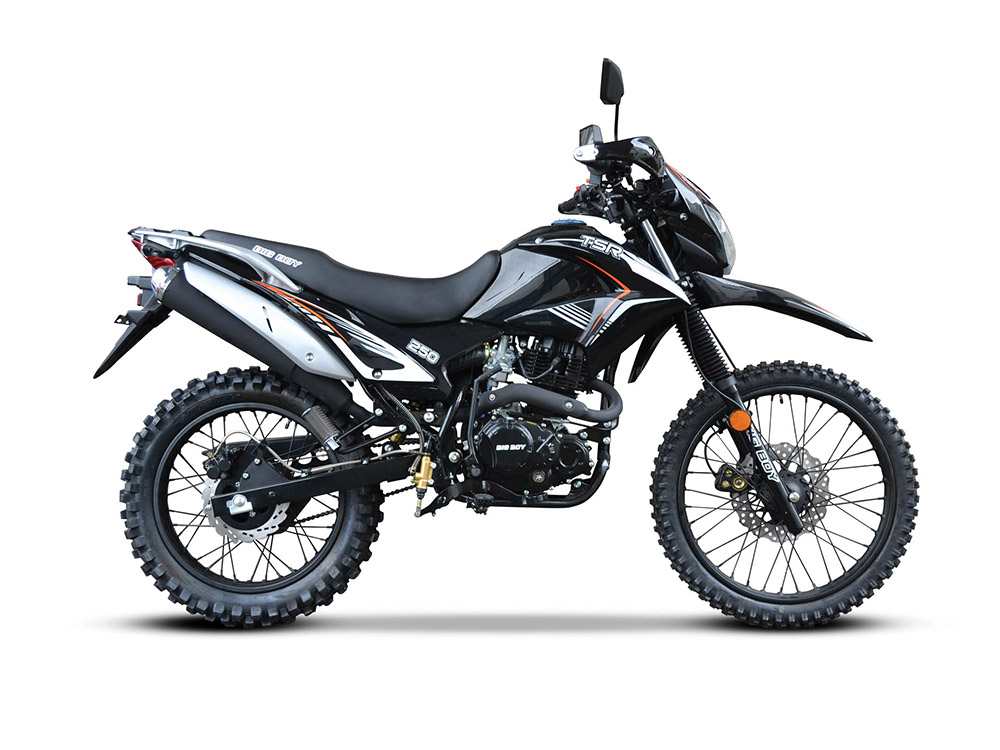
At R28,999, the TSR 250 sits right in the middle of the Big Boy price range but I would argue that it is perhaps the best model in the range. As you can see, it’s designed to have both road and off-road capability, with a taller stance and upright riding position.
Photo credit: Bjorn Moreira / ZA Bikers
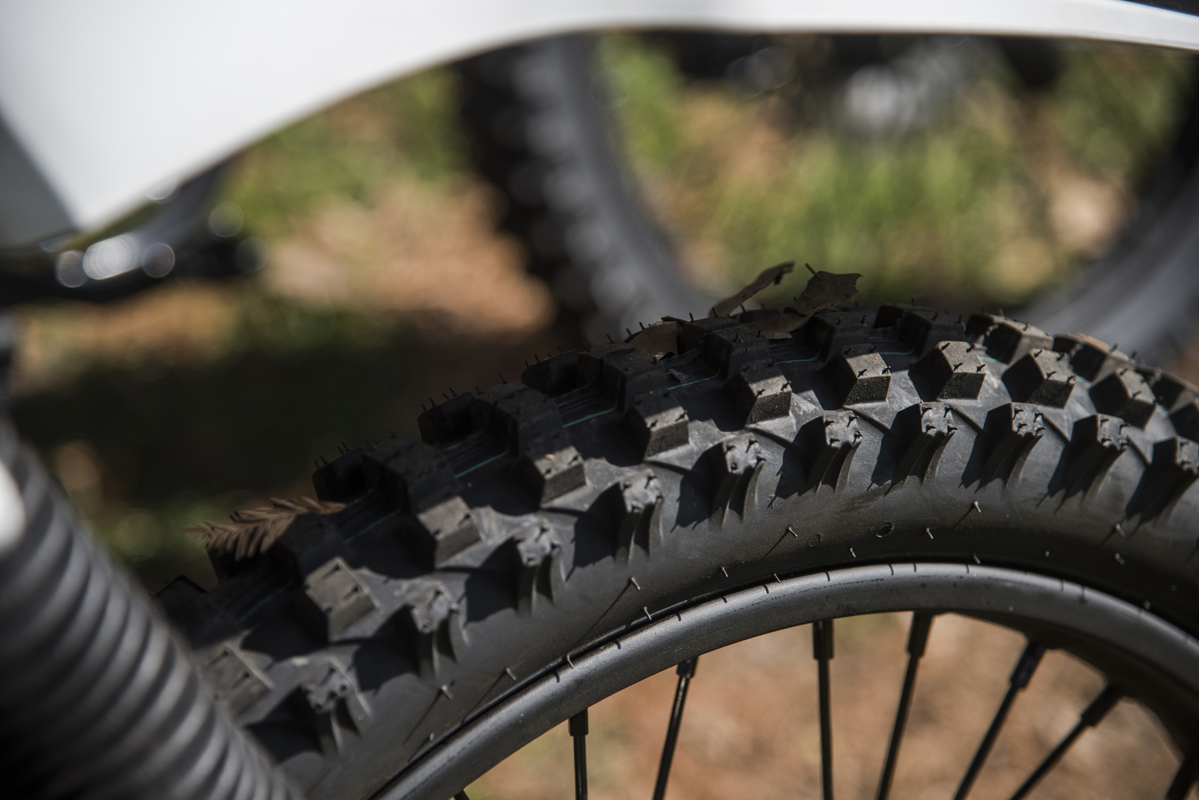
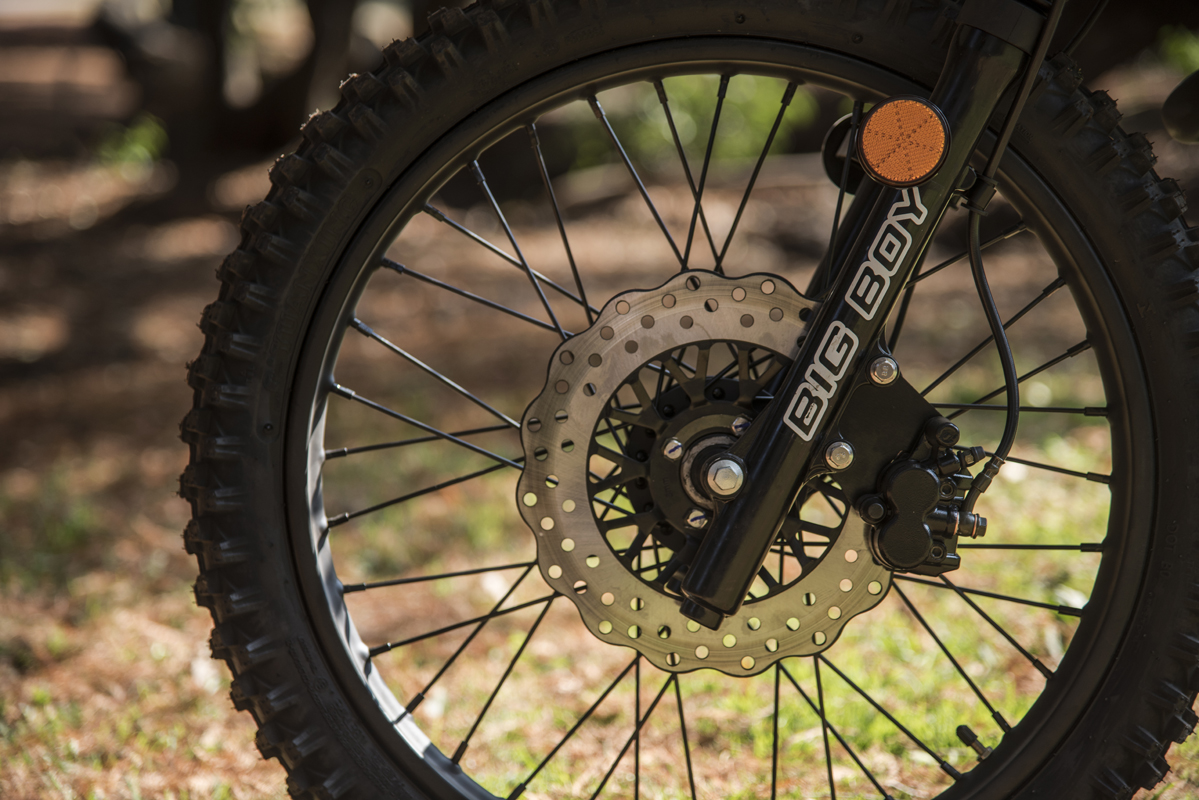
It comes with full knobbly tyres as standard and this is the only thing I would argue against, they are just too dangerous on the road, offering absolutely no grip, even on a completely dry road surface. I hate to think what they would be like on a wet road. Yes, they do mean that you can take to the hills on the wild trail but, really, how many owners are likely to do that regularly enough to risk life and limb in everyday riding?
My feeling is that a set of decent road tyres would transform the enjoyment you could get out of the TSR 250.
Photo credit: Bjorn Moreira / ZA Bikers
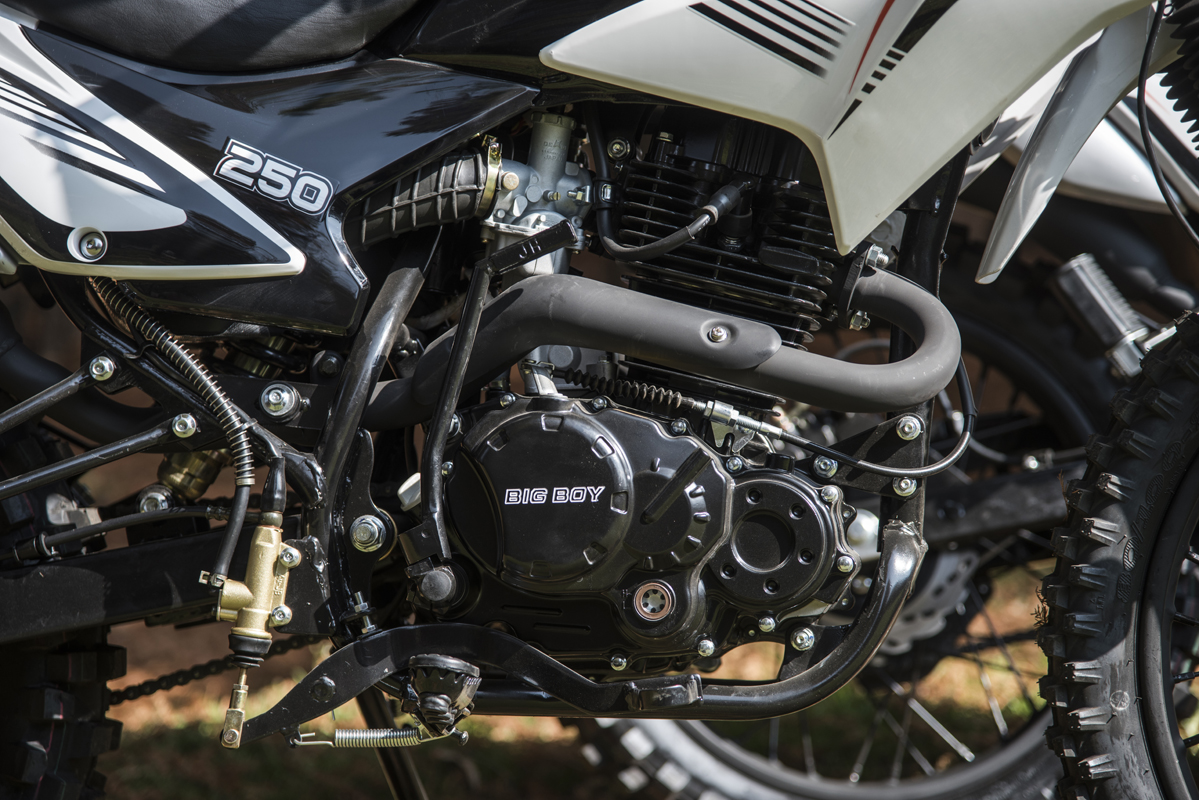
The 223 cc single-cylinder engine produces 12.5kW (about 17bhp in old money) and 18.3Nm of torque, driving through a five-speed gearbox. The top speed is a slightly breathless 110km/h but that is rather academic if you intend to buzz around town. In fact, I would avoid highways; it’s just too slow to be safe with the standard of driving on those arteries.
Photo credit: Bjorn Moreira / ZA Bikers
Weight is a light 122kg (dry) and it really is the least intimidating bike to throw a leg over. The height of the seat (880mm) might not be for everyone but it’s not excessive. It comes with a 3 year, 20,000km warranty and service intervals are 3000km or six months which isn’t great but, at the price, understandable.
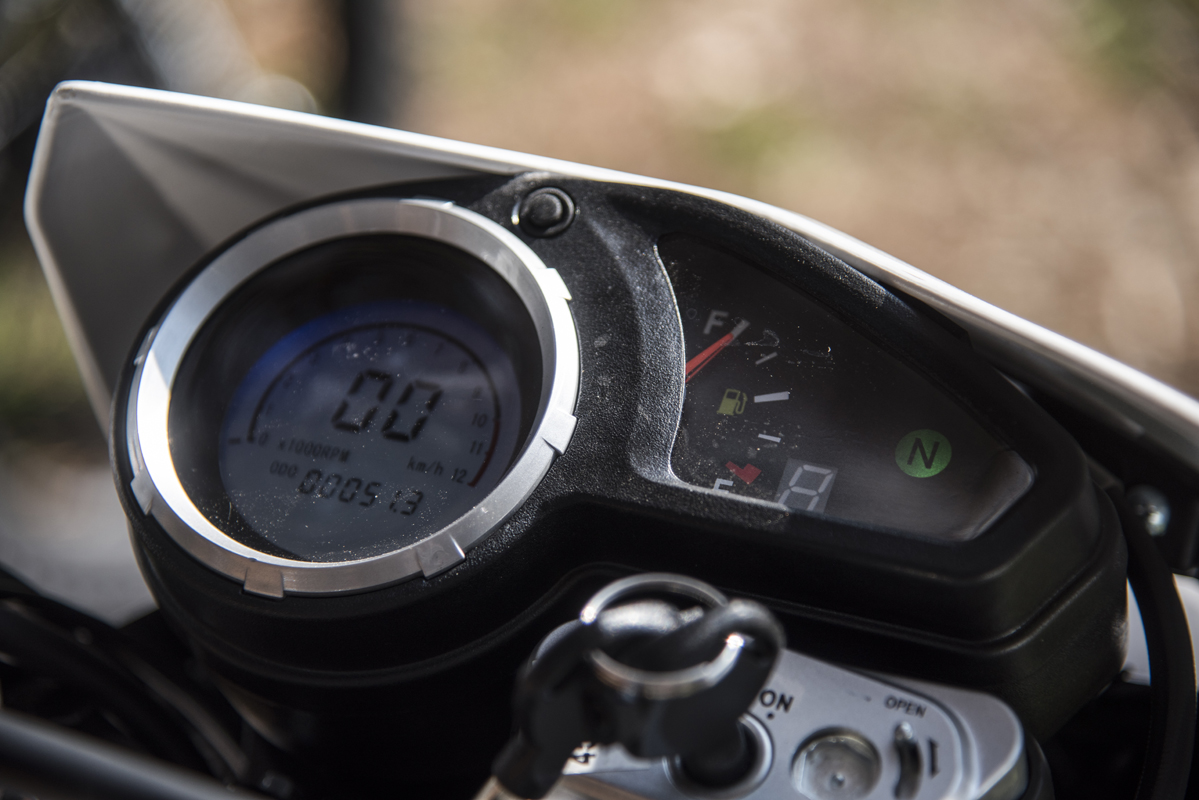
Riding around town, you can expect fuel consumption of 3 litres per 100km which has to be the biggest selling point at the moment. The tank doesn’t encourage being filled to the brim as fuel will leak out of the filler cap to an alarming degree when the bike is on the side stand. It does stop, of course, but watching all that fuel leak away brings tears to the eyes! Again, this needn’t be a deal-breaker as, once you know that happens, it need never happen again. The tank holds 12 litres.
Photo credit: Bjorn Moreira / ZA Bikers
The TSR 250 performs well, if without fireworks. You have to bear in mind that the example I rode was brand new, with a handful of kilometres on the clock so I would expect both the engine and the gearbox to loosen up in time, not necessarily to give more performance but to smooth things out, especially in the gearbox, which was slightly balky from time to time. Certainly, the motor was smooth enough, the balance shaft working well to counteract the motion of the single piston.
The suspension is basic but avoids excessive amounts of pitch or dive under braking and was a positive bonus on the bad roads of Johannesburg. The brakes – discs at both ends – are perfectly adequate.
Photo credit: Bjorn Moreira / ZA Bikers
Such a bike will always be looked down upon by a large section of motorcyclists but is that entirely fair? For less than R30K, you have a cheap runaround that you can run for a couple of years and still sell for perhaps R10K at the end. That’s less than the depreciation on a new bike that is ridden out of the showroom and run for two years.
I’m not saying that the Big Boy TSR 250 is the bike that will make you sell your GS or Tiger 1200, but as a bike to get you around with the minimum of fuss and as cheaply as possible, it’s hard to think of an argument against it.
Photo credit: Bjorn Moreira / ZA Bikers
Of course, there is another factor, especially if you buy the TSR 250, to take advantage of its off-road promise. Being so cheap to buy, you will have fewer qualms about throwing it at the scenery than you might a R300,000-plus adventure bike. There was no opportunity to subject it to this treatment and I have a sneaking suspicion that, really, the TSR looks how it does because it is a distinct style rather than a deliberate attempt to endow it with off-road prowess.
Riding the Big Boy is a bit of a throwback, especially if you’ve been riding for a few decades. For a start, there’s a light switch to forget to turn on (which I did!). Then, there’s a fuel tap to forget to turn on (again, which I did!), which is less dangerous.
Photo credit: Bjorn Moreira / ZA Bikers
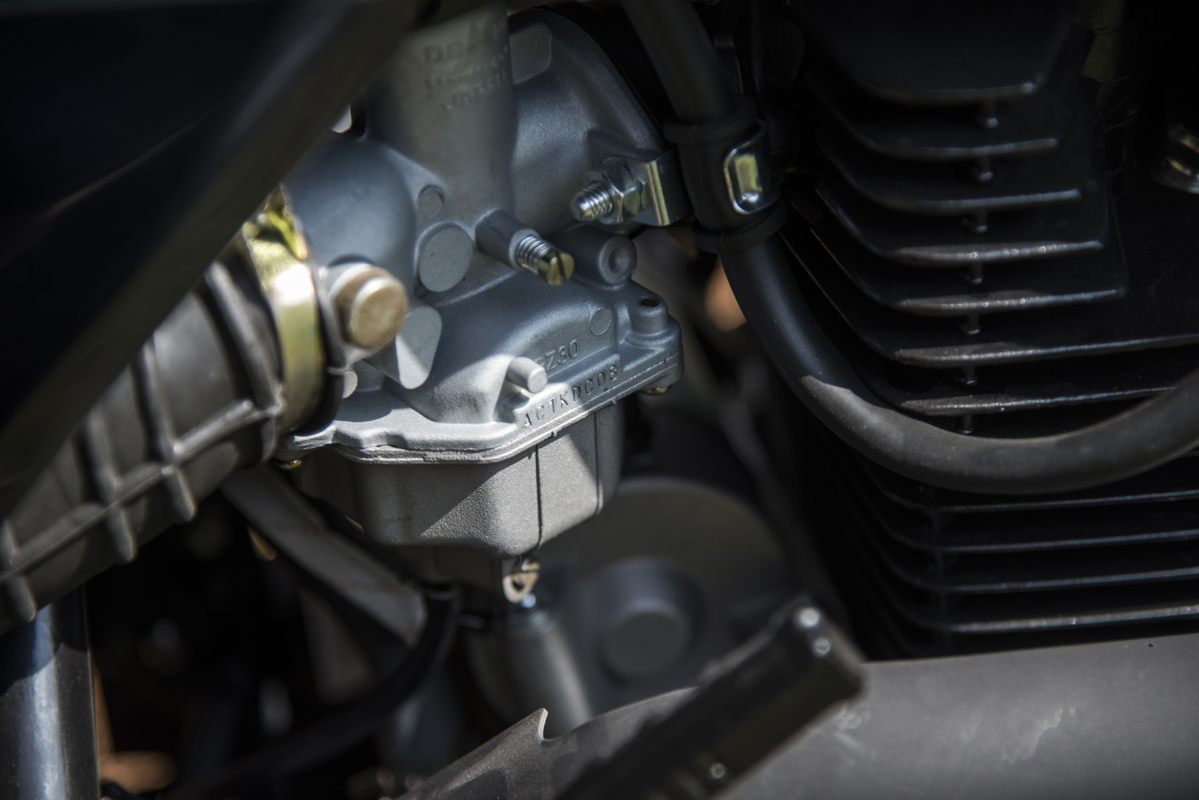
There’s a real, old-school carburettor – none of your fancy, highfalutin fuel injection here, my son. At one point, the main jet in the carb became blocked, due to something in the fuel tank or the fuel, although I was able to inch home on the pilot jet. No problem: ten minutes with a couple of spanners and a blast of air through the jet sorted that problem out: haven’t had to do that for a while!
Of course, that might not be to everyone’s liking but it has to be pointed out that it was no fault of Big Boy, even if doing away with the carburettor would resolve the likelihood of that happening again. That would mean raising the price, even though fuel injection systems are so commonplace these days that it surely wouldn’t be that expensive.
Photo credit: Bjorn Moreira / ZA Bikers
It would be the easiest thing in the world to be disparaging about the Big Boy TSR 250, but that would be to completely miss the point of such a motorcycle. The point is not to try and pretend it is as good as an equivalent Suzuki, Yamaha or Kawasaki (even if they exist), but to understand that it is built down to a price because there is a huge section of the market that demands such a product. If such an approach requires compromises that don’t affect the overall safety, then does that mean it is inferior?
The TSR 250 is designed for a job and it does it perfectly well. The only barrier to acceptance is our own prejudices.
Photo credit: Bjorn Moreira / ZA Bikers
Obviously, the TSR250 isn’t learner legal but the good news is that Big Boy also have the TSR125 model, which is exactly the same as the 250 apart from the engine and costs R24,999.
Big Boy TSR
For more information on the bike/s featured in this article, click on the links below…
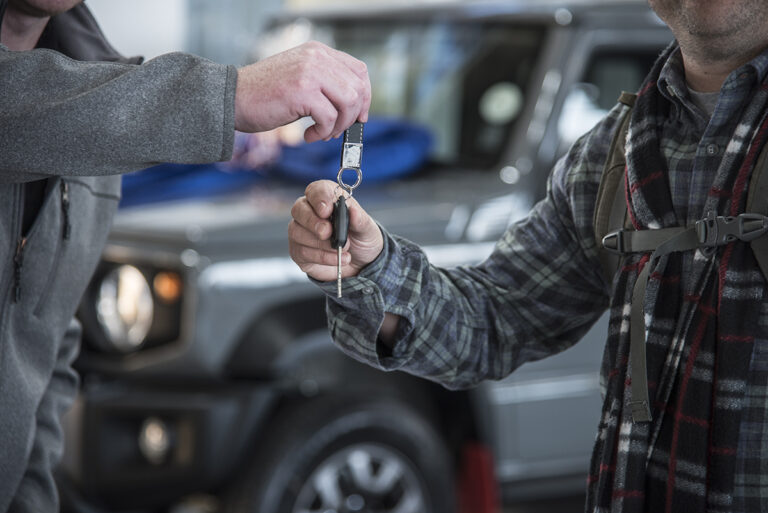
We have been in a bit of a quandary lately as our outgoing ZA Bikers support vehicle had its limitations. To create decent content for our clients requires transporting camera equipment and the like to some weird and wonderful places.
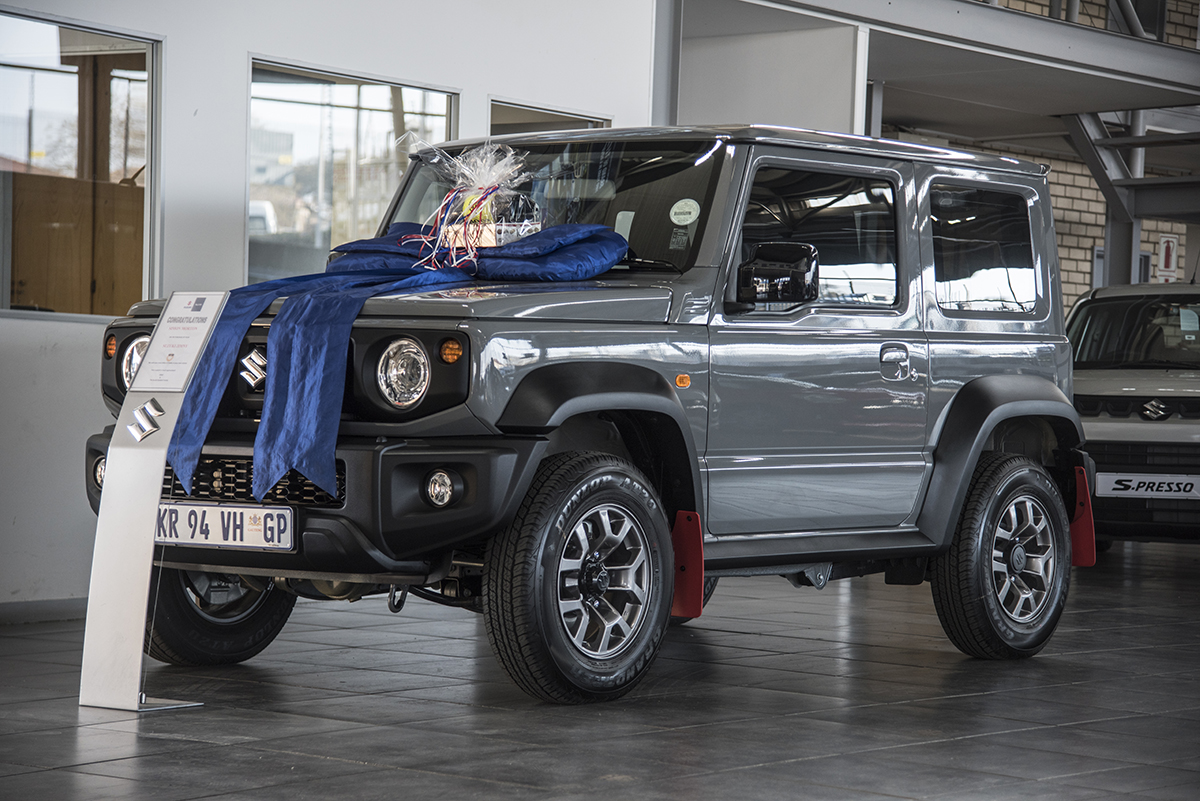
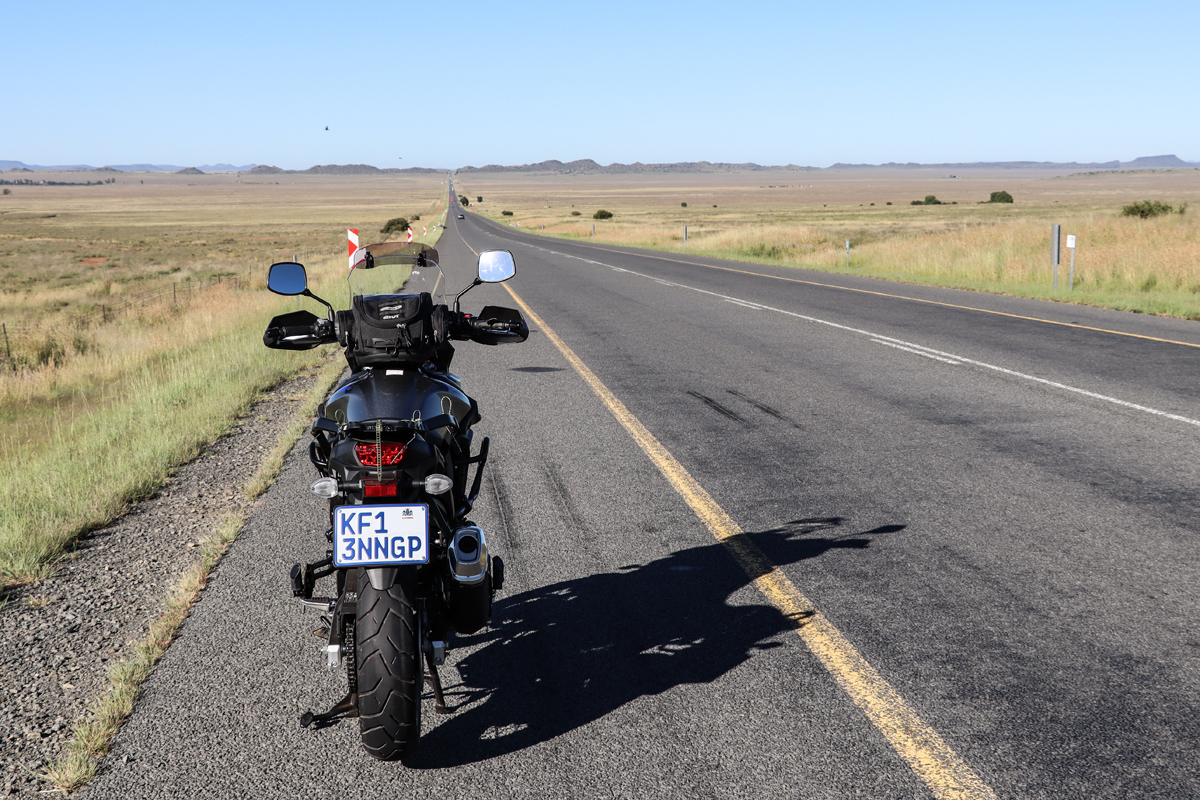
Sometimes bikes just don’t work as pack-horses. So we were looking to get a suitable vehicle, but what? It was actually Fanie Scholtz’s ‘Footpeg Diaries’ that provided the solution. His West Coast foray with the brilliant V-Strom’s makes for great viewing. Every now and then you get a glimpse of their support vehicle. The iconic, capable and funky Suzuki Jimny. The little 4×4 has been a runaway success for Suzuki from day one to the extent that they have attained an almost cult car status.
Photo credit: Bjorn Moreira / ZA Bikers
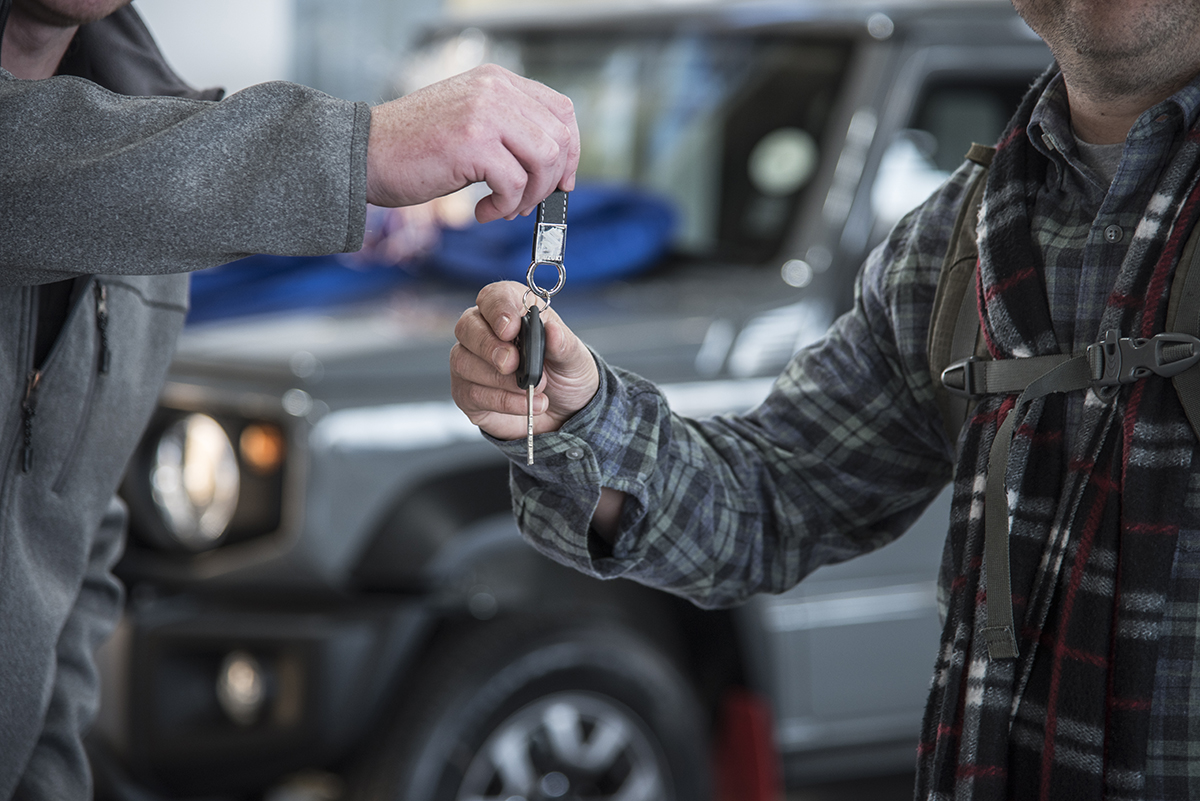
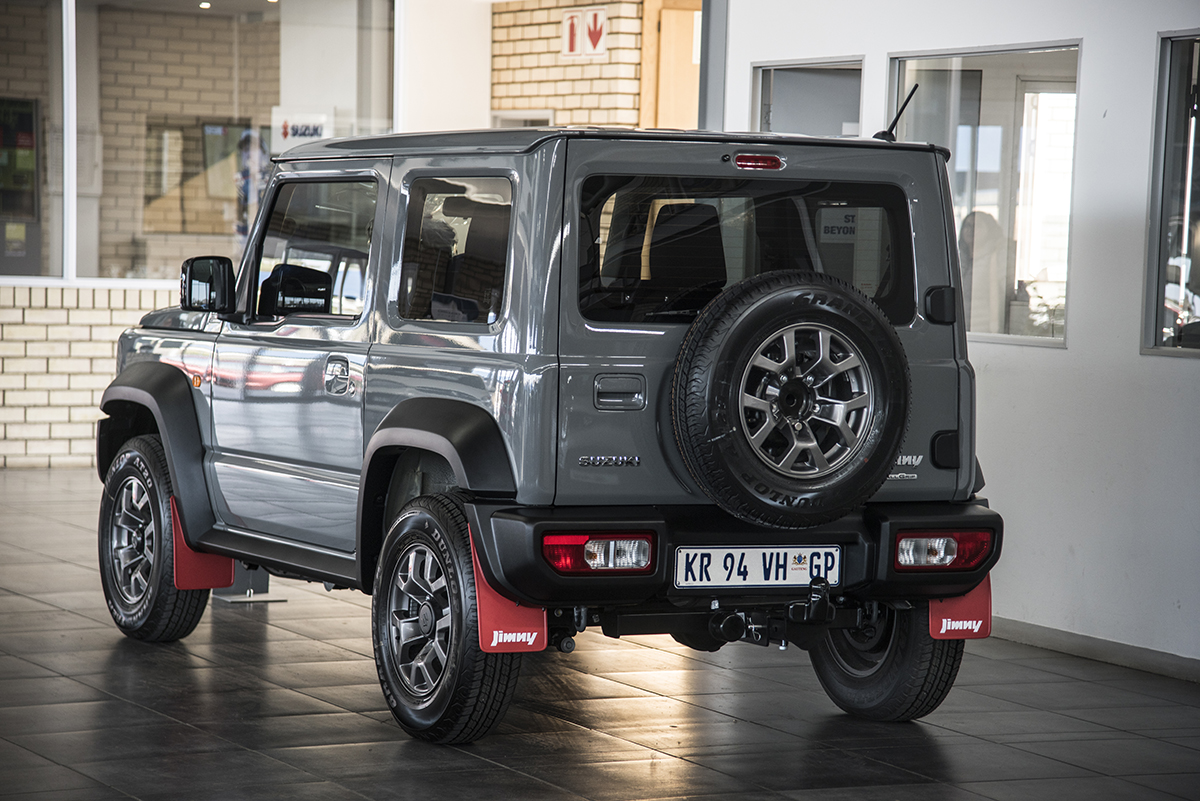
After further research and several test drives, we concluded that the Suzuki Jimny was going to be the best-suited vehicle for our specific requirements.
So, we contacted our good friends at Suzuki SA as we have come to learn, that these guys are movers and shakers. Numbers were crunched and a deal was done.
Keep an eye out for a grey Suzuki Jimny featuring in our content going forward.
Thanks to Suzuki SA / Suzuki Kyalami for assisting us with this deal, you’ve welcomed us with open arms into the Suzuki family. You guys Rock!
Photo credit: Bjorn Moreira / ZA Bikers
There is a whole wide world of Adventure awaiting…
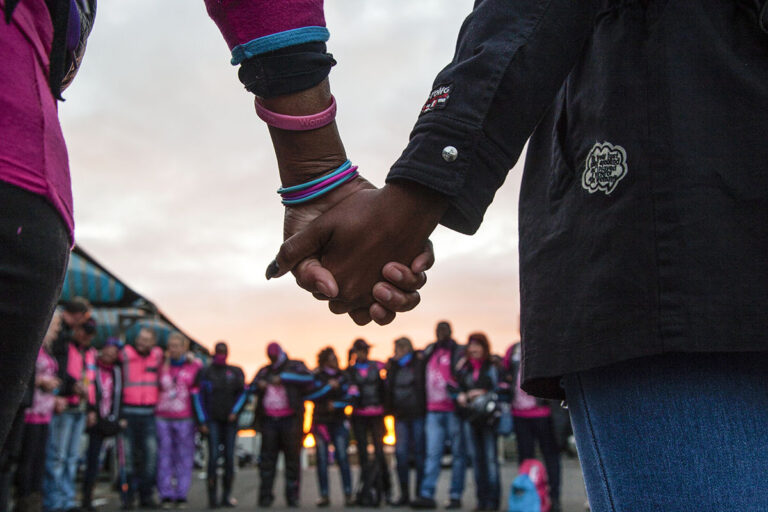
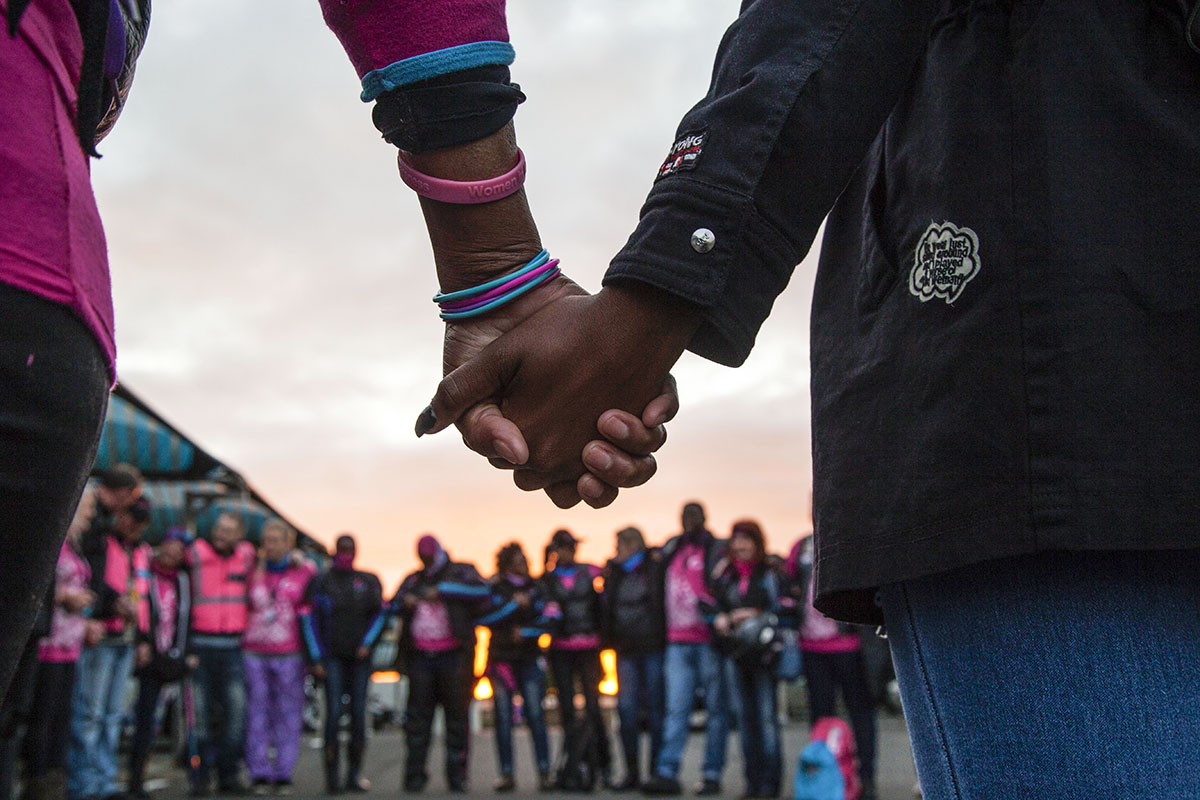
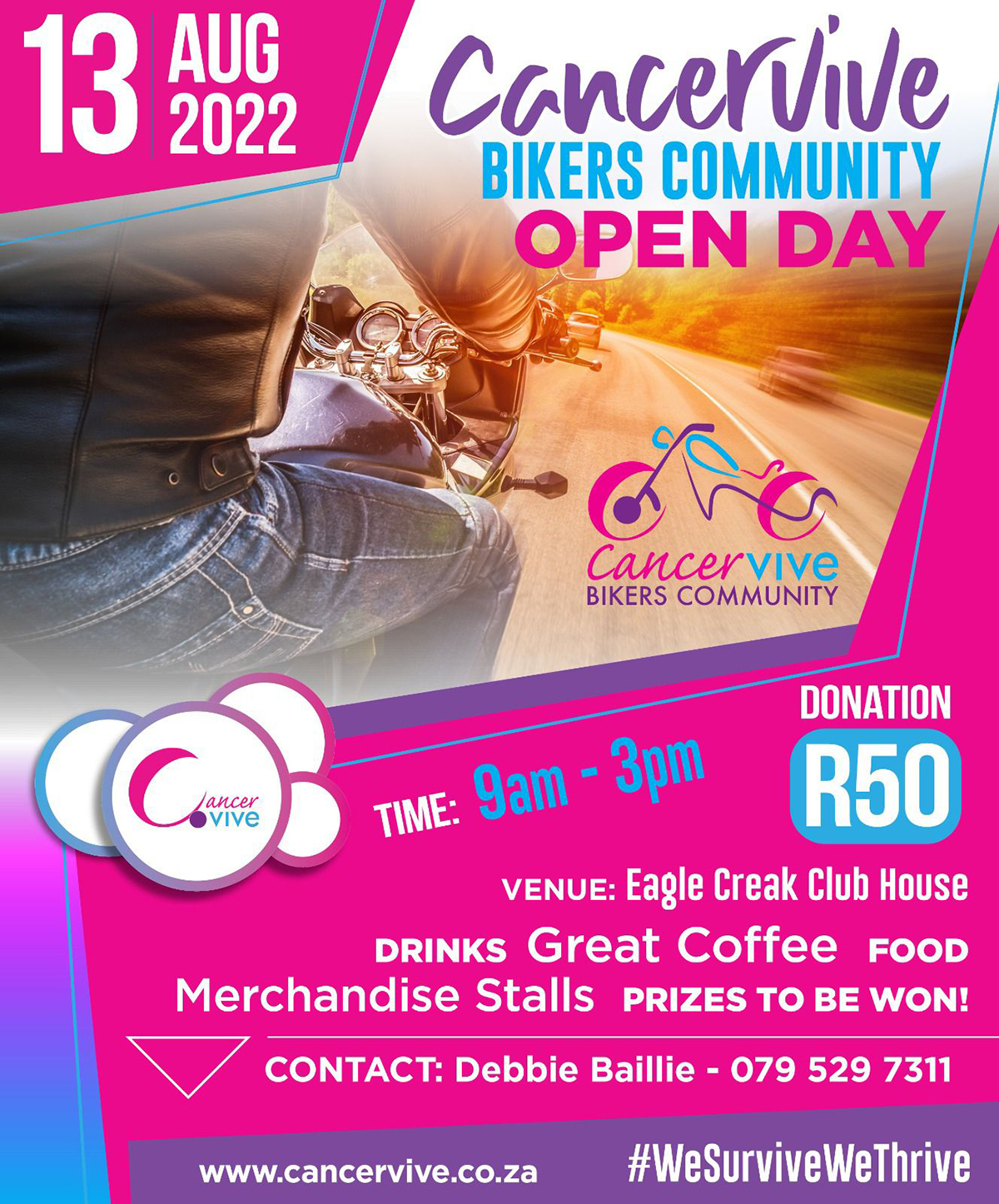
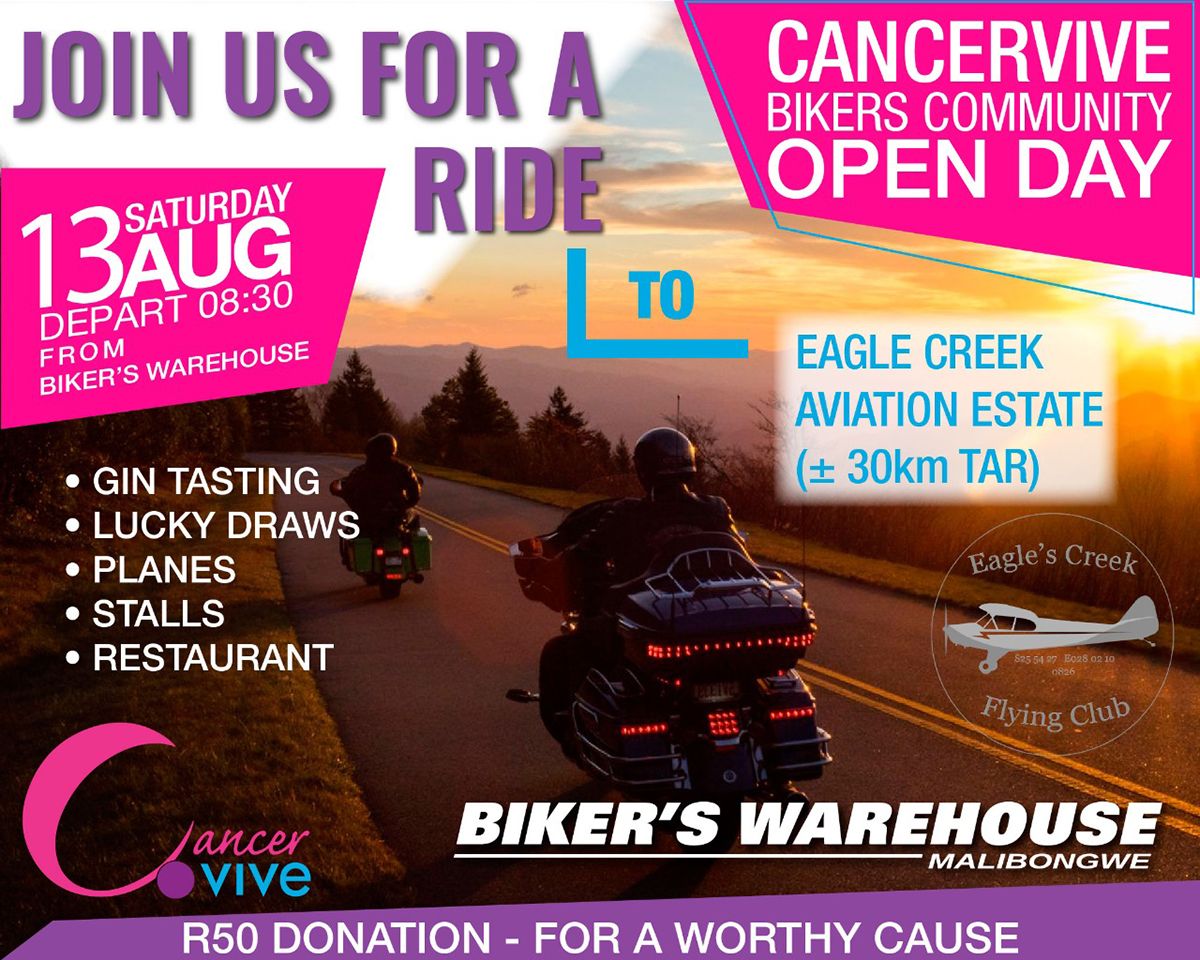
Cancervive, the admirable community of cancer survivors, are organising an open day on the 13th of August, which will take place at the Eagle Creek Aviation Estate Clubhouse in Centurion.
Join members of the Cancervive organisation for a relaxing day out, with plenty of food and drink options from 9 am to 3 pm. There will be merchandise stalls and spot prizes to be won on the day.
Bikers Warehouse Malibongwe will be hosting a ride in support of Cancer Awareness. The ride will depart from their premise at 08H30 and head to Eagle Creek Club House. All riders are welcome to join.
For more details on the day and also on how to get involved with Cancervive, contact Debbie Baillie on 079 529 7311 or visit the website: www.cancervive.co.za
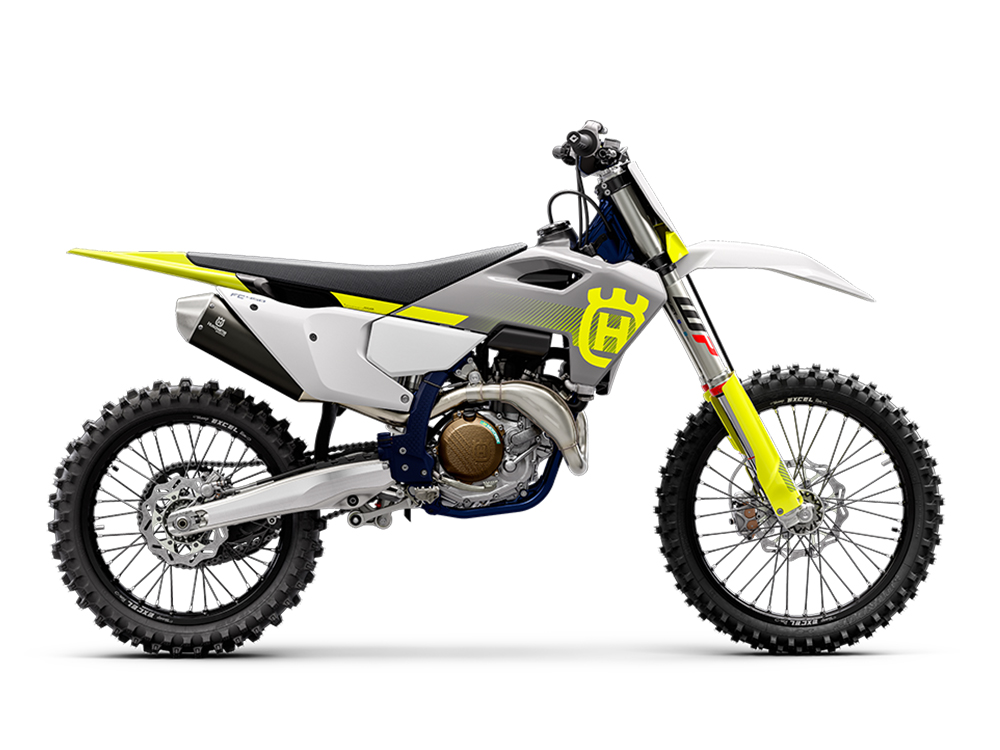
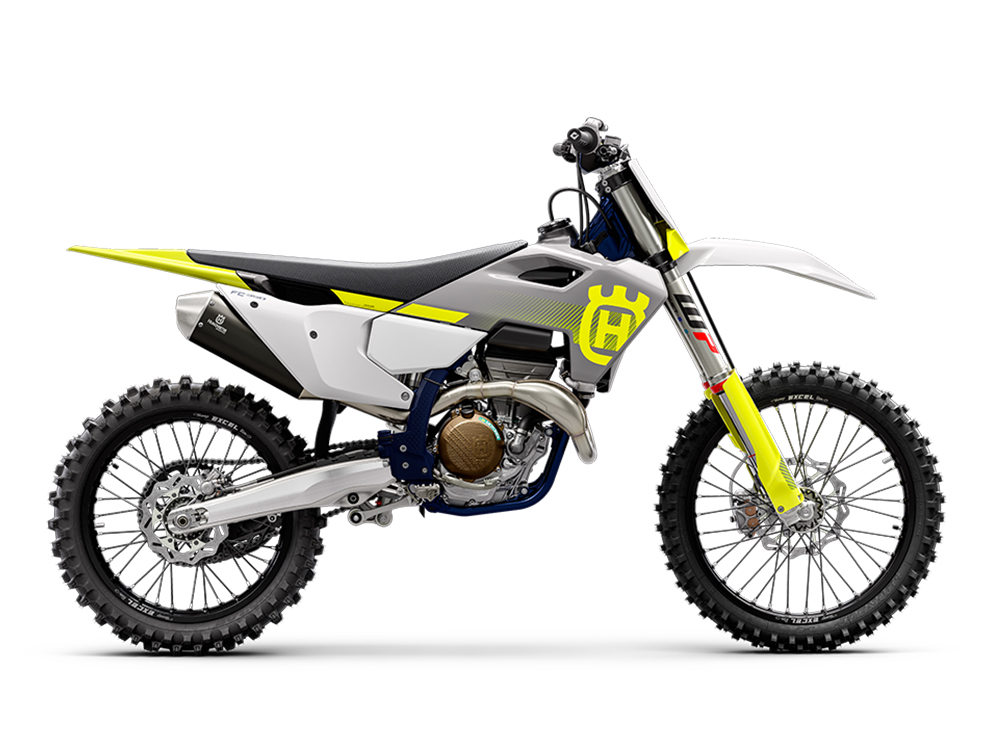
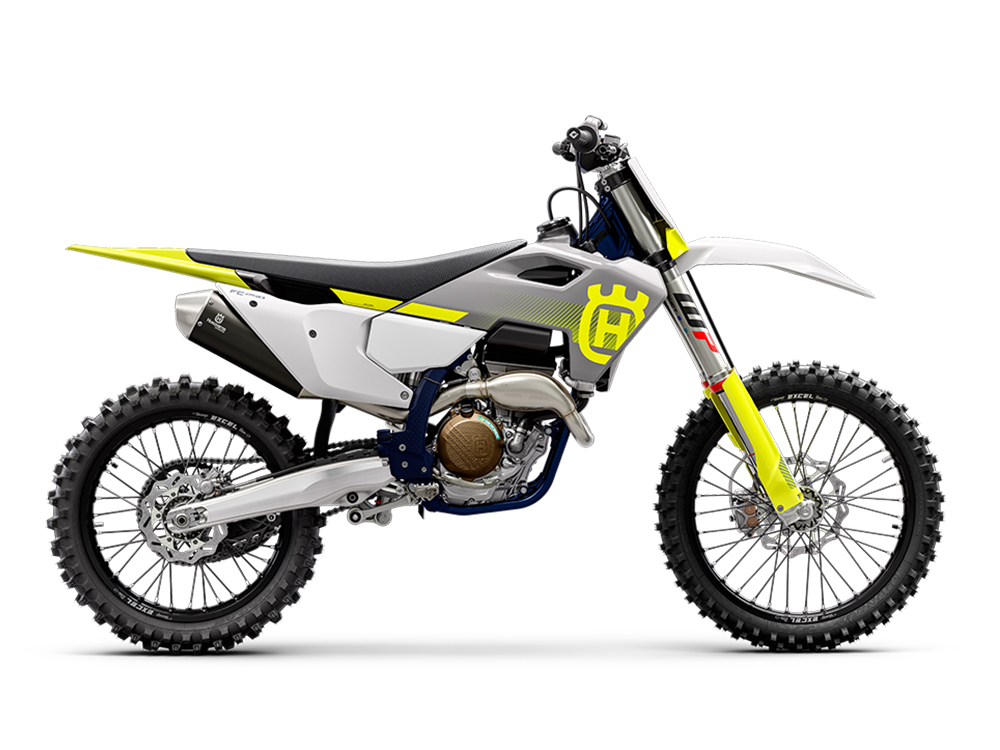
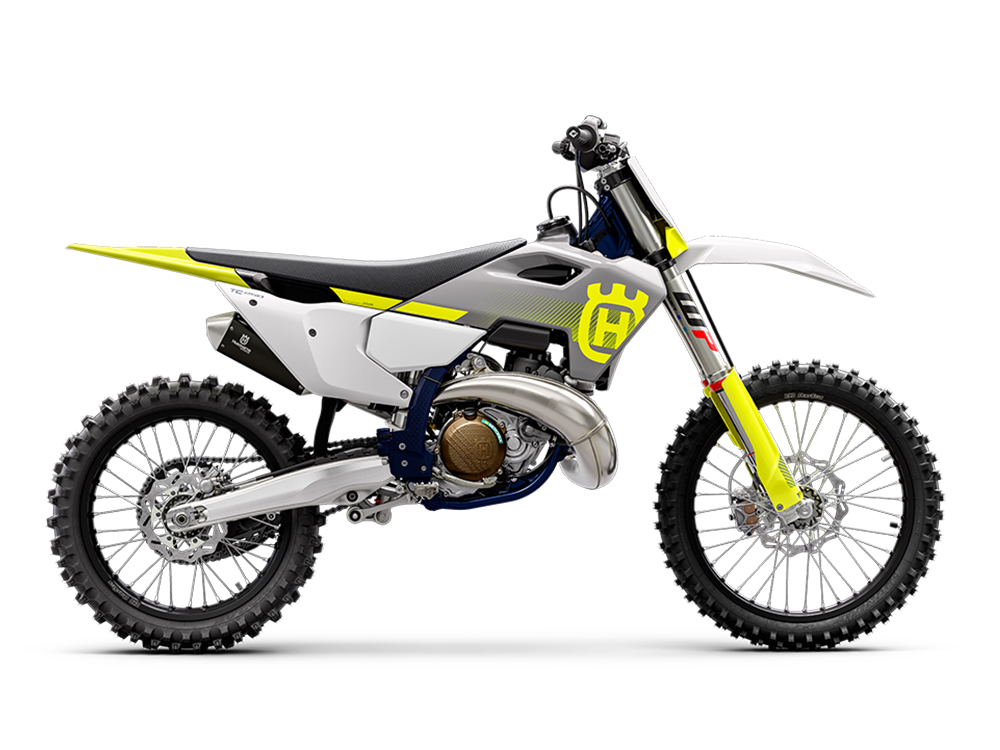
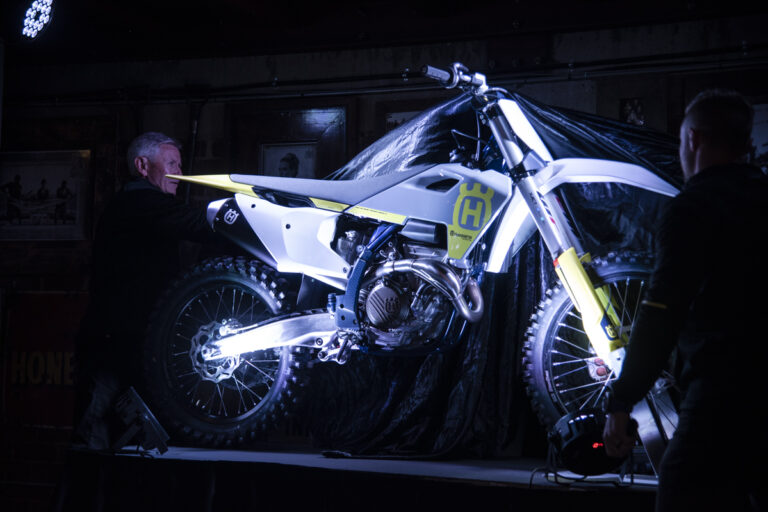
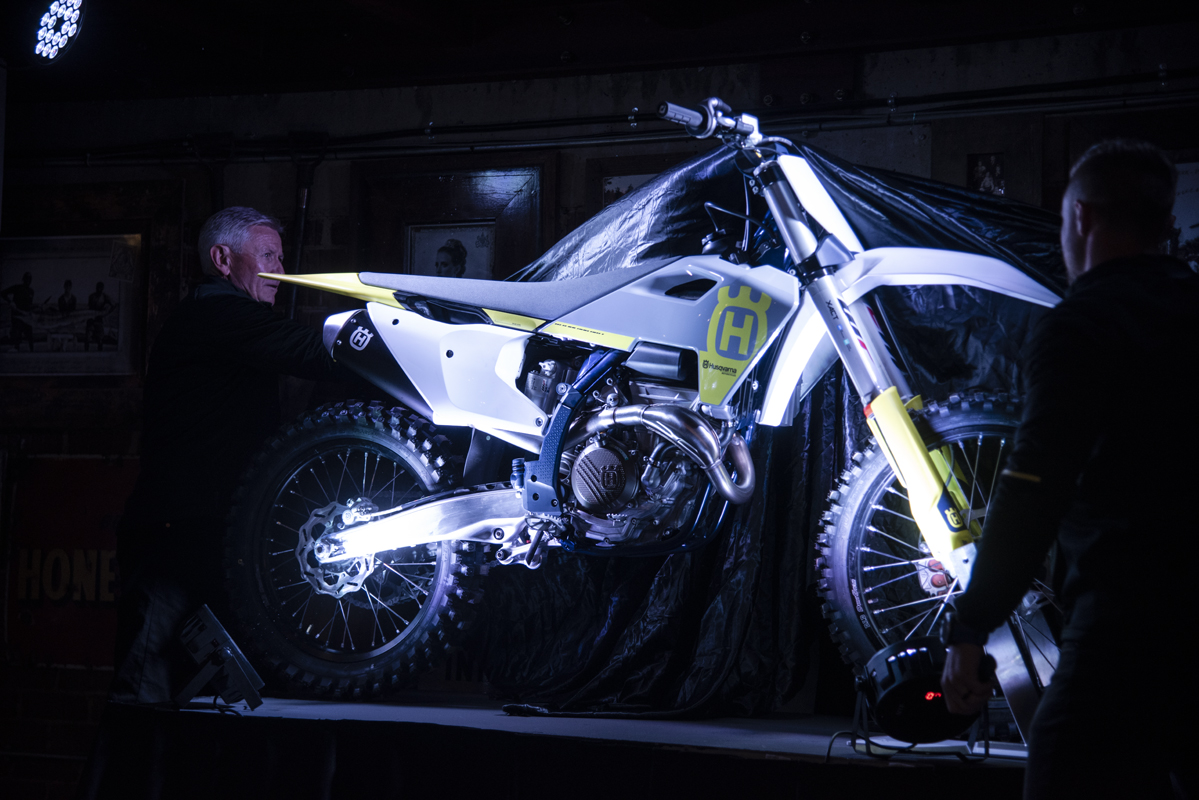
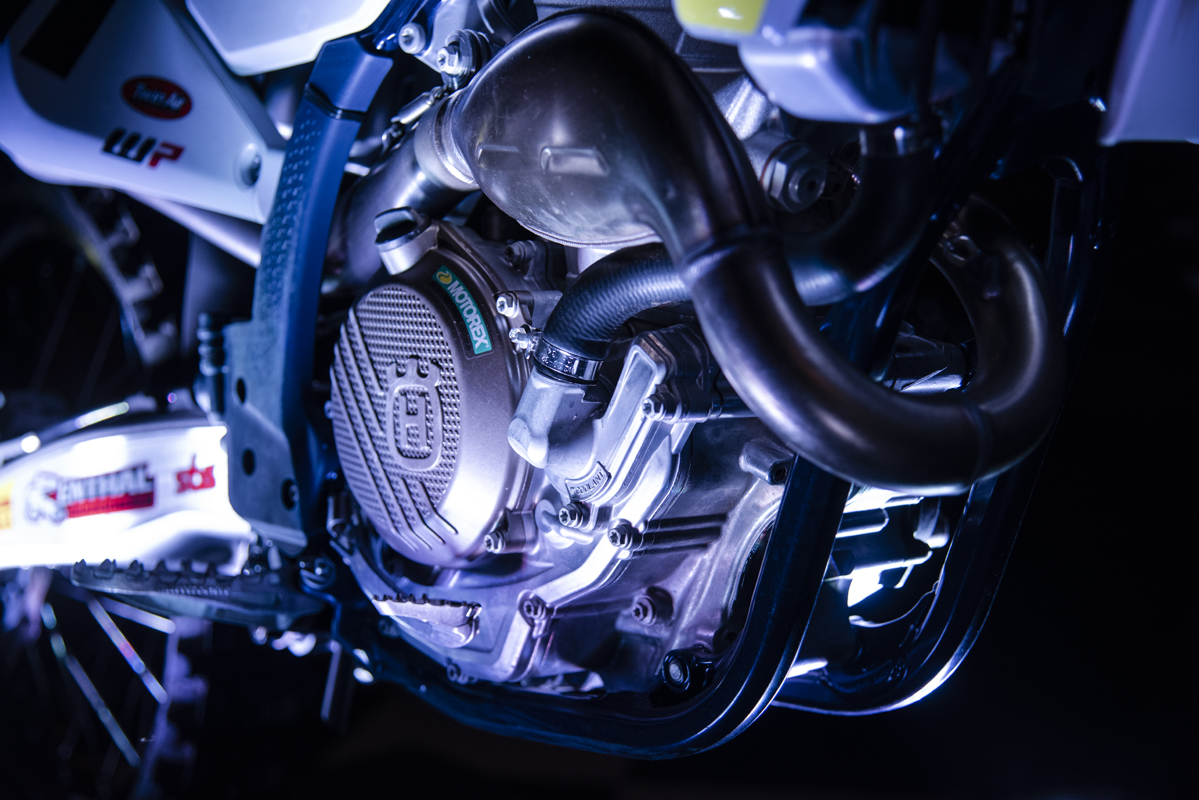
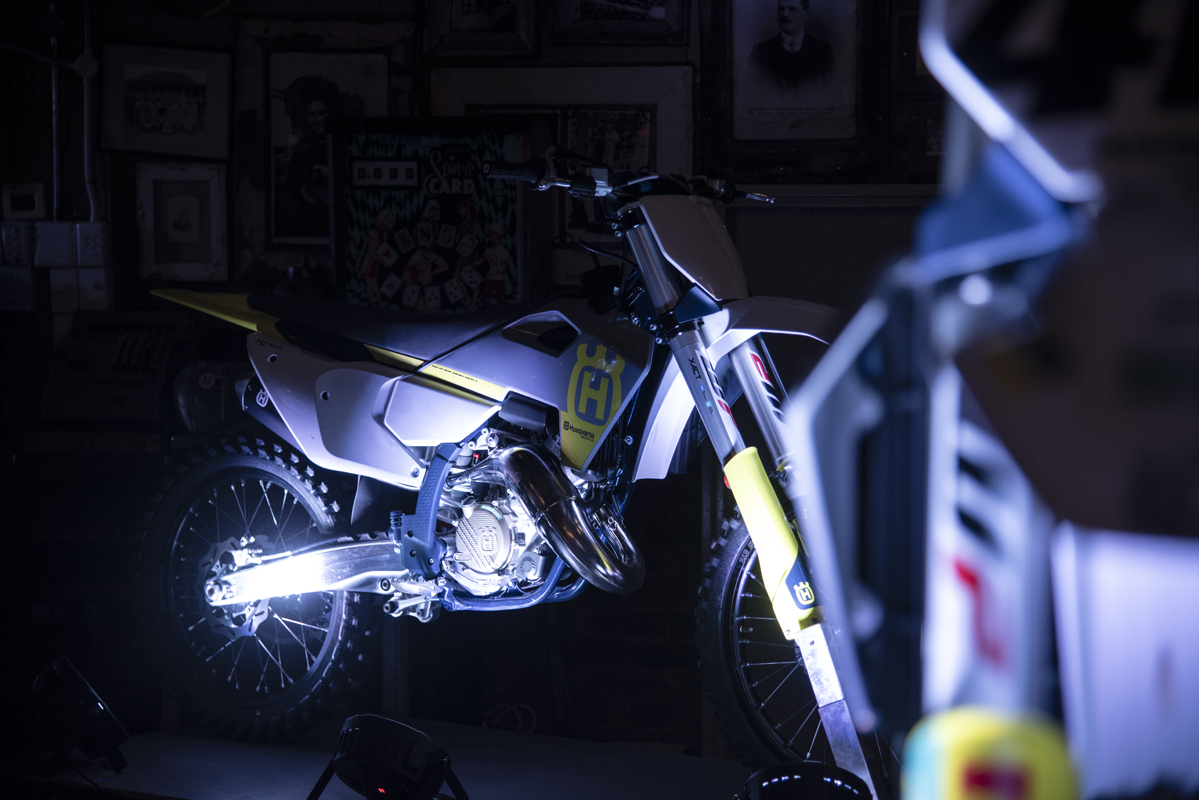
We recently got to see the Husky team riders Joshua Mlimi and Michael Docherty put the new 2023 Husqvarna MX bikes through their paces at Terra Topia. Motocross requires a very particular skill set, especially if the purpose of the ride is to evaluate the nuances of these new bikes. So, with the notebook in hand and a watchful eye set on both riders, we got to see how the bikes should be ridden, after which we got to hear their feedback.
Image source: www.zcmc.co.za
The latest crop of motocross motorcycles is a real technological tour-de-force as we covered in detail at the 2023 Husqvarna SA MX Launch in July. More power, more features, lighter, better handling….the list goes on and on. Staying ahead in this field needs constant revision and improvement. Husqvarna are dominant in this sector and judging by what we learnt about the new bikes, they plan to stay up with, or ahead of the best of them.
A summary of what’s new for 2023
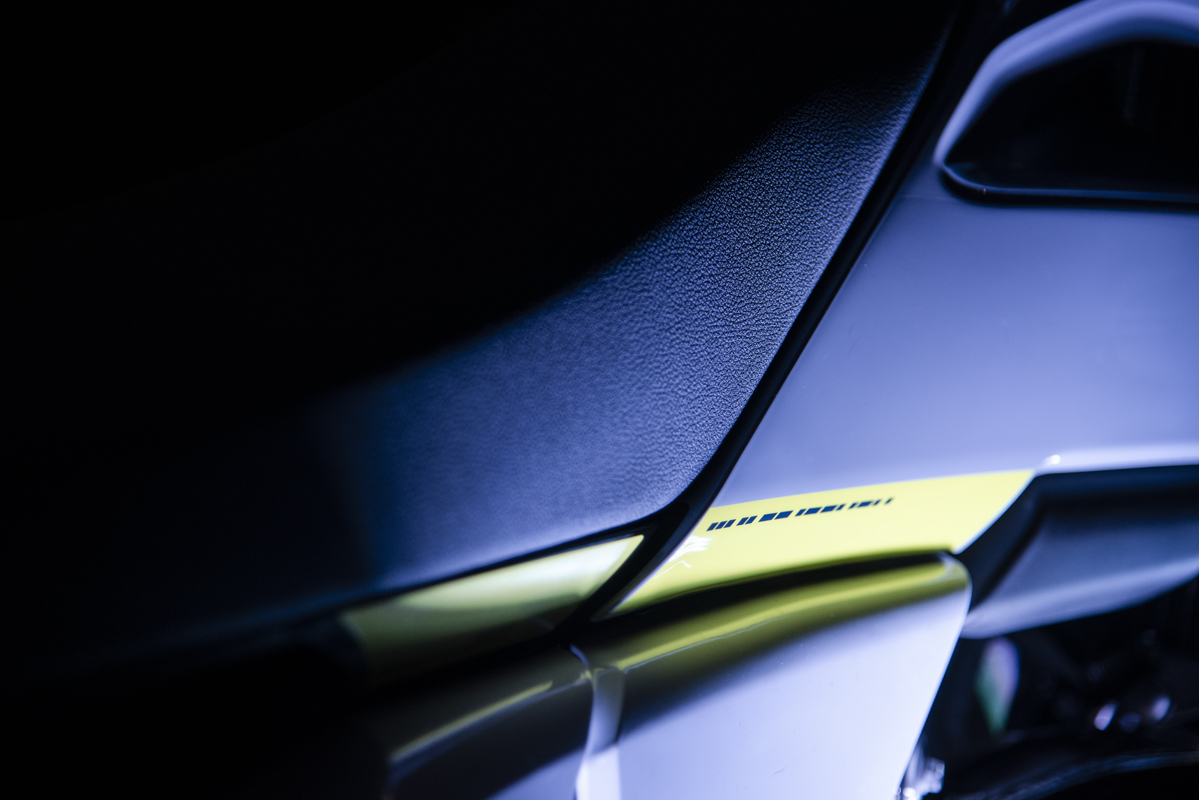
The 2023 Huskies are not just tweaked versions of the previous models. They are totally new bikes. Bodywork has been revised for better rider ergonomics, making it easier for riders to move around on the bikes. Watching the guys put the bikes through their paces you become acutely aware of the ‘body language’ which goes into riding a motocrosser fast.
Image source: www.zcmc.co.za
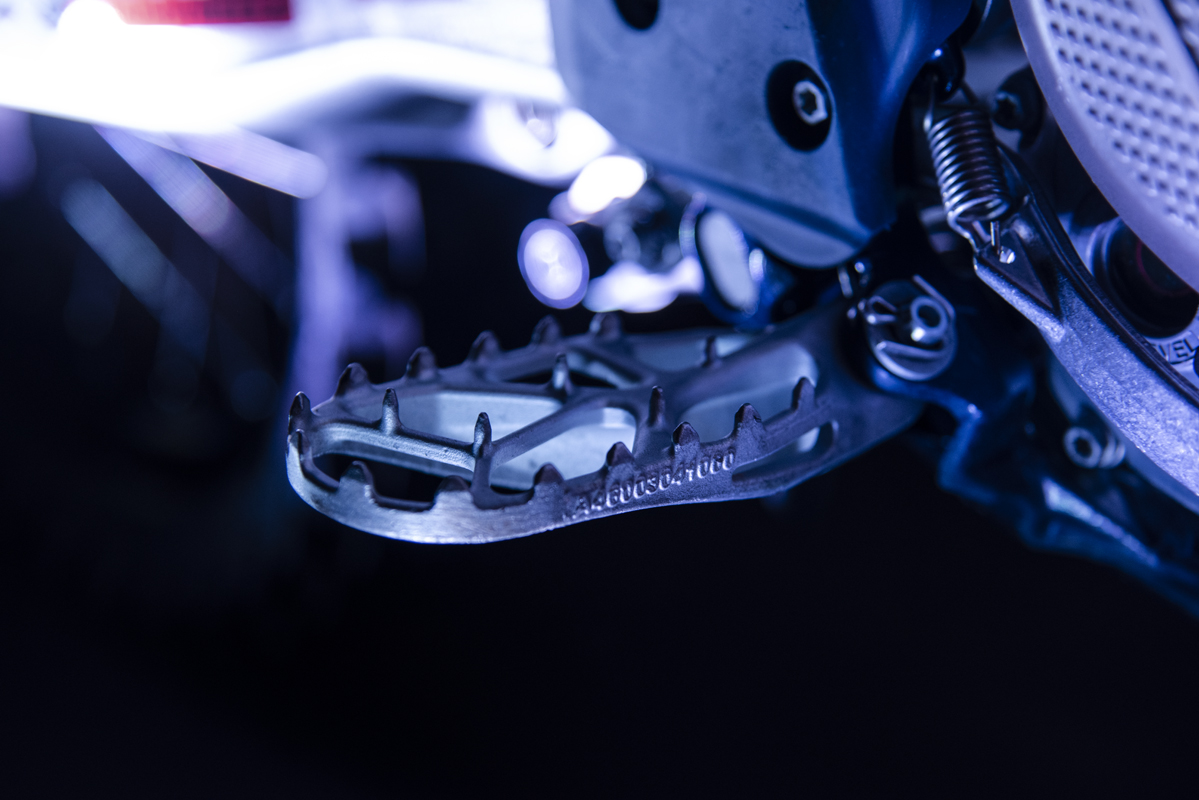
The sub-frame is totally new. Designed for more durability and side impact resistance it is a 60/40 combination of aluminium and an injection moulded polyamide material. Frames are hydro-formed for strength and rigidity, weighing in at a mere 1,8 kg’s. The frames retain the identical geometry despite a new shock mount making the seat height 15 mm lower. Lateral stiffness is enhanced and footpegs are 8 mm lower and 5 mm wider.
Image source: www.zcmc.co.za
The 2-stroke motors now feature fuel injection at the throttle body as opposed to TPI, as well as an electronic exhaust valve. Electric start is a welcome addition too. The engines are rotated by a couple of degrees in the frame. My mind boggles at the subtleties of the upgrades. The radiators are now common across the range for both 4 and 2-strokes.
Image source: www.zcmc.co.za
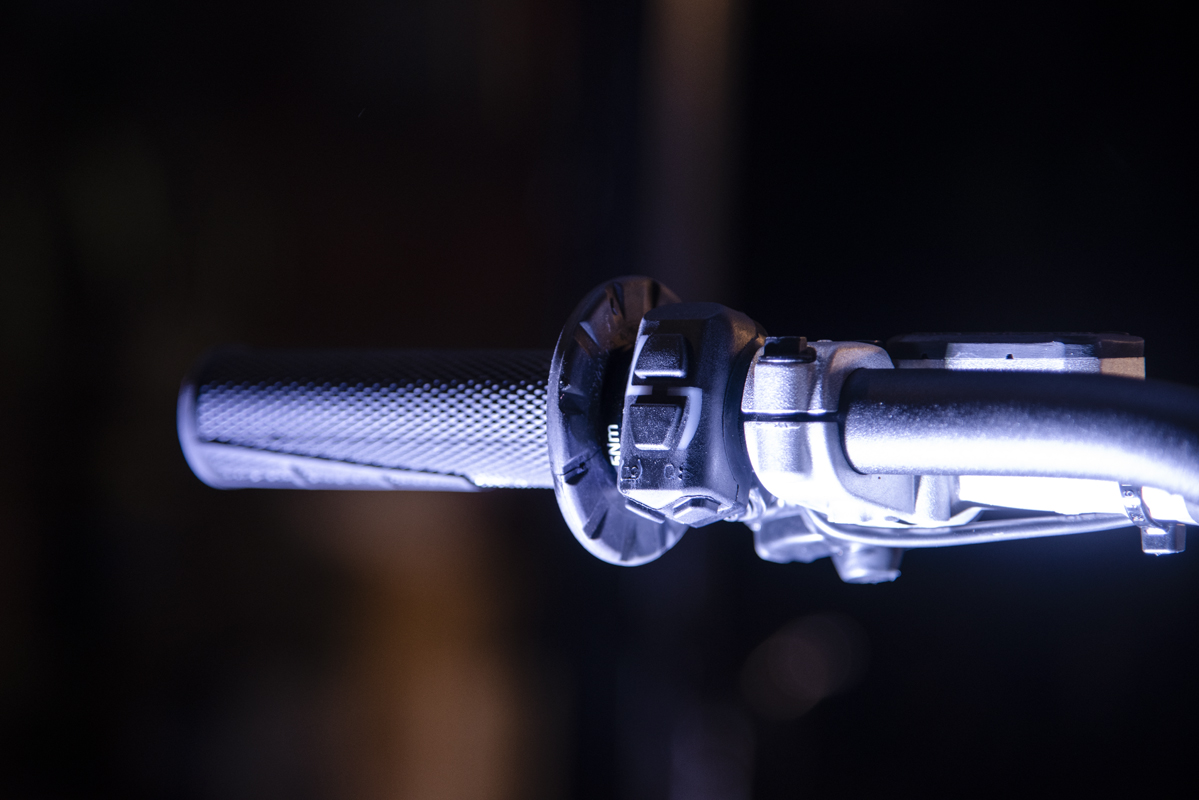
4-strokes now run optional quick-shifters from 2nd gear up. Cylinder heads, cranks and gearboxes are all new. Revisions are aimed at more power and durability. All this power is tapped into by engine maps where map 1 is pretty much the same as the 2022 bikes and map 2 gives you even more top-end hit. Clutches are now from Brembo with a great feel.
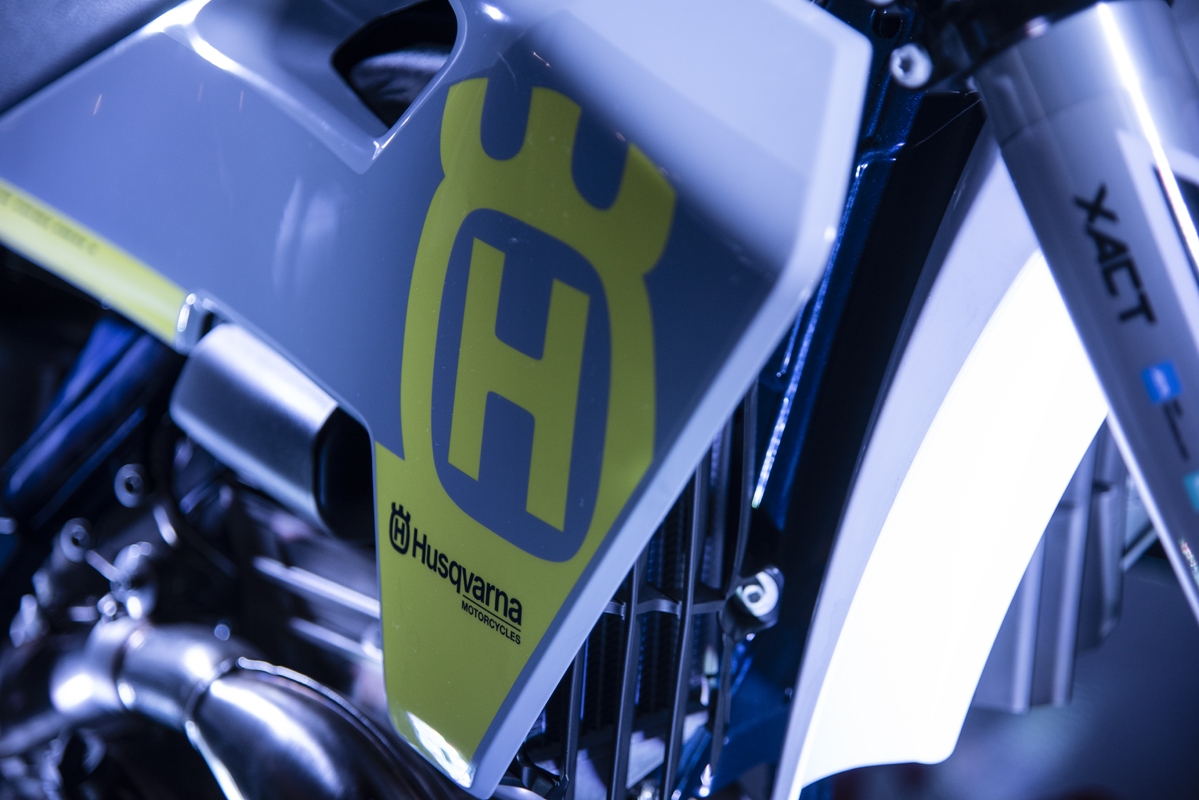
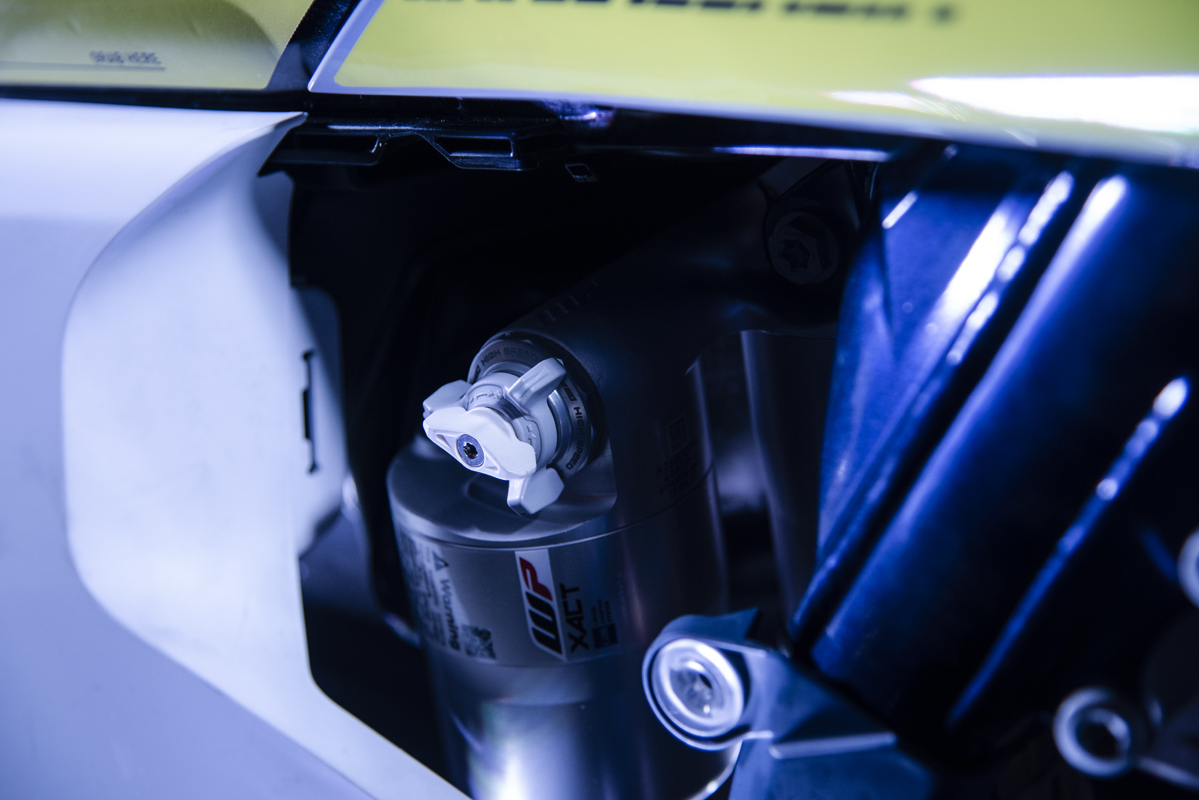
Suspension is WP XACT and fully hand adjustable, with 48 mm front forks and a revised linkage on the rear shock. The die-cast swingarm is also new. The hand adjustability of the suspension is a good thing, as with more frame rigidity it requires more subtle suspension tweaking to set up on hard-pack tracks.
Image source: www.zcmc.co.za
Feedback from the riders
After chatting the pros, here is the feedback given with regards to riding characteristic improvements over the predecessors:
All of the 2023 models share the same body and chassis which makes it easy to quickly adapt to the different models.
They have improved the low-down torque throughout the range, making it easier to accelerate out of corners (and not having to hunt for gears). This is a big improvement!
The traction control also helps keep the back wheel planted when accelerating hard out of the corners, which gave the riders more confidence especially when on the 450, which translates to better lap times.
The new bikes feel super comfortable to ride, and the new footpegs feel like the perfect size and are in the perfect position to feel stable on the bike.
With the usable power comes a complement of lightness on the bike, making it feel very agile when changing direction and when in the air.
The engine maps come in handy when on different parts of the track where it’s more loose or rutted, allowing riders to make changes like putting the bike into map 2, especially in the deeper-rutted parts of the track.
The quick-shifter on the 4-strokes are a great asset when doing race starts.
Photo credit: Bjorn Moreira / ZA Bikers
The new Husqvarna’s, with the myriads of subtle yet meaningful upgrades, are a brilliant example of the lengths that Husqvarna are prepared to go to in order to stay at the top of the motocross tree. The bikes bristle with top-of-the-range components like Pro Taper bars and DID rims. In the hands of riders who have the skill to extract their full potential, they will be formidable weapons.
2023 Husqvarna MX Range
For more information on the bikes featured in this article, click on the links below…
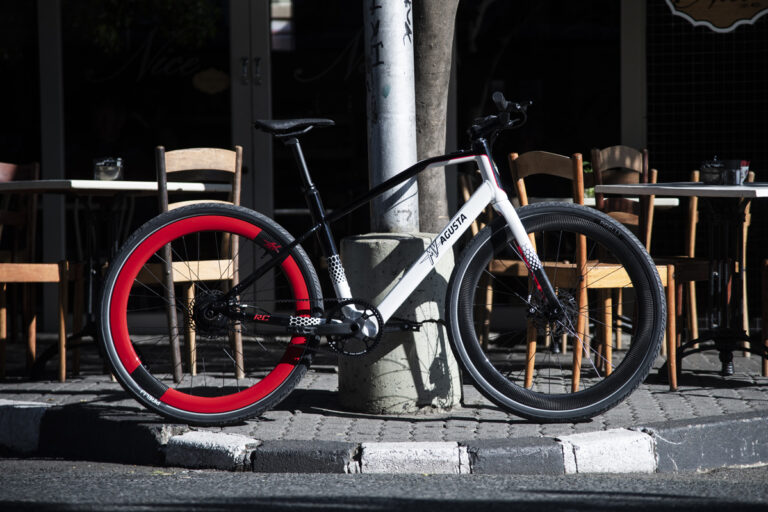
In today’s times, the demand for sustainable and accessible mobility is slowly beginning to grow. Over the last 10 years, we’ve all begun to familiarise ourselves with the term e-bike, and fast forward to the present day, we are starting to see not only common bicycle brands but motorcycle manufacturers just like MV Agusta jumping straight into this more efficient form of urban travel.
Most of us grew up cycling, I know I did, whether it was cycling to school, doing small shopping runs for the fam, or a social ride with the buds, life was just so much fun and petrol free. Yes, lactic acid, muscle cramps, and the many punctures we got were all part of the daily pains of keeping up with the faster guys and girls in the group, but I would take that back over almost R30 a litre of go juice today.
Photo credit: Bjorn Moreira / ZA Bikers
We still hear preaching of the good old days when youngsters used to start off their riding ventures on 50 cc motorcycles in high school and aspire to one day own something bigger and faster. The future of two-wheeled transportation is certainly very exciting, as e-bikes become more accessible, I think we might start to see a similar trend, whereby, junior e-bike cyclists will one day aspire to own an e-motorcycle when they are grown up.
Are e-bikes the future of urban mobility?
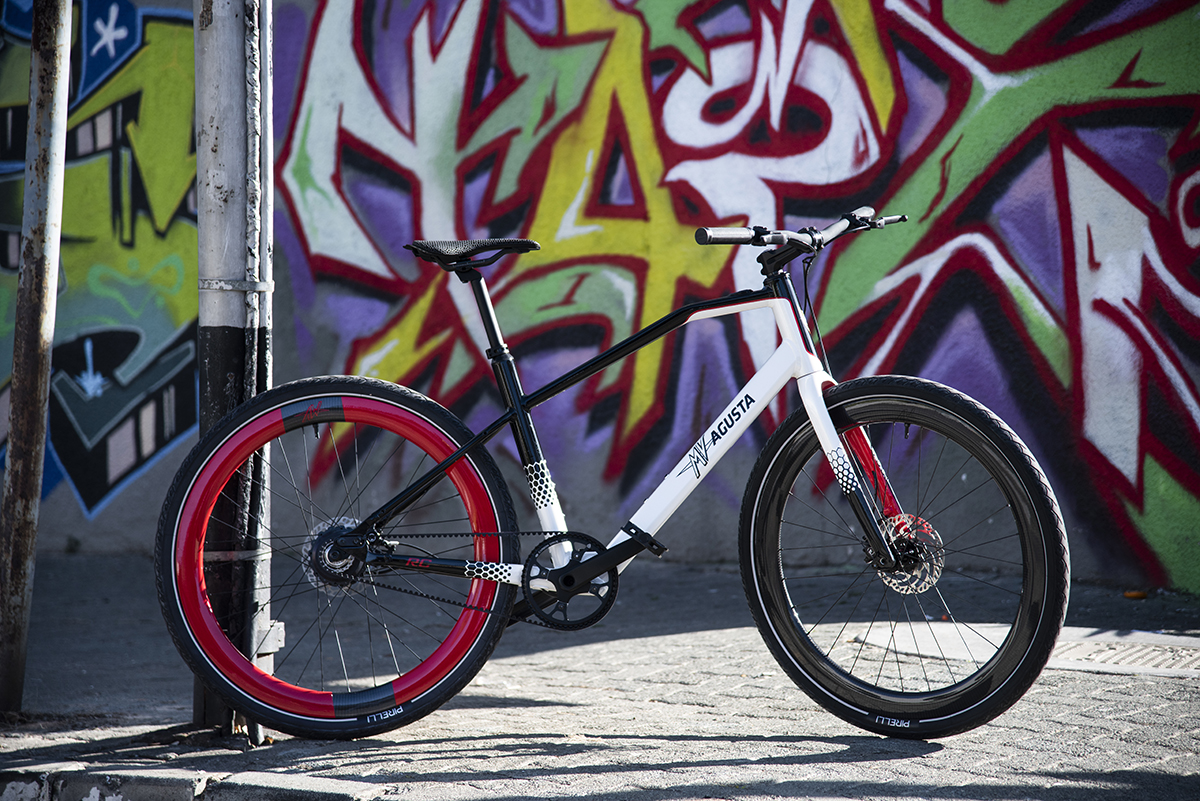
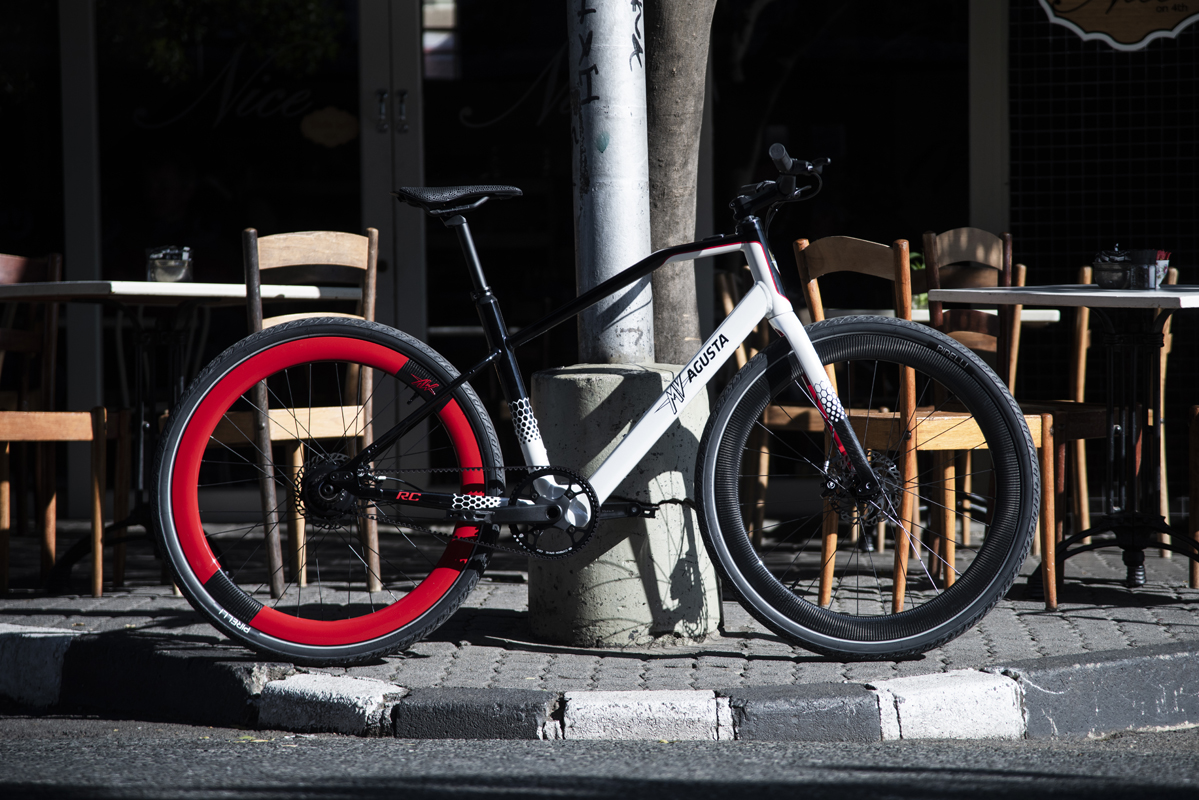
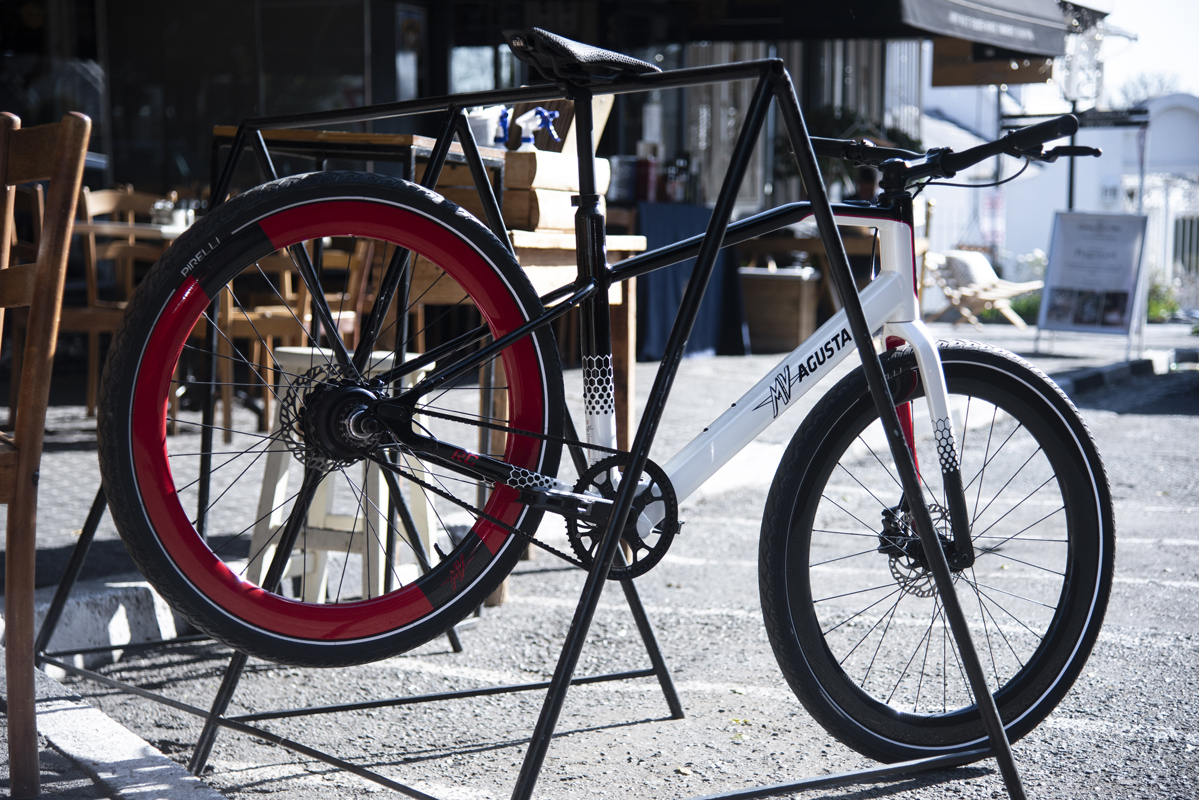
To find out for ourselves we clipped in for a ride on MV Agusta’s latest AMO RC single-speed e-bike, imported by Fire It Up! So, the name is AMO, which stands for “I love” in Italian, this new line of e-bicycles takes after MV’s passion for everything on two wheels. The AMO is available in six model variants of which two are available in SA; the RR, and the RC. The heart of these two city slickers features a 250 W silent Mahle engine that can run at an assisted speed of up to 25 km/h. Powering the motor is a 250 Watt-hour Panasonic battery rated for up to about 75 km on a single charge.
Photo credit: Bjorn Moreira / ZA Bikers
Over the years e-bikes have been hated by purists and many bystanders for being hefty in weight and bulky looking due to their chubby frames made to fit a massive battery. Thanks to today’s battery technology bike brands have been able to create smaller batteries and in return, this has ecstatically made e-bikes better looking with narrower frame designs and less weight. With a closer look at MV’s first try, you can’t even tell that the AMO is an electric bicycle and it sort of leaves you scratching and wondering, how have they fitted a battery into that frame? To put it into perspective the ‘RC’ only weighs 4.5 kg more than my Rook One single-speed at a low 15.5 kg, which is around your common mountain bike weight.
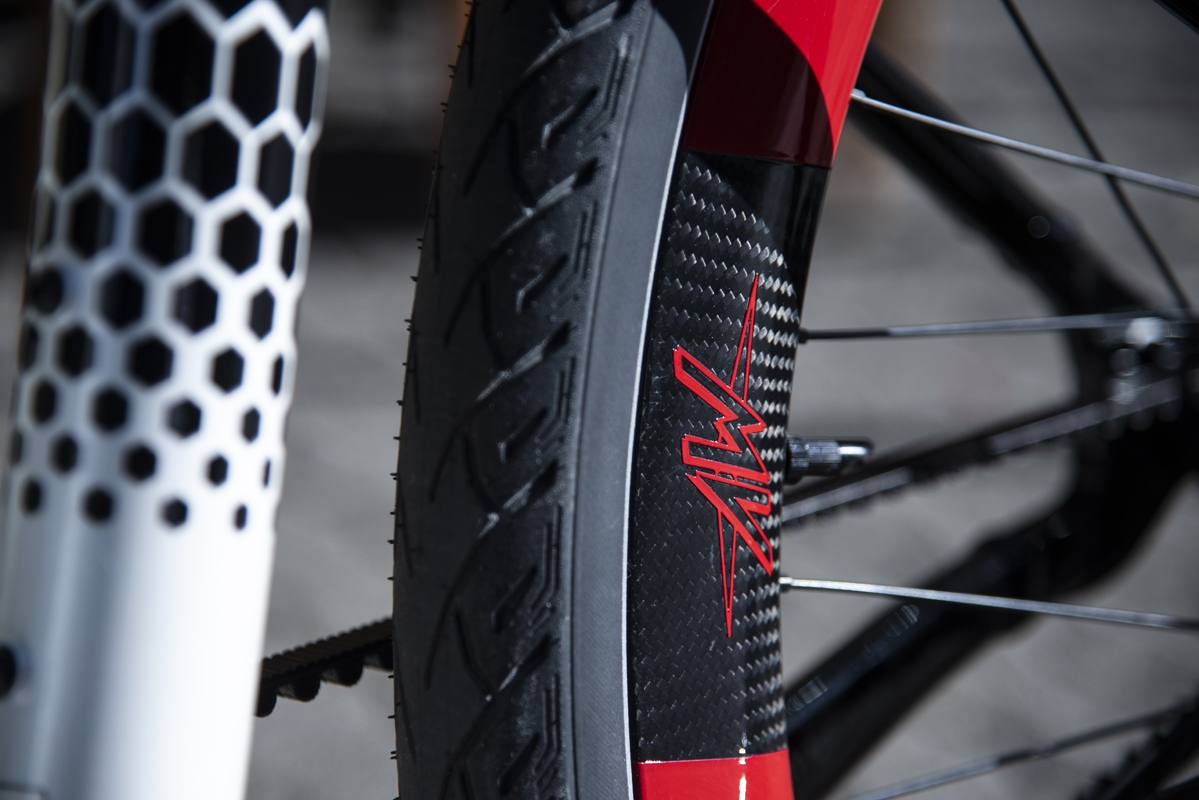
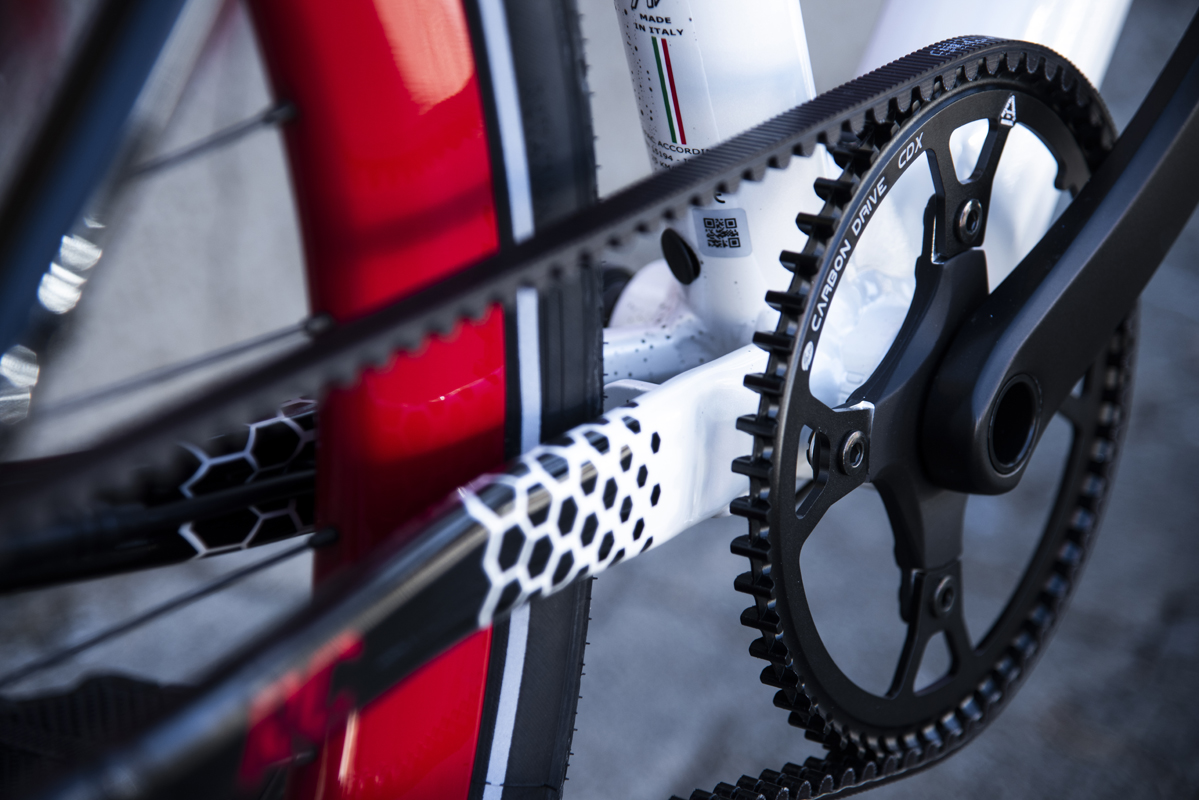
Part of this clever trickery is that the AMO is a single-speed, which in cycling terms is the simplest and most puristic form of cycling. The reason for that is, that there are no gears which means no cassettes or mechanical gearboxes, just two sprockets and a belt drive. To match the simplicity of the single-speed nature MV hasn’t tricked out the AMO with loads of tech, screens or buttons, but rather just one button that does it all. To help keep the weight down the RC has been equipped with beautiful carbon wheels and a carbon front fork, which might not sound like much but every kg counts when your legs are doing most of the pushing.
Photo credit: Bjorn Moreira / ZA Bikers
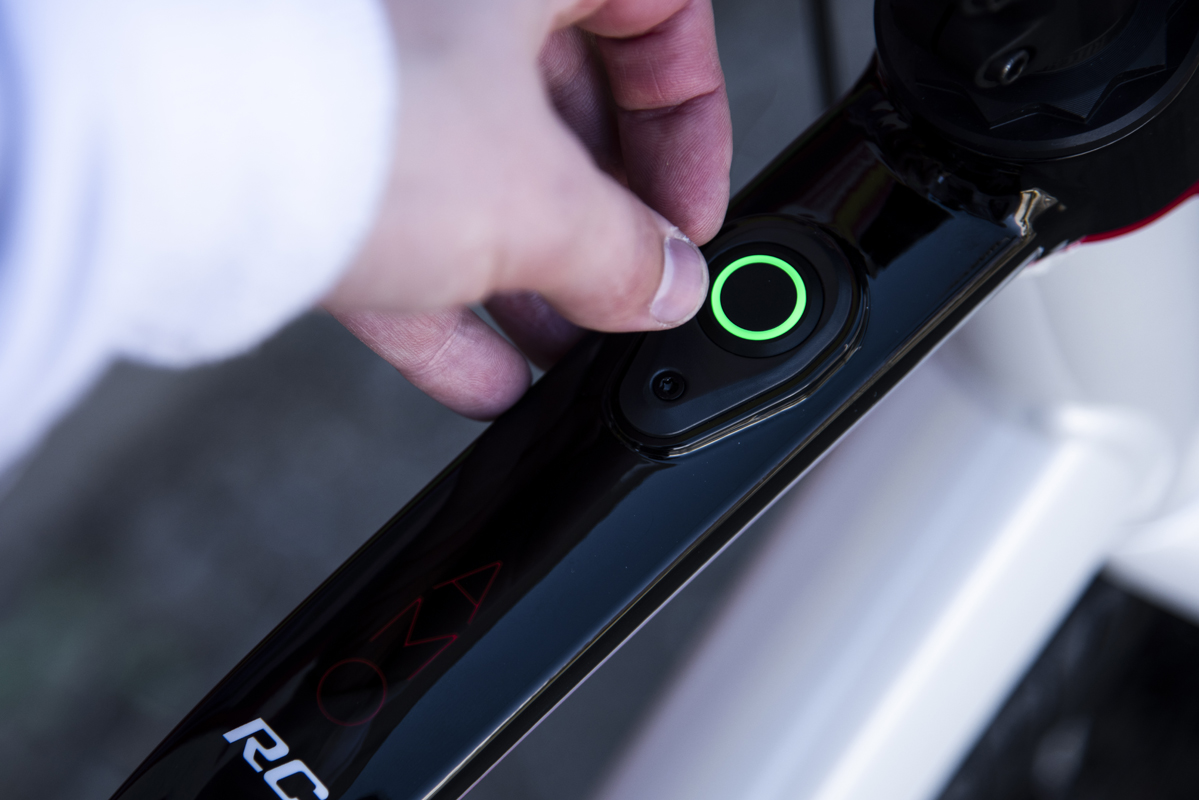
The single operations button really makes the AMO feel like a normal bicycle and it’s sort of easy to operate. With a neat button on the centre tube, you can turn on the RC and select one of three boost modes, of which there are three different colour LED lights to let you know which mode you’re in. There is also an option to turn off the boost mode to save some electricity on the downhills. The LED light on the button will also change colour as the battery life decreases on your ride, giving you an idea of which Starbucks to start hunting down.
Photo credit: Bjorn Moreira / ZA Bikers
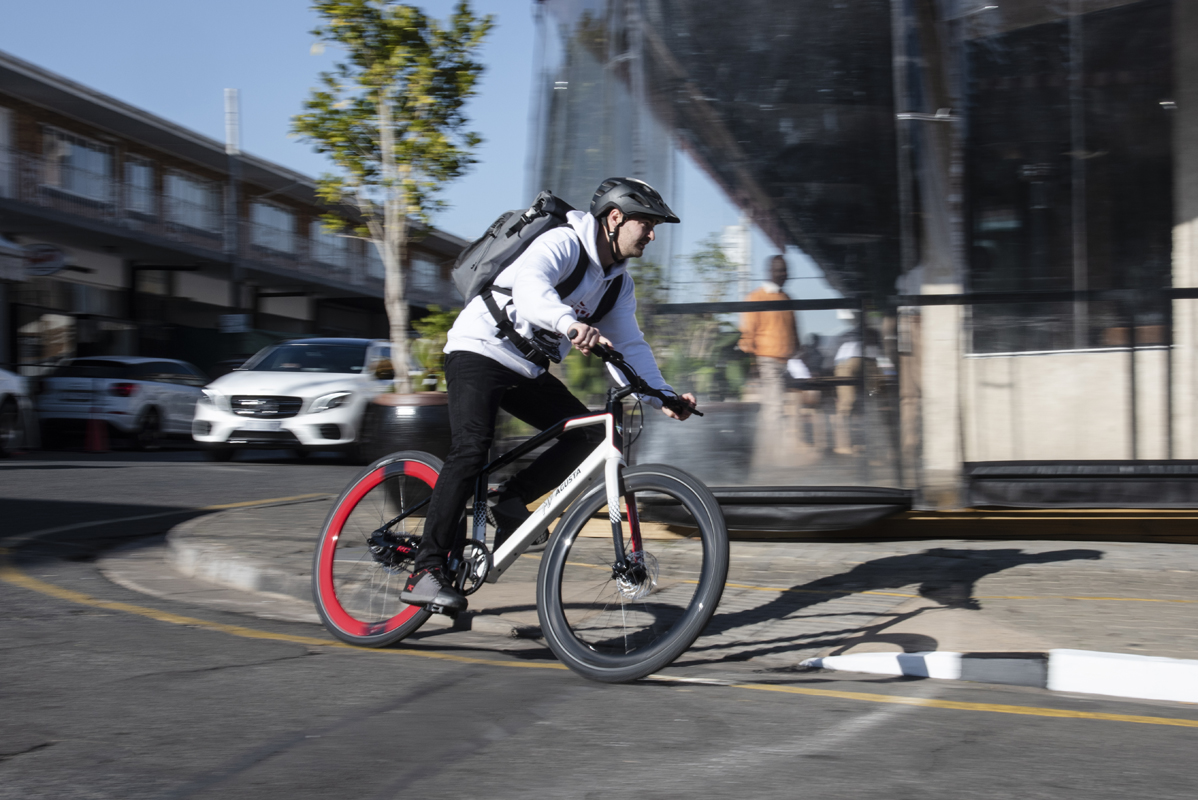
It was on my first ride from Fire It Up! in Bryanston to our offices in Parkhurst where I got to experience the pure fun of cycling on a super single-speed, the AMO RC. The boost functions across the modes were so smooth that I sometimes forgot I was actually riding an e-bike. Because there are no gears, you have to keep your momentum levels up high when facing uphills, however, you are rewarded with a ‘boost’ of electric assistance that makes easy work of steep climbs. The electric assistance also helps keep you ahead of the traffic when starting off from the redlight—which suddenly makes the AMO a good city slicker.
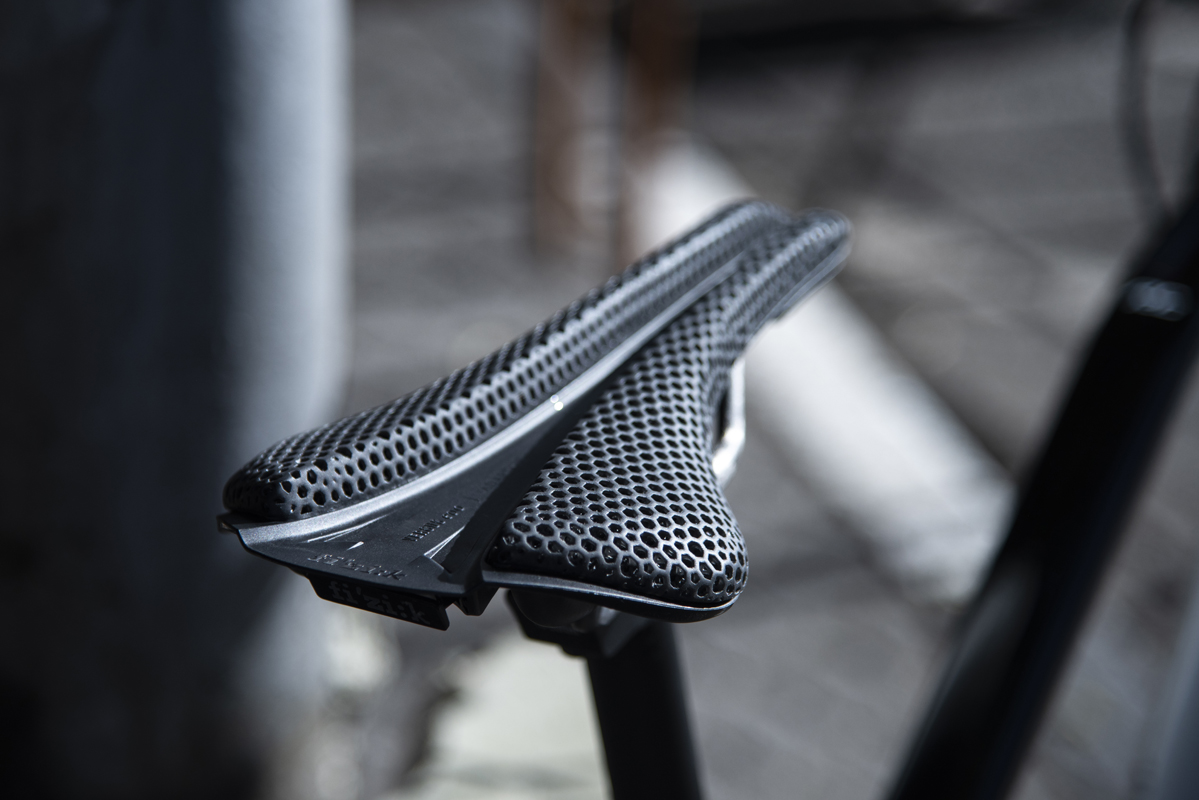
It’s only obvious that the ride isn’t going to be the comfiest of rides due to the lack of suspension, but the Italian-made Fizik saddle, straight bars, and Brooks grips make it all manageable. Once in Parkhurst where trucks are offloading goods, dogs are running across the road and peak traffic can be insane, this is exactly where the AMO strives. The grip is supplied by nothing other than Pirelli tyres and when coming to a quick stop you are sorted out with strong Magura disc brakes.
Photo credit: Bjorn Moreira / ZA Bikers
So, how long did the 10 km commute take me? Well, it usually takes between 20 min to 30 min by car on the b-road that we drive and on the RC I clocked in at 25 min, which is 2:30 min/km at an average speed of 24 km/h. Now, this sounds like a professional athlete at his peak fitness, but I can promise you that I’m not and it’s probably more likely the RC that did 60 percent of the work for me.
Photo credit: Bjorn Moreira / ZA Bikers
After 10 km I used just over 10 percent battery which takes no time to charge up. Once completely drained of all its power the battery will take around 4 hours to charge to full capacity, which sort of sounds like a lot of time but if you’re commuting to the office or place of work then you’ve got time to spare. My offices are usually at my local coffee shops and just getting out of the house for a different vibe or atmosphere for work is what I like to do, which sort of makes the AMO e-bike series suit my lifestyle and home to “office” commuting range. Most coffee shops won’t stop you from plugging in your bike, especially if you invest 3 days a week there with your laptop on charge for an average of 4 hours anyways, so the loopholes have already begun.
Photo credit: Bjorn Moreira / ZA Bikers
The future of e-bikes taking over the urban mobility side of things is quite possible, but it’s society who needs to decide whether it’s too dangerous or safe enough to cycle on their daily commutes. Even with the dismal chances of the government allocating inner city bicycle lanes, I still think it is safer to ride an e-bike over a motorcycle in the urban jungle.
At the end of the day, the AMO RC is inspired by MV Agusta’s legendary Reparto Corse and is limited to only 200 units and will set you back R79 900, which in e-bike terms is surprisingly competitive considering that it’s a special edition. The winner for me is the cheaper and more city-ready RR at R69 900 as it is more obtainable and has stronger rims for our rough road conditions. If it was up to me, I would be making my commutes cheaper, fresher and more fun. Who would have thought you could beat traffic so well on an MV?
Boy, but it’s been a long five weeks! For some reason, the overworked MotoGP paddock seems to think that we can do without our bi-monthly fix of two-wheeled adrenaline not only during the off-season between November and March but also for the whole of July. Whoever gave them that idea needs to be given a good talking to (and yes, I am aware that some of that time would have been taken up with the cancelled Finnish round.)
It does, however, give us chance to draw breath and reflect on what has passed and, using that knowledge, try and make predictions for the second half of the season which, motor racing being what it is, will no doubt prove wildly wide of the mark and just plain wrong! Maybe I’ll just leave that bit out!
What did we learn from the first eleven races? Plenty, of course: that Fabio Quartararo will be hard to beat to the championship (but not impossible): that no other rider can make the Yamaha work (with the possible exception of Darryn Binder but he has less to unlearn than Dovizioso or Morbidelli): that the Aprilia has finally and to everyone’s delight come good: that the factory Ducatis still seem unable to string together a championship-winning series of good results although the satellite teams are doing well: that KTM has good weekends and bad: that Suzuki is sadly withdrawing from all forms of motorcycle sport.
Image source: www.motogp.com
So far, Quartararo has taken three Victories and backed these up with a string of good placings. Bagnaia has won three times but has been unable to claim consistency in other rounds. Enea Bastianini has miraculously won three races while Oliveira and Aleix Espargaro have won one apiece, with Espargaro claiming an impressive string of podium finishes to leave him second in the championship.
The beginning of the season was a model of unpredictability, with nine different podium sitters in the first three races. No one saw that coming. No one saw the Japanese factories not getting a look-in until round three and scoring only seven podiums (out of a possible 31) in the first eleven races.
Who Shone in The First Half of the Season
You have to say that Quartararo has the best claim to the rider of the season so far, given that he is leading the championship combined with the failure of any other Yamaha to even crack the top ten, let alone challenge for podiums.
Image source: www.motogp.com
Quartararo’s strength has been his determination in the face of a Yamaha that has a straight-line speed deficit to the Ducatis. If he suffered at the opening flyaway rounds, then he more than made up for it when the circus returned to the more technical circuits in Europe and he consolidated his championship challenge, even if the bike was still not the best on the grid.
Aleix Espargaro has made the most of the hard work that has gone on at Aprilia’s Noale factory by both the team and himself. His is a case of the right rider on the right bike at the right time: the Aprilia RS-GP is the second-best bike on the grid, after the Ducatis and at some tracks it is better, marrying a sweet chassis, good speed and reliability.
Image source: www.motogp.com
If there was one stand-out ride in 2022 so far, then it was Espargaro’s run from dead last to fourth at Assen, including overtaking two riders at the last corner of the last lap: what could he have done had he not been forced off the track by Quartararo early in the race? Then again, maybe the ride was what it was because he was mightily pissed off and the red mist descended. That the Aprilia was able to support such throwing-caution-to-the-wind riding only serves to show how good it is.
Enea Bastiannini’s three victories on a year-old Ducati showed his prowess at tyre preservation, something which is becoming increasingly important in MotoGP at the moment. He rides like Marquez – all on the front end, which leaves him with plenty of rear tyre towards the end of the race and he is able to change his style to take advantage of those changing tyre conditions. Each victory was a result of him biding his time and taking over at the front as the leaders faded.
Image source: www.motogp.com
Consistency is his problem at the moment: a run of two non-finishes, a tenth and an eleventh in the last four races will not have done his chances of securing the second factory Ducati seat (Jack Miller’s – he’s off to KTM) alongside Bagnaia any good, his three victories notwithstanding. Having said that, it’s not as if Jorge Martin has a better claim to the seat. It’s a hard choice for Ducati to make.
Brad Binder’s season might have not lived up to the promise of the opening second place in Qatar but if there is any rider who can get the best out of the KTM on race day, then it is he. Sixth place in the championship is a testament to the tactic – intentional or not – of steadily racking up the points while those around you yo-yo up and down.
Image source: www.motogp.com
Qualifying is the problem for the KTM, hampering his race day performance. The KTM suffers less of a lap time fall-off between qualifying and race than its rivals. Think of it this way: some riders’ race pace might be a second or two off the qualifying pace but Binder loses only a few tenths. With that consistency, if he can qualify better, then he would be in a position to record regular podiums and, possibly, race wins.
2023 and Beyond
Of course, the 2023 grid will have a completely different look to 2022 and we are right in the thick of the silly season. With Suzuki leaving, two winning riders were potentially out of a job although both Rins and Mir are likely to be on Hondas: Rins signing for LCR Honda and Mir almost certainly a shoe-in at Repsol Honda, alongside a (hopefully) fit Marc Marquez.
Image source: www.motogp.com
Less certain is the fate of Darryn Binder. Many will say that he has done enough to deserve a seat at the top table but the limited options might force him back to Moto2, which would be no hardship: at least he will live to fight for a MotoGP seat again, something that doesn’t always happen: look at Iker Lecuona, who recently admitted his move to MotoGP was too soon but that he really had no option but to make the move. If you are offered a seat in MotoGP, you have to have a really good excuse not to take it, even if you are not properly ready for it.
Image source: www.motogp.com
That Marc Marquez will be fit for 2023 is likely: whether he can recapture his racing spirit is another thing entirely. Love him or hate him, the prospect of the Marc Marquez of old going head-to-head with Quartararo, Bagnaia, Aleix Espargaro and Bastianini is mouth-watering and could herald a classic era of MotoGP racing. Only time will tell if Marquez still has that fire and, just as importantly, if he can get onto the 2023 Honda in time to have a say in its development. If he can do that, then expect fireworks.
Image source: www.motogp.com
Similarly, Quartararo was seeking reassurances from Yamaha that they would address the top speed issue before he re-signed for 2023 and 2024. In his hands, the current M1 is effective and he has a new-found calmness about him, which means he understands that he can’t win at every track but does his best to get the best result possible at tracks that play to other manufacturers’ strengths. Give him a top speed to compete with the Ducatis and the possibility of the championship in 2023 becomes even more likely.
You have to feel sorry for Franco Morbidelli: while his teammate is winning races and leading the championship, Franco languishes down the order, unable to make the Yamaha bend to his will. The M1 might be recalcitrant, but Quartararo is proving that the performance is there to be unlocked: Morbidelli just doesn’t have the right key (nor, to be fair, do Dovizioso and Binder.) He has a contract with Yamaha for 2023 but it isn’t unknown for a team to terminate a contract early if the old rider is clearly unhappy and a new rider becomes available. There is a precedent for this: remember Maverick Viñales’ ignominious sacking from the Yamaha factory team after letting his frustration get the better of him in 2021? Morbidelli might be able to resist the temptation to let his anger and frustration boil over and he has proved that he can win races, but Yamaha needs him to step up to the plate and prove his worth.
Image source: www.motogp.com
2022: Part Two
And so to the second half of the season. Already, we have lost the Kymiring in Finland, so that leaves nine races left to run: Britain, Austria, Misano, Spain (Aragon), Japan, Thailand, Australia, Malaysia and Spain (Valencia). Part of the reason for the long summer break is that the Kymiring was supposed to take place between Assen and Silverstone but the race was cancelled largely due to the political upheaval between Russia – Finland’s neighbour – and Ukraine. As if there aren’t enough politics within the sport without adding more from the outside!
As to which of the remaining tracks favour which teams, well it’s not always that clear cut. Wasn’t Assen supposed to be Ducati’s worst track and yet they won there in the hands of Bagnaia? Who is to say that that won’t happen at other tracks?
The only thing about which we can be certain is that everyone wants to see Aprilia win another race: two, three or four would be better but let’s be realistic. We can only hope that they can start 2023 in as strong a position and not go the wrong route with 2023’s challenger.
Image source: www.motogp.com
Similarly, there are a lot of people who would love to see KTM fighting regularly at the front. Wouldn’t it be amazing to have five teams at every race with a non-fortuitous-circumstance (rain, in other words) chance of winning? We have already seen the dominance of the Japanese teams challenged by the European manufacturers: how great would it be to enter into the unknown at every race and see some real ding-dong racing?
Motul’s MC Care Range sort of reminds me of the old saying, “You can never have too much of a good thing.” After caring for our beloved machinery with all the products money can buy, there will always be a few products stowed away in the dark corners of the shelf that never get to see the light of day, when they actually should. With washing, waxing and shining out of the way I found three more products that I wouldn’t normally use, but gave them a try.
After getting into a set motorcycle washing or maintenance routine it’s quite easy to use the same old products, products that have worked a treat for years, but we need to keep our eye out on newer and easier ways of getting the same old job done. So, after reaching into the ‘MC’ cabinet I pulled out Motul’s Perfect Seat, Matte Surface Clean, and Hands Clean—all three still applying Motuls dry cleaning formula.
Photo credit: Bjorn Moreira / ZA Bikers
Perfect Seat
Who really pays attention to their seat? Clearly, Motul does, as they have a bottle of the soapy stuff made just for your butt cushions called, Perfect Seat. Now many of you and myself included have been washing our vinyl seats with a hosepipe for years and just drying it off, maybe even spraying the seat with silicone spray to make it look brand new. There is nothing wrong with hosing down your motorcycle seat with water, but what you put on afterwards is important, especially if you are looking to preserve your seat.
Photo credit: Bjorn Moreira / ZA Bikers
Motul’s 250 ml bottle of vinyl-only seat cleaner has actually been around for nearly 11 years now—if that’s not a testament to how good the product is, then I don’t know what is. Although a seat cleaner, it also restores, prevents fading (UV protection) and offers a non-slip formula. Oh yes, it also smells like oranges.
Photo credit: Bjorn Moreira / ZA Bikers
After getting your seat moderately dirty, all you need is two microfibre cloths and a bottle of the good stuff—this is literally all you need, along with a shaded-off area of course. Using it is simple, but I have to be honest and say it’s not for your hardcore enduro or adventure riders, but rather for your daily commuter. The reason is, that you’ll still have to hose down your enduro bike after a muddy ride to get all the gunk off which defeats the purpose of this waterless product.
Photo credit: Bjorn Moreira / ZA Bikers
After a few months of using Motul’s Perfect Seat, I saw a major difference, the colours started to pop on all my bikes’ seats and even the stitching started to stand out like new. It’s a good product to have in hand for your daily or weekly bike cleaning routine.
Matte Surface Clean
This isn’t the sort of product I’d normally use, mainly because I tend to stay away from owning any form of matte vehicle or gear, but certain plastics and vinyl wraps on most bikes are matte these days. Motul’s Matte Surface Clean sort of works just like their Shine & Go, but for Matte surfaces obviously, which means it’s mostly used to maintain an already semi-clean motorcycle. Basically for the rider who gives their bike a clean after heading out for a quick ride.
Photo credit: Bjorn Moreira / ZA Bikers
So, what makes this matte cleaner so special? Well, for one it actually cleans and restores all matte plastic and leaves a flat, matte, and non-sticky finish with its protective UV filter. If you’re looking to keep your matte helmet or in my case my Yamaha’s matte black frame popping without a drop of water, then you need to park this on your shelf.
Photo credit: Bjorn Moreira / ZA Bikers
Hands Clean
Motul’s “Hands Clean” has made its way out of the dark corner of the cabinet and into my top 5 must-haves in the garage cleaners. Again Motul throws another dry cleaner at us, but this one is just so cool. This dry cleaner dissolves grease, oil, and other stubborn dirt without the help of a single drop of water. Yes, you heard me right, no water is needed! So, how does it work then?
Photo credit: Bjorn Moreira / ZA Bikers
All you need to do is give the tube a good squeeze and rub the cream deep into your hands or wherever else you may have gotten some dirt onto. Here’s where it gets cool! As you rub it into your skin the cream turns into a rubbery substance that just peels right off. I don’t know about you, but if you are like me and enjoy working in the garage or on your bike without gloves, then you need a tube of Motul’s hand cleaner.
Photo credit: Bjorn Moreira / ZA Bikers
For more information on the products used in this article, click on the links below…
Motorcycling is an addiction like no other, once it has entered your bloodstream there’s no going back. Taking a quick spin around the block can easily turn into a motorcycle trip, maybe customising your ride or even sparking the idea of owning another—it’s an addiction that quickly becomes a lifestyle. You get the point, it’s easy to get heavily invested into motorcycling and that’s all good because you can always “justify” the spend.
Photo credit: Bjorn Moreira / ZA Bikers
Sometimes we skimp on the more expensive products and buy the cheaper alternative because we think it’ll do the job just as well. But, if you’ve got the bucks to afford an expensive ride, why skimp on the stuff that’s going to keep it upright. This is where quality tie-down straps come in handy and when quality is mentioned so are our local guys from Tie Down Engineering.
Photo credit: Bjorn Moreira / ZA Bikers
Tie Down Engineering is a South African based company that’s run by a team of youthful professionals, a team that are extremely passionate about what they do and always strive to create high-end products.
Since 2016 ‘TDE’ have been manufacturing all their product lines in-house and have quickly grown a massive client base—with over 100 stockists nationwide.
TDE has got a long line of products, but we will be focusing on their soft loop cam buckle range…
Photo credit: Bjorn Moreira / ZA Bikers
Before you even take the tie-downs out of their packaging you can see the passion and quality of this brand. They also do custom packaging for dealers as well as custom logos on request for the straps themselves. The soft loop cam buckle range comes in two sizes (25 mm and 38 mm), various colour choices and your choice of either carabine or s-hook.
There is a ratchet-type tie-down available too instead of the cam buckle if you are looking for more tension on your tie-downs.
Photo credit: Bjorn Moreira / ZA Bikers
Once out of the packaging, we’ve got stainless steel cam buckles, s-hooks (rubber coated) and carabines mated to high-quality polyester webbing and soft loops for ease of use. When it comes to s-hooks vs carabines it’s personal preference, we use both on several occasions and tend to use carabine hooks on the heavier bikes—just for peace of mind.
Photo credit: Bjorn Moreira / ZA Bikers
As mention above, there are two strap widths, the 25 mm with a 1.5-ton tensile strength and the 35 mm with a 3-ton tensile strength. I personally like to use the thicker straps on our heavier bikes and the thinner straps on lighter bikes, such as; dirt bikes.
Most of the time we use a combination of both—thicker straps with carabines upfront and the thinner straps with s-hooks at the back.
Photo credit: Bjorn Moreira / ZA Bikers
After using the straps we can see why TDE have had zero returns, these straps work really well and the double-stitched hook & cross give you peace of mind. On top of that, CEO Danie Groenewald likes to work closely with his clients to finetune and make TDE’s product line suit the needs of all who ride.
Photo credit: Bjorn Moreira / ZA Bikers
There are massive advantages for end-users and dealers with TDE being a South African based company, this means stock availability will never be a problem and with zero import costs, you can finally get a premium product for very affordable pricing (straps range from R480 to R600 for the 38 mm and even less for the 25 mm at your local dealers).
Photo credit: Bjorn Moreira / ZA Bikers
For more information on Tie Down Engineering visit their Facebook page or contact them here – Phone: +27 81 726 7747 – Email:[email protected]
For their full product range, download their latest catalogue HERE
Over the years KTM has earned themselves the reputation of building a particular breed of motorcycle, a breed that can only be described as thoroughbred race-ready machines—bikes that love their throttles to be held wide open and fed fuel. Over the years the “Ready to Race” DNA has escaped their plastics and entered the bloodstream of KTM’s nakeds, tourers, and even their big bore adventure bikes. The only segment that lacked the “readiness” was KTM’s more commuter-biased 390 range of bikes.
However, for 2022 KTM has thrown diehard race boys and petrol heads an interesting curveball, by making the new RC390 a more race-ready package. The Austrians have improved the motor’s torque, refined the handling, enhanced the technology and aerodynamics. Aside from the awesome aerodynamic MotoGP-inspired looks, the all-new 2022 RC features a 3D sensor which supports lean-sensitive rider aids—a first in its class.
Photo credit: Meredith Potgieter / ZA Bikers
This begs the question: is the new RC390 still a viable option for beginners, and in this respect, is it enough bike for advanced riders?
The new look takes a mixture of design cues from KTM’s RC16 GP bike and RC8 Superbike with its sharp flared fairing design and epic Red Bull blue colour shining subtlety behind all the orange. Let’s nerd out a bit; the sharper fairing and flush-fitting indicators aren’t just for dramatic effect but rather to aerodynamically increase the top speed by a claimed 7 km/h. This should give you an idea of what great lengths this brand is willing to go to—even on a sub 400 cc Supersport.
Photo credit: Bjorn Moreira / ZA Bikers
I don’t know about you, but I personally disliked the previous gen RC390 headlight setup with a passion, as it sort of reminded me of the dog ugly 620 Duke; popping its large centred eyeballs out between the front fairing. The new headlight on the other hand is a work of art and it’s placed inside of a super cool transparent fairing with an orange halo. Yes, it fogs up with a bit of humidity and shows a lot of dirt, but it’s totally worth the extra bit of cleaning when you’ve got such an attractive and unique front end.
Photo credit: Bjorn Moreira / ZA Bikers
KTM’s awesome attention to detail just keeps popping up everywhere, the new orange 13.7L (3.7L bigger) aluminium tank has a wraparound blue plastic fairing and laser-cut KTM bagging which just gives it that extra premium feel (as opposed to having the usual KTM sticker logo). The split seat with its suede-like finish is probably one of my favourite seats to this day and ups the comfort levels by being softer and wider than before.
Photo credit: Bjorn Moreira / ZA Bikers
Heading towards the rear of the bike we see a GP look alike mesh on the standard exhaust, although a subtle design cue, it nails the race bike look. KTM has given the RC390 a new bionic wheel design which has 5 spokes and an open hub that improves handling whilst saving a whopping 3.4 kg of rotating unsprung mass (30% lighter than before). For those who don’t talk numbers, they look just as cool as those found on the RC8.
Photo credit: Bjorn Moreira / ZA Bikers
Finally, we throw a leg over the RC390 and the most apparent change is the amount of room you’ve got to move around on the bike. The wide bars, short reach and decent peg height sets riders up with a comfortable riding triangle, which I found worked great for both commuting and when riding fast. Turn the key and “Ready To Race” pops up on the full-colour TFT dash and just like a packet of Liquorice Allsorts, there is a wide variety of customisable parameters especially designed for riders to set up their ideal ride and display layout.
Photo credit: Bjorn Moreira / ZA Bikers
The RC makes you feel like you could win the race from the back of the grid. It really does, even if your grid is the daily grind and your opponents are handicapped by the evils of traffic. With the RC being so nimble and narrow, filtering your way through traffic is a breeze. Even in traffic, I really appreciated the RCs new 320 mm Bybre brake setup and new ABS software, namely the ‘Supermoto’ mode. The Supermoto ABS still has active ABS working in the background but with much less intrusion, allowing you to make a much quicker and safer emergency stop without the brakes going numb or making you walk the plank.
Photo credit: Meredith Potgieter / ZA Bikers
When out of the snarled-up traffic and on the snaking back roads this is where you start to see the day and night difference between the new and old model. The latest RC is effortless to lean over, making it easy to add a few new tears to your skinny jeans with its newly improved and fully adjustable WP suspension.
Photo credit: Bjorn Moreira / ZA Bikers
Where the old model was feeling too soft and struggling for grip, the new RC gives you that extra layer of confidence and stability. The suspension isn’t just a game changer compared to its predecessor but rather a new level of handling and adjustment in its class. It is definitely my top pick.
Photo credit: Meredith Potgieter / ZA Bikers
With the bigger tank on the new RC390 you can enjoy hustling or commuting for longer, almost 90 km longer than before. You can expect to get around 25 km/L out of the RC on the daily urban commute, which equates to an impressive 342 km on a tank. Even with a heavy wrist, you can expect around 300 km on a tank and for a little bike, I think this is very impressive.
Photo credit: Bjorn Moreira / ZA Bikers
Most of KTM’s efforts have gone into the handling which may leave you wondering why have they not increased the peak power of their 373 cc single cylinder power plant? The sad truth is, for KTM to sell more volumes overseas they need to keep the RC390 within the A2 licence regulations. This may sound like a downer but not all is lost, KTM has cleverly made a few tweaks to the new airbox which in turn has provided the RC with a comfy 43 hp of power and 37 Nm (2 Nm more) of peak torque. I felt the peak power to be adequate, however, the fuelling has become sluggish and with a narrow band of power in the rev range, this makes you have to shift gears high up in the rev range to keep the RC ticking.
Photo credit: Bjorn Moreira / ZA Bikers
Having the same power plant isn’t a train smash and quite frankly it suits the race-like character of the new chassis. Once you’ve gotten used to riding a 390, you can really hustle it around and enjoy all the engineering behind the pretty looks. The optional up-and-down quick shifter is another first in its class, it complements the motor with quick changes between the short gears and is really smooth on the downshifts.
So, there you have it the 2022 KTM RC390 has been improved in almost every aspect and coming from someone who has spent just over 25,000 km on KTM’s 390 range (of which 16k was done on my very own 390 Duke), I can honestly say this new RC is a special bike and well worth sacrificing top end power for probably one of the best chassis in the game. For just under 100k, I think KTM has brought out a great bike for the Supersport enthusiast and beginner riders who are looking to master their skills without needing to fork out any additional money on track bike upgrades.
Photo credit: Bjorn Moreira / ZA Bikers
KTM RC390
For more information on the bike that we tested in this article, click on the link below…
As soon as we got the news that the Covid protocols were for all intents done away with at the Botswana border, Irene and I packed the bike and hit the road to Elephant Sands, our favourite spot in all of Bots. There was some initial hesitation over which bike would be pressed into service. The obvious choice was my BMW R 1200 R with Givi Hard cases and top box. I was keen to go on my Suzuki DL650 V-Strom. I have been blown away by the overall competence of this bike.
You may think that a 650 is a bit light in the loafers for two-up duty, but here’s the thing. Touring on SA secondary roads is no longer a high-speed affair. The DL650 has more than enough power for 130 km/h two-up cruising, hardly ever needing a downshift unless you want to get a hurry up whilst overtaking. It is also spacious enough to not feel cramped when two up. What eventually tipped the scales in favour of my R 1200 R was the ease of packing the bike with all we needed for a week away. So it was that we rode out of Pretoria on a crisp and cold Tuesday morning, excited at the prospect of traversing the big country by motorcycle once again.
We made short work of the highway before turning off to Vaalwater and our brunch stop. Dressed in the proper kit, we were actually enjoying the fresh weather. We topped up with fuel so as to easily make the 200 k’s to the border at Groblersbrug, where we would then fill the tank with way cheaper Botswana petrol. The Zeederberg Centre on the far side of Vaalwater is a lovely spot for a coffee or meal. It has a real ‘Bushveld’ vibe. Fed and watered, or should I say ‘coffee’d’, we jumped back on the bike and headed North to Ellisras.
Photo credit: Bjorn Moreira / ZA Bikers
After a rough stretch of pothole-patched tar, the road surface improves drastically as you ride the mountain pass that follows. The R 1200 R impressed with how well the electronic suspension, set on two up and ‘road’, coped with the varying road surfaces, delivering a magic carpet ride of note. Irene was snug as a bug on the comfy seat and remarked that it was one of the best rides she had experienced in a while. Railing through the sweeping bends at 150 km/h was exhilarating and smashed the 88 k’s in no time. We rolled through town and then on to the border, maintaining a fast clip.
The border was quiet so we filled up at the Kwa Nokeng fuel stop just inside Botswana where we also swapped some money for Botswana Pula at the forex dealer in the same complex. Be advised that the exchange rate is vastly more favourable there than at the money changers at the border itself. It is always a good feeling to ride into Botswana, with border formalities done and dusted. I have learned over the years to adhere to the speed limits when riding in Bots. They have a zero-tolerance for speeding and you pay your fine by swiping your credit card there and then.
Long open road sections with a 120 km/h limit are seldom if ever policed, but when passing settlements with lower limits, stick to the posted limit religiously. Still feeling fresh we dispatched the final 100 odd k’s to our first night stop at the Itumela rest camp in Palapye. Itumela, like many tourist-funded establishments, has struggled through Covid. The housekeeping is not quite up to scratch. Having said that, we had a pleasant evening, enjoying drinks and a tasty meal at the pub under a sprawling thatch Lapa. Significantly warmer than Pretoria, we retired to bed feeling pleasantly weary from our 500 k ride.
Photo credit: Dave Cilliers / ZA Bikers
We awoke to a bright and breezy winter’s day. The temperature gauge on the Bee Emm indicated a balmy 17,5 degrees as we cruised up the A1 to Francistown, 180 k’s distant, for our Wimpy breakfast stop. Francistown is just the right distance for your first stop. You get to have a chow, refuel, and then get back on the bike for another 180 k’s to Nata, where there is an almost obligatory stop at the charming Nata Lodge. The road to Nata is reasonable but you need to be alert to some serious potholes that could have your ride end in tears.
For me, the Botswana that I love so much is where you start to see real Fan Palm trees. They occur in sandy brackish water areas typical of the pans. Shortly before Nata, these palms put in an appearance and I get that feeling of being ‘home’ again. We pulled into Nata lodge for a drinks break before tackling the final hop to Elephant Sands. Nata Lodge is like an oasis in the desert. Bird life abounds in the bush around the pool. Sipping on a cold one under the Lapa next to the pool is a truly special experience.
Photo credit: Dave Cilliers / ZA Bikers
The final 58 k’s to our destination required paying proper attention, as stretches are badly potholed. The single track on a bike makes things a lot easier than for cars. This means that you have to keep a close watch on the four-wheelers as they swerve all over the road to avoid disaster. Oh, the joys of biking in Africa! Riding the deep sand into Elephant Sands can be a challenge. Especially if you are two up and loaded. I was actually surprised at how well the road-biased R 1200 R coped.
We rolled up to the lodge in one piece and to the sight of five huge elephants drinking at the waterhole mere metres away. We settled into our chalet, got cleaned up, and then sat on the veranda to watch the incredible Ellie show whilst sipping on a glass of red.
Photo credit: Dave Cilliers / ZA Bikers
The huge pachyderms never ever disappoint. They are incredible creatures of habit. They walk the same path to the water day after day, to the point that a shallow depressed pathway bears testimony to their continuous passing. The feeling you get when these huge, immensely powerful creatures pass by within a couple of metres of where you are sitting, is almost spiritual.
They pad past in absolute silence. Occasionally a feisty fellow will shake his head with a thunderclap of sound as the huge ears give off a mist of dust around the huge head. It is not unusual for people to be moved to tears by the awesomeness of it all. Slowly we witnessed the sun bid farewell to another dusty African day, bathing the lodge in a red glow as serene darkness descended over the bush. Grateful to be back at our favourite spot after two long Covid tainted years, we strolled to the lodge for dinner.
Photo credit: Dave Cilliers / ZA Bikers
Dinner at Elephant Sands is an occasion. The drinking trough that feeds the waterhole in front of the lodge is literally three metres, at most, from where you can sit to watch the elephants interacting, as they jostle for their sweet water fix. A ‘hardekool’ fire spreads its heady aroma of Africa and provides that ageless ‘bushveld TV’. The meat roasting on the braai fires fuelled a serious appetite. Delicious meat, veggies, salads and the best ‘sadza’ (pap) you will ever taste, soon sorted that out.
Sitting next to the fire, watching the huge ghostly shapes of the ellies, whilst sipping on a nightcap, was a fitting end to what had been an incredible day. One has to take care not to walk into an elephant or three on your way back to your chalet. They are seriously non-reflective, approach from all sides and as previously stated, make no sound as they pass by. Snuggling into a warm and cosy bed, we drifted off to sleep to the accompaniment of the odd elephant trumpeting.
Photo credit: Dave Cilliers / ZA Bikers
The watering hole was totally placid in the early morning sunlight, providing a mirror image of the lodge and campsite. Only the profusion of huge footprints told of the passing of the many elephants that we had witnessed the previous day. We enjoyed a leisurely breakfast on the patio of the lodge, went for a stroll around the waterhole, and then retired to a huge couch adjacent to the pool with a book for some R and R.
Here we had another special encounter. Mike Toth and his wife Saskia, who run the lodge, fostered a bunch of mongoose babies found orphaned in the bush. Two little females have decided that the lodge is their beat and are always up to mischief. We watched the restaurant staff chasing after them to retrieve a tablecloth which they were dragging away.
Photo credit: Dave Cilliers / ZA Bikers
Seeing us on the couch reading, the two came over to investigate. In no time one was nestling into Irene’s neck, much to her delight. The other little one plonked itself on my lap and fell fast asleep, joined moments later by number two. For an hour at least, they chilled, warm and secure, on my lap while I read my book. This is the thing with Elephant Sands. You just never know what is going to come along next. In late morning the first elephants put in an appearance and the show starts all over again.
Enjoying pre-dinner sundowners, we caught up on the latest lodge news with Mike and Saskia. This is a couple that puts heart and soul into what they do. As Saskia says, “she doesn’t know what Mike would do with himself if he didn’t have to constantly repair elephant damage to the lodge’s infrastructure.” Keeping the elephants from digging up water pipes is a constant challenge. The ingenuity of the huge pachyderms knows no bounds.
Photo credit: Dave Cilliers / ZA Bikers
They now have a second, more remote lodge, close by, but deeper in the bush, which can be booked by groups of up to 24 people. Elephants, buffalo, kudu, wild dogs, giraffes and lions all frequent this spot. Hmmm, let the planning begin! Dinner on our second night was tasty stew, veggies, salad and pudding. Tummies full, it was off to bed.
Sadly all good things come to an end, so after a hearty breakfast, we had the bike packed and were on the road by 8:15. With a better idea of road conditions, I turned up the wick a bit and we got to the border at 2 pm. We shelved our original plan of sleeping at Kwa Nokeng Lodge at the border. The border formalities took no time at all and we were back on the road. Rolling into Vaalwater just before 5, we decided to ride the 30 k’s out of town on the Melkboom road to a wildlife park, where we spent the night.
Photo credit: Dave Cilliers / ZA Bikers
They have a wide variety of animals rescued from zoos and the like. It was fitting that we fell asleep to the roars of a big male Kalahari lion mere metres away in his enclosure. After witnessing the animals free in their natural habitat in Botswana, it was bittersweet to see the rescued lions and tigers in enclosures.
We had a short hop home the next day. It is always a rude awakening to join the highway after cruising the sparsely trafficked Botswana roads on our way back to the big smoke. We endured some fine rain and cold before getting home at around 12. Reflecting on our trip, I can say that if you are appropriately kitted up and on the right bike, winter touring can be a blast! As for the right bike…. if it has two wheels then it is “right!”
Photo credit: Dave Cilliers / ZA Bikers
Having said that, I have to tell you that once again my R 1200 R blew me away. Firstly with the comfort. I have the touring screen fitted with a wind deflector. It works a treat, taking all the blasts off your body, yet leaving your helmet in clean air. The boxer motor is nothing short of spectacular. Perfectly powered, it has plenty of low-down torque, making the gearbox almost superfluous. It is silky smooth, responsive and economical. Even with a headwind and 150 km/h cruising, it gave me between 5,5 and 6 l/100. Not too shabby, considering that we were two up, with loaded panniers and a top box.
Interestingly, it is significantly lighter on fuel than my previous R 1200 GS Adventure with the same engine. This is probably thanks to the much smaller frontal area and lighter weight of the R. Irene found the seat supremely comfy too… My mate Cobus, when I told him of my proposed trip, had doubts as to how well the ‘city slicker’, as he put it, would work on the sand and dodgy roads. I pointed out to him that it is only in recent times that we have had ‘horses for courses.’ There was a time when we did everything with the bike we had.
Photo credit: Dave Cilliers / ZA Bikers
And then the shaft…. mention is seldom made these days of the fact that BM’s are shaft driven. As if it’s no big deal. It was a pleasure to never give it a thought, just ride. Cleaning the bike post-trip was also a doddle, with no messy chain grease to contend with.
So there we have it. Another Bots trip was done and dusted. God willing it won’t be 2 years before the next one. If you haven’t been to Elephant Sands yet, put it on your bucket list. It is a truly unique and special place!
The real test of a bike’s ability is to enter it into competitive events. If you really want to make a splash, then enter it into a competition against bikes that are more suited to the terrain and, if possible, win!
The vast majority of entries into the Trail category of the FIM Baja World Cup round in Aragón, Spain, were dedicated 450 cc rally spec machines, including some factory-supported Dakar teams, ridden by some of the most competitive champions and racers in the international rally world but that didn’t stop Ivan Cervantes riding his Triumph Tiger 900 Rally Pro to first place in the category and 11th place overall.
Image source: Baja Aragón
It was an incredible piece of riding by Cervantes who is working with Triumph on the development of the new range of MX bikes but who took a break from that project to record a significant class victory.
Putting the victory into context, Cervantes and the Tiger 900 finished the 450 km race in 6 hours, 13 min, which was an hour and six minutes ahead of the second-place finisher in the class.
Image source: Baja Aragón
In finishing in 11th place overall, he was a mere 33 minutes and 50 seconds behind the overall winner. Against 75 other riders, many of whom are the most competitive riders in the international rally scene, this was an incredibly impressive result.
New for 2022, the Trail and Maxi-Trail categories at the Baja Aragón were created to showcase the ever-increasing range of production Adventure motorcycles, and Triumph took the opportunity to highlight the ability of the Tiger 900 Rally Pro. Hand-painted in a distinctive once-off ‘Baja Aragón’ racing livery, the Tiger 900 Rally Pro’s first-place finish demonstrates its incredible off-road capability and reinforces its position as the leader in this sector.
Image source: Baja Aragón
Rider Ivan Cervantes was obviously pleased with the result: “We came to the Baja Aragón with a clear goal, which was to win the new Trail category on the Tiger 900 Rally Pro. However, our greater ambition was to finish as high as possible in the overall rankings, where people have been amazed at the pace we have taken with the Trail. We are proud to have done a great job, and I believe we have given everyone a lot to talk about. This once again proves that Triumph is here in the off-road racing – and is here to stay. We chose this race because in the future we plan to come here with the Enduro project, and of course, we plan to succeed.”
Image source: Baja Aragón
“I am very happy to return to Baja Aragón after so many years and to return home as the category champion with Triumph,” said Ivan Cervantes.
A while ago, I saw a wonderful post on Facebook from a guy called Dawie Fourie. He described how he was struggling to keep his fully loaded bike upright on a muddy track in atrocious weather. As he came to a T-junction, he had to make a decision. If he turned right, he would be home and dry in four kilometres. If he turned left, he would be embarking on an epic, solo adventure. What separated him from other adventure riders though, was his choice of motorcycle: a SYM Trail Blaze 200.
Fortunately for us, he turned left. What followed were some epic photos, each with a story behind them. I simply had to meet him, so we arranged to meet in Deneysville for coffee and a chat. And of course, he arrived on his SYM!
Photo credit: Dawie Fourie
Dawie is an accountant from a small Freestate town called Heilbron. He also dabbles in event photography and was roped in one day to cover a 500 km horse and carriage ride. As the top speed of the carriage was only 11 km/h, following in his car proved tiring at best. He then decided to buy himself a small SYM motorcycle for any future events.
He settled on a SYM due to the dealer network and the promise of ”some off-road capabilities”. He figured that it would be easier to get around and soon Dawie and his SYM became known as the Paparazzi at events. He promptly christened his Trail Blaze “Papparapsie”, an Afrikaans play on the word Paparazzi. As we chatted, I knew it would be impossible for me to describe his experience, so I asked him to do it for us. Dawie delivered something akin to a War and Peace novel, in Afrikaans. So here is my attempt to capture the essence of his trip as best I can…
Photo credit: Brian Cheyne / ZA Bikers
Narrative by Dawie Fourie:
I bought the SYM to get around easily at events, but soon the bike became a tool to explore the surrounding areas and I undertook a few day trips around Heilbron. The thought of taking a longer tour with Papparapsie started taking shape in my head, and I floated the idea to a close friend, Pieter Henn. He commented: “It does not matter what you ride, as long as you look mean!”
So, from October 2021, I decided to grow a beard, as I figured that would do the trick. By the end of February 2022, I was ready to take my mean look on an epic tour, even if Pieter said I looked like Father Christmas. I already had a rough idea of when I could leave, but the SYM needed attention first.
Photo credit: Brian Cheyne / ZA Bikers
With all the day trips I did, I knew the SYM would require some modifications before I set off. There is a rack fitted to the back of the SYM where you would normally attach a box for deliveries. I found that fully loaded, the load was so far back that the front wheel had a mind of its own. So I moved the rack forward, over the passenger seat. I also raised the handlebars by about 3 cm to give a more relaxed riding position. Spotlights were fitted as well as some USB ports to charge the electronic devices on the go. Larger, fatter wheels were fitted as well as some tubes to hold tools, a tripod and tent pegs. I also fashioned a skid plate to protect the underside of the bike. After fitting soft luggage, I was ready to go.
Photo credit: Dawie Fourie
On the 4th of April, I arrived at my watershed T-junction already covered in a generous layer of mud. I left at 10 am and by 2 pm I reached Koppies, barely 50 km from where I started. The temptation to just abandon the whole idea was very real. In Koppies, while filling up, I realised that the mud was clogging up the fins of the air-cooled engine.
Photo credit: Dawie Fourie
Fortunately, I packed a small brush in a spur-of-the-moment decision, and I used it to good effect. As if the rain and falling over were not enough, I got stung by a bee just under my left eye. At least that helped with the whole mean look.
Photo credit: Dawie Fourie
Between Koppies and Bothaville I passed through two more storms. The rain was relentless and I quickly had to learn how to manage the SYM on the slippery roads. I dragged my boots to balance myself and once the bike started sliding, I just allowed it to go where it wanted to. I only reached Bothaville by 9 pm. Even though I planned to camp, one of my clients insisted I stay over with them. The SYM, mud and all, got preference parking inside the house!
Photo credit: Dawie Fourie
The next morning the sun was out and I set off in the direction of Bloemhof. Every so often I would encounter a puddle of water. Initially, I would stop and wade the puddle to judge the depth, but after a few of these, I just went for it. With all the water, the chain was already showing signs of rust, so in Bloemhof I emptied my beard-oil bottle in favour of real oil to keep the chain lubricated. That evening I pitched my tent inside the Bloemhof nature reserve. I was the only person there.
Photo credit: Dawie Fourie
The next morning I was greeted by a beautiful sunrise. Things were looking up for this mean-looking traveller!
Photo credit: Dawie Fourie
While filling up in Bloemhof, I asked the attendant to check the tyre pressures. It said 32psi on the side of the tyre. That translates to about 2.2 bar. While I was chatting about my bike to a stranger, the attendant merrily pumped the tyres to 3.2 bar. As I meandered south in the direction of Warrenton, I learned the secret of sand riding: faster is better even if every ounce of you is screaming to slow down. Remarkably, the SYM handled the road well with its overinflated tyres. Ignorance is bliss, they say. In Warrenton, I parked the SYM in front of a food truck and sat down at a small table.
Photo credit: Dawie Fourie
Soon I was joined by other travellers and workers which made the experience so much better. Everyone was asking about the bike and the fact that I was, effectively, touring on a delivery bike. This gave me an opportunity to stock up on some liquids, chips and a Bar One. At Spitskopdam, I stopped for some photos and then headed in the direction of Kuruman on a gravel road.
Photo credit: Dawie Fourie
On this road, the first people I saw were on a donkey cart. I simply had to stop them for some photos. As a reward, I parted with my Bar One.
Photo credit: Dawie Fourie
As I continued on my journey, I saw a large tree with ample shade. Right there, next to the road, I parked the SYM and took a brief nap! A concerned bakkie stopped to ask if I was OK. I just raised my hand with my Coke in it and waved them off.
Photo credit: Dawie Fourie
From here, my GPS got me completely lost on a road that does not exist anymore. A local farmer said I must continue on this road until I got to a gate. There I would see three numbers that I could dial and someone would open the gate remotely. Even though I felt completely lost and alone, this was a pleasant ride. When I stopped at the gate, I had no signal on my phone, and turning back was not an option for me.
As I was weighing up my options, a local farmer stopped and after being interrogated about why I was there, he said to follow him to Daniëlskuil. I honestly thought that he was going to hand me over to the local police for trespassing, but instead, he invited me into his house and said: “You look like you need coffee.” He recommended I take the tar road to Postmasdrif and onto Witsand where I intended to stay the night. I reached the Transboegoe 4×4 camp at Witsand just before sunset.
Photo credit: Dawie Fourie
The next morning I saw the rainclouds gathering again. What I thought would be a gravel road to Upington, turned out to be tar, so I reached Upington in good time. From there I snaked over Duiwelsnek pass, but as I reached the summit, I was hit by the mother of all storms. Near Kakamas it was still raining and the road surface was very bad. I had to slow down and I was convinced that the SYM was going to collapse in a heap of bolts and nuts, however, the rain was pelting my helmet so hard that I would not have heard anything anyway.
Photo credit: Dawie Fourie
I stopped at the KFC in Kakamas and sought refuge inside the establishment. I was hoping for the rain to stop, but after an hour and a half, I decided to push on to the campsite at Augrabies. I phoned ahead, so I could just get in and camp, and sort out the admin the next day. This section of road was terrifying to ride at night. Since I was riding so slowly, my biggest fear was being hit from behind, especially because the bike does not have hazard warning lights. I pumped the rear brake from time to time in an attempt to alert traffic.
Photo credit: Dawie Fourie
I pitched my tent at Augrabies, in the rain, on an island in the parking lot as that was the only dry place I could see. I simply wanted to get inside the tent, out of the rain. The next morning a couple offered me their stand, as they were leaving. I decided to stay another night, just to dry everything and to explore the park on an unladen bike! That evening another motorcycle traveller came to say hello. He was on a Yamaha and had a serious spill near Kenhardt and was riding with a broken screen. As a precaution, I inspected the SYM thoroughly. One of the questions I got asked a lot was how many screws I have lost already. I was concerned that I would find a lot of empty holes where screws once lived, but everything was in order.
I left early the next morning and had breakfast at the same KFC in Kakamas. I took the gravel road to Kenhardt and here the devastation of the rain was evident. The road was in bad condition. On this road, I met Hendrik Bruwer (78) while he was busy repairing fences by digging them out of the sand.
Photo credit: Dawie Fourie
My ritual of stopping, cleaning the engine, and lubricating the chain had to be adapted to also include making sure my bags were closed before I set off. At one point I stopped for some photos and forgot to close my soft luggage. I felt like Hansel and Gretel, leaving a trail of my belongings behind me. I only realised my mistake after 10 km or so. I had to retrace my route all the way until I reached my wallet, the first item to abandon ship!
I reached Kenhardt at lunchtime, filled up and left for Putsonderwater. I just had to stop at the only inhabitant of Putsonderwater, Oom Blackie. The SYM really enjoyed this stretch of road. I had to rush to get to Maryvale though, as I heard that their fuel station closes at 5 pm. I made Maryvale in good time and I reached Prieska at sunset. I camped at the Gariep Country Lodge.
Photo credit: Dawie Fourie
The next morning I rode to the Fort just outside Prieska for a few photos. I then set a course for Orania. Just before Hopetown, I stopped for a tortoise, exactly the thing you won’t see if you are flying through the scenery.
Photo credit: Dawie Fourie
The SYM ran faultlessly and I arrived in Orania late afternoon. After pitching my tent, I went for dinner. It was here that someone pointed out my overinflated tyres. I had been travelling like this for so long and I stood in amazement that the tyres lasted through all the abuse I put them through.
Photo credit: Dawie Fourie
The shortest leg of my journey was from Orania to Vanderkloof. That gave me ample time to explore the area. I slept over at Sandgat caravan park. It was, however, time to start my homeward journey. Because it was Good Friday, I knew that the roads were going to be busy and the accommodation – expensive. I headed to Bloemfontein and found a caravan to rent at Kloofeind caravan park.
Photo credit: Dawie Fourie
On the last day, I mostly rode on the N1, only stopping at Winburg, Ventersburg and Kroonstad. I was home just before 5 pm.
Photo credit: Dawie Fourie
So there you have it. Dawie is already planning more trips like this, and we share the same mindset about travelling. Travelling should be enriching. Both of us love going slowly, stopping often to take photos. Riding on a fully loaded bike always attracts attention. Everyone wants to know where you are from and where you are heading. That gives you the opportunity to engage with people. To sit and listen to their stories.
The one takeaway from his SYM tour is its affordability of it. The SYM Trail Blaze 200 probably costs less to buy than it would cost to repair a large adventure bike if you drop it in your driveway. On top of that, riding in the conditions Dawie did, you will most probably be riding at the same speed as the SYM, regardless of the bike you are on.
Dawie planned this trip in between SARS deadlines on a bike that costs less than some mountain bikes. So what is stopping you from also going on your own adventure? I would like to leave you with the words of Helge Pedersen, a seasoned traveller that said that you have no excuse to go on an adventure. “Go out your front door, put the key in your bike and start riding”. It is as simple as that!
SYM Trail Blaze 200
For more information on the bike featured in this article, click on the link below…
When we speak of the ‘new’ Tiger, we mean new, as in completely new. Triumph embarked on a complete redesign of their big Tiger in the same way that they redesigned their 800s into the current 900s. So what is different, you may ask? In short, everything! Let me give you a rundown on the new Tiger’s specs and it will be clear as the gonads on a dog that this bike deserves, in fact, demands, your attention.
The motor has received the T-Plane treatment. This means a 1,3,2 firing order for a longer gap in firing impulses into the crank, allowing the rear wheel a moment’s power respite from the crank and thus hooking up rather than spinning up. The same idea as a 270-degree crank on a parallel twin. It works. The downside for owners of the previous 1200 is a smidge more engine vibration, albeit with significant engine character and a soulful exhaust note. Personally, I love the sound and feel of the new T-Plane engine.
Photo credit: Dave Cilliers
The 1160 cc oversquare DOHC Triple pumps out a healthy 148 hp @ 9000 rpm and 130 Nm of torque @ 7000. This propels the bike that is a huge 25 kg lighter than the ‘old’ Tiger. There is no shortage of shove, in fact, you pretty much always have power to spare. The gearbox has 6 speeds and is equipped with a seamless quick-shifter which is a pleasure to use, even at low revs. Triumph has done an excellent job of channelling engine heat away from the rider. The previous Tiger was known to cook your legs in hot weather. Not so with the latest Tiger which keeps its cool wonderfully. The frame is tubular steel with forged aluminium add-ons for passenger pegs and the like. The sub-frame is also separate. Triumph clearly listens to its customers.
Suspension is from Showa, with 49 mm semi-active front USD forks offering 220 mm of travel. The rear shock also has semi-active electronic damping and preload adjustment with 220 mm of travel. Brakes are the brilliant Brembo Stylema calipers chomping on twin 320 mm discs up front and a 282 mm rear with a single pot Brembo caliper. Faultless in feel and power. ABS is standard, with the ability to switch off the rear for off-road duty.
Photo credit: Dave Cilliers
Triumph’s biggest Tiger has always enjoyed shaft drive. The latest version has a trick and light-looking shaft, which is devoid of ‘lash’ or ‘slop’. Where the Rally Pro is unique, is that it pairs its shaft drive with an off-road friendly 21” front wheel. This is music to the ears of the boys who like to spend the bulk of their riding time getting dusty. The spoked 150/70 x 18 rear and 90/90 x 21 front Metzeler Karoo Street tyres mount on superb Akront alloy rims. They are stronger than a strong thing! Not a single bike suffered any rim damage after some spirited riding on the recent 1200 Tiger launch.
The Rally Pro Explorer has a 30-litre tank for some serious touring range. As the range-topping 1200, it also has both upper and lower crash bars as standard. Also standard are hand shields, centre stand, heated grips, heated seats, cruise control, quick-shifter, hill-hold assist, and 5 engine modes. Switches are backlit too. Speaking of lights, the LED chaps on the Tiger (including adaptive cornering and spots) are as good as they get. A 7” TFT display with Triumph Connectivity is driven by a 5-way joystick, mode and home buttons.
Photo credit: Dave Cilliers
All the info you may need and then some are available on the various screens that can be accessed on the display. This will require, as with all the new TFT-equipped bikes, an hour or two of study and playing before it is in any way intuitive. Clearly, I am not Playstation Generation. Give me the old one-button access displays any day. For those that want to, Smartphones, GPS and Go Pro are all available via the Connectivity App. Modes, (affecting fuel mapping, and suspension settings) are adjustable on the fly. Modes are Sport, Road, Rain, Off-road and Off-road Pro, as well as a Rider mode where you can set the bike up to suit you.
Luggage is available via GIVI-designed hard luggage, which will require fitting the appropriate brackets. I like this, as you can then use soft luggage too if you would prefer, for serious off-road. The excellent windshield adjusts up and down in an instant by hand. The riding position is perfect for my 6’ 3” frame, whether sitting or standing. The seat adjusts from a low of 875 mm to a high of 895 mm. There is a sponge-lined receptacle under the seat with a smartphone charging point.
Photo credit: Dave Cilliers
I’m sure that you would have gathered by now that this top of the Off-road range Tiger is incredibly comprehensively spec’d. Even the bash plate shows great design. The thinner aluminium sides are welded to a heavy-duty aluminium bottom to protect against hits from below. Cable routing shows similar attention to detail, with clips keeping everything tidy and in place. Triumph, in my opinion, has become the leader in the industry when it comes to fit and finish. The attention to detail is astounding. The Tigers are handsome beasts. Just look at the photos and you be the judge.
Triumph offers various models across the 1200 Tiger range. The GTs being more road-biased with their more conservative suspension travel and 19” front wheels. The Rallys can then be unashamedly more dirt biased with their spec. This is great because you the buyer do not have to compromise, but can get the model that best floats your boat.
Photo credit: Dave Cilliers
So how did the Tiger Explorer 1200 Rally Pro float my boat? Hopping on board I was surprised by the relative lack of bulk, given the 30-litre tank. I am used to a BMW R 1200 R Adventure after all. The Triumph once on the move feels light and agile for such a large bike. Please understand that despite the 25 kg weight loss over the previous 1200 it remains, at 249 kg, a large, heavy and intimidating motorcycle.
I love the feel of the T-Plane motor. It is full of soulful character and packs a proper punch. Power builds relentlessly as the revs rise and propel the Tiger effortlessly in all situations. Sport mode is slightly snatchy at low revs, but that is not what Sport mode is about, is it? Rolling off the throttle and back on again is not perfectly seamless, but requires a slightly more deft rider touch.
Photo credit: Dave Cilliers
I was so enthralled at the idea of riding the Tiger in different terrain that I did a quick one-nighter on a farm stay. This would give me the opportunity to ride it in the dirt, on highways and on secondary roads. Comfort-wise, the Tiger is hard to fault. It effortlessly reels in the horizon. Seat comfort is good, both for rider and passenger, as confirmed by Irene after a stint on the pillion. Fuel consumption is pretty much in the large Adventure bike ballpark with 5,5 to 6,5 l/100, depending on cruising speed and prevailing wind conditions. The suspension soaks up road imperfections superbly, with the bike sailing along serenely as the wheels do their thing.
Let’s talk about off-road. The suspension firms up nicely in Off-Road mode and you find yourself covering ground at speeds that should not be comfortable on a 249 kg motorcycle with 148 hp. The suspension is superb when you stay within the rational design parameters of large Adventure bikes. Yes, it is possible to bottom the suspension across the gnarly ground at serious speed or when landing from a jump, both activities that are, to my mind, crazy on a motorcycle this expensive and large. You can get a proper hurry up off-road with everything working with you and inspiring confidence. It is only when you start doing crazy stuff, euphemistically called ‘riding aggressively’, that you will find the limits of the suspension. This will probably also result in finding the limits of your medical aid, but it seems that ego and brains are mutually exclusive.
Photo credit: Joe Fleming / Triumph South Africa
Within the design parameters of a large capacity Adventure Tourer, the Triumph performs admirably in all situations. There is significant fork dive when you get hard on the brakes, as can be expected from long travel suspension, however, I found that if you anticipate properly, as you should do on a big fast bike on dirt, you can rely on good engine braking, with your brakes as back up. The off-road modes give you full power, but with a softer throttle response. As I became accustomed to the feel of the bike and its inherent stability, I relaxed and started to really enjoy the off-road experience. The sandy sections did not unsettle the bike on the throttle and it tracked straight and true.
Riding out of the campsite where I spent the night I almost launched myself over the handlebars. The track was steep, rocky and loose. As I accelerated up the slope, the bike lost power to the extent that I thought it had cut out. The sudden deceleration had me almost over the screen. It then dawned on me that the bike had gone back to the default road mode and the traction control had activated, cutting the power on the loose incline. Be warned.
Photo credit: Dave Cilliers
One other thing that I need to get off my chest. There is no place on a bike used for travel to far-flung remote places for keyless ignition. The disadvantages far outweigh any possible advantage, when the key battery goes flat at Elephant Sands in Botswana, or the ignition won’t read the key and your mechanically perfect bike won’t start you will be royally screwed. Make sure you carry a spare battery and suitable tools to change batteries. Don’t say I didn’t warn you. All the manufacturers think the keyless thing is great, so Triumph, I am not pointing fingers at only you. When the ‘battery low’ icon appears on the dash it introduces a level of unwarranted anxiety that is so easily avoided. Give us the keys back!
Road handling is typically Triumph, in other words, good. Having said that, bikes with long suspension travel and 21” front wheels always feel just a bit vague when pushing on. Triumph appreciates this and gives you the GTs if really fast road riding is your thing. This is the advantage of a comprehensive range. You just need to be honest with yourself as to how, and where you are going to ride your bike.
Photo credit: Dave Cilliers
There is a tendency to want to appear ‘hardcore’ and therefore buy the most badass dirt-busting model there is. You then venture into the dirt perhaps 5% of your riding time. That my friends, when you are spending over R300K, is just plain dumb. The GTs are more than capable of smashing dirt highways and going where any sensible person would want to go with a large Adventure bike should the occasional need arise. Think of the tyres you typically fit to your Adventure bike. If it lives primarily on knobblies, buy the Rally Pro, if 80/20s are your choice, buy a GT.
If you are critical of the limits of large-capacity Adventure bikes off-road, you are probably shopping in the wrong market. You would be better served with a Tiger 900 Rally Pro, KTM 890 Adventure R or a Yamaha T7. However, if effortless long-distance touring, predominantly two up is your thing, with regular forays on distant dirt highways, you will absolutely love this bike. I would wager that the bike’s abilities significantly outweigh yours and that over time, as you upskill yourself to take full advantage of what the Triumph Tiger Explorer 1200 Rally Pro is capable of, you may just find that it is a match made in motorcycling heaven.
What does a 43-year-old moto-nerd who hasn’t owned his own wheels in years, because he’s been too busy test riding new bikes, buy as a daily runner? A 169 cc SYM Jet14 scooter, that’s what.
If that seems like a weird flex, I’ve broken down my thought process here: Gone Scootering. TL;DR: scooters are affordable, economical and practical, and suit my current needs perfectly. So I crunched the numbers and settled on the SYM Jet14—and now I’m going to tell you what it’s like to own.
Photo credit: Wes Reyneke
Our job here at ZA Bikers is to ride bikes, figure out what’s good and bad about them, and present our findings to you, to inform your purchasing decisions. But it’s a different ballgame when you’re shopping for yourself. I went through the usual rigmarole before pulling the trigger on the Jet14—1,000 km later, I have a pretty good idea of whether or not I made the right call.
And so far, I’m happy.
Photo credit: Wes Reyneke
The ugly truth is that any budget vehicle comes with its own set of compromises. At R32,995 (plus an on-the-road fee of R1,800) the SYM Jet14 obviously cuts a few corners—but none of these are deal-breakers. Once you add up what it costs versus how much it offers, the few niggles it has are easy to look past.
Most of my gripes are around the Jet14’s build quality. There’s a fair amount of free play on the seat hinge, so you need to aim well when you close it, and it doesn’t always stay up when you open it. And the seat cover itself has a small crease in it (clearly a manufacturing defect) that I figured would iron itself out over time, but hasn’t. The latter is probably something SYM would sort out under warranty—but it’s not big enough of an issue to worry about really.
Photo credit: Wes Reyneke
There’s a handy cubbyhole up front that even includes a USB charge port with a waterproof cover. But the latch that opens it has a habit of getting stuck—and it’s impossible to squeeze an iPhone in there while there’s a charging cable sticking out from the bottom of it.
None of these niggles are big enough to trigger buyers remorse, and they’re easy to reframe as idiosyncrasies. Especially when you consider the areas where the Jet14 excels.
Photo credit: Wes Reyneke
For starters, it’s surprisingly well put together. Sure, it has more plastic than your mom’s Tupperware cupboard—but that’s par for the course in this corner of the market. Aside from the few issues mentioned above, there’s nothing loose or misaligned here.
Looks-wise, the SYM Jet14 punches well above its weight. I’ve heard comments that it looks like a Honda PCX (not that much of a stretch, when you consider that SYM used to build Hondas), but I think it’s unique enough to stand on its own. The look is compact and angular—like a pint-sized first-generation Suzuki V-Strom.
Photo credit: Wes Reyneke
There’s a clever mix of painted, unpainted and textured plastics throughout, and the seat both looks and feels good. Parts like the exhaust, wheels and even the grips and mirrors are surprisingly nice for a scooter.
Practical touches include a sturdy rear grab handle, flip-out passenger pegs and a centre stand. You can cram a small full-face or big open-face helmet in the space under the seat, which can be opened by turning the key to the left when the scoot is off, or via a switch on the bars if it’s on. The cubby will take a few small odds and ends, and there’s even a flip-down shopping bag hook.
Photo credit: Wes Reyneke
Since scooters are popular as commuters, the Jet14’s lighting is… generous. The indicators’ ticking sound reminds you that this is a budget bike, while the small LEDs along the edges of the main headlights are really for show more than anything else. And there’s a fuel cut-off switch under the seat if you need to park it somewhere sketchy.
One area where SYM went all out to impress, is the dashboard. A thick dark grey bevel snakes around an analogue speedo, a fuel gauge, and a small digital display. The latter shows your revs, with two smaller readouts that can flick between time/voltage and odo/trip at the push of a button.
Photo credit: Wes Reyneke
It’s a bit overkill, and SYM could have got away with something much simpler here. The fuel gauge has a mind of its own too—but you get used to it once you’ve burned through a couple of tanks of gas.
SYM’s claimed consumption of 28.5 km/l is optimistic; I’ve been seeing numbers closer to 20 km/l (my 1,86 m tall frame might have something to do with this). That’s still respectable though, adding up to a total range of around 150 kays from the 7.5 litre fuel tank. And I know owners that are hovering around the 25 km/l mark, so results may vary.
Photo credit: Wes Reyneke
Out on the road, the Jet14 is zippier than a sub-200 cc scooter has any business being. The carb’d single-cylinder mill makes 8.8 kW of power and 12.2 Nm of torque, but the scoot weighs just 134 kilos. So pulling away from cars at robots—and staying in front of them—is a breeze.
My scoot’s throttle started out a little lethargic, but the helpful techs at MHM Motorcycles adjusted the slack on the cable for me at the first oil change, and it’s way more responsive now. Getting to 60 is a cinch, and pushing it from there to 80 takes minimal effort. It’s happy to sit at 80-90 all day, and will manage 100+ if you point it at a downhill and keep the throttle pinned.
Photo credit: Wes Reyneke
Small passengers do little to curb its acceleration (I regularly ferry my kids around on it), but I’ve yet to ride it with a full-sized pillion.
It’ll cope on the highway too, but I’ve only attempted it a couple of times. On the one hand, I hate the feeling of being on a slower and smaller vehicle on the highway. And on the other, I have too much sympathy for the little motor to keep it wide open for that long.
Photo credit: Wes Reyneke
The Jet14 gets its name from its 14” wheels, which are a Godsend on this nimble little scoot. It’s a proper little hooligan, able to zip through tight turns in the city with enthusiasm. Sure, if you push it a little too hard it will get unsettled, and the budget forks and twin shocks do have their limits—but for most riders, it’s more than adequate.
I do pine for better brakes though, given the speed-versus-size ratio of the Jet14. And the side and centre stands are low enough to scrape the asphalt now and then.
Photo credit: Wes Reyneke
Ultimately the SYM Jet14 does exactly what it says on the tin: it’s fun, practical and looks dope. And it won’t bankrupt you either. It’s costing me peanuts to insure, and the first two run-in services (at 300 km and 1,000 km) have cost me less than R1,200 in total.
For that price, I’ve bagged myself a scoot that gets me from A to B in moderate style—and that includes running errands, Uber-ing kids, and even getting to band rehearsals with my bass guitar slung over my back. So I’m chalking this one up as a win.
Photo credit: Wes Reyneke
SYM JET 14 200
For more information on the bike featured in this article, click on the link below…
With the 18th of July being Mandela Day, it has become a biking tradition for there to be a Mandela Day ride. After having gone through tough times with the pandemic, it was about time, and great to see the “Nelson Mandela Day Charity Run” in full swing this past weekend.
Since its early inception back in 2010, this ride has gone from strength to strength and has given many communities hope, whilst inspiring change. The front runners behind this amazing empowerment are obviously the bikers and sponsors—the ones who give their ’67 minutes.’
Photo credit: Bjorn Moreira / ZA Bikers
This year’s focus was on the “Give Them Hope Foundation”; an independent, non-government and non-profit organization that is dedicated to helping children from 0-18 years of age. It’s foundations like these that light up the darkness and gives hope to the little ones who have lost everything—everyone deserves a chance.
The starting point this year was at World Of Yamaha and from there, riders would ride as a group to the Give Them Hope Foundation in Mamelodi. It was at Yamaha where we got to connect as a band of brothers and sisters over coffee, words of wisdom from the stage, and also over the great cause.
Why are motorcycles and bikers involved in this initiative? Well, motorcycles for bikers and for many people in the communities resemble freedom and as the great man Nelson Mandela once said: “For to be free is not merely to cast off one’s chains, but to live in a way that respects and enhances the freedom of others.” It’s just amazing how the rumbling sound of a motorcycle motor and a straight pipe can inspire hope in the hearts of the hopeless.
Photo credit: Bjorn Moreira / ZA Bikers
After visiting the foundation and offloading the parcels, you then realise how something so small can mean the world to those in need. If making a donation and revving your motor can make a difference in an abandoned child’s life, then we should all be riding motorcycles and trying our best to make a difference. At the end of the day, it’s about more than just giving 67 minutes to a good cause, it’s about honouring Nelson Mandela’s memory.
If you missed out on donating to this cause, you can still make a change by placing your donation here.
Some bikes have been around for such a long time that we tend to gloss over them when considering our next bike. With the latest version of their venerable V-Strom that would be a huge blunder. The XT spoked wheel version of Suzuki’s latest 650 V-Strom is, without a doubt, the best small Strom yet. The styling is a trifle quirky, but it has grown on me over the year we have spent together and I think it is quite a handsome beast. The silver and blue colour scheme of my bike, with its blue anodised wheels look, to my mind, particularly good.
To best understand the strengths of the V-Strom, I need to explain how it fits into my stable of bikes. I ride motorcycles daily as my primary and preferred means of transport. Bikes that may be incredible recreational, weekend rides, may not be as enjoyable when pressed into daily duty. The DL650 XT V-Strom fills the daily driver slot in my bike stable. That means it must be multi-talented without any seemingly benign irritations that may become festering sores over time. So, how has the mid-sized Strom stacked up over the last year and 8000k’s?
Photo credit: Dave Cilliers / ZA Bikers
Let me start by saying that the Strom replaced two bikes. I was finding the sheer bulk of my BMW R 1200 GS Adventure a bit intimidating after losing some strength in my left shoulder after a dislocation. I was using Yamaha’s excellent MT-07 Tracer as my daily runabout. The Strom replaced these two bikes. It gave me the dirt road ability which my Tracer lacked yet still allowed the off-road touring that my GS offered. Let me just say that I still believe the big GS to be one of the best long-distance all-road motorcycles that money can buy. Shaft drive, brilliant weather protection, comfort, and the unburstable boxer motor is an incredible recipe for enjoyment. There was also an obvious financial benefit to consolidating the two bikes into one.
The Strom endeared itself to me from the word go. It is an absolutely unpretentious motorcycle. It has all the road ability of the MT-07 Tracer and then some. The label on the beak reads ‘Sports Adventure Tourer’ and that is exactly what it is. I have way too much sympathy for my bikes (and way too little money to waste) to take a large Adventure bike and destroy it by trying to ride where ‘plastic bikes’ are intended to ride. I do get it as to why there are those that want to pit their skill against nature’s obstacles, irrespective of the cost, I am just not that guy.
Photo credit: Bjorn Moreira / ZA Bikers
Having said that, I want to go to out-of-the-way places, which does necessitate some off-road ability. The DL650 XT will get you there, no problem, just not at a race pace. The suspension is perfectly adequate, albeit with less travel than its more aggressive peers, to allow you to cross the Makgadikgadi Pans, traverse Namibia’s Khomashochland or visit Die Hel (Gamkaskloof), Swartberg Pass, tour the Tankwa, or wherever else a dirt road may take you. But here is the thing. It will do it in a practical and utterly reliable way that is both enjoyable and reassuring.
The Strom is really comfortable for long days in the saddle, ace up, or carrying a passenger. The 20-litre tank gives a decent range, negating the need to pack extra fuel. Riding conservatively at the speed limit, has given me up to 500 k’s on a tank. I routinely get over 440 k’s in my town and around commute. It is perfectly geared too. You can catch a hurry-up and cruise at 150 kph and still be 3,000 rpm from the redline. A level of vibration is apparent at high revs when accelerating hard through the gears, however, when cruising at a constant rpm the motor is wonderfully smooth. The V-Twin 645 cc motor is torque-rich at low revs, meaning that I seldom exceed 5,000 rpm in general riding. The seat is spacious and comfy and allied to a decent windscreen making the bike properly comfortable for distance travel.
Photo credit: Dave Cilliers / ZA Bikers
Contemplating using the DL on a recent Botswana trip, I actually measured and found that the seat is marginally longer than that on my BMW R 1200 R, a boon when two up. Wide handguards keep all the wind off your hands, so I have not really missed heated grips. Decent gloves and you are sorted. A twist-assist on the throttle makes long days painless, and I really don’t miss cruise control. I don’t generally know where to put my hand anyway after engaging cruise control.
The engine of a bike can really make or break a long-term relationship. Granted, I have other bikes which satiate my occasional need for speed, however, I have never, using the DL as I do, ever felt that I should have bought the bigger Strom. It delivers totally, for me anyhow, satisfying performance, even when two up. It is a beautifully quiet, smooth, and pleasant engine which endears itself to you more and more over time.
After 8000 k’s and a year of riding this bike, I still look forward to riding it! I have tweaked the comfort, especially when standing, with handle-bar risers and a screen deflector that works wonders on the windshield.
Photo credit: Bjorn Moreira / ZA Bikers
A factory bashplate keeps things tidy offroad and a Givi Top box adds huge practicality to what is essentially my utility bike. I never tire of its lightweight manoeuvrability as compared to the ‘big’ Adventure bikes which South Africans seem to find so compulsory. Everything on the Strom is just so effortless.
The dash on the Strom is absolutely brilliant. A big analogue Tachometer on the left and a digital information screen on the right gives you clear access to all the bike’s vitals in any light via a toggle switch on the left-hand handlebar. Brilliant! It irritates the living poo out of me when I ride TFT-equipped bikes that require scrolling between screens and various menus to do what the DL does at the press of one button.
Photo credit: Bjorn Moreira / ZA Bikers
The bike is ABS equipped and comes under scathing attack for not being able to switch it off when on dirt roads. Why? Modern ABS is so well modulated that you are riding like a kluts if you need it to save your bacon. This is not a bike that encourages you to race off-road anyway, so the ABS is really just fine for how and where you ride this bike. The brakes are adequate, but nothing more. The double front discs require a lot of lever pressure to generate strong braking power. This is great on the dirt but could be better for panic stops on tar. The feel is good, unlike the wooden feel on some bikes, but could be more powerful.
Handling is excellent, making the bike both fun and fast in the twisties. Its relatively lightweight aids it. The bars, which may be less ‘trick’ than the fat bars on some other bikes, fall naturally to hand and work effectively to steer the bike without effort. The front forks are not adjustable, but the factory has got a good overall setting on preload and damping. Progressive springs and playing with oil viscosity could improve things further if you feel the need. Used as intended, the forks are just fine.
Photo credit: Dave Cilliers / ZA Bikers
The rear shock has a handy remote knob by which to easily adjust the preload. This is great for when you have a passenger or want to attack some bends with gusto and want to quicken the steering. I have dialled in more preload and the general demeanour of the DL is all the better for it, giving a firm and controlled ride over all surfaces.
The Suzuki has impressed me with the low cost of ownership. Firstly, at a purchase price of just over R150,000, you get a huge amount of reliable, competent, and sorted bike for your money. Secondly, middleweight bikes without mega weight, power, and torque do not destroy their tyres. After 8000 k’s the tyres are still looking really good, probably ok for another 8k at least. The fuel economy is consistently around 22 km/L, a blessing given the current punitive petrol prices. The simplicity of the bike makes it so easy to live with. The chain has never required adjustment. The rims are tubeless, so plug, bomb and go if you get a puncture. It is just such a sound and enduring recipe.
Photo credit: Bjorn Moreira / ZA Bikers
People who know me well and say “OK Dave, when is the Suzie going?”, and given that I have owned around 350 bikes over the years, I can’t really blame them. I generally don’t marry bikes. This Suzuki is, for now, a keeper. I have ordered GIVI luggage racks and panniers (Suzuki has factory panniers too) to make touring two up easier. Soft luggage and a passenger are always a difficult combo, with the straps across the seat compromising passenger comfort. I also found on my Botswana trip with my wife Irene, that being able to secure all your luggage when the bike is unattended is a huge benefit in these dodgy days that we find ourselves. Soft luggage is probably better for extended off-road travel, however.
So there you have the full story. A lot of our motorcycle-related decisions are influenced more by the heart than by the head. A bit (or a lot) of ego often gets thrown into the mix. We buy a bike that we believe will be considered cool or hardcore by our peers, which, by association elevates our perceived image, status, or standing. This often results in buying the wrong bike for the wrong reasons. For me, that ship sailed many years ago! I buy the bikes that are going to do what I need to be done, irrespective of all that other ‘BS’.
Photo credit: Dave Cilliers / ZA Bikers
The Suzuki V-Strom has evolved into a bike that you can go to war with. It will always exceed your expectations and more than deliver on its promises. That is rare praise in this day and age. God willing, there will still be many more Strom stories written by my ever so trusty Strom and me…
Suzuki DL650 XT V-Strom
For more information on the bike featured in this article, click on the link below…
When we watch our heroes racing, little do we realise that, for them, the actual race is around 5% of their effort. It is the most public 5% and, after we turn off the TV and go and do something else, that is when the real work starts for them.
First of all, there will be technical debriefs and the media and sponsor commitments. If they have managed to win or get onto the podium, there will no doubt be team celebrations that might go on far into the night, followed by the drudgery of what must feel like endless travel around the world.
Photo credit: Bjorn Moreira / ZA Bikers
When they finally return to their home base, the fitness training starts all over again in earnest, interspersed with trips to the team’s base for more technical sessions. In the old days, there might have been days and days of testing and even if that has been curbed in recent years, there will be more sponsor commitments to attend.
Brad and Darryn Binder took advantage of the five-week break from MotoGP to return to South Africa, ostensibly for a bit of R&R. But still, the pressure didn’t let up: Brad had to spend a day at Kyalami filming a feature for Red Bull TV. Before that could happen, there was a media scrum, with print, web, and TV journalists all wanting a piece of him, if only for a few minutes at a time.
Photo credit: Bjorn Moreira / ZA Bikers
Then, at the weekend, there was an all-day meet and greet event for both of them, signing everything shoved under their noses and answering any number of repetitive and, often, probably banal questions.
But here is the point: at no time did both brothers display anything but cheerful good humour and never put across anything but a professional demeanour. Yes, they were back amongst their countrymen and, no doubt, many friends turned out to see them so there was some chance of catching up, but this was still work and yet, you would never have thought it looking at them both.
Photo credit: Bjorn Moreira / ZA Bikers
They had time for everyone and there will be more than one young hopeful who will have had his ambition fuelled by meeting their heroes: heroes who took the time to talk to them and not simply brush them off with a hastily scribbled autograph. If Brad and Darryn are already huge celebrities in SA, then the weekend burnished that reputation to a high lustre.
In between all this, neither of them can relax their training routine. Indeed, Brad answered one question at Kyalami by saying that, even though he loves coming back to SA, his focus was getting back to his base in Europe to resume his training in preparation for what is sure to be a very tough second half of the season, with several races on back-to-back weekends. Don’t expect it to be any different for Darryn.
Photo credit: Bjorn Moreira / ZA Bikers
But the fact that the brothers took time to come back to South Africa tells us that, even though their base might now be in Europe, their home country will always be just that – their home – and nowhere else will ever properly replace that.
South Africans are intensely patriotic people and for them to see sportsmen whose life takes them all around the world not only come back but really want to be here made every single one of them proud.
Photo credit: Bjorn Moreira / ZA Bikers
So, a huge thank you to KTM, Yamaha, Red Bull, and, of course, Brad and Darryn and the whole Binder family for giving us many reasons to smile and even more reasons to continue to cheer them on.
As part of the ongoing evolution of Motul’s involvement in motorsports events worldwide, the company has decided on a change in its role ahead of the next edition of the iconic Roof of Africa Hard Enduro in Lesotho.
As the official lubricant partner, Motul’s support of the Roof of Africa and of Live Lesotho will be aligned with their global approach to sponsorship, including events such as the Dakar Rally and the International Six-Day Enduro (ISDE).
Image source: www.zcmc.co.za
Motul’s relationship with the “Mother of Hard Enduro” goes back many years, and this is something that the company wishes to maintain heading into the future. Under the dynamic management of Live Lesotho, the Roof of Africa continues to build on its reputation as one of the toughest Extreme Enduro events in the world, with a legacy dating back to 1967.
As the official lubricant partner of the Roof, Motul will be better able to deliver on their stated aim of creating a closer engagement with all competitors, from professional riders to “weekend warriors”, through providing technical expertise and advice and offering their premium products and services to participants.
Image source: www.zcmc.co.za
While the specifics around these additional value-adds for all competitors will be announced closer to the event, it has been confirmed that all entrants and teams will be able to benefit from Motul’s MC Care products range and the Bike Wash facility, which will be environmentally friendly, to underline Motul’s focus on the future of the planet, as well as on the continued success of the Roof itself.
“Motul has enjoyed a long and mutually beneficial relationship with the Roof of Africa, both before and after Live Lesotho took over organising the event. We look forward to continuing to make Enduro racing a key part of the motorsports calendar in our redefined role as official lubricant partner of the Roof,” commented Mercia Jansen, Motul Area Manager for Southern and Eastern Africa and the Indian Ocean. “Through developing innovative, high-performance products and sharing our accumulated decades of expertise, we can make the Roof more rewarding for competitors, and more exciting for fans,” she added.
Image source: www.zcmc.co.za
“We are grateful for Motul’s continued support for the Roof of Africa in their new role as our official lubricant partner,” commented Charan Moore, Founder of Live Lesotho and Roof Director. “Roof fans and competitors alike can look forward to some exciting changes to the event this year. Just as Motul’s role has evolved, so too will the format of the Roof,” he added.
Image source: www.zcmc.co.za
For more information on the Roof Of Africa 2022, including details on how to enter, visit www.roofofafrica.co.ls
To learn more about Motul’s range of high-quality oils and lubricants, visit www.motul.com
It has been a historic week for Pepson Plastics Scottish Cables Kawasaki Racing with Motul, and especially for the team’s Kawasaki KX250 X riders. Having never won a race in the quarter-litre class in its current Enduro and SA Cross Country OR3 formats. Everything changed in a matter of a week.
Enduro debutant Kyle Mackenzie stormed to Bronze victory in the epic IMPI Hard Enduro aboard his Pepson Plastics Scottish Cables Motul Kawasaki KX250 X on Saturday 25 June. And then just a week later, teammate Taki Bogiages scored Kawasaki’s first-ever National Trademore Cross Country Championship OR3 class win on a similar KX250 X at Zorgfliet, on Saturday 2 July.
Photo credit: Action in motion
“It’s been a fantastic two weeks of 250cc racing for Pepson Plastics Scottish Cables Kawasaki Racing with Motul,” team principal Iain Pepper pointed out. “Just two weeks ago we entered Kyle Mackenzie in our first ever enduro aboard one of our Kawasaki KX250 Xs. “We had to do some special preparation with different gearing, putting a fan on the radiator and a few other enduro tweaks, but we were blown away when Kyle won Bronze on his and our first attempt.”
Mackenzie was delighted with his result: “The green mamba seems to slither and my KX250 X did not disappoint at the IMPI!” Kyle explained. “It started well and I had a good time trial to qualify second. “Then I had a great Friday and led from the start while learning how to navigate with a GPS in the mountains. “I also led most of Saturday, but it was a close one and I had to fight back to take the overall Bronze win by 8 seconds on Kawasaki’s official enduro debut!”
Photo credit: Action in motion
Precisely a week later, it was Bogiages’ turn to break Kawasaki’s quarter-litre duck in the Zorgfliet Trademore SA National Cross Country Series round in Bronkhorstspruit: “I cannot explain the feeling of taking Kawasaki’s first ever National OR3 win,” Taki admitted. “The track was super demanding and it was really tough from lap 2 onwards. “But everything clicked, I felt great, my KX250 X felt great and my team just made racing so easy!”
Taki’s win moved him up to a close third in the national OR3 title chase. At the same time, Kawasaki riders, Pepson teammate Kenny Gilbert stormed to his fourth Senior class win out of four, and Franchise Co. Tork Craft rider Warrick van Schalkwyk took Masters honours. Gilbert leads the Senior national championship, while Franchise Co. Tork Craft man Mike Pentecost, who ended second at Zorgfliet, leads the OR1 chase. Like Bogiages, van Schalkwyk sits third in his class title chase.
Photo credit: Action in motion
“It’s taken a while, but after the last two weekends, I feel we have uncorked Kawasaki’s 250cc bottle of success,” Iain Pepper concluded. “Now Pepson Plastics Scottish Cables Kawasaki Racing with Motul will approach this class with far more spring in our step going forward. “Here’s to many more major Kawasaki KX250 X race win in future!”
South African MotoGP star and Red Bull athlete, Brad Binder makes a return to his home country for a “Superlap” where he intends to set a new benchmark lap time at the Kyalami race track, where no official track record for a modern-era MotoGP bike has been established – until now.
Binder became Red Bull KTM Factory Racing’s first-ever MotoGP winner in his rookie season – now in his 3rd season in the premier class, whilst home for the summer break he has taken on the challenge of setting a new benchmark at his home track Kyalami the current best known time on a motorcycle stands at 1:48.078.
Image source: www.redbullcontentpool.com
Speaking to the media on the 13th of July 2022, at a press conference hosted by OG Molefe “I am really excited to be back home, it has always been a childhood dream of mine to ride a MotoGP bike in my home country. My goal is to set a new benchmark around Kyalami on a MotoGP bike, and I believe that I can achieve this” says Binder.
Binder took to the track for his “Superlap” describing the track as world-class with facilities on a par with many of those he currently races on: “It was cool to ride the MotoGP bike at Kyalami, the track is special, unique and there is nothing quite like it out there. I’m excited to ride at home and set a new benchmark”.
The Grand Prix winner will resume racing at the British GP on the 7th of August 2022 with hopes of challenging for the podium once again.
Image source: www.redbullcontentpool.com
For more on Brad’s attempt at setting the benchmark aboard a modern-era MotoGP bike around the new Kyalami layout keep an eye out on Redbull.com and Red bull Motorsports social channels, 18 August 2022 and find out if Brad has officially set a new benchmark lap.
Brad and Darryn Binder, will be in the country on the 16th of July 2022 to attend a special event in their honour. Tickets will cost R220 and you can book them through Quicket.
Husqvarna Racing’s gamble to field Michael Docherty in their National Cross County line-up certainly paid off this weekend at round 4 held in Zorgvliet.
Docherty who is more renowned for his prowess in Rally and Motorcross had a “baptism of fire” at the last round held in Vryburg but dispelled any doubt that it was not just bad luck that kept him off the podium by not only claiming a podium but grabbing the top step with the overall victory.
Image source: www.zcmc.co.za
Docherty said, “I had a pretty good day but it was definitely one of the hardest races I’ve done, especially finishing those last two laps, it was brutal.” He added that he had a lot of fun out there and had to use all his energy to get through the last lap to claim the win. “I’m really happy with the outcome” he mused.
Teammate Brett Swanepoel went into the round leading the championship. “I had a pretty good time trial setting me up to start in third where I battled it out with Kerim Fitz-Gerald for the first couple of laps,” said Swanepoel afterwards. He went on to say “The track really got rough towards the end and it was brutal on the body, I really had to dig deep and use technique to ride smart.”
Image source: www.zcmc.co.za
Swanepoel’s effort secured him the first position in the OR2 class as well as second overall extending his championship lead going into the last two rounds.
On to the next round where we will see how the rest of the cards will unfold in Porterville.
The fourth round of the National Cross Country Championship took place this weekend in dry dusty conditions at the well-known routes around Zorgvliet near Bronhorstspruit. In what was widely described as a brutal route where riders and machines were pushed to the limit.
Brad Cox who has been on the comeback trail after injury had a frustrating day on the bike. “I actually felt really good but battled with passing some slower riders that cost me time and then I suffered the loss of my back brakes which was frustrating!” he commented and went on to add “it was frustrating out there today but I’m happy with my comeback thus far”. Cox finished in third place in the OR1 class and in sixth overall.
Images source: www.zcmc.co.za
Kerim Fitz-Gerald continued his string of solid results raking in the podiums claiming the second spot in the OR2 class and the third spot overall. “This was one rough track” he mused afterwards saying it was probably one of the hardest races he’s done to date. “got lucky with second place in the time trial. “I struggle to ride in the dust especially racing in dust and knew from the third lap it was going to be a slog” he added and went on to say that he hasn’t raced in three weeks due to illness so it was even more of a struggle, but finishing third overall and second in class that he could not be too upset.
Images source: www.zcmc.co.za
Matthew Wilson had a great start and managed to get a decent-sized gap before suffering some mechanical issues. “Kevin really did some magic with the spanners to get me back in the fight and managed to get second in class,” Wilson said. “It was super dusty and very difficult to make any passes, most of my passes were actually done in the pits as a result” he added.
Images source: www.zcmc.co.za
“Round 4 done and dusted and wow that was a long day in the saddle over 6 really challenging laps” Scott Heygate commented. “I’m really happy with how today went, I had one scary moment out there where I went flying and dug myself into the ground so very happy that I made it to the finish” he went on to say. “I managed third in class and fourth overall today and I am happy with where I am at this point in the season,” he said and added that he will look to use what he learned this far and put it towards getting a podium at the two remaining rounds this season.
Images source: www.zcmc.co.za
The next round of the National Cross Country Championship heads down to Porterville in the Western Cape which is sure to see some more fireworks from the boys in orange.
Let’s face it, sport bikes are a dying breed, and have been for the last decade. Statistics prove it—more people are interested in function over form, and the extinction of the beloved 600 cc supersport is just one example. To many petrol heads this may sound like the end times, but there may be a little light at the end of this dark tunnel in the form of an ‘R’-tagged Yamaha.
Yamaha seems to have listened to their consumers, and in turn has built a bike for the current market: the Yamaha YZF-R7. Gone are the inline-four screamer and stiff chassis, in are the parallel twin CP2 motor and a buttery smooth chassis. “Blasphemy,” you say, “I will never, burn it alive,” you say… but wait a minute and just hear Yamaha out.
Photo credit: Bjorn Moreira / ZA Bikers
There is no arguing against the case that the new R7 isn’t a ‘true’ R7, because it really isn’t. It’s not reincarnation, but rather a new creation. Yamaha is focusing on a new future where form follows function, and where bridging the gap in their range of motorcycles makes the most sense.
We need to be honest with ourselves and face the fact that we aren’t all Fabio Quartararos; 1% of us are barely dried-up Dovis at best. The real question we should be asking is, has Yamaha kept our supersport riding dreams alive with their R7, or have they just built a vanilla-flavoured wannabe?
Photo credit: Meredith Potgieter / ZA Bikers
The average Joe would be forgiven for mistaking the R7 for an R6 because Yamaha has injected every last bit of their R-series DNA into this latest Yam. With its sharp fairings, indented LED lights, bubble screen, blue wheels, aero tail section, fully adjustable suspension, M1-inspired triple clamp and race-like livery, it all screams chequered flag. Even the after-market slip-on exhaust on our test bike had a bit of a GP flair to it with its steel mesh end cap. Race-inspired stuff aside, the R7 is a really attractive motorcycle that gets a 10/10 from me.
You’d expect to see the same race-style tucked behind the fairing, but Yamaha decided to stick to their guns instead, equipping the R7 with the same inverted LCD display as on the latest MT-07. It’s a no-frills display with no electronic wizardry, but rather your usual trip, odo, fuel economy, speed and rpm info.
Photo credit: Bjorn Moreira / ZA Bikers
You could be cheesed off with Yamaha for the lack of electronics, or features like navigation and so forth, but the R7 doesn’t need it. It’s an honest bike, that does it all without needing it all. And if you’re coming off of an R6, then this would still be a massive visual upgrade.
Let’s talk about the elephant in the room: the CP2 parallel twin engine. Funnily enough, it has 89 ccs more displacement and 5 Nm more torque at 4,000 rpm lower in the rev range than the R6. Yes, it’s got fewer ponies—but what two fewer cylinders have done is made this R a torque monster.
Photo credit: Bjorn Moreira / ZA Bikers
This gives riders a more manageable power band for road or tight circuit riding; no more need to drop two gears to overtake a minivan. With the ease of it all comes the pleasurable sound of that cross-plane crank—and man does it sound awesome when kicking up through the gears with Yamaha’s optional-extra quick-shifter.
Placing the CP2 engine in the R7 adds a lot of positives for daily riders—the biggest being its notorious reliability which has been tried and tested since 2013. There’s just peace of mind knowing you’ve got a bulletproof motor spread across a range of models. One thing that I have always enjoyed about this motor, and even more so in this chassis, is how it just inspires confidence when the wrist rolls back.
Photo credit: Meredith Potgieter / ZA Bikers
Luckily, the R7 has good fuel economy, and the reason I say luckily is that you’ve only got 13-litres of fuel in what looks like a Le Mans 24-hour racing tank. The R6 had a 17-litre tank—granted, it drank fuel like a dry river bed, but just imagine how far you could go with that tank on the R7. However, despite my pet peeve, the R7 will do upwards of 23 km/L with a gentle wrist and around 19 km/L when ridden hard, which gives you around 250 to 300 km on a tank. The 13-litre tank also helps keeps the R7 weight down, at just 188 kg.
Photo credit: Bjorn Moreira / ZA Bikers
The R7 is not just a dressed-up MT-07—it’s flooded with geometry changes, a different rider triangle, and a host of premium parts that just make it that much more supersport-like. Although more road-biased, the R7’s riding position says otherwise. Its aggressive lean onto the bars, and high and rear set pegs are very much like a traditional 600 cc supersport, but with a comfier seat and a little less lean on the wrist.
With a seat height of just 835 mm, the R7 sits 30 mm taller than the MT-07, but a good 15 mm lower than an R6, which gives room to a wider number of riders looking for a perfect fit. At just 175 cm tall and 80 kg after breakfast, I found the seat height perfect with both feet almost flat, and plenty of room to move between the tank and tail.
Photo credit: Bjorn Moreira / ZA Bikers
I kept the R7 off the race track and spent more time enjoying it on the black stripy stuff that 90% of all R7 owners will most likely see. On the road, the R7 feels planted yet plush when riding on typical urban routes, which has never been the case on a supersport. With its sophisticated fully-adjustable KYB suspension and steep rake angle on the forks, I can honestly say that there’s no comparison between it and an MT-07. It just feels way more agile and stable and in turn a much more rewarding bike to ride.
The Brembo master cylinder helps get the job done with a great sense of brake feel and modulation sent down into Yamaha’s ABS-equipped OEM callipers. It’s not often that I’ll mention the tyres of a motorcycle in a test, but man do I love the Bridgestone S22s on the R7; a great factory-fit tyre from Yamaha. It’s these small hardware items that showcase the thinking of the blue brand, and how it works closely with its test riders to polish the final product.
Photo credit: Bjorn Moreira / ZA Bikers
All in all, the Yamaha R7 captures the essence of the past R-series bikes and brings it back to life in a more practical and rewarding package that many different riding calibres can now enjoy. If there was anything to complain about or dislike, it would be the bad passenger accommodation, and how the rider triangle may be a bit hardcore for touring or long daily commutes. Other than those two gripes, I think the R7 is an awesome option for riders looking for a bit of an in-betweener.
So, what’s the damage, you ask? The YZF-R7 is priced pretty well in my books at 180k for the base, before adding any upgrade packages from Yamaha. These packs (named ‘Style’ and ‘Adrenaline’) include all sorts of goodies like a quick-shifter, tank side grip pads, brake lever guard, different screens, tail tidy, racing rear sets, seat cowl and a full sports exhaust system. In my book, even after personalising your R7, it’s still a good value proposition and plenty worth it.
Photo credit: Bjorn Moreira / ZA Bikers
Yamaha YZF-R7
For more information on the bike that we tested in this article, click on the link below…
We’ve been hearing about the Triumph TE-1 electric motorcycle since 2020 and there have been times when it felt like it was all a big hoax: would it ever appear?
Triumph, almost uniquely among the major manufacturers, has made a big song and dance about its first tentative steps towards the electric world which seems to have been the right approach: anticipation for the TE-1 has increased steadily as we have been drip-fed details.
Image source: www.triumph-mediakits.com
What is well known is that Triumph has worked hand-in-hand with Williams Advanced Engineering (as in Williams Formula One Grand Prix) on the project and the emphasis has been on making a sporting machine that builds on both companies’ racing credentials.
The TE-1 not only looks similar to the Speed Triple but is claimed to have similar performance: the 130kW motor equates to around 175bhp from a petrol engine and that is only 2bhp off the Speed Triple 1200RS. An additional 23kg of weight for the TE-1 might explain the slightly longer 0-62mph time: 3.6 seconds compared to 3.1.
Image source: www.triumph-mediakits.com
Triumph and WAE are claiming a 100-mile range which isn’t especially impressive but maybe they are actually being honest for once and recognising that owners are going to ride sports bikes as if they are, indeed, sports bikes and not trundling into town to do the shopping. If that 100-mile range is at full taps on your favourite country roads or on track, then fair play to Triumph.
Image source: www.triumph-mediakits.com
Re-charge time, along with range anxiety, are the two factors that still comprise the main barriers to electric acceptance, and Triumph claims an 80% charge within 20 minutes. However, it is not mentioned if that is with a fast charger that would cost more than the base price, nor how much longer it will take to get to 100% charge.
Image source: www.triumph-mediakits.com
For now, the TE-1 remains a prototype and is not scheduled for production. It is, instead, acting as a test bed for technologies that will apply to future Triumph electric models.
That’s all well and good, but who reading this wouldn’t love to see it on showroom floors in the next 12 months or sooner?
Back in 2016, when the original Supersport was launched at the EICMA show, it was crowned “The most beautiful bike at the show”. High praise for a bike that was essentially the love-child of a Monster and a Panigale. The Supersport attempted to strike the perfect balance between the looks of the Panigale and the comfortable riding position of the Monster. I did not particularly like the headlight design and the quick-shifter was a temperamental thing, but I did not care. I loved the bike. When I first rode the Supersport back in 2017, it blew me away! In November 2020, Ducati brought numerous upgrades to the Supersport which just made it even more attractive to anyone who is looking for a sensible sports tourer.
Just before Ducati’s fourth Mystery Ride, I was informed by Jos Matthysen (head of Ducati SA) that I was buying my own Ducati for the tour. I looked at the new Monster, but I was lured away by a very special Supersport 950. It was finished in Nardo Grey with dayglow-yellow rims. I did not need further convincing. I rode the bike off the floor one day before the Mystery Ride commenced. After 4000 km of crisscrossing the country, the Supersport impressed me immensely. Not only for its long-distance comfort but also for its supreme handling.
Image source: Brian Cheyne
As far as sports tourers go, the Supersport leans more towards sport than tour. Ducati did raise the handlebars slightly and repositioned the pegs to give you a more comfortable riding position. The seat is particularly comfortable, but as a tourer, there are a few things it lacks. Cruise control and heated grips should be standard on anything in this category. Ducati does offer heated grips as an option, though. Also optional is the luggage system that requires you to attach some scaffolding to the bike. I steered clear of that, as it would detract from the gorgeous lines of the Italian.
The screen is also not particularly effective, even though it has two settings. Included in the toolkit are two cables, should you want to lock your helmets to the bike. I found the bike has two perfectly good helmet holders sticking out above the headlights. I read in the manual that they are actually rear-view mirrors, but I have to admit that they fail dismally at that task. At speed, objects in these mirrors are just a blurry mess.
Image source: Brian Cheyne
Where Ducati claws back points, in my opinion, is with the styling of the bike. It now looks even more like a Panigale, and even has the two gills on the side that mirrors the styling of the Panigale V4 S. The fairing also extends further back, and the headlight now looks much sharper. Ducati paid particular attention to the airflow around the bike. Everything has been sculpted and designed to get hot air away from the rider and to let the cooler air, flow over the rider. The execution is just pure Italian class! Ducati has also sorted the quick-shifter, and on the downshifts the stock exhausts burble with joy. I can just imagine what a Termignoni or Akrapovič system will sound like.
Even though the Mystery ride was a lot of fun, I craved a more relaxed ride with frequent stops and lots of coffee. I like to stop when I see a farmstall and chat with the owners or stop at a monument that once proclaimed a significant moment in history. My usual travel partner is always up for a ride, and seeing that he recently got himself a BMW R 1250 R, we figured it would be a good thing to do a short run to Magoebaskloof and back. But to give us ample time for photos and coffee, we decided to stay over in Haenertsburg. We also decided, much like the Mystery ride, to avoid the highways.
Image source: Brian Cheyne
From Pretoria, we headed North on the R101 towards Bela-Bela. There we stopped for breakfast and went further towards Modimole. That stretch of road snakes between the mountains and provided enough gentle curves for the Ducati to do some warmup exercises. Past Modimole we headed to Mookgopong, and here the road surface really improved. We stopped at one of the farmstalls where an elderly gentleman immediately told us about the bikes he rode 45 years ago. He jokingly asked if he could borrow my bike quickly to go visit his sister in Paarl!
Mookgopong, or Naboomspruit as it used to be called, holds a special place in my heart. This was the hometown of Lodie de Jager, an intrepid over-lander who rode his Kawasaki KLR 650 from here to Germany. I met Lodie when he was being treated for a brain tumour, and even with a massive bandage over his head, he still inspired me to travel. What is more, he was always willing to share and chat about his own travels.
Image source: Brian Cheyne
We went further north and reached Haenertsburg just after lunch. We stopped for a quick coffee and set off towards Magoebaskloof pass. My first run was just to gauge the condition of the pass. The pass is relatively short with tight hairpins and there are frequent accidents there. We checked for anything left on the road surface and found it to be clean. As I turned and headed back up, that is when I really started to enjoy the Supersport. I am not a fast rider by any stretch of the imagination, but the 950 instilled confidence, which in turn meant the pace went up accordingly.
Getting to the top, I turned around for another run, and another. I was having so much fun that I had to head back to Heanertsburg, just to fill up again! As the sun was setting fast, I decided to do one more run and the Ducati put a huge grin on my face. We rode all the way to Magoebaskloof dam and I just marvelled at the beauty that is Magoebaskloof. The Supersport is really starting to grow on me. Even with its quirks, I love it! I still have to come up with a neat luggage solution but all in good time.
Image source: Brian Cheyne
That evening, around the fire, I already started planning my next trip. On the way back home, we stopped at a sandstone monument depicting our violent past. As I stood there, I wondered what life must have been like in the time of the Voortrekkers. And then I just looked at my beautiful Ducati Supersport and I was happy about how far we have come!
Image source: Brian Cheyne
Ducati 950 SuperSport
For more information on the bike that we rode in this article, click on the link below…
The classic dirt bikes that we call motocross bikes today have been around since the late 1950s, it’s since then that Husqvarna has been in the foreground of motorcycle development and also keeping up with the front runners. However, it was through the 1960s and 70s that ‘Husky’ became a dominant force in motocross and enduros, winning 14 motocross world championships, 24 European Enduro championships, and 11 Baja 1000 victories.
Decades later and motocross as a whole has become an extremely popular sport where pro riders become instant celebrities overnight. The milestones in motorcycle development have also changed the game, to the point where you start to wonder; what more can be done in this petrol-powered space?
Photo credit: Bjorn Moreira / ZA Bikers
To answer this question, Husqvarna Motorcycles South Africa invited us to Sir James Van Der Merwe at Katy’s Palace Bar to see the new milestone that they have set in the motocross segment, and boy have they raised the bar. As with Husqvarna’s orange siblings which we tested a few weeks ago, the latest 2023 crop of motocross bikes comes packed with updates, and who better to give us the low down than Husqvarna’s marketing manager Grant Frerichs.
Photo credit: Bjorn Moreira / ZA Bikers
Husqvarna started off the proceedings with a quick introduction and an awesome promo video featuring, believe it or not, Husqvarna South Africa’s very own Joshua Mlimi roosting and whipping his way around a test track in America. If that’s not a good enough testament to the current talent we’ve got in SA and Husqvarna’s passion for racing, then I don’t know what is.
So, right off the bat we quickly notice the new plastics and handsome livery across the range, bringing a new premium look to the brand and a closer similarity than ever before—without the model sticker on the bike, you wouldn’t be able to tell the difference. This is thanks to the many parts shared between the bikes, like the frame, swing arm, wheels, brakes, suspension, plastics, and even the radiators. What clever thinking from Husky, this allows parts to be easily interchangeable when it comes to after-sales, servicing, and even handling characteristics for riders jumping onto bigger or smaller bikes.
Photo credit: Bjorn Moreira / ZA Bikers
Husqvarna has improved the rider triangle with a greater surface to squeeze the bike with the knees, 8 mm narrower inserted footpegs and 5 mm lower, a flatter seat, a new and more robust subframe combining both polyamide and aluminium in a 60/40% ratio, also dropping the weight in the process by 1.8 kg.
Photo credit: Bjorn Moreira / ZA Bikers
To further the mechanical grip and to improve the anti-squat of the bikes, they have introduced a new hydro-formed chromium-molybdenum topology-optimised die-cast aluminium swingarm. Yes, a mouth full but grip and less weight are what this setup brings.
On the motor side, particularly the 2-stroke, the most noticeable change is electronic fuel injection. Rather than using “TPI” Husqvarna has changed to a throttle body type injection system similar to the ones on the 4-strokes. In return, this gets you a more ridable bike, more power, enhanced reliability, and overall lower running costs. To top it all off, Husky has made its smokers easier to start by introducing an electric start.
Photo credit: Bjorn Moreira / ZA Bikers
Don’t worry, the four-stroke engines have also been shown some love and have been updated making them more compact, durable, easier to service, and offer the best power-to-weight ratio, as well as contributing to better mass centralization—with the new placement of the motors.
The biggy in my opinion is the all-new electronics suite, which Husqvarna has truly taken to the next level. All the electronic wizardry can be adjusted and engaged through the new multifunctional ‘Map Select Switch’, which allows riders to activate the quick-shifter, traction control, launch control and change engine maps. The quick-shifter is only fitted to the 4-stroke models and helps with seamless upshifting, before the jumps and especially when trying to get the perfect holeshot. With each model being equipped with a map select switch, riders can now personalise and adjust their bikes’ characteristics as the track conditions change.
Photo credit: Bjorn Moreira / ZA Bikers
The WP XACT suspension has been tweaked for 2023, with a more progressive end-of-stroke damping up front and a refined main piston for improved comfort at the rear. The biggest talking point and change on the suspension is the tool-free adjusters for fast setting changes. Yes, clip off the right plastic panel, make your preload or rebound change and hit the track in seconds. This seems like something so simple, yet no one has done it.
Photo credit: Bjorn Moreira / ZA Bikers
We will only be able to report on how these bikes ride and how they feel in the next coming weeks, but if the test scores reflect anything, this is that Husqvarna is at the top of their game. With the number of changes and passion behind their latest MX range, it’s clear that Husqvarna doesn’t have their fingers anywhere near the brake lever, especially when it comes to the development of their petrol-powered MX bikes.
Photo credit: Bjorn Moreira / ZA Bikers
Husqvarna 2023 MX Range
For more information on the latest 2023 Husqvarna MX range, click on the links below…
Darryn Binder’s surprise promotion from Moto3 to the premier MotoGP class for 2022 raised more than a few eyebrows—mine included. Until now, Jack Miller was the only rider to leapfrog the Moto2 class, and he did that with six wins and a second-place championship finish under his belt. Darryn, on the other hand, came into MotoGP with one win from six seasons, and an unfortunate nickname; Divebomb Darryn.
Darryn’s promotion had a lot to do with Petronas’ exit from the sport, and the new WithU RNF team wanting to retain the young talent that they had fostered, rather than lose it to other teams. I’ll admit, I didn’t see the point, and I scoffed at those that praised the move, dismissing their enthusiasm as the sort of blind patriotism that we South Africans are so damn good at.
But I was dead wrong.
Image source: www.motogp.com
As MotoGP’s silly season hits fever pitch during its summer break, it’s looking more and more likely that Darryn will lose his seat for 2023. With two fewer seats on the grid (here’s looking at you, Suzuki), and the remaining slots filling up fast, it’s almost inevitable at this point. And no one will be more disappointed than me.
Sure, a demotion to Moto2 is a strong possibility, and even Daz has admitted that it wouldn’t be the end of the world. But if you’ve followed any of the post-race buzz this season, you’d know that that’s exactly the sort of thing Darry Binder would say.
Image source: www.motogp.com
The long-haired, laid-back 24-year-old displays calmness and humility beyond his years. When fellow rookie Remy Gardner threw a mild hissy fit lashing out at Darryn’s riding, Daz responded that he was here to learn and he would try to do better. It’s clear he has a deep respect for the sport and a pragmatic approach to his performance—and I have yet to see his cool exterior and disarming smile show any signs of wavering.
Put him in Moto2 and he’s likely to do well. But please, I beg of you, promote him back to MotoGP, post haste. Because with the right motorcycle and enough time to develop, he’s got the chops to shake up the roster.
Image source: www.motogp.com
If you don’t believe me, let’s add up the numbers. Daz is currently 21st in the championship, tied with his teammate, Andrea Dovizioso, with 10 points each. That’s a rookie, tied with a seasoned veteran with 15 premier class wins to his name, who’s also riding a newer bike.
Of the five 2022 season rookies, Daz sits dead centre in the standings. The KTM Tech 3 riders are placed 23rd (Remy Gardner) and 24th (Raúl Fernández), with 9 and 5 points respectively. Gresini man Fabio Di Giannantonio is in 20th with 18 points, while breakout newbie Marco Bezzecchi leads the rookie championship in 14th place, with 55 points.
Image source: www.motogp.com
It’s also worth noting that Darryn’s earned those points on sub-part machinery, while the two leading rookies are riding one of the best bikes on the grid; the Ducati GP21. Yes, Fabio Quartararo is currently leading the championship on a Yamaha—but he seems to be the only rider that can extract any meaningful performance from it. His teammate, the promising Franco Morbidelli, is currently stuck in 19th place in the standings, with 25 points.
But it’s when you break down Darryn’s performance on any given Sunday, that his real brilliance starts to show. It’s qualifying that holds him back—he hasn’t quite figured out how to make Saturdays click, finishing at or near the bottom every time. But, like his brother, Darryn is a Sunday man.
Image source: www.motogp.com
He’s only DNF’ed three times so far this season. But in the seven races that he has finished, he’s made up an average of almost 8 positions per race.
His best finish, and most impressive gain, so far was in Indonesia, where he qualified in 23rd and ended in 7th. Quartararo finished that race in second, Morbidelli came 10th, Dovi DNF’ed, and the other rookies placed 17th to 21st.
Image source: www.motogp.com
Darryn’s second-best result came in Catalunya. He finished 12th from 23rd position—one step above Morbidelli, and trailing Gardner in 11th by just 0.725 seconds. Fernández was in 15th, and the Ducati-borne rookies didn’t finish.
Daz made up eight positions at the season opener in Qatar, five positions in Argentina and Portugal, four in Italy, etcetera. You get the picture.
Image source: www.motogp.com
What will it take to get him closer to the top? I’ll say it again: a little bit of time, and a better bike. If the stars align and we see him retained by WithU RNF on an Aprilia for 2023, expect to see a very different Darryn Binder.
And if he does get sent to Moto2, expected a lot of disgruntled competitors—as a very hungry South African upsets the apple cart on his way back to the premier class.
Image source: www.motogp.com
For the Binder Fans
Brad and Darryn Binder, will be in the country on the 16th of July 2022 to attend a special event in their honour. Tickets will cost R220 and you can book them through Quicket.
It’s almost time for the second edition of The Lightning Bolt—Africa’s only winner-takes-all custom bike build-off. So we thought it would be prudent to take a closer look at the bike that beat out the competition to bag gold at the inaugural event.
Meet Marnitz Venter and his Lightning Bolt-winning vintage Triumph bobber. Based in Pretoria, Marnitz earns his keep as an estate agent—but he also runs the parts and apparel store, Old Skool Trading, on the side. He’s a classic and custom motorcycle nut too, and a helluva nice guy to boot.
Photo credit: Sean Gibson
It took literal years for Marnitz to piece this Triumph together. That’s partly because finding parts was hard, but also because he also got married and renovated a house during the build. But in the end, it all came together beautifully.
“I always wanted to build a custom bobber using a pre-unit Triumph motor,” says Marnitz. “But finding old, and close to vintage parts, is almost impossible. I came across a set of old engine casings and started to look for the rest of the parts.”
Photo credit: Richard Harper
“Then I found an old BSA M20 gearbox, a Japanese 2LS front wheel, and bits and pieces of a BSA rear wheel. I was looking for a hardtail Triumph frame and girder front end to tie all the parts together, and learned that collectors do not like to part with vintage parts!”
Marnitz then serendipitously stumbled across an incomplete 1935 BSA Bluestar, which he could use to bargain for a frame and assorted girder fork parts.
Photo credit: Sean Gibson
He ended up with a 1940’s Triumph hardtail frame, which was then stretched by an additional four inches. The girder setup mostly consists of 1930’s parts, matched together by a host of scavenged and machined bits.
Next, Marnitz stripped the 2LS front wheel down to its hub—then drilled that out, and laced it to a wider rim with new stainless steel spokes. The BSA rear wheel was refurbished too and took a little fettling to fit. It’s covered by a slim bobbed rear fender.
Photo credit: Richard Harper
Powering the build is an early 1950s Triumph ‘ironhead’ engine, mated to the 1940’s BSA M20 ‘box. Everything had to be rebuilt, and there were a lot of parts missing. Marnitz filled in the blanks by sourcing parts from friends and the local classic motorcycle community, or by fabricating stuff from scratch.
The Triumph mill is surrounded by tasty little details. An Amal carb is fed by twin yellow lines, with the petrol tank’s petcocks on full display. Marnitz opted for an open primary design, then drilled out the various guards and mounting plates for effect. V Custom Cycles in Centurion were responsible for the raucous twin exhausts.
Photo credit: Richard Harper
Perched atop the Triumph is a repurposed Yamaha tank, modified to fit the frame and adorned with custom-made badges. It’s complemented by a long list of bespoke parts—from the oil tank and the seat, to the engine and gearbox plates and the handlebars.
Other neat touches include the vintage headlight, and ‘suicide’ brake and clutch levers. The taillight, grips, and vintage-style Allstate tyres are among the few off-the-shelf parts on this build.
Photo credit: Richard Harper
Marnitz is quick to add that he couldn’t have pulled this build off himself. Rudi Stark handled the glossy black paint job, while Dion Korkie did the leatherwork on the seat. He’s also grateful to Louwrens Miller, Justin Waddington, Reginald Walddeck, Kyle Harvey, Dirk Coetzee, and a bunch of friends that he’s probably forgotten, for their help—which ranged from doing actual work to drinking beer and offering ‘helpful’ advice while he was getting his hands dirty.
This Triumph was a deeply personal project for Marnitz too, and not just because it won The Lightning Bolt. The bike is dedicated to a handful of friends who also helped out but sadly passed away before it was completed. This one is for Matthew Morgan, Peter Moody, Piet Maas and Matthew Pape.
Photo credit: Richard Harper
The memory of these friends certainly made the win all the more special for Marnitz. That, and the fact that he had to ‘repurpose’ funds from elsewhere in his budget to make it to Cape Town for the competition in the first place.
So what is it that pushed his bike to the top of the pile? “We judged every bike in the contest across a variety of criteria,” says Lightning Bolt judge and ZA Bikers contributor, Wes Reyneke. “To win, you had to score high in not just creativity, but the quality of fabrication and finishes too. And Marnitz’s bike ticked all those boxes.”
Photo credit: Richard Harper
Marnitz’s triumph (see what we did there) at the BMW Motorrad-sponsored Lightning Bolt is also proof that even though BMW sponsors the contest, it’s open to all marques—and all have an equal chance of winning. So Marnitz has entered again, this time with another hardtail bobber, based on a Kawasaki W650.
We have it on good authority that the competition will be stiff this year, so we’ll be keeping a close eye on proceedings.
We bikers are a strange bunch indeed. I am off on a quick Botswana trip with Irene for a few days. Elephant Sands has been calling for a while now, so as soon as Covid Regs got relaxed to just producing Vaccination Certificates at the border, we planned a trip immediately.
Now here is the thing. Fresh oil is due in the bike and then, despite the fact that we are going to get it all dirty during the course of the journey, we have to leave with a properly clean bike. What is the point, you may say. Well, if you are a biker you will understand. In a way, it does make sense to clean the bike thoroughly prior to a trip, because it gives you an opportunity to give the bike a careful once over.
Photo credit: Bjorn Moreira / ZA Bikers
First up was an oil and filter change. Now let’s get something straight. The oil in your engine is arguably the most important bit of engineering affecting the life and performance of your engine. It is not an area to compromise. Bring on the Liqui Moly 4T SYNTH 10W-50 Street/Race. As the official oil used by MOTO 2 and 3, it is seriously good kit.
Why Synthetic oil? Well, very simply stated, synthetic oil is manufactured without the impurities that have to be removed via the refining process from mineral oil. Secondly, the molecules in synthetic oil are all the same shape and size, which means they slip past each other easier, ultimately resulting in lower friction. Because it is cleaner and more slippery, it gives better performance and also lasts longer than mineral oil. Good enough for me.
Photo credit: Bjorn Moreira / ZA Bikers
I was seriously impressed with the online service I experienced from Liqui Moly. I was a little dubious about buying online. I am old school. Not too au fait with this buying online gig, nevertheless I identified the oil and amount I needed and placed my order just after lunch. The next morning, I kid you not, my Liqui Moly was delivered to my door. Painless. Delivered in 1-litre bottles with a handy pull-out flexible spout, it was easy peasy to refill the bike after draining the old oil and swopping the filter. The mind is a powerful thing! Cruising around the block to let the oil level settle to get the oil level perfect, the bike just felt extra smooth, loving the new oil.
Photo credit: Bjorn Moreira / ZA Bikers
Next up was the clean. With a little bit of oiliness after the change, I sprayed the bike with Liqui Moly Motorbike Cleaner. The nozzle on the spray bottle has two settings. Stream and Spray. This is handy as it allows you to get a concentrated stream of cleaner into hard-to-reach areas, as well as coat the bike on the grubby areas with the Spray function. Having said that, I would have liked an even wider spray than delivered. This could be due to the slightly thick consistency of the cleaner.
Leave it on for a few minutes, then wash it off and all the gunge comes off effectively. Even the back wheel, with its slung-off chain lube, normally the nemesis of bike cleaners, was squeaky clean.
Photo credit: Bjorn Moreira / ZA Bikers
All that was required was to chamois the bike down and it was spotless, back to as-new condition. Funny how one gets on a roll when in ‘cleaning mode’. My Suzuki Swift Sport was washed and then, in a typical ‘Murphy’s Law’ move, we got an ever so slight sprinkling of rain. In June!, I kid you not. The car, which was essentially clean, was marred by rain spots that simply highlighted the slight film of dust that had collected on the car post-wash.
Not in the mood to re-wash the car, I had an epiphany. Was this not an excellent opportunity to see how effectively Liqui Moly Quick Detailer works? Designed for a quick touch-up, it is perfect for removing light dust and grime, leaving the surface with a protective coating. I sprayed the car with Detailer then rubbed it up with a clean microfibre cloth. It doesn’t require polishing as such, but rather just a wipe down. The Detailer leaves no ‘bloom’ on the surface but wipes to a glossy lustre. In no time the Swift looked better than new again. An excellent product which is an absolute doddle to apply.
Photo credit: Bjorn Moreira / ZA Bikers
So there you have it guys. Liqui Moly has never failed to please with every single product which I have put to the test. I can unequivocally recommend them all heartily. They do all they promise on the label and then some!.
For more information on the products used in this article, click on the links below…
If you are a Fabio Quartararo fan, then I have an apology to make. Before the race, I had already come up with the headline for this article which was along the lines of Quartararo: An Unstoppable Force. Well, talk about commentators’ curse! When was the last time we saw the Yamaha rider make a mistake of that magnitude? In the last 27 races, he has failed to finish only one! In the last ten race meetings, he has crashed only twice, crucially never on race day.
He was lucky that it was Espargaro that was involved (not that Espargaro will see it that way!): had the Aprilia rider got away scot-free, then there can be little doubt that he would have been challenging for the race win and cutting Quartararo’s championship points lead to less than ten. As it was, Aleix produced possibly the ride of the decade to pull back from 15th to fourth at the flag, including an outrageous manoeuvre on Brad Binder and Jack Miller at the chicane on the final lap: that’s what you call not giving up!
Image source: www.motogp.com
Whatever the result in Assen, Quartararo has to be seen as the man to beat in 2022, a feat made all the more remarkable by the inability of any other Yamaha rider to do more than tool around at the back of the field. Morbidelli must be wondering what the hell is going on in 2022 after showing such promise in 2020. Dovizioso also has to be simply marking time before he can retire at the end of the season.
Darryn Binder’s predicament is not so clear-cut: in his rookie year, nothing too much is expected of him although his own expectations will be sky high as he fights for a seat at the top table in 2023. Suzuki’s withdrawal has played havoc with the available seats in MotoGP: there are now simply too many top riders and not enough bikes and, while a move back to Moto2 in 2023 for the young South African might seem like a retrograde step, at least it gives him another chance to prove his worth for a MotoGP seat in 2024.
Image source: www.motogp.com
In Germany, we faced the prospect of a new winner of the race in 11 years, with the absence of Marc Marquez, away from having a last-ditch attempt to sort his right arm out. It’s becoming increasingly clear that, in order to beat him, Quartararo’s rivals have to get in front of him at the start, although even that tactic is ceasing to have the desired effect.
Bagnaia had the best chance of doing this in Germany but, for once, the rocket ship that is the Ducati failed to get the upper hand and Quartararo was in the lead coming out of the first corner. Bagnaia knew he couldn’t relax the pressure but pushed too hard and slid ingloriously out on the fourth lap. With Quartararo’s win, Bagnaia was suddenly 91 points behind the championship leader: that’s the sort of gap that will be very difficult to overhaul, especially with Quartararo’s current form.
Image source: www.motogp.com
That left Quartararo to ride at his own devastating pace at the front to take a dominant victory. But the real news was how the Aprilias were faring. Viñales was having his best race yet, only for his ride height device to malfunction and force him to retire. He might have failed to finish, but you wouldn’t have known it by the expression on the Spaniard’s face. Here is a rider who is getting to grips with his mount and this growing confidence was in evidence at Assen, where he took his first podium on the Aprilia.
Image source: www.motogp.com
Espargaro’s monumental recovery ride was something to behold. Even when he got past a gaggle of riders to be faced with a couple of seconds gap to the next rider, he simply demolished that gap and swept imperiously by. What looked like a lost opportunity to close the gap to Quartararo in the championship, turned into a mesmerising damage limitation exercise, culminating with that last-corner two-position swing, leaving him a race victory away from taking the lead in the championship.
Espargaro was trying a new type of ground effect bodywork on his Aprilia, which sucks the bike onto the ground when at a full lean angle. Because of that, he was around 12km/h faster through the penultimate left-hander leading to the chicane than anyone else. No wonder he pulled off that move on Miller and Binder.
Image source: www.motogp.com
Before Assen, the thought of Quartararo making a mistake seemed impossible but a small chink in his armour appeared, as he was too impatient to get past Espargaro, conscious of both the Aprilia’s and the Ducati’s speed. The resulting crash gained him a long-lap penalty for the next race at Silverstone although, as Jack Miller has proven in the last two races, that isn’t necessarily a barrier to a good result.
Silverstone is a top-speed track, which you have to think plays into Ducati’s hands. A Ducati, no matter in whose hands, is a formidable weapon: witness Marco Bezzechi’s fine second place in Assen – Valentino Rossi’s Mooney VR46 team’s first – where he put huge pressure on Bagnaia throughout the race; or Johann Zarco’s podium finish in Germany, or Jorge Martin’s second place on the grid in Assen. There might be strength in numbers for Ducati in MotoGP but that strength is worth nothing if the bike isn’t up to the job. Worryingly for everyone else, it is!
Image source: www.motogp.com
Assen was a brilliant race, even if Bagnaia led every lap. There was great racing everywhere you looked, although you have to wonder at Yamaha’s decision to send Quartararo out again on what was definitely a damaged bike – his later high side showed that and it was surprising that neither rider nor team was penalised for allowing that to happen. Crashing out is one thing but then riding an unsafe bike is quite another, especially when you are a moving chicane and machinery failure could have had implications for other riders.
Quartararo’s long lap penalty that he will have to serve at Silverstone was rather controversial: how did Nakagami escape such censure after taking out Bagnaia and Rins in Catalunya, which left Rins nursing a damaged wrist and keeping him out of the Sachsenring race? How about Bagnaia knocking Jorge Martin off in Qatar or Miller taking Mir out in Portugal. All racing incidents resulted in no penalties.
Image source: www.motogp.com
In Quartararo’s case, what would have been more appropriate would have been a penalty for the team sending him out on an unsafe motorcycle. Of course, they were almost obliged to do so given the attrition rate and the possibility of rain. Even a single point could be essential at the end of the season but it doesn’t alter the fact that Yamaha was putting their main asset at risk, not to mention other riders. Given the infinite possibility for even a small injury to keep a rider out for a race or two (or worse), it was a strange decision.
Assen is just one of those tracks that produce great racing. Even if the battle for the lead wasn’t really a battle at all, there was so much else going on that it didn’t really matter who won.
Image source: www.motogp.com
We’ve touched on this before but the Sachsenring and Assen were notable for another milestone in GP racing. At the Sachsenring, there was no Honda points scorer for the first time since 1981! At Assen, there was no Japanese manufacturer in the top seven finishers and that hasn’t happened since 1969!
The reasons for this turnaround in fortunes will be many and varied but the statistic doesn’t look like it will get any better any time soon. Next year, don’t forget, there will be 16 European bikes – eight Ducatis, four Aprilia and four KTMs – and only six Japanese bikes – two Yamahas and four Hondas. Who would have believed you if you had said that even ten years ago, let alone 30 years ago!
Image source: www.motogp.com
MotoGP is at a dangerous stage right now. It only needs another manufacturer to decide to pull out and the grid is starting to get too small (imagine if Ducati pulls out?) but the prospect of another manufacturer coming in is remote: BMW has had its fingers burnt too badly in World Superbikes – too much investment for too little reward – and Kawasaki, which has always played a bit-part in MotoGP, is reaping too many rewards, also in WSBK. Who else is there? Harley Davidson? Well, after the surprises of the Livewire and Pan America, maybe it’s not too far-fetched. Actually, no, it is!
But, really, who else is there? MV Agusta is too small, Moto Guzzi the same (can you imagine a transverse v-twin-engined Guzzi lumbering around the track….?) and that’s about it. There are some Chinese manufacturers who could come in but, in the case of CFMoto, they would be running KTMs so that doesn’t solve the problem of a new manufacturer.
Image source: www.motogp.com
But that’s too depressing a note to end on. For now, MotoGP is in rude health, with every manufacturer on the grid capable of winning races: when was the last time you could say that?
Five long weeks with no MotoGP stretch ahead of us, which will be pretty hard to bear but there are plenty of riders with wounds to lick, either mental or physical so let’s just hope they all come back at Silverstone ready to fight.
I love the way motorcycle design keeps evolving, ebbing and flowing, as certain styles and engine configurations and capacities go in and out of fashion and then, years later, come back into fashion: nothing stands still.
For decades, when the British motorcycle industry ruled the world, the parallel-twin engine was pre-dominant, led by Triumph and copied by every other British manufacturer. As the 1970s dawned along with the rise of the Japanese motorcycle industry, the parallel-twin lost favour and inline-fours were the thing to have.
Photo credit: Bjorn Moreira / ZA Bikers
Then, in the early 2000s, Triumph reintroduced the parallel-twin to a new generation of engineers and riders and, from there the configuration has never looked back, with the likes of Yamaha, KTM and BMW adopting it.
More recently, Aprilia have jumped on the bandwagon, lopping their V4 motor in half and giving us the 660cc engine that does service in the RS660, Tuono 660 and, now, the Tuareg 660 adventure bike: it’s a great engine that just loves to rev. and puts out a healthy 100bhp.
Photo credit: Bjorn Moreira / ZA Bikers
On paper, that’s all wrong for an adventure bike, where what you really need is lots of low-down torque for plugging along the wild trail. So, for the Tuareg’s unit, Aprilia has done a lot of work internally: power is down to 79bhp but, more importantly, peak torque is delivered at 4,500rpm, 2,000rpm lower than the same engine in the Tuono and RS, with 75% of torque available at 3000rpm and 90% from 5500rpm. With a 270° firing order, it has the feel of a V-twin and, more importantly, a great sound: deep and gruff at low revs and a great howl at high revs.
Sit on the highway at the legal limit and snap the throttle open and the bike surges forward in a way that no 660cc engine should do. Gone are the days of gutless smaller-capacity engines: now you take a look at the Aprilia 660cc engine and wonder why you would ever need anything bigger.
Photo credit: Bjorn Moreira / ZA Bikers
While it is not a ‘retro’ design, the Tuareg does resurrect the name from the mid-1980s to mid-1990s adventure bike (not that they were called that back then). The new Tuareg is a tall bike which has a purposeful stance and has the appearance of a large trail bike as opposed to an adventure bike, although the lines are getting more and more blurred between the two descriptions as manufacturers look for more ways to find niches for new models and the middleweight category gains traction.
The Tuareg was designed by a team at Piaggio’s Advanced Design Centre in California – the same team that brought us the Moto Guzzi V85TT – but the Aprilia looks far leaner, with form following function and no-frills.
Photo credit: Bjorn Moreira / ZA Bikers
Aprilia have chosen not to give the front a beak, sticking to a wheel-hugging mudguard – straight out of the ‘80s! Not sure how that will work if the going gets muddy and it starts to build up in the small space between mudguard and tyre. The overall appearance is not dissimilar to the Honda Africa Twin, especially if you opt for the red, white and blue colour scheme.
The test bike, as you can see from the photos, was in the black/yellow-gold colour scheme which looks great, although you can imagine the yellow-topped seat getting pretty grubby very quickly, especially if the bike is used as intended, off-road.
Photo credit: Bjorn Moreira / ZA Bikers
We all know that a lot of adventure bikes will never see anything further off-road than riding up a kerb in Sandton but to reduce the Tuareg to a life on tar seems like it would be a waste of talent. Right here I have to admit that time didn’t permit me the opportunity of taking the Tuareg off-road but you just get the feeling that it might cope with such treatment very well and, certainly, any road tester who has had the opportunity to take to the rough stuff confirms this. There is an innate balance and lightness to the bike that suggests it would be very easy to throw around in the dirt.
Even riding it on the road, you get a sense that here is a bike that means business. The seat doesn’t look promising but is much more comfortable than its shape would suggest. It’s long and fairly narrow which helps when standing up on the pegs (yes, I did try that on the road but only when no one was looking…!). You even get the impression that a pillion might not hate you too much if you subjected them to a longer journey on it.
Photo credit: Bjorn Moreira / ZA Bikers
While Aprilia has foregone a separate bolt-on subframe to ease the pain of off-road accidents, suggesting that the company isn’t pitching the Tuareg at the hard-core off-road crowd, the suspension feels to be configured for off-road work. There’s a generous 240mm of suspension travel with full adjustment at the front and preload adjustment at the rear – all manual. At first, it feels off-road-bike soft but actually proves to be great for road riding, with a lot less fork dive under braking than you might expect and, of course, on our terrible roads, that suppleness is more than welcome.
Photo credit: Bjorn Moreira / ZA Bikers
But it would be a shame to buy this bike only to confine it to road riding. With all the work that Aprilia has done to the engine and the chassis into which they have installed it, why would you not be tempted to take the road less travelled and have some fun?
That’s not to say that it isn’t fun on the road: with that chassis, suspension and engine, it is a blast to ride on a twisty road, the riding position and wide bars giving great leverage and a confident feel, despite the off-road-biased Pirelli Scorpion Rally STR tyres (21” at the front and 18” at the rear).
Photo credit: Bjorn Moreira / ZA Bikers
The natural rival to the Tuareg 660 is the Yamaha T7 and it is another of those interesting things about modern motorcycling that the two companies have set off for the same destination taking completely different routes. While the Yamaha is simple and unadorned by electronics, the Aprilia is the polar opposite.
The electronics suite on the Aprilia is comprehensive: switchable traction control has four levels of adjustment and engine braking has three levels of adjustment. There are four riding modes: Urban and Explore are pre-set while Individual and Off-Road have adjustable parameters.
Photo credit: Bjorn Moreira / ZA Bikers
The bane of the tester is coming to terms with the complexities of modern electronic systems on lots of different motorcycles with only a few days to get used to them before the next bike comes along and you have to unlearn and relearn. Nevertheless, the system on the Aprilia appears to be fairly intuitive and certainly, longer exposure to it would render it easy to use. The TFT dash isn’t the largest but still perfectly legible.
Build quality appears to be first class: nothing rattled or had the look of being too flimsy: Aprilia has done a lot of work to ensure that the Tuareg’s strength is more than skin deep. The screen is not adjustable but actually did a very good job of keeping the frosty early morning air off the rider.
Photo credit: Bjorn Moreira / ZA Bikers
In terms of price, it is time to stop goggling at the price of bikes these days and accept it for what it is. Yes, the Tuareg 660 is expensive – R260,000 is a lot of money and it is R20,000 more expensive than the Triumph Tiger 900 and R60,000 more than the Yamaha T7. But to concentrate on that price difference is missing the point: buyers these days buy on brand loyalty above a cold, hard calculated appraisal of each bike’s pros and cons – maybe they always have?
In terms of weight, the Tuareg is the lightest of the three at 187kg (dry), while the Triumph tips the scales at 201 kg and the Yamaha a close second at 189kg (both also dry). The Tuareg can fit a useful 18-litres of fuel in its tank, the Triumph 20-litres and the Yamaha 16-litres. Certainly, the fuel gauge on the Aprilia seemed very reluctant to move, attesting to very good consumption and, therefore, excellent range.
Photo credit: Bjorn Moreira / ZA Bikers
So, someone who is interested in the Tuareg 660 is interested because he or she likes Aprilia and neither the Triumph nor Yamaha will ever be a viable alternative and, in choosing the Aprilia, they will be by no means choosing second-best. The days of deeply flawed models are long gone and every new bike offers immense capability. The Aprilia is not necessarily better than the Yamaha or Triumph but, by the same token, it’s certainly no worse: I suppose that, in the long run, it all comes down to what name you want on the tank. For Aprilia to achieve such a high standard at its first (modern) attempt is high praise indeed.
Looked at that way, the Aprilia Tuareg 660 is a very tempting proposition, a bike with a lot of ability and no small amount of Italian flair and that, for some, will be the icing on the cake.
It is one of the funny vagaries of MX and Enduro bikes that manufacturers launch the next year’s models halfway through the current model year, rather than waiting for later in the year as happens with road bikes at such expos as EICMA in Milan in November.
For many years, KTM’s business centred around off-road motorcycles until, in the late 1990s, the company turned to producing road and adventure bikes. The off-road world was still very important to the company and the bikes have earned a fearsome reputation in every facet of off-road motorcycle sport.
Photo credit: Bjorn Moreira / ZA Bikers
At a lavish launch at the Rhino Park MX and Enduro track east of Pretoria, KTM revealed the 2023 range of MX bikes to assembled media and competition riders. The Enduro range will be revealed at a later date.
The MX range comprises five new models: 125 SX and 300 SX two-strokes and 250 SX-F, 350 SX-F and 450 SX-F four-strokes.
Photo credit: Bjorn Moreira / ZA Bikers
Now, I could have donned my riding gear and told you how they all perform in first and second gear at walking pace but that wouldn’t really tell you very much, other than to confirm what you already know: that I am no MX rider, which I am certainly not too proud to admit to. Whilst I love throwing bikes and myself at the scenery, I wouldn’t exactly be pushing any of these incredible new models to their limits so what would be the point?
Rather, we spoke to Wesley du Plooy, a rider on the current championship scene, and asked him to put each of the new models through their paces and tell us all about them.
Here are his thoughts:
Photo credit: Bjorn Moreira / ZA Bikers
KTM 350 SX-F
“The initial feeling I had was the comfort of the riding position on the bike. The new foot pegs felt like the perfect size and position to feel stable on the bike. As for the power of the 350, it has strong pulling power out of the corners and at no time do you wish you had more.
Photo credit: Bjorn Moreira / ZA Bikers
“It has good usable power at both low and high revs for any level of rider which is complemented with a light feeling of the bike making it feel very agile. Engine Map 1 felt nice and smooth but the aggressive Map 2 was my favourite, especially in the deeper-rutted parts of the track.”
KTM 125 SX
“I then got onto the KTM 125 SX 2 stroke. All the 2023 models share the same body and chassis which makes it easy to adapt to the different models.
Photo credit: Bjorn Moreira / ZA Bikers
“The 125 is a lot lighter than the 350 SX-F and you get to feel that through the corners and jumps: it’s by far the most agile bike which helps you use all the power that the 125cc single produces. It loves being ridden right in the power band and at no point feels uncontrollable even in the tighter corners and it’s such a bonus to finally have an electric start on the KTM two stokes.”
KTM 250 SX-F
“The KTM 250 SX-F was next and it was the biggest surprise of the day for me. I started off trying the quick-shifter setting which feels like a great asset in the starts. However, I didn’t enjoy it on the track – the slight cut in power which allows it to shift quicker was a bit too noticeable when changing gear close to jumps.
Photo credit: Bjorn Moreira / ZA Bikers
“But with the quick-shifter turned off, the power of the 250 SX-F really impressed me. In previous years they had great pull in the higher revs and now the 2023 model feels great in the lower revs as well, using its torque to pull it out of the corners which makes it easier to ride around a long track.
Photo credit: Bjorn Moreira / ZA Bikers
“That being said, if you wanted to ride it more aggressively in Map 2 the power feels like it just doesn’t end, although it is still very controllable allowing you to use all the power.”
KTM 450 SX-F
“This time the more aggressive engine Map 2 felt a bit too powerful for the track but the traction control helped keep the back wheel planted when accelerating out of the corners, which gave me a bit more confidence using the 450’s power.
Photo credit: Bjorn Moreira / ZA Bikers
“Surprisingly the 450 felt a lot lighter than I expected, including the extra engine inertia you normally feel in the braking and corners. To me, it makes the 450 feel a bit more playful on the rougher parts of the track and that helps it feel a bit more effortless through those sections.”
KTM 300 SX
“As crazy as I expected it to be, it wasn’t like that at all. It has a ton of usable torque in the lower revs to pull you out of corners without it feeling like it will rip out of your hands. The power throughout the rev range is surprisingly controllable up to the powerband, but then, it definitely keeps you on your toes as only a two-stroke can do!
Photo credit: Bjorn Moreira / ZA Bikers
“I’m happy that the fuel injection didn’t compromise but rather added to the sensation of a 300cc two-stroke.”
So, there you have it: straight from the horse’s mouth, so to speak. If you were wondering how KTM could possibly improve the seemingly already perfect, then you don’t just have to take Wesley’s word for it – get yourself down to your nearest KTM dealer and find out for yourself.
We ‘petrolholics’ know and love KTM’s Super Duke, I mean who wouldn’t? The “Beast” is and always will be a real man’s bike, with its 75-degree 1301 cc V-twin, delivering a power only the man up above knows. Enough is never enough, as they say, KTM wanted their riders to experience the beastly power for longer and in comfort, equipt with all the latest tech and share it with a pillion. This is what birthed the long-distance beast, the Super Duke GT.
Photo credit: Bjorn Moreira / ZA Bikers
KTM managed to extract all the fun out of the Super Duke and plant it into the all-day practical package of the GT. Right now stocks are low on the GT, so we were surprised to find one parked on RAD KTM’s floor.
So, what makes the Super Duke GT such a good hyper GT bike?
Photo credit: Bjorn Moreira / ZA Bikers
For 2022 the GT gets APEX semi-active suspension from WP, and a revised chassis, borrowed from the current-generation KTM 1290 Super Duke R EVO. The wider fairings, touring windshield, heated grips, LED cornering lights, cruise control, 23-litre fuel tank, integrated pannier mounts and soft seat set you up for a comfortable and long hyper tour. You also get a newly revised 7″ TFT with KTM’s latest navigation system called ‘Turn-by-turn PLUS’ which further enhances the touring experience.
Photo credit: Bjorn Moreira / ZA Bikers
The word dull doesn’t exist in this orange manufacturer’s vocabulary and that’s clearly seen on the GT, as they have brought their typical KTM “ready to raceness” to their touring beast. Everything from the Brembo brakes, steering damper, Conti sport attack 4 tyres and the new orange livery, all evoke the inner racer. KTM boffins might even notice that the wheels on the Super Duke GT are a direct bolt-on from the Super Duke R, which means they drop 1kg over the old units and also have a sexy orange stripe—it’s the small details that matter the most.
Photo credit: Bjorn Moreira / ZA Bikers
What you get on the latest batch of KTMs is a sense of quality and premium feel across the whole range. The newest GT is no exception and offers you a lot of bike for R315 000. If you are looking for a hyper-tourer that ticks all the boxes and adds a few, then you better swing passed RAD KTM while you still can.
Photo credit: Bjorn Moreira / ZA Bikers
KTM 1290 SUPER DUKE GT
For more information on the bike featured in this article, click on the link below…